Business RadioX ®

  • Home
  • Business RadioX ® Communities
    • Southeast
      • Alabama
        • Birmingham
      • Florida
        • Orlando
        • Pensacola
        • South Florida
        • Tampa
        • Tallahassee
      • Georgia
        • Atlanta
        • Cherokee
        • Forsyth
        • Greater Perimeter
        • Gwinnett
        • North Fulton
        • North Georgia
        • Northeast Georgia
        • Rome
        • Savannah
      • Louisiana
        • New Orleans
      • North Carolina
        • Charlotte
        • Raleigh
      • Tennessee
        • Chattanooga
        • Nashville
      • Virginia
        • Richmond
    • South Central
      • Arkansas
        • Northwest Arkansas
    • Midwest
      • Illinois
        • Chicago
      • Michigan
        • Detroit
      • Minnesota
        • Minneapolis St. Paul
      • Missouri
        • St. Louis
      • Ohio
        • Cleveland
        • Columbus
        • Dayton
    • Southwest
      • Arizona
        • Phoenix
        • Tucson
        • Valley
      • Texas
        • Austin
        • Dallas
        • Houston
    • West
      • California
        • Bay Area
        • LA
        • Pasadena
      • Colorado
        • Denver
      • Hawaii
        • Oahu
  • FAQs
  • About Us
    • Our Mission
    • Our Audience
    • Why It Works
    • What People Are Saying
    • BRX in the News
  • Resources
    • BRX Pro Tips
    • B2B Marketing: The 4Rs
    • High Velocity Selling Habits
    • Why Most B2B Media Strategies Fail
    • 9 Reasons To Sponsor A Business RadioX ® Show
  • Partner With Us
  • Veteran Business RadioX ®

Search Results for: kids care

Peter Provost With Provost Studio

March 6, 2024 by Jacob Lapera

Atlanta Business Radio
Peter Provost With Provost Studio
Loading
00:00 /
RSS Feed
Share
Link
Embed

Download file

Peter Provost is the President and Director of Design at PROVOST STUDIO, a purpose-built, cross-disciplinary design firm that creates award-winning broadcast environments, branded spaces and interior architecture for world-class organizations.

Formally trained as an architect, he has more than twenty years of experience helping companies express and activate their brands at varying scales in order to meaningfully communicate their stories, values and identities.

Provost Studio serves clients across industries, including financial, technology, healthcare, sports, retail, education, broadcast news, and media & publishing, with a client list that features Fortune 500 companies like Walmart, Home Depot, Prudential, BlackRock, and Oracle; media partners like Yahoo Sports, Time Inc, Fox, ABC, and LinkedIn; and sports-centric studios including the Carolina Panthers Video Production Facility & Studio, Cleveland Browns Football Club, Detroit Lions Football Club, the Minnesota Vikings Football Club, and the Chicago Bears Football Club.

Connect with Peter on LinkedIn and follow Provost Studio on Facebook.

What You’ll Learn In This Episode

  • Overview of virtual production and extended reality (XR)
  • Key advantages of investing in cutting-edge production studios for businesses – elevating their brand through diverse content creation
  • Virtual production shaping the future of work, and the impact it might have on traditional work environments
  • Elaborating  XR becoming a standard tool in brand storytelling and its potential to create immersive experiences for consumers

Transcript-icon

This transcript is machine transcribed by Sonix


TRANSCRIPT

Intro: [00:00:04] Broadcasting live from the Business RadioX studios in Atlanta, Georgia. It’s time for Atlanta Business Radio. Brought to you by On pay. Atlanta’s new standard in payroll. Now, here’s your host.

Lee Kantor: [00:00:24] Lee Kantor here, another episode of Atlanta Business Radio, and this is going to be a good one. But before we get started, it’s important to recognize our sponsor, Onpay. Without them, we couldn’t be sharing these important stories. Today on the Atlanta Business Radio, we have Peter Provost with Provost Studio. Welcome.

Peter Provost: [00:00:44] Hey. Thanks, Lee.

Lee Kantor: [00:00:45] Appreciate it. I am so excited to learn what you’re up to. Tell us about your firm. How you serving folks?

Peter Provost: [00:00:51] Good question. Uh, so we’re a design firm based here and headquartered in Atlanta, and we design and build video broadcast studios for companies, corporations, professional sports teams, you name it, commercial broadcast. Basically anything that’s that is on camera, seen through a lens. That’s what we design.

Lee Kantor: [00:01:15] So what’s your backstory? How’d you get involved in this line of work? It seems very niche insanity.

Peter Provost: [00:01:20] That is really what it is. No. My background, I’m trained as an architect and worked for a very long time in architecture, also worked in the experiential marketing world, working alongside brands and figuring out, you know, a company’s needs and goals and wants and how that all kind of translates into, you know, things like retail spaces and, you know, customer experience centers. And the company that I worked for actually was was also doing video production and broadcast studio set design. And I kind of got pulled into one of those projects. And, you know, as it, as it, as it were, you know, today we’ve got this practice, which is kind of a hybrid between interior architecture and broadcast studio set design.

Lee Kantor: [00:02:13] So now, how has broadcast studios set design evolved over the years like it first started out? I would imagine, as you know, this is where the networks or network television, you know, they all had something that looks kind of similar. And then now as media is evolving and now brands have media platforms and everybody is in the media business nowadays, it seems like now your business has expanded to their worlds as well.

Peter Provost: [00:02:41] Yeah, it’s pretty exciting. I mean, like what what I like to say is, you know, um, brands have kind of become broadcasters in a way. And, uh, a lot of that, uh, has to do with the maturity and development of the technology over the past ten years or 20 years, really, uh, although it does accelerate every 5 or 10 years. Um, but like as an example, when I first started in the kind of broadcast world, um, my, my background is, is in broadcast news. And so, uh, one of my first projects while I was in New York was kind of designing both the interior workplace as well as the production studios for CNN when they moved, um, all of their studios throughout the city, uh, into Time Warner Center and, um, you know, back in the day, uh, you know, the thing, like, you know, internet and how, uh, you know, how content is moved from point A to point B, uh, was really, uh, not internet based, um, cameras. We didn’t have the, the iPhones that we have today. But fast forward to today, really, that the proliferation of technology has really made it a lot easier to create, um, you know, valuable, um, branded content for, you know, not the commercial broadcast station or not the commercial broadcast, uh, clients that that I grew up on.

Lee Kantor: [00:04:09] So what are some of the kind of do’s and don’ts when an organization is building out a studio for their whether it’s their media property, for their brand or for their network, is there some things that they all maybe some commonality between all of them? And is there a way to distinguish one from another, or is it because some of them, I feel like in my head at least, maybe this isn’t true in reality, if I examined it closely that you can kind of cut and paste any kind of studio with any brand and you wouldn’t notice much difference.

Peter Provost: [00:04:42] Yeah, that’s the challenge. That’s that’s the design challenge, right? Lee? I mean that that the what you’re pointing out is, is correct. Um, in that if you go from one studio to the next, there really isn’t anything inherently, um, embedded, um, within that space relative to what the brand look and feel is, what the content is that they’re talking about. And so we kind of help bridge that, you know, bridge that gap. Um, but I think, uh, it doesn’t actually have to be all that complicated just by starting with, with good lighting. Right, starting with, uh, you know, a. That’s well lit. Starting with, you know, camera or quite frankly, your iPhone. Um, and and just getting the, the lighting, the space and the the the the video capture. Right. Um, I mean, these aren’t I mean, we’ve all seen. Right? The, the zoom calls where it’s the up, the up the nose cam or the, you know, down on the head cam. Um, these are all super easy fixes that when we start to look at what a brand’s video footprint looks like, that that’s kind of the low lying fruit, right? The second the second piece is how do we start to, um, raise the overall video production level of the of the content and the look and feel to match the brand? Right. So if it’s a fortune 500, we really want them to, to look and feel, um, like, like their brand, um, and have them walking and talking in video just as they are some of the other communication channels.

Lee Kantor: [00:06:28] Now, how do you in a world where, um, it seems with CGI, I can have the appearance that I’m broadcasting on the moon. Like, how do you kind of improve that production value or at least create signals that I am a higher level production or, you know, virtually? Is it possible, you know, to do this physically versus virtually? Like I recently interviewed a woman who built, um, one of the sets for the Super Bowl, like in the fountains of the Bellagio.

Peter Provost: [00:07:02] Yeah, yeah.

Lee Kantor: [00:07:03] Yeah, sure. So that obviously when you do that, you’re you’re signaling and your brand is and positioning yourself in a certain way and you’re saying a certain thing just by the fact you’ve taken the time and effort and money to build that out, as opposed to somebody else who can click a button, and all of a sudden it looks like they’re in front of the Eiffel Tower.

Peter Provost: [00:07:25] Right. Well, I think you bring up a good point, right? So when we’re talking about, um, talking about a space that you create video content in that, that could be both, you know, a physical thing, right? Where right now I’m in my space in my office. And this, this is a space that could be, you know, on camera. But then there’s also this thing called virtual production, um, which, you know, without overcomplicating it, uh, you know, every night we look at the, we look turn on the news and we watch the weather, the weather guy or girl, um, presenting their standing in front of a green screen. Right. So all of that content that happens in the green screen, in addition to them being on camera, which is this physical and virtual thing, is, is kind of called virtual production. And so we while we, uh, you know, design and build physical environments for companies, we also do, you know, virtual production and virtual environments, um, for, for companies, which, um, it’s kind of over the years, uh, evolved into now no longer a necessarily a green screen, but it’s but it’s LED technology and really video display technology, um, that, that that content happens um, uh within.

Lee Kantor: [00:08:46] So now, what kind of conversations are you having with your clients to, you know, kind of discern what outcome they desire and how best to leverage your skills and your, um, superpowers to help them achieve whatever it is that objective is.

Peter Provost: [00:09:02] I think the biggest. Uh, I think the thing that I can most say definitely, is that we don’t try to shoehorn, uh, a solution one way or the other. We really try to meet the client where they are relative to creating content. Um, you know, some some companies are already creating content, um, virtually. Right. So they already have a green screen and they’ve already established, um, a workflow for that kind of content. And so with a, with a client like that, um, I mean, to be honest, the design process and the creative process is the same. It’s just how it gets output to, um, you know, to the audience is is what is different. Um, I think that sometimes there’s a misconception that if it’s virtual, it’s, it’s it is more flexible. But at the same time, you still have to have someone producing and designing that content for, for you. Um, it’s it’s not, you know, it’s not something as easy as, you know, downloading a stock image. Well, it could be, I guess. Um, it’s not as as easy as, as finding a stock image that makes sense. Um, but we’re we’re really able to kind of help our clients, you know, in any mode of, uh, of production that they need. Does that make sense?

Lee Kantor: [00:10:29] Well, I mean, your background as an architect and you’re the lens, I would imagine, at least at one point in your career was through the lens of an architect. How does how do you kind of, you know, take the steps into this virtual world with virtual production and, you know, this, this kind of new reality we’re in, whether it’s augmented or or actual reality, um, how, you know, how are you helping them? How like, what exactly is the work to be done for that client who wants everything virtual and, and doesn’t care about a desk and all the stuff that you used to physically build for these people. And now they’re saying, look, just put an image behind me that makes it look like, you know, we’re a classy outfit. So that’s what I want today.

Peter Provost: [00:11:17] Yeah, yeah, yeah. So, uh, I think the first is our, our approach to design is, is is spatial. Right. That’s very much how, um, I was trained as a designer and kind of our approach to environments where, um, you know, when somebody says background, they think of it immediately as just kind of a flat thing, a flat plane behind the head. But in actuality, at least the way that we approach things, it’s it’s more 360 degrees. Right? So we’re really designing and building whether it’s physical or virtual, um, you know, 360 degree environments that you can turn and point the camera wherever you need to, um, and get a sense of place for that, for that client. Um.

Lee Kantor: [00:12:06] Yeah. So now this is kind of a mental shift, right? For your clients.

Peter Provost: [00:12:14] Uh, I don’t know. Sometimes I think the biggest, the biggest mental shift is getting kind of, um, an understanding that their current level of video production, in terms of what it looks like and feels like relative to the brand. Um, and then also, is that environment helping them, um, uh, get their message across? Because at the end of the day, it’s not about the scenery, it’s not about the lighting, it’s not about the AV. It’s really about the content and the messaging. Right. And so I think the first the first mental shift is kind of okay, do we is what we’re doing makes sense relative to those two things I just mentioned. And then um, and then the question then becomes, well, what about flexibility? Right. How do we, um, how do we create a level of flexibility in the studio, whether it’s physical or virtual, that allows us to do a bunch of different things, right. So as an example, well, let’s say we want to do, um, I don’t know, let’s say it’s a quarterly earnings report from the CFO or the C-suite. Um, and then it’s it’s basically a, you know, uh, stand up at a monitor that has some data and, uh, you know, a space that, that kind of, um, that they can present in at the same time, you want to be able to use that same space for a fireside chat, um, relative to, let’s say it’s, uh, I don’t know, it could be a training, a corporate training, um, corporate training meeting, an event that same space again needs to be able to accommodate those multiple use cases.

Peter Provost: [00:13:57] Um, but I think it also goes more beyond just the, um, you know. Pushing out content. But, you know, we have clients that are using XR. There’s um, uh, software company, um, that we’ve done, uh, we’ve done a project for that is actually using the studio to connect, uh, and train, uh, technicians across the world, across the globe. And they’re doing it in real time. Right. Um, so that’s kind of in the software world. I mean, we’re we just finished a studio for, uh, very large teaching, um, a teaching hospital where they’re using the studio, both physical and virtual, um, to create content for patient, um, pre-op and post-op care as well as doctor education. Um, there’s just a lot of different uses and reasons that that clients are kind of engaging video. Um, so really kind of to get them excited about the potential is kind of probably the second thing, uh, aside from understanding them, understanding or having this, uh, kind of self-awareness about what they’re doing and then getting them excited about how video content can help them.

Lee Kantor: [00:15:17] Now, are your clients typically are you building their first studio for them, or is this something that they’ve had something in there just it’s not working anymore. And now they’re kind of, uh, refreshing what they got.

Peter Provost: [00:15:31] Yeah, yeah, it’s kind of a mixed bag. Um, some, um, like some of the sports teams that we’ve worked with over the years, they, um, you know, let’s say they’re working in a smaller space and it’s a podcast studio, and they’re kind of going to leverage the next couple fiscal years to, um, to build an actual large scale or larger scale production space. Um, getting, getting them to, um, or helping them, uh, create sort of a flexible space that can help them grow in the future has been a huge, uh, a huge, not huge challenge, but a huge reward. But a client like that, they’ve already been doing video production, but in the new space, there’s just more opportunities and more flexibility to take, take advantage of. So I think, um, regardless of where the clients are, a lot of kind of I won’t say education or hand-holding, but just showing them the potential of what the medium can do is, is definitely part of it. Um, you know, we’ve got studios that are 10,000ft² and then we’re doing, you know, several studios, small studios, um, almost a, I want to say a broom closet, but it’s small where a c suite individual can sit down and attend a virtual meeting, but also, you know, do their podcast. Uh, these aren’t large studios. These aren’t big spaces, but they’re super critical for, um, you know, the executive team and their communication to, uh, to both, uh, the organization at large, but also relative to their audience and customers and clients.

Lee Kantor: [00:17:13] Now, how much of your time is spent educating your clients in this, um. Kind of getting the most out of this digital, uh, digital storytelling that’s so popular nowadays. You know, with the advent of so many streaming services, there are so many documentaries and there’s so much content out there that is showing, um, you know, a space in an interesting way and, and telling the stories of that organization in an interesting way. Um, I would think that this is kind of where an area where you can really shine by saying, look, if you invest some money and resources in this kind of, um, studio environment that’s flexible to whatever needs you have, then you’re going to be able to really tell a lot more stories, a lot more effectively and efficiently than if you were just kind of trying to wing this, you know, in the in your existing office space to the best of your ability.

Peter Provost: [00:18:13] Yeah. Um, well, I think it really comes down to talking to the client about this as an emerging communication channel, right? I mean, I would say it’s not emerging anymore. I mean, when YouTube came out, everybody was like, oh, no, it’s just, you know, again, I’ve got five kids, four kids, and, uh, all of them are on YouTube. And, you know, 4 or 5 years ago it was like, oh, well, that’s just kind of a tool for recreational purpose. But now at the end of the day, you know, these these clients have have YouTube channels that are becoming bona fide means of communication to their audience. And so I think it really becomes weighing the weighing how they’re communicating currently and how video as a communication channel can, can help amplify that. It’s not really in place of. But, you know, there’s just certain things that video does better than other things. And, um, and being able to have a very specific question or a conversation with them about what that means to them and their business is kind of where the rubber hits the road. Right. Um, and I would say nine out of the ten clients that we have, it’s a top down initiative, right? So we don’t really have to, um, educate or justify the communication channel, meaning video as the best way to, um, communicate that, that content. But really, um, differentiating how we do it versus somebody else does it. Right.

Lee Kantor: [00:19:52] Um, now what’s an example of, of some of the, the coolest ways you’ve seen people leverage this and maybe, maybe some of the, the, the places where you’ve really shined and taken somebody’s game up a level or two.

Peter Provost: [00:20:08] Uh, I can’t use names. Right?

Lee Kantor: [00:20:10] Just maybe just share the problem or the challenge they were having and how you helped them solve it.

Peter Provost: [00:20:14] Yeah, yeah, yeah, I think what’s what’s kind of, um, refreshing. And I do this with our clients, too. Um, we often do kind of like a before and after kind of thing, right? Where we go in and and assess their studio, take photos and, and this isn’t as a, as a way of, you know, we’re not design shaming anybody. But when you start to look at kind of the before and after of where clients have been versus where they where they are, once we finish with them, it’s it’s it’s pretty it’s pretty astonishing. But it’s also deeply rewarding. Um. I think some of the coolest stuff that we’re doing. I mean, I really feel like, uh, the, the stuff that’s happening in health care right now and how you start to leverage and how, um, whether it’s doctors, whether it’s hospitals, whether it’s, um, you know, health care organizations are leveraging video to actually help people. Right? Um, that’s extremely rewarding. Um, when I look at the potential of XR and creating immersive environments around health care, um, whether it’s content, whether it’s operating techniques, I mean, you can literally, you know, be immersed in, uh. A tutorial of what to do or what not to do when you come home from, you know, open heart surgery. Um, or I mean, quite frankly, the techniques that a doctor uses relative to that kind of a procedure are all much more, um, accessible visually. Uh, and quite frankly, the data, um, that, that otherwise, um, you know, whether it would be.

Peter Provost: [00:22:03] Uh.

Peter Provost: [00:22:04] Could be video. Well, it could be film. Uh, I mean, there could be other modes of exploring that, but, um, the fact that that technology can support the, the, the, the content is is pretty astonishing.

Lee Kantor: [00:22:19] So what’s next, uh, for your organization? I know you have offices around the country. Um, and now you’re here in Atlanta. Like, have you always been here in Atlanta? Did it start here or. It started somewhere else? And you just came here?

Peter Provost: [00:22:33] Yeah. Well, it it started actually in, uh, in Raleigh. Um, we’ve been there for about 20 years now and, uh, originally from Pennsylvania, uh, northeast, um, went to school, undergrad in the South and then went to grad school in the north and ended up raising a family in, um, in, in Raleigh. And, uh, I think one of the things that has excited me for a while about, um, Atlanta and Georgia, Georgia in particular, is, is the amount of creative, um, capital that’s here around virtual production. And when you look at virtual production in film and broadcast television, that’s I mean, that’s happening like gangbusters here in Atlanta, um, and in Georgia. But what what interests us about it is and we’ve already started doing this is building a virtual production team, but for corporate and, um, broadcast, uh, commercial broadcast clients. Right. And so the question then is, or the challenge is, how do we use these tools that are already here for film, um, to, to address the needs of the corporate and the professional sports and the health care and, you know, um, it goes on and on and on those kinds of clients, which is super exciting.

Lee Kantor: [00:23:56] Well, there’s quite a few of them here in all those categories, this pretty diverse economy here.

Peter Provost: [00:24:02] Yeah, it certainly is. And we’re we’re super excited to be here and super excited to to kind of venture on this new, uh, uh, you know, this new medium and see what it has in store for our clients. So.

Lee Kantor: [00:24:19] Well, if somebody wants to learn more, have a more substantive conversation with you or somebody on the team, what is the website? What’s the coordinates?

Peter Provost: [00:24:26] Uh, yeah. It’s, uh, Provo Provost Dash studio com. So you can head on over to provo-studio.com and check us out.

Lee Kantor: [00:24:37] Well, Peter, thank you so much for sharing your story today. You’re doing such important work and we appreciate you.

Peter Provost: [00:24:43] Thanks, Lee, I appreciate it. Thanks for your time.

Lee Kantor: [00:24:45] All right. This is Lee Kantor. We’ll see you all next time on Atlanta Business Radio.
About Our Sponsor

OnPay’sOnPay-Dots payroll services and HR software give you more time to focus on what’s most important. Rated “Excellent” by PC Magazine, we make it easy to pay employees fast, we automate all payroll taxes, and we even keep all your HR and benefits organized and compliant.

Our award-winning customer service includes an accuracy guarantee, deep integrations with popular accounting software, and we’ll even enter all your employee information for you — whether you have five employees or 500. Take a closer look to see all the ways we can save you time and money in the back office.

Follow OnPay on LinkedIn, Facebook, and Twitter

Tagged With: Peter Provost, Provost Studio

The Mommy Hustle: A Story of Overcoming Challenges in Business and Motherhood

March 5, 2024 by angishields

High Velocity Radio
High Velocity Radio
The Mommy Hustle: A Story of Overcoming Challenges in Business and Motherhood
Loading
00:00 /
RSS Feed
Share
Link
Embed

Download file

In this episode of the High Velocity Radio, Stone Payton talks with Dionna Walker, CEO of Rebirth Hair Products. Dionna shares her journey from Ohio to Georgia for a knowledge-packed weekend, including attending the Dropping Knowledge Tour. She discusses her book, “The Mommy Hustle,” which provides inspiration and tips for balancing motherhood and entrepreneurship.

Dionna also delves into the creation of Rebirth Hair Products, a brand born out of her own experience with postpartum hair loss, now catering to a broader audience with all-natural hair restoration products. She expresses her passion for the personal touch in shipping her products and her eagerness to learn more about marketing. Dionna emphasizes the importance of mentorship, both receiving and giving, and talks about how she’s created digital products to guide other entrepreneurs.

Rebirth-logo

Dionna-WalkerDionna Walker established Rebirth Hair Products in July, 2019. Dionna is a wife, mother, and entrepreneur. Her hair care product line may just be the solution women and mothers have been waiting for. She’s also the author of The Mommy Hustle Book.

The product line features four different collections that include a shampoo, conditioner, hair moisturizer, hair growth oil, styling gel, and hair buttercream. Infused with rosemary, mint, coconut oil, and shea butter, this hair care line is one hundred percent vegan.

Also known as “the fairy godmother of hair products and edges” by her team, Dionna’s mission is to provide top quality hair products. With a hands-on approach, a vision for her company, faith, and trap vibes, Dionna Walker is on her way to continue helping not only women, but also mothers regain their confidence while battling postpartum hair loss.

Follow Rebirth Hair Products on Facebook.

Transcript-iconThis transcript is machine transcribed by Sonix


TRANSCRIPT

Intro: [00:00:04] Broadcasting live from the Business RadioX studios in Atlanta, Georgia. It’s time for High Velocity Radio.

Stone Payton: [00:00:14] Welcome to the High Velocity Radio show, where we celebrate top performers producing better results in less time. Stone Payton here with you this morning. You guys are in for a real treat. Please join me in welcoming to the broadcast, CEO with Rebirth Hair Products, Ms. Dionna Walker. How are you?

Dionna Walker: [00:00:34] I am great, thank you for having me.

Stone Payton: [00:00:38] What a delight to have you in studio and you have gone to some trouble to be here. You came in from Ohio?

Dionna Walker: [00:00:45] Yes, yes. Representing for the Dayton, Ohio area. I came flying in to Atlanta, Georgia for a jam packed weekend.

Stone Payton: [00:00:54] Yes, not just me. We’re going to have a great conversation, but you’ve got some cool stuff happening on Saturday. Yeah.

Dionna Walker: [00:01:00] Oh, yeah. So tell us about it. Okay, so Saturday I will be going to the Dropping Knowledge Tour and it is hosted by, um, Kaleidoscope Hair Products CEO, the real Baby Judy. So we’re going to be learning about how to reach our customers in 2024. And she’s just going to be dropping gems overall. So I am so excited for that.

Stone Payton: [00:01:26] Well I hope you’ll take some notes and share that with me.

Dionna Walker: [00:01:28] Okay. Of course.

Stone Payton: [00:01:30] We’ll take all the help we can get over here at Business RadioX. Okay. So Rebirth Hair Products. I do want to get into that in a little while. But, uh, what’s for foremost on my mind right now? You’ve got a book out. Yes.

Dionna Walker: [00:01:43] Yeah.

Stone Payton: [00:01:43] Tell us about it.

Dionna Walker: [00:01:44] So I have a book out called The Mommy Hustle, and this book is an inspirational read. And I kind of wrote it because sometimes being a mom, I have eight children. Oh, my. So. Wow.

Stone Payton: [00:01:56] That’s a whole nother show. Yeah.

Dionna Walker: [00:01:59] Couple of hours worth a show. But being a mom and business, sometimes we have this thing called mom guilt and we want to make sure that we are our number one priority is our children. But when you’re in business, sometimes you have to, you know, tip that scale a little bit and say, hey, I know you have a football game tonight, but mom has to go to this meeting and sign this contract so we can pay for this mortgage. Okay, so I kind of wrote the book to inspire and to also give tips on how to balance that mom and entrepreneur lifestyle out.

Stone Payton: [00:02:38] Man, that sounds like a marvelous pursuit, a noble pursuit. And it’s, uh, I would think it’s no easy task. How do you go about taking these ideas, these experiences, and, and committing them to paper in such a way that it’s really going to benefit other people? Tell us a little bit about the process you went through for getting the book together.

Dionna Walker: [00:02:59] So it just, you know, it came to me as an idea and I said, well, I looked for something that relates to me. Right. So I was looking for a book that could relate to my struggles. And you know what I was thinking, what I had going on, and I couldn’t find it. So that is basically where most of my entrepreneurial spirit comes when I find something, when I want, when I need to find something on the market that I cannot find for myself, I go ahead and I create it because, hey, I know a lot of other women is looking for some, you know, some type of encouragement, um, to, you know, juggling, you know, business and motherhood or even, you know, working the 9 to 5 and being a mom, you know what I’m saying? So I just the inspiration comes from seeing a need for it. And I just, you know, after I, I just couldn’t find what I needed. I said, I’m going to go put pen to paper.

Stone Payton: [00:04:00] So what what is the structure of the of the book? Does it have, uh, chapters or how did you how did you set it up?

Dionna Walker: [00:04:07] Okay. So the book is so interesting because I have, um, I have graphics like I have a quote in there that said, I am not a Cinderella and that that chapter just talks about, you know, I’m not I’m not going to be cleaning all day. I’m not going to be, you know, I’m going to put on my, you know, my business suit and I’m going to go out there and I’m going to do what I need to do, and then I’ll come back and be Cinderella. But I have pretty cool, I have pretty cool graphics. And then I have. Oh, and then in the back of the book it is actually a journal. So once, as you and I encourage in the book, as you’re reading through the chapters, go to the back of the book and write down your thoughts. And even if you have a business idea, write it down. So the book is really pretty beautiful graphics I have. Oh man, it’s just such amazing. I’m that is my Picasso work.

Stone Payton: [00:05:10] So did some of the chapters come together really easy for you and other ones? Take a little while and you had to kind of work through the the way you you decided to say what you really wanted to say.

Dionna Walker: [00:05:22] Well, I had a great editor, um, and I just, I wrote it up and she just said, hey, we’re going to put some things in, we’re going to put some things out. But the overall process, it just came natural to me because it was just like, you know, I’m sharing my journey, right? Yeah. And I’m and she edited it in a way to where even if you’re, um, working in the corporate or 9 to 5, you can still relate to the book. We have like inspirational quotes and, you know, just a journal in the back. So the overall process was easy for me because I had a team that was able to edit the book. And we took about a good 2 to 3 months to even work on the editing part. And then we went to the graphics and the journal and all that. So most of the things was added as we developed and as we got like the the draft done. But the overall development of the book, it just came. It came natural to me because I wanted to share my story, but then I also wanted to put in there tips to my success that I think that other women can relate to as well. Yeah.

Stone Payton: [00:06:32] So what are some other key messages in the book? I love that I’m not Cinderella, but what are a couple of others?

Dionna Walker: [00:06:37] Um, and then one other chapter that I love so much, it is, um, you can be me, but can you beat me? And that is just. And it is just like a little fun little, uh, motivational thing that I do for mothers. Like, hey, I’m not going to let depression beat me. I’m not going to let you know. My financial, my me, my financial situation, um, define me. So the that quote is just for any situation that we may go through. So that one is a really good one. And I want, you know, I’m going to save a little bit of that. You got to go get the book. You got to get the book.

Stone Payton: [00:07:19] Absolutely. Okay. So at the individual level a person invest in the book and they start reading it. If you had the luxury of kind of sitting behind their shoulder and coaching them up on the best way to get the most out of this book, and you did touch on it. But say more about how to how to really use the book so that you are getting, um, as my partner would say, my business partner would say, uh, all the juice out of out of the book. How do you get the most out of it? Is it reading a chapter? Journaling? Yeah.

Dionna Walker: [00:07:51] I recommend reading a chapter. And after you read the chapter, really think about your own situation and add it to the journal. Part of it is really for the reader to jot down how they’re feeling and what it is that they’re they’re wanting to do for their own life. So I even have a part in there where I say, hey, how are you feeling right now? Go to the back of the book and write it down. And that kind of like helps most of the readers because they’re like, I took my time and read each chapter because I was looking forward to that push of you telling me to go in the back of the book, tell me how I’m feeling, what is my ideas? And I even asked them, how are we doing so far in the book, goes to the back of the book and write about it, because when we write our ideas down, I just feel like we can have something to go back to look at it and say, hey, I’m going to, I’m going to get to that. I’m going to knock that out. So I just feel like the most the chapter by chapter, read it by chapter, write down how you’re feeling. Um, if you can relate to something, go in the back of the book and just really write it down of how are you relating to the passage? And I give a lot of tips on business. I give a lot of tips on motherhood. As a mom of eight, I know.

Stone Payton: [00:09:16] It certainly sounds like.

Dionna Walker: [00:09:17] You do. I know. So I give tips on motherhood and just juggling the overall mom and business. And and that’s why it’s called the Mommy hustle. Because I give all my gems and I just want you to. I want us to feel connected in a way of, I have written this book, but you are partnering with me. You’re like my virtual partner and we’re going to write through our ideas. So I kind of wanted to just, you know, include that as a way of pushing out, you know, what it is that the reader wants to, you know, do.

Stone Payton: [00:09:55] Well, it sounds to me like this is also the kind of book that that you you reread. You don’t just read it once and you’re done. I could see reading it chapter by chapter, but also coming back to it. Yeah. Is that accurate?

Dionna Walker: [00:10:08] I wanted to make sure the reader got their money’s worth. Um. It is, it is a book. But the diary part of it is to where you can keep it on you and go back and read, you know, read your thoughts and go to a chapter and say, hey, I’m not a Cinderella. Today I have a meeting to get to and let me go brush up on that chapter. You know what I’m saying? So yes, this book is an investment of being able to carry it with you right in it. You know, it’s really it’s really like a diary, but it is a it is a guide on, you know, juggling the, the, the 9 to 5 and juggling a mom being a business owner.

Stone Payton: [00:10:51] So I am not a leader of a women in business mastermind, but I’m trying to put myself in that type of person’s shoes. I can also envision if I were. Eating a mastermind group of six, eight, ten, 12 people or whatever that we could use the book that way too. Whereas, you know, you go off and you read some, and then we come, come together and we, we use it as a platform for dialog. I mean, it has some real application in a, in a, in a group setting too. Yeah. Oh yeah.

Dionna Walker: [00:11:20] Absolutely. I know a couple of women, they purchased it. Um, they were college students. Um, and they purchased the book and they were saying, hey, we it took us a month to get through the book because we didn’t want to not read it with each other to talk about it. So I said, yeah, the book has some tea in it. And tea means interesting, interesting stories. So yes, you can definitely read it in a group setting. And I and I kind of feel that a group setting would be awesome as well because we can say, hey, let’s bounce ideas off each other, you know, let’s, you know, what are you putting in your notes? So yeah, I think a group setting will be great too.

Stone Payton: [00:12:00] So we have a great meeting, as you might imagine. Well, we have a great many authors actually kind of in our, in our crew. Right. People who tap into our work, people who come on as guests, uh, people who are clients at Business RadioX. But we also have a great many who are aspiring authors. So let’s talk about the benefits to you as an author, and specifically, I’m at least interested to know, did you find that committing your ideas to paper preparing this in service of others also helped you kind of crystallize your own thinking, solidify your, uh, ability, equip you to be even that much more effective when you were speaking or consulting or training or facilitating, did it have that effect for you?

Dionna Walker: [00:12:43] Um, it did, but I will say to anyone that is looking to get into, you know, writing, I just say go for it. You never know what. With your book may help, you know, tell your story. Um, someone is waiting on you to tell your story. And I say, don’t worry about how much it cost and what it’ll look like if you’re going to fall. Fall for it, okay? You don’t have to. You don’t have to be perfect. My first book. Oh my God. It was not the best, but I kept going and I learned. I listened to the customers and hiring someone on Fiverr to edge a book and make the graphics don’t cost number $1,020. So I just say started. Um, for me it was, um, I failed a lot when I was writing these books, but the mommy hustle is my protege. I learned a lot before I released that one. Um, I hired amazing team, and for me, the benefit was not only financial, but it was also knowing that I took a chance to inspire women to, you know, and that was enough for me because I want to always be inspirational and be inspirational to others. And I also want to lead by example and everything that I put in that book. I have went through every single thing. I have been a Cinderella at once. So yeah, everything in the book I just can relate to. I went through and, you know, the readers say, hey, I can’t believe you put this in the book, but that’s that’s something that people don’t say out loud, but you put it in there, and I just, I just had to email you to let you know, like, wow, that’s what I was thinking as well. So the benefits for me is just to make sure the reader is enjoying the experience. I wanted the book to be an experience, and I also wanted to bring the reader in to, you know, to have the connection of this is my book, but we’re sharing the experience because you get to write your own part in the back of the book.

Stone Payton: [00:14:56] Well, it sounds like you’re getting feedback from this thing. What are some of the things that people are saying you’re hearing from readers? Right, I.

Dionna Walker: [00:15:02] Am, I get a lot of emails and oh, interesting story real quick. Uh, my teacher, she emailed me and I haven’t talked to this lady in so long, and she said, I seen you on the news and I had to get your book. And she said, that’s my student.

Stone Payton: [00:15:22] That had to feel good. Yeah, that was great.

Dionna Walker: [00:15:24] And she was one of my favorite teachers as well. But I just wanted to throw that story out there. But yes, the readers are enjoying it. And, you know, some some things are not for everyone, but for the most part, um. When the readers get the book, they’re excited because, like I said, it flows as if we’re on a journey together. So the feedback has been great. Um, and whenever the feedback is not great, I make those notes for my next book. Yes, yes.

Stone Payton: [00:15:57] Good for you.

Speaker4: [00:16:00] All right.

Stone Payton: [00:16:01] What’s the best way for our listeners to get their hands on this book?

Dionna Walker: [00:16:04] Um, my website would be, uh, Rebirth Hair products.com, and they can get it. It’s on my website.

Stone Payton: [00:16:13] So that’s Mecca for everything. If they want to get to you, they want to get to the book. They want to tap into any of your your speaking, your facilitation, your coaching. It was just whatever you might be doing. Yeah. Okay. Let’s go into some of the real life source material for this book because, oh, by the way, you’re a CEO of a company, a successful company called Rebirth Hair Products. Uh, paint force, if you would. Mission. Purpose. What are you out there doing for folks with that company?

Dionna Walker: [00:16:41] So the rebirth hair products, that is my baby. Um, I’ve been in that business for three years. And what Rebirth Hair Products is. We started as a hair restoration brand for moms and we have expand. So I created this brand because when I had I was going through postpartum hair loss and I didn’t know that was a thing. I did my research and as I was getting bald, I was putting together, you know, I was looking for products again. I was looking for products to help that. So when I couldn’t find it, I created it. And I, you know, I created the Rebirth hair products specifically for moms with hair loss. And to this date, if Google, Google is our friend, Rebirth Hair Products is the only company. Of his kind that have products for mothers experiencing hair loss after postpartum. So we expand and I said, I want to reach more people. So our products are now for anyone. We have men, we have women, we have children, and we are a hair restoration brand. And our motto is to restore, rejuvenate and rebirth your hair. And we do that by offering all natural hair products. So we have conditioners, we have shampoos, we have edge control. You know, we got to keep some edges cute. We have you know, we have products that I have sourced and I, you know, I add my ingredients to it. And I let our people on the back end do what they have to do. And it’s just that, that brand, all of that is my baby.

Speaker4: [00:18:32] I have to believe.

Stone Payton: [00:18:34] A product like that that delivers results like that has got to be so much more than just the product. It’s it’s the, uh, it’s what it produces for the individual in confidence and self esteem. And I would think that would be huge for a lot of people, yeah?

Dionna Walker: [00:18:50] Absolultely. Especially us women. Our hair. What we don’t play about that. But yeah, the confidence is because you can imagine how I felt as I was losing hair and I just had a baby. So postpartum hair loss, you know, and I had to do my research. That is a big issue. And once I found that out, I was able to create Rebirth Hair products. And that’s how I really got the name, because I said, I need a rebirth, this hair. And that’s how I came up with the name rebirth. But to this day we expand, um, and we are an overall hair restoration and growth system brand. And we have products just for about anyone.

Stone Payton: [00:19:34] So now that you’ve been at it three years and counting, right. So, uh, clearly it’s very rewarding work. What’s the what are you enjoying the most? What’s the most fun about it for you?

Dionna Walker: [00:19:46] I love the shipping part because I’m doing everything, um, right now. Or it’s just me and my kids and my husband and my mom. Some family sometimes, and the shipping is what I had to get a handle on. And once I learned how to do that, I enjoy it. Sometimes I’ll put an extra product in there. Sometimes I’ll write a note in there. I really enjoy the shipping aspect of my company because I just feel like, oh man, this this person took a chance on my dream and I’m just so appreciative. So I try to make sure that even doing the back end of my company, you know, doing the marketing and everything, I always, you know, find time to ship most of my orders. I kind of feel connected in a way to my customer, and I’m just so grateful for them to take a chance on my company. So I love the shipping part. I know that sounds crazy, but I love the shipping aspect of my brand. I love all of my brand, but the shipping part and getting my orders to the customer. I love that part.

Stone Payton: [00:20:55] I’m so glad that I asked.

Stone Payton: [00:20:57] And no, I did not expect that answer at all. But then as you described it, it made perfect sense to me. And I got to tell you, you know, I get stuff mail order all the time, and there’s one company when they send me stuff it, they send me a bottle of hot sauce. And it’s just, it’s a nice little touch. And to get even to get a little note, you know, thank you for the business or we appreciate you or, you know, enjoy that. Really it means so much. So there there’s a pro tip for you guys out there. Yeah shipping shipping product makes all the sense in the world.

Dionna Walker: [00:21:27] It does. It gives your it gives your customer a personal feel to the person you are. I’ll even put in there ship with love or you know, you never know what someone could be going through. So you’re you going the extra mile for your customer can hey, I got this product from Rebirth Hair Products Girl. They send me a cute little note and some extra products. Try this product out. You may like it. It gets the word of mouth out.

Dionna Walker: [00:21:56] So yeah.

Stone Payton: [00:21:58] So I know you’re going to go learn a lot more Saturday. And I hope you share some of your notes. But talk to me a little bit about the sales and marketing aspect of your work because you can’t just, you know, build it and they will come. Right. You got to get out there and let people know about it. What’s what’s that like for you?

Dionna Walker: [00:22:12] Oh, I’m still learning. That’s why I’m going to the event Saturday with the real Julia Kaleidoscope Hair Products Dropping Knowledge tour, because I’m still learning the marketing aspect of the business. And that one is tricky because the, you know, reaching your customers is different. You know, especially in 2020 for a lot of things is expensive. And you have to be creative when you’re reaching your customers. So I have everything business related when it comes to reaching reaching my customers. But you want to stay true to your brand, but you want to make it interesting. You want to make make it to where you’re producing good content that tells your customers about your product, what you’re offering, but you don’t want to drag it all out. So I’m still learning about the marketing aspect of it. But, you know, I feel that we’re doing great because we have a good we have a good team. We have people that’s helping us. We put up billboards, um, we we go to events, we do bags with mini sized products in it at other events. Um, but I’m excited to learn more about that Saturday. But it is a learning. It is a learning. I’m learning a little bit, you know, I’m trying to get into that marketing aspect. So if anybody can help me reach out, please.

Stone Payton: [00:23:35] Well, I love that attitude, that life learner, uh, approach.

Dionna Walker: [00:23:39] I’m forever a student.

Stone Payton: [00:23:41] Well, I can see that. And often I will ask my guests if they’ve had the benefit of a mentor or two as they’ve kind of, you know, transitioned into different aspects of business. The answer in your case is clearly yes. So maybe a better question would be, uh, what tips, if any, do you have in terms of, uh, seeking out mentors and and getting the most out of that relationship?

Dionna Walker: [00:24:06] I for me, connect with someone who’s already where you want to be. Connect with someone that is not afraid to tell you. Like, um, the product that you put out is ugly, and I need you to start over. You need to connect with someone that is honest already in a position of where you want to be in life, either as business, at a job, anywhere, and just get the most out of the gems that they can drop to where to how they got to where they are for you to join them, you know what I’m saying? And I just say reading books as well, and then having a mindset of I am a student. I’m always learning, I learn, I wake up to learn. What am I going to learn today, especially on TikTok? I didn’t try so many TikTok videos. I am a student and I receive, you know, I received the knowledge I received, you know, learning. You know, that’s that’s just my personal preference. I’m always a student. I’m going to learn. I’m going to look forward to the knowledge. You know what I’m saying? I’m and I, I just want others to, you know, be a student, learn. Um, and then once you learn, reach back and help other people.

Stone Payton: [00:25:43] Well, yeah, I want to dive into that a little bit, too. So, yes, on the other side of the coin, as a successful entrepreneur, an author, you find yourself in a mentoring role sometimes maybe formally, but I’m sure a great deal informally insight, perspective on being a good mentor and maybe some do’s and don’ts on trying to help the next person.

Dionna Walker: [00:26:00] The funny thing is, I have, um, I have a well, I wouldn’t say a mentorship per se, but I created digital products as well, and the digital products are just basically ebooks to help business owners. So I have one that’s how to make a sale and or how to make 30 sales in ten days. I have another one that is basically how to create a digital product, how to create a six figure product. I, I have used ebooks as a way to mentorship because I’m a mom of eight. I sometimes don’t have time to sit and chat with other people. So I created ebooks to help entrepreneurs and I detail so much in the ebooks. Yeah.

Stone Payton: [00:26:54] I’m a switch gears on you for a moment before we wrap, if I might. And I don’t know where you would find the time with eight kids, a successful business, writing books, creating digital product. But I’m going to ask anyway about passions, pursuits, hobbies, interests outside the scope of your work. A great meeting of my listeners know that I like to hunt, fish, and travel, you know? So what do you have a tendency to nerd out about or get into when it’s outside the scope of the work?

Dionna Walker: [00:27:20] I am a die hard Harry Potter fan, I love books, I love iced coffee, I love to dance, I love fashion, um, I love walks in the park, I love picnics, I love candles. Wow, I can go on for and I just, I love the simple things in life because I don’t I don’t need to go to a fancy restaurant. I mean, it’s nice, but going to the park, getting a cute bath, getting a blanket and just I love vibes. I’m a vibe type of girl.

Stone Payton: [00:27:58] And I know you mentioned earlier you must like to cook because you said you went to TikTok and got the rest of season.

Dionna Walker: [00:28:03] Yeah, I love trying different foods. I love to cook. I just love the experience of, you know, TikTok. Oh my God, I try so many of those meals.

Stone Payton: [00:28:17] I should have had cooked to my list. Uh, Santa Claus brought me a Blackstone, one of those griddles. Wow. And so I’ve really enjoyed that. And I was watching YouTubes last night on how to do the hibachi. So, you know what? I’m gonna I’m gonna, I should add, cooked to my list, because I do.

Dionna Walker: [00:28:30] Yeah. Make some hibachi.

Stone Payton: [00:28:32] Well the activity is fun, but the what builds around it having family and it’s just, it just it helps create a variety of very intimate, you know, genuine experiences around around food. Yeah.

Dionna Walker: [00:28:44] It does.

Stone Payton: [00:28:46] All right. Uh, what’s the best way for our listeners to tap into your work? Let’s I know you mentioned the website and the book, and maybe that’s the right place. I just want to make sure that folks, if they want to reach out and have a more substantive conversation with you or get their hands on these, uh, digital products or get to your book, let’s leave them with some coordinates to do that.

Dionna Walker: [00:29:06] So, um, I’m on IG, Instagram at Rebirth University and then I am not opposed to dropping. My email address, I just hey, it is Deanna Walker. Zero eight at gmail.com. Email me, email me. Check out the website Rebirth Hair products. Com follow me on Instagram at Rebirth University. Email me Diana Dionna Walker WALKER08 at gmail.com. And if you’re going to message me, just put in the subject line. If you want digital products, say hey digital product. Hey, how you doing? I heard you on the hottest radio business, radio X. I need a digital product.

Stone Payton: [00:29:53] Well, Diana, it has been an absolute delight having you in the studio sharing your story. You’re doing really important work and we want you to keep it up. We sure appreciate you.

Dionna Walker: [00:30:06] Thank you for having me. I’m so I’m so appreciative for the opportunity. Until next time.

Stone Payton: [00:30:14] Absolutely. My pleasure. All right. Until next time. This is Stone Payton for our guest today, CEO with Rebirth Hair Products and author of the Mommy Hustle book, Miss Diana Walker. And everyone here at the Business RadioX family saying, we’ll see you in the fast lane.


Tagged With: Rebirth Hair Products, The Mommy Hustle Book

Kristin Sage With Sage Counseling and Consulting Ltd

March 1, 2024 by Jacob Lapera

Richmond Business Radio
Kristin Sage With Sage Counseling and Consulting Ltd
Loading
00:00 /
RSS Feed
Share
Link
Embed

Download file

Coach-Karena-ambassadorKristin Sage has over 15 years of experience in the counseling field. She earned her bachelor’s degree from Virginia Tech and master’s degree in Marriage and Family Therapy from the College of William and Mary.

She specializes in working with women and children/adolescents, but also works with couples, and families on a variety of issues.

Sage Counseling and Consulting Ltd is a small private practice located near Buford Road in Richmond, Virginia. They strive to provide the best counseling services to individuals, couples, and families in Virginia and specialize in working with women and children/adolescents as young as three years old!

A family systems approach is taken with all clients to help them understand their current problems and reach their counseling goals. This helps people to feel good about themselves and helps them have happier, healthier relationships by gaining new awareness and insight.

Sage Counseling and Consulting, Ltd is hosting our first annual women’s conference on May 3, 2024. Our conference called Transformed: A Journey of Healing, Health, Hope and Happiness will be held at the Sheraton Hotel in Midlothian, Virginia.

The conference starts at 8:00am and ends at 4:30pm. Registration is currently open and ends on April 1, 2024. Tickets for the conference are $149.99 for the day and include breakfast and lunch. Scholarships are available upon request.

This conference is perfect for any working mom, businesswoman or woman going through life transitions and who is thinking or wants to start thinking about how to prioritize herself! At the conference, you will meet like-minded women, make new friends, network, and of course learn more about yourself!

This will be a day of learning, strategy and pampering facilitated by women just like you, businesswomen in the Richmond area! The day of the conference, breakfast and lunch will be provided by the hotel. Morning sessions will focus on information and processing, while afternoon sessions focus on self-care strategy and application.

After self-care sessions, we will have a panel discussion followed by a VIP event where you can speak one-on-one with the session speakers and socialize/network. We will have various drawings for gift cards and prizes throughout the day and you will also receive a tote bag with goodies from our speakers and sponsors.

Please join us on May 3, 2024, and enjoy a day that focuses on you and your new friends!

Connect with Kristin on LinkedIn and follow Sage Counseling and Consulting on Facebook.

What You’ll Learn In This Episode

  • About Sage Counseling and Consulting Ltd and their unique practices

Transcript-iconThis transcript is machine transcribed by Sonix


TRANSCRIPT

Intro: [00:00:03] Broadcasting live from the Business RadioX studios in Richmond, Virginia. It’s time for Richmond Business Radio. Now here’s your.
Lee Kantor: [00:00:13] Host. Lee Kantor here, another episode of Richmond Business Radio, and this is going to be a good one. Today on the show we have Kristen Sage with Sage Counseling and Consulting. Welcome.

Kristin Sage: [00:00:26] Thank you.

Lee Kantor: [00:00:28] I am so excited to learn what you’re up to. Tell us a little bit about Sage Counseling and Consulting. How you serving folks?

Kristin Sage: [00:00:34] Sure. Sage Counseling and Consulting is a small private mental health practice in North Chesterfield, Virginia, and we specialize in serving families, young children, children as young as three and up. We see a lot of women and men, and we also see a lot of couples. So we really focus on the marriage and family aspect. Um, that’s my perspective. I’m a licensed marriage and family therapist and a licensed professional counselor. So again, just focusing on how the family and the community can impact the individual and then help the families and the children that we serve.

Lee Kantor: [00:01:11] So how are you delineating the difference between counseling and consulting?

Kristin Sage: [00:01:17] I think counseling is more sessions to help people achieve their goals, and consulting is more like, maybe you just have a problem that you want to fix, like a one time thing.

Lee Kantor: [00:01:28] So how do people initially come to you? What do they have a problem they’re trying to fix, or is it something more systemic?

Kristin Sage: [00:01:35] I would say there’s definitely some problems that they have. Usually it’s more than one.

Lee Kantor: [00:01:41] So, like, what’s an example?

Kristin Sage: [00:01:43] Um, we have a lot of people, I would say a lot of mental health issues, but then also relationship issues, a lot of couples, we see a mother and daughters, often different family dynamics. So we see people from a variety of backgrounds and just different issues.

Lee Kantor: [00:02:03] Now, if they’re not going to counseling, how are they solving these issues in their life or are they just not? Are they ignoring it? Or like lack of awareness, like like if they’re not, if you’re not the solution, what are they doing to try to solve this pain?

Kristin Sage: [00:02:17] I do feel like there’s a lot of avoidance and a lot of the couples we see, you know, things have been going on for some time that are not being addressed and they just don’t know what to do. So they come to us.

Lee Kantor: [00:02:29] So what are some symptoms that people are having that maybe they’re dismissing as, oh, this is just life, and life is hard and this is just how it is. Like, what are some symptoms that people maybe would benefit if they came to see somebody like you?

Kristin Sage: [00:02:42] I do feel like people are very stressed right now, just in general, they’re unhappy with what they’re doing, just like as individuals. And there’s a lot of pressure to be a certain way or do a certain thing. Again, maybe they have some mental health issues just on their own. And then if you have that in like a couple and both people are experiencing that, that brings like a lot to the table to try to solve. And sometimes people are fighting a lot or they’re just like going off on their own and they’re not addressing the problem. And there’s like so much going on, but they don’t know what’s wrong. So they’ll come to me and they’re like, well, I’m unhappy, but I don’t know why or I can’t get along with this person, but I don’t know why or I don’t know how to solve the problem. So they come to us to kind of figure that out, and we try to help them with strategies that can help them have good relationships with others, but also have strategies to help them feel better, I would say happier and more calmer.

Lee Kantor: [00:03:39] Now, what’s your backstory? How’d you get involved in this line of work?

Kristin Sage: [00:03:43] Um, I feel like I know a lot of people with mental health issues. I know there’s a lot of mental health issues in my family as well as a lot of families. So it’s just something I want to help people with. And I feel like kids especially, they don’t really have a voice. So I try to help them, you know, deal with issues on their own and then help them communicate that to their parents so that they have better, a better life. And hopefully things can get solved at home.

Lee Kantor: [00:04:10] Were you always self employed or did you work somewhere first and decide to then go out on your own?

Kristin Sage: [00:04:17] Um, I’ve.

Kristin Sage: [00:04:17] Done contracting for a while. I worked in nonprofit, for profit, um, like community agencies, things like that. Um, so I just wanted to do something on my own. Um, and I did that. And then I think it was like a couple years ago, I decided to, um, start, um, having some residents and counseling, um, under myself. So I have one resident in counseling, so that’s LPC track. And then I have another resident in marriage and family therapy, which is, um, like my license.

Lee Kantor: [00:04:48] So what was that like going out on your own like that?

Kristin Sage: [00:04:52] Was a little scary, but there is a need. So you just kind of like try to plan. And so like there’s some overlap between jobs, you know, trying to accrue your caseload.

Lee Kantor: [00:05:01] So how do you go out to the market to even find a client. Like it’s not like a, um, you know, like a hair salon or I would I would imagine this is a lot of word of mouth, like, like how do you even begin to open a practice like this seems very daunting.

Kristin Sage: [00:05:19] Yeah. So, I mean, you’re a credentialed with insurance companies and they, um, have like a list of providers. So if you’re, you know, having an issue and you want to see someone, you can contact your insurance company and they’ll say, oh, here’s a list of people in your area so they will contact you that way. We do have a lot of referrals from word of mouth. Um, and then I don’t know if you’re familiar with Psychology Today. It’s a website, and a lot of people just look people up online and there’s like a whole list of providers and you kind of like, read a bio and just say, oh, does this, you know, match what I’m looking for? I think like that personality would match with my personality. And then you have some sessions and see if it works for you.

Lee Kantor: [00:05:58] Now what some signals for a person who’s never done this before and you’re, you know, you’re going and you’re trying a new counselor, what is some kind of signs that you’ve got a good one or this is good, this has a good chance of working because I would imagine that, you know, getting that fit right is super important in the outcome.

Kristin Sage: [00:06:19] Um, I feel like that’s an individual choice, and I feel like you just have to feel comfortable and feel like. Does this personality and this person match? You know, me and my person and my personality. People can be great people, but they just might not fit. So I think if you’re if you’re like, oh, I like this person, I think they are a good fit, go with it. If initially, I mean, I would just ask people give a couple of sessions because usually the first session is just more of an assessment. But I would just say, like, if you’re not getting a good feeling, you’re not getting a good vibe. You’re just like, it just doesn’t feel right, then that person might not be for you. And that’s okay. And the counselors understand that. So don’t worry about hurting people’s feelings. It’s okay to find another counselor.

Lee Kantor: [00:07:07] Is there any kind of amount of time that goes by without seeing improvement? That would be kind of like, hey, this may not be working, or is that I know that’s a case by case, but like, is it like if years went by and you don’t feel better or you’re in the same place or you’re making the same mistakes, is that kind of a sign that it’s not working? Or like, how do you kind of gauge from a timing standpoint if it’s a good fit?

Kristin Sage: [00:07:36] I feel like you said. You said for a time, like looking at kind of like a timeline, right?

Lee Kantor: [00:07:41] Like, I know, like I go in there and I have an issue and then I know, like at the end of the session, I’m not it’s not going to be better. It’s not like I’m hungry and I go to Chipotle and now I’m not hungry anymore. Like I understand there’s more to it than that, but how how much time is reasonable to expect some. Change.

Kristin Sage: [00:08:03] So I think that’s a hard question to answer because everyone is so different. I would say. It’s like, what are you trying to achieve? Like what is your goal? And you have to the client has to put in the work like counselors can’t like fix the problem for someone. Um, but I think it’s like asking yourself, am I ready to make changes? If you’re not, that’s okay. But counseling might not be for you at that time, so you would just have to think like, am I open? Okay, well, this might be my problem. So you’ll create goals with your therapist, and every time you meet, you’re working on those goals. You can come and talk about whatever you want. Um, but you’re formulating those goals, and you always come back to them or you adjust them as needed. Um, so some people say they feel better, like right away after a few sessions, um, if they keep coming. Some people, it does take years because some people have like a lot of trauma. We do see a lot of people with trauma and well, everyone has trauma. But there’s different types of trauma. There’s different layers of trauma. So it depends, you know, what you’re working on in session and how you’re kind of, I think viewing the problem and like what you can realistically do about the problem.

Lee Kantor: [00:09:15] Now coming up in May, you’re putting on, uh, your first annual women’s conference. Can you tell us a little bit about that?

Kristin Sage: [00:09:24] Yes. So our first annual women’s conference is called transformed a Journey of Healing, health, hope and happiness. And it’s May 3rd, 8 a.m. to 4:30 p.m.. So it’s an all day event. Um, so we have a full day of speakers and strategy. Um, so around from like 8 to 9, we’re going to do a breakfast. So breakfast is provided by the hotel and we have a keynote speaker, April Spencer, who is with Nami Central Virginia. Have you heard of Nami before?

Lee Kantor: [00:09:55] No.

Kristin Sage: [00:09:56] Okay. So that’s the National Alliance on Mental Illness. Um, so they have local, state and national levels. Um, but April’s with the central or like local level. Um, so she’s going to speak. She’s going to do our keynote speech, um, and kind of speak about her story and how she came to be involved with Nami, and she’s also going to be doing a session on spirituality. And I feel like that’s a special topic, because a lot of people don’t talk about spirituality and how it kind of can help them. And if if you don’t want to go to that session, that’s okay. Um, so basically I’ll kind of lay out the the day. Um, from 9 to 12 we have sessions every hour. And you’re going to get a choice. You get to go to one out of like four sessions, if that makes sense. Um, and so you’re going to be focusing kind of on yourself in the morning, and you’re going to be going to sessions that interest you. And maybe you want more information about. And the goal for the morning is to really think about different aspects of your life and maybe things you want to change. Or maybe you think things like are going well in this area, like what’s going well and what’s not, and like, what do you want to change? And think about how one of these, um, speakers is going to help you or could help you. And all of our speakers are local business women in the area. So they’re experts in their field, and they have a lot of experience working with other women. So this is going to be like an awesome day to connect with other like minded women, talk to people, women who have there are experts in their field. And then focus on yourself.

Lee Kantor: [00:11:37] Now is there the morning? Is there a chance for me to interact? Am I going to be able to ask questions? Or is this, you know, a lot of education. They’re speaking and I’m listening. And then I move to the next speaker and I’m listening again.

Kristin Sage: [00:11:51] So this isn’t like the speakers aren’t speaking at you. It’s more like they’re going to be talking and it’s going to be more of a group discussion. And we really want it to be interactive. So there’s like some activities. There’s going to be a lot of discussion. So we really want people to share if they feel comfortable because who wants to be talked out for like an hour.

Lee Kantor: [00:12:09] Right. So then I go to sessions in the morning. Is there a lunch? Is there food involved or is this just kind of learning?

Kristin Sage: [00:12:17] Yeah. So in the morning we have breakfast and then we have lunch from like 12 to 1. And then in the afternoon we have some self-care strategies. So the morning is more like group oriented. Um, and the session in the afternoon is also but it’s more like strategy. So we’re going to be having meditation chair yoga. So it’s yoga, but it’s not going to be as like intensive. Um, I don’t know if you’ve heard of Reiki before or acupressure, but those are our afternoon sessions.

Lee Kantor: [00:12:46] And then so I’ll be able to participate in those and, and actually go through some of those, you know, and physically feel them, not just hear about them.

Lee Kantor: [00:12:56] Yeah, I feel like those.

Kristin Sage: [00:12:58] So it’s all interactive. But the afternoon I think it’s, it’s good to have those, um, sessions in the afternoon because, you know, you have lunch, you might get a little tired. So then you can go and you’re going to be wide awake because you’re going to probably be moving a little bit like nothing too crazy, but just moving a little bit.

Lee Kantor: [00:13:13] And then how does how does it end?

Kristin Sage: [00:13:15] So we also have a panel discussion, which I’m really excited about. Um, because May is Mental Health Awareness Month and we’re meeting on May 3rd. Um, we’re having a panel of licensed providers in the area. Um, and these ladies we have I’m going to be on it. My resident and then two other licensed professional counselors are going to be on it, along with a family nurse practitioner. So she’s going to speak more about the overlap of mental health and physical health. But all of the attendees for that day, they’re going to write down questions that they specifically want to have answers to. And we’re going to go over that during the panel discussion from like 1 to 315. And then after that, we’re going to have a little VIP event where attendees can talk to the speakers individually, like ask them more questions and just have some one on one time and maybe, you know, find out if they want to connect with them in the future.

Lee Kantor: [00:14:07] So is this something that a person goes by themselves, or do they bring their friends or they bring their kid? Like, how would you how would you do this?

Lee Kantor: [00:14:16] That’s a.

Kristin Sage: [00:14:17] Good point. Um, so the plan for the day, the plan of the day is for women to really prioritize themselves and think about. Themselves take time for themselves. So there you know, we don’t have any childcare. So but we’re hoping that women will take the day off if they are working. And it’s a Friday. So hopefully the kids will be in school or they will be in daycare and women can just come. Um, so we encourage women to just come by themselves if they want to or come and bring their friends. Um, because we’re hoping women will connect with other women. And I believe, like, if you go anywhere, you just never know who you’re going to talk to, who you’re going to sit by. You can make a new lifelong friend. You can make a new job connection. You just never.

Lee Kantor: [00:14:56] Know.

Lee Kantor: [00:14:57] So if somebody wants to learn more about the event or your practice, is there a website they can go to?

Kristin Sage: [00:15:03] Yes. Um, so my practice is sage Counseling for you. Com so that is our general website. If they want to register for the conference they should go to sage counseling dot ticket spice.com backslash transformed. So that’s where you purchase the tickets. But if you go to our general site you can click on a link there. And it will also take you to the Ticket Spice website. And just to kind of throw it out there, um, we do have some specials going on. We know money is tight for a lot of people, so we do have some sales. Um, if you’re really having financial hardship, we do have some scholarships. So we’re hoping, you know, whoever wants to come is able to come.

Lee Kantor: [00:15:42] Now, if somebody if a business person out there would like to sponsor it, is there still sponsor opportunities or is it too late?

Kristin Sage: [00:15:50] Yes, we are still looking for sponsors. So if they just contact me, um, through the website, that would be great.

Lee Kantor: [00:15:57] And then what type of businesses would be a good sponsor for you?

Kristin Sage: [00:16:00] I would say anything mental, well mental health and overall wellness. So it can be because we’re our we’re touching on um, physical health, mental health, spiritual health and sexual health. Um, so anything related to women’s overall health?

Lee Kantor: [00:16:15] Well, congratulations on all the success and good luck on this event. You’re doing important work and we appreciate you.

Kristin Sage: [00:16:23] Thank you. Um, and is it okay to just kind of tell a little bit about the sponsors that we do have?

Lee Kantor: [00:16:28] Sure.

Kristin Sage: [00:16:29] Okay. So doctor Erica mason is with Sleep Better. Virginia. She’s going to be one of our presenters as well. Um, she’s a sponsor. And then Nicole Formsma, she’s the owner of Rejuvenation Skin Lab. She’s also presenting, and she is a sponsor. Um, and they do a lot of, like, skin rejuvenation and just different rejuvenation for women of all skin types and backgrounds. Um, she did say that they do see a lot of women with some kind of trauma. So that’s a place to go to if you’re feeling really sensitive about your body or about your skin. And then we also have sage tides and that, um, is like kind of like a little mental health retreat if you want to get away and kind of just be somewhere near the beach.

Lee Kantor: [00:17:11] Well, Kristen, thank you again for sharing your story.

Kristin Sage: [00:17:15] Thank you. I really.

Lee Kantor: [00:17:16] Appreciate it.

Lee Kantor: [00:17:17] All right. This is Lee Kantor. We’ll see you all next time on Richmond Business Radio.
Tagged With: Kristin Sage, Sage Counseling and Consulting Ltd

Ralph and Carrie Roeger with Rally Point Bar and Grille

February 28, 2024 by angishields

Cherokee Business Radio
Ralph and Carrie Roeger with Rally Point Bar and Grille
Loading
00:00 /
RSS Feed
Share
Link
Embed

Download file

 Fearless-Formula-Rally-Point-Bar-and-Grille

Ralph-and-Carrie-RoegerEight years ago, Marine Veterans Ralph (MSgt ret.) and Carrie Roeger were inspired to create something extraordinary to give back to the Veterans of Atlanta and North Georgia.

They had the vision to start a bar and grille that would be dedicated to the men and women that so bravely protect our nation, including our First Responders.

Initially called Semper Fi restaurant, they just moved across the street and renamed it to Rally Point Bar and Grille, and have a second location in Evans, Georgia.

Transcript-iconThis transcript is machine transcribed by Sonix


TRANSCRIPT

Sharon Cline: [00:00:07] Coming to you live from the Business RadioX Studio in Woodstock, Georgia. This is fearless formula with Sharon Cline.

Sharon Cline: [00:00:16] And welcome to Fearless Formula on Business Radio X, where we talk about the ups and downs of the business world and offer words of wisdom for business success. I am your host, Sharon Cline. And today on the show, we have the two marine veterans who have opened our restaurant here in Woodstock that has a really extraordinary theme. They are dedicated to the men and women who bravely protect our nation, including first responders. And that is what this restaurant does. Not only is it great food, but the atmosphere is amazing. Please welcome Ralph and Carrie Roeger, who are the owners of Semper Fi, which is now called Rally Point. Rally Point Grille with an E. Awesome. Thank you so much for coming to the show.

Carrie Roeger: [00:01:03] Thank you, thank you.

Carrie Roeger: [00:01:04] We’re excited to be here.

Sharon Cline: [00:01:05] Yay! Well, I’ve been wanting to speak to you because just recently you moved locations from where you were. I think it was in 2015 that you had kind of come up with the idea and concept for Semper Fi, and then just last month moved or the month before just moved to this new location across the street, which is a little bit bigger, a little bit better, you know, like location, more people are passing by. So I’m excited to talk about your journey from how you got started to where you are now. So feel free to let me know. How did you get started in the restaurant industry?

Ralph Roeger : [00:01:39] Well, it started in January of 2015. Uh, Kerry and I were out in Las Vegas, actually, for a builders, uh, what was it, Expo builder event? Yeah, builder event that she was involved with. And while we were out there, we visited a place called the Leatherneck, uh, Club of Vegas. And it too, is strictly a marine bar. And, uh, we walked in there. I think we’re only in there for, like, 15 minutes. And being two Marines, we were like kids in a candy store. And so after about 15 minutes, it just hit us and we looked at each other and went, why not us? How cool would it be if we did something like this back home? Because there was nothing like it. And um, so that was that was when we were inspired to do what we’re doing.

Sharon Cline: [00:02:33] Thank you so much for your service. I meant to say that initially, um, I admire people who do what you do, so thank you. Um, so you’re right. There’s nothing close to that here. So what a great idea to be able to honor not just people who are in Vegas on a big vacation or that’s kind of where they’re located. It’s nice to have something that’s honors just people locally. Your everyday people. You pass by and you don’t even know that that’s part of their story. Um, so 2015, then you went to look for a location for this restaurant, correct?

Carrie Roeger: [00:03:07] Well, we we had quite a journey from 2015 to today to, to include the speed bump of the pandemic. Oh of course. Right. So, you know, one of the things that I, that I just want to do a little shout out for our team was, you know, when the governor shut down the state of Georgia, we had decisions to make, um, shocking decisions to make, you know, and when we talk about challenges, you know, there are things that come from, from outside that we have no idea and we’re not prepared for. But one of the things that we did that was different with a lot than a lot of restaurants in the area, and the reason why we’re in a location where we are today is because that restaurant chose to shut their doors in the pandemic. We chose to continue on. And so we we had to lay off our almost our entire front of house. But we kept the entire back of house busy. And that was because the community rallied around and supported us. And people would call at 11:00 in the morning and say, I want to send $100, over $100 worth of chicken wings over to the police department, and we would take their credit card and run the chicken wings over there. And that pivot in one night was a decision we had to make, a decision what we were going to do. And Ralph and the team, he was running, running the front of house and running the restaurant at the time, and he, he and the team made the the decision that they wanted to make this pivot and stay open. And I mean, it’s it’s like a right angle in our story that we made that decision and that we went through that and survived and not only survived, but our thriving because of it. So, you know, it has been a journey full of ups and downs and ups and cliffs and things like that to get us to December of 2023, where we moved to the new location and actually doubled our footprint. So it’s been fun.

Sharon Cline: [00:04:41] Trying to think of, well, first of all, I just got chills when you were saying how someone asked, you know, can we please deliver these wings to you? Because that actually didn’t even enter my mind. So many people were thinking, you know, I just want to have something different. I just want to eat out like I normally do and I can’t. But to think someone was so thoughtful and kind to honor the people. Well, who didn’t have a lot of choices in that way, and it happened numerous times.

Carrie Roeger: [00:05:05] My gosh, we sent food to numerous medical locations as well. Ers, you know, anywhere the first responders were out working, people would call and ask us to send food to them.

Sharon Cline: [00:05:14] I love it because it’s a win win. It is fire.

Ralph Roeger : [00:05:16] Departments right next door.

Sharon Cline: [00:05:18] Just amazing. I mean, it’s so thoughtful and kind. And that just speaks to the kind of people who tend to support and are part of military and first responder communities, which is so, um, moving to me, you know, because it’s like, uh, trying to love on people in the midst of a very, very difficult period in our now history. Right. Um, so had you when you decided to open a restaurant, did you have any experience in the restaurant industry? No, we started laughing.

Ralph Roeger : [00:05:47] So that that visit in Vegas was in January and February. We were pinching ourselves, wondering, did we really think of doing something crazy like that because of our vast knowledge of the restaurant industry, which was zero. Um, and then February, February, uh, know March became how can we do it? Uh, April, we started putting the pieces together on June 19th, we took that building over, um, and on August 9th we opened our doors and never looked back.

Sharon Cline: [00:06:17] Did you initially have the memorabilia or was that that’s on your walls? Did that just come over time? Because one of the cool things about your restaurant is that it’s it’s like a museum. It is. And it’s it’s sacred to its histories of families. And I’ve been there. And so it’s just really amazing to walk in and, and feel just the honor that you all have given these people who have dedicated their lives to helping defend our country. What was that like collecting the different pieces that you had have?

Ralph Roeger : [00:06:52] It was amazing. I mean, people would just start bringing stuff and, you know, we of course they would ask. Of course we encouraged them. And, um, every everything that’s in that restaurant, with the exception of just a few of our personal items, was all donated by our local veterans and their families. And, um. So for them to to bring it in, you know, and, and when they’re bringing you in something and, and they’ve got that tear in their eye that, you know, this is my sibling or this was my, my dad or husband, whatever the case is. Um, it’s an honor for us to take whatever it is they want to donate and put it up on the wall so that future visits, you know, they bring friends and family in. They can, you know, resort back to that photograph and say that. Yeah, that was, you know, whoever. It’s so.

Sharon Cline: [00:07:47] Sweet. It’s local. It’s local people. It’s not everywhere. And like, flags and those photos, I mean, there’s nothing like seeing a photo of your family member right there in their uniforms. Um, I was thinking about how. What a what a wonderful space for someone who is has been in the military and can come and have camaraderie right around them. What what is that like for you to witness to?

Carrie Roeger: [00:08:15] You know, it is it’s it’s probably one of the most rewarding things that we see. Um, you know, I like to tell people that I’ve got the magic key. I know how to make grown men cry. Oh.

Sharon Cline: [00:08:25] Oh, geez. It’s.

Carrie Roeger: [00:08:27] I mean, it’s just so delightful. Is it? We’ll talk to family members. And, you know, he may have been in the service at some time, and I’ll take one of them off to the side and say, give me a picture of him in service. Just bring it in. One day we’ll put it up on the wall. We’ll let you know when it’s there, and then you can bring him back and surprise him. And just the delight, um, the emotion that you see, whether we do it that way or not. But that way is really fun when you get to see them kind of wandering through the restaurant and all of a sudden they stop and they stop and they look and they look twice, and all of a sudden they’re just overwhelmed with emotion as as we’re watching it and we’re watching their family have a place in a way to honor their service. It’s just a lot of fun.

Sharon Cline: [00:09:07] Have you noticed? Really? They’re really. There’s just nothing quite like that experience. There’s nothing I can think of in this town, even close to this town that has that same honor and reverence, um, that you provide for people.

Carrie Roeger: [00:09:19] Right? That’s what makes us special and important in this town. And that’s the entire concept that we’ve built as we move forward. We’re actually franchising. We have a franchise over in Evans, Georgia. I saw that which.

Sharon Cline: [00:09:31] Got two locations, which is.

Carrie Roeger: [00:09:33] Outside of Augusta, which is now Fort Eisenhower. Oh, wow. Changing names. Um, so that’s the magic in what we do. And that’s the importance that we understand that we’ve created to be able to now duplicate this and, and create places like this all across the country, because every town and every city and every community needs this.

Sharon Cline: [00:09:53] Can you even believe that you started this movement? Do you ever kind of take a moment and just go, wow, I had no idea what I was providing for. We’re still.

Ralph Roeger : [00:10:01] Pinching ourselves.

Carrie Roeger: [00:10:02] You know, I think for me, it really hit me right around the time of Covid, right when the governor opened the state back up again. I had actually been running a different company at the time that we were running the restaurant as well, so I wasn’t there a lot. Wow. But then all of that changed through Covid, and I happened to be there when we opened back up, even though it was only 50% capacity. And that’s when it really hit me. And I really understood what we did, because I stood there and I watched veterans walk in the door and I watched them physically change. Oh, wow. They stood up a little taller. They walked with their chin a little higher, and I just kept watching that. And I’m like, what? What is going on here? And you know, then in having conversations with them, we started to really be able to pinpoint the emotions that swirl around what we offer. And that was that was when it really hit me that I finally understood what we really created in this community. Um.

Sharon Cline: [00:10:55] It’s fascinating to me. Feel free.

Ralph Roeger : [00:10:58] Well, the, uh, just a couple of days ago, I think it was Friday. We had a group in, um, they were from one of the churches here locally, and the pastor of the church was with them, and he spent a lot of time talking with me, and and it was asking me certain things about, you know, how we change people’s lives and whatnot. And, um, and I told them a story of Patrick and Doc, and, um, I still get emotional when I, when I talk about that. And I told him, he says me, he goes, I can tell by the look in your eye how how passionate you are about what you do. He goes, this isn’t just a restaurant. He goes, this is a ministry.

Sharon Cline: [00:11:43] Oh my goodness gracious.

Carrie Roeger: [00:11:44] Yeah. We had we had a gal, um, talk to Ralph a couple weeks ago who admitted that she was alive today. Because we’re here. Yeah. And that’s always the most powerful ones. And, you know, after he was relaying the story to me, we kind of sat and thought through it and talked about it. In an eight year period of time, we can probably count about ten people who have come back and admitted to us that they are alive today because we’re here, and the thing that him and I look at is not just those ten, but how many more who just haven’t come and said anything, you know? So to have a place of refuge that really can rescue somebody just because we’re here and just because we’re glad to see you, and because we’ve put your pictures on the wall to give you a chance to have another, another fight for another day, it just it’s humbling. It’s really humbling. Um.

Sharon Cline: [00:12:37] I think it’s so fascinating how much. And please correct me if I’m wrong. I haven’t been in the military, but there’s so much of it. Seems like you just you, you do what you have to do and you don’t have. You can’t think about what you’re feeling. Right? But then what you are offering is people a place to process, to reflect, to share. I imagine walking in because I was there before you moved, and at the bar there were just. So many people sitting and just they never even knew each other, but they shared, they were sharing. And I was eavesdropping a little, but I thought, wow, that there are just only a select group of people that can really get what you’ve gone through.

Carrie Roeger: [00:13:19] Yeah, it’s important because a veteran is the only one who understands a veteran’s story. And I mean, for for us, we’re so excited now that the bar is four times the size it’s about it’s about four times.

Sharon Cline: [00:13:30] It was packed when I was there. It was like a Thursday. It was no special anything. But I was like, okay, we’ll wait. Right. It was amazing.

Carrie Roeger: [00:13:36] So we see a lot of those connections now in the new location as well. And, and, you know, the thing about it is, is like sometimes people don’t want to come into an environment and have an alcoholic drink. And so we’ve we’ve done a whole series of mocktails just to address that, because there are a lot of veterans who maybe have tangled with alcohol and don’t want to do it again, but they’re still looking for that place in that sense of community. They can come in, they can have a nonalcoholic, they look great. And you again, you feel like you fit in, you feel like you belong and just hang out and have those conversations with people at the bar or in a booth or whatever the case may be.

Sharon Cline: [00:14:11] Was that something you realized initially that that you would have an aspect that you, that traditional restaurants aren’t even thinking about.

Carrie Roeger: [00:14:18] Which is that.

Sharon Cline: [00:14:19] The, the non alcoholic, um, options because that’s so smart.

Carrie Roeger: [00:14:23] Um, I think that was something we did.

Ralph Roeger : [00:14:25] Over the past year or.

Carrie Roeger: [00:14:26] Two. Yeah. Sometime in the past year, year and a half somewhere. Is that that was kind of an aha moment, having a conversation with a couple veterans and you know, and with Ralph and I being out in town talking to people about why or why not, they haven’t come to visit. And that started coming up. And I was like, well, you know, if we do mocktails and we have nonalcoholic beer, some people just get tired of drinking a soda all the time or water all the time, or if they.

Sharon Cline: [00:14:46] Just want the environment, you know, they want the feeling, but they don’t want to have to drink every day. Absolutely. You know. Yeah. For sure.

Carrie Roeger: [00:14:53] Yeah. And you know, the mocktails, they look like great cocktails. So you don’t even have to feel left out.

Sharon Cline: [00:14:57] So in finding mocktails like this is this is what I’m thinking of because I have no restaurant industry experience at all. So how did you come up with the food menu? How did you come up with the mocktails menu? How did you how did you go about it when you don’t know and you don’t have this as part of your every day or you grew up with thought, well.

Carrie Roeger: [00:15:18] I’ll answer the mocktails. I’ll let you answer the food. Okay, I’ll do a shout out to our bar manager, who happens to have the same last name that we do.

Sharon Cline: [00:15:26] Oh, really? Yes. Not. Oh, I got you. Oh, yes. I had a little wink there. Yeah, it took me a second. Yeah.

Carrie Roeger: [00:15:32] Our our daughter Sam is the bar manager. And so when I went to her and I said, you know, we need some mocktails and this is why we need mocktails. She created them. And so she’s done a fantastic job.

Sharon Cline: [00:15:41] Clever. I saw a picture of her on your, on your website. So yeah, it’s just awesome that you have family to, you know, it’s just the two of you. Yeah.

Ralph Roeger : [00:15:49] So it looks just like her dad.

Carrie Roeger: [00:15:56] But the food, honey.

Ralph Roeger : [00:15:57] Yeah. The food. Um, well, the food, you know, when we first started out, since we had no idea what we were doing, um, we hired a general manager that did know he had about 24 or 25 years experience in the industry. And so, with his help, we created the menu. Uh, we pulled together and came up with the names of, you know, the different burgers and whatnot. Um, but he came up with the recipes and what was, you know, what he knew was good. Um, and, and then we just tweaked it, as, you know, as each year went by. And, um, so we just recently added a couple new items. We did a menu revision before we moved and changed up some of the names a little bit. So it wasn’t just so marine oriented. Oh really? Yeah. Yeah. So I got.

Carrie Roeger: [00:16:56] You. Yeah. We, we uh, we now because we have a larger kitchen, we now are playing around with some daily specials and things like that. So that gives our kitchen crew an opportunity to kind of go off script, if you will, and be a little more innovative and kind of put some things out there and see what the customers like. So Sunday we have a pork shank coming out, and it’s a pork shank on a bed of mashed potatoes with a mushroom gravy. And it is to die for. Oh my gosh. And when we do those, we do those specials. We do those sort of things. They are limited. They’re well supplies last. But we like to we like to do that not only for our kitchen team, but also just to see how our guests respond and see what they like. Because with a restaurant, you’ve constantly got to be evolving, you’ve got to be improving and changing and things like that. And so there could be something that’s missing on our menu that, you know, our customers would actually love, and we wouldn’t find it unless we played around a little.

Sharon Cline: [00:17:43] Were you at all intimidated by the notion of being restaurant owners and having just everything, in terms of being business owners and being in the community and keeping track of what is a successful menu item and what isn’t what. Is there anything that just really surprised you, that you wish you sort of had known in the very beginning?

Speaker4: [00:18:03] Everything I know just about.

Sharon Cline: [00:18:06] Because learning the hard way is the worst, right? But, you know, is there something that you sort of wish someone had said, okay, you really got to worry about balancing your life or I don’t know, I imagine there are a million things, but.

Ralph Roeger : [00:18:17] Well, um. One of the biggest things I feel that, you know, surprised me is the support. The support from, you know, the the community mostly. I mean, it really came out when we moved because we just threw it an announcement out there that, hey, if you want to help us move, um, you know, be here at Sempra at 8:00 in the morning on Sunday, December 10th. And, um. At about ten after eight, truck after truck after truck started pulling into the parking lot with trailers. It was crazy. And, uh, most of them, I didn’t even know who they were. So who are you guys? You know, I appreciate the help, but, yeah, we’re like, hey, we’re just fans and we want to help. And, uh, so, um, we started moving at eight in the morning, and at 11:00 that morning, I locked the doors at Sempra. We were done. Oh, my.

Sharon Cline: [00:19:14] Gosh.

Ralph Roeger : [00:19:15] We moved that entire restaurant in three hours. It was.

Sharon Cline: [00:19:19] Unbelievable.

Ralph Roeger : [00:19:20] That was a surprise, you know, because we were thinking, it’s going to take us all day to get everything moved out of here and and whatnot, but everything was very well coordinated. Um, and we made it happen in three hours, so.

Carrie Roeger: [00:19:35] And then we opened five days later.

Ralph Roeger : [00:19:37] Yeah.

Sharon Cline: [00:19:37] Oh my gosh. Yeah. So okay. So how did you manage the stress level. What did you feel like you had enough support that it sort of dispersed the stress. Because moving in itself is just and starting a new place and unknowns.

Ralph Roeger : [00:19:54] Stress isn’t good for you. So we try not to stress. Uh, we just we just go on faith. And, uh, I think, you know, I think it always works.

Carrie Roeger: [00:20:04] I think that’s part of our marine training, too. You just. This is the mission, and you’re just going to do the mission, right? And so you just kind of put your head down and you go. But the flip side of that, especially in this, you know, five day window that we’re talking about, is we have an amazing team. And that is the only reason why we were in an open in five days. We had help from the community to get in, but then in five days time we got it all sorted out, set up, cleared through the health department and opened in five days. And we couldn’t have done that without that team. And that team is almost as passionate and committed to the mission about what we do as we are. And that’s where it really showed up. Um.

Sharon Cline: [00:20:40] When you’re talking about the restaurant, just the the energy around it is so different from the average. Do you know, I’ve done so many interviews right? And it’s fine. Everything’s fine with everyone else. But it’s just so interesting, the feeling behind what you do and why you do it and the energy that goes into it. I talk a lot to business owners about, you know, that. What do you think is the most important thing that helps you in your business life? And almost always someone mentions the the group of people that I have around me, the support, if you have good support, how invaluable that is. And it sounds like you have the same same.

Ralph Roeger : [00:21:21] Mhm. Yep.

Carrie Roeger: [00:21:22] Absolutely. Absolutely. Yep. And we couldn’t, we couldn’t do it without the people that we have. I mean the personal support that we have for each other and the community support, the team support. It’s I mean it’s it’s fantastic.

Sharon Cline: [00:21:35] Do you have a moment where maybe there were some stories that you overheard or someone told you that you just sort of thought, yeah, that’s why we’re here. Every day, every day, every day, all day, every.

Carrie Roeger: [00:21:45] Day after after.

Sharon Cline: [00:21:46] I probably cry every day at your restaurant. If I heard all these after eight.

Carrie Roeger: [00:21:50] And a half years, we could probably do 32 hours of podcast talking about stories. It’s just, I mean, it happens every single day, every every single day. And it happens even on days when we’re not there. Right. We’ll hear from managers something that happened that day, you know, and we we weren’t even there that day. And things happen. It’s it’s it’s overwhelming the stories that we hear and the amazing things that happen.

Sharon Cline: [00:22:12] So are there any things that are you consider maybe a setback or like a learning experience for yourself that you were like? If I had to give advice to someone who’s interested in starting a place, this is what I would say.

Ralph Roeger : [00:22:26] Is don’t give up. Don’t ever give up. Don’t give up on your dreams. The only one that can steal your dream is you. And, um, we, we had the inspiration to do this and became a dream of where can it go. And a lot of people didn’t think we were going to make it.

Sharon Cline: [00:22:46] Oh, you’re kidding me.

Ralph Roeger : [00:22:47] Yeah. Before we opened, uh, Semper. Eight years ago, uh, people would come to the door and go, yeah, we’ll see how long you stick around.

Sharon Cline: [00:22:54] Oh, my gosh.

Ralph Roeger : [00:22:56] I said, you’re absolutely right. You will, I said, because if there was one. If there’s one thing the Marine Corps taught us is failure is not an option.

Sharon Cline: [00:23:03] Why would anyone do that? That is just.

Carrie Roeger: [00:23:05] Rotten. It’s just.

Sharon Cline: [00:23:05] People. I don’t like people. You guys are all right. You’re all right in here. The three of us.

Speaker4: [00:23:10] Know there’s.

Ralph Roeger : [00:23:11] There’s some. There’s some cruel people out there. Yeah, not many, but there’s there’s a few. And, uh, they’ve only seemed to have one thing to do in life and that’s to be negative, so. Yeah.

Carrie Roeger: [00:23:26] You know, there was a lot of times and probably still will be times, let’s just be honest. Because, you know, in in business, no matter what it is, there are challenges. There are obstacles, there are setbacks, there are situations. There were plenty of times when something would go wrong or something would break or something would break, and then something else would break, and then something else would break and you’d be like, can we take a breather here where we would sit and we would talk about it and go, you know what? It is really tough. But we have the beauty of the mission to help us get our heads back on straight and not give up and deal with the frustration, probably faster because of the importance of the mission than anything else. Because, you know, the next morning you get up and you go, man, that was just a nasty day. And all of this and that and everything that happened. But I’m going back out there again today because there’s somebody who’s coming in today who needs this. We got to have the doors open today because somebody’s coming who needs this and that mission and that that drive to be there for the unknown person who’s walking in the door, had a real tendency to pick us up past every obstacle and every challenge and every circumstance that came our way.

Carrie Roeger: [00:24:38] That could have been frustrating. It could have been enough to make us second guess and think twice about moving forward. So. And the mission drives us. We are so mission driven. We’re so mission driven. And even moving to the new location was, you know, was a big decision about moving to the new location because the uniqueness of the place that we were in. But the truth of the matter is, is we were full, we were full, full. There was no more room for memorabilia. There was no more room for any customers to come in. And so making the move gave us an opportunity to serve a larger group of people now. And all of the decisions we make, they’re based on the next person who’s going to walk in the door, who needs for us to be there. And sometimes those people, when they walk in the door, they didn’t know they needed for us to be there, but we have to be there for them.

Speaker5: [00:25:25] Yeah.

Sharon Cline: [00:25:26] I love that you’re talking about the mission because it is so easy. Even me on my voiceover journey, I don’t consider it a mission as much as let me see what I can do today, you know? But when you talk about the mission and the goal, it feels so different than, well, I wonder if I’m going to feel like doing this today, or I wonder if like, enough setbacks happen. Well, I can do something else, you know? But when that passion for helping and service and sacredness to it comes into play, there is no option of no of I’m going to do something else. There is no option of quitting. No. I wonder, too, how many people, how many restaurants, how many businesses really don’t even have that focus like you do. You know that it’s it’s easy to get off track, but you talk we’re talking about a restaurant, but you’re talking about a mission. It’s totally different mentality, right?

Carrie Roeger: [00:26:22] It drives everything.

Ralph Roeger : [00:26:22] I’m sure other, you know, restaurants have their own mission, um, or any other business. Otherwise they wouldn’t still be in business. Um, ours is just a little bit more unique and stands for something special.

Sharon Cline: [00:26:39] So what do you think the average person doesn’t know about your place? Who hasn’t visited yet.

Ralph Roeger : [00:26:47] Um, well, one of the big misconceptions over the over the years was because of the name Semper Fi Bar and Grill. A lot of them thought they weren’t allowed in there unless they were Marines.

Sharon Cline: [00:26:59] Oh, interesting.

Ralph Roeger : [00:27:00] Yeah. And that was one of the reasons why we changed to Rally Point Grill, to make it more neutral amongst all the services and first responders who all use the same rally point. And, um, and to the civilians that have never been in the military before, it’s it’s easier for them to understand that. Okay. Rally point. Yeah. That’s a gathering place. And um, so that was that was the biggest misconception over the years. So even after being open for eight years, they some of them still didn’t think they were allowed to come in. Oh no kidding. Yeah.

Speaker4: [00:27:39] It’s so crazy.

Sharon Cline: [00:27:40] So it makes sense I guess when you if you if you just don’t know, you just you would assume. Yeah. You would assume. Right I get I get it.

Ralph Roeger : [00:27:46] It was two crazy Marines that, you know used a marine name.

Speaker4: [00:27:50] Yeah.

Ralph Roeger : [00:27:51] To open the restaurant with and, but with Rally Point Grill. Um, it’s it’s also a much better name for our franchise. The one in Evans started out as Rally Point Grill. And that’s the name of the franchise. I love your.

Sharon Cline: [00:28:07] Logos, too. Like, how cool did you get someone to design those for you? We did. You did it.

Carrie Roeger: [00:28:12] Oh yes. It’s it’s it is steeped with, um, shout outs to the military. Oh my goodness, a member of the military. When they look at our logo, we’ll see things that they connect with. Civilians may not pick up on it.

Sharon Cline: [00:28:25] I’m a civilian. What am I missing? Do you want to describe or do you want to leave it for the people who.

Ralph Roeger : [00:28:30] Yeah, the shape of it is in the shape of a military medal. With the bar across the top and in the the badge that hangs down. Um, we had to leave a little bit of a marine Corps in there, so we created the red stripe down the middle that represents the red stripe on the dress. Blue trousers. Um, we’ve got the six stars on there, one for each branch of service to include now Space Force.

Speaker4: [00:28:57] Um, wow, that’s so.

Sharon Cline: [00:28:58] Cool that you even included Space.

Speaker4: [00:29:00] Force.

Carrie Roeger: [00:29:01] Yeah. And one of the things about branch now. So and one of the things about the the shape is a military medal typically hangs the medal itself actually hangs on the bottom of the point. So this is the ribbon part of the medal. So each each location that we have will have a unit locator. Oh so our our unit locator is a piece left over from the original Semper Fi logo. So you may see you may see uh swag and things come out that has the two pieces to it where it’ll have the upper part and the bottom part. From a distance it looks just like a military medal, but each location that we open will have its own unit locator. So everybody will be able to make the shirts like that, that look like a real military medal.

Speaker4: [00:29:40] Wow, that’s so cool.

Sharon Cline: [00:29:42] Can people buy your shirts at your restaurant too?

Speaker4: [00:29:43] Absolutely.

Sharon Cline: [00:29:44] I bet people.

Speaker4: [00:29:45] Do.

Carrie Roeger: [00:29:46] People do. And we’ve we’ve got a lot of great military stuff. And so as as we’re building the the merch section expanded, of course, with everything else that expanded. And so we’re really building the merch section to be that place where if you’ve got a veteran in your life and you’re looking for a gift, you come to Rally Point Grill, because it’s not all just Rally Point Grill branded merchandise. We have we have merchandise now for all branches of the service. So if you have a veteran that you need something for, first stop should be Rally Point Grill. Just for that alone. You might as well have something to eat with.

Speaker4: [00:30:16] And have lunch while you’re at it.

Sharon Cline: [00:30:18] So, um, have you had people that are just coming through town and they stop and they’re just like, I don’t even want I want to come back. I wish we had this in our hometown. Is this what encourages you to to expand like you are?

Speaker4: [00:30:32] Absolutely.

Ralph Roeger : [00:30:33] We had, uh, a gentleman. He was down here, uh, um, six years ago, 2018, um, for the Marine Corps birthday. He came down from Michigan, and, um, so him and his family went down to Florida on vacation. On the way back up, he made a point to stop by and see us again. While on the way up, he’s texting a buddy of his, and his buddy goes, well, we’re going to head down to Florida next week. We’ll make a pit stop to rally, point to to check it out. And he’s a marine vet as well. And they just stopped in. What was it? Uh, 2 or 3 days ago? Yeah, Saturday I think.

Speaker4: [00:31:12] Oh my gosh.

Ralph Roeger : [00:31:13] Um, and they’re on their way down to Florida. So they stopped and they, they spent almost three hours with us and.

Speaker4: [00:31:20] Oh my gosh.

Ralph Roeger : [00:31:21] Had a great time.

Sharon Cline: [00:31:23] It’s crazy because it’s like national, you know.

Carrie Roeger: [00:31:26] Oh definitely. Definitely. We’ve got over 22,000 followers on social media and it’s all around the world now. And what’s really fun is, is we can see how it travels from, um, military base to military base.

Speaker4: [00:31:39] Oh, wow.

Carrie Roeger: [00:31:39] Jumped overseas to military bases and things like that. And it is it is definitely the word has spread. I mean, we get we get messages regularly from Michigan, Ohio, Texas, Wyoming. You need to come here. You need to come here, open a franchise here. And my answer to all of them is find me a veteran who wants to run a business, and we’ll open a franchise up by you.

Sharon Cline: [00:32:00] I love that you’re focusing on veterans.

Speaker4: [00:32:02] Of course. Of course.

Sharon Cline: [00:32:04] I’m sure anyone would want to be on this train, you know? But you are still your heart is still focusing on helping.

Speaker4: [00:32:12] Veterans, right?

Carrie Roeger: [00:32:13] You know, and honestly, we’re really nothing special. If we can do it, we definitely can teach other veterans how to do it. And, you know, I mean, we we took a long time cutting our teeth a lot of, a lot of expensive learning lessons that, you know, the next veteran coming along to open a franchise doesn’t have to learn those because we’ve learned those already. And so we just truly believe that, you know, we anybody can do it really if they just want to learn how.

Speaker4: [00:32:39] Mhm.

Sharon Cline: [00:32:40] Isn’t that encouraging. Because part of the point of having this show fearless formula, I ask a lot of people what makes you brave enough to follow your dream. So many people don’t. It takes a lot of faith and a lot of people the risk is too high or I don’t know anything about menus and I don’t know how to keep track of this. I don’t even know how to do social media. All of it’s overwhelming and it’s enough to shut down someone’s dream. And so one of the goals that I have is, is hearing about how you did it. How did you how were you so brave, you know, to be able to take a risk like this? It sounds like so much of it is your heart truth.

Ralph Roeger : [00:33:18] A buddy of mine, uh, we’ve been friends for a long, long time. And, uh, he stopped by the restaurant, uh, about a week ago, and he says to me, he goes. He said, Ralph, he goes. I’m so proud of what you guys did. Here he goes. That took an awful lot of guts to move from that location across the street to this location as big as it is. I said, well, it didn’t really take guts. It took faith. And you know, with the good Lord on our side, we don’t put him in a box, you know? Uh, we he inspires us and we move forward with it, and we just listen.

Speaker4: [00:34:04] I love that.

Sharon Cline: [00:34:04] I love that you said you don’t put him in a box.

Speaker4: [00:34:07] Never.

Sharon Cline: [00:34:09] Because you would still be where you were, you know, or you would just be like, we’ve done enough. Like, let’s not think beyond this. We’re lucky.

Ralph Roeger : [00:34:16] Right? And we wouldn’t have a franchise.

Sharon Cline: [00:34:19] So is the goal to to go as far as you can all over the country? What is the next step?

Carrie Roeger: [00:34:26] So there’s a couple exciting things coming along the way. I want to take a back step one second though, and then move forward. And just to say, you know, when it comes to starting your business, um, I don’t know about the rest of the world, but as Marines, we’re a little stubborn, a little hard headed.

Sharon Cline: [00:34:42] Um, and Ralph’s mouth is open. Right?

Carrie Roeger: [00:34:46] Asking for help is not usually in our verbiage. Right. So one of the things that I learned early on is I’m just going to shout out for an organization called the Small Business Development Center there at Kennesaw State University. They are an outreach from UGA, and they are an SBA coach and they’re free.

Speaker4: [00:35:06] Wow. Really? Did I say free?

Sharon Cline: [00:35:07] You did. Not many places are.

Carrie Roeger: [00:35:09] They are free. And so when we went to start the restaurant, I knew, I didn’t know. I knew there were things I didn’t know and I didn’t know what I didn’t know, but I knew, I didn’t know. And so I went and I found an Sbdc coach. Um, shout out to Andy. He was amazing. And and I still have a coach today, eight years in. He’s actually coming to the restaurant on Friday to see the new place. He had come and seen the old place. And so anybody who’s thinking about starting a business and doesn’t know where to step, that’s what this organization is for, is to help you start a business. They have formulas, they have checklists, they know people and they can make connections. And so I just want.

Speaker4: [00:35:47] To thank you so.

Sharon Cline: [00:35:48] Much for telling me that. I had no idea. And I’d love to be able to, um, point other business owners or people who are attempting to be business owners in that direction. Thank you.

Carrie Roeger: [00:35:57] Absolutely, absolutely. So the big the big goal, I mean, there’s a lot of a lot of exciting things happening. So right now our goal is to open franchises across the southeast at the major military installations. It only makes sense to do them at major military installations. You have a large contingency of veterans. You have a large contingency of active duty, which means you have enough people to support the operation. My goal is the franchise is to position somebody in a position to win. So we’re picking those locations throughout the southeast. Another thing that we have going on that this is this will be the first public opportunity I have to say this, this is this is breaking news. Breaking news. So when you come to the restaurant, you’ll see. Bursa sitting outside. That’s our family name for our new food truck.

Speaker4: [00:36:45] Wow.

Carrie Roeger: [00:36:46] So the purpose of why we brought Bertha on board is we’re creating what we call the veteran pathway to ownership. Because one of the things that I’ve discovered in working on, on working with prospects to set up franchises is in the military, the the comparison between military and civilian when it comes to your net worth, like if you’re going to retire after 20 years, civilians are oftentimes way ahead of the military. Military sacrifices, way more than most people understand. And financially they sacrifice as well. So we have a large group of candidates that are primed and ready to go, but they don’t have any funding. We also have candidates that are great but don’t have any experience in food. And so we’re working with an organization called Let’s Chow Out of Maryland, which is a non profit organization. And their purpose is to empower veterans to own food trucks.

Speaker4: [00:37:34] Amazing.

Carrie Roeger: [00:37:35] So we are working with Let’s Chow and we’ll be rolling out food trucks like Bertha to these places where we have veterans who want to get started in their franchise, but maybe are not ready for a brick and mortar store, so they’ll be able to jump into the into the food truck first. They’ll hone their skills in a business that’s easier to handle, it’s a little bit smaller. They’ll also build a good following in the community. So when they go to open their brick and mortar store, they’ll have customers already there. So we’re super excited about that rolling out. And then the other side of it too, is that because of this disparity in the finances, we’re raising capital. And one of the things that we’re doing is we’re raising capital with the local community. I think a lot of people don’t understand that. You don’t have to be a billionaire or millionaire, even to invest in small town America. In Main Street America, there are so many tools and so many ways of doing this nowadays, that people in our local community can actually invest in order to see a business in the local community grow. So we’re doing some fundraising through that opportunity to be able to raise enough money to actually be the bank, because. Banks aren’t real thrilled about lending to restaurants, and most of it still has to do with all of the rules and regulations they are under as a backlash from 2020. It has nothing to do with anything else. It’s the rules and regulations the banks have to follow as a backlash from 2020 because so many restaurants went under. So our goal is to get us enough money that we can help three of our prospects open up franchises.

Speaker4: [00:39:08] My goodness.

Carrie Roeger: [00:39:09] Once we open up three more franchises, we are now at five, which is a pivotal number. Once you go to five locations, then the rules change in corporate lending. And so that’s the goal is to raise enough money to get three franchises open. So we have a total of five. That kind of takes the cap off of the capital that we need to expand. So just yeah, a ton of things going on.

Speaker4: [00:39:29] That’s so.

Sharon Cline: [00:39:30] Exciting. Who knows whose lives are going to change, not just in providing a place for people to go, but giving them an opportunity for more financial security, right? A purpose like what you all experience. I can’t imagine how much that will mean to someone.

Speaker4: [00:39:47] You know, it’s.

Carrie Roeger: [00:39:47] It’s really for me because I run the franchise and Ralph runs more of the local restaurant and I run the franchise and and, you know, we talk about mission. And what’s really cool is I get up every day thinking that my job is to find someone to empower, to run a successful business who is a veteran like me. That’s my job. That’s what I get to do. It’s so.

Speaker4: [00:40:10] Inspiring.

Carrie Roeger: [00:40:11] It’s so inspiring to get up and do that. I don’t get up and think about having to get in the car and drive somewhere and do something that I’m not excited about doing. I get up every day knowing my purpose is to find the veteran that I can empower and help to run a successful business. That’s just cool.

Sharon Cline: [00:40:28] It’s amazing because it takes the focus off of all of the things that can get in the way of just joy, which is a million things. But when you have your focus of this is what I want to do, no, you’re not focusing on, you know, all of the negative things that can get in the way of taking that joy, even like traffic or just all of it just living, but like having that goal and know that your heart is part of it. It’s just sacred stuff, sacred.

Speaker4: [00:40:55] Work and, you know.

Carrie Roeger: [00:40:56] And all of that distraction out there really just becomes speed bumps, you know? And sometimes we can get hung up on a speed bump. Sometimes you can like a speed bump and be like, oh, that’s a really big one. But we tend to get hung up on speed bumps. And when the truth is, they’re really just speed bumps if your eyes are on the goal. And that’s the way we’ve built our business the whole time is the eyes were on the goal of what we’re trying to accomplish, and the speed bumps would come. And you know, the other thing that was fascinating, too, is that as we rose and became successful, the tomatoes came at us, too.

Speaker4: [00:41:25] What? Yeah.

Carrie Roeger: [00:41:26] You know, people throw tomatoes. You never seen that happen?

Sharon Cline: [00:41:28] Well, yes. But I mean, why?

Carrie Roeger: [00:41:31] Because people do what people do. So what.

Sharon Cline: [00:41:33] What is what is the what is the.

Speaker4: [00:41:34] Issue?

Carrie Roeger: [00:41:35] Well, depends on what side of the bed they got out of in the morning. I don’t know, but it’s just it’s been entertaining and fun. Uh, you know, I, I, I’ve explained to my daughter to the crabs in the bucket theory. Right. And when you have crabs that are in a bucket, there’s always crabs around the edge that are trying to climb out. And if you watch carefully, you’ll see that the rest of the crabs are just trying to pull them back down. And so breaking free and getting out of the bucket has been a really cool part of the journey. And not that we’ve arrived because there are still plenty of things, you know, that come at us, but just knowing that we’ve been able to persevere regardless of what anybody had to say about anything, even our own internal dialog, regardless what our internal dialog said, we’ve been able to persevere beyond that and really stick our head up.

Sharon Cline: [00:42:20] So it’s frustrating to me to imagine that because I think there’s room for everybody. There is room on this planet, in this universe, for everyone to try to live a life that they see for themselves. So and I think the same with the voiceover industry. It’s super competitive, but you’re unique. Another restaurant’s got its own bend slant. My voice doesn’t sound like anybody else’s. Exactly. Someone’s going to like it. Someone’s going to hate it. Right? But there’s room for everyone, you know there is. And so it’s just such a shame to me to imagine someone saying, you know, well, how satisfying is it to be able to say, now we’re at a second location, you know, now we’ve got a franchise. I mean, there must be just some like, you know, you say what you want, but the proof is.

Speaker4: [00:43:04] Exactly what.

Sharon Cline: [00:43:04] You see.

Ralph Roeger : [00:43:05] Yeah. We, um. Going back to before we opened the first location of the people that would come to the door and uh, and say, yeah, we’ll see how long you stick around. Two weeks after we moved and we were already open at the new location, and I went back to the old location just to go go into the building and go grab something that that was left over there. And I come outside and this guy pulls up, gets out of his truck, he comes walking over to me. He goes, I told you you wouldn’t make it.

Sharon Cline: [00:43:40] Are you serious?

Ralph Roeger : [00:43:41] And I just I turned around to see if he was talking to somebody else. I said, what? What on earth are you talking about? And he goes. Eight years ago, I was one of those guys that said, yeah, we’ll see how long you last, that you probably won’t make it. And here you are. You close, you close the place down. I said, yeah, you’re right. We closed the place down in order to move 300 yards that way into a building more than twice the size of this building. More. More than twice the size of seating capacity. And had to increase our employees by twice as much. You’re right. Yeah. We didn’t make it. You have a good day. And I just walked away. I couldn’t believe it. What are.

Speaker4: [00:44:25] The chances of that.

Sharon Cline: [00:44:26] Person being right?

Ralph Roeger : [00:44:27] Believe it.

Carrie Roeger: [00:44:28] Somebody just said in the past two days. And I won’t say who my revenge is. Success.

Ralph Roeger : [00:44:34] Yes.

Speaker4: [00:44:36] Right.

Sharon Cline: [00:44:37] Let’s just say eight years. You did great. And this person had the audacity to. I’m sorry, but I’m just, like, so angry, right?

Ralph Roeger : [00:44:46] Obviously living under a rock.

Sharon Cline: [00:44:48] Well. And waiting for you to come by so that they could say. I mean, what are the chances, right?

Speaker4: [00:44:52] Yeah.

Ralph Roeger : [00:44:53] It was just unbelievable.

Carrie Roeger: [00:44:54] Well, you know, in the, in the food service industry, in the hospitality industry, especially when you’re a server in front of house, you are constantly dealing with people. And we continually to work to encourage our front of house staff to remember that people who are hurt are the ones who hurt people. And it’s not about you, and you just have to be able to disconnect and realize that there are people out there like that. You’re not going to change them, but you can’t let them impact you. You just have to understand. And and oftentimes I’m just like, wow, I feel really bad that you are hurt that bad. And I’m so sorry at whatever happened to you. But, you know, yeah, hurting people often hurt people. And we just need to remember that, um.

Sharon Cline: [00:45:38] That’s a life lesson for anyone who’s in any kind of service industry, any kind of business. I mean, even in the voiceover world, I had no idea that. There could be. Successful. Obviously their voices are beautiful people who are horrible to work with, and it’s like the why? The joy is just so gone. And it’s yes, you may be successful, but you cannot possibly feel good about who you are as a human. You know? At least I would believe that anyway. All right, last question. Social media. Who handles the social media aspect of what you do?

Carrie Roeger: [00:46:14] It’s mostly me.

Sharon Cline: [00:46:15] Because I love your YouTube channel. I love that you have such great videos on there. I was watching you interview people who are part of the restaurant and come, which I think is such a great place to give them, a place to tell their story and have it on record. But you also have your wing competition that you do, which I think is amazing because people love that. So how did your sort of like incentives to come and create events? How did that come about?

Carrie Roeger: [00:46:43] Uh, we have an incredible team.

Speaker4: [00:46:45] Oh.

Sharon Cline: [00:46:46] You always go back to that. It’s true. How did your team come up with that? You and your incredible team?

Carrie Roeger: [00:46:50] Absolutely. So we’ve been working with a local company here called Advaxis. We’ve been working with them for over a year, and they actually manage all of our social media. And they have a very creative team, and we have a very creative team as well. And we’re constantly communicating with each other, bouncing ideas off of each other and and saying, hey, let’s do this. And, you know, I don’t even know who came up with Live fire, but live fire got thrown on the table and we kind of started talking about it and how to make it our very own and how to make it something that was really special. And the Addax Team gets us.

Sharon Cline: [00:47:21] This is John Cloonan, correct?

Speaker4: [00:47:23] Yes it is. Yes.

Carrie Roeger: [00:47:24] They get us and they they have just been such an integral part of our team. And now what’s really phenomenal is our franchisee, Tiffany, out in Evan’s amazing creative marketing ideas. So we have paired her up with our assistant manager who also is very creative. And we’re looking to them now to kind of start leading even more cool things that we’re doing because they just they seem to really play well off each other and are just a great team in terms of creativity. So I actually am now I’m finding myself in a position where I kind of have to rein them back in a little bit because the ideas are the ideas are great, and it’s just sometimes it can just be too much, too fast. But yeah, I mean, the team as a whole, it’s it’s always about the team. I can’t ever claim that I did anything. I mean, okay, so the first two years I think I ran the social media myself and I don’t think I did a bad job.

Sharon Cline: [00:48:14] No, I mean, if you don’t have sort of a degree in this way, I mean, and have a natural inclination to be taking pictures of pretty much everything that you’re doing, I don’t I should be tiktoking this right now. Right. Um, that is it’s like a skill you have to develop. So. And if that’s not your natural, then it’s definitely can be intimidating. But it seems like you’ve done so well. Yeah.

Carrie Roeger: [00:48:36] It’s been it’s been the people that we’ve hired. I’ve, I’ve had a lot of support in the social media and marketing area. My girlfriend is brilliant in marketing as well and she was really important. First till 2020 was right around 2020 when she moved off of that and we hired our first marketing consultant. As a matter of fact, it was as the pandemic was hitting because one of my interview questions is, how are you going to handle the pandemic? Oh, wow. When I was interviewing marketing people, that’s what was happening. And I was like, how are you going to handle it? What what’s your thoughts? And that’s, you know, how I chose people. And so we’ve just progressively grown in our sales and marketing from there and our social media and things like that. But the engagement that we have on social media is so much fun. And like when Ralph is in and he’s talking to somebody, he captures their story, puts a picture of them up on social media so that we not only are sharing their stories in-house, but we’re sharing them out to the rest of the world. And we’ve had some great fun. We’ve had we had one World War Two veteran, John.

Speaker4: [00:49:33] Oh my.

Carrie Roeger: [00:49:33] Goodness. We have a couple of World War Two veterans. But we had one in particular who on the day of the Marine Corps birthday, he was at the party and he was a World War Two veteran, and he was singing the Marine Corps hymn, and it went viral. It was really fun, like millions of hits.

Speaker4: [00:49:45] Oh my God, yeah. It was it was incredible.

Ralph Roeger : [00:49:48] 90. Well, when he passed away, he was 97, so he was.

Carrie Roeger: [00:49:52] Probably 96 at that.

Ralph Roeger : [00:49:53] Time, 96 during that time. And he’s just. You know, he always was kind of hunched over. But when that Marine Corps hymn was playing, he would sit straight up and be singing that song. He knew every every word.

Carrie Roeger: [00:50:06] It was. Yeah, it was so, so. Social media has been really fun. It’s been really fun just to share with the rest of the world the stories that we have.

Sharon Cline: [00:50:13] I love that you are making a record for people who maybe, like I say, you don’t have an opportunity for people to really hear what it’s about. Now, I always think one of the things I love about the show that I do is giving everybody an opportunity to be heard, because it just, you know, if I had seen you on the street, I would never know, you know, the back story. And even if I went to the restaurant to visit with you all, you’re busy. But to have just a few minutes of just tell me your story. And what do you want people to know about what it’s like to be you? I think everyone really feels for a moment. Anyway, I hope I provide that, um, of of having been heard and valued. And that’s really I think what we’re all here to do is like, that’s what you’re providing for your people that come to your restaurant is to be heard and understood.

Ralph Roeger : [00:51:02] Yeah. And it’s so important to to know your customers and to get around the tables and talk with them. And, um, the stories are just amazing that that people tell, you know, like, right now, um, we’ve got a World War Two vet that comes in. He’s there every Thursday. He has his ribbon and his Coors Light and.

Sharon Cline: [00:51:27] You know, his order.

Speaker4: [00:51:28] And he.

Carrie Roeger: [00:51:28] He flirts with the.

Speaker4: [00:51:29] Lady. Does he? Yes, he’s a.

Ralph Roeger : [00:51:30] Big.

Speaker4: [00:51:31] Big boy.

Ralph Roeger : [00:51:33] But you know what? He earned the right to do that. He’s 104 years old.

Speaker4: [00:51:38] Is he really? Yeah.

Ralph Roeger : [00:51:39] On May 27th, he’ll turn 105 and we’re going to have a big birthday party.

Speaker4: [00:51:43] Oh my gosh.

Sharon Cline: [00:51:45] How special is that?

Speaker4: [00:51:46] Yeah. Yep.

Carrie Roeger: [00:51:47] Treasures. You know, these are these are the treasures that we’re losing. And so we treasure. We treasure him for sure.

Ralph Roeger : [00:51:53] Every time he comes in, you know, you know, we we treat him like gold because he deserves it. He’s a World War two veteran. He was in the Army Corps of Engineers over in Europe building bridges during the war. And, uh.

Speaker4: [00:52:07] I can’t imagine the.

Sharon Cline: [00:52:08] Stories he.

Speaker4: [00:52:09] Tells.

Ralph Roeger : [00:52:09] And the the thing is, he’ll be the first one to tell you. He’s probably the only one he knows that has never lived outside of a 30 mile radius.

Speaker4: [00:52:20] Really?

Ralph Roeger : [00:52:21] He’s always lived here in Cobb County or Cherokee County.

Speaker4: [00:52:24] His whole life.

Ralph Roeger : [00:52:25] His whole life. 105 years.

Speaker4: [00:52:29] Wow.

Ralph Roeger : [00:52:29] With the exception of the small time he was over in Europe.

Sharon Cline: [00:52:32] Well, I imagine you’ll have a lot of locals who will come to his birthday party then.

Ralph Roeger : [00:52:36] I would imagine. I would imagine we did when he turned 103 and 104.

Sharon Cline: [00:52:41] So every year. Yeah. That’s amazing.

Ralph Roeger : [00:52:45] His daughter asked him, you know, dad, where do you want to have your 105th? He goes, there is only one place. Oh, so he’s he’s coming back so.

Speaker4: [00:52:54] Well, thank.

Sharon Cline: [00:52:54] Just thank you so much for providing such a beautiful message for everyone to hear, which is we are here to to serve you. You served us. Let us serve you and let us give you a space where you belong, where you feel like you belong.

Speaker4: [00:53:10] Right? Thank you.

Sharon Cline: [00:53:12] Thank you so much for what you do. If anyone wanted to get in touch with you, what is the best way?

Carrie Roeger: [00:53:16] Stop in and see us.

Sharon Cline: [00:53:18] And have a Reuben.

Speaker4: [00:53:19] And have a Reuben and a.

Carrie Roeger: [00:53:20] Coors Light while you’re there?

Speaker4: [00:53:22] Um, you.

Carrie Roeger: [00:53:23] Can you can find us. Your website is Rallypoint grill. Dot com grill has an E on the end of it. Yeah. Um, the best way to find us on Facebook right now is still with the Semper Fi name. Okay, um, Instagram is also Semper Fi, and we are dipping our toes in TikTok.

Sharon Cline: [00:53:37] Look at you guys.

Carrie Roeger: [00:53:39] Yes. And so TikTok is actually Rally Point Grill.

Speaker4: [00:53:41] Okay. Got you.

Carrie Roeger: [00:53:42] So you can you can find us out there or just stop in and see if we’re there. And if not, leave your information with the bartender. And they’re pretty good about getting information back to us.

Ralph Roeger : [00:53:50] And if you can’t find a parking spot, feel free to go down toward Sam’s and park down there and walk.

Sharon Cline: [00:53:56] Plenty of parking, plenty of parking. That’s the best part, right? Like you’ve got you’ve got space for everyone. And it’s nice too, because I feel like I could go and just have a great time. And it doesn’t matter if I don’t have like a military background. You’re providing space for everyone. Correct? Which is great. I mean, it’s best for the community, you know. Um.

Speaker4: [00:54:13] Do you have.

Ralph Roeger : [00:54:14] 60s?

Speaker4: [00:54:15] I do.

Ralph Roeger : [00:54:16] I’ll tell you the best story at Rally Point Grill. Um, which happened about seven years ago. Uh, we had two Vietnam veterans come in for Friday night fish fry with their wives. They did not know each other, but they sat in booths right next to each other, and they recognized each other’s hat that has a Vietnam ribbon. And naturally, the first thing veterans do is tell each other, welcome home. Uh, because they didn’t get that coming home from Vietnam. And after they got done eating, these two guys turn around and start comparing notes about Vietnam. And one of them says, well, I’m a recon marine. And the other one said, well, I was a Navy corpsman attached to a recon unit in Vietnam. And, um, so, uh, Patrick, uh, starts asking doc, we just call him doc. Um, you know, leading questions about his, you know, about his time in Vietnam and just about everything he asked. Doc knew exactly what he was talking about. And, um, finally, uh, Patrick gets up from his booth and asks doc to stand up, and he’s looking him up and down because they don’t look like they did when they were 18 years old. Um, but he was looking him up and down and said, you’re the Navy corpsman. That saved my life.

Speaker6: [00:55:42] Yeah.

Sharon Cline: [00:55:44] Are you kidding me?

Carrie Roeger: [00:55:45] Totally serious.

Ralph Roeger : [00:55:47] Patrick took a AK 47 bayonet to the stomach, and if doc wasn’t there, he would have bled out.

Carrie Roeger: [00:55:54] And they’re living in the same town together. 50 years later.

Speaker4: [00:55:57] 50 years.

Carrie Roeger: [00:55:58] Later, it took them that long to find each other. And here they live in the same town.

Speaker4: [00:56:01] At a random restaurant.

Sharon Cline: [00:56:03] You know, like a restaurant.

Speaker4: [00:56:04] Not random though. Not random, but like sitting.

Sharon Cline: [00:56:06] Next to each other at in booths. They could have sat anywhere.

Ralph Roeger : [00:56:09] That’s what we call, uh, one of our God stories. Because we could have never orchestrated that. So. Holy cow, it was amazing.

Speaker4: [00:56:20] Holy cow, I’m so blown away.

Ralph Roeger : [00:56:22] Needless to say, they’re best friends now.

Carrie Roeger: [00:56:24] So that’s what we do. Draws out the stories in each other. Right. And if we hadn’t created a space where they felt comfortable testing each other’s stories, they may have come in, eaten and left and not even really talked to each other. But the environment opens, opens them up. It’s a safe space. It’s a.

Speaker4: [00:56:46] Safe space. Yeah, yeah, yeah.

Sharon Cline: [00:56:49] Well, goodness gracious, I’ve had tears in my eyes about four times. That’s just amazing what you’re doing and what you’ve provided for people. And thank you so much for not just your service, but for for what you do for giving people their safe space.

Speaker4: [00:57:03] It’s our pleasure. Thank you. Appreciate it.

Sharon Cline: [00:57:06] I’m so moved. Um. Oh, thank you again for listening to Fearless Formula on Business RadioX. And again, this is Sharon Cline reminding you that with knowledge and understanding, we can all have our own fearless formula. Have a great day.


Tagged With: Rally Point Bar and Grille

Empowering Communities: Innovative Approaches to Giving Back

February 26, 2024 by angishields

Chamber-Spotlight-2.22.24-featurev2
Chamber Spotlight
Empowering Communities: Innovative Approaches to Giving Back
Loading
00:00 /
RSS Feed
Share
Link
Embed

Download file

Chamber-Spotlight-banner-2.22.24

In this episode of Chamber Spotlight, Lola Okunola is joined by three guests who are impacting their community. Dr. Eiran Warner from Piedmont Cancer Institute discusses providing local, personalized cancer care and blood disorder treatments, emphasizing the institute’s unique position as a private practice. LeeAnne Canecchio from GRATITUDESgroup explains her role in culture engineering, helping companies align their people strategies with business strategies and implement core values throughout an employee’s lifecycle. And Tim Bajjani of XP League and Esports Center talks about the benefits of esports for kids, focusing on teamwork, communication, and strategic thinking, and his efforts to make the program accessible to children of various backgrounds. 

Piedmont-Cancer-Institute

Eiran-WarnerDr. Eiran Warner treats patients with all cancer types given his extensive experience in oncology and hematology.

Dr. Warner comes to us from Henry Ford Cancer Institute and joined Piedmont Cancer Institute in July of 2022. He is a specialist in hematology and medical oncology and is board certified in hematology, medical oncology, and internal medicine.

In his spare time Dr. Warner enjoys playing tennis, traveling with his wife and daughter and watching Michigan Wolverine games.

Honors & Awards

Finalist in Vignettes Category at the Society of Hospital Medicine Annual Meeting – 2014

Connect with Dr. Warner on LinkedIn and follow Piedmont Cancer Institute on Facebook.

GRATITUDESgroup-logo

LeeAnne-CanecchioLeeAnne Canecchio is Senior Vice President of Operations at GRATITUDESgroup, a woman-owned talent optimization and culture engineering agency. Her role includes managing multiple projects within the company and industry, monitoring overall business performance, and striving to meet company strategic goals, missions, values, and beliefs.

Prior to working at GRATITUDESgroup, she had fifteen years of experience in the healthcare industry, where she worked building programs for employee engagement and corporate culture. Her focus was on establishing a systematic measurement program that evaluated the organizational performance of the client centers, as well as assimilating new employees into the culture of the company and building team unity.

Her passion is helping to create inclusive, trusting, and cheery workplaces that encourage both personal and professional growth. LeeAnne currently serves as the Vice President of Marketing and Communications on the Board for The Society of Incentive Travel Excellence, Southeast Chapter. LeeAnne holds the following certification: CIS – Certified Incentive Specialist.

Follow GRATITUDESgroup on LinkedIn and Facebook.

XP-League-logo

Tim-BajjaniTim Bajjani has been a gamer since he was a kid. He’s always been a competitive person and his primary outlet as a child was soccer where he had the privilege of playing in college and overseas.

Two years into college, Tim chose to give up playing after never fully recovering from a substantial injury, and focused on his future outside of sports. He got his degree in accounting and an MBA from Bellarmine University in Louisville, KY.

Tim has worked in several industries such as manufacturing, construction and is currently the movie industry.

Follow XP League Dunwoody on Facebook.

Transcript-iconThis transcript is machine transcribed by Sonix


TRANSCRIPT

Intro: [00:00:08] Broadcasting live from the Business RadioX studio in Sandy Springs, Georgia, it’s time for Chamber Spotlight, brought to you by Corp Care. Your employee assistance program partner. Caring for them because we care about you. For more information, go to CorpCareEAP.com. Now here’s your host.

Lola Okunola: [00:00:32] Hello and welcome to another episode of Chamber Spotlight, brought to you by our amazing sponsor, CorpCare, an employee assistance program company. I’m your host, Lola Okunola, and I’m thrilled to be here today with a panel of fantastic guests who are making a significant impact in our community. Let’s dive right in and get to know them. First, Dr. Eiran Warner of the Piedmont Cancer Institute. We’re so happy to have you here today. Can you please tell us about what you are doing at the Piedmont Cancer Institute?

Dr. Eiran Warner: [00:01:15] Of course. Thank you so much for having me here. So I’m a medical oncologist. I treat cancer patients. Um, I was very lucky to join the practice about 18 months ago. Um, where previously I was in Michigan. And, um, we have practices all over Atlanta. Historically, our main office was in Howell Mill within Atlanta and then on the southern side of metro Atlanta. And we’ve had so many patients who really didn’t like to drive into the perimeter, um, especially living on the north side of metro Atlanta. And we’re so excited to about a year and a half ago, um, open up an office in Sandy Springs to be able to take care of our patients who lived more local and not have to make that big commute into the actual city. Um, and so, um, it’s a really nice practice, um, joined by a couple of my partners, Doctor Rajani Sinha and Doctor Samantha Shams, and it’s gotten busy pretty quickly, and our patients are really excited to be able to have, um, a cancer care and blood disorder treatments done locally in Sandy Springs.

Lola Okunola: [00:02:19] Wow. That’s awesome. Um, we all know that. I mean, I feel everyone knows someone that has cancer or that has been through cancer. It’s that C word that you don’t want to hear about. Is there a particular one that you specialize in, or do you specialize in or do you work with all types of cancers?

Dr. Eiran Warner: [00:02:38] Yeah, I’m a community oncologist and hematologist. I actually do both. I get patients with blood disorders like iron deficiency, get very nervous to be in a cancer institute. But, um, we’re generalists. Um, and so I have the privilege of seeing of wide diverse, um, um, field of medicine within oncology cancer care and within hematology. And I find it really interesting to be able to treat different sites. Um, and that lets me see a wide variety of patients with different needs.

Lola Okunola: [00:03:08] Is there anything that is special that you do at the Piedmont Institute that you think is different from other cancer institutes?

Dr. Eiran Warner: [00:03:17] Absolutely. Um, we are the last, um, private practice, um, treating cancer and blood disorders in all of metro Atlanta. I believe we might, in fact, be the last private one in Georgia itself. Um, that just specifically does hematology and medical oncology. And I do think that makes a huge difference for patients instead of, you know, this impersonal, big, huge institutions that really kind of taken over all of health care, not just in Atlanta or Georgia or even across the country, we’re able to offer really personalized service in a way that you’re just not going to get in, uh, big corporate like, uh, big hospital system.

Lola Okunola: [00:03:54] Wow. That’s really, really interesting to know. Thank you for sharing that. Next, our guest, our next guest is LeeAnne Canecchio. Or help me, help me. Sure.

LeeAnne Canecchio: [00:04:07] LeeAnne Canecchio. Canecchio.

Lola Okunola: [00:04:09] LeeAnne Canecchio. That’s a beautiful name. LeeAnne Canecchio joins us from GRATITIDESgroup and she’s going to talk to us about culture engineering today. Tell us some more.

LeeAnne Canecchio: [00:04:21] Thank you so much. I’m happy to be here. So I work for GRATITUDESgroup. We are a culture engineering agency. So we truly focus on, um, aligning people strategies with business strategies. Um, people kind of shy away from culture. I think sometimes it’s. Oh, I checked this box. We did it. We sent out the survey. Um, but we are definitely more than that. So, um, truly learning what culture is. It’s the feeling that you get when you walk through the door, um, somewhere. And we all have a culture, good or bad. Um, so we just need to embrace where we’re at and figure out how, you know, how we can move forward with it. So, um, also assist with implementing your core values, which are imperative for having a successful and positive culture, um, implementing those throughout your entire organization all the way from pre-hire through retirement. Um, and we just assist with strategies on that. We have sessions where we come in as third party, um, and help grow your employees to culture ambassadors so that they’re, they’re then empowered to take that knowledge and, you know, hold others accountable to the core values and, um, spread those values throughout the organization.

Lola Okunola: [00:05:31] That’s awesome. I, I definitely feel like corporate culture is super important when it comes to talent Retainership talent acquisition. Um, you know, everyone wants to be in in an organization that feels good to to be at that embraces balance, work life balance, and, you know, so many other things. I’m curious though, like who who do you approach or do people approach you? Do they come when they have a problem, or are these companies that, you know, have foresight and, you know, take the initiative before there is an issue and say, hey, we want to be deliberate about building a culture. Like I’m just curious. Sure.

LeeAnne Canecchio: [00:06:15] Great question. So we actually have both types. So we have culture engineering sessions for both types of organizations. So organizations that are currently struggling, they know they’re struggling. They have high turnover rates, bad low employee engagement, um, and difficulties retaining or attracting new employees. Um, so for that one we we assist, we come in, we assist with actually helping them create core values, harvest them from what’s already there. Most of the time people don’t realize, they think, oh my gosh, this is such a daunting task. Like, we don’t even know where to start. But once we get in there and we kind of start the exercise, they’re they’re they’re just they you just have to uncover them. Um, and we do that with a cross dissection of employees. So every employee, um, division within the company is a part of that exercise. Um, so that’s kind of for the for the companies that are, you know, they’re struggling, right. Um, other companies know, hey, we have really great, um, you know, core values. We really people know what they are, but we don’t really implement them. Maybe we really implement them when we’re, you know, doing performance reviews. We hold people accountable to them, but they don’t implement them through every single part of the life cycle of the employee. So they don’t recruit to them. They may not onboard to them, reward for them. Um, and something that’s also just large out largely being talked about in the news right now is layoffs. And how do you implement your core values when you have to lay folks off or when you have to let people go? Um, it’s difficult to be able to, you know, know how to put something positive kind of into that. Um, so we, we are there to assist with all of those.

Lola Okunola: [00:07:58] Okay. And another question. So. What type of businesses would be a good one for you? Like, do you have to be a big company? Can you be a bakery or a transportation company? How big, how small? Who is a good client for you?

LeeAnne Canecchio: [00:08:14] Awesome. Yeah, so we are a small women owned business. So our, um. Ah, I guess best referral would be, um, companies that are anywhere from 300 to 10,000 employees. Okay. Um, a great size market, any vertical. I always say if you have people, you have, you know, you have a culture and there’s always something that we can do to help.

Lola Okunola: [00:08:36] Okay, great. That’s great to know. Thank you. Liane. Now we’re going to move on to our next guest, Tim Bajjani of XP League, an esports center. Tell us about esports I think everyone is, everyone’s dying to hear about this.

Tim Bajjani: [00:08:56] Hi. Yeah, thanks for having me. Uh, so esports. So our focus for XP League is, um, kid focused, right? The whole brand and model that we have is to get kids in person to have that that team experience a lot of these kids that will come in and they love video games. It’s what they do. They’re not traditional athletes. Right. And, um, they don’t they miss out on that opportunity to be part of a team and have that experience. And, you know, for me personally, that was such a huge factor in my development as a kid. So we want to give the opportunity to a lot of those kids to come in and compete and be on a team and have those experience and those memories with other kids. Uh, all while we’re trying to, um, teach them, you know, good sportsmanship and how to work together and communicate. Uh, and a lot of these skills that they can learn throughout this is, uh, skills that will transition to, you know, when they’re in school and college and even their professional life, you know, learning how to communicate in a tough situation or a stressful environment and, uh, how to not overreact to a situation that didn’t go your way or how to think ahead a few steps because, uh, all their, you know, when they’re in these competitive situations, they have to think and react so quickly, they learn to.

Tim Bajjani: [00:10:19] Think kind of like a chess player would think five steps ahead. So if this happens, how do I react if this happens? So they make these plans. Uh, and it’s interesting that, you know, XP League is actually Stem accredited. And one of the the things that makes XP League Stem accredited is when they’re making these decisions, they actually go through the scientific method where they’re, you know, they have this hypothesis, and then they have to test it through their actions and the games, and then they get the result. And then if they need to make a change, they make a change and adjust and see if there’s a better outcome or if they get the outcome they want. So there’s a lot of good that comes from it. And then, you know, just the biggest thing though, for for me, and what attracted me to this was really just getting the kids out from just behind their computers and putting them in a situation where they can actually make friends in person with other people that have similar interests. And it’s kids from all skill levels, all backgrounds, diversities, um, there’s everyone’s welcome. That’s that’s the biggest thing.

Lola Okunola: [00:11:20] That’s great. So I feel like your approach is not just competitive. It’s it’s about really caring for the kids and giving them something else to do other than just sitting at home or sitting on their computers. So I want to know, who are you targeting? Are you going, are you looking for schools? Are you looking for organizations like who’s your target? Like how are you? How are you recruiting students and getting the word out?

Tim Bajjani: [00:11:51] Yeah. Um, so our target is anyone who wants to come and play, um, you know, we we have a couple kids right now that are extremely competitive, and they have, you know, dreams of going pro or making it big in content creation, which is huge for video games right now. You know, you have Twitch and YouTube and all these other platforms that they can, um, they can actually make a living off of, which is, you know, phenomenal that that’s even a possibility in this day and age. Um, but honestly, it’s anybody that wants to come and play, whether they’re just, they’re just getting into video games or they’ve never played or they just have some friends they just want to hang out with and play any everyone’s welcome. And I mean, honestly, I’m, I’m recruiting right now. My, my big goal is to, um, I’m trying to get into the schools and make partnerships with the schools, okay? You know, because, uh, my big thing is I want I want to have this offer to as many kids that are interested in it as possible. Uh, so if there’s a kid that’s interested, um, I want to try to find a way to get them in and give them the opportunity to be able to be part of the team and be part of XP League.

Lola Okunola: [00:13:00] That’s wonderful. I think it’s also wonderful that the outcome could be a scholarship to college and beyond. I mean, who who ever knew that, you know, playing your game could take you there? I remember when I was a kid and my parents would say, you need to be reading or doing something else, but now your games can actually get you somewhere. That’s it’s great.

Tim Bajjani: [00:13:22] Yeah. I mean, the opportunities and it’s not just in playing games. I mean, the video game industry alone is about three times bigger than the movie industry in terms of total revenue. And it goes from content creation to game development to arts to, uh, I mean, even even now they have, you know, leagues where there’s shoutcasters and coaches and there’s teams that are actually, you know, professional teams that this is their job. So, I mean, there’s there’s such a wide range of opportunities in the gaming industry itself. And we do have camps and stuff where we can teach people how to do game development or shoutcasting or just, you know, if they want to stream on Twitch or YouTube, we’ll, you know, walk them through the basics of that and help them with that. But yeah, I mean, just the fact that scholarships are a thing, you know, uh, esports is is recently been added to the Olympics. So it’s still in its very early stages. But I mean, yeah, when I was growing up, it was, you know, there was this stigma that video games were, you know, a waste of time.

Lola Okunola: [00:14:23] Yeah.

Tim Bajjani: [00:14:24] It makes them violent or whatever. And, you know, studies now show that it’s it increases eye hand coordination and critical thinking skills and reaction. And there’s actually a lot of benefits. And if you put a kid in that wants to be a part of it in the right environment, where you take out some of the negativity that we find on the internet every day and help guide them in a situation that they want to be in to, you know, whatever their goal is, it can do a lot of good for them. Wow.

Lola Okunola: [00:14:53] Thank you Tim. So as diverse as all these businesses are, there are some commonalities. Building community is a common thing amongst all businesses. I want to hear how you uniquely do that and how you can potentially share this information with each other. I know esports, they have a community health, unfortunately cancer. There is a community, right? It like there’s there is. And you know, for you gratitude’s group there there’s a I’m sure there’s a community for, um, culture and leadership development. Can you share starting with you, Doctor Warner, how do you how do you do that? How do you do that? Aside from coming here and getting exposure, what else do you do to build community, to spread the word? Um, to make people feel comfortable, to make people, um, come to you and not go to Emory or go to anywhere else.

Dr. Eiran Warner: [00:15:58] Sure. So I think it’s on a variety of different levels. Number one is forming. Um, a very personal relationship with, with the patient. So I think that’s the most, um, probably, maybe in some sense intimate level with your, with your doctor. It’s such a level of trust for someone to come in with a diagnosis of cancer, with all the fear and all, you know, the Google searches that they’ve done coming in, coming in. And just to be able to from the first meeting, have them walk out knowing that there’s someone who cares, someone who’s listening and someone who’s going to take them through that journey, wherever that journey is going to be. Um, with on an individual level with their physician, I think, I think is huge. And then and then you branch out, um, it’s about giving them the information to know that they’re definitely not alone, whether locally or nationally and internationally, and providing support services. And for some people, that’s online forums giving them that information. There are survival groups that you know can meet either online or in person. And it’s trying to kind of build all of those relationships with the patient and kind of individualizing that form of community based on their wishes and needs.

Lola Okunola: [00:17:11] Thank you. Liane, I know you happen to have, um, a nonprofit you give back to cancer patients.

LeeAnne Canecchio: [00:17:20] We do. We do. So at Gratitudes Group. We have a non profit gratitudes heart, um, kind of falls in line with our purpose statement, which is every day we get to enhance the quality of people’s lives. So anybody that we partner with, any clients that we take on, um, any vendors that we do work with, everybody just has to kind of fall into that alignment for for us to work with them. Um, and we the way we try to give back and get into the community when we are at community events, when we are places, um, we, we exhibit our core values both inside of our four walls and outside of, you know, in our community. So our first core value at gratitude Group is pay it forward. So in doing so, that’s how it kind of how Gratitudes heart, our nonprofit, came into play. Um, it had previously been a, a, um, a confetti celebrations which celebrated women, um, with cancer by giving them spa retreats, weekend spa retreats. Um, but we kind of evolved that because we wanted to have and touch more people, reach more ladies, and also reach children that are suffering from childhood illness. So we now offer, um, we call them our gnomes for sale. We have Ava, Izzy and Dave. Um, they are 17 inch plush gnomes that, um, the skinning of the gnomes are with affirmations, um, that have been spoken by, um, women and children who have gone through the journey. Um, and they are wonderful little companions to go and, you know, go into medical appointments, just give a squeeze, um, to give some comfort and bring some joy. So 100% of the profits from Gratitudes heart go to our partner charities. Um, so we always, we always bring our gnomes out into the community. Um, and kind of they call us the gnome ladies, but, um, they’re you got to see them to love them and and hold them. And they are truly meaningful to to everyone that receives them.

Lola Okunola: [00:19:21] That’s great. That is so, so comforting to to hear. Um, Tim. So I know that you are giving back in some sort of way because you, you were a gamer and here you are, and I know you had or have a career, but you have taken the time out to build this for children. So you’re obviously giving back in some way. And I also would love to hear from coach Max after you, Tim. You know, on what are the kinds of cool things that you’re doing for children in this in your gaming center?

Tim Bajjani: [00:19:57] Yeah. And so like, like I said earlier, like sports was such a huge part and the team. So I’ve always wanted to be a coach. Uh, for me it was soccer. But I do still have my career. I’m actually an accountant by trade at a movie studio, and. But, um, when I, when I found this opportunity that I can, you know, have an impact on these kids lives and coach them and be a good role model and help them, you know, on their journey to something that could be a career, or it could just be a way for them to make friends. Yeah. I mean, I’m still friends with people that I grew up playing soccer with. So these could be lifelong friends. Um, you know that that’s the biggest thing to me. So that’s my my biggest goal, because we’re still fairly new, is, um, to try to get into as many of these schools and make partnerships and find ways for these kids to be able to, you know, I don’t want, you know, price to be a restriction. I don’t I’ll do whatever I can to try to get these kids the opportunity that that’s the most important thing for me. And so that’s, uh, one of my immediate goals on trying to get the word out and find ways for these kids to be able to make it.

Lola Okunola: [00:21:06] Thank you. Tim. Coach Max, do you have anything to say?

Speaker7: [00:21:12] Yeah.

Speaker8: [00:21:13] Yeah. My name is Max Winn and I’m the head coach. League commissioner for Exp League at Dunwoody location. Um, I just want to say a quick thank you for having me be a part of this as a guest.

Lola Okunola: [00:21:24] Um, recommend.

Speaker8: [00:21:25] Thank you. But, uh, apart from what Tim is saying. Yeah, definitely. I want to. I want to be able to give back to kids that that obviously have a chance still as they’re still young. Um, I want to give back being able to be a coach, or at least being a coach, being able to give them an opportunity to. Portray themselves out there in a in a world that they really aspire to be in. So when they really dedicate themselves to be at least a competitive gamer, I want to be able to push them to their limits. Unless you’re casual, then you can just relax.

Lola Okunola: [00:22:00] Yeah, and you’re the guy for that because you were a gamer yourself, right?

Speaker8: [00:22:05] Yes I was. Um, I also want to give these kids a coach. Uh, when I was younger, I really wasn’t good at games myself. I had to learn everything myself. And I want to give these kids a chance that to have won. It was really hard to find a coach back when. I mean, I was 6 or 7 years old. It was, uh, my dad really wasn’t a person to look forward to because, you know, he was working full time at his own business. So, um, I think this would be a great outlet for them to come to and be a great supporting backbone for them.

Lola Okunola: [00:22:38] So thank you, thank you, thank you, thank you, thank you. So now we are going to I want to give everyone the opportunity to. Give us whether you have a special or some sort of, um, um, like. Maybe like a partnership opportunity or anything that you, you know, you want to share any, any specials, any rates, any discounts or anything. Um, and then how people can reach you as well. So like Doctor Warner, I know you have several locations, right. But you are the Sandy Springs location, right?

Dr. Eiran Warner: [00:23:18] Yes.

Lola Okunola: [00:23:18] Um, so if you can just share how people can reach you. Um, if there’s anything special going on right now. Um, and your address, your phone number, your website, anything that you’d like to share for people to be able to contact you?

Dr. Eiran Warner: [00:23:34] Absolutely. So we’re Piedmont Cancer Institute, which you can definitely find online. We’re on 755 Mount Vernon. Mount Vernon. Um, so easy to access in town. Um, I think it’s really important for people to know that we accept all patients. Um, one shouldn’t worry about cost or how that’s going to work. We have wonderful social workers that make sure that every person that comes in gets, gets treated. I actually get lots of patients from some of the other hospital systems that come to us because they, you know, they have the wrong insurance or and so we’re really, um, cost blind in a way that I think most of the other big centers are not. And I’m really excited to be part of that kind of practice.

Lola Okunola: [00:24:17] Thank you for sharing that. I actually should have asked like, what kind of insurance? But it’s actually good to know that you you’re cost effective and you take everyone. Thank you for sharing that, Leanne.

LeeAnne Canecchio: [00:24:30] Yes. So you can find us online at gratitude’s. Group.com. Um. We currently have. You know, like I spoke to earlier culture sessions available. Okay. Um, and free consultation. So if you have a question. Hey, how could we? Maybe we’re stuck in this area. We we definitely happy to talk that through with you. Um, and get you, you know, figured out in alignment with where you might need to start. Um, and for Gratitudes heart, we are currently revamping that website that should be out March 14th. Um, with all of our new info and all of our, um, products donations available and everything for that.

Lola Okunola: [00:25:13] Awesome. Sounds great. Tim. Anything?

Tim Bajjani: [00:25:17] Yeah. So we actually are doing, uh, it’s it’s what we call founders members. And so anyone that signs up and I want this to be, like I said, uh, for me, I want to make this as accessible as possible to these kids. So what it is, is it’s $20 off for as long as they’re part of XP League for their entire family. And, um, you know, I’m not setting a limit on on how long it’s going to run. I just want to get, like I said, get this opportunity out there as much as possible for as many people as I can, as many kids as I can. Um, and the easiest way to, to find us is going to the website, which is Dunwoody XP League. Um, and there’s something on there they call free coaching session. So anyone that’s ever interested can always sign up for that. Bring their kids, their kids, friends. It’s free. They can come experience it, meet me, meet Max and just see what we’re all about. Talk to us face to face and ask any questions they want.

Lola Okunola: [00:26:14] Awesome. And with that. Thank you all for joining me today. Doctor Aaron. Leon Tim. Koch. Max. It’s been a pleasure getting to know you and exploring the potential collaborations. A big shout out to our sponsor, Corp Care EAP. Remember, listeners, support our local businesses and stay tuned for more exciting episodes on Chamber Spotlight. Until next time.


Tagged With: GRATITUDESgroup, Piedmont Cancer Institute, XP League

Josh Fuller with Terminus Production Rentals

February 17, 2024 by angishields

Fearless-Formula-Terminus-Feature
Cherokee Business Radio
Josh Fuller with Terminus Production Rentals
Loading
00:00 /
RSS Feed
Share
Link
Embed

Download file

Josh-Fuller-Terminus-Production-v2

Josh-Fuller-Terminus-ProductionJosh Fuller is a former picture car coordinator at FOX, Apple TV and Marvel Studios, and is a current picture car coordinator and captain at Teamsters Union Local 728.

He’s a SAG/AFTRA actor and stuntman, having worked on various Georgia TV shows and movies. He’s the owner of Terminus Production Rentals, which provides rentals for entertainment and leisure, and Adult Filmz LLC, which provides professional window film installation, custom wall coverings, and a wide range of automotive enhancement services.

He and his partner are the proud parents of five children.

This transcript is machine transcribed by Sonix

TRANSCRIPT

Intro: [00:00:07] Coming to you live from the Business RadioX Studio in Woodstock, Georgia. This is fearless formula with Sharon Cline.

Sharon Cline: [00:00:16] And welcome to Fearless Formula on Business RadioX, where we talk about the ups and downs of the business world and offer words of wisdom for business success. And I’m your host, Sharon Cline. And today in the studio we have the owner of Terminus Production Rentals, as well as Adult Filmz with a Z, LLC, and he is a picture car coordinator. He’s worked with Marvel. He’s got just the most interesting back story and I cannot wait to hear about it. Um, please welcome to the studio, Joshua Fuller.

Josh Fuller: [00:00:46] Well thank you.

Sharon Cline: [00:00:47] How are you?

Josh Fuller: [00:00:48] Good. Tired. But we’re here.

Sharon Cline: [00:00:51] You were saying before the show, between you and the woman that your your partner, you have, like, five children, and some are in teens and some are still young, and I don’t know how you do it.

Josh Fuller: [00:01:01] It’s a madhouse some days.

Sharon Cline: [00:01:03] Yeah, probably. Just like everyone. Right? Like business owner. Dad, you’ve got several businesses that you manage. Yes.

Josh Fuller: [00:01:10] And then she has a business too. So it’s always business. Business. And then try to have fun and business.

Sharon Cline: [00:01:17] Well, hopefully this will be a little like 40 minute respite of just enjoyment, right? That’s what this conversation is all about. All right. So I wanted to ask you a couple things. One, you got into you’re an actor as well, which I forgot to mention. Yes. So you’ve gotten how did you get into the industry of acting?

Josh Fuller: [00:01:35] So it started with the picture car industry. I came in as a teamster, which is a driver, and then I moved to cars because it’s kind of my forte. And then since I was doing cars all the time, um. It was more profitable and made more sense to also get into the acting side, because in stunts, because I have to drive the car sometimes, so it’s kind of a double dip.

Sharon Cline: [00:02:01] How did you get into the car industry that you were helping with movies? How did that start? What did you call it? Teamster.

Josh Fuller: [00:02:08] The Teamsters. So that was a last minute thing. I was on a military leave. I came back from leave and I was working at United Rentals as a driver at the time. And the driver that we thought was going to be there until retirement was gone. All of a sudden I was like, something’s not right here. He was supposed to stay here for another 10 to 20 years. So I called him up and I was like, what’s going on? He’s like, I left and went to the movie industry. I was like, what is this? And this is like eight years ago. He’s like, this is a first time they opened up and they’ve opened up the union for a Teamsters in like ten years or something. I don’t even remember what it was. And I was like, cool, what did I need to do? And he’s like, you have to put your name on a list and pay like $1,500 and you may never work.

Sharon Cline: [00:02:57] Good lord.

Josh Fuller: [00:02:58] And I was like, um, I hate my job, let’s do it. And so at the time. I didn’t have the money because we had owned a company before that that didn’t go as well because of the industry. The price of fuel and so on and so forth. It was a trucking company. If anybody knows about trucking, they understand 100%. So I was like. We were starting over from that and saw upon the title on my car at the time to pay to get into the industry.

Sharon Cline: [00:03:25] Wow, such faith man.

Josh Fuller: [00:03:29] Sometimes the risk is worth it. And that that time it turned out amazing. I’ve never looked back since.

Sharon Cline: [00:03:35] So what was it like the first time you were on a set and, you know, driving a car? And I don’t know, I’m just trying to imagine myself walking in with absolutely no orientation of what it’s like.

Josh Fuller: [00:03:45] So it’s different for everybody. I’ve never had the whole fame like thing that some people have. Like, I don’t really care. They’re all people to me. So it was just another day. I was like, okay, cool, this is different. I got fed, they fed you, feed you like three times a day. So I was like, this is amazing. I get paid to come to work and eat. But other than that, I was like, all right, it’s just different line of work and make the best out of it.

Sharon Cline: [00:04:11] So have you ever seen yourself then on screen like you’re the one driving in a particular scene?

Josh Fuller: [00:04:17] Most of the time when you’re doing anything like that, your background or stunt or something like that. And so it’s all in the background. You you can catch quick glimpses of yourself. There’s a movie I was on, but I still can’t say it because it hasn’t came out yet. And this is like three years ago. So at this point I don’t think they’re going to release it, but who cares at this point, it’s what let me get my SAG card in the first place.

Sharon Cline: [00:04:41] So if someone were wanting to get into that industry, what would you recommend they do besides pawn their car?

Josh Fuller: [00:04:47] So for if you wanted them the movie industry period, you either join one of the unions and if you wanted to act in union, I just tell you good luck because it’s a whole world of who knows? Everybody has a different story. Like it’s never the same story twice for sure. Um, some people get lucky by doing the low background stuff here and there. Some people get they just do the, uh, classes and go to school for it. Some people just happen to be on a set or near a set, and the producers, like, they look perfect for the scene. Pull them in right now. So there’s literally no two same ways usually.

Sharon Cline: [00:05:25] Is there anything that surprised you about the industry, um, that you think the average person doesn’t know?

Josh Fuller: [00:05:32] It’s 90% headache with like maybe 10% fun at the end.

Sharon Cline: [00:05:36] Oh my gosh, that’s really, really bad statistic.

Josh Fuller: [00:05:41] That’s everybody asks me like how fun it is. Like even for the car, it’s like it’s 90% of back ground work or back work in the back pages, like budgets and running all the cars and make sure it’s going to work building stuff. Then they change the script hourly, sometimes daily, weekly. And so you’ll prep for 2 or 3 weeks and then it’ll change the last second. And everything you’ve done for two weeks is just going in the garbage can. Like it doesn’t even matter. We’ve we’ve built stuff and spent thousands of dollars to not even use it. So it’s.

Sharon Cline: [00:06:11] Crazy.

Josh Fuller: [00:06:12] It’s probably one of the industries where there’s the most wasted money ever.

Sharon Cline: [00:06:17] It sounds like it. You get paid regardless, right? I don’t work if.

Josh Fuller: [00:06:21] I don’t get paid.

Sharon Cline: [00:06:22] Nice. Okay, so.

Josh Fuller: [00:06:24] And then they say there’s a little small place in hell for all the pit car people like us. Because we’ll take brand new cars and blow them up.

Sharon Cline: [00:06:32] That’s just wild, isn’t it? Does it, like, hurt a little bit?

Josh Fuller: [00:06:35] Slightly. For car enthusiasts like me, it is slightly aggravating because we try to get parts and they’re like, nope, we’re just going to crush them.

Sharon Cline: [00:06:43] So I’m looking at your Facebook page, Terminus Production Rentals, and I see that you’ve, um, I mean, you’ve got motorcycles you work with as well, and you’ve got classic cars and newer cars. So has there been a favorite vehicle that you’ve had that you’ve been able to ride and or or drive?

Josh Fuller: [00:07:02] I’m a classic car guy, so I like classic trucks mainly. So like old t-10s and all are my favorite things. There’s none of the new sensors and so on and so forth. The favorite, the craziest car I drove was a Pagani. Just the the build behind one of those is insane. Um, but besides that, I’d still have to say classic cars all day, every day, because I don’t have to worry about the new stuff. I can take it in the backyard and work on it if I need to.

Sharon Cline: [00:07:28] That’s so cool. So, okay, you got into the Teamsters side and then you became an actor. And so. And now you have your. Is that how you got your company? Um, you decided to kind of just make your own, like, LLC kind of company, um, with Terminus Production rentals. Yeah.

Josh Fuller: [00:07:44] So that’s what that’s that kind of fell into that because we wanted to just capitalize on it. And I was making all these connections with all these people for networking their cars and hitting all the car events anyways, so it just made more sense to start capitalizing on that. And then we’ve added Private Jets now to the collection. If anybody wants to rent those to cars that we just flip and blow up and just use for stunt purposes, just for the fun of it, and then anything in between cars, bikes, trucks, planes, we build spaceships if you want it pretty much in between, we can have it done.

Sharon Cline: [00:08:19] That’s amazing because this is such a great town for it. I mean, I imagine you there’s no shortage of work.

Josh Fuller: [00:08:26] It’s definitely increased in the last few years until, I mean, movies have their ups and downs. The strikes that just happened didn’t.

Sharon Cline: [00:08:33] Help you.

Josh Fuller: [00:08:34] For any of that. Like we had equipment sitting around for like seven months with nothing to do.

Sharon Cline: [00:08:39] The worst feeling.

Josh Fuller: [00:08:41] There’s nothing you do on that one except for, I mean, just wait for it to pick back up. I mean, we had a couple music videos we just sourced a car for. I want to say it was a Lotto music video. I’m not even sure I talked to producers more than I do the people that work on the shows. So they call me and was like, hey, we need a car tomorrow. And I was like, got you, what is it? And we found it within the day. Wow. It had it delivered. Um, really good at last minute things. It’s not fun, but that’s why I was talking about the headaches come from.

Sharon Cline: [00:09:09] Yeah, but people know they can count on you. Then that’s like, um, I don’t know. What do they call it? A unique selling point of you, you know, something that you could stand out.

Josh Fuller: [00:09:19] Well, that and then our in our industry, we say chaos equals cash because the last minute stuff equals more money.

Sharon Cline: [00:09:26] Holy cow. That and you’ve got also your adult films, tints, wraps and coding. So can you tell me about the name? Have you had any flack?

Josh Fuller: [00:09:40] We get tons of good and bad. I’ll say as long as the hamster starts spinning, I don’t really care. I get questions about it regardless, good or bad, it’s good questions when it comes to marketing. Um, the name actually came from we were had another name. It started out as Astronaut Window Works, and then we started expanding to other things, and so I wanted to rename it as a more memorable name because people couldn’t remember it. So I was like, what can we do? What can we do? Being in the movie industry, for as long as I have been, when people would find out I was in the movie industry, the first question, I don’t know if it was just a joke to everybody or icebreaker or whatever you may want to call it. Oh no, but they would ask me, do you do adult films? So I’m like, eventually I was thinking about redoing the name. I was like, what can I do? What can I do, what can I do? And one day I was sitting there just riding in my truck and I was like, pink light bulb. I was like, I’m going to call my company Adult Films. And I called my partner. She was like, no, you’re not. I was like, it’s already done. I was like, I’ve already literally hit the button to change the name and started the process. She was like, okay, fair enough, but why? And I told her I was like, she’s like, well, I guess it is a good play on words and it works because everything we use is some type of film for the most part. So for like signage, obviously, but it works and then it gets people’s attention.

Sharon Cline: [00:11:00] I can’t believe adult films with a Z wasn’t taken as a, you know, as as a name.

Josh Fuller: [00:11:07] That was my next like as soon as I thought of it, I looked it up on all the business pages and I couldn’t find it anywhere. I was like.

Sharon Cline: [00:11:13] That domain name is yours.

Josh Fuller: [00:11:14] It’s like it was meant to be. I was like, whether how this goes from here, I don’t even care as like the fact that it’s not taken at this day and age. I’m taking it.

Sharon Cline: [00:11:24] So this is your premiere. I’m also looking on your Facebook page for this one. Your premier provider of professional tints, coatings, wraps, wall coverings, and vinyls. So how did you get into that? Did you find that because you already were sort of part of the movie industry, they were asking you to be able to do these kinds of things, wraps and things like that?

Josh Fuller: [00:11:42] Well, we were already doing that. So like, they would need stuff that last minute on cars that we already had. Sometimes we would have to knock out windows. We wouldn’t want the glass to bust on actor’s faces and so on and so forth. So we would do like the security films and stuff like that on that last minute. And then we’ve wrapped hundreds of police cars with police vinyls and put the police lights on them and stuff like that. So it was something that we were already doing, but I didn’t have my own company for it. So then I was like, well, why not take something outside of the movie industry since it’s so fragile of an industry and they take in its shuts down and we’re here in Georgia. So. It’s all based on tax incentives. If they were to take the tax incentive away today, the movies would leave today, not tomorrow. They would leave today, maybe be like 10% of film left in Georgia after that. But for 90% would leave today. They would literally pack it up. Same thing that happened in New Orleans, same thing that happened in Florida. I mean, tax incentive for movies counts for millions of dollars saved. So seeing that Georgia has such a amazing tax incentive, they will continue to film here until they take it away. So when they talk about that for law and for everything else and for the new governors coming in, if they were to take that away, you’re talking about taking away 10 to 12 billion a year, give or take, right now.

Sharon Cline: [00:13:05] I always think Georgia is so unique in that it’s got almost all the different kinds of landscapes that you can imagine. You’ve got beach and you’ve got mountains and you’ve got, if you go South Georgia, it looks like Florida, you know, um, I can’t even think of all the other. You’ve got like trees, you know, forests. I’m just thinking how this is kind of a great spot, this whole state.

Josh Fuller: [00:13:26] So the state is great for filming because it does have a lot of different locations. You have the beach and savannah and stuff. I mean, we filmed everything from Baywatch there to anything you can think of, like some of the old railroad movies, because it has the old town look to some of the cities here do are still like straight old school and have the old brick and stuff for the downtown areas. You do have any of the wood scenes? You have lakes here. You have pretty much any like Ozarks. I was part of Ozark season two and three. I mean, it’s filmed right here in this area. Yeah.

Sharon Cline: [00:13:52] Um, yep. It’s right right around the corner. Um, from here, my son’s school.

Josh Fuller: [00:13:56] The blue Cat Lodge, which is JD’s barbecue now, um, I was there for two years, pretty much. Um, at the end of season three, they sold off the land to JD’s, I think. Or somebody else at the time. But it has a very unique thing. But at the same time, they’re looking at dollar signs. They’ll film anywhere to save millions of dollars. I mean anywhere, along with any other business. If I can save $1 million at the end of my yearly budget, I’m going to probably.

Speaker3: [00:14:21] So of course.

Sharon Cline: [00:14:22] I think cash is king. It is the driver. That’s why I have people on the show talking about their businesses. Because what is it like to have your own company and know that you really need to spend time with your wife because it’s your anniversary and you’ve got to put your phone down? And how do you balance, you know, being a small business owner and knowing that you’ve got to compete with other companies. And I have found a lot of people say that having just the right people around you helps so much, having people supporting what you’re doing so that you’re not sort of always fighting. But what is that like for you if you’ve, you know, trying to balance work? I was thinking the movie industry, don’t they film at night a lot? Like, I mean.

Josh Fuller: [00:15:03] They film day night, 15, 18 hours days. It doesn’t matter. Um, so that was that’s been crazy, obviously. And now that I’ve kind of moved up, it gives me a little bit more free time within the industry because I have to budget everything and find stuff. But I don’t always have to be there. So it saves me a lot of the time with the family. But like we said, we I have five kids together and so balancing sports, my companies and all that, it definitely creates a major headache. But having people that refer you, having friends that help out, having family members and friends there regardless they can help take you to practice or their kids to practices and so on and so forth. And then setting those boundaries of like like anybody that knows me, knows I’ll answer my phone at 2 a.m. and if you have a broke down car, I’ll come pick you up in the middle of the night. And I keep my phone on 24 over seven, but I don’t answer phone calls for work after a certain time. Like I’ll look at it and I’ll leave it there, but the phone’s always on for people that need help. Like, don’t call me at 8 p.m. for a work related thing, unless it’s for something like the movies and the sets are still filming. Obviously we have to answer, but if it’s for something other than that one of my other businesses, I’m going to tell you I’ll get back to you in the morning and then. But if you call me in the middle of the night and it’s like, hey, I’m in jail, I’m broke down, we’re going to come take care of you.

Sharon Cline: [00:16:22] Good to know. I’m going to keep you on speed dial for those moments when that happens to me. Fair enough, but no, that’s smart. Everyone talks about the challenge of trying to balance your life. I mean, it wasn’t always like that, but now, um, even with social media, people who are, um, having reviews in the middle of the night, there always is an opportunity for you to be looking at how your business is being affected on the internet and through social media, what that’s like. And most people have to just like, really shut their phones down and, you know, give themselves that peace of mind. And, I mean, I can understand, especially in your case, knowing that what you could do could be 24 over seven if you really wanted it to be. You know, it requires discipline.

Josh Fuller: [00:17:04] I feel like any business, if you let it, will consume you, whether it’s if you’re working for somebody else, if you let it consume you because a boss that finds somebody that works very well, it’s going to push them to work more because it’s more profitable that way. But that’s where it comes in to set the boundaries and so on and so forth to make sure that you have that work life balance because. I hate to say I don’t know if you’ve traveled a lot to other countries, but America alone is a fast paced country. It never slows down. It never sleeps. Pretty much. You go to work, you come home, you go to work, come home. And it’s not like some of the other countries where it’s family first and then that. As much as I love America, we are a fast paced and everybody wants more. More cars, better cars, faster cars, or better house or bigger. And so many people even grow up poor. They want more in life and they want to spend more money to make more money and so on and so forth. But they forget the balance. And that’s what gets people way off sometimes. And if you realize that the balance is right, then you can be more profitable in any ways because a lot of people, they offer discounts to try to make more money, but then they’re not. They’re cutting their self-worth right off the bat. So but then you have a lot of companies medical field. So a lot of greed because. We’re for profit country regardless of what people want to think, it’s for profit all the time.

Sharon Cline: [00:18:27] Did you want to be in this industry when you were younger? Is this what you sort of thought your life would, would be like? You’re you’re chuckling over there.

Josh Fuller: [00:18:37] Actually found a letter that I wrote. I don’t even know how old I was. I want to think I was like 6 or 7. And it was probably one of the like preschool or kindergarten things that we wrote. Um, it was a couple of years ago, I found it, and it said that when I grew up, I wanted to work at Walmart so I could have all the toys to play with.

Speaker3: [00:18:54] And made.

Josh Fuller: [00:18:54] Me think like, okay, what did we really want out of life? Like growing up as kids, you don’t think about all the crazy things like, yeah, we wanted some of the four wheelers or dirt bikes or such, but at the time you’re like, I just want all the new toys that come out so I can so I can sample them.

Sharon Cline: [00:19:08] So your dream was to work at Walmart. It’s very different what you’re doing, like sits.

Speaker3: [00:19:13] Yeah.

Josh Fuller: [00:19:13] I mean, as it grew up, I thought for a while there, I mean, I joined the military and stuff that we were thinking of. I guess I was looking at the public service stuff and everything else. But to be honest, support to all the public service people, they’re still out there because I wouldn’t do it to save my life anymore, because there’s so many political things that go into it, so many people that don’t like anybody that comes to help you. Nowadays, firefighters are probably always respected, but your police officers and some of your military, they’re not even respected anymore.

Speaker3: [00:19:42] Well, thank you.

Sharon Cline: [00:19:43] For your service.

Speaker3: [00:19:44] Well. Thank you.

Sharon Cline: [00:19:45] You’re welcome. Um, I was thinking I had just read something recently about how first responders that come with, you know, an ambulance, how abused they get from trying to help people. You know, it’ll be like, don’t touch me, things like that. But they’re there to help you, you know? So I can’t imagine the Constitution. You have to have to deal with it.

Josh Fuller: [00:20:02] Yeah. I realized after being in the Marine Corps and stuff, that wasn’t something I want to do anymore. And then if you’re wanting to live, it doesn’t really pay for it anymore either.

Sharon Cline: [00:20:12] Interesting. There’s a whole side I don’t know much about because I haven’t been in the military. So I imagine, you know, you have a whole story back there that you could talk about.

Josh Fuller: [00:20:20] Well, that firefighters, the police officers, I mean, if you look at the cost of living, especially today, over what’s happened in the last 2 or 3 years since Covid, the cost of living has raised like 300%. Those salaries don’t support that. If they’re not working afternoon jobs or those roadside jobs or whatever, most of them can’t support a family.

Sharon Cline: [00:20:41] How did Covid affect your industry?

Josh Fuller: [00:20:45] I sat at home for like seven months.

Sharon Cline: [00:20:47] Did you panic? Covid affected so many people in this town. And I was wondering, you know, what it was like on your end? Because, I mean, they’re essential workers, obviously, but like plumbers and restaurant owners, and everyone has their story about how.

Josh Fuller: [00:21:01] The movie industry shut down completely. And then once we started back up, I mean, the Covid protocols were insane. I mean, I probably had. Easily 500 Covid test. I mean, they would literally when we first went back to work, I think it was October of 2020 when I went back to work for the first time, it was on a marvel show. Um, we got Covid tested five days a week, every day, and they weren’t nice with it at first. Like, my nose bled every time they would shove it up to your brain almost, and just try to Covid test you. So. And then it went from five days a week to like six months in, you were still like three days a week. And then after that you’re like two days a week and then all the way up until probably the end of 2022, we were still getting tested at least once a week.

Sharon Cline: [00:21:46] So did anyone have a test as a surprise? Positive, because there were so many people that were so asymptomatic.

Josh Fuller: [00:21:53] So along the time, since I’ve had like 500 tests, I tested positive four times. Never once did I feel sick, but they sent me home regardless and told me stay at home for two weeks. I was like, okay, there’s like twice where once was like before a show. So you don’t get paid then because they don’t hire you. Once was at the end of the show was like literally the day I was quitting. So you don’t get paid then? We’re not quitting. It was just literally the end of the show is like the last week, but we were still getting tested and uh, then twice was in the middle of the show and I got paid for like the time off. So those weren’t bad at all. Yeah. Okay, cool, I feel good. Let’s just go home and take two weeks of pay.

Speaker3: [00:22:30] But the in.

Josh Fuller: [00:22:31] Between was definitely sometimes. And then the the nuisance of just being tested every single day, you had to show up for the test regardless, or else you weren’t allowed to work. The next day became a nuisance after a while.

Sharon Cline: [00:22:43] I think that felt the same for so many people, but it was. I remember the first time I went out without a mask. I think I went to like target like a mini panic attack. A lot of people were still masking up no matter what, right? But like for me, I kind of liked being able to wear a mask because, you know, I just didn’t care how I looked. Nobody cared. No one saw anything. I saved so much lip gloss. You don’t understand. But then walking through, you know, and being like, without without anything, I was like, I got to wear sunscreen again. It just was an odd thing how much I accepted and adapted.

Speaker3: [00:23:15] To all.

Sharon Cline: [00:23:16] Of it. Yeah. I just was like.

Josh Fuller: [00:23:17] Mask were the worst thing ever for me. I hate putting something over my face. It if if it. Slows down my breathing any. I’m like, oh.

Speaker3: [00:23:26] Start to panic.

Josh Fuller: [00:23:27] I just hate it. I feel hot, I’m a hot natured person, so like, a mask just makes me. My whole face instantly start sweating when I put it on. Um, and then during the movie sets, they wanted you to wear them all day. I literally hated life at first, having to wear a mask. I’m like. And then saying that we started back in like the cold season, like October, November. The allergies are the colds. People look at you like you’re insane for showing up to work. I’m like, I just got a cold.

Speaker3: [00:23:54] Come on, leave me alone.

Sharon Cline: [00:23:55] Yeah, it’s not real.

Josh Fuller: [00:23:56] It’s like we get tested five days a week. I think I would know if I had Covid at the moment. And I’m like, I just have a cold right now, runny nose or whatever. And people just look at me like I’m crazy. I’m like, this is crazy.

Sharon Cline: [00:24:07] It seems strange now when I think about it, because it’s been, what, a year or so maybe, or nothing. That nothing. So when I think about, like, I still have my mask in my car, but, you know, like I said, I adapted, I drank the Kool-Aid. This is what we have to do to go out sometimes. So, um, but now when I think about it, it seems kind of strange to, you know, I don’t know, to worry about that kind of thing I do. I do notice if I’m in an office, if people are coughing, I kind of am like, I wonder if that’s anything more serious than just a cold. I don’t know. My brain now is kind of on high alert, but, um, yeah, at some point we’ll look back and be like, oh, that whole thing, the pandemic. But now it’s like, it’s so nice to be able to move forward and not have to think about it at all, especially for your industry, I imagine. I know the writer’s strike was horrible. It affected so many different, um, industries, not just film, but TV as well. It was.

Speaker3: [00:24:59] Uh, none.

Sharon Cline: [00:25:00] No one really could imagine when it was going to end, but so nice when it did end. So it must have felt like things were running again for you as well.

Speaker3: [00:25:06] Well, yeah, it was.

Josh Fuller: [00:25:07] Weird because most people think it’s just the writer strikes. The writer went on, the writers went on strike last year in like May, and then at the same time the actors went on strike in June. And so the writers got down with their strike October ish November. But the actors were still on strike until almost December. And then everybody, like, still thinks that we’re all back full swing. We’re still not even full swing yet because the holidays happened right after that. So nobody wants to pay productions to start, pay all these people to sit around. So then when you come back, you think you’ve got to wait for all the producers to come in town, the writers to start writing the scripts and all that stuff. So we still have we’re maybe 20 to 30% back full.

Speaker3: [00:25:47] Really.

Josh Fuller: [00:25:48] We they’re saying March to April. We’ll be back in full swing right now. We’re still all the offices are prepping and back prepped and stuff like that. So we’ll still be kind of low until March to April and then we should be back full swing. But then you also have the possibility of the OSI and the Teamsters union striking this year because our contracts come up. And since everything that happened last year, they’re expecting the support from the unions we supported last year. So if we don’t get what we want, then not necessarily us. But you got between Ayatsi and Teamsters and they’re already planning on striking. So you’re talking about it could be another strike this year.

Sharon Cline: [00:26:28] I was just thinking how your busy season is about to come up. You know, if March and April is when it’s going to be back in full swing, then you’ll be like, okay, well, I’ll see you guys whenever. But I want.

Josh Fuller: [00:26:38] To say our contracts come up in June or July. So technically I think they have so much time to prep for them and they can do a little bit of delay. So. If we start back full swing in March April, you could go back in on strike in August September. Or if they know that shows won’t even start yet. That’s I think that’s kind of why we’re. So this year is because we figured that we would go back full swing already. But with everything looming over the air, people might not want to pay the money to start, because then if you rent a stage, you’re renting stage you’re renting all the equipment, you rent all the stuff, and you got to hold it like over a strike, I know. One of the Marvel shows that was filming at the time. I’m not a shrike, but over like Covid, they they held a location for like six months at like $15,000 a week to hold the location because it was halfway through a filming. But what can you do when they shut the world down at the time? So it was definitely crazy. But. When you’re as busy as we stay. Usually as long as you’ve kind of put a little bit cash away, which we all say in this industry, you put cash away because it can go up or down at any second and you enjoy your time off.

Josh Fuller: [00:27:46] Take the time with the family, because I tell anybody that’s wanting to get into the movie or film industry, period, it will consume your entire life if you let it, because they’ll work you 17 to 18 hours a day, 5 to 6, seven days a week. And it’ll just go on as long as you let it. You’ll go run off one show straight to the next show because it’s referral based. So as long as you’re good at your job, you will stay working. Um, some people will never work and then you get some people that never stop. So if you’re good and if you network, um, networking across every industry, every one of my businesses, the movie industry, the film industry, whatever, networking is key. Um, if you want to succeed, a lot of times they used to say, it’s not what you know, it’s who you know. But at the same time, it is still what you know and what you can provide. Because if you suck at your job, they’re going to refer that you suck at your job and they’re not going to hire you.

Sharon Cline: [00:28:37] And the voiceover industry, um. Not everybody is easy to work with. Um, and I didn’t realize how valuable it is to be considered an easy to work with person, because I, I would so much rather work with someone who maybe doesn’t have the exact sound that I love so much, but I they’re easy to work with. They show up on time, they deliver their files when they’re supposed to their audio files. It’s super valuable. So I imagine it’s the same in your industry. Like if you’re an asshole, you know, I can’t imagine. I mean, well, maybe it does work. I really don’t know. How does it work like that for you? I mean.

Josh Fuller: [00:29:16] It depends across everything. I mean, first off, we want somebody who’s going to show up on time and be there at work every day. Because we all know these days it is hard to find some good people that will show up every day, regardless of what’s going on. Um, people will find every excuse, especially since Covid is completely through the work ethic. Crazy.

Sharon Cline: [00:29:36] Really interesting.

Josh Fuller: [00:29:37] But I mean, if somebody shows up to work every day, obviously if they can work good with you, it’s going to make it ten times better. Um, and that’s what kind of helped me excel across my industry is no matter what industry was in everywhere I’ve been and every person I’ve ever met was like, no matter how bad the day is, you bring a delight to the day. You make it better. You’re happy, you try to have a good joke or just make somebody laugh throughout the day. No matter if it’s the most stressful day we’ve ever had. You’re like, you show up and you’re just happy. And I’m like, I try to be because there’s nothing I can do to change most of the circumstances we’re in, but make the best of it.

Sharon Cline: [00:30:13] I was thinking, I imagine, obviously if there are actors that are, you know, they’re worth hiring because they have power this way, but like, they’re not really nice to work with. I mean, people are going to just deal with that. But if you’re replaceable, I imagine they would choose to have somebody who’s, you know, more positive.

Josh Fuller: [00:30:29] Well, with that being said, I’ve worked with a lot of major movie stars across the board, and, uh, there are some that you don’t want to talk to every day, but because of their status, they’re there and there’s nothing you can do about it. But keep on moving and wait till the next that show ends. Good thing about the movie industry is usually it’s anywhere from a month to six months to a year at the most usually, and you’re on to the next project. So if you can make it through one, you just kind of go one day at a time. You’re like, all right, this, this sucks, but it’s going to get better and the next one will be different. And you kind of pick and choose who you want to work with every now and again once you make it to a certain level.

Sharon Cline: [00:31:09] What do you think of the fact that TV has changed so much?

Josh Fuller: [00:31:13] So that’s what’s caused a lot of our strikes, because we went from everything being feature movies and all. We all knew that the strikes were eventually going to come because you went from the mainstream feature movies and all being in movie theaters for profits, and the points on the back end to where everything went streaming. And so when it first came out, nobody knew how big the streaming was going to turn, and we all knew that we saw it coming, but we didn’t know where it was going to go. And so every one of the strikes that’s pretty much happened has been because of the contracts were meant for feature movies, and they weren’t meant for streaming because there was never a such thing as streaming. And so now it’s changed a lot the way everything films, the way it works, the points, the pays, everything has changed. And that’s why the, the, the strikes are so needed, because the pays were so off between the industries, between the way they were filmed and the way they were released and so on and so forth. Just for instance, um. Just say for like Marvel, like some of the Marvel movies that were getting released on Disney+, some of the actors had talking points, so they would get paid on all the the movie features when it got released in theaters. Well, there’s a few of those that never released in theaters and went straight to streaming.

Josh Fuller: [00:32:27] So those actors lost out all of their money because they took like 90% points or something like that. I don’t know the exact numbers, but they took mostly points for pay, because if you’re going to do a big, huge Marvel movie, though, you’re talking about hundreds of millions of dollars across theaters, and then all of a sudden they release it on streaming and now you got nothing. So that’s the main reason all the strikes have happened to to make and try to justify and fits all the stuff. And now you have I, which is another reason. So like on top of Us still haven’t caught up to the streaming field. Now we’re dealing with the AI field. So you have double reasons for everybody to try to negotiate their pays and everything, because I mean, technically you could film a whole movie through AI. You don’t even need everything could be visually effect now, especially if you have a certain actor and you have their their digital files and you do a scan because we can scan anything in now and recreate it in the visual effects department. So. It’s according to how much you want to spend. It costs way more to usually do visual effects, but you could type it into AI, and if you have all the background in the information, it can make a movie.

Speaker3: [00:33:35] That’s so.

Sharon Cline: [00:33:36] Crazy when you think.

Speaker3: [00:33:36] About it.

Josh Fuller: [00:33:37] So yeah, it’s changing the whole industry and everybody is just kind of sitting back waiting to see where that goes.

Sharon Cline: [00:33:44] It’s crazy to imagine that I could be watching something where I think it’s you speaking you. Josh. Yeah, and it’s not really you, but it looks like you, and it sounds like you and. And it’s so realistic. I’m wondering how difficult it would be for me. I’m sure every day it gets more advanced, you know? So I imagine it must be at some point will be so difficult to discern what’s actually a real interview.

Speaker3: [00:34:07] Or between.

Josh Fuller: [00:34:08] That, I mean, for cars, for locations, if you scan in the location once or if you have a car driving down the road, we can take a car that looks like a little rail car, for instance, and put a little beauty. It looks like a camera type thing that spins around on top of it, but as it’s spinning, it’s registering what we’re wanting it to register to the camera. So we’re seeing a little rail car, the camera seeing a brand new Lamborghini or whatever they want. So it’s insane what they can do with all the facts.

Sharon Cline: [00:34:38] Now, do you think classic movie making will go away at some point? I know everything comes down to dollars, so if at some point it’s more feasible to hire a company as opposed to actors and all of the logistics and you know just how clunky people are.

Speaker3: [00:34:53] You know.

Josh Fuller: [00:34:54] I have no idea, because I think there’s always going to be people that want to see the real life versions of people acting and the art form in it and so on and so forth. But. At this point, I don’t put anything past anything, like anything could happen tomorrow. And it’s so true. Part of it, you just go with it.

Sharon Cline: [00:35:12] Who would have ever thought two years ago that I would be such a prominent feature on so many different aspects of our lives? I had a woman who, um, is an expert on I on the show, and she said she pretty much every day refers to ChatGPT for different problems that she has. And at one point, um, I the, the website was down for a little while and she was like, well, I’ll just solve this, you know, when it comes back up. Like she had actually gave her anxiety because she didn’t have access to it. And it’s just part of some people’s everyday. And I imagine I could be using it more than I do. But yeah.

Josh Fuller: [00:35:46] I hate computers. So if you talk to my partner, she would tell you every day, if you see me, I have to get on a computer for more than like 20 minutes. I’m going to get mad and have to walk away. I prefer to do everything in person, talk, still make phone calls. I don’t even like texting truly that much. If I can talk to somebody in person, I feel so much better. Um.

Sharon Cline: [00:36:08] You and your classic car ness, too. You know, it’s the old school.

Speaker3: [00:36:11] The old school stuff.

Josh Fuller: [00:36:12] I’ll stick with it probably till I die. Um, and as much as it’s changing and stuff for some of the things that I have to do for my businesses, I let people do it for me because I’d still rather pay somebody to do it for me than have the computer do it all for me. And I know I can call and say, hey, what’s going on on the computer? I can’t really ask the computer, hey, what’s going on today? Computer? I mean, I guess you could, but I don’t think it’s going to tell me the same thing if I go talk to somebody in person. So, yeah, it’s just not my my forte. And I don’t care for it so much. But I do have to understand that there is things like the automated emails and stuff like that, which I try not to automate email people because I get so much spam email a.

Speaker3: [00:36:50] Day to.

Josh Fuller: [00:36:51] Everything. So I don’t want to add to everybody else’s spam collection. Like hopefully our work does justice for herself. People see it populate and here and there because we do post pictures and so on and so forth. But I try not to spam people, I care.

Sharon Cline: [00:37:04] That’s nice. You have you have compassion. I mean, you’d be just one of millions, you know, mixed in there. So the fight is real.

Speaker3: [00:37:12] It is.

Josh Fuller: [00:37:13] I mean, and I mean, I guess it does create more sells and more, I guess they call it the sales funnels and so on and so forth, but. I’m hoping between my word of mouth and the websites we have and so on and so forth, it keeps generating our networking and community outreach that we’ve done. It’s worked thus far, so I don’t foresee it going anywhere. And obviously you are always going to have the paid ads and so on and so forth, but I prefer not to have to do everything automated by, uh, I mean, because everything now even people’s artwork, we, I’ve seen machines now that you literally punch in a graphic and it goes up to a side of a building and spray paints it like somebody just spray painted the side of your building. Now, like the art is changing everything. So it’s kind of up to society to keep the real art alive at this point, because you can make music, you can make songs, you can make paintings, you can make anything with the computer robot now.

Sharon Cline: [00:38:09] It makes me wonder. And I ask this to the woman that I had on who’s an expert on AI. Where is the value of a human brain? Then you know where? How valuable is a human brain? If you can ask ChatGPT to write the copy for this, I don’t know this thing that you’re selling, and then it writes it and then you just put it out there. It just makes me wonder.

Speaker3: [00:38:33] I mean.

Josh Fuller: [00:38:34] If we could keep the cost of living to where we could all just enjoy ourselves, then we would just all have a permanent vacation.

Sharon Cline: [00:38:39] But because ChatGPT or whatever’s going to run our life, AI is going to do it all for us and we can just enjoy.

Josh Fuller: [00:38:45] I just see that somebody making all the money on that and all the rest of us sitting around poor, and we’ll be like, hey, can we have something? Can I have bread today or something? But until then, I don’t I don’t know how that’s going to turn out. So we just kind of keep going with it every day. Um, and so I’m, I’m curious to see how that happens too, in another 50, 60 years because interesting.

Speaker3: [00:39:04] I mean.

Josh Fuller: [00:39:04] I solely work to enjoy my free time and I try to keep my, my balance and they and together and like we enjoy traveling and enjoy having some fresh food and stuff like that’s part of going to these other countries is you get straight fresh food off the trees and anything you can think of, yeah, it’s different. It’s a slower pace. You go relax for a few weeks and come back. It’s definitely the resets you need sometime. Um.

Sharon Cline: [00:39:31] Do you ever watch movies? Is movie watching or TV watching just kind of ruined for you? Do you ever get the impact of a movie the way it was supposed to be? Uh, you know, hitting, uh, someone who’s not in the industry, so.

Josh Fuller: [00:39:44] I try not to pick them apart. Um, I got some friends that will literally sit there and just pick them apart all day long. My partner said at first, sometimes if we were watching something, I’d pick it apart, but I try to actually just sit back and enjoy stuff. If I’m watching TV, period. I don’t really watch TVs at all, especially episodic. I don’t have time. Um, I will sit down and watch a movie with my kids, if especially if it’s like a cartoon movie. And to be honest, these days I almost enjoy the cartoon movies more than I do anything else because it’s got nothing to do with a lot of things in the world. Um, but yeah, I don’t have time to watch anything for long periods of time. So I’ll sit down with the kids, maybe watch one movie, and then be over with and kind of go back to whatever I’m doing for the day.

Sharon Cline: [00:40:23] Do you feel like you have, uh, a fearless formula, so to speak? Like, is there something that allows you to be so brave to just go out there and do what you do, start these companies and, um, kind of mix into a world that people think of as so glamorous. And I know glamor is not the right word, but so powerful and important. But you obviously have maintained such a humbleness about you, and you don’t buy into any of that. How do you not get I don’t know. So how do you keep yourself grounded?

Josh Fuller: [00:40:56] I mean, we I actually grew up super poor. Um, and then being in the military, like I stuck in the reserves, in the National Guard and stuff even long after that because I would have to go back and be humble for the weekend. I would go work for somebody else or so on and so forth, just to keep myself super humble sometimes. But then at this point, I’ve realized in my life 90% of the things that people consider luxury items to me, I consider them a tool. They’re a networking tool. They’re a tool so I don’t have to spend as much effort. So I can say with some of our high end cars, I’ll use a high end car to go to an event. And the only reason I’m doing this, some people are like, oh, you’re showing off. I’m like, no, it’s not a show off. I can show up one of the cars. I don’t even have to get out of the car. And people come to me because people, most people in the world are. Are wired to think that if you have this certain thing, then you have money or you’ve made it somewhere. Um, and they don’t give people the chance of the day without that. So now I realize that 90% of that is tolls, and that some of the most humble and the best people you’ll meet are some of the poorest people you can find. And then if you go to some of these other countries and stuff where there isn’t the money, there is here or there isn’t the opportunity as there are here, you’ll find these people.

Josh Fuller: [00:42:11] They have a community where it’s like when you think about the way we are here, everybody is so judgmental and there’s no community. So I mean, networking here in America is like kind of the the only thing that keeps you kind of like the humbleness and the community vibe because you don’t get those vibes from, oh, I’m the biggest, baddest entrepreneur out there. Like those people most of the time aren’t fun to be around, like some of these stars that make millions and millions a year. They’re not fun to be around. They think they’re better than everybody else. And I hate to say, every day we all get dressed the same way. I mean, even for the handicapped people or the people like that, like we still all get dressed the same way and we help each other out for them. Like we help them out more, like there’s no sense of treating them different than anybody else. Like, we have people. I have friends that have died from military. I have friends that are triple and quadruple EMTs and stuff. It doesn’t matter at this point. Like we’re all still humble and try to show each other that every day. I can help you as much as you can help me, and I will give you anything I can, if I can give it to you. As long as you’re a humble person, you have a little bit of drive, because these days the hardest thing you can find is drive and motivation.

Sharon Cline: [00:43:25] Wow, that’s so interesting to me. Um, especially in your industry. I mean, I was thinking how how difficult it must be to feel like I’m going to make it, you know, and you just if you don’t have a constant thought process behind it of fighting and fighting and fighting to be seen or to audition, that you you won’t make.

Speaker3: [00:43:41] It or you won’t if.

Josh Fuller: [00:43:42] You think about it. Um, and I’ll say this and it’s kind of rude of me how you want to put it. The 90% of the people that I meet on sets that are background are extras. They act like they they’re the best ever. I’m like, you’re a background or an extra right now. You haven’t even made it. And you’re telling me all these things that you’ve done and you’re going to do. Most of them don’t even realize who you are at first. They just come up and talk to you and they ask you things. And most time I don’t even give them. I mean, I talk to them, but I don’t tell them exactly what we do, and I just kind of want to see what they’re about. Um, but they don’t even understand that, like the amount of effort it takes to get to be one of the major people. If you look on the movies and stuff today, the major ones that you see that have made money substantially. Are in every single movie and TV show out there. It’s the same main 50 people, give or take. Like it doesn’t change like those people have made it. And the rest, like I have some friends, they’re actors and they’ve probably been in 200 projects and I could tell you their name. You wouldn’t even know their name because the average actor is starving.

Josh Fuller: [00:44:44] It’s just the way it is. Um, and they’re doing auditions daily. 4 or 5. Auditions daily. Always traveling for work, always doing this. And still haven’t made it to that top tier yet where they don’t have to worry about work the next week or the next month or whatever. So as far as that is a very hard industry to break into. And I’m not saying you won’t make it, but if you don’t push harder than most people do, you’re not going to make it. Unless you’re just lucky. I mean, there are some few people I’ve met that showed up to set one day and bam, they’re there. But it’s just. I want to say this. Look, but we all have a destiny at some point in time. If you believe in destiny and stuff, there’s certain things. And obviously if you pass up chances, you pass up a chance. But there’s always a chance, an opportunity. And from you. And not everybody’s meant to do the same thing. But we all have opportunity. And most people just they say, if you don’t, if you’re not on the lookout for opportunity, it’ll pass by you all day, every day. And I think that’s what most people do. They think especially nowadays. People think that they’re entitled to an opportunity or to money or to whatever, and they expect it just to come.

Speaker3: [00:45:52] Yeah, they’re just waiting. Just waiting.

Josh Fuller: [00:45:54] It’s not going to come. And then even if it does, most of those opportunities aren’t easy. You have to stick with them. You have to push. You have to go through the failures, and you have to go through the learning and the critique and sometimes the critique. Most people can’t handle that because, uh.

Speaker3: [00:46:08] We’re all.

Sharon Cline: [00:46:08] Snowflakes and.

Speaker3: [00:46:09] Special.

Sharon Cline: [00:46:11] But I think about how you took an opportunity. That’s how this happened for you, is you found out somebody was going to go do that, and then you said, how do you do that? You know, and the next thing you know, you’re here at the Business RadioX studio. Well, the biggest thing that’s ever happened to you so far.

Speaker3: [00:46:24] If you push that even.

Josh Fuller: [00:46:25] Further back, even to get to that opportunity, like I said, I own the trucking company that didn’t succeed like it should have. So I went from a trucking industry where we were making a couple hundred thousand a year to going almost bankrupt and starting over and getting rid of all the equipment we have just to go work for another company and just trying to get back on our feet and then getting there and you’re like, okay, cool. You go from one risk and you’re like, all right. The thing is, I’ve talked to a few people that are millionaires. You have a few people that are given money and they can invest and they’re taught how to invest and so on and so forth. And then you have the people that are going to take a steady job that winds up doing very well, or a career path that turns into a CEO and does very well, or you have the people like us that have been poor and we’re not scared to be poor. We know that we can still survive being poor. So if we take a risk and we lose it all. What’s the worst we’re going to do is go back to where we were and then start over again. And so that’s how.

Speaker3: [00:47:21] Many times I love that. How many times can.

Josh Fuller: [00:47:23] You get beat up and get back up again? And that’s what it kind of boils down to.

Speaker3: [00:47:26] Resilience.

Josh Fuller: [00:47:27] Yeah. You got to have a little bit of resilience to get knocked out. Maybe take a year, maybe take a month, or maybe take six years, or maybe take the next day and be like, all right, get knocked out today. Am I going to go back to training and figuring this all out, or am I just going to lay here in defeat? And so that’s what it kind of boils down to. I mean, as far as that industry, business.

Sharon Cline: [00:47:49] Anything that you’re.

Speaker3: [00:47:50] Into fighting.

Josh Fuller: [00:47:50] In general, I mean, we’ve bought some stuff before. I mean, anything you can either lay there and take it or you can get up and fight back. And that’s what it boils down to in the end.

Speaker3: [00:47:59] That sounds like.

Sharon Cline: [00:48:00] That’s your fearless formula. It does. I think this is wise for any industry that anyone is in, is you’re going to have these setbacks, right? You’re going to struggle. And just knowing that’s one of my biggest lessons for my kids is, is resilience, is we can do all the things that are right and then it can still go wrong.

Josh Fuller: [00:48:20] And when would that be? And I said, when I was a kid, there was growing up poor. I used to look at some of these other kids and be like, why do they get to go on trips? Why did they get to do this? Why did they get to have all this? Why were they growing up with a silver spoon? And I look at some of them now, and because they grew up with that, they don’t know what to do. They’re lost because they don’t have the parents anymore, or they’re lost because everything was given to them. And now they have to go out and work for it. And so as much as I say, for even the kids, if kids listen to this show, there is a part of growing up with that type of environment that just makes you resilient. And then you can grow more as you’re older. And then if you can pass that down to your generations of children and stuff it, it turns out very well.

Sharon Cline: [00:49:06] I had someone on the show last week, Presley Gray, he’s a owns a shop in Dawsonville, a mechanic shop. And he said part of the reason he got into the industry is because he was they they were poor. They had to figure out how to fix their cars on their own. And there’s just something so organic and like, pure about that. Like you, you fought for yourself and now you’ve got these skills and you can take them, you know, if you want and use them to, to build your life off of. So I think there’s something that’s like, um, it feels like you’re fighting for yourself and there’s just something that I can get behind. And I almost feel as opposed to someone who’s just given things. So knowing that you had that same feeling, um, I mean, it’s exciting to see where you’re going to go. You’ve got the heart, you’ve got the spirit. You know what it’s like to not have those things. And and then you’re trying to manage your life with all the kids and then the businesses. So, um, I feel like, I don’t know, you’re just fighting the good fight.

Josh Fuller: [00:50:06] Oh, yeah. It’s every day a fight. But we enjoy as much as we can. I mean, that’s the whole point is, if you’re fighting, you got to enjoy what parts you can and go on about the next day and just look for the look for the best part of every day. And then also, um. We. So part of my military career, when I had knee surgeries, they done a sequester. And it’s a crazy thing, but it gave me a completely outlook, different outlook on life. We were doing autopsies, um, for part of the military. And after you see so much of that. You understand? You are not guaranteed tomorrow. So I mean, for everybody it’s different. But when you understand, you’re not guaranteed the next second, you’re not guaranteed tomorrow. It makes it a lot easier to enjoy what you do have. And I mean, even for my kids now, they sometimes complain about what they have or don’t have. And I’m like, you literally aren’t guaranteed what you have for one, and you’re not even guaranteed the next day or the next minute. I was like, so you might as well make the best of whatever you have because it’s what you have.

Josh Fuller: [00:51:11] You can’t change what you have and what you don’t have. So the only thing you can do is make the best out of every single situation. I mean. For us. I mean, part of us working so hard is so that in the next ten years we can partially retire or slow down so we can go live on like a tropical island where it is a slower pace. But for now, we have to keep up with all the sports and stuff like that, which is fun for the kids and fun for us to watch and watch them grow and learn and enjoy things. But. The fast pace. What are you? You also have to ask yourself, what are you doing the fast pace for? Because if you have no reason at the end of day, why would you stay resilient anyways? Like what are you really fighting for? Like for some people living a slower, less paced life and you don’t need all that stuff. There’s no sense in having it. Like why waste all your money on stuff you don’t need? So you have to evaluate yourself and see what what you really want?

Speaker3: [00:52:03] What’s your why? Yeah, some people don’t.

Josh Fuller: [00:52:05] Even know what their why is people just go from day to day living and they don’t. Even if you ask them why are they doing that. They they wouldn’t be able to tell.

Speaker3: [00:52:11] You what I did.

Sharon Cline: [00:52:11] Yesterday.

Josh Fuller: [00:52:12] Society. They’ve fell into the society of everybody else. Oh what are we going to do? Uh, well, they’re doing this. Well, why are you doing that, though? And that’s another thing. Like, I know what I’m doing, what I’m doing. I want to retire early and I want to enjoy life and I want to travel, and that’s how we’re going to fund it. Is the businesses running themselves eventually and all. And some people don’t understand how to take their hands back from their business and put people in place to run the businesses. So that’s another thing. Like if you’re going to create a business or entrepreneurship, do you want to be there every day running it? Do you want to sit back? Do you want to build it up so you can sell it off? How do you want to do it and why are you doing it?

Sharon Cline: [00:52:49] Such good questions. I think for anyone who’s listening in considering any different kind of industry, why? Why do you do what you do? And I love that you already know and I’m excited to see where you go. This is really fun for me because now I’ll be looking for you in like the back of trucks or driving or whatever. I’ll be like, I recognize that beard.

Speaker3: [00:53:09] Well, hopefully.

Josh Fuller: [00:53:10] You won’t see me too much. I enjoy being in the background on that and running the production from the background and running my businesses from the background, and we have a lot of amazing people that do stuff for us and amazing people we build things for. And it gives me more time to spend with my family. Uh, some people want to be in front of the stuff, but to be in front of the stuff, you have to be out there more. So that’s where you have to decide why and where you’re going to be. So for me, if I want to enjoy the time with my kids right now, yeah, I got to let somebody else take the spotlight sometimes, but I don’t mind that at all. As long as we stick to like, our code of ethics and the way we work and we keep up the quality, I don’t really care who’s doing it. The whole point is for the quality to be where we want it to be.

Sharon Cline: [00:53:52] So if someone were interested in some of the services that you provide, how could they get in touch with you?

Josh Fuller: [00:53:57] Uh, we have websites for all of them. So you have the adult films with a Z. Llc.com. Terminus is terminus production. Well, it’s terminus pr.com. Um, LinkedIn, Facebook, whatever. We answer pretty much any of it. If I don’t answer personally, somebody else answer. I mean, and then you can ask your friends, usually a lot of your friends, if you’re especially if you’re from this area, you’re going to know who we are.

Sharon Cline: [00:54:20] Well, Joshua, thank you for coming in. I feel like I learned a whole lot today. I’m really excited to see a whole other side of an industry that I didn’t know anything about. So like, I’ll pay attention a little bit differently, but I’m excited to see where you go. It’s really fun, and if I know some people, I would be happy to refer them to you as well.

Speaker3: [00:54:37] So thank you very much. Thank you for coming, for having us.

Sharon Cline: [00:54:40] Of course. And thank you again for listening to Fearless Formula on Business RadioX. And again, this is Sharon Cline reminding you with knowledge and understanding we can all have our own fearless formula. Have a great day!


Tagged With: Terminus Production Rentals

Chuck Burge with Airaoke

February 17, 2024 by angishields

Fearless-Formula-Airaoke-feature
Cherokee Business Radio
Chuck Burge with Airaoke
Loading
00:00 /
RSS Feed
Share
Link
Embed

Download file

Fearless-Formula-Airaoke-banner

aChuck Burge has been in the marketing industry for over 30 years. He became one of the hosts/emcees for the Diet Pepsi “You Got The Right One, Baby” Uh-Huh Girls…. transitioned into a corporate DJ.

He was invited back into the marketing world to create marketing campaigns for Fortune 500 companies…GM, Dunkin Donuts, Pepsi and many others. After the downfall in economy in ’08, he started doing everything locally that he was doing nationally… helping companies with branding and sales.

Today, he still creates events for non-profits selling sponsorship for and producing them. Airaoke.org is the website for his biggest event. He hosts two sports podcasts to raise money for a cancer support group and NIL money for the 2nd largest college in GA, Kennesaw State University.

He is very involved in his community through Chamber of Commerce, business associations and volunteering for MUST Ministries.

Connect with Chuck on LinkedIn and follow Airaoke on Facebook

This transcript is machine transcribed by Sonix

TRANSCRIPT

Intro: [00:00:05] Coming to you live from the Business RadioX Studio in Woodstock, Georgia. This is fearless formula with Sharon Cline.

Sharon Cline: [00:00:19] Welcome to Fearless Formula on Business RadioX, where we talk about the ups and downs of the business world and offer words of wisdom for business success. I’m your host, Sharon Cline. And today in the studio, I have a gentleman who has spent over 30 years in the entertainment and marketing business. He has been a host and emcee for the Diet Pepsi Uh.huh girls, which has been a minute since they’ve been around, but still amazing credit. And he’s created grassroot fortune 500 companies like GM, Dunkin Donuts and Pepsi. His. Today he creates events for nonprofits and his biggest nonprofit is airaoke.org/, which is why he is in the studio today. We’re going to talk about that today. So please welcome Chuck Burge. Hello.

Chuck Burge: [00:01:00] Hey, Sharon. How are you? Good. How are you? Good to see you. Good to be out with you.

Sharon Cline: [00:01:05] Thank you. On a nice, somewhat warm Thursday afternoon, which is so crazy. Crazy.

Chuck Burge: [00:01:10] It’s beautiful, I love it.

Sharon Cline: [00:01:11] I know, me too. Thank you so much for coming in today. Oh, you bet. We, um, had previously spoken. At some point we would talk about the Airaoke competition that happened in October and September, September 30th. And then life gets in the way.

Chuck Burge: [00:01:27] And then my life, not yours.

Sharon Cline: [00:01:29] Yeah, no, but I appreciate you reaching out and reminding me that we were going to do this. So thank you. I’m very happy to, um, to go over the the other side of getting ready or talking about what you’ve done in terms of success with Arioch, because we talk about getting ready and getting sponsors and, and trying to promote this event, but it’s not often I get to talk to someone about the after afterwards and how you felt about it and how successful you felt. It was not just for sponsors, but like for the the nine over 11 Fallen Heroes project, which is who benefits from the karaoke competition?

Chuck Burge: [00:02:06] That is correct. Uh, Susan and Mike. Course, Mike is, uh, was actually spent three months at ground zero after nine over 11 recovering bodies and stuff. And Mike and his wife Susan run the nine over 11 Fallen Hero project here in Atlanta. And Mike is actually contracted cancer from being on site at nine over 11. So he’s the first person to contract it from being on site. They’re just fabulous. Guy. I can’t speak as well as he used to, but he used to be a very good speaker around town and used to do, uh, keynote speaking. And now he leads to talking to others and he just comes to the event, which is great. Uh, Susan and I now have a four year partnership. We had our first meeting of the year last Friday. Went very well. Uh, we’re going to make some changes, which is kind of interesting. Um, yeah. So, uh, yeah. So looking forward to getting keyed up about, uh, September 28th this year of 2024. Yeah.

Sharon Cline: [00:02:59] So this will be the fourth karaoke. That’s correct. That you’ve had. So I know you’ve spoken about Arioch on other shows, but I’m wondering if you could give the listeners an idea of what Arioch really is.

Chuck Burge: [00:03:10] Arioch is just a fundraiser for the 9/11 Fallen Hero Project. Uh, all all nonprofits do golf tournaments and five K’s. And I wanted to do something different. Um, and having been a karaoke host, probably one of the first 10 or 20 karaoke hosts in the country when it came here in the early 90s, I’ve always had a passion for karaoke, even though I hadn’t sang karaoke since 2000 until about three weeks ago. I did it at a birthday party.

Sharon Cline: [00:03:38] Oh, what did you sing?

Chuck Burge: [00:03:39] Uh, me and, uh, Sandra Glenn sang. Uh, I got you, babe. Oh, I got down on my knees so she would be taller than me. So we’d be like Sonny and Cher. And it was a blast.

Sharon Cline: [00:03:48] Oh, it’s fun right?

Chuck Burge: [00:03:49] A lot of memories rushed back. It was fun. It was a long time since I’ve been on a mic to sing, but, uh, we had a good time, and that’s all that matters. That’s anything I do. If I have fun, I’ll assume everybody else is having a good time.

Sharon Cline: [00:04:01] That’s awesome. So you had created Arioch is a combination of, like, an airport and karaoke. So let’s talk about how you came up with that. Yeah, the whole concept.

Chuck Burge: [00:04:10] I was on the board for the Marietta Aviation Museum for a while, and they had this big C-130 out at the Aviation Museum, and I was just standing there one day in the parking lot. And it’s a very unique place to have an event, and it’s kind of slopes down towards the plane. And I said, well, great for viewing and all that stuff. And I said, how cool would it be to wrap a stage around the nose of that C-130 and have people sing karaoke in front of the plane? And everybody loved the idea. But the more we looked at it, there was a railroad track across the street and, uh, 72 trains a day come through there and you never know when it’s going to happen. So we just decided that that wasn’t the place. And I went to Jim Cook that owns, uh oh. I can’t even think of the name of his company. I’ll think of it here before we leave. Uh, he owns a hangar up at, uh, Cobb International or McCallum airport, and we decided to have have it in there. And he had a smaller plane than the C-130, but we still wrapped a stage around the nose of the plane and karaoke, and the view was beautiful. You could see Kennesaw Mountain behind the planes and planes were taking off and landing behind the stage. And it was really an awesome venue. Uh, it was so good that we. We almost doubled our capacity or doubled our crowd size in the second year, and we ran out of room. So there’s just not enough parking at the airport. Um, it became a nightmare for the airport people. The elevations restaurant, I think, who I love, Diane Bowman and Mike Bowen, so no issues with them, but, uh, we took over all their parking spaces, so they were a little concerned. So we moved it to the Strand Theater on the square in Marietta, and we’re even considering changing it to Square Aoki since we’re on the square.

Sharon Cline: [00:05:49] Oh, gosh.

Chuck Burge: [00:05:49] We don’t know. But we’re thinking about it. But we don’t want to lose the branding. Um, so. And we obviously did not want to lose the karaoke portion of it. So we had to do something with air, and as you well know, because you sang in it and you came in third place, um, we made the stage look like a runway, so it looked like the performers were coming out on a runway and singing like they were the airplane. So we still had the karaoke tie in. Uh, the one thing that we lacked, we we could have used a bigger crowd. And the reason being, when we did it at the airport, we had, uh, we had over 25 sponsors, and each sponsor brought ten people, and we had table rounds of ten for them. There’s no place for rounds of ten at the strand. So we did a little, uh, adjusting this year. So we’re going to give the sponsors more tickets so they can come, and we’re going to do a couple of other things differently. Uh, but that’s how I came up with Arioch just. When you get as old as me, you lay in bed and you think and you think and you think. And just one night karaoke, maybe kind of fun.

Sharon Cline: [00:06:49] Divine inspiration is what we’re going to call that.

Chuck Burge: [00:06:51] You never know.

Sharon Cline: [00:06:52] Yeah.

Chuck Burge: [00:06:52] How did definitely up in the air. Oh, yeah.

Sharon Cline: [00:06:56] Another dad joke that happens in this. We have dads in here all the time, so I’m sure dads who are listening are like, oh, cute. Uh, all right. So how did you get associated with the nine over 11 Fallen Heroes Project?

Chuck Burge: [00:07:06] I called, uh, Randy Kreider, who at the time was the fire marshal and then became Cobb County Public Safety director, and I had known him since he was 4 or 5 years old from church and McEachern High School. And I said I really wanted to do something because nine over 11 meant a lot to me. Two of my best friends were supposed to be in the towers that day, and through God’s grace, neither one of them wound up there. And, um, and when it happened, I ran off to a church and sit there and prayed, and I knew the 20th anniversary was coming up, and somebody said, you know, everybody’s starting to forget. And I said, well, let’s do something about that. And I called Randy and didn’t want to do a. Didn’t want to, uh, couldn’t give it straight to the firefighters. So he directed me to this organization to talk to them directly. And that’s how we had to give to the firefighters through there. And now it’s to all first responders, not just firefighters.

Sharon Cline: [00:08:00] Well, there were so many, right? So many different ways that people were being rescued and helped during that time.

Chuck Burge: [00:08:06] Just look at what happened in Kansas City yesterday and 800 900 firefighters and policemen there. It’s crazy. Crazy stuff. Yeah.

Sharon Cline: [00:08:14] Have you been to New York since this has happened?

Chuck Burge: [00:08:16] Have you? No, I don’t think I have. I think I think I flew by there like a couple of days after, actually. I flew out of Boston on nine, nine. Oh, wow. Two days before. And I, you know, I may have been up there, I can’t remember, but. And I remember seeing the hole where the tower was, but I, I’ve never visited the site.

Sharon Cline: [00:08:34] I’d love to I haven’t either. I would love to as well, I’ve heard. All right, let’s go. Yeah. I’ve heard it’s really sacred, you know. Road trip. Yeah. And they have the museum there as well, which I’ve wanted to see. I mean, I don’t know, there’s just something, um, so solemn and sacred about what happened, you know, in these people’s lives. And when you think about the fact that your friends could have been part of that, it just hits closer to home, you know, than someone. Like where? I didn’t know.

Chuck Burge: [00:08:58] Anyone. Like I said, one of them called, um, she had had her fiance died like, the week before, and his funeral was the day before, uh, 911. And she called that morning and said, I just need one more day. And everybody in her firm was killed except for her that day, two hours later. And then my best friend was supposed to be at a meeting there, and he missed his flight the night before in Atlanta. So that stuff just gets to you. It’s personal. Yeah. And it became very personal to me because of those two people. And of course, the more I learned about Mike and everything he did, I mean, he just tears my heart up when I talk to him, so. Susan two I mean, it’s an amazing thing what they did.

Sharon Cline: [00:09:40] I think it’s a wonderful thing to. To turn something that’s tragic and, you know, horrible and beyond what we can really even comprehend to make something positive out of it. And I think that’s one of the challenges that I find for my life, is the things that I can blame as negative and difficult. You know, if I reframe it, it can be something that is beneficial to my spirit or someone else’s spirit or journey. Um, and I can get down about things. So it’s it’s not easy, but I love the notion of being able to say, here’s something awful that happened, here’s how we can make it better.

Chuck Burge: [00:10:14] And absolutely, I.

Sharon Cline: [00:10:15] Know what is it? I want to say? It was Mister Rogers who said, always look for the helpers. Have you ever heard that?

Chuck Burge: [00:10:24] You know, I don’t think I ever watched Mister Rogers, other than seeing the farce gets done by Johnny Carson on his show, but. Well, I know it’s a beautiful day in the neighborhood, and that’s about it.

Sharon Cline: [00:10:35] That’s funny. That’s good. Um, I think he was the one who said that, you know, children would sometimes say, how do I or actually, no. He went to his mother and said, when bad things happen, what do we do? How do we look? How how do we think positively about the world when you see bad things happen? And his mother told him, look for the helpers, look for the people that help. Um, and then that gives you hope, I guess. So it’s like choosing to look at the positive, which is what you’re doing.

Chuck Burge: [00:10:59] I try. I try, yeah, it’s a great event. It’s a fun event. Uh, the last two years we have had, uh, one of our clients, American Signature Family Furniture, uh, had WSB come out and cover it. So that was great that we’ve got two years of exposure on WSB on their people to people show the week after. It shows on Sundays at noon. And if you go to karaoke Org, you can watch those videos of past events. They were very good. I think you’re in one of them. I think I called you and said, hey, do you see yourself on TV?

Sharon Cline: [00:11:30] Yeah, I was really surprised. Yeah. Uh Sharon.

Chuck Burge: [00:11:34] Cline. Seeing people.

Sharon Cline: [00:11:35] She nothing like the woman who won Hillary McDermott. My goodness, I just my mouth was just open the whole time. I’m like, why is she not have a record deal and is like on videos and, you know, the most famous person.

Chuck Burge: [00:11:47] Any of any of the three of you were just as good.

Sharon Cline: [00:11:49] Oh that’s awesome.

Chuck Burge: [00:11:50] Well, I can’t even remember who the second place girl was. I know she was blond, I can’t remember her name.

Sharon Cline: [00:11:54] And I can’t think of her name off the top of my head either.

Chuck Burge: [00:11:56] We had a hard time getting her, uh, jukebox into her car after the event, I remember that.

Sharon Cline: [00:12:01] So what’s so cool is you get these gifts to give to some of the finalists, and it’s just, you know, what a what an honor to feel like. I’ve got this company that’s helping me to honor the people that have done.

Chuck Burge: [00:12:13] And that’s American signature family furniture that gives us the gifts every year.

Sharon Cline: [00:12:16] Yeah. I mean, how special is that? And is it is it any challenge at all to find sponsors? I mean, what is that like for you? Well, there’s.

Chuck Burge: [00:12:22] Always a challenge when you’re looking for sponsors and it’s a sales game no matter who it is. There are so many good charities out there. I mean, most ministries out there, there’s tons of good charities, people that help with, uh, homeless kids and, and, you know, hungry kids and just police. And every company has their own passion and somebody’s gonna say, nah, I support other charities and that’s and that’s fine, but you just have to talk to enough that first responders mean a lot to them. And to me, 911 was the deal clincher, you know, and for some people that we talk to it is you know, that’s I want to give to these people, um, Uncle Andy for plumbing. Now, uh, talk to him about returning this year. But he was on board last year, and he sat and talked with Mike Kors for about a half hour at the event so much I didn’t even get to meet him. We’ve talked some on Facebook and stuff, but I didn’t even get to meet him while he was at the event. But, you know, it meant something to him, and it meant a lot to Mike for Randy to sit there and talk to him. So, um, sponsorships range from 250 to 5000. If you want to go look at archive.org, that’s a I r a o k e.org, and you can see all the sponsorships available on there.

Sharon Cline: [00:13:33] So you’ve also got some postcards that you’ll hand out occasionally over time to help people to understand that they have an opportunity potentially, if they want to be part of it. This is where you go and what you do. So I’m glad that you brought some today. I’ll be back. Yeah.

Chuck Burge: [00:13:47] Let me show it here on the radio. Yeah.
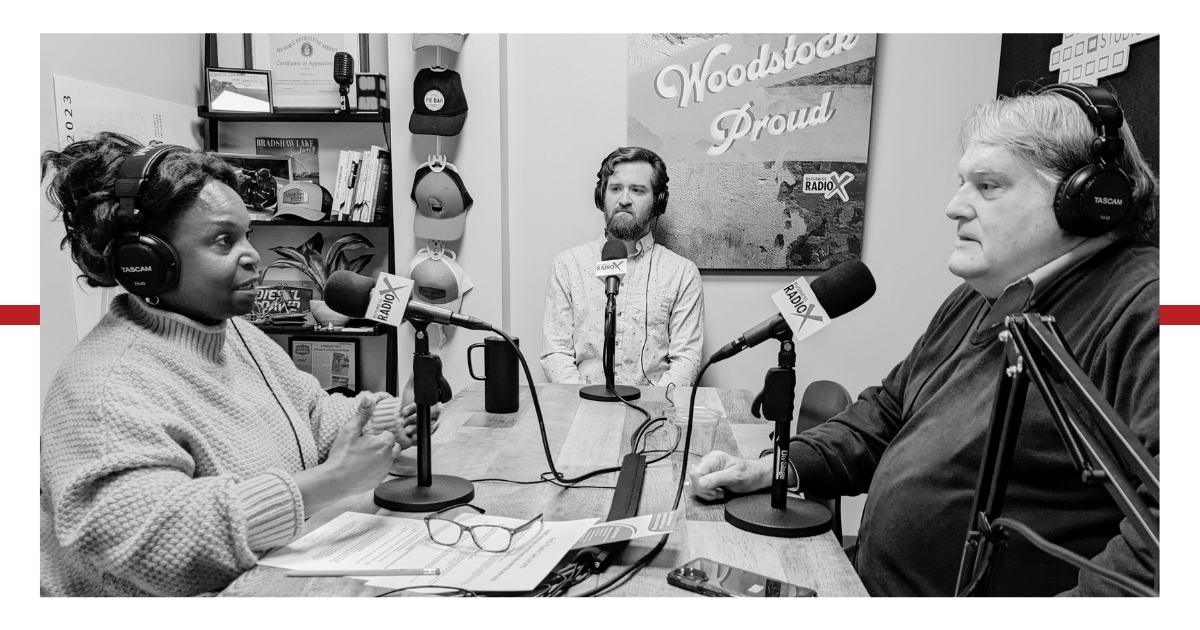
Sharon Cline: [00:13:49] I hope you can see it. But they’re not on right now, which is the way I like it. No.

Chuck Burge: [00:13:54] So, yeah, we’ll leave these with Sharon. We’ve got her some, uh, basically to save the date. September 28th, 2024, the only date the strand had available that month. Oh, wow. So we have to work around their schedule and getting to that. And I’ll talk a little bit about some of the changes we’ve made. Uh. It’s it’s very difficult to find a place to do this. The benefits of being at the strand are number one, the acoustics, number two, the acoustics, and number three, the acoustics. I mean, it sounded so much better in the strand than it does in a hollow airport with all this ambient noise going on. But it was, from a technical perspective how long it lasted. It lasted right at three hours, which is what we were shooting for. The first singer came on at seven and we announced the finalists at like 945, and then they performed and and then left. Now we’re going to do something a little bit different this year. Uh, I know we had 25 singers and then three finalists, and I don’t know if you noticed it or not, but when the three finalists were announced, everybody else left.

Chuck Burge: [00:14:54] So we’re not going to have finalists this year. We’re just going to have 25 singers, and then we’re going to do a raffle instead of silent auction. So if you’ve got a raffle item, please contact me at Chuck karaoke org. And and then we’re just going to announce the raffle winners and then we’ll name the three winners and then it will be over. So so that way we’ll hope to keep the crowd there longer. And we also are going to do a better effort of trying to get schools involved. We are dropping the age participation down to high school. Excellent. So any high school that wants to participate, they can have a student there. And our thinking behind that is that will bring people. So if you have a daughter that’s in the course, everybody in the course will come. If you have a son that’s sings, all his friends and stuff will come. So that’s kind of our thinking behind that. But it’s still karaoke. It’s still the coolest nonprofit event going in town because it’s not like anything else you’ve seen.

Sharon Cline: [00:15:47] It’s not. It’s the most unique, for sure. But what I love that you’re having for you’re having younger people, um, there’s so many talented people out there who just haven’t had a chance to really shine. So it’s wonderful that you’re giving them this opportunity.

Chuck Burge: [00:16:02] Yeah. And Hillary is scheduled to be a judge, so I hope she’s still going to be a judge. Um, the previous winner always becomes a judge because we’re not going to let the same person win two years in a row. Gotcha. Uh, which I think is a good marketing idea because we want everybody to have a chance to win as long as we have the event. So, uh, and then, uh, Madeline Montgomery, who was one of the judges last year, instead of just getting community leaders, we’re going to get four other people that know music and they know what they’re looking for because, like, I had a friend, I wanted to name his name John Keller, but, uh, but he was just I don’t know what I’m voting for. I’m just voting because I think they sound good. So. So we’re going to get people that know what they’re doing. So I guess in a way we’re going to step up the judging a little bit. So Madison’s going to take over that. And again, that’s one little thing off my plate. And I got a lot of good committee that everybody does a little. And I like to say, you know if everybody does a little nobody has to do a lot.

Sharon Cline: [00:16:57] Perfect. Yeah.

Chuck Burge: [00:16:57] Right.

Sharon Cline: [00:16:58] So so what other, uh, how was it at the end of karaoke? Did you feel like the money that you raised felt significant? Did it feel worth it? Um, I guess I have no idea what that side is like for you.

Chuck Burge: [00:17:11] Yeah. Um, as long as Susan’s happy, I’m happy. And, you know, we have a great relationship, and, uh, she keeps coming back, so she must not be unhappy with what we’re doing.

Sharon Cline: [00:17:21] That’s amazing. Perfect.

Chuck Burge: [00:17:23] Yeah. And, you know, we’ve raised we we grew, uh, we doubled in size from year one to year two. Uh, year two to year three. It wasn’t quite that, but we did have an increase in the money that we gave to Susan. So, uh, you know, it’s not it’s not that hard if you’re going out trying to sell sponsorships, as long as you tell enough people. I’ve been in the sales business long enough to know that if you tell your story to enough people, you won’t fail. And that’s my bottom line. I will tell everybody I know until I get where I want to be. So that’s kind of my mantra, I guess.

Sharon Cline: [00:17:58] Have you always had a heart for nonprofit?

Chuck Burge: [00:18:01] You know, uh, for 17 years I refereed and coached basketball at the upward organization at my church. And, um. Sometimes I was trying, but I did it for 17 years, every Saturday. You know, during basketball season, I did it. And I also volunteer at Gobbledok every year for Mus ministries. Um, and also, I don’t know if you want to mention this, but I also do two sports podcasts.

Sharon Cline: [00:18:30] I did want to ask you.

Chuck Burge: [00:18:30] About them, so I do one called Three Guys Who Love Sports. Uh, at 5:00 at Wednesday’s at Miller’s Ale House on Chastain Road in Kennesaw. So, uh.

Sharon Cline: [00:18:39] Across the street from Kennesaw State University.

Chuck Burge: [00:18:40] Across the street from KSU. So we do that because I’ve been playing poker once a month for close to 40 years with a bunch of guys, and two years ago, one of them contracted prostate cancer, and me and one of my other friends took him out to dinner one night. And all they wanted to do was talk about prostate cancer. And I said, Steve, you got you got to stop, buddy. You’re going to kill yourself worried about it. And so we got him talking about when he played baseball at Murray State and when he and I used to play church basketball against each other, and his whole demeanor changed, his face lit up. It’s he started smiling and laughing again. And I said, you know what? We’re going to start a sports podcast show just for you. I said, we’re going to do it once a week, and it might only be an hour, but, you know, I’ve helped somebody an hour, and somebody else helps somebody for an hour. This world will be a better place. So we started that and two weeks ago we had our 100th show. Oh, congratulations. Two year anniversary. Yeah. So it was awesome. And about six months into that I had a friend of mine, Carrick Martin Carrick is the co-owner of Dogwood Golf Club out in West Cobb, and I knew he was a sponsor and donor in the Hall of Fame of Kennesaw State sports, and I wanted to have him on the show to see what was going on at KSU, because I went to Kennesaw Junior College when there were five buildings on campus, and so I had Carrick on the show and he pulled me and Robert.

Chuck Burge: [00:19:52] I said, you guys are great. This is a lot of fun. He said, would you be interested in coming out and broadcasting at, uh, Dogwood Golf Club next week for the US open? I think it was in June. And we said, yeah, we’ll come out there and do a road trip. So we did. And again, he pulled us all aside and said, you guys are just fantastic. Would you be interested in doing a show all about Kennesaw State sports? And Robert had looked at and said, well, we don’t know anything about them now, but we’ll learn. And so now we’ve been doing that show 18 months. So at Miller’s Ale House on Chasteen Road, Kennesaw, we right across from Kennesaw State University. We do, uh, three guys who love sports. At 5:00, we always have a guest on and we mail them agenda a couple of days ahead of time and so they’ll know what they’re going to be talking about. And then at 7:00, well, Miller’s feeds us at six, which is a terrific thing because their food is delicious. And then at 7:00 we do the owls who live sports all about Kennesaw State sports, and we have fans and guests and coaches and players and on it’s a lot, a lot of fun. And like I said, we’ve been doing that show since August 17th of 2022. So about 18 months now.

Sharon Cline: [00:20:54] Can you even believe it?

Chuck Burge: [00:20:55] No.

Sharon Cline: [00:20:56] Like, who would have thought you would be doing a show about Kennesaw State University? You know, every Wednesday and it’s just the way life unfolds sometimes just cracks me.

Chuck Burge: [00:21:03] It’s just crazy. I mean, uh, and in my opinion, it’s God’s hand and he’ll he’ll lead you where you need to be. And we just we have so much fun. We have so much fun. Um, we had a little trouble yesterday because it was Valentine’s Day. We had a couple that was supposed to be on, and they begged out because she was sick. So. So they said. And, uh, we didn’t have a guest yesterday for the first time. So we brought Larry the engineer on, and he was the third guy who loved sports. But that’s the first time we’ve had to do that. But, uh, we’re back on schedule next week, and I think it’s called it’s not Valentine’s Day, and everybody wants to come back on and be on. So it was tough. But, uh, yeah, two years. We just got a new sponsor, uh, Brain Train. Do you know them? I don’t, um, yeah, train, brain train incorporated. So they look at your mind and tell you what’s going on in your brain. Oh, boy. Very cool people. Melissa Hergert and Meg Thompson. Hey, if you’re listening, that’s awesome.

Sharon Cline: [00:21:54] I can only imagine what they would find in mine. Yeah.

Chuck Burge: [00:21:57] They could look in mine and look in one ear and see through the other one, so that’s okay.

Sharon Cline: [00:22:02] No, they’d be like, would you just relax? I’d be like, what do you mean?

Chuck Burge: [00:22:05] So they’re going to be a sponsor starting March 1st. But now we have like Kennesaw Express lube, uh, American Accents with Dan Fisher, uh, Brian Bristow on the Kennesaw Express lube. And then Alvin Jameson has his own mortgage company. And so they’ve been sponsors for 7 or 8 months now. So, yeah, it’s funny.

Sharon Cline: [00:22:23] You’re talking about Kennesaw Junior College, and now it’s the second largest university in the state.

Chuck Burge: [00:22:28] 13th in the country.

Sharon Cline: [00:22:29] 13th in the country. I did not know that.

Chuck Burge: [00:22:31] Yeah, 40 over 43,000 students.

Sharon Cline: [00:22:34] Wow. Yeah, amazing I know, but, you know, I was thinking how wonderful it is that you’ve got these friendships that you’ve had for 40 years or however long it was. But how nice is it to be able to draw from some of the people that you’ve gone through life with, to be able to help promote things that you’re passionate about now?

Chuck Burge: [00:22:53] Oh, yeah. I mean, that’s, uh, I’ll tell you a little. I’ve never used an ATM. I’ve never used a debit card. I go in the bank and I build a relationship with somebody, so if I have a problem, I can go in and say, hey, something’s here. Can you fix it for me? And that? Works. I mean, I try to impart that to my kid. I’ve never ordered one thing on Amazon in my life. I want to touch it. I want to feel it. I want to see what it looks like before I buy it. And I know that’s not today’s world, but that’s my world. It’s so funny. Robert and I, Robert Kinney, my co-host on the On the Owl Show, and the three guys who love sports. We got in the biggest argument yesterday on the show. The first time we ever been in an argument I think about, he told me that I told him that I had never heard a Taylor Swift song. He said, oh yes you have. I said, no, I’m telling you right now, I cannot name one. I have not heard one. He said on the radio. I said, don’t listen to the radio. I listen to my CDs. He said in the store, I said, I think I know it. I know a song that I didn’t know if I heard it, but everything I hear in Publix, I know I sing along with it. So. And then we went to commercial. We came back, I said, you know what, Robert? We’re doing this two years and the only time we’ve ever had a disagreement about whether or not I heard a Taylor Swift film. So that was fun. Yeah. And and people even texted in that exchange was hilarious.


Speaker3: [00:24:09] I know. Yeah.

Sharon Cline: [00:24:11] Taylor Swift I know has been causing a little bit of a stir, a little bit of a stir. Yes. In the sports world these days. Did you watch the Super Bowl?

Speaker3: [00:24:18] Oh yeah. Yeah.

Chuck Burge: [00:24:20] Gotcha. We got to talk about it. So we, uh, of course you’re right.

Sharon Cline: [00:24:23] Sports related. I don’t know why I even asked that. That makes sense. Yeah.

Chuck Burge: [00:24:27] Yeah, but I it was a good football game.

Sharon Cline: [00:24:30] Is there anything that you’ve learned that surprised you about Kennesaw or the sports program there?

Chuck Burge: [00:24:35] Uh. The best thing that I’ve learned is there are some really loyal fans, and there are some that aren’t because there are. They’ve got 43,000 students and they can’t fill up a 10,000 seat stadium. And that has got to change. They’re moving to conference USA July 1st, which means they’re stepping up in grade and in everything, the schedule. We’re looking at the schedule last night and they go to San Jose State. They go to Sam Houston. They go to uh, UTEp in western Texas, and they make some long trips now to where it used to be, Jacksonville State and Furman and Jacksonville, Florida and all that. But now they’re they’re stepping up. But the purpose of our show there is to help raise the Nil money to keep the athletes there. Uh, one little girl, Kylie, uh, she probably hates me calling her a little girl. Carly Turza is, uh, she’s the hammer thrower at KSU, one of the hammer throwers, and sets a record every time she throws the hammer for KSU. She fabulous. She got an nil deal with WWE. So now when she graduated from KSU, she’s going to WWE. And she has just. About five, four five, five. Beautiful as can be and, uh, and hard as a rock. She has. She has, like 250,000 followers on TikTok or Instagram or something. And when she was on the show the first time, she took our intern and put him on her shoulders and did squats.

Speaker3: [00:25:58] Oh my God.

Chuck Burge: [00:25:58] And that’s that’s what she does online. She’s hilarious. So, uh, yeah. And it’s funny, you know, that, uh, the people you meet, I’ve made so many good friends now from, uh, from them now coming to the show, you know, almost every week to spend time with us and listen to what we have to say about KSU sports and coaches. And the track team has been great. Uh, basketball team’s been good. We had a couple of coaches on and the players and stuff. It’s been really, really cool, uh, to get involved and, you know, that’s me. I want to be involved with what I’m doing. So, you know, we’re hoping to raise money for, uh, prostate cancer awareness for the first show. And I owe money for the KSU athletes in the second show. But karaoke is still my biggest passion. Just because what it meant to me and, uh, and we, uh, we want sponsors, we want singers, and we want people to donate, uh, raffle items. And we want we want people there.

Sharon Cline: [00:26:50] So what’s been the most satisfying part of being part of karaoke, of creating karaoke and being part of what’s been the most satisfying part of it?

Chuck Burge: [00:27:01] The relationships I built with Susan and Mike. And, uh, all my committee members that have given so much, you know, of course, to me, uh, that’s what I’ve done for 30 years now, is create stuff. And when you create something and then you run it to, it’s a lot different than creating it and handing it off to General Motors or Dunkin Donuts or whatever. But, uh, when it’s your baby, um, I get pretty passionate about it. So I love just the fact that. I’ve kind of left a legacy. If we keep doing it, you know, it’s something that I created and that my sons can look back and say, hey, dad, that was pretty cool, you know?

Sharon Cline: [00:27:40] Maybe he’ll run. Run it.

Speaker3: [00:27:41] Someday.

Chuck Burge: [00:27:42] Um, I doubt that.

Speaker3: [00:27:44] I doubt they’ll.

Chuck Burge: [00:27:45] Live here, but, uh. But I’m already in the search for somebody to kind of take it over when I’m ready to hand it off. The plus side of that is, I believe it’s. It’s worthy of sticking around for a while. So as long as we can get doesn’t take that much to put on this event, I won’t. I don’t want to give you the amount, but it’s not a huge number. It’s the beginning of the strand and the prize money, and that’s basically about it. And, uh, we can do a lot of great things for the 9/11 Fallen Hero Project. If we can get more people to come out and participate, I think we’ll I don’t think we’ll have an issue this year filling out the 530 at the strand.

Sharon Cline: [00:28:21] I was thinking about how as as you were speaking, about how what you’ve done has so much heart to it in so many different ways. Um, not just Arioch, but with the the KSU show and the fact that you have this. Passion for helping and creating an event that has in its own merit is worthy to watch. But then the benefit of it being for something good as well. It always feels like there’s such a positive momentum and positive result that goes when your heart is involved in something that you know is for something good.

Chuck Burge: [00:28:57] Yeah, I mean, it’s great if we raise 5000 for them, it would be just as great as we 50,000 for them, you know. It’s it’s the process and doing it and being consistent. I made a promise to the committee last Friday. I said every day, every day between now and then, I’ll ask somebody to sponsor karaoke. Except on Sundays. Sundays I take off. But, uh, but every day I will send an email. I will talk to somebody about being a sponsor of karaoke, and I hope you will, too. And if we all do a little, like I said, if we all do a little, nobody has to do a lot.

Sharon Cline: [00:29:32] So what’s the best way that I could help you or anyone that’s listening can help you?

Chuck Burge: [00:29:39] You’re talking about personally or with.

Speaker3: [00:29:40] This.

Chuck Burge: [00:29:42] God? Personally, I need a lot of help.

Speaker3: [00:29:47] No.

Chuck Burge: [00:29:48] You know, it’s funny, I tell the committee members because some of them are very hard workers and they love to be at the event and they love to do the event, but they’re not salespeople. And I said, all you have to do is say, hey, can Chuck come talk to you? Can Chuck come talk to you? And I’m there. I mean, that’s all it takes. Phone number and an email and I’ll talk to anybody about Oryoki. So that’s that’s how Sharon Cline can help me from a professional standpoint.

Sharon Cline: [00:30:13] I can help get people to know that you have this opportunity for them. Yeah, I don’t know what it is, but I’m not a sales person either. Yeah. So I find.

Chuck Burge: [00:30:22] I find that hard.

Speaker3: [00:30:22] To believe.

Sharon Cline: [00:30:23] No, I can talk about things, but I’d like to ask someone to do something for me. That’s a challenge. So. But I love the idea of being able to have a postcard that I could give to someone and say, hey, this is coming up in the fall. You may want to consider and get in touch with you. Who is this natural sales person? So you’d be able to tell the story way better than I could, I’m sure.

Chuck Burge: [00:30:41] And believe it or not, that’s what salespeople do. And salespeople, uh, when I used to sell life insurance and health insurance for mass mutual insurance company back in the early 90s, I always told people, I said salespeople aren’t the best talkers. They’re the best listeners. If you don’t listen and know what somebody wants to buy, you can’t sell them anything. So sit there, ask a question and sit and listen. And if this is their passion, then tell them the story. If not, say, hey, I suppose, well, you know, that’d be great. Let me tell you a little bit about this event and then move on. But if that’s their passion, they’ll become a part of it. People buy from people they like, and that’s something that I’ve learned over the years, that people like you, they’ll buy from you as long as you’ve got something they they want or need. And if you don’t. There’s no reason why you can’t still be friends. And you know that’s. Don’t burn your bridges. I’ve done that once, but don’t burn your bridges. And, uh. And everybody will be just fine. Just get along with everybody. Um, and that’s that’s kind of my story. I like I like helping these guys. I love helping Susan and Mike. Uh, great people, Wes, their family and Ren and all of them, uh, they do so much for the community, just like the firefighters do, and just like the first responders do. And those are the people that I support. Every time I see one of them on the street, I thank them for what they do, and that means a lot to them. Um, I’m sure some other people do it, but I wouldn’t say the majority of people do it.

Speaker3: [00:32:08] That’s true.

Sharon Cline: [00:32:09] I would imagine that’s true. Yeah.

Chuck Burge: [00:32:11] So take care of these first responders. They’re they’re here for a reason, and they’re and they’re here for you. And that’s why they’re here. Because they care about you.

Sharon Cline: [00:32:21] You almost hope that you don’t need them.

Speaker3: [00:32:22] Absolutely. You know, unless.

Chuck Burge: [00:32:24] You have a flat tire or something, that.

Speaker3: [00:32:25] Would be good.

Sharon Cline: [00:32:27] Well, I mean, I hope, I hope I don’t, but if I ever do, you know, I’m grateful that they’re there. Um, not just for me, but obviously sometimes I’ll see fire trucks going on, you know, the road, and I just. Where are they going? Where are they going? You know, I’m usually frustrated being stuck in traffic. But the truth is, I’m grateful I’m not the one that’s needing the help that created the issue with the traffic.

Chuck Burge: [00:32:47] So that’s why great people like you care. Because a lot of people don’t.

Sharon Cline: [00:32:51] Oh that’s nice. Well thank you. No.

Speaker3: [00:32:53] Thank you.

Sharon Cline: [00:32:54] Well, I wanted to ask you briefly about marketing. When you watched the Super Bowl commercials, were there any that just stood out to you as you thought they were just amazing, given that you were in the industry for for many years?

Speaker3: [00:33:04] You know.

Chuck Burge: [00:33:05] I got up in eight during most of the commercials. I didn’t watch a lot. I don’t watch the halftime show because that’s just not me. I did watch some of the dunking commercial was okay. I watched it because their former client, um, uh uh, all the people that were washing feet, I didn’t know what that was about till the end of it, but that was pretty cool.

Speaker3: [00:33:22] Um.

Chuck Burge: [00:33:23] There were some that were okay, but nothing that really stuck out to me. Great. Of course, I’ve been watching these for 30, 40 years, however long they’ve been paying $7 million to be on the Super Bowl. Yeah, my favorite commercial. And I’ll tell you this, it wasn’t Super Bowl, but over the holidays, John Travolta being Santa Claus, that was the coolest commercial I’d seen in.

Speaker3: [00:33:44] 30 or 40 years. Walking.

Sharon Cline: [00:33:45] Yeah, on the street.

Speaker3: [00:33:46] And he’s dancing.

Chuck Burge: [00:33:47] On the Saturday Night Fever floor. And the girl that’s actually behind the counter was actually in Saturday Night Fever two.

Speaker3: [00:33:52] So did that crack you up? To me.

Chuck Burge: [00:33:54] That was the most clever commercial I’ve seen in a long, long time. So more John Travolta, more ties into the 70s and I’m happy. Camper.

Sharon Cline: [00:34:03] Well, Chuck, I can’t thank you enough for coming in and talking to me about Arioch. I know we were talking about this for a while, and I appreciate your reminding me because life just happens. I mean, it’s already almost March, April, May, June. It just comes and goes. So thank you for reaching out and, um, and for being having such a generous heart and a caring heart for people in the community. And your friendships obviously matter to you as well. So having like a relationships like you’re building and knowing that you are giving people an opportunity to benefit not just in an entertainment way, but in a way that supports what’s important to them, it’s invaluable. So thank you.

Chuck Burge: [00:34:41] Well, what you put into a relationship is the best thing in life, because if you put something into it, you’ll get something back. That’s why I look at it. And I think you’re saying that just because you came in third, but I don’t know.

Sharon Cline: [00:34:51] I didn’t think I’d come in anything.

Speaker3: [00:34:54] If you haven’t heard Sharon saying, find her and make.

Chuck Burge: [00:34:57] Her sing to you.

Sharon Cline: [00:34:57] That’s that’s very generous of you. But I would say you need to go to visit Hillary McDermott and her band, alibi, which apparently is amazing. I’ve been wanting to see them live, but, uh, yeah, I really appreciate that you gave me a shout out, but I’m telling you that these there’s there are some amazingly talented people right here in our community, and I can’t wait to see more of them. And we’ll find.

Chuck Burge: [00:35:16] Them between now and September.

Speaker3: [00:35:18] Heck, yeah. Thank you Sharon.

Sharon Cline: [00:35:19] Thank you Chuck, and thank you all for listening to Fearless Formula on Business RadioX. And again, this is Sharon Cline reminding you that with knowledge and understanding, we can all have our own fearless formula. Have a great day.


Dr. Daniel Klauer, TMJ & Sleep Therapy Centre of Northern Indiana

January 30, 2024 by John Ray

Dr. Daniel Klauer, TMJ & Sleep Therapy Centre of Northern Indiana
LaserLife Insights
Dr. Daniel Klauer, TMJ & Sleep Therapy Centre of Northern Indiana
Loading
00:00 /
RSS Feed
Share
Link
Embed

Download file

Dr. Daniel Klauer, TMJ & Sleep Therapy Centre of Northern Indiana

Dr. Daniel Klauer, TMJ & Sleep Therapy Centre of Northern Indiana (LaserLife Insights, Episode 4)

On this episode of LaserLife Insights, host Pete Cousins interviews Dr. Dan Klauer, a specialist in treating craniofacial pain, TMD, sleep apnea, and snoring. They discuss Dr. Klauer’s career journey, the role of technology in his practice, and the impact of low-level laser therapy in treating chronic pain conditions. Dr. Klauer emphasizes the importance of understanding the patient’s needs, being passionate about patient care, and the continued promise of laser therapy as an effective treatment. He also discusses the significance of advanced education for providers and highlights the role of organizations like the American Academy of Craniofacial Pain in providing further training and creating a community of learning among providers.

LaserLife Insights is underwritten by Summus Medical Laser and is broadcast from the North Fulton studio of Business RadioX® inside Renasant Bank in Alpharetta.

Dr. Daniel Klauer

Dr. Daniel Klauer, TMJ & Sleep Therapy Centre of Northern Indiana

Dr. Klauer, AKA Daniel, AKA DK, has even more credentials than he does nicknames (Doctor of Dental Surgery, Diplomat of American Board of the Craniofacial Pain, Diplomat of the American Board of Dental Sleep Medicine, and Diplomat of the American Board of Craniofacial Dental Sleep Medicine). After attending Notre Dame and playing on the Varsity Golf Team (FORE!), he headed to dental school at The Ohio State University and met his wife Hayley in The Ohio City of Columbus. In 2010, they settled in South Bend for work (TMJ for him, IUSB for her) and family (five kids).

If Dr. Klauer was to wow his colleagues during an office talent show, it would be with athleticism (Hayley’s words). He proves it by skiing (water and snow), running, biking, swimming, and dreaming of traveling at warp speed (preferably to front-row seats at a Billy Joel concert).

Credentials:

  • American Board of Craniofacial Pain Certified
  • American Board of Craniofacial Dental Sleep Medicine Certified
  • American Board of Dental Sleep Medicine Certified
  • American Academy of Orofacial Pain Member
  • American Academy of Craniofacial Pain Member
  • American Academy of Dental Sleep Medicine Member

LinkedIn

TMJ & Sleep Therapy Centre of Northern Indiana

At the TMJ & Sleep Therapy Centre of Northern Indiana, they provide non-surgical therapies for adults and children. With proper evaluation and diagnosis, the conditions of craniofacial pain, sleep apnea, and snoring can be successfully treated. The TMJ & Sleep Therapy Centre is dedicated exclusively to the evaluation and treatment of these conditions. Their approach is comprehensive evaluation for proper diagnosis and non-invasive treatment therapies. They provide successful results using state-of-the art technology and research-based treatment in a caring and friendly environment. We recognize and treat each patient as a unique individual.

Dr. Daniel G. Klauer, TMJ & Sleep Therapy Centre Clinical Director, chose to complete his four years of training at The Ohio State University, earning his Doctor of Dental Surgery (DDS). In 2013, Dr. Klauer chose to limit his practice to treating patients with craniofacial pain, temporomandibular disorder (TMD), and sleep disorders due to the overwhelming need within the community. As he learned to identify the origin of patients’ pain and sleep problems, it became increasingly clear that he could drastically impact their lives now and in the future. To that end, Dr. Klauer has completed nearly 2 years of post-graduate training and over 1,500 hours of continuing education in craniofacial Pain, TMD, and sleep medicine. He is board-certified with the American Board of Dental Sleep Medicine, the American Board of Craniofacial Pain, and the American Board of Craniofacial Dental Sleep Medicine. He is Diplomate Eligible with the American Board of Orofacial Pain, and he is the only doctor in a 100-mile radius that carries these three board credentials.

Website | Locations:

South Bend/Granger
(Flagship Centre)
TMJ & Sleep Therapy Centre of Northern Indiana
7221 N. Fir Road
Granger, IN 46530
574-968-5166

Connect:  LinkedIn | Facebook | Instagram

Fort Wayne
TMJ & Sleep Therapy Centre of Northern Indiana
9914 Illinois Road,
Fort Wayne, IN 46804
260-387-6670

Connect:  LinkedIn | Facebook | Instagram

Topics Discussed in this Interview:

00:01 Introduction to Laser Life Insights
00:36 Introducing the Guest: Dr. Daniel Klauer
02:39 Dr. Klauer’s Journey into Dentistry
05:07 The Evolution of Dr. Klauer’s Practice
17:28 The Role of Technology in Modern Dentistry
21:28 The Impact of Photobiomodulation in Patient Care
28:27 Advice for Patients Seeking Treatment
31:40 Guidance for Providers Exploring New Treatments
36:09 Conclusion and Contact Information


About LaserLife Insights and Your Host, Pete Cousins

LaserLife Insights highlights the stories, strategies, and best practices from some of the most successful providers and practice owners in physical therapy, chiropractic, dental, vet, sports medicine, pain management, and more. Guided by host Pete Cousins, the show explores the world of Class IV Laser Therapy, uncovering facts about the science behind the technology, exploring success stories, and learning from experts who have witnessed the transformative effects of laser therapy firsthand.

LaserLife Insights is underwritten by Summus Medical Laser and is broadcast from the North Fulton studio of Business RadioX® inside Renasant Bank in Alpharetta.

Pete Cousins, Chief Commercial Officer, Summus Medical Laser and Host, LaserLife Insights

The host of LaserLife Insights, Pete Cousins, grew up as an avid sports fan and knew early on that he wanted to be focused on health and wellness in some capacity. After completing his undergraduate degree in Exercise Physiology, Pete started a fitness training business, where he discovered his talent for coaching and influencing others. In 1999, he was recruited into medical sales, exceeded expectations, and quickly rose to leadership positions. He has spent the entirety of his career since then in B2B healthcare commercial leadership roles.

Over the years, Pete has held progressively larger leadership roles within industries ranging from aesthetics to dermatology, dental practice management software, and currently, chiropractic, PT, pain management, dentistry, and veterinary medicine at Summus, where he is currently CCO.

He holds certifications such as “Integrity Selling Facilitator,” Predictive Index Certified Facilitator, Continuous Improvement Leadership, Culture Index Profiling, AMA Advanced Sales Management, and Dimensions of Professional Selling.

With a focus on adding value to others, Pete aims to make every episode of LaserLife Insights worthwhile for all who listen!

Pete Cousins LinkedIn

About Summus Medical Laser

Summus Medical Laser is a U.S. pioneer in Class IV laser therapy with over 18 years of experience.

Summus Laser was established in 2018, although the Founder and CEO, Dr. Richard Albright, was a pioneer in the field of photobiomodulation in 2004 by becoming the 2nd company in the US to receive FDA clearance for this ground-breaking technology.

Their mission is simple: to improve lives through laser therapy.

Their growth comes from a relentless commitment to constantly improve their lasers, provide reliable stateside service, follow science in their product development, supply effective consumer marketing tools, and deliver world-class training. No matter which of their models best fits your practice, you can be assured that a Summus Medical Laser will improve your efficiency, broaden the therapy options you offer, and provide safe, rapid relief, resulting in satisfied and returning patients.

Franklin, Tennessee, Summus’ hometown, is a historic yet innovative place with solid values and a community of generous neighbors. No matter where you are in the world, you can count on those same values in the Summus team and the lasers they offer as you generously serve those who need your care.

Company website | LinkedIn | Facebook | Instagram

Tagged With: craniofacial pain, Dr. Daniel Klauer, laser therapy, Pete Cousins, photobiomodulation, sleep apnea, sleep disorders, snoring, Summus Medical Laser, temporomandibular disorder, TMD, TMJ & Sleep Therapy Centre, TMJ & Sleep Therapy Centre of Northern Indiana

Author Darrell McNeal

January 26, 2024 by angishields

FF-Darrell-McNeal-feature
Cherokee Business Radio
Author Darrell McNeal
Loading
00:00 /
RSS Feed
Share
Link
Embed

Download file

Darrell-McNeal-banner

In this episode of Fearless Formula, host Sharon Cline interviews Darrell McNeal, a life insurance advisor and author of “Lessons Learned: A William Briggs Adventure.” Darrell shares the inspiration behind his young adult book series, which began after his grandson’s concern during Hurricane Michael.

He discusses the challenges of writing and the rewarding feedback from readers. He also talks about his passion for taekwondo, the importance of trying new things, and his plans to donate proceeds to the Fellowship of Christian Athletes. 

Darrell-McNeal-headshotDarrell McNeal is the author of “Lessons Learned, a William Briggs Adventure.” He’s a retired Ball Ground, Georgia resident, and this is the first novel in this series.

This transcript is machine transcribed by Sonix

TRANSCRIPT

Intro: [00:00:07] Coming to you live from the Business RadioX Studio in Woodstock, Georgia. This is Fearless Formula with Sharon Cline.

Sharon Cline: [00:00:17] Welcome to Fearless Formula on Business RadioX, where we talk about the ups and downs of the business world and offer words of wisdom for business success. And I am your host Sharon Cline. Today on the show we have a life insurance advisor, but also he had worked at the Providence Group, but he is the author of a book called Lessons Learned: A William Briggs Adventure. He’s from Ball Ground, Georgia. Welcome to the show, Darrell McNeal.

Darrell McNeal: [00:00:44] Thank you. Thank you so much.

Sharon Cline: [00:00:45] You’re welcome. I love that you’re from battleground.

Darrell McNeal: [00:00:48] Oh, yeah. It’s neat. Very neat place to be from.

Sharon Cline: [00:00:50] It is Cherokee County, of course, but I, I think it’s just the the cutest town and so many really wonderful things are happening, not the least of which an author. You just had your first book signing, which was at the barrel House Coffee Company in Ball Ground, which is a wonderful place to get coffee and wonderful people who run it.

Darrell McNeal: [00:01:09] Oh yeah, great people. Katie and Ryan Turnage, good friends, good place. Tim, who’s the barista there? And I mean, just fantastic. Yeah.

Sharon Cline: [00:01:20] Katie was on the show at one point. It was just really fun to talk to her about how they got started. So I love that there are so many intersecting lives and businesses that can all kind of help each other.

Darrell McNeal: [00:01:30] Yeah, they they’re great. And I was honored to be able to be at their place.

Sharon Cline: [00:01:35] Well, let’s talk a little bit about your book. It’s a young adult book. It is. And it’s a series, correct?

Darrell McNeal: [00:01:43] Uh, yes. Planned to be a series.

Sharon Cline: [00:01:45] Planned to be a series. Okay. So let’s talk about the kind of the backstory behind your book I know that you have, um, some of your favorite authors, John Grisham, a couple other ones that have always been kind of in your background and you’ve always thought maybe you’d write a book, but you didn’t know when. But now that you’re kind of older, like you have grandkids, there was like an inspiration. You had to write a book. Do you want to talk about that?

Darrell McNeal: [00:02:08] Sure, absolutely. Um, I had always wanted to write a book. My mother, it was a career educator and retired, and she had always talked about it. I’d heard about it, um, went through certainly life corporate world and, and, and like.

Sharon Cline: [00:02:25] Most of us.

Darrell McNeal: [00:02:25] Just kind of thought about it. Um, you never have.

Sharon Cline: [00:02:28] Time when you’re in the corporate world or you think.

Darrell McNeal: [00:02:30] Retired, taught school at Rinehart for a little while, about a year and a half and, and, um, just kept it kept coming up. And so about, um, I don’t know, it was probably about 3 to 4 years ago when Hurricane Michael hit the coast in Panama City. Uh, we have a little home there. And, uh, the realtor that helped us get the home was collecting supplies for the victims of Hurricane Michael. And, um, I was, um, listening to my wife talk about with her about that. My grandson was listening at the same time. And as we were, uh, pushing the streets of Ball Ground with my goldendoodle, Charlie and and him, we, um, he asked me, could we stop and pray for the children of Hurricane Michael? Oh, my. And, uh, so I was like, man, um, I think I’ve got the world that I wanted to create. So I met a guy not long ago. Um, he does some work with my son in law, Josh Bagby, Pete Sroka and Sadowski. I’m sorry. And, um, he, um. He said something about him publishing a book, I asked. I told him I’d always wanted to do it. He said, well, I can help you with that part if you have the world in your mind. And I said, I do, and it was the lessons that you impart, um, at this stage of my life to folks such as your grandkids. And it’s the things that, you know, came, came about and it’s basically about where do you get your truth?

Speaker3: [00:04:05] And. Wow. Mhm.

Darrell McNeal: [00:04:07] So um, we started on it and um, it’s, it’s a fun adventure. Um, to do the book process and then um, the storyline um, is mirrored that in that there were lessons I wanted to impart. And part of those lessons came as the book unfolds, I refer back to Scripture that is important to me in my life and has been, uh, something that that’s the constant in life that you if you’re a person of faith, you’re going to go back to your faith and you’re going to find the Scripture that supports that situation and how to how to deal with it.

Sharon Cline: [00:04:49] So when you were looking at the story and it was unfolding for you, did you already have the beginning, middle, end, and then you started writing, or did you write start to write? And then it kind of unfolded as you went?

Darrell McNeal: [00:05:01] Um, yeah. Um, I had the I had the world from a broader perspective. And so, um, it was more like, uh, you faced face issues in life, with relationships, with being away from home, with being lonely, uh, conflict, new newness of things. And I had kind of the broad, but the details came in the doing. And so Briggs, my grandson and I, um, take, uh, taekwondo together. He talked me into that. And so I, a lot of the book has that element in it, and, uh, I had to research that. And then so the details came as we went along and it kind of moves on its own.

Sharon Cline: [00:05:49] Got you. I found it so interesting in the description that it’s, um, obviously like you’re talking about, um, very important life lessons that this character William learns as he’s, as he goes through his adventures. But that you had South Korea as part of the story, which made me wonder if you’ve been to South Korea.

Darrell McNeal: [00:06:13] I have not, and where that came from was the taekwondo. And so it originates in South Korea. And you do a little research about that. And um, and then the culture of South Korea.

Sharon Cline: [00:06:25] Yes. Like you had to learn.

Darrell McNeal: [00:06:26] And so I learned a little bit about that. And um, just wanted to give a flair for it. I don’t I’m not sure how many people in Ball Ground know about South Korea.

Speaker3: [00:06:35] I know I.

Sharon Cline: [00:06:36] Was like, what? Because the book is set in ball ground, which is so cute to, you know, shout out to ball ground, but just imagining, you know, the whole entire world out there. Um, I mean, I hadn’t really considered a book that would sort of focus from, you know, ball ground to, to South Korea. So I thought it was really creative and interesting and.

Darrell McNeal: [00:06:53] And the adventure, um, part of, you know, tying the adventure into it. So William takes a mission trip to South Korea. He’s excited about it because of taekwondo. They’re, um, there to build a facility to, uh, to share Christ and to hopefully save lives. And they do. And so but along the way, he learns the culture of South Korea and friends. And so that was the mission and other things come into play. So it kind of tried to tie it all together.

Sharon Cline: [00:07:29] So were there things that you learned when you were writing that kind of surprised you? You know, to be an author, as a new author, were there things that you learned that you’re like, I had no idea about my personality or the things that I wanted or liked? Um, or were there things that you wish you could have told yourself in the beginning as you as you progressed?

Darrell McNeal: [00:07:50] Yeah, I think so. Um, a couple of things is just how to try to stay on point with the story of the lessons learned and add dynamics to the story and, um, the relationship. Um. Uh, the relationships that are in the book. And, uh, would it be friends, whether it be with family and, uh, so, yeah, I think I think I was a little bit surprised where we ended up, um, compared to where I was going with it. I think the overall theme of the book, where it was the lessons that I was trying to impart. Um, the character, one of the characters in the book, which is William’s grandfather, um, he tells some of these lessons that he’s learned. So it’s similar, similar to what I try to do with my kids, my grandkids.

Sharon Cline: [00:08:47] It’s so sweet because it’s like you’re you’re writing this story, but it’s a little like, obviously it’s a part of your soul that’s in this book and that, you know, you get to leave that for, you know, your grandkids and your future grandkids and all of that. I mean, how special is that?

Darrell McNeal: [00:09:03] Yeah, that’s real special. And, um, you know, I do have it out there. Um, I don’t know if they’ll read it or not, but it’s certainly there. And it does it. I guess it does tell a little bit of insight on how you think and feel. And at the end of the day of, you know, at the place I am in my life right now to be able to share that journey in, in a, in a simple book like that, um, with what I think is important to know. And, um, everyone has their own journey, you know, it’s everyone has their own journey and everyone has their own ministry if they’re a person of faith. And so, um, it’s a lot of my life today is based on, uh, when Jesus sent the 72 out and, and and, uh, Luke chapter nine and ten to, to go out there and I think that’s where I’m at. And so it kind of kind of made sense for me.

Speaker4: [00:09:57] Absolutely. And I think.

Sharon Cline: [00:09:58] What’s fascinating, too, about all, of, all of your journey is that it’s always been a dream of yours and you just never knew the right time, the right motivation. But then everything kind of all came together at the right time. And that always kind of fascinates me with in life that sometimes you can’t make something happen, but just the right scenario happens to unfold in front of you.

Speaker3: [00:10:21] Yeah.

Darrell McNeal: [00:10:21] And the and the book itself, not only the lessons, scriptural lessons learned that you can lean on the truth, but it even made even more sense. I currently work actively with FCA Fellowship of Christian Athletes, and any net proceeds of any of these books will go to FCA.

Sharon Cline: [00:10:43] That it was so impressive that you said that.

Speaker3: [00:10:45] Yeah.

Darrell McNeal: [00:10:45] And, uh, so I go out in the morning and we do, uh, huddles with the coaches and, and student students and student players and, um, it’s the same type messaging that you talk about every day that you can put down in print. And, um. It just. It just feels like it’s where I’m supposed to be at this time and what I’m supposed to be doing, I do, I do, you know, help Josh and his business some. Yeah.

Speaker3: [00:11:15] I saw that on.

Sharon Cline: [00:11:15] Your on your Facebook page. I think that’s wonderful. You get to work together.

Darrell McNeal: [00:11:18] I get to work with Josh, and then my son and his wife have a regenerative farming ex, uh, uh, outside of Athens and, uh, Georgia and, uh, we, I go over and help them, too, so I can be a farm boy on occasion as well.

Sharon Cline: [00:11:35] So you I believe you lived in Alabama at some point, is that correct?

Speaker3: [00:11:40] That’s correct.

Sharon Cline: [00:11:41] And then. And how long have you been here in ball ground then?

Darrell McNeal: [00:11:44] Well, we moved to Ball Ground from Hickory Flat about nine years ago. Uh, we I.

Sharon Cline: [00:11:49] Bet it seemed quieter than it does now.

Darrell McNeal: [00:11:52] It’s quiet, but it was real quiet at that time. And, uh, I was like, man, where did we move?

Speaker3: [00:11:58] No, but, um.

Darrell McNeal: [00:11:59] You know, my wife Sherry and I, uh, were we’re looking to build a little, uh, retirement type home in Florida and got the opportunity to do that by moving, you know, to a little bit smaller place in ball ground. And so it was kind of a strategy there. And then, um, but I grew we both my wife Sherry and I both grew up in Alabama and I grew up in Decatur, Cullman area, and she grew up in Cullman, Alabama. And, uh, work took me here 26 years ago, and I worked with an insurance company at that time, uh, based out of Montgomery, Alabama. Alfa insurance. And I was a, uh, ended up being a corporate marketing officer and retired there, um, in 2021, February 1st of 2021.

Sharon Cline: [00:12:47] When you look at where you’ve come from and then where you are now, it does feel like when would you have ever had an opportunity to really become because financial responsibilities, I mean, this is what stops people a lot from pursuing many of their dreams. Is that sort of, well, how am I going to support my family or how am I going to make this work? Um, so sometimes it is timing, of course, but did you ever think that you would really become an author? Like, what does that feel like for you?

Darrell McNeal: [00:13:12] Well, um, I did I did feel like I would do it. It was just like you said, finding the time. And, um, I’m pretty intentional when I get started, but, um, I think I think more so than than not is the fact that I felt like the Lord was saying, now’s the time.

Sharon Cline: [00:13:30] And what did it feel like that you. That you felt that like, what did it feel like when you it was it just like someone almost like tapping your shoulder, like always bringing it to to your mind?

Speaker3: [00:13:42] Yeah.

Darrell McNeal: [00:13:42] It was sort of, I think, um. The times that we live in are, um, I think I think a wholesome book is needed, one that, um, you know, that was telling a message and young people could have, uh, there’s a lot of distraction out there with social media, which is great in a lot of ways, but it’s also distracting. I deal with these younger folks, and I just felt it was a good timing for that. But I felt a nudge to do it. And, um, honestly, I don’t know that there’s ever anybody ever has 100% time to do any of the things that they want to do. You just have to stop and say, I’m doing it.

Speaker3: [00:14:24] You just choose.

Darrell McNeal: [00:14:25] You just yeah, make priorities. People do what they want to do.

Sharon Cline: [00:14:28] That’s the bottom line. So coming up with the story and making it relevant to today, I like that you’re talking about how these themes apply in all kinds of different scenarios, like when you’re with your FCA or right people, and then also with just young children. But what what would you say are some of the pervasive themes in the book, like the main story? Is it sticking true to who you are? Is it? Um, I know that you have some listed on, on, um, your Amazon page for the book, which is just really great because it gives you kind of a nice synopsis of the story. But what would you say to, to listeners are the main themes of the of the book?

Darrell McNeal: [00:15:12] Well, you know, first, it’s a Christian adventure story and it fits a space that not a lot of a lot of books are in. And, um, the second thing is, I think the overall if you if you get through the book and you look back on it, you know, it’s about the relationship that we have with our Heavenly Father, and we’re not always wanting to listen.

Sharon Cline: [00:15:33] And I’m sorry. I’m laughing because I’m like, what? Do you know my story?

Darrell McNeal: [00:15:38] We’re not the instructions are there. The the love is there. The truth is there. But we don’t always want to listen to it.

Speaker3: [00:15:44] It’s so true. It’s.

Darrell McNeal: [00:15:45] And so at the end, the relationship that he finds with his own father is the same as he finds with his Heavenly father. The second thing I would say is they there’s always going to be something you face, whether it be loneliness, whether it be conflict in relationships, whether it be away from home, particularly young people, you know, trying to find themselves. Um, and then who are your advocates? You know, and then how do you engage the task at hand? And so the, um. Those are the overarching things. The other thing is people sometimes volunteer to do certain things and the outcomes different.

Speaker3: [00:16:31] So true.

Sharon Cline: [00:16:31] I was just thinking that in the book that something happens that’s very unexpected and unintentional. That hurts his relationship with a friend of his. And I think, how many times have I done that where my intention is good, you know, but then how do you have resilience for that? Or how do you even have forgiveness for yourself for that?

Darrell McNeal: [00:16:50] Yeah. And there is an element to there. When he has conflict, he has conflict with the new friend, and he refers back to his, um, person that, um, you know, his how, how, how do I deal with it? And he gives an example, uh, his grandpa gives an example of when he’d messed up and how he had to go through and just actually ask for forgiveness from that person. And too many times today, are we willing to do that? Are we willing to listen to those folks that came before us and find out how they dealt with things? And, um, you know, power power’s in the ability to take yourself out of the equation.

Sharon Cline: [00:17:35] What do you think has been the most rewarding part of your book journey and being an author, what’s been like the most satisfying part for you?

Darrell McNeal: [00:17:44] Um, I think for me that, um. Just maybe a comment that said, man, I enjoyed that. That touched me. Um, it it helped me think about something different. You know, I think that I think that’s it. It’s not, um, if it can help one person understand or maybe have a better experience the next time, maybe search out a truth in the scripture that they wouldn’t have done. That’s all. It was worth that.

Sharon Cline: [00:18:13] Do you have people that you consider like mentors for you to help you as you’re going through your journeys here?

Darrell McNeal: [00:18:20] Um, well, you know, from the book perspective, Pete, naturally was a great mentor. My family, I get a lot of source of truth from them. Got great kids, you know, um, great great grandkids. I mean, they’re all great. My mom and dad are great. Um, you know, my my spiritual mentor growing up was my my what we call Mama Whittaker. She was that kind of that constant source. Um, my mom and dad have been wonderful all my life. They’ve actually told me sometimes, uh, probably that I was more talented than I was. Oh, but.

Sharon Cline: [00:18:54] That’s what parents do.

Darrell McNeal: [00:18:55] Yeah. You know, so they were good. They were good. But, um, I think, you know, there are people. Pastor friends. Um, I’ve been blessed with a lot of good Christian friends. Um, that gave me men and women and, um, uh, I would say my coaching friends that I, you know, Coach Ball at Sequoia for eight years and they, you know, just those experiences. And, uh, I have some great work friends at my former work, and, um, I just lean on I just listen to them and find, you know, a lot of times I learn a lot more that way. They’re smarter. I’m not a great listener. I’m really not. But I try to, I try to, I try to absorb some of it.

Sharon Cline: [00:19:37] Will you listen this time to make the book like you? Someone was telling you what to do here. But I like what you’re talking about is having this drawer of people in your life that each person has, like maybe a nugget of wisdom that you kind of were able to get and absorb and, and then use to be, you know, help you to be courageous, to write a book, you know, were you ever unsure of what you were doing? You know, a lot of people have stories in their minds, but they think, oh, I don’t know if anyone’s going to buy it. You know, they fear let’s them stop them. So what was your sort of fearless formula to to just push forward?

Darrell McNeal: [00:20:11] Well, I prayed about it a lot. And and you know what messages what what were the scriptures and messages that, uh, that I needed to to include and write.

Sharon Cline: [00:20:24] Because there could be so many, right.

Darrell McNeal: [00:20:27] But the situation if you read the book, you know, a situation occur and, and I’m a verse would come to mind or I would reach out research one out. And at the end of the day, you know, I just prayed about it. I got, you know, I listened, you know, I just got it imparted on me from, from the Lord that this is what it needed to be. And so if I had that right, I felt if I got that right, then the rest would take care of itself. And I, you know, like I said, I want to I want to sell a lot of books just for the simple fact that FCA needs, you know, those resource partners. But in reality, if it affects one person positively, that was that was enough. And, you know, John 14 six became my signature verse in my mind. It wasn’t the one starting out, but it became that, you know, um, you know, Jesus looks at the disciples and he says, I’m the way, the truth and the life, and no one comes to the father except through me. So I didn’t know that was going to be it. I did not that was not what I thought would be the verse that came most, um, you know, prominent. But it did.

Sharon Cline: [00:21:35] Well, isn’t it interesting how that happens? You know, because certain things will come into mind that seem the most important. But that’s not what you would have ever predicted. So I love that you have this sense of peace about it.

Sharon Cline: [00:21:50] You know, like there’s not this anxiety of I’ve got to market it and I’ve got to sell it, and I’ve got to work really hard. I mean, you, of course, would love for that to happen because you know that you’re benefiting someone else besides yourself, but you have a sense of it’s going to land where it needs to land.

Darrell McNeal: [00:22:06] And I think, um, you know, going in, um, like you say, you stay in prayer. This is something that’s been certainly on your mind. Uh, I think anything that you. Um. You know, a lot of times we want instant things today, of course. And so we say, you know, we check the box, you know, Lord, thank you. Help us with this. And we check the box and you go on and you’re thinking, well, I wonder what didn’t happen. I prayed about it 30 minutes ago.

Darrell McNeal: [00:22:35] These things take you know, this has been in the works. Um, my first thought of a book when I was in high school, and that’s a long time ago. And, um, and it kind of fades. And then I kept thinking about it, and then I was in, in, you know, in, in senior management at a company. I thought, well, I’ll write, I’ll write a sales book or I’ll write a management book. And it’s like, no, no, that’s, that’s not it. And um, then as time went on, I, it became clear what the book should be about, but not necessarily. I didn’t have the 100% the story, but I knew what the I knew what the truths were. So yeah. So it’s it’s exciting to know that, um, maybe, you know, out there and the Lord will and the Lord will find that person for me. It’s not me finding them that will affect them positively.

Sharon Cline: [00:23:28] It’s so it’s so, um, like, heartwarming too, because you have such a sense of giving back, you know that. It’s not. It’s like a win win, which is always my favorite. Right? So you you get to fulfill a dream, but then you also get to have other people benefit from your dream, you know. And so and it sounds like you’ve had this dream, you know, for so long that it must be very satisfying to be like, oh my gosh, I’m on Amazon, you know?

Darrell McNeal: [00:23:59] All of that was weird, to be honest with you, was, you know, when you see your name on a book or you see that’s just kind of weird to me. I mean, it’s like, uh.

Darrell McNeal: [00:24:08] You know, I would be remiss to say, you know, if I didn’t say that, you know, it was it was it was fun to see. And it was it was exciting. But then at the same time, um, it was just a little weird. I mean, it’s you just.

Sharon Cline: [00:24:23] Well, you seem like a very humble person. So to have your name out there in such a public way, probably, I don’t know.

Darrell McNeal: [00:24:29] Uh, well, I hope to be. Now, I don’t know that I’ve always been humble in my life. I think I was a little more, I said confident. My wife said. My wife said cocky. But, um, I have been less humble, less, uh, but.

Sharon Cline: [00:24:45] Interesting that you coached, uh, ball at Sequoyah High School, which is just up the street from here. Was it baseball?

Speaker3: [00:24:52] Baseball? Oh no way. Yeah, yeah. Awesome.

Darrell McNeal: [00:24:55] Yeah. We had had done a lot of youth, uh, sports and baseball. And then, uh, when my children left Sequoyah, they graduated. Um, I, they I could coach at that level because, you know, if you’re not a staff person, you can’t be a lay coach or whatever, right? So I got the opportunity to do that and did that for eight years, had a ball doing it. It was a lot of fun. It was um, I tell everybody my kids went to Sequoyah eight years and I did too well.

Sharon Cline: [00:25:26] And it sounds like as well, that you’ve always had sort of your, um, an interactions with younger people. So it’s nice that you were able to have all of that to draw from, from your book as well, to accurately represent, you know, a young kid. Because if you’re not really in that space, it’s hard to really know what a child say this or think this way. So you were able to really glean from that.

Darrell McNeal: [00:25:48] Yeah, and I hope to stay relevant in that area. Um, it’s tough for older people to be relevant to young people. And, um, you know, being the area representative at, uh, Cherokee High School now and River Ridge High School right down the street here. And then, um, the, uh, community sports, uh, representative for ball Ground in Macedonia. Baseball. So I have all of this, you know, and, um, it’s just trying to be relevant so that they look for their source of truth in you. Not necessarily from an app, not necessarily from, you know.

Sharon Cline: [00:26:23] Even their own parents.

Darrell McNeal: [00:26:24] Or friend.

Sharon Cline: [00:26:25] Yeah. Sometimes I feel like when I’m speaking like my kids are just like not listening. Like if my lips are moving, I feel like. But you know, a stranger would say the same thing, like, take your coat, you know, and they’d be like, oh my gosh, I need my coat.

Darrell McNeal: [00:26:43] You know, a lot of them. Um, I think the biggest challenge we have is listening to them to we want to tell, you know, we want to impart wisdom, but the but they also and even in this book. Uh, William. He reaches back out and says, I’m dealing with this. And he’s he’s somewhat asking for how you would do it, but not in a, not in a command.

Sharon Cline: [00:27:07] Got it.

Sharon Cline: [00:27:08] But just asking. It’s interesting that you talk about that because I think I went back to school. I went back to college as an adult. Adult, I think I was 30 something. And I really thought when I was in college, like all these young kids, you know, 18, 19, whatever. I was a mom of three kids at that time, and I was really humbled very quickly at how just incredibly smart and savvy and, um, um, relatable they were to me. And I guess that’s what I imagine you feel is like you can look at the younger generation as being, um, I don’t know, sort of like you can patronize them a little bit, you know, like you don’t know or, you know, but there’s something that you have like a little a depth of respect for them just as a baseline because they’re just humans on the planet, just like you.

Darrell McNeal: [00:28:01] Well, yeah. I mean, um. I think an advantage I had growing up was some people would say not, but I think it was an advantage. I had teenage parents. Now my they were teenagers. When I was born, I had the youngest parents of my friend group. They were always there with talking to my friends, and my house was the house that they all wanted to come to because they felt, um, safe and they could say what they wanted to. Um, it was a great lesson. And, um, I felt like that by coaching those years, you could kind of understand that. Um, now, granted, I’m competitive and you wanted to do well and teach well, but I always thought that was an advantage growing up. And, um, and then today, like, this morning, I was at a what we call a huddle and a first priority FCA huddle, and. It was amazing. Um, if you ask these kids today or these young, young adults and say, tell me what you’re thankful for. Um, they’ll say family. They say, um, their friends, they say, uh, things, you know, like that.

Darrell McNeal: [00:29:16] But then you say, what are you struggling with? It’s where you get to the underlying. And it’s it’s it’s it’s a lot of distraction, you know, they’re they’re very distracted and they’re tired all the time. I say, why are you tired? And they go to bed way late. And if they’re in bed, they’re on their phone. And so they have this bombardment of, of things. And then, you know, the, the other things that’s out there that we all face is there’s temptation with things and there’s social anxiety and there’s um. There’s a lot on them. And so if we can just stop and listen to them and provide them with the answer, a source of truth. What is in the ultimate source of truth is, is, you know, God’s the same yesterday, today and tomorrow. And if you can get that in there, um, hopefully when things happen that would make them have anxiety, they go to it. And that’s, that’s kind of my goal with this, you know, in that, like I said, just one, one. If it’s just one that.

Sharon Cline: [00:30:23] Could read this book and just well, I think that’s an important message that you’re talking about is like, when I grew up or when you grew up, it wasn’t the same constant bombardment of media and then the social media aspect of it, where you have people that could be talking about you all the time in such a public way and an immediate way that there’s never a sense of peace, of resting. And so, I mean, my son’s 21 and he’s always tired, you know. Yeah, but he does talk about that. And I was like, well, that sounds like it tracks with what you’re experiencing to where really there isn’t like, okay, it’s 9:00 or 10:00 and the TV’s off and go to bed. And you, I used to read when I would go to bed, you know, or listen to the radio or something, but now it’s like you’re not really off of TV, you’re not really off of anything. So yeah.

Darrell McNeal: [00:31:11] Yeah. Social media, I mean, social media is great for for a lot of reasons.

Sharon Cline: [00:31:17] I’m using it now for yeah, podcasting.

Darrell McNeal: [00:31:19] You know it’s amazing what it can, but it’s just a format today that wasn’t around that that you can have these, these things. But uh, yeah. My daughter reads is an avid reader. My and my mom reads they, you know, my wife, they all read extremely a lot. And, um, I’m I’m a reader. Um, I think a lot of people think they’re readers, but they’re just really, you know, maybe reading, reading things on their phone, which is fine, but, um, it’s usually quick stuff, you know? So, yeah, it could cause anxiety a little bit, but, um, it’s, um, but these, these young people are amazing. They really are. And they’re every generation gets smarter, you know? So true. It’s amazing what they are.

Sharon Cline: [00:32:02] Well, what would you do. You want to talk about your next book in this series. Are you working on this now?

Darrell McNeal: [00:32:08] I am um, well, I’m not I’m not down on, you know, actually, in the process of writing, I have the I have a little bit of the story in mind. And, um, without giving away too much, um, uh, this one will be set in the, um, north of England.

Sharon Cline: [00:32:25] Oh, awesome.

Darrell McNeal: [00:32:26] Or London in England. Sorry. And, um, this was always intriguing to me. Um, my dad was in the Air Force, uh, when I was younger, and me and my mom and dad lived there, uh, for a couple of years when I was a baby. And, um, when I was, I probably around, uh, early 30s, I had I got the chance to go to that area, and.

Sharon Cline: [00:32:52] I’ve never been.

Darrell McNeal: [00:32:52] Yeah. Find the house I lived in and make a, you know, create the circle for 30, 30 plus year story.

Sharon Cline: [00:32:59] How cool is that?

Darrell McNeal: [00:33:01] It’ll be about it’s going to be that. And he’ll go on another mission trip and it’ll be another adventure about, uh, facing certain of the similar things. But it will be it’ll be probably more concentrated on him and a, uh, and possibly, um, someone with him like his sister. And that’s mentioned in the book. And we’ll talk a little bit about, um, maybe a slant on an old story from that area.

Sharon Cline: [00:33:31] Well, there’s so much history there, so I’m sure it’d be wonderful to draw from. Isn’t it fun to create like you’re just creating this story? I don’t know, I just get such a kick out of that element that that natural joy that comes from creating.

Darrell McNeal: [00:33:44] Yeah, there is. I mean, um, you know, I think the real key to it is I have the, you know, you have the you have the scripture that you lean on for your truth, but then you can create anything around it as long as you come back to the truth. And so.

Sharon Cline: [00:34:00] Those are your tent poles or whatever, you know.

Darrell McNeal: [00:34:03] And um, yeah. So it is fun, um, to create, um, I’m not that creative. Uh, honestly, I’m. I’m more purposeful than I am creative. And, um, there’s a story I want to tell. I just used the. I just use my imagination. Or. Actually, these stories are. Their real life stories that I just elaborate on.

Sharon Cline: [00:34:32] That’s it’s almost like a muscle to where you’re kind of like expanding on things that, you know, to, to get your creative juices flowing, so to speak.

Darrell McNeal: [00:34:40] And I understand from Pete, the guy that helped me be the mentor on this book, you get better at it as you go along. And it’s kind of like the John Grisham books. You know, you you go through a series of trying to get them out there, and then all of a sudden it takes off where people say, man, I like that. And then you get into the groove.

Sharon Cline: [00:35:02] Um, you’re talking about Pete Sadowski. Um, he was just here.

Darrell McNeal: [00:35:06] Pete was here?

Sharon Cline: [00:35:07] Yeah, I interviewed him. He’s such a nice gentleman. And I love, like I said, life is so interesting, like the coincidences that aren’t really coincidences because I just kind of reached out to you randomly. Right. So which is sometimes how things work for me. Yeah. But yeah. So that’s so nice that he was able to really kind of, um, be supportive and have all of these people that are that’s one of the, the main lessons that I’ve learned doing this show is when I ask people, what, what would you advice would you give people in the business world, as they say, surround yourself with really good people?

Darrell McNeal: [00:35:38] Absolutely.

Darrell McNeal: [00:35:39] And you know, people that care about you. Um, he was doing he’s done some work with Providence with Josh and that.

Speaker3: [00:35:47] That’s awesome.

Darrell McNeal: [00:35:48] And then so he, he, um, he’s the one that mentioned, hey, I know how to do that.

Sharon Cline: [00:35:55] Let me help you. You know, that’s such a generous spirit to be willing to help. Mhm.

Sharon Cline: [00:35:58] Yeah.

Darrell McNeal: [00:35:59] But yeah it’s been great. I can’t um it’s actually um any time you do anything like that, for example, if you lead a group, a small group or if you’re asked to speak at a, you know, a Lions Club or civic club, you get better at the message by being by doing it. So it’s probably helped me the most so far. Um, and certainly needed that.

Sharon Cline: [00:36:25] We all need help.

Darrell McNeal: [00:36:27] I definitely do. I’m a work in progress.

Sharon Cline: [00:36:31] We all are. What advice would you give to someone out there who could maybe have a story in their heart and just haven’t taken those steps?

Darrell McNeal: [00:36:41] Well, whether it be a whether it be being an author, being a, you know, writer editor on any of it, I would just say whatever it is that you said I always would like to do, whether it’s trying a sport. I mean, I’m 61 years old and I do taekwondo and, um, I give a shout out to Master Church at Tiger Rock at Holly Springs. Those guys are amazing. And, um, uh, you know, I wouldn’t have believed I would do that, but I tried it. If you want to, um, try cooking class. If you want to, you know, say, hey, I want to. I want to go snow skiing. I’ve never done it. Whatever it is, you know, you’re never. It’s never too late to try to do it. And, um. You know, the as far as being an author, there are steps, there are support, things that you can help if you want to, if you need help with a cover, if you need help with editing, with, you know, with formatting and.

Sharon Cline: [00:37:39] Publishing in general.

Darrell McNeal: [00:37:41] Publishing in general, this there. It’s so amazing today that these services are out there. And so the main thing is, whatever the world is you can create in your mind. Um, can you get that down on paper and then can you get someone to help you with making sure, you know, my first editor is always, um, it’s funny, it’s always Sherry, my wife and my daughter, Katie and and my and even and my son Clint. He’s a great writer. Josh is a great writer. Um, but I have that support thing. My mom will tell me if she’s a great editor as well. And so they’ll kind of tell me. So you surround yourself with good people and then let them, you know, kind of filter your idea. And then there’s these services that can help put it all together for you.

Sharon Cline: [00:38:30] Well, is there anything I can do that helps you along the way? I would love to support, you know, your journey because it’s so inspiring for me because, uh, look at your dream from high school and, you know, and and having a story then and thinking someday and then now it’s actually, you know, a physical book that you can hold, and it’ll be here forever. I don’t know, I’m such a fan of people getting their dreams to happen.

Darrell McNeal: [00:38:58] Well, I appreciate I mean, this is awesome to be to be with you today. And thank you for that. And I just, you know, um, if anyone would like a, you know, if they were, if they would just, you know, read a book like this and, and it just really just saying, hey, if you need a good book, just a referral mainly. And because like I said it, the real The loop rounded out for me on the book not only the story, not only the lessons learned, not only the truth imparted, but by also by being able to take any proceeds and that that are that we get from it, or a series of them, they’re all will go to FCA. And so it’s not, you know, it’s not about me making, you know, a bunch of money on the book. It’s about how do we take anything that’s done with it, whether it be financial or otherwise, and say, did it affect these people positively? Are they better off by reading the book? And anybody you know, referring it to one one refers it to two. And so just the networking piece, honestly, I mean, Josh will tell you that networking is everything.

Darrell McNeal: [00:40:07] And um, you know, he does a phenomenal job with his networking and, um, just, you know, the other thing is just being good people. You know, we’re, um, we’re all just trying to do life. He has a saying, you know, we’re doing life together and let’s do it well.

Sharon Cline: [00:40:24] Well, if anyone wanted to reach out to you, what would you recommend that they do if they’re interested in having you? I don’t know, just finding out more about the book or, um, is the best way through Facebook or.

Darrell McNeal: [00:40:36] Well, you know, they can they can certainly email me at Daryl d a r r e l l at Providence protects.com or also at Daryl. Uh, d a r r e l l McNeil the number 12 one two at gmail. And then, um. I don’t even care if you call me. I mean, you know, (678) 458-3492. I’m willing to talk. I like to talk. So.

Sharon Cline: [00:41:04] Well, it’s been a pleasure to talk to you today. I really appreciate you taking the time to come down to the studio and, and share your journey. And I hope, and I have the same feeling about every show that I do, is that if it helps one person feel inspired to do something different than then, it’s sacred work, you know? Then I’m grateful for it. So I’m hoping more than one will be inspired by your book today.

Darrell McNeal: [00:41:27] Well, thank you so much. And you know, all the glory goes to God and that’s it.

Sharon Cline: [00:41:32] Well, that’s so sweet. Daryl McNeil, thank you for coming to the studio. And again, thank you all for listening to Fearless Formula. And again, I’m Sharon Klein, reminding you that with knowledge and understanding, we can all have our own fearless formula. Have a great day.


Tagged With: Darrell McNeal

  • « Previous Page
  • 1
  • …
  • 48
  • 49
  • 50
  • 51
  • 52
  • …
  • 162
  • Next Page »

Business RadioX ® Network


Our Most Recent Episode

CONNECT WITH US

  • Email
  • Facebook
  • LinkedIn
  • Twitter
  • YouTube

Our Mission

We help local business leaders get the word out about the important work they’re doing to serve their market, their community, and their profession.

We support and celebrate business by sharing positive business stories that traditional media ignores. Some media leans left. Some media leans right. We lean business.

Sponsor a Show

Build Relationships and Grow Your Business. Click here for more details.

Partner With Us

Discover More Here

Terms and Conditions
Privacy Policy

Connect with us

Want to keep up with the latest in pro-business news across the network? Follow us on social media for the latest stories!
  • Email
  • Facebook
  • Google+
  • LinkedIn
  • Twitter
  • YouTube

Business RadioX® Headquarters
1000 Abernathy Rd. NE
Building 400, Suite L-10
Sandy Springs, GA 30328

© 2026 Business RadioX ® · Rainmaker Platform

BRXStudioCoversLA

Wait! Don’t Miss an Episode of LA Business Radio

BRXStudioCoversDENVER

Wait! Don’t Miss an Episode of Denver Business Radio

BRXStudioCoversPENSACOLA

Wait! Don’t Miss an Episode of Pensacola Business Radio

BRXStudioCoversBIRMINGHAM

Wait! Don’t Miss an Episode of Birmingham Business Radio

BRXStudioCoversTALLAHASSEE

Wait! Don’t Miss an Episode of Tallahassee Business Radio

BRXStudioCoversRALEIGH

Wait! Don’t Miss an Episode of Raleigh Business Radio

BRXStudioCoversRICHMONDNoWhite

Wait! Don’t Miss an Episode of Richmond Business Radio

BRXStudioCoversNASHVILLENoWhite

Wait! Don’t Miss an Episode of Nashville Business Radio

BRXStudioCoversDETROIT

Wait! Don’t Miss an Episode of Detroit Business Radio

BRXStudioCoversSTLOUIS

Wait! Don’t Miss an Episode of St. Louis Business Radio

BRXStudioCoversCOLUMBUS-small

Wait! Don’t Miss an Episode of Columbus Business Radio

Coachthecoach-08-08

Wait! Don’t Miss an Episode of Coach the Coach

BRXStudioCoversBAYAREA

Wait! Don’t Miss an Episode of Bay Area Business Radio

BRXStudioCoversCHICAGO

Wait! Don’t Miss an Episode of Chicago Business Radio

Wait! Don’t Miss an Episode of Atlanta Business Radio