Business RadioX ®

  • Home
  • Business RadioX ® Communities
    • Southeast
      • Alabama
        • Birmingham
      • Florida
        • Orlando
        • Pensacola
        • South Florida
        • Tampa
        • Tallahassee
      • Georgia
        • Atlanta
        • Cherokee
        • Forsyth
        • Greater Perimeter
        • Gwinnett
        • North Fulton
        • North Georgia
        • Northeast Georgia
        • Rome
        • Savannah
      • Louisiana
        • New Orleans
      • North Carolina
        • Charlotte
        • Raleigh
      • Tennessee
        • Chattanooga
        • Nashville
      • Virginia
        • Richmond
    • South Central
      • Arkansas
        • Northwest Arkansas
    • Midwest
      • Illinois
        • Chicago
      • Michigan
        • Detroit
      • Minnesota
        • Minneapolis St. Paul
      • Missouri
        • St. Louis
      • Ohio
        • Cleveland
        • Columbus
        • Dayton
    • Southwest
      • Arizona
        • Phoenix
        • Tucson
        • Valley
      • Texas
        • Austin
        • Dallas
        • Houston
    • West
      • California
        • Bay Area
        • LA
        • Pasadena
      • Colorado
        • Denver
      • Hawaii
        • Oahu
  • FAQs
  • About Us
    • Our Mission
    • Our Audience
    • Why It Works
    • What People Are Saying
    • BRX in the News
  • Resources
    • BRX Pro Tips
    • B2B Marketing: The 4Rs
    • High Velocity Selling Habits
    • Why Most B2B Media Strategies Fail
    • 9 Reasons To Sponsor A Business RadioX ® Show
  • Partner With Us
  • Veteran Business RadioX ®

Search Results for: kids care

Sheryl Alberico With NAWIC

January 25, 2024 by Jacob Lapera

Atlanta Business Radio
Sheryl Alberico With NAWIC
Loading
00:00 /
RSS Feed
Share
Link
Embed

Download file

Event: BLOCK KIDS COMPETITION DAY!

Date: Saturday, February 3, 2024

Time: 8:30 – 11:30am EST

Where: South Forsyth Middle School Address 4670 Windermere Pkwy, Cumming, GA 30041

Do you know kids who want to attend?

Block Kids – A free construction/engineering brick-building competition for students K-6th grade. Students compete for prize money, advancement to regionals/nationals, and engage in priceless learning experiences.

This is a national award-winning 33 year event hosted by NAWIC Atlanta through NAWIC Education Foundation that introduces students to the construction industry. With the help of sponsors and community partners, the program fosters creativity and promotes awareness of construction careers.

Block Kids is an award-winning event for elementary students created by NAWIC Education Foundation (NEF), a non-profit organization that focuses on construction education. The event began over 30 years ago and has grown to national success.

Using lego-type building blocks students build construction-related projects for cash prizes and a chance to win nationally. Their creation will be judged by those in the construction industry from General Contractors, Specialty Contractors, Suppliers, Support Teams to Owners, Architects and Engineers. After the competition, students get to build a Home Depot craft using real tools.

Follow NAWIC Atlanta on LinkedIn.

What You’ll Learn In This Episode

  • What type of students are we trying to reach
  • How did Block Kids start and why
  • What’s the history
  • How is this funded

This transcript is machine transcribed by Sonix

TRANSCRIPT

Intro: [00:00:04] Broadcasting live from the Business RadioX studios in Atlanta, Georgia, it’s time for Atlanta Business Radio. Brought to you by On pay. Atlanta’s new standard in payroll. Now, here’s your host.

Lee Kantor: [00:00:25] Lee Kantor here, another episode of Atlanta Business Radio and this is going to be a good one. But before we get started, it’s important to recognize our sponsor, Onpay. Without them, we couldn’t be sharing these important stories. Today on Atlanta Business Radio, we have Sheryl Alberico and Robin Echols with NAWIC, the national Association for Women in Construction. Welcome, ladies.

Sheryl Alberico: [00:00:48] Hi. Thanks for having us.

Lee Kantor: [00:00:50] I’m so excited to learn what you’re up to. But before we get started, can you share a little bit about Naic? How are you serving folks through that organization?

Sheryl Alberico: [00:00:59] So NAWIC is a national association of women in construction, and it’s an amazing organization that supports women in construction. We’re seeing a lot more women entering the construction industry, not only in the office but in the field. And it’s been around for since about 1960, I think. And it started off with 16 members, and now we have 115 chapters, chapters across the country and specifically in Atlanta, Newark, Atlanta. We have about 182 members, and we’re the largest chapter in the nation.

Lee Kantor: [00:01:30] So what kind of happens at a NAWIC meeting or get together?

Sheryl Alberico: [00:01:35] So it’s it’s various things. It’s educational. So we do like there’s one event that we get together and we teach women how to read different blueprints. We get together and we help them with, you know, getting their LinkedIn profile updated and or getting new jobs, even to and just supporting each other with our stories. And we have mentorship as well too, and reverse mentorship. And then we also piggyback on to helping out a lot of women in the market, as well as far as charity events as well as as um, and specifically, Robin’s going to talk about one that we help out with with the block kids that we are promoting for February 5th. That’s coming up.

Lee Kantor: [00:02:18] Yeah. And before we get to that, can you share a little bit? Is this to encourage women to consider a career in construction? Is it for women who are already in construction to help them kind of up level and get to new levels, like what is the the mission of the organization as a whole is a combination of both, right?

Sheryl Alberico: [00:02:37] Yes, it’s a combination of both. And then it’s also there’s men that are part of it as well. We actually have a Wick week, which is Women in Construction Week and the last Friday it’s in March, first week in March we have wear Red day. So we have a whole bunch of men that are on the construction site that wear white, that red that are supporting women in construction as well too. And it’s just it’s it’s conversations. It’s awareness and support. Mhm. Yeah.

Robin Echols: [00:03:05] I think um, NAWIC is also educational too. There are many women that are in the construction industry that want to go higher up, maybe want to, you know, be in the upper level. And Newark has a personal development and education division where we call it PD and E, and once a month somebody volunteers. That’s in the industry that teaches to teach something that they know they already are doing to somebody else who doesn’t know it. And it’s not necessarily an age thing. You could be old or young or in the industry for a long time or just starting out, and it’s a good opportunity to perfect yourself, learn something new and feel more confident in the industry.

Lee Kantor: [00:03:43] Now. What’s the trend? Are more and more women entering construction? Because I would imagine that with the advent of so much technology, now that, you know, maybe 50 years ago, you had to have a certain strength or a certain amount of size in order to do some of the work. But now I would think that that’s not necessarily the case anymore. And there’s plenty of opportunities for people of all sizes and strengths to be in construction.

Robin Echols: [00:04:08] That’s correct. Yeah, it definitely is. I wear both, I wear heels and work boots in my position, so I’m on the job site and sometimes as a project manager, and I’m also in the office. And then I go to business development events as my business development role. And that’s wearing high heels. So it’s definitely a good opportunity to show all my strengths.

Sheryl Alberico: [00:04:34] So, you know, is that.

Lee Kantor: [00:04:35] Message getting out there are women considering are more and more women considering a career in construction?

Sheryl Alberico: [00:04:42] Absolutely.

Sheryl Alberico: [00:04:43] Yeah. The stigma around women working in construction has reduced drastically. And in addition to all this, the pay gap between men and women is relatively small. It’s still not equal, but I’m an architect by trade, and that’s a lot bigger gap, um, and compared to other industries. So we’re seeing a lot of women entering the construction industry, you know, as plumbers, electricians, welders, things like that too. And, and they’re welcomed. And we’re seeing more and more of it.

Lee Kantor: [00:05:11] And to that end, in order to help more people become aware of this career path and to and to give more information about it, you do this event called Block Kids, uh, some sort of competition. Can you talk a little bit about that?

Robin Echols: [00:05:26] Yeah. So, um, Block Kids is, like I said, it’s geared towards kindergarten through sixth grade, and the program is a national building program competition. It’s sponsored at the local level through Newark chapters and other organizations. This is an award winning program. It introduces children to the construction industry in an effort to create an awareness of, and to promote an interest in future careers in the construction industry. It’s open to all elementary school children in grades one through six, and it involves construction of various structures with interlocking blocks and three of the following items a rock, string, foil and they will compete and put something together. Uh, construct a project through no help of anybody else, just themselves. Be creative and they’ll be judged by people in the construction industry, um, that are there during the event. One on one, they ask questions and through that questionnaire mainly, and the project and how they describe the project, um, they are judged and they win cash money for it.

Lee Kantor: [00:06:28] So what’s the genesis of this idea? How to get started?

Robin Echols: [00:06:33] So years ago, um, so this is through the the Newark Education Foundation. And years ago there were back in night. It was 35 years ago, I think we had decided Cheryl, was it 35 years ago? Um, there was a a member in Biloxi and her granddaughter wanted to know more about construction. And so she taught her about it. And they the mother, the grandmother was part of a Newark program or had just started the Newark program. And, um, that granddaughter designed this entire event around Legos and interlocking blocks and stuff. And they started Block-heads.

Lee Kantor: [00:07:13] Wow. And it’s been going strong ever since.

Robin Echols: [00:07:16] Yep. And it’s won a lot of awards. It’s had presentations nationwide. I mean, all the chapters are involved with it. There’s 167 chapters. There’s 4500 members, um, as of 2017. And it’s growing even more now that we’re in 2024. Um, for, you know, we we hosted last year the largest ever block kids event, um, in the history of Blockheads. And what was it, 100 kids. It was 107 children. Yeah.

Sheryl Alberico: [00:07:46] Wow.

Robin Echols: [00:07:46] So yeah. And this year we are two, almost two weeks out or a little bit less than two weeks out. And we have 108 already signed up.

Sheryl Alberico: [00:07:55] Robin, you did a really good job last year of of having different judges in like in the construction industry, general contractors, specialty contractors, suppliers, you know, owners, architects and engineers, which was a really nice blend because all these kids had questions because they they don’t even know about these careers. They just think construction is driving a truck. Right.

Robin Echols: [00:08:17] So or laborers. Mhm.

Sheryl Alberico: [00:08:20] Correct.

Robin Echols: [00:08:20] Which um, and that’s one thing that I really pushed during the event when I do the presentation, is that construction is not just the guy with the yellow vest on, you know, it’s a plethora of things. It’s a lawyer that’s a construction lawyer that helps with the contracts. You know, it’s the people who are taking the drone pictures and taking pictures of what’s going on inside the building and, you know, x ray vision, the, um, AI stuff that we have now, the, um, all the digital type of things that the software developers, um, there’s a plethora of different parts to the industry that makes us all work together, um, to become, you know, these buildings that the community enjoys and everyone enjoys.

Lee Kantor: [00:09:02] So now how does how does the event work? Is it, uh, happening in schools all over the city, or are they all coming to one location to do this event? And is it, um, so so let’s start there.

Robin Echols: [00:09:16] Yes. Um, everybody so each chapter decides where and when they want to do it. It’s one event, one time, once a year. And, um, this particular one is held at South Forsyth Middle School in Forsyth County, um, this year. So and everyone will come there and we will, um, put, you know, we have a cafeteria and we’ll let everybody hang out in the cafeteria. And that’s where they’ll do their, their, uh, competition. The competition itself only lasts an hour. But after that, um, construction ready, who is a career evangelist? Really? And, um, curriculum and developing people for construction starting at kindergarten. They, um, have a contract. They are contracted with the Georgia Department of Education right now to go into the schools and teach curricula, um, that furthers careers in construction. And they will be there at the at this event as well. And they will head up our construction part of it, where they actually use hammers and nails and tools and they will, um, build an actual project themselves and actual craft. Each child will have their own. And their parents can help them. Their brothers and sisters can help them. And it’s really amazing to watch. Um, I have plenty of videos and pictures from last year’s event. It was really cool to see the parents engaged with their kids, and parents learned a lot of things too, that they didn’t know about construction that day. Um, had a lot of people tell me that, um, and then they so they leave with their 100 Legos and their craft project and an entire amount of information that they learned through different genres. Um, the hands on displays that we have with construction items there, um, the actual presentation by the actual, um, sitting with their judge, each judge has 3 or 4 kids each that they will talk with and discuss things and answer questions and teach them even more, and they’ll walk away with a lot of good memories.

Lee Kantor: [00:11:15] Now, is there like kind of one grand prize winner or is there, um, winners at different ages? Like, how how does that work?

Robin Echols: [00:11:23] So, um, there is a winner for each grade level, kindergarten through sixth grade, and then one of them will be the grand prize winner, and they will advance to regions.

Lee Kantor: [00:11:33] And then at region. Is that the next level? And then there’s a national or is this. Yes.

Robin Echols: [00:11:38] It’s regions. And then from the southeast region they’ll pick I think it’s three. And then those will go to National.

Lee Kantor: [00:11:46] And then you mentioned prizes. What is the what are they competing for.

Robin Echols: [00:11:50] So each chapter gets to decide what prize that they choose to give. Um our particular chapter gives $25 gift card for each, each age group. And then the grand prize winner will get a $50 card.

Lee Kantor: [00:12:05] Cool. So it’s, uh, it sounds like, you know, even if you don’t win, it still seems like a fun event, and you’re gonna walk away with a lot of knowledge and meet some other folks that are kind of along the same journey that you are on.

Robin Echols: [00:12:20] That’s correct.

Sheryl Alberico: [00:12:21] Yeah.

Sheryl Alberico: [00:12:22] And, Lee, we had so many great kids last year. They were so passionate about it and you’d be so impressed with they came up with and, um, Robin wasn’t there. That one girl, I think she was in fifth grade. She had this amazing project. It was like the whole ecosystem. And she was a lovely girl. And, um, we found out that she was temporarily homeless and, you know, just being homeless, she realized it’s so important that the community gets together and helps each other. And that was her project. And it was it was amazing.

Sheryl Alberico: [00:12:51] Um, yeah.

Robin Echols: [00:12:52] She did, um, I, you know, a lot of the children, we try to encourage them. One of the first questions we ask them is, who would use this? That what you’re building, you know, what is it for? Why did you think to build this and the things that the kids come up with, like, you know what, um, there’s in my, um, in my community, you know, not a lot of people have money for electricity. So if we could build a powerhouse really close to our houses, then, you know, maybe we could all share the electricity and our bills would be a little cheaper. Um, you know, I mean, they were. They’re thinking outside the box. They were thinking about community and how to help one another. And the boy that built a ramp so that the wheelchair could go into the house instead of, um, you know, just be not, you know, just a ramp. Who, you know, what’s the ramp for? Well, the ramp has a purpose. And, um, they were thinking, you know, just looking at their projects is not enough. You actually have to have the stories behind it and what the children were thinking about. And, you know, what do you want to be when you grow up? We ask them questions.

Robin Echols: [00:13:53] And what do you think that you used while you were doing this, you know, did you do you think this is science or pulleys or levers or you know, there’s different tools involved in this. You know how how many nails did you have to hammer, you know, in order to, to make this project work? And I mean, it’s interlocking blocks. So it’s it’s, um, an opportunity. I mean, it’s an opportunity for them to build things and create them in their own fashion, in their own way. Um, but with creativity and, you know, as they ask questions like, you know, but I don’t know how I’m going to build this. Why would I build this? You know, there’s pencil and paper right here. Why don’t you draw it out? Try to draw it out. Well that’s drafting, that’s blueprints. And now we’re going to put it, you know, together in these blocks. Well that’s modeling and that’s, you know, an actual mockup so people can look at it, make a decision. So you’re teaching the stages of construction within your small little 3 or 4 children right there in the group.

Lee Kantor: [00:14:46] So what do you need more of? How can we help you?

Robin Echols: [00:14:51] Well, um. There’s. Sorry. I thought Cheryl was gonna jump in at this point, but.

Sheryl Alberico: [00:14:57] We need sponsors. We have quite a few, and we can read. Um, Robin, do you have the list of the sponsors to date? Do you want to read those out?

Robin Echols: [00:15:04] I can, um, I didn’t even think about that. That’s a great idea.

Sheryl Alberico: [00:15:08] You know what? I’ll tell him one more story. Quick story. We also had somebody there, um, oriole. And she owns her own construction company, and she’s African American and is a minority woman. Small business. But what’s great about her is she wrote, um, a children’s book, and she wrote it about this, um, girl, Connie, who’s a ten year old girl who loves building and dreams of being a construction worker, but her friends don’t understand her. And, um, she went through this whole book. Yes, um, last year. And the kids loved it. Um, so.

Robin Echols: [00:15:39] Yeah, that’s it’s a it’s a video, too. She’s got it in book form and then she’s got a video and we show the video at the event and it talks about how we’re we all have differing likes and that, you know, we should focus on those likes. And if you like to do these things, then find out ways to make those things happen in your life. And hers was construction. So, um, which is really good. It does encourage, you know, different, different types of people who maybe thought, you know, my mom wants me to be a doctor or something, but I really like construction. And, you know, maybe even the parents who are in the room listening to all of this stuff are like, oh, we didn’t realize, you know, there’s lots of different opportunities. So actually, Robin.

Sheryl Alberico: [00:16:19] One girl last year said to me, can you go talk to my parents and tell them I don’t want to be a nurse?

Sheryl Alberico: [00:16:26] Yeah, yeah.

Robin Echols: [00:16:28] I mean, it’s it’s we all have an idea for our children how we want our children to develop and achieve. And, you know, the biggest thing about construction that we try to push is that there’s all levels of achievement in construction. Um, whether you are, you know, um, a worker bee and, you know, or just, you know, really happy with being a worker bee or you want to be in management or you want to be in design, or maybe you want to just be, you know, somebody that actually, um, takes pictures of all of it and kind of puts it all together and surmises it. I mean, there there’s so many different avenues in construction that they can, um, they can look at and like I said, it’s it wasn’t just education for the children. It was education for the parents too.

Sheryl Alberico: [00:17:09] So. Right.

Lee Kantor: [00:17:10] And it’s important to open their mind to the possibility they, you know, you don’t want the parent to self-select the kid out, and you don’t want the kid to self-select out before they even know what it can be. So it’s important to educate and to let them know. There are so many facets to this and it’s so important and there’s so much opportunity here. Um, and you shouldn’t kind of, uh, quit before you begin.

Sheryl Alberico: [00:17:34] That’s right. Well, you know, and Lee, um, actually part of what Newark does is we go to job sites that are mostly women run, which is I’m still learning. You know, I love going to a job site and it’s, you know, all the electricians, the plumbers, you know, the site superintendent. They’re all women running it, which is it’s foreign to me to see that as well too. So I’m, I’m constantly learning and and realizing what the opportunities are out there as well.

Sheryl Alberico: [00:18:01] Um, so.

Lee Kantor: [00:18:02] One more time, when is this event and when can they apply for the event?

Robin Echols: [00:18:07] So the event is Saturday, February the 3rd. It’s from 830 in the morning until noon. Um, registration is open now. They can find it on Eventbrite, um website by typing in Newark block kids, block kids. Um, or they can, um, they can get in touch with me, of course. Um, and I’d be more than happy to get them involved, but that that, uh, link is open for them and they can it’s searchable in Eventbrite on there.

Lee Kantor: [00:18:40] And Newark is NYC, right? That’s how you.

Sheryl Alberico: [00:18:44] Correct?

Robin Echols: [00:18:44] Yes. And even if they type in, because I kind of did a search myself, if they type in block kids, um, it should come up, come up and block kids coming Georgia or Forsyth County, Georgia.

Lee Kantor: [00:18:57] And then, uh, if somebody wants to learn more about Newark, um, it’s Newark, Atlanta. Org. That’s the website.

Sheryl Alberico: [00:19:04] That’s correct. Mhm.

Robin Echols: [00:19:07] Um, we are looking for industry, um, leaders that may want to participate or get involved in this, um, to come and bring some touchables, um, whatever’s in their industry, maybe somebody that runs a paint company wants to bring some paint samples out. Um, you know, for the kids or somebody who, um, is in the electrical field wants to bring some, you know, electrical panel boards or something like that. Anything that’s touchable for the kids because I believe in different genres, teach great education, um, and for kids to be able to come out and look at it and really touch it and go, wow. So that’s what drawing is. That’s what is drafting and architecture work. And look at the awards they made. Look at these big buildings that they built and um, lots of construction industry. People have so many different things, even if it’s just hammers and nails and screws and things like that that can show a child, hey, this is what’s part of our, um, our industry.

Sheryl Alberico: [00:20:00] So it makes.

Lee Kantor: [00:20:02] It come alive. You know, it’s not their imagination anymore. They can see and touch it and it becomes real.

Sheryl Alberico: [00:20:08] Mhm.

Robin Echols: [00:20:09] That’s exactly right.

Sheryl Alberico: [00:20:10] And we couldn’t do this without our sponsors. I found it Robin. So I can read them out. Yeah. Sc southeast southeast scanning and cutting services. Sorry. It was X. You’re right X southeast I said that wrong a Live Oak construction supply company FMG general contractors fortune Johnson contractors Manhattan construction company is it Ali Cassetti brick Ali. Cassidy. Cassidy. Sorry. Um. Kaufman engineering’s memco staffing. Um, is it rights, construction and development.

Robin Echols: [00:20:49] Rights to construction.

Sheryl Alberico: [00:20:52] Rights to construction. Kratos equipment. Mhm. Um, and then Miller and Miller. Um, with the ABC of Georgia, that’s, uh, Neil Wilcove and Mark cleverly. And then last but not least, um, Eccles welding and Fabrication.

Sheryl Alberico: [00:21:10] Um.

Lee Kantor: [00:21:12] All right. Well, thank you both for sharing your story today. You’re doing such important work and we appreciate you.

Robin Echols: [00:21:18] Yeah. Well, thank you so much for letting us share.

Lee Kantor: [00:21:21] All right. This is Lee Kantor. We’ll see you all next time on Atlanta Business Radio.

About Our Sponsor

OnPay’sOnPay-Dots payroll services and HR software give you more time to focus on what’s most important. Rated “Excellent” by PC Magazine, we make it easy to pay employees fast, we automate all payroll taxes, and we even keep all your HR and benefits organized and compliant.

Our award-winning customer service includes an accuracy guarantee, deep integrations with popular accounting software, and we’ll even enter all your employee information for you — whether you have five employees or 500. Take a closer look to see all the ways we can save you time and money in the back office.

Follow OnPay on LinkedIn, Facebook, and Twitter

Tagged With: NAWIC, Sheryl Alberico

Vicky Bates with Maid in America, Anna Bostwick and Liz Cicerchia with ESP

January 23, 2024 by angishields

Charitable-GA-11924-feature
Charitable Georgia
Vicky Bates with Maid in America, Anna Bostwick and Liz Cicerchia with ESP
Loading
00:00 /
RSS Feed
Share
Link
Embed

Download file

Charitable-Georgia-bannerv2

On this episode of Charitable Georgia, Brian Pruett is joined by Vicky Bates from Maid in America, and Anna Bostwick and Liz Cicerchia with ESP. Vicky delves into her personal narrative, recounting her fight against breast cancer and her path to recovery. She reflects on the evolution of her cleaning service, from its modest inception to its flourishing present, highlighting the exceptional quality and meticulousness of the services provided. She also talks about her company’s involvement with Cleaning for a Reason, an initiative offering complimentary cleaning services to households grappling with cancer. 

Anna and Liz  share insights into ESP and Java Joy, organizations dedicated to empowering individuals with disabilities through community programs and providing vocational opportunities via a mobile coffee cart operation in Atlanta.

Vicky-Bates-headshotA native of the greater Atlanta area, and an alumnus of the University of Georgia, Vicky Bates, owner of Maid in America, established her company 28 years ago, and has been operating it independently since its founding.

She pours much of her energy, and a great deal of her heart into this enterprise, and in addition to many loyal customers, she has been awarded the Best of Acworth recognition for the past six years as well as Best of Kennesaw most recently, a truly remarkable achievement.

Vicky has a daughter who, incidentally, works with her, and two beautiful grandchildren, and she is married to a professor at Kennesaw State University who has six grandchildren, all of whom also call her “Meme.”

Vicky has a heart for serving others, and has been partnering for six years with “Cleaning for a Reason,” a non-profit that provides cleaning services to cancer patients, a connection that evolved through her own status as a breast cancer survivor.

Active in her community, and within her church, Vicky’s interests include daily exercise, regular adventures with her family, and fellowship with friends and neighbors.

Anna-Bostwick-headshotAnna Bostwick is the Atlanta Program Manager with the non-profit ESP. ESP exists to create transformative experiences for people with disabilities and their families, changing communities for the better.

Anna graduated from the University of Georgia with a degree in Special Education with an emphasis on adapted curriculum. She taught in Dekalb county for 5 years before finding her way back to ESP in 2022, where she volunteered throughout college.

When asked why ESP, Anna shared, “I love the mission of ESP and the community that we provide for our participants and families across the entire state of Georgia. Meaningful connections are something that I feel passionately about, and I’m proud to work for an organization that takes great value in that as well.”

Outside of work, Anna enjoys being outdoors with her husband and two dogs and cooking southern comfort food any chance she gets.

Liz-Cicerchia-headshotLiz Cicerchia would travel from Marietta to Athens each summer for a week (sometimes 2) of summer camp- whether it was overnight at Twin Lakes or day camp, Liz wanted to be a part of ESP as much as possible.

She would visit for annual events, such as Big Hearts, but the distance meant she was somewhat limited in participation and connection to her favorite people on a consistent basis.

Despite the challenges of COVID, Liz was able for the first time to participate in weekly ESP 360 programs thanks to their virtual cooking class. With the expansion of Java Joy to Atlanta, Liz was able to interview for employment and was hired as Atlanta’s FIRST Joyrista!

Not only did it provide meaningful employment, it ensured more consistent time of connection and engagement with staff she admired and fellow local participants who quickly became some of her best friends. As ESP Atlanta grows Liz gets to engage in all that ESP offers without feeling like she’s missing out by not being in Athens.

The offering of consistent and special events – from club events, monthly family dinners and weekly programming means Liz gets to thrive with her favorite people right in her “backyard”

This transcript is machine transcribed by Sonix

TRANSCRIPT

Intro: [00:00:07] Broadcasting live from the Business RadioX studios in Atlanta. It’s time for Charitable Georgia. Brought to you by B’s Charitable Pursuits and resources. We put the fun in fundraising. For more information, go to B’s Charitable Pursuits dot com. That’s B’s Charitable Pursuits dot com. Now here’s your host, Brian Pruett.

Brian Pruett: [00:00:45] Good fabulous Friday. It’s another fabulous Friday morning and we’ve got three more fabulous guests. Uh, and it’s been a crazy week of weather. It’s warmer than day today, the last several days, and it’s going to get even colder tomorrow. So I hope everybody’s got their Eskimo jackets ready, some hot chocolate and movies ready for tomorrow because it’s going to be really, really cold. Uh, if this is the first time listening to Charitable Georgia, this all about positive things happening in the community. And as I mentioned, we’ve got three fabulous guests this morning. And my first guest is going to be Vicky Bates from Made in America. So Vicky, welcome this morning.

Vicky Bates: [00:01:15] Thank you. Thanks for having me.

Brian Pruett: [00:01:16] So, uh, you and I have met, uh, actually, just, what, a couple months ago. Networking. And, uh, you’ve got a pretty incredible story of overcoming and over achieving, I guess. And also, uh, overcoming adversity. You’ve, uh, had breast cancer. Uh, you just had hip surgery. You’re already walking around from hip surgery. So that’s pretty awesome. So if you don’t mind, share a little bit about your background. Then we’ll talk about what your, uh, how you got into what you’re doing.

Vicky Bates: [00:01:39] Okay. My background. Well, you know, Brian, I’m a little older than you, so my background is more extensive. Where do you want me to start? So background, I guess. You mean, like, with my business. So, um, my cleaning business came when I was about 30 years old, and. Oh, I just told my age, because now, you know, I’ve been in business for blah, blah so many years. But anyway, um, just as a stay at home mom, and then, um, my daughter’s dad lost his job, and, um, and then I just had parents, friends that started asking me to clean for them. And I have a home ec degree, so that’s kind of my background. And, um, so that’s where Made in America started. And within about a year, I started hiring people and, you know, just enlarging the company, duplicating myself. And, um, so fast forward 28 years, um, Maid in America has been in business. Oh, gosh. I feel dirty saying that because that is what they say as old as dirt. But, um, and so that’s a little bit about how Maid in America started. Um, God’s really blessed my company ever since then. And, um, really thankful for a lot of things that have happened since I started. Um, so.

Brian Pruett: [00:02:56] Well, if you don’t mind, can you talk a little bit about your experience of going through the breast cancer and surviving? And so can you give some people listening? Might need some hope to hear about what? Yeah.

Vicky Bates: [00:03:03] And I hope they hear this because, um, my breast cancer journey started, um, nine years ago. So next year I’ll be celebrating my 10th year. Awesome. And I’m getting my first tattoo. Oh, awesome. Yeah. Very tiny. My husband’s going to hate me, but, um, so I was diagnosed nine years ago in March, and, um, it’s what’s called ductal cell in carcinoma. Um, that’s actually the best breast cancer to have. Um, um, it’s the same breast cancer Suzanne Sommer had originally. And of course, she died later from a more aggressive breast cancer. And so, um, so when my journey started, um, it’s a little different. I had, um, my doctors that, um. Well, I need to back up. My girlfriend, who had told me about Suzanne Somers, had also had the same breast cancer I had. So, um, she told me, Vicky, I want you to read two of Suzanne Somers books before you go and do any aggressive, um, um, you know, measures that your doctors are wanting you to take and, you know, which would be chemo and radiation. Um, and so I did. And my husband is a professor at Kennesaw State University. And his background is, um, you know, a lot in the health industry, does a lot of research. So he understands how to interpret, um, you know, research and all the lingo that goes with it. So we did a little research and found out that I was at a low risk for reoccurrence.

Vicky Bates: [00:04:37] And so I opted not to do the chemo and the radiation. And I also opted not to take a really nasty drug called tamoxifen. And I’m not saying that those are inappropriate measures. It just it wasn’t my journey to do that. So I took a more, um, natural approach. Um, of course they took the tumor out. Um, the first time they thought they had gotten all the margins clear and they weren’t quite sure about one margin. So they went in, um, and took out just a little bit more. And so that’s all I did. And, um. I probably shouldn’t say this, but I don’t do, um, mammograms anymore either, just because there’s so much radiation way less now than there was then. So I’m not saying I won’t ever do one, but, um, but I do thermography and sonograms and regular checks, and I see my breast specialists every year. And so they’re just they’re happy with everything. And so it means changing your diet a lot. Um, so I did a lot of that. And, um, um, sugar is probably the biggest get off your list in your body kind of, um, thing you need to. And so I so I really watched my, um, sugar and some other things in my diet and exercise is just, just extremely, extremely helpful. And so since I’m married to an exercise physiologist, he will back that up.

Vicky Bates: [00:06:05] And so I was already exercising a lot, playing tennis, going to the gym and all those things. Um, unfortunately, right now I’m not going to the gym and exercising because I did have a hip replacement. And, um, that was exactly three weeks ago. And so, yeah, I’m, um, not using a cane or a walker. Well, you start out with a walker and then a cane, but, um, so I feel pretty blessed there. I got to be a little careful. She’s the bionic woman now. Well, in one part of my body, I hope to not see any more bionic parts. Um, and so. But once I started my breast cancer, um, journey, um, because I did have to change and modify a few things, I found out about a nonprofit organization called cleaning for a reason. Um, and so they’re based out of Texas. Um, and then I found out, well, a little bit about them and thought, well, you know, I own a cleaning business. And what do they do? They partner cleaning businesses all over the world or not. The world, the country and, um, some other countries, um, to provide free cleanings to families who have a member that might be going through, um, cancer treatment. And so I’m like, well, I’m just so going to do this. And part of my decision also, um.

Speaker4: [00:07:24] All right, I have.

Brian Pruett: [00:07:25] Well, I had cleaner. I don’t have a tissue.

Vicky Bates: [00:07:27] I’m going to get through this.

Brian Pruett: [00:07:29] Figures. Every time I don’t have a tissue, somebody cries and I have a tissue. Nobody cries. So, Kevin, I got somebody to cry. But there’s a joke there, so we’ll. We’ll talk about it.

Vicky Bates: [00:07:36] No, but I had a little nephew that passed away eight years of age, um, from brain cancer. And so we watched that journey for two years. Um, and so he’s my little hero. He’s one of the reasons why I also opted to be a partner with. Thank you. Brian. There’s my tissue. Well, who cares if my mascara runs? That’s right. You’ve seen it before.

Brian Pruett: [00:08:01] Nobody’s watching. They’re just listening.

Vicky Bates: [00:08:04] But anyway, those are good tears. And so he’s he’s in heaven. And, um, so he was, um, a lot of the reason why I decided because I, um, was able to help my brother and his wife a little bit with their house cleaning by sending some help when he was going through that journey. So, um, so we have been providing, you know, those services for about, um, seven years now because it was a couple of years later that I found out about them when I, um, first was diagnosed with breast cancer.

Brian Pruett: [00:08:37] So, so could you, uh, somebody might be listening again. You don’t know who. Never know who’s listening, who might be going through this kind of the same journey. Could you just give somebody some some advice on, you know, uh, just a little bit of glimpse of I mean, you’ve already talked about a little glimpse of hope, just kind of what to do and maybe who to. I’m sure people talking to and reaching out is something to do, but what what can you give some advice on?

Vicky Bates: [00:08:58] So I guess more specifically, when you find out you’ve been diagnosed with an illness, I always recommend that you listen to your doctors, of course, but to also do your homework and do your research and find out what some other options might be. How can you get healthier for some of the treatment coming up? I mean, I have a good friend, Susan Guthrie, that, um, I’m sure she wouldn’t mind me. Sharon had a double mastectomy recently, and it runs in her family. That was a very aggressive form of breast cancer. She had to do what she had to do. Mine was not aggressive. Mine was the best kind to have. But I had to pay attention. And I was glad I didn’t go through the chemo and the radiation because that’s really, really harsh on your body. Um, but I just recommend that, um, that’s a good time to really, um, to really deepen your prayer life, um, and find out who your support system is. Um, surround yourself with others that can give you some of their experience and advice. So I did that with my friend Sue Madison, who was an exercise, um, instructor at the Y. Um, over in Kennesaw. Kennesaw at cornerstone. And, um, and then, of course, I read some information she recommended, which was Suzanne Somers, like I said before. So I just did a lot of reading and so recommend, man, just when you find out what that diagnosis was, do your research all about it and find out what others have done. Find out what your options are.

Brian Pruett: [00:10:30] And I think the support system is huge because a lot of people, uh, I know some folks who just want to curl up in the corner and shut everybody out, and that’s not not what you should do. So reach out to some folks. And I mean, we’re all community. We’re here together, help support each other. So, um, so, by the way, I don’t know if I’ve told you this, but go owls. I’m an alumni from KSU, and I actually spent some time working in the, uh, office where the sports. Exercise physiologist professors are. So how long has your husband been there?

Vicky Bates: [00:10:58] Gosh, he’s been there about 15 years. It’s the nursing college. It’s in the nursing college building.

Brian Pruett: [00:11:03] Yeah. So when I was there, it was actually in where the gym is. So they moved. So, um. All right, so I had mentioned that you and I met, uh, doing some networking. So that’s one of the things we talk about on here is networking. And, um, I’ve been networking Atlanta now for about 30 years. And there’s, there’s always some bad things, but there’s more good things if you do it right. Uh, you got a positive story you can share about networking?

Vicky Bates: [00:11:26] Oh, absolutely. Um, I think a lot of people go into networking thinking what they’re going to get out of it, and about how many business cards they’re going to hand out. And I’ve learned it’s really not about you. I mean, in a roundabout way, what goes around comes around. That’s true. So what can you give to that networking group? What can you provide and how can you help others in that group? Um, I think so many people that are in networking, um, oftentimes are new in their, um, their job or the company they’re representing or their business. And so oftentimes they’re a little awkward when they go into a group. So sometimes I’ll look in that room for someone that looks like they’re just alone. And I’ll go up and speak with them. I always highly recommend look for that person that’s trying to hold up that corner of the two walls over there and introduce yourself, and instead of giving your card out, ask for theirs. Find out a little bit, a little bit about them. And you can always, um, text or email and share information about your company, your business, or how you can help later. I really think in the moment it’s about it’s about others.

Brian Pruett: [00:12:38] And so I hope other people are listening because we I talk about that all the time. Don’t go in and try to sell something because it’s you’re not going to do it. You got to learn about the other person, take interest in them. And as you said, what goes around comes around. So, um, you’ve been generous when you first met to donate something for a prize at one of my trivia shows last, actually, it was in October. Mhm. Um, and then since then you’ve actually jumped on board to be one of my deluxe sponsors for the trivia for the, for this year. So first of all, thank you for doing that. Um, but I wanted to ask you, other than the fact that, uh, you’ve gone through your journey with breast cancer and stuff like that and you had the, the support around you, but why is it important for you to be part of the community.

Vicky Bates: [00:13:17] Um, part of the community, because we’re not meant to live on an island by ourselves. Um, and in the community where you give back. So I. I read this little book one time and now I can’t remember the name of it, but it was about your. Your crowns that are. Well, your blessings that you’re going to receive in heaven. And I’m a believer, and I know where I’m leaving and where I’m going when my time is up here, I know where I’m going to be. And so that’s where we’re going to hear all the hallelujahs. And so we might not always feel them or hear them here, but I know that the least little thing that I can input in someone’s life. I’d rather it not be seen, because I know my Heavenly Father is going to see that. And I know two and hope that it blesses that person. Just, um, just a gentle hug or just an eye contact, um, a handshake, telling someone, you know, you’ve got just a beautiful smile. You should do that more. Tell my husband, I said, you know, you’ve just got this handsome smile. You should do that a lot. And, um, because he really does. So, um. That’s just kind of how I feel about that.

Brian Pruett: [00:14:35] All right, well, uh, you can obviously tell you enjoy having a good time as well, because you and your team Wednesday night were having a good time.

Vicky Bates: [00:14:42] Oh, yeah.

Brian Pruett: [00:14:43] And we’ll get you out there. Right. We’re going to get you out there for trivia. So, um, so, uh, Vicki, let’s talk a little bit about Made in America. We talked a little bit, just a little bit about it. But first of all, I want to know how you came up with the name because I obviously I like the name Made in America. Obviously it’s made not mad, but Shirley, but how you came up with the name and then we’ll talk about more of the business. Well, I.

Vicky Bates: [00:15:02] Better make sure my ex-husband hears this because he’s the one that gave me the name my daughter’s dad. And, um, he has always teased me. He said, you know, I’m going to get some rights to that one of these days.

Brian Pruett: [00:15:12] Oh, there you go.

Vicky Bates: [00:15:12] Um, so he came up with it, not me.

Brian Pruett: [00:15:14] All right. Um, well, so, uh, uh, is it just residential? You do commercial as well?

Vicky Bates: [00:15:20] Oh, we do residential. Um, uh, we specialize in residential, but we are just now expanding our commercial division. Um, so, um, which would be offices, uh, facilities in, um, larger commercial industrial areas where they have, you know, break rooms, bathrooms, offices, um, that type of commercial and then, um, and then we also serve um hoa, um, community amenities. So if you’ve got a neighborhood you live in that has a large clubhouse and some bathrooms, pool, bathrooms, um, we have several accounts that we serve there, and we really love those accounts. Um, so those are the majority of the areas that we service.

Brian Pruett: [00:16:07] Okay. And what part of metro Atlanta where all do you serve?

Vicky Bates: [00:16:09] Okay. So we serve all of Paulding County and cities around. So let me just describe this or tell you the cities, because it’s not every city within all the counties around. So um, so Acworth and Kennesaw hub, um, and I did start in Paulding County, so that would be Dallas and Hiram, um, parts of Douglasville that go into Paulding County. Um, and then, of course, Powder Springs, you wrap yourself around to, um, um, parts of Marietta. We go to northern and western Marietta. We don’t go into eastern South Cobb. Um, and so we also. So we also serve Woodstock and Canton, I think Holly Springs. So I think I did a big circle. Hope I didn’t miss anything. There you go. Cartersville. Oh my goodness Cartersville. How did I miss that right. Love Cartersville and Emerson. Um, and so those areas of Bartow County.

Brian Pruett: [00:17:07] Okay. Um, so do you have any advice you can give some people who just love clutter?

Vicky Bates: [00:17:14] Love clutter? Why? Do you know what’s growing inside of clutter?

Brian Pruett: [00:17:19] Obviously they don’t. So just just give some tips on some cleaning. And you know, obviously other than hiring you, what can people do to kind of, you know, keep it from getting to that point?

Vicky Bates: [00:17:28] Well, work on it, um, one day at a time. So I recommend getting, um, a project list. Um, that helps me a lot. But if you what really helps is when you hire a cleaning professional cleaning service that should free up your time for the projects. And so we all have those projects, those spring cleaning projects where we’ve got to attack that closet, we’ve got to attack that catchall table that’s got all kinds of stuff. If I could tell you the stuff that my technicians see, I’m like, I’m glad they hired me. Now they can get rid of some of that. But it’s just you just got to, like, put it into bite sized pieces. You can’t just go at it all in one day. So you just got to break it down.

Brian Pruett: [00:18:09] So folks who might not have ever used a cleaning service and they have tables like you just went with stuff on it, but specifically stacks of stacks of paper and all that. How do you guys go about, do you guys throw just throw stuff away, or do you kind of organize it so people can go through that?

Vicky Bates: [00:18:24] And, well, I’m going to tell you, no, we don’t. When you walk into someone’s office space, you’ve got to respect the office space. So if you came in my office, I have stacks. I don’t want them touched or moved. And this stack represents one thing and this stack represents another. And if you were to walk into my husband’s office. Well, there are stacks on the floor, stacks on the credenza, but he knows what’s in those stacks. And so they’re there for a reason and a purpose. So we respect that and we will clean around that. But when we go into other areas where you’ve got a kitchen table and a few things, we’re going to move as much as we can. But we do want to respect someone’s working space, right?

Brian Pruett: [00:19:07] Yeah. Um, what all is involved in the cleaning? What all do you guys do?

Vicky Bates: [00:19:12] Um, pretty much anything that’s not a liability to my technician. Um, where she’s not climbing, um, or she’s exposed to hazardous, hazardous, um, material. You know, if there’s a room that, um, has, you know, animal droppings and that kind of thing, we’re not. I’m not going to make her do anything that I would not want to do, but, um, so it’s pretty much all the surfaces in the kitchens and bathrooms or bathrooms specialists. So we know to disinfect in those areas. Um, and we don’t just clean around and cut corners, we actually move things. Um, and it’s a top to bottom scrub. All of my technicians have gone through a cleaning excellence program through Made in America. Um, before I even I do want to tell you how I hire this is really important. So before, when I’m interviewing someone, um, of course, we check all of our technicians when we hire them, their background through a national, um, background service. So there’s a whole vetting process. Um, and so before I hire someone, I feel like she’s first I hire people that have experience, I have her clean my house, and she gets me a three hour sample of her cleaning skills. And if for any reason, I see stuff that I feel like is not trainable, I’m not going to hire her. But, um, that’s where we start. And then the next day, she goes out into the fields with one of my three, um, well, four trainers, one of my four trainers, just the two of them. They spend a day cleaning about three, 2 or 3 clients homes. Um, she, um, and then after that, she’s able to go out by herself. So we don’t do team cleaning. It’s solo cleaning. So there’s no bumping elbows. Um, there’s no rotating faces like you would see in a team.

Vicky Bates: [00:20:54] And, um, and then there’s more rapport built between my employee and that client. That client. The other thing, too, there are a lot of companies that use subcontractors, and we don’t all of our cleaning specialists are calling my cleaning angels are actually employees, so we take good care of them. And, um, another way we take care of them. So they take care of my clients is we pay them well, I make a lower profit margin and pay my technicians probably more than I would get paid if I were the one doing the hourly cleaning. And so we have less of a turnover and more loyalty. Um, so but back to the cleaning. So it’s pretty much everything. We have a list of what’s considered basics, what most people want day to day. Um, we have what a lot of people start with, which is our most popular cleaning. It’s called the deluxe top to bottom. It touches a lot of high and low surfaces. It’s kind of like a big spring cleaning. Um, and then we have an add on, you know, list, so no clients. Cleaning profile is the same. I mean, we got a basic list. Um, and then I customize as needed. So I tell my clients, hey, this is your cleaning, not mine. So there’s my basics. That’s the foundations. Is there anything you want to add or take from that? And so that’s what we do. But the liability part if there’s China crystal, that kind of thing, we’re not going to touch grandma’s stuff because you can’t replace that. And my clients know that. Um, and the other liability would be to my technician not climbing on anything below beyond one step or bunk beds, because her health and her safety is important. Right.

Brian Pruett: [00:22:35] Can you give somebody an idea of what the basic package is and looks like and then maybe what an add on is?

Vicky Bates: [00:22:40] Okay, so basics would be cleaning all of your countertops, your faucets, your sinks and detailing, not cursory cleaning. It’s going to be um, um, some of the the cabinets. It’s going to be the outside of all your appliances, the inside of your microwave, your tables, your furniture, your knickknacks. Um, we specialize in floor cleaning. So, um, the sweeping and mopping and, hey, with our floors, we use a company called a private company called Norwex. And that’s they carry some of the highest fiber on the planet. So after Christmas, when all the throw up is there, the glitter, the tinsel and everything. So it grabs all the glitter that a regular mop or broom won’t, won’t pick up. So we use pretty expensive cleaning products and materials and um, of course, dressing, making beds. Um, we’re specialists in the bathroom, so top to bottom, tub showers, toilets inside out, disinfected. Um, and we now make our own disinfectant, um, so that we know that it’s more nontoxic. Um, and then, of course, mirrors and, um, um, cobwebs, uh, shutters, blinds, window seals, uh, light fixtures, ceiling fans, wall vents and then add ons will be things like thoroughly washing your baseboards. Most people don’t want that every visit, right? So why make an ongoing service impractical? Because you’re going to get charged for that. So I try to make it real practical. So the add ons would be like washing baseboards, washing doors, door frames, um, washing walls, um, fully washing cabinets top to bottom. Most people, most people don’t want their cabinets or need them washed top to bottom every visit. So it’s an add on. So we try to just keep it real practical. So a windows we do we do the interior windows. Um your garage if you need your garage swept a mop that can be an add on. So there you go.

Brian Pruett: [00:24:37] There you go. Um, so what um, I just had a question and went out of my head. Um, yeah. Um, so when you guys are cleaning and, and, uh, working with individuals, what, um, how often would you recommend somebody do you guys do, like, packages or do you do it one time or what does that look like?

Vicky Bates: [00:24:58] Everybody’s different. So the majority of our cleaning, um, clients are bi weekly, have a lot that are just monthly and have quite a few that are weekly. And then we have our occasionals that call us when they need it. Um, so it really is up to that household. If you’ve got, um, a lot of kids, you’re probably going to need it more often. Okay? And everybody has a budget, so it depends on that.

Brian Pruett: [00:25:22] Okay. So if somebody listening wants to get a hold of you for your services, how can they do that?

Vicky Bates: [00:25:26] They can call me. Um, so my number is 770. Well, don’t call me right now because I’m busy, but it’s forwarded anyway. My business manager gets it, but it’s (770) 427-4448. You can also text me. You can also go on our website if you want to get a free cleaning quote. Um, go to made Made in America and that’s I in America. And then GA as in Georgia. Don’t forget that part because you’ll get the wrong cleaning service. So it’s made in America. Ga. Com and forward slash quote will take you over to a three minute, um, form to fill out, submit it, and then I’ll get back to that person with a quote.

Brian Pruett: [00:26:07] Awesome. So I do have a question on on how you guys do the quote, because that kind of brings up a question in my mind. Anyway, um, without looking at the, the the space, how do you guys go about doing a quote?

Vicky Bates: [00:26:18] So without looking at it, um, I’m pretty good at ballparks and so I can give good ballpark. I can also show it to give an exact quote. But when you’re doing a first time cleaning, it’s really hard to know how long a technician is going to be there, because you can walk through and see it with your eyeballs. But when unless you’re down on your hands and knees cleaning it, um, um, time is money. And so we charge for time. And so I give a good ballpark on how long we feel like it may take. To clean the first visit. And then once we’ve cleaned that first visit, I have a little follow up, um, that I send to that client first, want to make sure they were happy. Then I have a follow up to the technician, and that follow up system that I use helps me to give them an exact quote for what their cleaning would be every time.

Brian Pruett: [00:27:08] Um, so you you actually are going to be part of something coming up this Thursday. Mhm. You want to share about it.

Vicky Bates: [00:27:15] Oh yes. I’m really looking forward to that. That is the second annual. Is that right. Yep. Okay. Um Acworth Business Expo and yeah I appreciate you inviting me. I’m looking forward to it.

Brian Pruett: [00:27:27] Um, so come check out Vicki and her her booth. It’s going to be 6 to 8 p.m. Thursday night at the Acworth Community Center. So got any you want to get? You got any surprises coming up? You gonna do anything surprising there? No magic tricks or nothing.

Vicky Bates: [00:27:40] Oh, I try not to do magic.

Brian Pruett: [00:27:43] Show off your your bionic hip.

Vicky Bates: [00:27:45] Oh, that would be really a disaster right now. Nothing magical there.

Brian Pruett: [00:27:49] All right. Yeah. So just come by, check her out. We got about 32 vendors right now. There’s still some time to sign up as well. If you guys want to sign up, you can reach out to me, Brian at B’s. That’s B’s Charitable Pursuits dot com. So Vicki, thanks for coming on and sharing a little bit of your story. Don’t go anywhere. We’re not done. But um, I’m going to move over now to Anna Bostwick right. Yeah. And Liz uh, sure. Do it again because I’ve already forgotten how you say it.

Anna Bostwick: [00:28:14] How you say your last name. Liz.

Liz Cicerchia: [00:28:16] Oh, Cicerchia.

Brian Pruett: [00:28:17] Cicerchia. Don’t see, I had to totally mess that up. But you guys are with ESP. You and me, right? Correct. Yeah. So, um, for. We’ll get into that in just a second, but, um, we’ll start with you and I. Can you share a little bit about your background?

Anna Bostwick: [00:28:30] Yeah, yeah. Um, first off, thanks for having us. We’re really excited to be here. Liz and I are pumped, excited to share the mission of ESP and grateful for this opportunity. Um, a little bit about me. I’m from South Georgia, uh, born and raised in Swainsboro and then went to the University of Georgia, where I graduated with a degree in special education and an emphasis in adaptive curriculum. Go Dawgs. You know, still feel like we should have made the playoffs, but that’s for another conversation.

Liz Cicerchia: [00:28:57] I agree.

Brian Pruett: [00:28:59] Um, I don’t, but we won’t talk about.

Anna Bostwick: [00:29:01] Yeah, that’s okay. We’ll drop that. We’re good friends right now. Yeah. So I graduated from the University of Georgia. Um, that’s how I kind of got involved with the ESP. What started as me having to meet credit hours and get volunteer hours for my major of special education, and volunteering with ESP quickly became something that I just picked up doing in my spare time, because the minute I walked through the door, I was able to see how special it was and, um, how much the mission was really impacting the lives of so many families and so many participants, and really changing that community of Watkinsville Athens for the better. Um, so graduated from the University of Georgia, went on to teach for five years in between Athens and DeKalb County. I taught self-contained special ed, really enjoyed certain aspects of it. But around the fourth year I started really noticing that the skills which I actually kind of noticed during the pandemic, when we were taken out of the schools and were teaching from home, what I missed the most was the interaction between myself and my families and my students that I was teaching in person every day, and I really realized how much I missed that and that the the connection was the piece that I really enjoyed. So about that fourth year, I started thinking about what my career could look like after that. So insert ESP, I started emailing some people and lucky enough they were expanding or relaunching in Atlanta. So I just happened to be in the right place at the right time. That’s a go into a whole story about that and talk about tissues. I would need them. Um, talk about God. Thank. Put me where I needed to be at the right time. But, um, yeah. So I started there about a year and a half ago, going on two years, started as a program coordinator and have transitioned into a program manager and get to work every day with people like Liz and, um, really cool people who have taught me more about myself and teach me a lot more than I’m able to teach them every single day.

Brian Pruett: [00:30:58] So you shared a little with me about, uh, some yesterday when you, you and I sat down and, uh, she was talking about you, Liz, a lot.

Liz Cicerchia: [00:31:05] Oh, wow.

Brian Pruett: [00:31:06] So, uh, she said you’re the, uh, the first original what we coffee person, right? Or something like.

Liz Cicerchia: [00:31:12] That? Um, yes, I am the first original. Um, we actually call it, um, juristas. It’s like barista, but with adding joy.

Brian Pruett: [00:31:24] Nice, nice. Can you share a little bit more about that? What do you guys do?

Liz Cicerchia: [00:31:32] Um, I actually at first initially I did start out. I first heard about it through a good friend of mine who I know really well, who has been part of ESP. Then he was like, okay, I should get more involved with this. In urban, more involved with it in an Athens since 2005.

Anna Bostwick: [00:31:58] What about Liz? What a joy. Sisters do. Like, who do we work for? What’s the company you work for?

Liz Cicerchia: [00:32:03] It’s actually called Java Joy. Okay.

Brian Pruett: [00:32:07] And do you guys? Is it like a mobile thing or do you go into a facility or both?

Liz Cicerchia: [00:32:12] We actually are mobile, but we do have a permit place at the, um, Mercedes-Benz, which I highly recommend. I’m going, by the way.

Brian Pruett: [00:32:21] So if you go down and see the Falcons of the United, make sure you go see Liz.

Liz Cicerchia: [00:32:24] Yes.

Anna Bostwick: [00:32:25] Kart 116.

Brian Pruett: [00:32:27] Nice. Awesome. So Anna, let’s uh, talk a little bit. First of all, I’m curious about the name. Do you know a little bit how the name came about for the the foundation for ESP?

Anna Bostwick: [00:32:37] Um, so it stands for Extra Special People. And that’s exactly who we serve. We? Yes, we serve people that have unique abilities, um, that are unique in their own way. And we really, um, like to exemplify the fact that we celebrate those disabilities and the abilities of all people and that it’s not something to shy away from. It’s something to be proud of when you have something that’s unique about yourself. So we really celebrate all of our participants and our families in every single way, which is exactly what the name sounds like.

Brian Pruett: [00:33:07] Extra special people, right? And I like the you and me part right there in that too. So, uh, that’s really cool. And I also like the, the participants aspect of it. Right. Because, uh, as you mentioned, it is one of the, uh, I guess, uh, people in society kind of look down on folks like that, and they’re all, we’re all human. Yeah, right. So, um, Liz, what’s your favorite part about being a part of ESP? What do you what do you like doing the best?

Liz Cicerchia: [00:33:32] Oh, wow. For me with the power of ESP and Java Joy, I made some great lifelong friends.

Brian Pruett: [00:33:46] Awesome. That’s awesome. And you said you’ve been with since 2005. Is that right? Yes. Awesome. So, Anna, share a little bit. You told me yesterday about some of the programs you guys do. Can you talk a little bit about those?

Anna Bostwick: [00:33:58] Yeah, absolutely. Um, Liz filled chime in anytime you want to, girl. Okay. Um, so we have a couple of different things that we do. We have some umbrellas that we like to call them under. We have 360. Hooray! And then Java Joy 360 is, um, our events that we do once a month. We call them club events. It’s a way for our participants to be able to really have a social two hours and be able to mingle with their peers. We’re doing a really fun one coming up on the 26th. Do you remember what it is, Liz?

Liz Cicerchia: [00:34:29] This one actually coming up on this coming Sunday. Oh yeah.

Anna Bostwick: [00:34:32] We are having one on Sunday, which we’ve had a great partnership with Elite Skills and Fitness, which is a local business in the Marietta area, and they have welcomed us in and are providing karate lessons for our participants this Sunday. But next week we are having a masquerade ball to kind of kick off Mardi Gras and get in the get in the spirit of that. Um, but yeah, we do club events once a month. And it is not only is it a way for our participants to be able to hang out and just do what anybody else would do on a Friday night, but it’s also built in respite for our parents. It allows our parents to be able to go out to dinner with their friends or, you know, go grocery shopping or fold the the load of laundry that’s sitting on the rocking chair that they haven’t gotten to. It’s really, um, two birds with one stone kind of situation. We also do family support, which that can look lots of different ways. It can go from helping a family that’s struggling with, you know, keeping their lights on to providing a free meal after a surgery or something like that, and also family dinners once a month where we invite every single one of our families, new and current, to come in. It’s a free meal. It’s a really informal setting for our families just to be able to chit chat, get to know one another, talk and mingle in.

Liz Cicerchia: [00:35:44] A some training as well.

Anna Bostwick: [00:35:45] Yeah, some training sometimes. Um, it’s really a way for our participants and our families to get to know each other. I always say the people that can talk the highest of ESP and that can advocate for us the most, are our families that have been a part of it for so long. They’re the ones that can really spread the mission and speak to how it’s changed their lives directly. Yes. But yeah, so that is some things that we do with our 360 programing. And then we also have hooray, which is our camp portion of ESP. We have eight weeks of day camp in Athens, Georgia or in Watkinsville, and two weeks of camp in Rome and in Atlanta, Georgia. We’re really excited to say that we are having our first summer camp in Atlanta this summer. So yeah, two weeks of that to look forward to. We get to partner with the YMCA of the McClusky YMCA in Marietta and also the Georgia Highlands College, um, in Marietta, the campus. So really, really excited for the.

Liz Cicerchia: [00:36:41] Sometimes it’s sometimes KSU as well.

Anna Bostwick: [00:36:43] Yes, yes. Um, and then we have Java Joy, which is what kind of Liz was talking about and referencing earlier. It is our way to provide meaningful employment to adults with disabilities. Um, it’s really how we launch in new cities and how we expand. It’s a way to push forward our mission. Um, we recognize that 87% of adults with disabilities are able to work and do not have the opportunity to work, and lots of times it’s great opportunity, any, any kind of employment opportunity for our adults with disabilities. But we wanted to make sure that they were forward facing and have the ability to engage with community members and really, you know, advocate for themselves. I think everybody can tell that Liz is perfectly capable of talking and being able to express what she’s thinking and feeling and has all the skills to be able to do that. And we want her to be able to provide a space for that. So Java Joy, we really are. We are a mobile coffee cart that goes into metropolitan Atlanta. We serve all areas of Atlanta, really. We go into the we really disrupt the workday. We go in and be and able to form those meaningful connections with adults and different places that may not have the opportunity or have ever had the chance to interact with somebody with a disability. And it’s a way to show that like, hey, we’re just like you. We are normal. We can do everything you can do. We are just here to kind of advocate for our participants and allow them to do that themselves. Yeah.

Brian Pruett: [00:38:06] Now there is a specific age range you guys work with. Are you guys work with all ages?

Liz Cicerchia: [00:38:10] Um, it is all ages. But in order to be a barista, you had to be 18 and over, all right.

Anna Bostwick: [00:38:16] Correct? Correct. So like Liz said, we serve all ages zero to no upper age limit. Our oldest participant right now is in Athens, and she’s in her 60s and our youngest is probably four months old. Um, wow. We really pride ourselves on being able to accept everybody at the stage of life that they’re in. And we also accept all disabilities. So whether. You have ADHD or down syndrome or cerebral palsy, you are welcome in ESPs doors and not only welcome, but you are going to be celebrated from the moment you walk in until the moment you leave.

Brian Pruett: [00:38:45] Awesome. So, um, you probably already mentioned this, but share again the areas that you guys are in.

Anna Bostwick: [00:38:51] Yeah, yeah. So right now, specifically in Atlanta, we are localized in the Marietta community where we are doing Liz’s from Marietta. So she loves it. It’s in her backyard. Um, we are localized in the Marietta community where we are doing all of our 360 programing that I mentioned earlier, like our club events, our family dinners, stuff like that. But we also we welcome families. Although we’re localized in Marietta, we have families that are driving from Stone mountain, from Buckhead, Brookhaven, all over the metropolitan area, and Java Joy, like I said earlier, you know, really serves all of Atlanta. So anywhere that’ll book us, we are. We will. Like I said, we’re mobile. We can hitch the trailer to a car and we are on the road. It takes. Liz has had some early, early mornings. I think we served. We had the privilege last week of serving the Georgia Chamber of Commerce at exit issues at Mercedes-Benz Stadium. And what was that wake up call, Liz about 3 a.m., something like that.

Liz Cicerchia: [00:39:44] Yeah.

Anna Bostwick: [00:39:44] Yeah, yeah. Early.

Brian Pruett: [00:39:45] You just stayed up all night, right?

Anna Bostwick: [00:39:47] Early wake up call, but worth every second. We really enjoy it. Um, but then is as far as statewide, we have our original location that started in Watkinsville, Georgia. It has. It’s about 37 years old. We’ve been here for a while now, and it’s really flourished from where we were serving about 15 families to where I think it’s 900 families now in Athens. So we’re serving, um, over over 1100 families statewide right now. And then our other, um, city that we serve currently is in Rome, Georgia. So kind of Dallas area is a halfway point. Um, but yeah. So we’re currently just, uh, reiterate in Rome, Watkinsville and the Marietta area.

Brian Pruett: [00:40:27] So you shared with me the story yesterday, too, of the, uh, the CEO. Now that how she took over, could you share that? Because that’s pretty incredible. Yeah, yeah.

Anna Bostwick: [00:40:34] Yeah, I love sharing.

Liz Cicerchia: [00:40:36] Actually. She’s actually a personal friend of mine that I’ve known for much longer than Ispy actually first started. Yeah.

Anna Bostwick: [00:40:46] Awesome. Yeah. Liz, Liz and LA are very close. Um, but yeah, I think Laura’s story is truly just a testament to the person that she is and how, um, I think you can look at ESP from where it started and where it is now to see how much it truly means to her. But just a little about that. She, um, Martha Wiley was our founder of ESP. She started it just because she saw a need for the community of people with disabilities to be able to gather on a regular basis, that there’s not really anything for them to do after school. There was no social activities or anything for them to participate in, and she saw a need for that. So she would meet anywhere where there was a prison parking lot, church parking lot. Um, she just needed some space. So that started. They had summer camp. Um, and then I won’t get into all the nitty gritty about all of that, but Laura was not ten years old. She was a sophomore in college, and Miss Martha, unfortunately, was diagnosed with cancer and sat them down and told them that this was it essentially, um, that if ESP was going to continue, it was up to them. And she handpicked Laura at 19 years old, old to take over esp um, Miss Martha unfortunately did pass away, but she left, in my opinion, esp to the only person that could have done with it. What they did. Laura, like I said, was 19, took over, she became a student and uh, um, executive director overnight. And she turned ESPN to what it is today. She is still currently our CEO. She has been in Leadership Atlanta. She is um, you can see her all over. She has a podcast or is working on getting a podcast. She’s working on a book deal. Um, she’s just great and has been such a driving force with ESP and truly has a heart for serving our participants and making sure that they are getting equal opportunity in this world.

Brian Pruett: [00:42:32] That’s awesome. So you and I met on January 2nd at a referral rally. Yeah, yeah. So obviously you do some networking as well. So, uh, share a positive story of networking for you.

Anna Bostwick: [00:42:42] So networking like I said, we have actually I don’t know if I did say it. We have just come to the Marietta area in March of 2023. So we haven’t been here even a even a year yet. Um, but it’s been great. So networking has been something that’s been very new and something that we’ve had to really lean into since we’ve been in Marietta to make sure that our name is out in the community. But just I mean, the referral rally was so positive in itself. So many positive experience like yourself came out of it. And I just have to reiterate what you said earlier about it was so important to listen to people as they were explaining what that they did and not try to push your name forward, but really figure out ways that you could help. Um, that naturally, I feel like comes for employees of ESP to be the people that help and support and do things like that. So it’s been great just to be able to provide that kind of, um, experiences for people and how wonderful it’s been to be a part of the community and really get our name.

Brian Pruett: [00:43:36] Out there. So. So, Liz, I have a question for you. What’s the you said you made some really lifelong friends from from this. What’s a what’s a favorite thing for you of meeting new people.

Liz Cicerchia: [00:43:46] Um between new people and and also old friends as well. Um, most of them actually do live in Athens, which I really want to live there, by the way.

Anna Bostwick: [00:44:03] What’s your favorite part? Liz, what’s your favorite part of meeting new people?

Liz Cicerchia: [00:44:11] For me. I just say I’ll just mean for me. Like me, like I’ll be like saying, hi, how are you? Mhm. Just the.

Brian Pruett: [00:44:19] Simple things.

Anna Bostwick: [00:44:20] Yeah Liz is great at making connection and just getting anybody to talk. She has no problem. And being the first one to speak up. Um she is I mean there’s a reason why I supposed to be here today. She is great at spreading the mission and just making people feel extremely.

Liz Cicerchia: [00:44:34] And we do have a great team with Hayden, Emma Barton and Hayden and Taylor. Mhm.

Anna Bostwick: [00:44:40] Yep.

Vicky Bates: [00:44:41] Awesome, awesome. She’s got a great handshake.

Anna Bostwick: [00:44:43] She does have a great handshake. She does.

Liz Cicerchia: [00:44:46] We also do give hugs. Yes.

Anna Bostwick: [00:44:48] So that is something that Java Joy does. As we say. You get your cup of coffee and then you get a hug. Um I think Laura talks about this all the time, and she’s going to kill me for not knowing the right number, but I want to say it’s eight hugs a day that you have to get nice. That does like something for your that releases some endorphin in your brain. So Java Joy likes to fill that gap and likes to make sure that we are providing those hugs and a cup of coffee to start out your day.

Brian Pruett: [00:45:11] So, speaking of hugs, uh, March 21st I’m doing another. It’s a it’s called the America’s Hometown Hero Expo, and it’s veteran and first responder owned businesses and businesses that want to hire them and and just support them. But we have a group coming and they were on the show, uh, a few a couple months ago called paws for life. And they’re bringing Rufus out, and Rufus gives hugs. So if you want a hug from Rufus, come on March 21st to the Acworth Community Center. Now, Rufus, when he stands on his hind legs, is looking you in the eye. Okay? His front paws are on your shoulders. He’s literally giving you a hug. I’ve got some pictures. I’m getting a hug from Rufus. I don’t know about anybody else, but I’m getting a hug from Rufus. That’s just awesome.

Anna Bostwick: [00:45:50] Yeah, yeah, I think I put Liz and Rufus up against one another. Yeah, well.

Brian Pruett: [00:45:55] You guys will have to be there to get because we’re going to have a booth. That all it is, is come get hugs from Rufus. Oh that’s awesome. Liz can come and get your hugs from Liz and Rufus. Cool, cool. There you go. So, uh, and let me ask you this, um, you shared just a little bit already, but why is it important for you to be part of the community?

Anna Bostwick: [00:46:11] Um, our mission. I’ll just go ahead and say it is to create transformative experiences for people with disabilities and their families while we’re changing communities for the better. So it’s in our mission statement to make sure that, yes, we’re serving people with disabilities and their family, but we’re also serving our community on a daily basis. It’s a way, in my opinion, I feel like you’re fulfilling God’s mission and God’s Word when you are, um, serving people that aren’t like you in a in a way. So it’s a way just for people in our community to be able to serve their community and be able to be a part of ESP. I always call it you get bit by the bug. Once you come to one ESP event, you’re going to come back to a second. It is truly a magical experience, so it’s just important for us to have the community involved, to really buy in and to lean in to our mission and be able to be a part of something that’s really unique and really special. Um, we’re excited, like I said, to be in Marietta, we’re pretty new here, which I’m again, so grateful to have this opportunity to be able to kind of spread our mission and spread the word and get people to know about ESP a little bit more from this area. But the community is a big part of that. We can’t do this without community members. We can’t do this without the support of the community. So it’s important for us to be a part in every way that we can and to have people joining us.

Brian Pruett: [00:47:24] So. So, Liz, do you uh, obviously you love giving hugs. Yes. And that that can make anybody smile anyway. But you smiling and giving hugs, I’m sure, uh, brightens anybody’s day. But why do you like being in the community?

Liz Cicerchia: [00:47:38] Uh. For me. The for me, being a community is a I can do more. Mhm.

Brian Pruett: [00:47:48] Mhm. There you go.

Liz Cicerchia: [00:47:49] Yeah. And plus with, with being a barista you actually start out with a actually a brown apron not a right. Because you have to get 20 hours before you get your white apron with your name on it. Mhm.

Anna Bostwick: [00:48:04] Mhm. This is exactly right Java Joy. It’s treated just like any other job. There’s an interview process. There’s a training period and we take it very seriously. There’s job improvement. We have professional development. We have all that fun stuff. So we treat our jewelry pieces just like you would treat any other employee. But Liz is exactly correct. And you have graduated to your white apron, haven’t you, girl I.

Liz Cicerchia: [00:48:25] Have, yes, we have a thing called, um, a white apron ceremony when they fulfill their. I’m going three hours. We do a white apron ceremony and and usually a. Senior priestess. We give it to them. Yeah.

Brian Pruett: [00:48:41] That’s right. Awesome. Well, I can tell you, if you gave me a white apron, it’d be stained pretty quickly. I spill stuff. That’s why they made.

Anna Bostwick: [00:48:47] Bleach, right?

Brian Pruett: [00:48:48] Yes. So, Anna, how can other than the financial aspect of it, how can individuals and businesses get involved with the ESP? Absolutely.

Anna Bostwick: [00:48:56] Um, volunteers we need we are serving so many participants right now, and, um, our families are just really flocking to ESP, which is I think it’s a testament to how much our families need the services that we’re providing, and they need that support group that’s built in within ESP. So a great and easy and free way to get involved in ESP is just to come volunteer. You can find what we are doing on our Facebook page ESP Atlanta. Or you can go to our website esp UNM, org.

Liz Cicerchia: [00:49:27] And Instagram and.

Anna Bostwick: [00:49:29] Instagram. You’re right esp Atlanta, we have our own Instagram page. Um, Liz is a frequent, um, source or subject of our Instagram page and on our posts. But, um, yeah, I would just say that volunteer is really where we need our community members, and it is a easy way to be able to see the mission in action and be able to see the way that we are transforming the lives of our participants and our families. Yes, obviously the financial support, we’re a nonprofit. We can’t do it without that financial support. So it’s a great way we always invite people to come volunteer to kind of, um, see what we’re doing, and then they want to give us their money after they see it, because they truly do see how special it is and how wonderful the things that we’re doing are.

Brian Pruett: [00:50:13] Do you, uh, you mentioned something that’s coming up Sunday now, but you had some other events that’s coming up pretty soon too. Do you want to share about that?

Anna Bostwick: [00:50:19] Yeah, yeah, yeah. So, um, a way to for families, if any families are listening that have a child or an adult with a disability or know somebody that has a family member with a disability, you can fill out our new family interest form by by going to ESP, um, org. Um, but yeah, some of the events we have coming up this Sunday, like I mentioned, from three to 2 to 4, we are having a karate class at Elite Skills Fitness on January 26th. We are having a masquerade ball at another wonderful, great partnership that we’ve been able to form here in Marietta. We are currently housing our office space and all of our programs, club events, family dinners, things like that out of First United Methodist Church of Marietta, which they’ve been wonderful, great host, um, great connections, but that’ll be on the 26th, that masquerade ball and then followed on the 31st of January. We will have our family dinner.

Brian Pruett: [00:51:13] Yeah. Awesome. So I do have another question. Um, if somebody is listening and maybe new to having, uh, somebody in their life that, you know, has special needs, what kind of advice can you give them?

Anna Bostwick: [00:51:27] Um, I actually have a stepbrother with down syndrome, so I don’t even know if we were able to chat about that yesterday. But the advice I could give you is that you’ve hit the jackpot, in my opinion. Um, I always say my stepbrother’s name is Seth, and that if everyone in the world could be a little bit more like Seth, the world would be a much better place. Um, I think you look at it as obviously your life is going to look very different. You’re not going to be able to have the same things that you maybe dreamed of for your neurotypical child, but man, oh man, the experience that you’re going to have with a child with a disability are completely unique, but so special in their own ways. And really, um, I think that they are the gifts from heaven to be able to have the ability and the opportunity and the privilege, in my opinion, to be able to have that experience of working with somebody and being able to have a family member with a disability is just really special. So my advice would just be, you know, don’t look at it as an opportunity that’s being taken from you would be looking at it as an opportunity that some people never get the chance to have, and that it really is unique in its own way.

Brian Pruett: [00:52:34] Another thing that I would say, and this goes for anything, but also don’t be afraid to ask for help.

Anna Bostwick: [00:52:37] Absolutely, absolutely, absolutely. Yeah, that’s a big part of ESP is that we have we haven’t launched the program here in Marietta or in Atlanta yet. It’s called ES play. It is a way for our babies. We like to call them 0 to 3 years of age to be able to gather. They participate in music therapy, and it’s a way for our children to be able to start building that support system, but also our families. Um, I can’t imagine going home. Well, I need to start imagining I’m actually, you know, uh, me and my husband are welcoming a baby boy this summer, so really excited about that. Thanks. Thanks, but I can’t. I’m trying to slowly wrap my head about it. I guess it’s coming one way or the other. Leaving a hospital with a child, much less leaving a hospital with a child with a disability. You’re really just kind of sent with no resources and nothing to be able to tap into and no support system. So ES play ESP recognized that and created ES play to be a place for that. These families can come and have that support system right out of the bat. We have some mothers that are still. Found out that their child is going to have down syndrome. Um, so we want to provide that space of support and that space of community for our families to be able to ask questions and have a the opportunity to really seek help in any way that they can.

Brian Pruett: [00:53:52] Right. Hey, Liz, what kind of advice would you give?

Liz Cicerchia: [00:53:56] Uh. Mm for me says I’m the. First kids with down syndrome in my family.

Anna Bostwick: [00:54:10] What kind of advice would you give? What’s what’s special about you?

Liz Cicerchia: [00:54:15] Um hum.

Anna Bostwick: [00:54:19] Can I help you out?

Liz Cicerchia: [00:54:20] Uh, yes. Yeah.

Anna Bostwick: [00:54:21] I think that Liz is capable and and able to do anything that anybody else does. I think my advice would be that when you see somebody with a disability is not to assume or not to just, um, the stereotypes that come with people with disabilities is completely false. And I think that it is important to look at each individual and their unique abilities and be able to really get to know them.

Liz Cicerchia: [00:54:47] Yes.

Brian Pruett: [00:54:48] And I would agree for you guys, you obviously you can’t see in here, but Liz is a firecracker.

Anna Bostwick: [00:54:52] She is she is that.

Brian Pruett: [00:54:53] She’s lighting up the studio. I can tell you that. She’s got the red.

Anna Bostwick: [00:54:56] Hair to match.

Brian Pruett: [00:54:57] Yes. Um, so you you work for a nonprofit, so you haven’t really started a nonprofit. But let me ask you this. If you were to start a nonprofit of your own, what kind of advice would you give somebody who might be thinking of that or even trying to look for a job for a nonprofit?

Anna Bostwick: [00:55:11] Um hum. Um, networking. I think getting your name out and really spreading the mission for nonprofits is important. People. There are more good people in the world than bad people, I really think, and people that want to help and want to be a supporter. So just making sure that you’re sticking your neck out and you’re not afraid to talk to people, um, Laura Whitaker is the queen of that. She is not scared to talk to anyone. She will spread. Yes, I agree with that.

Liz Cicerchia: [00:55:38] Yeah.

Anna Bostwick: [00:55:38] Liz, um, she will spread Espy’s mission any chance she got, she gets. So I think it’s really important just to take every opportunity you have to network with your community and network with people that want to help you spread your mission.

Brian Pruett: [00:55:49] Awesome. Share your website one more time.

Anna Bostwick: [00:55:51] It is ESP you and me, the words Y-o-u and me.org.

Brian Pruett: [00:55:57] All right Vicki, I’m coming back to you because I forgot to ask you a question. So you obviously started your business. You said we won’t say how long again, but give somebody some advice who might be thinking about starting a business. What would you tell them?

Vicky Bates: [00:56:10] There are so many things you got to really pay attention to. So. But mine’s a for profit, so. Right, right. Probably a little bit of a difference. Um. Well.

Vicky Bates: [00:56:23] Starting a business is knowing what you’re kind of knowing what your goals are going to be in that business. I think that’s really important is setting goals and you’ve got to know resources. So any new business starting needs to have resources that they trust. They probably should do that first. Um, who is going to be your human resource? Um, you know, company or person, um, who is going to be your accountant, who knows your business, who is going to be your, um, your banker that knows your business. So the things that all of the, the cogs in a wheel that, that facilitate a business running smoothly, make sure you’ve got trustworthy resources set up first. And make sure you set up your business correctly, um, you know, through your accountant, however that’s supposed to be because I had to reestablish mine early on because I had not set it up correctly. So and having really good business systems will come out of that.

Brian Pruett: [00:57:25] Right. And the same thing, don’t don’t be afraid to ask for help. Right.

Vicky Bates: [00:57:28] Oh yeah. Absolutely.

Brian Pruett: [00:57:30] Um, all right, so as we wrap this up, I always like to do this too. So, um, I would like for each of you to share either a word, a quote, just a positive nugget for somebody listening today, the rest of 2024 and beyond. So, Vicki, what can you share?

Vicky Bates: [00:57:46] Hey, put me right on the spot. So it’s probably, um, a scripture. And um, I think it’s we just get so tempted to be anxious when we’re in business or in endeavors. And so is to go to my Philippians Scripture, and you put me on the spot. Now, I can’t remember it, but it’s, um, be anxious for nothing. But in all things, um, let your request be made known to God, and the peace of God that surpasses all understanding will guard your hearts and your minds and your checking account.

Brian Pruett: [00:58:19] Liz, you got something you can share that’s positive? Good quote.

Liz Cicerchia: [00:58:23] Um, since I also do work at chick fil A as well in Marietta. Um, definitely. Since we were just honoring MLK day, I would. Definitely after just a very quick quote that, you know, go after that awesome girl.

Brian Pruett: [00:58:45] Very good. Make sure you go by and see Liz at Chick fil A in Marietta. Anna, what kind of what you got?

Anna Bostwick: [00:58:51] Um, I think I would just say to be open minded to new experiences and new people that you could meet, especially with espe, you come across people that are unique in every single day and every single way. So just being open minded to that would be my advice.

Brian Pruett: [00:59:07] Awesome. And the last thing that I like to do is to thank you as a lost art. These days you talk about the simple things. No, thank you is just simple, but it’s lost art. So first of all, Vicki, thanks for what you do for the community and especially those with the cancer, uh, and being the uh, being hope for those who have, uh, are going through that and gone through that. Liz, thank you for being a light in this dark world. Thank you. And, Anna, thanks for what you’re doing for the, uh, the, the ESP group and and all the community as well. So everybody out there listening, let’s remember. Let’s be positive. Let’s be charitable.


Author and Small Business Coach Pete Srodoski

January 19, 2024 by angishields

Fearless-Formula-Feature-1-17-24
Cherokee Business Radio
Author and Small Business Coach Pete Srodoski
Loading
00:00 /
RSS Feed
Share
Link
Embed

Download file

Fearless-Formula-Pete-SrodoskiPete Srodoski is author of the book, Lead With Empathy: Elevate Your Leadership & Management Skills, Build Strong Teams, and Inspire Lasting Change in Your Business.

Pete is not only a seasoned CEO, COO, and small business coach, but also a devoted husband, father of five, and a mentor. With his debut book, Pete combines his vast experience in entrepreneurship and small business with his passion for empathetic leadership and organizational development.

He embarks on a mission to empower individuals and teams to reach their utmost potential, weaving in his own insights as a family man and leader. Pete’s two-year journey of research and exploration into the intricate dynamics of empathy, emotional intelligence, and communication has culminated in a book that promises to be a beacon for aspiring leaders and anyone looking to foster a more compassionate and understanding workplace.

Balancing a successful career and a bustling family life, Pete Srodoski stands as a testament to the power of empathy and the importance of fostering positive relationships, both personally and professionally.

Connect with Pete on LinkedIn.

This transcript is machine transcribed by Sonix

TRANSCRIPT

Intro: [00:00:05] Coming to you live from the Business RadioX Studio in Woodstock, Georgia. This is fearless formula with Sharon Cline.

Sharon Cline: [00:00:15] And welcome to Fearless Formula on Business RadioX, where we talk about the ups and downs of the business world and offer words of wisdom for business success. I’m your host Sharon Cline on a surprise Wednesday show, and today in the studio we have a CEO, COO, and a small business coach who’s also the author of the book Lead with Empathy. Elevate your Leadership and Management Skills, Build Strong Teams, and Inspire Lasting Change in Your Business. Welcome to the show Pete Sadowski.

Pete Srodoski : [00:00:44] Hello, hello hello hello. Thank you so much for having me.

Sharon Cline: [00:00:47] Oh my goodness. So excited to talk to you. I am really into authors these days, and I’m just so excited to see that you posted on Cherokee Connect about your book. Yes. It’s not a small book. It’s doing very, very well. I did some research on you.

Pete Srodoski : [00:01:01] Oh, really?

Sharon Cline: [00:01:02] Well, a little bit without being a stalker. You know, I worry about that kind of thing. I don’t want to be inappropriate, but I did see that you posted about book authority, which was really cute. You said that it Lead with Empathy is the eighth best management audiobook of all time, according to Book Authority.

Pete Srodoski : [00:01:18] So excited about that. And, um, you know, it couldn’t be any more grateful for that. Um, there’s seven books better than Lead With Empathy. But, you know, so far.

Sharon Cline: [00:01:29] That’s what you’re saying. Yeah, at this moment.

Pete Srodoski : [00:01:31] But, uh, just just a wonderful accomplishment. And the journey for lead with empathy. Um, it’s I was never intending it to be this, this powerful, this successful. Really. And so for me, it’s it’s very warming that that’s taking place. Well, do.

Sharon Cline: [00:01:47] You mind if I ask a little bit about your background before we get to the book? So clearly you were in the business world, CEO, CEO, um, a bunch of different letters that you throw together, I’m sure apply to you happened to mention before the show that you used to run King of Pops.

Pete Srodoski : [00:02:01] Yeah. Back before. It’s now a franchise program. But before that, um, I oversaw all of the company’s operations and sales.

Sharon Cline: [00:02:09] So how did you get into the business world? Have you always been since you were a kid?

Pete Srodoski : [00:02:12] No. So interestingly enough, I started in retail, okay. And I worked my way up. So my first real management job, I was 18 years old, and I was the store manager of a Hollywood video.

Sharon Cline: [00:02:25] Back in the day.

Pete Srodoski : [00:02:26] And if you could imagine, we had VHS.

Sharon Cline: [00:02:28] Oh, wow.

Pete Srodoski : [00:02:29] Yeah. So it’s been a minute. It has been, um, and Hollywood video goes out of business and I get a job across the street at PetSmart. Okay, uh, work my way up to a store manager role, and then I run multiple stores, and, um, I realized that, um, I just wanted more out of life than this. This retail world. Right. Um, I just I couldn’t imagine myself working those ten hour days, nights, weekends.

Sharon Cline: [00:02:54] Managing people all the time.

Pete Srodoski : [00:02:56] Just all the it. You’re really dealing with people at their very worst. Um, you know, the store manager doesn’t get called, um, when things are going great. You know, the store manager gets called because it was a problem. Yeah. So, you know, when I hear the page, like, uh, mod to the front of the store, um, I was like, oh, no. So, uh, you know, I took a chance and I took a role with, uh, King of Pop’s, and, uh, that was the game changer for me. That just changed my entire life. And, um, they were.

Sharon Cline: [00:03:28] Looking for someone to manage. Is that how that happened?

Pete Srodoski : [00:03:31] Yeah. So it was, uh, you know, when you’re a small business, the first group of people that you have work for, you are people that are in your, you know, uh, community. So, uh, people similar to you, they have the similar experiences as you, their family members, friends, etc.. And so I was the first guy that they had brought on board that was like a true and tried leader that had experience managing other people. And, uh, for them that was that was a really big deal. Wow.

Sharon Cline: [00:03:56] So it was a it was a win win. They hired you with experience and then you got to build this huge brand.

Pete Srodoski : [00:04:02] Yeah, yeah, I was I was a part of, um, you know, the tree elves, which was really cool, where we dressed up like Christmas elves and delivered Christmas trees. Oh. Did you really? Sorry.

Sharon Cline: [00:04:12] I haven’t heard of this. I’ve been kind of limited. Clearly, I’m missing out. So can you tell me about that? Yeah.

Pete Srodoski : [00:04:16] So, uh, you know, you sell popsicles, uh, from April all the way until October, maybe November. And then guess what? People don’t do anymore. They don’t buy frozen products and eat them outside. Um, because it’s cold. So we said to ourselves, we have all these trucks, we have all these employees. We don’t want to fire everybody every November and then hire them back in February. So what can we do for those 2 or 3 months? And we had this brainstorming session and the decision to make Treehouse was came about, and that was right before I got there. But we went into overdrive, um, when I, when I joined the company and opened up Christmas tree lots across the entire East Coast. We had one in Virginia, one in North Carolina, one in South Carolina, one in Tennessee, uh, a couple in Georgia. And we had these Christmas trees. And then. We would dress up like elves, sing a song when we got to your your house, and then put the Christmas tree up. And then we’d pick it back up after the season and chip it. Oh no kidding. Yeah, we would chip it and put it at the Atlanta Beltline.

Sharon Cline: [00:05:18] Oh my gosh, how ingenious. People hate getting rid of their trees. Yeah, yeah.

Pete Srodoski : [00:05:22] We do the entire thing and dress like elves. And then we’d make holiday flavored popsicles as well. Oh how festive is that a blast.

Sharon Cline: [00:05:30] Do you love.

Pete Srodoski : [00:05:30] It? So much fun, backbreaking work, though, in case you’ve never lifted Christmas trees off of a truck. Not lately. Uh, we would get delivery of 500 Christmas trees, and you’ve got to put these things on your show. I threw out so many shoulders.

Sharon Cline: [00:05:44] Oh, my goodness, over the years. But you know, the energy behind that is so festive and fun that I bet people can feel it.

Pete Srodoski : [00:05:51] Yeah. You know, it’s something that’s just so enjoyable. Like, you never really had a bad day. Oh, except we had a couple of times that trees would fly off of our trucks on the highway, uh, which would create a bad day. Um, but for the most part, you know, like, every time I went somewhere and delivered a Christmas tree dressed as an elf, the kids are just having a blast. Everybody’s so happy. I’m getting offered drinks everywhere I went. Heck, yeah. And it was. It was a really fun, um, environment, you know?

Sharon Cline: [00:06:21] So you got to experience all of that and be part of King of Pops. And what was your next step after that?

Pete Srodoski : [00:06:27] Yeah. So, um, I was recruited, uh, good old fashioned, uh, headhunter called you, sort of. The headhunter was the CEO and the owner of the major competitor for King of Pops, Steel City pops. Dun dun dun.

Sharon Cline: [00:06:44] This is very dramatic. Oh it.

Pete Srodoski : [00:06:45] Is. There’s a fun article about why one of the King of pops, the Kingsmen, uh, defected to the. It’s a funny article, but somebody wrote it. Defected to the competitor. Um, and that’s about me. Oh my.

Sharon Cline: [00:06:59] Goodness.

Pete Srodoski : [00:06:59] Um, and so I left and went to Birmingham, Alabama to be the CEO of Steel City Pops. Um, the company had gone through a chapter 11 restructure. The previous ownership team moved out and there was a group that took over. And so I had the just pleasure of taking over, uh, recently bankrupt frozen dessert company two months before Covid.

Sharon Cline: [00:07:23] Oh, geez.

Pete Srodoski : [00:07:25] What a blast. Uh, and the next 18 months of just pure, um, arduous stress of being a CEO turned, uh, terminated my employees twice. 400 people. Twice. Oh.

Sharon Cline: [00:07:39] Oh, no.

Pete Srodoski : [00:07:40] Beg them back to come back after. After the first wave of Covid, we got a pptp loan. Okay. Gotcha. I had to rehire them again.

Sharon Cline: [00:07:48] Oh, my goodness.

Pete Srodoski : [00:07:49] Only to fire them again.

Sharon Cline: [00:07:50] Oh my goodness. Okay, well let’s talk about that just for a minute. Because anyone in the business world can you imagine the nightmare that must have been for you. Yeah. And how daunting. And you clearly have a big heart. Look, your book is about empathy, so how could you not feel all 1000 different emotions? How did you manage it?

Pete Srodoski : [00:08:11] Um.

Sharon Cline: [00:08:11] I know you have to do what you have to do. I get that, but, like, how did you manage what it was like on your end to do that twice?

Pete Srodoski : [00:08:17] It’s really tough to, um, it’s just to even bolster that further. Um, my wife and I had surprise twins, uh, just a few months before. Uh, yeah. Babies four and five. And, um, so I’m having to travel to Birmingham, Alabama, where I was the CEO, and I stayed all week long, and my wife had to do it all by herself. Um, and it was unexpected. All of this was very unexpected. Covid hit. That was unexpected. Um, you know, I had a great I had a great group of people, um, we we all huddled around this, this operational methodology called EOS. Okay.

Sharon Cline: [00:08:57] I don’t know what that is.

Pete Srodoski : [00:08:58] It stands for, uh, entrepreneurial Operating System. And it’s from a book called Traction by Gino Wickman. And it’s a it’s a framework for how to run your business. But what it does is it empowers your team, and it gets this leadership team together that all share in the same dynamic and want to fight the fight together.

Sharon Cline: [00:09:18] Instead of against you or against each other. You’re you’re more of a team.

Pete Srodoski : [00:09:23] Yeah. And it’s that concept of everybody rowing in the same direction. Right. So, um, when I took over, we instantly implemented that right before Covid, and I couldn’t be any happier that we did. Um, had we had not implemented that system and that leadership team be built out, I don’t think we would have made it the year and a half that we did. Um, but everybody rallied together. They all felt empowered. They were all a part of the program. And I just kind of. You know, one foot forward every day.

Sharon Cline: [00:09:54] How wonderful to have a plan. It was almost like you had a plan before you needed the plan. So it’s so it’s so disorienting when you have to try to scramble and figure yourself out. And I mean, even as a parent, what am I going to do if if this happens with my kid or that, you know, like having a plan like lowers your stress level, but still sounds like you had a lot of stress to deal with.

Pete Srodoski : [00:10:15] Well, it was a tremendous amount of stress. But no, you’re you’re right about the plan. And as I as I think about it as a business coach, that’s pretty much my pitch for people when I work with them as a coach is just, do you want to be in the driver’s seat, or do you want to be in the passenger seat for your business? And most people say, I want to be in the driver’s seat, but right now I’m not in the driver’s seat. So I think that’s that’s kind of the the key. When I, when I had the opportunity to run Steel City was walk in the door, Institute this this new program, implement this new program collaboratively with the current leadership team, develop a structure where everyone is empowered, has a say. We’re all fighting for the same goal. And I think that carried us as far as it did. You know, we had a a very difficult time nonetheless with, you know, the first round of PPE for anybody that was dealing with that. They told us we had to spend all of our payroll in ten weeks. And, you know, so people are hiring more people than they needed to. And then on week nine, they told us that you actually had 24 weeks to spend that payroll, but we had burned it all already. So it’s just a lot of just awful management when it came to the program. But no one really knew what was going on in, you know, the unprecedented.

Sharon Cline: [00:11:33] We were out of our depth, everyone. Yeah. And you can’t plan for that. You can you can figure it out though. You did.

Pete Srodoski : [00:11:41] Well, I don’t know. I mean we tried to well.

Sharon Cline: [00:11:45] I don’t forgive me that I’m unfamiliar with Steel City, but how did they not survive? They did not.

Pete Srodoski : [00:11:50] Survive. After about 18 months as the CEO company went out of business, uh, we, you know, we absorbed a tremendous amount of debt from the previous chapter 11 restructure. So like I, we had over $100,000 a month in debt that we had to pay of debt payments. So when Covid hit and we had to close all 28 stores, no more vending, no more catering whatsoever. We just walked, you know, basically up to the firing squad. And, um, you know, we had to figure it out. So we pivoted, we we innovated, we created a popcorn line, um, which was cool. And that gave us a little bit of, um, uniqueness and allowed us to sell in stores. And, you know, we created a wholesale division and packaging. And, I mean, we did everything in our power to stay alive, but, um, just that that. Huge burden of the the previous, uh, you know, debt was just too much.

Sharon Cline: [00:12:53] So you’ve got such a daunting task as it is to come into a company and try to save it, and then even realizing that you can’t. How do you deal with the I mean, the show is fearless formula. Like, how did you deal with the natural fear that comes along with that? You’re supporting your family? I’m surprised. Twins, I mean, yeah. How did you manage?

Pete Srodoski : [00:13:15] I would honestly say, um, there was a couple of times where, um, I was in my car and I was driving, and I was talking to the owner of the company and our CFO, and we had a three way conversation going on, and we were waiting for that PPE loan, and we couldn’t make our payments to our employees payroll. I had already foregone months of payroll, you know, to try to make it my we can’t pay for groceries and my parents are helping out. It was a really difficult time. Um, and I just remember I was in Gainesville, Georgia at the time in my car driving back from 85 and, um, to Cumming, and I’m in the car and I got the phone call that we got our PCP loan and, you know, um, I pulled over on the side of the road and just cried. I just, I didn’t know what else to do. I it was I was so overcome with emotion, I just cried. I just sat on the side of the road crying because that meant I could pay my employees. That meant I could pay bills.

Pete Srodoski : [00:14:17] And I had multiple lawsuits that we were engaged in because we couldn’t pay rent and we were getting thrown out of stores and getting, you know, every week. It was another store that was getting locked up on us. And, you know, landlords needed their money too. So it was a it was a really awful time. But, you know, I really felt like at that time, you know, trust in the people that matter to you. Um, work hard, put your best foot forward, um, and do the right thing. You know, um, I have a lot of faith, and, you know, I believe in, you know, that kind of, um, that backbone. Like, I’m on the path that I’m supposed to be on. My family was so supportive. My father, who’s always just so incredibly, um. I don’t want to say unsupportive, but, um, someone who’s just, you know, a little unique in his own way. He he said to me, uh, Pete, I’ve never seen you work as hard for a company as I’ve. I’ve ever seen you work for this company.

Sharon Cline: [00:15:16] Really? Yeah. Your heart was in it.

Pete Srodoski : [00:15:19] Yeah. And it’s like, if you feel like you’re. You’re a part of something and you feel like you’re really giving it your all, um, at that point, you’re you’re just like, I can do anything I can. I can continue to fight this fight.

Sharon Cline: [00:15:33] I don’t know. I feel like the support that you have with the people around you, to me, feels like the common theme for people is that if you are surrounding yourself with people who are supporting you and caring about you, somehow, that just has the the ability to bolster your emotions and what you have to deal with when you’re stressed and scared. Yeah.

Pete Srodoski : [00:15:55] You know, you know, my wife was just she’s just an amazing woman. And she was the she’s the rock of our family and my kids and coming home and them being proud of me and how hard we’re working. And so, you know, you’re proud of that. And you, you you feel really good about yourself and you’re willing to do whatever it takes.

Sharon Cline: [00:16:18] I mean, that’s it right there. And the fact that you had such emotion knowing that you’d be able to, um, pay your employees, which because, you know, that’s so important to them, you know, you have like, your heart in it. And to me, I feel like that’s everything. Like when you really, genuinely are caring about what you’re doing, whatever does happen as a result, you’ve done the best you can and there’s like a peace that comes with it.

Pete Srodoski : [00:16:42] Yeah, that’s well, you hit the head on the nail, right? Is if you’re putting your best foot forward and you’re doing the very best that you possibly can. Um, at the end of the day, you have a peace. You know, I always say that I have to fall asleep in my own bed every night, and I have to put my head on the pillow and and do I believe that I put my best foot forward, and I’ve done the right thing by my employees and by the people in my life. And ultimately, um, I make mistakes, probably more than everybody. But no, I make tons of mistakes myself. And I would.

Sharon Cline: [00:17:14] Like to compare mistakes with you. But no, you’re right, like you can. I am the queen of mental torture and beating myself up for what I could have done and hadn’t done and should have done. But when you do have that feeling of I can look at this time and not dwell on the mistakes that I made, or I can say I didn’t know better because I, I would have done better if I knew better. There is a peace that comes with that and a surrender that, um, you know, doesn’t have to follow you every place you go and be a shadow on you. It can be learning experience.

Pete Srodoski : [00:17:47] Well, there’s you carry a lot of PTSD from that time like I, I, I know it sounds weird to even say those, those things like that’s it’s almost a shock to people that actually, you know, suffer from PTSD. But after that, it was hard to remember that time and not get mad. Oh, because of like, I felt like, you know, it’s the entire time that I was with Steel City, it was our backs are against the wall and we’re just. You know, trying our best to survive.

Sharon Cline: [00:18:15] Do you think they hired you in an attempt to save them selves?

Pete Srodoski : [00:18:19] Um, yeah. I mean, I really felt like had Covid not happened, I’d still be there and we’d be cranking. Um, that’s the saddest part about it. That is.

Sharon Cline: [00:18:27] It’s tragic.

Pete Srodoski : [00:18:28] Yeah, it really is. Um, we we just we had so many great ideas and we were trending up. And in the previous team mismanaged the company so badly, um, that taking over was kind of like, well, this actually isn’t going to be that hard. Um, you know, we have this, this great opportunity and we can do it. And then Covid hit, right? Like after we made our first tour of stores and visited all the territories, then, you know, snap Covid.

Sharon Cline: [00:18:59] So you are at Steel City. Things. The Covid hits, things fall apart. You clearly learned a tremendous amount in that whole process. Yeah, yeah. Is that what led to your next step and the book?

Pete Srodoski : [00:19:14] Um, yeah. Not yet.

Sharon Cline: [00:19:17] Okay, let’s hear your next step. This is fascinating to me.

Pete Srodoski : [00:19:19] Well, I’m glad it is, because this is probably a one of the bigger, more challenging things for me to even talk about. But, um, so my next step is, um, I’m kind of flailing at that point. Um, it was very difficult at, at Steel City to, to overcome that time at Covid. And I started looking for opportunities out in the business world, and I just had a lot that didn’t feel right.

Sharon Cline: [00:19:43] Were you looking at places like LinkedIn and were you were you having people call you as well? What what was that like to job search? Well it’s.

Pete Srodoski : [00:19:49] Weird. So, um, I’ll tell you, one of the most interesting things is for somebody who, like myself, that worked in retail, you’re always taught just to continue to fight up the ladder and move up the corporate ladder. When I eventually became CEO, I had some kind of fake I don’t know why it’s fake, but some kind of expectation of the way the world should be. When I step into my office that first day, it’s like dreams.

Sharon Cline: [00:20:14] It’s not fake, but it’s like, you know what you want to feel.

Pete Srodoski : [00:20:17] Yeah, like. So I walked in and I. I’ll never forget this. And I tell this to people all the time, is that I sit down at my desk for the first day as a CEO of this big company, and I was like, huh, nothing changed and I was expecting something to happen. I don’t know why. Maybe it’s just like this immaturity or whatever, but it’s this blind immaturity. But I’m sitting at my desk and I’m like, man, nothing changed. And at that point I realized it didn’t. It doesn’t matter what you’re called or what your title is or what your position is, it’s like, am I serving? Am I giving back? Am I, do I have purpose?

Sharon Cline: [00:20:52] So the the title didn’t satisfy you in the way that you thought it would?

Pete Srodoski : [00:20:57] None of it did. No, none of it did. Being the, the none of it did. It’s just, um, it’s just like anything else. It’s like, if your dream is to go work really hard in and get a Ferrari, you get that Ferrari and you’re just kind of like, oh, what’s my next dream?

Sharon Cline: [00:21:12] Wow, isn’t that fascinating about just, I don’t know, humans in general. Yeah. Like our personalities and what drives us and what doesn’t, because a lot of people are really motivated by that dollar and that title. Um, but it says something really special about you that your character is more about helping, not just achieving the material things or the title, but actually giving and making an impact.

Pete Srodoski : [00:21:38] Well, and that definitely leads to a little bit in my in my learning about myself and who I am of of what it’s eventually turned into. Okay, next, next step.

Sharon Cline: [00:21:49] All right. Your job hunting.

Pete Srodoski : [00:21:50] Oh yeah. So job hunting, looking for jobs, interviewing. Et cetera. Et cetera. And I had this opportunity. And I’m a learner. I love going to new industries and taking on challenges and learning a completely unique job. So I had a full career in retail, then this full career in popsicles and frozen dessert. And this opportunity came across to be the CEO of an innovation and design studio in Atlanta, um, a very well respected, uh, company called Thrive and Thrive. Um, very, very cool stuff. Um, made the first ever at home HIV test, um, made all of the wolf. Um, uh, the appliances in people’s kitchens by Wolf with the red. You know, you’re kidding me. Now, they did all those, uh, they also did the first ever at, uh, the side by side Keurig that has the coffee pot.

Sharon Cline: [00:22:46] And the thing and the. Oh, like, yeah, you’ve got your little your regular drip coffee. Yeah.

Pete Srodoski : [00:22:51] So they did that come up with that? They they did. So Keurig doctor Pepper reached out to them. They they innovated. They used their industrial designers to draw it all out. Then they had their mechanical engineers build it. That’s that’s what they do. They take these incredibly cool challenges and then they turn them into reality.

Sharon Cline: [00:23:08] That’s amazing. Yeah. How fun is that? That’s like creating.

Pete Srodoski : [00:23:12] Oh, it’s so cool. Uh, and learning that industry was a completely unique industry. I had no experience whatsoever. I mean, I popsicles and and and retail. So that was my third career change. Um, and it was, it was very it was very much marred with a lot of, uh, challenges. You know, I saw a lot of red flags. Okay. When I joined the company, the owners weren’t talking to each other, the two owners. And it was it was a doozy. So I was the guy that played middleman. Um, so we had the CEO and the C Co chief creative officer, and then I was the COO, and I was the guy who knew about expenses and knew how to manage people. And it was just so I was the middle guy. Oh, man. And cut to a couple of months, maybe six, seven months later. And, uh, the CEO has a breakdown. Um, kind of a mental breakdown he goes off on one of our female managers, says some really inappropriate stuff to her in front of clients. She quits almost the next day.

Sharon Cline: [00:24:23] This is like a TV show or something like, could you even believe it?

Pete Srodoski : [00:24:26] It’s going to get worse. Oh, no, it’s going to.

Sharon Cline: [00:24:27] I’m just trying to picture this because you can’t predict someone doing that either. No. Okay. So holy cow.

Pete Srodoski : [00:24:34] Yeah I know it’s going to get fun. I’m getting nervous. Are you. Yeah. Um, it just because, like, I this I very rarely talk about this. Okay. Um, so but this is the journey. And this is why I’m bringing this up. Because it is the precipice. It is the catalyst for this book. Got it. Um, so the CEO of the company sends me and the other owner a message says, I’m going to go away for a month. I got to work on my mental health. No problem. His first day back, he comes back. My wife and I, we make muffins, the kids make muffins, and we’re walking them back in the office. We go out to lunch. Everything is fine. He and I have had a great relationship. His right. After lunch, he bursts into my office door, grabs the laptop off my desk, and starts swinging it as hard as he can at my head. Uh, luckily, I blocked his two shots with this MacBook Pro with my arm. Um, blood spraying everywhere. And then he punches me as hard as he can in the face and knocks out one of my teeth.

Pete Srodoski : [00:25:41] No reason. We have no idea why it happened. Then he walks out and he goes and he makes himself a cup of tea. And I’m just sitting there bleeding everywhere, floored out of my mind. What just happened? I have no clue what just took place. And, um, I get up, I, I leave, I’m scared. This guy’s got a gun. You know, I have no idea. This is the owner of the company in my office. Just assaulted you. Just. I mean, bad to my. I can’t feel my arm. I think he broke it. Um, my face is swollen and bloody. Um. And so I get to my car, and I call my father in law, who was a police officer for 30 years and a Swat team member, and he tells me, call 911 right now because if he has a gun, somebody needs to get there and then go drive yourself to the emergency room. So while I’m waiting and I call 911, I see him leave and he leaves for good. And I’m sitting there and I’m just spitting out blood and my arm, I can’t I can’t even feel it. Right.

Sharon Cline: [00:26:53] I’m so speechless.

Pete Srodoski : [00:26:54] This is a true story. And I told you there was more.

Sharon Cline: [00:26:58] There is more.

Pete Srodoski : [00:26:59] Um, and so, uh, eventually we talked to the police, and everybody saw it. It was it was right in the middle of the the the headquarters. There was no justification, no understanding. So I drive to, um, uh, Forsyth County, um, Northside Hospital. I go to the emergency room, I’m getting x rays, and I’m doing all that kind of stuff, and I get a text message or an email. That I got fired. So then he fired me.

Sharon Cline: [00:27:31] The same man that.

Pete Srodoski : [00:27:32] Had just assaulted me, fired.

Sharon Cline: [00:27:34] Me and left. Fired you over email.

Pete Srodoski : [00:27:36] With no explanation, just said we want to thank him for his time with the company. I still to this day that’s two years ago, have no idea why he did it. No idea.

Sharon Cline: [00:27:47] How badly were you injured?

Pete Srodoski : [00:27:49] It took me about a week to start feeling my arm again. Um, yeah. Reconstructive. I need to do reconstructive surgery to my mouth for the tooth. And, uh. Yeah. So the arm. I started to feel it again. What happened to this gentleman? Well, he went to jail. Fulton County. Um, and we’re currently engaged in a lawsuit right now. Um, he’s. He got served with two counts of criminal, uh, aggravated assault with a weapon and then one count of simple battery.

Sharon Cline: [00:28:21] So it’s still haunting you?

Pete Srodoski : [00:28:22] Yeah, I still deal with it all the time. And he denies everything. He’s claiming the fifth on everything. My goodness, I know. Yeah. So, uh, this is where the book comes from, right?

Sharon Cline: [00:28:36] It’s interesting that you’ve been assaulted and had such a, um, you know, harrowing experience that would give anyone PTSD and you’re still dealing with. And then you write a book about empathy.

Pete Srodoski : [00:28:46] Well, I have to. Let’s hear. It’s, uh, as a Christian, what I believe is I’ve got to find a way to to to forgive this man. And that’s hard. Like hee hee.

Sharon Cline: [00:29:00] It was without provocation.

Pete Srodoski : [00:29:02] With with no provocation, which is the hardest thing for people to understand, right? But after that, trying to find a job. How do you tell a new employer that how do you tell somebody new that the reason I was let go was because I was assaulted? Um, with no explanation to. So it’s it’s very challenging, um, to deal with that. And, um, I just had to say to myself, how do you forgive yourself? How do you forgive him? And my wife was so nervous. How are we going to get, um, money? How are we going to continue to get paid? You know, I’m the only breadwinner in the house. Five kids. And you.

Sharon Cline: [00:29:47] Were happy in this position too.

Pete Srodoski : [00:29:48] Right? I loved it, loved it. Such a great company, everybody. You know, like I said, it’s just this mental health issue where I think he. He really was volatile, very physically volatile. I mean, just a couple of weeks before he went off on that female manager in front of clients and she quit. So like the catalyst was already there. And I said to myself, how do I marry? This strong desire to find a way to forgive this man, which is nearly impossible. To? How can I be helpful and guide others? And so the naturally this through this forgiveness journey I came up with this concept for a book lead with empathy, which was how do you find a way to treat your employees and treat your team like human beings respectfully? And not just like their employees.

Sharon Cline: [00:30:51] What I love about the book is that you say, what sets this book apart. I think that’s really important. You’ve got some bullet points here, and I think that’s really important, because when someone is looking for a book, you want to know what? What’s so special about this book that I should buy it? And I love that you’ve got some things written down. Practical, actionable strategies, insights from a seasoned leader, essential skills for modern times, which is so important. Um, I just feel like it’s so great to be able to have, you know, it’s it’s 140 pages or something like that. Yeah, it’s a short read. Yeah. It’s perfect because I’m.

Pete Srodoski : [00:31:22] Not an author.

Sharon Cline: [00:31:23] Listen, you are now, I don’t have a lot of time either. So it’s like, okay, give me what I need in a in a concise way that is not going to make it seem like I need a dissertation to be explained to me. So I appreciate that you have here’s here’s what I can offer you. And it all comes from your own real life experience. So you started to kind of organize your thoughts and get together. How would I how would I want to have a perfect kind of team, and how would I lead a team that would make me proud? And that’s how you came up with the concept?

Pete Srodoski : [00:31:55] Yeah, yeah, and it’s based on the two principles. I said to myself, what’s the hardest thing I’ve ever learned in management? The first thing that came to me when I was a younger manager is, the hardest thing I ever learned in management is how to manage other managers. Which is a it’s a it’s people don’t understand is that like there’s different motivations from an hourly employee who’s just working there through college or what have you, versus an individual that this is their career.

Sharon Cline: [00:32:21] Yes, yes.

Pete Srodoski : [00:32:22] And so that was the first big challenge for me. And I said to myself, I think a lot of people, even if they’re CEOs, in fact, especially if they’re CEOs, um, have struggled with this basic concept of not everybody is just there for an hourly job. You’ve got plenty of people that this is their career. They care tremendously. They don’t need to be talked down to. They want to work hard. They come to work every day with a desire to do better. So helping them, elevating them is, is going to be a better way for you to get more out of them, rather, and better for the company naturally, rather than you, um, just talking down to them, telling them what to do all the time.

Sharon Cline: [00:33:05] Treating every manager as the same.

Pete Srodoski : [00:33:08] Exactly.

Sharon Cline: [00:33:09] Yeah, I love that notion, because I’ve heard that the, um, like, even people in the company I’ve been working for, the hardest part of the job is not actually the job. It’s dealing with the people that they have to manage under them, which is fascinating to me. It’s dealing with the personalities. That’s kind of what you’re saying.

Pete Srodoski : [00:33:25] Yeah. Personality management becomes, you know, just an astronomical part. Um, I was fortunate enough when I was in retail to take a couple of courses called Situational Leadership. And, uh, thank you, PetSmart, if you’re listening for paying for that.

Sharon Cline: [00:33:41] But shout out.

Pete Srodoski : [00:33:42] Shout out PetSmart who? Um, but, you know, they paid for me to take this course by Harvard Business College. And it was a blast. Right. And you learn so much about how people’s personalities are different and you can’t manage everybody at the same, the same way, depending on their experience level and their personality structure. Be fair and consistent with all, but manage a little bit differently depending on where they are. You know, if you treat somebody who’s a brand new employee the same way you treat somebody who’s been with the company for ten years.

Sharon Cline: [00:34:12] There’ll be resentment.

Pete Srodoski : [00:34:13] Yeah, you’re gonna have a lot of different results.

Sharon Cline: [00:34:15] Interesting.

Pete Srodoski : [00:34:16] So that was the first concept is, is how do I manage managers. And then the second concept is how do I manage remotely. And that’s something that’s becoming even more important now is this remote leadership.

Sharon Cline: [00:34:27] Well when you were saying, um, imagining managing a new employee as opposed to a ten year employee, you have to know all of your employees. It’s not just a so, so and now, pandemic wise, it’s so many people are remote. How do you get to know people when you can’t physically be with them?

Pete Srodoski : [00:34:46] Often you have to be intentional. It’s the number one thing that people miss is you can’t expect it to happen without your involvement. So being fully intentional in learning and growing with your team and then verifying, validating, making sure that what you say you’re holding that team accountable, you’re providing that feedback to them. You’re being honest and transparent. There’s so many things that you can do, and some people will say, well, no, empathy means that you’re just being easy on everybody. Absolutely not. That couldn’t be any further from the truth. Um, you can be as terse and as difficult and as as as demanding as you want, as a boss and as a manager and a leader. But you have to make sure that you are being consistent and transparent and holding people accountable and verifying and giving them the reasons why. Right? Because people do come to work every day with a desire to do great things.

Sharon Cline: [00:35:40] So to get up in the morning, yeah, face traffic or do whatever. Exactly.

Pete Srodoski : [00:35:44] And and they’re, they’re willing to do it. I mean, 95% of people I’ve met in my life are great employees. And if, if um, and even I frequently hear about, like, this generation. Right. And you’re smiling. You know exactly what I’m about to say.

Sharon Cline: [00:36:00] Well, no, I don’t. But it’s funny because, well, I’ve heard that that phrase of this generation doesn’t want to work and blah, blah, blah. So you’re finding something different, completely different.

Pete Srodoski : [00:36:10] And it’s they just don’t know how to in many cases. So I have an expression I say all the time is what does good look like? And you have to find a way to share that and, and and really provide that. What does good look like as a mentor to the younger generations? And it’s it’s almost your responsibility to say that an entire culture is missing the point. It just couldn’t be any further from the truth. In my my observation.

Sharon Cline: [00:36:40] When you say, what does good look like? Can you give me an example of how you would define that in a corporate sense? Yeah.

Pete Srodoski : [00:36:46] I mean, if you’re going to give somebody instruction about how to take care of a task, you need to explain to them, how do they know what what would look good in your eyes. So if you’re going to give somebody a task, it doesn’t matter if it’s a basic to do or a lengthy to do. Talk with them, say, hey, here’s my expectation of what this should look like and by what time. Now a couple of days in follow up with them. Hey, you know, I gave you a task a couple days ago, and I’d love to know how you’re doing. Can you show me what you’ve got so far? Right. So basic check in and then at the end, provide feedback, help give them the barometer, help give them the guidelines to what good looks like.

Sharon Cline: [00:37:28] What do you find is, uh, do you have a list of motivating factors for people? Employees are, um, because I’ve heard that there are some people are very motivated by money. If you compensate them well, they will perform well. Um, some people are motivated by public, um, praise. You know, in the in the team meeting, you said, you know what, Pete? You did an amazing job on that. Really? Thank you. And that’s so motivating. Um, are you finding that there are some common themes this way?

Pete Srodoski : [00:37:59] Um, you know, it’s interesting. I would love to say yes, but I would actually say it’s it’s really, um. It completely depends on the business and the industry that you’re in. Um, you know, traditionally, you know, I’ve had sales departments and I’ve been a sales director, and I’ve had companies that had sales departments, and those folks traditionally gravitate towards that money. Right? Yeah. Um, that’s just kind of like if you’re on a full commission or you’re on a 50% commission and you’re probably more interested in money, I’m not saying that’s always the case, but that’s that’s generally.

Sharon Cline: [00:38:38] That’s why I work, you know, and do what I do. It’s nice. I’m providing a service. I get paid for it. I can support my dog. Yep. You know. Yeah.

Pete Srodoski : [00:38:44] And it’s just so I guess it’s different. And as I’ve been in now, like five different, very unique career fields, um, and widely different, um, industries, I would say there’s, there the only commonality between all five of those is that every person or most every person who have worked for me or who has worked for me, has wanted to do a good job. And that’s a very optimistic outlook. And it’s I always, always have to ask myself as a CEO, as a CEO, it doesn’t matter. Whatever position I’ve held, if someone is failing, I always start with me. How have I failed them? Because more than likely, it’s my fault.

Sharon Cline: [00:39:35] Because you haven’t plugged into them and figured out what it is that they may be lacking.

Pete Srodoski : [00:39:41] Yeah. We’re, um. I haven’t managed their direct manager. Right. You know, you start to move levels up and you start to have bigger gaps. And if somebody on your team is failing, I can’t even tell you how many times I’ve been able to turn around an individual on a team after someone’s told me that they have no hope. Really? Oh, it happens all the time. And and the reality is it’s because people give up on employees. It’s easier to give up on somebody to be done with them, to not give them a chance. I mean, as I’m saying this, I’m thinking of five, six, seven people just right off the rip immediately that I know of recently that I’ve been told that this person is not going to work and I’m, I’m, I’m, I say, you know, hey, let’s just give them some time. Let’s, let’s, let’s tease this out a little bit more. And, um, you realize that when you invest your time into people, they get better. It’s really incredible. And it’s like, if you’ve committed that you don’t want this person to get better, they’re not going to get better. So it’s a self-fulfilling prophecy as a leader. Might just be easier that way.

Sharon Cline: [00:40:48] Do you find that people are more likely to just fire someone than to really figure out what it will take for them to 100%?

Pete Srodoski : [00:40:55] And on top of that, they won’t even just fire them. They’ll just complain about them until they quit.

Sharon Cline: [00:41:02] Oh, the worst. So toxic. So toxic.

Pete Srodoski : [00:41:05] I mean, if if, uh, if managers in so many cases spend 80% of their time on the bottom 20% of the employee pool, and if instead they focused on their top employees and focused on leveraging their top employees, instead of focusing on what’s wrong with my worst employees and just gave them an opportunity and helped give them a buddy and a peer mentor. And there’s so many different things that you can do to get that bottom 20% up. But all we want to do is gripe and complain about the people that don’t work well at our company.

Sharon Cline: [00:41:36] Until they quit.

Pete Srodoski : [00:41:37] Until they quit.

Sharon Cline: [00:41:38] And then the hard work is done. Now we’re just going to hire somebody else.

Pete Srodoski : [00:41:42] We repeat the cycle, and it’d be so much better if we treated them empathetically, you know? Um, I love.

Sharon Cline: [00:41:49] That you have that statistic. And from your own personal experience, that 95, what did you say? 90. Some more than 90% of people want to do a good job and want to feel satisfied and happy.

Pete Srodoski : [00:41:59] Yeah. I mean, I can count on one hand how many people in the last five years of my life I would look at and say. This person didn’t want to do a good job. Now you might need to. You might need to bring it out of them.

Sharon Cline: [00:42:12] Yeah, but they just kind of showed up, phoned it in, so to speak.

Pete Srodoski : [00:42:15] Precisely. Very few, and I’ve worked in retail. I’ve worked. I worked in every industry. I worked in food service. I worked in a very few people I can really count on and remember that I would look at and say, this person wasn’t worth our time.

Sharon Cline: [00:42:34] So you’re able to go through and, um, really collect all of these experiences into a book where you like, okay, now I’ve got to really go into publishing this book. Yeah.

Pete Srodoski : [00:42:45] Well, it’s funny because my next company running publishing.com really helped out that.

Sharon Cline: [00:42:49] Oh my gosh. So that this publishing.com that’s like pizza.com or something. You know what I mean? It’s like publishing.com.

Pete Srodoski : [00:42:58] It’s like providence right. Like it’s just like this is providential. I didn’t have any expectation that this would happen this way. Um, but, you know, for me, I’m in this forgiveness journey. I’ve got to move on from the gentleman who attacked me.

Sharon Cline: [00:43:11] Can I ask you briefly? Yeah. Was it a challenge to really access the forgiveness part, like is something that you really had to work on? I’m wondering what parts of your personality made that accessible for you? Because I can think of many people who would not ever get to the point of empathy and could play the victim really hard and hate the world. Pretty hard for it.

Pete Srodoski : [00:43:33] Well, um, yeah, I like to see the the optimistic side. I like to, to to move along with things. I like to handle adversity and move on. And, uh, part of that’s, you know, my upbringing, you know, my, my parents and, and the way they’ve, they’ve taught me and, and growing up in New York and moving at a young age to Texas and having to deal with cultural changes. And so I’m like, I’m used to this experiential thing about rolling with the punches, which. Is the name of my company. Is it? Yeah, I named it roll with the Punches. And I did it, uh, as an homage to the man who punched me.

Sharon Cline: [00:44:12] Oh, my goodness.

Pete Srodoski : [00:44:13] So, um, in kind of a two way street, right? What? Roll with the punches is both a nod, you know, figuratively to, like, I can roll with the punches, I can deal with adversity. And then it’s also I got punched in the face. So wouldn’t it be funny if I named my company after getting punched in the face?

Sharon Cline: [00:44:30] You took something that could have been something, you know, obviously haunting you forever in a negative way, but you actually made it a positive for yourself.

Pete Srodoski : [00:44:38] I think you have to reframed it. Yeah, I think I had to. I think if I didn’t, um, there was a tremendous amount of pain coming from the physical assault and the depression afterwards. Um, the feelings of inadequacy as a man, as a father, as a husband, um, not knowing what’s coming next, I had to find a way to transfer that energy into a positive. And so creating this book became an outlet. And then creating roll with the punches, which this is my business coaching, um, roll now. And that’s what I do now. That’s the catalyst. That was the reason I said to myself, how can I help people like this man before they do what they did, before they do what he did?

Sharon Cline: [00:45:31] You still don’t even know why he did what he did.

Pete Srodoski : [00:45:34] No, no. He refuses to give any explanation to the police, to prosecutors, to investigators, to the HR department.

Sharon Cline: [00:45:41] When you look at what you’ve been through in so many different, um, I don’t know if you’re looking at a business slice of pie like you’ve kind of had many different slices out there. Do you know what I mean?

Pete Srodoski : [00:45:52] Like, not intentionally.

Sharon Cline: [00:45:54] No, but you have rolled with it and you’ve you’ve, um, learned something, obviously, through all of it. You know, there’s there’s there’s so much wisdom that you have that, um, not like most people. Lots of people stay in the same industry and don’t explore and expand. So I can see why this would be so valuable because you have, um, you know, retail experience, you have food service experience, you’ve got creating machinery experience, I mean, that touches so many different industries. Yeah.

Pete Srodoski : [00:46:25] Yeah. And, and that’s and.

Sharon Cline: [00:46:27] Dogs and.

Pete Srodoski : [00:46:28] Dogs I have tons of in movies.

Sharon Cline: [00:46:30] And oh.

Pete Srodoski : [00:46:31] If anybody’s looking to open up a movie store, um, let me know. And, you know, I think I think part of that, though, is, um, for me, um, what’s what’s kind of filled my cup, so to speak. Is this helping others? Right? How do I marry? Service and serving serving my community alongside all of this wisdom, all of this stuff in my head. And I found this way to be a business coach, really does that. So I get so much energy and and conviction.

Sharon Cline: [00:47:05] You feel like, you know you’re in the right place. Oh yeah. You know. Oh yeah.

Pete Srodoski : [00:47:08] In fact, I had a friend of mine who recently sent me a note that somebody’s looking for a new CEO, and he said, you want me to put my name out and put your name out? And I said, no, I’m where I need to be.

Sharon Cline: [00:47:20] Oh, how interesting was that moment?

Pete Srodoski : [00:47:22] Um, honestly, it it took me 39 years to know where I’m supposed to be in this world. Um, and I don’t want to do a day where I’m not.

Sharon Cline: [00:47:34] That’s amazing. Isn’t that just the goal? You know, for a lot of people, yeah.

Pete Srodoski : [00:47:39] I wish this was how I felt when I became a CEO that day, but it wasn’t.

Sharon Cline: [00:47:43] How fascinating your journey is, though. It’s, I mean, physical, uh, um, fear, you know, as well, it’s not just the emotional mental you actually are, you know, attacked, which is fascinating and horrible and I can’t imagine. But at the same time, you learn something through that as well. Yeah.

Pete Srodoski : [00:48:02] Yeah. I mean, and actually, if you think about it, the way things work in this world, the path and the reasons why. Things happen the way they do. My next role I really wanted to find a remote company because I was scared of going back into the office. The assault was so fresh. I can’t imagine, um, my last time stepping into an office, I was bludgeoned, so, um, and I had I had not blocked those those MacBook Pro shots, and they had hit me in the head instead. I might not even be here. I mean, the the violence behind those swings were it’s like baseball, you know.

Sharon Cline: [00:48:41] Do you relive those moments? Yeah, I would, I would relive it.

Pete Srodoski : [00:48:45] Yeah. It’s weird. Like I can’t remember anything that happened last week. Um, but I can tell you every second of that day it’s trauma. Yeah.

Sharon Cline: [00:48:55] I love that you’re taking something that is traumatizing in many ways, and you’re reframing it to be experience. And let me save somebody else from ever having to experience what I experienced.

Pete Srodoski : [00:49:09] Yeah, and there was a bit of a release too, because for about a year I refused to talk about it. I couldn’t tell people what happened except, you know, close family members and friends. I couldn’t I was embarrassed, I was so embarrassed. Um, and and.

Sharon Cline: [00:49:24] You took it on as a personal attack that you deserved it in some way.

Pete Srodoski : [00:49:27] I deserved it, and that that really helped me understand victim mentality a little bit because, wow, it. I don’t consider myself somebody that would be a victim of anything. You know, I’m a six foot tall, 270 pound man like, you know, sleeve tattoos. I, I’m not somebody that is a victim too often. And for me, um. Wow. I was so embarrassed. Uh, publicly, I couldn’t talk about it during interviews. Um, I had to find other ways to kind of say that, you know, the owner attacked somebody, and I lost my job as a result, and I just couldn’t say it was me.

Sharon Cline: [00:50:04] Well, and it’s interesting, if there were so many different employees, why were you singled out? Doesn’t that just, like, haunt you? It would haunt me, too.

Pete Srodoski : [00:50:10] Um, I think.

Sharon Cline: [00:50:11] You I.

Pete Srodoski : [00:50:12] Think if you think about the and I, I don’t know, I can only guess. Right. But I think that if if I’m thinking about the, um. The psychology behind it. He probably was most comfortable with me. The other owner wasn’t in the office. I was the only other executive in the building. And if he was thrashing out because he couldn’t take it anymore and he was crippling under the stress of running a business.

Sharon Cline: [00:50:42] You were the you were the target. You were the partner.

Pete Srodoski : [00:50:45] The easiest person that he would feel the most comfortable attacking. He’s you know, he didn’t want to attack a fresh out of college kid and, um, somebody who, you know. But here I am, this, you know.

Sharon Cline: [00:50:58] Trying to help and welcome back. Yeah. Go to lunch.

Pete Srodoski : [00:51:02] It was it was it was wild. Um, you know, so I’m looking for a a remote job for my next role, and I, I, um, applied at a bunch of places, but I’m being very particular here, um, because of my last experience. And I stumbled onto publishing.com, which is a. Very just unique business. Um, the owners were 26. The two brothers were 26. So young. And their previous jobs were Chinese food delivery driver. And, uh, worked at the front desk of a gym.

Sharon Cline: [00:51:38] Wow. Huh. Well, their journey is interesting, too, I’m sure. But you stumbled upon them.

Pete Srodoski : [00:51:44] Well, they became YouTube famous and created a business as a result of it. And, um, they’re very tenacious guys and super nice and.

Sharon Cline: [00:51:54] Smart, obviously.

Pete Srodoski : [00:51:55] Um. Smart and lucky. You know, sometimes you got to be in the right place at the right time, and you’ve got to be in an industry that’s about to hit. And they were in that industry that was about to hit, um, and very smart. They, they very tenacious, you know, guys that were no problem, you know, working 18 hours fearless, 100% fearless. Um, and and they made up for their lack of knowledge and experience with that tenacity.

Sharon Cline: [00:52:25] How fascinating.

Pete Srodoski : [00:52:26] It’s really cool. And I joined that company to run their operations. Um, this is a large company, $100 million, fully remote, global. Um, we had people in every country on the planet, basically, and, um, tons of clients and customers, and we taught people how to self publish books for passive income.

Sharon Cline: [00:52:46] That’s amazing.

Pete Srodoski : [00:52:47] Yeah. So we had an online e-learning education, um, service and um, yeah, it was it was a blast. And it was there for a year. And, um, the company decided that they wanted to try to create an AI software tool like most companies now. And, um, I bowed out. I have no experience in that whatsoever. And I can’t lead a company at this size with no experience. Um, so. I decided that, like, that’s a perfect opportunity for me to start this business coaching.

Sharon Cline: [00:53:26] Interesting that you kind of listen to your intuition so strongly.

Pete Srodoski : [00:53:29] Yeah. And it was we, we we had really great relationship the owners and I. So we were having these conversations. It didn’t come as like a, an abrupt departure. It was something that we talked about it for a while. We both we all agreed that I’m not the guy that’s going to be able to take this business to the next level. They wanted somebody who’s proven to scale a software business to $1 billion. Wow. And, you know, that’s just that’s just not me.

Sharon Cline: [00:53:59] You were in a good spot for a while, but then you felt like you had another place to be. Yeah.

Pete Srodoski : [00:54:04] And that entire time, you know, I call it providence. I would never have learned how to publish books. You know, and so I was able to marry my experience at thrive with my experience at publishing, to make this brainchild, this lead with empathy, which was that that was the finale of my forgiveness journey. So I don’t think that I would have been able to officially finish that journey had I had not worked at publishing and learned how to self publish books.

Sharon Cline: [00:54:37] I saw you also have an audiobook.

Pete Srodoski : [00:54:39] I do, I, you know, um. You didn’t snoop well enough for audiobooks.

Sharon Cline: [00:54:46] Oh, really?

Pete Srodoski : [00:54:47] So this is the only book I’ve wrote?

Sharon Cline: [00:54:49] Oh, okay. Because I only saw you. That’s the only book that lists you on Amazon as an author. Yeah.

Pete Srodoski : [00:54:54] I have a publishing company, and I’ve published, um, uh uh, five other books.

Sharon Cline: [00:55:00] Wow. Congratulations.

Pete Srodoski : [00:55:02] Thank you, thank you. But, yeah, this this audiobook. Uh, Dan? Dan, I think his name is Dan Wilson.

Sharon Cline: [00:55:07] I saw it on on Amazon because I’m an audiobook narrator as well. So it’s I always look to see. I wonder if he needs another, you know, and if I know someone, that would be a good fit for you. But I was like, well, dang, he’s already on top of that, too.

Pete Srodoski : [00:55:19] Yeah. So, um.

Sharon Cline: [00:55:21] Yeah, something I use ace as well. Yeah.

Pete Srodoski : [00:55:23] It’s something that they teach you at publishing. They teach you how to publish, how to publish everywhere, how to get it in front of literary agents, how to, you.

Sharon Cline: [00:55:31] Know, it’s amazing so many people have such great stories and just have have never had a way to. And here we are at home, you know, able to do so many things at home. Yeah, well, how exciting that was to be able to learn something that you could actually use yourself. You know, it’s not like you’re not a consumer of it. You know, you actually became a consumer of what you were teaching.

Pete Srodoski : [00:55:51] Oh, and it was great. Um, what a great way to get invested into a company is to use the product and to get excited about it. Yeah. I tell you, 25 years old, I’m running a PetSmart store. I never would have said 15 years later I was a published author. I had a book that was a best seller on Amazon. Yeah, eighth best management audiobook of all time. Yes. And all time.

Sharon Cline: [00:56:14] Anything of all time. And you have a 4.9 review score of 110 reviews. That is a very nice statistic. Thank you. I would be very proud of that statistic.

Pete Srodoski : [00:56:23] But you know, I appreciate it. The, the I never would have thought in a million years that I would have run a dessert company, a frozen dessert company, that I would have worked for the I, I didn’t even tell you this, but I worked for the Atlanta Braves for a year.

Sharon Cline: [00:56:36] Holy cow. Just sprinkle that in.

Pete Srodoski : [00:56:38] Sprinkle that? Yeah. Uh, and I was the manager of, uh, business development. And so anyways, like, I.

Sharon Cline: [00:56:45] The journey.

Pete Srodoski : [00:56:46] The journey has been a blast. But when I was there running PetSmart stores until I had that spark that like, I need something more from this life than what I’m doing right now. I don’t want to be 50 working at a retail store.

Sharon Cline: [00:57:03] Well, you had drive. You had to. You had.

Pete Srodoski : [00:57:08] To. Gumption. I don’t know, I don’t know what it is. I don’t know, uh, something their drive is such a good word. Um, there’s just some spark in your chest, and you’re just not going to be satisfied unless you get more out of this life.

Sharon Cline: [00:57:23] It’s so many people concede, and you can. I know, but there are people who do. And that’s what the show is about. Is that fearlessness that you have?

Pete Srodoski : [00:57:32] Please don’t listeners, please do not concede. Keep fighting. Please keep fighting.

Sharon Cline: [00:57:40] How has the reception been of your book? Like what are you finding? People are loving about it.

Pete Srodoski : [00:57:45] Um, you know, I’m I, I have a large personality, but I don’t ever feel like I do anything great. So, um, I have a natural humility. Yeah, I have the all of these people reaching out to me on LinkedIn and Facebook that said, um, hey, this this book was great. And I’ll tell you, this is the moment where I just like, kind of got and I went in or is, um. And if you’re listening. Thank you. Um, I there was a gentleman that was on Facebook and he had posted, um, the best books I read last year, and he had a picture of two books, and one of them was lead with empathy, and I didn’t, I was floored. And then on top of that, the mayor of canton said, that was my favorite book last year.

Sharon Cline: [00:58:35] Oh my gosh, I have like tears in my eyes. And I was so emotional for me because what a satisfying, what a validating experience. That must have been magical.

Pete Srodoski : [00:58:45] Yeah. And I had no idea it was like, that just blew me away. That all happened. And I remember taking a snapshot and sending it to my mom and dad.

Sharon Cline: [00:58:53] And I’m like, look what happened.

Pete Srodoski : [00:58:55] This is crazy. And, um, so it started, you know, naturally, I’m working on my second book, but it started as one of those things where I just became really proud, um, and that the journey, it was worth it. Getting assaulted, forgiving that man.

Sharon Cline: [00:59:14] Having a fire. 400 employees. Twice.

Pete Srodoski : [00:59:17] All of it. All of it. The stress my wife had to go through when I was gone and she had the kids, and she’s getting all the kids up for school and bottle feeding two twins. And just the stress and the gumption that my wife went through. And I could never, ever repay her for what she did so I could do that.

Sharon Cline: [00:59:37] It’s so sweet, you know?

Pete Srodoski : [00:59:38] And it’s it’s it’s incredible. So the journey has been worth it. And that’s why I say don’t give up. I mean, I’ve just consistently in my career hit wall after wall after wall after wall. And I just can’t let that stop me.

Sharon Cline: [00:59:54] One of the best quotes I ever read, and I think about it a lot, is that, um, at the end of the day, I’ve never been proud of giving in to fear. I’ve always been proud of doing something in spite of it, you know? And that’s something I think about a lot is, um, telling my story because I’m making my story every day. Right? Yeah. Being able to tell my story, to say I was afraid, of course, but I still did it because the times where I can torture myself at night, putting my head down, is when I’ve given in to fear and just allowed it to make decisions for me. Yeah. Um, and it’s a natural instinct, of course, that we have, but. And it’s there for a purpose. But when I allow it to control me, I’ve never been proud of it, you know, but to but to but to do what you’ve done and taken justifiable PTSD and still been able to find a place in your heart to say, here’s how I can help people with what I’ve learned. And not turned bitter. By. It is. It’s impressive. Thank you.

Pete Srodoski : [01:01:02] I want to be bitter. Right. It’s easier.

Sharon Cline: [01:01:05] Well, I mean, I can throw the best pity party you’ve ever heard. I can be the bitter, the bitterest person and enjoy it fully. But it’s, you know, it feels so much better.

Pete Srodoski : [01:01:16] In.

Sharon Cline: [01:01:16] To do the opposite.

Pete Srodoski : [01:01:17] Yeah. In the moment it might feel great to be bitter short time, but it kind of goes back to I lay in my bed every night and, you know, I’ve forgiven the man that did this to me. And it took a long time. And, um, he wronged me in so many ways. And, and and my wife and my family and my kids and and I can’t but take that incredibly personal. But I’ve. I’ve passed the point where I need to forgive him like I’ve done it. I’ve forgiven him, and I, I understand, um, that he was going through some horrible moments and and I don’t want that to happen to other people.

Sharon Cline: [01:01:58] Well, who who is your perfect client for your book?

Pete Srodoski : [01:02:02] Um, you know, I would say anybody that, um, manages, um, other people. Um, especially if you haven’t been doing it for a long time. Of course, I would always tell people, if you’re the kind of person that says that you don’t need help, then you’re probably the person who needs it the most. Um, because everybody needs help.

Sharon Cline: [01:02:24] Yeah. So if someone wanted to reach out to you directly to talk to you about your book or any of your experiences, how could they do that?

Pete Srodoski : [01:02:31] Uh, Facebook, you know, my how I found you. Yeah. Facebook. Linkedin. Um, I’m just I’m just a regular guy, you know, like, I, I go to varsity and get hot dogs, so I’m just like anybody else.

Sharon Cline: [01:02:45] Uh, you don’t lead walk around with, like, published author. No, no, I or your book in hand, just in case. No.

Pete Srodoski : [01:02:51] If people who know me are like, yeah, that’s just a normal dude. Oh. Um, uh, so you can just reach out to me just like any other person. I just happen to write a book because I got assaulted. And other than that, I’m. You know, I watch scary movies like everybody else.

Sharon Cline: [01:03:07] Well, Pete, I want to thank you so much for coming in and being so candid with your experiences and and being willing to share what some of the, the scariest moments that people face. Um, you have obviously handled with grace and given a nice blueprint for people to potentially understand that if they don’t turn to empathy and turn to forgiveness, it can become something horrible and debilitating. But you’ve you’ve done the opposite, and hopefully you’ve inspired some people to look at some of the darker things in life and maybe reframe them to something that can help other people.

Pete Srodoski : [01:03:41] Well, thank you so much for having me. On if if there’s only one person that from this conversation today was inspired to do better, be better, continue fighting. Um, forgive then I would look at this as a success. So thank you so much for having me on and I really appreciate your time.

Sharon Cline: [01:04:00] My pleasure. Pete. Thank you. Um, I think the same about the show. I hope one person, the the one fan I have is listening. Well, I’m enjoying it. Oh, great. You’re right. So you should feel great. And thank you so much, Pete. And thank you all for listening to Fearless Formula here on Business RadioX. And again, I’m Sharon Klein, reminding you that with knowledge and understanding, we can all have our own fearless formula. Have a great day.
 

Business Success, Networking, and Giving Back, with Mark McKenzie, Docqmax Digital Printing

January 19, 2024 by John Ray

Mark McKenzie, Docqmax Digital Printing
North Fulton Business Radio
Business Success, Networking, and Giving Back, with Mark McKenzie, Docqmax Digital Printing
Loading
00:00 /
RSS Feed
Share
Link
Embed

Download file

Mark McKenzie, Docqmax Digital Printing

Business Success, Networking, and Giving Back, with Mark McKenzie, Docqmax Digital Printing (North Fulton Business Radio, Episode 738)

This episode of North Fulton Business Radio features Mark McKenzie of Docqmax Digital Printing, who joined host John Ray to share his experiences as a business owner and the significant lessons he’s gained over the course of his career. Mark discussed the history of Docqmax, their remarkable record as a second-generation family business, and how he and his brothers have navigated the twists and turns in the printing industry. Mark shared his views about the importance of networking and creating valuable relationships for business growth. He also discussed the importance of giving back, touching on his longtime involvement with the Golf for the Kids Invitational, an annual golf tournament that raises funds for Children’s Healthcare of Atlanta and supports children battling cancer. Additionally, Mark imparted insights on how investing in real estate became one of Docqmax’s best business moves, the importance of support from outside professional advisors, and much more.

North Fulton Business Radio is hosted by John Ray and broadcast and produced from the North Fulton studio of Business RadioX® inside Renasant Bank in Alpharetta.

Docqmax Digital Printing

Docqmax Digital Printing and the McKenzie Brothers have been providing their experience and expertise in marketing, printing, and copying to Metro Atlanta area businesses since 1975, and you’ll find that they’re enthusiastic about what they do.

They started out as a Quik Print Printing Franchisee in the heart of Buckhead and established locations in Downtown and Midtown Atlanta, as well as the Cobb Galleria Area. During this time, Rich, Mark, and Mike became second-generation owners and led the company to become one of the top Quik Print franchisees in the nation. After more than 22 years of being a consistent sales leader and producer in the Quik Print franchise system, they became an independent printing company, and Docqmax Digital Printing was launched.

They later consolidated their strengths under one roof in Atlanta’s West Midtown district in 2004. In their current location, they have been able to capitalize on technologies, processes, efficiencies, longtime experienced staff and partners, all of which help them meet their client’s demands, which allows them to drive revenue and sleep at night.

They do all this by offering an online, print-on-demand web portal, strategic marketing services, traditional full-color offset printing, various digital printing services such as digital color printing, black-and-white digital printing, high-speed duplicating, large-format color printing, banners, posters, variable-date printing, and direct mail, as well as a complete bindery and finishing department.

Docqmax Digital Printing is a unique and special place. As a second-generation family-owned business, the McKenzie brothers feel privileged to be the owners of this company. They are 100% locally owned and operated and are proud of the fact that over 85% of all the labor, supplies, raw materials, and resources they use to create and manufacture printing are purchased from other locally owned companies that support our local economy.

The mission of Docqmax Digital Printing is to provide the best printing and most helpful service in our community.

How do they do that? First, while they are in the business of printing, they believe that their company produces something much larger than ink and toner on paper. They print your ideas, hopes, and dreams. They take pride in the fact that the documents they create help tell your story and make your business more successful. Finally, they make every effort to be successful, but recognize that they can only accomplish this if they can help you be successful.

Website | LinkedIn | Facebook | X (Twitter)

Golf for the Kids Invitational

In 20204, Golf for the Kids will celebrate 17 years of making a difference for children with severe medical diagnoses. This tournament, held in October every year, raises funds for Children’s Healthcare of Atlanta.

To learn more, register, sponsor, or donate, follow this link.

Topics Covered in this Interview

00:04 Show Introduction
01:14 Guest Introduction: Mark McKenzie from Docqmax Digital Printing
01:46 The Evolution and Impact of the Printing Industry
02:37 The Power of Direct Mail in the Digital Age
07:02 The Role of Print in Different Industries
12:11 The Value of Print in a Digital World
14:08 Golf for the Kids
19:23 The Impact of Canine for Kids Program at Children’s Hospital
22:52 The Power of Networking
23:19 The Importance of Referrals and Business Relationships
24:12 The Impact of Networking on Business and Personal Growth
25:18 The Philosophy of Giving and Receiving
25:47 The Unexpected Returns of Generosity
26:07 The Power of Awareness in Recognizing Blessings
26:24 The Importance of Giving in Business and Personal Life
36:37 Investing in Real Estate as a Business Owner
38:24 Taking Action on Advice
39:06 The Value of Having a Strong Support System in Business
41:00 Closing Remarks and Contact Information


North Fulton Business Radio is hosted by John Ray and broadcast and produced from the North Fulton studio of Business RadioX® inside Renasant Bank in Alpharetta. You can find the full archive of shows by following this link. The show is available on all the major podcast apps, including Apple Podcasts, Spotify, Google, Amazon, iHeart Radio, and many others.

RenasantBank


Renasant Bank has humble roots, starting in 1904 as a $100,000 bank in a Lee County, Mississippi, bakery. Since then, Renasant has become one of the Southeast’s strongest financial institutions, with over $13 billion in assets and more than 190 banking, lending, wealth management, and financial services offices in Mississippi, Alabama, Tennessee, Georgia, and Florida. All of Renasant’s success stems from each of their banker’s commitment to investing in their communities as a way of better understanding the people they serve. At Renasant Bank, they understand you because they work and live alongside you every day.

Tagged With: Children's Healthcare of Atlanta, Docqmax Digital Printing, giving back, Golf for the Kids, golf tournament, John Ray, Mark McKenzie, networking, North Fulton Business Radio, printing

Skinny Deville with Atlantucky Brewing

January 17, 2024 by angishields

High Velocity Radio
High Velocity Radio
Skinny Deville with Atlantucky Brewing
Loading
00:00 /
RSS Feed
Share
Link
Embed

Download file

Atlantucky-Brewing

Nappy Roots began experimenting with their home brewery, Atlantucky, which fermented their passion for microbrewing. In 2017, the group introduced their first two craft beers with Atlanta-based Monday Night Brewing.

The limited-edition brews were so successful that the group was inspired to expand on opportunities with other breweries across the county. Nappy Roots has produced more than a dozen craft beers to date. The group plans to open a brewhouse with their own taprooms in Atlanta this year.

Follow Atlantucky Brewing on Instagram.

This transcript is machine transcribed by Sonix

TRANSCRIPT

Intro: [00:00:04] Broadcasting live from the Business RadioX studios in Atlanta, Georgia. It’s time for High Velocity Radio.

Stone Payton: [00:00:15] Welcome to the High Velocity Radio show, where we celebrate top performers producing better results in less time. Stone Payton here with you this afternoon. You guys are in for a real treat. Please join me in welcoming to the broadcast with Atlantucky Brewering, Skinny Deville. How are you, man?

Skinny Deville: [00:00:34] What’s good Stone man? Pleasure to, um, be a part of this awesome opportunity. Thank you for having me.

Stone Payton: [00:00:39] Uh, first of all, am I saying that right? Is it Atlantucky Brewing?

Skinny Deville: [00:00:43] Atlantucky.

Stone Payton: [00:00:44] That’s my first question. Right out of the box, man. Uh, what prompted you to call it that?

Skinny Deville: [00:00:51] Well, um, so we’re in the group Nappy Roots. Me and my business partner, Scales, and, um, I’m from Kentucky, and we’re living in Atlanta, and just just going back and forth from Kentucky to Atlanta. Um, a lot just to, you know, do what we do as the hip hop group Nappy Roots. Um, it’s just that little fictitious place of driving down, uh, driving up 75, uh, the 24 to 65. And between Kentucky, Tennessee and Georgia, that little area right there, a little sweet spot is kind of what we call the Atlantic. And so, um, when we were just coming up with ideas to open up a brewery, what not a better way to do it was something that no one else would think about. Um, but still, give us where I’m from and where we’re at at the same time. And so Atlanta, Kentucky is just this down home vibe. Um, you get the southern, get the southern hospitality, but you still kind of get the, um, Midwest kind of edginess that, uh, little, little villains have. And so, um, to make beer within that little, that little safe space that we call Atlanta was, uh, was the only the only option that we saw as a no brainer.

Stone Payton: [00:01:59] Well, I love it, and I’m so glad that I asked. And I was, uh, stalking you a little while ago before we came on air, and I. And I got a little bit of a peek at some of your, your merch. And my listeners know that I’m a hat guy, so I got to get my, my hands on a hat. And I definitely got to get my hands on on some of this brew. I got a thousand questions about the about the brewing business, and I know I won’t get to them all. But before we go there, you mentioned being, uh, part of Nappy Roots, a hip hop group. Tell me a little bit about that work, man.

Skinny Deville: [00:02:29] Man. Oh that’s true. We’ve been in the game over 20 years. We got signed to Atlantic Records in 1998 while we were all still in college. Western Kentucky University. Shout out to the Hilltoppers if any Hilltoppers are listening. What up? But, um, we started, uh, this group, uh, me and my partner, uh, my other partner, Ron Clutch, back in the early 90s, mid 90s, uh, just really impressed by what Goodie Mob and Organized noise and, and Outkast were kind of doing a representing the South, and we thought that we could have our own representation from Kentucky, kind of how they were doing it. And so we just said we were going to be the southern conscious hip hop group. That wasn’t just going to talk about, you know, materialism or things that we couldn’t afford, but talk about the things that made sense to us, um, coming from where we’re from and, you know, things that we can relate to. And so, uh, we got signed to Atlantic Records in 1998. Um, our first album that came out with, uh, under Atlantic Records was a watermelon, Chicken and Grits in 2002. It ended up going to, uh, sell platinum, and we got two times, uh, nominated for a Grammy off of that album. And that just kind of set us up for, um, you know, fortune and fame and how we thought it would have been, um, a little different than what you think it is, but, um, still fun nonetheless. Um, fast forward, uh, you know, 2015, 2016, we started getting into, uh, craft beer and we was able to make our first beer with Monday Night Brewing and able to take what we’ve done through hip hop and recreate it into what we’re doing right now with beer.

Stone Payton: [00:04:02] Well, I got to believe that there were a great many lessons learned. Surely some successes, surely some trials in the music business. But surely some of that translated and helped you get this brewing business off the ground. Yeah.

Skinny Deville: [00:04:18] Oh, absolutely. Absolutely. The music business and the beer business or making beer and making music are very eerily similar. And I’ll just give you a quick synopsis of it. So you go to the studio. Studio, you know, you you got a an engineer in there. Um, you got a producer, you got your verses. It takes you about maybe 4 to 6 hours in the studio for, you know, a good session to really get going. And you got some songs coming out. You got about 4 or 5 hours to be creative so that that’s your brewing process. That’s your 4 to 5 hours of you making the beer. Um, you’re riding around listening to your music, you’re making some tweaks or whatnot. That’s your beer sitting in the fermenter for the 10 to 15 days that it takes to ferment. Um, you know, you get your song mixed and mastered. That’s your beer getting put into a keg. Um, and then, uh, you know, once you put that song out and people listen to it, that’s your song. Um, you know, finished version on streaming platform or your CD or whatever your, your can in the store. What used to be a CD on the shelf and distribution is distribution. Someone picks it up and takes it and puts it in this situation that’s, you know, that’s your that’s your universal distribution. And, you know, the consumer listens to a song for about three minutes and some change. And that’s about as long as it takes to drink a good IPA. And if you like that IPA, you tell someone about it. It’s like, if you like that song, you tell someone, you know where this song is at, how they hear it. And so for us to be from the hip hop standpoint and making music and us putting the same time and energy into the craft is the same thing.

Stone Payton: [00:05:50] So now that you’ve been at it a while, this the the brewing business, what are you finding the most the most rewarding man? What’s the most fun about it for you?

Skinny Deville: [00:06:00] The process in itself is really cool. Um, conversing with our customers and seeing them enjoy that beer that we spent, you know, so much time creating and developing, that’s always a highlight. But just as me and scale sitting in the back brewing and just, you know, we’ll sit there and watch it, you know, TV or we’ll watch a YouTube channel and we’ll laugh at some jokes and just the fellowship and camaraderie that me and my partner have is. It’s always a highlight. We brew about 2 to 3 times a week. And, um, I like the cleaning process. I like cleaning the tanks. I like prepping everything, getting everything measured up and weighed in. So when scales comes in to, um, fire up the brew system, he’s ready to go. And so we work hand in hand. Um, but just to know that I have a responsibility that people are counting on is is something that is better than me sitting at home waiting on a show to come down the pipe.

Stone Payton: [00:06:49] Like so many entrepreneurs I have a chance to visit with. Yes, there’s we all enjoy that end product and seeing our public, our fan base, our respective fan bases enjoy what we’re doing. And you know, we’re putting our soul out there a little bit for for people to kind of poke at a little bit, but almost without exception, for it to be sustainable. You got to really enjoy the work too, that the day to day of it, don’t you?

Skinny Deville: [00:07:18] Yeah. Absolutely, man. Um, and just like with music, you have to love to. You have to want to. To be an artist is is very traumatizing to a lot of people, because you’re trying to put your heart and soul onto this piece of paper and it’s just it’s just your opinion. And then someone who has a very terrible opinion will say, it sucks and your comments, and you have to fight through that. You want to be a performer, you have to not have stage fright. You know, you want to be a performer. You have to take all the nos that come with it. And to be in the beer industry is not based on my opinion on a piece of paper. It’s based on me writing this recipe, which is like my verse, and people appreciating this recipe that I wrote down and our execution of it. And so it’s very satisfying to know that what we’re doing on this side of it is just as as, um, gratuitous, if that’s the word I would use to making a song, you still get that same feeling of a sense of accomplishment when someone says, mm, that’s a damn good beer. And you’re like, yes, they like my verse. I mean, they like my beer, you know what I’m saying? So it’s like for me to be an artist and not have that concern, uh, about what people think about me allows me to really make this beer with the same type of kind of attitude and confidence.

Skinny Deville: [00:08:36] And once you learn how to make a beer, you never forget. Just like when you learn how to rap, you know, it’s just, you know, the gloves come off if you really get good at it and you spend some time doing it. So, um, I think we’re the best positioned for it. I think a lot of people, a lot of breweries, they don’t travel like we do. They don’t go to different cities and, um, try different breweries because they’re homebodies, you know, they’re pipe married, their wife. Don’t let them leave too far too long. They’re not comfortable with leaving because they got kids with responsibilities. But as an artist, we was on the road before the pandemic, about 75 shows a year. So when we were always going somewhere and getting a city and trying new beer and seeing how they did it in this city or this coast or this part of the country, and it just allows us to, um, talk to people where some people might be intimidated or shy or introverts. As an artist, you have to get out there and talk to people. And so we have that ability to get out there and talk to people to find out what’s going on. And we just have that easy, um, you know, uh, shake the hands and kiss the babies type of attitude when we’re making beer.

Stone Payton: [00:09:38] So in the early days of trying to take what is obviously a passion for for you guys on the brewing side and actually take it to market, commercialize it, did you find that you met with some resistance in some pockets, or did was it universally embraced, or did you have to fight through some things?

Skinny Deville: [00:09:56] Um, I’m sure at the very onset of us opening up, trying to open a brewery, even our closest friends, even my parents was like, yeah, right. And it’s almost the same thing as me saying, I want to be a rapper. It’s like, yeah, right, prove it. It’s like, okay, so like I said, our first beer we made with Monday night, they showed us how to actually do it and get the beer to actually to the tap. And what we did with Monday night is we ended up performing as Nappy Roots at our at that event that we had for the release of the actual beer. So we, we married our hip hop lifestyle to the beer itself, and fans of our music and beer came out. And so that says, okay, we can do this. And so we did that a couple more times with, uh, scofflaw. We did it with Cherry Street, we did it with arches, so we did it with some. We pretty much did a collaboration with some reputable, um, breweries, just like if we was a rapper and we got a feature from Jay-Z or Drake or Lil Wayne or T.I., we look for some people that already had some credibility in the game to help us establish our foothold. And once we started making our own beer and scales garage as a home brewery, um, brewer, um, we had some of these people that were supporters of us that come by the garage and try the beer and they’re like, man, this is good.

Skinny Deville: [00:11:14] You guys should open up a brewery. And then the pandemic happened. We were able to stop touring as Nappy Roots and really focus and hone in on what it takes to actually open up a brewery as, uh, Atlantic. And so while everybody was shut down for a year, year and a half, we were able to do all the paperwork and do all the filings to get the process started. So when the, the, uh, the curtain was lifted off of, you know, this, this, you know, once every 100 year pandemic, we were already had the brewery and we already had a lot of stuff ready to go. So we took that downtime to rehone, and we resharpen our blades in a different direction based off of, uh, the knowledge and and the assistance that we had from, uh, a lot of these breweries I named to show us how to get up to that level. Yeah, there’s a little bit of. Yeah, I’ll I’ll believe it when I see it. But now you see it. And we’ve been here for almost two years. Our anniversary, our two year anniversary will be the first Saturday of February.

Stone Payton: [00:12:08] Coming up man, congratulations on the momentum. And what you just described strikes me as a as a blueprint for virtually any entrepreneur to get a. Serious and productive concern up and running. You took something that was your passion. You honed your skills. You look for people who had had already put a dent in that arena. You collaborated with them. You continued to refine it. You took your, uh, a whole nother skill set. And that’s something you could leverage with your music career. And you married it. I mean, I would think that those are some timeless principles that would apply to virtually anybody trying to launch a business.

Skinny Deville: [00:12:47] Absolutely. I think if you want to get into anything, I think you need to be passionate about it because there are going to be some hard days, just like in music, if you know you’re meant to be an artist and you know you’re meant to put out this music, nobody’s going to stop you from you becoming that artist. And if someone does, then you weren’t meant to be an artist. And it’s the same way with anything you set your sights to be, even if it is brand new. Yeah, there’s a lot of heavy lifting at the beginning, but the view once you get to the top is what you you kind of work out and train for. You know, people that want to climb Mount Everest, they don’t start that day. They practice and work and probably go to some rock climbing. I’ve never tried it. I don’t want to go up that high. Uh, but I’m sure people that do put a lot of work to get to that point where they’re at least they get to the bottom of it and say, okay, now I’m here. Now the journey starts. And so with craft beer, you have to. It’s not a lot of money in it at the beginning, you know, um, it’s almost like taking all your money and putting it through a paper shredder is what some people have explained how to what? What’s it like to open a brew? Just take everything you got, throw it in the shredder, because that’s where it’s going.

Skinny Deville: [00:13:51] And if it wasn’t for Nappy Roots, me and my partner would be really in big trouble. Because as I tell everybody, this is skinny and scales of nappy roots opening up a brewery. But this is just William and Melvin trying to open a brewery. We be in really big trouble because we didn’t. We wouldn’t have the name in the brand awareness of Nappy Roots for people to come and be aware of just William and Melvin making a brewery in the middle of Atlanta, we would it would be very difficult because. And just just African Americans occupy less than 1% of the craft beer industry already. Mm. Less than 1% is what African Americans are a part of. There’s about 81 black owned craft breweries, whether they’re in distribution, whether they’re home breweries. Brewers are trying to get their start and actually open a brewery or the contract brewing with another brewery. And their brewery is putting their beer out under that brand that they have established. Only 81. There’s 81 breweries in Georgia alone, so there’s only two black owned breweries in Georgia. That’s us. And hip hop’s brick and brick and mortar. So you have to love it, and you have to know that it’s not. You’re not here for a quick lick. Just like an artist. You might work for ten years before you see any remote shot of fame and fortune, and the fortune part is probably not there. Both. It’s a it’s a, it’s a, it’s a drug. And once you find your first song and people like it and love it, now you’re hooked.

Skinny Deville: [00:15:13] Once you get to that first show and people scream when you come out, oh, you’re really hooked, you know? But you might not find another song for another ten years after that first song took off. We’ve been fortunate enough to have three good, successful singles and a lot of, uh, mid-level success in singles. Our Honor, Our Poor Folks, and Good Day have all gotten our nappy roots above the radar where people know about those songs. But there’s so many other songs that we’ve made that don’t get above that. But you just got to keep this. You got to keep making songs. You got to keep putting out projects. If you love and you’re passionate about what you do. And it’s the same thing as I feel like with the with the craft beer, you got to keep making beer and hopefully they will all stop and pay attention one day. And when they do, you have all these things. But, uh, behind you to say, hey, this is what I work for. It’s for you guys to pay attention to all 14 of my beers on tap, not just the first one I made as a home brewer. And so, um, like I said, you got to be passionate about it. Yes. I love what you do. Because there will be some dark, rainy days, and you gotta, you know, you just gotta embrace the rain just as much as you love the sun.

Stone Payton: [00:16:19] So where is this whole thing headed for you guys, man? What’s next for you on this front?

Skinny Deville: [00:16:25] Oh, man. Um, so we just ordered a cannon line. Um, that’ll be here hopefully by the end of March. Um, and we are not really interested in going to the distribution route because distribution takes so much money, uh, from the hands of the actual brewer themselves. So you got you got the brewer, you got the distributor, and you got the retailer and the distributor and the retailer, that’s they they pretty much take the lion’s share of what the brewers intellectual property and what they made. So for us, it’s like because we come from the music business and we’ve seen how Atlantic Records kind of did us. We went independent, um, back in oh eight, which allowed us to have independent success from, uh, our song Good Day, which went gold independently and allowed us to get the lion’s share of our artist royalties that most artists don’t get when they’re on a major label. So we took that same knowledge and said, well, why do we want to go to a distributor who’s going to take the lion’s share of our hard earned efforts? Um, let’s just sell the beer right from our brewery itself for as long as we can. And you know, those that are not from here. You better come in as a tourist, pick up a couple of beers and take it back.

Skinny Deville: [00:17:33] And hopefully in a year or two, uh, we’ll have those conversations again if we want to go the distribution route. But why go to a distributor and only get $2 out of a four pack when we can keep it here and get all 1699? And we could probably sell it for $2 cheaper than everybody and still make all the money. And so I was like, let’s just work smarter, not harder, and let’s not try to be famous as a as a brewery. Let’s just be respected as a, uh, as brewers and let’s just see where the where the cards fall after that. And if we’re respected and I’m, I’m on a speaking tour, uh, all over the world talking about craft beer, then great. If I just sit here on my patio and sip my own beer, and people respect me for that. Awesome. You know, I don’t want to sell myself short of whoever I am, and I don’t want to sell my soul just to make a little bit of money, because if I would have did that, I would have done a long time ago. So it’s not about the money for us, this is about having fun and growing old, doing something you’re passionate about, and you’ll never have to work a day in your life.

Stone Payton: [00:18:29] Amen. So how do we get our hands on your beer right now? Is there a place we can go, or how do we get to it?

Skinny Deville: [00:18:36] Absolutely. So we’re located on, uh, we’re at the corner of Northside Drive and Nelson, which is about a block one block south of Mercedes-Benz, and we’re 170 Northside Drive, suite 96, Atlanta. It’s right on the corner. Um, we sit below, uh, a big apartment complex called Intown Lofts. We’re on the ground level. And so, um, when you get here, you just park across the street. Um, walk about 20ft. Excuse me. I’m. My beard’s coming up, and, um. And you’re here, man, and we have, uh, three, 3 to 4 dope ass brew tenders that will point you in the right direction, no matter if you like lagers, IPAs, stouts. We have, uh, sours. We have, um, specialty beers like our shandygaff, which is a lemonade. Eliminate shandygaff. We have a sweet potato pie that’s about to kick. Um, we have a, uh, a honey wheat called honey. I Shrunk the Beer. That’s amazingly awesome. It adds real honey in it. And, um, so when you get here, you can hang out. We have, uh, 66. I said 66,022ft² of space that you can walk around in. We have games, we have TVs, you can watch a movie game, you can have your meetings here. Um, we’re just now getting into, uh, pizza. We’re doing gourmet pies and paninis here starting, um, next month. And, um, like I said, uh, hopefully by the end of March, we’ll have our canning line, uh, installed. And will you ever get these cans and take them to go right in time for the, um, the, uh, Atlanta United soccer season?

Stone Payton: [00:20:09] Man. Well, I’ll tell you this. You have certainly earned another fan here, and there is going to be a Business RadioX field trip to your facility. And we’re going to try every one of these beers when we get there.

Skinny Deville: [00:20:23] Yes, sir. I will not let you down. The beers are phenomenal. We’ve had a lot of, um, reputable, uh, beer aficionados come in and try the beer. They want to see what the hype was about. And, um, we we we we met the, um, we met up to their expectations. I’m very proud of the staff that we have. I’m very proud of the space that we’re able to, um, occupy. And I’m just honored to, uh, have a second chance at something that I’m passionate about. Thanks to the creator.

Stone Payton: [00:20:53] Well, your passion and your enthusiasm and, candidly, your business savvy comes through over the air. And I am so glad that we made the connection. Before we wrap, I want to make sure that our listeners know how to get to you. So once again, uh, let them know how to how to come have a good time and enjoy some of your beer, how to get there.

Skinny Deville: [00:21:13] Absolutely. So, um, we’re located on the corner of Northside and Nelson. It’s about one block south of Mercedes-Benz Stadium on Northside Drive. Um, we’re on the ground level of Intown Lofts apartment complex, but, um, when you come down Northside, headed south on it, you’ll see a big round sign that says Atlantic Brewing. And you see a big banner out there on the gate. Um, we have indoor seating, patio seating. Uh, we have the taproom. We have a lounge that’s very, um, cool if you want to have private meetings and whatnot. And you can find us at Atlantic at gmail. That’s Atlanta, UK at gmail. As far as our email, you can go to Atlanta Comm if you want to get a sense of it. But look us up on Yelp, look us up on Google, check out the reviews for Atlanta, and you’ll see that our, um, ratings are are we’re pretty high up there. Or you can look at some of the comments that the guests have and some of the things that they say. I stand behind our product, I stand behind our service, and I stand behind, uh, who we are as a, uh, a hip hop group as well as a up and coming brewery. But also USA today gave us the, uh, we made it to number seven best breweries in the country, according to USA today. That was last year’s, uh, voting. But we made it. And that was only our first year in it. So if USA, USA today recognizes this, I’m not saying it’s the word of God or nothing, but, um, pretty close.

Stone Payton: [00:22:37] Well, skinny, it has been an absolute delight having you on the show, man. Congratulations on the momentum. Keep up the good work and we sure appreciate you, man.

Skinny Deville: [00:22:50] Well thank you, sir. I appreciate, uh, taking the time out today to holler at you. And, um, it’s been definitely, um, a good. It’s been a good time. Thank you, sir.

Stone Payton: [00:22:57] My pleasure man. All right, until next time. This is Stone Payton for our guest today, skinny Deville with Atlantic Brewing and everyone here at the Business RadioX family saying we’ll see you in the fast lane.


Tagged With: Atlantucky Brewing

Chiquita Pollard and Heather Sexton with Kid Biz Expo Academy

January 17, 2024 by angishields

KidBizRadio011524pic3
Cherokee Business Radio
Chiquita Pollard and Heather Sexton with Kid Biz Expo Academy
Loading
00:00 /
RSS Feed
Share
Link
Embed

Download file

KidBizRadio011524pic1-bw

This episode was brought to you by

Kid-Biz-Expo-logo

Chiquita Pollard – Community, children, and entrepreneurship are what motivate and inspire me. I have an educational background in business from Kennesaw State University.

Heather Sexton –  10 year teacher veteran holding a Bachelor’s Degree in Liberal Arts, Master’s Degree in Curriculum and Instruction & Accomplished Teaching, and Gifted Endorsement.

Austyn-GuestAustyn Guest is a young entrepreneur from the The Kid Biz Expo program.


Layla-DierdorffLayla Dierdorff is a young entrepreneur from the The Kid Biz Expo program.


This transcript is machine transcribed by Sonix

TRANSCRIPT

Intro: [00:00:07] Broadcasting live from the Business RadioX studios in Woodstock, Georgia. It’s time for Kid Biz Radio. Kid Biz Radio creates conversations about the power of entrepreneurship and the positive impact that journey can have on kids. For more information, go to Kid Bispo. Com. Now here’s your host.

Layla Dierdorff: [00:00:28] Hello. Welcome to Kid Biz Radio. I’m Layla.

Austyn Guest: [00:00:31] And I’m Austyn.

Layla Dierdorff: [00:00:32] Today we have some awesome guests with us in the studio, Heather Sexton and Chiquita Pollard.

Chiquita Pollard: [00:00:37] Hi.

Austyn Guest: [00:00:38] Hello. Thank you for being here with us today.

Layla Dierdorff: [00:00:40] Um, so this episode is a little different today. Our guests are the teachers from the Kid Biz Expo Academy here to tell us about the upcoming classes they’ll be teaching. Welcome to our podcast for Kid Biz Expo. Please introduce yourselves and tell us a little bit about yourselves.

Chiquita Pollard: [00:00:54] Thank you for having us. I’m Chiquita Pollard. I’m a substitute teacher for Cherokee County, okay. Full time. I have two daughters who love selling everything that they could possibly create.

Heather Sexton: [00:01:07] I love one of their pens.

Chiquita Pollard: [00:01:10] She’s. She’s taking a little break now because of competition and everything, but she loves it. Um. That’s good. Yeah.

Heather Sexton: [00:01:16] I’m, um, Heather Sexton, and I am also in education. I’m a teacher. I’ve been teaching for ten years now. Um, started in California with older kids. Um, started with sixth grade from there, went down all the way to kindergarten. Wow. That’s all the way to pre-K. Pre-k? No. Thank you. Um, currently I am working with second graders, but I also, um, work with tutoring kids. And now I’ll be starting this journey with entrepreneurial kids. Yay! Very nice, very nice. Yes. Very nice. Um, so what inspired you to teach the upcoming entrepreneurial classes and kind of describe the classes that you guys are each doing, um, for? Well, for me, uh, recently I’ve been as a, as a single mom now to a three year old, I wanted to kind of be better and just acquire more skills and create opportunities for her and for I in the future. So I’ve, um, thought a lot about, well, what else can I do besides teaching, um, to potentially start earning side income and such? And so I. Had to acquire skills through a lot of practice and a lot of investment with my time and my money. But I bought myself a cricket and I taught myself how to create, um, t shirts, you know, with the vinyl. And I’ve done some cups as well and interested in trying out stickers and such. So, um, I’ve kind of been on my own journey and I’ve had some success with, um, selling to, you know, teachers, um, on campus coworkers, their family, uh, my friends and their family and in some, even in the community as well. So, um, it’s been nice to kind of, I guess, bridge what I’m doing personally in into professionally as well. It’s just kind of made sense. Yeah, I have had a cricket before. They are fun to work with. Some of the vinyl can be, um, a pain, but with the cheap the word is cheap. Yeah, invest in good products. Yes, it is definitely key. What about you, Shakira?

Chiquita Pollard: [00:03:29] Well, um. I just love being around kids. I found myself doing Girl Scouts. Yes. And then moving on to education. And I’ve always had a passion for business. I started my own small business when my daughter was barely one. Um, um, just because I decided to stay at home with her and we needed a little extra income. Yeah, yeah. Um, but high school, when I was you guys, age and younger, I’ve always had a passion for for entrepreneurship and going into the community and helping out and, um, marketing all of that. So I want to teach that to everyone that I can.

Layla Dierdorff: [00:04:08] That’s very nice. Okay.

Austyn Guest: [00:04:09] So in each of the classes that you are both going to teach, how do you plan personally for each of you to make said classes engaging to keep everyone you know, interested and participating, etc.?

Chiquita Pollard: [00:04:22] I’m a full on. In order to learn, I have to visualize it. I have to touch it. I have to be around it.

Heather Sexton: [00:04:29] I am the exact same way I feel you.

Chiquita Pollard: [00:04:31] Yes. I Cannot read texts and just absorb it. I have to be interactive. That’s understandable. All of my classes will be interactive. I set up a virtual store. Okay, cool. So yeah, so they can, you know, technology now, is everything right?

Austyn Guest: [00:04:45] Yes.

Chiquita Pollard: [00:04:46] You know, you want your video games, you want instant gratification. So we’re going to learn through that. We’re going to get to know everyone by interactive gaming. Okay. Um board games and also trying to go out and field trip.

Austyn Guest: [00:05:00] That’s okay. Okay.

Chiquita Pollard: [00:05:02] What else?

Austyn Guest: [00:05:03] Some little field trips every now and then.

Chiquita Pollard: [00:05:04] Learn from others. Yes.

Heather Sexton: [00:05:06] Well, they’ll just take a trip to Crazy Town with me anywhere. Uh, we’re going to stay indoors, but we are going to be super interactive. So when working with Chiquita and Rene and Amy, um, to develop the program, I thought it was super important to not just teach theory or the foundations of the business, although that’s important, but to actually do it, there’s, um, uh, in education, there’s a saying of like, tell me, I’ll forget, show me, I’ll remember and involve me and I’ll learn. Yeah. So I’m going to be doing a lot of involvement using some resources I was provided for kid entrepreneurs. I created the session to build upon, um, session by session, where we’re going to start with brainstorming ideas together. Um, they’re going to be writing on anchor charts. They’re going to be, um, you know, going back and forth with each other and just building up a really good bank of ideas to then choose their what they want to as a group for the one on one course, um, create. And from there they’re going to get their hands on actual materials, they’re going to produce the product, they’re going to be creating surveys, they’re going to be going to potential buyers and families and friends in their community to ask, um, for feedback and input. And they’re going to use that input and feedback to create an even better product. So they’ll be revising. And that’s something that a lot of kids will do in classes. Yeah. They don’t just you don’t get to turn a paper in and say, here you go. You do have to revise it. You have to revise it many times to then come out with a better product or a better outcome. Um, so after that they’re going to be creating business cards. They’re going to be using platforms like Canva. We, uh, very good platform to use.

Austyn Guest: [00:06:57] Yeah, yeah.

Heather Sexton: [00:06:59] Uh, we’ve got, uh, some donations from laptops. So they’ll be using real, real world skills that they’ll need in their adulthood, um, to really actually do it. Not just think about doing it, but actually doing it.

Austyn Guest: [00:07:13] It definitely does help when actually sticking with the information if you physically do it.

Heather Sexton: [00:07:17] Right, and then they have to work through the challenges because it’s not your plan might not succeed the first time. And that’s I think a big part of being an entrepreneur is, um, practicing and becoming better at responding to those challenges because you.

Austyn Guest: [00:07:34] Have to expect setbacks. It’s it happens to everybody. It’s okay. Yeah. They’re perfectly normal. So.

Heather Sexton: [00:07:39] And in the real world, yes.

Austyn Guest: [00:07:40] Of course.

Heather Sexton: [00:07:42] Um, how will these classes kind of connect concepts to the real world? How do you plan to guide students through the challenges and turn them into positive learning experiences instead of.

Austyn Guest: [00:07:51] Like, dang, I failed, kind of learn from those.

Chiquita Pollard: [00:07:57] It’s just like we said, it’s okay to fail. You just it’s all about getting up and trying again, no matter how many times you have to try again. Because as a business owner, you try to read the consumer’s mind, you try to understand what they want, but you’re.

Austyn Guest: [00:08:09] Going to understand your.

Chiquita Pollard: [00:08:10] Audience. Yes, you’re going to, but it’s okay. Um, just keep trying. I want to start over the question again. Sorry.

Austyn Guest: [00:08:16] Oh, um.

Chiquita Pollard: [00:08:17] I had it triggered a thought and then it went away.

Austyn Guest: [00:08:20] So, like, how will you, like, do.

Heather Sexton: [00:08:22] The fail to positive experience, but also how you kind of connect it to like, real world entrepreneurship and not just.

Austyn Guest: [00:08:28] In the classes?

Chiquita Pollard: [00:08:29] Um, well, like the life skills we were talking about, uh, finances. You can make mistakes, but you got to know your finances if you make a mistake. Yes. Um, and just positive, positive reinforcement, helping them get through those hurdles. Uh, problem solving, skill solving. Mhm. Um, my thing is sitting with each student one on one and saying, okay, what is your business? What are we doing? What has failed? What has not failed? Let’s work through this. So not only are we teaching everyone in a group setting with this the advanced class, but I’m also sitting down with you one on one so that we.

Austyn Guest: [00:09:07] Think that would be very helpful to some of the kids.

Heather Sexton: [00:09:09] Yeah, I think it’s important to teach kids, um, mindset because it’s really easy to get um, like.

Austyn Guest: [00:09:18] Kind of discouraged.

Heather Sexton: [00:09:19] Discouraged with the setbacks. But, um, instead of, you know, them thinking that a failure is a stop sign, it’s more so. No, it’s a redirection. So where do we go from here? A little detour, it’s a detour. And I think that’s when, um, collaboration comes into play. They’re going to be in a class with other kids, and we all have different ideas. We all have different skills, and we all have different interests and different. Did I say experiences? Those experiences really do shape the way we think. And um, and so it’s really important in anything we do to collaborate, whether it’s, you know, personal or and making any decision, collaboration really gives you the, the strength of, you know, other people’s experience.

Chiquita Pollard: [00:10:09] Can I piggyback off your collaboration?

Austyn Guest: [00:10:10] Yeah, absolutely.

Chiquita Pollard: [00:10:11] Of course. I think it also gives you confidence when you have the confidence with the collaboration and seeing everyone else. Maybe someone else made that same mistake, right? Yeah.

Austyn Guest: [00:10:20] Um, so that helps you try and figure it out. Maybe with them too.

Chiquita Pollard: [00:10:23] Less alone and less alone. Yes.

Heather Sexton: [00:10:25] And, um, like the the idea of. No, you’re not you’re not in this all by yourself. Yeah, yeah.

Austyn Guest: [00:10:32] You may be doing the business yourself, but everyone is working together to get you there. Right.

Chiquita Pollard: [00:10:36] And that’s the purpose of this organization anyways. Yeah. Everyone. Yeah.

Heather Sexton: [00:10:40] You have to involve the community and allow them to support you.

Austyn Guest: [00:10:46] Yes, yes, it is very crucial. So, um, we’ve been talking about the kids now. So how can parents support their kids in the class and what exciting projects or maybe events are in store for the future of these entrepreneurial classes?

Chiquita Pollard: [00:11:01] I think the parents being involved, just being just being a parent, that’s just very vague. Um, but like with Aria, for instance, and she does her pens, she wants me to come in and spend time with her to do them with her. So the parents being involved in that child’s business is critical. Sit down with your child. Help them work through because the classes are only an hour or 15 minutes, an hour and a half. So there’s so much more that could get done outside of the classroom. It really is. Yeah. Take what we’re teaching them and help apply it at home so that they can. So that they can learn.

Austyn Guest: [00:11:39] Yeah.

Heather Sexton: [00:11:39] I think just encouraging the students and just remembering to reinforce the the growth mindset that, you know, failures aren’t like I said, they’re not stop signs. We have to push through them and they should expect those challenges and, and just, um, have a positive attitude towards approaching how to problem solve. Um, and I forgot my last thought here.

Austyn Guest: [00:12:05] Have fun.

Chiquita Pollard: [00:12:06] With it. It’s fun. It’s a it’s an experience and it’s an adventure. You’re spending time with your child and learning more quirks about them, more things that they love to create. Just make it fun. Don’t make it all, you know, focused and money driven or, um, life. I know it’s life skill driven, but you learn that thing. You learn those things along the way through having fun.

Austyn Guest: [00:12:28] It’s so it’s a way to like, uh, connect with your kid and. Yeah.

Heather Sexton: [00:12:32] And to piggyback off of what Chiquita said, I remember my last thought. Now that it’s great that the parents actually spend time and help them, you know, think through things and help them possibly even create their products. But as a teacher and, and a mom, um, it can be easy for adults to just kind of shoot down kids ideas because they don’t like it. They don’t think it’s practical. I think it’s really a good idea for them to just sit and listen and. Their practice responding to them.

Austyn Guest: [00:13:04] Awesome, right?

Heather Sexton: [00:13:06] Not just immediately shutting their ideas down.

Austyn Guest: [00:13:09] Mhm.

Chiquita Pollard: [00:13:09] You know, get out of your comfort zone with your own child.

Austyn Guest: [00:13:12] Yeah. Yeah. Um, so these classes really do sound great for kids kind of getting ready to learn about entrepreneurship. When are these classes and when are they going to begin?

Heather Sexton: [00:13:22] First step is starting the classes on January 23rd and 24th, depending on which class they’re enrolled in. So upcoming Tuesdays and Wednesdays, um, there’s a 5 to 615 session and a 630 to 745. They all last about six. They last six weeks. And, um, and then we’ll start, uh, with session two, we’re going to introduce a 102 class which will expand. It will expand off of the 101 class to basically having the kids who have just started exploring entrepreneurship in a group setting to now trying it on their own individually.

Chiquita Pollard: [00:14:07] Right. And then they’ll merge it back into the getting the numbers wrong, the to the advanced class. Yes. And being on their own. Um, but we also spoke about, um, incorporating them into all of the expos. Yes. So you remember, you had a question earlier on how what events would be coming up and all that. Yes. So they’ll have their own, um, segment or portion portion at the expo so they could get a little experience on what it’s like to sell at a booth.

Austyn Guest: [00:14:35] It’s definitely helpful to have that experience. So now we’re kind of going to get ready for some more questions that require some deep thinking. Those yeah, those are.

Chiquita Pollard: [00:14:46] Already deep enough okay.

Austyn Guest: [00:14:47] Yeah. Those questions that might take a little bit longer to answer. It’s perfectly fine. All right. So for starters, if you had the attention of the whole world for five minutes, everyone was listening, paying attention to what you were saying, what would you say?

Heather Sexton: [00:15:03] So I think for me, I think this opportunity is something that as a parent I would jump on. Mhm. Um, because it’s encouraging the kids to think outside of themselves and I believe it will increase their self-confidence and their self-worth. And they’re going to really see that the world can make an impact on you, but you can also make an impact on the world. And, you know, businesses that are really successful now started at ground zero. So they they just have to start. They just have to start.

Chiquita Pollard: [00:15:38] That’s like a passion. Mhm. Compassion. Yeah. Five minutes I will speak on compassion. And then let’s wrap it back up into business. Yeah.

Austyn Guest: [00:15:46] You got to add some of it in there. Yeah.

Chiquita Pollard: [00:15:48] Just a little bit more. So they have compassion for these kids that are trying and understand that they’re learning. And you know when we go to uh, when I do events with my daughter, you know, there’s adults passing by, you know, stop, have some compassion that these kids are learning how to sell. They’re learning life skills. They’re learning how to put themselves out there into the world, because that is hard enough as it is. It really.

Austyn Guest: [00:16:14] Is. Yes. That was that was like a really good point. You’re like just at least that they’re trying like like knowledge that like it’s hard to try.

Chiquita Pollard: [00:16:21] You don’t have to buy anything. Just give them the small interactions. Right. That interaction is turns into a life skill. It helps them not be nervous and it helps them have confidence.

Austyn Guest: [00:16:31] Yes. Um, my public speaking has definitely improved since I started this. Absolutely. Like 1,010%. Those experiences definitely helped with that. Another one, if you could choose one superpower to help make the world a better place, what would it be and why? Again, this can easily turn personal. Either way, it’s all right.

Heather Sexton: [00:16:51] Yeah, I thought immediately. Okay, personal. I would, um, I would have a kindness kick. Like if somebody wasn’t being kind, I’d just kick them and then they absolutely love that.

Austyn Guest: [00:17:01] That was definitely one I’ve never heard before. Love it.

Chiquita Pollard: [00:17:04] So I would piggyback off your kindness kick. But before they got kicked, maybe after they got kicked.

Speaker4: [00:17:10] Yeah, I would.

Chiquita Pollard: [00:17:11] Um, I don’t know, the superpower, but what is it when they make you feel a certain way?

Austyn Guest: [00:17:16] Um. Empath. Empath. It’s like what that man does. And like Guardians of the Galaxy where she’s like, oh, yes, her. Yes. I want to say empath.

Chiquita Pollard: [00:17:25] Yeah. I would do what she does.

Austyn Guest: [00:17:27] Okay. Absolutely. Yeah. That’s good, that’s good, that’s good. That is a very good one.

Chiquita Pollard: [00:17:30] And then you get the kick.

Speaker4: [00:17:32] Then you get the kick freak. She’s a control freak over here. Yes.

Austyn Guest: [00:17:37] Okay. Um, so now we’re done with those kind of deep thinking ones. Let’s do some fun. This or that. Okay, so these are a little bit different than normal questions, but, um, if you had to choose a spirit animal that represents your entrepreneurial style, which would it be? And maybe why, you know, take your time, think well.

Heather Sexton: [00:17:59] Oh, I, um, I already know this one. I would definitely be a dog. Number one, because I love them. They’re the best. Uh, I did actually want to be a veterinarian, but then I was, like, 12 years of school. I don’t want to do that.

Austyn Guest: [00:18:10] Yeah, that is a lot.

Heather Sexton: [00:18:11] And I realized I’m a teacher. I’ll be in school for the rest of my life.

Speaker4: [00:18:14] Yeah.

Heather Sexton: [00:18:15] Um, but, uh, their dog, a dog is because they’re so cute and they’re a little bit crazy. They can be mischievous at times, but they really just want to be happy and loved and accepted.

Austyn Guest: [00:18:26] Of course, I love that. Yeah. What about you?

Chiquita Pollard: [00:18:28] I would do it. Reminds you of. Reminds me of tangled. I would do a chameleon. Isn’t that a tank? Yeah.

Austyn Guest: [00:18:33] Yes, that is a tangled. Yes. I love that.

Chiquita Pollard: [00:18:35] Chameleon because.

Austyn Guest: [00:18:38] He’s definitely a fun little chameleon. Yes.

Chiquita Pollard: [00:18:39] Isn’t he cute? He is. He changes colors. I’m so cute. Only because, like, they adapt. So in the entrepreneurship world, you have to learn how to adapt. Whether or not it’s adapt your product, adapt your sales pitch, adapt to your finances, whatever you have to learn how to adapt.

Austyn Guest: [00:18:56] Yes of course. Okay, so.

Chiquita Pollard: [00:18:59] And be cute, don’t it?

Austyn Guest: [00:19:00] Obviously. Um, if a celebrity could be your business mentor, who would it be and why? Alive or dead doesn’t matter. That gives you a lot of options. So take your time.

Heather Sexton: [00:19:14] I personally love Selena Gomez. I think that she not only built a career, but she’s. She’s building kids up and building adults up. She inspires me. Um, it’s really silly, but there’s a song called Who Says? And it’s just very, like, empowering. And it’s become my favorite song. And my three year old daughter song, and it’s just really.

Austyn Guest: [00:19:40] Like, I love it.

Heather Sexton: [00:19:41] Yeah. So it’s just all about like, who says you’re not perfect? Who says you’re not worth it? We all are. Nobody is better than the other. So I think that’s important in in an entrepreneurial mindset to to remind yourself that, yes, you might not have the experience yet, but starting is where everybody has.

Austyn Guest: [00:19:59] You will get there one day.

Heather Sexton: [00:20:00] Right? Right. Yeah. And she’s she’s done a lot of inspirational speeches. And just in general, she’s she keeps integrity at the forefront of, of her career.

Austyn Guest: [00:20:09] She, she just feels so real I love yeah. Yes. Real.

Chiquita Pollard: [00:20:14] I had three in my head. All right.

Speaker4: [00:20:17] Okay.

Austyn Guest: [00:20:17] Let’s say all three if you want.

Speaker4: [00:20:19] Okay. Yes. Go for it.

Chiquita Pollard: [00:20:21] My first one that came to head, I saw a meme or something on Facebook that said, um, got her name Jessica Alba?

Speaker4: [00:20:29] No.

Chiquita Pollard: [00:20:30] Not her. Um.

Speaker4: [00:20:32] Uh, sorry.

Heather Sexton: [00:20:34] I can’t help you.

Speaker4: [00:20:35] Yeah.

Austyn Guest: [00:20:36] She’s alive.

Chiquita Pollard: [00:20:36] She’s alive. Martha Stewart.

Speaker4: [00:20:39] Okay.

Chiquita Pollard: [00:20:39] Yes, Martha. I have to think about the vineyard. Um, said she started her business at 50. Mhm. Mind you, you’re too old. Too young to know about everything that went beforehand. But she has reinvented herself so many times. So many times not nothing was a failure to her. She’s reinvented herself with different target markets. Mhm. You know stay at home moms to older different demographics, younger demographics to even involved herself in the rap industry. Like she’s just went every.

Austyn Guest: [00:21:13] She’s went every direction you can go.

Chiquita Pollard: [00:21:14] And she’s I mean even if it seems like a failure it was a success.

Speaker4: [00:21:17] Yeah. So she learned.

Chiquita Pollard: [00:21:19] She learned. Yes. So I love that. And then just the fact that she does everything.

Austyn Guest: [00:21:24] It is impressive.

Chiquita Pollard: [00:21:25] Everything. Like gardening everything. Everything is a business. Yes. Um, my other one was Jessica Alba. Um, as a mom, a new mom. I loved how she found different things I would have never thought about to ease babies pains or how she reinvented the diaper. Like, um, yeah. How many prints of a diaper can you get?

Speaker4: [00:21:46] Yeah.

Chiquita Pollard: [00:21:48] And my last, I’m so conventional. One would be the Kardashians. Like.

Speaker4: [00:21:54] They are.

Austyn Guest: [00:21:54] They’re smart and they’re they’re smart.

Speaker4: [00:21:56] Yes.

Chiquita Pollard: [00:21:57] Like every every makeup brand, every. They started off with a small boutique, opened one.

Speaker4: [00:22:05] And I remember that California.

Chiquita Pollard: [00:22:07] Yeah. Then they had one in Miami and New York. Shut those down. It’s not working anymore. We’re going to shut it down. We’re going to start over. Try again. Yes. And then they went to Baby Boutique, started that over. They went to Skims and everything else and cosmetics and all that lip. It wasn’t I thought you said something.

Austyn Guest: [00:22:24] I said, I said it almost like blew up.

Speaker4: [00:22:26] Yeah. It all.

Chiquita Pollard: [00:22:27] Blew up. Yes. So from retail to fashion to makeup to shoes or whatever, even her little daughter gets into like, social media.

Speaker4: [00:22:37] North. Yes.

Austyn Guest: [00:22:38] North is an icon. Yes.

Chiquita Pollard: [00:22:40] And has the face for it too. Yeah. So yes, I my whole thing is all around those that are reinventing and trying new things. So I love that.

Austyn Guest: [00:22:50] That definitely works. Yeah. Okay. This is definitely a bit of a different question. It’s awesome.

Speaker4: [00:22:56] Though. That was.

Chiquita Pollard: [00:22:57] Really long.

Speaker4: [00:22:57] Sorry. You’re fine.

Austyn Guest: [00:22:59] All right.

Heather Sexton: [00:22:59] So back to me now. Yeah.

Austyn Guest: [00:23:01] If your business had a magical mascot, would it be a unicorn or a dragon and why? It’s very different from when we just asked, but.

Speaker4: [00:23:14] I.

Heather Sexton: [00:23:14] Would do a hybrid of both. I’m not going to say one or the other because I love the magic of a unicorn, but the fierceness of a dragon?

Speaker4: [00:23:22] Yeah.

Chiquita Pollard: [00:23:24] That was perfect. Yeah. Can we make but can we make the dragon, like, colored like a unicorn?

Speaker4: [00:23:28] Yes, yes.

Austyn Guest: [00:23:28] You can make it pretty.

Speaker4: [00:23:29] Yes, make it pretty and.

Chiquita Pollard: [00:23:31] Blow out glitter fire.

Speaker4: [00:23:32] Yes, yes. Of course. Okay.

Austyn Guest: [00:23:38] If you had to adopt an entrepreneurial alter ego, would you be a superhero or a villain? A super villain hero anti-hero. Anti-hero would work.

Speaker4: [00:23:52] Yeah.

Heather Sexton: [00:23:53] I again, I would be both because I love that the superheroes like their motivation is to help people. But I also love the selfishness of super villains and staying true to their goals as well.

Austyn Guest: [00:24:05] Of course.

Chiquita Pollard: [00:24:06] Yeah, yeah, this is where we can we connect.

Speaker4: [00:24:08] Yeah. They didn’t put their goals.

Austyn Guest: [00:24:10] Ahead of everybody else.

Speaker4: [00:24:11] Yes.

Austyn Guest: [00:24:11] Yeah. Okay, so another one. If you were seeking advice for business business decisions, would you be consulting a fortune cookie or a magic eight ball? Super important.

Speaker4: [00:24:25] Decision.

Chiquita Pollard: [00:24:25] Hands on the.

Heather Sexton: [00:24:27] You know what? I’m a troublemaker. I’m not gonna. I know I’m not gonna consult either. I’m going to consult. I have more confidence in myself. I consult myself a lot. But beyond that, I would consult other people that have, you know, had experience and learn from them as well.

Chiquita Pollard: [00:24:46] I think it depends on the situation. Yeah, situation.

Austyn Guest: [00:24:49] It would depend on your question.

Speaker4: [00:24:50] Like a, you know.

Chiquita Pollard: [00:24:52] It seems more random.

Speaker4: [00:24:54] Yeah. Yeah.

Chiquita Pollard: [00:24:55] I mean the, the cookies random too, but it’s more wiser eight balls. Like go with your heart. Do what you think.

Austyn Guest: [00:25:02] Yeah, yeah. It doesn’t give you a straightforward answer, right.

Speaker4: [00:25:05] Yeah, yeah.

Austyn Guest: [00:25:07] All right. Well, thank you so much for joining us today. We really appreciate it. Can you please remind everyone where they can get more information about the Kids Expo Academy classes and where to sign up?

Chiquita Pollard: [00:25:18] Yeah, social media, Kids Biz Expo Facebook page and the website Kids Build expo.com.

Heather Sexton: [00:25:26] Yes. Um, I did want to mention that we’re, uh, just some things that we’re going to be doing in the future. Um, beyond adding courses, we want to also create a summer program that is in the works right now. Um, and we’ll get some information about that out to you guys soon. Um, but it will look a little different than the courses.

Austyn Guest: [00:25:51] Okay, fantastic. We enjoyed our time with you today, and we know that the audience has as well. Thanks for listening to Campus Radio. See you next time.


Growing Botanical Wellness with the Community E42

January 16, 2024 by Karen

Growing-Botanical-Wellness-with-the-Community-E42-featurev2
Arizona Good Business
Growing Botanical Wellness with the Community E42
Loading
00:00 /
RSS Feed
Share
Link
Embed

Download file

Growing-Botanical-Wellness-with-the-Community-E42

Growing Botanical Wellness with the Community E42

In this episode of Arizona Good Business, Thomas Barr engages in a comprehensive discussion with Cathleen Mitchell, the founder of Kaya Holistic. Explored are the store’s evolution from a focus on CBD products to a holistic botanical wellness approach, emphasizing education, sustainability, and advocacy for the entire hemp industry. Cathleen outlines the store’s expanded offerings, including plans for community events, creating a unique space for yoga, sound healing, and a demo kitchen.

The interview underscores the store’s integral connection with the local community, Cathleen’s commitment to supporting local artisans, and the resilience of smaller businesses in delivering personalized and intentional retail experiences, especially in the face of pandemic challenges.

Listen to this interview and discover Kaya Holistic’s offerings online and in-store, with gratitude expressed for the partnership with Local First Arizona in building a better state through strong connections with local businesses. Kaya-holistic-logo-square

Kaya is a holistic lifestyle retail boutique that carries handcrafted, artisan goods & botanical wellness products.

Conscious Goods for Conscious People is the inspiration behind their intentional selection of eco-minded products (for kitchen & garden, bath & body, baby & kids, and pets) as well as books on wellness, mindfulness, gardening, nature, and sustainability.

They take great care in choosing the herbal products they offer, advocating a natural approach to wellness. The apothecary features a curated selection of CBD & mushroom supplements, adaptogens, and flower essences with a variety of tinctures, tonics, topicals, edibles and salves.

cathleen-mitchell-founder-kaya-holisticKaya Holistic Founder, Cathleen (Cat) Mitchell, has always had a passion for herbal wellness and energy healing.

Her path has been informed by the practice of Sivananda yoga, acupuncture, aromatherapy, and reiki with support from the plant kingdom including flower essences, cannabis, mushrooms, and other botanicals.

Her mission for Kaya is to serve as a knowledgeable and welcoming community for people who are seeking a natural approach to wellness while making conscious choices that honor our bodies, our environment, and our world.

Connect with Cat on LinkedIn and follow Kaya Holistic on Facebook and Instagram.

About Arizona Good Business

What is good business? What are local businesses doing to build a better Arizona?

Join Arizona Good Business to hear from local companies who are:

  • Centering purpose at the forefront of business
  • Creating social well-being for the community
  • Prioritizing sustainability and positive environmental practices
  • Growing strong company cultures through building authentic teams
  • Ensuring diversity, equity, and inclusion are involved in all business decisions

Arizona Good Business features local business leaders that are redefining what it means to do good business.

About Your Host

Thomas-BarrThomas Barr is the Executive Director for Local First Arizona, the largest coalition of local businesses in North America. He advocates for a strong local business community that contributes to building vibrancy, equity, and prosperity across the state. A proud Arizona native and graduate of Arizona State University, Thomas leads the business coalition of Local First Arizona by advocating for the economic and cultural benefits provided by building strong local economies.

Thomas steers the strategic direction of LFA’s major programs and initiatives as well as the engagement of over 3000 businesses across Arizona. As Executive Director, Thomas guides a team of statewide senior directors overseeing the execution of LFA’s communication strategy, major initiatives and key partnerships, as well as the collaboration of over 30 staff implementing work in entrepreneurship programs, small business advocacy, local food initiatives, sustainability, urban development and community building. He frequently speaks to groups locally and nationally, presenting the impact of Local First Arizona and the importance of local economy work in building prosperity.

Outside of Local First Arizona, Thomas has participated in volunteering his time to many causes and organizations throughout the Valley including Young Nonprofit Professionals – Phoenix, Equality Arizona, Alliance of Arizona Nonprofits, Arizona Commission on the Arts, Heritage Square Foundation and Phoenix Legal Action Network. Additionally, Thomas is a 2018 Phoenix Magazine 40 Under 40 honoree, alumni of Arizona Leading for Change, and current participant in Valley Leadership Institute’s 40th cohort.

Connect with Thomas on LinkedIn and Twitter.

LFA-Logo

Tagged With: artisan gifts, botanical wellness, CBD products, eco-minded gift shop, herbal remedies, holistic living

Nick Smith with StageDive

January 16, 2024 by angishields

Fearless-Formula-StageDive-Feature
Cherokee Business Radio
Nick Smith with StageDive
Loading
00:00 /
RSS Feed
Share
Link
Embed

Download file

Fearless-Formula-011224v3

In this episode of Fearless Formula, Sharon Klein interviews Nick Smith, co-creator of StageDive, a new streaming platform for independent musicians and content creators. They discuss the difficulties artists face with current streaming services and how StageDive offers a fair and transparent payout system.

Nick shares the platform’s origin story, its commitment to community, and its direct support for artists. They also talk about StageDive’s upcoming paid beta launch and how it aims to empower artists by providing a one-stop shop for connecting with fans and selling merchandise without third-party interference. 

Nick-Smith-StageDiveNick Smith the one of the creators of StageDive, a new streaming platform designed to change the music and streaming industry.

StageDive allows more control and profit for the artist, small bands and streamers, and is a hub for consumers and listeners to have access to their favorite content, all with no ads.

StageDive exists to disrupt the norms, and to empower the voices of the creators and listeners – the true stakeholders of content creation.

This transcript is machine transcribed by Sonix

TRANSCRIPT

Intro: [00:00:07] Coming to you live from the Business RadioX Studio in Woodstock, Georgia. This is fearless formula with Sharon Cline.

Sharon Cline: [00:00:17] Welcome to Fearless Formula on Business RadioX, where we talk about the ups and downs of the business world and offer words of wisdom for business success. I’m your host, Sharon Cline, and I haven’t been here in like a month. I’ve been I’ve been sick for a while, but I am so happy to be back and have missed my fearless Formula Fridays. And I’m so happy to have in the studio the co-creator of StageDive, a new streaming platform that is being created to change the music industry not just for musicians, but for content creators as well. Please welcome to the studio, Nick Smith.

Nick Smith: [00:00:49] Hey, how are you doing?

Sharon Cline: [00:00:50] I’m good. How are you?

Nick Smith: [00:00:51] I’m good. Thank you for having me on the show. This is awesome.

Sharon Cline: [00:00:53] Thank you. I’m so happy to have you in, because I. What I love about what you’re doing is that you are a champion for the little guys in the industry and the people who don’t have corporate power behind them. So if you could give an explanation of what stage dive is, I’d love it. Yeah.

Nick Smith: [00:01:08] Of course. So like you just said, it’s built for the little guys. That’s actually exactly who it’s built for is the little guys. Um, we want to appeal to everyone, but, you know, strip it down to its most basic thing. We’re a streaming platform. So the same way something like, you know, a Spotify or, you know, even YouTube to an extent, like I know their videos, but they’re still just a streamer. Um, content creators just upload their, their stuff there. And that’s really the way music, podcasting, everything is listened to. I think most of the time now, you know, like now it’s it’s rare that you go and buy a physical copy of a CD or something. You know, exactly. Most of the time you are going to stream it from whatever’s the most convenient for you. I think, you know, Spotify is kind of king right now in terms of just convenience. Um, but the truth of it is, and and honestly, most people don’t even know this. What artists get paid out on it is really, really hard. Um, you just don’t get paid very well on streaming platforms. And it’s, you know, the, uh, the music industry has changed a lot over the years. And, you know, one of the things that you see is just you get paid terribly and it’s kind of for the reason of, well, you’re able to be everywhere all the time now, which is true. Like, I don’t want to just come in and just dogging, streaming immediately. We’re literally building a streaming platform. So there is, you know, a lot of, um, a lot of great sides to it. And part of that is that, you know, back in the day, you had to try really hard to go, you know, be, um, be noticed in a club somewhere and then go on tour, probably yourself, like, you know, self-fund tours and just try to get everybody’s attention and hope that a record label would sign you.

Nick Smith: [00:02:47] And that’s a big hope also, that a record label would sign you. And then if they did, you know, you have to hope that it’s not one of those, you know, horror stories that we’ve heard of, like Def Leppard, where these Sharkey, you know, um, deals that you get, where you don’t actually own your own music or anything like that, and then, you know, you just you have to hope for the best that way. And now you can be completely independent. You can do it yourself. You can learn to be an audio engineer online. You can do all these things. And it makes it really, really convenient and possible. And that’s that’s a big word. It makes it possible for, um, just an average musician to learn to do this themselves and put this out themselves. The flip side of that is you’re not in competition with your local town anymore to get noticed. You’re in competition with literally the entire planet. Everyone is able to do it themselves, and that’s awesome. That also puts you like you are now a small fish in an extremely large pond. And um, so I think, you know, the way streaming was kind of built where it’s done with this intention of like, people can stream you so much more easily than they could in the past. It’s a little bit of a double edged sword, that’s true. But because of the the payouts being what they are, it makes it really hard to actually make a living doing it.

Sharon Cline: [00:04:07] Totally makes sense when you consider I mean, I had an album back in the day that was on that I had made through CD baby, and, uh, this is a long time ago, and I still will get a check maybe every couple of years for like $30, you know, and I’ll be like, oh my, that was like 0.00 $0.02 for like one person listening, you know, to a couple different tracks. So it’s like very little money. It’s not actually I would never even do it for the money. You know, you have to do it because you love it and then hope that that big things come. But what I’m wondering is, do you find that the artists that are are fighting to get notice that their, their craft has to be pretty stellar in order to compete?

Nick Smith: [00:04:49] Yeah. I mean, and that’s all subjective too, because people there’s, there’s bands that you will love that someone else will hate. You know, some of my favorite bands are not like super well known. And they’re people, you know, people just don’t like them. And then there’s also some of the biggest artists in the world I just I can’t get into.

Sharon Cline: [00:05:04] So true. I’m the exact same.

Nick Smith: [00:05:05] So, you know something like that. It’s it’s subjective. But yeah, you know, like you have to you have to find some angle to, to get noticed. And again, you know, it’s great that now you can do all of that yourself. But it’s also it’s hard to ask someone that, you know, I think of myself when I first picked up a guitar and did it because I wanted to be on stage and I wanted to be, you know, Eddie Van Halen somewhere and like, you know, just I just I wanted to to just be cool on stage, like, that’s what I wanted as a little kid. And, you know, you pick up a guitar for something like that. Now you kind of also have to wear the hat of being the audio engineer and a marketing director for yourself and videographer. Videographer make your own merch. Like there’s a lot of stuff you have to do that. Sorry. I know back in the day you would kind of look to a label to do a lot of those things, and now, you know, you’re able to do it all yourself, but you kind of have to do it all yourself now. And not everyone is wanting to do that. Not everyone is built to do that either.

Nick Smith: [00:06:06] There’s a there’s a lot of people that make incredible music that are terrible at marketing. And, you know, there’s always a band like which this is not new. There’s everyone can think of a band that was phenomenal, that just never made it. And they were never going to because they didn’t know how to, uh, how to kind of harness whatever it was to get out on the road or to market themselves the right way or to like, you know, they might have written an awesome song, but they never had a chance to actually get into a studio. They were they were never able to, like, just get it together, you know? And there’s a lot of those people. And just because you’re not a marketing director doesn’t mean you don’t deserve to get paid for what you’ve done. Now those people are gonna, you know, cream rise to the top. Those people are going to do better, probably because they’re putting all that work in. There’s nothing wrong with that. That’s great. Good for every single one of those people that’s able to do that. I champion every one of them. But that’s not everyone. And everyone else does deserve to still get something for their time.

Sharon Cline: [00:07:06] I agree with that. And some of the best artists I’ve ever heard are ones that I’ve never heard of and just happened to come in through, like a playlist that someone made sure that I happened to find on Apple Music or whatever in a streaming way. So it is wonderful. It’s like beautiful music, well crafted, well written that just doesn’t have the big Columbia label behind it or whatever. So what I what I love, though, is what you’re talking about is giving a space for someone who whose passion is to create music and create content, even if they are able to go and perform live, which I’m sure is all part of it as well. You know, be Eddie Van Halen on a stage somewhere. But still, to be able to to have that second part of it, which is being able to have access to the whole world by being able to stream and and like you said, being an engineer. And I find that many people who have such a great skill in music may not have the interpersonal skills that balance it, but that doesn’t take away from the talent that they have, right? Yeah, it just means they can’t wear all the hats. I can’t either. So I mean.

Nick Smith: [00:08:12] And it is a lot to ask, you know, it is, it is. And for the people that can do it, that’s awesome. And yeah.

Sharon Cline: [00:08:16] Wonderful.

Nick Smith: [00:08:17] All right. That’s that’s great. But it’s just it’s not everyone. Um, and you know, I had mentioned like, back in the day, you hoped to get a record deal, and you hope that it’s not one of these, like, kind of predatory deals that you hear about a lot. You know, you hear a lot of the horror stories, especially around that time, you know, like the kind of like 70s and the 80s where a lot of the bands that you think of, you know, Def Leppard and Motley Crue and that kind of era of bands, they got kind of a raw deal where, yes, you do get to live your dream of touring all over the world, of being on stage, and everyone knows who you are and, you know, um, that that’s that’s great. But they don’t own a lot of the music. And I know at one. Def Leppard was considering rerecording everything they had ever done. Which that also is next to impossible to, you know, you can’t replicate exactly what you did back in the 70s, in 2015, or whatever it is that they were talking about doing it and have it sound exactly the same. Especially, you know, you’re older, your voice doesn’t sound the same and all that. But they were thinking about doing that because they didn’t actually own their music. The label owned their music, and so they were making pennies for all of these classics that we hear on the radio all the time. And so their money was all coming from t shirt sales. That’s how they were staying relevant touring. And yeah, but I mean, even tickets with that, like they weren’t making a lot of money because in their deal their label got a lot of those ticket sales. So it was mostly t shirts as how Def Leppard was able to to stay relevant. And that’s crazy that they’re a Rock and Roll Hall of Fame band that’s, you know, that’s broke.

Sharon Cline: [00:09:47] I think about Taylor Swift, who did the same thing. He did all of her music because Scooter Braun owned her music. And so she’s like, that’s it. I’m going to make it all new for me for sure.

Nick Smith: [00:09:56] Well, and you see, you know how much she’s exploded. I really think that’s part of the reason why she exploded the way she did is that that kind of became such a big deal, um, publicly, that she did all of that and kind of just took it into her own hands. And I think people resonate with that.

Sharon Cline: [00:10:12] They do. When you’re talking about the fact that artists don’t have control so much over their material, that’s what you’re trying to combat or you’re trying to provide the service of with stage dive, allowing them to control where their content goes and and profit from it directly. So imagine that I’m an artist and I’m signing up with Stage Dive. What could I expect?

Nick Smith: [00:10:35] Sure. So, um, real quick to kind of a long way of answering that. Yeah, I have some notes. I do kind of want to break down what the actual payout looks like on, you know, the streaming platforms that are out right now versus how we the reason that we that we built things the way that we did. So. Just to, uh, to put it into perspective. So for a single stream, YouTube pays out 0.0006 $0.09 for a single stream. Um. Spotify pays out 0.00437. Apple is 00735. So on a million streams on YouTube, you make $690. Wow. On Spotify, you’ll make just over $4,000. And on Apple you’ll make just over $7,000. But Apple has kind of fallen off a lot with, you know, really just taking away a lot of the convenience that they had before. So they’re really not the best. Um, you do make a little bit more through Apple, but they’ve kind of just. Fallen by the wayside a little bit. So like I said, Spotify is kind of king right now. And so they’re the easiest one to compare to. And a million streams is $4,000. That’s. Look, $4,000 is a lot of money in your pocket just for the average person. But a million streams is a hard, hard number to achieve. Um, if like, you know, again, if you are not a massive touring artist, if you’re just the guy who’s busting his ass playing in a bar that is really, really trying to make it, and you’re putting out music and you’re trying really hard, you’re out there selling t shirts, you’re self-funding a tour, you’re doing everything that we talked about.

Nick Smith: [00:12:14] Million streams is a hard number to reach. Um, especially because, you know, they’re they’re an ad based platform. That’s how they make their money, which means you put Taylor Swift face on an ad you’re that’s going to sell. Everyone knows who that is. And her fan base is enormous. If you put my face on an ad, nobody cares. Nobody knows who I am, you know? Um, so it’s not. That’s not really built for that either, because realistically, it’s just an algorithm. It’s not. It’s not picking and choosing. I don’t like your music. I do like their music. It’s just looking at it and saying, you’re not making us money. You are in our way. Um, what’s making us money is whoever the biggest in whatever genre it is. So again, people like Taylor Swift and, you know, on the on the other side, you know, a band like Metallica, if you’re a rock band, like their put their face on an ad, it’s going to sell. Well. If your face isn’t going on an ad, you’re kind of getting lost in that algorithm. You’re not. Not only are you not being promoted, you’re kind of being pushed down because you’re in the way actively. Um, so a million streams, you’re not just competing with everyone to get a million streams, you’re competing to just stay above water, to hope for a million streams. Um. So with stage dive, we are we don’t we don’t have a free version. So we’re a paid version. And 3.99 is what it costs. And we tried to keep it as cheap as possible.

Nick Smith: [00:13:38] Um, just to make it accessible for everyone. So 50% goes to the company and that’s what gets, you know, reinvested into our marketing and, you know, paying out employees or whatever. The other 50% goes directly to the artists. And instead of paying out per stream, we pay out, um, broken down by time. So that’s the other part of being an ad based platform is we also have no ads, by the way. So we’re not doing any, any ads because that is infuriating to everyone. Um, but it also helps keep us honest, because when you’re an ad based platform, um, the money goes to the people that are selling those advertisements. So it’s kind of trickled down to everybody else. So whoever you listen to doesn’t matter who it is. Your favorite band that maybe, like you said, you found through a playlist that, um, that isn’t, you know, a super big artist. They’re just someone that you found you really like when you support them on Spotify or Apple or any of these platforms, your money doesn’t actually go to them. If you have like a, you know, like the paid version of whatever, it goes to whoever’s at the top, and then eventually they’ll get a little bit, you know, and that’s where you get this .00, whatever number. Um, that’s the reason it’s, you know, less than a quarter of a penny for a stream seems because, you know, the $11 that you’re paying is going to Taylor Swift first. Even if, you know, even if you actively don’t like her, which, you know, nothing against her, but she’s just the biggest artist today.

Nick Smith: [00:15:06] So it’s easy, even if you don’t like her, that’s where your money goes. So by breaking it down by time, it’s it’s like a pie chart, right? So if you have three bands that you listen to this month, you’re, you know, $2 that goes to them. Um, if you listen to one band 50% of the time and one band, you know, 35% of the time or whatever, that 50% of that money goes to that band that you listen to, 35 goes to the other band like it’s broken down exactly by who you’re listening to the most, because it’s not really fair. Not everyone, you know, you you’ve been sick. You said so. You haven’t been here recording in a month. So you probably also haven’t been driving around as much as you normally would. So if you’re not driving around, you might not be listening to music as much as you normally do. But that doesn’t mean that if you’re in the car and you listen to those bands that you like and you want to support, you’re still paying the same amount of money. So if you’re listening to that band 50% of the time, it’s still 50% of your money that you would expect to go to them. So we want it to be very transparent, you know, like this is what you’re paying and for what you’re paying. This is who you chose to support, so it should go directly to them. There is no third party that it goes to first. It goes directly to who you are choosing to support because that’s the way it should be.

Sharon Cline: [00:16:23] It does keep you honest. It keeps the band. Also, it’s got some statistics behind it so the band can see, or the artist or the podcaster can see how successful they’re being as well, which is important information to have, which is their most, most streamed or listened to song is super important as well. I’m thinking about how you created this whole platform. What was the how did it get started for you?

Nick Smith: [00:16:48] Right. So I have to give all the credit to, uh, to John Bruce. So he’s the one that started, uh, he’s the one that had this idea, put the team together and started all this stuff. And actually, oddly enough, um, so growing up, you know, uh, my dad and I would play Call of Duty online with, with people just all over, you know, and, uh, and you find people on there that you end up playing with more and they kind of become like your friends online or that.

Sharon Cline: [00:17:13] Like, for years. You can be friends with people you’ve never been in the same room with.

Nick Smith: [00:17:16] So my dad is also in a band. He’s also a musician. He plays bass. And that’s part of what got me, you know, interested in music and everything. Young. And he was playing online with someone that said, hey, I know a guy and I know you’re in a band. He’s starting this streaming platform idea thing. It sounds cool. You should talk to him. And so he put him in touch with, uh, with John. And I have a, uh, a media company. That’s that’s a very small startup. It’s, you know, it’s very, very small. It’s not, you know, we’re not a big company, but, um, it was built for this exact same reason, though. I was trying to do this kind of my own way and helping people to produce podcasts and produce music and music videos and things like that.

Sharon Cline: [00:17:58] Control it. Yeah.

Nick Smith: [00:17:59] And that kind of became our tagline is we don’t own you, you know, and was trying to build something grassroots that way. And, um, you know, you and I were put in contact through Zach Goodfellow, who was also on your show and means that go back a long way. Uh, we’ve been friends since middle school, you know? And so, uh, my wife and I did a podcast together that, uh, we don’t do anymore. But when, um, when we had our baby, she kind of took some time off from the podcast. And so I just had guest hosts come in and just kind of hang out with me. And Zach was one of them. And so we were talking about Sage Media, which is my media company. And, you know, he said something that I love and I kind of carried with me, which is, um, he liked what we were trying to do because there’s this idea that, um, there’s not enough room at the table. And that’s just not true. There’s room at the table for everyone to eat. There’s enough money to go around. There’s enough business to go around. There’s enough to go around.

Sharon Cline: [00:18:57] There’s enough unique sounds. There’s enough of an art of of an audience for whatever kind of music you have. There’s plenty for everyone.

Nick Smith: [00:19:04] Yes. And just content in general. Like there’s enough there for everyone to eat so that, you know, I love that he said that. And so I kind of took that with me. And when I started talking to John, so, you know, when my dad talked to John, he was like, you know, you need to talk to you. My son has a media company. I bet he would be into this. So when me and John started talking immediately, I was like, this is this is how everyone gets to pull a chair up to the table. This is how everyone gets to eat.

Sharon Cline: [00:19:30] Isn’t it amazing how you got hooked up with someone you know in just like a sort of a serendipitous way where you wouldn’t have even known if your dad wasn’t playing Call of right? Yeah, sometimes it just cracks me up. And it’s fascinating to me how people get put together. Like even your being on the show today is due to Zach and and his ties to music, and he and his dad played music, and you and your dad played music. And you’ve known each other since, you know, school. So cute. Um, so after you got in touch with this gentleman, um, now, now you you actually have, like, the bones of how you wanted to have this company get started.

Nick Smith: [00:20:05] Yeah. So, you know, John and I work together all the time. We have the, the dev team that we work with is phenomenal. So I got to give credit to, you know, he already had a team built and originally, you know me and him were just talking about me just, you know getting some stuff up there. And you know how this could help me. And right away I just I saw so much value in what this was. And me and him just started kind of talking and I was throwing ideas out. And, you know, I wasn’t looking for, you know, let me in. You know, it was just kind of, I, I love this and I want to help.

Sharon Cline: [00:20:38] You believed in it. Where are you geographically? Not together. You’re not.

Nick Smith: [00:20:41] Close? No. So there. The rest of the team is actually out in California. Got you.

Sharon Cline: [00:20:45] Um, but it doesn’t matter, does it? No, it.

Nick Smith: [00:20:46] Doesn’t. And that’s, you know, that’s something that’s that’s great about this. You know, like I said, streaming. It’s a little bit like social media and stuff like that. It’s really a double edged sword. But this is where it’s awesome for me, you know. Um. And so once we started talking a little bit and just kind of bouncing back and forth a lot, he was like, man, I want you to be a part of the team. And so they brought me in. And, uh.

Sharon Cline: [00:21:07] What an honor.

Nick Smith: [00:21:07] Right? Yeah, absolutely. So I, you know, like I said, I got to give all the credit in the world to him and to our dev team, especially who, you know, they bust their ass and makes it much easier for me and John to, uh, to be a pain in the ass for them also, because we can come on here and promise things that now they have to try to stick to. So let’s not do.

Sharon Cline: [00:21:26] That too much today. Right? Well, we were talking also before the show about how, um, you know, they’re able to on your, on your platform stage dive, you’ll be able to have access to merch if, if a client has some.

Nick Smith: [00:21:39] Yeah. So that’s, uh, that’s stuff that’s kind of coming down the road a little bit. So we’re, uh, we’re still early stages on this, you know.

Sharon Cline: [00:21:47] But you’re not on the App Store yet. No.

Nick Smith: [00:21:50] So we actually won’t be on the App Store. So I’m glad that you said that we actually won’t be on the App Store or on the Google Play Store or anything. And the reason is, um, you know, we know that’s going to be a little bit of an uphill battle for us to get people to kind of come to us directly at first, but for us to be on the, uh, the App Store or Google Play or anything, we would have to pay a pretty decent amount for anytime anyone were to download that, which would have mean which would mean that we would have to charge everybody more to be a part of our platform. So which is what.

Sharon Cline: [00:22:22] You’re trying to avoid.

Nick Smith: [00:22:23] Right? We’re trying to avoid that. We’re trying to keep it as cheap as possible and still have it be able to be something sustainable so that we can kind of share the wealth without, you know, no one’s in business to lose money. You know, like we still have to be able to make money ourselves. Right?

Sharon Cline: [00:22:35] But do you have to have an app?

Nick Smith: [00:22:37] So we will have an app. It’s just you’ll have to come to us to get it. So stagedive.com will be, you know, like we’ll have a, um, we’ll still have a website.

Sharon Cline: [00:22:46] Gotcha. And then you’ll have the links or whatever to be able to.

Nick Smith: [00:22:48] And from there you’ll still be able to get an app. It’ll still be on your home page, just like you’re doing it that way.

Sharon Cline: [00:22:52] Isn’t that so great?

Nick Smith: [00:22:53] Yeah, just going independent seemed to be the right way to do it.

Sharon Cline: [00:22:56] And for some reason, thinking about having an app at like the App Store. Apple Store. Yeah, who also has their own music just seems kind of wrong anyway. But it’s like the energy behind it feels like it matches what music is all about, which is not having someone control who you are and being able to freely express and to be able to profit from the way that you’re made and the way your mind works and where your soul is. So it just feels like exactly a perfect match, right?

Nick Smith: [00:23:24] Well, and that’s, you know, we had to have the conversation of, you know, look, this is going to be harder to convince people to come here instead of where everyone goes for everything, you know. And it is a little bit like, you know, if Walmart has taken over the town and we’re going to try to open up a small mom and pop shop, like it is hard to convince people to go around convenience to get to something that even if they believe in it, it’s just not always the easiest thing for people. Um, but the whole, the whole point of this is that it’s built to help, you know, independents and people that are trying to do this and that are kind of having to go underground with it and all of that. Like it just seemed to fit exactly what we were trying to build. And we just decided, like, look, we’ll take on a little bit more of the work there and, you know, we’ll have to be better at the marketing. We’ll have to be better at, you know, like getting this in front of everybody’s eyes. And, you know, however, we we feel like we need to do that. It just it just made more sense to do it instead of going like, all right, well then immediately we’re going to have to charge people more than what we thought. And it just felt like we’re having to immediately compromise.

Sharon Cline: [00:24:27] Exactly.

Nick Smith: [00:24:27] And cater. Yeah. And we just don’t want to do that. You know, it’s. It was a hard line of we’re not going to do ads. And when I say that, I also want to be clear because, you know, obviously podcasters and stuff, they make their money on ads. Any artist that’s on our platform, they can have ads themselves. You can do whatever you want with your airtime, but we’re not going to stop playing your music to put an ad because somebody gave us money. Um, you do whatever you want with your airtime, but we’re not going to force ads on anybody. Um, and so right away, we kind of had to figure out, like, how to still be able to make money and stuff like that because, you know, we just don’t want to compromise the, the vision of this and kind of what we saw from the beginning.

Sharon Cline: [00:25:10] What are the plans for marketing? Because I can imagine that is the big thing. I think if people know about it, they’re going to use it.

Nick Smith: [00:25:17] Yeah. And what man, what’s been so great is kind of what you’ve said a little bit too. Like, everyone has identified so much right away with man, if I could help out the people I listen to the most, that’s where I’d want to go. And it just seems like people are really craving, like, some sort of authenticity there. Um, so for us, a big, a big thing that’s been working well for us is really, um, a lot of the bands are so excited for this. They’re they’re working with us, which is great. And kind of just being able to say, like, hey, can we use you to help promote, you know, and, you know, running essentially what would be like a commercial or whatever using the bands on our platform. And they’re so excited to be a part of it. And that’s what’s connecting, really, is people are just finding exactly what you said, finding new music, finding people that they care about. And when you find, um, I think people are just naturally kind of tribal, you know, so when you find someone that you feel like you found them early, you love seeing those people kind of rise through the ranks a little bit, you know, like everyone wants to cheer for their hometown person, even if they’re not from your hometown. If you feel like you found them before everybody else did and you were there early, you love getting to say, I found them back four years ago before they were big, you know?

Sharon Cline: [00:26:27] Yeah, you’re invested, emotionally invested in doing well, too, and watching them grow. You know, I think what’s what’s exciting too, is, is the energy behind it being I am not going to allow someone else’s decision to dictate whether or not I can be successful. I’m not going to change who I I’m going to be. I’m going to live my truth and let that be the authentic part that comes out, and I can benefit from it, not anybody else. I always hated the fact that there were artists that were told they needed to change their sound, to be more marketable in some way. Yeah. You know, I always thought that was like, well, I mean, why the reason that they’re being successful or noticed at all is because they have raw talent. Right?

Nick Smith: [00:27:08] And, you know, I do want to shout out a specific band. Actually, there’s a band from Atlanta, uh, called Silly Goose. And it was these kind of young kids that, um, we went to a concert and when we were leaving, this ended up being the highlight of our night. And it wasn’t even the show we went to go see when we were leaving, there were these kids that had a show where they built a trailer, or they had their trailer and they secured all their gear on it so they could very noticeably, easily get away if the cops got called. But they were, uh, they just threw their own show out in the parking lot and they would strategically go like, okay, there’s shows going on here in Atlanta. There’s a big show here. Let’s get in front of a crowd. There’s a crowd that will be leaving an amphitheater at this time. Let’s get in front of them. And they were awesome. Like they were just their energy was incredible. Their music was great. And immediately like, you know, like I said, it was it was, who are these kids and how can I support them? And, uh, you know, we brought them on the podcast. We just started talking to them. We’ve gotten to know them and they’re awesome. And now, you know, they’re playing these, you know, like we saw them at Louder Than Life when we went. They’ve played Rockville. They’re they’re blowing up and they’re playing these big festivals. And everyone you can see in their crowd found them in the street, saw them doing it their way because nobody wanted to book them anywhere. They weren’t the most marketable band to anybody. They weren’t, you know, just no one wanted to book them. And getting to be in a room where, uh, where they finally got booked and they sold out a room and getting to say, like, you know, none of you wanted to give us a chance that we did this ourselves. How many people saw us in the street and the entire room went nuts. We were like, that’s it right there.

Sharon Cline: [00:28:42] Don’t you think it’s such a testament to the fact that that music companies and the industry in general don’t really know what it is? That’s not all the time knows what it is that’s really going to resonate.

Nick Smith: [00:28:53] Well, nobody.

Sharon Cline: [00:28:54] Does. I mean, it’s like a catching lightning in a bottle. Yeah.

Nick Smith: [00:28:58] I mean, you never know what’s going to what’s going to resonate any, any band or solo act or anyone that you can think of. At some point somebody looked at them and was like, nah, they’re not going to make it. Everyone. I mean, I can’t think of I mean, now, legends like Jimi Hendrix at the time, there were so many people that were like, you know, just not on board with what he was doing. And now he’s thought of as, you know, one of the greatest of all time, you know, and there’s just always going to be people that don’t get it. That’s not a reason to stop doing it. That’s not a reason to change either. I. If if there’s something that’s being done because it’s the best way, that’s fine. But if everything’s being done a certain way, just because it’s always the way it’s been done, I hate that I’ve never believed in that. It’s so.

Sharon Cline: [00:29:41] Contrived. Yeah, it’s not authentic and can’t. Can’t you feel authenticity when you’re in the midst of it? Yeah.

Nick Smith: [00:29:47] And that’s and like I said, that’s really what has been the driving part of this in terms of, uh, like marketing and stuff like that is people are seeing it and they’re feeling it. And when we start talking about this, um, and thank you so much, because, you know, these being able to go on shows and stuff like this and being able to really explain this, um, when people hear about it, it just connects with, with something in them where they go like, yeah, that’s who I want to support. I want to support who I chose, not who you’re telling me I have to.

Sharon Cline: [00:30:14] There’s just something about the freedom of it. Like, I think it’s just innate in our personalities that we want to be able to choose and not be forced or told we have to. So being able to have stage dive, which gives people that freedom, it’s like the energy behind it is so infectious. I feel like.

Nick Smith: [00:30:32] Yeah, well thank you. And also I do want to backtrack a little bit to one of the things that you said. So you had talked about, um, like merch and stuff on stage dive and all that. So, you know, like I said, we’re early stages, but coming down the road, we want to be a one stop shop for the bands also. So being able to have a way for them to communicate with their fans having like almost like a, um, just a direct line to everybody so that when you see an artist, you’re not having to again, go to a third party. You don’t have to leave and try to find them on, you know, social media or find a website or whatever their merch is, their, their tickets are there. You can reach out to them there, you know, like just ways that bands have a direct line to their fans, and fans have a direct line to the people that they are a fan of. Um, and just rebuilding a community that I feel like has fallen off in music. You know, that’s that’s a big part of it too, is there’s think of when you go to a live show, there is a community there. There’s people you have never met. In fact, it’s full of people you’ve never met. And there’s something bringing you all together. And you can look around and just connect with people all around you, and that just doesn’t happen anywhere else. You don’t go to the grocery store and look around and just start connecting with people. But you go to a concert and you do.

Sharon Cline: [00:31:41] Well. I had gone to see an artist here in Atlanta probably ten years ago, big artist and. It was sold out at Philips Arena. Is it called Philips Arena? State farm arena. I don’t know what it’s called now. Next is CNN and it’s I looked around at one point, one of his famous songs, and I just kind of turned around and watched the crowd and everyone was singing like the same song, the same thing, and just watching people so happy. It was wonderful to be able to step back and really appreciate what was happening.

Nick Smith: [00:32:12] That’s my favorite thing, actually, is exactly what you just said. It’s my favorite thing to do at a show is, you know, when we went to like Louder Than Life this last year, like going to these, like big festivals or going to a small show, uh, you know, going to see somebody at Smith’s Bar or going to see somebody in amphitheater or wherever. It’s the same thing, like standing in the room and just looking around and seeing like, wow, all of all of these people came here for the exact same reason I did. Like everyone came here to be a part of what’s happening right now. And it is like as soon as it’s done, this moment is done. You know, like even if you can watch it on a video or hear it on, you know, an album later or something like that, this moment is done as soon as we leave here, and there is something that just that doesn’t happen again, like music can bring something out that that just doesn’t exist anywhere else. And that’s incredible, you know, so being able to to give back to the artists that are doing that on stage, you know, they worked really hard to be there. And they’re just there’s not an avenue for them to like kind of own their own, like art anymore.

Sharon Cline: [00:33:13] I always feel like it is a reflection of this. It’s like a child, you know, it’s a little part of who they are and they own it. And so for someone, you know, imagining someone taking some of the music that I had made and used it for their own or not paid me for, it would hurt me so badly, you know, it sucks, you know? Yeah. And it would be like, that’s that was that was from my brain, you know, like that belonged to me. And so having control over that I think is it’s an emotional thing.

Nick Smith: [00:33:38] Yeah. Well and you know, like you said, you, you wrote music and put out an album and everything. So, you know, there is something really cool that I, I wish everyone was able to experience in some way. And you just don’t unless you do some type of some type of art. Yeah. Something creative. Yeah, but there’s not that many notes the same way. There’s not like there’s not that many colors, you know, like if someone starts painting something like you have all the same colors everyone else does, you know, but you paint something and you go, wow, that now there’s something that existed that didn’t exist before. When you make a song, it’s the same thing. Same thing.

Sharon Cline: [00:34:09] Yes, I totally agree. I can remember completing a song and and and you know, learning learning it and like singing it as I’m doing things around the house. And I was like, what? This is so crazy that this never the words were not put together exactly the way I did and the notes weren’t, and it just felt so, um, powerful, but not in a, um, a way that I want to control the world. I just felt like I can create something that now exists. I mean, that album exists out in the world that didn’t before. So it’s almost like, what else can I do? You know, it’s it’s exciting and, um, it’s sacred work. I felt like it was very sacred to me.

Nick Smith: [00:34:46] Yeah, well, and I do wish there was a way that everyone could feel that in some way. But you know that there just is a creative thing. You know that unless you have this creative process or whatever, it’s really hard to try to describe what that feeling is. It’s hard to describe the feeling of. Creating something and again, like you have the same stuff everyone else does. You have the same notes, you have the same equipment, you have the same same.

Sharon Cline: [00:35:09] Clay, same exact thing. Yeah.

Nick Smith: [00:35:11] And putting something together with especially, you know, like a band, like you put something together with your friends and go like, holy shit, that didn’t exist before. And now it does. And then you go on stage somewhere and you do this thing, and then when you’re done, people start cheering like, I don’t know how to put that into words for people if they haven’t experienced it before.

Sharon Cline: [00:35:28] It’s so true. I’m like, get chills when I think about that moment. I had given some money back to like a charity after I made some money on my album, and I can remember it was for Feed the Children, and I could not control myself as I was like getting the check from the bank because I felt like there are people out there that are going to eat. And have like a full belly from something that came from my brain. Like I could not.

Nick Smith: [00:35:53] A whole second level of that. I couldn’t.

Sharon Cline: [00:35:54] Handle it. It was like, I mean, the guy handed me the check was like, you’re doing a really good thing. Like, he felt so bad for me because I couldn’t couldn’t even speak. But it was it felt like very sacred work. And it felt like I did something that gave me joy, but also brought something good to someone else’s life. And like the win win was just so much. And that’s what I think. That’s what you’re talking about here is the win win.

Nick Smith: [00:36:18] Yeah, absolutely. Well, and you know when when you talk about that, I have some other stuff here that, um, you know, what’s crazy is you kind of know about this stuff if you’re in it, you know, like if you’re if you’re a musician that’s putting up music, you know, that.

Sharon Cline: [00:36:32] You think about it and you’re you hear about.

Nick Smith: [00:36:34] It. But the average person that’s listening to music or listening to a podcast, you don’t really think about what is, you know, this hour of my time, this three minutes of my time that I’m listening to the song, what is this person getting paid for it? Like nobody thinks about that, really?

Sharon Cline: [00:36:47] Um, you just want to enjoy the song. You don’t care. You’re just trying to get to the grocery store, right?

Nick Smith: [00:36:51] Well, and but you also don’t think about it in the sense of like, um. If you knew that I could give this directly to my favorite band. Or I could give them, you know, a couple cents and give the the the dollars here to someone else that I don’t know. And that isn’t really doing much for me other than just giving me a name. Yeah.

Sharon Cline: [00:37:13] Your name associated.

Nick Smith: [00:37:13] With. Yeah. Not many people I think would do that. And what? In doing research for this to try to like, you know, again having these numbers so that people could kind of understand all this, it’s way darker than, than than I originally thought. And now a lot of venues are, um, they’re taking cuts of merch also. So we talked about, you know, merch being kind of the way that most bands were able to stay afloat because you don’t make a lot of money in streaming. You don’t make a lot from ticket sales. And we’ve seen what happened with Ticketmaster and all that lately. And it just. So merch cuts, um. It’s not new, but it’s definitely becoming more prominent than it’s happening. Okay. Um, it’s becoming a much more regular thing, and it could be as low as 10%, but it could be as high as 40%. Wow. And from that. Depending on where you are. Some some cities, there’s 10% in tax that you have to pay on that. There’s 5% for credit card fees. And if you have a manager or lawyer, anything of your larger band, anywhere from 5 to 20%, you have to pay out on that too. So. I looked it up. Estimated 23% of Americans buy merch on site as opposed to, you know, going online and ordering it or whatever. You buy it there at the show. That’s almost a quarter of your fan base is buying it there at a venue. And it’s not guaranteed, but you have the potential to lose 85% of your money from that. If you add all those numbers up together, 85% on a quarter of your fans is what you’re losing. And those fans that are buying a shirt are buying it to support you. Yeah, they’re at a premium.

Sharon Cline: [00:38:48] Want it to go to you.

Nick Smith: [00:38:49] Yeah. Yeah. And that’s just it’s crazy to me that you could lose 85% of your money on that big of your fan, like, you know, that big a portion of your fan base just because there’s not another way to do it, because it’s either that or you don’t play at this venue. Well, if you’re a huge band, maybe you have the, you know, Taylor Swift can go somewhere and say, I’m not going to do that. Well, the venue is kind of beholden to her at that point. If you’re not that, if you’re someone who’s this is your only shot at a venue, you pay it because there’s not another way around that for you. Um, tour, you know, when bands go on tour, uh, you know, I grew up metal head and being, you know, Megadeth is is a band that I’ve loved my whole life. Right? And recently I was watching an interview with Dave Mustaine, and he talked about this. So a single day, if they’re not playing, like if they’re just if they take a day off, they still pay about $50,000 to their crew for that day to just be parked somewhere on a bus, um, because they’re paid a per diem. So they’re paid every day. Whether you’re playing or not, you still have to pay your crew.

Nick Smith: [00:39:54] So, you know, in the news lately, Taylor Swift, it’s great that she did this, but she paid $50 million in bonuses for her Eras tour to her, to her staff and the crew and everybody coming with her. That’s an insane number. And that’s awesome that she paid that. But think of those numbers like you’re paying 50,000 a day to just sit there. And I’ve seen them live like they put on a great show, but they are very much about the music. They don’t have a gigantic stage show the way she does, you know? And just those numbers just don’t seem real. And 50 million to get paid out to the staff. Like, you hear that? And it’s like, wow, how awesome that she did that. And for sure it is. It’s great that she did that. But. How expensive it is for her to go on tour to begin with. If she’s losing money on all of these things. The fact that, I mean, the fact that she’s making as much money as she is is incredible. But think of how much she’s having to pay, and she’s constantly losing just to be able to go out on tour and do all this. That’s I mean, those numbers are criminal.

Sharon Cline: [00:40:51] They are. And considering how successful she is, let’s compare and contrast an artist who does not have access like that. It’s just exponentially much more difficult.

Nick Smith: [00:41:01] Yeah, it’s it’s really hard when you think of, you know, so like I said earlier, um. It’s it’s kind of easy if you’re a band that’s in the Rock and Roll Hall of Fame to look at it and go like, well, this sucks that we’re losing this much money, but you’ve been around for however long and you’re still, you know, the Rolling Stones aren’t hurting. You know, uh, Taylor Swift is not hurting. She’s, you know, the biggest star in the world, but she’s still not getting paid what she should, you know? And, um, so I do like to do this when I come on shows and stuff. I asked you when we were, uh, trying to set up a time for me to come in some of your favorite bands, um, and one that you put on here is actually the perfect example of this. Uh, the Eagles are a band that that I love. They’re one of my favorite bands, and they have the number one and number three highest selling albums of all time. Uh, which I’m not going to use the number one because that’s their greatest hits, so I’m not going to count that.

Sharon Cline: [00:41:53] But yeah.

Nick Smith: [00:41:54] Uh, Hotel California is the third best selling album ever. It is 36 times or I’m sorry, 26 times platinum and has 32 million in sales. Um, which actually, I don’t think that 26 is right anymore, because the reason I used a million, uh, for my number before is that’s what qualified as a platinum album. Gotcha. So that should be 32 times platinum.

Sharon Cline: [00:42:17] Okay. Right.

Nick Smith: [00:42:18] Um, so I kind of break it down in. I know vinyl is more expensive, and especially for the Eagles, a lot of their sales are in vinyl, but a lot of it is in cassettes and CDs and whatever, which is roughly about $10. So I kind of keep it to that $10 number knowing that it’s it is more than that because that’s not, you know, taking into account vinyl and everything else. But if you just go with that $10 number. 32 million in sales would have made this a $320 million album. What that is in terms of streaming for 32 million streams is $139,000. Oh my.

Sharon Cline: [00:42:59] God.

Speaker3: [00:43:02] And oh, it’s that’s awful.

Nick Smith: [00:43:05] It’s crazy because then you look it up. Hotel California. The song streams about 778,000 times a day. So just that one song, not the album, just that song, which, you know, like I said, double edged sword. That’s the part of it that’s great. Is 778,000 times a day that that’s being streamed. That could not happen back in the 70s. That could not happen, you know, through the majority of their career. It happens every day, literally every day. Now on one platform that’s only on Spotify. That’s not including Apple Music, that’s not including, you know, any.

Speaker3: [00:43:37] Music, Amazon.

Nick Smith: [00:43:37] That’s not including anything else. That’s just one platform. So that’s incredible, that unbelievable unbelievable. But that also means on Spotify, they’re making, uh, about $3,400 a day. Again, that’s that’s a lot of money to stick in someone’s pocket every day. I’d love to have, you know.

Sharon Cline: [00:43:59] Well, then it’s passive income, right.

Nick Smith: [00:44:00] Exactly. So I would love to have someone just give me a check for, you know, $3,400 a day. But that’s also keeping in mind that they’re putting out, you know, what, a quarter or three quarters of what would have been a platinum album. They’re doing that every day on one song, and that would have been worth 320 million. And, you know, the 70s, if you just break it down by, you know, 70s, 80s, 90s.

Speaker3: [00:44:26] Yeah. Break it down by.

Nick Smith: [00:44:27] Just album sales or something. That’s what that would have been worth. And it’s now worth less than $4,000 every day. Like, again, you are getting way more eyes. You’re getting way more ears on it all the time. So it’s you know, it does genuinely really help you. And and I know I’m kind of taking a lot of shots at Spotify. It’s only because they’re.

Speaker3: [00:44:45] Well, they’re the number one.

Nick Smith: [00:44:45] They’re the number one. But also in doing all this, they’re not even the worst. Like I’m not picking them because they actually pay out significantly more than a lot of the other platforms, which is crazy when you hear these numbers that what would have been, you know, almost a platinum album pays less than $4,000, knowing that is the best it gets right now. That’s as good as you can hope for right now, is that? And that just doesn’t make any sense. And, you know, the the CEO of that company doesn’t write music, has never put out music. He’s three times richer than Paul McCartney. And that’s just. It. There’s there has to be a better way to do that.

Speaker3: [00:45:23] There’s got to be a balance.

Sharon Cline: [00:45:24] It’s not balanced at all. Right? And you’re you’re trying to create a balance.

Nick Smith: [00:45:28] Yeah. That’s why you know we again it’s it’s a hard line of we’re giving half literally instead of us keeping 99.9%. And that 1% goes back to we’re we’re taking half and sending it to the artist.

Sharon Cline: [00:45:41] So imagine people listening right now who believe in what you’re doing, like I do. What would be the best way that they could help you?

Nick Smith: [00:45:48] So next week, actually, um, so like I said, we’re in early stages. Alpha stage right now is kind of where we’re at. So we do have a site that’s live, but it’s, you know, we’re still I signed up on it.

Speaker3: [00:45:58] Yeah. It’s awesome. Yeah.

Nick Smith: [00:45:59] Um, so our paid beta launches on the 18th. So next week.

Speaker3: [00:46:05] Thursday. Yeah.

Nick Smith: [00:46:06] So next week the paid beta is going to go out. So you can sign up and and pay the 3.99. And the artists that are on there will start being paid. So whoever you’re listening to like everything is it starts going live next week@stagedive.com. Um, the app isn’t quite ready yet, but it’s coming very soon. I know that’s not the most convenient thing for people, but it’s it’s on the way. All the extra features that we’re talking about are they’re actively working. Like I said, our dev team, we’re they are busting their ass. You know, you got got.

Speaker3: [00:46:36] You have a deadline coming.

Sharon Cline: [00:46:37] You want to be able to fulfill.

Nick Smith: [00:46:38] Well and all of us have jobs still. You know, all of us have day.

Speaker3: [00:46:41] Jobs and everything.

Nick Smith: [00:46:42] You know, like I’m welding all day and then coming home and then working on this. And me and John are working on marketing stuff and, you know, these ideas and everything and the, the dev guys all have jobs. And then, you know, a lot of them are working, you know, into late hours at night, um, just trying to get the stuff ready. And they do a phenomenal job. But, you know, stuff takes time. So, um, all of that is coming and we’re hoping it’s going to be here really, really soon. Um, but it will, you know, there’s stuff streaming, there’s music on there, there’s podcasts on there. There’s stuff for you to go listen to. And again, it’s all it’s ready to go that whoever you’re listening to know that they’re getting paid for it. Know that the whoever you’re supporting, that’s who your money is going to look. 399 isn’t that isn’t that much, you know, less than a cup of coffee.

Sharon Cline: [00:47:27] That’s exactly what I was thinking.

Nick Smith: [00:47:28] Yeah, less than a cup of coffee gets to support, you know, artists for real. You know, um, it doesn’t take that many people for $2 to add up compared, you know, comparatively speaking, to what’s here.

Speaker3: [00:47:40] Wow.

Sharon Cline: [00:47:41] I’m so excited for you. Next week’s a big week.

Nick Smith: [00:47:44] Yeah. It’s, uh, it’s going to be big. And then at the, uh, the end of this month, we’re going to Nam out in California.

Speaker3: [00:47:50] Are you really? Yeah.

Nick Smith: [00:47:51] So, uh, again, I got to give all the credit in the world to John getting getting us badges, and, uh, we don’t have a booth, but we’re going to be there, uh, walking around, talking to everybody and trying to make a big impact out there.

Sharon Cline: [00:48:03] Well, I know that you’ve got stage Devcom. Um, but what is a way that people could contact you directly if they would like more information or would like to figure out different ways to help besides just being able to support? Sure.

Nick Smith: [00:48:17] Um, any of our socials at Get Stage Dive, or if you want to just reach out to us directly, um, you can reach out to me at, um, Nick at Stage dive.com if you want to just email me and if you have any questions or you want to be a part of it or anything, just reach out directly. And, you know, we’re always open to talk to to everyone about this. Because the other thing, um, I think people are just inherently skeptical. Also, you know, so there are a decent amount of people that have been like, no, this sounds too good to be true. I don’t I don’t trust you, I don’t, I don’t, you know, and we we kind of have to just break down everything that I got to do here, you know, which is which is why again, thank you for allowing me that to, you know, kind of have a platform to talk about all this.

Sharon Cline: [00:48:59] What I love so much is that music in itself has, um, um, lands where it’s supposed to and people are, um. Putting thoughts and words into something that they hope lands into someone else’s heart and has meaning like it does for them. There’s a belief that they have about themselves and what they’re creating, and you are also having a belief in them and a belief in what you’re doing. So it’s like, to me, this is so perfect. It’s the perfect marriage of energy, of being allowed, of allowing people to have control over something that they created themselves, that will keep them from being horribly bitter when they see how much money is being. Because I would be, wouldn’t you? I would be horribly like like it’s not worth it. It’s not worth my doing all of this when I’m a.

Speaker3: [00:49:47] Lot of people are.

Sharon Cline: [00:49:48] Oh, I can only imagine. I mean, I’m sure it would turn people away from even wanting to be artists when they see just how difficult it is. But here’s what you’re doing. You’re giving them an alternative that gives them hope and a platform that they know that they’ve got people behind them that believe in them just as artists. Not the big name out there, but just who they are as people and bands and podcasters. And I just, I love it because it’s it’s that belief that, um, it gives hope to people. Yeah.

Nick Smith: [00:50:15] Well, thank you so much. And like I said, you know, we just we have so much coming down the road that we’re so excited. I can’t talk about everything, of course, but, um, there’s just there’s so much that we see on the horizon for being able to offer bands and the fans, you know, being able to just like I said, the biggest thing to me is just that one stop shop for for a band, having the opportunity to just have such a direct line to their.

Speaker3: [00:50:36] Fans, nobody has that. And well, he has that.

Nick Smith: [00:50:38] Yeah. I mean, and especially not without third parties, you know, just everything. You have to go somewhere else to get whatever it is, whether it’s, you know, merch or tickets or, you know, you want to find them on social media or, you know, some bands have like a discord chat with their fans or whatever, trying to put all that in one place where you don’t. If you find a cool band like you’ve talked about, like just stumbling on a band or whatever, everything’s right there. You don’t have to, you know, you might be on the way here and you’re in the car and you look down and go, man, these guys are really good. Who is this? And then now you’re supposed to remember who that band is and go find them on, you know, Instagram after you’ve done an interview with somebody and, you know, like you’re not going to remember that, but being able to just have everything right there, um, having the ability to, you know. We’re going to have. So you can tip artists like if you want to throw.

Speaker3: [00:51:23] Them a little bit extra.

Nick Smith: [00:51:24] Like just stuff like that. Just just opening everything up to where you can support who you want to and.

Sharon Cline: [00:51:29] Know it really goes.

Speaker3: [00:51:30] To them. Yeah. And no it goes to them.

Sharon Cline: [00:51:31] Confidence in that.

Speaker3: [00:51:32] Yeah.

Nick Smith: [00:51:32] And that’s you know that’s that’s been huge is just people knowing like yeah this is real and this is authentic. It’s going I’m I’m supporting who I chose to not who you’re telling me is on top right.

Sharon Cline: [00:51:45] That rebel spirit man that just I love it because you’re not allowing someone to tell you what to do and how it’s going to go. Um, well, would you like to come back maybe in, like, I don’t know, a few months and let us know how things are going? I would love to hear your progress. I’m such a fan of what you are promoting. And, um, please come back so we can kind of just discuss the things that you’ve learned as well, you know, along the way.

Speaker3: [00:52:09] Thank you so much. That would be awesome.

Sharon Cline: [00:52:10] You’re welcome. Nick Smith stage dive. Com. Thank you so much for coming into Fearless Formula. Thank you. And thank you all for listening to Fearless Formula. And again this is Sharon Cline reminding you that with knowledge and understanding we can all have our own fearless formula. Have a great day.
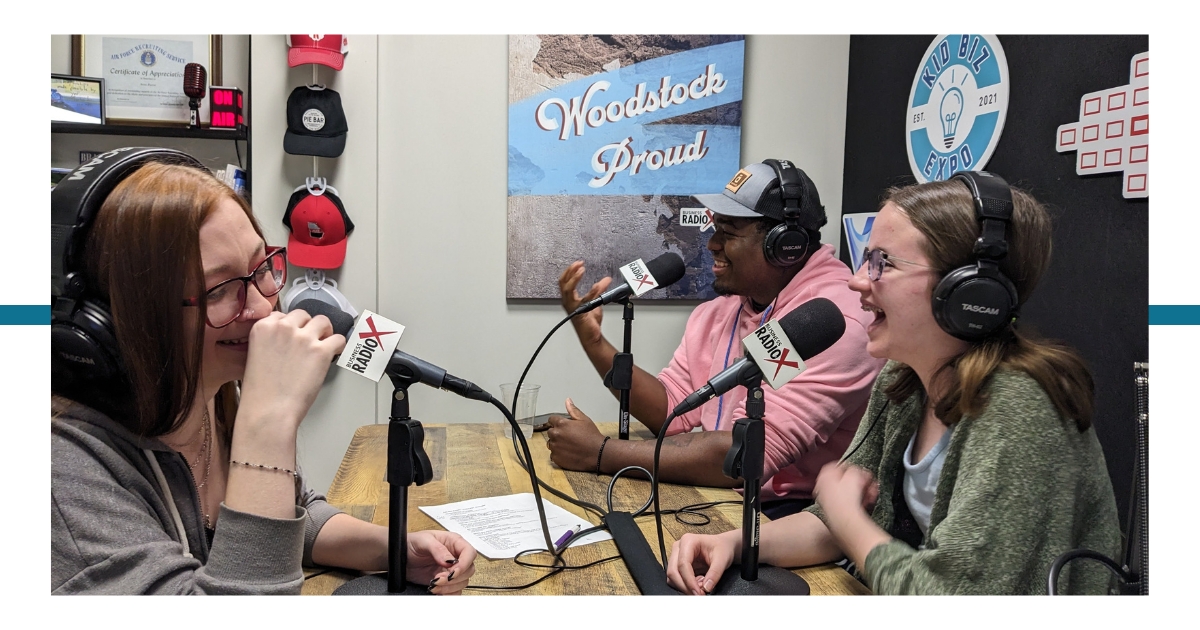


Tagged With: StageDive

Coach Kenny Graham Jr. and Nathan Bates with CMIT Solutions

January 15, 2024 by angishields

Charitable Georgia
Charitable Georgia
Coach Kenny Graham Jr. and Nathan Bates with CMIT Solutions
Loading
00:00 /
RSS Feed
Share
Link
Embed

Download file

Charitable-GA-1-12-24-banner

In this episode of Charitable Georgia, host Brian Pruett is joined by former professional athletes Nathan Bates and Kenny Graham Jr., who discuss their transitions from sports to community involvement. They share personal stories of resilience in the face of adversity, including career challenges and personal losses.

The conversation covers the importance of networking with authenticity, the impact of sports on mental health, and the need for athletes to find purpose beyond their sports careers. They also address the evolving landscape of college athletics, including compensation and the transfer portal. Finally, they emphasize the importance of allowing kids to enjoy their childhood and not pushing them too hard in sports. 

Kenny-Graham-Jr-headshotKenny Graham Jr. was born and raised in Laurinburg, NC. He attended college at North Carolina A&T State University with a major in Computer Engineering.

Kennny played professional baseball for seven years and is now coaching 14 & 16 year olds and Collegiate Summer baseball with a goal of being an outfield coordinator at the professional level.

Kenny is the father of Savannah Reign Graham, age 7, who is currently in dance & gymnastics. He’s a man of God and truly values family and being a mentor and leader to help others.

Nathan-Bates-headshotNathan Bates went to HS in Fayetteville, GA at Starr’s Mill. He played baseball and basketball, lettering all 4 years. He ended his basketball career as the second highest scorer in school history, and went on to play baseball at Georgia State University.

After three years at GSU and a career 4 ERA as the Friday Starter, he was drafted by the LA Angels in the 15th round of the 2015 MLB draft. Nathan played 7 years in the minor leagues where he went from starter to closer and eventually hit 100 mph, but not before having Tommy John surgery first.

Nathan played as high as AA and played in the prestigious Fall league twice. In his 8th year of pro baseball, he played in Mexico and retired in July of 2022.

He’s been head of sales at CMIT Solutions in Marietta, GA since Fall of 2022.

This transcript is machine transcribed by Sonix

TRANSCRIPT

Intro: [00:00:07] Broadcasting live from the Business RadioX studios in Atlanta. It’s time for Charitable Georgia. Brought to you by B’s Charitable Pursuits and resources. We put the fun in fundraising. For more information, go to B’s Charitable Pursuits dot com. That’s B’s Charitable Pursuits dot com. Now here’s your host, Brian Pruett.

Brian Pruett: [00:00:45] Good fabulous Friday. It’s another fabulous Friday morning. And first of all, everybody happy New Year. This is the first show since for being back from the holidays in 2024. So I hope everybody had a great holiday season. And um, even though it’s kind of nasty weather out there, it’s still a fabulous Friday. We’ve got two fabulous guests this morning. If this is your first time listening, Charitable Georgia is all about positive things happening in the community, whether it’s a business, individual or nonprofit. And I’ve got two guy. I’m like a little kid in candy store this morning. I got two guys in the studio. I got to call friends too, but they played professional sports. I get to dream about playing professional sports. So Nathan Bates, Kenny Graham, Jr., thanks for being here this morning.

Nathan Bates: [00:01:23] Of course. Thanks for having us.

Kenny Graham Jr. : [00:01:23] Thank you for having us. Thank you for having us.

Brian Pruett: [00:01:25] So, uh, Nathan, we’ll start with you just for just for a second. Um, you currently work with CMIT Solutions in Marietta, but you, uh, played college ball at Georgia State, and then you went on to played in the angels organization and played professionally in Mexico. So share a little bit about your background, if you don’t mind.

Nathan Bates: [00:01:42] Uh, yeah. My, uh, I moved a lot when I was younger. My dad was, you know, in corporate sales job. So bouncing around quite a bit, quite a bit. Um, and then, uh, went to high school down in the Peachtree City Fayetteville area, went to Starr’s Mill down there. And then, like you said, three years at Georgia State, um, as a pitcher, uh, playing baseball and pitching, was drafted by the angels in the 15th round and was bouncing around the minor leagues, traveling all over the place, doing that and having fun doing it. And until it wasn’t fun anymore, after about eight years, um, you know, got engaged, getting ready to get married, had some some other things going on and priorities had changed. So it’s time to take a different direction there. But loved every second of, uh, of the playing, playing career. And like you said, now I’m in it sales for a company called Cmit Solutions. We do it for small, medium sized businesses up in the Cobb, Douglas and Paulding County areas. But, you know, really anywhere in metro Atlanta. So, um, yeah, thanks for having me. It was a lot of fun. You know, I’ve played in a couple of, uh, golf tournaments, um, that you’ve invited me to a couple of charity scrambles, been on a panel to talk. And whether it’s, you know, giving back and having a conversation or donating money, it’s just a lot of fun to be involved in everything you do and happy to be invited to do it. Awesome.

Brian Pruett: [00:02:51] Well, I appreciate that. And we’ll get back to you in just a second. So, uh, Kenny Graham Jr, you also played pro ball. You were with the White Sox for a while, and then you actually spent one year in arena football until the nasty Covid thing hit. But. Right. Absolutely. Give us a little bit about your background if you don’t mind. Uh, yeah.

Kenny Graham Jr. : [00:03:06] So originally from Laurinburg, North Carolina, um, born, uh, my mom and dad, uh, they actually still happily married. They actually just celebrated 32 years of marriage last week. Uh, I did my undergrad at North Carolina State University, had a degree in computer engineering and minor in public speaking. Um, I actually wasn’t drafted. I was an undrafted free agent. Um, at that time, they had something called the American Baseball Institute, um, down in Clearwater, Florida, at the Phillies, uh, spring training complex. And it was like an institute for guys who got overlooked in the draft or guys who got released. And I went down there for a tryout. Me and my dad and my uncle, um, I just happened around, like, a six for 60. Um, I topped out at 110 miles an hour from the outfield, left handed. Uh, and then I took BP. My BP sucked. Literally. I was so nervous. I was 19 years old, so I was nervous. And it was over 600 guys at this tryout and everything. We had ten swings and everything. I hit, hit my back, hit the tarp and went back into the screen. Um, and I looked at my dad and my uncle. I said, yo, they’re sending me home like I’m not coming back, because the next day was like the inter-squad day. And I was like, dad, I’m going home, man. Like my BP sucked. So the next day it rained out. So we had like an off day. So we go back the next day and they called the names out for, you know, for the Inter-squad games. And they said Kenny Graham Jr. And I’m like, what are you talking about?

Nathan Bates: [00:04:33] You hit 110 from the outfield run A64. Yeah, exactly.

Kenny Graham Jr. : [00:04:36] So and that’s exactly what they told me because I asked I said did y’all not see my BP. They was like nah, you looked a little uncomfortable up there. So make a long story short. They said, we want to see what you look like in game like situations, so they can’t really determine off of a little tryout style. So, um, I ended up going three for four, two bombs and a double. Made some plays in the outfield, you know, some diving plays, man. And I had a representative from the Chicago White Sox and Dominican Republic out of Boca Chica. Um, he literally came up to me and said, hey, we want you. Um, I was like, I’ve never been out of Country Day in my life. You know, I’m a spoiled little boy from North Carolina. I love my mom and dad like I’m still in school, so I ended up, like, leaving. Aren’t for that year. I moved to D.R. for that summer. I played in Dominican Summer League, played for the Los Tipicos with, uh, Robinson. Cano’s father was our GM, Jose Cano. I mean, um, yeah, Jose Cano. And then I ended up staying there for like a whole year. And I played winter league over there as well. And then that’s literally how my whole career started. Say I bounce around in the minors for a little bit. Um, tore my knee. I got married at 24 years old, so I’m 34 now, so I got. Little younger, uh, a lot of baseball players.

Nathan Bates: [00:05:47] Right?

Kenny Graham Jr. : [00:05:47] Right. Yes, yes. Uh, you know what I mean? We got, uh, my, um, my previous wife, she had three kids before me, so I took care of them as my own once we got together. And then we have our seven year old daughter together. So I got four kids. You know what I mean? Um, so basically, what happened once I got hurt in 2017, I just, you know, I tried to bounce around, said bump baseball. And like you said, I mentioned you mentioned arena football. So I started training for arena football down in Tampa. I went down there, I think I as a matter of fact, I reached out to the guy that trained me on email and I said, hey, man, I play pro baseball. I’m tired of baseball. Don’t want to look at it. I want to play football. I got a lot of anger and aggression. I want to hit somebody. Can you train me? I’ve been able to.

Nathan Bates: [00:06:29] Do it in baseball.

Kenny Graham Jr. : [00:06:30] There you go. I was like, can you train me? So they emailed me back and said, fortunately, we can do it. I was like, okay. So it was a little expensive. It was like $2,200 a week that I spent. But I was like, I told my wife at the time, I said, look, I got to go for a couple of weeks. Make a long story short, man, I did NFL combine training, totally different. So I got a whole nother respect for NFL players. Football players, totally different. The first day warm up, I felt like I was about to die just in the warm up. Yeah, we didn’t even do speed and agility. Not even training yet. It was just the warm up. Wow. My lower back was tight, so after the first week I was fine. And then, um, I met some good NFL guys, some Buccaneers guys at that time. Arena ball is right around spring training. So when the Yankees guys came in, I got to meet CC Sabathia and all them boys. So they were trained there too. And then the Tampa Tornados had a tryout and I went to the tryout. Now, mind you, I’m a little flashy. So I pulled up to right. So I pulled up to the tryout in a drop top BMW. Okay. I was like, yeah, I’m I’m gonna show out. And my trainer was with me. So I’m the only guy that walks in with a trainer. So now everybody’s looking at me. So I’m like, all right, I got to show out.

Kenny Graham Jr. : [00:07:36] So make a long story short, man, I ended up we ended up doing the drill. I did good on there. And then we had to run the 40 and I ran a 445. And I thought I ran that. One of the owners was like, yo, get his number right now and he comes. So the player developer, he was like, uh, you know, I had my my college shirt on and he said, uh, man, you went to ANC. I said, yeah, I did. He said, uh, when did you graduate? I said, man, it’s 2011. He said, wait, wait, wait. You play in the NFL? I said, no. He said, you play football, right? I said, I ain’t never play football a day in my life. He said, what you do? I said, I used to play pro baseball. He was like not looking like that. And I said, yeah, man. I said, I just, I’ve always been a football guy. I just never played it. My dad wouldn’t let me. So he was like, man, I’m gonna send you a contract at night. So make a long story short, I get home back to the hotel, I check my Facebook, I get a friend request from both owners, the player developer and the head coach and the starting quarterback. And they they messed me and said, you’re getting a contract tonight. I looked over at my wife and I at the time, went to Vegas, celebrated, signed it on Facebook Live. Boom, played arena football. And then Covid happened.

Nathan Bates: [00:08:44] Especially after not not having done it previously. That’s incredible.

Kenny Graham Jr. : [00:08:47] Yeah, I played defense. I played defensive end too. As soon as.

Nathan Bates: [00:08:49] You said, I mean, you got to have some kind of physicality to throw 110 from the outfield too. I mean, I do, but mine is just leverage. I don’t have that. I got that strength that you got. But you run A64. Yeah. There’s some other sports they’re gonna come knocking like yeah yeah yeah.

Kenny Graham Jr. : [00:09:01] Right now I’ll be transparent. If I knew what I knew now. Especially at baseball because I’m a lefty. If I knew what I knew now I would. Yeah. Because when I was in college, I was like 96 off the mound with no mechanics. But I got to respect you, too, because y’all did a lot of conditioning. And when I used to see the conditioning in college, I was like, I’m not doing that, and I don’t know how to swim at that time. So we making swim pitchers doing swimming workouts in the pool.

Nathan Bates: [00:09:27] Which is the best thing you can do health wise to keep your arm. Yeah, I believe it’s great. But so I before I when I turned ten I stopped swimming. My sister was an All-American swimmer in college Georgia Southern. Yeah. And I swam for a couple years. And when I was ten, I was like, this is worse than running because all you’re doing is going back and forth, except for, you know, you could drown. And I just my arm never felt better, but I was like, it’s still not worth it.

Brian Pruett: [00:09:48] So I read a story about Lenny Dykstra. Now, it wasn’t swimming, but he was in the pool. And, you know, Lenny Dykstra was a switch hitter and he the what I read was he took 100 swings on from both sides underneath the water with the bat.

Kenny Graham Jr. : [00:10:01] Now I do that surprise me.

Nathan Bates: [00:10:03] Yeah. Yeah. Because that’s, that’s a way to get resistance without putting any stress on anything, any, any joints or anything like that. Which is why it’s so great for pitchers, because all they do, you can only throw so many pitches off the mound, you can take a lot more swings, not unlimited, but you can take a lot more. It’s not like going to a gym and shooting a basketball. You can’t just stay there for eight hours and get shots up. I mean, there’s a limit. So being able to to add some of that work in without putting the stress on your body is really good if you can do it.

Kenny Graham Jr. : [00:10:26] But again, that’s old school. If you can, if you can do it.

Nathan Bates: [00:10:29] Yeah. If you can do it, I’m not worth it to me.

Brian Pruett: [00:10:31] So I got lots of questions. So hang on for the ride. All right.

Nathan Bates: [00:10:35] Um, so I’m sure we’re both used to it, right? Yes.

Brian Pruett: [00:10:39] Um, well, well, first of all, I want to. I just want to. I want to do this. So you guys, again, like I mentioned, have done some things with me for fundraisers and I’ve started my business a B’s Charitable Pursuits and resources doing community fundraising. And, uh, like you said, Nathan, you’ve recently done some golf tournaments and we did the locker room chat and, uh, Kenny, you were it was a while ago, but you came out to the thing we did in 2015. Can you believe it’s been that long?

Kenny Graham Jr. : [00:11:00] I had just moved here in 2014 and I got.

Nathan Bates: [00:11:03] Drafted in.

Kenny Graham Jr. : [00:11:04] 2015. Really? Oh, man. Dang, I got you by a long shot. He made me feel old, man. So our our.

Brian Pruett: [00:11:10] Mutual buddy Eric Greens when he got us connected. Yeah yeah. You know but we did the thing when Skip Wells. Yes. We did the trivia night for his, you know, 25th.

Kenny Graham Jr. : [00:11:19] I was 25 years old. Big dog. Damn. I’ve been in Georgia that long. That’s crazy. Yeah.

Brian Pruett: [00:11:26] So first of all, I just appreciate you guys coming out and giving back to the community. Um, so, uh, Nathan, this is going to start with you with this question. So. Obviously playing sports and and being in professional sports. While you may not have had the name in the major leagues, but you still were professional. Mhm. Um, just give me a reason why it’s important for you to be part of the community now.

Nathan Bates: [00:11:51] Well, I think a lot of it was like the culture or, you know, whatever sport it is in the locker room, and you get that camaraderie with the team and you build a lot of really good relationships. And that’s, you know, half of the fun of, in my opinion, of at least baseball. If not, you know, most professional sports is that those relationships and that camaraderie and the and the culture you build in the clubhouse. And so that was one of the things when I retired, that was one of the things I was kind of I realized I was missing, and the more I went out and was doing networking and, you know, doing sales and business development in, in our area, that was one of the things I realized that was, um, it was good to me on a selfish level because I got to, you know, build more relationships, get to know some really good people and, and expand, you know, network and center, new to the Marietta area, you know, getting to go around in a lot of places like that. But, um, but giving back was a really, really important to me because there’s the more I think about it, there’s so many people that helped me get where I am, and without almost any one of them, I wouldn’t have gotten there.

Nathan Bates: [00:12:45] Um, and so even if it’s just something small, you never know when someone you’re going to say something about a sport and oh, hey, my son plays baseball. Could you talk to him? Even if it’s a five minute conversation? You know, I still answer the phone every time my high school pitching coach picks up, because I know it’s always because he’s got a student with him or a kid with him, a high school player, and he asked me a question that he knows the answer to, but he just wants the kid to hear a professional baseball player or former professional baseball player say it. So it’s important to me just because of one way or another. There’s a lot of ways to give back, and a lot of people did that for me when I was younger, and it’s extremely important for me to to do what I can to do the same thing. However, that, you know, looks right.

Brian Pruett: [00:13:22] Kenny, how about you?

Kenny Graham Jr. : [00:13:23] Um, I’m actually in the same boat with him, and I’m all about giving back, um, especially the environment that I grew up in. Um, so, like I said, if you don’t know too much about Laurinburg, North Carolina, we’re actually ranked number one most dangerous place to be in the state of North Carolina. Wow. And I mean, when I tell you we’re beating Charlotte in Charlotte is extremely big. Excuse me, but like, my hometown is one high school, three middle schools. At that time, we had five elementary schools. You know what I mean? So but the way the time is now, there’s nothing to do for the community, nothing to do for the youth. Um, and it’s almost kind of like, man, if you don’t get out, you’re stuck. So it’s like when I go back home and I see people that I graduated high school with that’s 34 or 35 years old, and they’re looking like they’re in their 50s and stuff now. You know, it’s kind of sad to me because at the end of the day, you know, they probably didn’t get that opportunity like I did. And again, it’s it’s about networking. I’m a relationship person. Um, I just I just really big on, uh, developing great relationships, not burning bridges.

Kenny Graham Jr. : [00:14:23] Um, so I feel like being in the community, like you said, you’re going to have a lot of individuals that get to see you. Um, you will have somebody who say, like I said, I want to play sports. I want to play baseball, or just somebody that say, you know what? This is somebody that’s been through something and look where they are now, you know what I mean? And they use baseball or another sport or even a business to use that as a platform to get to where they’re at now. So like I say, it’s real very pivotal that you are in the community as much as you can. Um, that’s one thing I hated about covet, because I had so much I was going to do in the city of Tampa, Florida. I mean, my my spiritual advisors there, like I said, the Tampa Tornadoes football team, um, especially in the rural areas, um, I wanted to do so much, um, you know, doing that. And it’s, uh, man, I just hate, covet happened, but things happen for a reason. But again, being being connected in the community is is very pivotal for me.

Brian Pruett: [00:15:15] You guys both mentioned it. And, uh, so it’s a good segue because I always ask this too. So you both talked about, uh, networking and and Kenny, you’re right on. It’s all about relationship building, right? Most people come in and networking if they’re new to networking and they try to sell, sell, sell. And that’s not the way to do it. You got to learn about the other person and build that relationship. Um, so let me start with you, Kenny, because you’re you’re now training kids, right? Right, right. Um, do you get to do much networking now?

Kenny Graham Jr. : [00:15:43] As I do. I do because I’m gonna be honest. Uh, a lot of people ask me what I do.

Nathan Bates: [00:15:48] You train baseball or football?

Kenny Graham Jr. : [00:15:49] Baseball. Okay. Yeah. Yeah. Um, well, let’s let’s let’s let’s be transparent. I can’t do younger kids.

Nathan Bates: [00:15:56] Oh.

Kenny Graham Jr. : [00:15:57] No, I get it. High school pitching. Yeah, high school. I I’d rather do college, at least you know what I mean. And then just do pro guys. But high school is my limit. But again I get to network a lot because of the fact that a lot of people ask what I do, you know, like for work now. And I’m like, I just chill, you know what I mean? Just because of, you know, the relationships that I had. And God’s kind of put me in a position to where I don’t have to, you know, punch a clock anymore. And I can just march to the beat of my own drum. So I do have a lot of time to network. Um, and again, being in the the Milton and Alpharetta area is so many baseball guys out there. Yeah, so many. Like, I didn’t know that Dexter Fowler went to Milton High School, you know, and I live.

Nathan Bates: [00:16:41] Across in that.

Kenny Graham Jr. : [00:16:42] Area. Right. And I live right across the street from Milton High School. You know what I mean? We was talking about baseball facilities in the area, you know, uh, uh, Chris Buczek. Mhm. Um, is that precision? I coached that precision a couple of years back.

Nathan Bates: [00:16:55] Was a coach in the angels organization. Well, sorry. He played in the angels organization and then coached at Georgia State as a as the pitching coach when I was still going back in the off season. So I know Chris.

Kenny Graham Jr. : [00:17:03] Yeah, you know what I mean. Him and then I’m real good friends with Ryan Vogelsong. I know.

Nathan Bates: [00:17:07] Vogelsong, yeah.

Kenny Graham Jr. : [00:17:08] Just because of the fact that I coached travel ball with the bombers. So, uh, Ryan Snare, I.

Nathan Bates: [00:17:13] Almost never have a conversation with a baseball player. It’s like, you know, this guy is like, oh, yeah, he never is happy where it’s like, nope, don’t know any of those guys.

Brian Pruett: [00:17:20] Well, I mean, you’re both are. Well, you North Carolina but local growing up. Right. And he’s still now here.

Nathan Bates: [00:17:25] So East Cobb baseball is nationwide even though it’s in very local to I mean, I live right next to Sprayberry now and Sprayberry is Five-a but still not really a powerhouse in terms of baseball. And there’s all kinds of other high schools up here, along with, um, uh, what is it, North Point now? Is that other.

Kenny Graham Jr. : [00:17:40] Yeah, yeah, yeah.

Nathan Bates: [00:17:41] Facility up there that’s not as big as East Cobb, but it’s getting there. And so this is a hot spot in the country for sure.

Brian Pruett: [00:17:47] Yeah. So so Kenny, let me ask you this. Do you have a positive story you can share about networking that’s kind of helped you?

Kenny Graham Jr. : [00:17:53] Positive story about networking. Oh, man. Okay, I could be positive networking. Uh, let’s go back to Ryan Vogelsong. All right? I’m to the point where I’m good friends enough to call him by his nickname. And basically, again, I used my public speaking skills to and my baseball background to talk to Vogey. Right. So I’m coaching his son. He played on my 13 youth team with the bombers last year. And, you know, he he spoke to me on the phone when I asked him that he wanted to play for me because, like, it was my first year with the bombers. So I was kind of new to the organization, but a lot of the kids were already on the bombers, but they was going through transitions as well as far as coaching wise. So I definitely had to win all the parents over. So I’m talking to Vogey and um, and he let me know, hey, this is who I used to play for and everything. And I’m like, wait, I’m on the phone with a World Series champion. Like his statue was outside of the San Francisco Giants, like stadium. And this man is telling me he trusts my coaching with his son.

Kenny Graham Jr. : [00:18:52] So I’m like, all right, I got to make sure I come correct. So I just always I was not doing no starstruck or try to be like buddy buddy type just because of who he is. I just kept it honest. Um, and I guess my networking and the way I kept it honest with him, he felt comfortable enough to come to me about his frustrations with his son, because he expects his son to be a certain type of way, because of who he was. And he felt comfortable enough to, you know, talk to me. And I was able to build that, that bond with him and be like, hey, man, it’s okay. Like, let your son, you know, break out on his own time. He’s not you. But just because of that relationship and that networking, I did. Now he’s spoken to the front office with the San Francisco Giants, and they picked up my resume. And there’s an opportunity in the fall, in the off season of 2024, that I can get the outfield coordinator job with the Giants, which is one of my goals. So that’s that’s a positive thing for me, and.

Nathan Bates: [00:19:48] That’s not usually something that someone just comes right into. Usually you got to be in the system and get promoted. Even as the coaching side of things, it’s very similar.

Kenny Graham Jr. : [00:19:55] Yeah. So it’s just like I said, just for me, just being who I am. That’s another thing too, about networking and be authentic. Yeah. Be your true self. Don’t try to be nothing you’re not. And then at the end of the day, you know, if that’s what God wants for you to happen, you know that relationship is going to happen. And like I said, you know, it’s not concrete, but the fact that he even thought of me right to, you know, give ask for my resume, send it to the front office. And on top of that, they just gave him the job to be the special assistant to the GM for this season. Right? So. Right. You know what I mean. But yeah, you.

Brian Pruett: [00:20:26] Just talked about being not being star struck. Now look, I’m going to tell a little story on myself. So one of the things that I did back when I worked for I won’t name the company because it was not a good thing, but the best thing that came out of it was, I got to meet a lot of you guys, former athletes, right? And I maintained those relationships. And I always tell somebody, somebody sends me a text or somebody calls me and I look down and it’s one of you guys. I’m like, I’m like, I seriously like a little kid in a candy store. And then I go, what’s up, man?

Nathan Bates: [00:20:54] Yeah.

Brian Pruett: [00:20:56] So all right, Nathan, what about you? You know, I do a lot of networking and some of the same groups, but how about you? What kind of story can you share a positive about? Networking?

Nathan Bates: [00:21:03] Um, yeah. I mean, there’s a lot of positives that have come out of networking. And a lot of times, again, as I, there was probably a couple of months in between the end of my baseball career, in the beginning of, I would say, my, my real job, my real world job of, you know, sales for an IT company. And I realized very quickly that even though at first it felt like I was tooting my own horn to stand up and say, hey, I played professional baseball for seven years. Um, but every time I did that, there was a literally a line of people of 4 or 5 people waiting to talk to me after the networking event. Um, and so finding a way to kind of not try to look like I’m puffing my chest out when I say it, but realizing that that adds a lot of value and it creates a lot of credibility for me. And so there’s a lot of times where people have come up and was like, hey, I know, I know, you probably don’t do this a lot anymore, but my kid’s eight. Or, you know, he really wants to be a baseball player. Is there anything you can tell him? And then it turns into the, you know, 30 minute conversation of, you know, what’s what? Sports does he play? How you know, what team is he on? What are these coaches telling him all that stuff. And so for me a lot of the positive is people, again, like you said, they they see me at a networking event. All they hear me say, they hear me be honest and they can tell I’m being myself.

Nathan Bates: [00:22:06] Um, and then they’ll come up to me and ask me for my advice on how their kid, who, you know, most parents love more than anything in the world, how they should approach their sports career. And to have that trust is, I mean, that that happens quite a bit, which is really great. Um, but I will say that talking to, to people and having the conversation go from networking kind of into sports a little bit and then kind of like we’re doing right now, eventually it turns into, hey, do you know this person or do you know this person? Oh, I know somebody that would I’d be great to connect you with. And so I’ve gotten some business doing that, which is great. It’s not really the I mean, if my boss is listening. Yes. That’s the that’s the reason, you know, you want to get business. But, you know, I just want to build relationships with people and be able to, to help people however I can. So that’s a lot of the positives is really just the little things of. Going off topic and people being like, hey, my son’s ten and he wants to get into pitching. I don’t really know how to teach him how to throw a curve ball. Can you do it? And I’m like, no, I’m not teaching your ten year old how to throw a curve ball. I don’t want him to hurt his arm. Right. And like you said, I’m not going to lie to you and tell you. Yes. Just because I think that’s what you want to hear. I was told not to or I wasn’t really allowed to play professional.

Nathan Bates: [00:23:09] Not professional. I wasn’t allowed to play organized sports until I was like ten. Um, you know, no tee ball, nothing like that other than soccer. Because soccer at that age isn’t really the same thing as it is once you get older. Um, and I hated it because I was all my friends were playing those sports. My parents would never let me, and now I get it. And so a lot of those conversations that I have with parents of, of athletes now, um, it kind of comes full circle. And so that’s where most of the positive outcomes for me, outside of the obvious, you know, building network or building relationships and having it, you know, grow our business is just the the questions I get were again, like Kenny said, people asking for advice on how they should coach and bring up their kid. Right. And it’s just it’s really rewarding to help. But like the same thing he said at. There’s only so young with baseball that you can start training and teaching kids. And so there’s a fine line. There’s a lot of parents that want him to start when they’re six, because that’s what all the East Cobb coaches are saying, that you got to start them now, and they got to specialize because everybody’s specializing now. And that’s the only way they’re going to get. So a lot of those conversations I get that you can maybe kind of tell, since you’re in the room with him getting fired up about it a little bit right now, because pitching is so much different than other sports and even even playing a position in baseball. Bat. Right. That’s what.

Kenny Graham Jr. : [00:24:19] It is.

Nathan Bates: [00:24:20] Yeah. And that’s like I said, I almost am shooting shoot myself in the foot for being too transparent and too honest sometimes. But when it comes to networking, I refuse to change because that’s it’s it works. And I feel more comfortable telling people what I truly believe, especially when it comes to again, I’m going to relate it back to the I because I hear it all the time. It’s like, oh, curveballs and sliders. How’s my kid? Throw one. Your kid doesn’t need to throw, right? Um, and so that’s just being able to really make those parents understand that, hey, this isn’t the end of the world. They’re eight years old. A lot of that is mostly the positive experiences I have. But they’re they’re all over the place almost every day when I’m out, you know, all the networking events that I go to and see you out, there’s always somebody that, you know, some kind of conversation, um, that’s at least an uplifting conversation. If not, you know, a physical, tangible positive that comes from it. So.

Brian Pruett: [00:25:06] Well, most people, everybody’s listening. So there’s no cameras in here so they can’t see. But most people probably think you played basketball because you’re how tall I do that.

Nathan Bates: [00:25:13] I’m six eight. Yeah. That a lot.

Kenny Graham Jr. : [00:25:15] Yeah. When he walked in I was like, yeah, he whooped. He did.

Nathan Bates: [00:25:17] But yeah.

Kenny Graham Jr. : [00:25:19] I want to piggyback real quick though, when you said about, uh, you know, not trying to pump your chest when you say you play professional ball, it’s very therapeutic to hear somebody say that sometime they say that’s what they did. But not coming from a cocky standpoint. Right. Because I do that a lot, you know what I mean? But for real for me when you like I’m six, three, two, six, five. So clearly I look like an athlete, especially because all I wear is athletic clothing. Right. So the question is going to be asked what it is that I did or what I do. Um, and so I of course, I would bring that up. And again, sometimes it is it’s a great conversation starter as well. Absolutely. Um, you know what I mean, like you said, how people look at you, but there’s a lot of people who don’t understand that neither. So, you know, I’ve been around a lot of people who will be like, oh, why you tell somebody you play this, or why you got to let somebody know that? And I was like, honestly, you don’t understand.

Nathan Bates: [00:26:15] Sometimes I’m not doing it for people to think how awesome I am, right? I’m not doing it for people to to tell people how great I am.

Kenny Graham Jr. : [00:26:21] That’s right. Right. And also, you don’t understand some type of the conversations that can happen. Like I’d be like, give you real quick my, uh, my, my, my wife and I before we, uh, you know, when we were together, uh, we was on a cruise ship, man, back in, like 2016, I think. And we did, like, an eight day cruise. And of course, like I said, out at that time, I was really in shape, you know, walking around my shirt off and stuff. Right? So it was an older couple and the guy was like, man, what do you do? Like you play ball or something and you ask, I’m not going to lie. So like, yeah, so you know, I play pro baseball, whatever. And um, kid you not. Next thing I know, I had a full, like, bottle of Louis Vuitton. I mean, uh, Louis. Louis the 13th. 14th. Yeah, yeah, it was sent to our state room. Literally. And I was like, where did this come from? Because I’m looking at my bill like, I’m not paying for this.

Nathan Bates: [00:27:09] That’s right. So we go.

Kenny Graham Jr. : [00:27:11] So we go to dinner later on that night, and him and his wife comes up to me, to us at the dinner table. He said, you like your gift. I was like, wait, that’s from you? He was like, yeah, man. He said, I’ve never met a pro athlete before, and I love baseball. So I was like, oh, so this is what that title sometimes have. But again, it still opens up other type of avenues as well to people like, okay, look, what can I do? You know what I mean? Even if it’s not from a sporting standpoint. They want to understand your mentality and you can give them some mentality things to help them get to the next level that what they’re trying to achieve. So that’s why yeah, it was just very therapeutic. Hear you say like, okay, I say it sometimes and I try not to say it like I’m sticking out my chest. And a lot of times when I do it, I’m not sticking out my chest, but I’m going to let you know I work my behind off for this. So yeah, yeah, I throw that in there and there’s.

Nathan Bates: [00:28:00] A they hear all the time like, oh yeah, it’s a grind. And it is. And I mean high school baseball is probably what people relate it to. And if they play college ball it’s the same thing. They oh yeah I played college ball. It’s just. College ball is hard too, because you have to balance the schedule, but it’s just a whole nother beast. Mentally. It’s just wearing different level and the same thing. When my wife’s in public and someone will ask, I mean, like Brian said, I’m tall. And so someone asked, oh, did you play basketball? And I’d say, no, I played baseball, and it kind of naturally turns that’s like, oh, where’d you play that kind of thing? And then my wife would be like, why did you have to tell him? Like, well, I know they didn’t ask if I played basketball or baseball. Right, right, right. They were looking at me like you played something. So you’re not getting away from me, you know? So I. Yeah, I get it. And the longer the longer I’ve been out of the out of the game, the easier it is for me to to say it without feeling like I’m sounding.

Brian Pruett: [00:28:43] There’s a difference between confident and cocky. And I think what? Because again, now I grew up around sports. I played in high school, uh, I went to a private school, so the only thing we had was basketball and volleyball. Believe it or not, we had a guys volleyball. So that’s what I played. And I was manager for the basketball team. Um, but I grew up around sports all my life. I went to Kennesaw State, worked in athletic department. I was a sports writer for a while. And, uh, so I’m just a big, big fan, and and it’s I’ve dealt with guys who played professional sports who had the nose up and said, you know, they’re better than you because they got to that level. And look, I mean, I I’ll be honest, I’ll, I went my buddy Chad Blake. You’re welcome. Chad Angel auctions. He was doing a silent auction for Marquis Grissom’s golf tournament a few years ago. Okay. Um, Pete Smith, you know, played for the Braves, came in with a with a little jersey that was for, uh, a nine year old boy whose mother had sent him the jersey asking for his autograph, but he knew he was coming to that. So he was trying to get all the other guys that were playing for the golf tournament to sign. This little boy had cancer. Okay. I’m probably going to get shot if he hears this story, but I’m going to say it anyway because it just they say never meet your your heroes. Mhm. Bo Jackson was there and would not sign the jersey because he said, I’m not here to sign any memorabilia. And he was just I mean, he was so rude about it.

Brian Pruett: [00:30:03] And I’m like, all the other guys are signing. Yeah, this is for a little boy with cancer. Here’s the letter from the mother. He just walked off and as he’s leaving, I tried one more time and he didn’t even acknowledge it, you know? And it’s just, you know, things like that. It’s just. It’s hard to see something like that when you’re trying to do good in the community. And and I mean, you guys, I mean, let’s face it again, I can only dream about being a professional. You guys made it, right. Uh, even if you didn’t make it to the big, big levels, you still were there. So I think it’s awesome that you guys come in here. And the majority of the guys that I hang around with and do things with and invite to are the are you guys that give back to the community and love doing, I mean, Kevin’s event, the the locker room chat. That was awesome. You know, I mean, it was there was eight of you there, but you’re talking about knowing about a professional athlete and asking. So last January I take my mom to Kroger. We’re in Acworth. And you know how you cross people up and down the aisles, right? And everything. And this gentleman’s walking up and down the aisle, and he’s massive, like he’s tall, but he’s also built. Right. And people think I’m crazy when I say this, but we’re on the peanut butter aisle. He picks up the massive family jar of peanut butter and sticks it in his cart. And I looked back at my wife and my mom, and I said, he played. He played something.

Nathan Bates: [00:31:19] Mhm.

Brian Pruett: [00:31:20] We get behind him in the checkout line. So I go up to him and my mom and my and my wife are just shaking their heads like being you. So I said who’d you play for. He’s like, oh, he’s kind of played for the Patriots, the Panthers, the Chiefs and then the BC Lions and Stephen Williams. Right.

Nathan Bates: [00:31:37] Okay.

Brian Pruett: [00:31:37] So uh, and then I got him to come to some events too after meeting him because I told him what I did and he gave me his number. And I’m like, sweet, there’s another one, right? No, but it’s just kind of cool, right? Because again, you guys are used to that, I’m sure. Right, right. But but the fact that he took the time to talk and we’re in the checkout line, so he’s wanting to get out and everything, but he time he took to me and talked about it. So, um. All right. So I got a couple uh, like I said, I got a lot of questions. So we, we, uh, we talk about life on here as well as business. And, um, well, I’m going to ask a couple of these first. So before we get into that. So, uh, Nate, you talked, uh, you spoke at the, uh, Morning Joe and shared a story about, um, adversity and your complete turnaround on the thought. Would you mind sharing that?

Nathan Bates: [00:32:21] Sure. I thought you were going to say something about Ronald Acuna story I told you. Um, no.

Brian Pruett: [00:32:26] Not unless you want to know.

Nathan Bates: [00:32:27] It’s quick. Um, no. It was there was a lot of things throughout, um, my college and professional career that were almost career ending for me and could have been, um, college. I was I got in trouble over the winter break my freshman year before the season even started. Um, and out of 14 pitchers, I was the 14th one to get an inning that year. I mean, I was lucky to be on the team. Um, but they they gave me an inning and I think it was the bottom of the eighth against Georgia Tech at Georgia Tech, and the score was like 16 to nothing. They had scored in every single inning that they had hidden. And so basically it was a Tuesday, and they didn’t want to waste any of the pitchers that they usually use on the weekends. So they were like, hey, good luck, go for it. You know, hopefully you can get out of it. And luckily 1 or 2 of them were pinch hitters, but got three up, three down and ended up getting a couple more opportunities and played well from there. And then sophomore year had a something went wrong. I was pitching at Ole Miss and was topping out at 80 miles an hour and uh, so took a couple of weeks off and kind of fought through that. And again, like I mentioned earlier, I was drafted in the 15th round, was never really a huge prospect.

Nathan Bates: [00:33:36] Obviously. Again, if you see me, I’m pretty tall. And that was you know, I was very late developing physically. And so that was all of the people that were looking at me were like, yeah, you know, he’s got a good frame. Once he puts weight on, he’ll develop. And so that was most of my, uh, my draw when I was in college. But between those two injuries and then got lucky, got a chance to, um, to prove something when I, when I got signed with the angels and then, you know, right. As things got going with the angels, I was throwing a little bit harder. They moved me to the end of the bullpen. And then I had, uh, an elbow injury that was not. I didn’t feel a pop like a lot of the guys that have the full Tommy John surgery feel. So they tried a PRP injection, which has been known to work on a lot of other parts of the body, joints, muscles, things like that, but not as much on the ligament and the elbow. That’s just a very high stress, not a natural motion. And so it’s less successful there. Um, but it was recommended to me and we tried it and ended up not working. Hindsight is 2020, but still can’t look back and say, I would have tried anything different and had my my Tommy John surgery came back from that and with a month left in the year was pitching really, really well.

Nathan Bates: [00:34:41] Throwing upper 90s was consistent, you know, felt as good as I had in my career. I was, you know, six seven, six eight, 245 I put some weight on. I was really feeling good. And then the next year was Covid. So, you know, I went to got invited to some big league spring training games, was pitching. That was when Joe Madden was our manager. Um, pitched in a game, you know, threw okay, came out of the game. Joe Madden patted me on the butt and said, hey, we really like you. Keep it up. And the next day is when they sent everybody home for Covid. So they had an off an alternate site that they invited a lot of guys out to that year. Um, I was not one of them, which was a real mental shot. Somewhere in the middle of the year there, I got what I thought was Covid ended up testing negative, but was, you know, lost 20 pounds. And so the whole time I was that year, I was working out, trying to stay in shape in case they called me to be ready. And then I physically wasn’t ready and getting towards the end of the year. And so even if they did call me, there was no way for me to be ready. And so that was a mental, um, real.

Nathan Bates: [00:35:36] Mind game. Really? Um, and it was, it just it always felt like throughout the, the 8 or 9 years of me playing baseball, it was like, right when I felt like I got going and got some momentum, something out of my control happened. Um, to where I’d have to kind of take a step back and reevaluate and go from there. But, you know, I’ve actually heard it a few times lately, and maybe that’s or recently I’ll say this quote and, um, maybe it’s a sign, but I’ve heard a few times in the last week, you know, you make plans and you hear God laughing. And regardless of what you believe, I mean, you can make plans, you can have all this set and have all this lined up to for what you want to happen, what you think’s going to happen. And then one thing can throw it all off the rails. And there’s plenty of that. That happened during my career. And it’s, uh, it was not as quick of a learning process as it should have been. But just instead of saying, oh, woe is me, and oh, this isn’t going to get to happen anymore. And and maybe if some of that stuff hadn’t happened, then maybe, you know, I would have gone a different route and maybe I’d still be playing baseball. But, um, you know, that’s not really something I think about a lot because my like I mentioned earlier, my priorities changed towards the end of my career once I got engaged.

Nathan Bates: [00:36:36] And, you know, now we have a house and I’m have the flexibility in my schedule to work from home. And we have two dogs and two cats. And it’s and it’s a I love the situation I’m in now. But if I hadn’t had a lot of that adversity to kind of keep my myself in check and keep me that perspective, excuse me, that perspective at the front of my mind, then, you know, it could have gone very differently, and I could have still been thinking about that. What if? And not focusing on the here and now and then, who knows what could have happen? So there’s all kinds of stuff, and I’m sure every athlete has very similar stories. I mean, we heard some from Kenny earlier. It’s, uh, there’s there’s a lot of things that can go wrong, and it’s just up to you on how you respond to them. And so the first couple times, maybe I didn’t do what I should have, but it happens enough. And it’s kind of the definition of insanity doing the same thing over and over and expecting different results. So eventually I got to react differently. I got to do something else. I got to make the best out of this. So, well.

Brian Pruett: [00:37:27] You shared somebody somebody said, actually said something to you, right. One of the players.

Nathan Bates: [00:37:31] Oh yeah. It was uh, well it was one of. Oh, are you talking about during my surgery? Yeah. One of the players was, uh, a Dominican guy who was a younger guy, and there was some guys complaining about, you know, we’re in the we’re in Arizona, and there were some younger guys that weren’t there for the same reasons I was there. I was, you know, on a rehab assignment from AA. But still, in terms of perspective, there was this young guy that was really nice, spoke a little bit of English, and I would talk to him every once in a while, and he came up to me one day. He’s like, you know, it’s really hard to hear these guys and not as good of English. But he’s like, you know, I don’t like hearing these guys complain about their paychecks. I was like, yeah, you know, it’s it’s frustrating. It could be a lot worse. And he was like, I don’t even see my paychecks. I was like, what do you mean? You should definitely be seeing your paychecks? And he’s like, well, I they’re sent straight to the Dominican because I don’t have a dad. And my mom is home, doesn’t have a job, and my sister is young and has health issues. So I’m the provider. He’s like, I don’t, you know, I have some of my friends pick up food for me or the angels will will be nice and bring in some extra food. He’s like, but you know, I don’t even know how much I make. And after a good bit of reflection, because that’ll hit you pretty hard when you’re not expecting it. And so just thinking about that in the situation that I’m sure he had to or was in now and not even talking about the situation, I’m sure he overcame to be where he was.

Nathan Bates: [00:38:40] Just again, that perspective is just if you’re not paying attention to it, it’s easy to miss. But if you if you are able to take a step back and see the forest and not just the trees, it’s, uh, that adversity actually, you know, people say all the time it’s how you respond to it. But being able to have perspective, I think, helps you respond to adversity, how you should in a way that you know is healthy and not to where you can look back and say, oh, this should have happened. I mean, every we’re all in sports. We hear the guys that are like, oh, you know, I would have I would have gotten drafted if it wasn’t for my I had our shortstop that was two years older than me at Georgia State. Had like a 890 fielding percentage as a shortstop. Wow. Won’t say his name, even though he probably won’t be listening. But, um, I mean, he after his junior year, he was like, oh, yeah, our head coach took my name off the draft board. I was like, that’s not how that works. He can’t do that, right? The teams have to do that. And so, I mean, you hear guys like that say things like that all the time. And it’s having talked to some of those guys and having some of the other experiences, it’s like, all right, that’s enough of a reality check. Like it could be a lot worse. I’m very happy with where I’m at. Don’t don’t get to that point. Right. So the adversity to me is just added a lot of perspective. Right.

Brian Pruett: [00:39:47] All right. So since you brought it up tell us the story.

Nathan Bates: [00:39:50] Yeah. So I was I was in the Fall League, which is a um a league for about a month and a half after the minor league season ends, that each organization asks about 5 or 6 people to go out and participate in. And there’s six teams total. And each team is made up of about five organizations. Um, and so the team that I was on was the Reds, the Yankees, the Mets, the Giants, and us. I think that’s everybody. Um, but we were playing the team that had the Braves on it, and I was pitching. And Acuna comes up and this is before he’s in the big leagues, and I knew of him. He’s a big prospect. He’s a good athlete. And they had played, uh, our AA team in the minor league season that year. So I’d heard of him. And so I threw a couple of off speed pitches and trying. To get ahead and trying to get him not to swing at one. I didn’t want to challenge him early and so I threw a slider one zero, tried to get back at, you know, even in the count with another slider. Same spot, two zero. I was like, okay, you know, my ball moves a little bit. I’ll try to get one, um, you know, middle inside because I’m sure he’s looking to extend his arms and I’ll try to maybe get get one back and try to sneak one inside on him since I went two away. And then it started away and ran back over, right over, right where you’d asked for it to be.

Nathan Bates: [00:41:03] If you were hitting batting practice in a home run derby, that’s where it was. And, uh, don’t look it up, because there’s definitely not a video of this on YouTube. Uh, but he makes contact. I throw a fastball, he hits it, and he starts to watch it and kind of puts the bat down a little bit, and I put my head down and say a four letter word that you probably can’t hear, but it starts with an F, and then as soon as I turned around to see where the ball was, it was bouncing over the wall. So it got there in about a second flat, and luckily it was just a ground rule double. Um, but yeah, he was he was the real deal like everybody had said he was. And then sure enough, the he was on second base and the very first pitch, right as I lift my leg, he’s three fourths of the way to third base, stole third right in front of me. And I was like, all right, I get it. You know, this guy’s the real deal. Everybody, every once in a while, there’s a really big prospect to come through the minor leagues. Everybody’s like, oh man, he’s the one. You know, his player comp is Mike trout. And I was like, all right guys, you can’t compare anybody to Mike trout. And then I saw him throw from the outfield. I saw him run. I saw him hit. And I was like, this guy’s like the next Mike trout. That’s pretty accurate.

Brian Pruett: [00:42:02] What’s funny though, Kenny, is he he talked about that story and said the same thing about YouTube at the locker room chat. And the little kid comes up to him afterwards thinking he’s going to. And he asked him, can what’s the video again?

Nathan Bates: [00:42:14] He’s like, can you show me this? I was like, yeah, man, I’ll look it up, give me a second. I got to find it, but I’ll show it.

Kenny Graham Jr. : [00:42:18] To you, I.

Nathan Bates: [00:42:18] Love it. And then he just didn’t really say anything and just kind of looked at me and gave me a high five. I was like, no one’s giving me a high five for that yet, so I’ll take it. There you go, I love it.

Brian Pruett: [00:42:27] That’s awesome. Well, talking about adversity, Kenny, you’ve always been through a lot of it. You talked about your injury and then Covid with the with the football into it, but you’re still really kind of going through. You just lost your grandfather, what, a few weeks ago and, and uh, your, uh, I mean, that’s.

Kenny Graham Jr. : [00:42:41] My OG because I didn’t know my dad’s. My dad’s mother passed away when he was 15, and, um, he didn’t know his father. He had a stepfather who passed away way before I was even thought of. So my only grandfather was my mom’s parents. Um, and I’m the oldest grandchild on my mother’s side. And, you know, they were from New York, so, you know, there was a lot of distance between New York and North Carolina, of course. But, you know, when I wasn’t playing summer baseball, when I was a kid, I spent a lot of time in New York. So, you know, that was my that was my OG man. You know, that’s where I got my swag from. You see my pictures with all my fedora hats or whatever I got there from him. So it was a it was a hard thing, uh, losing him a couple of weeks ago. Yeah.

Brian Pruett: [00:43:25] Well, and you’re, uh, I mean, you’re still kind of going through a divorce, so, I mean, you’re you’re you’re kind of going through all kinds of stuff right now. So just share a little bit about what adversity has, I guess, taught you.

Kenny Graham Jr. : [00:43:37] Um, absolutely. It goes back to what you were saying, man. You know, you want to tell God your plans. You know, you want to hear God laugh, tell him your plans. Um, again, I’m not big on divorce. Divorce is not an option for me. But sometimes that’s just how the cookie crumbles, you know? Um, and like I said, she and I honestly are actually, like, better. We’re, like, better for each other as best friends. And that was my best friend before. And again, man, we we got married. I was 23, you know what I mean? And she was 30. She was just getting out of her first marriage, you know, and I’m still a young buck, you know what I mean? So I had a lot of growing to do, uh, within that marriage. So, you know, I’m not going to sit here and say, oh, it was just her fault or point of blame. And I had a lot of learning to do. I had a lot of growing to do, of getting married at such a young age. And again, you know, she had three kids from her first marriage. So I’m playing bonus dad to a two year old, a six year old and a 13 year old at the age of 23. So, you know, I had to learn how to, you know, grow up extremely quick, be a man that way.

Kenny Graham Jr. : [00:44:40] Like I said, we had our baby girl. She’s seven now. We had her in 2017. Excuse me. Then, you know, we had a business together, you know, that’s extremely successful. Um, and like I said, man, it’s just we just started to become two different, totally people. I wanted certain things. She wanted certain things, and we just couldn’t get it right, you know what I mean? And I can honestly say, too. And a big advice for you, man, especially getting married. Just make sure God is at the center of your marriage, because once you. Absolutely. And that’s what I learned. Now, once you stray away from keeping him in the front of your marriage, um, you know, that’s where you know, the devil come in and start throwing any type of adversity. And I always used to hear her say, I used to always worship her as my God, because I did. I used to, you know, Brian, man, that was that was my. That was my love. You know what I’m saying? Like everybody, even Stevie Wonder could see that. That’s. Yeah. You know, Stevie Wonder could see man, that was that was. You know what I mean? Sorry, Stevie.

Nathan Bates: [00:45:36] What?

Kenny Graham Jr. : [00:45:36] I’m just saying. Like every everybody can see that. You know what I mean? That was truly like that. That was my best friend right there, man. And, um, you know, like I said, just to finally get to that point where we had this having this conversation where it’s like, okay, we can’t get it right, you know what I mean? It was very detrimental to my mental for a while. Um, she was just like, look, man, we’re going to be best friends. We’re always going to be in each other’s lives. And I wasn’t trying to hear that at first. But again, the adversity that we all been through or whatever, it allowed me to mature and to see that. And as well, the kids are now seeing a more healthy interaction between us. So like I said, I mean, I’m always over there, you know what I mean? That’s my homie, you know what I’m saying?

Nathan Bates: [00:46:17] And y’all aren’t sitting here talking behind each other’s backs. Yeah.

Kenny Graham Jr. : [00:46:19] Absolutely. Absolutely. And you know, she definitely wants me to I mean, she even told our seven year old the other day, she was like, uh, because I have I have a full time. And she was like, Savannah, don’t you think you need to let your dad live his life a little bit? Because it’s always she and I. She was like, let your dad found love again. You know? I want your dad to be happy. Don’t you want your dad to be happy? She was like, yeah, I do. So, you know, um, make a long story short. Now, once I heard that and she gave my daughter that briefing and I heard my daughter’s voice, she was like, okay, yeah, I’m cool with it. So, you know, now I’m out there on a limb now, you know, met somebody, you know what I mean? So, uh, it’s just a it’s a beautiful thing, man. But like I said, just adversity. I, I love it. I feel like you have to embrace it. You have to embrace the adversity. Yeah. Um, and if anything, you talk about adversity, man, I always look at my father and like I say, even my mom, my dad’s, uh, my mother’s dad, um, you know, being an African American, owning a business in Brooklyn at that, where he was at, it was a hard thing. He had seven cleaners in Brooklyn back in the day, you know, going through, you know, the segregation times and everything.

Kenny Graham Jr. : [00:47:24] And, you know, the lack of equality, man, it was a very, you know, very rough thing for him. I didn’t hear too much about it, more so I heard a lot about my dad’s upbringing. You know, my dad, like I said, my dad not knowing his father, um, losing. He’s the baby of my my, my my aunts and uncles, you know, being in the room, seeing my grandmother, you know, flat out on the floor, like, passed away. He he witnessed that, um, my oldest uncle, who I never got to meet, my Uncle Harold, he was the oldest. Um, and he’s actually my motivation for baseball. He got drafted to play for the Athletics. Okay, um, as a catcher. But what happened was, um, my dad was telling me that my uncle’s, uh, female at the time had my uncle shot up and killed, so he never got to go play. And my dad was a kid and was in the other room and witnessed everything happen. Um, you know, my dad told me stories about how, you know, I said we’re from a small country town. So it was a lot of country where I’m from. Um, so there was a couple of prisoners that basically broke out of prison, and they came to my my dad’s house at the time when my, my grandmother was still living and basically broke into the house, had them, like hostage and everything. Wow. Where my dad and uncles used to have to, like, eat rabbits and birds and stuff to, like, kind of survive.

Kenny Graham Jr. : [00:48:40] And what happened was when they tried to make their move, they tried to steal my my dad’s stepfather’s truck and it stormed extremely bad. And it was a dirt road. So the truck ended up getting stuck. So that’s when the law enforcement finally found him and everything. So dad and my dad had colon cancer in 2005. My dad fought in two wars. You know what I mean? He’s been through PTSD. Um, I mean, I even witnessed my mom literally packed up me and her stuff because my dad’s PTSD and the medications that the military had him on was so bad to where she was about to leave. So just seeing my dad just go through all the adversity as a man, you know, and just I always used to hear him say, I didn’t name you after me for nothing. You know what I mean? Sometimes I wish I didn’t name you after me because you wouldn’t be going through adversity. So he feels like it’s a curse that he named me after him. So just seeing him going through all the adversity that he went through as a man, um, just kind of was like, you know what? Look at my dad now. You know, he’s went through everything. He’s 65 years old, looking like he’s still in his 50s. You know what I mean? He’s gotten every car he wants now.

Kenny Graham Jr. : [00:49:46] You know him and my mother doing good. He’s got some grants, some, you know, some grandkids. And this is like, man, everything that my dad go through, look at the character that he is now. So I feel like for me, the adversity that I’ve been through from being heard, you know, going through divorce right now, um, being married so young, oh my gosh, that was that’s a whole different story, right? Being married so young, taking care of somebody else. Kids. That’s not yours. And you’re dealing with the bitter father that’s still in the picture. You know what I mean? That’s a lot for at that age. Yeah, that’s a lot for somebody at 23, 24 years old. Um, so like I said, I feel like adversity is is a great character building and it build the character that I am now. And that’s why I walk out. I walk with my chest out, not because of what I did, not because of what I played, but I walk with my. Chest out just because of the fact that the adversity that I face and I know that God has brought me through all of that. So it’s like when somebody try to judge me as a character or try to, you know, judge my character is like, you can’t tell me nothing about being a man because you don’t know. You don’t know what I’ve been through. You know what I mean?

Brian Pruett: [00:50:50] Yeah, we’ll come back to that in a second. I am going to mention, though, March 21st. You get too much, both of you there. But I’m we’re hosting a first annual America’s Hometown Heroes Expo in Acworth, and it’s for veteran owned, first responder owned businesses. And a portion of the proceeds are going to the Outer Circle Foundation, which is a nonprofit based in Dallas, Georgia, that works with veterans and first responders on PTSD and suicide prevention. Um, and the gentleman that runs it, Matt Payne. Matt and Buffy, you’re welcome. Shout out for you. Um, he’s a 16 year Air Force vet, combat specialist, as well as a retired police chief at a new Jersey. So and he suffered so so we’re going to come back to this in just a second. So I got a couple questions and there’s a lot to talk about. We don’t have time. But I do want to ask a couple of questions. Um for you. So so Nathan, I’m going to come to you for a second, share a little bit of the experience on what it’s like, the differences, I guess you would say. I wanted to ask you this in the locker room chat, but we didn’t get to it. I might ask this year, but can you share a difference, uh, of the experience of a difference between traveling around the minors in the, in the, in America and then playing pro in Mexico? What kind of share a little bit about that difference?

Nathan Bates: [00:51:59] Yeah, it was uh, well, first of all, the obvious difference is, I mean, the cultural difference between English and Spanish is one thing. And then the thing about the Mexican League is that there’s teams like Tijuana, where I don’t know if any of you all have seen videos of the games in Tijuana, but it’s they’re called, like the Yankees of the Mexican League because they make the most money, but they have like six mascots at every game, like four on the field in foul territory while the game is going on and pitches are being thrown and music is being played, it’s just a totally different environment. Um, but yeah, I mean, they’re traveling around the I, I got very lucky that the only place I haven’t played baseball in America is the Pacific Northwest. So, I mean, I’ve gotten to go to big Sky country, Southern California, Northern California, Arizona, Texas, southeast obviously played up in Maine and all that for the first year of college ball. And one of the summer college leagues I played in was the Necbl. So I’ve been very fortunate to travel a lot, but it’s, uh, yeah, in the minor leagues, it’s still kind of a hybrid in between, like you’re on your own and like a college situation where it’s very structured and everybody’s telling you what you have to do all the time. Um, and in Mexico, it’s like, we’re not going to tell you what to do if you don’t do it. You’re just gone. I mean, and that’s to an extent that’s kind of how it is in the minor leagues, but there’s a little bit more of a safety net, like, hey, get it together.

Nathan Bates: [00:53:14] This is, you know, don’t be late. All that stuff. There’s no warnings in Mexico. If you’re late, you don’t pitch well. I mean, I showed up, that was the only time in my career I’ve been released, and I deserved it. It wasn’t pitching well at all. It wasn’t. Wasn’t throwing strikes. Um, but they also have a certain amount of American born players or foreign born players that are allowed to be on the team. Um, and there’s obviously there’s not a whole lot of, uh, Mexican people that are six foot eight. I’m not saying there’s none, but it’s less likely that there’s any Hispanic heritage or Mexican heritage in me with my height. But you can only have so many. And so they’re on an even shorter leash. Like if you’re not performing, they got to get those spots filled with people that are, you know, they know what they’re doing. And I played with Addison Russell. Pablo Sandoval was on that team. Josh Reddick, uh, Carlos Martinez with the Cardinals. I mean, it was a big, big names on the team, which I wasn’t expecting when I went down there. Um, and even there was a guy. You remember the guy for the Athletics that took the knee during the national anthem? The first one? Yeah, yeah, yeah, he’s down there. Okay. That dude is big. He’s like your height. He’s maybe 290. He has the biggest hands I’ve ever seen. This dude. I mean, physical specimen. Anyways, I’m getting off track.

Nathan Bates: [00:54:15] Um, but, yeah, I mean, the traveling is a lot different. I mean, it’s still bus rides, really. I mean, you get to Triple-A, then you start flying just because the leagues are so big. But, um, the bus rides are are in the minor leagues and in the Mexican League, but the, um. The the I’ll say the I’m trying not to get myself in trouble here, but the precautions and the parameters on which the trainer or the what the trainer adheres to, what he is allowed to and not allowed to do is different, I’ll say, in Mexico versus the minor leagues. And that was a bit of an eye opener even, you know, as little as I was down there. I mean, you just again, it’s a little bit of kind of a downhill flow from just the being Mexico versus the United States. I mean, you go into you can get Xanax and a bunch of different pills just from the, uh, pharmacies down there. I mean, they’re over the counter. So there’s just a lot of, uh, what seems like a big deal in America is not in Mexico. Um, but there’s I would say 90% of it was just a cultural difference, and it was a bit of a shock. I mean, I speak enough Spanish to get by to tell people I’m learning, and then I, you know, I can hold a conversation. I was just fine down there, but it’s it was a it was still a cultural shock, even though I was kind of expecting it. But what was the locker.

Brian Pruett: [00:55:29] Rooms like different, I’m sure even in the minor.

Nathan Bates: [00:55:31] Leagues. Yeah. They were. I mean, there’s a lot of cards, which is in the minor leagues too. There’s a lot of a lot of similarities. Um, but it was, it was a little bit different just because, I mean, I had never been in a locker room with that many big names in the big leagues. I mean, there was, what, three World Series champions in that locker at any point? Um, obviously Pablo Sandoval Kung Fu Panda being the big one. Um, but the amount of talent that was in the room, I just feel like there was a lot more in depth conversations when it would I mean, locker room conversations, they’re very rarely about baseball or the sport you’re playing. Um, but I feel like there was a lot more intentional and very fine tuned. Uh, things to pick up from the baseball side was the biggest difference. Just because, I mean, a locker room you’re sitting around changing, waiting around for BP or for the game to start. So there’s only so, so many things you can do, um, when you’re waiting around like that. But yeah, I would say the, the actual sports conversations were very lots of nuggets to be picked up from guys like that for sure. Kenny, you.

Brian Pruett: [00:56:26] Shared a little bit, but let me ask you, what’s it like the difference between going from baseball and playing arena football?

Nathan Bates: [00:56:31] Very curious.

Kenny Graham Jr. : [00:56:32] Oh, man. Um, it’s very different. It’s very different. Um, again, for me, with arena football is now it’s more physical, you know what I’m saying? It’s like, okay. It’s because like I said, I play in defensive end. So it’s like. And in arena ball, the office alignment are like six, eight, six, nine, 400 pound plus.

Nathan Bates: [00:56:54] That’s not as big of a field. I feel like you don’t got to they don’t got to move as much.

Kenny Graham Jr. : [00:56:57] Right. And that’s the thing too is it’s different from outside football because with outside football the defensive end he can have time to do six, seven, eight moves. You know what I mean. To try to get around that that that the offensive linemen and arena ball. You got like 2.5 seconds uh literally because it’s a 50 yard field. You know what I mean? So you got literally 2.5 seconds. So if you’re not, at least have your foot, you know what I mean? Past that offensive lineman foot. As you’re about to cut that corner within at least one and a half, two seconds, that’s it. Because the pocket collapsed so quickly. You know what I mean? Um, and again, that was just different, uh, especially with arena ball because now, you know, you’re playing on turf, but the turf that I played in, in baseball is different from this type of turf that you’re playing on arena ball. Um, the fans and everything is closer to you. You know what I mean? If you never if you ever been to a hockey game or whatever, it’s kind of like that with set foot. There’s no guard, there’s no no, you know, whatever the clear thing right there. Right. So arena ball, like when you hit somebody into the wall, you know what I mean? You got fans literally like patting you on top of the head, like hitting you on the helmet because they’re so into it. And I didn’t realize how many arena football fans there are in this, in this world, like in the United States. I mean, for instance, we’re playing against the Jacksonville Sharks. Okay. What else in Jacksonville is there Jacksonville Jaguars. So at that time, um, like I said, my ex-wife, she was sitting in the stands and she sat beside a guy who said that they have season tickets for the Jacksonville Sharks. They don’t give a rat’s behind about the Jaguars.

Nathan Bates: [00:58:31] I mean, it’s the right. Right. No offense, but that’s a good example.

Kenny Graham Jr. : [00:58:34] But it’s like they care more about the Jacksonville Sharks. And like I said, the environment um, you know the music during the games. Like I said it’s the crowd engagement the player engagement with the crowds. How fun it is. Um, and just learning the rules of arena football. Like I said, there’s three linemen, three on offense, three on defense. Right. And the reason why the scoring is so high, it’s really a receiver DB game because you got that one. You got that one receiver in motion. And that’s when the quarterback hits the ball. Once that receiver hits that line of scrimmage, that’s when the quarterback hits the ball. You know what I mean. So now you got that receiver. You know it’s one on one. You know. And if you’re not a good defensive back you’re not a good defensive player. You’re going to get schooled. Yeah. You know what I mean.

Nathan Bates: [00:59:21] Um it’s that timing makes a difference too. Like since you can kind of time as a defensive player, you can kind of time that receiver. Because if you. When he’s about to cross the line. Either he’s offsides. I mean, he’s going to beat you. So I feel like that’s.

Kenny Graham Jr. : [00:59:33] What helped me, honestly, was being a baseball player, the hand-eye coordination, you know what I mean? Seeing 90 something plus miles an hour, you know what I mean? Being able to hit that not all the time, but, you know, being able to touch it, getting ready.

Nathan Bates: [00:59:45] To hit it, the whole.

Kenny Graham Jr. : [00:59:46] Thing. So it’s kind of like and my trainer, who I was training when I was living in Loganville, his name is George Herron. Shout out to body by George. He’s the one who actually encouraged me to do football. He was a football. He went to Auburn and played. He played with Bo Jackson at Auburn. So you know, George encouraged me to do football. And he was like, Kenny, you got to understand, man, when a defensive guy that big throws his shoots his hand out at you and you’re so used to reacting to a 90 plus mile an hour fastball, like your fast twitch muscles are going to, like, help you in this game.

Nathan Bates: [01:00:17] You didn’t realize it. You’ve been training him the whole time you’ve been playing baseball.

Kenny Graham Jr. : [01:00:20] Yeah, right. So it was like, now when I’m training, even when I was in Tampa and I’m training, right? And then when I actually see the offensive linemen shoot his hands out at me, now I’m learning to swim moves, whatever. But with my hand and our coordination and the twitching, the fast twitch, it’s like, oh man, this ain’t nothing. Yeah, really.

Nathan Bates: [01:00:37] That learning curve is this big, right?

Kenny Graham Jr. : [01:00:39] Oh, you about to shoot him? Oh thank you. You know what I mean. It was it was different. But I wanted to pick you too. When you say you played in Mexico, you know, by me being in Dominican Republic. Mhm. Oh my gosh. Different. So that’s and that’s another reason why Vogelsong and I are real tight. Because he played in Venezuela. Oh and right. See just your reaction I’m.

Nathan Bates: [01:00:59] Supposed to be playing down.

Kenny Graham Jr. : [01:01:00] There right. You know he was like he said Kenny the fact that you played in doctor is like it’s very therapeutic to me because nobody I can’t talk to anybody about playing in Venezuela. They don’t get it. Yeah. And like he said man. Oh shoot man. We like I said of course I’m older than you. So this was 2011, 2012. And I was down there. So the mascots you know what I mean. The cheerleaders on top of the dugouts. And that was so hard for me being 20, 21 years old, finding out we can’t talk to the cheerleaders. And I’m looking at you like, what? What do you mean we can’t talk to them? Yeah, you talk to them if you want to. You might have a finger missing, you know what I mean? Um, like you said, the structure.

Nathan Bates: [01:01:41] The top of the dugout, like.

Kenny Graham Jr. : [01:01:42] Oh, yeah. Like that, uh, like they’re literally like. And again, like, I went to a black. I went to a HBCU. North Carolina ain’t. So you hear about you probably seen me post it like Jeho stands for greatest homecoming on earth. That’s our that’s our hashtag. So it was literally like a black college homecoming every single game. So when you have it and again when I played I played winter league there too for the Tigers. And that’s in Santo Domingo. That’s the that’s the capital. So I’m playing with that’s something that’s Hanley Ramirez from Miguel Tejada.

Nathan Bates: [01:02:15] A lot of the big names that are Dominican, they’ll play down there year round.

Kenny Graham Jr. : [01:02:18] They’ll play down here year round and that’s what I loved about it. That’s why I tell people, if you can play over there and keep up with them, man, you can come over to the States and kill because it’s a lot of big name players who just love the they love doctor so much, they don’t care about coming to America, you know what I mean? And like you said, being able to get stuff right over the counter that easy over there, the structure is you’re on your own type thing. It was a it was a very different issue. I faced the rawness Chapman over there. I didn’t say I was successful, I just said.

Nathan Bates: [01:02:52] I mean, you heard me talk about a union. I got nothing like.

Kenny Graham Jr. : [01:02:55] Literally I get over there. And that’s before he was a big guy. He was big and who he was. And basketball is big in Dominican Republic, too, especially in Santiago, because Santiago and Santo Domingo are two capitals and whatever. So Santiago, their basketball is real big. So I’m seeing Chapman at that time I got there, and we’re in this regular random field with goats in the outfield. I played center field, so there’s goats in the outfield. Okay, we’re at this and this is before the season began. They got especially the American players. They got us used to it, right. Used to the culture. So we was playing pick up baseball. You know, like pick up basketball. It’s pick up baseball. But they always had three umpires. It could have no fence, nothing whatever. But there was always three umpires and you always saw kids laughing. It was better than.

Nathan Bates: [01:03:39] Most minor league crews.

Kenny Graham Jr. : [01:03:40] Right? You know what I mean?

Brian Pruett: [01:03:41] Well, the goats were the field crew. I mean, come on.

Nathan Bates: [01:03:43] Still better than most other crews.

Kenny Graham Jr. : [01:03:45] So. And the thing is, when we get there, you have these little kids practicing training, whatever. And I tell you, striking out was very embarrassing because once you strike out, you got these kids laughing at you as you walk back to the dugout.

Nathan Bates: [01:03:58] Remember you the next time you come.

Kenny Graham Jr. : [01:03:59] Up and they remember you the next time because they’re like, man, we can do this. And we’re eight years old, 15 years old.

Nathan Bates: [01:04:04] And they’re probably right.

Kenny Graham Jr. : [01:04:05] Too, honestly. And so I just remember, man, they, uh, I get there. This is my very first day. And, um, I remember his name was Pierre de Vos. He picked me up from the airport, and I was like, man, you got some Gatorade or something? I’m thirsty. I just came from, you know, from North Carolina, man. And like, I got you, papi, I got you. And then it was a culture shock because I didn’t know everything was pesos. Right. So when we stop at the gas station, this man is $50. Yeah, the guy’s filling up the limo, and it’s like $175, right? I didn’t know it was pesos. So I’m looking. I’m like, what is this? And then I’m watching the speedometer go. I didn’t know it was in kilometers. Oh, yeah. So I’m like, do y’all not see this man going 130 miles an hour? I’m sitting in the back like. And everybody just man this thing.

Nathan Bates: [01:04:49] Smooth going 130.

Kenny Graham Jr. : [01:04:51] And I’m kind of nervous. So when we get to the field, man and Chapman is standing off to the side, he’s just in some shorts and a shirt. I’m like, man, that’s he play basketball. He got to be right. So they was like, Kenny, you going to lead off man. You’re not playing the field. You’re going to lead off today. And I’m like all right cool. So mind you I haven’t met all the team reminds you right. So they just got me from that from that workout. So it was a lot of American players I’m introducing myself talking to the Dominican guys speak no Spanish at this time so I’m okay. See. Right okay. So next thing you know man I’m leading off. I got my back turned towards the dugout just talking whatever. And then I hear POW! What the hell? I turn around, it’s Chapman on the mound now. In baseball clothing.

Nathan Bates: [01:05:32] Yeah, he’s got that big.

Kenny Graham Jr. : [01:05:33] Yes.

Nathan Bates: [01:05:34] His whole body.

Kenny Graham Jr. : [01:05:35] Yes, Lord. And mind you, this is before it was extremely developed. Right? So just imagine how wild and scary it was looking then. So I get up there and the very first pitch, I see it and I don’t see it. By the time I got myself set, the ball was already in the mitt and I was like, okay, but it was a ball. He did the next three like that. Okay, okay, so I got three zero count, right? I’m like, all right, here we go. He threw the same exact pitches right down the pipe. The next 31I swung and missed struck out. Wow. And I was like different. Yeah man. It’s it’s a it’s a different ball game. Well like you said most.

Nathan Bates: [01:06:11] People are like are you going to the Dominican in the off season. You just need to get some work in. And it’s like, no, you can get you get paid pretty well down there and there’s really good competition because I know pools for a long time will go down there. I mean, again, guys from the Dominican would just in the off season, right? They don’t like to take time off. They play baseball because they love the sport. And so when everybody sends them home they’re like, all right, we’re gonna go play more baseball. So even doesn’t matter if you’re a big leaguer, World Series champion, minor leaguer, everybody, you know, if you’re there. That’s why they have those games.

Kenny Graham Jr. : [01:06:36] And they take it serious because you represent now you represent where you’re from. So just to be from an American American descent and I’m playing for let’s say, tigers and I’m with that’s what Vladimir Guerrero and I mean that’s Samuel Sosa Manny Ramirez that’s a big thing over there. Right.

Nathan Bates: [01:06:52] And the loyalty and the country loyalty is way different than it is in America. Doesn’t matter where you’re from, whether you’re a Mexican born, Dominican born.

Kenny Graham Jr. : [01:06:58] It’s yeah. It’s patriotism.

Nathan Bates: [01:07:00] Yeah. It’s different than it is here. Yeah.

Brian Pruett: [01:07:02] Well, we could go on all day. I do a couple of questions for we because I’m seriously. But I know you guys.

Nathan Bates: [01:07:06] I know we’re going on doing the same thing. I know you.

Brian Pruett: [01:07:08] Guys got to go somewhere, so. But I do want to ask this. Well, it’s going to wind up being a two questions. And then we got three more after that that we’ll try to make this quick. The and the sport of the business of sport. Let’s be honest. It’s a business. Yeah. Multi-billion dollar business.

Kenny Graham Jr. : [01:07:24] Absolutely. Absolutely.

Brian Pruett: [01:07:25] I’m curious on you guys takes being, um, former college athletes, former pro athletes. To me, the college game has gotten ruined. I don’t necessarily think the Nil but the transfer portal now. Football. Obviously you didn’t play the college football, but I still could see it. You know, you got these teams that went to the bowl games. These guys started transferring in and out. What are your guys’s take on the Nil and the transfer portal and nil now in the state of Georgia, the high school athletes get it, which to me is just insane. So, um, Kenny, what about you? What’s your what’s your initial thoughts on.

Kenny Graham Jr. : [01:08:02] Honestly, man, I’m I’m I’m I’m on both fences. Both sides. Um, because for one thing about it, if you are a player who’s playing at these power five schools, you know what I mean? And you’re extremely successful.

Nathan Bates: [01:08:13] You generate a lot of money.

Kenny Graham Jr. : [01:08:14] A lot of money. You know what I’m saying?

Nathan Bates: [01:08:16] I’m saying especially in football, basketball, baseball.

Kenny Graham Jr. : [01:08:18] Right. Sports, especially if your jersey is being sold in stores, you know what I mean? And then you have nothing like you can’t do anything about it, you know what I mean? And you still sitting here eating noodles and noodles, right? And you’re sitting here generating all of this, like I feel that, you know what I mean? Because. And then also, you know, even if you do have some type of conversation or sign something for somebody now, it’s kind of like it can be detrimental to your career as a college athlete and also going to the next, uh, going to the next level. And then on the other side of it, it now it’s kind of like you think about it, uh, you know, the girl that plays for LSU. Uh oh, yeah. Right. Yeah. Like, if she doesn’t go to the NBA from a financial standpoint, it’s not really going to bother her, you know what I’m saying? And I feel like too, that can start killing the passion and the drive and the heart and the grit of an athlete, um, to really take the game serious. And one thing I tell my travel ball kids that I coach like, I’m not going to allow you to disrespect the game that I love so much. And really, that took care of my family for a while, and I busted my hand and went through adversity to get to. But now it’s like, if you’re now you’re saying at the high school level and like now it’s like these kids, they just going to go for the money. And that’s the thing.

Brian Pruett: [01:09:34] They’ve taken the passion away. And like you said, and in the love of the game is gone.

Kenny Graham Jr. : [01:09:38] Yeah, absolutely. I see that.

Nathan Bates: [01:09:40] There’s no incentive for it. At least it’s like, oh, all right, I’m good at this. All right. I’ll go be good in college and make millions of dollars. And who cares if I go pro?

Brian Pruett: [01:09:46] Well, and you talk about Mikaylah Williams. You know, the quarterback. Usc has come out and said, now first of all, he’s to me. He’s not that good of a quarterback. He’s proved that this year.

Nathan Bates: [01:09:54] Well he he spoke too soon.

Brian Pruett: [01:09:56] Yes. But he’s he’s demanded that whoever drafts him he becomes part owner. And I’m sorry four.

Nathan Bates: [01:10:01] Games.

Brian Pruett: [01:10:01] After that.

Nathan Bates: [01:10:02] Exactly. But either way.

Brian Pruett: [01:10:03] Right, Nathan, what are your thoughts?

Nathan Bates: [01:10:05] Well, obviously I’m sitting here shaking my head a bunch. I, I agree, I think there’s a way to do it and I’m on both sides of the fence. I mean, yes, beforehand, being a college athlete, I mean, I it’d be easy for me to be like, oh, it’d be nice if the nil was there when I was in school. But again, I wasn’t a huge enough prospect and I wasn’t a big power conference where I would have gotten anything different, really. Um, but for the people that a high school is way too soon, right? That’s ridiculous in my opinion. But I mean, in college, like you said, there’s once you get to college, there’s no incentive to try to go to the next level because you’re getting paid just fine if you’re good enough. Athlete at a big conference, big school in a decent sport here. So why not stay for four years and get paid? Because it’s safer that than to take a risk after the first year, even if that’s statistically and, you know, in the past, if that would be the best time for you to leave, let’s say, football after your freshman year. Now, why not stay four years? Because, yeah, there’s some money that’s guaranteed, but you might get injured.

Nathan Bates: [01:11:00] You never know. I mean, even before the end of the season, you could. Something could happen. So it’s guaranteed. It’s almost like, that’s great to get to the point where you can sign a contract that gives you guaranteed money in a sport, but you get guaranteed money in college now. So it’s really taking away from the incentive, right? Like you said, to to grind and to push to the next level. But don’t you? I do think there’s some compensation. I think there’s a middle ground. I don’t think millions of dollars in these. And I think it’ll all sort itself out. I think it’ll kind of just like most things do. It’ll kind of settle somewhere in the middle. Um, but they do need to be compensated, especially at the big schools where they are making the school money, the institution money, which is most of the conversations we’re having. Um, but I don’t think immediately allowing them to sign all kinds of endorsement deals and make millions of dollars is the answer. I think there’s a way to do it. But again, it’ll sort itself.

Brian Pruett: [01:11:49] And I do agree that, you know, obviously if they’re making the school money, they should get some. But, you know, most of these kids are getting the full ride. They’re getting the scholarship, they’re getting paid to the school. They’re getting their their meals, paid the books and all that. But you add now on top of it and again, you’re just diluting what the what. So I agree. Let’s touch just real quick on the transfer portal. What are your thoughts on that.

Nathan Bates: [01:12:11] I mean, I don’t really have that big of an issue with it. I think kind of the same thing. There’s pros and cons to it, but I just with guys like Dabo Swinney that refuse to use it, I’m like, hey, whether you agree with it or not is one thing, but you’re shooting yourself in the foot by not using it. And then I get it. If it’s for a moral or, you know, you don’t agree with it and you’re protesting it for the lack of a better phrase, if that’s why you’re doing it, then that’s fine. But don’t sit here and complain about not getting good players. And that’s the reason because you have the tool just like everybody else. It’s whether you agree with it or not. Again, a whole nother thing, but everybody can use.

Brian Pruett: [01:12:43] It and I can. I see where I think it’s gotten. It’s detrimental more to football than some of the other sports. What about you, Kenny?

Kenny Graham Jr. : [01:12:49] Uh, I feel the same as that way for me. I see a lot of players to, um, some of them do it from being from a spoiled standpoint because they.

Nathan Bates: [01:12:59] Don’t play like they thought they were going to play.

Kenny Graham Jr. : [01:13:01] Right? Because. And you know what I mean? And I hear a lot of talks about baseball. And just because I’m in travel baseball and which is a whole nother different ball game, but I hear it a lot now, um, where, you know, even coaching travel ball right now, you know, you got these kids, man, who’ve been praised so much coming up from like a young age to up into, you know, high school or whatever. And then it’s almost kind of like, you know, they get recruited to the school and now things aren’t going their way, you know, not not even because of the program is not good. Maybe just because they’re facing adversity and instead of them, you know, putting ten toes down and really like owning and embracing that adversity, they feel like, okay, hey, look, well, I struggled here for whatever reason. So now I’m going to go transfer to another program because I feel like that that program is going to, you know, stroke that ego.

Nathan Bates: [01:13:52] And then the coaches that they’re going to transfer to are telling them the same thing that the coach they were at. I could not.

Kenny Graham Jr. : [01:13:56] Agree with what you yeah, you know what I mean. So I feel like it’s like I said, I’m on the fence with that as well. Like if for for if you’re really not getting what you think you feel like you need out of it as an athlete at that program, then I get it, you know what I mean. But then like again, you know, then you got some players, man. They’re just they’re trying to chase. They’re trying to chase a ring. You know they’re trying to chase a stat. And again I go back to travel baseball. You got parents who will be you know like not a college parent. I got a parent who called me the other day and was like, hey, um, because I coached to eight teams with the bombers, so that’s the best teams. And I had a parent call me and say, hey, man, you know, I know my player may not play on your team, but I want him to play on your team. Just to say he played on the A team. And it’s like, but your son is starting every single day with the B team, and we’re playing in the same competition. We’re playing in the same tournaments. So are you more concerned about the name, or are you more concerned about the development of your son and I? Right. And I see that in the Trans Reporter, too. I see a lot of players now was like, okay, for instance, Coach Prime, you know, when Coach Prime left Jackson State, how many players go to the transfer portal when you get to win to Colorado. Right. And then yeah, they started off good. But then look what happened. Right. You know what I mean. So it’s yeah it’s.

Brian Pruett: [01:15:08] It’s well you talked about the parents. My my dad, uh, when I was really young, he was an umpire for, uh, this was Little league. Little Little League. And he lasted one season and he stopped because of the parents.

Nathan Bates: [01:15:20] That’s why I coached two weekends. Coached, uh, travel team. Uh, ninth inning down in Chamblee. I coached two, two weekends of in the fall. And I was like, I can’t do it. Yeah, I mean, it’s crazy. And I you absolutely agree with you saying that travel has put this, this thought into whether it’s the kids or the parents, like, okay, well, if I’m not playing and I want to play, I can just go to a different team until I find one that will let me play. Yeah. And that’s I think that’s what they’re trying to do in the transfer portal is like, well, people have been telling me since I’m seven that I’m the best, so why would I not be? And every time I’ve heard a kid say that, I was like, you know what? Chase Smith, best player, was recruited by every school in Georgia, played at home plate where I played on the big name travel team when I was a freshman sophomore, and I didn’t play with him junior or senior year, played with a different team that let me play both positions and that was fine. But I was like, you know what Chase is doing now? They’re like, what? And I was like, I don’t know. I didn’t even know where he went to school. I don’t even think he went to college. It’s like what you do in your sophomore year or even most of the time in high school. Really, in the grand scheme of things, means nothing, right? Absolutely. Really doesn’t mean anything. But I think a lot of the putting a lot of the the stress on succeeding and being on a big name team and being the shortstop or the center fielder or the leadoff three hole, whatever. And I think a lot of that, the them thinking that’s the most important thing and travel ball. And in high school, I think that’s also going into college and the transfer portal and it’s like, well did it in school and it worked. Or I did it in high school and it worked well. Transfer to USC now and then I’ll be a USC quarterback.

Kenny Graham Jr. : [01:16:44] Yeah college is that’s college is a different grind man. It’s you know what I mean. Like you say even at pro ball I was talking to a guy the other day and it’s like okay when you get to the Pro Bowl, especially as a position player, right. Like I was a center fielder. So it’s kind of like, clearly you were a center fielder. You’re good enough to be at this level. But there are other guys in the same organization as you that plays the same position. So now the thing is, okay, you’re a center fielder for the San Francisco Giants, right? You’re in the center fielder for the San Francisco Giants organization. But now what are you. Yeah. You know what I’m saying.

Nathan Bates: [01:17:20] Is, are there a lot of center fielders in front of you? Are there less right fielders maybe moving to right since you have a good arm? Maybe. Is that a career path? Right.

Kenny Graham Jr. : [01:17:27] I mean, there’s all kinds of what separates you now. Oh, you run A65. He runs A65, right? You hit 20 bombs. He hits 20 bombs. You know what I’m saying? What makes you different?

Brian Pruett: [01:17:36] Well, now you got the universal DH. That’s a whole nother topic, right?

Nathan Bates: [01:17:40] I just think it needs to be even. Whatever it is, it’s fine. Just fine as a pitcher. Dh right.

Kenny Graham Jr. : [01:17:47] Hey look, I’m not gonna lie, if I could D.H. and not worry about because when I got hurt, they moved me to first base. Okay. Hot corner, come on now. Right. If you can just be like, hey man, just DH.

Nathan Bates: [01:17:57] If it was just taking the throws and picking, I’d be great. Oh my god. Yeah. Oh dude I’m great. You hit a top’s a big lefty. Hits a top spinner at me I’m moving out of the way.

Kenny Graham Jr. : [01:18:05] Think about Big Papi hitting you a hot shot at first base.

Brian Pruett: [01:18:08] But, Nathan, you’re so tall, you can be able to get it.

Nathan Bates: [01:18:11] Well, I’m so skinny right by me. I don’t have any whip, you know?

Brian Pruett: [01:18:14] All right. Real quick, because I know we’re going to. Again, I could talk all day, so, um. But, uh, so I’d like for you to. Guys, this is a two part question to give some advice. And I know I don’t want to rush you on the advice, but if somebody’s listening that either A has a child playing sports, uh, or B that are wrapping up their career, whatever the case may be, it’s a two part question. I like for you guys to give advice on dealing with, uh, your mental health because you guys go through a lot. I mean, people I don’t think people realize athletes have a lot of mental health challenges, you know, because of the disappointments and whatever. But then also it give advice from transitioning from playing pro ball into getting back into society and doing a career. Yeah. So, Nathan, I’ll start with you.

Nathan Bates: [01:19:00] Um, yeah. I mean, I think the on the mental side of things, it’s have have an outlet, whatever that is, is fine. But just remember that whatever sport you’re playing, it’s not the only thing in the world. I mean, I played multiple sports, which was great. I loved going and playing tennis and soccer and messing around and doing all kinds of things. So I never got burnt out on baseball. Um, so I never in high school, at least in college, I never really had that, um, that dreading it or really hitting a wall or really having that mental frustration. But there was plenty of that, um, when I got to pro ball. And I think the biggest thing for me that helped me do that was even then, there’s 12 months of me, 18 months, actually, of me going into a facility for a few hours in the morning and then going back to the same apartment with three other guys every night. And it’s like, this is all I’m doing all day. I have to find something else to keep my mind off of it, or else all I’m going to sit there is this downward spiral of, you know, I’m not healthy. Am I doing everything I can to get healthy? What if it doesn’t work? And then your mind starts to go off on all these tangents that can really be detrimental and destructive, really from a mental standpoint.

Nathan Bates: [01:20:01] And so I would say the one thing is have an outlet, whatever that is, it can be, you know, another sport, it can be an art or a craft or playing video games, whatever. Going and hanging out with people, that’s fine. But you have to be able to disconnect from the sport you’re playing and be able to not take yourself too seriously. Um, and that’s that. It actually ends up going a long way for the player. Um, and as a parent, I guess just understand that because of a lot of the advice that people are getting now is you got to start them young. You got to like I said earlier, you got to play baseball young. It’s specializing is not that big of a deal. As everybody says it is the travel coaches and the high school coaches. Yeah, they all say it. And even sometimes in college, the first thing that they said to me when I got to pro ball, we were taking on the mound and I, you know, fielded a bunt down the third base line planting my foot and threw the, you know, ghost runner or whatever you call it out at first.

Nathan Bates: [01:20:50] And immediately one of the coaches looked at me and said, you played more than. One sport, didn’t you? I was like, yeah, I played basketball and they’re like, yeah, it’s really obvious. We we try to promote people playing more than one sport that cross athleticism. It helps for whatever sport you’re focusing on. But it’s like I said, it’s just all these the parents and some of the travel coaches saying, you’ve got to focus on baseball. You can’t you don’t have time for basketball. I mean, even when I was in high school, both of the sports were telling me I needed to quit the other one or else I wasn’t going to have a future in it. And it’s just it hurts my heart to hear that, because the kid that really wants to play is the one that’s starting to have all these negative thoughts, and it’s like, maybe I’m putting pressure on myself, you know, I got to do really well because all this stuff that my parents are doing for me and they want me to succeed, and it’s just it can be really, really destructive. So that’s what I would say from a, um, a sports side of things. And then from getting into the honestly, it’s kind of the same advice from going from the pro sports world or the sports world into the like.

Nathan Bates: [01:21:42] I said, the real job, it’s just after, you know, I still have that competitive nature. And I really I like to compete, but I can get that other places. You know, I play golf, I play men’s league basketball sometimes. And so I, I have that outlet. But just remembering that the sport that you’re playing is not the end of the world. There’s other things out there and there’s other things that you need to go enjoy and invest your time in and completely disconnect from the sport you’re playing. And to a bigger extent, it’s harder to do after the after you retire. But I was very lucky that I had a very soft landing spot. Like I said, a house and a fiance now wife with a bunch of animals. And that was where my priorities were when I retired. So it wasn’t as hard for me, um, as I as I’ve heard that it can be for other people. But either way, I would say the best advice is just have somewhere to go, whether it’s somewhere mentally or something to do that you can just disconnect and enjoy something. And it doesn’t have to be all the stress and pressure of whatever sport it is you’re trying to succeed at. Kenny.

Kenny Graham Jr. : [01:22:35] Yeah, man, I definitely agree. Uh, for me, um, I can also say, especially from a sports standpoint, an athlete, you I had to get to a point where I had to realize and my spiritual advisor helped me with this. The sport is not who you are. It’s what you do. Um, and, like, I know we didn’t get into it, but I was. I was suicidal, um, you know, literally about to jump over 400in Alpharetta to where I was in peach for hospital for, like, seven days by myself. Um, you know what I mean? Going through it by myself. And a lot of it came from my depression of being hurt, uh, with baseball. Try to get back into it. And then, you know, when I said bump baseball and I did the arena football thing, I’m thinking that my my, my life is back in order. You know what I mean? The money’s coming in now, you know, playing a sport. I’m back playing a sport. You know who the endorsements. And you know, I had an Adidas, uh, Adidas sponsorship, you know, so I got a lot of Adidas stuff. I had a core water sponsorship. Like, I thought I was a man again. Right. And then when Covid happened, you know, it kind of killed me. Um, it killed my whole mood. And then it was very detrimental to as me, as a husband. Um, so I had to get to a point where I felt like for me, if I didn’t was if I wasn’t successful in sports, like my life was over.

Kenny Graham Jr. : [01:23:53] But I had to understand sports is what I did. It’s not who I am. You know, I’m a father. At that time, you know, I was a husband at that time. You know, like I said, a coach, a leader. Um, and the biggest thing I can say is for that person transitioning, you got to find your purpose. You know what I mean? And that’s not easy. It’s not always easy. Oh my gosh. No. Um. And that’s why I stay grounded in my faith, you know what I mean? Like, I’m a real strong man of God, you know what I’m saying? And I really take that seriously. Um, because, again, you’re not going to find your purpose unless you have him, like, really seeking him and doing that. And once I got that comfort into finding my purpose and my spiritual advisor said, you know, um, I don’t know when or where or how, but you’re going to come back to the game of baseball. He was like, um, like I said, I threw everything away for baseball. I didn’t want to talk about it. I mean, my cousins Jackie Bradley Jr, right. Like literally, I mean, he was playing in the World Series. My dad was like, man, you talk a little jacket today. I’m like, yeah, I talked to him on Facebook and we talked on the phone, but we didn’t talk about baseball. You know what I mean?

Nathan Bates: [01:24:55] Because he probably knows.

Kenny Graham Jr. : [01:24:56] Yeah, you know what I mean? And me and Jackie’s not playing anymore. You know what I mean? Oh that’s true. Yeah. He reached out to me like, yo, what? You know, I need some help. He’s a family man, too. But it’s like, I didn’t. I didn’t talk about baseball anymore. Don’t talk to me about it. If you wanted to talk baseball, I was. I would be so irritated. Like, leave me alone about baseball and my dad. I had to stop answering my dad’s calls. During the World Series when Jackie was playing, I was like, dad, I don’t want to talk about baseball. I just can’t do it right. So but my spiritual adviser, Pastor Mojo, shout out to him, um, he was just like, look, Kenny, you’re going back to baseball. Whether it’s the play or whether it’s the coach, he said, but God is going to bring you back to there because there are so many other people that you can touch. You know what I mean? Uh, with that sport, with that platform. So I feel like now that’s why I’m coaching now, and I’m so passionate about coaching, and that’s why I want to go to the next level at the pro level, because I feel like the message that I have a 13, 14 year old kid can’t relate.

Kenny Graham Jr. : [01:25:53] The message that I have right now. I feel like the collegiate level players and the pro level players can’t connect to my message because for one, I got married young, you know what I’m saying? Um, I’m a father. Some of these guys are fathers now already. And my goal now is to build strong men outside of the game of baseball. So I feel like, you know, once you really tap into what your purpose is, and that’s what anybody, not even just an athlete, that’s just anybody who’s facing something now. Um, sometimes once you tap into your purpose, the money is not it might not be a lot of money, right? But at the end of the day, you’re getting that fulfillment that you’re tapping into what you’re what your assignment is while you’re here on this earth. And once you tap into that man, it don’t matter if you make $1 million or $10, $10 an hour. You know what I mean? That once you realize your purpose is that’s what’s going to take over the happiness and just make you be extremely happy.

Brian Pruett: [01:26:44] I’m living that myself right now, right?

Kenny Graham Jr. : [01:26:47] You know what I mean?

Nathan Bates: [01:26:47] And then I know exactly what you mean.

Kenny Graham Jr. : [01:26:49] And then, like I said, from the the parent aspect, man, let kids be kids, like, literally like my daughter, she’s seven years old and everybody sees my daughter like nothing against Natalie. Okay. Now we still cool. I love you, but Savannah has all of my athletic, right? Natalie has not one athletic attribute on her body. She’ll tell you, but the business. Oh, yeah, she’s top notch in business. And Savannah got that from her. But the athleticism. Savannah has it from me. So she’s in gymnastics. She’s in soccer right. She’s in dance. Mhm. Um you know what I mean. So and I’m wanting to put her on track because her gait is just so amazing when she runs. So it’s kind of like I remember I had her in dance and then I did gymnastics with her last year. And mind you, she goes to school in Johns Creek. So Mondays and Wednesdays was dance in Roswell from 4 to 530. And she’s in Ariel as well, and she’s the only kid under the age of ten in Ariel. So where they used the silks and they climbed up the silks and flipping and everything, that’s what she does. She does that too. And in gymnastics. Right. And then in gymnastics, I went literally one day for the first time ever. And the owner of the gym was bio gymnastics and and coming. And he comes up to me, he says, hey, uh, Coach Cameron wants to look at your daughter.

Kenny Graham Jr. : [01:28:01] And I was like, wait, why? What’s going on? He was like, he’s like, she she wants to see her. I was like, wow, what happened? And I was like, did I sign her up for the wrong class? He said, no. He said, have your daughter been doing gymnastics before? And I was like, no. He was like, well, we want to look at her. So Coach Cameron, she looks at Savannah for an extra 30 minutes and she comes and she said, hey, we want to put Savannah in mighty mice. I said, what does mighty mice? She said, well, it’s like an intro to real gymnastics competition and whatever. And she was like, and once she passes that, we’ll give her a test and we’ll start moving up the level one, level two, level three, whatever. And so basically I’m like, okay, how much is it going to run me? I was like, bump it, okay, let’s do it. So basically, make a long story short, Savannah was in Mighty Mites for like four months. And then January of last year they did her evaluation. They moved up to level one. Then literally after level one, three months later, they moved her up to level two, and her test for her to go to level two was to have the rope right all the way up to the ceiling, and she made it up the rope in 6.5 seconds back down.

Kenny Graham Jr. : [01:29:04] Right. And so basically they moved up to level two. But what it was, I had to realize when I say let kids be kids, Savannah gets out of school at 3:00 right from Johns Creek Valley Christian Cabin, Johns Creek. And then it’s like a 30 minute commute to, uh, um, to gymnastics. So my baby girl was only 5 or 6 years old. She didn’t have time to rest. Right. And then now they’re doing all this ab work, these fish holes and stuff. And baby girl just came to me crying one day. She’s like, dad, I’m tired, I’m tired. I can’t do it anymore. And I say, you know what? You’re only six years old. You know what I’m saying? It’s way too. I’ll let you be a kid, right? I’ll let you be a kid. So I say that. So now she loves. She wants to get back in gymnastics, right? And now that I met my my my new lady, Sarah, she, like said, play pro soccer before. She’s big into soccer and she’s a physical therapist now. So Savannah is so motivated to get back into soccer and she wants to get back into gymnastics. But when I say let kids be a kid right now in this age, just let let them be kids.

Nathan Bates: [01:30:03] Yeah. If you hadn’t done that, there’s a good chance she’d be like, I whenever you finally let me stop. I’m not going back to it.

Kenny Graham Jr. : [01:30:08] Right, right. And so it’s like I had to recognize that. So like, say the parents, man, especially when you travel ball kids, you know, man, I be in the baseball all of a sudden I see these parents, man with their eight year old nine year old kids and they, you know, just drilling them, drilling them. I’m just like, man, you’re literally going to be the reason why your child does not want to play a sport ever again, because you’re trying to live vicariously through, you know, through them, man. So yeah, that’s that’s that’s my that’s my advice.

Brian Pruett: [01:30:32] So real quick, you guys obviously are doing something. Now you talked about you’re doing the coaching and the training. Yeah. Uh you said high school age right.

Kenny Graham Jr. : [01:30:39] Yes.

Brian Pruett: [01:30:40] Uh, so if somebody’s listening, first of all, where can they get where where can they get a hold of you? And how? Um, if they want to talk to you about training.

Kenny Graham Jr. : [01:30:47] Oh, yeah. So they can definitely go on Instagram if they do have Instagram. And it’s at Kenny Graham Junior. Nothing. Um, of course, you know, my Facebook is Kenny K Graham Junior because CJ’s my nickname. Um, and, you know, that’s it. Um, Twitter. Uh, Twitter was big when I was in college back in like, oh, 7 to 11. So I’m just now getting back on that because now with me coaching, um, I’m starting to hear from other travel ball coaches who’s been in the game for a while that a lot of the scouts and a lot of the collegiate scouts and everything. There’s a couple of, uh, platforms. Um, that’s big on Twitter. And if you hashtag those platforms and things, these coaches go right to that now, like you don’t, you know what I’m saying? They just do that with the hashtag. Yeah. They just search the hashtag. So but definitely on Instagram and Facebook. Like I say it’s just at Kenny Graham Junior. Um, I’ve actually had a couple of guys, a couple of parents, um, reach out to me via Instagram. Um, just because of the content that I coach about me, you know, that I post about my coach and like I said, I’m very authentic. So if you go on my social media, you’re going to see myself and my daughter and you’re going to see me having fun being passionate about the coaching thing.

Brian Pruett: [01:31:52] So what facility are you at?

Kenny Graham Jr. : [01:31:53] Uh, I’m at Grand Slam facility in Johns Creek. So we used to be the Georgia bombers, but we merged with a company called ZT, which is a real big out there on the West Coast now. So now we’re the ZT bombers. So we have, you know, 217 U teams, uh, 16 U 15 U 14 U 313 U teams because they have a southeast team now all the way down to eight U. And then I’m also the head coach for the Black Cobras, um, 18 U team and Black Cobras, actually a guy named Willie who named myself Black Cobra. Um, he’s a very big, uh, media content guy. Oh that’s big. I mean, he shoots, uh, he’s YouTube. Uh, I mean, he’s on a couple of teams now on contract, but every single kid in high school in the state of Georgia, especially in the area, who was trying to be somebody or some type of content, they utilize him. He goes down to the the, you know, the 17 U. Tournaments in Florida and West Palm and stuff. He’s real big. But he put an 18 U. Team together. And then of course, you know, I do collegiate summer league ball with the Brookhaven Bucks and the Sunbelt League. I coached with Corey Patterson. All right. Yeah. Another, uh, MLB champion. Yep. Yeah.

Nathan Bates: [01:32:57] I definitely know that.

Kenny Graham Jr. : [01:32:57] Yeah yeah yeah yeah yeah. He’s literally I’m I over tower him. Right. So it’s hard to believe that he has so much power when he played. But yeah. So he’s the head coach for the, um, Brookhaven Bucks we play at at Oglethorpe University. And then like I said, I’m the assistant coach.

Brian Pruett: [01:33:11] Next time we talk to him, tell him to respond to my text.

Kenny Graham Jr. : [01:33:14] Oh, I got you, I got you, I got you, man. But yeah, yeah, yeah, that’s where I’m at, man. Yeah.

Brian Pruett: [01:33:19] All right. Uh, so, Nathan Cmit solutions. Marietta. So obviously it’s kind of in the name. What you guys do everything. Computers. Right? As far as, uh, the way shared a little bit about that. And how can people get hold of you?

Nathan Bates: [01:33:29] Yeah. So, um, our, our cmit solutions is a is a franchise. There’s about 180 locations around the country. Um, but ours is Cmit Solutions of Atlanta Northwest. We have a parent franchise that’s down in Peachtree City. Newnan area. That’s Atlanta southern Cmit Solutions of Atlanta, Southern Crescent. Um, but I am not the technician that fixes the computers. I’m in sales and business development, so I just find the people that need their computers to be fixed. Um, but the way I put it is anything that beeps or blinks we take care of and protect and monitor and manage and all that kind of stuff. Um, all the mobile devices, remote monitoring, the network and the data backup, the business continuity, all that good stuff. Um, but on LinkedIn and, uh, I would say Facebook, if you search Cmit solutions, uh, Atlanta Northwest, you can find us or, um, cell phone is (770) 584-0026. I’ve my mind was just about to say business card, but that’s hard to do. Um, but yeah, I mean, you can find us on, uh, on, on Facebook and LinkedIn and anything technical related, we offer free assessments. So even any questions or anything like that, we don’t charge you for it. We just like to help as many people as we can. And our goal is to just whether you become a client or not, just leave you in a better spot than than you were when we found you. So, you know.

Brian Pruett: [01:34:41] You share your website too?

Nathan Bates: [01:34:43] Uh, yeah. It’s, uh, just cmit solutions.com. And then that’ll take you to the franchise website, and, and you can find. Uh, Typekit. I think it makes you type in your zip code and then it’ll direct you to to the appropriate franchise. And that should be us. All right.

Brian Pruett: [01:34:55] So as we wrap this up, um, I always like to end this with a positive word or quote, starting off the new year 2024 and beyond with you already shared something earlier, you can share it again if you want to, but if you got some different, what kind of. Uh, would you share the best?

Nathan Bates: [01:35:11] I don’t even know if it really qualifies as a quote. It’s too short, but my my dad and my grandpa have told me for my whole life that everything is relative. And then just really talking about perspective. I mean, just like the the story I shared about the kid from the Dominican that sent his whole check home. I mean, yeah, I thought it was a really tough situation that I was in. And then relative to his, it’s really not that bad. So just keeping in mind that everything is relative is some of the best advice I’ve ever gotten. It took me a while to kind of realize exactly what that meant, but um, once it kind of clicked for me, that’s that’s the best advice I’ve gotten. Kenny.

Kenny Graham Jr. : [01:35:43] Uh, yeah, for me, man, I take it, uh, especially from a spiritual standpoint, too. Um, especially what I’ve been hearing, you know, growing up and even now, sometimes when you go through adversity, sometimes God will sit you down and knock you down to to shake you up a little bit and get you back on track. Um, so I can just tell people, man, just embrace adversity. Um, and just and just be better in 2024. So, you know, whatever happened last year, year before that, just learn from it, embrace it, and sometimes understand that, you know, God got something better for you that nobody can see, not even you can see. And sometimes you’re going through these type of things to literally for him to be like, look, I need you to start relying on me more. Um, and once you do so, you know, greater things can happen. And the last thing I can say sometimes when you are trying to go different places, go better. You know what I mean? Sometimes in order to elevate, you got to separate. Um, so, you know, if there’s a group of friends out there that you’re with that’s caused you not to elevate and what you’re trying to do, sometimes you got to separate from there. Sometimes you got to separate from a from a relationship, you know, or even separate from a job or whatever, you know, that’s stopping you from going to where you go. So that’s all right.

Brian Pruett: [01:36:53] Well, the last thing is, uh, the thank you is a lost art these days. So Nathan and Kenny, thank you for what you guys do in the community and being former professional athletes and just being regular human beings.

Nathan Bates: [01:37:05] I was going to say the same thing. Thank you for doing what you do and being who you are, man.

Kenny Graham Jr. : [01:37:08] Absolutely, man.

Brian Pruett: [01:37:09] So everybody out there listening, let’s remember, let’s be positive. Let’s be charitable.


  • « Previous Page
  • 1
  • …
  • 49
  • 50
  • 51
  • 52
  • 53
  • …
  • 162
  • Next Page »

Business RadioX ® Network


Our Most Recent Episode

CONNECT WITH US

  • Email
  • Facebook
  • LinkedIn
  • Twitter
  • YouTube

Our Mission

We help local business leaders get the word out about the important work they’re doing to serve their market, their community, and their profession.

We support and celebrate business by sharing positive business stories that traditional media ignores. Some media leans left. Some media leans right. We lean business.

Sponsor a Show

Build Relationships and Grow Your Business. Click here for more details.

Partner With Us

Discover More Here

Terms and Conditions
Privacy Policy

Connect with us

Want to keep up with the latest in pro-business news across the network? Follow us on social media for the latest stories!
  • Email
  • Facebook
  • Google+
  • LinkedIn
  • Twitter
  • YouTube

Business RadioX® Headquarters
1000 Abernathy Rd. NE
Building 400, Suite L-10
Sandy Springs, GA 30328

© 2026 Business RadioX ® · Rainmaker Platform

BRXStudioCoversLA

Wait! Don’t Miss an Episode of LA Business Radio

BRXStudioCoversDENVER

Wait! Don’t Miss an Episode of Denver Business Radio

BRXStudioCoversPENSACOLA

Wait! Don’t Miss an Episode of Pensacola Business Radio

BRXStudioCoversBIRMINGHAM

Wait! Don’t Miss an Episode of Birmingham Business Radio

BRXStudioCoversTALLAHASSEE

Wait! Don’t Miss an Episode of Tallahassee Business Radio

BRXStudioCoversRALEIGH

Wait! Don’t Miss an Episode of Raleigh Business Radio

BRXStudioCoversRICHMONDNoWhite

Wait! Don’t Miss an Episode of Richmond Business Radio

BRXStudioCoversNASHVILLENoWhite

Wait! Don’t Miss an Episode of Nashville Business Radio

BRXStudioCoversDETROIT

Wait! Don’t Miss an Episode of Detroit Business Radio

BRXStudioCoversSTLOUIS

Wait! Don’t Miss an Episode of St. Louis Business Radio

BRXStudioCoversCOLUMBUS-small

Wait! Don’t Miss an Episode of Columbus Business Radio

Coachthecoach-08-08

Wait! Don’t Miss an Episode of Coach the Coach

BRXStudioCoversBAYAREA

Wait! Don’t Miss an Episode of Bay Area Business Radio

BRXStudioCoversCHICAGO

Wait! Don’t Miss an Episode of Chicago Business Radio

Wait! Don’t Miss an Episode of Atlanta Business Radio