
Business RadioX ®

  • Home
  • Business RadioX ® Communities
    • Southeast
      • Alabama
        • Birmingham
      • Florida
        • Orlando
        • Pensacola
        • South Florida
        • Tampa
        • Tallahassee
      • Georgia
        • Atlanta
        • Cherokee
        • Forsyth
        • Greater Perimeter
        • Gwinnett
        • North Fulton
        • North Georgia
        • Northeast Georgia
        • Rome
        • Savannah
      • Louisiana
        • New Orleans
      • North Carolina
        • Charlotte
        • Raleigh
      • Tennessee
        • Chattanooga
        • Nashville
      • Virginia
        • Richmond
    • South Central
      • Arkansas
        • Northwest Arkansas
    • Midwest
      • Illinois
        • Chicago
      • Michigan
        • Detroit
      • Minnesota
        • Minneapolis St. Paul
      • Missouri
        • St. Louis
      • Ohio
        • Cleveland
        • Columbus
        • Dayton
    • Southwest
      • Arizona
        • Phoenix
        • Tucson
        • Valley
      • Texas
        • Austin
        • Dallas
        • Houston
    • West
      • California
        • Bay Area
        • LA
        • Pasadena
      • Colorado
        • Denver
      • Hawaii
        • Oahu
  • FAQs
  • About Us
    • Our Mission
    • Our Audience
    • Why It Works
    • What People Are Saying
    • BRX in the News
  • Resources
    • BRX Pro Tips
    • B2B Marketing: The 4Rs
    • High Velocity Selling Habits
    • Why Most B2B Media Strategies Fail
    • 9 Reasons To Sponsor A Business RadioX ® Show
  • Partner With Us
  • Veteran Business RadioX ®

Search Results for: kids care

Nathan Knight and Chris Fox with GMS

July 12, 2023 by Karen

Nathan-Knight-and-Chris-Fox-with-GMS-feature
Phoenix Business Radio
Nathan Knight and Chris Fox with GMS
Loading
00:00 /
RSS Feed
Share
Link
Embed

Download file

Nathan-Knight-and-Chris-Fox-with-GMS

Nathan Knight and Chris Fox with GMS

GMS is a privately owned CPEO (Certified Professional Employer Organization) that provides comprehensive back office/admin solutions for small-medium sized businesses. Founded in 1996, GMS is still privately owned with their founder still working within the company. gms-logo

This gives them the benefit of having a family/small business feel with the backing of a fortune 500 company which allows them to provide specialized solutions for business needs as opposed to the cookie cutter solutions offered by our competitors.

In a nutshell, GMS take on the administrative burdens that companies don’t have the time or expertise to manage effectively, including: payroll, Taxes, HR, Employee benefits, risk management, and benefits administration.

They make employee management simpler, safer, and stronger. They save you time and money. You retain full control over your employees, and regain the opportunity to focus on growing your business. Leave the HR details to them.

Follow GMS on Facebook, Twitter and Instagram.

Nathan-Knight-Phoenix-Business-RadioNathan Knight is an accomplished professional with a diverse background spanning sales, entrepreneurship, and business development. His career began in 2015 while attending ASU, where he honed his sales skills through door-to-door sales in multiple states, including Georgia, Ohio, and Colorado. During this time, Nathan demonstrated his ability to build and manage successful sales teams while consistently generating new business.

In 2017, Nathan embarked on a new venture alongside Chris Fox, a business mastermind. Combining Nathan’s sales expertise with Chris’s vision, they co-founded BAMBOX Produce, an indoor urban farm specializing in nutrient-dense produce. Operating exclusively within the valley, BAMBOX thrived, cultivating over 150 lbs of produce per week and supplying local restaurants, farmers markets, and directly serving consumers through a B2C delivery model. Despite BAMBOX’s unfortunate closure due to the challenges posed by the Covid-19 pandemic, Nathan’s resilience and passion for consulting led him to continue assisting businesses. He built out multiple hydroponic systems, most notably, Arcosanti, providing sustenance for the local community.

In the interim, Nathan ventured into the mortgage industry as a Senior Loan Officer, where he achieved remarkable success, generating a substantial volume of over $41 million. Since January 2023, Nathan has joined GMS, playing an integral role in establishing the West Coast headquarters in Phoenix as the focal point for new businesses and startups. Leveraging his expertise, he has spearheaded various business developments, including collaboration with of the Founders Forum at CEI (Center for Entrepreneurial Innovation), Venture Cafe and more.

With his diverse skill set, entrepreneurial mindset, and dedication to fostering growth, Nathan Knight continues to make a significant impact on the business landscape, propelling startups and entrepreneurs toward success.

Connect with Nathan on LinkedIn.

Chris-Fox-Phoenix-Business-Radio

Chris Fox is a passionate and results-driven professional with a diverse background across an array of industries including: Entrepreneurship, Sustainability (Food Systems & Business), health and wellness, education, real estate sales, mortgage lending, CRM, Sales Process, and website development, and hospitality, to name a few.

Chris has been a Sustainable Business Owner, Entrepreneur, Yoga Teacher, an Educator, a D1 Student-Athlete (Football, USU), Holistic-Wellness Practitioner, and has found a way to bring his diverse skillset together in a highly applicable way with his current role as a salesperson for GMS, leading the sales team in one of the company’s newest and most promising markets here in Phoenix.

Chris is proud to be an Arizona native, so he is especially passionate about helping AZ small-business owners thrive. He aims to enable them to find or maintain high-level of success both personally and professionally by providing solutions that facilitate back-office efficiency, saving owner operators valuable time and resources.

Chris thrives on tackling complex challenges and finding innovative solutions that drive business growth and optimize operations. As a lifelong learner, he constantly seeks opportunities to expand his knowledge and stay up-to-date with the latest trends and technologies in the industry. He is known for his ability to collaborate effectively with cross-functional teams, communicate complex ideas in a clear manner, and his outside the box thinking helps cultivate fresh perspectives that spark positive growth. Chris’s strong analytical skills and vast industry experience allow him to identify areas for improvement and implement strategies that enhance productivity and streamline processes. He believes in the power of mentorship, enjoys sharing his knowledge and experience with aspiring professionals, and prides himself on being a ‘connector’.

Chris played a pivotal role in the sustainability field as the managing partner and co-founder of BAMBOX Produce, an innovative controlled environment agricultural start-up. By showcasing leadership, communication, and problem-solving skills, Chris built the company from the ground up, transforming it into a thriving 3500 sq. ft. production warehouse that pumped out more nutritious produce than traditional farming methods utilizing 98% less resources.

Chris’s entrepreneurial journey in sustainability reflects a deep-seated passion for making a positive impact. He is especially skilled in controlled environment agriculture, sustainable farming practices, food safety, brand development, marketing, nutrition, and business operations.

Outside of work, you can find Chris playing with his 2 kids & loving wife. They love playing outside and hopping in the water when it’s too hot to play in the park. He is always open to connecting with like-minded professionals, so feel free to reach out and explore potential opportunities to collaborate.

Connect with Chris on LinkedIn, Facebook and Instagram.

Tagged With: Employee Benefits Administration, HR Compliance Consulting, HR Outsourcing Services, Payroll Management Solutions, Workers' Compensation Insurance

Alicia Barnes-Newton with Etowah Scholarship Foundation, David Jackson with Heritage Solutions and Dr. Caitlin Quraishi with Cultivate Health

July 10, 2023 by angishields

Charitable Georgia
Charitable Georgia
Alicia Barnes-Newton with Etowah Scholarship Foundation, David Jackson with Heritage Solutions and Dr. Caitlin Quraishi with Cultivate Health
Loading
00:00 /
RSS Feed
Share
Link
Embed

Download file

Charitable-GA-7-7-23-banner

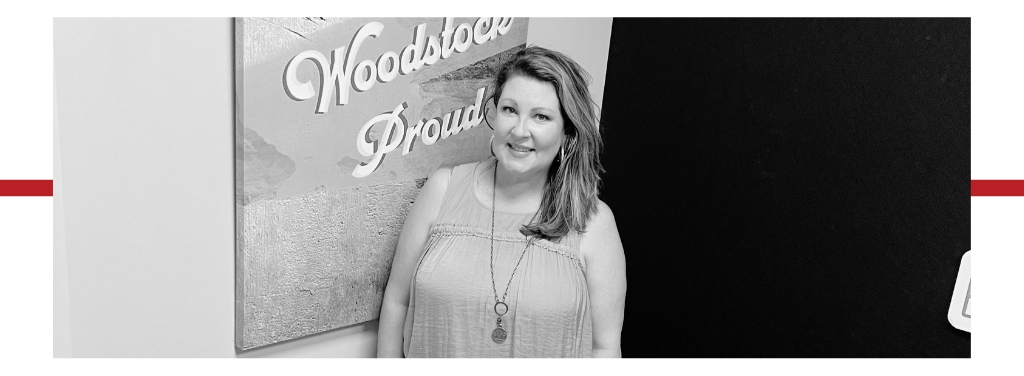
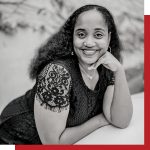
Alicia-Barnes-bwAlicia Barnes-Newton joined the Etowah Scholarship Foundation at the beginning of 2022 as the foundation launched their Future Shop program.

She has her Bachelors of Psychology in Crisis Response Counseling Degree from Liberty University and has helped countless families through difficult times. She is passionate about working with students to help them find their purpose and creating an actionable plan.

In addition to being a part of our Future Shop program, Alicia works as our Development Coordinator to plan our Purse Auction, Bourbon for Education events and Concert Celebrations.

Alicia has been married to her husband, Joey Newton, for 3 years and has three children; a 23-year old bonus daughter, a 16-year-old daughter and a 13-year-old son. She also has a 1-year old bonus grandbaby.

She loves doing volunteer work with her church, cooking, vacationing in the mountains or the beach, and spending time with her family and friends.

If you are searching for post-secondary opportunities, a career change or just need guidance about ‘what’s next’, you can reach out to alicia@etowah.org.

David-Jackson-bwAs a Licensed Agent with New York Life and a Financial Services Professional with NYLIFE Securities LLC, David Jackson offers a variety of strategies that can help you meet a number of insurance and financial needs.

Whether you want to protect and grow your assets, strive for a comfortable retirement, build and protect your business or attract and retain great employees… we have your goals front of mind. Please contact me to help you fully analyze your needs and recommend appropriate plans of action to help you reach them.

David is an Agent licensed to sell insurance through New York Life Insurance Company and various other independent unaffiliated insurance companies.

Additionally, he’s a Registered Representative of, and offers securities products and services through NYLIFE Securities LLC, (Member FINRA/SIPC), A Licensed Insurance Agency and a New York Life Company.

Connect with David on LinkedIn and Facebook.

Dr-Caitlin-Quraishi-bwDr. Caitlin Quraishi, also known as Dr.Q, was born and raised in Tampa, Florida. She moved to Georgia to attend Life University where she fell in love with the chiropractic principles and philosophy.

She practiced in Seattle, Washington for 6 years while she explored the beautiful Pacific Northwest. She moved back to Georgia last year and opened Cultivate Health in Cartersville, GA.

She loves taking care of kids and women in the perinatal period and has a neurologically focused family practice.  A few of her favorite things include hiking with her husband and two fur babies, reading, puzzles, Mexican food and margaritas!

This transcript is machine transcribed by Sonix

TRANSCRIPT

Intro: [00:00:07] Broadcasting live from the Business RadioX Studios in Atlanta. It’s time for Charitable Georgia. Brought to you by B’s Charitable Pursuits and Resources. We put the fun in fund raising. For more information, go to B’s Charitable Pursuits. Dot com. That’s B’s Charitable Pursuits dot com. Now here’s your host, Brian Pruett.

Brian Pruett: [00:00:45] Good, fabulous Friday morning. It’s another fabulous Friday. And I got three more fabulous guests. If this is your first time listening to Charitable Georgia, this is all about positivity happening in your community. And again, like I said, we’ve got three fabulous guests. First of all, I hope everybody had a safe and happy 4th of July. Kind of throws everybody’s week off when this kind of middle of the week. So people are probably, you know, still getting over their partying. But anyway, our first guest this morning is Alicia Barnes-Newton from the Etowa Scholarship Foundation. Alicia, thanks for being here.

Alicia Barnes-Newton: [00:01:14] Thank you for having me.

Brian Pruett: [00:01:15] So we’ll talk about the scholarship foundation here in a second and why you do what you do. But if you don’t mind, share a little bit about your background.

Alicia Barnes-Newton: [00:01:23] Well, I am a jack of all trades. Honestly, I’ve done a lot of different types of work, and I think it has benefited me to allow me to speak to students. But I have my degree in crisis response counseling from Liberty University and I am a mom of three. I have a bonus daughter who’s 24, and then I have a 16 year old daughter and a 13 year old son and been remarried to my husband for three years. So it’s a little bit about me. Not not much, but just a little bit.

Brian Pruett: [00:01:54] Oh, that’s cool. That’s cool. So, All right. So Annual Scholarship Foundation. You guys work with youth and helping them in the education piece. So, Cheryl, what about that?

Alicia Barnes-Newton: [00:02:01] So the Scholarship Foundation has been in existence for about 40 years now, 41 years. And it was started just as a scholarship foundation in Bartow County and Cartersville City students. And last year, we launched a new program. I started with the foundation in January of 2022, and we were bringing on a new program called the Future Shop Program. It was really a vision of my my executive director, Lee Welch, and she was seeing that students were not picking up their money for scholarships and money was being left on the table. And she said, what is happening? What’s the problem here? So we started really visiting with the students and realizing they had no idea what they wanted to do. And my mom told me I needed to go to college. So I went and and I flopped out the first semester or I changed my mind. And my parents finally said I didn’t have to go. You know, just different reasons. Some of them we just never even they fell off the face of the earth and never heard from them again. So we wanted to start a program where we really were intentional of working with students to figure out what exactly do you want to do when you graduate from high school? It doesn’t mean you have to go get a four year degree and then never use that degree and still go work at a coffee shop, which is nothing wrong with working at a coffee shop, but don’t go into student loan debt to do it. You know, let’s get back into trade, Let’s get back into school. Let’s figure out what you let’s get into industry. Let’s join the military, go and do mission work. What is it that you’re passionate about? What do you want to pursue? And you know, the new logo lingo, excuse me, is with kids is what? What am I about? This is what I’m about. So that’s what we’re trying to figure out with these kids.

Brian Pruett: [00:03:48] So you guys work with kids just in Bartow County, or is it all over Georgia or all? Do you.

Alicia Barnes-Newton: [00:03:51] Work? Well, we started we’re initiative is Bartow County and Cartersville City. And now I’m really I speak to students wherever I can and talk to them My my children actually are in Cobb County schools. So my my daughter’s kids student friends and mom, please come and talk to them. Can you can you meet with them? Can you, you know, sit down with them? And I’m like, absolutely. So the the scholarships themselves are specific or more specific to Bartow County and Cartersville City just because of the way the foundation is set up. But we’re hoping to extend our reach soon.

Brian Pruett: [00:04:28] Those are the the kids. Do they have to qualify for anything to be a part of the scholarships?

Alicia Barnes-Newton: [00:04:33] Yes. So we have our application opens in January and it closes on March 15th. So it’s really there’s different questions on the application. We have over 200 scholarships. So all of the endowments and different scholarships, really, it just depends on kind of what their qualifications are or kind of what niche they fit, if you will, because there are certain scholarships for companies that are dependent, you know, the dependent of an employee. So they have to be able to check that box or a certain church that they’re affiliated with and how many volunteer hours that they may do. So they have to check that box. So it just depends. But like I said, we have over 200 scholarships available. So when they’re able to fill out that application and it also doesn’t just apply to high school seniors, we have non traditional students, you know, moms going back to school. We have college students that continue to receive our scholarships from the time they graduate high school all through their graduate program, just as long as they’re applying and they’re filling out the application, then they are considered for the scholarship.

Brian Pruett: [00:05:38] I like how you talked about earlier about finding their why basically. And if you talked about the trade schools, which I think a lot. People don’t even think about that because, you know, when I was growing up and people talk about being a mechanic, it was like, so he’s just a mechanic, he’s a grease monkey. But those guys, I mean, they have a purpose. They make serious.

Alicia Barnes-Newton: [00:05:55] Money.

Brian Pruett: [00:05:55] They do. And, you know.

Alicia Barnes-Newton: [00:05:57] People don’t think about it.

Brian Pruett: [00:05:58] You know, welding and all that. It’s a good trade. So I like the fact that you guys talk about different military mission field, all that stuff. So on these scholarships, can they is it something where they can take and use it for any like any school they could go to?

Alicia Barnes-Newton: [00:06:11] Any school they can use it for tech, school, trade school, four year school, two year school. As long as they’re full time, they can take that scholarship anywhere. And that’s, again, some of the things that we work with them. And when I’m talking to students, so I’m in in Cartersville City schools full time. When we launched the program, the superintendent and principal of Cartersville High School, they were both completely on board and wanted me there full time. So my counterpart is in the county schools and rotates out of those schools because there’s three in our vision and hope is to eventually have a full time person with the foundation in each school full time.

Brian Pruett: [00:06:48] So when you talk about being in the schools full time, what does that look like? What are you doing?

Alicia Barnes-Newton: [00:06:52] So Monday through Friday, 9 to 3, they get in at 830 and leave at 330. So those 30 minutes are kind of, you know, they’re getting settled or getting ready to end their day. But they can come see me at any given time. I have a location, an office set up and on campus. And so the students come and talk to me and we do college applications, we do resumes. We fill out the Fafsa form, which parents are like, please do this because it’s confusing and it’s a pain and I don’t want to deal with it. And can you please help? I introduce them to some recruiters and work with their guidance counselors to make sure everybody’s on the same page. And the counselors are also talking to them as well to see what they need and they’ll send them to me. Also, we do campus visits to different colleges because they don’t have a lot of the counselors don’t have time to go and take a full day to take students. So this year I’m looking at doing nine different campus visits for colleges that most of the kids in Bartow County just don’t have time or their parents don’t have the resources to get them to those campus campuses. Excuse me, but it gives them the opportunity to see themselves where they want to be.

Alicia Barnes-Newton: [00:08:00] You know, they they may have an idea of, well, I want to go to UGA. Okay. Well, let’s talk about that. You don’t. And then when we really start to break it down, they actually don’t qualify to go to UGA because UGA is hard as a freshman, you know, you’re going in, you have to have a 4.0 to a 4 or 5 minimum GPA and then you’re looking at your scores, you’re looking they still require test scores, just all of those things that they require that a lot of these students are like, I didn’t do the SAT or act because they said it was test optional. Well, it is, except for Georgia Tech and for UGA, you know, just those things that they just don’t think about. So it’s just having those conversations with them and breaking down cost comparisons for colleges of I got this scholarship, I got this scholarship from this school, but they have a $30,000 gap because it’s a private school and they’re getting $20,000. Well, it’s $52,000 a year to go. How are you going to go? How are you going to pay for that? Well, I don’t know. What do you mean? You know, so it’s all of those important conversations that kids just don’t think about because they’re just excited. I got accepted to a school and then they realize that they can’t afford it.

Alicia Barnes-Newton: [00:09:09] So it is all of those conversations. It’s a lot to unpack in just a few minute conversation, but I’m just having those multiple conversations with them. Let’s bring them back. Let’s talk about it. Let’s figure out what that looks like. I give them action items at the end of our towards the end of our time, I usually spend about 20 to 30 minutes with them because I don’t want to take away too much of their academic time, but then I will have them come back. I’ll say, okay, let’s work on these three things and then the next time we visit, let’s make sure you have those things done and then we’ll, we’ll hit the next steps. So it’s not as overwhelming for them. But I am trying to even get with them. In their freshman year of high school seniors are always more important just because they’re out the door in that year. But I am trying to hit the underclassmen as well so that we can go ahead and start having the conversation of what this is going to look like for you. And let’s be prepared and let’s check the boxes so that you don’t aren’t in full panic mode, you know, your senior year and realizing that you’ve missed the boat on some things.

Brian Pruett: [00:10:06] That’s all. That’s pretty awesome. You shared one of the differences about you being able to take them on campus tours, but for those of listening who may not have experienced guidance counselors and all that, can you share a little bit difference between what you guys offer other than that taking and the guidance counselor? What’s the difference from you guys conversations?

Alicia Barnes-Newton: [00:10:23] Well, I am not a guidance counselor at all, so I just want to make sure because we want to make sure that we stay in our lane of where we are. So I don’t do any guidance, counseling, Guidance counselors help with their schedules. They’re helping with crisis, you know, any crisis that the student is encountering in the middle of the school year, they are dealing with a lot. More. Administration things as well that the school requires of them. I don’t have to. I’m not a part of that. And as an employee of the foundation and not of the school system. Really, I am solely there just to talk to them about what they’re going to do after graduation. And I’m there to help them with our application for scholarships. I help them find additional scholarships from other resources. I am only there to talk to them about that. So anything else that deals with anything the guidance counselor has, then I’m like, Have you talked to your guidance counselor? And sometimes they don’t even know who their guidance counselor is because they’ve never even gone to see them or they’ve seen them and don’t realize that they’ve seen them depending on the school, depending on the student, because most of the guidance counselors try to see them at the beginning of the year and just have a conversation with them. But it’s usually about ten, 15 minutes. And because they have to go down their checklist of the things that they need to do and unfortunately, they just don’t really have the time to do some of the fun things that they like to do, which is, you know, college stuff and being able to take them on those campus visits. So we’re just, you know, kind of we’re coming in to collaborate with them and partner with them to help take the load off a little bit.

Brian Pruett: [00:11:58] And there’s that name, collaborate, the word collaborate that our buddy Bob Brooks talks about, Collaborate over Competition. I think that’s awesome that you guys can do that within the schools as well and help the students that way. So how did the name come about? There’s a reason why it’s called Scholarship Foundation.

Alicia Barnes-Newton: [00:12:17] There is. I honestly don’t know. You ask the wrong person if if the.

Brian Pruett: [00:12:23] Indian Mounds is out there.

Alicia Barnes-Newton: [00:12:24] Yes, correct. And I mean the Etowah River. So I’m sure that had a part in it. I don’t know why it was named that specific.

Brian Pruett: [00:12:31] Some homework for you?

Alicia Barnes-Newton: [00:12:32] Yeah, It was like I wasn’t expecting that question.

Brian Pruett: [00:12:36] You talked a little bit about you’ll go to the Cobb County, some of the schools, but is there a plan in place of you guys branching out to doing this in other areas?

Alicia Barnes-Newton: [00:12:44] There is. And I can’t talk on all the details because a lot of things still need to be worked out. We have been given Century Bank is one of our main sponsors and they have actually provided a they used to have a mobile bus that during Covid that they used and it has been sitting in their parking lot. So they have actually donated the bus to us. And so we’re hoping to do something with that. What that looks like, we don’t know all the details just yet, but I would love to be able my my hope is to be able to take it to other schools outside of the county and the city and even some of the private schools that are in Cartersville, some of the co ops, the homeschool co ops, all of those things. I would like to be able to do that as well. I have worked with some homeschool students and parents are just like, we don’t have guidance counselors, so what do we do? You know? So just to be able to work with those students has been helpful and those families to know that we’re a resource for them and that they’re welcome to come any time and and contact the office and they can come and see me at the schools. They can even just check in at the high school and come see me or I’m able to meet students at coffee shops or our other office. So I have technically two offices, so I’m in the office at the school and then the office in, in the city. And during the summer. I’m not at the high school at all, obviously, because the students are not there, so I can see them at any time.

Brian Pruett: [00:14:07] I’m glad you. Because when I was going, I went to a private school and there was nothing like this when I was in school. I’m old, so that was nothing.

Alicia Barnes-Newton: [00:14:13] But there are some private schools that have great programs and they have some phenomenal. College career counselors there outside of their guidance counselors that that’s all that they do. And so this is where this kind of came from. Walton High School in East Cobb has something like this. I don’t know if they call it a future shop, but that’s where kind of the idea came from with my director. She went to Walton High School and it was something available to her years and years ago. So but there’s just not a lot of schools that have it available. We’re hoping to initially hope maybe in the near in the future it could be something that could be statewide, a program that we could really build it to make it the standard. I guess maybe, you know, for for the state and be able to help all these students and get it in all the school districts. But funding is the biggest thing, you know since we are a non profit. It’s just wherever the money comes. Right. And that will allow us to hire more people and, you know, do what we need to do. Right.

Brian Pruett: [00:15:16] So you mentioned Century Bank. They donated that bus to you, which I think is awesome. Explain how businesses and people in the community can get involved with you guys and helping so.

Alicia Barnes-Newton: [00:15:26] They can go to Edx.org or they can call our office at (770) 382-1757 and talk to Lee Welsh again, our director, and she can help them and get things started. So it just depends on what they want to do. We have general funding and donations that we receive and then we have funding for scholarships. So we have those. We always have people coming in to set up a new scholarship and an endowment in the immemorial. Someone a lot of people can leave. Money to us in their wills and their estates. And you can do that with a lot of nonprofits and a lot of people don’t think realize that. So they’re able to do that. And of course, that would be something in the future. But that’s always something that could be. But for now, it’s just we also have the ability to do monthly giving. So that’s set up on our website so people can do just like a tithe or any kind of monthly donation. They’re able to do that monthly and they get a tax write off on anything that they provide and give to the foundation.

Brian Pruett: [00:16:25] Awesome. So obviously you guys do a lot of fundraising as well. I know a couple of months ago I did the trivia night for you guys, but you guys have other events that you guys do throughout the year. Do you have anything coming up or things you want to share about what you got going?

Alicia Barnes-Newton: [00:16:35] We have our purse auction that’s coming up in November. So right now it is a great ladies night. So we have a lot of ladies that come and businesses. Right now, we’re selling tables for businesses to be able to come. It’s a table of eight. And they can also contact us and on reserving a table they like. And so we have all kinds of high end purses and some are not as high end, but we have fillers. And a lot of the local community businesses are great on donating fillers and gift certificates, and we have live auction items as well, packages that are great and it’s just a fun night. We have food and, you know, little heavier d’oeuvres and wine and the ladies come and they start getting getting excited about their purses and what they want to do. But we have that in November. And then we usually do two bourbon tasting events a year in January. We like to have a smaller one. And then we just did a bourbon event at Moonlight Stables in Dallas. So it was for the Belmont race. We did a Derby edition last year, so we did a Belmont edition this year and it was really fun. I think everybody enjoyed it. And we had like the big band music, you know, Frank Sinatra, singer guy, and he did great and his band was fantastic. So we were hoping to kind of keep it at that right now. So you just court.

Brian Pruett: [00:18:01] Stones.

Alicia Barnes-Newton: [00:18:02] Ears, nice, nice.

Brian Pruett: [00:18:04] Bourbon. So yeah, So there you go. Yeah. So make sure you’re there. He’s taking notes. Exactly.

Alicia Barnes-Newton: [00:18:09] Exactly. Yes. So we’re hoping to do it in the next probably at least 2 or 3 more times. So this year was the first time we did the Belmont and did it to the scale that we had it. We usually kind of keep them a little bit smaller, maybe 50 people. But this one we like to do, we want to get a couple hundred people in there, do raffles and just it’s just a fun night.

Brian Pruett: [00:18:31] Awesome. Do you have a story? Everybody’s different. I know, but do you have a particular story you could share on somebody that you’ve gone who’s gone through your program? That’s a success story? Just a testimonial. I will share this. I think I mentioned it to you when we did the trivia night. This this particular team that came, they had come when I was doing trivia regularly at Saint Angelo’s before Covid and all that happened. And then they called the restaurant, apparently heard that we were doing trivia once a month and started coming back. And that was the first night they were there. And I had another bucket up front for anybody who wanted to donate any extra money. And the gentleman asked me, What’s that for? And I said, Well, it’s for the non profit tonight. And I said, He said, Who is it? I said, Scholarship Foundation. And he told me he was one of the very first people to receive that. So I thought that was pretty cool. Um, but do you have a story you could share that maybe that’s a great success story?

Alicia Barnes-Newton: [00:19:20] Well, let me think about it again. If Lee was here, she she’s been with the foundation a long time. I’ve been with the foundation a year. So she and her wealth of knowledge is ridiculous of how many people and our students and how she keeps up with everyone. So with me being a little bit of a short timer with the foundation, I know of a lot of students that have been in the that are in the community. Zach Pritchard is actually who has Zach. He has Pritchard law firm. He was a recipient of ours years and years ago. So, I mean, he’s pretty successful. So there you go. I don’t know all the details of him, but he’s one that did receive a scholarship with us. But we run into I run into people all the time. You know, I’m just getting coffee or I’m getting lunch or I’m trying to remember when we’re doing events and I’m, you know, renting stuff and calling people. And they will tell me, oh my gosh, I was a scholarship recipient of yours back in the day, and I do this and I do that. So it’s usually just in passing a lot of those. We have a great student, Chloe Satterfield, who is right now. She’s at Georgia Tech and she is a graduate of Cartersville High School.

Alicia Barnes-Newton: [00:20:31] And she’s doing amazing things. And she’s I mean, I could totally see her being like governor or the president one year. I mean, she’s very involved in youth politics and is very well spoken and just has a great head on her shoulders. And but there’s just a lot of great students that come from the county schools as well that I don’t know them personally, but I know that they’re doing great things and they’re very appreciative of their scholarships and the help. That they’re getting. So, you know, kind of the best is yet to come as we grow and and with the future shop program expanding and hopefully really engaging those students to be able to help them. So it’s kind of, you know, we’re building the bridge as we walk across it as far as the program is concerned. So to see the success programs with the future shop and the scholarships together, it’ll take a little bit of time to really see what that’s going to end up turning into. But I do have those students that have just told me you were like a mom to me in school. Thank you so much for your help. Or, you know, when we talk about things and go over cost comparisons or we talk about college, whatever that looks like, or they need to take a step back and let’s find a job.

Alicia Barnes-Newton: [00:21:43] I’ve helped several students, nontraditional students, get out of where they were because they just weren’t making the money that they needed to. And just being, again, a collaboration with the Chamber of Commerce and Cartersville and Bartow County as well, we have that relationship with them. So they’re able to we’re able to kind of put them together and introduce them to industry and just be able to help them get a better job. You know, the fast food industry is great for a high school student, but when you graduate and you’re still working there, you know that’s not going to pay the bills. So getting them involved and in the bigger industry, there’s a ton of industry in Bartow County and it’s huge industry that is there that the students just don’t realize is there and have these wonderful opportunities. And they, you know, they’re starting Toyo Tire and Textron and Anheuser-Busch and Hyundai is coming out there. And I mean, you know, they’re starting from 20, $22 an hour. I mean, who got 425 at Publix in high school? You know, so I think.

Brian Pruett: [00:22:41] That was three something at Taco Bell.

David Jackson : [00:22:43] So dating yourselves. Yes.

Alicia Barnes-Newton: [00:22:45] I know. I know. But I just thought, Holly, you know, to be right out of high school and getting $20 an hour, sign me up. Right.

Brian Pruett: [00:22:53] Right. So that’s awesome. So other than the fact of having a passion and helping the youth and even the nontraditional students, why is it important for you to be part of the community?

Alicia Barnes-Newton: [00:23:02] I just want people to find their purpose. I want them to be able to know that they’re valuable. There’s a lot of students in Bartow County that and in Cartersville City that, you know, it’s considered more of a rural area, even though the city is not. But Bartow County is. And I feel like a lot of times they just feel like there’s just one way for them to go because that’s the way that they think that they should go or that their parents tell them this is the only thing that is available to you. So being able to show them that there’s a lot more to the to life and there’s a lot more opportunities out there that is available to them that they’re able to do. And it doesn’t necessarily mean that they have to have that four year degree or whatever, you know, whoever it is that they’re listening to has told them or that they believe. Let’s change the narrative a little bit and understand that there’s a lot of great opportunity for them. And the best way to do that is just to be able to get face to face with them. You know, there’s only so much that they will take in with advertising or, you know, putting things out there, even through the schools, websites and so forth.

Alicia Barnes-Newton: [00:24:05] They they do a great job putting things on the websites. But we all know teenagers don’t read, write a lot of it. You know, they’re too busy on, you know, their social media and stuff. So it’s like, how can we get in front of them? How do we engage them? How do we get them to understand that we’re here? One, we’re here to help them. But two, we really want them to know that there’s so many available opportunities for them. And I think for years I remember in high school the push was you need that four year degree. You’re not going to be successful if you don’t have a four year degree. And that I mean, over 20 years ago now look where we are. We have a lot. We lack trade, we lack skilled workers. We lack a lot of things that I feel like the shift is coming has started where people are starting to understand and it’s being promoted again to go get that trade, go get that skill and make, you know, whatever kind of money you want to make. You can be successful in those type of avenues. But and a lot of teenagers and kids really enjoy it and realize that they’re good at it and they’re not meant to be behind a desk.

Alicia Barnes-Newton: [00:25:08] They’re not you know, they don’t thrive well in a four year university system. There are. And that there’s something for everybody and that we need those workers just as much. And it’s not to be selfish of you need to go do a trade so you can do this for your community. But it’s just we want you to be successful and help your community at the same time, you know, to be able to show them that they can do both and and just be able to have that knowledge and give to them. So the biggest thing for me is what is your purpose? And know that you have a purpose and the purpose can look different for everybody. So it doesn’t necessarily need to be. I think sometimes when we say purpose, people feel like maybe it’s this really big, grandiose idea and how can I achieve that? But really it could just be, what is your passion? That’s you. Usually your purpose, whatever’s in your heart, whatever you desire to do, whatever you enjoy, you know, work doesn’t have to be labor. Arduous and difficult. And, you know, and you hate the job. I mean, who wants to do that every day? You know.

Brian Pruett: [00:26:11] Plenty of people do.

Alicia Barnes-Newton: [00:26:12] They do. And then they’re miserable. And then it’s like, well, that’s just what you do. You just get up and you hate your job, but it’s a paycheck and, you know, you come home and you’re miserable and you make everybody else around you miserable because you can’t stand where you are. Like enjoy life and enjoy where you are. And being able to do that and what you know is meant for you. So it’s I try not to get that deep with the students because, you know, sometimes we’ll go over their head. But just to say, what do you enjoy? What is it that you like? I was just yesterday with family and one of my niece’s friends. She’s at a she’s at Georgia Southern. And I was like, what are you doing? You know, like what for your degree? She’s like, I think I’m going to change my degree because I really don’t know what I want to do. And I said, okay, well, what do you enjoy? So we just started digging out. She goes, I really like the ocean and animals. And I said, Well, why don’t you do marine biology? She goes, I don’t think I’m smart enough for that. And I said, Honey, if you got into college, I think you’re smart enough to do be a marine biologist. You know, you got into college, you met all the requirements. And I was like, Don’t sell yourself short. I was like, Why don’t you look into that and see instead, you know, because she was she’s doing I forgot what she’s doing right now. I think it’s like criminal justice. And I was like, You want to be a lawyer? She’s like, No. So I was like, Honey, come on now. You know, so just, you know, it’s just those little conversations and sometimes it just sparks that little light bulb in their head and then they realize, Hey, I don’t have to do that. Maybe I can do something else.

Brian Pruett: [00:27:37] And that’s so important that people following their passions because, again, I’m doing now what I was I’m passionate about. It took me all these years to figure that out. But it’s like my stepson, my stepson, he lights up when he talks about cars. But so he went to Chattahoochee Tech, got a certificate on mechanics and all that. And then he spent, what, six, seven years working at Kroger? And I’m like, Why now? He’s at John Thornton Chevrolet and the Body Shop and he loves it. Right, Right. So it’s just one of those things that. But finding your passion is definitely, definitely what people need to do, for sure. And you’re younger than it’s a lot easier. Yes. Going forward. So. All right. Again, share your website and phone number for those who might want to get in touch with you guys.

Alicia Barnes-Newton: [00:28:15] It is etawah.org. So e. T o w h.org and it is (770) 382-1757.

Brian Pruett: [00:28:23] Awesome. Well, Alicia, thank you for sharing. Don’t go because we’re not done with you yet, but we’re moving on to our next guest.

Alicia Barnes-Newton: [00:28:28] Thank you for having me.

Brian Pruett: [00:28:30] Dr. Caitlin..Let me see if I’m going to do it right? Dr. Caitlin Quraishi.

Dr. Caitlin Quraishi : [00:28:34] Yes.

Brian Pruett: [00:28:34] Awesome.

Dr. Caitlin Quraishi : [00:28:36] Good morning.

Brian Pruett: [00:28:37] But Doctor Q is what she likes to go by. All right? It’s just.

Dr. Caitlin Quraishi : [00:28:39] Easier. It’s easy.

Brian Pruett: [00:28:41] You’re with cultivate health. You’re you specialize in prenatal and kids. Yes. Chiropractic. Yep. So share a little bit. You’re fairly well, I guess, new back to Georgia.

Dr. Caitlin Quraishi : [00:28:52] You back to Georgia a year right here a year.

Brian Pruett: [00:28:56] So share a little bit of your story and then we’ll talk about cultivate health.

Dr. Caitlin Quraishi : [00:28:59] Okay. I have I graduated from chiropractic school at Life University here in Marietta in 2015. And chiropractic really found me. I have always known that I wanted to be in the health care field, and I knew that I wanted to work with kids, but I didn’t know exactly what I wanted to do. And so I think that really started when I started babysitting for a family in my neighborhood, and they had two kids. And one of them, Taylor, had neuroblastoma. And so just babysitting her and Landon and watching some of the things that they went through and her treatments and how that affected her body really had a big impact on me. And so I knew right then like, I want to work with kids, and I definitely thought I wanted to be a pediatric oncologist, but I realized I am way too emotional for that and I would cry way too much. So I went through undergrad and knew I was going to be in the health care field and then someone I had gone to school with since middle school said, Hey, I know, you know, we’re graduating. You’re kind of like in this limbo. You I’m going up to this school and I’m starting in the fall and I think you should go check it out. And so and that was that life. And so I went up and they have a leadership weekend. And I knew from the moment that I was there that that’s where I was supposed to be. But I didn’t know why and I didn’t look anywhere else. I put my application in it just it was it and it felt right. So I started there. Six months later and through, and I really didn’t know much about chiropractic either.

Dr. Caitlin Quraishi : [00:31:05] So I started there and learned the chiropractic philosophy and just fell in love with it and learned that there’s like this whole other way to live and to trust in your own body and that we have this intelligence that is within us and we can tap into that. And so I fell in love with it and I focused everything as far as my electives in pediatrics and pregnancy. And so then I graduated and my husband and I moved to Washington State to go on an adventure and try something brand new. And we went out there and I was there for six years and I went into a family practice. So I was in a family practice for a year, and then I ended up opening up my own coverage business. So I would cover chiropractic offices all around the greater Seattle area. So I did that for the rest of the time that I was there and would cover about 25 practices a year. So I really saw a wide variety of of ways that chiropractors can practice. So it was elderly practices, sports practices, family car accident practices. So I had a very big exposure to a lot of different things. But in the back of my mind, I knew still that I wanted to do, you know, specifically focus on and kids and pregnant mamas. And so we ended up last year moving back to Georgia through all of the Covid craziness. And also it is insanely expensive to buy a home there. And we were ready to buy a home. And so we ended up moving back to Georgia last year. And I knew then that I was going to open my own practice so I could focus on exactly what I wanted to.

Brian Pruett: [00:33:23] Well, you jumped right in, obviously. But I want to talk a little bit about the the pregnant mamas and the the infant chiropractic, because I think the chiropractic, it’s snap, crackle, pop, and it’s not always that way. Right. So walk us through how that works with a pregnant mama and an infant. Yes.

Dr. Caitlin Quraishi : [00:33:39] So I tell people because that is the the public perception a lot of times and I tell people it’s not like the TikTok videos because that’s what we see. And then that’s what we think. And it’s very that that would be very scary to me. So, yes, with working with pregnant moms and with kids and infants, everything is very specific and very gentle. So I tell people the amount of pressure that you’re going to put on the back of your eyelid or check the ripeness of a tomato is the only amount of pressure that we need. And if we are being very specific in where we are making those contacts in the body, like the body doesn’t need a lot of force to make a change in the brain. So.

Brian Pruett: [00:34:32] Well, I think chiropractic is amazing. I’ve shared with you Dr. John Markham’s, who we go to. I’ve been going to him for my mom’s over 30 years. We’re over 20. And it’s amazing. You can walk through his door and he goes, Well, that’s out, That’s out. And it’s just amazing how you guys can do that. But he has this little, you know, like a little clicker and all that stuff. So it’s, you know, chiropractors were the. Doctors were like, huh? Yes, Yes. Now, I think it’s very vital that that part of the health of the health thing you do. So as I mentioned, you jumped right back in when you moved here because you and I met at a networking event out in Paulding County. You then joined us over at the Cardinal Business Club. And you’ve now opened your practice in Cartersville. Yes. You have a lot of ladies that come to you. I like to say the the Golden Girls of the Cardinal Business Club. Yes. So you’re passionate about that. But you jumped in with helping Christy, our friend Christy, with footprints on the heart. Yes. And her nonprofit. You opened up your brand new office and helping. Know, it was a gift baskets for nurses back in December.

Dr. Caitlin Quraishi : [00:35:34] Yes. So Christie’s footprints on the heart. They were doing a um they were doing light up the NICU on Christmas Eve. So she was putting together baskets and gifts for all of the nurses that were working Christmas Eve and then all of the babies that were in the NICU on Christmas Eve. And she with her nonprofit, she needed the space to like, put all of those things together. And so we just reached out to Cartersville Business Club and asked people to come and volunteer to help put all these gifts together. And then everyone came into my office as my office is one big open space. I don’t have individual rooms. And so we just set up tables and it was a huge assembly line and it was a lot of fun. We all really enjoyed it. And then, you know, that helped her get all of that stuff done because I can’t imagine her doing all of that on her own. And so, yeah, that was a really fun event that I hope that she continues to do and we can help her with that.

Brian Pruett: [00:36:46] And you just mentioned, too, you’re helping her this weekend move.

Dr. Caitlin Quraishi : [00:36:48] Yes. Yes.

Brian Pruett: [00:36:50] So, um, obviously you’re passionate about the kids and everything, but being kind of new to back to the area. You moved to Dallas, right? And you came and so people really didn’t know you. I didn’t.

Dr. Caitlin Quraishi : [00:37:01] Yeah, I didn’t know anyone.

Brian Pruett: [00:37:02] Right. But you jumped in as soon as you did. And so there’s a passion there. So why is that your passion? Why is it being a part of the community and helping others?

Dr. Caitlin Quraishi : [00:37:12] Oh, um. Gosh, I don’t know. I just love. I love helping people. I love getting involved. I think one of the things I learned about myself in Washington going into a lot of different offices was that I was really I found that I was really good at connecting people. And. And you’re good at that as well. You’re great at that. Brian. But I just found that I could see two people that should be connected and would work really well together and help each other. And that’s something that I love to do. And so just getting into the community and seeing where there’s a need and, you know, stepping in and helping like I love to do that. Um, so yeah.

Brian Pruett: [00:38:01] So tell us a little bit about Cultivate Health. What makes you a little bit different because you offer a lot of programs through cultivate health. So share about that.

Dr. Caitlin Quraishi : [00:38:09] Okay. So my office, yes, I would say is a family wellness practice, but I specialize in kids and in pregnancy and prenatal. And I look at things a little different from the Standard Chiropractic office in the sense that I’m looking at that brain body connection all through the nervous system. I don’t do x rays in my office since I am working with pregnant mamas and kids and I do neurological scans which really tell me exactly where stress is built up in the system and how long it’s been there and how to help. So that’s what sets me apart. And then I just love taking care of the whole family and helping them realize like, there is another way to live their life and to tap into their own potential.

Brian Pruett: [00:39:09] Well, we’ve had different ladies at least share their stories of going to You have you’ve helped them with thyroid problems. You’ve helped them with balance issues. You’ve helped them with people who they couldn’t go to the chiropractor because of different issues they’ve had in their back. I’m going to get my wife there because she needs to come see you eventually. I’ll get her there. But I just think it’s amazing that, you know, you it’s not that you’re turning people away, but you have you want to get people early and you want to help them along the way. And the fact that you jumped in when you did is to me, it’s also not everybody does that. Right. And especially in the community, they don’t they’re not familiar with. Yes.

Dr. Caitlin Quraishi : [00:39:43] Yes. Yeah. And I think that I always just want to be treated the way that I, you know, I want to be I want to treat others the way I want to be treated. And I want when people come in my door, no matter who it is, I want to treat them like I would treat my own family. And so I just think when they come in, no matter what they’re coming in with, what brings them in the door, I always go back to I love you and I can help you. And that’s always what guides me.

Brian Pruett: [00:40:17] That’s awesome. So you do do different programs. Is it monthly? You have some things going on, right?

Dr. Caitlin Quraishi : [00:40:21] Oh, monthly? Yes. I offer Education is a big, big core value for me and I do offer offer monthly workshops. So I do a perfect storm workshop which helps parents learn about helping their kids, whether that’s depression, anxiety, autism, ADHD. So that’s a monthly workshop that I do. I love to collaborate with other providers in the community, so I will bring different people in. So I had birth on The Daily, who is a duo doula team, and they came in and we did a birth story gathering so mothers could come in and share their stories around their birth, which is really healing. And then I have a workshop workshop coming up in the fall with Dr. Brandy Freeman, who is a pelvic floor physical therapist. And so she’s going to be talking all about the pelvic floor and the core and how that can help women at any age, but especially during pregnancy and postpartum. So yeah, I love to collaborate, bring other people in because it takes a team. It’s not just one provider that can can help you. So it’s really I love the team approach and getting all these different people that are experts in their area working together and collaborating to give the best care.

Brian Pruett: [00:42:02] All right. So if somebody is listening and wants to learn how they can get a hold of you, how can they do that?

Dr. Caitlin Quraishi : [00:42:08] I would say going to my website. My website is. Is w-w-w dot cultivate health cairo.com or calling my office phone number is (770) 291-6565. And then on social media I always post any of the workshops going on that are upcoming.

Brian Pruett: [00:42:36] Awesome. Well thanks for sharing your a little bit of the story. Don’t go anywhere. We’re not done. Okay. Thank you. Talk to Mr. David Jackson from Heritage Financial Solutions. David, thanks for being here this morning.

David Jackson : [00:42:46] Thanks, Brian. I appreciate the invite.

Brian Pruett: [00:42:48] So you’ve got an interesting background on how you got into involved and what you’re doing. So I’d like to share that. But, you know, you’re an adrenaline junkie, You motocross race for a while you were a mechanic. Yeah.

David Jackson : [00:42:58] 25 years. Yeah. Yeah.

Brian Pruett: [00:43:00] So but if you don’t mind, share your story because it drove to a passion of why you’re doing what you’re doing.

David Jackson : [00:43:05] Uh, which story would that be?

Brian Pruett: [00:43:07] Well, whatever you want to share. But the story of why you got into the financial part.

David Jackson : [00:43:12] Okay, so essentially, I was a mechanic for 25 years. The last ten years of it, I hated it. Just like you were talking about waking up every single morning and the alarm clock going off and it’s like, Oh God, is it that time again, really? Um, and I was miserable. I was miserable at home. I was bringing it home with me. So, you know, something had to change. And then what happened that really shifted my entire life was my dad had a massive heart attack and was clinically dead for over 30 minutes, and the people resuscitated him and brought him back. And the only thing he really lost was about six months of memory. Otherwise, he was perfectly healthy as far as I could tell. And suddenly his financial advisor was coming to the house like every three months when I didn’t see the guy. But what, maybe once every three, five years. Right. So obviously things were changing. And one day my dad, special forces, military, you know, put the heavy hand on the shoulder and says, Follow me. You just don’t tell the man. No. Oh, yes, sir. You know, so. So you followed him into his office. He swung open. The drawer of the file cabinet says if anything happens to me, everything you need is right here.

David Jackson : [00:44:30] And I was like, okay, Dad, what could go wrong? I mean, you’re here. My car’s clinging to me and the boys are going out Friday night. You know, everything’s good. About six months later, he had another heart attack, and it killed him. And I’m an only child. And I opened up the drawer that my dad said. Everything you need is right here. And lo and behold, every single thing that I needed was right there. My mom was a deer in the headlights and essentially fell onto my shoulders. And what I found was he had increased his insurance to half $1 million. He had about $400,000 in annuities that he left for my mom. His pension paperwork from AT&T, his pension from veteran assistants was all set up and all it needed was a signature and a notary. And then, of course, you know, his 401. From AT&T. Lucent Technologies came to my mom, too, and he had paid off the home and everything. He literally left my mom with a lot of funds and no bills. And this is really unique because my mom has been disabled since I was about four years old. Due to what we know now as thyroid eye disease, it was so severe that they literally removed her cheekbones from her skull to reduce pressure in her brain and she was unable to work.

David Jackson : [00:45:55] So my dad passed in February of 97 and left my mom with no bills, about $800,000 and $5,000 a month of income coming in. Wow. Well, my mom, with her illness, really got wrapped up in the opioid addiction. She was doctor shopping. She was going to multiple doctors not divulging the fact. And before I knew it, she had had three overdoses, three stays in rehab. And I was introduced to an elder attorney and he interviewed me, went to visit my mom, called me back into his office, and I was like. What did I do wrong? Because you didn’t do anything wrong. I was like, So why am I back here? And he slid a folder over to me. He goes, You are now your mom’s fiduciary. And I was like, That’s a really big word. What does it mean? You know? And he said, essentially, he said, you have to take care of your mom’s finances to the best of your ability. If there’s any discrepancies, you get to go to jail. I was like, um, I don’t know if I want this role. He’s like, It’s too late. It’s already been appointed by the courts. So lo and behold, I have access to all of my mom’s stuff.

David Jackson : [00:47:14] So I start trying to organize everything and I had to organize it and rearrange it three times to try to make sure I’m coming up with the right number. But what should have been $1 million sitting there easy. In 2008, she was down to 20 grand. And me being a former mechanic, what did I do? I reverse engineered everything and saw where all the money went and everybody in her world was stealing from her. Her financial advisor was churning, which is a term in my industry where you keep selling people products that they don’t necessarily need, but you’re doing it for the commissions involved. He had really high fees. He had asset under management fees. He had retainer fees. And my mom didn’t understand any of this. And she ended up going into assisted living in 2008. And I kept her head above water until she passed last December. And that kind of led me down the understanding of funding and retirement and how to make money grow and and not only make it grow, but how do you get to keep it yourself and not give it to other people. So there’s two things in this world that don’t lie math and yoga pants, right?

Brian Pruett: [00:48:38] So is why I’m not good at either one of those. You won’t steer me where, though.

David Jackson : [00:48:42] Yeah, well, yeah. Well, I’m bringing one of them to the table in a meeting. Okay. And normally it’s math. Okay, I’m not. I’m not saying I’m throwing some some yoga pants up on the table.

Alicia Barnes-Newton: [00:48:52] I’m glad I didn’t wear my yoga pants. There you go.

David Jackson : [00:48:55] Me, too. Like I said, I’m feeling a little tight in the seat. Right. But the the fact is, is math doesn’t lie. 2.2 or sorry, two plus two will always equal four. And you know, a lot of people have great sales pitches and this, that and the other. I’m not that guy. I don’t have that used car salesman thing. Hey, have I got the deal for you? I’m just not that guy. If I can help you, it’ll be obvious. If I can’t, it’ll be obvious. And you know, I’m not fee based. The products I sell have fees. Let’s be clear. The products I sell have fees, but I don’t take a retainer fee. I don’t take assets under management fees. I don’t do trade fees. And I’m trying to teach the world how this industry is really just taking a lot more money than I think they should.

Brian Pruett: [00:49:47] So other than the fact that you don’t have fees, what other ways makes you stand out from other financial advisors?

David Jackson : [00:49:55] Point blank, plain and simple. Tax management. I know you have seen it. You all probably have not. But I’m becoming famous for my Google search, right? And most financial advisors, from what I’ve been told, have a totally different approach than I do. If I’m like Dr. Q over here, nice, young and everything, just start in life. First thing I would do if I was sitting in front of you is to tell you to open up your phone and open up Google, okay? And the first search we would look at is 1960 federal tax rates. Okay? Then we go to 1980 federal tax rates and then we go to to today. Right. And if that doesn’t slap you across the face hard enough, then we go to US debt clock.org. So you can actually see our national debt versus our debt to gross domestic product ratio and how much that translates into each person’s debt to the government that you didn’t create. The government created it for you, but they expect you to pay it back. Yeah. So something’s off in that scenario, right? Right. So I literally say it. I know, I know both of you have heard me. All three of you have heard me say it a lot. It’s not about how much you make. It’s about how much you actually get to keep yourself. Right now, taxes have never been lower on the federal side. Now you pay taxes on everything gas, food, property, this, that and the other. But out of all the taxes, the federal side is the biggest shark in the water taking the biggest bite out of you. So let’s manage that one first and foremost.

Brian Pruett: [00:51:32] Right? So when you meet with somebody, obviously you look at what’s best for them. But obviously there’s when I think of sitting down with a financial advisor and you and I have sat down and talked and things of that nature, but you have stocks and bonds, you have IRAs, you’ve got the life insurance aspect of it. So how do you go about finding what’s the best programs for the people that you work with?

David Jackson : [00:51:53] It depends on the person and their goals. I mean, essentially I’m kind of like part of the Google Maps. I mean, you have to enter a starting point A and where you want to go, and then I’ll show you the different routes to get there and show you. Information on the vehicles to get you there efficiently.

Brian Pruett: [00:52:14] Are there certain things you can’t do, like stocks and bonds? Ira? There are things you’re not able to do that you work with other people with.

David Jackson : [00:52:20] Well, I do not sell individual stocks and I don’t do trades. If I did, I’d be fee based. And it just takes a lot of time and I’m just not going to be that guy to manage a thousand people’s portfolios to a minuscule degree. I’ll help you macro manage your portfolio to management, but the micro management of is, Hey, I want to buy this stock. Well then get on my broker and buy the stock. You know, don’t pay somebody else to do it when you really don’t have to and you can do it yourself. But yeah, I’m kind of I’m trying to change the game a little bit. Like I was being pushed down a fee based avenue and I’ve been under fee based management and it was like, Are you moving these? Are you making these trades for my benefit or for the commission involved? Because I’m not really seeing my account growing. Yeah, right. But you’re still getting commissions, right? You know, so there’s a there’s a lot of companies out there that make a huge, huge income for themselves and their employees through other people’s money. I need to live comfortably, but I don’t need to make $750,000 a year on business that I wrote five years ago, you know, and I’ve built my entire practice on referrals.

Brian Pruett: [00:53:37] So so talk a little bit about your practice, heritage, financial solutions, and you got to share your tagline. Okay.

David Jackson : [00:53:43] Yeah. So are we allowed to share?

Brian Pruett: [00:53:46] The FCC doesn’t listen to this.

David Jackson : [00:53:47] Okay, So. So my tagline is no smoke, no mirrors, no bullshit. And I was given that by my clients. It was a it was a referral. One day they’re like, Look, just talk to Dave. He’s just no smoke, no mirrors, no bullshit. And. And the person said, Hey, somebody sold you to me with this line. Is that accurate? I was like, Yeah, I’m not going to give you a whole bunch of nonsense. It’s just it’s math. Either it four plus four equals eight or it doesn’t. It has to add up, but it has to get you efficiently to your goal. Right. And it’s just building a simple strategy. And honestly, at the end of the day, these strategies are fairly simple. Until you try to micromanage them, then they get in-depth and time consuming. The macro management of it, the just general management of it is actually very simple.

Brian Pruett: [00:54:44] So where all do you work? Is it just a portion of Metro Atlanta or do you go all over?

David Jackson : [00:54:50] No, I have a license in Tennessee. I had one in California. I let that go. Those people are crazy. You know, I refuse to get one in New York, even though I have family there. They’re like, well, you could be my advisor. Well, you need to move, right? Maybe. Right. But I mean, I have South Carolina, North Carolina, Tennessee, Florida, Virginia. If I become a nationwide practice, all 50 states, as long as I have good clients and I can help them adequately and accurately, I will always do so.

Brian Pruett: [00:55:27] Is it to me it would be much better if you could meet in person, but obviously with a zoom and before then Skype. But that probably helps you be able to do all this.

David Jackson : [00:55:34] Oh, Zoom is phenomenal. So. So the pandemic, right? Pandemic happened. I cannot meet anybody in person. And the pandemic proved two things. One, I don’t need to pay for an office in Dunwoody and two, right. And two, I need to learn us. I need to learn Zoom desperately and honestly, it seems to have. Helped my clients too, because first off, they don’t. They want me to come to their house. They don’t have to clean, right? They don’t want to. Who wants to drive to Dunwoody? Nobody wants to be in that traffic anyways. And everybody seems to be very comfortable with Zoom. I mean, I had a client maybe about a year ago. She was literally had her hair in rollers putting on makeup. She goes, You don’t mind, do you? I was like, I don’t care because I got to get ready for work while we do this. I was like, okay, whatever you want to do the.

Alicia Barnes-Newton: [00:56:27] Camera, it’s fine.

David Jackson : [00:56:29] She didn’t she left the camera on.

Brian Pruett: [00:56:31] You know, if your camera’s on, make sure you’re wearing pants.

David Jackson : [00:56:33] Right, Right. Well, I don’t. I try not to stand up.

Alicia Barnes-Newton: [00:56:36] Just close in general, you know?

Speaker6: [00:56:38] You know.

David Jackson : [00:56:38] You know, a blazer in my boxer shorts.

Speaker6: [00:56:40] There you go. There you go.

Brian Pruett: [00:56:43] So you also are very involved in the community. You you and I see each other all multiple different networking groups other than the fact of trying to get people to point A to point B, as you say. Right. What’s why is it important for you to be part of the community?

David Jackson : [00:56:59] One, I’m trying to build a brand. I don’t have the deep pockets. I don’t have the storefronts. Every, you know, every 30 yards. There’s companies in my industry that I can’t throw a stick in the air blind without hitting one of them. Right? I can’t say any names, but there’s different ways of doing it. And I am one of the few that are doing it my way and reducing the fees so people can keep more of their own money. And I’ve built an entire practice on on referrals alone. So, you know, I want to be in the community. I want to help people. You know, there’s too there’s too much of of how do I help myself in today’s world? You know, there’s there’s good people, but the good people are the ones that get used, Right? I mean.

Speaker7: [00:57:51] Can I interject here for a minute? Sure, sure. So this is Stone Payton talking. I’m producing this show today. I’m not hosting, but when I moved here, Holly and I moved here a little over two years ago and I wanted to put up this studio, I reached out to this guy, David Jackson, and invited him on the show, and I didn’t even have a studio yet. I was just trying to line up guests and he immediately started connecting me with people around the community. He invited me to come to Woodstock Business Club. So he really lives into what he’s talking about. He is incredibly invested in other people’s success. He does connect people and he genuinely cares about the success of other people. So for whatever my endorsement is worth, and it might be worth what you just paid for it, but this guy actually walks the talk, I got to tell you.

Brian Pruett: [00:58:40] And that’s another way you and I are the same. We love connecting others with others and seeing how it works.

Speaker6: [00:58:44] Right?

David Jackson : [00:58:45] Right. I mean, look, first off, we were locked away for too long, okay? And second off, we all need people, right? You know, before the show started, we were talking about that Do or die, friend. Look, I need you to come and get me. Bring your truck. Don’t ask any questions.

Speaker6: [00:59:02] Right. Right.

David Jackson : [00:59:04] So I want to be that for people. You know, I got people calling me about their products. They’re not my clients, but I’ll help them manage it, because at the end of the day, if I can put some knowledge into people that they can move forward successfully, whether I make a dime on it or not, that’s a success.

Brian Pruett: [00:59:26] Well, I’ll give you some endorsement, too, because you and I sat down and I showed you my whole portfolio. And, you know, I told you who I was with. I’d been he’s actually been on my show, Dave Young. I’ll just give him some credit because.

David Jackson : [00:59:37] I like Dave.

Brian Pruett: [00:59:37] Dave is great. And Dave. Dave There you go. Um, but you know, you were very honest and said, you know, Dave’s got you and everything you need to be right, Right. You know? And so that’s another thing that you won’t find as honest as that too, because other people want that me, me, me and know I can help you better.

David Jackson : [00:59:53] Yeah, well, my scenario is if I can’t beat it, it’s going to be obvious. Right? And the fact is, is Dave helped you and he was very tech savvy in your plan and. He essentially did what I would have done. Right. Look, you need to get your money out of the tax cycle now, like rapidly. And that’s what he did for you. I mean, I can’t fault the man for that. Yes, he could come work for Heritage and probably.

Speaker6: [01:00:21] Be a little bit.

David Jackson : [01:00:23] You know, happier.

Speaker6: [01:00:24] But there’s a.

David Jackson : [01:00:26] But Dave Young, you’re going to have to walk away from your fees, buddy.

Speaker6: [01:00:29] You’re going to come and work for me. I’m just saying. But no pressure.

Brian Pruett: [01:00:33] He doesn’t have fees, though.

Speaker6: [01:00:35] Okay.

Brian Pruett: [01:00:36] From experience, he doesn’t. Okay.

Speaker6: [01:00:38] Well.

David Jackson : [01:00:39] Well, I know his past. He has worked for firms where he.

Brian Pruett: [01:00:43] Started his own.

David Jackson : [01:00:44] Right. And I like that. Right. So Dave and I are going. We’re trying to change things up, Dave. Dave’s a good guy. Don’t get me wrong, there’s a lot of good financial advisors out there and there’s a lot that just simply aren’t. And, you know, I try to be transparent and I’m not everybody’s cup of tea. I’m the guy that walks in and say, look, here’s the math. You know, I’m not going to be the guy that tells you your chicken coop smells like roses. I’m not that guy. And some people need that. Some people need that reassurance that everything’s going to be okay and this, that and the other. I’m not that guy. If your chicken coop smells like a chicken coop, I’m going to tell you.

Brian Pruett: [01:01:24] Well, another big endorsement for you is a lot of people may know about Cherokee Connect on Facebook and people are constantly asking for people in your industry and everybody’s tagging you.

David Jackson : [01:01:35] Yeah, my evil plan to take over the world is working, right?

Speaker6: [01:01:40] Are you.

David Jackson : [01:01:40] Thinking what I am.

Speaker6: [01:01:41] Pinky? Right.

David Jackson : [01:01:44] But. But I think I’m being tagged because I’m real and I’m honest and everything’s transparent. There’s no hidden fees. There’s no this, that and the other. It’s boom. Here it is. And I have my entire business structured, so I get paid by the companies I contract with. My clients never pay me a dime. Yes. Some of what they pay this company goes back to me in the form of commissions. But there’s no asset under management fees. There’s no trade fees. And I talked to three people yesterday about, hey, we need to move some assets around because here’s what I have. And I’m showing 13, 14% year to date and you’re showing seven, all because you did not make these moves that I told you to. So let’s make these moves and then charge them a dime, you know? But they’re my clients and I have a 99% plus retention rate for a reason.

Brian Pruett: [01:02:41] If somebody’s listening, is there any one slice of piece free piece of advice that you are willing to give to somebody on the financial side?

David Jackson : [01:02:49] Oh, good Lord.

Speaker6: [01:02:50] How much time do we have? One piece of other than how.

David Jackson : [01:02:53] Big is this.

Speaker6: [01:02:54] Piece other.

Brian Pruett: [01:02:55] Than calling you, you just give me a little, little slice of something they can take away.

David Jackson : [01:02:58] Yeah. The Google search, understanding where taxes have been versus where they are now because the writing’s on the wall with the $32 trillion national debt and our debt to gross domestic product ratio being a -120% plus, uh, taxes are probably going up eventually, right? It’s just a matter of when and by how much. The number one product in the retirement world today is the 401. K. I ask anybody, what are you doing for your retirement? 80% of them say they are funding or even over funding their 401. And there was a point in time that was the perfect plan, but that was in the 60s and 80s when taxes were a lot higher. Right. Nobody’s asking why. They’re just going by what has been done in the past. The fact is, is a 401. K is your tax deferred retirement product opened to you and for you by your employer. But it’s a tax write off to them. But all of your money is completely deferred. The government has control of every single dime of it, and I’m not saying they will, but if they said, hey, you know, we allowed you a tax write off and we’re going to tax you at 80% on your retirement accounts, they could potentially do that. Everybody’s like, well, you’ll you’ll you’ll report less money, you’ll report less income in retirement and you’ll be taxed at a lower rate. Well, we don’t know that. We don’t know what inflation’s going to bring. We don’t know where taxes are going to, what rates they’re going to be at. So people are making a general knowledge statement when we don’t know there’s a moving target there. And the fact of where will taxes be, we simply don’t know. And you’re placing all of this. Into a tax cycle, which me, you and I have talked about it. I know Stones heard it from me. Dr. Q over here may have listened once or twice.

Speaker6: [01:04:58] But but.

David Jackson : [01:04:59] But the fact is, is I am a big, big pusher of getting money out of the tax cycle while you can. The government gives you avenues to do it. Why not use it?

Brian Pruett: [01:05:09] Yeah, that’s awesome. Well, thank you for that advice. So I think another reason people are comfortable with you is other than the no smoke, no mirrors, no bullshit, is that you’re a down to earth guy. You love mountain biking, you race motocross. I do, yes. So give us a little bit of story of your motocross days.

David Jackson : [01:05:26] Oh, wow. So, okay, so there I was.

Speaker6: [01:05:29] Seven years old.

David Jackson : [01:05:31] All good stories start with. So there I.

Speaker6: [01:05:33] Was.

David Jackson : [01:05:34] Right. So seven.

Speaker6: [01:05:34] Years old. Once upon a time. Yeah, it was.

David Jackson : [01:05:36] Seven years old. It was almost Christmas time. And I had ordered I wanted from Santa this, this Matchbox city. Right. Because I probably had 200 Matchbox cars. Right. And there was a note left on the chair in the kitchen says, look, you’ve been a really good kid this year. This, that and the other early Christmas present is out for you in the garage. And I was like, yes, my Matchbox thing is here. Well, my dad had bought me a little Honda Z50 motorcycle and I must have walked past it seven times looking for my Matchbox City right? And then I finally discovered it. But my mom would not even let me get on it until my dad got home. That’s like, eight hours, Mom.

Speaker6: [01:06:20] Right? What. What are you doing?

David Jackson : [01:06:22] You know, so my dad got home. I was riding this thing around the garden in the. In the backyard or a path probably in the first day. And it was like time for dinner. I just pretended like I didn’t hear him. Just kept on riding around the garden in a circle and I fell in love with it. And then somebody my dad worked with, his name was George. His brother Marvin was really, really fast on a motorcycle. So we went to watch Marvin Race one time and Dad’s like, What do you think? I was like, I want to try this, right? So the very next weekend was Dave’s first race. I get out there and I came in dead last. I mean, I think I think the next to last guy lapped me, you know, And I come in, I take my helmet off, my dad’s like, yeah, So and I was like, That was awesome.

Speaker6: [01:07:10] He goes, You.

David Jackson : [01:07:10] Do realize that you came in last? I was like, Who cares? That was so much fun. And that’s where it all started, you know? God, I miss it. I miss that sport. I sold my last motorcycle at the age of 45 with four broken ribs and a torn up shoulder. And I sold it to my buddy Pete, and I actually shed a tear when that thing was leaving the driveway.

Brian Pruett: [01:07:31] Well, you still do mountain biking, though.

David Jackson : [01:07:32] Yeah, but.

Speaker6: [01:07:34] It’s not the same. It’s really not. It’s really not.

David Jackson : [01:07:37] Not. No. I do like my mountain bikes. Don’t get me wrong. I was riding mountain bikes to stay in shape for motocross because all these younger kids would would beat me. And and it wasn’t a speed thing. It was an endurance thing. So I started mountain biking and then sold the motorcycle and mountain bikes it right now. Now I just need to find more mountains that. Take a chair to the top so you can ride down without having to pedal uphill.

Brian Pruett: [01:08:02] Well, I don’t do any of that because I break bones. My only story about dirt biking is that my dad got me one a Honda 175 when I was 15 years old, which my mother was very unhappy about. And and good job riding around on. In our neighborhood. And I learned very quickly that you do not rev up and let go of the clutch at the same time because I wrote a wheelie towards a tree and realized there was a car coming too. And I jumped off and broke my wrist. And then I sold the bike on this day.

Speaker6: [01:08:26] So. Well, you.

David Jackson : [01:08:28] Got to control the clutch. Yeah. I don’t have a problem with being wide open. You got to control the clutch and the power delivery to the ground.

Brian Pruett: [01:08:33] Yeah, well, just don’t rev it up and do it at the same time. It’s what I learned.

Speaker6: [01:08:35] You just pop, right?

Brian Pruett: [01:08:36] Exactly. So as we’re wrapping up, this is what I’d like to do as we wrap up is I’d like for each of you to give one either a quote or just a positive nugget so people can listen to their listening today and beyond. And the rest of 20, 23, 23, I’ll get it out. I can’t talk today. So, Alicia, give us something good.

Alicia Barnes-Newton: [01:08:54] Oh, wow. Can you. Can I go last?

Brian Pruett: [01:08:57] Sure, you go. Go ahead. I know you got something, so.

David Jackson : [01:09:01] Yeah, I got all kinds of quotes. Right. So my favorite quote of all time was from a Chinese philosopher, Mencius. He said, Only when there are things a person will not do. Is that person capable of great things?

Brian Pruett: [01:09:14] Awesome. Well, before we go on to you. I do. I did forget to ask this. So if somebody wants to get a hold of you for your services, how can.

Speaker6: [01:09:19] They do that?

David Jackson : [01:09:20] Yeah. Heritage Solutions with an S dot net is my website. My phone number is (770) 596-3840. Heritage Solutions. You can find me on Facebook, LinkedIn, and then, of course, my website.

Brian Pruett: [01:09:37] Awesome. All right. Dr.. Q What kind of wisdom you got for us?

Dr. Caitlin Quraishi : [01:09:40] Okay. I would say that we have a saying in chiropractic Addio above, down Inside out. And so we live our lives through our nervous system. And health is comes from within. And so we just, we all have that potential to tap into our health, to live our best lives and to discover who we are and how we can change the world. Can I.

Speaker6: [01:10:11] Chime in on that.

David Jackson : [01:10:12] As well? So as somebody that raced motocross for a long time, I am a firm believer in chiropractic, okay? And I am in the firm belief that out of 99% of what ails you, your mind and your brain is very capable of curing it all. It just has to communicate with your body properly. And that first path, the I 75 of it all is your spinal cord. Yep.

Speaker6: [01:10:39] There you go. There you go.

Dr. Caitlin Quraishi : [01:10:40] You’re hired.

Alicia Barnes-Newton: [01:10:43] Just, like, sold. All right, Alicia. Okay. I’m not going to lie. I just Googled something, but it is perfect.

David Jackson : [01:10:50] Federal tax rates.

Alicia Barnes-Newton: [01:10:51] No, I will. Later, though. We may have to go have coffee, but this is perfect because this is something I do talk about with my students is a quote from Winston Churchill Success is not final, Failure is not fatal. It is the courage to continue that counts. So, I mean, I was like, well, that’s just perfect, you know, because that’s what I talk with my students. It’s okay to fail. You learn from failure and then you can move forward and and still be successful in your failure.

David Jackson : [01:11:19] Well, I got to say, I don’t like the word failure because it’s used too much. Yeah, I think everybody’s going to fall down. Everybody’s going to fail at an instant. But I don’t see that it’s only a failure when you don’t get back up. That’s right. It’s only a failure when you stop trying.

Brian Pruett: [01:11:34] John Maxwell in his book Fail Forward, right?

Speaker6: [01:11:36] Yeah, right.

Alicia Barnes-Newton: [01:11:37] Yeah. And a lot of students think I mean, they just they’re afraid to fail so they don’t move forward. I cannot tell you how many students right now are terrified to get their driver’s license because they’re afraid to fail the driving test. I have so.

Brian Pruett: [01:11:52] Many my my step kids are.

Alicia Barnes-Newton: [01:11:53] The same way. They’re terrified. Some of it is They’re afraid to to drive accidents, that sort of thing. But they are when I ask them, why haven’t you had why haven’t you gotten your driver’s license? And that some of one of the things we talk about I mean, when I’m talking to them, I mean, I’m talking to them about everything just about right. That’s within my lane, not getting into, you know, the deep stuff of their family, but those type of things. And they’re just, I’m afraid. What are you afraid of? Are you afraid to drive? No, I’m afraid I’m going to fail the test. Well, honey, it’s okay if you fail. Just. Just try it again.

Speaker6: [01:12:25] You can take it again, right? Like the very next day, right?

Alicia Barnes-Newton: [01:12:28] You can do it again. Like it’s okay. And. And I have had some students that I said let’s. That’s one of the action items. Let’s let’s go ahead and make it. Just go ahead and just make the appointment to take the test. And then they come in and how did it go? I passed, you know, and with a.

Speaker6: [01:12:43] 70.

Alicia Barnes-Newton: [01:12:44] You know, and I’m like, didn’t you passed? You got your license, you know, So it’s just those things. But in their mind, that mindset of if I don’t do well or if I fail, I won’t be able to do the next thing. And it’s like, It’s okay, you can. Get another shot.

David Jackson : [01:12:59] Well, and it’s like when I coached football, there was a lot of kids that felt like they were failures because they’re not running backs and they’re not quarterbacks. God didn’t make everybody correct for for one position. He made us all different for a reason.

Speaker6: [01:13:14] Right.

David Jackson : [01:13:15] You’re going to be good at some things. You’re not going to be good at others, right? Everybody needs to stay in their own lane. Yes.

Brian Pruett: [01:13:21] Well, when people fail, too, I also think this is another sports and coaching analogy is what’s the first thing a coach does when the kids the kids start really performing badly, they take them back to the basics.

David Jackson : [01:13:33] Well, it depends on the coach.

Speaker6: [01:13:34] Well.

Brian Pruett: [01:13:35] Good coaches.

Speaker6: [01:13:36] I’ve had good and bad.

David Jackson : [01:13:37] I mean, I’ve had spit flying hats being slung.

Speaker6: [01:13:40] And we’re.

David Jackson : [01:13:40] Talking about seven year old kids. I’m like, Look, pipe it down, coach. Right.

Brian Pruett: [01:13:44] But good coaches, it’s always you go back to the basics and the same thing, the basics of life. That’s a country music song, by the way. The basics of life is, you know, just think of that. So anyway, I the other thing that I like to do is the simple thank you is a lost art. So. So, Alicia, thank you for what you guys do for the students and the the youth in the Bartow County area and beyond. Dr.. Q Thank you for what you’re doing for the mamas and the kids. Yes. And Dave, thanks for what you’re doing for everybody else, trying to make sure that their future is is impactful. Well, and you’re welcome.

David Jackson : [01:14:15] And I want to turn it back around on you and say thanks for what you’re doing.

Speaker6: [01:14:18] Yeah, thanks for having us.

David Jackson : [01:14:19] I mean, the charity thing.

Dr. Caitlin Quraishi : [01:14:20] The trivia.

David Jackson : [01:14:21] Night. Yeah, it’s you’re bringing awareness and money to where it needs to be.

Brian Pruett: [01:14:26] Well, again, it’s my passion, so I love doing it. So everybody out there, remember, let’s be positive. Let’s be charitable.


Tagged With: Cultivate Health, Etowah Scholarship Foundation, NYLIFE Securities LLC

Melanie Lambert with Just Write Grants, CPA Glenda Hicks and Major League Baseball Pitcher Reggie McClain

July 5, 2023 by angishields

CharitableGA063023pic2
Charitable Georgia
Melanie Lambert with Just Write Grants, CPA Glenda Hicks and Major League Baseball Pitcher Reggie McClain
Loading
00:00 /
RSS Feed
Share
Link
Embed

Download file

CharitableGA063023banner

Just Write Grants helps nonprofits save time, spend less, and raise more with affordable grant writing subscriptions that help you add or keep grant writing as part of your fundraising strategy without chaining you to your desk. We add decades of experience to your team in only a few days. And we know the right funders for your nonprofit and your unique needs.

Melanie-Lambert-bwBefore launching Just Write Grants in September 2017, Melanie Lambert spent over a decade wearing lots of hats at nonprofits of all different sizes, missions, and programs. Some days she was the Executive Director of Development. Other days she was the grant writer. Sometimes she was the social media manager. Nonprofit work is crazy! Worth it, but crazy. ​

When Melanie had the opportunity to start Just Write Grants, she knew she wanted to help nonprofits bridge the gap.

There are millions of dollars in grant funds out there, but if a nonprofit executive needs to be out of the office or planning an event or hosting a golf tournament, it’s hard to find the time to sit at your desk and fill out those applications or draft that content. But, as Melanie says all the time, grant writing is like the lottery.  You can’t win if you don’t play.

Glenda-Hicks-bw

With a mission to provide organizations with “Best Practices for Becoming the Best Nonprofit”SM, Glenda Hicks serves clients through her firm Glenda Y. Hicks, CPA located in metro-Atlanta, Georgia.

Glenda combines her passion for teaching, her designation as a BoardSource-Affiliate, Certified Governance Consultant, her license as a Certified Public Accountant and other credentials and experience to provide coaching, assessment, consulting, and training services to support nonprofit boards of directors and staff.

As a thought partner and facilitator, Glenda engages clients in activities and discussions that help them develop and implement solutions to their challenges by employing best practices to create the future the envision.

Through her extensive consulting and training work with organizations, Glenda recognized consistent pain points encountered by executive directors and board chairs concerning board members’ performance and engagement.

In response, she created an experiential learning board game that simulates serving on the board of directors and managing a nonprofit organization. The game is called 501c Impact! and is used in capacity building services she offers through her company of the same name.

Reggie-McClain-bwReggie McClain is a Major League Baseball Pitcher who played with the Yankees, Phillies, and Mariners.

He played professionally for 7 years and is a true student of the game. He loves to work with kids to help refine their game and create a love for the sport that made him who he is today!

This transcript is machine transcribed by Sonix

TRANSCRIPT

Intro: [00:00:07] Broadcasting live from the Business RadioX Studios in Atlanta. It’s time for Charitable Georgia. Brought to you by B’s Charitable Pursuits and Resources. We put the fun in fund raising. For more information, go to B’s Charitable Pursuits dot com. That’s B’s Charitable Pursuits dot com. Now here’s your host, Brian Pruett.

Brian Pruett: [00:00:45] Good, fabulous Friday. It’s another fabulous Friday. And I’ve got three more fabulous guests. First piece of business, though, I have to wish my mother a very happy birthday. Today is her birthday, so I won’t tell you how young she is because she might get upset, but she’s still working full time. So anyway, as I mentioned, this is Charitable Georgia and we got three more great guests. If you first time listening, Charitable Georgia is about all positive things happening in your community. And our first guest this morning is Miss Melanie Lambert from Just Write Grants. Melanie, thanks for being here this morning.

Melanie Lambert : [00:01:13] Thank you Brian. Thank you for having me so much.

Brian Pruett: [00:01:15] So you and I spent some time talking on the phone. We well, I think all of us in the room have kind of the same passion. But you have a passion for nonprofits like I do, and you’ve made a business on working with them on writing grants. But if you don’t mind, first sharing your story a little bit, and then we’ll talk about what you do.

Melanie Lambert : [00:01:30] Sure. I live in Cartersville, Georgia, and I have spent my entire career in nonprofit fundraising, had the opportunity to work for lots of social service organizations and higher education institutions throughout Metro Atlanta. And then in 2017, I had what at the time felt like the worst professional experience ever, and I got laid off. There were some statewide layoffs and just things, you know, felt like it was just the bottom for me. My husband really encouraged me to take advantage of that opportunity and to take the skills and talents that I had learned throughout my career, helping nonprofits with all the different fundraising revenue streams and to turn that into a business. We had a one year old at home at the time, and so that was very appealing to me to be able to be home with him and to continue to serve nonprofits. So I took the opportunity and started the company in 2017 and really wanted to help nonprofits that were either new to grant writing or didn’t have the capacity to manage grant writing. Because during my career I’d really noticed that grant writing can be a sort of backburner project, right? It can be something that. The the individuals and the fundraising team know that they need to be pursuing grants. They they know that it’s something that can really be a game changing amount of money for a nonprofit, but they might be wearing lots of hats.

Melanie Lambert : [00:02:58] And so it’s easy to let grant writing sort of fall to the wayside because you’re out meeting donors, you’re out going to Chamber of Commerce breakfast, you’re out, you know, interacting with people and grants can sort of chain you to your desk. You’ve got to be there drafting that content, putting together those budgets. And so it can be easy to either just not do it at all or kind of do a rush job for it. So having experienced that in several organizations that I worked for, I wanted to bridge that gap for nonprofits because there’s so much money out there. But it’s kind of like the lottery, right? If you’re not submitting a grant application or you’re not buying a lottery ticket, you’re not going to win. So I wanted to help nonprofits that either didn’t have the time to do it themselves, the resources to hire somebody full time or the expertise on staff to be able to get a portion of all that money that’s out there. And to do that in a way that was really affordable and streamlined. So it didn’t create more work for them. And that’s that’s how just Write grants was born. We’re a little different and to intentionally to serve that need for nonprofits.

Brian Pruett: [00:04:05] So explain a little bit how you do work because it’s an interesting concept the way you’ve made the the business and how the grant writing is. Can you explain how you do it? Sure.

Melanie Lambert : [00:04:14] So a lot of grant writing consultants will charge by the hour or by the project. There’s nothing wrong with that. But in my experience, in some cases, having worked with consultants when I was in working for nonprofits directly, you’d get a quote from the consultant that would be one rate. And then when you got your invoice a month or two later, it could look very different. Just because it’s hard sometimes to anticipate what the time investment is going to be. For some projects, particularly with things like federal grants or state grants that can get really out of control time wise really fast. So I wanted to create a format that helped nonprofits feel confident in investing in a grant writing consultant. So we are set up with annual subscriptions for our nonprofit clients, where we charge a set rate every month. Nonprofits come on board and make a 12 month commitment with us, and they are charged the same amount every month based on how many applications we submit over the course of that 12 month engagement. So what we’ve done is taken all of the deliverables all of the time, investment that goes into submitting that certain amount of grant applications and just prorated it over 12 months so that nonprofits can plan effectively for the cost. For that, they know what their invoice is going to be every month. They know what they can expect from us.

Melanie Lambert : [00:05:35] They have a grant calendar that shows the applications that we’re going to be submitting, the activity that’s going to happen for each one of those and sort of some some estimates of what they may be able to expect as far as a return on investment goes. So that’s been a process that we’ve fine tuned over the last six years of doing this to where we can make some estimates so that nonprofits feel like, yes, you know, I understand the grant writing process. I understand that it’s a time investment as well as resources, investment to build those relationships with those funders. But. That it’s done affordably, it’s done intentionally streamlined, so that I’m not taking them away from what they need to be doing. Otherwise, those things that prevented them from submitting grants in the first place. But they know that the grant writing is happening sort of behind the scenes as much or as little as they want to be involved. But it’s always happening for them and they know that their nonprofit is part of that revenue generating, streamline, you know, revenue stream because we’re there for them and they can go out and truly be a director of development or an executive officer or whatever their role happens to be at the nonprofit without having to say, Well, now I’ve got to spend the next eight hours in the office writing this grant application.

Brian Pruett: [00:06:53] So you said you’re based in Cartersville, but you actually work all over the country, correct?

Melanie Lambert : [00:06:57] Yes. So we serve nonprofits of every budget size, every mission across the country. So us based nonprofits that are 500 and 1C3 registered, we have access to multiple databases to search for grant opportunities for them and can really fine tune that research to really any any nonprofit in the United States.

Brian Pruett: [00:07:18] All right. So if somebody is listening and they have a maybe a startup that’s a nonprofit or they’re a very small where it’s like one, maybe two people and they’re hearing you talk and they’re thinking, man, I can’t afford something monthly. Give them just a little bit of hope that they can talk to you and work with you.

Melanie Lambert : [00:07:34] Yeah, So absolutely. We usually recommend that a nonprofit that’s just in the start up phase gets a year or so under their belt just to be competitive with grant writing that gives you the data that you need to be able to fill out an application. Essentially, that’s the cutting down to the chase, because if you’re really, really new, you just don’t have that content yet. So investing in grant writing when you maybe a year or less than two years old, there may be some opportunities out there for you for what we call capacity building, where the grants are intentionally designed to help you grow. But a lot of times for those really, you know, those those typical grants that can really take your organization from one point to the next, they’re going to want to see that you’ve got some history there with data and stories and engagement with your clients. But there’s certainly some things that you can be doing in those early years while you’re still sort of bootstrapping it yourself. You can certainly explore other revenue streams, events, individual donations, social media donations, things like that that will help boost your sort of what I call credit worthiness with grantmakers where they can see, okay, you’ve had some other money coming in, you’ve managed that well. Oh, you’ve got this donor associated with what you’re doing. So that kind of gives you that credibility. You need to make the funders feel confident in investing in you. So just some groundwork. We’ve got a lot of that stuff on our website to help organizations prepare to be grant ready. But certainly, you know, I’m always happy to talk to new nonprofits to see if there’s things that we could explore as far as capacity building goes or provide those resources to say, hey, if you you here’s a list of things that you can do right now in the beginning of your organization’s history to really make sure that at year two or year three, you are really competitive and you start to see some return on that investment with whether it’s your time invested in submitting grant applications or working with a consultant.

Brian Pruett: [00:09:33] So when you’re working with these nonprofits, I’m assuming there are tons of different kinds of grants out there. How do you go about finding the best grant and can you explain a little bit, maybe a little bit about what the differences are with the grants? Yeah.

Melanie Lambert : [00:09:46] So there’s a few different types of grants. So you have federal grants, which obviously are from the federal government. Those are a beast in most cases. They’re rather large and are going to require that the nonprofit have a lot of history and data that that they’re really competitive. If you think about it, you’re competing with organizations across the country can be a game changing amount of money for your organization if it’s a right fit. Typically, federal grants are looking for organizations that are meeting a very specific need to a very specific population of people and sometimes even in a very specific area of the country. State grants are similar just on a smaller scale in your state. But then we have private and corporate grants which tend to blur the lines a little bit, but they’re usually set up by individuals in memory or in honor of somebody or of a cause that’s near and dear to a family’s heart. And they set up the organizations in order to truly be philanthropic, to meet a need in the community that they’re passionate about. And they may not necessarily be doing the work themselves, but they want to help fund that. They want to bridge the gap for the nonprofits that are doing that work. So we find those organizations through online research.

Melanie Lambert : [00:11:06] There’s several online platforms available for nonprofits to do that research. And it kind of comes over time where you develop. It can at first feel like a different language when you get out there trying to figure it out. And of course every platform is a little different. So you’ve got to learn the nuances. But utilizing keywords that are associated with your mission, oftentimes grants are geographically restricted, so you’d want to make sure that the funder is looking to support organizations where you are or where you serve. We work with some nonprofits that are based in the United States, but they serve internationally. So that gets a little bit of gray area there as well. But there are certainly grants available for that. And then, you know, you may be looking at the population that you serve as well as as a keyword essentially to narrow down those research results. And then it just takes time, you know, to kind of comb through those. And if you’re using a good platform, it’ll help you do that where you’re just reviewing them. You can also look, some of most of the online databases are paid, and that’s something that’s included in all of our subscriptions. But if you are a nonprofit that wants to do some research on your own, you can get some free trials with some of those, but then you can also do some digging.

Melanie Lambert : [00:12:23] It’s a little bit more of a time investment, but you can review funders, IRS form 990. So every foundation in the United States is required to submit a 990 to the IRS, which is basically their financial statement. But they list things like how to submit a grant application, who to send it to. Hopefully, in most cases, they’re also listing those requirements. And then in some cases they may actually list at the end of that form 990 the organizations that they supported that year, a breakdown of how much they gave to each one and what they were intending to support. So that’s really helpful information and that’s all accessible, free from the IRS. And it’s helpful because you can look at that and you can say, Oh, okay, well, you know, this organization is similar to mine. This is the grant amount that they gave them. So I might be able to assume that they would support our organization as well with a grant amount in that same range. So there’s a few ways to go about getting that information. And it’s really about how much time and resources you want to invest in the different options.

Brian Pruett: [00:13:29] So I know a lot of people lately have been asking around for grant writers, but they’re not nonprofits. You don’t work with any others who are not nonprofits, correct?

Melanie Lambert : [00:13:38] It is just not my expertise. There are some grants. There’s there’s kind of this misconception in the world that there are these or at least in the United States, I don’t say the whole world, but there’s this misconception that there’s so much government money out there for individuals and it’s just waiting for the taking. And I don’t really know where that came from. There are some grants available for for profit businesses. I always recommend that people look to a local bank, connect with an SBA representative, a small Business Administration representative in your community, or to a banker at your local bank that might be able to direct you better for loans and grants for small business. As far as individuals, we get contacted, sometimes individuals that are looking for personal needs, and I always try to redirect them to United Way in their community that might be able to connect them with a nonprofit that actually meets that need. But we we exclusively work with 500 and 1C3 registered nonprofit organizations just because that’s where we have access to those those research results and the expertise. And it’s truly philanthropic money at that point. As soon as you get into individuals and small businesses, it changes that contribution from an IRS perspective. And so that gets a little challenging. But that’s my recommendation for individuals that are looking or if you’re looking to get funds for a small business, it’s fewer and further between than people think for those funds, unless again, you’re meeting a very specific needs. For example, you know, there’s funding available for certain agriculture businesses that are starting in certain parts of the country because the government wants to invest in that. But just as far as if you’re you’re starting a shop in your little downtown area, that’s that’s more so. Probably going to be loans and grants.

Brian Pruett: [00:15:26] So are you are your business is not a 501. C three.

Melanie Lambert : [00:15:30] Correct. Correct. No, we are a for profit business.

Brian Pruett: [00:15:32] So people get confused. I’m the same way. I’m a for profit helping non profit. That’s the way we kind of all are. But all right, if somebody is listening to you and thinking, man, I’d like to be a grant writer, can you walk them through that process?

Melanie Lambert : [00:15:44] It is an art and a science, and it is something that has been, you know, that that comes with experience. But absolutely, it’s if you’ve got writing talent and you like that sort of competitive drive to see if something that you can craft with your words is compelling enough to inspire somebody to pull out a checkbook. That’s what drives me. Can I do something with that skill that I have that makes someone like someone’s passion enough about an organization that they’re going to invest? Because I know what that takes for me as Melanie, the individual, to make a donation because there’s so many nonprofits in the world and so I know what that takes for me. So I’m like, Can I inspire that in somebody else? So if that’s something that you are interested in, you know, I always love talking to people that are interested in getting into grant writing and and it allows you that opportunity to work remotely. Everything about grant writing can be done virtually. There’s nothing that requires a grant writer to be in a nonprofit’s office to do. Grant writing fundraising effectively. And that’s where we can streamline things really well and be affordable because you’re not having to invest in that overhead That requires a full time employee. But that’s not what you asked me. So we are actually going to launch here in the next few weeks a grant writing boot camp. So this will be an on demand series of informational sessions that will help a grant writer or an aspiring grant writer learn the nuances of grant writing to understand the language that it can be, to learn how to sort of read between the lines.

Melanie Lambert : [00:17:18] When you’re doing that research, how to craft a really effective and compelling grant application or a narrative, how to craft budgets. Budgets are one of those things that Glenda can can chime in on this. But budgets are one of those things that nonprofits hate and typically do last. And sometimes we’ll do a rush job and it can really be the make or break of a grant application. So we’ll go over how to do that, as well as how to have grant writing be part of your overall fundraising strategy. So it’s designed the grant writing boot camp is designed for aspiring grant writers who would like to do it excuse me remotely or work like I do as a consultant for many nonprofit organizations or who may have been recently charged with grant writing in their full time role at a nonprofit, or maybe doing it volunteer and maybe just want a little bit of expertise and backup. So as part of those on On Demand sessions, we’ll also include a private Facebook group where everyone that’s involved in the boot camp can ask questions, answer questions, get feedback on on content, and just kind of create a camaraderie of folks that are all doing the same thing for the greater good, trying to make the world a better place through nonprofit grant writing, as well as some consulting from me and some grant writers on our team. You’ll have access to that as well to help you kind of get over that hump of feeling like a fish out of water with grant writing, to really feeling confident in knowing where to find grants, how to cultivate those relationships, because that’s a huge step in the process that nonprofits that are individuals at nonprofits that are really busy can overlook that step of reaching out to the organization and building a relationship with them that can, you know, be something when you’re in a hurry, throwing together an application that you just skip that part.

Melanie Lambert : [00:19:06] But it can really be effective in building that relationship so that if you do get that grant, it’s not a one and done, you’re building that relationship so that next year it’s easier. You know, you just call that individual back up and say, Hey, we’re going to apply again. It’s a lot less work cultivating those relationships, drafting that content where you feel really confident in what you’ve done, submitting it, and then knowing what needs to happen on the back end as well. It’s not just to submit and you know, and you’re done. There’s there’s elements to grant writing that happen after that application has been submitted as well. So that’s all going to be part of that grant writing boot camp. I’m excited to, to share it with, with folks that just write grants may not be the solution for you right now as far as working with a consultant, but the grant writing boot camp may be an option to help you do it yourself and feel more confident and be more effective and win grants ultimately.

Brian Pruett: [00:19:56] That’s awesome. Are you ready for that? Let me know so I can help you promote that and get you some some folks for that. So do you have to be any kind of certification to be a grant writer?

Melanie Lambert : [00:20:04] You don’t. There are certifications available, but I don’t have a certification. I’ve just been doing it for a really long time. There’s one there’s not even really a whole lot of qualifying determinants for grant writing. There are some things that I like to caution nonprofits to be aware of in the grant writing world. As far as when you are working with a consultant, I’ll share a little tidbit with you that usually catches people off guard. Actually, I’ll ask you now get your you may know Brian, because you’re so involved in nonprofits, but if you were to guess the success rate for grant writers, a percentage of grants that they submit that are awarded, what would you guess.

Brian Pruett: [00:20:48] 15%.

Melanie Lambert : [00:20:50] You’re you’re pretty close Most people guess in the 80 to 90% range that grant writers get 80 to 90% of the grants that they submit the real average. And there’s no again, there’s no qualifier that’s out there like surveying grant writers. But if you ask grant writers and there’s been some people that have done a little bit of surveying and researching, but nothing official. But if you ask grant writers, it’s typically in the 20% range. So for every ten you submit, you get two. That goes back again to the competitiveness of it. Just write grants. In 2022, we had a 32% success rate, so I’m very proud of that. But there’s there’s a lot of non grant writers, consultant grant writers who will come back and tell you, I’ve got 100% success rate or I’ve got a 90% success rate. I always caution nonprofits that are engaging with them be cautious. 100% success rate might mean that they’ve submitted one grant and they got it. That may not be the experience level that you want. And an 80 to 90% success rate always gives me a little hiccup because I know I’ve been doing this for so long and I know how hard it is and there are so many things outside of the control of the grant writer that influence whether or not you get the award. So that’s one thing that I caution people that will promise you the moon and the stars because they know that you may be in a desperate situation to get funding for your nonprofit.

Melanie Lambert : [00:22:12] Be cautious approaching that as well. Do your homework, get get references. Call other nonprofits that have worked with that individual. Just make sure that what they’re telling you, you know, what they’re telling you is accurate as well as be very cautious moving forward. If you are a new nonprofit, particularly notice that new nonprofits tend to fall into this grant. Writers should never be paid a commission. They should never be paid a percentage of your grant award. It is unethical, according to the Association of Fundraising Professionals, which is kind of our overarching, not kind of it is our overarching kind of body of jurisdiction for fundraising professionals, and it can jeopardize both your award and your 501. C three status. So it’s not ever worth it. You should be paying a grant writer just like any other employee should be paid. And but there are grant writers out there who will say, you know, I’ll get you $1 million and I’ll take 10%. That’s not something that is going to work out well in the long run and can end up costing you a lot more money if you go that route with a grant writer than it would with a grant writer who’s following those ethics and those standards set up by AFP.

Brian Pruett: [00:23:24] So you mentioned just a little bit ago that there are a lot of nonprofits just within the United States. Do you know how many there are in Bartow County? I don’t know if you know this.

Melanie Lambert : [00:23:32] I don’t. Do you?

Brian Pruett: [00:23:33] Yes, I heard this the other day and it blew my mind because you know how big Bartow County is.

Melanie Lambert : [00:23:38] Well, we have 150,000 residents. Right. So how many nonprofits?

Brian Pruett: [00:23:41] Over 800 nonprofits in Bartow County alone. Wow, that’s. That blew me away. Yeah. All right. So I have to ask how to just write Grant’s name come about.

Melanie Lambert : [00:23:50] So we were previously turnkey writing solutions. So when I started the organization in 2017, I wanted to I love to write. I’ve always wanted to be a writer. If you’d asked me when I was six years old, What do you want to be when you grow up? My answer was a writer, and so fundraising kind of gave me the ability to make money doing that. So I, I started out wanting to just write all different types of content for nonprofits, direct mail solicitations, e newsletters, you know, everything you can think of that a nonprofit may need written for them. It was a lot to wrap your arms around. And the turnkey name came from, you know, I want to provide you with this package of content that you can just use, and it’s turnkey and it’s, you know, it’s it’s ready for you. And then I as I said, it was hard to get my arms around that and to promote it. It was hard to explain. I just had a hard time explaining it to you now. So I. Shifted gears and focused exclusively on grants. Because I knew that need. I knew that that would be a significant portion of fundraising that nonprofits would need help for. And, you know, a direct mail solicitation, you can kind of reuse, tweak it from year to year and you can do it on the fly. And, you know, it’s not something that you maybe want to pay a consultant an hourly rate for.

Melanie Lambert : [00:25:05] So. Grant So we shifted exclusively to grant writing, and then I spent the next, oh, maybe four years trying to figure out a new name. And it’s not easy. And I worked with marketing companies to do it. And I, you know, had a focus group trying to come up with a name and nothing stuck. And I promise you one day I just woke up and thought, just write grants with write w-r-i-t-e. And I was like, That’s it. Took me four years for my brain to come up with it. But I’ve gotten a lot of positive feedback out of it. I really wanted to make sure that the name portrayed what we what we do, and that’s what we do. We just write grants. Let’s, let’s, let’s do this. Let’s get them out there. Let’s build relationships with organizations so that you can, you know, effectively manage your nonprofit, serve your clients. And I know it sounds cheesy, but it’s all over my website, Change the World. I really, truly believe that the change that we want to see in the world can be instigated by non profit organizations and what they do. And if my company and my skills and talents and the skills and talents of the grant writers that I work with can help be a part of that. That’s, you know, the dream come true for me.

Brian Pruett: [00:26:17] We’ll talk to you in a second. But Glenda, as I’m sure the exact same way and that’s why I started my business. Right. And the reason I started this show. Um, so I wanted to ask you and I’ll ask you the same thing too, when I get to you, Glenda But I was asked just the other day by a business attorney if I registered for the Georgia charitable solicitation law. Do you know anything about that?

Melanie Lambert : [00:26:38] Yes. From having worked for organizations. Well, I think I’m thinking of the right thing where you have to register as an organization that. So the business is. Yes. Yes.

Brian Pruett: [00:26:47] So, I mean, I was thinking my idea because I do you guys know I do a monthly. Well, you may not know, but I do a monthly trivia show rotating the charities in Bartow County. And I’m helping some other nonprofits throw events, but they’re paying me. So after looking at the wording, it seemed like I’d be that guy that’s calling you. This is the Atlanta Police Fund. That sounds what that law is. So I was just kind of curious if you knew anything about that. So, all right. So if somebody is listening to you and wants to talk to you about your services, learn more about your boot camp, whatever, how can they get Ahold of you?

Melanie Lambert : [00:27:17] So the first place to go is just right. Grants.com. And again, the right is w-r-i-t-e. Excuse me. So just write grants.com or you can email me at any time. My name is Melanie. Melanie at just write grants.com or if it’s easier to remember info at just write grants.com or if you prefer phone it’s 18667 grants.

Brian Pruett: [00:27:39] Awesome. One last question. Well actually not because you’re going to be but if somebody listening also wants to think about starting a nonprofit, give them some advice.

Melanie Lambert : [00:27:48] So if you’d like to start a nonprofit, I would connect with me because I have another resource who’s an expert in that. Starting nonprofits is not my expertise, but I do have a resource that it is his expertise, so I’m always happy to pass that along. One more thing as far as connecting as well, we are we are on all the social media platforms. Just started a new series called Coffee with a consultant. We’re once a month. I do a live stream on Facebook and it also goes to YouTube as well, where I’m just discussing just a little short, maybe 10 to 12 minutes about a certain aspect of grant writing live. So I’ll take questions and eventually I’d like to just be there live and people ask me questions. We’re still getting some some traction on those, but we’ve got another one coming up July 11th. And it’s, you know, no pressure. You just tune in and watch. And if you’ve got a question, you ask it. If not, you might learn a little tidbit about how to how to write grants effectively.

Brian Pruett: [00:28:42] Awesome. Well, Melanie, thank you for coming and sharing. Like I said, don’t go anywhere. We’re not done technically. So we are now moving over to Glenda Hicks. Now, Stone, I said last week that we we were getting people from around the state, right? I have people from Gwinnett County, Gordon County, Bartow County, Cobb Cherokee. We’ve made it to Rockdale County now. So thanks for driving from Conyers this morning, Glenda.

Glenda Hicks: [00:29:02] Absolutely. It’s my pleasure to be here. Thank you for having me.

Brian Pruett: [00:29:05] Glenda and I is actually known each other for, I guess, over a decade. Yes, you were in Kennesaw, but then you decided to go out that way. Yes. But you two have a heart for nonprofits and numbers because you’re a CPA and help nonprofits with the numbers. And you train nonprofits, you help them do with boards. So please share a little bit about your background and why you’re so passionate of what you’re doing.

Glenda Hicks: [00:29:28] Absolutely. Thank you so much, Brian. So, yes, I was in Cobb County for about 17 years and during the pandemic in 2020, we moved a little further east. But it’s always nice to come back over here and have an opportunity to meet folks in person and talk about my passion, which is building capacity for nonprofits. So you mentioned that I am a CPA and I started with Public Accounting Coopers and Lybrand many years ago on the audit side of things. And in that capacity it gave me an opportunity to work with both for profit and nonprofit organizations. But being on the audit side, I also got to see infrastructure and policy and procedure as opposed to the tax side. And so I really believe that was the foundation for my my company today. And when I left Coopers, I felt like I had to do more. I needed to give more. And there was something tugging me. And I went to a client, which was a nonprofit University of Miami, and worked there for a while, but still something after several years was tugging. You need to give more, you need to do more. And I went to a local not for profit HIV Aids organization and was in more still in the accounting function, but making an even greater impact through that organization. And then we were expecting our first child. So I said, I’ll stay home the first year and that lasted one year.

Glenda Hicks: [00:30:51] And I said, I’ve got to get back to work. My brain. I can’t. I have to think more deeply about some things. But I realized I think I can do this on my own. And that’s when I started my practice, which was in 1999, and I didn’t intentionally go into the nonprofit space. I just was hanging out my shingle. Glenda with CPA. But every referral I received was from a nonprofit organization, and eventually I thought, okay, God, I hear you. This is this is my my divine calling. And then I began to intentionally serve and seek out nonprofit organizations. And of course, being an accountant, I helped them in their fiscal operations. But doing that again, I got to see everything. We have a little bit of a selfish mantra in that. We feel the finance department is the hub of the organization and it’s really about the service you’re giving to the community. But at some point, everything’s coming through finance in some way. You’re hiring folks, you’re paying vendors, you’re writing grants and having to do the accountability back to them. And so it gave us a perspective and an opportunity to see the whole organization. And in providing those services, I began getting requests to do other things from from organizations. And eventually I wanted to have a greater impact with their capacity. And from my observations, it was emanating from the board. The board of directors was setting the tone and if they didn’t understand what they were supposed to do, then it trickled down to the entire organization.

Glenda Hicks: [00:32:25] So I then began offering training and workshops to help boards understand what their roles and responsibilities are and how to best execute those. And things just evolved for me. I was talking to someone recently and he was saying, you know, he never says no to an opportunity. And I’ve always had that same mindset that I’ll listen and I’ll explore, and from that I continue to grow myself so that I can continue to serve the organization so that it can make an impact in the community. And in doing that, I said, Well, let me get more governance acumen because people know me as a CPA, but they don’t know that I do these other things. And that’s when I sought out certification in nonprofit board governance, which I received through Boardsource. And it gave me more tools and resources to bring to nonprofit organizations and help them in that capacity. And I continue to do that in various ways with consulting, assessment, coaching and training are my four main areas of providing services to nonprofits so we can assess how they’re performing and come up with ideas and plans to make improvements there, train them on how to do that. Still having my toe in the accounting side in terms of policy procedure and infrastructure, but none of the number crunching stuff anymore. Well.

Brian Pruett: [00:33:46] I can see a powerful tag team right here.

Glenda Hicks: [00:33:48] Indeed, Indeed. Indeed.

Brian Pruett: [00:33:50] I connected you.

Glenda Hicks: [00:33:50] Yes, I was excited when you connected me to Melanie because I do receive calls often around grant writing. And the thing is, you know, when you have various skills, you do have to focus. Like you were saying, you can you may be able to do a lot of things, but you want to do where you’re you want to perform in your area of sweet spot. And so, you know, folks will ask me to write grants. Yes, I can, but that’s not where my focus is. Let me connect you with someone who does that. Similar to Melanie. No, I don’t start nonprofits. But, you know, let me connect you to someone who does that, and then I can kind of stay in my lane, so to speak.

Brian Pruett: [00:34:26] So you talked about help training the boards. Walk me through that and how does that look?

Glenda Hicks: [00:34:31] Absolutely. So a lot of times organizations come to me, usually the executive director slash CEO, because of pain points, their board members are not following through. They don’t maybe show up to meetings regularly. They’re not engaged in the meeting when it’s taking place. They don’t follow through on what they signed up to do or they’re not volunteering to serve on a committee or to chair a committee. And all of that means it falls back on the executive to fill in the gap, and they become overwhelmed. And they’re already wearing a lot of hats and they’re already managing a lot of things. And so to have to fill in the gap for the board is one more responsibility. That can be frustrating, quite honestly. And it’s really the board’s responsibility to do that for themselves. And the chair of the board is that senior person who’s to steward that whole process and really ensure that everyone’s doing what they need to do and getting the training they need. So it’s either the board chair or the executive director who may reach out to me and ask, Can you come in and train us on what we signed up for? Because it’s very prestigious to serve on a board and it’s a way for people to give back. It’s a way for them to share their time, talent and treasure. But if you don’t properly inform them of what their legal responsibilities are and then equip them with how to execute that effectively, then you’re really setting your agency up for failure.

Glenda Hicks: [00:35:59] And they go through this continuous cycle of board members turning over or staying in the seat and not performing. One of the things we like to say is you have to get the right people on the bus and the right seats before you know where to go. And so there’s really this ongoing process where you need to assess continuously whether each board member individually understands what they’re doing, is equipped to do it accurately and effectively and still enjoys doing it, or that it’s an appropriate time still for them to do it and help them to communicate, to say things have changed for me. And this is no longer a fit because of dynamics at my job or in my household or physically. We’re moving and you want to encourage them to be able to step forward and speak and say that rather than just stop showing up or sitting quietly at the meeting. So I’ll come in and conduct training in various ways, either, you know, half day, a couple of hours, one hour or whatever it looks like in person, virtually, whatever that looks like. Deep dive into the ten universally accepted responsibilities of board members and what that looks like and really take it from where they are, meet them where they are and work with them to get to where they want to be.

Brian Pruett: [00:37:17] So two questions on the board, because this I have a reason for asking this two different nonprofits I’m thinking of. But would you recommend I think I know the answer to this, but would you recommend the person when they’re putting together a board asking people that are their close friends? And then the second part of the question is, if you have a board that people are just sitting there doing nothing, how do you handle that?

Glenda Hicks: [00:37:40] Great questions. Thank you. So the first one is that’s what we see most often, is when you start a nonprofit, you need, you know, for the IRS tax exemption, three folks on the board. And so they tend people tend to ask their friends and family to be those people so that they can get their exemption. And it makes sense. They’re the ones who see your vision and they love and support you and they want to help you through that endeavor, and that’s fantastic. The problem is when they are not necessarily informed or equipped to do what you need them to truly do. And when you’re a founding board member, it’s an even greater responsibility because you’re the first ones through the gate. So you need to lay the foundation for the future and you need to put in a lot of processes and policies and procedures, and you’re probably more hands on in the day to day than you are later in the life cycle of the nonprofit where you’re in a true governance mode. So I won’t say no, don’t put those people on because that’s who you’re able to find. However, accept the responsibility to know that now that I’ve put them on, I need to make sure they understand what they’re getting involved in, what I need them to do and how to do it, and let them know, excuse me, how long they’ll be serving.

Glenda Hicks: [00:39:00] So we encourage boards to have term limits for a variety of reasons, which includes giving folks a break so they’re not on there for a lifetime, but also so that you can bring in new ideas, new energy, new connections by rotating those folks every 3 to 5 years, 3 to 6 years if you allow them to serve two consecutive terms. So that’s the first one, be more intentional and thoughtful in that process, because what I find is I do come in and help with a lot of organizations, and right now I am doing that in terms of them helping them transition from that founding board to the next board and what that looks like. So that leads into the next question about moving people off the bus. Right? And it’s about your bylaws. You know, one of the responsibilities of a board member is duty of obedience. And that means following your laws, whether they’re federal, state, local, but also your internal laws, which would be your bylaws. When you’re when you organize your nonprofit, you should define various things in those bylaws.

Glenda Hicks: [00:40:03] And one of them is how do we handle absenteeism or what is the frequency that will meet? How many meetings do you need to attend? And if you’re not, how do we remove you? So most of the time they’ll read generically. We can remove you for any reason, with or without cause. But the thing is, organizations don’t exercise that because they want to maintain a relationship with that person. They don’t want to ruffle any feathers, they don’t like conflict. And all of those are valid. But there’s ways to handle that. It’s about, you know, sometimes I say, and I did not originate this, but in fact, I think it was from Joyce Meyer, You know, when you grow up, you become an adult, but you don’t necessarily mature. So we’re hopeful that these adults who are serving on these boards are mature enough to have these adult conversations directly, respectfully and timely around their behavior. And if their behavior is indicating that they’re not serving effectively. Let’s talk about that. Let’s not ignore the elephant in the room. So sometimes I’m brought in to help facilitate those conversations, to help them communicate and regain that respect for one another so that they can do the business of the nonprofit.

Brian Pruett: [00:41:26] If it comes to that point. And they need to ask somebody to leave the bus. So that’s the best way to do that.

Glenda Hicks: [00:41:32] The chair of the board ultimately has the responsibility. We. Encourage organizations to have a governance committee, which is a committee that stewards the board’s performance. They would be tasked with ensuring board members are performing individually and holistically as a full board. That training is happening, that they’re recruiting new board members and throughout the year and also having those kinds of conversations. So if you have a governance committee, then the chair could be the one that approaches that individual and has the conversation. If you don’t, then it’s definitely the board chair or it may be the two of them in tandem speaking to this individual and saying, you know, let’s have an open conversation. And part of that is predicated on having accountability measures. So we encourage folks to have an attendance roster where you’re tracking how many meetings you’ve had for the year when those meetings occurred, who was in attendance, which is going to be in your minutes? And then looking at the trend in the pattern and likely you’ll have a number of excused absences that are allowed in your bylaws and so you want to be mindful of how that’s occurring for each person. And so you’ll see it coming. It’s the point. And once you see it developing, then you start having that conversation. So that’s about leadership. That’s about maturity, that’s about what you do in your day job at the office.

Glenda Hicks: [00:42:54] And that’s why we brought you to this board to contribute that talent and that treasure that you have in your day job. A lot of individuals, they look at nonprofits as an extracurricular activity, sometimes in terms of their commitment. And so they will think that I can easily miss that meeting and go to something else because I didn’t prioritize it as a real thing, because I don’t think of the fact that I’m a legal fiduciary of this organization and I’m in a position to set the direction for the organization. And then the executive director, along with his or her staff, executes that and fulfills it. So understanding that and being more intentional on the front end and really explaining to folks what they’re about to embark on and understanding that every organization is different. So oftentimes we’ll say, if you’ve served on one nonprofit board, then you’ve served on one nonprofit board because they’re of different sizes. They have paid staff or non paid staff. They’re new, they’ve been around 20 years. And all of these things are present no matter how long they’ve been around. So I’ve worked with organizations that are newer in their infancy and those that have been around for years, and they all have the same issues that bubble up.

Brian Pruett: [00:44:11] So explain the difference between a board and a committee.

Glenda Hicks: [00:44:14] Well, the board is the legal governing entity, but the board gets its work done through committees, so you should have the necessary committees in order to affect change, which doesn’t mean that you have ten and it doesn’t mean that you keep those ten. It means that your bylaws speak to the minimum. You should have an executive committee. You should have a governance committee, you should have a finance committee. Those are probably your three core committees. Everything else can be ad hoc, if you will, and created by a charter that defines why you’re going to create this committee. What’s its purpose and when will it finish? When will it disband? And so it could be something that is ongoing or it could be something that is short term. But and there’s some organizations that I have not encountered them personally, but I know they exist where every year they reassess what committees do we need. And that way you don’t find yourself trying to stretch people too thin by having all these committees that don’t really do anything. And it’s in these committees where they’re having the substantive conversations and they’re doing the research and they’re getting the information that’s necessary to bring back to the board for them to then have a motion that they then discuss. So the board takes actions, the board moves them, makes a motion, you know, seconds, it has discussion and then votes it up or down or asks for more information. But the committees are doing all the work. But ideally.

Brian Pruett: [00:45:52] Right. But not everybody on the committee is sitting on the board is usually just the chair of that committee. Correct.

Glenda Hicks: [00:45:56] That varies as well. Some organizations will allow the will require a board member to be the chair and at least maybe one other board member on that committee. But some will allow community members to serve on that committee as well. And that’s so one. One reason is it allows you to have more folks involved if you have a small board, because if you’re a board of, say, 5 or 7 folks, you may not feel like you have enough people to staff a committee. But if your bylaws are written in a way that non board members can serve on your committee, it’s a way to get that additional expertise. It’s also a way to vet potential future board members. So you start to date and see if there’s. Is a good relationship. And then they can also find out if they like this culture and determine if they may want to serve on the board and have a legal liability in the future. So it depends on how your bylaws are written.

Brian Pruett: [00:46:50] So when you talk about the training you talked about, you do with the board and you help talk about through their finances a little bit, is there any more training that you offer nonprofits?

Glenda Hicks: [00:46:59] Absolutely. So it varies depending on the calendar. The the one I provide the most is board governance roles and responsibilities training. And then I will do finance workshops as well. I’ve done financial boot camps to help them understand nonprofit finances, which is another big area that tends to be a second pain point is not understanding how to read the numbers, not how not understanding how to identify trends and interpret the numbers and use it to make decisions. Because that’s what you’re trying to do is make decisions for the organization’s future. And with the Finance Committee, they’re getting into the nitty gritty and they’re working closely with the executive or the chief financial officer, whomever that might be in your organization, making sure the numbers are accurate. But then they’re bringing ideally summarized information to the board that’s critical for them to make decisions. And that’s, you know, either you love numbers or you hate them. I, of course love them. And so I break that down into a way for them to understand how to use that information in layman’s terms, if you will, which is another area. I actually thought I was going to be a teacher when I was growing up because my mom is a retired school teacher and I knew I wasn’t going into the Air Force at the time. I didn’t think I was fit enough, which had been following in my father’s footsteps.

Glenda Hicks: [00:48:23] But that teaching passion has been there since I was in the third grade, and I used to simulate teaching to empty desks in my mother’s classroom. And I think that’s really why training has become so natural for me and that I love it so much. Because if whatever I know and learn it does no good If I haven’t shared it with someone else and sharing it with others helps them to then make the community ultimately better for itself. So the training is a big component and I create training based on needs that I see. So there’s training on actually recruiting board members as well. I have a training where nonprofits come in and they learn the proper way for recruiting, identifying training, orienting, onboarding folks to serve on their board and treating it as a year round process. And then there’s training for individuals who want to serve on boards or who are currently serving, but maybe never received that type of orientation and need to shore up their skills. So it varies. And then depending on the organization, I may do specific workshops on succession planning. As far as the succession of the board in terms of officership or succession of the Ed, which is a board responsibility to hire, supervise and evaluate the executive director. So lots of different topic areas.

Brian Pruett: [00:49:53] So I’m assuming you kind of like you’re like Melanie, you can do virtual, you can do work cross country.

Glenda Hicks: [00:49:58] Absolutely. As far north as North Dakota, so far south is Florida and Texas, far west is California and East Carolina. All over the country. Yes, through Zoom. Zoom was a platform I had just discovered a year before the pandemic, and it has served me well. And then, of course, you know, being in person, there’s always a different experience and a greater experience, a richer experience, if you will, when you have the opportunity to to be in person. Yeah. So it’s really just being mindful of what the organization needs and listening to what their pain points are and then being responsive to that. And I will add, as a consequence of that, I created a board game which I think I shared with you, and I put that under a separate company. We were talking about names earlier, and I can definitely relate to Melanie because it took me forever to come up with the name of the other company, which is 501 C impact. And it was kind of, you know, no brainer with Glenda with CPA. But 501. C impact was to let folks know that this experiential learning platform allows you to use it with any 501. C I typically work with C threes, but there’s a litany of other C’s which represent like chambers of commerce and other entities out there in the environmental organizations and the like. But it’s, you know, there’s lots of nonprofit consultants out there doing the same work and we’re carrying the same message. But for some reason, these problems persist. And for. Me it was a question of maybe it’s because we’re telling them all the time, we’re lecturing at them and we’re not allowing them to experience the consequence of their inaction or action. And so this board game was my solution that I developed and then put under another company and then expanded the services that I can offer to nonprofits through that company as well.

Brian Pruett: [00:52:00] So want to share about how board game works.

Glenda Hicks: [00:52:04] Absolutely. So first of all, it was because I loved playing board games as a kid and but I always lost. And when I trialed this game with my family, I lost again. And I thought, how is that possible? I created the game. But anyway, where there are four teams, each representing a nonprofit organization, and they go around the board and they’re making decisions on behalf of that organization. So they simulate serving as a board, but also as the Ed because it’s a combination. And it actually morphed into this a combination of managing a nonprofit but also stewarding it as a board member. And through that combination, they have to hire the executive director. They have different life cycle events that happen to a nonprofit that they have to respond to and react to. They engage in strategic planning, which is another big service that I offer to organizations, is facilitating strategic planning. And so they have to do that throughout the game making decisions, and it allows them to network with each other because one of the things that I encountered is just board members not really knowing each other. And when you don’t know someone and you don’t care about them personally, then you’re not necessarily going to follow through because you don’t care that you didn’t.

Glenda Hicks: [00:53:23] You don’t really connect with them. And so a lot of what I do is in a way that board members begin to connect with each other in a social setting, and this game affords that opportunity as well. We simulate and assessment so they understand the benefit of evaluating their own performance. A lot of times what I find is board members become frustrated with the ID and they may demonstrate that in their evaluation. But the question is when did you last evaluate yourself as a board? So we recommend as a best practice that you evaluate the board every 2 to 3 years to see how they are performing and fulfilling their responsibilities. So all these different aspects are incorporated into this game. It takes about a half a day. You know, it’s kind of like Monopoly. Yes, yes. It’s a long endeavor and there’s a lot of teaching involved, but it’s all interactive, experiential, engaging conversation that allows them to even address issues that they maybe haven’t addressed in a board meeting because it’s coming out within the game and we’ll pause and we’ll address that.

Brian Pruett: [00:54:28] So is that a game that somebody can purchase or is that you come in with the game and do that? Or how does that work?

Glenda Hicks: [00:54:33] A couple of different ways. Initially, the idea was to sell it to consultants and have them add it as an additional tool to their toolbox. And then Covid hit and I had to retool and I came up with an online version and I began facilitating the game myself through the online version. And then I also offer it to other capacity building entities where they have consultants of their own and they go through a two day certification program. They receive the game to use in their institution, such as another nonprofit, and their consultants then can run the game within the context of their curriculum as they train nonprofit organizations. So right now I haven’t brought the game back to the market individually. It’s either as a part of that certification program that a university or another capacity builder would use, or I use it within my work that I do with organizations and individuals, but I may have to roll it back out as an individual board game, but it’s not going to be in a big box store. It’s a little more expensive than that.

Brian Pruett: [00:55:42] Well, it’s not the same price.

Glenda Hicks: [00:55:43] Line as Monopoly, right?

Brian Pruett: [00:55:45] Right. No, it’d be worth it, though, for the for the folks, I’m sure. So if somebody is listening and I’m going to ask you the same thing as Melanie, thinking about doing a nonprofit, give them some advice before they start one or as they’re starting to start one.

Glenda Hicks: [00:55:58] Yes. Thank you for that question. Nonprofits are vital to the community. They fill in the gap for so many people, for so many things. And when someone sees that something is lacking, they have this spark of I want to start a nonprofit. And the first thing that we like to say as consultants is look around and see who is doing that already. Because there are. You talk about how many are in Bartow. Nationally, there’s over 1.5 million nonprofits, and they’re growing daily because you have an idea. You start a nonprofit and you can’t take that away because we have an idea and we start a for profit, right? And we’re all in competition, you know, And you go to a corner and there’s a Burger King, a McDonald’s, a Wendy’s, and, you know, they’re all there. But the difference is it’s much harder to garner the funds. And so as Melanie was saying, that’s a lot of work to fundraise and to write grant applications and to go after corporate sponsors and to develop relationships with donors so they’ll give and create an infrastructure internally where you’re running it. And we hate to say this in the nonprofit space, but it is so true where you’re running it like a business because you first are a corporation within your state. You have to apply to be a corporation. Then you go to the IRS and apply to be tax exempt. So you have to have that infrastructure in place. And it’s it’s a lot to to create and build and you’re funding it. What I find is the founders fund them themselves with their own bank account. And you start thinking, oh my gosh, I can’t keep putting all my money into this nonprofit.

Glenda Hicks: [00:57:39] I need some funding. So we say, if you want to start a nonprofit first, look around and see who’s doing it and see if there is an alignment that you can bring your idea to that agency. And this might be something they were looking to do as an expansion of their service or as a new program. And you may be able to become the employee if that’s what you want to do or the director or the consultant or whatever that looks like. The other thing is, on the flip side, it may be that what you’re trying to start exists, but it’s not convenient to your community. So in order for your community to access those services, they may have to drive an hour, hour and a half, two hours. And so it makes sense for you to start your nonprofit because there’s no one else in close proximity to serve the folks you’re reaching. So there’s different reasons. And the the issue is explore and do your research. The Georgia Center for Nonprofits, the pro bono partnership of Atlanta candidate org. All three have pieces on their website that are great reads for folks who think they want to start a nonprofit. And it asks a lot of questions about your of you that allow you to be introspective and see is this really what I’m ready to embark upon? Is this really what the community needs? And is it something that’s not out there right now that I’ve just got to bring it to fruition? And those things can help you determine if you really should should launch.

Brian Pruett: [00:59:08] That’s a good point because again, like a lot of people, you said, I want to do this and then they just go out and do it. And a lot of times they fail. One thing for both of you to think about is that one thing that I’m considering and I’ve kind of offered this, but not in a full way, is fundraising consulting, because I’m finding out people that I’m talking to don’t even know how to get sponsors. So I’m I may talk to you guys about doing some kind of workshop, you know, bring you guys in to do that and we can talk about that. So if somebody wants to get a hold of you for your services or learn about the game or whatever, how can they do that?

Glenda Hicks: [00:59:41] A couple of different ways. The the consulting practice is G Hicks, cpa.com. The game company is 501. C impact 501. C Impact.com. Phone numbers. What are my number? 67887210036788721003. Or (770) 865-0979. So two websites two phone numbers should be able to find me there or LinkedIn. Yeah.

Brian Pruett: [01:00:16] So awesome. So thanks again for coming and sharing. And again don’t go anywhere because we’re not really done. But I’m like a kid in the candy store for my next guest. Every time I meet one of these gentlemen that played professional sports, I am a kid in a candy store. And then when I get their number and they call me about stuff, I’m like, Oh, man, check it. And hey, man, what’s up? Reggie McClain, thanks for being here this morning.

Reggie McClain: [01:00:37] No problem. Thanks for having me.

Brian Pruett: [01:00:38] Reggie, if you don’t know, played Major League Baseball for a couple of years and he’s now passionate about helping youth. So you’re from the Johns Creek area, correct?

Reggie McClain: [01:00:47] Correct.

Brian Pruett: [01:00:48] So share a little bit about your story. Share a little about your your baseball story, and then we’ll talk about what you’re doing.

Reggie McClain: [01:00:53] Gotcha. Yeah, We born here, born in Kansas City, moved down here when I was one years old, Johns Creek area. Been there ever since. So. Long time native here. About my baseball career, I got to play seven years professional with the Yankees, Phillies and Mariners organization. Just getting to be around, you know, in that atmosphere. You see, you know, how the clubhouse looks where a lot of these guys come from, you know, especially from the ones from Latin America. They you know, it’s a different it’s a different ball game for them. It’s it’s coming into a different country and playing a different in a sport with the circumstances that they had to kind of endure. The that’s not the reason I got passionate about getting these sports but just opening my eyes and seeing, you know, people that, you know, come from different experiences because I didn’t have that in Johns Creek. You know, I had bats waiting for me when I was going to, you know, parents never had to worry about equipment or anything. So that’s the, you know, the passionate side got to finish up, you know, playing an and now dipping my hand into the nonprofit space. And I wish I would have listened to you guys before I started my nonprofit because I was sitting here just learning from you guys, just talking about the nonprofits.

Reggie McClain: [01:02:14] But no, we I was I recently worked for a nonprofit. We we definitely hit some struggling points where we I wish we would have known some of the things that you guys have been saying. So it’s awesome to be able to listen and learn from you guys in that retrospect. But no, I’m passionate about getting these kids, you know, shape or shaping their lives in the sporting field. Definitely been something that’s never I’ve never took for granted where I was at, especially on the baseball field. And having a kid who, you know, necessarily doesn’t have the resources or have the accessibility to play expensive sport like baseball, travel ball equipment, getting here to there, that’s what really fueled me because, you know, I don’t want the sport that provided me so much in my life to be, you know, limited for somebody else around the, you know, around the globe. So we will be back in a very specific capacity, but I definitely probably will get in contact with you, too, after right after this show. And we will definitely, definitely be starting something back up again.

Brian Pruett: [01:03:19] So we’ll talk about the organization that you’re going to be with here in just a minute. But I got a few questions for you because I guess, first of all, when people talk about, you know, playing professional sports of any kind, right, it’s just not handed to you. You got to work for it. And kind of like you were just talking about at Johns Creek, though, you had things waiting for you, but you quickly learned after getting through college and then getting the major leagues, you were on the road a lot. You had to work your way up. Tell us just walk us through that process.

Reggie McClain: [01:03:46] A lot of you know, at that point, it’s the lifestyle. A lot of people, when you’re outside of it looking in, it looks a lot different. But when you’re in it, I mean, you’re you’re pretty much with that’s your family on the road, your team. You’re doing everything together. You know, just the long bus rides here to there. I mean, every night, 140 games a season, every night you’re in the stadium. So that really becomes your little your little safe haven. You got to love to be around the guys you’re around because that becomes your family at that point. But now just in the same breath, just meet some incredible people. You know, the stuff I remember about my baseball career is mostly off the field. The people I met, the conversations I had with people, you know, nobody was nobody’s going to be bad on you because you had a good game, especially in your teammates. Like those are your guys that you know you always can rely on. So no, just the whole minor league experience. It’s competitive. People don’t realize the there’s a lot of talent in baseball around the world and you know just even. Being blessed. I even got the opportunity to play Major League Baseball. It’s something I aspired when I was a kid and to be able to say that I lived out that dream is incredible because not a lot of, you know, I understand a lot. Not a lot of people get there.

Brian Pruett: [01:05:05] Talk about, though, there are many levels of minor leagues. Can you talk about what what that looks like?

Reggie McClain: [01:05:10] Yeah, Well, there’s about seven different every every major league team has about seven different farm teams. I think they might have cut them down to five after Covid, I’m not sure. But I know that there’s about five, six, seven teams under each professional team.

Brian Pruett: [01:05:27] So that’s each a different level, right?

Reggie McClain: [01:05:29] It’s a different level. Triple A double, a high low, a short season rookie ball. It goes down the whole list, different levels. That’s every different tier. You graduate from one that’s like graduating from elementary school to middle school. It’s like the same process. You get to go to the next level. You made it, right.

Brian Pruett: [01:05:46] So. And you’re a pitcher, correct?

Reggie McClain: [01:05:48] Yes, I am.

Brian Pruett: [01:05:49] Is there any kind of different conditioning that a pitcher would go through versus a position player?

Reggie McClain: [01:05:54] Yeah, I’d say that I ran a lot more than position players tend to do, but they got to play the field. So that’s, you know, they get to reap the benefit of that. But now the conditioning was I definitely always ran. I always made sure I was in good cardio shape. That definitely works better on the mound when you’re in that shape.

Brian Pruett: [01:06:16] So you’ve heard of the Savannah Bananas? Oh, yeah, right. I call them now. They’re Harlem Globetrotters of baseball. I’m curious, have you been to a game yet?

Reggie McClain: [01:06:25] I have not. I have a buddy who played against them, though. Really? Yes. Dwight Smith Jr. I think he’s in Columbus right now. He played against their team and he said it is impossible to focus when you play the Savannah bananas. He’s like, I don’t know how I’m going to get a hit. This is too much. Well, just.

Brian Pruett: [01:06:42] Seeing some of their videos, I mean, just out of nowhere, the umpire will start dancing, right? It’s crazy. And then a guy walks out on stilts to bat. I mean, it’s insane. I’d like to go to a game, but I understand it’s almost like Augusta. You have to be on a waiting list to get tickets.

Reggie McClain: [01:06:54] Yeah, they’re getting they’re popular and they’re making baseball like, a really exciting product to watch, especially going to those games. Right.

Brian Pruett: [01:07:01] So I have to ask, in your time in the major leagues, first of all, who was the batter you hated to face the most and who was the one you wanted to face the most?

Reggie McClain: [01:07:12] Oh, man. The batter that I hated facing the most, I would have to say, was. I’ll have to say it was Altuve. Only because the strike zone is so small. But he can hit anything around the plate. So it’s like he works it to his advantage. He’s he’s he’s he’s hard to get out. I’ll say that. Very hard out. The guy who I would have liked to pitched against probably probably Shohei he’s I mean he’s the best player on the planet right now. Yeah I wish I had one one matchup with him. See what happens. See if I can tell my grandkids something cool. I struck out the best best player ever in baseball. There you go.

Brian Pruett: [01:07:55] So your starter reliever, reliever, reliever is there. So somebody who may not be a baseball aficionado. I said a word. Big word, Stone. Uh, just tell a difference between a starter and reliever. Obviously, it’s in the name, but.

Reggie McClain: [01:08:11] Okay, so I mean, a starters starter just starts your game out. I mean, he pitches once every five days. He knows when he’s going to pitch. That’s his day when he pitches a starter. It’s like, okay, we got him the day that stays constant. Relievers, we are kind of, you know, we’re in that bullpen. We’re kind of just like the picking of the litter, just like, all right, which one’s going today? And it could be the same guy two times in a row. Three times in a row. It just depends on the game. But we just got to be ready at all times. Being a reliever, just being the back end of the game, it definitely could get a little dicey, but you just don’t never know. You’re on your toes every game. When that phone rings, it could be you.

Brian Pruett: [01:08:51] I noticed, though, they have started determining some of the relievers are not available because I guess they pitched so much up to a certain point. Um, how many pitches did you have?

Reggie McClain: [01:09:03] I had three pitches, a very basic fastball, changeup, breaking ball. That’s all I really needed. But I was. I got really good at those three.

Brian Pruett: [01:09:15] All right. All right. So now let’s talk about the organization. Where you going to be working with youth. Tell us about that.

Reggie McClain: [01:09:20] Yeah, we’re working out a turning point. I have a baseball academy that I’m starting up over there and we you know, we’re I’m putting my focus back into, you know, the youth. I want to be able to put my imprint on a kid to see him flourish in his, you know, his desire to play baseball. I know what it takes to get there. And I can help a kid out that wants to be in that light and work hard to get there. So that’s why I’m starting up youth, a youth facility, just getting guys where they can come in, meet a great team of people, have a beautiful 25,000 square foot facility in Johns Creek that we really could get, get after and get a lot, get a lot of work in and help some kids.

Brian Pruett: [01:10:02] So I know there’s a lot of different baseball academies out there. Walk somebody through the process on how to choose one because I’m sure everybody’s different and some of them may not be a good fit for everybody and some may not be good at all. So how can somebody, when they’re looking for a baseball academy other than because you’re Reggie, you know, what’s the best way to pick?

Reggie McClain: [01:10:24] I would say, you know, the personnel matters. The people that you’re going to be spending a lot of time with them if you’re going to be trusting them with your athletic career, you got you got to really like them. You got to you got to have a they have to have that vision for you. So see what they have in store for your kid or, you know, what plans they have for your kid, where they want them to be at. Just letting you know like that you care about their athletic career. That’s first and foremost. And then also where you train you, you want to be in a facility that you can call like a home base. You want to know that, you know, this is a place that I come back to regularly and they do a great job over there. Just building that community relation. You want people to be talking about it. You don’t want it to be like, We didn’t really have a good time over there. Like they didn’t, you know, they don’t instruct us. Well, you don’t. So just having that good personnel where you can build that good repertoire and build good, you know, build a good brand that people can be excited about, that’s what you know, that’s how I’m planning to attack it. Just having a great reputation, a good place to do it at.

Brian Pruett: [01:11:30] Are you going to be offering all kinds of aspects for baseball?

Reggie McClain: [01:11:33] Yes, we will be offering hitting, fielding, pitching. We can actually have a big enough space to have an indoor practice, especially in the youth league. Yeah. And youth sports. So we are we are getting going, starting up. We’ve only been open for about four months now. I’m really looking to get, you know, revved up on the baseball side. That’s what they brought me on for, to get that started and where we can really start affecting lives and getting some kids.

Brian Pruett: [01:12:01] Well, it helps. You’re from the area so yeah.

Reggie McClain: [01:12:03] Yeah. I’ve been in the area a long time.

Brian Pruett: [01:12:06] So I have to share this because like I said earlier, I’m a big sports nut and I’m like a kid in a candy store and I’m around these guys. And I helped with a celebrity golf tournament a few years ago. And sometimes they say, never meet your idols, never meet your, you know, things like that. And I won’t mention his name because. Uh, if he listens, he might come beat me up or something. I don’t know. But we had a I’ll just say it. Bo Jackson has. Anyway, he was. We had Pete Smith, former Atlanta Brave, brought in a jersey for a young man who had cancer. And he was one of all the guys to sign it. And that was my responsibility to help get these guys to sign it. And every time I asked Bo, he stuck his nose up and said, I’m not here to sign any memorabilia. And I’m like, This is for a young man with cancer. Here’s the letter from his mother. And he was just very, very rude. You know, you guys, obviously everybody is different in their personalities. But it’s cool to see because I know a lot of former professional athletes that you guys get back involved in the community, you know, and that you give back because you guys got to do something that most people are not going to be able to do. So why is it important for you to be part of the community doing that?

Reggie McClain: [01:13:15] You know, you always have to pay it back. There was always when I was, you know, in my adolescence, playing baseball, there was plenty of people that did the same thing that kind of gave me their insight. And they never were rude about it. They never they these are baseball junkies. They just love to talk the game and be a be a be a part of that and be a part of a growth process for you. And that’s how I view it. If I could steer one kid to, you know, and put my mold on him, to have him, you know, he made it to college or something like that, even making it to college is a great feat like that is you are still the 1% of baseball players that played in high school to make it to the next level. So don’t I think people get caught up in the end goal. So making it to the major leagues, stay in the present, stay in the process. You know, being able to see a kid, just get to that pedigree and learn more about himself. And as a as you know, as he athletically grows is a great you know, I have taken a lot of pleasure in seeing that and, you know, being around, you know, a kid that I can help.

Brian Pruett: [01:14:27] And that’s a good point you bring up, too, about the next level because there’s several different next levels. You could go to college. It’s an eye versus an NCAA Division three, you know, and on up. And I think it’s like you said, it doesn’t to me it doesn’t matter the level you go to, you’re there. Exactly. Um, so just give a little bit of knowledge of somebody, maybe a parent or somebody who has a child and maybe the child is listening about some conditioning. What should they start doing to get prepared to come and then what you guys are going to be working on.

Reggie McClain: [01:14:54] So I offer a bunch of programs at the facility. You know, I have I have 25 years of playing baseball experience under my belt, which a lot of is young to a lot of people. But know what we will what we’ll be doing is we have a bunch of programs as far as pitching side. We have hitting specialists. But on the pitching side, just for a young kid, as you see, the game is growing. A lot of guys are throwing harder. Just because you’re not throwing hard right now doesn’t mean that it won’t come. We kind of help facilitate that with, you know, Driveline Plyo Ball Plyometrics. I don’t know if you guys know what that is yet, but go ahead and share. It’s it’s like the different weighted balls that you see pitchers using nowadays. It’s kind of gotten into it’s a proven science. You’re throwing, you know, all these heavy weighted balls so that when you pick up a baseball, it’s like really light and you can just your arms are just like ready to go. It’s a different style of, you know, just locating like back in the 80s and 90s where, you know, Tom Glavine, Greg Maddux types located at the knees. That part of baseball is still there in a small sense, but usually when the guy’s in there, I mean he’s throwing 95 plus, they’re throwing hard. We get guys throwing hard. And I have I’ve ran these camps previously out of other facilities, but I’m excited to bring it to this facility. I have a bigger space to work out in my camp. I can reach a lot of kids that want to reach their goal and help them through that with, yeah, you know, the camps and stuff that I provide, I.

Brian Pruett: [01:16:33] Think that’s kind of a lost art, the way you were talking about Maddux and Glavine, because my favorite team is the Reds and Hunter Green. We all know he throws 105 miles an hour. He’s on the IL right now. But, you know, I think back to when I was growing up, Kerry Wood and Mark Prior, they blew their shoulders out because they were throwing so hard. But Maddux, I don’t know if you know this stat, but there’s not one baseball player who ever saw him, saw the same pitch twice. Did you know that?

Reggie McClain: [01:16:58] Oh, wow.

Brian Pruett: [01:16:59] I mean, that’s insane to me. He’s that good that nobody ever saw the same pitch twice. Jeez. So, I mean, just I think if somebody could learn, you know, the even the knuckle or just the thing, not just worry about throwing it so hard, it would be very valuable.

Reggie McClain: [01:17:13] Yeah, you think?

Brian Pruett: [01:17:14] But yeah, just ask Connor there, right? Or ask Reggie. He’ll tell you. All right. So. It. Tell us again where the location is and how people can get Ahold of you to maybe get your services.

Reggie McClain: [01:17:27] You guys can reach me on Instagram at Reggie McClain, 39. I’m going to be promoting a lot of what I do on social media platforms reaching adolescence. We also do I have a website that we’re about to put up that’ll have more of my baseball expertise on there still in the work right now. But I’ll make sure that we, you know, if you guys are, it’ll be posted on my Instagram where you guys can check that out. Once again, it’s Reggie McClain, 39, and you’ll see the baseball aspect of how I’m going to shape and the facility. At least you guys get to get to see the beautiful facility that I And what’s the.

Brian Pruett: [01:18:04] Name of the facility again? It’s called.

Reggie McClain: [01:18:05] Turning Point and it’s in point.

Brian Pruett: [01:18:07] Johns Creek, right.

Reggie McClain: [01:18:07] Johns Creek, Georgia. I wish I had an address for you. I can’t remember, but they.

Brian Pruett: [01:18:12] Have a website.

Reggie McClain: [01:18:12] Yeah, we do have a website. So, yeah, you guys could see us over there. And once we get up and running, we’re going to be we look forward to changing, change some lives.

Brian Pruett: [01:18:23] Well, I hope I’m going to get some Reggie out to some of these fundraising events. I do. And so I’m glad I got to meet you and and get to know you a little bit. So a couple of things before we wrap up. I wanted to ask Glenda and Melanie this question as well, because, Glenda, you and I used to network a lot together when you were over in this area. That’s how we first met. So why is it important for you to be part of the community?

Glenda Hicks: [01:18:47] Well, the community is everything. It’s your lifeline. It’s your safe space or we want it to be. And that’s why these nonprofits are so important, so that they’re equipped to create the communities that we imagine and that we can feel safe there and thrive and pursue our dreams. And for me to be a part of that, it’s just who I am. It’s what I’ve done since I was in college, volunteering, giving back. And, you know, with starting this other company, 501 C impact, it’s taken a lot of my time and I haven’t been able to engage on the frontline the way I used to. And it’s been quite unsettling actually. And so I’ve been behind the scenes trying to stand up nonprofits and equip them from an infrastructure standpoint. And I haven’t been out touching the people the way I used to. And so it’s interesting that you ask this question at this juncture because this is literally something that I’m changing for myself right now so that I’m back on the front side of things with people seeing them and doing things to change their lives directly, which which is interesting because let me just segway for a second, if I can, Nonprofits in terms of funding and Melanie can attest to this and most likely, you know, organizations really wanted to give to direct service.

Glenda Hicks: [01:20:04] They wanted to give to the front lines of the work. I want to give my money to literally change an individual’s life. And it wasn’t until the real estate bust a few years ago and then the pandemic that they said yes, but if the infrastructure is not there for the nonprofit to survive and be sustainable, then how are you how are you going to deliver those services? So I took pride in being able to be part of that infrastructure. But I realized that what made my heart sing was the community and being with the people and doing the work. So it’s critical to having the kind of communities and lifestyles that we desire to have. So I applaud the work that each of you do in your respective spaces and that we’re connected now so we can support each other and make a bigger impact, definitely.

Brian Pruett: [01:20:58] Melanie Why is it important for you to be part of the community?

Melanie Lambert : [01:21:00] So for me, I think it’s a little bit selfish and and personal in that Bartow County, even before knowing that stat you shared with me earlier about how many nonprofits we have, Bartow County is so philanthropic and I’ve lived in a lot of communities that are also philanthropic, but I feel that so much more in in Bartow. And that may be because I live, work and play there, but I just feel like there’s this sentiment and even beyond all of those nonprofits, individuals are very philanthropic in our community. And I think that just reinvigorates me in that sense of this is my role in that huge philanthropic community that we have. This is how I can contribute. I may not be able to write $1 million check myself to a non profit organization that can be transformative. But if what I can contribute with my talents can help do that for an organization, and when I can see that in the real world, you know, just write grants is completely virtual. And there’s, there’s pluses and minuses to that, as Glenda shared. But I have the absolute pleasure and honor of working with several Bartow County nonprofit organizations excuse me, Red Door Food Pantry being one, and I have helped them. Do you know Grant writing for several years? And one of the things that I like to. Share about the difference in working with a local nonprofit versus one that’s on a national level is I can actually see the results of my work. You know, I had the pleasure of helping them secure the funding for the mobile food pantry. Well, when I see that truck driving down the road that just lights a fire in me of, you know, I a lot of people were involved in that grant. I don’t I absolutely am not taking credit for it exclusively.

Melanie Lambert : [01:22:43] But having been a cog in that wheel that that made that happen and allowed them to serve the community at a completely different capacity than they were ever able to do before. That just gets me up in the morning. I mean, I love that and I can see a tangible result of that. So if, you know, I do love to be, I think I think community is how you define it, right? And so I also feel part of the community of the organizations that I work with that might be in California or New York or Florida that I’m not necessarily going to ever see in person. But if if the way that I manage those relationships with those organizations, I can feel part of that community and ingrain myself in what they’re doing, understand what they’re doing and the impact that they have, That’s important to me because I can see a bigger picture and I can sort of sell that better in the appeal that I’m making in the grant writing if I am involved in what they’re doing. And I make sure that the organizations that that I work with personally, I are aligned with, with what I believe in and things that I feel like are important to the community. Again, however you define that, because if it’s not as a writer, I think a reader can can tell that. I think a grant funder would be able to very, very quickly sense whether or not I believe in what I’m writing. And so being part of those communities helps me do that more effectively, but also helps me feel like I’m part of that mission work and I’m part of making a difference in whatever that definition of community is.

Brian Pruett: [01:24:22] Yeah, that’s pretty cool what you’re talking about seeing things happen, because one of the reasons I did start B’s Charitable Pursuits and Resources is the same reason I can’t write $1 million check right now. I can’t even write $100 check, but I can use my resources to put on events, bring the community together, have fun, get some of these athletes to come out and draw some folks and learn. And it’s cool to see when because to me it may not be a lot of money, but to these nonprofits a lot. I just think about January was the first month that I did the charity trivia for the charity and Footprints on the Heart was the charity, and I presented a check to $1,000 to them after we did the trivia and when she told me. You just paid for five caskets for me for the year. Not only did I get to see where the money goes, but I mean, that broke my heart. But it’s and then each of the rest of the time, they told me, you know, it may not be a lot of money that I’m giving them, but to them it is. So it’s just really cool to see that. So. All right. So the last question I have for all three of you before we wrap this up is I always like to end this show with some positive nuggets, quotes, uh, words to Live today, the rest of 2023 and beyond with. So we’ll start back with you. What you got, Melanie?

Melanie Lambert : [01:25:29] Oh, goodness. No pressure. Um, you know, again, it sounds cheesy, but, you know, be the change you want to see in the world, and I should know who to attribute that to. But I really I really believe that, that, you know, you can sit at home and complain about the way the world is all day or you can get up and do something about it, whether that’s starting your own nonprofit or, as Glenda mentioned, finding a nonprofit that is doing that work you’re passionate about and invest your time and resources into it because you know, if you don’t, it’s always going to be the way it’s always been. And there’s so many opportunities for people to get involved in things that can help whatever demographic it is that you’re looking to to help impact their lives. And so I really, really feel like that that’s the avenue for making the change that we want to see.

Glenda Hicks: [01:26:17] Glenda Wow. So many things swirling in my head. What to choose. I think I’ll just go with Never give up, Never give up. Whatever it is you’re pursuing, just keep chugging at it. Days can get long. They can get hard, they can get frustrating. You can become disillusioned, especially when you read and watch mainstream. I so appreciate this show and the way you describe your purpose with the positive stories and the good things people are doing in the community, because that’s what I try to find so that you can stay hopeful and maybe that’s it to stay hopeful and never give up and everything will fall into place. And it’s right timing. As long as you are really committed to the cause, whatever that might be.

Brian Pruett: [01:27:09] Yeah. Reggie.

Reggie McClain: [01:27:11] I would have to say, remember your why? Because there’s, you know, it’s always going to get rough. It’s going to it’s going to happen. But if you remember your why why you’re doing it, what got you into that? You know, that space, that spark that you felt. If you remember that, you know, you can get past all the hard times and the hardships and see see really the fruits of your labor on the other side.

Brian Pruett: [01:27:33] Well, I’m going to start we need to start writing a book of all this stuff.

Speaker6: [01:27:35] Well, you know what? We’ve got these responses recorded. Create a book. I love that.

Brian Pruett: [01:27:39] Yeah, that’s great. Like good thoughts, Don. I appreciate it. You’re welcome. The other thing that that I do, the thank you is a lost art these days. So, Melanie, thank you for what you’re doing for the nonprofits. Glenda, thank you for what you’re doing for the nonprofits. And Reggie, thank you for what you’re doing for the community and especially the youth. So all right, everybody out there listening. Remember, let’s be positive. Let’s be charitable.


Tagged With: CPA Glenda Hicks, Just Write Grants, Reggie McClain

Lois Songster with Eon Hawk

July 5, 2023 by angishields

Lois-Songster
Cherokee Business Radio
Lois Songster with Eon Hawk
Loading
00:00 /
RSS Feed
Share
Link
Embed

Download file

Lois-Songster-headshotLois Songster is an eco forward artist based in Canton, Georgia. Eon-Hawk-logo

Her work focuses on finding moments of joy in the surrounding environment, to give the viewer a break from the real world.

Her artist store reflects that with stickers, prints, and merch of animals, fun colors, and mythical creations.

Lois also works commercially on murals, brand designing, and graphic design projects.

Connect with Lois on LinkedIn and Instagram.

This transcript is machine transcribed by Sonix

TRANSCRIPT

Intro: [00:00:07] Coming to you live from the Business RadioX studio in Woodstock, Georgia. This is Fearless Formula with Sharon Cline.

Sharon Cline: [00:00:17] Welcome to Fearless Formula on Business RadioX, where we talk about the ups and downs of the business world and offer words of wisdom for business success. I’m your host, Sharon Cline, and today in the studio we have an eco forward artist based in Canton, Georgia. Her work focuses on finding moments of joy in the surrounding environment, giving a viewer a break from the real world who couldn’t use that. Let’s welcome to the studio Lois Songster. Hello.

Lois Songster: [00:00:46] Hello. Hi. Thank you so much for that wonderful intro.

Sharon Cline: [00:00:48] Oh, thank you. You wrote that. So it’s gorgeous. You did a good job. Well, you know, it’s artists is different. It’s not like you say I’m a plumber and I do this. You could be an art in so many different mediums. So why don’t we start with what your mediums are?

Lois Songster: [00:01:00] Sure. I work in like I’m a multi media artist, so I work in a variety of mediums. I grew up as a child dabbling in watercolor, so that’s how I started. And then I fell into college. Gouaches printmaking, paper making, wood burning, painting on wood, like with acrylics or gouaches as well. And then digital art. So like I know Adobe, I know procreate. So I do a variety of stuff.

Sharon Cline: [00:01:27] You are a true multi-media artist, so all right. You started when you were a child in watercolor and so did you always stick with this when you were young? You just knew that you liked to create art. I always wonder where people sort of discover that their their talent or their joy is creation like that.

Lois Songster: [00:01:44] I like that you say joy because, like, I’ve met a ton of people who say like, Oh, I’m not creative, I’ve never been creative. And I absolutely think that’s not true. Everyone is creative in their own way and they find joy in what they want to do. I always drew things. I always liked taking out a pencil, drawing shapes. I made my own comic when I was like six, and I just knew that I always wanted to do something creative. I just didn’t know if I could do it as a business and I kind of got scared away from it at the end of high school and then came back into it in college. So I think that’s a big turning point for people.

Sharon Cline: [00:02:18] Right? So you went you grew up in Athens, You went to University of Georgia. So did you do art work in in college like that?

Lois Songster: [00:02:25] I did. When I was a freshman. I had to decide between being an ecology major, which is what I came in as, and then being an art major. Oh, gosh.

Sharon Cline: [00:02:33] They’re so different.

Lois Songster: [00:02:34] Aren’t they? They are. And I didn’t know what to do because they were both very intensive. I could either be ecology and basically be sad for four years, taking hard courses and then having a job. Or I could be an art major for four years and be very happy and learning what I wanted to do, but not sure how that was going to pay out. And I decided to take the risk and do art school because I felt like I didn’t want to torture myself for something I wasn’t sure about and I wanted to do, like, see if I could make this work.

Sharon Cline: [00:03:03] So okay, so that’s a big leap because a lot of people, it’s like saying, I want to be an actor or a voice actor, voice over artist like me, you know, to to not know what your work is going to be, to not have steady work, to not know that you can count on anything that does require a big leap of faith. But how did you decide that it was worth it to you? What did you do to kind of make it okay? Because a lot of people have these dreams and wants, but like that leap of actually doing it, it’s very difficult.

Lois Songster: [00:03:29] That’s a great question. Well, I grew up my parents run a small business, So part of it is like I always saw small business as an option. I never saw them work a corporate job. My dad worked for other small businesses and then started his own. And my mom was always supporting him and being the accountant, like she’s like the office manager for all that. So they run a small business together. And then when I decided to be an artist, I was like, I don’t know how I’m going to make it work, but if other people can figure it out and they can do it, I can make it work too. And being around other artists as well, I had a lot more business mentality already in college, so I was like, Look, if I can’t make it work, then none of these guys are going to make it work either. So I got to try.

Sharon Cline: [00:04:09] So you felt like you had the right support and sort of a good foundation of what you could expect as a small business owner, so to.

Lois Songster: [00:04:15] Speak, Right? Yeah, yeah. I had a growing up around that, so I kind of knew how difficult it could be. There wasn’t any like rose tinted glasses about like, No, I’ll just fall into it. I’ll start making money my first year. Like, no, like it takes work. It takes time to build up the revenue to actually, like, support yourself on your small business.

Sharon Cline: [00:04:33] What did you start with when you were first making your business? What was your first sort of art or product that you were making money from?

Lois Songster: [00:04:41] So when I started my business, it was about two years after college because I kind of everyone graduates college and they’re like, What now? And so I kind of panicked and had a lot of jobs figuring out what I wanted to do, how I was going to build up my art. And then I had a part time job as a legal assistant, and that allowed me enough time to start doing. And this. Was during Covid. Oh, wow. I saw that a lot of artists were struggling during this time, but I also saw a lot of people getting Covid pets. And I was thinking if people were going to spend money on art, it was going to be for their pets that they were now spending a lot more time with. So I started doing pet portraits a lot.

Sharon Cline: [00:05:18] Oh, that’s clever. That was good marketing in your mind, I guess. You know, you put that together. This is where people’s loves and hearts are. Let me make it more, you know? I mean, who doesn’t love something personalized about their pet? I don’t care what it is. An ornament, A mug. I don’t know if people love all of that.

Lois Songster: [00:05:37] Yeah, it’s a whole market. And it’s also like, that’s kind of what I work in. I like drawing environmentally things. I like drawing mythological things and I like drawing pets. So that just kind of fell right in line for me.

Sharon Cline: [00:05:49] Wow, that was so smart. It’s interesting, too, because so many people, we talk about what it’s like on during the pandemic, on the show in particular, and some how people adapted. Some people didn’t survive and wound up doing something completely different. One of my favorite stories is Bananas in Beehives, Lori Sutton. She talks about how they had a storefront, but then during the pandemic, they really wound up wholesaling more. And now that’s almost strictly what they do. And but that they flowed with the circumstance that they were in. And so it sounds like you did the exact same thing. Yeah.

Lois Songster: [00:06:24] I mean, I had I think a lot of people had time to think and having that space to think really helps you figure out like, what do I want to do? Like, how is this going to work? And I didn’t want to run an art business if I couldn’t make it work. And that was the most important thing for me. Like, I love art, but if I can’t make it a sustainable business, then it’s not right for me or I’m doing something wrong and I have to pivot and find something creative I can do and I can do art on the side, but like I need to make it work, right?

Sharon Cline: [00:06:52] And you were talking about environmentalism. You have a passion for that in your art. Can you talk about that?

Lois Songster: [00:06:57] Sure. So I grew up that’s again, my parents influence. We were always eco minded growing up and I really appreciated that. And in my art, I saw a lot of other artists when there was ecological art being made very obviously styled for like recycled fibers, like any kind of eco fashion. Ten years ago, you could see the recycled fibers, you could see the tan coloring. Interesting. Yeah. And so I wanted to find a way to design things in an environmentally friendly or sustainable fashion without needing to have that style to it. I didn’t think that was necessary. So you can do that by sourcing local sourcing zero waste. So I use a shipping company, eco clothes, zero waste, recycled packaging and anything on that website. And it’s interesting, pretty close to regular packaging as well. So that’s one way that I’m like very environmentally conscious.

Sharon Cline: [00:07:49] Wow. I have not heard of this before though.

Lois Songster: [00:07:52] Oh, I’m happy to share them. They’re a great website. I use them for all my packaging and then other examples as well. So I partner with a local print shop in my hometown. So then all my prints are made locally rather than like large corporations, smaller carbon footprint as well for traveling. They make sure that they use bamboo paper. So like that’s environmentally friendly. It’s a good source for paper. And then they also work with recycled products as well because we we worked on that agreement together.

Sharon Cline: [00:08:19] How difficult is it, do you think, for a company to go that route? Is it is the challenge just really in their mind? Or is it would it be a real adjustment?

Lois Songster: [00:08:29] It depends. Like I’ve talked to other clients before when I’m working on art stuff and I come to them saying this is how I work. If you don’t work like that, then we can’t work together. And we have those environmental discussions for large companies or small companies to pivot to environmental environmentalism. I think it depends on their values. Sometimes certain industries, it might cost more overhead and then you’ll see returns later on, which is a hard sell.

Sharon Cline: [00:08:58] Well, you’re talking about the environment where sometimes there isn’t anything quantifiable. You can’t measure it exactly right.

Lois Songster: [00:09:04] You can’t. But you’re also talking to a company that wants to make a profit at the end. And if that’s cutting into their profits, like, I don’t like that. But I can’t disagree. I disagree with it either. And so it’s just a continuing conversation. Same with like getting solar power as an energy source Now, like convincing homeowners to do that nowadays it’s the conversation of no other utility can bring you back money like solar can like you’re actually getting money back on your power. But that’s another.

Sharon Cline: [00:09:33] Conversation.

Lois Songster: [00:09:34] For environmentalism and art. It’s more of like it might be a little bit more upfront, but then you can always label yourself as that.

Sharon Cline: [00:09:42] So do you do you think that environmentalism is also what inspires you for your art?

Lois Songster: [00:09:48] Um, I think it’s just a necessary part of it. I think if I want to run my own business, this is just a natural part of that of that process. Like, I don’t make things Sometimes I make things politically motivated in my art, and environmentalism is one of them, Yes. But generally I don’t make subjects so much about that, partially because I don’t want to remind people of what’s happening in the world.

Sharon Cline: [00:10:10] I like that you want people to escape. I mean, it actually is a gift in this way because it’s so much of what we see on our phones and everything in front of us all the time has got some message about something we should be spending or doing. But when you’re talking about being inspired with something beautiful, that’s a totally different reaction, totally different motivation. And so talk to me a little bit about sort of what inspires you and what kind of artwork is your favorite.

Lois Songster: [00:10:36] So I, I struggled with that idea for a long time because throughout art school, seeing things on social media, you see all these arts like there’s so many artists making such good art and way better than me. Like, I just know that. Oh, um, but what they talk about is a lot of the time, either a lot of things are happening in the world around them. They make responses to that. There’s protest art where people are reacting and trying to educate people on what’s going on in the world. And I struggled with that, saying thinking, should I be doing this? Is this my place where I need to be educating people as well and letting them know about what’s going on? And if I try to make escapism art, am I helping people in that way? Am I just running away from the problems and trying to bury my head in the sand? And I was worried about that and beating myself about it? Um, it’s really.

Sharon Cline: [00:11:28] Interesting too, because you feel like you almost have a responsibility, but then you also don’t want to to create stress for someone.

Lois Songster: [00:11:35] Yeah, and that’s what I came to. I realized that it’s not I’m not trying to escape. I’m just trying to bring comfort for myself, selfishly, and then also for other people where I want them to look at my art. And I’ve had these comments before when I’ve had shows or people have seen my large works where they’re like, I just like looking at it. I don’t know why.

Sharon Cline: [00:11:55] I just it just felt.

Lois Songster: [00:11:56] Nice to look.

Sharon Cline: [00:11:57] At and.

Lois Songster: [00:11:58] That, that, that one comment like I have had that a couple of times and that’s been the thing that’s stuck in my head. Nothing else. People are saying I like your work or I like the message or whatever, or I have some sassy stickers that are people just chuckle at. But the comment of it’s just pretty to look at and I just it makes me really happy. That’s the best thing I’ve ever heard.

Sharon Cline: [00:12:17] Oh, that’s good to know. Yeah, well, I think too, it’s art is so interesting because it’s so subjective. It’s the same as a voiceover artist. Not everybody. Can you believe it? Not everybody likes the life. Sorry, I was going to do it without laughing. Oh, not everybody likes how I sound, believe it or not. But it’s interesting in that way because there is a voice for every, you know, every, I guess, person out there that wants to sell something. But there’s art for every kind of person right there is.

Lois Songster: [00:12:42] And it’s finding your audience for that. Or just like this constant struggle for an artist like, Oh gosh, any artist who talk to and I’m sure voiceover as well, there’s going to be imposter syndrome of just like, I’m not good enough for this or I can’t do this. I’ve talked to people who have worked for Cartoon Network, who work in big companies and stuff like that, and they still say, like, I think I’m a fraud.

Sharon Cline: [00:12:59] Yeah, I know. I can’t believe they let me in this building still. Like I know the code and everything. Like, how come at some point it’s going to be over, right?

Lois Songster: [00:13:06] And so that’s like everyone’s personal struggle of like the reason of should I be making this art? Do people actually like this? Like, I’m going to show it to you on the Internet? Like, is this okay?

Sharon Cline: [00:13:16] Well, you were talking about knowing your audience. Who do you think your audience is?

Lois Songster: [00:13:20] Instagram says it’s people between 20 and 35 female. But who I think my audience is I think it’s a mixture of people. Like there I have these like what I said, sassy stickers or kind of these funny animals and people like the messages or they kind of cackle it like, yes.

Sharon Cline: [00:13:35] So you do you make stickers as well, which I don’t think we had mentioned, but you do, and you’ve got several of them on your website. So it’s kind of cute to see the different sassiness, but like so, so your they think your audience is like 20 to 25 year old females, right? That’s so funny because they’re really specific.

Lois Songster: [00:13:53] Oh Instagram like yeah it can really pinpoint audiences of like, this is your demographic right here. And TikTok is the same. It can pinpoint very specific groups or even tell you where people are viewing the videos. And I’m like, That’s a I have a large American audience that makes sense. But sometimes I’m like, Oh, someone looked at me from Italy. That’s cool.

Sharon Cline: [00:14:11] Exactly. Okay, so let’s talk about your stickers, because that’s like a huge thing right now. I’ve seen lots of different kinds. Like even at YPO, there’s stickers. There’s like the hedgehog hedgehog sticker. Those are cute. Yeah, they are cute. So tell me about what inspired you to do that.

Lois Songster: [00:14:26] So I have quite a few stickers and they’re different inspirations. There’s these I do vinyl stickers because I want them. You can’t get away environmentally with like paper stickers don’t last long and I don’t want people to pay for that, like if they’re just going to water away. For the vinyl stickers. I want them to last a long time. If I’m going to make something made out of plastic, let it last a long time. Make it worth it. But for the sassy animal ones, it was kind of after there had been some political rumblings about rights of women and their bodies. And I was kind of I don’t usually make politically minded stickers, but I was, in this case, trying to vent some of my feelings about that. And so I made like a skunk that said my body, my stink. I made like things like that, like little messages that are kind of like toeing the line, but not trying to be trying to make a joke out of it. Make it humorous in a way, because I don’t like such heavy handed of like or the aggression of it. I know there’s a lot of anger out there, but I want I just want someone to laugh or like kind of chuckle being like, ha ha. Or like, I have this print and the sticker of this raccoon that says, Today I’ve chosen violence. And I’m like, You know, sometimes you wake up with a mood.

Sharon Cline: [00:15:38] And today’s my my choice.

Lois Songster: [00:15:40] That is not to be like frowned upon. Like sometimes people are like, Don’t touch me. And that’s okay. Emotion to have.

Sharon Cline: [00:15:48] So you use social media a good bit for your art?

Lois Songster: [00:15:51] Yes, I’m a millennial. I heavily use social media.

Sharon Cline: [00:15:55] Was there life before social media for you? Pretty much. No.

Lois Songster: [00:15:59] No. Yeah, I have a childhood memory of like starting on a Facebook and like, being like, wow, I can be friends with like, I remember the beginnings of Facebook, so I’m dating myself.

Sharon Cline: [00:16:08] Okay, well, how do you, as an artist distinguish yourself on social media and how do you use it, social media for yourself? And do you also advertise that something people talk about, like on Facebook, you can buy an ad or whatever, but I was wondering what you do in order to use social media to grow your business.

Lois Songster: [00:16:26] So I do use social media. I think it’s an important I do think it’s an important connection point. I’ve met wonderful artists through there. I’ve had wonderful conversations. I’ve seen people who react to my art in such a wonderful way. I also think it’s a cancer that, like people doomscroll, I think people get really addicted to it. And I think it it’s just we don’t talk about the moderation of it so much. It’s either one or the other. It’s not like, Hey, maybe just use a little bit of it. And when you catch yourself, just stop. Or like, you know, maybe not make that comment when you’re really agitated right now.

Sharon Cline: [00:16:57] That requires discipline. And, you know, I get a notification every Sunday about how often or how long I’ve been on my phone, how many hours or whatever, which is kind of horrifying. But you’re right, there is a balance. And I think it’s very easy to get out of balance completely.

Lois Songster: [00:17:11] Yeah. And I think it’s like it’ll be a continuing conversation, but I think it’s like here to stay. I think it’ll just change in different ways. But I do think there needs to be conversations of moderation or not, just like throwing away new ways to connect with people because there are good things about it. Like I think people have had wonderful communities on Facebook and Instagram and TikTok. Although worries about TikTok being banned in the United States, probably fair, but there’s going to be some form of that, right? Right.

Sharon Cline: [00:17:36] So you’re on TikTok. Yeah, I’m going to friend you. Yeah, you’re on Instagram. I don’t know if I offended you there yet. You’re also on LinkedIn. Where else can people find you? Like where else do you have do you have pictures of your art on your website as well?

Lois Songster: [00:17:49] I do.

Sharon Cline: [00:17:50] So these are for sale as well?

Lois Songster: [00:17:52] Yeah. So I do a web store. I think any small business owner in the arts having multiple streams of revenue. Sorry, I can’t talk. Revenue is really important. So not just relying on a web store and not just relying on like Patreon or stuff like that. Like make sure that you have a well rounded cushion. Kind of like investing, Right? Right.

Sharon Cline: [00:18:10] But you also have stores where you’ll do or you’ll go to an art show or something like that. Yeah. So I’ll do that. Oh, you do conventions? Yeah. Well, dang. So tell us where you go. Where, where can people find your art in person if they ever wanted to?

Lois Songster: [00:18:24] I set up a schedule, so I’ll tell people when I’m going somewhere. The last convention I went to was a sakura-con in Seattle, which was awesome. It was really big. So many fun people there. People made comments about my art because it wasn’t fandom, so it was like, Wow, this is like really different. I’m like, Good, glad you like it.

Sharon Cline: [00:18:41] So explain to me fandom. So as if you were drawing like a Spider-Man or something like that. Exactly. Yeah.

Lois Songster: [00:18:47] So it’s kind of like and it depends on the convention. There’s all these rules, like kind of this whole community of artists who just go to conventions, they’ll go to like ten in a year. Wow. And you can make some good money there, but you need to know your market and you and some conventions are kind of anti fandom. So they’re like, you can’t you have to have original content and artists try to sneak under that and be like, Oh, it’s not. This shows character. It’s like they’re like, if my original character of that, you know, it’s not.

Sharon Cline: [00:19:14] But it’s like a.

Lois Songster: [00:19:15] Lot of kind of like dodging the rules or trying to see if you can actually get through selling merch. Some others don’t care about that. But it’s kind of the Wild West of like different conventions, especially after Covid. Like those things have exploded.

Sharon Cline: [00:19:26] No way. I didn’t think about that at all. Yeah, well, so what would you say is your favorite type of artwork to create?

Lois Songster: [00:19:34] When I have time. I really do like painting gouache on wood.

Sharon Cline: [00:19:38] So gouache. We had talked about it before the show because I wanted to make sure I said it correctly. And I’m so glad you said it a couple of times. I’m like, That’s right. What is gouache?

Lois Songster: [00:19:49] Okay. People who know it are going to get mad at me because I don’t know the chemical makeup of it, but I like to describe it as if, you know, watercolors. Watercolors are a beautiful, transparent layer. You can build up the colors. You always kind of have to protect. The white on the paper. And gouache is a much more is a thicker matte variety, I would say, of watercolor. It comes in smaller tubes. It’s a beautiful I don’t know how to describe the texture, but just think of it as this flat matte kind of wash that you can get. And it’s a very it’s thicker than transparent. So it’s a really beautiful material when you see it.

Sharon Cline: [00:20:22] Interesting. So you like to create art using that medium.

Lois Songster: [00:20:26] It flows. It’s a very lovely flow and it has beautiful pastel colors like all the Instagram artists are like, I use this brand and it’s these beautiful, like peachy colors.

Sharon Cline: [00:20:35] Oh, interesting. So what do you like to it? So can you imagine describing some of the art that you’ve loved for a listener who is trying to picture it in their head?

Lois Songster: [00:20:46] I make like very bright colors, either mythical creatures, kind of like my own creatures that I make up in my head, or I have animals usually of a larger size, usually very comfortably fed, and also just like organic scenes. So like environments of flowers or native plants and things like that. Those are kind of things that inspires me. I really like doing Animal like designs.

Sharon Cline: [00:21:17] Got you. And specifically, we were talking about how you have been able to do dogs as something. So do you still help people like do artwork for their dogs?

Lois Songster: [00:21:27] I can. I have commissions closed currently because I’m pivoting. I just don’t really have the time right now. I’m pivoting to doing murals or wholesale, which is a whole different beast. And I’m and other things as well, like reopening my Patreon, changing up the merch on my store. So like I have a lot of things going on right now.

Sharon Cline: [00:21:44] What was it like to create this business? And so you have your name of your business. Ethan Hawke. Ethan Hawke So, and it’s an LLC that’s like what mine is as well. So if someone were looking into creating their own business, that is art. What would you suggest are the best ways to get started? Like, I mean, you think about it, you’re relatively young and here you have this great company that you’ve created, you know, that’s intimidating for someone who doesn’t know even where to start.

Lois Songster: [00:22:11] Yeah. And I always, like any artist, can reach out to me if they find me and they’re like, Hey, I’m trying to start, what do I do? And I’m like, I’ll take care of it. I’ll help you wherever I can. It’s so sweet because I love like, it’s hard for artists like either if you’re self-taught or you go to school, they don’t talk about how to start a business. They talk about how to be an artist. But nowadays, being an artist and running a business is the same thing in my mind. So I have a lot of conversations, the same conversations with artists of they’re stuck. They don’t know what to do. And I’m like, Well, this is what I did and maybe it’ll work for you, maybe not. But I can at least be a voice to like, listen to you. And it’s kind of also like comforting. Like a lot of artists are panicking. Like, I don’t know what to do. Am I good enough? And I’m like, Yes, yes, you are.

Sharon Cline: [00:22:51] I promise. How sweet is that? Yeah, but people need a hand. It is a scary world out there, especially when you’re talking about someone who uses is it their their right brain so much as a creative way. But you really need to be able to access the logic part to be able to have a business plan or, you know, accessing numbers, you know, keeping your budget or whatever it is. So I think you’re right these days you have to be strong in both ways, right?

Lois Songster: [00:23:17] Or just like opening up for support so many artists have talked to are like, I’m going to make my own website, I’m going to run my own business, I’m going to try and do my accounting. And I’m like, No, you don’t have to do all that. And no one expects a small business to do that. Don’t, don’t do that because you’re not going to be good at it. All of it. I’m not.

Sharon Cline: [00:23:32] What do you recommend they do.

Lois Songster: [00:23:34] When starting a business? I like seeing what are you producing and what would you like to go into? And then I talk to them about making a plan. How much revenue do you want to make from this or what are your steps for that and when do you want to start? Because I’ve had artists being like, Oh, you do stickers, can I start doing inventory? And I’m like, It took me two years before I even felt like jumping off into doing this full time. Like, you are not going to start immediately unless you’re lucky or very talented or have been doing this for a while. Great. But not everyone is like that.

Sharon Cline: [00:24:02] The average isn’t right.

Lois Songster: [00:24:03] No. And for art especially, it is a slow turning wheel. Like you have got to get the presence of it. You’ve got to get inventory up. You’ve got to get like your idea of like your style and like I still work on those things or tweak them all the time. But you have to get into the routine of making in order to start selling or getting your feet wet and getting recognized by people.

Sharon Cline: [00:24:25] Okay, So there are two things I wanted to ask you about that. One is how do you keep your inventory going? So do you create art every day? Do you have to schedule it for yourself? Do you have to have business hours so that you don’t burn yourself out?

Lois Songster: [00:24:40] I keep business hours like I’m trying now not to work during the weekend as much unless I want to make something for myself. And I’ve seen I’ve talked to other artists. Like having a schedule and structure helps most people. And if not that, then at least having a clear idea of what do you want to make like having. A clean idea of who you are as an artist. And then what do you make that fills that niche? You don’t have to keep organized like that. You can do a lot of different things, but either continuously making in a healthy, regular way or being mindful of breaks. So you’re like, I’ve been making for a while, so let me just take a break for a little bit. Being aware of holidays like most artists start making for Christmas four months in advance. Oh, wow. Oh yeah. And getting all that ready. If there’s any challenges that are happening on the Internet that can help float your brand, get those ready in advance. But that also requires a very organized person. I am not perfect about that. I’m aware of what would be best. I don’t hit that.

Sharon Cline: [00:25:40] All the time. Do you think it’s really important for someone to have sort of their own niche like that?

Lois Songster: [00:25:45] I think it helps a lot. And I think if you’re not actively finding one, you’re going to fall into one because like artists kind of like they might develop their own style and then people just go to them because they’re like, No one else makes something like this. There’s an artist. I don’t know if you know anything about Magic, The Gathering I do, a little bit, yeah. So Seth McKinnon, he’s a fantastic artist, and I found him through those cards. And now I just love his art on just for what he does. I haven’t seen another artist make work like he does, and I think he’s just found a crowd of people who love his work because he’s made his own niche. I don’t think he was intentional in going in that direction. He just created what he loved and was very intentional in his inspirations to do that. But people now love him and search for his cards because he is so different than anyone else who creates cards for those industry. So it’s similar for a lot of artists who might not follow that.

Sharon Cline: [00:26:32] Interesting. So and have you ever considered maybe doing something similar where you are part of a bigger project?

Lois Songster: [00:26:39] Um, yes, I think so. But I want to get my own following larger first and like get more of my awareness out there first before I start going for the big corporations. Because like those kind of places are like applications that can take years or like you have to have a very strong personal style to do that. It it depends.

Sharon Cline: [00:26:57] Okay, It’s a whole world I don’t know anything about. I thought you just jump in. It’s fascinating, though, right? Yeah. I don’t know why. I just assume some things will be easy until you get there and you’re like, No, this isn’t easy. We were just talking about that with, like, voiceover work. A lot of people ask me, I want to do it. You know, I think I could do it. I’ve always wanted to do it. Like, let’s talk about like the background of because you can jump in some, you know, but most often it takes a lot of practice and work and instruction and understanding the industry. And so I guess I was similar with you, with your question where I’m like, why can’t you just like go do it?

Lois Songster: [00:27:28] But isn’t that fascinating? Like, I love learning about industries I know nothing about. I don’t know anything about voice overs. And I would love after this to talk to you more about like, how does that work? And not because I’m interested in doing it myself just because I don’t know it, right? So that’s a lot of art where I can find new things in the art world of like, I didn’t even know you could use wax crayons for this or I didn’t know you could reverse engineer watercolors like my new CRO fixation or Hyperfixation is making your own inks from scratch. So like, now’s the season to be collecting certain plants to make your own dyes and make your own inks. And that’s so cool.

Sharon Cline: [00:28:02] I’ve heard that’s how you create indigo.

Lois Songster: [00:28:04] Yes. Can you beautiful.

Sharon Cline: [00:28:06] Plant? It is beautiful. And it’s a special color blue.

Lois Songster: [00:28:08] It’s a really gorgeous blue. It’s like I can’t even describe the color. I wish if this was a visual medium, I’d be showing it right now.

Sharon Cline: [00:28:15] I know. Like holding up our phones to No. One.

Lois Songster: [00:28:18] But yeah, Indigo is very famous and well known idea of that. But you can make like I use walnut ink sometimes and that’s from processing walnut. So then it’s this beautiful brown, almost black ink and it has this musky smell to it until like kind of kills some of the bacteria in it or like the living organic matter in it. And that’s a really cool ink to use.

Sharon Cline: [00:28:40] When you look at art, that’s something like Native American art where they did use things like that. Do you ever can you ever tell, Oh, I know what they use to make this?

Lois Songster: [00:28:48] Oh, it depends. Like each culture has a different process for how they make their inks. And it’s even different, of course, than modern day processing of ink or how even people scavenge today because we have like soda ash and stuff like that.

Sharon Cline: [00:29:00] Soda ash.

Lois Songster: [00:29:02] Don’t ask me what’s in there. I know I used it for papermaking and stuff like that. I have no idea what it’s made of.

Sharon Cline: [00:29:08] I’ve never heard of it. It’s like two words you just threw together. I would have been like, Yeah, soda ash could be anything. It’s a soft.

Lois Songster: [00:29:13] Like I felt it before. It’s a soft, ash like material. My college professors are going to be pissed.

Sharon Cline: [00:29:18] Oh, that’s okay. We’ll move on. But. All right. So what other kinds of organic materials do you use to make ink? I’m thinking like, is it like berries?

Lois Songster: [00:29:26] You can use berries, leaves, flowers, roots. Ash makes a beautiful gray black. And, you know, charcoal is like a traditional way to make like a black as well.

Sharon Cline: [00:29:37] Totally makes sense.

Lois Songster: [00:29:38] So like, there’s tons of organic varieties like bark stuff, like whatever you see out there will make a color of some kind. You just might be surprised by like how many browns there are.

Sharon Cline: [00:29:49] Or greens I imagine.

Lois Songster: [00:29:51] To it. Actually. Green I think is hard to make, like from what I know. So there’s a color museum. I don’t know where in the United States but they. Keep in preserve like very rare pigments that can’t be made anymore or very hard to make. So there are stones that you can use to make blue or greens like Lapis lazuli is from that color is from a stone that is hard to find nowadays. And then there’s very famous examples like Mummy Brown, which you can’t make anymore.

Sharon Cline: [00:30:16] Mummy Brown.

Lois Songster: [00:30:17] Can you guess why you’re not allowed to make it anymore?

Sharon Cline: [00:30:20] Well I’m assuming they used it with mummies.

Lois Songster: [00:30:23] Mummy, bandages, bandages.

Sharon Cline: [00:30:25] Mummy bandages or maybe.

Lois Songster: [00:30:27] Mummy parts. I’m not sure but it was a very very specific brown. Oh wow. So interesting. They have that preserved in the color museum and you can kind of see a little bit of it and they use it for art restoration purposes or for research purposes, but not normal person can’t get it anymore.

Sharon Cline: [00:30:42] Wow. So a normal person, we’re not normal. We can get it. I like that you said that. Okay. So how do you. Business wise, How do you manage? What is the natural feeling, the natural emotion of fear? How do you manage to believe in yourself enough to keep going where if you don’t make a certain amount of money per month or whatever, it’s very easy for people to fall back into what they know as a standard. And so what is your fearless formula?

Lois Songster: [00:31:18] I’m going to make a joke of. The secret is I don’t stop.

Sharon Cline: [00:31:22] You got to make it. Oh, I know. Fake it till you make it. That’s the truth. Yeah.

Lois Songster: [00:31:27] Um, you go in with the plan, like you make sure that you can build up revenues of enough. Like, if I keep this up, you have a security blanket of funds. You make sure that you have savings going into it of, like, I can do this. Like, I had a conversation with my fiance of like, I’m going to do this for six months if I’m not making money, or at least breaking even or not making money. By this time, we have a conversation about what I need to do. I might need to retract and not ready to go fully freelance yet. And that’s not a failure. That’s a learning. You’re like, I’m figuring out how to be freelance. I’m not ready to do that yet. It’s kind of like a baby bird deciding to fly. And they’re like, not ready yet. No, hold on. Give me like, two more weeks and I’ll be good to go. So you make sure that you keep a security blanket of emergency funds on you. So then if anything is to happen, if you get hurt, you make sure that you have disability insurance or something, and you make sure that you take time. If like your body is breaking down, like you sit in a chair all day or you’re working and you’re like, I need to take a break, it’s very easy when you’re starting a business to think I have to work 12 hours a day. I have to catch up. I’m because you’re.

Sharon Cline: [00:32:28] Competing and you don’t want to miss an opportunity.

Lois Songster: [00:32:31] Right. And you’re not behind. I am telling you right now, go drink that water. Go stand up and go look at some trees just for, like 30 minutes. Yeah. Trust me. Your body, you’ll be able to last a lot longer if you do that truth.

Sharon Cline: [00:32:42] Because like, people talk about that, about how hard it is to shut their phones off and know that this is dinner time, this is my family time. And when you’re talking about an artist who’s local like you, but you also being on social media, you’re all over the world, you could have anyone needing something from you at any moment, right?

Lois Songster: [00:33:00] Yeah. I’ve had commissions in other parts of the world, like in England and Canada. I’ve sent it off to different parts of the country. So it’s like, yes, I could do that. But if I’m very clear that I work 9 to 5 and my time zone, people are very respectful of that. Yeah, if you set boundaries, you get a lot more respect from your clients that way. I learned that the hard way.

Sharon Cline: [00:33:23] Interesting. I think that’s something that I can take in for my own because it’s very easy for me to be like, What, you want me? Yes. And I don’t care what it costs, you know, in that way. But I also know if that were to happen over and over and over again, I would burn out very quickly.

Lois Songster: [00:33:37] Yes, I think there’s like specific people you can be like that for because you trust them or you know them or you’ve built a relationship with them and they might do the same for you. Great. But as a small business owner in general, and especially as a creative, people are always going to want your time. People are always going to want something free from you. I can’t tell you how many times people are like, Oh, this is great exposure, or would you like to do this for free? And I have to set the boundaries IT strategies I’ve developed of like I’m only available from 9 to 5. I’ll get back to you tomorrow. Automatic responses, having time off on the weekends and you can do art if you want, but it’s not a requirement. And then also for like free items, limit yourself to like three free projects in a year or have some kind of number and make sure that once you hit that, you’re like, I can’t do this anymore. I’m sorry, I’ve hit my quota for this year. Talk to me again next year.

Sharon Cline: [00:34:28] I love that because you’re teaching people how to treat you as an artist and how to look at you as an artist. Yeah.

Lois Songster: [00:34:33] And having those it’s basically what I call educating your client of like, you’re training them on how to respect and respond to you, and no one’s ever going to be mad. Okay, wait. A reasonable person will never be mad that you set boundaries because they also want those boundaries in return. And and you have set a clear deadline of I’ll be done by this time or we’ll get the project done. Constant communication is key for any creative relationship. I’ve seen so many creative projects crash and burn around because an artist just drops off or something happens. They don’t talk like it scares the heck out of me when I have to make a call. Being like, Hey, this project, it’s going to be late. Something has happened, but the client would rather know and respond than just not know what’s happening.

Sharon Cline: [00:35:16] But that takes some self esteem, though, I would have to say, and strength in knowing that you’re doing the best you can because you’re not. Everybody’s strong like that, you know, it’s like the dreaded phone call of saying, I can’t do what you’re actually paying me to do in the way that you want. Oh, yeah. But there have been many times that’s happened to me this past year. In this year I had a death in the family. And so having to explain to the author of this book, like I have to take two weeks off, I hated saying it, but someone who values your work, I can see how they would be like, Well, whatever it takes, you know? I know that the author was incredibly kind to me. And I tell you what, there’s something very wonderful about having someone look at you as a human, not just for what you’re doing, but just the fact that you’re here on the planet trying to juggle a bunch of different things. I have such gratitude toward that particular author, and I’m sure you’ve had moments where people have been willing to work with you and it’s like, Yes, I’m a human too. Not just a voice or You’re not just an artist.

Lois Songster: [00:36:10] Yeah, I’ve had moments where I’ve really appreciated the clients, where they give me time and I’m like, I’m sorry. Like this is going on or like I’m having some style problems right now. Like, you know, I’m stalling in my work. Like, I’m figuring this out. I can talk with you next week, but like, just give me a little bit of time. And they’ve been great. So and then I’ve had clients who like, don’t respect that or they get frustrated and impatient and I’m like, Hi, here’s a refund. I don’t think we’re going to work well together anymore. I think this is the better option. Wow. Like learning to fire your clients is like also important. You don’t do it all the time. Don’t fire every client. But every once in a while, a client needs to get fired.

Sharon Cline: [00:36:44] You just know it’s not a good fit.

Lois Songster: [00:36:45] Yeah, and it’s not like it just means the relationship isn’t working. It’s not a bad thing. It’s not a failure. It’s just like, I’m sorry, this is not going to work out.

Sharon Cline: [00:36:53] I like that you look at it from a very objective point of view because some people could take that so personally.

Lois Songster: [00:36:58] Oh yeah. In hindsight, everything’s objective in hindsight. Like when I’m in the middle of it, the first time I was like, like, what.

Sharon Cline: [00:37:04] Do you mean?

Lois Songster: [00:37:05] Yeah. Oh, this is like, terrible. Yeah, I got fired from, like, a book. I think one of my first firings was like a book author, and I’d been working with him for months trying to get this right, and he just wasn’t going to be happy. It wasn’t going to be what he wanted. And I knew it wasn’t me. I was really trying my best. I was so excited about this. And then like the publisher office, like, came to me and was like, Hey, he doesn’t want to work with you anymore. And I was like, What? Me? The work was.

Sharon Cline: [00:37:29] Me. How did you deal with that, though? In the moment, it’s painful.

Lois Songster: [00:37:33] It was painful. I think I took a day or two to like, I think processing emotions is very important. It’s not bad. Like as a baby artist, I was like, I’m going to go cry. This is my fault. And then after that I step back and I was like, All right. To be honest, though, I wanted him to fire me. He was insane. This was for the best, honestly. And I got to keep like, most of the money. So like, we’re good. And I just walked away from that, like, took a breath and I was like, Don’t have to talk about that again. Moving on. Yeah.

Sharon Cline: [00:37:58] Only one time have I had a very difficult book author who I just could not please and I was would verbatim do back exactly what they’re wanting. And then they would just be like, Why did you do it that way? I’m like, Oh my God. I was not trying to create trouble for myself, but I finally did have to fire them and I had never done that before. It was very uncomfortable for me, however, very empowering because I was miserable and I thought, Why am I doing this? Why I do commit and I sign a contract and but I like that you’re the same. It’s like I had to protect my own mental health here. And that was more important to me than whatever they were paying me.

Lois Songster: [00:38:32] And isn’t it a relief like, you know, you did the right thing? When you step away from that and you’re like, wow, like this weight has just lifted off of me. Like, I feel like I can work again and, like, breathe.

Sharon Cline: [00:38:43] Yeah, Because I went back and found the book that they found somebody else to do and listened to it, and I was like, Yeah, I did not sound like that. So ultimately and it was just.

Lois Songster: [00:38:53] Misaligned needs like it wasn’t a bad thing, like there was nothing on your character. It just didn’t work out.

Sharon Cline: [00:38:58] No, it did not. It was very, very interesting. But I like that you’ve had similar experiences and you bounce back. And I have too. I mean, that’s part of just being a human. You just figure out what works for you and what doesn’t. And I did feel wiser afterwards.

Lois Songster: [00:39:10] So yeah, I felt a lot wiser. There was a lot of red flags to help me get away from that. And I was like, Wow, I’m going to look for those next time.

Sharon Cline: [00:39:18] Yeah, we could talk red flags all day. I bet. All right, Lois, let’s talk about where people can find you if they’re interested in seeing where you where you’re. Artwork is going to be in person and how they can look up some of your stickers. Oh, wait, wait. I wanted to talk to you quickly about tattoos. You said that you do tattoos from home, like temporary tattoos.

Lois Songster: [00:39:37] I do. So I love temporary tattoos because I have, like, a FOMO, like, not fear of missing out, but, like, I don’t fear commitment. Fear of commitment. Exactly. Of permanent tattoos. I’ve designed permanent tattoos. I’ve had people get them. But for me, I just. I cannot do that. I don’t know what it is. I’m going to look at something ten years later and be like, even if I design it, I’m going to be like, I hate this. So temporary tattoos are a way to get around that. And what you can do is I design something on procreate, so I use my iPad or Photoshop and then I go, You can print it right out. You set it up on Photoshop to have an eight and a half by 11 sheet, you can get these temporary tattoo sheets on Amazon. There’s better ones like Ink Box and stuff like that are coming out with really amazing tattoos. But you can go on Amazon and get some nice temporary tattoo paper. You print it out, you cut it out and then you just apply it like a regular temporary tattoo and you can have color on it. It prints it right on the sheet. Or you can do black and white, like whatever you want.

Sharon Cline: [00:40:31] So I could at home create my own temporary tattoo if I wanted. I never even knew that I know.

Lois Songster: [00:40:36] Like, so how I found it was I was just looking through Etsy because sometimes I’m like, What are people selling?

Sharon Cline: [00:40:42] It’s a great idea. What could you be doing? Potentially?

Lois Songster: [00:40:44] Pinterest and Etsy are great for just kind of seeing like what people are selling. And I saw this one store selling temporary tattoos for your kids when they go to parks. So then the phone number is on their arm and it stays on for the day. So then if they get lost, the name and the phone number is right on their arm. And I was like, Oh, well, why don’t you just do like, I want to do self help temporary tattoos of like, remember to drink water or a little bit of image to make you smile. And so that’s what I started doing.

Sharon Cline: [00:41:09] So your energy really is of making the world a better place.

Lois Songster: [00:41:13] Oh, thanks.

Sharon Cline: [00:41:14] It is right. Like you’re like you’re talking about giving people inspiration of not only just taking care of their physical health, but their mental health too.

Lois Songster: [00:41:23] Yeah, I guess so. I just. I don’t know. I want to take care of people or I just want to people to look at my art and be like, Oh, I need to take a breath. Like, I want them to have that space. And I think there’s very clever visual ways to do that without like writing it or having it on a calendar or looking at your medication or like, whatever.

Sharon Cline: [00:41:40] Phone alert.

Lois Songster: [00:41:41] Yeah, exactly. Like you could have a fun little temporary tattoos. Like, did you drink water? And you’re like, No, I didn’t. And I think there’s fun ways to remind yourself of like taking care of yourself.

Sharon Cline: [00:41:51] But also that and I know we’re wrapping up here, but that also plays in your art too, because you’re talking about how you’re giving people an escape from the stresses of life and you’re giving them like we were talking about joy or something beautiful to look at, which I think is underestimated in the world, I think.

Lois Songster: [00:42:10] Well, yeah, that’s very relevant for all the news articles and stuff like being very negative. I think it gets a lot of views that way. But like I think quiet but strong joy and cheer, although that sounds really cheesy, I think it’s really important. I think that’s a very strong undercurrent of just caring for people. And I just, you know, I want people to feel like they can take a break when they look at what I make.

Sharon Cline: [00:42:35] I love it because it’s like the energy of who you are gets played out in lots of different ways. Yes. Through your medium. Yeah. Which is kind of like the dream, you know? Yeah, I hope so.

Lois Songster: [00:42:45] I like that. My art. And it’s a struggle. Like, you know, artists you feel influenced by things on social media, like, I should be drawing this cat because this cat’s really famous right now, so it’s hard to, like, put yourself out there. I mean, I just took a break from social media because I was like, I can’t do this. I need a break, guys. I can’t. I’m not going to be consistent. And immediately I started drawing things that I wanted to draw, and I didn’t feel pressure pressure from that. So it’s hard to like. It’s a strength to be yourself and to put yourself out there.

Sharon Cline: [00:43:13] In a world that’s constantly telling you not to be yourself, to conform.

Lois Songster: [00:43:17] Yeah, to conform or just to be like it’s a vulnerable thing, like showing your art and putting it out there. That’s a very vulnerable thing. And I think with social media, it’s become faster and easier and you see everyone doing that, so you feel like you’re expected to do the same, but it is hard to do that.

Sharon Cline: [00:43:34] Interesting. Well, thank you so much, Lois. How can people find you? What’s your website?

Lois Songster: [00:43:39] Yeah, so my website is W WW dot Ian Hawk. Ian H. I’m on Instagram under the same name. Ian Hawke. That’s the one I use the most. I’m really into TikTok now. Re into yeah, it’s, it’s a love hate relationship on TikTok And then you can also always message me on Instagram or send a message to my website and I will happily talk to you about anything you want to talk about the weather? Fine. You want to talk about art or like what’s going on in your visual brain? Fine. I’m there for you.

Sharon Cline: [00:44:09] Always be ready to be inspired, right? Yeah. Well, thank you so much for coming and sharing. I’ve always wanted to kind of hear about your backstory, and I appreciate people who have artists minds and are creative this way because I find there are so many different ways to be creative. But one of the best joyful moments I’ve ever had is. Is when a little bit of media goes out in the world that came from my brain or my voice, and it just makes me feel like so special. So thank you for doing the same for people, giving people an opportunity to see who you are in a way that they can receive it well, you know, and have access and maybe even be in their house. You know, that’s.

Lois Songster: [00:44:44] The that’s the idea. But I really appreciate being on here. This is a wonderful setup. And if anyone ever gets invited, this room is amazing. Like, it’s so wonderfully decorated, It’s so cool. So I’m so happy to be here speaking with you.

Sharon Cline: [00:44:54] Oh, awesome. Well, I know. I’ll have to tell. All right, Stone, if you’re listening, this studio is amazing. I should take more video and put it on social media for it because I can help you with that. Yeah, you can call. We’ll talk after the show. All right. Well, thank you, everyone, for listening to Fearless Formula on Business RadioX. And again, this is Sharon Klein reminding you that with knowledge and understanding, we can all have our own fearless formula. Have a great day.


Tagged With: Eon Hawk

Aromatherapist Linda Oviatt, Teddy Mathis with Teddy Bear Realty and Justin Arndt with Justin Arndt Media

June 26, 2023 by angishields

Charitable-GA-062323-feature
Charitable Georgia
Aromatherapist Linda Oviatt, Teddy Mathis with Teddy Bear Realty and Justin Arndt with Justin Arndt Media
Loading
00:00 /
RSS Feed
Share
Link
Embed

Download file

Charitable-GA-062323-bannerbw

Ever thought about how you can make a difference in your community? On this episode of Charitable Georgia, host Brian Pruett and guests Linda Oviatt, Teddy Mathis and Justin Arndt talk about how they give back and make a positive impact.

One of the key takeaways from this episode is the significance of networking and forming personal connections. The episode also highlights the importance of following your passions, giving back to your community, and forging strong relationships through networking.

Linda-OviattLinda Oviatt went from a successful and award winning sales career spanning 30 years to become the Founder and Executive Director of an award winning ministry serving the homeless children of Cobb county for over 10 years.

Linda received the West Cobb Citizen of the Year award through the Cobb Chamber of Commerce in 2010 and the Jack C Vaughan Human Services award in 2014 for her work within the homeless community.

Linda retired from ministry in 2015, and pursued her passion for health and wellness after a turn in her own health. She is a Certified Aromatherapist as well as an herbalist. Recently Linda completed her studies to become a Certified Mental Wellness Coach.

Linda informs and inspires her audience on living above the wellness line. She has written a book, been an active member of the community serving in her church as well as in networking groups and associations. She writes for the Brightside paper and has been a guest on several podcasts.

She is a closet artist, amateur gardener, lives in blue jeans and a t-shirt whenever possible and if you leave the door open long enough, she could be headed for a cruise somewhere! Linda loves people and has a passion for serving the community.

Connect with her on Facebook with her group called Living Well Made Simple and on LinkedIn.

Teddy-MathisTeddy Mathis is the owner of Teddy Bear Realty. He is also the dad of 4 children and 3 grandchildren.

He has been a serial entrepreneur since he was 22 years old. He has a strong passion to help combat veterans because he himself is a US Army veteran of Desert Storm in 1990.

Connect with Teddy on Facebook.

Justin-ArndtJustin Arndt went to Kennesaw State and graduated in 2009.

Shortly after graduating KSU he became a police officer for the City of Powder Springs as a patrol officer. Six and a half years later he decided to work for the City of Kennesaw. After a few months on the job with Kennesaw he was involved in a vehicle accident on duty. He suffered some back injuries from it and eventually medically resigned.

He is now a business owner offering photo and video services, mainly with aerial content using a professional Drone. However, his past career in Public Safety led him to start a passion project called Our Local Heroes.

He is now providing professional portraits for Military Veterans and First Responders. Some of these services are free while some of the services do have costs associated with it.

This transcript is machine transcribed by Sonix

TRANSCRIPT

Intro: [00:00:09] Broadcasting live from the Business RadioX Studios in Atlanta. It’s time for Charitable Georgia. Brought to you by B’s Charitable Pursuits and Resources. We put the fun in fund raising. For more information, go to B’s Charitable Pursuits. Dot com. That’s B’s Charitable Pursuits dot com. Now here’s your host, Brian Pruett.

Brian Pruett: [00:00:46] Good, fabulous Friday morning. It’s another fabulous Friday. And we’ve got three more fabulous guests. First of all, welcome in, Sharon. Thanks for coming back and being the producer this morning.

Sharon Cline: [00:00:55] My pleasure. It’s one of my happy moments on Fridays.

Brian Pruett: [00:00:58] Yes. So it’s also a big weekend because my Cincinnati Reds are hosting y’alls Atlanta Braves. It’s going to be an amazing series. We’ve won 11 straight. The Braves have won eight straight. Somebody’s got to lose. So. Well, if this is your first time listening to Charitable Georgia, this is all about positive things happening in the community. And as I said, we’ve got three more fabulous guests here. They’re going to share their stories and we’ll talk about what they’re doing within the community and that kind of stuff. So my first guest this morning is Teddy Mathis from Teddy Bear Realty. Teddy, thanks for being here.

Teddy Mathis: [00:01:27] Thank you for having me.

Brian Pruett: [00:01:28] And I’m glad you’re here because you posted yesterday you were having some medical issues. So I’m glad to see you up and about and making it over.

Teddy Mathis: [00:01:35] Thank you so much.

Brian Pruett: [00:01:36] So a few weeks ago, or I guess maybe a little over a month ago, you shared at the Acworth Connections your story a little bit. You are a veteran, so thanks for your service. You also have just a compassion and passion for veterans as well as children. So if you don’t mind, could you just share a little bit of your story and then we’ll talk about your realty?

Teddy Mathis: [00:01:58] Sure. I grew up in a little small town up in western North Carolina, just a little town called Waynesville, North Carolina. We we were extremely poor, didn’t have a whole lot. And I remember about seven years old there, there was a union that put on Christmas outreach for for people like us. And I remember going up and getting some oranges and and a little gift from this gentleman and he reached and hugged me and he said he said, I love you, the Lord loves you. And he said, You can you can do anything you want to do. And that stuck with me. And and later on in life, when when God had blessed me, I wanted to to spread that story everywhere I could.

Brian Pruett: [00:03:01] So you’ve also spent some time in ministry as well. And you and you said you were in a band as well, right?

Teddy Mathis: [00:03:06] Yeah, I used to. Well, at about 11 years old, I started singing in a in a bluegrass gospel band. It was called the Dills Family. Kind of a big deal back then in the in the bluegrass world that happened to be my aunt and uncle. And I sang with them for the next five years and then sang in a country music slash Southern rock band for about three years.

Brian Pruett: [00:03:34] Awesome. Awesome. So you were Army, is that correct? Yes, sir. Can you tell us a little bit about your your story when you were in the Army greatest.

Teddy Mathis: [00:03:44] Fighting force on the planet? I was only in for a short period of time, just under three years. But I went in my first day in the Army was my 18th birthday, and about nine months later was when Operation Desert Shield. Desert Storm in 1990 started. We were over there for approximately a year, I guess. And honestly, looking back on it now, as a 51 year old, that 19 year old kid was probably a little young to be there. And but when you get to see outside of America and you get to see the way we live here, even when I was the poorest of the poor, we didn’t live like that. And to get to go over there and and and fight for freedom of those people, it’s one of the it is probably the greatest success of my life.

Brian Pruett: [00:04:58] What was the specific thing that you were doing in the Army?

Teddy Mathis: [00:05:02] I was called a wire systems installer. It was basically anything that had wires, sound equipment, but, you know, alarms, satellite feeds, things like that, just anything that required wiring.

Brian Pruett: [00:05:19] So my cousin was in the Navy. He was over there, Desert Storm, and he was on an aircraft carrier. And I’ve actually got a pin that he sent me that was one of the pins that held a bomb on the one of the bombers. That was kind of cool. And he told a story that he said all the guys would write their names of family members on the bombs and then they dropped them. And so I guess my name is somewhere over there scattered all over. I don’t know. But that’s kind of cool. Also, if you remember the story, the two Navy pilots that were shot down and then we were rescued. They. Rescued? Yes. He was in charge of the ejection seats. That was his job. And so he’s the one that worked on them. And as a gift for them being alive and rescued and stuff, they brought him in one of those nice gifts of Crown Royal gift baskets. I don’t know. I guess he still has it on if he drank it or not. So anyway, so again, thank you for your service. Um, you are very, very passionate about helping veterans right now as well. I know. I guess, what, about 6 or 8 months ago you were collecting some sleeping bags and tents for some homeless vets. Other than being, I guess, a veteran yourself, why is it important for you to be part of the community?

Teddy Mathis: [00:06:28] Well, as far as the veteran community and more specifically, I like working with combat vets. That’s just me. And I love all of our veterans. I love I love anybody who will serve the community. But for me, combat veterans make up about one out of 4000 veterans. It’s a very small fraternity. And quite honestly, you know, I was 19 years old. And one of the the things that I saw that no 19 year old should should have to. But it’s a necessary evil in this world. I saw about 20,000 dead bodies laying across a field in Kuwait. The and my time, to be honest with you, was was minimal compared to since 001 and 911. And what these young men and women have had to endure was it’s amazing. And we do it at such a young age and no matter how strong, I think I’m a very mentally strong human being. But there is a price to pay for that. Justin here was was a police officer. There is a price to pay for that. And so for for me, I just enjoy going up. And if you ever hang out with us much, we’ve got these dark senses of humor or weird senses of humor and and all that. And really only us can can relate. And so I love to to just go hang out with them because 22 soldiers a day commit suicide. We come back a lot of times very lonely. We we come back definitely changed and and so that’s why it means something to me and and we you know, we were taught to be very independent and maybe to a fault. And what I try to go around and say is that, you know, you got somebody and if it’s nobody else but this old country talking realtor that from Waynesville, North Carolina, it’s somebody and that hopefully that makes a difference. Somebody.

Brian Pruett: [00:08:59] So you’re very involved with the VFW in Acworth, correct?

Teddy Mathis: [00:09:02] That’s correct.

Brian Pruett: [00:09:03] You guys have anything coming up you want to share that’s any kind of events or things going on that on a regular basis going on there.

Teddy Mathis: [00:09:09] On a regular basis? If you enjoy certain things, we have karaoke every Friday night and if you come up you will hear me sing. It’s not as pleasant as it used to be, but we have a lot of stuff that goes on, you know, go go on Facebook to our our VFW 5408 website or page, and it’ll keep you up to date. But we are having a great July 4th celebration that hopefully you guys, the general public is welcome at the VFW at any point. So y’all come and be with us. And every time that you have a drink with us, you support something with our veterans causes. Or if you just want to come and hang out and love on us. So we take that too.

Brian Pruett: [00:10:04] Well, I know you’re also very passionate about kids and you’re a new grandpa.

Teddy Mathis: [00:10:07] Yes, I am.

Brian Pruett: [00:10:08] Congratulations for being a new grandpa.

Teddy Mathis: [00:10:09] Yeah, I had my youngest daughter had my first grandson. It’s my third grandchild. He is absolutely perfect. He is. He’s just cute as can be. And and I’m going to kiss him as much as I can.

Brian Pruett: [00:10:25] There you go. All right. Let’s talk a little bit about your your reality. So it’s Teddy Bear Realty. Yes. And you’re based out of where?

Teddy Mathis: [00:10:31] Out of Dallas, Georgia.

Brian Pruett: [00:10:32] But you can work pretty much anywhere.

Teddy Mathis: [00:10:34] I have about six counties that that I, I would say predominantly the the Northwest or the northern and western side of of the metro Atlanta area.

Brian Pruett: [00:10:47] Can you share any advice for anybody who might be either starting the process or in between or in the middle? What kind of what kind of advice can you give somebody who may be wanting to, uh, I don’t know, look for a house, buy a house, Sell a house?

Teddy Mathis: [00:11:01] Well, it’s it’s one of the most strange, wonderful, exciting, scary times in a person’s life is when they’re buying a home. And anytime that you move something that large as far as monetary value and, you know, maybe you raised your kids there and you’re going to sell your home and, you know, that kind of thing. It the thing that I would say the most is just prepare for if you’re buying a house, be excited about that. That’s where you’re going to. Raise your family, that’s where you’re going to do whatever they are. In selling a home. Most of the time it’s that you’ve got to realize that when you’re at that point that it’s no longer the place where you raised your kids. I mean, it is, but it’s just a business transaction at that point. And so if you’re going to sell your home, understand that there’s going to be a lot of emotion with it. But at the end of the day, it’s a it’s a financial transaction and be smart about that.

Brian Pruett: [00:12:14] So we all know a lot of realtors, there are a lot of realtors out there. And in this, from my understanding right now, there is not a lot of inventory. That’s true. And I also realize there’s people out there who are not as reliable as some people would want to be. So can you maybe talk to talk us through a little bit about how what to look for, what to do when you’re picking out a realtor, that kind of thing?

Teddy Mathis: [00:12:38] Sure. You know, there there are a lot of good realtors out there. There are some that are a little less desirable. And and it will show for for most of us in the real estate world that we.

Speaker5: [00:12:58] Um.

Teddy Mathis: [00:12:59] Are doing it for the right reasons and that we’re not salespeople. We are agents. And agent by the definition, is one that acts on the better or on behalf of another in a given thing. Right? That and so it’s pretty easy to see that when you’re interviewing your agent, are they talking about what’s best for you? Will they do you feel confident that they have integrity and decency? Check them out. I mean, we you know, we live in in Google Land today. We live in in in places where reviews are. And I would say that somebody that is going to be honest with you, even if you don’t like it, because, again, I’m a real estate professional. This is what I do day in, day out, day in and day out. And my clients are not they may be a professional at something else. Take their advice, but be sure that every decision that they’re making or helping you make is in benefit to you. Because that’s what our job is.

Brian Pruett: [00:14:15] I think it’s very important that you talked about that, because also I think as long that was constant communication, you want to be on constant communication with your your agent, the person working with you. If somebody’s listening and talking, thinking about getting into the real estate world as an agent, what kind of advice can you give them?

Teddy Mathis: [00:14:30] Oh, um, well, uh, it looks a lot more glamorous than it is. You know, we see the the shows on TV, and we think that, Oh, man, this is. This is just a glamorous, wonderful, beautiful thing. Well, a lot of times it is going through houses that you probably would not want to be in. It’s a lot of behind the scenes work. You know, they think that it’s wonderful we get to go out there and I just get to show you this house and then throw your contract in on the house. And 30 days later, I’m going to make this big wad of money, you know, or whatever. And it’s it’s not all that. It’s a lot of hard work, actually, but it is one of the most rewarding careers. I’m 51 years old and it’s beautiful for me to to be able to take a young family. Maybe it’s they just got married and they’re starting their life. And I get to see that light open up in their eyes when when we do find their home or just got a Facebook message yesterday, day before yesterday, that they had had their new baby in their home. And and so it’s a it’s an awesome, awesome industry. But if you think that you’re going to just get in and all of a sudden I’m going to make all this money and and it’s going to be, you know, it’s not a lot of work or that you’re sadly mistaken.

Brian Pruett: [00:16:12] So what made you decide to get in real estate because you owned a couple of businesses before, right? Yes, sir. Well, landscaping. And what was the other one?

Teddy Mathis: [00:16:20] I owned three service companies. The biggest one that I owned was a chemical lawn care company. It was called Above Par Lawn Care. I owned it for about 20 years. God bless me, way more than I probably deserved. Through that, I did own a fencing and decking company and and then a little minor home, home repair kind of thing.

Brian Pruett: [00:16:44] So what made you decide to transition from those to go into real estate?

Teddy Mathis: [00:16:47] Well, actually, that was through a bad thing. My wife, I she and I married. We were we had been together since we were children. I think when we got married, I was 21 years old. She was 18 years old. We’d been together 24 years. And unfortunately, that ended in a divorce. And we had four just absolutely beautiful children together. She she’s a precious woman. She’s a beautiful lady. But we just didn’t see that we were going to make it anymore. And it was not a good divorce at all. It was kind of nasty. And so I, I. Lost everything I had.

Brian Pruett: [00:17:38] So if somebody is listening and they’re wanting to possibly get a hold of you for your services, how can they do that?

Teddy Mathis: [00:17:44] You can call me. My my cell phone number is (770) 235-7711. You could email me at Teddy at TB realty.biz. Those two mainly phone if you can text. I prefer that, but that would be the way.

Brian Pruett: [00:18:07] Awesome. Well, tell you, don’t go anywhere because we’re not done with you just yet. But I appreciate you sharing your story a little bit. And we’re going to move over to Miss Linda Oviatt. Linda, thank you for being here this morning.

Linda Oviatt: [00:18:15] Thanks for having me.

Brian Pruett: [00:18:16] So Linda may not know this because I just thought about it this morning. So Linda used to have a nonprofit, and you guys know that I do fundraising and I’m doing monthly trivia shows for nonprofits. Your nonprofit was actually the first one I ever did a trivia show for.

Linda Oviatt: [00:18:33] Yeah, You came in and we we auctioned chairs that night and we did a trivia that night. It was down there on Marietta Square.

Brian Pruett: [00:18:40] Yeah, that was a that was a fun night. So thanks for getting me. Getting me started. Yeah.

Linda Oviatt: [00:18:44] Was Arts of Cobb. That was back with Lauren McBride.

Brian Pruett: [00:18:47] Yep. Yep.

Linda Oviatt: [00:18:48] I miss Layla is still in music today.

Brian Pruett: [00:18:50] That’s right. So you are a certified. Let me get this right. Certified mental wellness coach. Is that correct? Can you share what that is?

Linda Oviatt: [00:19:01] Yeah. Yes. Most everybody walking the planet today has got some form of anxiety, depression, just getting up in the morning and having that I don’t feel on today and I don’t know what’s going on. I got a good night’s sleep. I didn’t need any sugar. I don’t know what’s going on. Or maybe you’ve got a lot of outside stressors. Maybe your kids have got some outside stressors. And so mental wellness actually involves the gut health as far. And so it’s a gut brain heart axis.

Brian Pruett: [00:19:40] So you also shared your story a few weeks ago at Acworth Connections and you were very transparent. This led to you, Your story led to you of why you’re doing what you’re doing. Do you mind sharing your story?

Linda Oviatt: [00:19:54] Yeah, I don’t remember what I said there, but I grew up in Miami, Florida. I was part of the first year of desegregation of the schools. And so I know your listeners can’t see me, but you don’t put a blue eyed, blond five six into the inner city and expect her to survive very well. So in high school, in middle school, I had actually flunked phys ed, and the first day of high school I scaled the fence. So motivation will be is powerful on what you want for a result. So yeah so I did I got first year of desegregation so I understand all of the both sides of that that thing a lot of mental illness in the family. My brother was he committed suicide. He was he dressed trans. It was meaner than a junkyard dog called himself Lisa looked like Tom Selleck, great car mechanic. But you know, my sister, I don’t even know if she’s still alive. I really lost contact with her grandparents. Everything. There was a lot of mental illness there. So I think that affected how I grew up to. You know, not every kid gets to be have their parents held at gunpoint and the front yard by your brother. So. Just. That makes me cry. I even remember that one. But yeah, that mental. Excuse me. Mental illness is so strong and no one wants to talk about it. Everybody walks around with this happy face and you’re sitting there going, I really want to say life. Gee, I don’t know what I can say on radio, but.

Sharon Cline: [00:21:49] You can say anything.

Brian Pruett: [00:21:50] You want. The FCC is not listening to this.

Linda Oviatt: [00:21:51] So at 68, I’ve become a little unfiltered. On Instagram. You can find me, Linda, unfiltered. So I pretty much say I say what I want anymore. But yeah, a lot of that mental illness and that trauma and then I watch and I listen to people and I listen to Teddy’s story and different people’s stories. And we all walk around with these smiles on our faces, and we don’t realize that we go behind closed doors at night or we get in our car and we don’t even know how we’re going to make it to the next meeting. We don’t even know how we’re going to get lunch out for our kids with a smiling face and, you know, knocking somebody into next week. So yeah, so I yes, I have been able to make it through. I taught health and wellness. You know, I did. I managed I was the director and founder of our father’s hands. And so that one was called. I set up those cute blue sign, Our Father’s Hands thrift shop and everything. I’m dead in the water. Some kid was in the the store and he said he’s looking at blue jeans and he’s on his phone and he’s going, Yeah, man, I’m over here and I’m helping some homeless dude, you know, by just buying a pair of jeans. And I’m like, Oh my gosh, people want to be about something. I want to be about something. So I tore everything off. I did off and all broken wood and it was off clothing for a cause. And that is how I took it off. I got the high school, they graffitied the whole building and yeah, so we started getting a lot of people in there and we raised 140 grand every year.

Brian Pruett: [00:23:29] That’s awesome. I was over in Powder Springs area, right?

Linda Oviatt: [00:23:31] Yep. We put new shoes, new socks and new underwear on homeless children. I started out on the streets of Atlanta and there’s a lot of vets on the on the on the streets. So and people always used to come down and they wanted to volunteer. And I said, you’re not here at the zoo. You’re here with my people. So you’re not here to show your kids at their PlayStation is worth something this Christmas or whatever. You’re here to serve people. So just sit down and talk with them, touch look in their eye and talk to them.

Brian Pruett: [00:24:03] So you were talking about that. Everything starts with the gut. Can you explain that? Share that.

Linda Oviatt: [00:24:09] So some days you wake up and you’re just off. You just don’t know why. That is a gut issue. There is something going on with the most. Everybody walking the planet these days has heard of microbiome or they’ve heard of leaky gut. Don’t have a clue what that means, but there’s something off with the gut. It can also have outside stressors. And so you know that when you’re under a lot of stress, you either me, I solve all problems through the refrigerator or with a cookie or you just you’re such not that you can’t eat and then you you’re losing weight and you’re not looking good. You can tell by some people their skin, even eyes. Every single issue you have starts in the gut.

Brian Pruett: [00:24:58] Well, don’t forget your happy juice.

Linda Oviatt: [00:25:00] Oh, I have my happy juice. Everybody thinks I have vodka. Is there a vodka in there? And know there could be.

Brian Pruett: [00:25:06] Share what your happy juice is.

Linda Oviatt: [00:25:08] Happy juice is actually through a product from a. The company is called Amari, and there’s actually three different products in here. Your first main product is a prebiotic probiotic post biotic and abiotic. And so the very, very specific strains of biotics that are for the stomach and they actually have that ability to connect the make those neurotransmitters fire and the ones that are in your stomach because most of your serotonin and most of your dopamine and all of that is produced in the stomach. It’s not produced in the head. So the second one is a thing called edge, and it’s a little scoop of a product and it’s a nootropic or a nootropic, however you want to pronounce it. It’s basically Asian herbs that do the same thing as far as mood, motivation and energy in the body that perhaps some of your look them up. I guess I can say anything. And then I’ve had people come off of Adderall. I’ve had kids not go on Ritalin or Adderall and just be amazed after about three days on how they feel and how they can just do life and their focus now. And they’ve got energy back and they have they feel like they have a new life back, that they just needed the cloud to be lifted long enough. They could see the sunshine, you know, so that a beautiful piece of it. Some people gain weight, some people just lose weight. They lose weight within the first couple of weeks. They’re just they’re going, wow, they’re just coming off. I goes, Yes, because we’re affecting those insulin levels and how your body is responding to those. So and then the third product is for energy. It’s just natural energy. It’s a natural green tea, green tea extracts or coffee bean extract. So it gives you that little boost. And so I no longer drink coffee.

Brian Pruett: [00:27:09] Oh.

Linda Oviatt: [00:27:10] I drink coffee on Sunday just because I like the smell and the taste of it.

Brian Pruett: [00:27:14] Right. So is that’s where the saying trust your gut comes from because everything comes from your gut. It does.

Linda Oviatt: [00:27:21] If you just listen to your gut, a lot of times your gut is telling you, you get those butterflies, butterflies are talking to you, you’re nervous, you’re anxious, you’re fearful, something you know, listen to your gut. Take time. Take the breathing. It’s not now. I can’t tell you. All your problems are going to be solved in this cup that I’m running around here. I do. Look at your lifestyle. I do ask what’s in your home? I do look at the toxins in your home. I do want to know what your outside stressors are. I do want to know if you’re taking any medications. So we do sit down and just really go over the whole picture and what your what your ultimate goal is. But this is it’s just the flipping easy button you know, I just wrote an article. Did you read it like all the diets since 1930? You know, I started out with the cigaret diet in 1930 and now we just. What was the latest one? Now we’re just in the oh, it’s whole 30 or no hard 75 is the new one.

Brian Pruett: [00:28:17] Yeah. Diets don’t work. You can tell I’m on a seafood diet.

Sharon Cline: [00:28:19] You see. I am, too.

Brian Pruett: [00:28:21] Exactly. Exactly.

Linda Oviatt: [00:28:23] Well, diets work every every I say, why? Why? I said I was talking to my daughter because she said she says, Mom, it’s such a struggle. I said, Yeah. I said, you can go on a diet right after dinner. And you go, Yeah, we’re just going to do this tomorrow morning. It’s easy because you’re full, you know?

Brian Pruett: [00:28:39] And the worst thing you can do, don’t go to the grocery store when you’re hungry.

Linda Oviatt: [00:28:43] Oh, gosh, no.

Brian Pruett: [00:28:44] Because you’ll come out with three times of what you were going to buy.

Linda Oviatt: [00:28:47] Yep. Yes, you. And again, when you’re looking at the gut issue, the microbiome issue, you’re now you’re cutting all of those different cravings. And so those things that you thought that you used to go for all the time, if you’re a sweet or salty person, those cravings have now just gone away and you’re not even looking for them. So like, Sunday is my cheat day or my there’s usually one day a week where I can just eat anything I want. Could be pizza, chocolate cake, whatever. I’m on the 8020 rule most of the time, but I have a flat out day. I don’t even want that stuff anymore. I take a bite and it doesn’t even taste good anymore. So. Wow.

Sharon Cline: [00:29:22] That’s insane.

Brian Pruett: [00:29:23] I know pizza and chocolate get together would be good.

Sharon Cline: [00:29:25] I know, right?

Linda Oviatt: [00:29:27] Kevin?

Sharon Cline: [00:29:27] Yes.

Brian Pruett: [00:29:28] So I want to talk a little bit about certified mental wellness. Coach is not the same as a psychologist. Psychiatrist No. For those of you, those listening that you probably can work with them. Yes. But you’re not you can’t prescribe medicine or anything like that. So can you. I mean, you shared a little bit already, but share what exactly you’re going to do with with a client that might want to want your services.

Linda Oviatt: [00:29:52] I’m going to talk with you. I’m going to listen. And so I want to know what what. Have been your barriers. What are your blockers? What are you doing? What have you tried? And so just let you talk that out with me because I want to hear where your fear is. And then I want to hear what’s your lifestyle like? What is in your home? What toxins, what are what are the outside toxins that we’re talking about? There’s so many things from laundry detergent to the shampoo you use to dryer sheets that are going to block your ability to lose weight or even gain weight one way or the other. Or maybe you have allergies or skin issues or things of that nature. There’s all kinds of things that that are environmental. What drugs are you on? What medical issues are you dealing with? So we’re going to talk about all of that.

Brian Pruett: [00:30:40] So now I’m curious, how does a dryer sheet block your weight from maybe that’s my problem. So how does a dryer sheet block you from losing weight?

Linda Oviatt: [00:30:47] Zino Estrogens.

Brian Pruett: [00:30:49] Wow. Will you come and learn things? All right.

Sharon Cline: [00:30:52] I’m so glad I showed up today, right? Yes.

Linda Oviatt: [00:30:55] There’s all kinds of ways that all the toxins there’s over 3000 toxins that we allow in the United States that you are not allowed in Europe. I can eat food in Europe. I can do things in Europe and things overseas that I cannot do here.

Brian Pruett: [00:31:08] That’s because probably I don’t think the other countries use as much pesticide for one that we do over here. Um, so are you. I’m guessing you could probably work with somebody virtually, but it’s not going to be as beneficial working somebody in person, correct?

Linda Oviatt: [00:31:20] I can work. I can do a zoom calls. The company is global. It’s a more global. I can offer you a $10 off coupon for your first order. Right now there’s a free, free, cute, happy juice glass coming with your order.

Sharon Cline: [00:31:39] There you go. Sharon. I am always in free.

Linda Oviatt: [00:31:43] Stuff, you know. Yeah, the free stuff. But, you know, I can work with anybody through phone calls, through texting, through zoom calls in person. I love in person. We just went through, what, two years of being isolated? I like hugs. Yes.

Brian Pruett: [00:32:00] So if somebody wants to get a hold of you for your services, how can they do that?

Linda Oviatt: [00:32:03] Yeah, you can just call my cell. I’m pretty easy to find. I’ve been out on the Internet, you know, for a long time with homeless ministry, so. And in this town for 26 years. (770) 241-4302 is my phone number. And you can find me at Linda. Linda middle initial s like Sam o o v like Victor i a t at gmail.com. And you can get me on Instagram at Linda Oviatt.

Brian Pruett: [00:32:30] Awesome. So other than the fact of wanting to help people in their mental health and their health overall, why is it important for you to be part of the community?

Linda Oviatt: [00:32:39] Oh gosh, just I mean, everything from my own family issues that not realizing that there was help out there. Of course, now all the technology, all of the science that I’m dealing with today is only since in the last 20 years. So it wouldn’t have probably been out there to help my family with my family. I am now in the special needs community. I know I can help with the special needs, the autistic autism spectrum kids, even keeping kids off of things that have been diagnosed on the spectrum, adults dealing with anything. Knowing what my brother went through, the veterans and the people that I dealt with on the street, I just know I could have helped in so many ways that I that I can help. Now.

Brian Pruett: [00:33:29] I’m guessing you talked about technology, so you know these things right here. For those of you who can’t see me, it’s the phone have ruined. I think a lot of people, especially teenagers and the younger folks in this world, because that’s all they do is spend much time on that. Do you address that at all when you’re working with anybody?

Linda Oviatt: [00:33:48] No. I mean, that’s a way of connecting. And a lot of times the only way you can connect is through a cell phone when I’m talking about is the latest in science. There’s like six and a half miles of outdated medical journals and medical procedures and things that they thought were the bomb totally outdated in Leuven, France. Okay. So you can go sit. So you have to keep up with whatever the latest is and how they’re figuring out. We have a second brain and we have a first brain and a second brain. So just being able to stay on top of things.

Brian Pruett: [00:34:20] All right. So give us a little bit of advice on actually, I mean, I know the biggest thing is just take the first step, but give us advice on how somebody can take their first step and reach out to you or anybody else that’s in the industry who want to take and get better, get just get healthier.

Linda Oviatt: [00:34:36] It’s taking that first step. And I think community is so important. And so I think that’s what I offer most is community. Sometimes people like to just stay on the outside of my Facebook page, which is living well made simple. You can sit over there and I mean, you can go in there and search everything from. Eye health to colon health in there. And then I get people liking and then I get people maybe kind of commenting and then I finally get the person that wants to, you know, they’ll DM me or something like that and they’ll finally reach out. But I think being able to establish that trust first is probably the biggest thing and being able to work with somebody.

Brian Pruett: [00:35:19] Awesome. Well, Linda, thank you for sharing a little bit of your story. Again, don’t go anywhere because we’re not really done yet. So I’m going to move over to Mr. Justin Arndt.

Justin Arndt: [00:35:26] Hey, what’s up? Brian.

Brian Pruett: [00:35:27] So. Justin Arndt Media.

Justin Arndt: [00:35:29] Yeah, yeah. Justin Arndt Media.

Brian Pruett: [00:35:31] You are a former first responder, as Teddy mentioned, you are a former police officer. You’ve served for Powder Springs and Kennesaw, so thank you for your service for that as well. But you had to kind of reinvent yourself.

Justin Arndt: [00:35:45] Yes. And first off, thank you, Brian, for having everybody us, you know, like us on the show. I really appreciate that. And yeah, so I was a police officer again, not the service level of the military like Teddy here, but I did serve my community for eight years. I did six and a half years with Powder Springs and then moved on to Kennesaw. And I unfortunately, I got into a minor car accident and I’ve got some back issues and I medically resigned in 2020. And so I wanted to work at my own pace. I didn’t know whether I should work for somebody right off the bat. And in 2021, I decided to work at my own pace as a business owner, and it was very scary. I don’t know if you all experienced the same thing, but yeah, it’s scary to be on your own and doing your own thing and not having like a strict schedule. So it was definitely a big learning curve for me. Did you all have like the same experience with that? Yeah.

Linda Oviatt: [00:36:43] You like to eat.

Brian Pruett: [00:36:46] And pay the bills? Yeah. So how did you decide that it was going to be videography and photography?

Justin Arndt: [00:36:52] Yeah. So I’ve been around cameras all my life. My. My parents invested in a camera when I was a very young child. I was a baby. And so I have all that video footage. I have all the photos of when I was younger. So I saw the value in that very quickly. So I’ve been having cameras in my hands since, you know, when I was in high school and just playing around and doing photo and video stuff, learning how to edit. And I made the decision to go into that sector and provide photo work, video work and even aerial photo and video work because of the drone systems that are out there that are available now.

Brian Pruett: [00:37:32] You know, so when I was growing up and I learned, you know, people could actually make money doing photography, I’m like, you’re kidding me, dude.

Justin Arndt: [00:37:38] It’s the best trick in the world, man. I trick these people into paying me to take their photos.

Brian Pruett: [00:37:43] So you started with just the basic kind of like headshots and stuff like that and then, you know, moved into other things, Right?

Justin Arndt: [00:37:50] Well, so I wanted to do like branding photos, like if brick and mortar had like a restaurant needed photos of the outside and interior photos of their food, maybe a video to put online. And with my back injury, man, I just I didn’t want to lug all that damn gear, dude. You know what I’m saying, right? Like, my back’s hurt, like it’s injured. I’ve got some disc issues. And so I decided to just stick with the aerial photo and video work because it was a lot less equipment to lug around, you know?

Brian Pruett: [00:38:23] Right. So it’s kind of cool. We’ll talk about what you’re getting ready to do. You started a new passion with the photography and stuff and we’ll get to that in a second. But what I think is really cool is you also started some drone things that you’re going to be doing some drone shows. Yeah.

Justin Arndt: [00:38:41] So get this audience. Imagine, imagine a hundred drones in the sky all illuminating it and certain sequences providing like images and animations and graphics and stuff. A lot of people out there have seen drone light shows already online and not many people have seen them in person. And I’d in North Georgia there there are a handful of people who are offering this, but not too many. And I’m part owner of this company called Hot Wing Drone Shows. And the other owners are my friend Danny and his wife, Jenna.

Brian Pruett: [00:39:15] So you got anything that you guys are working on? Some stuff, right? Yeah. Yeah.

Justin Arndt: [00:39:18] So we are gearing up for the holidays. I know it sounds crazy, but it takes a while to to get these these things done. And we just bought a Christmas show and we’re reviewing it. We’re finalizing it here soon. And basically the show is built online or not online, but on a an application or a program. It’s 3D software. And these drone shows are created and we just got one built. And so if you’re familiar with like Jpeg files, these these have path files, these these are files that go and get uploaded to one drone at a time when we lay them. Out on the grid and we press a button and that drone has that one file and information and that drone knows where to be and swarm in a formation with everybody else. And we have 100 of them.

Brian Pruett: [00:40:07] That’s crazy. So a lot of times I. We follow each other on Facebook and stuff and I see videos. You say, this is my office for the day and a lot of times I see you at construction sites and all that. So talk about that.

Justin Arndt: [00:40:17] A little bit. So that’s that’s mainly my aerial video and photography stuff and construction companies and marketing firms, they need content and the media team, the people who handle the website and the social media. Those people love the office. They don’t want to go out in the field because it’s hot, right? It’s like, I mean, look how hot it is today. So they hire people like me to go out and take photo and videos for their content for both digital and print.

Brian Pruett: [00:40:48] That’s cool. So all right, so you have just started something that’s really cool for photography. You have a passion obviously for the community as well, and specifically the veterans. So talk about your new passion and what you’re going to be doing.

Justin Arndt: [00:41:00] Yes. And thank you. And this is the only reason kind of why I’m on the show to talk about this, because and with me being out of law enforcement or public safety and me being a little bit more active in the American Legion post 29 here in Marietta, down the street, I’ve kind of thought about starting a project maybe a year and a half ago where I provide professional portraits for military veterans absolutely free. And I think we’ve figured out a way to partner with the American Legion Post 29in Marietta to provide studio space and a lot certain days of the month for me to come in and provide that service for not only members, but to advertise and bring people from wherever if they want their photo taken. Here’s where I’m going to be at these three days out of the month and come at your leisure type of thing. And it’s it’s all free there. I just secured my second contract with a government agency, the City of Powder Springs, actually. So I’ll do their portraits on site and that’s that’s an expense there that that does cost money. So I want to photograph first responders and and veterans and just highlight the women and men who serve this country and our local community here.

Brian Pruett: [00:42:15] That’s awesome. So you were sharing with me, too, that local businesses could get involved with that, right? Because they can help sponsor.

Justin Arndt: [00:42:21] Yeah. So you Harley PD, for example, I know the chief over there, we actually had a portion of the cost covered by a local insurance agency. Her name is Maj Lovingood. She’s with the Bird Insurance Agency. And she and her her partners actually went there while we did the shoot and got the meet and greet all the officers while they were hanging out, waiting their turn to get photographed.

Brian Pruett: [00:42:47] Imagine tearing that groups. Amazing because they’re one of my sponsors too, for the deluxe sponsor for my trivia show all year long. So yeah, there’s an amazing organization. So, um, other than the reason of being a former first responder and serving the community, why is it important for you to be part of the community?

Justin Arndt: [00:43:04] Well, I think it’s important for everybody to be a part of any kind of community that that, you know, they feel appropriate to be a part of. It builds leadership characteristics, right. And and giving back, being able to give back and volunteer and do things for the common good rather than yourself, that that definitely is important here in today’s time. And yeah, I think the younger generation will hopefully, you know, have that in mind or at least grasp the concept of that.

Brian Pruett: [00:43:36] If somebody who is listening wants to follow you and learn about when the drone zones are going to happen and where, how can they do that?

Justin Arndt: [00:43:43] Okay. So the the hot wing drone show company, it’s it’s hot wing drone shows on Instagram, all one word and they can reach us out reach out to us there and and the project that I’m started and I’m starting soon is called our local heroes and they can find me on Instagram at our local heroes all one word and that’s that’s the passion project that I’m working on.

Brian Pruett: [00:44:11] So you’ve actually also approached me and said you would like to photography some of my events too, and I appreciate that. We’ve got some stuff we’re going to be working on with you, and I’m looking forward to that. So when you’re working on the videography and the photography, is it just a certain amount of Atlanta or can you go all over? What’s your range?

Justin Arndt: [00:44:30] Oh, well, I generally the metro Atlanta area, I’ll I’ll go as far as I need to if it’s you know worth worth the the return. Right. Everybody has a price. But I like to stick with, you know, Cobb County, especially because I live work and play in Cobb and any other outside adjacent counties is fine but metro Atlanta Atlanta area in general.

Brian Pruett: [00:44:54] Awesome. He just reminded me of my days growing up because he said. Has a price. And that was the main dollar man, Ted DiBiase saying.

Justin Arndt: [00:45:01] So I’m glad I sparked that memory.

Brian Pruett: [00:45:05] You got to have fun, right? So. Right. All right. If somebody is listening and wants your services for the business, how can they do that?

Justin Arndt: [00:45:11] Oh, so it’s Justin Artmedia. You can actually go. It’s justin.com is my website and that’s spelled Justin a r n d t.

Brian Pruett: [00:45:24] So you talked earlier, you know, you took the step to start a business and it was obviously scary. I think all of us in this room have done that. So I’m going to come back to all of you on this question. But Justin, I want you to start give somebody some advice, what to do when they if they’re thinking about starting a business.

Justin Arndt: [00:45:40] Okay. So you asked me first that they have time to think about it like a good answer. All right. So the question is, any advice I can give somebody thinking about starting their own business? Correct? I would say be patient. It’s not going to be great. Right at first, the first start, unless you get lucky and that happens. But yeah, give it give it a chance. I was told three years. That’s that’s a long time and it’s okay to have a full time job and then do something that you’re passionate about on the side to see if it grows. But it’ll never grow as, as large as you want it unless you put in 100% of your time.

Brian Pruett: [00:46:23] Teddy.

Speaker8: [00:46:25] Oh, boy.

Teddy Mathis: [00:46:28] Well, I’ve owned a business of some sort since I was 22. I could probably tell you there is a reason that only 2% of the people in America own businesses because it’s going to take everything you’ve got and in some. And but at the end of the day. Uh, probably my biggest advice is is. Is get ready to work hard because you’re going to gladly do it. If it’s for you, you will work twice as hard for yourself as you will for someone else. And just like Justin said, when it looks like the rewards aren’t there, you’re just one one deal away. You’re one. You never know what tomorrow is going to bring. So but you better be tough because it’s going to require it.

Brian Pruett: [00:47:18] Yeah. Linda.

Linda Oviatt: [00:47:20] Be coachable. Get a team of people around you. Ask people who’ve gone there, done it. Make sure you have two, three people that you can check in with at least monthly run ideas by. They’re going to tell you whether you’re crazy or not, whether they’ll be supporting of you. Listen to podcasts, stop listening to the news and start listening to John Maxwell. Start listening to any kind of leadership, entrepreneur, entrepreneurial podcasts that are going to encourage you to keep on going.

Brian Pruett: [00:47:51] Charitable Georgia too, because it’s all about good stuff.

Sharon Cline: [00:47:53] Oh.

Teddy Mathis: [00:47:54] Justin’s got probably something that just came to mind is I would say the second best piece of advice I could be is before before you do go into business. It’s just like anything else that you want to have success in is be as prepared as possible. One of the biggest failures or causes of failure in business ownership is Undercapitalization. We try to start it with nothing. Thank God I’ve had success that way. But all too often just be prepared and especially be capitalized to where that you can have every option that you can to succeed.

Brian Pruett: [00:48:36] And all of that is great advice. The other thing I would add into that too is don’t be afraid to fail because everybody’s going to and you mentioned John Maxwell. He’s got a great book called Fail Forward, and everybody needs to read that book because it’s not a failure. It’s your you know, somebody else told me to it’s God’s stepping stone. Got something better for you. Another thing that I would say is get out there and network. We all in this room, network. That’s how we all know each other in multiple networking events. So I’m going to ask all three of you this question as well, and we’ll coming back to you first this time. Linda Okay. Um, can you share a story about networking that may be a testimonial of how network has worked for you?

Linda Oviatt: [00:49:19] Oh, gosh. I think the testimony would be consistency. I just had a phone call yesterday from a lady who talked to me last October out of the blue. She has my name and my phone number. Like I said, I’m not hard to find. But she called me and she had talked to me last October constantly be thinking about what you can do for others and not what you’re looking for somebody to do for you. Amen.

Brian Pruett: [00:49:48] Preach it.

Linda Oviatt: [00:49:49] Connect, connect, connect. It will come back to you eventually.

Brian Pruett: [00:49:54] Teddy, you got one You can share.

Teddy Mathis: [00:49:57] Um, networking in general. I don’t have just one. I would say that that’s a huge foundation of my entire business. I think Linda said it best right there is that, you know, for very little money or no money, in a lot of cases, we network at places where we just go have lunch, you know. But but it’s a very inexpensive way to to get your name out there. But when you do it on a personal level like that, you know, you and I are friends. You know, Justin and I are friends. Linda. I’ve known Linda for 20 years or right out. So, you know, when people see that they can trust you and that they like you and that you’ll do what you say when you say you’ll do it, you get a lot of free salespeople for your business because they they want you to succeed.

Justin Arndt: [00:50:58] Justin I agree with both Linda and Teddy here. Yeah, those are all good points. It’s hard to follow that. They mentioned a lot. I would say to piggyback off and consistency and building relationships, it’s it’s all about who knows you likes you trusts you and I guess a testimonial. As far as a networking for me, yesterday I had a video call with Atlanta Braves Truist Park for events and I was connected to them with somebody who does events and I did not know her until I knew somebody else at one of these networking events who introduced me to them. So there’s like three, three chains of people that, you know, led to a video call with, you know, the Atlanta Braves. So we’re talking about drone light show stuff. And, you know, there might be an event next year that we might be able to to perform for.

Brian Pruett: [00:51:58] So that’s awesome. It’s kind of like a Six Degrees of Kevin Bacon. Yeah. Yeah. So, no, it’s cool. I mean, consistency, right? Because if you’re there all the time, people get to know you. And look, not everybody in the room is going to be a client. Not everybody in the room is going to be a good fit. But I’ve I’ve learned that, you know, when I first started networking, I went to an Internet hungry guy and I was like, here’s my card. Where’s your card? Where’s my card? You know, I’m going to sell you. And then that’s obviously not the way to do it because you’re not going to get anything. I had, you know, Shea like butter out of the blue. Now, she doesn’t not work with us as much as she used to because we don’t have a really group out there in Paulding County as much. But she reached out to me two days ago on Messenger out of the blue, and told me how much she thinks this show is about ready to take off. I didn’t even know she was listening, you know? So it’s just it’s pretty cool because it’s just those those connections. All right. So one thing that I like to do as we’re wrapping up the show is I ask everybody the same question, too. So we’ll get you guys get to think about this, but I want you guys each to share one positive quote word nugget. So somebody who’s listening now can listen today and the rest of 20, 22, 2023 and beyond. I’ll get it. Adam. I can’t see past my teeth. Um, so, Teddy, we’ll start with you. Can you give us one positive quote nugget? What can people what can you share?

Teddy Mathis: [00:53:14] I can do all things through Christ who strengthens me.

Brian Pruett: [00:53:17] Yes, Linda.

Linda Oviatt: [00:53:20] Oh, don’t worry. Be happy.

Brian Pruett: [00:53:23] Wow. My mom’s favorite song. Justin, what you got?

Justin Arndt: [00:53:26] Perseverance.

Brian Pruett: [00:53:27] Awesome. And I do this, too. Now. Going for it again. The simple thank you is a lost art today. So I want to thank each of you. Teddy, thank you for what you’re doing for the veterans and the. And the kids in the community. Linda, thank you for what you’re doing for everybody in the community, trying to help people healthier. And Justin, thank you for what you’re doing for the firstrillionesponders and the veterans as well. And thank you all for coming on the show. Remember, everybody out there that’s listening, Let’s be positive. Let’s be charitable.


Tagged With: Aromatherapy, Justin Arndt Media, Linda Oviatt, Teddy Bear Realty

Black Women Entrepreneurs in Motion Part 2

June 21, 2023 by angishields

Women in Motion
Women in Motion
Black Women Entrepreneurs in Motion Part 2
Loading
00:00 /
RSS Feed
Share
Link
Embed

Download file

In this episode of the Women in Motion, Lee Kantor and Dr. Pamela Williamson talk with Todd Jackson and Anna Spearman about their experiences as black entrepreneurs and the barriers they face in networking and accessing opportunities with corporations.

They provide insights and advice on how to overcome these barriers, including attending conferences and events, following up with connections, and having a strategy for networking. They also discuss the importance of representation and diversity in the business world and the role of corporations in promoting diversity and inclusion.

This episode emphasizes the need for exposure and mentorship opportunities to increase diversity in the industry.

Todd-JacksonTodd Jackson (TJ), is Manager, Supplier Diversity with Republic Services.

TJ is the manager of Supplier Diversity at Republic Services. He’s responsible for creating and managing supplier diversity in the environmental service industry to meet Republic Services’ set initiatives by end of 2025 in the supply chain.

TJ’s career spans from manufacturing to program management with positions such as Process and Equipment Development Engineering, Strategic Sourcing and Supplier Diversity.

Prior to joining Republic Services, TJ is a former employee of Intel Corporation and Union Pacific Railroad and served in the United States Air Force. TJ has served in the capacity of several board of directors’ positions for non-profit organizations. Motto: “I can……”

Connect with Todd on LinkedIn.

Anna-SpearmanAnna Spearman  is CEO and founder of Techie Staffing. Since its launching, Techie Staffing has placed VPs of Engineering, Senior Directors of UX, Principal Data Scientists, Directors of Product Management, Directors of Engineering,  Directors of DevOps, Senior Full Stack Engineers, Senior Backend Engineers, Senior Front End Engineers, and Senior Product Designers. Techie Staffing was profitable within the first year.

Techie Staffing will celebrate its 3rd anniversary on July 6th, 2023.  

 Connect with Anna on LinkedIn.

About our Co-Host

Pamela-Williamson-WBEC-WestDr. Pamela Williamson, President & CEO of WBEC-West,  is an exemplary, dedicated individual, and has extensive experience as a senior leader for over twenty years.
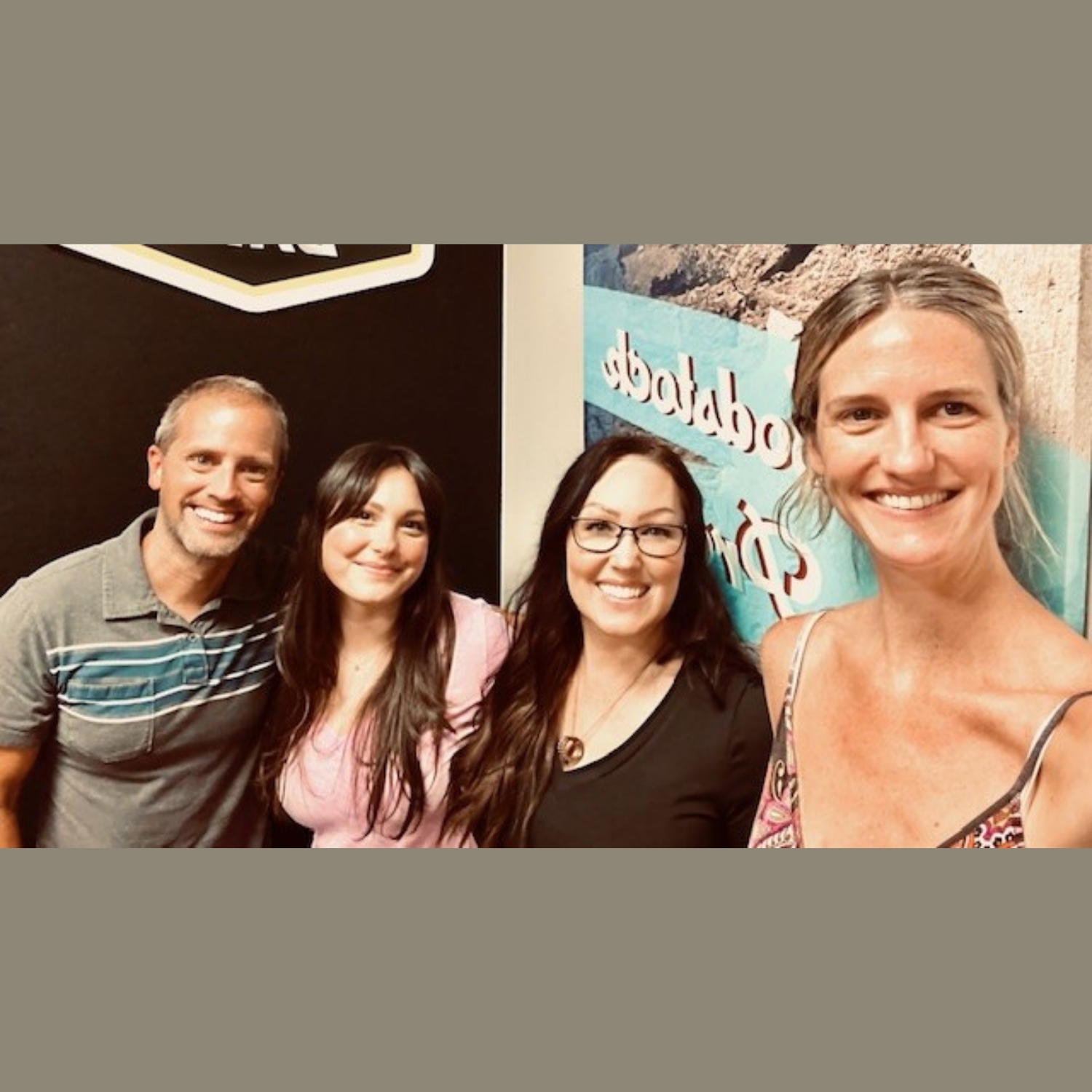
She has served as the CEO of SABA 7 a consulting firm, overseen quality control at a Psychiatric urgent care facility of a National Behavioral Health Care Organization where she served as Vice President and Deputy Director,and has served as the CEO of WBEC-West, since 2008.

Her extensive experience in developing and implementing innovative alliances with key stakeholders has enabled the organizations to reach new levels of growth and stability. Her ability to lead and empower staff members creates a strong team environment which filters throughout the entire organization.

She takes an active role in facilitating connections between corporations and women business enterprises and sees a promising future for WBENC Certified women-owned businesses.

Dr. Williamson holds a Doctorate in Healthcare Administration, a Master’s degrees in Business Administration, and bachelor degrees in both Psychology and Sociology.

Connect with Dr. Williamson on LinkedIn.

Music Provided by M PATH MUSIC

This transcript is machine transcribed by Sonix

TRANSCRIPT

Intro: [00:00:07] Broadcasting live from the Business RadioX Studios. It’s time for Women in Motion. Brought to you by WBEC West. Join forces, Succeed Together. Now here’s your host.

Lee Kantor: [00:00:27] Lee Kantor here with Dr. Pamela Williamson. Another episode of Women in Motion. So excited about the group we have here today, Pamela.

Dr. Pamela Williamson: [00:00:37] Me too. I am excited for two reasons. One, this is our second show where we are celebrating Juneteenth. And the second reason that I’m excited is because we have two amazing guests. Our first one I’d like to introduce is Anna Spearman. She is the CEO and founder of Techie Staffing. Since launching this amazing business, she has placed VP’s of engineering senior directors of UX, principal data scientist, directors of Product management, directors of Engineering, Teche Staffing was profitable within the first year of operation and they will be celebrating their third anniversary on July 6th of this year. So Anna, welcome. Our second guest that we have today is Todd Jackson, also known as TJ. He’s the manager of supplier diversity at Republic Services. He’s responsible for creating and managing supplier diversity in the environmental service industry space. So, TJ, I’d like to throw the first question out to you, which is just tell us a little bit more about your role within Republic Service and talk to us a little bit about who Republic Service is.

Todd Jackson: [00:01:51] Sure. Thank you, Pamela. Yes, this is TJ. Supplier diversity here at Republic Services really started back in the emphasis of the George Floyd movement incident, and Republic Services wanted to to change the narrative of diversifying the supply chain. And so my my job was to create and design a program that will allow diverse suppliers, certified diverse suppliers to participate in the supply chain in the environmental industry. So our purpose is really to transform supplier diversity within the environmental services industry and then just really drive that economic empowerment with diverse communities and through that is the inclusive supply chain. So our procurement procedures, we’re changing those, we’re making sure we’re doing different things. And I would always like to to say that I’m probably more of a dad, see, and which that means D is the disruptor, A is the advocate and D is the doer. And then I’m a supporter. And then of course, the C is the connector. So I’m all those things here at Republic Services.

Lee Kantor: [00:03:12] Now the topic of today’s show is to celebrate black women entrepreneurs. Is there anything black women entrepreneurs can get some help with when it comes to some of the barriers that it is to get into some of these corporations to do work with them? I’d like to throw that out to to both TJ and Anna, maybe explain some of the barriers and also explain some of the ways to get into the corporations to partner.

Anna Spearman: [00:03:44] Hi. So this is Anna. So I would.

Anna Spearman: [00:03:46] Say, you know, as of course, I’m a black woman entrepreneur and for the past three years and I would say maybe one of the biggest barriers is just networking. You know, I really realized with DEI and specifically diverse suppliers and diversity in general, it’s really about breaking that network because a lot of people who only network within their own circle, usually it’s only going to be a lot of homogeneous groups and it’s not going to be truly diverse. So it’s really interesting when you when I first got in and when I was creating Tiki staffing, I had no network, no contacts. Like, you know, I had to create all of that from scratch. And it’s interesting how you see how a lot of people have the privilege to have different contacts in their families and friends that have the opportunity to make decisions and really give them an opportunity, because that’s all it takes, is an opportunity.

Lee Kantor: [00:04:44] Tj, can you share your your kind of because you’re on the other side you have some of these opportunities that the entrepreneur would want?

Todd Jackson: [00:04:52] Yes. And I would say an Echo Anna’s is really about the network and getting to know the supplier diversity professional if they have one in their that particular company or someone who has that connection, such as an area president, such as a general manager to connect with that that supplier. But really growing the network is what it’s about. And I would say that just because you have that connection doesn’t mean that that business is going to happen. I think the emphasis should be more on if you don’t have the network, grow the network, make sure that you have a relationship with that person. And then when opportunities come, they can have that opportunity to provide you as a supplier within that response for a proposal or just doing business.

Lee Kantor: [00:05:53] Now, are there any advice on how to grow a network when you don’t have a network like Anna was mentioning? There’s you know, some people have relatives or friends that are part of that crowd you want to get involved with. But if you don’t have anybody, how do you kind of penetrate that network so you can get that opportunity.

Todd Jackson: [00:06:14] That this is? Tj That’s a good question, Lee. I think one of the ways is that the organizations such as Whitbeck West is providing those opportunities to connect with network, with corporations through conferences, through some of the venues that the organization is providing, I would say show up, be available and continue to to network and harvest those relationships.

Anna Spearman: [00:06:46] And this is Anna. And just like what TJ is saying last month, actually, or actually it was the month of March, I attended the Webbank National Conference in Nashville, Tennessee. And being in person instead of because I initially was just doing cold outreach on LinkedIn, but being in person and having people see me and be able to introduce myself and really tell my story in person really made a difference. It was amazing to not only network with the WBS, but networking with corporate members who were there was the expo where I was able to connect with many supplier diversity professionals from Fortune 500 companies and health care, automotive, just a diverse set of industries. So that really allowed me to just open my network and I was even able to run into people that I had attended previous in-person events with at the Webbank West. And it was amazing that they were able to see that I was there and I was actively investing in my business and coming out and just really showing that I really want to be an active member. And it really made a difference, you know, to have increased introductions and more people really wanting to create additional connections for me.

Todd Jackson: [00:08:00] Yeah, totally agree, Lee on that. This is TJ and it’s just really about that in person. I mean, as you know, we’ve been going through the virtual world for since the pandemic, but we’re out of that pandemic. So those those that eye to eye contact relating to the stories that folks are telling is very important. And as Anna spoke about, is, you know, there’s going to be a lower probability of you connecting through those cold emails such as LinkedIn or just getting on a corporation’s website and putting in something. You really need to have that interaction. And the organization such as we bank, whereas and the National We Bank can provide that.

Lee Kantor: [00:08:57] Pamela.

Dr. Pamela Williamson: [00:08:59] I think the only thing I would add is that showing up is definitely a significantly important. I think the other thing that I hear a lot from corporations is that people will show up, they will connect and get that eye to eye experience. But then sometimes people forget to follow up. And I think that’s the other big piece of having a successful networking experience is to make sure that you follow up with who you connect with. I think my other comment would just be around making sure that you have a strategy for your networking. I think a lot of people just go out and connect but don’t really have a strategy with what they’re going to do with that connection once they make it. So I think the follow up and showing up, following up and having a strategy are the three pieces that I think are significant.

Lee Kantor: [00:09:54] Now, do you think that if you do an effective job in networking in this manner and really take advantage of the associations like Quebec West, where you can be seen, you can be heard? Is that going to help us resolve this lack of representation? A lot of women of color feel.

Dr. Pamela Williamson: [00:10:15] This is Pamela. I’m going to say no. I think that that’s a piece that is a woman of color. That’s a piece I can own. Like I can definitely attend networking events. I definitely am going to show up. I’m going to hold conversations. I’m going to follow up. But I think corporations hold a big piece of moving that forward, especially if people want to do businesses with corporate America. I think that. Todd I’m curious what your thoughts are around what corporations can do or what your corporation is doing to not only just ensure that women of color have a seat at the table, but also ensuring that they’re able to order and they’re able to actually eat from that table of opportunity.

Todd Jackson: [00:11:06] Yeah, that was I was thinking about that as you were you were speaking. I noticed that here at Republic Services, there were really some, a couple of, um, internal goals that were set and, and it was really based on doing business with not only black owned businesses, but women of color as well. And so I think some of the corporations, through that pandemic and all the the killings that people were really trying to commit to doing business with women of color and black owned businesses. But I think sometimes the corporations may forget what how to proceed in that after all the the limelight have settled. So I think it’s really it’s really on the corporations to main that particular focus on making sure that when they provide those opportunities, get them to the table and you can look at your supply chain and know how many suppliers you have, you know, the ethnicity around those suppliers, I think your focus has to be intentional, and that’s for any corporation. If they’re doing true business around supplier diversity, it is not a box for me. It is the way of life for me here at Republic Services. And and you have to have mechanisms in place for corporations to make sure that those those initiatives are are valid and make sure those initiatives are done and and materialize. So putting metrics around that is one of that. One of the things also trying to have compensation around the businesses that you’re you’re bringing in or doing business with. Here at Republic Services, we’re a little different model. We’re somewhat of a hybrid. So we have operations in approximately 40 something states. And so we’re headquartered here in Phenix. But it is it behooves all of us in Republic services to to understand that it’s not only sustainability as a pillar, it’s not only charitable giving as a pillar, but it is also diversifying in the supply chain. Because if we’re doing business in a diverse community, we need to have a diverse supply chain and we need to make sure that all of our city are represented in our supply chain.

Lee Kantor: [00:13:54] Now, Anna, your business is just three years old. Have you seen any progress?

Anna Spearman: [00:14:01] This is Anna. And of course, I’ve seen progress. You know, when I started during the pandemic and had to make that pivot, it definitely was. It was a little daunting at first, I’ll admit. I always say that it was super stressful, but at the same time it’s super rewarding. So actually in 2021, that’s when it really blew up because at the time I had contacted a CEO who raised 50 million a Series B round of funding and they were going through a hiring sprint. And it was an amazing first client to really have because basically it was just a really mission based pharma tech company. And so it felt amazing to be able to pitch that startup to engineers and really emphasize how they can potentially help people’s lives in terms of getting the proper drug pricing transparency that they need. And so in one month, we actually filled five roles. It was senior front end, senior back end and senior full stack engineer roles. And since then, you know, we’ve been working with companies like Indeed as well as multiple high growth startups to fill their engineering leadership as well as their product and design roles. So it’s definitely just taking a lot of contacting and creating everything from scratch from my networking as well as establishing the business paperwork and coding the website. But but for sure, I’ve seen like crazy progress and it’s amazing to see how I started and where I am right now. It’s just truly a transformation for myself and tech staffing.

Lee Kantor: [00:15:36] Pamela.

Dr. Pamela Williamson: [00:15:38] So I have a follow up question from TJ’s statement that he made. I’m curious about you talked about the diversification of the supply chain. I’m curious about whether you see a correlation between the diversification of the supply chain and the diversification of those individuals within organizations that make decisions.

Todd Jackson: [00:16:08] Uh, yeah, good question. Yeah. So if you see, if you here at Republic Services, I think you probably hit the, uh, the head on the nail. There is basically if you have those particular diversifications within that particular area, I think you get more, more diversity. I mean that you can really go on a correlation here with Republic services as far as supplier to area. So we’re we’re definitely in all the 43 states, right? So if you have some diversification within a particular area, I think it drives more diverse. Unlike unless you have a super champion that is a non diverse area. So I think you can draw that correlation for sure. Pamela But it’s not always true. But I think the the thing that I harp on here at Republic Services is that we continue to be those change agents, whether you’re in a undiverse area or not, right? So here at Republic Services, probably in the Wyoming and the Montana and all that areas, we probably won’t have a lot of diverse As far as women of color. However, we do have a lot of diverse for veterans as well. So that could be that’s kind of how you kind of correlate it to areas of the United States as well. Um, I think you probably can draw other correlations to the geographical area within the United States as well. But yes, there are many correlations throughout our corporations and probably other corporations as well on where they see that. So I really think, yes, you really need to have some diversification within your workforce to drive supply chain diversity education as well.

Lee Kantor: [00:18:10] So I’d like to shift gears a little bit here. Can we talk about how you’ve individually overcome some adversity? And from your standpoint as a startup, you know, that has its own challenges? And then TJ, in your role, there must have been a lot of, you know, hurdles you had to get over in order to kind of see your vision through.

Anna Spearman: [00:18:36] Well, this is Anna, I would say. Well, just to start off with my background. So three years ago, actually at the time I was attending the University of Virginia where I was a computer science major in an entrepreneurship minor, and I was coming back to LA where I was born and raised for spring break, and that’s when lockdown happened in spring of 2020. So I had to finish my second semester of senior year remote and upon graduation there was initially I either wanted to be a junior software engineer and then be a technical product manager and then become an entrepreneur. That was always going to be my goal was to be an entrepreneur and no matter what because I was raised around entrepreneurship. But so but just basically there was a rapid dwindling of entry level tech and product roles with companies during the time. They just didn’t really know how to ramp up entry level tech talent or really what was going on in general. But on these same job boards, I saw a wealth of senior tech jobs, specifically with companies that were thriving due to the pandemic, such as Discord and Peloton. So I with a little bit of experience recruiting at a past summer internship, as well as wanting to utilize my entrepreneurship minor, I just thought, why not start now? And I created tech staffing. So tech staffing is actually a technology staffing agency specializing in direct hire engineering, product and design roles nationwide.

Anna Spearman: [00:20:01] So the biggest adversity is, of course, you know, starting off like I am young or it’s almost like a triple minority because I have, you know, I’m definitely I’m a black woman, but there’s also the age. So just overcoming I always have to be twice as good. You know, I have to make sure that I am extremely sharp because if I make a mistake, then people will be like, Oh, well, she’s young. Like, okay. They’re like and just disregard when really there’s a lot of people that have many years of experience that make plenty of mistakes, you know? But because they have that years of experience to protect them, that definitely helps. So it’s just always trying to stay as sharp as possible and really honing in on my craft so that people truly understand that, you know, we will be able to provide like top tier caliber talent. And we worked with Fortune 500 companies where we beaten out agencies that have been around for for 30 plus years. So it’s just always staying as sharp as possible and, you know, doing what I can personally do to break down barriers. You know that. In my control because some things I do understand aren’t in my control. But, you know, the some of the subjects or things that I do have to learn that are in my control, then I am going to execute on it.

Todd Jackson: [00:21:20] Yeah, this. This is TJ. I think if you if I go back a few years prior to Republic Services, I did work with Intel. Intel was one of the members of the DDR who were looking at to do more business with not only black owned businesses, but women of business as well within the the DDR. Um, when the the incident happened about 2020, 20, 21, that’s when I kind of opened up my LinkedIn to, to see if I can do more of an impact to those corporations that do not even have a supplier diversity program. So from, from that standpoint, just coming in and creating a new environment around diverse suppliers was a barrier of itself, right? Because it’s more of when I say a supplier, diversity professional, you really are a change agent for the corporation as well. And you have to put in some of those particular practices of, of, of um, you know, where you have MSAs with different content and how do you go about creating certain policies around supplier diversity. So you always have that kick back of, you know, why have we got to do this or barriers such as that or why we got to change? Um, why, why this and why that? My, my answer to that is, is that the world is changing as well. And when you have a diverse supplier, I would say probably over 90% of that diverse supplier has that innovation, that technology that some of the larger corporations or suppliers don’t have because they don’t have to be agile, they don’t have to be flexible, they don’t have to be adaptive.

Todd Jackson: [00:23:27] They’ve already got their foot into the door. And so we have to make sure that those barriers for those diverse suppliers are removed or at least have an opportunity to to do that. So what I do is I really try to make sure that it is the barriers that are pop up that we resolve them, whether it be through supplier segmentation, whether it be through Tier one. Not everybody can be a Tier one supplier within the the Republic services. Some may have to work with a non diverse supplier that has the niche of the market in the environmental industry and put that into a tier two span. But either either way, Tier one or Tier two would definitely want to make sure that the supply chain from end to end is diverse. And so those barriers such as networking or getting them in front of some of the category managers or senior manager leaderships, that that is that is important. And of course, dispelling, dispelling those myths around, um, diversity as far as diverse supplier, it needs to be nipped in the bud.

Lee Kantor: [00:24:44] So TJ, what are some of those myths?

Todd Jackson: [00:24:48] I think some of the myths are that they’re too small, right? Everybody started out at some point small. They just grew the business. The second of all is they don’t have the innovation and technology. We know that that’s not true because they’re more agile and flexible than the bigger boats. I mean, you can take, for instance, the ship of Intel. Intel needs very small tugboats to put it in the port, same as the environmental industry, where environmental industry was more waste connection, waste connected. So how do you go about dispelling that? You know, this is just a male dominant, which it is a dominant field. How do you go about saying that women can play a part of that as well? So you have woman owned disposal companies, you have women owned gas providers, petroleum that can do that. So the question is, is not about not about if they not can do it, but how about giving them opportunity to do it and execute. And that’s what it’s that’s what it’s about.

Lee Kantor: [00:26:03] Well, stories kind of are a great way to illustrate some of these points. T.j., can you share a story about a minority supplier that really with with an opportunity really got to a new level? You don’t have to name the name, but maybe explain the challenge that they were asked to to deliver on and how they delivered.

Todd Jackson: [00:26:27] Well, I think one of the things is, is that one of the suppliers we are using in one type of capability. So when we looked at that particular supplier, we noticed that the supplier had many channels of opportunities for this particular for a Republic services. And the question is how do we expand the growth? How do we expand their capability within the organization from one product to to the next that that we can use? Well, we just ensure that, you know, it met the criteria around that and then provided an opportunity for that to to to happen into one of the one of the areas that geographical areas because each each landfill is different each state has different regulations around how we align align the sales for making the landfill. So that provides different geosynthetics around liners and things of that nature. So giving them an opportunity to expand within the organization from one product or one service to multiple services. So using that particular supplier to grow their business through multiple services and capability, that is just one of the ways. And then the other way is bringing on that supplier that in a small way providing, you know, everybody needs an opportunity, but providing the service that they do, um, got more, more notoriety around the, the stakeholders. And once the stakeholders did that, the word spread and then after the word spread, the, the, the supplier got more opportunities within a sector and started growing the business by that. So there’s, there’s two stories that I shared that shows you how you can grow within the Republic services.

Lee Kantor: [00:28:40] Now, Anna, can you share a story for your firm where you were given an opportunity and maybe you don’t have to name the company, but the problem they were having in how you were able to help them and that helped you get to a new level.

Anna Spearman: [00:28:53] Of course. This is Anna. So at the time I was working with a Fortune 500 company and they were hiring for a VP of engineering. And this company, their future was really going to be embedded in AI and really trying to just transform their industry and really make a difference. So they this VP of engineering, was going to manage an org of 300 engineers and hire an additional I think it was about 250 engineers. So this was a big role. And both the internal and other agencies, it was other executive recruitment agencies that were really large and had been around for years. They just really weren’t sending any talent that was even passing through the initial stages of the interview. So they decided to give tech staffing a chance. And that’s all it takes is a chance. So I took that chance and I wasn’t going to lose it. So we recruited for the role and by the end of that project we finished with two VP of engineering candidates that the company liked so much that they were willing to present both of them an offer. So if one candidate rejected the offer, it would be presented to the other candidate. And it was just an amazing candidate. Matchmaking experience. Like it really warmed my heart because the candidate that ended up accepting the offer he was really looking for the role just wasn’t about the salary.

Anna Spearman: [00:30:27] It was overall about the company he was working at and the culture, and especially due to the pandemic. And it really changed his outlook and his mindset. So that company coming in during that time really made a change to his direction and his career and also just making a change at that company itself since they were just really thinking about an innovative future, like especially in AI. So that definitely was the most heartwarming, especially, you know, since we were able to make a difference in just like TJ was saying, you know, the first myth that they say is they’re small. But even though we may be smaller right now, we’re extremely flexible and we’re also just on it versus a lot of other agencies who are bigger, they’re a little bloated and they’re not having maybe as many people who just truly care and are really on it in terms of finding the right aligned talent. So even though we were one of the smaller agencies of that company, we ended up being their top performer because we just we, we just like I said, we had to be sharp and we had no room for error. But that’s all we needed was a chance. And we took it and we executed on it. And and we’ve received nothing but praise for that company from that company.

Lee Kantor: [00:31:45] Now I’d like to share or put this out to the group. What for the for the organizations and the leaders that are listening now that maybe haven’t leaned into working with diverse suppliers as much as maybe other people in their space? What are some of the benefits of having a more diverse entrepreneur pool to be choosing from in your mind that you’ve seen in TJ? Why don’t you start?

Todd Jackson: [00:32:14] I think one of the first things is you have if you have a diverse supplier pool, you have different perspectives. You’re not only representing a particular group, you’re representing the world because the world has changed, right? The world is, um, people of color, people with different backgrounds, seeing how things work. So I would, I would say the perspectives is probably one of the, one of the things that people should lean into is right is having that I think Anna hit it on the head again is, you know, you may be small, but you’re agile, you’re flexible. You can give that personal relationship where maybe a larger company cannot give that. Um, then you’re able to pivot as well. So I think those are very, those are things that you really should be leaning into and providing that, particularly if you serve in the communities and the communities is diverse. I mean, you have an obligation to be diverse as well. That’s kind of where I stand, is, you know, um, why not put the tax dollars into the communities that are diverse? They’re coming from that community, they’re working from that community. So it’s all impactful to to not only the community, but those those corporations that are doing business within those communities. And I would suggest that those communities that are diverse, I would I would lean on corporations that are in my my community to say. Hey, what are you doing in the world of workforce diversity? What are you doing in the world of supply chain diversity? Who is doing business in our community? That looks like me. Those are some of the questions that I would would push back on from a community standpoint.

Anna Spearman: [00:34:12] This is Anna. I would definitely just agree with TJ there in terms of working with supplier or the diverse suppliers, it’s really just that change in perspective. So coming from my perspective, my background is not not as traditional. You know, I was a computer science major and as a black woman, I would walk into lecture halls of 100, maybe 200 students, and I would see maybe one other person that looked like me and just know other black women. So you really understand, like walking. I’ve always been used to walking into spaces where I’m the only one. And so that definitely provides perspective. So for some of these companies, and although we don’t specialize in diversity, you know, and but it’s just been super natural in providing a diverse candidate pipeline because in the back of my mind, I’m always thinking about, you know, will I be the only one when I walk into this room? So it just adds that needed perspective and also just that resilience, you know, So you’re just strengthened by those battle scars of all of that adversity. So like I said, from all of the times that I’ve, you know, had to break down those barriers, it’s made me stronger.

Anna Spearman: [00:35:26] And it’s it’s made me, I don’t want to say hardened in a way, but it just made me, like I said, battle ready and sharp where I have to really know that craft. So having all of those different perspectives, you know, and perspectives outside of my view, you know, LGBTQ age, all different backgrounds, socioeconomic backgrounds, like that’s super important because I came from a private school and I was a financial aid kid. But you know that private school, their tuition is like 40,000. So interacting with people that were from lower socioeconomic all the way to the top 1%. So having all of those different perspectives, especially perspectives outside of my view, really just provides a value add because every company is always talking about how they understand their users. But if they’re if their users or if their teams aren’t reflecting who their users look like or what their users backgrounds are, then how are they ever going to be able to accommodate and help the users lives in any way?

Todd Jackson: [00:36:31] Yeah, and this is TJ and I like to just add on. Even though we’re here talking about women of color, diverse supplier just comes in all types of ways. Here at Republic Services, we do the five major groups, right? So people with disabilities, LGBTQ plus that Anna talked about, of course minority owned our veterans owned and then of of course, women business as well. So all that diversity within a company can can contribute to a larger diverse supply chain. And I think one other thing is sometimes times, even though you want to lean in through those particular procedures and programs, sometimes you just have to be intentional. And what I mean by intentional is, is that you got to focus on, hey, let’s bring in some business. I have that. I have that opportunity, I have that decision making. Let’s let’s do this. That’s being intentional.

Lee Kantor: [00:37:36] Now, is there any advice or any thoughts on what it takes for the community to inspire and encourage maybe the next generation of diverse entrepreneurs?

Anna Spearman: [00:37:50] This is Anna. I would definitely say my number one word for that is exposure. Exposure makes such a huge difference. So, for example, I studied Chinese for eight years, so four years in high school and four years in college. And I was actually able to study abroad in China. And really getting that exposure just really changed my life and just changed my perspective, you know, because I’m always trying to look at different perspectives that are outside my my views. So it’s just, you know, really when you expose people and it doesn’t have to be just like STEM or just any new topic that can really change their life. Like my life was also changed in high school where my counselor or one of the science teachers. Since they knew I enjoyed math, they recommended that I join the OR. I join a robotics summer camp for Girl Scouts. And that changed my life because I never really heard about coding or computer science at all. And I learned Robot C and I learned how to code a robot autonomously. And that was that blew my mind. And all that took was one counselor to just expose me.

Anna Spearman: [00:39:01] And so I always say to just exposure. And I actually had a beautiful full circle moment where so I played tennis when I was eight and I attended. I was a part of this program in South Central that helped my basically exposed minority kids to tennis, which is like the sport of kings and queens and is a really elegant sport. And I was able to come back and just teach them about STEM and just teach them about what I was doing. And although they had no idea what I was talking about, about UX research managers and data scientists and machine learning, but at least they heard it and at least they were exposed to it. And you never know whichever kid that may be allowed them to Google it and can lead them to a new path. So exposure is so important in order to get people the opportunities that not only that they need, but that they’re passionate about and that only grow, you know, different organizations or have them create their own companies.

Todd Jackson: [00:39:59] Yeah, this is TJ and I’m going to echo on the word exposure as well. Um, and I may not know, Mandarin like, uh, like Anna, but I do know a little of Japanese. So being in the Air Force was exposed to a lot of different countries, a lot of different people. Um, which in hand exposed my, my two children who are engineers, aerospace industrial engineers. So just knowing, um, the exposure around that and making sure that folks are giving back, that is probably the most important thing because I can remember doing taking a whole, um, junior middle school through a science program. Did STEM, did robotics, uh, my son did robotics as well. But exposure is so important. Um, those kids never knew about rockets on how to build a rocket or what is propulsion and things of that nature. Those kids didn’t know what materials can actually clean a a copper penny. So it’s really about trying to understand the exposure and give those folks exposure that may not be able to go outside of their community to see any other thing that’s happening. And that’s why it’s so important that corporations do do those particular things in the charitable giving, um, space as well as, as volunteering. Uh, those your skill set into those, those communities did mentoring as well. So you know going to that. Nesby Junior Nesby meetings and things of that nature provides that opportunity that that exposure for those and then hopefully those exposure provides that entrepreneurial spirit where we have more awareness in the world as well.

Lee Kantor: [00:42:03] Well, thank you, TJ. Well, TJ, what do you need more of? How can we help you?

Todd Jackson: [00:42:11] Oh, I need to make sure how you can help me is make sure that when we have those diverse suppliers, they really know about the industry that they’re they’re committing to. Right. So you’re talking about the waste industry waste and the environment is going to be here to. We’re not here. Uh, so how do we go about moving that that waste? How do we go go about doing doing the organics? How do we go about doing plastic circularity where we’re recycling those particular types of plastic so they don’t end up in the landfills, so they don’t end up creating the, the, the impacts of our our environment. So we really want to make sure that we, uh, we really learn about those industries. I’m one of those industries that people really don’t think about, right? They just put their cart on the edge of the the street and some truck come and pick it up. But it is a process behind picking up that truck, putting it in a transfer station, transporting that to a landfill, packing it, composing not only composing, but understanding that, you know, decomposing, give off methane. How do you collect that methane, making sure that the environmental waste is not our tables are not contaminated. So using these different synthetics to cover it and underlying our landfills. So that is where we want to start putting people in, because really environmental waste industry was really dominated by male and dominant by Caucasian. So we really want to put some diversity within this space and all aspects of environmental waste.

Lee Kantor: [00:44:06] So so TJ, if somebody wants to learn more about Republic or connect with you, what is the best way to do that?

Todd Jackson: [00:44:13] Oh, you’re just going to our website Republic services.com supplier diversity and there will be a contact that you can send as well.

Lee Kantor: [00:44:23] And what do you need more of? How can we help you?

Anna Spearman: [00:44:28] Oh, this is Anna. I would say, well, same thing. Exposure. So, you know, just like touching different audiences, whether that’s hiring managers or whether that is engineering, product and design candidates. I do say we specialize from senior level to C-suite talent, but if you are entry level, you know, feel free to contact me because I definitely understand what it feels like to be entry level and trying to get that first job. You know, I had to create my own first job, but I can definitely try to just help in any way I can and provide any resources. So just any exposure at all to to any audience would be amazing.

Lee Kantor: [00:45:04] And then the website, the best way to contact you?

Anna Spearman: [00:45:07] Yes. So my website is w-w-w dot tech staffing. So tiki Tiki staffing staffing.com. And you can contact me at my email and my email. It’s Anna Anna at tech staffing.com.

Lee Kantor: [00:45:28] Good stuff. Well, Pamela, what a show, right?

Dr. Pamela Williamson: [00:45:33] It’s been great. You know, I want to thank both of our guests for providing both valuable and just some great, vibrant conversations on this topic and sharing the their the journeys and experiences that they’ve had to their success. So thank you both.

Anna Spearman: [00:45:53] Thank you. Glad to be here.

Todd Jackson: [00:45:54] Thank you. Glad to be here as well.

Lee Kantor: [00:45:57] All right. This is Lee Kantor for Dr. Pamela Williamson. We will see you all next time on Women in Motion.


Tagged With: Black Women Entrepreneurs

Kristy Johnson with Spotlight Dance Studio and Joe Cianciolo with Front Porch Advisors

June 19, 2023 by angishields

Cherokee Business Radio
Kristy Johnson with Spotlight Dance Studio and Joe Cianciolo with Front Porch Advisors
Loading
00:00 /
RSS Feed
Share
Link
Embed

Download file

Fearless-Formula-061623-banner

Kristy-JohnsonKristy Johnson is the co-owner of Beyond the Spotlight Dance Studio in Woodstock and has a Bachelors Degree from Reinhardt University in Business Administration.

She is also the compliance manager for the Cherokee County Transportation Department.

Connect with Kristy on LinkedIn.

Joe-CiancioloJoe Cianciolo, Human Capital Strategist with Front Porch Advisers, is a thinker, questioner, planner, goal setter, problem solver, family man, and all-around believer in people.

As a teenager in small town Ohio, he learned early that reaching higher levels of success requires becoming, building and leading from a healthy place of self-awareness.

Connect with Joe on LinkedIn.

This transcript is machine transcribed by Sonix

TRANSCRIPT

Intro: [00:00:06] Coming to you live from the Business RadioX studio in Woodstock, Georgia. This is fearless formula with Sharon Cline.

Sharon Cline: [00:00:16] Welcome to Fearless Formula Friday, where we talk about the ups and downs of the business world and offer words of wisdom for business success. I’m your host, Sharon Cline, and today on the show, I have one of my absolute most favorite returning guests, Joe Cianciolo. He is the human capital strategist with Front Porch Advisors, and he has brought someone he’s been working with who I know as well through our networking meetings. Kristy Johnson. She is the co-owner of Beyond the Spotlight Studio, and she’s also the compliance manager at Cherokee County Transportation Department, also called Cats. Welcome to the show.

Joe Cianciolo: [00:00:52] Thank you for having us.

Sharon Cline: [00:00:53] You’re welcome. I was just saying to Joe before the show started that this is one of my absolute favorite shows that we do because I am so fascinated by why I do what I do. And I’m I think a lot about myself. I just want you to know that I’m getting it right now. I think a lot about me and not so much about why other people do what they do as much as like, do I like what I just did? And if I don’t, why did I do it? And what are my choices? And this is the ongoing conversation in my head. It’s fabulous. But what Joe does is that he actually makes it has a has a template which allows you to kind of instead of me judging myself and the things that I’m doing, it allows me to look at here are the positives of the things that I do, and here are the things that could trip me up. But here’s a tool to use to go around it, and that just makes me feel so much less like I’m, I don’t know, like my own worst enemy and that I can’t get what I want. So would you say that that’s an accurate reflection of what you do? Joe Well, that’s.

Joe Cianciolo: [00:01:51] Why I was watching Kristy, because Kristy has worked with me for for years, actually. And yes, that is exactly. I mean, hurray. We’re done. We’re done. Yeah. No, I mean, we are all unique and we are. I don’t know. I think we’re all our own worst critic. So the components that you discussed are described in what? What? Kristy is very, very well practiced in is understanding how to be aware of yourself. You talked about it in terms of why you do the things that you do, the choices that you actually do have in it. And rather than being critical of yourself, we study awareness and then we study acceptance. And that’s a piece that I just recently within this year have started using that term. I’ve been doing my own research into that. Sometimes we can be very aware of those patterns but not accept them.

Sharon Cline: [00:02:39] Oh my gosh, that’s like up at two in the morning moments where I’m like, Why did I say, Why did I think I know better? And maybe I was hungry? Like, I come up with all kinds of reasons to justify some of the things that I’m very critical about myself.

Joe Cianciolo: [00:02:54] And then you can talk yourself onto and off of ledges that way. And what I talked to Kristy about earlier is if you can be, I don’t know, grounded in who you are, what you bring and what you need, then it helps you to choose actions accordingly. And when you are off the reservation, then like you said, we have tools for that. We have tools that help you remember. Oh my gosh. No wonder why this feels the way it does. I’m really excited that Kristy is here today because Kristy’s world is different than my world. Yet she and I use a lot of the same dialog, the same communication styles and terminologies. And we also know how to kind of calm each other down so that we can face something much bigger, you know, as opposed to getting really frazzled by the annoying daily. Sometimes you get stuck in the grind of tasks and sometimes you feel like the world has all these expectations of you and realize, Oh wait, that’s my problem, not the world’s problem or whatever it is that you’re wiring actually brings to you. Got it.

Sharon Cline: [00:03:55] So some of the things that I do is I can spread myself kind of very thin because I don’t like to say no specifically. If someone asked me for me like, Oh, you know, I thought of you, you would be so great. And I’m like, What? You thought of me? When did you think you thought of me? Like, the next thing you know, I’m like, Oh, my God, You like. Like, it’s pathetic. It’s just like something I judge myself for really harsh because I know that that’s. Those are magic words for me. The next thing you know, I am roped into something that I didn’t even really think that through very hard if I wanted to do, but because they thought of me and I’m so honored by that, I’m in. And it’s like those are the things that I can see as a problem. But like I would imagine you, Joe, having so many skills that you could give me a potential, I could take that moment, you know, not become ungrounded because that’s, that’s like one of my favorite tools is to become ungrounded and then just kind of get through it and then think about it later. But I would love that that pause that gives me a moment to choose a response that’s really authentic to me because it’s really more about me and like what I want, as opposed to they want me. Oh, my God, Yes.

Joe Cianciolo: [00:05:02] Can you hear her wires right there? Okay. So a couple of things. One of which is the recognition piece can be an energizer for you as a believer that we’ve talked about this before.

Sharon Cline: [00:05:13] Oh, yeah. I’m a believer. Case you didn’t guys didn’t know who was listening.

Joe Cianciolo: [00:05:16] And the caretaker piece doesn’t feel worthy, right? So for you as a combo, that’s an interesting conundrum because you like the accolade, yet you feel unworthy at the exact same time. But when you study that and understand sort of the groundedness of it, what you realize is that what you connect to in terms of when somebody thinks of you and you’re like, Yes, wow, that makes me feel great with the understanding that you don’t have an obligation to say yes if there is something that is of shared value with that person or with the idea or whatever, then you get the opportunity to do both of those things, which is to say yes, with the ultimate care that you naturally provide. But as Christy can probably speak to the caretaker, you want to talk about where that could get you in trouble. Yeah.

Kristy Johnson: [00:06:05] So, I mean, I’m a caretaker. I’m a caretaker first, and so I will spread myself. So thin that then you do, like you were saying, just feel like you have to do those things. I said yes. Yeah. And that, like, I.

Sharon Cline: [00:06:22] Can’t let someone down.

Kristy Johnson: [00:06:23] Exactly. And you’re you’re honestly just you’re doing it because you are, you know, personally wanting to have a good like, you know, perception of what they think of you and things like that. So and it really leads to like burnout. You know, you don’t want to help anyone and you’re just drained by the end of it and that’s so easy. And you want to just take it all back. Like, you know, when you do get burnt out, you don’t want to help anybody because you’re feeling that way.

Sharon Cline: [00:06:57] But here’s here’s what’s interesting about that, though. And tell me what you think of this, Joe, is that I don’t want to help anyone, but that will include myself because I’m so tired that I really want to I need to do laundry because I need to do laundry. And I’m so burnt out that I will not do any of the things that I’ve been frustrated that I can’t do because I’m so burnt out from other people. And so, yeah.

Joe Cianciolo: [00:07:19] You guys see me on the edge of my seat. I’m always you both keep saying the same words need and have to need to and have to. And those are Kryptonite for caretakers especially and for people who are outer driven. Right? So when we talk about the expectations wiring versus the personality wiring, that’s where they go together. And so when somebody is externally wired, I’m internally wired so nobody can tell me what to do If I don’t if it doesn’t make sense to me, I won’t do it if it makes sense to me. Awesome. Like if you tell me I need to do the laundry and I don’t find any reason to it, I won’t. But if I realize obviously I have to take care of my kids, you know, my spouse, I got to do those things. It’s because I think it’s important. It makes sense to me to do it. When you say words like need to and have to, it is a very dominating outer expectation. And the problem is there is that you aren’t taking care. I’m going to go through like a number of tools real fast. I’m ready without calling out the tool, but the caretaker can take care of everybody else except for themselves.

Joe Cianciolo: [00:08:19] What I always have to tell the caretaker is if you don’t provide care for yourself, if you don’t, if you don’t give yourself that time, you cannot provide the same level of care to others. So when that happens is you you have spread yourself so thin because you’re allowing all these expectations around you to dictate what you’re doing well, that takes down your natural strengths. It doesn’t allow you to do them. So if you had to, had to need to do the laundry for your family. Is it because you want to you want to be known as that person that’s always there to make sure that like I was sitting there doing laundry while I was eating lunch, hurrying to get here, realizing that I love that my kids have that person like me to fold the laundry for them so that when they come back from camp, everything is already ready and done for them. And that is a show of care and it’s an opportunity that I have to show my kids that they deserve to be cared for. But if I don’t take care of myself first or at all, then it will always feel like I’m chasing.

Sharon Cline: [00:09:18] Okay. But I have a question for you about that. So. So if I’m. Okay, so you phrased it. Sorry. I’m thinking on the fly. This is just great. It’s great on radio. This is so great. Okay, so if I. Have that obligation, thought process. Right? That okay, well, I agreed to do that for this person. This person, this person. In some ways, I like the surrender of control of my life to someone else who has asked me to do things so that I don’t have as much choice. Well, no, I mean, this is the result of what people have needed from me. And of course I’m going to do it for them. So in some ways, I’m surrendering the responsibility of the effects, the outcomes of them. Right.

Kristy Johnson: [00:10:03] I think that, you know, especially being in that mindset quite a bit, it’s also really understanding your identity too, that like you get so used to having people rely on you and that becomes who you are. And really a lot of us, I know myself personally, I’ve had to sit down and really like think about what do I like, what I don’t like, what is it like, Who do I actually want to be? And instead of allowing other people to take that choice away from me because I don’t want to make the decision, I don’t want to be the bad guy. Yes, I want to be me. I don’t need me. I want to be needed and I want to have that relationship with them. And that’s how I feel, like I can love them. But what am I doing to, like, separate myself and like, put myself last? You know? Is it really like a true reflection on how much I love myself?

Sharon Cline: [00:10:58] How did that sound? Joe, are you having a moment?

Joe Cianciolo: [00:11:00] I’m having a moment.

Sharon Cline: [00:11:01] You deserve that moment.

Joe Cianciolo: [00:11:04] I can’t wait to go back and replay that one again and again. It was said very, very well because the outer accountability and the outer expectations are fine. I mean, some people find that to be a negative. I don’t once you are aware of it and accept it, then you can act on it. And the thing is, is are all those tasks liberating for you because you have chosen to create your identity around that, or is it dominating to you because you really feel like it’s easier when people just tell you what to do?

Sharon Cline: [00:11:31] Both.

Joe Cianciolo: [00:11:32] Okay, So the liberating one, you have to make sure that you can measure. That’s one of the tools that we study in. I don’t know whichever of the programs that you would go through or whatever is that we have to say. Who are the influences in your life? Who are the people and what what kind of influence are you allowing? Are you making room for a balance of supportive people, people who are natural challengers and people who actually do liberate you for you to be you easy like you at your best. You without having to make excuses, without having all that inner talk, which is what typically drains you. And so you got to be able to then say, Wait, everything all these people, all these outer expectations are coming from people who feel like they’re providing nothing but challenge. And that is something that Christy and I’ve talked a lot about is how do you make time for the people who are natural supporters and how do you give them permission to also challenge you from a place of support first.

Speaker4: [00:12:28] Like a place of love.

Kristy Johnson: [00:12:30] And it’s like communicate, eating with them, you know, like really looking at, you know, there’s there’s that quote that, you know, the closest five people are the biggest influencers in your life. And so, you know, you become those five people. And if all of those five people are constantly challenging you, are you just okay being with them? Because that’s what you’re you know, you’re naturally in that world all the time. Or do you have liberators who are going to come and and support you and really lift you up? And, you know, even in those dark times, like are they are they around you? And do you actually know how to name them? That was my hardest thing was to.

Speaker4: [00:13:08] Ask you.

Sharon Cline: [00:13:08] Actually would like to ask just can we go back slightly like how did you become associated with Joe? Did you approach him? Did he approach you? I would like to know what the impetus was.

Kristy Johnson: [00:13:18] Yeah. So I actually have a great story of how we actually met. So our networking group had an afternoon social and I had been meaning to go. I just hadn’t. I brought my sister and we got split up and we were sitting, we were going around, we asked a couple questions with each other. And so I was answering the questions and I had a group that was just like life changing. Joe Was was there diesel? David Like, there was all of these wonderful people in the community and they just fed into me. They were like, You need to focus on this. You need to look at this and and you need to, you know, you need to come to the morning, you know, networking. And I was like, I can’t. I have a 9 to 5 job and there’s no way I can do that. And they’re like, Did you ask? And I said, No, I’ve never asked. And and so luckily, you know, the stars aligned. And I started going, you know, every Thursday morning. And but, you know, after that, it was just, you know, they saw me they they just fed into me ever since. And, you know, it’s honestly a huge reason of who I am today and like even becoming an entrepreneur with my sister, I mean, they just have, you know, changed the outlook, my mindset, because I was just like, I work a 9 to 5. That’s what I was taught. I go to school, I go to college, and that’s what I that’s who I become. And really, there’s a whole different world. And Joe really opened the world for me just to kind of explain like there’s different there’s different ideas out there and there’s, you know, different ways of viewing the world and yourself, which you’re just not taught in school. You know, I was you’re young, you’re.

Sharon Cline: [00:15:09] More encouraged to comply with and, and not be different because being different is, is could potentially be chaotic or a bigger personality. In school, it’s more about just not kind of being quiet, flying under the radar, doing what the teacher said don’t cause trouble.

Kristy Johnson: [00:15:24] And that’s that was 100%. My personality is I was shy. I didn’t I didn’t know how to talk to people. And and and so, you know, getting in front of these people who don’t even know me and are just like Christy, you have this like you can you can do it. And it’s like, that’s weird. Like I, I don’t think I can.

Sharon Cline: [00:15:44] It’s actually so sweet, though, The way that you’re talking about it is that you had ideas in your mind about what you wanted, but, like, life was happening to you as opposed to you’re taking control of life. Okay, Joe, you go.

Speaker4: [00:15:55] Joe, you go. Okay.

Joe Cianciolo: [00:15:57] You need to playback this when you go home and you need to listen to what you just said versus what you said earlier, which is.

Speaker4: [00:16:02] You know, this show, I get.

Sharon Cline: [00:16:04] To point everybody else. No, but actually, you’re right.

Speaker4: [00:16:06] I know a lot of.

Sharon Cline: [00:16:07] What I say is choice.

Joe Cianciolo: [00:16:08] But, you know, and choice sounds scary. And that’s why we keep working through. I mean, Christy has actually been very helpful, not only having come and sat on the front porch, she’s also helped me develop some of my newer tools and try to make it more accessible to a bigger audience, because that’s one of the things that’s hard. It’s very personal. I mean, not everybody wants to come and say, okay, cut me. Open and look for the insides that nobody sees. Luckily, Christy just happened to be sitting at a table of wildly bold. I remember that night very vividly. Lauren from Pie Bar was there.

Speaker4: [00:16:43] Oh, I love Lauren.

Joe Cianciolo: [00:16:44] She’s amazing. So imagine being sitting at a table for the first time with Lauren, David and myself and Christy. Like, they’re big personalities.

Speaker4: [00:16:52] Big, big.

Sharon Cline: [00:16:52] Personalities.

Joe Cianciolo: [00:16:53] But that’s what we all need, is we need people to be able to see us for who we are, not necessarily who we’re choosing to be every day, but who we can be. And we saw it in Christy very quickly, and we didn’t know what it was. Now, my job is human capital. I see that people have value. The value is in the person, not just your experience is what you do with your experience. How much do you understand your experience? Are you okay with that experience and what do you do with it? And so the fact is, is that when when Christy and I have have within, I don’t know, the last year or year and a half, I’ll send a new tool worksheet or something to her that says, hey, let’s work through this because choice doesn’t have to be as daunting as you think.

Sharon Cline: [00:17:36] But choice isn’t as daunting. But the but the. Responsibility of those choices are. What’s so scary to me is I the consequences of the choices and whether or not I’m going to be happy with those consequences or not make me disinclined to want to make them.

Joe Cianciolo: [00:17:57] Well, have you ever actually mapped them out?

Sharon Cline: [00:18:00] Well, I mean, in my head.

Speaker4: [00:18:02] Well, and so that’s different.

Joe Cianciolo: [00:18:04] And that’s the thing. Why? Because the responsibility of it is hard. And so, you know, for me, being inner driven, I once I commit to it because it makes sense that I would want to do it, I go crazy. And I’m a strategist, which means I need data. But for people who are unaccountable, especially caretakers who don’t feel like maybe they are worthy of it or they don’t, they would love to give it to everybody else, but they it’s scary to do it themselves. Is is I say, okay, let’s map it out. Let’s let’s and I’ll walk them through, you know, sitting on the porch. We actually have it in. I don’t remember which chapter that you were doing.

Speaker4: [00:18:38] You actually write this down.

Joe Cianciolo: [00:18:39] Oh yeah. Where we actually map out. Okay. When, you know, this is a natural driver, whether it be good or bad, and this is when it tends to happen. And and this is what I usually choose as a result. And each time I choose that these are the consequences. And the consequences over time are what create our reality. A lot of people say, I wish my reality was different. Well, you can’t change consequences. You you can’t even change your tendencies. You can only change the choice that you make as a result. But that requires having some kind of understanding of choices that you do make, which could even be isolating yourself from other is a choice. Or saying yes to everything is a choice and you have to then map the whole thing out. Once you map it out, you can start to apply it to every different situation or challenge or choice that you have to make and say, Oh, which one do, which one do I really want? And then for people who come to me and they say, I wish my life was different, okay, well, what do you want it to be? Let’s work backwards. We can do it any which way, but we have to be able to identify each of those pieces so that you can see the pattern.

Speaker4: [00:19:41] Is that what happened.

Sharon Cline: [00:19:42] With you, Christine?

Kristy Johnson: [00:19:43] Yeah. Yeah. I mean, I still have.

Sharon Cline: [00:19:45] Problems ongoing, isn’t it.

Kristy Johnson: [00:19:47] Though? Yeah. I mean, I mean him as a human capital strategist over here. I mean, it’s just you have to work on yourself daily. I mean, I still am going back to like, you know, I still get shy in networking events. I still like I will get into a, you know, a funk and a habit of, you know, I like just want to stand by myself and and those things. I just know now, like when I see the signs and that’s really understanding yourself is, you know, understanding the signs of like, I’m in that habit again, You know, what? Can I get myself out of this habit and break it and break that monotony of it?

Sharon Cline: [00:20:21] Have you found a surprising trigger for yourself? In other words, sometimes when I watch a movie that is like overly romantic and very sweet, and at the end of it, I like shut the TV off. And then I look at myself alone in my house, and then all of a sudden, like, I have a whole thought process that comes into play that I’ll be very different after watching a movie in my feelings and what I think then before. So I know for myself that I have to kind of choose when I’m in the mood to really go down that road. Sometimes I don’t know that I’m going to, but I was wondering so that maybe that’s not surprising for me because I don’t do what you all do yet, but.

Speaker4: [00:21:04] I’m saying yes. She said.

Sharon Cline: [00:21:06] Yes, Oh, no, that’s on the radio and everything. Yeah, but like, do you have you found that there are certain things like if you see a certain person or a certain car or are there triggers that were surprising to you?

Kristy Johnson: [00:21:18] So one of mine that I have realized, you know, we were talking about, you know, like overextending yourself and burning out. I realized by going through this process that when I start to drink way more caffeine, if I have a Starbucks iced coffee in my hand daily, that I have started to like put myself last because I am codependent on that, that like caffeine, I need it. And it’s it’s weird because it’s only a Starbucks, you know, iced coffee for some reason. No one else like no other coffee company. But but it is it is very like I will just get in that habit and I just know that, you know what, I have to take a step back because something’s going on with me and and I’m I’m off balance.

Speaker4: [00:22:06] Well, that isn’t.

Sharon Cline: [00:22:07] That just fascinating in itself. Like, let’s take a second to say how much of my life do I allow things like that to happen that I’m completely unaware of all day long?

Joe Cianciolo: [00:22:18] We live in a very chaotic society and technology with everybody having phones is we’re constantly distracted and we choose that. And sometimes that’s it’s a defense mechanism. It’s like, Oh, I can spend all my time and I’m busy, busy, busy, busy because it feels easier to to be a victim, to busy or to not have to. Face what you want to face. And it was funny because before today I had all these things that I wanted to get done, and instead I ended up taking advantage of an unplanned, however many hour session with with a client where we went to a level of depth that if I hadn’t have allowed it to happen, I wouldn’t be in the mind that I’m in right now. I would have done all the cleaning and all the things that I wanted to get done. Yeah, tasks. And I still want to because I’m very competitive and I like to get that stuff done. It’s part of my wiring. But I was so grateful that when I saw that opportunity because I do this study every day, I mean, this is my job is I realize very quickly, no, this this becomes the opportunity that I have to sit back and say, what’s going to come of it? And what was funny is the client sent me a text afterward saying, I saw your dream today and Dreamer is my last. I’m not a dreamer. And he was able to see it.

Sharon Cline: [00:23:42] I got chills just now.

Speaker4: [00:23:44] That’s a very.

Sharon Cline: [00:23:44] Important text you got.

Joe Cianciolo: [00:23:46] Yeah. Yeah. And and I immediately, as I do in my program, is to say thank you. But I had to be specific about what I was thanking him for, which was to actually put me in that spot that allowed the not the weakest but the least strong part of my personality to come out in a way that he could understand it. I said, Oh, can you put it into words? Because I honestly, like, I allowed myself to just go there. That kind of awareness when you give it more time. If she were to give her awareness more time than the Starbucks in her hand, it’s a different machine.

Sharon Cline: [00:24:22] Well, what did it feel like for you, Joe, to feel all of those feels?

Joe Cianciolo: [00:24:26] Oh, I thought I. I kept thinking, well, this is probably the best way to start a week of on my own while the kids are at camp is because I often the kids are my priority. I love my children and I have other things I wanted to say about them in terms of what we were talking about earlier. But maybe a better use of my time this week will be to stay in this mindset. Maybe instead, like I remember when they they went to camp last year, I was like, Oh, I can watch my own movie. What is that? I can watch my own show. And so this year I actually prepped. I was like, okay, these are the shows I’ve been wanting to watch. And today I thought, Well, maybe I don’t need the TV this week. Maybe I need to make more time to just sit and be in awareness, not with myself. Because what I notice or what we talked about in our session was I need to do my awareness with others. If I do it by myself, I can make excuses. I can let my mind wander in other ways, start preparing, task listing, you know, all that kind of stuff. Whereas I do my best thinking out loud with others. And so I happened upon it by accident. And now that I’m aware of that, I can make that a bigger priority. This week, as you and I always talk about, there’s a difference between accidental and intentional. Well.

Sharon Cline: [00:25:43] So is intentional. For some reason, this word keeps coming up this week for me, and I’ve said it a couple of different times to a couple different people, is I am trying to be very careful about how I’m spending my time because as much as my voiceover business is getting bigger and lots of opportunities are coming that make me so happy, I love doing all of those things. But then I’m also there’s a natural stress that comes with it too. So I’m trying to and I’ve never had to say no to someone where I’m like, What, you want to have dinner? Yes. What, you want to go do this? Yeah, let’s go. Let’s go ride motorcycles. It’ll be all day. But now I’ve. I’ve thought about it in a way where I’m actually going to have to say, I would love to see you, but I’m going to have to schedule it a couple of weeks out or something like that, or be more intentional with the way I’m spending my time. And I’ve never actually I mean, I probably have had to do this before, needed to do this before, but I’ve never done it before. But I see what you’re talking about is also you’re choosing your experience in the moment that you’re having it. So if next week when you realize that you’ve had enough of the feelings that you’re in now, you could choose to watch your movies if you wanted. But these are choices. They’re not reactions, right?

Speaker4: [00:26:51] Oh, she hit another hot button because reactions.

Joe Cianciolo: [00:26:55] Did you have something you needed to chime in?

Speaker4: [00:26:57] Well, so.

Kristy Johnson: [00:26:57] I was going to say actually, so I just finished reading A Mountain Is You, which is a guide to self-sabotage. It absolutely changed my my life. But you know about feeling your feelings like a lot of your feelings they talk about in the book is, you know, actually, you know, a way to cope with that, you know, as a symptom to that self sabotage. So those feelings are, you know, a reaction, a symptom of something else. And taking that time to actually, like feel those feelings and are so important, I think that we just don’t do in our society anymore.

Speaker4: [00:27:34] So I love that.

Sharon Cline: [00:27:36] That’s so. And how do you how do you see yourself doing these things to.

Kristy Johnson: [00:27:40] You know, I mean, I think you have to you know, like you were saying, being intentional and taking a like a second to to feel them and not be scared of the feelings and allow them to, you know, to actually, you know, feel it and not react.

Sharon Cline: [00:27:56] So you’re saying that you’re not judging yourself for your feelings? Yeah.

Joe Cianciolo: [00:28:00] So she needs a timeline. You need to get you a timeline for yourself, because once you start to study the past patterns and look at your life and your current reality, you will see all the things that make you want to say yes now are still exciting and they’re all important, but they all can’t be urgent. And because you’re unaccountable, one of the tools that we always say is you want to say yes. So say yes. Dot, dot, dot. As long as this is true. And so the thing is, is if they’re all too much and this is where you we practice finding your grounding so that you don’t get into this whipsaw situation where the answer is yes, as long as we can do it two weeks from now, not. But I’ll have to wait because that puts you in that negative. So, yes, as long as.

Speaker4: [00:28:52] Like yes.

Kristy Johnson: [00:28:53] And.

Joe Cianciolo: [00:28:53] Yes. And which is interesting because we’ve heard that before. But putting it into practice is a little bit harder. Harder. So I had that mentality. I think it was 2 or 3 years ago when we started to really, I guess during Covid, I got really busy and I wasn’t expecting it because everybody was at home. And you know, what we do is very personal and I didn’t think we could do it over video, but we did is I had to get to that point where people were like, Do you have space for me? And the answer was always, yes, As long as these are the hours that I can do this and do it well, if I overbooked myself, then my kids who were home and schooling at the time because of the Covid restriction, I couldn’t give my clients their full due. Just like if you say yes too much, you’re not giving the best version of you. If it’s too far out of balance. So when you say yes, as long as this is, yeah. And then we go through all of our.

Speaker4: [00:29:47] So do you do.

Sharon Cline: [00:29:48] The same thing Now you’ve learned this skill and that’s how you are interacting with people.

Kristy Johnson: [00:29:52] Yeah, I’ve actually, I’ve kind of leaned more into, you know. I think about if I say yes, what opportunity am I also giving up because of saying yes?

Sharon Cline: [00:30:05] So when you’re saying yes to something now you’re saying no to something else. Yeah.

Kristy Johnson: [00:30:09] I mean, you’re breaking any opportunity to have, you know, have something better or even, you know, maybe there’s this opportunity that’s supposed to come in, you know, into your life. And, you know, if I’m saying yes to to to kind of everything, there’s no there’s no opportunity there’s no availability for you to even know what you don’t know yet. So it’s a it’s a hard it’s a hard practice, but it’s, you know, it’s worth it.

Joe Cianciolo: [00:30:35] But one of the things that Christie and I are actually trying well, trying we are working on we haven’t figured out the best way to launch it is for people who are out or accountable who need that liberating outside force to help remind you that you matter, that you need to say yes to yourself. You’re probably going to say yes to everybody else first. We want to be or create that that community of people that will be that constant reminder that it is okay to say yes as long as it is okay to not get stuck in obligation. And it’s a shared experience for people who are outer accountable. They they have that all the time. I do. You’re not. Yeah. And that’s why I was glad to have Christy come, because I wanted Brendan’s the same. That’s why his his radio spot that day was so powerful because he spoke to it so comfortably. And that’s our goal. Like at Front Porch Advisors, our goal is to find you at your most comfortable. Not your easiest, but your most comfortable, the one that you just naturally wake up into, not the one that the world expects of you, not the one that you think the world expects of you. Or that a.

Sharon Cline: [00:31:44] Lie is this that I tell myself. Because what I believe is most comfortable is what I have always done.

Kristy Johnson: [00:31:51] The habit that I think that is. I think our brains are wired for that. We want to stay where it feels okay. We know to do so that we don’t have to to get outside of that comfort zone any. So, you know, for me, it was, you know, as soon as you go out of that comfort zone, there’s more problems. Right. And we we don’t like problems. We we try to do everything to keep status quo. And so when we start to change, it’s like this is the scariest thing I’ve ever done. But at the but, you know, but what does what does it bring, you know, and so the question of, you know, I just I just want to I just want to keep doing what you’re doing. Like you’re not happy doing that, though. We all know it. Like we’ve all like said, how many times like, oh, man, it was just a bad day. Was it really though? Like, are we just in the habit of complaining constantly because we it’s what we’re used to.

Sharon Cline: [00:32:46] Because the world is happening to me and I’m not I’m I’m not in control.

Joe Cianciolo: [00:32:50] Well, and for a believer, the depth is the scary part. Every one of the wires has a different, scary part. I am a strategist, which means that I am very risk averse. But that doesn’t mean I don’t take risks. I have to take risks in alignment with my strategist, which means I have to calculate just enough data and all the possible what if scenarios and then tap into my second, which is initiator. And it’s interesting because my combo, we’ve talked about combos before, my second is risk taking, so I am conflicting within that. But once I figured it out, once we went, well, I’ve been through the program how many times I do it all the time. But when I realized that it’s not the risk taking part, that’s natural to me. It’s the confidence to be bold. That is, if so, if I combine them and I gather just enough data and remember I’m confident enough, when I get enough data, then I will do it. So for the believer, the believer is.

Speaker4: [00:33:48] I’m the believer, right?

Joe Cianciolo: [00:33:49] Yes. Always excited by easily excited and able to bounce around from one thing to another. And the depth can seem so scary because it’s like, No, let’s just do this and let’s do this. Yes, this is a great idea. Everything’s a great idea. But you have to know what the trade off with that is, that eventually nothing goes below the surface and you are more than that. That’s where the caretaker comes in. Your caretaker number two has the ability to care for a very big population of people who need it. And especially now when we’re constantly being barraged with challenge. And what people need is natural care. And when you’re saying yes, yes, yes, yes, yes, that care is the trade off because you’re not actually bringing it up. So when you learn how to combine them, you’re going to say yes, because this is my opportunity to care for you and do what I love to do because your idea is so awesome. You know.

Speaker4: [00:34:41] This show feels.

Sharon Cline: [00:34:42] Like that to me.

Speaker4: [00:34:43] Because.

Sharon Cline: [00:34:44] I believe so much in what we’re discussing. And I think one of the things that I love about having this opportunity to meet so many different people and talk about what they do and why they do is that it is just so exactly human and. I just so accept that I’m just such a human and I just make the biggest mistakes ever all the time. But we all.

Speaker4: [00:35:05] Do. And isn’t.

Joe Cianciolo: [00:35:06] It interesting that this is the one that you don’t overthink.

Speaker4: [00:35:09] This? I don’t.

Sharon Cline: [00:35:10] I don’t even.

Speaker4: [00:35:11] Prepare exactly at all.

Joe Cianciolo: [00:35:13] That’s natural energy coming out of you without having to put it on.

Kristy Johnson: [00:35:17] And I think people are drawn to that. You know, I mean, you are you are like as as a caretaker. I mean, that’s what we naturally do. So people are going to be drawn to that side of you so much easier if you’re living that authentically.

Sharon Cline: [00:35:31] So do you, Christy, find that when you are in your caretaker energy, that you what is the second what is your second?

Speaker4: [00:35:37] She’s a strategist, too. Oh, really?

Sharon Cline: [00:35:40] Strategist number two, which is interesting. Okay. So when you are authentically in your caretaker space, you find that with boundaries around it and you’re not compromising yourself, that your interactions are different or the outcomes are different.

Kristy Johnson: [00:35:54] I think they’re deeper. I think my relationships are deeper with people and and even thinking, you know, like not having, you know, having to say no, like it was because I wanted to say no. And actually, you know, I always assume that I need to to go deeper with someone like to continuously, you know, like, like I really do need to give that pot pie to them, you know, like I have to because then they won’t like me. But when I’m living my my true authenticity, you know, people are just happy that I’m around, that I’m contacting them, that I’m, I’m caring because even when I’m when they don’t even know that I am, I am I’m caring for them in some way. But it’s also, you know, they they just genuinely want to talk to me. They’ll reach out to me because we’re we’re just in that relationship and I’m I’m thriving the way I need to be. And I’m not. It’s it’s an a balance, too.

Joe Cianciolo: [00:36:50] Can I chime in, please? Oh, my gosh. Okay, So last time Brendan and I did this to you today, we’re going to do it to Christy. Oh, you and.

Speaker4: [00:36:56] Me, we.

Sharon Cline: [00:36:57] We’re looking at each other right now.

Speaker4: [00:36:58] Our eyes. Okay.

Joe Cianciolo: [00:36:59] Did you notice the difference in the way she’s sitting and the way she’s talking into her mic between the beginning and now?

Speaker4: [00:37:04] Yes, I.

Joe Cianciolo: [00:37:05] Do. And do you know why there’s a fearless formula here?

Sharon Cline: [00:37:10] What is it?

Joe Cianciolo: [00:37:11] Is the natural Sharon formula, which is you you used your believer and believing that this is such a good opportunity and then you took the vulnerability on yourself, which immediately took it off of her. And you didn’t even mean to do it. You didn’t try to do it.

Speaker4: [00:37:27] What did I do?

Sharon Cline: [00:37:28] What? What? How did I do that?

Joe Cianciolo: [00:37:29] You took over the vulnerable spot. So for her, when I said, Hey, Christy, you should come on the radio, she’s like.

Sharon Cline: [00:37:36] Yeah, no, lots of people don’t like to do this. I was like, crazy to me. But yeah, a lot of people are not comfy.

Speaker4: [00:37:41] But she.

Joe Cianciolo: [00:37:41] Knows that it’s my job to liberate her. That’s my job. So I have to not only support and believe in her, but I also have to challenge her. So she said yes, knowing that it was for some kind of bigger purpose. And as she came in, I could feel it see it on her, that natural caretaker know, you know.

Kristy Johnson: [00:37:59] That’s the bad part is as caretakers, I think everything is shown. I mean, like all of our, like, you know, our flaws in a sense. Like when we’re nervous, like all of our, our motions, you.

Sharon Cline: [00:38:08] Can look at me and see it.

Kristy Johnson: [00:38:10] It’s everywhere.

Joe Cianciolo: [00:38:11] So where you became the fearless formula today for her is that you started asking very intimate, personal questions about your own fear of that internal dialog, which immediately allows her to care for you by sharing her experience. Oh, that’s what I’m talking about. That’s where it happened. You didn’t know you were doing it, but that’s what you get on the backside. So when you can do that for yourself and realize inner dialog, that’s super self critical. Isn’t necessarily. That’s internal. And you’re not an internally driven person. You’re an externally driven person. So when you bring somebody in and say, Hey, how do you like, you might be a little bit like me. How do you deal with this? Then they immediately relax and provide care. It’s glorious. And you can study that with the people that you surround yourself with.

Kristy Johnson: [00:39:03] Like it makes you look at everybody that you you have in your life so differently.

Sharon Cline: [00:39:08] I was going to ask that exact question as well. First of all, I want to say thank you for pointing that out. Let’s just say thank you for that, pointing that out because I had no idea. So that’s interesting to me. And I wonder how often I even do that.

Speaker4: [00:39:20] Probably a lot on this show.

Joe Cianciolo: [00:39:21] Yes. I don’t know about other places, but I hope you’ll start to pay attention. Actually, I know she will. She’s going to hear us in the back of her head. Yeah.

Speaker4: [00:39:27] 2:00 in the morning.

Joe Cianciolo: [00:39:28] You know, you’ll pay attention to it while you’re doing other work because you’re going to feel the difference. Did you feel the difference when I actually brought it out to her? Like you are more comfortable?

Speaker4: [00:39:38] Yeah.

Kristy Johnson: [00:39:38] No, I am.

Speaker4: [00:39:39] Yeah, well, I.

Sharon Cline: [00:39:40] Love that actually. I appreciate just the the pointing out of a tendency that I have that I could actually be really happy about because I tend to look at the things I’m not. So thank you for being generous with me.

Speaker4: [00:39:54] But that’s part.

Joe Cianciolo: [00:39:54] Of your identity that you want your identity to be. And that’s what Kirstie was talking about earlier. You’ve got to try to figure out who do you want to be and this. Is that for you? Yes. Which is why we see it. And we’re like, oh, we love Sharon and we love going on the show. And as much as I would love to create a five page script, I don’t because it is it’s a.

Speaker4: [00:40:15] Conversation.

Joe Cianciolo: [00:40:15] To explore together. We’re being curious together.

Sharon Cline: [00:40:18] But that’s like, that’s my happy place, like an hour ago. I mean, we might be here. I don’t know. It just it goes by so fast that I don’t realize that there’s a part of my brain that is actually like having a party while we talk about these things. It’s just. It’s helping me to understand why I do what I do. And when I have a little bit more of like, peace about it, then I find that when I’m interacting with other people, I’m not quite as critical of them in my head either, which I’m not proud of. But that is.

Speaker4: [00:40:46] A huge.

Kristy Johnson: [00:40:47] Plus for.

Speaker4: [00:40:48] For you.

Sharon Cline: [00:40:49] High five each other. Yeah, they high five. That’s what that was on the radio. Well, also, I wanted to ask you when how I’m not as intentional. I think of the people I’m surrounding myself with my five. I don’t know that I’ve ever actually been like, all right, is this person going to be my challenge? Challenging person or cheerleader or whatever? So, Christie, how have you noticed that your what categories do you put your friends in and has that changed how much time you interact with other people?

Kristy Johnson: [00:41:19] Yeah, I mean, you know, like my liberators and my like my supporters, you know, there’s there is so, you know, a group of them in my life that I do, you know, I’ll go to my problems with them, you know, things like that. There’s also you know, there’s also times like in my life where I do need a challenger. I need someone who’s going to come to me and just be like, you’re completely wrong. And I don’t like to hear that. I mean, I want to, you know, but but I know that I need them. Like, every part of it is, is, you know, what I need and and even to just fully support me, you know, there’s just days we have those days where we’re just not we’re not feeling feeling life right now. And and I have those dark days and, you know, I know exactly who to go to, you know, and I just know him now. So before I was just kind of flopping around, trying to like, Hey, can you listen? Can you listen? And it’s just that’s not who they were in my life.

Kristy Johnson: [00:42:14] And so now I’m just more confident in who I who I need to surround myself with. And even if, let’s say they become they were a liberator and now they’re just, you know, a challenger because people change and, you know, things happen in their life. I now know, like, okay, I need to go back and, you know, find find another liberator in my life. Maybe there is someone there. You know, I have I have a good friend who I would have never guessed he was a liberator in my life. And after going through the practice of it and I was like, wow, Yeah, you know, he’s always been there. He’s always, you know, told me good luck and like, how can I help? And and it’s like that’s what I needed. And I just never looked at him like that. I just was like, Oh, he’s an acquaintance. But really, he was a really good friend and, you know, still is and just really helps the business. And and in my life personally. So. So you have an.

Sharon Cline: [00:43:03] Appreciation for him in a different way, a value. A value.

Kristy Johnson: [00:43:06] And I think it changes the way of, you know, you have those people in your life where you’re like, they just don’t ever listen. They just talk about themselves. But really, that’s okay. Like, that’s not what I was expecting from you. Your expectations change from them and.

Sharon Cline: [00:43:21] Then you don’t judge them for not being able to.

Kristy Johnson: [00:43:23] And you can appreciate the great things about them and what they do in your life.

Joe Cianciolo: [00:43:28] I’m handing over.

Speaker4: [00:43:29] My book to are, you.

Joe Cianciolo: [00:43:31] Know, because she’s saying so many things that I mean we study and then after after you get to that point where you know and you can kind of navigate your life you she has a list. You know, I like to make lists, but when you can go back to your list, then after that, then you can go to an even bigger step, which you and I haven’t talked about. But we’re actually talking about my kids today because I did this where my kids, their kids, they constantly challenge. Right. And as a. You think I have to do for them? I have to do for others and for for outer accountable people. I have to do for other people. What I did was I shared that vulnerability with my kids the other day in a way that everything was just extremely challenging the entire environment. And I, I have now figured out how to use this communication to not have to seek only those five people, but to be able to communicate to anyone, no matter where they are or you are in a way that they can then provide you what you need at that moment. And I allowed my kids to hear the amount of challenge I was under in a way that was appropriate for them and gave them permission to support me by telling them what support for me is. Right? So I that’s why it’s a formula for Christy. It’s going to look different. Support for her and challenge for her are going to look different for me.

Joe Cianciolo: [00:44:45] I have to know what that looks like. So I told my kids, you know, this is what I’m trying to do. Sometimes I feel like I’m not great at it. I know I’m working really hard, but I’m outside of my own element. And what I just need is for people who actually can believe in what I’m doing and why I’m doing it. And I was actually doing research on them and they said to me, they’re like, No, we really appreciate you doing all this work, which is the support that I needed. And kids don’t lie very well. And so when they gave me, I asked for support and they gave it to me. And then they actually helped me out around the house a little bit more because I let them in on it. So when you’re saying yes to all these people and you start to feel the overwhelm of the world of constant, like, yes, yes, yes, I have to. I have to. I have to, I have to is to be able to say, you know what? Yes, I want to I’m feeling very overwhelmed right now. And what I really need is somebody to help make sure that I take some time for myself. I’m not very good at that on my own. This is what it looks like for me. That’s why Christy knows that we’ve had to go through that and list out all the things that support are so you can ask for them.

Kristy Johnson: [00:45:48] And I think the huge part is and what Joe is, you know, Joe is saying is, you know, I think we have to get really good at communicating. And that’s understanding yourself first to be able to tell others because they don’t know of how to support. Because Joe support is very different than what my support is. And so, you know, the people that come into your life, if you can if you can communicate that with them, then our relationships are just going to get deeper and more. I think we’re going to be more fulfilled, you know, in a deeper aspect with our friends, with our relationships, with the.

Speaker4: [00:46:24] Way we spend.

Sharon Cline: [00:46:25] Time, right? Yeah. We’re not as resentful of the way we spend time because we’re being intentional, the way we spend it.

Joe Cianciolo: [00:46:30] And, you know, my secret motive there is I want you to continue to learn all these things because I think you will be able to see each interview you do. And I see the world through a matrix in my head because I do it so often. I see everybody is wired to be amazing at something. But like she said, you don’t always know what they’re dealing with in that moment that’s blocking that. Christie came that night to an empower. It was an empower.

Speaker4: [00:46:57] Yeah. It was an empower.

Joe Cianciolo: [00:46:58] And empower and we saw it like that. She didn’t even know it.

Kristy Johnson: [00:47:02] I didn’t have a clue.

Joe Cianciolo: [00:47:04] I didn’t. We saw it. And it’s important for us to to realize that everybody has something. That’s why we started from Porch advisors is because we believe that everybody can contribute once they understand it. And then there’s got to be value and opportunity created around it. Not everybody is wired, wired like an initiator that can go make everything happen. But here’s a caretaker who’s kind of the quietest, the lowest, the most intro negative thought. You know who is so powerful? You know.

Sharon Cline: [00:47:37] I love.

Joe Cianciolo: [00:47:38] That. And it’s art. I think it’s our responsibility as a community to help her stay in that zone.

Sharon Cline: [00:47:46] Do you feel that power when you are using a different thought process than you had before?

Kristy Johnson: [00:47:53] Oh, yeah. I mean, I think, you know, it was one of those things where, you know, you always felt like you were destined for something more. But then when when you know, you change your thought process, like it’s not like a codependency on, you know, on Lauren and Joe and David to constantly feed, you know, feed me for that power. I’ve figured out that I it’s inside. I can I can tap into it and and I’m, I’m putting myself in those positions to constantly and get that feeling of Yeah, like I’m, I’m great, you know, and people, people should come up to me and talk to me like because I’m worth it and my self worth definitely went up, you know, I mean, constantly learning this.

Speaker4: [00:48:40] Just, you.

Joe Cianciolo: [00:48:41] Know, the what we do when we’re off our game like that. Like she said I am. But none of us are that 100% of the time. It’s it’s within us. But that doesn’t mean that we know how to use it 100% of the time. So when we’re off, all the people that are front porch people, we. Those who know that they are from important people. We will laugh with each other when we’re off because we’ve all studied all of the different patterns. So much so that I can give Christy a look and she’ll be like, Oh, I know.

Kristy Johnson: [00:49:11] I have a saying. It’s WW Wwjd. What would Joe do? He’s the voice inside your head.

Joe Cianciolo: [00:49:17] But it’s the same of when I get stuck and I excuse me, I have to laugh at myself because I remember it’s human. None of us are going to be on all the time. And once you kind of become more comfortable, accept that, then you can choose accordingly. And I just say to myself, after a day like that, I’m like, Oh, that was not my day. Tomorrow will.

Speaker4: [00:49:39] Be better.

Sharon Cline: [00:49:40] Are there typical or common factors that contribute to someone being off?

Kristy Johnson: [00:49:48] Unbalance. I think if you’re going more into one of your, you know, wires. Wires and you’re not balancing those, you’re not living in kind of that boat.

Joe Cianciolo: [00:50:00] So, for example, if you for me, if I get into analysis paralysis, because I am a strategist and I love data and I love to prepare for 8000 different ways that everything can go wrong, if that’s all I am, I’m out of balance. I’m out of order. Well, in that sense, I’m just selfish in my one wire. And we are made up of all of them. There’s pieces. That’s why I said my my dreamer is five. It is part of me. It just doesn’t come out very easily. If all of them are going, of course I can tap into it. But if I’m only using one and this happens frequently with most anybody who’s feeling stuck or overstressed, it’s probably because either you’re only using your top one or you have them completely out of order. And we’re trying to be something that we’re not. And that’s another big thing that we have to watch out for.

Kristy Johnson: [00:50:50] It’s also, I think, finding also where you are in those places. So like I’m a huge strategist at work. I’m I’m in that I’m in that mentality and I have to be really mindful and like when when I, you know, have hired people, I’ve I’ve said, hey, I can become in this zone. So just kind of call me out of it. Tell me like, hey, you know, I need some caring right now. I just need you to listen to me or and I’m like, Oh, right, I’m sorry. Because I’m both and I’ve explained that. And and one of the nice things is that I can I can kind of explain that to my coworkers and the people around me, especially at work, and be like, Hey, as a team, I might, I might go into strategist, I might be in my spreadsheets or I might be in, you know, in just analysis paralysis and just call me out of that.

Sharon Cline: [00:51:40] I have a big question for you, Joe. So when Christie is telling people that she works with, um, it requires a vulnerability to be able to say, here’s where I can get tripped up. If you could please help me to get back on track or what if you are working with people who take those things that are vulnerable about you and use them against you? Because not every environment. What I feel comfortable saying, Here’s where I can get off track. I could totally see a darker energy person using that to shame me or control me or I mean, it happens in relationships all the time as well. Like personal.

Speaker4: [00:52:23] Ones. Yes.

Joe Cianciolo: [00:52:24] But you have a choice in it. You always have a choice in it. No. So the first thing that comes to my mind is when she’s doing that, she’s not doing it out of obligation. She’s not being vulnerable with her coworkers because she’s expected to or she’s being told to. She sees it as, I have nothing to lose here and everything to gain. So she’s choosing the trade off she talked about earlier of what’s the opportunity if I ask for that feedback, if I ask for you to jostle me out, it’s because I want that. And if somebody starts to take advantage, if you are not seeking that opportunity and are sort of becoming what we call reactionary, then it makes it easier for those people to prey on on the vulnerability.

Sharon Cline: [00:53:07] So if your intention is to is for loving yourself yourself, then nothing that anyone says is actually going to make you feel like they’re trying to take.

Speaker4: [00:53:15] Advantage, right? I mean.

Joe Cianciolo: [00:53:16] You’ll even see it. And then you say, Oh yeah, I don’t really have that’s not what I’m needing and that’s not what I’m looking for and I’ll go find it somewhere else. And the thing that’s so funny is it’s like kids are on my brain, I guess, when kids are in school who who who do the quote unquote, bullies always seek the people who are most vulnerable. Why? Because they hear it and believe it. And so the thing is, is if you are the one that’s in control of that saying, no, I want this kind of feedback or I’m giving you permission to do that because I benefit, well, that’s a place of strength.

Kristy Johnson: [00:53:46] Yeah, I was going to say power from it, you know, like that internal power that that I felt before.

Sharon Cline: [00:53:50] What does that say about me? That the minute she. Kristy, you were describing yourself saying this, the first thing I thought was, oh, no, there’s going to be someone that’s going to see that as a weakness and try to hurt you with it.

Joe Cianciolo: [00:54:02] That’s your inner fear. We have limiting beliefs and we have self-preservation. We have all these kinds of things. And so you just haven’t realized yet how often each time you’ve done it, each time you’ve been allowed to be vulnerable on purpose by your choosing, what that outcome, that consequence and reality that we talked about earlier, I mean, I haven’t.

Sharon Cline: [00:54:21] Cataloged it.

Joe Cianciolo: [00:54:22] But if you did, you would realize, oh my gosh, every time I do it, instead of it happening to me, I get much more benefit. And then when you sit there and wonder, Oh, what happens if they do that? Then you’re then you’re your fear is what’s dictating the choice.

Kristy Johnson: [00:54:38] And I think also for you, like for, you know, if you have that that fear, it could be just a story you’re telling yourself because you saw it in a movie one time. Like it’s just a it’s just a roadblock. And really, that’s not it at all, because most of the time everybody is good. I mean, 99% of the time. And so by you having that vulnerability, like if you if you know yourself, you’re not going to let it affect you in a.

Speaker4: [00:55:04] Way what.

Joe Cianciolo: [00:55:05] She just said, 99% are good. What would cause them not to be is often their own stress, their own overchallenged, their own burnout. And when you start to see people that way, you detach a little bit of the heaviness, the weight of what it is that they would try to take advantage of. It’s not.

Sharon Cline: [00:55:24] Even personal.

Joe Cianciolo: [00:55:25] No, it’s their it’s their issue, not yours especially. And the more you’re aware of your own, I mean, I know what most of mine I don’t know that people can take me down because I’ve given them all out.

Speaker4: [00:55:37] And.

Joe Cianciolo: [00:55:37] I’m not afraid of them and I accept them.

Kristy Johnson: [00:55:40] But it also feels good, you know, being vulnerable with people because, you know, you know in who you are, it’s just going to come back to you in a beautiful way.

Speaker4: [00:55:51] Well, I think.

Sharon Cline: [00:55:52] Too, what you’re saying is there is no manipulation.

Speaker4: [00:55:56] Now, Do you know what I mean by that?

Joe Cianciolo: [00:55:58] Yeah. We feel manipulated, which if you’re looking at the quadrant, it puts you in that over challenge. Okay. Fear and manipulation comes from too much challenge. Too much support. What do we say always is sort of entitlement and mistrust. If there’s only support, if you only hear all the good things and the frilly things and the supportive things, eventually you don’t trust them because there’s no there’s no challenge there. But when you’re feeling over challenged, you want that. So you go seek it from the people who naturally give it. But when it’s feeling like everything’s too easy, then you go seek challenge. When you have those liberators, they they have learned how to provide both. And when you seek it out, you’re telling them your own formula. This is what I need. I need a little bit of this and a little bit of this challenge, a little bit of this support. Here’s my playbook. And when you are that open and confident, then it’s really hard for them to manipulate you because you’re the one that knows it.

Speaker4: [00:56:56] Yeah.

Sharon Cline: [00:56:57] So you don’t feel vulnerable when you’re in that space of explaining what you need?

Kristy Johnson: [00:57:03] No, because, I mean, it empowers me to know that, like, if they choose not to, you know, pull me back out when you know, it’s. At least I didn’t. I told you I communicated with you. And. And to me, the only thing that you can do, I mean, in business and in your personal life, in relationships, it’s over, in a sense, almost over communicate because you’ve explained it and you know it. And at least you know what you’re wanting and what you’re needing. Now those can change. And that’s where I think the miscommunication happens, because as you grow as a person, maybe they don’t or vice versa, like, but you’re constantly growing, you’re constantly looking at yourself versus always looking at the other person and being like, You need to change. No, I need to change. And and we need to communicate better because for me, I, I know what I need. I just need to hear from you what you need so we can work together. And instead of it being one sided, it’s a partnership.

Sharon Cline: [00:57:59] Do you find that there are people who just will not do meet you.

Speaker4: [00:58:03] Will not meet?

Sharon Cline: [00:58:04] What do you do in those cases? Let’s say it’s a marriage. Okay. Are you okay going down this road? Are you okay? Because, you know, it’s like a microcosm of what other kind of relationships are. So they can be it can be applied either either way. But let’s say that there’s someone who’s married and the other person you’re asking to grow together and that other person doesn’t want to do the work. How do you navigate that?

Joe Cianciolo: [00:58:28] Well, it depends on how you have done your work because, like she said, you can’t fix somebody else. All you can do is fix yourself, become aware of yourself so well and then start to see what might be their challenge. And this is why I do it with kids and why I’m excited for Kristy for be on the Spotlight because that’s one of the meanings I think behind Beyond the Spotlight.

Speaker4: [00:58:51] It is.

Sharon Cline: [00:58:51] Oh my goodness, I never thought that.

Speaker4: [00:58:53] So.

Sharon Cline: [00:58:54] Oh, I love that.

Speaker4: [00:58:55] Oh, what.

Joe Cianciolo: [00:58:56] They’re doing is more than dance.

Speaker4: [00:58:58] And imagine dance.

Joe Cianciolo: [00:58:59] Somebody like Kristy as a caretaker raising children who are being raised to be afraid of vulnerability. No, no, no, no, no. I know what it feels like to be this. And I’m going to walk you through it because you deserve the opportunity that I have. And when you’re old, older and out into the world, you need to understand that you are more than just what the world expects of you, which is absolutely beautiful. But when it comes to the relationship, like the marriage example is, once you start to do the practice for yourself so much, then you realize, Oh, this are these are natural stress triggers or challenge triggers of the spouse. And I actually did this when I was doing this, one of these programs for the first time. I tried them all out on Dan, I didn’t tell him, but what I could see is just like I talked about with body language. And, you know, you you look for the signs. If I saw that there was too much challenge, I provided more support. If there was too much support, I had to step up and be more bold. And each time I was able to dial it in properly, everything was easier. Now, whether or not the other person is willing to be aware, I can’t. I can’t make that true. But what I can do is be so grounded in myself that they might be curious and say, You seem so sort of unaffected by the extremes. What are you doing? Well, and then I go through my whole playbook. It’s like, all right, every time I do this, I get stuck here and every time I need this, and then you start asking for the things that you need and they this is where it’s great for children. And why I’m excited for the studio is they start hearing these phrases that we use asking for support, asking for challenge in ways that it becomes very normal. We were not taught to communicate that way. We were not taught to ask for the things that we need and we.

Sharon Cline: [01:00:51] Only have the verbiage.

Speaker4: [01:00:52] For it.

Joe Cianciolo: [01:00:53] And we’re we’re making sure that all the clients that come to the front porch, all of their staffs, all the businesses, all of them have enough of that language. And then what I’m loving for her is that they get to do it with kids.

Speaker4: [01:01:05] Well, I think about what.

Sharon Cline: [01:01:06] Social media does for people, and I think that’s kind of what was my thought is when you’re making a fake Facebook post about something that’s vulnerable to you, well, within five seconds, five people will come and tear you down for it. Right? So that’s what I’m saying with children. Isn’t that what they see all the time?

Joe Cianciolo: [01:01:24] All the time.

Speaker4: [01:01:24] But no.

Kristy Johnson: [01:01:25] So I think that I think you also have to be mindful of who you’re being vulnerable with. Like what what is the format? What’s the what’s the reason behind it? Did you put that social media post up and be vulnerable to get like sympathy or sympathy or.

Joe Cianciolo: [01:01:42] Well, and the thing that’s even crazier is when taking control of that vulnerability is to be able to say, I know that’s what I need and I’m going to do it anyway. But if you set the expectation ahead of time like this post is basically so that I. Can get sympathy. Let me tell you why. Then you’re taking over what it is that your point is most people don’t don’t think about it because they have sort of what we can probably call a passive aggressive purpose behind a post. And they want to prove something or they want they’re afraid that others are going to not see their side or it’s mostly prove something like.

Kristy Johnson: [01:02:18] Our self-preservation preservation.

Speaker4: [01:02:20] She saw it.

Joe Cianciolo: [01:02:21] In the tool. And so as a result, the vulnerability, you have to understand where are you putting those words out there? And do you is it is it going to provide you what you need? Because the thing is, is like I don’t really post much anymore because I don’t need that affirmation. If Facebook and Instagram and I don’t know what you young people do.

Speaker4: [01:02:45] Tiktok Snapchat.

Sharon Cline: [01:02:46] Said you young people, that’s me and you. I’m taking it. Joe. I’m probably older than you are.

Joe Cianciolo: [01:02:51] Once they created the like button and the, you know, all that stuff, we became addicted to people’s response. It’s not response, it’s reaction. And then some people feel the need to respond, but then they create their own self preservation posts of why do I need I need to say these things to you? And then it becomes I, which is not, which is not ideal. And so instead you go seek them out personally. You seek it within the people that you spend your time with. Because at the end of the day, when you get a true response and you’ve given that dialog where you say, This is what I need and you thank them for very specific things like thank you for the guy that you talked about earlier that you didn’t even think would be a liberator when you thank them for the formula. Yeah, you know, you say thank you for blah, blah, blah, blah, blah. It makes them remember part of their goodness and it’s giving them directions on what they do for you. My very first client, I told him I haven’t. It’s been years and years and years ago. But recently I called him and I said, You know, you always believe in me more than anybody else and you won’t let me stop there. And then he goes on this whole diatribe of the exact formula that gets me fired up. But I’ve given him all of those tools. I’ve opened the playbook for him. And once you do that for people, they they are kind of jostled at first because they’re like, Oh, you can say that.

Speaker4: [01:04:10] Like, yeah.

Joe Cianciolo: [01:04:11] And what would happen if we had a world where more people felt.

Speaker4: [01:04:15] Well, you did that.

Sharon Cline: [01:04:15] For me by even saying today, like, you made yourself vulnerable, which gave her permission to be a caretaker, which is interesting in itself because I don’t. I know that’s a natural thing, right? For a caretaker, it works really well. But what if it were just you and me, Joe? And to for me to be vulnerable, would you have engaged your caretaker or would you have given me a strategy? Because you’re a strategist? Like, what are the different ways that people.

Speaker4: [01:04:44] Why do.

Sharon Cline: [01:04:45] You guys look at each other?

Speaker4: [01:04:46] This is what happens when there’s a secret language.

Kristy Johnson: [01:04:49] When you when you do this, you just have that.

Speaker4: [01:04:50] I’m like.

Sharon Cline: [01:04:51] My goodness, you guys just had a whole conversation in like five seconds.

Speaker4: [01:04:54] Christy, tell.

Joe Cianciolo: [01:04:55] Tell her what she just became in five nanosecond. Which wire did she just tap into?

Kristy Johnson: [01:05:02] She tapped into her caretaker.

Speaker4: [01:05:04] No, no.

Joe Cianciolo: [01:05:05] No, no, no. She strategized.

Speaker4: [01:05:09] She was asking.

Joe Cianciolo: [01:05:10] Me the hard question. That’s true. I mean, when you think about it, she. She took you out of the equation, and then she went into depth, which, remember, depth used to be the part that we said, watch out for because you don’t like it now you like it. Why? Because you want to know, is it only something that you can tap into when it’s natural for you? Yes. And the answer is no, not when you study them all. And it’s funny because I’ve had some business owner clients when I talk about strategic hiring, which we do a fair amount of, and I had an intensive client and we sat at the end of his entire 12 week journey and I told him, when you’re talking to X, Y and Z person and I went through every wire all back to back, and each sentence I said was in a different tone, a different intention, a different tapping into each one. He said, Oh my gosh, how did you do that? I said, Practice because I know that if we can find which one is their natural best, we’re going to get the best version of them in an interview. Yes. And then after that, once you see them, then you can set expectations that, you know, they can say yes to and deliver. You don’t want somebody that’s just going to say yes. You want to know what it’s going to take to keep them excited because an interview is one of the hardest places. People will say yes and yes.

Speaker4: [01:06:25] Doesn’t necessarily mean a good interview. No.

Joe Cianciolo: [01:06:28] And so we say, okay, we’ve got to practice. And so if it were just you and me, we would set the intention of what it is that we’re trying to accomplish. We would use one of the tools. We would study how that is applying to the current situation. So whatever that concern would be, I mean, Christie just got another worksheet that I think that I sent her to, to test out where we would then go through and say, okay, let’s find the formula that’s going to work for you to help you understand why this keeps happening, because you do have a choice in it.

Sharon Cline: [01:06:57] It’s. It feels so. It feels so powerful. But. But. Not in a corrupt, powerful way. I have tools that I get to use to exploit what I want. It’s not that it’s more loving. I don’t know if that’s the right word.

Kristy Johnson: [01:07:18] Is that a good word? I think it’s loving to be able to talk to people in their natural voice, you know, like for me to be able to talk to you in what you need as a believer. Like, I think that for me as a caretaker seems just amazing because, you know, I’m giving you what you need. And then now that you know that I’m a caretaker, you’re like, Oh, we can relate to each other now.

Joe Cianciolo: [01:07:40] Oh, it’s you. You can say, I always say, like, because I have to be. I mean, I have to lead by example. So I give my whole playbook out to everybody. And they said, Man, you don’t you don’t ever hide anything. I said, There’s no point. There’s no point because I believe that we all need to be so grounded in ourselves that it doesn’t mean that everything’s amazing. It just means that I’m comfortable. I’m comfortable with who I am, what I bring, and what I need. Good, bad and ugly. And if if we see that in other people, it just realizes that we’re seeking good in you.

Speaker4: [01:08:14] Yes, that’s.

Sharon Cline: [01:08:15] I guess what I mean.

Joe Cianciolo: [01:08:16] Yeah. So I love that you guys both connected with the word loving. That wouldn’t have been the word I used. Empowering because I’m a strategist initiator. It’s just different wording, but it’s the same outcome, which is to bring people to their best. Bring them up. Yes. Not put them down. Not judge. There’s no judge because we’re all good and negative at the same time. Like the thing that I said this every time we come in, the thing that makes you naturally amazing under stress and pressure can make you awful. And that’s true of every single one. There’s not one that’s immune. And once you realize none of us are immune to it, you realize the person who might take advantage of your vulnerability. Is not at their best. They’re under some kind of, you know, self-preservation or pressure or extreme stress that makes you have empathy for them. You don’t have to solve it. But once you have empathy for it, you don’t take it on as your own.

Sharon Cline: [01:09:12] It’s a natural shield.

Joe Cianciolo: [01:09:16] And instead you say, Oh man, I feel bad, but I also can’t solve it for them when they’re ready, if they want my help, if I am a good person for them to receive, then sure. But not everybody can receive the way I communicate, the way that I explain all this stuff, which is why I have Christy, why I have Brendan, why all of my clients bring that same understanding from their own set of wires, their own expectations, their own verbiage. But we all have that sort of common intent and it is glorious. It’s absolutely amazing. And we need all of them. There’s not one that is needed.

Speaker4: [01:09:56] More than the other.

Joe Cianciolo: [01:09:56] Yeah, no, there are some that are hidden more than the other caretakers make up the majority and they’re the least heard.

Speaker4: [01:10:04] Yeah. Was the most heard.

Joe Cianciolo: [01:10:06] Initiators and they make sure it’s true. They will tell you, I mean, you can’t not hear them. And then in the business world, this is the hard part is there’s a lot of wannabe initiators because we think that’s what’s expected of a business owner. And here I am sitting across the table from a caretaker business owner owner. And there’s a lot of power in that. In fact, there’s sometimes more power in that. She will struggle to be bold and go for some of the big initiatives, which is why she seeks that out in others. But pretending to be it won’t work. Oh, and the dreamers are the ones that we need the most, but they don’t speak our language. They speak in gibberish. So it’s really, really hard. And we have to be very patient with them because we wear them out with our questions. We wear them out with like these looks of like, I don’t understand what you’re saying, when at their best, what they bring is a vision that none of us can have, but it comes to them just as naturally as your belief comes and your ability to say That’s a great idea and her ability to say, Yeah, I need to give him that loaf of fresh bread or whatever.

Speaker4: [01:11:10] You mentioned chicken pot pie, pot pie. There it is.

Joe Cianciolo: [01:11:13] And mine just say, Oh, let’s make a list of all the reasons why it’s not working. Let’s come up with a budget and a spreadsheet and a timeline. You know, all of us bring that thing naturally and we need all of them. So I just sitting in the room, we have three at the top, like three different ones, and it makes for something interesting.

Kristy Johnson: [01:11:31] I think it makes also, you know, businesses in itself, if businesses understand this, like how powerful that company would be if you had all of the voices in the room and everybody got heard and, you know, believed in each other and understood that we all actually need each other, you know, because we all lack the other.

Sharon Cline: [01:11:51] Right. Because we can only be so many. Yeah. Well, instead of looking at someone who’s got another question as being annoying.

Speaker4: [01:11:58] Yeah.

Sharon Cline: [01:11:59] Oh, my God, we’re going to be here for five more minutes because they asked that one question or whatever.

Joe Cianciolo: [01:12:03] And so when I work with businesses like that, I am that guy.

Speaker4: [01:12:06] Sorry.

Joe Cianciolo: [01:12:07] And so no, but so this is why for anybody listening, I want you to hear like I have to do the practice to remind myself. I need to limit my amount of questions. My questions will be answered at some point. Do they have to all be answered right now?

Sharon Cline: [01:12:20] Right. Or is this a personal question to me that could be answered later and doesn’t apply to everybody?

Joe Cianciolo: [01:12:25] Is it strategic or is it personal? If it’s if it’s emotion based, then it’s not appropriate just because it’s going to take me down. So me at my best is strategic questions that help us get to the overarching goal. And if I’m condescending, that just takes away my credibility. So these are studying internal first. Like Christie said, I have to study me first and in business, if the whole team can do it and realize that if we help each other get through that study, then we’ll all be a lot more grounded. We’ll all be a lot more comfortable. We don’t have to walk on eggshells around people. We also don’t all have to solve each other’s problems, but we can help each other.

Speaker4: [01:13:02] Well, this.

Sharon Cline: [01:13:03] Is the last question I wanted to ask you. Given that I know I could be here all day, I’m so happy. But how does energy apply? Because when I’m talking to you three like I am, the energy is so different when you are in a place of understanding and wanting good for other people. How do you see that play in businesses? Because not every interview feels this way and that’s no problem. I’m not upset about it. I’m just saying I can actually feel it in myself.

Joe Cianciolo: [01:13:36] Do you want to know?

Speaker4: [01:13:37] Okay, so.

Joe Cianciolo: [01:13:38] We have tools for that because there are certain things that bring me energy that don’t bring others energy. When you say, okay, we only have so much time and so much budget, I’m like, Oh, let me get at it. And I can sit in front of that spreadsheet and get energized. But just like she was talking about with with the wires, if you’re only using one that’s kind of selfish and that’s not going to be you at your best. Same thing with energy. If you’re only doing these interviews and you’ll forget that they’re energizing and that’s kind of selfish. So what we do is we have a ratio. I mean, it’s kind of a common rule is like 100 business books, I’m sure. But when you understand the ratio of the ones that give you energy versus the ones that drain you, what you eventually do is intentionally go into the drain, but change the intention of what you’re doing, that action to a positive driver, or we call it gain driver, because you know, when you do that. So for me, like there are certain networking events that are kind of like, I mean, not the ones that we talk about in here, of course.

Speaker4: [01:14:38] Not that.

Joe Cianciolo: [01:14:39] Drain me. Why? Because being around a lot of people who are either trying really hard to be an initiator or trying to be interesting because they need business or whatever, that drains me. So now when I go to those, I go to them with an intention, a gain intention of finding the people that it’s natural to, not the people that are trying so hard. Because man, I could waste a lot of time there and it’ll take everything out of me. So I go look for those people and say, What is it that makes it so amazing for you? I need to work with you. I need your help here. I need you to help me in these rooms because it’s very important to my business. All businesses need some kind of networking or marketing or whatever, but I want to go find those people who it’s more energizing to than it is for me.

Speaker4: [01:15:21] Because it’s something you feel.

Joe Cianciolo: [01:15:23] Oh, yeah. And I know, I know because I’m tired afterward. If I don’t have like if I have gone. I did a study on this for myself. I don’t remember how many years ago where I would go to the networking events and I was like, I would create my one minute pitch and I was really good and I know how to be enough entertaining. I was a performer a long time ago and I would come home exhausted. I would just be tired. I’d take a nap and I was like, Why am I taking a nap? And now when I go to the networking events where my curiosity is up, not my obligation, but my curiosity of like, Oh, who in the room is also drained by it? And can I go create a personal connection with them a year or two from three and then or, Oh my gosh, this person is a natural believer and they would benefit me. I got to figure out what’s exciting for them. I got to tap into that because it will be good for them and hopefully I can learn something or gain something. And then I come home and I’m not tired.

Sharon Cline: [01:16:19] Did you do that with me consciously?

Speaker4: [01:16:23] What? Tell me more. No, you didn’t. No.

Sharon Cline: [01:16:27] I was wondering.

Speaker4: [01:16:28] If you well.

Joe Cianciolo: [01:16:29] Remember the first time we had talked about it? Your wiring was not what we thought. We thought it was.

Speaker4: [01:16:33] The other way around. I thought it.

Sharon Cline: [01:16:34] Was a caretaker.

Speaker4: [01:16:35] Yeah.

Sharon Cline: [01:16:36] Because I did the. I did the online.

Speaker4: [01:16:37] Quiz and it said.

Joe Cianciolo: [01:16:38] That. And that was just a simple one that we had done to try to at least give people an intro to it. And then when Brendan was here, we realized, No, it’s not. It’s caretaker too. And that’s when she lit up. And at that point I was like, Oh my gosh.

Sharon Cline: [01:16:51] So you didn’t come to me thinking I was a believer?

Speaker4: [01:16:54] No.

Joe Cianciolo: [01:16:55] I mean, it’s hard to assume. I mean, it’s kind of dangerous to assume.

Kristy Johnson: [01:16:59] Yeah, you can’t I mean, I was a strategist first for the longest, but I also realized that I was out of I was out of sorts. I was just so used to being a strategist.

Sharon Cline: [01:17:09] Do people do that, though? A lot Make all these assumptions about people.

Speaker4: [01:17:13] Oh yeah. Oh yeah. And that.

Sharon Cline: [01:17:14] The dangerous thing you’re saying.

Joe Cianciolo: [01:17:16] Which is why for me and for you, I want I really want you to become more comfortable with this as you work with or interview business owners. I want you to be able to see them for who they are naturally at their best, as opposed to maybe what they put on, you know, one of my first business. Well, first, I guess it’s been a while, but business owner, client caretaker first and also outer expectation needing outer accountability. And when I asked her, I said, are you okay with that? And she’s like, Yeah. I said, And that’s why everybody respects her. That’s. But most business owners are afraid of that because they see it as weakness. She saw it as reality and she didn’t have anything to prove. She wasn’t trying. So when you’re meeting people, when you see that that that edge, that fear, that nervousness, you’ve got to find ways to tap into each of them and see which one lights them up. And once you see the one that lights them up, you go down you go path. Yes, absolutely. And then all of a sudden they become a whole new person. And you hear you hear it and and it becomes exciting and infectious. And for you, you will eat that up. But for them, it will make them feel, as Chrissy said, heard.

Kristy Johnson: [01:18:21] Yes. And validated.

Sharon Cline: [01:18:23] Which I think everyone wants. That is a universal truth to be heard and validated. Know that the fact that they’re on this planet has meaning and that they’re worth time and energy and thought. And I love that.

Joe Cianciolo: [01:18:36] And what better way than to go into these things with that intention? Because not everybody’s had the opportunity for someone to seek it out in them. Most of the time we’re raised to be a certain way.

Sharon Cline: [01:18:49] Well, I do think that when you have when you’re looking for validation, it does it or if you’re or if a lot of people are like, oh, you’re so great there, there’s an ego that can get out of balance pretty easy. And I’ve always been told through various things that’s happened in my life, you do not lead with ego, with anything to be proud of. What you’ve done is actually makes you a target. So but I don’t what do you. Wait.

Speaker4: [01:19:15] You looked at each other again?

Joe Cianciolo: [01:19:17] No. It’s curious to say that because pride, you know, whatever you hear about pride in my mind, it’s just accepting the reality for what it is and the good ones and knowing why they were good and the bad ones and knowing why they were bad. Yeah. Am I proud of a lot of those things? Sure. But I am not proud in the way that I’m trying to prove that I’m amazing. I’m just proud of.

Speaker4: [01:19:41] It’s a quiet pride. Yeah.

Joe Cianciolo: [01:19:43] It’s.

Speaker4: [01:19:44] You don’t.

Kristy Johnson: [01:19:44] Need. I don’t think you need, you know, there’s. I think there’s the pride of of needing someone to validate that or trying to show off. Right? But then there’s the pride of just like, being genuinely excited for yourself and like, of an accomplishment that you’ve done, which is all internal versus needing that external. Mm.

Speaker4: [01:20:02] I love.

Sharon Cline: [01:20:03] That.

Speaker4: [01:20:04] Oh my gosh.

Sharon Cline: [01:20:04] Are you so proud? I swear to goodness, you look like the proud dad. I swear, he’s always.

Speaker4: [01:20:09] The proud dad.

Joe Cianciolo: [01:20:10] I even have a shirt from when I was a high school teacher that the kids made called Proud Papa.

Sharon Cline: [01:20:14] Oh. And I picked up on that right.

Speaker4: [01:20:16] Away, and I still have it. Do you really? Of course. You got to keep that. That’s special.

Joe Cianciolo: [01:20:20] Well, and I think. I don’t know. I feel like we all get that opportunity right now, so I love it. So I appreciate you coming.

Speaker4: [01:20:28] Thank you.

Sharon Cline: [01:20:28] I’m really so grateful that you guys came again. I didn’t plan anything, but it is the most fun hour or so that I get to experience. And I do leave energized, which tells me that this is like definitely something that I should be encouraging more in my life.

Speaker4: [01:20:42] Can I give you some feedback?

Sharon Cline: [01:20:44] Oh, gosh, Can I shut the.

Speaker4: [01:20:47] Radio down first? No, it’s good.

Joe Cianciolo: [01:20:49] You were deeper with your questioning today than you’ve been in any of my three that I’ve been on.

Sharon Cline: [01:20:56] I was deeper.

Speaker4: [01:20:57] You’re welcome. Yeah.

Joe Cianciolo: [01:20:59] No, it was great. I think that because you are. See, that’s why we say you can’t. You can’t assume that you can help somebody. They have to come to the curiosity themselves. Each time I come, you’re curiosity continues to grow. And as a result, we can do. I mean, we covered a lot of stuff.

Sharon Cline: [01:21:15] I was. Let me ask you this, though. Did I talk too much about me or did I not focus enough on Christy? Is it okay that I ask this on the radio? Good Lord.

Kristy Johnson: [01:21:23] I loved it. Like I felt very connected to be able to have like focus on you versus focusing on me. I loved it, like, because in turn, like and this is the whole the whole practice is really like, in turn, I learn something about myself, you know, just by listening to you and getting to chime in and really have this, you know, wonderful connection between all three of us.

Joe Cianciolo: [01:21:49] The after show.

Speaker4: [01:21:50] Is going to be. I know.

Sharon Cline: [01:21:51] How much time do you guys have? Well, I can’t thank Joe Cianciolo for coming enough. And Christy Johnson. Thank you. So I love how vulnerable you both are because that’s like one of my happy places to be. And so having, like you were saying, being giving permission for me to be vulnerable actually allows you to tap into some of the best parts of you that you like. And so thank you. For providing those opportunities for me. You know, it’s like we all win, which is my favorite win, win, win. Wait, How can people get in touch with you both?

Kristy Johnson: [01:22:24] Well, you can. You can find me on the Spotlight dance studio on Instagram and Facebook. And what’s.

Speaker4: [01:22:32] Your website?

Kristy Johnson: [01:22:34] Beats dance studio.com.

Sharon Cline: [01:22:37] Perfect.

Joe Cianciolo: [01:22:37] And I am Joe at front porch advisors.com that’s advisors. Long story I’ll tell you about it one day but and we don’t have a huge online presence seek out all of our clients that have come in here because you will learn what we do by watching them. They live our practice out loud and it’s the best.

Sharon Cline: [01:22:58] It’s beautiful to watch. Well, I would love to have you all back as things progress and if you have some things you would like to share, because I think all of these lessons are so valuable and provide a normalcy for conversation and phrasing that is not encouraged as a natural default in this world. So thank you for giving normalcy to just the human struggle.

Joe Cianciolo: [01:23:20] You know who we are. That’s all we got.

Sharon Cline: [01:23:24] And thank you all for listening to Fearless Formula. And again, this is Sharon Klein reminding you that with knowledge and understanding, we can all have our own fearless formula. Have a great day.


Tagged With: Front Porch Advisors, Spotlight Dance Studio

Ashley Spivey with High-Five Society, Carie Shugart with The Arena Recovery Community Center and Lauren Samanie with Faithful Hands VA

June 19, 2023 by angishields

CharitableGA061623pic1
Charitable Georgia
Ashley Spivey with High-Five Society, Carie Shugart with The Arena Recovery Community Center and Lauren Samanie with Faithful Hands VA
Loading
00:00 /
RSS Feed
Share
Link
Embed

Download file

CharitableGA061623banner

Ashley-Spivey-headshotAshley Spivey has two boys with Autism. She has a history of working with individuals with developmental disabilities in both the residential and day program setting. As a teenager, Ashley would babysit kids with special needs.

She also has a brother with special needs and her mother worked with children with autism. She has been around it her entire life and these individuals and their families have a very special place in her heart.

Ashley has a bachelor’s degree in health and human Services and a bachelor’s degree in healthcare administration. She started her career at an entry level as a Client Support Worker (CSW). She worked her way up the chain and eventually worked in the management role as a Developmental Disability Provider (DDP).

Ashley is also currently a volunteer with Parent to Parent of GA as a supporting parent. After moving to Polk County and seeing the dire need for something for the special needs population, she decided to establish High-Five Society.

Follow High Five Society on Facebook

Carie-Shugart-headshotCarie Shugart is the Director of Operations at The Arena Recovery Community Organization in Cartersville. The Arena provides peer-based recovery services including one-on-one peer recovery coaching, treatment referrals, community outreach, connection to community resources, post overdose response team, and Narcan training and distribution.

Carie has lived in Adairsville for 6 years. Her husband works at Highland Rivers Health and son just graduated from Gordon Central High School. They have 2 beautiful, hilarious red heelers named Chapo and Daisy.

Carie is an addiction counselor and peer specialist in mental health and addictive diseases. She is also a person in long term recovery. What that means for her is that it has been 4 years since she felt the need to use any mind-altering substances to change the way she feels physically, mentally, or spiritually.

The miracle of her own recovery is what fuels her passion to support others seeking recovery. Her mission is to prove that recovery should be the expectation and not the exception. At the Arena, Carie strives to provide a non-judgmental, empathetic, person-centered environment for people and their families who have experienced addiction to find hope.

Lauren-Samanie-headshotLauren Samanie’s passion has always been to help others. She had a successful massage practice for 7 years until a back injury in August 2022. Being a single mom of a child with special needs, Lauren needed to find work that had a flexible schedule.

She was able to turn a fun hobby into a small business, Cute N’ Peachy Things. She still needed more so she became a virtual assistant. As a virtual assistant Lauren helps your business grow by doing the tasks that you don’t really like that frees up your valuable time.

Follow Cute N’ Peachy Things on Facebook

This transcript is machine transcribed by Sonix

TRANSCRIPT

Intro: [00:00:07] Broadcasting live from the Business RadioX Studios in Atlanta. It’s time for Charitable Georgia. Brought to you by B’s Charitable Pursuits and Resources. We put the fun in fund raising. For more information, go to B’s Charitable Pursuits. Dot com. That’s B’s Charitable Pursuits dot com. Now here’s your host, Brian Pruett.

Brian Pruett: [00:00:45] Good, fabulous Friday. It’s another fabulous Friday morning. We’ve got three more fabulous guests. And again, if this is your first time listening to Charitable Georgia, this is all about positive things happening in the community. And we’ve got three great folks doing some great things in their communities. So I do have to share though. Last week I shared the news that we were great grandparents of five black mollies that had quintuplets. Well, two of them have passed already, so we’re down to three. That’s sad. But anyway, I guess that’s life. Anyway, now we’re going to lighten the mood, right? Anyway, happy Friday, everybody. We’re going to start this morning with Miss Carie Shugart. Right?

Carie Shugart: [00:01:22] You got it.

Brian Pruett: [00:01:23] Awesome. So that’s twice in a week. I’ll get there. I’ll say it right. You are with The Arena out of Bartow County, Cartersville, correct?

Carie Shugart: [00:01:31] That’s correct.

Brian Pruett: [00:01:31] So you and I have talked on the phone. You have an incredible story that I’d like for you to share, and we’ll talk about what the arena does after you’ve shared your story, if you don’t mind. Okay.

Carie Shugart: [00:01:39] So my name is Carie Shugart, and I am a person in long term recovery. And what that means for me is that it’s been four years since I’ve needed to or have used anything to change the way that I feel physically, mentally, emotionally or spiritually. And I tag on spiritually as well, because that was a big component of my substance abuse and recovery. And and. Learning how to trust my higher power, which I call God. And so I guess a little bit about my story is. Substance abuse happened after being prescribed pain meds. I’ve got several chronic orthopedic issues. Had my first hip replacement when I was 30 and was prescribed opiates pretty much immediately. My mind, body and heart was like, I like this, this I don’t have to feel anything. I don’t feel have to feel the bad stuff. But you know, you don’t feel the good stuff either. But it just works so well for me. And over the past ten years after that, it just progressively got worse as my my, my pain levels got worse and I didn’t have the tools to to deal with them. So, you know, you keep going up in prescriptions and and strengths and there’s no choice but to become dependent and then possibly addicted, which I did. And so I guess the irony of the situation is that I am an addiction counselor and I was an addiction counselor when I began my substance misuse, but because of chronic pain and I say that out loud and it still feels kind of weird when I say it, but I want people to know that because addiction and substance abuse can happen to anybody.

Carie Shugart: [00:03:39] We are your counselors. We are your doctors. We are your teachers, wives, mothers, friends. It happens to anybody. So as an addiction counselor, I thought I knew a little bit about addiction and recovery, but not until I began my own journey. Did I did I fully understand what it was that we were dealing with? When I and I say this because it’s this big important it’s a big part of my story, too, is that when I went to treatment, I chose to go to treatment. For me that was necessary. I was just I had so much shame from being an addiction counselor and becoming, you know, a person with an addiction. And I didn’t know what I was going to do with my career, but God told me, You’re going to use your story and part of your work now. And I didn’t know what that looked like. But as time progressed over the last four years, I started on the journey of peer support. And that means that’s not a clinical role, but that is a support role where we walk along, people that are experiencing the same stuff. We’ve been trained to use our lived experience to support others in their recovery path. And so I’ve been able to accomplish probably more goals in the past four years than I have in my entire life. And I credit that, number one, to God, but to my recovery.

Brian Pruett: [00:04:58] So I’m glad you pointed out about the counselors. I mean, they’re human, just like everybody else, you know? And, you know, it doesn’t matter if you’re a counselor with addictions or if you’re a Christian counselor or whatever. They are human. They got things, too, going on. And so it’s their life’s not perfect. I’m glad you pointed that out, because I know when I was going through some some counseling for some things that, you know, I always thought, man, this guy’s got got everything. He’s got his whole life control. But I’m sure he had to have a counselor to talk to.

Carie Shugart: [00:05:24] Absolutely. I mean, we all have environments and circumstances that we grow up in. We all experience trauma that looks different for every single person. And the way that we end up processing that and learning how to cope is what dictates how well we do in our total life as we become an adult, you know? And so for me, I just had it was a perfect storm. I had mental health stuff such as depression and anxiety. I had some, you know, trauma obviously, that I had gone through. And when the opiates came on the scene, it was it fixed everything. So I didn’t have to worry about understanding or trying to deal with anything. That was it. You know.

Brian Pruett: [00:06:10] I also think it’s it’s sad that I watched Dopesick and I know if you watched that at all on Hulu with Michael Keaton, but, you know, he’s the one that kind of started the opioid addiction. And I don’t think obviously it wasn’t on purpose. He just was trying to help everybody in their their pain. But if somebody is listening and has the chronic pain or whatever, um, I know a lot of people who are who have former addicts and they have pain. They asked specifically not to have that given to them. But can you give some advice to somebody who may be going through that right now?

Carie Shugart: [00:06:45] Sure. And that’s a good point. You know, if you’re if you’re struggling with chronic pain, even though you stopped using opiates or you start your own recovery, the pain doesn’t go anywhere. You’ve still got to find ways to deal with that. And so I actually so I’ve had to learn alternate ways to cope with my pain. I just completed a training at the beginning of this week with the Christopher Wolfe Foundation or Christopher Wolfe Crusade learning how to be a it’s a it’s a life care coach. And what that did is that taught us kind of a chronological way and gave us some tools to support somebody specifically if they are post-surgical, if they’ve been prescribed opiates. And that is to start by understanding what the medication is, what it does to the brain, how it interacts with other medications, understanding that opiates are there’s not anything to deal with chronic pain. That is a silver bullet. There’s just not you know, and that’s kind of the same thing for addiction, too. There’s not a silver bullet for chronic pain. You’ve got some you know, we can’t change the way we feel physically, but we can change our perspective and how we think about it.

Carie Shugart: [00:07:54] So doing as much as you can to identify your support system, what is uplifting to you that you can focus on that can help shift your perspective? Also, you know, things like deep breathing and what we call tracking is looking at scanning your entire body, finding an area of your body that’s not quite as on fire and kind of focusing on that for a minute. Some other tools, like other grounding tools like tapping or progressive muscle, muscle relaxation, guided imagery. If meditation, some people just like there’s a million apps on our phones now to help us kind of zone out. The point is, is we’re not trying to ignore the pain. We’re not trying to act like it’s not there. But let’s do some tools to help us make it through because the pain will not last. It ends at some point or it wanes like a wave. It goes up and and down, right? So these tools are to get us out of that crisis moment.

Brian Pruett: [00:08:57] Are you familiar with infrared light therapy? I am, yes. Is that working with any of the stuff for chronic pain, do you know?

Carie Shugart: [00:09:02] Well, the thing is, is different things work for different people, you know? So what works for me may not work for you and vice versa. They’re all tools in our toolbox. And so absolutely, the red light, infrared, the cryotherapy or the the, you know, getting in the the cold room and getting that’s great for inflammation. Some people do better with heat. You know, a hot tub. I sleep every single night. For the past ten years, I’ve slept with a heating pad on my feet because I have a lot of nerve pain. And it just it helps me with my pain as I’m going to sleep. So just knowing that there’s so many tools. One thing that we identified as one of the top things that you feel when you have chronic pain is that you feel out of control. You feel like something’s happening to you and you can’t stop it. And so that’s a powerless feeling. So finding something that you can have power over and that is your heart, that is your mind, and that’s the way we cope with it.

Brian Pruett: [00:10:01] I think it’s important that you talk about knowing the tools, but also knowing the triggers on anything, because when I was going through my counseling and my big thing was how I dealt with grief, that wasn’t very healthy. And and it wasn’t until the last time I was in therapy that they taught me what the triggers were for that. So I’m sure that’s probably a big thing you guys talk about as well.

Carie Shugart: [00:10:20] Absolutely. That’s a huge part of it is knowing because there are so many things that can and so triggers can we can identify triggers in correlation to chronic pain. We also talk about triggers with addiction and recovery. Right. And a lot of times there are a lot of the similar similar things, especially the emotional stress, physical stress, things like that. So being able to identify your triggers, being able to identify your physical triggers, like what is your body feel like in those moments that you’re going through crisis, whether it is pain, whether it is a high risk situation with addiction is do I feel some chest tightness right now or am I clenching my fist? Am I pacing, Am I feeling swimming my head? Then you can know that something’s coming on. And so you can begin using some of those tools to kind of, you know, decrease the momentum of that.

Brian Pruett: [00:11:13] So let’s talk about the arena. Share what you guys do, the vision, how it got started.

Carie Shugart: [00:11:18] Absolutely. So it got started as a an effort from a wonderful lady and mentor, Barbara Hoffman. And she she’s okay with me saying this as she has struggled with a child, a son that’s had a 20 year opiate addiction. And so as an ally, from that point of view, that’s very that’s very unique as well. And so in 2019, she realized that there was just not a lot of resources for families. So she just started researching and she, you know, God placed that in her heart and she contacted the Georgia Council for Recovery, which is kind of a larger organization in the state, that that kind of not governs us but supports us and said, what do we need? What do we need to do to be able to get something like that in Bartow County? And they said, we need a champion. And Barbara said, I can do that. So with prayer, hard work, assembling, you know, an awesome group of peers that were in recovery in Bartow County and some stakeholders that began the course for what is now the arena. And so the arena is we are part of recovery. Bartow So recovery Bartow is kind of the umbrella. So the Recovery Community Organization is a place where we support and provide resources for people in recovery or seeking recovery. So that means walking along with them and using our lived experience because everybody that’s employed there is in recovery. We’ve gotten certifications, trainings to be able to teach us how to use our lived experience so we can help them find what their recovery pathway is.

Carie Shugart: [00:13:05] Because what we’ve learned is and what I believe is there’s a lot of different ways to do things right. What again, what works for me doesn’t always work for you. So we can help present them with a lot of different options and help them identify what are their strengths, what are you interested in? How do you learn best? Helping them identify their where they’re at in their stage of readiness and change, you know? And so if they if they’re wanting to go to traditional treatment, then we find a place, then we we, we start that referral process. If it’s if it’s an outpatient situation, if they’re wanting to do one on one peer coaching where they just meet with us and we kind of support them and walk along them, that’s part of it. A lot of people have found that’s very helpful. It’s a little bit it’s a it’s a non-judgmental place where you’re sitting with someone who’s been through it. So also we connect with resources in the community, whether it be food, health care, behavioral health care, resources for housing, transportation, helping people get jobs. We partner with family treatment court. Let’s see mental health court defects supporting those families as well. So again, we provide resources and support for people in recovery or seeking recovery anywhere on that spectrum. Also families and friends.

Brian Pruett: [00:14:27] So how did the name The Arena come about?

Carie Shugart: [00:14:29] So the name of the arena came about from Roosevelt’s famous speech, The Man in the Arena. And so I don’t have the whole thing memorized. I’m not even going to try to act like I. But in it it talks about the perspective of anybody outside the struggle. Does it matter? What matters is the man that’s in the arena walking the walk, fighting the fight. That’s the perspective that matters. And so we need to champion those who have gone through struggles. We need to champion them and believe in them 100%. If Barbara Hoffman and I’ve had a lot of people believe in me in my life, but Barbara Hoffman believed in me and has given me the opportunity to grow and develop into a leadership role that I’m in now and being able to head this up. And it’s it’s just a joy. It is my work is as important to my recovery as anything else is. I love it. I can’t imagine doing anything else now. And I wish everybody could have a job where they’re working their passion.

Brian Pruett: [00:15:32] And that’s important because that’s why I started my my business B’s Charitable Pursuits and resources. It’s it’s a passion for helping others. And yeah, if you don’t have a passion of what you’re doing and you’re very unhappy. Find your passion. I have a question, though. You talked about the arena being under the umbrella of recovery. Bartow So it’s you guys don’t have a separate 501. C three.

Carie Shugart: [00:15:54] So the 501. C three is recovery. Bartow All right. And then so there’s a larger vision for recovery. Bartow A, you know, crisis or safe house programing for teens that were working on sober houses, things of that nature. And so the arena is one offshoot off of recovery.

Brian Pruett: [00:16:14] Bartow So if they if somebody donated and they donated recover, can they specify that it goes to the arena?

Carie Shugart: [00:16:20] It’s all in one pool right now so recovery Bartow recovery bartow.org there’s a way that you can give there.

Brian Pruett: [00:16:29] So I don’t even have to ask that. She already did it. That’s good. If somebody is listening, though, and wants to get a hold of you and talk about some how you can you can help them or get somebody at the arena can talk to them, how can they do that?

Carie Shugart: [00:16:39] Absolutely. So we are located at 109 Stonewall Street in Cartersville, Georgia. It’s easy, pretty easy to find. Our telephone number is (470) 315-4025. And we are there Monday through Friday from 9 to 5.

Brian Pruett: [00:16:53] Awesome. Do you guys have anything coming up, Any fundraisers coming up you want to share that you or anything going on that you can share?

Carie Shugart: [00:16:57] So I would like to just share some of the events and programing that we have going on. We have a Narcotics Anonymous meeting on Tuesday at 1230 and all recovery meeting on Thursday at 1230 and another Narcotics Anonymous meeting on Friday night. Today, a couple of my staff have gone to Crossroads Treatment Center in Calhoun. They’re having a big resource, fair and open house. And so we’ve gone there. Yesterday we had a big event with DFCs family treatment court, a big lunch and learn yesterday. Tomorrow is pretty busy. We’ve got one team going to Bless Coalition down at Glade Road, Allatoona Resource Center. That’s something that they do every third Saturday of the month. And it’s just an outreach event. We’ve got another team going to the Boys and Girls Club color run that they’re having and setting up. So our next fundraiser is going to be our motorcycle ride for recovery and that’s going to be on August 12th, I believe. You can follow us on Facebook at the Arena our and follow us there. You can find out all the information. But this will be our first motorcycle ride. We’re really excited about it. I think there’s so many different groups of our community that want to be involved. And so we’ve got to create opportunities for that to happen. And connecting with, you know, all the parts of our community. So we’re super excited about that.

Brian Pruett: [00:18:27] That gives me an idea of stone. But instead of the motorcycle ride, let’s do a golf cart ride.

Stone Payton: [00:18:32] I like.

Carie Shugart: [00:18:33] It. I’m down for that, right?

Brian Pruett: [00:18:35] We can do do that.

Carie Shugart: [00:18:36] For totally down for that. We had an art we had we set last month was Mental Health Awareness Month. So we worked with mental health court and we had just kind of a celebration day for them and had an art class. And one of the judges came out and it was just so joyous and fun. And so we were sitting around and she was like, you know, I just one of the girls was like, I don’t paint very well. And I’m like, I don’t either. She was like, Now give me some Legos. I’m like, That’s it, That’s it. Nice Lego, Lego party.

Brian Pruett: [00:19:08] There you go. There you go. So it’s kind of if you guys know Bob Brooks, he’s been on the show or Ben Hanks and the Castle Business Club, they preach collaboration over competition. And it’s awesome to see several nonprofits doing that because there’s more than just you guys in Bartow County dealing with the addictions. We’ve had Kevin Harris on talking about all in our ministries. I know he does some work with you as well as Rebecca Reeves from the Cartersville Women’s Outreach that’s coming aboard. And they’re doing the same thing for women because. So can you speak about how I mean, multiple organizations coming together because Kevin just helps men. Rebecca And them just do women, but you guys do kind of everything. Are there different? Everybody does something different, but they all can do the same thing, right?

Carie Shugart: [00:19:50] Oh, absolutely. And when you were saying that naming off those organizations and those people, I literally got chills because that is it’s awesome. It’s awesome. We need as many people championing this effort as possible. We need we need men. We need women. We need faith based. We need evidence based. We need clinical. We need peer base. Everybody deserves a seat at the table. We all have an area of service. And being able to collaborate just it magnifies the things that we already do. And our partnerships are as important as anything, because if I’ve got somebody coming in and they’re they’re, they’re newly pregnant or they’re needing some child care issues, I can refer to Bartow Family Resources. If I’ve got somebody that’s got rent issues like that, I can call Susan Barfield at Bartow Community Resources. If I’ve got a man that needs some mentoring, I can call Kevin. It’s just an amazing opportunity. And the network that we have built in Bartow County so that we can all work together to to to be more effective and efficient.

Brian Pruett: [00:20:59] And I’m guessing that if somebody is from outside of Bartow County but needs the help of you guys can work with them as well.

Carie Shugart: [00:21:05] Oh, absolutely. So, you know, we we refer all over the state, multiple states. You know, as far as treatment goes, if somebody is moving into an area or lives in an area, and we can also connect with another RCO in that county because a lot of counties in Georgia now are having the recovery community organizations. So I can call Brittney down at Living Proof in Rome and say, Hey, what all you’ve got going on here? I’ve got a I’ve got a peer that’s either moving there or their case is out of here. How can we support them?

Brian Pruett: [00:21:37] Awesome. You spoke briefly just a little bit. Obviously, financial donations are good for you guys. Are there other ways that businesses could get involved and volunteers can get involved with you guys?

Carie Shugart: [00:21:46] Sure, absolutely. So the events are one of the big opportunities, but we need volunteers all the time. And so obviously financial sponsorship, financial donation is the bread and butter of of the financial support. It just is. Our money comes from donations and grants. You know, grants are hard to do. They’re hard to get. And that’s just the way it works for a non profit, you know. So any any support, if you hear about us, tell somebody else. Follow us on social media, share our posts. I found that that’s one of the best ways to get information out and, you know, come to our events.

Brian Pruett: [00:22:28] So other than the reason of your your story, your history, wanting to help the people with addictions, why is it important for you to be part of the community?

Carie Shugart: [00:22:37] It’s important for me to be a part of the community because of that connection. My life is filled with hope and joy and abundance and connection. An addiction is the opposite of that. It’s isolated, it’s secret, it’s dark. You don’t want to talk to other people. You don’t want to connect. So for me, it’s kind of necessary to kind of always be connected with with others in the community and. You know, I do what I do because I want people, other people to be able to experience what I do. I want other people to understand or experience that recovery can be the expectation and not the exception. I just love working with other people and other organizations and us helping each other out. You know, that’s we live in a tough world. A lot of pain and darkness in this world, but we can help each other out. It’s all about relationships and offering the hope to each other.

Brian Pruett: [00:23:34] All right. So one last time, share the website.

Carie Shugart: [00:23:36] W-w-w dot recovery bartow.org.

Brian Pruett: [00:23:39] Awesome. All right. Don’t go anywhere because we’re not done. But we’re going to move over to Miss Ashley Spivey.

Ashley Spivey: [00:23:44] All right.

Brian Pruett: [00:23:44] Good morning. So we’ve had people, Stone so far from Gordon Cobb, Cherokee Bartow, and now we’ve got somebody from Polk County in the studio.

Stone Payton: [00:23:53] All right.

Brian Pruett: [00:23:54] Where I told I told Sharon this one, I said on the air, I’m gonna try to get all the way down to Macon. I’m going to try to get everybody from State somehow, so we’ll do it. So, Ashley, thanks for coming being on the show. You’re with High Five Society, correct?

Ashley Spivey: [00:24:05] Yes, sir. High Five Society.

Brian Pruett: [00:24:07] So we’ll talk about that here in a second. But it’s if you don’t mind sharing your story, share your story, and then we’ll talk about why you’re doing high five society.

Ashley Spivey: [00:24:16] All right. Well, my story. I graduated from college in 2017 with a bachelor’s in Health and Human Services and a Bachelors in Health Care Administration. I have two absolutely amazing boys who both were diagnosed with autism in 2020. They have autism and ADHD. Um, let’s see. I was diagnosed with multiple sclerosis in 2012. And all of that together. I’m not that great at talking about myself, but all of that together helped me want to form half of society. Half of society has given me back so much purpose in my life for, you know, me and my boys. So go ahead and.

Brian Pruett: [00:25:01] Share what you’re doing with High Five Society.

Ashley Spivey: [00:25:02] Okay, great. Okay. High five Society. We’re a nonprofit for individuals with special needs kids, teenagers, adults. I want to help them all. But we have monthly social groups where they work on their so many things, their fine motor skills, their socialization skills, which are needed throughout life for their. Their own learning to take turns. Basic stuff. Learning to take turns. Sorry. My mind just went blank. Thank you so much. Communication. Taking turns. Communication. There’s one more. My mind went blank. I’m gonna come back to that. But anyways, we have our monthly social groups during the summer. We’re meeting more frequently every Tuesday right now. But I’ve had some people come to me that’s not working, but we’re meeting more frequently throughout the summer. We also have our parent support groups where the parents, they come out to our events and they can get their needed resources. While if I have enough volunteers, I try to make it to where when the individuals come out, they can go be taken to go do something of their choice while the parents can do something of their choice, which is usually just to sit back and get a breather, connect with people. That’s really half of society. I want to connect everyone and have fun.

Brian Pruett: [00:26:39] Right. Yeah. No, that’s cool because, I mean, you think about it, this is another, a group that I think is forgotten about or looked down on is the special needs. And then most people don’t think about the parents of special needs kids. They need a break. They need something to do for themselves every once in a while to get that, to have a date night or whatever. So it’s awesome that you’re doing this. So Polk County right now is where you’re at, correct?

Ashley Spivey: [00:27:03] Right. In Polk County, very small. Polk is very small. I believe it has a population of 55,000. I moved from a city that had 150,000. So one thing that got me to start high five society was the lack of resources. Um, man. There is just nothing there. It was a complete culture shock. It still is. But the lack of resources. I wanted to create something for my boys to be a part of.

Brian Pruett: [00:27:35] So can you share about what some of those resources may be like?

Ashley Spivey: [00:27:38] I can’t bring therapies to pull out now. I’m working on that. But the resources, like the parents support the family support. The resources that I was used to.

Brian Pruett: [00:27:54] Yeah, I mean, you just talk about the resources. I mean, that’s a good start. So because I think people think about the special needs and the resources may be when they may have just what is the resource for that.

Ashley Spivey: [00:28:07] So resource could be anything from how am I going to pay my light bill this month to what are we going to put on the table? Well, what can our kids go do to interact with other kids and. Those to me are resources that I feel that everyone should be able to have, not just because you’re from a small town and. Right.

Brian Pruett: [00:28:29] And I also think I mean, there’s other organizations out there that do this, and I’m assuming you’ll get to do this as well. But teaching some of these kids how to live on their own.

Ashley Spivey: [00:28:38] Life skills. Yes.

Brian Pruett: [00:28:38] Life skills. Yes.

Ashley Spivey: [00:28:40] You want to get to that point. We’re still fairly new. I started this organization about a year ago, and then I had a really bad flare up. Really took me off my feet. And then I got over the flare up. I was like, okay, January. This past January was like, Let’s do this. So got it. Started back up and. Right now, I believe we have 155, 154 people in our Facebook group. But for Paul, that’s a lot. Yeah, I mean, right.

Brian Pruett: [00:29:15] So if you somebody who’s listening may not know multiple sclerosis. You’re just distracting her.

Ashley Spivey: [00:29:25] Oh, no, she.

Lauren Samanie: [00:29:26] Oh.

Ashley Spivey: [00:29:26] Let’s let Lauren be.

Brian Pruett: [00:29:27] I know. I know. Somebody who’s listening may not know what multiple sclerosis is. I know. It’s been a while. Can you maybe share how that affects you and what kind of what? Basically what it is.

Ashley Spivey: [00:29:38] Well, multiple sclerosis is a disease of the central nervous system. It’s where your myelin South. No, your nerves protect that and nerve damage. I mean, if it causes lesions in your your brain and your spinal cord. So, like, for me personally, I get brain fog a lot. I can’t think right. People see me and, you know, that’s maybe what they think. I don’t know. And that. But yeah, it has so many challenges in it and I think that’s where I can really. Relate to the individuals that I want to help because. I have my challenges. They have theirs, right?

Brian Pruett: [00:30:24] Well, I think it’s important. I mean, even with Kerry, right. You talked about if you haven’t lived in something like that, even though you may want to help those people, it’s somebody who’s lived through or living through that. Helping those is going to be much, to me, much more powerful than. I don’t have special needs. Well, Lauren may say I do, but I don’t have special needs. But but, you know, but somebody who comes in and can say, you know what? I know what you’re going through. I’d love to sit down and talk to you. There’s other things I can do that with other people. But I just think it’s great that we have people who are. Unfortunately or fortunately lived through that or living through that that can provide those the resources for that. So obviously, you said you’re you’re fairly new, so you guys need a lot of things. How can people get involved and help you?

Ashley Spivey: [00:31:11] Yeah, we do need a lot of things. We need everything from financial sponsors to volunteers. If I can have enough volunteers come out to the events, then I can really focus on the parents and they need it a lot. It’s great for the kids to be able to come out and work on everything and make friends. But the parents are exhausted. You can see it in their eyes that our first event, one of the first things I noticed and I was like, we’re adding parent support to this, so I want to help because I grew up with a special needs brother. Also, my momma never got a break. There wasn’t anybody. And then we move up here and there was not anyone because my mom passed away. And most of these parents that I’ve made these connections with, they don’t have any family. So we kind of just connect and become each other’s village of support.

Brian Pruett: [00:32:01] All right. So, Sherry, if someone’s listening and wants to help you, how can they get a hold of you? How can they help you?

Ashley Spivey: [00:32:05] Our number is (678) 675-3303. Our website which you should check out because I did it all myself. Nice job. Thank you. Our website is w-w-w dot five society.org. No hyphens. So remember that for the website, no hyphens. For our Facebook page there is a hyphen. It’s high dash five society and then our Facebook group is high dash five society parent support. Try to keep that one more private because the parents like to vent. But if you’re from from Polk County and you have a special needs child and you haven’t heard of us, definitely join the group.

Brian Pruett: [00:32:51] Yeah, definitely. If you’re listening and you do need that, do reach out to Ashley. That’s amazing. So you shared a little bit of stuff that you’ve got going on, but anything immediately coming up, any fundraisers coming up that you want to share?

Ashley Spivey: [00:33:01] We do have, um, let’s see, this Tuesday we’re going to peak Forest Park and on the 24th we’re going to Big Springs and Cedar Town. I need help with fundraisers. I really do.

Brian Pruett: [00:33:18] I think I know a guy.

Ashley Spivey: [00:33:20] Really?

Lauren Samanie: [00:33:21] There is a fundraiser that’s about to start. Hi, I’m Lauren, by the way. Um, there is a fundraiser that’s about to start. We’re going to do a bunch of different little things. We’re doing t shirt, fundraisers, sensory bag fundraisers. We have somebody in our group that actually made a quilt. Yes, Heidi Libby. She did give a handmade to her quilt that is for autism support. It’s very beautiful. It’s on our it’s about to be on our page. But we do have a lot of different small fundraisers that are going on on the website. And on the Facebook groups and pages.

Ashley Spivey: [00:34:01] So yeah, we do currently have sell t shirts. If someone could buy a t shirt, you know, there’s a little link you could donate. If you don’t want a shirt, that’s okay. Right? Right.

Brian Pruett: [00:34:12] Awesome. So other than the reason of of having kids, you’re yourself going through things and stuff of helping these folks. Why is it important for you to be a part of the community?

Ashley Spivey: [00:34:23] Oh, man. Carrie Mcturk connections. Oh, to be connections to know. I don’t want to say connections to to be a part of the community means to help bring greater things about and with the with the support of the community we can help these individuals really shine and reach their full potential. And that’s what I want to do.

Brian Pruett: [00:34:44] Awesome. So Sherry, your website one more time.

Ashley Spivey: [00:34:46] High five society.org.

Brian Pruett: [00:34:48] Awesome. All right. Don’t go anywhere. We’re going to move over to our next guest. I’m going to do let me see if I don’t chop it up. Lauren Samanie.

Lauren Samanie: [00:34:56] Samanie.

Brian Pruett: [00:34:57] See? I did it.

Lauren Samanie: [00:34:59] It’s so many like harmony.

Brian Pruett: [00:35:01] Well, you know, I got. I got to do it wrong all the time anyway, so. Okay.

Lauren Samanie: [00:35:04] It’s fine.

Brian Pruett: [00:35:05] So, Lauren, she’s actually come aboard and being my assistant and. Amazing. And she’s obviously involved with High Five Society. She does a lot of things. So faithful hands, virtual assistant and cute and peachy gifts. Things. Well, it’s gifts to sure. Things.

Lauren Samanie: [00:35:24] It’s okay. It’s cute things.

Brian Pruett: [00:35:26] You can tell we don’t get along, so. Not at all. So if you don’t mind sharing your story because you had to kind of reinvent yourself.

Lauren Samanie: [00:35:33] I did. So I’m actually going to start a little bit like at the beginning. Okay. Yeah, that’s great. All right. I don’t think you’ve actually ever heard the beginning.

Brian Pruett: [00:35:41] Well, I’m waiting to hear.

Lauren Samanie: [00:35:42] Okay, let’s hear. Okay. So I actually was homeschooled and I finished school really, really early and early, being like 14 years old. And I’m not extra super smart. Don’t say that. But I really didn’t know, okay? I just really wanted to get done really fast because I didn’t want to do it anymore. And so I just sped through my classes. I passed them and I was like, okay, we’re good. No more. We’re done. So being so young and graduated, I had no idea what I wanted to do with my life. And my mom kept me very involved in our church and and different things. She had a lot she has a lot of friends and they would offer for me to come and work for them. So I’ve worked for a tax firm. I’ve worked for our church. Being a pastor’s assistant, I’ve worked in a daycare, I’ve started my own daycare. I’ve I’ve done everything because I had no idea what I wanted to do. And then when I was 17, my chiropractor asked me to come and be a chiropractic assistant. I will have to say I had no idea what a chiropractic assistant was, and I absolutely love it still to this day. So it was just it was a full time, but it was a part time. It was only three days a week and I absolutely loved it. But I did not. Being a chiropractic assistant, you’re more behind a desk and in the details of the business part, instead of in the back room with the patients.

Lauren Samanie: [00:37:20] And as much as I loved being at the front desk and being in the details, I loved being able to see patients coming in like doubled over and hurting and then being able to walk out straight. And I was like, Well, that’s not fair. I want to be a part of that. And so I prayed and I prayed and I was like, God, what do I need to do to be a part of that? And I actually injured my ankle during high school. I was at a I was in a co op and I was a cheerleader and I had sprained my ankle and it just kept re spraining. And then in January 2014, I ended up having to have ankle surgery and I was down. I couldn’t walk. I couldn’t do anything for like eight weeks. And I was like, okay, this could be my time to really try and become that person that helps the patients instead of just taking money from the patients, you know? And I prayed and I prayed and I went and I had to get a massage because I was in so much pain with my having to be laid up all the time. And so the massage therapist that I had seen, they’re like, Are you a massage therapist? And I was like, No, I’m not a massage therapist.

Lauren Samanie: [00:38:28] What are you talking about? And they were like, Well, I can just feel like and I was totally creeped out by this. But they were like, I could just feel the healing off of you. And I was like. You’re giving me a massage. Like I should be feeling that from you, not the other way around. They’re like, I don’t know. Maybe you should just look into it. And so I was like, okay. So I went home and I looked up massage school and it was only going to be seven months long. And I was like, Well, maybe this can happen. And at this time that I don’t know if you’re familiar with that Jesus calling book like they had the daily things. That was very popular then. And one of the doctors that I worked for, she had given it to me during my healing process, and I opened it up that day and it like basically that one was like, you’re about to go through an amazing adventure and you just need to jump in head first. And I was like. Headfirst. Are we really going to do this right now? I mean, I hadn’t worked. I hadn’t decided. I mean, I was supposed to go back to work. And so I had contacted the doctor that was over. And I was like, um, I think I want to go to massage school.

Lauren Samanie: [00:39:32] And she said, I think that’s a great idea, you should do that. And I was like, okay, but what about work? And she said, It’s going to be here for you, you know? And so I went to massage school and I absolutely loved it. It was amazing for me because I really felt like I blossomed because I took what I had learned at the chiropractor’s office. Being her assistant, she did bring me back whenever we weren’t busy in the front office, she would bring me back and she had taught me some things and I was able to watch her manipulate some of the bones and like being able to see the patients change and move and and all of the different things. So that knowledge that she had taught me went hand in hand with massage. And I absolutely loved it. And then I found out that I was pregnant two weeks before I graduated massage school. So all of my plans of being the absolute best massage therapist that first year kind of went out the window and I didn’t go back to work right away because I was terrified of being pregnant. I was told when I was 18 that I wasn’t going to be able to have kids. So the doctor that told me pregnant that I was pregnant, I was like, You lied.

Lauren Samanie: [00:40:49] You totally lied to me. And he was like, Well, something’s happened. And I was like, Yeah, something’s do. So I had my little man and I did not want to let anybody else raise him. Like I didn’t want to take him to daycare. I didn’t want to have to do any of that. I wanted to. I had always dreamed of being a stay at home mom. But you can’t do that when you’re a single mom and you’re only 22. And so it worked out that the chiropractors office was only three days a week, and I lived close enough that I would be able to go and take my lunch break at home and be with him. And my mom was at home with him. So it was it was great for me. And so after about a year, I started my own massage practice. I was ready to really dive into that massage and I loved it. And still to this day, I still love it. But I had my own massage practice for almost, almost seven years. And then last August, unfortunately, I had a very bad back injury. All we can really find out or all the doctors can really tell me is that I just overused my back because I was diagnosed with fibromyalgia when I was 23 and I never took any medicine. I didn’t do the normal treatment for it.

Lauren Samanie: [00:42:15] I just took care of it on my own. I did some diet changes, I exercised and everything and then in August, because of the overuse of so much, my body was just like, You’re done. You can’t you really can’t do this anymore. And I was really, really mad because I didn’t feel like I was working whenever I did massage. I absolutely loved it when y’all were talking about that whole passion thing. That was me. I loved it. I could not wait to get to work. I could not wait to be able to watch those people change. And it was because of what God had given me, the gift of healing and everything. And then I felt like it was completely ripped away from me. But it wasn’t ripped away from me because I still had it. I just couldn’t use it anymore. And I was mad. I went into a very deep depression and I was really mad because I’m still a single mom and I can’t can’t work. I can’t. I couldn’t do anything. And I was like, okay, well, maybe if I just take a couple months off and just really rest. No, it got worse and it just kept getting worse. And I was like, okay, God, well, then what am I supposed to do? So I started what was a hobby and like a creative outlet for me. One of my friends, Anna, she told me, Hey, you should start a really like an actual business out of this.

Lauren Samanie: [00:43:41] And I was like, Oh, I don’t know about that. She’s like, No, I think it would be really good. And we can gear it towards businesses, not just personal items, but let’s do businesses where you take the businesses logo and you put it on the promotional items, whether it be t shirts, cups, bags, you know, whatever the thing is. And I was like, okay, let’s do it. Well, that was really slow. Um, it yeah, everybody and their mom can do this. So it’s very, it’s a very competitive thing. And so, and I am not a competitive person. If you want to use somebody else, by all means, do it. I’m good, you know? Um, but it was something that I loved doing. Still, it was still a really good creative hobby for me. And so I did that. And then she started asking me about like, Well, what else can you do? And, and I was like, I really miss the business side of stuff because I can actually do it. Um, I love being in the details and being in the, in the midst of all of the chaos and being able to organize it and, and it be beautiful for everybody else to see. But I’ve got all the craziness with me, you know? And so that’s where Faithful Hands came from.

Brian Pruett: [00:45:02] Well, you I’m going to disagree with you on one thing, because you said everybody and their mother can do the promotional items. I had a business doing promotional items and it was an absolutely pain in the patootie. Oh, because of the details on the back end of the promotional items sites. So you can have all of it. Trust me. Thanks.

Lauren Samanie: [00:45:18] So I’ll.

Brian Pruett: [00:45:19] Take it. Yes. Um, no. So, I mean, that’s. That’s great. So faithful hands share with somebody. Obviously it’s in the name, but share with somebody who might not know what a virtual assistant does.

Lauren Samanie: [00:45:29] So a virtual assistant really can do anything. Every virtual assistant has a specialty. Mine is. I really like the details and the things that you don’t like. And you would think that I wouldn’t like. I really do. So organizing email accounts, I like doing that. Sending out emails for some of us like Mister Brian over here. Um, I like to word up like you give me what you want to say and then I’ll make it pretty with the help of Anna sometimes.

Brian Pruett: [00:46:05] And then. Or my wife does that to say help. She helps a lot of stuff I send to you. It’s already.

Lauren Samanie: [00:46:10] See, that helps me out a lot, right? But also I can help with organizing, scheduling phone calls. If you have a list of people that you need to say, hey, you know, yada, yada, yada, but you don’t have the time to call, I can be your girl.

Brian Pruett: [00:46:29] So virtual assistant, meaning you can be with your a client of yours Could be. You’re working with somebody in Washington State. Yeah, it can be.

Lauren Samanie: [00:46:36] Um, I do. I am a more personable, personable person, so I like to meet with them at least once. I don’t have to. That’s not a requirement. But because I like to be personal with somebody, I, I enjoy seeing, like, I’m a very visual person, so I’m really good at following directions. So you tell me how you want it done. You got it.

Brian Pruett: [00:47:04] Which is kind of odd that you say that because you told me not too long ago you’re engaged. I am. And you’re going to be moving to Nashville.

Lauren Samanie: [00:47:13] 45 miles north of.

Brian Pruett: [00:47:15] Nashville. I know, but that’s not here. So you and I can’t meet in person.

Lauren Samanie: [00:47:18] So I still have family here. And I will still be coming to Georgia. And it’s really only like a 3.5 hour drive. Right? Right. And there’s Chattanooga.

Brian Pruett: [00:47:29] Which is in between. Right? Right. No, but I just think it’s cool, though, because also obviously virtual. I mean, obviously, that’s before Zoom, there were Skype. You could just do all that on online.

Lauren Samanie: [00:47:38] So and if you upgrade to an apple, you could FaceTime me.

Brian Pruett: [00:47:42] Well, just say some of us are peaches more than apples. That’s why you have.

Lauren Samanie: [00:47:47] I’m just saying. I know, but I’m a peach and an apple.

Brian Pruett: [00:47:50] Well, there you go. There you go. All right. So you are doing a lot of things with, like I said, with myself, helping all the nonprofits I’m doing with Ashley and High Five Society. Why is it important for you to to be a part of the community and helping as many people as you do?

Lauren Samanie: [00:48:09] That’s a really hard question.

Brian Pruett: [00:48:11] You heard me ask the other two. You knew it was coming.

Lauren Samanie: [00:48:12] I knew it was coming. But I really my biggest my passion has always been to help people. I, I like to like I said, I’m a visual person. I like to see the change. I want to be a part of that change. But I don’t want the credit for that change. You know, I’ve always been a behind the scenes kind of girl, and every now and again, you know, somebody’s saying thank you or Hey, she really helped me or whatever that fills my bucket so much. Just those small little words I have always loved, loved, loved seeing. The community changing and getting better and bigger and growing in those things. And like Ashley was saying with hers, she wanted to see Polk County, you know, include the special needs community and different things like that. But what she doesn’t see is that they’re growing. They are expanding there. She wasn’t able to tell everything, but there are people in McDonough that are contacting her to ask for some help with this and people all over. She was invited to Haralson County to do some other things. And I love seeing and being a part of those little details, you know, And so that’s my biggest thing for the community.

Brian Pruett: [00:49:33] Well, that’s cool because I tell people all the time, my three passions are sports fundraising and connecting others to others because I love when I like You connected me with Ashley and I love when I see the connections working. Yes. With with, you know how now they are not going to work. There are some people that just fall off and whatever happens, happens. But. All right, so share. How can somebody get a hold of you if they want to talk to you about your faithful hands or if they want to talk about some promotional items? How can they do that?

Lauren Samanie: [00:50:00] My phone number. My phone number is (678) 699-5076. And the best email and the easiest to remember is cute. The letter in peachy things at gmail.com.

Brian Pruett: [00:50:17] So I got to tell you she she was the one that provided my mother and my wife their Mother’s Day gifts. And my mother absolutely loved it. I got her a bag with She likes elephants too, and I got her the bag with. But Lauren, obviously she’s a very perfectionist. She didn’t like the it came out, but my mother loved it.

Lauren Samanie: [00:50:36] So and I said, if she doesn’t like it, I’m going to make another one because I am a perfectionist. And I was like, I don’t think.

Brian Pruett: [00:50:42] I like have to worry about it. And it was all good. So. All right. So I got two more questions for each of you. You cheated and listened to the one, but I’m not going to ask that one yet. So I was prepared. You asked me.

Ashley Spivey: [00:50:54] That one because I didn’t.

Brian Pruett: [00:50:56] Know. Yeah. So all three of you have had to reinvent yourself, right? So. Chair. Some advice. And this is all three of you are going to share advice on reinventing yourself because there’s people listening that are probably going through that exact thing right now. So, Carrie, I’ll start with you. How can you help somebody going through that? And what can you share about reinventing yourself?

Carie Shugart: [00:51:24] Right. So, you know, one of the themes among all of us is that word resiliency. And that was one of the things we were talking about in this training this week is what is resiliency? And I usually think of a ball bouncing up a rubber band rubber ball. You throw it down, but it bounces up, right? It’s the ability to come back after something hard after going lower, you know? And I think number one is realizing that you’re going to make mistakes and you’re going to get it wrong. And that’s okay. That’s part of the process. The only way you can succeed at anything is crapping out on it. You know, ten, 15, 99 times, that’s how you know. And that was something I didn’t understand for so long in my life. I just wanted to succeed. I wanted to achieve that high goal, didn’t know how and then couldn’t and was a failure over and over and over again until I started accomplishing some smaller things, you know, and understanding that the failures is what has brought me to today. And that’s what gives us the wisdom, the the wisdom that we do. So being kind to yourself and understanding that that that not getting it is part of the success.

Brian Pruett: [00:52:36] So we I shared this a couple of weeks ago. I was told to read the book Fail Forward from John Maxwell. And it’s an amazing book because you talk about failure. And before I started this business, I shut down three businesses and I was like, Man, I am a failure. I’m not providing for the family. But you’re right, it’s things you learn and it gets you to where you need to be. And don’t look at it as a failure. It’s just a stepping stone. So, Ashley, give me something that somebody listening needs to reinvent themselves. What can you tell them? What kind of advice can you give them?

Ashley Spivey: [00:53:05] I really like that you said not the only way you can carry sorry is something about crapping out. And that’s. Yeah, exactly. That’s. That’s perfectly the only way you can fail is to not try with, you know, the miss the depression with everything. If I just sit on the couch and feel, feel bad, feel like crap, then things are just going to keep being crap. But if I get up and try to do something. Then we’re going to have something. Does that make sense?

Brian Pruett: [00:53:37] Yeah, it does. That’s awesome. All right, Lauren.

Lauren Samanie: [00:53:42] Well, I was in a church service earlier this year, and one of the biggest things that this pastor said was to pray. And ask God, how can you be thankful for the place that you’re in whenever you feel like a failure? And that has hit me so hard because I did feel like a failure because I couldn’t do massage any more. And I knew that God had given me that gift of helping somebody heal. And so I just kept praying and I kept praying and I was like, God, how can I be thankful for something that I didn’t want to happen? And it was very difficult, but that I just I still you know, I’m going to be honest. I don’t know how I can be thankful right now, but I’m thankful that I’m still able to walk. And I’m thankful that I may not I may be in pain 24 over seven, but it comes in waves to where I’m not having to be on, on, on. I don’t have an addiction to pain medicine and I don’t have the things that normal normally would be really difficult or whatever. Um, so that’s where I’m at. My thankful, but I’m not sure how I can be thankful that, you know, that kind of thing. So that’s one of my things.

Brian Pruett: [00:55:04] So you talk about the thing going again, Somebody else’s different person told me to start a gratitude journal. So every morning I write down three things that I’m thankful for and it could be you could repeat them, you know, But that’s that’s kind of helped me as well.

Carie Shugart: [00:55:16] Yeah, that’s one of the number one first things that I ask somebody that I’m working with doing peer coaching to do. Okay, start a gratitude list, whether it’s in the morning or at night. I don’t care whether it’s in your head or on paper, I don’t care at least five things and then we move out from there. Five things that you are grateful for, whether it is that you just opened your eyes, whether you had something to eat, whether you had toothpaste, brush your teeth with whatever count it, you know, and some of the stuff will be the same every day. And also do a list the same way of five things you’ve accomplished that day. Again, whether it be just waking up, feeding your kid, that kind of stuff, taking your medicine, whatever, after time, that helps become part of your foundation and it has the ability to shift your attitude and your perspective.

Brian Pruett: [00:56:13] That’s awesome. Absolutely. All right. This last question is going to sound redundant, but I want you to share something different. I always like to end the show by having you guys share one word, one positive quote or something just to people that are listening to live today, the rest of 20, 23 and beyond with. So, Carrie, give me something.

Carie Shugart: [00:56:30] All right. Here you go. Y’all ready for it? Yeah. How do you eat an elephant? How? One bite at a time.

Brian Pruett: [00:56:38] So share with. Yeah, just. I mean, Tyra. There you go. There’s your elephant thing for the day.

Carie Shugart: [00:56:44] But so my deal with that one is that, like I said, I had struggled feeling like a failure for so many years of my life. And I just had these these unrealistic expectations and would bite off way more than I could chew and then would feel like a failure when I couldn’t accomplish it. But there was really no possible way I could. You know, once I heard that actually from a client of mine miscarry, How do you eat an elephant? It was a joke, but then it was like the a like huge light bulb. God was one of those God moments, like something in this. And I was like, Oh my gosh. And I literally started applying it every single day in my head. And it just it gives me freedom, you know, if I can just buy one little piece off at a time, that’s success. And one more piece and one more piece. And finally, you got the whole elephant eaten.

Brian Pruett: [00:57:35] That’s. That’s awesome.

Ashley Spivey: [00:57:36] Ashley Um, mine would be never to judge a book by its cover because individuals with special needs are often.

Speaker7: [00:57:51] Discount.

Ashley Spivey: [00:57:52] Discounted. Thanks. We rehearsed their alternate. You can’t tell. But we rehearsed. They’re just discounted for their abilities. Look, look a little bit deeper and oh, my goodness, they’re going to be the ones that changed the world, you know? They just need a little bit of support and we’re here to give it to them. There you.

Brian Pruett: [00:58:14] Go. Lauren.

Lauren Samanie: [00:58:16] On my business card that I love, it’s one of my things that I always say. It says, worry ends when faith and God step in. Well, my business card says Lauren. But when faith and God step in.

Carie Shugart: [00:58:28] I thought you were going to say when Lauren steps in. Well, that’s.

Lauren Samanie: [00:58:31] What it says on my business card. But it’s really my thing that I say is worry ends when faith and God step in.

Brian Pruett: [00:58:37] So your name should have been faith is what you’re saying.

Lauren Samanie: [00:58:39] No, I like Lauren. Thank you. Easier. It would have been easier, right?

Brian Pruett: [00:58:44] Well, I also say this. I’ve been doing this the last several shows as well, and I’m going to continue doing this. As to so everybody who was on before the last three weeks, it’s a thank you. So the thank you is a lost art. It’s just a simple thank you. So, Carrie, thank you for what you’re doing for the people in the community in Bartow County. Ashley, thank you for what you’re doing for the for the folks there in Polk. And, Lauren, thank you for helping me as well as everybody that we’re helping. So. All right, everybody out there listening. Let’s remember, let’s be positive. Let’s be charitable.


Tagged With: Faithful Hands V, High-Five Society, The Arena Recovery Community Center

The 3 Cs of Collaboration: From Combative to Collaborative with Teresa Harlow

June 19, 2023 by John Ray

Teresa-Harlow-Inspiring-Women
Inspiring Women PodCast with Betty Collins
The 3 Cs of Collaboration: From Combative to Collaborative with Teresa Harlow
Loading
00:00 /
RSS Feed
Share
Link
Embed

Download file

Teresa-Harlow-Inspiring-Women

The 3 Cs of Collaboration: From Combative to Collaborative with Teresa Harlow (Inspiring Women, Episode 58)

On this edition of Inspiring Women, mediator, coach, and author Teresa Harlow joined host Betty Collins to talk about her work championing conflict resolution & collaboration among co-parents, co-workers, and clients. Teresa discussed the three C’s of collaboration, civility, communication and caring, how to communicate in a healthy way, and much more.

The host of Inspiring Women is Betty Collins, and the show is presented by Brady Ware & Company.

Betty’s Show Notes

Teresa Harlow, the author of the Amazon best-selling book, Combative to Collaborative: The Co-Parenting Code, gives inspiring advice and strategies on how to transform combative relationships into collaborative ones.

Drawing from her 30 years of experience in the entrepreneurial and corporate world, Teresa shares her three C’s of collaboration – civility, communication, and caring – and discusses how to overcome the challenges of negative social media communication and nurture a respectful, collaborative relationship with others. We explore the power of collaboration and how it can open new possibilities in our relationships.

Get ready to take away powerful advice to help transform your relationships and communication!

Hosted by Betty Collins, CPA, and Director at Brady Ware and Company. Betty also serves as the Committee Chair for Empowering Women, and Director of the Brady Ware Women Initiative. Each episode is presented by Brady Ware and Company, committed to empowering women to go their distance in the workplace and at home.

For more information, go to the Insights page at Brady Ware and Company.

Remember to follow this podcast on Apple Podcasts and Google Podcasts.  And forward our podcast along to other Inspiring Women in your life.

TRANSCRIPT

Betty Collins: [00:00:02] Has anyone ever inspired you to change your life that made you more fulfilled? Well, as a leader in your business and in your community, what are those questions that you ask yourself on a daily basis? It’s these questions that we explore on inspiring women. I am your host, Betty Collins, and I’m a certified public accountant, a business owner and a community leader who partners with others who want to achieve remarkable results for themselves and their organizations. I am here to help inspire you to a positive step forward for a better life. Well, today, we’re going to have a great discussion on toxic communication. Yay. Right. But it is something that’s so needed in our society today, of course. And we have Teresa Harlow with us. You’re going to really, really enjoy her. Everyone knows that toxic communications can destroy relationships. The teams, it can even sink your business. What are you doing to ensure that your team knows how to prevent or defuse hostility? Yay, or move from combative to collaborative when tensions flare? So whether Theresa is co-parenting, running a business or working with large corporations, she has been transforming the combative relationships into collaborative, collaborative relationships.

Betty Collins: [00:01:22] See if I can say that again. While achieving extraordinary results for over 30 years, I admire anyone who can write a book, and she has one called Combative To Collaborative The Co-parenting Code, and it’s stayed on Amazon’s bestseller list for over 17 months. And it’s endorsed by Gary Chapman, amazing author of The Five Love Languages, and Jack Canfield, co-author of Chicken Soup for the Soul. So, Theresa, welcome to our show today. I’m so glad that you’re here for my audience. I think they’re going to find this very, very needed. They’re going to find that anything that you can get helps and tips we want to do. And at the end, we want to make sure they know how to get your book, where to get your book and your contact information. Sure. So we’re going to just jump right in. But tell us just take 30 seconds. Tell us a little bit about you. What do you do for fun? You know, that kind of just 30 seconds, 45 seconds of a little about you.

Teresa Harlow: [00:02:19] Well, what do I do for fun? Well, winter is a little bit difficult for me because, well, I’m a boater. Okay?

Betty Collins: [00:02:26] So not a place to boat. Ohio is not a place to boat. Yes. Right.

Teresa Harlow: [00:02:29] Right. So in the summer, we do a lot of that and travel to the Tennessee region and also northern Michigan and do water skiing and wake surfing and wakeboarding. Very nice. And of course, we have three kids between us and they’re all grown. So we’re constantly jetting off to see someone or spending time watching my son and his band up north and oh, very nice, Cleveland. Okay, so we do a lot of that.

Betty Collins: [00:02:56] There’s nothing like saying grown children. There’s nothing like saying adult children with jobs. That is the best, right? Yeah. Although I’m not real.

Teresa Harlow: [00:03:05] Fond of the idea. My son is now 29 and holding, as I’ll say now for the rest of my life. Yeah.

Betty Collins: [00:03:11] There you go. I’m good with it. My son is 31 and 30. My daughter is 30, so I’m right where you are. So. But good boating is a blast. Mid Lake Michigan is beautiful. All that’s just gorgeous up there. So but we’re going to talk about the fun stuff of confrontation, not necessarily confrontation, but toxic. Right. And how do we become collaborative? Collaborative. So your professional background is really varied. How did you end up on your current journey? Let’s talk about that.

Teresa Harlow: [00:03:38] Well, I like to say that my professional journey is a maze. Not amazing necessarily, but a maze, because I like that, you know, I kind of come in and out of two things that are that I have a love hate relationship with both entrepreneurship, starting businesses as well as corporate America and being an employee with a larger company and and really, I love how as an entrepreneur, you get to be creative and, you know, create something from nothing, right? And that’s kind of beautiful. And you get to follow a passion that you have personally and turn it into something that helps others. But let’s face it, having a business is hard, right? And you are your own support system. You don’t have technical support, marketing support and all that. Of course you can hire those things out, but as a solopreneur, you have to to think about all that. And there are no perks. You know, paid vacations are are something that don’t come with the territory.

Betty Collins: [00:04:46] Right? You take the vacation, but when you’re not working, no one’s getting paid. Right, Right.

Teresa Harlow: [00:04:50] Right. And then, you know, in my corporate journey, I was in that environment for a good 35 years. And I would. Really do quite well leading large teams. But I would come to a point where I felt like I was limited either creatively or just in where I wanted to take my passions. And, you know, while I love the perks and the paid vacations that come with corporate America, it can be stifling in that sense. And so I, I decided in 2020, right in the middle of the pandemic, know everybody.

Betty Collins: [00:05:28] A lot of people did. Yeah.

Teresa Harlow: [00:05:30] To step away from corporate America after my what I call my third tour of duty because it really felt like I had achieved what I was going to accomplish there. I was really ready to move on. And. And. Just come to a better place and being able to fuel that passion and bring it all together, really. So, you know, the book is about co-parenting, but it deals with relationships and moving from combativeness with someone to collaborative behaviors. And I found I was also living this pattern in my professional journey, bringing people together, figuring out how to overcome interpersonal relationship obstacles and turn foes into fans. And so after so many people telling me that they felt that I had something to share, I decided to combine all of those creative talents, my passion for it, and what I learned both in my personal and professional life with relationships and pour it all into this business.

Betty Collins: [00:06:46] Yeah. Well, today’s environment is nothing but combative. It doesn’t seem to matter what you’re looking at, whether it’s your school boards or your schools or your community or, you know, it goes beyond politics even and in business, definitely. Right. And people just they’re not knowing how. It’s like we have forgotten, forgot how to be professional and positive. Right. Or just interactive. The interactions of today can be positive, yet we can still feel different. We can still be different. But we we’re missing that. Right. So what prevents people from interacting more positively, professionally and personally? What prevents that?

Teresa Harlow: [00:07:32] Well, I kind of package it as what I call the three C’s of collaboration, civility, communication and caring. Right. And when I talk about civility, I’m really talking about the basics, politeness, courtesy, maybe a little empathy, just really understanding that things are happening to people around you and you have an impact on that. With every interaction you have, even with the person you pass on the street and they always say, you know, smile can be contagious. Right? And so I think we’ve we’ve lost a little bit of that awareness of of the need for civility. And also, I feel like we’ve really with all the abundance that we have of communication methods, right? You’ve got email and text and social media and all these ways to interact with each other. We’re doing it worse. And there’s just really a decline in our communication skills because so many of those modes are are really one sided. You put it out there and then you wait for a response as opposed to having conversations. So it’s a lost art, having a conversation. Our kids grow up texting each other and on social media and these things and we, you know, adopt slang sorts of interactions and lose sight of really the protocols that that make up language that is comprehensive and and caring.

Teresa Harlow: [00:09:06] And I think even starting with our our education system, I remember my son was like in fifth grade and fifth, sixth, seventh. And I remember when I was in school, I was diagramming sentences and understanding the structure of the English language and how to put it together in ways that people would understand what I was saying and the way I intended to. And I really felt like they weren’t doing that. They weren’t correcting grammar, and I was like, What is going on? But, you know, I think that that education is one area, but just in, in how we interact with each other, we need to practice that more, right? So the third one being caring is really about that idea of empathy and treating people the way you would want to be treated. Right. And how we’ve lost sight of that, in favor of thinking about where we want to go, what we’re doing. And so I really would love to see empathy be re infused into our everyday interactions. You know, thinking about the words you say, the actions you take, how do those land on the other person and would you want that to happen to you? Yeah.

Betty Collins: [00:10:27] You know, I think when you talk about live conversations, we just don’t have and you’re going to say something, you’re going to act totally different when you are live. Right. And I think that is part of the art of conversation has gone away because it is we’re going to do it and we’re going to wait for a response. And there’s no skin in the game because you’re not looking at that person. Yeah. You know.

Teresa Harlow: [00:10:46] Facing.

Betty Collins: [00:10:47] Someone, right. Right. Today I had a very interesting interaction. I had ordered stuff from Neiman Marcus or Marcus. Neiman Marcus. There we go. There we go. And I had one of the packages come. Didn’t really pay attention to that, the fact that I hadn’t gotten the other one. And so a woman from probably a half a mile to a mile away calls me and I see the number and I’m like, I don’t know who this is, should I pick up? But I’m trying to be more about someone’s reaching out to me, I’m going to pick up. So I pick up and she said, I’m so-and-so from Blacklick and I think I have your package. I said, Oh. And I said, She goes, Yeah. I think the driver probably was having a bad day and we just need to get the right packages. Do you by chance have my package? I said, I don’t. She goes, okay, well you’ll see another package on your on your doorstep today. Have a great day. And it was just refreshing. Yeah, it was just refreshing. It just that’s what we need to get back to. Even a neighbor call. I mean, I don’t know how she got my number even, except it must have been on the package. I don’t know. But it was. It was just as you’re talking about, having conversations, she just didn’t get mad at the FedEx guy. She just didn’t come and keep it. She didn’t just throw it. She reached out. Was intentional about having a positive conversation. She could have been a really negative. Right.

Teresa Harlow: [00:12:05] Well, and, you know, I, I think that even those I’ll say casual interactions we have can be really changing to someone’s day. Like if you have to call tech support or customer service because maybe you have a problem with Neiman Marcus or something. You know, if I’m feeling really reactive, I will tell someone if I’ve been going rounds with someone with a company for a while and then I have to call again, maybe I might give them fair warning. Look, I’m a little on edge about this so that if I do come across a little harsh that they realize it’s not directed to them. But, you know, just remembering that there’s someone on the receiving end of what you’re doing.

Betty Collins: [00:12:51] Do you think and and I’m digressing a little bit, but it kind of dawned on me when you said this. So you’re talking about people put it out on social media of all kinds, whether it’s I mean, doesn’t matter if it’s LinkedIn or Facebook or Instagram, TikTok, you name it, there’s all those venues, emails. I think we’re just used to seeing the bad behavior. We’re we’re seeing the negativity that we don’t even know maybe that we’re being negative when we put it out there because that’s just what we’ve gotten used to.

Teresa Harlow: [00:13:22] Yeah, there’s actually some level of acceptance that I think is damaging.

Betty Collins: [00:13:26] Yeah, Yeah, for sure. Well, you know, we’ve talked about how do we what prevents people from interacting a lot of is just they’re not interacting. Right? We’re living in kind of a negative world. What can we do to overcome these obstacles?

Teresa Harlow: [00:13:41] Well, I have a whole long list that I call Lessons for Mom. And it’s not me. Not me, the mom. They come from my mom. They come from your mom. They come from all of our moms or other caregivers that raised us. And these are basic things. I’m not I’m not inventing anything new here. I’m reminding people of basic principles. We were taught when we were very young, things like, if you don’t have anything nice to say, don’t say anything, right? And you need to practice to get better at something. So if you have a difficult relationship with someone, don’t shy away from it. That may be what you want to do, but it’s not going to improve if you don’t practice interacting with that person to learn more about them. Right. And understand what motivates them, what triggers them, and how you can overcome those things. And then above all, treating others the way you want to be treated. The golden rule is, is that and it’s it’s interesting because the more I say it, maybe it’s because it’s in my head so much. I see more and more authors and speakers and and others talking about that leaders. And I’m glad that I’m hearing it more and I just hope it sinks in.

Betty Collins: [00:15:06] Well, I think we need we on the positive side on collaboration. We need to speak louder for those who are negative and on the combative side. And if we speak louder, it’ll change and turn the course. My mother always used to say this, and we still say this to this day. She’s 86. She says False cheer is better than real crabbiness And she had that on her bulletin board for I can’t remember when it wasn’t there. Right. And she would Sunday mornings, you know, there were eight of us and getting up and going to church was in one bathroom. And you and you didn’t. I mean, you dressed up, right. Everybody went. And my mom. The false cheer is better than real. Crabbiness. We’re going to church. Everyone getting in the van. Get your smiles on. And you just that was just how you you thought whether you wanted to smile or not, whether you were happy or not. Sometimes that false cheer is better than the crappiness. Let’s go.

Teresa Harlow: [00:16:00] Well, it starts there, right? And, you know, there is something to be said for faking it until you make it right?

Betty Collins: [00:16:08] Right. I’m not saying you live there. You got to deal with problems. Absolutely. But in the basics, everyday routines, right? Yeah. So are there things we do unwittingly that triggers others to respond negatively to us? What do we do to set those triggers?

Teresa Harlow: [00:16:25] Well, so whether it’s in business, I was a people manager. Yeah, you’re a people manager or in your personal life where you’re coming to your spouse or your children or whomever in your family. When we want something, we come at them. If we’re if we’re more of a managerial sort, we may say, Hey, I need you to do this or you need to stop doing this. And we start there rather than setting up the conversation so that the other person is prepared to receive us and and understands that we’re not a threat to them. So I like to suggest that people start by remembering one, that everyone brings something to the table, and you can acknowledge that to start your conversation, I mentioned my son’s in a band and he started his first band when he was in fifth grade. Okay? And I was I was in bands before too. And so I sat the boys down and I told him, I said, There’s two things you guys all need to remember to do. One, leave your ego at the door. And that’s a hard thing to do when you’re dealing with something artistic because it is very personal, right? And two, remember, everyone brings something to the table and hopefully it’s different than what you bring to the table so that you you complement each other.

Teresa Harlow: [00:17:55] So don’t get upset because someone else doesn’t do exactly what you do. Look to what it is they do contribute and acknowledge that. So setting up a conversation that way by a simple acknowledgement, Hey, thank you for meeting with me today. Maybe all you can come up with if you’re really in conflict with someone, but it’s a start that that sets the tone. And then as the conversation progresses, remembering to I think we we tend to forget to listen. Yeah, we’re so caught up in thinking about what we’re going to say in response. We prepare our case, you know, that we actually don’t stop and hear what they’re saying, right? And we can then further acknowledge, Hey, I heard you. Now, that doesn’t mean you agree with them just because you acknowledge you heard them, it just lets them know that you’re listening. Right?

Betty Collins: [00:18:54] Right. You know, you’ll find this hard to believe, but I am a talker, so most people don’t think I listen. But a lot of times I really I’m already thinking something else in my mind. Why they’re finishing. Oh, yeah, a lot of people do. It’s a skill that we need to get back to the art of if we want to become more collaborative, right? Yeah, for sure. And I know when you talked about I’ve read a book and I’m going to have her on my podcast, She was at the Women’s Leadership Conference for Brady where last year and she has five core components to, to getting along with people. And one of them is the worst thing is not the only thing. Yeah, it’s not the only thing about that person. Right. You know, or about the situation. You have to sometimes just get pat, sometimes it’s hard to get past it. It depends on what it is. I’m not saying you just go, Oh, that’s just their worst characteristic, let it go. But it is helped me in approaching people because there’s other things than that.

Teresa Harlow: [00:19:51] Well, it can give you perspective, right? Yeah. Because then you’re not just focused on that that conflict. Because you know what I say when it comes to conflict and overcoming it is if you want to resolve conflict, then don’t focus on the conflict. Right? Focused on resolving it. So if you’re constantly thinking about what you don’t like about someone, then that’s where you’re going to live, right?

Betty Collins: [00:20:14] I had someone say to me once, I was telling them, well, under these circumstances and they said, Stop right there. Why are you under the circumstance, why are you not over and ahead of Interesting. Yeah, it was interesting. It made me kind of stop and go, oh, maybe, maybe. But anyways, but triggers are something in our society today that just are real. And you’ve got to be so aware when you have triggered somebody so you don’t do it again because or talk to them about their triggering because you have them as well. Yeah. So you know, when when someone is unloading. That negative energy on you, right? Which people do. What are strategies that you’ve seen in your 35 years and in your business that you have today? What have you seen that works to help the recipient of the combative behavior?

Teresa Harlow: [00:21:02] Yeah. Well, and I’ll start by saying I learned some of these lessons the hard way in my earlier career. I was very reactive. You know, the same mom that told me, if you don’t have anything nice to say, told me to speak my mind, right? So I was like trying to come to terms with those two. Took me a while, but, you know, understanding that you. You don’t have to react. You have a choice. No one can actually make you angry. Novel concept. You have a choice. And so remembering that there is a cost to reacting, there is a consequence that lives beyond that moment. And by all means, if you are communicating in a way that is documented, whether it’s email or text or social media or something that’s memorialized, even a voice message that’s saved. Yeah, don’t memorialize bad behavior. I mean, because then it absolutely lives beyond the moment. And while we all can get caught up and say things we regret, if you do that in the context of something that is documented, then it can be turned around and used as a weapon well beyond what you intended to convey in that moment. Right. And so we have to be mindful of that. And if necessary, pause. Ask the person, can we take this up later? You know, make some excuse for why you can’t handle it right now or literally bite your tongue or do whatever you need to do to take that pause. Right.

Betty Collins: [00:22:47] Well, it is it’s a hard that’s a hard on both ends to even maybe you are being negative and combative and then you catch yourself. Right. And you can’t go maybe go back. You can’t go back. You can’t, can you? Can You sure have to go. You don’t have to go. Well, I’ve already done it. Too bad. So sad, you know.

Teresa Harlow: [00:23:04] No, you can you can say, you know what? I’m going down the wrong path here. Let me back up. And I’ve done that with with my staff. I’ve done that with my managers. Right. And just said, I think I’ve I’ve gotten off track here. Let me try to say this differently.

Betty Collins: [00:23:18] It can be it can be the little things. I mean, last week I had this meltdown and I run our office. And so I put out this email with really shouldn’t have done this, put this email to all of Columbus. Right. And because people had left dishes in the sink again in the kitchen. So I went, I had this whole thing of do not in caps, you know, blah, blah, blah, underline, highlight, just ridiculous really, at the end of the day. And then two minutes later my admin team comes running in my office. We got it. So it was really simple. We just put all the hardware in a box and put paper aware only and didn’t make a big thing. We have a lot going on right now. We don’t need to talk about whose cup is in the sink. Yeah, right. And why I just went off like that was. It just looks ridiculous on my part, you know? And it was email. It’s already there. I’m sure it was kind of a laughable moment for people. But it’s a simple thing like that, though, that we just do because it triggered me that once again, we have stuff in the sink and it drives me crazy.

Teresa Harlow: [00:24:18] You know, I have a I have a solution for that little let me hear it reactive kitchen because, you know. Well, no. So in my last role in financial services, I had really large teams and, you know, communicating with potentially hundreds of people in any given email. And, you know, I spend lots of time revising, revising, revising emails. But if someone triggered me, even if it was just to one person back to them and I felt triggered, I would write it exactly what I wanted to say and put my name at the top in the to nobody else’s so that if I accidentally hit send, it was only coming to me. And if I was feeling particularly triggered by something, I would write that email like that, get it off my chest, send it to myself, then read it and start to realize, okay, that whole concept of how are my words going to be received on the other end? If I read them, how do I feel as a result of reading them? And then I can start to calm myself down and be more rational and whatever I put out there. So next time, send that to yourself would not be a bad idea.

Betty Collins: [00:25:33] My admin team responded immediately because they just know me, right? But I apologize to them the next day because I figured probably that they would respond and take care of it instead. I could have just asked them, but I promised him I’d stay away from the sink. That’s my solution at this point, because right now. I just need to stay out of sight. Out of mind. Right. Just stay away from the sink. So. But, you know, let’s talk a little bit about your book. You wrote a really good book and the title. When I first saw it, I thought, oh, this is for people going through divorce. But let’s talk about why you wrote the book and that it’s out there and where can people find it and what what would be who would this book apply to besides everyone?

Teresa Harlow: [00:26:12] Everyone, Right. Well, I mean, it is and isn’t about divorce. It’s really more about the relationship with two parents that are continuing to raise children after divorce.

Betty Collins: [00:26:26] They have a.

Teresa Harlow: [00:26:26] Commonality. Yeah. And I find that people are people, whether it’s your co-parenting relationship or your business colleagues or clients or suppliers that the same basic premises hold true, and how people want you to respect them and listen to them and acknowledge what they bring to the table. Right. And with that, we had when I say we, my son’s father and I had heard many times as we raised him from the time he was six on up, how they wished their parent had done that for them after they divorced or they wished that they had were doing this with their ex spouse. And I thought, well, obviously we figured something out because people compliment us. Why not put this information out there so that it could benefit others? And while the book in its current volume, the co-parenting code, is focused on the co parent relationship, the the ideas of how to overcome conflict and move to more collaborative behavior apply. And I really delved into a lot of conflicts that, frankly, my son’s father and I did not face, but that maybe I came upon as a step parent or in other roles in my excuse me, in my life to move a conversation forward. And some of those took years. And I’ve had some relationships in my life that have waxed and waned.

Teresa Harlow: [00:28:13] And, you know, they go from good to bad. But anyway, the book serves to help people understand the behaviors they they may be demonstrating that will trigger another person unwittingly. They may not realize they’re doing that to also cover if you’re on the receiving end, because I frankly started off by saying in the book, don’t do this. Don’t do that, you’re doing this. And then one of my friends read an early manuscript and he had went through the whole journey himself as a co-parent. He said, This is great, but my ex wouldn’t have read this book. I’d have been the one reading it. What are you doing for me? So I went back and infused in the book, added to it. Here’s what you can do if you’re on the receiving end of this to redirect the conversation, to avoid those triggers and to take the interactions back to a more productive place. So I go through the do’s and don’ts of both sides of that so that people can feel they get something out of it no matter what part of the journey they’re on, whether it’s something they’re going through now, they’re separating, whether they’ve been divorced for years or if they have, you know, maybe re coupled. And the whole step parenting thing is a whole other book. Yeah. Yes.

Betty Collins: [00:29:45] So, Well, I appreciate you being you know, today’s world is more combative than it is collaborative for sure. And we need to figure out how to switch that and turn that. Yeah, you can get the book on Amazon. This is Teresa Harlow. H a r l o w. And where can people are you on Twitter? Are you where’s all your media? You’re everywhere.

Teresa Harlow: [00:30:08] Yeah my my website is Teresa harlow.com. I like to keep it simple. If you misspell it I think I own several versions of that. Okay. And on all the social media mostly under Teresa Harlow one, two, three except for on LinkedIn and and of course the books on Amazon.

Betty Collins: [00:30:25] They’ll find you to my audience I would tell you toxic communication, destroying relationships being on the negative side, being the person, putting people on negative side, etcetera. We need to be more collaborative, not combative. And so today it takes courage to do that. It takes courage to choose to be cooperative versus combative. So I encourage you to read the book. I encourage you to think through. I encourage you to look in the mirror and say, Is this something I need to do? Thank you for joining us today. We sure appreciate it. Thank you.

Teresa Harlow: [00:30:56] Thanks for having me.

Betty Collins: [00:30:58] As your career advances continue, your financial opportunities will continue to grow. Be prepared. Visit broadwayworld.com Backslash Resources to find Everything about inspiring women. This episode, plus an outline of Brady wearing company accounting services can be found in the episode show notes.

Tagged With: Betty Collins, collaboration, communication, Inspiring Women with Betty Collins, Teresa Barlow

  • « Previous Page
  • 1
  • …
  • 60
  • 61
  • 62
  • 63
  • 64
  • …
  • 162
  • Next Page »

Business RadioX ® Network


Our Most Recent Episode

CONNECT WITH US

  • Email
  • Facebook
  • LinkedIn
  • Twitter
  • YouTube

Our Mission

We help local business leaders get the word out about the important work they’re doing to serve their market, their community, and their profession.

We support and celebrate business by sharing positive business stories that traditional media ignores. Some media leans left. Some media leans right. We lean business.

Sponsor a Show

Build Relationships and Grow Your Business. Click here for more details.

Partner With Us

Discover More Here

Terms and Conditions
Privacy Policy

Connect with us

Want to keep up with the latest in pro-business news across the network? Follow us on social media for the latest stories!
  • Email
  • Facebook
  • Google+
  • LinkedIn
  • Twitter
  • YouTube

Business RadioX® Headquarters
1000 Abernathy Rd. NE
Building 400, Suite L-10
Sandy Springs, GA 30328

© 2026 Business RadioX ® · Rainmaker Platform

BRXStudioCoversLA

Wait! Don’t Miss an Episode of LA Business Radio

BRXStudioCoversDENVER

Wait! Don’t Miss an Episode of Denver Business Radio

BRXStudioCoversPENSACOLA

Wait! Don’t Miss an Episode of Pensacola Business Radio

BRXStudioCoversBIRMINGHAM

Wait! Don’t Miss an Episode of Birmingham Business Radio

BRXStudioCoversTALLAHASSEE

Wait! Don’t Miss an Episode of Tallahassee Business Radio

BRXStudioCoversRALEIGH

Wait! Don’t Miss an Episode of Raleigh Business Radio

BRXStudioCoversRICHMONDNoWhite

Wait! Don’t Miss an Episode of Richmond Business Radio

BRXStudioCoversNASHVILLENoWhite

Wait! Don’t Miss an Episode of Nashville Business Radio

BRXStudioCoversDETROIT

Wait! Don’t Miss an Episode of Detroit Business Radio

BRXStudioCoversSTLOUIS

Wait! Don’t Miss an Episode of St. Louis Business Radio

BRXStudioCoversCOLUMBUS-small

Wait! Don’t Miss an Episode of Columbus Business Radio

Coachthecoach-08-08

Wait! Don’t Miss an Episode of Coach the Coach

BRXStudioCoversBAYAREA

Wait! Don’t Miss an Episode of Bay Area Business Radio

BRXStudioCoversCHICAGO

Wait! Don’t Miss an Episode of Chicago Business Radio

Wait! Don’t Miss an Episode of Atlanta Business Radio