
Business RadioX ®

  • Home
  • Business RadioX ® Communities
    • Southeast
      • Alabama
        • Birmingham
      • Florida
        • Orlando
        • Pensacola
        • South Florida
        • Tampa
        • Tallahassee
      • Georgia
        • Atlanta
        • Cherokee
        • Forsyth
        • Greater Perimeter
        • Gwinnett
        • North Fulton
        • North Georgia
        • Northeast Georgia
        • Rome
        • Savannah
      • Louisiana
        • New Orleans
      • North Carolina
        • Charlotte
        • Raleigh
      • Tennessee
        • Chattanooga
        • Nashville
      • Virginia
        • Richmond
    • South Central
      • Arkansas
        • Northwest Arkansas
    • Midwest
      • Illinois
        • Chicago
      • Michigan
        • Detroit
      • Minnesota
        • Minneapolis St. Paul
      • Missouri
        • St. Louis
      • Ohio
        • Cleveland
        • Columbus
        • Dayton
    • Southwest
      • Arizona
        • Phoenix
        • Tucson
        • Valley
      • Texas
        • Austin
        • Dallas
        • Houston
    • West
      • California
        • Bay Area
        • LA
        • Pasadena
      • Colorado
        • Denver
      • Hawaii
        • Oahu
  • FAQs
  • About Us
    • Our Mission
    • Our Audience
    • Why It Works
    • What People Are Saying
    • BRX in the News
  • Resources
    • BRX Pro Tips
    • B2B Marketing: The 4Rs
    • High Velocity Selling Habits
    • Why Most B2B Media Strategies Fail
    • 9 Reasons To Sponsor A Business RadioX ® Show
  • Partner With Us
  • Veteran Business RadioX ®

Search Results for: kids care

Certified Financial Planner Mike Sena

April 10, 2023 by angishields

Mike-Sena-feature
Cherokee Business Radio
Certified Financial Planner Mike Sena
Loading
00:00 /
RSS Feed
Share
Link
Embed

Download file

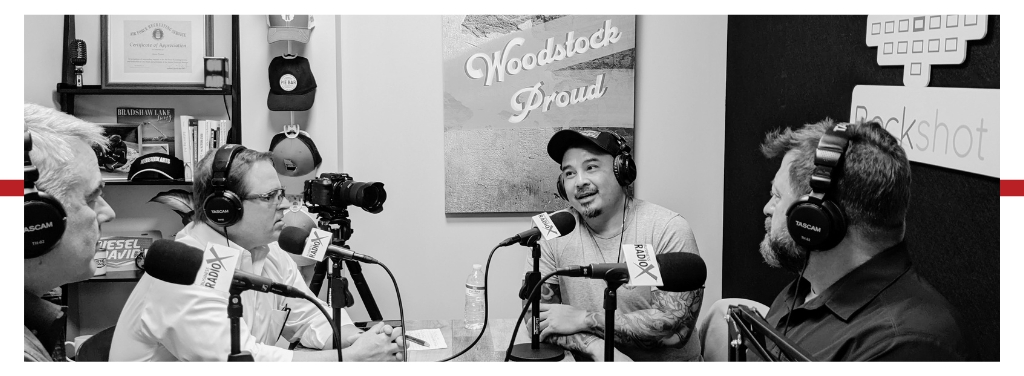
Mike-Sena-banner

In this episode of Fearless Formula, Sharon Cline chats with financial planner Mike Sena. Mike shares his journey into the financial planning industry, including getting fired from two corporate jobs and starting his own financial planning firm.

He stresses the need to have a growth mindset, create personal connections with clients, and stay adaptable in financial planning. Mike also talks about the hurdles he faced in his personal life while building his business and the significance of sales, communication, marketing, and networking in the financial advisory business.

Mike-Sena-headshot-bwFired from his first two corporate jobs, Mike Sena, CEO of Mike Sena Advisors, has been on his own ever since, creating and running several businesses. Along the way, he’s learned a lot about life, happiness and money.

Mike is a father, speaker, author, TEDx organizer and weekend polo player who loves working with good-fit clients to improve their circumstances and outcomes.

Most of his clients have come from other advisors, most own a business, many are seven-figure wealthy, all enjoy a personalized experience and comfort at night.

Connect with Mike on LinkedIn and Facebook.

This transcript is machine transcribed by Sonix

TRANSCRIPT

Intro: [00:00:08] Coming to you live from the Business RadioX studio in Woodstock, Georgia. This is Fearless Formula with Sharon Cline.

Sharon Cline: [00:00:18] And welcome to Fearless Formula Friday here at Cherokee Business RadioX, where we talk about the ups and downs of the business world and offer words of wisdom for business success. I’m your host, Sharon Cline, and today on the show we have a father, a speaker and author, a TEDx organizer, weekend polo player, CEO and owner. That’s one person of Mike Sena Advisors. Welcome certified financial planner Mike Sena to the show. Hello.

Mike Sena: [00:00:46] How are you today?

Sharon Cline: [00:00:47] I’m good. How are you?

Mike Sena: [00:00:48] I’m really good. You know, it was supposed to rain today and it’s absolutely gorgeous out. It’s warm, it’s humid. It’s you know, like I mentioned before, I’m waiting for the pollen to end.

Sharon Cline: [00:00:58] Well, it’ll be nice. I think tomorrow we’re supposed to get some storms or something like it’s going to be in the 50 seconds or whatever. So we’ll have the heat on again, I guess. But thankfully we can spend a little bit of time inside just for a bit to chit chat about kind of your story. I know you’ve been on Business RadioX a couple of different times, but thank you for spending time with me and I’m grateful that you’re willing to even come back on and talk about kind of like what the show is about, the fearless formula aspect of what you do. So I wanted to ask you, you have a book and I thought this was so interesting to start with. Is it okay to start kind of that way? Because I love that it’s called Raise Your Hand if because who who can’t sort of identify with a million different aspects of what it’s like to deal with your money.

Mike Sena: [00:01:40] No kidding. It’s a remarkable. In fact, I want to redo the book to version to the rest of the title is Raise Your Hand if you’ve ever done Something stupid with money And I want to cross out stupid and put human.

Sharon Cline: [00:01:53] Oh, wow. Okay.

Mike Sena: [00:01:55] Because we all do stupid stuff, whether it’s with money or not. We are human beings. We do the best we can. Most of us. We all struggle with life. We certainly all struggle with money. I don’t know anybody that hasn’t had some kind of problem with money, some kind of issue with money along the way. Sometimes it’s the way we’re raised. Sometimes it’s bluntly the way we’re wired. I don’t know how to fix that. But money is just it’s an integral part of life and you can use it to your advantage or your disadvantage when you.

Sharon Cline: [00:02:25] Say it’s how people are wired. Is there a certain type of personality that just does really, really well with money?

Mike Sena: [00:02:31] I wish I could define that. I don’t know. I’ve worked with a number of folks. Kind of an interesting story. 4 or 5, six years ago, a couple got in touch with me, this guy, and of all they were in the process of divorce. Their counselor recommended me, referred me, which is kind of odd. So they were about 58 to 60. He made around $350,000 a year. They owned a Lincoln Continental and some really nice furniture and a $500,000 house that they leased. They had $800,000 of debt. They had 32 years of practice of spending at or more than they earned. Wow. And we worked for a few months to try and. Change the way they looked at money, the way they looked at life. It was very difficult. And ultimately, the wife was she became increasingly resistant and resentful. She missed her retail therapy. I remember we we had an agreement. Birthdays were coming up for their kids. And they were I could tell as soon as I walked in the room, they were like, well, we’re kind of screwed up. Well, tell me, Tell me. Well, we spent more than we should, and we had agreed on $100 or so. They spent $2,000 on present for one kid. And wow, some of this is just hard wired. And I know another couple kind of the same thing. I probably shouldn’t tell this story, but it reminds me I have an older sister who she’s kind of wound a little tight. And years ago she tried to quit smoking cigarets and she was so nervous. After 3 or 4 weeks, her doctor told her, I said, Look, you’ll live longer if you start smoking again.

Sharon Cline: [00:04:21] No way.

Mike Sena: [00:04:22] So some people money feeds them and that’s their life. And I think one of the hardest lessons I’ve learned is there are some things, a number of things I can’t fix and some things in general can’t be fixed. We’re only here for a brief amount of time, make the most of what you have and nobody knows what’s coming around the next corner.

Sharon Cline: [00:04:46] Well, let’s talk about how you got into the industry. You. I’m sorry. I’m laughing because I know that you said you famously say that you’ve been fired from two jobs and and now you are here where you are now. So what will you tell us a little bit about that story and the lessons you learned about being fired from two jobs?

Mike Sena: [00:05:06] Well, I was fired from my first two corporate jobs. And I’ll tell you, the first one, I went out to Spokane, Washington, to help open a cable TV franchise for Cox Cable. Okay. It was my dream job. And there were a number of things going on and I thought I was hot stuff. I tell you, I show these yokels how to run an office. And I realized pretty quickly how little I knew. And I never saw it coming After a year and a half. My boss invited me into the office and he closed the door and he says, Let’s have a drink. I said, okay.

Sharon Cline: [00:05:37] Oh, jeez.

Mike Sena: [00:05:38] And we toasted to here to better days. I’m letting you go.

Sharon Cline: [00:05:43] Oh, my goodness. And I was pretty devastated.

Mike Sena: [00:05:46] I had never been fired before. I’d been working since I was 12, doing a number of things. And it really hurt me for a while. I came back to Atlanta with my tail between my legs and got my second job that I was fired from. And I was. Thank you. I really hate this. Thank you. Let me find something a little better suited for me. And I’ve been pretty much on my own ever since. I have created and run four different businesses. I was in the IT business for a number of years. I had a business partner who was the IT side. I was the business side, and the first 15 years were a ton of fun. The last ten years less so. Oh, and I started thinking about something else that I wanted to do. And one of the key drivers is I did not want employees anymore. It was just. Stress city. There was a lot of stress in my life with a number of married kid. Gotcha. All of this stuff. And I looked at a number of different things and I kind of stumbled on this relatively new field of fee only financial planning and money management, which basically means I don’t sell anything, I don’t sell securities, I don’t sell insurance, I don’t sell annuities. You and I, we have a meeting of the minds. We reach an agreement, we settle on an annual fee. I manage your money and I provide ongoing comprehensive financial planning. And I found it immensely rewarding. It took me a number of years to kind of figure the business out.

Sharon Cline: [00:07:18] How did you do it? Where did you go first?

Mike Sena: [00:07:20] Well, I started on my own and I wanted to work with younger, less affluent people. You know, the millionaire next door. They got bull’s eyes all over them. Every financial adviser, insurance agent, annuity guy or gal, that’s who they’re going after. And I said, Well, I’m going to go after another crowd. And everybody that knew anything about my business told me I would never make any money. And I’m like, you know, here, hold my beer. Well, they were right. There’s no way to serve younger, lesser, fluent people without selling them insurance or annuities. And it just wasn’t my thing. So I stumbled. For a number of years. I went through a pretty long, devastating divorce and finished raising my son. And there was a lot going on with that. And there was a lady I knew in the fee only financial planning community named Bobby Monroe. Lovely woman, smart as a whip. Knew her from Atlanta. She had moved to Florida, north of Tallahassee, a little town, Havana, Florida. And I called her up one day and I said, What do you think about combining our two practices? And we talked about it and we did. And I worked for her for about five years. And I learned a lot. And in the end, we were not a good fit. I left and started my senior advisors. She’s still down in Florida doing her thing. Very grateful to her. There’s another guy here in Woodstock named David Holstrom, who I got to know. Do you know David?

Sharon Cline: [00:08:52] I do. I’ve heard his name before. Anyway.

Mike Sena: [00:08:54] You know, I will tell you everything good I learned about financial planning, money management. David was instrumental in. He’s one of the smartest guys I know, and he’s eminently ethical. Ai just a prince of a guy. And it kind of goes back to what you and I were talking about a little bit earlier, the community here of Cherokee County in Woodstock. David and I are direct competitors, but I would be happy to send him a client. That’s not a good fit for me. And I think the world of him would be happy to help him in any way I can because he helped me in the first six, eight months of trying to figure out what I was doing.

Sharon Cline: [00:09:34] You know, it’s nice when you sort of look back and see that there are people like we talk about this on the show all the time, about surrounding yourself with the right people, having the right support. But even your beginning on this journey with Bobby Wright, to be able to have her have faith in you, to be able to take you on. And I think that’s says a lot about your work ethic as well, someone who’s already in it and they’re willing to kind of take you along. I love that. I mean, it sounds very. Like your almost altruistic. Let me help you. You help me. We all win. There’s plenty for everyone.

Mike Sena: [00:10:08] There is. There is an air of abundance wherever you might be. And you know, so much of life. It comes down to mindset. I’ll digress a little bit. There was a book I read about eight years ago called Mindset, written by a lady named Carol Dweck, and it was a changer for me. It was like flipping a switch. She talked in the book about the difference between a fixed mindset and a growth mindset. And making that transition. And I was kind of halfway in between. But actually reading and understanding how a growth mindset enables you to continue to grow and yet have fun along the way. You learn from your mistakes. You just kind of keep going. It’s like we talked about before, We’re all human, we’re all screw up. We all make mistakes. We all have. Mistakes that we wish we could go back and redo. But that’s just a pleasant fantasy. All we can do is just deal with what we have today and move on.

Sharon Cline: [00:11:07] So there are some people that seem to be more amenable to growth all the time and have sort of this attitude of there are no mistakes, you know, they’re just learning. You know, it’s like, well, now I know how not to do something, you know? And it’s so positive and such a great framing of it as being not something to judge yourself by. But I always feel like I’m like in a bit of a survival mode and like, not really thinking or if I’m growing, it’s because I’m like really forced to grow. And I kind of like the idea of being able to frame it as something that’s like actually a very natural, healthy thing to be doing rather than No, no, no, no, no. I don’t want to go through this.

Mike Sena: [00:11:43] Well, I hear you. And there are times it’s it’s nice to be comfortable. But in the end, comfort is not where life is. And I’ve had like it or not, I’ve always enjoyed figuring things out on my own. I haven’t fit into anybody’s mold. I am not a I can’t deal with the politics of corporate life being in the IT business. I learned an awful lot. But in the end, managing employees just became very stressful and a pain in the rear. And I can’t even fathom today having 15, 20, 30, 50 employees that you’re having to deal with. I went to Greece for Christmas. I had a wonderful time. I had a friend that was over there and we met a friend of his who owns four burger joints and an Italian restaurant. He’s got 400 employees and it’s universal, the same thing. We can’t get people to show up. They want more money. The government wants this. And it was.

Sharon Cline: [00:12:44] The personalities, too.

Mike Sena: [00:12:46] Yes, it was the same thing. And I just love what I’m doing now. And like I said, it took me a number of years to kind of figure out this business. And one of the things that has been most beneficial is understanding who is a good fit for me.

Sharon Cline: [00:13:01] It’s actually one of my questions is and.

Mike Sena: [00:13:02] Who I’m a good fit for.

Sharon Cline: [00:13:05] Well, before we say that, I wanted to ask you, what do you what do you think the aspects of are of your personality that make this so successful for you?

Mike Sena: [00:13:18] I. To me, it’s like putting a jigsaw puzzle together without the top. I love solving problems and I’ve done that my whole life. And. Actually getting to know somebody. Number one, first and foremost, understanding what’s really going on in their life, what’s really driving them. Early on in this business, I would ask a prospect, How are you thinking I could help you? And it was amazing how many times they really didn’t know. And this notion of learning to ask the right questions in the right order and being patient and listening, that’s a whole nother thing. You and I talked a little bit about that when we met a few weeks ago that I wish I had that skill set when my son was younger, but I learned to listen much better and he and I had a meaningful conversation and I just listened for 45 minutes and let him. It changed the nature of our relationship, created.

Sharon Cline: [00:14:19] A safe space for him to to feel and be.

Mike Sena: [00:14:22] And one of the other things I’ve learned, if you’re a really good listener, people will think of you as a terrific conversationalist and you really don’t have to say anything.

Sharon Cline: [00:14:34] Oh, that’s good to know. I don’t have to speak that much on this show then.

Mike Sena: [00:14:38] Well, you’re the leader. No.

Sharon Cline: [00:14:40] Oh, nice. Really. All right. Just for, like 30 minutes or so, once a week. Do I lead anything? Who’s your ideal client?

Mike Sena: [00:14:49] That’s a good question. And I wish I mean, I can define it on paper, who I’d like to work with. But the bottom line is there in my business, it’s highly personalized. It’s very boutique. There is an emotional and an intellectual connection. Generally to start to have the conversation. Typically married, couple of kids. One spouse owns a business. There’s a comfortable six figure income. There’s at least a half $1 million or more of investable assets. That kind of sets the table that we can actually proceed going forward. I do have clients that have much less that are younger. I love working with younger people. It it’s just got to be the right fit. And it only it only it takes a number of conversations to kind of figure out if we’re a good fit or not. I’ve had a couple of folks that I would like to work with, but as we talked more and more, one of the things I do know is I don’t want a co money manager.

Sharon Cline: [00:15:49] Oh, you don’t want to be micromanaged for yourself.

Mike Sena: [00:15:53] And somebody that is open to. Implementation of different strategies that will make a difference in their life. One of the things I focus on that kind of turned some people’s heads, even though I’m a financial planner and I believe very strongly in planning for the future. I try to get my clients to focus on the present and making the most of what they have. If COVID, the lockdowns have taught us anything is nobody knows what’s coming around the corner. And I’ve had some financial planners that we would kind of get into a little tiff over. They would do these incredibly gorgeous 30, 40 page financial plans that are minutely detailed. You know, in 12 years, we’re going to plan a wedding and then every seven and a half years we’re going to buy a car. And I’m like, that’s just a bunch of crap. I typically go out about five years detail plans. The rest is a little more gauzy and we’ll see what happens because.

Sharon Cline: [00:16:51] Life is so unpredictable that way, right?

Mike Sena: [00:16:53] Life is very unpredictable. I never expected to be where I am today 15 years ago. I imagine the same for you and probably 95% of the people listening to us.

Sharon Cline: [00:17:05] That’s kind of interesting aspect of business ownership here, even in Woodstock. The people I’ve had on the show talk about how well I didn’t know, like even we were talking earlier, bananas and beehives and how they didn’t know that they were going to have to wholesale to be successful. And it was just not even on their radar. And now they are. And but that they’re really happy. You know, so there must be an element of flexibility, I suppose, with life in general, but also with you. I was thinking regarding money. People are so emotional and how do you deal with people’s emotions that are so tied?

Mike Sena: [00:17:40] It’s been a learning process because.

Sharon Cline: [00:17:43] You’re a problem solver. You know, you are analytical. The way I think of of how you say you could put a puzzle together.

Mike Sena: [00:17:49] I am. I’m your typical left brain introvert and learning to be more open. And we talked about this this notion of vulnerability. There’s a little of that. But getting people to open up about what’s really going on inside their lives. And it’s hard to peel back these layers. It is like and have them trust.

Sharon Cline: [00:18:08] You, right? Like have them be willing to kind of share that vulnerability, especially when it comes to what they can build their lives on Money.

Mike Sena: [00:18:16] I had a relatively new client. This unfolded over several months and he’s got he fits the bill all the way down the line. Love this guy, love his wife, terrific people. They’ve done very well in life and they have lived their whole life. Kind of the millionaire next door. They have lived on less than they’ve earned. They’ve made smart investments. They’re fine. And he had a pretty large portfolio with Fidelity Investments. They were managing it for him. In the end, what he wanted. If something happened to him. He wanted his wife to have something more than an 800 number to call. So he asked me to review his portfolio and I took a few days and I went through it. And I went back to him and I said, look, it’s not really the way I would do it, but there’s nothing wrong with this. If you do nothing, you’ll be fine. And I think that kind of clinched the deal for him.

Sharon Cline: [00:19:12] And you didn’t make up a problem?

Mike Sena: [00:19:16] Well, there really wasn’t one.

Sharon Cline: [00:19:18] But some people would write, Yeah, here’s how I could help you and be valuable to you.

Mike Sena: [00:19:22] You know the main benefit I bring, I tend to be local and I. Somebody that, you know, that you see. And it’s not an 800 number. There are any number of ways to get financial advice. There’s what’s called robo advisors, where it’s all artificial intelligence, so to speak, and there’s an algorithm that manages it. And it’s it’s pretty inexpensive. It works well for younger people that have limited budgets. My clientele tend to want a little more than that. And I delve pretty deeply into estate and legacy planning. That’s a difficult conversation for most people, really. Just coming up with the term nobody term estate. Nobody likes estate. Some legacy planning or whatever it might be. But having these conversations now while you can makes a world of difference and trying to facilitate these difficult conversations. I spent a lot of time on tax planning. I spent a lot of time on insurance review, even though I don’t sell insurance. If you need it, I’ll get the right policy for you and you’ll damn well know how it works and how much you’re paying for it. A story that I love. One of my early clients, lovely couple, relatively young. They made very good money. They were immigrants from Kenya. And one of the things I loved about them, they got America. It’s just like, wow, okay, let’s go.

Mike Sena: [00:20:48] So their number two, their two objectives, first and foremost, they wanted their kids to go to Harvard or Yale and they wanted to have money for their parents back home. And we started that conversation from that perspective. But as we got a little deeper, it turned out the husband had purchased a rental property, a home in 2006 2008. The economy slides into the abyss. They’re upside down on this home, and it’s what’s called cash flow negative. They’re paying more than they’re getting in a lot of stress in that marriage. And we talked for a couple of years about it, and they made good money. They had enough money to actually get rid of the house, put some money in it, take the loss, move on. But they were reluctant to admit the mistake, and I kind of flipped it on them. And I said, look, here’s they’re really only needed about 30 grand. They were going in the hole about $300 a month. I said, if I could show you an investment, that would guarantee a 12% return. For $35,000. Would you take it? Yeah. Put it into this house, Sell the house and get out of it. And get on with your lives. And in there, I will say their marriage dramatically improved.

Sharon Cline: [00:22:09] How much do you see that of, you know, the financial stress? I mean, isn’t that like number 1 or 2 of reasons for marriages not working?

Mike Sena: [00:22:17] It’s a huge deal. And part of this is the dynamic between the husband and the wife and bluntly trying to figure out, you know, who’s really making the decision. I’m going to tell you almost all the time, it’s the wife, it’s the woman. And it’s amazing. I don’t want to get into gender politics, but women have an enormous amount of power and control. There was one of my early clients that I we’ve been together 12 years or so. And I whenever there’s a husband and wife, I try to have confidential conversations with each one individually, kind of get a feel for each of them. And the husband’s going, I just wish you could get Carolyn on the plan. She won’t stay on the plan. And she’s like, I wish you could get him to just lighten up and enjoy life a little. So there were an interesting couple. I’ve done a number of really good things for them over the years. They’re doing quite well. They were spending too much money. They were used to making a lot of money, but they were spending too much of their retirement. And in some circles this is almost a four letter word. We ended up doing a reverse mortgage on their home to free up some cash free money. They don’t have any kids. They had roughly 800 grand of equity in a home that they couldn’t tap. They were taking too much money out of the retirement account. They were getting creamed on taxes. So that kind of flipped their world a little bit. And they I hate this term, too, but they sleep much better at night.

Sharon Cline: [00:23:47] Those are good. Sort of. What are they? Euphemisms phrases. You get the energy behind them, but it makes sense.

Mike Sena: [00:23:54] It really that’s all that it comes down to, is sleeping well at night, feeling comfortable. And I try to get people to feel comfortable about an unknown future. And once again, going back, make the most of what you have and live in the present, because that’s really all that counts.

Sharon Cline: [00:24:11] Well, if you’re just joining us, we are speaking with Mike Zina of Mike Zina Advisors. What do you think is the biggest misconception of your industry or or maybe even what do you think people are so reluctant to do? Like, what are their reluctant reluctance is that they won’t come see someone like you?

Mike Sena: [00:24:28] There’s a number. But I’m going to say, first and foremost, I don’t know anybody that hasn’t been. Screwed by a financial adviser and typically insurance agents or stockbrokers. And I know a lot of fine insurance agents. I know a lot of fine stockbrokers, but they make their money on selling a product or a transaction. And one of the things I tried to explain to people is Wall Street, so to speak, is no different from Johnson and Johnson, General Motors or DuPont. It manufactures financial products to sell, and there’s a home for pretty much everything they manufacture, generally not your home. And that’s where people tend to get into trouble. And the insurance industry, the annuity business, it’s almost designed for planned obsolescence so that ten, 12 years down the road, as your life changes and this particular product really doesn’t fit you as well, it’s oh, my word, we’ve got a wonderful new product. Let us roll you into it. And I get really bent. Over, particularly insurance agents if they will swear up and down. I don’t collect a fee. It’s a commission. Well, the client doesn’t pay me. The company pays me well, the client’s paying the company, and I’ve gotten into it from time to time. There was. I was at a networking meeting some years ago. There’s a guy that sells a product called Indexed Universal Life Insurance. It’s not a bad product. It fits some people very well. I don’t even know.

Sharon Cline: [00:25:55] What that all that means. I’m trying to, like, understand all those words put together.

Mike Sena: [00:26:00] That’s another thing. There’s a lot of jargon and a lot of people try to speak above and going back to women there. I hear this over and over again. The women is dissed in the conversation. The wife is left out most of the time, and I find that disheartening. Well, disheartening is a nice way to put it, but it’s wrong headed. And it’s anyway, that’s a whole nother conversation. But this guy got up and pointed to me across the table. This man is going to charge you a fee.

Sharon Cline: [00:26:32] You’re the bad guy. Anyway.

Mike Sena: [00:26:36] One of my common refrains there is no free lunch.

Sharon Cline: [00:26:39] Yeah, I mean, the goal is for everyone to win. Yeah, I.

Mike Sena: [00:26:42] Have no problem with a lot of this. But so much in the insurance and annuity industry, the fees are hidden. It’s very opaque. It’s osmosis. Getting money out of your pocket into their pocket, and nobody it’s like.

Sharon Cline: [00:26:55] You don’t even see it frictionless. Yeah.

Mike Sena: [00:26:57] Wow. The other thing is that you have to have a lot of money to work with an advisor. And look, it helps, but that’s not always the case. I’m always willing and. Eager to have a conversation with someone They may or may not be a good fit, but I’m always happy to answer questions and sometimes it’s a good fit. Younger, less affluent people. Sometimes it’s not. I think those two things that if you don’t have money, you really can’t. And that’s a myth. Everybody has everybody has gotten bad advice or sold a product that they wish they hadn’t.

Sharon Cline: [00:27:33] Do you feel like now you are approached more by younger people? It’s more you’re more likely to over the years that you’ve been in this industry, like what changes have you seen as you’ve gotten into it?

Mike Sena: [00:27:47] A lot of changes. It’s. We went through 2008. Yes, the economy slid into the abyss. A lot of people got hurt pretty bad. A lot of people got disillusioned. One of the things that I deal with with younger people is this. Enormous burden of college debt. So many times, me and so many of my colleagues, we wish we had a time machine. We could just go back ten years and let’s not do it this way. I don’t have a really good answer for that, but I can tell you, if you can’t get a job taking on more debt to get a master’s degree is not your answer. There are any number of ways to earn a living, and you’ve got to be flexible. There’s a guy that I have listened to over the years. You may have heard of him, Dave Ramsey. He’s made a fortune. And he most of his advice is pretty spot on. I don’t agree with everything, but one of the things that I learned from him is your present situation isn’t forever. Like if you’re trying to get out of debt, you know, buy a piece of crap car, drive it for a year and a year down the road, you move up and in three years you’ll be able to buy a new car. Your present situation isn’t the rest of your life. And so many times kind of the focus of your show, the fear. Yes, being resilient. You’re in a bad spot and you see nothing positive going, but you have to get those legs moving. You’ve got to formulate a plan and you’ve got to implement it one step at a time.

Sharon Cline: [00:29:23] I had spoken to a different financial advisor at one point about young people and how I don’t really feel that there’s a disservice that’s done to people who graduate school and graduate college, and they really don’t have a really good grasp on how to manage money from the very beginning. What do you think of that?

Mike Sena: [00:29:46] There’s been a lot of talk about bringing financial literacy into the public school system, a great.

Sharon Cline: [00:29:52] Way to say it, Financial literacy. Yeah.

Mike Sena: [00:29:54] And part of my thing is careful what you wish for. There’s a number of things that have been introduced to the education system that has not worked out well. Ultimately, this comes from the home and I think some of it I touched on before is hardwired and I hope my son isn’t listening. But I will never forget this. He was four years old. He had some birthday money. We went to Walmart to buy something specific for him and Walmart was out of it. They didn’t have it, but that money burned a hole in his pocket. He had to spend it. He had to spend it. And to a degree, he’s that way now. So it’s not so much financial literacy, but it goes back to mindset. And people that generally have money. You can divide people into a lot of different categories. I tend to divide them. People that think about spending money, people that think about making money. And if you think about spending money, you will never have any wealth. If you think about making money, you will eventually generate wealth over time.

Sharon Cline: [00:30:59] And you don’t know when you’re meeting someone which mindset they have about you can.

Mike Sena: [00:31:04] Figure it out pretty quick and sometimes you can change it, sometimes you can’t. You know, one of the things Dave Ramsey talks about that I love you know, you’re kind of you’re sitting in a bucket of poop, you know, and it’s you know, it’s awful. It’s your poop, but it’s comfortable. You’re familiar with it. You have got to be in more pain than the pain it takes to change. You’ve got to be fed up. And I don’t care what addiction you have, you’ve got to reach a point that what was a Howard Beale from the movie Network? I’m mad as hell. I’m not going to take it anymore. You’ve got to get mad as hell and change and find the courage to change and take it a step at a time and see something in the near horizon that is better than what you have now. And stay focused on that.

Sharon Cline: [00:31:52] Because there’s always the instant gratification, right, that just this minute, you know.

Mike Sena: [00:31:57] Some people can’t get over that. It’s a crack habit. It’s it’s alcohol, it’s gambling, it’s porn, it’s any number of things. And it kind of goes back to what we’re talking about before. You’ve got to find a way to change your environment, sometimes change your friends, sometimes change your room, change. You’ve got to focus on what I call cognitive therapy and introduce a new thought to replace the bad thought that takes work. And I’ve been very fortunate in my life. I’ve had a number of terrific mentors. Everybody needs help. Everybody needs a mentor. And typically the mentors I’ve had, we’ve helped each other over the years and you just got to want something more different than what you have. It sounds simple, but it’s really hard for a lot of folks.

Sharon Cline: [00:32:45] How did the pandemic affect your business? Did it did it affect your business?

Mike Sena: [00:32:51] Well, it did. I pretty lucky with that and that I worked from my home. Most of my clients were fine. One of the things I will tell you is periods of great stress are wonderful drivers for financial advisors to get new business because people are freaked out. People whenever you move somebody from a position of comfort to discomfort, they’re going to be looking for something, a.

Sharon Cline: [00:33:17] Safety net.

Mike Sena: [00:33:18] Something that will make them comfortable again. And for the most part, the pandemic helped my business pretty enormously. What we’re going through now, a lot of people kind of freaked out what’s going on. To me, we’re living in the Twilight Zone. I can’t make heads or tails of half of what’s going on in our country. But what I try to get people again to focus on is, number one, control you and yours. Stay focused on your situation. Once you kind of got that under hand, then branch out locally, get involved locally. If you want to get involved, get involved locally first, help non profits or, you know, become a party chairperson or whatever, whatever your flavor is. But start out kind of like pebbles on a pond before you try to become benevolent dictator for a day. Take care of your own home.

Sharon Cline: [00:34:09] I love that you talk about starting locally because that’s what we were talking about before the show. How and you touched on a bit how great Woodstock is, because everyone really does have everyone that I have interacted with. I’ve not had one moment where I haven’t felt like they were really interested in what I do and how they can help me. And I feel the same. And it’s just been really encouraging because I don’t feel like I’m alone, you know, even even though I am alone in my business, it still feels like I have resources and people. And when I go down into downtown Woodstock, often see someone I know. And so I feel like I have a little family and support, which it’s it’s and it comes from a true place. It’s not just lip service. And I really I appreciate that about our town. And like you said, knowing that you have two people competing in the same industry, but you really do want to see each other succeed. There’s like the energy behind that is for good for everyone. You know, it is.

Mike Sena: [00:35:04] This is a wonderful community, Cherokee County, city of Woodstock. There is a vibe and an energy that flows. I wish I could tap into it more, but I’ve really enjoyed getting to know a number of business people. I know the previous mayor, Donnie and Ricky. I knew the current mayor, Michael Caldwell. I think the world of Michael Caldwell. In fact, I doubt I’ll embarrass him. But one of my favorite stories, his father, Mark Caldwell, did a presentation at the Circuit, which is a co-working space and community center in downtown Woodstock. And Mark Caldwell was talking about how to raise money for a business. And he went through the whole thing. Friends and family, 401 K venture capital, Angel investors, all of that stuff. And he was talking about his sons, Michael and I don’t know the other one, but he would make them stand in front of the mirror, I think like once a week, raise their hand, repeat your name. I am responsible for the decisions I make and the consequences they’re from.

Sharon Cline: [00:36:12] Oh, dang.

Mike Sena: [00:36:13] And I got to tell you, that is right up my alley. I love that. And you got to hand it to Michael. He is. He’s a wonderful man and he’s very accomplished. He’s got a lot going for he and his family. And I enjoyed getting to know his dad, who has done quite well over the years, terrific family, terrific people. And there’s just a lot of that in Cherokee County.

Sharon Cline: [00:36:40] Yeah, I like to blame other people for my problems.

Speaker3: [00:36:44] That’s you can do it, but.

Sharon Cline: [00:36:47] It’s not very empowering.

Mike Sena: [00:36:48] It’s not going to get you anywhere.

Sharon Cline: [00:36:50] I feel better for the moment, the instant gratification. So what was it about? Did you have any times when you were kind of getting into this industry that you did have those sort of natural feelings of, I don’t know what I’m doing or, you know, I think about people who are listening, who have their dreams and maybe want to become a financial advisor, but have sort of those feelings that maybe they don’t know enough or they’re not, you know, there are too many people in the industry. I’m never going to be able to compete well. How did you manage your emotion around that?

Mike Sena: [00:37:19] There were really two things, but I I’ve just learned to keep going. Part of it was going through the divorce and trying to raise my son. There was a lot of. Stuff going on. And you and I might have touched on that when we met a little bit, but I felt I’ve never really felt a failure in business, but I felt a failure as a husband, a failure as a father. And that was the toughest thing to get over. But I had no choice. I had to make some money. I had to figure it out. I twice thought about going back to the IT business, which would have been very easy, but I didn’t want to do that. I hate going backwards. I’d rather go forward and anybody thinking about getting into the financial advisory business and I would say any business. But what I didn’t really understand getting into it is how much of it is people related, sales related, communication related. It doesn’t make any difference how smart I am or how well I manage money. In the end, if I’m not able to connect with people in a way that makes them feel comfortable and draws them to me, I’m not going to be successful. And that was my biggest obstacle, was figuring out how to connect with people in that kind of level.

Sharon Cline: [00:38:39] Was it just it was trial and error then for you? Because really, we talk about this on the show all the time, how the business is people you’re dealing with people. And that’s part of why I like the show, because when we have people on the show, they don’t talk about just being part of diesel. David You know, what’s diesel? David Well, when you get to know who these people are, it’s really nice to be able to identify someone’s motivation and personality and kind of have an energy as opposed to just a logo or a name.

Mike Sena: [00:39:07] Well, the businesses I had before, bluntly, we did very good work. We had a wonderful reputation. We really didn’t have to sell. And generally we turned as much business down as we got. And I got into a business and I was naively thinking, you know, if you build it, they will come. Well, they weren’t coming. Like, where are they? Don’t they know me?

Speaker3: [00:39:29] Don’t they don’t they know how great I am? It’s like.

Mike Sena: [00:39:35] So I certainly misjudged that and a lot of it was mindset work and learning how to communicate. Really learning how to listen made a big difference. And some people are more gifted on what I call the sales side, and I know a number of advisors, you know, they offload a lot of their work, but they are wonderful rainmakers connectors. They know how to bring the business in and that’s something I’ve never really been good at, but I’ve learned and so far I’m getting better. You know, I just want to get better each month.

Sharon Cline: [00:40:14] It’s nice you even have like monthly goals as opposed to like, what’s your five year plan? You know, you’re like, I just want to have a good month.

Mike Sena: [00:40:23] Well, I got plan A, B, C and D, so I try to get people to be flexible with their with their plans. But yeah, I just a little better today than I was yesterday. And again, I I’m involved in a couple of peer to peer mastermind groups which are enormously helpful. I recommend any business owner to get involved in some kind of group where it’s very safe to talk about what’s going on in your business. And others. Will we all have the kind of the same problems, a little different depending upon the nature of your business. But it all comes down to particularly these days, people you know, when I first kind of got into the business, it was more transactional, But it’s become very much about people and very much it’s highly personalized. And I’ve kind of built this into this personalized boutique practice and. I’m not for everybody. Everybody is not for me. Like I said, you can there’s a number of different ways that you can go about having financial help from different sources. I don’t recommend you Google it.

Speaker3: [00:41:35] But some people do.

Mike Sena: [00:41:37] Some people do. You know Dave Ramsey, Susie Orman, Clark Howard, there’s any number of people. They’re really, really good with generic advice. Where I make a difference is mine is very specific and very personal.

Sharon Cline: [00:41:52] Do you find that your clients are sort of your friends too, for over time? Yeah, yeah.

Mike Sena: [00:41:56] Yeah. It’s.

Sharon Cline: [00:41:59] It’s like you’re doing life together in some aspects. Yeah. Interesting.

Mike Sena: [00:42:04] It is. It’s. I have a guy that helps me in the back office with invoicing and onboarding new clients and stuff, and we talk periodically and remarked yesterday, he goes. You know an awful lot about these people.

Speaker3: [00:42:20] It’s like.

Mike Sena: [00:42:20] Well, I want you to know, too, in case I get hit by a bus.

Speaker3: [00:42:26] The to be able to offload.

Mike Sena: [00:42:29] To the correct people to be sure there’s no interruption and they’re in their situation.

Sharon Cline: [00:42:36] I have one final question for you. What do you do regarding marketing? Do you find that you need to.

Speaker3: [00:42:42] Oh, yes.

Sharon Cline: [00:42:43] Oh, okay. A lot. Some people don’t. They just put one ad on Facebook Marketplace or Facebook, whatever it is, Cherokee Connect. And that’s plenty to get the ball rolling for them. But I was wondering, what do you do? Like what how do you stand out amongst your your competitors, I suppose?

Mike Sena: [00:42:57] Well, I will say I have spent an enormous amount of money and gotten very little results depending upon different things that I’ve tried. Linkedin’s been a pretty good avenue for me. I do a video every month and I had a gentleman before COVID that produced videos for me. They were wonderful. We would go to a venue and we would shoot 8 or 10 videos and then he would produce them. We’d roll them out one a week. And right once COVID came, that all went away. And I, you know, talk about fear and overcoming fears. I finally got over my fear of the iPhone. I just started doing iPhone videos.

Speaker3: [00:43:34] Yourself myself. Well, how about that?

Mike Sena: [00:43:37] And I will tell you, at first it was fine. And then, you know, over time, I needed to learn how to edit the videos a little bit. And then I needed, well, I need to add subtitles. So what became, you know, five, ten minute kind of fun process became a 45 minute pain in the rear. And I’ve got a new woman that is helping me with videos. So far, I’m very pleased with what she’s doing and we’re rolling them out. You know, every Monday around noon time, I put a new video up and I try to post some other stuff during the week and I network a lot. I’m involved in these peer to peer kind of groups. I you never know where a conversation will lead. And I got several clients from a single conversation and a mastermind group at the National Speakers Association of Georgia. Like four years ago, just one conversation led to about four clients that came in and it was you never know.

Sharon Cline: [00:44:38] Well, I’m going to take away from this conversation with you that it’s important to not. Think that comfortable is safety. It’s not feels like safety, but it’s not really safety. And to be flexible and be willing to grow because those are things that I resist unless I’m forced to. But but I really appreciate, like you said, the framing of it as being something, well, that’s not where life really is and I’ve never really heard it phrased that way. So it kind of hit me in a good way today, so. Well, cool. Well, I do think, too, when you’re having those moments of difficulty and you’re heightened, you’re trying to survive, like in those survival modes, you do kind of whittle down what’s really most important to you because you can’t handle everything. And so sometimes I do a tremendous amount of growth in my darkest times. So I like I like the notion of that because I always want to be comfortable and safe. But maybe that’s not always the best thing for my spirit.

Mike Sena: [00:45:35] Well, I’ll leave you. Great. Adversity leads to great innovation.

Sharon Cline: [00:45:39] Oh, I could have said that in two seconds. The whole thing I was just saying just now could have been, like, nicely wound up in that. I like that ism much better than what I just said. Well, Mike, Zina, thank you. I really appreciate you coming on the show and sharing your story. It’s been really fun for me.

Mike Sena: [00:45:56] Sharon Me too. Thanks a bunch. Look forward to doing it again.

Speaker3: [00:45:59] Okay.

Sharon Cline: [00:46:00] We’ll check in again. And thank you all for listening to Fearless Formula on Business RadioX. And again, this is Sharon Cline reminding you, with knowledge and understanding, we can all have our own fearless formula. Have a great day.


Tagged With: financial planning, Mike Sena Advisors

Keith Ivey with Journey Inward Journey Outward, Ron Green with The Video Plug and Ben Hanks with Mortgage Right

April 10, 2023 by angishields

CharitableGA040723feature
Charitable Georgia
Keith Ivey with Journey Inward Journey Outward, Ron Green with The Video Plug and Ben Hanks with Mortgage Right
Loading
00:00 /
RSS Feed
Share
Link
Embed

Download file

CharitableGA040723banner

On this episode of Charitable Georgia, Brian Pruett talks with three awesome guests about how to achieve success and happiness. Ben Hanks, a mortgage specialist and networking guru, shares his passion for helping veterans with VA loans and building strong relationships in the community. Keith Ivey, a hypnotist, talks about the importance of self-awareness and self-discovery in finding fulfillment. And Ron Green, owner of The Video Plug, shares his tips on how to create a killer digital presence with videos. They all have some amazing stories and advice to share, so tune in and get inspired to focus on the positive and help others!

Keith-Ivey-bwKeith Ivey  is the founder of a nationwide hypnosis practice, Journey Inward Journey Outward Hypnosis & Coaching. He has been a student of hypnosis and coaching for more than 25 years and is in his fourth year of clinical hypnosis practice.

He is certified as a hypnotist and coach by the National Guild of Hypnotists and the International Certification Board of Coaches and Hypnotists.

His work focuses on helping people breakup with toxic behaviors like negative thinking, smoking, alcohol, drug, food or gambling abuse. Keith is a graduate of the University of Georgia and lives in Kennesaw, GA.

Connect with Keith on LinkedIn

Ron-Green-bwRon Green was born right outside of Chicago and has been a resident of the greater Atlanta area for 23 years. As a father of 6, he knew he had a gift to impact youth!

Mr. Green is the Program Developer for Four Corners Group Youth Development. He is also the owner of The Video Plug, a video production company in Woodstock, GA.

Mr. Green specializes in equipping youth to withstand negative influences and push through hardships to make a successful transition to adulthood. He helps young people to uncover gifts buried within, so they become leaders in their homes, schools, and communities.

His training in addiction counseling allows him to show empathy, connect well with others, and “ walk in other people’s shoes”. In his spare time, Ron enjoys traveling, reading, and most of all, building relationships with people of all walks of life.

Connect with Ron on LinkedIn.

Ben-Hanks-bwBen Hanks is someone with a very diverse life experience. He was born on a potato farm in Idaho, but raised in the Seattle, WA area.

After moving and living in a large number of states out west he spent two years living abroad in the Philippines as a missionary. After returning home he attended Brigham Young University.

While pursuing his BA in Near Eastern Studies he had the privilege of studying abroad in Cairo, Egypt. Eventually, he landed in the great state of Georgia and currently resides in the town of Cartersville with his partner in crime, Sabrena, and his two daughters, Ariana and Arabella.

Professionally, Ben is a mortgage loan originator. Not professionally, he loves cooking, woodworking, and kayaking.

Connect with Ben on LinkedIn.

This transcript is machine transcribed by Sonix

TRANSCRIPT

Intro: [00:00:07] Broadcasting live from the Business RadioX Studios in Atlanta. It’s time for Charitable Georgia. Brought to you by B’s Charitable Pursuits and Resources. We put the fun in fund raising. For more information, go to B’s Charitable Pursuits. Dot com. That’s B’s Charitable Pursuits dot com. Now here’s your host, Brian Pruitt.

Brian Pruett: [00:00:45] Good, fabulous Friday morning. It’s another fabulous Friday and it’s also a good Friday. Lots of things, good things happening this weekend. It’s Easter. It’s the Masters and Stone’s leaving for vacation.

Stone Payton: [00:00:55] Yes, I am.

Brian Pruett: [00:00:57] So if you haven’t heard Charitable Georgia before, this is all about positive things happening in the community. So we welcome you listening in. I’ve got three more fabulous guests today that are all doing something positive in the community and they’re all doing something different within the community. So we’re going to talk, first of all, with Mister Ben Hanks, Hometown Hanks for Mortgage. Right. Welcome in.

Ben Hanks: [00:01:18] Hey, thanks, Brian. Glad to be here.

Brian Pruett: [00:01:19] So Ben and I have known each other for years. We’ve been networking for years, and we’ve started some networking groups together. And Ben’s passion is networking and helping business owners with their business and connecting others with others. So which today society I think, is incredible because just, you know, there’s a lot of people out there who are still just about me, me, me, me and you care about everybody in their business. And so, first of all, I’d like for you to share a little bit about your background and then we’ll talk a little bit about what you’re doing and why you’re doing it.

Ben Hanks: [00:01:50] Sure. Well, I am from all over. I grew up in Seattle, but lived all over the place out West. A couple of places overseas ended up in Georgia, I guess, about 18 years ago. And I actually came here to do mortgages. And then, of course, everything went crazy in 2008. So I got out, got back in about four years ago and been over in Cartersville over there in Bartow County ever since. And yeah, so I generally run my business through relationship development, community and networking. And that’s kind of how you and I met. Brian Yeah.

Brian Pruett: [00:02:22] So share a little bit about mortgage, right?

Ben Hanks: [00:02:25] So mortgage, right. We are all over the country based in Alabama. The office I work out of is here in Woodstock, Georgia, right there on Main Street. And yeah, I’ve been there for I guess it’ll be four years coming up here on April 15th. It’s a great company, a great group of loan officers and processors. And we we just we try to do mortgages, right, as we say.

Brian Pruett: [00:02:49] So you said when we started this, you have a passion for certain. Well, not everybody you try to help, but you also have a passion for helping veterans with this. Talk about.

Ben Hanks: [00:02:59] That. Yeah. So one of the things we focus on at mortgage, right, is doing VA loans, helping veterans to to get into homes. It’s just kind of a passion, one of our specialties. And yeah, it’s just it’s very rewarding, too, especially for first time homebuyers, first time veterans who are buying a home to kind of help walk them through that process and achieve that dream of home ownership and see the benefits that their family accrues by being a homeowner. It’s just pretty amazing.

Brian Pruett: [00:03:27] So before we get into the other thing, I just have to ask you about your time overseas because you’ve shared a story with me a little bit, and I think it’s pretty cool of what you did. Can you mind sharing that story?

Ben Hanks: [00:03:36] Sure. So I spent almost two years over in Philippines. So there’s a there’s two islands, Leyte and Samar, just south of where the Manila, the capital is there. And anyways, I lived over there for almost two years, had to speak a couple of foreign languages, a couple of dialects, Waray-waray and Cebuano. So yeah, that’s where I spent most of my time. But I’ve also studied abroad over in Cairo, Egypt and enjoyed that as well.

Brian Pruett: [00:04:03] But you worked with with the diamonds, wasn’t it?

Ben Hanks: [00:04:06] No, no, no. That was when I was in the Caribbean. So I have a thing for islands, apparently. So, yeah. I worked down in on the island of Saint John in the Caribbean in the luxury jewelry business down there for a company called Little Switzerland. And so, yeah, Saint John is the Beverly Hills of the Caribbean. It’s two thirds of the Islands National Park. It was an amazing experience.

Brian Pruett: [00:04:26] So Ben is also one that likes to be educated and keep educating. And he reads a lot. He knows a lot of history about different things. And as a matter of fact, before we got on the air, he was sharing with Keith and I about something we didn’t know about Spain. So that was pretty cool. But you we talked earlier about your passion for networking, and you and I have started a couple of groups over in the Cartersville area. We did the North Georgia Power Connector, several years ago. You and I, with some other folks started the Cartersville Business Club, share y networking. And why you’re passionate about helping with people with their businesses is so important to you.

Ben Hanks: [00:04:57] So, you know, when I got into sales years ago, I. I hated it. I mean, it was just absolutely just the worst thing. I just hated this feeling of manipulating people. And so I was exposed to some materials that talked about relationship development, building communities and focusing on that. In other words, learning how to help other people first. The idea of helping without hustling and sort of that just kind of kept growing. And then you and I met and we’ve been just trying to create communities of people that really want to help each other be successful. And what’s bizarre when you put the needs of other people first, somehow that comes back to you. It doesn’t always come back to you sort of in like a quid pro quo direct way. But, you know, when your other focused and you’re helping other people grow and develop and be successful. Whatever that is, that that does come back and your your business will thrive as a result. So that’s that’s kind of my focus.

Brian Pruett: [00:05:49] So some people think Ben and I are maybe I was stalking Ben at first, but I met him when I was working for a digital marketing agency. He was working for Owen Security. We started networking together at the chamber and the bar in Bartow County, and I became known as leader of the Network Posse, and it was me and Ben and Alex Lampi that we even drove over to Alabama for a networking group one night. But then Ben left on security and I took his spot. So and then I’ve just been following him ever since. Although I don’t do mortgages, I’m not good with numbers that way, but stuff like that. But I just think it’s great that, you know, you take the time to sit down and you, like. Our friend Bob Brooks, preaches the collaboration over competition. And I think it’s it’s important because in our group there in Cartersville, there’s at least 4 or 5 other mortgage people in that room. And it’s it’s pretty cool to see the interaction because, I mean, you could have easily, you know, hey, I don’t want these other folks here and stuff like that, but I just think it’s great. So talk why that’s important the collaboration over competition.

Ben Hanks: [00:06:50] So I don’t really think there’s there’s a lot of competition out there when it comes to kind of what we do. So very few people really believe and truly want to put others first. And so, you know, I think we’re most all of us are familiar with the Pareto principle, right? That 20% of what you do, that 80% of what you do comes from 20%. Right? So I want to get in that room that that top 20%. And so knowing that, knowing that, you know, if you get the best people in that room that you’re you’re going to be different, you’re going to stand out. And so I don’t really see them as competition. We work really well together. We’ve done business together. And yeah, it’s I don’t know, it all works out.

Brian Pruett: [00:07:37] So like I said, Ben reads a lot. He does a lot of quotes, he watches a lot of stuff on YouTube, on leadership and and things of that nature. Share a little bit about the Castle Business Club, if you don’t mind when we meet and the purpose and all that.

Ben Hanks: [00:07:49] Sure. So we meet every Wednesday morning. Open networking starts at 8:00. The actual meeting starts at 830 and goes to 930. We meet at Unity Grounds, which is a coffee shop. It’s a unity worship, a church there in Cartersville, and it’s an hour long meeting. People get a chance to stand up, you know, tell the group about their business, a little bit about them and what an ideal referral is. We usually give the members on a rotating basis a chance to stand up and talk for ten minutes about their business. And then we also make space for people to report back and say, Hey, I sent a referral to this person. I’ve got closed business here. And, you know, just we really, really actively work to once we hear that someone’s looking for this person or that person or needs a referral here, we try and help them to that week to to get that referral, get that introduction, make that connection. So that’s that’s what we do weekly. But we also have a monthly lunch, a networking lunch that’s focused. And of course you, Brian, run that that lunch and you’ve got a great lineup of speakers this year. So there’s people who can’t make it in the morning, but they can make a once a month networking lunch and and we also have a social that happens once a month as well and just a chance for the members to connect and get to know their get to know each other in a casual environment.

Brian Pruett: [00:09:07] You talk about membership. What does it take to be a member?

Ben Hanks: [00:09:09] So anybody can always come to the group, but if you want to actually officially join, get your your business, your contact information on the directory. We do have a website called Cartersville Business Club. Dot com or W-w-w dot Cartersville Business club.com. And that’s where you can go to to find the current members of the club.

Brian Pruett: [00:09:29] So I’ve been networking in metro Atlanta for about 29 years and Stone, I’ve been sharing all along this process of the power of networking and and learning. Like I said, everybody that I’ve had on the show so far, in one way or another, I’ve learned their stories and that’s how they’ve been on here. But you and Keith were talking before we got on the air about building a community. It’s not just a networking group. It’s a community. And I’ve been a part of a lot of networking groups, like I said, and this one by far is so different than any others that I’ve really been a part of. There’s no cliques, there’s no I’m better than you type of thing. And I just think it’s an awesome that not just you, but the leadership team of the Cartersville Business Club has been able to get that established. But. You your vision and you know, us together talking about this and getting it back out in there. Once COVID was kind of, you know, getting out or whatever you want to say, getting people back out and doing this. So I commend you for that because I think it’s awesome that that people can come and be a part of that. And a lot of the people that come to that aren’t from the Cartersville area, which I think is cool as well. Yeah, that’s true. So all right. So if people want to get a hold of you for a couple of things, either about talking about mortgages or the Castle Business Club, how can they do that?

Ben Hanks: [00:10:38] Well, my direct number is (404) 955-1253. And my email is banks like Tom Hanks. B Hanks at mortgage RIGHT.COM. That’s right. R-i-g-h-t dot com.

Brian Pruett: [00:10:52] Are you related to Tom?

Ben Hanks: [00:10:55] Distantly. He’s related to Abraham Lincoln’s mother. And so I think our line split before that.

Brian Pruett: [00:11:00] But yeah, there you go. Just learn something new every day. Stone All right, Ben, thanks for for sharing a little bit of your story. We got two other guests here. That’s from great, great story. Do you mind sticking around and listening to these to these guests?

Ben Hanks: [00:11:12] Love to. Yeah. Thanks for having me on.

Brian Pruett: [00:11:14] Awesome. So we’re now we’re moving over to Mr. Keith Ivey from Journey Inward Outward. Keith, thanks for being here this morning.

Keith Ivey: [00:11:19] I don’t know if I can follow a guy who has traced his lineage back to Tom Hanks. I don’t.

Brian Pruett: [00:11:26] Know. You’ve got a pretty incredible cool deal. Well, you got a pretty cool background. I mean, learning things that you’ve done, you’re no stranger to networking either, but you’ve done everything from being in the ministry to being on the radio to being on cruise ships production in LA. I mean, you name it, you’ve probably done it.

Keith Ivey: [00:11:44] My son says that I’ve obviously I have a very, very short attention span.

Brian Pruett: [00:11:50] Yeah. Well, you can also hear he’s also got a radio voice. He was also in radio. So I have a face for radio. You do? Yes. All of us in here are dressed for radio today. That’s great. You’re probably the most dressed up, but thanks for doing that. Now, Keith, if you don’t mind, we’ll get into what you do and why you’re passionate about it. But share. I shared a little bit, but share a little bit about your background, if you don’t mind.

Keith Ivey: [00:12:12] Well, I was born up in North Carolina, but I moved here when I was in the sixth grade to be near my parents and grew up here, went to elementary school, went to high school, went to University of Georgia. After graduation, I went up to Louisville, Kentucky, to go to seminary at Southern Baptist Seminary and came back to Atlanta, went to work at Georgia Tech, stayed there for like 12 years, and then escaped from Georgia, went out to California to work in a production company, a theatrical production company out there, and ended up buying that company and running that company and watching that company go bankrupt after COVID or after 911. And then I ran away and joined cruise ships. I went, I wanted to be in the circus and I couldn’t do anything like trapeze work. So I joined the cruise ship industry, which is as close to a circus as you will ever find other than Ringling Brothers and spent two years on cruise ships out in the Caribbean and and Alaska, two of the hardest, most interesting, pleasurable years of my life. It was the a very odd combination of experiences, came off ships came back to Atlanta. I seem to always gravitate to, you know, when when there’s going to be a major change, You come back to Atlanta to make the change and got into a number of businesses looking for things to do to generate income. And one day, all of a sudden hypnosis found me and I was not out looking for a career in clinical hypnosis. But evidently clinical hypnosis was looking for me and it found me.

Brian Pruett: [00:14:01] So yeah, share a little bit about Journey in that word. What do you do with that?

Keith Ivey: [00:14:05] Well, clinical hypnosis is and we talk about clinical hypnosis as opposed to entertainment hypnosis. I’m not the guy who stands on a stage and invites 20 people to come on stage and I hypnotize 20 people and then get them to do silly things for the benefit of the audience. And for me, I focus on working with people who come to me and they say, you know, I’m a very successful person. I’ve got a lot going on that’s really good. But there’s this one little area of life that I just can’t seem to get control of, and I need help getting control of this one area. For some people, they’ve tried to stop smoking and they can’t. They’ve they’ve done it over and over. They’ve stopped 100 times, but they can’t sustain. So they come to me for help. Some people come to me because, you know, not long ago I had a guy come to me who was an executive at a corporation. He owns the business and he speaks to large numbers of people all over the world. But when he stands up to speak to his board of directors. He gets sick in his stomach, he has to go to the bathroom and throw up before he speaks to his board. He came to me to help him get over that issue because he didn’t he was embarrassed personally that he did not have the control over that experience. So basically, I guess when you get right down to it, I’m in the business of helping people get control of the parts of their lives that, for some reason seems out of control to them.

Brian Pruett: [00:15:36] Can you I mean, you just shared that and what the difference is. But there’s still a lot of stigmatism, I think, or a lot of people who, like you just talked about knowing about the hipness. They don’t think about the clinical aspect of it. What does it take, first of all, to be a clinical hypnotist? And then are you just for companies or do you do individuals as well?

Keith Ivey: [00:15:58] I work with individuals and companies. I have some clients who are business owners and I work with them, but I also work with they refer me to their or they refer their employees to me. When the employees are dealing with things that are getting in the way of productivity, for instance, smoking, anxiety, stress, depression, these are all things that can cause a person to be less than their best personally and professionally. So I’m helpful to the business owner in that area. What does it take to become a clinical hypnotist? First of all. You decide that this is something that wants you? I don’t. I did not want to be a clinical hypnotist. That was not I didn’t get up in the morning and say, you know, being a hypnotist would be a lot of fun. I think I’ll go do that. In fact, a million years ago when I was at Georgia Tech, I was director of orientation for new students. I had one of the world’s best hypnotists come to Georgia Tech every year for 12 years and entertain the students. And the last thing he would do before he finished his act was to say to all of these freshmen, I want you to know something beginning today and from this day forward, you are going to thoroughly enjoy your experience at Georgia Tech. You are going to enjoy studying. You’re going to find that studying, even the most difficult classes is much more easy than you ever thought it was going to be. He basically gave to these freshmen a post-hypnotic suggestion that would enhance their lives and he would come off stage and we would go to dinner.

Keith Ivey: [00:17:39] And he said to me, Keith, do you want me to help monetize you? And I said, No, no, no, no. I never got hypnotized by him. In fact, I was never hypnotized. I was in fact, I did not want to be hypnotized because I perceived that in hypnosis. I give up control to this person. And I didn’t want to do that. I did not want to expose the deep, dark secrets of mine to this person. And so I never did it. And. You probably know the story of how how a hypnotist came up to me at the Atlanta Aquarium. We were at a networking event. And I was at the point personally where my personal life was falling apart. But I was so well known in Atlanta networking that I could not afford to tell anybody that nobody knew. What was going on with me. Except this one woman who was incredibly intuitive. And she walks up to me at the Atlantic Aquarium. She put her arms around me and she whispered in my ear, You need to come see me. Now that’s totally out of character for a hypnotist. We don’t approach people. But she did. And I said to her, Sure, I’ll go do that. And had no intentions of seeing her. A couple of weeks later, we were at another event and she came up to me again and she put her arms around me and squeezed me really tight and said, Make the damn appointment.

Keith Ivey: [00:19:12] So I knew that I was never going to get rid of her unless I saw it. I made the appointment. I went to see her, thinking I would spend an hour with her and I’d be done. And that one hour changed my life. And I saw her every week. For two months. And at some point I said to her, Do you think that I could learn to do for other people what you do for me? She said, I think you can. She told me how to to go to school and to get trained and to set up a practice. And that was the beginning. I quit my job selling health insurance and went back to school and and studied. And one of the things you talk about, what do you have to do to become a clinical hypnosis? You’ve got to go to school. You’ve got to get certified by a training agency. But what what you’ve really done is you’ve opened the door to education. There’s not a week that goes by that I am not studying something related to clinical hypnotism because you’re always getting better. You’re learning something new. How can I be more helpful to more people in a quicker way and more effective way? And so you in hypnotism and probably true with every profession, you spend a lot of time studying because it captures your imagination, it captures your heart and your mind, and you want to learn something more than what you knew yesterday.

Brian Pruett: [00:20:35] So can you talk about I mean, you just shared you plans because you did want to give up control. Can you share what hypnotism is?

Keith Ivey: [00:20:43] Hypnotism is probably one of the most normal experiences that we all have every day. You have probably experienced getting in your car and you’re driving someplace for a meeting and you arrive at your location, but you do not really remember the details of the trip. You are on autopilot. If something had happened, you would snap out of autopilot and respond appropriately. That’s auto hypnosis. You are focused on one thing, which probably is the meeting you’re going to not driving because driving is easy for us to do unless something weird happens, it’s automatic for us all. Hypnotism is is the radical focus of a person on one thing, and that one thing is the thing that they want their subconscious mind to understand. For instance, if someone comes to me and says, I need to stop smoking, we talk about, Well, why do you need to stop smoking? Why do you want to do that? Why is it important to you? And what you hear this person saying is that I want my subconscious mind to buy into the idea. That stopping smoking is a really good thing for me and that I can do that. And so I use hypnosis to communicate with the subconscious mind to deliver that message, which is the message the client asks me to deliver. I have no agenda with a client When I when they walk in to me, I’m going to adopt their agenda for their subconscious mind so that all hypnosis is is radical focus. You go to a movie, you sit down, you get your popcorn, you coke, you sit down, the lights go down and you’re watching the movie. And it’s not long before you’re unaware of the room you’re in. That’s the beauty of going to a theater as opposed to sitting in your living room watching the same movie. You’re in a theater and you’re surrounded by people, but you’re not. Now you are in that moment with that experience called the movie. That’s hypnosis. It’s just radical focus.

Brian Pruett: [00:22:50] Do you find yourself collaborating a lot with people like counselors and other coach business coaches and things of that nature?

Keith Ivey: [00:22:55] I get a large number of referrals from business coaches. I’ve gotten a couple of referrals from psychologists, cognitive therapists who maybe they’ve got a client who is dealing with radical anxiety. And they’ve done everything they can do in terms of behavior, and now they want to deal with the emotional component. So these two, you know, we work together with that client to get them where the client would like to be.

Brian Pruett: [00:23:26] I’m sure it’s different for everybody, but there’s a typical time frame for a session or is it multiple weeks or is it different for everybody?

Keith Ivey: [00:23:33] You know, one of the things I always say to people is that very, very few challenges that any of us have happened in an hour. You know, they happened over time. And so the the working on that issue will happen over time as well. So I always say to clients plan on three sessions. It’s going to take us three sessions to get from here to there. At the end of the third session, you can decide if you want to go further. Do you are you complete? Do you feel good about where you’re at or do you want to go another step or 2 or 3? And so then it becomes up to the client about what they’d like to do.

Brian Pruett: [00:24:08] So we talked earlier about the networking piece of it. And when I met you, you were you were Mr. Networking. You were the one you actually offered clinics, however you want to call it, on networking itself. So why this kind of ties in with your hypnotist? You’re very passionate about helping others. Why is that?

Keith Ivey: [00:24:27] Well, I’m passionate about helping others because I’m here today. I’m alive today because somebody helped me. Somebody reached out to me and did not have to do that. There was no requirement that she do that, but she did. I have an obligation. To do that, I have no choice but to do that with other people. And frankly, the greatest fun that I have. It’s when I’m in front of a client. To me, that’s pleasure. That’s joy. That’s. That’s everything in the world is wrapped up in that one hour with that person.

Brian Pruett: [00:25:09] Well, you can just see when you talk about it what the joy it does bring you. You also have another passion. You love dogs.

Keith Ivey: [00:25:15] I love dogs.

Brian Pruett: [00:25:16] Yes. You do a lot of dog sitting as well.

Keith Ivey: [00:25:18] You know, one of the great things about being a hypnotist and and doing dog sitting is that I can do because all of my hypnosis is done on Zoom. I haven’t seen a client in my chair for three and a half years. You see, I haven’t seen a live client in three. Well, no, they were all live. They were just on Zoom. But that means that I can go pet, sit and house, sit with people and do hypnosis from their homes as well. So. So, yeah, I’m about three, three weeks a month. I’m in somebody else’s house usually at their invitation.

Brian Pruett: [00:25:48] Have you tried to hypnotize a dog?

Keith Ivey: [00:25:50] You know, I have often thought that if I could learn to do that, I would have people lined up outside my door with their dog in hand. So, no, I have not learned how to do that. But that’s probably an area I need to do a little research on. You can make.

Brian Pruett: [00:26:06] A lot more money doing that, so you should try that.

Keith Ivey: [00:26:08] And they don’t talk, you know, they don’t talk back to you and they never write a bad review.

Brian Pruett: [00:26:13] Right. Right. You always got a five star. That’s right. Just give him a milk-bone and you’re good. Good. Yep. Keith, thanks for sharing your story. I’m going to come back around a couple of you for a couple of questions. Others. But I appreciate you sharing your story. We’re going to now move over to Mr. Ron Green with the video plug. Ron, thanks for being here this morning.

Ron Green: [00:26:29] Appreciate it, man. Glad to be here.

Brian Pruett: [00:26:30] So you and I met at the Woodstock Business Club. You shared a little bit of your story and you were passionate about youth in particular. I do have one question for you, though. I’ve never seen you wear the same baseball team baseball hat, ever. So are you a fan of just baseball or just all the teams, or do you have a fan, a team you like?

Ron Green: [00:26:46] So it’s all about color coordination with me. It has nothing to do with the team. All right. So as you see, the green kind of hits my green pants here. So. So it’s nothing about the team, all right? It’s just all about color coordination.

Brian Pruett: [00:26:57] Just wear a little more red and white than the reds would be. Good. That’s my team. So. So share a little bit about the video plug. I know you’re passionate about helping business owners with videos and then we’ll talk about the youth in a second.

Ron Green: [00:27:07] All right. Let me let me first start by saying, you know, Keith Ivey’s segment here on business Radio X is was absolutely hypnotizing. Let me say that. There you go. So the video plug. Yeah. So I own the video plug, a video production company in Woodstock, Georgia. And we’re all about just helping small businesses grow and look fabulous in the digital world, man. And, you know, videos are real hot right now. And if you’re not in that space or you’re not really have effective, effective footprint in the space of videos right now, it’s extremely difficult, especially for small businesses. So we like to to help businesses grow through video. Man, is it all.

Brian Pruett: [00:27:48] Commercials, all kinds of just what kind of videos?

Ron Green: [00:27:51] So mostly we we focus on promo videos, brand message videos, recruiting training videos. Yeah. So mostly commercials and things like that. So for social media and websites. So that’s, that’s our bread and butter.

Brian Pruett: [00:28:07] All right. So I didn’t ask you this to start off with, but it’s going to lead into what you’re doing because you’re very passionate about youth. Share a little bit about your background and then we’ll talk about the non profit.

Ron Green: [00:28:17] Okay. So my background, it was pretty mangled, man. I grew up right outside of Chicago, about 90 miles outside of Chicago, and I grew up a single parent mom, grew up in the projects, the ghetto, whatever you want to call it. And my mom worked extremely hard. She was uneducated. She cleans, she cleaned people’s houses for a living. She she did the best she could with where she had what she had. You know, she was a rock, but she she was gone all day. So we had six kids, just pretty much kind of raising ourselves. And when I walked outside my door, things I saw was gangs, drugs, violence, criminal activity, things of that nature. So it wasn’t long before I started making some bad decisions, started selling drugs at age 16, age 17 became hooked on those same drugs. I sold crack cocaine era of the 80s. So at 17 I was a full blown crack cocaine addict. At 17in. The next 27 years would be 27 years of darkness. I’ve been arrested over 30 times, been sent to the penitentiary on drug charges, became a liar, thief, cheater, manipulator, con man because I was held captive by this addiction and this bad decision I made when I was a kid, man. So my introductory to prison, first couple of weeks I was there. I had my jaw broken in half and a fight. My mouth stayed wired shut for six weeks and I lost 20 pounds. And they was like, Welcome to prison. So I knew I didn’t want to be there anymore, but I had to serve out a sentence. Right? So long story short, I got out, finally got myself together, man. Took some time to do that. And now, you know, I’m married with I’ve been married for about four years now. I live in Woodstock. I run a nonprofit, and I run a successful for profit business. Man. I’m all about people, man.

Brian Pruett: [00:29:55] Yeah. So, you know, again. And this show is about positive. You’ve heard two other stories about things they do. And Ron is just an incredible story. I mean, he’s overcoming, you know, and getting back in the community and the fact that the community accepts we need more people like this, you know, and the community accepting, you know, for that as well. So I commend you for what you’re doing. I appreciate it. Can you share about its Four Corners group? Right. Four Corners group. Can you share what that is?

Ron Green: [00:30:21] So Four Corners Group is a youth development organization that targets at risk marginalized and underserved youth. We in a nutshell, we build leaders out of that population of people, right? Our age range is usually around 12 to 18. So middle school and high school. So so we run several programs throughout the year. Our bread and butter program is called the Pathways to Success Program. It’s an eight week program which we run twice a year at the top of the year and towards the towards the back end of the year. So the Pathway to Success Program is really a life skills and leadership program. These kids come in for eight weeks and they learn character development, image building. We have a Toastmasters coach which coaches them on Toastmasters, so they they learn to become better communicators and how to command the room through words. We do a workforce development piece where Chick fil A leadership team comes in and really schools them on how to really do well and master an interview process, how to win people over and just how to secure employment. Man And when we graduate them, Chick fil A actually hires some of our cream of the crop young people, man. So we’re all about life skills and making sure that that population of young people aren’t left, you know, just left for themselves because and the reason I’m so passionate because I was one of them kids that had little to no direction, was dealt a bad hand, but made some bad decisions, which I own everything. But programs like this could really help young people to really find themselves and identify the gifts, talents and abilities buried deep inside of them. So. So, yeah, I’m very passionate about that.

Brian Pruett: [00:32:01] Well, is there an what age?

Ron Green: [00:32:02] Groups 12 to 18. Middle school. High school.

Brian Pruett: [00:32:06] Okay. Is it in any part of Atlanta or is there a certain part?

Ron Green: [00:32:09] So we got two campuses right now. We got a campus in Marietta and the campus in Austell. So those are both in Cobb County headquarters. But, you know, we’re looking to go next year. We’re looking to expand to Atlanta. And then, you know, the vision is, you know, to get nationwide and then international, so global. So we got a global vision for this because young people hurt everywhere.

Brian Pruett: [00:32:30] Are there ways that people in the community can get involved and help Four Corners? Absolutely.

Ron Green: [00:32:35] We just graduated our Pathway to Success program. Now we’re doing what we call our bridge program through the spring and summer. That’s going to lead up to our next Pathways to Success program. But yeah, they can, you know, if they’re interested. We’ve always need help. People maybe come in and teach a class, maybe people, mentors. We always need mentors. We also also need what we call success coaches, which is a little different success Coaches is actually coming in to help young people carve out their career path because we’re dealing with middle school, high school. So just in 2 or 3 years they’re going to be graduating. And then, you know, some of them don’t have any direction to The job of the career coach is to help them to carve out that next thing after high school. Right. Whether it be college, whether it be military, whether it be entrepreneurship, whatever it looks like, to help carve that out. So so we need help with all that. And it’s on our website. They can just go to Four Corners group.net to look at all the the needs. And of course, you know, any nonprofit needs a needs money. So so that too so but not just that so yeah.

Brian Pruett: [00:33:41] So I can see something you guys doing I mean he was part of Toastmasters for years and I see the hypnotist, you know, maybe could do something and your passion with the business is could possibly go in and do some stuff with the youth I saw interesting in a video, right? Video plug doing a video on Facebook a few months ago. And you were driving and you were about ready to go to one of the high schools and doing something with the with the young man. And you could just see in the video the passion for that. So share what you do when you are you able to go to the schools and do stuff.

Ron Green: [00:34:10] Yeah. So I failed to mention that. And thank you for being for being so thorough there, Brian. I appreciate that. Shame on me. But yeah, we’re in Cobb County school system, so we run programing for South Cobb High School throughout the year as well. A lot of the programs that we run in there, we run two programs. One is just another form of our Pathways to Success program. So a lot of life skills stuff, but also we do a big thing on what we call toxic masculinity, you know, just the falsehoods or myths of being a man, you know, like men should never cry. We got to be tough. And all this, it’s a landing. A lot of young men and adult men in the prison system or in the morgue, because we learn to stuff our emotions. We can’t show compassion. You know, the world says we got to do this, this and this. So we unpack that. And really share what true manhood is all about. Just being loving, compassionate, firm, understanding, showing empathy, things of that. So we unpack what a true man is all about. But yeah, we got a big footprint in the South Cobb High School, and we run those programs during school hours, which is very hard to to get the school degree to do because they all want to stay on curriculum, you know what I mean? Right. So yeah, yeah, yeah. We love our kids, man.

Brian Pruett: [00:35:25] So do you guys do I mean, you mentioned some of the things you do with and how the business can do you guys do any fundraising events or anything coming up that you can share or what people get involved in?

Ron Green: [00:35:36] Yes. So our biggest fundraiser of the year I’m going to share this one is in October. We did our first one last year. It’s a masquerade ball. We did very well. It was held at the Buckhead Club of Atlanta. We’re going to be there this again in October of this year, 2023. I do not know the correct date right now, but again, the website will will lead you to that. But yeah, October just remember October masquerade ball Four Corners group, that’s a great way to come out and support us and our biggest fundraiser of the year.

Brian Pruett: [00:36:10] Awesome. So as I mentioned earlier, you and I met at the Woodstock Business Club. I know you do a lot of networking as well. I think you’re part of a BNI group. You do all that. Why is networking so important for you and can you do you have a success story for networking?

Ron Green: [00:36:21] Yeah. So I’m going to go I’m going to refer back to being really the philosophy of just really giving back. I’m a part of B’nai, which their core value really is givers gain you give first. So for me, networking is important because number one, we grow through other people, right? If we’re building businesses and looking to grow, I promise you you can’t do it by yourself. You need people. But in the same token, you need to be able to add value, right? It should be reciprocated, right? It should be even even weight on the scale right? But if we always walk into a networking group instead of saying, How can I sell if we walk in to say and saying, how can I help, then the doors open and opportunities open right up for you. I think for me, my philosophy of life is just helping other people’s first, first number one, it’s the right thing to do, and I think it’s why we’re all here, number one. But number two is the formula for success. It’s helping other people, like Ben said, by default, Man, I’ve gotten so much stuff just fall on my lap just because I’m helping other people, man, You know? So, yeah.

Brian Pruett: [00:37:32] That’s awesome. So if people want to get a hold of you for video plug or even for corners, how can they do that?

Ron Green: [00:37:38] Yeah, they can just go to my website for video plug. That’s video-plug.com. And then for Four Corners group just hit the website at Four Corners group.net. That’s four spelled out F-o-u-r, Four Corners group.net.

Brian Pruett: [00:37:54] And Keith, I forgot to ask you if people want to get hold of you for your hypnotist hypnotism clinical hypnotism.

Keith Ivey: [00:37:59] The best way to catch me is going to the website Journey Inward, outward.com. All right.

Brian Pruett: [00:38:05] I’m going to I’ve got a couple other questions for for each of you and we’ll we’ll we’ll talk about each one of them. So you guys have shared why you’re passionate and why you’re doing the things that you do but share something different, why it’s important for each of you to be involved in the community. And I’ll start with you, Ben Sure.

Ben Hanks: [00:38:23] So my probably one of my biggest passions is creating community. And the reason why is I’ve been reading through some different materials recently. One of them is the great Good Place, talking about how since World War Two, we’ve really seen a massive breakdown in community in America. It used to be that the average person had 4 or 5 people they could go and talk to in a crisis, and now you’re lucky if you have one. Most people that’s zero. And so for me, I see my involvement in the community. What I can use my gifts to do is to create real community where people can go and not just to be successful in business, but to be successful in life, to develop the kind of relationships that like, like you were saying, we absolutely have to have to be able to to be happy and to make it. And so just the creation of True Community, I guess, is my biggest thing.

Keith Ivey: [00:39:19] Keith To me, it’s important to to know and to be known to know somebody and to know people intimately. I’ve often said that everybody I know, other than my two ex wives I have met at networking events, everybody else, two ex wives and family. Every relationship I have has come from networking. So knowing them and being known by them, there is comfort in that, knowing that somebody knows you’re alive and that somebody cares that you’re alive. And that somebody knows that, you know they’re alive. That, to me, is what community is. And networking. Going to networking events is the first step in making that happen for me.

Brian Pruett: [00:40:11] So Keith comes he’s been regularly the last two months now, I think in my monthly trivia that I do for rotating charities over in Bartow County. And let’s put it this way you like food and beers. That’s a big reason you come. But you also are very supportive of of the community.

Keith Ivey: [00:40:25] So very supportive and horrible at at what it is we’re doing other than beer and food.

Brian Pruett: [00:40:32] You’re just there for the for the people. So it’s awesome.

Keith Ivey: [00:40:34] Yeah. And I get to sit with interesting people and have great conversations about very bizarre things. So it’s. It’s just a great evening. Yeah.

Brian Pruett: [00:40:43] So thank you. So my next one is April 19th for the Annual Scholarship Foundation. So if you guys want to come out and enjoy a great buffet stone, you’ve taken part of it. You like those wings, right?

Stone Payton: [00:40:52] Oh, those wings are fabulous. They have ruined me on wings. I can’t eat them anywhere else now.

Ron Green: [00:40:58] But he likes the beer, too, though, you know.

Brian Pruett: [00:40:59] He does. Yeah. I’ll have a beer. Wings and beer, too. That’s right. All right. So, Ron, other than why you shared, why is it important to be part of the community?

Ron Green: [00:41:07] So today we live in a world where you can move into a place in your community, say a cul de sac. Right? And not for years, stated for years and not even know your neighbors. That’s the kind of world we live in right now. So I think that’s in direct contrast of how it should be. Communities should be a machine that just works extremely well and for the benefit of everybody, right? But in order to do that, we have to know our neighbors know people. Right. So, you know, we just have to to know people. We have to know who we are, what our struggles are, what we’re going through. That’s community, man. And we can’t if we’re if we don’t know people and we stay to ourselves and we stay shut off like that, then I think we two things we don’t grow. And another thing, though, is we deny other people the ability to access us, which could be beneficial to them. So yeah.

Brian Pruett: [00:42:06] So I forgot to mention this earlier too, because Ron was very supportive of me. I was I had another business before I started B’s Charitable Pursuits And, and when Ron found out that I had to close that business, he actually called me on the phone. So I appreciate you doing that. And it just goes to show you that he does care about about others. So, um, can you guys actually wind up having a two more questions before we wrap this up? And we talked all about networking. Again, I talk all the time of the power of networking. And again, every story you’ve heard on Charitable Georgia has come from networking. So it is the community about that. But I would like for each of you to share one positive success story, if you can, from from any of the networking that you’ve done over the for the last several years. So so Ben, again, you start.

Ben Hanks: [00:42:53] Sure. Um, so you know, when we do these networking things, it’s it tends to be for most people very business forward. And so we tend to measure success by how well people are growing their business and closing those deals and making money. But what’s surprised me over the last year and a half or so, the feedback we’ve gotten from our group out in Bartow County is the number of people that have come up to me and said, you know, I came here for business, but my entire life has changed because of the connections that I’ve made, the real relationships. And so I’m not sure if that answers your question, Brian, but it’s just seeing people’s lives change because of things like what Ron was saying, that we need that community, we need those relationships, and just seeing that happen is like my my biggest reward. I mean, I just can’t. Well, yeah.

Brian Pruett: [00:43:46] And that’s perfectly answered this question because I got to say, you know, Wednesdays Hump Day is usually one of those days that people I think, dread because you’re either at the top of the the week getting ready to go down to the week or you’re at the middle of the week and wondering what the heck is going to happen the rest of the week. And now for a lot of people, Hump Day is the favorite day of the week because of the Castle Business Club. So I know Ben is always when we first got started, everybody’s like, Well, it’s Ben’s group. And Ben was always saying, No, it’s not my group, it’s your group. So that just goes to show you again what kind of person he is. So, Keith, what kind of story can you share from your networking?

Keith Ivey: [00:44:19] Well, a million years ago, I coordinated a networking group that met twice a month for lunch, good for day. And, you know, 50 people would show up, pay $15 for for this luncheon And. Yesterday I had a beer with a friend who I haven’t seen for a while and he was telling me how significant that event was for him. In fact, he and I met at that event and he and he shared with me how significant that was for him and that he knew it was significant for other people. And it just reminded me of how valuable things like that are, because when I was doing it, I did not sense the value of it. I knew I enjoyed it. I knew they enjoyed it because they’re showing up and they’re paying. But I didn’t grasp the significance of what was happening deeper than just that event. And so to me, that and it sounded good to hear that I needed to hear that yesterday.

Brian Pruett: [00:45:22] Awesome. Ron, how about you?

Ron Green: [00:45:23] So, so many. Let me say this. I’d like to see people win. Right. And I think when I walk into a networking event, and especially if I’m a part of a networking group on a continuous basis, going back and meeting people, connecting with them and adding value anywhere that I can. But over time, seeing those people grow and win and expand their business, expand their personal lives, expand their finances, expand their spirituality, just grow as a whole. That’s that’s that’s the thing that makes my my hair stand up on the back of my neck. It gives me the fuel to keep doing that.

Brian Pruett: [00:46:11] Awesome. All right. Last question before we wrap this up for each of you, I’d like for you guys to share at least a word, a quote, some positive nugget for somebody to live today in the rest of 20, 23 and beyond with. So, Ben, what you got? Sure.

Ben Hanks: [00:46:22] So one of my new heroes is a guy named Jim Wilder. He’s what’s called a neuro theologian. He’s a psychologist, but he’s, you know, he’s faith based. And I’ve been studying about leadership. And in one of his books on leadership, he he says that when you’re trying to be that person, that leader, that you should always make sure that the relationship stays bigger than the problem. The problem should never be bigger than the relationship. And I ran across this two months ago and I think about it every single day. Just how powerful that is, is that we tend to not focus on the people. We focus on what the problem is. And that’s just not the wrong, wrong approach. That’s a direct quote from Jim Wilder.

Brian Pruett: [00:47:06] Awesome, Keith.

Keith Ivey: [00:47:09] I get what I get. Because I do what I do. I do what I do. Because I believe what I believe. And I believe what I believe because I think what I think. The results of my life are a direct result of my thinking, and the thoughts I have are vital.

Brian Pruett: [00:47:37] Wow. Wow. That’s deep. Makes you think. Which still early for me on a Friday. Thank you. Thank you.

Ben Hanks: [00:47:44] Yeah. My head’s blown right here. Right.

Ron Green: [00:47:46] I know. I need a beer, man.

Brian Pruett: [00:47:49] All right, Ron, what you got?

Ron Green: [00:47:50] So Gerda, famous poet, says, and this. This is in relation to when you see people at their lowest point. And I remember my lowest point. I was holding a cardboard sign at the intersection, one of my lowest points. So it’s related to that. It says, if you look at a man the way that he is, then he only gets worse. But if you look at a man as if he were what he could be, then he becomes what he should be, right? So I remember the most important thing somebody did for me. They call me Mr. Green at my lowest point, right? Because most people call me junkie or crackhead or, you know, but they call me Mr. Green. And that did something inside of me, right?

Brian Pruett: [00:48:33] Yeah. Awesome. I’m going to share what I start off with your sound checks every day because some of these quotes that kind of fits in with and then we’ll see what minds blown with this. So from your moviegoers, I always find this great. It’s easy to grin when your ship comes in and you got the stock market beat. But a man worthwhile is a man who can smile when his pants are too tight in the seat. Words of Wisdom from Caddyshack. So there you go. There you go. Classic. Yes. So, Ben, Keith, Ron, I appreciate you guys coming this morning and sharing your stories and everybody out there. Let’s remember, let’s be positive. Let’s be charitable.


Tagged With: Four Corners, Journey Inward Journey Outward, Mortgage Right

Hunter Ewing With High Ground Company

April 6, 2023 by Jacob Lapera

Atlanta Business Radio
Hunter Ewing With High Ground Company
Loading
00:00 /
RSS Feed
Share
Link
Embed

Download file

In this episode, Lee Kanter chats with Hunter Ewing from High Ground Company, an insurance advisory firm. They get into the nitty-gritty of life insurance and how it’s not just a boring expense. They talk about how it can actually be an asset and give some examples of when it’s a total no-brainer to have it, like in business succession planning and estate tax planning for rich folks.

Hunter stresses the importance of bringing up life insurance in financial planning talks with advisors and consultants. They also touch on the tricky topic of business succession planning and how to figure out how much a business is worth for insurance purposes. Hunter even spills the tea on how much life insurance costs and how the industry is always changing.

In 2019, Hunter Ewing and ​​Bo Wilkins co-founded High Ground Company. High Ground Company is an Atlanta-based boutique wealth consultancy that uses creative insurance strategies and planning to achieve meaningful success for you and your family.

Taking a broader view of wealth to spot new paths to success, High Ground safeguards personal assets, protects against family liability risk, supports legacy planning and enhances the value of closely held businesses. With more than 52 years of combined experience, High Ground Company delivers concierge service that yields expert results.

Connect with Hunter on LinkedIn.

What You’ll Learn In This Episode

  • High Ground’s Business Offerings: Life Insurance, Private Lines (Property & Causality) and Business Succession Planning
  • Legacy Building for Businesses & HNW Families
  • Industry trends, such as the rise of caretaking for the mid-generation

This transcript is machine transcribed by Sonix

TRANSCRIPT

Intro: [00:00:04] Broadcasting live from the Business RadioX Studios in Atlanta, Georgia. It’s time for Atlanta Business Radio. Brought to you by on pay. Atlanta’s New standard in payroll. Now, here’s your host.

Lee Kantor: [00:00:24] Lee Kantor here another episode of Atlanta Business Radio, and this is going to be a good one. But before we get started, it’s important to recognize our sponsor, Onpay. Without them, we couldn’t be sharing these important stories. Today on Atlanta Business Radio, we have Hunter Ewing with High Ground Company. Welcome, Hunter.

Hunter Ewing: [00:00:43] Thank you, Lee. It’s great to be here.

Lee Kantor: [00:00:44] Well, it’s great reconnecting with you. For the folks who don’t know, can you tell us a little bit about high ground, how you serving folks?

Hunter Ewing: [00:00:52] Well, thanks, Lee. We are an insurance advisory firm. Lee We have a particular niche in using life insurance products to help folks, in many cases with tax planning, with business planning, sometimes philanthropic planning. So these are more sort of tactical strategic uses of life insurance planning, many times driven off of those things, as well as just the tax benefits of life insurance. So we look a lot like a consulting firm, I guess, is what I would say.

Lee Kantor: [00:01:23] So can you share some maybe some misconceptions about life insurance that folks aren’t aware of?

Hunter Ewing: [00:01:30] Well, that’s a I appreciate the question. That’s a that’s a great question. I think I think one of the biggest misconceptions about life insurance is that it is a cost. And let me differentiate that. I think of life insurance as an asset. And the reason I think of it that way is because like anything that you put money into and you know something is going to come out of it in the future, you can sort of say, All right, what’s the investment return or the internal rate of return on doing that? And that looks a lot like an asset. So if I put money into a real estate, whatever, something’s going to happen in the future where there’s going to be a return and that’s an asset. So I think a big misconception is just that it’s a cost or an expense. When I think of it more as an asset.

Lee Kantor: [00:02:14] Is it because by using having the word insurance as part of the name, that people look at it that way, that this is, you know, in case everything goes bad, something will be there. Hopefully they don’t they don’t kind of look at it as an investment.

Hunter Ewing: [00:02:29] Yeah, I think that’s absolutely right. Lee, I think also in all candor, you know, our our industry has not done itself any favors in some ways in the sense that, you know, many people have purchased life insurance products that have not been adequately serviced over time and they haven’t provided the the the outcome that was originally intended. You know, that’s an issue. I think also candidly, I think just kind of the nature of the beast, it’s difficult sometimes for folks to discuss and think about their own mortality. That can be an issue. But, you know, I think one thing I would just say is if you sort of strip away the word and the name life insurance and you sort of look at it on an economic basis, you look at it and go, man, that’s a very efficient financial product. And the right set of circumstances can really can really be helpful for whatever someone is trying to accomplish. Doesn’t fit every need, but it certainly can be very useful in the right situation.

Lee Kantor: [00:03:24] But if you’re planning, you know, if you’re working with a financial advisor or a wealth consultant, it should be part of the conversation, right? This isn’t something that you just immediately just take off the table.

Hunter Ewing: [00:03:37] I would think so. And candidly, that’s really a lot of our business is referred to us from other financial advisors, many of them in the wealth management asset management world. Lots of our business comes from attorneys that specialize in tax planning CPAs. But yeah, absolutely. You know, we see we see some of the wealth management firms really appreciate the role of life insurance in a client’s overall financial planning.

Lee Kantor: [00:04:08] Now, can you share like a hypothetical example of where this is like a no brainer that people should be at least considering it? Like, what is a scenario where this would be kind of a kind of no brainer move?

Hunter Ewing: [00:04:24] That is a great, great question. I’ll try to keep it short and sweet. I think two things come to mind, Lee. If you and I own a business together and it’s a very valuable business and something happens to me, my ownership in the business is going to go to Lisa, my wife. You got to have the means to cash to be able to buy Lisa’s interest out after I’m gone. So in this example, what a life insurance policy will do for each of us is it would give you the cash tax free that you would then use to buy life. Lisa’s interest in the business. And so from a business succession, what’s called buy, sell planning, I think life insurance is a no brainer. The other the other thing that comes to mind is if I’m a very, very high net worth family or individual and I have am subject to a potential estate tax in the future on transitioning my wealth to the next generation In my family, I can purchase a life insurance policy. Essentially what I’m doing in that case, Lee, is I’m buying cash in the future at a big discount. So just to pick a number, if I’ve got to if I face a $10 million tax bill in the future or my family does, I can buy $10 million of tax free capital by way of a life insurance policy for a lot less than $10 million. And so to me, that’s a no brainer.

Lee Kantor: [00:05:59] So now you’re talking about high net worth, folks. Is this something that like what’s a number that of net worth that you should consider at least having conversations about this? If somebody has $100,000, is net worth, is this something worth having a conversation on or is it, like you said, it’s got to be 10 million and above?

Hunter Ewing: [00:06:20] Well, there’s certainly let me let me answer the question this way. There are certainly great uses of life insurance, regardless of what someone’s someone’s wealth is. It happens that our our business is more focused on the high net worth market space, but but you know, for example, I don’t consider myself mega high net worth at all. And we’ve used my wife and I are using life insurance as a way to create some capital for our three kids and grandkids at some point in time by way of kind of a legacy creation strategy. So when we go, there’s a certain amount of money that’s going to go into a trust and sort of create some inheritance for our children and grandchildren someday. So, you know, I think it the the rules apply. Again, I would say to simplify it, if someone says I want to create some capital when I go for some reason, I want to create some cash tax free when I go for whatever the reason is, I think insurance is at least should be considered and taking a close look at.

Lee Kantor: [00:07:27] So now you mentioned that a lot of your work is done through referrals from people, I guess, who aren’t specialized in this niche as as you are. How do you kind of bubble up those opportunities for these folks? Is it just a hole in their offering that they don’t do this and they’re looking for an export, or is it something that you’ve established yourself as kind of a thought leader in this space?

Hunter Ewing: [00:07:52] Uh, wish I could call myself a thought leader. That’s. But the answer is that it’s taken. It takes a lot of time to develop trusted relationships with other advisors. There’s lots that goes into that, like personal chemistry, trust, confidence. But we’ve spent a lot of time over the years developing relationships that are trusted. These folks that we and it goes the other direction, too. We have a client, for example, who who maybe says, you know, gosh, I’m I would really like to have a new accounting advisor, a CPA that could be, you know, provide X, Y or Z. You know, we we have a great network of folks that we could refer based upon whatever they’re trying to accomplish. And it goes the same way. So we have spent a lot of time over the years developing relationships. We spend a lot of time regularly keeping our close relationships, educated on opportunities for insurance planning so that when there working with a client and the client says something that may trigger a thought where the advisor might say, you know, maybe that’s something we need to consider, let’s call high ground and at least do some analysis and figure out if it’s a good fit. Is there a problem that you have that the client has that maybe insurance can can help solve? So that’s our approach.

Lee Kantor: [00:09:17] Now, you mentioned one of the uses of insurance or life insurance is through this kind of succession planning for businesses. Is this something that I mean, you mentioned early, early that individuals don’t like to talk about their own mortality, but in business people, it’s probably even worse because they have their own mortality plus the mortality of their organization. So is that kind of even more difficult to even open these conversations with business owners?

Hunter Ewing: [00:09:47] Yeah, I think I think I don’t know if it’s more difficult, but it’s equally difficult. Um, and, you know, look, my partner, Beau Wilkins, and I own high ground company. Um, we’re, you know, just like all business owners. Busy, busy, busy every day with, you know, running and growing your business. And sometimes it’s just hard to sort of pull back and say, whoa, I need to take some time to really sort of think about this particular issue. And you sort of look at it and go, well, maybe it’s not, you know, going to create revenue today. It’s it’s a longer term sort of thought process. And I think that’s the thing that makes it difficult is just the fact that business, you know, business owners are busy people. They’ve got a lot of things that are happening every day, fires that pop up. And so, you know, allocating the time and energy and to think about these kind of things is just it’s just not easy.

Lee Kantor: [00:10:46] So what would it look like if you have like you and your partner, what does that conversation look like and how do you begin to even calculate what is the appropriate policy that the partners should have?

Hunter Ewing: [00:11:03] Well, that’s a great question. Let’s think about it this way. In a situation where perhaps maybe an attorney has introduced us to his or her client and they’ve already discussed the importance of sort of business succession planning, then the issue is already on the table. And the the prospective client, the business owner is, you know, sort of of a mindset that they want to sort of focus on it and discuss it, you know, in a situation like that. Lee We would we would have a meeting with the client and those advisors to really so that we could understand firsthand what their concerns are and what what they were trying to accomplish. On the other hand, if it’s sort of a more traditional sort of organic situation where maybe we just meet someone and and that previous conversation has not happened, you know, we would we would take the approach again of from really the ground up to learn about them, learn about their family, learn about their business, learn about what’s important to them, what are their concerns, and go about it in a more traditional manner. Did that answer your question?

Lee Kantor: [00:12:13] I’m just trying to get I’m trying to look at it through the lens of a listener that has a business and they have a partner and maybe they’re getting older. It’s like you said, they were busy. This didn’t even occur to them that the tax ramifications and the logistics of, okay, what am I going to do? One of us, you know, you know, is not here anymore. You know, now I’ve got to deal with their spouse. I got like it’s all these unintended consequences that occur, you know, once that domino falls. So so like, say they wrangle their partner and they say, okay, Hunter, what what do we do? Like, do I get an appraisal for the company so I know the value, Like, how am I going to logistically, you know, get this policy so that I can take this worry off my plate?

Hunter Ewing: [00:13:01] Yeah, that’s a great that’s a great question. So I think that’s right. I mean, we would certainly in that kind of case, we need to we need to assign an accurate value for it. So we work with accounting firms and valuation firms that would do that, that very that very thing. I will tell you that at least sometimes we’re involved in a project right now and these two fellows own a very successful business. And as simple as it sounds, we said to them, Look, hey, Bob, what is the you know, if you were going to sell to to Jeff today, what is the minimum value you would take for that? And they sort of sat back and, you know, sort of looked at each other and laughed and made a couple of jokes. But they finally came back and said, you know what? In all seriousness, if I were out of here, if I were just going to sell it and retire today, I would take no less than blank. And and so we talked about that more and really sort of drilled down on that. But at the end of the day, that’s the amount of protection that we’re we’re working off of.

Lee Kantor: [00:13:58] So it doesn’t really the a third party appraiser that’s nice to have. But the bottom bottom line is this is a negotiation between two partners, right? So the the value is in the eye of the beholder from that standpoint.

Hunter Ewing: [00:14:15] Yeah, that’s right. I think that’s exactly right. Um. But no doubt about it. Yeah, they and the other thing I would add to that is, you know, we certainly see situations I would we have clients that will ensure some of the risk that they have in some cases, not all of it. We certainly have clients that will ensure all of that value, but in some situations they also have other strategies that they incorporate with insurance, such as an installment type arrangement. Maybe. Lee you and I again own a business and it’s worth a lot of money. We might fund 50% of that potential buyout cost with insurance. And then we might say, okay, the rest is is sort of paid out over time or a lot of times we’ll get a question about, okay, well, my business is worth X today, but certainly we hope it’s going to be worth more in the future. What you know, what insurance value should we work off of? And we can certainly say, all right, you know, let’s let’s insure the value today. We can even buy forward a little bit and increase the value based upon anticipated growth. But in a lot of cases, Lee, they might say, all right, the value is X today and anything over that amount, we’re going to, you know, handle by way of some kind of installment payout or loan arrangement, something like that. So, you know, it’s all the above.

Lee Kantor: [00:15:33] Now, if somebody’s like, say, they say, okay, our business is worth $1 million and I want to get $1 million of life insurance in case one one of us goes, What is the like, how much is $1 million worth of life insurance or is there a flat amount of money? Or is that thing depend on several variables.

Hunter Ewing: [00:15:54] Another great question. So it will depend upon the person’s age and their health and the type of product that they purchase. So there are different types of insurance products. Oftentimes people will use term life insurance, which is a great product for a short term need. Sometimes they’ll use a permanent life insurance product for kind of an indefinite need. So one of the really important things we try to understand and is where are they on that? Are they do they intend to maybe sell the business in the in the short term or in the future? We would in that case, we probably would recommend they buy term life insurance. On the other hand, like the fellas that I mentioned earlier, they’re saying, you know, this is this is no, we’re going to be here for the long haul and we want this protection to never go away. Well, in that case, we’re recommending permanent insurance. So all the things that you’re asking will be driven off of their age, their health, and the amount of insurance and obviously the type of insurance.

Lee Kantor: [00:16:54] So what would be kind of a range for $1 million like for a term and for permanent?

Hunter Ewing: [00:17:00] You know, I would say for term insurance, my sense would be call it 1000 or $1500 for every million, assuming someone is I’m 58 years old, $1 million of term insurance for someone in good health is probably $1,500 for every million dollars. And that would last about 20 years. Obviously, it’s kind of a good estimate if it’s a permanent insurance policy. The outlay might be 7 to 8 times that amount, but it’ll never go away. So that’s kind of the distinction. You’re buying a longer period of coverage and that just takes a higher amortized outlay.

Lee Kantor: [00:17:45] And that’s an annual fee. You’re paying that every year to maintain the insurance.

Hunter Ewing: [00:17:50] That’s right. And then they can be really, really customized. So today’s products are so much better than they used to be and they allow us to design the the policy so that, again, I’m going to pick on you and me. You know, we might say, look, you know, boy, we’re really doing well right now and we expect our business to be really, really strong for the next five years. We want to we want to knock this thing out and fund it over the next five years. And we don’t want to have to pay for it after that. You know, we could sort of design the the contributions to the policy to really to to pay it off or pay pay pay it up in five years. And so they’re very, very customizable this day in time.

Lee Kantor: [00:18:36] And that’s why you kind of need an expert. Right. This isn’t something if you were trying to Google this and try to figure it out on your own, you know you’re going to miss some stuff. You got to work with folks that are doing this every day.

Hunter Ewing: [00:18:49] Um, thank you. Yeah, I agree with that. You know, it sounds self-serving, but there’s a lot to it. And, um, it makes me think about. Here’s an analogy. You know, you can buy a a will or a trust or some sort of legal document off legal zoom, but you sort of get what you pay for and you really ought to have a good attorney. I know it’s sometimes it’s expensive, but those folks are invaluable and a good accountant, they are invaluable and a good wealth management person. You know, instead of trying to do it yourself, they’re going to be invaluable. So, you know, we think of ourselves, I guess, in that same same vein, right?

Lee Kantor: [00:19:29] It’s one of those things you don’t know what you don’t know. And these people are kind of going over this every day. They’re paying attention to the trends and the little nuances of this stuff that you might miss because you have a real job. You know, you have another job that’s not this and this is their job.

Hunter Ewing: [00:19:46] Yeah. And the one thing that comes to mind is you said that is it’s so important to have a good team. And I think that’s one of the things that we enjoy about our work is we get to work with other advisors and really put our heads together with them and, you know, figure out the right approach for the client together, get the attorney’s perspective, get the accountant’s perspective, get everybody’s thoughts on the table. 99 times out of 100, that creates the best, best outcome.

Lee Kantor: [00:20:15] Now, are there is this an industry that changes a lot or are there new things coming, new offerings coming like every day and you got to be on top of this? Or is it something that, you know, this thing is what it’s been?

Hunter Ewing: [00:20:27] Yeah, man, that is a you’ve got some great questions today. It changes all the time. And there there are a handful of things that change. The products change a lot. One of the things that was really, um, was really helpful, I think, about COVID was the fact that it really forced insurance companies. Insurance companies, for probably a good reason, have gotten a bad rap on their on their technology and on their implementation systems and what have you. And man, COVID really, really forced them to get in the game from a technology standpoint. And so a good example would be, you know, when someone buys insurance historically, they have to go. They have to have an examiner come see them and get a blood sample and urine sample and this stuff to to, you know, prove they’re in good health. Today’s world, that still happens in some cases, but more and more frequently now, technology is coming into play where some of that underwriting can be done without those kinds of things. So and we know the companies that do that and we know the companies that are easy to work with and and that changes all the time. Um, products change. It’s a very, very competitive market. Insurance companies are always trying to out develop each other on the product development side. Um, they’re constantly coming out with new products or tweaks to existing products. And yeah, a big part of our job is to stay on top of all that stuff and know what’s happening in the market so we can bring the best potential solution to our clients.

Lee Kantor: [00:22:02] Well, if somebody wants to learn more, have a more substantive conversation with you or somebody on the team, what’s the website? What’s the best way to get ahold of you?

Hunter Ewing: [00:22:09] It is W-w-w dot High Ground company.com W-w-w dot high ground company.com. And we are here in Atlanta right over by Powers Ferry in 285. But our business is all over the country and we would be happy to help take a phone call or arrange an appointment to learn more, see what we could see if we could help.

Lee Kantor: [00:22:34] Well, Hunter, thank you so much for sharing your story today. You’re doing such important work and we appreciate you.

Hunter Ewing: [00:22:40] Thank you. Lee. It’s been it’s been fun. I’ve really enjoyed it.

Lee Kantor: [00:22:42] All right. This is Lee Kantor. We’ll see you next time on Atlanta Business Radio.

About Our Sponsor

OnPay’sOnPay-Dots payroll services and HR software give you more time to focus on what’s most important. Rated “Excellent” by PC Magazine, we make it easy to pay employees fast, we automate all payroll taxes, and we even keep all your HR and benefits organized and compliant.

Our award-winning customer service includes an accuracy guarantee, deep integrations with popular accounting software, and we’ll even enter all your employee information for you — whether you have five employees or 500. Take a closer look to see all the ways we can save you time and money in the back office.


Follow OnPay on LinkedIn, Facebook, and Twitter.

Tagged With: High Ground Company, Hunter Ewing

Frank Agin with AmSpirit Business Connections

April 6, 2023 by angishields

Frank-Agin
High Velocity Radio
Frank Agin with AmSpirit Business Connections
Loading
00:00 /
RSS Feed
Share
Link
Embed

Download file

AmSpirit-Business-Connections-logo

Frank-AginFrank Agin is the founder and president of AmSpirit Business Connections, where he works to empower entrepreneurs, sales representatives and professionals around the country to become more successful through networking. In addition, he is a “sought after” speaker and consultant to companies and organizations on topics related to professional networking and business relationship development.

He’s written numerous articles on professional networking and is the author of several books, some of which include, Foundational Networking: Building Know, Like and Trust to Create a Lifetime of Extraordinary Success … The Champion: Finding the Most Valuable Person In Your Network … Chase Greatness: Life Lessons Revealed Through Sports. He is also the host of the weekly Networking Rx podcast, which provides insights and advice for becoming more successful through networking as well as the host of the daily micro podcast Networking Rx Minute, which provides short messages of inspiration and recommended action.

Frank has a law degree and MBA from the Ohio State University and a B.A. in Economics and Management from Beloit College and continues his professional development through a variety of programs and sources.

He lives with his wife in Blacklick, Ohio and together have three children. As community involvement, he is active with The Charitable Roundtable, an organization that helps small non-profits and social initiatives become more successful through networking.

Connect with Frank on LinkedIn, Facebook, Twitter and Instagram.

This transcript is machine transcribed by Sonix

TRANSCRIPT

Intro: [00:00:04] Broadcasting live from the Business RadioX Studios in Atlanta, Georgia. It’s time for High Velocity Radio.

Stone Payton: [00:00:15] Welcome to the High Velocity Radio show where we celebrate top performers producing better results in less time. Stone Payton here with you. You guys are in for such a real treat. Please join me in welcoming to the broadcast with AmSpirit Business Connections, Mr. Frank Agin. How are you, man.

Frank Agin: [00:00:35] Stone I’m doing great. How about you?

Stone Payton: [00:00:37] I am doing well and I have so been looking forward to this conversation. I got a ton of questions. I know we’re not going to get to them all, but I think maybe a great place to start would be if you could articulate for me and our listening audience, mission, Purpose. What are you and your team really out there trying to do for folks?

Frank Agin: [00:00:59] Man Connect people. Really what what it boils down to I’ll just give you a quick backstory for me. I live in Columbus, Ohio. I came here to go to law school, had a job, a really good job in a big firm, and but decided I wanted to do something a little more entrepreneurial. I left and went into private practice and a funny thing happened when I went into private practice. And the funny thing is that nothing happened. Like so many businesses, I had no idea how to get clients and it was a little complicated for an attorney, a little more complicated, I should say, because we’re really not allowed to be cold, cold calling people. So I struggled. Somebody said I should get into a leads group or a TIPS club. And I was invited to a group that was based out of Pittsburgh and they met every week, learned about each other and exchanged referrals. And it made total sense to me, Stone that I could lift up my whole world by helping other people become successful. And so I really doubled down on that and had an opportunity at one point to buy it out. And I’ve rebranded it as AMP Spirit Business Connection. So really the mission is, is to help the people out there who are like Frank Agan was 25 years ago really kind of wanting to make it on their own, um, not work for the man, but be the man, if you will, but not really maybe comfortable just doing hardcore sales, but really interested in getting networked with other entrepreneurs, sales reps and professionals.

Stone Payton: [00:02:34] So what’s the structure? How do you execute on this?

Frank Agin: [00:02:38] It’s a it’s a weekly meeting. People come together every week and these groups are made up. We call these groups chapters. They’re made up of one person in each professional category. So you have one realtor, you’ll have one mortgage lender, you’ll have one attorney, you’ll have one account and so on and so forth. And we do that just so people are comfortable talking about their businesses and people are comfortable sending work back and forth. But it meets these groups, meet every week and they go through a structured meeting format, runs about an hour to 75 minutes. And um, through that process, they certainly develop relationships. And that’s really the secret sauce. People do business with those they know, like and trust. Um, but through that process they work to help identify opportunities for one another, which ultimately turned into referrals.

Stone Payton: [00:03:32] Yeah. So the people who are facilitating these groups, I would think that one, I would think it would be incredibly rewarding work. But you need some, some education, some some expertise, some training to do that effectively, don’t you?

Frank Agin: [00:03:48] Yeah. And we have, you know, we have people out there that that we train in. It’s I mean, everything in life has a learning curve to it. Stone Yeah. Um, you know, and, but it’s not terribly, it’s not terribly difficult to put these together. And yeah, people who are leading up these groups or have some people out there leading up multiple groups, it’s it’s rewarding for them because they get to help other people. But most of the people out there running other groups or running groups are in those groups for their own purposes. And so they’re in there getting business as well. And many of the people who are out there, leading groups are what we’ll call area directors or franchisees. And so they’re also getting compensated based on what’s happening, the dues that people pay to belong to the organization.

Stone Payton: [00:04:41] Sounds marvelous to me. It’s financially lucrative and they’re enjoying the work. How about you? Now that you’ve been at this a moment, as the kids might say, what do you find the most rewarding? What’s the most fun about it for you?

Frank Agin: [00:04:55] You know, the most fun for me is just seeing somebody who is, you know, coming into that, being that self employed person and being scared. Um, you know, I’ll give you an example. This was years ago. I had a guy, he called me up. He was a member. He says, Frank, I am just deathly afraid. He said, I just put my notice in. He was. He was an accountant working for a firm. A small firm. I’ve just decided I want to do my own. I want to do my own thing. And I’m just so afraid. And then just seeing, you know, three years later, just being with that person and kind of chuckling about remember how afraid I was, you know, now I’ve got now he’s afraid because he’s got to pay this staff that he’s got. His business is just growing. Um, but he’s figured it out and you know, it’s kind of a rewarding thing to know that, you know, when the holidays hit that they’re going to have a wonderful holiday season, however they choose to celebrate it. And you kind of had a hand in giving them some business success and knowing that he’s not going to have to be working for somebody else.

Stone Payton: [00:05:56] I’ll bet. So do you find that members of these groups learn to become better, more productive, more effective at this whole thing that we often just call networking, that they’re better at it as they continue to to participate in these groups and make these these connections?

Frank Agin: [00:06:17] Oh, absolutely. I think the biggest the biggest gain that people come away with is they learn to become more effective in talking about their businesses. I’ll give you a quick example. You know, realtor excuse me, a realtor will tell you, hey, I help people buy and sell houses, which is nice. It tells us what they do. But what we like to talk about in the organization is just don’t tell me what you do. Tell me when you do it, because that’s more powerful. So if a realtor is just saying, Hey, I help people buy and sell houses, I call that Teflon, it just kind of slips in the ear and out the other ear. But what we want them to do or have statements that are more Velcro in nature. So if the realtor says, you know, listen, if you know that family that’s moving mom into a home, that could be a good referral for me because they’re needing to do something with mom’s house. And so rather than talking about what they do, just, you know, speaking about the when that helps people frame that in their mind, frame that in their mind it kind of it seeds their reticular activation system, if you will. In fact, I had this very situation happen, you know, the realtors going on and on and on talking about, you know, just help people buy and sell houses. I can’t say it any other way. And we just said, well, tell us somebody you’re working with. And the moment she said, well, got this couple and they’re moving mom into a home, somebody said, Oh, I’ve got a referral for you. I never really thought about this, but I’ve got a client. They’re moving mom into a home. And I didn’t realize that they would have I didn’t, you know, didn’t think through that. They would have a house to sell. So just trying to help people become more effective in talking about who they are and what they do that carries over, you know, certainly while they’re in the organization. But beyond it.

Stone Payton: [00:08:08] Well, I’m going to try to remember to credit you at least the first couple of times that I use this phrase, but that is gold right there. Velcro statements and yeah. And then after that, I’m just going to say, as I always say, but that’s okay.

Frank Agin: [00:08:24] That’s okay. As long as people, you know, I mean, nothing breaks my heart more stone than to see somebody out there in business and not really. Needlessly struggle because their messaging is off. And it’s a simple thing to fix. People in business, what they you know, we’ll keep picking on realtors. Realtors can can take it. You know, the realtor works 16 hours a day. They work really hard and they know real estate inside and out. They don’t realize that you and I don’t think about it for 16 seconds a day, usually. And so the jargon they have around the water cooler, if you will, or wherever, you know, wherever with the other realtors and the mortgage lenders we’re not privy to. So we don’t you know, they need to help us with, you know, again, your thing, Velcro statements.

Stone Payton: [00:09:16] Well, one of the things that I’ve observed here in little old Woodstock, Georgia, I never was a very networking kind of person. And then we moved to this little town and I just got immersed in this community. So there are a couple of things that I go to here locally, and I think some of the most well respected people in those groups and probably the ones who are getting the most out of it, also seem to invest quite a bit of energy in connecting other people, like making sure Bob gets connected with Sue. Is that consistent with your experience? Do you see a lot of that too, as they mature?

Frank Agin: [00:09:49] Oh, absolutely. You know, stone it’s human nature that we are we are hardwired to look for people and want to help people who are contributing to the world around us. And this goes back to, you know, back to the Stone Age. Um, but yeah, I mean, if you stop and think about it, it’s like, who do you want in your life? You want the people who are contributing to the greater good. And so subconsciously we’re looking for those people. So when you have individuals who really kind of lean in to helping others or helping the group or helping connect people, people want to help them to be in their good graces.

Stone Payton: [00:10:32] Yeah. So how does the whole sales and marketing thing work for a guy like you kind of at the at the at the helm of the mother ship? And how does it work for these individual folks running these groups? Like how do they yeah, how do they get the new business?

Frank Agin: [00:10:50] Well, you know, it’s interesting. It’s really the same way that we coach our members is networking. Um, you know, I’m out introducing people all the time and people are introducing me all the time to people. And no, not everyone works out. I look at networking much like golf. Golf is not about hitting a tiny white ball 400 yards into a cup. Golf’s about hitting a tiny white ball of 400 yards away in a series of shots. Right. It’s not one shot. It’s a series of shots. You know, for me, it might be 12. For other people, it might be four, but you know what I’m saying? And so, you know, one introduction will lead to the next will lead to the next. I have a franchisee in Pensacola, Florida. Um. I backtracked how I was connected to him. And there’s seven different steps along the way. You know, being on this podcast, being introduced to this person, so on and so forth, and eventually, you know, you’re standing in front of the person who you don’t really have to. You don’t really don’t have to close on in the sales sense. I don’t have to convince him that he needs what I have. He knows he wants what I have. It’s just coming to terms on price. And that’s really where that’s really where networking needs to be, is where people are sending you individuals that absolutely need a great financial advisor. They absolutely need a great insurance person or absolutely need a great realtor, but they just don’t know who to turn to.

Stone Payton: [00:12:23] My business partner Lee would say that you’re eating your own cooking. What’s your counseling other people to do? You’re doing it. You’re the model for it. And I think that’s marvelous. I’m almost certain I know the answer to this question, but I’m going to ask it anyway. Okay. Have you had the benefit of one or more mentors along the way that kind of helped you navigate not only the domain of helping people make connections, but just running a business and scaling it like you have?

Frank Agin: [00:12:56] Oh, I mean, I’ve, you know, I’ve had countless mentors, informal mentors, formal people. Um, just, you know, helping with helping with my own, uh, my own mind trash, if you will. I mean, for example, I’ve worked with a coach, and she said, you know, you ought to network with people who are in band. I. I’m like, why would I want to network with them? Or why would they want to network with me? We’re competitors. And she’s like, You just don’t know. You know what? Some of the best contacts, some of the best friends I have out there are with a competing organization. They’re great people. We’re just, you know, we’re all trying to do the same thing. We’re all on this, you know, this this third rock from the sun, if you will. Just trying to help people become successful. And there’s enough there’s enough business out there for all of us. Um, but yeah, you know, I certainly work with mentors and there’s always a problem to solve. And I just, you know, depending upon what I’m trying to solve, I’ll reach out. You know, again, it’s networking. We network for business, but we also network for information, for opportunities network to be encouraged, all sorts of things that we can derive from our network.

Stone Payton: [00:14:09] Now you’re an author and you have written multiple books. You’re a professional speaker. You’ve got so many irons in the fire, but I’d love to hear a little bit about the books you wrote. What compelled you to write them? And then I probably have some questions about process, too, but tell us a little bit about what compelled you to actually sit down, commit these ideas to to paper and what chose you to to go in the direction with those works that you did.

Frank Agin: [00:14:37] Well, you know, when I first started, you know, I was an attorney in a group and I ended up buying the organization. And to be honest, when I first bought it, it was just an investment. Hey, this is a neat investment. It’s a membership organization. There were a couple hundred members, you know, now it’s in the thousands. But I noticed early on I certainly had read books on networking, and there’s a lot of good books out there and many are very tactical. Go to the networking event, do this, you know, hand your business card out, you know, follow up. Very, very tactical. And what I noticed is that there were people out there that were really great tactically, but they struggled to make their networks work. And then I noticed that there were other people who tactically they were a train wreck. You know, they didn’t have a good 32nd commercial. You know, if they went to an event at all, they just, you know, they didn’t look the part. But they had they had wonderful networks. They were very productive. And I was like, okay, what is the what am I missing here? And what I came to find was, is that the people who were successful, no matter, you know, no matter what they did tactically, had a following of people that knew them, liked them and trusted them. And I realized that what was most important of all is having this foundation, these these attitudes and habits of having a strong presence, of being what I’ll call altruistic, generous to the world around you.

Frank Agin: [00:16:11] And I don’t mean just generous and giving money, but you’re generous of your time, generous of giving you introductions, things like that, and having a degree of integrity, doing absolutely what they say they were going to do, sharing the credit, all those things. Those were the ones that were successful. So my first book, Foundational Networking, really talked about those aspects. Here are the attitudes you need to have about yourself, because our, you know, we are our, you know, we’re the most important cog in our network, how we behave and how we show up in the world. Um, and so, you know, just kind of reduced to writing those, you know, the attitudes and, and habits that people need to have to have that strong foundation. And once you have that strong foundation, then having a great 32nd commercial and, you know, knowing how to work a room is so much more powerful. So that’s, you know, that’s where that first book came from. And really the other books are just kind of spinoffs of that. I’ve had people say, Hey, I’d like to I’d like to coauthor a book. Um, you know, and just, just continuing on those themes.

Stone Payton: [00:17:21] So many of our listeners and many people that I run into in the marketplace feel like they have a book in them. Talk a little bit about the the process. What was it like to try to get what was in in your head and on your heart into a medium like that that you could share effectively with other people? It must have been one heck of a growth experience just getting that done.

Frank Agin: [00:17:45] Yeah, well, it is. But I will tell let me just say this to your listeners. If you have a book in your heart, you owe it to the world to get it out there. And there’s you know, people will look at me, Wow, you wrote a book. You’ve written all these books. I’ve written a couple of novels, you know, and I tell people, don’t. You know, don’t look at me in awe, because all a book is is taking words, creating sentences that form paragraphs that work into chapters. And it’s just a matter of having the discipline to do it over, you know. You know, to do that. And so when I wrote that first book, what I would do is I would come into the office and Monday mornings I would turn everything off, email, phone, everything. And I would sit there for four hours and I would just I would write Now, I would think about it during the week and I would have notes and stuff like that so I could hit the ground running. But in four hours I might come away with 4 or 5 pages of material. Not all of it good, but, you know, some days, some days I might get eight.

Frank Agin: [00:18:44] Some days I might get one right. But you just kind of continue that process. And what I found is that then after 18 months, I had 360 pages and I ended up actually dumping 120, not dumping, pulling it out of the book. I worked with a coach to help me kind of finalize it, and there’s some wonderful people out there and they just suggested that, you know, they gave me some suggestions. Part of it was, hey, let’s let’s get rid of some of this. You can use it for other things. And I have. But it’s you know, it’s no great mystery. They’re not you know, you know, there are there are superheroes out there, but people writing books aren’t necessarily superheroes. They’re just people who have had an idea and committed the time. And, you know, you don’t need to get a million people to read what you have to say. I’m you know, I’m fulfilled when somebody comes up to me. And it’s just one thing in my book that has, has helped them. Um, you know, that’s, that’s the influence I’ve put on the world.

Stone Payton: [00:19:49] Yeah. So when you did write these books, do you find that when you do? Put those ideas to paper and publish it, that it helps you solidify your own thinking and make you that much more effective in communicating ideas going forward, whether it’s speaking, networking, casual conversation. Does it help kind of crystallize your own thinking?

Frank Agin: [00:20:11] Oh, absolutely. Yeah. I mean, you you know, again, those days when you’re laboring for four hours and and have one page to show for it, but you know, that one page is, um, you know, it becomes a masterpiece and that stuff, you know, you when you write it, it kind of gets it gets etched into your mind. So when somebody is asking you something, you’re kind of just drawing on those, on those on those thoughts. Yeah. Just, you know, trying to think about, you know, what am I going to write? I need to, you know, like the golf analogy, you know, I just gave you. I mean, it’s just that was just something that, you know, I was talking to somebody else they talked about they used in terms of like putting. And I just kind of expanded on it. And that has allowed me to write entire speeches about just that one little metaphor of, you know, networking is much like golf. And, you know, here are the misses with respect to networking. So yeah, it’s just it really expands things.

Stone Payton: [00:21:07] I love it. Okay. What about the speaking at this point in your career and maybe you maybe you never did. But I was going to say, do you still get a little bit nervous when you’re getting on stage and you’re and you’re speaking to a large group of people? Do you get the the butterflies? Well, what is the life of a speaker like?

Frank Agin: [00:21:25] Well, I’m not your hardcore speaker. Like, I’m trying to think of some of the people out there like Bob Berg, who’s, you know, they just do a lot of it. But to answer your questions, of course, you know, we’re. I, you know. Well, let’s just back up. I get nervous walking into a room full of people and, you know, people kind of chuckle at that. You did. But the reality is, is that as humans, we we developed in tribes, clans, whatever you want to call it, of groups of about 150 people. And your whole life, that’s all you saw were those 150 people. And if you saw a stranger, it wasn’t generally a good thing. And so we’re really kind of you know, we kind of have this natural aversion to being with people that we don’t necessarily know. And so when I walk into a room, I’m nervous. Certainly standing before a group of people, it’s, you know, you’re nervous, but in a way that, you know, being nervous, that being on edge really kind of helps. The performance works for athletes. It certainly works for speakers. Yeah.

Stone Payton: [00:22:30] And I can only imagine the the energy that you must draw from people in the group as you begin to see them connect with some of your ideas and take them in. That’s that’s got to be incredibly fulfilling.

Frank Agin: [00:22:43] Well, it is. And that’s the that’s the downside of talking on Zoom. I’ve had lots of opportunities to speak on Zoom, you know, as we move through the pandemic and, you know, the jokes don’t land the same. You really can’t see people. So like when I get out there and speak, there’s always a handful of people that, you know, I can see are really engaged. And I play to them. I talk to them. But yeah, when you’re on Zoom, it doesn’t really work.

Stone Payton: [00:23:12] I don’t know. You’re on Zoom now for this virtual interview, and I think you’re doing a fantastic job. And I certainly know your passion comes through. I know our listeners can feel it over the airwaves. I certainly feel it in the in the conversation. But I do absolutely get what you’re saying. I don’t have any idea when, where or how you would find the time to pursue them. But I’m going to ask other passions outside the scope of the core work that we’re talking about. For me, it’s hunting and fishing. I like to be in the woods. I like to be on the on the water. Do you have other passions that you that you pursue outside the scope of this work?

Frank Agin: [00:23:52] Yeah. Yeah, I do. I mean, it’s I love what I do and I don’t mind, you know, sitting at home and tinkering on, you know, whatever, you know, for hours at a time or on the weekend. But I do break away from it. I enjoy sports, go to a lot of sporting events. My kids played soccer all the way through college. So that really kept me busy chasing them around. But I’ll watch sports on TV with the family or, you know, go to go to games and matches. Um, as I indicated, I’ve written novels. I’m working on a third one now, which is just kind of fun. I love going to the movies. Um, you know, working around the house, you know, we’re talking about remodeling a kitchen and I’ll probably have my hand in some of that, although I’ll probably hire, you know, a kitchen is different than, you know, that third bathroom that nobody sees, right? My wife will let me work on that one. But when it comes to the kitchen, it’s like, no, we’re going to get a professional in here.

Stone Payton: [00:24:58] But as much as you enjoy your core work and as much as you get from it, I don’t know. I do find that it is helpful sometimes to create the space to kind of break away from it periodically and do some other things and then come back to it refreshed. Is is that true for you?

Frank Agin: [00:25:16] Oh, absolutely. Last week before last, I went to see my father. He lives 12 hours away. And I mean, the only way to really get there is drive. And I just, you know, just being in the car, being alone, you know, it’s just I was just raring to go, you know, because you just your mind just kind of shuts down. Well, it doesn’t shut down. It just gives it a chance to kind of catch up, if you will. Um, and so, yeah, it is good. It’s good to get out in the yard and, and, you know, or just something that’s pretty mindless. Um, that’s healthy.

Stone Payton: [00:25:54] Yeah. All right, before we wrap, I want to I’d love to leave our listeners with a few pro tips for getting the most out of communicating with other people, networking, trying to help them connect and make those connections. Just anything that might look, gang. The number one pro tip is reach out to Frank and his his team, see if you can latch on to any spirit business connections meeting or just have a conversation with Frank. But short of that or prior to that, maybe some things they could be we could be reading or doing or not doing just a couple of actionable items. We can we can begin to to take some movement on.

Frank Agin: [00:26:35] Yeah. You know, the first thing I will tell people is. Get involved. Get involved in your community. Volunteer. If you’re in a chamber, find ways that you can contribute because those things will really elevate how? Elevate certainly how people see you or that they see you at all. I always tell people if you’re if you’re at a meeting and if if you didn’t show to a meeting and nobody knew you weren’t there, you’re probably not involved enough. But as far as, you know, getting your message out, you know what in this this takes work. It absolutely takes work. You need to step back and think about all the clients that you work with and the different situations. You know, for example, let’s pick on mortgage lenders. You know, I know mortgage lenders help people, you know, use equity in their home to get a loan, but people use that money for lots of things. And so when you’re out there and talking about it, you know, you want to you’re going to want to talk about those things, not all at once, but, you know, hey, I help somebody tap into the equity in their home to pay for a college education. You know what that does is it you know, again, it becomes it becomes pieces of Velcro in other people’s minds. So when they’re talking to somebody and saying, yeah, we’re just struggling trying to figure out how to pay for Johnny’s college, you know, you can say, oh, geez, you know, I’m talking to a mortgage lender. You own your house outright.

Frank Agin: [00:27:57] Have you thought about maybe using that? Um, and so that really takes work. It takes, you know, just sitting and thinking about all the different types of things that in this example the mortgage lender is doing or all the different ways, the reasons why somebody’s buying a house. Yeah, they want a house. But you know, all those different things. I used to be an attorney and I learned the hard way. My pitch was, you know, Frank A and anybody who needs an attorney send them my way. And I was a business attorney. People that didn’t help people. I just assumed everybody knew what I did. Well, they didn’t. And I started to become effective when I really looked at my business and said, okay, you know what? I just helped somebody with a commercial lease. It’s a document. It’s an inch thick. Nobody understands what it says but me and the person who wrote it, you know, and I would explain that to people. And right away it’s like, Oh, I get it. I can see how I can help, how you can help people and how I can refer people to you. But it takes time to really kind of think through those things. And what I see people doing, stone is just being lazy about it. I don’t mean that in a in a, you know, not that they’re lazy, but they’re just, um, they’re not taking the time to invest and just changing their messaging just a little bit and it can make a huge difference.

Stone Payton: [00:29:16] I am so glad I asked what marvelous counsel and you got to know this is going to go down in the Business RadioX records as the Velcro episode. Okay.

Frank Agin: [00:29:27] That’s awesome.

Stone Payton: [00:29:28] Yeah. All right. What’s the best way for our listeners to to reach out, learn more about your work, tap into some of this great content, maybe have a conversation with you or someone on your team, whatever you think is appropriate. Website, email, LinkedIn. I just want to make sure they can tap in.

Frank Agin: [00:29:45] Man Yeah, you know. Stone The easiest way is I have a website out there. Frank Aegon.com. Frank a g i n.com. I’m sure you’ll get that in the show notes or but that is kind of all things frank and lists my books, has my LinkedIn, my Facebook. I communicate with people. I meet people where they want to be met. Some people just want to communicate on LinkedIn, Fine, I’m happy to do it, but my email is on there. I believe there’s a phone number as well. Um, you know, reach out. I’m, you know, certainly happy to talk to people. You know, if somebody is looking to try and get a group started would have happy to talk to them about that happy to talk to people who might be interested in getting on our leadership team. There’s lots of opportunities and, you know, just happy to share resources. You know, Frank, I’m looking to meet I’ve got a book can you know, uh, you know, who do I need to talk to? I have 2 or 3 people that can help them take that and get it published. So lots of lots of opportunities, but yeah. Frank Aegon.com.

Stone Payton: [00:30:51] Well, Frank, it has been an absolute delight having you on the show this afternoon. You’re doing important work. Please keep up the good work. Don’t be a stranger. Maybe we’ll swing back around periodically and get caught up on on your growth as you continue to to scale and get out there and touch so many lives. But thank you so much for joining us today. Man.

Frank Agin: [00:31:14] Thanks for having me.

Stone Payton: [00:31:16] My pleasure. All right. Until next time, this is Stone Payton for our guest today, Frank Agan with Spirit Business Connections and everyone here at the Business RadioX family saying we’ll see you in the fast lane.


Tagged With: AmSpirit Business Connections

Joshua Rodgers with Habitat for Humanity, Cat McAfee with LaAmistad and Charaun Cash with VOX ATL

April 4, 2023 by angishields

Atlanta Business Radio
Joshua Rodgers with Habitat for Humanity, Cat McAfee with LaAmistad and Charaun Cash with VOX ATL
Loading
00:00 /
RSS Feed
Share
Link
Embed

Download file

In this episode of Atlanta Business Radio, Lee Kanter chats with some amazing guests who went through the American Express Leadership Academy. They talk about how important it is to develop leadership skills and build communities in the nonprofit sector.

Cat McAfee, Executive Director of LaAmistad, a program that provides educational services to the Latino community in Atlanta, shares about the challenges they face and the impact of their programs. Charaun Cash from VOX ATL, a media and youth development organization, and a Josh Rodgers from Habitat for Humanity also join in on the conversation. They encourage young people to consider a career in nonprofits.

Founded in 2008, the American Express Leadership Academy builds the personal, business and leadership skills of emerging nonprofit and social purpose leaders through multi-day, in-person trainings. The initiative has grown to a global program, training world-class leaders in the areas of education, the arts, social services, health, the environment, and more. Since 2008, we hosted more than 160 Leadership Academy programs around the world and training more than 6,000 nonprofit and social purpose leaders.

Josh-RodgersJosh Rodgers is a writer and DEI practitioner originally from Memphis, TN. He works with Habitat for Humanity International, creating strategies and resources that support the organization’s global DEI strategy.

Josh also serves as a content writer for Blavity, AfroTech and Buzzfeed – highlighting the nuanced experiences of Black culture and entertainment. He can also be found on the mic as the co-host and founder of The Jigsaw Podcast.

Josh holds a B.A. from Morehouse College, an MPA from Arkansas State University, and an MPP from Georgia State University.

Connect with Josh on LinkedIn and Instagram.

Cat-McAfeeCat DaCosta McAfee, Executive Director at LaAmistad, was born and raised in Attleboro, MA. Mrs. McAfee earned a B.S. from Georgia State University and is a graduate of the Spanish School at Instituto Chac-Mool in Cuernavaca, Mexico.

She is deeply involved in the community serving on Atlanta Public School’s Advisory Committee, Georgia Coalition for English Language Learners and the Georgia Department of Public Health Brain Trust 4 Babies Committee.

McAfee is also a founding board member for Atlanta Classical Academy, a tuition-free, open enrollment, K-12 public charter school opened in 2014. When Ms. McAfee is not at LaAmistad, she loves playing guitar, salsa dancing, wakeboarding, snowboarding and hockey.

Connect with Cat on LinkedIn and Instagram.

Charaun-CashCharaun Cash, Executive Director of VOX ATL,  is originally from Dayton, Ohio, but has called the Atlanta area home since 2015. She is a graduate of The Ohio State University where she earned her bachelor’s degree in communications and holds a Master of Public Administration from Georgia State University.

She is passionate about equitable education access, entrepreneurship, and civic engagement. She was a member of the Atlanta Women’s Foundation’s Inspire Atlanta class of 2020. She was recognized by the Young Nonprofit Professionals Network of Atlanta’s 30 Under 30 Nonprofit Leader Program for her outstanding leadership, innovation, and commitment to community work in Atlanta.

Charaun enjoys spending her free time helping entrepreneurs, nonprofits, and social enterprises tell their brand stories through design and photography.

Connect with Charaun on LinkedIn and Instagram.

What You’ll Learn in This Episode

  • About the American Express Leadership Academy
  • About the nonprofit sector in Atlanta and how it’s changed over the past few years
  • Challenges facing nonprofits and your particular organization
  • How important it is that nonprofit leaders undergo learning and development programs like the Leadership Academy

This transcript is machine transcribed by Sonix

TRANSCRIPT

Intro: [00:00:04] Broadcasting live from the Business RadioX Studios in Atlanta, Georgia. It’s time for Atlanta Business Radio. Brought to you by Onpay. Built in Atlanta, ONPAY is the top rated payroll and HR software anywhere. Get one month free at on paycom. Now here’s your host.

Lee Kantor: [00:00:32] Lee Kantor here another episode of Atlanta Business Radio, and this is going to be a good one. But before we get started, it’s important to recognize our sponsor, Onpay. Without them, we couldn’t be sharing these important stories. And today is a very special episode. This is an episode where we’re focusing in on the American Express Leadership Academy and some of the folks who went through that program here in Atlanta. First up, we have Cat McAfee, the executive director of LaAmistad. Welcome.

Cat McAfee: [00:01:03] Thank you. Good morning.

Lee Kantor: [00:01:04] Before we get too far into things, tell us about your program, how you serving folks.

Cat McAfee: [00:01:09] So we work with the Latino community here in Atlanta providing educational services. We have our largest program which provides after school supports and takes a holistic approach, educating the parents at the same time doing classes and workshops in Spanish for anywhere from how to navigate your school to financial literacy, digital literacy and anything in between. Whatever the families may need. We provide those services for the parents. We take the academics for after school program very seriously, making sure that the students have access to reading specialists and teachers so that they can get their homework done. But we have such a learning curve that we have with lots of learning loss, especially since the pandemic. So of course, making sure that we’re providing those services to really make sure the kids are on reading level by third grade and can go ahead and graduate high school. And so we see them through that trajectory starting today from birth to five all the way through adult education.

Lee Kantor: [00:02:09] So what’s your backstory? How’d you get involved in this line of work?

Cat McAfee: [00:02:12] Well, I was skating through Atlanta on a pair of roller blades, and I tell people God had a plan in a sense of humor. And I was asked to teach some skating classes to a group of students that were getting off the bus. And that’s where it all started. Met those kids, skated them around the gym.

Lee Kantor: [00:02:27] Serendipity.

Cat McAfee: [00:02:27] It really was. Absolutely. And fell in love with the students and their families and slowly but surely began to do more.

Lee Kantor: [00:02:35] So what are some things, maybe some myths you can kind of unlock here for folks who have maybe don’t understand that community as well as you do?

Cat McAfee: [00:02:46] I think the biggest piece that I understand today that I didn’t when I started was the fact that there’s so many Latinos that are here in Atlanta, in Georgia, and really throughout the country because they want an opportunity for their children to be academically successful. They want access to school. It’s extremely important. Education is important. It’s what sets people free. And I think that is something that I see through all of the families we serve is that desire to give their children an opportunity that maybe they never had.

Lee Kantor: [00:03:18] Now, what are some of the challenges when you’re working with children, especially whose parents may not speak English as well as you’re trying to teach them, and they don’t have that kind of support inside the home?

Cat McAfee: [00:03:32] I think one of the big pieces is understanding that they come with a different understanding of education in general. And so in many Central and South America, many of the many locations in Central and South America, a school is something you pay for. And so those nuances are extremely different in the United States, so much that parents are frightened when invited to a conference and they don’t understand that collaborative environment that the schools here in the United States really desire. So in breaking down a lot of those barriers with the families, our families are much more comfortable going into the school setting, advocating for their children, understanding that they have a voice at the table. So that’s a lot of the work that we do. Initially when students and families join our program, is helping them to understand those those small nuances that are the educational system here in the United States.

Lee Kantor: [00:04:24] Now, when you started working with these folks, was there a moment where you were like, Hey, I’m good at this, This is something I can really make a difference? Can you share that when that kind of light bulb went off?

Cat McAfee: [00:04:37] I think it’s something where we can all make a difference. There’s a lot of need out out there, right? And it’s just where you feel that you can line up your talents in a way that can really support a student family and change the trajectory. I think early on, the small successes of seeing a child that with a little bit of support not only were able to read well, but even do better than some of their peers so much that they were able to take places and and some of the more prestigious, even private schools here in Atlanta. We had students in those early years taking seats at Pace Academy or the Westminster schools because they were extremely smart. Right. And with the additional support, they were able to do so much more. And and those students today have come back and they now work for the organization or we’ve got kids even in law school at this point in time. So that little bit of education and support you give the children in the beginning, it has such a ripple effect and it’ll do so much more for the entire city and state when we have folks that are able to take seats at the table, especially tables like these.

Lee Kantor: [00:05:42] Now, can you share an example of that ripple effect, how impacting one person can impact maybe their family and even their community?

Cat McAfee: [00:05:50] Sure, absolutely. So there’s a family that actually sticks out. In particular, the mom had very little English skills and she had three children in the public school sector. And her oldest son was the first to take a seat at a private school here in Atlanta in eighth grade. And he went on to graduate from Oglethorpe University, and he’s now pre-med at Tulane. He is also joining the military, wants to become a doctor and wants to give back to his family. His sister is at Loyola University after graduating from Pace Academy and the youngest child is in his probably junior, junior or senior year at Pace Academy. So all three children were able to acclimate through private school once given the opportunity. But more importantly, Mom learned English, has a command of the language and can advocate for herself, can be a spokesperson for the program, and has been able to do a lot more than so many others in her family just by giving the by being given the resources that we’ve been able to provide them.

Lee Kantor: [00:06:56] So what do you need more of? How can we help you?

Cat McAfee: [00:06:59] We need folks like you to volunteer. We need we have centers all over the city. An hour a week or an hour a day makes such a big impact. And we see that those kids that can connect to a volunteer, they take it with them for a lifetime. These kids will come back in and I’ll see them when they’ve graduated, and they want to share those successes, which are fantastic. But I always ask them, What do you remember about La Amistad and what made the difference? And each one can name a volunteer that impacted them. So minimally. Sharing an hour of your time can make a big difference that you might even might not even realize what it can do to change the trajectory of a child’s future. And then, of course, like all nonprofits and businesses, we need to keep the lights on and continue to pay all of these wonderful teachers and specialists that are working with the students around the clock. So continued funding is always important.

Lee Kantor: [00:07:50] Now to be a volunteer, do you have to speak Spanish?

Cat McAfee: [00:07:52] You don’t. I think that’s another one of those myths, right? The students are in our public school system and they all speak English very well. And we just want to wrap have folks that can wrap around them. So I tell people, if you want to know, if you qualify for a volunteer, if you can read any books in English and if you know a two plus two is you are over qualified, come join us.

Lee Kantor: [00:08:15] And then if somebody wants to connect with you and learn more about the program, what’s the website?

Cat McAfee: [00:08:19] LaAmistad Inc. Org That’s LaAmistad Inc.org.

Lee Kantor: [00:08:26] Good stuff. Well, thank you so much for sharing your story and hang around because at the end of each of these interviews we’ll come back and do a roundtable about the American Express Leadership Academy. Thank you. All right. Next up on Atlanta Business Radio, we have Charaun Cash with VOX ATL. Welcome.

Charaun Cash: [00:08:44] Good morning.

Lee Kantor: [00:08:45] How are you doing today?

Charaun Cash: [00:08:46] I’m doing great.

Lee Kantor: [00:08:48] So, again, share a little bit about Vox. What mission purpose? How you serving folks?

Charaun Cash: [00:08:54] Absolutely. So Vox is a media and youth development organization based here in Atlanta, Georgia. We provide free after school programing and summer programing for teens ages 13 to 19. And all of our programing is centered around amplifying youth voice. And we do that through employing journalism principles, spoken word poetry and also leadership development. And we have an online publication where our teens are able to come together, write stories that are really impactful to them. And then we produce those stories online and also in our print publication.

Lee Kantor: [00:09:34] So how did you get involved with Vox?

Charaun Cash: [00:09:36] It’s funny. So I actually started my role as executive director in January, so I’m fairly new to the organization, but I’ve seen their work ever since I’ve been in Atlanta, which was since 2016, and it’s just been a really nice trajectory to how I ended up here. I actually stumbled across their work while I was interning at Cox Curry and Associates. It’s a fundraising consulting agency that used to work with Vox, and I said, That’s cool. My background is actually in communications and I have a master’s in public administration. And so I’ve always been looking for ways to collaborate and combine those two things.

Lee Kantor: [00:10:16] Now, do you find the the students that you work with are hungry for this type of education? Is it something that maybe they have a little bit of an interest, but once you kind of give them a platform for this and they can dive deeper, then they’re just kind of all in and they just really run with it.

Charaun Cash: [00:10:31] Absolutely. So the teens that come to Vox, they’re all they’re very passionate. They feel deeply. They have a perspective. They have something to say. And so when you give them the opportunity to be able to share their perspective and share their stories, they’re not going to shy away from that opportunity. We have teens who are eager to cover press conferences. For example, we had some teens go to the premiere of Wakanda Forever, and they wrote their stories and their reviews, and they were very honest. And we have teens who go to to the Fox Theater and watch the plays and then share their their reviews because they have perspective. And so just giving them the opportunity to do that allows for them to lean in and they really do like take it, take advantage of it.

Lee Kantor: [00:11:19] And they take it.

Charaun Cash: [00:11:19] Seriously. Yes, it’s very serious to them.

Lee Kantor: [00:11:21] Now, have you found that when given that opportunity, that this is transferable skills, no matter what they want to do later in life, these are skills that can transfer to the to whatever it is.

Charaun Cash: [00:11:34] They’re absolutely. So not all teens that come to Vox are coming to learn how to be a journalist. Some of them come because they want to, you know, have a safe space after school. Some of them need access to a computer. Some of them just want to build community. And so regardless of what your career aspirations are, you can come to Vox and you have a place here, but the skills are transferable. So right now in this day and age, digital media is so huge. As you can see, during the pandemic, there was a lot of, you know, a need for people to tell stories and storytelling. And you saw that on social media. You saw teens or you saw organizations and companies utilizing Zoom and virtual technology to bring their programs to teens or in their constituents. So yeah, I think no matter what it is that you’re doing, you can you can use those skills. But it’s more than just the media making as well. We’re also a youth, like a holistic youth development organization. They’re learning how to use their voice to make positive change. So that means impacting the systems that are impacting them the most, influencing the systems, impacting them the most, and like the school systems and, you know, lunches are things. Do you see an injustice? If so, can you call it out? And do you know what to do with your voice now?

Lee Kantor: [00:12:59] What is a kind of a day in the life look like? So say school ends, they head over to Vox, so it’s in person. In real life, It.

Charaun Cash: [00:13:07] Is in person. We are located. We’re located in the Peachtree Center Hub. Like right on the Internet, like on top of the MARTA station, right in the heart of downtown. And so after school ends, you can come over to Vox. We have computers, we have music going, there’s snacks, there’s a healthy meal so that they can, you know, be nourished and they can think and then their friends are. There. We have like soft furniture that they can like lounge on if they want to. And then, you know, if we have a podcast studio as well, so much like the table that we’re sitting at right now, they can go in the podcast studio and and talk about whatever it is that they’re interested in.

Lee Kantor: [00:13:48] And then what’s the fee for them to participate in this?

Charaun Cash: [00:13:51] Oh, no, it’s absolutely free. So there’s.

Lee Kantor: [00:13:53] No charge for them to participate.

Charaun Cash: [00:13:54] No charge. And that’s why we exist right now.

Lee Kantor: [00:13:58] How did they get there typically?

Charaun Cash: [00:13:59] Yeah. So that’s that’s that’s huge. So transportation, our teams come from all over. We have someone who is coming from Alpharetta, downtown Atlanta, because that’s how much how much it’s so important to her. But we they come on the MARTA, they come on, they use the bus. We provide free transportation. So Marta, marta, Station fair. And then we also validate all the parking for volunteers as well as our teams who are getting dropped off or parking and coming to the space.

Lee Kantor: [00:14:33] Now, do you have a success story that you found? I know you’ve only been there a short time, but is there anybody that stands out maybe that’s now working with you that started through the program?

Charaun Cash: [00:14:44] Yeah, absolutely. So I would love to spotlight one of our alumni. Her name is Zariah. She is very talented and she is very passionate. She has gone through the program and now she is working to be one of our largest advocates, not only for herself but also for the organization. She speaks on panels at Vox. We believe in this idea of distributed leadership, not only amongst our team but also into the teams. And so she has definitely proven herself to be a leader, shows up when needed, and then she’s very active in with our community partners. So we take teens, we take teens who are interested in becoming leaders, and they have the opportunity to lead programing for our community partners and showing them how to employ and include youth Voice into their curriculum in their programs. So we’re not only just making an impact at Vox, we’re taking it out into community as well.

Lee Kantor: [00:15:46] Now Vox is a well known media platform that goes beyond what you’re doing. How do you kind of what are your metrics of success that gets them all fired up, that, hey, this is a good thing we should be investing our resources in?

Charaun Cash: [00:16:01] For the teens.

Lee Kantor: [00:16:02] For like how is Vox defining success? Like what? What’s something that you’re excited to share with the Vox corporate people to let them know that, Hey, this is a program you should keep investing in?

Charaun Cash: [00:16:14] So we’re actually unaffiliated with Vox Media. Oh, right. Unaffiliated. You know what? We’ve been in the we’ve been in the business for 30 years. We got our name first. I don’t know if we should put that in there, but. But we do want to partner with them. Vox means voice in Latin. And so you see a lot of organizations out there who have the word vox in their name because it’s such like, that’s what we’re totally independent, we’re completely independent, teen led organization. And you know, but they would love to be contributors on books. So if you’re looking for.

Lee Kantor: [00:16:48] A sponsorship.

Charaun Cash: [00:16:49] We definitely are. We absolutely.

Lee Kantor: [00:16:52] And they should know about you.

Charaun Cash: [00:16:53] I’m sure they should. And we would love to connect.

Lee Kantor: [00:16:56] So if somebody wants to connect with you and either volunteer or be part of the program, what is the website?

Charaun Cash: [00:17:02] Absolutely. So you can get connected with Vox ATL at Vox, ATL, org. You can also find us on social media at Vox Rox ATL. That’s Vox ATL.

Lee Kantor: [00:17:14] Good stuff. Well, thanks for sharing your story.

Charaun Cash: [00:17:16] Thank you.

Lee Kantor: [00:17:17] All right. Next up on this episode of Atlanta Business Radio, we have Josh Rodgers with Habitat for Humanity. Welcome.

Joshua Rodgers: [00:17:24] Thank you.

Lee Kantor: [00:17:25] Well, tell us about Habitat for Humanity for the three people out there that don’t know what your work is,

Joshua Rodgers: [00:17:31] For sure.

Joshua Rodgers: [00:17:31] So Habitat for Humanity International is a global nonprofit focused on providing affordable housing to people who typically wouldn’t be able to afford it. So we’re working in all of the 50 states in the United States, and then we have offices in the Americas. So that’s North and South America, the Middle East, Africa. And then we have our office down in Southeast Asia as well doing that work.

Lee Kantor: [00:17:52] Can you share a little bit about the history? How did this idea get started? Because it’s now, like you said, a global organization, but it didn’t start that way. It did.

Joshua Rodgers: [00:18:00] Not. So it started in Americus, Georgia. That is a real city in town for people who do not believe that. But our founder, Millard Fuller. So he had this idea of wanting to basically build out what Dr. King described as the beloved community. People from different spaces and races and socioeconomic statuses coming together and building this community where people can have access to equity specifically through housing. So it started there on what is now considered Koinonia Farms. And as it continued to grow and build, we began to see expansion in several different areas of the United States. And it has blossomed into this wonderful global organization that the world knows today.

Lee Kantor: [00:18:39] And it isn’t just a handout of here’s a house, right? There are some sweat equity and there’s some involvement of the people that are getting the housing.

Joshua Rodgers: [00:18:48] Sure, Absolutely. So I think one idea that people kind of misconstrue about habitat is that exactly that that we’re just giving away homes. But there is a full application process. There is financing that has to take place. People are qualified based on their median income, the median income within the respective areas that they’re in. But there is a sweat equity portion that goes into it. So every family is required to go through certain financial literacy classes. They’re also required to help build the home that they’re a part of, or if their home is at a certain completion point, they’re assisting another family with the building of their home. So it is an entire process and at the very end, they own their home at the same way that any traditional person who’s seeking home ownership would.

Lee Kantor: [00:19:30] Now, why was that important component of this? Because a lot of organizations are like, here, we’re giving you something and this is saying you have to earn some of this.

Joshua Rodgers: [00:19:41] Sure. I think a part of it is to get them invested in the process. And I think another part of it, if I’m going to be really honest, is to provide them a I don’t have another word, but a sense of normalcy around acquiring their home. Right. So it doesn’t make them feel like it is just a handout more so than it is a hand up, as we like to say at Habitat. And it gives them this sense of pride that they they earned it, maybe not through the traditional sense of having a set amount of money, but this is their home. So it puts them in a similar space with the community members around them.

Lee Kantor: [00:20:11] Now, do you find that when they go through the process in that manner that they take more care or more like, do they stick around to pay off the loan more than somebody who doesn’t go through a process like that? Like is there any statistics around that?

Joshua Rodgers: [00:20:26] Absolutely. I don’t have the exact numbers, but we do know for sure that individuals who have habitat homes, they their children. Number one, Georgia Tech did a research study for us a few years ago. Their children have greater retention and graduation rates than people who are considered low income, who do not have access to affordable housing. So one of the things that we do understand is that if we can take away the housing cost burden off of families, it opens up so much more of their income to be able to do additional things like after school, care for their children, to even provide transportation to opportunities like Sharon talked about it. Have asked him another level of access to health equity and just a myriad of things, right, that they probably would not have the financial means to tap into if it were not for relieving that housing cost burden that habitat provides.

Lee Kantor: [00:21:14] And then can you share a little bit about affordable housing? Because this always confuses me, because when you have affordable housing like this, they have equity in the home. This is their home, right? Sure. So as most people who have a home, they want that home to appreciate and value. And sometimes when an area becomes desirable, then the housing price goes higher and then it’s no longer maybe affordable to the people that started out there. But then they get that wealth that’s created by the appreciation. How is that? Are you finding that habitat homes are appreciating and they are generating that generational wealth from their homes? Absolutely.

Joshua Rodgers: [00:21:54] So Habitat homes are just like any other home. The difference is, is that it is particularly financed in a special way for low income families. So once they complete the process of the home being built, they are qualified, they have the same access as anyone else. So if that home appreciates because the area is changing based on some community development norms that we’re seeing across the United States, then they have access to that same level of wealth, right? So it is creating and generating generational wealth for those families. If they find themselves in the space where they are looking to possibly sell that home before their 30 year mortgage is up. You know, in good faith, I think some affiliates, our local affiliates are the ones who are doing the work. They would love if a family would donate the home back to Habitat so it can go back to another low income family. But because it is their home. Right. And it’s still financed through traditional financing means, they just have very low interest rates that allows it to be affordable. In that sense, they have the right to sell their home at market value, so they’re able to tap into their generational wealth that’s created with that home as well.

Lee Kantor: [00:22:59] So it really is a win win for everybody.

Joshua Rodgers: [00:23:01] It is a win win for everyone for sure.

Lee Kantor: [00:23:02] So what do you need more of? How can we help you?

Joshua Rodgers: [00:23:05] Yeah, so my role specifically is helping our affiliates diversify their volunteer base, right? So what we’ve found at Habitat is that sometimes our staff and our volunteers do not always represent the communities that we serve. So our community, the communities that we serve are in high percentage persons of color, right? And our staff and our volunteers do not always represent that. So what we the help that we would need, is going to your local habitat affiliate. And if you have connections with very diverse organizations and they don’t have to be diverse and just race forward work, I think a lot of times we think about diversity, we think about race first, and that is okay. But if we can find younger volunteers because we have we have a problem with attracting youth, if we can find more women who are interested in being volunteers because some people believe, because it’s construction based, that it is a very male dominated volunteer corps. So just think about the myriad of ways that diversity can show up. And if you have any connections or you yourself want to volunteer just from a different perspective, be it your background, your socioeconomic status, we welcome all of that level of inclusivity onto the volunteer site, and it helps us be a greater representation, which then allows us to be a greater community trust and continue to work within the communities that we serve. Now, you.

Lee Kantor: [00:24:19] Mentioned that a lot of people’s first thought is, Oh, I have to be great with a hammer or saw. What are some of the other kind of job requirements or job needs that you have to fill that maybe aren’t necessarily climbing on a roof? Yeah.

Joshua Rodgers: [00:24:32] So the thing about that as well as though is that even if I am not handy at all, but I’ve been on several habitat builds something, right? Yeah. They’re going to find something for you to do and they give really great instructions prior to. However, Habitat also needs skilled volunteers, so if you’re really good in, if you have a finance background or we have a really great advocacy program. So if you have a political background or a public policy background, there are many different ways that you can tap into our work and help advance the mission of affordable housing as well.

Lee Kantor: [00:25:03] So if somebody wants to connect with you and have more substantive conversation about that, what is the website?

Joshua Rodgers: [00:25:08] Yeah, so they can go to habitat.org. It’s really that simple. And then we’re Habitat for Humanity across all social media platforms.

Lee Kantor: [00:25:15] Good stuff. Well, thank you for sharing that for sure. Now I’d like to get a little bit of your perspective about the American Express Leadership Academy. Anybody here want to volunteer and share what their experiences was with that program, and was it worth your time?

Cat McAfee: [00:25:32] I’ll start us off.

Lee Kantor: [00:25:33] I’ll start us off.

Cat McAfee: [00:25:33] All right. I think it was definitely worth our time. It was an incredible way for so many of us to connect that have never met each other, but are doing similar work in the same types of spaces. And there was a lot of collaboration. So I think just the benefit of all of the nonprofit leaders coming together was extremely powerful. Of course, then you take that and you provide all of these incredible opportunities to deepen the work that we do and provide additional trainings. It was it was really, really impactful. I think for me, I enjoyed the storytelling components of it and working with the TEDx Talk people and getting an opportunity to take a deeper dive into how do you do that, do that extremely well and and tell your story. It’s such an important part of what we do every day. So those types of trainings I think were extremely beneficial.

Lee Kantor: [00:26:27] So how did you hear about it?

Charaun Cash: [00:26:30] Well for me. I heard about it on LinkedIn, actually. I mentioned earlier that I was a new leader. I just started my role in January and so I was just looking for ways to kind of increase any knowledge or any resources that could help me just continue to strengthen my leadership style and just my leadership opportunity. I was hoping to to find, you know, a book, but I found I found the American Express Leadership Academy. So I’m really grateful for that. So what was the program?

Lee Kantor: [00:27:06] How long was the program?

Charaun Cash: [00:27:08] It’s a six month program. We had a couple of online Zoom sessions before a session with Ted to prepare for our in-person. And then we spent, what, 3 or 4 days in New York City, all of us together in one room, which was really great, especially after the pandemic. That was my first large conference that I had attended. And so we we got training from amazing leaders. We got training from one another. And it’s just been a really great experience.

Lee Kantor: [00:27:37] Josh you want to share what you what was the most kind of memorable thing you got out of the program?

Joshua Rodgers: [00:27:42] Sure. So I got to go out on a limb and say that this was one of the best professional development programs that I’ve ever been a part of and I’ve been a part of a few. So shout out to American Express and Common Purpose for putting that together. But I’m out. Ditto with the ladies just expressed. The storytelling component of that was really great. Being able to really marry our passion and our work together and tell that in a way that is impactful not just for, you know, future donors, because we need those as well, working with nonprofits, but also to be able to communicate our work in a real holistic way. And I think beyond that, for me, it was stretching our leadership skills in a way that not only advances the work we do with our organizations, but allows us to stretch our capacity and to think beyond. I know for me what I was doing on a day to day basis, so how can I grow as a leader? What is my capacity as a leader and what strategies can I put in place that just not only, you know, like this program wasn’t the cap of my growth, but how can I take what I’ve learned today and really continue to expand across the course of my career?

Lee Kantor: [00:28:42] Now, all of you mentioned the importance of having that community and having a cohort where it was people doing similar things, but a little different than you’re doing. Do you find that that type of community exists here in Atlanta? All of you are from the metro Atlanta area. Is there a community of nonprofits that serve you in that manner, or is that something you would like wish there was?

Charaun Cash: [00:29:06] I would say so. I mean, I feel like Atlanta has a very strong nonprofit sector. Like we’re doing amazing work. I’m involved in Impian. It’s a young nonprofit. You know what? I’m not even going to try to figure out. I’m involved in Impian, so I’m connected to other nonprofit leaders as well. You know, I’m just trying to find ways to build community myself. And so, yeah, I would say that Atlanta does offer those opportunities.

Lee Kantor: [00:29:37] And then is there anything that you wish Atlanta provided more for you all? Mm. Because now that you’ve had kind of got a taste of what nationally, what could be, is there anything here in Atlanta you wish you could take some of what you learned and incorporate it here in the metro area?

Joshua Rodgers: [00:29:57] I would say probably if we could duplicate this on a local level, even if it was biannually, I think that would be great. One of the biggest takeaways as well was the opportunity to be in smaller groups and really talk through challenges, gain inspiration, get really great ideas about some of the problems that we’re facing. So if we were I know for me specifically, if I was able to have that on a more consistent basis with my peers, it would be really helpful to some of the work that I’m doing right to learn best practices.

Lee Kantor: [00:30:27] I mean, all of you deal with similar things in the sense of, Oh, we need volunteers, Oh, we need funds. You know, there are certain common things that each of you needs and to learn from each other and to share these kind of best practices. I would think everybody would benefit from that.

Charaun Cash: [00:30:43] Yeah. And I would just add that, you know, I really got a chance to know people personally during that experience in New York. And so I would just love to understand the humans that are you know, running these amazing nonprofit organizations. And what’s your story? How did you come to the work? So I guess opportunities like this at Atlanta Business Radio to come up here and just get, you know, get a better sense of who you are on a human level, right?

Lee Kantor: [00:31:09] Because everybody’s paths are different now that each of you obviously are a part of nonprofits. Is that something you feel like your career is going to be in that area moving forward?

Charaun Cash: [00:31:20] Yes. For me.

Cat McAfee: [00:31:22] Yes, for me too.

Joshua Rodgers: [00:31:23] Yeah, I think I’m open to the possibility of that.

Lee Kantor: [00:31:26] Now, any advice for a young person out there that’s listening and maybe hasn’t considered going down the path of non profits? You know, a lot of people are kind of taught, oh, you got to get a real job out there in enterprise level business, a big business, something like that. And they don’t even consider non profits as a career path. Is there anything you can share to that person that maybe some of the trade offs you get from being part of? You know, there’s good and bad about being part of any industry but non profit specifically. Anybody want to share any advice for young people?

Cat McAfee: [00:32:01] I’ll start by saying non profit work. It is a real job and we have real positions in every single position you’ll find in a traditional corporate environment. You’ll find in the non profit space as well. Coupled with the fact that it allows you to have really impactful work, which is the biggest difference, you can work for corporate America all day. But when you work with people and you see folks lives changing because of the work that you do and you feel and see that impact, it’s life changing for you as well. And so this is this these are the reasons why I would never leave this work, because you not only can, you know, pay your bills by creating a good salary, but at the same time, you’re also making a huge impact on the lives of the folks that you serve. And to me, there’s just nothing like it.

Lee Kantor: [00:32:48] And that impact is real and it’s personal. And that is something that in corporate America, maybe you don’t get to see kind of the results of your work that specifically with an individual, you know, with tears in their eyes thanking you for what you’re doing.

Charaun Cash: [00:33:02] Absolutely. And I will say that there are large organizations and there are small organizations, and you might have different experiences working at both. So with a larger organization, you might feel like, you know, it is more like a traditional corporate position because they have departments. But with a smaller organization like Fox, you know, we we have to kind of know the ins and outs of the business all the way through because we’re a smaller organization. And so for someone starting out their career who wants to get experience or who wants to, you know, really learn really fast, I think nonprofit, especially at a smaller nonprofit organization, could really give you that experience really quickly.

Lee Kantor: [00:33:40] And that is also great advice for a young person. You may not have to become an employee of that organization, but volunteering in this organization can give you those leadership opportunities that you might not be able to get in a in a traditional corporate job. All right. Before we wrap one more time, your websites.

Cat McAfee: [00:34:00] Cat Sure. La Amistad, Inc. Org. La Amistad. I Encore.org.

Lee Kantor: [00:34:07] Good stuff.

Charaun Cash: [00:34:08] Sharon Yes, we are Vox ATL and our website is vox atl.org vox atl.org.

Joshua Rodgers: [00:34:17] Josh Yes, and we are a Habitat for Humanity International and you can find us at habitat.org or across all social media platforms at Habitat for Humanity.

Lee Kantor: [00:34:25] All right, this is Lee Kantor. Thank you all for listening to this very special episode of the American Express Leadership Academy. We’ll see you next time.

Outro: [00:34:37] Today’s episode of Atlanta Business Radio is brought to you by Onpay. Built in Atlanta, Onpay is the top rated payroll and HR software anywhere. Get one month free at on paycom.


Tagged With: American Express Leadership Academy, Habitat for Humanity, LaAmistad, VOX ATL

Kathy Lathem with Cobb Senior Services, Jeff Stone with Clearpoint and Associates and Dan Bruton with High Caliber Realty

April 3, 2023 by angishields

CharitableGA033123feature
Charitable Georgia
Kathy Lathem with Cobb Senior Services, Jeff Stone with Clearpoint and Associates and Dan Bruton with High Caliber Realty
Loading
00:00 /
RSS Feed
Share
Link
Embed

Download file

Kathy-Lathem-bwKathy Lathem has been with Cobb Senior Services as the Strategic Partnerships Manager since January 2005. Prior to this position, Kathy worked several years in the Christian radio industry as on-air talent, Promotions Director and Community Affairs Director in the Atlanta area.

Since joining CSS, Kathy has developed a strong appreciation for the many challenges facing older adults and their families. She is thankful to be involved with a large network of caring professionals who strive daily to meet those challenges head on & provide quality support, services and programs for seniors.

Kathy serves on the Board of Directors for the Cobb Collaborative; is an Ambassador for Acworth Business Association; holds the position of Director of Programs for West Cobb Business Association; and is the Co-chair for Cobb/Cherokee Services for the Elderly.

Kathy volunteers with the Children’s Ministry at Burnt Hickory Baptist Church and is a volunteer docent for the Marietta Christmas Home Pilgrimage. Of all titles, one of her most favorites is “Fun Aunt” to 25 nieces and nephews and 11 greats. Born & reared in Cincinnati, Ohio, Kathy moved to Georgia in 1985 and has been married to William since 1997. They reside in Paulding County.

Jeff-Stone-bwJeff Stone is a highly accomplished sales professional and mentor who has made a significant impact in the business world over the past 30 years. Throughout his career, he has worked with companies of all sizes, from small local retailers to large multinational corporations, helping them to achieve their sales and marketing goals.

Jeff’s professional background is diverse and includes experience in both print and digital marketing. For 20 years, he designed multi-million-dollar marketing campaigns that helped businesses to reach new audiences and increase their revenue.

In recent years, he has focused on managing global sales teams for highly complex software solutions in data eradication and virtualization technology. His expertise in these areas has helped many businesses to streamline their operations and safeguard their sensitive data.

In addition to his successful career, Jeffrey has also had a rich personal life. In his youth, he was an accomplished soccer player and traveled the world competing with some of the best players of the 1970s and 1980s. He has also raised a family and is known for his dedication to his loved ones.

Throughout his career, Jeffrey has been a top-performing salesperson and sales leader, and he has trained thousands of salespeople over the years. He is widely respected in the business community for his expertise, mentorship, and dedication to helping others achieve success.

Jeff has decided to pursue his lifelong dream of starting his own company, Clearpoint and Associates.

Clearpoint and Associates is a valuable resource for business owners looking to reduce expenses and build a strong business portfolio through business credit development. Jeffrey and his team’s commitment to performance-based consulting, where clients only pay fees if they receive value in the form of savings or funding, is a refreshing and trustworthy approach to business consulting.

It is evident that Jeffrey’s years of experience in sales, marketing, and managing global sales teams have prepared him well for this new venture. His expertise and dedication to helping businesses succeed are sure to make Clearpoint and Associates a successful and highly respected company in the industry.

Dan-Bruton-bwDan Bruton, with High Caliber Realty, was born in Fort Walton Beach, FL at Egland Air Force Base. Shortly after, he moved to Plantation Fl and spent his child hood playing baseball until moving to Gainesville, FL to pursue a BA in Business Management.

While going to school, his passion for food and people lead him to the restaurant industry where he worked his way through college and honed his skills in the industry.  Attention to detail, listening, focusing on quality, and service are all important skills required to be successful.

He moved to Smyrna GA in 2006 to continue his restaurant career with an upscale casual restaurant at Cumberland Mall. As the General Manager of 250 employees, he took the sales from 8M to 13 M. In 2014 he opened a large entertainment Facility in Midtown with over 450 employees and 25m in sales.

In 2015, he met the owner at a local restaurant opening in Emerson GA. Making the transition from corporate America to a smaller restaurant while still focusing on quality and service gave him the opportunity to spend more time with family.

During his entire restaurant career, he has been focused on service, quality, and people. These are qualities he cannot wait to bring into the world of real estate.

Dan has always been interested in Real Estate and has bought several houses. He is handy and likes to make a house a home. He is also interested in the investment opportunities Real Estate provides as well. Whatever you need, Dan is committed to finding you the right property for you.

Dan has been married to his wife, Judi, since 2008 and have 3 precious boys, Evan, Asher and Wyatt. They enjoy spending time together at the baseball fields, swimming, being outdoors, and traveling.

Dan is also on the Board for a nonprofit organization, Our Giving Garden. Our Giving Garden grows local produce and donates the produce grown to interrupt hunger in the community. The Garden has also acquired a house on the property to provide housing to those in need.

Since starting his Real Estate Journey, he has worked with many happy clients and continued his education to become a Real Estate Broker.

This transcript is machine transcribed by Sonix

TRANSCRIPT

Intro: [00:00:07] Broadcasting live from the Business RadioX Studios in Atlanta. It’s time for Charitable Georgia. Brought to you by B’s Charitable Pursuits and Resources. We put the fun in fund raising. For more information, go to B’s Charitable Pursuits. Dot com. That’s B’s Charitable Pursuits dot com. Now here’s your host, Brian Pruitt.

Brian Pruett: [00:00:45] Good, fabulous Friday morning. It’s another fabulous Friday with three more fabulous folks here in the studio. We’re going to start off this morning with Kathy Latham from Cobb Senior Services. So, Cathy, thanks for being here this morning.

Kathy Lathem: [00:00:56] My pleasure. Thanks for having me.

Brian Pruett: [00:00:58] So Cathy is no stranger to the microphone. Cathy has a background in radio. So you’re passionate about seniors. We’ll get to that in a second. But if you don’t mind, share your story and how you got to where you’re at.

Kathy Lathem: [00:01:08] Well, it’s probably pretty prophetic. When I was three, my next door neighbor had me by the hand at the back door and my mom was in the kitchen and he knocked on the door and he said, Marge, would you please keep Chatty Cathy in the house? She’s breaking my concentration. And he was an avid golfer. He insured himself with Lloyd’s of London and went to Scotland every year to golf. So he was very into golf, and I was breaking his concentration. And who knew that all those years later, he, I guess, made that prophecy over me, that I would go into radio. So it was kind of a natural thing for me, really. I did not know what I wanted to be when I grew up, honestly. And my parents kept saying, You’re going to college, you’re going to college. And I’m like, What’s the easiest thing that I can do? And I said, Oh, radio. I already know how to talk and you don’t really need a degree, but I’ll go. So I did. And within two weeks before I graduated, I landed my first radio job right here in the metro Atlanta area, and I was in Christian radio for about 15 years before I made the switch to government. And that’s another story.

Brian Pruett: [00:02:10] Which we’ll get to in a second. I think it’s kind of cool because you share something the other day that I didn’t realize, but you also your voice is, well, I guess it could be infamous depending on how you look it. But your voice is in the Cobb County jail, right?

Kathy Lathem: [00:02:22] Yes. Several years ago, communications asked me to come and record the the welcome orientation video for people who become guests of the Cobb County Jail system.

Brian Pruett: [00:02:33] So there you go. Stone If you’re ever there, you’ll get to hear. Cathy, welcome you well, right? Yeah.

Kathy Lathem: [00:02:39] It’ll be a warm welcome.

Brian Pruett: [00:02:41] Yes. So I do like the way you talk about it. You are from the government, but you say you’re here to help, so go ahead and share Cobb Senior Services. The purpose, what you do and why you’re passionate about it.

Kathy Lathem: [00:02:51] Absolutely. Appreciate that. So actually, in 1972, there was this organization that started in Marietta, known as the Marietta Services Board Community Services, and they just started out by delivering meals to homebound seniors. And then when Cobb County government formed several years ago, they absorbed that organization, creating the own their own department, actually, of Cobb County Senior Services. So we have been proudly serving Cobb County for 50 years with everything from Meals on Wheels to home delivered meals to now we have seven senior centers throughout Cobb County, and we serve the 55 plus population with everything from exercise classes to seminars to dances to parties just to if somebody wants to shoot pool all day, we have that opportunity for them as well. Table tennis, just ways for people to stay engaged and have socialization. And it’s very important now more than ever since we out of COVID, you know, the seniors were the first ones that the government said stay home, stay home, stay home, protect yourself. And so many of them did that. And we’re still trying to get many back because some of them are still afraid of being out and not realizing that the senior centers are probably one of the safest places they can go because we do thorough cleaning on a very regular basis. So it’s been great to see people coming back and being engaged and even new people. We are growing our attendance at all the senior centers.

Brian Pruett: [00:04:22] You said there’s seven, correct. Can you share what parts of Cobb County they’re in? Absolutely.

Kathy Lathem: [00:04:26] We have one in Acworth North Cobb Senior Center. Powder Springs is West Cobb. East Cobb is the Tim Lee Senior Center. Smyrna has Freeman Pool Senior Center, Austell, Marietta, and then actually North Cobb has two programs in one building. So seven, seven different opportunities for people. Oh, and the senior Wellness Center. I forgot about that one in Marietta.

Brian Pruett: [00:04:48] Awesome. So obviously if you’re a senior, there’s a lot to take part of, but business owners can help the senior services as well. They can come and do presentations and other things. Can you share how people can get involved?

Kathy Lathem: [00:04:59] Absolutely. We are always looking for the community to come alongside us by giving maybe an educational presentation. It could be something as simple as the spring is coming. How do I check my air conditioning? You know, what do I need to do to get my house ready for for spring and summer? Or as we head into winter, what do I need to do to winterize my vehicle? You know, just things that will help, really anybody, but especially the seniors who probably need more more information sooner rather than than you and I, because you and I are going to scroll through, you know, the websites and try and find information, you know, just just like there is WebMD, which is kind of dangerous. You know, I’m the type that goes and just finds car places, right? He tells me. And then I’m like, Wait, that doesn’t make sense because they’re saying something completely different. But when you hear about it in a safe location, like a senior center from a professional, then it makes sense. Another way that the businesses can get involved is to help sponsor events. So when we do do these anniversary parties and big events, we’re always looking for somebody who wants to contribute maybe door prizes or to contribute toward the entertainment or maybe provide the cakes or something like that. So there’s there’s big and small ways that the community can come alongside us, get involved, and we welcome it all.

Brian Pruett: [00:06:18] So you just talked about some events. You got a big one coming up. You want to share about it?

Kathy Lathem: [00:06:22] Absolutely. This is my focus up until May 17th, which is the date of the Senior Services Expo and Marketplace. Two years ago, we could not have it because of, you know, the pandemic. Last year we brought it back. We had 92 vendors show up and almost 500 people come out and attend it. So we’ve been hearing the chatter early on this year. I’m at 100 vendors now and people are already wondering who else is going to be there, what can I get? And we’re really excited because we’ve got vendors we’ve not had before. I just got contacted by a coffee company that wants to come and I have food vendors, I have hand sanitizers, I have skincare, there’s travel, there’s transportation. So we’re very excited about all the vendors that are going to come out for this. And it’s May 17th from ten until two at the Cobb County Civic Center. Absolutely free, free admission, free parking. There will be some vendors that will have some items for sale, but you don’t have to purchase anything if you don’t want to. There’s going to be a lot of great free information for people to take. Awesome.

Brian Pruett: [00:07:27] So one of the things I think is kind of cool is, you know, there’s a lot of at least when I was growing up and even now, I think with millennials, there’s a lot of, I guess, stigmas for seniors. I know my stepdaughter, who’s 22 and I’m 51, says you’re all you’re old, right? But how do the senior service because you just mentioned a lot of stuff playing pool, all kinds of stuff. How does that take the stigma away for for seniors and being not considered, you know, like rehab or nursing homes or.

Kathy Lathem: [00:07:53] Right. And for 18 years, I’ve been in this role and it’s been my my personal journey to help get rid of that stereotype. Yes, we will always have the seniors who have more needs than others, the seniors who are truly infirmed and need help getting around. But we also have the seniors. I am 58 years old. I am right smack in what we serve at senior services. I don’t feel like I fit the stereotype that comes to mind of a senior citizen. So we are here to help get rid of that stereotype. And by offering things like ping pong and billiards all day long, we have line dance, we have tai chi, we have day trips where we take them whitewater rafting. Okay, think about that whitewater rafting. So we don’t really restrict anybody by their age. They restrict themselves by their ability. We meet people at their level of independence, their level of ability, and we meet them there and we work with whatever they want to offer.

Brian Pruett: [00:08:53] I can’t wait to get that age. That sounds a lot.

Kathy Lathem: [00:08:55] A lot of fun, right?

Brian Pruett: [00:08:55] It is fun. Right? So obviously, other than what you shared, why are you so passionate about this and passionate about seniors?

Kathy Lathem: [00:09:02] Well, it’s interesting because my grandmother I was very close. I was very close with her. I’m actually named after both my grandmothers and nanny. And I just had a very special relationship. She moved down here for probably the last ten years of her life, and then she went back home to Chicago, had some mini strokes. So I went up and stayed with her for a couple of months. And of course, I was the designated driver to all the senior activities, right? So I got to go to the lunches and the dinners and, you know, all the senior get togethers. And I just fell in love with that group of people. And so it was kind of a natural progression. But I was still doing radio and I started getting public service announcements about Cobb Senior Services. And I thought, Well, who are they? So I brought them in for a show very much like this, and I was blown away by what was offered in Cobb County for the 55 plus population. And I made the comment, Well, you know, you’re having way more fun than I am. And the girl looked at me and she says, I’m not going to have this job forever. Well, we kept in touch for about three years, and I would come back and do remote broadcasts and bring them in for updates. And she called me one day and she said, Listen, I don’t know if you’re interested, but I’ve turned in my notice. So watch the website and apply for the job if you’re interested. Well, then her boss, who was the director who had also interviewed, called me about three hours later and said, Listen, I don’t know if you’re interested, but Gwen’s turned in her notice and I would love for you to to apply if you’re interested.

Kathy Lathem: [00:10:29] And I’d like to interview you. And so literally on a Friday in January, I walked away from radio. And that Monday I started with Cobb County Senior Services. And yes, I am from the government and I am here to help. I’m here to help. People realize what is available not only for the adult or the senior, but also for the adult children, because we’re the ones that are helping mom and dad navigate this whole aging thing. Right? It’s new to all of us and it’s new to mom and dad, but we have to go through it with them. So we line up people, experts especially like like Medicare. I do not begin to understand it. I will never understand Medicare. But we know people who who do understand that that’s their passion. And so for me, it’s just a natural passion to help connect people with the products, the services, the programs that they need. And I just love seniors because they’re real. You know, there’s no filter. They’re going to tell you what they think. They’re going to tell you what’s going on in their life. And you better have time to sit down and talk with them and listen when you say, hey, how are you doing? And I just I get a kick out of that. I love doing that. And it all stems, I think, from my upbringing and just hanging around.

Brian Pruett: [00:11:35] Nanny Well, you know, you also from your radio background, the natural Chatty Cathy is there she love it but you and I do a lot of networking together. That’s how we met. You do several different groups, not only in Cobb County, but outside of Cobb County as well. Can you share one story maybe that people because I always talk about the power of networking. What’s one story you can share about how positively networking has helped you?

Kathy Lathem: [00:11:59] Oh my goodness. There have been people that I’ve met, especially most recently, because I’m helping to destigmatize what a senior is, right? People think they’re all in senior living houses and in assisted living, but so many of them are independent. For example, my mother lives down the street. She’s 91, lives by herself. Does yard work? The other day she said, I know you don’t want me on the ladder, so will you do this? But she blows and goes. She drives, she does everything. So I am finding people that I network with want to reach people like my mother, people who live in their homes. There’s one couple that are in real estate and home inspections. They’ve already done several seminars at the senior centers. Now Maria will bring homemade ziti and so they will make it a lunch and learn and then David talks about the things you need to check out on your house and why periodically you need a home inspection. Even if you’re not going to sell. You need to find out what’s going on under the roof so that you can call in the people to make repairs. That has been very effective because they’ve hit almost all of the senior centers and the seniors have been very receptive of that and the staff as well.

Brian Pruett: [00:13:03] That’s awesome. The other thing I’d like to ask is why is it important for you to be involved in the community?

Kathy Lathem: [00:13:11] Oh, goodness. Without community, none of us could do anything right. And yes, my my my passion is seniors. But I do have another passion. I do love children. And one of my dearest friends works for Children’s Healthcare of Atlanta. And so I would volunteer for years. Every time she would have an event, I’m like, I’ll be there. I’ll be there. And so I got the nickname as the number one volunteer because Pam would just say, Would you? And I’m there. I’m there just because I love being out in the community. I love the mission of children’s health care. So actually, I am now on the Cobb Community Board, so I have a little bit more structure to to my days and what I do for them. But being in the community is so important because I can’t just keep asking for people to support me. It’s important for me to come along and support people like you to help these charitable, you know, to help people who need to find connections with maybe food pantries that don’t fit into our programs. Maybe they’re too young. It it just does not work when we just constantly ask and are not giving. And I made that comment recently to one of my coworkers. I said, We are so great at asking, Hey, will you support us? Will you come alongside? But we got to stop and think, how good are we at saying, What can I do for you? How can I come alongside you? So to me, it’s just very important to be involved in the community, whatever it is, from children to seniors to the ages in between, to, you know, to animals, whatever. Any way that somebody has something coming up, I’m I’m there. Yes, I am Chatty Cathy, but I’m a people person. And so I get my energy from being around others.

Brian Pruett: [00:14:54] That’s awesome. You know, I wish you could preach a seminar on the networking aspect of it that people because there’s a lot of people still thinking about It’s me, me, me, me, Right. If if somebody wants to get a hold of you about your services or if a business wants to get hold of you, how they can help, how can they do that?

Kathy Lathem: [00:15:07] Absolutely. So we are very easy to find on the web. It is Cobb seniors.org very simple Cobb seniors.org or you can reach me directly at (770) 528-5393.

Brian Pruett: [00:15:22] Awesome Cathy thank you for sharing your story. You mind sticking around here in these next two stories? Happy to. So this is your first time listening to Charitable Georgia. I didn’t mention this at the top, but this is all about positive things happening in the community. You just heard a story about Cathy and her passion for, well, seniors, children and everything in between. We’re going to move over now to Mister Jeff Stone from Clear Point Associates. So, Jeff, thanks for being here.

Jeff Stone: [00:15:45] Thanks for having me.

Brian Pruett: [00:15:46] Jeff is also got a big heart. He is, I know, worked is working currently with a big nonprofit. He’s supporting everything that I do monthly by just coming to the events. And he’s got a great testimony. So this this is a story about, I guess, just testimonies and stuff. But first, Jeff, you got a pretty cool background. You you shared you played professional soccer, you played rugby, you boxed a little bit. You worked for the LA Times, right? You know, in LA. So just give a little bit of background.

Jeff Stone: [00:16:14] Well, I was very small as a child. And I grew up all of a sudden out of nowhere. So in general, I grew up in Los Angeles. I grew up in Southern California. I was one of the first things I did was speaking of soccer as I just happened to be in a very ethnic group, an ethnic area where I grew up, a lot of Armenian folks, and they played soccer. Everyone else was picking. I picked up baseballs and footballs and things of that nature, but I played soccer and my mom just pushed that narrative and said, Go play. I was a little bit husky. She said, So go play soccer. So I played started playing when I’m six, and that just elevated me into different. Like everything in life, you find a path, you start doing things and one thing leads to another. And I tried out a couple of times for, for different like travel teams and I made those teams. And eventually as I got into my teens, I was asked to play on the US national team. So I made that and I traveled six different countries and played all over the world playing soccer. I played against Pele and a lot of different people when I was a teenager, you know, and eventually when I got to be 17, 18 years old, one of my one event happened. There was a couple events happened in that period of time.

Jeff Stone: [00:17:24] I was graduating high school. I was I was accepted as the as an alternate for the US Olympic team. In 1980, we were going to Russia and Jimmy Carter put an end to that, which is ironic that I live in Georgia, you know, So to honor him, I guess. And so we did that. My dad, my dad was owned a company called One Stop Posters, and he was in Chicago on a on a on a business trip. And you may remember the Farrah Fawcett poster. Oh, yeah. I had one that was my dad’s company. And he died in that airplane crash in Chicago and O’Hare O’Hare Airport. And so that was graduating high school. Olympics were stopped. You know, it was my turn to my path. I was going down and my dad passes away. And so that changed everything, essentially. And and so I had a contract with Pony. Pony Sports came to me and said, hey, do you would you be interested in us supporting you and representing you? And I said, Sure. So they said, and my mom had scholarships, but but everything was out of the out of California. And I felt really like I couldn’t leave my mom because she just lost my dad, you know, Then I move away. It would be really kind of unfair. And so I didn’t do that. So I signed a contract with the LA Aztecs in Los Angeles, a whopping $33,000 a year and a, you know, an a used car.

Jeff Stone: [00:18:43] That was my that was my bonus, you know, compared to athletes of today, you know, it wasn’t a lot of money, but I played for the joy of the sport and I played that for a few years. And then I ended up and I and I tore my knee out three months into it. I tore my knee out. And so I lost my also. That was that was the sort of the trifecta. I lost my soccer career. So once that happened, I was in my early 20 seconds. I took up I took up rugby because I was sort of angry. And that was a great place to kind of release all that energy and stress and, you know, break knows being broken, things like that. Tear up the other knee. Yeah. Tear of the other knee. Yeah. All kinds of crazy stuff. But so I did that. And as I did that, you know, I just got, you know, I was always I always liked to play sports and very competitive person. And I and I lived through my my 20 seconds kind of doing that, beating my body up. And I’m paying for that now in my in my 60s. But so that’s my sports side of my life. And I moved out to Atlanta in 1993.

Jeff Stone: [00:19:42] So I’ve been there for quite a while. And as I did that, as I came to Atlanta, I got married. Did all the things that I thought were going to work out for my life, and they just didn’t work out. But in that process, I had some reflection. If you want me to talk about my walk with Christ, yes, please. So I’ll start off by saying this is that I was raised in a Jewish household, so I became a messianic Jew. So but I didn’t it didn’t start off that way. Right. So I was I was always, you know, going through temple and synagogue and through my family. And that was a very and I always felt sort of hindered because I was asked about Christ. Jesus Christ was the king of the Jews. And they would always say to me, Well, that’s fine, but we don’t really believe in that. You know, he was a he was a rabbi. You know, that’s what I the story I always heard. So. So as I looked at my life, looked back like every every birthday, I looked back at my life. In the past ten years, I look back at my life several times and say, what’s really happening in my life? What’s really positive? And am I living in a in an environment that really nurtures and promotes a healthy lifestyle and a really healthy person, both spiritually, physically, financially, mentally, all those things, and bringing myself as a whole person.

Jeff Stone: [00:20:57] And I realized that living in a world we live in is very difficult to do that. And I said, Why is that? Well, there’s evil. In this world. And so that evil, I said, has to be a counterpart. And I said, There’s God over here. And then I went, okay, where does God sit in my life? And I said, He doesn’t not not in the right way. I was sort of passively with God. And then I started reading and I’m looking at the Bible and reading the Bible and had some friends influence me. And and I accepted Christ in my life, you know, about six, seven years ago. And since I’ve done that, I’ve gotten baptized. I’ve, I’ve been on a walk with Christ. And that has really changed my entire life. I mean, to the point where I did have a hiccup. I got divorced about a year ago. That was a difficult thing. But but having God and having Christ in your life, you know, I handle a lot of that off to him. And then I don’t have to spend a lot of time and worry or fear and that kind of thing. So that’s sort of that’s sort of the general nature of my path.

Brian Pruett: [00:21:54] So it’s also cool because you and I met just a few months ago and you’re you’re just very giving and supportive because, you know, monthly I do a trivia event rotating charities and we’ll talk to Dan who who’s part of that as well. But you’ve either come or supported that every month just by us just talking a few times. And I just think it’s awesome that you can get involved in the community and be supportive. So I’d like for you to share. First of all, you do a lot of networking now to. And so the Clear Point associates share a little bit about clear point what you do and how you help others with that.

Jeff Stone: [00:22:34] So Clear Point Associates was was really a business. I started because I couldn’t get a job. It was really I aged out of the age, out of the actual job market, you know. Oh, you’ve got a lot of great resume, Jeff. But and I went, you know, I figured out for eight months I couldn’t find a job. Nobody would hire me. So I said, This is God telling me I need to start my own business, you know? So I started my own business and I thought, what am I going to really do here? What am I going to really impact? And how do I do this? I just didn’t want to sell widgets or chotchkie’s. I want I want to really just do something that has some impact on on other people and helps people. So I did a lot of research. I found products that I really felt passionate about and those products that I think help people directly either. And I did that through either I decided health was a big thing because we fight health. I think, you know, when when you’re seniors and people, you guys get older, you know, more aches and pains and more things we deal with. So I thought health is one area and other areas I love. I came from a lending background, so I like to help people get money, but not money That puts them in a bad position that puts them in a good position. So I chose products and I basically brokered those products and go out and and consult with companies about how to really best facilitate their growth and and also reduce their overhead by driving costs down. And the health side of their business, especially small and medium sized businesses usually people my my sweet spot of who I deal with is are companies with 100 employees or less. And I try to help them look at what their overhead and costs are. And then, you know, see there’s there are alternatives to what they’re currently spending money on.

Brian Pruett: [00:24:12] Well, I know that you have a passion for profits because you’re currently working with one of the largest ones, Fellowship of Christian Athletes, You know, so that but you’ve only been networking that I know of just a few months, right? Yeah. So do you have a story already you can share from that time period of networking?

Jeff Stone: [00:24:30] Well, I mean, the one thing I will tell you, the biggest thing I’ve learned about networking is exactly what you said, which is not about I and me. I go in there really to learn about other people’s businesses. And I really have learned. I’ll give you an example, a really good example. Sarah Mccourtney, who does stem cell, they do stem cell product. I sat with her the other day and I said, I think we can work with, you know, because really healthcare is reactive. Something has to happen before you go to a hospital or a doctor. I mean, some people, some stuff is preventative, but most people deal with health care as a reactive component to their life. I broke my hand. I did something. I injured myself. I feel sick. I mean, then I go see somebody. So stem cell therapy, which has done a lot of research on, was really interesting to me because that’s a that’s a proactive look at how you keep you keep your body health, you keep your mind healthy. I’m actually wearing one of the patches right now on my neck, so and I feel better. I got to tell you, I feel better from wearing these. And what it does is systemically gives you it helps your body as you get older, reproduce stem cells so it it helps strengthen your immune system, your metabolism, all these things that are, you know, truly clearly going to give you better health as a human being.

Jeff Stone: [00:25:40] So when we do that, I’m working directly with her and I’m partnering with her because it didn’t start off this way. And I sat down with one of my contractors, one of my clients, and I said, What’s the biggest problem you have when it comes to employees that are calling in sick and doing these other things? Is that a problem for your business? She said, Yes, it is. It’s a huge problem because he has only ten employees. So one person leaving that day or two people leaving, especially strategic people that are in his back office or just people that are on the field that have that particular skill set that that he needs, that causes him it costs him money. I said, what if we can keep them healthy ahead of time and you can help contribute to their health? And then and we can offer we can lower the cost of your health, your health costs in two different ways one proactively and one reactively. So that’s we’re already going out to companies right now together, Sarah and I. And I’m bringing her in for a web, a small webinar for the employees.

Brian Pruett: [00:26:39] I think it’s pretty cool because it kind of reminds me of our friend Bob Brooks preaches all the time collaboration over competition, and that’s a great example of collaboration, even though there really was no competition. But it’s just it’s awesome to hear the collaboration. So you just shared a little bit of why you started your business, but you can answer both of these in probably the same thing. Why is it why are you passionate for what you’re doing and why is it important for you to be part of the community?

Jeff Stone: [00:27:01] Well, the passion for doing it is really a mission. I if we’ve all probably experienced some level of. That to be disenchanted with health insurance. Health insurance unto itself is really anti health insurance, really anti health, because everything they did, if you look at what they do, is you can’t have this procedure because the insurance company won’t pay for it, but you can’t have this pharmaceutical drug because we won’t cover that. And people need these things like some of these some of these pharmaceutical drugs and big pharma, $800 for a shot, you know, $500, $1,000 for some pill you got to take. And for a child or for for somebody. And it’s expensive for families. You know, one of the things we I found when I’m working with FCA Fellowship of Christian Athletes is, is I mean, they are dealing with they’re paying $12 Million a year to Blue Cross Blue Shield for 1900 employees, $12 Million a year every year from 2020 to 2023. They’ve got $1 million increase in their in their cost of insurance. Now that’s that’s that’s debilitating for them in some ways. But think about the average person that works for FCA makes $50,000 a year family of four a family of five family of an individual is over $1,000 for the premium and $3,000 for the deductible. A family’s $2,300 they charge, plus $6,000 for deductible. And so it’s it’s it’s it’s financially inconceivable for a person making $50,000 a year to support their family, put food on the table and pay the exorbitant costs of health insurance.

Jeff Stone: [00:28:39] And it gets worse and worse and worse all the way through Medicare. It’s it’s not only the fact that insurance is bad and not set up right for health. It’s also things like Medicare and Medicaid are difficult for people like seniors to get the right kind of care from the right kind of doctor. So I found a product. I found a program that we eliminate. We pull the insurance company out of the equation and we put together the patient and the doctor like it’s supposed to be. So the doctor actually speaks to the patient and doesn’t have to worry about CPT codes or other elements of an insurance company. But the patient and the doctor get the benefits of being a The doctor gets a benefit of being paid directly by us for the patient and we pay directly to them and we negotiate a cash amount for that for that service. And so they don’t want to wait 60, 90, 120, 180 days to get paid by Blue Cross Blue Shield. And they don’t have to always have so many people chasing down bills. So that’s one benefit. The other benefit is, is the the the insured person, we cover them up front for the cost of the services. So we pay it ahead of time. So all I got to do is go to the doctor and the procedures they want get done.

Jeff Stone: [00:29:48] So the doctor prescribed something that gets done. There’s no insurance company that sits between the patient and the doctor. So and then we have all kinds of same similar mirror of what an insurance company does, but we do it with a profit. And we every dollar goes into our fund. About only about $0.30 goes out for care claims per dollar, whereas the insurance company charges you the premium and then you don’t get services until you pay off the deductible. So you really don’t have insurance until you pay the deductible off, but you pay a very high premium to have that service. So my passion was, well, this is ridiculous, this is a ridiculous thing. And then just recently and really what sparked this whole thing, Brian, was and you may be aware, I may not be aware, but Blue Cross Blue Shield, Aetna, Cigna, United, Health Care, Humana, they have because of equity in our society, everything has to be equitable. They change the gender reassignment surgery from in all their literature, from an elective surgery to medically necessary. So now they can legally they can literally go in and take your daughter or son that’s ten, 12 years old heading into puberty. And and if you have any reason to think that and you send that, send your child in to see a therapist, It’s just a moneymaking proposition for the insurance companies.

Jeff Stone: [00:31:07] And they can give them hormone blockers and they can actually lead them right into the into surgery. Our US government right now, Joe Biden, is actually put a bill out. They have a bill right now sitting in Congress that would allow that is forcing Christian hospitals to perform gender reassignment surgery. So when you get to this place where the irony is, is that a woman who needs maybe breast augmentation, it would be it would be elective surgery for her. So she had to come out of pocket for all this money to try to do this. But I could say I relate as a woman and because of equity, I can get a breast implant. They’ll pay medically necessary. So this was for me, this was a driver. It became more than just going out and helping people save money. That’s a great bonus. But really, the big the big push for me is I don’t want to see my children or my children’s children or my friend’s children or any child that’s going through the difficulty of living maybe in a in a in a position where they feel different or something like that, and being forced into a system that they’ll never get out of and will ruin their lives and there’ll be somebody that’s lost in their life and life is too precious to be doing that. So those things are really drivers for me and that’s my passion to do what I do.

Brian Pruett: [00:32:27] How about being a part of the community wise? I mean, that’s a lot, but there’s got to be another reason to why you think it’s important to be a part of the community.

Jeff Stone: [00:32:34] Well, I mean, you can’t you can’t get things done without other people. It’s a village. So you’ve got you’ve got to you’ve got to bring people in. And and I think about giving more than you take. You always get more than you give. So I’m a big giver. I just think that giving, whether it’s my time, my energy, my money, you know, I believe in tithing. I believe in giving my church money. I believe in giving God praise. I believe in giving myself, too, out there. Because I think when you give you bring you build trust with the community you build. And I’m looking that’s what I look to do in the community, is to build trust among my peers and among people that I don’t even know. I bring people all the time when I talk to people and try to build a better to me. We build a better world one person at a time. I mean, it’s nice to be in front of a group or be in a platform like this, but to me, discipling and ministering to people is a one on one opportunity where God puts you in front of people that need help, that need a voice, that need somebody to pick them up. And so I believe the community is a big part of what I do. And I and I love people. I really do love people. I mean, I hate being alone. I don’t like the solitude thing I do. I’m a single and I saw him solid in solitude a lot. But I love being around people.

Brian Pruett: [00:33:49] Yeah, it’s it’s, you know, once in a while it’s okay to be in a room, but I get after you. Like you, I got to be around people all the time. So I wanted to ask the Clear Point Associates, do you talk about the, the medical piece and the insurance? Is that available to individuals as well? Yes.

Jeff Stone: [00:34:06] Okay. Individuals or businesses? I mean, I focus on businesses because I can touch more people that way. And I can really and that’s another part of it is that if I can save a business 60% as an example, the $12 million that FCA is looking at spending this year, we can we just propose to them to do it for 5.5 million. Wow. So we saved them $6 million. I mean, went to the CEO and said, hey, what would you do with $6 Million? Right now, we can do a lot in the charitable charitable space to $6 million. What would you do with $6 million? Brian Would pretty nice, right, to have for your charities. And so yeah, we’ve just saved we just put money, more money in these companies hands. And that to me strengthens our community and strengthens the financial stability of small businesses. And and I think all that comes together as a way to benefit people and benefit the benefit everybody in the society.

Brian Pruett: [00:35:01] All right. So if somebody is listening, whether it’s an individual or a business owner or somebody who’s in charge of those for the business, share how they can get a hold of you to talk about that.

Jeff Stone: [00:35:09] So you can reach me at I’m at a couple of places that you can go to the website, which is for the health care side of it. It’s called Mighty Well, Health dot com and that’s a website we have. I’ll tell you about the whole entire thing. It’s not like insurance. It’s fully transparent. You’ll see rates everything right on the website. So all that, that’s probably the best place to see this program. You can reach me via my email. Probably the best way to reach me is email and that’s Jeff at Clearpoint associates.com.

Brian Pruett: [00:35:37] Awesome. Jeff Well, thanks for coming, sharing your story and listening to this, this next story. No, it’s fine. So Dan Bruton, thanks for being here.

Dan Bruton: [00:35:45] Thanks for having me.

Brian Pruett: [00:35:46] So, so Jeff gave you a title earlier that I thought was pretty cool. What was that? Jeff Quadro.

Jeff Stone: [00:35:52] Quadro Preneur.

Brian Pruett: [00:35:53] Quadro Preneur. So because Dan does a lot. I mean, he’s a broker with High Caliber Realty. He runs Saint Angelo’s. He’s on a board for the gift, the giving Garden Giving Garden. You coach your son’s teams and your husband and you got to do all this other stuff. So there’s a lot going on. There is. So do you sleep at all?

Dan Bruton: [00:36:14] About 4 or 5 hours a night?

Brian Pruett: [00:36:16] Yeah, that’s about all. All right. So, well, I appreciate you being here. Thanks for coming. Share a little bit, first of all, about high caliber, high caliber.

Dan Bruton: [00:36:24] I’ve been with them for about four years, just recently became a broker with them. We’re a little boutique broker out of Kennesaw, Georgia, and we just sell real estate. We’re brokered in seven states all the way out to Alaska. Our broker actually ran the Iditarod in Alaska several years ago. So it’s kind of a cool story, the only one in Georgia to finish. So, yeah.

Brian Pruett: [00:36:42] If you listen to a couple of weeks ago, Bill was on here, so it was it’s awesome.

Dan Bruton: [00:36:46] Yeah, he did great out there and he still supports, supports the the program out there and goes out there for opening day races and stuff like that. And so we’re pretty, pretty active. Yeah, we’re not real flashy and you know, you don’t see our billboards everywhere, but we just focus on helping individuals and selling real estate. So do you.

Brian Pruett: [00:37:02] Do both commercial and individual?

Dan Bruton: [00:37:05] I do mostly residential. I do some small commercial and I have an investment. I’m an investor as well. I have an investment in a small commercial piece of property as well. So yeah, so a little bit of everything we do land as well, so well.

Brian Pruett: [00:37:18] So I think a lot of people, most people know you who do know the community aspect of it know you more. For Saint Angelo’s and Emerson at Lakepoint, share a little bit about Saint Angelo’s. First of all, how well you guys are The oldest bar in Emerson is the is the it’s a joke, but it’s a tagline. It’s real. But share about the story, if you can, about Saint Angelo’s. And then we’ll talk a little more about what you and I are doing.

Dan Bruton: [00:37:42] Okay. Well, I moved to Atlanta in oh six with a big corporate chain, and then I switched to another corporate chain about 8 or 9 years after that. And then I said, Well, you know what? I really want to get involved in small business. I love food. I love people. I’m like, got connected with this guy Sean. Sean owns Saint Angelo’s, and he says, Hey, I’m opening a spot in Emerson, Georgia. Would you like to run it? I said, okay, It sounds like a great plan. So I left my corporate job and midtown Atlanta and came up to Emerson, Georgia. I didn’t know anything about Emerson, Georgia, a town of about 1600 people. And. No. One from the big city of Atlanta to Emerson, Georgia. And I was like, okay, let’s make this happen. So we did. So we’ve been there since 2016, a little family owned restaurant. We do a lot in the community. We support a lot of local high schools, kids, athletes. We do trivia with you, Brian. You’ve been a great part of that. And it’s just, you know, we’re we’re homemade, homemade food. And when you talk about being in service and if you want to be in service, work in a restaurant for a little while and you’ll learn all about service. So I love serving people and I love I love food. Well, you’ve.

Brian Pruett: [00:38:52] Seen the Lake Point grow. I mean, since you’ve been there, they’ve added the bowling alley. There’s all kinds of stuff going on. But I do want to touch on what you guys do in the community with Saint Angela’s because like you said, you guys do a lot for the schools. So a few years ago, Stephen Norton and I had a magazine called Northwest Georgia Rising Stars, and we were going out introducing this to the schools of the idea of the concept of it. And Dan partnered with us and provided lunch for the coaches for all the high schools in Bartow County. And it’s just, you know, just to do that in itself is an amazing. But you I know you do stuff for the red Door food pantry. You do other things. You and I are partnering right now doing a monthly trivia show, rotating charities in Bartow County. So I appreciate you opening up to do that. And it’s been an amazing journey. I started the trivia there when I was working for team trivia and I was your host there for for many years. And kind of the idea of that together and merge the charity thing was a natural thing. But you also provide the lunches for the learning table for the Castle Business Club. We do there that once a month as well. So there’s a lot that you provide for the community. So share a little bit. First of all, what people can expect when they come to either a trivia night or the learning table, what can they expect from the food? Because first of all, and Jeff knows you’ve come if you walk away hungry, it is your fault, you know?

Jeff Stone: [00:40:10] Yeah, I would say that’s true.

Brian Pruett: [00:40:12] You’re also not only known as the oldest bar, but you have the best wings in Bartow County, but share what people can expect from there.

Dan Bruton: [00:40:18] So what you can expect is, you know, our is just homemade food. We have everything’s fresh. We make it on site. I think our freezer is about the size of your freezer at your house. We have like French fries and mozzarella sticks in it and that’s about it. Everything else we either make or we bring in fresh. And, you know, it’s just a little, little local mom and pop flair restaurant that we just focus on. Great food, great food quality, great service, the staff’s friendly, smiling. And in this market, it’s hard. It’s hard to find, you know, everybody’s struggling for staff. So we’ve been very fortunate to have a lot of long term staff and staff that just gets gets the message of, hey, we’re here to serve people. We provide great food and a great, great atmosphere. It’s a sports bar in Emerson, Italian sports bar, if you will. We’ve got plenty of TVs all the games on. It’s just great energy in the restaurant. It’s just a good feel there.

Brian Pruett: [00:41:11] You’ve had plenty of people from the sports world that are considered celebrities come in there, too. For my understanding, there’s been Shaquille O’Neal’s been in there, right?

Dan Bruton: [00:41:19] I believe so, yeah. I’ve also heard.

Brian Pruett: [00:41:20] Derek Jeter was in there at one time. He was, you know, so you’ve got some some big names. And one of the things Can you share I know one of the pieces that’s really popular is your cheeseburger pizza. But is that your most popular pizza?

Dan Bruton: [00:41:34] We sell more cheese pizza in pepperoni pizza. People like the Staples, you know, just cheese. But we do we support a lot of birthday parties and stuff. And for the kids and stuff, they just kind of go with that. But we have a pizza of the month every month that we special, we knock the price down quite a bit to kind of walk people through the menu on our pizzas. So every month we have a pizza of the month and that goes over really well. Of course you can create your own pizza. We have plenty of toppings. If you want to start with a cheese pizza and add just about anything that you want, we have it. We have a great gluten free pizza for people that are a little bit more health conscious or have the gluten intolerance. I have a couple people that just buy the crust and make it at home. So the product is very good. You know, when the gluten products first came out, they were a little bit a little bit heavy. But now over time, you know, technology and everything, they’ve really done a great job. And we landed on a great product that a lot of people love.

Brian Pruett: [00:42:24] And I will say for that, my mother is gluten intolerant. And so she that is her favorite place to go to gluten free pizza because that’s like you said, it’s fresh and all that. You also are very willing and working with folks, we have a couple of people that come that are severely allergic to gluten, to the events, and you allow them to get the gluten free as part of the the deal we’re doing. So I also have to give him a credit because he’s helping my sponsors for this event by letting us leave the banners and stuff up all year long, not just the night that we have the trivia. So they’re getting the advertising alongside. Thank you for that. So now let’s talk about the Giving Garden. Yes, you are on the board for that.

Dan Bruton: [00:43:02] I’m on the board. So in my passion for food and people, I was at this church down in Mableton and there was a property next to the church and we’re like, This would be a great spot for a garden. So Judy and Jake and I were like, Let’s start. Let’s start a garden. So we started the garden to start it in 2016 and we’re just turned into it’s an amazing thing. We actually purchased the property a few years back and we’re just a non profit community garden and, and and since then we’ve started some educational programs and camps and stuff to educate people about food. And then we have some farm animals there as well. So we do camps and talk about different animals, goats and donkeys and rabbits. We have about 35 chickens, so people can sign up for summer camps or programs and just come or just come out to the garden and hang out. It’s a great space, a green space just to come, you know, hang out, sit outside, read a book, whatever you want to do, get away from the craziness of life and just hang out. And we also once a quarter, we do different things. We just had an Easter egg hunt for each of the public. There’s things you can purchase there as well, and you can support the garden by doing stuff like that too. We we sell some of our plants. So if you’re looking to start your own garden at home, you can purchase plants from the garden and support the garden and then get your own garden at home. We’ll do a pumpkin patch, pumpkin patch in the fall where you can buy pumpkins for Halloween and stuff like that. And we’ll have a little trick or treat thing for the kids and stuff. So it’s a great program, green space and you know, it’s educational. And we have a fridge where we provide produce and stuff that people can get for free, 24 hour access and just like a garden fridge, pantry type thing that, you know, we just give back to the community.

Brian Pruett: [00:44:49] You said it’s in Mapleton, McKinney shareware in Mapleton.

Dan Bruton: [00:44:51] It’s at it’s on North Cooper Lake Road 75 North Cooper Lake Road down in Mapleton. Yeah.

Brian Pruett: [00:44:56] Oh, excuse me. Other than coming and purchasing, you know, the plants or pumpkins or things like that, how can other people help support the garden?

Dan Bruton: [00:45:04] Well, you know, we’re profit, which means we need a lot of hands make light work, right? So if you have an organization that’s looking to a community project, there’s some schools that have to do community projects. They partner with us. It’s a great opportunity to partner with the garden and do a community service day for your school or your business. If your business likes to get out in the community and do stuff, we certainly need hands for, for different things and we have different projects. Sometimes we’re building stuff, sometimes we’re moving stuff, sometimes we’re just weeding the garden or what have you. But there’s always something going on there. Of course, we’re nonprofits, so you know, donations would help too. So you can donate as little as $5 a month or or a lump sum or however that works for you. And sometimes we just need people to go pick up stuff, you know? Hey, we need chicken feed for the chickens. Is anybody available? And we just need a volunteer to go pick that up. So there’s many ways you can get involved in volunteer. And some of it’s just, you know, sweat equity, some of it’s time. And, you know, a little money wouldn’t hurt either.

Brian Pruett: [00:46:01] You like I said, you do a lot. So, Sherry, you said your passion is food and people. But why is that? Because everything we just talked about that you do, it’s an amazing thing. But why is that your passion?

Dan Bruton: [00:46:15] I think it stems from my grandma. My grandma is Italian. She’s from Naples, Italy. And she had this little kitchen. It’s about the size of probably most people’s bathrooms now. And she could cook for an army of people at that little kitchen. And it was like homemade, just, I mean, Italian, just meatballs, spaghetti, pasta, fish, whatever you wanted. She could whip out out of that kitchen. And I was amazed by it. So growing up with her, I ate a lot of pasta and a lot of food, and I just I just love food. So I love cooking at home. I love cooking. It’s just. Just something I like to do. So you can tell I.

Brian Pruett: [00:46:48] Love food, so it’s not a problem for me either. So you do a lot of networking as well. I mean, we’ve all are part of some of the same circles and stuff. Can you share a story that’s of networking that’s been positive for you?

Dan Bruton: [00:47:00] I think the most positive thing for me is just, you know, going into networking. I don’t go there necessarily for myself. I go there to see how I can help others. I think that’s the best story because it does take a village. A lot of people say, say it takes a village to raise your kids, but it takes a village to raise the village as well. So I go in with the mindset of, you know, I know what I’m doing and capable of doing. I’m seeing what I can use my talents and abilities or it’s space at the restaurant for whatever I can do to help somebody else out. So like Big Rich comedy, he’s, you know, he’s looking at book stuff. I said, Well, if you ever have a booking that you need a space for, reach out to me. I’ll see if I can just use my space if it’s available, you know, just stuff like that. Seeing how I can help other people in the community. And then from that, it’s just the collaboration with, you know, I talk to other agents and networking and we bounce ideas off of each other in different scenarios so you can learn as well and teach at the same time. So as I’m learning from another agent, I can teach them what I did in a similar situation or what have you. So and then the third part is just connecting people, right? If somebody is looking for something and I know somebody that kind of does that or knows somebody that knows somebody that does that. And Bryan, you’re really good at that. Just connecting people with people that can help them out. So. Whether I do it directly or just introduce them to somebody that can can get them where they need to go is a big one for me. On the networking side.

Brian Pruett: [00:48:26] Anything you can do different, you can share about why it’s important for being part of the community. I’m sorry, being part of the community other than what you’ve already shared. Yeah, I think.

Dan Bruton: [00:48:36] It’s just important to get out in the community and you know, and I have kids. I like to know what’s going on in the community. And the more I’m out in the community, the more I know, you know, what’s a good, positive, comfortable environment for my kids, my family. And sometimes, you know, there’s areas that maybe are not so positive. And with that, not necessarily that I need to stay away from it, but how can I impact that to make that more positive for that, that specific area of the community? So but I think it’s just important to be out there and involved. I coach my son’s baseball games. I’m very involved with Smyrna Little League on that aspect. I got three kids in three different leagues there. So we’re constantly at the baseball fields. We’re doing football on Friday nights. I’m helping coach that. So I got a lot going on. But it’s all good stuff, all positive stuff. It’s stuff I really enjoy. You know, when I wake up in the day, I’m saying it’s going to be a good day. I know it’s busy, but it’s good. It’s all good stuff.

Brian Pruett: [00:49:29] Know Well, I was going to ask, how do you how do you manage the all the work life with family time? Because there is a lot going on. So how do you how do you balance that?

Dan Bruton: [00:49:38] Well, I’m fortunate in the sense that I can write my schedule for for everything I do. So the real estate side, I can schedule things when I need to schedule them on the restaurant side, I schedule things. I mean, there’s times I need to be there, but for the most part I can write my schedule. If I need to work in the morning, I can work in the morning. If I need to work at night, I can work at night. So it’s challenging because there’s a lot of moving parts. But you know, fortunately I’m able to schedule for the most part according to what I need to do and get things done.

Brian Pruett: [00:50:07] How do people separate you? Because most people, especially up in the Bartow County area, don’t relate to the high caliber part. They they mostly of the Saint Angelo’s part. How can you separate those two moving forward with some folks?

Dan Bruton: [00:50:22] That’s a great question. I don’t know. I think I think I’m always going to kind of be tied to both, which is fine. You know, I think people know me as the restaurant guy and hopefully they’ll know me as a real estate guy as well. So yeah, but I think it’ll be twofold for a while. All right.

Brian Pruett: [00:50:35] Yeah. The other thing, we won’t hold this against you, but he’s a Florida Gator fan, so.

Dan Bruton: [00:50:40] I actually went to school there, so that makes a little sense. It’s not like some of these schools that have fans that people don’t go there, right? Yeah, right. Yeah.

Brian Pruett: [00:50:49] All right. So if somebody wants to get ahold of you, either for the real estate, for restaurant for because you guys do some catering as well, or birthday parties wanting to get involved with the Giving Garden. How can somebody get a hold of you for any of that?

Dan Bruton: [00:51:00] So for the for the restaurant, it’s Dan at Saint Angelo’s. It’s s t a n g e.com. Angelo’s is how it sounds phonetically. And then for real estate, it’s Dan at high caliber Realty.com for the Giving Garden. It’s our giving garden.org. It’s a nonprofit down in Mapleton. Beautiful websites got all the information on their camps, programs, pop ups, all that kind of stuff. Spot to donate, spot to volunteer as well. So that’s a great resource. And then if you just want to call me, my number is (770) 876-7243 Cell phone. Awesome.

Brian Pruett: [00:51:35] Dan, thanks for sharing your story. When we wrap this up, I always like to ask this question. Wrapping the show up, I’d like for each of you to share either a word or a quote or some nugget to live today and beyond with to leave somebody with some positivity. Kathy, I’ll start with you.

Kathy Lathem: [00:51:50] Oh, put me on the spot. Why don’t we pass it off to Jeff? I think about that one.

Brian Pruett: [00:51:55] How about you, Jeff?

Jeff Stone: [00:51:57] Well, I always, you know, I think of, you know, inspiring things. I like a lot of inspiring quotes, but the one that always sticks with me is only those who are willing to go too far. Never know how far one can go.

Brian Pruett: [00:52:11] That’s it Makes you think, too. That’s good. Yeah. Dan, what do you have? We’ll come back to Kathy.

Dan Bruton: [00:52:15] I heard one the other day, so I’m going to steal it from from this guy that we had in the networking group along the lines of inspiring. And I hope I don’t mess it up. But he said, I want to inspire. I inspire to inspire before I inspire. Wow. So he plans to inspire other people before he expires. So that’s good. I thought that was pretty pretty moving. Yes. New to the group and he just came out with that. So that’s pretty, pretty good. Pretty strong.

Jeff Stone: [00:52:45] Right there. Can I give Kathy one more second? Sure. Yes, sure. Go ahead. I would say for the idea that we’re all networking and stuff like that, one thing I really I tell my kids this and I and I, I think it’s important for networking is seek to be interested. Not interesting.

Dan Bruton: [00:53:03] Yes, that’s a good point.

Jeff Stone: [00:53:05] You know, and if you because I noticed a lot of people in networking are trying to be interesting. Oh, I do this and I do that and I’m this and that. Well, no. Be interested. Instead.

Brian Pruett: [00:53:15] I’ve I’ll touch on that because we had a young man start coming and he I was we would go around the room and people would thank you for, for introductions or referrals and stuff like that and and happened to be one day that I had given a lot of folks some some folks, you know, introductions or whatever. And I was getting thanked quite a bit. And this young man, he was new to networking emailed me like right after the meeting and said, Hey, you know, everybody else referrals, can you send me some? And my email back to him was you can take this however you will, but you need to come in and establish relationships and learn more about them before you start selling a thing. He’s never come back to a meeting since. Wow. So. All right, Kathy, what do you have? Well, we.

Kathy Lathem: [00:53:54] Do do business with people we know, like and trust, Right. And if you don’t spend time with someone, you don’t know them. You don’t learn to trust them. Right? Right. And you don’t find out what they do. So I think we’ve all touched on it the same. You have to inspire others. You have to be interested and you have to listen. Chatty Cathy You know, it’s easy for me to engage, but I have to stop and really listen to people, not just hear, but listen. So that’s very important, I think, for all of us to take on a daily basis. But then it goes back to Scripture for me, to whom much is given, much shall be required. There’s not one person in this room who has not been given much, and we are required to take what has been given to us, be good stewards of it, and not keep it in our hands. But to pass it along, whether it’s knowledge, whether it’s tangible goods, whether it’s finances, our time, whatever it is we have to be willing to give.

Brian Pruett: [00:54:52] Awesome. Yes. Well, again, Kathy, Jeff, Dan, thanks for coming. Everybody out there listening. Let’s remember, let’s be positive. Let’s be charitable.


Tagged With: Clearpoint and Associates, Cobb Senior Services, High Caliber Realty

Cheryl Dodge With Time4Learning

March 31, 2023 by Jacob Lapera

South Florida Business Radio
Cheryl Dodge With Time4Learning
Loading
00:00 /
RSS Feed
Share
Link
Embed

Download file

DTLLogo-Blue-Bannerv2Cheryl Dodge comes to Time4Learning with a diverse background in business management, product development, and instructional design, primarily in the education technology sector. She began her career as a classroom teacher, having taught at the elementary, middle, and high school levels. A chance opportunity to teach mathematics to Marine Corps and Navy personnel via a distance learning program sparked her interest in education technology. Throughout her edtech career, she has expressed her passion for the learner by building innovative PK-12 products and creating transformative learning experiences.

Most recently, she was the chief product officer at Edmentum, leading product strategy and portfolio development. Prior roles include chief business officer at Pivot Learning, where she led business development and strategy for scaling and growing the organization, and vice president, technical product management at CTB/McGraw-Hill, where she provided strategic direction and leadership for large-scale assessment solutions. She holds a bachelor’s degree in liberal studies from Saint Mary’s College of California and a master of arts degree in curriculum and instruction, having graduated from Chapman University with honors.

She also holds a Multiple Subject Teaching Credential and a Cross-cultural Language and Academic Development certificate. She is active in her community, having started a recreational youth soccer program, and most recently, started and serves on the board of a nonprofit that aims to preserve natural spaces.

Connect with Cheryl on LinkedIn and follow Time4Learning on Facebook and Twitter.

What You’ll Learn In This Episode

  • Her background in the edtech industry
  • Some changes she noticed in K-12 education
  • What does the future hold for K-12 education and edtech innovations
  • Why is Time4Learning becoming the “school of choice” for many families in the U.S.

This transcript is machine transcribed by Sonix

TRANSCRIPT

Intro: [00:00:01] Broadcasting live from the Business RadioX Studios in South Florida. It’s time for South Florida Business Radio.

[00:00:08] Now, here’s your host.

Lee Kantor: [00:00:14] Lee Kantor here another episode of South Florida Business Radio, and this is going to be a good one. But before we get started, it’s important to recognize our sponsor, Diaz Trade Law, your customs expert today on South Florida Business Radio, we have Cheryl Dodge with Time4Learning. Welcome, Cheryl.

Cheryl Dodge: [00:00:33] Hi there. Thank you.

Lee Kantor: [00:00:34] I am so excited to learn what you’re up to. Tell us a little bit about time for learning. How are you serving folks?

Cheryl Dodge: [00:00:40] Sure. So Time for Learning is an organization that started in South Florida actually almost 20 years ago. And we are a home education organization, which means we offer software and services to families who are educating their children at home. So predominantly that means families who are homeschooling their children and this is pre-K to 12 in all 50 states as well as internationally.

Lee Kantor: [00:01:04] So what was the genesis of the idea? How did this get started?

Cheryl Dodge: [00:01:08] Yeah, our founder, John Edelson, years ago had spent time in the Silicon Valley, sort of in that that crew of people who were making lots of changes in the way that we use technology, particularly in gaming. And when he came out of an experience where he’d worked on building some games just for fun, he had this thought that he wanted to do something that was a little more value to society, something that would perhaps help others. So he took what he knew about the gaming industry and he came up with this idea of creating a curriculum, a program that was going to be served up online. This was in the early 2000 before people were really doing this, too. And it would give family access to a full curriculum so that they could educate their children at home. But he would do it in a way that the experience would be engaging, similar to some of the game design principles of those early years in the early 2000.

Lee Kantor: [00:02:05] And then that started locally and then just grew from there.

Cheryl Dodge: [00:02:08] It did. It started off with just a pre-K program, and then as the team built the program up, they added on additional grade levels until they got to all the way to 12th grade. So now we serve pre-K through 12th grade and it took a few years to do that, but it’s definitely been a program that has added value to families lives because of the flexibility it offers them, as well as the anytime, anywhere learning experience. So it’s become particularly during the pandemic, it was a great resource for families who were looking for an alternative experience for ensuring their kids had learning in the home when they couldn’t be in their brick and mortar.

Lee Kantor: [00:02:48] So how did the pandemic affect your company? Did that accelerate growth?

Cheryl Dodge: [00:02:54] Oh yeah, it absolutely accelerated growth. And the interesting thing is that years past, a lot of families thought that homeschooling wasn’t for them. That was perhaps more of a thing that only certain kinds of families could do, and they really didn’t have an awareness of how it could be so applicable to their particular family interests. And how their family values. And so through the pandemic, not only did our program grow exponentially, but I think parents awareness, they became much more savvy. They began to understand what they could do differently and that they actually had agency over their kids learning. So now that we’re coming, you know, we’ve come out of the pandemic, families are still homeschooling. In fact, while we’ve seen some settling, if you will, what we would call sort of recalibration, we’re seeing a lot of families who before the pandemic would never have considered themselves as a homeschooling family, are sticking with it because they love what it offers their children and what offers their family.

Lee Kantor: [00:03:52] For the person that has a child and is maybe considering homeschooling. Can you explain maybe some of the tradeoffs, some of the pros and cons of homeschooling versus traditional?

Cheryl Dodge: [00:04:02] Yeah. So I think there’s some misconceptions about homeschooling that I would love to disseminate because I think those can oftentimes make families think that homeschooling isn’t for them. So sort of on the face value, of course, homeschooling means you’re at home, you’re not in a brick and mortar setting. And so the first challenge that parents are very curious about and concerned about is socialization. The one thing that we always talk about with homeschooling is because it can be anytime, anywhere. Socialization is happening all the time. So through homeschooling groups, through homeschooling pods and meetups, sports arts, other types of activities, neighborhood friends. So the homeschooling families we serve, they really don’t complain about socialization being a problem. And in fact they find richer relationships because they create space and time for their children to have really rewarding connections. I think the biggest difference between traditional brick and mortar and homeschooling is in a traditional school. You have a classroom teacher or a set of teachers, depending on your student’s grade level, and that teacher is responsible for delivering the curriculum to your child and the learning experience. When you’re at home, you’re the teacher of record. And so. It’s your responsibility to do that. But with our program, one of the cool things is because we’re a structured homeschooling program, all the instruction is built into the courses.

Cheryl Dodge: [00:05:21] So for families who may be another potential barrier might have been fear or, gosh, I don’t know if I can teach chemistry, we can help them alleviate those very easily because the curriculum itself is fantastic and really supportive of the parents. I think the last thing about homeschooling that’s different from the traditional brick and mortar setting is that homeschooling is incredibly flexible and very efficient. So most of our families really only sit in front of a computer maybe 2 to 3 hours a day and their kids complete, if not the same amount of curriculum that their peer would in a brick and mortar setting, they oftentimes complete more. And the reason for that is that there’s efficiency in what they’re learning. There’s the ability for them to focus, and then that allows them time to do all kinds of other things. So, you know, they work on a farm. If they’ve got homeschooling groups that they go to, if their family takes them to museums and local areas of interest, if they have sports, they can play, It really creates a lot of flexibility for them to explore their passions and interests in ways that sometimes in a brick and mortar setting, they don’t really have the time to do that during the learning day.

Lee Kantor: [00:06:25] Now, if the family has more than one child at a different levels, like, say, first grade and seventh grade, is it possible to utilize time for learning to teach both of them and so that each of the children can learn at, you know, separately but together?

Cheryl Dodge: [00:06:42] Absolutely. We have different models that we suggest to families. The first one is if your family is capable of doing it and able, you get them each their own individual laptop so that they can be working at the same time. If that’s not possible, if the family’s finances don’t allow for that, you just stagger who’s on the laptop, at which time and when one student is doing their time for learning curriculum, another student could be doing their 20 minutes of reading. They could be working on an offline project. They could be doing chores around the house. They could be working on a passion or an interest activity. And so because the homeschooling structure is so flexible, it’s really not a problem for families. And the curriculum we offer is graded curriculum, grade level curriculum. And so families have no problem if they have multiple children having all of their kids use the curriculum. Each kid gets their their own access to their grade level content. And so parents, it’s very easy for them to track what their kids are doing, no matter what grade level they’re in and how many children they have.

Lee Kantor: [00:07:43] And then the experience would be accredited so they would be getting the same types of credit they would be if they went to a traditional brick and mortar school.

Cheryl Dodge: [00:07:53] There is a great question. So homeschooling is not an accredited school. So when a parent takes on homeschooling, they become the teacher of record. It is legal in all 50 states to homeschool, but that’s different than an accredited school. An accredited school is where a and it can be a virtual school. It can be a brick and mortar where kids go face to face. It could be a hybrid situation. In an accredited school, there’s a certain type of certification that comes from different governing bodies that basically looks at the overall program and deems it appropriate for that particular grade level. But the United States doesn’t require that for families. So homeschooling allows families to do their learning at home or anywhere they want to be on the road, have the same level of rigor that you would if you were in a brick and mortar classroom. In terms of the how challenging the content is for kids, but then the flexibility sort of sort of live their lives, That main difference is if families want an accredited solution, then that would be in a virtual school or a brick and mortar school, which could be private or public.

Lee Kantor: [00:08:57] So what if so if they’re part of time for learning, at some point, do they have to take a test or how do they get a high school degree and how do they get into colleges and all that stuff?

Cheryl Dodge: [00:09:08] Questions. So there’s a few different pieces to this. So every curriculum has curriculum based assessments, so it’s basically we remember those as, you know, those quizzes and tests you have to take. And there’s different ways because the program is sort of a interactive dynamic program. There’s different ways that we assess kids where it feels fun and exciting to them, and they would have to say, that doesn’t even feel like an assessment maybe that we remember back when we were in school. So that’s one way we know how kids are doing, and that information goes to parents in the form of reports so parents can look and see how their child is doing. They can have kids repeat lessons or chapters within the courses that they’re taking. It’s really up to the parent in terms of graduating. Every state has different requirements, so it’s up to the parents to make sure that the courses that they’re using from time for learning align to what the graduation requirements are in their state. And then the parent keeps a student portfolio and they are required by each state to show some level of evidence of learning.

Cheryl Dodge: [00:10:06] And when they do that, then the state basically says, okay, mom or dad, whoever’s been the primary parent in the. Teacher record. Show us what your child has completed. And so we just offer some templates for families to use. And so the parents actually responsible for recording all of their courses, both the courses that they use within Typekit learning and anything they’ve done offline, for example. So maybe they’ve taken a music class somewhere else or a dance class in a studio. Those can all count towards their graduation requirements. And then those transcripts are used to be sent to colleges of interest that children are looking to apply to and as well as to file with their respective school district or their state for making sure that they’re complying with any state regulations. It’s pretty easy for parents in most states. There are a few states that are a little more challenging in terms of the documentation, but it’s also very well received by colleges these days. So kids who go through homeschooling and they decide to go on to college generally do very, very well in college scenarios.

Lee Kantor: [00:11:06] So you have children that have gone through the whole K through 12, maybe not all one person, the whole 12, 13 years, but you’ve had people graduate and get into college and, you know, live successful lives.

Cheryl Dodge: [00:11:20] Absolutely. In fact, we have some of the students who used to be time for learning. Students actually work for us. Now, some of them have gone straight to career. Some have gone to college for the last few years. We’ve offered a graduation celebration. So we have an opportunity to celebrate all of the kid’s accomplishments. So we do a graduation celebration for our high school students, our middle school, our kids who are moving up into the middle school and then our kindergartners. So a great opportunity for parents to celebrate those developmental milestones. But those high schoolers absolutely go off and do amazing things in college and career and pretty much there’s no limitation on them. It’s really what they’ve done at home in terms of their interests and passions that help them decide what their options are.

Lee Kantor: [00:12:06] Moving beyond that now, is there a time for learning community amongst the people who are on the platform in each locality so they can get together and maybe, you know, go to that museum together or do things like that?

Cheryl Dodge: [00:12:20] Yeah. So we do have Facebook Families group of over 50,000 members, and that is a families group where families seek out other families in their locale. So someone might say, Hey, I live in New Jersey, does anyone else live here? Are you interested in doing some kind of meetup? So they have an opportunity to interact that way. They also use that space for doing activities together or finding connections. So the location is not a barrier to their community that they create amongst each other. And oftentimes because it is online, they’re able to make connections with families, you know, in other states that they otherwise may not have had access to were they just looking for local families. So they use it for both. They use it for creating local meetups as well as creating online meetups for children, whether it be from an activity they want to do for fun or just help they might need on a particular subject or extracurricular types of activities they want to engage in.

Lee Kantor: [00:13:19] Now, is the curriculum secular or is there a religious component to it?

Cheryl Dodge: [00:13:24] The curriculum is secular and the families who use our program are both secular and faith based families, and they modify it based on their their family values and their family needs. But yes, it’s a secular program, so it’s based on standards, so state standards, it’s aligned to the top standards across the country. And so they’re very much in alignment with any particular state. In fact, one of the questions you asked before about, you know, how do students do with testing? There’s a lot of states require kids to take their state test at the end of the year. So homeschooling kids generally do quite well, if not better, than their peers in the brick and mortar setting.

Lee Kantor: [00:14:07] So what do you if you looked in your crystal ball, what do you see for the future of EdTech and companies like Time for Learning?

Cheryl Dodge: [00:14:15] Well, I, I would be remiss if I didn’t talk about AI, but actually love to talk a little bit about the future of the student first and then I’ll wrap it up with AI. It’s interesting because I think we really have to think about how kids are different today from how they’ve been in years past. So I’ll tell you a quick little story. It’s really cute. Years ago, I was helping my son’s. Classmates. They were volunteering at a field day event and the kids responsibility was to provide these little envelopes to their classmates so their classmates could get their tickets to go and do these these field day activities. And I was watching the kids as the student would come up and give their last name, try to find the envelope with the child’s last name in it. And it occurred to me as I was watching them that, you know, for example, a kid would come up with the last name Moreno, and the kids who were volunteering would go and start with the A, and they’d work their way through the envelopes till they got to the M, And they did this over and over. It didn’t matter what the letter was. They always started from the A and I realized, wow, that generation, those are zoomers, right? Or Gen Z kids are different. They are not linear thinkers, right? They’ve been raised with, you know, using search terms and looking for patterns and relationships to find things on the Internet.

Cheryl Dodge: [00:15:27] And that generation is definitely a different kind of kid. And then you look beyond them. You look at the generation Alpha, the next generation after them. Those kids are even more different because all they know is working in immersive virtual worlds like Roblox and Fortnite and Minecraft. So they’ve been using those types of programs as their primary medium for exploration and online socialization and creation and gameplay. So when I think about the kids of today, I think about how we’ve shifted from this like really linear thinking model to that more network based model of our Generation Z kids. And to this new one, I would call it more like a canvas, whereas no beginning and end. Why this matters is that in EdTech we’re seeing a lot of innovation happening and because of AI, we’re going to see it happen pretty rapidly. I think what’s going to happen is that we’re going to move to a place where learning becomes really dynamic. It’s going to be based in these immersive worlds and that no two learning experiences will be the same. So we don’t know how fast this will go, but I definitely think that with the onset of AI and all the tools that are available to us now, it’ll be in short order that will be creating really different personalized learning experiences for kids that we can’t even possibly imagine today.

Lee Kantor: [00:16:42] Now I’m glad you mentioned AI, because a lot of people have expressed a fear of AI, especially in terms of education when it comes to writing essays for for an assignment or something along those lines. What’s your take on that from, you know, is that a fear that’s reasonable or is it something that or is this just another tool for people to use to be more productive, faster?

Cheryl Dodge: [00:17:09] I think there’s always a fear when a new tool comes out about how kids are going to apply it. You know, back in the day it was with the calculator and then it was the, you know, word processors and then computers. So every generation that has new technology always comes about with a place and a concern of, gosh, is this thing going to be okay for us? Is this going to be something that our students can use in a productive and safe way? I think I there’s a lot of components to it that we have to be really thoughtful of in terms of the safety and security of kids. But I think as a productivity and a creativity tool, I think sky’s the limit and it’s a wonderful opportunity. I really think it’s up to us as educators to really think about how we can apply it in ways that are going back to what I said about kids that really match where they are and what kind of thinkers they are today. So that sort of canvas ideas, how can we use AI to be more supportive of them and use it as a tool and not be afraid of of how it’s just changing the way kids learn and how we need to.

Lee Kantor: [00:18:11] Teach, right? Like, like you said, like when calculators came out, people were like, Oh, they’ll never be able to add or, you know, the Internet came out and it’s like, Oh, you can’t use Wikipedia as a resource. Like whatever the new technology is. They thought that that was the checkmate, and it’s always eventually just turns into a tool.

Cheryl Dodge: [00:18:32] Absolutely. And one hopefully that think that we can all be proud of because it will allow us to think about learning even differently than we can consider today. And and as a proponent and a very passionate person about the learning experience for kids, I think we just have a wonderful opportunity in front of us. You know, whether you’re homeschooling, if you’re in a traditional brick and mortar, there are so many opportunities to apply AI that will really make learning dynamic for kids. It’s pretty exciting.

Lee Kantor: [00:19:00] So what do you need more of? How can we help you?

Cheryl Dodge: [00:19:04] Why do we need more of think What we need more of is the school choice and that we are providing access for kids to the types of learning environments and learning tools and curriculum and content that best meets their needs. So I just think is it from a community standpoint, it’s great when we can be supportive of the programs and opportunities that are out there that support families and making decisions about how they want to educate their children.

Lee Kantor: [00:19:34] So if there’s a parent out there listening, what are some of the maybe symptoms that are happening in their child’s life that might be a clue that, hey, maybe we should check out Time for Learning? What are some signals that maybe that what time for learning has is a better fit than what they have today? Yeah.

Cheryl Dodge: [00:19:53] I think we want to look at it from several different lenses. So the first lens would of course would be academic. Is a child thriving with their academics? Are they engaged with their work at school or are they excited to learn? And, you know, of course all kids have some level of, oh, I’ve got to do homework or school is hard. But if you’re seeing your child’s grades drop, if you’re seeing them not engaging with the learning experience, that might be one indicator that the learning in the environment they’re in isn’t working for them. The second piece is their social emotional learning. How are they doing? You know, obviously, coming out of a pandemic, we’re seeing a lot of mental health issues. So is your kid hanging out in the room by themselves a lot more than maybe your average teenager? Are they despondent? Are they expressing feelings of hopelessness? Are they having challenges with bullies at school? Are they not able to keep up with the pace of the curriculum and the classroom? There’s so many reasons why parents might think about using a home school curriculum and moving to time for learning.

Cheryl Dodge: [00:20:53] But I think it’s really about what do you want your child’s learning experience to be like? And the wonderful thing that we can offer is that the parent gets to shape that. So our curriculum really provides that flexibility and support for parents so parents are successful and that the learning experience can be completely tailored to the specific areas of need and interest of each kid. So my recommendation would be would be for families to do a little research on time for learning, come to our website, look up other programs out there, you know, look up what the requirements are in their state for home schooling laws and start asking around and certainly can call us. We have a wonderful support team that literally coaches parents every single day. People call in and ask, you know, what is the difference between accredited and not accredited? Or how do I know if this is right for me? And we have a lot of home schooling parents who work for our organization, so they are truly experts and give great advice to families and helping them make those decisions.

Lee Kantor: [00:21:48] Now, is this a decision that you have to kind of be all in or can you dip your toe in the water? Is there a way to test this in a smaller scale or do you have to have your kid leave school?

Cheryl Dodge: [00:21:58] Sure. So families can try it over the summer if they want to. You can be 100% fully enrolled in your brick and mortar classroom and still be using time for learning, because time for learning is the curriculum that families use. Because we’re not that school for kids, there’s absolutely no barriers for parents using it right now. In fact, we actually have some families who use what we call a double dose, which is they go to their brick and mortar classroom and then in the afternoons, they use time for learning to shore up some of their learning gaps or some of their learning challenges. And they might just choose maybe two of the subjects, maybe the language arts and the math courses to help support what’s happening in the brick and mortar. So that’s a great way to test to see if it’s good for your kid. Doing it over the summer as a sort of supplemental is another wonderful way. And parents can always come in and out of their brick and mortar classroom. They really do have to check there with their school district and with their state requirements are because if they do decide to come to time for learning and they do, that parent becomes that teacher of record. The parent is responsible for making sure that they’re adhering to certain regulations within their state, in their school district.

Lee Kantor: [00:23:08] So if somebody wants to learn more, have a more substantive conversation with you or somebody on the team, what’s the website?

Cheryl Dodge: [00:23:14] We are at a time for learning.com and the four is the number so super easy to find us. You can go to navigate to our support. You can chat with us, you can call us, you can email, We’re happy to take your call or your chat or your email and help you out.

Lee Kantor: [00:23:31] Well, Cheryl, thank you so much for sharing your story today. You’re doing such important work and we appreciate you.

Cheryl Dodge: [00:23:36] Thank you. Thank you so much for having me. It’s been a pleasure speaking with you.

Lee Kantor: [00:23:39] All right. This is Lee Kantor. We’ll see y’all next time on South Florida Business Radio.

Tagged With: Cheryl Dodge, Time4Learning

Joe Cianciolo with Front Porch Advisors and Anna Kawar with Boys and Girls Clubs of America

March 27, 2023 by angishields

Fearless-Formula-feature
Cherokee Business Radio
Joe Cianciolo with Front Porch Advisors and Anna Kawar with Boys and Girls Clubs of America
Loading
00:00 /
RSS Feed
Share
Link
Embed

Download file

Fearless-Formula-bannerbw

Joe-Cianciolo-bwJoe Cianciolo, Chief Achievement Strategist with Front Porch Advisers, is a thinker, questioner, planner, goal setter, problem solver, family man, and all-around believer in people.  As a teenager in small town Ohio, he learned early that reaching higher levels of success requires becoming, building and leading from a healthy place of self-awareness.

Joe has helped create missions, achievable strategy, social media content for brands, as well as developing nationwide outreach and local community building platforms.  Through it all, he’s discovered that no matter the job, he finds success by leaning on who he is at his natural best.  Each of the amazing opportunities Joe has allows him to understand and build his own human capital.

Now Joe gets to share his skills and tools to help others do the same.

Follow Front Porch Advisers on LinkedIn, Facebook and Instagram.

Anna-Kawar-bwAnna Kawar, National Director of Quality Improvement and Impact, Boys and Girls Clubs of America, is a recent transplant to Georgia and originally grew up overseas in Ireland and the Middle East. She has dedicated her career to supporting non-profits from diverse sectors in producing measureable outcomes for the people they serve.

She is passionate about continuous quality improvement, compassionate leadership, and ultimately, bettering the American social sector.

Follow Boys and Girls Club of America on LinkedIn, Facebook, Twitter and Instagram.

This transcript is machine transcribed by Sonix

TRANSCRIPT

Intro: [00:00:07] Coming to you live from the Business RadioX studio in Woodstock, Georgia. This is fearless formula with Sharon Cline.

Sharon Cline: [00:00:17] Welcome to Fearless Formula on Business RadioX, where we talk about the ups and downs in the business world and offer words of wisdom for business success. I’m your host, Sharon Cline, and today on the show we have the national director of Quality Improvement and Impact, and that is Anna Kawar, that’s for Boys and Girls Clubs of America. And we have the Chief Achievement Strategist of Front Porch Advisers, a company that advises people and businesses to be more productive for their community. We would like to also welcome Joe Cianciolo. Wait. Dang it. I practiced it. Cianciolo.

Joe Cianciolo : [00:00:53] Very good.

Sharon Cline: [00:00:53] I love me. God dang. I’m sorry to get it right the first time. It’s a great last name. It’s super fun to pronounce. Anyway, welcome.

Anna Kawar: [00:01:01] Thank you.

[00:01:02] Thanks for having us.

[00:01:03] Sure.

Sharon Cline: [00:01:03] This is going to be an interesting show because it doesn’t actually follow my traditional format, which is, you know, talking about what are you afraid of? What is your history? What are you not afraid of? What can people learn know? Today we are going to actually go into what it’s like to be a client at Front Porch Advisors, because it’s a very fascinating kind of company. And I love it here in Woodstock. And I appreciate you, Joe, for kind of indulging me because this is like right up my wheelhouse of things I think about all the time. And so it’s it’s important, I think, for people to understand that there’s there’s, you know, the name of a business, but you may not actually know what it’s like to go in and be a client of Joe’s. And so we’re going to almost like do a sort of a live session of what it’s like to be.

Anna Kawar: [00:01:45] I’m the guinea pig. Are you ready? I’m ready. I am. I am in a new leadership role. I need help.

Sharon Cline: [00:01:53] We help me. We all need help. But what’s really cool is this is Joe’s natural way to think about how people function in the world and how and what their natural tendencies are and where their strengths and weaknesses are and how you can kind of move around them. So in a business sense, this totally makes sense why this would be effective.

Joe Cianciolo : [00:02:10] Well, I love studying patterns and tendencies, and I think that people everybody brings something to the table. The problem is, is that we get really comfortable whether we’re taught this way or raised this way, to do things a certain way. And sometimes we get great at it, but it isn’t what we’re naturally good at. It’s not the thing that gives us that natural energy. And so what we believe is that everybody should bring their natural best to an opportunity, otherwise it shouldn’t be an opportunity. And so we need everybody to bring that in order for something. Like we said in the community, we need a community full of a diverse set of patterns and tendencies, and we have to kind of help each other make sure that we’re doing what we’re supposed to be doing.

Sharon Cline: [00:02:50] So who is your ideal client?

Joe Cianciolo : [00:02:53] Well, it’s interesting. We actually do that with our clients to help them identify their target. And so a target for me is someone who is, um, who is either a team leader or a business owner. A lot of times it’s business owners who are frustrated because either they feel like an island. They’re extremely frustrated and annoyed with their team or they keep doing the same thing over and over and over, and they don’t know why it’s not working. And and so what we usually do is we say, okay, we need to make sure that we’re a good fit for you. I bring my natural skill set to the table. Dan, who is the other business partner, brings something completely different, and we sit down and we actually bring them to the porch and say, Hey, we need to figure out whether or not you’re actually ready to hear the truth and then whether or not we and our services can provide that for you. So a lot of business owners who think they can do it all and have been doing it all but realize maybe we shouldn’t be doing it all.

Sharon Cline: [00:03:52] Do you ever have people who really don’t want to hear what you have to say?

Joe Cianciolo : [00:03:55] Absolutely. And it’s funny because I am very careful about whether or not to take them on as a client. We have a very set, strict set of expectations in terms of you came here, you came looking for help, and this is the help that we can provide. This is how we believe that it can solve your problem. This is the people, these are the people and the things that you need in order to balance you and and you know, but you have to actually take that advice. It is advice. It’s not us telling you what to do. We do have a separate product for that where where Dan goes into companies and helps them make decisions because they are very incapable of pulling the trigger. Sometimes they’re great with ideas, but they’re not great at execution. And that in and of itself is part of the study too. But I think.

Sharon Cline: [00:04:41] It’s fascinating the dynamics that can be in place in a company that have been there for so long that to break out of that, I think about things like Restaurant Impossible, where he comes in and he’s just like, this is a family restaurant and you all are all toxic. Like you are terrible together. No wonder you’re not doing well to break those patterns. Must be a huge challenge.

Joe Cianciolo : [00:04:57] Well, there’s there’s a preset set of, you know, ways that people do. And I was a former teacher. And having come from the teaching world, my brother’s a teacher. I have a lot of family members that are teachers. To climb within the education system doesn’t make sense if you think about what the expectations and role. Responsibilities are, but that’s kind of how it works. So my brother was being groomed. He’s an elementary school teacher. He was being groomed for administration. He is a caretaker and he’s amazing at it. But those are not the qualities, the skills that are required for administration. Now, I and my wiring pattern is very much I was capable of doing both. But if you hope that the best teachers that you have are going to be administrators, it doesn’t work. Same thing happens in a business. You may hire somebody who is a rock star when you bring them on and then you promote them into a team lead or another position so that they can move up. And the problem is, is then they end up in a job that does not suit their patterns and tendencies, and then they get burned out, they get frustrated, and then things go so sideways.

Sharon Cline: [00:06:01] Let’s talk about what it’s like. Like you had mentioned the word caretaker, which is Anna and I actually both came up with the same answer as far as having taking a quiz that you have that will kind of highlight some of your strengths. And one of them is caretaker for Anna and me. So can you explain what the quiz is like for someone who’s listening?

Joe Cianciolo : [00:06:17] Well, so there are tons of personality tests out there, and I’m a bit of a nerd. I do like them. I’ve taken almost all of them, and some of them I resonate with more than others. At the end of the day, what we do at Front Porch Advisors is we want to make things productive. So a personality test is great. I have had plenty of friends and even clients who come in saying I’m a this on this scale and I’m a that and that’s awesome, but it’s just a title or a label. At the end of the day. How does it play into your life? How does it actually like, can we study your past experience to see whether or not it actually works? And so I have merged a couple of the platforms that I have found out there that help me make it seem productive to the person, whether it shows what’s not productive or whether it makes them light up. I want to see what lights people up. So like you said, we put together a really fun, smaller version of a quiz because a lot of personality tests can be very long and I understand why.

Sharon Cline: [00:07:15] Yeah, this was short. I was like, How did they know it was so fast?

Joe Cianciolo : [00:07:19] And the goal is so when you do a psychological test like these, these personality tests, they are rooted in psychology. What we decided is we need people to be honest, not tell us what they think we want to hear or what they think others want to hear, especially in a work environment. We want the truth. We want to know exactly what you would do in that situation. So if you remember the answers, the answers were were fun and they were meant to be. Oh my gosh, yeah, that one’s me. And the reason is because once you feel that connection to it, then you can say, Wait, what does this mean? And afterward that’s where I come in and say, okay, let’s figure out how to make that productive in your life. Let’s figure out, you know, why certain opportunities will make you light up and others won’t, and why certain people will drive you crazy. And others are the ones that free you to to be amazing.

Sharon Cline: [00:08:07] So can we talk a little bit about how your company, before we get started with Anna, how your company kind of came to be?

Joe Cianciolo : [00:08:14] Well, Dan and I, we’ve been I’ve lived here in Woodstock for over 20 years. We built our house out sort of just outside of town on just over four acres. And we got really involved in the in the networking community. Dan is very business minded. He is everybody knows Dan, And what we saw is we saw, especially within the young professionals of Woodstock Network, there is so much I don’t know potential, but potential is just that. It’s just potential and potential that was missing opportunities. And so we said, okay, maybe we need to jump in first and say we’re going to lead you by just doing it out loud. And there were a bunch of people that said they wanted to be business owners. They wanted to start their own thing. And so we said, okay, we will and we’ll do it in front of you. We’ll do it as transparently as we possibly can to show you that not everybody has to do it the same way. You have to understand what it is that drives you naturally so that you can create a business around that instead of just emulating just what the next person does. There are some people who are very much wired to take risks and there are people who are risk averse. Both can be business owners. You just have to understand what you need in order to make that true. So we did. So we said we were sitting on the porch and we thought, this is this is where we figured out what life was like. This is where we got our shit in order is really what it came down to. And so we said, okay, we need to bring people to the porch just like we did when we were little with our grandparents. And we rather than tell you what to do, we would provide advice based on our experience, all the things that we’ve learned so that you could have a frame of reference that might make sense for you in an environment that would kind of encourage you to kind of look at the bigger picture in a comfortable way.

Sharon Cline: [00:10:02] I know because it’s an actual porch. It is. It’s a real porch. So I get this office. I know. I love it. Yeah. So I get the feeling of almost you’re just having a conversation. It’s very disarming.

Joe Cianciolo : [00:10:13] And that’s the point. What? People need is we have a world full of chaos. We have all, like I said, expectations. There is so much going on. The digital age has made us, I think, lose a lot of who we are. So to sit on a porch with a beverage, with a notebook, with somebody looking at trees and listening to the birds and the squirrels, I remember one day I was sitting with a client and we saw a dragonfly fly right in front of us and like eat something. And we both just were transfixed. It it was awesome. But the point of it was that it gave us that that clarity that maybe, maybe the chaos is what’s making it worse. So let’s strip away as much of the distraction as possible and then really build you back up from where you are supposed to be, where you know you are at your best. Now, we don’t know that until we study it. So it is a journey where we’re going to go through the good, the bad, the ugly, because our ultimate goal is to figure out who you are, what you bring, good and bad, and what you need in order to be at your best in a way that you can keep doing it over and over and over, which hopefully is an amazing life.

Sharon Cline: [00:11:27] It’s interesting, yesterday we had a question at our meeting about how are you? What was the official question? How did they phrase it? What is what is your biggest problem right now?

Joe Cianciolo : [00:11:35] What is your challenge?

Sharon Cline: [00:11:36] Yeah. And mine was like, I’m always in my own way, in my own head, I’m like my own worst enemy. Try not to do that. But I think that’s kind of what you’re talking about, is how to get around your own mental noise, I guess. And then being in your in your in your own way, move your ego out and sort of look at yourself, like you said, from the big picture. So this is like so exciting. Well, it was.

Joe Cianciolo : [00:11:56] Interesting to me because because this is what I do every day. I don’t know, Anna, you and I have talked before, but watching and listening around the circle, I see these patterns and tendencies just within those answers. And I was like immediately, I already know when people are put under stress based on their natural wirings, they will respond to certain way. For me, I am a strategic I’m a strategic person. I’m I’m a strategist if you’re looking at my terminology. But when I’m in stress, not pressure, but in stress, I will dig my heels in and I will go into analysis paralysis. It is a comfort zone. I know that. I also know what it takes to get me out of it. So every single person in the room, that was like analysis paralysis, like, I can help you.

Sharon Cline: [00:12:39] You must think that all the time as we all speak, because we all they ask a question every week that’s kind of like revealing about your life a little bit or your business or whatever It’s meant so that we can grow relationships and get to know each other, not just as a business, but as people, right? So it’s meant to do that, but that just must drive you crazy. I never thought about that.

Joe Cianciolo : [00:12:55] It doesn’t drive me crazy. It continues to show me what’s out there and I do. One of my drives is to try to figure out how can I provide even pieces of what I do to a larger audience? Because like you said, I think that when I mean, it’s to build relationships, but relationships require communication and communication through this work that I’ve been doing for years, I have realized we all speak the same language and we are all speaking different versions of that language. And now that I know that I am, I am less worried about how what people say, I’m more listening for how they say it. And then I have this desire to be like, No, if you could just remember, remember, this is what makes you you. This is what makes you most proud to be yourself, not what you think a business community needs. Whipple has been very good about sort of stripping away the I have to have my business card and my pitch and whatever because we need you to know who you are. And that little comfort within our Thursday morning meetings gives you sort of the momentum to say, okay, maybe now I can go forward with what I should be.

Sharon Cline: [00:14:06] Doing because we talk about it on the show all the time about how business is relationships. It’s the people behind the business. It’s not just Kid Biz Expo, it’s the person who is running kid. But it’s easy to kind of think, Oh, I just need a plumber or I just need a this or that and not really think about the person behind what the business is and why they do what they do. And it’s like those relationships I think are so great.

Joe Cianciolo : [00:14:27] Which is why Dan and I when when the first year that we had from Port Advisors and we invited Powell was our first guinea pig, we’re like, bring them to the table. And we highlighted a whole bunch of their businesses secretly doing kind of what we’re doing today, which is sharing what we do with our clients in front of everyone because we wanted to highlight what they are doing. And at that time we had a girl who had a full time job. She now has children and she wanted a side business that was never going to be a big thing. And we said, okay, stop trying to think. It has to be a big thing. If it needs to be a side thing, let it be a side thing. There’s no judgment in it. And then we had somebody who was extremely bold trying all these things. I think he’s on his third or fourth venture trying and and we’re like, we need you to have that opportunity to try and then. Secretly come back on the back end and say, okay, every time you’ve tried, you’ve made the same choice and you stick in the same pattern. And that pattern, is it taking you where you said you wanted to go?

Sharon Cline: [00:15:24] If you were percentage ing out how many people live just in their patterns and are unaware of them, Can you can you? Because I’m thinking I do 24 over seven. Well, I.

Joe Cianciolo : [00:15:33] Think we all are. It’s not that we are. I mean, we’re stuck in our patterns. The problem is we’re not aware. That’s it. Of the.

Sharon Cline: [00:15:41] Pattern. Yeah. How many people are not aware?

Joe Cianciolo : [00:15:43] So when when when Dan and I, when people ask front porch advisors, they assume we’re a financial company because advisor and no human capital. We are about studying people, developing people. And if we’re going to be a community, we need to know who our community is. We can’t expect to solve all the same problems in this community because we only have certain people here. And if we’re trying to solve a different problem, maybe it’s a different community. And every time somebody comes in that we see, Ooh, there’s a spark of something. Anna you were one of those people. You walk in and there’s that spark of something. Most people didn’t know what it was, but it’s very gravitational.

Anna Kawar: [00:16:21] Oh.

Sharon Cline: [00:16:22] That’s so.

Joe Cianciolo : [00:16:22] Sweet. And in my mind I’m like, Oh, we need everybody to know who she is. Because you didn’t feel like you were pushing it. And there’s a reason for that. And you and I kind of started to talk about that a little bit. And and that’s kind of what we want. We want everyone spark to kind of just happen and then and then figure out what can we do, what can we create in an opportunity that would allow that to shine? Because our biggest thing was we wanted to keep that power of people here. And at that time, what were the opportunities for young people to find careers? There weren’t not everybody should be a business owner like there’s a lot of people who want to, but that doesn’t mean they should be. So if we could create opportunities for pairing, you know, complementary patterns together, then we want to create that. If we could help people get into a job where they were hired strategically using a strategic hiring plan that says, okay, this is the jobs opportunity, this is the person that would fit that job. They’re awesome, but now’s not the right time. You know, maybe somebody else. And so we keep going.

Sharon Cline: [00:17:26] So what was it about Anna that you said you could sort of feel like? I would love to see kind of where you would go if she were a client of yours.

Speaker4: [00:17:33] Well.

Anna Kawar: [00:17:35] Shall we start? Yeah, we should. Shall we.

Sharon Cline: [00:17:36] Begin?

Joe Cianciolo : [00:17:37] Well, I think confidence is an interesting word in the business world. And how what would you rate your level of confidence?

Anna Kawar: [00:17:45] Um, I guess so. When you had mentioned before. You listen when people talk, you listen to how they talk. I also one of my favorite questions is, well, what do you mean by that word? So well, when you say confidence, because there’s lots of different kinds of confidence. So am I confident in my ability to be in a group and talk to people? I would say ten out of ten, just because of how I grew up and how I was raised. I’ve moved around my whole life. I have to make friends, had to make friends everywhere I go. So my ability to just kind of schmooze and get to know people and build relationships and start to get to know people is very high. My confidence in making decisions and moving forward on those decisions is much lower.

Joe Cianciolo : [00:18:33] And I understand why. But the thing that’s important is first impression. We talk about that and when you come into the A business community, you’re always trying really hard to make that good first impression. And what we saw with you was a almost a quiet confidence. It wasn’t arrogant. And like I said, I know why you said you were a caretaker. Caretakers are never arrogant. And so what my job is, especially I have a fair amount of caretaker clients, they don’t always see themselves as the most valuable, But you do. And in life, which is what made it us see? Oh my gosh. Like, what do we have to do to keep her in our community? Because, I mean, it may not be something that we can do, but if we can try, then it will make our community continue to flourish with people who are comfortable being who they are.

Anna Kawar: [00:19:22] That’s funny that you say it that way, because when I think about my confidence in my ability to help others be successful, I’d say that’s pretty high. Has gotten pretty high. Like, I feel like I’ve made a lot of efforts in my professional life and personal life to I’m a total nerd about understanding people as well. And I and I have really tried to understand what drives success, which is why I’m in the job I’m in, which is how do you make an organization, particularly a nonprofit, as successful as possible, as making impact? That’s my passion, is making things work the way they’re supposed to work. So if that’s that’s also about people, right? Like I love helping somebody figure out the right path forward, but it’s less, less around the personal like personality side of it and more about like what they’re doing. And so that. Yeah, that’s interesting.

Speaker4: [00:20:14] Well.

Joe Cianciolo : [00:20:15] That leads me. I have lots of questions. I always have lots of questions. And that’s kind of what I do for a living. But no, I think it’s interesting because the way you just said that was out of opportunity to help other to be successful and whatever. Have you ever felt obligated to help someone do that? And it just didn’t feel easy.

Anna Kawar: [00:20:34] Yeah, well, obligated. Well, it’s funny. Yeah. I guess if I’m if I’m kind of put out in front and said okay, like I used to when I first came on to the job I’m in, I was a like an internal consultant. So being put in a room and said, okay, help this person. It’s like, Well, do they want my help? Is it, you know, is my skill set the right match for this person? Like it’s I’m not one to be able to just walk in and say, okay, this is what you need. That was always very hard for me. And sometimes the culture pushed me in that way where it was like, Nope, find a recommendation, make it, share it with them. And I said, Well, that’s not like, what do they want? What do they need? What’s going on? So that was not as comfortable.

Joe Cianciolo : [00:21:19] I want to stop you, and I hope Sharon picked up on this too. The tone of your voice changed from when it was the hopeful versus the I have to. And so because you’re a caretaker, my job is to figure out what do I need to do to connect you to the opportunity to do it so that you can do exactly what made you your voice kind of light up because that’s where you’re going to be most influential, most comfortable. And I think that’s where your confidence actually comes from, because you’re built on relational harmony. You love that connection to the person and helping them, which is others centric, right? It’s not about you, it’s about them. If you don’t know them, I mean, you want to, but you need the time to be able to do that. So that’s in order for an opportunity to be an opportunity like within your job, you need to make sure that they’re giving you that opportunity to build the relationship first, because then once you care, naturally, the rest just comes right out of you.

Sharon Cline: [00:22:11] Very interesting because it’s almost like being a bully, like I’m coming in and I’m going to tell you what you need to do and take it and buy. But that’s definitely not Anna’s energy at all. Would you say.

Joe Cianciolo : [00:22:21] No? In fact, it would. It would. It wouldn’t be received correctly. It wouldn’t it wouldn’t be effective. And it’s hard because the word consultant has its own connotation of what you’re expected to do. And so people ask us, are we consultants? I’m like, Well, if I’m coming in, I am naturally wired to ask questions. Yeah. And my questions, when healthy are extremely strategic. How do we make sure we’ve thought this through? You know, how do we make sure that we pay attention to the mistakes we’ve made in the past? We don’t make them again? Like that’s what I’m wired to do. So if you want me to come in and do that, I’m going to do that all day long. But you need to give me permission to because otherwise I will sound like that guy. That’s like, Well, why did you do this and why didn’t you do that? And you should do this, blah, blah, blah, you know? So it’s about sort of what I want you to be able to do is remember you always have the opportunity to care at your best. So if you’re feeling uncomfortable, ask that first question. Am I feeling sort of forced into it or what’s the opportunity for me? And then it naturally calms you back into, Oh no, this is where I’m going to be most effective anyway. It takes practice and then you also need to communicate that to the people around you. Because the thing is, is they already like you. You just got promoted again, right.

Sharon Cline: [00:23:38] The second time. Yeah. I was like, What’s your new title? I had to quickly read it.

Speaker4: [00:23:43] And it’s exciting.

Joe Cianciolo : [00:23:44] And it makes sense. But with that promotion, then comes your own internal struggle of Do I know? Like do I know the answers well? And do you know what your expectations are.

Anna Kawar: [00:23:54] Of their expectations of me? Yes. Um. I don’t know if I’m 100% clear on. Well, and this is something that I and I’m not afraid of asking the question, like, what is what is what does success look like in your eyes or what is your vision? But they also have a lot of trust in me to design it and tell them like, here’s what I here’s what I think is necessary, here’s what I can deliver on, which scares me, but also is really exciting because that’s why I wanted to take this opportunity because I, I do want to step into my out of my comfort zone into making those decisions and feeling confident in a path that I think really will work. But it is uncomfortable because I also do seek permission from them and from and this is something I, I think just comes from my own background, but I do sometimes wait for somebody to say, Yes, Anna, go for it and that or it’s okay if this is what you want or it’s okay if this is what you need and I don’t want to do that anymore. Like because I know my natural tendency is to always check, but I don’t want to wait.

Speaker4: [00:25:17] You know what I mean? Absolutely.

Joe Cianciolo : [00:25:18] Which is why I would love to talk to your boss. And this actually started happening a lot within our business where we had a boss that came to us and then they didn’t want to do the work because they were afraid of what they would find about themselves. And so instead they asked me to work with their team. Well, that’s great and good and I can build up the understanding with each member of the team and you start to see these teams functioning really well, and then the boss feels separated. And in that doing, what I want to say is, okay, here’s why they’re doing really well and this is what they need from you. But just remember, you bring something to the table. They don’t. And then I have to flip it back. And so about asking for permission, it’s not just about asking for permission. It’s making sure they understand there is a secret sauce to you that I can hear and see. And I don’t know if they have put their thumb on it, but I think they have, and I think that’s why they have the job that you have. The question is, did they do it by feel because they just like and trust you or did they do it by design? And that is caretaker may be first for you, but it’s not the only. And what we do is go beyond just a label of your most natural. We want to find your at least your top two because the combination of the two is where you shine and you have a very unique top two, which.

Speaker4: [00:26:39] Means my top.

Sharon Cline: [00:26:40] Two. I know.

Speaker4: [00:26:40] I’m curious. Well, you.

Joe Cianciolo : [00:26:42] Have the ability to dream you. You can see you said, I want to see the big vision. A lot of people say they want to see the vision, but they can’t connect to the vision because they’re not naturally out there thinking outside the box, thinking I am not now I can win. That’s my second. I’m very confident I’m an initiator. Second, and when combined with my strategist, if I ask the right questions, enough of the right questions have the confidence to say, okay, this is the direction that we’re going to go and we’re going to get it done under this timeline, this budget, then I am I’m out the door. I got it going now. But for you, you start as the caretaker. But I’m assuming now we would have to study this a lot further. I want to go back and to look at your past experiences. But the second one is that ability to dream outside the box forward thinking, a visionary that doesn’t always exist in words, but it exists in your brain. And the fact that A, you’re never arrogant and b you can see the future that makes you an extremely well positioned leader if you understand what it means and if you can stay healthy in it, because you can see now what needs to be done today and you have that vision of where you’re going. And today’s world is there’s not very many visionaries. In fact, in the psychology behind some of the platforms that I use, it’s such a small percentage of the population, and it’s the one thing that we all need.

Sharon Cline: [00:28:04] When you say stay healthy, what does that mean?

Joe Cianciolo : [00:28:06] Well, first things first. There are I have so many tools, but one of the tools that I would want to understand is we want to figure out what are the tasks that give you energy. We call them energy gainers versus energy drainers. And if you understand based on your own personal sort of profile of the things that you have to do, if you can keep those in a good balance. You know, people say the 80 over 20 rule, 70 over 30, whatever, I actually study that with people. And then I say, okay, so you want to make sure that the tasks that you’re doing stay that way. If you become 100% in your first right? Like if you’re both caretakers and all you’re doing is caring. And along with that care comes a lack of care for yourself because you tend to care for others. That’s not healthy. It’s still care, but it’s not a healthy balance. So I always say, okay, if you’re only in one, that’s not healthy if you are doing. And this is what brings a lot of people to us. If you are tired at the end of every day, you are probably doing more drainers than you are gainers.

Joe Cianciolo : [00:29:07] And it probably is either because of the job expectation or your own expectation of the job. Most of the time it’s that most of the time it’s like, that’s not what the boss actually is telling you, it’s what you think you’re supposed to be doing. And then you take on too much, which I think you guys both could understand, taking on everybody else’s tasks and then feeling completely drained. That’s not healthy. So we also know that you’re not arrogant, which means you’re not going to put yourself first. So keeping you healthy requires you to have liberators in your life that know what it is that support looks like for you so that they can provide it because you’re going to provide it for everybody else. So keeping you healthy means that you have a very healthy collection of people that say, I can tell you’re working too hard. I’m going to come take you out of there. We’re going to go, you know, whether it be pampering treatment or go for a hike or go for a coffee. You wouldn’t do that on your own. You might actually you wouldn’t necessarily do that on your own.

Speaker4: [00:30:02] Know that about me, because.

Joe Cianciolo : [00:30:04] I can just.

Speaker4: [00:30:04] Tell based on.

Joe Cianciolo : [00:30:05] Everything that we’ve talked about and it’s common. And the thing is, is rather than worry about it being good or bad, it’s it is what it is.

Sharon Cline: [00:30:12] It’s a balance. It’s balancing yourself.

Speaker4: [00:30:14] Yeah.

Joe Cianciolo : [00:30:15] So keeping somebody healthy requires so many things there. But in terms of using both, keeping you healthy is making sure that you always remember that you have a certain part of your job that requires you to care for people in the now, what needs to be done right now to make these happen? But the same percentage needs to be in the vision so that you remember why you’re doing it.

Anna Kawar: [00:30:37] Yeah, that’s really interesting because so I’ve definitely worked on the part of taking care of myself so that I’m and that’s just because of my own journey of, you know, of not taking care of myself got me to bad places. So now I’m I try to do that. And but what’s interesting is the so if I think about my tasks every day. The I know that I’m really bad at just the monotony of repetitious things like I love to start create, get something going. I’m really bad at keeping it going once it’s already kind of planned and sussed out. I like I like the sussing out and the and the, you know, figuring out what it’s going to look like and then getting it going. And then once it’s pretty smooth, I’m like, okay, you don’t need me anymore. Because what I’m good at is like solving those problems of getting something to work. So when it’s and so but the caretaker in me, what I’ve realized is like the stuff that just needs to happen that is monotonous. If I don’t understand how it’s benefiting somebody else, it’s really hard for me to be motivated to do it. So if you need. I had this conversation with my former boss where he wanted a weekly update from me every week and I was like, I don’t understand. Like, I’m not like it was literally torture to sit there and type out an update of what I did that week. I could not it would not come out of my brain into the keyboard like I just didn’t know what am I supposed to say? This feels so uncomfortable. But once he explained to me, like, I just want to know what you’re thinking about, what what you’re worried about, what challenges you’re having. I’m not looking for you to tell me like, I accomplished X and I. And I was like, oh, you just this is just a communication for you. Like, then it became so much easier because then I was like, Oh, this is what he needs from me. And it became so much easier. But if I don’t know.

Speaker4: [00:32:34] That in translation, you just yeah.

Anna Kawar: [00:32:36] It was so interesting and I was like, I but so the, I feel like what I love about my job right now is I, I get to do a lot of the visioning and I get and I also the stuff that just has to happen now is a lot of helping the department and figuring out what what kind of department we want to be and solving problems. So I feel like I get a really good balance of like thinking big envisioning and just solving problems on a day to day basis. So as much as I’ve been working lately, I actually have not felt very tired, which scares me a little bit because I don’t want to lose like my work life balance, but I also am like, maybe I am in a good balance right now of just the kinds of tasks I’m doing.

Joe Cianciolo : [00:33:21] Yeah, it’s amazing how when an opportunity taps into that, it’s natural. It isn’t as tiring. The fear is real, but that’s why we study it. I want you to have your own playbook so that when you are stuck, it’s like, Oh, this tool helps me get jostled back into what my natural drivers are. Or This is the one that helps me understand why certain people are driving me nuts. Then there’s this is how communication has broken down and we study communication so much and there’s so many different tools that you can use around communication. But the thing that’s so funny is don’t embrace it. But when it falls apart, don’t judge yourself for it. Ask yourself, Wait, which piece is missing? That’s why we go back a lot and say, okay, I need to know. Well, you need to know. I’m there to walk along the journey with you. But you need to know who were the people that were most influential and what was that influence like? What was it? Was it positive? Was it negative? Does it matter? It’s information that you need to know. And when you were, I always ask one of the questions, which is what’s your your biggest, highest moment in your life? And then what was your lowest? Do you know the answer to that question.

Anna Kawar: [00:34:30] From a career perspective.

Speaker4: [00:34:32] Can be or life.

Anna Kawar: [00:34:33] I mean, I know that from a personal perspective.

Speaker4: [00:34:35] Well, you can go there. I think they.

Joe Cianciolo : [00:34:37] Overlap.

Anna Kawar: [00:34:38] Yeah. Uh, well, I, I would say right now with this new role is definitely the highest moment professionally for me because I, I am doing the thing that I literally, like, dreamt about doing years ago for an organization that is has such a scale that I really feel like it could be a legacy for me if I get it right. And I feel very strongly about that because I want I want it to be successful, not not my project. I want the organization to be successful for the youth that it serves. Like that is I mean, it gives me like goosebumps every time I talk about it. And so I take this responsibility very seriously right now. And I and it scares the crap out of me. But I feel like I’m at a high and I also my personal life, I feel like I’m at a in a really good place. Like I’m so happy with the the level of involvement I’ve let myself have in this community and with my house and just like rooting myself in in Atlanta, which has been a real struggle for me throughout my whole life, just because of how much I’ve moved. And I and then like the lowest. I don’t know. It’s interesting. Like. I think I don’t know if I can answer. I mean, I’ve had a lot of low moments.

Sharon Cline: [00:36:10] Top ten, just.

Speaker4: [00:36:11] The top ten.

Joe Cianciolo : [00:36:11] But this is interesting because this is part of what makes today hard. But what makes coming to the porch different is because it is a very personal thing. And so you don’t I don’t think I’m not.

Speaker4: [00:36:22] Afraid to share fear.

Joe Cianciolo : [00:36:24] But I don’t I think it’s a little bit hard for everybody to kind of access it. I only know it because I’ve done it. I’ve actually done one of the programs that we offer. I’ve done it like, I don’t know, 6 or 7 times myself. I tend to do it every year just to remind myself of the things that I have forgotten.

Speaker4: [00:36:39] Does it change over time?

Joe Cianciolo : [00:36:40] No. I mean, it adds, I add, things don’t change. I just keep adding more and more examples. And the reason why I do that is I like collecting data and when I collect that data, I start to overlay every single piece to say, okay, who’s present in those moments? Who’s who was liberating me in those moments, who was not present? And what I start to find is some people, if you look at a timeline, which we actually do a timeline, if you look at the visual of it, when you’re at the top parts, some of the same people are always with you. And when you look at the bottom parts, the same people are missing or the same people are dominating. And the thing that you realize is, oh, there’s a pattern there and your people centric. So you probably that might be very impactful as to whether or not a situation is a high moment for you or an easy moment or a low, hard moment for you.

Anna Kawar: [00:37:30] That’s interesting because, well, the because of my my life has I’ve moved so much. It’s now that you’re saying that the same people weren’t present for those high and low moments. You know, I my family lives overseas mostly my sisters here in the States, and we’re close. But I don’t see she’s not in my day to day life as much. But so the same people aren’t present but the same kinds of people. Yeah. So my lowest moments are not necessarily when I was like after I got divorced in the end of 2018 and then spent most of 2019 on my own traveling, and then we had the pandemic. And you know, I spent a good portion of time really alone. But that wasn’t my lowest moment because I really needed that for myself. The lowest moments were the years before that when I had people in my life that took advantage of my caretaker nature and were very just psychologically damaging to my sense of self and my confidence and my sense of my value treated me like I was too much or too needy or too sensitive or something like that. Anything to anything. Yeah, that I know that.

Sharon Cline: [00:38:36] Very well.

Anna Kawar: [00:38:37] You know. So you know that that really took more than they gave. And I think that’s, that’s something that, as I’ve learned.

Sharon Cline: [00:38:44] Did she say something important? Clapping. Now you are clapping?

Joe Cianciolo : [00:38:48] No, because you just highlighted something that becomes your warning system in the future. Like right now you have this what seems like a very high moment. If it starts to feel off, ask yourself, is somebody speaking against that like every other time in the past when it starts to go down? And what I have to tell my caretakers all the time is because you care so much, which is that which makes you amazing. It also takes you down so much further because your care is so heavy. And so we talk about I have caretaker clients, we talk about going down into the pit of despair. And I said, When you go down, you’re always going to go down. But wouldn’t it be nice to know, like ten steps down, Oh, crap, I’m going down so that I can maybe stop? Yeah. Instead of going a thousand steps down, you know? And so now that you know that you’re going to think about that the next time something feels just off, you’re going to say, Oh, am I letting somebody take my caretaker down? Yeah. And then what do you do with that? How do you respond? Because typically we become highly reactive and front porch advisors. We’re all about trying to turn you into responsive so that things do not have the same dramatic impact. Yeah, but it requires you to be aware of that pattern which you just did.

Anna Kawar: [00:39:56] Yeah. And I think, I think, as I said, as I.

Sharon Cline: [00:39:59] Just said, let’s just take a minute. Impressive. Celebrate self-awareness. That’s awesome. Yeah.

Anna Kawar: [00:40:05] And now that you said that, I think, like in my process of trying to get better at taking care of myself, I’ve. I definitely have gotten better at tuning into those warning signs. But I don’t know that I have the the strategy to act on them yet. But I also have been really intentional about the kinds of people that I spend my time with, which I think helps me avoid that going down that that vision. But what about on the visionary side? What are what what are the what what’s the pit of despair on the visionaries.

Speaker4: [00:40:35] Perfectionism.

Joe Cianciolo : [00:40:36] That does not look like the kind of perfectionism I have. So strategists, perfectionists are data driven, so it’s like it’s not enough number or the timeline is not correct, or there’s 40,000 ideas that could work. I’m having a hard time picking the one, and it’s not 100% correct, whereas the dreamer has the same perfectionist tendency, but because it is people and values, it’s hard to calculate. It’s hard to quantify. And so as a result, you sometimes if you’re operating in that wire, which you should be, you will sometimes have the problem of not celebrating the success that actually did happen because it’s not enough.

Anna Kawar: [00:41:18] I had that conversation today. I asked I asked one of my new team members. She said, I really think celebrating is important. And I said, I need you to help me with that because I know that it’s hard for me. I’m good in the moment of saying, Hey, that was a really nice job and I’m good at doing like big things, but I’m not good at like celebrating milestones because in my head they don’t there aren’t like concrete unless it is a concrete thing we’ve set. But like rarely in my head, it’s just this big mess of ambiguity, ambiguity and complex ideas. And I don’t know, did we really do.

Sharon Cline: [00:41:52] What we say we were going.

Speaker4: [00:41:52] To do? Yeah. Can I give you a piece of advice? Yeah.

Sharon Cline: [00:41:55] That’s what you’re here for.

Speaker4: [00:41:57] That’s what I do.

Joe Cianciolo : [00:41:59] Because you care. Remember that celebration piece is what will unlock some of your team members and if you don’t, it will press them down. So you knew when you looked back at sort of that the type of people that were there when you were going down, don’t be one of those for them because of your inability to celebrate less than perfection. So it is an opportunity to bring them up and it’s not a knock on what’s still in your head. If you still have that vision and it still can be, you’re going to continue to go for it. But you could wear people out. And that’s the thing about the Dreamers. The dreamer doesn’t know that they wear people out with that perfection. Yeah, they just they’re frustrated because it’s like in my head, it’s so much better.

Speaker4: [00:42:40] Yeah.

Anna Kawar: [00:42:40] Always seeing potential. Yeah. The problem with dating is.

Speaker4: [00:42:45] Well, absolutely. I mean, communication is communication.

Sharon Cline: [00:42:48] Yeah.

Speaker4: [00:42:49] Yeah. Sorry.

Joe Cianciolo : [00:42:50] I can keep going and on and on.

Sharon Cline: [00:42:52] But it’s so true though. But like you’re saying, a lot of these things overlap. It’s not just business, but it’s personal too. And how much of our the way that we were brought up as opposed to what nature versus nurture, you know, how much do those overlap and kind of affect where we go in our lives and how we interact with people? I’m very curious about that.

Joe Cianciolo : [00:43:09] Well, a lot. And that’s why we have to study, because some people, especially the older we get and the some of the hardest clients that I work with are military because in I mean nothing against military. But when you go through that training, you’re kind of stripped of a lot of what makes you you so that you can operate in the structure that they need you to operate in. Coming back to. It’s really hard to remember sort of the this is why I like to work with kids because kids, they’re an open playbook and you can kind of help them mold it as they go and they don’t lose their optimism. But the older we get, the more experience we have in the wrong areas, the harder it becomes. And so that’s why we want to study the difference between nature and nurture. And at the end of the day, you have a choice. So this is who we think you are naturally. This is who you were raised to be and you can be great at it, but you’ll you’ll start to feel the energy difference between doing something that you’re great at and doing something that you should be doing because it’s just like you said, it oozes out of me when I get a client who’s sitting there saying, I never even thought about that. I’m like, Oh my God, I got to go find you more. I got to find more. And that’s what what’s actually really funny is my timeline is what led me to this job When I was a teacher, every single one of my highest highs had the same components.

Joe Cianciolo : [00:44:27] And it wasn’t people because I can tell you who the people were. But for me it was the extreme aggressive goal setting. I’ll do more than anybody else thinks. I can do the confidence. But having questioned everything along the way, not taking risks, I always say I’m the most risk averse risk taker. I will analyze it before I take it. But if I do them both, that’s where you see me at my top. And so for you in leadership. Don’t you want to know that about your team? I mean, yeah, because once you see that for them and you start pulling that, they will. They will gravitate towards you. But first it starts with you. So just today what we’re doing is the way to give you a little bit to think about for yourself and then as you communicate with your team, because they’re the executors, you need to know what do they need in order to ooze that out? Because there are people like me who are wired to sit in front of spreadsheets and knock to do lists out like it’s my job, you know, I love that kind of stuff. And some people love it, but you need to be able to give them what they need, which is going to be very different from you.

Speaker4: [00:45:35] Yeah.

Joe Cianciolo : [00:45:36] If you’re building a good team. Because if you’re not the executor and you you end up taking on that role because you’re caretaker and caretakers can take on everybody else’s role, it will drive you crazy. Instead, let’s make sure that they keep you healthy. I love that you said you need to help me with celebrate, but now you can see it from what does she get out of it? Yeah. What does he need from me? And who’s missing on our team? Yeah, that’s why I like strategic hiring, too.

Anna Kawar: [00:46:01] Yeah, I tried to hire people that said they were. They liked executing. They got energy out of executing on things because I. I know I need that to balance me out. I need. But I think the you had mentioned before when we talked the the translating of the vision into the execution and that’s kind of the biggest area I’m struggling with right now because my team doesn’t quite understand my vision yet, because they’re new to me, They’re new to getting to know me. My my superiors understand the vision, but they don’t they I haven’t been able to quite communicate. Well, what does it actually look like in my head? And I get stuck in analysis paralysis every time I try to put it on paper because it’s not. I can’t find the perfect representation of what I’m thinking. So everything you’re saying is like, happening Well.

Joe Cianciolo : [00:46:56] And hearing it from you, it’s not new for me. I hear it all the time. The thing that I want is that’s why we talk about relationships and communication is because you need your team to fully understand that you’re going to try to communicate that vision and it’s going to sound like gibberish to them if they are wired the way that they are for execution. Which is why the quiz that we did to me is kind of like hiring strategy is I want to know one of the questions I think was it’s time to go on a trip. What do you do? Like, I’m the one that analyzes and searches all the different prices and I have a spreadsheet. You know, that’s how I am. Some people are like, Oh, we’ll just get away somewhere quiet. Not a big deal. And then there’s somebody like, We’re renting a yacht and.

Speaker4: [00:47:37] We’re going to be like billionaires.

Joe Cianciolo : [00:47:39] You know? That tells me a lot about their level of execution or, you know, and you need that too. So when they say they are good at execution, we going to say like, tell me when you had to come up with a strategy and knocked it out of the park and everybody was like, wow, tell me what you did. Yeah. Because then they’ll tell you I have a spreadsheet for everything. I have a notebook. I have this, and then you can start to see that those are things, those are patterns that you can rely on. But once you know that if you have a strategist, if you don’t, you need one. If you have a strategist on your team, you need to build a really strong relationship with them because you’re going to say, all right, here’s how this is going to go. I’m going to speak gibberish to you and you’re going to have 5000 questions and I’m going to need you to ask me the top three most important questions that are on your list. Know that I want to answer all of them. But if we do it in small increments, it will keep us both healthy because the strategist can do analysis paralysis, too. Right? And then you’re going to say, I’m going to probably have to explain it to you like 15 times. But if you can understand that there’s something beautiful in there and ask enough questions together, we’ll be able to figure out the strategy. Because in my head it works. And you’re so good at asking questions. You’re calling them up to what they are naturally good at. But you have to have that sort of balance of they need some specifics, right? They need some structured timelines. They need some of those things. And you’re going to say, okay, I’m going to give that to you, too. But when it’s time for us to do this sort of vision to strategy, I need you to.

Speaker4: [00:49:07] Yeah.

Joe Cianciolo : [00:49:08] Come at me.

Speaker4: [00:49:09] Come at me with your.

Joe Cianciolo : [00:49:09] Questions. But knowing that you’re doing it because we both have a mutual benefit of. I’m going to I’m going to get help strategizing the vision, and you’re going to be able to understand that I’m not crazy. And together we are both necessary in order to get where we’re going.

Speaker4: [00:49:25] Yeah.

Sharon Cline: [00:49:26] I love that. I love it, too. And I think what’s so cool about what you do is that Joe, is that you? No one’s wrong. Do you know what I’m saying? Like, no one is like, Oh, she’s so difficult, or Oh, she’s such a downer or whatever. People classify and label all kinds of different personalities, often in a negative way, and especially in business, when you’re interacting with someone who doesn’t sort of jive with you very well. So what I love is that what you’re talking about is reframing it to be, well, this person’s strengths are just as necessary as your strengths in order for this. Company to thrive.

Joe Cianciolo : [00:49:58] They’re necessary and they’re all amazing. But the same thing that makes them amazing. Each individual one that makes them amazing under stress makes them horrible.

Speaker4: [00:50:07] Yeah.

Joe Cianciolo : [00:50:08] All of us. Right? So I’m a strategist. My questions go from like, solving world hunger to. Interrogating the crap out of you and making you feel like you’re nothing. Because I’m not going to tell you you’re wrong. I’m going to ask you and make you tell everybody else like I’m going to interrogate you until you’re like.

Speaker4: [00:50:25] I’m so uncomfortable. Yeah.

Joe Cianciolo : [00:50:26] That is awful. But it comes from the exact same thing of what makes me awesome. And so all are needed and all are bad. All are great, all are bad.

Sharon Cline: [00:50:37] It’s the light and dark of all of our of all of our archetypes. Right?

Joe Cianciolo : [00:50:39] That’s why I chose some of these instead of some of the other platforms. Because I realize. Its people are much more accepting of their own patterns and tendencies when they realize the value of them and why people need them. Caretakers This is my favorite. Caretakers are never arrogant and they’re never. A lot of times caretakers are nervous to be a business owner. They’re afraid to be the team leader because it’s not they’re not bold by nature. And I remember one of my earlier clients, she is a caretaker and first wire and is successful at owning three companies. And we I worked with the whole team. But it was so funny because a lot of times caretakers are afraid when it comes to being the business owner. Like they don’t want to be known as a caretaker, so they’ll pretend that they’re one of the other ones.

Speaker4: [00:51:31] Interesting. Oh yeah, people.

Joe Cianciolo : [00:51:33] Everybody does it like there are. So I don’t want to say everybody. A lot of people in the business community pretend to be the one that they think you’re going to respect the most. And my favorite session, she came and she sat on the porch and I said, Are you okay with the fact that these things, the way she is, people centric values first and her expectations, wiring is outer accountable. She needs people to rely on her to get things done. That’s very against the traditional stereotype of a business owner. And she said, No, I’m totally cool with it. And I said, And that’s why everybody respects you, because you’re not pretending you’re leading from that place. Now, here are all the holes with that, and we got to make sure we bring in the right number two. That’s extremely much more confident and strategic, and that’s exactly what we did. I got to develop her number two, who was a complete counter to her. They had two different top two wiring and they work perfectly well together because now they understand they’re not as driven nuts by the downside as they are realizing that they need each other.

Sharon Cline: [00:52:36] When someone is is is faking like a fake it til you make it kind of thing. Oh, I hate that. I know. But like when someone is faking, is it something that people detect immediately or is it is it just obviously it’ll come out at some point that can be sussed out. You’re sighing and.

Speaker4: [00:52:53] Smiling. Do you.

Joe Cianciolo : [00:52:54] Want to know my real.

Speaker4: [00:52:55] Answer? Yes, the real answer.

Joe Cianciolo : [00:52:57] It’s what drives me nuts about networking events.

Speaker4: [00:52:59] Yeah, because there is.

Joe Cianciolo : [00:53:00] An expectation of what you’re there for. And I’m a business owner. I understand there are. I mean, you have to run. A business is a business. It has to make money. That is true. It’s not my number one driver. It’s not front porches, number one driver. Otherwise we’d lose. Our purpose and purpose for us is higher than that. And I every time I have accidentally slipped into that or I’m like, Oh, I could totally work with all this. Nope, nope, stop. But I go to networking events. And what what is frustrating is I hear it, but I also know better. I know that there’s something better underneath them all. So I’m like, Oh, I just want to sit down with you and help you realize, lead from this place. Everything that you can talk about from your who you are at your natural best is naturally gravitational. That’s what makes people want to do one on ones with you. So the people who try too hard, I appreciate the try, but let’s shift it and away from what you think. You need to try into what you really love about what you do. And then there’s that. My favorite. I love to help people and I get it. I love to help people too. But now I understand what I can do and how it can help. I can’t help everybody. It’s advice. If you’re not asking for it, it’s just my opinion. It’s just my perspective. But if you’re asking for it, it’s because you want to gain something from it. And so, yeah, in the business community it’s really frustrating.

Sharon Cline: [00:54:22] But what’s cool is like what you’re saying about Anna is that she is in her natural state or natural motivation and intention, and so that’s why it’s working so well.

Speaker4: [00:54:33] And well, we’ll.

Anna Kawar: [00:54:33] See. I mean, I don’t.

Sharon Cline: [00:54:35] Sorry, sorry. No, no extra expectations, but as you’ve grown. All right. So as you’ve grown, let me rephrase this. As you’ve grown through the company, it’s been recognized and it’s it’s honored in the different roles that you have.

Joe Cianciolo : [00:54:47] So that’s one of the things that I want to be curious. Like right now, you feel that. And the thing is, is sometimes that happens by accident. It happens a lot when you have people who are feelers. So there’s another wiring pattern that’s also people in value centric and they’re the believers. And so they will happen upon success because they just happen to meet people really well. They’re very, very good in networking. They’re very good in big crowds. They’re they always have a story. They always got a guy.

Speaker4: [00:55:14] They always know somebody because that’s.

Joe Cianciolo : [00:55:16] Their natural life force. You know who we’re talking about. There are people that you can just tell they’re the natural people that, hey, you’re never going to believe this person I met on a plane, they got this new product. We’re totally going to use it like I have to use it. They have a story for everything and they get really excited and to frenzy. Well, they can happen upon success in business and they think, Oh, I got it. I just figured it out. But is it repeatable? And so for them, they end up being a client of mine because I’m like, if you keep hoping that you’re going to happen upon it. You’re going to hire and fire a lot of people. You can’t rest on the fact that it worked twice. Let’s make sure that it’s happening again. So what I would.

Speaker4: [00:55:54] Love.

Anna Kawar: [00:55:55] I think I think I think one of my superiors is a believer. I mean, I hesitate to say this on the air in case she listens, But but I mean, she’s so she has so much faith. In people and in me. And I. I was almost scared when she when when she recruited me into this role, I was like, how do you how do you believe that I can do this? But also that faith that she has is so comforting. And and and she’s you know, she’s been in this role. I think she’s been in the role for about a year and a half. And she surrounds herself with really good people because she believes in people. But to your point, what what systems are we setting up to make sure that it’s sustained?

Joe Cianciolo : [00:56:43] And that would probably be her blind spot. All of us have one of the wires. We’re made up of all of them, but there’s one that we think we’re better at than we are, and that’s our blind spot. And for her, it’s probably that. Now she’s probably willing to admit it, but what you want to be able to say is, A, I want you to have this for future reference, what you just said about her belief that constant belief is a level of support for you, and you need that in your notebook because when you are feeling over challenged, you need that. But if that’s all it is, it’s it isn’t going to get you where you’re trying to go. That’s when we talk about liberation. And so the thing is, is I want to tell her, oh, imagine with this belief if you brought in somebody like me or somebody to help you help her with strategy or at least make sure that it is valued in the company more than just belief, wouldn’t that be amazing to watch her truly be free to do all the things that you believe she can and you know what she’s going to say? Absolutely. Because she’s a believer.

Speaker4: [00:57:41] But it works.

Joe Cianciolo : [00:57:42] But it’s more than just character and charisma. It’s competence and credibility. And right now, none of us are good at all of those, naturally. But we can go find them, We can develop them. And for you, you have two polar opposite ones that you are naturally good at, which is what makes you amazing. Let’s make sure those other ones are filled in either by people on your team or somebody that’s going to help you out. That’s where I come in is I have to find out what that looks like and I study it with you and then I provide it with you for you until you don’t need me anymore. You hear my little voice in your head over and over. And I’m like, All right, you’re good.

Speaker4: [00:58:15] You got it.

Anna Kawar: [00:58:16] Sharon’s believer, isn’t she? Isn’t that what we said?

Joe Cianciolo : [00:58:19] A second, Second wire.

Sharon Cline: [00:58:21] My second wire is a believer.

Speaker4: [00:58:23] Yeah.

Joe Cianciolo : [00:58:23] And it’s amazing. Like, like I said, they’re all amazing when you put a healthy version of each of these in the light, they go, amazing, crazy. And you do you buy into stuff and.

Speaker4: [00:58:36] That is people.

Joe Cianciolo : [00:58:37] It’s well, that’s because she’s caretaker first. But it is so infectious because you can’t fake that when you do. Everybody knows because it just it definitely does not come across like it is when it’s natural.

Sharon Cline: [00:58:53] Oh, that’s so good. Well, then I’m doing the right thing, like in this show right now.

Speaker4: [00:58:56] Well, I was going to say, this job is perfect for you. I know.

Anna Kawar: [00:59:01] She gets to care and.

Speaker4: [00:59:02] Believe in people. Yes.

Joe Cianciolo : [00:59:03] And not just that, but the believers love to spread it. Yeah. And then they don’t want credit for it, but they love knowing that they were part of making that happen.

Speaker4: [00:59:13] Yes.

Sharon Cline: [00:59:14] That brings me so much joy. Yeah, it does. I don’t really need it’s actually I’m so happy it’s not me that gets the credit for anything. I’m just happy that I got to watch it and be part of it and like. And I want you to be so happy. Like when you leave here, I’m going to be like, Did you have fun? Like, that’s what I want. Did you like it? I always ask that, like when we’re done with the show, I’m always like, Did you like it? Did you have fun? Wasn’t this fun? Like, that’s what I care about more than anything.

Joe Cianciolo : [00:59:37] Well, and that’s what makes you better. Like, I bet if you listen back on other radio recordings, you’ll hear the voice change and the things that really you believe in even higher. Because for me, my voice goes like, I don’t like my voice, but it goes crazy. And sometimes I can’t contain myself. I like, start writing notes like a crazy person. I think that that’s amazing. That’s when you’ve tapped into something and you have a piece of it at your job. You have a piece of it, and your job. I have it in my job and my my desire and front porch advisors is to try to make sure that those opportunities continue to be there for you because it’s so much more fun. It’s a it’s an enjoyable world where we get to do things that light us.

Speaker4: [01:00:20] Up and the world.

Anna Kawar: [01:00:21] Becomes better for it.

Sharon Cline: [01:00:22] It does like.

Speaker4: [01:00:23] Exponentially well.

Joe Cianciolo : [01:00:24] And the more you are aware of all these things, your team is going to benefit so much. And then they don’t just gravitate towards you because they like and respect you. They kind of want a piece of it because you’re actually looking to multiply it down. Why? Because you start to realize if I’m this healthy, what happens if I make my entire team this healthy and what can I do? What do they need that I can provide? What do they need that I can’t provide? And let me make sure that we track it all. I’m a tracker. Let me make sure we track it, because at the end of the day, we can handle the bigger obstacles. When we understand how we respond to stress and pressure, how we naturally are driven crazy in communication. And ultimately we’re always heading into these weird anomalies. And I think a team that. Understands how they can solve a problem as a unit. Will face any problem much, much differently.

Speaker4: [01:01:15] I agree.

Sharon Cline: [01:01:16] What a wonderful energy it must be to to be able to. Well, first of all, this must be so satisfying for you when you see it all go the way you in your strategy brain sees it play out. It must be so satisfying and fun to watch someone and a team work with each other in a way that you kind of were like, Yeah, I could see how that would happen.

Joe Cianciolo : [01:01:37] My favorite piece that I like is when somebody else says it. When we were just at that event a couple of weeks ago, one of my clients was there and his family was there, and they came up to me and I always say, If other people notice, then we’re doing it right.

Speaker4: [01:01:52] Oh, I love that.

Sharon Cline: [01:01:53] That’s beautiful. So, well, if someone wants to get in touch with you, Joe, how could they do that?

Speaker4: [01:01:58] Well, we.

Joe Cianciolo : [01:01:59] Are front porch advisors with an E, which is weird. Not because we’re trying to be weird just because there’s another company in Minnesota that does financial planning that with an O, you don’t want to step on that. So advisors.com and you can reach out to us there. I would love to hear I love to help people study people. I love to see who people are at their best. So reach out and I don’t know, we’ll see what we can help you do. Or as we say, come to the front porch, pull up a chair. What can we help you do?

Sharon Cline: [01:02:34] Thank you so much.

Anna Kawar: [01:02:35] Thank you so much, Joe. I really enjoyed. We have much more.

Speaker5: [01:02:38] I know we will continue. I have so much more to ask.

Sharon Cline: [01:02:43] This is great. Well, Anna, thank you for coming on the show. And Joe Cianciolo, who I got it right. That’s all I wanted to do. Now I feel much better. Thank you for coming on the show as well, and thank you all for listening to Fearless Formula on Business RadioX. And this is Sharon Cline reminding you, with wisdom, knowledge and understanding, we can all have our own fearless formula. Have a great day.


Tagged With: Boys and Girls Clubs of America, Front Porch Advisors

Jenn Hanna and Robert Pledger with Teach One to Lead One

March 27, 2023 by angishields

CharitableGA032423feature
Charitable Georgia
Jenn Hanna and Robert Pledger with Teach One to Lead One
Loading
00:00 /
RSS Feed
Share
Link
Embed

Download file

CharitableGA032423pic2bw

Teach One to Lead One® is a community mentoring program that offers hope to all students, including those at risk, to live out their purpose and potential.

Follow T1L1 on Facebook and Twitter.

Robert-PledgerRobert Pledger is an award winning General Manager specialized in leadership development, sales, operational efficiency, and consistent delivery of World Class Customer Service. Expert in identifying new market opportunities while streamlining costs that drive organizational results.

Certified John Maxwell Team coach, teacher, trainer, and speaker with demonstrating success in building high performance.

First and foremost a Christ follower seeking to spread the Truth of the Gospel to the world. I am blessed to have a beautiful wife and 5 wonderful children.

My purpose and passion is to bring Universal Principles to the kids ofour nation that are so desperately in need of hearing truth. Teach One to Lead One is the answer.

Connect with Robert on LinkedIn.

Jenn-HannaMy name is Jenn Hanna, I am a wife of 28 years, mom of two amazing daughters, that are productive and wonderful young professional women…I am just a little proud of them. My background is in education, Family and Consumer Science Ed. I taught middle and high school in both Tallahassee, FL and New Orleans, LA.

My career in education was short lived as I decided to stay home and raise my girls for 17 years. I have many interests, I play tennis, I make t-shirt quilts and sew, I love camping, book club, local politics, but what I am most passionate about is our youth and their future.

I felt called to stay home and raise my girls and homeschool, but I still had that desire to be in the classroom. I had mentioned to a friend in my Sunday School class regarding this, and she mentioned a program she had heard about, Teach One to Lead One.

God knew exactly what I needed. I was introduced to Wes Pals within a couple of days, he trained me, and I was in the classroom the following Monday. That was 14 years ago! I had the privilege to mentor in two classes at North Cobb and in the evening, I mentored for Cherokee County Juvenile Courts young people. I have been sold on this program from day one.

I believe T1L1 is the antidote to all of our problems/issues in society and schools today. I have witnessed its power in the lives of students both in school and juvenile courts. It is the hope they or should I say WE need.

Connect with Jenn on LinkedIn.

This transcript is machine transcribed by Sonix

TRANSCRIPT

Intro: [00:00:07] Broadcasting live from the Business RadioX Studios in Atlanta. It’s time for Charitable Georgia. Brought to you by B’s Charitable Pursuits and Resources. We put the fun in fund raising. For more information, go to B’s Charitable Pursuits. Dot com. That’s B’s Charitable Pursuits dot com. Now here’s your host, Brian Pruitt.

Brian Pruett: [00:00:45] Good, fabulous Friday morning. It’s another fabulous Friday here at Charitable Georgia. And if this is your first time listening, this show is about positivity in your community, about all kinds of things happening in your community. That’s positive. I’ve got two fabulous guests this morning, Robert Pledger with Teach One Lead One. That is correct.

Robert Pledger: [00:01:04] Good morning, Brian.

Brian Pruett: [00:01:05] Morning. Thanks for being here. And Jenn Hanna, you’re one of their mentors, so thank you for being here as well.

Jenn Hanna: [00:01:09] Thank you.

Brian Pruett: [00:01:10] So, first of all, also happy spring to everybody. Now we really get to feel the full effect of pollen. So that’s great. Um, it’s just another Good Friday, though. The sun’s out. It’s nice weather, so it’s great. So, Robert So tell us a little bit about Teach one lead, one.

Robert Pledger: [00:01:25] Teach one to lead one. The mission is we’re a community based mentoring program that teaches universal principles that lead students at risk into a life of purpose and potential. And the best point about that is understanding that where we’re at as a society, the hopelessness that many of our kids express and that we’re giving them right a purpose that leads to maximizing their potential in this world that’s struggling.

Brian Pruett: [00:01:54] How long has it been around.

Robert Pledger: [00:01:56] Teach one to lead 127 plus years. And we’ve had over 53,000 kids graduate through the program.

Brian Pruett: [00:02:02] Wow. Can you give us a little background on how it started and who started it and that good stuff?

Robert Pledger: [00:02:06] Oh, yeah. Dr. Lori Salerno Maldonado is the founder and CEO. Her husband, Jose Maldonado, is the CEO. And they started this right here in Georgia a little over 27 years ago with vision. Dr. Lori received. She is a minister’s wife, I mean, a minister’s daughter. And she has been doing God’s work her entire life. And she was doing a speaking engagement. And I’ll summarize this up at a high school. And it was put on her heart the need in this nation. And that’s been probably closer to 30 years ago. But and so she started this program. It was Celebrate Life International and as DBA teach one to lead one and she’s that known as GSC. They’re planning chapters across the nation. It started here in Georgia and I’m the Georgia area manager. But there’s chapters in Louisiana, there’s chapters in Colorado and California and Washington state and Indiana. Newest one coming up online is in Chicago. We’re reaching thousands of kids every year.

Brian Pruett: [00:03:14] So as a Georgia manager, what is your purpose? What is your role.

Robert Pledger: [00:03:19] In a nutshell? I get to the kids raise funds that will support the mission and then work with individuals like Jen Hannah sitting beside me who actually go into the classroom and do the mentoring. That’s where the magic happens is in that classroom.

Brian Pruett: [00:03:37] So give us a little idea of of a typical day when you guys go in the classroom, what you guys do.

Robert Pledger: [00:03:42] So it starts. We teach ten universal principles. And those universal principles are what we call a universal truth. And that’s something we all live by. That’s true for anyone, anywhere and any time. Respect and integrity, self control, compassion, excellence, courage, teamwork, humility, enthusiasm, honor, right down the line of of these universal principles and the whole design of the classroom. It’s roughly 90 minutes long. And we’ll do some we bring an adventure, a celebration. When we bring these principles into the kids, there’s going to be a team of 4 to 5 mentors that go into each classroom. We’ll literally go into the public school system and we will take over that classroom for, say, Monday first period for 14 weeks. And during that 14 week period, we’re going to teach a session. Each principal will teach once a week, those 4 to 5 mentors for a 90 minute session. And it’s going to include games. It’s going to include large group discussions, some practicing about what these principles look like, how to recommend them, I mean, how to how to live them out in your life. And the real beauty of it is each mentor will meet with a small group at the end of each session. That’s that’s really where the connection happens. And for many of these kids, that’s going to be the first time they experience a positive adult role model in their life that’s speaking truth, right? And during those small group discussions is where we help them to apply these principles, how to recognize them and live them out for the next week. And of course, we’re going to bring in little prizes and stuff when a kid comes back the next week and shares an experience with the class.

Brian Pruett: [00:05:33] So how long have you been with them?

Robert Pledger: [00:05:36] So I joined Teach one to Lead one in January 11th of 2022.

Brian Pruett: [00:05:43] You were sure, You and I. I’ll tell you the story how Robert and I met. Because again, this is a cool story, but share your background and what drew you to teach one to lead one.

Robert Pledger: [00:05:53] As a background. I worked in the corporate world. I ran an organization in Louisville, Kentucky, actually for 23 plus years. And by all rights, I was successful at what I did. And then I met my now wife, who is a native of New York but lives in Georgia, and she was really good friends and currently is with Dr. Laurie and Jose. That’s how the introduction happened, right? So we married, I moved to Georgia and I was just going to do business consulting. That’s my gig. And then the call it the vision and call it the vision and the fire. I always really I coached youth sports in many, many arenas for a long time. And I understood before arriving that the kids in our nation were I just say they’re under attack. Okay? There’s there’s there’s forces out there that are not for the good. And so I always wanted to do something in that arena. And then after meeting Lori and Jose becoming friends and then moving here, it just so happened that the manager spot for Teach One to Lead one in Georgia was open. And Jose and I talked about it and I decided to take the leap.

Brian Pruett: [00:07:01] So you do the is it the whole state that you’re in charge of?

Robert Pledger: [00:07:04] I’m called the Atlanta area manager, but in fact, yes, it would be all of Georgia. We we will go anywhere. The kids are the ultimate vision that Dr. Lori is she put out there at the 25th anniversary was 56.4 million kids, which will require 9 million mentors.

Brian Pruett: [00:07:22] Is this only in high school?

Robert Pledger: [00:07:24] We do elementary. We do middle school and we do high school.

Brian Pruett: [00:07:27] Awesome. So, Stone, I always talk about the power of networking, right? So this is and I don’t believe in any coincidences. If you’re a believer, then then there is no coincidences. So I was at a networking lunch group at L.A., Paul in Acworth. He was sitting behind me in a booth and heard me talking. And then that’s how he met.

Stone Payton: [00:07:45] Wow.

Brian Pruett: [00:07:46] And then we had our little 1 to 1 and and just been talking since. So it’s pretty it’s pretty cool. All right. So, Jenn, I understand you’ve been with him for mentoring for about 14 years, 14 years, and you have an education background. From what I saw in your. Yes, I do.

Jenn Hanna: [00:08:01] I taught middle school, high school, family, consumer science, old school, home EC loved teaching. That was my I mean, that was my heart. Like I loved it. Stayed home with my girls because I taught in New Orleans. And unfortunately, daycare was going to cost more than I made. And so I ended up staying home. And then it continued until I decided to homeschool. And then I’ve always had it in my I want home schooling my kids is not the same as being in the classroom at all. So I decided I want to be back in the classroom in some capacity. And so I had spoken to someone in my Sunday school class and said, I really want to get back. Maybe I’ll just sub. And she’s like, I just heard about this. Teach one to lead one. And she goes, I’ll put the packet in your mailbox. So I got the packet, called them. I literally was trained and in the classroom the following week. Wow. Yeah, I was sold so awesome.

Brian Pruett: [00:08:56] As a mentor, can you walk us through what you do?

Jenn Hanna: [00:09:00] I am also the lead mentor of our group, so I’ve got three other mentors and we, you know, we allocate the curriculum. It’s a beautiful, well planned curriculum. So we come in, we do a review we have, and it’s always a fun activity to do the review. We might have a video clip and then we have a discussion. There’s always a discussion following any of our activities, but our activities really, you know, kids come in, they’ve got their hoodies on, they’ve got their earbuds in. They’re just they just look unhappy. It’s the saddest thing. And so our activities, what I love and the other day, our teamwork, it was to see them laugh and smile is unbelievable. And it just one of our first activities in respect is it’s affirmations. And we put a little sticker on their back and they walk around the classroom and write positive affirmations and. For some of the kids to have something positive written about them or said about them. It’s it’s really, really powerful.

Brian Pruett: [00:10:02] I think something they’ll take and remember the rest of their life, too. So, yeah, kids can be cruel. I don’t care at what age, but they definitely can be cruel. So that’s awesome that you guys do that. I saw something on your biography, too, that you did something with the Cherokee Juvenile.

Jenn Hanna: [00:10:15] Yes. We also. So when I started this, I would do two blocks at North Cobb High School, and then I would come home, have lunch or whatever, and then I would head to juvenile court in Cherokee County. And we did the same class with kids that Judge Baker, Judge Sumner felt they had. It would be a great program. Thank you. That word program for these kids. And so what was really great and I would try to tell the parents when they would come in, they were tough nuts to crack. A lot of these kids with very good reason. After you hear their stories and their trauma and things, they’d been through, a lot of great kids loved them all. But I told them, I said, you guys like won the lottery when Judge Baker, Judge Sumner. Put you in this program because our program is a certificate of character and leadership class. So when kids leave our program, they get a certificate, they can put it on a resume, they can put it on a college application. They’ve been through a character in leadership class because our goal is for them to hopefully pass on these newfound truths to some kids, their newfound truths to others.

Brian Pruett: [00:11:30] Do you guys Robert, do you guys do this at other county courts? Do you have the program for that?

Robert Pledger: [00:11:36] We are in the process. They’re opening back up for us. Doctor Lori actually was a keynote speaker for the it’s a judges retreat. They do in the state of Georgia. It’s like 153 of the judges show up at this place and they brought Dr. Lori in as a presenter. So our presence is everywhere. And they’re they’re just now getting opened back up. In fact, they’re on my list to call in April to get us back in there. And I do want to build on a couple of things that Jen Jen said about the judge, Sumner. He actually wrote a recommendation letter with regarding Teach one to lead one’s program. And and in his letter, he says that he only puts the the most troubled into our program. And recidivism rates are in the 70 percentile or so for juvenile offenders. Right? The ones he put in our program, roughly nine out of ten or he said 87% never returned after graduating. Teach one to lead ones. Wow. And that’s the that’s the worst. Okay. Those are the bad ones. So, you know, they’re on the higher end. I also and I work with lots of community business owners. Right. That’s that’s kind of our our niche for investors is local, small to medium sized businesses. And many of them will say if a kid shows up and puts their graduate a graduate of Teach one to Lead Ones program, they’ll go to the top of the list. When it comes to hiring considerations, that’s awesome.

Brian Pruett: [00:13:05] So when you talk about graduation, you actually told me you actually have a program in itself for graduation, right? Right.

Robert Pledger: [00:13:11] Yeah. The 14th week is when the graduation ceremony takes place and it takes place in the classroom. And we encourage those kids to invite family members. We’ll have keynote speakers come in. The kids do a service project last year when I was mentoring, and this year I think it will be the same. They’re doing no sew blankets for the battered women’s shelter. And so and the kids actually, they bring $6 each and so they buy the material to do this, this service project. And then a representative from the shelter will come in and, you know, thank the kids and give a presentation, give a speech on why it’s so important. We have a keynote speaker and certificates will be handed out at that point. And then we have two special awards. Jen, what are they again, the.

Jenn Hanna: [00:13:56] Excellence and the extra.

Robert Pledger: [00:13:57] Mile. Correct. So the team of mentors will will vote on a couple of special award winners and they’re brought up and given those awards as well. It’s powerful, man, when you see these kids graduate. I mean, my first my first time at mentoring, it was really it was a it was what I’d call a tough class. Right? But at the end, those kids came up. Now, we were we were just coming off of, you know, the the back of COVID, really. We were just getting back into the classroom. Right. And so there was still masks being worn. And you could tell there was some that were very reluctant. But at the end of this graduation ceremony, the mentors stand up there. The teacher hands the certificate out and every one of these kids. So we encourage them to turn around and speak to their their peers and say, hey, what do I get from the program? And they do that and they all did it well. But they went down the line of mentors, literally hugging, hugging mentors. It was it was something to see this.

Jenn Hanna: [00:14:53] That’s I was going to on juvenile court kids they that’s one thing is so neat to see the night they come in. Parents are angry. The kids are angry. Parents have to get off work early to get them to the program. You know, it’s not in the school. So, you know, kids taking in school, there’s no inconvenience for parents at all. But juvenile court kids, it’s one more program, one more. So everyone’s angry when they come in. No one’s smiling. Everyone’s mad. So. It’s so amazing to see. And one of our big things is just even if it’s a pat on the shoulder, when they come in the door, just a touch, just something at the some of them are like, you know, they don’t touch me and they let us know. And at the end they’re hugging us.

Brian Pruett: [00:15:38] Well, I think it’s totally different. The whole program is awesome. But what I liked, what you shared about being the service project is not only are they getting this this education piece that’s, you know, well, let’s say what it is. It’s it’s a it’s a God thing. It’s it is, you know, 100%. But they’re actually feeling a part of the community by doing those service projects. And I think if they feel like they’re being part of something, it’s even better than just getting a piece of paper and saying, Yeah, I went through this course, you know, as a as a lead mentor for a team. How big is a team for?

Jenn Hanna: [00:16:10] There’s usually four of us, sometimes five our teachers. Really great that he lets us come in and he stands in as a mentor as well and takes over parts. A lot of teachers won’t do that. They want us in there, but they don’t want to be part of the curriculum. But Sam is such a believer in our program and he loves the curriculum so much. He wants to actually have an active role in it.

Brian Pruett: [00:16:33] Now, is the teams is it both men and women, or is it just men and women?

Jenn Hanna: [00:16:37] Young, old? It doesn’t not matter. I mean, our goal is you’ve got a passion for young people and want to teach these truths and be present and be committed. That’s one thing we do ask as mentors is that you are committed not, Oh, I can be here this week, but I can’t be here three more weeks. It’s a commitment. These kids need to see us present and showing up for them.

Brian Pruett: [00:16:58] And how long again is the is the program?

Jenn Hanna: [00:17:00] 14, 14, 14 weeks?

Brian Pruett: [00:17:02] Consecutive, I’m assuming. Yes. Yes. Do you guys usually start that at the beginning of the school year or is it in the middle or both?

Robert Pledger: [00:17:07] So there’s a spring and a fall semester? Yes. And we line up with the schools. Okay. So there will be times when the school is closed for whatever. And so we will either sometimes we shorten it for that particular session. Preferably we just skip that week and do a full session. Right. There’s there’s some I do want to share and I know I’ve shared with you and it’s at the very beginning the voice of truth. Oh, love it. So this is you know, this isn’t one of our universal principles, but we in the very opening, we talk about habits, right. And the importance of replacing bad habits with good habits. And then we give them some tools on how to do that, right? But we do this exercise called the Voice of Truth. And I just love it, man, because it really opens it up. There’s going to be posters on the wall in that classroom of each universal principle, right? We put those on the wall, so we ask for a volunteer and a kid volunteers, and one of the mentors takes that that child out or that kid out in the hallway and they blindfold them. I mean, you can’t see a thing, right? Then we ask for another volunteer, and that volunteer will be known as the voice of truth.

Robert Pledger: [00:18:12] We’re going to place them in the furthest corner of that classroom. Let’s just say there’s 25 students. So 23 other students are going to get up and they’re going to rearrange the desk in like a maze type situation. So then we give them instructions. Okay. You 23 are going to give wrong instructions for this student coming in on how to get through the maze. You’re going to give the wrong directions loudly. They can’t touch them. They got to keep a three feet space. They can’t rearrange the the desk once it’s been set. But the voice of truth is all the way on the other side of the room. And so we bring them in, put them in the corner, and it starts. They got five minutes to do this. It’s a ten minute exercise. At the five minute mark, though, they’re told the 23 are told, okay, stop talking. Right. And let’s just let the voice of truth go. So inevitably, the kid spends five minutes going in circles because they’re bumping into things. You know, they’re just they can they tell quickly, look, it’s not safe. So they don’t really move very far. Right. Then when everybody goes silent, it’s only the voice of truth. Well, within 1 to 2 minutes, the. The kid will just navigate right through the maze stands at the voice of voice of truth.

Robert Pledger: [00:19:23] So we say, take your mask off. All right. Excellent. What was that like when everybody was talking to you? Oh, man, it was so confusing. I you know, I didn’t know where to go, and literally, I just froze. Right. Okay. What was it like when it was just a voice of truth? So easy? It was so simple. I just went right through it, Followed it went right through the maze. All right. What do you think that has to do with what we’re teaching here? And this is brand new, right? This is brand new. And and we kind of point to those posters over there and they’re like, okay, so maybe those are the voice of truth. Exactly. Exactly. Then we get to tell them, look, we’re all going through life blind. You need to know what the voice of truth is. You need to be able to drown out the noise and zero in on that voice of truth, because that’s how you’re going to go through this life, right? You’re going to go through it safely and in the right direction. You’re not going to be paralyzed by fear. And so that’s a very powerful lesson at the beginning, those kids start to understand what we’re teaching is truth.

Jenn Hanna: [00:20:22] And these concepts seem so basic, but. Some of these kids have no idea what integrity is. You know, our question is, is it right or is it wrong? And in their mind, is it can I get away with it or not? That’s how they think. But when you go from right and wrong to can I get away with it or not? Totally different. But that’s what they’ve been raised with and or what they’ve seen. And so these concepts are so basic and I always laugh that the schools are teaching it well. Putting compassion up on a marquee. Word of the week. Compassion that does not teach compassion. We have these kids live it out. And with juvenile court kids, we would take the kids they’d make, they would have to bring we’d make sack lunches to take down to Atlanta underneath the overpasses. Now we go up underneath the overpasses at 10:00 at night and hand out and pray with the, you know, the drug addicts, the homeless. It’s unbelievable. I met one guy. I was literally crawling up underneath there with another student, and he had just gotten out of prison the day before.

Jenn Hanna: [00:21:28] And we’re offering him, do you want to get off the streets right now? And he’s like, no, you know, so these kids are seeing that’s how we do that with them. And when I say that’s an eye opener and a life transformation for so many of these kids to actually live and see what it is on the streets, that was pretty powerful. But these kids would these again, these are, you know, living out these truths. They have to bring in all the baloney because we make baloney sandwiches, a hard piece of candy and like a pretzels or something. And we’re like, you guys have to bring it. So they step up. They step up and bring everything. We’ve made up to 550 sack lunches in an hour and a half. Someone donates a bus, we get on the bus, they take us downtown and Seven Bridges ministry down there take us onto the streets because they’re protected. They know the streets and they protect us. But it is one of the coolest things to see these kids live out. Compassion.

Brian Pruett: [00:22:29] That’s awesome. I like how you talked about the basics because I mean, I just think about sports. What’s the first thing the coach says when something’s falling apart? We got to go back to the basics and it’s all it’s all about basics. I mean, live the life about it. So can you share in your 14 years that you’ve done this, is there I’m sure there’s a lot of incredible stories, but do you have one in particular you could share that’s been kind of a life changer for somebody?

Jenn Hanna: [00:22:52] Oh, I can. We had a student. That was 14, 15. He had. He was a double felon at a young age, stole a car. I can’t remember what case his story was. Some guns.

Robert Pledger: [00:23:07] Involved.

Jenn Hanna: [00:23:07] Yeah. Something. And went through the program he really tough background parents drugs and he between teach one to lead one. And some other people that poured into his life. Um, he is became a mentor and he’s also he was president of our Atlanta chapter. That’s awesome. So, I mean, you know, we were a part of that path of redemption and very proud to be part of that part of redemption. But a great story. Great story. And I’ve seen.

Brian Pruett: [00:23:50] A lot. Do you have a story you can share?

Robert Pledger: [00:23:52] Well, I often share Cassie’s story. Yeah. I’m really good friends with. He is the president for my Board of Delegates. And so I use Cassie’s story all the time. And Jen just scratched the surface. No, that’s okay. But she really just scratched the surface. It’s a crazy, powerful story of a young man, super bright, taught himself to forge prescription drugs, became one of the most prolific prescription drug dealers in the. In Atlanta. Okay. At like, 14 years old. Wow. He helped dad. Yeah. Yeah, he helped Dad and adult in his life. Because I’m on the air. I’m not going to say anything about that. But an adult decided to introduce him to heroin at a very young age, which has sent him down the wrong path, but really the right path. Because when he ended up in before the judge, judge not only believed in second chances, he understood the transforming power of Teach one to lead one. So he put Cassie in the program. Cassie, being very bright, went through the program, made it. But unfortunately went back to his life of doing what he did. Then you fast forward, I think it’s 6 or 7 years later and Casey decides he’s going to end it all. So Tim Dowd.

Robert Pledger: [00:25:03] But he finds he wakes up in the hospital, comes out of a coma, and some of the first individuals, if not the first individuals that he sees when he wakes up were the mentors he’d met 6 or 7 years ago through the grapevine. They found out he was in there. Impacted him so much. He gave his life to Christ. He became a mentor. He’s now a very successful entrepreneur who lives in Jasper. A young man is incredible. Incredible. And he is the president for our Board of Delegates. Now, when he tells the story that young man, he lives it now. And I love that story about Casey. But we have others, right, In a class that was a young man. It was last year. And I won’t give his name, but I could tell right out of the chute he was not a happy camper. He when he looked at us as mentors, literally, he was looking either through us or like, Man, I’d maybe like to stick you in the eye with a pen or something. I mean, it was just not happy. And then we got to the compassion exercise we do, which I love. Okay. We hand out cards and it says, If you really knew me.

Jenn Hanna: [00:26:08] Oh, this one. Oh.

Robert Pledger: [00:26:10] Man. If you really knew me, you would know. And so the first thing we do is say, don’t put any identifying marks on that, that it’s going to tell who it is because we’re actually going to take those up and we’re going to read them in the front of the class to everybody. But we don’t want to know your colors, Blue. We don’t want to know. You like dogs. We want something that someone would really have to know. You and these people write some if you really knew me. You know, my mom’s dying of cancer. You really know if you really knew me, you know, my dad was in jail for abusing me. I mean, really, just you will literally see kids in that class start looking around some of them start crying because they never knew. That their people were suffering like they are kids right there. Right. And this young man, after that exercise, he came up to the team of mentors on his own. And it was a particularly tough read about his living with his grandparents. And dad was a heroin addict and mom wasn’t in the picture. And his life, you know, blah, blah, blah. But after that man, he opened up from every session forward and ended up winning like the most improved or the excellent award. It was great. I mean, this kid, right before Our Eyes transformed became one of the best participants. But that was like week five one. Sometimes it takes 4 or 5 weeks for it to kick in. But that exercise there.

Jenn Hanna: [00:27:30] That exercise, it is one of the most powerful. And I love we do it kind of in the beginning because these kids, they come in the class, they don’t know each other. They don’t even try to get to know each other, which is so interesting to me. I mean, I know it’s shocking, but I talked a lot in class, but so I knew everyone I loved, you know, But these kids come in, they don’t talk. And after they hear all these stories about the traumas that they’ve gone through, they look around the room and that one person that they were probably intimidated by or they thought, oh, they’ve got it better than me or whatever it was all that’s kind of like blown up. They can’t it’s almost they can’t even think like that anymore. And I think they’re kind of it’s interesting and sad at the same time. They don’t know what to do with all this information. And that’s what’s so sad is to they. I don’t know how these kids I tell them all the time, You guys are so courageous. I don’t know how you get up in the morning and get on a bus or get dressed and come to school every day because it takes a lot. It takes a lot. And their stories, I bet 75% of our stories from that activity are pretty traumatic. Yes.

Brian Pruett: [00:28:38] Well, you know, you hear all the time teachers also say, too, that kids teach them things. You guys have some kids that have taught you things going. That’s why I do this.

Jenn Hanna: [00:28:47] I mean, it’s one of the reasons I do it. I, I, I need it. I mean, I think we need these constant reminders. You slip away from truths, and it’s a slippery slope. But if you’re constantly reminded of the truths, you know, whether you go to church and you get it from the Bible or you hear these things, it’s a slippery slope and we see it what’s happening in society. I mean, these kids, these basic concepts are so foreign to them because we have we are going down the wrong and this to me and I say it all the time and how I sell it, it’s the antidote to what’s happening in the schools and society. It is the absolute antidote.

Robert Pledger: [00:29:29] And to even build on that going into the classroom. Is a difference maker in this sense, man. These kids, they really are hungry for it. They really are bright. They really are engaged. Once they they discover what these truths are telling them and they start living them out. It I mean, it’s refreshing for us because like that that exercise on the voice of truth, we’re bombarded constantly with negativity. And we’re even told this next generation is, you know, there’s not as good as the previous or it’s nonsense. When you get in there and you get around these young people, you’re like, man, they are literally they’re bright, they’re energetic. And so it does provide us mentors, actually hope for the future, Right? People don’t know. I, I tell people all the time, look, some people think it’s a mental. Yeah. We mentor. Oh, is that all you do is mentor. No, no, no, no, no. We’re changing the future of this world, okay? Our history is full of one individual that is impacted the entire world. One. Okay. We’re bringing this to thousands of kids a year. Thousands. And changing hundreds, if not thousands, changing their trajectory, their future. Which impacts us all. These are the these these are going to be our leaders. These are going to be the people working for you if you’re a business owner. These are going to be the people you’re working for. Or that are running our state and federal bureaucracy. Right. So the more they understand what truth is. How to live it out, the better off we all are and what we do impacts the world. It’s it’s not just going in and mentoring kids, man. It’s a it’s a game changer for our our country and even the world.

Brian Pruett: [00:31:24] How do you guys deal with and teach the kids to the mainstream media is so negative. That’s all they put out there. And then also with social media. So how do you guys combat that issue?

Robert Pledger: [00:31:36] We get opportunities to speak on it. Right. And the exercise that that the very beginning, that voice of truth said look once. Once they understand these these universal principles and they start applying them. That does the work. They start filtering out the nonsense on their own. They start understanding that that’s not right.

Jenn Hanna: [00:32:04] Or at least start questioning for the first time. And they may not even I mean, we’re planting seeds. We’re planting seeds. We may not see that. I mean, years down the road, that kid’s going to go, oh, but that seed’s been planted. And that’s all I care about, that these seeds are planted. And I just pray that someone else comes along and nurtures them. But, you know.

Robert Pledger: [00:32:28] It’s so I got to say something on that because. It was described to me, and I so understand it now by Jose, What we are doing for God’s kingdom is we’re creating fertile soil. We’ll go to the to the parable of the sower, right. Falls on the rocks, falls among the thorns, falls on the paths, and it’s eaten by the ravens or the crows. What we do, we create fertile ground. So they know truth. And when the seed falls, it will be falling on fertile ground. It it’ll take root.

Brian Pruett: [00:33:04] This whole thing is incredible. But one of the things I think that’s really incredible is because you talk about a lot of the non profits, talk about stuff dealing with kids, but it’s always an after school program. And you guys talk about you’re actually in the classroom. The first thing in the morning, can you can you speak on how that actually came about And and the difference it is from doing that versus an after school type thing.

Robert Pledger: [00:33:26] How it came about would be Dr. Laurie Jose and that original team who put this entire program together. And first and foremost, God, okay, we’re the only program that actually is in the classroom. And it amazes me, right? We go in to the classroom and our participants in the classroom. I don’t. Mm. I don’t, I don’t even know how, how to say that. Any other thing that I’d have to contribute that to, to being God’s way of getting us in there and the difference being, um, lack of a better term, that’s really not voluntary. Right. I mean you’re, you’re in that class. That’s just what it is. And we’re part of that class. Now, if a kid wanted to opt out or something, certainly they they’re able to do that. But you think about it before school program or you think about an after school program, as Jen alluded to earlier, about the juvenile court system. That’s something they either have to get there early for or they have to stay late. Right. They may not have the ability or even the motivation for those, but they’re already in this class. And I can assure you we’re not there more than a couple of weeks before the kids are wanting to know.

Robert Pledger: [00:34:42] Is teach one to lead one Monday? Right? Because we’re not dummies. We bring snacks and and and we’re happy, right. And we’re encouraging and we’re learning their names. Right. We’re loving on them. End of the day, I don’t mind getting up there and saying, you know what? I’m here really? Because I care about you. I love you as an individual. We’re pouring our heart and soul into you because we care and we believe that’s what we do. So it’s not very long. They’d come anyway. The attendance will increase. We, in fact, we guarantee. And. And I got to share this. We don’t grade our own homework in the sense we have a third party administrator called. Hello. Hello. Insight. Who does a pre and post assessment on every class and then gives us the results, tells us how we did, what kind of impact we’ve had that we can share with administrators or the juvenile court systems so we don’t grade our own homework either. Right. We’re checking that stuff. And it is it’s very powerful, very powerful to to know that you get to see your results.

Brian Pruett: [00:35:49] So how is it determined which class, I guess, is that you’re in.

Robert Pledger: [00:35:54] That that’s you want to speak to that, Jim?

Jenn Hanna: [00:35:57] Well, the teachers volunteer their class and obviously not all teachers want to volunteer their class. They can’t take give up a class. But we’ve had several teachers that will, you know, gladly say, for instance, I think he’s done it for 12 years. He’s he believes in it so much. And it’s not like he gets a pass, like he gets to go and leave the class and he’s got a free period or whatever. He’s one of the mentors. Like he’s in there doing it because he believes in it. So teachers just have to volunteer to do it, to give up a class.

Brian Pruett: [00:36:29] Is it the whole day in the class or is it just part of a class?

Robert Pledger: [00:36:32] So so we take so we’re doing three three of Sam’s classes today, right now, every Monday. So we’re in the first period. We’re in the third period and we’re in the fourth period every Monday. And we take the first period is 822, 957. So we do the entire class. Great. Yeah, we take that entire class. Once teachers get this, they see the results because literally there’s three A’s that we guarantee we’re going to improve in that class and that’s going to be attitude. Academics and attendance. They will see a minimum of a 25% increase across the board in those three measured areas from the students that participate. I mean, I brought some statistics that are that I could read just giving the the overall national kind of results we see from Teach one to lead one. Can I share that? Sure, sure.

Brian Pruett: [00:37:24] Go ahead. Give me.

Robert Pledger: [00:37:25] One sec. So these are just some statistics. I understand The following data was compiled from students across the US who who completed a teach one to lead one program. Now, this is 24%. 24% who said it was okay to steal? Now say it’s wrong and they won’t do it. So that’s so you’re taking kids who said, let’s say, you know, whatever, ten of them said it was okay to steal? Well, at least after our program, at least 24% of them said no longer. Do they agree with that. 37% who said it was okay to use tobacco now say it’s wrong and they won’t use it. 35% who said it was okay to smoke marijuana now say it’s wrong and they won’t use it. 34% who said it was okay to drink while under the while underage now say it’s wrong and they won’t participate in that activity. 21% who said it was okay to drive while under the influence of drugs or alcohol now say they won’t do it. 37% who said it would said they could not influence their relationships with other people now feel empowered to have that influence. 23% who said it was okay to use illegal drugs now say they wouldn’t do it.

Robert Pledger: [00:38:36] 21% who said they had no choice regarding their attitude each day now realize they can choose what their attitude will be. 18% who said it was okay to have friends who engage in illegal activities now say it’s wrong and they won’t keep that kind of company. 18% who turned a blind eye to those who were being bullied now say that’s wrong and they would help someone who’s being bullied. Wow. So those are that’s a nationally. Okay. Those are thousands. Remember, 53 plus thousand kids have come through this program. And those are just some basic numbers on on kids attitudes that change in a 14 week period that doesn’t measure the life changing effect that has on the people they’re going to come into. We’ve been in North Cobb for 27 years. We look to build a culture within that school. We literally one of the goals is to empower those kids because we’re doing 91 right now at North Cobb. There’s 2700 kids. It’s empowering them to go out and become leaders and change agents to for their peers.

Jenn Hanna: [00:39:44] One of my mentors that mentors with me, she had it in middle school and she had it in high school and she started mentoring at 19 and she’s 30 now and she mentors with us now.

Brian Pruett: [00:39:54] So, so so I have to ask this. I mean, obviously it’s been around 27 years. And until you and I met, I had never heard of Teach one to learn one lead, one lead one. Sorry. I know. Again, I know what I’m saying. But it comes out wrong. That’s a live moment there. Stone But is there any reason that we can that you can think of or that more people don’t know? I mean, or is it just something that maybe I mean, have you ever heard of this stone.

Stone Payton: [00:40:22] I have now. And now they’ve been on Business RadioX, so, you know.

Brian Pruett: [00:40:27] Right, Right. That was the point. Also to get some more exposure to this. But I’m just curious of why there’s not because it’s such great work, why there’s not more talk about what you guys do.

Robert Pledger: [00:40:37] Mm. Here’s my personal thought on it being relatively new myself. Right. A year into this because I asked the same question. How in the heck does the entire world not want this in every single home and church and school and juvenile court? Right. And the only the only real answer is there’s not been a real effort, but it’s coming. Oh, it’s coming. To publicize this or to advertise like maybe many have done. It’s kind of built itself on the word of mouth, from teacher to teacher and principal to principal and judge to judge and, you know, church to church. That’s how it’s been built. But since Dr. Laurie’s vision, which has been two years ago now reaching 56.4 million children, and everybody takes Dr. Laurie’s vision very serious. We know that it’s important that we get the message out there. Now.

Brian Pruett: [00:41:35] Other than your Ackworth office, is there any other offices in the state?

Robert Pledger: [00:41:39] Not in this state. We do have a Habersham now. They do the teach one to teach, one to lead one curriculum inside of another organization They have, but they do a great job. Fantastic job.

Brian Pruett: [00:41:54] And Habersham So, Lori, you’ve touched on it a little bit, but I want to ask this question. So why is it important to not only be a part of this program, but to be a part of the community in general?

Jenn Hanna: [00:42:08] Why is it important to be part of the program? Why does.

Brian Pruett: [00:42:11] It be a part of the.

Jenn Hanna: [00:42:11] Community? Oh, the community. It’s going to only make our community better. I mean, we have if we we need to take these young people with the truth and we need to see the leadership. We need to see good leadership in the community. And I think that’s what I mean. That’s what this whole program is all about, is instilling the values, instilling the truths. And I mean, when we have better leaders, we have a better community, we have better I mean, everything should go down. You have less crime, you’ve got better opportunities, you have better employees. I mean, it’s endless. And that’s one thing we’re trying to tell the kids, you know? You don’t go on a cross-country trip without a map and. You can do it. It’s going to be really hard. You’re going to stay lost. You’re going to get really frustrated and you’ll probably end up just quitting. I said, But what if we give you the roadmap? Is it going to be hard? Yes. Are you going to have ups and downs? Absolutely. But we’re giving you the tools to get over the hump, almost like guardrails. They don’t prevent the accidents. They just help prevent really bad things from happening.

Jenn Hanna: [00:43:25] And our values are really in our troops are really like guardrails on the road. You know, you may hit it, you know, but it’s going to protect you from really going over the edge. And so just not having those expectations of a perfect life, but having something that’s going to guide us and protect us and help us with our goals, how can it only make the community better? It’s going to make and these kids don’t understand, their parents need this. Oh, my goodness. I say it all the time. I wish we could have a spin off, even just like a little synopsis with the parents so that the kids can talk to the parents. And I know I wish I would have had this in high school. I wish I would have had it in college. I wish I would have had it. That’s why I do it now. I mean, because one of our things is self control and I need a little help with that. I react sometimes more than I respond. And let me tell you, my kids remind me all the time. And they were it’s a constant. It’s not easy, you know.

Brian Pruett: [00:44:31] And so I think I think it’s very important for society, like you said, especially today, my wife works for kindergartners. And the story she comes home with with these kindergartners are doing. Oh, it’s a reflection on the parents and the teach one to lead one program. There should be something for parents, you know, because, I mean, let’s face it, they are the leaders of their kids. Right. And, you know, they’re seeing what they’re doing. And if mommy and daddy is doing it, it’s okay. Right. You know, I’m going to ask you the same question. Why is it important for you to be not only this program, but the community? Yeah.

Robert Pledger: [00:45:02] That’s a great question, because mainly as the fundraiser, right? I mean, that’s my job. And I’ll just say it plainly. No money. No, no, no mission. No mission. That’s how it is. And so I talk to people who have they really have lots of charities out there that are worthy, right? They’re worthwhile. I don’t you name it doesn’t matter. Homeless shelter. It doesn’t matter battered women. It’s all worthy. And I tell them this and I go, that’s a great cause. But let’s be proactive because teach one to lead one will have a positive impact on everything you care about. It will decrease homelessness. Battered women, veterans, dogs. Whatever your passion is, I promise you, you can be proactive in supporting this, and I’ll just call it a ministry supporting this project, right, this mission. And it will have a positive impact on your mission no matter what you care about.

Brian Pruett: [00:46:00] So that’s that’s a good way to ask this. So if somebody is listening and they do want to be a part of this in any way, whether it’s becoming a mentor, helping in financial or anything like that, talk them through that. How can they do that?

Robert Pledger: [00:46:14] Yeah. So it’s and I’ll do this a couple of times, but it’s Atlanta, Ga. It’s all one word. Atlanta, ga.t1l1.org. So it’s a N or Atlanta GA right. Dot t1l1.org and go on there and you can get involved with a mentor, meaning you can sign up to be a mentor and that’s an easy process. Or you can hit the donate button, which will be right there and you can be a monthly donor or a one time donor. I encourage you and you know my cell phone number, I’ll be more than happy to give that. It’s 502. I’m a Kentucky boy from 32 years. 502639 1069. Call me and I’ll walk anybody through it. But again, Atlanta, Ga t1l1.org.

Brian Pruett: [00:47:05] If somebody’s listening and they have the the the desire now to be a mentor you being been for 14 years. Explain I mean you’ve talked all about what the how good it is for you but just give them a little more what what to look for and how can they be involved.

Jenn Hanna: [00:47:23] What I think, you know, people go, oh, I’ll go into the classroom. I can’t go in the classroom. I can’t teach high school. I can’t. It’s all given to us. It our curriculum is so great. It says what the mentor should say. If you need that kind of thing. There’s people like us. We don’t need the little blurb what the mentor needs to say. But for those that need that and that direction, it’s all spelled out for you. It’s you’ve got a team of people supporting you. You go through training, there’s support. It’s it’s really just if you have an hour and a half of time that you can give to kids, you can’t give financially, but you can give your time. It is worth every bit of it if you’re not one to do activities. We’ve got simple roles. Describe the video and play the video and you can just do that. So there it. It’s great for anyone, believe it or not, that has a heart for our youth and their future. I mean, it is an hour and a half, like I said, it is. And it’s all done for you. You don’t have to create anything. You don’t have to come up with anything. The curriculum is already.

Robert Pledger: [00:48:33] Yeah, every every mentor receives a binder and it is such a I’m reluctant to say simple, but it is a simple but very powerful curriculum and process in place. And the lead mentors are going to guide, you know, the team through that, and everybody has that part. And I’ve seen people who come in and look, they have a heart for the mission. I mean, they do, but they’re so nervous they don’t want to speak. I can’t get I’m getting in front of 30 kids. I got to talk to them. But the mentor, they’ll be a little mentor to mentor coaching going on and then they get to see it. And the lead mentor like Jen’s going to if she has someone’s nervous, she’s going to assign them a smaller part. And as that mentor grows and the mentors will grow themselves, Yes, right. They’ll get larger and larger parts.

Brian Pruett: [00:49:24] Do they do you guys as a mentor, so do they work with a specific number of kids? Is it all the kids or all the kids?

Jenn Hanna: [00:49:32] Until we get into small group, because a lot of kids we find don’t like to speak in front of the big group, but they’ll be more personal in small groups. So at the end of our class, we always go back and it’s kind of like a recap of the day and we might have six, seven kids in a small group. So then we get to break off and have and those kids will share in the smaller environment.

Brian Pruett: [00:49:54] Is there a minimum age that you have to be for a mentor?

Robert Pledger: [00:49:57] 18 I believe it is. I mean, you need to be 18. Yes. And in that small group, I think for me, that’s where kind of the the rubber meets the road because you get to build that relationship with you’re with that same small group for 14 weeks. You don’t switch groups. You’re with the same group of kids for 14 weeks and you get time to build some rapport and relationship, get to know the kids and start to really speak into their lives. By the time you’ve been there 14 weeks.

Jenn Hanna: [00:50:27] Can I tell a story? Yeah. My small group. I’ve got a bunch of quiet boys and which is shocking, but they’re all pretty quiet. And one of them, I said, Is there anyone that has a fear? We were doing courage and overcoming a fear. And he said, I’m scared to apply for college. I’m like, You haven’t applied for college. He’s a senior. And he’s like, No. And I’m like, All right, you guys, you heard this. I said, We need I go, I want you to go home. I want you to apply for one school this week, you know, And so all the kids so cute the other day, they were like, you did apply. You applied. How many did you apply to? And he said he applied to two. And I said, Let me tell you what’s worse than fear. Regret. I said, You are going to regret not doing this. And so our little group, you know, they were all going, you can do it. Come on, You know? And so he came back and he said he applied for two schools. And I said, You’ve got to follow up. Let us know if you have any questions. You know, we want to support you. So it’s almost like a little support system, too, for each other.

Brian Pruett: [00:51:28] So that’s awesome. Do you guys have anything coming up that you want to share, any kind of event or anything that’s coming up that you want to share?

Robert Pledger: [00:51:36] So we have an annual event called the Move It Challenge, and that will be this. It’s generally the first two weeks and this is nationwide that the chapters kind of compete against each other for a fundraising kick. Right. And it’s known as the MOVE challenge and we’ll put it out on social media. It’ll be on Facebook, it’ll be on Instagram. And it’s just as it sounds like we’ll put together teams for Georgia. And this year we’re going to do the last week of May and the first week of June is when it’ll start. And I mean Jen. Jen. Hannah Yeah.

Brian Pruett: [00:52:08] Jen Another live.

Robert Pledger: [00:52:09] Moment. Yeah. Jen’s always she’s a participant in that. She plays tennis and play tennis. So Jen raises a lot of money. My wife last year. Heidi Yes, she did push ups. Okay. So my wife was knocking out.

Jenn Hanna: [00:52:24] 40 tennis balls. She did.

Robert Pledger: [00:52:26] Push ups. She knocked out 40, not girl push ups. Okay. Straight up 40 push ups a day. But I’m like, wow, girl. And everybody said, what are you doing, Robert? I’m like, Well, I’m the film crew. And I was counting.

Jenn Hanna: [00:52:37] I’m counter.

Robert Pledger: [00:52:39] So the move challenge, go to Facebook. You know, you can go to Facebook for Atlanta, teach one to lead one or Instagram. Look at look over it. We’re always again, it’s a fundraising event, right? We get a big push for for funds at that point to go into our our fall semesters. Right. I mean, sometimes schools can fund these programs. Sometimes they can only fund a portion of the program. Right. And, you know, church partners come in business, small business, small medium businesses and stuff. Those that’s how we get this stuff done. And and the more partners we have, there’s not a lack of kids. It’s not a lack of kids. And in this community, we do great with mentors. I mean, we have some really good people in this community that want to get involved and want to make a difference. And in fact, you know, the Atlanta chapter itself, since it’s kind of the founding chapter and Dr. Laurie and them were here, you know, they kind of oversaw it, but then they they decided to make it its own chapter. So it’s in the process of growing. And last year we really finished up really good, relatively speaking. Right now we have some chapters out there and you go out to Washington State. Wow. It’s a huge. And in fact, they got two chapters in that one one location and they really rock it. We strive to be like them. But I have found this community really does get behind these programs. They care. A lot of people care. The word doesn’t get out there like that, but they community is great.

Jenn Hanna: [00:54:13] And I’d like to think of it like if people are interested in donating, like sponsoring a child, I mean, you sponsor a child to do things. I mean, a lot of parents can’t afford to do this if. To put a kid through a program, but for how much is it?

Robert Pledger: [00:54:31] It’s about $125 per student to get them through the 14.

Jenn Hanna: [00:54:35] 14 weeks.

Robert Pledger: [00:54:36] 14 week.

Jenn Hanna: [00:54:36] Program. So if someone’s interested in sponsoring a few kids, I mean, that’s a great opportunity. If they can’t be in the classroom, they don’t have time, but they have the money to sponsor. That’s amazing.

Robert Pledger: [00:54:48] We also and I got to make sure that we get this out there because we have COVID. Remember, we’re an in-person mentoring program. So imagine what COVID did for us, right? It really should have just shut us down. But we do have an incredible group of leaders in this organization. And they had the whiteboard moment. They went in there, they erased it and started over from scratch. And and out of that was birthed what’s now known as the mobile mentor. And the way we’re going to be able to get to these 56.4 million kids is we literally now have a mobile app. That is, teach one to lead one. These mentoring sessions will happen and it’s in person, but it’s via like Zoom or something like that. Right? But it’s gamified so the kids can kind of play against each other to win points as they go through the program. But there’s still a live mentoring component to it, and that’s how we’re going to be able to take this to areas we don’t have chapters in yet. And so mobile Mentor is is going to be huge or for for, you know, maybe it could be a kid who’s who knows you’ve got a lot of trouble. He’s on house arrest or you know, you never know. Mobile mentor can be that he can he still has access to live mentors still gets to go through the curriculum. And if he wants to, he can compete with his buddies and stuff for points on this platform. So that’s a that’s something that’s going to help take teach one to lead one to the next level.

Brian Pruett: [00:56:19] Let’s go. So real quick, you touched about the different thing, but can you explain I know you said you could do a one time a month or just a one time donation, but are there different levels of sponsorships?

Robert Pledger: [00:56:30] So not necessarily different levels in terms of I mean, you know, individuals kind of are going to have to pray about it. And and if their heart leads them to, you know, monthly donations for me as a chapter manager. Right. And just to give a little insight into the nonprofit world, there’s fixed costs like in every business, there’s there’s fixed costs associated with this stuff. And my ultimate goal is to get the fixed costs covered through monthly donations, right? And then those one time gifts or sponsorships, if someone wants to just sponsor a class, it’s I tell people it’s roughly 25 kids. We’ll just say average 25. It’s three $3,000, right? If you have a school that you have access to, your your child goes there and you want to sponsor that class, you reach out to me. I gave you my number. 502639 1069. Get an introduction. I’ll go in and speak with the administration. And most likely, if they’re a school here, they know something about Teach one to lead one and we’ll get the program set up so you can sponsor a class, you can sponsor a kid, you can help with the IT stuff. With mobile mentor, there’s many ways you you can get involved financially, but it’s just basically all going through the donation button.

Brian Pruett: [00:57:49] Okay, awesome. Well, I always like to wrap up the show this way. I always like to get people to share either a quote, a word or just a nugget to live today and beyond 2023 and beyond with. So, Jen, I’ll let you start with what you got.

Jenn Hanna: [00:58:02] One of my favorite ones is the quality of the questions you ask yourself is the quality of life you live And you know, what questions are you asking yourself? Can I get away with it? Is it right or is it wrong?

Robert Pledger: [00:58:14] Robert So being a John Maxwell guy, I’m going to quote him. Everything rises and falls on leadership.

Speaker6: [00:58:22] That’s awesome. Awesome.

Brian Pruett: [00:58:23] Well, guys, again, I appreciate you being here and sharing your story and your organization and love what you guys do. Everybody out there listening. Let’s remember. Let’s be positive. Let’s be charitable.


Tagged With: T1L1, Teach One to Lead One®

  • « Previous Page
  • 1
  • …
  • 65
  • 66
  • 67
  • 68
  • 69
  • …
  • 162
  • Next Page »

Business RadioX ® Network


Our Most Recent Episode

CONNECT WITH US

  • Email
  • Facebook
  • LinkedIn
  • Twitter
  • YouTube

Our Mission

We help local business leaders get the word out about the important work they’re doing to serve their market, their community, and their profession.

We support and celebrate business by sharing positive business stories that traditional media ignores. Some media leans left. Some media leans right. We lean business.

Sponsor a Show

Build Relationships and Grow Your Business. Click here for more details.

Partner With Us

Discover More Here

Terms and Conditions
Privacy Policy

Connect with us

Want to keep up with the latest in pro-business news across the network? Follow us on social media for the latest stories!
  • Email
  • Facebook
  • Google+
  • LinkedIn
  • Twitter
  • YouTube

Business RadioX® Headquarters
1000 Abernathy Rd. NE
Building 400, Suite L-10
Sandy Springs, GA 30328

© 2026 Business RadioX ® · Rainmaker Platform

BRXStudioCoversLA

Wait! Don’t Miss an Episode of LA Business Radio

BRXStudioCoversDENVER

Wait! Don’t Miss an Episode of Denver Business Radio

BRXStudioCoversPENSACOLA

Wait! Don’t Miss an Episode of Pensacola Business Radio

BRXStudioCoversBIRMINGHAM

Wait! Don’t Miss an Episode of Birmingham Business Radio

BRXStudioCoversTALLAHASSEE

Wait! Don’t Miss an Episode of Tallahassee Business Radio

BRXStudioCoversRALEIGH

Wait! Don’t Miss an Episode of Raleigh Business Radio

BRXStudioCoversRICHMONDNoWhite

Wait! Don’t Miss an Episode of Richmond Business Radio

BRXStudioCoversNASHVILLENoWhite

Wait! Don’t Miss an Episode of Nashville Business Radio

BRXStudioCoversDETROIT

Wait! Don’t Miss an Episode of Detroit Business Radio

BRXStudioCoversSTLOUIS

Wait! Don’t Miss an Episode of St. Louis Business Radio

BRXStudioCoversCOLUMBUS-small

Wait! Don’t Miss an Episode of Columbus Business Radio

Coachthecoach-08-08

Wait! Don’t Miss an Episode of Coach the Coach

BRXStudioCoversBAYAREA

Wait! Don’t Miss an Episode of Bay Area Business Radio

BRXStudioCoversCHICAGO

Wait! Don’t Miss an Episode of Chicago Business Radio

Wait! Don’t Miss an Episode of Atlanta Business Radio