


Business RadioX ®

  • Home
  • Business RadioX ® Communities
    • Southeast
      • Alabama
        • Birmingham
      • Florida
        • Orlando
        • Pensacola
        • South Florida
        • Tampa
        • Tallahassee
      • Georgia
        • Atlanta
        • Cherokee
        • Forsyth
        • Greater Perimeter
        • Gwinnett
        • North Fulton
        • North Georgia
        • Northeast Georgia
        • Rome
        • Savannah
      • Louisiana
        • New Orleans
      • North Carolina
        • Charlotte
        • Raleigh
      • Tennessee
        • Chattanooga
        • Nashville
      • Virginia
        • Richmond
    • South Central
      • Arkansas
        • Northwest Arkansas
    • Midwest
      • Illinois
        • Chicago
      • Michigan
        • Detroit
      • Minnesota
        • Minneapolis St. Paul
      • Missouri
        • St. Louis
      • Ohio
        • Cleveland
        • Columbus
        • Dayton
    • Southwest
      • Arizona
        • Phoenix
        • Tucson
        • Valley
      • Texas
        • Austin
        • Dallas
        • Houston
    • West
      • California
        • Bay Area
        • LA
        • Pasadena
      • Colorado
        • Denver
      • Hawaii
        • Oahu
  • FAQs
  • About Us
    • Our Mission
    • Our Audience
    • Why It Works
    • What People Are Saying
    • BRX in the News
  • Resources
    • BRX Pro Tips
    • B2B Marketing: The 4Rs
    • High Velocity Selling Habits
    • Why Most B2B Media Strategies Fail
    • 9 Reasons To Sponsor A Business RadioX ® Show
  • Partner With Us
  • Veteran Business RadioX ®

Search Results for: kids care

Stone Payton with Business RadioX®

March 24, 2023 by angishields

KidBizRadio032223pic
Cherokee Business Radio
Stone Payton with Business RadioX®
Loading
00:00 /
RSS Feed
Share
Link
Embed

Download file

KidBizRadio032223banner

This episode was brought to you by

Kid-Biz-Expo-logo

Stone-Payton-bwFor over 30 years, Stone Payton has been helping organizations and the people who lead them drive their business strategies more effectively.

Mr. Payton literally wrote the book on SPEED ® : Never Fry Bacon In The Nude: And Other Lessons From The Quick & The Dead, and has dedicated his career to helping others Produce Better Results In Less Time.

Connect with Stone on LinkedIn, Facebook and Instagram.

Websites:

  • BusinessRadioX.com
  • CherokeeBusinessRadio.com
  • MainStreetWarriors.org

This transcript is machine transcribed by Sonix

TRANSCRIPT

Intro: [00:00:07] Broadcasting live from the Business RadioX Studios in Woodstock, Georgia. It’s time for Kid Biz Radio. Kid Biz Radio creates conversations about the power of entrepreneurship and the positive impact that journey can have on kids. For more information, go to Kid Biz Expert.com. Now, here’s your host.

Layla Dierdorff: [00:00:19] Hi. Welcome to Kid Biz Radio. I’m Layla.

Austyn Guest: [00:00:31] And I’m Austyn.

Layla Dierdorff: [00:00:32] And today we have an amazing guest with us in the studio Stone with Radio X.

Austyn Guest: [00:00:37] Hi, Stone. Thanks for being with us here today. Can you tell us about yourself and your business?

Stone Payton: [00:00:42] Well, sure. How long do you have? So the business is called Business RadioX. We have a network where the Business RadioX network and our tagline and our mission is to amplify the voice of business. And so we invest a great deal of our energy and just capturing stories. There’s so many people out there doing such marvelous work. And candidly, traditional media is not always knocking down their door to give them a chance to share their story. So my business partner, Lee Kantor and I, we wanted to build a safe place where they’re not going to get grilled about last year’s taxes. And we’re not trying to. We’re not investigative reporters. We just want to give them a platform to talk about the work that they’re doing for, you know, for their market, the profession and the community. So day in and day out, in 18 other rooms like this around the country, there’s 19 studio partners who run these business radio studios. And every day they’re interviewing business people, small business people, large business people from larger businesses. And we just capture a ton of stories and try to get them out there so that they can get the word out.

Layla Dierdorff: [00:01:53] Did you say the country? Whoa.

Stone Payton: [00:01:56] Well, we actually we do some work internationally, but we don’t have an official studio partner on the other side of the pond just yet, but I’m working on it. That’s my day job. My business partner, Lee Kantor and I, we own the Business RadioX network. And so my day job is to to find and to try to support people who are running studios like this one. And then when Holly and I moved to Woodstock a couple of years ago, it’s been right at two years now, I decided to open this studio. So when I have that hat on, I’m a studio partner and I run the local studio. And so we try to we try to profile all the local businesses here in Cherokee County and surrounding areas. And not just the businesses, though we also we like to have nonprofits come in and we want to live into that mission of supporting and celebrating the community in general. So we’ll have local elected officials and leaders here. You know, we’ve had the mayor here, so we like to we that’s what we did. Beats the heck out of working, man. We love it.

Layla Dierdorff: [00:03:03] Okay. So how did you get started doing all of this? You just like wake up one day and decided that you were going to conquer multiple events, lead up to it?

Stone Payton: [00:03:11] Well, it was a little bit of a circuitous path, I guess. My previous life I worked in the training and consulting world. I worked for for mostly change management consulting firms. And when I left the last one, I went out on my own and I started doing keynote work. So I was out speaking on organizational and individual speed, and so I self published a book and I don’t know how you guys would be about it, but I know that both of you will write a book. There’s no doubt in my mind. Maybe you’ll write one together as well. You’ll probably write several. But you know, I would have talked to the high school newspaper. I talk to anybody who let me talk to them about the book. Right. And so I made the rounds and went on a number of radio shows. Back then, there wasn’t really podcasting and digital radio so much. So I went on the more traditional kind of local FM radio shows. And and it was it was fun and it helped me get the word out about my work. But it wasn’t like this kind of a radio show where we’re just having a real conversation. It was a it was a little more superficial. It was very highly programed. More formal. Yes. And and you had to break for commercial and you had to have your little three bullet points ready. And that one joke, you know, that you always knew would land. And so it was fine because I still knew I could I could use the fact that I’d been on the show to promote the work.

Stone Payton: [00:04:39] And so it was good from a credibility authority standpoint. We didn’t call it content marketing back then, but I guess that’s what I would do with it, right? I’d turn around and I’d share it with the people who are important to me, but it was, I guess, superficial is the right word. It was very programmatic kind of thing. And then I got invited to a show called Atlanta Business Radio. We weren’t a network back then, and my business partner, he’s been a business partner of mine for 20 years now. He already had this thing going. And it was it was such a different experience, right? We talked about me and the work and the why behind the work and other aspects of my life. It was just a real conversation. We had a couple of other business people in the room and I got to meet them. I got to really. Learn about them. It was a it was a cohesive show, but everybody had their own segment. And so I could just sit back and really listen to them. And again, those segments were they were real. They were authentic. You got to you got to hear about the person and the and the work. So so I was a guest and I really enjoyed the experience. But I was kind of a sales and marketing guy for my whole career. And I couldn’t figure out how this guy was making money. Right. Because he didn’t charge me to be on the show and he wasn’t running any commercials.

Stone Payton: [00:06:01] And so I’m scratching my head. And so I did like like so many of our guests. Do you guys have experienced this? They really appreciate being on the show for all those reasons I described. And they’re like, what can I do for you? So my first question was, Hey, this is great. Thank you so much. This is head and shoulders above all of my other experiences. You know, what can I do for you? And then my next question. And I waited till the other guests left and I said, You got to tell me how are you making money? And he shared the business model with me then. And it’s still the core business model for all of our studio partners and for my studio here. We have we have other revenue streams now and a lot of different ways to help people and make money than we did 20 years ago. But the core business model, this guy had like a half a dozen clients, high ticket B2B business to business sales, like a financial services person, an IT managed services person, a patent attorney. He had a like a home health care franchise. But all of these people were far less concerned with, well, I don’t even know if you had Facebook back then, but they weren’t really trying to get a whole bunch of anonymous eyes and ears hearing them and then hoping they called them or, you know, or went to their website. They just needed to build real relationships, you know, with people who were important to them, people who might write them checks or people who might tee them up with other people, you know, like be referral partners and, and and get them open some doors for them that might not have previously been been open for them.

Stone Payton: [00:07:37] And so and in doing so, I really got enamored with that business model and it clicked for me. So I, I wrote a check and I became a client. So I had my own show. It was called the High Velocity Radio Show because my the frame for all of my work was personal and organizational speed, right? So we did that show. It did exactly what he said it would do it. It still helped with the credibility and the authority. But I got to meet so many wonderful people through that. It really did help me grow my business. And I mean, it wasn’t 3 or 4 months and I sat down and I wrote a much larger check and I bought 40% of the company with the idea that we could replicate what he was doing in other communities. And I’ll be honest with you guys, it’s gone much slower than to me. We ought to be in a thousand communities, you know, and we’re in 57 markets. But we but we have operations like this in 19 communities. And so that’s how I got involved. And again, my day job is to continue to try to grow the network. But I also love being right here in this community and running the local studio.

Austyn Guest: [00:08:48] Wow, that is awesome. Laila, how did you get your business started?

Layla Dierdorff: [00:08:53] Well, you actually had a business and inspired all of your siblings and all of that stuff. And so I just saw you. I would go to the markets to like support you and stuff, and then I just saw how you were doing it. And I kind of like like how you just observed how she was doing it and how to do that kind of stuff. And also, I’ve just been around entrepreneurship forever because my papa and my mom are entrepreneurs and all that stuff. So I kind of just saw the whole process in the family. Yeah. And I kind of like, thought I could I could do that. So I’ve always loved the idea of like, making food. Not as much baking, but food for sure. And I was like, I like dips. My dad likes dips. Let’s see if I can make one.

Stone Payton: [00:09:38] Who doesn’t like dips.All God’s chillun loves dip.

Layla Dierdorff: [00:09:41] Yeah, it’s really good. It goes with everything.

Layla Dierdorff: [00:09:44] So then I made some. And then I made two flavors. And then there was like a little family gathering thing. And they said that they were really good. And so I was like, I’m going to try more flavors and more flavors, and they’re delicious. I started going to markets with you, Austin, and then Kid Kidby’s formed and now we’re at those markets.

Austyn Guest: [00:10:05] Yeah, it’s sort of exploded from there.

Austyn Guest: [00:10:07] Yeah.

Layla Dierdorff: [00:10:08] So this is kind of a two part question. What have you done in your past to help you become a successful entrepreneur and what do you define success as? Because that’s different for everyone. Yeah, there.

Austyn Guest: [00:10:20] Are multiple definitions depending on who you are.

Stone Payton: [00:10:22] Wow, what a great set of questions. So there are a lot of things that I’ve done in the past that didn’t work out well. I’ve had a lot of ideas that didn’t pan out, but I guess the mindset was always trying to figure out what to learn from that and being okay with falling on your face because I’ve done it plenty. Lee and I together have done it, have done it plenty. So I think that mindset was probably a product of of my childhood. The way that I was raised. My parents, I had a fairy tale childhood. My father early on was a high school basketball coach, didn’t make a lot of money. But but, you know, I was exposed to sports a lot and I understood teamwork. I understood what winning was like, but I also understood what losing was like and how to come back from that. So I think that was very helpful. I also had early in my career, I had mentors that I and I just tried to soak it up like a sponge on the in terms of financial success, which is and continues to be important to me. It is important to me to to make money. And one of the reasons is I find that the more money I make, the the more I can help people and the more I help people, the more money I make. And then it just it’s like the two things work so well together.

Stone Payton: [00:11:40] Once you get that kind of flywheel going, you couldn’t stop it if you wanted to. But one of my early mentors taught me he did more than teach me. He just he really ingrained in me. Setting aside a portion of your money to be invested, right? Like just right off of the top. And that financial discipline of doing that, it made all the difference in the world because I, I was able to, to grow financial wealth at a very early age setting. So that helped a lot. And then just being around people who have already kind of cracked the code on things you want to do from financial success to being known in the community to for to being positioned as a strategic resource. It’s definitely a snowball effect. It is. And and just to if you if you are willing to not feel like you’ve got it all figured out and just open your mind and your heart to the way other people are doing things. And I was very fortunate. So it’s a it was a mix. It was it was the good fortune of finding myself in those circumstances where I had exposure to those kinds of people. But I will say, I think it was also the personal accountability of making sure that I that I squeeze the juice out of all of those opportunities. Now, for me, success is financial. Success is an important component of my definition of success. For me personally, I don’t hold other people to that definition of success.

Stone Payton: [00:13:19] And there are a lot of people in my life, in my family and my circle of friends that success for them may not involve what I would call it, may not involve a lot of money. And they’re perfectly content and they’re and they’re happy. But also success for me is like the lifestyle that I have now. I live in a community where I know a lot of people, right? Everyone knows everybody. The financial aspect of it. I for me plenty of money. I’ve got all the resources to do what I want to do. I don’t. Have debt. So the money piece of it really is important to me. I have enough resources to. To help other people when I choose. And so that’s a big piece of it. But also my kids have turned out just wonderfully. I have a great relationship with them. I have a great relationship with my wife and both sides of the family. We have, you know, when family comes to visit Woodstock, not only do they want to stay a while and they love it, you know, I’ve got family moving here because they seen a great community. But but to me, that, too, is a is a very important part of the success picture for me personally is all the great relationships that I have with with family and friends and. So, yeah, that’s I guess that would be success for me.

Layla Dierdorff: [00:14:42] For me personally, it’s just being the happiest I can be because like, yeah, money is important to me, but it’s not probably as important. Huh? Yeah. Happiness. It’s just because if you’re happy, then nothing really else matters to me at least. So that’s what I try to strive for in life. So how do.

Stone Payton: [00:15:00] You get happy, though? Do you. Do you. Do you. Do you start with happy and then the other stuff falls into place? Or do you or do you feel like you have to pursue something? Like when this happens, I’ll be happy?

Layla Dierdorff: [00:15:10] No, because that’s like what’s detrimental, I think because it’s you’re never going to get to your main goal because you’re going to keep having more goals. So if it’s like, if I get here, I’ll finally be happy. But once you’re there, you feel like you have to get the next goal to finally be happy, right? So I feel like if you start with being happy because like feel good and all that stuff and then you’ll kind of figure the rest out.

Stone Payton: [00:15:29] I agree. But I think some folks find that very difficult to do. They feel like, you know, once I get this achieved or, you know, then I’m going to be.

Layla Dierdorff: [00:15:38] Yeah, you can feel better about yourself, but you still have to be happy even without that.

Speaker5: [00:15:43] Yeah.

Layla Dierdorff: [00:15:44] Like you can be, like, feel like proud and accomplished and stuff.

Speaker5: [00:15:47]

Stone Payton: [00:15:47] Do you think hanging out with happy people is part of it too? Like, Definitely, yes, and I do. I am more selective than some about who I hang out with. I think that’s I and happy people are more fun to hang with. I mean and I mean I hope this doesn’t sound conceited. I think I’m fun to hang out with because I’m a happy guy.

Austyn Guest: [00:16:08] Yeah, yeah, yeah.

Austyn Guest: [00:16:09] When you’re around happy people, you’re happy. It just. It feels great.

Layla Dierdorff: [00:16:13] Yeah, it might be a little random, but somewhere the five closest people in your life are who you’re going to be.

Stone Payton: [00:16:21] I think there’s probably a lot of.

Austyn Guest: [00:16:22] Truth to that. There’s a lot of meaning to that.

Speaker5: [00:16:24] I just thought of that. Okay.

Stone Payton: [00:16:25] And I’m told back to the money aspect of things. And again, the money thing is important too, to me. And it doesn’t have to be to everybody. But it’s my understanding that for people who are on that kind of pursuit, that your income will often kind of be in that same range of the people you hang out with, I think there’s probably some truth to that. I think it’s because of the energy and the the the ideas and the influence that that that group of folks have. That’s probably true. And if I think about it, it’s it’s true about me. Yeah. Yeah.

Austyn Guest: [00:17:00] So when you were starting up your business and as you were growing it, were, were there any like, just small little regrets you had as you were starting it up and growing your business?

Stone Payton: [00:17:09] It’s probably not fair to characterize it as a regret because again, my mindset is, boy, I learned a lot from that or I learned a lot from from this. The biggest challenge I have always had in business, I thoroughly enjoy the consultative sales process. So and I feel like I’ve gotten pretty good at it over over the years and even good at teaching other people how to do it over the years. I have never enjoyed and still to this day do not enjoy at least the traditional approaches to the prospecting, those very initial conversations. It’s why I got so enamored with what Lee Kantor was doing 20 years ago, because this for business is the thing we do. It solves it eliminates the prospecting problem. If you want to get to know someone and build a relationship with them and you have a radio show or even underwrite one of our shows, or even if you’re like a sponsor and you reach out and you invite someone to come on the show. Now this really works best if you’re a business to business, like if you call on other businesses. But if you reach out and invite them to come on the show and it’s not the stone show, you know it’s not. It’s about highlighting them about their story. Then first, what a gift you’re giving them, Right. And they’re happy to do it and you get to know them. And then so the prospecting thing, this absolutely solves the prospecting problem, which is why I wrote that first check. Right? But so and I have done the thing where you have to just pick up the phone and call somebody out of the blue and but I don’t regret doing it. I think it helped me build character and helped me have some empathy for people that have to have to do that. But man, I don’t know that I have any.

Speaker5: [00:19:01] Do you have any.

Layla Dierdorff: [00:19:02] Things that you wish you did.

Speaker5: [00:19:03] Sooner? Oh gosh, yes.

Layla Dierdorff: [00:19:04] Okay. Yeah, that.

Speaker5: [00:19:05] Counts.

Stone Payton: [00:19:06] Yeah, Almost everything, I’ll tell you. Right. Right up top. I wish I’d have moved to Woodstock sooner. I mean, this is such a wonderful community. I mean, the timing probably worked out right, Because we lived in a bigger house on a cul de sac and a good school system, and it was a great place for the for the girls to grow up. But there’s a piece of me that wished that I had moved to Woodstock sooner. I in retrospect, because I’m enjoying it so much, wished I’d have set up my own studio sooner like I used to. Only focus on that on that main job of growing the network. So I guess I would I wish I would have done that kind of thing sooner. I wish I would have learned more about digital marketing sooner because there’s so much to be learned there. And again, so many ways to help our clients leverage what they’re doing in the room so much more. So I wish I would have done that sooner.

Speaker5: [00:20:02] Um, I’ve watched my.

Layla Dierdorff: [00:20:03] Mom like her whole business thing. Isn’t that I’ve just seen how important it is. Oh, yeah. It’s pretty scary to watch. Like people go from just, like, mediocre to absolutely crushing it.

Stone Payton: [00:20:15] And I was very standoffish. I was like, Oh, no, what we do is too personal. It’s all face to face. And that is an important element of our business. But it’s there’s there’s so much you can do to augment that with the social media platforms and with with the with the digital marketing. And fortunately, I’m learning more about digital marketing because we’ll have digital marketing experts come in here. And that is a cool way to to, to leverage this platform, right? Like if you want to know something about breeding dogs, invite somebody on the show that breeds dogs. Yeah, not everything. Learn a ton. Or if you like to read, write, have a have a whole show or a series or something dedicated to people who write books and bring authors in here. So that’s, that’s fun. But yeah, there’s a ton of stuff I guess. I wish I guess I wish I had done sooner. And and then you try to tell your kids and young people that they should do it sooner.

Speaker5: [00:21:13] And speaking of.

Layla Dierdorff: [00:21:14] That, do you have any advice for any aspiring entrepreneurs to help kind of prevent.

Austyn Guest: [00:21:19] Some of your maybe? We could call them.

Stone Payton: [00:21:21] Wow, what a great question. I would definitely encourage them. That whole notion of setting some money aside and investing it in your wealth as an expression of that is a discipline. It’s a book. It’s a movement called Profit First. And it’s, you know, in most if you go to a traditional accounting class, they will tell you that they’ll put it up on the whiteboard. I remember sitting in the class in college, you know, revenue minus expenses equals profit. And that’s a that is a way to look at that. And that’s the way that that traditional accounting works in my world, since I was exposed to this. For us, revenue minus profit equals expenses. Right. So that work. Yeah. So, so, so the very, the very first thing we do, we take right off of the top is profit. So for every dollar that comes in, we’ve assigned a percentage. And I mean, before we pay the light bill, before we do any of that, we take that, we sweep that right off the top. And so we ensure that we’re making profit. All of our almost all of our expenses are variable. So that that that same idea and look, it’s biblical too, like for people who people of faith you know, they’ll have they suggest that you set aside a percentage and you you use that to invest in the community or to tithe to your to your church. That same concept in business, I say, yeah, for, you know, figure out your percentage. Maybe it’s 10%, maybe it’s 5%.

Stone Payton: [00:23:03] You know, in our case it’s 20%. You know, we just right off the top, take that number first and then deal with the with the rest of it. I would encourage people to entrepreneurs to do that. I would also. Remind them or help them understanding, Help them understand. The most important thing for a for a business, especially a new business, is to get a customer. You know, there’s a lot of folks that work on the strategic, the business plan, and they go get the, you know, the LLC and they file with the with the county or whatever to get the business license. And they think they do all the officey stuff. I would say first go out and get a customer and and going out and getting a customer. If you’re talking to a potential customer, ask them what they would like. Right? And it’s the I think if you can focus more, if the priority can be who is the group I want to serve and not be as invested in the idea like the the idea that you’re going to use to serve them as you are in the group because you might decide to to change, you know, to alter your product or service to meet the need more effectively. But if you can stay, stay focused on who you’re going to serve as opposed to get overly invested in this, this one idea of the thing you’re going to sell. Right. So I don’t know, maybe that’s helpful.

Austyn Guest: [00:24:33] That could be very helpful to some people. What would you say some of your maybe future goals for your business could be?

Stone Payton: [00:24:39] So on the network side, we feel like there should be a Business RadioX studio in every community, and I know I sound like Business RadioX is going to solve world peace. Yeah, so that very.

Speaker5: [00:24:51] Much you never.

Austyn Guest: [00:24:52] Know. It could. It could. It could one.

Speaker5: [00:24:54] Day. Exactly.

Stone Payton: [00:24:55] But I do. I do believe with all my heart that we’re doing good work. And and I do. There’s so many great stories out there that, you know, we’re not capturing. I mean, we’re probably the most prolific publisher of business programing on the planet. What does that mean the most? We probably publish more original business material than any of the big magazines and news channels you’ve heard of, because that’s our our focus. And yet we’ve only scratched the surface. So it is my desire, my next kind of milestone is 100 studios. And so I shared with you, you know, we have 19 and we’re in 57 markets. But to me, that’s my next. But I mean, I think we ought to be in a thousand here domestically. And I think there’s plenty of opportunity internationally. So that is kind of the the brass ring on that side that would and that’s also kind of moves into a legacy. That’s something that, you know, when I pass to to know that I that I set that in motion that that’s important to me. At a more tactical level, we started something here in this market that I think as we prove it, refine it, bottle it, we’ll you’ll see it in other in other markets and other studios. When I got here two years ago and opened this studio, it did what it always does. You know, it’s a it’s a lucrative business.

Stone Payton: [00:26:17] The margins are good and they should be good because we’re helping people. But the focus, the Business RadioX business is designed to serve Back to who? High ticket B2B businesses, you know, business attorneys, CPAs, professional services, marketing consultants or like Big Shot. You see the logo on the wall. This guy does high end video and photography work. He has a niche of serving real estate and architectural firms, but he can also help other businesses just capture really good, high quality video and photography. And he helps them with the strategy of how to leverage it. Well, it makes perfect sense for him to be a client, and he is. He has his own he has his own show that he launched recently, and it even has a sub series. And in the same breath, I’ll tell you, because now I’m part of this community, there are a lot of folks here in town that have some marvelous small businesses. They’re solopreneurs, they’re startup shops, they’re retail, they’re B to see their business to consumer, it doesn’t really make sense for them to invest in a custom weekly show. Like like it just does it doesn’t make sense. So I, I was scratching my head for like a year and a half. How can we serve that group? Because I’ve got this platform. I still have plenty of capacity. There’s got to be a way to serve those small business folks.

Stone Payton: [00:27:44] So we built this thing with the help of Diesel, David and Sharon Cline and some folks to kind of help me think it through. And what we did, we built a membership structure. Just to give you some context, all of our studio partners have they have discretion on their own fee structure, but it ranges about where mine is here in this studio, the fee structure for a, you know, what we do for these high ticket B2B folks ranges from 1250 a month to $5,000 a month. And they’re happy to pay it because they’re going to get at least. And more often at least, you know, more like Forex, and some of them get eight and ten X, so they’re happy to do it because people are going to, you know, they’re going to get their return on that investment. But so a lot of the folks I’m describing, you know, maybe are one person running an insurance agency or maybe they are retail, they’re running a dress shop, right. Or they have a small consulting firm or they a graphic designer. Maybe they’re a contract graphic designer. They can’t afford to do it. Right. It doesn’t matter how well it works. Yeah. So instead of 1250 a month, they pay 1250 bucks for the whole year and we can pool those resources and they don’t get like Custom Weekly show, but they can invite people to some of our house shows.

Stone Payton: [00:29:02] And again, so they get to we were describing earlier what a great way to to to begin a new relationship. Right. By reaching out and so they can reach out as kind of almost like as an ambassador of the Business RadioX Cherokee business Radio, invite someone to come on a show that they sponsor because they are sponsoring it. We can let them sponsor that episode. So, you know, we can do a live read. Today’s episode is brought to you in part by blah blah, blah. We can put their logo on that episode. We let them organize quarterly at that level, at that 125 bucks a month or 1250 for the year, they get a little bit of a break. If they do the the year thing once a quarter, they can organize a quarterly like dedicated special episode where the whole thing is them. They can help host co host. It’s just their guest. So they can do that. And then but those those funds are pooled right. And so we take 20% of all of that revenue and we set it aside for grants and scholarships and sometimes just cold, hard cash to nonprofits, young entrepreneurs. And and so now, while maybe they can’t donate a lot of money to kid biz Expo right or right. Well, the program I’m describing, we call it Main Street Warriors. Okay. That’s what I.

Speaker5: [00:30:23] Thought. But all.

Stone Payton: [00:30:23] Right. So but let’s say we’ve got a local business and they’re really fired up about what Kid Biz Expo is doing. They might feel like they can, you know, write you a $25 check, but they don’t feel like they can write you a $1,000 check or a $2,000 check. Well, we can pool their money. And then so when we do provide a grant or a scholarship or fund a show like Kid Biz Expo, one of the reasons we’re able to do this, it doesn’t all have to come out of my pocket. We can pull it. It’s the Main street Warriors is the reason we’re able to do this show. Yeah, right. So they can pool their resources. So you asked me about, you know, my goal A, I want to get that program to, to where we my goal, my near-term goal is to have 100 Main Street warriors. Right? So that’s 12 five a month. Right. And we’re not a nonprofit, so there’s still margin in there for Business RadioX. But that whatever 20% of that is, then we can we can we can help other nonprofits. But now these small business people, if you’re running a small business, $125 a month, if you’re serious, you can find that and you’re probably spending that on something that doesn’t work as well as this. Right? And so we want to continue to refine that program here. This is kind of a kind of a what would you call it, an experimental, you know. Greenfield But it’s working. I got to tell you, it’s taken off like wildfire. So I want to really refine and bottle that, and then I want to license it to the other studio partners. And I want to make it so that they can do that in Phenix, you know, or Saint Louis or in South Florida if they want to. So right now on my mind, near-term goals grow the network and and tighten refine the main street warriors program is that that’s probably more than you wanted to know but that’s what’s on my mind right now.

Layla Dierdorff: [00:32:08] So you talked about wanting to reach that goal. What are you doing right now to help you get towards that? Just keep networking or.

Speaker5: [00:32:16] I.

Stone Payton: [00:32:16] Keep networking and I try to balance all of the advantages of the social and digital that we talked about with some old school. Right. And I try to leverage our platform like today when our guests couldn’t come and we said, Well, let’s just interview Stone. I’m thrilled to talk about Business RadioX in general, but I but I thought, oh, what a great opportunity. One more time to talk about the Main Street Warriors. So I will share this interview and but I’ll do some old school stuff too, so we’ll get it out on all the platforms. It’ll get automatically published to all the podcasting platforms, like all of our stuff does. But I’ll also I will mention it to people, but also I’ll also share a note. I’ll write a little two sentence email and say, Hey, I got a chance to talk about Main Street Warriors on The Kid Biz Show and thought you might enjoy. And it’s amazing. That’s another thing I would tell young people. Yeah, take full advantage of all the digital stuff, but do some of the old school stuff too. Talk about it. Mention it.

Stone Payton: [00:33:17] And so I will do that. The other thing that I will do, we got a golf cart. Holly and I got a golf cart, but we got a red and black golf cart that matches the Business RadioX logo stuff. And we’re going to start doing a lot more on site broadcast and just showing up, especially here locally, where I’m allowed to drive the golf cart. So you’re going to see me parked at Reformation a lot more with the Business RadioX logo on the golf cart and we’re going to set it up. It’s black, right? So I can also and the in the sub brand, the main street warriors, we’re going to have like this Foot Locker thing on the back of it on the golf cart. The back seats fold down and I’ve got this camo blind thing from I like to hunt and fish, as most of my listeners know, and I can lay that over the seats and then I can put that Foot Locker there and we’re going to do, you know, hand out Frisbees, hand out water and just be at stuff and be seen.

Speaker5: [00:34:14] Like.

Layla Dierdorff: [00:34:14] Kind of like part.

Austyn Guest: [00:34:15] Of the community more present.

Speaker5: [00:34:16] And personal. Yeah.

Stone Payton: [00:34:17] And just be seen out there and just and try to again live into that mission of, of just being there for people. So I will tell you a quick story on me though. So one of the ideas is to get Frisbees, right? So I thought, well we’ll print the Main Street Warriors logo and website on the on the Frisbees or maybe get stickers or something like that. And so I got to thinking about I’ll go, I’ll park behind Reformation and then like on a Saturday or when you guys are doing something, anything that’s going on and I’ll have fun and I’ll throw the Frisbees to people. And so it seems like a good idea, right? Yeah. And then I got to thinking about you guys may not be old enough to to have seen this show. There used to be a show called WKRP in Cincinnati. Nope, never. It was a comedy show. And they had this. This great idea of giving out turkeys, frozen turkeys for Thanksgiving.

Speaker5: [00:35:07] I know this is going. So they.

Stone Payton: [00:35:09] Rented a helicopter.

Speaker5: [00:35:10] Right?

Stone Payton: [00:35:11] They rented a helicopter and they dropped frozen turkeys all over town. Well, they caused hundreds of thousands of dollars worth of damage. Yeah. So. So then I got this vision. I’m out there trying to be cool guy, right? Have fun throwing people Frisbees, you know, handing out water. And I thought, you know what’s going to happen? I’m going to throw that Frisbee over there in the backyard and it’s going to knock over some guy’s beer. It’s going to make him mad. Yeah.

Speaker5: [00:35:33] And so I think I’ll.

Stone Payton: [00:35:34] Just I think I’ll walk up to people and hand them.

Speaker5: [00:35:36] The Frisbee.

Speaker4: [00:35:37] Yeah, it might be a bit safer, but we’re just.

Speaker5: [00:35:39] Going to try to get out.

Stone Payton: [00:35:40] There and be seen more. And if I can figure it out, like golf tournaments, how cool would it be to show up in the Business RadioX slash Main Street Warriors golf cart and be present? So that’s that’s one idea. But the the concept of it is just get out there, be seen and try to do some fun stuff and just keep telling small businesses about it. And then and I think one of the cool things about the idea is they’re just automagically organically ambassadors for Main Street Warriors. If they are a main street warrior because they get to come along for the ride on anything Main Street Warriors are doing. So I don’t know when we’ll have the funding to do it, but when we present Kid Biz Expo with a nice check, it’s not going to be stoned or really even business radio. It’s going to be the main street warriors who are presenting the check. So yeah.

Layla Dierdorff: [00:36:28] So.

Austyn Guest: [00:36:29] Sort of a deeper question here. If you had the attention of the whole world for five minutes, they were all listening and paying attention to you, what would you say?

Stone Payton: [00:36:41] I don’t know how much impact it would have. The thought, the discipline I would love to somehow get across to them is serve first, serve early, serve often. I just I feel like that is one of the reasons that the network has been so successful that our studio partners are able to live into their personal dreams and serve their communities. That idea of that’s the default position, you know, serve first and the rest of it will fall into place and it may not always fall into place in a direct. It doesn’t mean you’re going to serve someone and they’re going to write you a check, but it just always seems to come back ten fold when when you lead with that mentality and.

Speaker5: [00:37:27] Karma.

Layla Dierdorff: [00:37:28] Almost like.

Speaker5: [00:37:28] Like I do think there’s.

Speaker4: [00:37:30] Something to.

Speaker5: [00:37:31] That. Yeah.

Stone Payton: [00:37:32] And then I listened in on a show that I love to produce called Kid Biz Radio a few weeks ago and a young person who has wisdom beyond her years shared something that I do wholeheartedly believe in. And I think I’m pretty good about living into. And I would like to find a way to to instill this in other in other people, too. And just relax.

Speaker4: [00:37:57] Just just calm down.

Speaker5: [00:37:59] No, I just really.

Stone Payton: [00:38:02] Think if you can have that energy and mindset of serving and letting things unfold, shining the light on other people, all these things we try to do. My experience so far, you know, maybe the other shoe is going to drop and the bottom is going to fall out. But man, my experience stuff just usually just has a tendency to work out the way it’s supposed to.

Speaker5: [00:38:22] Yeah. Yeah.

Layla Dierdorff: [00:38:25] Okay. That was kind of deep. Okay. So this one’s a little bit less. Um, so this is not gonna figure it out. Okay. If you woke up tomorrow without your business. So it was just completely. Just poof. Gone. Gone. As if it never exist. You do. To help build it back up again or just. Just recover from that.

Stone Payton: [00:38:47] Yeah. So I don’t know is the honest answer. I have some luxuries in my life that I have a lot going for me in my life and maybe that’s why I’m so happy. I have such a marvelous support system, friends, particularly in this community. But I’ve got friends. I’ve got friends in business in this community. I have such a marvelous support system. I’m 59 years old. I’ll be 60 in August. I could go down to Pensacola, Florida, where my folks still live, where I grew up. I can knock on the door and I can say, Mom, dad, the bottom fell out. Holly left me the business is gone, you know, And I’ve got a pillow and a plate. Now, they would expect me to get back on my feet because that’s just that’s just the value system of the of the family. I and I have built that for my kids. They always they know they have a pillow and a plate no matter what, unconditionally. So I have that support system. I’ve got a safety net that maybe a lot of people don’t have. But I think tactically, if I try to put myself in that scenario that you described and I and I and I do have Holly, she hasn’t left me, that’s good. So I have that. I think I would I certainly wouldn’t discontinue and I might even double down on getting out there and hanging out with all the wonderful people in this community and particularly the business people in this scenario.

Stone Payton: [00:40:13] And I might have some design on trying to to reboot some version of what we’re doing here and or I might just, you know, connect with the diesel. David or, you know, or Bronson or any of these folks who are doing, you know, marvelous work and see if there’s a way that I could tap into what they were doing and try to serve them in some way and start working with them. And I might find a completely different vehicle to to serve people. But I would still you know, it wouldn’t be as easy, I don’t guess, but I would still try to maintain that that operating discipline, that mindset of just get out there and work on somebody else’s problem and try to help them. And I got to believe it somehow, some way. What it might not do is get me back in the digital radio business. And I and I think I would have to find a way to be okay with that. But yeah, I would I guess I would double down on on that. I wouldn’t rest and just hang out at the house. I would definitely get out and double, double down on that.

Layla Dierdorff: [00:41:27] That’s kind of cool how that question kind of like summed up everything that we’ve been talking about, like everything.

Austyn Guest: [00:41:33] So sort of starting to wrap things up here. We’re going to do a couple speed round this or that questions.

Speaker5: [00:41:39] Oh, my gracious.

Austyn Guest: [00:41:40] Answer as fast.

Layla Dierdorff: [00:41:41] As you possibly.

Speaker5: [00:41:42] Can. All right, I’m.

Stone Payton: [00:41:42] Gonna put my I’m going to put my eyes on here and see make sure that I’m ready for this, all right? And I’ll open my ears.

Austyn Guest: [00:41:50] All right, You ready? Ready. All right, here we go. Cats or dogs?

Speaker4: [00:41:53] Oh, dogs. Spider-man or.

Speaker5: [00:41:54] Batman.

Speaker4: [00:41:55] Spider-man books or movies.

Speaker5: [00:41:57] Yeah. Yeah, man. I just. I believe so much in the.

Stone Payton: [00:42:01] Okay, I can’t. I’m not supposed to talk. I’m going to.

Speaker5: [00:42:03] I’m going to.

Stone Payton: [00:42:05] Gosh, I’m going to go.

Speaker5: [00:42:06] Movies.

Layla Dierdorff: [00:42:07] Waffle or curly fries?

Austyn Guest: [00:42:08] Curly fries. Mountains are the beach. Wow.

Speaker5: [00:42:10] Beach.

Austyn Guest: [00:42:11] Sweet, salty, salty. Chocolate or fruity candy Chocolate.

Speaker5: [00:42:14] Cake or pie. Pie, pie. Bar pie.

Speaker4: [00:42:16] Thank you. Lower high rise jeans. What?

Speaker5: [00:42:22] I don’t even know if I know the difference. Okay.

Speaker4: [00:42:25] Guys are the ones that are like it.

Austyn Guest: [00:42:27] It lays on your waist and the other ones come up a little higher.

Speaker5: [00:42:30] Oh, low. Okay. This is a very like.

Layla Dierdorff: [00:42:32] That’s. That’s more like a female question. Yeah. And then finally, comedy or horror?

Speaker5: [00:42:36] Oh, comedy.

Layla Dierdorff: [00:42:37] Okay, so we’re going to wrap it up.

Austyn Guest: [00:42:40] All right. Well, thank you, Stone, for hanging out with us today. We really appreciate it. Can you tell everyone how they could get in touch with you and check out what you’re doing?

Speaker5: [00:42:48] Absolutely.

Stone Payton: [00:42:48] So my email is stone s t o n e at Business RadioX dot com. Go check out what we’re doing with Main Street Warriors at Main Street warriors.org. My phone number is (770) 335-2050. I’m not great about picking up the phone, but I am pretty good because I have it on silent most of the time because I want to. I want to be able to interact with people I am good about. I am good about returning text and then connecting. So (770) 335-2050. Leave me a voicemail if you want. Or just shoot me a quick text and let’s go have a beer under the elm tree.

Layla Dierdorff: [00:43:30] Well, we enjoyed our time with you today. We know our audience will get so much out of hearing your story. Thanks for listening and we’ll see you on the next one.

Speaker5: [00:43:38] Thank you.

Speaker4: [00:43:39] Bye bye. Bye.

Gary Acedo with Steele Interiors and Glenn Carver with Carver Consulting

March 22, 2023 by angishields

CherokeeBusinessRadio032123pic
Cherokee Business Radio
Gary Acedo with Steele Interiors and Glenn Carver with Carver Consulting
Loading
00:00 /
RSS Feed
Share
Link
Embed

Download file

Sponsored by Business RadioX ® Main Street Warriors

Main-Street-Warriors-Banner

CherokeeBusinessRadio032123banner

Gary-Acedo-Steele-Interiors-bwGary Acedo started Steele Interiors nearly 2 1/2 years ago at the height of the pandemic. He has been in the office furniture business over 20 years and decided to start his own dealership.

We are a small boutique dealership that services the mid to large size customer. We are headquartered in Marietta, Georgia, however, we service the entire southeast.

We have sales professionals in Georgia and Florida. We are looking to grow our business by helping customers furnish their offices in order to get people back in the office. We are also looking to work with commercial real estate and property managers to work with prospective tenants.

Follow Steele Interiors on Instagram.

Glenn-Carver-Carver-Consulting-bwGlenn Carver is a passionate advocate of human potential. He inspires individuals and organizations to think bigger and step out of their comfort zone, so they can realize their greatest potential.

Glenn started knocking on doors and selling at 10 years old. He’s lived in the trenches and sold everything you can sell, every way you can sell it from door to door to the kitchen table to the board room.

Whether you have a tangible or intangible product or service, he can motivate your team to think bigger and perform at a higher level. The bottom line is Glenn truly cares! He’s committed to your success – your individual success and the success of your organization.

Connect with Glenn on LinkedIn.

This transcript is machine transcribed by Sonix

TRANSCRIPT

Intro: [00:00:07] Broadcasting live from the Business RadioX Studios in Woodstock, Georgia. It’s time for Cherokee Business Radio. Now, here’s your host.

Stone Payton: [00:00:24] Welcome to another exciting and informative edition of Cherokee Business Radio Stone Payton here with you this morning. And today’s episode is brought to you in part by our local small business initiative, the Business RadioX Main Street Warriors Defending capitalism, promoting small business and supporting our local community. For more information, go to Mainstreet warriors.org and a special note of thanks to our title sponsor for the Cherokee chapter of Main Street Warriors Diesel David Inc. Please go check them out at diesel. David.com. You guys are in for a real treat this morning. We have a studio full, we’ve got paparazzi, we’ve got social media managers, we got leaders of different divisions and it’s going to be a lot of fun. First up on Cherokee Business Radio, please join me in welcoming to the broadcast CEO, Grand Puba with Steele Interiors. No stranger to the business radio microphone, Mr. Gary Acedo. How are you, man?

Gary Acedo: [00:01:29] Tired.

Stone Payton: [00:01:32] It has been too long since we’ve had you in the studio, but I am so glad that we do. I got a ton of questions. We may not get to them all, but I think a great place to start would be if you could articulate for for me and our listeners alike, mission purpose. What are your you and your team really out there trying to do for folks?

Gary Acedo: [00:01:52] Man we we’re we’re trying to create I’ll sound a little corporate real quick dynamic workspaces and work environments. But in a nutshell we’re a full service contract, office furniture dealership and design firm headquartered in Marietta officially. So we work with clients that are signing leases, some of which may be for the first time and outfitting it with gorgeous furniture. That’s practical. We have sold our first cubicles last week in three years. In other words, I said that backwards. We hadn’t sold a cubicle since COVID until last week. Wow. Um. The name of the game is getting employees back to the office, and we’re helping our customers with that. And it’s much more than a ping pong table five years ago, you know, ping pong table and a beer keg was everything. Not today. We’re doing some cool stuff.

Stone Payton: [00:02:49] How did you get in this line of work? What was the path to get into this business for you? I am operating under the impression that it wasn’t a straight line, probably.

Gary Acedo: [00:02:58] No, no, no, no, no. I started my career with Office Depot making copies part time in a store in California in the Bay Area. And I loved it. And I wanted to make it to the mothership, aka Boca, down in South Florida. And after living in eight states over 18 years, I made it to the Taj Mahal down there and became a district manager in Broward County. But specifically in the year 2000, I’ll never forget it because hurricanes were new to me and we had we were devastated by hurricanes in Palm Beach County. And an organization called South County Metro called us and said their building was destroyed by a hurricane and they needed all new furniture. So I went out with a manufacturer’s rep, took measurements and photos, and it was like $250,000 job. And I about fell off my chair like, wow, I’m used to people spending 9999 for a chair. We did the whole building. They were thrilled. And it was apparent to me that that’s where the real money was. You know, I’m a sales guy. I like to make money. And I said that was what I wanted to do. So that’s where it all started. But office furniture is just not office furniture. There’s a term out there called contract office. What’s the difference? Office furniture is you go to Office Depot for your home office. It’s perfectly fine. Don’t get it wet and don’t move it. It’s fine what we sell, it’s going to cost a few more dollars, but we’re going to walk you through a process. You’re going to work with our design team. We’re going to space plan your building free of charge. By the way, we don’t charge. We just ask for the opportunity to to do business with you. We’ll design it, help you pick colors, let you really own your office, pick your furniture, pick your fabric, pick your paint, all that jazz. And we have a lot of fun doing it.

Stone Payton: [00:04:40] So we were talking about this before we came on air, but we have 18 other facilities like this one throughout the Business RadioX network. And I was telling Gary that my wall is the envy of all the other studio partners. So those of you listening who have seen that that black wall with the logos on it, that was Gary that that put that wall up there for us. And I mean all the studio partners, you know, they have like the stand up banners and the step and repeat and it looks cool, but everybody wishes they had my wall.

Gary Acedo: [00:05:12] It’s not $1 million. I consider Business RadioX friends and family. You know, that’s done. We’ve known each other three years now. Yeah, we we should be doing that. For all your studios. We do that. We work with that product on a daily basis because another portion of our business is we love to work with nonprofit. I’m really big on helping schools, nonprofit type of organizations. We’ve did business with most ministries. We’re working with an organization that you introduced us to called Limitless with Disabilities right here in Woodstock. We want to give back. And after spending all those years at Office Depot and it was a wonderful experience, excellent training, it’s not about the money. I mean, we need to make money, but it’s more about having a nice lifestyle and giving the rest away. So and we’ve been doing that since we started. And as a result, we’re nine people strong now. So we went from me and myself to nine people and we want to keep it boutique and stay humble.

Stone Payton: [00:06:15] Well, I am so excited for the momentum and the progress that you that you’ve made. And you brought three of the nine with you. I did.

Gary Acedo: [00:06:22] I did. The Florida teams down at the beach right now at season in South Florida. So you’re not going to get them up here in Woodstock, 29 degree weather. But yeah, if you want me to introduce, I can do that. Absolutely. All right. So I have Ayla Johnson, which is my senior designer at our office here in Marietta. She also works remote. Who doesn’t? And then we have Carlos Martinez, who is my supervisor and estimator and foreman, aka right hand man. Also, there’s another gentleman that wasn’t able to make it. His name is Hunter McCarthy. Him and Carlos kind of do the same thing. They oversee all the installations and make sure that the customer is happy at the end. The funny thing about office furniture is we, Ella and I can design a beautiful office. We can look at blueprints, we can pick paint colors and that’s all great. It can all come crashing down at install. Yeah. And I actually have a sound bite. It sounds like this. Okay. It means their furniture. Oh, my God. It doesn’t fit. Oh, it’s the wrong color. It’s not returnable. So we really take the time to pump the brakes, make sure they know what they’re picking, and we don’t charge for that service. But we’re also very honest with our customers. If you pick polka dot, we’re going to say absolutely not. You’re paying 20,000 in rent and your landlord is not going to let you do that. So we really advise them because we know what we’re doing, but we also give them the ability to do that. So yeah, I just wanted to throw that out there.

Stone Payton: [00:07:45] So Ayla, tell me a little bit about what compelled you to join this firm and what you’re finding the most rewarding about the work?

Ayla Johnson: [00:07:53] Yeah. So I actually met Gary through a mutual friend. She is a barber in Kennesaw, Georgia, so local. He was getting his haircut one day talking about the business and needing someone to come in and kind of help out with the more with the design part and all. And she was like, Well, I think I might know someone who can help you out there. So I got his contact info, contacted him, we met. It was great. We just clicked and and went from there. So everything’s been, been really great since then. Gary’s been a really great boss and friend person to work with and yeah, I mean, it’s been, it’s been a great journey and I’m looking forward to to more.

Stone Payton: [00:08:40] So when you’re first working with someone, do you do some of them know exactly what they want and you’re just helping them execute it and bring it to life and others? Would they be more like me and like, I don’t know, just make it look cool?

Ayla Johnson: [00:08:53] Yes, we we definitely have had a wide variety of clients, some that are more experienced in the design part and selections of different materials and some that are not so knowledgeable. So we kind of that’s where we come in. We take that relationship and that connection seriously, walking them through step by step, making sure we’re all on the same page. They know what they’re getting and how it’s all going to come together in the end.

Stone Payton: [00:09:26] So is this like drawn out on a piece of legal paper or is it all computerized these days?

Ayla Johnson: [00:09:34] Mostly computer. Every now and then we do like a quick little hand sketch that’s mostly just kind of communication between Gary and I on smaller things.

Gary Acedo: [00:09:45] I’m a professional chicken scratch artist. She makes it look pretty.

Ayla Johnson: [00:09:49] I would say that. Yeah. But yeah, we do.

Ayla Johnson: [00:09:53] We’ve used Cap Studio. We’re getting ready to move into using city. I’m familiar with AutoCAD, just like different.

Stone Payton: [00:10:04] You just went completely Greek on me.

Ayla Johnson: [00:10:06] But I was like, maybe I shouldn’t list them all out. But she can.

Gary Acedo: [00:10:10] Help safely land a rocket from NASA.

Ayla Johnson: [00:10:12] Just saying. But yeah.

Ayla Johnson: [00:10:14] Most of the time when we’re communicating plans with clients, we will use an online software. It makes it come out a lot cleaner, easier to. Understand and read.

Stone Payton: [00:10:24] Yeah. And then the communication with the people actually executing, doing the install, that’s got to be key for you.

Ayla Johnson: [00:10:30] Yes, for sure. Yeah. Communication is definitely a huge factor from beginning to end. You know, when we’re getting all of the information from the client picking finishes, materials and then, you know, creating the plan and then relaying that over to the installation team and, you know, and then even placing orders and stuff, you’ve got to be very specific in what you want, where you want it. Yeah, Yeah.

Stone Payton: [00:10:57] So let’s talk about business impact, Gary, because my experience has been, you know, when we first started at Business RadioX, it started in classy space, you know, with like with a plastic table. Yeah. And four microphones and a ridiculous mixing board. Like we were a garage band. And it was what it was and it was what we could afford at the time. But then we got in class a space that made a difference. And I felt like prospective clients for us, you know, in our core business at Business RadioX, it’s high ticket B2B sales, right? So these people are making a substantial investment. I’m delighted to say we’re able to give them a very handsome return on that. But I always felt like when we made that move to Class A space, just moving to class, A space, just the even the walk up to get to our office. It was a different environment. And I really do genuinely believe with all my heart that that it did impact their their willingness to make a more substantial investment because of the the environment, the surroundings. Please validate me. There’s some truth to that, right? It wasn’t just because I wanted a cool office. It really does have an impact on things.

Gary Acedo: [00:12:04] It does. I’m you know, I think I’ve lived long enough now to, you know, call out different stories or experiences in my career. I’ll give you a couple of examples. We’re doing a corporate office down in Tampa for a client and the president of this company I used to work with years ago when I used to live in Florida. So that’s six plus years ago. And long story short is I’m on 85 North with my kids shopping for K-Pop with my daughters, and I get a LinkedIn message from Joe Gasperoni. He’s the president of Dean Street. That’s where I remember him. He says, Give me a call. So I call him up. And, you know, business was light in December. Our business tends to downturn in the fourth quarter because everybody’s in holiday mode. They don’t want to talk about office furniture and Thanksgiving and Christmas and the holidays. So he said, give him a call. I was so pumped. I call him up and he’s like, listen, I’m the president of this new company in Tampa. We’re moving our corporate office and you’re still doing furniture, right? I said, Yeah, I go, but now I own it. He goes, even better. When can you get here? Long story short, we fly in the team, we meet with them, we do drawings, we do all that, and we secured the business. And you know, and I know my customers very well and you always have to have a good, better, best solution because people don’t realize what these things cost.

Gary Acedo: [00:13:21] You know, if I asked you how much is a cubicle you have no idea. 100 bucks. First clue. It’s a lot more than 100 bucks. But this is let me tell you why it’s more than $100. So the person that was in charge of making the decision below, Joe, is still very important. But Joe is the president. I send over the estimate and she’s like, is there a used option? And I said, Absolutely there is. And I’m happy to look into that for you. But let me give you the reasons why I don’t advise it. And I just went down the list of reasons. You’re not going to get consistent color. It’s going to show up missing parts. And when you add 25 more employees, it’s not going to match. And it’s got a truck from Atlanta, Georgia, down to Tampa. She said, Let me talk to Joe. I wait one hour. Email comes in. Joe says, Do the deal. Just give me some free artwork. Done. So they are taking class A space. Now we deal with all customers. So I don’t want to make people feel like if they don’t have a class A space, we’re not going to work with them.

Stone Payton: [00:14:20] Well, it’s going to be Class A when Carlos and your team get done with it. Well, you said it.

Gary Acedo: [00:14:24] But yeah, you know, I have a customer that went from 20,000 a month rent to 80,000 a month rent talk about and they spent half a million on furniture with me. So these numbers can get crazy, but we’re doing some cool stuff. I’m not going to mention the name, but this one customer, we’re doing some work in Alpharetta. We’re getting ready to install. They have a game room that we created. Ala created a place where people can go and just veg out and have some fun because their sales training recruiters. And so the game room is going to have like a shuffleboard set. We got some neon lighting. And then on Saturday I was at the Avalon with my daughter picking out some love sack couches with surround sound. They have no clue they’re getting this. That’s why I’m not going to say who it’s for. It’s going to blow their mind. We’re a big giver for that couch with the surround sound. That’s not cheap. That’s zero charge to the customer. That’s who we are.

Stone Payton: [00:15:16] So you are have such a heart for getting to say more about that. Where does that come from? Is that personal experience and you were on the receiving end of that, or you’ve just found that you you just find it rewarding? Why are you so invested in the community and willing to to to give like you do?

Gary Acedo: [00:15:37] I think it’s you know, the older you get, you know, you never stop learning. But you know, I don’t want to get emotional, but there’s a couple people that have passed away. Here I go. There were two young and.

Stone Payton: [00:15:56] Um.

Gary Acedo: [00:15:57] There’s a friend of mine down in, um, in Florida. This guy was making bank Bentley wife. Everything. Died of cancer, like, 58. So it’s not about the money.

Gary Acedo: [00:16:11] We got to make a little bit. I got to support my kids. I got three kids that need to go to college, but, you know, you got to give back.

Stone Payton: [00:16:19] Yeah.

Stone Payton: [00:16:20] And you got a lot of help. Tell us about Carlos here.

Gary Acedo: [00:16:25] I think Carlos should talk about himself, but he’s not used to that.

Stone Payton: [00:16:28] The whole opera falls apart without Carlos and his. I got a.

Gary Acedo: [00:16:31] I got a story for everything. I met his father at an install in. Let me get this right. Crawfordville, Georgia. Where the heck is that? Well, I was out there doing a library. Met his father, brought his father on and said, You need to start your own business and work for me. Done. And that’s how I met his son, Carlos. Carlos is a rock star. I want him to tell his story because it’s kind of cool. He didn’t come from office furniture, but I’ve made him a furniture guy.

Stone Payton: [00:16:58] What’s your background, Carlos? Where did you come from?

Carlos Martinez: [00:17:00] I was I was a former correctional officer at Clinton County. And during the time that Gary actually brought me on or we met each other, I was going downhill on my career. But, you know, he gave me the you know, how do I say it? The hope that there’s something else more out there to do and, you know, inspired me to go out there with my dad and start this whole thing.

Stone Payton: [00:17:27] So now you’re doing it. You’ve been doing it for a while. What’s the most fun? What are you enjoying the most about the work?

Carlos Martinez: [00:17:33] Well, really is working with like the whole team, with the installers, making sure everything is good. Like working as a team in general is like crazy stories we’ve had together. Gary’s been there and you know, that’s the most fun part of actually doing the job because you actually get to communicate with your workers and people in a way where you got to make sure everything’s safe, make sure your workers are safe and just installing it. It’s not that hard.

Stone Payton: [00:18:04] Well, the energy with all of you guys as a team, it’s evident when you walk in the room, you can feel I mean, Gary is a fireball anyway, But but but somehow, Gary, you’ve been able to to to pass that on. It’s part of the the whole culture was that by design and you figured out the five step process or did you just pick the right people? Because so many of us who run organizations and begin to scale a little bit, that’s our fear and our desire, right? You know, because Lee and I have always had that passion. But to try to to to inculcate that that’s that’s no small feat, man.

Gary Acedo: [00:18:42] You remember when I started, I rented an office here at the Innovation spot, and I was I started Division ten steel Interiors. I was the president, my BNI group. I had my own radio show here at the studio Good Morning Cherokee at the time. And it was awesome because I’m so pumped. I got like the energy of a 20 year old even though I’m 51 and overweight. It’s kind of weird, but you know, my wife’s like, I don’t know where you get the energy, but I had to curb that back. I had to step away from being president of BNI. I took a step back from the studio and I said, I need to focus on the business. But I had shared with you this morning. I hired a business coach. I have a bi weekly call with Mark. It’s called From the Mind of Mark. I’ll send you a link because I think everybody should meet this guy.

Stone Payton: [00:19:25] Well, no, I appreciate.

Stone Payton: [00:19:26] It because now I can send him an invoice. So thank you.

Gary Acedo: [00:19:28] Please do.

Gary Acedo: [00:19:29] I’ll give you the email address later. But, Mark, you know, he asked me that golden question when he first met. He says, Gary, do you want to be a business owner or a sales guy? You’re good at both, but you’re going to have to pick one. And I said, Business owner. And ever since we did that, my business has just boomed because I don’t need to be in the trenches with Carlos showing him how to put together a cubicle. If he can’t figure it out. I don’t have the right guy on the bus. Releasing control is a big deal for small business because for two and a half years it was bootstrapping, it was all me. Endless nights I did it all. I don’t need to do it as much now so I can focus at a high level so that they all make a lot of money and stay really busy. That’s the goal. I’ve even told my folks in L.A. Can confirm this when she came on board, you know, straight out of chat tech at a design school and she’s going back for her bachelor’s right now, which i encourage education I’m all big on. I don’t, I encourage that. I said i don’t want you with me more than three years And she looked at me like my boss is telling me you don’t want me here. And I said, No, I want you to work at HOK or Gensler and I want you to make 200,000. Have an office in downtown. Just treat me to a cup of coffee. That’s all I ask. She’s young. The world is yours, as they say in Scarface. Go get it.

Stone Payton: [00:20:42] Oh, my goodness. So, Ayla, is all this true or is he just blowing smoke up?

Stone Payton: [00:20:46] Oh, no. Over here.

Ayla Johnson: [00:20:47] Yeah, it’s definitely true. Operates? Yes, for sure. Yeah.

Ayla Johnson: [00:20:53] I mean, I it definitely makes me feel good that Gary has such high. I’m trying to think of the right word here.

Gary Acedo: [00:21:00] Energy?

Ayla Johnson: [00:21:01] Yeah, energy.

Stone Payton: [00:21:02] But he’s so invested in you. Yes.

Ayla Johnson: [00:21:04] Right. Yeah.

Ayla Johnson: [00:21:06] Yeah. And it makes. It makes me feel really good about like where I am and stuff and that he has such high hopes for me, you know, going into the future, like pursuing, you know, other things I guess, later on down the road. But I’m definitely going to enjoy my time working for with steel interiors right now. Yeah.

Stone Payton: [00:21:24] So wasn’t it hard, though, in the very beginning letting go because you had created so much on your own and you want it done right and it’s going to be faster and I know it’s going to be wasn’t that hard in the beginning.

Gary Acedo: [00:21:34] We recently had a project Let me think about this. We’re doing a restaurant at Lake Oconee, shout out table at the lake, got to visit them. They’re opening in April. That’s through a designer friend of mine in Denver. How the heck I connected with her. That’s a whole nother show. But my folks and I needed to go to a warehouse to inventory what’s arrived before we go to the restaurant to install it so everything goes off without a hitch. Carlos happened to be in my office. It was 6:30 p.m.. He’s not an 8 to 5 or he’s a whenever I need you kind of guy. And Carlos leaned over and I’ll never forget it. And this happened pretty recently. He said something like, You know, he says, Sir, all the time you think you’d be in the military. But he was a police officer and always will be. But I’m like, You don’t need to call me sir. He’s like, Sir, with all due respect, why are you coming? And I said, Way to.

Stone Payton: [00:22:19] Go, Carlos.

Gary Acedo: [00:22:20] I was glad. I want people to tell me no and that kind of stuff. And I go, You know what? You’re right. I don’t need to be there. Save me four hours. I calculate it, drive their time. I need to be doing other things. So that’s it’s it’s it’s tough. But I’m there. I’m like, they got it. So.

Stone Payton: [00:22:36] Carlos, it’s great. When everything goes well, you get what you need from Ala and you have your team working. Surely in your world, stuff’s got to go wrong from time to time. Is there like a yes?

Stone Payton: [00:22:49] It does.

Stone Payton: [00:22:50] So is there like a discipline? You know, a steel interior discipline of okay, if something goes wrong, here’s how we handle it, here’s how we communicate to the customer, here’s how we communicate internally. This is our code. This is our.

Carlos Martinez: [00:23:04] Yeah, Well, I’m going to tell you one story that happened to us last summer. It was very hot that day. It was like 86 degrees August in Georgia, 86 degrees. And this elevator was super small. We were building a product like it’s made at a handmade wood. So it’s very big. It’s a conference table.

Gary Acedo: [00:23:26] Solid wood, like two inch thick top, like massive.

Carlos Martinez: [00:23:29] And and we couldn’t get it through the elevator. So we were like, How are we going to get it up here? It’s three flights of stairs. We told Gary, What do you recommend? And we we talked to the customer. We were like, there’s two options. You can pay more to get this cut or we can get this up and just pay less. So surprisingly, my installers, they did not they did not say no to know anything. And we all got our hands on. Gary was there. We were going up three flights of stairs with this massive table. Well, I.

Gary Acedo: [00:24:06] Wasn’t there technically because I have wireless cameras, so I monitor. But it’s not big brother. Go ahead. It’s a great story. So you’re going up the stairs, sweating shirts off.

Carlos Martinez: [00:24:15] And as soon as we get up there, we just had that big relief that it got up there safely. Nobody got hurt, but we were all hot. It was a hot weather and we were all sweating after that. We all went for beers.

Stone Payton: [00:24:30] I didn’t I didn’t.

Gary Acedo: [00:24:32] See how it started. What I did see is when they got that massive piece of wood in the building and I saw I’m on the camera because I got to watch what’s going on and I see this guy cruising along without a shirt. So I call his dad and I’m like, Who is on my project without a shirt, without a Division ten steel interior shirt? And then he explained, I’m like, Oops, sorry. You know, it’s cool because we were doing it after hours. But you know, we don’t install without shirts. But you know, it was hilarious. But these guys didn’t say no. If it would have been a regular company, it would have sounded like this, Hey, it’s not going to get in the building. The change order is going to be 5000. It’s in the parking lot. What do you want to do? Yeah, that’s really the way it goes down. No offense to other trades, but we work with all trades and that’s the reality. We find a way to say yes, we find solutions. We have met with that company though, and we said, Can you please stop making 14 foot tops without visiting the site first? I mean, what a concept The customer doesn’t know. Oh, I’m on the eighth floor. How are you going to get in the building? But if they would have said no to that, The other option was we rent a boom forklift and we put it right through the window. You know, it’s got to get in the building. Right.

Stone Payton: [00:25:37] Well, and that’s another key. You’ve got to figure out a way to make it happen. Right. All right. What would have happened if they got up there and then they’re sweaty and all that and the table broke or got chipped? How would you what would you have done?

Gary Acedo: [00:25:51] Another great example, you know, nobody’s perfect in the furniture business. There will always be a punch list. I’ve had one project in my career that had zero punch. For those of you out there that doesn’t know what a punch is, Punch is when you’re doing construction and you make a list of things like, you know, a nick on the wall, you got to touch up the paint. It’s called a punch list. We have a very large customer. We’re opening these VIP medical clinics across the country. I mean, it’s really a great account. My installer down in Miami lost an $8,000 piece of artwork. So my customer called me and said, What are you going to do? And I said, Well, it’s real simple. I’m going to fly down to Miami and look with my own eyeballs first. And I did. God is my witness. I went down there, looked in the warehouse, couldn’t find it, and I said, We have a proof of delivery. We got a photograph. Your signature. I hate to tell you, you just bought an 8000 piece of artwork, piece of artwork. And I told the customer, Send me an invoice. And we paid it. Most people would run. Yeah, I made no money on that project. You got to do it all evaporated. But that’s what you have to do. And by the way, I split it with the installer 4000 for him. Lesson learned, 4000 for me. That’s that. Nobody does that. They just said $8,000. So we’re small enough, we’re agile enough to make those decisions because we don’t have 35 board members. And, you know, shareholders like my day at Office Depot where you can’t make a decision. We can make decisions immediately and my folks are trained. What is the problem or obstacle? What is your recommended solution? And usually I go with what they say because they’re the ones that are, you know, in it.

Stone Payton: [00:27:23] Yeah, Yeah. So how does the whole sales and marketing thing work for an organization like yours? And has that changed since we’ve talked last?

Gary Acedo: [00:27:33] I didn’t introduce her and I’m so sorry. Claire Carlson, I love you to death. You know that. Her mom’s going to hear this. I’m sure she doesn’t have a pair of headphones on or a mic. But Claire is my goddaughter from California who’s living in Georgia at college, going to school here, lives in Woodstock now. Yeah.

Stone Payton: [00:27:52] No offense to can grab a.

Stone Payton: [00:27:53] Beer under the.

Stone Payton: [00:27:54] Elm tree. Yeah.

Gary Acedo: [00:27:55] She’s not of age she looks at. She’s not? No. You can have water.

Stone Payton: [00:27:58] What?

Ayla Johnson: [00:27:58] What?

Stone Payton: [00:28:00] We’ll sit in a golf cart, don’t worry.

Stone Payton: [00:28:02] No, but.

Gary Acedo: [00:28:03] You know, I’ve been doing Instagram posts and LinkedIn, but I’m too busy and I’m like, ding dong, call Claire. I see what she puts out on social media. So long story short, go to Instagram, look us up. Steel interiors underscore and she put out a post like Vendor Highlight of the week. It’s the first one we’ve ever did and we did it for a very good partner of ours in Kennesaw called Iron Age Office. You should check them out. I’ve heard of them. Sean Deneen’s, a good friend of ours. We’ve known each other since he started his company and they are booming. Long story short is I get an instant message notification on my phone from a designer in Dubai. And I’m like, What? Now this is all there, nine hours ahead and I don’t sleep. My wife’s like, What are you doing on your phone typing away at like 2 a.m. because it’s 9 a.m. her time that the client And I was like, I’m talking to a designer in Dubai and she works for this mega design firm that we all know who they are. And so we had a meeting with her on Monday and introduced her to the folks at Iron Age. And we’ll see where it goes. But, you know, nobody takes well, I shouldn’t say nobody. I was ready to do a commercial on TV. We’re not doing that. You know, our clientele, our target. Is that the right word? Our target person is female. 25 to 35. And then the other thing is.

Stone Payton: [00:29:23] I would not have thought that, well, the.

Gary Acedo: [00:29:24] Analytics at Instagram tell you all that. And then what’s really cool is spending all those years in South Florida. Most of our. I wish Claire had a headset on. The people that come to our site, I don’t know what they call them, but it was always Florida, Florida, Florida, Florida. And they’re great. And I love my Florida peeps. But now, finally, it’s Atlanta. Metro is 80%. And then we got Texas and California and all that jazz. So the demographics we monitor, we’re going to go to the next stage with with Claire, with social media. But it’s working. But it required Gary to stop posting that selfie straight on. You got to go high up so you don’t show the extra chin, you know, things like that.

Stone Payton: [00:30:02] He is.

Stone Payton: [00:30:03] Coachable. That’s good to know.

Gary Acedo: [00:30:05] If I was perfect, I would walk on water. I don’t walk on water yet.

Stone Payton: [00:30:09] Well, I’m looking forward to the on site broadcast at the in Dubai. I think that’ll be a lot of fun.

Stone Payton: [00:30:15] Yeah, I’d love to do it. It’s coming.

Stone Payton: [00:30:18] Oh, what fun.

Stone Payton: [00:30:20] Well, we may. I wonder, does Claire do other contract social media work?

Gary Acedo: [00:30:25] She’s a freelance 1099 or free to do what she wants. She is not my employee.

Stone Payton: [00:30:32] All right, So if our Listeners want to learn more, get in touch with you, have a conversation with you. What’s the best way for them to connect with you?

Gary Acedo: [00:30:39] The old school Gary would say, Pick up the phone and call me. They don’t do that. That’s the other thing I’ve learned to to really understand. My, my, my partners, you can go to steel interiors and it’s steel interiors.net to our website, which is under development. It’s not perfect, but it hasn’t stopped business. It’s just really a fancy place for pictures and click to have a meeting. We want to get that initial consult and then we highly encourage everybody to go to Instagram and follow us. I know everybody wants followers, but trust me, there’s a lot of good content. It’s not all about selling furniture and that steel interiors underscore. So those would be the two ways. And then we’re all about texting, too. We I put my main number on our post and stuff, but, you know, people text me purchase orders. Great. You know, I’ve learned take the money and run, you know, hey, fine. If they want to order and they know what they want, we do it. But we’re not a transactional dealership. We’re not that dealer. But, you.

Stone Payton: [00:31:35] Know, you’re Clearly not your business. I would have thought before I knew you that it would have been an incredibly transactional kind of business. But you’re the way you approach it is so grounded in relationship.

Stone Payton: [00:31:49] Is we are a key dealer for Wayfair.

Gary Acedo: [00:31:54] West Elm, Crate and Barrel. Ellen knows this. Last week we went shopping with a client, so we’re doing all their furniture for their headquarters. That was done. Then I said, We need to schedule a time to go have lunch and go do some shopping. The customer loved it and dropped a boatload of money, artwork, sculptures. They’re going to buy it somewhere, but we don’t want them to go to HomeGoods, right? You know, not being that guy, but.

Stone Payton: [00:32:17] There goes That sponsorship. Thanks a Lot.

Gary Acedo: [00:32:19] Sorry. Steel interiors are paid double, but you know what I mean. Like, you.

Gary Acedo: [00:32:23] Know, everybody thinks they’re a designer. I think my wife thinks she’s a designer. She’s not. And that’s, you know, for home, it’s fine. But there’s a there’s a whole method to our madness. Like we do some really cool stuff with a company called Artura. And we’re doing a big we have a national account now down in Florida. We’re doing some work with I really want to tell you the name, but I can’t. They haven’t even had me sign a nondisclosure.

Stone Payton: [00:32:47] But anyways, three 300 locations.

Gary Acedo: [00:32:49] We’re doing two corporate offices. Crazy stage, sound stage like this green room. We’re going to have cool couches. We’re going to have a beer machine, we’re going to have a refrigerator. And then we dress it all out with all the accessories. I mean, you got to have like in your studio, you got to have a mic. We would provide that. You got to have, you know, decor. We do all that. So it’s a lot of fun. We make it a fun experience. You know who has fun spending money? I don’t.

Stone Payton: [00:33:15] Well, congratulations.

Stone Payton: [00:33:16] On the momentum, man. It could not happen to a nicer guy. A better group of people. Okay, one more time. Coordinates, website. Yeah.

Gary Acedo: [00:33:24] Steel interiors.net again. E e interiors, dot net. The phone number is (404) 402-9108. And please follow us on Instagram at steel interiors. Underscore.

Stone Payton: [00:33:39] Well, I’ll have Claire hook me up and show me how to follow you on Instagram, but we’ll absolutely make that happen.

Stone Payton: [00:33:44] Over a sip of iced tea. Absolutely.

Stone Payton: [00:33:47] Wink, wink. Claire, Don’t worry. I got you covered, babe. Hey, how about hanging out with us while we visit with our next guest? We’re excited. All right, y’all ready for the headliner, then? Here we go. Please join me in welcoming to the show. Also, not a stranger to the Business RadioX microphone with Carver Consulting, the man himself, Mr. Glenn Carver. Good morning, sir. Good morning. It’s a.

Glenn Carver: [00:34:11] Great morning. Actually, I don’t do good mornings anymore. This is a great morning.

Stone Payton: [00:34:16] So did you learn anything in that last segment? What did you think? That was.

Glenn Carver: [00:34:19] Phenomenal. Thank you so much, Gary. I was. It’s just thumbs up and shaking my head and laughing and love. Love the way you think. Thank you. Yeah. Great to be sitting next to him.

Stone Payton: [00:34:29] So who are we consulting and why? Man tell us about this.

Glenn Carver: [00:34:33] Well, this, you know, both of us have lost some weight since we saw each other last. I did it the hard way.

Stone Payton: [00:34:39] You did? I think my path was a lot easier.

Stone Payton: [00:34:42] Yeah, I don’t.

Glenn Carver: [00:34:42] Recommend my path. So I spent 96 days in the ICU in the fall of 2021. Four months in the hospital in total. Literally a miracle. I’m sitting here in your studio. God spared my life.

Stone Payton: [00:34:57] You got to be the most resilient individual I have ever come across in my 59 plus years. Well, that’s.

Glenn Carver: [00:35:04] Quite a compliment. I’m honored that you would even say something remotely close to that. I’ve got this. One of my one of my docs gave me this bracelet that says, Keep going. Nice. I haven’t taken it off and probably a year and a half. Wow. So, you know, when we first met, I had just released my first book, Stand in the Heat. Yeah. And I think it’s more relative now than it was back then for what I’ve been through because I’ve been through some heat. So just, you know, 30,000ft early Sunday morning, August 21st of 2021, my wife noticed that there was something very wrong with me in the morning and she had the good sense to get me to the emergency room at Northside Cherokee and was quickly diagnosed with COVID double pneumonia and a blood oxygen level of 45, which, if you know, that’s bad. I didn’t know anything about that number, but 90 is low. Wow. 45 is life threatening organ failure. It’s a miracle I survived that day. That was miracle number one. So yeah, they quickly got to work on me. And, you know, end of the day, in my naivety, I asked one of the nurses, you know, how long do you think I’ll be here? And she said, well, you’re you’re probably I’m thinking, I’m going to get a couple of shots. Get some oxygen. I’m home in a couple of days. Back to life is normal, right? And she said, you’re probably going to be here for two weeks. And my jaw hit the ground and I thought, two weeks, I can’t be here two weeks. I got a life to live and a business to run. I can’t be here two weeks. Well, 96 days later, I left the ICU. Wow. Yeah. So two weeks in colon burst, internal bleeding almost went septic, you know, survived that. Came out of that surgery. Three weeks in a coma. And it just I’ve never been sick in my life other than the flu and, you know, flu bug and never been to the hospital. I just I got hit by a freight train.

Stone Payton: [00:37:02] Wow. You must you just got the very worst version of this COVID thing.

Glenn Carver: [00:37:06] Or, you know, maybe we’ll never know. But here’s. Here’s the godsend. So after the colon surgery, I got I got a sexy colostomy bag, and everybody should try that. It’s a blast. It’s called my Little Buddy.

Gary Acedo: [00:37:21] We sell those at steel interiors.

Glenn Carver: [00:37:23] And it’s probably steel in my upcoming book, The Advantage of Adversity, I’ve got a one chapter called My Little Buddy, so I’m pretty forward about that. I’m an open book, but get out of the hospital, go to an outpatient therapy for a month, relearn how to walk, because I was literally a rag doll. That’s where I lost most. I’ve lost 60 pounds since I saw you last. Yeah. Wow. Not the right way. Not the fun way. Right. But relearned How to Walk came home December and in February at a colonoscopy to check everything out to make sure we could do a reversal surgery to get rid of my little buddy. And that’s when they found a tumor in my rectum. So got diagnosed with colorectal cancer. Good lord. So survived the ICU, you know, left uppercut. Then I got the right uppercut, you know, to the chin. And it’s it’s been an unbelievable journey. My faith is just literally off the charts. I am stage four. And when most people hear that, when most people hear the C word, they think, oh, God, he’s going to die. Yeah. Especially stage four. Not me. It’s just the opposite. It’s the polar opposite.

Stone Payton: [00:38:41] Because it seems to me like you could have easily spiraled down, but it had the opposite effect on you.

Glenn Carver: [00:38:48] Well, it’s it did. And it’s really it’s humbling. And it’s it’s an honor that I was I was told I was a celebrity in the ICU because of my attitude, because of my faith in God and my mindset and my and my will to live. Because I’ve got a 13 year old boy and the whole wall like that wall that I’m looking at with all your ads on it, we had it covered. It was my wall of hope. We had it covered and great pictures of family and friends and and Bible verses and motivating conversations. And I just focused every day on getting out. And I was going to leave because the death toll in the ICU during COVID was epic. I mean, it’s literally miraculous that I’m here. And one of my favorite ICU nurses, Lucas Uriah, was a former Army medic and in Afghanistan for nine months. And he said that the body bags coming out of the ICU during COVID was orders of magnitude larger than the battle ground in Afghanistan. Wow. So it’s kind of like the story of the commercial airliner with hundreds of people on it that goes down and three people survive.

Stone Payton: [00:40:03] Mhm. Hallelujah.

Glenn Carver: [00:40:05] I mean, he saw he saw Lucas in two and a half years in the ICU during COVID. He told me I haven’t. I’ve had him tell me the story several times because I just didn’t believe it. And I wanted to catch him, you know, in a fib. And he said three people he saw three people leave the ICU outside of a body bag. Wow. Yeah, It’s a stunning, just absolutely stunning. So writing a new book about all this, it’s 90% done. It’s called The Advantage of Adversity How I use faith, Mindset and Intention to Beat COVID and Cancer. So it’s an inspirational book.

Stone Payton: [00:40:41] You better believe it. What an inspiring story. And you’re a professional speaker. So you’ll speak on these topics, right?

Glenn Carver: [00:40:47] Well, without a doubt. Without a doubt. And it’s funny you say, Speaker, because I am a speaker at my core and all speakers want a big story. I never wanted one this big stone. Yeah, I never wanted a story this big. So be careful what you ask for. But here it is. And it’s amazing what we’ve learned in the past year. You know, one one day you know nothing about cancer. Then the next day, you know, you know everything. And we all know somebody. It’s touched. And so many people have died of cancer, but so many people live. A lot of people live and you just don’t hear about it. You know, cancer is it’s not a death sentence at all. It’s a metabolic and emotional condition that we can heal. I created it. God and myself will heal it and my wife and her incredible nutritional protocol that I’m on.

Gary Acedo: [00:41:33] But are we going for a cheeseburger later?

Glenn Carver: [00:41:36] We are definitely not going for a cheeseburger, although I want one.

Stone Payton: [00:41:41] We’ll use lettuce. We’ll just.

Glenn Carver: [00:41:42] Use. I love meat and beer as much as anybody on earth, but I’m on a whole food plant based diet now. Incredibly clean. So for from the metabolic standpoint, I’m extremely clean. Yeah. But, you know, working on my emotions, every form of cancer has an emotional root. And colorectal is rooted in self anger, which I thought was fascinating because I’m a I’m an you’ve known me for over a decade. Oh, yeah. I mean, I’m a nice guy. I love people tend to be the, you know, the life of the party. But I’ve had a lot of I’ve had to dig deep and and admit that I’ve had a lot of self anger over probably a couple of decades about where I thought I would be and where I’m not. And I think that’s the biggest One of the biggest things I’ve learned is when you go through a massive change in life and typically there’s loss involved, you can’t focus on the loss. You’ve got to focus on the gain. And what I’ve gained is I’m still here. You know, God spared my life whether to share a large, large message with the world and be my son’s daddy. That’s what I’m focused on. Yeah. Do I miss cheeseburgers, Gary? Damn right I miss cheeseburgers and beer and pizza. Yeah, and I’ll get back to that. That’s not a no no forever. But, you know, it’s a it’s a period in time. Yeah. I’ve got to heal and take care of myself, and. And we’ll get through this, you know, one day at a time. We keep moving. You know, my book Stand in the Heat was about the entrepreneurial mindset, the never give up mindset. And it’s interesting. A few years ago, I’m big on affirmations. I believe that affirmations are a way to speak our existence into reality. It’s kind of a little piece of quantum physics we have the power to. There’s more and.

Stone Payton: [00:43:28] More science really backing that up. Oh, there is day, isn’t there? Oh, there.

Glenn Carver: [00:43:32] Is. Well, we could spend an hour talking about Doctor Joe Dispenza and his books and his work, and I went to a couple of his retreats last year and. Yeah, there’s power in what you say, as the saying goes. Our cells are eavesdropping on our thoughts, so be careful what you say inside your head and in the physical world. But several years ago, I wrote down an affirmation, one of my most powerful affirmations. And it is I will be speaking on an international stage at 100 years of age. And that presupposes that, you know, I’ll be alive at 100. There’s some fine print without drooling or wearing a diaper. Yeah, but I’ve been reading that. I’ve been saying that to myself for years, almost in preparation for what I’ve gone through the past year and a half. So one of my big messages is See your future. Visualize it. Know why you’re here. Have an incredible will to live and to serve others. Because that’s what this is. This is way beyond the money. The money. There’s tons of money out there. It comes and goes and it ebbs and flows. And, you know, we’re all entrepreneurs in this room and, you know, you can have great months and you can have months where you make no money.

Glenn Carver: [00:44:45] And that’s just that’s just an afterthought. If you if you if you connect with why you’re here, what’s your purpose? Why are you alive? What are you here to do? Are you going to make the world better? How are you going to leave the world a better place? How are you going to affect your community? So I love about your show. These are the things that are really important to me now. You know, John Maxwell, the great speaker about leadership, says there’s success and then there’s significance. Success is typically material and it’s money. Significance is way beyond that. It’s how you impact others, impact the world. And I do believe I was when so many people died in that ICU where I live for where I lived and survived 96 days. Why me? Why am I here? Why am I in your studio right now on this show? Yeah, you could make a case. I should be dead. And and I’m not so I don’t take that obviously don’t take it lightly and just grateful to to be here and to share and give my testimony about why I believe I’m here. I’m here and see what I can do to help people grow and help organizations grow.

Stone Payton: [00:45:49] Yeah, so let’s talk about the work.

Stone Payton: [00:45:51] Because you have found a way to express this mindset, this experience to to serve others. You’re writing the book, you’re out speaking, or are you plan to be Tell us about the work. Like what kinds of organizations or individuals are you working with and plan to work with?

Glenn Carver: [00:46:08] Yeah, well plan to work with is operative just really launching right now. Okay, So I’m writing a book called and this is the mock up. It’s called The Advantage of Adversity. So I’ve got the advantage of I’ve got advantage of adversity.com. And that’s going to really be my new brand. Okay. This is just a mock up. As you can see, it’s got no pages in it. Although I’ve written 90% of this book. This is just a mock up, right? It looks great. This could be entitled Everything Men Know About Women.

Stone Payton: [00:46:35] That’s you could sell out right now.

Glenn Carver: [00:46:37] That’s a bestseller right there.

Stone Payton: [00:46:39] That’s great.

Glenn Carver: [00:46:41] But, you know, in business, the purpose of a business is to secure a customer. Yeah, that’s the number one rule of a business, to secure a customer and then to make a profit. And nothing no business is going to make money or drive revenues unless somebody sells something to somebody.

Gary Acedo: [00:47:01] I preach that all the time.

Glenn Carver: [00:47:02] You can have the best product or service in the world, but if you can’t get it off the shelf, it’s effectively worthless. And my father told me when I was knee high, son, nothing happens until the cash register rings and I’ve been in sales and biz dev since I was ten years old. I started knocking on doors when I was ten. So ultimately I’m a sales guy, a biz dev guy. I love that space and so I intend to go in on the corporate side. I tend to go in and tend to go into organizations and teach the mindset of overcoming adversity because there’s adversity. As long as human beings are walking the earth, there’s going to be adversity. Yeah, especially in sales, especially in business development, it can be mean, tough and nasty. I’m a huge fan of the late, great Jim Rohn, and he was he was Tony Robbins original mentor. He was phenomenal. But I love this. I’m going to share this with you. After one of his seminars in the 80s, one of his attendees walked up to him and said, Mr. Rohn, in your opinion, what is the business climate going to look like for the next 3 to 5 years? You know, great question. And without hesitation, Mr. Rone said, Well, it’s going to be the same it’s been for the past 10,000 years adversity with the chance of opportunity. That’s just life. That’s life, that’s business. As long as humans are walking the earth, there’s going to be adversity. But there is advantage in adversity. And what is that advantage? I think it’s the opportunity. If you decide. It’s the opportunity to grow. Because there is no growth without without challenge. You know, metal, steel, steel sharpens steel. There’s got to be all of your growth happens outside of your comfort zone, in your personal life, with your kids, with your spouse, with your clients. Anybody have pain in the butt? Clients? Anybody have prospects who ghost them?

Stone Payton: [00:48:55] Oh, yeah. It’s just it’s, you.

Stone Payton: [00:48:56] Know, so it’s.

Gary Acedo: [00:48:57] Not a good idea to send an email to a prospect and put a read receipt. I made that mistake 20 years ago.

Stone Payton: [00:49:03] Don’t do that.

Glenn Carver: [00:49:03] Yeah. Lots of mistakes. And don’t, don’t don’t cuss out your prospects before you click the off button on the phone. Yeah, that’s good. I’ve seen I’ve seen that happen to somebody before. That’s. That’s ugly. Yeah. Anyway, I mean, business can be mean, tough and nasty. It’s adverse, but there’s always. There’s always opportunity in adversity. I think the poster child of adversity these past few years has been zoom. I mean, Zoom has changed the world. Yeah, I heard this a couple of years ago and it blew my business head off. Do you realize that? I don’t know if it’s still the case today, but in the past 24 months, Zoom you know, we all go on zoom for meetings. Zoom had a larger market cap than Ford and General Motors combined.

Stone Payton: [00:49:48] Wow.

Glenn Carver: [00:49:49] Wow. How is that possible? And who bought stock in that early on?

Stone Payton: [00:49:53] Yeah.

Glenn Carver: [00:49:54] So there’s always opportunity in adversity. What company what company do you think built the first? Digital camera.

Stone Payton: [00:50:05] Polaroid.

Glenn Carver: [00:50:08] Nailed it.

Stone Payton: [00:50:09] Really?

Glenn Carver: [00:50:11] Is it Polaroid or Kodak? One of the two old school film manufacturers, Eastman Kodak. They designed the world’s first digital camera in 1976. Did they miss the boat?

Stone Payton: [00:50:24] I think maybe.

Glenn Carver: [00:50:24] Did they have a little lack of vision? They didn’t know what they had. Adversity. So there’s adversity everywhere. I’m passionate about helping people, individuals and teams overcome adversity and realize their greatest, greatest potential.

Stone Payton: [00:50:39] Now, you had already authored a book. So in putting this book together, did it come together pretty easily or did you struggle with parts of it?

Glenn Carver: [00:50:48] Well, there’s always struggle in writing. It’s like running through water waist deep. And I enjoy some writing. But I began writing this book in December of 21 when I got out of the hospital. The original book was going to be about just the ICU stage and me surviving that. Not a witch hunt about our medical industrial complex. That’s a whole nother conversation, but just a book about hope and inspiration. But then I got the curve ball with the cancer diagnosis. So I’ve. Delayed the finish of the book to see how some specific treatments play out. But that book will be finished this year, without a doubt.

Stone Payton: [00:51:28] Yeah. And you’ll go.

Stone Payton: [00:51:30] Out, you’ll speak and you’ll consult with teams and organizations.

Stone Payton: [00:51:33] Absolutely.

Glenn Carver: [00:51:33] Yes, absolutely. And do I’ll do I’ll do faith based talks, but I’ll also do corporate consulting because we do like to make money, right? A sales guys like to make money.

Gary Acedo: [00:51:45] I’m looking at my calendar saying, when are we going to book Glenn? I love this stuff.

Stone Payton: [00:51:50] Yeah, there you go. Have him come talk to your team. Yeah, that’d be fun.

Stone Payton: [00:51:53] Absolutely. You know.

Glenn Carver: [00:51:54] What’s interesting? I turn 56 next week, which is actually surreal to hear come out of my mouth because I was 26 and that’s.

Stone Payton: [00:52:03] 56 in dog years. Glenn Yeah, that’s dog years.

Glenn Carver: [00:52:06] But the one and only Brian Tracy did a phenomenal video testimonial for my first book, Stand in the Heat, which still blows me away, you know, 13 years later. And I’ve recently put together my one sheet, which I emailed over to you right before I came over this morning and I emailed that one sheet. It’s just a it’s a marketing one sheet. Here’s what Glenn’s doing now. This is what he talks about. This is who he is. This is his new brand. And I sent it out to a number of key people over the weekend. And. You know who Brian Tracy is, right? Oh, yeah. We know who. Brian Tracy. The Brian Tracy, one of the great motivational motivational speakers, trainers, consultants of all time. And I sent them an email and just reminded them of who I am. And he responded within 24 hours and he said, Hey, congratulations. This looks great. Just give me a phone call if I can help you in any way.

Stone Payton: [00:52:58] Wow. And it just makes.

Glenn Carver: [00:52:59] You realize how amazing people are. And we tend to put a lot of people up on a pedestal because of our perception. But there are so many awesome, humble, great people out there who really want to give back because they’re in that significance phase of life. So yeah, I’m putting together right before here, I had a meeting with a gentleman about creating my new brand and launching my new brand and all the social media that goes with that. So yeah, just excited about birthing this new, this new message and being of service because I want the balance of my life. The next 45 years are going to be of service.

Stone Payton: [00:53:41] So how does sales and marketing or how do you envision the sales and marketing approach plan for this? Because you’ve got you do have to get the word out. You’ve got to get booked for the talks. You Oh, yeah.

Glenn Carver: [00:53:54] Well, I’m a I mean, I believe in guerrilla marketing old school knocking on doors. I mean, I’m a cold caller from when I was ten years old, so I’m not afraid to pick up a phone, send an email. I’m going to create a YouTube channel. Of course, got the book coming out. And my delusion is not about selling a lot of books. Unless you’re a rock star or a celebrity, you’re not going to sell a ton of books. It’s about platform. A book is a badass business card. It’s about a platform. It’s about credibility. But, you know, I envision a video podcast. There are some phenomenal video podcasts. I’m just telling I can feel it in my bones, my cells. The Advantage of Adversity podcast is going to be big fun, right? Interview other people who have been through tremendous adversity and overcome it and how they’re succeeding and adding value to the world and that that just really resonates with me.

Stone Payton: [00:54:50] Well, I.

Stone Payton: [00:54:50] Can see that it does. And for what my opinion is worth, that kind of format where you’re shining the light on other people and it’s not just you out there being the only one talking about the topic, but finding capturing those stories. First of all, it’s incredibly rewarding and you learn a ton. But we’ve actually learned over the years that that capturing stories can be infinitely more powerful in growing your business and your and your network than just the storytelling. There’s a there’s a place for the storytelling, right, and getting your word out there. But capturing stories is incredibly powerful just on the business front, too.

Glenn Carver: [00:55:26] Yeah, it really is. You know, he’s doing a great job and who I completely admire. Do we all know the name Danica Patrick?

Stone Payton: [00:55:31] Yes. Yes. Who is.

Stone Payton: [00:55:32] She? Racecar driver.

Glenn Carver: [00:55:33] Race car driver. Right. Right. Well, she’s go.

Gary Acedo: [00:55:36] Go, daddy spokesperson.

Stone Payton: [00:55:37] To that.

Glenn Carver: [00:55:38] To that to. Well, she’s got a killer video podcast now called Pretty Intense.

Stone Payton: [00:55:45] Oh, pretty intense. Follow that.

Glenn Carver: [00:55:47] And she’s interviewing some of the great thinkers on the planet. I mean, from Sadhguru all the way down to Dr. Joe Dispenza to I mean, it’s she’s doing a phenomenal.

Stone Payton: [00:56:00] And having a blast. I’ll bet you she’s having a.

Stone Payton: [00:56:02] Great time doing it and learning.

Stone Payton: [00:56:03] A ton.

Stone Payton: [00:56:04] And there’s tons of.

Gary Acedo: [00:56:04] Cool people here in Atlanta Metro like I find people.

Stone Payton: [00:56:09] They live in Atlanta, too. Oh, absolutely.

Glenn Carver: [00:56:11] Yeah. There’s cool people everywhere. Phenomenal stories everywhere. So just excited to see you again.

Stone Payton: [00:56:18] Yeah, this is fun.

Stone Payton: [00:56:19] I’m so excited for you. And I’ve always thought the world of you and your work and and you too are one of those folks. It’s amazing to me that you can be continue to be one of those people after this experience, which I think is phenomenal. But you’ve always been one of those folks. Again, when you walk in the room, there’s a different level of energy. You’ve you’ve cracked the code on that quantum physics science that we were talking about earlier, or at least that’s been my experience of you.

Stone Payton: [00:56:44] Thank you.

Stone Payton: [00:56:44] Thank you so much. I have to ask a question.

Gary Acedo: [00:56:46] I’m sorry.

Stone Payton: [00:56:46] It’s your show. I know it’s not my show.

Stone Payton: [00:56:48] It’s our.

Stone Payton: [00:56:49] Show. This is.

Gary Acedo: [00:56:49] Fascinating. I’m so excited that I’m sitting next to Glenn because I didn’t know this. I thought it was a totally different business. So this I love this stuff. My question is and I sound like an old guy, but the younger folk always talk about I’m going to manifest it. What are your thoughts on that? Do you believe in it? That’s what I kind of heard. But what do you think?

Stone Payton: [00:57:13] Oh, I.

Glenn Carver: [00:57:14] Absolutely believe in it. I believe I mean. A huge part of manifestation is faith. Knowing and believing, speaking something into existence, knowing it so well, having it so internalized that you can you can feel it, you can see it, you can touch it, you can taste it. And that’s when I wrote that, when I wrote down that affirmation that I will be speaking on an international stage at 100 years of age, somebody might hear that and say, That’s ridiculous. I own that. I absolutely own it. I say it every day. It’s on my mirror, it’s in my cells, it’s in my I am manifesting that myself and my belief in God. We’re manifesting that. So, yeah, I’m a big you know, there’s a lot of different ways to say, a lot of different things. I’ve always been very open minded and there’s a lot of forms of genius out there, a lot of ways, lots of different forms of intelligence. You can label things whatever you want, but regardless of what you believe, this will happen 100 times out of 100 times.

Stone Payton: [00:58:21] He just dropped the.

Stone Payton: [00:58:22] Phone on the bus.

Stone Payton: [00:58:23] And I don’t care.

Glenn Carver: [00:58:24] What you call this.

Stone Payton: [00:58:25] It’s got blank pages. It’s safe right now.

Glenn Carver: [00:58:28] I don’t care how what you label it.

Stone Payton: [00:58:30] That’s a fact. Yeah.

Glenn Carver: [00:58:31] Gravity works. It always wins. It always wins. It’s always there. So you can. You can. You can call intelligence faith God. Wayne Dyer used to say, You can call it Louise if you want, but whatever you label it.

Stone Payton: [00:58:48] It works.

Gary Acedo: [00:58:49] I feel comfortable saying this, and it’s so sad that you have to be. You have to filter. You know, we feel today that we need to filter before we say something. So I struggle with that. You know how when you talk to people on the phone and they call you, you call them and they’re like, How are you doing? It’s like the standard line, Oh, the wife and kids are great. The my line now is I woke up above ground. I had the freaking lotto.

Stone Payton: [00:59:12] Yeah, that’s right. You know.

Gary Acedo: [00:59:15] Versus, you know, all the business stuff. But I mean, my dad used to always tell me, and you probably know this, Glenn, that What is it? Health breeds wealth. You’re no good. Sick. Yeah. You overcame that monster. The world is yours.

Stone Payton: [00:59:31] Exactly. Amen. Yeah, it’s incredible.

Glenn Carver: [00:59:34] I love it. And one of my today’s Tuesday, right? Yes, sir. Yesterday, when I’m when I’m on sales calls on Monday, I share my one of my favorite quotes of all time with people. I say happy Monday. And as Sam Walton used to say, Thank God it’s Monday. Wow. Thank God it’s Monday, because most people have the attitude, Thank God it’s Friday, so I can take a couple of days off. That’s a middle class clock punching attitude. Sam Walton, who became a billionaire and all his kids are billionaires, had the mindset of Thank God, it’s Monday. I can get back to work. I can do what I love. And I feel.

Stone Payton: [01:00:11] That nobody.

Gary Acedo: [01:00:12] Wants to be around. Debbie Downer.

Stone Payton: [01:00:15] Come on. What’s that noise you’re sounding? I put him.

Gary Acedo: [01:00:18] Away. He was screaming too much.

Stone Payton: [01:00:19] So I.

Stone Payton: [01:00:20] Got to ask you, and I’m.

Stone Payton: [01:00:21] Going to ask everybody at the table, and I’m always interested to know this. What are you reading right now? Clearly, you’re a life learner. You’re reading. Are there a couple of things that you’re reading that are standing out for you right now? What’s on your nightstand, man?

Glenn Carver: [01:00:34] Well, I’ve got to share with you because everybody’s I mean, almost everybody’s been touched by cancer. So I’m reading a phenomenal I’ve read it, but I’m reading again. Chris Beat cancer by Chris Walk, walk. Chris beat cancer. If anybody in your life or world has been dealt the punch of a diagnosis, have them read Chris Beat cancer immediately. Aside from that, I’m reading Radical Remission, which is about Kathleen Turner. Kelly Turner. She studied thousands of people who had radical remissions from cancer and the nine components that are in common with all cancer survivors. Seven of those nine are emotional.

Stone Payton: [01:01:15] Wow. You know, you touched on that earlier in the conversation about cancer, emotional roots.

Stone Payton: [01:01:19] Yeah, cancer.

Glenn Carver: [01:01:20] Is very emotional. Breast cancer has a very specific emotional route. Most cancers have a very specific, interesting emotional route. And I’m reading two books by Doctor Joe Dispenza because I think he’s the world’s foremost expert on how the mind creates the body and the science of that.

Gary Acedo: [01:01:37] What do you say to the folks? I mean, my mom’s battling cancer. Second round doesn’t look good. Stage four, it’s in the lymph nodes. I need to go hurry up and see her, which I’m going. But to the folks that say cancer is good for business, they could occurred it 20 years ago. What do you say to that?

Glenn Carver: [01:01:55] That’s a whole nother hour.

Stone Payton: [01:01:57] Oh.

Stone Payton: [01:01:58] It sounds like he has some opinions.

Glenn Carver: [01:01:59] A large can of worms.

Gary Acedo: [01:02:00] I’ve heard it. It’s disturbing as a family member, but you know what I mean. People say that.

Glenn Carver: [01:02:07] Yeah, I agree. Our our our medical industrial complex is driven by profits over people and it’s controlled by the pharmaceutical industry. And that’s why I’ve gone all natural. No chemo, no radiation. I’ve got a power port in my chest right here. You could feel it. It’s been here for a year because I was supposed to start chemo last March and I never did. My wife and I got the nudge just in time. We got that Chris beat cancer book just in time. No kidding. There is cancer. I mean, it might be $1 trillion industry globally. There is massive profit in it. Yeah. I can’t even tell you all the stories we’ve heard of people who’ve been on their deathbed hospice death papers signed, who have come back and are here today.

Stone Payton: [01:02:55] I asked my.

Gary Acedo: [01:02:56] Mom a couple of conversations ago. I call my folks in California every Sunday or I try to to check in. And I remember asking my dad three calls ago, I said she did the PET scan. It’s come back. It’s all over the lymph nodes. It’s not good. I mean, we’re realist family. But I said, Mom, are you going to you know, how do you want to handle it? And she goes, I’m going to fight it to the end. I’m like, All right, there you go.

Stone Payton: [01:03:21] That is it.

Glenn Carver: [01:03:22] That’s the bottom line. It’s the will to live mindset. Your mindset will kill you or it will heal you, period. Yeah, period. My personal trifecta for healing is faith, mindset and nutrition. Faith mindset, Nutrition.

Stone Payton: [01:03:37] Well, I’m glad you asked. You know, there’s again.

Gary Acedo: [01:03:40] I’m sorry, Stone.

Stone Payton: [01:03:41] You don’t have to apologize. Okay.

Gary Acedo: [01:03:42] So we dinner at the table at old school. Walton. Still, I’m holding on as long as I can, Right? Not too long ago. Where A public shopper. I like Kroger, but we’re Publix. The grape was the size of like four of my fingers. And I looked at my wife and I go, Can you see Monsanto? That’s not a real grape, but I don’t have time to have a garden in my backyard in Marietta. So what do you do? Whole Foods is a start. I mean, because you said about the health and what you put in your body and what you’re eating.

Glenn Carver: [01:04:11] It’s everything. It’s everything. And I’m all organic. I’m whole food plant based, all organic. If you want to watch a documentary documentary that will blow your mind, watch the game changers on Netflix.

Stone Payton: [01:04:23] That’s all the game changers.

Glenn Carver: [01:04:25] It’s all about the myth of our need for animal protein. And I’m a carnivore. I love it. We do you think about the largest terrestrial animals that are walking this earth. They all eat plants. Just something to think about.

Stone Payton: [01:04:41] This is coming from a guy.

Glenn Carver: [01:04:43] This is coming from a guy who loves meat and mac and cheese and beer and wine and casseroles.

Gary Acedo: [01:04:50] And you know this, Glen. When you travel, you eat out like everybody wants to go to dinner and have drinks. And I’m sure we can share this that you don’t have to even look at a menu anymore. It’s like everybody’s got chicken, but you got to be careful when you’re on the road, what you eat, what I do now because I need to watch this weight. I have three young children is I look for a Whole Foods and I love eating there and I can work. That’s better. But it’s a shift versus it’s just McDonald’s. Oh, I’ve traveled 28 days this month. Mcdonald’s not good. Yeah.

Stone Payton: [01:05:22] So you mentioned Netflix, and I really anticipate it because I’m about to ask the younger folks in the room what they’re reading. And it sure be happy.

Stone Payton: [01:05:28] To answer that. It occurred to me.

Stone Payton: [01:05:31] That they may not be reading books like us, like I and I. My books are on Kindle. It may be Netflix, it may be blogs, it may be Instagram, people that they follow. But Carlos.

Gary Acedo: [01:05:43] What books are you reading?

Carlos Martinez: [01:05:45] Well, let me.

Stone Payton: [01:05:45] Pull it out that up, boy.

Stone Payton: [01:05:47] He’s gonna pull.

Stone Payton: [01:05:48] While he’s pulling that out Ala are you more you tap into different vehicles but you are you also are reading and following things.

Ayla Johnson: [01:05:55] Yes I, I try to read I.

Ayla Johnson: [01:06:02] I started doing with my with my church. I’m in a couple of different small groups and we and one of them we’re doing the the Bible in a year. Yeah I I’m struggling to keep up but I do try to read at least a little bit in that a few times a week. And then I started this other book called Get Out of Your Head to kind of I haven’t gotten super far in that one either, but just that one’s kind of focused more on as it’s titled, Getting Out of Your Head. Like not thinking so much about, you know, different things because I’m I’m an avid overthinker. Like I, I try to process, like, different routes. And if I do this, then what’s going to happen if I do that? What’s going to happen? Like pros and cons of all my decisions. And it’s just it weighs heavily sometimes. So I’m trying to get more in that mindset of just going with my initial gut feeling, because most of the time that tends to be the route I end up going anyway and it works out. But it’s definitely, you know, as we’ve been talking about, that mindset is is really important to focus on.

Stone Payton: [01:07:14] We had a guest in here, it’s been a couple of months now, a guy by the name of Tommy Breedlove, and he’s doing some marvelous work. He’s got a place up in Dahlonega. I used to call it Dahlonega, you know, because I’m a redneck, Talladega Dahlonega, and he’s doing some great work. But he talked about how so often, you know, the first thing we do when we wake up is we grab the phone and we check the social and all that stuff. And he suggested a discipline of, you know, just see if you can just leave it alone for a little while and read something, you know, use that early time if you’re like me. And the older I get, the earlier I wake up. And so now I’ve adopted that discipline. And I started and I quit. But I started I was going to read the Bible all the way through and I just could not make it through all the bigots and bigots. But I’ll tell you, a discipline I did adopt, and that’s proverbs, because I think there’s 31. And so, like whatever day it is, you know, if it’s the 23rd, then I’m going to read 23 and then I just start over every month. And that that I think has served me well. There’s and there are some great stories in the Bible. It’s and it’s got everything. It’s got violence, it’s got sex, it’s got wisdom. It’s got anything you want to do. So I think that’s marvelous. But I’m encouraged to know that you are feeding your mind, right? I think that’s marvelous. And Carlos, when we did that, he dug into his backpack and tell us tell us what you got there, man.

Carlos Martinez: [01:08:35] I have a book called Business made Simple by Donald Miller. I just bought it not too long ago. I try to feed my mind a little bit because I’m actually going into the business world. I have no clue anything about it learning still, but I’ve been a big reader since I was young because my mom always, always made sure I read because as a Hispanic, I have read both languages and it’s kind of hard for me to, you know, my grammar and my pronunciation, my pronunciations be a little harder. Yeah, I’ll bet. But he speaks perfect Spanglish.

Stone Payton: [01:09:11] Yeah.

Carlos Martinez: [01:09:12] That’s what it really is. I speak both languages and.

Stone Payton: [01:09:15] I am.

Gary Acedo: [01:09:15] 100% Mexican, believe it or not, from Fresno, California. And I speak no Spanish.

Stone Payton: [01:09:19] Wow. Horrible.

Carlos Martinez: [01:09:21] But yeah, when I was young, my mom always made sure even if we were like if we were grounded, that’s what was her number one rule. You have to read a book now that you’re grounded. No phone, no social media, no nothing. Way to go, Mom. And yeah, she always made sure I was reading and now I. Can actually read by myself with no problem. Well, one.

Stone Payton: [01:09:42] Of the things that’s fun.

Stone Payton: [01:09:43] For me is my youngest daughter. My oldest daughter is an avid reader, but she enjoys the stories, the fiction, and she’s a very accomplished professional. And I’m sure she reads stuff in her domain. But my youngest is very much on this self-development track. And so we have kind of a daddy daughter book club, and so we’ll recommend books to each other and I’ll buy her stuff and send it to her Kindle and she’ll send them to mine. And one of the more recent is Everything is Figureoutable. I love it and I’m really enjoying that book. But so, Glenn, aren’t you inspired to hear these young folks say that they’re feeding their minds?

Stone Payton: [01:10:20] Oh, I love it.

Glenn Carver: [01:10:20] It’s fantastic. And I commend you both for reading and feeding your mind because, I mean, over your lifetime, you’re going to be a product of the few people you associate with and the books you read. And anything my dad taught me when I was a kid, anything you want to learn is in a book. Yeah. Yeah. And whether it’s on a Kindle or it’s physical copy. Yeah, good for you.

Stone Payton: [01:10:42] And if you keep.

Gary Acedo: [01:10:43] Reading, you can end up on Jeopardy and actually.

Stone Payton: [01:10:45] Win. Yeah.

Stone Payton: [01:10:47] All right, Glenn.

Stone Payton: [01:10:48] What’s the best way for our folks to reach out, connect with you, have a conversation?

Glenn Carver: [01:10:53] Yeah, for the moment. Old school cell numbers. 404 2910291. Or send me an old fashioned email. There you go. Glenn at Glenn carver.com Glenn is spelled with two N’s. The second N is silent.

Stone Payton: [01:11:08] Well, it has been an absolute delight having you in the studio again, Man, I am so excited for you. Thank you. I just.

Stone Payton: [01:11:17] I’m so.

Glenn Carver: [01:11:18] Glad you moved to Cherokee County and stepped it up.

Stone Payton: [01:11:20] Oh, yes, absolutely. Yes, sir. Sorry you’re not.

Gary Acedo: [01:11:24] I’m in love with you, Glenn. I’m a happily married man, but I’m in love with you. I’m just going.

Stone Payton: [01:11:27] To say that.

Glenn Carver: [01:11:28] Man crushes are.

Stone Payton: [01:11:29] Allowed. Okay, cool.

Gary Acedo: [01:11:30] Okay. I get very creative on my sales. I’ll say it that way. So someone’s going to spend a boatload of money. I find a creative way to get him to. Yes, Right. One of the ways I can do that is unorthodox ways like I’m working with a staff or a sales driven company, a bunch of salespeople. If we do the deal, I’m going to give you a $10,000 credit towards Glenn’s services because I believe in it. You can’t say no to free, right? It’s all embedded in my number, but that’s the way I do stuff like that. So that’s why I’m like, you know, everybody’s stepping it back up. They’re spending money. You know, it’s all stars. Someone’s got to sell something. So that’s where it starts.

Stone Payton: [01:12:08] I’m excited.

Stone Payton: [01:12:09] Great meeting you.

Stone Payton: [01:12:10] You’re welcome.

Stone Payton: [01:12:10] Glenn. You are.

Stone Payton: [01:12:12] Welcome. I made that happen. No, I.

Glenn Carver: [01:12:14] Know, Gary. I know who I’m taking out for beers. I’m going to watch you drink some beers, Stone.

Gary Acedo: [01:12:19] I’ll tell you that 100 later. Don’t worry about it.

Stone Payton: [01:12:21] All right.

Stone Payton: [01:12:21] Mate? All right.

Stone Payton: [01:12:23] Until next time, this is Stone Payton for our guest today. And everyone here at the Business RadioX family saying we’ll see you again on Cherokee Business Radio.


Tagged With: Carver Consulting, Steele Interiors

Gerald Griffith with Corridor Publishing and Ashley Grier with The Board and Box

March 21, 2023 by angishields

Cherokee Business Radio
Gerald Griffith with Corridor Publishing and Ashley Grier with The Board and Box
Loading
00:00 /
RSS Feed
Share
Link
Embed

Download file

Sponsored by Business RadioX ® Main Street Warriors

Main-Street-Warriors-Banner

Gerald-Griffith-Corridor-Publishing-banner

Corridor Publishing started from the simple idea that there is much to love about the areas around I-575 and learning about those things shouldn’t only happen by accident. Corridor-Publishing-logo

That’s why we strive to make sure all of our products and services have a clear focus.  When you see our products on the stands somewhere, we want you to know what you’re getting.

Gerald-Griffith-Corridor-PublishingGerald Griffith, Media and Marketing Specialist with Corridor Publishing, enjoys learning and contributing to the success of others.

There’s nothing more exciting than the discovery of new things and working to bring people together.

After nearly a decade of leading an international conference, Gerald is now working closer to home to connect communities with many of the exciting options and activities that exist close to home.

Connect with Gerald on LinkedIn and follow Corridor Publishing on Facebook, Twitter and Instagram.

the-board-and-box-charcuterie-logo-1-e1664900543146

The Board and Box strives to make every event spectacular. Our goal is that your guests will stand in awe at the edible artwork and be left speechless. Hearing the compliment “it’s almost too pretty to eat” is music to our ears.

Each event that we take on is looked at as artwork and no two events are the same.

Ashley-Grier-with-The-Board-and-BoxAshley Grier,  Charcuterie Owner & Artist, The Board and Box.

Follow The Board and Box on Facebook and Instagram.

This transcript is machine transcribed by Sonix

TRANSCRIPT

Intro: [00:00:07] Broadcasting live from the Business RadioX Studios in Woodstock, Georgia. It’s time for Cherokee Business Radio. Now, here’s your host.

Stone Payton: [00:00:24] Welcome to another exciting and informative edition of Cherokee Business Radio Stone Payton here with you this morning. And today’s episode is brought to you in part by our local small business initiative, the Business RadioX Main Street Warriors Defending capitalism, promoting small business and supporting our local community. For more information, go to Main Street warriors.org and a special note of thanks to our title sponsor for the Cherokee chapter of Main Street Warriors Diesel David Inc. Please go check them out at diesel. David.com. Today is going to be a fantastic show. You guys are in for a real treat. First up on Cherokee business radio this morning please join me in welcoming back to the Business RadioX microphone with Corridor Publishing. Mr. Gerald Griffith. How are you, man?

Gerald Griffith: [00:01:19] I am doing well.

Stone Payton: [00:01:20] Well, you look good. You sound good. You got some exciting things happening. I had a chance to hear you talk a little bit about it At Freshstart Cherokee. We made our way up to reformation in Canton. As many people in town know. You know, Home Office for me is reformation right here in downtown Woodstock under the Elm tree. That’s where I have all my one on one meetings. Any serious business negotiations. It’s happening under that elm tree, but made my way up to reformation in Canton. And I was just so enamored with what you’ve got going on. So I got a thousand questions. I know we’re not going to get to them all, but maybe if you could share with me and our listeners mission purpose, what is it that you’re trying to accomplish with this corridor publishing?

Gerald Griffith: [00:02:03] Man Well, thanks for having me on again. It’s it’s been a little minute since I’ve been here with you and I’m sharing some other concepts. But the corridor publishing one is one I’m really excited about because as you know, I stopped doing my conference back at the end the start of 22 and realized that, wow, you know, I spent so much time working on projects outside of this community that once I stopped doing that project that I really needed to reconnect and find some things that were in the local area. So actually during the time of Covet. Came up with this idea of the corridor. And the corridor is interesting because there were there were resources that were available at the city level. There were resources that were available at the county level. But then it dawned on me that none of us really just operate in any of those. So if you’re in Woodstock, you go to Canton, you go to Kennesaw, you go to Acworth, which is North Cobb. And so I came up with this idea, which was, Hey, how about we base everything off of the I-5 75 corridor, which if people don’t realize it’s a 30 mile stretch of interstate, that that was started back in 1977. And so there are 13 zip codes that I define as the corridor, which covers just over half a million people in there. And so it was a it was a wonderful idea.

Gerald Griffith: [00:03:25] And the catch for me was always when I ride up and down the highway, I realize that it’s pretty big, actually. Yeah, it’s actually pretty big and soft. And I ask myself, you know, why couldn’t I just pick a neighborhood or a little area to work on instead of this massive one? But it’s it’s fun to get to know. And and that actually is a part of what inspired it all is that even though we operate in this area, things are fairly spread out sometimes and it’s easy to not know what’s happening, particularly when businesses and things are advertising. It’s hard for them to reach a larger audience because if you’re in Woodstock, you’d have to advertise in Woodstock things, but your audiences may be coming from Canton, so now you have to advertise in Canton things. And then if your audience is if you want to draw from Acworth, which is right down the road, then that’s another thing. And so it can be very cost prohibitive for businesses to really engage and market around the area where we all operate, which is the 575 corridor. So that’s one of the things that made the corridor fairly unique concept was that I didn’t operate on the city level or the county level. It was strictly based on the areas surrounding the I 575 corridor.

Stone Payton: [00:04:44] I love it. All right. So talk a little bit about the scope of this work, because it involves digital stuff. It involves beautiful magazines that I that I hope we get a chance to participate in as Business RadioX and Main Street Warriors. And it involves publishing for businesses and other organizations, right?

Gerald Griffith: [00:05:05] Absolutely. Well, one of the exciting things for me is that I’ve done a lot of things over my lifespan and started off in printing and graphics. So when I started working on some of this, it dawned on me. I was like, Wait a minute, you actually have a pretty good background in this stuff. And I use the example of a lot of people were to think about like Turner Broadcasting, representing a number of brands like CNN or Cartoon Network and different things. Corridor Publishing is modeled a little bit after that where there are several things that are represented under it, but they’re all a part of the same company. So by brands you’ll hear me talk about Taste of 575, which is the big one that we’re working on right now, which focuses on casual and fine dining in the area. So each brand has its own identity, means it has its own social media, it has its own outlines, its own formatting. Some will be print and digital, some may only be digital. It really just depends. But some of the other things are outdoors. On 575, which will be highlighting outdoor activities like boating, fishing, hunting.

Stone Payton: [00:06:10] Oh, you’re singing my song, man. I love everybody. My listeners know. You know, I love to hunt and fish. Yeah.

Gerald Griffith: [00:06:15] So that’s that’s one of them. There’s one called the Arts on 575 and that’ll highlight theater, visual and performing arts type things. And then there’s the sounds of 575, which will focus on entertainment and things that happen because you have a lot of things like Canton does a number of events from first Fridays to the riverfront, stuff to concerts and then Woodstock. Here in Woodstock, we have the amphitheater and a number of things that happen. But a lot of times if you’re like me, you don’t find out about a lot of these things until you see them in the newspaper. Right? And you’re like, Oh, I wish I knew that that was happening, right? And so that particular. Outlet and brand will focus on giving people a centralized resource they can tap into that highlights all the different activities that are coming up on the calendar. And that may be a quarterly because people tend to plan out a little bit further with some of that. And so it’ll highlight those things. But you know that any time you see a corridor publishing related brand, it focuses on those 13 zip codes.

Stone Payton: [00:07:16] I love it. I think it’s a brilliant idea. Let’s let’s pick one. And since you kind of you’ve got your energy right now on this taste of 575, say more about that, the content and how businesses like Business RadioX and so many of the people that who come through this studio, how do they participate?

Gerald Griffith: [00:07:35] Okay. So in the taste of 575, again, it stems from the idea that, you know, we’re constantly looking for new places to try to eat and drink and and obviously drink, but they’re often hard to find because, again, they don’t always advertise a lot. So this one is one of those hybrid things where there is a digital version of the guide, but there’s also a print one because I come up in an age where we were very tangible. We were used to touching things, writing with pencils and paper and things like that. So as much as I love digital, it is very important for me to also have it as a print version so that people can put it on a coffee table, they can put it, keep it in their car, but then it’s complemented with digital. So in the digital app, if someone went to the Android store or the or the Apple store on their device, they can search for taste of 575. And once they install that, it’ll allow them to see what restaurants are closest to them based on where they are at that moment. They can tap the button to get directions there. They can tap to see the holy cow.

Stone Payton: [00:08:36] Now, how far out is this app thing? When does that happen? Live now. It’s live now.

Gerald Griffith: [00:08:40] It’s live right now. Oh, baby. So they can tap into that. And then, of course, we have social media. But again, coming from an event planning background for the last ten years. So I partnered with some of these businesses, the restaurants and things to start actually having events because again, I think on a corridor level with it. So my hope is to highlight and elevate all of the restaurants and things that are in the guide. And so they’re casual and fine dining. So you won’t find like a McDonald’s or Burger King or anything in there. It tends to not be any large chain. They can be in there, but they just don’t they’re not the focus of it. It tends to be more places that you would not naturally find on your own. And when you go through there, you’re discovering stuff. Even people who’ve been here for years and years, they look through it and they go, I’ve never heard of a lot of these places like Bingo. That’s that’s exactly what I hoped you would say.

Stone Payton: [00:09:34] I love this idea. Since Holly and I moved to Woodstock. Family on both sides, they all love Woodstock. Half of them are moving here. Sorry, gang. And but we’re virtually we’re essentially a bed and breakfast. So many. And so I love the idea of setting out the magazine in the bedroom. And now I think I’ve got a little thing in in the living room that tells them how to get on the Internet. Right now, I’m going to tell them how to download the app. So I love it for that reason. And then Holly and I, you know, now we’re sort of empty nesters, so we go out a lot and but we it’s easy sometimes to get locked into some great places, but we don’t need to necessarily go to IPS every Friday night. Right, Right. Ips is great, but it’d be nice to be able to just, hey, you know, let’s go get in the magazine and pick one or let’s jump on the app. Yeah.

Gerald Griffith: [00:10:22] And so coming from the events side of things, I’m hoping to implement a number of things to create more engagement on both sides because I think the restaurants should take advantage of the opportunity to maybe have groups come in and talk about the restaurant. Because if if you just allow yourself to be like a big chain where it’s just people cycling through, then I think you miss a great opportunity to have those local connections, like you said, about going to IPS by now. If you’ve gone there regularly, you know some of the servers. Oh yeah, the owners. And so you want to create those opportunities where the business owners can actually engage with the audience. So for instance, in April I’m doing an event with C’est La Vie, the French restaurant that just opened in Canton. And so that’s going to be a nice wine dinner. But as part of that, I’ll sit down and talk with the owners and we’ll have like mics and speakers and stuff so that people can understand, you know, what were the decisions that that went into you being here? What were the choices that even went into the menu that you have tonight? Tell us about the wine. Tell us about the food choices, things like that, so that it’s more of an experience. And because I do the small batches of the printing and I can customize that, we’ll customize a version of that that people will get their own taste of. 575 menu that will be branded and customized for the live event that will have the menu and everything in there. And so that’s just ways that coming from a very varied background of media to tie all these things together to make it an awesome experience and people will leave having a deeper connection. With that restaurant.

Stone Payton: [00:11:53] I love this this frame of experience that you’re putting around all of it. And you mentioned doing that. You really you are not only willing, you actually support and embrace the idea of these small, customized runs of of high quality quality printing. Yeah. Say more about that.

Gerald Griffith: [00:12:13] Well, I have, I have both. So I have a large printing company that I work with out of ball ground that will handle my larger general runs, which will be somewhere north of 8 to 10,000 copies. And by the end of the year, it’ll be like 30 to 40,000 copies that go out in the corridor. The the more customized versions come in handy when you’re doing very specialized events where you want to highlight your brand or highlight a particular organization. It doesn’t even have to be a restaurant on the cover. It can just say, like you do Road Warriors, your warriors, you can have it say, courtesy of your Warriors program, right? And then inside we customize for full size pages and there where you can just talk about your program. And so the wrapper is still the list of restaurants and things which add additional value to it. But every time they pick it up, they see your brand and every time they get to the middle of it, they learn more about your organization.

Stone Payton: [00:13:07] That is very cool. And then outside of the magazine, the app itself, like here in the studio with the Main Street Warriors program, it opens up sponsorship opportunities for smaller businesses. So if we wanted to do some small runs to highlight a certain brand around town and they did like notepads or some kind of promotional stuff around here, that’s something that’s you’re not just, Oh, okay, I’ll do it for stone. I mean, you’re you’re equipped and willing to do that.

Gerald Griffith: [00:13:34] Well, my first my first job experience was printing and graphics. Where I differ a little bit than some is I’m not out to be a quick copy shop type of thing. I really rather work with clients. Like if someone hands me their business card or whatever they’re doing, or even their idea to really try to work with them to make sure it’s designed in a way that complements what they’re trying to achieve with it. And then having the ability to print in-house things like banners and business cards, rack cards, brochures and things like that, it becomes very tailored. So an example of that is someone had a small calendar, like they had a challenge thing they were putting out and they had originally designed it as like a four by five type card, but there were 30, 30 days to this challenge and each of these were on a square and each square had type in it. So remember I said it’s four by five, which is already pretty small. Now imagine putting 30 squares on that. And so when I looked at it, they sent me over the link to their canva that they had worked on a resize that to an eight and a half 11 made the boxes larger, changed, align the dates a little differently and tweaked it. I did not change a word of text. None of their content was modified at all in terms of what it said. It was just reformatted, made larger and it looked completely different. And then I printed it off on a nice cardstock for them and gave them a little starter pack of it to get them going. But it was just like a night and day thing because I knew that it would better serve their audience. Yeah. And that’s that’s what matters because it’s not just about selling you a thing. It’s about providing you a solution to something. And there’s a big difference there.

Stone Payton: [00:15:14] All right. So the digital version of Test of 575 is out now. This app is available now. And to your earlier point, the app also facilitates and enables some some two way communication, some genuine engagement, I would think. Yeah, yeah.

Gerald Griffith: [00:15:29] There’s there’s a lot of things and there’ll be other things added to the app. But yes, they can see the digital version through the app as well. I use the app when I’m around the area. I’ll bring it up and I’ll just say what’s closest to me. You know, we’re going to.

Stone Payton: [00:15:39] Download it on my phone before you leave the studio.

Gerald Griffith: [00:15:42] And so I do use it and I’ll just punch the thing that says, Give me directions and it’ll it’ll route me over through it, through the Google map and things like that. And then I go in and I usually take a few pictures while I’m there and, and then I’ll share those on on my Facebook page or other social media outlets.

Stone Payton: [00:15:58] So what can we do to help? Are you out just talking to restaurants and potential advertisers?

Gerald Griffith: [00:16:05] Yeah, so I’m working right now. I’ve been in touch with the restaurants, but what I’m looking for supporting advertisers. So I’d love to get with Embassy Suites if they’re listening out there somewhere.

Stone Payton: [00:16:16] Okay, well, let’s get them in the studio, right. And we’ll have Ashley bribe them with a great charcuterie. That’s our next guest on the show is Ashley. And let’s get them in the studio. We’ll talk.

Gerald Griffith: [00:16:26] To them. Well, generally, what I what I try to say with the ads and it doesn’t have to be embassy suites or obviously a part of a much larger network. Right. Right. But what I look for is because God, I mean, taste the 575 is focused on a casual and fine dining experience. What I try to look at is, is this a service or product that someone would utilize as part of a good date night? Right. You may go stay overnight at a hotel just to. Get away from the house for a night, right? You may. You may rent a limo or something. Maybe you don’t want to drive, so you just go out. You may want to get some awesome jewelry to go. So a nice jewelry store would be great. You may want to dress up, so maybe a nice place that sells ball gowns or something like that may be in there. You may find any number of things that all kind of cater to that same idea.

Stone Payton: [00:17:16] I love your marketing mind because all of those things, they complement each other, right? That’s the group I want to reach. If I’m selling, you know, men’s higher end clothing or like you said, the ball gowns or and it is a good date night if you’re booking a hotel room, right? Ashley There’s a place.

Gerald Griffith: [00:17:32] I saw that.

Stone Payton: [00:17:33] It’s going to be a good, good a good day night.

Gerald Griffith: [00:17:35] They were they were on the back of a different magazine. I’ve got to reach out to them. But it’s a hair salon. And they had an awesome ad on the back of a magazine. And I was like, you know, that’s a style of ad that would would go in there because again, if you’re taking a lady out or something, she tends to want to go above and beyond. Sure. So having a very nice hairstyle done for the evening would be great. The biggest thing when I talk to people about advertising is having them understand that the ad needs to be consistent with the publication it’s in. Yeah. So if someone came and they said, Oh yeah, we can put a coupon on there, I’d be like, Wait, we don’t do coupons in here now you can do a promotion, but it needs to be a part of the design, not one with the little dashed lines around it for someone to cut out. Right. Because it’s not consistent with the brand of the magazine. And why would I do a nice magazine with full glossy pages and encourage you to cut it up? Because you know what it’s going to look like next. You cut it up, you leave it, somebody else comes and picks it up. It doesn’t have the same visual impact anymore, right? It’s like a used car with a missing tire or something. Right. It’s just it’s not a good look. So they can look at it and see that, oh, wow, this nice restaurant is having a promotion during this month or something like that. That’s fine, but it just can’t be simplified to the point of making it about those type of promotions. And nothing wrong with those promotions.

Stone Payton: [00:19:00] That’s just that’s a different vehicle. There’s a place for that. Yeah.

Gerald Griffith: [00:19:04] And that’s the thing I think I’m always careful of is that it’s not about saying that one is right or wrong, it’s just that they’re different. Yeah. And you know, the way you would market, you know, selling two for one hot dogs or something is not the same way You would market a high end car or a beautiful trip to a salon or something or spa or something like that. Excuse me. Just just a different thing altogether. And so I just try to be mindful of that. Even if later in the year I want to do a re-envisioned version of a restaurant week because Restaurant weeks were originally envisioned in New York City where things are much closer together. So people are likely just take a cab, right? Or you just take the subway and go down, down the way a few blocks and and check out the new place. But it doesn’t work here, in my opinion. It doesn’t work here because we’re too spread out. And so how many times would you go out to eat on one week in an environment where that might involve driving 15 miles away? Right. Right. Because there’s no subway to take. There’s no you know, you’re probably not going to take an Uber down to Kennesaw, you know, several times or to Canton.

Gerald Griffith: [00:20:12] Right. So I’m re-envisioning that to make it something where it’s likely going to be a certain number of days across the course of a month that those restaurants would offer a very specific menu. So the same core concept of having a fixed price menu, you could go in and you could say, Yeah, I love the taste of 575 menu, and then they would offer that to you. But in fairness to the restaurants, by being over a one month period, people have a chance to say, Hey, you know what? We’re going to go check out something every weekend. I want to go to this one, the first one. And they just have more options because it’s more likely on that Saturday while they’re out with the kids or doing stuff with the family or maybe after church or whatever, that they want to go visit some someplace different. And so they have four tries to do it over the course of a month. Whereas if you only did a taste of event that’s a one day in-person event or you did a traditional model, they only have a few days. And the truth is that mama getting kids after school for softball and everything else, pretty much time and energy to be driving all around the place to eat out.

Stone Payton: [00:21:15] So before we came on air, we were also talking. It sounds like this is not going to be one of these ad heavy magazines. So if you do elect to to to to participate in this and you’re an advertiser, you’re going to get some substantial exposure in that issue, aren’t you?

Gerald Griffith: [00:21:33] Yes, because there’s first of all, there’s there’s multiple channels that it goes across. Yeah. There’s a digital channel. Then there’s the event channels that we do and then there’s also the print. So by the end of the year, I hope to be sending out about 40,000 copies of that general version. But then certain businesses will want a custom version, which includes 90% of the same content just branded for them. So there’s various areas that go out. But you’re correct, it is not a focus on how many ads can go in there. Like I don’t have really small ads. There’s no quarter page ads. And the taste of why because it’s taste of it’s about what do you offer that’s going to be very impacting to the viewer, right? If it’s food, even if it’s the hairstyle thing. The thing that stood out to me was they had an image of a nice looking woman on there with a beautiful hairstyle. If someone looked at it, I’m like, Oh my gosh, her hair looks great. Well, that’s visual. If you made that really tiny the size of a postage stamp, because that was the cheapest little ad you could put in there, then it doesn’t have the same impact.

Gerald Griffith: [00:22:31] And to me, it degrades the overall publication a little bit. So it’s all about high visual impact and the trade off there is that, yeah, there are fewer ads, may maybe a little more expensive. But the nice part is when someone sees the taste of 575 on a shelf somewhere, they know exactly what they’re picking up. Yeah. Your ad for your steakhouse is not going to be across from a senior living community. It’s not going to be across from a funeral home. It’s not going to be across from a landscape artist or a plumber or something like that. And nothing wrong with any of those places. But let’s be honest, if you’ve worked really hard to get this ad that’s beautiful and it’s got your best food on there and highlight it and then you’re right across from the new funeral home or the car wash. That’s not exactly what you’re going for, right? I don’t think it adds to it. And again, there’s nothing wrong with having either of those ads in a publication. It’s just not consistent with the taste of 575 grand. Right.

Stone Payton: [00:23:32] So you briefly mentioned custom, but it sounds to me like at at a dental office, at a Business RadioX studio, at a any office business, you could have a number. And maybe it doesn’t have to be all 10 or 40,000 or whatever. You can have a number of these that can have your own like brought to you by or courtesy of. Talk a little bit about that.

Gerald Griffith: [00:23:56] Yeah. So those are the small runs that I do in house here in my home office. And I would say I would probably start at about 25 copies to make it 25.

Stone Payton: [00:24:05] You could do 25 copies. See, this is what I love about this small because that now, now that’s practical for like me and Ashley, right? I mean, that’s practical for us to have in our space. And it’s a it’s a nice height. Go ahead. Keep talking. Yeah.

Gerald Griffith: [00:24:18] So, so with those custom ones, they, they have their logo and stuff put on the cover and then inside they essentially have four full pages all to themselves. Holy cow in there. And so it’s nice because the overall content of the magazine keeps people interested and keeps them from just tossing it to the side because they say, Oh, I want to go back and check out this restaurant, right? So there’s other value wrapped around it, but you’re always front and center. So as soon as they pick it up, they see your logo there. And as soon as they’re flipping through it, they get to that middle section and you’re they’re like huge. Wow. All dedicated to you. And like I said, a small run so you can be in there. You can get 25 copies. You can get 50 copies, 100 copies.

Stone Payton: [00:24:59] Well, I’m getting kind of enamored with the idea. I’m going to check in with Ashley. Ashley, lean in there because I have a question of you. If you walked into the studio today and there would have been the taste of 575, like sitting next to your microphone and it had a little something up front, you know, courtesy of Business RadioX or courtesy of Business RadioX Main Street Warriors or something like that. Would that would that have added a little element of class to the thing or would that be a cool thing? Is that or am I just getting no fancy fancy? No, I just think that would add a lot, right? Yeah, for sure. And then because the people who come through here are business owners and they go out to eat and so it’s good. It’s good for for your advertisers. It’s the it’s the people they want to reach. But it adds a level of for sure.

Ashley Grier: [00:25:44] Can I say something about this? Oh, please. Yes. Um, I just want to add that this is, like very luxurious looking because I know a lot of magazines I’ve been approached to be a part of a lot of magazines, and while they’re all really great, this one in particular catches my eye. Number one, I’m in food. But secondly, it’s just such a neat concept and it just looks so high end that this is not something that you’re going to get in the mail and just toss like this is a staple that you would keep on hand for many things.

Stone Payton: [00:26:20] So if you’re just now joining us, you are listening in to the corridor publishing fan club, Stone and Ashley. No, I agree with you 100%. It’s just it’s great looking stuff. But and I one of the reasons that I am getting enamored with this whole concept and and Gerald and I started this conversation last week right when he did that presentation. It’s the marketing mind and the integrated approach. Not he’s not just selling ads to a magazine. He’s got this whole he’s got this whole frame around it that just it makes all the sense in the world to me. Man Yeah.

Gerald Griffith: [00:26:52] Well, it has to be. I think that when we’re small businesses these days, yeah, we’re, we’re competing against a lot of things that are trying to hold people’s attention. And a lot of those organizations have very deep pockets to just keep throwing things out at people. The what I hope that the corridor publishing stuff offers is unlike going online sometimes and you have one thing in mind when you get there and two hours later you’ve bought something off of Amazon, you’ve looked at 500 kitten videos, you’ve scanned through 50 reels, you don’t remember what the hell you came on there for anymore. Yeah. And you’re like, Huh? I know I came in here for something, right? And so by by all of the stuff we work on, being focused on the corridor, the hope is that whether you’re picking up the the Food magazine or the outdoors magazine, that you always know what you’re getting and you always know who it’s speaking to, the community that it’s speaking to. You’re an outdoors guy, you’re talking about. So when you see that outdoors publication come out, you know that the parks that are highlighted in there, the trails that are highlighted, any information about fishing or boating, you know, that it’s catered to where you live. And no matter which direction you go in this area, these are the resources that are available to you.

Stone Payton: [00:28:15] And I do I love the breadth of coverage. The scope of coverage. All right. So when you’re not out helping people grow their business, what do you have a tendency to nerd out about? Like, are you into something we would never know about? Like, do you have like a hobby or are you just so busy doing this? You don’t have time for that.

Speaker5: [00:28:31] Uh.

Gerald Griffith: [00:28:32] Guys, that is. That is a good question.

Stone Payton: [00:28:36] I stole it from Young Professionals of Woodstock. I go there every Thursday. And do you remember Jared Rodenhizer asked that question? It was. And we learned so much about people. And I mean, like people that are that are just into stuff you would never imagine in a million years. So I just started asking.

Gerald Griffith: [00:28:50] You know, I think it’s a tricky one for me a little bit, because I actually enjoy teaching, you know, in terms of talking with people, learning about them and also sharing. I enjoy public speaking, so that’s a helpful trait. Well, you’re good at.

Stone Payton: [00:29:04] It for whatever that’s worth. No, you did a great job on your presentation and I’ve seen you in front of groups before, so you do a good job with it. But. But. So you really enjoy that. Thanks.

Gerald Griffith: [00:29:12] So but I think there’s a lot of enjoyment out of working with and talking to people in various channels. Usually I listen for something in the conversation that that says, I never thought about it like that before, you know? So hopefully something from my past experience or just looking or being that objective eye and ear for them just, you know, helps them reflect on what they’re working, on what they’re doing. And then when when you have them say, you know, I never looked at it that way or thought about it that way before, That’s a really exciting moment because I really believe this this basic concept that I shared like this that says if I can do something that gets you to think about it differently, then you can act on it differently and you can get a result that is different.

Stone Payton: [00:29:57] Oh, very nice.

Ashley Grier: [00:29:58] I learned something from him earlier too.

Stone Payton: [00:30:00] Oh yeah, yeah.

Ashley Grier: [00:30:01] Before we started. So now I’m thinking differently.

Stone Payton: [00:30:04] There you.

Stone Payton: [00:30:05] Go. See, you’re having an impact.

Gerald Griffith: [00:30:07] So do something different, right? I will. Like, Oh, my God, this works out. Right? But. But I think that’s I think that’s hopefully the goal of anytime we’re doing services right Like, you know, you’re, you’re hosting these programs that when you run into someone later and it’s like, man, you know, I was on that program with you and this and this happened after that and it made a huge difference for me. Doesn’t that get you excited?

Stone Payton: [00:30:31] Oh, it’s incredibly rewarding. And this is a very lucrative business and all that. So it’s nice to have the financial rewards, but, oh, by far, exponentially more rewarding is, you know that you have an impact when you give someone a chance to share their story, promote their work, connect them with people that they should know. That is that is so much more valuable in the long run. And you just you don’t truly know. But you do get glimpses into the impact that you that you have when you swing back around. I, I absolutely love it. So are you a are you a reader? Do you do you read a lot of books or do you tap into blogs and stuff? You just seem to have wisdom. No, I’ve seen you interact with other people. You’ve had a tremendous impact on on my mindset and my thinking. And so I’m operating under the impression you must be incredibly well read or be a life learner of some kind with some vehicle.

Gerald Griffith: [00:31:24] I enjoy learning new things. I do some audiobooks, okay, Right. Things while I’m on the go. But I’ve always enjoyed trying different things. I come from a large family down in Florida and was just always around different family members. I’m the last of 11 just holy cow. Things people don’t always.

Stone Payton: [00:31:43] I’m surprised you’re that big. If you’re the last of 11, you should be the runt.

Gerald Griffith: [00:31:47] It’s a lot. It’s a lot of things. Okay. So. So most of them were already out of the house, so I had all the leftovers, I guess. But I don’t know. I think it’s just always been something that as I learn stuff, I think there’s an enjoyment there of passing it on. Yeah. You like?

Stone Payton: [00:32:04] Yeah, you like to learn, but you like to teach and you do it in such a, I don’t know, an elegant way, like a self discovery. Very elegant, challenging way to get people to think differently. You really do.

Gerald Griffith: [00:32:18] The the art to it is to. Have them. Believe that. That they’re discovering it, Right? You’re not you’re not forcing it on them. And probably the trickiest piece for me sometimes is when you know that what you’re sharing is probably the equivalent of them going to a doctor and getting news that they didn’t necessarily want. Mm. It doesn’t have to be like, you know, death kind of news. Right. But, but just sometimes you’re sharing things and they’re like, they’re so excited about it. You’re saying, Oh, my gosh, you know, I just did this thing. I had a relative like that. They said, But I’ve already gone and gotten the business license and I’ve gotten all this stuff. And I said, Great, That means you’ve only invested a couple hundred dollars. Let’s start again, you know, because. When you’re giving what you feel like is the right piece of information, you have to be confident in that, even when it means pointing out something to them that may be hurting them. And you know that they’ve worked and they’ve done what they could, but you have to steer them a little differently.

Stone Payton: [00:33:25] But you care enough to do that. It’s one thing to see it and then just, you know, it’s easier in this social setting. I’m just going to let it go. But you care enough to do that, Take that that risk almost to do it. So I. I applaud that. All right. What’s the best way for our listeners to connect with you? Find out more about this, have a conversation with you, whatever you feel like is appropriate. Emails, websites, download this app. Do not do not leave this studio without me downloading that app.

Gerald Griffith: [00:33:53] Okay. There they can always go to corridor publishing.com which is the the umbrella company. But if they’re looking for the specific things and taste of 575 which is the more current version of everything they can find us on Facebook they just look a taste of 575 there. It also has its own website taste of five 75.com. And like I said, they can download the app from the Google Android or an Apple stores just by searching for a taste of 575.

Stone Payton: [00:34:21] Fantastic. Well thanks for coming in and getting us up to speed. There’s a lot that we still have to learn from you, and I’m hoping you and I can find some great ways to to work and play together. How about hanging out with us while we visit with our next guest? I’d love.

Gerald Griffith: [00:34:34] To. I got to learn more about what she’s doing, too. All right. She’s in the food space.

Stone Payton: [00:34:38] Absolutely. You all ready for the headliner out there? She’s been very patient. She’s been taking notes. She’s been nodding her head, and she’s just a delightful person. Please join me in welcoming to the broadcast with the board and box. Miss Ashley Greer. How are you?

Stone Payton: [00:34:55] I’m very good. Yeah.

Stone Payton: [00:34:56] What did you learn in that last segment? Did you pick up anything?

Ashley Grier: [00:34:59] Yeah, so many things. I just I’m just going to point out I think that he needs to have a little bit of catering in there because there’s no catering. And that’s what I like to specialize in.

Stone Payton: [00:35:14] We’ll work on it. Gerald has a tendency to draw his lines and and live into his disciplines. But we’ll. We’ll work on him. We’ll find we’ll find some way to make that happen. So the board box. This has been some time in coming. This is not something you just said. Oh, I think I’ll do this, you know, tomorrow.

Ashley Grier: [00:35:31] No. Okay. So funny story. I actually never had done charcuterie, uh, when I bought the company. Never. So I bought it from a previous owner. She. She had her storefront on Highway 92 at, like, Wylie Bridge Road. And I had a previous company. I used to do luxury picnics, and I would include charcuterie with my picnics. And I had this big event down in Buckhead and I needed a grazing table. So I contacted her and she said, Girl, I have a full time job. This was supposed to be a hobby. It is. I’m just ready to sell it. Do you know anybody that wants to buy it? And I was like, Oh, I don’t know. I’ll ask around. So I asked a few people and then I talked to my husband and I was like, I mean, it kind of goes hand in hand. Like, why don’t why don’t we just do it? I’m pretty artsy. I can figure this out. And we just went for it and I absolutely love it, which just blows my mind because I don’t even I’m not the cook in our house. I don’t I don’t do dinner. My husband does dinner. And now my 15 year old son does dinner. So long story short, I ended up falling in love with doing charcuterie and sold my other company. So now I do the board and box full time and I am hustling. And next month April will be one year since we bought it.

Stone Payton: [00:36:49] Well, congratulations on that on the momentum and yeah, cut to as recently as last week we celebrated the we did the ribbon cutting and the Sylvia came out with the with the big scissors and we were. Yeah that was fun.

Ashley Grier: [00:37:05] Yeah I’m now in downtown Woodstock, so I’ve moved from Highway 92 to downtown Woodstock and I am trying to be. Everywhere I can in Woodstock.

Stone Payton: [00:37:17] Well, and this is important you are golf cart able for me. So now I can I can take my golf cart to your place.

Stone Payton: [00:37:24] I am.

Ashley Grier: [00:37:24] And I’m working on this. So if you have any connections, let me know. But I actually have a really cool little cart. Kind of imagine King of Pops, but for charcuterie. So I’m hoping that I can pop up in different little places in downtown Woodstock and sell a little pre-made boxes. So that would be good. If you’re at reformation drinking, you should definitely have a little charcuterie box.

Stone Payton: [00:37:49] Well, I got to tell.

Stone Payton: [00:37:50] You, if I’m at reformation drinking and you’ve got your cart set over there, I’m yeah, absolutely.

Stone Payton: [00:37:56] So I’m in.

Ashley Grier: [00:37:57] Talks with some some of the Woodstock City Council members to try to make that happen. So fingers crossed that gets done. And another goal I have is to hopefully be a vendor at the concert series this summer to present a different option besides just a bunch of fried food.

Stone Payton: [00:38:14] Yeah, Yeah.

Stone Payton: [00:38:15] And there is so much going on around town, but we got a ton of stuff happening around town, just even right here in downtown Woodstock. I would think that. Boy, I look forward to seeing that cart.

Stone Payton: [00:38:25] I know. It’s super cute.

Stone Payton: [00:38:27] All right, so how how does the business work? So I’ve got family. I’m serious. I got family from now until. Well, I got I got a sister in law that has decided to move to Woodstock, and she’s timed it in such a way that she’s living with me for about three months. And so but I’ve got I’ve got family in here almost every weekend. Everybody that’s related to me just loves Woodstock. And they just come up with excuses, too. And our home is too small to be the Christmas house anymore. We just have the big home in East Cobb. They just get vrbo’s all around here and we’re still the Christmas house. So lots of opportunity, right, to to have charcuterie at these different just the family events. How does it work? Do we go to a website? Do we reach out and call you? What’s the best process for getting charcuterie?

Ashley Grier: [00:39:12] So since I moved into downtown Woodstock, it was actually in September and I was very event heavy, so I did not offer boards and boxes for pickup once I moved into downtown Woodstock. Now that I’m here and the weather is getting nicer, I am. I just announced that I am offering boards and boxes for pickup again. So the best way to do that is to call me. You can find my number on my website, the board inbox, dot com, Instagram, Facebook, they’re all all of my handles are the board and box. But that is going to be the best way to reach me. The second best way to reach me is by email. Hello at the board and.com. I’m not going to lie. It’s a struggle. When people send me Instagram messages and Facebook messages, it’s just hard to get all of you know, sometimes they get missed. So if you want to reach me, number one, call or text or send me an email. Those are the best options.

Stone Payton: [00:40:17] Okay. So I get you on the phone. I know that we’re going to do this. Maybe we’re going to do our own little wine tasting at the house. Right? Which, believe me, our family’s known for doing that, and we’d love to do the charcuterie thing. Um, is there, like, packages or am I making decisions about cheeses and meats, or am I just kind of describing what we’re doing? And you say, Well, how about this?

Ashley Grier: [00:40:38] Yeah. So really what I go off of is how many people are you looking to feed? Do you have any allergens, nut allergy that you don’t need nuts on your tray. So things like that. But typically I offer a variety of cured meats like salami peppered salami, prosciutto, things along that nature, a variety of cheeses. You’ll almost always have brie in there. I really love havarti. There’s just different cheeses and if I find any fun cheeses I love to throw those into. You’ll always have fruit jams. Sometimes I get my jams from Pie Bar. Yeah. So those are really yummy. Sure. But if I find any fun jams, I love adding those into, um. I do my crackers and my breads on a separate tray just so you’ll really end up with two grazing boards, one for the the breads and crackers and things like that, and then the other with.

Stone Payton: [00:41:38] And when she says grazing boards, my experience so far has been this is not just some cutting board. I mean, this is a beautiful display that’s a big to me. For me, that’s a big aspect of what you do, just how beautifully you lay it all out.

Ashley Grier: [00:41:51] It is I I’m a little quirky. I am artsy. I was actually a hairstylist for 17 years, so my background is very artsy. So like I said, when I first started, I had no idea how to do charcuterie. So I started following a bunch of people on Instagram and looking and seeing what they were doing, and I tried to kind of mimic. What they were doing. And it just it just was not good. So when I made the decision, like, you know what, I’m just going to do what I think is really pretty and just be me and add in quirky elements. That’s really when I started to kind of take off. And so what I love to do is just add in fun different elements, not just for the boards, but my specialty is actually grazing tables. And so I love doing high end luxury events and I add in all kinds of fun things to my grazing tables. If I find something quirky at the store, you better believe I’m buying that. My favorite thing to put on grazing tables is actually sounds really weird, but it is a it’s a hanging cat bed. Um, no, no cats. It sounds weird. No cats were used, but it’s just the design element on the table. It gives swaying on the table. And so what I’ll do a lot of times is I’ll make the the salami roses and put a bouquet inside of that. And so it’ll be roses. It’ll be swinging on the the table. Yeah.

Stone Payton: [00:43:22] I think maybe you had salami.

Stone Payton: [00:43:25] I always I would.

Stone Payton: [00:43:26] Normally put together Gerald salami roses but, but it looked really cool. It was, it looked like a rose. Yeah.

Ashley Grier: [00:43:33] That’s kind of my. I love flowers. I have a full sleeve tattoo of flowers, so I always incorporate flowers onto my tables. Even I did the grand opening event for Diesel. David And what was really fun is I made it really beautiful. But also I added in car parts because he, you know, it’s a body shop. Yeah, right. So when I got there I said, Do you have any spare parts or just really cool stuff that I can integrate into the grazing table? And so anytime I can integrate something to make it even more personal, I love doing that. Like that’s my favorite thing is just making it as memorable and an art piece and a showstopper. You know? That’s what I love doing.

Stone Payton: [00:44:16] Okay, so you’re working with businesses because they’re doing all these events, I would think associations, organizations that they’re doing galas or just any kind of, you know, like the annual Bumpity bump party. Yeah, right. And so so that is a a line of business for you. And you’re also working with individuals who just really like to entertain.

Stone Payton: [00:44:35] Yeah, Yeah.

Ashley Grier: [00:44:36] So I do a lot of grand opening events and that is actually one of my favorite things to do because I just love getting to celebrate the hard work of business owners. And it’s just I know what it feels like. And so to me, that is one of my favorite grazing tables to get to do. But in addition to that, I’m working with the Woodstock Arts Center. I’m going to be doing their gala event. I’m actually doing charcuterie dessert cones. So I have this cone wall that my husband and I have designed and he built it for me. So we’ll be doing cone dessert cones. And then if you are having a party at your house and you’re having a bunch of people over, I’ll do that. I do. Basically, any time that you’re having a group of people, I’m your girl.

Stone Payton: [00:45:31] So I’m interested. I’m always interested in how the marketing works for any business. One thing that seems to me like doing good work, there’s just no better sales and marketing tool than doing good work. And I don’t care if it’s professional services or whatever. So I can see how any time you do a business event, other business people see how cool it is and they get your card and they want to talk to you. But other than that, how do you meet your market? How do you or does it just kind of come over the transom? Now you’ve been at it long enough. You’re getting the rhythm.

Ashley Grier: [00:46:02] So. I’m very heavy on social media. I get a lot of business from that. I get a lot of business from Google. But right now, because I’m so new, I still have to wear all the hats. So I’ve had to learn how to do Instagram reels and take better pictures on my iPhone. And, you know, it’s just trying to document and show what I can do and show that I’m different. That’s that’s really it. But I try to ask people when they find me like, Where did you hear about me? I have a lot of people that that find me on Google and which is really great, so I’m excited about that.

Stone Payton: [00:46:44] So they’re looking up charcuterie. They first they got to figure out how to spell it right. Like they look up charcuterie, you know, Cherokee or Charcuterie North Georgia or something and then and you’re coming up. You’re one of the things that’s coming up and they’re finding you and then maybe what making them making their way to your website.

Stone Payton: [00:47:03] Yes.

Ashley Grier: [00:47:03] Yeah. And so typically I on my website, I have a way that you can put in a booking request so you can put in a booking request. It asks like what your event is. Is it a grand opening, is it a wedding, is it whatever? And so I’ll get a text message notification that I have a new booking request. And so I’ll go on on there and kind of see what the event is and see how I can help them and how I can make it personal and extra special. No, no additional charge for making it extra special. I just. Well, and.

Stone Payton: [00:47:40] She really does.

Stone Payton: [00:47:41] For whatever my endorsement is worth, I, I know this answer for me and how it’s been for me, but I’m interested to hear from you. How have you found the the local Woodstock business community? Have you found other business people in the Woodstock area supportive and trying to help you as much as they have?

Stone Payton: [00:48:03] Me for sure.

Ashley Grier: [00:48:05] I you would not realize this about me, but I actually have horrible social anxiety. So I really did not like going to the meetings in the beginning because when I don’t know people, I just kind of clam up. But it’s been huge. My favorite is how I make it a point to go to that. I just feel everyone is so genuine and encouraging. There’s a lot of acceptance. As you know, I bring my I homeschool one of my kids. I have three boys. My middle one is high functioning autism and I’m homeschooling him this year. And so at Whipple we meet at Circle of Friends and.

Stone Payton: [00:48:45] Oliver comes with and Oliver, everybody knows Oliver.

Ashley Grier: [00:48:47] Oliver comes and it just feels so sweet that everyone is really accepting and encouraging. And he’s a little entrepreneur to two of my kids are entrepreneurs. We just we have that spirit in our family. So now Oliver is a little hustler trying to sell his custom artwork stickers.

Stone Payton: [00:49:06] Oh, he’s going way beyond trying.

Stone Payton: [00:49:09] No, no. He sold as much business as you did the other day at the ribbon cutting. You talk about Gerald was talking about, you know, making sure that what you do compliments. Boy, he knew his crowd. He sold a ton of stickers.

Ashley Grier: [00:49:23] And what’s neat is, you know, not to change subjects, but I’m really proud of my kids. And what’s really neat about Oliver is that he he’s super proud that he has autism. He loves that it makes him different. It’s not something that we hide from him and we encourage, you know, we encourage him to to explore that and not feel bad that he has autism because it’s actually really kind of cool. I mean, his brain works differently. And what amazes me is that when he does his digital art, he draws these with his finger. He doesn’t even use one of the pencils on the iPad. He zooms in, draws with his finger, zooms back out to look at the scale of it. So those stickers that you have are actually, like, drawn with his finger. Really? Yes. And then he designed his logo himself on Canva and he’s just really neat. And then my oldest, I have to give him a plug. He’s 15 and he just started a business called Luminescent Treasures Emporium. And he crystallizes and preserves books and it’s just really cool. So it combines chemistry and books and it’s, it’s really neat.

Stone Payton: [00:50:35] So I want.

Stone Payton: [00:50:36] To I want to learn more about that because I am a reader and I would.

Stone Payton: [00:50:40] Love it.

Stone Payton: [00:50:41] A number of classics that I read and reread. And you know, over the years I’ve interviewed a ton of business authors. That’s my genre. And I would I would love to find out more about that.

Ashley Grier: [00:50:51] Oh, you’re going to have to look it up. You’re going to be like, This is so cool. Wow. They just participated in the Made Mercantile, The Makers MASH. Yeah. So they’re going to be doing Makers Mash throughout the summer. How?

Stone Payton: [00:51:04] Cool a gift. Would that be Gerald? You know, because if we have business authors come through because look, guys, if you like to read business books, get yourself a radio show, you know, because they send them to you. You just want to get on the show and then they bring you a signed copy and all that. But how cool of a gift would that be for the guest to.

Ashley Grier: [00:51:22] Yeah, it’s really, really. So he, he submerges it in this chemical and then it grows crystals on the book so he’ll fold the pages and, and so whatever page once it goes immersed into the.

Stone Payton: [00:51:37] Solution, that’s a decision that is that commitment page It is on.

Ashley Grier: [00:51:42] Um but it’s really neat. I think you would love it. It makes great gifts, especially for people who are super into reading.

Stone Payton: [00:51:49] All right, so we’re going to learn, man, I got a lot of homework.

Stone Payton: [00:51:51] After this show. I got to download an app. I got to find out about these books. All right. So you were talking about why Powell Young Professionals of Woodstock, of which I am a key member. Of course. I don’t know why they let me in that place because I don’t even know if I have any black hair left. But no, my experience is very similar, incredibly supportive. The whole community, the business community and I do specifically, I thoroughly enjoy young professionals of Woodstock. The dynamic there is just so inviting and and genuine.

Stone Payton: [00:52:20] It’s authentic, very genuine.

Stone Payton: [00:52:22] And to a person I really I believe I could walk up to any of them and just say, you know, I need I want I’m having challenge with and they will drop what they’re doing and see if they can figure out how to help me.

Ashley Grier: [00:52:32] Yep, I agree. And the first time I went, I was just like, Oh, I’m in a shell, I don’t like this. And by the end of the meeting I was like, Oh, these are my people. I love them. I love people so much. Um, yeah, I just I’m super happy that I. I wish that it didn’t take me so long to go. I wish that I was not in my own head and I just would have gone sooner because it’s. It’s just been amazing.

Stone Payton: [00:52:59] So what’s next for you near term? Where is your energy going? Is it in marketing? Is it in just trying to fulfill what what you know and act into the momentum you’ve already generated or.

Stone Payton: [00:53:12] Yeah.

Ashley Grier: [00:53:13] So I really love doing face to face marketing. I love to get out there, in fact. I don’t know if you know this or not, but they were filming in downtown Woodstock about a month or two ago, probably two months ago. And I was trying to work up the courage to say something. All I wanted to do was like, feed the crew or whatever I’ve learned it’s called crafty. And so I was like, okay, you can do this. You can do this. Like, just go talk to them. And so they broke film and I just went up to somebody that looked friendly and I was like, Hi, I’m Ashley. I have charcuterie. I’m here in downtown Woodstock if you guys ever need anything. And she said, Charcuterie, can you walk with me? And it turned out that I approached the the first director or something like that. I don’t know the terminology. I’m pretty bad at that. But what ended up happening was they hired me to film a gala scene that was being filmed the following week. It was the last day of filming and they had this huge gala scene. So I ended up doing charcuterie, this huge grazing table for this gala scene, and I’m going to be in the film. So it’s really cool, like stepping outside of your comfort zone. So I’ll be listed as like a food stylist technically and the credits. But just, you know, if I wouldn’t have taken a risk and yeah, put myself out there, then that wouldn’t have happened. So I’m learning that it’s okay if people are not interested in you. There are people that are and you won’t know if you don’t say anything. So what a great story.

Stone Payton: [00:54:55] This sounds so classic. If you talk to a movie person, they go, walk with me, You know? You know you’re in, right?

Ashley Grier: [00:55:01] She’s like, Show me what you do. And so I’m just like walking with her because she was going to lunch. And so she’s like speed walking and I’m speed walking, pulling up my Instagram, and I’m like, Oh, yeah, I do this and this. She’s like, Oh my gosh, that’s beautiful. We have to have you. And I’m like, What is happening? This is just so cool. So so yeah, I’m really proud of that. I’m just I’m super proud of how I’ve had organic growth. Like I haven’t ran any ads or anything. All of my growth in the last year has been organic and hard work.

Stone Payton: [00:55:35] Yeah.

Stone Payton: [00:55:36] All right. Let’s check in with Gerald, our resident marketing expert. What do you think, man? It sounds like she’s got some good momentum going here.

Gerald Griffith: [00:55:42] Yeah, we better. Better lock on to some of her services. Yeah. Really famous craft services and everything. No, it’s really exciting. Gosh, you know, there are a number of things, you know, when you listen that just keep popping out and stuff like that. One thing that I did want to mention is that there’s never any reason to have any excuse about a motivation. And if your kids are your motivation, hey, that that is a wonderful thing. I always say everybody needs a why, right? You know, like, why do you get up in the morning? Right? Why do you do what you do? And and sometimes that’s just the thing, the thing that drives you, man. And it’s a great thing to have a why. Yeah. And so that’s a wonderful thing. You know, it’s good. You seem to have a lot of passion about what you do and it gets you excited. You can tell people smile when they talk about it and it’s not just like, Oh, well, my growth was 5% last year and I’ve grown 2%. You know, it’s like the analytical side of stuff. I think this community, I’ve kind of said Woodstock and this area in general is a great incubator community in terms of it’s big enough to do big things, but it’s small enough to feel kind of cozy, right? You know, and you feel like you can still meet people and go to events and actually introduce yourself to people and and things like that. And when you were talking about the part about speaking to the person, so you probably remember some of the meetings. I always ask this question. I say, What if it works right? What if whatever it is you do actually works? Because that’s one thing that always surprises me when I talk to small business owners, they’ll say, Oh, I’ve been, you know, running these ads and I’ve ran like 10,000 of this, or I sent out a thousand postcards, and I said, okay. What if it works? What if just 10% of whatever you did actually worked and they.

Stone Payton: [00:57:28] Haven’t thought that through? They haven’t thought. Yeah.

Gerald Griffith: [00:57:31] Well. Well, I’ll just have to figure it out. It’s too late. See, the problem is, you can’t wait until the until the water comes right to say, Oh, maybe I should get some sandbags or maybe I should, you know, come up with a plan. And it’s like, no, what if what if it works? And I don’t necessarily mean like this whole like 100% came back thing. I mean, just what if you had a moderate amount of feedback and success with whatever it was you did? Right.

Stone Payton: [00:57:56] You better be thinking about this on the film stuff that thing might catapult you into.

Stone Payton: [00:57:59] Well, I did just go.

Ashley Grier: [00:58:00] To the Cherokee Film Summit, so Molly was like, You have to go to the Cherokee.

Stone Payton: [00:58:04] Film Summit.

Gerald Griffith: [00:58:04] So yeah, and that’s that’s a classic thing, right? Is you get out there, you make those initial connections and you know that same idea, right? It’s like, what if it works? So you go out, you put yourself out there and next thing you know, you, you started off on Monday and you’re like, okay, I got a few slots to fill. And then by the end of the week you’re saying, okay, I can’t fit anything else into this month. I’m working on the next month and all of a sudden you’re like, Well, I’m going to need some help. So it’s like that whole, What if it works? And it’s not that you’ve got to go out and hire everybody today. I always tell people, you know, take 10% of your planning and just plan on the what if it works? Not that you have to go do it right, but you have to at least allow yourself to explore it so that when you get that phone call, when you get that email and it says, hey, this thing just happened, someone gave me your name, is this something you can help me with that you don’t have to go. Most people say, Oh, well, just tell me Yes. But they’ve never thought of like what they’re going to do next. Right? Because that can hurt you, too, right? If you say yes and then you can’t deliver because now. Yeah, now your name’s Mud.

Gerald Griffith: [00:59:08] Just like, oh, yeah, over a big wall. But having to at least give it enough thought that if if one of you sitting in this room said, Hey, they were supposed to be just doing this brochure thing and it fell through and they needed like 10,000 copies, could you do that? I could say yes. And I know that I could get it to you this afternoon because I’ve thought through the What if it works thing, right? Even if you have to get help, I know where I’m going to make my first phone call. I know where I’m going to send my first email so that not only do you say yes, but you know that you can deliver it. Because that’s the thing. We have a small business owners. When when someone books a charcuterie board with you, they’re trusting their credibility for that part of their event. Yeah. With you. Yeah. And I’ve been on the short end of that, right, where I hired a company to come in once and they were supposed to do all this table and all this stuff, and they got there like two hours late and this was a grand opening I was doing. Oh, no. They arrived late and the food was the wraps looked like they were rewraps or something. Oh, no, the lettuce was terrible. It was just everything about it was, was just bad.

Stone Payton: [01:00:17] And it reflects on you, right?

Gerald Griffith: [01:00:19] It reflects on you even if it’s just the fact that you hired them. Right? Right. So so I always say, you know, when we’re small business owners and we go out and we work hard to do stuff, just always keep in mind that that’s a responsibility when someone gives you that referral, it’s not just your name, it’s the reputation of the person who gave your name right. And that’s that’s an important thing to keep in mind because when it goes sideways, it’s not just you and it’s not just the refer, but it’s also that event planner who busted their butt, built all those relationships, made all those calls, did all those things to bring this together. And you played a part in it. Hopefully that was a good part. But if not, then you damage that person. You damage their reputation as well. So it’s a big thing. But it’s just again, one of those reasons you put in the extra work, you put in the extra effort and and stuff like that, and you want to see people do well. I say nothing is greater testament to how good you are then how good you help someone else be.

Stone Payton: [01:01:22] Yeah, now that’s great counsel, because sometimes we don’t think that way as small. We’re always scratching and clawing, trying to get that, Well, what if this thing really takes off? Yeah. Yeah, absolutely. All right. What’s the best way for folks to reach out to you? Let’s make sure they’ve got the websites, the contacts and all that. So.

Ashley Grier: [01:01:37] Okay, so my website is the board and box.com. I did want to point out I haven’t had a chance to revisit the website since I made the announcement that I am doing boards and boxes for pick. So when you go to my website right now it’s just going to look like I’m only events. So make sure if you’re wanting a board or a box for pick up that you do reach out to me via phone or email. And my email again is hello at the board and box.com.

Stone Payton: [01:02:12] Well thank you for coming in. Thank you for all the great work that you’re doing. Thank you for the grazing tables that I’ve enjoyed so far and I guarantee you that you’re going to be a staple at the Payton House. We have people coming in and out all the time. And, you know, the more I’m sort of entertaining this idea of having more events around Business RadioX, the Main Street Warriors program, I think we might get to do some cool stuff.

Stone Payton: [01:02:39] Together to bring.

Ashley Grier: [01:02:40] A whole vibe.

Stone Payton: [01:02:41] Yes, you do.

Stone Payton: [01:02:42] Well, I almost mentioned that earlier. I’ll mention it right now. I’m delighted that you’re in this business. I really believe if you sold office supplies, you would be successful because you do bring a passion and energy. You just you light up a room, you really do.

Stone Payton: [01:02:59] So when I like.

Ashley Grier: [01:03:00] Something, it’s easy to talk about, I think and this is this is my favorite thing I’ve ever done. So, you know, I’ve been in not that I’m not in mom mode anymore, but all my kids are in school and it’s exciting to have something for me and a passion and, you know, it’s just something.

Stone Payton: [01:03:21] Well, it’s an exciting.

Stone Payton: [01:03:22] Time for you and it’s good for us here in here, in the corridor. Right, Gerald? Well, thank you both for coming. This has been an absolute delight. My pleasure. All right. Until next time. This is Stone Payton for our guest today, Gerald Griffith with Corridor Publishing and Ashley Greer with the board and Box. And everyone here at the Business RadioX family saying we’ll see you again on Cherokee Business Radio.


Tagged With: Corridor Publishing, The Board and Box

Randy and Laura Lahr and Lisa Lewis with Dr. Fahrenheit

March 20, 2023 by angishields

CharitableGA031723pic1-feature
Charitable Georgia
Randy and Laura Lahr and Lisa Lewis with Dr. Fahrenheit
Loading
00:00 /
RSS Feed
Share
Link
Embed

Download file

CharitableGA031723pic2bw

CharitableGA031723pic3bwWhen the couple named their business, Randy Lahr assumed the “physician” role, providing wellness checks, maintenance, repair, replacement, and installation of heating and air conditioning systems.

His wife Laura Lahr (playfully referred to as Nurse Celsius on their company Facebook page), became “head of operations — behind-the-desk and in the field,” Laura says.

These nicknames reveal the couple’s healthy sense of humor, which proved helpful after Randy’s accident, when extensive physical rehabilitation necessitated their real-life health care roles.

Laura says she will never forget the call she received “at 10 ‘til seven” one night in June 2018. cropped-Dr.-fahrenheit-1

“I was told my husband had rolled 200 feet down Bells Ferry Road. They were fighting to stop his bleeding,” she recalls. “In a state of shock, I had to call my mother-in-law to let her know what was happening. I begged God not to take Randy from me and the kids.”

Laura describes her husband as a strong, disciplined man, hardworking and dedicated. “When I first met him, I was immediately starstruck,” she says. “There was something about him.”

Randy’s Marine Corps background is no doubt part of that something. He says they built the HVAC business on Marine core values of honor, courage, and commitment. “Ooh-rah,” a common greeting for Marines, became his personal mantra during physical rehabilitation.

The term is a battle cry used to build morale, and Randy says it also relates to the Marine slogan, “Improvise, Adapt, and Overcome,” which encourages Marines to deal with any hardship.

LIsa-Lewis-headshotLisa Lewis has been in the heating and air business since 2009. She began working with Dr Fahrenheit HVAC in March 2022 after the owner of the company she was working with passed away.

Lisa loves helping others and says Dr. Fahrenheit is the perfect fit for her because they have a heart for helping others as well.

Lisa is a lifetime resident of Bartow County where she lives with her husband Michael.

Between them they have 4 children and 8 grandchildren who keep them busy.

This transcript is machine transcribed by Sonix

TRANSCRIPT

Intro: [00:00:07] Broadcasting live from the Business RadioX Studios in Atlanta. It’s time for Charitable Georgia. Brought to you by B’s Charitable Pursuits and Resources. We put the fun in fund raising. For more information, go to B’s Charitable Pursuits. Dot com. That’s B’s Charitable Pursuits dot com. Now here’s your host, Brian Pruitt.

Brian Pruett: [00:00:45] Good, fabulous Friday morning. It’s another fabulous Friday with three more fabulous guests. First of all, I want to wish everybody a happy Saint Patrick’s Day and also go owls as they go dancing today at 1240 playing Xavier. So hopefully they can be another Cinderella story. So today’s show is pretty cool. It could be hot as well, depending on what you need. But we’ve got Dr. Fahrenheit, Nurse Celsius and their office manager, Lisa Lewis here with us today. So guys, welcome to the show. Glad you guys can make it. And if this is the first time listening to Charitable Georgia, the the idea behind this show is about positive things happening in the community. And we’ve got a story here that’s incredible. One that’s a it’s a miracle story. It’s a overcoming story. And Randy, you served in the Marines, so thank you for your service. But you are a survivor from a traumatic brain injury. Can you share your story with us?

Randy Lahr : [00:01:46] Unfortunately, June 8th, June 24th, 2018, I was knocked off of a Goldwing motorcycle off of Bell’s Ferry in Woodstock, Georgia. Threw me 200ft. I was in a coma. They took out my spleen, kidney and gallbladder. Fortunately, the VA takes care of their vets, so they put me through recovery and I’m able today to walk upright and speak English.

Brian Pruett: [00:02:21] Well, that’s. That’s awesome. I’m glad that you are here. I mean, you you’re obviously here for a reason. I mean, that’s just, you know, God’s got, you know, different people. He uses different ways. He he uses people. And you’re obviously a tremendous story. So Laura as nurse Celsius to doctor Fahrenheit and his significant other how I mean that’s got to be very traumatic for you as well. Sherry you’re part of the story.

Laura Lahr : [00:02:47] That gets me emotional every time. Like he said, he was, he wasn’t expected to live. They had a hard time stopping the bleeding. And but by the grace of the of the Lord, you know, he’s he came back full round. Now he’s working. And but yeah, it was tough. It was it was tough. But I have all the faith in the world, in him and in God and and here we are today, you know, five years later. It’s just it’s just amazing to me. He’s amazing to me.

Brian Pruett: [00:03:17] So and so if somebody’s out there listening and maybe going through something like this or they’ve got somebody that they know and love that’s going through something similar, can you just share a little bit with them, give them some hope and inspiration?

Laura Lahr : [00:03:30] I would advise on getting support. It’s really hard for the caregiver. You know, it’s probably harder on us than it is on them. So I would recommend getting support. There’s lots of groups out there for loved ones to understand what they’re going through. So that would be what I would recommend.

Brian Pruett: [00:03:50] Randy, I know you you said you got you served in the Marines. When did you serve?

Randy Lahr : [00:03:56] March 83rd to March of 86, full time. I served some time in the reserves. I was in oh 341 was my MOS, and that’s a 60 millimeter mortars death from afar. When I got out, I couldn’t find a job in that avenue, so I went to Technical Career Institute for my HVAC schooling and from there I’ve been doing ever since.

Brian Pruett: [00:04:23] Awesome. Well, you know, again, that’s that’s an incredible story that, you know, obviously, especially for veterans, you know, some people come out and they’ve got PTSD and they’ve got other things and you took the step further to do something about it and went to school to get your your certification. And and now you guys you guys got your own business. How long have you all been in business now? 22 years. 22 years. That’s awesome. So share a little bit about Dr. Fahrenheit, Share about your business.

Laura Lahr : [00:04:50] So we started, like I said, 22 years ago, I was a construction background and Randy was working for another company and we decided it would be cool if we went into business together, which we did, and we raised our kids on it. It was very small. It was just myself, Randy and a helper, occasional helper. So we we did that after his accident. We shut down for a few years. I’m an agent. I’m an insurance agent. So I did that full time. And then a year and a half ago, I prayed and prayed and prayed on what to do with Dr. Fahrenheit. And I, you know, I felt like it was the right thing to do, to open us up, give Randy a reason to get up every day. And I mean, this is what he loves. He loves fixing things. He loves customers. And so, you know, so we reopened. We brought Lisa in. She brings a lot of experience from the company she was with before. So I think we make a mighty team. The three of.

Brian Pruett: [00:05:49] Us share a bit about the name because I think it’s really cool. How did you guys come about your name? I just thought.

Laura Lahr : [00:05:54] It was cool. Dr. Fahrenheit you’re working on. So that’s how I came up with that.

Brian Pruett: [00:05:58] Name And then your nurse Celsius.

Laura Lahr : [00:06:00] Nurse Celsius. That’s a play on that we have a lot of fun with with this whole thing with the doctor, nurse and even our our maintenance agreements is docs wellness checks. So we kind of play a lot on the medical. We have a lot of fun with that. But when it comes to taking care of customers, we’re serious about that. But everything else, we obviously.

Brian Pruett: [00:06:19] Take care of your employees too, because just before we got on the air, I saw a post from you, Lisa, that yesterday, right, was your year anniversary with them?

Lisa Lewis: [00:06:26] Well, I kind of just started in March. We really don’t know what my start date is because I kind of just started helping out and it just kind of led to a full time employment. So yeah, I got some flowers yesterday from Dr. Fahrenheit and Celsius, and I was very surprised because I knew my husband hadn’t sent them. So so it was, it was a nice surprise to get flowers.

Brian Pruett: [00:06:52] Well, you know, they say if you don’t have happy employees, your customers aren’t going to be happy. So it’s awesome. You guys take care of everybody in that. So, Lisa, give us a little bit of background of you. I know you and I network a lot together. We see each other 2 or 3 times a day on a Wednesday. Uh huh. But share a little of your story for for folks that can learn about you a little bit.

Lisa Lewis: [00:07:11] Well, I’ve been in the heating and air industry for about 14 years now. My boss passed away December 20th, 21. And so March 20th, 22 is when I started working with Dr. Fahrenheit. And I didn’t know if I was ready to go to another heating and air company, but I knew that it was now or never. So I just went in and gave it all I had. You know, it was kind of hard because I was still mourning for somebody I’d worked with for 13 years and I worked out of his home. So, you know, that was an adjustment. But we were. We’ve gone through a year now and we’re doing great and I love it.

Brian Pruett: [00:07:51] One thing that I think is special about you, you talk about being passionate and helping your your clients, but especially like seniors and veterans and all that. And so why is that important? I mean, obviously, there are people out there in business who just don’t give a darn. But why is it important for you to make sure your people are taken care of?

Lisa Lewis: [00:08:14] Well, I learned kindness at a very young age. I had a cousin that was born with spina bifida when I was seven, so we all learned to take care of her. She was the center of our world. I watched my aunt advocate for her, whatever she needed, she got so she kind of not worked for a charity. But I saw her work for her daughter and that that instilled a lot of of the way I feel today. I know that she went into a place to get a wheelchair for my cousin when she started growing out of her wheelchair. And there was a large organization that would not help us. My aunt went to the Lions Club, which is smaller, smaller place, and and told them her story. And just somebody that heard the story while she was there donated the money anonymously. So I’ve never forgot that.

Brian Pruett: [00:09:05] Awesome. Well, Laura, so can give some people advice or Randy, you guys give some advice for somebody. What’s the why is it important to keep your HVAC on a check regular basis?

Randy Lahr : [00:09:19] Well, maintenance is. Critical in maintaining efficiency. We don’t make cold air. We remove heat from the existing air. So the outside unit needs to be cleaned periodically so it can extract the heat out of the home and recirculate back to the indoor coil to create cold air to stay comfortable in your home. Air conditioning is also a dehumidification, so what they refer to as latent heat, which is the moisture removal, is imperative when it.

Brian Pruett: [00:09:56] Comes to the maintenance. I know filters is a big thing. Changing filters out. What other I mean, you mentioned a little bit. What other things do they need to do or you guys do for when you go in to do maintenance on a on an existing unit?

Laura Lahr : [00:10:09] So like you was saying, we clean the coils. I mean, the outside condenser needs to stay clean. We just make sure the line set the lines clear so you don’t get a clog and it back up, which will Anyway, that’s a bunch of technical stuff I was about to go to. Go ahead. But, well, we just make sure that everything’s running correctly and it’s very important to get maintenance is because it, it prolongs the life of your system just like anything else. So we change out the filters, we make sure everything’s clean, the connections are right. There’s not any little animals or any little insects in your units. But yeah, it’s very important.

Brian Pruett: [00:10:47] How often should somebody have some maintenance done?

Laura Lahr : [00:10:50] We recommend twice a year, but if you have pets and things like that, you probably should change your filter more than that.

Brian Pruett: [00:10:56] Is it particular you said twice a year? Is there a particular time?

Laura Lahr : [00:10:59] Yes, there is. So we do them in the spring before summer and then we do them in fall before winter.

Brian Pruett: [00:11:05] And why is that? I’m just curious because I mean, I like learning things. So why is it particular those two times of year that because it seems like that’s what everybody does them so.

Laura Lahr : [00:11:12] Well because you want to make sure everything’s going to work for the Georgia Heat. You know, if we go out there and we notice when the capacitors aren’t where it should be, we need to change it out. Make sure you have enough refrigerant to stay cool. So it’s important to make sure everything’s done before you’re going to need it.

Brian Pruett: [00:11:28] Well, and in Georgia, you know, it’s kind of weird. We can have all four seasons in one day. So. Yes. And know. So I’m sure you guys are extremely busy, but you’re about to get to your extremely busy season. So let’s go and share this because I know you guys are actually looking for some help. Yes. Share what you’re looking for. Maybe we maybe somebody listening might be able to see what what you need.

Laura Lahr : [00:11:50] So we’re looking for a senior technician, someone with two or more experience with with HVAC, someone that’s really good with customers that really takes pride in their work. So that’s what we’re looking for. And it could be a woman. We’re okay with that.

Brian Pruett: [00:12:07] All right. There you go. Yes. Yes. Nothing wrong with that. So I have to ask. So, Laura, you and Lisa, I see quite a bit. Randy, I see you once in a while, but I know you’re busy mostly, But you guys do a lot of networking. I share all the time just what the powerful, some powerful experiences of networking are. But in your experiences, Laura, we’ll start with you. How has networking helped you?

Laura Lahr : [00:12:32] I think it’s helped me in my business growth, my personal growth. I build relationships with a lot of people that I’ve I’ve come to know through networking. So, you know, it went past business, getting your name out, being familiar in your community to building strong, strong relationships, very supportive people. And we all take care of each other and try to help each other. So it’s it’s been amazing for me. Lisa, how about you?

Lisa Lewis: [00:12:59] Well, I read reluctantly started networking about six weeks ago. But when I saw that Laura was going under houses with her husband to do repairs, I thought, well, I guess I can network, you know, what’s the worst, you know? So you got the easy job. Yeah, I think I got the easy job and I’ve grown to love it. It’s really helped me personally. It’s helped me business wise. And like Laura said, you just meet people. I mean, I was looking at my contacts the other day and all my texts and half of them were from people that I networked with, and I thought that was pretty cool because in six months I’ve made some pretty good relationships.

Brian Pruett: [00:13:39] Yeah, you know, it’s more than just business. When you network, you build a community when you’re out there and those become your, your little village, you know, getting the support that you need for whatever’s going on in your life at the moment. So I wanted to ask this. How far out do you guys service?

Speaker6: [00:13:58] Um.

Speaker7: [00:13:59] Want it. Well.

Randy Lahr : [00:14:01] I’ve said I’ve been to a Dyersville all the way up to Union City. But ultimately, you know, we just like to keep it within a 35 mile radius of the house.

Brian Pruett: [00:14:10] And you guys are based in Woodstock, correct? Yes.

Laura Lahr : [00:14:15] Yes, we’re in Woodstock.

Brian Pruett: [00:14:17] All right. You got some jokes, obviously, So. Well, yeah.

Laura Lahr : [00:14:20] But I’m holding back. Yes.

Brian Pruett: [00:14:23] You can share if you want. The FCC doesn’t listen, So you’re good. It’s okay. I want You guys are one of my deluxe sponsors for the thing that I’m doing all year long rotating charities in the Bartow County area for a trivia night. We just had it this past Wednesday night for the Pettit Preserve. So thank you for for being a part of that. I want to ask all three of you this. So why is it important for you guys to not only be a part of the community, but to give back?

Laura Lahr : [00:14:52] I strongly believe that we have to take care of one another. And if God blesses us to go into people’s homes, this is what you know, they trust us and we’re going to make sure we take care of them. And and just like Lisa, we have a passion for our veterans and seniors. Everyone should afford, you know, to be comfortable in their home. So I probably got off what the question was. No, no.

Brian Pruett: [00:15:16] No, you answered.

Laura Lahr : [00:15:17] You answered. But I think it’s really important for all of us, I mean, to take care of one another. I feel very strongly about that.

Brian Pruett: [00:15:25] Randy, why is it important for you?

Randy Lahr : [00:15:28] While in the service, I was in Second world countries and they aren’t as fortunate as us in America. So, you know, I know other countries obligate their individuals to serve a couple of years at least in their service. And, you know, it instills discipline, respect, honor, courage. But seeing those second world countries, it kind of just enlightened me how fortunate we are to be Americans. And so, you know, if there’s anything I can do, we serve as vets, but we serve as civilians also. And, you know, everybody’s civilians, right? That’s what they brainwashed into thinking, well, we were in the Corps. But, you know, I got to thinking, it’s like, well, wait a minute. I have sisters and my mother, they’re civilians. So how are they slam me. So it’s kind of a brainwashing that the Marine Corps instills in you to follow their regiment.

Laura Lahr : [00:16:32] So if you want to give back to the community because of what you’ve seen.

Speaker7: [00:16:36] Yes. You know, we’re blessed to.

Randy Lahr : [00:16:39] Be Americans and, you know, anything that I can do to.

Brian Pruett: [00:16:44] Just help others.

Speaker7: [00:16:45] Others? Yeah. Yeah, I’ll.

Randy Lahr : [00:16:47] Do. And you know, God bless me with the technical abilities. And so I utilize them whenever possible.

Speaker7: [00:16:53] Awesome. Lisa, what about you?

Lisa Lewis: [00:16:58] Well, I mean, I love the trivia nights and the main reason I love the trivia nights. My first thought when I saw the schedule is we are we’re representing a different charity each month. And I really love that because I love all the charities. I want to help them all. So this gives us a chance to help everybody. And there’s some of the charities that I wasn’t even familiar with. So I get in there and, you know, kind of learn what they do and what they do for the community so that maybe we can help them some other time.

Brian Pruett: [00:17:31] She’s really excited, too, because they won this past Wednesday, I heard.

Laura Lahr : [00:17:34] We did. That’s amazing.

Brian Pruett: [00:17:36] And they didn’t even cheat.

Lisa Lewis: [00:17:38] We did not cheat. No. No.

Speaker8: [00:17:40] Right.

Brian Pruett: [00:17:41] No, that’s great. I’ll share this. So we’ve done three months so far, three different charities. January’s was Footprints on the Heart, which again, if people don’t know about them, they go into the hospitals in northwest Georgia working with families who lost the infants between the trivia the silent auction and they did a little 5050 raffle while they were there. We raised $133 for them that night. In February, we did a good neighbor homeless shelter. In between the the trivia and the silent auction, we did $1,015 for them. This past Wednesday was the Pettit Preserve, which is an environmental preserve in Bartow County. And again, between the silent auction and the trivia, we did $145 for them, which I’ll be presenting the check to them in just a little while. And this past month, it’s building every month. We had 60 people the first to two months, 58 tickets sold. The first month, 63. The second month we sold 91 tickets for this past month and 70 people came. So it’s growing and growing and it’s and it’s and it’s for. Reasons for you guys of helping like this that we can do this. So thank you again for everything that you’re doing. All right. We’re going to kind of go a little back a little bit and talk about just some because we got some time and I don’t want to I don’t want to end real quick. So I want to learn more about each of you. Randy, you talked about, you know, serving for us. Are you from Georgia?

Speaker7: [00:19:12] No, sir. I’m from.

Randy Lahr : [00:19:14] Connecticut. So I found out that I’m referred to as a damn Yankee. Yes. A Yankee is somebody that comes here and goes back. I came here and stayed. There you.

Speaker7: [00:19:25] Go.

Brian Pruett: [00:19:26] There you go. Well, I guess they’d say I’m one, too, but I’m technically from the Mid West. I’m from Ohio and I’ve never figured out how that’s the Midwest. But so yeah. So what part of Connecticut are you from?

Speaker7: [00:19:36] Bridgeport, Connecticut.

Randy Lahr : [00:19:38] Okay, exit 32 off 95 I 95.

Brian Pruett: [00:19:41] All right. Anywhere near Bristol? No, no, just Bristol is because we’re ESPN is. That’s why. I only know Bristol. Okay.

Speaker7: [00:19:49] And that’s hours away from Bridgeport. Okay.

Brian Pruett: [00:19:53] And how long have you lived in Georgia?

Speaker7: [00:19:56] Uh. 30 years. Okay. All right.

Brian Pruett: [00:20:00] So you’re definitely a transplant.

Randy Lahr : [00:20:01] Yeah. I was told by friends that are coming to visit here on the 31st that I have a southern accent.

Brian Pruett: [00:20:09] So Southern Connecticut accent, maybe.

Speaker7: [00:20:12] That’s like, what?

Randy Lahr : [00:20:13] Yeah.

Speaker7: [00:20:14] So, yeah, You know.

Brian Pruett: [00:20:15] It was funny when when we moved here from Ohio, I was seven years old. I tried to practice my southern accent and it didn’t work. I was sitting in the living room going, one, two, three, four, five, six, seven, eight, nine. But it never stuck. So I guess it doesn’t. You can’t just practice that. So. Laura, are you a Georgia peach?

Laura Lahr : [00:20:32] I am. I was born and raised in the metro Atlanta area. So yeah, I’m a Decatur girl. I moved here in 92. I have five children and seven grandchildren. Wow.

Brian Pruett: [00:20:46] So they definitely keep you busy among your business. You guys are definitely running around. Well, thank.

Laura Lahr : [00:20:50] Goodness they’re older. So now I’m able to crawl and crawl spaces and attics for 3D. Oh.

Brian Pruett: [00:20:58] What kind of critters have you encountered?

Speaker8: [00:21:00] Oh.

Laura Lahr : [00:21:02] I’ve seen things that I don’t want to talk about and I don’t want to see again. Right.

Brian Pruett: [00:21:08] There you go. Well, you’ve told a little bit of background. So you used to work for you were a hoodoo girl, right?

Laura Lahr : [00:21:14] Oh, yes.

Brian Pruett: [00:21:16] Yeah. I mean, the people in my age range, right? That when Hooters came out, it was the thing. Yes.

Speaker8: [00:21:21] Right place to.

Laura Lahr : [00:21:22] Go? Yes, in Stone Mountain. I was a Hooters girl for years. So. Yeah. How did how did you know that?

Speaker8: [00:21:28] You know, because you told me when we were talking. Oh, did I? Yeah, you told me that. Okay. Thanks for letting everyone else know. Nothing wrong with that.

Laura Lahr : [00:21:35] I’m trying to be taken seriously. I’m not just a beautiful face.

Brian Pruett: [00:21:39] You can be taken seriously and be a beautiful face. So you’re good. You’re good. And you’re still doing the insurance.

Laura Lahr : [00:21:45] I thought you were going to ask me if I.

Speaker8: [00:21:46] Was still a Hooters girl. No, no, no. We already know that answer.

Brian Pruett: [00:21:50] We already know that answer.

Laura Lahr : [00:21:52] Yeah. I don’t do insurance anymore, okay? But, I mean, I’m still licensed, but no.

Brian Pruett: [00:21:57] You got any nuggets for anybody on the insurance? Because there are some people out there who take advantage on insurance, too. And then, you know, just kind of nugget, can you give somebody.

Speaker8: [00:22:05] I.

Laura Lahr : [00:22:06] Look over your policies every year, look over everything every year. Yeah. Okay. So.

Brian Pruett: [00:22:12] Lisa, you are a Georgia peach as well, correct?

Lisa Lewis: [00:22:15] Yes, I am.

Brian Pruett: [00:22:16] And you have a classmate that’s pretty famous, right?

Speaker8: [00:22:20] Then we talked about this. Yeah. High school. Yeah. Yeah.

Brian Pruett: [00:22:23] Better known as.

Speaker8: [00:22:24] Cletus.

Brian Pruett: [00:22:25] T is. Was he like that in high school than he is now?

Lisa Lewis: [00:22:29] He was funny in high school. Yes. Yeah.

Speaker8: [00:22:31] Yeah.

Brian Pruett: [00:22:32] We all went to high school.

Speaker8: [00:22:32] Where? In Cass High. All right, so Cartersville, Georgia.

Brian Pruett: [00:22:36] So you are from Cartersville. You’re.

Lisa Lewis: [00:22:38] I was born and raised in Bartow County. Yes.

Brian Pruett: [00:22:40] Very rare that you have somebody still where they’re born and raised.

Speaker9: [00:22:45] And she’s clearly been practicing her Southern accent, as have I, for years. I think we’ve got it nailed. I think.

Lisa Lewis: [00:22:51] We do.

Speaker8: [00:22:53] Yeah. Because you’re from.

Brian Pruett: [00:22:54] Whitestone.

Speaker9: [00:22:55] Pensacola, Florida. But there’s two Floridas. There’s Pensacola. I mean, we could throw a rock from my front porch to the Alabama line, right? The culture is South Georgia, Alabama. And then there’s that Florida. That’s the north again, after you hang it, right? That’s right.

Brian Pruett: [00:23:09] So you are from the Deep South?

Speaker9: [00:23:10] I am very much from the Deep South. Yes.

Brian Pruett: [00:23:12] Are you there? Yeah. There you go. And my dad.

Speaker9: [00:23:14] He calls me a Yankee because I moved up north to Atlanta.

Speaker8: [00:23:18] That’s true.

Brian Pruett: [00:23:18] You know, it’s funny. I have a sister from Sarasota, Florida, and she moved up here for a year and went back because she said it was too cold here, you know? So I guess, like I said, we have all four seasons. So depending on when you are, I can’t get a little cold. So. All right. So let me ask you this, Lisa. You you you started networking and you came to the Cartersville Business Club. Yes. Um. You know, in my experience, I’ve done networking now for about 29 years in metro Atlanta area. Different networking groups, different business clubs. Chambers And I will have to say, of all the ones I’ve been a part of, the Castle Business Club is very, very different from all of them. I know you’re big in the Woodstock Business Club, but share your experience a little bit about the Cartersville Business Club and share when we meet, if you don’t mind.

Lisa Lewis: [00:24:05] We meet every Wednesday at Unity Grounds in Cartersville, Georgia, and it’s at 8:00. Well, we start networking at 8:00. The actual meeting starts at 830 and promptly over at 930. So I’m really enjoying doing the networking there. It’s a special group for me, just mainly because it’s my hometown. And although most of the people are not from Bartow County that come there, they feel like family too.

Brian Pruett: [00:24:33] It is interesting that, you know, we average now probably between 45 and 50, right, every week. And I would venture to guess that 50% of them would you say, is probably not from the Bartow County area.

Lisa Lewis: [00:24:45] I would say probably 50% or more.

Brian Pruett: [00:24:47] And that just goes to show you everybody welcomes them. It’s like it is a community. There are some other ones that have been around that I’ve been here that are there’s some cliques, you know, and it’s just kind of uncomfortable. And you’ve now jumped aboard on the leadership team and helping with memberships. So share how can somebody what does that mean to being a member of the Carnival Business Club?

Lisa Lewis: [00:25:08] Well, once you’re a member, you I personally want to use that directory as a. To give leads to people. I want to. I just think it’s a great thing to be in the directory because you get you’re going to get a lot of exposure.

Brian Pruett: [00:25:24] Can you share with the directory is what does it mean to be what the cost if you can remember what the cost for the of the membership and what does it get you?

Lisa Lewis: [00:25:32] The basic cost is $75 and it gives you a spot in the directory and $150. I know that that gives you more post on social media and the actual Cartersville Business Club page, Right?

Brian Pruett: [00:25:47] And you can be a featured member of the month for that on the front page of the of the of the home page of the website. So Lori you’ve been a part of the Woodstock Business Club. Share a little bit about the Woodstock Business club when they meet and that stuff.

Laura Lahr : [00:26:00] We meet on Thursday mornings at 830 at Reformation downtown Woodstock and it’s $50 a year. So the same thing. You have a featured member every month. We have socials the third Thursday of every month, but we it varies. I think sometimes we’re over 100 people.

Speaker8: [00:26:22] And I was going to say, Sam, I’ve been there.

Brian Pruett: [00:26:24] I know one time I was there, there was about 90, 95 people there. And stone you go, So.

Speaker9: [00:26:29] Oh yeah, I go every Thursday and we got to raise our fees, right? I think so. See that.

Laura Lahr : [00:26:34] Thing that we need to do that because.

Speaker9: [00:26:35] It’s certainly worth it. But I love going there and it’s a big group and it’s great to see everybody. We often will have a business discussion or someone will present and of course anytime there’s free food, so whoever’s presenting will often provide like a breakfast or something like that. But then for me, and I’m sure it’s been the same for you, the where you really get tremendous leverage and get to build marvelous relationships is, you know, after the meeting you usually have some kind of like a one on one, you know, where you can really get to sit down. You can go back in the back yard of reformation and have a coffee or I mean, as quick as they serve it. I’m having a beer and you can really get to know somebody. So you get the you get the wide exposure, but you get the, the more intimate relationship ship. And I just I love everything about that Woodstock business club.

Brian Pruett: [00:27:23] Yeah and then the Cardinal Business Club. You know, one of the reasons we do that is because we do a little bit more. We have a once a month luncheon which is coming up this Tuesday, where we bring in speakers. It’s called the Learning Table, and we help small businesses on all different aspects. And this Tuesday, we’re bringing in Greg Burke Halter, who’s the LinkedIn guy, who’s going to do a power hour on LinkedIn and how to utilize that to help your business. And he travels nationally for this. So it’s the thing, there’s only ten seats left. So if you want a ticket, it’s on Eventbrite. Look up the the learning table and you can get a ticket. Better do it quick because like you said, there’s only ten seats left. So, um. So I like to share that. The power of networking. I’ve said this a lot, Stone is, you know, I learn about everybody’s story from the networking, right? Everybody that I’ve had on this show, I’ve I’ve met networking and had one to ones and established those relationships. And that’s where I hear these stories. And it’s it’s amazing to me and I know that’s what sells at mainstream media is nothing but negative, which is crazy to me. That’s what sells. But it doesn’t you don’t have to look very far for positive stories, right? I mean, three incredible stories. One amazing story sitting here. And and let’s share all that. So, um, Lisa, I’m going to ask you again about Wednesday nights, because obviously you have a good time. So it’s not just about coming in and helping. It is about it is a good time, right? Share a little bit about Wednesday nights with the once a month trivia, if you don’t mind because you come every month just share being being a participant share about that.

Lisa Lewis: [00:28:56] It’s just a lot of fun. I mean, you get a lot of laughs in. You get to eat a lot of good food, pizza and wings, so you can’t beat that. And then you just get to meet a lot of other people that you may not meet at networking groups because they, you know, have jobs or something and are somewhere else. But yeah, it’s just a good it’s just really a good time.

Speaker8: [00:29:15] I hear they have a.

Brian Pruett: [00:29:16] Pretty good host.

Lisa Lewis: [00:29:17] They have a great host. Brian is the best.

Brian Pruett: [00:29:21] I’m going to shout out to to Dan from Saint Angelo’s because again, you guys are one of my sponsors and he’s helping me help you because of the fact that your guys banners and signs and up aren’t just up the night. We do trivia. They’re up all year long. So people get to come in and they can see we’ve.

Laura Lahr : [00:29:39] Worked on that roof. And so we walked in and Randy was really surprised to see.

Speaker8: [00:29:44] That’s awesome to see that.

Brian Pruett: [00:29:45] So I was going to ask you that you guys also do commercial. Do you guys do like commercial? Like commercial. Okay. Explain what like, commercial is.

Speaker7: [00:29:52] The license of. Allows me to work on five.

Randy Lahr : [00:29:57] Tons of air conditioning or 175,000 BTUs of heat. So it’s referred to as a restricted license. And then there’s a universal where you can work on anything.

Speaker7: [00:30:11] Okay. So, all.

Brian Pruett: [00:30:12] Right. So if somebody out there is wanting to reach out to you guys for your services, how can they do that?

Laura Lahr : [00:30:20] They can do it by calling our office. (770) 926-6773. Or they can contact us through our website WW dot Dr. Fahrenheit hvac.com.

Brian Pruett: [00:30:34] Anything that you guys got coming up specifically that you want to share about is there any kind of we’re.

Laura Lahr : [00:30:39] Doing our spring checks. It’s time to call and make your appointment. We’re also running a running a special a spring special early bird special for 6999. We come out and and take care of make sure everything’s going to run for you when you’re going to need it in the heat.

Speaker8: [00:30:57] So yeah.

Brian Pruett: [00:30:58] Yeah. That the number you gave to is that also the same number that somebody wants to call if they’re wanting to talk to you about the position you have open?

Speaker7: [00:31:06] Yes. Okay.

Brian Pruett: [00:31:08] All right. Um. Lisa. I’m going to start this with you. I like to kind of get a nugget quote or a word for somebody to live. Now to the end of 2023 and beyond with. So share your wisdom with us. Lisa. Just give us a word, a positive quote and what you want to.

Speaker8: [00:31:32] I mean, let’s.

Lisa Lewis: [00:31:33] Just be kind. I mean, it’s just it’s it’s 2023. We should all love each other. My word is just be kind.

Brian Pruett: [00:31:43] Randy, how about you? What you what you want to share with everybody? What’s a what’s a piece of nugget or positive thing you’d like to share?

Speaker7: [00:31:49] Call before, not after.

Speaker8: [00:31:53] There you go.

Speaker9: [00:31:53] That is golden.

Speaker7: [00:31:55] There you go. Fix it right the first time.

Brian Pruett: [00:31:58] Yes. Well, that could go for anything, honestly. Right? Right. Laura, how about you?

Laura Lahr : [00:32:06] Words of wisdom.

Speaker8: [00:32:08] Yeah, just something positive.

Brian Pruett: [00:32:09] Something I can take to. To live today on and beyond.

Laura Lahr : [00:32:15] I don’t know. I’m trying to think of something clever, but nothing’s popping in my head. Just keep smiling. Just keep smiling. Keep positive. It always works out one way or the other. Count your blessings. That’s what I would say.

Speaker8: [00:32:30] I thought you were going to start saying Just keep swimming. I almost.

Laura Lahr : [00:32:32] Did.

Speaker8: [00:32:33] Right. I’d have been perfect. Perfect.

Brian Pruett: [00:32:37] So. All right, guys, I really appreciate you coming out this morning, sharing your story. And again, if somebody was out there listening to this, you heard Randy’s story believe that there is hope, there is inspiration. Don’t give up, persevere. And let’s remember, let’s all be positive. Let’s be charitable.


Tagged With: Dr. Fahrenheit

Shane Mahaffey and Darryl Dickson with Towne Plumber

March 20, 2023 by angishields

Shane-Mahaffey-and-Darryl-Dickson-Towne-Plumber-feature
Cherokee Business Radio
Shane Mahaffey and Darryl Dickson with Towne Plumber
Loading
00:00 /
RSS Feed
Share
Link
Embed

Download file

Shane-Mahaffey-and-Darryl-Dickson-Towne-Plumber-bw

Towne Plumber is a full service plumbing company, offering our customers high quality plumbing expertise with affordable pricing. We only hire licensed plumbers and pledge to treat you both honestly and professionally. Towne-Plumber-logo

Towne Plumber is locally owned and operated here in Woodstock, GA and is licensed and insured.

Shane-Mahaffey-and-Darryl-Dickson-Towne-Plumber-featurebwShane Mahaffey, Owner, Towne Plumber

Darryl Dickson, Technician, Towne Plumber

Follow Towne Plumber on Facebook and Instagram.

This transcript is machine transcribed by Sonix

TRANSCRIPT

Intro: [00:00:05] Coming to you live from the Business RadioX studio in Woodstock, Georgia. This is fearless formula with Sharon Cline.

Sharon Cline: [00:00:19] Welcome to a fearless formula on Business RadioX, where we talk about the ups and downs of the business world and offer words of wisdom for business success. Today in our studio we have Town Plumber and they are a full service plumbing company. They offer their customers high quality plumbing expertise and affordable pricing, which is important, and they only hire licensed and plumbers. They’re locally owned and operated here in Woodstock. Welcome owner Shane Mahaffey and technician Darryl Dickson. Hello.

Shane Mahaffey: [00:00:48] Hello. Thanks for having us. Hello.

Sharon Cline: [00:00:50] Hello. I got two guys in here. Usually it’s just one person. All right. So I was just talking before the show about the fact that you’ve been in business six years now. Is that right?

Shane Mahaffey: [00:00:59] That’s right.

Sharon Cline: [00:01:00] Yeah. So what did you do before you opened your business?

Shane Mahaffey: [00:01:02] I worked for a big plumbing company based out of Atlanta. 30 plus service technicians on the road. Me and Daryl work together. That’s where I met him. And I worked there about ten years. And. Yeah.

Sharon Cline: [00:01:19] So you were 18 when you got started in the industry, correct?

Shane Mahaffey: [00:01:22] I was 18, yeah. My yeah, my neighbor was a plumber and just kind of started helping him out of high school. I mean, you know, a lot of people ask me, is there was your dad a plumber? Like, how did you get into plumbing? And it was just like, yeah, my neighbor was a plumber. So I just kind of fell into it. And, you know, it’s been good.

Sharon Cline: [00:01:44] Well, it’s interesting because a lot of people talk about going to college and having this big degree, and that’s where your future has to be. But so many people talk about how important trades are. It’s like my son, he wants to be he wants to own his own mechanic shop. And so he’s going to school to be a mechanic. Yeah. And he’s extremely smart and doesn’t, you know, there’s there’s not this definite path that you have to follow in order to like, go to college in order to be successful. Because I think about the pandemic and how important you all still were. How did you how did you handle the pandemic?

Shane Mahaffey: [00:02:16] You know, I really was worried about it going into it, you know, because people were worried about you being in their house. And I didn’t know what to expect. But I think we actually had an uptick because, you know, there were a lot of people home at the time and they were you know, they were at home and they were taking care of things that needed to be taken care of, and they were using things more. So I feel like, you know, it never really slowed down for us, which was a good thing. You know, we had some people that would like call in and they would want us to try to figure something out over the phone for them. And we tried to help people as much as we can. But I mean, our job, it’s hard to do our job over the phone. We had to put our eyes on it and kind of see what’s going on. But I do agree with you about the whole like, you know, coming out of high school with uncertainty, not knowing what to do. That’s kind of how I was. I come from a blue collar family, so my dad didn’t put really high expectations on me academically. You know, he’s like, Son, I just I want you to graduate high school and then get a job. And that’s what I did. So, I mean, if you have if you have good work ethic, I mean, going into any type of industry, you can you can be successful. A lot of people there’s a lot of people out, young people out there now that don’t want to get into trades. So there’s a there’s a huge demand for it. And you can kind of get paid to learn and learn something. And even if even later on in life, if you decide you want to do something else, you can kind of fall back on that. You know, I got I’ve got three sons and I told them all. They’re like, You’re all going to learn it even if you don’t want to do it later on in life, you’re going to learn it so well.

Sharon Cline: [00:03:59] How nice it would have been if I had known some of this while I was, you know, having plumbing issues recently, you know? Yeah. So. I think I want to say that I saw some you’ve got a lot of really great reviews, like even on Google. I have a statistic here. You’ve got like over 505 star Google reviews and over 105 star reviews on Home Advisor. That is a huge accomplishment.

Shane Mahaffey: [00:04:25] Yeah, that’s that’s very important to us because, you know, any time you need any type of service, that’s what everybody goes to. You know, they pick their phone up and that’s what they search, you know, whether it’s a plumber or a dentist or anything like that. I think Amazon’s kind of conditioned us to be that way because when you go on Amazon to search a product, what’s the first thing you do? Yeah, you look.

Sharon Cline: [00:04:47] To see what people say.

Shane Mahaffey: [00:04:47] About it. Exactly. And plumbing is the same way. I mean, when I first started out, you know, when I started, I would I would ask people I would say, were you happy with everything? And if you were, please leave me a review. I’m a new business. I’m trying to spread the word. And that’s the best way for people to find out about me. And a lot of people wanted to help, you know? So, yeah, it’s it’s been great. And I think reviews are really important in any, any business.

Sharon Cline: [00:05:20] So when you were getting started wanting to start your own company, what were some of the things that were sort of daunting for you?

Shane Mahaffey: [00:05:27] Well.

Speaker3: [00:05:28] Just well.

Sharon Cline: [00:05:31] There’s a huge.

Shane Mahaffey: [00:05:32] List. I mean, I had a I had a good job making a really good income with benefits and medical and basically the security part of it. I have four kids and starting your own business, there’s a lot of unknown just not knowing how it’s going to go. What are we going to do for for insurance now? You know, what if I don’t have work? So that was the biggest thing. When I started my business, we had we right before I started my business, we were living in Douglasville and when I sold my house, I had bought a house during the recession or whatever the housing market crash, 2008, 2009. Yeah. So when I bought my house in 2008, when I sold it to move up to Woodstock, I made I made a little bit of money. So I was able to kind of take that that risk, that gamble. And it was good timing. It was good timing. It really was. And I didn’t know a lot about Woodstock, you know, I just knew it was a nice area because I’d worked in here. And so it was kind of just luck moving into Cherokee County, Woodstock. So it’s been a good move.

Sharon Cline: [00:06:44] Yeah, we always talk about it on the show, how there is a family feeling when you’re here in Woodstock and it’s not the same for every town. So it’s I think it’s kind of special.

Shane Mahaffey: [00:06:54] It’s really not. I mean, I feel like the for what you get, you know, you can’t beat it community the community, the amenities, the little downtown area here, the school system to the school system that was big when we were looking. We wanted a good school system and it’s it’s been great.

Sharon Cline: [00:07:15] When you’re a plumber like you are, I’m sure you feel really plugged into your community. You know, you get to know neighborhoods and people.

Shane Mahaffey: [00:07:22] I mean, I mean, we go to a restaurant or a grocery store. Me and Darryl work out at LA Fitness every morning, and the amount of people that come up to us and say, hey, you know, you’ve done work at our house. That’s, you know, all the time.

Sharon Cline: [00:07:36] I saw that. You also won town Laker magazine Readers Choice Awards at least three times. Yeah, Yeah, that must feel really good, too. It does.

Shane Mahaffey: [00:07:45] I mean, because, you know, when we work for a bigger company, you know, we worked all over Atlanta and we were very rarely in our actually in our actual community. So to be in your community and know the people you’re working for and know that they appreciate you, that’s a really good feeling.

Sharon Cline: [00:08:03] So what else would you say is a surprise? I guess. And Darryl, I’ll put this question to you. What are some surprises in this industry that you sort of weren’t expecting? And I know you’ve been in the industry for a long time, but and you all have been friends for how long?

Darryl Dickson: [00:08:21] 15 years.

Sharon Cline: [00:08:22] 15 years. Wow. So it’s kind of nice that you were able to be in the same industry, but then move together, you know, to join companies.

Darryl Dickson: [00:08:30] Well, there’s a lot of there’s a lot of small business owners around here. So, I mean. Just picking the right one and hoping for the best. Hoping for the best.

Shane Mahaffey: [00:08:39] Well, I mean, when the first time I met Daryl was at a company picnic and I had just started like the week before, and they’re like, Oh, we’re having a company picnic. So I came to the picnic. And at the time, you know, me and Daryl were both in our early 20s. We had a lot in common, so we kind of we kind of gravitated towards each other and, you know, went on family vacations together and played softball together and bowled together. So, yeah, it’s it’s, you know, we’re just like any other, you know, when you work with somebody and you’re close with somebody, you’re going to have, you know, you’re going to have things, you know, disagreements and things like that, which, you know, that’s just that’s just part of any relationship.

Sharon Cline: [00:09:23] The fact that you’re still friends and you still enjoy working together, even if you have your ups and downs like a family. Right. Right. All right. So back to this question. So what is sort of surprising? Has there been anything surprising as you’ve moved from a bigger company to a small business company?

Darryl Dickson: [00:09:38] Not really.

Shane Mahaffey: [00:09:38] You know, I think something that surprised.

Shane Mahaffey: [00:09:41] Me a little bit is, you know, and I’ve kind of became this way, too. Just living in this community is the people that want to support local business. You know, I had no idea there were so many people that really cared about that. And there’s a lot of people out there that when they need any type of services done at their home, they’re going to look for somebody that lives in their community. You know, I didn’t I didn’t realize that that’s one thing that surprised me.

Darryl Dickson: [00:10:08] I agree with that.

Sharon Cline: [00:10:10] What’s nice, because in looking on Cherokee connect on the website, on Facebook, I was able to find you all pretty quickly and appreciated the reviews that people leave because like you said, it’s important. These are my neighbors and they’re very quick. Anyone is very quick to say that they don’t like someone or you didn’t respond to my call or whatever the issue was. But do you advertise on on Facebook? How do you handle advertising for for the company?

Shane Mahaffey: [00:10:34] We we don’t really advertise on Facebook. We try to post on social media.

Sharon Cline: [00:10:41] Just you’ve got Instagram, you’ve got Facebook, you’ve got YouTube.

Shane Mahaffey: [00:10:45] Yeah, we do. We try to make a post at least once or twice a week just to kind of be, you know, that’s what everybody looks at now as far as advertising goes and business goes. I think one thing that the last company I came from taught me like when I got ready to leave there, they started really focusing in on the review aspect of it. We would have meetings and things like that and they talked about it all the time. So when I left the company, I knew that was a big deal. So that’s one thing I did at first was I got my Google profile made and I started trying to get reviews, trying to build them up, you know, try to do a good job for people and hope they leave reviews. And once you do that, it kind of happens organically. Like when someone goes to search, you pop up organic and you don’t have to pay for it. So that’s that’s kind of what we do. We’re in some of the local magazines too, and that helps out because, you know, there are a lot of people that get those and throw them away, but there’s still a lot of people that look through them. I mean, I go to people’s houses and I see like I see a cut out where somebody’s cut my face out, you know, and put it on their refrigerator, you know?

Shane Mahaffey: [00:12:00] Yeah, Yeah. So there are people that do that. And, you know, I’ve been in people’s bathrooms.

Shane Mahaffey: [00:12:05] And seen the magazine laying there on the on the counter, you know, so. That’s funny. Yeah. Yeah. So I think, you know, just and also Google started something where they would you could go through Google and get guaranteed and they call it Google guarantee and that’s a service they offer and they pretty much guarantee whoever they are promoting has been vetted. And we do that. And when we get slow, that’s kind of a service that you can kind of turn on and turn off. So we’ll turn that on and that helps.

Sharon Cline: [00:12:39] So so it sounds like you’ve been able to really use these tools effectively, you know, that are out there for anyone, I guess is what I’m trying to say.

Shane Mahaffey: [00:12:46] They really are out there for anyone. It just, you know, the way things are now with social media and, you know, Google and everything else, it’s a lot easier than it used to be. It used to be that you had to be on the first couple pages of the yellow Pages and you had a billboard. Yeah, the billboards. And you had to pay. You know, this crazy amounts to be in the phone book and things like that, and it’s just not like that anymore.

Sharon Cline: [00:13:11] So it’s nice and I’m sure not nice in some ways because if there is ever anything that you don’t like, it’s like putting out a fire immediately, you know, or trying to remedy.

Shane Mahaffey: [00:13:19] Right, Right. And you know, there are all these things, you know, all these tools and everything that that help. But you still have to have the work ethic, you know, you still have to like put in the work to get to that point.

Sharon Cline: [00:13:32] Yeah. So I saw that you have and I think it’s on your web. Website, a video that someone came and produced for you, is that right? Yeah. How did that happen? Because a lot of business owners, I think, would benefit from that.

Shane Mahaffey: [00:13:44] Well, I have a friend that does that and we’re actually in the process of making another video.

Sharon Cline: [00:13:51] That’s awesome.

Shane Mahaffey: [00:13:52] Because it’s been 5 or 6 years now and it was just kind of the story of how I got started and everything else. And he’s really good at what he does. And, you know, he kind of just interviewed me kind of like what we’re doing here, and he put it all together and, you know, the it turned out really well.

Sharon Cline: [00:14:10] Is this his business?

Shane Mahaffey: [00:14:11] It is his business? Yeah.

Sharon Cline: [00:14:13] Do you want to give him a shout out?

Shane Mahaffey: [00:14:17] He’s not local. Oh. So when we do work together, it’s like he has to kind of travel and he’s just an old friend that, you know. So he’s so great, though.

Sharon Cline: [00:14:28] Yeah, It’s connections, too.

Shane Mahaffey: [00:14:29] Yeah, exactly. Exactly. And I know there are people around here that do that sort of thing, but just, you know, having a relationship. I’ve had a relationship with him for a while.

Sharon Cline: [00:14:37] Well, the same point of the show is like what you did the video for, which is helping people to kind of understand who the people are behind the name of a business. Because anybody can be Kid Biz or Main Street Warriors or, you know, diesel. David It’s just nice to have an actual story about why you do what you do and what your work ethic is like and you know what gets you up every day, right?

Shane Mahaffey: [00:14:58] Yeah, that’s true. I mean it. You don’t appreciate it as much until you you actually do it and then you realize there is a there is a face behind every business and there’s somebody working to to make it happen.

Sharon Cline: [00:15:10] So we talk about this on the show a lot about the fact that that businesses are people they’re not just names, but it’s building relationships with people. Yeah. So what would you say is the most rewarding part of of what you both do? Like what makes you the happiest?

Darryl Dickson: [00:15:30] Someone being appreciative of the work that’s done and just saying if they have any more problems, they’ll call us back. I mean, that’s pretty that’s pretty rewarding to me. You know, I like helping people. So, I mean, that’s that’s I like that part of the job.

Shane Mahaffey: [00:15:44] Yeah, I mean, even even if we don’t do work for.

Shane Mahaffey: [00:15:47] Somebody, just, you know, helping somebody figure something out or answer a question and, you know, them being them being appreciative of it, I mean, that’s, that’s basically it there. I mean, we are in an industry where we help people. And, you know, some people, nobody really wants to have plumbing problems. And, you know, you get to people’s houses and they’re frustrated or whatever. But, you know, it’s we’re there to help you. I mean, we’re we’re running a business, obviously. But, I mean, we we want to help people.

Sharon Cline: [00:16:17] Well, if you’re just joining us, we are speaking with Shane Mahaffey and Daryl Dixon of Town Plumber. The other question I have is, having started your business six years ago, would you say that there’s something you wish you knew before you started, that you now know that you wish you could tell yourself before you started?

Shane Mahaffey: [00:16:36] Be. I mean, I’m I’m almost 40 now, so I started my business, you know, in my mid 30s, you know, and there were there were years and years that went by where I was. I wanted to do it. I just couldn’t do it, you know, just circumstances weren’t right or, you know, just didn’t feel like it was the right time. I think if you have a if you have a passion for something and you really want to do it, just, you know, try it and see what happens, you know, And then, you know, just going into it, when you when you go into anything, you’re going to.

Shane Mahaffey: [00:17:11] Be real reserved. And that’s kind of how I was. I was scared to take any type of chance or risk. And, you know, I mean, that’s just I think that’s just human nature, though.

Sharon Cline: [00:17:21] So that’s what the show is about, fearless formula, about giving people courage because everyone understands that feeling of fear. It’s a universal emotion and a lot of it stops people from making choices. And so having people come on and talk about the ways that they’ve managed that kind of emotion and how they’ve overcome and continue to persevere hopefully is inspiring to people. I think it would be. It is for me anyway, me starting my own tiny voiceover business. I was scared to, you know. Yeah, you just don’t know what you’re doing any time. I mean, unless you have someone walking you through it and holding your hand the whole way. But I mean, there’s so much to research and there’s so much to understand. Like even the insurance issue, what would I do? You know, these are things that I think are very helpful for people out there who feel overwhelmed.

Shane Mahaffey: [00:18:07] Yeah. I mean, if it was if it were easy, everybody would do it. You know, it’s not it’s a lot of different types of stress that come along with it, you know. So it is rewarding, though, and it’s worth it at the end of the day.

Sharon Cline: [00:18:20] So do you find that it’s difficult to balance home and work life? Because we talk about that a lot too. When you’re a small business owner, it’s up to you.

Shane Mahaffey: [00:18:30] I think in the beginning it really was because in the beginning you’re really hungry and you want to, you know, you don’t want to say no to anybody and you want to you want to I mean, you just try to take advantage of every opportunity you have. I would be I was coaching my kid’s little league game and I’d get a call in the middle of it and have to leave or Yeah, I mean, I would. And now not so much. You know, I have people that help me. When I started out, it was just me answering the phones, going to the jobs. You know, now I have people to help me. And, you know,

Shane Mahaffey: [00:19:05] I think it’s I think it’s actually easier for us to do that working for a small company than it is a bigger company, because when we work for a small company, we were on call and we worked weekends and, you know, it just took up a lot of our time. And now, you know, we can we can kind of control our schedule a little bit better. You know. When we have emergencies come in, you know, if if we can help them out, we will. It’s one of our previous customers. And, you know, we had done work out there and they needed to come back out. We’ll come back out. But, you know, we we don’t have we don’t have to drop everything we’re doing. And, you know, and that’s what I did at first. And, you know, not so much anymore.

Sharon Cline: [00:19:50] So if someone has a plumbing emergency, they call you even on the weekends, that kind of thing.

Shane Mahaffey: [00:19:53] Yeah. Yeah. I mean, we get a lot of work.

Shane Mahaffey: [00:19:56] Monday’s a busy day for us because we get a lot of people that call in on the weekends. And you know, if we can come out and help you, we can.

Shane Mahaffey: [00:20:05] But it doesn’t always work out that way.

Sharon Cline: [00:20:08] How many employees do you have?

Shane Mahaffey: [00:20:10] We had four. Oh, that’s good. Yeah. It’s not a it’s not a huge business, but it’s plenty big.

Shane Mahaffey: [00:20:17] So we have we have we have four trucks.

Shane Mahaffey: [00:20:20] We have, you know, we have Darryl, myself, Trevor Tate. We have a guy, Jake, who kind of floats around and helps us out.

Shane Mahaffey: [00:20:31] So we have four trucks on the road, but we actually have six people.

Shane Mahaffey: [00:20:35] Because, you know, there’s there’s Jake and then there’s us. We have some. Huh, Kayla, Kayla who answers the phones for us. So and she just kind of does that from her house.

Sharon Cline: [00:20:45] So that’s so nice, too, because you don’t have to have a huge facility. We don’t, you know, like a like an office or something.

Shane Mahaffey: [00:20:52] No, no. Most of the guys take their trucks home and the supply house we use is local. And we we go there every morning and restock our trucks and clean our.

Shane Mahaffey: [00:21:03] Trucks out or whatever we need to do to.

Shane Mahaffey: [00:21:04] Start our day. So it’s nice.

Sharon Cline: [00:21:06] What are the main calls that you get like Darryl, What do you have to do? What is the number one thing that you tend to be fixing?

Darryl Dickson: [00:21:12] Well, here lately it’s been a lot of clogged drains. We get a lot of sewer blockages. It seems like this week we’ve had a lot of that. So a lot of that have to do with the rain.

Sharon Cline: [00:21:21] I don’t know, spring.

Shane Mahaffey: [00:21:22] I know it’s it’s it’s weird. Things go in spurts. Like we’ll get a lot of leaking water lines and then we’ll get a lot of clogged drains and then we’ll get.

Shane Mahaffey: [00:21:31] I don’t I’d say our most common.

Shane Mahaffey: [00:21:33] Call is probably the person that calls in and has a. A leak in the ceiling, like I see a water spot.

Shane Mahaffey: [00:21:37] On my ceiling.

Shane Mahaffey: [00:21:38] And yeah, we get a bunch of that. It’s not.

Shane Mahaffey: [00:21:42] And sometimes it’s just.

Shane Mahaffey: [00:21:43] My kid left the shower curtain.

Speaker3: [00:21:45] You know, a roof issue.

Shane Mahaffey: [00:21:46] Yeah, yeah, a roof issue. You know.

Shane Mahaffey: [00:21:49] People see water.

Darryl Dickson: [00:21:50] They think plumbing. So they call you? Yeah, it could be anything.

Shane Mahaffey: [00:21:53] Yeah, we get. We get a.

Speaker3: [00:21:53] Lot of that.

Sharon Cline: [00:21:54] I think it’s kind of nice, though, that you could go in and be able to say, this is. This is really not me this time, you know? Yeah, but you could have said, Yeah, let me inspect and it’ll be this much, you know what I mean? But that’s something that I appreciate about your company. You are not out there just to be making dollars. You are out there to really help.

Shane Mahaffey: [00:22:09] Well, also, the nice thing is, I would say, you.

Shane Mahaffey: [00:22:12] Know, 80 to 90% of our work is in this area, local Cherokee Cobb.

Shane Mahaffey: [00:22:19] And so we don’t have we don’t we don’t do a lot.

Shane Mahaffey: [00:22:22] Of driving.

Shane Mahaffey: [00:22:22] Around. We don’t have to charge you just.

Shane Mahaffey: [00:22:25] For coming out, you know, because.

Shane Mahaffey: [00:22:27] We’re we’re.

Shane Mahaffey: [00:22:28] We’re right by our house. So.

Speaker3: [00:22:31] That’s awesome. That’s nice.

Sharon Cline: [00:22:33] Yeah, I think being plugged into the community as well. There’s something very, I don’t know, kind of keeps you wanting to keep that going, that momentum going and have that reputation going. So is there anything that you do that sort of gives back? In other words, like there’s a show that we have to that is called Charitable Georgia and they have small business owners coming in and talking about different ways that they help the community. Is that something that you’re interested in as well?

Shane Mahaffey: [00:23:00] I mean, yeah, we have you know, we’ve.

Shane Mahaffey: [00:23:03] Done things like that in the past.

Shane Mahaffey: [00:23:04] Like we sponsor a lot of the, like, different like sports teams and like all my kids, like PTA and stuff like that. Yeah, we’re involved in that. Um.

Shane Mahaffey: [00:23:18] Yeah, I know there’s probably more that we could be doing in the community because there’s, there’s all kinds of opportunities and.

Shane Mahaffey: [00:23:24] Things like that.

Speaker3: [00:23:24] That never ends. Exactly. Yeah, yeah, yeah.

Shane Mahaffey: [00:23:28] So we’ve done stuff with like Goshen Valley Boys home, we’ve come in there, we’ve done jobs for them and different things like that, you know, just we’ve brought like lunches to the teachers and things like that at my kids schools. But yeah, there’s, there’s always opportunity to help, that’s for sure.

Sharon Cline: [00:23:47] It’s nice that you can involve your children.

Speaker3: [00:23:49] Exactly. Exactly.

Sharon Cline: [00:23:51] So is this something that you hope that they take over from you, you know, when they grow up or I mean.

Shane Mahaffey: [00:23:56] I would hope so.

Speaker3: [00:23:57] Yeah. It could be like a legacy. Yeah. Yeah.

Shane Mahaffey: [00:23:59] I mean, I have four kids, so there’s opportunity there. Um, you know, they.

Shane Mahaffey: [00:24:05] You know, they’re.

Shane Mahaffey: [00:24:06] Little now, so you never know. You know, they say, I’m not going to do that or, you know, and then, you know, one week they’ll be like, Yeah, I want to do it. So, you know.

Shane Mahaffey: [00:24:15] I’m sure that.

Shane Mahaffey: [00:24:16] You know, having three sons, that they’ll they’ll be involved somehow.

Speaker3: [00:24:20] So you had.

Sharon Cline: [00:24:21] Your neighbor that kind of got you involved, but then you went to school. Where did you go to school?

Shane Mahaffey: [00:24:25] Well, I.

Shane Mahaffey: [00:24:26] Basically the way the way most trades work is you you get a job working for a company.

Shane Mahaffey: [00:24:33] And you kind of learn on the job. And for.

Shane Mahaffey: [00:24:38] Plumbing, I think it’s.

Shane Mahaffey: [00:24:39] What, three years you have to work in the field, three years of on the job training, and then you take a test to become a licensed plumber, right?

Speaker3: [00:24:47] So it’s.

Sharon Cline: [00:24:47] Apprentice.

Speaker3: [00:24:48] Yeah, you’re.

Shane Mahaffey: [00:24:49] Basically an apprentice and then you become a journeyman plumber.

Shane Mahaffey: [00:24:51] And then you have that license for two years and then you if you want to start a business, you become a master. And like I said, it takes two years to do that. So it takes five years total to become a master plumber. But you’re.

Shane Mahaffey: [00:25:05] You’re making you’re making a living.

Shane Mahaffey: [00:25:07] Along the way and you’re not building student debt or anything like that. Exactly. Right. Yeah, which is nice.

Sharon Cline: [00:25:12] So if you were looking to hire people, where do you go to recruit? Because isn’t that the challenge? Like you were saying, there aren’t as many people who go into trades.

Shane Mahaffey: [00:25:20] I think what’s been most beneficial for us is hiring young people.

Shane Mahaffey: [00:25:26] That are.

Shane Mahaffey: [00:25:27] Right out of high school. I’ve got some younger guys that work for me and they’ve got friends and basically word of mouth and, you.

Shane Mahaffey: [00:25:37] Know, hiring young people on.

Shane Mahaffey: [00:25:38] And training them.

Shane Mahaffey: [00:25:40] It’s nice to, you know, when you have somebody.

Shane Mahaffey: [00:25:43] Young and they don’t have experience, you can kind of train them the way you want them to be, you know, And that’s what’s helped us a lot, is just hiring.

Shane Mahaffey: [00:25:51] Young people, training them, letting them ride with somebody like Darryl or.

Shane Mahaffey: [00:25:54] Myself, learning, you know, just learning the ins and outs of the industry. And then, you know, it’s you have to at some point just have a little trust and, you know, let them start working on their own.

Sharon Cline: [00:26:08] Are you still in touch with your neighbor?

Shane Mahaffey: [00:26:10] I am, yeah. He was I think when I was 18, he was like he was my age now.

Speaker3: [00:26:18] Probably seem like an old man. Yeah, exactly. Exactly. Exactly. He did.

Shane Mahaffey: [00:26:22] And yeah, he still lives in that same area.

Speaker3: [00:26:26] Is he your, like.

Sharon Cline: [00:26:26] Mentor, would you say? Was he or do you have another kind of person who’s a mentor to you?

Shane Mahaffey: [00:26:32] Well, I worked I worked with him for about a year.

Shane Mahaffey: [00:26:36] And it was a it was a union company.

Shane Mahaffey: [00:26:39] And when you work for a union.

Shane Mahaffey: [00:26:42] Company and you’re and you’re not a union.

Shane Mahaffey: [00:26:44] Employee, like.

Shane Mahaffey: [00:26:45] When they get really slow, the thing about.

Shane Mahaffey: [00:26:47] A union is when.

Shane Mahaffey: [00:26:48] They get slow, they start laying people.

Shane Mahaffey: [00:26:49] Off. And it was right around that time.

Shane Mahaffey: [00:26:51] Where there.

Shane Mahaffey: [00:26:52] Was everything.

Shane Mahaffey: [00:26:53] Was slow in construction. So I got laid off and I kind of.

Shane Mahaffey: [00:26:57] Went went through a few different.

Shane Mahaffey: [00:26:59] Jobs, just trying to figure out what I wanted to do. And I had the opportunity to work for another company and it was in.

Shane Mahaffey: [00:27:06] Woodstock.

Shane Mahaffey: [00:27:06] And it was a guy there who.

Shane Mahaffey: [00:27:10] An older guy who had a small business and his name was Bob, and I think he was my mentor. I worked with him for about five years.

Shane Mahaffey: [00:27:18] Oh, wow. And his you know, he had a successful company and he he died of a heart attack. And his son came in and tried to take over the business. And when that happened, it just went downhill. And then I started working at Superior.

Sharon Cline: [00:27:33] Well, that says a lot about someone, not just the business being successful, but it’s the person behind the business.

Speaker3: [00:27:38] Yeah, to make it successful.

Shane Mahaffey: [00:27:39] So I.

Shane Mahaffey: [00:27:40] Think he was he was more so my.

Shane Mahaffey: [00:27:41] Mentor. And you know.

Shane Mahaffey: [00:27:45] We we were pretty close because at the time, like his son kind of came in after he passed and, and tried to.

Shane Mahaffey: [00:27:51] Take the business over, but it just didn’t succeed. And he wasn’t very close. So with his son. So he kind of took me under his wing and, you know, that, you know, he kind of.

Speaker3: [00:28:03] Showed me what was up.

Sharon Cline: [00:28:05] What are some changes in the plumbing industry that have happened since you started? Like, I know we talked materials and things that have changed and upgraded and are better, but what would you say some big changes that have happened since you started? Because if you think about plumbing, like being basic, right, for a house, but there have to be adjustments as time goes on. Like even we were talking, Daryl, about the fact that the the pipe that was in my yard was like an old PVC pipe that was going to crack any second. And it did. But now what I have is like this upgraded material that will stay there forever.

Darryl Dickson: [00:28:39] Hopefully the design intended, at least the design intent. Yeah. So tankless water heaters now it’s a popular thing. There’s a lot of new subdivisions around here that are being built with tankless water heaters. So what do you think of those?

Shane Mahaffey: [00:28:56] I have one in my house. Yeah. I mean, I personally, I like them. You know, they.

Shane Mahaffey: [00:29:02] Unlimited hot water.

Shane Mahaffey: [00:29:03] Is always nice and not using, you know, not heating water when you’re not using it sort of thing is.

Shane Mahaffey: [00:29:08] Nice and they’re they’re becoming a little bit.

Shane Mahaffey: [00:29:11] More affordable. I mean unlike other things, you know, I mean.

Shane Mahaffey: [00:29:16] Just, you know, when they first came out, they were so expensive.

Shane Mahaffey: [00:29:20] You know, just like a flat screen TV when it first came out, you know, it was.

Speaker3: [00:29:24] But it’s interesting.

Sharon Cline: [00:29:24] You’re building whole neighborhoods with these.

Speaker3: [00:29:26] They are?

Shane Mahaffey: [00:29:26] Yeah, yeah, yeah.

Shane Mahaffey: [00:29:28] Everything’s kind of going.

Shane Mahaffey: [00:29:30] To that kind of smart technology now, even like shut off valves in your homes and faucets that you touch to turn on and off toilet seats that close themselves. Just.

Speaker3: [00:29:41] We’re so lazy. Yeah, yeah, yeah.

Shane Mahaffey: [00:29:43] I mean, if you really want to, you can. All your plumbing can be, you know, just just this technical.

Shane Mahaffey: [00:29:49] Technical.

Shane Mahaffey: [00:29:49] As anything else, you know. So, I mean, when me and Daryl first got into plumbing, there was, you know, there’s been there’s been some change.

Shane Mahaffey: [00:29:58] You know, we didn’t even have gpses or cell phones or anything.

Speaker3: [00:30:01] So we just like.

Sharon Cline: [00:30:03] Mapquest where.

Speaker3: [00:30:03] To get to someone’s house. You had a map book.

Shane Mahaffey: [00:30:06] Map book?

Shane Mahaffey: [00:30:06] Yeah, You had a map book.

Shane Mahaffey: [00:30:07] So you’d open the map book up and you would try to drive with it sitting in your lap and you’d make a turn and it fall out of your lap and you’d go to grab and you’d rip the page out of the book. Yep, yep, yep. So and we had the old walkie talkie Nextel’s.

Speaker3: [00:30:21] Yeah. Oh yeah, that’s right.

Sharon Cline: [00:30:23] Because it was a telephone, but it was also a walkie talkie. Yeah. And you wouldn’t have any minutes charged if you use it, right? I’m old.

Speaker3: [00:30:27] Too young. Yeah. Yeah.

Sharon Cline: [00:30:28] So that’s awesome. So, yeah, when you think about just the fact that you can find a neighborhood so easy or just contact or text someone.

Shane Mahaffey: [00:30:35] I’m on my way that you can look the house.

Shane Mahaffey: [00:30:37] Up and it’ll tell you when the.

Shane Mahaffey: [00:30:38] Person bought it, what they bought it for. I mean, it’s just crazy. See a picture of it.

Speaker3: [00:30:43] So it’s all that background.

Sharon Cline: [00:30:45] Information that can be helpful to you. Like my house being built in 1985. Yeah, you kind of have an idea of what you’re walking.

Shane Mahaffey: [00:30:50] How long has this person lived here?

Shane Mahaffey: [00:30:52] What have they done to the house? What’s the history? You know, that sort of thing.

Speaker3: [00:30:55] So interesting.

Sharon Cline: [00:30:56] Yeah. What do you think the biggest misconception in your industry is? Do you think there are misconceptions in your industry? I think there are for every industry.

Shane Mahaffey: [00:31:04] I think for every industry there are. I think plumbers, you know, they get the a lot of plumbers, it’s just construction workers and they kind of people look down on people that are blue collar sort of thing, you know?

Speaker3: [00:31:18] I hate hearing that. Yeah, yeah. I mean that at all.

Shane Mahaffey: [00:31:20] But I think I think when me.

Shane Mahaffey: [00:31:22] And Darryl first got into plumbing, that may have been the case. A lot of the plumbers were, you know, it’s just it’s just the way the industry was, you know, and you’ll see a.

Shane Mahaffey: [00:31:31] Lot more clean.

Shane Mahaffey: [00:31:32] Cut looking, you know, professional type plumbers. Now you look.

Shane Mahaffey: [00:31:37] At somebody and never.

Shane Mahaffey: [00:31:38] Guess they’re a plumber because there is a stereotype. You know.

Shane Mahaffey: [00:31:41] If you see a plumber like on TV or something like that, it’s an overweight guy.

Shane Mahaffey: [00:31:45] Who’s, you.

Shane Mahaffey: [00:31:46] Know, has.

Shane Mahaffey: [00:31:47] Cracks hanging out.

Shane Mahaffey: [00:31:48] So that’s that’s.

Shane Mahaffey: [00:31:50] That’s that’s the stereotype, you know, so it’s not like that as much anymore.

Sharon Cline: [00:31:54] Why do you think that is?

Shane Mahaffey: [00:31:56] I don’t you know, I don’t know why.

Speaker3: [00:31:58] Yeah. Yeah.

Shane Mahaffey: [00:32:00] I mean, a lot of plumbers back in the day it was it was a rough industry. It’s gotten a lot easier with time and technology and everything. But back in the day, it was a rough trade to be in. You were dealing with galvanized and old lead pipes and, you.

Shane Mahaffey: [00:32:13] Know, it was.

Shane Mahaffey: [00:32:14] Just it was a physical job. I mean, and, you know, a lot of the guys were roughnecks. You know, I don’t know how else to describe them, but they were, you know, so.

Sharon Cline: [00:32:26] The materials have gotten easier to work with.

Shane Mahaffey: [00:32:28] They really have. I mean, they everything’s became it’s become lighter.

Shane Mahaffey: [00:32:33] Easier to put together.

Shane Mahaffey: [00:32:34] I mean.

Darryl Dickson: [00:32:34] More automatic tools. Yeah. Cordless tools. Yeah. Everything’s easier to use.

Shane Mahaffey: [00:32:39] Yeah.

Shane Mahaffey: [00:32:40] I mean, we just demoed a bathroom that had an old cast iron tub in it that weighed like 800 pounds. And I’m like.

Shane Mahaffey: [00:32:45] Imagine the plumber.

Shane Mahaffey: [00:32:46] That carried this thing up here back in the day and had this, you know, solder all these pipes together and, you know, just even the old drain systems, the old cast iron drain systems, you know, one one.

Shane Mahaffey: [00:32:57] Piece of pipe weighs.

Shane Mahaffey: [00:32:58] Like 200 pounds. And now everything is, you know, it’s just so much easier.

Sharon Cline: [00:33:04] So I wonder what the difference is working here in Georgia as opposed to a different state or like, you know, up north where it’s snowing?

Speaker3: [00:33:12] Yeah, I think.

Shane Mahaffey: [00:33:12] About that sometimes, too. I think it’s probably a little bit more difficult when you go up north and things like that, because a lot of those old infrastructures, they’re older, they use, they have a lot of the old plumbing systems in them.

Shane Mahaffey: [00:33:23] And everything is it’s.

Shane Mahaffey: [00:33:25] Just done differently. It has to be insulated better. The pipes have to be deeper in the ground.

Shane Mahaffey: [00:33:30] I mean, code is different.

Shane Mahaffey: [00:33:31] Everywhere you go from state to state.

Shane Mahaffey: [00:33:33] So like if we moved out of Georgia, if we moved to Florida, we.

Shane Mahaffey: [00:33:36] Would have to get a plumbing license in Florida because it’s just different than.

Speaker3: [00:33:40] Georgia. I think about.

Sharon Cline: [00:33:41] Things like radiators, like up in New England. Exactly.

Speaker3: [00:33:43] Exactly. Yeah.

Shane Mahaffey: [00:33:45] Yeah. We don’t have to deal with any of that stuff, so.

Sharon Cline: [00:33:48] Well, I really appreciate you coming by and kind of giving us an insight into what it’s like to be you.

Speaker3: [00:33:52] Yeah, Thanks for having us.

Sharon Cline: [00:33:53] You’re welcome. And if someone wanted to get in touch with you, how could they do that? What’s the best way?

Shane Mahaffey: [00:33:58] They can call us at (770) 257-7503. They can just Google Town plumber. That’s probably the easiest way.

Shane Mahaffey: [00:34:10] And we recently.

Shane Mahaffey: [00:34:11] Got on Alexa. So if you ask Alexa for a plumber, tell them plumbers name comes up.

Speaker3: [00:34:16] No, I didn’t know you could do that.

Shane Mahaffey: [00:34:17] Yeah, you can do that. You could register your business now with Alexa.

Sharon Cline: [00:34:21] How do you do that?

Shane Mahaffey: [00:34:23] I had Kayla.

Speaker3: [00:34:24] Do it for me. Okay, maybe you can, but you can Google. How? Because I’m sure. Yeah. Business owners.

Sharon Cline: [00:34:28] That listen would want.

Speaker3: [00:34:29] That same thing. Yeah, you can do that now.

Sharon Cline: [00:34:32] So you can go to. You say Alexa, give me a plumber and.

Speaker3: [00:34:36] Exactly. Yeah, exactly.

Sharon Cline: [00:34:37] And then they say, yeah.

Speaker3: [00:34:39] Yeah, yeah, yeah. That’s amazing. Yeah. Good for you.

Shane Mahaffey: [00:34:43] So, yeah.

Shane Mahaffey: [00:34:45] So I mean, most people.

Shane Mahaffey: [00:34:47] Google, you know, that’s just how they find us. But yeah, there’s, there’s lots of different ways now.

Sharon Cline: [00:34:54] All right, so if anyone’s interested, I know the way that I found them was through Cherokee Connect on Facebook, which is really handy. And I really appreciate the fact that people do, like I said, kind of give you a little shout out, you know, when you’ve done some great work.

Speaker3: [00:35:07] So that.

Shane Mahaffey: [00:35:08] Kind of blew up Cherokee.

Shane Mahaffey: [00:35:10] Connect.

Speaker3: [00:35:10] Oh, it did. It did. Yeah.

Sharon Cline: [00:35:12] I had Josh Bagby here on the show. Yeah. Who had done Cherokee Connect and I call him the Mayor of Cherokee.

Speaker3: [00:35:17] Yeah. Yeah, he should be. He basically is, you know. Yeah, everybody.

Shane Mahaffey: [00:35:22] Knows that.

Speaker3: [00:35:22] Guy.

Sharon Cline: [00:35:23] It’s so helpful, though.

Speaker3: [00:35:24] Yeah, it really is.

Sharon Cline: [00:35:25] Even accidents and things that happen, it’s like, so nice to know that people are out there trying to help.

Speaker3: [00:35:30] Your local.

Shane Mahaffey: [00:35:31] Health scores.

Sharon Cline: [00:35:33] Those are important to know. Yeah. Yeah. Positive and negative.

Speaker3: [00:35:37] Yeah, yeah, yeah, yeah.

Sharon Cline: [00:35:39] Well, thank you so much for tuning into Fearless Formula on Business RadioX. And this is again, Sharon Cline reminding you that with knowledge and understanding, we can all have our own fearless formula. Have a great day.

Tagged With: Towne Plumber

Real Estate Investors Glenn and Amber Schworm

March 14, 2023 by angishields

Glen-and-Amber-Schworm
St. Louis Business Radio
Real Estate Investors Glenn and Amber Schworm
Loading
00:00 /
RSS Feed
Share
Link
Embed

Download file

Glen-and-Amber-SchwormHi — Glenn and Amber here!

Whether you want to supplement your income, build your retirement, or switch careers, you know you want to make more money to build your dream life. You aren’t happy where you are, but you need more income to get you where you want to go. You have a strong desire to advance but aren’t sure how. Maybe you are an existing investor that wants to grow and scale your business to the next level, but you need guidance to do it. That’s where we come in.

We are passionate about helping everyday people create wealth through real estate investing. Having flipped over 1000 houses with complete success valued at over $100 million and counting, we know a thing or two about it! We continue to flip houses as we help everyday people change their lives by teaching them how to “Find, Fund, Fix, Flip and Hold” properties to create immediate cash flow and assets that generate long-term passive income.

We started our career in real estate investing out of sheer desperation. We were in $80K of credit card debt and needed to make large chunks of cash to get out from under it. In 2007 we flipped our first house and made $17,000. On our second flip, we profited $33,000 in 33 days. That’s when we knew we were on to something. We always wanted to help people, so when we proved the model, we set to do just that by offering and teaching our successful formula.

We wanted to show other people how to change their lives as we changed ours through Real Estate Investing. We’ve now flipped over 1000 houses and counting. We didn’t have a formal education in real estate investing, but our knowledge comes from hands-on real-life experience, the school of hard knocks, and a strong desire for a better life for ourselves and our family. We just knew there had to be more to life than a 9-5 job. We set fear aside and pursued our goals. We are so glad we pushed through the doubt, and fear, because it’s given us a life we are grateful for and proud of.

Connect with Glenn and Amber on LinkedIn, Facebook, Twitter, and Instagram.

This transcript is machine transcribed by Sonix

TRANSCRIPT

Intro: [00:00:05] Broadcasting live from the Business RadioX Studios in Saint Louis, Missouri. It’s time for Saint Louis Business Radio. Now, here’s your host.

Phillip Hearn: [00:00:18] Hello, everybody, and welcome back to another episode of Docs Discussions. My name is Dr. Phillip Hearn here on Saint Louis Business RadioX. I always enjoy all the conversations that I get a chance to have here, but there is some that, I’ll be honest are a little more special. And so this one today is a little more special just because of the breadth of knowledge, the depth. I’ve got a chance to not only be a guest on their podcast, but I’ve gotten a chance to experience their podcast as a viewer. There’s too many acronyms and titles and stuff, so I’m not even going to do that. But I am going to introduce Glenn and Amber Schworm to the show today. Welcome, guys. How are you all?

Amber Schworm: [00:00:58] Hey, we’re good.

Amber Schworm: [00:00:58] Great. Yeah. Yeah. Thanks.Looking forward to it.

Amber Schworm: [00:01:00] Great intro there.

Phillip Hearn: [00:01:01] I know we try to make sure the guests feel loved right away, you know what I mean? So it’s a lot of pressure.

Amber Schworm: [00:01:07] I feel very loved.

Amber Schworm: [00:01:08] A lot of pressure. We’ll try and perform.

Phillip Hearn: [00:01:10] Here’s the pressure that I’m feeling. I got Glen when I was on you guys’s podcast. Amber was like, Yeah, I don’t really want to be on this one. I’m gonna sit this episode out. I’m teasing, I’m teasing. She was probably handling all the business that we should have been handling, so you know the truth. So yeah. Yes, Yes. So I’m glad. Actually, we got both of you on the show. Thank you guys so much for spending some time with me today. Yeah. So want to jump in and want to start. I always like to understand how do we get to this particular point? So tell me more about your background upbringing. What led you to doing all the things that you guys are working on right now?

Amber Schworm: [00:01:44] That’s a long journey, so we can have that conversation. So yeah,

Amber Schworm: [00:01:49] The short version of it.

Amber Schworm: [00:01:50] The short version. All right, that’s fair.

Amber Schworm: [00:01:53] Neither one of us grew up with any money we didn’t know weren’t born with a silver spoon in our mouth. Neither one of us went to college. So we were we really started our journey out of desperation. I would say you probably have a little more history with with your business background. Yeah.

Amber Schworm: [00:02:09] You want to go into that?

Amber Schworm: [00:02:09] Sure, Yeah. Am I allowed to talk now? She gave me permission, so that’s good. So I’ll have permission. I’m good to go.

Phillip Hearn: [00:02:14] You better hurry up. I was going to say she just looked at you with that look. I saw that look. I’m scared of that look on the other side of the screen.

Amber Schworm: [00:02:21] I’m right next to her. I’m terrified. Okay, So anyway, so. So, yeah, I’ve been. I started my my business journey when I was about 19 years old, so I was out of school work for my work for a company for a year. And my brother had to fire me, which interesting story because I started my own business alongside this company we work for. And they caught wind of it and told him he had to fire me. So on that same day I’d asked him to be my best man in my first wedding. So it was a very interesting conversation that day. So that was kind of how that started. But so I started that business in 19, struggled, scrimped, ended up going through a few bankruptcies back when I was in the 20 seconds, early 20 seconds, lost some cars to repossession, a couple houses lost to foreclosure. I bought some rental property so I did not start off on an easy path by any stretch. Imagination, man. It was brutal. That was 30 years ago, but it was brutal and then, you know, got into some other home based business things for about ten years. And when Amber and I met back in 2003, we bought our first rental property together as just business partners. We were another another company. We’re both married to other people and we were and she literally was in Dallas and I was in New York and we had worked together for several years and became good friends. We decided we wanted to do real estate investing. So as as couples, we decided to buy our first rental property, which I ended up managing, which was really not a good experience for me.

Amber Schworm: [00:03:36] I worked for a family business for 17 years and I always thought I wanted to take that business over when my dad retired. But then as I started to get in my 20 seconds, I would say I started to realize that that was just a business that owned him, you know, while he was an entrepreneur and a business owner, it wasn’t like something you could really scale it. It required him to be there every day from 9 to 5. So I started looking for something else. And that’s actually how we met through an online originally.

Amber Schworm: [00:04:01] Yeah, through before, before we bought that property. We did that and worked together for a couple of years. We were we were good at building teams together and we were strictly just friends, you know, we lived it wasn’t this was back in the early 2000, right? So we really didn’t have FaceTime and Zoom. It wasn’t really a thing. Didn’t even know what she looked like, really. So it was it was I think I saw a picture one time that was we met at some at some conventions and whatnot, and it was all good. And then as time went on, we bought that property and the other businesses weren’t doing good. And my marriage sort of fell apart. And around the same time in Dallas, hers does, she ends up moving to Florida. And, you know, we kind of lost lost track for a little bit there. And then all of a sudden we we kind of got back together talking. And one thing I said, you know, we have a property up here. Why don’t you move up here? And we end up connecting. And, um, got her to move to New York from a warm climate in Florida. Got her to. Let me tell you something, man. I’m. I’m. I’m a closer. I got her up there. You know what I mean? So.

Phillip Hearn: [00:04:53] Look, you don’t have to convince me. If you were able to get her to move from Florida to New York. Sir, you win. I’ll tell you.

Amber Schworm: [00:04:58] What. You know, I got game, so I got. I got her to get there. So? So. And then we go ahead.

Amber Schworm: [00:05:04] And nobody can ever say I married him for his money because he was $80,000 in credit card debt when we got together.

Glenn Schworm: [00:05:11] Yeah, I got back on my feet from my early days, but I was through the divorce. I went back through some debt. And it was it was a tough time for you were going through divorce, too, and it was really tough time. And so we decided we both need to make some money. So we decided we flip a house and we’re like, Well, let’s go flip a house. We go to a we go to a workshop with eight people and we are two of the eight people in the room. Kind of an awkward, awkward amount of people at a workshop, you know? Right. And all these empty chairs and we’re in the front row. We want to learn. And the guy said, you know, to be successful in real estate, you have to go in houses that she’ll never go in. He points at Amber and I’m thinking, Buddy, you have no idea who you’re pointing at, but good for you. I didn’t say anything. We hadn’t done one house yet. We hadn’t done one house. And fast forwarding, we did a house that year, three the next ten, the next. And we we our company has done over a thousand real estate deals, investment deals. Um, we live in Florida. It still operates in upstate New York. We do about 100 deals a year up there. We say about 1000 deals is done, which is sound. It sounds insane when I hear that, but it did start with our very first. Yes, you always bring us back to reality. So came back to that first. Yeah, Yeah. So the way of doing that, you know,

Phillip Hearn: [00:06:17] So keeping everybody level set. That’s a that’s a big skill. Oh yeah.

Amber Schworm: [00:06:22] Another podcast will be out of two type-A people like work together and live together.

Glenn Schworm: [00:06:27] And not kill each other.

Glenn Schworm: [00:06:28] Each other? Yeah. I sleep in a lot. I sleep in a locked bedroom. Philip, I don’t want to be. I don’t. I don’t want to be. I don’t eat poisoned or stabbed middle of the night. So I sleep alone. I want to make sure I’m safe. So, yeah, you know, you got to be careful with that kind of stuff. But no, I we started flipping houses and we’ve we’ve built that business now. We have a huge education arm. We teach people how to do what we do. We have a huge rental portfolio with a lot of properties in it. So we do that. We have a short term rental portfolio as well. So we, we do a lot of things and we’re a lot of hats now. We’ve gotten really good at business management, I would say, and learning how to.

Amber Schworm: [00:07:04] Be owners and operators.

Glenn Schworm: [00:07:06] Yeah, yeah. And you know, I’d be happy to talk on that because it’s, it’s we manage a business from Florida. We live on the coast. We’re on the beach in Florida. So yeah, I wanted to throw that in because you’re aware. No, I’m sorry.

Phillip Hearn: [00:07:18] Yeah. So here we talked about this before we even got on air and my feelings are now definitely hurt because I was like, I’m too far north. I’m here in Saint Louis, so you know, now, but now I know somebody that’s got properties in Florida. So that’s true there. That’s true. You’re always welcome. Tell me where I’m going.

Amber Schworm: [00:07:35] He is trying to paint me out as the bad guy.

Glenn Schworm: [00:07:37] Well, yeah. You know, you’re just a silent killer.

Phillip Hearn: [00:07:40] Amber. We know where the bodies are buried. I understand. I know where. Yeah, we’re good.

Glenn Schworm: [00:07:44] Yeah, the. Yeah, she’s the. The Black widow. Right? So that’s the. That’s the slow poison. Middle of the night. I don’t know. I don’t know. But I’m in deep trouble tonight. I know that now. If I didn’t sleep in a locker room, I’m going to. So just to be safe tonight,

Phillip Hearn: [00:07:58] If not outside, just to feel safer, right?

Glenn Schworm: [00:08:00] Yeah, I think so.

Amber Schworm: [00:08:02] One of the keys is keeping a sense of humor.

Glenn Schworm: [00:08:04] Yeah, you have to. So anyway, so we we’ve gotten really good, though, at being able to run like we have, you know, 50 ish houses in upstate New York that all runs without us. We’ve got 14 short term rentals or Airbnbs. Amber runs that business with our son. We are in Florida. I say that because the 100 deals a year we do, we are not involved in any of those transactions now. Okay? I am involved in the level that I do still sit in the seat of CEO and I still oversee and I’m still at the meetings and whatnot, but I have great people on our team and my job is to be there for them, provide support for them, guidance the big relationships in the in the company and keep it going. But I don’t have to be there all the time. I think that’s important. You know, I think as business owners, we should all strive to get to that level. I think that’s what you want to do. If you want to work the rest of your life, that’s fine. But I’d like to build a business that actually has, you know, open market value because I’m building something that is not involved with just my personality. 24 seven So yeah, so that’s where that’s where we are now. We’re business. We’re business owners. We are we’re heavily in the real estate space, but we are business owners and always looking for more businesses, that kind of stuff. So yeah, there you go.

Phillip Hearn: [00:09:14] I love it. So, so and I actually did have this on my list of questions to ask. What is it like to work with a spouse? And I’m going to start with Amber because I want her I want her Oxford reaction. I don’t want you to sugarcoat it and make it smooth now. But I do think it’s interesting because. Yeah, I know you won’t. We’ve met. I now know that. But what’s interesting about it is people have their opinions on that topic, right? They always say don’t work with family, don’t work with spouse, etcetera. But you guys have done it over 20 plus years, it sounds like now and done it successfully. And I’m not saying sunshine and rainbows all the time, but at the end analysis from where you were to where you are now, over 1000 properties now with the coaching academy, the whole nine yards, there’s got to be some method to the madness and probably simplistic methods to make it work. So how do you work with your spouse?

Glenn Schworm: [00:10:03] Vodka. If I could summarize in one word no.

Amber Schworm: [00:10:08] He said for me to go first and you still went first.

Glenn Schworm: [00:10:10] I just started to throw it out there, so.

Phillip Hearn: [00:10:11] Yeah, Yeah. Amber, please open the floor to you.

Amber Schworm: [00:10:15] That has definitely been an evolution and it’s been a really big growing process because when we first started out, you know, not only we were both very emotionally charged because we were both going through divorces, there was a lot of other stuff going on. And and we kind of joke that after we got together, like the only, the only sex we had was hallway sex, you know, because we were both so mad at each other, it was you walking down the hallway and, and and so we we went through like four years of therapy.

Glenn Schworm: [00:10:44] Well, let’s back up, though, because we we worked together every day. So we’re we’re we’re fighting. We’re stuck in the same car. We were doing the work at the first two flips ourselves. So we were nonstop, like, together. No, no space, which that’s not healthy.

Amber Schworm: [00:10:59] Well, he’s okay with no space. I need my space. Like.

Phillip Hearn: [00:11:04] That’s fair, right?

Glenn Schworm: [00:11:05] I don’t know if I’m okay with no space. Yeah, I don’t know if that’s exactly true.

Amber Schworm: [00:11:11] But, yeah, we fought a lot. And the the biggest piece of advice I give people now, whether they’re a spouse, whether they’re, you know, a mother son, whether they’re a cousin’s that are going into business together, is define your roles. And that letter literally changed the dynamic of our business and our relationship because in the beginning we were trying to wear all the hats of every position in our business, and it is really easy to start playing the blame game when something slips through the cracks. You know, I thought you were going to do that. No, I thought you were going to do it. And then that starts a whole other whole other fight. So when we said, okay, you’re responsible for ABC and I’m responsible for X, Y, Z, that changed a lot. But then also supporting each other within those roles. So we had very different roles that that were then traditional, then were typical. Glenn did all the buying and selling and negotiating and all that, and I did the project management, so I did the hiring and firing of contractors and paid them when they needed it and all that stuff. So it never failed, though we would walk on a jobsite together. The contractor would always look at Glenn because I’m just a dumb blond girl from Texas, you know? Right. That that guy at the first workshop said, We’ll go into houses that she’ll never go to.

Glenn Schworm: [00:12:18] It’s a common yeah, that’s early days that people would think that a lot. Yeah.

Amber Schworm: [00:12:22] So so he always supported me in that role though instead of instead of, you know, saying, you know, answering the question, he’d be like, I don’t know why you’re talking to me. You need to talk to her. She’s the boss. And that was before I had the confidence really to do that myself. So I always appreciated that he did that and we always supported each other or helped each other within our roles. But that was a game changer when we when we defined our roles. And then the other thing, you know, therapy definitely helped. I don’t think there’s many people in in this in our society that grow up healthy, totally emotionally healthy or with a high emotional IQ. So I think most of us need a little help. And I think it takes a lot of strength to go to therapy and to work on the ugly parts of yourself and try to become a better version of yourself and get armed with the tools that you need in your tool belt to learn how to fight fair and to communicate better. And so. So therapy was a really big yeah.

Glenn Schworm: [00:13:16] I grew up in a house where where therapy wasn’t, you know, we didn’t no one talked about going to get help for yourself. You just. You sucked it up, man. That’s just how you did it. Old school, right? That’s how you did it. And I thought. I thought it was for weak people, But it turns out it’s for strong people. And the fact that you went and got yourself fixed, I think is fantastic. Am I in deep trouble? I’m in deep trouble, aren’t I?

Phillip Hearn: [00:13:36] And notice I didn’t say anything. I just want to make sure this is a friendly face, right? Yeah. But I think that’s important what you mentioned, too, because the amount of adversity that you even talked about, you know, Glenn, during your 30 years of kind of growing through the business, Amber working through being in different locations, kind of being dropped in these spots, now you’re working together with a spouse. And again, anybody that you close you’re close to and you love being able to take that time for yourself. It’s something that most entrepreneurs don’t do and not allowing your past scenarios and situations to crowd into today. I commend both of you because I can empathize with that. And Glenn, we talked about it when I got a chance to be on your show of just all the craziness and people go, How’d you do it? And like you said early on, it was just suck it up and get it done. That’s what you knew. That’s how you responded to that. So kudos to both of you for for taking that time out, because that’s extremely important. That’s huge.

Amber Schworm: [00:14:33] Working together with your spouse, though, also can be very harmful to your relationship if you don’t prioritize what’s important, though, because it can become all about work, right, instead of your relationship. So it’s also really important to set aside time and make sure that you have outside of work time. So one thing that we implemented was date night, you know, so we we make sure that, you know, we’re away from business, we’re away from the kids. We just spend time with each other. And, you know, it’s definitely been a growth process through through all of it. And, I mean, we’re still growing through that. A sense of humor definitely helps, not taking yourself too seriously, right? You know, all those things are helpful.

Glenn Schworm: [00:15:12] Yeah, for sure.

Phillip Hearn: [00:15:13] No, that’s awesome. I love it. I love it. So you guys have a ton of stuff going on. Of course, you’re still working and buying properties. You’ve got the coaching academy, you’ve got the podcast. Tell us a little bit more about what’s going on with you guys.

Glenn Schworm: [00:15:27] Oh, gosh. We’re all. We’re always. We’re always we’re always. I think we were just interviewing somebody else actually. We’re on another podcast and we were talking about and I said, I think that, you know, as entrepreneurs, we have to always be growing. And I think that the first thing I would say that we’re doing is working on ourselves. We’re always working on ourselves. Right now, we’re we we’ve joined multiple masterminds where we’re around people that think at a different level than we are. I read constantly listen to YouTube stuff. I’m right now we are really big into building our team. So if I could talk about this at a little higher level than just businesses reopening, I am you know, we are looking at you know, we have we’ve learned in the past few years more than ever that having the right people in the right seats, right butts in the right seats, will will. It’s just a game changer. Just a game changer. You know, we had a situation last year where we had an accountant that was here for eight years and kind of slipped into sort of a CFO position overseeing five companies, you know, 10 million bucks or 8 to 10 million bucks worth of worth of revenue. So a lot going on, a lot of moving parts and wouldn’t ask for help, even though I told her to ask for help, wouldn’t ask for help. Long story short, we moved away and things went south really quick and things weren’t right. Finally, I called my team up there and said, Go in that office and sit down on her and see what in the hell is happening up there. Because I’m not getting reports for eight months. There’s a problem, something’s going on.

Glenn Schworm: [00:16:44] And turns out she’d be alcoholic. And she was out in the car drinking 11:00 on a Tuesday morning and passed out. And, you know, just we so we realized that we allowed somebody to stay in the wrong seat because we had history with them. And history doesn’t mean that they’re good. And so we didn’t want to we didn’t want to endure the pain of finding somebody new and learning that. But let me tell you, those people, they’re going to you’re going to endure the pain one way or the other. You’re just delaying it. So we had to bring in a whole new accounting team, and that’s just one thing. But now we’re looking. We had leaders that were running some of our companies and they weren’t doing well. They weren’t doing the CEO or the COO role well. So we’re back to relooking for those positions, not aggressively, but we’re looking for those. And even in all of our departments, we’re looking for the right people to run things because we know that when we have the right people, they think differently, they’re committed differently, they take different actions. And, you know, together we can accomplish just a ton. So I know Amber has got the business, so she runs all she and our son Dakota run our Airbnb business. You know, it’s significant 14 different Airbnbs that are in that business. They fired me about a year ago. They just I was I came in, I was throwing some ideas around. They go, yeah. So we decided that we’re done with you. Like, uh, okay. So, you know, I step out, we’re like, we get to reap the reward of having the income, so it’s all good. So. Yeah.

Phillip Hearn: [00:18:06] Yeah. Well, that’s nice of you to share the income, Amber. That’s very kind of you. Even though you tossed them out of there, you might have needed to.

Glenn Schworm: [00:18:12] Yeah, you know, it goes right in and right back to Amazon. Whatever she said, the Amazon guy just yeah, they just, they’re going to build a camp right next door to us. They’re just going to have a they’re going to put a direct chute right from right, from the warehouse, right to our house.

Phillip Hearn: [00:18:22] So I mean that that would be the real prime service, right? Just to have it pushed straight into the house, it’ll be even easier.

Glenn Schworm: [00:18:28] Yeah, they they already. They already have. The other night I ordered a mouse for my computer or whatever it was. It was something like that. I ordered it at night, like 11:00 at night, laying in bed. I pull up my iPad, I go, I better order that. I order it. 7:00 next morning, it’s on my doorstep. I go, Yeah, So you really can’t beat that kind of service?

Phillip Hearn: [00:18:47] No. No matter what you do, you.

Glenn Schworm: [00:18:50] Could barely even drive to get it. I actually couldn’t drive to Apple to get it faster than that, so it was crazy. But yeah, yeah.

Phillip Hearn: [00:18:55] Anyway, it’s a beautiful place to be.

Amber Schworm: [00:18:57] That brings up an interesting point though, of, you know, even like the convenience of ordering stuff on Amazon and having it show up within a day or two. We’re at the point in our business, in our lives right now where we’re trying to simplify. And it’s it’s funny because it really is also the evolution of being a successful entrepreneur and not just an entrepreneur, but, you know, where where is the highest and best use of your time. And sometimes we even feel guilty about handing things off that we have, that we’re capable of doing ourselves or we’re used to doing ourselves. We’re in the in the in the process right now of hiring a personal assistant, like a combination of a housekeeper and somebody that maybe handles some emails or scheduling or whatever for us. And I told Glenn, it’s going to be weird for me to, you know, be on my computer doing work and somebody else is doing my laundry, but I can wrap my arms around it or.

Glenn Schworm: [00:19:53] Relaxing by the pool and having someone else do work around the house. It’ll be weird. It will be weird. We interviewed someone last night, said and she that’s what she does for a living. And we’re like, So it’s going to be odd for us for a while. She goes, she goes, It usually is when it’s your first time. She goes, After about two weeks, you’ll get used to it and you’ll like it. I said, Just going to be weird to look up and know that, okay, someone’s doing this, someone’s organizing this for me. I’m not doing it myself because I grew up in that. I grew up poor, so we did everything ourselves. We just we had to fix everything ourselves or have friends to do it for you or whatever, but is.

Amber Schworm: [00:20:20] The highest and best use of your time mowing the lawn or cleaning your house or, you know, cleaning the pool. Like those sorts of things. Or if you if your mind is freed up, there’s that good book. Who not how. Yeah, it’s a great book about that. When you find when you find the who to do your. How am I saying that, right? Yes. When you’re finding the who to do your how you’re helping yourself and you’re helping them because you’re also giving them them a purpose, too. So it’s not like you’re using people which which is, is a mindset thing.

Glenn Schworm: [00:20:51] Yeah. Like how I read the book and you get the credit for the quote. That’s nice. Oh, you did okay.

Phillip Hearn: [00:20:56] She delivered it very well. I was going to say she delivered it very well. No, she did. And that was because I think.

Glenn Schworm: [00:21:01] She hears it from me. I talk about it. So I didn’t realize you read the book, honey. So sorry about that.

Phillip Hearn: [00:21:07] So to get Glenn a little bit out of trouble, I’m going to ask this particular question. So with everything that you’re now building in terms of and I love that concept of the team building and getting the right people in the right spots because that’s a skill all to itself, right? Like that. That breaks a lot of habits for most entrepreneurs. They’re trying to figure out, like you said, how to do everything themselves. So when they start to properly delegate, that can be a game changer. So when you add those pieces to mean even looking at you and you’ve seen different markets, real estate and business in general, right? So you talk about the first time you two worked together back in 2003, it was only, what, 4 or 5, 6 or 7 years ahead of the crazy crash in 0809. Right. So you’ve lived through that. You’ve lived through now a pandemic. So you’ve seen a lot of different cycles and markets. What’s going to be what’s your opinion on ways to attack that? Right. Because there’s no unless you guys have a crystal ball in Florida that we don’t know about. And if so, we need to have a discussion offline. You’re not going to know everything, but how do you make sure to attack that market and be as well versed as you can be for whatever may be coming down the pipe as you’re building your teams and as you’re growing your business structures?

Glenn Schworm: [00:22:19] I don’t think you know, I mean, not think I know that none of us know what’s going to happen. We don’t know what’s going to happen with a recession. Is it here? Is it already you know, people say it’s already come and gone. It’s already here. Oh, it’s coming. It’s going to be the worst thing ever. You don’t know everybody, all these experts, you know, whenever and I went through the recession and back in, we really just got started flipping. We had one rental in 2003. We got serious about flipping in 2007. And literally we sold the first house in the market tanked and we’re like, Uh oh. So we didn’t know what we were doing. We just pushed forward. And I think that’s probably the best example for anybody, is that you can survive any. Thing that comes your way. Pandemic, whatever. If you just develop the skill of being resourceful and just decide that you’re not going to quit and you and I’m not saying like just, oh, just lay down and think about it. No work like digging and work, you know? It’s almost like when you invest in the stock market, you’ve probably heard of dollar cost averaging, right? When you invest in, you’re always putting a little bit in. You’re always doing that.

Glenn Schworm: [00:23:13] Eventually, over time, it all evens out to be a good return. Same with your business. You’ve got to keep putting it in. Sometimes it’s going to require a lot more than others. During the pandemic. Look that we were in New York, that was like Nazi Germany. That was a terrible spot to be when this happened. You know, I called him Lord Cuomo. That was the that was the governor. It was terrible. You know, he ends up getting fired like an idiot. But but we were you know, I hated him, but I was like, this is terrible. He shut us down. The business practices and all of our tenants didn’t have to pay rent. Legally, they’re stealing. I mean, just don’t even get me going. Just infuriated me. And so he made it very difficult to even do business. But we had to dig in inside of ourselves and say, what can we control? What can we control? How do we navigate this? And I think that sometimes, like dollar cost averaging, you’re doing that with your time, sometimes you’re coasting, sometimes things are going well. But I would always remember that it’s going to change. When things are going well, it’s going to get tough again. When things are tough, it’s going to get well again.

Glenn Schworm: [00:24:10] You’re going to have those ups and downs in business. Absolutely. And you have to learn how to emotionally navigate those waters and stay consistent throughout. Does that mean you’ll be consistently happy? No. We consistently scared. No, But be consistent with knowing that there’s going to be a solution that you’re going to find, even though you don’t know when the pandemic hit us, man, we were our education business. We were $80,000 into a marketing campaign for one event. Yeah. And they pulled the plug and we’d already spent the money. You don’t get that money back. It’s all TV advertising. We had infomercials running. We don’t get it back. Right. And I remember looking at Amber and saying, this is this company’s been my dream. This is. Is it over? You know. And that was in the pandemic time when everything was shut down. It was like, well, we’ll be open in two months. And then that turned to three, turned to four, turned to, you know, nine years. We’re going to shut us down for I’m like, this is insane. And I remember two months in saying, all right, I licked my wounds long enough, let’s figure this out. And we did our first virtual three day event, and now we’re the leaders think in the country of doing that.

Glenn Schworm: [00:25:16] And so we have perfected that model. And and what I thought was our worst day was actually our best day. I just didn’t know it yet because now I can do these workshops. We can help people all over the country and and I don’t have to leave my home. Right? Literally, I’m doing my workshops and I’ll let you know. I’m wearing a suit on the top and I got a pair of shorts and flip flops in the bottom. That’s what I’m doing because I’m in Zoom and I’m in Florida. So I’m doing, you know, during the breaks, during the breaks, I drive five minutes from my studio home, which we live on the water. So I’m I’m watching dolphins in the backyard. I’m eating a sandwich. I’m like, yeah. And I’m like, this is wonderful. So but if I hadn’t pushed through so many people shut their doors down during the pandemic, they just couldn’t handle it. And I get it. But I think that during difficult times, whatever comes our way, you as a leader have to innovate in your business. If you don’t innovate, forget it. You’re done. You have to innovate because what you what you did before may not get you through the next economic downturn that we have.

Amber Schworm: [00:26:15] The interesting you mentioned, you know, we went through the recession back in 070809 Yeah. And you know, how do you how do you change your strategies specifically regarding real estate? And I think that’s one of the things that concerns us the most with people that are getting started in real estate is there’s so many gurus online that have popped up in the last few years that have never been through a recession. Yeah, right there. You could have done real estate in the last 3 or 4 years and been an idiot and still made money because because the market just covered that many sins. I mean, you could have made every mistake in the book and because there was so much equity that happened during that time, you could have still made money. So those people are now self-proclaimed gurus that are saying, you know, I’m successful, I know how to do this, but they’ve never been through that cycle. And that is one thing we love about real estate is no matter what cycle that it’s in, there are strategies and ways to make money. You know, it might be taking a different approach on the deal or how you buy it or create a financing or whatever, but so that there are those those things. But I would just encourage anybody that’s interested in that to make sure that you find somebody that has stood the test of time, that has been through a few recessions that that knows the different strategies. So, so don’t, don’t get somebody that’s brand new that’s just only been doing it for a few years. That that’s very scary to us. And I think a lot of people are going to lose money by by following those kind of people. So I would just say find somebody that you resonate with that has experience.

Glenn Schworm: [00:27:43] Same with any business coaches too. If any of your listeners are just looking for general business, be careful that you don’t have people that just started in the last few years where it was crazy. People were making lots of money because you got to know you got to know how to navigate. Just like just like you asked me. You have to know how to navigate what’s coming ahead. And you don’t always know how to navigate. But if you have people that have navigated rough waters before, anybody can captain a ship in calm waters, that’s a piece of cake. We’ve we’ve taken our boat out out in the Gulf here. And, you know, there’s been times where it’s just calm. It’s like nothing. Not even a wave like this is wonderful. And I’ve had moments where we’ve taken it out and got started through the past and went, yeah, not going to happen because all of a sudden the waves are crashing. I’m like, This is way out of my level of comfort zone. Now. If I had a captain on with me that knew how to do that, I would be much more confident to do that. But me, I go out there and go, No thanks, I’ll come back in because that’s life or death, right? So I don’t mess around with that. But I would say that you should look at your business that way too. That can be life or death for your business, because really it’s just the it’s the dream and the goal that you want to achieve. And there’s going to be you’re going to have to have someone that knows how to get there to help you get. That’s my personal opinion.

Phillip Hearn: [00:28:42] No. And love both opinions because so, you know, we’ve got a real estate brokerage here in Missouri. Right. And people go, well, what do you think of the market and what happened a couple of years ago? And I was like, I’m just going to call that a silly season where things didn’t quite make sense. You had people that were mad about rates that they knew in their heart of hearts they couldn’t get right. So you got the person screaming about, well, these rates are going to last forever. You can’t get 3.5% the way you’re structured right now. So it was a silly season. But and I agree, too, because, you know, we’re all old enough on this call to remember, oh seven, oh eight, oh nine and some very vivid details, right? Yeah. You’ve been through other recessions. You’ve been through great times. You can kind of see when you’re like, okay, it’s going to get choppy or these things take place. So I totally agree. Maximizing the knowledge and the gems like of people like you, it’s invaluable if you’ve got the right group of folks around you, kind of within your network and on your team. Right? So back to your team concept. I love it. Absolutely love it. Yeah. So to keep you guys on pace, I want to talk a quick second about the podcast Real Estate of Mine. Right. So it sounds like you took a Billy Joel title and made it your own. How about that? Yes. How about that? You.

Glenn Schworm: [00:29:54] You saw that? Yeah, yeah, yeah.

Phillip Hearn: [00:29:56] As soon as I reread it, I was like, I know where he got that from. Upper Upper New York. I was like, Yeah, I knew what that is. Yeah, but what was the genesis of the podcast? I mean, so you guys have a ton of great knowledge to share how to get started. How did it come about? Tell us a little bit more about the workings of creating that podcast from scratch.

Glenn Schworm: [00:30:15] So I think we started because our company, our company, that’s our tagline, our company, our the coaching company, investor, pro or real estate of mind. And we we realized early on that anybody can buy houses low sell finance. It’s not that complicated. Look, people make it out to be this complicated. It’s not complicated. We make it complicated because it’s scary. We’re dealing in hundreds of thousands of dollars, typically, or ten or high tens of thousands of dollars on a deal. And so once we add money to an equation, what’s our brain? Do we all get weirded out by it? So once we do that, so we realized early on that you’re going to have to put out fires on a regular basis and you’re going to have to be a solution driven person. You’re going to have to be resourceful. You’re going to have to solve problems day in, day out, morning till noon till night. You are solving problems. That requires a certain mindset. And if you panic, if you freak. You can’t do that. You’ve got to be strong and you’ve got to have your mindset. So we are big believers in. If we can help people understand their mindset, they can have a strong business. We we open our workshop, we do this thing called the Home Flipping Workshop, and we’ve been doing it for seven years now. And we do about, I don’t know, eight, nine, ten of them a year depending on the year.

Glenn Schworm: [00:31:29] And one thing I open the word. When I opened the workshop was, Hey, what’s the most important part of a house? And people eventually get around to saying the foundation. I said, Okay, what’s the most important part of your business? And they finally get around to saying, Well, I guess I am. I’m like, Right. Like you are the most important part of your business. I said, So let’s work on you. Because if I when you get knocked down and dragged around and the fear sets in and the contractor doesn’t show up and the somebody the supplies don’t show up and the the seller cuts you out of the deal because they’re just a nasty person and the lawyers are yelling at that is all part of the game. And if I can help you be mentally strong through that, you’ll win this game every day of the week. But if you don’t have that mental mindset, when you get knocked down, you’ll stay down and we don’t want you to stay down. We want you to stay up. And that’s the only way to get to the wealth lifestyle that we’re talking about. The life where you have income coming in more than you spend every single month from residual income. The only way to get there is to beat those demons in your mind to get there. If you can do that, we can get you. We can get you the number you need. Yeah.

Phillip Hearn: [00:32:32] I love it. I love it. Yeah. Now, mindset piece. I mean, think about it. And I grew up playing sports, right? So that right coach that could say the right thing to you goes a long way. You kind of forget about the other coaches. You know, they were a pain in the ass. They were all these things. But that right, coach that said, Hey, if you look at it this way, we can get you over this hump, run this route correctly, see this coverage. It’s the same thing in business and sales. So I absolutely love it for sure. So because I know we have a harder stop on this. Number one, you guys are coming back for round two. We’ll figure this out. Love to get you all on the schedule and go from there. But before we let you go, how do our listeners find you, reach out to you? What does that look like?

Amber Schworm: [00:33:11] Yeah, we do have a lot going on, so we decided to put it all in one place to make it easy so they can go. Glenn and amber.com. Glenn and amber.com and that has a link to our show that came out It has links to our book. It has a link to our podcast all of our social media platforms, all that good stuff, the workshop, if people want to attend that, it’s got all that good stuff.

Phillip Hearn: [00:33:31] So amber.com awesome awesome guys I really appreciate the time today. Thank you so much for hanging out with me. Um, just wealth of knowledge and again we’re doing a part two. I’m just I’m not even asking. I’m telling you we’re doing a part two, so this will be a lot of fun, provided.

Glenn Schworm: [00:33:47] I’m not poisoning my sleep. Well, yeah.

Phillip Hearn: [00:33:50] I’m not. I’m not accessory for that.

Glenn Schworm: [00:33:51] If I’m not here, you know, just remember this conversation. It’s recorded. So remember.

Phillip Hearn: [00:33:57] Think that’s where my my editors are going to chop it off right about there. And so, again, special thanks to Glenn and Amber Swarm today. Had a ton of fun with them. You guys have been listening to Doc’s discussions here on Saint Louis Business RadioX. I’m Dr. Philip Hearn, and we’ll see you next time. Take care.

About Your Host

Phillip-HearnDr. Phillip Hearn Ed.D. is a results-driven entrepreneur, Senior Executive, Consultant, and Board Member with more than 20 years of success in business acquisition and real estate. His expertise in leveraging extensive experience with expansion, and financing, makes Phillip a valuable asset for companies, particularly in real estate, seeking guidance on growth opportunities and process improvement.
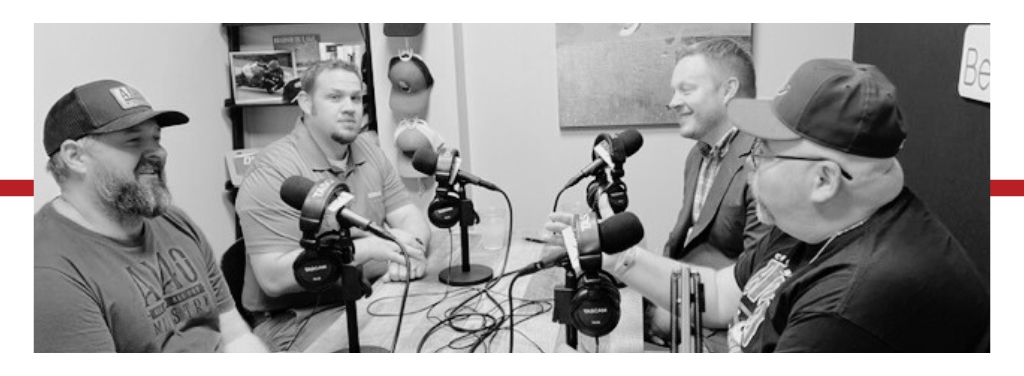

Phillip is the founder of Mid American Capital Holdings, LLC, an acquisition focused company. Current subsidiaries include Phillip Speaks, specializing in coaching, advising and public speaking engagements; Financial Center, consulting business owners on methods to implement business trade lines and credit to grow their operations, and other subsidiaries which continues to expand. Phillip also gives back via his non for profit Center for Communities and Economic Development.

Phillip has obtained an Ed.D. from Capella University and holds an Executive Masters in Health Administration (EMHA) from Saint Louis University; an MA in Marketing and a BA in Media Communication, both from Webster University, and Lean Six Sigma (Black Belt) from Villanova University. He has served as a Board Member for the National Sales Network St. Louis Chapter and Ready Readers, for which he has also served as the Governance Department Chair and President of the Board.

Phillip is a coach, advisor, key note speaker and podcast host on Business RadioX. Audiences benefit professionally and personally through his teachings of leveraging and application. His new book “Life Mottos for Success” exemplifies how positive words and thoughts can transform your life!

Connect with Phillip on LinkedIn, Instagram and Twitter.

Tagged With: Glenn and Amber Schworm

Mike Malakhov with Carpool Logistics

March 14, 2023 by Jacob Lapera

Tech Talk
Tech Talk
Mike Malakhov with Carpool Logistics
Loading
00:00 /
RSS Feed
Share
Link
Embed

Download file

Tech-Talk-3923

Mike Malakhov is a Founder & CEO of a car shipping marketplace Carpool Logistics. Mike is an entrepreneur with passion for logistics & automotive technology.

He has 20+ years of experience in supply chain & logistics, with a track record of building and scaling successful businesses.

He holds a Bachelor of Science degree in Supply Chain & Finance from Georgia Southern University and an MBA from the Emory University’s Goizueta Business School.

Connect with Mike on LinkedIn.

This transcript is machine transcribed by Sonix.

TRANSCRIPT

Intro: [00:00:07] Coming to you live from Atlanta, Georgia. It’s time for another episode of Tech Talk with your host, Joey Klein.

Joey Kline: [00:00:17] Greetings. I think that this actually might be the first tech talk of 2023. So welcome, all. We have a single guest today. We’re going to focus all of our attention on one company, Carpool Logistics, founded by CEO Mike Malakhov. Mike, how are you?

Michael Malakhov: [00:00:33] Doing well, thank you. Thanks for.

Joey Kline: [00:00:34] Having me. Sure thing. Okay, so all eyes are on you. And let’s start with just kind of a headline executive summary of what does Carpool Logistics do?

Michael Malakhov: [00:00:46] So carpool is a car shipping marketplace. We support dealerships, auto auctions, individuals that need to reposition their vehicles from point A to point B all over the country in the US. Okay.

Joey Kline: [00:01:01] So I think that most people listening to this, they’re on the ground knowledge of what this might look like is, you know, the the large vehicles on the interstate we see with, you know, ten cars attached to the back of it. Okay. What percentage of the car transport market do those vehicles make up?

Michael Malakhov: [00:01:20] So majority of the transportation actually happens on smaller car haulers that move 3 to 5 vehicles at a time versus the nine car haulers that you see on the road. Those generally support the car manufacturers. So from a plant to a to a rail yard, that kind of transport and the smaller ones usually move. A lot of the used vehicles all over the country are 95% of the market.

Joey Kline: [00:01:46] So like an F 350 with something strong attached to the back of it. Exactly. Okay.

Michael Malakhov: [00:01:52] Yep, that’s exactly right.

Joey Kline: [00:01:54] And are the are the folks that are that 95% of the market. Right. The folks that are taking used car from lot A to lot B right not you know Kia plant to dealership floor is this their full time job? Do they flex what’s the profile of the people that are in that, quote unquote profession?

Michael Malakhov: [00:02:13] Most of them are entrepreneurs and they are a small operation, small business. A lot of times it’s husband, wife, combination, Husband is the driver and the wife is the dispatcher. But yeah, it is full time generally. And usually it’s, you know, small companies, it’s 1 or 2 trucks Max. Okay.

Joey Kline: [00:02:32] And I’m going to guess this is a bit more regional than national.

Michael Malakhov: [00:02:37] It is very much regional. Yes. Most of the transportation is two, 300 miles. Yeah, There is, of course, longer transportation, especially for relocation. And across the country, those are generally a little bit larger trailers that operate those hauls. Okay.

Joey Kline: [00:02:54] But, you know, for most of it, it’s like obviously it depends on the size of the state, but mostly staying within the state or if not, maybe going one state next door.

Michael Malakhov: [00:03:04] Pretty much. Yeah. Okay. Two, 300 miles generally is the range.

Joey Kline: [00:03:07] Okay. So so what is the what is the relationship right now between those kind of mom and pop operations and the dealerships that they serve? How do they get business? How do they know about how do they get opportunities? How do they function in terms of payment? Like what is the disruption that was needed in this space?

Michael Malakhov: [00:03:27] So it’s extremely fragmented market. So as I mentioned, a lot of the small operators, you know, they can only handle whatever their truck can fit. So dealerships have much larger need to support them all over the country. So they want to have 1 or 2 vendors that they work with rather than a plethora of large companies. So and technology lacks in the space obviously is, you know, operating a small trucking company. They generally don’t have a lot of technology. So there’s lacks lacks transparency. You don’t know when the vehicle is getting picked up, when it’s delivered. So the communication and the flow of the dialog is very challenging. So and ability to track those vehicles in transit is almost nonexistent. So one of the things that we at carpool are focused on is creating that transparency, creating the ability to track those vehicles in transit as well as we also focus on pooling multiple vehicles that are moving in the same similar direction that help reduce costs and emissions.

Joey Kline: [00:04:29] Sure. Okay. So let’s say that someone is you know, they’ve got the capacity for three cars. They’re picking up, you know, two from Peachtree Corners. You know, they’re going up to, you know, let’s call it Greenville, South Carolina. If this basically gives them the ability to say, oh, you know, there’s a separate dealership that’s in Buford on the way where I could pick one up and it’s going to the same place.

Michael Malakhov: [00:04:54] That’s exactly right. So we try to aggregate those so it’s already pre-planned for our partner. Transport companies. So we bundle those, give them a full load so they’re able to transport it to Greenville. And then we’ll also help them from Greenville to get back home.

Joey Kline: [00:05:11] Okay. And so your your end consumer is the dealership that is using this technology to better enable the transport of the vehicles.

Michael Malakhov: [00:05:21] It’s so you know, we’re double sided both sides. Yeah. Okay. So on one side it is a dealership and on the other side is the transportation company. They’re both our customers. Okay? And we just help coordinate and flow, coordinate flow of information.

Joey Kline: [00:05:37] That is a very I always whenever we talk to entrepreneurs and, you know, we’re kind of focusing on how does a company kind of go from infancy to, you know, product to, you know, saturating the market with its solution? I always think about the sales process, and part of that is probably just, you know, what I do for a living. But the double sided marketplace is a very complicated problem. In addition to the fact that you have you have a very fragmented marketplace, you have small companies. How are you finding all of these, whether it’s the mom and pop transporters or the dealers, that has to be somewhat of an arduous task to find all these folks.

Michael Malakhov: [00:06:18] So we so 30% of our business is referrals, which is helpful. Yeah, but it is a direct sales process where we reach out to our potential future customers and see if there’s a pain point with their transportation needs. And that’s whether they’re buying vehicles at an auction and need them shipped to their store or they’re sending wholesale vehicles to the auction, or if it’s a consumer buying a vehicle from the dealership, needing to ship that car to their house. So it is a direct sales process. But we do we do get a lot of referrals, which is okay.

Joey Kline: [00:06:57] That helps. Yeah. So what what are the folks that are not using your technology doing right now? Just calling up the same couple of folks they’ve used, you know, every time and just, you know, saying we’ll be here on X day but not really having any way to track it.

Michael Malakhov: [00:07:14] Yeah, exactly. So it’s a lot of it is, you know, texting multiple people to see who’s available to pick up some of these cards and then kind of then following up with them, see if the cars were picked up via calls, text messages. Sometimes you don’t get responses. So really lacks kind of visibility and the transparency in the process. So we’re trying to simplify. They can reach out to us and we coordinate everything on the back end and they get communication from us basically 24 over seven.

Joey Kline: [00:07:41] So but is this, as I’m trying to picture kind of the interface and the experience of a dealer that is calling out for a need? Right. Is this almost like everyone uses an Uber of whatever, but just, you know, forgive me, right? You know, is this like I go onto my Uber app and I put in where I want to go and I’m waiting to be matched with someone. Is it almost akin to, you know, I need to transport a vehicle to Charlottesville, Virginia? Who’s going there? Who can help me out?

Michael Malakhov: [00:08:10] Yeah. So it’s you know, we are the ones that are doing the matching. Okay? So the dealership reaches out to us and then we control the equation from there. They don’t need to be involved in the matching process. We already have pre-vetted transporters to handle different routes all over the country and we all automatically will match them with those and pre-bundled cars and then match them.

Joey Kline: [00:08:33] Okay, So, so it is not just software. It you’re really are offering kind of the full service. Yeah, absolutely.

Michael Malakhov: [00:08:40] Yeah. We’re not a SaaS platform. It is a marketplace where we’re the ones we take the order in, we aggregate, make it efficient, more efficient and then assign it to the pre vetted transportation companies that we already have on our platform.

Joey Kline: [00:08:53] Let me ask you this. Did you consider the other way around the example that I just gave and decide on this for whatever reason you’re going to give me why it’s a better business model?

Michael Malakhov: [00:09:05] So we feel that a lot of the industry in the automotive industry, they want to focus on buying and selling cars. They don’t want to deal with transportation. So we are their managed transportation partner. We basically are an extension of their team as a logistics team to support all of the logistics of their vehicles.

Michael Malakhov: [00:09:25] Gotcha.

Joey Kline: [00:09:26] Makes sense. And your background is in shipping and trucking, correct?

Michael Malakhov: [00:09:32] I’ve been in supply chain 20 plus years. So yes, a lot of it spent on the freight industry side. And then I learned about automotive space and some of the challenges in automotive industry as it relates to logistics and so an opportunity. And improve it and make the process better for our potential clients. So that’s kind of how we focused on it. Yeah.

Joey Kline: [00:09:58] Okay. So you are look, there are some people that are just, you know, they can’t do they can’t work for anyone else and they start a business right out of college and that’s all they can do. And there are some people that I find are, you know, after however many years of professional life and they have the light bulb and they do it, and I find those two people fall into two camps. Okay. Some of them are those that have always wanted to do their own thing, just never really had, you know, the idea or the, you know, the opportunity to do it and others really, you know, it’s like they wish someone else would do it. They’re not really an entrepreneur at heart, but like God, no one else is going to solve it. And you’re making me do this. What do you think that you fall into one of those two camps, or is there a third or fourth camp that I’m missing that you think your your psychological profile is in?

Michael Malakhov: [00:10:43] Interesting point. And I’ve had, you know, a lot of conversations around about this topic. So, you know, I’m probably unique in a way because you have, as you mentioned, you have younger adults that come out of college and they want to be entrepreneur from day one, and that’s what they start doing right away. You know, they do multiple start ups in their career. Some fail and hopefully some succeed. And then you have other professionals that may or may not get into the entrepreneurship. So I’ve always wanted to be an entrepreneur and I was waiting for the right timing and the right opportunity. That timing and opportunity came up during COVID, where I found the the right problem to solve. We felt that this space had growth opportunity because you have the electric vehicles going direct to consumers. You have people buying more cars online. A lot of that drives direct interaction with the consumers and the experience was very poor. So we thought that was a good opportunity to streamline that process. So I mean, I certainly consider myself in that category where I have the experience in the industry, the will to succeed as an entrepreneur, because I’ve I’ve managed teams, I’ve scaled businesses in the past. And having the right moment in your family life as well. And support system also certainly helps.

Joey Kline: [00:12:18] Now, look, that’s that’s a big one, too. Depending on the profile of your, you know, your spouse or your kids, that’s. And look, I certainly I didn’t think about that until I was in that position. But, yeah, there’s a whole other set of people that, you know, your your actions have consequences for.

Michael Malakhov: [00:12:33] I mean, that’s probably one of the most challenges, challenging parts that, you know, if you’re have been in the workforce for 15, 20 years, you know, most a lot of times you’re married with children to to quit your at that time probably a lucrative corporate career and start something from scratch is when.

Joey Kline: [00:12:54] Your expenses are probably the highest. Exactly. Yeah.

Michael Malakhov: [00:12:56] It’s very risky. You have children, you have to pay. So having the right, you know, spouse that can support you and the right infrastructure is very important to be successful.

Joey Kline: [00:13:07] Yeah, because look, at the end of the day, I’ve, I was at a basic I don’t know who told me this maybe a mentor early in my career but essentially said look the the first step that you have to take to bring everything to work and being the most effective that you can be is if everything is okay at home, if something is wrong at home with whoever your partner is and that mental strain is on you, there is no way that you can be 100%. And he was he was absolutely right.

Michael Malakhov: [00:13:38] Absolutely, 100%. I mean, entrepreneurship is a roller coaster ride already. So you have to have some be grounded and you have to have the right support system to get through it for sure. So, yeah, it is a very important part.

Joey Kline: [00:13:51] What has been the thing that has surprised you the most? Right? You’ve gone from you’ve been at some large corporations, you’ve been at some smaller corporations, you’ve managed teams. You know, you are now and I know you have a number of co-founders, but you know, you are you are the lightning rod for the company. You are, you know, the the the success of your team is partly riding on your and your partners making this, you know, something, something real. It’s not the right word. Obviously, it’s real. But I think you know what I mean, Something bigger than it is right now. I’m curious, what has been the most surprising part of building this and growing a team, whether it’s from a management or culture perspective, just what have you found that you didn’t realize you were going to find?

Michael Malakhov: [00:14:38] I mean, I would say, you know, one of the big surprising things, the ecosystem in Atlanta to support entrepreneurs has been amazing. I mean, we’ve been part of the Atlanta Tech Village building since the day we started the business. That decision has been extremely important to our success. That’s what we’ve you know, we found our co founders. They were next door to us in the office. It was a very important part. We were also part of Atdc. So it’s the ecosystem itself in Atlanta has been very supportive from an investor perspective as well as just advisory. So that was very helpful. And then as we continue to grow, you know, having the right people in the seats and the right team has been extremely important as well, because I have three other co-founders and each one of us owns our own lane. We we know what our accountability is and we focus on that. And that creates growth and success for us. Because, you know, one person, it’s very hard for one person to build something. We have 30, almost 30 people now. Yeah. So everybody plays a critical role. And the team that we’re building is also plays a very critical role for for us to continue to grow because we can’t do it alone.

Joey Kline: [00:15:54] That’s right. And, you know, look, it’s in the early stages. It’s kind of all on you and the co founders. And then there gets to sort of be this nebulous point in between where you are power is becoming an influence is sort of diffusing throughout the organization. And it’s maybe not as simple as it used to be where, you know, it’s four of you in a room and you just all know the same things. Each key, the the individual contribution of each player really means a lot more than it ever did before.

Michael Malakhov: [00:16:24] Yeah, absolutely. I mean, we’re at that stage already where, you know, if you were strong individual contributor and you’re in a manager role now, you got to stop being an individual contributor or we stop growing. So it’s extremely important for the leadership to to lead and not do.

Joey Kline: [00:16:42] That’s right. That’s right. Set the tone. You know, this is an interesting time nationally and I think for Georgia and the car industry. Look, obviously, you happen to live here. And so this was started in Georgia. Um, Georgia is just crushing it from an automotive perspective right now. It’s really incredible to see.

Michael Malakhov: [00:17:06] Yes. You know, Southeast is like the new battery belt, right? You have Well, it’s not just the EVs, right? You have a lot of the foreign companies, automotive companies had already established themselves pretty well. You know, Mercedes obviously headquartered in Atlanta. Porsche is headquartered in Atlanta. Bmw has a plant in Greenville. A lot of the imports that come from Europe come to Brunswick and Jacksonville Ports. There’s a plant, Hyundai plant in Columbus. There’s a mercedes plant in Alabama. So it’s the southeast has been very strong in automotive already. Nissan’s in Tennessee. And now you have the EV companies coming here just because there already is an established infrastructure for automotive. Not to mention, you know, Cox Automotive is one of the largest software providers for dealership industry for automotive. So it’s a very big automotive space in the Southeast. Atlanta plays a big role.

Joey Kline: [00:18:09] I’ve always wondered this question, so I’ve anecdotally, I know that a lot of the cars that come in to be shipped across the country come into the Port of Brunswick. Okay. Why Brunswick? Right. You have Savannah so close. What is what is the specific reason behind why Brunswick, Georgia?

Michael Malakhov: [00:18:25] That’s a great question. So, you know, historically, Savannah, you know, became a larger port in the last ten, 15 years. But the history of vehicles coming in into those Jacksonville and Brunswick ports has been there for quite some time. So I think some of that is the continuity of what has been in place. There is good infrastructure, rail infrastructure that carries a lot of these vehicles across the country as well. So it’s not just the port, it’s the rail infrastructure that supports the port that’s heavily influencing that part because, you know, think about who’s in who’s in Jacksonville. Csx. Yeah, CSX railroads based out of Jacksonville. So it’s a it’s no coincidence, I’m sure. Yeah.

Joey Kline: [00:19:09] Okay. All right. Well, just a little, little tidbit there. So let’s see, we talked about your team. Let’s actually go back to capital for a second, because I feel like, you know, even as recently as a couple of years ago, I would I would do the show, would ask about capital. We’d ask about things Atlanta could do better. And, you know, often there was a comment of, you know, the ecosystem is great support is great, talent is great. But I got to go to the West Coast to raise money. Now, I think that we’ve seen influx of a lot of West Coast or northeast operations that now have an office here and have set up roots here. I’m curious, do you feel do you feel the ecosystem from a capital perspective is markedly different than even a couple of years ago? Because from an outsider’s perspective, it feels that way. It feels more robust than it used to be.

Michael Malakhov: [00:19:58] It certainly feels a lot more robust. I mean, there’s a good support. System from investor perspective in Atlanta or the Southeast in general. So there’s multiple funds that already operate in the southeast. And then you have as Atlanta continues to grow as a large tech hub, you have a lot of the VC firms opening up shop in the Southeast as well. And obviously, Atlanta is one of the key hubs. So it is becoming a lot more attractive. So there is, you know, presented a venture, Atlanta, and there were a lot of out of town investors in visiting. Some of them are have offices here. So it certainly there is a lot of attention on Atlanta.

Joey Kline: [00:20:41] There is. I think, look, the the Sun Belt is is doing quite well. Atlanta is doing quite well on a number of fronts. You mentioned presenting it venture Atlanta. I just have to give you kind of another shameless plug here. I believe that you are on the the, you know, Atlanta Awards companies to watch, correct?

Michael Malakhov: [00:21:02] We are, yes.

Joey Kline: [00:21:02] Thank you. Yeah, just just making sure that we get that in there. And for anyone listening, I believe the event is March 16th. And of course, not not planned whatsoever. But my company, JLL, is sponsoring it. So if you want to come on down, I believe it’s at the west side, at the Star Metals Building. There’s a lot of great companies, obviously, including carpool logistics. Absolutely. Yeah. Okay. Now back to our regularly scheduled program. So what what are you up to now? What’s the goal of the next 12 to 18 months? Is this purely just gain as much market share as possible? Is there a new business line you’re getting into new technology? What are you focused on for the future?

Michael Malakhov: [00:21:46] So we’re heavily investing in continuing to build out our platform. We’ve doubled our software development team in the last few months and core focus is on continuing to build out the platform, make it as efficient as possible, create as much efficiency for our customers and visibility as possible. So the tools that we’re building are constantly getting enhancements. So that’s one of the big focus areas. And then also continue to build out our sales team and organization because we’re not even scratching the surface. I mean, we being in Atlanta, we obviously started out in the Southeast heavily and the goal is to expand across the US.

Joey Kline: [00:22:31] So are you does your expansion. I’m thinking about I’m presuming about your sales cycle and you can correct me if I’m wrong, but this seems like certainly for most of these fragmented marketplace like this, this is probably an over-the-phone sale as opposed to kind of an enterprise in-person sale. Are there are there geographies or prospects in which it really makes sense that you’ve got to have someone on the ground there?

Michael Malakhov: [00:23:01] It’s a mixture of both. Yeah. Automotive is a very relationship driven industry, so being local in local markets is very helpful. So we kind of have a mixture of phone in person, yeah, approach, but we keep our operations as one hub in one place so the sales force can be distributed. The operations is centralized.

Michael Malakhov: [00:23:28] Gotcha. Okay. Um.

Joey Kline: [00:23:30] You know, it is it is such an interesting time in the automotive market, not just the shift in geography of where automobiles and components are manufactured, but also the hype, I think makes it sound like it is not real. It is very real. The switch to EV and sort of the race to get into that. I’m not a specific question, but just kind of your thoughts on where things are, who you see as some of the future winners and losers, where you think innovation is going to be. Just overall thoughts on the market as it kind of switches probably one of the most significant shifts since the invention of the automobile, Really?

Michael Malakhov: [00:24:13] Absolutely. Automotive industry certainly going through a renaissance. We’re probably going to see more change in the next 5 to 10 years than we’ve seen in the last 50 years. So electrics are not going away. They’re certainly here to stay. And there’s going to be pretty aggressive push in the next five years for all manufacturers to start significantly expanding that segment. So and also, you know. You know, a lot of car manufacturers are looking at distribution model for EVs, have relationships through dealerships. Dealerships have to make investments. There’s a lot of investment that has to go into to implement this. Not to mention the charging stations all across the country. A lot of innovation around batteries is important. The China controls a lot of the supply chain for the batteries, which is a big challenge for the US. So there’s a big push to start to build control within North America to to supply those batteries and the components of those batteries. There’s a lot of investment going into that space. So I think it’s going to be very interesting to watch the entire supply chain and how that evolves in the next few years.

Joey Kline: [00:25:24] It really does feel like and this is beyond just batteries, but obviously that is a huge component. It does feel like we’re entering a phase in kind of the international world order in which we are.

Michael Malakhov: [00:25:36] Not.

Joey Kline: [00:25:38] Globalized, isn’t ending. We’re not necessarily retreating from globalization. But I feel like things are becoming a bit more regional. I think that certainly the United States is understanding that, look, there was there was absolutely a business case, you know, in the last 50 years for putting a plant of whatever kind halfway around the world. And I think we’re seeing now that, you know, that has its consequences. There is a there is a real advantage jobs, culture, national security, to having things on our own shores or at the very least, our own continent. I mean, I think Mexico is going to be a very big winner as well in this switch.

Michael Malakhov: [00:26:21] Yeah, absolutely. Nearshoring is certainly happening. I mean, as you mentioned, a lot of geopolitical challenges currently. So a lot of companies are thinking about how do we get closer to the United States and those markets that you serve. So that regionalization is very much on top of mind for all supply chains, not automotive specifically, but just all supply chains. Yeah.

Joey Kline: [00:26:48] I mean, the service you’re providing obviously at a at the stage that your company is in, it is very important to focus and focus on doing, you know, generally one thing really, really well and carve out a niche for yourself. My hunch is that the service that you’re providing and the technology that you are using for that service can probably be used for other sort of transport models as well. And I’m curious if that is something that is on your long term radar or it’s too far away to even think about that right now.

Michael Malakhov: [00:27:22] Yeah, kind of like you mentioned. I mean, our core focus is around vehicles. We plan to stick to that core focus there is the freight industry on its own is a $3 trillion industry worldwide. So there is already a lot of investment going into that space. We see part of the thesis was that automotive supply chain and logistics wasn’t getting enough attention and it’s much smaller segment and that’s why we decided to go after this segment specifically. And the tools that we’re building are specifically for automotive industry. And one of the reasons we decided to build those tools is because there’s not a lot of platforms and tools out there to really support this business. So we thought it was very important as the industry evolves. To be able to create the customer experience that consumers are used to. Then Amazon like delivery. Sure, If you want to have a car delivered to your house and have a similar experience, there’s a whole lot more work to be done.

Joey Kline: [00:28:24] Yeah, that’s right. And like, I think that there are plenty of companies that have found a a really strong niche in a process or industry that is highly fragmented, that isn’t really using technology that is somewhat analog. Those are, you know, very, very ripe for disruption and that’s obviously why you’re doing what you’re doing. Absolutely. Yeah. Well, Mike, this is great. Thanks a lot for coming on and telling us about carpool logistics. If there are people listening that want to get in touch with you or learn more about the company, what’s the best way for them to do that?

Michael Malakhov: [00:29:00] Yeah, thanks for having me. You can reach me at Mike at Carpool logistics.com.

Joey Kline: [00:29:04] And again for everyone listening March 16th Atlanta event Mike and his company are going to be there as well as a lot of other great start ups. Thanks for listening, everyone. Have a great day.

Tagged With: Carpool Logistics, Mike Malakhov

Pastor Wilma Zalabak, Author and Coach Angie Sims and Dr. Tyra Wingo

March 14, 2023 by angishields

CharitableGA031023pic2
Charitable Georgia
Pastor Wilma Zalabak, Author and Coach Angie Sims and Dr. Tyra Wingo
Loading
00:00 /
RSS Feed
Share
Link
Embed

Download file

CharitableGA031023banner

Wilma-Zalabak-headshotbwWilma Zalabak, a pastor and business owner in Marietta, Georgia, earned her MDiv at Andrews University, Michigan, and her DMin, with specialization in preaching, at Phillips Theological Seminary, Oklahoma.

Called to the ministry at age twelve, she developed a decade-long ministry of preaching on the street and thrives on biblical preaching where she can showcase the beauty in the Bible. In her chosen ministry community of Franklin Gateway, Marietta, her events affirm and bless under-resourced children and their community leaders.

Her teaching produces individual gains in interpersonal and family communication. Her books are now what her preaching has been, whole galleries for showing the beauty in the Bible, the gospel, and Jesus.

Connect with Wilma on LinkedIn and Facebook.

Angie-Sims-headshotbwAngie Sims is an expert rainmaker whose ability to impact change makes her a game changer. She spent over 14 years as an executive in the financial services industry at Morgan Stanley and its predecessor firms in roles such as Deputy Director of Diversity, Director of Online Training and Director of Professional Alliance Relationships.

In her Diversity role she developed and facilitated plans to attract diverse talent, enhance workforce environment, create diversity partnerships (internal and external), support employee networking groups communication with management as well as created robust tools to increase management accountability by exposing them to their diversity pipeline.

Five-time self-published author, Angie is most proud of the 17 women that she coached to become first time authors. She is a leadership execution coach who reintroduces business leaders to their superpowers by discovering and implementing success tools to increase that will increase their profitability.

Her response to the overwhelming desire for professional women to make connections that will support them is the League of Girlfriends. What began a few years ago as an opportunity for transient women, new to the Atlanta area, to connect with one another through social outings and service-based events has grown into an organization with 500+ members nationally.

During the pandemic the League of Girlfriends pivoted and created a virtual talk show whose 100 episodes allowed over 150 members, many of whom had never gone live, to showcase their businesses live. She also created the “Girl Lead NOW” leadership academy which has significantly changed the trajectory of its members businesses and profits allowing her to teach women “How to Fish!”

Angie is President of Atlanta Women’s Network (AWN), Georgia’s first business networking organization for professional women and is a thought leader with Women’s Information Network (WIN). A premier event planner for over 25 years she is executive director for Atlanta’s largest marketplace for Black Businesses, the Taste of Urban Atlanta and Atlanta’s Black Expo. Angie continues her work in Diversity as senior diversity consultant for Icarus Consulting, one of Forbes top diversity trailblazers and as board member of the Diverse Cobb County Committee.

She lives in Dallas, GA with her husband of 16 years and their 14-year-old son Christin aka Smooch.

Connect with Angie on LinkedIn and follow League of Girlfriends on Facebook.

Tyra-Wingo-headshotbwDr. Tyra Wingo is a self-proclaimed “Serial Entrepreneur” that she learned from her parents, Ron & Phyllis Wingo. Wingo Construction started when she was 8 years old and her job was to pick up everything that did NOT grow.

In addition to the construction company they had rental houses, a trailer park, they installed underground pools, put up car ports and built decks. So, it was not a surprise that Dr. Wingo had a “side hustle” even when employed full time in the post-secondary education arena where she was in Student Affairs and taught Psychology.

She has a true servant heart. She currently serves the community on several non-profit boards as well as local women’s organizations like: Atlanta Women’s Network, League of Girlfriends, Beginning Today Inc & Cobb County Republican Women’s Club where she won The President’s Award in 2021 for her hard work, time, and dedication. This year she started the Cobb County Tactical Civics Club to educate us on how as citizens, we can take back our constitution.

Her book, “These Nails Don’t Do Dirt“, covers family WINGOIZMS and her personal stories of success despite having the odds against her. It is humorous and encouraging especially if you think that you CANNOT achieve something. It is full of true stories, unique and funny sayings that they heard from their father, Ron Wingo, Sr.

Currently, you can find Dr. Tyra running all things elephant. One is elePHRAMEd, an elephant accessory and greeting card company. Second, The Female H.E.R.D., a women’s networking group and lastly, Dr. Tyra: Mindset & Motivation Coach. As a speaker, Dr. Tyra shares her “T.I.P.S. from Elephants” lessons that are pertinent to both men and women.

She is the oldest of 3 and lovingly named Aunt RaRa to 2 nephews, 1 niece, and several God children. She resides in Acworth, Georgia and is the proud PAW Mom to her dog, SugarBaker.

Connect with Dr. Tyra on LinkedIn and Facebook.

This transcript is machine transcribed by Sonix

TRANSCRIPT

Intro: [00:00:07] Broadcasting live from the Business RadioX Studios in Atlanta. It’s time for Charitable Georgia. Brought to you by Bee’s Charitable Pursuits and Resources. We put the fun in fund raising. For more information, go to Bee’s Charitable Pursuits. Dot com. That’s B’s Charitable Pursuits dot com. Now here’s your host, Brian Pruitt.

Brian Pruett: [00:00:45] Good, fabulous Friday morning. It’s another fabulous Friday with three more fabulous guests. This is your first time tuning in. This is Charitable Georgia. And this is all about positive things happening in the community. And this whole show is about community. We’ve got three guests who pour their heart and souls into the community. So we’re going to start off this morning with Wilma Zalabak. Welcome, Wilma.

Wilma Zalabak: [00:01:06] Thank you, Brian.

Brian Pruett: [00:01:07] So Wilma and I have known each other since 1988. She came to the church I grew up in. I’ve been here since 1979 and been at the Marriott of 70 Evidence Church since then. And she came and she was one of our pastors. She does she’s a great teacher and she’s just got a real passion for a particular part of Marietta. But first of all, Wilma, just give us a little background about you and how you got involved in the seminary and why you’re teaching. And just give us a little bit of background of yourself.

Wilma Zalabak: [00:01:37] Yes, My first love, of course, is the Bible. I’m a pastor. I knew I was called to preach the Bible when I was 12. And it it was quite a long journey getting there. So in 88 I had just finished my BA in Religion and landed in Marietta. And by God’s grace we were able to start the one of the churches over here in Woodstock. So it was it was a great time. But then I wanted to I’m skipping over into Franklin Gateway now. And so.

Brian Pruett: [00:02:12] Well, let me just before you get into that. So she she has a passion for people like you said, and Franklin Gateway, if you don’t know, is the Franklin Road area in Marietta. And she has two big things, at least two things she does during the year that I know of. But I know she does a lot for that area. So you do stuff at the school back to school and then during the Christmas time. So go ahead and share. Why is that area your passion and why do you feel like you need to help in that area more so than others? But you do help other people but just share what you do for the Franklin Gateway?

Wilma Zalabak: [00:02:41] Yes, I was looking for how to to spread the love of the Bible. And I decided just by logic, that a place I would look for as my mission area would be where there were a concentration of residences. And just driving around in Marietta, I saw the Franklin Gateway was 16 apartment complexes with. Hundreds at least units with each one. And I, I decided, prayed about it and decided, well this was going to be my area began doing storytelling children and adult. And then I found out that the city had already designated that area as a place that needed federal funding and got the grant for five years for weed and seed. And so I was able to hook up with that grant the things that were going on with them and add to them. They did two big events each year. One was back to school bash in the summer. And I said to them, I said, Well, do you have any medical work going on with that back to school? Bash Because I thought I could gather up some doctors to help us if we wanted to do screening. And so that’s how we got into the back to school. Bash We just bring doctors to do the screenings that are needed for school. Then they also do a winter event holidays around the world. And we got gathered into that one, too. We give away books and some food. We give away groceries at both of them.

Wilma Zalabak: [00:04:39] So with those two going on, I just supplemented. There were some classes I taught on listening. I care about communication a whole lot and there were classes I taught on Bible school now for the last. Six, eight, maybe ten years I’ve been preaching on the street. There’s a there’s a gas station right about in the midst of the area who allows me to bring my truck and set up and preach off the back of the tailgate. And I know it sounds rather strange, but I was looking for a place to to share my love of the Bible. And so that’s one of the things that that I love. Also, one of the churches, the one that Brian and I attend, agreed to work with me on a Christmas event to where we gather up names and wish lists for 150 children. And then the church goes out and buys according to the wish lists. And we have an event where they all come to and we we put up staging like Bethlehem. And it’s kind of a fun thing. Since the pandemic, it’s all drive through. So that’s in a nutshell, I guess. Franklin Gateway work. Oh, by the way since Weed and Seed and I think our prayers lots has happened on Franklin Gateway so that several of the worst apartment complexes that were really buggy and bad are gone now and there are beautiful businesses coming in. So I think God has been blessing.

Tyra Wingo: [00:06:34] I didn’t hurt either, did they? Right. I did come in right. It didn’t hurt. Oh, wonderful.

Wilma Zalabak: [00:06:39] And the sports complex and more coming.

Brian Pruett: [00:06:42] What I think is really cool, especially from from our church, is when you especially when you do the back to school. Bash Seeing the different doctors from the church go out there from the dentist to the eye doctors, you got several nurses that go out there, physical therapists. I know you get a lot of support from the church, but how is the other part of the community, how are they supporting you.

Wilma Zalabak: [00:07:02] The Franklin Gateway community?

Brian Pruett: [00:07:05] You know, just Marietta in general, Do you have other folks that that kind of come aboard by that look? It looks like it’s just Marietta Church.

Wilma Zalabak: [00:07:12] I have brought other churches along. Sometimes my aim has been to bring churches together on it, but it hasn’t come alive as much as I would wish.

Brian Pruett: [00:07:25] Well, maybe this will help. This will help. So you also have a passion and helping kids. You teach piano. So you shared before we got on the air. You have 29 students right now, is that correct? That’s correct. And you have a recital coming up. And in our church normally would probably be where you have a straddle. But we had a Christmas Eve. We had a water pipe bust. And so they’re still working on that. So she’s currently if anybody out there listening and has a place for a recital, she needs a place for a recital for a 29 kids coming up to you. What made you decide? I mean, you said your love of the Bible and everything to get in seminary, but can you you’re from the North or the Midwest? Michigan, right? Wisconsin.

Wilma Zalabak: [00:08:07] Wisconsin. Yes. I grew up in Wisconsin. Cheesehead. That’s true. We had the Braves first.

Brian Pruett: [00:08:14] That’s true. You did Milwaukee. They did, although Boston had it before that. So what was your reasoning? Just for the love of the Bible is that But you decided to get into the seminary. Is that why you wanted to do the preaching?

Wilma Zalabak: [00:08:27] Oh, yes. It’s it’s that the Bible speaks to me or I like to say the Bible listens to me. The Bible understands me. It feels like when I’m in it that there’s I’m being listened to and and I’m just driven to want to share that joy that that resource with people.

Brian Pruett: [00:08:49] I talked to some people before about you are a tremendous teacher when it comes to the Bible, right? Because you sit down and stuff and a lot of times you’re just reading or you listen to other people. Some people use scare tactics, but you actually go above and beyond as far as the education piece of it, and you want to make sure people understand it because it is a beautiful piece of work and a lot of hope, you know, and stuff like that. So you also are an author. Yes. Share a little bit about the books you’ve written.

Wilma Zalabak: [00:09:20] Well, since you were talking about beauty here. I just have to pull in on that because the the book that is coming off in April is Beauty in the Bible. And I’ve never seen anyone do this with understanding the Bible before this before before me, too, where just in the way the Bible is put together. Compared to novels and poetry. The structure of it to me is beautiful. And so, yes, that’s what I had to do. And then the first tiny book I got was in 2000 about listening. So that’s another one of my passions. But the first one that came off the press was the the happiest book I ever read is The Revelation of Jesus Christ because of the beauty in it.

Brian Pruett: [00:10:17] Where can people find your books?

Wilma Zalabak: [00:10:19] Amazon.com. Except that first one, you have to get in touch with me and I’ll give you one.

Brian Pruett: [00:10:27] So if they’re looking it up, just if you don’t mind, spell your last name for people.

Wilma Zalabak: [00:10:31] Oh, sure. It’s Z, as in zebra. A L, a B as in boy a K.

Brian Pruett: [00:10:38] If there’s folks out there who want to talk to you about I know you got 29 students, but are you open for more if people want to talk to you about.

Wilma Zalabak: [00:10:45] I am. There are several thinking about it.

Brian Pruett: [00:10:48] All right. So if people want to get ahold of you for the lessons or helping in the Gateway Franklin Gateway, how can people get a hold of you?

Wilma Zalabak: [00:10:55] My phone is (770) 546-4573, and I work maybe best by email. That’s my last name. Z a l. A. B, a k. M. D five. At gmail.com.

Brian Pruett: [00:11:15] Can you share with some folks real quickly how they might be able to come aboard and help you with the Franklin Gateway?

Wilma Zalabak: [00:11:21] Well, there’s always a need for seconds, you know, people who can come and help lift. I’ve gotten to where I can’t lift even the speakers very well. So on Saturday and Sunday is when I’m preaching on the street. Could have helped there. Otherwise, there are other things going on that I can connect to with the leaders of those events. I’m pretty much a connection person on Franklin Gateway. So you call me and tell me what you’d like to do and I can probably connect you with someone that you can do it with. Awesome.

Brian Pruett: [00:12:01] So I like to ask this question Why is it important for you to be a part of the community?

Wilma Zalabak: [00:12:05] It’s because, don’t get me wrong, follow me through. It’s because I love the Bible. Because I. I’m not the kind who’s going to push the Bible on someone. But I know that if I’m part of the community, if I’m doing things that are helpful in the community, people are going to know why I do it, because I’m also involved in these other things. So the reason it’s important for me to be involved in the community is because it it builds friendships for my passion.

Brian Pruett: [00:12:41] You just shared a lot for them. And thank you for for sharing all that. Do you mind sticking around listening to these next two stories? Because I think there’s a lot of synergy here in this room with you guys, so.

Wilma Zalabak: [00:12:51] I’d love to. Thank you.

Brian Pruett: [00:12:53] Awesome. Well, thank you. All right. I don’t know where to start with these two. They’re kind of like two and one, so we may just have a natural conversation with the two of them. Yes. I am going to start with with Angie Sims, though. Angie, welcome to the show.

Angie Sims: [00:13:05] Thank you.

Brian Pruett: [00:13:06] You have a tremendous organization. As I mentioned earlier, all three of these ladies pour their heart and souls into community, and Angie and Tyra both pour their heart and souls into the women in community. And you have an organization called the League of Girlfriends. But if you would, I’d like for you to share a little bit of your background. You came from Pittsburgh. Yeah. And you have a really cool story. So do you mind sharing a little bit of your story?

Angie Sims: [00:13:30] I’d love to. Thank you so much for having me. So yeah, I was born and raised in Pittsburgh, and as soon as I get out of there, I did. So I went to Penn State, and then after I left Penn State, I never really came back home, maybe for a couple of months. And I worked for an aunt who was a lawyer, so I definitely had to leave. But essentially I moved to New Jersey, where my dad was at. I wanted to be closer to my father. So in moving to New Jersey, I found a career in financial services. So I said I wanted to have my first job and I wanted to make $30,000. Right. That was going to be my first job. And I stuck to it and my job ended up being $50,000, thank goodness. Right. Working in New York City. So I lived in Hackensack, New Jersey, which is seven minutes from George Washington Bridge, which takes you to Manhattan. I spent many years, about 15 years in financial services and executive jobs, such as I was deputy director of diversity for Citigroup Smith Barney. I also ran their online training platform, and I loved being in the big city. I loved it until September 11th. Right. A lot of people don’t know this story. Tyra knows a lot of people don’t know that. I was actually there, actually heard the plane because it went it used my building, which was the Travelers building with the umbrella on the side of it.

Angie Sims: [00:14:50] They used our building as a way to navigate to the towers. And I am my back is to the Hudson River. And we hear, yeah, but we thought the plane just went into the river, right? And everybody comes out. What was that? And we go, I go across the hall and see the the billowing smoke coming out of the building. And our building was the only one that was as high as that one that we could see directly into it. And then immediately CNN says it’s a plane. I’m like, no way a plane could fit in there, right? So I said, Well, let me get back to work because I’m going to get in trouble. Right? Let me get back to my job. Go back to my seat, call my grandmother, call. I don’t even know how I became to tell the story. I hardly I hardly ever. I’ve told the story a few times since I’ve been in Georgia. I’ve been here almost eight years. I’ve only told it probably five times. Make my way back to my seat and said, Let me call my grandmother and tell her, when you wake up, you’re going to see something. But know that I caught the earlier train because I caught the train that went through the basement of the World Trade Center every day. And I happened to catch the early train that day. Just before you wake, when you wake up, Don’t worry where I am. I’m fine. I caught the early train, and then my my bonus mom calls me my step mom.

Angie Sims: [00:15:56] She’s been my step mom since I was seven. So my other mother calls me and she sees it on the news. I’m like, Oh, no, I’m fine. One thing about me, I’m also at this point, I’ve been an event planner for 25 years, so I had a wedding coming up and I happened to have my floppy disk. I’m really dating myself. I had my floppy disk in my computer. So what happened is that I heard people screaming, right? So by this time it is nine, I guess 915. I don’t know what time the second plane hit, but I go to run over to see what’s happening because I hear people screaming saying, Oh, what’s going on? And I see almost as if you’re watching a movie. One of the people that I work with just moving his hands saying, everybody get out. Everybody get out. Right. Just immediately because some of the people that we work with were military, former military people. So instinctually they know one plane, maybe two planes, no terrorists. They’re like, everybody get out. So I run back to my desk, pop out my floppy drive, throw my tennis shoes on, and then began to witness what was one of the most horrific things, you know, I mean, because my building was eight blocks. So I see the jumping and I and we saw it fall. Still a hard thing to talk about. It’s so many years later and you have some of this survivor’s guilt because literally I did not come out of my apartment for days.

Angie Sims: [00:17:19] And it was always like, you know, field of Dreams when if you put your foot across the line and something changes, I literally was afraid. Thank you. To come outside of my apartment because why, why, why did I survive? Right? But then, you know, even as a Christian, we question, right. And I think we’re allowed to question because I. Think he could take it. Right. So really difficult time. But I was really over the big city glamor after that. Once you survive something like that, you know, but continued to have a great career in financial services. As I mentioned, deputy director of Diversity, and I ran the online training platform. It was so much fun in financial services until it wasn’t right. So when you work for a big company like that, sure, I made six figure bonuses. They couldn’t even explain why I got the bonus. But thank you. Right, but it was an illustrious career. It was a great time, especially working in New York City. But when you have those real life things happen, you realize how less significant it is compared to life. My husband had tried to convince us to move. I got married, by the way. I skipped that part. Been married to my husband. I grew up together as babies or we played together as children and our mother said they were best friends since first grade.

Angie Sims: [00:18:35] When they get older, they get married. Right? So essentially, my husband kept trying to convince me to move down south. He said, Why don’t we move down south with your energy and your knowhow? Because event planner, executive coach, all these things, we could do great down there. And I used to tell him, why would I move down south and start making the French fries when I’m telling people how hot to dangle on fries should be. Right? But what that tells you is that I took myself too seriously, right? And I took business too seriously. And at the end of the day, God cares about I feel your heart and what you’re doing to help people. So I actually got laid off from that big time job where I was telling people how hot the fries could be. Right. But why? Because they couldn’t lay me off because it wasn’t my company. So we moved down south about eight years ago to Acworth, Georgia, which was an incredible for us. And I didn’t have a job. I had a pot full of money but didn’t have a job and wasn’t quite sure what I was going to do. So I had my event planning business. I said to my husband, What should I do? He said, Why don’t you do what you always do? Tell people what to do. You’re good at that, right? So I started he actually bought me, you know, those things you put on your desk that have what your title is and it has a pen in it and a picture and it says Business consultant.

Angie Sims: [00:19:55] And I thought to myself, Why would he do that? I’m a wedding planner. Why would he do that? Well, because you’re bossy and you tell everybody what to do. So essentially one day I woke up and something was telling me and I just spoke at the Paulding County Empowering Women’s Luncheon. And I always tell women, stop saying something was telling you because, you know, it was God. You know, something told me not to make that right. Something told me I should call Sarah. It’s not something. It is the intuition that God gives you. Yes. So this something. God moved me this certain morning and had me go to my computer because also I build websites and I started building a website, wasn’t sure what it was for, but literally sat there for 3 or 4 hours, built this website, which is not magically I could build a website because I had been writing code and building websites since 2000, right? But now they got to drop and drag, so that’s way better. So I’m putting buttons and I’m putting all different things and I wasn’t quite sure what I was doing. I was thinking in my head, maybe he’s having me do something for couples because there’s so much to do here in Georgia for free. And and my husband and I used to run our church as couples ministry when we were in New Jersey. So essentially I pushed away from the website a few hours later and literally looked up at it and was like, legal girlfriends, whatever God.

Angie Sims: [00:21:13] And I press publish. See, some people will question it and then go pray on it and then talk to 14 people about it and then hum on it. Then go. No, but see, my message was a direct line connection so I didn’t have to go talk to the source that already told me to do it. So when I press publish, I pressed it believing, knowing that it was not my thing because when I was in New York, my staff was scared of me. I was not a girlfriend, I was not a girlfriend ish. You would not have mistaken me for your girlfriend, right? But essentially I believe that God had me found this incredible organization and built it from nine members to now 500 and close to 50 because he wanted to give the League of Girlfriends to the least likely girlfriend to show how dope he is. And he did that, right. He did that. But it comes with believing. And as a Christian, it doesn’t mean that you always believe, but when you got to listen, I get enough trouble by myself. I don’t have no time to not tire besides you. Yeah. And we double trouble, right? Double trouble here with my sister. But essentially that’s how the League of Girlfriends became. And it started out as a social organization where I thought, Why don’t we get together as girlfriend? I thought, well, he thought, why don’t we get together as girlfriends and do stuff social? And Tyra here, my sister, who you hear from shortly, is my member number three out of 500 and something girlfriends, right.

Angie Sims: [00:22:34] She’s actually one of the first eternal girlfriends. So we made her a lifetime girlfriend last year. She was girlfriend of the year 2020, 2022. But essentially so many women, it’s lonely being an entrepreneur, right? And so you have people that you’ll start a business and they’ll say, Oh, I’ll support you, your friends and family, I’ll support you and I’ll support you with your makeup. And they go to work. And by Mary Kay from the girl in the cubicle next to them. Oh, I forgot you did that, right? Or why don’t you just go get a job, right? It’s really lonely being an entrepreneur. And you need women that at the core of themselves want to support you in your guts. No matter what you look like, no matter what your experiences are, you know? And I find myself, my premier business as a coach, you know that. Brian We talk all the time, so I end up coaching some men some time to, you know, wherever the Lord leads me, right? But essentially it’s so women with girlfriends are happier, they live longer and they make more money, right? So why not be connected with women that really, really get you on your journey to help you not just in business but also in life?

Brian Pruett: [00:23:38] That’s pretty you know, again, I always say this and again my mom and says, you need a new word, but it’s just awesome, right? I mean, that’s how we say it. So thank you. You do a lot for the community, not just for that because you helped with a big expo, right? Just happened. Can you share a little bit about the Expo and who did it and what was for?

Angie Sims: [00:23:54] Yeah, sure. So as an event planner, I still do a lot of event planning. As a matter of fact, I’m finding myself doing more and more event planning all the time. I just got a new event yesterday. I’m doing for some celebrities. Just came out the blue, right? I not out the blue again. That’s God, right? So essentially there’s a gentleman I’m connected with. His name is Corey, the network King Moore. Right. And he and I have been networking together since I’ve been in Georgia. Ships in the night, passing each other in one day. He found out I was an event planner. This was the September of 2022. He said, Hey, do you want to be known for that? I was like, Not really, but I love doing it. So it reignited my love for events. He does something called The Taste of Urban Atlanta, which he and I have collaborated. Now I’m the national executive director for this. It is supporting black businesses and we do it every other month at the foundry at Puritan Mills. Most people that do expo shows like that do a once a year, maybe twice a year. And maybe it’s for the beauty industry, maybe it’s for something specific. But this supports black business owners and we have about 65 to 70 every other month, and now it’s turned into an adult only affair. But then what we did in February, we said, we’re going to take it up a notch. There’s this event that was all around the country years back, especially when I was in New York. I would go every single year at the Jacob Javits. It was called the Black Expo, and it has hundreds of black business owners, everything from food to cake to to drinks to beverage to products and services.

Angie Sims: [00:25:13] And we we support the black business owners, but everyone is invited to come. So you’re getting a taste of the urban culture Right now. We only allow black business owners to exhibit unless you’re, of course, a sponsor or a supporter of us. But it really we’re trying to elevate and move the black dollar in Atlanta specifically right now before we go around the country. And what we do is we train these black business owners how to take their business to the next level. So it’s not just buying a vending booth and come and setting up. We do two training sessions and we teach them how to make money before, during and after. Because a coach, if I’m not teaching you how to fish, what am I doing? And that’s one of the things Tyron and I work on a lot with women specifically because there’s so many gaps we have in our lives and in our businesses. And if I’m just throwing you fish, you’re not feeding your family. And it’s women really that feed the whole family. You know, my husband is definitely the head of my household and I’m Deion’s wife first, but I’m the neck that turns that head. Right. But so this is. One of the things we do with the Black Expo Taste Urban Atlanta and I do between 50 and 75 events every year, some specifically for women, some specifically for the culture. But, you know, any events, even personal events I do still weddings and things like that. But this taste of urban Atlanta in the Black Expo is really, really moving and elevating even the mindset of black business owners because you have this grind, grind, grind mindset and not this fruitful mindset. And God wants us to have a fruitful life.

Brian Pruett: [00:26:43] I think you and I have sat down and talked before and look, if you guys want somebody to sit down and talk to and just have some heart and soul poured into you, sit down and talk to Angie. Thank you. But I think and I’ll ask you the same question I asked Wilma, but I think I know a little bit of the answer you shared with me that you have a grandmother that was the first for something, right, in Pittsburgh. Share that, because I think that’s what leading into why you’re doing what you’re doing.

Angie Sims: [00:27:07] Yeah. Yeah. And so one thing I do and I’m going to be speaking at Atlanta Black Chambers Annual Women’s Conference. And one of the things I really want to impart on people is that I don’t miss the fact that everybody didn’t have what I have. When you hear from Tyra, you’ll find out she had a dad that adored her, worshiped her. I did as well. I also had a mother that told me the cup is not half full, the cup is not half empty. That sucker is running over. But only you could see it, right? So I had people pour into me. There was a level of expectation for me, for me, nobody surprised. They all thought this is who Angie was going to be. And that level of expectation really does help you meet where God sees you, right? So my grandmother, which is my mother’s mother, was the first and the longest serving black woman and longest serving person to be a national city and state committeewoman with the Democratic Party. And when she passed away, they had her picture up at the DNC because she was the longest serving and she served until the day she died. She was still an elected official in office at 92, going on 93. So, you know, when when you see greatness, it’s an elevation that you know that that’s where I’m supposed to follow. And it’s not. You better do, you better do. It’s just that you just you’re in the around in the environment. My dad as well, when I was three years old and my parents separated, my dad was a heroin addict. And I don’t even know if I ever told you that. Did you know that my dad was a heroin addict? My father ended up being one of the top record executives in the country. People say Clive Davis made Whitney Houston black. People say Tony Anderson made Whitney Houston. So my father was a great leader in the record industry. So I was surrounded by people in a level of expectation to be where I am now and greater.

Brian Pruett: [00:28:53] So I don’t have to ask you the question why it’s important to me because you just figured why. Yeah. Yeah. So. All right, I’m moving over to your sister. I’m sure we’ll come back around to you in just a second. But Doctor Tyra Wingo.

Tyra Wingo: [00:29:04] Yes.

Brian Pruett: [00:29:04] Thanks for coming this morning.

Tyra Wingo: [00:29:05] Absolutely.

Brian Pruett: [00:29:06] So you are another one that pour your heart and soul into the women. You if you don’t know Tyra, if you do know Tyra, you know that she loves elephants, right? And you’ve started a thing called the herd.

Tyra Wingo: [00:29:18] The female herd.

Brian Pruett: [00:29:19] Right. So share a little bit of your story. Why are you doing what we’re doing? We’ll get back into the community aspect of it. But just if you don’t mind, share a little bit of your story. Yeah.

Tyra Wingo: [00:29:27] So my dad started entrepreneurship when I was eight and we had a construction business. He had Wingo Wingo Construction and my first job at eight years old was pick up everything that didn’t grow and I made $0.25 an hour. So at the end of the day, I could tell you how many quarters was going home with me right at the end of the day and didn’t really understand it until late into adulthood. Why he did a side business. Aside from the fact that my mother stayed home when there was child number two. So it was single income two parents, but he also did it to where he could earn money and spend time with his kids. And so then it was like, oh, a double whammy. But not only spend time with us, but teach us life lessons that you should be getting, you know, that you normally wouldn’t get. So it was a double whammy for him. I get to earn money and spend time with them and teach them accordingly. So I’m the oldest of three, but in addition to working starting at age eight, he said, You’re going to go to college, y’all are going to go to college. You just tell us where. And so we moved to Acworth in 1979, and so I’ve coined the phrase, Now you might be worthy, but are you act worthy? Yes, it’s going on a t shirt. And I love our town. I love Cobb County, but I love Acworth and been there way before most of the people that moved into there. So I can tell you that corridor of Cobb Parkway used to be Woods.

Tyra Wingo: [00:30:55] It did, right? So we’re on the farthest end and later found out that he moved us up there because he knew development was going there. He was with the phone company and they had already started doing lines. In fact, my grandfather laid the tracks for 75 North going through Barrett Parkway with Dot. So he knew that development was going there from Smyrna. So that’s we ended up in Acworth and so on. 22 acres, pitch black, no friends, no neighbors, gravel road and wild animals. I mean, it was just crazy. So again, back to college. He’s like, you’re going to go to college, you just tell us where. And so I set the bar being the oldest and went to Kennesaw State after high school but really wasn’t supposed to get in. That’s a whole nother story. I was told several times. You need to find a vocation. I was like, I had a vocation. I’ve been operating heavy equipment. I mean, at 16, I was driving a dump truck, getting paid to haul dirt and heavy equipment. At 16, I was making $10 an hour. That was 1986. Most grown men weren’t making $10 an hour in 1986. But he kept pushing and kept pushing. And his aunt, my great aunt, was like, Ronnie, why do you get these kids to do this? Why do you make them work like this? He said. So they go to school so they don’t have to do this, but they’ll always know how to do this. So I’ve changed my kitchen sink, I’ve changed my toilet.

Tyra Wingo: [00:32:22] I’ve identified issues. When I get people to come do work that I don’t want to do and I tell them X, Y, Z, they’re like, Oh, no. I was like, Oh yes, I was there. When we put it in, Sorry, I was right there by my dad as we installed that. And so he also started the Wingo isms and one of them was, Don’t tell me, can’t no such word, no such word. And so I have no children, but I have two nephews and a niece. And so those Wingo isms carried through. So when they all started walking and it’s the I can’t and I fell. Did you break something? Are you bleeding? Did the floor crack? No. Then get up. You are fine. Let’s go. You fell four inches, move on. And so it was just continuation. And we lost my dad 18 years ago. But it’s still part of our dialog. As what Papa Wingo would be saying. And sometimes it’s not so nice because he was a marine, once, a marine, always a marine, and so went through college, graduated in four years from the person who wasn’t supposed to do college. And then six months I was like, You know, there’s really got to be more to life than retail. I’ll go back to school. Dad was like, Great. So I started a master’s program, got done in two years from the person who wasn’t supposed to be in college, then landed in the technical college system and was told, Oh, you’d be a great teacher. I’m like, I don’t know who you’re talking to.

Tyra Wingo: [00:33:46] I am not. Teacher material started teaching in 1998, teaching psychology to nurses, and by 2000 she was like, You really need to think about a doctorate. I was like, What is it with you people? Are you talking to my dad? Have you been talking to him? And she’s like, You really need to get another degree in order to go farther. So my my goal was set to be a technical college president, and that was in 2000. He got sick. In 2004, we spent a year with him being sick. He died in Thanksgiving. And then I spent the next 12 months literally drunk, just escaping. And it took a reality jolt to go. You really need to finish and you need to be done. And so I was hooded in 2008 to be done with a with a doctorate. So I have 13 years of college, but my parents paid for 17 years of college cash, but neither one of them had degrees because both my sister and my brother also are graduates. But it was just part of that. And then my Love for Elephants came about middle school. And as we go develop or develop other people, and especially in education, what I found is more women were coming into technical editor and they were later in life. So I started teaching at 28. My average student was older than I was, and here I’m teaching them about consequences and parenting because it’s all behaviors, right? And then the attitude of Don’t tell me you can’t. And if you keep saying it, that’s what you will, the result you’ll get.

Tyra Wingo: [00:35:21] And then it was all these other women need the guidance that I had, but they didn’t get. Not everybody is lucky to have a father like Ron Wingo, you know, bless you because you did it. But not everybody gets that poured into them. And so it was like, I need to be able to do that. So when Angie asked me to be part of League of Girlfriends, it was a natural fit because being the oldest child and an educator and a teacher and no behaviors, it was a blend. It was a natural blend. And so she talks about the fact it was social. After about six months, we were into the organization. I was like, Why don’t we have like really fun after dark events? Because again, don’t have children. And I like martinis. And she says, Do it. She’s on her way to Pittsburgh. She’s like, Just do it. So I planned a Girlfriends After Dark to where I just invited them to. Come and be social. The first one we had like 25 people because women do need and want that, that it’s not kid related, it’s not family related, even if it’s outside their job and outside their comfort zone. So I do the after dark events because no kids like to have a martini or two. And so it wasn’t long after that having a sit down with her. And Brian, I think you have already been victimized of that. From what you’re saying, be careful. If she says let’s have coffee, you know, because she picks.

Brian Pruett: [00:36:45] Really good.

Tyra Wingo: [00:36:46] Restaurants. She does.

Angie Sims: [00:36:47] It’s all about the grit. Yes.

Tyra Wingo: [00:36:49] Yeah. Reveille is awesome off the chain. So as she’s sitting there, she’s like, tell me something I wouldn’t know. And that’s where the elephant obsession came in, because it was always just sort of on the back burner, right? And she was like, No, really? I was like, Oh, I have hundreds, hundreds of elephants and I have hundreds of pieces of jewelry. It’s the benefit of no, no kids. You get to splurge on yourself, right? And so then it was like, well, how can we use it? And so in addition to that, she also encouraged me to write my book. So my book is called These Nails Don’t Do Dirt. And it’s just because they’re manicured for a reason. I don’t touch dirt anymore and I’m allergic to fertilizer. So it’s a good excuse to not do dirt. And then it was okay. I probably need to start monetizing on the obsession that I have. And so that’s where the jewelry line came in. So it merged the two passions that I have. I’m usually if I’m in public, I’ve got bling on not necessarily elephants, but bling. And now I tell people I sell exclamation points. So it’s a statement, but mine are exclamation points. And so then as we just went through the continuum and I’ve been an entrepreneur, left education in 16 and really took entrepreneur full time and you have to have more than one. You can’t do just one main stream.

Tyra Wingo: [00:38:09] I kept running into other women that had my issues. Okay, so you get into any type of business because you want to. So mine was jewelry and it was then all the other things that go with it. So it’s more than just peddling the jewelry, it’s more than just selling it. It is the advertising, the EIN, the LLC, the all this that I just zone out on. And I’m like, How many others are like me? So my other small passion is acronyms. And so that’s where Female Heard came in and heard stands for help her develop, help her develop. And that’s what it is. So it’s teaching and it’s bringing the resources together because I’m not going to do my taxes, but I need to find someone who will and understands that I’m not going to do the website I zone out. But let me see your wardrobe and some bling I got you, but I can’t do all that other stuff. And it’s like how many others also suffer and and get lost in that muck of everything that you do have to do to make it right. And so we launched last month and had about 25 women. And so it’s networking on steroids because it’s back to behavior driven and you got to get out of your comfort zone because part of a life of a circus elephant is they’re tied to a chain and that chain has a diameter.

Tyra Wingo: [00:39:31] It has a perimeter, and they’re conditioned to go just far enough until you get a tug. And as women, how many of us are tied to a chain that goes to a perimeter and we stop just shy of that tug and an elephant does not know their strength that they could take the circus down. They could one yank that tent’s coming down. How many of us don’t question or don’t push the envelope enough to say, you know, I really need to yank my chain and let the circus drop. So I encourage people to get out of their area code and get out of their zip code. It’s not just your close inner circle. If your close inner circle would have made you rich, you wouldn’t be struggling. So it’s get out too and find the new ones. And so we did some of that. Beginning of February was when I launched it and ironically launched it on my dad’s birthday. So we did it February 1st and we do it again at the end of this month, the 28th. And in tying and we’re wrapping up International Women’s Month. And how we can celebrate each other versus throwing rocks and tearing each other down. And so we shouldn’t have time for that. That’s part of female nature and we have to outgrow that. We have to get past that. And it goes back to the the parenting that if you can’t say something nice, don’t say anything at all.

Tyra Wingo: [00:40:50] But sometimes behaviors have more. Loud words than actual words do. And so that’s where I had come up with the herd. And I’m sure there’s more elephant acronyms coming. I’m not going to be done. I think I do need a t shirt line. I do greeting cards. I’m a big card sender, just that we need reinforcement. We need that, that the world slows down and you get something in your mailbox that’s really handwritten to you and it has your name on it and it has a special note and it has a special meaning. So I do have a greeting card line that goes with a positive quotes. And I also tell people when along in in general conversation, when I ask, I say, you know, the common how are you doing? And then they say, I’m good, I’m good. You know mine is very few times will I not say I’m fabulous or fantastic or, you know, something else. And if you do have a little bit more conversation, I say, you know, really, people don’t want to know if you’re bad. They really just don’t care. I mean, it’s like, oh, now I have to stop and listen. I learned that 20 plus years ago and so you might as well be positive. Because if you don’t and you don’t hear it, then your actions and behaviors won’t change. Because I’m very action oriented and positive oriented.

Brian Pruett: [00:42:11] So I’ve been a recipient of some of your cards and it’s pretty awesome to get that because you’re right, you know, you know, you come home, you get the mail and you get those bills, that junk, and then you get that one of Tyra’s cards. And it’s just amazing to get lifted up. So thank you for that. Your Elephant isms, you said something the other day at the Connections I thought was cool. You can you actually can be the ones to just sell out of your trunk. That’s right. So I think you should sell out of your trunk. While one was preaching right in the back of her trunk. Car trunk. Yeah. That’s good. You I have to ask this. How did you guys meet? Because you are very similar. So how did that happen?

Tyra Wingo: [00:42:48] Through another networker. Diane Oh.

Angie Sims: [00:42:51] Okay. Yeah. So long. I don’t remember. It feels like we’ve been together forever.

Tyra Wingo: [00:42:56] Yeah, it was another. What was her business? Oh, business.

Angie Sims: [00:43:01] Imbalance. Yeah.

Tyra Wingo: [00:43:02] And I just found this lady and went to her event. And this was outside comfort zone. This was Smyrna. Even though I’m from Smyrna, it’s not your town, you know? And so we went to that at the community center, and her and Angie were tag teaming. And then Angie is follow up queen, too. And so she followed up and then found out we were neighbors. We only lived like two and a half miles from each other in the north part of Cobb County.

Brian Pruett: [00:43:26] That’s why Cobb County police keep going that direction. That’s right. Looking for us? That’s right. You also have like my mother. You have an amazing mother. My mother is almost 78. Your mom just turned 70. 76, 76. Both of them still working full time. And your mother is a caregiver? Yes. So is why is it important? I think I know the answer. But share. Why is it important for you to be part of the community?

Tyra Wingo: [00:43:48] Well, because I think community as a whole, aside from my parents and you find anybody that has lived a long time, Acworth, you couldn’t escape anything. And so it was everybody else’s parents were responsible because they would make and this was way before cell phones and get you on camera. They were making the phone call to the landline, right? And they knew Ron and Phyllis and my parents were very active in the Athletic. My dad was president of North Cobb Youth Association for like 15 years, helped expand Kenworth Park. They were all PTA driven. All of us played sports and so they were always at the gym. And so it was a community. Bob Brooks, his mother was our original banker in 79, and I still have a relationship with her. Several of the teachers, several of the business leaders, Jones Tire and Acworth, he was the first ones that my dad went to. And so now if you go and take a tire and I have sent this one to Eddie Jones and said, Go see Eddie, because if Eddie says anybody at Eddie says, you need a tire, you need a tire, they’re not going to upsell you.

Tyra Wingo: [00:44:56] That is part of a community that holds you together and holds you accountable as well. And so Acworth is special, but any hometown can be special. But that’s why it’s special to me. And so when people come across me, they go, Oh, I know so and so. If you know one Wingo, you know all of us, you know, because we were just part of it, even though we went to three different high schools and never moved. It’s crazy. I’ve been to the track twice with my nephews and have come across people that I have known 25 plus years. And so it’s telling them, Oh, I can’t come here and misbehave because I don’t know who my aunt knows, much less my parents. I don’t know. Who knows? Because everywhere we go, rah rah, I know someone. And so that is important to me too, that I have more than a couple sets, you know, looking out for our prize possessions. Christian’s one of mine. Her little ones. One of mine too. And so that’s why community is important. It takes a village. It literally takes a village.

Angie Sims: [00:45:56] Yeah. Let me add something to that, because being from up north, we think something about you Southerners, just so that, you know, not that you care, but so that you know, so especially I don’t know if you could tell I’m African American, right? So up north we have a feeling or an idea of what we think it means to live down south, which is another reason why I never wanted the history, the history of down south. You don’t know what you’re getting when you’re interacting with people that aren’t your race, right? And we have these ideals. I want to give homage to our dear sister, Susan Guthrie, who is having some health challenges that she is combating today. But Susan was actually my first girlfriend in Georgia, I want to tell this really quickly, went to Acworth Business Connections meeting, which is was at Gustin’s, which was something else back then. It was my first meeting. I had just moved here October 24th. I went to that meeting November. I opened the Acworth. It wasn’t Acworth connections, it was something else. Then I opened the magazine, circled it and went to this networking event, about 12 people there. And I said, okay, I’m the only African American, only black girl. It was another black man there. But we all introduced our businesses. This is civilized. It’s pretty cool. So everybody told what they did. I stood up and said what I did. I was an event planner. I’m here. New to Georgia. Susan Guthrie came over to me and said, Well, welcome to Georgia. I’m having a meeting next Wednesday. Why don’t you come and I’ll pay your way? And I thought to myself, Pay your way where they grow these people at, right? But essentially it allowed me to shift my mindset about people in general and not to assume like, you know, you’re not supposed to make assumptions about people.

Angie Sims: [00:47:36] You don’t know who people are going home with. You have no idea what their life is like. You can’t assume anybody’s one way or another way just by what they look like. And Susan allowed me to come to her meeting. She did, in fact, pay my way. It was at the Marietta Country Club. Thank you very much. And she introduced me to everyone there and told everybody to use my services, right? So she allowed me to borrow on her trust. Big thing, because if you send somebody send, you know, send your clients to people and they mess up, you’ve risked your own reputation. Not only they’re going to fire that person and fire you, too, Right? So she allowed me to borrow on that. And my sisterhood here with Tyra, even during the George Floyd, all of the things that have gone on in our nation, people have questioned Tyra, I guess, why are you friends with Angie? And people have questioned me. Are you and Tyra still really close after all this? Well, why wouldn’t we be? I say all the time if your friends think because she is a Republican, I’m a Democrat. If your friends think just like you, you need new friends. Right? So in our sisterhood is at the core of our guts. Because when you cut us open, we’re exactly the same.

Angie Sims: [00:48:45] And it’s really an important lesson that when I moved down here, my husband said to me, Oh, people down here are so nice. I’m thinking, whatever. We’ll see when I get well, whatever. Because now not only do I have the Pittsburgh mindset, which Pittsburgh still unfortunately is very racist still today. Right? And then I go to Penn State and got all that stuff and happy supposed Happy Valley, right? But you have all these concept concepts of how you grew up, right? And being around other people that aren’t like you. And then you find out that God’s truth will speak through with people that are supposed to be around you. And I have. This has been the most transformational experience for me and my family moving down south, being so welcomed, being so genuinely loved, I mean genuine from everybody. And you’re going to have some jerks here and there, but they could be jerks of any color, right? But that transformation and that having a genuine closeness with other people that don’t even look like you has been incredible for me and for my family. Right. And it sounds crazy even talking about it because do you guys are like, isn’t that natural? And that whatever, it’s not what everybody does, right? Not above that Mason-Dixon line. And I just it’s been such a wonderful community thing, connecting with women and connecting with people all over. And Brian, we had a great conversation. When it comes to community, to me, though, I like to say that it says, am I my brother’s keeper? I say I’m not my sister’s keeper. I am my sister.

Speaker6: [00:50:15] Right.

Angie Sims: [00:50:16] It’s just really important the connections that we have and people even ask us, Well, you both have a women’s organization. How does that go? Well, we pour into each other constantly. That’s what we do. Time will come and say, I’m going to do this. I said, Hey, she’s on my board for League of Girlfriends, of course. So we sit down and we commune and we talk about this is what we should do, this is what you should do and ought to be like. She said, It doesn’t sit with don’t sit down with me because I’ll come up with 15 other ideas. I’m on my fifth book and I’ve helped 17 women become first time authors. But every time you meet with me, it’s going to be this is what your books, you say this and I probably did it to you too. Brian That’s right.

Brian Pruett: [00:50:50] We talked when we sat down and talked to you. You know, it’s a shame that in society today you can’t just see, you can’t have a friendship and not be a Republican or a Democrat. Right. Share your values, but be friends.

Tyra Wingo: [00:51:03] I still want the same thing. Exactly. Genuinely, I can’t say that one group wants high taxes, right? We still want our kids to be safe. We still want them to to grow up like we did. I don’t care what party you.

Brian Pruett: [00:51:16] Are, right? And like you said, we all God, we’re all God’s people. Right? And I shared with you this story. I grew up while I moved here in 79. I was seven, but I went to a I was born in Kettering, Ohio. I went to a church school. And my parents, you know, raised me. There is no difference racially, you know, religion, whatever. We’re all the same. And I came home kindergarten and told my mom that she would be able to tell the difference between the students and the teacher. Now, my teacher was an African American and she thought, Oh, great, here we go. And and she’s like, Well, why can we tell that she’s different? And I looked at her and said, Well, Mommy, she’s the only big person in the picture.

Speaker6: [00:51:59] Big person, you know?

Brian Pruett: [00:52:00] So, you know, the point is, is we all just need to get along and stuff. And I was going to come back to you. You talked about being an author yourself. So share about your books, if you don’t mind for a minute.

Angie Sims: [00:52:11] Yeah. So when I have a girlfriend named Toria Virginia Vaughn and she teaches people how to write books in 30 days or less, and when I came to Georgia, I ended up being connected with people like Diana Perez and Tara Avant, who were building movements themselves. And we became really close friends and we began to coach one another. And then they would hire me to actually plan their events. And while I’m planning their events, one of the things I do that I love doing now is I help people plan profitable events because people want to plan events, but they don’t think about the money aspect. So as an event planner and as a business coach, I marry those two together, which I’ve been doing this whole time. Now it’s just formally structured. So I Tara was having a class in Buckhead, Buckhead Library, and she was teaching you how to be a speaker, write a book, be on social media. I said, Well, let me go to my friend’s class because ain’t nobody going to show up, so let me go and just support her, right? I go to the class and there were maybe ten people there. And she taught you how to write a book in 30 days or less. And I thought to myself, I didn’t come there for that, but I could do that, right? I went home and wrote my book and actually 30 days from writing to publishing, that was my first book and it was going to be all about event planning.

Angie Sims: [00:53:20] But I actually everybody should get a coach. I had a coach and as I began to talk to her, I started talking about marriage because I was just coming off of my husband and I running our church as couples ministry. So my first book is called Wake Up Girlfriend Simple Truths to Get the Marriage That You Want. Right. And it’s very comical. Really quick read. So I did that book. Then I did a book collaboration which again, God, I did not want to do, right? I went kicking and screaming until I opened my computer. I kept saying, You need to do a collaboration. Have other women become authors. I didn’t want to do that because again, remember, I’m not the girlfriend, right? So I opened my computer one day and saw that I had already done the cover about three months before that. And for guidance, I was like, All right, God, here you go again. So I did this incredible book collaboration with seven other women, helping them become first time authors. So through this whole journey, I have, like I said, I’m on my fifth book and I’ve helped 17 women become authors, and I’m proud of every single one of them. And that’s been incredible for me to feed in that way, right? The most incredible stories that my husband had a woman he called his godmother.

Angie Sims: [00:54:24] When we moved here, I had to meet her. She was his mother’s good friend. We called her Aunt Barbara. She lived in Douglasville and she was very active in the church out there. And she kept on saying, I want to write a book. I’m going to write a book one day. And actually, her son passed away. I ended up selling five books at the funeral because of her, because I do this tactic when I’m doing books and I show people how to make the double the investment that they made with me by pre selling the book before they even write a single word. And all of my authors have done that. They’ve made double the money before they’ve even written a word. So she was in the book through her name, got in my first book. So she was selling it at her son’s funeral. Hey. And wrote a book. Go get it. Of course, I had him in the car, so I did sell them. Right. So But Aunt Barbara said she wanted to write a book. She’s always wanted to write a book. And at 73 years old, she became a first time author. She and I wrote her book together in 45 days, the book she had been waiting her whole life to do. There’s so many people say, I got a book in me. Somebody said I should write a book.

Angie Sims: [00:55:18] One day I’m going to write a book in the book. Goes to the graveyard with them. Right. Barbara wrote this book, published this book. And I remember taking it every time I go to Hobby Lobby. That’s where I and Hiram that’s where I met her to show her the book. And when you first see it, it’s like a new baby, you know? And she was crying because she waited her whole life. And unfortunately, a year ago, when she was 75, she passed away. Just eight months after my mother in law passed away. But she did become an author for the first time. And it’s just such a blessing that she trusted me with her story, because that’s the hard thing sometimes about writing a book, especially when it’s going to be about your story. When Tyra was writing, when she came to me and we were helping her write her book, her book was already written, but then she had to take a pause because it was about her daddy. And it gets to be so, so much sometimes. And as a girlfriend, the business coach has to take the backseat and I have to say, what’s going to be the best thing for my friend is not to push her to a publishing date. Right? It’s what’s our journey? Because part of it’s cathartic, right? Part of writing a book is healing as well.

Tyra Wingo: [00:56:25] Five pages have to wait five days. Yeah, right. Ten and have to wait because it is a process, especially when it’s personal.

Brian Pruett: [00:56:34] So if somebody wanted to get a hold of you for any of your services and how can they do that so.

Angie Sims: [00:56:40] You can get a hold, get a hold of me, you can email me at League of Girlfriends at Gmail. You can email me directly. But I would love for everybody just to take a journey through the League of Girlfriends website. And we are membership based, so our members are called Vgs, very important girlfriends. And we we actually have a goal this month that our goal is usually ten new members a month, but we are striving for 30. On Wednesday was International Women’s Day. I think we got seven new members just on Wednesday and one yesterday. So we are about maybe 15 shy of our goal. But we’d love for people to take a journey through the through the website to find out there’s so many opportunities and the thing that we do is build women up. So we’re looking for lots of speakers because we started the empowerment movement this year that helps fill the gaps for women in business, finance and and wellness. And if that is your business in any of those capacities and you have a message, you have a widget or something you want to share with women, we’ll build it out for you. Tyra and I planned the event. We market the event, we bring the women there and you come there as a member and share what it is that you have to share and then invite people to join your business. Because we’re all about helping you build your business financially and helping you build yourself up personally.

Brian Pruett: [00:57:47] If people wanted to find your books, where can they get those?

Angie Sims: [00:57:49] My books are on Amazon as well, so go to Amazon and just search me. So it’s Wake up girlfriend Simple truths to get the marriage you want. It’s the girlfriends stories, right? Wake up girlfriend girlfriend stories. And then I did a book with one of my members, Linda, and we did a journal. She does these inspirational thoughts every day and she gets hundreds of people. So we did an inspirational journey and I have an e-book, Five Tips to Having Profitable Events. And the book that I’m working on now is called Girl Lead Now, which I’m going to start selling to the businesses in New York City because there’s so many women that get in their own way to leadership positions. I was able to double my salary and skip titles because my dad was coaching me. He was telling me exactly how to walk in the industry, all with all with white men. And I was doing things they weren’t able to do because my father was coaching me. My my manager would say, Who is coaching you? Not who’s coaching you? Black girl? Who is? How do you know what to say to me as an executive? Right? So there are so many things that we miss out on women because we’re in our own way, you know? And so that girl lead now is an incredible and that’s our leadership academy, too. We do that. So we’d love for you to to go on the website, find out about our academy and join league girlfriends.

Brian Pruett: [00:59:01] Tyra If people want to get a hold of you, find out about your jewelry, your book, or just any of your services. How can they do that?

Tyra Wingo: [00:59:06] I’m all over Facebook with Tyra Wingo as well as Ella Framed and the female herd, but this is a female herd.com. And then email is the female herd at Gmail. And you can usually find me in Acworth your book.

Brian Pruett: [00:59:19] On Amazon as.

Tyra Wingo: [00:59:19] Well. No, it is a book I went out of print, so it’s a book that they can get off the website the female herd.com.

Brian Pruett: [00:59:26] All right. Last question for the three of you. I like to wrap up the show this way. So I want to ask the three of you to share a nugget, a quote, a word, something that people can take today and the rest of 20, 23 and beyond to live with. Well, I’ll let you start.

Wilma Zalabak: [00:59:39] Well, I guess I’d say what most people need is a good listening to Angie.

Angie Sims: [00:59:45] So I’d say that there’s nothing new under the sun, so stop trying to figure it out and get some help. So stop trying to reinvent something that God has already invented. If you’re trying to put the puzzle the pieces together, just come. Give me a call.

Tyra Wingo: [01:00:00] Tyra Mine is the old jingoism, as if you always do what you always did. You will always get what you always got. So if you want something different, do something different. And a lot of times that starts with thinking something different.

Brian Pruett: [01:00:14] Awesome. Well, again, Wilma, Angie, Tyra, thank you for coming this morning, sharing your stories. Everybody out there, let’s remember, let’s be positive. Let’s be charitable.


Tagged With: Franklin Gateway, League of Girlfriends, The Female H.E.R.D.

Courage In Ordinary Moments: Taking Small Steps Towards Big Dreams with Farah Ismail

March 13, 2023 by John Ray

Farah-Ismail-Inspiring-Women
Inspiring Women PodCast with Betty Collins
Courage In Ordinary Moments: Taking Small Steps Towards Big Dreams with Farah Ismail
Loading
00:00 /
RSS Feed
Share
Link
Embed

Download file

Farah-Ismail-Inspiring-Women

Courage In Ordinary Moments: Taking Small Steps Towards Big Dreams with Farah Ismail (Inspiring Women, Episode 54)

On this episode of Inspiring Women, Farah Ismail, founder of Interact Consulting, explains why courage is often most important in small, everyday moments, how she views failure as fuel for self-discovery, the power of learning in community, and much more.

The host of Inspiring Women is Betty Collins, and the show is presented by Brady Ware & Company.

Betty’s Show Notes

Farah Ismail, the founder of Interact Consulting, shares her journey to success and her fearless mindset.

Farah brings her fearless mindset and inspiring journey to the table, sharing her insights and experiences on how to live the life of your dreams. She guides listeners through the process of unlocking their courage and taking action, providing tips on forgiveness, planting new seeds, and finding someone else to enjoy the journey with. Farah encourages us to be brave enough to use our voice, bold enough to listen to our heart, and strong enough to make big changes in our life. Don’t miss this insightful conversation!

Learn how to make big changes in your life and be the master of your own destiny!

The Ultimate Coach

Interact Consulting

Farah’s books

Her coaching website

Facebook, YouTube and LinkedIn

Hosted by Betty Collins, CPA, and Director at Brady Ware and Company. Betty also serves as the Committee Chair for Empowering Women, and Director of the Brady Ware Women Initiative. Each episode is presented by Brady Ware and Company, committed to empowering women to go their distance in the workplace and at home.

For more information, go to the Resources page at Brady Ware and Company.

Remember to follow this podcast on Apple Podcasts and Google Podcasts.  And forward our podcast along to other Inspiring Women in your life.

TRANSCRIPT

[0:00:00] Betty Collins: So today on inspiring women this is a first for my podcast. I’ve been doing this for four years, this is year five and today I have my first international guest. So I am really excited. We’ve already been doing a lot of chatting but we got to get to this interview and you’re going to love, just love the energy that comes from her. Her name is Farah Ishmael and she’s an international ashley recognized facilitator, coach and speaker. She’s the founder of Interacting Consulting and she partners with entrepreneurs and leaders who find themselves frustrated imagine that. And unfulfilled despite outward signs of success. And when they work with her, they imagine their business. They craft a lucrative purpose driven enterprise that delivers more confidence, more connection, more revenue and more meaning. You’re just going to love this list, lady, I know you will. So welcome today and tell us just 2 seconds a little bit about yourself. I know we’re 18 hours difference in time, we talked about some Ohio connection but you can take 30 seconds to tell us a little bit about you.

[0:01:12] Farah Ismail: Thank you, Betty, it’s my pleasure to be here. Well, I’m thinking of what to tell you. Let me share that I used to introduce myself as fearless para and I think I have that fearless gene in me thanks to my parents who brought us up believing that we could have impossible things for breakfast. So there was no limits when I was growing up and of course that’s how I live my life. It’s really that limitless thinking and anything is possible. So I’m pretty fearless. But over this journey of dispute, thank God, life. And we had a series of rollercoasters and I would say that I’ve experienced the highs and the lows and I knew what fear is and I’m not fearless. I just realized that I fearless. I love it and that’s what I want to say. That to me, despite of the fear, it’s about taking inspired action and it comes through courage. So I would say I’m a courage catalyst.

[0:02:16] Betty Collins: There we go. I love it. See what I’m saying? It’s just going to be this way the whole time, I’m telling you. But our overall theme this year for the podcast is courage. And so can you tell us how courage showed up in your life?

[0:02:38] Farah Ismail: I think first, courage is something sometimes we think courage is really these big things but for me it’s ordinary day courage that I notice wherever I want to look. So I think if you start looking, you’ll find it everywhere. And for me, every day is an opportunity to perform a small act of courage. So it’s possible. For me, where it really showed up was at my deepest, lowest point. I think it was a personal story when I was I had a series of life changing incidents in my life that really came in the way of having a really successful marriage and I stayed stuck for a long time. And I kept telling myself that I was trying, but I think I was really not trusting myself that I could really take action to choose how I want to live my life after that. And I think it was that one day, and I think it’s a long time ago, I must tell you it was 2006. I can’t forget that moment. It was a summer, it was a morning when I woke up and I had this feeling that I actually looked at myself and I knew that this is it. And that feeling of choosing, trusting, choosing myself and deciding that I am not powerless, but I can actually choose to create the life I want to create. I think that required an immense deal of courage, that ability to just step out and take that tiny step. And I did that. And for me it might sound like a big thing, but I waited a long time. And that’s when I was able to walk away from an unhealthy relationship with a six year old daughter, a computer and nothing else.

[0:04:47] Farah Ismail: So I started my life from scratch. And I can tell you I was afraid. I was scared I had lost all my confidence, but I had this immense belief that I could make it. And I just told myself I could do it. I had it inside of me very all this while. That’s how I was when I was younger and until I came to that moment in life. And I just find that all of us have this inside of us. Sometimes we lose sight of it. And I think when I gave shone a light to that and decided to do things like even asking for help, even that is an act of courage. And that is where it all started. And I would say that after that, I reframed everything in my mind. Things like when I felt that, oh my God, my marriage is a failure and that I reframed it as it is a metamorphosis. This is what I’m doing to write a new chapter. So I think it was all those little things every time. I kept telling myself I’m alone and trying to stay stuck and trying to do everything like a superwoman.

[0:06:07] Farah Ismail: But when I shifted that, it required a lot of courage to seek support. And I had lots of it. I just was not allowing it inside my life. So I would say that I think courage showed up in many ways, but it can be with small things as well. It could be speaking up. Speaking up from your heart is also a big thing. Being vulnerable is another big thing.

[0:06:34] Betty Collins: Yeah, every day the ordinary. There’s courage all day long. And I like how you say you got to sometimes just start looking for it and you’ll find it. One of my favorite movies is Julia Roberts and it’s eat, love and prayer in some of those orders. But eat, love and pray is what I think it is. One of the moments in the movie, she said, I just want to slip away from the life I created. I had every part of creating every part of this life, but I want to slip away from it. And she finally had the courage to do it, and a lot of women don’t. So it doesn’t mean you’re terrible and you’re not courageous, but man, choose the courage path with it, just like you did. We all have the AHA moments in some areas that are major, right? But good for you. My goodness, courage showed up. I’m so glad. I’m sure you haven’t looked back. I’m sure you just continue to look forward.

[0:07:33] Betty Collins: So that’s awesome.

[0:07:35] Farah Ismail: Let me just add something there. I just want to share this for anyone who’s listening, that I shared that big moment right then. There were other moments as well, so you knew you it’s something. It’s like swimming. You need to swim to learn swimming. It’s by couraging. So it’s like one step at a time. And it’s not like the big thing I spoke. There were smaller things I did to reach there. And I just know that when you actually tap into these reserves that you have, it’s a muscle. We continue building it, but I just think it’s about making that tiny move, like stepping outside and finding something that will help you to try something else. Take a small risk. That’s where it lies. I think it lies in the gap between your thought and your action. You can choose it.

[0:08:33] Betty Collins: There absolutely great insight. Just wonderful. Courage is like a muscle. You got to work out to build it right? You got to practice. And it’s not always easy. And sometimes taking the little steps can be just as hard as the big one. But at least you’re taking it, right? At least you’ve got courage. You’re putting it out there. You’re doing it. So that I mean, great answer to the question, but what would you say is the book that transformed your life and business?

[0:09:12] Farah Ismail: I had a really interesting opportunity to write a book inspired by a book that changed my life. And so I wrote a book. So I have it right here. It’s called The Book I Read. And it is one chapter which is based on a book that changed my life. And I want to share that. I just shared the story of how I came out of these tough moments and then I continued to believe that I am a superwoman, that I needed to be perfect, perfect mom, because I really wanted to not make any mistakes. I wanted to be very courageous in my business. And what I was doing in that is in this quest for being this perfect without making any mistakes, et cetera, I realized that I was really numbing myself with a lot of things. I was really putting on a lot of armors. And while you would see me as really coming out strongly out of a tough experience, rising standing up tall with lots of self respect and living a life that anybody would see, wow, just look at her. I was again going into this paraly of trying to be very like the super, super woman until I had the opportunity to read a book of Dr. Brene Brown. It was dare to lead. And I must say that I had a partner in this journey who I met in Hong Kong.

[0:10:59] Farah Ismail: And we both realized that we had some amazing vision for creating something for women leaders and we took a year to live the work of Brene Brown. So this whole book and the course that we did on there to lead, we actually lived it ourselves. So I can say that the book that transformed me was Brene Brown’s book, which then helped me to become vulnerable, that then helped me to really deal with grief. I mean, I had thought I should hide my grief of losing a child. I lost a child in the beginning and there was all these things that I was hiding. And then I realized that who I am is becoming, is the one who is going to choose to be comfortable with being authentic. And that’s when I started doing all this work. And of course this took off as many armors as I can. So the book really helped me to create the kind of work that I do to show up authentically and to also help others to do that. And I just am very passionate about that. But I do want to add one more thing. This book helps me in living my life. And there’s the book that is changing my life right now. And I love to share the name. It’s called The Ultimate Coach and it’s by Amy Harterson and Alan V. Thompson

[0:12:40] Farah Ismail: It’s a book about who you are being. And it’s such a powerful book because you don’t read it about the number one ultimate coach in the world. Who’s Steve Artisan. You don’t read it about him. You read it about you. So in the book you find yourself, you find your aspirational self. And it’s changing who I am this year because I can choose. It’s not about what I want to do, it’s who I want to be. And the being is everything. So I want to say that that’s the second book that’s changed my life and also changing how I’m going to operate and I’m continuing to get transformed by it.

[0:13:25] Betty Collins: Well, we definitely want to get those books. We’ll get them to our readers, our listeners, excuse me, so that we can make sure that they are tapping into that. I’m a huge reader. Love to read, love other perspectives. Because sometimes you just need to get in someone else’s brain, right? You need to see what they’re thinking to help you be able to do it on your terms, not theirs. The book, though, that you wrote, the chapter, and can you put that up again? Because I want readers to see that as well. The book that transformed me, is that what it’s called?

[0:13:58] Farah Ismail: Yeah. I’d be happy to share that. Of course, you can download this on my website, which is https://www.coachfarah.com/ There are two books that I’ve written, and one of the books that is my favorite is very short read, but it was very powerful. Read it’s. Five Secrets of What You know, really helped me to be daring and being unstoppable in my business and my life. So I share five things that really serve me every day. And I would say that it’s such a beautiful read, and I’ve created some small what can I say? Some creative exercises. So you would actually do that for yourself. And I would say that I’m hoping that it will inspire you for the next step of your journey, wherever you are.

[0:14:48] Betty Collins: Okay. We will make sure we get those things out when we definitely have this podcast loaded, because we all can support each other. And one of those ways is, hey, read this or do this or try this. Right now, you work with entrepreneurs. Entrepreneurs are my favorite, and I just love the marketplace. I love the economy. I love it when people can take an idea and a passion to make it into reality. But it’s a lot of work to be an entrepreneur. It takes a lot to be a leader. So one of the things that in the last, certainly ten to 15 years is everyone’s got coaches, right? Okay. And they needed them. It’s a huge thing, especially when you want to go to new levels. But tell me more about your group coaching program.

[0:15:39] Farah Ismail: So I love coaching because I love to be a catalyst for change, and there are opportunities to do one on one coaching. However, learning in community is very powerful, and it happened during the pandemic when I created a group coaching program called Courage to Sew. Of course, you know now that the theme will be Courage, because I believe that we can’t become what we need to by remaining what we are. And so I created this exclusive. It’s my signature program, which was really helped at that point. It was only for women, women leaders, women entrepreneurs, women changemakers to help them unlock courage and really write a new chapter of their life and be braveful and purposeful. When I started, it was a short six week program, and now I have created it into a three month program and a twelve week program in which I would say that this program is for you if you are here for transformation and not information. You enjoy breaking the status quo and are willing to take action, and you’re willing to really test new things in your life, sometimes creating the impossible. So I find that this program is very powerful and the women who went through this created some quantum leaps in their life and shifted incredibly because they had an opportunity to really have a huge self discovery and a clarity of direction and understanding their personal power. So I would use two things that is really leading from within and then also looking at how you create that impact in the world. So it’s a very structured but very creative program that pushes you. And so if you can’t handle being uncomfortable, this is not for you. If you want to know one, two, three steps to follow, well, you know, this is going to surprise you. And if you’re unwilling to go deep and this is not for you. So I find that I normally have one cohort a year and I do it once because the rest of my time is really doing it’s quite full.

[0:18:07] Farah Ismail: So I’m actually launching the 2023 Cohort in March. Okay? And so, yes, I’ll be happy to share the link if anybody wants to have a conversation with me to get to know more about it. But it’s something that I would say has impacted many women and I love it as well.

[0:18:27] Betty Collins: Anytime we can get resources to help and have great outcomes right, and impact that we want to do it, we want to tap into it. I mean, you could tap into a lot of things, but what’s great about not great about a pandemic, but I will say during the pandemic, I used to do everything with my podcast locally, right? Then people were like, I need to get on the air somewhere. And podcast became this massive thing. It was already a big thing. And so I always like being in person, but I found myself that I can do online things like this and still get a lot out of it. It still comes down to what you want to do and do you want to go dig deep? I like that. If you don’t want to dig deep, don’t do this course, right? But you’re going to launch it tomorrow. Okay.

[0:19:17] Farah Ismail: If you want to create the impossible, this is where you should be because you don’t want to have any limits. So you have a beautiful community to be actually doing it as well. And I love coaching people to get there. Yeah, create that life coaching.

[0:19:32] Betty Collins: And I’ve done it various times in my career and generally it’s because there’s a want, but it always results in something because there’s a want and desire to coach. You have to want to be coached, right? And you have to want to be teachable taught. But it sounds like a really great thing. A lot of good things came out of COVID in one of those, which things like this, right? So let’s move a little bit to something a little more personal property. But what is the failure story that you would be comfortable sharing with us today?

[0:20:11] Farah Ismail: Well, firstly, it’s how I look at failure. I have a lot of stories of where I have failed personally and professionally. I look at failure as an opportunity for me to see it as fuel something that’s used me to take a pause and see what is really happening in my life then. And I think for me this is really personal because I recently discovered that a lot of times I was judging myself and I was judging myself for something like, okay, so I must give you a back story that I truly enjoy having unhurried moments, me time. So creating that space for myself and creating boundaries, I really like that. And sometimes I find that in my family or in my closed circles, others are extending themselves so much that I feel like I judge myself for choosing myself, right? So I was really beating myself up and I didn’t realize that it was a nap. It was playing so deeply in my mind that I was judging myself like someone who is not available for family at times and I was feeling inadequate at times. Like I’m not like the others, they live overseas and they’re more available to my parents on the call. So I would play all these games in my head and it really took me down and in a way that I would probably not choose to create that spaciousness for myself and try to be different from who I am. And I think that the day I realized that I was doing some really deep work with a coach when he asked me to forgive myself for judging myself and to write down all the ways in which I judge myself and to forgive myself for that. And once I drove all that and I realized if I was the truth is. So when I was looking at one statement and I was changing that to what’s the truth there? Because you really have to dig deeper to see what’s happening because otherwise you’ll continue doing the same thing. And that’s when I really figured out that when I dug deeper that the truth is I reimagine renew myself powerfully every day, every week, whenever I need that.

[0:22:59] Farah Ismail: And that’s when I own that I stopped judging myself. So I want to say that my failure is for this long, not realizing that forgiveness is such a big thing. When you learn to forgive yourself, you just leave that old version, all the narratives and you just choose to be the most powerful version of yourself. So today no one is worthy of my judgment, even myself. And all everybody is worthy of is my love and my respect. And when I keep that foremost and that I renew myself every day, I don’t feel that sense of blame, shame, et cetera. So I want to say that that work I did for a long time, I felt like I was failing my family. Of course I found an antidote. So I wanted to say, it’s very personal, it’s very deep work, but it can be done.

[0:23:58] Betty Collins: I love the way you say that. I found the antidote. That’s a great way to say that. I have a really good friend and her two kids are in their 20s in that adult. They’ve launched, they’ve done their thing. And so she was telling me the day she said yeah, she said, yeah, she’s getting her MBA right now. I said, oh, and what? She goes in life, she’s falling down and she’s learning how to get up right now. And I thought, she goes, she’s had a big failure, she had a big fall, but she’s going to learn. And I thought, how a great way to describe it, right? But at least she’s getting up. It sounds up, but the antidote, I like that. Find the antidote. The other thing I think of, as you were talking, you said, you know, the conversations in my head. And I tell women, if you want to get more sleep, then start getting the conversations out of your head, which means you’ve got to confront something or you’ve got to get in there and go, hey, why am I having these conversations in my head?

[0:24:57] Betty Collins: Like, you, I think I’m a failure, I must be a failure. You’re always having that conversation with, you right, if we want to get more sleep, we got to quit having conversations at two in the morning.

[0:25:08] Farah Ismail: I want to add something that’s beautiful, what you said. Yes, we have the power to plant the seed. So if I say I’m inadequate, I’m planting that seed, who am I going to be inadequate if I plant the seed? And I chose who I am going to be, that’s what I’m creating. So I can create myself every day. So who I’m being is really important. So if I tell myself all these things, that’s what I’m going to get, right? That’s the tree which is going to bloom. So I would say that, really think, get rid of all those stories and plant new seeds and that’s what you want to do.

[0:25:50] Betty Collins: That’s a great way to say it. So, audience, are you listening? Women, are you listing? This is good stuff. This is stuff that you couldn’t really apply. So what do you feel like your year and beyond looks like? We’re in 2023. It’s time we keep going. We keep saying, well, we got through this, we got through that. But how do you see your year and how are you going to go forward?

[0:26:21] Farah Ismail: Thank you. I love that question. 2022, I started the year by saying I’m going to fall in love with disruption. And what I did over the year was I disrupted myself many times. I disrupted my thinking, my beliefs, what I was doing. I disrupted and started speaking. I just wanted to disrupt myself and try new things as well. So this year, as I started. Of course, I’m being a loving disruptor in my life, but what I’m choosing this year is a word called which is freedom. Just freedom to create from the space of abundance, freedom to be me, freedom to coach in a way that there’s huge impact. I just choose the word freedom. And this year is very exciting for me because I am, of course, stepping into a space when I am creating new programs of the year, creating who I want to choose to work with, just becoming a lot more clearer and of course, speaking all across the world. So I’m hoping to see you in Ohio sometime. But the year is exciting because I’m stepping into really having intentional creating my legacy. So I turned 58.

[0:27:56] Farah Ismail: I just turned 58 and I always think about what am I going to leave for my beautiful 23 year old and for the people I love. So a lot of the creation this year is to be in that very beautiful space of creating for your legacy and impacting the world in a much, much bigger way. So I want to say that I’m in a very creative space. Thank you for asking, Betty.

[0:28:24] Betty Collins: I’m turning 60 this year. So I’ve been thinking a lot about legacy and how do I want to I’m not saying end a career, but transition into different things, right. That I feel like can be something that people will go, yeah, that’s amazing because I tell my kids all the time, my legacy is not going to be a bank account for you. My legacy is really going to be hopefully you will continue and follow the generations to come of what I have taught you and what my parents taught you. And they’re great because they want to just experience things that’s that generation. Right. We just want the experience. But I love the way, though, you say I’m creating, but I really like I fell in love with disruption that I’m going to think about for why I really like that thing. But I do want to end with this question with you. What are the things that I was so attracted to? Your LinkedIn, I believe it’s on your LinkedIn. I just thought this quote and it’s just played in my mind, but you say, who am I to do this? And I think your coach asked you that, who am I to do this? And I thought, what a great question. Because the first response should be, why not?

[0:29:50] Betty Collins: Why not am I to do this? Right? You have such great answers, though, and such a great insight. But I love the question. I want to end with it because I want women to think about who am I to do this today? So can we kind of end with something about that?

[0:30:08] Farah Ismail: Yeah. First of all, I want to say thank you for looking at my LinkedIn. That’s where I like to spend some time and realize that that’s a space that you can also impact a lot of people by showing up as you are. So that question, and I want to say that when you reflect on something, take action. So when I actually reflected on that question, I wrote it down and then I said, oh, my God, I have to share this. Otherwise if I keep it to myself, I’m not going to be able to touch someone’s life. So today when you share this, it makes me feel like it’s so important to show up. I think I would say that one thing that is like my GPS and my compass is to be brave enough to use your voice, bold enough to listen to your heart and strong enough to live a life of your dreams. So when you hold on to that and you also choose to find someone, don’t do it alone. Do it with someone. Have someone who’s there with you. Enjoy that journey. That’s really where you get your fulfillment. So look where your path is. Are you enjoying it?

[0:31:40] Farah Ismail: What would you really need, what you need to be this year to create a life of courage, a life that you want to lead, which is extraordinary? Just ask yourself that, stay with that, and I think you will find some answers.

[0:31:58] Betty Collins: We need courage right now. We need tons of it. We need people to be courageous, especially women. Well, it has been such a pleasure to talk with you today and have just some discussion. And I would really to the audience, I’m going to spell her name out, but it’s all on the show notes. But it’s F-A-R-A-H. Farah is spelled I-S-M-A-I-L. If you Google that name, you will find amazing things about this woman that you really can learn from, I can tell you. But I appreciate you being I appreciate you taking the time. I appreciate that you’re 18 hours either behind or ahead. I don’t know which one it is and that you’re with us today. So I know that my audience will go away today feeling good and be challenged. So thank you so much.

[0:32:49] Farah Ismail: Betty, it’s been a pleasure talking to you and kudos to you for having your first international.

[0:33:00] Betty Collins: All right, have a great day. Thank you so much.

[0:33:03] Farah Ismail: Thank you.

[0:33:04] Betty Collins: Bye. Okay, so what we will do is we will get with you on when this is going to be, when we’re going to do this and you’ll hit you here. I think I probably will tell the producer.

Tagged With: Betty Collins, Courage, Farah Ismail, Inspiring Women, Interacting Consulting

  • « Previous Page
  • 1
  • …
  • 66
  • 67
  • 68
  • 69
  • 70
  • …
  • 162
  • Next Page »

Business RadioX ® Network


Our Most Recent Episode

CONNECT WITH US

  • Email
  • Facebook
  • LinkedIn
  • Twitter
  • YouTube

Our Mission

We help local business leaders get the word out about the important work they’re doing to serve their market, their community, and their profession.

We support and celebrate business by sharing positive business stories that traditional media ignores. Some media leans left. Some media leans right. We lean business.

Sponsor a Show

Build Relationships and Grow Your Business. Click here for more details.

Partner With Us

Discover More Here

Terms and Conditions
Privacy Policy

Connect with us

Want to keep up with the latest in pro-business news across the network? Follow us on social media for the latest stories!
  • Email
  • Facebook
  • Google+
  • LinkedIn
  • Twitter
  • YouTube

Business RadioX® Headquarters
1000 Abernathy Rd. NE
Building 400, Suite L-10
Sandy Springs, GA 30328

© 2026 Business RadioX ® · Rainmaker Platform

BRXStudioCoversLA

Wait! Don’t Miss an Episode of LA Business Radio

BRXStudioCoversDENVER

Wait! Don’t Miss an Episode of Denver Business Radio

BRXStudioCoversPENSACOLA

Wait! Don’t Miss an Episode of Pensacola Business Radio

BRXStudioCoversBIRMINGHAM

Wait! Don’t Miss an Episode of Birmingham Business Radio

BRXStudioCoversTALLAHASSEE

Wait! Don’t Miss an Episode of Tallahassee Business Radio

BRXStudioCoversRALEIGH

Wait! Don’t Miss an Episode of Raleigh Business Radio

BRXStudioCoversRICHMONDNoWhite

Wait! Don’t Miss an Episode of Richmond Business Radio

BRXStudioCoversNASHVILLENoWhite

Wait! Don’t Miss an Episode of Nashville Business Radio

BRXStudioCoversDETROIT

Wait! Don’t Miss an Episode of Detroit Business Radio

BRXStudioCoversSTLOUIS

Wait! Don’t Miss an Episode of St. Louis Business Radio

BRXStudioCoversCOLUMBUS-small

Wait! Don’t Miss an Episode of Columbus Business Radio

Coachthecoach-08-08

Wait! Don’t Miss an Episode of Coach the Coach

BRXStudioCoversBAYAREA

Wait! Don’t Miss an Episode of Bay Area Business Radio

BRXStudioCoversCHICAGO

Wait! Don’t Miss an Episode of Chicago Business Radio

Wait! Don’t Miss an Episode of Atlanta Business Radio