Business RadioX ®

  • Home
  • Business RadioX ® Communities
    • Southeast
      • Alabama
        • Birmingham
      • Florida
        • Orlando
        • Pensacola
        • South Florida
        • Tampa
        • Tallahassee
      • Georgia
        • Atlanta
        • Cherokee
        • Forsyth
        • Greater Perimeter
        • Gwinnett
        • North Fulton
        • North Georgia
        • Northeast Georgia
        • Rome
        • Savannah
      • Louisiana
        • New Orleans
      • North Carolina
        • Charlotte
        • Raleigh
      • Tennessee
        • Chattanooga
        • Nashville
      • Virginia
        • Richmond
    • South Central
      • Arkansas
        • Northwest Arkansas
    • Midwest
      • Illinois
        • Chicago
      • Michigan
        • Detroit
      • Minnesota
        • Minneapolis St. Paul
      • Missouri
        • St. Louis
      • Ohio
        • Cleveland
        • Columbus
        • Dayton
    • Southwest
      • Arizona
        • Phoenix
        • Tucson
        • Valley
      • Texas
        • Austin
        • Dallas
        • Houston
    • West
      • California
        • Bay Area
        • LA
        • Pasadena
      • Colorado
        • Denver
      • Hawaii
        • Oahu
  • FAQs
  • About Us
    • Our Mission
    • Our Audience
    • Why It Works
    • What People Are Saying
    • BRX in the News
  • Resources
    • BRX Pro Tips
    • B2B Marketing: The 4Rs
    • High Velocity Selling Habits
    • Why Most B2B Media Strategies Fail
    • 9 Reasons To Sponsor A Business RadioX ® Show
  • Partner With Us
  • Veteran Business RadioX ®

Search Results for: kids care

Marguerite Pressley Davis With Finance Savvy CEO

May 15, 2023 by Jacob Lapera

Atlanta Business Radio
Marguerite Pressley Davis With Finance Savvy CEO
Loading
00:00 /
RSS Feed
Share
Link
Embed

Download file

Marguerite Pressley Davis is a former Wall Street analyst who became an advocate for entrepreneurs in Atlanta and beyond. She is the founder and CEO of Finance Savvy CEO, a privately held company which improves financial literacy and business finance among entrepreneurs as a way to increase their profitability and to close the country’s gender and racial wealth gap. Through her work, she has helped small business owners to raise over $33 million in capital and increase their annual profits on average by 63%. She has two decades of international business experience which includes her work at Goldman Sachs, controlling over a $2 billion portfolio of private equity, alternative energy and commercial real estate investments.

Connect with Marguerite on LinkedIn.

What You’ll Learn In This Episode

  • Should Atlanta’s small businesses worry about a recession
  • The Do’s and Don’ts of creating a financial plan for starting your business
  • Why every small business owner should consult with a financial coach before they raise capital
  • How can entrepreneurs and small business owners protect themselves from bank collapses like Silicon Valley Bank and First Republic

This transcript is machine transcribed by Sonix

TRANSCRIPT

Intro: [00:00:04] Broadcasting live from the Business RadioX Studios in Atlanta, Georgia. It’s time for Atlanta Business Radio. Brought to you by on pay. Atlanta’s New standard in payroll. Now, here’s your host.

Lee Kantor: [00:00:25] Lee Kantor here another episode of Atlanta Business Radio. And this is going to be a good one. Today on the show we have Marguerite Pressley Davis and she is with Finance Savvy CEO. Welcome, Marguerite.

Marguerite Pressley Davis: [00:00:38] Thank you, Lee Thanks so much for having me.

Lee Kantor: [00:00:40] Well, I’m excited to learn what you’re up to. Tell us about finance savvy CEO. How are you serving folks?

Marguerite Pressley Davis: [00:00:45] Yeah, absolutely. So at finance savvy CEO, we really focus on helping small business owners and entrepreneurs to really enhance their financial confidence and competence when it comes to the money side of running a business. So we focus on through our programs and membership only we focus on financial planning and overall financial education to help you make better business decisions. With the financial impact in mind.

Lee Kantor: [00:01:16] Now, are you working primarily as an educator or also as a financial planner or wealth manager?

Marguerite Pressley Davis: [00:01:22] Yeah, yeah, great question. So ultimately, yes to the financial educator piece, but we only work with small business owners and entrepreneurs. So for the business finance side of things, so we don’t do kind of the wealth planning that some of our friends in the personal finance space do. But one of our core programs actually is your profit playbook, where we focus on financial planning for their small business. You know, what we see a lot is that small business owners and entrepreneurs, when they try to either A, raise capital or B, just operate daily in their operations, they really have questions around, well, I have limited amount of funds, limited amount of capital, so how can I make the best use of it? So that’s where our financial planning side of the house for their business comes into play.

Lee Kantor: [00:02:10] And is that a do it for you or do it with you or do it yourself offering? Yeah.

Marguerite Pressley Davis: [00:02:16] So we we do it, do it with you. One of the things that I strongly believe in, what we really promote at finance savvy CEO is that we want our small business owners and entrepreneurs to feel empowered with their finances. We want them to feel confident that, Hey, I understand what’s happening financially. And by me understanding it as that business owner, it’s going to help me make better decisions. So we are all about at finance savvy CEO the do it with you model. So for example when we’re going through your profit playbook, we are actively working with our small business owners and entrepreneurs, hearing them through step by step how they’re doing it. But we’re there with them holding their hands because at the end of the day, we want them to be able to stand on their own two feet when they’re talking to investors or they’re with their team making a decision. We want them to hear us in the back of their heads saying, okay, I understand why I’m doing this. I understand the implications. So we’re all about doing it with you so that you can stand on your own two feet financially as a small business owner or entrepreneur.

Lee Kantor: [00:03:22] And then what is the profile of your ideal client? Are they at the beginning stages where they may not have a CPA or a bookkeeper, or are they more established and the those resources aren’t kind of providing the intelligence intelligence that you are?

Marguerite Pressley Davis: [00:03:38] Yeah. Yeah. So ultimately, we work with clients across the spectrum of both revenue size as well as industry. So let me talk about the revenue size first. So sometimes our clients span between $0 in revenue, meaning their pre revenue, and they want to get things right from the start when they’re starting their business. They may have gone into it because they absolutely love what they do, but they don’t really necessarily understand or have a strong grasp on finances and the money side of business. So for those entrepreneurs and small business owners that are just getting started, we support them to to ensure that they have a great foundation of understanding of the financial decisions that they’ll have to make. But also we help them to say what is realistic for your financial plans, what’s realistic for how much you need to fundraise? And then that spans all the way as well too. We have companies in our community that are at the $10 Million revenue mark, but their questions are a bit different. They’re there because they say, Hey, we’re at ten, but we’re wanting to scale. We want to have that exit and you know, five years out, ten years out.

Marguerite Pressley Davis: [00:04:49] And we have to ensure that we’re doing that. As a CEO, I’m making strong financial decisions. So it really ranges across revenue size and across industry. Now to the second part of your question. Is it like, hey, they don’t have a CFO, they don’t have a CPA, a bookkeeper? No. One of the things that we recommend is it’s what I like to call the financial trifecta. So the financial trifecta that I recommend, like every single entrepreneur in small business have, is like they have that bookkeeper on their staff or that’s outsourced. They have that accountant and the tax. On their team, but we also promote that that is still no substitution for you as the business owner. Being able to get intimately involved in your finances so that you can have intelligent conversations with your bookkeeper, so you can have intelligent conversations with your accountant, because ultimately they’re they’re steering the company forward, not the support resources. So we say that, hey, still is that CEO, we want you to know it, understand it, but definitely work with that financial trifecta as well.

Lee Kantor: [00:05:55] So what’s your backstory? How did you kind of find the heart to serve these people in this manner?

Marguerite Pressley Davis: [00:06:01] Yeah, so I have been in the finance industry for almost going on 20 years now. Um, I actually started out on Wall Street. I was at Merrill Lynch, then transitioned to Goldman Sachs, where I focused on private equity and commercial real estate investments. So we invested in everything from like concrete companies to hotels and casinos and that to date myself. But back in the last recession we saw around the 2007, 2008 time frame, um, you know, we had this whole thesis around our investments built around that Vegas would be recession proof. And that thesis was absolutely wrong. And as we saw back then, the markets tanked, hotels went under, casinos went under in Vegas. But for me, it was my first realization that the work that I did, I didn’t want it to be so closely tied to something I couldn’t control. I can’t control the markets. So for me, it was the catalyst to say that I wanted to work directly with the CEOs, directly with the CFOs before those businesses went downhill. So I transitioned to a career in mergers and acquisitions consulting. It was all about buying and selling businesses, divesting unprofitable business units, and did that for about half a decade, worked in some really cool places like Ireland and Amsterdam and Mexico. But what I realized after that point was that when I reflected back to the last recession, we had small business owners were going out of business much faster than corporations.

Marguerite Pressley Davis: [00:07:43] And so the missing component there that I found was really it was the mismanagement of finances, the lack of understanding of some of these small business owners for how to navigate really challenging times, just like we’re seeing now in the economy. So I from there, I started my own tech company. It was a retail tech company just to ensure that I could make that transition from the corporate space into the finance space. And, you know, for a lot of small business owners, the reality was, is that, you know, even if they went to MBA program and, you know, I was at NYU, but you learn a lot about corporate finance, that doesn’t always translate to how is a CEO? Do I think about my small business finances? So from there I found myself at a pivot point after we exited my first tech company and it was like, What’s next? I went on to work at a $25 million venture fund as a managing director, creating investor readiness programs, getting in small businesses ready to raise capital. And that was the missing piece. At that point, the light bulb went off. Hey, I really need to double down on making sure that small businesses stay in business longer. They’re actually profitable so they can generate wealth, not take away from wealth. And from that finance savvy CEO is born as we know it today.

Lee Kantor: [00:09:02] And then when you were trying to build this community, were the lessons learned kind of challenging to go from kind of a big corporate and dealing with, you know, mega companies with unlimited, seemingly unlimited resources, you know, to a person with a dream, you know, at their kitchen table. And, you know, was it difficult for you to kind of relate to that person and kind of see the struggle that they’re going through and have that level of empathy to really kind of feel like you can make an impact on them because the impact on that person is more personal, I think. And it’s more like you see the results with your eyes and how it affects their family and their neighborhood and their friends and their community.

Marguerite Pressley Davis: [00:09:48] Oh, yeah. Lee, you’re so spot on there. You know, I we did for my team. We did bonuses this past year. You know, at the end of every year. And it’s the impact is not only on the businesses, but it’s also like as a small business owner that, you know, having my team and seeing the impact it has on them. Like one of my workers sent me a picture of a mattress that she was able to buy her parents with her business. So you’re right. It’s like that life impact they’re having. And so it was a different transition for me. Lee And I think that that was one of the biggest catalysts point of why I made the transition to small businesses, because in the corporate space, you find a way to, you know, save them a million, 5 million, and they want 10 million more. But when we’re talking about small businesses, like on average, our clients will grow their profits at least 63% on average when they start working with us. So that can mean a different life for them, a different ability of how they can pour into their own communities. And so it’s a bit of the why, why I do what I do is because of the immediate impact that you see.

Marguerite Pressley Davis: [00:10:57] I think for small business owners and entrepreneurs, though, the biggest lesson learned for me as I transitioned over was that it is every decision that they make. It has a life impact for them, right? So if they have a month that’s unprofitable or a year that’s unprofitable, that may mean less that they’re able to do for their families, less that they’re able to do for their community a real immediate impact. Whereas in the corporate world it is, okay, let’s just roll it over to the next quarter. So what I love about that in the work that I do is that I’m able to not only change the trajectory of what they can save, what they can pay themselves, what they are able to do. As it relates to hiring most of our business owners, they make, at least for those that are the zero revenue point, within 24 months, they’re making their first hire and that has a larger economic impact that they have immediately. So you’re spot on with that. Definitely a transition there. But it’s also part of the crux of the why of that transition for me from corporate to small business.

Lee Kantor: [00:12:05] So let’s educate some of our listeners. You brought up a point earlier and you used the word one of the metrics that matter, I would assume, is profit. You didn’t say revenue. And to me, as a small business owner and having interviewed thousands of small business owners, I think a lot of people keep their eye on the wrong ball sometimes and they think that revenue is the most important thing and you can have all the revenue you want without profit and you’re not going to be in business very long.

Marguerite Pressley Davis: [00:12:35] Oh yeah. Oh yeah, spot on. So I think that, you know, for for decades, even if you look in the VC space there, they were using revenue as this metric. But I see revenue is almost a vanity metric. It is great you write your business can’t survive without sales. But the challenges with that is it’s not just about what you make, it’s about what you keep of what you’re making. Like I have had clients where they were making $1 million a year. Let’s call it, but they were only keeping less than $5,000 of it. But then I had companies who were only making 50,000 and they were keeping $25,000 of it. So who’s better off? Right? So I think one of the things that we have to change as a small business community and what I what we’re constantly pushing and finding finance savvy CEO is it’s about the financial management. It’s not just what’s coming in, but it’s what are you keeping? And I’ll even take it a step further. It’s not only what you’re keeping in profits, it is what are you doing to grow that money? So we also have to elevate ourselves also from the profits. How much of it is you’re keeping? Are you keeping? And that has a lot to do with again, how are you managing the money that comes in? How are you making those really tough decisions around how you’re allocating that capital, what you’re spending? But then also, what are you doing to grow it? How are you thinking about investing? Those profits. How are you thinking about what gets retained so that your business can grow into that vision that you have.

Lee Kantor: [00:14:10] Now in some of your work helping your clients with like, say, maybe they have several service offerings, but you see, if you do a deep dive and the metrics, the financial kind of signals that that each one of them has, one of them might be a loser and it might be popular and there might you it might be hurting you. Every sale could be, in essence, kind of damaging your business, even though, like you said, we call those metrics, the vanity metrics cause metrics where it looks like you’re killing it. But in reality, you could be kind of putting yourself out of business. Do you help the client analyze kind of, you know, put a PNL on each one of their service offerings to see, okay, do more of this and less of this, and maybe you should change the price of this because you’re losing money on every one of these.

Marguerite Pressley Davis: [00:15:01] Oh, yeah.

Marguerite Pressley Davis: [00:15:03] Absolutely. And I get so excited about that because that’s the core of one of the service offerings that we have is around the financial analysis piece. And sometimes what you’ll find is that when someone isn’t comfortable with the numbers, what they do is they avoid looking at their finances. And what I tell every small business owner and entrepreneur, I say it’s like you had lunch and you have a piece of spinach in your teeth. Well, how’d you just looked in the mirror? You could have taken that spinach out your teeth, right? It’s the same way with the finances of taking that time to analyze the end of every month, every quarter, every week, depending the frequency, depend on your business. But taking that time to see what’s truly happening, you know, sometimes when we’re making sales again, it’s vanity. It feels good, it feels great. We’re selling out. But you have to take that step back and say, But is it worth it? Am I only making so many sales because I’m spending more in marketing than I’m actually generating in the revenue? Or is it the fact that I’m selling because my price is so low so I can’t even cover my cost? So that’s exactly one of the core areas that we focus on is the analysis piece. But to also your second point there around the pricing, one of the things that we do is we have a pricing lab and a lot of the times what I find is that small business owners and entrepreneurs, when I said, Hey, how’d you come up with your pricing, they’ll tell me, Oh, well, I just looked at my closest competitor and that seemed about right.

Marguerite Pressley Davis: [00:16:32] And I’m like, Hey, we can’t do that because we don’t even know how our competitors came up with their price. And now you’re just taking their prices. So being able to really do detailed analysis around the pricing, understanding the key value points that they’re delivering, what makes them different, justifying that that price that they’re charging is even sustainable is one of the core pieces in that analytics that we do. Now, another piece to that, what I recommend that every entrepreneur and small business owner is doing is something, what we call it finance savvy CEO is financial wellness checkups. Now these financial wellness checkups, you deep dive into what is truly the profitability that you have. Not only is a company wide, but your different revenue streams, your different product offerings so that you can see, hey, is this something we need to keep on or do we need to see if there’s adjustments that we need to make? Or does it just need to be retired altogether?

Lee Kantor: [00:17:32] Now walk me through. Say, okay, I’ve heard what you’re saying. I like you as a person. I think you’re smart. I think you have all the qualifications I need to be successful. I’m in. What is that kind of onboarding? First types of conversations you’re having with me to get me up and running so that I can have, you know, a solid financial plan moving forward?

Marguerite Pressley Davis: [00:17:55] Yeah, absolutely. So we’re having that conversation. Loved all the nice compliments now, but one of the first things that we do to get our clients onboarded with your profit playbook, where is the group financial planning that we do? We also do some one on one financial planning as well through more so the consulting agency side of things. But ultimately, one of the first things that we do is we never assume that is like the, the biggest, um, you know, it’s a huge core value of mine and finance savvy CEO. So we never assume that you have anything to bring to the table. What I mean by anything to the table you can come to us for, for support without any historical financial information. Meaning you may say, Marguerite, I don’t have any past financials to give to you. I’ve never done that. You know, I haven’t had the bookkeeper. I haven’t had an accountant. Help me. I have nothing. So we never assume you have those things coming in. So we start from ground zero. So when you get to us, we do an intake survey. And that intake survey is going to give us more information about just your business, your tenure in business, the types of products or services that you have, the challenges, the pain points that you have. But most importantly, Lee, when you get onboarded, the one core thing that we are focused on is where are you trying to go? I care a lot less about where you’ve been versus where you’re trying to go. What is that vision for your company? Because depending on where you’re going to go, we could build totally different financial plans, financial roadmaps, financial projections. Because if you tell me, Hey, Marguerite, my goal is to exit my business in five years.

Marguerite Pressley Davis: [00:19:37] Or if you tell me, Hey, Marguerite, you know I want to keep this business and hand it off to my kids one day. Well, to that entrepreneur, that tells me you want to exit in five years, we’re going to build out a more aggressive financial plan for your business that allows for a lot higher growth so that you’re going to be more attractive to investors so that you can show the market size is really there and you’re able to tap into it and you’re able to capture a good portion of that market. It’s going to be an Uber growth model. We’re going to we’re going to build there. But now if you tell me that maybe you’re building that business from your retirement and you really just need this to to to maintain for your family, your risk averse, well then we’re going to build a much more conservative financial plan for your business. We’re not going to do as many aggressive marketing strategies. Maybe we may even ensure that the cash reserve that you have for your business is a lot more is a lot bigger than that company that told me they just want to exit in five years. Right? So, so I’ll summarize that and say the biggest thing that we need from you when you on board is clarity in that vision. Where do you want to go? So we can ensure that the plan is specific from, you know, templates here. That’s, you know, broken arrows is no, it’s about building out a financial plan, a financial roadmap that makes sense for where you’re going and that meets you in a place that you’re comfortable taking your company. Because after all, you’re the visionary.

Lee Kantor: [00:21:03] Now, once you hand me this plan, is it Now I’m off and you’re giving me homework and I have to do some work here or or there’s recommendations Like what? What happens next? And how do you keep me accountable?

Marguerite Pressley Davis: [00:21:16] Yeah, absolutely. So once you have your plan in hand and you know you have your financial plan, you’re clear on that road of where you’re going. We actually have something it’s called our finance savvy CEO collective, and that’s our ongoing membership program. So what we hear from our founders, our CEOs, is that they really love exactly the word you used accountability, the ongoing accountability to make sure that they’re sticking with their plans. And guess what? Sometimes you can stick with the plan and things don’t happen as planned, and that’s okay. So the purpose of the membership that we do is our clients come into the membership and it’s monthly ongoing accountability and support. So ultimately what’s happening here is if things get off rail, things get off track. We’re talking about adjustments that can be made. If things are going great and you want to change things. Those are the discussions that we’re having inside of our membership. I think one of the biggest things that I see for small business owners and entrepreneurs is they build these financial plans. And, you know, to your listeners, right, if you have a financial plan and it’s sitting up on the shelf and you haven’t used it, I think one of the biggest things is, is why aren’t you using it? Did you get somebody to just build it for you and you weren’t active in the process? So it’s not connected.

Marguerite Pressley Davis: [00:22:31] Being with you. It’s not meaningful. A financial plan. You have to actively use it. So one of the core things that’s really important is the ongoing accountability. So no matter if it’s your part of our membership and or not and you’re getting support, every entrepreneur needs to be able to say, Am I checking in on this financial plan? Am I making sure we’re going in the right direction? It’s no different than in your car where you have your gas light, you’re monitoring your speed. You keep a check on it to make sure you’re in the right direction. Because if you’re not looking at that gas light in it, it comes on and you’re 30 miles away from a gas station, you could be in trouble. It’s the exact same thing with the financial plan. If you’re not actively using it, you’re not actively monitoring. How are you doing Compared to plan, you could easily be off rails and your business could be headed to a downturn. So I love that we have the membership lead because that’s that monthly accountability where we’re doing our what I call our money dates. That’s where we’re doing our hours, our quarterly business reviews, the whole nine.

Lee Kantor: [00:23:36] And that’s an important component, right? Without that, it’s really difficult to grow if you’re not kind of keeping track. You can’t just, you know, use your bank statements as a measure of how well you’re doing. You have to really be looking at this on a regular basis in a strategic manner and really kind of diving into the numbers. Because without really understanding this, it’s really difficult to grow. You’re hoping for a lot of things to go well if just and you have control over more things than maybe you think.

Marguerite Pressley Davis: [00:24:08] Oh yeah, oh yeah, you’re so right. And keep in mind too, I love what you said. If like you’re just looking at your bank statements, what you’re doing there is your bank statements have already happened. Right? So it’s almost by time you’re looking at your bank statements, you’re looking at something in the past. I really challenge small business owners and entrepreneurs to not just look at the past. Yes, the past can help inform our future, but what a financial plan does is it allows you to be forward thinking. It allows you to be proactive. You know, if you kind of think of a boat, if you’re just sitting on the boat, sure, the boat could just drift any direction. But what if you’re actively steering that boat? What if you’re actually actively taking it into the direction that you want? You’re going to get totally different results.

Lee Kantor: [00:24:53] Good stuff. Well, Marguerite, thank you so much for sharing your story. You’re doing such important work and we appreciate you.

Marguerite Pressley Davis: [00:24:59] Thank you, Lee. Appreciate you.

Lee Kantor: [00:25:01] Well, if somebody wants to connect with you or somebody on your team, where should they go? What are the coordinates and where do you have a lot of resources to get them started, right?

Marguerite Pressley Davis: [00:25:12] Yeah, absolutely. So you can connect with us on finance savvy.com or just Marguerite Presley davis.com. One of the things with free resources if you go to finance savvy cio.com there is a ton of free resources on there. If you check out our blogs we have free downloads resources of recommended you know, support resources that we love. And then, you know, if you’re if you’re ready to take the step with more support, we you can find out more about our membership program as well as your profit playbook. But you can always also just shoot a note on the contact form. I’m always happy to connect with small business owners and entrepreneurs.

Lee Kantor: [00:25:54] Thank you again for sharing your story.

Marguerite Pressley Davis: [00:25:56] Thank you. Lee Thank you for having me.

Lee Kantor: [00:25:58] All right. This is Lee Kantor. We’ll see you next time on Atlanta Business Radio.

About Our Sponsor

OnPay’sOnPay-Dots payroll services and HR software give you more time to focus on what’s most important. Rated “Excellent” by PC Magazine, we make it easy to pay employees fast, we automate all payroll taxes, and we even keep all your HR and benefits organized and compliant.

Our award-winning customer service includes an accuracy guarantee, deep integrations with popular accounting software, and we’ll even enter all your employee information for you — whether you have five employees or 500. Take a closer look to see all the ways we can save you time and money in the back office.

Follow OnPay on LinkedIn, Facebook, and Twitter

Tagged With: Finance Savvy CEO, Marguerite Pressley

Jasmine Young With Southern Heritage Financial Group & The Financial Literacy Institute

May 15, 2023 by Jacob Lapera

Atlanta Business Radio
Jasmine Young With Southern Heritage Financial Group & The Financial Literacy Institute
Loading
00:00 /
RSS Feed
Share
Link
Embed

Download file

Native to Indian Ridge, Alabama, Jasmine Young is a Certified Public Accountant and Tax Strategist with over 15 years of experience in Government and Public Accounting. The creator of the ‘My CPA is Black’ brand, she is dedicated to the diversification and representation of minority CPAs in the accounting industry.

​Young founded Southern Heritage Financial Group. Based in Atlanta, the organization’s mission is to spread financial literacy globally, one family at a time. Her academic milestones include a Bachelor of Science Degree in Accounting from Alabama A&M University. Upon completing her degree, she received a Certified Public Accountant license from the Georgia State Board of Accountancy. She currently serves as a member of the Atlanta Chapter of the National Association of Black Accountants, the Atlanta Chapter of the Georgia Society of CPAs, and the National Society of Black Certified Public Accountants.​

​Young supports the visions of her community by providing resources and services to ignite passion, drive, and legacy and ultimately increase generational wealth for generations to come.

Connect with Jasmine in LinkedIn.

What You’ll Learn In This Episode

  • The Connection between Financial Health & Mental Health (May is Mental Health Awareness Month)
  • H.O.P.E. Initiative Program – Young’s newly released program that helps families of color locate the right real estate team to purchase a home
  • How the Pressure of Social Media Impacts Families’ Spending & Consumption
  • Black Wall Street – How her non-profit creates an annual summer event, but this year they’ve shifted their focus to provide smaller impactful events for the communities. She’s looking for ways to give back.
  • How her non-profit host annual and quarterly financial events throughout the year in underrepresented communities
  • The future of the economy and what she projects from a Financial CPA

This transcript is machine transcribed by Sonix

TRANSCRIPT

Intro: [00:00:04] Broadcasting live from the Business RadioX Studios in Atlanta, Georgia. It’s time for Atlanta Business Radio. Brought to you by on pay. Atlanta’s New standard in payroll. Now, here’s your host.

Lee Kantor: [00:00:25] Lee Kantor here another episode of Atlanta Business Radio, and this is going to be a good one. But before we get started, it’s important to recognize our sponsor, Onpay. Without them, we couldn’t be sharing these important stories. Today on Atlanta Business Radio, we have Jasmine Young with the Financial Literacy Institute. Welcome.

Jasmine Young: [00:00:45] Thank you for having me.

Lee Kantor: [00:00:47] Well, I’m excited to learn what you’re up to. Tell us about the Financial Literacy Institute, how you serving folks.

Jasmine Young: [00:00:53] Absolutely. So the Financial Literacy Institute is a 500 and 1C3 that I founded to basically provide educational courses, programs and resources to underprivileged and underrepresented communities to help them become more financially literate and to combat financial instability.

Lee Kantor: [00:01:13] So what was the genesis of the idea? What made you get involved with this?

Jasmine Young: [00:01:19] I actually started having a passion for financial literacy back in high school when one of my peers made a comment to me that she thought that I was fed with a silver spoon and didn’t think that parents grew up poor. So they actually created a life for my brother and I to where we didn’t have to live the life that they lived. And they gave us a very basic understanding of what it means to be a financially literate and responsible adult and want it to be the resource that my peers and their families needed. So that’s how it was born.

Lee Kantor: [00:01:49] So when you have this idea of improving financial literacy, the nuts and bolts of it, you have to decide who do I want to help first, right? Because there’s so many people in need. Did you decide to help, you know, young people, maybe older people, like how did you decide how to create kind of information for for the group that’s important to you?

Jasmine Young: [00:02:10] So we actually create courses for all ages simply because when you look at African Americans and the wealth gap, it’s been widening since the demise of Black Wall Street. So we decided that, you know, it’s important for us to create resources for all ages kids, adults, as well as teenagers, so that we can make sure that the information is being recycled. And it is being discussed with all ages. Because in the African American community, unfortunately, we don’t really talk about financial literacy. And a lot of times people learn about financial literacy through their mistakes. So that’s why we didn’t want to just deal with adults. We wanted to talk to kids as well because we want to get that information into them as early as possible so that we can continue a better cycle of being financially literate.

Lee Kantor: [00:03:01] So what’s an example of the way you serve kind of young people when it comes to financial literacy?

Jasmine Young: [00:03:07] So we actually go into the schools. We’ve done a couple of schools here in Atlanta where we actually put together courses about financial literacy. For example, we did a budgeting course and for the small kids, we actually teach them how to count money. We teach them how to save. We give them a choice of do you want to use your money to buy candy or would you rather save your money for college? And we start teaching them early concepts like that to kind of get them acclimated to what financial literacy is and how? Yes, money is important, but the bigger picture of that is being a financially responsible adult.

Lee Kantor: [00:03:44] Now, when you started doing this, when did you realize, hey, we have something here, this is going to really make a big impact?

Jasmine Young: [00:03:53] I would say, well, we started it during COVID and we started just sharing information on social media and just doing like $5 classes. And the classes were constantly booked. And that’s when we realized that, hey, you know, people really do care about this. Of course, everyone was at home during that time quarantining, so social media was kind of the outlet for a lot of people. And we realized that people were not just using social media as a way to release, but they were using it as a way to learn. And that’s how we figured out, you know what, this is going to be the way for us to get the information to the masses without them even having to leave their homes.

Lee Kantor: [00:04:32] So what you you bring up social media as a great way to share information that’s important like this. But social media also kind of can create some pressure and expectations for some people and impact how they spend their money and and how they invest their money. Can you talk a little bit about how social media may be negatively impact some folks?

Jasmine Young: [00:04:53] Absolutely. Absolutely. So what you just mentioned is actually a part of financial trauma. A lot of people do spend their money in ways because they’re trying to make up for their lack of things. So they see somebody on social media with a brand new car or a brand new outfit or a purse, and it pressures them into going to buy things that they really don’t have the money to spend. And that’s one of the negative connotations, not just of social media, but just of being financially literate and. Altogether. A lot of people don’t realize that financial literacy is 50% application and the other 50% is psychological. Like, why do you spend the spend your money the way you spend it? What are you spending it on and what’s the purpose of it? And I tell people all the time, the one way to become financially literate is to address that trauma. So social media actually weighs heavily on a lot of the spending decisions that most Americans make.

Lee Kantor: [00:05:51] Do they even realize that, though.

Jasmine Young: [00:05:53] They don’t realize it because they’ve done it for so long? Hence the reason why we call it financial trauma. A lot of people don’t realize that they’re operating out of that and not because of any other reason. So we like to point that trauma out to people, talk about that trauma, and then provide them ways to get out of that habit.

Lee Kantor: [00:06:16] So what’s an example of a way that somebody could cut down on some of their social media so they’re not kind of being hypnotized by some of these negative influences?

Jasmine Young: [00:06:28] I always tell people to monitor who it is you’re getting this information from because a lot of a lot of these pages on social media, a lot of people give out financial advice and they’re not necessarily financial advisors or CPAs. So a lot of the information is sensationalized. So I always tell people to, you know, limit those those types of accounts that you’re following where people are giving you sensationalized information and they’re not really giving you the entire story. So just limiting those those sensationalized social media accounts can help as well. And then also surround yourself with people who are working through their financial trauma. So if you’re you know, you’re used to going out with people who like to spend money, it’s Friday. They just got paid. They want to go to the mall. You may want to change your group of friends to people who don’t necessarily do that every weekend. So it’s the little things that we really don’t pay attention to that can have a big effect on how we actually spend our money and how it affects our financial wellness as a whole.

Lee Kantor: [00:07:35] And your background is one of a CPA, right? That is.

Jasmine Young: [00:07:39] Correct. I am a CPA.

Lee Kantor: [00:07:40] So you’ve seen this stuff firsthand. You’ve seen what works and what doesn’t work firsthand.

Jasmine Young: [00:07:46] Absolutely.

Lee Kantor: [00:07:48] Now, and some of the you mentioned a lot of education is part of your work, but you create events as well.

Jasmine Young: [00:07:54] We do do events. So our events basically stem from the programs that we put together to provide people with things that we do in the community outside of the courses to get them even interested in financial literacy. It’s such a saturated topic, um, a sensationalized topic as well. So we want to make sure that people actually see what it is we’re doing and get interested in that versus just being on the bandwagon of, Oh, they’re talking about financial literacy.

Lee Kantor: [00:08:30] Now in your work, do you have a niche that you serve, or are you pretty much a CPA for any any type of client?

Jasmine Young: [00:08:38] So we actually provide service to the professional services. So of course, your doctors, your lawyers, we do the logistics industry and the sports entertainment and film industry.

Lee Kantor: [00:08:50] Now, how did you decide upon those groups to serve? Because a lot of people think, Oh, I’m a CPA, I’ll serve everybody because everybody needs my work. But you decided to create niches. Why was that important?

Jasmine Young: [00:09:04] I think it’s important. Well, number one, because the accounting industry is so large, no one can serve everybody. So it was important to find an area, um, that I was comfortable in that I was familiar with and that I was interested in, um, in order to provide those services. So the logistics industry, I actually grew up in that industry as a kid because my, my uncles and cousins were all truck drivers. So I was very familiar with how the industry worked with professional services. Um, of course I’m a CPA. Being a professional service, I know what types of accounting solutions a professional service person may need. So that made it easier to go that route. And then with the sports and entertainment industry, because I realized that financial literacy is lacking in that specific industry, That is what made me choose that industry as well.

Lee Kantor: [00:09:59] And you bring up an interesting point. People think that people in sports and entertainment who make lots and lots of money already figured a lot of this out, but a lot of them haven’t figured it out and have some bad, bad habits. Right. That can really hurt them. There’s a large percentage of professional athletes that have filed bankruptcy.

Jasmine Young: [00:10:20] Absolutely. Absolutely. And that’s the very reason why we chose it, because if you don’t realize it, a lot of those people are acting out of financial trauma as well. They buy a lot of things to fit in with other celebrities and people in the industry, and they don’t realize that they’re shooting themselves in the foot by their spending habits as well. And sometimes, unfortunately, they do get to a point where they have to file bankruptcy or they lose everything that they have. And that’s one of the reasons why pick the pick that industry is because I wanted to be able to help those people keep their money.

Lee Kantor: [00:10:55] Now, as part of some of these financial literacy, where does kind of real estate and owning a home fit in or does it.

Jasmine Young: [00:11:04] It does. So so real estate is actually a part of asset management and asset protection. And what people don’t realize is buying real estate is actually a way that you can kind of become your own bank. For example, right now in the housing market, uh, homes are appreciating in value, which means that it’s creating equity. So your home is able to build money that you could be able to access versus going to a bank and getting another loan. So, um, I always tell people anything that causes you to generate revenue, accumulate revenue, something that appreciates and value is part of financial literacy. So of course, buying real estate, whether it’s your home or if you’re investing in properties, those things help create wealth as well because those things continue to create, generate money over time. So it definitely falls into the financial literacy aspect.

Lee Kantor: [00:12:01] Now when you’re recommending things like buying a home or investing in real estate, when a person says, Well, that sounds great, but I don’t have any money, I’m kind of living paycheck to paycheck. Are there some strategies you can share to help that person, or is it, you know, is that just they’re going to be left behind?

Jasmine Young: [00:12:20] So the first thing we always recommend for someone who’s who wants to buy a home is start start with the basics of financial literacy, which is budgeting. We go and look at your budget and see how much money you’re making, how much disposable income you have. That way we can see if you can start saving for a down payment for a home or if there are ways that you are using your money that’s not helping you get closer to becoming a homeowner. We start to do those things, um, in the budgeting process to help get you on track. And then of course, we look at your your credit as well to see, you know, what could you possibly afford? Do you have the credit score to afford you a home? Of course, there’s first time homebuyer programs out there that we also look into. So there’s a way for everyone. Now, of course, everyone won’t be able to afford the same size home or the same price home, if you will, but home ownership can be for everybody.

Lee Kantor: [00:13:17] So and it doesn’t require just, you know, never spending a dollar. It just requires kind of understanding. Right. But you have to understand where the money is coming and going from. So you can make choices because every choice has a trade off, right? You can I can buy, you know, go out to dinner every night or I can save for a down payment for a house. You know, I can make that choice.

Jasmine Young: [00:13:42] That is correct.

Lee Kantor: [00:13:44] And when you’re working with folks, are you just kind of telling them this information or is there a way to kind of help them when they get, you know, frustrated or they have questions or they need kind of a little more guidance and coaching?

Jasmine Young: [00:13:59] Yeah. So we actually coach them through the entire process. We review their bank statements to see what they’re spending money on. We then provide them a budget based off of what we’ve seen in that analysis, and then we do check ins with them on a consistent basis to see how they’re measuring up to the budgets we we created and just provide them advice and just an advisor along the way to help them get through it. Like I said, we can get financial literacy is 50% application, but the other 50% is psychological and that’s something that no one can can fix for you. But you you have to have the discipline and the will to want to meet the goal that you’re trying to meet.

Lee Kantor: [00:14:42] In today’s world where there are so many online subscriptions, there’s people that are spending hundreds of dollars a month just on things they’re probably not even using anymore that they signed up for months ago.

Jasmine Young: [00:14:54] Absolutely. And that’s one of the go to’s that we always see when we’re doing a financial analysis is how many subscriptions do they have? And then we total those up and show them to them. And and you’re right, people are spending hundreds of dollars a month on subscriptions that they don’t even use.

Lee Kantor: [00:15:10] Yeah, well, it’s so important to have information and good information so you can make informed decisions because you’ve got to, especially young people have to take advantage of the power of compounding. I mean, that is that is the magic. And the sooner you get going and it doesn’t matter the amount when you start just get in the habit of saving that will pay dividends. Your future. You will appreciate your present you if you can get that right.

Jasmine Young: [00:15:35] Absolutely. I definitely agree.

Lee Kantor: [00:15:37] Well, if somebody wants to connect with you and learn more about what you got going on, what’s the website, what’s the best way to do it?

Jasmine Young: [00:15:44] Absolutely. So you can go to fly inc.org. That’s the T for the Financial Literacy Institute. So t f l i inc.org.

Lee Kantor: [00:15:56] Well, thank you so much for sharing your story. You’re doing such important work and we appreciate you.

Jasmine Young: [00:16:01] Thank you so much for having me. Appreciate it.

Lee Kantor: [00:16:03] All right. This is Lee Kantor. We’ll see y’all next time on Atlanta Business Radio.

About Our Sponsor

OnPay’sOnPay-Dots payroll services and HR software give you more time to focus on what’s most important. Rated “Excellent” by PC Magazine, we make it easy to pay employees fast, we automate all payroll taxes, and we even keep all your HR and benefits organized and compliant.

Our award-winning customer service includes an accuracy guarantee, deep integrations with popular accounting software, and we’ll even enter all your employee information for you — whether you have five employees or 500. Take a closer look to see all the ways we can save you time and money in the back office.

Follow OnPay on LinkedIn, Facebook, and Twitter

Tagged With: Jasmine Young, The Financial Literacy Institute

Brenna and Josh Burkhalter with Burkhalter Realty Group and Mary Win King with Simplicity Home Staging & Design

May 10, 2023 by angishields

CherokeeBusinessRadioHTHSeries050923pic2
Cherokee Business Radio
Brenna and Josh Burkhalter with Burkhalter Realty Group and Mary Win King with Simplicity Home Staging & Design
Loading
00:00 /
RSS Feed
Share
Link
Embed

Download file

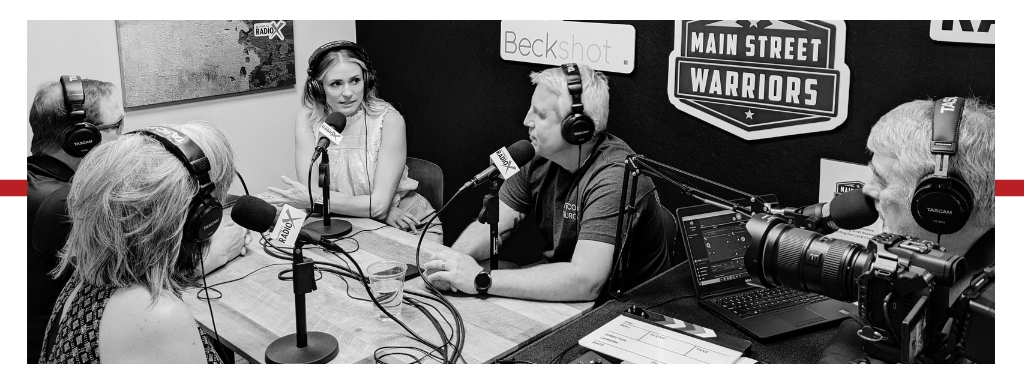
Sponsored by Business RadioX ® Main Street Warriors

Main-Street-Warriors-Banner

CherokeeBusinessRadioHTHSeries050923banner

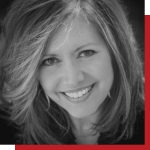
Brenna-Josh-Burkhalter-bwBurkhalter Realty Group is a husband and wife Real Estate team that helps people buy and sell homes in the Atlanta area.

Our goal is to make the transaction as easy as possible for our clients. We turn clients into friends by helping them realize their real estate dreams.

Connect with Brenna and Josh Burkhalter on LinkedIn.

About Our Co-Host

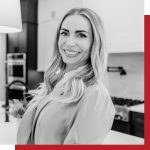
Mary-Win-King-headshotbwMary Win King grew up in a small town in South Carolina and has been living in Georgia for 12 years with her husband and amazing 11 year old daughter. She is so thankful to be in the Southeast with warmer weather!

Mary and her family love living in Ball Ground on their 13 acre farm enjoying their horses, cats and dog.  She has always had a passion for interior design and home staging, so starting Simplicity Home Staging & Design 2.5 years ago, alongside a friend at the time, has been such a blessing.Simplicity-Home-Staging-and-Design-logo

Mary loves helping clients LOVE their home and turning it into a relaxing “breath of fresh air” when they come home each day.

On the home staging side, she loves being able to help potential buyers see themselves in the home by showing off the great aspects of each room and what the home has to offer.

Currently, we look forward to serving new clients with our new bundle services. The best gift is when we are able to call our clients our new friends!

Follow Simplicity Home Staging & Design on Facebook.

This transcript is machine transcribed by Sonix

TRANSCRIPT

Intro: [00:00:07] Broadcasting live from the Business RadioX Studios in Woodstock, Georgia. It’s time for Cherokee Business Radio. Now, here’s your host.

Stone Payton: [00:00:24] Welcome to this very special edition of Cherokee Business Radio. It is our inaugural episode of our new House to Home series. And today’s episode is brought to you in part by our local small business initiative, the Business RadioX Main Street Warriors Defending capitalism, promoting small business, and supporting our local community. For more information, go to Main Street warriors.org and a special note of thanks to our title sponsor for the Cherokee chapter of Main Street Warriors Diesel David Inc. Please go check them out at diesel. David.com. You guys are in for a real treat. Please join me in welcoming back to the Business RadioX microphone with simplicity, home staging and design. Miss Mary Win King. How are you?

Mary Win King: [00:01:15] Oh, thank you. I am great. I’m so happy to be here and do this for the second time around and have some guests with us and just make the most of it.

Stone Payton: [00:01:23] Well, it is such a delight to have you back in the studio. We had so much fun last time. I learned a ton for the two and a half people in Cherokee County that don’t know Mary Win King, let’s give them a little bit of an overview, a primer about your business and what you’re really out there trying to do for folks.

Mary Win King: [00:01:42] Sure. So I am the owner of Simplicity, Home staging and Design, and we actually just celebrated three years last week. So that is exciting news. And we specialize in helping clients with interior design and home staging. And on the interior design side, typically I would help with residential, but I just got my first commercial client. So working, working on that as well and just growing and learning as we go.

Stone Payton: [00:02:09] It sounds like a great deal of fun. It sounds like a marvelous way to and a platform to to be able to express your creativity and live into that. And I’ve gotten to know you a little bit, so I know that that’s important to you at this point in your career. You’re kind of over that initial hump. You really beginning to get some traction. What are you finding the most rewarding? What what do you like most about the work?

Mary Win King: [00:02:33] Honestly, just listening to my clients, whether it’s home staging or interior design and tailoring, what needs to happen to to their specific needs and really being able to help them with that, listening to them at first and making sure that I understand what the task at hand is that they need accomplished is really my main goal of how to serve them the best.

Stone Payton: [00:02:58] And you are a good listener. I know know I’ve watched you in conversations. I’ve participated in conversations. And when it’s time for you to talk, you talk. But you know, sometimes people are just waiting. They’re not listening. But Mary Win. Right. My other guests that we introduce here in a moment are nodding their head. But you’re genuinely listening. And I can sense you doing that, you know, when you’re out in the field.

Mary Win King: [00:03:19] Definitely. Definitely. It definitely helps me hone in on what is important and and loving on our community that way.

Stone Payton: [00:03:27] Yeah, well, who’d you bring with you today and why?

Mary Win King: [00:03:30] Oh, okay. So I am so excited to have on the show as our special guest, Burkhalter Realty Group based out of Woodstock, Georgia. We have Brenna and Josh, Hi.

Josh Burkhalter: [00:03:42] Thank you for having us. We really appreciate it.

Mary Win King: [00:03:44] Absolutely. They are an awesome married couple that we met about two years ago that will go into that in just a minute. But they are a great local real estate team with the Keller Williams program here. And we would love to hear about how y’all operate in our community and just hear more about your specialties and your background. So we’d love to start with that, if that’s okay, Stone.

Stone Payton: [00:04:12] Works for me. I got a thousand questions. I know we’re not going to get to them all, but I think that’s a great place to start.

Josh Burkhalter: [00:04:17] Sounds good.

Mary Win King: [00:04:18] Yeah. So. So first off, I kind of would love to express to our listeners how Brenna and I met so Brenna, go ahead with that.

Brenna Burkhalter: [00:04:28] Okay. Mary Win I met on social media. Actually, I came across an awesome Instagram account that had some wonderful interior design tips and tricks. And I looked into who the owner of that account was. It turned out it was a girl from Canton, and I reached out to ask about getting coffee and we met at a local coffee shop and all of a sudden it was three hours later and we had become fast friends and future business to come out of that, which was great.

Mary Win King: [00:04:59] Yeah, absolutely. We just I felt an immediate connection. We are similar in age. We both had children, you know, smaller children, but also working hard to make our businesses work and really get ourselves out there.

Josh Burkhalter: [00:05:13] Yeah, I remember when she came home from that meeting and she was like, I just met this awesome lady and she’s really cool. And we sat there and I was like, Why did it take so long? And she was like. Our because we have to live by a calendar. She’s like, well, we just before you know it, it was three hours. So that’s awesome.

Mary Win King: [00:05:29] So that was so fun. And then we were able to kind of progress our friendship through y’all needing some interior design needs and help with like your living room and your home office and some kitchen ideas. So that was really fun when they were able to bring me in and just get some things that were practical for their family, but also some size furniture that was more proportionate for like their space. And also now that I think your home office is more functional, right? Yes.

Josh Burkhalter: [00:06:01] Yeah, We normally would work in two different parts of the house, whether it was an upstairs bedroom that we had or a dining room. And now we have a functional desk that allows us to collaborate together in a space where we don’t feel super cramped anymore. So it was a huge help.

Brenna Burkhalter: [00:06:18] And as as realtors, we see different homes every single day. And it’s so easy to take pieces of different people’s homes and say, I like this, I like this. But then making it cohesive is hard to do in your own home. So Mary Win really helped pull that whole thing together and and make it a space that would be functional and pretty.

Stone Payton: [00:06:39] Yeah. So did you find that you were that self-aware right out of the box and you knew you needed and wanted help, or did you find it a little bit intimidating, either one of you, to have this professional. Come in.

Brenna Burkhalter: [00:06:51] They’re probably a little bit of both. Because I knew what kind of vibe or look we were going for. But it’s hard to do that, I think, in your own home sometimes, especially when you see so many other homes. So it was it wasn’t hard to reach out to her and ask. It was just something. I refer to other people all the time. And you don’t really think you’re going to need it in your own home in this profession, I guess. Yeah.

Josh Burkhalter: [00:07:16] Yeah. I kind of felt the same way. It wasn’t that it was a little different to have somebody because we see so many homes like Brenda had mentioned, that we kind of know what we like, but we hadn’t really applied it as much in our home yet.

Mary Win King: [00:07:29] Yeah, I think a lot of people go through that actually. Yeah, because it takes some time. Yeah. And but what was great in y’all’s instance, which I love doing, is they had some inspirational pieces that they did want to incorporate, like they had a rug for their home office with some colors that we could work off of and things like that. So so that kind of at least gave me the style that you were going for and some colors to play with and just to kind of pull it all together.

Stone Payton: [00:07:56] Well, one of the reasons that this is so such a germane conversation right now is we’re getting a new island, which of course means we’re getting new countertops behind it and which I’m sure translates to recovering or buying a new couch and all that. So this is a very timely conversation around my house. And my wife, too, is very creative. And, you know, she’s got a good eye, I think, for that kind of thing. And but I think she’s self-aware enough that, you know, maybe it makes sense to get a little help, just get a different a different take on it. So. All right. So the very first really work with the with these two was in their own home.

Mary Win King: [00:08:33] Yeah. Yeah. And so that went so well that, you know, a little bit later down the road I kind of was like, okay, Brenna, I really want to help you Home stage. I want you to see the difference that it can make. And I said, Just try it just one time with me. So we we did. And y’all, why don’t y’all elaborate on that scenario?

Josh Burkhalter: [00:08:57] Yeah. Do you do you want to go ahead. So we had a client who a family friend of ours that we had known for years and years. They were moving back to actually my hometown in middle Georgia, and she moved from there to here and empty nester downsized with, you know, all the stuff. She had accumulated a house for 30 years. She’s a very neat, tidy, clean lady. She just had a lot of stuff for like a townhome and small space for smaller space. So we had Mary Wynne come in and I mean, it was night and day how much more of a flow there was. And you could immediately just see yourself in the space, which is exactly what we’re shooting for. When people walk in, we want them to be like, Oh, I can do anything I want in here or leave it just like this. And it would be fantastic. So, I mean, it was amazing what she was able to do in on the property.

Brenna Burkhalter: [00:09:48] And in turn, when it comes to selling it, seeing a space and being able to envision your own things, your own family in that space because it’s been decluttered minimal decorations, people can really envision themselves or their families there. It makes such a difference. And because of that we had multiple offers and our seller was able to choose the offer that worked best for her and her timeline. And that was fantastic. And it was just the best example possible of no matter what price point or size home you’re working with, she can make a difference. And ideally that’s going to sell for more money and faster.

Stone Payton: [00:10:29] Well, how’s that for an endorsement?

Mary Win King: [00:10:31] Yeah, no, I mean, you know, we were laughing about this earlier is recently kind of my new slogan is going to be I want it to be a mary win, win, win win for the client. You know, a win for everybody involved. That’s perfect.

Josh Burkhalter: [00:10:47] Well, I mean, we can attest to it. She came through our house and we do like to try out a lot of our vendors before we refer them out to our clients because we want to make sure that we reputation exactly. So if we refer someone, you know, it’s you said our reputation on the line. And we knew after she came through and helped us out that it was probably going to be okay. And then she, I mean, knocked our socks off with the way that everything went with that deal. So, I mean, it was perfect.

Mary Win King: [00:11:10] Yeah, I heard you really love the curtains.

Josh Burkhalter: [00:11:12] Oh, yeah. I mean, yeah, I was. I had my doubts about some things she suggested in our home. And now I love.

Brenna Burkhalter: [00:11:18] There are some of his favorite pieces.

Josh Burkhalter: [00:11:20] It is. It is. So it’s. Yeah. Just trust her.

Stone Payton: [00:11:23] Well, I can tell you, like curtains would never even occur to me and I would probably love them, you know, once they were in. And if you saw my my side porch, you know, we were talking about hunting a little while ago, maybe it was before we came on the air. But, you know, I’ve got a deer head out on the side porch. You could probably do some stuff with the side porch. And now that I’ve been to Spain and back, I want to have, like, a Spanish flavor. Oh, cool. Yeah, I got ideas that are all.

Brenna Burkhalter: [00:11:48] I think Mary needs to come to your house. I need a win win.

Josh Burkhalter: [00:11:51] Exactly.

Stone Payton: [00:11:52] So is now has it gotten to the point where this is sort of part of the Burckhalter methodology when you’re when you’re listing a home, you’re going to want to bring a stagers that kind of where you’re at?

Brenna Burkhalter: [00:12:02] Fabulous question. Yes, it is, actually. And that’s a newer thing that we’ve been doing. We have added staging to our our listing package. So when we go in to talk with sellers, there are some vital pieces that we offer them that we cover the cost of that really set their house apart. We’re paying for those professional photos and we’re paying for our stager to come in.

Stone Payton: [00:12:26] You’re absorbing Mary Wind services. Okay. Wow.

Brenna Burkhalter: [00:12:29] We’re paying for our stager to come in and walk through the home and give them a very detailed to do list of what to do to get their house ready to sell. So that’s our our goal is to get them ready to sell, get them to sell the most for the most money possible and the least amount of time as possible and make it as seamless and smooth and stress free as you possibly can. Absolutely. And really.

Mary Win King: [00:12:51] Help with. We’ve talked about this. So like sometimes timeline of me coming in. Can be different depending on each client and when they’re going to do photos and list it. So the different varieties, you know, for example, on my website I offer occupied and vacant staging. But within that, Brenna came to me and said, Well, would you by chance even be okay if we did a walk? If you did a walk through and make a list for those clients? Because sometimes it could be that I come two weeks before you know the listing and then they have time to do those on their own. Or I can do hands on staging. So I like a combination of both, but it really just depends. That’s whenever it’s listening to what their needs are and what, you know, Brenna and Josh’s needs are for their timeline of what I can accomplish in different ways of of making that happen.

Stone Payton: [00:13:40] Okay, let’s talk about me some more. It’s my show. No, it occurs to me that, like, Holly and I, we’re thrilled to death with our home. We are remodeling some stuff, upgrading some stuff. But it occurs to me, even when we get it exactly like we want it, it could be perfectly appointed for Stone and Holly for this stage of our lives. And if we chose to put it on the market, it needs to be set up, staged a little differently to maximize the chances of it getting the best offer. Is that accurate? Correct. Yes. Very, very. Okay. Yeah. Yeah. Okay. I want to back up. How in the world did you two get into this business?

Josh Burkhalter: [00:14:16] I or. Yeah, go ahead.

Brenna Burkhalter: [00:14:17] Go ahead. I got into the business a little bit before Josh, We actually bought our home in Woodstock in 2015. We got married in 14, bought our house in 15. I got my real estate license in 2016. We had. Wow. Just boom.

Stone Payton: [00:14:31] Boom, boom. Yeah.

Josh Burkhalter: [00:14:32] We like to do big things. 17 off and had our first kid in 18, so we had a little gap year.

Brenna Burkhalter: [00:14:37] There got to be something big every year, right? But we had a fantastic experience buying our house. It was very smooth. It was fairly stress free. There weren’t really speed bumps along the way, and we enjoyed that experience. And obviously it got us to a place that we love and into a home that we love. So we wanted to be able to give other people that same experience. And so I got my real estate license and jumped in head first and have loved it ever since. And three years after that, Josh joined me in the business too, and now we’re husband, wife, realtor team, which has been awesome.

Josh Burkhalter: [00:15:13] Yeah, we I started my post college career in Inside Sales. I was working in the telecom industry mainly a little bit of time in the finance industry, but got started right after our son was born. We just kind of rip the band aid and let’s do it, you know, join the team. Got licensed in 2019 and actually had my first closing the next day, which was pretty cool. That is so awesome. You are a rock star. So it was thanks to my wife. The Berkhalter.

Stone Payton: [00:15:43] Training methodology.

Josh Burkhalter: [00:15:44] Yes. God, she got to me through the process and we were able to get it done, which was awesome. So the best boss ever? Yeah, she is. That’s what I tell everyone. They’re like, How do you all work together? I’m like, She’s the best boss I’ve ever had.

Mary Win King: [00:15:54] So that’s a huge compliment.

Stone Payton: [00:15:57] Yeah, so you said it. I’m going to take your word for it at face value that it’s been awesome working together. And I’m trying to envision Holly and I in the same business. You know, she has a real job. She works at IBM. I do this, and she’s been so incredibly supportive and I try to be supportive of her. But there’s got to be some additional dynamics when you’re working with your with your spouse. A what’s that like in general? But B is like, do you kind of, I don’t know, divide and conquer may not be the right label, but you each kind of have your own roles, your own strengths. And yeah, we do talk to that a little bit.

Josh Burkhalter: [00:16:31] Yeah. And we do a lot of dividing and conquering and we, we love being together, being around each other. So I think that helps a lot. We have always been I mean, we’ve been together now for what, seven, 16 years. So we yeah, so and, but we do kind of split things up. But really it just depends on the client’s need and if how one of us meshes with a certain person, if we feel like this person should take the lead with this type versus another, that is kind of how we do it. We don’t have set roles as far as me handling the list side of things and her specifically working with all of our buyers. It’s really just who we mesh with best.

Brenna Burkhalter: [00:17:11] And it’s such a relationship based business. It’s so important to even if we are tag teaming and helping that client out, both of us, somebody does most likely take the lead on who meshes best with that person so that we can really be a good fit for their personality and their needs.

Mary Win King: [00:17:28] And one thing that I’ve complimented them on that I just love about their, you know, togetherness and the way that their personalities work, though, is also their background of like Josh is more from the country. And then Brenna is a little bit more from the suburbs. So but like in my personality is both and so I feel like I relate to them at different times on different levels and so many good ways, you know? So I feel like that’s. Great thing that they offer their clients so they can they’re very relatable that way, that they have the background of both.

Stone Payton: [00:18:02] Well, there’s the relationship aspect, which I it makes perfect sense to me. But the level of trust that you must have to cultivate, because these are huge moments in a person’s life, right?

Brenna Burkhalter: [00:18:16] And we do not take that lightly at all.

Josh Burkhalter: [00:18:18] We it can be stressful and emotional and and we embrace the challenge, but we also make sure that we educate people along the process to take out as much stress and emotion as possible because the logic needs to drive the decisions. When we’re talking about massive amounts of money, that especially with the people that we like to work with, like first time home buyers, we make sure that we hold their hand through the process so there’s no speed bumps or hiccups, and they understand that the whole process is going to be smooth.

Brenna Burkhalter: [00:18:48] And they know what they’re signing. Exactly.

Josh Burkhalter: [00:18:51] Good point. That would.

Speaker6: [00:18:52] Be important. Yeah. Yeah.

Brenna Burkhalter: [00:18:53] I mean, that’s really some people just sign their name and we try to make sure that they really, truly understand it. It’s a big purchase. A lot of money. Yes. Yeah, it’s.

Josh Burkhalter: [00:19:02] A big deal. And it’s a big deal to purchase a home at any stage, whether it’s your 15th investment property or your first home. It is a monumental, life changing moment. That is. I mean, it’s when my mom was able to purchase the home that I grew up in when I was ten years old. It was it was structure for my brother and I that we previously didn’t have. So that’s huge. And that’s something that I lean on with first time home buyers that I mean, you’re setting them up for a way to generate wealth for their family for generations.

Brenna Burkhalter: [00:19:32] Yeah, I love that.

Mary Win King: [00:19:33] I love that. And I was hoping that they could share with their listeners like a little bit, even like what they specialize in. I know they mentioned the first time home buyers, but just can you all elaborate on that a little bit?

Brenna Burkhalter: [00:19:44] Absolutely. Like Josh mentioned, we do love working with first time home buyers since we were in that boat, and that’s kind of how I got into this business. We love the chance to educate other people, really help them find the home that’s going to be the right fit for their current setup and ideally be their realtor for life when they’re moving on up. And we we try to when people ask us who’s a great referral for you, we try to think of those people in those big life moments. So it is we love the first time home buyers. We love the first time sellers too, because we’ve worked with a lot of our friends buying their first home. But then when they go to sell their first home, that’s a whole nother experience. You’re on the opposite side of that and you haven’t been there before, So the.

Josh Burkhalter: [00:20:30] Market’s a lot different. I mean, if you unless you buy and sell within a two year period, it’s I mean, it’s going to be substantially different from when you work with your first client seven years ago. So selling now, right? So it’s I mean, there’s a lot that can change. As we know, overnight, a couple of years ago, a lot changed.

Mary Win King: [00:20:45] So so if you walk through them on that first time experience, you’re going to be able to relate back to that so that they can understand better when they’re going to sell it, which I love.

Brenna Burkhalter: [00:20:54] And then we have found over the past year and a half or so, we’ve had a lot of opportunities to work with folks in those end of life stages where they’re going through the probate process and selling a home that was in the family or belonged to a deceased family member, that they’re now responsible for selling that property. So we’ve learned a lot through those experiences. And it’s a big responsibility.

Josh Burkhalter: [00:21:17] Yeah, it’s it’s a different education process because a lot of the probate and estate stuff has to be taken care of prior. And some people don’t know that. Some people do. We’ve kind of had people that were educated along the whole spectrum. It’s also a great. Way to give people closure that they need for whether it was there that makes sense. You know, someone that was really close to them, mom, dad. Or it could be a distant relative that they just happened to acquire a property when they passed away. So it’s it’s challenging, but it’s also very rewarding because you’re able to give them that closure. And a lot of the time that is the last piece is the house is the last thing to really go.

Mary Win King: [00:21:55] And you can tell y’all’s heart’s in it. That’s that’s one reason that I love you too so much is because you’re care for your clients shines through like every transaction and every, you know, reason for doing certain things. And that’s why I love working with them. I appreciate.

Brenna Burkhalter: [00:22:10] That. We want people to feel that. Yeah, sure.

Stone Payton: [00:22:13] So paint a day in the life of the like on a Thursday. And I’m getting the sense that no, Thursday is the same. No.

Speaker6: [00:22:21] That’s why we love this.

Brenna Burkhalter: [00:22:22] It’s never the.

Speaker6: [00:22:23] Same.

Stone Payton: [00:22:24] What are some things that might happen on any given Thursday Thursdays?

Brenna Burkhalter: [00:22:28] We usually have listings. Go live.

Josh Burkhalter: [00:22:30] Yes. Normally we have stuff hit the market on Thursday. Okay. This past I did not.

Stone Payton: [00:22:34] Know that that was not scripted. It’s not in my show notes.

Speaker6: [00:22:37] That just appreciate that.

Josh Burkhalter: [00:22:40] We last Thursday was when I was out of town was pretty busy for Brenna. She got a call from somebody that wanted to see a house and, you know, things changed immediately.

Brenna Burkhalter: [00:22:49] So they are under contract on said House.

Josh Burkhalter: [00:22:51] Yeah. So we had to pivot and make a quick move. And so it can be anything from a listing going live to you know maybe having to show someone that calls on a sign call hey I’d like to check out this property to go and show a buyer a new property. As long as we’re dropping our son at school by 830 and picking him up by six, I think there’s that divide.

Stone Payton: [00:23:10] And conquer thing coming back around.

Speaker6: [00:23:12] So a lot of dividing and.

Josh Burkhalter: [00:23:14] That’s really like Brenna said, what we enjoy about it is that it’s different and no two clients are the same. Yeah, every deal is different. Every day is different. So we, you know, it keeps us on our toes for sure.

Speaker6: [00:23:26] Yes.

Stone Payton: [00:23:27] Well, it seems like there’s so many moving parts. Like, I feel like just the paperwork alone. If I had that much paperwork in my business, I would starve. Right? I’m just not the right.

Brenna Burkhalter: [00:23:37] I’m a control freak. It’s hard for me to let go of things. However, I will say delegating some of those things to an assistant has been the best decision we have ever made. Yeah, we have a contract to close assistant that’s amazing and supports us from when buyers or sellers go under contract until the closing period to help keep all the paperwork in check.

Speaker6: [00:23:56] Yep.

Josh Burkhalter: [00:23:57] Just an extra level of accountability with dates and I mean the whole process, it makes it smoother for everyone. And then we also have an assistant that helps us with a lot of our social media and a lot of our marketing that we do.

Stone Payton: [00:24:08] Because that is so key in this day and age where you have to have a social media presence, right? I’m saying this how we met.

Josh Burkhalter: [00:24:14] I know it’s a testament here. That’s how.

Speaker6: [00:24:16] Yeah.

Josh Burkhalter: [00:24:17] So it’s it’s it’s a challenge. But we have slowly started to leverage some things out and we found that it allows us to do what we’re good at. And like when we bring Mary went into the picture on a listing, we are able to focus on the negotiation and the marketing side of things. And she can handle the staging and the prep side of things. So it allows us to do what we do best and her to do what she does best. So it’s a win win all around. So there’s a.

Stone Payton: [00:24:42] Pro tip not only for other realtors, just other entrepreneurs and business owners in general. Yeah, get that best in class. Help and stay in your lane. Do what you do and yeah, exactly.

Speaker6: [00:24:52] Absolutely.

Stone Payton: [00:24:53] That’s a good reminder. Your arena strikes me it seems like it would be incredibly crowded, competitive. I feel like there are a lot of realty professionals out there, so I am curious how the whole sales and marketing thing works, how you get the new business or even just the new conversations that might lead to new business. How do you.

Brenna Burkhalter: [00:25:15] Yeah, I will say first it’s community over competition. Always. We love where we live. There’s a ton of realtors in this area and there’s enough business for all of us. It is all about the relationships and. Even if one person is looking for a house and they’re choosing between several different realtors, a couple of those realtors may not be a good fit for that person personality wise, goal wise. So while there are a lot of us who you’re working with is so important and and that’s going to be different across the board, if that makes sense. It does.

Speaker6: [00:25:54] Yeah. Yeah. I mean.

Josh Burkhalter: [00:25:55] Like Brenda mentioned, it is a pretty crowded space. I mean, just with our brokerage alone, we have, I think around 400 agents that work out of our Keller Williams Market Center in Woodstock. Oh, that’s just Keller Williams agents. Now, that’s not to say that they all work just in this area. We work all over the place. Then there’s other I mean, you know, you’ve got many, many other brokerages, but like she had mentioned, it’s there’s plenty of business to go around. You just we have to make sure that it’s a win win for everybody on every side of things. And we’re not the best fit for some people and we’re okay with that. I mean, I would rather recommend that up front than have problems in the transaction because we didn’t mesh personality wise and our goals weren’t aligned so well.

Stone Payton: [00:26:37] I love that ethos. I love that mindset of community over competition. And you described it about the the realty world. But my experience here in Cherokee County in general, and particularly here, like in Woodstock, Holly Springs, you know, ball ground, Canton, it’s such a my experience has been it’s such a supportive business community. People will rally around you if you’re willing to share with them what you need and want. And if you’re willing to serve first, serve early, serve often as well. Has that been your experience community wide?

Speaker6: [00:27:10] Yes. Yeah, 100%.

Brenna Burkhalter: [00:27:12] I got Mary Wind to come to Woodstock Business Club with me. Yeah. It’s been a great source of new friendships, business vendors that we need on our vendor list that have been very helpful to our clients. I mean, it’s been a wonderful place of community. And Mary Winds met several other clients and yeah, it’s been.

Mary Win King: [00:27:32] It’s been great and we learn so much. They have some great speakers there that we can learn from and grow from and learn from each other and just share what we do and support each other. So that’s been awesome and it’s something that we can, you know, that it’s pretty consistent. It’s every Thursday at 830 here and so we can plan on it. But yeah, it’s, it’s nice to have those outlets to be able to really go and share success stories and also things that we can really add onto our skill level and, and all of that. So yeah, Brenna and I love to meet up there.

Stone Payton: [00:28:08] So do I. And I enjoy meeting people after like the big meeting, you know, hanging out under the elm tree, grab a cup of coffee and chat. But also, you know, I’m also a consumer, so I have professional service needs as a business. But also, you know, the home services people are there, Alpha and Omega, Lori Kennedy You know, that’s where I take my car to get it done.

Speaker6: [00:28:32] We’ve taken our there. Okay, So.

Stone Payton: [00:28:34] Yeah, I’m gonna send Laurie an invoice, but just, you know, just anything you might need if I were in search of a mortgage, you know, one of the first people I would at least talk to is Darren Hunter. Right. If I were going to organize my next Spain trip, I’m going to talk to Dawn, you know? Yeah. And I feel like that’s someone that I that I know and trust. And and I suspect many of them, if they felt like they were going to use this platform to build relationships for their business, whether they ended up doing it with me or not, I think they would check in with me first and I think they would know. And it’s true. I would try to help them whether they were going to do it with me or not, you know, just and I’ve collaborated with other people in the media. But this this community is so supportive. And Woodstock Business Club in particular has just been a wealth of friends. I mean, I’ll call them family. Yeah, that’s been my experience, too.

Speaker6: [00:29:25] Yeah.

Josh Burkhalter: [00:29:25] I mean, every Thursday when she comes back, she’s like, energized, ready to roll. I mean, and I’m like, wow, okay, I got to. I’m getting some of this vibe.

Speaker6: [00:29:32] Because she’s just good energy. Yeah, it is. It’s great. Yeah.

Brenna Burkhalter: [00:29:36] Being with people in the community that, you know, are happy to help.

Stone Payton: [00:29:38] Yeah. So outside the scope of your work, what passions, if any, do you pursue? I shared with you as we were coming on air that I like to hunt and fish and travel. That’s my thing. What are some things that you nerd out about or really dive into outside the scope of the realty? Yeah, I.

Josh Burkhalter: [00:29:54] Mean, you hit it right on the head. I just got back from Colorado Sunday. We did 750 mile road trip across the state and checked out like six national or state parks and national parks. Amazing. So, yeah, I mean, and I enjoy anything outdoors. We like to hike a lot together, hunt fish. I try to do that as much as I can. The kids are priority number one now, so that’s taking a back seat. But I’m not complaining. I love spending time with the fam, but yeah, I do. Like I said, pretty much anything outdoors. I’ll. I love being outside. I grew up on 100 acres so anytime I can get out of the. Suburbs. I need to kind of get some some good fresh air.

Stone Payton: [00:30:35] It’s nice just being in the woods, whether you harvest anything or not, just being in the woods. My I mean, I just it’s just a marvelous way to decompress and appreciate.

Josh Burkhalter: [00:30:45] I think everybody could use a couple hours.

Speaker6: [00:30:49] He needs to.

Brenna Burkhalter: [00:30:49] Send me out there sometime just because. Just be still and be quiet.

Speaker6: [00:30:52] Yeah, well, and.

Stone Payton: [00:30:54] How about you.

Speaker6: [00:30:55] Or.

Brenna Burkhalter: [00:30:55] I? Do. We do love hiking and getting out there with the kids, too. Just having them be out in the woods as much as possible, too. But I really enjoy swimming. That’s my. My me time where I can just be in my head right and swim laps. And I did that all growing up and through college so that the pool is my happy place. Any kind of water really is my happy place. Yeah, we do love to travel, so I’m glad he got to take this trip recently and a couple other family trips coming up soon.

Stone Payton: [00:31:27] So, Mary, when am I remembering horses? Animals, period. Really? Right.

Mary Win King: [00:31:31] Exactly. Yes. Oh, my daughter and I just got to ride again with all this rain and and her little pony had an injury, so it was just I was in heaven this weekend just being able to get back into horses and enjoy being at the barn and our cats and our crazy dog and yeah, whoever else comes around.

Stone Payton: [00:31:50] Well, we’ve talked before and you were kind enough to offer and we’re going to take you up on it. My wife Holly, just loves horses. She was around them when she was younger and. And she hasn’t. She we’d love to come out and do so. I’m going to come do the horse thing with you. I’m going to go get a tree with Josh. This is what was so great about Woodstock. You meet people, perfect new connections. Was there anything in particular that drew you guys to Keller Williams versus like another brand or brokerage?

Brenna Burkhalter: [00:32:21] Yeah, great question.

Speaker6: [00:32:23] Well, I thought.

Stone Payton: [00:32:23] It took me a minute to get it out. I thought it was a fantastic question.

Speaker6: [00:32:26] Yeah, no, it was. It is.

Brenna Burkhalter: [00:32:29] I’ve been at Keller Williams since I started seven years ago or so. And the culture and the training there is what really pulled me there and has kept me there since. The culture is amazing. They’re very inclusive and accepting of anybody, any type of business that you want to have, whether you want to be doing a few transactions a year or you want to be a mega agent with a huge team so they can encompass all of that. And also their training is just unmatched. I mean, there’s a calendar every single month of amazing training classes, whether it’s taught from people at the office or they bring in outside vendors to teach those classes on those specific subjects.

Josh Burkhalter: [00:33:12] So yeah, I mean, I agree 100%. I think the the culture is huge. I mean, it’s I mean, Thursday, this Thursday, we’re having our annual red day where every Keller Williams agent in the entire world and we’re in, what, 70 countries I think now. Wow takes the day off and serves in the community to some degree. So and that’s that’s just the tip of the iceberg when it comes to all the stuff. I mean, agents in need in our office with health issues get taken care of. I mean, people if you need help with anything, you can ask anyone at the office anytime, which is huge for anybody getting into the industry. That’s new. It’s it’s great to have just a support system. And like Brennan mentioned, there’s a model and a plan for any type of agent at any level that you want to be. So it’s it’s great to be able to go in there and know that you don’t have to reinvent the wheel to be successful. You can just go, Oh, I want to be like this person and do what they do.

Speaker6: [00:34:08] Yeah, Yeah. Well, I’m glad I asked. Yeah.

Stone Payton: [00:34:12] So before we wrap, I’d like to go around around the table and leave our listeners with a pro tip or two, you know, in your domain of expertise. So I’m going to start with Mary Wynn, a number one pro tip gang. If you’re if you’re thinking at all about redoing anything in your home, just reach out and have a conversation with Mary Wynn. But are there some things that people can begin thinking about or just some things they can do on their own just to sort of get in that mode of revisiting the way they’ve got things organized in their home?

Mary Win King: [00:34:43] Sure. I would say for me personally, if I was giving a tip that go through your home and really decide, do you love it? Meaning? Meaning like, okay, if they have a bookshelves, go through each item and say, do I love this or am I just keeping this here to fill space? So if I have something in my home that I don’t love, I would rather have empty space so that then my creative brain can go through as I’m walking through HomeGoods or wherever and say, that’s what I’m picturing for that space. Because in my personal experience and with helping with other clients and even family members walking through their homes with them, it is so much more fun and easier if you get rid of what? You don’t love. Set it in a pile. Maybe you don’t get rid of it yet, but set it in a pile. Off to the side and then be excited about what it could be and the things that you might want to add to your current decor that you do love. That’s my best pro tip for the day.

Stone Payton: [00:35:44] I think it’s a great tip and I like the idea of having that in your mind, like going through that exercise. Then when you’re out playing, no stress, just. But when you’re out and you go to a home goods or like I noticed the other day at a Tuesday morning or something that’s closing down. Yeah. Well now I’ll go in there and walk through but, but instead of walking in cold, you know, Holly and I will have thought about that kind of. What a great tip. So if someone out there listening would like to have a more substantive conversation with you, reach out to you, tap into some of your work, whether it be an individual or, I don’t know, maybe another realtor team that you could team up with, What is the best way for them to connect with you?

Mary Win King: [00:36:22] The best way is to give me a call or text me at (606) 260-0175 or feel free to reach out by email at Simplicity home interiors at gmail.com. And we’re also on Facebook and Instagram, so it’s easy to find us.

Stone Payton: [00:36:41] I got to go check out the Instagram and Facebook. We got to get better at the whole social media thing here at Cherokee Business Radio. All right, Josh, you got a pro tip for us. Those of us thinking about buying and selling whatever.

Josh Burkhalter: [00:36:52] I would just say who you work with matters whether it’s in real estate or your business, but especially in the real estate field like we had mentioned. We know that there’s plenty of business to go around and we’re not just going to force it down your throat if we don’t feel like it’s a good fit and you don’t feel like it’s a good fit, then by all means, you know, go with whoever you’re most comfortable with because it is a huge decision whether you’re buying an investment property, first house selling. Just make sure you’re comfortable with whoever is holding your hand through the process because they’re going to make your life a lot easier.

Stone Payton: [00:37:24] All right, Brenda, you trained him. That was a great tip.

Speaker6: [00:37:27] Was a great. Now you got.

Stone Payton: [00:37:28] To follow that act.

Speaker6: [00:37:30] What do you thinking?

Brenna Burkhalter: [00:37:33] I in relation to that, to the education piece is so important to us. So make sure that the person that you are working with again, going along with the right person for you. Make sure the person you’re working with is explaining things to you because it’s a huge deal. It’s a significant amount of money and it can, you know, make or break a family situation sometimes having this new place to live. So I would say just being educated on what you’re doing, how it’s going to propel you into your your next goal or stage in life is so important. So the education piece, I think, is what we really weigh heavy on.

Stone Payton: [00:38:15] Amen. I love it. All right. What’s the best way to connect with you guys?

Brenna Burkhalter: [00:38:20] We are all over Facebook and Instagram. Yes, you can reach us by phone. We love when people call or text us. My number is (404) 434-3484. Lots of.

Speaker6: [00:38:30] Fours and.

Josh Burkhalter: [00:38:31] I’m (478) 232-0438. Like Brenda mentioned. Call text. Email berkhalter. Realty Group on social media. Check us out. We’d love to, you know, get to know everybody. And thank you for having us. We really appreciate it. It’s been awesome.

Speaker6: [00:38:45] Awesome.

Mary Win King: [00:38:46] Y’all got to come. I love.

Speaker6: [00:38:48] It.

Stone Payton: [00:38:48] It has been an absolute delight having you two in the studio. You know, I knew it was going to be fun having Mary Wynne, but Mary Wynne, thank you for making this happen and thank you all for joining us.

Speaker6: [00:38:59] Absolutely. Appreciate it.

Stone Payton: [00:39:00] My pleasure. All right. Until next time, this is Stone Payton for our guest today. And everyone here at the Business Radio X family saying we’ll see you again on house to home radio.


Tagged With: Burkhalter Realty Group, Simplicity Home Staging & Design

Georgia Technology Summit 2023

May 10, 2023 by angishields

BRX-Mic-Georgia-Technology-Summit-2023
Atlanta Business Radio
Georgia Technology Summit 2023
Loading
00:00 /
RSS Feed
Share
Link
Embed

Download file

Ken-Meyer-Georgia-Technology-Summit-2023

Georgia Technology Summit is THE preeminent, regional technology conference. In 2023, it brought together leaders, SME’s, athletes and educators to explore the intersection of technology, innovation and how they help to build high-performance teams.

Scott-Waid-Georgia-Technology-SummitScott Waid, Atlanta Braves

https://stats.businessradiox.com/38691.mp3

DOWNLOAD HERE

TRANSCRIPT

Intro: [00:00:07] Broadcasting live from the Georgia World Congress Center for Georgia Technology Summit 2023. It’s time for Atlanta Business Radio. Now, here’s your host.

Lee Kantor: [00:00:26] Lee Kantor here broadcasting live from Georgia Technology Summit 2023. So excited to be doing this today. This is the largest technology showcase in Georgia and I’m so excited to be talking to my guest, Scott Waid with the Atlanta Braves. Welcome, Scott.

Scott Waid: [00:00:42] Thank you. Great to be here.

Lee Kantor: [00:00:44] Well, Scott, talk about a little bit the Atlanta Braves and technology. Most people don’t connect the dots with technology in baseball. So how do you how do you serve the community through technology with the Braves.

Scott Waid: [00:00:56] So technology plays a big part of the Atlanta Braves organization, both on the field. So think player development, coaching, positioning, defensive skills, player development, but also in the front office to enable the business of baseball to execute, whether it’s ticket sales or marketing or the different aspects that go into the day to day operations of the business. And then the third area is really in the fan experience. When they come to Truist Park, we have a lot of technology, whether it’s the LED boards that are present throughout Truist Park. We have the mobile ordering capabilities to enable the guests to use their smartphones to order food and beverage or retail merchandise for pickup. And then we also, you know, first and foremost, when fans are coming into the park, they come and scan their tickets using the smartphones. And we’ve got well over 95, 96% of the people that enter the park are using digital technologies to enter it. Whereas it wasn’t that long ago, if you wanted a ticket, you went down to a ticket office, they’d print it out and if you wanted to sell it, you held it up. Now we’ve got through the digital media not only the ability to purchase it, but also resell it on the secondary market.

Lee Kantor: [00:02:15] So what is kind of a day in the life of you? Like it sounds like there’s so many different avenues you can kind of deploy technology to help folks. How do you decide, you know, to prioritize, okay, this is the stuff that has to get done.

Scott Waid: [00:02:29] Well, it varies whether it’s in season or off season and even in season, a home game versus a road game. So a home game, it’s all about the fan and the guest experience and getting 42,000 people in and out of the Truist Park safely and securely and having a great family experience and a great business experience as well. And so and a game day, it’s all about preparation. So typically the games are at night, say 737 21st pitch and the gates open at 530. So leading up to the Gates opening, it’s all about preparation and making sure that when the guest enters, the Wi-Fi is working, the all the point of sales are working, all of the displays are working. And so making sure it’s the best it can be when they’re on the road, we’re we’re cleaning up and preparing for the next homestand because we have 81 home games and it’s spans from April through October. So it’s wash, rinse, repeat throughout the season. And then when we get to the off season, it’s when the real technology work begins because we try and do limited upgrades during the season because we have the the the day to day experience and operations, but planning for the new things, whether it’s new capabilities we want to add for the stadium and new experience, we typically do that in the off season. So that’s when the real work is done.

Lee Kantor: [00:03:50] Now how much of how much do you deploy technology when it comes to evaluating players?

Scott Waid: [00:03:57] It’s been predominant. I mean, it was chronicled in Moneyball almost 15, 20 years ago now, and that’s prevalent throughout Major League Baseball is.

Lee Kantor: [00:04:07] But it was the exception back then, right? It was the.

Scott Waid: [00:04:09] Exception. And now it’s the rule and table stakes. It’s table stakes. And it’s you know, there’s a lot of technology that goes into it. Whereas used to relied on coaches and pencils and and expertise. Now it’s all about spin rates and exit velo and player positions and all of that. The data and analytics is just proliferating now in in baseball.

Lee Kantor: [00:04:32] Now was that when that technology at least the mindset shift happened to lean on technology was it something that was gradual then sudden where like like a few people were dabbling and then all of a sudden it was like, okay, now everybody, we’ve got to kind of lean into this. This is I can’t ignore this anymore. There’s too much evidence to show that it’s effective.

Scott Waid: [00:04:53] Yeah, I would say it was very similar to the, you know, the life cycle of a product where you had some early adopters and when they were successful. And at the end of the day, sports is all about winning on the field. And if the data and analytics helps with that player performance and the team performance, but also in player development and with Major League Baseball in particular, we have a minor league system. And so using data analytics to help the player develop their skills that are needed are also very important in the in the whole ecosystem.

Lee Kantor: [00:05:24] And then it’s trickling down to younger and younger players. That’s right.

Scott Waid: [00:05:28] That’s right. I have a couple of boys that play travel baseball and even, you know, teenagers now they’re getting into the hitting dynamics and the swing playing and using all the different technology that’s out there again, to improve the improve the player performance.

Lee Kantor: [00:05:42] And are you seeing that translate to better and better performance at the major league level?

Scott Waid: [00:05:48] I would say yes. At the Braves, we’ve won five consecutive division titles, so we like to think that we’ve had a little bit to do with that. Yes. Both on the technology, but the data and analytics side.

Lee Kantor: [00:06:00] Now, why was it important for the Braves to have you kind of take a leadership role at TAG?

Scott Waid: [00:06:06] It was important because Atlanta is a very thriving community. It’s and we have we’re we support that community in a number of different ways through our Atlanta Braves Foundation. And so we wanted to be a part of the Atlanta community from a selfish perspective, how can we help the businesses be successful in Atlanta? Because if Atlanta is successful and the people are successful, that’s more opportunity for us to have fans in the stadium and to grow our revenue streams as well. And for me to tap into the great resources that are present here at TAG and the business forum today is fantastic because, you know, there’s a lot of innovation and a lot of creativity that’s coming out of the technology community and how can we harness that for our sports community in Atlanta to improve that guest experience? Because, yes, you will remember maybe if the team won or lost for the game you went to, but you’ll definitely remember the memories that you created while you were there with your family, your friends, your business associates.

Lee Kantor: [00:07:12] Well, thank you so much for sharing your story today. You’re doing important work. We appreciate you. Great.

Scott Waid: [00:07:16] Thank you very much for having me.

Lee Kantor: [00:07:18] All right. This is Lee Kantor. We’ll be back in a few at Georgia Technology Summit 2023.


Megan-Heinze-Georgia-Technology-Summit-2023Megan Heinze, Idemia

https://stats.businessradiox.com/38703.mp3

DOWNLOAD HERE

TRANSCRIPT

Intro: [00:00:07] Broadcasting live from the Georgia World Congress Center for Georgia Technology Summit 2023. It’s time for Atlanta Business Radio. Now, here’s your host.

Lee Kantor: [00:00:26] Lee Kantor here so excited to be broadcasting from the Georgia Technology Summit 2023. This is the largest technology showcase in Georgia and I am excited to be talking to my guest, Megan Heinze. Welcome.

Megan Heinze: [00:00:42] Hello. Thank you so much for having me here today. It’s been a fabulous day.

Lee Kantor: [00:00:47] Yes. You’re the co-chair of the event. How did you get roped into that? Did you lose a bet?

Megan Heinze: [00:00:53] Yes, absolutely. I lost a bet. What are you thinking? I was voluntold. I actually co-hosted last year. And so I guess tradition. They say that you get to do it the next year. It’s a two year job and not just a one year job. And so I did it again. And but this year it was really important for me. I got a lot of feedback on two things that were really important were one is networking, making sure people get to know people outside of their influence area so they want to meet a lot of different people. And the second, the vendors also wanted to make sure that they were actually meeting people as well. So we tried to create a lot more momentum this year than we did in previous years. So one of the things to get people actually out here and talking to everybody else that’s sponsoring and supporting us, we have the music, the DJs, so there’s a lot of music, excitement. We had the tag balloons, so people are taking pictures. I added something for networking and we’re calling it networking Bingo, as you can say, and it’s forcing people to actually take pictures with a deejay taking pictures and phone of the tag sign and then actually meeting different people from everything from, Do you have a Palm Pilot? Please sign here. Are you part of BTS? Please sign here. And it’s getting people more involved and excited across the board.

Lee Kantor: [00:02:15] And that’s a great bit of advice for entrepreneurs out there to listen to your customer and then try to give them what they’re asking for, right?

Megan Heinze: [00:02:23] Yes, absolutely. Entrepreneurs should always listen to their customers. I think, you know, know your customer’s always the most important part is how can you create excitement and want people wanting to be there and want to be there every single year. And so that’s what we want to drive, is people to engage and get excited about being part of Georgia Technology Summit, but also for them to meet each other and actually grow their business, because that’s what networking is all about, is to grow your business, grow your network and meet other people.

Lee Kantor: [00:02:54] So now that you know you had it on a whiteboard, what to do and how it was going to work. And now that you’ve seen it in action, is it meeting your expectations?

Megan Heinze: [00:03:02] It is meeting. My expectations was super excited during lunch time. We had a full house last year. We didn’t have as many people in. A lot of people signed up, but not a lot of people stayed through lunch and so I was super excited. Every single table was full Coming outside. I saw people talking to all the different vendors and sponsors, and then each of the content sessions have been jam packed. So super excited about that as well.

Lee Kantor: [00:03:25] So what was it about Tag that got you involved personally and your your company saying this is something you should invest time in and taking leadership position?

Megan Heinze: [00:03:36] Absolutely. Well, for me, my journey started actually during COVID. I was like, well, I need to start networking. I knew we were going to close our actually our physical office here because we weren’t having people come to the office as often. So I wanted to be able to meet people and network at the same time. And so I joined the board. And one of the things that company, my company is called Idemia, and you know, it is 75% of the driver’s license in the United States are by idemia. If you sign up for TSA PreCheck, it’s through idemia most of the biometrics through the government or the police station, etcetera. And then we’re the largest provider actually of credit and debit cards in the United States as well as your SIM card if you have an Apple phone or an ESIM. But a lot of people don’t know us because we are always behind somebody else, right? And so this was a way to not only market ourselves, but also to find other great talent within Georgia as well. So this is a fabulous way to meet, you know, potential clients, but also to build talent within your organization.

Lee Kantor: [00:04:38] Now, how does your company leverage tag membership? Is it part of like when you have a junior person come on the team? Is it something where you’re like, Hey, you get a membership of tag or we encourage you to to to join Tag. And then when you’re there, take a leadership position so you can get the exposure you need, you know, to kind of to be the best you you can be and really grow your career.

Megan Heinze: [00:04:59] Yes, absolutely. So what we do is actually get everybody on a call with tag and allow people to understand all the leadership opportunities in society. So there’s over 20 societies in tag that people can get involved in, so they can actually get involved in what they’re most interested in. And that also can bring information back to our company.

Lee Kantor: [00:05:20] And has that borne fruit for you?

Megan Heinze: [00:05:23] Yeah, we just. Started doing it. So we were a little slow because of COVID. Now that we’re actually able to network and actually meet people and everything else, and so that’s become really important. So we’re really trying to move forward with that and really create a foothold here in in Atlanta.

Lee Kantor: [00:05:41] So how do you see Idemia growing? Like, what’s your forecast for the coming years?

Megan Heinze: [00:05:47] Well, the good news is, is that everybody is getting more excited about biometrics. And according to NYSED, we are number one. So that’s good. So people are feeling more comfortable about biometrics. I mean, they first saw it, you know, leveraging like the Apple phone, but now at the airports, too. So we do a lot of the stuff in the airports. So people are feeling more and more comfortable. And that’s really exciting for us because what we feel as a company, it’s all about identity and it’s all about you. And we want to make things as simple as possible. So we want to make it as simple as possible and experience going through the airport or through any kind of facility, through payments or even leveraging like your Tesla car. We’re actually in the Teslas today.

Lee Kantor: [00:06:29] So it’s one of those balances between ease and then protection.

Megan Heinze: [00:06:33] Right? Ease. Protection and security. Yes.

Lee Kantor: [00:06:35] And then to to be able to kind of thread that needle, that’s your that’s.

Megan Heinze: [00:06:40] What we’re trying to do. That’s our superpower. So a really good example is actually the Singapore Airport. Their goal was to take it from it was taking over an hour to go from when you were starting to check in and baggage claim all the way to duty free. So now they’re leveraging all of our biometric devices. And actually you go from baggage claim to actually do duty free on average about seven minutes. So super fast because you’re leveraging you as the identity.

Lee Kantor: [00:07:06] Right. And that that’s been the missing piece, right, to be able to do that efficiently.

Megan Heinze: [00:07:10] Yes. It has been a missing piece.

Lee Kantor: [00:07:12] All right. Well, if somebody wants to connect with you at Idemia or here at TAG, what’s the best coordinates?

Megan Heinze: [00:07:19] Of course. Just email me at megane. Dot heinzi h e i n z e at idemia.com.

Lee Kantor: [00:07:27] All right. Well, thank you so much for sharing your story. You’re doing important work and we appreciate you.

Megan Heinze: [00:07:30] Thank you very much. Have a great day.

Lee Kantor: [00:07:32] All right. This is Lee Kantor. We’ll be back in a few. Georgia Technology Summit 2023.


Brian-Benn-Georgia-Technology-Summit-2023Brian Benn, Atlanta Housing Authority

https://stats.businessradiox.com/38704.mp3

DOWNLOAD HERE

TRANSCRIPT

Intro: [00:00:07] Broadcasting live from the Georgia World Congress Center for Georgia Technology Summit 2023. It’s time for Atlanta Business Radio. Now, here’s your host.

Lee Kantor: [00:00:26] Lee Kantor here broadcasting live from Georgia Technology Summit 2023. This is the largest technology showcase in Georgia. So excited to be talking to my next guest, Brian Benn, he is the TAG board chair and he is the CIO of Atlanta Housing Authority. Welcome.

Brian Benn: [00:00:44] Thank you. Glad to be here.

Lee Kantor: [00:00:45] So, Brian, before we get too far into things, tell us about Atlanta Housing Authority. What’s that day job look like for you?

Brian Benn: [00:00:53] Well, we’re support the the agency, which is about 400 strong at the agency who ultimately are serving 27,000 households, which amounts to about 70,000 residents in Atlanta proper. And we just try to provide an affordable, amenity, rich housing experience, not just affordable, but amenity rich housing experience here in the city.

Lee Kantor: [00:01:17] Housing has always intrigued me in terms of how do you create affordable housing in an area when if the area becomes as desirable as you want it to be, it almost in a capitalistic society by definition becomes unaffordable for some people.

Brian Benn: [00:01:35] You’re absolutely right. And that’s what gentrification does when as soon as these things get better, you end up pricing out the people you were trying to serve. So there’s another dynamic. So instead of just getting them the affordable housing that’s ultimately going to go up, what you try to do is make sure you change the trajectory of their lives by making sure they’re able to get off the program and they’re self sufficient. And that’s by making sure they have opportunities. Whether that’s I’m in my in my arena, that’s in the tech space, opportunities to leverage some of these certifications, whether it’s it cybersecurity or whether it’s A-plus, these certifications that can move their their yearly income from somewhere around 26, 27,000 to to 70,000. And then because we ultimately, again, want them off the program. So you don’t just look at it in terms of where they’re living, but you also look at it in terms of making sure that they’re able to make a livable wage when gentrification comes in to your point.

Lee Kantor: [00:02:28] So when when people talk about affordable housing, the person that is that is having the housing are renting, they’re not getting any of the wealth creation from the appreciation of the value of the home.

Brian Benn: [00:02:41] Well, I think this wealth creation for all, because the model we’ve seen is, for instance, if there’s a charter school in the area, if there’s a Barnes and Nobles in the area, and if there’s some opportunities like that, the the area is going to be good and sustainable. And we have different we have different options. We have mixed mixed income communities where you may have people in there that there are residents, but they have neighbors that are doing well. And so when they’re around that they become upwardly mobile. We we’re able to offer obviously we own a lot of land in the city, so we’re able to offer the developers tax breaks and what have you. As we work with the renters, we’re able to provide rental assistance to our to our participants who are working with those renters. And I think the win win for us all is that no matter where you are in the world, more poverty, more crime, less poverty, less crime. So that’s the value proposition for all of us.

Lee Kantor: [00:03:34] And do you see affordable housing or more housing a way to kind of stem some of the homelessness?

Brian Benn: [00:03:43] Well, yeah, but I mean, also when you look at homelessness and again, I’m not the expert on this, but when you do look at homelessness, there’s several other factors other than just not having a home. And it’s more than just not having a job to buy a home. Sometimes there’s some mental health issues out there. Sometimes there’s some there’s some other things that you have to almost evaluate or look at those things independently and get to the core of it. So again, not being an expert, but I know there are several dynamics beyond just providing affordable housing and pulling people off the streets. You’ve got to meet them where they are, where they are, see what their individual challenges are, and then see how we can help.

Lee Kantor: [00:04:18] Now, why was it important for you to take a leadership role at TAG?

Brian Benn: [00:04:24] I think the I think what TAG presents to me is an opportunity to to benefit from the intellectual capital around the thought leadership around. I think this tech ecosystem is unlike any other and it’s a fraternity, a brotherhood. And I think also the Atlanta area is ripe for the the incoming tech, whether that’s Microsoft that has an HQ to here. Now, whether that’s Google that has an HQ to Deluxe’s command, FanDuel has come in. So I think this ecosystem is ripe for making sure that we are developing talent, cultivating that talent, talents coming in, talents coming out. And I think I’d be remiss if I didn’t sit here and become a part of it and see how I could leverage and I mean leverage that expertise, but also learn and give back.

Lee Kantor: [00:05:09] Now, are there any trends you’re seeing when it comes to talent in the in the Georgia area?

Brian Benn: [00:05:17] Yeah, I think again, I think when we’re talking about the Georgia area, I’m glad that we’ve got some of those companies here so that we don’t necessarily lose all that talent. That we’re developing, whether it’s Georgia Tech, Emory, Morehouse. I’m glad that when we develop that talent, we have opportunities for those those resources to stay here and to continue to work.

Lee Kantor: [00:05:37] Are you seeing a good collaboration between the university systems and these enterprise level organizations that are coming into town?

Brian Benn: [00:05:46] Absolutely. I am. I’m seeing definitely there’s a pipeline between these university systems and these organizations in town. But it’s not just university. I think there’s I think with tech being so broad, there are opportunities for people that may have certifications and may have that expertise that may not necessarily have that two year or four year degree, but may still have that aptitude. And if they’re given them provided opportunities, they too can can contribute to the tech ecosystem.

Lee Kantor: [00:06:10] Is that a place where we can do better, having more technical training?

Brian Benn: [00:06:16] Absolutely. I think we can definitely do better, and I think it helps us all because there’s a lot of talent out there that may just not have access to that opportunity. And without that access, they know they can’t do the best for themselves. But it also allows us to widen the search parameters to widen that pool. So now we can get that better talent. And it’s only it’s better for all the organizations.

Lee Kantor: [00:06:37] And especially with these new developments in machine learning and AI, that has to trickle down to teaching and educating folks without having them to go invest in a four year degree. You should be able to get them up to speed to help a technology company with just this kind of vocational or technical training.

Brian Benn: [00:06:56] Absolutely. And I think the kids that are coming out today are tech savvy anyway. They’re growing up on iPads and these mobile devices. And so I think they already have an aptitude by default. So it’s just incumbent upon us as leaders to make sure they have access to those opportunities and take it just beyond the video gaming and what have you, and make sure they have access to cybersecurity training and to AI and ML and some of these dynamic technologies that we all can leverage, right?

Lee Kantor: [00:07:22] It’s one of those things where maybe this underserved community is consumer of the technology, but they’re not a creator and a participant in it.

Brian Benn: [00:07:32] That’s fair and I think it should be. I think it should be both. And I think there’s an opportunity not just to use it, but to learn how to create it and share and spread that wealth and spread that knowledge. And I think it makes us all better, not just as individuals, but collectively and even as a nation. And when we look at some of these European nations and these other places, they are way ahead of us. So I think, again, for us, I think it’s important that we make sure that that’s part of the curriculum and that we’re we’re armed and ready to to leverage technology to compete.

Lee Kantor: [00:08:02] Now, are you seeing you’re seeing this kind of technology curriculum trickling down to, you know, elementary school and middle schools and high schools and not just waiting until they get into college for it to appear?

Brian Benn: [00:08:15] I am seeing it trickle down, but we still have some of those bearing areas of what we consider those underserved areas where they may not have access to the same technology as maybe because they don’t have the devices they may not have the connectivity. And I think it’s important that if they’re able to to have those devices and that connectivity, then they can get that training, whether it’s the basic computing skills or something as strong as a cohort program that they can get into certificate certificate from and go forward.

Lee Kantor: [00:08:41] Right? There’s enough affluence in this community to solve this problem if we put our mind and hearts into it.

Brian Benn: [00:08:47] Absolutely.

Lee Kantor: [00:08:48] So what do you need more of? How can we help you?

Brian Benn: [00:08:51] I think just evangelizing is, one, just knowing that there’s a need and knowing that we can individually and collectively make sure that there’s access to it. Sometimes there’s so many barriers to success. Sometimes it’s just a lack of access, sometimes it’s fear. So I think just evangelizing and identifying the problem is the first step that we all can do.

Lee Kantor: [00:09:09] So as the tag board chair at the end of this summit, when you’re all in a room discussing how it went, what are some of the things that you’re going to share?

Brian Benn: [00:09:21] I think some of the takeaways I’m going to see is that it went very well. I was happy with the thought leadership that came in. I was happy with the demographic and that I mean, when I first came in, the tech tech was full of of white men. So seeing so many, so seeing so many women involved, seeing so many people of color involved, whether that’s on stage, whether that’s in the panels, I think it’s important that it’s equitable. And I think that’s one of the takeaways. And I think the tag has been one of the actually one of the catalysts for making sure that we’re spreading technology. And it’s again, it’s equitable.

Lee Kantor: [00:09:56] Right, where the leaders match the users.

Brian Benn: [00:09:59] Right, Right.

Lee Kantor: [00:10:00] Well, good stuff. Brian, thank you so much for sharing your story today. You’re doing important work. We appreciate you.

Brian Benn: [00:10:05] Thank you so much.

Lee Kantor: [00:10:06] All right. This is the Lee Kantor back in a few at Georgia Technology Summit, 2023.


Ron-McMurtrie-Georgia-Technology-SummitRon McMurtrie, Honeywell

https://stats.businessradiox.com/38693.mp3

DOWNLOAD HERE

TRANSCRIPT

Intro: [00:00:07] Broadcasting live from the Georgia World Congress Center for Georgia Technology Summit 2023. It’s time for Atlanta Business Radio. Now, here’s your host.

Lee Kantor: [00:00:26] Lee Kantor here so excited to be broadcasting live from Georgia Technology Summit 2023. This is the largest technology showcase in Georgia and so excited to be talking to my guest, Ron McMurtrie. He’s a tech board member and he is the chief commercial officer with Honeywell. Welcome, Ron. Hey there.

Ron McMurtrie: [00:00:44] How are you? Thank you.

Lee Kantor: [00:00:45] I am so excited to be talking to you. Tell us kind of your vision of the summit and is it matching the way that you thought it could be?

Ron McMurtrie: [00:00:54] Yeah, well, the summit is gone on for 20 plus years. It’s really one of the most iconic events that we we host tag does about 120 events a year. This is the single event that is a melting pot for all. That’s Georgia, whether it’s start ups, scale ups, large enterprise, every persona from SEO down to, you know, someone starting their business for the first time. So it creates a great environment where the entire tech ecosystem comes together. And it’s been an interesting ride. Like most, you know, Tag went through its COVID virtualness of doing these events. And last year we came together in person. This is really a paramount moment where we’ve now up at peak guests and people out and about and couldn’t be better as it just started.

Lee Kantor: [00:01:46] Now what is kind of at the end of the day when the summit is over and you go back and you’re with the board, what are some of the things that you’re kind of looking for as like the metrics that matter for you? Like how do you kind of decide whether you’re high fiving or saying, hey, next year we’re going to do this differently?

Ron McMurtrie: [00:02:02] Well, at the end of the day, you know, tag is a reflection of the business environment within within Georgia, we have 20 societies. Those societies are all special interests based on some theme of business or technology. And this is an event about membership. So our members vote, our members tell us whether we’re hitting it, our members tell, and we look at engagement. We look at how our societies grow and the types of issues they take on and the kind of programs they spin out of this. So our metrics are really driven by membership, how they engage and how our societies grow with that.

Lee Kantor: [00:02:40] Now, when you talk about members, because TAG serves so many different groups, you have members that are, you know, young people to veterans, seasoned people that are retired and are giving back non profits. You run the gamut of all industries really, because now everything touches technology. How do you kind of break down the memberships and which ones are the ones that you think are the room for growth?

Ron McMurtrie: [00:03:05] Well, we’re always targeting the next generation of innovator. I mean, it’s ecosystems thrive.

Lee Kantor: [00:03:11] By the that’s your flywheel is you want to really capture that person’s attention and let them know that tag has something for them.

Ron McMurtrie: [00:03:19] Absolutely. Absolutely does. We have to serve all personas and all people in their life cycle. I might have been one of the categories people in your in your description of members and I’m I’m one that’s giving back the Atlanta community has been great to me and but my role is really helping create new members come in it’s a great way to develop leaders, future leaders not only within their own companies, but within tag and rise up through the ranks and keep keep the organization growing and thriving.

Lee Kantor: [00:03:48] So if you were giving a pitch to a young person that maybe has heard of Tag but hasn’t gotten involved yet, what would your pitch to them be?

Ron McMurtrie: [00:03:55] I give the pitch every season. We run early career programs within Honeywell that that I’ve started around bringing interns in. And part of the internship is we give them a membership to tag. And I do that because we have a group called Young Pros and Young Pros is a way where new leaders that are coming up in their career can apply themselves. It’s a way to network. It’s a way to get connected in technology and learn what’s happening and learn from others that have done it. So there’s a huge value prop for an individual, but it comes down to how you want to spend your time.

Lee Kantor: [00:04:28] Also now when you’re talking to young people, a lot of young people kind of lean into the digital communication and digital world and a lot of tag is in-person in real life like it is here. There’s, you know, hundreds if not thousands of people brimming around us. Is it difficult for you to move them in their mind, at least, to, hey, I have to meet people face to face, I have to shake people’s hands. I have to do work that people see me actually doing with their eyes and get to know me that way as well As, you know, no matter how savvy I am online.

Ron McMurtrie: [00:05:03] Well, look, the world of business has has changed a lot. And and the way people work has changed a lot. But at the end of the day, people still want to get out and they need to engage. There’s parts of tag that are highly virtual and parts that we come together, but we have found that our engagement is highest when people come together and regardless of the demographic, we. Have not seen a change in that.

Lee Kantor: [00:05:26] So young people are embracing that. They’re not kind of shying away.

Ron McMurtrie: [00:05:30] Yeah, absolutely. Absolutely.

Lee Kantor: [00:05:32] Now, when you’re if you’re an attendee of an event like this, how would you kind of structure your day?

Ron McMurtrie: [00:05:40] The best way to structure your day is to participate in the keynotes. We also have learning sessions breakouts there. There’s, you know, 1212 to choose from. So you pick yours that are thematic for how you want to stretch yourself, how you want to develop and make the rounds. Through the tech showcase, we feature the top 40 companies that are growing in Georgia and they’re exhibited here along with our sponsors. It’s a great way to make your rounds. So for me, I start with the keynotes, I attend some breakouts and I make my way through networking and all these the showcase we have going on now.

Lee Kantor: [00:06:14] Are there any trends you’re seeing in technology in Georgia, like moving forward into 2024 and beyond?

Ron McMurtrie: [00:06:20] No. Well, many I mean, if you look at future power generation and the amount of gig sites that are coming in, you’ve we’ve seen tech companies start to use Georgia as its southern headquarters. You know, across the patch, we’re seeing growth in in many different angles, especially e-commerce and fintech.

Lee Kantor: [00:06:42] Yeah, that’s been here for a minute and you see no slowing down in the growth in that area.

Ron McMurtrie: [00:06:47] Not at all. In fact, it plays very well with the business I’m a part of now.

Lee Kantor: [00:06:51] For people who want to connect with TAG, what’s the best way to do that.

Ron McMurtrie: [00:06:56] Comes comes straight to tag online. You can get engaged right there. There’s lots of ways to get started, whether it’s attending a society, attending an event. But, you know, the best way is to take action. And you do that. And any one of us on the board or anyone in membership will step right up to help you.

Lee Kantor: [00:07:12] Well, Ron, thank you so much for sharing your story. You’re doing important work. We appreciate.

Ron McMurtrie: [00:07:16] You. I appreciate it. Thanks again.

Lee Kantor: [00:07:17] All right. This is Lee Kantor. We’re going to be back live from Georgia Technology Summit 2023 in a few.


Elatia-Abate-Georgia-Technology-Summit-2023Elatia Abate, The Future of Now

https://stats.businessradiox.com/38696.mp3

DOWNLOAD HERE

TRANSCRIPT

Intro: [00:00:07] Broadcasting live from the Georgia World Congress Center for Georgia Technology Summit 2023. It’s time for Atlanta Business Radio. Now, here’s your host.

Lee Kantor: [00:00:26] Lee Kantor here broadcasting live from Georgia Technology Summit 2023. This is the largest technology showcase in Georgia. So excited to be talking to our guests right now, Elatia Abate with The Future of Now. Welcome.

Elatia Abate: [00:00:41] Thank you so much for having me. I’m thrilled to be here.

Lee Kantor: [00:00:44] Well, I am excited to learn what you’re up to. You were just the keynote speaker to kick off this great event. Tell us first about your role as a futurist.

Elatia Abate: [00:00:54] Yeah, so my role as a futurist, I get to dabble in a lot of different things, but essentially what I’m up to is revolutionizing the way that leaders understand, train and fuel their leadership.

Lee Kantor: [00:01:05] So how do you kind of pick that career or does that career pick you?

Elatia Abate: [00:01:10] In my case, it absolutely picked me. It was a total fluke. I went to a conference. I heard a fellow futurist talking about self driving trucks and the technology behind them. And I started wondering, what are all the people going to do? And that sparked an entire career that I get to live right now.

Lee Kantor: [00:01:27] So now. So what’s a day in the life of a futurist? Yeah, a.

Elatia Abate: [00:01:31] Day in the life of the futurist is a little bit of research. It’s a little bit of conversation. It’s creating models for helping us translate disruption into into tactics, tools and frameworks that we can actually use to thrive and build businesses in this crazy world that we’re living in Now.

Lee Kantor: [00:01:50] When you kind of are doing your research and you find something interesting, you’re like, Oh, that’s I’m sure you’re looking for anomalies, right? You’re looking for things that stand out a little bit.

Elatia Abate: [00:01:59] Yeah, I’m looking for things that stand out and and more than anything, right? So if you think about futurists, there are basically two kinds of them. One is people who push from the past forward into the future. And there are people who go way out to the edge of disruption, try to figure out what those dynamics look like and then bring that disruption to the present day. They’re kind of bridge builders. I very much find myself in that second camp. And so when we look at the big disruptions like AI and impact on work and working, the questions become, What does this mean for us, right?

Lee Kantor: [00:02:31] Like what are the ramifications?

Elatia Abate: [00:02:32] The ramifications? Yeah. So not just interesting cool ideas about tech, but what does this mean for us as human beings and how can we be more of ourselves as human beings because of this?

Lee Kantor: [00:02:43] Now, our futurists inherently optimistic?

Elatia Abate: [00:02:46] Not necessarily. I think you’ve got a fair amount of doom and gloom. And not to say that, you know, dystopian outcomes aren’t possible. However, if one is going to make a stand for a future, I would much rather make a stand for a future that’s better for everybody.

Lee Kantor: [00:03:02] But is like what is what would be kind of a reason somebody would be dystopian? Like I know that like historically, if you look at history, there’s been periods that were terrible but semi recently, there’s periods of just tremendous progress. I mean, no matter I mean it seems like the headlines are doom and gloom, but if you kind of look big picture progress is obvious.

Elatia Abate: [00:03:26] Yes. If you look at the data, you know, infant mortality rates are down. More people have access to running water rates, literacy rates, I mean, across the board, around the world in general, everything is better for everybody. And that’s where and why I think it’s important to focus on what’s possible and what we’re creating. Right. Mitigate for downside risk. Absolutely. But really, we are living in the most exciting.

Lee Kantor: [00:03:49] Age, right?

Elatia Abate: [00:03:50] I mean, I don’t.

Lee Kantor: [00:03:51] See I don’t understand. I mean, that’s what I mean. I’m in the media and I see so much media that’s doom and gloom. And I’m like, you’re not telling the whole story. I mean, you’re you’re shining a light on a sliver of which is going to happen in any time, even even in the most utopian scenario. There’s going to be the poorest people. There’s going to be people with less. I mean, even the most perfect world.

Elatia Abate: [00:04:15] There are going to be challenges. And though the invitation becomes how do we use this disruption, how do we use this technology to solve the problems that we still have? Right. That’s where the magic really comes in. Excitement, Right. That’s the.

Lee Kantor: [00:04:27] Excitement. So what are you seeing.

Elatia Abate: [00:04:29] In terms of.

Lee Kantor: [00:04:30] Like just I know. Let’s talk about AI, because that seems to be the biggest headline in most places today, that it’s an obvious disruption. Things have changed because now I guess lay people are aware of the progress that’s been happening for years in AI. Yes. But now, you know, regular people are going, Hey, there’s a thing called Chatgpt that I can type in, and amazing things happen that I’ve never seen before. Right.

Elatia Abate: [00:04:54] And so what’s what’s happening is that jobs, if you if you have a job that is repeatable. Right. With a checklist cognitively.

Lee Kantor: [00:05:02] That’s what I’ve heard. If there’s a checklist to your job, you’re in trouble. Yes.

Elatia Abate: [00:05:06] And and though and the game becomes if we can see that this is going to disrupt and replace as opposed to enable our job, then now is the time to empower ourselves and say, how might I need to shift? What else might I need to learn? With whom can I become connected in order to move? To be ready.

Lee Kantor: [00:05:25] Because there is going to be a disruption. Yes, there’s already here. Right? I mean, cat’s out of the bag now.

Elatia Abate: [00:05:31] It’s 100 years. Imagine this. It’s 100 years of technological disruption. Right. It’s been squished into the next decade of time. Right. And different from, you know, horse and buggy to a Tesla, which is a little bit more than 100 years, but different from one product that makes that transition, its products, its services and its the fundamental structures that we’re used to for that that are holding up our economy. And so this is where the big change is coming. And this is why I say to people, look, it’s here, it’s already here. The best thing we can do is get excited about it and ask, given that it’s happening, what do we want to create right now?

Lee Kantor: [00:06:08] Is that really where the difficulty is for most people that the change has always occurred, but it hasn’t happened as quickly and abruptly and as humans, That’s not our superpower. It is not our we’re kind of ease into things kind of people. And now it’s like things are different, so you better get on board or you’re going to be left behind.

Elatia Abate: [00:06:29] Yeah. So our human brains were literally, literally developed linearly and locally so we can process things that happen on an incremental basis. But when shifts start to occur exponentially or faster, we freak out, you freak out. Right. And there’s actually a term for this. It’s called future shock. It’s like culture shock, but it’s future shock and sort of disorientation. And we’re overwhelmed or overwhelmed.

Lee Kantor: [00:06:54] We think like, this is it. I’m done and we catastrophize. And then now all of a sudden we’re afraid of everything and we want to shut everything down, right?

Elatia Abate: [00:07:02] And so and that’s where the game becomes. How might I turn this into something useful? Yeah.

Lee Kantor: [00:07:08] And so for you, knowing all of this, how do you kind of help your clients kind of make these kind of drastic changes?

Elatia Abate: [00:07:16] Well, first and foremost, it’s recognizing that it’s okay to be scared, right? So we don’t want to bypass over that. Sure. It’s scary. We’re hearing invalidation, we’re hearing threat. We’re hearing life as we know and understand it is shifting. So recognize it and then utilizing a series of tools and frameworks, again, like we were speaking about today, if you can understand the logic behind the shifts that are happening, what does it mean that we’re moving from a world of awe to and awe from scarcity to abundance? If you can understand the fundamental logic, then you can employ that logic to help yourself and your organization thrive.

Lee Kantor: [00:07:52] Now, when you’re talking to your clients and you’re having these kind of conversations, is this something that they’re like, Oh, that light bulb went off, I get it. I can lean into this. And, you know, the world’s not coming to an end. There’s there’s benefit here. Or is it something where they’re like, let’s let’s let’s worry about that next quarter.

Elatia Abate: [00:08:13] Yeah so the so and that’s the tendency right especially in a world that Wall Street’s demanding results this quarter. It’s easier to double down and it’s more comfortable to double down and focus on what we know. And though one of the critical abilities to develop in this time is something that I call simultaneous strategy, right? So it’s the ability to do now focused results, producing actions and future focused innovation. You’ve got to.

Lee Kantor: [00:08:37] Have this kind of you have to at least be experimenting. You cannot not you can’t.

Elatia Abate: [00:08:42] Experiment, you cannot not. And with AI as the example, you know, one day in AI time is like a month in normal business time. I know, but.

Lee Kantor: [00:08:51] That’s I mean, most people can’t grasp that.

Elatia Abate: [00:08:53] That’s just so the, the cliff notes of that opera are essentially like, you’ve just got to start playing with it. You’ve got to get in.

Lee Kantor: [00:09:01] I think for me, the the what I’m seeing is there’s so much stuff. The first, at least to the lay people, the first iteration of this is so powerful, it’s hard to imagine what next year is going to be because this is insane how good everything is and people are just just playing now. They’re just scratching the surface of what it could be. I mean, to just go a year out, what a year’s worth of this. Like you say, a day is a month. A year is 365 months.

Elatia Abate: [00:09:32] It’s a whole new world is what it is. Right. And that’s why I encourage people we are there is no future committee. There is no group of folks who’s planning what the future is going to look like and is going to swing the doors open for us and welcome us into a future. Right.

Lee Kantor: [00:09:47] They don’t ring a bell, right?

Elatia Abate: [00:09:48] Exactly. We we are. And all of us, regardless of title, regardless of age, we are shaping and crafting this future, which is why it’s important for everybody to be involved. Right.

Lee Kantor: [00:09:59] And it’s just that people are so uncomfortable in chaos and it seems like we want order, we need structure. And there’s just we’re in a period of chaos.

Elatia Abate: [00:10:11] And that’s why the tools that I bring to bear really help. So, for example, we don’t know what’s going on. All this disruption is happening. There’s a tool that’s kind of like a guiding star that you can use, which is three parts. It’s mindset. Which is fundamentally the distinction between are you going to be captive to the circumstances, asking why is this happening to us? Or captain of your destiny asking and saying, given that we’re here, what do we want to create? So it’s mindset, it’s education. What do I need to learn, unlearn, do, undo? And it’s collaboration. With whom can I work in order to ensure that we’re all thriving?

Lee Kantor: [00:10:45] So if somebody wants to learn more about what you got going on, what’s the coordinates?

Elatia Abate: [00:10:49] The coordinates are my website. It’s shabbat.com and I’m most active on social media on LinkedIn. You can follow me there.

Lee Kantor: [00:10:56] Well, thank you so much for sharing your story. You’re doing such important work and we appreciate you.

Elatia Abate: [00:11:00] Thanks so much for having me. It was great to be here.

Lee Kantor: [00:11:02] All right. This is Lee Kantor. We’ll be back at Georgia Technology Summit 2023 in a few.


Ethan-Cole-Georgia-Technology-SummitEthan Cole, Uruit

https://stats.businessradiox.com/38697.mp3

DOWNLOAD HERE

TRANSCRIPT

Intro: [00:00:07] Broadcasting live from the Georgia World Congress Center for Georgia Technology Summit 2023. It’s time for Atlanta Business Radio. Now, here’s your host.

Lee Kantor: [00:00:26] Lee Kantor here so excited to be broadcasting live from Georgia Technology Summit 2023. This is the largest technology showcase in Georgia. Our guest right now is Ethan Cole with you, Uruit. Welcome.

Ethan Cole: [00:00:40] Thank you for having me.

Lee Kantor: [00:00:41] I’m so excited to learn what you’re up to. Tell us about your route. How are you serving folks?

Ethan Cole: [00:00:45] Yeah, So we’re a nearshore development firm based out of Colombia and Uruguay. So we help companies that are in need of trying to execute on their roadmap items. So we have full stack developers who do React and Angular. We have nodejs.net Python and basically everything in between dev ops product and product management and design. And what we do is we help companies who are trying to get over the goal line. So maybe there’s one little place where they could use a little extra push to get their roadmap items into the hands of customers, and that’s where we partner up and help them out by embedding directly onto their Scrum teams.

Lee Kantor: [00:01:21] So what is kind of the pain they’re having where they they call you?

Ethan Cole: [00:01:25] Rohit Yeah, so it’s largely companies who are trying to have these, they have these large, robust roadmaps and right now a lot of folks have limited resources due to everything that’s happening around us. And so what we do is we provide those extra resources without the necessary, you know, huge overhead of hiring someone full time or big commitments. We can come in within 1 or 2 weeks. We can provide a lot of value to our customers and then help them execute on those roadmap items.

Lee Kantor: [00:01:56] Now, are your customers kind of funded startups who have just kind of bit off more than they can chew? Or are they kind of enterprise level companies that have, you know, this big to do list that you’re helping them execute something maybe down the line? Yeah.

Ethan Cole: [00:02:10] And you know, it’s a little bit of both. The funded startups will bring us on as full team. So they’ll take maybe a designer, a product manager and a couple devs to to maybe make an MVP. And we’ve actually had a unicorn come out of come out of our team. We also work with Enterprise, so we’ve worked with Bloomberg or we continue to work with Bloomberg, Tony Robbins, McMillan and we have five year engagements. So we really enjoy long term engagements with enterprise type customers and we also love working with folks who are funded and trying to get off the ground or if they’re, you know, a 50 to 200 and maybe they’re a little resource shy, maybe they don’t have a dedicated dev ops person, we’d love to come in and embed directly into their scrum teams and provide that extra skill set that they’re looking for.

Lee Kantor: [00:02:52] Now, do you ever work as kind of the technology partner for a non technology non technologist founder?

Ethan Cole: [00:02:59] We do so one. One great example is a fun one to its supreme golf. So it was a golf enthusiast who really wanted to get help getting tee times throughout the country and we were able to develop an app that lets golfers today find tee times wherever they want to be.

Lee Kantor: [00:03:17] Now, what from a pricing standpoint, I would imagine since it’s offshoring, that it’s more affordable than if they were kind of looking for people in California for for developers. Is that the case? For sure.

Ethan Cole: [00:03:29] And we’re all over the US. So we have customers here in Atlanta, we have customers in New York, LA and in between. And you hit right on the head there. It’s it’s nearshore. So it’s not necessarily offshore. That’s usually India or Eastern Europe or nearshore. So it’s dedicated in the Americas. So we’re Colombia and Uruguay. And you’ll find that the culture is so similar to America. It’s very similar to the folks you have next door. And so people love us for the culture and the time zone. So right now, Colombia, it is Central Time zone. So I’ve been there before. I worked at the NFL and when I was there, there was a demo I had to to put together. And I had one guy can count on on my team in India and I had to wake up at 2 a.m. to get ready for a demo with him. And at the end of the call is like, okay, biology, Like no one else can touch us, no one else touch the app. We have the demo tomorrow morning, and when you work with your route, you know you’re working in Central Time Zone. So no 2 a.m. phone calls, make sure everything works. All right.

Lee Kantor: [00:04:30] So now what brings you to the summit today?

Ethan Cole: [00:04:33] You know, we’re we’re here in Atlanta and we’re excited. We already have customers here, but we’re excited to expand within Atlanta and help Atlanta companies grow. We met with some folks yesterday and we’re meeting with some folks today at the conference and really excited to to meet anyone who’s open to finding out how they can have resources that help their companies really do some cost savings. And yes, that’s true. But really, it’s the talent that we have in Latin America that is incredible and just an amazing culture and amazing people to work with every day.

Lee Kantor: [00:05:05] Now, what’s going to be kind of the win for you, where you’re going to go back to your team and say, hey, high fives, look, look what I did when I was in Atlanta.

Ethan Cole: [00:05:13] I mean, the high five. I mean, we’re already here. It’s meeting the folks here in Atlanta and it’s fantastic town. I’ve had the chance to to walk around a little bit. But for us, it’s really about making the companies around us. That embedding directly into their teams with the skill sets they’re looking for. And for us, it’s kind of funny. We’re very much a company in every every right, a typical company. We have a product team, we have a design team, we have an engineering team. We each have team leads. We provide leadership to our own teams and mentorship. So it’s not an agency in the in the sense where there’s a lone gunman and that person is just a one contract hire for one project and they’re really looking to get a job somewhere else. The folks at Eurode are actually love to be in this company. The culture is very strong internally. What we love to do is help other people achieve their goals. And so it really is a fantastic group. And, you know, back home, I’m the president of the Product Managers Association, Los Angeles, and is a proud sponsor. And, you know, I’ve met them through that organization and it has been fantastic to see what this team can do.

Lee Kantor: [00:06:17] Well, if somebody wants to learn more, have a more substantive conversation with you or somebody on the team, what is the coordinates?

Ethan Cole: [00:06:23] Yes, absolutely. So we’re available@girouette.com. That’s Europe Whitcomb. My name is Ethan Cole. I’m the product growth director. You can find me on LinkedIn. Ethan Cole, PhD. You can also find find me on my email. It’s Ethan Dot Cole ethnically at Girouette, Yuzuru Whitcomb. So really love to hear from you folks. If you want to make your team better, if you want to try to execute on your roadmap items and you can use that extra push. If it’s Angular, React, Node.js, DevOps, we can help you get over the goal line.

Lee Kantor: [00:07:00] All right. Well, thank you so much for sharing your story. You’re doing important work and we appreciate you.

Ethan Cole: [00:07:05] Thank you very much and thanks for having me on.

Lee Kantor: [00:07:07] All right. This is Lee Kantor. We’ll be back in a few. At Georgia Technology Summit 2023.


Kyle-Porter-Georgia-Technology-Summit-2023Kyle Porter, Salesloft

https://stats.businessradiox.com/38699.mp3

DOWNLOAD HERE

TRANSCRIPT

Intro: [00:00:07] Broadcasting live from the Georgia World Congress Center for Georgia Technology Summit 2023. It’s time for Atlanta Business Radio. Now, here’s your host.

Lee Kantor: [00:00:26] Lee Kantor here so excited to be broadcasting live from Georgia Technology Summit 2023. This is a great event. This is this summit represents the largest technology showcase in Georgia. And excited to be talking to my guest right now, Kyle Porter with Salesloft. He is the Hall of Fame inductee this year. Welcome, Kyle.

Kyle Porter: [00:00:47] Glad to be here. That’s the first time I’ve ever been introduced that way.

Lee Kantor: [00:00:51] Well, for us, it’s kind of a full circle moment because I think we interviewed you at the beginning of version 1.0 or 2.0 of Salesloft back in the day, and.

Kyle Porter: [00:01:01] I’ve lost track of the versions by now, but it was a long time ago and we we thought we had something, you know, we didn’t know how we were going to do it, but we figured it out.

Lee Kantor: [00:01:10] And that is the key to success. And for some folks, gets them in the Hall of Fame. Can you talk a little bit about the journey of Salesloft? Like what was kind of the initial moment where you thought we have something here, and then how did it progress to the Hall of Fame?

Kyle Porter: [00:01:24] You know, I was very fortunate to be partnered up with David Cummings really early. He believed me when I said that I wanted to create an environment where other people could come to, to learn to do more, to become more, to take their talents and skills to the next level. And that was the mission of the business before we even knew what the company was going to be. But it was natural that it was in sales because that’s what I’ve been doing my whole life. And so we just started chipping away at the problem that sellers faced, and we created a bunch of products and we tried them in the market and some worked a little, some didn’t work at all. And we just kept on and kept on. And, you know, we stumbled across this this solution that is now the flagship of our company and is really fundamentally changed the profession of sales. And and so we’re very fortunate to have stayed in the game, stayed close to our customers pains and and kept inventing and, you know, trying new things until we got one that’s stuck.

Lee Kantor: [00:02:12] Now in the journey. What kind of came first The market obviously was there people have to sell, right? If you don’t sell, you don’t eat kind of thing. But there weren’t the tools that they needed really to maximize their efforts and their efficiencies. Or was it something that you had this idea that you kind of fit into the sales community? You know.

Kyle Porter: [00:02:35] I’d say we fell in love with the problem that sellers face. They were using multiple different technologies. They weren’t able to deliver their customers with a sincere and authentic message. They weren’t able to do it at scale. There were, you know, the the market had been underserved by technology for the last decade with CRM really being the the only thing that had been created. And we came in and we said we can really do something special here and and we can fundamentally change this profession and do it with, you know, workflow solutions that are smart, that are easy to use, that understand the desire for sellers to connect with their buyers in amazing ways and understand the need to do it in a repeatable and scalable fashion. And and we started building it and it worked out. You know, it was it was really solving the problem first, though.

Lee Kantor: [00:03:22] So when you have a solution that’s new to a group of people that maybe were reluctant to try new things, how were you able to kind of create that escape velocity that enabled you to kind of catapult to the success that you have been?

Kyle Porter: [00:03:36] You know, I talked to entrepreneurs about this all the time. You’ve got to make your first solution so easy to consume and use that it doesn’t require significant integrations or configurations or, you know, anything like that. And so Salesloft had a, you know, a gateway version that allowed people to just click, log in, use and and open their eyes to what more could be provided. So that was one path that we did to come in there in that market. And the other thing was that they were so desperate for good solutions. Sellers were that, you know, they would try a lot of different things. And so we always got people that would raise their hand and and check it out to see if it was the real deal. Like we said it was.

Lee Kantor: [00:04:11] How important was kind of finding the right market partners for the product to kind of be in its own ecosystem so it can create adoption through people using tools. Maybe that weren’t exactly the same, but they were in the neighborhood.

Kyle Porter: [00:04:25] Yeah, we had some pretty good partners. You know, we ultimately did a really good partnership with LinkedIn where they invested in us. They became a big customer and let us integrate with their product. You know, that exists today. We’ve got great relationships with Google and we’ve got integrations with Salesforce.com. These have been great partnerships. But I’d say above all, all of these things, you know, we are we drink our own champagne, so we use Salesloft to communicate and connect with our buyers. And, you know, if we’re not the best at it, then how can we go out to market with the product and say that, you know, this will help you in that way? So we’re constantly able to have great discussions across our whole organization with our prospective customers, with our current customers, with our future customers. And and I think that engine of using Salesloft to evangelize salesloft or distribute Salesloft was really a key ingredient.

Lee Kantor: [00:05:14] So what’s next for you in Salesloft?

Kyle Porter: [00:05:17] You know, Salesloft is in very capable hands. In mid-March, I stepped away from the business as a full time CEO. Operator. And we brought in a gentleman named David O’Brien who has got more experience, more wisdom, more capabilities than I have amassed in my career. And and he really feels the need for where we are at this stage. And, you know, Salesloft is on a great trajectory. This is a company that could easily become an IPO public business, and, you know, continues to fundamentally transform the profession of sales. I remain on the board and active in assisting the business and and then I have more time to spend with my family. I don’t have any other business pursuits at this point in time. I’m helping my wife with her home farming business, her tangerine farming business. But outside of that, it’s, you know, love on my family and take the kids to school, coach, the coach, the sports, basketball, baseball, going field trips, you know, cook and clean and work around the house. And that’s what I’m doing right now. But I don’t think I’ll do that forever. So we’ll see what happens next.

Lee Kantor: [00:06:14] Now, how how have you found the Atlanta startup ecosystem? You’ve seen it grow over the years. Is it you know how you imagined it could be? Or is this are you see some gaps that maybe need to be filled?

Kyle Porter: [00:06:30] You know, it’s better. I think I fell in love with Atlanta technology in 2005. Our community, our venture backed community, the startups, the founders, the providers and supporters and and I hoped and dreamed it would be something amazing. But it’s really evolved to be something more than I thought. We have some incredible companies here that, you know, they’re making a difference on a global scale. It’s not like we’re playing the Atlanta Olympics against each other. It’s like we’re playing at, you know, against the rest of the world.

Lee Kantor: [00:06:56] Are you finding that there’s the collaboration and you’re seeing the mash ups where people have successful exits and they’re partnering with other people within the community, and there there’s a, you know, kind of a level of camaraderie that maybe that’s not part of every community like Atlanta.

Kyle Porter: [00:07:13] Yeah, I don’t think a lot of people are having big exits and walking away and, you know, living on the boat for the rest of their lives. I think they’re coming back and feeding that into the community. And I’m certainly going to do that and and have already started. You know, I probably made 25 angel investments, the majority of those around the Georgia and Atlanta area. And you look at someone like Rob Forman, who was the co founder of Salesloft, he held multiple sea level titles. You know, when he left, he was the president of the company. And and now I see him pouring into so many other awesome, amazing startups in town. And and they’re calling me and saying, you know, Rob is phenomenal and he’s helping our business in amazing ways. And so I think I think you’re going to see the Salesloft alumni community come out in full force. They’re going to start businesses. They’re going to join executive teams. They’re going to help companies take it to the next level. And and that’s a dream come true for me. But, you know, outside of that, I think we got a lot of great founders and entrepreneurs who are doing the same.

Lee Kantor: [00:08:04] Well, congratulations on being inducted into the Hall of Fame. You do important work and we appreciate you.

Kyle Porter: [00:08:10] Thank you so much. This means a lot to me, and I’m really grateful to be here with you all and be part of this big event today.

Lee Kantor: [00:08:16] All right. This is Lee Kantor. We’ll be back in a few at Georgia Technology Summit 2023.


Carlos-Delcid-Georgia-Technology-Summit-2023Carlos Delcid, Puzzle

https://stats.businessradiox.com/38700.mp3

DOWNLOAD HERE

TRANSCRIPT

Intro: [00:00:07] Broadcasting live from the Georgia World Congress Center for Georgia Technology Summit 2023. It’s time for Atlanta Business Radio. Now, here’s your host.

Lee Kantor: [00:00:26] Lee Kantor here broadcasting live Georgia Technology Summit 2023. This is the largest technology showcase in Georgia. I am so excited to be talking to my guest, Carlos Delcid with Puzzle. Welcome, Carlos.

Carlos Delcid: [00:00:42] Thank you. Happy to be here.

Lee Kantor: [00:00:44] Well, before we get too far into things, tell us about Puzzle.

Carlos Delcid: [00:00:47] Well, Puzzle is staffing firm that focuses on hiring software developers and technical talent out of Latin America so they can support the local startup ecosystem. We started two years ago pretty much a self-funded company, and ever since then we grew from being just being me and my co-founder to up to 50 employees nowadays. And you know, they are all focused on supporting startups, working on product development, software and all that fun stuff that, you know, has put a mark on the Atlanta ecosystem for sure.

Lee Kantor: [00:01:19] Now, puzzle started in Honduras.

Carlos Delcid: [00:01:22] It started here. I actually traveled during COVID to open the business here and, you know, kind of a learning process of first, the US way of doing things and doing business and also how to run a company. And out of there, you know, we started hiring talent in Honduras and in other multiple like Latin America regions at this point.

Lee Kantor: [00:01:43] So what attracted you to working with folks from Latin America?

Carlos Delcid: [00:01:47] Well, I work in the recruitment industry for ten years before Founding Puzzle, and I knew the solid potential that the Latin America region represented in terms of talent. And I felt it would be a good opportunity, given that COVID teach everyone that remote working actually exists and it works. So it was a kind of self proof of concept in terms of what the world was experiencing. So it was just a matter of helping us puzzle connect those talents with the startup ecosystem here.

Lee Kantor: [00:02:23] So what is the pain one of your clients is having before they go, You know what, we should call those folks a puzzle?

Carlos Delcid: [00:02:29] Well, one of those things is and what we have identified talking with our clients is there are 100 job boards, a lot of marketing budgets, and, you know, the startup ecosystem and mid-sized companies do not have those large marketing budgets to promote those jobs, nor are as attractive as other companies like the big players in the city are. And that’s where we support them by finding more affordable talent faster in Latin America.

Lee Kantor: [00:02:59] Now, what do you need more of right now? Do you need more talent, more clients? What are you looking for?

Carlos Delcid: [00:03:07] Always looking for more client opportunities. I think the region in Latin America and what our recruiters have been able to connect with give us a solid presence across multiple countries. And that’s a big talent pool where we can relatively faster pool from. And it’s just a matter of connecting more clients and more opportunities here in Atlanta.

Lee Kantor: [00:03:29] So is that your mission? Being here in Atlanta is just to find more folks that need your help and then you’re just trying to get them with started, I guess, with a small project and then it kind of grows from there.

Carlos Delcid: [00:03:41] It’s a matter of connecting, of course, more companies with the right talent and just also creating great opportunities in Latin America. That’s definitely the mission.

Lee Kantor: [00:03:49] So if somebody wants to learn more about puzzle, where do they get ahold of you?

Carlos Delcid: [00:03:53] Oh, they can visit puzzle.tech, that’s our website, and then they can find me on LinkedIn as Carlos del CID. They’ll definitely see a good puzzle logo there to identify me. And I’m based out of the Atlanta Tech Village. So definitely in Buckhead. If you’re around, always happy to jump into a coffee.

Lee Kantor: [00:04:11] Good stuff. Well, Carlos, thank you so much for sharing your story. You’re doing important work. We appreciate you. Thank you.

Carlos Delcid: [00:04:15] Very much.

Lee Kantor: [00:04:17] All right. This is Lee Kantor. We’ll be back in a few at Georgia Technology Summit 2023.


Larry-Williams-Georgia-Technology-Summit-2023Larry Williams, TAG

https://stats.businessradiox.com/38701.mp3

DOWNLOAD HERE

TRANSCRIPT

Intro: [00:00:07] Broadcasting live from the Georgia World Congress Center for Georgia Technology Summit 2023. It’s time for Atlanta Business Radio. Now, here’s your host.

Lee Kantor: [00:00:26] Lee Kantor broadcasting live from Georgia Technology Summit 2023. This is the largest technology showcase in Georgia. So excited to be talking to my next guest, Larry Williams, president and CEO of TAG. Welcome, Larry.

Larry Williams: [00:00:42] Well, thanks for having me. I’m delighted to have you here at our event this year, and I’m delighted to talk to you.

Lee Kantor: [00:00:49] So, Larry, you’ve been with TAG for a minute or so. Are you seeing that it’s evolving in the manner that you envisioned when it was just a bunch of people in a room saying, you know, we should be doing something for Georgia to help connect some folks?

Larry Williams: [00:01:05] You know, it’s funny that you mentioned us. You know, we’re in our 24th year at TAG and really looking forward to celebrating our 25th year anniversary next year. And, you know, spoken a little bit about it earlier on stage. You know, we’ve always been part of the fabric of the technology community. But if you think about, you know, you got to think, you know, pre iPhone, you got to even think pre BlackBerry about whenever we started and what Georgia was doing back with the Hayes modem and then even fast forwarding up until the early 90 seconds when Chris Klaus and Tom Noonan were starting guys and really setting the foundation for our prowess in cybersecurity to where we’ve evolved today and where, you know, if you look at how our skyline has evolved and the really the fabric of who’s in here, every major technology company, you know, certainly in the country and from around the world are here now. They’re calling this home. You see great. You know, you see a center, you see NCR, Norfolk Southern’s, you know, Anthem’s Innovation Center. When you drive up and down I-75, I-85, those are the logos you see on our buildings. Now. God has come. It has been a rocket ship and it’s been an incredible, incredible ride. And we still have a long way to go.

Lee Kantor: [00:02:22] Now, why do you think that Georgia has been able to foster this level of community and collaboration? You know, all across the country, there are cities and states that have a, you know, industry leader or some one company that is doing great things, but they haven’t been able to kind of harness a community and build upon each other and and, you know, create these clusters and these different kind of niches and that diversity and strength of an economy that can withstand a lot of hardship and challenges when they come.

Larry Williams: [00:02:56] You know, that is such a great question. And I wish that I could, you know, get the secret sauce and bottle it and sell it around the world. But I don’t know that it’s really as replicable as the way that we’ve been able to do it here in Atlanta and Georgia. You know, one is it’s multifaceted. You know, we do have every aspects of what it takes to have an innovation economy. And again, it’s there’s a lot of diversity that goes into that. So if we think about everything from academia, research and development, Fortune 100 companies, you know, medium sized companies, 500 million to 1 billion, a true robust start up community capital that will support it, a business community through those companies and those corporations that will support it. All of these things come together in a magnificent way. And then you inject some of the most valuable, talented workforce anywhere in the world that is both, you know, high value, highly skilled and the most diverse. That really puts together a great part of why we’re a success. Now let’s bring in the government part and really their focus of what they’re thinking about, of making sure that we continue to have a great, great policies that create a great business climate, really setting policies so that the private sector and our companies and our technology sector can thrive and grow.

Larry Williams: [00:04:22] Nine years in a row, State of Georgia has been the number one place to do business. Unprecedented. No other state has ever achieved that. And it’s an exciting part of what we do and what our story is. You know, I’ve mentioned education, academia, so we’ve got a great robust group. Everybody thinks about Georgia Tech, but we’ve got great universities and colleges all over this state, public and private. And I’ve got to mention our incredible technical college system of Georgia who can really think about reskilling, upskilling people, great certifications, great on the job training, and really get these people into the workplace and into jobs quicker. So the other parts are I got to give that one other part, and that’s how do we build this community? You know, I think part of it is we really greatly benefit from our southern values and our southern sensibilities. When people come here and companies come here, we want them to be successful. We. We know their success is our success. And even, you know, seemingly competitors will come together and get with a with someone new to our community, embrace them and help them get to know this community. So it’s very welcoming. And that’s part of our Georgia way, our Atlanta way that really contributes to our success.

Lee Kantor: [00:05:46] So what do you see going forward? It seems I mean, there’s a lot of talk about AI and this huge disruption that it’s going to be different, you know, than the other disruptions. This one seems to be at least scaring some people more than others. How do you see our community embracing and benefiting from this coming AI wave?

Larry Williams: [00:06:10] Well, you know, it’s it’s here. It’s coming. It’s here. It’s going to continue to proliferate. It’s going to continue to grow. It’s going to continue to get better and more effective. You know, it’s like anything it’s it’s you know, where there’s where there’s great disruption, there’s great opportunities. And I see our people really starting to already think about, okay, what is it they’re going to do if we can use some of the AI, the machine learning also that’s going on, how do we use it for some base repetitive things that need to be done and people can do. And then we’re going to move our human innovation up to another level so that they can really think about new products, new services and new ways to go and be able to layer on this automated part of artificial intelligence that’s coming. So I’m super excited about it. I think it will be disruptive. I think it will be as disruptive as the Internet was to things and it will help accelerate a lot of things. In some ways, if we think about some of the challenges that we have for workforce today, you know, we need some of this technology to help fill the void that that’s out there. We have low unemployment and we have to be able to complete these tasks.

Lee Kantor: [00:07:19] So how does tag, as an organization help the companies help themselves when it comes to a new technology or a newer technology like AI and machine learning?

Larry Williams: [00:07:30] You know, it’s really about, you know, how do we bring together the community? How do we bring you know, it’s, you know, how do we bring the current experts? And there’s nobody that knows everything about any of this, but also get the people that are actually testing these things, trying new things. How does this technology work? And it’s really about what we do. You know, we call our our committees societies. And if we think about the, you know, the collective societies and how they create a community that people can share, you know, best practices, trials, errors, how things are work and how this next iteration is going to improve. And it could be from a perspective of digital health, it could be a perspective from our from our film industry. It could be our fintech industry. All of these things have a different perspective and a different application of how this stuff could be used. This community is going to come together and really figure this out. And I think this diversity of our of our community and another strength that Georgia has is that we do have that diverse portfolio. We don’t just think about one industry. You know, we’re often known for fintech, but it’s fintech, digital health, it’s cybersecurity. It’s a lot of things that is a great testing ground for us to look at these new technologies, how they’re going to be applied, and actually it’s going to give us a competitive advantage in the world because we’re going to figure it out faster, right?

Lee Kantor: [00:08:55] We’ll be able to iterate faster because it’ll be deployed in so many different niches and you’ll see best practices, see what’s working, what’s not a lot faster than a place that has only one industry. You got.

Larry Williams: [00:09:07] It. And tags will be right there in the middle of it helping facilitate those learnings.

Lee Kantor: [00:09:11] Well, Larry, if somebody wants to connect with you or the folks at TAG, what’s the website?

Larry Williams: [00:09:16] Hey, it’s tag online.org and we’d love to see you get more involved. And you know, always delighted to see y’all here at the summit. And you know, and along the way during the year.

Lee Kantor: [00:09:25] Well, Larry, we appreciate all the work you’re doing. It’s important. And thank you for sharing your story today. Thank you. All right. This is Lee Kantor. We’ll be back in a few at Georgia Technology Summit 2023.


Eddie-Lai-Georgia-Technology-Summit-2023Eddie Lai, Metro Atlanta Chamber

https://stats.businessradiox.com/38702.mp3

DOWNLOAD HERE

TRANSCRIPT

Intro: [00:00:07] Broadcasting live from the Georgia World Congress Center for Georgia Technology Summit 2023. It’s time for Atlanta Business Radio. Now, here’s your host.

Lee Kantor: [00:00:26] Lee Kantor here broadcasting live Georgia Technology Summit 2023. This is the largest technology showcase in Georgia. I am so excited to be talking to my guests right now. Metro Atlanta Chamber Senior Manager, Life Sciences and Digital Health, Eddie Lai. Welcome, Eddie.

Eddie Lai: [00:00:45] Thanks. Thanks for having me.

Lee Kantor: [00:00:47] Well, for the folks who don’t know, can you tell us a little bit about the chamber’s efforts in life sciences? What’s your work like?

Eddie Lai: [00:00:54] Sure thing. You know, so the chamber our goal is to really help grow the business community in metro Atlanta. So the 29 counties in and around city of Atlanta, of course, you know, spanning from north to south, east to west. What we do is part of that effort is to really specialize and look at some of our intentionally growing industries, including life sciences, digital health, as well as tech, which are sectors I cover. We really want to capitalize on the talent coming out of the universities and the other companies in the region.

Lee Kantor: [00:01:26] Well, for the folks who are in the Atlanta business community, life science may not be top of mind. How do you kind of share the successes? Because there’s been quite a few.

Eddie Lai: [00:01:35] Yeah, certainly we don’t be where we are without our support of different partners, both in the communities and the, you know, different cities and the counties, but also with trusted party of the Center for Global Health Innovation and Georgia Bio, which is one of their arms that collects kind of the different groups together in a trade state trade association.

Lee Kantor: [00:01:54] And we have the CDC here in Atlanta. That’s an important part of the ecosystem, right?

Eddie Lai: [00:01:59] We do. Yeah. The CDC certainly is a part of the ecosystem with their thousands of workers, part of the federal government and doing certainly you look back at Ebola and Emory University, which is right next there to the CDC, helped treat some of the first patients that came from the CDC, from overseas.

Lee Kantor: [00:02:18] And in Georgia, there’s thousands of companies that are involved with life sciences. There are.

Eddie Lai: [00:02:25] So certainly there’s there’s companies that are when you think about life sciences, you think pharmaceuticals, medical devices, biotechnology, all things that are helping heal and address human clinical trials. Clinical trials. That’s right. The devices are in clinical trials in different hospitals. Certainly, patients might take advantage of that or be a part of that. But companies are also adjacent to those industries in terms of, you know, legal and different shared services as well.

Lee Kantor: [00:02:51] So has there been any kind of big news when it comes to some Georgia companies having some success?

Eddie Lai: [00:02:58] Well, certainly I’ll share a highlight of one Oxford Medical. In fact, their CEO is from Georgia Tech himself, and I think the co-founder is from Savannah, Georgia. And they just raised a $26 million round. What they’re doing is making essentially a hand sized x ray machines so very useful for different sports teams and kind of quick, easy way to get an insight on the body.

Lee Kantor: [00:03:25] So what’s a day in the life look like for you?

Eddie Lai: [00:03:28] It’s cliche, but every day is a little bit different. You know, part of my job is to go out and talk to companies who are already here and say, Hey, this is what we do at the chamber. We help companies grow and scale. How can we help you address your growth needs, especially as an industry that’s growing? It’s also to go out to different trade shows. I’m going out to Boston in about a month to go to the bio international trade show, which is one of the biggest biotech shows in our industry, to say talk to companies who aren’t in the region to say, hey, come to the area. The other part, I would say, and part of my job is to be a part of the community. So I mentioned some of our partners. I’m out at a lot of different events both in and around this industry.

Lee Kantor: [00:04:05] So what’s kind of your sales pitch to a company that’s outside of Georgia to at least let them know about what resources are available here?

Eddie Lai: [00:04:14] Yeah, certainly. I think some of the things, depending on where they’re from, they might ask, you know, what is in Georgia in general, but also in life sciences. I personally came from the Northeast, from Boston and Philadelphia, which are actually, you know, generally big hubs themselves. But usually I just say, hey, what is what is it that your company needs right now in terms of growth? They might say, well, we need a new factory or, you know, we’re thinking about growing in general and expanding. And usually what I tell them is that Georgia is a great entrance to the southeast, obviously, in terms of transit for train and especially our airport. Those are general things we say. But then we also talk about the talent coming out of Georgia Tech. So and other schools, of course, Emory, Georgia State, Kennesaw, which are all getting funding from different federal institutions like the National Institutes of Health. Georgia Tech actually just came out in the rankings the other week that the Georgia, Emory, Georgia Tech, Emory Joint Biomedical Engineering Program was ranked number one in the country.

Lee Kantor: [00:05:08] So what do you need more of? How can we help you?

Eddie Lai: [00:05:11] I think what we need more of is we could definitely use more people to help tell the story of life sciences, industry growing and the region. Certainly some of the parts that are in that process are different. Base needs. So construction of labs and move in space. Investors who are interested in learning about this industry and putting money into these biotech startups coming out of these schools, as well as just, you know, advocates from all industries who want to learn more about this industry.

Lee Kantor: [00:05:38] So if somebody wants to connect with you or the Metro Chamber, what are the best coordinates?

Eddie Lai: [00:05:43] Well, you can find me on LinkedIn myself. I’m at Edward Lee. And you know, my name is under the Metro Atlanta Chamber. You can visit our website metro Atlanta chamber.com You can also yeah just if you’re really Google life sciences Atlanta will be one of the first two results.

Lee Kantor: [00:06:01] Good stuff. Well, Eddie, thank you so much for sharing your story. You’re doing important work and we appreciate you. Yeah, thanks so much. All right. This is Lee Kantor. We’ll be back in a few. Georgia Technology Summit 2023.


Ken-Meyer-Georgia-Technology-SummitKen Meyer, Truist

https://stats.businessradiox.com/38692.mp3

DOWNLOAD HERE

TRANSCRIPT

Intro: [00:00:07] Broadcasting live from the Georgia World Congress Center for Georgia Technology Summit 2023. It’s time for Atlanta Business Radio. Now, here’s your host.

Lee Kantor: [00:00:26] Lee Kantor here so excited to be broadcasting live from the Georgia Technology Summit 2023. This is the largest technology showcase in Georgia. And right now with me is Ken Meyer. He’s the event co-chair and tag board member, as well as the chief information and experience officer at Truist. Welcome, Ken. Hey, how are you?

Ken Meyer: [00:00:46] I am doing well.

Lee Kantor: [00:00:47] First, I’d like to talk about your kind of vision of the day. How do you see the day playing out?

Ken Meyer: [00:00:53] Well, today is an amazing day in general. It’s always amazing to see who is actually coming to these events. And the talent that we have in the state of Georgia is just phenomenal. So we’ve got amazing technologists, innovators, business folks and alike just kind of all coming to the Georgia World Congress Center to learn about new capabilities, new innovative ideas and thinking. And it’s just a really great event. We feel like in the state of Georgia, we have some of the best, if not the best in the country, innovators and technology folks here today.

Lee Kantor: [00:01:28] Now, what makes Georgia unique in terms of having such diversity of different niches of technology firms? You know, there’s a lot of states in this country that would drool over the variety of technology kind of clusters that we’ve been able to cobble together. Yeah, I.

Ken Meyer: [00:01:45] Mean, in a lot of ways. I mean, we’ve heard of Atlanta specifically in the state of Georgia being kind of known as the Silicon Valley of the East Coast, if you would. And when you really think about it, it’s about the broader ecosystem. So there’s some fantastic large companies that have set up shop, obviously in the state of Georgia across many different industries. But the entire education ecosystem that surrounds the city of Atlanta and as you extend to to different parts of Georgia, that’s what’s really made it really fascinating to see. So you’ve got some great universities, you’ve got really good, strong talent. People want to live in the state of Georgia. And so when you put all of that together, you have nothing but opportunity when it comes to innovate across multiple industries. And we’ve really taken off.

Lee Kantor: [00:02:30] Now, is there anything that you’re seeing if you look in your crystal ball ahead? I know we do really well with supply chain. I know we do really well with fintech and healthcare it. Are there any other kind of things burgeoning in the technology world?

Ken Meyer: [00:02:45] I would I would tell you just based on some of my work that I do with some other organizations in addition to tech, I think the agriculture space is an area that a lot of people don’t think about from a technology and innovation perspective. But you’d be surprised how many really talented people are really looking at the agriculture side of the the industry landscape, if you would, and really putting today’s technology to work just like they have in supply chain and consumer goods and finance and all of those other types of industries.

Lee Kantor: [00:03:15] And Georgia is well suited for that. I mean, we have a long history in agriculture, So when you combine those two things that it’s a powerful combination. It really kind of opens some doors in ways that we probably haven’t even thought about.

Ken Meyer: [00:03:27] It’s really fascinating to watch some of these startups and others that are coming through the space and really trailblazing new technologies and capabilities for these these companies.

Lee Kantor: [00:03:36] Now, why was it important for Truist to have you kind of take a leadership role with Tag?

Ken Meyer: [00:03:41] Well, so our purpose at Truist is to build better lives and communities, and we believe that we should be a part of our community. Regardless of what role you play at the bank. It’s not just about working in the front lines with clients every day, even though that’s ultimately the experiences that we bring to bear. But as a technologist and a leader in the bank, we want to make sure that we’re leading on all fronts. And we think that bringing folks together in events like this is a great opportunity to showcase our commitment to the community, but also our commitment to technology and innovation as we continue to help move finance forward.

Lee Kantor: [00:04:14] Now, with all the talk of AI, how are you seeing that play out? Is Georgia taking a leadership role in that space as well?

Ken Meyer: [00:04:21] Yeah, I think when you look I don’t know that there’s a company here today that would say that they’re not interested in how I could help, could move their business forward or really disrupt the way in which clients interact with their their products or services. So I think that across the board, AI is a is an nothing has changed more rapidly than I even within the last year. So I think everyone is embracing it. And there’s a lot of experiment going on right now and hopefully a nice safe way so the robots don’t take over at some point.

Lee Kantor: [00:04:54] Now, are you seeing AI as this huge disruptive wave like there has been, you know, historically, you know, you’ve been in the in technology for a minute or two. You know, this is this kind of a fad in your mind or is this kind of a real wave that we should be really leaning into?

Ken Meyer: [00:05:12] I think I think the concept of AI has been around for a long time. Right? So it’s just a new use cases, new technology. Technology’s always going to continue to evolve. And that’s really where we are today. So before the. It was chat GP. There were all the chat bots and there was the Watsons of the world and things like that.

Lee Kantor: [00:05:30] This seems like a faster, bigger leap.

Ken Meyer: [00:05:33] Well, it’s no different than when we moved from data center on premise infrastructure to cloud computing technology, right? And now everyone’s trying to figure out what quantum computing technology is going to be. So I look at it as just the continued progression of of really smart people that are leveraging today’s technology today.

Lee Kantor: [00:05:52] And the technology is so powerful, it’s just accelerating everything. Yeah, I.

Ken Meyer: [00:05:56] Mean, what you have in your phone right now is like 100 times stronger than something that you had in in your house as a PC in 2000.

Lee Kantor: [00:06:04] And that took people to the moon at one point. That’s right. That would be buildings of of technology where now it’s in your hands.

Ken Meyer: [00:06:11] Exactly right.

Lee Kantor: [00:06:11] Exactly right. So for people who want to learn more about Tag, get involved with Tag, what is kind of the ideal tag member in your mind?

Ken Meyer: [00:06:20] Well, I think it’s just about engagement, right? And it’s about wanting to to give back to the community. It’s about wanting to be involved in a lot of different things. There’s a lot of different programs that tag leverages from an education perspective to early leaders and development of early leaders in this industry to board seats, right? I mean, if you want to get involved, there is a spot for you. And if you really want to, to donate your time and your mind and your generosity and all of that, then then there’s a spot for you to help tag continue to kind of move forward as a no matter.

Lee Kantor: [00:06:53] Where you are in your career, right? Like, so if you’re even a young person that’s in school, there’s a place for you, frankly.

Ken Meyer: [00:07:00] That we do so much with early education folks as well. I mean, if you’re a young person in school, you should get to know tagged right now because there’s no better way to find an opportunity than to network and get to know the folks that are out here.

Lee Kantor: [00:07:11] So if people want to learn more about TAG, what’s the best way to get a hold of the Tag folks website?

Ken Meyer: [00:07:17] But I think Larry Williams is literally everywhere. Larry will take your call any time. He will meet you for breakfast. He will do whatever it takes to to to make this a success.

Lee Kantor: [00:07:28] So he nudged you into this leadership?

Ken Meyer: [00:07:31] Larry just asks and I keep saying, you know, I don’t know that I’m going to do it. And then when Larry asks, you just say yes. It’s hard. It takes a lot of time. It does. It does.

Lee Kantor: [00:07:40] All right. Well, thank you so much for being part of this today. It’s a great event. It’s brimming with people here and it’s so excited to see TAG evolve and really help catapult Georgia forward.

Ken Meyer: [00:07:51] Thanks for.

Lee Kantor: [00:07:52] Being here. All right. This is Lee Kantor. We will see you in a few at Georgia Technology Summit 2023.


Dr-Loretta-Daniels-Georgia-Technology-Summit-2023Dr. Loretta Daniels, TAG Bridge Builders

https://stats.businessradiox.com/38705.mp3

DOWNLOAD HERE

TRANSCRIPT

Intro: [00:00:07] Broadcasting live from the Georgia World Congress Center for Georgia Technology Summit 2023. It’s time for Atlanta Business Radio. Now, here’s your host.

Lee Kantor: [00:00:26] Lee Kantor here broadcasting live Georgia Technology Summit 2023. This is the largest technology showcase in Georgia. I am so excited to be talking to my guest, Dr. Loretta Daniels. She is the director of TAG Bridge Builders. Welcome.

Dr. Loretta Daniels: [00:00:44] Welcome. Thank you.

Lee Kantor: [00:00:45] Well, can you tell us a little bit about TAG Bridge Builders? How are you serving folks?

Dr. Loretta Daniels: [00:00:50] Well, you know, it’s a really unique program. It’s designed to create pathways for generational wealth. And this is acquiring wealth through equity and opportunity.

Lee Kantor: [00:01:00] So but how does that pertain specifically to Tag and the members of Tag?

Dr. Loretta Daniels: [00:01:05] Well, with Tag, we have over 30,000 members and we wanted to make sure we were doing the right thing by our members and by our community. And so recently, you know, what’s been happening in the world, in the United States is, you know, when it comes to justice and equity, sometimes you don’t see minorities participating in that equity. And so Tag Bridge Builders was formed to make sure that this is a social justice and equity, to make sure that we have a goal of at least providing an impact for 1000 black technologists to gain, you know, access to the workforce or to grow their businesses within the next five years.

Lee Kantor: [00:01:47] So when you set a goal like that, what is kind of the roadmap in order to achieve that? Where do you begin?

Dr. Loretta Daniels: [00:01:53] Yeah, we took a three prong approach. And so what we want to do is we want to make sure that, number one, we’re providing access and opportunity for them to gain tech jobs, get into the workforce. Second is we want to make sure that those mid-level black tech professionals are advancing into senior level positions. And third, we want to make sure that the black entrepreneurs have access to funding and customer acquisition.

Lee Kantor: [00:02:19] So when you say let’s let’s tackle them one at a time, at the beginning, you have just kind of training people about technology, right? Young people that maybe don’t have access. And some of the things that maybe people that have had access to things aren’t aware of, they’re just having a device might be a roadblock that is not allowing a person that has the desire to move forward, but they don’t have the resources to move forward. How do you help in that way?

Dr. Loretta Daniels: [00:02:49] So we help to really communicate and collaborate with different community organizations who can provide that type of access to device. One of a part of our population is more so that professional who says, I want to transition from where I’m working now, making 30 or $40,000 a year to a tech job. And so we help them to line up with tech education when it comes to certificate programs and cybersecurity and software development to say here now you have an opportunity to go in and to become certified. And we help them, you know, to identify those programs that provide funding for it. And so now they have an opportunity to to move from 30 to $40,000 a year to 80 to $90,000 a year.

Lee Kantor: [00:03:36] And then this these are kind of skills that you can get through certification rather than a four year investment and a four year, you know, Georgia Tech degree.

Dr. Loretta Daniels: [00:03:47] Exactly. And then some companies are even waiving that three, you know, four year degree or three years of experience when it comes to tech jobs, because there are a lot of tech jobs to be filled, even though there are a lot of jobs right now that are, you know, being cut, there’s still a lot of tech jobs to be filled.

Lee Kantor: [00:04:05] And there’s a lot of resources out there to train people if they are aware of it, number one, and have the initiative and the desire to kind of go through them.

Dr. Loretta Daniels: [00:04:14] Exactly. Another program that we’re doing to help the workforce is the apprenticeship program. We’re designing a very unique apprenticeship program where it’s a tech apprenticeship program. These are individuals, again, who are looking to transition from career to tech jobs. The companies are interviewing them, making sure they have the aptitude for this position and for the training, helping to put them through the training and then hiring them for a year, giving them 2000 hours of tech development training or whatever that is, and then deciding to hire them at the end of the year. The great thing is, while they’re working there during this one year for apprenticeship, they’re actually being paid 80, $90,000 a year, same market value.

Lee Kantor: [00:04:59] Right? So that’s I mean, when you tell a person about an opportunity like that, it must blow their mind. Right? That seems almost too good to be true, doesn’t it?

Dr. Loretta Daniels: [00:05:08] It does. But you know what? If when companies realize the value of apprenticeship and it’s been going on for years, it started in Germany, this is a great way for the workforce because when you hire apprentices, your retention rate goes up. So it’s great for the company.

Lee Kantor: [00:05:23] Right. So the company benefits because they’re getting their training, their own right, like they’re growing their own here and they’re getting the person that to really understand the culture and how things work their way specifically. Exactly. So that when it’s time to hire them, it’s like it’s a logical progression.

Dr. Loretta Daniels: [00:05:39] Logical progression? Yep.

Lee Kantor: [00:05:40] So now in your work, have you had any stories you can share where somebody has kind of jumped to a new level that’s inspired you or has brought you, you know, a fond memory?

Dr. Loretta Daniels: [00:05:54] Well, fond memories is I work with before I started with Tag, you know, I work with the university. It was a professor at university. I worked with corporations. And it’s just seeing any student, not just one student, seeing any of these students or any of these individuals progressing to the next level.

Lee Kantor: [00:06:11] Right. The reason I’m asking about a specific one, if you can, you don’t have to name the person, but just the story so that people understand and it comes to life that, you know, that could have been me. I am that person. Is there anything that you can share where a person had a job somewhere doing work that was I don’t want to say beneath them, but maybe it wasn’t capitalizing on all their potential. But when they had this opportunity, they were able to make a lifestyle, a lifestyle change for their family. Their community. Like this is one of those things where if you get this right, you’re not just impacting an individual, you’re impacting a family or a community.

Dr. Loretta Daniels: [00:06:51] Yeah, this is great. Tags. Program Tags. Apprenticeship program actually starts this fall, but I do have experience working with another. I can share a story with you. This was a veteran who did not, you know, who came out, you know, serving his country, coming out, really not having any tech skills, not really being able to to, you know, provide for his family maybe about 40 some thousand dollars a year. This program was open to them. He he looked at the advertisement, applied for it, took the test. And you know, now he can provide for his family. It makes a big difference.

Lee Kantor: [00:07:27] Right. These these certifications aren’t anything to be taken for granted. They’re the companies are hungry for people that are trained in these skills. And these skills are not simple that anybody can do. You have to work hard. These are not just, oh, check some boxes and you’re done. This is you have to work for these things. But if you do these things and get this certification, it can make a big difference. I remember I interviewed someone a while ago about one of these programs and they were working at Goodwill like they were working in a kind of a dead end job. You know, that that was where they were working. They went through this program. It was it wasn’t even that long. I think it was maybe 12, 16 week program. And all of a sudden companies were vying for their talent because that skill was so desirable. They ended up leaving Georgia, but they went to an opportunity that was paying, like you said, 80 to $90,000 like to go from working and again, I don’t want to diminish the working of goodwill, but to go from there to, you know, almost a six figure opportunity to start. I mean, it’s just an amazing transformation that can happen if you’re aware of these programs and you kind of lean into it and do the work required to to successfully complete them.

Dr. Loretta Daniels: [00:08:44] And that’s the thing is being aware of it, So many people are not aware of it, right?

Lee Kantor: [00:08:49] Like they are limited. Like I think it’s people have been put on a path like to university or and they think that’s the the way out. And there are so many other ways in today’s world with technology that they’re just hungry for people with these skills. And if you just really kind of find them and lean into them, there’s a lot of opportunity.

Dr. Loretta Daniels: [00:09:09] To give you another example, here’s a student who was a nursing major, and so she looked at nursing. She goes, I really want this, but I would love to be able to see, you know, what kind of tech jobs are out there for me. And so she transitioned and now she’s getting her she’s getting her nursing degree, but she’s also getting a certification right in cyber security.

Lee Kantor: [00:09:30] Right. And so now.

Dr. Loretta Daniels: [00:09:32] She opens up a whole nother world for her and she.

Lee Kantor: [00:09:34] Becomes uniquely desirable because how many people have both nursing and cybersecurity? You know, anybody in that industry? She’s in a pool of one. You know, it’s to me these are it’s kind of a no brainer. You know, when you look at it from a 40,000 foot view, that this is stuff that is just kind of common sense. And we and we need more and more people to kind of know about it. Yeah. So is that kind of your A Day in the Life for you? Is this evangelizing about programs like this?

Dr. Loretta Daniels: [00:10:02] Yeah, programs like that. But also, you know, we help entrepreneurs as well. And so letting entrepreneurs know that there’s funding and investment opportunities out there for them, specifically for the black tech businesses.

Lee Kantor: [00:10:13] Now, is there any black tech businesses that you’ve kind of run across here in the room today? Today, work.

Dr. Loretta Daniels: [00:10:21] Is one of them. Just a great business opportunity. This particular young gentleman has gone through our tech connect and this is a Shark Tank environment. You know, it’s something that we wanted to make sure that we did where we have these black businesses presenting in front of large corporations to say here they typically would never get an opportunity to become a vendor. Now they’re in front of all of these individuals who make a decision, you know, to do business with them for customer acquisition.

Lee Kantor: [00:10:50] Now. So you’re seeing more and more of these kind of investors opening their mind to, hey, let’s let’s kind of include more people here. Let’s let’s cast a wider net.

Dr. Loretta Daniels: [00:11:01] Yeah. And we’re bringing this to the forefront. We’re being innovative in this approach. Typically, it’s everyone, it’s minorities, it’s everyone. But, you know, there are so much funding out there, but so little of it is going to black technology. And so these are particular investors and buyers who are interested specifically in looking at these business opportunities.

Lee Kantor: [00:11:20] Now, how has the ecosystem for the black entrepreneur? Are you finding that Atlanta has opportunities for them.

Dr. Loretta Daniels: [00:11:28] Has lots of opportunities, but again, a lot of funding is out there, but they’re still not getting the funding that they need.

Lee Kantor: [00:11:34] Is it just kind of a lack of connecting the dots or a lack of like what needs to be done in order to make it more equitable in your mind?

Dr. Loretta Daniels: [00:11:41] There are so many programs out there to help them. But what we have to do is we have to realize that when you’re in a room of different business ideas and you’re being presented, you know, to angel investors and VC capital firms, you know, a lot of times you’re going to go through the invest with the company that you’re most comfortable with, right? That’s just human nature.

Lee Kantor: [00:12:04] It’s not the voice, right? We need it to be more like the voice.

Dr. Loretta Daniels: [00:12:08] Yeah. There you go. Let me just turn around and see who I get.

Lee Kantor: [00:12:11] So you want to hear the idea and let me hear just.

Dr. Loretta Daniels: [00:12:14] I love that. Right. You have to add that.

Lee Kantor: [00:12:16] I like that because it’s I think that people just have a subconscious bias to, oh, I went to tech, so I’m going to look for tech people because I that’s where all my buddies are. And it just we need it to be more kind of a blind audition rather than a, you know, a usual suspects.

Dr. Loretta Daniels: [00:12:35] You got something there. So yeah, but these individuals are coming in and saying, I am going to take my time to listen to these black, you know, businesses. They could have some great ideas that I can invest in. Right. And specifically so there’s no other noise in the room. These are just these specific ones that they’re looking and then they’re.

Lee Kantor: [00:12:52] Picking from there. Yes.

Dr. Loretta Daniels: [00:12:53] So versus.

Lee Kantor: [00:12:54] Everybody else. Right. And then hope you’re in that small subset of who they pick. So good stuff. I mean, it must be such rewarding work.

Dr. Loretta Daniels: [00:13:03] It really.

Lee Kantor: [00:13:03] Is. Yeah. And there’s so much talent here. It just seems like there’s enough affluence in this state, you know, more people should be benefiting. Yeah.

Dr. Loretta Daniels: [00:13:13] Yeah, it is. And we’re just getting started. We’re not even a year in yet, and we’re making an impact, so.

Lee Kantor: [00:13:18] So what do you need more of? How can we help you?

Dr. Loretta Daniels: [00:13:21] We need to get the word out. We need more collaborators. We need companies who are willing to look at our the resumes that come in from black tech talent. We need investors who’s willing to take a look and invest. And we need investors in the program. You know, our program, you know, like any other nonprofit, we need those to help to support our programs and operations.

Lee Kantor: [00:13:39] Are you finding the community open to that? Yes. You’re at the beginning stages of this.

Dr. Loretta Daniels: [00:13:45] Yeah, we’re at the beginning stages. Lots of universities are working with us. Other, you know, companies, tech, corporate members are working with us.

Lee Kantor: [00:13:53] So you’re bullish about the community. You’re going to bet on us.

Dr. Loretta Daniels: [00:13:57] I’m going to bet on you.

Lee Kantor: [00:13:58] All right. Yeah. Well, if somebody wants to connect with you, what’s the best way to do it?

Dr. Loretta Daniels: [00:14:02] Just look us up on tag. Look me up on LinkedIn. Dr. Loretta Daniels.

Lee Kantor: [00:14:06] And it’s Tag Bridge Builders is the group that you’re leading. Yes. Good stuff. Well, thank you so much for sharing your story. You’re doing such important work and we appreciate you.

Dr. Loretta Daniels: [00:14:15] Thank you for having me.

Lee Kantor: [00:14:16] All right. This is Lee Kantor will be back in a few at Georgia Technology Summit 2023.


Tagged With: Georgia Technology Summit 2023

Ask the Expert: Kham Matt Phanthavong with Lanxang Tactical and Robert Edgar Mills with Osprey Shooting Solutions

May 8, 2023 by angishields

ExcelAskTheExpertKhamMattPhanthavongandRobertEdgarMills050123pic2
Cherokee Business Radio
Ask the Expert: Kham Matt Phanthavong with Lanxang Tactical and Robert Edgar Mills with Osprey Shooting Solutions
Loading
00:00 /
RSS Feed
Share
Link
Embed

Download file

ExcelAskTheExpertKhamMattPhanthavongandRobertEdgarMills050123banner

In this episode we’re talking with Kham Matt Phanthavong with Lanxang Tactical and Robert Edgar Mills with Osprey Shooting Solutions. They discuss their businesses, including the types of rifles they make, their shooting school, and range capabilities. They also talk about their backgrounds and how they got into their respective businesses.

The conversation covers various topics such as gun ownership, manufacturing of assault rifles, competitive shooting, and the importance of inclusivity in the shooting sports industry. The episode sets the stage for an engaging and informative discussion about the world of shooting and firearms.

Kham-Matt-Phanthavong-bwKham Matt Phanthavong is the owner of Lanxang Tactical.

Lanxang Tactical manufactures peerless precision rifles, built from the ground up just outside of Atlanta Georgia.

Connect with Kham on LinkedIn and follow Lanxang Tactical on Instagram and Twitter.

robert-edgar-mills-bwRobert Edgar Mills is the owner of Osprey Shooting Solutions, LLC and a 25 year Army veteran.

From brand new shooters to seasoned professionals, we aim to help passionate gun owners become safer, more competent, more confident shooters.

Connect with Robert on LinkedIn and follow Osprey Shooting Solutions on Facebook, Instagram and Twitter.

This transcript is machine transcribed by Sonix

TRANSCRIPT

Intro: [00:00:07] Broadcasting live from the Business RadioX Studios in Atlanta, Georgia. It’s time for Excel Radio’s Ask the Expert. Brought to you by Beckshot Photography and Video. It’s your story. Make it awesome. For more information, go to beckshot.com. Now here’s your host.

Randell Beck: [00:00:31] Good morning everybody. And boy do we have a fun one for you today. Hi, Stone. Hi, Robert.

Robert Mason: [00:00:36] Hello.

Stone Payton: [00:00:36] Good morning, sir.

Randell Beck: [00:00:37] It’s a gorgeous day. And this room is full of what do we say? Rifles, knives, Testosterone. Warrior spirit. Robert, introduce our guests today.

Robert Mason: [00:00:47] Kham, owner of Lanxang Tactical Rifles.

Robert Mason: [00:00:50] I shoot his rifles and they are the best gas guns on the market. Makes a bad shooter like me better. And Edgar, he’s got USS Osprey shooting solutions. I shoot with Edgar and not very well, so I usually get yelled at by Edgar and different languages. So it works well. But both of these guys, high energy guys, very successful at what they do. Super proud to have them both on the air today.

Randell Beck: [00:01:16] Well, I guess the first question up then for both of you guys is you teach Robert and make him better with his gear. How does that work out? Allegedly? I just provide the gear. Yeah.

Robert Mason: [00:01:29] The best guns.

Randell Beck: [00:01:31] So let’s start with Cam. Tell us about Lansing, about what you guys do, what you build. Tell me about your company and what you’ve got going on.

Kham Matt Phanthavong: [00:01:38] We’re well, as in Laos is pronounced Lansing. Lansing. Yeah. So Lansing sounds more Chinese.

Randell Beck: [00:01:46] We wouldn’t want that.

Kham Matt Phanthavong: [00:01:49] We are. We’re are platform gas rifle manufacturer right outside of Atlanta. You know Robert is one of our customers our and we have the the Cavs SWAT teams and a few of the SWAT teams in the metro area. That carries a rifle.

Randell Beck: [00:02:07] I guess you’ve got a broad variety of calibers all built on the R system. Yes.

Kham Matt Phanthavong: [00:02:11] Anything from 556223 up to 267 6265. Creed 300.

Randell Beck: [00:02:18] Blackouts. So you got the sexy ones, too.

Kham Matt Phanthavong: [00:02:21] That we do. Yeah. And of course, we have the catch 22, which is a DMR, 18 inch barrel, five, five, six. That is so far I think it’s been tested out in Texas and has been reaching out and touching somebody at about 1400 yards with a five, five, six that works.

Randell Beck: [00:02:41] So how long have you been been there? Where are you located?

Kham Matt Phanthavong: [00:02:44] We’re right outside of Conyers.

Randell Beck: [00:02:46] Okay. And how long you been in business Machine shops?

Kham Matt Phanthavong: [00:02:49] 24 years. The rifle side? Seven years.

Randell Beck: [00:02:53] Seven years?

Robert Mason: [00:02:54] Yep. And you guys have won some competitions. I hear.

Kham Matt Phanthavong: [00:02:58] That. We did, yeah.

Robert Mason: [00:02:59] Some of your rifles?

Kham Matt Phanthavong: [00:03:01] Yeah. The. I believe it was 2017 Mammoth. I know it’s the 2017 was on the History Channel. The US Army international sniper comp you know that the the 375 Ranger team that took our rifle to the competition they took down first place that year.

Randell Beck: [00:03:20] Now how did you get into this business? Are you military background yourself or no? No. So what drew you to this?

Kham Matt Phanthavong: [00:03:26] I want a machine shop for 24 years and we’re good at making parts. And we figured, well, hey, let’s we can build a better rifle or produce a better rifle than what’s out there just by controlling the quality and the fit and finish off the parts we put in it.

Randell Beck: [00:03:46] So if I said I was looking at buying an R pattern rifle and I was thinking about a Windom. What would you say? How do you differentiate yourself from somebody like that? And we’re not even going to talk about the Bushmasters and stuff.

Kham Matt Phanthavong: [00:04:01] Well, hey, it all depends on your budget and what you’re looking for. You know, you can take a when I’m out there, you can you can potentially hit a target with it. But but that’s not who we’re trying to emulate. You know, the AR platform has been around for generations and we just want to build something better. You know, kind of improve on what’s. What’s out there already. Okay.

Randell Beck: [00:04:27] Edgar

Robert Edgar Mills : [00:04:27] Yes, sir.

Randell Beck: [00:04:28] Tell me about your school and what you guys do. Okay.

Robert Edgar Mills : [00:04:31] So I own Osprey Shooting Solutions and Southern Ornithological League.

Robert Edgar Mills : [00:04:36] So it may seem weird that I have a birdwatching website.

Robert Mason: [00:04:41] Birds. Birds.

Robert Edgar Mills : [00:04:42] However, that’s just a cover page.

Robert Edgar Mills : [00:04:46] Anyway. Yep. I’ve been so I retired in 2020 after.

Randell Beck: [00:04:51] Retired from after.

Robert Edgar Mills : [00:04:53] 25 years in the army. Okay. Yep. And retired in 2020 Army. But I ran. I started Osprey shooting Solutions in 2017. In Colorado. It was my side hustle. I knew what I wanted to do when I retired. So my my son was my number one guy. And we we started doing it sort of part time out of other ranges like indoor ranges around and Pikes Peak Community or sorry, Pikes Peak Gun Club. We did a lot of courses out of there, stuff like that. Wasn’t sure if we were going to move back to Georgia or stay in Colorado. Anyway, the decision was made. We moved back to Georgia in 2020. November, I think, is when we we got here and got our house by. May of 21. I think I had my range built. It’s a small range. It’s the starter range. Yeah. And and we’ve been going on that one since then. But now it’s time to grow a little bit. So we’re actively looking for a bigger, bigger spot, bigger land to build a 20 acre proper range complex. And then Southern Ornithological League is my my little, I want to say a pet project, but it’s everything other than firearms training. We do land nav. I’ve got a long range evasion course. We just this weekend finished up with a search and rescue mountaineer course. We’ve got a couple other little. Maybe lock and course and and some other stuff like that. Some hands on stuff. It’s a more select crowd. Everybody who’s a member of the Southern Ornithological League is someone I know. I know them personally or I’ve trained with them. And we, you know, I know their background and stuff like that.

Randell Beck: [00:06:40] So you have a varied and wide range of capabilities on there.

Robert Edgar Mills : [00:06:43] Yeah, Yeah. I learned I had the luxury of learning a lot of weird stuff in my career, so a lot of it is transferable to civilian life. Yeah, just for if not for fun, but practical skill.

Randell Beck: [00:06:55] Pursuit driving. Yep.

Robert Edgar Mills : [00:06:58] Yep. Done some good driving stuff. I don’t do that. It sounds like the only thing.

Randell Beck: [00:07:02] You don’t do is, you know, speedboats, assault craft.

Robert Edgar Mills : [00:07:06] Well, there’s a boat in the works, man.

Randell Beck: [00:07:10] You knew somebody that could do that?

Robert Mason: [00:07:11] Yeah, we know somebody that could do that for you.

Robert Edgar Mills : [00:07:13] We’re looking for a 16 foot rubber rubber boat right now.

Randell Beck: [00:07:18] Cool. So. So some of your. Tell me about the range. What kind of capability do you have? No, it’s.

Robert Edgar Mills : [00:07:24] It’s minimal, man. It’s small. It’s probably about we can reach out to about 70 yards. But all the courses I teach, most of the courses I teach are action oriented, like a uspsa or idpa type stuff or tactical, if you will, focuses more on gun handling and stuff. So the range is about 35 yards and everything is kind of within that. A lot of moving and shooting and that kind of thing. But I also do new shooters and private lessons.

Randell Beck: [00:07:53] You have moving, moving targets, automation? I do.

Robert Edgar Mills : [00:07:55] No. Oh, man, no way. I’m not even close to that yet. That’s some high dollar stuff right there. But you don’t need that, man. The skill. It’s not the gun. You could have the most awesome rifle, but if you can’t shoot it. So I stress fundamentals. And everything we do. I don’t even call any of my courses advanced or basic. I call them practical and dynamic because there’s not really anything such thing as advanced shooting. It’s just application of fundamentals. So that’s what we stress out there. Yeah. And comfort. A realism as far as. The way you carry your gun. Most of the guys that come out aren’t all kitted up and stuff, and I do train cops and I still train military and law enforcement like traveling, but I’m getting real tired of traveling.

Randell Beck: [00:08:47] Yeah, yeah, yeah. One of my friends was a recon marine. He used to travel for Colt and. But he enjoyed the traveling. He wouldn’t let him fly him anywhere because he wanted to drive. And so he’d load up his Suburban with all the stuff that he had to do for his courses. And he’d take, you know, five days to get somewhere and just enjoy the trip and see everything he wanted to see on the way. For him. That was a good lifestyle, you know? But I guess that’s not for everybody.

Robert Edgar Mills : [00:09:12] No. Last trip we did, my partner and me drove to El Paso and back, and that was that was it.

Randell Beck: [00:09:20] One of the worst drives you can make?

Robert Mason: [00:09:22] We’re flying 17, 18 hours. It was horrible. Just never changes from.

Randell Beck: [00:09:26] And we’re from San Antonio to El Paso. That’s like half of the trip and there’s nothing there.

Robert Edgar Mills : [00:09:31] Like, yeah, once you get to Texas, you feel like now I’m like, you’ve only driven about one eighth of the way.

Randell Beck: [00:09:37] Right. Because you have.

Robert Edgar Mills : [00:09:40] It’s crazy. But we both feel like we’re hard guys, bro. We were we were broke down on that one. We both looked at each other like never again.

Randell Beck: [00:09:49] Was it Summer?

Robert Edgar Mills : [00:09:50] Yeah. Oh, yeah. We had the heat, too. Yeah. You know, El Paso in the summer about Fort Davis.

Randell Beck: [00:09:54] El Paso, that area in the summer. It’s horrible. Robert, you’ve taken some courses. You used lancing rifles and you’ve taken some courses from Edgar. Yeah, Yeah.

Robert Mason: [00:10:07] So the benefit for me using Lansing’s rifle, I’ll butcher that if I try to say it that way, can just.

Randell Beck: [00:10:15] Call it call it Big L if you.

Robert Mason: [00:10:17] Just. Lansing Dang it. Um.

Randell Beck: [00:10:19] The beauty of every person I’ve heard say it until today has said it that way, right?

Robert Mason: [00:10:24] It’s just the way it sounds. It’s the way it looks.

Randell Beck: [00:10:26] What do we know? Right?

Robert Mason: [00:10:27] We don’t. We don’t know what we don’t know. Right. So the beauty about shooting the Light 42 from Lansing on some of Edgar’s practical shooting classes is the dang rifle just shoots so flat and it’s so easy to pull that trigger and that there’s not a lot of movement because it’s made so well. And the thing that Edgar is so passionate about is small targets. You know, you got to focus in and you got to shoot at something really small and you’ve got to be wired in. And golly, I’ve been yelled at so many times by Edgar. I mean, I go home, my wife is just like, Well, you know, how many times did Edgar slap you? And I’m like, Oh, half a dozen. God, it’s getting embarrassing, but.

Randell Beck: [00:11:13] But he deserves it.

Robert Edgar Mills : [00:11:14] So every single time.

Robert Mason: [00:11:16] Last summer we were out there, Edgar and it was about 107 and it’s a gravel, it’s a gravel pit, whereas shooting ranges and we weren’t stopping for water. And, you know, we all think we’re hard guys, right? And so Edgar’s not going to stop and drink some water. I’m not going to stop and drink any water because that’s just, you know, how dumb I am. And at one juncture I said to Edgar, I said, I’m going to fall out, Edgar, if I don’t drink some water. And Edgar is like, Yeah, me too. I was like, Well, what the hell are we waiting for? By then, it was way too late, man. I just lost the plot. I couldn’t even shoot the Lansing rifle. Well, after that, so was that.

Robert Edgar Mills : [00:11:56] I think that. Was that a match? Was that like a No?

Robert Mason: [00:11:59] Of course it was a course.

Robert Edgar Mills : [00:12:00] Yeah. It was like that two gun course or something and.

Robert Mason: [00:12:02] Squatch smacked me in the head. He’s like, Dude, pay attention, man.

Randell Beck: [00:12:06] Hydrate plentifully and often.

Robert Mason: [00:12:09] Yeah.

Robert Edgar Mills : [00:12:10] Water is for the weak.

Robert Mason: [00:12:11] Yeah, that’s what we were saying. But we were both going for our cooler water.

Randell Beck: [00:12:15] Water is your friend that gets you where you’re going to go. It provides cover and concealment. Water removes you from the tactical environment. Water’s great.

Robert Edgar Mills : [00:12:24] Oh, man.

Randell Beck: [00:12:26] Of course I’m talking about a different kind of water. Yeah. Yeah.

Robert Mason: [00:12:29] So, Cam, you’ve got just an extraordinary backstory coming from from Asia. Why don’t you get in a little bit of that on how it was coming to America, What prompted all of that? And I mean, you know, you want to be an entrepreneur and you are you’re a successful businessman. Tell us a little bit about your backstory.

Kham Matt Phanthavong: [00:12:48] Well, how much time we got?

Robert Mason: [00:12:50] We got some time. We got some time.

Kham Matt Phanthavong: [00:12:54] I mean, I’m just like any other immigrants to the US, you know, from the 70 seconds and 80 seconds. We’re the byproduct of the Communist war. You know, ever since I can remember as a kid, you know, every three, 4 or 5 months we would have to leave the village in the middle of the night because my dad’s like, Hey, I was in town today and somebody’s asking about me. That’s way too close. We got to go. So ever since I was, you know, as far as I can remember, up until I was six years old, that’s when I. That’s. That’s like I had enough. We can get out. So we try to escape into Thailand. At six years old. We got in a boat and we’re just paddling along the Mekong, pretending like we’re just going upriver. And as we go up, he keeps going further and further towards the middle. Of course, the Border Patrol kind of figured out what’s going on and start shooting up shooting at us. So was six years old. I was grazed.

Speaker6: [00:14:00] With an AK.

Kham Matt Phanthavong: [00:14:02] Bleeding in the bottom of the boat. But yeah, they ain’t stop shooting until we get probably halfway across the the Mekong River and the the Thai Border Patrol starts shooting back, and that’s when the commies stopped shooting at us.

Randell Beck: [00:14:17] So they wound up with somebody better to engage at that point. Yeah.

Kham Matt Phanthavong: [00:14:21] Well, they’re on the Thai side. They had Ares. So, yeah, for two years we were stuck in a shithole refugee camp in Thailand, biding our time, waiting, waiting for our names to be called. You know, if, if we chose to go to France, Australia or anywhere else, we’d be out at refugee camp within six months. But my dad wanted to come to us, so we waited two years. Wow. So we finally made it to the US in 1980. Yeah. And what I keep telling everybody was like, Well, you know what? If I can make it in this life, anybody can. Because the first English teacher I ever had was watching Scooby Doo and Bugs Bunny. So those are my English teacher in the refugee camp. So coming to the US pretty much didn’t know a lick of English. You know what you learn from Scooby Doo, wasn’t it? Yeah. So and you know, and we were here since 1980, October, 1980. I didn’t know what Halloween is. And, you know, a bunch of kids come knocking on the doors, like dressed up as ghouls and goblins. What’s this?

Robert Mason: [00:15:36] What kind of nightmare is this?

Randell Beck: [00:15:37] Where did you guys land when you got here?

Kham Matt Phanthavong: [00:15:40] Uh, we were sponsored by a Catholic church. That’s the only way that we were at any refugee or that we were able to come to the US. We had to be sponsored and. Uh, get assimilated into the US culture and society by the church groups. So our family was sponsored by a Catholic church in Cedar Falls, Iowa. A culture shock.

Randell Beck: [00:16:09] I bet it was.

Kham Matt Phanthavong: [00:16:10] Started out second grade. Don’t know. A lick of English. And I’m looking around. Who are these people? Now and then about 82, we moved down in Georgia and we’ve been here ever since.

Randell Beck: [00:16:24] The whole family came.

Kham Matt Phanthavong: [00:16:25] Yeah, Yeah, we moved down here just because my dad couldn’t find a job in Iowa because he didn’t speak English. You know, he would take me to job interviews. And at eight years old, I was the translator. So, you know, they look at him a little weird, like, why? Why is this kid talking for you?

Randell Beck: [00:16:44] And what did your dad do?

Kham Matt Phanthavong: [00:16:48] We move down here? He found a job as doing landscaping work and working nursery farms and pretty much manual labor. And, you know, he was able to feed the family and, well, he was too proud to take handouts and, you know, the welfare and food stamps. He’s like, no, we’re we didn’t we didn’t come all the way to America for that. So he took two jobs. He worked during the day. He worked in nursery farm landscaping at the night. He works at a brick plant. So two jobs within two years, we moved to Georgia. He was able to buy us a house.

Speaker7: [00:17:23] Yeah. And.

Kham Matt Phanthavong: [00:17:25] The first house we ever bought, ever bought was in Jonesboro, Georgia, in the hood. But it was a house. Yeah. Yeah.

Randell Beck: [00:17:31] And so. And you became a machinist. What drew you to that? How did you how did that go? Oh, well.

Kham Matt Phanthavong: [00:17:37] I was working at a machine shop since I was 12. You know, back then, CNC machines didn’t have the auger, didn’t have the everything else to push automated chips out of the the back of the machines. I was only one small enough, skinny enough that when they shut the machine down, I can crawl in the back, scoop all the chips out, clean everything out. Then they start machines again. Wow. That was my job. I was sweeping floors and cleaning out the metal chips in the machines. And ever since 12 I’ve been off and on working machine shops, landscaping. That’s all. That’s all I knew. That’s what I grew up with.

Randell Beck: [00:18:15] Now, you said about seven years ago you decided you could make a better rifle. Yeah. How? Why? Like what? What drove you to that?

Kham Matt Phanthavong: [00:18:25] Well, throughout the years, I owned different rifles and different pistols, and it was just something didn’t just didn’t like about the feel, the fit and the finish. And, of course, you know, Cousin Pons works at the shop with me. He’s a he’s a Navy man.

Randell Beck: [00:18:41] Oh, good for him. All the best people are.

Kham Matt Phanthavong: [00:18:45] But, you know, he’s sorry, Edgar. We. We always talked about it and, like, well, you know what? Let’s. Let’s see if we can get our FFL and we can make the parts and. Put it together and just do some testing. And that’s when Travis came, came on board. Travis was introduced to my to me by Christian Stevens. Yeah. Yeah.

Speaker7: [00:19:09] And so.

Kham Matt Phanthavong: [00:19:10] Stevens, an airborne ranger, and of course, Travis, he had the 375 guy. So brought Travis on board and was like, hey, I want to be on some rifles, but I don’t want a colt. I don’t want an Anderson. I want something better. So pick Travis brain and say, hey, when you were out there in the desert. If you could have access to any rifle that you ever wanted, if you could build your own versus what the government gave you, what would you want? So we built everything around that. And, you know, and of course, the the 375 down in Benning did some of the testing for it and government animal or taxpayer animal.

Speaker7: [00:19:54] And so we.

Kham Matt Phanthavong: [00:19:55] We spent a year.

Randell Beck: [00:19:56] That’s an important distinction. I like the way you said that. Yeah.

Kham Matt Phanthavong: [00:19:59] Taxpayer We spent about a year and R&D and testing and until we the prototype 762 was taken up to Usasoc and the the guys that took the rifle up there for the competition first time they ever compete. Taking a prototype rifle up there. We didn’t know how how well it would do, but they came. They came away taking third place. Like, okay, maybe. Maybe our rifles are almost there getting there. And and that’s what that’s how I got started. Awesome.

Randell Beck: [00:20:33] Awesome. And your your your career is interesting. Tell us about where you’re from and and what you what you’re about.

Robert Edgar Mills : [00:20:41] All right. The short story on the I was, you know, just wild and crazy youth. That’s it. I was in trouble a little bit. No siblings or anything, you know, So I just kind of ran do my own thing. I wanted to join the Army. I knew I was going to join the Army because I was kind of like a G.I. Joe kid, you know what I mean? Like playing war and all that stuff as a youth. When the army when I was a teenager out of high school, I’m colorblind. A lot of people don’t know. And that precludes you, as you know, from doing a lot of stuff in the military. So my first job in the military, I’m not even going to tell you what it was, but it wasn’t what I wanted to do. It wasn’t what you want, which was I wanted to be an infantryman.

Randell Beck: [00:21:20] Interestingly enough, my first job in the Navy wasn’t what I wanted to do.

Robert Edgar Mills : [00:21:25] So. At MIPS. When I got the bad news, I’m like, Hey man, you can’t. You got here’s your options. I took the shortest enlistment term at that time. It was two years and 20 weeks. The 20 weeks was basic in it and then two year tour. So I took that. I got out because it was nothing like I thought the Army was going to be. Oh, it was horrible. But the good news is I was in Nuremberg, Germany, so, I mean, it was bearable because Germany is fun. Good beer? Yeah. Just good times all over. But I got out. I was out for 3 or 4 years. During that time, I was just a bouncer and a bicycle messenger in Atlanta. And that was it. Carefree lifestyle. And then I got my wife pregnant. So now I had to start making big boy decisions. So I went back in the army. This time I was smarter, knew my way around the system a little better. So anyway, I was an infantry man, had some trouble with the security clearance, so I think I had a Ranger battalion contract. Didn’t didn’t get that because you got to have clearance. End up going 82nd. Spent. Almost almost nine years and 82nd. Uh. Went to my first deployment. I got my security clearance while I was deployed. Like all the all the admin stuff was still happening in the background. I came back to my security clearance being approved. Within a month of being back from Afghanistan. On my first trip, I was in the course, so that was it. After that. And then 16 plus years in SF with 10th group.

Randell Beck: [00:23:11] Now, not everybody that’s going to hear this knows what all this means. So 82nd.

Robert Edgar Mills : [00:23:16] 82nd Airborne Division. Yeah. That’s the smoke.

Randell Beck: [00:23:20] Jumpers with guns.

Robert Edgar Mills : [00:23:21] Yeah. Alcoholics Anonymous. Aa. There you go. Also known as all American. But it’s a massive division, Massive division. Three brigades of. Parachute, you know. Troopers and.

Randell Beck: [00:23:38] The army. By the way, they administer airborne training for all the surfaces. Army owns parachuting. So like. Ranger goes to Army Jump School 82nd goes to Army Jump school. Seals go to Army Jump school. Now, these days, special boat units go to Army jump school these days.

Robert Edgar Mills : [00:23:52] That’s a little I think the Navy now has a jump school. That would be after my time.

Randell Beck: [00:23:57] Yeah, that would be. Well, they have they have advanced training for them. But as far as qualifying them initially, yeah, I think at least in my day, everybody went to brag.

Robert Edgar Mills : [00:24:05] I think one of my buddies who’s a SEAL, I think the Navy ended up getting their own static line because one, it’s unpleasant. It’s not that the school is hard and unbearable and all that. You got to run a lot. And but they’re sending hundreds of people through school week and it’s a two week school or three week school. It’s just constantly churning.

Randell Beck: [00:24:23] So much has changed. You know, when I was there, the special boat units was one of the places I was at. That was a that was an add on to the SEAL team. Right? Right. Those are teams themselves now. They’re full career paths by themselves nowadays. And it wasn’t that way then. Yeah. And then SF When you say SF, that’s Special forces. Yeah. Which is forces. Green Berets.

Robert Edgar Mills : [00:24:41] Green Berets, Yeah. Yeah. So I had an uncle, I never met him, but in my household coming up, I was born in 1972. He was killed in 1967. However, you can imagine growing up like they had this big giant picture of him up on the wall and he was wearing his Green Beret and he had his aviator sunglasses on. And it was one of the things that I just looked up when I was a kid and was like, I want to be that dude. And fortunately, his name was his name was James Gordon Williams. Jimmy Williams. Fortunately, he was a he liked to take pictures, so he did three well, two and a half tours in Vietnam. And he would always take pictures. And back in the old days, they made slideshows, you know, like the little carousel things. And when I was a kid, man, I would just sit and look through just hundreds and hundreds and hundreds of pictures of him and his team in Vietnam doing Vietnam stuff. Yeah. And I was I was locked in there like I had to have it. Yeah, it was awesome.

Randell Beck: [00:25:42] Yeah. And you retired. You had a full career.

Robert Edgar Mills : [00:25:45] Yeah. 25 years. Yep, yep. 25. Long, retired as E8 Master sergeant. Yeah. Yeah. That was kind of strategic one. Well, you know, I didn’t have like, a charmed career or anything by any means, but I retired as a team sergeant and that’s the way I planned it. So. And I got almost four years of team Star time, which is kind of unheard of.

Randell Beck: [00:26:06] A little bit worth it, though, right?

Robert Edgar Mills : [00:26:07] Yeah, That was split up amongst two different tours. So I ended up doing company operations sergeant twice, which anything to stay out of like the S shop. That battalion because you’re still down on the that’s that’s E8 is the last place you’re doing the work.

Randell Beck: [00:26:24] You know not quite an office job.

Robert Edgar Mills : [00:26:26] Yet. No it’s not. Yeah right. He hates the last place where you’re still on the ground with your team. After that, it’s just.

Randell Beck: [00:26:33] Administrative and PR and behind the.

Robert Edgar Mills : [00:26:36] Desk. Yeah. Or in front of not.

Randell Beck: [00:26:38] Yeah. In front of a reporter or helping out a general.

Robert Edgar Mills : [00:26:42] Well, it’s just. It’s the bureaucracy. That’s where the bureaucracy starts, even at the group level in battalion level. So anyway. And part of that anyway, so I retired after 25. Happy to do. I didn’t miss, I don’t miss a day of it. I miss all my teammates and and that kind of thing. The good times and doing the doing the work. But you know these days there’s a lot of politics in the military and I’m glad to be be over with that again.

Randell Beck: [00:27:14] He anticipates my question. I was about to turn the political corner here because we have today the most politically incorrect show yet. We have a manufacturer of assault weapons and a users of assault weapons in this room. And basically, you know, the world’s trying to put us all out of business. Yeah. Yeah. Somehow, some way. Right. Any reactions? Any thoughts?

Robert Edgar Mills : [00:27:39] Well, about politics, I’m a libertarian, so I believe everybody should own a gun, even to the extent I’m gonna to go a little further, I follow a guy called. Armed felon or something like that. He was a felon, got his rights back through a process, you know, and now he advocates. So even then, I agree that once you paid your dues, you should be able to own.

Randell Beck: [00:28:05] I don’t disagree with that. You know, the guy, the the felon with a gun has a choice to be a good guy or a bad guy. Right up to the time he faces up to somebody like Robert here, who’s going to convince him otherwise if he makes the wrong choice. And that seems to me to be a very fair way to do.

Robert Edgar Mills : [00:28:19] Check it out. Everybody has those same choices. They they just That’s my point. Felon or just.

Randell Beck: [00:28:23] Yeah, that’s my point. So why should he? Exactly. There’s no difference.

Robert Edgar Mills : [00:28:26] And so crimes, crime, no matter what you do, if you pay your dues, you pay.

Randell Beck: [00:28:30] It seems like a fair way to administer things, just like, you know, we all take care. So you take care of ourselves where it belongs.

Robert Edgar Mills : [00:28:37] To begin with, I’m kind of an absolutist on the Second Amendment. Sure. And the First Amendment and all the other amendments.

Robert Mason: [00:28:42] But there’s a reason why it was the Second Amendment.

Robert Edgar Mills : [00:28:44] That’s right. So I’m an absolutist on that. Like, I think everybody should carry a gun every single day.

Kham Matt Phanthavong: [00:28:50] Amen. I’m all for that.

Randell Beck: [00:28:53] And how does a manufacturer of assault rifles deal with the idea that they want to ban assault rifles? What are you going to are you going to become a government contractor or do you have other thoughts besides that? That’s one way to do I.

Kham Matt Phanthavong: [00:29:05] I guess if hopefully that that day will come. And if it does, I guess we’ll go back to manufacturing parts for the big boys. We’re. You know, currently what’s paying the bills and what Kickstarter, the rightful side or the manufacturer of machine shops. We make parts for other companies and a lot of companies we can’t mention because of NDAs and whatnot, But a lot of the a lot of the big boys in the country, we make parts, supply parts for and you know, and some of the parts we make were produced. It goes into other parts and other equipment that that goes into the consumer markets.

Robert Mason: [00:29:48] You got into doing some slide work and some slides and doing some different things like that. A matter of fact, you did My Pistol, which I use the first time I ever even shot it was on your range and I think I got like 18 expletives thrown at me real quick because of that.

Randell Beck: [00:30:04] And you have to do full disclosure here because the gun conversation thrives on details. So what pistol is this?

Robert Mason: [00:30:09] It’s a Glock 42. Glock 42. Oh, no, it was a Glock 34. Sorry. Excuse me. And I’d never I’d never used it in a competition before. And Edgar was not happy with the way I would rack the slide after I dropped the mag. And then I had to use a bigger slide or. Yeah, slide button. I had to put a bigger slide button in there because my hands are big and I kept missing it aside. But yeah, Edgar Edgar gets his point across and he’s a fantastic illustrator of what to do wrong. I mean, right. And he tells me what to do, what what I’m doing wrong. And I actually listened to him and I go home and I practice that.

Kham Matt Phanthavong: [00:30:51] So how many times you slap him?

Robert Edgar Mills : [00:30:53] Zero times, man. I’m just a direct communicator.

Robert Mason: [00:30:56] There was a couple of he would push dirt at me, kick dirt at me, you know? So it was all good stuff, man.

Robert Edgar Mills : [00:31:06] Well, look, if you tell somebody something once and they are twice.

Robert Mason: [00:31:11] Yeah, That was the day I was breaking down with them.

Robert Edgar Mills : [00:31:13] Come on, buddy. That’s.

Randell Beck: [00:31:14] Don’t make me repeat myself.

Robert Mason: [00:31:16] That was when I had the. When the heat. The heat was getting me.

Robert Edgar Mills : [00:31:19] Heat stroking out.

Robert Mason: [00:31:20] I was. It was bad.

Randell Beck: [00:31:22] And you said Cam did slide work on it? Yeah.

Robert Mason: [00:31:24] Cam did the slide work. And the gun is sexy as all get out. It’s a good performance. That’s a great.

Randell Beck: [00:31:33] First. That’s the first time I’ve ever heard a Glock and sexy as all get out in the same sentence.

Robert Mason: [00:31:37] I think it’s sexy. I think it looks damn good.

Robert Edgar Mills : [00:31:40] It does look good. Yeah, it does.

Robert Mason: [00:31:42] Yeah. Even Travis said he wanted to. He’s like, Man, I’m sold. I’m going to do this.

Kham Matt Phanthavong: [00:31:46] I think Travis did have his 43 x cut. I mean, but, you know, all my clocks are the guinea pigs. So when before we cut on your slides or anybody else’s slide, I have a clock say, hey, punch test on mine first. Yeah. If you, if you, if you screw up. I don’t. I don’t have to replace somebody else’s slot. It’s my slot. It’s my. It’s my pistol. So you can screw up mine.

Robert Edgar Mills : [00:32:11] Yeah. I’ve been looking for a spot. I got a 34. I want to get a optic cut in. It’s an old gen three.

Robert Mason: [00:32:16] You’re looking right at the guy.

Robert Edgar Mills : [00:32:17] Just tell us.

Kham Matt Phanthavong: [00:32:18] What we know. A guy I think you want to. You want to put on there? We’ll cut it for you.

Robert Edgar Mills : [00:32:22] Yeah, I’ll get with you on that for sure.

Robert Mason: [00:32:23] Yeah, definitely do that. And. And you sponsored his Mogadishu mile last year with a coupon I think a 500 or $250 coupon.

Robert Edgar Mills : [00:32:32] Yeah, that’s right. Yeah. I think he gave us a couple of. Significant discounted to.

Robert Mason: [00:32:39] 50 and $500.

Robert Edgar Mills : [00:32:41] Those guys, I hope they don’t just have them sitting on their bookshelf somewhere. Well, I think they they got those rifles.

Robert Mason: [00:32:48] I’m not sure if they did or not.

Kham Matt Phanthavong: [00:32:50] I’m not sure. Usually they called in or email Misty on that one. Okay.

Robert Edgar Mills : [00:32:55] Yeah, I didn’t follow up with that to see if they ended up going to get the rifles. Man, I don’t know because I don’t know. That’s pretty significant.

Robert Mason: [00:33:03] That was the number that to me, that was like the number one.

Robert Edgar Mills : [00:33:05] That was the top prize. Yeah.

Robert Mason: [00:33:06] Yeah. So our boy, you know. Yeah.

Robert Edgar Mills : [00:33:09] Oh, Scott got that. Scott got that.

Robert Mason: [00:33:10] That’s right. And he’s the only guy that doesn’t really need a gun because he’s.

Robert Edgar Mills : [00:33:14] He always needs a SWAT officer. He always needs.

Robert Mason: [00:33:16] Guns. Yeah, he’s a government issued guns. Yeah.

Randell Beck: [00:33:19] Yeah. No, Robert likes to shoot competitions. He’s going to all these things and shooting. What? What do you do? Fitasc. No, that’s shotgun Ipsc. Yeah.

Robert Mason: [00:33:29] Yeah. Gapa and stuff.

Randell Beck: [00:33:32] And then are you the one training him to do this? Is he doing well?

Robert Edgar Mills : [00:33:34] Well, yeah, kind of. I do competition and he shot several of mine, so I do competitions as well. They’re obviously outlaw competition. They’re not sanctioned by any organization. Sure. Yeah. But every year, twice a year we do a called the Oz challenge. So in April it’s a one day and then in October, it’s the Oz Challenge, Mogadishu Mile. It’s a two day event to commemorate the the the battle of Somalia. Yeah. I do themed matches throughout the year, like 4th of July. We do the Sons of Liberty Match. That’s when I met.

Robert Mason: [00:34:07] You last year.

Robert Edgar Mills : [00:34:08] Yeah. And then, like Christmas, we do the baby. It’s cold outside, you know, And it might be a two gun or a pistol match or something like that. And the prizes are small. I just give away training or something like that. But. But the challenge, both of those, they’re sponsored by, you know, we reach out to different people and try to get prizes and stuff. Crate tactical always there, always there for me. So, you know, we give away steel targets and stuff. Salty Britches always sponsors me. I don’t know if you know those guys, but they make a. Shave. Shave cream for like and they got a so calm contract but for ultra runners and like you know Navy SEAL type it’s good for that kind of stuff so they always sponsor and and he got us last year October’s coming up buddy.

Kham Matt Phanthavong: [00:34:58] Hey reach out to.

Robert Edgar Mills : [00:34:59] Me Coming up Yeah reach.

Kham Matt Phanthavong: [00:35:00] Out to Misty. It’s right around the corner. Yeah, she she pretty much runs the show down there. I mean, she. She keeps us in line. Yeah.

Randell Beck: [00:35:07] Do you do apple seed or anything like that?

Robert Edgar Mills : [00:35:09] No, I shoot personally I shoot an IPA. Normally in the carry optics I haven’t been I ain’t ranked in IPA because of chasing matches is a full time job in itself and I ain’t got time to chase matches, but I go out and shoot competition too, so that people understand that I’m not just some dude, right? I’m out shooting.

Randell Beck: [00:35:32] Set yourself up as an expert.

Robert Mason: [00:35:33] Well, I believe I’ve heard you say, Edgar, that one of the problems that you have with competition shooting is when you’ve shot for real and you’ve you’ve shot at people that are shooting back at you and you’ve done tactical work for real, that you just kind of shake your head about all the rules and regulations.

Robert Edgar Mills : [00:35:52] Well, not really, but there are some that are significantly, I think, false. Like when you got to run with your weapon pointed down range, but you may be running up range. Yeah. So that but it depends on the game you play, whatever game you’re playing. I think competition is important for defensive shooting or offensive if you’re a military or SWAT type guy. Yeah, because that’s. Competition. Shooting is closer. Closer replicates real life engagements than NRA shooting at a bull’s eye target or bullseye shooting because you’re under time and you and you have to manipulate on the move or or or whatever behind whatever it is. Any competition better replicates doing nothing real engagements than hey, take your time. Breathe. Pull the trigger slow. That’s just not real stuff. They teach it.

Randell Beck: [00:36:48] That’s marksmanship. It’s not practical.

Robert Edgar Mills : [00:36:49] Shooting. Right? That’s right. It’s bullseye marksmanship.

Robert Mason: [00:36:52] So I believe Santa Claus got you one of those red dot dry fire.

Robert Edgar Mills : [00:36:57] Right? Santa got me one. Dry firing is critical. Yeah. And with that, you get feedback. If you’re just dry firing against the wall, you have to hold yourself accountable. If you got some and all these little. What was that one called? I forget the name. I forget. No, there’s that one. There’s I got a system that’s called. Smokeless range. And that’s a that’s a good one because it’s automated video and you can set up your own course of fire or there’s videos of situational things. So you move in. So that’s like dry fire on steroids. Yeah, it’s an airsoft gun, but with a laser. So you get feedback.

Randell Beck: [00:37:39] I’m in the shotgun world and they have a thing. It’s like those virtual golf courses, you know, where you hit the ball and you can see, you know. So they put the video of the target flying up there. And when you pull the trigger, it puts a laser up there and records where you were, whether it’s a hit or a miss or whatever. That’s how that’s how the it’s an interesting thing.

Robert Mason: [00:37:57] Now, Randy, you are a pretty well to do shotgun shooter champion. What did you win?

Randell Beck: [00:38:04] Well-to-do implies greater wealth than I possess. Okay. Because I spent it all on shotguns.

Speaker8: [00:38:12] He’s an accomplished all those.

Robert Edgar Mills : [00:38:16] Well, look, man, those shotguns, they’re some like $25,000 shotguns floating around the Nellies.

Robert Mason: [00:38:23] And some of.

Randell Beck: [00:38:23] Those one of my friends who lives back here by my house just got one up for sale right now. He’s looking for 65 on. And it’s not even a well known brand. Shotguns can get silly expensive Yeah. Gary, my friend, is a former US team shooter and we go out on the weekends. We do all our training and he brings a $75,000 boss hammer gun every weekend, shoots it for practice. Hammer gun built in 1882.

Robert Edgar Mills : [00:38:48] I don’t even drive a $75,000 car.

Randell Beck: [00:38:50] It looks beautiful. It looks brand new. But listen, the shotgun world is crazy. It’s crazy. I will say one of the events I went to, they had a four bore rifle on a table in a leather case. Big African, you know, an elephant gun. Yeah. It shoots a solid slug about that big around. It looks like it looks like a super like a like a four gauge shotgun. But it’s it’s a rifle. And the engraving on this thing was so fine that it looked like they’d printed a photo onto the receiver. Right. And. So I was like. Can I look? He’s like, Yeah, do whatever you want. So played with it a little bit and it was nice. I put it back on the table and I was like, What’s the what’s the price on this is our ask on this is 250 laying on a table under a tent at a at a competition. Madness. Madness. Yeah. But it sure was nice to look at. Hey, man.

Robert Mason: [00:39:42] And that’s not 250. That’s 250,000.

Robert Edgar Mills : [00:39:45] 250.

Randell Beck: [00:39:46] That’s right. 250 K.

Robert Mason: [00:39:47] So where did you learn to shoot shotguns? You’re in the Navy.

Randell Beck: [00:39:51] My dad was a upland hunter when I was growing up, so we did a lot of dove hunting and I got to go on occasional pheasant or quail or whatever like that. And then. In the Navy because I was very familiar with the 12 gauge pump shotgun. That was my weapon of choice for board and search and stuff like that. And. So post-navy. After the Navy, I discovered skeet and then later sporting clays. And that was just so much fun. I just stuck with it and kept working and got a little coaching here and there and practiced and put 10,000 rounds a year down when I started competing, right, 10,000 rounds down the barrel every year because that’s what you got to do. And so that’s how it happened. Yeah. And my own personal weirdness is I really like the side by side shotgun. So when I compete, I compete with an old WC Scott London gun from 1882. And it’s a side by side, but it works just like the rest.

Robert Mason: [00:40:48] National Champion Were you a national champion?

Randell Beck: [00:40:50] So what you’re referring to In 19, I went to the Vintage Cup and won the world side by side. Ten gauge Hammer division. Wow. I’m a warthog. I like the big stuff. Yeah, I’m a I like artillery. Should have been in the army. Although, although the army’s guns aren’t as big as the Navy’s guns, I don’t know why I would say that. Close.

Robert Edgar Mills : [00:41:09] So. So shotguns in the gun world, in my view, is like golf in the sports world. That’s where the luxury is at.

Robert Mason: [00:41:15] So our golfers, athletes. Edgar. Of course they.

Robert Edgar Mills : [00:41:18] Are. Yeah.

Randell Beck: [00:41:19] So shooters. So I have to redeem myself for Edgar now. Also took the Colt course and got qualified as an armor. So I built my own AR and my own 1911. There you go. Very good. They’re pretty neat guns. So when.

Robert Mason: [00:41:30] You eat somebody, this guy can.

Randell Beck: [00:41:32] They’re pretty neat guns. They work. They work as designed.

Robert Mason: [00:41:35] Start a shotgun division.

Randell Beck: [00:41:37] But so this leads to an interesting question then, because being in the shotgun world, you know, this is sport shooting, right? It’s like you say, this is golf. And there’s a there’s a division of there’s a group of guys in this in these competitions that like because they use side by sides instead of modern guns and their dress, you know, they put the tie on a little British caps and they have a good time with it. Right? So so this is not what you’d call practical shooting, right? No. Right. Yeah. It’s fun. It’s heritage gunning. Yeah. So if I wanted to do some practical shooting type competitions like you guys do, I guess I could come to you and get some training and, like, really learn how to utilize the AR or the or the pistol in a tactical environment. Right, Right. Yeah. There’s nothing tactical about sporting clays. No.

Robert Edgar Mills : [00:42:19] There’s nothing tactical about practical shooting either. Tactical is an application, right? Shooting is shooting. So, yeah, of course I do private sessions. I do. I do women’s only courses. I do youth courses. I do. And then and then kind of to catalog is practical pistol practical or rifle dynamic pistol dynamic rifle dynamic to gun. Then I got like an everyday carry course that it’s pistol, obviously, but it’s focused on concealability and an environment kind of stuff. What else? I got a million of them. I don’t even know my own catalog.

Randell Beck: [00:42:57] But so. So the bottom line is there’s lots of training available for you.

Robert Edgar Mills : [00:43:00] Yeah, tons of it. And I’m happy. And in fact, I like doing, like, custom courses for different groups. Sometimes I have groups. Speaking of Salty Britches, they came down once, a bunch of ladies came down and they wanted to. It was a fun week. They did like an Airbnb. They went out and North Georgia hiking and they went shopping and then they wanted to do a day of shooting. So obviously I was a little less, uh, what’s the word I’m looking for? Abrasive. Yeah. Yeah, you were nice. Nice. So they had fun and we were looking at them, right? I didn’t kick dirt at them, so, you know, so I paired it to their skill set, and they got a lot out of it. It wasn’t just a bullcrap day to go put rounds downrange. They learned. Yeah, but they learned at a at a they can do that anywhere at a pace.

Robert Mason: [00:43:50] Now what do you do for those folks who don’t own firearms, rifles or pistols? Do you provide them? Yeah, of course.

Robert Edgar Mills : [00:43:57] I got yeah, I got a little arsenal of Glock 19 seconds and real basic AR 15 seconds. Yeah, because I do have a lot of people that are looking somewhere to learn. Yeah, but they’re nervous about buying a gun because they don’t know what to look for or whatever. So they come out, get the loud noises and everything out of the way. Understand it. It’s not a death machine. Depending on what you’re using it for. Yeah. And then, yeah. So and then and I also, man, I have tons of customers. Hey, Edgar, can you go to the gun shop with me? I’m going to go buy a gun and I’m happy to go.

Robert Mason: [00:44:34] Well, maybe you could have some test. Lan Xang light 42 lying around.

Robert Edgar Mills : [00:44:38] I would love to do that.

Randell Beck: [00:44:41] Making deals. Making connections.

Robert Edgar Mills : [00:44:43] Today. That’s what I do. I would love to do that because.

Robert Mason: [00:44:45] If those people shoot Cam’s guns, they’re going to shoot better. They’re going to like the way it feels. Love it. Yeah. I’m serious. You think I’m joking?

Robert Edgar Mills : [00:44:54] But it’s the truth. Well, I’m going to name the name of the rifles that I have, but there was an emerging deal with them. Yeah, that didn’t happen. So I’m not beholden to. So the door is open.

Robert Mason: [00:45:06] The door is open. Yeah.

Robert Edgar Mills : [00:45:09] They weren’t local either. I’m a big local. Dude. I like to buy local support. Local. Et cetera. Et cetera. Feed the community. So I’d far rather work with a local company than a Texas company or.

Randell Beck: [00:45:22] In our in our shotgun world, we we are very serious about introducing people the right way because the more fun they have and the better they do upfront. Absolutely, man. Yeah, right. And I’m no trainer, right? I mean, I have. Navy training background. But I’m not I’m not a coach. I don’t really know what I’m doing. But I will always somebody wants to shoot, I’ll take them to the range. I’ll always front them the first day, first range feed and the ammo and, you know, and start them off the right way and make sure they’re hitting targets and having a good time and learning how to use the weapon properly. Right? And so in a training environment, you want to be be sure to do that and have them start on good gear. Right. And not on some. Absolutely not on some Sears and Roebuck gun. Right? Yeah. You know.

Robert Edgar Mills : [00:46:01] It’s very important how you get the new shooters. Yeah. Their first experience.

Randell Beck: [00:46:05] Because otherwise it’s intimidating, loud and annoying and they go home unhappy and sweaty.

Robert Edgar Mills : [00:46:09] And that’s my goal, is to grow the community whether they want to competition or whatever. And it doesn’t matter.

Randell Beck: [00:46:16] And in our world, we’re very intent on getting women involved because with the women come their boyfriends, their husbands and their kids, you know, in the shotgun world, people really are looking at it like women are the growth of the sport, and that.

Robert Edgar Mills : [00:46:28] Is the growth over the past, I don’t know, five years or so, women have been the fastest growing demographic.

Randell Beck: [00:46:35] This is our politically correct segment of this show. So but it’s the truth.

Robert Mason: [00:46:39] I’m a licensed instructor, NRA instructor, pistol and rifle. And whenever I’ve done any courses or assisted with any courses, at least 50% of those classes are women. And so when you ask the question, why are you here, a lot of it is, well, I live by myself or I live in the city and I’m scared and I want to know how to defend myself against people like, you know, bigger predator types of folks. So, yeah, women, if you can get to that block, that’s going to be real important. Yeah.

Robert Edgar Mills : [00:47:08] No, it’s very important. And with that, everybody has different learning styles, not just men and women, but individually people learn differently. So if you do the same thing over and over, some people get it, some people don’t. So I kind of mix up my training style as well. Sometimes there’s some a heavy classroom portion, sometimes there’s a lot of hands on in the classroom with the and then sometimes it’s jump right into the range and start start doing things. So, so there’s different. Now, I’m by no means an academic, but I’ve taken a couple of courses and I think I understand how to train. As an instructor, how to be an instructor and effectively effectively deliver. Of all the people.

Robert Mason: [00:47:52] That I’ve trained with, Edgar, you are probably you go further into depth. I mean, you’re right there on the left or the right and you are constantly giving the student feedback, immediate feedback, you know, and usually it’s positive. I’m just kidding.

Randell Beck: [00:48:10] Well, you know, Robert’s not the only I mean, that’s your reputation in the market, too. He’s not the only person I’ve heard that from, so. Yeah.

Robert Edgar Mills : [00:48:17] Yeah.

Robert Mason: [00:48:18] Well, it’s like lancing rifles, you know? You want the best shooting rifle. And I’ve sold some of your rifles to some of my friends, and, you know, you pull the trigger, it goes bang and it. And it hits what it’s going to hit. Yeah. So, Cam, I don’t want to get away from this this session without you explaining your the red elephant on your hat. Uh, I love this story.

Kham Matt Phanthavong: [00:48:41] I. Well, yeah. Lansing. Lansing in. In Laos. It means 1 million elephants. You have for centuries of Laos was known as the the land of the million elephants know of. And when when I applied for the FFL license, I was kind of got caught off guard and the ATF agents. So we’re wrapping up your interview. What are you calling your company? I’m like, Well, damn, I never thought about that far. I was trying to get a license first. So the first thing that popped in my head is like, Wow, nonstop tactical sounds pretty good to me. And, you know, I guess, like I said, the Atlanta elephants, for centuries it was that’s what was known at as and until, of course, the.

Speaker7: [00:49:34] The country fell to communism.

Kham Matt Phanthavong: [00:49:36] And when the communists took over, you know, if you go back to pre 1960, the last flag is a three headed elephant.

Speaker7: [00:49:45] Uh, not.

Kham Matt Phanthavong: [00:49:46] This. Whatever. Blue, red and white with a moon in the center. I mean, that’s just a common thing. Yeah. A lot of us, you.

Speaker7: [00:49:56] Know, not to get political.

Kham Matt Phanthavong: [00:49:57] But a lot of us. A lot of us don’t recognize that flag. You know, we’re still recognize the.

Speaker7: [00:50:02] The three headed elephant.

Kham Matt Phanthavong: [00:50:03] That’s the national flag last.

Speaker7: [00:50:06] So if I was to go in there.

Kham Matt Phanthavong: [00:50:08] If I was to go back to Laos today and start, you know, saying lines like this, lines like that, chances are I’ll get my ass kicked or jail or. Yeah.

Speaker7: [00:50:19] Wow.

Randell Beck: [00:50:19] Because it’s referring to the old.

Speaker7: [00:50:21] Yes, the old, you know, regime, I guess.

Speaker8: [00:50:24] Yeah, the old regime. I love the hat. I’m a hat guy. You see all the hats in the studio? That’s from businesses around Cherokee County. I love your hat.

Kham Matt Phanthavong: [00:50:32] Well, I’ll have to bring you one or mail you one.

Speaker8: [00:50:35] All right, man, I’ll wear it. I’ll hang it in the studio. It looks great. It does.

Robert Edgar Mills : [00:50:39] The logo is sweet. So I appreciate the art. I do all my own art and all my own logos and all that. And that’s a really. That’s a good one. That’s a cool logo. It is. It really is.

Robert Mason: [00:50:48] And there’s a story behind it.

Randell Beck: [00:50:50] Yeah. Now, in the guitar world, they have an amplifier called Bad Cat and the Bad Cats. When you turn them on and the lights come on on the control panel, the two eyes on the cat light up, too. That’s kind of cool. Here’s an idea for you.

Robert Mason: [00:51:06] I think I’ve seen that some in some of your. You did a video. I don’t know who did it.

Kham Matt Phanthavong: [00:51:10] I think Travis had it done. We we added the green eye just because Travis like, you know, night vision screen, you just make the ice cream. Yeah.

Randell Beck: [00:51:18] And actually I think you do know who did that video. Did you do.

Robert Mason: [00:51:21] The video or did Michael do it?

Randell Beck: [00:51:23] Michael did that.

Robert Mason: [00:51:23] Okay. All right.

Robert Edgar Mills : [00:51:25] Nice.

Speaker7: [00:51:26] Yeah, it’s a cool logo. Yeah. When?

Kham Matt Phanthavong: [00:51:28] When I when I applied for the trademark on the. On the logo, you guys never guess who challenged it.

Speaker7: [00:51:36] Who?

Kham Matt Phanthavong: [00:51:37] It’s probably an attorney on payroll. That. That probably just like. Hey, you know what? I’m. I need to earn my paycheck for this year. And let me challenge you to trademark. It was the attorney for the Oakland A’s.

Speaker7: [00:51:48] Oh, What?

Kham Matt Phanthavong: [00:51:49] Yeah. You would think based on based based on the way that my logo looked. University of Alabama would be the first one to pop your head, right? No, it was the Oakland A’s.

Robert Mason: [00:52:01] Which makes no sense.

Speaker7: [00:52:02] Yeah.

Robert Edgar Mills : [00:52:03] There’s probably a backstory. There’s probably a connection somehow. Well.

Kham Matt Phanthavong: [00:52:06] Back in the day.

Robert Mason: [00:52:07] Communist Chinese money in the bank.

Kham Matt Phanthavong: [00:52:10] Well, tonight they are from California. Yeah.

Robert Mason: [00:52:12] There you go.

Randell Beck: [00:52:13] My schedule for tonight is Moneyball. I was going to watch Moneyball tonight. It’s about the Oakland A’s. Is it? Yeah. Okay.

Speaker7: [00:52:19] Yeah.

Kham Matt Phanthavong: [00:52:20] Yeah. The guy just, you know, the attorney calls like, Yeah, you got one company that’s challenging your logo to be trademarked.

Randell Beck: [00:52:28] And the challenge was based on, what.

Kham Matt Phanthavong: [00:52:31] Back in the 20 seconds and 30 seconds, Oakland A’s had a cartoonish elephant standing on a baseball holding a baseball bat on his trunk.

Speaker7: [00:52:41] Huh?

Randell Beck: [00:52:41] That 70 years ago.

Kham Matt Phanthavong: [00:52:43] And based on their their petitions, that we’re not allowed to use an elephant as our company logo. And and so here I am on the Internet, Google, there’s about 500 companies with elephants as their logo.

Robert Edgar Mills : [00:53:00] I don’t think Oakland has the I don’t think that’s.

Randell Beck: [00:53:02] Going to survive. I don’t think the challenge will survive on that.

Robert Mason: [00:53:04] Never seen an elephant in Oakland.

Kham Matt Phanthavong: [00:53:06] Well, so we went back and forth a few times and I said, well, you know, 1 million elephants, you know, my country has been known there for centuries, thousands of years prior to the Oakland A’s ever come to existence. You know, it’s like my country’s been known for the elephants before, you know, the colonies moved to California existed. So. So, you know, I should have some leeway here. So after, you know, a few months of back and forth, it’s like, well, if you sign off on this that you are not getting into major league sports, but okay, well, okay.

Speaker7: [00:53:41] Yeah.

Kham Matt Phanthavong: [00:53:41] So, so all this just cost me $12,000, but. Okay. Oh, man.

Speaker8: [00:53:47] Yeah. Yeah. Well, it’s a nice hat. It’s a great logo.

Randell Beck: [00:53:49] Apparently. We’ll get you one. Generated some billings, you know, from the A’s and made it all work. You know, he made some money, so. Absolutely. That was his job, right? Oh, man.

Robert Edgar Mills : [00:54:00] Unreal.

Robert Mason: [00:54:01] Well, we’ve had a we’ve had a good time with you guys, and it’s great that you all came out and spent you spent half a day here with us, and we’d love to give lansang, you know, all the props for my shooting abilities, that’s for sure. And then get some some of your rifles out there to Edgar. Such as they are. Such as they are. And we certainly appreciate you guys coming. And you all have done. Thanks for having us. A bunch of stuff for me, that’s for damn sure.

Robert Edgar Mills : [00:54:27] Yeah. Appreciate it.

Randell Beck: [00:54:28] Any parting thoughts for the world on assault rifles or firearms training or anything else?

Kham Matt Phanthavong: [00:54:35] Oh, there’s no such thing as assault rifle.

Robert Mason: [00:54:38] That’s. That’s a made up word.

Kham Matt Phanthavong: [00:54:40] If there could be an assault.

Speaker9: [00:54:42] Yeah.

Robert Mason: [00:54:42] Assault hammer. Yeah. Assault pen.

Robert Edgar Mills : [00:54:45] It could be an assault phone if I hit you with it. Yeah. There you go.

Randell Beck: [00:54:48] Can’t disagree with.

Robert Edgar Mills : [00:54:49] That. Just want to plug my Osprey shooting Solutions.com. Check my website out. And also Southern Ornithological league. The url there is to team guys.com. That’s what the number two once again that is mostly private but there are some public pages you can look at to get a taste. So check those out if you’re interested in some unique training. Okay.

Randell Beck: [00:55:13] And how do they find Lansang if they’re interested in you guys?

Kham Matt Phanthavong: [00:55:16] Facebook, Instagram, Lance Tactical spell it l a n a n g tactical.

Randell Beck: [00:55:23] Now they can find you.

Robert Edgar Mills : [00:55:24] Lansang not Lance. I’m going to.

Robert Mason: [00:55:26] Have to change. I’m not to practice that.

Robert Edgar Mills : [00:55:28] Yeah.

Speaker7: [00:55:29] And they’re wrong.

Kham Matt Phanthavong: [00:55:31] Any other questions? Welcome to the south. Just give Misty at the shop a call and she’ll be glad to help you. Everybody out.

Robert Mason: [00:55:36] And if you think camp stuff. Misty Stouffer. She is.

Randell Beck: [00:55:40] Yeah, she is. And so so’s Nick, and so is Travis. Yeah, Travis.

Speaker7: [00:55:43] All those guys.

Kham Matt Phanthavong: [00:55:43] And of course, I forgot about Ryan. So I got though Ryan English name in there, you know, before he calls me up and gets mad.

Speaker7: [00:55:50] I was listening. You didn’t even say my name.

Kham Matt Phanthavong: [00:55:52] So Ryan is a former scout sniper. And, you know, of course, he he does a lot of stuff for us.

Robert Mason: [00:55:58] He’s a marine Corps, So, man, we’ve got it all covered here.

Randell Beck: [00:56:00] Yeah, it’s. Well, look outside the Navy. The military are still they’re still honorable careers. Thanks for coming in, guys. Really enjoyed it. Yeah. Thanks. Great conversation.

Robert Edgar Mills : [00:56:12] Appreciate it. Thank you.


Tagged With: Lanxang Tactical, Osprey Shooting Solutions

Doug Belisle with Good Neighbor, Monica Whitfield with Family Savings Credit Union and Shannon Boatfield with American National

May 8, 2023 by angishields

Charitable Georgia
Charitable Georgia
Doug Belisle with Good Neighbor, Monica Whitfield with Family Savings Credit Union and Shannon Boatfield with American National
Loading
00:00 /
RSS Feed
Share
Link
Embed

Download file

CharitableGA050523-banner

In this episode of Charitable Georgia, we discuss the importance of collaboration in the non-profit industry and the impact it can have on improving communities. This episode shares the importance of treating those experiencing financial hardship with respect and dignity, and the power of community support in times of need.

The guests also discuss the lost art of letter writing and the power of written communication in building relationships. Overall, the episode highlights the importance of recognizing one’s purpose and working together to make a positive impact in the community.

Doug-Belisle-bwDoug Belisle is the Executive Director at Good Neighbor Homeless Shelter in Cartersville.

Good Neighbor provides men, women, and families with temporary shelter and physical, emotional, and spiritual support.  A caring staff assists guests with developing and prioritizing goals for their return to the community as productive members.

Doug has lived in Bartow County since 2007.  His wife, Sarah, teaches 7th grade Science at Cartersville Middle School.  They have 3 children: Jack (18), Grace (15), and Judah (11).

Doug serves on many community boards and is heavily involved in the local church. He has been trained as a TBRI Practitioner, Connections Matter trainer, Trauma101 and Poverty 101 trainer and Darkness to Light Stewards of Children trainer.  He enjoys equipping members of the community to be poverty and trauma informed.

Doug has a passion to see families in his community become more informed, resilient, and successful.

Monica-Whiftield-bwMonica Whitfield is the Business Development Specialist for GA for Family Savings Credit Union, a position she’s had and loved since July 2022. She is a single mother to an 11-year-old son named Jackson. She’s lived in Cartersville since the summer of 2009 and appreciates the great sense of community in there and how important that is.

Monica is honored to now be an integral part of the community and be able to volunteer her time and resources to so many meaningful organizations in this area. There are two organizations she volunteers for that were there for her when she needed them in the past. Becoming a single mother in 2011 was not expected, but Monica was blessed with the most amazing son.

During that time, the Bartow Family Resource Center was located right across the street from her church, and she visited often and was able to get many important supplies that she needed for her son. She received diapers, wipes, baby clothes, and many other necessary items. Monica is now honored to be able to call herself a volunteer for BFR, as well as a sponsor for many of their events through her job.

The next organization is Good Neighbor Homeless Shelter. From 2018 to 2020, Monica and her son were residents of one of their transitional housing locations. She’s now on the board and executive board for the shelter, and is able to help others in the community the same way that this organization helped her.

In her free time, Monica enjoys spending time with her son. Whether they are going to see a movie, or building forts in the living room, these years and time together are precious, and she wouldn’t trade them for the world. Monica loves raising him in this community and she prays he grows up inspired by his mom to become an asset to their wonderful community.

Shannon-Boatfield-bwShannon Boatfield is a Financial Services Specialist for American National in Cartersville, GA. He was previously the area director for the Fellowship of Christian Athletes (FCA).

He’s a former athletic director, coach, and teacher at both MS and HS level. Vocational ministry as a pastor.

Shannon lives with his wife (Monique) and two sons (Christian, Caleb).

Connect with Shannon on LinkedIn.

This transcript is machine transcribed by Sonix

TRANSCRIPT

Intro: [00:00:07] Broadcasting live from the Business RadioX Studios in Atlanta. It’s time for Charitable Georgia. Brought to you by B’s Charitable Pursuits and Resources. We put the fun in fund raising. For more information, go to B’s Charitable Pursuits. Dot com. That’s B’s Charitable Pursuits dot com. Now here’s your host, Brian Pruitt.

Brian Pruett: [00:00:45] Good, fabulous Friday morning. It’s another fabulous Friday and it’s Stone’s favorite holiday, Cinco de Mayo.

Stone Payton: [00:00:52] It is the best day of the year.

Brian Pruett: [00:00:53] Yes. Well, and welcome back. We didn’t have a show last week. We had some guest problems and guess not a problem. But anyway, we couldn’t be here. And Stone, you just got back from from Spain. So welcome back.

Stone Payton: [00:01:06] Well, thanks for having me, man. I tell you, I gained a little bit of weight, but it was worth the price. We had so much fun. I really do think travel like that broadens you. It gives you a different perspective. And I think all over the world, people are people. I mean, I saw a teenager being snarky with his mom. I saw toddlers enjoying each other. Folks, it’s if you get a chance, just, you know, go out and do and don’t wait till you’re old like me. Go ahead and start doing it before you can afford it. It was great.

Brian Pruett: [00:01:32] But you can’t run with the bulls here. You can do it over there. Did you do that?

Stone Payton: [00:01:35] I did not. Nor did I go to a bullfight. But it’s I don’t know, just getting to experience different cultures. It’s a it’s a great deal of fun. And it’s like this, man, it beats the heck out of working. Right?

Brian Pruett: [00:01:44] Right. Well, we’re glad you’re back safely. And I’m glad you’re here to doing this because as I told Sharon, we’d be in real trouble if I had to run the board. I couldn’t do that. So. Well, we got, like I said, three more fabulous guests this morning. And we’re going to start off with Mister Doug Belisle from the Good Neighbor Homeless Shelter. Doug, thanks for being here this morning.

Doug Belisle: [00:02:00] Brian, It’s so good to be here.

Brian Pruett: [00:02:01] So you and I met when you came and visited the Carville Business Club and you have a strong background with helping for helping people and nonprofits, because when I met, you were still with the Bartow Collaborative and getting ready to take over the good Neighbor homeless shelter. But if you don’t mind sharing your story with us and how you got involved doing what you’re doing,

Doug Belisle: [00:02:21] Sure. Well, I’ve always I’ve always been kind of, I guess, a people person. But we got to Georgia in 2007, moved was part of a church I was I’m my degrees in ministry and theology and doctrine. And so I didn’t know anything about nonprofit other than the church. And so in 2015, I stepped out of my role at at the church and stepped into a new role with Bartow Collaborative, which is a nonprofit agency within Bartow County, that that really just seeks to create collaboration among nonprofits and social services and schools and business to to really benefit our families and our children and make our community stronger. And I really felt like at home in that it was it was ministry, but it was community ministry. And so learning how to partner with everybody. And it just made sense. When you think about collaboration, it just makes sense that not everybody’s got the answer, that it takes all of us working together, and if we work together, we can accomplish a whole lot more than than if we work in silos. And I begin to see where communities really easily silo. And so jumping into that just was was really helpful. I got to know a lot of the the business community, a lot of the nonprofit community, a lot of our our school system programs just to see how those function independently, but how each of those independent organizations and systems really desire to improve families and and make life better for for everyone.

Doug Belisle: [00:04:01] But there’s not usually a lot of collaboration that exists because we just get busy doing the things that we do. And it’s easy for me to look straight ahead and not look around to see who’s who’s walking beside me. And so when we were able to get people to the table, it sounds really boring to say that our main ingredient for making collaboration happen was a meeting that we had Friday morning. But it’s, you know, hey, once a month we’re going to meet and have this meeting. Well, what happens at the meeting? Well, we collaborate and we learn about each other and we build relationships and wow, that sounds really boring, but it’s really effective to be able to do that. And then just in August, stepped into the role at at the homeless shelter and have been able to use a lot of the networking and relationships that that were built not only through ministry, but then also through the collaborative. I was there for seven years and that really helped with building relationships and and and helping with our population that experiences homelessness.

Brian Pruett: [00:05:09] Well, I like what you talk about the collaboration part because our friend Bob Brooks and Ben Hanks, we all they all preach collaboration over competition. And it doesn’t matter what industry you’re in. You know, Shannon, we’ll talk to you in a few minutes. But, you know, when you know, there’s several people in the insurance, several people financial and but not everybody does the same thing. So I just like the fact that we all can collaborate because you’re right, we’re all here to do the same thing there to help people. So share a little bit about the good neighbor homeless shelter, the vision, the mission and what you guys do.

Doug Belisle: [00:05:37] Sure. So good neighbor, homeless shelter exists to help families and individuals who are. Experiencing homelessness to to really get on a path to stability. And part of that is remembering that success for everyone may look different than the way that I expect or that I see success. And so we help people find their path and their their means to get to what they what they determine is successful. We operate two emergency shelters, one for women and families and another one for men. We’ve got a street outreach program. We have a transitional housing program, which which helps families not only to escape homelessness, but also to provide a way to increase their income potential. So that’s for families that that have one or both parents that are going to school. We’ve got a lot of single parents in that program that that struggle to make it. And a lot of times the way out or the way up is through education. And so they’re able to stay in a transitional house for two years and go to school and work and increase their income potential. And we provide case management and wraparound services for all of our clients and all three programs to really help walk alongside folks to to get to the place where they want to be.

Brian Pruett: [00:07:01] How long has the shelter been around?

Doug Belisle: [00:07:04] We opened our doors in February of 1996 during an ice storm in Cartersville and took in our first guest that February. I want to say it was February 6th.

Brian Pruett: [00:07:17] Wow. So that that’s a good question. Can can people volunteer or businesses get involved and help you guys at the shelter? And if so, how can they do that?

Doug Belisle: [00:07:27] Man, there’s a there’s a ton of ways and we couldn’t do it without our community support. We we have a great community that really comes alongside of the families and individuals that we have that that are staying at the shelter. So there’s a lot of ways. We’ve got ways for businesses, of course, to give financially and provide sponsorship. But above and beyond that, we’ve got community partners and local businesses that come and help us do work around our shelters or around transitional housing. We take donations of clothes and furniture and items that would be necessary as people move out. So when when people graduate the program, they they move into their own spot. And a lot of times they need all those items like dishes and silverware and furniture and pictures to put on their wall, things to make their place a home. So we take donations of all those items. Our community actually provides dinner at both of our emergency shelters most of the nights of the week. We have community partners that bring in dinner. And so that’s a that’s an easy and great way to help is for folks to get involved and and bring dinner to one of our shelters so that so that we can have a home cooked meal.

Brian Pruett: [00:08:38] It’s kind of cool. I mean, you guys do a lot within the community. There’s several folks that do different fundraisers for you guys throughout the year. And I know February was really busy for you guys fundraising wise. You know, I hosted a trivia night for you guys, but that’s your month that you do your Dancing with the Stars. Share about that, that event.

Doug Belisle: [00:08:59] Sure. So 11 years ago, somebody had the bright idea. They they stole, I’m sure, from another community. That’s kind of how it works, is we you borrow ideas from other people and other other spots and you go, oh, I think I could do that. But the the shelter and our school system homelessness programs partnered up and decided to do a Dances with the Stars event. And so for the for the past 11 years, on the first Friday or first Saturday in March, we do Cartersville Dances with the Stars and we get professionals who are in our community to work with local celebrities, community members that dance and and do so to raise money for the shelter and for our homelessness programs in the school system. We we serve a lot of the same families and a lot of the same people. And we’ve over the years raised almost $3 Million in the last 11 years to help homelessness initiatives in the school system and also to help our families that experience homelessness in the community.

Brian Pruett: [00:10:01] Several I guess a few months ago we had one of your board members, Tim Abbott, on the show, talking about his adoption story, but he shared about his night in the box that he does for you guys too. So can you share a little bit about that for those who maybe don’t know? Absolutely.

Doug Belisle: [00:10:13] Well, Tim was Tim actually got introduced to the shelter because he was one of our celebrity dancers a few years ago. And so as part of kind of what he wanted to do to help raise funds, but also to raise awareness is to to to do this night in the box activity. And it was one that he. He sat down and and with several of us in the community, it was like, I want to do something that raises awareness, but also that has this fundraising aspect. And I have a friend that I played football with growing up in Colorado, and he does the same kind of work, and he has organized what he calls nine in a box. And I said, Tim, I think you I think what you’re talking about sounds like nine in a box. And so he he he just jumped right in. And he is he has done night in a box for the last several years just to help raise awareness. It’s not a huge fundraiser, but it it helps raise awareness for the issues that that many of our families and individuals that are experiencing homelessness, you know, that they go through, that life has led them down a path and they’ve made certain choices due to circumstances and crises that that they’ve been through, that that caused them to be unsheltered.

Doug Belisle: [00:11:25] And while that’s it’s one thing to say, wow, that sounds incredibly hard and it’s another thing to spend a night in a box and realize how hard that is and realize, wow, if I had to do that for more than just one night, it sure opens up my understanding about what people go through and and how hard and difficult and and really, I think uncovers the why behind a lot of our questions about why don’t folks just you know it’s really easy to armchair armchair quarterback homelessness and say well if folks would just and then fill in the blank. And what I think we’ve learned both through Night in the Box and through just our work with people at the shelter, is that it’s so much more complicated, complicated than that. It’s so complex, the issues and the situations that people go through. So it’s it’s pretty incredible.

Brian Pruett: [00:12:21] What I think is incredible, too, is is you’ve got a full community around you and all ages. Because I think I saw a few months ago there was a little boy who brought peanut butter and jelly sandwiches for your staff members. Right. Share that.

Doug Belisle: [00:12:33] It’s so cool. Some of the ideas that people have to to get involved and to help people. And I love living in a community where people look for creative ways to help and to reach out and to to show love and and and so, yeah, we we had a little boy that that raised money and and I think sold baked goods and candy bars and stuff like that and then used his money to to come in and, and feed our staff. We’ve had folks for for high school projects and for Boy Scouts and Girl Scouts and things like that come in and build things or put put stuff in at the shelter. It’s really cool to see the creative ways that people find of reaching out and doing their part. And that means a lot. Sometimes that’s better than you know, than getting a big donation is just seeing that, that, you know, someone’s heart is in it. And donations are, you know, they have their place. We couldn’t survive without those. But but the personal connection aspect of I see you and I respect you as a person and you have dignity. And I want to show you that that I care. That goes that goes so far with our guests and with our staff. It’s hard.

Brian Pruett: [00:13:48] Work. Well, I like the aspect, too, that he you know, you guys are focusing on your guests and he was wanting to make sure that the staff was was respected and taken care of. So that was really cool. I love it. How old was he?

Doug Belisle: [00:14:02] I want to say he was 9 or 10.

Brian Pruett: [00:14:04] Wow. That’s awesome. That’s awesome. That’s the other thing I like about it, you guys is you guys celebrate when your your guests. Fine. I, I saw a post just the other day of a young lady who’s now getting her place and moving her family in. And, you know, you see us, you celebrate those wins and you and you you respect the folks that our guests you call them guests, you know, And I just I think that’s pretty awesome because, I mean, there are people there are humans. And we’ll come back to you in just a second. But we’re going to move over to one of your former guests, Miss Monica Whitfield, who is with Family Savings Credit Union. And so I’d like for you to share your story because you’ve been through the situation. You were a guest of theirs and now you’re you’re on your own. You got your you got a great job and all that. So please share your story.

Monica Whitfield: [00:14:50] Absolutely. In 2016, I was assistant branch manager of a bank in Acworth and very unexpectedly lost my job. And as a single mom, you don’t have a ton of savings. But what I did have was quickly depleted. And so I had to leave my apartment and moved in with a church family from my church for a little bit. But then around late 2017, 2018 is when I was able to finally start looking for a place for the two of us. And at that point I had gone back to school to finish my degree, and a friend of mine from church mentioned the Good Neighbor Transitional Housing program. I knew what the good neighbor homeless shelter was. I had heard of them. I knew where they were. I had no idea that they. Offered transitional housing. So I started asking around. I went to the shelter and asked questions, and that led me to filling out the application. And in 2018, we my son and I moved in to one of the transitional housing units there in Cartersville. And it was fantastic for me to be able to work and go to school and have a place of our own. But you just don’t you don’t know at what point in your life something like that is going to be necessary. You don’t expect those things to happen. But for good neighbor to be there was just amazing.

Brian Pruett: [00:16:08] So as I mentioned, you’re now with Family Savings Credit Union. Can you share about what they do and the mission behind what they’re because they’re different than the bank, correct?

Monica Whitfield: [00:16:17] They are, yes. A family savings. And I love that the word family is in the title because we are we’re a family. You know, We’re just good people helping good people. And we don’t call them customers. We have members. You know, these are our family members. They come in looking for the person that they want to come in, that they want to help or they want to be helped by. They’re not coming in. They don’t feel like a number. They don’t feel like just another account if something goes wrong financially for them or even sometimes personally, the first people they want to talk to is their banker, is that person in their branch. And that’s why I make it a very, very good point. When I’m out doing community events, I like to take someone from the branch with me because I don’t want them going into the branch looking for my face because I don’t work there. But they’re looking for the people. Like I saw you at the Fall Festival. We talked a little bit about mortgage. I want to sit down and talk to you. You know, I saw you in the Christmas parade. I want to talk to you. So I like to take a local face with me, depending on what area I’m at, because we do have six branches in Georgia. But it’s just a very community minded and it’s just a family. It is a family there and I’ve loved it. I’ve been there since July of last year, but I absolutely adore it.

Brian Pruett: [00:17:28] So you were we’re talking about family and you have a son that’s going to be in a play by his play because I know you’re excited about that.

Monica Whitfield: [00:17:34] I am a little shameless, mom. Plug at the Grand Theater in Cartersville, Georgia, opening tonight. And also a show tomorrow night is Winnie the Pooh Junior. And my son, Jackson Whitfield will be playing the role of Tigger. And he is very excited. Some parts of his costume are not coming in until actually this afternoon. And he almost had a Baptist fit over it because it was delayed in the mail. Like, it’s not my fault. I’m sorry. But he is very, very excited. It does. Open tickets are still available for tonight and tomorrow night show and they are being offered on DVD or thumb thumb drives also. How old is he? He is 11. Going on 28. Yeah. There you go. Yeah, that’s right.

Brian Pruett: [00:18:15] That’s awesome. So I’d like to ask you a question, if you could share. If somebody is listening that’s either going through what you went through or know somebody that’s going through what you’re doing or been through, can you share with them just, you know, something that’s a ray of hope. You know what to do, because I’m sure there’s a lot of people who may not even know where to start looking, right?

Monica Whitfield: [00:18:37] I would encourage them to ask questions, but you have to humble yourself first. That is a very, very big part of it. I before I had my son, I was on my own for a long time. I left. I left high school, went straight to college, left college in zero five. And it was just me and I had a schedule. I had a routine. And when you have a child, it humbles you. You have to now have a village. You have to accept help. You have to humble yourself and allow others to bless you, even if you’ve been on your own for so long and doing things by yourself. And I mentioned this in a meeting with Doug before because a lot of people have trouble understanding why when they’re giving handouts to homeless people or offering things or offering services, I’ll give you a ride, I’ll give you a job, I’ll give you help you with a house. And sometimes the homeless person or the unsheltered person may not respond right away. And I explained to them that if you’ve heard a season of no’s, it’s really hard to trust. A Yes. It’s not personal. It’s not that they don’t want your help, but it’s very hard to break that, that I can do it by myself mentality. I’ve had to do it. I’ve survived on the know. I know how to get through that. So you’re. Yes. Kind of scares me a little bit because I don’t know how long you’re going to say yes. And I don’t know when you’re going to get your. Yes. Might turn into a no. So it’s not personal when they don’t immediately accept the help. But that’s why I try to teach people that are in these situations humble yourself. You have to accept the help. Whether the help is for three days, three months or three years. It’s it’s an offer. It’s help. It’s something that you need. And if you say yes to that help, there’ll be help right after that. But don’t be shy. Ask questions because you’re not the only one going through that experience.

Brian Pruett: [00:20:26] I think you talk about accepting the help because I had a friend, my wife and I, we hang out with my best friend’s family a lot. Time. They’re like family with us. And so my best friend’s wife. Decided to pay for our meal. One time we were out and I’m like, Why? Why are you doing that? And she and then she got mad at me. She goes, You’re taking away my joy of blessing you. So I just think that’s cool that you shared that. So, um, you are very involved in the community. You’re an ambassador for the chamber. You do your network all the time. Why is it important for you to be part of the community?

Monica Whitfield: [00:20:58] It became apparent to me when I first moved here how big the sense of community was in Bartow County and Cartersville, not growing up military. That wasn’t my norm at all. I’m in a community for a little bit. My dad gets his papers, we’re gone. Some of those people who were my best friends, I never saw them again. So I didn’t have that sense of plugging in growing up. But when I moved to Cartersville and quickly realized that it was very important to me when I got to a place that I could give back, that I absolutely would. And so a lot of the organizations that I am either, you know, giving money to, that we are sponsoring through my job are organizations that have directly affected my life and have helped my life. Good neighbor included Bartow Family Resources. I’m very big on making sure that anyone that was in my situation and had these people help them can also know once you get in that position that you can help back and you can give back. You have to do that because now you’re in the position to bless others the way that they have blessed you. And that is very important to me. And it’s also very important that I teach my son that because he’s growing up in a sense of community that I never had, and I love that for him. But I also need to stress the point of you need to turn around and give back to this village that basically helped raise you. So it’s very important that he understands that that’s true.

Brian Pruett: [00:22:20] It does take a village. Come back to you in just a second, Doug. I got a couple of questions for you. While she was talking, I wanted to ask you a couple of things. Well, three things. First of all, I think especially some people have a stereotype for some homeless folks. And when people out there on the exit ramps with the signs, things of that nature, what can you talk about and share that may debunk that stereotype Or, you know, because a lot of people there are people out there take advantage of systems. But just can you share something that might take away that stereotype?

Doug Belisle: [00:22:51] I think what’s been helpful for me is just to remember that everyone has a story, right? And that’s not just for the person who’s holding the sign at the intersection. That’s the person that you sit across from at work or that you I mean, every person that you meet has got a story. And I know people that take like I know business, people that take advantage of situations and circumstances and I used to see that and get mad and think, Oh, I can’t believe that they, you know, and everybody’s heard the story about the, you know, the person that’s holding the need help sign. And then they go get in their Cadillac and drive off to their, you know, to their big fancy house. I don’t think I’ve met anyone like that, but it it always helps me to remember that. There’s a story that got them to that place. And as as I’ve been, as I’ve been blessed to kind of hear people’s stories, it has softened my heart to to people in general, because it I don’t know that that the type of resilience that it takes to get to a point where you’re standing on a on a corner asking for help like that, that takes some serious hustle. That takes a lot of guts. You’ve got to get through a lot of no’s and live down some stigma to be able to to do that. And are there people that take advantage? Sure. In every walk of life. And it also socioeconomic levels, there are people that do that. But the thing that I remember is everyone’s story is different. And and finding out what led a person to any place in life is is helpful for us to be able to understand and relate to to where they are and why they do what they do.

Brian Pruett: [00:24:38] Because we’re all just one, one, one minute, one second away from you never know what’s happening. So if. Somebody. This is kind of not part of it. But if somebody is thinking about starting a nonprofit and you being in this world for a while now and working with some other things, what advice would you give them?

Doug Belisle: [00:24:57] Slow down. There are a lot of there are a lot of of opportunities and there are a lot of people that get an idea and they go, Oh, I’m going to start a nonprofit. And. And I think the first question that you should always ask yourself is who else is doing what I want to do? Like, look around and get involved before you jump into a space and act like a leader. Like go follow and walk alongside some people that are doing the things that you’re doing. When, when, when I was doing a lot of collaboration work in my previous role, I had the opportunity to sit down with a lot of people that would go, Hey, I’m going to start a nonprofit that is for mentoring kids. And I’m like, Great. What other programs are you familiar with in the county that are already doing that? Well, I don’t know anybody that’s doing that. Oh, well, let me introduce you to some people that are doing that and then find out how you can partner with them, because I promise you, starting a nonprofit is a pain in the butt. There’s it’s not as fun as it sounds. The legal aspects, the tax aspects, the, you know, the things that that are involved are complicated. And so find somebody that’s already doing that and partner with them.

Doug Belisle: [00:26:24] And then if there’s a gap that you see somewhere, then fill it in. You know, then then walk down that road. But I think some people think, oh, I’m going to start a nonprofit and that will be my my day job. And it it it takes a long time to get to where you’re at a point where that becomes kind of a position or a role that can pay a salary. That is the hardest part of like the hardest fundraising that that any of us in nonprofit do is raising your your salary like people want to give to the mission they want to give to. They don’t want to give to pay you. And so that’s that’s really difficult. So anyone that comes to me to say, hey, I’ve got a great idea, I’m going to start this nonprofit. I say, Hey, tell me about that. And then let’s walk through that really slowly, because I guarantee there are some things that probably you haven’t thought of or that there are some areas that are already touching that issue that you haven’t thought about or don’t know yet. So go learn from some people that are doing it. And then if you see a gap and shoot into that gap. But but slow down.

Brian Pruett: [00:27:36] That’s some great advice because there are a lot of people out there who think they can fix the world and fix everything and they want to jump in and help people. They got good hearts, but that’s some great advice. So thank you. So other than what your ministry and working with the shelter and all that, why is it important for you to be part of the community?

Doug Belisle: [00:27:53] You know, I still I tell people this that are from there’s still a lot of like native Bartow Countians that are born and raised and haven’t ever, you know, moved. You know, they’ve never left. And they they don’t realize what a treasure chest that they’re sitting on. I’ve never lived in a community like Bartow County. There’s just something different about the sense of community that exists. And and it’s this is going to sound super corny. It’s it’s like a Hallmark movie is what it feels like. It feels like you’re living in a Hallmark movie where you walk into the grocery store and you’re like, Hey, Bob, how’s it going? How are the kids? You know? And you watch that and you go, that’s so stupid. But that’s what it’s like to live in our community. There’s relationships and there’s there’s people and and there’s a desire for, I think overall for everyone to succeed together and that I’m looking around me to, to, to kind of pull people up or pull fellow humans in the same direction. And that’s that’s kind of crazy. That doesn’t happen in every community. The partnerships and the collaboration that exists in some of these small town communities and some of these more rural places that are quickly becoming urban.

Doug Belisle: [00:29:20] I hope that that’s as we grow, that that’s something that we never lose. Because the truth is in all of our situations is that we need each other. We were we were not made to be. Alone. And so when we and I think we’ve we saw that even with the pandemic, I mean, when we were all confined to our houses and afraid and and by ourselves, that was no good for our mental health. That was no good. I mean, we’re we’re made to live in community. And so even even businesses that that work towards relational community do better. They retain their employees more. They have higher success rates with not only their employees, but also with their their customers. If you can develop relationships and you get good at the people part of it business wise, you’re going to succeed. So there’s a lot of truth in community and benefits in all aspects of society that we just we don’t function very well alone.

Brian Pruett: [00:30:24] I like your description of the Hallmark movie because it’s true because I don’t live in Bartow County. I live in the Kennesaw Acworth line. And there used to be a stereotype of Bartow County, the good old boy network. And that’s changed. I mean, there’s still a little pockets of it, but it’s changed. And it’s so true because I see it every Wednesday at the Cartersville Business Club. There are several folks who come to that who aren’t even part of Bartow County, but they love the community aspect of it. And then I see it every third Wednesday night when I’m doing the trivia and I’ve rotated the the charities man, the people that come in, we’ve averaged 60 to 70 folks every month and they’re having a good time. I host a trivia for years for for team trivia at metros around restaurants in metro Atlanta. And yeah, we had, you know, 20, 30 people, but nothing like this. And I realized that, yeah, there it’s it’s a fundraiser but you can tell it’s more than that. People come in, they laugh, they have a good time. And it doesn’t help. It doesn’t hurt to that there’s some awesome food involved in wings. So so but I appreciate you doing that. So if somebody wants to get a hold of you for wanting to find out how they can involve with the shelter or if they know somebody who needs the services, how can they do that?

Doug Belisle: [00:31:30] So the best way is to give us a call. Our number is (770) 607-0610. Our website is under construction. So we’re we’re we’re not quite up to par in our website, but please visit us on on Facebook at Good neighbor homeless shelter and and you can get involved there’s a ton of ways but our website once we once we get it fully functional it’s going to be the place that that will drive people to. So even now, if you want to contact us through our website, there’s ways to do that.

Brian Pruett: [00:32:05] Awesome. Well, don’t go anywhere because we’re not quite done with you. But Monica, I’m gonna come back to you for for a couple of minutes. We talked a little bit about the credit union. Can you share the difference between the credit union and the bank?

Monica Whitfield: [00:32:15] Yes, specifically with my background, I have ten years of banking history in my previous employment. And it’s the difference is like night and day. Honestly, it’s not just the the people that work there, but it’s the sense of community, the products that are offered, how people invest in your life and how they keep up with it. But it’s just a totally different and I’m not saying that every bank treats their customers like a number, but I have been inside both branches and it’s just completely different. Specifically at family savings. You know, a lot going on right now with people worried about their money in the bank and being insured. And I can just give a little, you know, shameless plug for family savings. Your money is insured up to $1 million with family savings. So it’s a lot different. There’s a lot more products that are beneficial, that are community based, that are family based, that are specifically based for that family’s need that some banks just can’t do. You know, we don’t have shareholders or our members. That’s our family. We love them and we we listen to them. We’re in tune to what’s happening in their lives and what needs that they have. And it’s just completely different than what banks are able to offer. So I know.

Brian Pruett: [00:33:27] When I’m traveling and I’m getting frustrated because I can’t find an ATM in my bank. You know, there’s always those charges for using ATMs. If somebody is part of family savings or any other credit union and they travel, how does that look when you’re traveling and you need some get some money?

Monica Whitfield: [00:33:41] Absolutely. We have what’s called shared branching. So you can use different branches and different ATM locations. I myself because like I said, we have six branches in Georgia, but sometimes I’m out traveling and I realize I need to go to the ATM. I got to get my nails done. I got to tip these people in cash because they’ve earned it. And I love doing that and I need to go to the ATM, but I don’t want to go all the way back to the family savings and then have to come back to the nail salon. So there’s actually an app I just realized it’s called Epic. I believe it’s called Co Share, but you can pull up different ATMs that you can use absolutely free and it goes by your location. A lot of them are Publix, 7-Eleven, things like that. They don’t charge if you’re a family savings member because they understand you may not be near a family savings, but you need access to your money. And so there’s no fees for that. And you can just use the ATM and get your money when you need it.

Brian Pruett: [00:34:32] Awesome. That’s good to know because that didn’t used to be that way. All right. If somebody listening wants to get a hold of you and talk about the credit union services, how can they do that?

Monica Whitfield: [00:34:40] I always direct them to the website, which is family savings, C-u Credit union family savings. Q.com Because again, reaching out to me, I’m just going to connect you to your local branch. I can talk to you. You know, I’d be happy to talk to you if you want to, but I’m going to give you a face that when you go into your branch. So I’m going to ask you where you live, what branch you’re closest to. But if you go on the website, it gives you a breakdown because we do have five branches in Alabama, six branches in Georgia. So you can look at each branch as contact information depending on your address to see which one is closest to you so they can feel.

Brian Pruett: [00:35:13] Like Norman Shears. Yes, there you go. All right. Well, again, we’re not quite done with you yet either, but we’re going to move over to Mr. Shannon Boatfield with American National. So, Shannon, thanks for being here this morning.

Shannon Boatfield: [00:35:24] Great to be with you, Brian.

Brian Pruett: [00:35:25] So you’re no stranger to the to the nonprofit world either. You used to be a big part of fellowship of Christian athletes. You’re also a ministry background, big sports background. So tell your story, if you don’t mind.

Shannon Boatfield: [00:35:38] All right. Thank you. Yeah, it’s great to be with with this incredible group that’s in this room, too. So thank you for that privilege. I’m a local kid and Marietta High School and went to high school in Marietta, rather. Lasseter High School. Go Trojans. For anyone listening but yeah sports background and I think the one consistent thread throughout my life was is identity. So much of my early childhood and early life was solely centered on who am I on an athletic field. I played everything in high school and, you know, was fortunate enough to excel in sports. And so that was my identity. Everything was wrapped up in that. And so I had the opportunity to play in college and continue to playing on at higher levels. And it just it continued to further, I guess, cement my identity in in sports. But when sports was over and for every athlete who’s ever played, the day comes when somebody says you’re not good enough to do this. Whether it’s because a college doesn’t call or because the draft doesn’t come your way or a free agency doesn’t happen, there’s a day when you’re basically told you’re not good enough to do this. And when that day came for me, I didn’t know who I was. And my entire life had been wrapped up in sports. And when that was over, like, what’s next? And so it just began, began this kind of journey for me. I started out in college thinking, I’m going to major in accounting and I’m just going to do that because that was the highest salary coming out of college was accountants. I thought that would be great. And I spent one class in college in accounting. I’m like, There’s no way in the world I don’t get to engage with people. I don’t get to interact with people. I’m just stuck at a computer crunching numbers all day. There’s no way.

Brian Pruett: [00:37:24] Different than stats than D-crunch.

Shannon Boatfield: [00:37:26] Yeah, it was totally different. And and so I changed majors a couple of times, again, trying to figure out my identity, what does that look like? And ultimately, I landed on political science, which I love. The two things were never supposed to talk about, right? Religion and politics. Those are the two things that I will talk about with you all day long, especially if we have different points of view. I love those conversations and there’s a long history of political backgrounds in our family. And so I just it just naturally gravitated there history, politics and those sorts of things. So finished with my degree in political science and got involved in the political world at this time. I was now living in Montgomery, Alabama, and so I got involved in the political scene there working Just as for a nonprofit association that represented all the engineering firms in the state of Alabama and just kind of one relationship, one connection led to this, led to that. And ultimately, so I did legislative work for the better part of a decade in the state of Alabama. And all the while, I’m having everything the world says you’re supposed to want, right? You know, making good money and relationships and the big beautiful home and etcetera. But but there was just an emptiness. And again, that identity I was struggling with.

Shannon Boatfield: [00:38:47] Is this all there is to it because I’m successful? I thought on what the world says you’re supposed to want. And I began to I reached out to a friend and I know some of the ones in this room would know. Well, David Franklin. David is I’ve known since I was about 14 years old. He was the associate pastor at the church I grew up in. And I remember having a conversation with him about, you know, is this all there is? Like what? How do I know what God has really called me to do? And he asked me a question. He said, Well, if you had to work for 40 hours a week but you weren’t going to get paid for a year, what would you do? And I kind of sat and chuckled. I said, Man, I would hang out with athletes and coaches all day and talk about Jesus. And he kind of we laughed together and he said, Well, we got to figure out what that looks like for you. And that began kind of a central prayer life for me was God, what’s the next step? And within about a year and a half, probably 18 months later, I get a phone call from some guy in Dalton, Georgia, that I didn’t know. And he says, Hey, we’re hiring for an area director for the Fellowship of Christian Athletes, and we’d love to talk with you.

Shannon Boatfield: [00:39:54] And I was familiar with FCA. Again, having been an athlete, I was involved in FCA in high school. When I was in college, I had the privilege to speak at FCA camps around the country and I was like, Yeah, I love FCA, but I didn’t realize people got like paid to do that. And kind of to Doug’s point earlier too, it’s like, you know, these people like raise money to just talk about Jesus and hang out with athletes all day. And I just thought that was amazing. So we began a series of conversations that led me to Cartersville, Georgia, a town that I had no familiarity with. Even though I grew up in Marietta, I was kind of an East Cobb snob. We would affectionately call ourselves like we didn’t think anything existed outside of East Cobb, Georgia. And and so here I am in Cartersville and so would get married. A couple of years later, my wife and I started our family, my wife Monique, and we have two sons, Christian and Caleb. They are nine and seven. And like Monica said, they’re kind of going, he’s nine, going on about 23. And if you ever meet him, he’s five foot six. So he looks like he’s already about 15 years old.

Brian Pruett: [00:40:59] But he’s he’s you’re tall yourself. So I was joking with Stone when you and Doug walked in. We felt very small. You can’t see it, But these guys are very. You’re six nine, right? Yes. And how tall are you, Doug? Six. Four. Right. So, yeah. Anyway, sorry. Go ahead. All good.

Shannon Boatfield: [00:41:14] And so, yeah, so I had the privilege to just pour, we say to and through coaches with FCA and so to minister to our community and and I echo a lot of what Doug said about that sense of community. There’s a sense of collaboration. And I know we talk about that at Cartersville Business Club, the the collaboration over competition. And so I saw that in the nonprofit world, we are so blessed in our community to have a lot of if there’s a passion that you have, there is an area where you can you can walk in that passion and purpose. And through the nonprofits in Cartersville and specifically Bartow County and and so that was just a wonderful experience getting to meet so many amazing people, learn so much in that and again, helped affirm my identity and that my identity was really in Christ. And I rewind to a conversation with a teammate in college who who knew that I was a Christian. But I didn’t always walk that out there. And if we’re honest with ourselves, we would say, for those of us that love the Lord, we would say, Man, I there’s probably an area of our life that we’re kind of like, God, I’m not going to let go of this. And for me and I so I had that. I was like, I’ve never done certain things. I’ve never experienced certain things and would love to sit here and say, it’s because I just loved Jesus so much and that the truth is it was I was an athlete and I didn’t want something to mess that up.

Shannon Boatfield: [00:42:36] So I stayed away from a lot of those vices. But there were others where I was like, God, I’m not ready to let go of that. I need that in my life. And and so I had a teammate who called me to the carpet on that and he said, listen. And basically just challenged me. He told me a story about Alexander the Great who Alexander the Great looked at one of his subordinates who had been breaking the rules. And he looked at him and he said, Tell me your name. And the soldier looked back at him and said, It’s Alexander. And he said, change your name or change your behavior. And I had a teammate who said, listen, quit telling people you’re a Christian but then living like you’re not. And and that really he had earned the right, I think, to speak into my life. Like, you know, that’s, again, the value of relationship. If some stranger says that to you, you might hold up, man, we’re about to fight. Like, who are you to say that to me? But he had really earned the right to speak into my life, and I took a lot out of that.

Shannon Boatfield: [00:43:31] And I’m still thankful for that man. We are still in each other’s lives to this day. And and and he’s gotten to meet my sons and and he’s he’s in the Hall of Fame at our university. And my son, we were having lunch and my sons were like talking to him because they just thought that was the greatest thing ever, you know, because I’m just a peon. I’m just dad, right? And so they’re talking to him and he’s trying to say like, Hey, your dad was really good and your dad was this, this and this. And my nine year old especially was looking at me. He’s like looking me up and down like, I can take you, old man. You know, he’s looking at me like I’m nothing. And but my youngest comes in and saves the day. And Caleb says, Daddy, he might be in the Hall of Fame, but you’re the goat. And I’m like, That’s. That’s my guy. Thank you, kid. So, so love being a father. That’s a great title that I get to wear now. And through that time with FCA, I got to also get into my passion again for coaching, and that ultimately led to also being able to teach. And so I spent some some years in the education system teaching as both an athletic director and teacher and coach at the middle school and high school levels and but frankly quickly realized education was not the place that I needed to be.

Shannon Boatfield: [00:44:40] And I love talking about Jesus too much. And I just I didn’t like some of the handcuffs that existed, frankly, in that in that world. And so we kind of began to look out for like, what’s next? And and I think God specifically opened the door for where I am now. I’ve gotten to take my love for financial literacy and take that into what I do now. So I’m working with an insurance agency, but we do so much more. And I like, I think, like what Monica was saying about family savings, like we aren’t your typical insurance company. We don’t do things the way that everybody else does. We don’t we don’t protect our clients the same way that everybody does. We we we don’t have A11 approach fits all. We want to look at your individual situation and find out what’s the right coverage for you. It might not be the right coverage for Doug, but it’s perfect for Monica. But Stone needs something totally different, and that’s kind of how we approach our clients. And so I love just that, the personal side of that again, so relationship driven. And I would argue and say that everything that I do, I try to do through that relationship perspective and through that relationship piece. And so I love what I get to do now in helping people protect the things that matter to them.

Shannon Boatfield: [00:45:59] You know, we don’t hesitate to think about protecting our little golden eggs, you know, our homes, our autos, things like that. But I’m really interested in protecting the golden goose that laid them. And so your income and protecting your income. That’s what I love to do. So within our agency, I actually do the financial services side. So that could be something like life insurance, for example, is a great vehicle, but also helping do retirement planning, retirement products, financial planning and even I love it. I had a family recently just sitting across from me who she’s like, We have $54 in the bank, like we can’t afford to do anything. And I got so excited about the opportunity to be able to serve that that type of client when the very next morning I’ve got a guy that’s got more money than he knows what to do with. And so again, he’s we’re helping put him in a better place too. I love the uniqueness of that and the variety of that every single day. So again, all of that rooted in what is my purpose. And I know God put me on this earth to serve other people. And and so every aspect and every professional role and volunteer wise, everything is about how do I serve my community?

Brian Pruett: [00:47:14] Well, you and I’ve talked about this before. I think it’s you don’t have to be a preacher to minister, right? You’re doing that with your job. Doug. You’re doing it. Monica. You’re doing it. And the story you shared about your teammate. I had a similar kind of story that I grew up 77 is still part of the church. And and for a while after my dad passed away, I worked for a garage in downtown Kennesaw. And you and I, Shannon talked about people who have to profess about being a Christian instead of just living it. Right. Right. And I and I was doing the same thing, you know, talking about going to church and all that. And and so Sabbath is sundown Friday, sundown Saturday, the Sabbath that we follow. And and the garage stayed open till 7:00. Well you know, in the winter it closes or it gets darker early. And they were fine with me leaving early. And so one day my boss comes to me and says, you have to stay. Till the end of closing. But he goes, No, but you talk about being a Christian, but the words that come out of your mouth is totally different. So to your point. Right? I mean, it’s just and that’s very humbling, too, when somebody says that to you. Um. Oh, before we get to what I want you to share that you shared the other day that I think is extremely powerful. Why, other than the reasons you just shared, why is it important for you to be part of the community?

Shannon Boatfield: [00:48:38] Because there are so many more people smarter than me. And I want to I want to learn from them. I, I think there was a time in my life when that was threatening. When you’re around better people that are smarter and more talented and more gifted, you’re like, I don’t want to be around them. I want to feel good about myself. And again, why? Why do I feel that way? Because I don’t know my identity. I don’t I don’t understand how to walk in the purpose of what God put me here for. And so and as God has helped me mature with that, I have learned and again, that’s a that’s an everyday thing. I pray that I’m not the man. I’m thankful that I’m not the man I was yesterday. But I’m also excited for the man that God is helping me become still. And and so that’s what community means to me when we take the individual talents of people like Doug and people like Monica and people like you who have hearts for community and who have a heart for these different sectors. And then we put all those talents together. Amazing things come out of that.

Shannon Boatfield: [00:49:34] I’m really involved in Rotary Club, for example, in Bartow County, and our motto is Service above self. And you take all these men and women in that room who are, you know, some who’s who’s in our community, who put their individual talents and giftedness together to make an impact and enlarge the footprint of ministry in our community. And you don’t have to have a vocational job that to be a minister. I think if God has if you if you know who Jesus is, you know that we’re called to be his hands and feet here on Earth. And so how do we walk that out? And the the number one thing I think we must do is just simply love people. And God calls us to love people. And if we love people, well, that will do more to bring about a sense of community. So that’s kind of what it is for me, is just that I know that there are gifts and talents that Monica has, that Doug has, that that will complement mine. In areas where I’m weak, they will be strong and and and that’s what what I love about our community.

Brian Pruett: [00:50:32] Awesome. Well, you you shared something last week at the Cartersville Business Club which I think we all talked about, is a lost art anymore. And it’s written communication. Yeah, right. And if you don’t mind just sharing what you shared because, I mean, Stone, you just heard some powerful stories, right? But what he’s getting ready to share is extremely, extremely powerful. So please share what you shared there.

Shannon Boatfield: [00:50:56] Well, so we do we talk about the power of the written word. There’s incredible power in it. And I just basically asked everybody, when’s the last time you wrote a letter, like an actual letter with a pen and a piece of paper, not a, you know, finely worded email or anything like that, but an actual letter. And then and then think about think about your letter story. Everybody’s got a letter writing story. And, you know, and I made some references as a student of history. I loved hearing and learning about how John Adams, when he was apart from his wife Abigail, every single day that they were apart during his his during their marriage, he would write her a love letter and she did the same. And so it was a constant source of communication. Can you imagine the gift that his children, grandchildren and so on. And we can still see some of those letters today. You can read the words of this incredible man of of American history and the the impact that he had. But you see his love for his wife and it’s on the written word. And I can just imagine receiving that and reading that. I think about even when we’re in school, we’re all of the age where you wrote the notes to each other, right? You’re sitting in class trying not to get caught, but you’re writing that cute girl, that cute guy.

Shannon Boatfield: [00:52:09] You’re writing them a note that tells them how amazing they are. And your life will never be the same without them. And then we hand them to you. And I’ll guarantee you, there’s somebody listening today who’s still got that box of letters somewhere in their attic. You mean, First of all, if you’re married, you need to go throw that away. But. But everybody’s got it. And we think about that. Your high school yearbook, you can read those notes from a high school yearbook and immediately be transformed to senior year. And that one big moment, that prom, that that significant stick out memory, everybody’s got them. And, you know, we could go on and on with examples of letter writing people who’ve been in war who would write letters back home and just the impact that those have had. My family still has letters of that sort that were written by men in my family who were in a wartime writing back home to their sweethearts. And then for me personally, what really drove this home was finding a handwritten note from my great grandmother. Her name was Virginia, but we called her Gin Gin, and she was about four foot ten, like just the tiniest, sweetest woman. But she was she’s literally the closest to God you could have on earth.

Shannon Boatfield: [00:53:19] She was that woman who epitomized all those all those kind of stereotypes that we might imagine. She she had them all was just an amazing woman. And in an old Bible of hers, we found a letter that she had written, and it was basically a prayer. And she had written this prayer about me. And about family members and specifically asking God. It was basically her prayer for us, Right? God, would you protect him? God, would you do this? God? Would you use him in this way? God, would you help him to understand his purpose? Would you help him to live in according to your will? Would you help him to be a godly man, a godly husband, a godly father, and to do it in that particular order? And and out of that came what I do with my sons now, which is a Hey, buddy, what is your vision? What’s your vision? We do it as part of our bedtime every night and they know my job. My calling is to be a godly man, a godly husband and a godly father in that order, because God is a God of order. And so out of that came this incredible. For me. I have this physical thing that I see that sweet woman’s handwriting in where she thought enough of me to take time to write. And. And so in this day and age, you know, I just appealed to people that technology makes everything so much more efficient, but at the cost of intimacy.

Shannon Boatfield: [00:54:45] And we are more connected because of technology than we’ve ever been in the history of the world. But I would argue we’re more disconnected from the people who literally live next door. And so the power of the written word, what we could do and how we could impact people if we would just take a moment to speak life into them through that written word. And I just think it has the power to be transformational in people’s lives. In my classroom, I guess I would close with this on that. Brian, We in my classroom when I was teaching, we used to do something called Speak Life, and it was something we would do every Friday and where the students would have to write a note to somebody else in the class. And they specifically had to say, I think you’re amazing because or I saw you do this and I was so impressed or I’m so impressed. You are so kind and you’re so this, you’re so that and they’d have to give the notes to me, of course, so I could read them, make sure they were appropriate. But then as kids would leave the class that day, I’d go, Hey, Brian, here’s your letters today.

Shannon Boatfield: [00:55:46] Hey, Monica, here’s a couple of letters that were written for you today. Hey, Doug, look what you got today, buddy. And I could just see literally the the the change in body language body posture as they would read something where some kid in the class that maybe didn’t even know would would say to them, You’re amazing. And I’ve seen it. I’ve lived it, I’ve experienced it, and I’ve also seen it in the lives of other people. So the written word is just transformational. And I encourage people to be intentional, to take a moment and write some notes, write some letters and and put your thoughts. You know, when you when you have to write something, literally write something, it makes everything slow down. And you’re so much more intentional about every word because I don’t know about you guys, but I can run my mouth and say something I don’t need to say that can come out the wrong way or it might come out. Maybe I just shouldn’t have even said it. It didn’t make it through the filter machine well enough, you know. But when you have to sit there and write it, it takes some of those things off the table. And so anyway, I think there’s great power in the written word and I want to encourage us to be better at that.

Brian Pruett: [00:56:55] Yes, that was also you also challenged us to go go and write one for that week. So I actually did two for. That’s awesome. So we have a young man in our group that he and his wife suffered a loss and so we did a card for him. And and then I wrote a note to Charlie Darian, who owns Charlie’s Angels Movers, who sponsoring my trivia events and just thanking her for everything she does in the community. So I think it’s right. And then Dr. Tyra Wingo, who’s part of our group, I’ve gotten two cards since I’ve started this business in the mail, you know, just affirming what I’m doing. And then Kelly Nagel sent me the same kind of thing. So you’re right. It is. Of course, you got to have good handwriting, and I don’t. So if you get something from me, you’ll need a couple of glasses or whatever to read that. So need a translator? Yes. Yes. And you also have to take big breaths because I don’t use commas either, so just forewarn you. But anyway, so no, I think another lost art is thank yous even just to say thank you. And before we wrap this up, I have one more question for you, but I’m going to take a second to say thank you, first of all, to Stone, because you’ve provided me a platform to share these positive stories.

Stone Payton: [00:58:06] So it’s my pleasure, ma’am.

Brian Pruett: [00:58:09] And then thank you to Doug because. People like you to step up to help people, you know? Monica sharing your story, that takes courage. And then Shannon, the same thing. So thank you guys for coming. All right. Before we wrap this up, I always like to ask us questions, so and we’ll start back with you, Doug. I like to end this with a positive quote, a word or just some nugget for people listening today to live today and the rest of 2023 and beyond with. Go ahead, Doug. What you got?

Doug Belisle: [00:58:40] Oh, wow. A word of wisdom that would have been helpful to come with. I think I think I’ll go back to to something that I said earlier, and that’s everyone has a story. And if we can remember that like that, that that has become so powerful in my life. Right. Because it’s really easy to get mad at the person that just cuts you off. You know, or is driving so incredibly slow in front of you or is, you know. Whatever the whatever the circumstance is to the person that messed up your order at Taco Bell. Right. I said no tomatoes. And there are tomatoes on this. Right. And so I can choose to I can choose to get angry about those situations and I can choose to become a maniac, angry person, which is an easy choice to make, right? Because if I’m not thinking about other people, then you have inconvenienced me and life becomes all about me. But when I realize when I started realizing that everyone has a story, I start thinking about that driver in front of me that that cut me off. And what’s what’s happening in their world that’s causing them to do that? Or what is the, you know, what is going on with the person that’s that’s working at Taco Bell that inadvertently put tomatoes when I said no tomatoes or didn’t put tomatoes when I asked for tomatoes.

Doug Belisle: [01:00:10] And I can choose to get upset about that or I can choose to go, I wonder what is going on in their world. I wonder what their story is. And once I start thinking about that, I find that it puts things in perspective, right? Like I think about my story and go, Oh, wow. Well, if their story is anything like mine, then maybe they’re just having a bad day. Or maybe this happened, or maybe they spilled their coffee and, you know, and they’re just having a rough day. Man, I’ve had a rough day. I know what that’s like, and it helps to like that makes me a better person. My blood pressure doesn’t become so high. I’m able to to to live with understanding. And that’s that’s been, that’s, I’d say lately one of the most powerful concepts that has hit me and changed the way that I that I walk through life is everybody’s got a story.

Brian Pruett: [01:01:08] Awesome.

Monica Whitfield: [01:01:08] Monica I’ve actually got to I say this to my son all the time and I actually just shared it in a quiet Reflections Facebook group group that I’m in and it’s every day try to show someone a little more grace than they showed you. And it kind of connects with what Doug was saying is because you don’t know what they’re going through, you don’t know why they were just rude to you. But if you just exhibit the grace that you wanted to be to get from them in return, it’s so much easier. And then another one that I say to my son all the time is yesterday is gone. Today needs to be intentional because tomorrow is not promised.

Brian Pruett: [01:01:48] Wow. Shannon. Wow.

Shannon Boatfield: [01:01:49] That’s good. Created things have purpose. As somebody who’s struggled with identity for a large part of their life. There’s power in that understanding and getting to the place where we realize, man, God created me and if he created me, I have a purpose. And there’s somebody listening today that I think just needs to hear that. And I think if we lived our lives with such intentionality, we’d make a big difference. And so one of my favorite scripture is from Ephesians, when Paul writes and challenges, hey, today, just walk worthy of the calling on your life. Whatever it is you do, whether we work at a bank or a credit union or we run a nonprofit, we’re in the insurance world, whatever it is we do, run a radio station. Walk worthy of the calling that God’s put on your life today. And and I think that’s going to make us all a better better for it.

Brian Pruett: [01:02:42] Wow. So, Doug, Monica, Shannon, thanks again for coming and sharing your stories. Everybody listening. Let’s remember, let’s be positive. Let’s be charitable.


Tagged With: American National, Family Savings Credit Union, Good Neighbor Homeless Shelter

Relationship Building as a Business Banker: An Interview with Samantha McElhaney, Pinnacle Financial Partners

May 8, 2023 by John Ray

Samantha McElhaney
North Fulton Studio
Relationship Building as a Business Banker: An Interview with Samantha McElhaney, Pinnacle Financial Partners
Loading
00:00 /
RSS Feed
Share
Link
Embed

Download file

Samantha McElhaney

Relationship Building as a Business Banker: An Interview with Samantha McElhaney, Pinnacle Financial Partners

How do you build your brand and your book of business as a business banker when you don’t control your pricing, your reputation is tied up with your employer (which might or might not be helpful), and you work for a publicly traded company with quarter-to-quarter earnings pressure? On this episode of The Price and Value Journey, host John Ray spoke with Samantha McElhaney of Pinnacle Financial Partners. Sam discussed why she’s remained in banking her entire career, how she operates with an abundance mindset and a “relationship first” philosophy, how she handles mistakes and errors, developing trusted strategic referral partners and other referral sources, her philosophy of networking, success stories, and much more.

The Price and Value Journey is presented by John Ray and produced by the North Fulton studio of Business RadioX®.

Note from Host John Ray:

We’ve recently expanded our guest focus to professional services providers who do not have their own solo or small professional services firms. They have something to teach those of us who operate independently, because they work with handicaps those of us who own our own businesses don’t have.

In this vein, we recently chatted with Steve Aleksandrowicz, a Medicare insurance broker who built a book of business in an extremely competitive space without a website, no advertising, in an industry dominated by major companies.

I wanted to feature a business and/or personal banker who had built their client base and reputation by a focus on relationships. Business bankers are not in control of their pricing, they are somewhat captive to the reputation of their institution, which may or may not be as good as their own reputation, and they work for publicly traded companies who have quarter to quarter earnings pressure.

I knew who I thought was the ideal professional to invite, but I decided to ask around among a few trusted members of my network. Everyone I asked confirmed my choice, the guest for this episode, Samantha McElhaney.

It’s a great conversation….enjoy!

Samantha McElhaney, Commercial Financial Advisor/Senior Vice President, Pinnacle Financial Partners

Samantha McElhaney, Commercial Financial Advisor/Senior Vice President, Pinnacle Financial Partners

Samantha McElhaney is a Commercial Financial Advisor and Senior Vice President with Pinnacle Financial Partners.

She is a single mom of twins at the University of Alabama and the University of South Carolina, respectively. She has been in financial services for 28 years, starting as a teller while in college.

Sam loves lighthouses because they provide hope in the darkness/storms of life and admits she is extremely hard on herself. She leads and participates in small groups at North Point Community Church and Woodstock City Church because her faith is extremely important to her personally and professionally.

Sam’s favorite time of the year is college football season. She’s always ready for fall, food, and “fandemonium.”

LinkedIn

Pinnacle Financial Partners

The Pinnacle approach is a very people-centric one. It takes an unwavering focus and commitment of leadership to make it work.

The same five key business strategies Pinnacle has employed since its inception shape our focus today: Focus on businesses, real estate professionals, and consumers that desire a deep relationship with their financial partner. Provide distinctive service and effective advice. Hire and retain highly experienced and qualified financial services professionals. Offer a full line of financial services including banking, investments, mortgage, trust, insurance, and financial planning. Offer extraordinary convenience.

Pinnacle is much more than a bank. It’s a place for people to find true partners for their business. It’s a place where seasoned professionals give clients unmatched service and advice that improves their financial well-being. And it’s a place where people love coming to work every day.

Company website | LinkedIn | Facebook

TRANSCRIPT

John Ray: [00:00:00] And hello again, I’m John Ray on The Price and Value Journey. We’ve recently shifted our guest focus to professional services providers who do not have their own solo or small professional services firms, but they have something to teach us who do. Those of us who operate independently because these professionals work with issues and concerns that those of us who have our own businesses, we don’t have.

We recently chatted with Steve Aleksandrowicz. He’s a Medicare insurance broker who’s built a book of business over 12 years in a very competitive space without a website, no advertising, and in an industry dominated by major companies. Check out the show archive for that episode if you missed it.

I wanted to feature a business and or personal banker who had built their client base and reputation by focusing on relationships. And here’s why I wanted to talk to a business banker. They are not in control of their pricing, which makes chills run up my spine, as you might imagine. And they are somewhat captive to the reputation of their institution, which may or may not be as good as their own. And they work for publicly traded companies who have quarter to quarter earnings pressure.

I knew who I thought was the ideal professional to invite, but I decided to ask around among a few trusted members of my network, and everyone agreed with the first thought that came to my mind. The guest that I have here with me today, Samantha McElhaney.

Sam is a commercial financial advisor, senior vice president with Pinnacle Financial Partners. She’s been in the banking industry for 28 years and almost all of that time as a business banker.

Maybe the best way to introduce Sam is what she says about herself on LinkedIn in her profile. She says that for 28 years in the financial services industry, my number one priority has been to connect the right people together in order to pay it forward. By placing my clients’ needs first, I am gaining their trust and becoming a more important part of their overall team.

Quite well said. Sam McElhaney, thank you so much for coming on Price and Value Journey.

Samantha McElhaney: [00:02:29] Thank you, John.

John Ray: [00:02:30] Yeah, thank you so much. So give everyone a brief overview of you and your banking career and maybe explain why banking for you.

Samantha McElhaney: [00:02:41] I actually started in banking as a teller in college. It was the perfect job while going to school in Memphis, Tennessee Rhodes College. A lot of people assume, I went to the University of Alabama.

John Ray: [00:02:56] A great school by the way, Rhodes College.

Samantha McElhaney: [00:02:58] Yes, it is. Go Lynx. But I did receive a scholarship to Alabama, but chose academics over athletics.

John Ray: [00:03:07] Were you an athlete?

Samantha McElhaney: [00:03:08] I was. I played softball.

John Ray: [00:03:09] Really?

Samantha McElhaney: [00:03:10] Yeah.

John Ray: [00:03:10] Okay. See, I just learned something about you. Wow. Cool.

Samantha McElhaney: [00:03:14] But chose academics and went to Rhodes. And actually, majored in history. And I’m supposed to be a teacher, high school history teacher. But you probably don’t want me in your classroom with my OCD behavior.

But after doing my student teaching while also working my full-time job at Union Planters Bank in Memphis, I went into the management training program. And upon graduation, chose to stay with Union Planters and become a branch manager at the naive age of 21 instead of teaching in Memphis, Tennessee.

So my career in banking started that way. And also influenced very heavily by my manager at the time who is still in banking. He’s in the mortgage industry in Nashville, Tennessee. As well as my assistant manager at the time, who is also my best friend of almost 30 years, and she’s in Illinois and the banking industry as well. So pretty well connected there.

John Ray: [00:04:18] What are their names? Let’s shout them out.

Samantha McElhaney: [00:04:19] Yeah. Jeff Devereaux with Studio Bank up in Nashville, and Kara Ferguson who’s in a bank up in Illinois that has changed names several times because she’s in community banking.

John Ray: [00:04:30] Got it. Got it. So, Jeff and Kara.

Samantha McElhaney: [00:04:33] They’re the bomb.

John Ray: [00:04:34] Yeah. Yeah. Shout out to the two of you.

Samantha McElhaney: [00:04:36] Yes.

John Ray: [00:04:37] But you’re a little bit unusual, though, as are apparently Jeff and Kara, too.

Samantha McElhaney: [00:04:45] Yes.

John Ray: [00:04:45] In that you’ve stayed in banking because banking has, let’s say, spit out a whole lot of people over the last two and a half decades with all the merger activity in 2008 fun that everyone had in that time. Why have you stayed? And what’s made you successful?

Samantha McElhaney: [00:05:07] I probably have stayed because I became a mom, number one, in 2003. And every day, blessings, goes to make sure my kids get through college. They’re both in school right now. Number one, so I’ve got to get them through school.

But number two, I just love meeting business owners on a daily basis and hearing their dreams and what they want to accomplish. And I hope to be a part and become a part of their team and making those dreams happen.

One of my favorite shows on television is Shark Tank. And those entrepreneurs are those people on Shark Tank, and they are doing something that I wish I could have done or I could do, come up with that great idea. And so when I go visit them and hear their stories, I’m basically getting to live out Shark Tank and hopefully provide them with the funds that they need to fulfill their dreams. And when they do, and they tell me that I help them do that, it’s just an amazing feeling inside.

John Ray: [00:06:06] Yeah. Yeah. I want to come back to that but part of what’s happened in the banking industry over the last three or four decades, really, I mean it’s been going on for a while is, although it’s slowed down recently, it seems is just the constant formation of community banks. And some of them are built for sale, right?

Samantha McElhaney: [00:06:33] Yes.

John Ray: [00:06:34] But you’ve never, if I’ve got your resume right, you’ve never been enticed by that. And community banks sell themselves as being relationship oriented. You talk about being relationship oriented, but you’ve stayed at larger banks. Why is that?

Samantha McElhaney: [00:06:53] Well, I actually had technically a one day stint at a community bank. I left Fifth Third in 2018 and joined a small community bank here in town that was formerly Midtown Bank and became first Landmark. So it was technically considered a community bank. And then it started the whole merger process. And so over a period of four years, went through five different mergers.

John Ray: [00:07:23] Oh, dear.

Samantha McElhaney: [00:07:23] Which is the definition of community banking, because in order to fulfill the needs of its clients, over time, the only way to do so is to get larger and have capacity. And so merger after merger after merger happened. So that was a new experience for me in that world.

John Ray: [00:07:43] Okay. Okay. So you did do that.

Samantha McElhaney: [00:07:45] Just briefly.

John Ray: [00:07:46] Briefly. Yeah.

Samantha McElhaney: [00:07:47] Because it became, went from a community bank to what is now a large regional bank.

John Ray: [00:07:52] Right. Right. So what was that — how did that experience — how does that contrast between your time at larger banks in terms of your ability to deal with your customers in a relationship format? Was it better? Was it worse? About the same? Or was it what you made of it yourself? Talk about that.

Samantha McElhaney: [00:08:18] I honestly, having experienced both sides of the coin because I made great relationships and great friends in both scenarios. One of the reasons why I’m where I am today at Pinnacle with the large bank scenario, but I still am in contact with those smaller community bank, friends and partners. I just had lunch with a couple of them a few weeks ago and they do pride themselves on relationship style banking.

But it’s really not the name of the bank for customers, or at least it shouldn’t be. It should be the person that you’re banking with. And if you’re banking with a person and you know that person and that person knows what they’re doing within their institution, they should be able to navigate the waters within their institution and get to the people that they need to make decisions to get things and make things happen for you when it comes to products, when it comes to service, when it comes to getting answers, when it comes to getting requests through, when it comes to changing products, updating products.

For instance, if your online banking product doesn’t have a tool that you need, then that banker who’s representing you within that institution should be able to run that idea up the chain. And those changes should be able to be made within that online banking platform, because I’m sure you’re not the only person, John, who wants that change to be made. I’m sure others. You’re just the one voicing it.

John Ray: [00:09:48] What you’re describing is the role of you’re the facilitator.

Samantha McElhaney: [00:09:53] I like to say advocate.

John Ray: [00:09:54] Yeah, yeah, I like that better. Yeah.

Samantha McElhaney: [00:09:56] Yeah. That’s what — we call them advisors at Pinnacle. I like to say advocate. It’s the same initial, but I like to say I’m a daily financial advocate for my clients.

John Ray: [00:10:08] Yeah, I mean, it’s not — this is a dangerous analogy because it’s not that people are guilty of anything, but like you’re advocating for someone in court, right? I mean, you’re arguing on their behalf.

Samantha McElhaney: [00:10:24] I need to be able to tell their story and their why. Yeah. So that means I have to ask some critical questions. I need everybody to be honest on both sides. It goes both ways. That’s one of my biggest pet peeves is when a banker won’t honestly tell somebody why or why not they can do something. And don’t blame the bank. You know, I am the bank.

From day one since I was hired as a teller, I’m not going to sit there and go, well, someone upstairs told me, I can’t do this. No, we just can’t do it. I can’t do it. It’s my responsibility. I am the bank no matter where I am, whether it’s Monday through Friday during business hours or it’s a Saturday when I’m inside of a grocery store, if they recognize me as the banker. Yeah, I represent the bank 24/7.

John Ray: [00:11:10] Now, that’s interesting because as we talked, as I led this off, there are policies. You have no control over prices. You have no control over marketing that you have no control over. So how do you absorb the idea that you are the bank, and you may be advocating for things that or representing things that you don’t even actually agree with?

Samantha McElhaney: [00:11:39] That’s a great question because I’m definitely a why person. I need to understand the why we’re doing it the way that we’re doing it. And I’ve always been the person, especially in a meeting, to ask the question. But if you can give me some answers to the question when I ask it, don’t dance around it.

And I’ve luckily worked for companies who or individuals in the company from a management perspective who’ve always been open and willing to give me that answer so that I can be their biggest cheerleader or biggest representative out in the community.

And they know that I will voice that answer out in the most professional way possible. They’ll give me that to arm myself and be that advocate for the company and to help the clients. So to calm down anything or to lift up anything and be a positive voice.

So even though I might not have had any authority per se to influence a price or to change a product, they have always given me what I’ve needed so that I could let people know this is how we’re going to do it and this is how we’re going to be your best advocate and this is how we’re going to create a portfolio for you so that you can do your day to day business. And I can take care of your financials. And you won’t have to worry about those things on a regular basis.

And it’s been pretty successful. I have been called on the carpet, but when I’ve been called on the carpet, I have no problem saying, you’re absolutely right, let me fix this.

John Ray: [00:13:14] Well, give an example of that. I mean, you don’t have to mention the details of individuals or whatever but talk about just giving an example of that being called on the carpet.

Samantha McElhaney: [00:13:25] Well, I mean, for instance, when we set something up from an implementation standpoint, when a customer gets onboarded at any institution I’ve ever worked at, you tell people that it’s going to take a certain amount of time to get things implemented, set up, and we ask them to keep their old accounts open and new accounts, and cash is going to come in, cash is going to go out. And there shouldn’t be flaws or there shouldn’t be any issues.

But things do happen, unfortunately, out there. We’ve got scammers and we’ve got people taking things out of mailboxes and items of that nature. And so fraud, for instance, does occur. When that situation happens, we try our best in the banking world to prevent it from happening or to catch it before it happens to the client.

When it does happen, customers, you know, they get fearful. They get scared. They get emotional. And so you have to listen to the customers. You have to acknowledge their fear. You have to help them understand, yes, we are going to protect you and that we’re sorry it happened. We thought we had all the instruments in place to prevent it from happening.

Unfortunately, it didn’t stop it. We are going to fix this. We’re going to give you your money back. We’re going to do all the investigation. Just give us the time to do it. But first and foremost, let us give you your money back. Okay. We’ll do this right here, right there for you. So we can’t always catch it, but we try to do our best job possible. And we are truly sorry that it happened.

John Ray: [00:15:06] Yeah, yeah, sure. And you don’t control a lot of the aspects of the quality of your product.

Samantha McElhaney: [00:15:15] I wish but no.

John Ray: [00:15:18] I mean, again, unlike those of our listeners who are solo, small professional services firms, they control the quality of their product. You have a problem with that?

Samantha McElhaney: [00:15:32] We have vendors, of course. We buy products from other people and they promise us things as well. Yeah. But when you work with good vendor partners who will listen to us and gather feedback. For instance in online banking, it’s imperative that you not only are compatible with HP computers, but you’re compatible with Mac computers. And not all online banking products were necessarily compatible for a while with Mac computers. So it was frustrating.

John Ray: [00:16:01] Really.

Samantha McElhaney: [00:16:02] It was frustrating for some customers. And they wouldn’t go to technology because a lot of people converted to Macs early on.

John Ray: [00:16:08] Right. And they’re not leaving.

Samantha McElhaney: [00:16:11] They’re not going to leave it. Once you’re a Mac customer, you won’t go back to an HP. So it was very imperative early on to find out who would and who would not work with Mac computers for customers.

And when vendors said they would and it didn’t work, you had to find out the why and explain it and get it fixed. So that’s just one example that always sticks out in my head. And when I’ve worked for an institution, it’s one of the first questions I ask because a lot of your savvy business entrepreneurs all have the Apple products now.

John Ray: [00:16:47] Yes. Yeah, for sure. Let’s talk about relationships. Now, one of the things I find interesting is that banks may be large, they may be small, they may be mega banks, but every one of them, I think they must have the same marketing people because they all talk about their importance of relationships, right?

Samantha McElhaney: [00:17:12] Yes.

John Ray: [00:17:13] So there’s no difference in the marketing piece of it when you get to know the bank and you get to know their people. Like you, then only then do you know the difference, right?

Samantha McElhaney: [00:17:27] Right.

John Ray: [00:17:27] Right. So talk about, I guess the reality versus the marketing, if you will, of building relationships and how you do it, because it’s a one-on-one thing. And you said that well, if I can just add. You talked about how it’s about people and it’s not about the institution which the executive suite, probably, they’re running in circles hearing that maybe sometimes, depending on the bank. A great bank knows that, right? But talk about that, just the difference between how you operate on the ground in building relationships versus the marketing speak.

Samantha McElhaney: [00:18:19] Yeah. I get leery when someone claims they’re all things to all of their customers. I can do everything. And then they hand out A 1-800 number to their clients. That’s one of the reasons why I am where I am today because we don’t give out a 1-800 number and we also strive to pick up the phone.

In fact, our motto is we will pick up the phone in three rings. So if I’m unavailable because I’m on the phone, let’s say with you, John, my phone rolls to the next person in line, human being, in line to pick up the phone, who is my colleague and teammate. And that’s not a marketing thing or a marketing department. That’s us as a team. That’s different.

John Ray: [00:19:09] Yeah. That’s a process thing, right?

Samantha McElhaney: [00:19:12] Yeah.

John Ray: [00:19:12] Yeah.

Samantha McElhaney: [00:19:13] Yeah, exactly.

John Ray: [00:19:13] It has nothing to do with marketing.

Samantha McElhaney: [00:19:14] No.

John Ray: [00:19:14] Right.

Samantha McElhaney: [00:19:15] And it’s something that we all almost like sign an oath or an agreement with previous and it’s just not in banks, it’s in other companies.

John Ray: [00:19:28] Oh, sure. Yeah.

Samantha McElhaney: [00:19:29] Yeah. Not to be named, but companies, they’ll sit there and switch you over six different times just to talk to someone to get something answered. I’m experiencing this right now in customer service with a vendor that I’ve used for years trying to get it resolved, and it’s resulted in me having to tweet to get an answer.

John Ray: [00:19:52] Oh, lovely.

Samantha McElhaney: [00:19:53] Yeah. And it’s really sad that you have to go to those extremes to get somebody to reply after you’ve called and after you’ve sent emails. And it takes social media now to get somebody to respond to something that could have been resolved really quickly with the first phone call that you made. And the promise that the person said, okay, this will be resolved before the end of the business day.

Lip service is not cheap. If people will just say what they say and do what they say and mean what they say and follow through with what they say, the world would probably be a different place and people would probably feel a lot better about what they’re hearing and about what they’re being promised. And would probably have a higher customer service scores and higher follow through and have happier shopping experiences for that matter.

You can spend a gazillion dollars on your marketing and on your appearance and on your brand and on your logo. But at the end of the day, it’s all about the people who are providing it. And if those people don’t believe in the marketing and the promos and everything, it doesn’t matter. So I’d rather you invest in the people who are providing the service than the color and the brand and everything else that doesn’t matter.

John Ray: [00:21:19] Right. Right.

Samantha McElhaney: [00:21:21] I hope that answered your question.

John Ray: [00:21:22] No, no, it did. But I want to dig a little deeper into your current institution, Pinnacle Financial Partners. So first of all, you hear the name and you think that sounds like an investment bank or something.

Samantha McElhaney: [00:21:40] Yeah, it does. I have been asked, you got your license.

John Ray: [00:21:43] Right. Right. Where’s the bank in there? So what does the name signify and why is it that you’re — what is it about Pinnacle that helps you do what you do?

Samantha McElhaney: [00:21:56] Okay. When I lived in Nashville, because that’s where my children were born, Pinnacle started in 2000. And it was born out of mergers of banks that got to be pretty large. That bank, which is now the largest bank in Nashville and the second largest bank in Tennessee, just started out differently. It focuses on its employees being happy. The employees own stock in the bank. And the employees, if they’re happy, they will provide amazing customer service. So employees come first. Therefore, clients get treated extremely well.

In 2020, the announcement was made that they were here in Atlanta, and I read it in the newspaper, and I was like, whoa, this is a big news, because Pinnacle believes in raving fans. Pinnacle believes in taking care of clients, taking care of employees.

And Pinnacle doesn’t spend a lot of money on marketing. So you didn’t see the big billboards and commercials about them coming to town like you have with other institutions in the past. They also don’t post on LinkedIn. They don’t post on Indeed. They don’t have job postings or career fairs or anything of that nature.

You have to, at minimum, have at least 15 years of experience in your position. So our tellers, down to our tellers, they all have been in those positions or have banking experience of at least 15 years or more. So it’s just a different type of institution. We also call ourselves a firm. So you’ll hear us talk about ourselves as we are a firm.

John Ray: [00:23:40] Why?

Samantha McElhaney: [00:23:41] Because we’re about relationships. And we believe firms build relationships and banks do transactions. And so we’re advisors, not bankers. And so we advise clients on everything when it comes to their business and their personal financial matters and build those relationships.

We’re not going to do a transaction for you. We look at everything and we help introduce you to people that can help you with every idea and every situation. And it may not be something that we do financially for you. That may come later. So that’s what makes it different.

John Ray: [00:24:20] Yeah. Hence your title, Commercial Financial Advisor.

Samantha McElhaney: [00:24:24] Yes. And I don’t have a license.

John Ray: [00:24:25] Right, Right. That doesn’t mean you do stocks or something like that. Yeah, right. Yeah. You advise on all aspects of a business.

Samantha McElhaney: [00:24:34] Yes.

John Ray: [00:24:35] Got it. And so let’s — with Pinnacle as your backdrop, which you seem extraordinarily happy with.

Samantha McElhaney: [00:24:45] It’s my dream.

John Ray: [00:24:46] Yeah. Wow. So let’s talk about your approach to relationship building. So how does that work for you? You’re connected with someone. It’s a loose connection. How do you make that connection tighter so that whenever there’s an opportunity, an impetus for that individual to change banks, that they’re thinking of you?

Samantha McElhaney: [00:25:15] I mean, I never look at any introduction as being a waste or as unnecessary or as what’s the purpose of this introduction or what’s in it for me? I want to meet anybody and everybody. My mom said that when I was little that I would walk up to anybody and just introduce myself. That’s not necessarily the best thing on the planet when it comes to strangers. But she said, I had no problem meeting people.

And so I like to know people’s stories. I like to know what gets them up and gets them going in the morning. And so I want to hear about their business. I want to hear about their families. I want to hear what motivates them, what their passion is. And then I want to hear what keeps them up at night.

And again, that may not be banking. It may not be financially related. I laugh and tell the story about early on in the 2000 when I was in my career, moving here to Atlanta, one of the first companies I met here in Atlanta, the customer spent probably our first 10, if not 15 minutes, talking about and apologizing for the taste of his coffee in the meeting.

John Ray: [00:26:33] Oh, really?

Samantha McElhaney: [00:26:34] Because the coffee, he said, it’s just awful and I just — I’ve tried so many different coffee vendors. I don’t know what to do, but the coffee’s just horrible. And I’m sorry. I’m sorry. Well, come to find out, it was the water filtration system.

And so we ended up introducing him to a water filtration vendor system to put in his office. And the taste of the coffee changed, and he never talked about it again after we solved that solution and problem. So we could talk about other things like his actual business down the road.

So I like the fact that we got down to the heart of it and figured it out and introduced him to a solution. Now you say, that’s kind of weird, Sam. But no, that was something that obviously bothered him because he spent 10 to 15 minutes talking about it during our initial meeting.

So those are the kind of things I want to do is help somebody with what’s preventing them from doing what they do best, which is obviously their business.

John Ray: [00:27:36] Right. So it sounds like what I’m hearing is that you’re trying to figure out what their problems are, what is keeping them up at night, whether that has anything to do with their banking issues or not and trying to proactively bring them solutions to that.

Samantha McElhaney: [00:27:54] Yeah. And that may not in the past with all of my banks that I’ve ever worked with that may not meet my goals right now in the immediate present. But I think long term, it has helped me with not only who I work for, but who I work with, whether that’s my employer or my clients or future prospects, because I think I’m doing the right thing for everybody involved. Because that’s what they need, not necessarily what Sam needs at that particular time.

John Ray: [00:28:29] Yeah. So you work for — as good as your firm is for you, you’re still in a big public company. I mean, and public companies by definition, I mean they have quarter to quarter earnings pressures —

Samantha McElhaney: [00:28:45] For profit.

John Ray: [00:28:46] Right? They’re for profit. They’re for profit. That’s always important. But there are goals, there are budgets, there are, again, the quarter-to-quarter pressures. So what you’re talking about helping someone with their water filtration system, that doesn’t actually add to earnings per share.

Samantha McElhaney: [00:29:07] No, it helps.

John Ray: [00:29:08] For the quarter.

Samantha McElhaney: [00:29:08] It helped that company, I’m sure, but it didn’t help my company at that time.

John Ray: [00:29:12] Right. So, I mean, how do you balance these things, right? Because you’ve got to hit your targets, whatever those targets are and over whatever time frame you’re talking about, how do you balance that?

Samantha McElhaney: [00:29:30] That’s very important. I really honestly believe in a combination of if I’m out there doing the right things every single day, which is out meeting people, talking to people, asking people to do the same thing, keep their ears open, feet on the street, making the right introductions, if I’m asking them who they need to be introduced to, if that’s ongoing 365 days of the year, no matter where I am, I mean, even I take vacations.

I mean, I go to football games because my kids are at two of the best SEC schools on the planet. No offense, Georgia, but they are — you know, I’ll talk to people when I’m at those institutions. I’m always talking about businesses and opportunities and trying to make connections.

And if I’m doing that 365 days, then it always creates what I think is a pipeline. And I’m a big believer and a lady of faith. And I just truly believe that if I continue to do the right things then and I stick to my faith, then it will be provided for me because I’m walking and talking and doing what I’m supposed to do for the right people and for the people who need it. And so I just have to believe I can’t have fear. It’s going to happen and it’s going to be produced so.

John Ray: [00:31:00] Well, so what you’re describing is you’re living from a philosophy of the world is an abundant place, right?

Samantha McElhaney: [00:31:09] It should be.

John Ray: [00:31:10] That’s one way to describe it. As opposed to that the world is a fixed pie. It’s a place of scarcity. And you have to grab whatever you can grab at that moment. That’s what you’re describing. That’s the dichotomy you’re describing, right?

Samantha McElhaney: [00:31:25] I like the way you just put that because I don’t want to see people with one set amount and everybody’s beating each other up to try to get, like you said, their piece. I think there is plenty of business out there for everybody and the right amount is going to go to the right person and to the right fit.

It’s like, for instance, we’ve discussed before when someone comes up to you and says that I can make anybody and everybody, I don’t believe that. I know a lot of bankers here in Atlanta, a lot of people who are really my good friends.

And so I’m not the bank for everybody and I’m not the banker for everybody. That’s why if it’s not a right fit, I have no problem introducing you to a great banker at another institution who’s probably the right fit.

And people are like, why would you do that? Don’t you have goals? I’m like, no, it’s better to put you in the right place so that you’re with the right banker and you’re not being moved around all the time. You’re with who you need to be, the right institution, the right person so that your business can prosper. And I hope it would be paid forward in the long run.

John Ray: [00:32:31] Right. So the analogy here for, again, those of our listeners that are solo small professional services firms, they have their own firm, they’re not subject to quarter-to-quarter earnings, but if they’re trying to maintain this a philosophy like yours, you’re going to go through dips.

Samantha McElhaney: [00:32:48] Always.

John Ray: [00:32:49] Right?

Samantha McElhaney: [00:32:49] Yes.

John Ray: [00:32:50] Where that philosophy of abundance seems like it’s not working, right? So how do you sustain yourself through that?

Samantha McElhaney: [00:32:59] I mean, you’ll sit there and you’ll say, oh my gosh, there’s nothing in the books, there’s nothing in the pipeline. But if you will do the right steps every single day, get up, not mope or play martyr, if you will get out and show the activities and show that you’re actually doing the right things and continue over and over again, kind of like what Adam Grant talks about in give and take and give and give and make the introductions and do the things that you’re supposed to do, even with your coworkers and teammates, then it will eventually open up again and just flood. And you’ll be like, whoa, wait a minute, it was there all along? Why did I doubt it? It will happen and occur.

If you’re not doing the right things in the right steps. Then no, the abundance won’t happen, or the opportunities won’t happen, but you have to be consistent. I love the word consistent. My kids used to say, you all aren’t being fair. And I’m like, babies, I never claim to be fair, but I’m definitely consistent in my practices.

John Ray: [00:34:05] Yeah. We could talk a lot about fair, right?

Samantha McElhaney: [00:34:12] Yes.

John Ray: [00:34:12] Yeah, fair is something that happens in the early fall.

Samantha McElhaney: [00:34:15] In Cumming, for sure. In October, the best one.

John Ray: [00:34:18] That’s right. Yeah. Yeah. You’re mixed up on what fair is all about.

Samantha McElhaney: [00:34:22] Exactly.

John Ray: [00:34:23] Yeah. So you mentioned your personality, you’re an outgoing personality. You love to meet people. There are a lot of our listeners that wouldn’t describe themselves that way. They’re introverts.

Samantha McElhaney: [00:34:39] Yes.

John Ray: [00:34:39] And they don’t see themselves as wanting to put themselves out there the way it’s so easy for you. So give counsel to folks like that, that they want a network, and they want to develop strategic referral partner network like you have. How do they do that in a way that’s non-threatening?

Samantha McElhaney: [00:35:04] Oh, wow. Because I mean, initially when I first moved to Atlanta, where I knew nobody in 2005, I mean I was that person who would go to any and every event and splash my name all over the place because again, had no fear of doing so.

But someone who would move here in 2005 and not know anyone, you don’t know where to start, especially if you’re inside of a shell. Personally, because I do know a lot of introverts. I do, in fact, in my small group from church, our group is half extroverts and half introverts.

John Ray: [00:35:43] Oh, you all have a lot of fun.

Samantha McElhaney: [00:35:45] Oh, yeah. Because you’ve got the people who will dominate the conversation and then you’ve got the people who are just sitting there and not saying a word. And you have to get them to to come out and participate.

John Ray: [00:35:56] And they’re running silent, running deep right there. They’re the ones that come out with the really deep thoughts.

Samantha McElhaney: [00:36:00] When they finally say something, you’re like, oh my gosh, why hadn’t you talked the whole time?

John Ray: [00:36:05] Exactly.

Samantha McElhaney: [00:36:06] You’ve got to take baby steps. And it’s really both of them, extroverts and introverts. You have to take baby steps when it comes to networking and pick something that interests you, especially introverts. You have to find an organization or a group that you’re passionate about to go join and go participate in.

Because if not, networking is not going to be fun. It is going to seem boring. It’s going to seem like a checkbox. It’s going to seem like something that you’re going to want to give up on really, really quick. Like you’ll register, you’ll show up, you’ll enter the room, you’ll pick up your badge and you’ll walk out the door type scenario.

If you go to something that you enjoy or that you have a passion for, let’s say it’s a women’s organization or it’s an event that is sponsoring animal’s rights or the Humane Society or something, you’re more likely to attend that event and find maybe one person in that entire room that you could walk up to and connect with and just have a conversation with that night about the dogs or the cats in the room that you connect with or something.

And that’s one success story right there, because you met one person. And that’s one baby step. Getting there, baby step. Staying there, baby step. Meeting one person, baby step. So that’s what I would encourage the introvert to do is to find one event, one chance, go, stay, find one person, and make the connection. And then try it again.

And then once you get your feet wet and you find out it’s not really that scary, you might actually find out you might be an introvert, extrovert. And then that’s a whole other topic for another day. And those are professional trainers. They can talk to you about that term so.

John Ray: [00:38:01] Right, right. Yeah. Because we tend to put ourselves in these binary silos, right? We’re either this or that, and that’s rarely the case, right?

Samantha McElhaney: [00:38:14] Like, I’m an extrovert during working hours. But, John, when I get home, yeah, I won’t answer our phone, or I’ll go into like a rabbit hole. I need my downtime to recharge my battery.

John Ray: [00:38:28] Right. Right. Yeah, that makes perfect sense. So let’s talk about Strategic Referral Partners because as professional services providers, we all live off our network, right, and referrals. So how did you develop that? You’re known for having quite a deep network, so extensive network. So talk about how that happened for you beyond what you’ve already mentioned.

Samantha McElhaney: [00:39:04] Again, getting out and meeting a lot of people when I first moved to Atlanta. But one of the best networking groups and sets of partners I have had, and I can admit to, and we’re a really neat group. We just met yesterday for lunch, and we have since 2012.

There was a group of us that were part of an organization that paid a lot of money to be a part of that group. We went our separate ways and formed our own networking group back in 2012 because we found some commonalities with each other, and we meet over in the Cumberland area and have the first and third Tuesday of every month around lunch time.

And we protect each other. And when I say protect each other, we don’t overlap when we meet with one another. So if there’s one CPA in the group, it’s the only CPA in the group. I’m the only banker in the group, but our organization is up to 22 members. And we regularly meet with each other. We discuss opportunities with each other, customer clients with their permission, and we look out for each other.

As far as business, we all try to do business with one another. But again, we try to make introductions with one another. And this group has probably been one of the most important parts of my business since, again, we formed in 2012. And the biggest part of it is, I could say we’re honestly family.

That group of individuals, if something ever happened to any one of us, like one individual is celebrating a wedding this weekend. There’s been babies born in that group. There’s been graduations. There’s been deaths. There’s been illness. We treat each other as family. So how we treat each other is how we want to treat our clients. It’s how we want to treat anybody. So it’s a unique organization.

And so from that baseline, that’s how we treat all of our networking partners. And so anyone we meet out in the community, we try to introduce each other to those networking partners and other referral sources. And so it’s just grown and connect each other on LinkedIn and it continues to multiply. So we’ve been very blessed with one another.

John Ray: [00:41:30] We could go down a bunny trail on this. But I mean, how does someone that does not enjoy a group like that, how do they find that kind of group, right?

Samantha McElhaney: [00:41:41] Okay, it’s a great question.

John Ray: [00:41:42] Yeah. How did they judge that group, right, for its personality of giving?

Samantha McElhaney: [00:41:48] Yeah.

John Ray: [00:41:49] You know, how does that happen for them?

Samantha McElhaney: [00:41:51] No. When I worked at Fifth Third, I had employees who would ask me about that group and how did that group even form or what would you do, what would you recommend on how we start a group similar to that? And I have told individuals in the past, start with people that you like to do business with, like to have lunch with, like to break bread with and go have breakfast or lunch with those people.

That’s maybe three, four people and put together. And you all come up with a baseline. What do you all require from a set of guidelines? Are you just going to require that you all meet once a month? Are you going to require that you all make one introduction to each other once a month? And put those baselines down and hold each other accountable.

And then set it on the calendar. Are you going to meet once a month, twice a month, whatever it is? And you come together and is it just going to be the same group of people? Or are you each going to require each other bring another person the next month and see if it stays the same in size?

And if that’s comfortable, keep it that size. If you want to grow it, then do the visitation and grow it to the next size, grow it to the next size. And then if it keeps growing, decide do you want to charge fees for that or are you cool with everybody paying for their own meals, whatever you decide from a meeting standpoint.

But you can create your own group. It doesn’t have to be a national organization and nothing against the national organizations because they’re fantastic. I’m a part of one. I only do two networking groups and one of them happens to be a national organization.

But you can create your own group. You just have to make sure the people that you’re in and working with and that kind of group all have the same ideas and philosophies in play. And the people that you invite clearly understand what those philosophies are.

So if I’m bringing you as a visitor and we introduce our clients to each other, make sure the person you’re bringing, hey, John, when you come and meet my friends, we’re going to — you know, I’m introducing you to my friends that I do business with, they’re going to ask you, who do you want to meet, who are my clients, and who are you willing to, down the road, introduce me to if my services are needed by your clients?

You know, you’ve got to be very clear about those expectations. And if you can’t be and you’re not comfortable with that, then this might not be the right group for you.

John Ray: [00:44:23] Sure. Sure. Well, let’s talk about a success story or two. You know, obviously we’re not going to mention names or affiliations, but where this relationship first approach, let me hear your problems and see if I can solve them approach has worked out for you over the longer haul.

Samantha McElhaney: [00:44:54] It’s always varied in size. I’ve had individuals come to me and they’ve been start-up companies.So I can think of one right now. Three individuals were working for a very large corporation in a field of staffing. And they wanted to leave their larger corporation and start their own smaller company.

They did not want to do SBA lending. And we basically had to sit down and look at their business plan. Everything that an SBA lender would look at and see if the plan made sense from us on a conventional standpoint to take care of them and give them the lending that they needed to get the project off the ground, which would include not only funding to start the organization, working capital for payroll for fixed needs to hire individuals, but also for the lease that they needed because they wanted to have a retail outlet. They wanted to have furniture fixtures and equipment, desks, everything of that nature. They wanted to appear like, in my opinion, like a mini little Rognstad.

Everything financially looked great, but it was going to be really dependent upon those three individuals and the strength of those three individuals. Again, they did not want to lock up their homes. They did not want to lock up 401Ks. They basically wanted an unsecured loan. And it took —

John Ray: [00:46:33] Yeah, because this business does not have any assets.

Samantha McElhaney: [00:46:35] Nothing.

John Ray: [00:46:36] Other than the furniture.

Samantha McElhaney: [00:46:37] That they were going to buy.

John Ray: [00:46:39] Right. At your financing, right?

Samantha McElhaney: [00:46:41] That they were going to purchase. And that would not really be something that a bank would want to take back in the event that it didn’t work out. So we really had to look at the deal, the projections of the deal, the history of the individuals, how they handled their personal finances, resumes, letters of recommendation. I mean, we really had to look outside the box to figure out if this was something that we wanted to do and take a chance on.

And with senior management, I mean higher levels of credit authority, everything, interviews of the three potential owners, again, the letters of people who believed in them, faith in them, things of that nature. I mean, we really went outside what’s normal parameters, especially for a large bank and made this deal happen.

And we did it on a very short term basis. So they had rather large payments in the very beginning. So they were going to have to really work and get contracts, get clients on board, make accelerated payments for this to happen. And the company did a really nice job to the point where even by year two, they were acquired.

John Ray: [00:47:58] Oh, wow.

Samantha McElhaney: [00:47:59] Yeah. Someone acquired them really quick so they could pay us back which was nice. And they’ve all gone their separate ways. And one individual right now is back in corporate America and is doing a fantastic job. Never thought they would go back into corporate America, but they are.

But it’s just a nice little story how we kind of made the exception and went outside the box, and didn’t go down the traditional path because, yes, it probably could have been done SBA, but it would have locked everything up. And a lot of customers don’t necessarily want to do that. Yeah.

Well, that was that one sticks in my head because it was just the idea of, yes, we don’t always have to put every customer inside a square box. We can kind of make it wavy, curvy, triangular, whatever shape you want to come up with.

John Ray: [00:48:53] Yeah. That’s great. Sam McElhaney, folks with Pinnacle Financial Partners. Sam, just one more question and then we’ll kind of bring it down to a close. But just offer a takeaway, just one takeaway that our listeners that are out there with their own firms can take away too, as they think about success for their practice, for their lives. What advice would you give?

Samantha McElhaney: [00:49:31] You have to — it’s going to probably sound like two pieces, so I apologize upfront for that. But first and foremost, John, really stick to your morals, stick to your values, who you are, and don’t let social media or anybody, anyone else change who you are. Because at the end of the day, people will see through that. They’ll see through anything that’s not genuine.

And I hope I’ve done that over the years. I hope people who have met me since, for instance, moving to Atlanta or even those who have known me since I first started as a teller, they will say this is the same person who started banking when she was 18, and now I’m 48. So they will be like, wow, she’s not changed. She can sometimes be a handful, but she also is very passionate, and she will fight and she will be loyal, and she will represent me and take care of me and will be honest with me.

But also, for business owners, be transparent. That’s my word for 2023. I always pick a word and I get it imprinted on a necklace. And I try to wear it on Fridays. And this year’s word is transparent.

And that’s, again, a word that I think people need to know is not a negative. It’s a very positive word. If you’re transparent, I think people will appreciate what you have to give them because there’s no smoke in mirrors. It’s you just being your most authentic and vulnerable self and it goes along with sticking to your values. So that’s why I picked 2023 and I think it’s coming in very relevant right now, especially with the banking industry and what we’re going through.

John Ray: [00:51:28] Yeah, for sure. For sure. That’s an entirely different conversation.

Samantha McElhaney: [00:51:34] Sorry, I didn’t want to open up that worm.

John Ray: [00:51:36] No, we won’t go down that trail, but maybe another time. Well, Sam McElhaney, this has been fantastic. Thank you so much for taking the time to have this conversation. I’m sure there are folks that might want to be in touch, so let’s tell them how they can contact you.

Samantha McElhaney: [00:51:54] Yeah. I am Sam McElhaney. Again, with Pinnacle Financial Partners. My office is over in the Riverwood area, but we have two other locations. One in Avalon and one in Buckhead. You can reach me at 678-524-7133. The same cell number I’ve had since I moved here to Atlanta. And my email address is Sam.McElhaney, that’s M-C-E-L-H-A-N-E-Y@P as in Paul, N as in Nancy, P as in Paul.com.

John Ray: [00:52:30] And they can find you on LinkedIn because you’re very active there.

Samantha McElhaney: [00:52:33] Yes, I try to be. Every morning, one of the first things I do.

John Ray: [00:52:36] And I think you’re the only Samantha McElhaney on LinkedIn. I think you are, right?

Samantha McElhaney: [00:52:40] Some people confuse me with another McElhaney or they ask if we’re sisters and we’re not related, but she’s one of my favorite individuals on the planet, so I like her a lot.

John Ray: [00:52:52] Okay. So connect with both of them.

Samantha McElhaney: [00:52:54] Yes. And you’ll get one of us. I’m sure she knows who I’m talking about.

John Ray: [00:52:58] There you go. Okay. Terrific. Sam McElhaney, Pinnacle Financial Partners. Thanks again so much for our talk.

Samantha McElhaney: [00:53:05] Thanks, John for having me.

John Ray: [00:53:06] Yeah, it’s been a lot of fun. Hey, folks, just a quick reminder is as we look ahead to the rest of 2023, if you are a current listener, subscriber to this podcast, thank you. Thank you for your support. We’re grateful for you.

And if you’re not, you can go to pricevaluejourney.com to find our show archive and check that out and see if you like the series enough to want to subscribe. And if you do, you can do that on your favorite podcast app. So we thank you in advance if you decide to do that.

If you go to pricevaluejourney.com, you can also get a link to receive updates on my upcoming book that will be released later this year. It’s called The Price and Value Journey, Raising Your Confidence, Your Value and Your Prices Using the Generosity Mindset Method. If you want to know more about that book, you can sign up for updates there and you can also email me directly too, if you’d like, John@JohnRay.co. Thank you again for joining me on The Price and Value Journey.


About The Price and Value Journey

The title of this show describes the journey all professional services providers are on:  building a services practice by seeking to convince the world of the value we offer, helping clients achieve the outcomes they desire, and trying to do all that at pricing which reflects the value we deliver.

If you feel like you’re working too hard for too little money in your solo or small firm practice, this show is for you. Even if you’re reasonably happy with your practice, you’ll hear ways to improve both your bottom line as well as the mindset you bring to your business.

The show is produced by the North Fulton studio of Business RadioX® and can be found on all the major podcast apps. The complete show archive is here.

John Ray, Host of The Price and Value Journey

John Ray The Price and Value Journey
John Ray, Host of “The Price and Value Journey”

John Ray is the host of The Price and Value Journey.

John owns Ray Business Advisors, a business advisory practice. John’s services include advising solopreneur and small professional services firms on their pricing. John is passionate about the power of pricing for business owners, as changing pricing is the fastest way to change the profitability of a business. His clients are professionals who are selling their “grey matter,” such as attorneys, CPAs, accountants and bookkeepers, consultants, marketing professionals, and other professional services practitioners.

In his other business, John is a Studio Owner, Producer, and Show Host with Business RadioX®, and works with business owners who want to do their own podcast. As a veteran B2B services provider, John’s special sauce is coaching B2B professionals to use a podcast to build relationships in a non-salesy way which translate into revenue.

John is the host of North Fulton Business Radio, Minneapolis-St. Paul Business Radio, Alpharetta Tech Talk, and Business Leaders Radio. house shows which feature a wide range of business leaders and companies. John has hosted and/or produced over 2,000 podcast episodes.

Coming in 2023:  A New Book!

John’s working on a book that will be released in 2023:  The Price and Value Journey: Raise Your Confidence, Your Value, and Your Prices Using The Generosity Mindset Method. The book covers topics like value and adopting a mindset of value, pricing your services more effectively, proposals, and essential elements of growing your business. For more information or to sign up to receive updates on the book release, go to pricevaluejourney.com.

Connect with John Ray:

Website | LinkedIn | Twitter

Business RadioX®:  LinkedIn | Twitter | Facebook | Instagram

Tagged With: banker, banking, business building, financial services industry, John Ray, networking, Pinnacle Financial Partners, Price and Value Journey, pricing, professional services, professional services providers, relationship banking, Sam McElhaney, solopreneurs, value, value pricing

Ask the Expert: Chris Maier with Contractors Closers & Connections

May 3, 2023 by angishields

Contractors-Closers -Connections-feature
Cherokee Business Radio
Ask the Expert: Chris Maier with Contractors Closers & Connections
Loading
00:00 /
RSS Feed
Share
Link
Embed

Download file

Excel-Ask-The-Expert-Chris-Maier-banner

In this episode of Excel “Ask the Expert”, Randell and Robert welcome Chris Maier, founder of Contractors Closers & Connections (CCC). Chris talks about his organization’s focus on commercial real estate networking and connections. He also shares about the franchise expansion of CCC into various cities across the US, and the challenges of building trust and establishing CCC as a valuable networking organization in the commercial real estate industry.

Chris-Maier-headshotChris Maier hosts & organizes private commercial real estate events in Atlanta, GA through the Contractors Closers & Connections (CCC), a growing national organization bringing together the highest quality professionals in the business via exclusive networking functions.

The primary verticals that the CCC attracts are Developers/Owners, Owner’s Reps, CRE Brokerages, Investment Firms & Capital Partners, Management Firms, and Elected Officials.

Chris sits on the Executive Board of Directors for EV Hotel, Board of Directors for Lambda Alpha International (LAI) Atlanta, and serves as a special consultant for cold storage industrial development firm, Yukon Real Estate Partners.

15+ years sales & management experience, master’s degree holder, entrepreneur, business owner, multiple career promotions, proven track record of top-producing results, highly active in relevant industry-specific and nonprofit organizations, fitness enthusiast, father of (3) dogs, husband of beautiful wife, networking mastermind, lifetime relationship builder.

Connect with Chris on LinkedIn.

This transcript is machine transcribed by Sonix

TRANSCRIPT

Intro: [00:00:07] Broadcasting live from the Business RadioX Studios in Atlanta, Georgia. It’s time for Excel Radio’s Ask the Expert. Brought to you by Beckshot Photography and Video. It’s your story. Make it awesome. For more information, go to beckshot.com. Now here’s your host.

Randall Beck: [00:00:31] I’m here today with co host Robert Mason and our producer Stone Payton. Good morning guys. Beautiful spring day in Woodstock, is it not?

Chris Maier: [00:00:39] It is.

Stone Payton: [00:00:39] It is gorgeous.

Robert Mason: [00:00:41] Wonderful.

Randall Beck: [00:00:42] Special guest today, Chris Maier from CCC. He’ll explain what that is, what that’s all about. Good morning, Chris. Good morning.

Chris Maier: [00:00:49] Thank you, guys for having me. Pleasure to be here.

Randall Beck: [00:00:52] Let’s start with what’s CCC?

Chris Maier: [00:00:56] CCC. So it’s courage, conviction and confidence. No, guys, actually, what it is that fits, those are those are the morals that we stand behind. We have a lot of culture and energy, but what it actually is, is the contractors, closers and connections. Do you want me to go further into that? Yeah.

Randall Beck: [00:01:14] Well, you know what I tell everybody is that your group is preeminent commercial real estate connections and networking you’re doing. You’re just knocking it out of the park compared to all the other networking groups, your franchising all over the place, making all the money. So why don’t you elaborate on like, what you’re all about and what you’ve been doing, what you’ve got going on over there.

Chris Maier: [00:01:32] Yes. So, Randall, I started out in the commercial industry of demolition. A lot of people like to see things getting blown up, see all the environmentals getting done. You don’t see, you know, and that’s people like on on LinkedIn and social media. It’s important to build that brand. And so that’s where it all started, is just being dirty, you know, blowing things up, taking down hospitals, wrecking balls and that sort of stuff. And so in that capacity, you got to work with a lot of end users, developers, municipalities, things of that nature and master planners. So I took that opportunity to not only work with all the large general contractors under their schedule, but with the real estate, commercial real estate components of the business, and also attended every sort of seminar, conference and association. And we created the C.c.c. because there wasn’t any sort of melding between commercial construction and real estate and all those wonderful entities in between that have a say on the final decision making process. So that’s why we did what we did, created this professional forum about five years ago in 2019.

Randall Beck: [00:02:38] The thing I like about it at best, we talk about the whole built environment, right? The design build process from the project inception from permitting and design and site selection all the way through the finished product, whether it’s leasing up or whether it’s a resale or whatever. And so the thing I liked about C.c.c. was all those people are represented, right?

Chris Maier: [00:02:58] Yep, They are represented very consciously. You know, I think that’s a big part about what we do. There’s there’s a lot of wonderful brokerage associations. You know, they may have some that are specific to retail industrial office, but there’s really never been an organization that has put checks and balances in place. Operational on the back end to curate an audience that has the five verticals that we now know as our identity, which is development, investment management, brokerage and construction. So where we settle at a chapter when it becomes more evolved is like in Atlanta, it’s 85 to 15 principals. So the majority, 85% is actually commercial real estate. Like you said, 15% is the built environment. We can have architects, engineers, people like yourself that offer all sorts of services to assist in that overall decision making process and value add to projects and future developments and leasing and landlord and tenant rep and investment sales. And it’s just a it’s a wonderful environment that’s never really been been seen before, whether it’s you need equity, debt, you know, all that sort of stuff you can find at C.c.c..

Randall Beck: [00:04:12] Now you don’t have any exposure to residential. You’re strictly commercial.

Chris Maier: [00:04:17] There’s some there’s some agents and brokerages that might have a dip into into both worlds. But it’s meant to be commercial real estate. That’s our.

Randall Beck: [00:04:26] Brand. Now, tell me about all these franchises you’re opening up. You’ve got groups opening in Dallas and Nashville and we’re all.

Chris Maier: [00:04:32] Yes, sir. Yeah. So most immediate on the docket, we currently have ten chapters. So it started with Atlanta in 2019. Now we’re on our 10th, which is Memphis. So we’ve got Florida, we got Texas, we got South Carolina, North Carolina. And it’s all been organic. That’s what that’s what the beautiful thing has been. We’re just following where these primary markets and the United States is going with commercial real estate development and demand people moving in, single family, industrial, retail, mixed use and all those wonderful things that follow behind one another. So we’re in talks. We just had a national call with New York, with the New York City and people in Manhattan. We got folks we just flew in from Philadelphia. We had folks we flew in from Denver. We’re in talks with Charleston, Jacksonville. So we’ve got at least five more that we’re really hoping to have 15 by the end of the year, 2023 moving into 24. And they’re their licensed chapters. We find great people that are on the ground that can be our boots and they typically we like to have those two sides of the the field. We have construction professionals and real estate so they can pull in their resources, their networks, and we bring them all together and do what we’ve done in Atlanta. And we typically have to ship them out here first, because if we told them what we’re talking about today and they hadn’t seen it, they’re not going to know what to create. They won’t see the magic and feel the energy.

Robert Mason: [00:05:55] So what would be an example of a group of folks that you’d be looking for a franchise?

Chris Maier: [00:06:00] Yeah, you know, some of our organizations are started by a brokerage, which have been wonderful. Some have been started by a general contractor or an owner’s representative. Scott was actually our first licensed location in Tampa, and he found us, introduced himself to me in the middle of a pandemic. And he’s managing a 200 acre automotive enthusiast development. It’s mixed use. It’s got a track. It’s called the Motor Enclave down in Tampa. He’s an ex-Marine, very disciplined, great man. And and he said, I’ve been watching what you’ve been doing in Atlanta. It looks high energy. It looks genuine. There’s no sort of forum like this in Tampa, and I want to run it. So it starts on an individual’s heart and passion. And if I have that, I can work around them and we can bring attorneys, we can bring debt equity brokers, that sort of thing, to create what our environment is and and make it nice and finely balanced, that sort of thing. And I, you know, from the corporate perspective, we’re helping out with branding, marketing, keeping everything in alignment on on the websites and social media, things like that. And in person, when you got.

Robert Mason: [00:07:04] Into commercial real estate side of that, how did you what was the evolution like there? Describe that early on.

Chris Maier: [00:07:10] That was that was the hardest part, right? Because the hardest thing is building trust. I call phase one, establishing the company back in 2019. Who are we? Why are we doing what we’re doing? What is our value? Right? Where is our energy? People had to literally come to the events to see it and then they perpetuated it via social media. Phase two has been really what I see in the last 2 to 3 years. It’s been evolving. The decision makers. It’s not just folks in leasing or analysts crunching numbers or, you know, folks in the office sector. It’s got to be like, Hey man, we need the development directors, we need directors of construction, you know, acquisitions, professionals, principals of the firm, things like that. So if we don’t have the dealmakers in the room, it’s really hard for the brokers and everybody else to synergistically work out, Hey, where’s the capital coming from? Where’s the stack? You know? So that was the hardest part, is just just building trust. And now we’ve retained them. Now we have over 20,000 contacts we can reach out to actively in the Atlanta area and construction real estate architecture and bring them out to our events, which typically bring 300 people plus to a function.

Robert Mason: [00:08:19] When you’re evaluating folks, are you looking for a certain value add, what, 10 million? 20 million? What do you have a precip that you’re looking for?

Chris Maier: [00:08:30] You know, usually there’s a three step process to that. So step one is who is the individual? What firm are they with? Rather So they could be with a multifamily manager ownership group of apartment units. And it’s like, all right, check what is. And that’s point one. Point two. Well, what is their position in the company? Are they an acquisitions director? Are they an associate? Are they managing principal? What do they do? Right. So and then part three, my favorite, you know, because we could look into points like that, but it’s mainly based off the credibility of the firm and what they’ve done in the past and sort of name recognition in the community. Part three is their energy, right? Are they coming and are they bringing this energy of reciprocity and a Go-Giver servant leadership type of mindset like, how can how can we help each other? You know, we want to do more deals. That means you’ve got to give us some of the off market stuff. Mr. Broker You know, and that’s how we can all play synergistically. But if people aren’t coming to the table with that, it’s, you know, it’s not good. Right?

Robert Mason: [00:09:31] Okay.

Randall Beck: [00:09:32] All right. So Robert touched on a question. He said, why? And we all know why is the big question for buckshot. So tell me why you decided to do this kind of thing. You were in a demolition contractor, right? Yeah. And looking at opportunities. Why this?

Chris Maier: [00:09:52] Well, I thought it served a higher purpose. You know, I think I also worked at a mid-sized general contracting company. I figured this was a way to help a multitude of people, and I just started going to a bunch of associations and hearing the same sort of objections. And man, we really wish an association or some type of forum existed that gave back to the community that still cared about, you know, others and all sorts of causes. Is that we can now help and benefit. But it just nothing existed, you know, And there’s people that love us and there’s people that hate us because it’s not everybody’s organization. It’s not meant really for the junior. It’s not meant for for children to come in here. And it’s not an internship opportunity. We want people sort of like you were saying, like at least two years experience in brokerage and things like that. We vet that process and we’re constantly evolving, cutting the fat, evolve, move forward to have, you know, the elite private events of the industry.

Randall Beck: [00:10:48] So you’re seeing all the real players. We want the players, actual players. Yeah. Let’s let’s convene the big brain club for a minute here. Mba, MBA type people. What? Talk to me about trends. What are you seeing in the commercial real estate market in Atlanta that’s hot or that must be noted, whether it’s a good or a bad thing?

Chris Maier: [00:11:07] Yeah. You know, I just got off the phone with some of our people on our board of directors today, and they’re having trouble in the debt markets right now. You know, a lot, especially smaller deals, because it’s just as hard to go out for the larger deals. You know, the $100 Million, $50 Million plus. And these guys are looking for stuff that’s under 10 million, under 5 million. You know, some of these subdivision developments and multifamily, you know, mid-rise. And it’s just tough with the way our economy is. So having relationships is now more important than ever, you know, and the trend of this whole chat, GPT and AI and all that stuff, our motto is making business personal again. So there’s a trend to get out of the office and to move away from culture. You know, that’s that’s not our culture. People always say, Well, this is important to note as well. S.s.c. is not membership based. So what does that allow us to do? It allows us to move past the traditional association that are local here in Georgia. And if I’m being generous, they stop at 1000 to 1500 members and they put people’s information on the back of some website, and they call that a value prospect, right? Why would you put people’s information on the back of some website that’s private and these are the players. Like you said, they don’t want their information broadcasted. So we’re different. We’re blasting past that 1500 mark again into the 10,000, 20,000 people. And I’ve got a team that just prospects information and new opportunities. So it’s always fresh and novel.

Speaker5: [00:12:37] Okay.

Randall Beck: [00:12:38] And, you know, building and development trends, what’s going on with spec office, what’s going on in retail?

Chris Maier: [00:12:45] So there’s a there’s a bunch going on still strong in industrial. I guess just to pick on one sector we’ve got, usually what we do is we’ve got a board full of boutique hospitality, mixed use, petroleum based industrial cold storage developers. And it’s it’s booming. There are certain markets in Denver and Arizona and really all the places that we have a s.s.c. that are doing tremendously well. And I’m seeing a lot now and I’m hearing a lot regarding reuse, right? Adaptive reuse. There’s a bunch in that trend right now creative office where you’re taking old gas stations and turning them into co-working. Yeah, kind of like this place we’re in, you know, a bunch of things like that. So it’s again, going back to the whole inception of debt markets, equity placements, things like that, where the interest rates are where they are. You have to be creative with the redevelopment plays, you know?

Robert Mason: [00:13:42] So COVID changed the game in the commercial real estate in a big way, in my opinion. I mean, we’ve been talking about this for a long time. Randy Um, I’m seeing shopping center space become. It’s dark. People aren’t going to the malls as much. People are ordering online. Amazon’s doing incredible. I’m seeing a lot of office parks with a lot of empty space. My wife’s company in particular, you know, that’s tied with Nasdaq. You know, they’ve they’ve given up a couple of floors and that seems to be the trend. And there’s a lot of there’s a lot of speculation on what’s going to happen with all of this commercial space that’s sitting empty.

Randall Beck: [00:14:19] Well, my brother works for Ethicon. It’s a J and J company. Right? Big, big subsidiary of of J and J. They literally their goal is to reduce their lease hold and their employees in the office by half.

Robert Mason: [00:14:31] Their brick and mortar.

Randall Beck: [00:14:32] Holdings. They’re cutting in half and they’re basically saying half. You’re going to work from home and we’re going to convert our office to shared space, you know, and you can come in and do the ad hoc meeting.

Chris Maier: [00:14:41] And they’re not building banks anymore. I just noticed that I talked to the guy. All the banks chase banks. Why would.

Robert Mason: [00:14:46] They. You do it all online now.

Chris Maier: [00:14:47] Exactly. Go in there like you came in for an appointment. Get out of here. Why are you here?

Randall Beck: [00:14:52] We don’t want to go home, buddy.

Robert Mason: [00:14:54] Send me a picture of your check.

Randall Beck: [00:14:55] That’s right. Email me your money. Well, the apps. That is right. It’s like a picture of the check. And. And it has a Well, I.

Chris Maier: [00:15:01] Had to go in for like a money transfer, you know, it had to be electronically done through the person there. So and they just look at you like you’re crazy nowadays.

Randall Beck: [00:15:09] So so all these buildings are going empty. You know, clearly the lease holders are going to there’s going to be a shuffle, right? They’re going to want to renegotiate their space. And now some of your B tenants can move. Oh, I can get a deal on a space. So I’m going to move up and the C’s are going to move up to the B’s. So you know what’s going to happen? We’re going to hollow out at the low end the lower tiers of office space and retail space. It’s going to create opportunity.

Robert Mason: [00:15:31] Randy, We’re going to see some things out there. There’s going to be some plays. And investors that I represent are asking me about, hey, what’s the deal with the commercial real estate aspects? And I’m saying wait for your pitch because it’s going to be available. Prices are coming down these landlords and see, these are smart folks who own commercial real estate, right? These are no dummies, whether it’s in, you know, stock portfolios or whatnot. And REITs like we talked about, they’re going to figure it out, right? They’re going to repurpose shopping centers to be entertainment spaces, whether it be concert venues or condos with retail on the bottom. They’re going to figure something out.

Randall Beck: [00:16:07] I was talking to I think it was Michael Bull a few weeks ago. And, you know, Michael and he was saying he was actually saying that retail was at least in his experience or in his exposure, is doing well because all these people that are have left their jobs right. They work from home crowd. Some of them are starting businesses and they’re taking small retail spaces and they’re filling up all these neighborhood centers with their new entrepreneurial ventures. And I imagine that will see a lot of that.

Robert Mason: [00:16:35] You know, when the.com collapse happened in 2000, those were a lot of middle managers that worked for a lot of big companies. Right. These were not dummies. Right. And when they got their pink slips, they didn’t just go home and jump on. You know, the the dole. They went out and they did things. They created businesses. We’re going to see a revival of that kind of mentality, I think.

Chris Maier: [00:16:53] And that is exciting. You’re right. It’s an opportunistic time where a bunch of stuff is going to be left on the table. Sellers aren’t going to get what they want right now. They can command what they can command, but who knows what things might be like in the next 6 to 8 months. You know, it’s people are holding on to a lot of cash right now.

Robert Mason: [00:17:08] Right. Which is a good thing.

Randall Beck: [00:17:10] You know, we did a segment recently with Robert on investment properties on particularly like Airbnb, short term rental type things. And Robert had some ideas on hot areas or hot trends. So now let’s take let’s take somebody out there that might be listening to us as a business type person who wants to invest and put some capital into commercial real estate. What do you think is hot for them? Where should they be looking.

Chris Maier: [00:17:30] In commercial real estate? So there are some great opportunities that one of our board members had put out there. It was a HUD deal with a locked in 4% interest rate for 30 years fixed in Arlington, Texas class. A 358 units that was just built in 2021. Deals like that with the good sponsor team that’s putting in 20% of their own money. It sort of checks all the boxes. It’s on a golf course. You know, again, it goes back to the relationships and these private offerings, whether you’re an accredited investor or not, getting in on some of these deals, if it’s one of your first time and you’re not going to get a GP share, perhaps if you have the capital, you could. But yeah, I think in multifamily is going to keep going strong with the way the interest rates are. You know, they’re going to keep fixing them up even if there’s a little bit of value add and they can raise this. This particular opportunity I looked in last week, 96% occupancy so they can raise the rents easily, you know, and get and they’re based on a on a five year sell refinance. So you know.

Robert Mason: [00:18:34] That’s funny that you just said that you’ve got that high occupancy so they can raise the rents. Yeah with my with with Harley’s hideaway this this cottage that I’ve got at big canoe because we’re so occupied, our occupancy is so high, we’re raising the daily rate that we can get. And it actually works. Yeah, I get pushback from my wife, but she said that.

Randall Beck: [00:18:55] Worked for me to. It worked. Raising my rent. Yeah. Got me. Yeah. So. All right. Very quickly, plug your short term rental. Harley’s hideaway.

Robert Mason: [00:19:02] Harley’s hideaway, Big canoe, Great cottage on Lakes County on the golf course. All right.

Randall Beck: [00:19:06] We’re Daisy’s downtown one mile from Mercedes Benz in downtown Atlanta in the Pittsburgh neighborhood. You up and coming. You should see all the building going on there, Chris. Yours?

Chris Maier: [00:19:15] Yes. Stargazer hideaway in Clayton, Georgia, right off 441, next to the visitor center of Clayton Hookah, right next to Moonrise Distillery, right up the mountain. All right.

Randall Beck: [00:19:25] You said mountain. I was going to ask if that’s mountain. I don’t know. Clayton, Georgia. Yep.

Chris Maier: [00:19:28] Yeah, it’s about an hour, 15 minutes north of Atlanta. And it’s got a wonderful little town with shops and. Yeah, wonderful mountain town. Gorgeous. Yep. It’s a.

Randall Beck: [00:19:37] Secret. I’ve seen your website. The photos of your place is real nice.

Chris Maier: [00:19:40] Yeah. A lot of people ask about the LJ’s and the Blue Ridge and stuff. We’re sort of the path less traveled, you know? And there’s a stipulation on how much forestry authority that there is. So it determines how much residential can be built or not built. So it’s really nice. There’s not too much residential being built. There’s a cap on it.

Robert Mason: [00:19:56] How long have you owned that property?

Chris Maier: [00:19:58] Two years. Built it during COVID.

Robert Mason: [00:20:00] Okay. Yeah. New construction. Yes. All right.

Randall Beck: [00:20:03] All right. Robert, your former commercial broker. So let’s put your commercial broker hat on for a minute. How would you have benefited from having a s.s.c. in your life?

Robert Mason: [00:20:13] Holy smokes. Well, I’ve been doing it for so long. You know, I had less gray hair back then and a lot less experience. I think the coordination value, you know, to be able to focus energies where they were going to be most advantageous. A lot of times in the commercial real estate world, we’re just frantically knocking on doors, trying to to get new product, trying to get new centers to represent, whether it be commercial, retail, industrial, whatever. We’re looking for land. That would be a real big benefit for somebody like me to be able to look for land for development, right? Because like development now is huge. We’re looking for land and it’s we’re like California. We’re moving out. I mean, the epicenter is just getting further and further out. So that I mean, just to be able to focus on finding what we need for the parties that we’re representing.

Chris Maier: [00:21:02] Yeah. And not to sound pompous or anything, but, you know, it’s having us at the the back front because we’re not just, you know, there are people who run their organizations. Again, they reach that 1500 member and it’s just account maintenance mode. It’s some 16 year old that doesn’t know what they’re talking about. But us and our entire leadership, we’re all in the trenches, you know, So when I’ll give you a story the other day, one of our board of directors members, he’s in more or less the ground up hotel hospitality business between here in Greenville. And I said, How can we help you through the SEC? What is your most immediate need? And I thought he was going to say, Hey, find us sites for hospitality. But he said, no, we’d actually like more of an investment sales opportunity. And like a retail strip center, that’s cash flowing. I got some 1031 money we need to insert into that. And we knew exactly who the best investment sales guy is in Atlanta In less than a week later, we had a deal, right? So that’s the value is like saying you have to be very specific with your needs. Like, hey, we have a wonderful cold storage site and we’d like to build something spec. Do you have a developer and the best architect and industrial real estate that can build it and title it and do this, that and the other and design it? Sure we can.

Robert Mason: [00:22:14] So putting all of these people and and parcels into place, yes, it’s able to focus attention where it needs to go, correct?

Chris Maier: [00:22:22] Yes. And you know, I have a pretty exciting breakfast that’s coming up at one of the coolest mixed use developments with Bridge Investment Group and Lincoln Property Company in September. And our thought behind that is to bring in all the sort of elected official people, all the all the kids community improvement districts and economic development, so you can find out what’s going on in South Fulton. Ten. Gwinnett Forsyth And you hop basically from table to table. The landlord reps are gaining, the tenant reps are gaining knowledge. And that person saying, well, here’s what public and private partnerships we have going on. Here’s an industrial park in which we have this much availability for health care users, and we’d like to see like a 40,000 square foot sort of building there, like it could be so collaborative, but nobody’s curating that experience to bring value to the community. Not very often.

Robert Mason: [00:23:13] It was unheard of to be able to put those pieces. It’s like a big puzzle. Yes. How do you put the puzzle together? Yeah. Here’s the puzzle maker right here.

Randall Beck: [00:23:20] That’s right. For any entrepreneur, obscurity is the problem, right? And in commercial, you know, the pieces can be so fragmented that people are obscure, right? You don’t know who to talk to. They don’t know how to reach, you know. And so so this is a good lead in now because at a S.c.c event, you can walk right up and talk to these guys. So let’s talk about the character, the character of your events here. Yeah. When you do something, what’s happening right? Like the last one you did at the beautiful showroom had the the model. Now you’re doing a Kentucky Derby later this week. Yes. Let’s talk about your events.

Chris Maier: [00:23:53] You know, again, I think it all comes down to an energy and a culture, one of reciprocity, because it goes back to me seven, ten years ago when I didn’t have a network, but I still believed in the American dream and the entrepreneur and the fact that, you know, a few people can make a difference. And what I mean by that is even when I didn’t have a network and somebody said, Well, Chris, I’m really looking to meet, you know, industrial users or multifamily developers, and I’m like, Look, I’ll be honest with you, I don’t have the network, but I know that the civil engineer, that’s really all he does is these Home Depots and that’s all they do, their civil engineering and site plans and whatnot for perhaps that would be an advantageous introduction. Now the coin is flipped. Now that I have the contacts, it’s sort of irresponsible for me not to help people, you know, And that’s what we want other people to realize, like you said, is putting the puzzle together. It’s one of which people are like you said, we don’t want the ambiguity to be there. What do you do? How can we help each other? Like we want to try to bridge that gap?

Robert Mason: [00:24:53] You know, it seems to me that this this idea would be useful in all environments. It is. I’ll give you for an example. A doctor goes to med school, gets out when he’s 35 years old. He knows all about medical and biology and all this stuff. He doesn’t know anything about creating a business. He doesn’t know how to staff. He doesn’t know how to set up sources. I mean, your business could be for any different industry, in my opinion. Yeah.

Chris Maier: [00:25:20] We have to your point, I mean, I go to a bunch of these international conferences and just ask the people from North Rhine-Westphalia or Africa or wherever they’re coming from and they’re wanting to do business in the United States. It’s like guys view the C.c.c. as a soup to nuts, you know, enterprise that can help you staff with your manufacturing, with your health care, with your IT, with your electric vehicle charging stations, because we have just enough and the right trusted vetted vendors that can help you know, whether it’s Boone Boone’s Rich Kentucky or, you know, California. You know we can help people all all across the the nation if they want to invest in real estate or ground up, if they want to partner up on some hotel venture. Really the it’s endless. It is now.

Randall Beck: [00:26:06] One of the drawbacks in the networking world. I mean, there’s other groups out there and I’ve I’ve been to a few of them and, you know, you get you see the same crowd of people showing up and some of them are just there for the social event and the party and they take a bunch of selfies and they go home and that’s their marketing. The free drinks. Yes. This is not what you’re doing. Right? Right. You have you have a not only do you have high class events in in the themed themed venues that relate to commercial real estate. Yes. And that’s good. I mean, it’s a great way to meet people. But you have a series, you have a layers different types of events. Right. So kind of run through what your offerings are for us. Yeah.

Chris Maier: [00:26:41] So there’s a variety of different value add propositions we try to do nowadays we have the authority. I just reached out to North American Property Properties today about the Peachtree Corners forum that they’re redeveloping because there’s going to be a bunch of opportunity there for the commercial real estate and construction professionals to come out and lend value. And really, I view this game as one of a magnifying glass. If you’re not under that spotlight, under that magnifying glass and your property is not envisioned and you’re not top of mind, people aren’t going to know about it. So that’s why we host events such as our one in June coming up with Ackerman and Company, one of Atlanta’s oldest, if not the oldest brokerage firm.

Robert Mason: [00:27:23] That’s who I started with in 1991.

Chris Maier: [00:27:25] Good people, I think they’re the oldest. Charlie. She’s still around. I’m not sure. I don’t know. Charlie There he was, the owner.

Robert Mason: [00:27:31] Charlie Ackerman.

Chris Maier: [00:27:32] Yeah. No, I don’t know him personally, though. We we’re hosting an event with them, though, to show off 90,000 square foot of creative office that they have with the Leon White site downtown. So you know we’re. Doing events together with purpose so that they can drive the attention to that development.

Robert Mason: [00:27:51] Yeah, that’s perfect. You know, it goes back to we don’t know what we don’t know, right? And so if these people don’t know that there’s resources out there like you, then, you know, they’re kind of lost in the wind and you hit on it with the micro, you know, you put the scope on it and it’s going to magnify it and then people are going to know.

Chris Maier: [00:28:08] Yeah, I mean, I know a gentleman right now who’s and we’re doing a lot of curation, not only at the event, you know, we’re sort of leading people’s hand into it. Just it kills me when I see somebody right behind Randall and it’s like, that’s the ultimate person he needs to be speaking to right now to further his business, because I know they probably just asked there was an instance the other day we just formed a national partnership with a commercial valuation appraisals company, and they’re doing these they’re out of our Phenix branch and they’re offering appraisals and valuations for half the cost typically of what most of our vendors are that don’t even know me by a first name basis. And they’re doing it quicker. Sometimes it can take weeks for these appraisals and whatnot, and they’re doing it in a matter of days, if not one day. So we form that and we’re just we’re adding these national partnerships to help people not only in Atlanta but across the country.

Robert Mason: [00:29:00] Well, I think you need a cattle prod to hit Randy here up with when somebody behind him you need to speak with, give him a little electrocution. That’s right. I mean, from what you’re describing to me, Chris, I mean, there’s so many entities that that I know of firsthand that I could call today and say, you need to talk to this guy.

Chris Maier: [00:29:18] Chris Yeah, we’re pretty diverse. We certainly didn’t want to come off as like the jack of all trades. That’s why we really are special. Like if we’re getting 50 lenders that want to come to seek different banks on the institutional side, we’ll cut them off and say, No, we’re good. Like, we’ve got enough like 30, 40 architects, that’s too much, you know? So that’s where we’re really watching who is coming into this event because if it’s not curated properly, it’s not s.s.c., it’s just something else. But it’s not us.

Robert Mason: [00:29:50] You get 50 realtors in the same room. That’s just kind of like an overkill in your.

Chris Maier: [00:29:54] Yeah, yeah. We want the money. We want the people taking risk. We want the people to find the deals. And then we want some people to also help if they need a fees. I met with an architect the other day and again, I’m asking him that question real, like down to the point type of stuff. That’s my personality. And I’m like, All right, give me something here. What can I work with? And like, well, we just did a feasibility study where a developer of a hotel could come in on this particular site. I’m like, Now we’re talking. All right. So but a lot of these architects and engineer types don’t know how to play ball like that. They don’t speak the real estate language, but we’re teaching them.

Robert Mason: [00:30:26] Yeah, diversity of thought.

Randall Beck: [00:30:28] Yes, they need the real estate aspect. Yes. That’s just not where they function.

Chris Maier: [00:30:32] Yeah. They’re just they keep, they keep hitting up these end users and whatnot and going after the RFPs and it’s like, what if it was just negotiated? Yeah, right. Like, let’s talk that.

Robert Mason: [00:30:42] Well, you get a room full of 50 attorneys. Golly, that’s going to be a boring event.

Randall Beck: [00:30:45] The other day. You guys will find this. You guys will find this funny. I was in an antique store the other day, and there’s a book laying on this counter for sale. And it was the original. Feasibility study from an architect from Marietta Square. Yeah. Wow. That’d be back when? Back when you had to put photos on the page and glue them down, you know? Yeah. I mean, they’re.

Chris Maier: [00:31:10] Using the old.

Robert Mason: [00:31:10] You’re doing hand traffic counts.

Chris Maier: [00:31:12] Yes. Click, click. Yeah.

Randall Beck: [00:31:14] It was really interesting to see, you know, speaking of that kind of thing, how how different the reality was than the original concept. Right. You know, that’s cool. And of course, I see stone, you know, pretty often you see why I’m always showing up with blood and bandages right after hanging out with these guys? Yeah.

Robert Mason: [00:31:32] The minute you said.

Randall Beck: [00:31:33] Cattle prods, you know, the.

Robert Mason: [00:31:34] Minute he said antique, I was like, Wait, you are an antique.

Randall Beck: [00:31:37] Yeah.

Robert Mason: [00:31:37] Speak for yourself. Is it a book about yourself?

Chris Maier: [00:31:40] Speak for yourself. He signed it. I might be older.

Randall Beck: [00:31:42] I’m only 37. This. This comes from dealing with you. Okay, So, Chris, before we run out of time, a couple of things to promote for S.s.c.. What’s your vision? Where does seek going next?

Chris Maier: [00:31:56] So we want the business professional and commercial real estate and construction to be able to go to various cities throughout the US. We want to be in every 50 states, you know, and there are some successful associations that are well known in construction, real estate, and they’re in about 80. So I’m on the right track and with our with our brand growing the way that it is and the systems and operations that we have in place that are just essentially a better mousetrap. You know, we want to grow quickly. We make the turning the ignition and starting a chapter and licensing with us. Very simple. And we’re getting better and better and better at opening them and people seeing the credibility and purpose behind what we’re doing. So that would be the idea is to be in first all the primary markets. We want to get all the way coast to coast to California. We’re already as far as Dallas and Phenix. Again, we got to hit New York, we got to get Philadelphia and Denver so that it’s a pretty good chance if you’re going out to a conference or something or you’re just, you know, out of town for a week and you want to stop by a local or get instantaneously connected to that chapter’s leadership of brokers and developers and whatnot, just reach out to us and we’ll connect you to Cincinnati or Philly or whatever.

Robert Mason: [00:33:08] And again, it’s going to get back to knowing what you do. And people don’t know what they don’t know. So you’ve got to get out there and brand yourself and market.

Chris Maier: [00:33:16] And I’ll be honest with you, the tough thing about the name of our company, the acronym Contractors, Closers and Connections like it connotates more construction. So people are a little bit confused and it’s unfortunate, but it is easy to remember triple C, You know, we didn’t want to be the International Federation of Commercial Construction and sound extremely professional and just. We wanted it to connotate the fact that we’re a little bit more laid back, you know, in our events, like you mentioned, they’re genuine, they’re high energy. We typically don’t go to a stuffy hotel conference room with drop ceilings and carpets. That’s not us, you know. So we’re bringing people out to interesting, genuine sort of environments they’ve never been to before. And that’s what we wanted to Connotate. So we’re putting out a bunch of branding on video and digital to get to those new chapters because Atlanta’s already established, you know, we want to bring that same flag to other people and just shorten that time from A to B of understanding who we are and what the value is.

Robert Mason: [00:34:13] I know a really, really good video guy.

Chris Maier: [00:34:15] Yeah.

Randall Beck: [00:34:17] Now you’re going almost where I want to ask next because let’s face it, there are groups that that you know in the construction and the commercial real estate industry Boma people like that. Yes. That foster education. Yes. Relationships, you know. Best practices, thought leadership in the industry. So how is C-c-c different from, say, a UL?

Chris Maier: [00:34:43] So yeah, we want to leave a bunch of that to the organizations who do that best. You know, we want to leave the continued education, the award ceremonies, you know, people coming up on stage getting a plastic trophy for the most energy efficient building. That’s great. Like we’re boiled down dealmakers, right? We’re here. Black, white. Very simple. We want the best of the best people. And, you know, we want everybody to win. It’s not just about one person’s participation trophy. You know, it’s about let’s let’s win.

Randall Beck: [00:35:13] That’s an awesome way to differentiate yourself. And in terms of the people involved with you, who do you need? Who are you looking for? What’s what’s the big need or the big?

Chris Maier: [00:35:21] The short answer is just really people ask me this all the time, but it’s just if somebody is really in the trenches, they’re wheeling and dealing and touching commercial real estate, right? You could be a zoning attorney. You could be a civil engineer, you could be the developer themselves, the development team, the owner’s rep, the city, all those sorts of wonderful individuals that play into that unique ecosphere that we mentioned. People of that nature is who we want. Brokerages. Yeah.

Randall Beck: [00:35:48] All right. And some of those people are out there and they’ve heard about you or maybe they’ve been to one of your events and they’re not quite sure what to do next. You had one thing you could say to them, What would that thing be?

Chris Maier: [00:35:57] Come on out. Hey, we’ll get you a complimentary ticket to feel the energy and test it out for yourselves and spend some time with you on the phone to get a better idea for what you all do and how we can best serve you at c-c-c. And you can check us out at our website, which is contractors, closers, connections.com.

Robert Mason: [00:36:17] It flows very well off his tongue.

Randall Beck: [00:36:20] Chris Meyer, everybody from C-c-c.

Chris Maier: [00:36:22] Thank you.

Randall Beck: [00:36:23] Thanks for coming out today.


Tagged With: contractors closers & connections

Shawn Stewart, Ron Sweatland and Anna Teal with Cherokee Cyber Commission

May 1, 2023 by angishields

CherokeeBusinessRadio042723feature
Cherokee Business Radio
Shawn Stewart, Ron Sweatland and Anna Teal with Cherokee Cyber Commission
Loading
00:00 /
RSS Feed
Share
Link
Embed

Download file

Sponsored by Business RadioX ® Main Street Warriors

Main-Street-Warriors-Banner

CherokeeBusinessRadio-042723-bannerCherokee Cyber Commission is a group of business owners and experts passionate about educating our community about cyber security and online safety. Our team speaks at various events and holds educational workshops in Cherokee County, GA.

Shawn-Stewart-headshotShawn Stewart has 25 years of experience with hundreds of international, commercial, military, and government IT projects.

He holds certifications with ISC2, Cisco, Microsoft, CompTIA, ITIL, Novell, and others.

He has a Masters in Cybersecurity, a Bachelors in IT, a Minor in Professional Writing, and is a published author.

Ron-Sweatland-headshotRonald Sweatland is the Founder and CEO of Orcannus Technologies, Inc and the Red Team Commander at CyberGate IT. He started in the computer industry about 30 years ago.

A few of the projects he worked on while still in high school was a massive computer overhaul of a large banking hub in Charlotte, NC and implementation of America Online (AOL).

After high school, he enlisted in the US Navy and became a Submarine Sonar Technician on the USS Los Angeles SSN 688, stationed in Pearl Harbor, HI.

While enlisted, he ported in Alaska, San Diego, Japan, South Korea, Guam, Australia, and Tasmania. Ronald did two Western Pacific Tours of Duty and several reconnaissance / SEALs missions during his time. CCC-logo

After the Navy, Ronald remained engaged in the computer sector in one capacity or another. He has also worked as an automotive technician, restaurant manager, software support engineer, smart bomb/munitions engineer, and director of technology.

Ronald was the Director of Technology for the School and Computing and Software Engineering for Southern Polytechnic State University until the merger with Kennesaw State University.

He currently has two degrees: Cybersecurity / Assurance and Criminal Justice / Pre Law. He hold certifications in FERPA, Ethical Hacking, Pen Testing, and LTE Communications. When not in front of a computer, Ronald can be found in a kitchen creating dishes, as food is his hobby and love.

Anna-Teal-headshotAnna Teal is a published author and the owner of Teal Marketing, LLC, and Aphasia Readers, LLC. Somewhat of a serial entrepreneur, one of her passions is helping small businesses succeed online, whether it’s with branding, website development, or social media marketing.

With over 15 years of experience and an MBA in International Marketing, she’s witnessed the evolution of digital marketing firsthand and loves to leverage the latest and greatest strategies for her exclusive clientele.

She enjoys serving on the Chairman’s Council for the Cherokee Chamber of Commerce and is proud to sit on the board of the Cherokee Cyber Commission to spread awareness of the importance of cyber safety.

Follow Cherokee Cyber Commission on Facebook and YouTube. You can also donate and contact them.

This transcript is machine transcribed by Sonix

TRANSCRIPT

Intro: [00:00:07] Broadcasting live from the Business RadioX Studios in Woodstock, Georgia. It’s time for Cherokee Business Radio. Now, here’s your host.

Stone Payton: [00:00:24] Welcome to another exciting and informative edition of Cherokee Business Radio. Stone Payton here with you this afternoon, and today’s episode is brought to you in part by our local small business initiative, the Business RadioX Main Street Warriors. Defending capitalism, promoting small business and supporting our local community. For more information, go to Mainstreet warriors.org and a special note of thanks to our title sponsor for the Cherokee chapter of Main Street Warriors, Diesel David Inc. Please go check them out at dieseldavid.com. You guys are in for a real treat this afternoon. Please join me in welcoming back to the Business RadioX microphone. Miss Anna Teal. How have you been doing?

Anna Teal: [00:01:11] I’m doing well. How are you?

Stone Payton: [00:01:12] I am doing well. Just returning from an overseas trip to Spain. Oh yeah. Gained a little bit of weight, enjoyed some food, had some marvelous experiences and kind of back in the saddle. Now. But I’ve really been looking forward to this conversation because we’re not really going to talk about your marketing company so much. You’ve got some other cool stuff going on. What is it that we’re going to talk about and who did you bring with you to help us?

Anna Teal: [00:01:35] All right. So I brought Ron Sweatland with Orcannus Technologies and then Shawn Stewart from Stewart Consulting. And we’re part of the Cherokee Cyber Commission, which is a initiative that, you know, it’s just a bunch of experts coming together that we’re passionate about educating the community on cyber security. So we do that by hosting events and doing all kinds of things, you know, to get out there and talk to seniors, schools, you know, different places in the community, to kind of share our vision and to help others.

Stone Payton: [00:02:06] Okay. So I got to ask why and with your permission, I’d like to ask all three of you individually, because I’d like to get that unique perspective. And I’ll I’ll start with you and then we’ll go around the we’ll go around the the horn. So, Anna, why did you get involved?

Anna Teal: [00:02:22] Um, basically because, you know, in my line of business, I encounter a lot of people who, you know, I have to obtain their credentials and sometimes their passwords aren’t as strong as they need to be. And, you know, I get a lot of interesting passwords or either their birthdate or their actual name verbatim or, you know, I’ve seen all different kinds of things and I’m like, Hey, man, you really should look at changing your password because your accounts need to be secure. So but yeah, yeah.

Stone Payton: [00:02:53] So I feel like I resemble that remark. So Shawn, what compelled you to get involved in this?

Shawn Stewart: [00:03:01] Man Well, I’ve been in the industry for about three decades now working on different layers of computers. It network things of that nature. And security has always been a big issue. And like we tell the kids these days, it’s like, I know your password and if I don’t know your password, nothing that you do online ever goes away. Keep that in mind. And they’re like, oh, but Snapchat. No, no, Snapchat. A subpoena can get everything that you just did. So keep that in mind. So we we want to educate not just businesses, but politicians, law enforcement, the children, of course, and the elderly who are the two biggest targets in our community right now for cybersecurity, especially for hacks and money. Anything that requires fraud that pulls in. And, you know, our elderly community is the one that seems to be most underserved.

Stone Payton: [00:03:53] So it’s it’s not a new challenge. It’s just but the stakes are getting higher. Why is it coming to the forefront now?

Shawn Stewart: [00:04:02] It’s it’s all about technology and access. Yeah, everyone has a cell phone now. Everyone can be reached 24 over seven. And if it’s too good to be true, it almost always is. But we humans never learn, it seems like, and we always want to trust. We always want to trust first, and that’s our downfall. So we want to educate people to say trust but verify.

Stone Payton: [00:04:24] So, Ron, was it the margarita Mondays that the club has or what brought you into the fold? Man Oh, it’s.

Ron Sweatland: [00:04:31] Always about the margaritas. So we came up with this concept because we saw that the community had a need. There’s a lot of companies even that don’t have the wherewithal, the skill set to properly secure their infrastructure. So when we started, that’s kind of what we had in mind a couple of years ago. The. Uh, Department of Homeland Security director. Get up there and said we basically have enough to secure our own government. It’s up to the private sector to get involved and protect the basically the community, because unfortunately, the government doesn’t have the money and the manpower to do that. So that’s kind of where we step in, is to provide that skill set to to be there as the resident experts in this area, even with other technology companies that may not have that specific skill set in there.

Stone Payton: [00:05:34] So yeah, so skill set and it’s mindset, right, that they have to feel like it’s an important thing and give it that, that level of of priority. You mentioned several constituencies just right off the bat. You mentioned the elderly, which I want to learn more about because you mentioned that was a particular challenge, but there were other aspects of the community too young folks, law enforcement. So it strikes me that it could be a real challenge trying to develop a message or messages or curricula that’s going to effectively meet the needs of each of those distinct constituencies. Can can you guys speak to that a little bit? Yeah.

Shawn Stewart: [00:06:13] And they’re each facing something different. Okay. For instance, in Cherokee County, if there’s a crime that involves a computer and data is pulled forensically to be used in trial, the trial can be delayed up to 18 months for that data to be viewed. Because what we have here, we have, what, two forensics people in the county and they’re so overwhelmed. So by default, everything rolls over to the GBI. Well, the GBI has a backlog of 18 months because they’re not only supporting what’s in the state, they’re supporting all the municipalities and counties that can’t do it themselves. So for the law enforcement side, it’s very important for us to say, okay, it’s not just a matter of going in and collecting this forensic data. There’s a certain way to do it so that you can speed up your own processes so that if you collect your forensics data and search in such a way, you might be able to allow your people to process it faster or get it ahead of the list in the GBI.

Stone Payton: [00:07:14] So talk to me about the price of failure. So if we don’t get our arms around this thing, I mean, the stakes really are high, aren’t they?

Ron Sweatland: [00:07:24] They are. And there’s actually a legitimate business model called ransomware as a service. And I mean, people are making millions and millions of dollars. It’s through digital currency because that can’t be traced. But I mean, that’s that’s what it is. And. You know, you might have somebody that’s been in business for, you know, ten, 20, 30, 40 plus years and just having the wrong person or having somebody click the wrong link, even something that says, I don’t want to get this email anymore. Well, you hit the unsubscribe button. Guess what? The unsubscribe button is the trigger to hit the the ransomware. So I mean, even hitting unsubscribe now is is is not even safe. So I mean, losing your business as far as the, you know, residential type stuff goes. I kind of know what Sean was saying. You know, the second that somebody puts something on the online, it’s there. It’s there forever. It’s not going away. You can hit, delete and whitewash and Hillary your stuff. So, I mean, it’s.

Shawn Stewart: [00:08:27] Like the for instance, Equifax. Equifax was hacked. It’s been almost two years ago now. I believe once Equifax was hacked, all of our historical credit data was dumped onto the Internet, all of it. So when you now get a fake email from Best Buy, it’s because you have or have had a Best Buy account at some point. And the person who’s sending you that email knows that because of the Equifax hack all of your data. Okay. Mark Zuckerberg said privacy is dead. I don’t believe that. I believe our history, our Internet history is compromised. Yes. But we going forward, we have to be able to protect it. And there’s ways we can do it. But it requires educating people.

Stone Payton: [00:09:09] Well, I’ll tell you what. You’re scaring the hell out of me. Well, I just mentioned earlier in the program that I just went on a trip. When I got back, I had to wade through a bunch of emails. And one of the first thoughts that occurred to me is I got to unsubscribe to half of this stuff, but now I don’t know if I want. All right. So so there’s there’s law enforcement. You talked about that, but you also mentioned elderly or specifically particularly vulnerable. Yeah.

Shawn Stewart: [00:09:34] Yeah. Well, the elderly is the largest target demographic right now of scams, mostly social engineering. I know from personal experience, my own mother in law received a letter from the IRS in air quotes that said, We noticed that you had a death in the family last year. Her her husband passed away last year. Call this number because we owe you tax or you owe us tax money. The number went to a call center in India. And it was a scam. It looked legitimate. And it came through email. No computers. No email. And it looked legit. And of course, what’s the first thing that a law abiding citizen is going to do? They want to call and they want to get it verified. They want to get it cleaned up. They want to get their name off the IRS list. But it’s and it’s prevalent. It’s everywhere. And it’s not just IRS. It’s Social Security Administration. We get those calls all the time. Or, hey, I’m a Russian female looking for love. We see that that is one of the biggest scams that are out there now for the elderly. And it’s not even romance necessarily, but it’s, hey, do you just want to talk? Companionship. Companionship.

Stone Payton: [00:10:47] Wow. Okay, Ron, you got to give me a little bit of relief here. What are some things that like some big rocks, some things I should do or not do?

Ron Sweatland: [00:10:56] So with those links, if it’s something that you don’t see, just block it. What you can do with most is report phishing. So depending on who the email is coming from, most of them have something. If you get something, if it’s not already built in, like if you get something through Gmail or whatever, usually that’s a right click on that email and then you can say block, you can actually say report phishing for a business type things. And usually if you hit report phishing, that email will go through the, your, your company administrator and they’ll say, okay, yeah, this is junk and then they can take it from there. Anything that looks there is no company in the world that’s going to ask you for payment and Walmart gift cards. Yeah, that’s a big one. That’s a big one. Any kind of stuff. I know that there’s there’s. Payment type things now that are even kind of sketchy, but they’re legitimate. Like if somebody wants to steal some money or something or.

Shawn Stewart: [00:12:07] Yeah, Venmo is a big Venmo.

Ron Sweatland: [00:12:09] You know.

Shawn Stewart: [00:12:09] They do protect and back in validate who the money’s going to at least. Right?

Ron Sweatland: [00:12:14] So the best thing that you can do is if somebody’s asking you is simply pick up the phone and call that person directly and say, hey, are you asking for money? Or, you know, what could this be? But I mean, if it if it doesn’t look like it’s safe or anything looks fishy about it, if it’s a phishing type scam, just mark it as phishing, block it, whatever it is. Don’t ever click any of the links that are in there because chances are right now you hit that unsubscribe. That’s it. That’s all it takes is one click. All right.

Stone Payton: [00:12:46] So what does happen when you hit a link like that? There’s some stuff happening in the background that I don’t even know about and it’s spying on me or what’s happening.

Ron Sweatland: [00:12:54] So what happens is it’s like somebody going up to your house and they, you know, hey, I’m with the I’m with the police department, You need to let me in. So you say, oh, yeah, you must be okay. You’re with the police department. When they come in, they’re holding the door open while they’re letting in, you know, hundreds of bad actors in there. And what they’re doing is, is they’re rearranging your furniture and they’re turning the TV and everything else. So essentially what that’s doing is, is once you click that, you’ve given somebody permission into your computer and they’re going to start encrypting files, and then you need actually a key to decrypt those files. So if you don’t have the encryption key, which normally is part of the ransom, they can do that. If it’s somebody’s a bad actor that’s not looking for a ransom, that’s just looking to cause trouble. That might be just a malware type thing where they just go and they just really mess up your computer. They’re just being mean. Yeah. Or there’s that.

Shawn Stewart: [00:13:52] Too. They’ll use your computer as a bot to attack someone else, so it looks like it’s coming from you and not from them. Yeah. Yeah.

Stone Payton: [00:13:58] All right. From a marketing perspective, Miss Anna, as a sales and marketing person, I want to get the message out about some stuff we’re doing at Business RadioX or like the Main Street Warriors program that I talked about at the top of the show. Does that mean we need to? Stop using email marketing or what impact does it have on the ways that we go to market and communicate?

Anna Teal: [00:14:20] I don’t think there’s any direct impact. It’s just being careful and being aware and being educated on what to do and what not to do and not to click on anything crazy.

Stone Payton: [00:14:29] But but as simple as wanting to get an email to someone and have them click on a link that takes them to this cool show we just did on cyber security, right? I mean, you guys are throwing my whole world upside down here.

Anna Teal: [00:14:39] I know. It’s like, how do you trust anybody at this point? Right, right, right. No, I think there are, you know, certain things that you can do rather than saying this is not spam, please open because that’s what a hacker would say. Probably. You know, I don’t know. I know that’s what you would say.

Stone Payton: [00:14:58] All right. So let’s talk about the work, the structure. So how do you get these kinds of conversations going, this kind of education? How do you gather the the the what do you want to call it? Intellectual property, the important information? And then how do you disseminate it to these different groups? Are we are we going into schools? Are we going into workplaces? Or what does that look like?

Shawn Stewart: [00:15:22] Yeah, we’ve kind of done it all. I mean, we we definitely have spoken to a lot of the children. The county has a lot of great initiatives that we’ve kind of piggybacked on like career day and things like that, where we go in and talk about what we do and how to be careful online, things of that nature. And there’s a lot more initiatives that are coming along now too, from from a lot of different areas. But yeah, it’s it’s hard to get people to come out of their shell because there’s such a fear. You know, you walk in and you say, Hey, I want to help you with cybersecurity. And the first thing they go is, Are you a hacker? Well, yes, but I’m a good hacker.

Ron Sweatland: [00:15:58] I’m a white hat. Yes, I.

Shawn Stewart: [00:15:59] Am. Yes, I am. But so it’s really hard to get them to trust up front what you’re saying until they realize that you’re coming from a place of. I want to help you. Look, I’m not in here to. I don’t want to expose you to the feds. I don’t want to expose you to your insurance carrier that you’re not in compliance. You know, I want to just kind of educate you on what to do and what not to do. I’m not I’m not asking for money. That’s that’s always the big question. It’s like, well, how much do you want? It’s like, well, you’re welcome to give us a grant that we can use for other people, but we’re not out here with our hands out. You know, we’re trying to make this as as inexpensive and free to the community as possible, right?

Stone Payton: [00:16:38] When you do find that you have genuinely helped an individual, an organization, it must be incredibly rewarding. It must feel great to know that you’ve you’ve probably saved them some money and some anguish. That’s that’s got to be very rewarding work. And I applaud that. And I’m a business owner. Where and how do you find the time to to do this? I mean, I would be completely understanding if you kept all this great knowledge to yourself because you’ve got a businesses to run. You just felt like it was that important.

Shawn Stewart: [00:17:14] It’s probably the most important thing we have going forward from a technology standpoint. Yeah, because if we don’t teach everybody top to bottom how to move forward safely, it’s like sending them off into a minefield. You’re going to have elderly who lose pensions, you know, who lose substantial amounts of money because they want to trust. Yeah. And, you know, they they accidentally give out their bank account information. There’s no coming back from that. They will wipe a bank account out in seconds. We’ve seen them actually go through and log right into their bank account information and see how much money they have. Yeah.

Stone Payton: [00:17:53] Yeah. So if they get they these bad folks, if they get the account number and then the password, they can they can go in there and move money around. Guess. Right. Wow. You haven’t done anything to make me less scared in the last few minutes, but that’s all right. We’re going to hang in there and we’re going to get.

Shawn Stewart: [00:18:11] There are things that are happening that are meant to protect us and some things like Stir Shaken, which was something the government built. And it’s been going on now for years and finally has come to fruition. So Stir Shaken was initiated by the Federal Communications Commission to say, look, we’re getting all these phone calls and all these phone calls appear to be coming from places they’re not. Caller ID what stir shaken has done is say, okay, we’re going to force all these phone carriers to confirm the person who’s calling matches their caller ID, and we’re going to give it a confidence level of A, B or C. If you receive a phone call. I mean, this is this is just blanket, good, safe information for everybody. If you receive a phone call that does not have an Associated caller ID name to it, don’t answer. It is most likely a scam. Or a survey asking you how you would like. If you want a car insurance or your new car warranty and all of that. Either way, you don’t need to pick up a phone call that does not have proper caller ID, and every phone carrier is now required to give every phone that you have spam protection. So if you it’s either on by default or you have to go through a small little step process. But everyone should have the caller ID spam blocker set up on their phone. It’s free. The federal government forced them to turn it on for free for all carriers Verizon, AT&T, T-Mobile and all the sub carriers.

Stone Payton: [00:19:45] Okay. I think I may have this because there’s this guy named Spam Risk that calls me every day. That’s it. So So it’s on my phone and doing what it’s supposed to be doing.

Shawn Stewart: [00:19:54] Your carrier has has set it up there so that you will be alerted if a call comes through with a low confidence that that’s not who they say they are in most cases. I hate to say this, I’m going to lose a sponsor. It’s typically a Google Voice phone number in almost all cases because those are free. Now, Google Voice does now require you to go back and tie to a cell phone, but that cell phone doesn’t have to be your real number. So. If you do see a phone number come across without a caller ID, don’t answer it. It’s probably not someone you want to talk to.

Stone Payton: [00:20:30] Oh, yeah.

Shawn Stewart: [00:20:30] Yeah. So you can think the federal government for that one thing. That’s it. One right there.

Stone Payton: [00:20:37] So what do you guys need more of? Do you need more sponsors? You mentioned sponsor. Do you need clearly you want to get the word out, but what do you need from the business community? What do you need more of right now as a as an organization, you think?

Shawn Stewart: [00:20:53] I think the biggest thing we need is people who. Will listen, right? Because, I mean, personally, I’ll stand up on the stage over here at the at the amphitheater and talk all day long. But that’s really not going to do anybody any good. We would really like to have some deep level of community outreach to where we can go and speak to to everybody. And, you know, we’ve talked to Sheriff Reynolds. We’ve talked to his his office. We’ve talked to the GBI. We’ve talked to several people. And they’re all like, this is a great idea. Good luck. So. Yeah, because I think they’ve tried it too. And it’s it’s kind of hit the same thing. People are people just I think they’re overwhelmed by it, to be honest.

Stone Payton: [00:21:38] Well, as a lay person, I can tell you I’m overwhelmed. I’m a little bit skittish. But I there’s also a little bit of a sense of confidence that we’ve got smart people like you guys working on it. So when you see spam risk pop up on your phone with your skills, do you just have fun with it and you go ahead and answer it anyway and then you just because you know what you’re dealing with.

Shawn Stewart: [00:21:57] Sometimes it record and say, Hello, can I help you? Oh, which kind of gift card do you need? Okay, I’m scratching it off now. Yeah, I only if I’m bored, but that’s far between.

Stone Payton: [00:22:10] When you mentioned earlier a scenario where someone’s close to them had passed away. Well, if you hit a certain demographic, a certain a critical mass of those, people are going to have a friend that recently passed away. It’s just a numbers thing, right? Well, they pulled.

Shawn Stewart: [00:22:25] It from obituaries. They pulled it from because they had to have the information from somewhere. And if you think about it, all this information is public knowledge, what we call osint. It’s just open source intelligence. Right. And, you know, those people who like to post way too many things online, those people basically are handing someone, here’s the playbook with how to hack me here. Here you go. Yeah. My my child’s name is this. They’re three years old. My other child’s name is this. They’re four years old. And they go to this school and I do this and they’re in cheer and they’re in football. That’s an awful lot of information.

Ron Sweatland: [00:23:00] Not only from that, but I mean, we’ve even made jokes about. You know, we’ll have some of these business groups that meet and they’re taking pictures of one another. It’s like, well, look at all the businesses that can be hacked right now because everybody’s at this group. Yeah. So, I mean, it’s, uh, you know.

Anna Teal: [00:23:19] Never post when you’re on vacation.

Ron Sweatland: [00:23:21] That’s the worst thing. Oh, yeah, We’re. We’re all down here.

Shawn Stewart: [00:23:24] Just arrived in Key West. Yeah.

Anna Teal: [00:23:27] Come. Please rob me. Yeah. Yeah.

Stone Payton: [00:23:29] I mean, this is not the kind. It’s not the way my mind works. And I guess a lot of people are that way, right? Right.

Speaker6: [00:23:35] Yeah.

Anna Teal: [00:23:35] Because you’re a good person.

Speaker6: [00:23:37] You know?

Stone Payton: [00:23:38] So the ransom thing. So say more about that and how it works. And if there’s anything we can do, businesses small and large, to kind of buffer ourselves from that.

Ron Sweatland: [00:23:49] One of the biggest things is. Training the people phishing campaigns where we set up basically fake a fake ransomware site. We send out random emails to your business and then see who just like phishing, see who takes the bait. And then once they get that bait, they go to a landing page that says, you know, guess what? You just, you know, destroyed your company just by this one click and have them go through some kind of training. So even before then, it’s trained the employees. What that does is it gives them and empowers them to learn a new skill set. So not only are they using that same at the office, but now they can take that and use it at home where they can say, you know what, this doesn’t look right if they’re getting something with their personal stuff, part of the ransomware stuff that goes along, kind of what Sean was talking about is one of the worst things you can do is use your business email as your personal stuff. So you go to you set up a Best Buy account and you’re using your business stuff. Best Buy gets hacked. Hopefully they don’t get hacked. But it and again, so sorry, we’re not we’re not trying to pick on them. But if something were to happen now you’ve got that you’re typically going to use your same password that you use with your work stuff to do that. So now you’ve got that. You’ve got a CEO of a company or somebody that’s high up in HR person, you know, any kind of C-level executive that’s doing that. Now all of a sudden they’ve got the keys to the castle, to your place. Now they can do whatever they want. Not only can they do that, but they can sit there and they can look at your emails and.

Shawn Stewart: [00:25:42] Emulate your emails.

Ron Sweatland: [00:25:43] Email because it’s like, you know, they let’s say that CEO’s name is, you know, Robert Sanchez. Well, Robert Sanchez, I’m just using that. That’s writer transportation. But he maybe he signs the stuff. Thanks, everybody. Bobby. So. You get something that looks exactly like him, you know? So, I mean, those are all kinds of things to worry about. What’s when it happens, what can you do to protect yourself? For a company is to make sure that you have all of your updates on your environment, all always meaning the computer.

Stone Payton: [00:26:22] Update, the computer. So that’s a good thing because I was about to ask if I got to be careful about doing that right. The days of protecting.

Ron Sweatland: [00:26:30] Yeah, the days that used to be an IT thing. You got to keep three versions behind and etcetera. You can’t do that anymore because everybody, not only your operating system, but a lot of the software that’s on your computer, they push those security updates constantly. So making sure that you’ve got that up to date, newer versions and of Windows starting at Server 2019 and more is actually that has built in defender that has ransomware protection. So what that does is if you have that enabled, if something comes in and tries to start rapidly renaming your files, it stops it right there. And there’s a lot of even IT companies that don’t know that, hey, that functionality is there. So I mean, that’s one of the things that we can do is empower those IT companies to say, Hey, you need to protect your customers as well. So there’s all kinds of, you know, good, good antivirus solutions. None that are free, though, right?

Shawn Stewart: [00:27:29] No free antivirus.

Ron Sweatland: [00:27:30] No, no. Free is what you get. You pay for what you get for its free versions are usually a kind of help you sleep at night just because, oh, I might have something on there that’s going to protect me. But if it’s not constantly being monitored and live updated, it’s not going to really do anything.

Stone Payton: [00:27:49] There’s your ideal sponsor, right? The antivirus, like whoever the gorilla in that market is, that’s who ought to be writing.

Shawn Stewart: [00:27:54] You check Webroot McAfee, I mean, Norton Sentinel Yeah, all of those guys.

Stone Payton: [00:28:00] And so there’s the there’s the technical aspects of getting girded up properly. But it strikes me during the course of this conversation, the weak link is the human always.

Ron Sweatland: [00:28:10] It’s always.

Stone Payton: [00:28:12] Wow. All right. So, I mean, you guys have thrown out so much information in such a short period of time. My mind is spinning. I’m going back and forth between fear and awe and respect, like I’m running those three bases right there. Is there I don’t know, a checklist or the, you know, the 15 do’s and don’ts or the the the daily practice or is there have you started to add some structure and some rigor and stuff so that the layperson can do some of these things that seem to be more second nature to you guys?

Ron Sweatland: [00:28:41] So I know that we all have kind of our own thing, but at the end of the day, it’s all pretty much the same set. Looking at reputable sources, if somebody doesn’t decide, hey, we’re going to go with the commission even looking at like NIST and some of the bigger like government type things where they do have those security standards in place. At this point. I know that, like a lot of people have what we call YouTube PhD. Even if you look at it, even if you have a YouTube PhD and you get something from there, it’s better than nothing.

Shawn Stewart: [00:29:22] So it’s true. And a lot of the things that are out there for Nest and the other frameworks they call them, which is just kind of like it’s guidelines for how to run a business for for businesses. You really got to start with your policy. You know, the policy is like number one, if you don’t have a standard set of policies and an attorney will tell you this in a heartbeat because they’re, you know, charging by the word. But it’s if you don’t have a policy that’s enforceable. So if if you don’t have every one of your employees signed to say, okay, this is how I’m going to use the Internet, here’s how I’m going to use this computer. If I don’t use this computer in this Internet properly, then I’m subject to being written up or possibly even terminated. We’ve seen businesses be hacked from the inside and not have policy in place. And that person is not charged because they have no legal standing to charge them with anything. So policy is the very first thing you do because it tells everyone what you expect of them.

Shawn Stewart: [00:30:21] Then you educate them toward the policy that you have in place to say, Remember what I said? You don’t click on links. Okay, here’s why You don’t click on links and show the examples and constantly send them fake emails to say, Oh, I recognize that that’s fake. You know, the education comes and then at the end you bring the technology in to say, okay, let’s put a good firewall in. Let’s make sure that our antivirus is up to date. Let’s make sure that if we are communicating with the cloud like AWS or with Office 365, that it’s a secure communication. We have to make sure all of our our windows are up to date. All of our systems are up to date. Even Mac Mac is Mac had their first ransomware attack. It’s it finally broke spades on that one So nobody’s safe. Android’s doesn’t matter iPhones doesn’t matter. There are products and technologies out there for every single device. You have to ensure that you aren’t going to get caught basically with your pants down.

Stone Payton: [00:31:21] And there are smart, motivated people on the other team.

Shawn Stewart: [00:31:26] State sponsored, right? Most of these places are state sponsored either by the the red country, the bear country, even the Dharma group. I mean, that’s state sponsored out of India. Iran has some. North Korea has some. And then there’s the people who just do it for the heck of it that aren’t tied to anybody who are probably some of the smartest people in the world. So they make millions. Actually, the latest number was if you put all the numbers lost to cybersecurity last year, it would be the third largest country in the world. I think it was $6 trillion. $6 trillion lost to cybersecurity issues last year.

Stone Payton: [00:32:10] So, Anna, do you feel a lot better about your own situation since you’ve been hanging out with these guys? Do you feel like you at least you’ve got your shop buttoned down and you’re able to help your clients more? Or are you still like me running these bases?

Anna Teal: [00:32:22] I feel like I’m definitely more well rounded hanging around these guys because they’ve taught me a lot, but I feel like I can better serve my clients more than some other marketing companies because I am that conscious of what it requires for businesses to stay secure. And so that’s that’s kind of, you know, what I take pride in. Yeah.

Stone Payton: [00:32:42] All right. So what’s next for you guys? You got some upcoming events. Have you got new materials coming out? You got some flash cards for me or what are you or like a daily reminder, but you can’t send it with a link.

Shawn Stewart: [00:32:52] What are we would We are working on putting together a newsletter. We ask people to go to our web page and sign up for the newsletter. We do host events. We have several. You know, it’s not just us three. There are several other companies involved in the in the commission, quite a few. And if you start naming some of the names, people are like, Oh, really? They’re in there? Yes. Yeah. We’ve got we’ve got quite a quite a few folks and we’re working on trying to put together relevant training for businesses, individuals, law enforcement, politicians, whatever we can get on a regular basis. Just really it’s dependent upon either need based or interest based. So we ask people to go to the website and say, Hey, I’d like you to come and talk to our business about spam or about social engineering, you know, physical security. You know, there’s all the different pieces and parts to it that, you know, you wouldn’t think about. We kind of call it the red pill moment. You know, why oh, why didn’t I take the blue pill? Well, you can’t, you know, head in the sand is not a security posture. So and we’re willing to go we’re willing to go anywhere we need to to talk to people. It’s not you know, you don’t have to come to us. We’re happy to come to you. And we’ll talk about whatever subject you want to talk about that’s relevant for your business or your your kiwanas group or whatever.

Stone Payton: [00:34:08] Oh, I think that is marvelous. So, all right, what is the best way to reach out? Is it there’s a website. Is that the best place to go? Start tapping into this work and learning more.

Anna Teal: [00:34:18] It’s Cherokee Cyber commission.com and you can email us at hello at Cherokee Cyber commission.com as well.

Speaker6: [00:34:25] Fantastic.

Stone Payton: [00:34:26] Well, before we wrap, I want to hear a little bit about your business. Okay. Yeah, Tell me about yours, Sean.

Shawn Stewart: [00:34:33] We are Stuart Consulting is a woman owned Georgia business who’s been in business since 2011. We do a lot of business with the military, the government, a lot of Fortune 500 companies. I would tell you who they are, but I can’t. We don’t kiss and tell. I can say we do have non security clients such as Polaris Industries, Chanel, the perfume company, and that’s about the only ones I can disclose. And we we are the the local site phone company, phone representatives for the Parris Island for the Marine Corps. Those are the only ones I can actually disclose.

Stone Payton: [00:35:11] Got it. And I know you’ve been on the show before, but it’s been a while. So tell us tell us about your outfit, man.

Ron Sweatland: [00:35:17] So we’re canvas is we’re all pretty much primarily cybersecurity now.

Stone Payton: [00:35:24] So this is your wheelhouse. Everything we’ve been talking about.

Ron Sweatland: [00:35:26] Okay. Absolutely. So we are penetration testing and ethical hacking. One of the things that we that we see a lot of is as you go through a building, even if it’s on the third floor and you see Post-it notes with passwords on the side of the computers, I can take a drone with high definition cameras and go and just click and see what your password is just with a drone. So, you know, those kinds of things. That’s one of those policies.

Stone Payton: [00:35:56] You’re talking about. We probably maybe you should not be allowed to put a Post-it with your password on your monitor.

Ron Sweatland: [00:36:02] And the security the security assessment, making sure that not only are your people trained and what they need to do, but taking a look at your equipment, do you do you have a server that’s like 25 years old, You know, because we can. Yeah, yeah, we can. We can take a look at those. And actually it’s. We can condense pretty much an entire server room into like two modern type servers that are quieter, Don’t take as much air or electricity, electricity. They don’t heat up the room and all of a sudden we’ve just opened up a big, huge place for you to store more boxes. Um, so there’s that aspect of it, but just pretty much everything security. And then we do some work. I primarily do a lot of work with another company, Cybergate it, and they’re here in Woodstock as well. So we do a lot of the I.T. type things.

Stone Payton: [00:37:04] So well, you certainly have job security. This this need is not going to go away. If anything, it’s going to continue to be more complex. It’s going to be a moving target, right? Oh, yeah. But we got to enlist the help of the everyday person. We got to we got to trust folks like you to to help us. And then we’ve got to be diligent, vigilant, whatever that word is, we got to be paying attention. All right. Marketing. Get us get us an update. What’s going on over there?

Anna Teal: [00:37:31] We just work with small businesses to tell their story online through like website development, social media, blog, posting, content, writing, whatever you need to brand yourself online. We help small businesses. You’re welcome.

Speaker6: [00:37:44] John, Are you.

Stone Payton: [00:37:44] Helping these two out?

Shawn Stewart: [00:37:45] Yeah, and I did everything on my website, including all of my blogs. And they are they are beautiful. And the is constantly in the 90 seconds. Yes.

Anna Teal: [00:37:52] I love his website. It’s one of my favorites that I’ve built so far. So you should check out his.

Shawn Stewart: [00:37:57] Yeah, I had nothing to do with it.

Stone Payton: [00:37:59] So it’s not only pretty, but there’s SEO expertise. I mean, it’s functional and it gets the job done. It gets people coming to the right.

Anna Teal: [00:38:06] Because what’s the use in having a beautiful website if nobody sees it?

Stone Payton: [00:38:09] So now if I did my pre-show research right over an hour and a half ago before I drove down here, I’m kidding. We got at least two authors in the room or is everybody in the room written books? What’s what’s happening here? Don’t we have some published authors here?

Speaker6: [00:38:24] Yes. Ladies first.

Anna Teal: [00:38:25] Yes, I published three books. Aphasia Readers.

Speaker6: [00:38:30] Sean.

Shawn Stewart: [00:38:31] I haven’t got any books, but I’ve won several awards for short stories.

Speaker6: [00:38:34] Really? Yeah.

Stone Payton: [00:38:36] Wow. And that’s just. That’s a passion of yours. It’s outside the scope of what we’re talking about. These short stories. Or are they all like cybersecurity horror stories?

Shawn Stewart: [00:38:43] None of them are cybersecurity. I am working on a book that is cybersecurity, but I’m so busy, you know, it’s hard. Cyber sci fi, cyber, that one. Cyber sci fi. Yeah. But I guess if I were a good author, I wouldn’t be doing this.

Stone Payton: [00:38:57] And writing you’re doing is with aphasia, right? Yes. Yes. Say a little bit about aphasia.

Anna Teal: [00:39:03] Well, aphasia is a speaking in language condition, so it can affect your reading, your writing a lot of things. And so aphasia readers was developed out of a need to provide relevant reading for adults with aphasia. So on a simple scale, so they don’t have to read children’s books. So. Yeah.

Stone Payton: [00:39:23] Well, good work. How about you, Ron? You got a book in you, man? I think I.

Ron Sweatland: [00:39:26] Have one published thing from college when I was working with the Marietta Police Department. Okay. Yeah, it was, you know, just hear about it anymore. But the Google glasses where they. Oh, yeah, we could where the police department, they would put on the Google glasses and they could like look at a license plate and then would immediately say, yeah, this is a student here. They would have the facial recognition. Oh, wow. They would have. They could do because it you could talk to it as well. So if they had it hooked up to a drone, they could say, you know, go up 20ft and see if there’s a shooter on the roof or something to that effect. So.

Speaker6: [00:40:05] Mm.

Stone Payton: [00:40:06] All right. So do you feel like you do have a book in you, though you might write something about cyber security or you may do something totally different, like, you know, talk about mermaids or you got hobbit.

Shawn Stewart: [00:40:14] Fan fiction sometimes.

Speaker6: [00:40:19] Yeah. Yeah. Oh, that’d be fun.

Ron Sweatland: [00:40:20] Maybe a cookbook.

Speaker6: [00:40:22] There you go. For hobbits. For cookbook, for hobbits. Why is he giving you?

Stone Payton: [00:40:26] What’s all this about? Hobbies.

Anna Teal: [00:40:27] He knows him so well.

Ron Sweatland: [00:40:29] A book about hobbits.

Speaker6: [00:40:31] That is a fun book. Hobbits do. All right.

Stone Payton: [00:40:36] One more time. Best way for our listeners to get out, have a conversation with any of the three of you or learn more about this, about this commission. Let’s make sure they’ve got a way to connect. Yeah.

Anna Teal: [00:40:47] So you can just visit Cherokee Cyber commission.com or reach out to us by email at hello at Cherokee Cyber commission.com.

Stone Payton: [00:40:54] Well, it has been an absolute delight having all three of you in the studio. It’s been a little bit scary, a little bit sobering, but I think that’s important. Right. And I really thank you guys for the work that you’re doing in your profession and your willingness to expand beyond that and really get out there and try to help all these different constituencies that we talked about. And I hope you won’t be a stranger, maybe swing back around periodically and get us updated on your efforts, because as we said before, this is not a static environment that we’re talking about. And I would love to continue to follow this story as it unfolds, if you guys would be up for that. Yeah, absolutely. Absolutely. Well, thank you all so much for joining us.

Speaker6: [00:41:35] Thank you. Thank you.

Stone Payton: [00:41:36] My pleasure. All right. Until next time, this is Stone Payton for our guest today. And everyone here at the Business RadioX family saying we’ll see you again on Cherokee Business Radio.


Tagged With: Cherokee Cyber Commission

  • « Previous Page
  • 1
  • …
  • 63
  • 64
  • 65
  • 66
  • 67
  • …
  • 162
  • Next Page »

Business RadioX ® Network


Our Most Recent Episode

CONNECT WITH US

  • Email
  • Facebook
  • LinkedIn
  • Twitter
  • YouTube

Our Mission

We help local business leaders get the word out about the important work they’re doing to serve their market, their community, and their profession.

We support and celebrate business by sharing positive business stories that traditional media ignores. Some media leans left. Some media leans right. We lean business.

Sponsor a Show

Build Relationships and Grow Your Business. Click here for more details.

Partner With Us

Discover More Here

Terms and Conditions
Privacy Policy

Connect with us

Want to keep up with the latest in pro-business news across the network? Follow us on social media for the latest stories!
  • Email
  • Facebook
  • Google+
  • LinkedIn
  • Twitter
  • YouTube

Business RadioX® Headquarters
1000 Abernathy Rd. NE
Building 400, Suite L-10
Sandy Springs, GA 30328

© 2026 Business RadioX ® · Rainmaker Platform

BRXStudioCoversLA

Wait! Don’t Miss an Episode of LA Business Radio

BRXStudioCoversDENVER

Wait! Don’t Miss an Episode of Denver Business Radio

BRXStudioCoversPENSACOLA

Wait! Don’t Miss an Episode of Pensacola Business Radio

BRXStudioCoversBIRMINGHAM

Wait! Don’t Miss an Episode of Birmingham Business Radio

BRXStudioCoversTALLAHASSEE

Wait! Don’t Miss an Episode of Tallahassee Business Radio

BRXStudioCoversRALEIGH

Wait! Don’t Miss an Episode of Raleigh Business Radio

BRXStudioCoversRICHMONDNoWhite

Wait! Don’t Miss an Episode of Richmond Business Radio

BRXStudioCoversNASHVILLENoWhite

Wait! Don’t Miss an Episode of Nashville Business Radio

BRXStudioCoversDETROIT

Wait! Don’t Miss an Episode of Detroit Business Radio

BRXStudioCoversSTLOUIS

Wait! Don’t Miss an Episode of St. Louis Business Radio

BRXStudioCoversCOLUMBUS-small

Wait! Don’t Miss an Episode of Columbus Business Radio

Coachthecoach-08-08

Wait! Don’t Miss an Episode of Coach the Coach

BRXStudioCoversBAYAREA

Wait! Don’t Miss an Episode of Bay Area Business Radio

BRXStudioCoversCHICAGO

Wait! Don’t Miss an Episode of Chicago Business Radio

Wait! Don’t Miss an Episode of Atlanta Business Radio