Business RadioX ®

  • Home
  • Business RadioX ® Communities
    • Southeast
      • Alabama
        • Birmingham
      • Florida
        • Orlando
        • Pensacola
        • South Florida
        • Tampa
        • Tallahassee
      • Georgia
        • Atlanta
        • Cherokee
        • Forsyth
        • Greater Perimeter
        • Gwinnett
        • North Fulton
        • North Georgia
        • Northeast Georgia
        • Rome
        • Savannah
      • Louisiana
        • New Orleans
      • North Carolina
        • Charlotte
        • Raleigh
      • Tennessee
        • Chattanooga
        • Nashville
      • Virginia
        • Richmond
    • South Central
      • Arkansas
        • Northwest Arkansas
    • Midwest
      • Illinois
        • Chicago
      • Michigan
        • Detroit
      • Minnesota
        • Minneapolis St. Paul
      • Missouri
        • St. Louis
      • Ohio
        • Cleveland
        • Columbus
        • Dayton
    • Southwest
      • Arizona
        • Phoenix
        • Tucson
        • Valley
      • Texas
        • Austin
        • Dallas
        • Houston
    • West
      • California
        • Bay Area
        • LA
        • Pasadena
      • Colorado
        • Denver
      • Hawaii
        • Oahu
  • FAQs
  • About Us
    • Our Mission
    • Our Audience
    • Why It Works
    • What People Are Saying
    • BRX in the News
  • Resources
    • BRX Pro Tips
    • B2B Marketing: The 4Rs
    • High Velocity Selling Habits
    • Why Most B2B Media Strategies Fail
    • 9 Reasons To Sponsor A Business RadioX ® Show
  • Partner With Us
  • Veteran Business RadioX ®

Search Results for: marketing matters

Brian Helfrich With Summit Coffee

March 4, 2022 by Jacob Lapera

BrianHelfrich
Franchise Marketing Radio
Brian Helfrich With Summit Coffee
Loading
00:00 /
RSS Feed
Share
Link
Embed

Download file

Brought To You By SeoSamba . . . Comprehensive, High Performing Marketing Solutions For Mature And Emerging Franchise Brands . . . To Supercharge Your Franchise Marketing, Go To seosamba.com.

BrianHelfrichBrian Helfrich is the CEO and majority owner of Summit Coffee, which he has led since 2011. Under Brian’s leadership, Summit has expanded from one café in Davidson, North Carolina, to a national coffee and lifestyle brand. Brian is responsible for Summit’s vision, branding, and talent recruitment, and really likes his job.

Brian has a degree in Creative Writing and Theater from Davidson College, is married and has two kids, and can generally be found running every morning in the dark.

Follow Summit Coffee on Facebook, LinkedIn, and Twitter.

What You’ll Learn In This Episode

  • Choosing to franchise
  • Team commitment and experience
  • Brand standards
  • Sustainability plays a critical role in your business model
  • Retail sales

This transcript is machine transcribed by Sonix

TRANSCRIPT

Intro: [00:00:07] Welcome to Franchise Marketing Radio, brought to you by Akosombo Comprehensive, high performing marketing solutions for mature and emerging franchise brands to supercharge your franchise marketing. Go to SEO Samba dot com that’s SEO samba dot com.

Lee Kantor: [00:00:31] Lee Kantor here, another episode of Franchise Marketing Radio, and this is going to be a fun one today on the show we have Brian Helfrich and he is with Summit Coffee. Welcome, Brian.

Brian Helfrich: [00:00:41] Hey, thanks for having me.

Lee Kantor: [00:00:43] Well, I’m excited to learn what you’re up to. Tell us a little bit about Summit Coffee.

Brian Helfrich: [00:00:47] Summit Coffee is a coffee roaster and franchisor based in North Carolina. We’ve been around for twenty four years but have had a significant growth phase in the last two or three years. The mirrors are our step into franchising. So functionally, we’re a, you know, a company with a long foundation, but we operate as a startup.

Lee Kantor: [00:01:08] Now talk about the transition from going from not being a franchise to being a franchise. What was the thought process behind that?

Brian Helfrich: [00:01:16] Yeah, it’s a great question and one we get off and I think for a long time and I associated franchising with a stigma of these national chains and impersonal experience. And what I found is that franchising really is the opposite. And I think as stomach coffee started to expand, we are effectiveness was based on how we were able to activate on a local level. And we need to empower local owners and local entrepreneurs to bring some coffee to life in their communities and their neighborhoods, rather than us trying to do it as a corporation across multiple markets.

Lee Kantor: [00:01:50] So now when you decided to do that, what was the hardest part of that transition? Because it’s one thing of having your own people, your own, say your own kind of vision, and then now you’re kind of recruiting other people who have to be of like mind, at least philosophically, like mind financially in order to pull it off. How did you kind of navigate those waters?

Brian Helfrich: [00:02:16] Yeah. So there’s been a lot of challenges, but you know, to answer your question, what is the hardest for us? It was identifying parts of our brand and what we sold, you know, that were scalable, not everything that worked in one or two or three of our locations, which were all corporate owned, are the same over seven locations or 17 locations. And so identifying the core products and the core parts of our brand that we wanted to really lean into as we scaled was the steepest and also the most important learning curve.

Lee Kantor: [00:02:48] What about identifying the appropriate franchisee? Was that a difficult or was that easier than you imagined?

Brian Helfrich: [00:02:57] It’s been difficult. I mean, you have to learn how to say no, you know, you can’t say yes to everyone who wants to open a summit coffee. And I think it’s tempting, especially as an early franchisor, to say yes to someone who’s prepared to write you a check for the franchise fee. But the reality is the same thing that caused the apprehension to getting into franchising in the first place, which is, gosh, I’m giving my brand to somebody else. You have to use that same filter when you’re selling a franchise, will this person? You know, be nice to work with, and we enter it into it as a partnership, not necessarily a sale. And so it’s, you know, 10 year relationship, a franchise contract that you are entering into. And so you need to be really thoughtful about who you want to be communicating with in some cases on a daily basis for the next 10 years.

Lee Kantor: [00:03:41] Now at this stage, are you looking for folks that are kind of rolling up their sleeves that are, you know, making coffee and or, you know, actually part and doing the operations of the franchise? Or are you is is this an opportunity for somebody who already has a bunch of maybe food franchises and this is just adding one to their portfolio that’s in the coffee realm?

Brian Helfrich: [00:04:02] No, I would say that we are open to both senators because we have both. I think that our business works well with people who are active investors. We certainly don’t want it to be a passive investment. And so we have a minimum amount of in-person on the ground time that’s required from somebody from the ownership or ownership group. But also, you know, coffee is really great, but the quality of coffee, you know, can be taught. What we’re care more about is business development and marketing and community engagement. And so we try to set up our franchisees to be spending more of their energy focused on those things rather than on making lattes on a busy Saturday morning.

Lee Kantor: [00:04:43] Now are the folks that are coming up to you, like kind of coffee nerds that are like, Oh, this is a dream come true. I love coffee. This is fantastic. And then you’re trying to explain to him, well, the coffee part, you know, I can train you on. But this community ambassador person and this person that immerses themselves in the community really, you know, has to love their town. That’s, you know, maybe they didn’t think they were signing up for that, too.

Brian Helfrich: [00:05:06] Yeah, that’s a great question. Well, we were very thoughtful in how we marketed our franchise, and we are trying to cater toward people that aren’t necessarily coffee nerds, so to speak, because I think we found out early that people who are really particular about how they do coffee are not going to be as inclined to be part of a franchise system. Those are the people that want to have more control over their menu where they’re sourcing their products from. So we found ourselves being more appealing to people who were interested in, you know, getting into entrepreneurship, people that wanted a potential career transition and starting to lay the groundwork with one store and hopefully opening multiple stores. So we are not having much sales conversation at all with people who are real coffee nerds and we have coffee drinkers and people that love coffee. But it’s more about what coffee does and allows, which is connectivity and, you know, happiness and joy.

Lee Kantor: [00:06:02] Now are the people that are attracted to the brand so far are some of them, those folks that were just recently, you know, maybe part of the great resignation where they’re just saying, Hey, you know, life has got to be more than this cubicle. I want to kind of carve my own path here. Or are you finding some of those people raising their hand and saying, Hey, this looks like a great second act for me.

Brian Helfrich: [00:06:24] Yes, that’s exactly right. And you know, people aren’t diving all the way in. We’re in an early stage franchisor, and so they’re not diving in like I’m quitting my career. But I think it’s interesting to time out our move into franchising with the COVID pandemic and the great resignation because we filed our PhD in February of 2020. And obviously, you know, things started shutting down a few days later. And so it has been going in alignment with people who were analyzing how they’re spending their time in life and saying, You know, I love my job or I like my job or my job pays me well, but I want to do something else that I feel like is more fun or has more meaning or has an alternative revenue stream. And so that is sort of how we’ve capitalized and grown during the pandemic.

Lee Kantor: [00:07:14] Now, have you figured out this a challenge for a lot of emerging franchises, kind of how to find the right folks in those local markets that you’re trying to serve? Have you stumbled upon a marketing and sales kind of funnel that works for you?

Brian Helfrich: [00:07:30] You know, we’re doing things pretty organically. We we do most of our work in-house and so we do a lot of digital advertising. We run ads on LinkedIn and in Facebook and those appropriate platforms. We’re doing open houses at our existing cafes. So that’s more the organic advertising we have found, at least for our first, you know, we’ve sold it, we’ve sold 10 franchises and our in the two years. So we’ve been doing this and all of them had at least some vague familiarity with some coffee. And I think that has been helpful, especially so we’re doing direct marketing to our customers through newsletters, in-store signage, some of this more organic stuff, you know, as we scale and try to enter new markets, that’s going to be a different conversation. So we just ramped up digital advertising efforts and are are sort of filtering through all of those new leads that we’re getting right now.

Lee Kantor: [00:08:19] Now, as part of the different revenue streams in a coffee shop, are there. What kind of ways to leverage that national as you expand the the the brand? Is there going to be some way for the local franchisees to kind of leverage those the brand in terms of retail sales?

Brian Helfrich: [00:08:41] Yeah, I mean, I think I understand your question, I mean, what is our what is our national well,

Lee Kantor: [00:08:47] Like, say, I have a store in a market and then I have a customer that, you know, drinks the coffee when they’re there, but they also would love to have it, you know, kind of arrive on their doorstep every month. Am I going to benefit from that? Or is that something that is just the corporate gets the benefit of that?

Brian Helfrich: [00:09:06] You know, the corporate does. So we own, you know, it’s a blessing and a curse. We own the supply chain because we are the coffee importer, roaster and distributor. So any e-commerce business is run through a summer coffee roasting, which is a separate company. We encourage our stores. They all sell the retail coffee in their stores and do a good job with that. And so for people that are in store and have a good experience there, know there’s bags that line the shelves that are delivered weekly that customers can take home with them. And we also do have a grocery that are surrounding our retail stores, too. So from a big overhead perspective, we are trying to build brands in the market and give customers several different ways to interact with some coffee.

Lee Kantor: [00:09:49] Now is it possible if I’m in a local market and I have a customer that wants to private label or white label the coffee, is that a revenue stream for a franchisee?

Brian Helfrich: [00:09:59] It is. And since everything runs through our roasting company, we we run everything through that. But if the franchisee were to set up a relationship with a business or a restaurant or whatever brand, whatever it may be, there is a shared a shared profit system on that.

Lee Kantor: [00:10:17] Now, having, you know, 10 or so franchises out in the wild now, what kind of been a surprise learning for you that, hey, didn’t see that coming?

Brian Helfrich: [00:10:29] Yeah. Like I said early on, I think there’s two things. Like I said first was that what works in one market doesn’t necessarily work in another. At the same time, our our top five selling items are the same across every store. So like our core coffee is super scalable and then there’s varying parts to our operations which change. I think the hardest part has been quality control, and ultimately we ended up hiring somebody into a position a few months ago to really be focused just on that. Which is why I said coffee is not super hard. We do want a pretty consistent product, and that’s something that Starbucks is honestly nailed down is Starbucks are ubiquitous, but also a Starbucks latte tastes pretty similar from one cafe to the next, and we want to make sure that our coffee quality translates from Georgia to North Carolina.

Lee Kantor: [00:11:22] Now, how have you chosen the markets you’re in right now? Is it just been whoever raised their hand, or is it some strategy that target certain parts of the country first and then expand from there?

Brian Helfrich: [00:11:33] Yeah, it’s definitely strategically based. So we are clustering around new markets in North Carolina, and so our approach and expansion will be what we call cluster expansion. And so rather than doing one store here, one store there and also rather than just slowly expanding from where we are, we’re targeting markets that we think our emerging cities and where we can really build a brand. So if they’re under saturated with craft coffee companies, we feel like we can go in there and really be a preferred coffee company for a lot of the locals who live there. So we’re targeting a city like Atlanta, for example. You know, there’s a ton of people that live in Atlanta, and there’s not a lot of ownership in the local craft coffee scene. And so we feel like we can go in there and open five to 10 plus stores and really build a brand that matters there.

Lee Kantor: [00:12:26] And then that way, there are some economies of scale. When you do the marketing, totally.

Brian Helfrich: [00:12:31] There’s bread, so there’s economies of scale of marketing, training, supply chain. All that stuff is important. But yeah, so we’re also doing branding work that, you know, benefits ten stores instead of one store.

Lee Kantor: [00:12:43] Now is there a certain kind of characteristics of a good market you you mentioned kind of up and coming or maybe tech oriented? Or is it college towns or is it, you know, some like what are some of the qualities these clusters have?

Brian Helfrich: [00:12:59] Yeah, I mean, I think young families is our best and most successful demographic. And so, you know, older millennials, younger Gen Xers, I think, are big people that have kids and starting to have kids, and we have success in college towns. But really, that works. And so it’s cities where that has, you know, we’re going into Atlanta, for example, and we’re targeting the several different vibrant suburbs of Atlanta rather than the downtown Atlanta area. And so I think any city where people are moving to and families are popping up in good school districts, you know, are pretty good prerequisites for success. The other thing I would mention is cities that have an affinity for craft food and drinks. So people, cities with good restaurants, scenes or good brewery scenes are usually a good pre-requisite for markets that are going to like some coffee.

Lee Kantor: [00:13:57] Now, has there been a success story you can share that maybe somebody got into this first time franchisee and then have just been knocking that out of the park?

Brian Helfrich: [00:14:07] Yeah, I mean, one of our first groups within a town called Huntersville North Carolina, and it was three friends, three golf buddies who wanted to get into a business together, all have other jobs, but I think saw something on LinkedIn about it, and they had a vague familiarity with Summit. But I didn’t know them personally. And when they went in and they built out a store and sort of recognized that in in and around neighborhoods where they lived, there was a lack of not only craft coffee but also of a community gathering space. And so they opened last summer and from day one have been profitable. And, you know, just lines of people and, you know, single people and young families. And it’s really been a great success story from the first day, which obviously is, you know, always what we hope for, but never what we expect now.

Lee Kantor: [00:14:58] Has the experience changed or are we getting back to some semblance of pre-pandemic experience for the coffee drinker where they would hang out there, do their work? Or is it mostly still come in, get it and leave?

Brian Helfrich: [00:15:15] I think it’s coming back around. I. And I think there are some things, some habits that have changed probably forever, so we one of the things we did early in the pandemic is we built a mobile app to provide convenience and also some sort of safety security for customers who are more concerned about not interacting too long with inside spaces or with other people. So I think that will continue to be popular and grow. And so we’ll continue to put energy and resources into that. But I do think, as we’ve seen in the past, even just the last few weeks and last summer, when it felt like there was some optimism again that people want to get back together, they want to bring their friends together to over coffee or all of our cafes have beer and wine. And I do think that providing a good community space is going to be important. And ultimately, I think if the pandemic had really lasted for four months or six months, their changes would have been more permanent. I think because it’s been two years, I think. It’s given people a really long time to realize what they’re missing in terms of social connectivity, and so people are excited to come and hang out again.

Lee Kantor: [00:16:25] Now is there different models for the store? Like, is there a drive thru model or is it all like in store?

Brian Helfrich: [00:16:32] Yeah. There’s different models we’ve not done drive through yet, but I’d be surprised if we don’t have one in the next couple of years. So we we design every store customizable and so we do not have a one size fits all, which is very different from most franchisors. And it’s definitely more work for us. But we also feel like is more authentic and genuine to the local communities that every summit looks the same. So. And it depends ultimately where we are. So we have one in a high tourist, high pedestrian market that’s a much smaller store where people aren’t going to sit down all day, but they sort of want to be in a place where they can get a cup of coffee and get a great experience and then move on with the rest of their day. And then we have other ones that are more suburban wear, bigger square footage, more patio space, and those are going to be different looking cafés, obviously. So we have a range of what a smart coffee can look like, and I’m sure that we will both hone in on those things, but also continue to expand like through a drive thru model.

Lee Kantor: [00:17:29] So if somebody wants to learn more about the opportunity, what’s the website website?

Brian Helfrich: [00:17:34] Is Summit Coffee franchising good stuff?

Lee Kantor: [00:17:38] Well, thank you so much for sharing your story today. You’re doing important work and we appreciate you.

Brian Helfrich: [00:17:45] Thanks so much for your time. I appreciate it.

Lee Kantor: [00:17:47] All right, this is Lee Kantor. We’ll see you next time on Franchise Marketing Radio.

Tagged With: Brian Helfrich, Summit Coffee

Decision Vision Episode 156: Should I Interview My Customers? – An Interview with Carolyn Kopf, C.E.K. & Partners

February 17, 2022 by John Ray

Carolyn Kopf
Decision Vision
Decision Vision Episode 156: Should I Interview My Customers? - An Interview with Carolyn Kopf, C.E.K. & Partners
Loading
00:00 /
RSS Feed
Share
Link
Embed

Download file

Carolyn Kopf

Decision Vision Episode 156: Should I Interview My Customers? – An Interview with Carolyn Kopf, C.E.K. & Partners

Carolyn Kopf, Founder and Managing Partner at C.E.K. & Partners, joined host Mike Blake in a conversation on how to interview customers, whether they be individuals or businesses. She covered how her firm’s studies are designed, the role of statistical significance, compensation, when a company would hire a firm like C.E.K, unexpected results, how the pandemic affected their work, and much more. Decision Vision is presented by Brady Ware & Company.

Carolyn Kopf, Founder and Managing Partner, C.E.K. & Partners

Carolyn Kopf, Founder and Managing Partner, C.E.K. & Partners

Carolyn Kopf started her career on Madison Ave in NYC and has worked at top global agencies in Europe and APAC. Today, she is the founder and managing partner of C.E.K. & Partners, a firm that provides expertise across market research, branding and digital marketing communications.

As a woman-owned firm, C.E.K. delivers work that enables companies to make more informed decisions, build awareness, establish thought leadership and generate demand to drive business growth.

Industry Focus:
–Financial services, fintech and payments
–Manufacturing (e.g., flooring, cosmetics, furniture, lighting)
–Sustainability and socially responsible/purpose-driven brands
–Healthcare, hospital systems, health plans and employee benefits
–Emerging technology and cybersecurity solutions
–Placemaking
–Retail

Their clients have included some of the most recognizable brands, and their innovation workshops have generated new product concepts for Fortune 50 companies. Each concept is expected to generate a minimum of $300 million in annual revenue. Carolyn’s curiosity and love of research led to her being awarded a patent (#7,333,635) by the USTPO for a next-generation identity authentication method to be used by financial institutions.

Company website | LinkedIn | Facebook

Mike Blake, Brady Ware & Company

Mike Blake, Host of the “Decision Vision” podcast series

Michael Blake is the host of the Decision Vision podcast series and a Director of Brady Ware & Company. Mike specializes in the valuation of intellectual property-driven firms, such as software firms, aerospace firms, and professional services firms, most frequently in the capacity as a transaction advisor, helping clients obtain great outcomes from complex transaction opportunities. He is also a specialist in the appraisal of intellectual properties as stand-alone assets, such as software, trade secrets, and patents.

Mike has been a full-time business appraiser for 13 years with public accounting firms, boutique business appraisal firms, and an owner of his own firm. Prior to that, he spent 8 years in venture capital and investment banking, including transactions in the U.S., Israel, Russia, Ukraine, and Belarus.

LinkedIn | Facebook | Twitter | Instagram

Brady Ware & Company

Brady Ware & Company is a regional full-service accounting and advisory firm which helps businesses and entrepreneurs make visions a reality. Brady Ware services clients nationally from its offices in Alpharetta, GA; Columbus and Dayton, OH; and Richmond, IN. The firm is growth-minded, committed to the regions in which they operate, and most importantly, they make significant investments in their people and service offerings to meet the changing financial needs of those they are privileged to serve. The firm is dedicated to providing results that make a difference for its clients.

Decision Vision Podcast Series

Decision Vision is a podcast covering topics and issues facing small business owners and connecting them with solutions from leading experts. This series is presented by Brady Ware & Company. If you are a decision-maker for a small business, we’d love to hear from you. Contact us at decisionvision@bradyware.com and make sure to listen to every Thursday to the Decision Vision podcast.

Past episodes of Decision Vision can be found at decisionvisionpodcast.com. Decision Vision is produced and broadcast by the North Fulton studio of Business RadioX®.

Connect with Brady Ware & Company:

Website | LinkedIn | Facebook | Twitter | Instagram

TRANSCRIPT

Intro: [00:00:01] Welcome to Decision Vision, a podcast series focusing on critical business decisions. Brought to you by Brady Ware & Company. Brady Ware is a regional, full-service, accounting and advisory firm that helps businesses and entrepreneurs make visions a reality.

Mike Blake: [00:00:22] Welcome to Decision Vision, a podcast giving you, the listener, clear vision to make great decisions. In each episode, we discuss the process of decision-making on a different topic from the business owners’ or executives’ perspective. We aren’t necessarily telling you what to do, but we can put you in a position to make an informed decision on your own and understand when you might need help along the way.

Mike Blake: [00:00:43] My name is Mike Blake, and I’m your host for today’s program. I’m the managing partner of the Strategic Valuation and Advisory Services practice for Brady Ware & Company, a full-service accounting firm based in Dayton, Ohio, with offices in Dayton; Columbus, Ohio; Richmond, Indiana; and Alpharetta, Georgia. The SAVAS practice specializes in providing fact-based strategic and risk management advice to clients that are buying, selling, or growing the value of companies and intellectual property. Brady Ware is sponsoring this podcast, which is being recorded in Atlanta for social distancing protocols.

Mike Blake: [00:01:16] If you’d like to engage with me on social media with my Chart of the day and other content, I’m on LinkedIn as myself and @Unblakeable on Facebook, Twitter, Clubhouse, and Instagram. I also recently launched a new LinkedIn group called Unblakeable’s Group That Doesn’t Suck, so please join that as well if you’d like to engage. If you like this podcast, please subscribe on your favorite podcast aggregator, and please consider leaving a review of the podcast as well.

Mike Blake: [00:01:43] Today’s topic is, should I interview my customers? And according to data from Price Intel, most software as a service companies do fewer than 10 customer interviews per month, which is surprising given that most SaaS companies have thousands, if not millions of customers. And, you know, as data becomes increasingly important, and it’s been this way for a while, you know, data has been gold for the last 20 years now. But as we develop greater analytic capability, as we develop greater AI and as we move kind of philosophically to a more evidence-based management approach, society-wide, I think this notion of interviewing customers becomes more acute.

Mike Blake: [00:02:31] And, of course, one of the more, I guess maybe it’s not important, it’s not the right word, but certainly better-known tools for understanding customer satisfaction is something called the net promoter score. And generally, that’s best achieved or understood through customer interviews, although I suppose you could do those two online surveys and so forth. But clearly, you get more – you get richer data when you actually talk to people as opposed to asking them to click on buttons on a website.

Mike Blake: [00:03:05] And so, I hope you’ll agree. I’m a data junkie as it is, and I have someone coming on today that’s a fellow data junkie. So, this is going to be data junkie to data junkie action here. And for the other data junkies out there, I think you’re going to like the show and certainly hope that you will.

Mike Blake: [00:03:20] And, joining us today is Carolyn Kopf, who is founder and managing partner of CEK & Partners, a market research, branding, and digital communications firm. Carolyn is passionate about delivering strategic insights that transform brands. Clients benefit from her team’s ability to mine data and extract gems to find insights that truly differentiate their brands. She guides and positions them to reach the next level. She holds an MBA in international business – sorry, international business.

Mike Blake: [00:03:50] Carolyn Kopf started her career on Madison Avenue in New York and has worked at top 10 global agencies in Europe and the Asia Pacific markets. Carolyn is the founder and leader of CEK & Partners, a 20-person firm of experts across market research, branding, and digital marketing communications fields.

Mike Blake: [00:04:08] As a woman-owned firm, CEK delivers work that enables brands to build awareness, establish thought leadership, and generate demand to drive business growth. CEK & Partners innovation workshops have generated new product concepts for Fortune 50 companies. Each concept is expected to generate a minimum of $300 million in annual revenue. CEK has generated $600 million in annual in aggregate revenue for its clients over the 13 years of its operation and has completed over 1200 engagements and counting.

Carolyn Kopf: [00:04:39] Thank you for that introduction. I appreciate it. I’m really honored and excited to be here with another data junkie.

Mike Blake: [00:04:47] Yes. Well, thank you for coming. So, welcome to the program. So, why are people excited, or why are people saying the best practices now includes interviewing customers?

Carolyn Kopf: [00:05:03] Well, I think really best practices, if we take it higher to what you’ve said, it’s really gathering insights, you know, and there’s so many great wonderful techniques that are effective. And, speaking with customers is just one of those techniques. But certainly, whether it’s surveys, whether it’s online bulletin boards, whether it’s focus groups, or whether it’s in-depth interviews, there are so many great ways to capture insights about what customers are thinking, how they’re behaving, and how that has changed over the past couple of years.

Mike Blake: [00:05:42] So, when is the right time to interview customers?

Carolyn Kopf: [00:05:47] You know, there’s usually critical junctures where you want to understand the latest attitudes, beliefs, and behaviors. Those critical junctures could be anything from you’re getting ready to launch and develop a new product, and you want to understand market viability for a product concept. Well, in that case, you might want to speak with, not only customers but prospective customers who haven’t purchased from you before or even lost customers to understand where that fits in with their needs. So, there’s, you know, doing – you have a new marketing campaign, you want to understand customer sentiment and be prepared. Any time you’re making an investment and you’re going out into the market, you want to make sure that you’re informed.

Mike Blake: [00:06:43] So, I want to ask you about talking about prospective customers because one of the big buzzwords around Atlanta with startups, and I know you don’t do a ton of work with startups, but you’re certainly familiar with what they do. One of the buzzwords around startups is a notion called customer discovery, right? Investors want to know what conversations have you had with prospective customers and, you know, you do interviews with people for a living, so I’m curious. I think you have unique insight to this.

Mike Blake: [00:07:14] I think when prospective customers are involved, I think there’s a predisposition psychologically to want to tell the interviewer what you think they want to hear. Right? You want to be – people want to be positive. There’s a natural predisposition, maybe to not be entirely honest but rather be encouraging. Right? Because there’s no cost to that, the interviewee of doing so.

Mike Blake: [00:07:39] As an interviewer, how do you cut through that? Is it interviewing technique? Is it structuring the questions correctly? Is it something that has to do with the post-interview data analytics? Or, is this something that’s just sort of have to live with in terms of whether or not prospective customers are willing to be truthful to you and tell you, “Nah, I don’t want to buy it. Your baby’s ugly. Get out of here.” Because I don’t think that happens as often as it does when the actual purchase decision is put in front of them.

Carolyn Kopf: [00:08:09] Yeah. I think that’s a really great question and a really strategic one. Thank you for asking that. I think what’s really important is stepping back from the actual conversations and thinking through the design of the research. All of our studies are custom-designed. So, we think through, does a study have to – we call it blind – should it be blind where the participant does not know who’s sponsoring the study? And that way, they’re not going to try to please anyone. And, that becomes especially important again with the design of the study. They’ve chosen a third-party partner again to help be that objective voice. They’re not going to, you know, lead the conversation. So, there’s really those three pieces of an experienced moderator, having a blind study and then having a third-party moderator.

Mike Blake: [00:09:08] So, do you – is best practice is that you simply try to interview as many customers as you possibly can? Or, is there a way to – do you work out sample sizes using the math, the math that’s out there that tells you how many customers you interview to get to achieve a certain confidence level? See, I told you, analytics people, you’d be happy with the geekiness here. Do you go that deep? Do you get – do you go – do you go that deep with something like this or?

Carolyn Kopf: [00:09:36] You might not be too happy with this answer. But when we do what’s called qualitative research and we’re having discussions with customers, it’s not going to be statistically significant. It will be directional. But certainly, we want to understand and think through the sample.

Carolyn Kopf: [00:09:54] So if a customer, if a client wants to speak to customers, it’s important to understand what is the lens that they want to. Is it a certain position, a certain title within a department of a company? Is it a certain size of the company? Is it a certain industry segment? What if it’s all three of those things? Then, all of a sudden it’s “Okay. Well, we want to speak only with manufacturers and a director level or above, and we want to hear from companies across three revenue ranges, you know, less than a billion, 1 to 2 billion and 2 billion plus.” I’m just, you know, shooting from the hip here. All of a sudden that determines how many people you need to recruit, right? If there’s quotas for a company size, you want to – at a minimum, we recommend five and always an odd number. So, it’s kind of that tiebreaker, if you will.

Mike Blake: [00:11:00] Yep. So, let me ask this, and you have had this conversation before, but I think our listeners will benefit. Why wouldn’t you strive for some sort of statistical significance? Is it – I don’t want to lead the witness here, so I’m going to leave that open-ended. Why would you not try for a statistically significant sample?

Carolyn Kopf: [00:11:21] Well, I think part of it is you have to remember that when you have discussions, if it’s in-depth interviews or focus groups, you’re not having someone answer every question. You’re not forcing them. You must answer this question. It’s a discussion, and there might be some questions that you skipped because someone’s not comfortable or they don’t have the expertise to answer the questions. So, you’re really from one conversation to another. You might serve up, you know, 10 out of 15 of the questions, and not to mention just the sheer number of people you would have to speak to.

Carolyn Kopf: [00:12:00] Today, we find that we really want to deliver insights faster to meet the demands of our clients and to move through hundreds of interviews. It would be very doable, but it’s just not necessary. Not to mention you start to identify themes after you’ve spoken with three to five people. So, you’ll just start to see those same themes, even if you spoke to 20 people. So, let’s just call it at five per segment, if you will, but you could have, you know, 10 segments in that case. You might be speaking to 50 people.

Mike Blake: [00:12:37] And, I had a thought of a point that you just brought up is that, you know, just because you’re talking to somebody doesn’t mean that they’ll answer all the questions, which means that if you wanted to have a statistically significant sample, you have to factor in the fact that not all the questions will be answered, which means your sample size is even greater, which means more expense, more time and like – and as you said at the end of the day, you may not gain that much more insight from a statistically significant sample.

Carolyn Kopf: [00:13:05] Well, we find a lot of – absolutely. I agree with you. We find that the best – you know, you can complement these discussions with doing quantitative studies. So, you might have, you know, 15, 20, 30 in-depth conversations, get some very good directional insights and findings. And depending on how much rigor and how much you’re investing in a product launch or a marketing campaign or a rebranding, it might warrant saying, “Okay. We’ve got some great directional insights. Let’s take those and craft an online survey and get those statistically significant insights with a larger population.” So, certainly, they work hand-in-hand, depending on the rigor that’s needed.

Mike Blake: [00:13:51] So, you spoke about a magic number five, which I find fascinating. I don’t do what you do for a living. That’s lower than I would have imagined. How do you select the five? Who are the lucky five?

Carolyn Kopf: [00:14:04] Well, keep in mind that, you know, we could have eight segments that we want to speak to. Right? So, and five within each of those segments. So, all of a sudden you’ve got 40 people that you’re speaking with but the characteristics of the five. So, it could be, you know, much of it is making sure that the people match and get through that filter and qualify to speak with you. So, certainly consumer interviews, you’re going to find those people faster. But when you start talking about B2B studies, you’re working from a much smaller universe. So at that point, really, it’s just a matter of who meets the qualifications and the specs of the participant and are they available within the window of the study.

Mike Blake: [00:15:02] So, when you make that selection, I’m curious about something, I’m kind of going off-script here, but I know that it’s common to compensate survey participants generally to participate in the survey. Do you find that’s also the case with customers? Do you have to budget for customers being willing to talk to you, to being compensated for their time, to talk to you about their own experience with you?

Carolyn Kopf: [00:15:33] You know, that’s interesting because there are different types of customers. We really bucket it into three types of customers. One is the lost customers. They’re no longer – they’re no longer your customer. There’s your current customer who should be willing to speak with you without being paid. And, of course, there’s your prospective customer who is you’re going to need to incent them to speak with you. So, that’s really the rule of thumb.

Mike Blake: [00:15:59] Interesting. We hadn’t even talked about customers who have left. And, how – do you do that a lot? And if so, how do you find that? Because there’s a saying, I’m sure you’re familiar with, that, you know, a happy customer will tell nobody, but an unhappy customer will tell 9000 people. So, I wonder, are people who are unhappy actually more willing to participate because they just can’t wait to unload on the company that pissed them off basically?

Carolyn Kopf: [00:16:29] Well, keep in mind if past customers, especially when we talk about B2B, they may not be unhappy. It could be that the project sponsor changed companies and say they went with another vendor or another relationship. It could be that their budgets were cut and they had to eliminate a partnership and consolidate. So, a lost customer in the B2B world may not be unhappy, but rather, you know, when we do speak with lost customers, it’s really valuable when you’re positioning the brand. Because remember when you position a brand, you want it to be any positioning that you articulate. You want it to be defendable, ownable, and true.

Carolyn Kopf: [00:17:17] So, if you get that 360 of your current customers, your lost customers, and your prospective customers, all of a sudden you know if it’s dependable or true. Because if you’re thinking one thing, but people have left because that’s not the case, it really helps to ground work in the defendable and true piece, at least in the B2B world.

Carolyn Kopf: [00:17:42] Absolutely, I agree. In the consumer world, a lost customer is probably someone who’s grumpy and didn’t love something, whether it was, I’m thinking about things that happened today with, you know, return policies, with everything being online or not being able to get a hold of someone on the phone. All of a sudden, there are different reasons why someone might not be happy.

Carolyn Kopf: [00:18:10] But I think absolutely it’s important to understand when you talk about that net promoter score. What are – what is the percentage of detractors, neutrals, and promoters? Because certainly if someone’s neutral to negative, there’s a chance you can recover that relationship with, I don’t know, a free trial or, you know, a 10% discount, something to get them to come back. But if it’s a true detractor that’s on the scale of NPS, down at the one or two’s, that’s just – just let them go and focus on your happy customers who are promoting and those who are neutral that you can recover and really bring them along.

Mike Blake: [00:18:59] So, who should perform the interview? Should it – leaving aside an outside firm for a second, we’ll get to that. But many firms, I’m sure, in-house this process, and if they do, who should do that? Should it be somebody in the marketing department? Should it be somebody on the direct service or provider team in the case of professional services, maybe a dedicated group entirely whose job it is to interview customers? If it’s an internal agent that’s going to be doing that, who should that be?

Carolyn Kopf: [00:19:33] You know, it really depends on the context. So, for example, if you’re talking net promoter score and you’re speaking with lost customers, you want someone from the customer insights team or someone even from customer service who’s trained in having conversations with lost customers and helping to bring them back to sign up for free month trial or whatever the business model might be. But certainly, many customers have those insight teams. They’re going to have the experienced moderators that know how to navigate conversations, know how to navigate tricky situations in a customer-friendly manner. So, certainly, we recommend someone with experience handling them.

Mike Blake: [00:20:21] So, when is it a good idea to have an outside firm as opposed to the firm, the company itself, interview the customers?

Carolyn Kopf: [00:20:30] Well, I think there’s a couple of reasons. One could be a company or a corporation. Their customer insights team is small and they need to expand capacity and expertise with an outside party. That’s one scenario. Another scenario is a company doesn’t have insights in-house, and they could lean on marketing or product marketing but maybe there’s not the expertise, so it’s really a risk and it would make sense to bring in a third party to either design the study, you know, do the comprehensive. And then, I guess the last point would just be making sure that no one’s leading the answers because certainly you want the insights to be helpful and true in the sense of making decisions versus what someone wants them to be.

Mike Blake: [00:21:32] Right. Don’t – you know, I think Brady Ware is great, don’t you agree? Right? Not exactly an honest interview question.

Carolyn Kopf: [00:21:40] I know you had a great experience with it. So, how would you rate it on a scale from 1 to 10?

Mike Blake: [00:21:45] How much do you love us?

Carolyn Kopf: [00:21:47] Exactly. And so all of a sudden, you know, people might not realize they do that. It’s just their natural, optimistic, bubbly selves. And, it may not be intentional. So, it takes out that, you know, to have that experience and that fresh, neutral perspective.

Mike Blake: [00:22:05] And, you know, you mentioned the word training. And, I want to bring something up because I don’t think this is always appreciated, but conducting interviews is a skill. It’s not easy to conduct a useful interview, is it? You don’t just walk up and just do that for the most part, do you?

Carolyn Kopf: [00:22:26] No, you don’t. I mean, experienced moderators. I mean, it starts with the design of the questions. You know, what is the order of the questions? Certainly, you want to make sure that you start out not revealing anything if you’re looking to get awareness of a particular topic or a particular brand, and then potentially reveal the sponsor if it’s relevant later in the conversation. So, it’s really that design, not only of the flow but the actual design of the questions themselves so that they don’t lead.

Mike Blake: [00:23:06] Now, what is the benefit of conducting customer interviews versus sending out a survey? Someone might say, “Could not that accomplish the same thing faster, more cheaply, more efficient.” Why go the extra mile, the extra hassle, the expense for doing the interview?

Carolyn Kopf: [00:23:24] Well, certainly I think that there’s different reasons to do in-depth interviews over a survey. One, the in-depth interviews, you’re going to get more rich context. You’re having a discussion. You can listen for certain things and you don’t hear what you’re expecting to hear. You can probe on topic areas and go deeper into the conversation so you really can guide the discussion and each one will be a little bit unique.

Carolyn Kopf: [00:23:52] With a survey, for the most part, you’re going to have closed-loop questions or, you know, they’re not going to be open-ended, and someone has to choose from six answers. And one of those answers could be, I don’t want to answer it, or, you know, I don’t know or not applicable. So, you’re really limiting. You’re getting very great information, but you’re not getting deep context.

Mike Blake: [00:24:24] So, is there an ideal length for how long an interview should take? And, I got to imagine at some point there’s got to be a limit to how much time you can get from somebody. So, in your mind, is there an ideal time limit on an interview?

Carolyn Kopf: [00:24:41] Absolutely. I think there’s really three types of interviews. There are interviews that feel like a survey where you might ask someone, I don’t know, 15 questions in 15 minutes. It’s like, “Are you aware of this?” Yes, no. Right? It’s not a conversation. You can do that in 15 minutes.

Carolyn Kopf: [00:25:00] If you want to have a conversation and really go deeper, I would suggest 30 minutes. Potentially, you could do 45. It’s just going to be harder and more expensive. The 60-minute interviews are really going to be around usability. Right? So, you want to share something on the screen and get feedback.

Carolyn Kopf: [00:25:23] So, there’s certainly different techniques that are going to be appropriate for the different amount of time. We find that really a 30-minute in-depth interview, that’s a conversation, is a tried and true. If you’re doing usability., you’re going to want a minimum of 60 minutes.

Mike Blake: [00:25:41] What are the – this may be an unfair question, but I’m going to ask it anyway, and that is, what are the most important questions to ask customers, and for the purposes of this question, let’s say current customers versus prospects or lost customers. What are the kinds of the most important questions? Or, if you want to replace important with common, that’s fine too.

Carolyn Kopf: [00:26:05] You know, it really comes back to the learning objective because, remember, each study is going to be custom-designed to fulfill the needs and objectives of the client. So, if a client is seeking to understand awareness of their organization, you’d start with asking questions around, how familiar are you with a company? Tell me, what are they known for? And you might end the survey with how are they different, better or special, compared to the competitors? Those are very common questions with awareness and trying to understand how to position or reposition a company within the world.

Mike Blake: [00:26:48] So let’s – to me, I think a common application of a customer interview is to gauge customer satisfaction and maybe detect likeliness to become an ex-customer related to net promoter, I guess. Do you think that interviews that are more structured in nature, the yes-no, or rate this one to five versus unstructured, open-ended, which format of questions do you think works better for that kind of purpose, or is a mix of the two ideal?

Carolyn Kopf: [00:27:24] It’s really a mix of the two. So, you ask, you know, on a scale from, you know, typically net promoter, we do that through a quantitative study. It’s an online that comes through a text message on the phone and email. But you could ask in a conversation for someone to rate a product attribute on a scale from zero to five, zero to 10, whatever it is, and then ask them, “Why did you rate that a 10?” And then, they explain their ratings. So, that’s how I would use a mix of questions. And that’s, you know, both regardless of the type of study you’re doing.

Mike Blake: [00:28:08] And I think the advanced class in terms of data analytics, which I candidly can’t, I don’t know how to do, is analyzing the results of those unstructured answers. So, I’m curious, how do you do it? Are there tools that you put together that are like language analysis tools that help you do that? Or, how do you approach those free-range answers to try to aggregate them and pull a cohesive story out of them?

Carolyn Kopf: [00:28:39] Yeah. That’s a really great question. I have never been asked that. I love that because unstructured data is hard for some people, right? You know, data ana – you know, people work with their Excel sheet, Tableau, these different platforms. But really with unstructured data, we’re looking for themes. Right? So, it’s not, you know, you certainly want to compare conversation to conversation to identify theme. Once you identify those themes, you’ll pull some verbatim ones to bring color to the findings document. So, a verbatim would be a direct quote from a customer, prospective customer, lost customer that represents the overall story that’s been heard, for sure.

Mike Blake: [00:29:31] So, I’d love it – Give me an example of when a client of yours, maybe, you know, that hired you to find out something from – it could be current customers, prospects, lost customers, doesn’t matter. And, maybe the client thought that I already know what the answer is going to come back but maybe you came back and surprise them where the data sort of – you didn’t surprise them, the data surprised them, and the responses surprised them. Can you think of a time when that happened?

Carolyn Kopf: [00:30:00] Yeah. I mean, I think there’s a couple of instances. I mean, especially when you talk about doing an AAU study, attitudes, awareness and usage. Right? A customer does that to establish a baseline and monitor their brand’s performance and how it’s perceived in the marketplace with its customers as well as against its competitors. And so, you’ll know you’ll rate brand attributes as far as how the brand behaves, you know. Do people think that it’s fun to interact with the brand? Do they think that the brand customer service or communication is friendly or welcoming whatever the situation may be?

Carolyn Kopf: [00:30:42] And so, a lot of times there might be things that aren’t even a hypothesis that comes back of, “Oh, wow. We didn’t realize that we weren’t considered a friendly brand. We thought everyone was really warm and welcoming. Gosh. You know, but compared to our competitors, they might be doing a better job.” So, things that weren’t maybe on the radar, especially when you compare it against the competitors.

Carolyn Kopf: [00:31:11] Another example would be in message testing that you find out that, you know, you think you’re messaging is resonating or you have some new messaging that you want to launch, whether it’s for a TV or radio campaign or, and you test it and you hear from people that, “Wow. I can’t believe the brand’s talking to me in that manner. It’s rude. It’s making me feel bad. It’s fear-based.” And so, things that, again, weren’t even on the radar to expect to come back surprise – you know, the data surprises all of us, and the importance of that is the value of the data. Right?

Carolyn Kopf: [00:32:03] It’s a small investment compared to, you know, the marketing and advertising campaign creative, the production, the media buys. I mean, when you look at it and compared it to those budgets, it’s probably a rounding error. So, it makes sense to certainly get that pulse of, “Oh, yeah. This is resonating,” or, “Oh, wow. We should really talk to our team and train against this because it’s not coming through right to our customers.”

Mike Blake: [00:32:36] And, you know, those surprises can, as you said, you know, they can be so instructive and the business you’re in, to me, from my perspective I should say, the business that you’re in from my perspective is really the insurance business. Because for a small amount of a relatively small investment compared to the overall investment of introducing a new product service company launch, whatever, right, you can find out if you need to course correct or even bail out before you make the really big investment.

Carolyn Kopf: [00:33:09] Absolutely. Especially when you’re talking about proof of concept, you’re trying to figure out what price point, what products and features should be the top three that are communicated in the marketing that are going to be most, you know, interesting and compelling to the customer in a software solution, for example. I mean, you don’t want to put 15 product features when really there’s three that are going to compel and motivate the buyer to sign up.

Mike Blake: [00:33:41] I remember when at the outset of COVID, Apple had a very short-lived campaign where they were doing these TV and video advertisements, basically showing people having lots of fun and smiling while they’re all in quarantine and using their Apple devices and so forth. And, I sensed it and there was tremendous backlash because basically, while millions of people who can’t be sequestered were forced to put their lives on the line in service to the rest of the economy, and also just sort of completely missing the point that the pandemic was serious and it wasn’t just a vacation to go home and play on your iPad. You know, I think that was a place where Apple really missed the mark, and I suspect they thought that for sure. They really understood what everybody was going for.

Mike Blake: [00:34:29] But that to me, that was a classic case where they would have done very well to have stepped outside of their office and hired somebody like you to kind of test that message and give them sort of a reality check because it truly was disastrous. Your Apple can withstand that, but nevertheless, it was a disastrous campaign that the kind of study that you’re talking about, you know, talking to customers would have avoided.

Carolyn Kopf: [00:34:56] Yeah. And, I think that what’s important here is when you talk about, you know, smaller companies, startup companies, you know, these mid-sized companies, it matters. You know, if they have a misstep, it can mean market share points for them in the millions of dollars or more. So, I think that’s a great reminder about just taking the time and being thoughtful to hear from people before you tell them what you think they want to hear.

Mike Blake: [00:35:29] So, we’re recording this in a period of a lot of uncertainty in terms of, you know, meeting in person, return to office, et cetera, et cetera. Does it impact how you earn to interview or the efficacy of interviews to conduct them virtually or remotely versus in person? And if so, what adjustments have you had to make in terms of technique or approach to close that effectiveness gap?

Carolyn Kopf: [00:36:01] You know, we’ve always done in-depth interviews over the phone, right, because we might have, you know, 20 interviews, but we’re speaking with people around the country. So, it’s not cost-effective to fly to California and then fly to Texas and then over to New York and then to South Carolina. So, those would always traditionally be done over the phone.

Carolyn Kopf: [00:36:21] The primary difference is, you know, we’re now using Zoom. So, it’s almost better because you get to see the people and it’s easier to record. You’re not, you know, jury-rigging some handheld recorder or whatever techniques people use, you know, 10 years ago. And, everyone’s comfortable for the most part on Zoom. You know, there are a few exceptions, but really Zoom or similar platforms, whether it’s a WebEx or a Teams, they’re great for in-depth interviews.

Carolyn Kopf: [00:37:00] Certainly. I think the biggest change has been in-person focus groups, right, where those have gone virtual. Certainly, there are plenty of current focus groups behind the glass that are still occurring. But I think that there are definitely some efficiencies and comfort level with virtual focus groups and that saves people money. You don’t have to fly to California to conduct focus groups. You can do them online if there’s a speed or budget constraint for a company.

Mike Blake: [00:37:33] You know, you bring the whole Zoom thing up and it’s funny. You know, we’ve had the telephone for about 145 years and we’ve had video calling available for roughly 60. And it was really a niche, fringy product nobody wanted to deal with it, except for real tech heads until the pandemic hit. And then, all of a sudden, because there’s a virus out there, for some reason now we don’t want to do phone stuff anymore. Everything has to be on video. And, it’s strange because nothing changed about the core technology or even the use case. It’s just for whatever reason because we’re all in our – for our time, we’re all in our homes, all of a sudden we had to do video. Really strange. Somebody’s got to be writing psychology papers on that.

Carolyn Kopf: [00:38:17] It’s been a great tool and I’m surprised we haven’t, like you said, used it more often. I think it just wasn’t mainstream or it wasn’t a platform that was an easy subscription. Whereas, now it’s just part of your tech stack.

Mike Blake: [00:38:35] So, you mentioned something I want to, I did want to make sure to touch upon. It sounds like that it is a practice of yours, at least sometimes, to record interviews. And if that – is that in your mind a best practice as a blanket or are there some cases where it’s more important to record an interview than others?

Carolyn Kopf: [00:38:55] You know, I think that recording the interview has value for transcription. Right? So, you can really focus on speaking and listening to the participant in the study, and you can go back and, you know, if you’re allowed, I mean, there’s different parameters depending on the study design, you can go back and cut a video if it’s a Zoom and show a minute clip of, you know, 10 customers what they said, depending on if it’s, you know, the parameters. Again, sometimes it’s confidential and it’s blind and people aren’t supposed to know who’s participating. But again, there is that opportunity at the right design. But there’s also the opportunity to transcribe the interview so you have those notes so that you can pull the verbatim. I mean, you can certainly try to type as fast as you can to get those verbatims, and that’s certainly possible. But relying on the videos is just a great, again to use your word, insurance policy that you have the notes and all the information to do the analysis.

Mike Blake: [00:40:07] And, I’m guessing, I know some attorneys feel this way when they do when they take depositions that being able to capture the body language can sometimes be very material to what you glean from that interview.

Carolyn Kopf: [00:40:25] Certainly. I mean, we’re not putting anyone under the spotlight where we’re grilling them.

Mike Blake: [00:40:29] No, I understand. I understand. You know, waterboarding anybody. But nevertheless, I mean, you can a question that may make somebody feel uncomfortable or more comfortable, and, you know, but I’m only speculating. You know, whether it’s a deposition or a conversation, right, body language is meaningful.

Carolyn Kopf: [00:40:47] Yeah. And I think that that is interesting, but that’s not the core of the in-depth interviews. But, yeah.

Mike Blake: [00:40:55] You don’t make, like, little notes saying, well, this person has shifted in their seat a little bit or looked flustered on an interview question, number nine.

Carolyn Kopf: [00:41:04] No.

Mike Blake: [00:41:05] All right.

Carolyn Kopf: [00:41:05] I think it’ll come through someone hums and haws, and most people will say, “You know what? I just don’t have the expertise to talk about that particular question.” And, it’s very different with the in-depth interviews. You know, it might be different with a focus group where you’re asking someone, “What do you think about this package design?” And they’re, you know, trying for all their might to rip something open and, you know, jabbing at it with scissors. All of a sudden, someone’s body language of, gosh, they can’t open this package, it’s not designed or consumer-friendly, that absolutely matters.

Carolyn Kopf: [00:41:42] And, there are certainly in-depth interviews that may be more ethnographic in nature, where you can send someone a product and say, “All right. I want you to work with this product and use the product, and then we’re going to have a conversation around it.” And at that point, they may share the product. And, that’s where body language would be important, for sure. So, I think you make a very good point.

Carolyn Kopf: [00:42:06] And, again, it just comes down to what you’re trying to learn. And, is it conversation, is it ethnographic where you’re really trying to learn how someone uses something in their home or office? So many variables.

Mike Blake: [00:42:21] I’m talking with Carolyn Kopf, and the topic is, should I interview my customers? A couple of questions I wanted to get through here, make sure that we cover. One, is there any value to interviewing a customer more than once? Maybe, not in the same study, but maybe you come back to that same customer a year later, two years later. Is there a, you know, maybe influences? I don’t know. I’m sort of spitballing. You’re the expert. I’m not. But I’m speculating that there could be a case in which interviewing the same customer over time might yield interesting sort of quasi-time series data. Or, is that just not a thing?

Carolyn Kopf: [00:43:09] No. I mean, I don’t know that it’s a thing. Again, it comes back to what you’re trying to monitor. So, if you’re doing an online study where you’re establishing a baseline on perceptions of a certain brand, of course, you’re going to want to redo that study in a year or 18 months or two years. You may not send it to the exact same body of people. There might be some overlap, but certainly, you start to see how perceptions change.

Carolyn Kopf: [00:43:42] Also, when you talk about the NPS surveys, again, it’s more that you’re repeating to your customer base, right, of, okay, it’s been six months since they received this appliance and they’ve installed it and used it and we asked them how everything was going or how the delivery experience was, you know, a week after they received it. But now, we want to go back and ask them how the experience is with the product.

Carolyn Kopf: [00:44:13] You know, the same with a software, right? So, “Oh, how was it to sign up? Was it easy to sign up and implement the software?” You might ask them that. And then six months later, “How happy are you with the software now that you’ve been using it for six months?”

Carolyn Kopf: [00:44:30] So, absolutely. there are reasons to do follow-up whether it’s monitoring perceptions or following up with an appropriate series of questions as they get more familiar with your product or solution.

Mike Blake: [00:44:46] Carolyn, this has been a great conversation. I want to be respectful of your time. There are probably questions that somebody wished we would have covered or maybe would have wished we spent more time on going into more detail. If somebody has a question about interviewing customers, can they contact you to follow up? And if so, what’s the best way to do that?

Carolyn Kopf: [00:45:05] Absolutely. I think the easiest way to find us and all of our contact information is online, at our website, which is cekpartners.com. So, you’ll find all our social handles there, as well as a contact form and a phone number.

Mike Blake: [00:45:24] That’s going to wrap it up for today’s program. I’d like to thank Carolyn Kopf so much for sharing her expertise with us.

Mike Blake: [00:45:30] We’ll be exploring a new topic each week, so please tune in so that when you’re faced with your next business decision, you have clear vision when making it. If you enjoy these podcasts, please consider leaving a review with your favorite podcast aggregator. It helps people find us that we can help them.

Mike Blake: [00:45:46] If you would like to engage with me on social media with my Chart of the Day and other content, I’m on LinkedIn as myself and @Unblakeable on Facebook, Twitter, Clubhouse, and Instagram. Also, check out my new LinkedIn group called Unblakeable’s Group That Doesn’t Suck. Once again, this is Mike Blake. Our sponsor is Brady Ware & Company. And this has been the Decision Vision podcast.


Tagged With: Brady Ware & Company, Carolyn Kopf, CEK & Partners, Customer interviews, Decision Vision, interviewing customers, market research, Mike Blake

Michael Horwitz, Transworld Business Advisors of Atlanta, Nancy Pridgen, Pridgen Bassett Law, and Dr. Jaeson Courseault, Trif3cta Sports Medicine

February 15, 2022 by John Ray

Dr. Jaeson Courseault
Family Business Radio
Michael Horwitz, Transworld Business Advisors of Atlanta, Nancy Pridgen, Pridgen Bassett Law, and Dr. Jaeson Courseault, Trif3cta Sports Medicine
Loading
00:00 /
RSS Feed
Share
Link
Embed

Download file

Dr. Jaeson Courseault

Michael Horwitz, Transworld Business Advisors of Atlanta, Nancy Pridgen, Pridgen Bassett Law, and Dr. Jaeson Courseault, Trif3cta Sports Medicine (Family Business Radio, Episode 29)

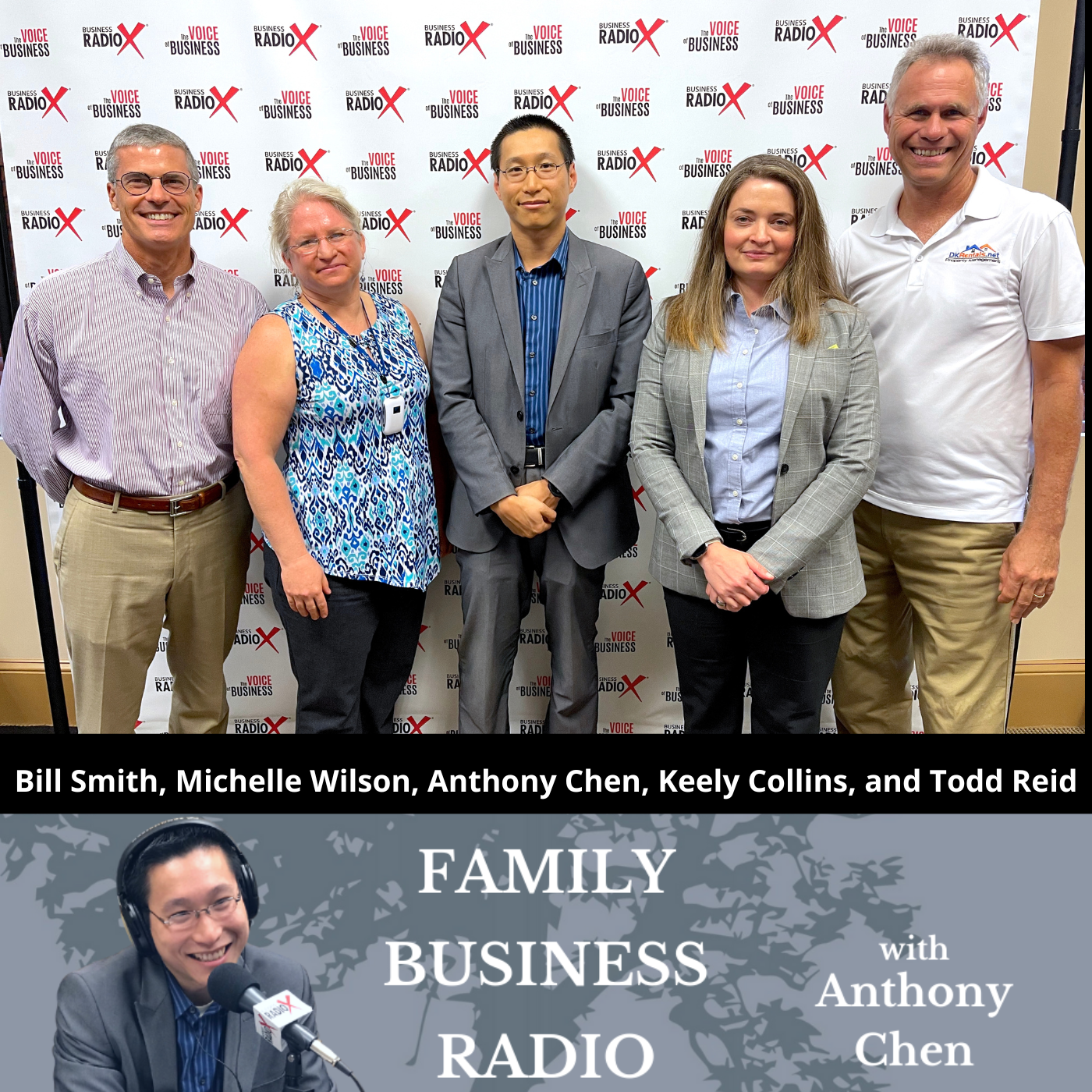
Financial and physical health is the focus of this episode of Family Business Radio. Michael Horwitz with Transworld Business Advisors of Atlanta discussed the need for clean books and sound preparation in advance to prepare for a sale. Nancy Pridgen of Pridgen Bassett Law discussed ERISA law and employment issues, including mask mandates. Dr. Jaeson Courseault with Lifehope Medical described his holistic approach to healthcare with his practice of non-surgical orthopedic medicine, prevention and wellness, and helping his patients get better by looking at all the factors that may be impacting their health. He describes his ideal patient as people who are active or want to be active who need help doing so.

All three guests reflected on the ways a client can identify the red or green flags that signal they may need a business broker, an ERISA attorney, or a holistic doctor.

In Anthony’s closing comments, he echos the guidance that the best time to reach out to a financial advisor is when major changes are occurring. Family Business Radio is underwritten and brought to you by Anthony Chen with Lighthouse Financial Network.

Michael Horwitz, Business Broker and M&A Advisor, Transworld Business Advisors of Atlanta

Michael Horwitz, Business Broker and M&A Advisor, Transworld Business Advisors of Atlanta

Transworld Business Advisors is the world leader in the marketing and sales of small and lower-middle market businesses. Whether you represent an acquisition-minded corporation or are personally interested in owning your own company, Transworld offers the professional services that successfully bring buyers and sellers together.

Michael is a Business Broker and M&A Advisor with Transworld Business Advisors of Atlanta. He has been helping people buy and sell small and lower-middle businesses for over 5 years. His years of experience run the gamut from senior management roles in Fortune 500 corporations to leadership positions with venture capital-backed high-tech enterprises. Michael also brings small business knowledge through his seven years of owning an independent bicycle shop.

Michael has been in the north Atlanta area for over 25 years now. He grew up in Cleveland, OH, and received his undergrad degree from Case Western Reserve University. After ten years in the workforce, he went back to receive his MBA from Capital University in Columbus, OH. Michael is an avid cyclist, kayaker and backpacker.

Company website | LinkedIn

Nancy Pridgen, Attorney and Managing Member, Pridgen Bassett Law

Nancy Pridgen, Attorney and Managing Member, Pridgen Bassett Law

Pridgen Bassett Law is a boutique law firm situated in beautiful historic downtown Roswell, Georgia, but its attorneys handle ERISA and employment disputes literally across the nation.

Pridgen Bassett Law’s attorneys combine some 40+ years of litigation experience to offer legal strategies and solutions tailored to each client’s unique situation. Clients include employees and employers, private and public businesses, and ERISA plan sponsors and fiduciaries. Pridgen Bassett Law equips clients with cutting-edge ERISA and employment law strategies and a wide range of legal options and offers modern answers for modern benefits and employment issues.

Pridgen Bassett Law attorneys have spent many years at Alston & Bird and King & Spalding representing sophisticated top-tier clients in complex ERISA litigation and employment matters. Pridgen Bassett Law was created to make that experience accessible to a wider range of clients. ERISA and employment matters require knowledge and experience.

Employees, executives, businesses, plan sponsors, and fiduciaries should have access to that resource — no matter the size of the matter or the size of the business. Pridgen Bassett Law is that resource.

Company website | LinkedIn | Facebook

Dr. Jaeson Courseault, Trif3cta Sports Medicine, A Lifehope Company

Dr. Jaeson Courseault, Trif3cta Sports Medicine, A Lifehope Company

Lifehope Trif3cta Sports Medicine provides non-operative sports orthopedic services for patients with muscle, bone, or joint pain. The practice also has a mobile component that will go to the patient’s home or other location.

Lifehope specializes in regenerative injections like PRP (platelet-rich plasma) injections, umbilical product injections, Amniotic fluid injections, cortisone injections, and hyaluronic acid injections.  They also provide COVID testing, either in-house or at your location for personal use or group testing,  with results in 10 minutes.

Their goal is to make you feel better as safely and as quickly as possible in the comfort of their brand new office or their State-of-the-Art Mercedes Benz Sprinter converted to a mini medical office, which is sterilized after each visit. They also offer IV hydration therapy and other recovery treatments.

They are proud to provide a safe, modern-day, high-quality level of care, medical experience, and commitment to all of their patients, as trusted by professional athletes.

As an Atlanta native, Dr. Jaeson Courseault received his Bachelor of Science degree in Psychology Pre-Med from Morehouse College on a full academic scholarship. While at Morehouse he played cornerback for their football team and graduated with Summa Cum Laude honors. With roots in New Orleans, LA, he went to medical school at Tulane University and completed a Family Medicine Residency at LSU.

He completed his fellowship specialty training in Sports Medicine in Waco, TX. For the past 5 years, he served as Team Physician for several high schools, 2 junior colleges, and Baylor University Men’s Basketball Team and Track/Cross Country Teams. Dr. Jaeson Courseault left his practice in Texas and returned to Georgia in October 2020 to serve his home community.

After such an awesome experience in Waco, TX he decided that it was time to be closer to family. He enjoys golfing and spending time with his wife Brittany and his baby daughter Xoé. His Christian faith drives his love for people through medicine. Part of his daily prayer is that his patients see the high level of care that he has for his patients. He prides himself in having an excellent bedside manner.

Company website | LinkedIn| Facebook | Instagram

Anthony Chen, Host of Family Business Radio

Anthony Chen, Lighthouse Financial, and Host of “Family Business Radio”

This show is sponsored and brought to you by Anthony Chen with Lighthouse Financial Network. Securities and advisory services offered through Royal Alliance Associates, Inc. (RAA), member FINRA/SIPC. RAA is separately owned and other entities and/or marketing names, products or services referenced here are independent of RAA. The main office address is 575 Broadhollow Rd. Melville, NY 11747. You can reach Anthony at 631-465-9090 ext 5075 or by email at anthonychen@lfnllc.com.

Anthony Chen started his career in financial services with MetLife in Buffalo, NY in 2008. Born and raised in Elmhurst, Queens, he considers himself a full-blooded New Yorker while now enjoying his Atlanta, GA home. Specializing in family businesses and their owners, Anthony works to protect what is most important to them. From preserving to creating wealth, Anthony partners with CPAs and attorneys to help address all of the concerns and help clients achieve their goals. By using a combination of financial products ranging from life, disability, and long term care insurance to many investment options through Royal Alliance. Anthony looks to be the eyes and ears for his client’s financial foundation. In his spare time, Anthony is an avid long-distance runner.

The complete show archive of “Family Business Radio” can be found at familybusinessradioshow.com.

Tagged With: Anthony Chen, business broker, ERISA Law, Family Business Radio, Jaeson Courseault, Lifehope Trif3cta Sports Medicine, Lighthouse Financial Network, M&A Advisor, Michael Horowitz, Nancy Pridgen, orthopedic medicine, Pridgen Bassett Law, sports medicine, Transworld Business Advisors of Atlanta

Jack Tompkins With Pineapple Consulting Firm

February 15, 2022 by Jacob Lapera

Jackthompkins
Austin Business Radio
Jack Tompkins With Pineapple Consulting Firm
Loading
00:00 /
RSS Feed
Share
Link
Embed

Download file

JackthompkinsJack Tompkins is the owner of Pineapple Consulting Firm based out of Charlotte, NC. He helps you analyze and visualize your data in interactive dashboards so you can get all of the insights from your data without actually touching it!

His goal is to help you grow profitably while giving your data a seat at the table and becoming a bit more data-driven.

Connect with Jack on LinkedIn.

What You’ll Learn In This Episode

  • Data for small businesses
  • Analytics for small businesses
  • The importance of visualizing your data
  • Benefits of the dashboard for a client
  • Types of data that are important to look at
  • KPIs are important for business owners
  • Data influence strategy

This transcript is machine transcribed by Sonix

TRANSCRIPT

Intro: [00:00:02] Broadcasting live from the Business RadioX Studios in Atlanta, Georgia. It’s time for Coach the Coach radio brought to you by the Business RadioX Ambassador Program, the no cost business development strategy for coaches who want to spend more time serving local business clients and less time selling them. Go to brxambassador.com To learn more. Now here’s your host.

Lee Kantor: [00:00:33] Lee Kantor here, another episode of Coach the Coach Radio, and this is going to be a good one, and for the folks out there, this is an important one for your business as well. So please help you have a pad of paper your phone handy to take some notes. This is going to be a lot of great information today on the show. We have Jack Thompkins and he is with pineapple consulting firm. Welcome, Jack.

Jack Thompkins: [00:00:54] Thanks, Lee. Pumped to be here. I couldn’t agree more. I think we’re going to cover a whole lot of good stuff.

Lee Kantor: [00:00:59] Well, I’m excited to learn more about your practice. Tell us about pineapple consulting firm. How are you serving, folks?

Jack Thompkins: [00:01:05] Sure. So we’re kind of your outsource data nerd. So everybody is familiar with the fractional CFO and fractional C-suite executive type thing. We’re kind of the fractional analyst. So that’s what we do. We put everything into dashboards, help folks become data driven. So even non-financial or non numbers, folks can easily make decisions and build strategies from their numbers.

Lee Kantor: [00:01:29] Now this is an area that’s, I think, really not appreciated by most entrepreneurs. There are so much data out there and there are so many numbers to look at. It’s very difficult for a business owner to really hone in on what are the kind of metrics that matter and how to discern what are the numbers you should be paying attention to every day. How do you help educate your clients to the importance of that number one and then give them some tools so that they can pay attention to the stuff that matters and not get bogged down by all these other distractions?

Jack Thompkins: [00:02:05] Yeah. So we’re obviously doing audio only, but I was aggressively nodding my head in agreement while you’re going through that. So, so number one, what’s important, right? Or how did they get started? What metrics do they pick that kind of thing? Honestly, I always say, start simple, start with something that you probably look at every day and I’ll use like revenue and profit as kind of the basic example, something that most business owners probably look at pretty frequently. Maybe it’s not every day, but whether they’re numbers, people, financial people or not, that is something that they’re going to look at every day. So kind of start there and then let the snowball grow from there. I always encourage people to start simple and then ask yourself, like, what does that mean? Right? So revenue is up 10 percent. Fantastic. That’s awesome. Why? Right? So was it more marketing? Was it better conversion rate? Did people come in from LinkedIn as opposed to networking groups? Stuff like that? And your questions will kind of feed your next steps. So that’s always my advice on where to start. And then second, part of your question stuff that we do at pineapple to kind of help make it easy is all just using dashboards. So an income statement, I’ll stick with the revenue example. I’m a financial nerd and I I absolutely love going through an income statement. Most people don’t because it’s a black and white piece of paper, and it’s kind of boring to look at. It doesn’t really tell you a lot of insights when you throw that into a dashboard. Now you have a trend graph, now you’ve got indicators of your performance and you’ve got your brand colors, and it’s actually kind of fun and engaging to look at. So I guess the all in answer is start simple. Feed your curiosity and then make everything visual because it becomes a whole lot more usable when it’s visual.

Lee Kantor: [00:03:54] And I think that’s another important kind of component with this. A lot of times people get, they just see kind of numbers and they see columns and it’s numbers and that that doesn’t really give them any context unless they can somehow remember what it was at the same time last year or over time or last quarter. It’s difficult to really understand and appreciate the direction your business is going unless you put this kind of data into some visual tool that helps you kind of see trends.

Jack Thompkins: [00:04:28] Right? Yeah, it’s exactly right. And the same thing goes for obviously this is Coach the Coach and everything. So for the coaches out there, for the consultants out there, when you’re working with a client, it’s a whole lot easier to point to a number that is in a graph or in a chart or something like that and have a solid foundation of to your point. The context around it, right? Here’s what it was last year. Here’s what it was last month. Here’s how we’re trending. Boom, now you have this solid foundation for the conversation, and you can get into strategy now that you’ve covered the numbers piece the quote unquote boring numbers piece that you have to get through.

Lee Kantor: [00:05:06] And I think it does a better job when you have these this information in a visual form, I think the story becomes clearer. It becomes when people can kind of see the graph and see the trends and see. However, you’re kind of framing the visual, whether it’s a pie chart with a big slice of pie that just improved, you can see it. It helps you tell your story better. It helps. You kind of understand the impact that people are making in the company.

Jack Thompkins: [00:05:37] Yeah, that’s exactly right. That is one hundred percent right. And that’s I think the number is like sixty five percent of people are visual based learners, but through a big red down arrow on the screen, everybody’s going to understand that that is not something that should be. That’s not what you’re going for it, right? That’s kind of the big red X that you want to avoid. So you dig into it and it becomes really clear with the visual. Absolutely.

Lee Kantor: [00:06:02] So now what’s your back story? How did you get into this line of work?

Jack Thompkins: [00:06:05] So kind of boring, honestly. I grew up, if you will, professionally in the insurance world. So Up in Connecticut was an analyst for an a bunch of different capacities and had some really cool like leadership roles in there. But really like the analysis, really liked making dashboards because I had to present every now and then to like the CFO of the division or my boss’s boss’s boss or something like that. And I quickly realized even continuing our visualization conversation. The best way to get my point across to this leader, who only has two minutes for me is to just not even explain it. Just turn my computer around, show them a picture of the dashboard, and then they’ll get the insights that they’re looking for. So that’s kind of where it all started. And then I’m about two years full time in running pineapple on my own.

Lee Kantor: [00:06:58] Now, kind of the epiphany of a dashboard or seeing the value of a dashboard. Was that something you were like, OK, I can create dashboards. I can take this data and kind of smush it into a dashboard so that it becomes very crystal clear just the handful of metrics that matter for an individual client. It was that kind of the epiphany, and now I can. Now I have a tool that I can now deploy and offer to lots of people. Was that what happened or is this something that you work with clients and then customize some solution, whether it’s a visual dashboard or whether it’s numbers or whatever the solution is?

Jack Thompkins: [00:07:36] Yeah, it’s kind of both. So I think I should know this because I’m a numbers person, but at least 90 percent of what I have done for clients has been completely custom from the ground up. And I honestly love that I have an absolute blast making that type of stuff. But to the first part of your question, that was kind of the formula, right? It was let me take the things that matter because in my corporate life, it was I know that they’re going to ask about these three metrics. And now in the small business world, I know we care about, you know, revenue, profit and leads and conversions or, you know, whatever it is. I know that those are the big things. So how do we package them and they kind of formed together to be this a bit of default stuff so we can have the conversation of here, the KPIs that we’re thinking about. Here’s why they make sense in general. Let’s see if they make sense for your business, too. And then part two, let’s let’s make it custom to your business and make it visual and make it engaging and make it interactive.

Lee Kantor: [00:08:39] Now, most small businesses, if they don’t, they would imagine not have kind of a data analyst on staff, but they might have a bookkeeper. They might have themselves with QuickBooks or some, you know, software. How does your firm kind of play with those tools and how do you help them get the most out of those tools?

Jack Thompkins: [00:09:00] Right. So it’s a very complementary situation, and I’m glad you brought it up early because my business is very garbage in, garbage out, right? So if the bookkeeper is or if there is no bookkeeper, right, maybe that’s the better example. There is no bookkeeper. It’s difficult to create a dashboard, a financial dashboard, right? Which is a very common thing. I link up to QuickBooks all the time. But if the data is not good in there or it’s inaccurate or whatever it is, the dashboard is not going to be totally useful. So whether it is the bookkeeper, whether it’s the CPA, whether it’s the CFO who wants to know or wants to drive the strategy but needs to know a few metrics first, those are all folks that are great, either information feeds for us or data sources for us.

Lee Kantor: [00:09:49] And then so how do you kind of work with your clients, is it something that you just say, OK, here’s what you need and then you just give them the resources to do that? And then they just now the bookkeeper is doing this kind of work or their CPA or their themselves? Or is it something that your service is kind of been ongoing, like a retainer like relationship?

Jack Thompkins: [00:10:12] It depends. It’s again, so everything that I build is custom, and that’s kind of the model for working with clients, too. It is very client by client. More often than not, it works out out to be a retainer type situation. So the example the standard example is people come in for, Hey, I have this idea. I want to see financial dashboard with, you know, sales by SKU or by product that came in through online versus versus whatever channels online or whatever other marketing sources. So they have that idea to start and then it kind of evolves into. All right, this is great. We also want to see how that impacts our operations. We want to see some more marketing stuff that we can do better. And so it kind of grows from there. So I guess kind of wrapping that up. It does transform into a retainer thing after starting as a project in more cases than not.

Lee Kantor: [00:11:08] Now are you typically kind of partnering with CPAs or these payroll services or the people that have some of this data? Or are you kind of going arm in arm with them? Or are they referral sources or are they just kind of, you know, you’re just complementary services that are both serving a similar client?

Jack Thompkins: [00:11:27] Yeah, it’s a good question. Kind of a little bit of all of it, I would say. Referral sources, both both directions, right? So a business coach, for example, needing to see the numbers, they talked to me and then me creating the numbers, building the dashboard and then saying, Hey, talk to this business coach because he’ll help you kind of build the strategy off of it. So the referral partner is most common of those options with, again, just very, very complementary services.

Lee Kantor: [00:11:56] And then in your work, are you kind of. Is this kind of industry agnostic or do you have some niches that you focus in on?

Jack Thompkins: [00:12:05] It’s been kind of all over the place, which honestly is a whole lot of fun for me because like I said, I came from insurance and that I really like the people. I like the work I did. I didn’t like insurance that much. So to be able to work, I have clients and transportation. I have clients and e-commerce. I have I have other consultants as clients and kind of the whole gamut. And that’s super, super fun for me. Honestly, there’s so many different metrics out there and so many ways to slice the data, and a bunch of different things matter to a bunch of different people. So I am pretty industry agnostic. I should say we are pretty industry agnostic because it’s just it’s more fun that way.

Lee Kantor: [00:12:45] And then because the dashboards don’t care about the data, right, it’s just a matter of aiming it at the right information that the person cares about.

Jack Thompkins: [00:12:52] That’s exactly right. Yep, 100 percent

Lee Kantor: [00:12:54] Now for you. Can you share a story? Maybe that kind of illustrates some of the impact you can have in an organization. Maybe share what the challenge was before they got a hold of you? And then what happened after you kind of deployed some of your services into their world?

Jack Thompkins: [00:13:09] Yeah, absolutely. So this will be a we’ll go with a transportation company, so fairly big company, big for my term. So I think there are 40 50 employees, something around that. But a whole lot of truck routes every day, right, going in and going out, delivering packages, all sorts of stuff. That is it feels like kind of what was the analogy that we used? It was putting out fires with a blindfold on. So it was so many things happen in a day, right? Maybe a truck breaks down, maybe a deliveries and all that stuff. So it was kind of just whatever happens today, we’re going to deal with it and then wake up and try and figure it out tomorrow, kind of thing. And and that’s probably a bit too cavalier. But the bottom line is it was put out the fires first and then try and build the strategy second. So what we did was we created an operational dashboard and a financial dashboard. So the operations was how many stops do we do? How many packages did we do? What was the time? What was the efficiency on all of that stuff? And then how does that lead to financials, right? So two complementary dashboards and now the operating structure isn’t put out fire figure out solution. It’s now anticipate what’s going to happen. Select the most efficient things, aim for specific targets that we know it can hit based on data and run the business much, much more efficiently and honestly with a lot more confidence. Because when when it’s not just dealing with. Fires. It’s a whole lot less stressful. And when the numbers are backing your decisions and you’re telling your management team and stuff like that, hey, here’s what we need to do. It’s a little bit of a stretch, but I think we can do it. You have the confidence of the numbers to back you up. So this client in particular would be the first to say that the dashboard is something that he looks at every day, and it is just it’s a 180 for his confidence in his day to day business.

Lee Kantor: [00:15:16] Now are there some kind of symptoms or breadcrumbs for you or for a company that says, Hey, you know what? Maybe a data analyst is the right person that we should be talking to, because I would imagine that this isn’t an area that a lot of that it’s top of mind for a lot of folks.

Jack Thompkins: [00:15:34] No, you’re right. It’s it’s not super top of mind. It’s one of those data is one of those things that honestly, even in the corporate world too, it was, Oh man, we should definitely look at that right? And then kind of crickets because it

Lee Kantor: [00:15:46] It seems like a nice to have, but not a must have. But I think that in today’s world, with so much data out there and everybody having the ability to collect so much, I think it moves higher up in that hierarchy and it becomes something that is becomes a must have.

Jack Thompkins: [00:16:01] I completely agree and I think that is the that’s the shift that’s happening. So corporate has had data and dashboards and stuff like that for a while and making decisions off that for a while now. I kind of seeing the transition into more small businesses and I have a couple of solopreneur clients as well that one of their first priorities when they started their business is let’s get the data set up. And I absolutely love that just in general for the for the whole field of data. So you’re absolutely right, it’s becoming more of a must have because of the decisions that come from it, because of the strategy that can come from data. And and again, that confidence and your gut tells you one thing your gut is going to be right your gut. Plus your data can make you completely profitable, right?

Lee Kantor: [00:16:49] And that’s the thing. I think a lot of, especially the smaller businesses they rely on just kind of their gut or just like that initial, you know, whatever happened first and then they’re using that data point as that’s kind of modeling for everything going forward, and that’s just one data point. And exactly. And I think that that’s a mistake. A lot of people and you can get into a rabbit hole and you can go down the wrong path pretty quickly if you adopt that kind of thinking in terms of strategic growth.

Jack Thompkins: [00:17:19] Right, it becomes a short term strategy that only has good short term results.

Lee Kantor: [00:17:24] Well, and then you forget when you’re wrong and then say you don’t have any kind of data that supports you having a good gut feel for things like you think it is. As long as you’re in business, you know, you just have to win a little bit more to stay in business. You don’t have to be that right. But if you have some system that kind of looks at your data and you can make better decisions, you’re going to increase your chance of success dramatically.

Jack Thompkins: [00:17:47] Oh, a hundred percent, absolutely. And this isn’t to say get rid of your gut, right, your guts, why you got into business in the first place, but again, your gut plus data, you’re absolutely right. It’s you can be so much more efficient grow, so much more scale, so much more when you have those processes in place and data being one of those processes, it is about as important as automating some of your marketing or developing a marketing strategy or consistent emails and conversations with clients. Anything like that. And if that operational day to day stuff data is right up there in terms of importance.

Lee Kantor: [00:18:24] So now is there any kind of low hanging fruit for our listeners out there right now, anything they they should be doing today or something they could do today that could at least get them thinking about, you know, kind of analyzing their data or even just kind of being aware of the metrics that matters or something that you would recommend people do.

Jack Thompkins: [00:18:45] Yeah, so I think first would be just kind of a kind of an easy take away for listeners is somewhat what we talked about at the beginning of starting simple. So even when you’re just walking to your next meeting in the shower or whatever, wherever you do your thinking time, I would encourage everybody to just challenge themselves a little bit and say, I know what I focus on, right? There’s a few metrics that I pretty much know offhand just because I have to. What’s the next step? So using the example we use at the beginning revenue, most people are going to know it. Why did it grow? Where did it come from? And then kind of build on that, right, so it’s that sort of step one is what is the next step of importance because every step that you take is going to be exponentially better. So if you go into why data are scary, why clients have joined me, fantastic, you’ll get more clients because you know that answer. And then tools wise, I always encourage folks to start with whatever sort of visual representation that their software they’re already using has. So QuickBooks, for an example, and most crimes have this Google Analytics as well for marketing and website analytics, there is always a default dashboard out there. It’s not going to be great. It’s not going to be exactly what you’re looking for. You kind of dip your toe and say, OK, this is cool, I get it, but it’s not exactly what I want. And then again, what’s the next step? And that’s where you get into some more in depth data conversations and and making sure that the processes are in place for the data flow properly and making it easier to update and easier to visualize. But it starts kind of like most cliches out there, right? How do you eat an elephant one bite at a time? This is very, very similar. Just start with the next logical step that makes sense to you, and it’s important to you today.

Lee Kantor: [00:20:48] So what is it that you need right now? Is there something we could be doing for you? The what is there anything the listener could be doing for you? Or are you looking for more referral partners? Are you looking for more clients? What can we do to help you grow?

Jack Thompkins: [00:21:04] Oh, I appreciate that. I never get that on the podcast, so thank you. More clients and more referral partners are always fantastic. Honestly, I really like just kind of talking shop. Like I said earlier with being industry agnostic, I always learned so much. It’s always a lot of fun. I just like kind of seeing what other folks are doing, so I would absolutely love to have a conversation with anybody that’s listening. Just kind of talk shop here about your business, and I’m sure there’s ways that we can help each other that will come out of that conversation, too. So I just I love small business and I love talking with other entrepreneurs. So please contact me and let’s talk some shop.

Lee Kantor: [00:21:41] All right. If somebody wants to learn more, what’s the website or the best way to get a hold of you?

Jack Thompkins: [00:21:46] Best way is the website, and it is pineapple kfcs, and that’s the abbreviation pineapple abbreviated consulting firm So Pineapple KF.

Lee Kantor: [00:21:56] Well, Jack, thank you so much for sharing your story today. You’re doing important work and we appreciate you.

Jack Thompkins: [00:22:00] Oh, thank you so much for having me on. This is fun and and I hope it was good for the listeners, too.

Lee Kantor: [00:22:04] All right. Lee Kantor we’ll see you next time on Coach the Coach radio.


Tagged With: Jack Tompkins, Pineapple Consulting Firm

Paul Noble With Verusen

February 4, 2022 by Jacob Lapera

Atlanta Business Radio
Paul Noble With Verusen
Loading
00:00 /
RSS Feed
Share
Link
Embed

Download file

paulnoblePaul Noble, CEO at Verusen

Paul Noble’s passion for entrepreneurship has always shaped his approach for go-to-market strategies and tools, which was the driving force to pursue his dream of launching his own organization to improve the availability of easy-to-use technology for optimizing the supply chain for materials management.

Verusen helps the world’s largest organizations evolve beyond their legacy systems and processes by solving the supply network data complexity that enables true supply chain digital transformation.

Connect with Paul on LinkedIn.

What You’ll Learn In This Episode

  • About Verusen
  • Roadmap to moving forward
  • About Series B

This transcript is machine transcribed by Sonix

TRANSCRIPT

Intro: [00:00:04] Broadcasting live from the Business RadioX Studios in Atlanta, Georgia. It’s time for Atlanta Business Radio brought to you by onpay Atlanta’s new standard in payroll. Now here’s your host.

Lee Kantor: [00:00:24] Lee Kantor here, another episode of Atlanta Business Radio, and this is going to be a fun one today on the show. We have Paul Noble and he is with Verusen. Welcome, Paul.

Paul Noble: [00:00:34] Hi, Lee. Great to be here. Thanks for having me.

Lee Kantor: [00:00:36] Well, I’m excited to kind of get an update about where things are going for VeriSign, but for the folks who aren’t familiar. Can you share a little bit about VeriSign? How are you serving, folks? You know, mission purpose and all that good stuff?

Paul Noble: [00:00:48] Certainly. So we are a supply chain intelligence company based here in Midtown Tech Square, Atlanta, and we help organizations simplify the way they manage their material supply across their global networks. And so what does that mean? We help them reduce the complexity and all the moving parts around data and personas and organizational challenges, and just distill it into one simple software solution that helps them find what we like to call material truth, which is I have what I need, where I need it for the least amount of capital, in the least amount of risk possible. And that’s, you know, a combination of data and human augmentation and a lot of cool technology, but really delivering upon that value. And and obviously in today’s environment, that’s a really important thing for supply chain and global organizations to have now.

Lee Kantor: [00:01:51] Supply chain has been in the news, obviously a lot lately, if not for the greatest of reasons. But can you educate folks about maybe some of why there’s issues there are today and how kind of you foresee this kind of coming to an end and improving?

Paul Noble: [00:02:08] Yeah, yeah. I know everyone’s hoping that things get a lot less chaotic than they have been, but really the problem exists, you know, less and less because, you know, organizations don’t know what they want to do or have a lack of desire of doing these things. But it’s really a lot of legacy systems, legacy processes, dirty and incomplete data that inhibits them from doing what they want to do, whether that’s, you know. Route things logistically, which you’ve been seeing a lot in the news or manage, I need these materials to build my product or produce my product or run the plants. All of these things have traditionally been very the approach to it was very disjointed. So you had, you know, you have to cleanse data and manage data governance data, use an inventory solution, user spend solution, use a procurement solution, use a planning solution. And all of that disk connectivity makes it difficult to really get what you want out of it. And so, you know, we’ve seen this chaos partially because of that and then also partially because we haven’t seen an environment like this. And so when you combine. Planning also historical versus, you know, changing that historically, we have changes that we historically haven’t seen yet. That’s why we kind of have seen this chaos. And so what we do is we essentially help these organizations wrap their arms around it, overcome the data challenges without having to cleanse data and governance data. That’s a unique part of our technology. Let’s eliminate that and let’s bring all the stakeholders into one place and, you know, show them what the data is telling us and provide recommendations on what you should procure, what you should inventory here your biggest risks and allow them to to add more information to the story. And that’s that’s really the power of what we do is driving simplicity, speed and most importantly, sustainability to continue to get better and move forward.

Lee Kantor: [00:04:46] Now, I believe the last time you were on and we discussed Atlanta and kind of the midtown area kind of becoming this supply chain kind of mecca, at least southeast, maybe globally. Has that changed, you know, during this period of time that we’re going through now with the complexity and this kind of global challenges that are happening not just here in the United States, but all across the world?

Paul Noble: [00:05:14] Yeah, I think we’ve you’ve continued, I’ve been having a lot of conversations, not only with customers and in the market and analysts around the continue investment into supply chain technology. I think still very early, you’re going to see a lot more software as a service solutions across the entire supply chain and you’ll see kind of a. A growth of what we saw, you know, 10 years ago as technology transition to the cloud and sales and marketing technologies transition there, and, you know, obviously seeing the things that have happened there over the last 10, 20 years, we’re going to see a lot of that over the next five to 10 years with supply chain and. Deliver, you know, the customer experience that most customers expect, but first supply chain technology as a whole doesn’t deliver, Atlanta remains very focused on. And really, I’m biased. But what we think of or what I would say is kind of like one of, if not the global hub for where a lot of this is taking place. We have some of the biggest, best brands and companies and supply chain companies in the world. We have great academic institution and talent and diversity and the diverse talent pipeline. We’ve got a handful, a great position, you know, a handful of companies, including VeriSign, that have continued to put Atlanta on the map. And then you have the support of the city and the state to make Georgia Atlanta a place that you want to start a company and can get all those things you need to build a great business. So I think the moniker of supply chain city is only continuing to grow and global global presence. Will Atlanta continue to be top of mind for people as it relates to supply chain as well as supply chain technology?

Lee Kantor: [00:07:41] Now you mentioned earlier this period of chaos, and this is a complex industry for high growth, especially technology firms that is gets a lot of folks drooling about the opportunity, especially when you couple that with a bunch of maybe legacy businesses that are ready for kind of systemic change when it comes to updating and leaning into this type of technology solutions. Is that all lined up for you in terms of your announcement of the Series B? Was that some of what gets investors excited about a firm like yours that has kind of a handle on things and it has a solution to help during these kind of complex, chaotic times?

Paul Noble: [00:08:31] Yeah, I think so. I mean, we we were fortunate to have started and I know we’ve had previous conversations with you and the team. A couple of years ago, right before all of the chaos really kicked up doesn’t mean it didn’t exist, but it just wasn’t as heightened. And then obviously, as I mentioned earlier, the traditional systems and processes just didn’t work for the the new environment, especially at the pace that it needed to. So we were in a fortunate position to have already started, you know, recognizing this and building a team and building a technology so that as this happened and the the companies and the the the leaders chief supply chain officer as chief procurement officers were now, you know, good enough was no longer good enough and they needed a solution that could, you know. Work quickly and get things back on track, and also not just be a point solution or a point in time solution, something that could be sustainable, so we were in that unique position where we had already been building to be able to add to the team, which we have significantly. And the last time we spoke, we came off our Series A where we raised $8 million and continued to build on our vision and accelerate that doubled headcount from 12 to 25 to now over 60, and plan to do so again into the next year.

Paul Noble: [00:10:02] And it has captured the attention of not only the media and everyone because everyone feels the effects, but certainly the market and investors and folks that want to where they see opportunity and movement and the way that you can actually change industries by infusing capital, allowing companies like ours to do things quicker. I think that timing is a big part of things, and I think we are in a great position to be able to go out to the market. Have customers supporting us today and clamoring for more support in and across the business. And so we couldn’t be more excited but joint to have scale venture partners join our team and bring their expertize and scaling enterprise software companies and obviously providing capital. But more importantly, continuing to round out the great team. We have to allow us to build our vision faster and support our customers and create more value for our customers.

Lee Kantor: [00:11:18] So what is kind of the future hold? How are you seeing this influx of capital and the opportunity that’s presented itself? What is kind of the roadmap moving forward, at least in the short term?

Paul Noble: [00:11:30] Yeah, yeah. Big, big part of this, you know, was we’re going to continue to do what we’ve been doing and continue to serve our customers where we started, which was on the indirect side of their business. So materials that they needed to run operations and things of that nature. What this and we’re going to continue to hire for that and not take our foot off the gas. What we’re really excited about is throughout the past 12 months, we’ve been asked by our current customers and prospects. And really, the market has been pulling us into simplifying how these organizations manage their raw and direct material that that supply has been kind of thrust into into chaos and uncertainty. And so. With this capital raise, we are going to look to resource and expand our reach into that space, which keeps us focused on materials, but allows us to serve each one of our customers that has that. Manages and purchases both to make their products and run their operations that we can provide the simplest way for them to do that, and so we’re going to utilize over the next year to build out that experience, fill some of the gaps that exist in their current systems and provide obviously, you know, a big part of our platform is deep learning and intelligence. And this combination of data filling data gaps and understanding data and augmenting human experts that know what they want to do, allowing them to do that simply, quickly and sustainably.

Lee Kantor: [00:13:18] Now, has anything changed regarding the type of clients you’re working with, is it are you getting deeper within existing clients? Are you? Are there opportunities developing with new potential partners?

Paul Noble: [00:13:30] Yeah, we are. Great question. We are obviously continuing to expand our value in and across organizations, so we know each of our customers have a global footprint. We typically are starting in North America, but now we are expanding more widely globally with many of them and continuing to deliver more, helping them really manage capital, manage risk, build trust, find that perfect balance, find their material truth. And we’re also that that really is the concept there is. They understand their supply chain. While there are many more than but kind of easy way to put it within their four walls or within their organization, where we’re advancing is that we are also going to build that network out. And so we are going to be investing resources and helping to build supply networks and be able to say, I make a change as a user of a material. Now I can share that with my best suppliers so they know and they can have what I need without me actually having to. Bring it in, house and sit on, sit on the inventory and you start building out these networks. And that’s really the future of supply chain and really harnessing all of the complexity and distilling it down into what really matters. So we’re going to continue to support our customers that way and give them just a broader, broader perspective and broader visibility and action and execution across their supply network.

Lee Kantor: [00:15:14] Well, if somebody wants to learn more, have a more substantive conversation with you or somebody on the team, what’s the website of the best way to reach out to you?

Paul Noble: [00:15:22] Yeah. So we comparison has all the information to get in touch with our team. Or you can reach out to hello at Amazon.com or sales at Amazon.com, and somebody will get back with you very quickly or on social on LinkedIn, as well as the company is. Feel free to reach out to me there, as well as at various and underscore A.I. on all. All the major social channels is a good way, good way to reach out and look, really look forward to connecting with all the listeners out there that are interested to learn more.

Lee Kantor: [00:15:59] And that’s VeriSign VR U.S.A.. Paul, thank you so much for sharing your story today. You’re doing such important work for the city, for your firm. We really appreciate you.

Paul Noble: [00:16:12] Thanks, Leigh. Appreciate the opportunity. Good to talk to you again and look forward to speaking again to.

Lee Kantor: [00:16:18] All right, this is Lee Kantor. We’ll see you next time on Atlanta Business Radio.

About Our Sponsor

OnPay’sOnPay-Dots payroll services and HR software give you more time to focus on what’s most important. Rated “Excellent” by PC Magazine, we make it easy to pay employees fast, we automate all payroll taxes, and we even keep all your HR and benefits organized and compliant.

Our award-winning customer service includes an accuracy guarantee, deep integrations with popular accounting software, and we’ll even enter all your employee information for you — whether you have five employees or 500. Take a closer look to see all the ways we can save you time and money in the back office.

Follow OnPay on LinkedIn, Facebook, and Twitter

Tagged With: Paul Noble, Verusen

Just Be Helpful

January 28, 2022 by John Ray

Just Be Helpful
North Fulton Studio
Just Be Helpful
Loading
00:00 /
RSS Feed
Share
Link
Embed

Download file

Just Be Helpful

Just Be Helpful

When you come out of corporate to start your own professional services practice, you think you’ll be chosen or referred because of your experience and your qualifications. If that’s your mindset, though, it doesn’t distinguish you or make you memorable. What does? Just be helpful, genuinely and authentically. The Price and Value Journey is presented by John Ray and produced by the North Fulton studio of Business RadioX®.

TRANSCRIPT

John Ray: [00:00:00] And hello, I’m John Ray on The Price and Value Journey. When you come out of corporate to start your own professional services practice – well, if you’re like me anyway – you drop in and you think, “What do I need to talk about that matters? Well, it’s the service I offer, right?” Well, that’s not really true. At least that’s what I found.

John Ray: [00:00:23] Nobody is waiting for you to show up to provide business advisory services, or legal services, or marketing services, or accounting and bookkeeping, whatever other business that you might be starting. There’s already plenty of folks out there doing that work. They’ve got their established referral partners and practices. So, how do you make a difference? How do you stand out? How do you make a name for yourself? How do you distinguish yourself in a crowded field?

John Ray: [00:00:56] Now, I think part of the answer, a big part of the answer, is just be helpful. Now, I don’t mean the kind of helpful where you’re offering what amounts to a lead page for some course or service that you offer. That’s not being helpful. That’s marketing a service. What I mean is being helpful without any intent to see something immediate from it, if at all.

John Ray: [00:01:26] When you go out and visit with people, just attempt to learn, to understand, to know about them. When you do a coffee or one-on-one, make it about them and learn what they do. You will distinguish yourself right off the bat. I promise you that this is true because I know.

John Ray: [00:01:46] Quite a few years ago when I came out of corporate to start my own practice, I had a pretty big network. But it wasn’t the kind of network that was oriented toward my local market that I needed to have to be able to support my business. So, I had to go build a different kind of network. And the way I did that was by learning about other people and helping them get to where they needed to be, connecting them with helpful strategic referral partners and, of course, a potential client.

John Ray: [00:02:20] When you do that, you’re showing a real concern for them and their welfare. And over the long term, if you do that and do that consistently, it will pay you back. You won’t know where those reciprocations or those vibrations from the universe – if I can say it that way – where they’re going to come from. But that’s part of the fun of it to me.

John Ray: [00:02:44] Recently, I had a lady who called me who I’ve known for many years, and she called to ask me about a family law attorney for her daughter, who unfortunately was probably headed to divorce court. “Now, John -” she said “- because you know everyone around here, you’re going to know the best fit for my daughter.” Now, we talked a little bit at a high level about her daughter and what this worried mom thinks that she needs. I steered her away, frankly, from a few attorneys I know who would be, probably, I’ll just say not good fits. But then, I gave her a couple of recommendations of others that I thought would work out well for her based on what she told me.

John Ray: [00:03:26] The point of it is that this lady views me as a trusted adviser to her. It has nothing to do with the service I offer. I mean, she obviously wasn’t calling up to ask me about my service and what I sell. But she needed help in a very sensitive situation, and she called me. Now, that’s just one illustration of how you get to be a trusted adviser. She knew that if she called me, I was going to be looking out for her best interest because that’s the experience that she had with me.

John Ray: [00:03:59] Now, in the future, she and her business, well, she may not need my service. But one thing that I can count on from her is that if she hears of anyone that even remotely might need what I offer, she would send them my way with a glowing review.

John Ray: [00:04:15] That’s the reputation you want to develop. That’s the brand you want to have as a professional services provider, whatever service you provide. I’m not saying it’s the quickest way to get there, but what I am saying is it’s the most sure and reliable way to reach the goals that you want to reach in your professional services practice. And I think it’s the most rewarding. Just be helpful.

John Ray: [00:04:41] I’m John Ray on The Price and Value Journey. If you’d like to connect with me, go to johnray.co. You can email me at john@johnray.co. And for past episodes of this podcast, go to pricevaluejourney.com or your favorite podcast app.


About The Price and Value Journey

The title of this show describes the journey all professional services providers are on:  building a services practice by seeking to convince the world of the value we offer, helping clients achieve the outcomes they desire, and trying to do all that at pricing which reflects the value we deliver.

If you feel like you’re working too hard for too little money in your solo or small firm practice, this show is for you. Even if you’re reasonably happy with your practice, you’ll hear ways to improve both your bottom line as well as the mindset you bring to your business.

The show is produced by the North Fulton studio of Business RadioX® and can be found on all the major podcast apps. The complete show archive is here.

John Ray, Host of The Price and Value Journey

John Ray The Price and Value Journey
John Ray, Host of “The Price and Value Journey”

John Ray is the host of The Price and Value Journey.

John owns Ray Business Advisors, a business advisory practice. John’s services include advising solopreneur and small professional services firms on their pricing. John is passionate about the power of pricing for business owners, as changing pricing is the fastest way to change the profitability of a business. His clients are professionals who are selling their “grey matter,” such as attorneys, CPAs, accountants and bookkeepers, consultants, marketing professionals, and other professional services practitioners.

In his other business, John a Studio Owner, Producer, and Show Host with Business RadioX®, and works with business owners who want to do their own podcast. As a veteran B2B services provider, John’s special sauce is coaching B2B professionals to use a podcast to build relationships in a non-salesy way which translate into revenue.

John is the host of North Fulton Business Radio, Minneapolis-St. Paul Business Radio, Nashville Business Radio, Alpharetta Tech Talk, and Business Leaders Radio. house shows which feature a wide range of business leaders and companies. John has hosted and/or produced over 1,100 podcast episodes.

Connect with John Ray:

Website | LinkedIn | Twitter

Business RadioX®:  LinkedIn | Twitter | Facebook | Instagram

Tagged With: be helpful, John Ray, Price and Value Journey, professional services, professional services marketing, value

Brian Pruett With Lake City Branding And John Quirk With Asset Location & Recovery Intl

January 27, 2022 by Jacob Lapera

Cherokee Business Radio
Brian Pruett With Lake City Branding And John Quirk With Asset Location & Recovery Intl
Loading
00:00 /
RSS Feed
Share
Link
Embed

Download file

This Episode was brought to you by

The Innovation SpotAlma Coffee


brianpruettBrian Pruett, Co-owner at Lake City Branding

Brian Pruett is passionate about sports, fundraising, and helping others by helping find their potential and showing them how to market and brand themselves by using his creative abilities! He is a jack of all trades.

He is a Sales and Marketing professional with event planning and sponsorship background as well as proficient in contract negotiations, organizing, coordinating and fundraising. Great ability to maintain public relations, work well as a team player, able to multitask, uncanny knack for getting people to come to events & help them have a great time and familiar with Microsoft Word, PowerPoint, and Excel. He possesses the strengths of Ideation, Responsibility, Individualization, Empathy, and Developer.

He currently has found something that he can use his passion of sports, and helping others with Lake City Branding & Small Business Solutions. This business allows him to help others in Branding their business in many different and creative ways as well as still working with retired athletes.

Connect with Brian on LinkedIn and follow Lake City Branding on Facebook.


JohnquirkJohn Quirk, President and Chief Executive Officer at Asset Location & Recovery Intl

John Patrick Quirk is the author of a number of books and articles on national security and intelligence, including the CIA Entrance Examination, The Intelligence Community and the FBI Entrance Examination. He is also the author of the best-selling, CIA: A Photographic History. He has recently written articles for the ABA’s National Security Law Report: Latin America and the New US National Security Concerns and a second article, New Targeting and Goals in National Security Matters.

Other recent articles include topics on Mutual Legal Assistance Treaty, French Foreign Policy, Banking Secrecy and the All European Intelligence Service. John Quirk is a Professor of National Security Studies and lectures on corporate and financial intelligence in France and Istanbul.

He has lived in Venezuela, France, Russia, Yugoslavia and Jordan. He has also testified before the House Intelligence Committee on KGB Matters. For several years he taught a 14-week course on Intelligence and National Security at two universities and has lectured at the California Bar on Corporate Espionage. He has lectured for several years on the World’s Intelligence Services at the Center for Diplomatique and Strategic Studies in Paris and one year at the Diplomatic Academy of London.

He is a subject of two books titled Betrayed, about his work in Russia and Eastern Europe regarding the POW issue, and The Penafiles, how he rescued a client from being indicted. His new writings include a book on Terror in Latin America and an article on Local Police Cooperation in Terrorism matters. He divides his time between Florida and France.


This transcript is machine transcribed by Sonix


TRANSCRIPT

Intro: [00:00:07] Broadcasting live from the Business RadioX Studios in Woodstock, Georgia. It’s time for Cherokee Business Radio. Now here’s your host.

Stone Payton: [00:00:23] Welcome to another exciting and informative edition of Cherokee Business RadioX Stone Payton here with you this morning, and today’s episode is brought to you, in part by Alma Coffey, sustainably grown, veteran owned and direct trade, which of course means from seed to cup, there are no middlemen. Please go check them out at my almacoffee.com and Go visit their Roastery Cafe at thirty four point forty eight Holly Springs Parkway in Canton. As for Harry or the brains of the outfit Leticia? And please tell them that stone sent You, you guys are in for a real treat this morning. First up on Cherokee Business Radio, please join me in welcoming to the broadcast with Lake City branding Mr. Brian Pruett. Good morning, sir.

Brian Pruett: [00:01:11] Good morning, sir. Thank you for your invite to be a part of this.

Stone Payton: [00:01:14] Well, I am delighted to have you. Of course, I have a real affinity for anything sales, marketing, promotion, anything that’s going to help the business person and particularly the small business person, get the word out about what they’re doing. Get some visibility out there. So I really appreciate what you do. Can’t pretend to understand how to do it, but I don’t have to. I can. I could call you right. That’s right. So do tell us a little bit about mission purpose what you envision yourself out there trying to do for folks.

Brian Pruett: [00:01:48] So I’d like to be that person that’s helping that small business get their word out and getting them to draw their customers to them. I’ve worked for several different folks around the metro Atlanta area in different capacities, mostly in the sales and marketing aspect of it. And they just, I’ll be honest, they were crooks. They said things that they didn’t, they didn’t mean and they didn’t do the job. They said they did. And I don’t want to be that person. I’ve seen what not to do. I’ll just give you a quick example if I can everyone please. We had a sales slick. I became this this company. I won’t mention any names, but I became this sales, this company sales marketing sales director and ran a contest for some of our clients. And during the holidays, part of the numbers were cut in half for this particular product. And I didn’t know that until I talked to the circulation manager. It’s just a little hand. It was a newspaper, but come to find out when our sales. Alex told everybody that we did one hundred and twenty thousand circulation and I find out at the most it was twelve thousand circulation. That’s a big deal, you know? So I walked in the next day after finding that out and handed my resignation. And when I was asked what I was doing, I told him I wasn’t going to lie to customers anymore. So unfortunately, I had a little streak there for a while who worked for a lot of business owners who just didn’t do what they told the customers they were going to do. Yeah. So I want to be the person who is honest, reliable and getting the word out for that small business to help grow their business.

Stone Payton: [00:03:21] So I got to tell you, and I’m sure this is no surprise to you as a small business person myself, you know, I run this little studio here in Woodstock, and I also work for the network trying to help grow grow our presence across the country. This whole idea of advertising and marketing, it’s an elusive creature. It’s it’s a little bit intimidating. We we so often find ourselves at the mercy of someone who purports to know how to do everything from social media to direct advertising and all that. What do you do? What can you do to set a person’s mind at ease and get them in a space where they can collaborate with you to create a productive campaign?

Brian Pruett: [00:04:03] So I love to sit down with the owner and hear about their story and what they’re trying to do and what their business is. And then from that, I’d like to find out what they’ve done in the past, what seems to work, what doesn’t work, and then put together a plan for them. I’ve done everything from selling for advertising to newspapers to magazines. We’re doing direct mail to events, that kind of stuff. And there is a little bit of good in every single one of those. I think a lot of people don’t understand the difference between marketing, advertising and branding. It all kind of kind of comes under one umbrella, but there is a difference. You know, marketing is my first to any activities undertaken by a company to promote and buying or selling of a service. And you’ve got the four p’s of marketing, which is, you know, the product price, place and promotion.

Stone Payton: [00:04:51] That’s the one thing. I got a marketing degree, and that’s why I’m pretty good at table tennis and pool because I didn’t pay as much attention as I should. That’s the one thing I remember is the four pieces. Is that still valid is I still have a place in our framing.

Brian Pruett: [00:05:06] It does. It does, you know? And then if you go in to look at the the the advertising aspect of it, that is the act of practice, of calling public attention to one’s product service need and especially by paid announcements in newspapers. Magazines, radio, television, billboards, et cetera, there’s just I could go on and on. Yeah, branding falls under that, and that’s when you, you know, you put your logo on shirts, hats, pins, different things to give away. And I also believe that nowadays print has gotten to the point where it’s not just advertising, you’re still branding yourself because a lot of people don’t unless it’s a local magazine, local newspaper. People that keep they say print is dead. It’s not totally true, but you’re branding yourself, you know, people see that logo in in a magazine and newspaper, and they remember that after reading it all of it over when you had a business card or somebody, you’re branding yourself right?

Stone Payton: [00:06:03] And I think I heard someone say not too long ago, right in the studio that your branding, whether you want to or not. Right, right. One, four

Brian Pruett: [00:06:14] Seven. If you go to any networking event, you go to any networking event you’re branding yourself. Right, right. Your sales because you’re selling yourself. And I think that’s what’s important to understand is that if you’re working for somebody and trying to do sales or if you own your business and doing sales, you’re selling yourself. Yeah, you’ve got to establish one relationships. Relationships is huge in this industry and sales of any kind. Yeah. And you know, if you don’t. Establish that relationship, begin that trust in us, you know, trusting somebody to do what they say and then not doing it.

Stone Payton: [00:06:47] Your relationship is dead. Well, we were talking about this before we went on air. You and I are both part of the Woodstock Business Club and and I’ve written business as a result of that, but maybe just as importantly, if not more so. There’s a plumber, there’s a video guy, there’s a business attorney in there that I have come to know and trust and enough to use them myself. But also, if you or our other guest, John, that will visit with her a little bit, you know, said, Hey, do you know a good plumber in the area? I without hesitation, you’ve got to talk to Justin. He’s the guy read, Tell me. And I know. I just know Justin is going to come through. Those relationships are, I mean, they are so critical. I knew that to be true in the consulting, training speaking world because that’s where I came from. But it’s obviously true across the board, isn’t it?

Brian Pruett: [00:07:39] Oh, definitely. I mean, you know, one industry that I find, there’s three industries that I find very hard to really give good recommendations referrals to because everybody in the world does them, and it’s real estate mortgages and insurance. You know, so I’ve got friends, good friends, multiple friends that are in all three of those and have multiple relationships with multiple people in those things. So I always tell somebody, Well, who am I going to tick off in an industry? But you know, it comes down again to a good relationship. Some of those, like I just came from another networking group where they promote collaboration over competition. Mm hmm. Right. So somebody who let’s just take a mortgage broker may not be able to do something that another mortgage broker can do. So they were for that back and forth. I think that’s what you. You know, if you refer your friend and he can’t do it, believe and understand that he’s referring to somebody else who can and will take care of you. Right? So again, that’s the relationship part of, you know, understanding that you’re not going to refer somebody who’s just going to come in and not take care of you, rip you off, you know, do anything that’s going to hurt you.

Stone Payton: [00:08:46] So over the years of doing this, I got to believe that you’ve seen people make some of the same mistakes, like you’ve seen some patterns. Is that accurate? And if so, can you can you share some of those patterns or some of those do’s and don’ts when we’re thinking about using services like yours?

Brian Pruett: [00:09:04] I think probably the biggest. One mistake and it comes down to even part of the printing aspect because we do commercial printing as well. And it comes to the fact where they make the mistake of going to somewhere who’s not local. Meaning like Vistaprint going online and buying their stuff.

Stone Payton: [00:09:23] There goes my Vistaprint sponsorship, John. No, I’m kidding.

Brian Pruett: [00:09:29] You know, and because they think they’re less expensive, that’s not always the case. Why you should do business with that person or that company, right? You know, if if there’s a mistake to be made, keep on Vistaprint. If there’s a mistake to be made and you call them, you’re not going be able to talk to anybody. Right? When you got somebody local, you can talk to somebody, figured it out. Get the the issues fixed, whatever the case is. The other thing that I think about is the other mistake that I see all the time when it comes to marketing is that when a business says, well, I’ve got to cut costs, the first thing they cut is marketing dollars. And that’s the worst thing you can do, right? Because you’ve got to keep your name out there, you’ve got to keep your brand out there. You want your customers still to come. The other thing when it comes to marketing and people say, Well, I’m just too busy. Don’t stop your branding because, yeah, you don’t want customers anything, but if you’re too busy, but you would need to hire some help. Why not brand yourself by doing a help wanted ad? So you’re keeping your name out there all the time, so people just see it.

Stone Payton: [00:10:33] So and this doesn’t have to cost a fortune, right? If you if you just eyes wide open, just build it into your budget, even if it’s a percentage of your of the gross receipts you’re bringing in, maybe just right off the top put in that branding bucket. Is there some wisdom in something like that?

Brian Pruett: [00:10:52] Yeah, I think that if you do look just like your personal budget, if you set aside a certain amount every month right to go into that, then you can build a pretty decent plan in a small business, can build a really good one, both just the local vendors in the media that can help them grow their business.

Stone Payton: [00:11:09] Yeah. So what is your favorite part? What do you enjoy the most about this work?

Brian Pruett: [00:11:15] The networking I love being I’m a people person. I love getting out. I’m going to have a run by somebody. Tell me that I’m like Santa because I’m everywhere. They see me everywhere.

Stone Payton: [00:11:25] Which again, that’s a that’s a I mean, I realize that you enjoy it, but that’s just good. Solid mojo. That’s good branding strategy, right?

Brian Pruett: [00:11:32] Right. And they say I’m built like him too. So I got that jelly belly just like him. So but the other thing too is it’s been joked around and I’ve actually made some business cards up with this that I’m the leader of the networking posse. For a while there, I took two guys around with me and they all we did was network together, so they branded me the leader of the networking posse. So I tell people all the time, if you want to go with me, I’ll keep you busy networking. I’ll introduce you to folks. But that’s my favorite part.

Stone Payton: [00:12:00] Well, I got to tell you, networking I personally always found uncomfortable, did not do very much of it in my former career, even when I was trying to market to a local constituency. I don’t mind it now. In fact, I enjoy it more because I can invite people to come on my show like instead of trying to sell them something, right? So. So I enjoy that. But what? What tips, counsel, if any, do you have on? I don’t know what the right word. Working the room, you know, like if you go to a Woodstock business club or a Canton business club or the chamber is there, are there some do’s and don’ts or some some some good tactics strategies for them?

Brian Pruett: [00:12:39] Yeah. So the first thing is, don’t go in and try to hand your business card and sell to every single person

Stone Payton: [00:12:44] And every room has that guy right? Yes. Right, John? Right? Yes.

Brian Pruett: [00:12:49] And the other thing too is you’re not going to be able to meet everybody. So what I’ve been taught and learned is you try to talk to somebody, be nice, but listen to what listen is. Listening is key. Yeah, to to what they do. And if you think one, it’s going to benefit them that your services can offer or you know, somebody else that they can benefit from knowing. That’s that’s huge. I’ve taken the approach this year, twenty twenty two has been is what I’m trying to do in networking is do as many one to ones establish the relationship? Yeah. And not talk about Brian. But listen about Stone. Listen to their story. And then how can I help them if it if I can help them because of my business? Great. But if it’s because I can introduce them to John, then that’s what I’m going to do.

Stone Payton: [00:13:35] I’ll tell you who should do like a training video on this. It’s just this is just the way this guy operates, you know, and Rudy Garza over there, it would to stop Business Club. You’ll really have to press to get the man’s name and his business. If you’re meeting with him, he is genuinely listening to to what? Who you are or what you do. Why you do it. And he is wired to say, Oh, you know what? You need to meet Bill. I’m going to I’m going to have. I’m going to connect you with or he’ll walk you. If you’re in the room, he’ll walk you over there. You don’t hear him say anything about insurance. I bet he writes more business. Anybody in the room, right? He is a living example of what you’re describing. And candidly, so many in that crowd or are are that way. Ok, so let’s get a little bit tactical here for a moment because I get the very distinct sense that working with you is not not Hey, Stonewall million. My catalog, right? Right. I mean, you’re a did you tell me if this is inaccurate? I get this sense that you’re essentially a marketing consultant and in some of the tools that you have available to help me achieve the objective might be promotional products or some of these. But speak more to that.

Brian Pruett: [00:14:46] Yeah, so I haven’t. We started part of this business back in June. Just the Lake City part. Ok. All right. We had a magazine up until then that we covered high schools and Bartow and Gordon counties, but to answer your question is part of my business model for this is yes, I wanted to be that consultant and going and listen to the business owner and then sell them. You know, whether you’re using us or you’re using the family, you know, magazines or Mary Daly Journal or whatever the case is. Let me look at what you’re doing and what you’ve done in the past, and then let me see if I can put a plan together. That makes more sense if that’s going to be the case. Because again, I’ve worked, I’ve done sales for different print media, done, you know, some things in the sports world and realize that, hey, that you might want to sponsor this team because that’s going to be big for you and your business, right? That type of stuff. So to answer your question, that is correct. I also have worked for a media buying agency and and most people don’t understand what that is. I want to go in and listen to them and and and instead of, well, I’ll maybe on top of putting the plan together, let me be the person that’s going to all these different media vendors and work on a plan with them. So you’re not having directly to deal with them. Let me do that and might be able to even negotiate a better price.

Stone Payton: [00:16:04] Yeah, I wouldn’t have the first clue about how to buy media, and we don’t sell ads in our particular business model. But yeah, if I were to buy, I would screw that up. Nine ways to Sunday.

Brian Pruett: [00:16:16] Yeah, I mean, and you have to be able to understand and know different aspects and different vendors, from billboards to radio to cable TV to, you know, all the different stuff. So there’s a lot to go into it. And most people, most business owners, you asked about mistakes early, most business. The other mistake they do is try to do it all themselves. Let somebody come in, you know, and spend the money.

John Quirk: [00:16:37] Brian, has COVID affected your business or other businesses in the last year?

Brian Pruett: [00:16:41] Yeah. Well, that’s why we had to shut our magazine down because we couldn’t get the advertising, so we had to rebrand ourselves.

Stone Payton: [00:16:47] I see. Well, it’s impacted us. In some ways it actually helped us. We we started doing more virtual interviews because people didn’t want to come in the studio. It’s not the same thing by any stretch. It’s not anywhere near, you know what we’re doing right here. But it did. It still gave us a way to serve, and it did expand one segment of our of our market. But yeah, it’s impacting. It’s impacting everyone, I think.

Brian Pruett: [00:17:16] One thing that I have learned from this business, we were briefly talking and joking before about direct mail. I was one of those guys who thought direct mail was junk until I got into the business and found out how how it can be definitely effective and only because we’ve come up with, I guess you could say it’s our baby, but it’s called a billboard postcard that we mail to five thousand homes every six weeks and rotate the areas. And there’s twenty twenty five businesses on there. And it’s really cool to know when you’re your product works because you have a client, call you back and say, When’s your next mailer? Because I just got four clients off this thing. Oh, sweet, you know? So if it’s done right, if it’s got somebody who can do it while business partners been doing it for a while, so he knows he does all the paperwork and we take it to the post office for you and all that. It can be very effective, but the key to that is to having a very good call to action. Why should that customer call? Are you right now granted with ours? It’s a little kind of being innovative because the ads are basically a business card size or two if they do double spots. So we put a QR code on top of the in front on the front of the card. So when a person gets it and they scan it, everybody who’s on that card has some kind of offer mentioned. They say I’d get 10 percent off from whatever the case may be. So you have to be creative too. But I was just thinking, you know, about people who talk about direct mail and it doesn’t work. And maybe because you’re not hitting the right customers, it may be because the right person is not doing it or the right message isn’t right. So. But yeah, so I enjoy being able to be creative in helping others.

Stone Payton: [00:18:52] I can tell. I know it comes through in your voice. I can see it in your eyes here in the studio. So do you find that there is a distinction in many cases in what’s going to be an effective strategy for business to consumer type businesses or retail versus B2B business to business?

Brian Pruett: [00:19:13] Yeah, I mean, a lot of folks that we’ve talked to, we are now getting ready to actually kick off a one of those billboard postcards to 5000 business for business to business customers. Ok. Because the message is it’s different. Obviously, if you are a let’s just take an HVAC customer who wants to hit your residential right, one HVAC for a commercial is going to be able you’ve got a bigger building, you’ve got different aspects. So your music is going to be a little different I.T. companies. They’re not going to promote residential because I mean, yeah, they could work on computers, but that’s not what they’re there for. Right, right. So they’re going to go out and they’re going to try to do some kind of add to the business owner of wireless. Why letting me take care of your it is important, you know, and stuff like that. So you’ve got again, got to be creative on that. But yes, there are different ways to to work with those and get the message out there to different customers. If I believe that, answer your question.

Stone Payton: [00:20:11] Well, yeah, what I think I hear you saying is so many of these tools and resources can be utilized effectively in both of those arenas, but it circles back to working with someone that has the experience, has some, some real knowledge and expertize in the arena can make the distinction and make the.

Brian Pruett: [00:20:30] Yeah, I had to cancel what I will say to going back to the direct mail piece. Part is, you know, when you talk to somebody about doing social media and digital marketing, they can talk about how they can target your IP, address your income. I don’t know that most people know that you can actually do that with direct mail. I had somebody who. Oh, no, I can’t.

Stone Payton: [00:20:49] Yeah, right. It sounds like you can. We can. We can help you with that.

Brian Pruett: [00:20:54] I had somebody approached me and asked me they were doing the Alzheimer’s walk for the Rome area back in the summer, and they asked if there was a way for us to target people who’ve donated to Alzheimer’s in the past. We actually could. We actually found that, oh wow, we wound up not doing the mail piece because it was a little out of their budget. But we think the point is we can find we can find anything to and do it direct mail piece for that, just like you can on digital

Stone Payton: [00:21:19] Now, do you guys work with promotional products like the hats and the pins and the and that kind of stuff are like this little messenger bag I have here?

Brian Pruett: [00:21:27] And yes, we can.

Stone Payton: [00:21:28] You or you have someone that you bring in for something like that

Brian Pruett: [00:21:32] Or, yeah, we can we can get it done for you, whether we have to outsource it or whatever the case is, we can get it done. Funny story. When we started doing this back in June and we met with one of the vendors we were going to work with, we learned real quickly what the hot seller was back in the summer and won’t go because I know this. We’re on air. But condoms was the big seller back in the summer for hotels. The all the hotels are buying up, putting their logos on them and keep them in the room so we can literally put your logo on anything but.

Stone Payton: [00:22:06] But again, it’s it sounds like it’s not. Hey, you know, let’s just let’s go to Brian and order some more books or hats or T-shirts or whatever. Yeah, make that call. But you’re more of the the quarterback and strategist. And if that fits into the strategy? Great, if not. And let’s, you know, make sure that we take into account the budget and plan accordingly. Your eye sees as much more of a strategic resource than a promotional vendor, right?

Brian Pruett: [00:22:36] Yeah. The other thing, too, is one of my jobs that I was able to have was I was blessed to be able to have and I’m a big sports person. Ok, so but this particular job that I was, that I had allowed me to have and get introductions and maintain relationships with a lot of retired sports athletes who live around the areas. Yeah. And what I’d like to do, which I’ve not been able to do yet, and I’ve talked to some of these guys that that would be willing to do it is again, along with the budget of a small business owner. But let’s do a smaller scale of a Tiger Woods and Nike with some. These athletes who live in the area where the retired, you know, or whatever, let don’t promote that small business and see where it goes.

Stone Payton: [00:23:15] Fun. So I got to ask. I think I know most of the answer based on the conversation so far, but I got to know, man. How does the whole sales and marketing thing work for you? Work for Lake City branding? Do you find yourself eating a lot of your own cooking or how do you get the new business all networking?

Brian Pruett: [00:23:35] Yeah, I was just talking with somebody last night and talking with my mom and my wife as well that I’ve been blessed enough to all of the business that Lake City has gotten. I have not had to do one cold call. Wow. I’ve done some cold call emails here and there, but the ninety five percent of the business has come from networking.

Stone Payton: [00:23:56] Yeah. And that relationship building as a as a product of the network. Right. So you have so much energy and your enthusiasm is contagious. So I suspect this doesn’t happen very often. But you know, I’ve been around people my whole life, so I know sometimes you must run out of gas and you got to recharge. Where do you go for? And I don’t necessarily mean a physical location. It might be, you know, a book or whatever. But where do you go for inspiration and to kind of get recharged and ready to suit up and show up again?

Brian Pruett: [00:24:30] So I spend a lot of time with my family in the evenings and then also hang out with friends. We do. Some of us go and do trivia one night a week. I used to host trivia, but I go play it now instead of hosting. And it’s just that time with friends and family that that really energizes me and. And then the other thing too, is thinking back about people that I’ve helped in the past.

Stone Payton: [00:24:53] That’s got to feel good, right? Yeah, yeah. So what’s next, man? What where are you going to be putting your energy in the next several months? Are you looking to grow the business to scale it, to replicate you or you’re just going to hunker down? Or what are you going to do if

Brian Pruett: [00:25:07] I could clone myself? That would be great, but scary at the same time. But yes, I want to grow this business. I need some. I need some sales help right now. The other thing that I want to do is I want to actually get back into some charity event planning. Back in September, we actually I partnered with somebody and we put on a business expo in Cartersville, which was the first business expo in Kargil in five years and got 52 vendors. And what I did was I wanted to give a portion of the proceeds to the Tranquility House, which is the battered women’s shelter there in Bartow County. At the end of the day, we were able to hand a check for $2000 to them. Oh, nice. So I want to be able to put on events like that and be able to spread the love of different charity because there’s so many out there that do good things that are local and small that people don’t get to hear about. So that’s what I want to do and add to Lake City.

Stone Payton: [00:26:02] Well, it’s a conversation for off the air, but I really would like to sit down. And of course, you know, I’d like to do it over a beer. That’s my stuff. But we’ll do it over coffee. If you want,

Brian Pruett: [00:26:12] I’ll do it over root beer.

John Quirk: [00:26:13] Ok, that sounds good.

Stone Payton: [00:26:15] But one of the things that we would like to do here locally for Cherokee Business Radio I would like is to start having a regular influx of people who are running nonprofits and are managing these causes. I don’t feel like they they get a lot of attention. I don’t think most traditional media are probably knock on their door down, saying Come and talk to us about your mission and purpose. And so I’d love to sort of tap into that world and I don’t know, maybe even set up a monthly series or something. It sounds like maybe you’ve got some inroads into that world.

Brian Pruett: [00:26:49] Definitely. We can definitely talk about that.

Stone Payton: [00:26:51] All right. If our listeners want to learn more, I want to have a conversation with you or someone on your team and talk about any of this or sit down with the root beer and just kind of think through where they are and where they’d like to be with their with their marketing and their branding. What’s the best way? Let’s leave them with some coordinates, whatever’s appropriate LinkedIn, email, phone, whatever website.

Brian Pruett: [00:27:11] So our website is Lake City branding. You can go there and there’s a contact us form there. I’ll give you my email. It’s Brian, it’s Brian at Lake City branding. You can follow Lake City branding on Facebook, and you can look me up on on LinkedIn as well.

Stone Payton: [00:27:28] So fantastic. Well, it’s been an absolute pleasure having you on the show.

Brian Pruett: [00:27:34] Thank you for having me.

Stone Payton: [00:27:35] Yeah, keep up the good work. Hey, how about hanging out with us while we visit with our next game?

Brian Pruett: [00:27:39] Absolutely. I love to learn more about John here.

Stone Payton: [00:27:42] Fantastic. All right. Next up on Cherokee Business Radio this morning we have with us managing director for Asset Allocation and Recovery International, Mr. John Quirk. Good morning, sir.

John Quirk: [00:27:54] Stone, good morning. Thanks for inviting me.

Stone Payton: [00:27:57] What a delight. This is fun. So what did you learn in that last segment, man? Anything you can take away down to your back to your business?

John Quirk: [00:28:03] I learned we need Brian and we need Lake City.

Stone Payton: [00:28:06] I can tell you that

John Quirk: [00:28:07] Most of our business comes. From word of mouth, but we want to grow our business, and I’ll tell you, I am definitely going to get together with Brian Pruitt.

Stone Payton: [00:28:15] All right. We’ll talk about my commission on that later, Brian. It sounds good to me. So. So John, mission purpose, asset, location and Recovery International. Tell us what you guys are up to out there.

John Quirk: [00:28:27] Well, we locate and recover assets taken as a result of financial fraud, and that means investment fraud, divorce spouses and so on. We locate assets locally through our sister company, Spencer Investigations, which is a licensed investigative agency. My business, which is asset, location and recovery, focuses on all the overseas banking havens. So we locate money in Bermuda, Jersey, Jersey, Isle of Man, Liechtenstein, Luxembourg, Cook Islands and so on. We’ve been doing this for 20 years. We locate the money and we recover the money overseas

Stone Payton: [00:29:11] So you can hide your money, but you can’t have it from John

John Quirk: [00:29:15] In most countries. We’re able to find, find the money and recover it. Every country is a little different. Switzerland is different than Panama. Bermuda is different than the Cook Islands or the Cayman Islands, but you have different kinds of terms and we use different remedies to recover the money. Ok, I

Stone Payton: [00:29:34] Got to know what’s the back story? How in the world does one get in this line of work? Tell us a little bit about your career path and how you landed here, man.

John Quirk: [00:29:43] Well, I worked in the intelligence community for 35 years. I lived overseas. I lived in Russia, Venezuela, Turkey, Yugoslavia, France for many years. My wife used to say I’ve been thrown out of every decent country in the world, and we’re all former FBI and CIA, and we use intelligence tactics. Not so much law enforcement tactics to recover the money. We use financial databases and sources that we have overseas that are either lawyers, sometimes criminals, Standard Chartered accountants in all of these different venues to help us locate the money, how the money got there. We’re a member of Swift, which we use to trace money wire transfers, and we’re able to obtain documents to support lawyers that are involved in litigation in this country or law enforcement, international law enforcement that’s looking for money as a result of money laundering cases.

Stone Payton: [00:30:49] So is fraud more prevalent today than several years ago? Or is it just on my mind because I’ve been watching the the season four of Ozark?

John Quirk: [00:31:00] No fraud. Fraud is booming in many, many areas. We used to have a fraud database. We had 100000 fraudsters listed in it. There’s different kinds of fraud, there’s senior fraud, there’s investment fraud. There’s fraud now by a divorced spouse hiding money overseas and abandoned children and spouses in a divorce setting. And what people don’t realize is that fraud really undermines democracy. We talk about, you know, terrorism and terrorism gets a lot of play, but draining money. We’ve had tremendous fraud and covert billions of dollars have been lost. Mortgage fraud, investment fraud, all kinds of different fraud is really draining money out of democratic countries.

Stone Payton: [00:31:52] So are there things that we, as individuals, heads of families, business owners? Are there some just basic blocking and tackling that we can and should be doing to insulate ourselves a little bit from being easy pickings for fraudsters?

John Quirk: [00:32:08] Yeah, it’s a good question.

Stone Payton: [00:32:10] In order to get it out. But I thought it’s a great question. What do you mean?

John Quirk: [00:32:13] Well, what I usually tell people is that in the beginning, do a background check on somebody just because they said they went to the Wharton School of Law or the Wharton School of Business, or just because they said that they’re very liquid doesn’t mean anything. There’s so many different kinds of fraudsters. We have so many people in prison and so many people probably that should be prosecuted. And there are so many different kinds of frauds small frauds, large frauds. We do mainly large investment frauds where people have invested money in Ponzi schemes or pyramids. And because there’s more of an educated information base on how to hide money, more people are putting money in Switzerland, Bermuda, Panama, the Caymans and so on. And that’s those are the banking havens we target for 20 years, I used to do an annual trip. I’d go to Guernsey, which is an island off the coast of England. I’d go to the Isle of Man, which is a banking haven off the coast of Ireland. Then I’d go to Switzerland, Liechtenstein, Luxembourg, Cyprus. I fly out to Hong Kong, Macao and so on. And there’s some of these countries that no longer are really banking havens. People no longer put money in the Bahamas. They no longer put money in Hong Kong because of the situation. Panama is not a good place to put money. Caymans is a very, very top place to put money, and different ethnic groups hide money in certain places like you’ve heard a lot about Nigerian and West African frauds. You know, they send these letters through the mail. They like Guernsey. Canadian fraudsters like Bermuda, OK? Americans usually go to Switzerland or Liechtenstein if they have a lot of money. So we find money, whether it’s in a trust stock account, bank account or intermingled Swiss Technical Fund, a Swiss management portfolio con. It’s called. So those are all of our targets, basically.

Stone Payton: [00:34:27] So what makes these places havens? Is there a degree of privacy that you’re afforded there that you’re not afforded, like in a typical American bank or what?

John Quirk: [00:34:39] Yes, they call it banking secrecy, but in Switzerland, there really is no more banking secrecy. There’s only a couple places really that are super secret that are even difficult for us to find money. Well, I don’t

Stone Payton: [00:34:52] Tell them about those. Ok. Unless you want to.

John Quirk: [00:34:55] Well, it’s not a big secret. Liechtenstein is very difficult. Luxembourg is difficult because they haven’t signed the international money laundering laws. And you see, when you get into these type of things, you have a coterie of specific criminal violations. We prefer criminal recoveries. So if somebody has been involved in conspiracy, fraud, wire fraud and usually money laundering, money laundering always comes at the end. People think, Oh, it’s a money laundering case. You can have money laundering. If you don’t have wire fraud, you can’t have money laundering. If you don’t have conspiracy to defraud or bank fraud or embezzlement, money laundering always comes at the end. And most of these countries now have laws, which means know your customer and suspicious activity. But many of the banking havens don’t pay attention to it. North Korean drug money is hidden in certain places. Putin owns fifteen hundred companies in Guernsey. He’s probably the richest man in the world. Way more rich than Donald Trump or Bill Gates. And so fraud is it cuts across business, politics, government. And to answer your original question, we just have more corruption everywhere. We have corruption in government, business, banking, health care. We are in part of the corruption is that the world has become so much more prosperous. There’s so much more money to steal and fraudsters engage in that in a very big way and a very clever way. And law enforcement is very, very difficult and hard to catch up to them.

Stone Payton: [00:36:45] Oh, I bet. So what is the process look like? I maybe I’ve been defrauded. Someone’s embezzled some money or something, and now I reach out to John because now, now you’re on my radar. What? What does our relationship information exchange? What does that process look like when you bring on a new client?

John Quirk: [00:37:10] Well, first we do a background on the target. The bad guy. Ok. Second thing is we locate all their assets. We can find anybody’s bank account trust, wire transfer. Wow. Domestically or internationally. Then the most important thing we have to determine was it really fraud or a bad investment? Two different things. Yeah. You know, everybody thinks they lose money and it’s fraud, and the FBI is completely overwhelmed. Now, the FBI and our firm is getting heavily into identifying digital currency bitcoins. We couldn’t do it a year ago, but now we can find the balance and transfers of bitcoin. So there’s always new types of frauds, but you have to be sure that it’s not just an investment that’s gone bad. Yeah. Then you have to after you locate the money, we have to. Develop a remedy to recover the money, and there’s only a few remedies. And when I say only a few remedies is very difficult to get your money back when somebody is taking it. The first thing we do is when we find out something, Hey, did the person that took your money, did he go out and buy a Range Rover? A boat, a car? Spend a lot of money on his girlfriend’s jewelry? Does he have any money left? Because it may not be worth going after him? Because law enforcement, mainly the FBI or the IRS Criminal Division there are only interested in the prosecution.

John Quirk: [00:38:45] They’re not interested in getting money back. They’re not a collection agency. So what we do is there’s only three ways really to get your money back unless you use some mafia thug to visit the guy. We don’t do that. So there’s a civil way that’s civil litigation. You hire a lawyer to sue the person. There’s criminal, which we prefer. Explain that in a minute, and there’s a hybrid civil and criminal to get your money back. We prefer the criminal remedy because it’s nine out of 10 times you’ll get your money back if you work with a specific law enforcement group that is interested in the criminal violation, while our company is only interested in getting the client’s money back. And that’s a criminal complaint, and it’s a remedy called Mallette, which is called Mutual Legal Assistance Treaty. I write articles on this. Yeah, it’s in the Justice Department and they will help you get money back in Switzerland or Hong Kong or Bermuda or the Cook Islands. Or you can use British techniques called Anton Piller Ax or Meriva injunctions. Because if you look at all the offshore banking havens, they were all run basically by England, Hong Kong, Bermuda, Caymans, Turks, Barbados, Guernsey, Isle of Man, Jersey and Cyprus. Even Monte Carlo were all British law. So you use British law in the criminal area to recover the money if there’s any money left that the fraudsters taken.

Stone Payton: [00:40:30] So you’re a prolific writer. You write and teach. You got a lot of irons in the fire. Speak a little bit to that. Is that accurate? Don’t you’ve written books and articles and all kinds of stuff? Have you?

John Quirk: [00:40:42] Well, most of my books and articles are initial security. I wrote the official history of the CIA, FBI and things we use in our terminology, like targeting and counter-espionage. Yeah, but most of my background has been in what we call FCI. That’s foreign counterintelligence. So over the years, I’ve worked against what we call criteria. Countries in this country criteria countries. It’s not a secret our Russia, North Korea, Cuba, Venezuela, China and then the National Security Division, they’re Iran, Hezbollah, the PLO people that are working against us. And over the years, the FBI, which is the premier counterintelligence organization, has been overwhelmed by both the Chinese and the Russians coming into the United States to both steal secrets and basically bribe a lot of our leaders to go along with them, especially the Chinese. They’re brilliant at this. In fact, I came up to Georgia because I worked on a Chinese case, which, you know, the people know that the Chinese steal intellectual property, mainly technology. But let me tell you what they’ve done in Georgia. This could be a whole separate show. They have come into Georgia Chinese intelligence and they steal all of our seed tobacco, cotton, apple, soybean, whatever we grow, they come into our universities. Sometimes they co-opt professors, they give them a free trip to China and a few other perks when they get over to China. And the professors think it’s great and what the Chinese do, they take our seeds, send it back to China, re-engineer it, come back, sell it at a discount rate and put our seed businesses out of business. Wow. And that’s just one of the things they do. If they, of course, they’re involved in technology theft, they’re involved in business theft, strategic alliances. There are really our main adversary now. I mean, the Russians steal things, but they can’t get it into production. The Chinese get it into production.

Stone Payton: [00:43:04] So Brian, how would you feel if John? Quirk or on your tail if you got wind, John Quirk, who was hunting you down.

Brian Pruett: [00:43:14] I don’t think I could hide. I think that’s a movie. Catch me if you can. I think he catches you.

Stone Payton: [00:43:20] Yeah, I think so too.

John Quirk: [00:43:22] So we’re very focused on trying to get money back for our clients. We do some pro bono work mainly for seniors who don’t have a lot of money, who are a very big target of fraud. And what we try to also do is on the federal level, we have great people at the FBI and the IRS that that know how to target and develop criminal cases with the U.S. attorneys. On the local level, the economic crime units at the local police and the state police need better education and need better money because there’s so much fraud. When somebody comes to them, they usually don’t take the case. They just don’t have the resources to trace money to Switzerland or they don’t have the resources to build a case against them. And this is a very, very big problem. You know, with all the problems in the United States that we have crime and fraud is increasing dramatically.

Stone Payton: [00:44:21] Well, so does the layperson who does not know about you guys, do they typically if they’re, you know, fired up and want to do something because they’ve lost money or their mom got swindled? Do they typically go to their family lawyer first and then the lawyer connects you guys or.

John Quirk: [00:44:41] Yeah, sometimes in the U.S. they go to a lawyer in divorce cases. Of course, they go to a family lawyer who’s looking for assets and a spouse. A spouse is hiding money, right? So they contact us and then also word of mouth internationally, it’s a little different. We’re we’re very well known internationally. I spend part of the year in France. I lived in France 20 years and I’ve lived in Turkey and a number of other countries. So we know most of the people in the banking havens, whether they’re international lawyers or we do a lot of anti-counterfeiting work for companies like Gucci, Ferragamo, Polo, Louis Vuitton, Hermes, and now we used to do what’s called by bust. We we do a buy of counterfeit goods, counterfeit pharmaceuticals, counterfeit AZT, whatever. And now we just looked for assets of the counterfeiters. So if you find the assets of the counterfeiters, you can put them out of business. So in that regard, most of our business in asset location, 90 percent of our business is international. So we’re always overseas looking for money or developing courses. And in most foreign countries, they don’t have a very good system in our country. We have the Justice Department with the U.S. attorney on the federal level. And there’s an old saying a U.S. attorney can indict a ham sandwich and our laws here are very draconian. If you want to conduct fraud, go to Canada, you have penny stock fraud and Vancouver investment fraud and Toronto, the mafia in Montreal and their system for prosecution is very, very weak. Germany, what Americans do here to go to jail for would never go to jail. In Germany, their laws are just very weak and they kind of defend the businessmen. So there are major frauds overseas, but the prosecutions are not aggressive. And in our country, you have to be aggressive because if not, the fraudsters will just take over everything. I mean, we’ll never eliminate fraud, like you’ll never eliminate the mafia, you just control them from taking over the country.

Stone Payton: [00:47:13] It seems like you would never run out of work. I mean, do you even have to do sales and marketing at this point?

John Quirk: [00:47:20] We wanted to grow our company, and the type of outline that Brian Pruitt did at Lake City is exactly what we need because the reason we want to grow our company is we want to get into different areas and we want more revenue, right? Our bigger cases take a longer time to do. We might have to work on a case for two to three months locating the money, writing the filing. Yeah. Meeting people. Sometimes in many cases, we work undercover against the people. We get into their organization. Wow, we become partners with the crook. We work with them. We find out who the accountant is, who the bookkeeper is, who the who’s doing, the wire transfers. And we use some very large sources that aren’t secrets overseas. Like Swift. When we do a background, we usually get the person’s phone calls. So if he’s got 20, if Stone Payton has got 20 phone calls into the Cayman Islands, the Barclays bank, that’s a pretty good idea where Stone Payton is

Stone Payton: [00:48:25] Like, Wow. So I mean, I can tell you, enjoy the work. Is there anything in particular like when you get a certain type of case, you’re like, Oh boy, another one of those? Or do you just find joy and satisfaction and a lot of different?

John Quirk: [00:48:40] Yeah, I think it’s the curiosity of how intelligent the bad guys are and how sophisticated they are in America. Most people go to a lawyer to set up an overseas bank account, OK, and they set up. Maybe they pay 5000 bucks to set it up in Guernsey or Switzerland, but it’s not really secret from us, right? People like the drug cartels, the Russian mafia, they spend hundreds of thousands of dollars to hide money, so they go into Ireland. They set up a company like the Scorpion Trust. They open up an Irish bank account. They take that, they take that documentation, they go to Guernsey, then they go to Guernsey. They go back to Gibraltar, they go to Gibraltar, they go to Switzerland and then the money will rest in a spirit to Santo in the Cook Islands. Most American businessmen or spouses cheating on their spouse don’t want to do that. They’re too puritanical, too practical. And we Americans are too practical, so they don’t want to spend more than five or ten thousand dollars hiding a bank account. Right. It’s not secret from us if we’re going after people in the drug business, which we don’t do. We know that we’re going to be defeated early on because it it costs thousands and thousands of dollars to locate there where the money rests.

Stone Payton: [00:50:04] I’m such a boring person. I have. We have my family has a couple of accounts over at Wells Fargo and here for this studio. I got a little business account over here at Banco C.K. down at the corner. Wow.

John Quirk: [00:50:19] Well, it’s getting more expensive to set up a bank account overseas. You need at least a million five to open a bank account in Switzerland. Now you need three million in Liechtenstein. Gibraltar, you can open up for a couple of thousand, but it’s not really secret if somebody’s looking for it. Guernsey’s very secret Bermuda’s secret the Caymans. The super secret Panama is not secret anymore. The Bahamas is not secret. As I mentioned, Hong Kong doesn’t really have banking secrets anymore, so Americans prefer Europe. They get a trip to Europe, they can visit Luxembourg, they can go to Switzerland, and they open up their bank account there.

Stone Payton: [00:51:02] So, so the gap if there is one, and I’m not convinced that there is much of one, but but the gap or a place to to maybe pull the lever and continue to grow and scale this thing. It occurs to me, it’s education. It’s the layperson like me, you know, just the average person knowing that there’s a resource available to us like you to help us solve these problems. If mom does get swindled or if we if we do have some sort of fraud or suspected fraud in our lives.

John Quirk: [00:51:35] Yeah, yeah. I write articles for family lawyer and divorce magazine, and one of the frustrating things that happens in divorce it is that it’s very difficult to get documents out of the spouse, whether it’s a PNL or IRS statements you’re talking about. Education lawyers need to be educated, but even judges need to be educated because judges, if you go in with a with a report and say, look at it, we found all the money in Switzerland. The judge often doesn’t know how to enforce it. Ok. And what’s happened in the divorce area, which was civil? You know, you go to a lawyer to get divorced, right? It’s now going into the criminal area and it’s good for us because we do criminal seizures in divorce cases. And what happens is the spouse lies where he is put money. You can’t really get them on what’s called fraudulent, transfer or contempt. Those are very weak civil things and lawyers often have to keep the case going. And it never ends almost where when the spouse lies in court and he hides money overseas and you get into money laundering, that’s a criminal violation in the divorce setting that’s happening more and more.

Stone Payton: [00:52:54] All right. So if our listeners want to learn more and get more educated there, clearly there are some resources they can go and read about it. But they also might want to have a conversation with you or someone on your team. What’s the best way for them to do that?

John Quirk: [00:53:06] Yeah, I can send them articles I’ve written on how to locate assets overseas. We’ve done a number of podcasts. They can contact us at our website, which is W W W Dot Asset Location Recovery Dot Com or I R G G Global BRL at AOL.com or our phone number nine five four seven four four six zero eight five. We’re a family business. My son is a cyber investigator. He has advanced degrees in hacking and cyber investigation. And my wife is former intelligence officer from Venezuela. She runs our domestic company. My older son was a U.S. attorney. He was a prosecutor. So we have a few other spiny creatures around in the company with different kinds of backgrounds. We have a former KGB guy that’s very good when it comes to things in Russia and so on. So we have that expertize to and we would. Be able to tell you early on before you spend any money, whether the case is worth doing or not.

Stone Payton: [00:54:23] It sounds like you’ve got most, if not all, the bases covered on these topics almost. Well, John Quirt, thank you so much for a fascinating, informative, wee bit scary but interesting and intriguing conversation. Really appreciate you coming down and visiting with us.

John Quirk: [00:54:41] My pleasure. Thank you.

Stone Payton: [00:54:42] All right, this is Stone Payton for our guest today and everyone here at the Business RadioX family saying we’ll see you next time on Cherokee Business Radio.

Tagged With: Asset Location & Recovery Intl, Brian Pruett, John Quirk, Lake City Branding

Five Considerations When Planning to Sell Your Practice, with Danielle McBride, Oberman Law Firm

January 21, 2022 by John Ray

Selling a Practice
Dental Law Radio
Five Considerations When Planning to Sell Your Practice, with Danielle McBride, Oberman Law Firm
Loading
00:00 /
RSS Feed
Share
Link
Embed

Download file

Sell a Practice

Five Considerations When Planning to Sell Your Practice, with Danielle McBride, Oberman Law Firm (Dental Law Radio, Episode 31)

Whether your exit plans are near term or down the road, this episode of Dental Law Radio is must listening. Danielle McBride joined host Stuart Oberman to discuss major considerations for any dental practice owner who plans to sell. Preparing for the due diligence a buyer will conduct is particularly vital. Danielle also discussed expenses which negatively impact profitability and therefore valuation, the lease, staffing, patient credits, and much more. Dental Law Radio is underwritten and presented by Oberman Law Firm and produced by the North Fulton studio of Business RadioX®.

Danielle McBride, Partner, Oberman Law Firm

Danielle McBride
Danielle McBride, Partner, Oberman Law Firm

Danielle McBride has been practicing law for over 21 years, and her primary focus is representing healthcare clients on a local, regional, and national basis. Ms. McBride regularly consults with clients regarding simple to complex healthcare transitions, including mergers and acquisitions, employment law, governmental compliance, tax strategies, practice valuations, DSO formation and structures, employee compensation, associate and partnership contracts, joint ventures, and partnership buy-in/buy-outs.

In addition, Ms. McBride brings a wealth of knowledge and experience preparing practice valuations for clients, as well as formulating simple to complex tax strategies, and entity formations.

Ms. McBride holds a Bachelor of Arts in Sociology/Criminology from The Ohio State University, a Juris Doctor (J.D.) from Ohio Northern University Pettit College of Law, and a Master of Laws (LL.M.) in Taxation from Case Western Reserve University.

LinkedIn

TRANSCRIPT

Intro: [00:00:02] Broadcasting from the Business RadioX studios in Atlanta, it’s time for Dental Law Radio. Dental Law Radio is brought to you by Oberman Law Firm, a leading dental-centric law firm serving dental clients on a local, regional and national basis. Now, here’s your host Stuart Oberman.

Stuart Oberman: [00:00:26] Welcome, ladies and gentlemen, to Dental Law Radio. Unbelievable guest speaker today, unbelievable on the podcast, Danielle McBride, partner in Oberman Law Firm. And little brief background, Danielle’s been practicing for about 21 years. Specialty market is dental law, mergers, acquisitions, tax, compliance. And we’re going to drill down on a couple of things today. I know that Danielle has probably done a couple of hundred transactions, if not thousands, in her illustrious career. And I know she’s going to have a lot of insight into this.

Stuart Oberman: [00:01:00] But I get this question, what do I need to consider when preparing for sale? So, what I want to do is Danielle, I want to leverage some of your experience here and expertise, and I want to run through about five things to consider when preparing your practice, we’re talking to a dentist for sale. So, let’s run through a couple of things. It’s sort of reoccurring theme – our doctors get into trouble, they’re not prepared. Number one, give me a number one. What’s the number one issue we see in preparing for practice sales that are sometimes problematic?

Danielle McBride: [00:01:41] Sure. So, number one is the due diligence in getting that in order. And that means understanding the business and your numbers, cash flow or profitability for the practice, what you sometimes hear in DSO languages, EBITA. And that’s the key to practice valuation and practice transition. You need to know your numbers, your discretionary expenses, those add backs in the practice. You need to take a look at your biggest expenses like staff, supplies, laboratory expenses. Knowing fee increases. What’s your fee schedule? We get questions for fee schedule, and when’s the last time you increased fees on things? And that’s a key thing right now with inflation.

Danielle McBride: [00:02:33] You want to also make sure that you’re not letting those fee increases lapse and not doing something from year to year as well to kind of keep up with things. Marketing, website, social media stuff, patient numbers, active patients, new patients, PPOs and referring doctors if you’re a specialist. All of those are due diligence items that are going to be requested by buyers, whether they’re private parties, individual dentist buyers, or whether they’re DSO transactions. And the DSO transactions, they’re much heavier on the due diligence. They will ask for every piece of paper you could possibly come up with in this transaction.

Stuart Oberman: [00:03:13] Plus.

Danielle McBride: [00:03:14] So, you know. So, getting those things in order ahead is key.

Stuart Oberman: [00:03:20] I got a question. So, profitability and EBITDAs. So, look, our doctors run a lot of stuff through their practice that they shouldn’t, and they get into trouble and it affects their numbers. What are some of the things that you see? Before we jump to number two, what are some of the things that you see doctors running through practices that they really need to clean up to get their numbers in order?

Danielle McBride: [00:03:46] Sure. A lot of it is things like running office expenses and personal expenses through the practice. And so, it’s easy to see.

Stuart Oberman: [00:03:56] That never happens.

Danielle McBride: [00:03:57] Yeah, yeah, never happens. They don’t go to Home Depot and buy toilet paper and paper towels for the office and home. So, a lot of times, they’re running things like that through the practice, and they don’t separate the receipts out. And so, it’s getting lumped into categories like office expenses or promotional expenses, things like sponsoring some of your kids’ events, and you write it off through practice promotion. That’s greedy when a buyer-

Stuart Oberman: [00:04:24] Pay your children, right? How do they pay their children?

Danielle McBride: [00:04:25] What’s that?

Stuart Oberman: [00:04:25] How do they pay their children?

Danielle McBride: [00:04:29] A lot of them pay their children. Put your kids on the payroll. You should be putting them on the payroll as soon as they’re old enough, maybe six or seven years old. Have them reaching the lower filing cabinets or modeling for the website, have them mow the lawn for the practice, and get them IRA contributions.

Stuart Oberman: [00:04:49] That’s good. Wow.

Danielle McBride: [00:04:50] Yeah. So, kids on the payroll. There’s a lot of spouses on the payroll too. And sometimes, they’re paid. Sometimes, they’re underpaid. Sometimes, they’re overpaid. And those are things that go into profitability on the practice as well and you don’t necessarily. Those are the easy things to see. The harder things are when they’re running all this stuff through office expense, and they’re like, “Yeah, yeah, $50,000 of it is just me running personal expenses through.” Well, that’s hard for a buyer to accept that. Okay, well, the profitability is really $100,000 higher than what’s showing up when I’m looking at your typical add backs. Your practice promotion expense – auto, car, meals, travel, continuing ed, staff or family on the payroll, those sort of things, those are all pretty easy to see. It’s the other things that really need cleaned up sometimes because it’s going to be hard to explain to that buyer unless you start showing them all your credit card statements.

Stuart Oberman: [00:05:55] I know you made a best friend out of all of the underpaid spouse managers.

Danielle McBride: [00:06:01] Yeah.

Stuart Oberman: [00:06:02] You just became an absolute cult hero, I can tell you that. Well, that’s good. That’s definitely good stuff that affects the profitability. And we also have seen some audits from state and federal on expenditures that are never good like that. So, give me a number two. Give me a number two on things to consider.

Danielle McBride: [00:06:24] Number two-

Stuart Oberman: [00:06:24] Yeah.

Danielle McBride: [00:06:25] … is the lease. Everyone always forgets about the lease and waits till the last minute. So, if you’re preparing for a transaction, get your lease out. Look at what the terms are, find out if you’ve got to get consent from your landlord to sell, find out what happens if you have a personal guarantee on that lease. If you’re going to assign the lease, if it’s a third-party landlord, make sure that you’ve got under control your lease. You want to make sure that you know what the terms are. If you’re up for a renewal and you’re thinking about selling your practice, there are lots of things that you could try to work into that lease with the landlord to try and prepare for a practice sale. Perhaps even getting something into the lease saying that you don’t need their consent to sell to transition the lease to that buyer if you’re selling your practice. I’ve run across lots of leases over my years with third-party landlords and it can be a real headache. And that is the single biggest reason I get a transaction delayed is that, “Oh my god, we don’t have the lease assignment from the third-party landlord.”

Stuart Oberman: [00:07:40] Now, are you seeing — we’re seeing this a little bit coming west to east? Are you seeing that if – which a landlord does not have to do – end the lease early, that they want a percentage of the sale to do that. We’re seeing some interesting numbers coming through that.

Danielle McBride: [00:08:01] Yeah, I’ve seen some. It has been more of a West Coast issue that I’ve seen this in. Midwest and Northeast, I haven’t seen a lot of that with a percentage of the sales. In New York, I have had a few transactions where we’ve had to try and buy the landlord, and essentially pay them something in order to get a seller out of a lease. But I had a transaction like that.

Stuart Oberman: [00:08:24] That’s called legal bribery.

Danielle McBride: [00:08:25] Yeah. Yeah, it is. The New York leases, they’re a lot of fun, let me tell you.

Stuart Oberman: [00:08:33] Wow! I mean, what usually starts in the West comes East. So, I think we’ll be seeing that eventually. But well, number three. That was a great number two. We had cash flow number one, and lease number two. And what are we looking at, maybe the third issue?

Danielle McBride: [00:08:50] Number three is staffing, goodwill transition, patient retention issues. So, you want to be able to transition the practice well. And some of the key things are not just the doctor transitioning to the new doctor, but also staffing and patient retention. And so, a lot of times, the goodwill transition is a key component. And sometimes, that’s where you see negotiations kind of get a little stuck from time to time. Is it the buyer wants to make sure that the seller and the staff are going to contribute to the transition, and make sure that the patients can be retained, that there’s going to be an introductory letter, or a letter to referral sources if it’s a specialty practice? Introductions maybe with the top 5-10 referral sources. Making sure that the staff is going to stay in the transaction, and that you’re not going to lose, and have a bunch of staff turnover right at the transition date. And now, you’re trying to retain patients, but you’ve got all new faces in there.

Stuart Oberman: [00:09:58] What about associate issues?

Danielle McBride: [00:10:01] Associate issues as well. That’s another key thing in staffing is that if you’ve got an employment agreement or you have associates working in the practice, and you didn’t have an employment agreement with them, and there are no restrictive covenants, your buyers are going to be coming in, and they’re going to be asking for those associates to sign contracts. And if you didn’t have one before, you’ve got nothing to actually assign, which means a new negotiation with that associate and potentially with the buyer. And if they’re a key producer in the practice, especially in these big DSO transactions, they’re offering this money for the transaction based on key production numbers. And if you’ve got an associate that is not going to stay with the practice or that you can’t enforce a covenant not to compete for in order to prevent them from competing with the buyer, then you’re going to have some things you’re going to have to negotiate, and it could really create some problems.

Stuart Oberman: [00:10:57] Now, question for you, when you do your practice evaluations, and you do a great job on that, does the associate not staying affect the value of the practice when you’re asked to evaluate what that practice is worth?

Danielle McBride: [00:11:14] Sometimes. It depends on the circumstances.

Stuart Oberman: [00:11:17] That’s a great legal answer.

Danielle McBride: [00:11:19] Yeah.

Stuart Oberman: [00:11:21] That’s a typical answer, “Well, it depends.”

Danielle McBride: [00:11:23] It really depends on facts and circumstances.

Stuart Oberman: [00:11:24] Yeah.

Danielle McBride: [00:11:24] Yeah. And the key is going to be whether or not the practice can find a replacement and associate easily, or whether or not the practice owner or the other doctors working in the practice are able to pick up that profitability, or to pick up that production from that doctor who’s not going to stay.

Stuart Oberman: [00:11:40] Staff, staff, staff. Wow! Let’s look at the number four. Give me the number four.

Danielle McBride: [00:11:48] Number four, equipment, assets and curb appeal. And a little bit of this is about allocations as well. You’ve got goodwill, and you’ve got tangible assets in the practice. And so, one of the things, if you’re thinking about putting your practice on the market, there are some practices out there that maybe they haven’t updated with newer equipment, or they’ve thought about refreshing their waiting room, or adding a CERAC machine, or adding a major piece of equipment, and they haven’t done it yet.

Stuart Oberman: [00:12:21] Pick it up at 179 deduction, right?

Danielle McBride: [00:12:24] Yeah, you can get the 179 deduction, so you can buy it and you can write it off all in the same year. And in part, it’s a seller problem; in part, it’s a buyer problem. And so, there’s a little bit of a fine line you walk between whether or not you go ahead and make some of those improvements to make the practice more attractive to a buyer, or you say, “I don’t want to invest in a lot of super new technology and go into debt just to be able to make the practice. I’ll take that into account when I value the practice. I’m going to look at what the equipment is and how much it’s valued there. If the practice is not – say they don’t have electronic records, everything still on paper in boxes, and computer systems haven’t been upgraded, there are some minimum requirements for computer systems to be upgraded that most buyers are going to ask.

Danielle McBride: [00:13:21] And so, those are things that are going to go into negotiating the ultimate purchase price that a buyer is going to be willing to pay. Now, some of it, it’s a seller’s problem. Some of it, it’s a buyer’s problem. If you want to be super fancy and buy all the latest and greatest technology, buyer, go ahead. That doesn’t mean I don’t have a practice that’s fully capable of supporting you working in it, and you can make whatever changes you want to make on your dime, but there are some things that a seller might want to do just to make things a little more attractive for a buyer.

Stuart Oberman: [00:13:53] And then, it’s — yeah. I mean, we had Dr. Richard Madow on a couple of episodes ago. He had a good talk about doctors buying equipment and profitability and doesn’t need that. And that was interesting analogy, and how that just compared to what you said regarding [crosstalk].

Danielle McBride: [00:14:18] Sure. Don’t go into debt to make it-.

Stuart Oberman: [00:14:19] Yeah.

Danielle McBride: [00:14:19] Don’t go into debt to make it appealable-

Stuart Oberman: [00:14:21] That’s a good-

Danielle McBride: [00:14:21] … or attractive to a buyer, but there are some things that you could do, especially if you’re looking at a year or two out from a practice sale and making a few revisions here or there. You can write these things off, 179, depreciation, deductions, bonus depreciation, et cetera, so.

Stuart Oberman: [00:14:40] Yeah, I mean, that is practical, practical advice, which a lot of times, I think doctors are missing from the advisor standpoint. Let’s talk about the last, number five. And this get a little sticky in the contract areas also. It’s, you know-

Danielle McBride: [00:15:01] Yes.

Stuart Oberman: [00:15:01] This is where, sort of, the rubber hits the road. And talk about number five on some of these.

Danielle McBride: [00:15:08] So, number five is my accounts receivable, prepaid accounts, patient credits and treatment in progress.

Stuart Oberman: [00:15:17] Yeah.

Danielle McBride: [00:15:17] Now, there is no one size fits all on any of those. And often, they wait until the last minute to look at these, “Oh, I’ll get you this. Oh, I’ll get you this report. Oh, I’ll look and see,” or they run the report, and they don’t pay attention to it.

Stuart Oberman: [00:15:33] Famous last words.

Danielle McBride: [00:15:35] Yeah. I mean, patient credits, in particular, your accounts receivable aging, you may have things that are sitting on the report if you haven’t cleaned up your collections, if you haven’t cleaned up your patient credits, those are all things that can go into the ultimate purchase price if someone’s going to purchase your accounts receivable and take over the practice. And then, your prepaid accounts. And it can vary based on specialty. Obviously, in orthodontic practices, you’ve got long-term contracts with payments that may have been paid in full, contracts paid in full at the start of treatment but you’ve got a buyer that’s doing — say, you had a bunch of patients pay right before the closing, you got all the money, but the buyer is going to get — seller got all the money, but buyer’s now going to have to do all of the work to finish those patients.

Danielle McBride: [00:16:27] And so, there, oftentimes, has to be some sort of adjustment to price or proration on prepaid contracts. And there can be other specialties as well or even general practices that maybe do some particular restorative type work or something that will have treatment in progress and prepaid treatment that is long-term patient treatment planning, where you’ve got courses of treatment that lasts for multiple appointments over a longer period of time, with maybe episodes of healing required in between, and you’ve got someone who’s got a $10,000 case that’s being paid on a monthly basis because that’s the arrangement they entered into with the doctor there, and their treatment is maybe a quarter of the way done, you’ve got to actually think about those things. And oftentimes, we add exhibits to the contract that will list patient credits, patient refunds having to be made prior to closing, prepaid cases being prorated between buyer and seller.

Stuart Oberman: [00:17:36] Do you have to do-

Danielle McBride: [00:17:36] Thinking of progress list being done.

Stuart Oberman: [00:17:38] Do you have to give special consideration in contracts when you have that seller who’s leaving, and and you’ve got open cases, or what happens if you got a hundred patients come back from faulty work-

Danielle McBride: [00:17:53] Right.

Stuart Oberman: [00:17:53] … what happens with that?

Danielle McBride: [00:17:57] Right. And that’s where we have provisions in our contracts that usually deal with what happens if there’s defective work or rework, and can the buyer — as a seller, you don’t want the buyer to just say, “Well, I have to redo all of this work. And now, you owe me this money,” and it goes on indefinitely. There are time limitations that should be put in their requirements. There are parameters that should be set. And this is all based on the facts and circumstances of the practice. You may have some practices where this isn’t a problem because you don’t have patients that are not paying when they receive their treatment.

Stuart Oberman: [00:18:31] Danielle, great stuff about the patient credits. One thing in redos, one thing I want to do is I want you elaborate a little bit more on the contract side as far as what happens when you’ve got a doctor that maybe is selling sticking around for a year or two. I mean, you mentioned earlier about limits in contracts and redos. Elaborate just a little bit more on that contract provision, what should be on there to limit the seller’s liabilities going forward?

Danielle McBride: [00:19:03] Sure. I mean, the seller should limit the liability going forward based on some parameters for patients. You can’t just have patients who have not been seen in the practice for the last year coming in to have rework done or having the buyer not consult you about rework before they agree to retreat a patient and then charge you for the fee to redo the work on that patient. Sometimes, I see caps or limits set.

Danielle McBride: [00:19:34] I mean, generally speaking, accounts receivable, patient credits, they all should be reviewed and wrapped up in your records. Your accounts receivable and credit should be cleaned up prior to a sale. You want to make sure that you don’t have long outstanding credits there. Maybe there are patients that you don’t even have in the practice any longer. A lot of practices are in the habit of not cleaning those up on an annual basis. So, clean those patient credits up because you’re going to have to pay them off. Generally, a buyer will ask for them to be paid off prior to closing. The DSOs, also, take that into account when they’re factoring in expenses to be paid and credits if they’re going to be assumed. You don’t want to be giving the buyer money that’s never going to come in.

Stuart Oberman: [00:20:26] Yeah. Well, it’s interesting, for 50 DSOs, you’ll have 50 ways of calculating all of this. That’s amazing.

Danielle McBride: [00:20:32] Yes.

Stuart Oberman: [00:20:33] Well, that is five great things to consider when you’re preparing your practice for sale. And all these are, obviously, a moving target. As the transition takes place, I mean, these are just moving targets and just constant adjustments. Well. Danielle, amazing, amazing stuff as always. Just, again, five topics that our doctors just have to consider on any transaction.

Stuart Oberman: [00:21:00] Also, honestly, this can be applied to any business listeners also on what they’re looking at, whether it’s just AR or cash flows, profitability. So, really, everything you’ve talked about today and in previous podcasts, I mean, any business owner really could use. So, amazing stuff.

Stuart Oberman: [00:21:19] Well, great job, Danielle. Thank you very much. And as always, amazing knowledge. And we really enjoyed having you on the podcast today. And I know our listeners did, so. Well, with that, we will call it a day as s we say. If you have any questions, please feel free to give us a call, 770-886-2400. Danielle, how do they get in touch with you if they want to send you an email or request some information?

Danielle McBride: [00:21:47] They can send me an email. They can call the corporate number. They can also send me an email at danielle@obermanlaw.com.

Stuart Oberman: [00:21:55] Good, good. Yeah, number’s 770-886-2400. My name is Stuart Oberman. It is Stuart@obermanlaw.com. Thank you for listening, and we appreciate it, and have a fantastic day.


About Dental Law Radio

Hosted by Stuart Oberman, a nationally recognized authority in dental law, Dental Law Radio covers legal, business, and other operating issues and topics of vital concern to dentists and dental practice owners. The show is produced by the North Fulton studio of Business RadioX® and can be found on all the major podcast apps. The complete show archive is here.

Stuart Oberman, Oberman Law Firm

Stuart Oberman
Stuart Oberman, host of “Dental Law Radio”

Stuart Oberman is the founder and President of Oberman Law Firm. Mr. Oberman graduated from Urbana University and received his law degree from John Marshall Law School. Mr. Oberman has been practicing law for over 25 years, and before going into private practice, Mr. Oberman was in-house counsel for a Fortune 500 Company. Mr. Oberman is widely regarded as the go-to attorney in the area of Dental Law, which includes DSO formation, corporate business structures, mergers and acquisitions, regulatory compliance, advertising regulations, HIPAA, Compliance, and employment law regulations that affect dental practices.

In addition, Mr. Oberman’s expertise in the health care industry includes advising clients in the complex regulatory landscape as it relates to telehealth and telemedicine, including compliance of corporate structures, third-party reimbursement, contract negotiations, technology, health care fraud and abuse law (Anti-Kickback Statute and the State Law), professional liability risk management, federal and state regulations.

As the long-term care industry evolves, Mr. Oberman has the knowledge and experience to guide clients in the long-term care sector with respect to corporate and regulatory matters, assisted living facilities, continuing care retirement communities (CCRCs). In addition, Mr. Oberman’s practice also focuses on health care facility acquisitions and other changes of ownership, as well as related licensure and Medicare/Medicaid certification matters, CCRC registrations, long-term care/skilled nursing facility management, operating agreements, assisted living licensure matters, and health care joint ventures.

In addition to his expertise in the health care industry, Mr. Oberman has a nationwide practice that focuses on all facets of contractual disputes, including corporate governance, fiduciary duty, trade secrets, unfair competition, covenants not to compete, trademark and copyright infringement, fraud, and deceptive trade practices, and other business-related matters. Mr. Oberman also represents clients throughout the United States in a wide range of practice areas, including mergers & acquisitions, partnership agreements, commercial real estate, entity formation, employment law, commercial leasing, intellectual property, and HIPAA/OSHA compliance.

Mr. Oberman is a national lecturer and has published articles in the U.S. and Canada.

LinkedIn

Oberman Law Firm

Oberman Law Firm has a long history of civic service, noted national, regional, and local clients, and stands among the Southeast’s eminent and fast-growing full-service law firms. Oberman Law Firm’s areas of practice include Business Planning, Commercial & Technology Transactions, Corporate, Employment & Labor, Estate Planning, Health Care, Intellectual Property, Litigation, Privacy & Data Security, and Real Estate.

By meeting their client’s goals and becoming a trusted partner and advocate for our clients, their attorneys are recognized as legal go-getters who provide value-added service. Their attorneys understand that in a rapidly changing legal market, clients have new expectations, constantly evolving choices, and operate in an environment of heightened reputational and commercial risk.

Oberman Law Firm’s strength is its ability to solve complex legal problems by collaborating across borders and practice areas.

Connect with Oberman Law Firm:

Company website | LinkedIn | Twitter

Tagged With: Danielle McBride, Dental Practice, dental practices, DSO, Oberman Law Firm, selling a dental practice, Selling a Practice, Stuart Oberman

Alina Lee, Your Ad Attorney, Chasidy Ashley, TBK Wellness Spa, and Angie Williams, BeLocal Alpharetta Milton

January 17, 2022 by John Ray

TBK Wellness Spa
Family Business Radio
Alina Lee, Your Ad Attorney, Chasidy Ashley, TBK Wellness Spa, and Angie Williams, BeLocal Alpharetta Milton
Loading
00:00 /
RSS Feed
Share
Link
Embed

Download file

Alina Lee, Your Ad Attorney, Chasidy Ashley, TBK Wellness Spa, and Angie Williams, BeLocal Alpharetta Milton (Family Business Radio, Episode 28)

On this edition of Family Business Radio, host Anthony Chen welcomed three accomplished women entrepreneurs. Alina Lee discussed her passion for working with small business owners to meet growth objectives and avoid legal pitfalls. Chasidy Ashley discussed how she designed TBK Wellness Spa to offer better amenities and service than found in competing chain operations. Finally, Angie Williams discussed her hyper-local magazine and why its popularity is so advantageous for advertisers. Anthony closed the show by offering thoughts on financial planning, living dreams, and a reminder that “you can’t take the portfolio with you.”   Family Business Radio is underwritten and brought to you by Anthony Chen with Lighthouse Financial Network.

Alina Lee, Founding Partner, Your Ad Attorney, LLC

Alina Lee, Founding Partner, Your Ad Attorney, LLC

Proactive compliance with consumer and business laws is the best protection from marketing risks and liabilities.

You’ll find Your Ad Attorney’s approach to marketing legal services avoids typical legal hurdles and makes better business sense for every size business.

Alina Lee is the founding partner of Your Ad Attorney, LLC.  She is a marketing law and business transactions attorney who helps marketing agencies and companies with marketing departments protect their reputation through providing legal drafting and review for their marketing materials.

Prior to starting her law firm, Your Ad Attorney, LLC, she was Senior Corporate Counsel at Mailchimp, a profitable tech company with millions of customers worldwide. At Mailchimp, she was the primary attorney who led legal matters for the partnerships department and marketing department. Alina was also the primary attorney over all major marketing initiatives and managed the company’s trademark portfolio.
Alina graduated from Vanderbilt University Law School and the University of Georgia.
Company website | LinkedIn

Chasidy Ashley, Owner, TBK Wellness Spa

TBK Wellness Spa
Chasidy Ashley, Owner, TBK Wellness Spa

TBK Wellness Spa was created to benefit anyone who needs having a therapeutic and nurturing environment. The owner was very intentional in providing something for everyone. From the far infrared sauna to the treatment rooms, this place is a one-stop-shop for wellness.

They have a team that is knowledgeable and committed to giving you the best experience while in their care. Massages, facials, pedicures, and body scrub treatments are only a few of the amenities that they have to offer.

They also have a gym that comes with a personal trainer. He teaches self-defense while focusing on your endurance and flexibility. They have a balance of hard work in the gym and then getting pampered on the spa side.

TBK Wellness Spa was surely created to give you the best of both worlds.

Company website | Facebook | Instagram

Angie Williams, Owner/Publisher, BeLocal Alpharetta Milton

Angie Williams, Owner/Publisher, BeLocal Alpharetta Milton

BeLocal Alpharetta Milton is a franchise of The N2 Company in Wilmington, NC.

BeLocal is the comprehensive guide for all new movers to the greater community. The first BeLocal magazine hit new movers’ mailboxes back in 2018. Since then, BeLocal expanded to serve residents in more than 100 communities across the country.

N2 began in 2004 and is over $150 million company.  Angie tells us that N2 is for niche marketing and that their products are targeted to Affluent Communities, New Movers, Medical Professionals, and Realtors.

Company website | LinkedIn | Facebook | Instagram

Anthony Chen, Host of Family Business Radio

Anthony Chen, Lighthouse Financial, and Host of “Family Business Radio”

This show is sponsored and brought to you by Anthony Chen with Lighthouse Financial Network. Securities and advisory services offered through Royal Alliance Associates, Inc. (RAA), member FINRA/SIPC. RAA is separately owned and other entities and/or marketing names, products or services referenced here are independent of RAA. The main office address is 575 Broadhollow Rd. Melville, NY 11747. You can reach Anthony at 631-465-9090 ext 5075 or by email at anthonychen@lfnllc.com.

Anthony Chen started his career in financial services with MetLife in Buffalo, NY in 2008. Born and raised in Elmhurst, Queens, he considers himself a full-blooded New Yorker while now enjoying his Atlanta, GA home. Specializing in family businesses and their owners, Anthony works to protect what is most important to them. From preserving to creating wealth, Anthony partners with CPAs and attorneys to help address all of the concerns and help clients achieve their goals. By using a combination of financial products ranging from life, disability, and long term care insurance to many investment options through Royal Alliance. Anthony looks to be the eyes and ears for his client’s financial foundation. In his spare time, Anthony is an avid long-distance runner.

The complete show archive of “Family Business Radio” can be found at familybusinessradioshow.com.

Tagged With: Alina Lee, Alpharetta, Angie Williams, Anthony Chen, BeLocal Alpharetta Milton, Chasidy Ashley, Family Business Radio, Lighthouse Financial Network, Milton, TBK Wellness, Your Ad Attorney

  • « Previous Page
  • 1
  • …
  • 36
  • 37
  • 38
  • 39
  • 40
  • …
  • 65
  • Next Page »

Business RadioX ® Network


Our Most Recent Episode

CONNECT WITH US

  • Email
  • Facebook
  • LinkedIn
  • Twitter
  • YouTube

Our Mission

We help local business leaders get the word out about the important work they’re doing to serve their market, their community, and their profession.

We support and celebrate business by sharing positive business stories that traditional media ignores. Some media leans left. Some media leans right. We lean business.

Sponsor a Show

Build Relationships and Grow Your Business. Click here for more details.

Partner With Us

Discover More Here

Terms and Conditions
Privacy Policy

Connect with us

Want to keep up with the latest in pro-business news across the network? Follow us on social media for the latest stories!
  • Email
  • Facebook
  • Google+
  • LinkedIn
  • Twitter
  • YouTube

Business RadioX® Headquarters
1000 Abernathy Rd. NE
Building 400, Suite L-10
Sandy Springs, GA 30328

© 2025 Business RadioX ® · Rainmaker Platform

BRXStudioCoversLA

Wait! Don’t Miss an Episode of LA Business Radio

BRXStudioCoversDENVER

Wait! Don’t Miss an Episode of Denver Business Radio

BRXStudioCoversPENSACOLA

Wait! Don’t Miss an Episode of Pensacola Business Radio

BRXStudioCoversBIRMINGHAM

Wait! Don’t Miss an Episode of Birmingham Business Radio

BRXStudioCoversTALLAHASSEE

Wait! Don’t Miss an Episode of Tallahassee Business Radio

BRXStudioCoversRALEIGH

Wait! Don’t Miss an Episode of Raleigh Business Radio

BRXStudioCoversRICHMONDNoWhite

Wait! Don’t Miss an Episode of Richmond Business Radio

BRXStudioCoversNASHVILLENoWhite

Wait! Don’t Miss an Episode of Nashville Business Radio

BRXStudioCoversDETROIT

Wait! Don’t Miss an Episode of Detroit Business Radio

BRXStudioCoversSTLOUIS

Wait! Don’t Miss an Episode of St. Louis Business Radio

BRXStudioCoversCOLUMBUS-small

Wait! Don’t Miss an Episode of Columbus Business Radio

Coachthecoach-08-08

Wait! Don’t Miss an Episode of Coach the Coach

BRXStudioCoversBAYAREA

Wait! Don’t Miss an Episode of Bay Area Business Radio

BRXStudioCoversCHICAGO

Wait! Don’t Miss an Episode of Chicago Business Radio

Wait! Don’t Miss an Episode of Atlanta Business Radio