Business RadioX ®

  • Home
  • Business RadioX ® Communities
    • Southeast
      • Alabama
        • Birmingham
      • Florida
        • Orlando
        • Pensacola
        • South Florida
        • Tampa
        • Tallahassee
      • Georgia
        • Atlanta
        • Cherokee
        • Forsyth
        • Greater Perimeter
        • Gwinnett
        • North Fulton
        • North Georgia
        • Northeast Georgia
        • Rome
        • Savannah
      • Louisiana
        • New Orleans
      • North Carolina
        • Charlotte
        • Raleigh
      • Tennessee
        • Chattanooga
        • Nashville
      • Virginia
        • Richmond
    • South Central
      • Arkansas
        • Northwest Arkansas
    • Midwest
      • Illinois
        • Chicago
      • Michigan
        • Detroit
      • Minnesota
        • Minneapolis St. Paul
      • Missouri
        • St. Louis
      • Ohio
        • Cleveland
        • Columbus
        • Dayton
    • Southwest
      • Arizona
        • Phoenix
        • Tucson
        • Valley
      • Texas
        • Austin
        • Dallas
        • Houston
    • West
      • California
        • Bay Area
        • LA
        • Pasadena
      • Colorado
        • Denver
      • Hawaii
        • Oahu
  • FAQs
  • About Us
    • Our Mission
    • Our Audience
    • Why It Works
    • What People Are Saying
    • BRX in the News
  • Resources
    • BRX Pro Tips
    • B2B Marketing: The 4Rs
    • High Velocity Selling Habits
    • Why Most B2B Media Strategies Fail
    • 9 Reasons To Sponsor A Business RadioX ® Show
  • Partner With Us
  • Veteran Business RadioX ®

Search Results for: regions business radio

Operating as One: Leadership Development

February 1, 2022 by Mike

Gwinnett Studio
Gwinnett Studio
Operating as One: Leadership Development
Loading
00:00 /
RSS Feed
Share
Link
Embed

Download file

Every health system leader has unprecedented executive management challenges facing their organization in the wake of the pandemic. The Baldrige Foundation and ABOUT Healthcare welcome you to “Leader Dialogue Radio” where leaders glean valuable insights and practical takeaways to help navigate effectively through these challenging times. The show airs on the 1st and 3rd Tuesdays of every month at 1:00 pm (ET) on Business RadioX.

Today’s Leader Dialogue podcast (2/1/22) titled “Operating as One: Leadership Development” includes author Russ Hill, who is Senior Partner and one of the founders of Lone Rock Consulting. Russ has written 3 books on leadership including the latest one titled The Great Resignation: Why Millions Are Leaving Their Jobs and also a previous book titled Who Will Win the Battle for Talent? Russ coaches and consults executives of some of the world’s largest companies including Amazon, Lockheed Martin, Johnson & Johnson, Cigna, and others. He has spent considerable time with hospital clients including HCA, Inova, Sutter, and OSF Healthcare.

Charles (Chuck) Peck, MD co-hosts this podcast along with Dr. Darin Vercillo, MD, and Ben Sawyer MBA, LBB of ABOUT Healthcare. Listen in to gain keen insights on how to Operate as One in an environment of workforce disruption, including practical takeaways that can be applied immediately!

Charles (Chuck) Peck, MD, FACS

Charles (Chuck) Peck is an internist and rheumatologist with more than 35 years of healthcare experience as a clinician, scientist, medical school faculty member, administrator, medical director, CEO, and partner in the global healthcare advisory company Guidehouse.

Chuck’s most recent projects include a $108M financial turnaround of a $2B integrated health system in the northeast leading to their affiliation with a leading academic health system. He was a member of President Joe Biden’s Health and Human Services transition team. Prior to joining Guidehouse, Chuck served as CEO of Piedmont Athens Regional Health System, on the board of Vizient Southern States, partner at a global healthcare consulting firm responsible for the clinical operations practice; CEO of a 150 physician group multi-specialty practice; president of the southeast and northeast regions of a large national health insurance carrier; chief medical officer of a start-up retail health clinic operator; chief medical officer/chief operations officer of a national disease management company; and CEO of an ambulatory surgery center and physician services company.

Chuck is a co-host of the Baldrige Foundation Leader Dialogue program and provides mentoring and thought leadership insights to numerous organizations and leaders across the country on a variety of operational, financial, and leadership topics.

Dr. Darin Vercillo, MD

Darin Vercillo co-founded ABOUT, drawing upon his expertise in developing and implementing medical information systems specifically designed to manage complex patient needs, medical education, and faculty and staff logistics. Darin provides clinical oversite and direction across all facets of ABOUT.

A board-certified hospitalist practicing in the Salt Lake City area, Darin also served as a clinical advisor and technical developer at the University of Utah Health Sciences Center. Previously to his work at ABOUT, Darin served as a physician knowledge engineer and interim Chief Medical Officer at TheraDoc.

Ben Sawyer, MBA, PT, OCS, LBB
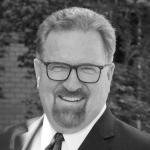
Ben Sawyer is an ABOUT executive. He has more than 35 years of industry experience, most recently serving as CEO of SOAR Vision Group, and EVP of Care Logistics.

Ben started his healthcare career in 1985 as a Physical Therapist, focusing on sports medicine and orthopedics, and received his specialist certification as an Orthopedic Clinical Specialist (OCS) in 1997 from the American Board of Physical Therapy Specialties.

After securing his MBA, he moved into hospital administration, overseeing rehab, wellness, cardiac therapy, and occupational medicine services, specializing in team development and performance optimization. This expanded into a system leadership role overseeing performance and quality improvement. During that time Ben achieved his Lean Black Belt certification (LBB)

Ben has a gift for recognizing strategic gaps that can be turned into opportunities. For example, during the COVID-19 crisis he initiated national executive roundtables with the Baldrige Foundation via the Leader Dialogue program to help executives turn the pandemic disruption into an opportunity for improved collaboration and performance towards true Community Health beyond the walls of hospitals and to prioritize and coordinate action and resources.

Russ Hill/Lone Rock Consulting
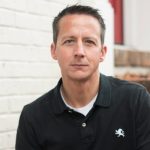
With 20 years of coaching experience, Lone Rock Consulting creates aligned leadership teams. They do that through facilitating conversations that generate movement in the needed direction. At the end of the day, their job is to impact results.

Co-Founder Russ Hill has coached executives at some of the most successful and well-known companies in the world. His commitment to his own development dramatically impacted the results his teams delivered. He was ultimately recruited to join a consulting firm where he began coaching senior executives of Amazon, Cigna, Hormel, Fox, HCA, and many other companies. Today, his passion is helping build leaders and watching the impact of their development on their careers, lifestyles, and families.
Tagged With: about healthcare, baldrige foundation, baldrige leadership, ben sawyer, charles peck, chuck peck, darin vercillo, Healthcare, healthcare challenges, healthcare leadership, leader dialogue, leader dialogue podcast, leader dialogue radio, lone rock consulting, roger spoelman, russ hill

Decision Vision Episode 153: Should I Provide My Services Pro Bono? – An Interview with Roy Hadley, Adams and Reese LLP

January 27, 2022 by John Ray

Roy Hadley
Decision Vision
Decision Vision Episode 153: Should I Provide My Services Pro Bono? - An Interview with Roy Hadley, Adams and Reese LLP
Loading
00:00 /
RSS Feed
Share
Link
Embed

Download file

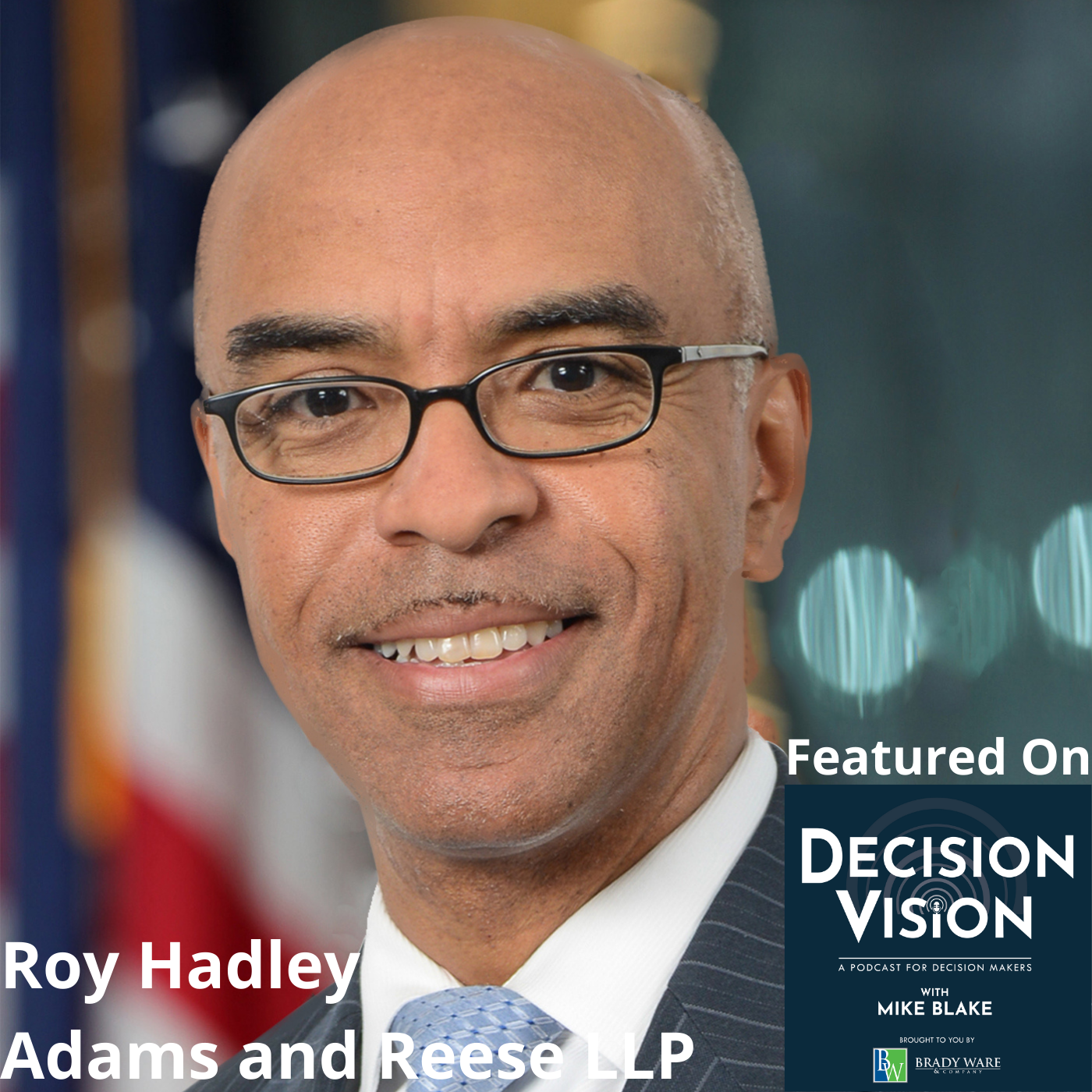
Roy Hadley

Decision Vision Episode 153:  Should I Provide My Services Pro Bono? – An Interview with Roy Hadley, Adams and Reese LLP

Arguably no other industry institutionalizes pro bono work like the legal profession does. With that in mind, host Mike Blake welcomed Roy Hadley with Adams and Reese, LLP, winner of the firm’s Pro Bono Lawyer of the Year for 2021, for an in-depth conversation on pro bono work. Roy explained why pro bono work is so important in the legal profession and to him personally, how such work presents an opportunity to grow, the risks of pro bono work, and much more. Decision Vision is presented by Brady Ware & Company.

Adams and Reese LLP

Study their experience and credentials to understand why they belong on your shortlist. Get to know them as people, and you’ll recognize their dedication to client service. At Adams and Reese, they take things personally. Their people are connected – to each other, to clients, their families, and their communities.

The firm’s industry-focused practice groups of attorneys and advisors are strategically organized throughout the southern U.S. and Washington, DC. Adams and Reese professionals are known as practical and personal advisors and advocates who tailor their approach and counsel to the specific needs of each situation and client. Many on their team have years of on-the-job experience within the industries that they serve as executives, professionals, and in-house counsel.

Taking a hands-on, personal approach to every issue, challenge, and opportunity our clients face, Adams and Reese lawyers and advisors are skilled and ready to help clients achieve their goals and make their lives easier.

Company website | LinkedIn

Roy Hadley, Attorney, Adams and Reese LLP

Roy Hadley, Attorney, Adams and Reese LLP

For more than 30 years, Roy has been a trusted advisor to high-growth businesses, governments, and family/closely held businesses. Roy’s practice, which is international in scope, includes advising clients worldwide on complex corporate transactions, particularly those involving technology, cybersecurity, life sciences, economic development, telecommunications, outsourcing, and intellectual property.

With a nod to our increasingly digital world, Roy provides guidance to a wide array of governments, governmental entities, and companies (and their boards) on issues related to data security and privacy.

Roy’s work as independent counsel on cybersecurity matters helps governmental officials and corporate boards understand and mitigate legal and operational risks and exposures to protect themselves and the companies/governments they serve. He also helps clients to respond to and recover from attacks should an event happen.

Roy’s business experience includes serving as vice president, general counsel, and corporate secretary of a wireless communications company, as vice president, general counsel and chief privacy officer for an international travel services and technology company and as in-house counsel for a pair of telecommunications corporations. Roy also served as special counsel to the president of the American Bar Association and as special assistant attorney general for the State of Georgia.

Roy also counsels clients on business matters affected by personal and family dynamics, including business succession planning, legacy planning, family governance and intergenerational issues. He focuses on helping closely held businesses and families protect their interests and achieve their goals in times of transition or crisis.

A frequent speaker, lecturer and author, Roy has writings that have appeared on USAToday.com, FOXNews.com, Compliance Week, Healthcare Risk Management, Inside Counsel, Homeland Security Today, National Law Review, Sports Page Weekly, Law 360 and many other publications. He has also appeared on Georgia Public Broadcasting, TAG Radio, WXIA-TV (Tech Edge) and WUPA-TV (Focus Atlanta).

Roy was the 2021 recipient of the Pro Bono Lawyer of the Year for Adams and Reese, LLP.

LinkedIn

Mike Blake, Brady Ware & Company

Mike Blake, Host of the “Decision Vision” podcast series

Michael Blake is the host of the Decision Vision podcast series and a Director of Brady Ware & Company. Mike specializes in the valuation of intellectual property-driven firms, such as software firms, aerospace firms, and professional services firms, most frequently in the capacity as a transaction advisor, helping clients obtain great outcomes from complex transaction opportunities. He is also a specialist in the appraisal of intellectual properties as stand-alone assets, such as software, trade secrets, and patents.

Mike has been a full-time business appraiser for 13 years with public accounting firms, boutique business appraisal firms, and an owner of his own firm. Prior to that, he spent 8 years in venture capital and investment banking, including transactions in the U.S., Israel, Russia, Ukraine, and Belarus.

LinkedIn | Facebook | Twitter | Instagram

Brady Ware & Company

Brady Ware & Company is a regional full-service accounting and advisory firm which helps businesses and entrepreneurs make visions a reality. Brady Ware services clients nationally from its offices in Alpharetta, GA; Columbus and Dayton, OH; and Richmond, IN. The firm is growth-minded, committed to the regions in which they operate, and most importantly, they make significant investments in their people and service offerings to meet the changing financial needs of those they are privileged to serve. The firm is dedicated to providing results that make a difference for its clients.

Decision Vision Podcast Series

Decision Vision is a podcast covering topics and issues facing small business owners and connecting them with solutions from leading experts. This series is presented by Brady Ware & Company. If you are a decision-maker for a small business, we’d love to hear from you. Contact us at decisionvision@bradyware.com and make sure to listen to every Thursday to the Decision Vision podcast.

Past episodes of Decision Vision can be found at decisionvisionpodcast.com. Decision Vision is produced and broadcast by the North Fulton studio of Business RadioX®.

Connect with Brady Ware & Company:

Website | LinkedIn | Facebook | Twitter | Instagram

TRANSCRIPT

Intro: [00:00:02] Welcome to Decision Vision, a podcast series focusing on critical business decisions. Brought to you by Brady Ware & Company. Brady Ware is a regional, full-service, accounting and advisory firm that helps businesses and entrepreneurs make visions a reality.

Mike Blake: [00:00:22] Welcome to Decision Vision, a podcast giving you, the listener, clear vision to make great decisions. In each episode, we discuss the process of decision-making on a different topic from the business owners’ or executives’ perspective. We aren’t necessarily telling you what to do, but we can put you in a position to make an informed decision on your own and understand when you might need help along the way.

Mike Blake: [00:00:43] My name is Mike Blake, and I’m your host for today’s program. I’m a director at Brady Ware & Company, a full-service accounting firm based in Dayton, Ohio, with offices in Dayton; Columbus, Ohio; Richmond, Indiana; and Alpharetta, Georgia. My practice specializes in providing fact-based strategic and risk management advice to clients that are buying, selling, or growing the value of companies and their intellectual property. Brady Ware is sponsoring this podcast, which is being recorded in Atlanta for social distancing protocols.

Mike Blake: [00:01:14] If you would like to engage with me on social media with my Chart of the Day and other content, I’m on LinkedIn as myself and @unblakeable on Facebook, Twitter, Clubhouse, and Instagram. I also recently launched a new LinkedIn group called Unblakeable’s Group That Doesn’t Suck. We just topped 100 members, by the way, so people are getting into this thing. So, please join in with that as well if you would like to engage. If you like this podcast, please subscribe on your favorite podcast aggregator, and please consider leaving a review of the podcast as well.

Mike Blake: [00:01:45] So, today’s topic is Should I Provide My Services Pro Bono? And, according to Esquire Deposition Solutions, and I don’t think it has anything to do with the magazine, nine out of 10 lawyers provide some sort of pro bono service every year. And, according to data on Statista, many firms’ attorneys average over 100 hours per year, which when you consider that the hourly billing rates might be easily $500 at the partner level and for the bulge bracket firms can be over a thousand, that’s a significant investment that firms are making in pro bono work.

Mike Blake: [00:02:26] And I want to talk about this topic because, you know, as we move through this, again I keep calling it the trans-pandemic period, I don’t know when we’re going to get to the post-pandemic period, but we’re certainly trans, and we have this great realignment and great resignation, great this and great that. You know, one of the things that we’re seeing in our society, of course, is the fact that people’s priorities are simply changing. And I’ll share with you sort of a little anecdote from this morning.

Mike Blake: [00:02:57] A guy that I used to work for many years ago texted me because he saw on my Facebook page that I posted something about the Celtics taking the Sacramento Kings behind the woodshed and beating him by 56 yesterday. And if you don’t follow basketball, that’s a big number. And, I posted something on the website and said – and it actually turned out they won by 52, and my friend was giving me the business said, “Hey, you’re a valuation guy. You’re not allowed to get math wrong.” I said, “Dude, if I’m off duty, I’m not responsible for your math, my math, or anybody else’s.” So, you know, I just can’t be on all the time. You know, I just can’t do that. So, he kindly corrected me and gave me the business by text today.

Mike Blake: [00:03:43] But it’s sort of emblematic of the fact that everybody, I think, is searching for something different in what they’re doing. And, one of the things they search for is, we all search for, I think, or most of us search for, is some kind of meaning in what we do. And, the thing that’s fascinating and why I have this particular guest and one of the reasons I have this particular guest on, is, first of all, he’s great. We could talk about anything for an hour and you would enjoy it. But this is a business podcast, so we’ll try to stick to business as much as we can.

Mike Blake: [00:04:15] But what makes this interesting is that the legal profession, despite having, you know, sort of the meme style reputation of being greedy and self-serving and running the meter on the billable hour, when you really sort of take a step back and take a deep breath and look at it in the cold, hard light of day, I don’t know that there’s another profession out there that institutionalizes volunteer work and giving away their expertise and services like the legal profession does. I know the accounting profession doesn’t do that. The business appraisal profession, sure as hell, doesn’t do that. You know, we have to sort of make that up on our own.

Mike Blake: [00:04:55] So, you know, I think it’s important to recognize the contribution of the legal profession makes to this, and I think provides an example for, you know, I think what many other companies and industries can and should consider following, again, as we as re-evaluate the intersection of commerce and society.

Mike Blake: [00:05:21] And, joining us today is a long-time friend of mine, Roy Hadley. We’re just talking before the program – oops. Sorry, my watch wasn’t turned off. I thought I had the device turned on.

Roy Hadley: [00:05:35] Technology, technology.

Mike Blake: [00:05:35] Yeah. Exactly. I’m sure Apple is not listening. So, anyway, joining us today is not Siri, but indeed it’s Roy Hadley, who is a business lawyer and technology cybersecurity and privacy evangelist with Adams and Reese, which is headquartered in New Orleans but has a fairly substantial office here in Atlanta.

Mike Blake: [00:05:58] Roy is a lawyer and trusted adviser to businesses, governments, and families worldwide. He’s an attorney out of the Atlanta office and is a member of the corporate and security team with a nod to the interconnected world where he consults clients globally on complex business issues, particularly those involving technology, communications, cybersecurity, life sciences, economic development, and trade, and he regularly assists with matters involving data security and risk mitigation. He was named a cybersecurity visionary by USBE Magazine, was named one of Georgia’s most powerful and influential lawyers, and recognized by The Legal 500 for his work in middle markets M&A. He represented the City of Atlanta as it confronted a massive ransomware attack in 2018. I couldn’t believe it’s only been four years ago since that happened. It seems like it was 10 years ago, but, boy, time flies.

Mike Blake: [00:06:54] Roy was named a Georgia trailblazer by the Daily Report and a game-changer by Information Security by Hub Magazine. He recently received Adams and Reese’s Pro Bono Lawyer of the Year Award for 2021, which is what prompted my inviting Roy to this conversation. But I think, perhaps most importantly, as we record this podcast here on January 26, 2022, Roy holds both his bachelor’s degrees and law degree from the National College Football Champion, University of Georgia. Boy, you guys [inaudible]

Roy Hadley: [00:07:29] Bulldogs. Bulldogs.

Mike Blake: [00:07:31] I’m just going to let you have – I’m going let you have it. If you want to start –

Roy Hadley: [00:07:35] Let me have that moment. Yeah. You do have to let me have that moment. You know, it’s been, what, 41 years coming? I deserve that moment.

Mike Blake: [00:07:43] You know, 41 years and I’m not – look, I’m not a college football fan. I’ve said, look, we already have pro football up in the North. We just paid our players over the table. That’s [inaudible]. But, you know, having moved down here almost 20 years ago, about 19 years ago, you know, I don’t have, no pun intended, I have a dog in the fight. But it was remarkable just how many years Georgia would come within a game of winning that national championship and just something – it would, you know, in the 20 – in the early 2000s, it would be a bonehead loss to a bad team six games in, right, that would derail their season. Right?

Roy Hadley: [00:08:25] Right.

Mike Blake: [00:08:26] And then, they keep running into the buzz saw known as Nick Saban, obviously, and the University of Alabama Juggernaut.

Roy Hadley: [00:08:33] Right.

Mike Blake: [00:08:34] And, I didn’t think there was a chance in hell Georgia was going to win that game after the way they lost to Alabama. So, don’t take my betting advice, but –

Roy Hadley: [00:08:42] Right.

Mike Blake: [00:08:42] But I’m just so happy for University of Georgia fans who have just been suffering and have just been tortured for so long –

Roy Hadley: [00:08:53] It’s our moment. Right?

Mike Blake: [00:08:53] And they haven’t come up on top. It’s just brought this really nice vibe, really, to the entire state. Even Georgia Tech fans, I think, are giving you the nod, which is a real sign of social unity, I think.

Roy Hadley: [00:09:05] It’s out of 41 years in the making.

Mike Blake: [00:09:10] Yes. So, Roy, thanks for coming onto the program. It’s awesome to see you again, and congratulations on your Pro Bono Lawyer of the Year Award, among the other things. And, you know, by the way, in full disclosure, I could have read off all of Roy’s accomplishments and achievements and expertise, but we’d use the entire hour doing that. So, I would just invite you to look at his LinkedIn page and look at the other credentials.

Mike Blake: [00:09:36] But let’s dig in, let’s dig in here. As I said in the introduction, the legal my impression is, and correct me if I’m wrong, please. But my impression is the legal profession, interestingly, has a special relationship with pro bono work, right? And so, I want to talk about that in a minute. But before we do that, since pro bono is a Latin term and not all of us have watched The Exorcist. What does pro bono work mean? And is there a distinction between that and a more genericized term of, say, volunteering?

Roy Hadley: [00:10:13] Right. So, you know, great questions, and I’ll start it off by saying, you know, pro bono has been kind of, you know, whether you call it pro bono or you call it something else, it has always been kind of ingrained in the legal profession. You know, the lawyers have always said it is a profession despite what a lot of people think. Lawyers think of the legal profession as a profession. And, as such, you know, part of that profession is giving back to society. And, for us, what that means a lot of times is doing what we call pro bono work, and that work is really doing it for free, pro bono. And, that’s really what, you know, kind of underpins it.

Roy Hadley: [00:11:02] You know, you see it all the time. Firms have pro bono requirements. We’ll get into that a little bit later. But, also, you know, courts. A lot of times when defendants don’t have, you know, money to pay for their defense, courts will appoint lawyers, and sometimes they’re paid, sometimes they’re not. A lot of times you will see lawyers that will take up the case of indigent defendants, lawyers that will take up death penalty cases.

Roy Hadley: [00:11:30] You see the Innocence Projects that go on throughout the country. A lot of times those lawyers aren’t paid, you know, and that even goes back to when kids are in law school, because a lot of the projects they are doing pro bono, they’re doing it for free, with the thought that that same mentality kind of permeates throughout their careers.

Roy Hadley: [00:11:54] And so, it’s almost ingrained in us that part of the profession is giving back. And in some bar, state bar associations, actually require pro bono work. So, you know, it’s just one of those things that I hold near and dear to my heart because, at the end of the day, people always ask me, “Well, what do you do?” You know, you read my resume and I do a lot of technology-focused stuff. But what I tell people at my core is I help people solve problems. And, you know, you can help clients solve problems and you get paid for it and you’re happy. They’re happy. Good stuff comes out of that. But a lot of times when you do pro bono work, you’re helping people that can’t afford your services.

Roy Hadley: [00:12:40] And so, you know, it’s things that are near and dear to them that really make a difference at the end of the day. Things like keeping them from getting evicted. Things like helping them pay hospital bills. Things like, you know, custody matters. Things like – you know, in my case, what I did a lot this year was helping with COVID relief and things like that. And so, things that really impact the daily lives of people is really what a lot of the pro bono work that lawyers do accomplishes. And so, it really does make a difference, and you can see that difference at the end of the day and impacting people’s lives directly.

Mike Blake: [00:13:25] And, you know, it’s so important because at least, you know, I think so. I’m not a lawyer but I’m a citizen, and I take, I think, my civic duty, you know, very seriously. And as a citizen, you know, we’re very proud of a system that is designed to be transparent and it’s designed to give you some kind of equal representation in front of the law, right? And, look, the law is complex and it’s not – although you’re allowed to represent yourself, it’s certainly not designed to encourage that, right?

Mike Blake: [00:14:01] But, you know, the legal system is not perfect and you’re talking about whether the legal system is just or not as a separate podcast altogether and really something philosophers really need to tackle and other jurists that I’m just not qualified to. But I can say this, without the opportunity for representation, the legal system simply has no chance of being successful.

Roy Hadley: [00:14:32] Right.

Mike Blake: [00:14:33] And, you know, the people that often need representation most are the ones that can least afford to pay for it.

Roy Hadley: [00:14:41] Right. And, not getting – and that’s a great point, but not getting too philosophical here because you say it will leave some of these questions for the philosophers. But our whole system, the American system, you know the Constitution, the Bill of Rights, and all of that we all hold dearly whether you’re a Republican, Democrat, Libertarian, it really doesn’t matter. These ideals that we have, you said, hold dearly, and those ideals are predicated really on the Rule of Law.

Roy Hadley: [00:15:11] And so, it’s that Rule of Law that underpins really everything that we do in this country. You know, it’s one of those foundational elements that we have to really nurture and protect. And as lawyers, we feel a special sense of duty and a special sense of obligation because we are lawyers to help nurture and protect and uphold that Rule of Law. But, kind of inherent in all of that is, like you said, making sure that it is just that it is fair that everyone has access to proper representation whether they can afford, you know, a lawyer, you know charges, I don’t – but, you know, charges a thousand dollars an hour, or they can only afford one that costs $10 an hour, or in some cases, afford one that costs zero dollars an hour.

Roy Hadley: [00:16:08] And so, I think that’s why you see lawyers really, you know, kind of embrace this whole thing about service and pro bono and giving back legal services to the community and those most in need of them for free because it is a foundational element of our whole system, of our republic, of our, you know, democratic ideals, that Rule of Law. And so, you know, I hold it dear and we all hold it dear. And, I think it’s it’s one of those things that, regardless of profession, we all love to hold dear.

Mike Blake: [00:16:46] Yeah. And I think, you know, the best example of that was, you know, very early on in our history, John Adams was famous for representing the soldiers in the Boston Massacre, right? Not necessarily because he believed in their case, but because he believed that everybody, even if you think they’re dead, guilty bad guys, the legal system to have credibility. Everybody is entitled to representation and they’re entitled to, as I think as you guys like to say, vigorous advocacy in front of the court, right?

Mike Blake: [00:17:15] So. I’m curious about something in the mechanics. You know, you mentioned about a court appointing a lawyer. And I have this in my head and this may be totally wrong. Does the court have the power to, in effect, draft an attorney to work on a case?

Roy Hadley: [00:17:35] Yeah. In some cases, in some matters, I would say yes, they do. And so, you know, a court can appoint an attorney, whether that attorney wants to or not, in some matters, to actually represent somebody in that case. And you’ll see it a lot of times, especially in smaller communities where, you know, as part of being a member of the bar, you have to sign up and register, and the court will rotate it and appoint different members of the bar to represent certain, you know, clients, whether they’re indigent or just need special assistance.

Roy Hadley: [00:18:13] Now the thing I’ll tell you, though, is that, you know, we have 50 states and each state has its own rules regarding lawyers. Each state has its own rules regarding pro bono, regarding the ability to assign cases. And within those states, you have different bar, circuit and bars and jurisdictions, and so each one will have something totally kind of different. That said, though, again, kind of going back to one of those foundational elements of the bar being that you will give back.

Roy Hadley: [00:18:46] And so, you know, you see firms. I mean, my firm, Adams and Reese, we have a pro bono requirement for lawyers. You know, you have to work a certain number of hours a year. I think it’s 50 per lawyer that you have to work in pro bono service. And there are lots of different ways you can do it, you know. And when you look at it a lot of times early in my career, I know I did some work where people were having trouble getting their wages paid or, you know, improper withholdings from employers, and, you know, a lot of times we’ll sit back in what I call our ivory towers, our gilded towers, and say it really doesn’t make a big difference.

Roy Hadley: [00:19:30] But, you know, if you’re making the minimum wage or you’re making $8 an hour and somebody is erroneously withholding a dollar from you, or if somebody is not paying you for your 40 hours for you, they’re not paying you overtime, that has a tremendous impact on your daily life. It may be the difference, and I’m not overstating this. It may be the difference between you being evicted because you couldn’t pay your rent. It may be the difference between you not having transportation because you couldn’t pay your insurance. Or, it may be the difference between you not being able to eat or feed your child that day.

Roy Hadley: [00:20:12] You know, these sorts of things that we sometimes take can literally be that impactful in people’s lives, and I think that’s really what drives at home for me the importance of it, because when you see somebody that you have helped in a very, you know, impactful way, then, and that person is genuinely appreciative, that gets to you. You know, if you don’t feel some sense of humbleness around the ability to help and the opportunity to help, then you know, I’m not quite sure about you, because it is impactful in ways that, you know, you just don’t see every day in what we do working with clients.

Mike Blake: [00:21:00] Yeah. And, you know, in a lot of cases, you are somebody in your stead is what’s standing in the way of an injustice, right? It’s one thing. You know, if you’re going to be evicted because you’re unable to pay your rent, that’s one scenario, again, I don’t want to go deep into that, that’s philosophical, right? But it’s another if a landlord just decides to kick you out because they got an offer to buy the building, for example. They’re going to make some good money on that sale and they’re banking on the fact that you cannot defend yourself legally, right?

Mike Blake: [00:21:38] To me, that’s the thing that’s got to be that must be impeded, that, you know, I don’t think any of us want to live in a society or very few of us want to live in a society where that is simply allowed, right. And it’s people doing that pro bono work that makes sure that at least if something bad is going to befall somebody, it’s going to befall somebody within the concept of what we, as a society, have decided as a just outcome as opposed to simple, frankly, just outright bullying. I don’t like bullies.

Roy Hadley: [00:22:18] You’re right. I don’t think any of us do, you know. And, it’s interesting because a lot of times, you know, most times people aren’t asking for anything special. You know, they’re just asking to be treated within the rules that are there, the laws that are there.

Mike Blake: [00:22:36] Right.

Roy Hadley: [00:22:36] And so, a lot of times, what you’ll find is people either don’t know how to navigate the system, don’t know what the rules are, don’t know what the opportunities are. And so, a lot of times it’s not that, like you said, somebody can’t pay their rent or doesn’t want to pay their rent, it’s that the landlord is doing something. Or, it said, you know, somebody is trying to get Social Security benefits for a kid because the mother or the father passed but the parents weren’t married, and they don’t know how to navigate that Social Security System to help get those benefits for the child. And, it’s not that the child is trying to get something they’re not entitled to. It said they just don’t know how to navigate the system to get something that they are entitled to.

Roy Hadley: [00:23:24] And so, that’s where, you know, we help. That’s where lawyers can help. And quite honestly, you know, that’s where a lot of other professions can help, you know. Because you start talking. I’m going to pick on you, you and your accounting friends there might – you know, accountants aren’t dumb. And so, accountants can navigate.

Mike Blake: [00:23:48] We like to think so. But, yeah.

Roy Hadley: [00:23:50] Right. You know.

Mike Blake: [00:23:52] That’s what the website says.

Roy Hadley: [00:23:54] Right. And so, you know, there are a lot of things that accountants could do to help this, you know, help people on a pro bono basis. And, you know, I think it’s just not institutionalized again in the way that historically it has been for lawyers. And, in some ways, us lawyers think that we are the guardians of the republic, the guardians of democracy, the guardians of the Rule of Law. You know, we like to think that and in a lot of ways we are because, again, kind of going back to what we first said, our country is built upon the Rule of Law. And so, we have to respect that, nurture it, protect it, and make sure that it’s fairly applied to everybody.

Mike Blake: [00:24:41] So, you bring up a great point. And I’ll say the following, it’s going to sound defensive, but it’s really not intended to be and I’ll prove with what I’ll say next.

Roy Hadley: [00:24:52] There you go.

Mike Blake: [00:24:52] I’ve offered a number of times to attorneys that, look, if you need somebody to ride shotgun with you on a pro bono matter, there’s a valuation issue, or it could be eminent domain. But, you know, it’s a tiny business. It could be a convenience store. It could be a pop-up store, whatever. They’re not going to pay somebody like me 10 or 12 grand to appraise the business. Right? But there are damages involved, right? I’ll be happy to ride shotgun with you, or I’ll have somebody on my staff ride shotgun and help you work through the numbers that matter. And in 18 years of doing this, I’ve never been taken up on it.

Roy Hadley: [00:25:26] Really?

Mike Blake: [00:25:27] Yeah. So, as I say this, and I’m going to put you on the spot a little bit, but I think you’re going to appreciate it. Let’s you and I have an offline conversation, figure out how we can partner our two firms to help you, if there are financial issues that are involved in any of the matters that you guys are working on, if you need a partner to ride shotgun, let’s do that.

Roy Hadley: [00:25:51] Okay. Absolutely. Take done. Done. We will absolutely have that.

Mike Blake: [00:25:55] We would like to do that because you did mention it. You know, you guys have the institutionalized knowledge, right? And the reality is that these matters come to lawyers first. It’s why guys like me suck up to guys like you because guys like you have the – really are the gateway to the engagements because lawyers are the planners and accountants are the historians, which means we can base it, “Oh, man. Well, you should have done this.”

Roy Hadley: [00:26:27] Right.

Mike Blake: [00:26:27] You know, that doesn’t – great. Right? So. you know, nobody comes to us sort of initially with the legal matter, but many of these legal – you know, many of these legal matters involve, you know, finances and that’s something that we can do. And there are opportunities for partnerships where we can kind of piggyback on what you guys are seeing. And I think other firms and other practitioners would love to lend a helping hand. We really would.

Roy Hadley: [00:26:56] Absolutely. And, a lot of times they’re not complex issues. You know, they’re not complex valuation issues. They may be calculating wage an hour, you know, issues. There may be calculating rent and back rent, you know penalties, or with back taxes, trying to help calculate and negotiate with the IRS, you know. There are lots of things. And so, people always say, “Oh, I don’t have time,” because people envision this really complex thing. And sometimes they are complex. But most times they go to the other end of the spectrum and are simple matters, especially simple to somebody who does numbers, you know works with numbers all day long. So, I will absolutely take you up on it.

Roy Hadley: [00:27:44] And, it kind of pivots me to one of the things that, you know, when we talk about pro bono with lawyers is people also tend to think if you’re a lawyer, you can do anything regarding the law. And, you know, kind of like in our normal practice, you kind of stay in your lane and you have to stay in your lane. And so, even with pro bono, we kind of stay in our lane, and part of staying in our lane means that a lot of times we’ll need help from somebody like you on those little things, those number-crunching things that are outside of our lane. And so, it’s – you know, I take that offer very seriously and I will absolutely take it up, take you up on it.

Mike Blake: [00:28:26] At a minimum, take it up with me. Like I said, 18 years, nobody’s ever pulled the trigger.

Roy Hadley: [00:28:30] All right.

Mike Blake: [00:28:31] I can’t commit my entire firm, but I can commit my practice for sure, and I think I can convince my firm to do something with it. So –

Roy Hadley: [00:28:39] Wait. I heard you earlier say the firm, you know, as lawyers hear these things.

Mike Blake: [00:28:45] Well, yeah. Well, that’s why I need to walk that back. So, I don’t have the authority. As far as to go, they’re not the managing partner of the firm.

Roy Hadley: [00:28:54] Right, right, right.

Roy Hadley: [00:28:55] [Inaudible] within my group that we can do it. And I think that I can get people in my firm to do it, whether formally or informally, but –

Roy Hadley: [00:29:01] I’m messing with you.

Mike Blake: [00:29:03] But I do want to have that conversation sort of institution to institution.

Roy Hadley: [00:29:08] Absolutely.

Roy Hadley: [00:29:09] And I think we’ll be receptive to it, just knowing the people involved. So –

Roy Hadley: [00:29:12] Right.

Mike Blake: [00:29:16] Now, you have a 50-hour minimum. I don’t think they gave you the award for doing 50 hours.

Roy Hadley: [00:29:22] [Inaudible] No.

Mike Blake: [00:29:24] That would be, that would be awkward.

Roy Hadley: [00:29:26] Right.

Mike Blake: [00:29:26] So, obviously, this is something you’re doing more and more of because you truly believe in it.

Roy Hadley: [00:29:32] Right.

Mike Blake: [00:29:32] Why? What is it that drives you maybe, you know, more on sort of the edge of the bell curve to do a lot of this?

Roy Hadley: [00:29:39] Right. So, this year, you know, I was well over 200 hours in terms of pro bono work. And a lot and what – and I’ll describe a little bit of what I did. You know, we had a client that was giving out pandemic relief funds, loans, grants [inaudible]. And so, part of that was it took legal work to effectuate the loans and things like that. And so, let’s just say, for example, it’s a $10,000 loan, takes two or three hours of legal work to do. Then, you know, at my standard rate of $50 an hour, just kidding, but at most, you know, it could be a thousand to $1500 in legal fees. So, all of a sudden that $10,000 loan is 8000 or 8500, you know. But if you could get that whole 10,000 to them, then now that business can pay rent, now that business can pay employees, now that business can buy PPE, supplies, and things like that. Now, they can pay the light bill. Now, they can stay open and keep functioning, which is the whole purpose.

Roy Hadley: [00:30:52] And so, you know, I’m a business lawyer. I’m a corporate lawyer, you know, close loans, do deals all day, every day. And so, the ability to do that for these companies, and, again, these are small companies. These are a lot of times sole proprietorships. These are companies that maybe have two or three or four employees that really aren’t the big companies that have the ability to kind of withstand business dropping 50 or 70% because of COVID. These are small operators. And so, the ability to help them by getting all of the monies that we’re trying to get to them can be very impactful.

Roy Hadley: [00:31:35] I mean, you know, when you close some of these loans and you talk to the people, they are genuinely appreciative of those funds. And so, you know, and they will make a difference, and they did make a difference. They kept a lot of these businesses afloat. Again, it was the difference between their doors being open and their doors being closed. And so, you know, if you can, as a lawyer, help effectuate that, I mean, it really warms your heart.

Mike Blake: [00:32:04] And, you know, again, my firm has a minimum requirement, but they are very supportive and I was genuinely appreciative of that support that said, “Hey, go do this. This is a good thing. This is a great thing. Go do this.” Because despite the fact that we too were impacted by COVID and those sorts of things, we still will support these types of endeavors by our lawyers to make a difference in the communities we serve. And I’ve put some emphasis on that word because we really do look at communities where we are as not as the communities that we operate in but as the communities we serve.

Roy Hadley: [00:32:51] And so, you know, here in Atlanta, as you mentioned, the mothership, as I call it, is in New Orleans, but we’re all across the south in terms of our footprint. But in each of those communities, we really do make a special effort to serve the community. And, you know, when people think about, and I know I’m going on on a tangent here, but when people think about pro bono, you know, we tend to think of the legal work that we’re doing. But also inherent in our commitment to the community, legal profession’s commitment, is that you see service to the community in other ways. You see lawyers on the United Way board. You see lawyers on the Red Cross board. You see lawyers on the Community Thief board. You see lawyers, you know, on the food kitchen board, you know.

Roy Hadley: [00:33:46] And so, you see lawyers that not only are doing pro bono work in the truest sense, but you also see lawyers that are out in the community serving on these boards, bringing expertise to these boards of these organizations that also serve the community. And so, you know, all of those nonprofit boards are going to be unpaid, but that’s okay because, again, that’s giving back to the community.

Roy Hadley: [00:34:16] And so, I would challenge all businesses, all business leaders to make a special effort to, you know, push your people because these are going to be people that have special expertise. These are going to be young people. Sometimes they have a lot of time, more time, you know, that can really get in there and serve the community, not necessarily in pro bono like, you know, we have originally defined it, but in terms of giving back to the community, by giving back to other organizations that serve the community. And I think that’s something that also we should really highlight and talk about for the listeners to make sure they understand there are many, many ways that even if you’re not a lawyer, you can serve in the spirit of pro bono service.

Mike Blake: [00:35:08] So, I want to posit something to you, and I’d appreciate your reaction to it. Can’t you also make the case that there is in your profession, and I think I think mine, and as I sort of think through this conversation, I want to interject because I need to be fair. For all I know, there’s a ton of pro bono work that’s going on in my profession, in my company, I just don’t know about it, right? But I do know it’s not institutionalized. We don’t have an award for pro bono, right?

Roy Hadley: [00:35:41] Right.

Mike Blake: [00:35:42] And there are probably opportunities to make it more efficient by aggregating it. So, I do want to get that out there. But that having been said, can you also make a case that the pro bono work could be a great opportunity for somebody that doesn’t have a lot of experience yet to kind of cut their teeth on certain kinds of matters? You know, it could be a first chance to cut your teeth in litigation or, in my world, serving as a consulting or even potentially a testifying expert. Or, you know, in some cases, just sort of getting out of the office and rolling up your sleeves and getting into real world, real life, real business issues where you have to provide, you have to get into really, the very real scenario of providing a client with advice under extreme duress. And, you know, there’s no – I don’t think there’s any class in the world you can take that, would ever prepare you for that. You just have to get in. You just have to get in there, right? So, can we argue that there is a professional development aspect to pro bono work in the way that we’re describing that is also very helpful?

Roy Hadley: [00:36:58] Absolutely. You know, again, you know, the requirement here at this firm and most firms is not, you know, no requirement for young lawyers, 50 hours for senior lawyers. It’s for every lawyer, which means that young lawyers have to get out and do something. Now, what we do here in the legal profession is, again, we try to kind of stay in your lane. But if you are volunteering, say you’re a young lawyer and you are going into something you don’t have the expertise on, you know, you get a senior lawyer that does will help you navigate whatever that is. But it is an excellent opportunity, as you said, to learn new areas.

Roy Hadley: [00:37:42] You know, back – I’ve always been a corporate lawyer, but a lot of my pro bono cases when I was very young dealt with wage and hour issues, dealt with Social Security issues, dealt with evictions, you know, nothing within the lane that I was in. But because I did those things, I did learn about those types of areas of the law. But more importantly, and I think this is one of the things that is kind of underpinning your statement, is I learn how to work with clients. I learn how to interact with people. I learn how to listen and understand the issues and the problems, and then come up with real-world solutions and not just theoretical kind of book solutions.

Roy Hadley: [00:38:30] You know, it’s one thing kind of to do a law exam and come up with a solution to a question, but it’s a whole another thing when you’re out in the real world. And, like most issues, things aren’t cut and dry. They’re not black. They’re not white. They’re shades of gray and those shades of gray shift, you know, depending upon who you’re talking to and what they’re saying. And so, in any profession, you’re going to be a better fill-in-the-blank if you have experience, you know, working with those nuances and those shades of gray that are constantly shifting on you.

Roy Hadley: [00:39:08] And so, pro bono work is a fantastic opportunity to get out there and learn a new area of the law, you know, to roll your sleeves up, to get some, as you said, that real-world experience, and quite frankly, for the legal profession, we encourage that. We encourage you to say, “Okay. I’m going to go volunteer for the Atlanta Volunteer Lawyers for the Arts and learn about contracts and that sort of thing.” Or, “I’m going to volunteer for Legal Aid and learn about helping to defend somebody in, you know, or help them navigate through certain parts of the system, whether it’s child support or those sorts of things.” You know, it may be a corporate lawyer going to Legal Aid. We don’t have those kinds of prohibitions.

Roy Hadley: [00:39:58] So, it’s a great, great opportunity and it’s a great opportunity for old lawyers, you know, like myself that have been practicing for a long time to get out there and do something different, learn a new area of the law, and quite honestly, like you said, get out of the office and, you know, actually look somebody in the eye, sit across the table from them, sometimes go and take them to lunch and break bread with them, and really understand the issues. Because most times kind of like any corporate matter, again it’s not just black and white. You’re going to need to be able to navigate those nuances and nothing like real-world experience to help you navigate those nuances.

Mike Blake: [00:40:45] And, another word that comes to mind that I think is so important, and I almost hate to bring it up because one of my fears, I’m afraid this word is going to become viewed as a buzzword and it really shouldn’t, it really needs to stick, and that is that I think the pro bono work you’re describing helps you develop and strengthen your empathy muscle.

Roy Hadley: [00:41:06] Absolutely.

Mike Blake: [00:41:09] The kinds of cases you’re in, and I’ve only done a fraction of what you’ve done mainly through my old office hours, people sort of wander in, right. But, you know, they come in and the circumstances that sort of that got them there, right, in a paid scenario. You guys are in – I forget if you’re in Class A or Class B office space, but the fact of the matter is, I don’t want to get into – there’s a segue here. People are not wandering into your office most likely who are minimum wage people about to be evicted coming into the marble office, right, and reception room, saying, I need a lawyer. Right?

Roy Hadley: [00:41:46] Right.

Mike Blake: [00:41:47] And it sort of goes the reverse, right? So, unless you really make a concerted effort, you never encounter that. It’s very easy for people in our position that in fact we want to really isolate ourselves and never connect with that.

Mike Blake: [00:42:02] So, that’s a long preamble to the segue, which is if somebody – how do you – how do those opportunities to serve come your way? Right? Because they’re not calling. I don’t think – they’re not coming into your office. How do they find Adams and Reese? How do they find Roy Hadley to get the help they need?

Roy Hadley: [00:42:22] Right. So, you know, I’ll preface my whole statement here in response by your original premise of the empathy. And I think that’s important to kind of underscore here because one of my favorite sayings is, I complained that I had no shoes until I saw the man with no feet. Right? And so, you really have to always put things in perspective. And, you know, before you got on this kind of video here we’re talking and, you know, I’m always happy because I always try to keep things in perspective. And that perspective is that I’m fortunate. I’m blessed. You know, I am in a good place. Not everybody is as fortunate, right?

Roy Hadley: [00:43:13] And so, you have to remember that that a lot of times people’s circumstance is not of their choosing, you know, kind of dictates where they’re going in life and how they’re getting there. And you always have to be cognizant of that, that not everybody graduated from high school. Not everybody had the opportunity to go to college. Not everybody had the opportunity to go to grad school or to law school. And those are opportunities that are generally afforded to you, not by your own choosing, but by your circumstance. And so, I keep that filter in mind when trying to talk to people and help people. Everybody is not as blessed or as fortunate as we are, and so we just have to be cognizant, cognizant of that.

Roy Hadley: [00:44:06] Now, to get it back to the second part of your question, most times, yes, you’re right. To be quite honest, most people couldn’t get past security to come up to our office, right?

Mike Blake: [00:44:17] There. Fair.

Roy Hadley: [00:44:19] Speaking plainly. Right? What we do is we partner with, you know, institutions that are on the ground out in the community. So, you know, you’re talking about institutions like the United Way. You’re talking about institutions like, you know, Homeless Task Forces. You’re talking about the food banks. You’re talking about shelters. You’re talking about, you know, places like that, the Volunteer Lawyers for the Arts, you know, and those types of institutions that have their feet out and hands out in the community are going to be the frontline and then we partner with them. Legal Aid is another great example of an organization that has offices and people that are out in the community, you know talking to people that are accessible to people. They come in, they identify the need, and then we partner with them to address those needs.

Roy Hadley: [00:45:19] I was talking to – I had a good friend who was in the legal business, but he also had gotten into the restaurant business, and he and some other restaurant owners found it kind of a fund for their employees that, you know, if – the restaurant owner has put into the fund every month and employees could contribute whatever they want it too [inaudible]. And then, let’s say you then have rent money for a month or you were short on your rent or you’re short on your insurance payment, the fund would loan you the money or give you the money. But, you know, that fund also would help people who needed legal assistance.

Roy Hadley: [00:45:59] And so, you partner with those types of organizations, and that’s really how we do it. And that’s going to be the most efficient way because a lot of times, you know, issues can be resolved without even involving a lawyer, you know by somebody that has much more specialized practical expertise on it to say, “Hey, you need to take this form, fill it out and take it to this office there, you know, at this address, or we can take it for you.”

Roy Hadley: [00:46:27] And so, you know, those types of organizations will filter out, address a lot of things, you know, quickly and more practically, and then give the others to us, funnel them to us, and then we handle those through those organizations. And, we found that’s the most efficient and practical way to do it. And so, you know, if somebody needs help, go to those frontline organizations. And then, if they need more specific help, those organizations can get them to us to address the needs.

Mike Blake: [00:47:02] I’m talking with Roy Hadley and the topic is, Should I Provide My Services Pro Bono? So, I want to address a question that I think is important any time – because any time we talk professional services, the elephant in the room is always, what’s the liability? And, it’s unfortunate, but that’s just a fact of professional life. We have to protect ourselves or we can’t be in business very long.

Roy Hadley: [00:47:27] Right.

Mike Blake: [00:47:29] How, if at all, are there any kind of protections in place to ensure that you’re not taking disproportionate risk by taking on a pro bono case? Do you effectively have – and for example, you said, you know, pro bono is a great way to learn about a part of the law where you don’t have necessarily that much exposure, which to me means that – that means it’s going to be higher risk that something could go sideways. Are there structures in place to kind of help you manage the risk to make sure that when you’re trying to do a good thing, you’re not the good Samaritan that gets sued because you didn’t change the guy’s tire right on the side of the road? You know what I’m trying to get to?

Roy Hadley: [00:48:17] Right. Right. Absolutely. So, that’s a great question, and I can only address it from the legal standpoint, the legal law firm, you know, lawyer standpoint. I can’t really speak to other professions that might do volunteer work of this ilk. In the legal sense, you know, I talked about staying in your lane earlier, and what that means is that even if you are taking on a matter that you may not have expertise in, you get somebody at your firm who can help guide you, you know, just like they would in any other matter. You know, you use that matter as a teaching opportunity, as an opportunity to grow. So, from a staffing standpoint, we’ll always make sure that there is somebody on that matter that can provide general overall guidance.

Roy Hadley: [00:49:10] So, you may be a young corporate lawyer, you know, cutting your teeth in a pro bono litigation matter, but we’ll make sure we have a litigation senior lawyer, partner or senior associate that knows that area that can help guide you so that you don’t make those missteps. Because, you know, not only is it a legal exposure, but, again, you have to remember there’s a live person on the other end of the matter that it really impacts their lives. And so, you know, we will staff it the same way we staff a paid matter in terms of, you know, we may have a young lawyer working on it, but there’s going to be a more senior lawyer that actually knows how to do it and knows, you know, what needs to be done to oversee that young lawyer. So, we’ll always staff pro bono matters that way.

Roy Hadley: [00:50:01] We actually have a pro bono partner. And so, all pro bono matters at the firm have to be approved by this part. Part of that process is making sure that we’re putting the right staffing on the matter so that we have the right expertise on the matter.

Roy Hadley: [00:50:19] Now, the second part of it is pro bono is so ingrained in the legal culture of law firms that our professional liability insurance also covers pro bono matters. So, if a firm just happens to screw up something, you know, inadvertently, their professional liability coverage, generally speaking, will cover those types of matters also. But again, that’s just because pro bono is so ingrained in what we do as a profession that it is generally speaking covered under most firms’ and lawyers’ liability policies. But again, you go back to that first part of it and that is, you staff it no differently than you would staff a regular paid matter. You know, if a regular paid matter came in and that young – you wanted to put a young lawyer on it or that young lawyer wanted to be on it, you would have a senior lawyer supervising them, be no different than that for a pro bono matter.

Roy Hadley: [00:51:24] So, you know, again, it’s just one of those things that it’s just inherent in us. But pro bono doesn’t mean no expertise. You know, pro bono doesn’t mean shoddy work. You know, we’re going to perform the work at the same level and the same standard that we would paid work. We’re just not getting paid for it.

Mike Blake: [00:51:48] Yeah. And do you have a couple more minutes or do you have a hard stop?

Roy Hadley: [00:51:52] Absolutely. Absolutely.

Mike Blake: [00:51:52] Okay.

Mike Blake: [00:51:53] There’s one –

Roy Hadley: [00:51:54] I’m billing you for this, by the way, but –

Mike Blake: [00:51:59] Okay. That rolling sound you heard, that’s the meter, right?

Roy Hadley: [00:52:03] That’s right. That’s right.

Mike Blake: [00:52:06] Yeah. But the two questions I want to make sure that we got through, and then I’ll let you go. But one, you segued so nicely and I have to ask you, which is, how do you gear yourself up to give a pro bono client the same level of care and attention that are paying client is giving you? Because, you know – and we’ve both done pro bono work. You’ve done more than I have. But one of the things you learn pretty quickly in professional services is that a, quote-unquote, free or very low fee case can easily become as complicated and as frustrating and as emotionally challenging as the big bulge bracket case. In fact, in many ways, those are going to be hard cases for a lot of reasons we are not going to go into it but we both know.

Mike Blake: [00:52:59] When you recognize that, you know, there’s never going to be a billable moment at the end of this thing or in the middle of this thing, how do you stay focused and make sure that you don’t fall into the mental trap? “Ah, well, you know, they’re not paying anything so they can always take a back seat.” Or, you know, “I don’t have to treat this as the same due care.” How do you maintain that mindset, that professional mindset that no matter who you are, how much you’re paying me, you’re getting the same, the very best fastball the Roy Hadley has to throw?

Roy Hadley: [00:53:32] Right. So, you know, and that’s a great question because human nature would probably be “You know, okay, I’ve got to do this or do that.” And what you do is, you know, it all comes down to prioritizing and time management. And I’ll start with the time management in the sense, as a – you know, it’s easier for me because I’m a senior lawyer, and when I look at something, I can pretty much tell what it’s going to be, right? I can say, “Ooh, this is going to be complex.” “So this is going to be a simple thing.” You know, they always shift on. You know, we’re talking about those shades of gray shifting on you earlier. They always shift on you.

Roy Hadley: [00:54:11] But you know, just like a regular matter, you look at it, you assess it, you figure out on the front end what it’s going to be. And then, you know, just like a regular matter, you try to avoid that thing kind of going down the yellow brick road on you. You try to avoid scope creep, you know.

Roy Hadley: [00:54:31] And so, if you are, let’s just say, working on a rent issue, right, and you’ve been tasked with working on a rent issue, then, you know, you don’t want to go down to the scope creep. “Yeah. But, you know, my child’s father hasn’t been paying his child support. You know, can you help me on that?” Well, I can steer you to somewhere that can, you know, and it may come back around to me, but that’s not within the scope of what we’re trying to do.

Roy Hadley: [00:55:05] And so, you know, the empathy part of you wants to help. But just like a regular matter, you have to kind of set those guardrails to make sure you don’t get that scope creep, you know. And then, you just set that into your daily schedule and you just say, “Okay. On Wednesday, I have to do X and I’m going to allot two hours for that.” And you get X done and that X may be a paying client. That X may be a pro bono matter.

Roy Hadley: [00:55:36] But then, you know, just like anything else, an emergency may come up and you may have to push things down on the priority scale. And so, that’s when the professionalism that you kind of mentioned comes into play of knowing how much something is going to take, how much time it’s going to take, where it’s going to fall in the priority scale for that day. If they’re about to be evicted tomorrow, you know, then that’s going to be a priority one. If they just got the eviction notice and the eviction hearing is in a month, okay, that may not be priority one for today. You know, that may be priority three or four.

Roy Hadley: [00:56:18] And so, you just kind of mold it into your daily schedule and what you have to do and what you’re doing to make sure [inaudible] that client proper representation within the realm of everything that you’re doing.

Mike Blake: [00:56:35] Roy, this has been a great conversation. I’ve only gone through, I think, about half the questions I prepared. But I need to let other people benefit from your expertise and your empathy, so we’ll leave it at this. There are probably questions that our listeners would have liked us to cover either at all or in greater depth. If somebody wants to follow up on this and ask about pro bono work and how to get involved in that and how to do it right, can they contact you, and if so, what’s the best way for them to do that?

Roy Hadley: [00:57:06] So, the easiest way to do it would just be absolutely you can contact me. Absolutely. The easiest way is just shoot me an email and that’s going to be roy, R-O-Y, dot hadley, H-A-D as in David, L-E-Y, @arlaw, A as in Robert – A is an apple, R as in Robert, law.com. So, it’s roy.hadley@arlaw.com.

Roy Hadley: [00:57:31] And, you know, always happy to help. Love talking about this thing and the original question, you know, should you be doing pro bono? Regardless of what field you’re in, the answer is absolutely yes, you know, in terms of whatever kind of that pro bono looks like, whether it is doing legal work, doing accounting work, or whether – you know, it doesn’t have to be that complicated. It can be going down and serving at the soup kitchen. It can be going down to the food bank and helping get food in and segregating it and passing it out.

Roy Hadley: [00:58:11] It can be, you know – I took my daughters down over Christmas. We went down to an organization down in downtown Atlanta, had kind of a thing for homeless people, so we served meals to them. We had care packages for them. We gave haircuts to people. We gave manicures. We had medical facilities. We had shower facilities. And so, we just served. And, you know, my daughters and my wife and I passed out food for five or six hours that day. And, you know, it’s that spirit of giving that whether you define it as pro bono or volunteering or just a day of service, whatever that spirit of giving is and how it manifests in you, it should be done in my opinion. Again, whether you call it pro bono or whether you call it something else.

Mike Blake: [00:59:08] Well, thank you for all that you and your family do and service to our community, and I think I’d be remiss – I’d love to give you an opportunity to share with your Twitter handle because I know you’re pretty active on the platform. So, if you’d like to give out your Twitter handle on the podcast, here’s your opportunity to do that as well.

Roy Hadley: [00:59:24] Okay. Yeah. You’re putting me on the spot because, you know, it’s kind of like your home, you know your phone numbers. You don’t say them that often. But it’s GovCyberPrep. So, G-O-V, cyber, C-Y-B-E-R, prep, dot – what is the end of Twitter? Dot? I think –

Mike Blake: [00:59:42] There’s nothing. It’s nothing. That’s just it.

Roy Hadley: [00:59:44] Right. It’s just @GovCyberPrep.

Mike Blake: [00:59:48] Yup.

Roy Hadley: [00:59:48] And also, I do a lot of LinkedIn. And so, you know, you just search for me, Roy Hadley, on LinkedIn. And a lot of times it’s related to cybersecurity, but a lot of times it’s just related to life and what we’re doing in life and how we should be approaching it. So, you know, I welcome you to follow me and what I do there also.

Mike Blake: [01:00:10] That’s going to wrap it up for today’s program. I’d like to thank Roy Hadley so much for sharing his expertise with us.

Roy Hadley: [01:00:17] Pleasure is mine.

Mike Blake: [01:00:17] We’ll be exploring a new topic each week, so please tune in so that when you’re faced with your next business decision, you have clear vision when making it. If you enjoy these podcasts, please consider leaving a review with your favorite podcast aggregator. It helps people find us that we can help them.

Mike Blake: [01:00:33] If you would like to engage with me on social media with my Chart of the Day and other content, I’m on LinkedIn as myself and @unblakeable on Facebook, Twitter, Clubhouse, and Instagram. Also, check out my new LinkedIn group called Unblakeable’s Group That Doesn’t Suck. Once again, this is Mike Blake. Our sponsor is Brady Ware & Company. And this has been the Decision Vision podcast.


Tagged With: Adams and Reese LLP, Brady Ware & Company, community service, Decision Vision, Decision Vision podcast, Mike Blake, Pro Bono Legal, pro bono work, Roy Hadley

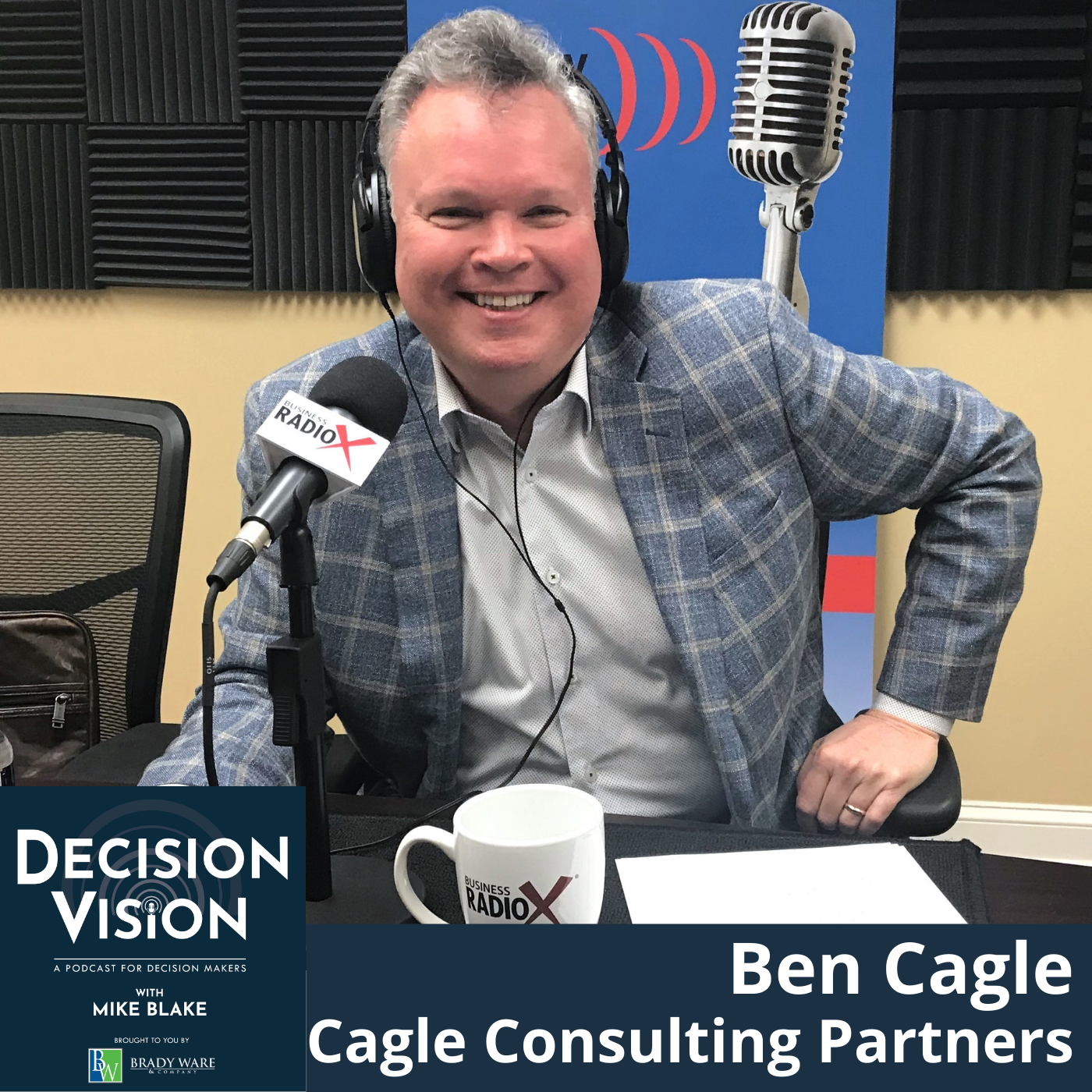
Decision Vision Episode 152: Should I Become a Consultant or Freelancer? – An Interview with Ben Cagle, Cagle Consulting Partners

January 20, 2022 by John Ray

Cagle Consulting Partners
Decision Vision
Decision Vision Episode 152: Should I Become a Consultant or Freelancer? - An Interview with Ben Cagle, Cagle Consulting Partners
Loading
00:00 /
RSS Feed
Share
Link
Embed

Download file

Cagle Consulting Partners

Decision Vision Episode 152:  Should I Become a Consultant or Freelancer? – An Interview with Ben Cagle, Cagle Consulting Partners

With corporate employment in constant flux, executives tired of the corporate life often set up their own independent consulting practice. Host Mike Blake spoke with Ben Cagle, managing partner of Cagle Consulting Partners, about the process of becoming an independent consultant or freelancer. Ben discussed his journey, how to get that first client, networking and marketing, the challenges unique to consulting, and much more. Decision Vision is presented by Brady Ware & Company.

Cagle Consulting Partners

Cagle Consulting Partners (CCP) is an Advisory Firm focused on helping clients: • Accelerate Revenue Growth • Respond to Rapidly Changing Markets • Building/Scaling Organizations • Sell into Large Global Customers. CCP currently serves large Global Enterprises (IBM, Cisco, SAS), Mid-Market Firms, and diverse Technology Start-Up clients in Artificial Intelligence, Data Analytics, Cybersecurity, IoT, and Blockchain.
Company website | LinkedIn

Ben Cagle, Managing Partner, Cagle Consulting Partners

Ben Cagle
Ben Cagle, Managing Partner, Cagle Consulting Partners

Ben Cagle is Managing Partner of Cagle Consulting Partners (CCP), an Advisory Firm focused on helping clients:
• Accelerate Revenue Growth
• Respond to Rapidly Changing Markets
• Building/Scaling Organizations
• Selling to Large Global Customers.

CCP currently serves large Global Enterprises (IBM, Cisco, SAS), Mid-Market Firms, and diverse Technology Start-Up clients in Artificial Intelligence, Data Analytics, Cybersecurity, IoT, and Blockchain.

Prior to founding CCP, Ben served as a Division President for a Global 100 Enterprise. Ben had P&L responsibility for a global business unit (several $ hundred million in revenue) and was on the core team leading an industry consolidation initiative (with McKinsey & Company).

Transitioning from “industry” into global management consulting, Ben served in various Consulting Partner, Practice/Industry Leader, Solution Innovation, Marketing, and Thought Leadership roles. Ben’s global enterprise consulting leadership experience includes positions at HP Enterprise (formerly EDS), DXC Technology (formerly CSC Consulting), and Hitachi Consulting with clients across four continents.

Ben also has led various NASDAQ, VC-backed Software/SaaS, and entrepreneurial companies focused on Advanced Data Analytics, Market Insights, and Brand/Marketing Strategy targeting multiple industries.

Ben is an Alpharetta, Ga. native and currently resides in Alpharetta with his wife, Sara. He graduated of the Georgia Institute of Technology, is active in various Technology and Start-up organizations, and currently serves as the Chairman of Tech400 (sponsored by the Greater North Fulton Chamber of Commerce).

LinkedIn

Mike Blake, Brady Ware & Company

Mike Blake, Host of the “Decision Vision” podcast series

Michael Blake is the host of the Decision Vision podcast series and a Director of Brady Ware & Company. Mike specializes in the valuation of intellectual property-driven firms, such as software firms, aerospace firms, and professional services firms, most frequently in the capacity as a transaction advisor, helping clients obtain great outcomes from complex transaction opportunities. He is also a specialist in the appraisal of intellectual properties as stand-alone assets, such as software, trade secrets, and patents.

Mike has been a full-time business appraiser for 13 years with public accounting firms, boutique business appraisal firms, and an owner of his own firm. Prior to that, he spent 8 years in venture capital and investment banking, including transactions in the U.S., Israel, Russia, Ukraine, and Belarus.

LinkedIn | Facebook | Twitter | Instagram

Brady Ware & Company

Brady Ware & Company is a regional full-service accounting and advisory firm which helps businesses and entrepreneurs make visions a reality. Brady Ware services clients nationally from its offices in Alpharetta, GA; Columbus and Dayton, OH; and Richmond, IN. The firm is growth-minded, committed to the regions in which they operate, and most importantly, they make significant investments in their people and service offerings to meet the changing financial needs of those they are privileged to serve. The firm is dedicated to providing results that make a difference for its clients.

Decision Vision Podcast Series

Decision Vision is a podcast covering topics and issues facing small business owners and connecting them with solutions from leading experts. This series is presented by Brady Ware & Company. If you are a decision-maker for a small business, we’d love to hear from you. Contact us at decisionvision@bradyware.com and make sure to listen to every Thursday to the Decision Vision podcast.

Past episodes of Decision Vision can be found at decisionvisionpodcast.com. Decision Vision is produced and broadcast by the North Fulton studio of Business RadioX®.

Connect with Brady Ware & Company:

Website | LinkedIn | Facebook | Twitter | Instagram

TRANSCRIPT

Intro: [00:00:02] Welcome to Decision Vision, a podcast series focusing on critical business decisions. Brought to you by Brady Ware & Company. Brady Ware is a regional, full-service, accounting and advisory firm that helps businesses and entrepreneurs make visions a reality.

Mike Blake: [00:00:23] Welcome to Decision Vision, a podcast giving you, the listener, clear vision to make great decisions. In each episode, we discuss the process of decision making on a different topic from the business owners’ or executives’ perspective. We aren’t necessarily telling you what to do, but we can put you in a position to make an informed decision on your own and understand when you might need help along the way.

Mike Blake: [00:00:45] My name is Mike Blake, and I’m your host for today’s program. I’m a director at Brady Ware & Company, a full-service accounting firm based in Dayton, Ohio, with offices in Dayton; Columbus, Ohio; Richmond, Indiana; and Alpharetta, Georgia. My practice specializes in providing fact-based strategic and risk management advice to clients that are buying, selling, or growing the value of companies and intellectual property. Brady Ware is sponsoring this podcast, which is being recorded in Atlanta per social distancing protocols.

Mike Blake: [00:01:14] If you would like to engage with me on social media with my Chart of the Day and other content, I’m on LinkedIn as myself and @unblakeable on Facebook, Twitter, Clubhouse, and Instagram. I also recently launched a new LinkedIn group called A Group That Doesn’t Suck, so please join that as well if you would like to engage. If you like this podcast, please subscribe on your favorite podcast aggregator and please consider leaving a review of the podcast as well.

Mike Blake: [00:01:41] Today’s topic is, Should I become a consultant or freelancer? And it’s an interesting topic, as we record this on January 18, 2022 as we continue through this trans-pandemic period that we’re in, we are seeing society reorganize in many facets in real time. And one of the areas that I don’t think any of us are truly prepared for was the way the labor market is reorganizing.

Mike Blake: [00:02:18] And we’ve had a couple of shows late last year, probably in the 120s or so, I think this is recording number 151 or two or something, but, you know, we’ve had conversations about how to find or tap into underutilized, underexplored labor pools. And the reasons for that are that we are experiencing an unprecedented labor supply shock that we have not seen since World War II.

Mike Blake: [00:02:48] And that labor supply shock has occurred for a number of reasons including – in whatever order you want to place – that we’re two-and-a-half million immigrants short of where we would have been had we continued the policies that have been in place before, say, 2016. And that’s according to data from the Cato Institute. The Cato Institute is a conservative think tank. So, don’t go all up on Blake is a communist kind of thing.

Mike Blake: [00:03:19] We have seen between three to four million people retire that we were not expecting to retire, and that’s data that comes from the Kansas City and St. Louis Federal Reserve. Again, they may be communists, but take it up with them, not with me. And that’s been because of a combination of people being let go, and they probably don’t have great prospects for reentering the labor force. It’s because of people’s portfolios suddenly becoming a lot more valuable because they had invested in Apple and Netflix and, therefore, can afford to retire, and people that just don’t want to deal with a COVID work environment.

Mike Blake: [00:03:59] On top of that, we’ve had something on the order of 400,000 to 450,000 people simply die or be disabled by coronavirus that were of working age in the United States. And we don’t know how many people who have exited the workforce because for lack of day care and elder care. And the estimates I’ve seen have placed those numbers in the millions. So, the point is you take that many people out of the labor force in an 18 month period, you’re going to find that it’s hard to find workers.

Mike Blake: [00:04:35] And on top of all that, we’re finding that the script has flipped in what we’ve called the gig economy. I mean, the gig economy has been around for a while. It’s been around, as long as I can remember in my professional life, since around 2000 or 2005, when startups were relying on gig workers to help bootstrap their startups and run an ultra lien. And everything was about Elance and Fiverr and now Upwork and other places. But that was always considered sort of a fringe area of the labor market.

Mike Blake: [00:05:17] And then, we saw the second wave of gig economy in terms of delivery and transportation, Uber, Lyft, Amazon drivers, to a lesser extent, delivery services like Instacart but that really didn’t take hold until we all didn’t feel comfortable leaving our homes anymore.

Mike Blake: [00:05:38] But what’s happened now is that the script has flipped a little bit and that I think there is a perception for many of us that if you’re in the gig economy, you’re kind of there because you got relegated. You didn’t get picked to go work for a big company or you had unique life circumstances that simply wouldn’t let you work out of the home. But, frankly, we felt sorry for a lot of people that were in the gig economy because we had the sense or the stigma, perhaps, for being fair about it. We had the sense that people in the gig economy because they were forced there, not because that was a matter of choice.

Mike Blake: [00:06:23] And that’s now changing as we enter a phase in the economy that I have not seen in my adult lifetime. I don’t know if this happened in the early 80s. I was a dumb ass teenager then, so I don’t know. But I have not seen a period in my life where labor had this much power in the labor market in the United States. I cannot remember when that’s ever happened. Even during the dotcom boom, it was really nothing like this.

Mike Blake: [00:06:54] And for a combination of factors of wanting to work from home, from liking the flexibility of working from home, work life balance, in some cases better pay, in some cases, I would argue, better stability rather than less than in a gig economy than working in a J-O-B, job. Lots of people are making the switch to becoming consultants and freelancers, often for the companies where they quit their jobs to take that role in the first place. And that’s not new, but it’s more pervasive, because I think companies are more desperate to keep that talent so they’re kind of saying, “Well, whatever kind of keeps you in the seat, we’re going to be willing to do.”

Mike Blake: [00:07:32] And so, that made me think that this is a neat topic to visit at this point in time. Because whether you’re a decision maker thinking about entering the gig economy as a freelancer yourself, it could be as a side hustle, it could be as a fulltime thing, or whether it’s an employer wondering if your employees are thinking about becoming gig workers, whether they would prefer to become gig workers, maybe the gig work model is better for you as a company. I think that it has relevance and warrants a discussion of the topic that I’m not sure that it really has had since we launched the Decision Vision podcast, and I hope you’ll agree. If not, then you’ll probably have already turned off and listening to another podcast.

Mike Blake: [00:08:19] But with that long preamble – probably the longest I’ve ever had – today’s topic is, Should I become a consultant or freelancer? And according to the data from MBO Partners and presented by Visual Capitalist, gig workers are now contributing $1.2 trillion in revenue to the U.S. economy. That’s a little bit north of five percent, maybe six percent doing the math in my head. And according to Statista, millennial gig economy statistics show that 44 percent of millennials freelance.

Mike Blake: [00:08:55] And, you know, as I sit here, I’m now 51, I have to realize that millennials aren’t just pimply video game playing teenagers anymore. They’re serious people and serious jobs that are executives and owning companies, and some of them have become my clients. And, you know, now we get to make fun of the Gen Y or whatever the hell is behind them. But that generation has largely embraced the gig economy by choice. And so, again, it just underscores the fact – or my belief anyway – that this is a topic that is well worth talking about in the decision of whether to enter the gig economy or not.

Mike Blake: [00:09:36] And joining us today is somebody who is no stranger to the gig economy – I think, we’re going to find from many angles – Ben Cagle, who is Managing Partner of Cagle Consulting Partners, CCP, an advisory firm focused on helping clients accelerate revenue growth, respond to rapidly changing markets – I bet you’re busy doing that – building and scaling organizations, and selling into large global customers. CCP serves large global enterprises, IBM, Cisco, and SAS; mid-market firms, and diverse technology startup clients, and artificial intelligence, data analytics, cybersecurity, Internet of Things, and blockchain.

Mike Blake: [00:10:19] Prior to founding CCP, Ben served as a division president for a Global 100 Enterprise. He had P&L responsibility for a global business unit of several hundred million dollars of revenue. And was on the core team leading an industry consolidation initiative with McKinsey and Company. Transitioning from industry into global management consulting, Ben served in various consulting partner, practice, industry leader, solution innovation, marketing, and thought leadership roles.

Mike Blake: [00:10:49] Ben’s global enterprise consulting leadership experience includes positions at HP Enterprise, formerly EDS, DXC Technology, and Hitachi Consulting with clients across four continents. Ben has also led various Nasdaq Venture Capital backed software and SAS and entrepreneurial companies focused on advanced data analytics, market insights, and brand marketing strategy targeting multiple industries.

Mike Blake: [00:11:17] Ben is an Alpharetta, Georgia native – I knew there was one out there – and currently resides in Alpharetta with his wife, Sarah. He graduated from the Georgia Institute of Technology, is active in various technology and startup organizations, and currently serves as the chairman of Tech 400, sponsored by the Greater North Fulton Chamber of Commerce, and it goes on and on. Look at his LinkedIn profile, he’s done a bunch of stuff. Ben Cagle, welcome to the program. Thanks for coming on the show.

Ben Cagle: [00:11:47] Yeah. Thanks, Mike. And thanks for cutting my LinkedIn profile short on that intro. I appreciate it.

Mike Blake: [00:11:52] The beauty of copy and paste, maybe. So, you know before we get started, it’s bizarre that you and I have not talked more. You know, I spent a lot of time in the startup community with Startup Lounge, and I know you’re familiar with it and I’m familiar with your name. But this will probably represent the longest conversation you and I have ever had up until this point.

Ben Cagle: [00:12:17] Well, that’s because alcohol is not currently involved. But, virtually, we can take care of that. But, no, I look forward to it. I loved your intro. It was a bit lengthy, but I’ll give you grief about that later. But disruption has been a theme of my career and a theme of how I’ve had to create value for different clients and different opportunities. So, I really look forward to your setup. I really enjoyed the conversation.

Mike Blake: [00:12:37] Good. Well, like I said, it was a record. Most don’t go that far, but, you know, it is just a fascinating topic. And when we get into society evolution questions, I just find them so fascinating. And my favorite field of economics has always been labor economics. I’m not sure why, but just the relationship between workers work and society is really interesting. And it’s interesting because I think every time we think we understand, we find out just how little we understand.

Ben Cagle: [00:13:10] Yeah. And it’s interesting how it’s changed and how each industry is cascading at different maturity curves and everything else around that, so a lot going on. But, you know, I entered the workforce in the 80s – yes, I’m that old – and the expectation, I think, at that time – we read several articles – I was really at the edge of the baby boomers, the last year, maybe in the next generation past baby boomers, 35 year career, one employer. Three years after I graduated undergrad, they then said it was radical you may have three jobs in your career. Then, it turned five years, it was 12 jobs, maybe.

Ben Cagle: [00:13:50] So, you can see how that change in that expectation, that loyalty to the global enterprise. All the disruption you talked about has changed. And just going through all of that and, even getting a 401K where you’re accountable for your retirement versus all the baby boomers that are punched out before us, had the free ride with the pensions, all those changes I’ve cascaded. I call it surfing through those changes and had to really respond to industries, you know, disappearing, new ones emerging, and then how do you manage your career through that, which led me to starting my own consulting practice.

Mike Blake: [00:14:25] You know, it’ll be fascinating to see how my sons enter the economy. I’m a Gen-Xer. My oldest son will be 20 in April. My father had two jobs in his professional career after the Air Force. I’m on job, I think nine since college, maybe ten, I’m not sure. And my sons may have 30 over the course of their career. And the definition of a job may change. It’ll be really fascinating to see how that all kind of works.

Mike Blake: [00:14:59] So, Ben, you’ve done all these things. In a lot of ways, many people would say that you had to achieve the brass ring several times over. You sort of made it to the top of the pile. You made it to the top of the food chain. And then, you gave it up to go into consulting and freelancing. So, what I’d really like to understand and I think my listeners would find fascinating is, I’d love you just to tell me about the origin story. How did Ben Cagle, corporate chieftain venture capitalists turned into Ben Cagle, freelancer Fiverr?

Ben Cagle: [00:15:36] Well, my wife is still asking that same question.

Mike Blake: [00:15:41] Should we get her on? That’ll make for some good podcast.

Ben Cagle: [00:15:44] This will be a support group meeting if we do that. Now, if I may, I look at my career, not just by jobs, but by chapters. And there’s been four chapters to my career that kind of sets up what I’m in now, the fourth chapter, which is having my own consulting company. So, I, hopefully, won’t belabor the point. But let me just tell you that runway and the themes of that disruption that I previously mentioned.

Ben Cagle: [00:16:08] I got out of Georgia Tech, got into industry, Global 100 company, started in sales. They trained me supply chain all the way through operations. And, eventually, the industry itself was disrupted. And the industry is we sold paper to newspapers- yes, I am that old. Remember our newspaper, you used to get ink on your fingers. There was actually a product, not a digital product.

Ben Cagle: [00:16:36] But what happened is, during that change, we knew the world was changing. Our customers were consolidating. All the media companies were consolidating. We knew this thing called the internet was going to take off. I’m in my late 20s, early 30s saying, “Okay. I know that in 15 years I’m going to be obsolete, what do I do with my career?”

Ben Cagle: [00:16:54] So, at that time, I was very fortunate. We did a McKinsey study, reorg, and I knew that I had to get into technology if I was going to be sustainable in my career and to keep having value. So, with the industry, in the paper industry, I was able to be the division president, traveled the world, global clients. Did that, enjoyed that lifestyle, and enjoyed the ego strokes that came with that, but knew I was going to have transition.

Ben Cagle: [00:17:19] At that time, a company called EDS, their technology, they were looking at people that had business experience, not even technology experience. I don’t even know how to do a PowerPoint or anything like that. But they brought me in. I led some practices learn global consulting. I was recruited over to another company, CSC. So, the first chapter was industry. The second chapter was big consulting. So, again, big business, big systems, all the ERP, the enterprise resource planning, the internet bubble. We consulted right through that, advised several large companies.

Ben Cagle: [00:17:53] Third chapter of my career – and this is a key theme here, and I think this is what’s happening with the great resignation – people said, “Screw it. I’m tired of the corporate reorgs.” I was tired of climbing the ladder, building an organization. Someone made a decision, sold the business, shut the business, didn’t fund it. New CEO comes in with a new strategy every two years. So, at that time, I entered the third chapter, which was working with Nasdaq, traded data analytics companies or venture software, leveraging my industry experience and PNL experience into different smaller companies.

Ben Cagle: [00:18:27] You know, Mike, I only had, like, $2 million of revenue. Others had 120 that were Nasdaq traded. I had thousands of employees across two continents. So, that was the third chapter is managing these small businesses. And then, the fourth chapter was my own business.

Ben Cagle: [00:18:44] And the reason I decided was, “You know what? I’m tired of other influences determine my future. I’m tired of not being able to navigate and be totally accountable for my own success.” So, I did everything wrong when I started my consulting business. I had no clients. I had three ideas. And I really jumped out of it because I just left another position and the decision was, for me at that time – Mike, and this is PC, you know, pre-COVID – I said, “I had a decision to make. I’m in my 50s, do I want to do three more turns of the crank finding jobs every two to three years? Or do I want to do my own thing and really ride this into retirement or really create a new future?” And I made the decision, “I’m going to take accountability. I’m going to create my own future.”

Ben Cagle: [00:19:35] And to do that, I started out with, again, typically, someone in their 50s that punches out of corporate, they always go and sell themselves back. They do consulting or freelance work for their previous employer. That’s the standard model for someone in the 50s. Now, we’ll talk about younger people, different skill sets, how they’re freelancing versus consulting in just a minute. But that was my decision. And I really started with a three layer cake.

Ben Cagle: [00:20:04] I started with saying, “Okay. I’ve led venture capital software companies, let me play with startups.” And that’s where, Mike, I started hanging around all the incubators and accelerators in Atlanta, I think there’s 35 at last count. And just started kind of building relationships and learning.

Ben Cagle: [00:20:19] Second layer of the cake, mid-sized companies, five to 150 million. And then, I said, “What’s their problem? How can I add value? What would someone pay me for?” And that’s the problems of growing revenue, scaling organizations, applying disruption, and helping them just really think through their business strategy, and then execute that strategy.

Ben Cagle: [00:20:40] And then, I was very fortunate, kind of the third layer, the top layer of the cake with the Global 100 companies, I actually was recruited by a firm that actually provides senior level executives back to IBM, Cisco, and SAS, training their sales reps how to have the executive conversation with the CEO, CFO, line of business leaders.

Ben Cagle: [00:20:59] So, that’s kind of the three levels of my consulting business, startups, mid-sized companies – and really, I’ve done breweries. I’ve done software development in India, all that tech stuff, all of these services stuff. And then, still staying in touch with the global enterprises and even their innovation groups. Because – guess what? – they want to know about the startups and create value there. So, there’s a method to the madness of that three layer cake and then solving the three major problems of revenue scaling, responding to change, and innovation.

Ben Cagle: [00:21:31] So, Mike, thank you for letting me kind of share that, but that’s really what led me to building this business. The other thing is, it was kind of a lifestyle. But more importantly, I wanted to kind of say, “You know what? As I got older, I could either ramp it up or ramp it back.

Ben Cagle: [00:21:45] The other thing is cable partners, I called it that because I didn’t want the headache of having a payroll. So, I work with 15 different partner firms, some of them are three person, single entrepreneurs, freelancers. Some, actually, they have 100 employees. And if I need to assemble a team to deliver value, whether it’s tech or strategy or whatnot, I can do that. It’s really relationships together to deliver value for clients. So, that’s my long rambling.

Ben Cagle: [00:22:16] So, Mike, as I was telling that story, which themes head of your disruption of the gig economy 2.0, what were you thinking about as I was telling that story?

Mike Blake: [00:22:27] Well, the thing that struck me, probably because I just happen to violently agree with it so it must mean we’re both geniuses, is, you talked about or you touched upon what effectively is the myth of stable employment. You talked about being tired of somebody else making a decision for you.

Mike Blake: [00:22:47] And I remember years ago, I was a sole practitioner – I still consider myself sort of a sole practitioner within my firm and certainly my comp plan does, so I think that all agrees – I remember giving a talk. I was at the Kettering group, I think. And back then, they had a lot of executives in transition, that was sort of their thing, not that much anymore. But I started the talk by asking the question, “How many of you guys are in transition, guys and ladies in transition?” Two-thirds of them raised their hands.

Mike Blake: [00:23:18] I said, “Okay. Keep your hands up. And then, all of you who think that you are let go because of a bad thing that you did, keep your hands up.” And everybody’s hand went down. And it has everything to do with what you just talked about, acquisitions happen, strategic priorities change, economies happen, somebody has a bad day.

Ben Cagle: [00:23:48] Well, yeah. Perfect. I’ve been on the giving and the receiving side of a reduction in force.

Mike Blake: [00:23:55] So have I.

Ben Cagle: [00:23:56] And like the Nasdaq traded company, that was, again, about $120 million, we came in as a leadership team. We were about eight weeks with not making payroll. So, we had to get rid of about 20 percent of the workforce immediately, and you had to basically navigate a quick strategy, whipsaw. And I’m kind of a relationship guy. You know, I’m a spiritual guy. I was really having problems with that.

Ben Cagle: [00:24:20] But it’s kind of like the old, when you’re in that leadership position – so I understand it – it’s kind of like being a submarine commander. When you’re sub’s head in the front with a torpedo and you have to close all the doors, and you know the front sailors in the first section that got torpedoed are going to drown. But if you don’t do that, everyone’s going to die. So, that’s been in that kind of situation. So, I’ve been on the giving side of that.

Ben Cagle: [00:24:43] The other thing is, you know, I was hired by Hitachi Consulting, recruited by the CEO of the consulting group, working for the COO. They said they were going to be there five more years. I had three years to make my goal and build the business we were talking about. So, it was a senior level executive. They were throwing money at me. And three months after I joined them, the CEO was shut. The COO was shut. So, all these long term people that promised me the world, basically six months later, they took the top 15 of us and shut us all.

Ben Cagle: [00:25:14] So, that’s when I said, “Mad as hell. I’m not going to take anymore. I’m pissed.” And I’ve always said I’m smarter than everyone else and go prove it, you know, if you’re that pompous. And I said this to myself, “You’re that pompous. Go make it happen.” So, that’s how I got into consulting and just loved it. And I have no regrets going back.

Mike Blake: [00:25:34] And I think there’s a lot to the notion that when you have income coming from ten spots as opposed to one, it’s just basic diversification. One consultant decides they don’t need you anymore, for whatever reason. You still got the other nine. Not as big a deal.

Ben Cagle: [00:25:54] Let me tell you the best piece of career advice I got was from my landscaper, true story. So, between senior level executive, they always get rid of you, and then they send you a severance, and then you use that severance to look for your next role. Sometimes that could be a year gap, two year gap as you’re jumping. My Chapter three of my career, different leadership roles.

Ben Cagle: [00:26:20] So, he noticed I was home again, working for home yet again. “Hey, Ben. You’re between jobs.” “Yeah. Thanks, Al. I really appreciate you rubbing my nose in it.” And I said, “Well, at least I don’t have it like you do.” And he goes, “What do you mean?” I go, “Well, at least I have opportunities, and I’ve got the logos behind me, and I was doing all the corporate stuff.” He goes, “Well, Ben, that’s all great. You know I’ve got 140 customers, if three of them fire me, that just means I go home early.”

Ben Cagle: [00:26:48] So, I’m going, “Damn. I missed it again. That was just genius.” And really, Mike, I will be honest that informed my portfolio approach to I’m working with startups. They don’t always have money. So, I do some sweat equity, some for fee, retainer-based, fractional COO or CRO, whatever. But my portfolio, that middle tier of the cake working with those mid-sized companies, sometimes that’s a three month gig, sometimes I check in once a quarter. And then, the training that I do working with IBM, Cisco, or SAS, or the innovation group, the chief innovation officer that I work with, that comes and goes.

Ben Cagle: [00:27:25] So, you’re right, I’m managing a portfolio of interest, of revenue models, and everything else, but it’s my hand to play. It’s my cards. I lay three cards down. I’m playing draw poker. I pick three up. And that’s what I’ve enjoyed about it and being able to navigate those different ecosystems of relationships, which is key for freelancers or anything else. I’m sure we’re going to touch on that in terms of what’s success or how do you drive success. But that’s been the most fun part.

Ben Cagle: [00:27:50] And meeting, quite frankly, guys like you and some of the other professionals that turn into being, you know, referral networks, hub and spoke advisors. It’s just really cool. You meet wicked smart people with the same values. You don’t have to deal with the assholes. And you just run your business and run it the way you want to.

Mike Blake: [00:28:11] So, I think a question everybody is asking – and you sort of touched on this and you said you did everything wrong – everybody wonders how do you get your first client. That’s so scary. Now, you, obviously, have some exposure to sales, but not every consultant who goes out there has a background in sales. Talk about the story of getting that first client. You hang out the shingle Ben Cagle and Associates, or Partners, or whatever, Cagle Capital Partners and Consulting Partners, how do you get that first client?

Ben Cagle: [00:28:48] Yeah. It was a referral. I think it took me six months. In my first year – and this is not making fun of people or saying it’s derogatory – I think I made 30,000 in revenue. And there’s nothing wrong with making 30,000 revenue, but that was a little bit below my expectations, and I had two daughters in college at the time.

Ben Cagle: [00:29:09] But I remember that first retainer I got was from a technology company and it was part of my networking. So, I mentioned the three layers of the cake, I was networking and just going to events with startups down around Georgia Tech. I had a friend from Georgia Tech refer me to the startup, got a referral, and just started telling my story, and that was the connection. So, networking and referrals, key, key, key pipeline for driving any kind of freelance or consulting business pipeline.

Ben Cagle: [00:29:42] It’s not the only channel to drive revenue or get clients but, obviously, your first one’s going to come from that or, like I mentioned, a previous employer, or if you’ve got another partner in your practice, or other freelancers that can refer you in. So, that referral network, that’s key. If you don’t have that, if you haven’t built it, it’s going to take time.

Ben Cagle: [00:30:03] Someone advised me – Mike, I’m curious to hear your point of view – if you’re starting ground level cold, it takes about almost four to five years to build your network where it feeds your business. In addition to doing other marketing, doing thought leadership like you’re doing here with your blog, there’s other things to really get your marketing, your awareness, your interest out there besides networking. But you can’t avoid it. You’ve got to be out there talking to people and getting that referral network going.

Mike Blake: [00:30:32] Yeah. It definitely takes time, which is one of the things I’m harping on all of my team who are much younger than I am. I’m always pushing them to build networks. I only got serious about my network when I was about 35. And I kind of wonder because I was always the quant geek, I was the math geek they shoved in the closet someplace and never like to talk to human beings because I was the Greek letter guy. And that was fun. It was fun to have everybody talk about how smart you were.

Mike Blake: [00:31:03] But then, I realized what immense damage that did to my career that I had no network. And when, all of a sudden, I needed to learn how to sell, I think it took me a year to sell my first engagement period, which is a really small one. And then, it did take about five years before the flywheel started going, and I didn’t have to be always doing sales all the time for the phone to ring and emails to come in and so forth.

Ben Cagle: [00:31:35] Right. Exactly. I mean, for a lot of people in their 20s and 30s that are either getting started, I was talking to one lady, she worked with start ups. She’s 29. She’s already feeling obsolete because she doesn’t know where her next opportunity is coming from. She hasn’t worked on our network. She really hasn’t thought about her core competencies, poor English, what she’s really good at. And she hasn’t thought about either her own consulting, what’s the problem she’s solving, or anything else?

Ben Cagle: [00:32:04] You know, if you’re an engineer, you can do software coding. There’s enough websites now to keep you busy. My daughters are in their 20s, they’ve got a friend, she’s a financial analyst, great MBA, and she’s literally traveling the world. It’s like we play Where’s Waldo? It’s like Where’s Michelle this week? Because she is working anywhere in the world she wants to doing her financial analysis. Those are discrete mathematical engineering skills. And I think there’s kind of a hierarchy. Those are easy to quantify, easy to validate, easy to use all the technology out there.

Ben Cagle: [00:32:37] However, the more senior you are, the more vague you get. If you’re creative, you definitely need channel partnerships. You definitely need referral networks, alliance partners, that can really get you in the opportunities around that. So, really, I look at your skillset, your experience set, your tenure, which industries you played in. And then, of course, what scenarios have you been in? Were you in a high growth mode or a mature dying industry?

Ben Cagle: [00:33:05] All of those five or six kind of vertical lines when I do career coaching informally, I look at all those and say, “What are you really unable to? How can we wrap you, package you, and then how do we get you to market to meet the needs and create value where someone will pay you for it?

Mike Blake: [00:33:21] So, I don’t think it’s so much of a choice. I think it’s a spectrum. When you’re a consultant, the spectrum of lifestyle versus I want to kill it. One is, I want to have a certain lifestyle, and maybe it’s a 30 to 45 hour week kind of gig and that supports a certain lifestyle, if you will. And then, there’s a 75, I want to build the next McKinsey, Bain, Boston Consulting kind of thing. Where do you think you kind of were on that slider when you started and what went into your decision to go that direction?

Ben Cagle: [00:34:00] Yeah. Let’s be honest here, I think what you were implying, Mike, when you said, “Hey, it’s going to take you a while to win your first client,” cash is king. Cash is oxygen. Cash flow, if you don’t have cash flow or savings or investments that you’re willing to give up to fund this runway – and I think you said a year before you hit your first revenue, I would second that motion – I think it takes you three to five years to ramp up. So, this is going to be a long haul building this. Potentially, again, unless you have specific skills, very discreet.

Ben Cagle: [00:34:36] So, to me, my goal was, within three years, I’m going to be making X per month. I wanted to have revenue on all three layers of my cake, my startups and mid-sized enterprise. And I wanted to build a network. I had a networking goal, because I knew that the people, that connective tissue, was what was going to make me successful. And that’s what I evaluated on.

Ben Cagle: [00:34:58] The other thing is, you know, continuous learning and those kinds of things. So, I had a revenue goal, yeah, but I had other goals around relationship goals, exposure, or acquiring clients with specific problems, size of clients. And then, building my network of not only just getting into clients, but also how I deliver that value. So, that’s the way I thought about it. Some people get into it saying, “Hey, look, I’ve got three friends. We’re going to start billing. We’re going to do website development and we’re going to get out there and just knock it out and just lock arms and get it done.”

Ben Cagle: [00:35:34] But mine was all about virtual. I wanted to be leveraged. I wanted to market. If I need to resell, like if I needed a graphic designer, I would mark them up and I get 20 percent. They would do the work. I would be like general contractor. So, that virtual firm was my model and I’ve been very fortunate that we’d be able to pull that off. And I’ve had resources from India, Belarus brought in and, again, I love the virtual economy.

Ben Cagle: [00:35:58] I love COVID – I hate to say this – I’m picking up clients well outside of Atlanta, in Dallas, New York, Chicago just because, like this, you know, we’re talking on Zoom right now, you’re recording the audio. But I can add value to any client through any distance. I can collaborate with them. I can have deliverables. I can be part of their management groups without leaving the comfort of my home office. So, to me, that was the other dimension.

Ben Cagle: [00:36:27] I thought I had to be geographically based when I started five, six years ago. This has really opened my eyes to this leverage model and bringing in other freelancers or other consultants to assemble them to, again, deliver value for the client. But you have to be very intentional about the problems you saw, of the clients you go after, and the way you’re going to deliver that value, whether it’s your own skills and unique knowledge, or they’ll be tangible deliverables or products around that.

Mike Blake: [00:36:54] Isn’t it funny how we’ve had the telephone since the 1870s, I think, it was invented, right? So, we’ve had the telephone for 145 years. For 60 of those, we’ve had video conferencing available. AT&T showing it off the world’s fair. We’ve had video conferencing as long as we’ve wanted it. And nobody wanted it for a number of reasons. At first, it was because the frame rate was like two frames a second. And then, for other reasons we didn’t want it.

Mike Blake: [00:37:26] And now in the pandemic era, we can’t get away from it. I have people asking for permission to get on an old timey phone call because they’re afraid I’m going to think less of them that I’m going to put them on Zoom. And I want to see the innovation diffusion curve for video conferencing. I’m going to go back and do the research on that because that’s going to be a weirdly shaped curve.

Ben Cagle: [00:37:49] Yeah. And, again, now that we’ve all gotten comfortable, it’s like, I’m not wearing pants right now in this frame. I just have a shirt on for the show.

Mike Blake: [00:37:57] Well, thank you for that.

Ben Cagle: [00:37:58] Yeah. Yeah. Kidding, of course. But it’s funny how, to your point, the more has change. I mean, again, I deal with IBM, who calls on Goldman Sachs. They call them Royal Dutch Shell over in the E.U. They’re having to sell their consulting services virtually. You know how they measure relationships? If you know you’re really close with a client – and I just confirmed this with another mentee of mine who’s about 32 who’s in sales for tech sales – if you’ve got a text relationship, that’s like the ultimate. If you can text that CIO, Chief Information Officer, you’ve got permission. They’ve already got you identified in their address book when you pop up.

Ben Cagle: [00:38:42] When you can actually be on the Zoom call or the WebEx call and text them to get feedback on what’s going on, not even do chat, that’s when you know you’ve made it.

Ben Cagle: [00:38:52] So, everything has been inverted from a relationship, “Hey, let’s go get a cup of coffee in the cafeteria. Tell me about your kids and then I’ll find out what’s really going on.” You know, walking the halls, elevator pitch – remember all those terms? – they’re now obsolete. To now, the relationship, if you’ve got the highest relationship with a C level of a Global 500, if you’re texting back and forth weekends and all that, boy, you know you’ve made it.

Ben Cagle: [00:39:19] The other thing is, I found using Zoom and WebEx, people going, “How do you build a relationship?” And I said, “Hey, just cut the meeting short to 20 minutes and give them ten minutes back in their schedule, because everyone has 12 hours of Zoom now.” Give them back ten minutes and say, “Hey, Bill, by the way, or Barbara, before we break up, do you mind? I’ve got an idea I want to run by you that I think might help you guys, or may create value or, solve a problem.” And that’s the way you have to do it. And then, ask either for permission or get to text as soon as possible. And that’s how you know you’ve really made it from a sales and development standpoint.

Ben Cagle: [00:39:58] So, isn’t it weird the way that you used to avoid text because there was no interaction, there was no voice inflection. But now that’s become the gold standard of relationship.

Mike Blake: [00:40:07] Oh, it’s fascinating and probably warrants its own podcast in some fashion. I’ve met in person fewer than 25 percent of my clients, and that number goes down every year. They don’t want to see me, and there’s nothing to even look at if it’s a tech company.

Ben Cagle: [00:40:24] Yeah. They don’t want to deal with me. Occasionally, if we’re local and say, “Hey, let’s grab a beer or grab coffee,” there’s some social element to it. But when COVID hit, I hosted a virtual happy hour. Everyone got their drinks and we brought people in, literally, from four countries and, I guess, really, five time zones just trying to get social interaction, talking about how people are responding differently to COVID and everything else. So, that social element, that emotion, that need is still there.

Ben Cagle: [00:40:55] But you’re right, from a business to business standpoint, people don’t want to see you. They don’t want to invest the time. They don’t want to put a collared shirt or dress pants on.

Mike Blake: [00:41:08] So, thinking back when you started as a consultant, what was the scariest part? Or was there a scary part of it? And if so, what was the scariest part of that process? And how did you overcome that fear?

Ben Cagle: [00:41:24] Again, I’ll show my age here, but remember the Indiana Jones movie when he had to step out on faith and walk across an abyss of a hidden bridge and he didn’t know it was there? That’s what it was like is taking that first step saying, “I don’t know what’s going to handle.” Now, again, keep in mind, I had two daughters, no scholarships, out-of-state tuition. So, I had my highest cash flow outflow with zero income coming in, so that’s pressure.

Ben Cagle: [00:41:54] And if you’re measuring your security by your 401K, your investments, your cash flow, your savings, you might want to rethink when your kids are in college and starting your own consulting business. So, that was the scariest point to me is not knowing the financial insecurity, knowing that I may be betting part of my retirement savings on the fact that I’m betting on myself that I can build this business and be successful. That was the scariest part to me.

Mike Blake: [00:42:19] So, I’m happy to geek out on Indiana Jones and The Last Crusade, that was a great movie. So, what helped Indiana Jones overcome his fear was that his father had been shot and he was dying. What helped you overcome your fear? What is it that got you to take that first step off the cliff?

Ben Cagle: [00:42:40] Yeah. Well, I think what happened was it wasn’t a greater fear of going back into another job. It was, I think, my pissed factor. I was so mad. It exceeded my fear factor and it made me more determined just to go for it. So, if you’re doing a two-by-two matrix of pissed versus scared, I was more pissed than I was scared and going for it.

Ben Cagle: [00:43:01] And the other thing was I knew the world was changing rapidly. I had to adjust from selling paper to newspaper publishers, to implementing SAP ERP implementations to Toyota North America, to basically doing e-commerce for banking in Europe. I understood how change was happening and I thought I could capitalize on it. And I was betting on that. So, that was my big trade off. And I’m a very rational person and I’ve got a weird sense of humor. But that was the trade off, it’s like, “Damn it. I’m going to go do it. There’s a market opportunity, I believe I can capture it. And I think I can create a better future than I can going back into corporate or trying to get another leadership position that has a two year, three year runway.”

Ben Cagle: [00:43:49] And we haven’t proven that theory yet. But touch wood with God’s will and a little bit of more persistence and great network partners, we’re on our way. I’m feeling pretty good about it.

Mike Blake: [00:44:03] So, one thing that I think keeps people from becoming a freelancer or consultant is the matter of health insurance. You know, I had a sole practitioner shop for a while and one of the first lessons I learned as a sole practitioner is that the best insurance you can buy on the open market is more expensive and worse than the worst health insurance you’re going to get through almost any company. That’s what I learned anyway.

Ben Cagle: [00:44:34] Well, again, you’ve been talking to my wife doing background. She complained about our insurance, she still does. But just the two of us now, the kids finally got married and got off the payroll – well, partially off the payroll. So, we’re paying $1,400 or $1,500 a month in insurance with a high deductible and it covers catastrophic events. But beyond that, we get a free COVID shot and that’s about it. So, I think that was the biggest learning financially for me is health care. I’ve got my overhead. I knew that.

Ben Cagle: [00:45:09] But getting comfortable with that and, of course, all the tax implications of making sure that, “Hey, look how much money I’m making” versus making sure, especially if you come out of corporate you’re used to all those withholdings made for you, be very intentional about that, or for using retirement savings early penalties, the true cost of money, make sure you understand that before you make the leap to go there.

Mike Blake: [00:45:32] What’s a skillset that you’ve had to evolve or develop since moving out on your own?

Ben Cagle: [00:45:41] It’s not personal discipline but – and this is what a lot of people have trouble with – structuring your day. It is saying that I’m going to go to this networking event back in the day or I’m going to work on my LinkedIn profile. It’s allocating that working on the business versus in the business – you’ve heard that.

Ben Cagle: [00:46:02] When you first start – and, again, I mentioned that fear of having a high cash outflow and not much coming in – I thought I had to be, you know, constant business development, finding that, versus being smart about laying the foundation, and LinkedIn, using media like you’re using smart channels like RadioX and some other things you’re doing with your blogs. Being really intentional around that because that’s the foundation that will feed you and serve you later.

Ben Cagle: [00:46:28] So, that’s the biggest skill of work on the business versus in the business and really get used to adding structure and discipline. You know, no boss is going to tell you what to do. No company is going to set up mandatory conference calls. It is a blank slate and you’ve got to add that structure. I knew that but you really have to be intentional around that. And that was really a muscle I kind of had developed being part of corporate, but really had to be intentional around structure, work on versus in the business.

Mike Blake: [00:47:01] I’m talking with Ben Cagle of Cagle Consulting Partners – got it right instead of five tries this time. And the topic is, Should I become a consultant or freelancer? That’s the benefit of podcasting, more forgiving medium.

Mike Blake: [00:47:21] So, let me ask you this, who shouldn’t become a consultant? I want to take the flip side of this. Not everybody’s cut out to be through everything, right? There’s no amount of practicing I could ever do and become a successful ballet dancer. I should not become a ballet dancer. What kind of personality or what kind of personal situation, probably, maybe doesn’t prohibit, but at least puts you at a serious disadvantage to become a consultant or freelancer?

Ben Cagle: [00:47:49] Let’s go for kind of seniority level from a career standpoint and then work our way down. So, arrogant former CXOs should not be consultants, because they write their book that was basically their swan song. They promote their book and they add zero value. And, eventually, I’ve seen the tale of their growth curve goes off about eight to nine months, because no one wants to work with them because they’re arrogant and they think they own the world. And they’re doing it for ego versus really adding client value. So, that’s kind of one.

Ben Cagle: [00:48:27] On the other side of it, if you’re not comfortable with understanding problems, asking questions, interacting with people, that’s kind of like Consulting 101, doing discovery on what the problem you’re solving is, or what the requirements of the job spec they want to hire you for are. If you’re not comfortable with those interpersonal skills, and leading that, and thinking ahead, and you’re not a structured thinker, probably not a good idea to be a consultant. So, that’s kind of a skillset personality continuum. But those are kind of some of the people I’ve seen have tried and failed.

Ben Cagle: [00:49:00] You know, you can be very shy but be very analytical or very technical. And if you’ve got the right, either partnership or channel partners, or you kind of contract with a company that places you, you can do really well. But if you’re out on your own, I’m going to be dealing with clients. You’ve got to find it. You got to find the client, kill the client, skin the client, eat the client. You have to do, you know, all the delivery all the way through. You better make sure that you have confidence in yourself. You have great communication skills. And you’re not talking about yourself all the time. You’re spending at least, you know, 70 percent letting the client talk versus you.

Ben Cagle: [00:49:38] That’s what I meant about the arrogance, I’ve seen a lot of people just talk their way past opportunities because they were trying to prove how smart they were. So, kind of lessons learned there. That’s the pragmatic. Mike, what are your thoughts? What dimensions do you think about when you think about people consulting who are successful or not?

Mike Blake: [00:49:56] I think it’s coming to grips with the fact that having to sell becomes part of the job description. You know, if you have a particular skillset, that’s great. But if nobody knows about it, if nobody understands how that fits and how that addresses a need that they have, I think it’s very difficult for a consultant to succeed in that way.

Ben Cagle: [00:50:24] Excuse me for interrupting, the one question I’ve asked people that want to get in consulting, do you think sales is dirty? Is it beneath you? Is it sleazy? That perception will tell you if you’re ready for it. If you think sales is really helping people finding problems, how are you going to help them solve their problems, then, odds are you’ll be more successful as a consultant.

Ben Cagle: [00:50:53] But if you think you’ve got a sale and ask for the order, and I hate talking about money, they’re just trying to take advantage of me, if you kind of come in with that attitude, boy, keep your day job. Update your LinkedIn profile and, hopefully, find a good place or a staffing firm or a good recruiter because you’re going to need it. I agree with what you said there, Mike, yeah.

Mike Blake: [00:51:17] You know, the transition at the end of the day is, you might find yourself moving from being a cost center to a profit center. And that can be a difficult transition, because when we say somebody is a cost center, there’s an implication that you’re kind of a dead weight. And you’re not a dead weight, but you are a weight that has to be carried by the profit center.

Mike Blake: [00:51:45] And when I give advice for the few people who ask me for advice about their careers, always position yourself to be a profit center. If you’re a profit center, then you’re never going to be unemployed a day in your life. And that’s what consultants have to do. And if you particularly, as I did, come from a technical field, finance and business valuation, I can be the greatest spreadsheet jockey in the world. But if I can’t go out there and get clients, it just doesn’t matter. And what you find is the people who can sell make more and they have more job stability.

Ben Cagle: [00:52:27] Yeah. Absolutely. And just having that knowledge going in, I think, that’s like a yes/no primary screen question you should ask around that. Can you represent? And, again, not tell what you do but understand and relate to that person you’re sitting across the Zoom call on about what their issues are and how you’re relevant to them.

Ben Cagle: [00:52:48] So, I’ve been on both the buy side and the sell side of consulting, so I’ve had that advantage. And even today, I get sold constantly. They’re trying to sell me services for my own firm or people are trying for me to hire them or partner with them. It’s amazing how they push the play button and talk about themselves and really don’t understand the situation they’re going into. And if you don’t have that awareness, that EQ and IQ, boy, you’re not going to be successful as a consultant. So, you really got to have that radar going.

Mike Blake: [00:53:20] Yeah. It’s hard. Ben, this has been a great conversation. We’re running up against the hour that I asked of you for time. I know we haven’t gotten every question I wanted. We got off our script pretty quickly, but that’s okay. But there are probably questions that our listeners wish that I would have asked or we’d stayed on a little bit longer. If somebody wants to follow up on this conversation with you for some advice, can they do so? And if so, what’s the best way for them to do that?

Ben Cagle: [00:53:46] Yeah, Mike, we’re pretty casual about it. And thank you for this opportunity, I really enjoyed the conversation. Thank you for reaching out and, again, giving me the opportunity to be on your blog. And if they care to reach me, they can reach me directly through email at ben, B-E-N,@cagle, C-A-G-L-E, partners.com, ben@caglepartners.com. Or through my website Cagle, C-A-G-L-E, Partners, caglepartners.com.

Ben Cagle: [00:54:10] And, again, I coach people. Part of my values when I founded my firm is I want to help other people advance. If I can help them and create value for them, odds are, eventually, it’s like karma. It will eventually come back, if not from that person, someone else. Don’t mind helping people. Love to have a conversation anyway at all. I can get perspective or help people along the way. I would be glad to do that. Email or hit my website.

Mike Blake: [00:54:35] Well, that’s going to wrap it up for today’s program. I’d like to thank Ben Cagle so much for sharing his expertise with us.

Mike Blake: [00:54:41] We’ll be exploring a new topic each week, so please tune in so that when you’re faced with your next business decision, you have clear vision when making it. If you enjoy these podcasts, please consider leaving a review with your favorite podcast aggregator. It helps people find us so that we can help them.

Mike Blake: [00:54:58] If you would like to engage with me on social media with my Chart of the Day and other content, I’m on LinkedIn as myself and @unblakeable on Facebook, Twitter, Clubhouse, and Instagram. Also, check out my new LinkedIn group called A Group That Doesn’t Suck. Once again, this is Mike Blake. Our sponsor is Brady Ware & Company. And this has been the Decision Vision podcast.


Tagged With: Ben Cagle, Brady Ware & Company, Cagle Consulting Partners, Consultant, consulting, Decision Vision, Freelance, freelancer, freelancing, how to start freelancing, independent consulting, independent consulting career, Mike Blake

Neel Parekh With MaidThis

January 14, 2022 by Jacob Lapera

NeelParekh
Franchise Marketing Radio
Neel Parekh With MaidThis
Loading
00:00 /
RSS Feed
Share
Link
Embed

Download file

Brought To You By SeoSamba . . . Comprehensive, High Performing Marketing Solutions For Mature And Emerging Franchise Brands . . . To Supercharge Your Franchise Marketing, Go To seosamba.com.

maidthis

NeelParekhNeel Parekh is the CEO and Founder of MaidThis, one of the top-rated national cleaning franchises. MaidThis offers hassle-free house cleaning for busy individuals and vacation rental hosts (Airbnb, VRBO, etc.). MaidThis has been called “the franchise for millennials”, given its fully remote model and new-age spin on an old-school cleaning industry.

As he built his business to reach millions in revenue, Neel traveled for five years while managing a fully remote team — he is now on a mission to help others achieve the same! A renowned business expert, Neel mentors other entrepreneurs on the benefits of owning a franchise versus launching a new business, the do’s and don’ts of managing a remote team, success tips for franchise operators, how to be a successful digital nomad, and more.

Connect with Neel on LinkedIn and follow MaidThis on Facebook and Twitter.

What You’ll Learn In This Episode

  • About MaidThis
  • The benefits of becoming a franchise owner versus launching a whole new company
  • Tips for others who want to be a franchise owner
  • Some fundamentals of running a fully virtual company
  • Some must-know tips for marketing a fully virtual franchise

This transcript is machine transcribed by Sonix

TRANSCRIPT

Intro: [00:00:07] Welcome to Franchise Marketing Radio, brought to you by SeoSamba Comprehensive, high performing marketing solutions for mature and emerging franchise brands to supercharge your franchise marketing. Go to seosamba.com. That’s seosamba.com.

Lee Kantor: [00:00:32] Lee Kantor here, another episode of Franchise Marketing Radio, and this is going to be a good one today on the show, we have Neel Parekh and he is with made this cleaning. Welcome, Neel.

Neel Parekh: [00:00:42] Hey, thanks for having me here.

Lee Kantor: [00:00:43] Well, I’m excited to learn what you’re up to. Tell us a little bit about Made this How are you serving, folks?

Neel Parekh: [00:00:48] Yeah, absolutely awesome. Made. This is a work from anywhere cleaning franchise that focuses on two niches one’s residential cleaning, and the other is vacation rental turnover. It’s like Airbnb, so we’re actually the first and only vacation rental cleaning franchise. And yeah, like I mentioned, we’re fully remote concept.

Lee Kantor: [00:01:03] So what was the genesis of the idea? How did this come about?

Neel Parekh: [00:01:09] You know, I was working in corporate a few years ago, and I was trying to find some sort of side hustle and was trying a lot of different things like e-commerce and marketing. None of it really worked, and I came across a post on Reddit lead, you know, of Reddit dot com.

Lee Kantor: [00:01:23] Yeah.

Neel Parekh: [00:01:24] Hundred percent. Yeah. Yes, I read it in a guy who posted how he started a candy company. I thought, You know what the heck? Let me try this as well. And it started to work. And in hindsight, I figured out why he was working better than anything else. But it started to work well and I wanted to eventually quit and travel. And that’s why I had to figure out a way to make this local business completely remote. And a couple of years after that, I quit my job and took my side hustle full time and booked a one way flight to South America and traveled for about five years. While building made this, and therefore was able to make the systems in a way that can be done from anywhere in the world.

Lee Kantor: [00:01:57] So but you obviously you need boots on the ground in the market to serve?

Neel Parekh: [00:02:02] Correct? Yeah. So the cleaners are localized. However, your operations have coordinated things. Picking up calls can be done from anywhere.

Lee Kantor: [00:02:09] And then so the people that are there cleaning your job as the franchisee is just to recruit them, motivate, manage them.

Neel Parekh: [00:02:20] Exactly, exactly. And of course, on the other hand, you have the customers calling you as well. Right. So you’re kind of almost like the middleman in between the two funnels which are running. But I think what’s cool and in this day and age is how fast technology has moved. You can have a local company completely remote, and I feel like a lot of people haven’t really caught on to that yet. It’s a lot of home service companies. You don’t really need boots on the ground as much any more besides the actual labor go in there. So that’s kind of what we figured out just because of the timing that we came about in.

Lee Kantor: [00:02:49] And then so when you kind of made that mental shift and then you tested it, I guess with yourself, you were remote and then you were trying to to manage the people locally. What were some of kind of the the breadcrumbs that were like, Hey, this could really work? Like, when did you start seeing some traction and when did you see this as more, you know, maybe easier to manage than you maybe anticipated?

Neel Parekh: [00:03:15] Yeah, great. Great question. And I think at the first the beginning, I didn’t think it could be done fully remote because you don’t you don’t think that with the local business. So my parents had video rental stores like a traditional brick and mortar store. So I always thought local businesses, you have to physically be there. There’s a large in-person presence. And then what happened and how I figured out could work for me. This is I was doing this as a side hustle meeting. I was doing it from my job. Basically, I’d run out and lunch breaks, take calls, you know, just render and give cleaner’s cash because I didn’t really know how to do this thing at all. So I kind of figured at the time I’m like, Oh, I’m actually kind of doing the remote. It’s just from L.A. and the one piece I cannot figure out how to get out was doing in-person interviews for cleaners, so I always thought it had to be done here. Finally, I kind of solved that because I just had to go somewhere for vacation one time, so I found someone to do the interview for me, and it worked, and that was the last piece of the puzzle. So then I said, OK, let me just try to take off completely, go to South America and leave. Whenever you have constraints, you kind of figure out a way to get creative around those constraints. So because I was not there at all, I had to figure out the systems in a way which to make in order to make it work. And the beauty of any model that does this is that it works mostly for businesses which send technicians straight to a different job site, whether that’s a home or that somewhere else. As long as there’s not a central office where customers have to come into this model can work. So it was it was kind of a slow aha moment, you know, I kind of figured out just from different things I was doing that, Oh, this actually can work. And then finally, you just made the plunge.

Lee Kantor: [00:04:47] So then you eliminated the step of that in-person interview with the person that goes into someone’s house. You did you get rid of that? Or you just found another way to do that remotely?

Neel Parekh: [00:04:59] I found someone who can do the group interviews for me in person. And Lee, what’s kind of changed in the last couple of years is we were doing in person because cleaners were not very tech enabled, right? They wanted to meet someone in person. You have group interviews, you have that whole funnel. What happened since the pandemic is that everyone learned how to use Zoom. Everyone learned how to use my 70 year old parents know how to use Zoom and do karaoke on it, right? So like, everyone has a Zoom, including cleaners. So now you actually can’t be fully remote because you could run the entire interview funnel exclusively on Zoom. And people are. And able enough to be able to do that, so the game has changed in our favor because of the pandemic. We don’t need to do group interviews in person anymore and we don’t do it in person anymore.

Lee Kantor: [00:05:39] And then you’ve been able to elevate that Zoom interview or execute that Zoom interview in a manner that you’re getting kind of the same. Read on this person, you know, because obviously there’s limitations to zoom as in person, you’re missing some cues, visual cues that maybe you would see in person, but you’ve been able to kind of navigate around that.

Neel Parekh: [00:06:04] Yeah, good question. And I would say, for the most part, yes, it will never be 100 percent compared to an in-person interview, right? You see kind of body language cues and things like that. But a lot of the things we are testing for is reliability is a big one in attitude. So reliability, you know, the people who won’t show up for group interviews won’t show up for a Zoom interview. And after that, we actually added another segment of the funnel, which is in terms of like a test cleaning. So there are different steps we added to kind of push them through those hoops a little bit more. So we’ve been able to achieve a similar level of success by adding and refining the funnel a little bit more.

Lee Kantor: [00:06:39] So once you’ve kind of got this model down for yourself, how difficult was it getting that first franchisee to make that same mental shift in that same leap of faith that this can be done remotely?

Neel Parekh: [00:06:52] You know, surprisingly, not because I think when people hear it, it’s kind of like a oh, like, of course, you can do it remotely, right? So for me, I think the bigger, bigger shift was actually, to be honest, understanding of the franchise world. I didn’t come from a franchise road. I didn’t know anything about franchising. So getting into franchising and figuring out basically how to pitch this, who really ideal franchisees? What are they looking for? I think that was more of a learning curve for me. I feel like when people see the model and they understand it like, Hey, you don’t need heavy overhead, you can run a local home services company pretty lean. This is just the way things are in this day and age. It doesn’t have to be super old school where you have a big shop and hold on to supplies everywhere. So surprisingly, it wasn’t that much of a mental hurdle for people to get it immediately.

Lee Kantor: [00:07:35] So did you kind of I hear this a lot from founders that, you know, you assume that the person who’s a franchisee potential franchisee is a version of you, you know? Oh, maybe that someone with a side hustle that is, you know, coming from corporate that is kind of seeing the world like I saw the world so that this would be a logical path that you go down that route or did you say, OK, let me start from a clean slate and let’s see who would be attracted to this kind of a model?

Neel Parekh: [00:08:01] I’m very curious what you think the correct way to do this? I’m not correct way. I’m sure there’s multiple ways to do it. I’m going down the path of probably someone who resonates with my story. And what I found from early emerging brands is people resonate with your story are probably the ones who are going to be more bought in, right? So people who want to start it as a side hustle and eventually quit their job, they say, Hey, has already done it. Obviously, he’s done. He’s bought a franchise off of it. Let me just copy that blueprint. So I’ve been approaching the path of the people who want to copy the similar model with side hustle to remote local opportunity is kind of what I’ve been doing. Lee, what have you seen from different people you’ve interviewed?

Lee Kantor: [00:08:41] And now that that’s it’s usually that’s I mean, when they’re just starting out, that seems to be the path is like, Oh, somebody like me, of course, because I did it, I’m proof. So therefore it’ll be easier for me to sell because I have me as this example of doing it this way. Yeah, but over time, you realize some of the people realize that, hey, maybe I was an anomaly, or maybe I was an outlier. I wasn’t really kind of the optimal person. Maybe there is a different optimal person that this is a better fit for than me.

Neel Parekh: [00:09:16] Yeah, yeah. And I think that will be a discovery process. We’re still relatively new in the franchise had been around for a year. I have a couple of locations, so still kind of figuring out who is the ideal target. But yeah, initially it just, hey, who are people who resonate with my story who have a similar background? And I agree. I think we’ll see where this goes,

Lee Kantor: [00:09:33] But something to consider and this is what I’m seeing a lot of as brands evolve. They’re trying to partner with other brands. So so I’m seeing more clusters of brands and that are targeting a similar audience member.

Neel Parekh: [00:09:48] So when you say partner, do you mean like someone buys a franchise, someone becomes a franchisee of one brand and another brand or?

Lee Kantor: [00:09:56] Yeah. So that and that and the franchisor becomes owning all these multiple brands that have the same customer?

Neel Parekh: [00:10:04] Oh, interesting.

Lee Kantor: [00:10:05] Interesting. So it’s I mean, I’m using the term cluster and I’m using these words. I don’t know what they use internally, but there’s there’s now I’m seeing a lot more what I’m calling professional franchisees where they’re like, Hey, I’m building a portfolio. So if I’m going through all this hassle of getting this, you know, a person who wants made right? Mm hmm. They also may want a. Painter, or they also may want someone to clean their pool, and it’s the same customer, so the hard part is getting the customer. So if I can then now have three or four other services that I’ve already got the customer I can now offer them. Then there’s some economies of scale for me and I can build this kind of mini empire.

Neel Parekh: [00:10:48] Interesting. Ah, is it usually the franchisee who’s going out and finding the different ancillary services

Lee Kantor: [00:10:53] Now that franchise or

Neel Parekh: [00:10:55] They’re the ones who offer that? Right?

Lee Kantor: [00:10:57] So and then they start buying up these kind of complementary. They’re looking for the emerging franchise and they’re like, Oh, that’s a good fit to this portfolio. And then I have a portfolio of four to six services that I’m going after for this one customer.

Neel Parekh: [00:11:12] Yeah, yeah. Yeah, I love that. I love that it makes. I mean, for us, I think the most complimentary service, for example, would be, let’s say, window cleaning, right? We do residential and Airbnbs, but a lot of the residential customers say, Hey, I need my window cleaning done right now. We just refer it out to a partner. They give us business. We give them business. But we had that as just a bolt on service as well. I like that a lot.

Lee Kantor: [00:11:32] Right. And the more window cleaners you, you know, the more you’re going to grow your business because that’s a great referral source. And then if you can teach your people in the local market or working the local market to befriend, OK, I need you to to meet the window cleaner, the painter, the landscaper, like all these people who are outsource those kind of home services. Yeah. Then the then your choice is also one of those outsourced home services. Yeah.

Neel Parekh: [00:12:02] Yeah, yeah, I love it. I feel like, I mean, you’re giving me way too many ideas right now. So I’m like, OK, go start a window cleaner because I need to take a step back. It’s the same

Lee Kantor: [00:12:11] Model, right? Like, once you’ve got your thing now, you can plug and play with all those home services.

Neel Parekh: [00:12:16] Exactly, exactly. I like it.

Lee Kantor: [00:12:19] So now, like you mentioned that that this was kind of your first venture into franchising. What have you learned about that process? Because your business, you know, when you’re going from a Hey, I’m a remote cleaning service to I run a franchise of remote cleaning service providers. You, you’re going from. Ok, let me get one more client to let me become a training operation and helping someone learn these skills and kind of then kind of be successful in selling that one more local client. So how has that shift happened for you? Was that a difficult transition?

Neel Parekh: [00:12:56] It was. It was. I guess I’ve heard it. I heard a phrase, Leila, where it’s like the ignorant are often the most bold, and I feel like that’s what I was. I didn’t know what I was really getting into because I was completely ignorant on the industry and what franchising was and what I am basically selling. I always say I’m pleasantly surprised into how much I enjoy it. Honestly, I love like I care for more when my franchisees make a sale than when my corporate office makes a sale, I just get so pumped because it’s like, Hey, the model is working, and it just brings me a lot of joy. So she’s seeing my franchisees trust me and buy into the system and seeing it paying off for them is huge for me. So I’ve been loving that part a lot. One thing which has been very interesting is, let’s say, cleaning, you know, maybe selling a $200 cleaning, going from a $200 sale to a thirty five thousand plus sale. Right, that’s a big jump. It’s not like, hey, I gradually went up from two hundred to one thousand to ten thousand and then now I’m doing like a large ticket item. So going straight to a large ticket item sale has been an interesting shift and has made me have to like, really retool what I’m doing. And I’m realizing, like I’m actually running two businesses right at my corporate offices as well as the franchising because it’s related, but it’s extremely different. So that’s been a lot of the learning I’ve had in the last year or so.

Lee Kantor: [00:14:09] And then. So where are you at right now? How many up and running franchises do you have?

Neel Parekh: [00:14:16] Sure. Yeah, we have two franchise locations. One’s in Denver, one’s in Myrtle Beach, and we have two corporate locations L.A. and the bay areas like S.F.

Lee Kantor: [00:14:24] And then are, are you going going for regions or are you just like kind of the world is your oyster in wherever they come, they come

Neel Parekh: [00:14:32] For us because it’s water. Wherever they come, they come right. And I think people who are in that local market have a better handle on whether their market is good or not. So I know there is a strategy of targeting specific states and saying, Hey, I’m going to target this state. I think there probably are some states which are very conducive for vacation rentals. For example, Florida has thirty five percent of the entire nation’s vacation rentals. Those are probably really, really good markets. But the reality is with cleaning, every household is a potential customer in theory. So it’s not like we’re just segmented into certain key markets, and that’s it. So because of that, the entire country is our oyster and anywhere works, and it’s a remote model as well. So I have people who are living somewhere else who want to open a franchise somewhere else, and it’s doable with our model.

Lee Kantor: [00:15:15] And then are you constantly kind of upgrading your technology in terms of making an app or something that’s easy for your franchisee to totally kind of send them to one location? They can do all the behind the scenes like schedule pay like all the kind of elements of the business, all in one kind of nice technology bucket.

Neel Parekh: [00:15:40] Yeah, I mean, we came to the market with that tech stack in place. That’s what kind of allowed me is my corporate office to get ahead so quick. We’re just more tech enabled than any other cleaning company. So we already had that before we even got into franchising. So they piggyback off of that. A lot of my upgrades for the franchise system are based off of my learnings from corporate and also seeing what the other franchisees are doing and bringing that to everyone else. So do you feel like the shared economies of scale with just trying out a process and system, seeing if it works from rolling it out has been the biggest benefit because you could just speed up things a lot if there’s four different locations testing things out and everyone can share the knowledge you save a ton of money from not having to test things out individually, you could share resources. It just makes a ton of sense. So I think the process is is the refining of the processes. And the funnel has been the biggest improvement month over month in the franchise world.

Lee Kantor: [00:16:30] Now, have you gotten to the point where the folks that are out in the wild doing the work, you know the franchisee are bringing to you? Hey, this is something that’s working here. That’s a learning that you’re like, Oh, I didn’t think of that. That’s a good one. Let me implement that moving forward.

Neel Parekh: [00:16:50] Yeah, yeah, definitely. And I think a lot of the learning has come on the marketing end, and I’m sure you guys you know this, but like it’s very city by city from marketing. Yelp works great in California just now. We’re great in Myrtle Beach, right? So it’s not a one size fits all from marketing any local market. So the cool part about this is there’s some stuff which does work. Seo works no matter where you are. Google is key everywhere, but there’s other things in smaller markets which you might need to get scrappy for picking up the phones and calling real estate brokers attending your B and C meetings, right? More networking stuff, which I maybe have not had to do in L.A. because it’s a massive city. I got that knowledge from our franchisee, and now we know like, Oh, this works, this is how you do it. Let’s document it. Put in our operations manual. Everyone has access to it. So I think the marketing end just with the different sized cities has been very, very telling.

Lee Kantor: [00:17:37] But when they’re doing that, then then it can no longer be remote if that some of the marketing has to be done kind of boots on the ground.

Neel Parekh: [00:17:44] There’s parts of it where the majority of it is digital marketing, so the majority of it is going to be remote. For example, our Denver franchisee, I think they only do digital marketing, but our Myrtle Beach location, the person individual happens to be there already. So most of it’s digital marketing. He’s working a full time job on his spare time. He’s able to actually attend meetings and do different things. So it’s not a requirement, but it’s something extra and beneficial if you are there, at least at the beginning.

Lee Kantor: [00:18:10] And so what’s next for you? What do you need more of?

Neel Parekh: [00:18:15] Next for me for franchising. Yeah, get more. Obviously, we have the two right now and I’m loving it so far. You know, our goal is not to grow one hundred in a year. I tell everyone, Hey, my criteria is if you check mark all the boxes of what I need in the franchise, I also need to be able to have a beer with you. I want to make sure we get along well, and that’s the goal of what we’re doing in business is, you know, you want to be in business with people you like. So I’m looking for a select few individuals to really, really grow and expand with them to multiple territories as opposed to a mass quantity of franchisees. So my goal is just to kind of slow and steady growth going forward and finding the right people in the U.S.

Lee Kantor: [00:18:52] So that’s what I hear a lot of is that the first franchisees are critical because that’s the ones that other people are going to use to validate the concept.

Neel Parekh: [00:19:02] Right. Right. Exactly, exactly. And yeah, even more than that, I think you just I talk to them every week, right? You want to make sure you like them and make sure they like you, and it’s a good cultural fit. So that’s that’s very important for me.

Lee Kantor: [00:19:15] Well, congratulations on all the success, and it’s so refreshing to see someone going to kind of a an industry that has been doing things one way to kind of look at it through fresh eyes and attack it totally differently. Well, kudos to you.

Neel Parekh: [00:19:30] I appreciate those words. Thanks, Lee.

Lee Kantor: [00:19:31] And if somebody wants to get a hold of you, learn more about the opportunity. What’s the website?

Neel Parekh: [00:19:35] Sure, you just get to made this franchise that’s made his franchise.

Lee Kantor: [00:19:41] And then if you go to made his, that will take you just to the consumer site,

Neel Parekh: [00:19:47] Correct, which has a franchise link in there as well, but you could check out both

Lee Kantor: [00:19:51] Good stuff. Well, Neal, thank you again for sharing your story today.

Neel Parekh: [00:19:54] All right. Thanks, Lee.

Lee Kantor: [00:19:55] All right, this Lee Kantor. We’ll see you all next time on Franchise Marketing Radio.

Tagged With: MaidThis, Neel Parekh

Barbara Cheney with Star Shield Solutions and David David with Volcano Japanese Steakhouse & Sushi Bar

January 13, 2022 by Mike

Gwinnett Business Radio
Barbara Cheney with Star Shield Solutions and David David with Volcano Japanese Steakhouse & Sushi Bar
Loading
00:00 /
RSS Feed
Share
Link
Embed

Download file

Barbara Cheney and David David

Barbara Cheney/Star Shield Solutions

Star Shield Solutions started out as 3M OEM supplier of paint protective film for Toyota, Lexus Audi and Lucid. They bring the same products installed at the manufacturer and install them at local dealerships such as the Rick Case dealerships located in Gwinnett County.


David David/Volcano Japanese Steakhouse & Sushi Bar

Volcano Japanese Steakhouse and Sushi Bar is your number one stop for Japanese hibachi and sushi cuisine. The founder, Quanren Lin, has over 20 years of experience in the restaurant field. Volcano USA (named after hibachi’s fiery cooking style) has grown from its initial conception to an empire with locations in Georgia, New Jersey, and Tennessee. Mr. Lin takes pride in finding top chefs to create a memorable experience for people of all ages. As Volcano USA celebrates its 13th anniversary, their chefs continue to use only the finest ingredients to create delicious mouth-watering meals to serve their loyal customers.

Gwinnett Business Radio is presented by

Tagged With: 101 bagel cafe, barbara cheney, david david, Gwinnett Business Radio, gwinnett japanese steakhouse, gwinnett sushi bar, star shield solutions, steven julian, volcano japanese steakhouse & sushi bar, volcano steak & sushi, volcano steakhouse

Chris Walls With Go Mini’s

January 13, 2022 by Jacob Lapera

ChrisWalls
Franchise Marketing Radio
Chris Walls With Go Mini's
Loading
00:00 /
RSS Feed
Share
Link
Embed

Download file

Brought To You By SeoSamba . . . Comprehensive, High Performing Marketing Solutions For Mature And Emerging Franchise Brands . . . To Supercharge Your Franchise Marketing, Go To seosamba.com.

GoMinis

ChrisWallsChris Walls joined Go Mini’s as President and CEO in 2020. Chris has extensive business and legal experience having held both legal and operational roles in public and private companies. He worked with Real Media, Inc. as the digital advertising category established itself.

He was the General Counsel for e-commerce pioneer Outpost.com and helped lead them through a restructuring and eventual sale. Chris was also the CEO and General Counsel of OptiCare Health Systems, Inc., a public company that he restructured to profitability for an eventual transaction to a private company.

Chris was also the General Counsel for a technology manufacturer in the entertainment industry and closed the sale of the company to private equity investors. Chris has worked with several private equity and venture capital investors in both buy and sell transactions. Most recently he has held operational and legal roles with technology and adverting companies.

Chris holds a B.A. from the University of Dayton and a J.D. from Widener University School of Law.

Connect with Chris on LinkedIn.

What You’ll Learn In This Episode

  • Go Mini’s Moving & Portable Storage is the new way to move and store
  • Go Mini’s’ impressive YOY revenue growth
  • Business through networking, partnerships, and shared best practices
  • Opportunity to bring customers the convenience and control of renting, moving, and storing in the form of mobile storage container solutions

This transcript is machine transcribed by Sonix

TRANSCRIPT

Intro: [00:00:07] Welcome to Franchise Marketing Radio, brought to you by SeoSamba Comprehensive, high performing marketing solutions for mature and emerging franchise brands to supercharge your franchise marketing. Go to seosamba.com. That’s seosamba.com.

Lee Kantor: [00:00:32] Lee Kantor here, another episode of Franchise Marketing Radio, and this is going to be a fun one today on the show, we have Chris Walls with Go Mini’s. Welcome, Chris.

Chris Walls: [00:00:42] Welcome, Lee. Glad to be here!

Lee Kantor: [00:00:43] Well, I’m excited to learn what you’re up to. Tell us a little bit about Go Minis. How are you serving, folks?

Chris Walls: [00:00:50] I’m sorry, I didn’t hear you there for a second.

Lee Kantor: [00:00:53] Tell us a little bit about Go Minis.

Chris Walls: [00:00:56] Well, we are a portable storage company. We help people move and store their goods and it’s probably one of the most convenient solutions out there. So if you’re you need something, if you’re going to move, for example, we rent by the month. We can deliver the container to you, say, you know, the first of the month and you’re going to move on the 15th. You have two weeks to load it up. You give us a call. We can pick it up and move it across town for you to your new place. Drop it off in the driveway there and you could unload it and take two weeks to do that since we rent by the month. So it’s one of the most convenient and non stressful ways to move. And we also use it for storage. So if you have, you know, maybe you have pool furniture or you just have too much stuff around the house, you give us a call, we drop it off for you. You load it up, we can store it at your property, or we can take it and store it on our premises for you. When you need it, you just give us a call. We bring it back. So it’s a pretty convenient, a simple option for storage and a lot better than traditional self storage, where you have to rent a truck and load it up and then unload it and that sort of thing. So it really saves you a lot of time and a lot of frustration, frankly.

Lee Kantor: [00:01:58] Now what was the genesis of the idea? How did this come about?

Chris Walls: [00:02:03] Well, we were formed in 2002, and I think that the founder was a man by the name of Bill Norris, who’s still involved with the company and a shareholder. He has moved away from the day to day, obviously, but he saw what Pod’s was doing and thought he had a better idea. A more convenient idea is one of our major competitors, and our delivery system is much different than theirs. We have larger containers and but the idea itself was just a great idea, and he wanted to expand and make it what he thought was a little better. And I would agree that our system is a little better than all the competitors out there.

Lee Kantor: [00:02:40] So now is it that the container that I’m going to get, I can use it as my personal storage unit down the road, or I can just use it to transfer belongings from one place to another

Chris Walls: [00:02:52] So you can keep it for a long as long as you like. In fact, we have a number of people who do that years and years, which always surprises me. But yeah, you could. You could keep it for a few days if that’s all you needed it. We rent to rent by the month. You keep it for the month. You can keep it for two months, three months, several months.

Lee Kantor: [00:03:08] It doesn’t matter now if I’m going to have that on my property. Is that something that I have to worry about permitting or getting permission? Or is that something that it’s just like kind of a shed and they don’t care?

Chris Walls: [00:03:21] Generally, no. There are a few towns, primarily in California that have come up with some ordinances for how long they could be there. Or you may need a permit, but the vast majority ninety nine point five percent it’s a temporary structure. You don’t need any type of permitting or anything along those lines,

Lee Kantor: [00:03:39] Even though the temporary might be a year or two like

Chris Walls: [00:03:43] That. That’s correct. And I think that’s what’s happened right is that some people have kind of put it out there, Hey, that’s been there. You know, the code guy may go by. That’s been there for two years. We should probably look into that, that sort of thing or some neighbor may complain or something along those lines, but it could be for quite some time. But given that it’s not affixed to the ground, it’s our containers are actually on wheels. It’s pretty temporary.

Lee Kantor: [00:04:04] Now what does it look like from the franchisee standpoint? What kind of kind of background or a skills or, you know, career path had they been on prior to getting involved with you?

Chris Walls: [00:04:17] You know, that’s really good question. And they’re from all over. Initially, we had a lot of people who were in the in the moving business, so this wasn’t necessarily their primary business, and that’s changed a little bit. And we have them from from all different types. We have ex corporate folks. We have, you know, obviously the people that are moving, people that are just looking for their next endeavors and they look at the numbers and say, Hey, this really works, and it’s a relatively simple business to operate. So if I’m looking for someone you know the key franchisee, you need someone. I think that is just motivated to go out and market and become a member of their community. I mean, the folks, one of the things that we believe sets us apart is that we are local. We have the support of a franchisor who’s a national organization, but each one of our franchisees gets involved in the local community, donating containers when they can for food drives or for certain charity events. You know, a lot of our guys donate to local sports teams so they can use them to store their things and that sort of stuff, and that’s just being part of the community. And and we look for folks that are willing to do those types of thing. And, you know, the more knowledge they have about marketing, the better off they’re going to be. But we can certainly train them and teach them all the different techniques we have on the digital marketing side and that sort of stuff. But I’m a true believer in that. While you have to do the digital marketing day in and day out, there still is no substitute for actually meeting people, shaking hands and obviously in a COVID safe manner these days. But getting out in the community and getting people to know that you’re the local. They can supply these types of things, it really makes a big difference.

Lee Kantor: [00:05:53] Now is a consumer typically kind of that residential consumer or is it a B2B play as well where business people are using it, as well as kind of people that are just moving or just have a lot of stuff?

Chris Walls: [00:06:07] It’s both. We have about once you get established with a franchise, probably 25 to 30 percent of your business is going to be commercial and that could be a local builder. That could be a restoration company, that sort of thing. And then you do the residential side, which is moving and storage also restoration projects. Hey, I’m redoing my kitchen and I really don’t have a place to put a store everything. While you know, the new stuff came in early, I got to put that somewhere and I have to take delivery of it, or I have a place to put some of the old stuff. Or, you know, I don’t want everything to get dirty and that’s in the home and it’s going to be a mess. Let me throw all my furniture that I’m going to keep in there and that sort of thing, you know, redoing my floors and getting new carpets, that sort of stuff.

Lee Kantor: [00:06:49] So the franchisee, I would imagine, wants to become best friends with the real estate agent, the mortgage person like that whole kind of, you know, real estate mafia group of people that are kind of serving the community.

Chris Walls: [00:07:04] Absolutely. And we’ve had some really creative things done in that way where our franchisees have created a partnership with a local realtor, successful realtor and the realtor would actually offer a go mini as part of the listing. You know, some people use know they’re going to use them for staging, Hey, let’s get rid of the clutter. Where are we going to put it? You can put it in a go mini and we’ll we’ll work a deal with the realtor. They’ll deliver that and everybody’s happy along those lines. We’ve also had some guys who went out and actually had magnets made for some of the more successful realtors in their market. And when they put the Go Mini in the driveway, there’s a big almost billboard of that realtor provided by Joe Smith Realty, that sort of thing. So that’s worked out well. So yes, that’s actually one key area to to that. We encourage our franchisees to go out and try to explore and go to those realtor meetings and get to know the realtors who are doing well in the area.

Lee Kantor: [00:07:59] Now, in order to be the franchisee, is it something that I have to actually take possession of all of these storage units like do I have to have kind of a big space where I can hold dozens and dozens of storage units?

Chris Walls: [00:08:13] Yes, you do. And we recommend about an acre of land. You don’t need a building. Our containers are built so that they can withstand the weather, their air, their water tight, and they’re made of steel galvanized steel in most places, and they last quite a long time. Our containers lasts about 20 years to 25 years. They’re quite durable. But you would need, as we say, we recommend about an acre of land that’s fenced and has some security. The good thing is, most of our folks that rent our containers generally don’t come back to them. We bring them to them. So it’s not like you’re going to have a lot of trouble coming in and out like you would at a self-storage unit. It’s a little different model, but you do need you do need that land. And you know, and some of the more dense areas, you can put that outside of the community that you’re serving, so you can find land a little bit cheaper. That makes the economics of the franchise a little better as well.

Lee Kantor: [00:09:06] Now, when you’re buying the franchise, it’s something that, oh, I buy 50 or I buy 100. Is that how you sell this or is that how it sold? Or is it just like when you get a franchise that includes X number of units?

Chris Walls: [00:09:19] We sell the franchise based on the population in the franchise territory that you get your protected territory. So depending on the size of the territory and generally we like to start generally like to start about 400000 as their smallest that will sell. Now you’re going to need containers. If you add a 400000 person territory in your first year, you’re going to buy sixty eight containers and then as your territory, it gets bigger. Obviously, you buy more containers and then you have an obligation to buy containers every year until you reach a certain saturation point.

Lee Kantor: [00:09:51] So it’s something that it kind of you don’t have to go of buy it all on day one. You can grow into it as you as a as kind of your brand matures in that market.

Chris Walls: [00:10:02] That is exactly correct and it works out very well. We like to have people fully stocked when they start out so they can get out there and start putting them in the community. And maybe they have some extras and sometimes, like I say, they donate or they put them in a good spot so people can see them. Because one of our best ways of marketing is is

Lee Kantor: [00:10:17] The container, right?

Chris Walls: [00:10:19] It contains a big billboard in your neighbor and say, Hey, what’s that? It’s like, Oh, we’re redoing our floors and we put all our furniture. Hey, we’re doing that next month, too. That’s a great idea. Next thing you know, we have three containers in that neighborhood that was one of four that

Lee Kantor: [00:10:32] Were you kind of affected by that container shortage that you hear so much about with the supply chain disruption?

Chris Walls: [00:10:39] Very much so. I’m 2021 was a great year for us from a growth standpoint and our containers. We had a record number of containers ordered and we. A record number of containers get caught up in that shipping crisis. So it was it was very painful, quite frankly, as we’re having such a great year to have containers that used to take 10 weeks to get here. Now, taking months and months and months, we had some frustrated franchisees. I was very frustrated. But we work through it. And you know, one of the things that I’ve discovered through the crisis is there’s a difference between having vendors and partners and and our container providers, which we call Minis are many providers were our partners. You know, they informed us what was going on. They stepped up and they helped out. We went back to our franchisees and formed then what was going on. They stepped up and they helped out, and the franchisor were from the corporate office was able to help out because the cost went through the roof. We were seeing shipping that I was paying 5X the time, you know, 5x what I paid last year. It’s just crazy. And you know, we made a decision as a company, as a board that this is temporary and we can’t let this stop our growth. So that’s why we went out and we try to put everybody together and say it’s going to cost us more, but we’re going to split that cost up a little bit for this one year to try and get everybody the containers that they need as quickly as possible, and we were able to do that. We finally got them all delivered this year and we saw just phenomenal growth. The best it’s the best year we ever had. Twenty twenty one, we’re going to have close to 30 percent network growth this year. So I think we made the right decisions, even though it was a little costly for us.

Lee Kantor: [00:12:21] Now has that crisis abated or are you still kind of working your way through it?

Chris Walls: [00:12:27] We’re still working our way through it. It has abated somewhat. We saw some pricing come down here late in twenty twenty one and but nowhere near what it used to be. And the time frames have shortened as well, which is almost as important for us. And we expect that to come down as we move through 2022 and talking with I’m not a shipping expert, but I’ve become more and more than I would like to be honest with you, when in 2023, they do expect it to abate as new ships come online that had been building for the last two years or so and help relieve things. So it’s definitely getting better, but it’s still not good.

Lee Kantor: [00:13:05] And so what do you need more of like? Are you looking? Are you actively looking for franchisees in certain regions or like, how is your growth? But is it from kind of the west to the east? Or are you just taking them where they come?

Chris Walls: [00:13:18] We take them, where they come. We do have certain areas that we target that are available. We’re in 40 states right now. We’re going to we’re going to crest one hundred franchisees this year. We had we added 14 new franchisees last year, which is a record year for us. Wow. And and yeah, it was phenomenal. And what I love to see, very honestly, is a lot of the growth came from internal from folks that are already in the system.

Lee Kantor: [00:13:42] So they were just buying more territories.

Chris Walls: [00:13:44] Yeah, which to me is just OK. I really think this business is doing well for us going places. And we added a lot of things this year. What I’ve talked to the corporate staff about is how does the franchise or add value to the franchisee, how do we grow their business? So when we looked at different things this year, we did our first national television commercials. We did a couple and we went and had a studio do it and really came out spectacularly. We ran them for a couple of weeks in October. It really is a test run just to see which channels perform the best. And then we’re going to do in earnest in spring, which is our seasonality. When we start to get busy again or busier and run, you know, we’ll have a couple of months of running that commercial. So we’re doing things like that. We just did an animation, which I think if you if you watch any television and see advertisements, you’re seeing a lot more of the animation. We did that so and we had a broken down so our franchisees could use it on their local markets or if they wanted to do social media, we had it.

Chris Walls: [00:14:47] You know, it’s a it’s a one minute animation. It’s cut down to 30, cut down to 15, cut down to 10 and cut down to six so they can use it a lot of their social media part and some marketing folks to help them with their social media campaigns and and make sure everybody is up to snuff on that. We’ve come up. We revamped what we call our quote, end quote engine on the line, which is a the primary way that our franchisees get their business. And we’re actually in the middle of new operating system that we created internally. And it’s really from cradle to grave that it takes leads that come in from the quote engine, internalizes them, puts them right into the operating system, automatically gives our franchisees the ability to communicate with the customer, the potential customer via text via email if they’d like does the contract automatically with the signatures process with the credit cards does helps with the delivery. Text the client when we’re on our way, I mean, the system from soup to nuts is just phenomenal, and that’s only available to so many franchisees and no one else.

Lee Kantor: [00:15:47] Now I would imagine if some. He’s buying additional franchisees, buying additional territories. There is a lot of economies of scale in terms of if I got an A. I can just pop and get another half acre or another acre adjacent and then keep all the storage units together.

Chris Walls: [00:16:04] Absolutely. You can do that right there. You can stack the containers if you have a forklift for storage. And you know, the other side of the coin is if you have an acre on the west side of town and you want to expand the east side of town, you can get a smaller it’s got a half acre lot and get the economies there. And the beautiful thing about this franchise is it does not take a lot of employees to run and it scales so nicely as you grow. When you look at, you know, when you start out, you can do it with one person. One person could be driving the truck and and with our new system and could be entering potential clients and that sort of thing. Usually it’s two, but that grows when you start out at one hundred containers. Two people can handle that. Two hundred containers, that’s still two people. When you get over two hundred, maybe you’re going to add another truck. So now and that’ll take you maybe to four hundred containers. So you can you can really grow and you don’t have to add a lot of employees, which is we all know in today’s market. Yeah, that’s very difficult to find. So that’s it’s a big, big selling point for us and our largest franchisee only uses six employees.

Lee Kantor: [00:17:05] Now are you seeing this as kind of some folks doing it with like a parent and a child, like a recent graduate, this guy kind of gives them a family business that they can run together.

Chris Walls: [00:17:16] We’re seeing that. We’re seeing, you know, corporate refugees. We’re seeing people that have other businesses, and they started looking at this and say, Hey, this might not be a bad adjunct. For example, some of our best franchisees are actually self-storage owners and they’re maxed out. And for them to expand, sometimes it’s impossible. So when they look at this and said, Geez, I’m getting a lot of people here who need storage, maybe I can offer them a mobile storage, right?

Lee Kantor: [00:17:39] It’s just more options on their menu, right?

Chris Walls: [00:17:42] And they can go find a lot that’s going to be in another town that maybe is cheaper and they can do that. And the economies that they’re going to get from the mobile storage is going to be better than their self stores, which is a very good business in and of itself.

Lee Kantor: [00:17:53] Well, congratulations on all the success. If somebody wants to learn more about the opportunity, what’s the website

Chris Walls: [00:18:00] Website is w WW Go MINUSCA

Lee Kantor: [00:18:03] And that’s they can find out if they need storage and they can find out about the opportunity there.

Chris Walls: [00:18:07] Yep, we have a franchising website right off of that as well. You can click right through it.

Lee Kantor: [00:18:11] Well, thank you so much for sharing your story today, Chris. It was great chatting with you.

Chris Walls: [00:18:16] Same here, Lee. Nice meeting you.

Lee Kantor: [00:18:18] All right, this is Lee Kantor. We’ll see you next time on Franchise Marketing Radio.

Tagged With: Chris Walls, Go Mini's

Decision Vision Episode 151: Should I Rebrand My Company? – An Interview with Stephanie Stuckey, Stuckey’s Corporation

January 13, 2022 by John Ray

Stuckey's
Decision Vision
Decision Vision Episode 151: Should I Rebrand My Company? - An Interview with Stephanie Stuckey, Stuckey's Corporation
Loading
00:00 /
RSS Feed
Share
Link
Embed

Download file

Stuckey's

Decision Vision Episode 151:  Should I Rebrand My Company? – An Interview with Stephanie Stuckey, Stuckey’s Corporation

When Stephanie Stuckey bought Stuckey’s Corporation in 2019, she knew it was a struggling brand, but she was determined to reclaim the business with the trademark family name. She got to work rebuilding the company, drawing on all her legal, political and leadership experience. In this conversation with host Mike Blake, Stephanie shares the challenges of rebranding her company, updating its focus while maintaining the founder’s vision, why she calls Stuckey’s a startup, and much more. Decision Vision is presented by Brady Ware & Company.

Stuckey’s Corporation

W.S. “Sylvester” Stuckey, Sr. founded Stuckey’s as a roadside pecan stand along Highway 23 in Eastman, GA in 1937. With a truck and the loan (from his grandmother), W.S. drove around the countryside and bought pecans from local farmers to sell at his stand, along with local honey and souvenirs. His wife, Ethel, added her delicious homemade candies – southern delicacies like pralines, Divinities, and our iconic Pecan Log Rolls.

Through grit and determination, the Stuckeys grew the stores from these humble beginnings to a roadside empire. At its peak in the 1960s, the little pecan company had become an integral part of the American road trip. It boasted 368 stores in over 30 states, each offering kitschy souvenirs, clean restrooms, Texaco gas, and of course, our famous candies.

The company was sold in 1964 but is now back in family hands and poised for a comeback.

Billy Stuckey, son of the founder and former U.S. Congressman, reacquired Stuckey’s in 1985. Stephanie took over in November of 2019 and, under her leadership, Stuckey’s has purchased a healthy pecan snack company, undergone a rebranding, added three new franchised stores, expanded its B2B retail customer base, ramped up its online sales with a new website and will soon acquire a pecan processing and candy manufacturing plant.

Company website | Facebook | Instagram | LinkedIn

Stephanie Stuckey, CEO, Stuckey’s Corporation

Stuckey's
Stephanie Stuckey, CEO, Stuckey’s Corporation

Stephanie Stuckey is CEO of Stuckey’s, the roadside oasis famous for its pecan log rolls.  Stephanie aims to continue the legacy started by her grandparents by providing a fun and quality experience for the roadside traveler through our brick-and-mortar locations, as well as expanding markets for Stuckey’s pecan products via e-commerce and other outlets.

Stephanie received both her undergraduate and law degrees from the University of Georgia. She has worked as a trial lawyer, elected to seven terms as a state representative, run an environmental nonprofit law firm that settled the largest Clean Water Act case in Georgia history, served as Director of Sustainability and Resilience for the City of Atlanta, and taught as an Adjunct Professor at the University of Georgia School of Law.

Stephanie’s achievements include being named one of the 100 Most Influential Georgians by Georgia Trend Magazine and a graduate of Leadership Atlanta. She is active in her community and serves on many nonprofit boards, including the National Sierra Club Foundation, EarthShare of Georgia, and her local zoning review board.

LinkedIn

Mike Blake, Brady Ware & Company

Mike Blake, Host of the “Decision Vision” podcast series

Michael Blake is the host of the Decision Vision podcast series and a Director of Brady Ware & Company. Mike specializes in the valuation of intellectual property-driven firms, such as software firms, aerospace firms, and professional services firms, most frequently in the capacity as a transaction advisor, helping clients obtain great outcomes from complex transaction opportunities. He is also a specialist in the appraisal of intellectual properties as stand-alone assets, such as software, trade secrets, and patents.

Mike has been a full-time business appraiser for 13 years with public accounting firms, boutique business appraisal firms, and an owner of his own firm. Prior to that, he spent 8 years in venture capital and investment banking, including transactions in the U.S., Israel, Russia, Ukraine, and Belarus.

LinkedIn | Facebook | Twitter | Instagram

Brady Ware & Company

Brady Ware & Company is a regional full-service accounting and advisory firm which helps businesses and entrepreneurs make visions a reality. Brady Ware services clients nationally from its offices in Alpharetta, GA; Columbus and Dayton, OH; and Richmond, IN. The firm is growth-minded, committed to the regions in which they operate, and most importantly, they make significant investments in their people and service offerings to meet the changing financial needs of those they are privileged to serve. The firm is dedicated to providing results that make a difference for its clients.

Decision Vision Podcast Series

Decision Vision is a podcast covering topics and issues facing small business owners and connecting them with solutions from leading experts. This series is presented by Brady Ware & Company. If you are a decision-maker for a small business, we’d love to hear from you. Contact us at decisionvision@bradyware.com and make sure to listen to every Thursday to the Decision Vision podcast.

Past episodes of Decision Vision can be found at decisionvisionpodcast.com. Decision Vision is produced and broadcast by the North Fulton studio of Business RadioX®.

Connect with Brady Ware & Company:

Website | LinkedIn | Facebook | Twitter | Instagram

TRANSCRIPT

Intro: [00:00:02] Welcome to Decision Vision, a podcast series focusing on critical business decisions. Brought to you by Brady Ware & Company. Brady Ware is a regional, full-service, accounting and advisory firm that helps businesses and entrepreneurs make visions a reality.

Mike Blake: [00:00:22] Welcome to Decision Vision, a podcast giving you, the listener, clear vision to make great decisions. In each episode, we discuss the process of decision making on a different topic from the business owners’ or executives’ perspective. We aren’t necessarily telling you what to do, but we can put you in a position to make an informed decision on your own and understand when you might need help along the way.

Mike Blake: [00:00:43] My name is Mike Blake, and I’m your host for today’s program. I’m a director at Brady Ware & Company, a full-service accounting firm based in Dayton, Ohio, with offices in Dayton; Columbus, Ohio; Richmond, Indiana; and Alpharetta, Georgia. My practice specializes in providing fact-based strategic and risk management advice to clients that are buying, selling or growing the value of companies and intellectual property. Brady Ware is sponsoring this podcast, which is being recorded in Atlanta per social distancing protocols. If you’d like to engage with me on social media, with my chart of the day and other content, I’m on LinkedIn as myself and @unblakeable on Facebook, Twitter, Clubhouse and Instagram. I also recently launched a new LinkedIn group called A Group That Doesn’t Suck, so please join that as well if you’d like to engage. If you like this podcast, please subscribe on your favorite podcast aggregator, and please consider leaving a review of the podcast as well.

Mike Blake: [00:01:41] So, the topic today is “Should I Rebrand My Company?” And I think this is probably on people’s consciousness because we’ve had one of the biggest rebranding, certainly in my memory, which is the company formerly known as Facebook now would like to be known as Meta. I think that’s going to be a tough rebrand until they actually change their platform to something other than Facebook, but they didn’t ask me for advice. And what do I know, I’m just a finance guy anyway.

Mike Blake: [00:02:13] But branding is extremely important. And according to Forbes, presenting a brand consistently across all platforms can increase company revenue by 23 percent. And there’s a HubSpot statistic out there that suggests that 86 percent of consumers prefer an authentic and honest brand personality of social networks. And our guest today, I think, does that frankly exceptionally. And according to Facebook, the aforementioned now Meta, the top four qualities people use to describe why they are loyal to a brand are cost, quality, experience, and consistency.

Mike Blake: [00:02:52] And joining us today, and I’m very grateful because I have some idea of how busy she is because I suspect we only see on social media the tip of the iceberg, but joining us today is Stephanie Stuckey, who is the third generation CEO of Stuckey’s Corporation. She started her career as a lawyer building her own practice before serving in the Georgia House of Representatives from 1999 through 2013. I did not know that. She and I served on a board together years and years ago, and I never knew that she was in the Georgia House of Representatives.

Mike Blake: [00:03:25] After that, Stephanie became the Executive Director of Green Law, an environmentally-focused law resource center. In 2015, she was appointed the City of Atlanta’s Director of Sustainability, and then to the position of Chief Resilience Officer, which is something near and dear to my heart. She’s a Georgia bulldog, having earned a degree in French, just like I did, as an undergraduate and then earning her law degree there as well, too. I’m deeply disappointed that Cincinnati did not beat Alabama, nothing against Alabama, but since we have an office in Dayton, it would have been really cool to have a Cincinnati UGA College Football Championship, but there you have it.

Mike Blake: [00:04:01] Stuckey’s was founded by W.S. “Sylvester” Stuckey Sr. As a pecan stand along Highway 1 in Eastman, Georgia in 1937. Through hard work and grit, Stuckey’s grew into a roadside empire that numbered over 300 stores in the 1970s with the familiar teal sloped roof and Refresh, Relax, Refuel billboards dotting the nation’s highways. The stores fell out of family hands for decades, but were reacquired by Billy Stuckey, son of the founder and former US Congressman in 1980 — I’m sorry, in 1985. Stephanie took over in November of 2019 after a career in public service that we already discussed. And under Stephanie’s leadership, Stuckey’s has undergone a rebranding, added three new franchise stores, expanded B2B retail customer base, and ramped up its online sales with a brand new website. Stephanie Stuckey, thank you for joining the program.

Stephanie Stuckey: [00:04:54] Thank you. Wow, what an amazing intro! I didn’t know Facebook was switching to Meta.

Mike Blake: [00:05:01] Well, you’ve been busy doing other stuff.

Stephanie Stuckey: [00:05:03] That’s crazy. They should consult us on that because I have an opinion.

Mike Blake: [00:05:09] Well, that’s good. We like people on the show who have opinions. Otherwise, it’s a very boring show. But yeah, they’ve decided to really jump into this thing that some people are calling the metaverse; others are calling Web 3.0. Not sure what that means, but yeah, they felt that a rebranding was appropriate. So, they are in the process of doing that. But I want to talk about your rebranding. I want to talk about your rebranding because you’re here and Mark Zuckerberg’s not.

Stephanie Stuckey: [00:05:38] He is not.

Mike Blake: [00:05:38] You’re probably more interesting anyway, so-

Stephanie Stuckey: [00:05:39] He’s not consulting us. And also, let me just say go Dogs!

Mike Blake: [00:05:44] There. There you go.

Stephanie Stuckey: [00:05:46] I’m kind of looking forward to us playing Bama.

Mike Blake: [00:05:52] Why is that? I mean, obviously, you’re playing for the national championship. But Alabama, they’ve done well against the Bulldogs.

Stephanie Stuckey: [00:05:59] Exactly. It’s been this psychological block for us at this point. And I think you really have to conquer the 800-pound gorilla in the room if you’re going to move forward. I don’t think that Georgia will feel like a true national champs unless we get the Championship by beating Bama. I know you didn’t have me on the show to talk football, but take [crosstalk] away.

Mike Blake: [00:06:26] Well. look, you can’t avoid it in Georgia, especially this time of year.

Stephanie Stuckey: [00:06:31] I am just obsessed right now, yeah.

Mike Blake: [00:06:31] And I think what — I’ll go ahead and continue that. We’ll go off script, tThat’s fine. I mean, it’s our show, it’s the internet. Like, what the heck? So-

Stephanie Stuckey: [00:06:38] Hey, we can brand football too. That’s a big brand.

Mike Blake: [00:06:42] It certainly is.

Stephanie Stuckey: [00:06:44] Big brand. There’s lots of [crosstalk].

Mike Blake: [00:06:44] I grew up in Boston, so I’ve been a lifelong Red Sox fan. And if you follow baseball, if you followed it for any amount of time, they had something called the Curse of the Bambino, which stems from a Red Sox selling Babe Ruths to New York Yankees, and they had not won a World Series since. And they wound up winning the series by a historic comeback over the Yankees, which wasn’t even possible because of the way divisions were aligned for so long. But it was only after beating the Yankees that they then broke through and won the World Series. They’ve won three cents. And I think there’s something to what you said. I think the only way the Red Sox could really win the World Series was to drive a stake through the heart of the vampire New York Yankee.

Stephanie Stuckey: [00:07:29] Exactly.

Mike Blake: [00:07:29] Any other way, just God wasn’t going to allow that to happen.

Stephanie Stuckey: [00:07:33] And since we’re talking branding, there are so many great branding lessons to learn from sports. And especially that whole comeback idea, to me, the greatest story ever told was the comeback. And you see that quite often in sports, not only real life, but some of the best movies that we love like Rocky, they’re all about a comeback. And so, that translates into business as well. People love to root for the underdog. They want to see the underdog come out on top and win. I think coming into this national championship, Georgia is the underdog because we have consistently been wooped by Bama. So, I would like to think there’s a lot of people out there who haven’t been following either one of these teams, but they’re going to root for the Bulldogs because we’re the underdog. So, that translates to Stuckey’s. We’re an underdog.

Mike Blake: [00:08:28] I think that’s right. And there is a comeback story there, isn’t it?

Stephanie Stuckey: [00:08:31] Absolutely. We are a comeback brand. I like to say that all the time, not only because it’s true, but psychologically, we want to see people come from all sorts of adversity and persevere, come out on top.

Mike Blake: [00:08:47] So, yeah. And frankly, I think that’s why I reached out to you, because I do follow you on social media. You do a fantastic job of transmitting your story on social media. Again, finance guy, what do I know?

Stephanie Stuckey: [00:09:01] Thank you.

Mike Blake: [00:09:01] But I do think it’s helping your brand. I do think it’s bringing your brand into a sense of awareness to the younger generations.

Stephanie Stuckey: [00:09:11] Yeah.

Mike Blake: [00:09:11] Right? Because they’re not watching billboards, and half of them don’t even drive anymore, right?

Stephanie Stuckey: [00:09:14] I know, it’s crazy. So many don’t drive.

Mike Blake: [00:09:19] Yeah. Well, yeah. It’s the new world out there, right? So, I’ve been fascinated to kind of watch your brand. And interestingly, I follow. I think you know that my wife, who does e-commerce for a long time, she carried Stuckey’s for catalogs as a flagship brand in her e-commerce site and really only stopped because Amazon-

Stephanie Stuckey: [00:09:43] Yeah. Billy and I caught up on that.

Mike Blake: [00:09:43] Really only stopped because Amazon made the rules for selling food just so draconian that she couldn’t — as a small business person, that just wasn’t worth it anymore, unfortunately, but they’re a great seller for her. So, I’ve been following the brand actually from afar for quite some time and in a way, was sort of invested in it.

Stephanie Stuckey: [00:10:01] Thank you.

Mike Blake: [00:10:01] Tell us at a high level — we’ll get into the details of the rebranding, but tell us at the high level kind of — you walked in at 2019, and I want to hear about the origin story, but before we even hear about how you got there, what did you walk into? November 2019, you walked into Stuckey’s, you take the CEO’s office or wherever you worked, what did you walk into?

Stephanie Stuckey: [00:10:24] The office was a rundown, double wide trailer that we were renting.

Mike Blake: [00:10:29] Okay.

Stephanie Stuckey: [00:10:29] I swear to God.

Mike Blake: [00:10:31] All right, keep going. So-.

Stephanie Stuckey: [00:10:33] If I did not have the last name Stuckey, I not only would not have bought the company, I would have run screaming from the prospect of buying the company. So, I bought a struggling business. What I bought was a trademark, which I think was the most valuable thing I purchased and a rented warehouse in Eastman, Georgia, with a lot of dead inventory that hadn’t moved in years. And I knew nothing about business. I knew something about budgets having worked in government, which you may or may not think is valuable budgeting lessons, but-

Mike Blake: [00:11:17] I think it’s very valuable.

Stephanie Stuckey: [00:11:19] … the one thing the Georgia Legislature constitutionally had to accomplish every single session was to pass a balanced budget. So, I did know about budgeting. I had a budget running a nonprofit and a law firm, and I had the budget running the Office of Sustainability for the City of Atlanta. So, I understood base level finances. So, I did have that understanding, but I had never run a warehouse or, now, we’re in the manufacturing world that was all new to me. But I did know innately that if you have inventory that’s sitting around for several years, that’s not good. You should be having a turn rate of a lot faster than that. So, I inherited a lot of dead inventory like Britney Spears t-shirts and ashtrays shaped like toilets and say, “Put your butts here.” We had some John Wayne bobbleheads. We just had all sorts of random shtick.

Mike Blake: [00:12:05] John Wayne bobbleheads?

Stephanie Stuckey: [00:12:07] Yeah.

Mike Blake: [00:12:08] Wow!

Stephanie Stuckey: [00:12:09] Yeah, but random. Like they were miscounts and slotted wrong, and there were three out of a case of 10. So, no store is going to buy three random items.

Mike Blake: [00:12:23] Yeah.

Stephanie Stuckey: [00:12:24] And it just — the company had, frankly, just gone somewhat on autopilot and had a very small skeleton crew. We had two main people running it and they are terrific. We’ve kept them on. They’re fabulous. This is no fault of theirs. But if you don’t have financing, if you don’t have a structural support, if you don’t have all the basics to run a successful company, it doesn’t matter how hardworking or smart you are, you can’t turn it around. And so, we had a company that had been on autopilot for about a decade.

Stephanie Stuckey: [00:13:00] My dad and his business partners had sold off the most profitable part of their business. We don’t need to get into all that, but they owned a profitable business, Interstate Dairy Queen corporation. That had largely propped up Stuckey’s. And then, when they sold Interstate Dairy Queen Corporation, they retired, they left a skeleton crew in charge managing what was left of Stuckey’s. And what was left was a rented warehouse that is a distribution facility and the trademark. But none of the stores are owned or operated by us. They’re not even franchised at this point. They’re all licensed. So, very little revenue generated from the stores, very little control over the store. So, that revenue is slowly declining and we started losing some accounts.

Stephanie Stuckey: [00:13:44] So, yeah, it was a double wide trailer, run down. And I remember, I visited the stores, and I sat in the parking lot of one store, and it looked so bad, it was completely rundown, I could not even bring myself to walk in, and I started to cry. Now, I do cry pretty easily. I cry with Hallmark commercials and-

Mike Blake: [00:14:08] Okay.

Stephanie Stuckey: [00:14:09] … when I see college fund ads, I always cry, but I’m an easy crier. But I am in the parking lot crying, and I call my vice president, and I said, “This is just horrible.” He didn’t skip a beat, he said, “Welcome to your kingdom.”

Mike Blake: [00:14:25] Interesting. Interesting response.

Stephanie Stuckey: [00:14:28] Welcome to your kingdom. Like this is your roadside mess. So, you have to have a sense of humor, you have to laugh, and you have to be able to see the potential. And I saw the potential because not only do I have the last name Stuckey, but I was around when the business was profitable, when my grandfather was still involved. He had sold the company the year before I was born, but he remained involved on the board of the company that acquired it for some years after he sold. So, I knew what it could be, I knew what it was capable of, and I believed in my heart that we could bring that back.

Mike Blake: [00:15:01] So, we didn’t come on to talk about this, but I’m so curious, I think it will come back to the topic, and that is, what do you remember that your grandfather did with the business that seemed to have stopped going on when he left? What was missing?

Stephanie Stuckey: [00:15:20] So, I didn’t remember anything about him actually running the company directly. I just remember being around the company.

Mike Blake: [00:15:27] Yeah.

Stephanie Stuckey: [00:15:28] Well, being around the stores, visiting the stores because we road trip just like everyone else. What was interesting to me was one of the most important things I acquired when I bought the company was not only the trademark but his papers. My mother gave me several boxes of his archives that no one had even touched since the 1960s. It was like opening a time capsule. So, I spent those first couple of months after acquiring the company reading through all his papers. Every single night, I would just sit down, and I just start reading, and I took notes. And he went from being my grandfather, who I call Big Daddy, he went from being Big Daddy, and I had these warm, fuzzy memories of of a granddaughter-grandfather relationship. He was not a businessman to me, but he became Stuckey. He became the businessman. I learned about how he ran the company, and that made all the difference.

Stephanie Stuckey: [00:16:29] Honestly, so much of what I’m doing is following his basic business principles. And he didn’t get an MBA. He had to drop out of the University of Georgia because it was during the Great Depression, but he had a strong understanding of people. He was a gifted salesperson, just naturally gifted, and he really firmly believed in the power of branding. He put 20 percent of everything he made into branding and marketing, even during the tough times.

Mike Blake: [00:17:04] Interesting and-

Stephanie Stuckey: [00:17:05] Especially the tough times. I realized, that’s what you need to do. You have to brand. And I’ve learned that from him, but not until many, many years later, when I got his papers did I learn that.

Mike Blake: [00:17:17] So, you bought a virtual memoir, basically. Or you bought a virtual mentor, actually, is the best way to put it.

Stephanie Stuckey: [00:17:23] Yeah. If I can only get some sort of psychic to channel him for me, that would be awesome. But unfortunately, I’ve got his papers, not him.

Mike Blake: [00:17:31] I have a feeling somebody’s going to listen to this podcast, they’re going to come to you and ask if they could publish them because if they’ve been that valuable to you, given the progress that you’ve made with the company, they’re going to be valuable to somebody else too.

Stephanie Stuckey: [00:17:44] Yeah, it’s been fascinating. But the interesting thing, there’s not a lot of his personal correspondence, it’s mostly interviews and magazine articles, original articles. A lot of these are small town papers. They’re not really going to exist anywhere else. So, it’s a lot of hard copies of original firsthand accounts. And Mercer University Press actually did a self-publish. My aunt, to her credit, got a lot of first-person narratives recorded and publish this book called Stuckey. I think five people have read it and they’re all family members, but I read that book three times, and took notes in the margins and really studied that. It’s kind of dry and clunky as far as like reading, but just the material was so helpful to me. So, I felt like an archivist.

Mike Blake: [00:18:34] Well, that’s — I’ve got to be careful because I do so much work with multigenerational businesses, it’s such a treasure trove, but I want to get back on topic the. So, from what I’m from what I’m inferring, and you tell me if I’m wrong, please, because you’re the expert, I’m not, but it sounds like maybe when you walked in, Stuckey’s didn’t necessarily have a brand at all. Or did it? I mean, how would you characterize it?

Stephanie Stuckey: [00:19:03] It did.

Mike Blake: [00:19:03] Okay. What was the brand?

Stephanie Stuckey: [00:19:04] So, that’s the great thing. I firmly believe I started on first base or second base, how far along you want to say I am, to continue with this sports theme, but there are still a lot of people out there in 2019 when I bought the company and they’re, albeit older forties, fifties, sixties and up, who rode tripped in the ’50s, ’60s, ’70s, early ’80s, and remember stopping at Stuckey’s. They remember us when we had 368 teal stores with the slope roofs, and these exact carports, and the red and yellow beautiful, iconic billboards that dotted the nation’s highways. They remember that. They remember stopping at our stores and the wonderful memories.

Stephanie Stuckey: [00:19:50] And I kid you not, I get easily ten or more messages a day from people sharing very personal stories about our business, about their road trips. When I say “about our business,” it’s not; it’s about them, it’s about their families, it’s about their road trips, and their vacations, and their memories and how we are entwined with that. So, I tapped into that, and I hunkered down on the people who knew us already. And I pulled on my experience in politics, which is you go to your base first. Don’t go chasing out after these — if you’re a Democrat, don’t go chasing after a bunch of Republican voters who are probably not going to support you. Those aren’t your people. And you go after your base, you shore up your base, and then you target those undecideds who could be persuadable.

Stephanie Stuckey: [00:20:52] So, you figure out like, who are those people? So, for us, our peeps initially were the people who actually remembered the brand. So, that was 40 and up, and I was totally okay focusing on that. I wasn’t going to start chasing after millennials right out the bat because we needed to get the people who remembered us to know we were still alive. And then, you start looking beyond that, and you look at what are the things that really define us as a brand. And that’s road tripping. And to me, road tripping defies age categorization. It defies sex or ethnicity, anything, I mean, nationality, people all over the world like to road trip. And so, I’ve expanded to talking more about the road trip, but initially it was just drawing on, “Hey, remember us? We’re still around. Here’s our story. Let’s tell you what happened to us, but we’re still here. Where’ve you been? Come back.”

Mike Blake: [00:21:49] So, that’s a very interesting, I think, distinction because some brands rebrand to get away from something or to move to something new, right? The aforementioned Facebook is trying to get away from the bad reputation they’ve accumulated over the last couple of years because of social media basically. And so, they need a reboot. In your case, you’re going the other way. You’re doubling down on what you already had.

Stephanie Stuckey: [00:22:19] Yes, exactly.

Mike Blake: [00:22:20] Almost going retro. But I think that’s maybe unfair and that sounds old fashioned, but you’re definitely doubling down on the base, as you said.

Stephanie Stuckey: [00:22:28] Exactly. And I think where you modernize, or at least for our brand, is how you communicate. What are the mediums that you use? So, we started with Facebook because that’s where the older demographic is. And then, we added Linkedin. It has been incredible for us, especially if you’re looking in the B2B space, which is how we’re growing the brand with more retail partners. So, I started with the obvious, the traditional social media forums and Twitter. Twitter’s a little harder. It’s kind of sarcastic and has an attitude, a lot of the brands that do well on Twitter. So, Twitter has not been as strong a platform for us. And Pinterest, but we’re on Instagram. And now, we’re on Tik Tok. And I’m trying to get more on YouTube and Clubhouse. You mentioned Clubhouse. I need to get more into Clubhouse, but I am on Clubhouse. So, it’s not so much the message to me that’s modernizing. It’s how we approach people, how we meet people, how we communicate in a language that they can connect with us, but the core authentic what our brand is, which is about the road trip, that’s not changed.

Mike Blake: [00:23:54] And it’s interesting, you mentioned sort of the teal roof, and that kind of reminds me of Howard Johnson’s. And I wonder if this was deliberate, right? Howard Johnson’s always had that hunter orange roof that you could see from a mile and a half away driving 70 miles an hour, right? And I wonder if-

Stephanie Stuckey: [00:24:12] What a simple sign in [crosstalk]-

Mike Blake: [00:24:15] Yeah.

Stephanie Stuckey: [00:24:17] When?

Mike Blake: [00:24:17] Yeah, and it was that part-

Stephanie Stuckey: [00:24:17] [Crosstalk].

Mike Blake: [00:24:17] Was that the thinking behind the teal roof for Stuckey’s as well?

Stephanie Stuckey: [00:24:24] So, I don’t know if my grandfather was inspired by Howard Johnson’s or not. I do know the genesis of the teal roof was when the interstate highway system came in; and suddenly, the roads that we had been located on, we were on Route 66, and the Lincoln Highway, and the Old Dixie Highway, and some of these older interstate roads, and then the National Interstate Highway System, Eisenhower starts that initiative in 1956. And so, we’re bypassing these state roads and these other roads that we are on, and we had to make a very strategic decision to survive. I say we like I was around then.

Stephanie Stuckey: [00:25:04] But to survive, my grandfather had to make a move, and he had to literally not only move how his strategy was, but he had to move his stores. And so, he used that as an opportunity to brand. And before, his stores had been sort of a mishmash of architectural styles, and there was no consistency in the color. He did have a consistent logo, but he used the move as an opportunity to get a consistent color, to get a consistent store design, to get consistent motifs.

Stephanie Stuckey: [00:25:41] So, my father for some reason came up with a carriage design. I’ve told him I’ve never been a fan of the carriage design because it does not speak to our brand. To me, it’s kind of like this old South notation. So, that, I did dismiss with, and I called my dad and I said, “No disrespect, but I’m doing away with carriage.” And we put a we put a cool little — I call it the happy car family image, which is an original advertising image of Stuckey’s from the ’60s. So, it was a retro image, but it was more aligned with our brand. But he had all these distinctive elements, and that’s when he put that blue teal color in.

Stephanie Stuckey: [00:26:18] I do know he was friends with Howard Johnson’s. No, I’m sorry he was friends with Kemmons Wilson, the founder of Holiday Inn. They were contemporaries, they were friends, they were on the interstate. It’s quite possible that he knew Howard Johnson. I don’t know that, though. I did not find that in any of his paperwork.

Mike Blake: [00:26:38] Yeah. Well, and Holiday Inn also has a trademark color scheme that makes it easy to see, right?

Stephanie Stuckey: [00:26:43] Yeah.

Mike Blake: [00:26:43] You can’t miss that yellow and green.

Stephanie Stuckey: [00:26:45] Yeah, I think he was definitely inspired by them. I’ve not found any paperwork to confirm that. And I think he just came up with the blue because it was different, nobody else was using it and you could see it from far off. And then, a lot of people did the yellow and red and their signage because of the visibility.

Mike Blake: [00:27:06] So, you touched on something that I didn’t think we’d be going in today. I hadn’t thought of it. But now that you bring it up, I think it’s really important. The south, I think, is undergoing a difficult cultural and identity transition, right?

Stephanie Stuckey: [00:27:26] Yeah.

Mike Blake: [00:27:28] As the country comes to terms with reacquainting itself with its history, how we teach it, race relations, I think, are changing, certainly in the most radical way that I can remember, I was born in 1970, so I was after the Civil Rights Movement, was Stuckey’s being sort of an old school old South brand? Is that something that you’ve had to confront and really think about? How does it fit into the millennial or post-millennium vision of the South while still staying true to the core values? Is that something you’ve had to kind of wrestle with? And if so, how have you done that?

Stephanie Stuckey: [00:28:10] Certainly. I think any southern brand that’s been around as long as we have has some racial history that you have to come to terms with and you have to address. And our history, just like our region, is messy and complicated when it comes to race.

Mike Blake: [00:28:29] Yeah.

Stephanie Stuckey: [00:28:30] Stuckey’s has an interesting story in that we were never segregated in a time when many places were-

Mike Blake: [00:28:41] Interesting

Stephanie Stuckey: [00:28:41] … especially in the south. We never had a whites only sign on anything. We were always opening.

Mike Blake: [00:28:46] Good for you.

Stephanie Stuckey: [00:28:46] My grandfather had a saying, “Every traveler is a friend.” And so, he wanted Stuckey’s to be known as a hospitality brand, as a welcoming place, and that really reflected his core values. He was a Christian, he was very philanthropic, he was a quiet donor, he was not very flashy in how he contributed to different charities he supported. And in fact, I have yet to track down the actual people, but I do know from my aunt that my grandfather actually paid to have several African-Americans from our hometown go to college. But I don’t have any specific records. I don’t have names. He did it quietly. But I say that to reflect that’s who he was. He was just a a caring person.

Stephanie Stuckey: [00:29:41] And so, we were never segregated. And if you’ve seen the movie The Green Book, there’s actually a scene in the movie where they shop at a Stuckey’s for that very reason that we were not segregated. And I do have a lot of African-Americans of a certain age who told me that they remember stopping at Stuckey’s, and they also remember driving for long stretches and needing to stop, and their parents would say, “We’ve got to wait for Stuckey’s. We’ve got to wait for Stuckey’s.” And they said, “Well, we just thought our parents loved Stuckey’s, and they did,” but one of the people told me they realized many years later they had to stop at Stuckey’s, that was the only place they could stop.

Stephanie Stuckey: [00:30:27] So, we’ve got that part of our history, but we also have a history where, frankly, we have sold Confederate flag memorabilia. We’ve sold — I’m not proud of it, but it’s part of our past, we’ve sold some of those black mammy’s little figurines. I’ve seen them in pictures of the stores. So, I know that is part of our past. I would like to think my grandfather didn’t mean any ill by that, but that is what he sold. We don’t sell it anymore.

Mike Blake: [00:31:07] Yeah, of course, you don’t sell them anymore. And look-

Stephanie Stuckey: [00:31:08] But I will say, when I took over the company, there were two stores that were selling Confederate flag stuff, and I stopped that. I said we will de-brand you, take that out of the store, that is not what we represent this day and age.

Mike Blake: [00:31:28] Yeah.

Stephanie Stuckey: [00:31:28] And I just don’t want to get in the whole debate. I recognize there are people out there who feel very strongly that this is heritage, and I respect that, but that doesn’t mean we have to sell it in our souvenir store. You can buy that in a museum shop. So, I felt very strongly that we needed to really be a — For me, it comes down to being hospitable. Are we offering products, are we recreating an experience that is going to be welcoming to everyone? So, if there is a product that we sell that is going to alienate people, that is going to make people feel divided, I don’t want to sell it.

Stephanie Stuckey: [00:32:10] And I get upset when I find out that our stores are selling Trump stuff. Frankly, that’s what I’ve heard. It’s not the other party, but Trump stuff. And I’m like, “I don’t want you selling Biden or Trump. Don’t sell it. Don’t sell anything that divides people. Don’t sell anything that antagonizes people.” Even with my background in politics, I always struggled with being a consensus builder. Like that’s what I wanted to be, and it was hard doing that in a highly charged partisan environment like Georgia politics.

Mike Blake: [00:32:46] Yeah. And someday, you’ll never have time for me to do this, but I would love to get your take on on politics generally because I’m sure you have such an informed view, but-

Stephanie Stuckey: [00:32:56] Yeah, I mean, I [crosstalk]-

Mike Blake: [00:32:58] … it makes no sense to align — Sorry?

Stephanie Stuckey: [00:33:00] I walked away. I said I will not run again. This was not — I mean, no shame if you ran and got defeated, but I didn’t get defeated. I left.

Mike Blake: [00:33:09] Yeah.

Stephanie Stuckey: [00:33:10] I did not seek re-election. I said, I’m done.

Mike Blake: [00:33:14] Yeah. Well, I think there are a lot of people that are doing that. But it’s interesting how you bring that up because you really are sort of sticking your fork in a toaster if you’re going to turn your company into a political platform, aren’t you?

Stephanie Stuckey: [00:33:32] Yeah

Mike Blake: [00:33:32] Right? And especially now where things are so volatile, you can easily see a scenario where you have customers in your parking lot fighting each other under the right — Right? Because we see that in our society. And that sounds very antithetical to the brand that you have, right? So, why even approach it, right?

Stephanie Stuckey: [00:33:57] Exactly. But I will say, I think there were some brands where that is entirely consistent with what they represent. And so, some brands-

Mike Blake: [00:34:06] For sure.

Stephanie Stuckey: [00:34:07] … it’s good to be edgy, it’s good to be out there. I think of Nike doing the whole Colin Kaepernick commercial. I think that was a hundred percent aligned with what they represent. And so, it works for them. That’s not so much political, but it is something that was highly charged, right? I mean, they’re [crosstalk]-

Mike Blake: [00:34:29] For sure. I thought it was very risky for Nike to do that.

Stephanie Stuckey: [00:34:32] It was risky and it wasn’t risky because when it came out, I thought not only was it just a beautiful ad, it’s so well done. But to me, it was just embracing their brand. And these people who were out there burning Nike sneakers, I thought, “Well, Nike’s making money off of that because people are out burning Nike sneakers for people who weren’t wearing Nike.” Those weren’t their peeps. So, they probably went out and bought some. They didn’t have them.

Mike Blake: [00:35:00] Well, and the data suggests you’re right because their stock price did go up, so.

Stephanie Stuckey: [00:35:04] Yeah, it worked for their brand. So, just know what your brand is, and your brand may be political. That may be a hundred percent where you want to be. So, go in on it. That’s not us. And you also have to accept you cannot – and it’s hard sometimes, especially like me having been in politics, a lot of times, if you’re in politics, you’re a pleaser or you’re a people pleaser, you can’t be a people pleaser in branding. You cannot be all things to all people. What is your brand? We’re a road trip brand.

Stephanie Stuckey: [00:35:40] I talked to this guy about six months ago and he said, “I’m not a road tripper. Tell me why I should stop at Stuckey’s.” I said, “You shouldn’t stop at Stuckey’s. You’re not our person. You’re not-”

Mike Blake: [00:35:50] Right.

Stephanie Stuckey: [00:35:51] I mean, I would love for you to try our product, but if you don’t enjoy road tripping, we’re really not your brand.

Mike Blake: [00:35:59] Right, you have to drive 30 miles to get to our store, right, which is-

Stephanie Stuckey: [00:36:02] We’re on the interstate. And yes, we are branching out, we are getting in more venues, but even though we’re pushing the product, and we’re promoting the delicious pecan snacks and candies that we make, it’s all wrapped up in the story of the road trip. So, know what your brand is, and hunker down on that, and don’t try to be something that you’re not, don’t try to appeal to people that really aren’t going to connect with your brand. Not everyone’s going to like your brand. If you hate sugar, if you hate candy, then I would never try to sell you a pecan log roll.

Mike Blake: [00:36:42] Sure. Yeah. Well, I mean, a brand is about — push brands don’t work, right?

Stephanie Stuckey: [00:36:48] Yes.

Mike Blake: [00:36:48] And brand is a poll asset, and you’re rallying people towards your banner for something, right? People who believe what you believe. I’m crazy a fan of Simon Sinek and all his thing about Star Wars.

Stephanie Stuckey: [00:37:03] Oh, my gosh. Yes, I love Simon Sinek.

Mike Blake: [00:37:06] Yeah. Well, if you know him, tell him I want him on the program, but nobody’s been able to provide that yet, but-

Stephanie Stuckey: [00:37:13] I don’t know him. No, I’m just a total fan girl. I watch his YouTube videos every morning. I’ve got a cynic for video on Simon Sinek, Gary Vee.

Mike Blake: [00:37:22] Yeah.

Stephanie Stuckey: [00:37:23] I’m a big Oprah fan. They all have just such great content that they put out. I listen to sort of an eclectic mix. I like Russell Brand. He’s got some philosophical side to him. But there’s some really great people out there that give wonderful perspectives, but Simon, yeah, Simon Sinek, like the whole getting to the why? Businesses know what they do. A lot of times, you may know how you do it, what your formula is, what your process is, but why are you doing it?

Mike Blake: [00:37:57] So, you walked in, you walked into that double wide trailer, realized that you had maybe not a brand change, but certainly a brand rehabilitation or reinforcement to do.

Stephanie Stuckey: [00:38:08] Yeah.

Mike Blake: [00:38:08] Maybe that’s a better way to put it.

Stephanie Stuckey: [00:38:12] That’s the patient.

Mike Blake: [00:38:13] What did that to-do list ultimately look like? If you could boil it down, what are some of the key steps you had to take in order to do that?

Stephanie Stuckey: [00:38:20] Well, you said it in the very beginning, in the intro, the quote from Forbes about consistency. Branding is consistency. And I knew something about branding because I’ve been in politics. And so, you have to brand yourself, and I had a brand that was my family. So, in a way, it was easier for me because the brand was so personal to me. It was tied in with my own brand, so I had a good sense of what my brand was, and I understood the company, I understood my grandfather, and I knew the stories. I had great stories. And I had even more stories than I thought I have had having read all my grandfather’s papers. So, my playbook was really watching what Gary Vee advises you to do, which is every single day, you get out there and post on social media. It’s just that consistency, and it’s the storytelling.

Stephanie Stuckey: [00:39:24] And it’s not just posting for post’s sake. It’s not just like, “All right, I’ve got to get something out there.” It’s got to have sticking power, and it’s got to have a higher purpose. It’s not about selling a pecan log roll; it’s about building a community. And you’re building a community around people that share an interest that you share. They care passionately about what you care about. I would rather have a small group of rabid fans that absolutely love our brand. There are a ton of people who buy our product because it’s cheap or easy to get, and they’re not loyal. There’s no sticking power there. So, the way you get that rabid fan base is you share something in common.

Stephanie Stuckey: [00:40:15] So, I just started putting out their content that was long-form narrative storytelling about what we believed in. And I wrote down our brand attributes, and I made sure every time I did a post, it touched on those attributes. And the attributes are family-friendly, hospitable, pecans because we’re all about the pecan, Georgia-grown pecans, that sense of place, small-town America, road trips, vintage/retro, Americana, celebrating all things, small-town America. So, I kind of knew those themes. I had them written down. Sort of, I have this sheet, I have a visual. It’s a diamond. And the different facets of the diamond have different words on them for the brand attributes. It’s my brand diamond. You can use whatever works for you, but I look at that all the time and I think, “Am I being brand-forward? Is this family-friendly? Is this promoting the road trip?” It’s got to hit on some of those brand’s attributes.

Stephanie Stuckey: [00:41:23] And it’s a slog. It is a slog. Every single person out there who’s got a million followers, they started with one. And you just keep at it. Somebody asked me yesterday because I didn’t know I was up this high, but it’s very gratifying, they said I had 72,000 LinkedIn followers. And when I started on LinkedIn, I think I had a thousand, which is a very respectable number to begin with, and that was from being a state rep and being head of sustainability for City of Atlanta, but I didn’t have 72,000. and I didn’t get 72,000 overnight. I got maybe a dozen a day, but you get a dozen a day over a couple of years, it adds up.

Mike Blake: [00:42:09] And this gets to a point that I think is important, I want to make sure that we get to because I think a common perception of changing or, in your case, rehabilitating a brand, but in this case, the difference is not material, and that is that, well, all you have to do is change your name, or a logo, or something; and therefore, you have a brain change, right? And to me, what you’re describing is exemplary of, at least, my view, and I may be completely wrong, but in a way, those are the two least important things. The brand is who you are every day, and the brand is what you will do every day. And most importantly, and this is why I think it’s so important, we go back to phasing out or wiping out kind of the Dixie, if you will, type memorabilia, Dixie type products in your product line, you define yourself by what you won’t do, right? You draw a line someplace.

Stephanie Stuckey: [00:43:11] Sure.

Mike Blake: [00:43:12] And I think that’s why there’s a lot of cynicism – at least I sense cynicism and I have cynicism about Facebook/Meta’s brand change is that it occurred only after Mark Zuckerberg had his rear end hauled before Congress to testify. And there started to be some talk about antitrust action, et cetera that it doesn’t seem like there’s a genuine change in the mission of the company, but rather it’s really just sort of a coat of paint; whereas, what you’re doing is by getting out there and being the lead cheerleader from the brand. And I remember the stories, I didn’t do the homework for this when I had you on the program, I love the story about you going out to Arkansas and seeing a hole in the roof of one of your stores. As a CEO, I cannot imagine how that must have impacted you. Or on the Christmas rush, you’re there with a picture of yourself on the line packaging stuff, right?

Stephanie Stuckey: [00:44:13] I got so much grief from some of my team, though. They’re like, “Do you know how much it’s costing us for these boxes to have the CEO on the line?”

Mike Blake: [00:44:21] Well, you know what, it costs you a lot more for people to want to buy Stuckey’s products and they can’t get it.

Stephanie Stuckey: [00:44:26] I’m like, “It’s branding too. It’s like showing that we are rolling up our sleeves and is all hands on deck.” And I absolutely needed to be there because we had to build a hundred boxes in a day, and we did 120.

Mike Blake: [00:44:41] Yeah. I mean, don’t we all want to work for somebody that will get down in the trenches with us?

Stephanie Stuckey: [00:44:51] Yeah, [crosstalk].

Mike Blake: [00:44:51] Not just telling us what to do from from the corner office, but geez, I just got to get in there and do it, right? And I think that, what a boost for morale. I’ll bet you probably got a lot of resumes from people after that of people just want to work for you because of that.

Stephanie Stuckey: [00:45:09] I did actually. And we can’t hire anyone because we don’t have enough money.

Mike Blake: [00:45:13] Right.

Stephanie Stuckey: [00:45:15] We are scrappy. We are still a scrappy startup. I joke, we’re an 85-year-old startup. We are. And I think it’s really good to have that edge to be in that hungry space, that startup space. I think there’s something about it that really keeps you on your toes. But you’re right about the logo. You can’t just slap on a fresh coat of paint and say, “That’s a new brand.” But I do think one of the first things I did was bring the logo back to our original logo. But for me, that was an outward manifestation of an interchange.

Mike Blake: [00:45:56] Yeah.

Stephanie Stuckey: [00:45:57] So, I think as long as what you’re doing externally is reflective of an internal shift, then it makes sense to have that name change, it makes sense to have that new design work done, but like you said, it has to be authentic and there has to be this message from the top that this is more than just we’re changing the logo.

Mike Blake: [00:46:24] So, a lot of companies doing what you’re doing, they bring in outside help – consultants and PR firms and branding experts and such. Did you avail yourself of that expertise as well? Or did you primarily make this an internal project?

Stephanie Stuckey: [00:46:38] Both. So, initially — and this is just me, and I don’t want to give consultants a hard time because there’s a lot of really good ones out there, but there are also a lot that frankly will take your money.

Mike Blake: [00:46:52] Yeah.

Stephanie Stuckey: [00:46:53] And rack up those billable hours.

Mike Blake: [00:46:56] They don’t have clients, they have victims.

Stephanie Stuckey: [00:46:59] Yeah. So, I’m not trying to say I didn’t have good consultants because I think I did have some good help, but it did not make financial sense for us. We had a very small budget when I bought the company. Like I said, we were six figures in debt. And a little bit of money we had available was money that I frankly had invested. When I bought the company, I negotiated to invest a very small amount in the company to have some upfront capital to brand and to also work on a strategic plan. And so, I paid some consultants for that. And they were good. But we had such limited dollars, and we ran through that money in a matter of months. And so, then, I had to figure out how to do it myself. And that’s when I started watching Gary Vee and some of these other resources.

Stephanie Stuckey: [00:47:58] And I think the lesson here is if you’re small, if you are scrappy, don’t think that you can’t try it yourself because a lot of the stuff, you really can do yourself, especially if you know your brand. Nobody knows the Stuckey’s story better than I do except my father and my aunt. No one. And so, that puts me in a unique position. And so, a lot of the stuff, you can do yourself. I just think too often we think, “Oh, we’ve got to hire this digital firm to run these digital ads.” And Lord knows I spent money on digital ads. And then, I went online and watched a couple of YouTube videos, and I do the ads myself.

Stephanie Stuckey: [00:48:45] What I can’t do is the creative design work, and I do have an excellent — I have two graphic designers who are amazing, and I use them. And I do have a guy who helps me with copy who’s really, really good at helping me do the e-blast, and he helps with speechwriting. So, I do have a very good writer who supports me, and we work really well together, we have similar styles. But I cut back dramatically because I just didn’t have the funding for it. So, I still do it myself. We don’t have a marketing firm.

Mike Blake: [00:49:19] I’m talking with Stephanie Stuckey, and the topic is, Should I Rebrand My Company? I have so many questions. We’re not going to get to them all, and that’s my loss. But a couple I want to get to before we let you get back to – hopefully you’re not in a double wide trailer anymore, but if you are, that’s fine, but get back to your work day.

Stephanie Stuckey: [00:49:38] That’s my home. I’m recovering from COVID.

Mike Blake: [00:49:40] Yeah, okay. Oh, really? Okay. Well, you sound great.

Stephanie Stuckey: [00:49:44] Yeah, I got [crosstalk] cases. I think Atlanta is super spiking right now, and that’s [crosstalk].

Mike Blake: [00:49:48] Yeah, for sure.

Stephanie Stuckey: [00:49:49] Yeah.

Mike Blake: [00:49:50] So, how would you describe your your brand resurrection or resuscitation effort? Do you think it’s been successful? Is it still a work in process? How do you evaluate it at this point?

Stephanie Stuckey: [00:50:04] Work in progress.

Mike Blake: [00:50:06] Okay.

Stephanie Stuckey: [00:50:06] And I’m still figuring out how to evaluate it because, obviously, you want metrics. My board especially wants metrics. So, I’m doing my best to hunker down and try to figure out what is the return on the investment that we have made with branding. And I think sometimes, that’s hard, because there’s too — I mean, generating sales comes from branding and in part. And there’s also just brand awareness. And it’s hard to measure, sometimes, that brand awareness piece if you don’t have the budget to go out and do some sort of market survey to say, “What’s your name recognition?” We don’t have that. We don’t have that budget.

Mike Blake: [00:50:54] So, it’s a work in progress, and I’m still trying to — I think for me, what I really hope moving forward is, can I figure out better ways to measure. And we are measuring conversion rate, and click rates and all the typical things that people measure. But it’s just, what is the value of people knowing your story? What is the value of people recognizing your name? But to me, that’s really hard to put in a spreadsheet.

Mike Blake: [00:51:28] It is. Stephanie, you’ve been so not only generous with your time, but really generous with your with your authenticity and revealing sort of the thought processes and emotional processes you’ve had to go through during this journey of yours. I’m sure there are questions that our listeners wish that I would have asked or wish that we would have spent more time on. We just didn’t have the time. If one of our listeners wants to follow up with you, would you be willing to share with them maybe some of your brand knowledge? And if so, what’s the best way to do that?

Stephanie Stuckey: [00:52:06] The best way is to send me an email. Linkedin messages are sporadic for me. I do my best to answer them, but I get a lot of LinkedIn messages and quite a fair amount of it is just out and out solicitation. So, sorting through all of the clutter to find the real genuine request to reach out to me is, sometimes, daunting when I’m running a company. But email, I get, and I look at, and I respond. If it’s a pure solicitation as a service that is not aligned with me, I’ll be honest, I started hitting just the delete button because I used to write polite replies, and I realize I was literally spending 40 minutes a day writing polite replies to people who are offering services that we didn’t need.

Mike Blake: [00:53:00] Okay.

Stephanie Stuckey: [00:53:00] If it’s something aligned with our brand, I will forward along to the appropriate person. But if you’re asking for advice, yes, I will respond. And it’s sstuckey@stuckeys.com. So, it’s sstuckey@stuckeys.com. And I can give that to you to put in your show notes.

Mike Blake: [00:53:17] Great, that’d be terrific. And you’re also on social media, and I would encourage our listeners, before you reach out to Stephanie, just simply watch what she does. She’s probably just going to tell you about what she’s doing anyway, but she sets a great example for how to reposition a brand, how to modernize a brand. And then, if you still have questions, go ahead and use it. And Stephanie is very generous with giving back to the community. But I would encourage you to do that homework first.

Mike Blake: [00:53:47] That’s going to wrap it up for today’s program. And I’d like to thank Stephanie Stuckey so much for sharing her expertise with us today. We’ll be exploring a new topic each week, so please tune in, so that when you’re faced with your next business decision, you have clear vision when making it. If you enjoy this podcasts, please consider leaving a review with your favorite podcast aggregator. It helps people find us, so that we can help them. If you would like to engage with me on social media with my chart of the day and other content, I’m on LinkedIn is myself and at @unblakeable on Facebook, Twitter, Clubhouse and Instagram. Also check out my new LinkedIn group called A Group That Doesn’t Suck. Once again, this is Mike Blake. Our sponsor is Brady Ware & Company. And this has been the Decision Vision Podcast.


Tagged With: Brady Ware & Company, Branding, Decision Vision podcast, Mike Blake, rebrand, rebranding, Stephanie Stuckey, Stuckey's

Pay it Forward E87

January 12, 2022 by Karen

E87-Pay-it-Forward-Feature
Phoenix Business Radio
Pay it Forward E87
Loading
00:00 /
RSS Feed
Share
Link
Embed

Download file

E87-Pay-it-Forward

Pay it Forward E87

Sergei Guk joined the Tycoons and opened up about his inspiring journey to business ownership. After moving to America as a child and going straight to work after high school, Sergei met his share of struggles. He was a hard worker and brought success to the companies he worked for, but his plan to take ownership of a business didn’t work out. That’s when an investor that believed in him gave him the opportunity to be a business owner.

This journey and his investor, who is now considered family, taught Sergei an important lesson – to pay it forward. He wondered why anyone would take such a risk? If you want to make a difference in the world, find those opportunities to pay it forward. That has become Sergei’s “why” at Restoration HQ.

A large part of Restoration HQ’s success is in large part to their founding principles and company goals. They are centered around helping and protecting people and just being a good person. That’s why customers trust them, in addition to their quality workmanship.

RestorationHQ is an Arizona based commercial-only restoration firm celebrating its 7th anniversary in 2022. The company provides top-notch restoration, remediation, mitigation, and abatement services, with technical expertise and a commitment to proactive communication. Restoration-HQ-Logo

With over 41 million square feet under contract and a sole focus on commercial and industrial properties, RestorationHQ prides itself for working seamlessly alongside property management companies, general contractors, mechanical trades, facility management teams and subcontractors.

RestorationHQ continues to disrupt the industry by pioneering a new way of working with customers, in partnership. By working on behalf of its clients rather than insurance agencies, RestorationHQ is changing their experience by directly addressing pain points felt when working with vendors who align themselves with insurance companies.

With sights set on the national stage, 2021 kicked of the initiation of a three-year expansion plan, beginning with test markets in different parts of Arizona. Markets were based on how they represent similar challenges that could be encountered in other states, allowing them us to analyze and revise their model to ensure the successful launch in other regions.

RestorationHQ holds more than 20 current certifications, trainings, and safety courses including the IICRC (the Institute of Inspection, Cleaning and Restoration Certification, the certifying body for the inspection, cleaning and restoration industry), AHERA Accreditation (Asbestos Hazards Emergency Response Act), EPA, OSHA, and other governing bodies responsible for compliance regulation and continued education.

Sergei-Guk-Tycoons-of-Small-BizFor over 19 years, Sergei Guk has been on the front lines of the restoration industry providing services for buildings damaged by disaster and accident.

He has crafted expertise through both on the job experience and a litany of professional certifications including IICRC, The Asbestos Institute, the EPA, and BioCleaning Services of America, Inc., among others. With features on Channel 5 News in Phoenix, SHOPTALK360, and the Phoenix Business Journal, Sergei is a leading voice in his field.

He continues to educate the community by regularly serving as a guest speaker and panelist at industry events such as AZSHE, BOMA, IFMA and MARC Community Resources, Inc.

In 2014, after an impressive career that includes growing a similar company from $120,000 a year in sales to over $4 million, Sergei turned the industry on its head with the launch of RestorationHQ, a disruptive emergency services general contracting company pioneering a new way of doing business centered on the customer experience.

Connect with Sergei on LinkedIn and follow Restoration HQ on Facebook and Instagram.

About the Show

Tycoons of Small Biz spotlights the true backbone of the American economy, the true tycoons of business in America… the owners, founders and CEO’s of small businesses. Join hosts,  Austin L Peterson, Landon Mance and the featured tycoons LIVE every Tuesday at 1 pm, right here on Business RadioX and your favorite podcast platform.

About Your Hosts

Autsin-Peterson-on-Phoenix-Business-RadioX

Austin Peterson is a Comprehensive Financial Planner and co-founder of Backbone Planning Partners in Scottsdale, AZ. Austin is a registered rep and investment advisor representative with Lincoln Financial Advisors. Prior to joining Lincoln Financial Advisors, Austin worked in a variety of roles in the financial services industry.

He began his career in financial services in the year 2000 as a personal financial advisor with Independent Capital Management in Santa Ana, CA. Austin then joined Pacific Life Insurance Company as an internal wholesaler for their variable annuity and mutual fund products. After Pacific Life, Austin formed his own financial planning company in Southern California that he built and ran for 6 years and eventually sold when he moved his family to Salt Lake City to pursue his MBA.

After he completed his MBA, Austin joined Crump Life Insurance where he filled a couple of different sales roles and eventually a management role throughout the five years he was with Crump. Most recently before joining Lincoln Financial Advisors in February 2015, Austin spent 2 years as a life insurance field wholesaler with Symetra Life Insurance Company. Austin is a Certified Financial Planner Professional and Chartered Life Underwriter. In 2021, Austin became a Certified Business Exit Consultant® (CBEC®) to help entrepreneurs plan to exit their businesses.

Austin and his wife of 23 years, Robin, have two children, AJ (21) and Ella (18) and they reside in Gilbert, Arizona. He is a graduate of California State University, Fullerton with a Bachelor of Arts in French and of Brigham Young University’s Marriott School of Management with a Master of Business Administration with an emphasis in sales and entrepreneurship.backbone-New-Logo

Connect with Austin on LinkedIn, Facebook, Twitter, and Instagram.

LandonHeadshot01

Landon Mance is a Financial Planner and co-founder of Backbone Planning Partners out of Las Vegas, Nevada. He rebranded his practice in 2020 to focus on serving small business owners after operating as Mance Wealth Management since 2015 when Landon broke off from a major bank and started his own “shop.”

Landon comes from a family of successful entrepreneurs and has a passion and excitement for serving the business community. This passion is what brought about the growth of Backbone Planning Partners to help business owners and their families. At Backbone Planning, we believe small business owners’ personal and business goals are intertwined, so we work with our clients to design a financial plan to support all aspects of their lives.

In 2019, Landon obtained the Certified Exit Planning Advisor (CEPA) designation through the Exit Planning Institute. With this certification, Backbone Planning Partners assists business owners through an ownership transition while focusing on a positive outcome for their employees and meeting the business owner’s goals. Landon is also a member of the Business Intelligence Institute (BII) which is a collaborative group that shares tools, resources and personnel, and offers advanced level training and technical support to specifically serve business owners. In 2021, Landon became a Certified Business Exit Consultant® (CBEC®) to help entrepreneurs plan to exit their businesses by counseling owners about exit options, estimating the value of the business, preparing the business for exit and tax considerations.

Landon enjoys spending time with his beautiful wife, stepson, and new baby twins. He grew up in sunny San Diego and loves visiting his family, playing a round of golf with friends, and many other outdoor activities. Landon tries to make a difference in the lives of children in Las Vegas as a part of the leadership team for a local non-profit. He regularly visits the children that we work with to remind himself of why it’s so important to, “be the change that you wish to see in the world.”

Landon received his B.S. from California State University Long Beach in business marketing and gets the rest of his education through the school of hard knocks via his business owner clients.

Connect with Landon on LinkedIn.

Austin Peterson and Landon Mance are registered representatives of Lincoln Financial Advisors Corp. Securities and investment advisory services offered through Lincoln Financial Advisors Corp., a broker/dealer (member SIPC) and registered investment advisor. Insurance offered through Lincoln affiliates and other fine companies. Backbone Planning Partners is a marketing name for registered representatives of Lincoln Financial Advisors. CRN-4097412-010522


Lincoln Financial Advisors Corp. and its representatives do not provide legal or tax advice. You may want to consult a legal or tax advisor regarding any legal or tax information as it relates to your personal circumstances.

The content presented is for informational and educational purposes. The information covered and posted are views and opinions of the guests and not necessarily those of Lincoln Financial Advisors Corp.

Business RadioX® is a separate entity not affiliated with Lincoln Financial Advisors Corp.

Tagged With: Arizona Restoration Companies, Commercial Restoration in Phoenix, Construction Restoration in Phoenix, Remediation services in Phoenix, Restoration services in Phoenix

Decision Vision Episode 150: Should I Pivot? – An Interview with Jocelyn Brady, Brain Coach

January 6, 2022 by John Ray

Jocelyn Brady
Decision Vision
Decision Vision Episode 150: Should I Pivot? - An Interview with Jocelyn Brady, Brain Coach
Loading
00:00 /
RSS Feed
Share
Link
Embed

Download file

Jocelyn Brady

Decision Vision Episode 150:  Should I Pivot? – An Interview with Jocelyn Brady, Brain Coach

When Jocelyn Brady began to be bored and even resented the projects she was working on in her business, she recognized an itch she needed to investigate. Then came the pandemic, which caused its own disruption, and Jocelyn pivoted away from writing and content creation to working as a Brain Coach. In this conversation with host Mike Blake, Jocelyn describes what it is like to have a successful company and yet be unfulfilled, the impact of Covid on her trajectory, her mixed feelings about the word “coach,” and much more. Decision Vision is presented by Brady Ware & Company.

Jocelyn Brady, Brain Coach, Speaker & Chief Play Scientist

Jocelyn Brady, Brain Coach, Speaker & Chief Play Scientist

Jocelyn Brady is a writer, speaker, and professional brain jostler who thrives at the intersection of comedy, storytelling and unraveling the mysteries of the human brain. When she’s not being the Bill Nye of the brain (as the creator and host of her series Tiny Tips, the Internet’s favorite way to Brain), Jocelyn applies her certified Brain Coaching chops to help creative visionaries tap their brains’ greatest potential.

In her past life—as an award-winning copywriter, Creative Director, and agency CEO—Jocelyn led narrative strategy and international storytelling training for some of the world’s biggest brands. She also produced and co-hosted Party Time, a standup comedy and storytelling show featuring talent who went on to write or perform for Conan, Colbert, and Comedy Central. All while managing to keep her two cats and houseplants alive.

Jocelyn’s first book, tentatively titled Your Brain is a Magical Asshat, is slated for publication next year.

Website | LinkedIn | Twitter | Tiny Tips Series

Mike Blake, Brady Ware & Company

Mike Blake, Host of the “Decision Vision” podcast series

Michael Blake is the host of the Decision Vision podcast series and a Director of Brady Ware & Company. Mike specializes in the valuation of intellectual property-driven firms, such as software firms, aerospace firms, and professional services firms, most frequently in the capacity as a transaction advisor, helping clients obtain great outcomes from complex transaction opportunities. He is also a specialist in the appraisal of intellectual properties as stand-alone assets, such as software, trade secrets, and patents.

Mike has been a full-time business appraiser for 13 years with public accounting firms, boutique business appraisal firms, and an owner of his own firm. Prior to that, he spent 8 years in venture capital and investment banking, including transactions in the U.S., Israel, Russia, Ukraine, and Belarus.

LinkedIn | Facebook | Twitter | Instagram

Brady Ware & Company

Brady Ware & Company is a regional full-service accounting and advisory firm which helps businesses and entrepreneurs make visions a reality. Brady Ware services clients nationally from its offices in Alpharetta, GA; Columbus and Dayton, OH; and Richmond, IN. The firm is growth-minded, committed to the regions in which they operate, and most importantly, they make significant investments in their people and service offerings to meet the changing financial needs of those they are privileged to serve. The firm is dedicated to providing results that make a difference for its clients.

Decision Vision Podcast Series

Decision Vision is a podcast covering topics and issues facing small business owners and connecting them with solutions from leading experts. This series is presented by Brady Ware & Company. If you are a decision-maker for a small business, we’d love to hear from you. Contact us at decisionvision@bradyware.com and make sure to listen to every Thursday to the Decision Vision podcast.

Past episodes of Decision Vision can be found at decisionvisionpodcast.com. Decision Vision is produced and broadcast by the North Fulton studio of Business RadioX®.

Connect with Brady Ware & Company:

Website | LinkedIn | Facebook | Twitter | Instagram

TRANSCRIPT

Intro: [00:00:02] Welcome to Decision Vision, a podcast series focusing on critical business decisions. Brought to you by Brady Ware & Company. Brady Ware is a regional full-service accounting and advisory firm that helps businesses and entrepreneurs make visions a reality.

Mike Blake: [00:00:22] Welcome to Decision Vision, a podcast giving you, the listener, clear vision to make great decisions. In each episode, we discuss the process of decision making on a different topic from the business owners’ or executives’ perspective. We aren’t necessarily telling you what to do, but we can put you in a position to make an informed decision on your own and understand when you might need help along the way.

Mike Blake: [00:00:42] My name is Mike Blake, and I’m your host for today’s program. I’m a director at Brady Ware & Company, a full-service accounting firm based in Dayton, Ohio, with offices in Dayton; Columbus, Ohio; Richmond, Indiana; and Alpharetta, Georgia. My practice specializes in providing fact-based strategic and risk management advice to clients that are buying, selling, or growing the value of companies and their intellectual property. Brady Ware is sponsoring this podcast, which is being recorded in Atlanta per social distancing protocols.

Mike Blake: [00:01:08] If you would like to engage with me on social media with my Chart of the Day and other content, I’m on LinkedIn as myself and @unblakeable on Facebook, Twitter, Clubhouse, and Instagram. I also recently launched a new LinkedIn Group called A Group That Doesn’t Suck, so please join that as well if you would like to engage. If you like this podcast, please subscribe on your favorite podcast aggregator, and please consider leaving a review of the podcast as well.

Mike Blake: [00:01:32] Today’s topic is, Should I pivot? And we’ve done this topic before, probably about a-year-and-a-half ago. But as you know, if you’ve been a long time listener, I don’t mind revisiting a topic every once in a while, because certain topics, I think, just lend themselves well to different angles, different approaches. And something like a pivot, also, in my experience is a deeply personal experience. And so, everybody is going to come to a pivot, is going to experience a pivot, is going to engage with it, embrace it or not in their own unique way. And so, it’s one of those kind of evergreen topics that I don’t think we’ll ever get to a point where nobody ever pivots anymore.

Mike Blake: [00:02:17] And, also, frankly, from a very practical perspective, now that we’re recording podcast 140 something or whatever, like 148, I guess, or 149, the reality is that most people don’t go back and listen to a lot of the back catalog. We’re not Led Zeppelin. People aren’t going back to the initial records and trying to find the original recording. So, if you’re like most people and you’re relatively new to the podcast, statistically speaking, this will be a topic that we actually haven’t covered before. And if you want to hear more about it, then you can go back into the deep tracks in the archives somewhere around the double digit episodes. So, I hope you’re going to find this topic and this conversation as engaging as I anticipate that it will be.

Mike Blake: [00:03:02] You know, pivots are interesting because there are some very famous ones I don’t think people necessarily realized. Cornelius Vanderbilt – yes, that Vanderbilt family – initially started out with steamships. He actually started out with river barges around the island of Manhattan, and they are basically providing cut rate ferry service across the Hudson and East Rivers. And in doing so, got a lot of people killed because they used rickety boats. But that’s how they charge less for what they did. They eventually did pivot into steamships, which presumably were safer. I don’t know. I don’t have any data on that. And then, eventually railroads.

Mike Blake: [00:03:45] William Wrigley, whom you may know from Wrigley’s Gum – I don’t chew gum because it rip out all my dental work. But for those of you who do have good teeth, you may know of Wrigley – they originally were a baking powder company. Twitter, of all things, launched as a podcast directory. Yelp began as an automated email service. And YouTube, believe it or not, was once a dating site. So, we have Tinder now and we have all the others, but YouTube actually was not the YouTube that we know of today.

Mike Blake: [00:04:13] And, you know, I find it also an interesting topic because I find myself at odds intellectually with the investment community on one particular topic, and that is, Should you bet the jockey or the horse? And what that means to those of you who aren’t necessarily speaking Silicon Valley, it means that do you place the bet on the management of a startup or do you place your bet on the basic idea of the startup? And most investors will tell you that they bet the jockey, they bet the management team, over the actual idea figuring that a management team will actually figure it out.

Mike Blake: [00:04:55] The data – and this is empirically studied. This is actually a fairly old study, but still very good. It was published in the Journal of Finance back in 2011 – called it Do You Bet the Jockey or the Horse? And the empirical study determined that, in fact, the companies that generated the most value in their IPOs were the ones that had kept the fundamental idea, more or less start to finish, but actually had switched management teams.

Mike Blake: [00:05:21] And the reason behind that, I think, is that – again, probably torching this analogy beyond where it needs to go – if you have a slow horse, the best jockey in the world is not going to win the race of the slow horse. They may prevent you from coming in last. They may prevent you from having the horse fall over, break its leg, and you have to shoot it right down the track. But even a great management team can’t take a slow horse and win the Kentucky Derby. However, if you have the fastest horse, an average jockey might win that race because you actually have the fastest horse.

Mike Blake: [00:05:54] So, I think that there’s something to that. So, finding the right idea, finding the right business model, this highlights how important that is. Because if you don’t have the right business, you don’t have the right model – and the data says this. It’s not just Mike Blake talking into a microphone on the internet – the data suggests that there’s only so far a mediocre business concept will take you.

Mike Blake: [00:06:20] And I don’t care if you’re going to have the best management team in the world, and you can dig up Jack Welch and Steve Jobs and everybody else that you might have idolized, Warren Buffett, you’re only going to take that so far. And I guess that’s why I find pivots so interesting, because a pivot is truly an existential decision. I think it is one of the most important decisions that are made in business and probably one that is not as appreciated as much as it should be.

Mike Blake: [00:06:49] So, fortunately, coming on to join us somebody who is either sort of at the later stages or fresh off a pivot, she’ll tell us exactly where she is on it. But joining us is Jocelyn Brady, who is the Creative Brain Jostler and Brainutainer. She is a writer, speaker, and professional brain jostler who thrives at the intersection of comedy storytelling and unraveling the mysteries of the human brain. When she’s not being the Bill Nye of the brain as the creator and a host of her series, Tiny Tips, The Internet’s Favorite Way to Brain, Jocelyn applies her certified brain coaching chops to help creative visionaries tap their brain’s greatest potential.

Mike Blake: [00:07:30] In her past life as an award-winning copywriter, creative director and agency CEO, Jocelyn led narrative strategy and international storytelling training for some of the world’s biggest brands. She also produced and co-hosted Party Time, a stand-up comedy and storytelling show featuring talent who went on to write or perform for Conan O’Brien, Stephen Colbert, and Comedy Central. All while managing to keep her two cats and houseplants alive. And I have seen at least one of the cats and one of the plants, so we do have proof of life for at least one of each. Jocelyn Brady, welcome to the program.

Jocelyn Brady: [00:08:03] Thank you so much.

Mike Blake: [00:08:05] Oh, and before you jump in, I forgot to mention and this is really important, because you’re doing something that I’m struggling to do myself. Jocelyn’s first book tentatively titled, Your Brain is a Magical Ass Hat, is slated for publication next year. Jocelyn, again, welcome to the program and congratulations on writing a book. I’m struggling to do that, but it’s hard to do that in crayon.

Jocelyn Brady: [00:08:28] Oh, man. It’s hard to even think about or talk about writing a book, let alone actually doing it. But, yeah, I highly recommend joining other people coaching program or other people who are doing it. Just like getting some of that accountability, that’s the biggest thing is just creating that structure. Stick with it.

Mike Blake: [00:08:48] So, we have you here to talk about pivots. And as I like to do on the show, just in case somebody was listening who really doesn’t know what a pivot is, when you hear the term pivot, what does that mean to you?

Jocelyn Brady: [00:09:01] I imagine the basketball move like, “Okay. We were going to go this way and now we go this way.” I know nothing about basketball, but people do pivot.

Mike Blake: [00:09:11] They’re doing great. Yeah.

Jocelyn Brady: [00:09:14] Yeah. It’s just changing course, right? Deciding to move in a new direction, and it could be sudden.

Mike Blake: [00:09:20] So, what did your company originally set out to do?

Jocelyn Brady: [00:09:24] Well, when I started in 2008, all I wanted to do was make a living writing. And, you know, it was literally starting with can I earn enough to eat a sandwich today? And then, it started just growing really quickly. I didn’t have any business experiences in my 20s. I didn’t have a plan. I just thought, “I’m good at writing. I’ll figure it out.” And I got into copywriting. And one thing led to another. More clients were coming my way. I accidentally had more work than I could handle, so I hired a team.

Jocelyn Brady: [00:10:02] So, a team of writers and that grew into, not just content development or copywriting, but also then developing the brand voices and narrative strategy. And overseeing their most important projects, like what is the CEO saying in their annual meeting to shareholders? Or, what are you putting in your video scripts? And even overseeing a Super Bowl ad for a big company. And so, we were developing that tone of voice and then training the teams on how to be better storytellers. And like I said, it didn’t really set out with any grand plan or dream or vision. It was just, I just want to make a living writing.

Mike Blake: [00:10:42] And sandwiches. You wanted sandwiches.

Jocelyn Brady: [00:10:45] I wanted sandwiches to feed myself, I guess.

Mike Blake: [00:10:48] Yeah. And your cats wanted kibbles or Fancy Feast, whatever you feed them. We feed our children, it seems to keep them happy. So, you started this thing and it sounds like it was pretty successful. If anything, maybe so successful that in itself provided a challenge. What were some signs that things in this company weren’t meeting your expectations?

Jocelyn Brady: [00:11:15] I started to get bored. I started to almost resent the projects that were coming in. And I knew that’s not a good place to be. You don’t want to resent work coming in or pass that along to the clients themselves. It’s just a horrible way to approach something and to work with people. So, I think it was just the itch, like it’s not fulfilling. And a lot of times when you start something, you grow up or you excel, and you become now a manager of people, and you’re doing less of the thing that you started doing.

Jocelyn Brady: [00:11:53] It’s like a story as old as time in any company or large corporations, especially. You’re really good at a skill and then you get promoted and you’re like, “Wait a minute. Now, I’m just doing completely different things.” Making sure the business is functioning, and that we have good cash flow, and are the people doing their jobs, and how do we manage when people are out or leave or get vengeful or nobody’s gotten vegetable. You got to prepare for all the scenarios. So, I think that was the main thing is just feeling misaligned with what I was doing.

Mike Blake: [00:12:28] You know, it’s interesting you bring that up, because I think that one of the most underappreciated differentiators of a Bill Gates, of a Sarah Blakely, of a Steve Jobs, and Mark Zuckerberg is that, in addition to all the things that people know they brought to the table, their innovation, their energy, their messaging, and so forth, their vision, but also the skillset and the desire to run and thrive in a startup as well as in a Fortune 100 company. That is not easy to do because you’re not just scaling a person, you have to scale yourself.

Mike Blake: [00:13:15] And not to go all self-help guru here because I’m not it, but not many people can make that journey or want to make that journey. Because, when you’re running Apple, it’s not the same thing as writing code, and being in there, and designing the products and everything. Which I suspect was probably the case with Steve Wozniak why he sort of took a less prominent ride. I don’t know, Stevie. I call him Stevie. He calls me who the hell are you? But I suspect that’s kind of what happened, you know, listening to his interviews, reading what he writes, he would not have had any fun and probably not a lot of success running that kind of company.

Mike Blake: [00:13:54] And it sounds like a little bit of that may apply to you, too, that you started to get far away from what you were doing because of the way the company is growing and somebody had to run it.

Jocelyn Brady: [00:14:03] Yeah. Yeah. And I mean, there’s still things that I did love. So, the more I was doing the workshops, I realized that I really loved interacting with people, coming up with ideas on the fly, helping people pull out the creative ideas, and just that live interaction. And you never know really what’s going to happen.

Jocelyn Brady: [00:14:29] And I still love writing, obviously. I’m working on a book and I’m also working on a really big network project. But I take those few and far between because now I realize, if I’m working on a project or I’m outsourcing my writing skills, I have to absolutely love this project. That became very clear. And on the other side of that is, I love spending my time just working directly with people and things where you’re not sitting alone banging your head against the wall going, “Oh, help. Just be here writing.” So, even when we had a pretty significant team, everybody was working remotely. We rarely got together, so it can be lonely even as part of a team.

Mike Blake: [00:15:11] I would argue sometimes it’s lonelier, because, to me, one of the biggest challenges of leadership is to sort of get out there and put a smile on your face when it’s the last thing that you want to do. And when you’re responsible for the care and feeding of a team that has entrusted you to become the platform of their careers and, in some cases, their life satisfaction, that is a very lonely place to be.

Jocelyn Brady: [00:15:41] Yeah. And it could be really scary. And it’s really helpful to connect with other entrepreneurs and people running businesses because you just simply can’t relate to what it’s like, to feel responsible for, not just yourself, but all the other people who are looking up to you like, “What’s happening next?”

Jocelyn Brady: [00:16:03] And let alone – I’m sure we’ll get more into this – COVID, as for many of us, was like, “Oh, everybody is going to hell.” And that’s when all my big contracts vanished. So, the ones I didn’t want were no longer a problem. But it was terrifying because I now had to let my team go. I had to tell them, you know, “There’s no more work. And I would love to keep you around, but I can’t pay you.”

Mike Blake: [00:16:33] I’ve never had to let a whole team go, but I have let people go in my career. But I got to imagine that conversation or series of conversations – I don’t know whether you did it in a group or you did it individually. I’m sure you didn’t do it like that button CEO did it over Zoom and calling people thieves on the way out. I’m sure you didn’t do it that way – that’s got to be the hardest conversation, one of the top five you’ll ever have in your life.

Jocelyn Brady: [00:17:07] Yeah. It’s like a divorce, right? It’s just not working out between us. There’s a lot of emotion. And I got to say, with my longtime assistant, she was five or six years this one, and I absolutely loved her and I knew that she wanted to get more into filmmaking. She’d been doing, but she really wanted to move to L.A. and try it for real. And I really wanted for her to do that. So, when this came around, I think for both of us, it was like the best breakup I could ever imagine because it was sad and we were really emotional, but also really glad for each other. She decided to go to L.A.

Jocelyn Brady: [00:17:52] She just got a role – I think I’m allowed to talk about it now – Haley Joel Osment is in it, James Franco – wait. Sorry. The other Franco directed it, Alison Brie. So, anyway, I couldn’t imagine a better outcome. And I think when you have people’s best interest in mind and you’ll be as vulnerable as you can and say what’s really happening, that’s really, really scary and can be really hard to do. And I think it takes a lot of practice. I don’t think a lot of us are well-versed or trained to do that.

Jocelyn Brady: [00:18:27] Especially in a business setting, there’s this idea you need to be professional and you can’t say emotional things. But, to me, that is crucial and really important for human development, relationships, behavior, all of it.

Mike Blake: [00:18:45] Yeah. And I think it’s rapidly becoming best practices too. You know, the world has changed, obviously. It’s an open question to what extent we’ll go back to in 2019. It’s not going to be 100 percent, I think we all know that.

Mike Blake: [00:19:02] So, your pivot story, it sounds like that COVID accelerated a pivot that might have happened anyway because you really weren’t loving what you were doing. Is that fair?

Jocelyn Brady: [00:19:13] Yeah. Exactly. It had been on my mind for a year and I’d been talking to my team about making transitions. And, yeah, that came along and I was like, “Well, I guess decision made. You’re doing it now.”

Mike Blake: [00:19:28] So, COVID happens. You let your team go. What do you do the next day?

Jocelyn Brady: [00:19:38] Cry a lot, you know, mixed feelings. I was really excited about a new direction, but also terrified. And it’s so difficult to have built something up and then it’s completely gone, in a sense, where it’s starting over. It’s just me again. I have nothing. I have enough to sort of buy a few months, thankfully. But other than that, it’s like, “What am I doing?”

Jocelyn Brady: [00:20:10] And that’s not entirely true, because I did have the four years prior or 2016 or 2017, I got certified as a brain coach. But it’s something I sort of kept secret, because as someone who works with words, I couldn’t wrap my head around how to love the word coach. I hated it. I hate the word coach. The baggage I feel it comes with, it seems so phony. I just had all these unhealthy attachments to the meaning of the word, the meaning I was making.

Jocelyn Brady: [00:20:37] And at the same time, I was still doing it, still coaching people in private for four years. It was just now I got to, “If you really want to be doing this, own it. If you really want to be speaking, tell people you are a speaker. Go out there and speak. Go do the thing. You’ve got nothing to lose now. You got everything to gain.” Because, otherwise, we’ll just be moving with the cats into the crawl space and hope the new landlord doesn’t know or the owner doesn’t know.

Mike Blake: [00:21:10] So, I’m going to ask you sort of a semi-unfair question, but I feel like I want to ask it anyway. COVID gave you kind of the jolt, if you will, sort of forced the pivot on you. Do you think if the pandemic hadn’t happened, you would have made a pivot like this anyway?

Jocelyn Brady: [00:21:29] I’d like to think so. I think eventually I would have. Definitely, I do know that once I decide I’m doing something with full conviction, I’ll do it. But I definitely think it would have taken me longer. I would have had feelings about not wanting to let my team go. And so, if they don’t want to come with me on the new ride, then that would have been the end of that anyway. So, yeah, it’s always hard to say. And you never know what you’re like until really confronted with the situation.

Mike Blake: [00:22:07] That’s true. That’s entirely fair. So, I have to get back to something because I do think it’s a polarizing word, and that is the word coach. And I’d love to hear your perspective on it. My view of the word has changed over the years, but I don’t want to suck all the air out of the room. Tell me why you have such a negative relationship with that word.

Jocelyn Brady: [00:22:36] I think I did not have a lot of exposure to coaches or to good coaches in business, life coaching, whatever the case. Not counting basketball coaches, which, as we’ve established, I know nothing about. But when it comes to that mindset, and direction, achieving goals and that sort of thing – I don’t necessarily want to badmouth some of the big hitters that we see. But it’s easy. It’s easy to shoot arrows at the people standing out in front – I just did not like what I saw. I did not like this feeling that you have to look a certain way, you have to look kind of polished and perfect, and you have to come across it’s always positive and optimistic. And there’s a ton of value in that.

Jocelyn Brady: [00:23:25] But let’s get real. Sometimes life sucks and that’s okay. Let’s deal with the full spectrum of the human experience. And it just felt like there’s a lot of charade out there, and a veneer, and just not authentic sales driven behavior at the expense, a lot of the time, of people’s real mental health that can be damaged in the process.

Mike Blake: [00:23:55] I think there’s something to that. So, we’re segueing into kind of the different part of the conversation, which is fine. But I think in fairness, when I first started running across coaches – I’m a little bit older than you are – I started running across coaches about 15,20 years ago. I didn’t find very many of them to be particularly impressive. I didn’t find many of them to be people like saying, “Oh. Well, this person is worth paying 200 bucks an hour instead of the people who I do respect and are giving me lots of awesome advice for free.” I didn’t see a lot of that.

Mike Blake: [00:24:32] And I do think that there still remain coaches that, you know, sort of come from the school of those who can’t do teach. And we’ve actually had a podcast and I had my professional coach on, and we went through some of that – and maybe I’ll revisit that topic as well. But I don’t think that you’re being unfair. I mean, coaching is largely unregulated. The certifications are very disparate. You know, what does one mean versus another? How meaningful are they at all, et cetera? And, candidly, the quality of coaches is quite variable.

Mike Blake: [00:25:15] So, I don’t think you’re necessarily painting them with a broad brush. I think just the reality of life is that, if you see a pattern over and over and over again, that’s going to be the pattern that is associated with you. At some point stereotypes do come from someplace. They weren’t just made up. They occurred because enough people observed enough behaviors that they start to become an easy way to characterize people rightly or wrongly.

Jocelyn Brady: [00:25:46] Yeah. And I think we haven’t seen or been exposed to it’s like a self-fulfilling prophecy to you think it’s going to be a certain way. And then, you just start seeing it that way and you start looking for those types of people. And that’s kind of all we saw. Like white bread coaches, it’s just sort of the same message. One might be a foot taller than the other. That’s about the only difference. They all just seemed the same.

Jocelyn Brady: [00:26:15] The big discussion that’s been coming up in the last year plus – it’s been coming up a lot longer than that – who are we representing? Who are we putting out there? The diversity and thinking backgrounds, ethnicity, behaviors, we need to see more of that. And I do see that happening, and maybe it’s because I got more into it so I started looking at who else was out there who didn’t have the huge reach and the number one spot on YouTube, et cetera.

Mike Blake: [00:26:46] And I think the numbers also support it. Putting coaching aside for a second, we both know everybody listening to this knows about the great resignation, the great job hop, whatever you want to call it. And I think money is a big, big part of that. Let’s be real, money matters. More money, you have more sandwiches you can buy, and better sandwiches like wheat bread.

Mike Blake: [00:27:16] But this is also sort of the great reckoning with authenticity. You know, being in an organization where you just don’t fit and you try to make yourself fit because you feel like you have to. And I’ve been through that scenario. It is wearing. It is draining. It beats on you constantly. And, now, that people have an opportunity where labor has leverage for the first time in our economy in a very, very long time, you’re seeing just people vote with their feet.

Mike Blake: [00:27:48] My job, for example, as an employer is not so much to give people jobs. It never was. But as much as it is to provide solutions for my clients, it’s also to provide the right platform for my people to thrive, ultimately, maybe with us, maybe someplace else. They’re not going to retire with me, statistically speaking. I know that and they know that, and that’s okay.

Mike Blake: [00:28:14] But I do think that authenticity piece is real. And I think coaching is becoming more respected because, I think, coaches are now embracing and understanding for that need for authenticity. It’s no longer about turning yourself into the template that the market wants. But, rather, understanding what your own template is and bending the rest of the world around to your will.

Jocelyn Brady: [00:28:43] Yeah. Putting yourself out. It’s the whole light attracts light thing. Just put who you really are out there and then you will attract the type of people that you will probably work well with. If you’re putting out some phony shit, it’s not going to be fruitful for anybody. It’s probably a lot more damaging.

Jocelyn Brady: [00:29:07] You know something? It really drove me nuts, too, when I was doing a lot of these storytelling workshops in particular. I would see how people in office settings where it seemed there’s so much fear-based leadership, because if the leaders themselves aren’t courageous enough to put themselves out there and to be vulnerable and to say what’s really on their minds, you have to have some filtering and compassionate communication skills are good in this.

Jocelyn Brady: [00:29:40] I was just hearing about – what is it? – radical candor and sort of some people hating on it. I was like, “Yeah.” There’s a line to walk or balance. But be you. And if you’re not happy, you need to find a way to express that. And if that can’t be resolved, you need to get out because it’s just going to cause everyone to suffer.

Mike Blake: [00:30:04] And because of that – and believe it or not, audience, this actually does relate to the actual topic – this is actually what we’re seeing is a great pivot. Lots of people are pivoting their lives because they’ve been forced to reckon with things in their lives, personal or professional or both. There’s nothing like being in lockdown with your family for a while to find out if you actually like them or not. I mean, that will send a very clear signal as to what your relationship really looks like.

Mike Blake: [00:30:36] So, I’m curious – I think you have a really interesting answer for this. No pressure – when you decide that you’re going to pivot or the pivot happened, what was the hardest thing for you to leave behind?

Jocelyn Brady: [00:30:52] The first thing that pops in my head is money. Just going ahead, a regular –

Mike Blake: [00:30:57] Money is a thing.

Jocelyn Brady: [00:30:58] The least interesting answer I can think of. It’s knowing I have reliable income. So, I empathize a lot with people who are afraid to leave a job because that’s all you know and that’s what you need. You’ve got to pay the bills. So, that’s one thing. And I think it’s also a form of your identity in a story you had about yourself and what you’re doing in the world, and what you mean to people, what you bring, what kind of value you have. And now you’re at the reckoning, you’re at ground zero, and you have to decide what of those things are still true and what do you want to be true.

Mike Blake: [00:31:37] When you pivoted, did you have any kind of template? Was there somebody that you knew that had done something similar? Or was there an example of a company, individual, or organization that made a successful pivot that made you think, “Okay. There are lessons I can take from this thing.” Or, maybe mentors that helped you along the way?

Jocelyn Brady: [00:31:58] So, when I was first getting up the nerve to put myself out there as brain coach speaker, I found a coach who was previously a copywriter and transitioned, made the pivot to become a creative director. And I thought she’s going to understand what it’s like, not just making a transition, but also we have very similar backgrounds, and to just understand this world. So, working with her was instrumental in just having that empathy and also a really good coach. So, that gave me even more confidence of like, “Okay. I found a good coach and it’s continuing to change my perception.” Also, now I’m putting myself out there, so this is working.

Jocelyn Brady: [00:32:52] Her name is Hilary Weiss. She comes to mind immediately. And then, as far as what I was doing exactly, I felt like it was a bit nebulous. Jeff Chrysler is one of my favorite humans. He is a writer. He started as a lawyer and then he decided to become a stand-up comedian. And then, he got into behavioral science. And he now works in a company, quite a big one that I’m losing the name of – J.P. Morgan. And so, people like that who didn’t follow a linear path. Because it’s very difficult if you don’t have a blueprint. You’ve got to make it up as you go. And it’s just nice to see other people who’ve done that.

Mike Blake: [00:33:41] Now, I asked you earlier about what you had to let go in order to pivot. I wanted to ask the flip side of that, what did you take with you? What was valuable that you made sure from your previous experience you’re going to take with you to that next journey?

Jocelyn Brady: [00:33:58] On the very tactical, level writing skills. Everybody needs them. Storytelling and writing skills, because no matter what you do, no matter where you go, you’re going to have to learn how to communicate it and tell a good story. And so, that is lifelong. And it’s always going to be a part of what I do and who I am. And I think the courage to step out into unknown places.

Jocelyn Brady: [00:34:31] I grew up on an active volcano. When I was seven, my house burned down. We were homeless. And so, I think from an early age, after my parents split, this is a very early age of learning resilience or rebuilding and having a perspective that things can disappear. Nothing will last forever. But you will be okay or you’ll be dead. And maybe you’re still okay when you’re dead. But you will figure it out.

Jocelyn Brady: [00:35:02] I love that quote by Oscar Wilde, it’s like, “All of us are in the gutter, it’s just some of us are looking up at the stars.” And I think that it’s like you still have somewhere to go and keep going in that direction. There’s no rush or race or anything. And it’s important to kind of watch your step sometimes. But I love that notion of just keep looking up at the stars.

Mike Blake: [00:35:28] So, I know my listeners are going to kill me if I don’t ask this question. Where was this volcano that you grew up on?

Jocelyn Brady: [00:35:36] Oh, yeah. The Big Island of Hawai’i. And I haven’t been back since 2018. There was another eruption that displaced my dad again, so he moved to Maui to a town called Haiku, which is great because he’s been writing haiku for longer than I’ve been alive. Yeah, that’s my upbringing.

Mike Blake: [00:35:56] Okay. Interesting. We sort of forget that Hawai’i basically is a chain of volcanoes.

Jocelyn Brady: [00:36:03] Yeah. There’s five on the Big Island alone. And then, you know, I just read they discovered a new one they hadn’t known about before further up in the atoll. I forgot, it’s like three quarters of the size of the Big Island. That’s one volcano. It’s the most massive volcano they’ve ever discovered on Earth. It’s long dead, but they’ve just found it under the sea.

Mike Blake: [00:36:25] I was going to ask, it’s probably not above water. It must still be below sea level then.

Jocelyn Brady: [00:36:28] It’s an ancient fossil volcano.

Mike Blake: [00:36:35] I mean, do you consider yourself having pivoted or are you still in the process of doing that?

Jocelyn Brady: [00:36:45] That’s a great question. I think my answer is yes. Because I think there’s a part of me that wanted to erase and eliminate everything that came before. And it’s like I’m never touching words or writing or doing outsourcing. And then, this project came along. It’s actually currently writing about a women’s sports team. I don’t want to say too much. So, I said yes to it because I couldn’t not say no. It was too cool. It was too exciting. And I knew I would do a good job at it.

Jocelyn Brady: [00:37:25] So, while I said I’m never taking on another writing project, this came in. I think you’re always in motion. So, the pivot could be kind of like you go back over here for a bit. And you look over here and it’s a new direction, but there’s some things that I’ll still take with me.

Mike Blake: [00:37:46] Are there new skills that you’ve had to learn maybe that you weren’t expecting or maybe you didn’t expect to have to study so much in order to make this pivot to where you’re going now?

Jocelyn Brady: [00:37:56] Oh, man. Marketing yourself. I used to just be the person telling other people what to do. And, now, I’m going to put my own face out there. I think you may have found me from the Tiny Tips video. I think that might have been something on LinkedIn. So, I started figuring it out. Like, “All right. Well, no one’s going to know what you do if you don’t tell them. Hello? So, put yourself out there.” And that’s been a learning curve.

Jocelyn Brady: [00:38:25] And, really, it’s more time consuming than I thought it might be. Let alone, as you know, creating a podcast or video, and just the editing, and the production. And there’s a lot more involved than I think you might imagine at first. It’s not just make this cool little thing and put it out there. No. Being more strategic and thoughtful about the kinds of stuff I’m putting out there and when.

Jocelyn Brady: [00:38:48] So, I’m actually working on a full content plan, which it’s just hilarious to me that I did not do that for myself, but I spent, like, 13 years doing that or helping other people do that. So, I think it’s applying stuff that you might know, but now you have to do it to yourself if you’re in that position of marketing yourself.

Mike Blake: [00:39:07] We’re talking with Jocelyn Brady, Creative Brain Jostler and Brainutainer. And the topic is, Should I pivot? You know, that’s really interesting. I think a lot of us, as we kind of move along in life in our professional lives, particularly if we ever strike out on our own, we do confront the fact that we’re going to find out if everything we’ve been telling other people to do actually works.

Mike Blake: [00:39:39] I have my own single shingle for about three years or so. And that was the narrative I basically told people, “How is it?” And what we’re going to find out, if any of the advice I’ve been giving people the last ten years or so is any good at all, right? And, fortunately, it turned out that it was reasonable. But to be perfectly candid, it was a little disconcerting to sort of confront that because I did sort of internalize, rightly or wrongly, this is not just about me, but this is actually about how I have held myself out as an adviser to other people and still doing that.

Mike Blake: [00:40:18] And if I can’t even make a go of a sole practitioner, then I’m really going to have to take a step back and reevaluate myself. Probably go get a PhD and Old Norse or something and just make a living out of reading Viking sagas or something. That was sort of the fallback plan B. My wife was happy I didn’t go there. So, I can totally see how it’s jarring when, all of a sudden, you’re looking around, “Who am I going to tell to do this? Oh, nobody. It’s me.”

Jocelyn Brady: [00:40:48] Yeah. Yeah. “Oh, God. Is my advice to myself good? Can I live up to my own standards?”

Mike Blake: [00:40:58] So, where is the business? How would you characterize the business now? Tell our listeners about exactly kind of what you do and why you love it. And has it been a good move for you since you did it?

Jocelyn Brady: [00:41:15] Yeah. So, I started with just stepping into one-on-one brain coaching, and putting myself out there for that and seeing how I could make that work. And it worked. And it’s not that I couldn’t believe it, it was just like, “Wow. Fast.” And the reason I love that is – what I like to say is – helping you create what you most want before you die. No big deal. So that, to me, I couldn’t think of anything cooler than helping people create that thing, whatever it is to them.

Jocelyn Brady: [00:41:51] Some people, it’s one person always wanted to start an art gallery, and she did that. One person who wanted to write a children’s book, and she did that. Another person wanted to quit his job, make a pivot into a totally new career and make six figures, so he did that. And it spans the gamut from really personal, sometimes it’s more nebulous. Like, “I just want to have more fun in my life and have a better relationship with my kids, because my business is going really well.” And then, it’s the flip side of, “I’m just starting my business and I want to figure it out and make it work.” That is extremely fulfilling.

Jocelyn Brady: [00:42:32] And then, in the next year, I’m going harder on really speaking in workshops. So, back to doing some more workshops again – I love them – around storytelling, but also around perspective and communication skills and play creativity.

Jocelyn Brady: [00:42:52] And I picked up some speaking gigs this year. I got to speak at the 3 Percent Conference, and – oh, man – it’s so much fun. Basically, it’s a show up and talk story, and sometimes interactive, sometimes more interactive than others. And it’s like going out and being a stand-up comedian without having to put on all the work. Or you don’t have to go to the open mics every single night and no one expects you to be funny. It’s great.

Jocelyn Brady: [00:43:19] As you read in my intro, I absolutely love stand-up comedians. I hosted them. I never did it myself, but they have the most amazing work ethic and are just incredible students and minds. And so, I feel if I can tap some of that in some of the work that I do that I’m also really fulfilled with that.

Mike Blake: [00:43:42] You could do stand-up comedy, I think.

Jocelyn Brady: [00:43:45] You know, I was thinking about if open mics are a regular thing for a while, I might go check them out. I think it’s really good to put in the reps and to feel. A friend of mine actually just challenged me last week. He said, “I will go do another stand-up set if you do it.” And I was like, “Okay. I’m ready to go flail around.”

Mike Blake: [00:44:09] Jocelyn, we’re sort of running out of time here. I want to be respectful of your time. There are probably topics that we might have covered that our listeners wish we would have done so, but didn’t. Or maybe they would have liked us to go deeper on something that we did talk about. If somebody wants to follow up with you for more information, can they do so? And if so, what’s the best way to do that?

Jocelyn Brady: [00:44:31] Yeah. jocelynbrady.com. jocelthem, J-O-C-E-L-T-H-E-M, like them, not you, not us, on Instagram and YouTube. Also, what else do I got for you? LinkedIn, Jocelyn Brady.

Mike Blake: [00:44:48] Well, that’s going to wrap it up for today’s program. I’d like to thank Jocelyn Brady so much for sharing her expertise with us.

Mike Blake: [00:44:54] We’ll be exploring a new topic each week, so please tune in so that when you’re faced with your next business decision, you have clear vision when making it. If you enjoy these podcasts, please consider leaving a review with your favorite podcast aggregator. It helps people find us that we can help them. If you would like to engage with me on social media with my Chart of the Day and other content, I’m on LinkedIn as myself and @unblakeable on Facebook, Twitter, Clubhouse, and Instagram. Also, check out my new LinkedIn Group called A Group That Doesn’t Suck. Once again, this is Mike Blake. Our sponsor is Brady Ware & Company. And this has been the Decision Vision podcast.


Tagged With: Brady Ware & Company, Brain Coach, career pivot, career strategy, coaching industry, Decision Vision, Jocelyn Brady, Mike Blake, pivoting your business, Scribe Story Studios, storytelling

  • « Previous Page
  • 1
  • …
  • 55
  • 56
  • 57
  • 58
  • 59
  • …
  • 81
  • Next Page »

Business RadioX ® Network


Our Most Recent Episode

CONNECT WITH US

  • Email
  • Facebook
  • LinkedIn
  • Twitter
  • YouTube

Our Mission

We help local business leaders get the word out about the important work they’re doing to serve their market, their community, and their profession.

We support and celebrate business by sharing positive business stories that traditional media ignores. Some media leans left. Some media leans right. We lean business.

Sponsor a Show

Build Relationships and Grow Your Business. Click here for more details.

Partner With Us

Discover More Here

Terms and Conditions
Privacy Policy

Connect with us

Want to keep up with the latest in pro-business news across the network? Follow us on social media for the latest stories!
  • Email
  • Facebook
  • Google+
  • LinkedIn
  • Twitter
  • YouTube

Business RadioX® Headquarters
1000 Abernathy Rd. NE
Building 400, Suite L-10
Sandy Springs, GA 30328

© 2025 Business RadioX ® · Rainmaker Platform

BRXStudioCoversLA

Wait! Don’t Miss an Episode of LA Business Radio

BRXStudioCoversDENVER

Wait! Don’t Miss an Episode of Denver Business Radio

BRXStudioCoversPENSACOLA

Wait! Don’t Miss an Episode of Pensacola Business Radio

BRXStudioCoversBIRMINGHAM

Wait! Don’t Miss an Episode of Birmingham Business Radio

BRXStudioCoversTALLAHASSEE

Wait! Don’t Miss an Episode of Tallahassee Business Radio

BRXStudioCoversRALEIGH

Wait! Don’t Miss an Episode of Raleigh Business Radio

BRXStudioCoversRICHMONDNoWhite

Wait! Don’t Miss an Episode of Richmond Business Radio

BRXStudioCoversNASHVILLENoWhite

Wait! Don’t Miss an Episode of Nashville Business Radio

BRXStudioCoversDETROIT

Wait! Don’t Miss an Episode of Detroit Business Radio

BRXStudioCoversSTLOUIS

Wait! Don’t Miss an Episode of St. Louis Business Radio

BRXStudioCoversCOLUMBUS-small

Wait! Don’t Miss an Episode of Columbus Business Radio

Coachthecoach-08-08

Wait! Don’t Miss an Episode of Coach the Coach

BRXStudioCoversBAYAREA

Wait! Don’t Miss an Episode of Bay Area Business Radio

BRXStudioCoversCHICAGO

Wait! Don’t Miss an Episode of Chicago Business Radio

Wait! Don’t Miss an Episode of Atlanta Business Radio