

Business RadioX ®

  • Home
  • Business RadioX ® Communities
    • Southeast
      • Alabama
        • Birmingham
      • Florida
        • Orlando
        • Pensacola
        • South Florida
        • Tampa
        • Tallahassee
      • Georgia
        • Atlanta
        • Cherokee
        • Forsyth
        • Greater Perimeter
        • Gwinnett
        • North Fulton
        • North Georgia
        • Northeast Georgia
        • Rome
        • Savannah
      • Louisiana
        • New Orleans
      • North Carolina
        • Charlotte
        • Raleigh
      • Tennessee
        • Chattanooga
        • Nashville
      • Virginia
        • Richmond
    • South Central
      • Arkansas
        • Northwest Arkansas
    • Midwest
      • Illinois
        • Chicago
      • Michigan
        • Detroit
      • Minnesota
        • Minneapolis St. Paul
      • Missouri
        • St. Louis
      • Ohio
        • Cleveland
        • Columbus
        • Dayton
    • Southwest
      • Arizona
        • Phoenix
        • Tucson
        • Valley
      • Texas
        • Austin
        • Dallas
        • Houston
    • West
      • California
        • Bay Area
        • LA
        • Pasadena
      • Colorado
        • Denver
      • Hawaii
        • Oahu
  • FAQs
  • About Us
    • Our Mission
    • Our Audience
    • Why It Works
    • What People Are Saying
    • BRX in the News
  • Resources
    • BRX Pro Tips
    • B2B Marketing: The 4Rs
    • High Velocity Selling Habits
    • Why Most B2B Media Strategies Fail
    • 9 Reasons To Sponsor A Business RadioX ® Show
  • Partner With Us
  • Veteran Business RadioX ®

Search Results for: regions business radio

Hanno Ekdahl With Idenhaus Consulting

December 3, 2021 by Jacob Lapera

idenhaus
Atlanta Business Radio
Hanno Ekdahl With Idenhaus Consulting
Loading
00:00 /
RSS Feed
Share
Link
Embed

Download file

HannoEkdahlHanno Ekdahl is the founder of Idenhaus Consulting, a professional services firm specializing in the design and implementation of Identity Management and Cybersecurity solutions.

With more than 15 years of experience in Identity and Access Management, Hanno has a deep understanding of how the cybersecurity space has evolved as well as mission-critical insight around the challenges IT leaders and their organizations face in order to prevent, identify and mitigate security breaches, enhance regulatory compliance and safeguard customer information.

With clients in numerous sectors including financial services, CPG, healthcare, retail, manufacturing and the public sector, Idenhaus excels at helping organizations build and maintain effective Cybersecurity programs by focusing on the importance of leadership as well as the communication of business issues and value of security programs to all levels of the organization.

Hanno received his Masters in International Business from the Moore School of Business and an undergraduate degree from the University of North Carolina – Chapel Hill.

Originally from Chapel Hill, North Carolina, Hanno now resides in Atlanta, Georgia with his wife Carmen and enjoys running, travel, and skiing.

Follow Idenhaus Consulting on LinkedIn.

What You’ll Learn In This Episode

  • Services offered
  • Some general cybersecurity trends
  • How organizations manage their cybersecurity risks
  • Advice to better protect themselves from a cyber attack

This transcript is machine transcribed by Sonix

TRANSCRIPT

Intro: [00:00:04] Broadcasting live from the Business RadioX Studios in Atlanta, Georgia. It’s time for Atlanta Business Radio brought to you by onpay built in Atlanta. On Pay is the top rated payroll and HR software anywhere. Get one month free at onpay. Now here’s your host.

Lee Kantor: [00:00:31] Lee Kantor here, another episode of Atlanta Business Radio, and this is going to be a fun one. But before we get started, it’s important to recognize our sponsor onpay. Without them, we couldn’t be sharing these important stories today on the Atlanta Business Radio. We have HannoEkdahl with IdenHaus. Welcome.

Hanno Ekdahl: [00:00:49] Thanks, Lee. It’s a pleasure to be here.

Lee Kantor: [00:00:51] Well, I’m excited to learn what you’re up to. Tell us about in-house consulting. How are you serving, folks?

Hanno Ekdahl: [00:00:57] Are we certain folks well, hopefully with a lot of good cybersecurity advice, so I’ve now started almost eight years ago in March of twenty fourteen. We started with some identity management and cybersecurity work for some local Atlanta companies and have evolved from there. Part of what we do is help organizations get their arms around their cybersecurity posture. How well are they protecting their systems and then help them move from where they are today to a more secure position in the future?

Lee Kantor: [00:01:29] So now what was the genesis of the idea? I’m sure the tactics have changed dramatically in the eight years you’ve been around, but maybe foundationally and fundamentally the idea of cybersecurity is kind of the same, I would think.

Hanno Ekdahl: [00:01:45] So, yeah, the notion of cybersecurity, I mean, you know, it started with usernames and passwords back in the day, right? And then once we started networking computers together, the security model started to change because now it’s not me logging into my local desktop. Now I’m logging into a network, and so everyone potentially has access to everything. If anyone can log into your network, so then how do we start segregating things off to protect them? And those techniques have evolved dramatically over time. So password protecting folders. But on a more sophisticated level, if you think about your network as it used to be, like inside, outside, like a castle, right? So anyone who got through the front door of your castle could get access to everything that was inside the castle, and we’ve changed that model now. So we have things like network segmentation where you think about having like secure rooms within the castle that each one has its own security that’s hardened and makes it very difficult to get in. So just getting in the front door doesn’t necessarily get you anywhere interesting.

Lee Kantor: [00:02:49] Now, how has the pandemic impacted your business in terms of, you know, at one point, the only way to get in the castle was to physically be in the in the office of the castle. And now people are taking their own devices, their own computers and their, you know, accessing the castle from all over the planet. As you know, work becomes more remote and their client base is more remote and everybody wants instant access without any friction. But friction is kind of important to keep the bad guys out.

Hanno Ekdahl: [00:03:21] I couldn’t have said it any better myself. So it’s almost like you want to think of an analogy that everyone can understand, it’s like having brakes on your car. Right? The idea is you wouldn’t want to drive your car at one hundred miles an hour if you couldn’t stop, right? Right. So security really should be like breaks, it’s a fundamental part of running the organization. It doesn’t necessarily have to create friction with customers and your employees. They can have a relatively seamless access experience and get to the assets that they should get access to. But the brakes are there to make sure that bad guys aren’t able to access things and that internal employees aren’t able to access things they shouldn’t access. Like, I wouldn’t want someone accessing my medical records just because there are some staff person at the hospital, for example.

Lee Kantor: [00:04:12] Now, I always thought that this was a problem early on when it came to passwords. Just give me your take on this. If they would have said initially, instead of passwords being like eight characters or six characters, they would say like, make a sentence or, you know, phrase that you recognize rather than letters or numbers. I would have thought that you would have had more protection in an easier way for the person to remember what that password is. And, you know, in a world that requires you to change it, it seems like every 30 to 90 days.

Hanno Ekdahl: [00:04:45] Yeah, that’s that’s correct, so a lot of people refer to that as a past phrase because, like you said, it’s a sentence, right? It could be something that’s meaningful to you personally, and because it’s long and complex, it’s going to be more difficult to hack by brute force. Right, so I can’t just sit there and crank through a set of eight characters at random until I finally crack the password, right? Because these phrases are 20 characters long, maybe even longer. So a lot of that actually came from limitations and IT systems from back in the day when I was coming up. We won’t say how long ago that was, where memory was a premium, and so passwords were limited to these eight character passwords. And as organizations evolved and our technology evolved, processing power got more advanced. Now, computers are able to just process so many transactions so quickly you can do these brute force hacks that just weren’t possible 20 years ago. So we’re a little bit trapped by this legacy model where computers weren’t so tightly networked and memory was a premium, and so we did sort of the minimum level of security that we could get away with and still preserve the functionality of the computer.

Lee Kantor: [00:06:05] Now, as things have changed and now memory is probably less of an issue than it was, there’s always this promise of these biometrics, you know, whether it’s my eye or fingerprint or something that’s going to eliminate passwords. Are we getting closer to that kind of world? Is that dream can ever come true? Or is it something that we’re always going to be like in a world where someone’s going to text me some numbers that I’m going to have to type in? Is that kind of the future of this?

Hanno Ekdahl: [00:06:36] That’s a very intriguing question, and the answer, I think, is also fairly complex because biometrics originally, you know, the whole fingerprint scanning was really the first one that came around for more general, consumer based access, right? How do you get into your laptop? You can actually scan your fingerprint, but the readers themselves were so primitive initially, they actually could be defeated with a gummy bear or by lifting someone’s fingerprint off a glass. Right now, the technology has gotten more sophisticated since then, but biometrics can also be bypassed in certain ways. Face face recognition all these things are possible. The technology is getting much better. The algorithms are getting more sophisticated. That is much more and more becoming a possibility so that you look at your phone right and you can get into your iPhone, for example, right? They have that face based recognition. The flip side of that, though, is that you’re also giving up some of your privacy potentially, right? You’re having your fingerprint, your face is logged and processed through this algorithm. And so countries like, well, sorry, I should say, regions like the EU under their GDPR and privacy regulations are putting some rules and regulations around what data can be collected and how it can be used. So we actually start getting into a privacy issue because it’s something about me that’s very personally identifiable. How much protection are we putting around that information?

Lee Kantor: [00:08:06] So is there, and I would imagine also as cameras get better, they’re able to make such a great copy of my face that that might be able to kind of be used instead of my face.

Hanno Ekdahl: [00:08:18] Exactly. Exactly, so some of the earlier faith based technologies, they were able to defeat it by just using a picture of the person.

Lee Kantor: [00:08:26] So it’s kind of this constant cat and mouse game.

Hanno Ekdahl: [00:08:31] It is it’s it’s an evolving it’s trying to strike a balance between ease of use. Having sufficient security and also protecting the person’s privacy, and sometimes those things are at odds. Which makes it for a very complex landscape.

Lee Kantor: [00:08:47] But it’s good job security for you and your firm.

Hanno Ekdahl: [00:08:51] It doesn’t hurt.

Lee Kantor: [00:08:52] It doesn’t hurt. So now what are some of the specific challenges your customers are facing nowadays?

Hanno Ekdahl: [00:08:59] Uh, well, you would talk a little bit earlier about the remote working, right, so you have folks who are working from home now, possibly using their own devices to access corporate systems, and those devices may not be patched, they may not be scanning them for viruses. Moreover, if you’re working from home and you’re leaving your laptop open, it’s accessible to any number of people who could potentially get on and copy some data or log in and take away your intellectual property. So there’s a number of risks there that I think are really. Impacting organizations in ways that they didn’t expect. Uh, part of that also, too, is being able to roll out things like virtual private networks, which VPN, which allows you to connect securely to the corporate network and that offers some level of protection by encrypting all the traffic between your home computer and. The company network, the problem is a lot of organizations didn’t have enough VPN accounts, and they didn’t know how to get their users enrolled in the VPN solution so they could actually implement it. So there’s been a lot of heartburn. I think organizations have realized that their security models now need to be able to adapt to scale up relatively quickly, and they need to find ways to help manage end user devices and lock down their systems almost on a system by system basis. So I can implement more advanced and sophisticated security to only allow you to access certain applications from your phone, for example. And those considerations weren’t something that organizations really had to think about too much before the pandemic, and then all of a sudden it became front and center top of mind. And that’s been a big struggle for them to adapt to that reality.

Lee Kantor: [00:10:45] So now is that typically the point of entry for you and your firm that you know they’re going remote or they’re dealing with remote for the first time, that kind of in large numbers and they need somebody like you and your team to help them think through all of the dangers.

Hanno Ekdahl: [00:11:01] That is an area where we play, so one of the things that we do. One of the multiple domains in cybersecurity, one of them is identity management. And so what identity management is getting back to your biometric example where we are establishing an identity? So it used to be username and password. Now it can be username, password and a biometric or some combination of credentials, right? Something you know, something you are to make sure that we establish an identity for you. And once we have an identity that we know is valid, we can actually automate the processes to provision things to you as a user. So I can say everyone who’s located in the Dallas office needs VPN access tomorrow and then have the system automatically grant that access. And then the system can automatically revoke that access when someone leaves the organization or that need no longer exists. And so we help organizations identify. Security models that work for them and how they can. Allocate resources and revoke resources based on security policies in an automated fashion.

Lee Kantor: [00:12:07] And then it can flex like maybe I’m in the Dallas office, but today I’m in Seattle. Like, it knows that

Hanno Ekdahl: [00:12:15] Yes, you can actually do some fairly sophisticated things based on location changes, whether it’s tying into a badging system. So we can also manage your physical security and also identify things like which office you’re working out of. So as long as we’re tracking it in a system and I have it available in the IT world, I can make a decision based on that. So we usually call that attribute based access control. And so I can look at a whole series of attributes based on your user session where you’re logging in from what device you’re logging in with and make a decision about what I let you see and not see. And that’s a great way for organizations to manage risks on a real time basis.

Lee Kantor: [00:12:56] Now, you know, like financial and health care, fintech, health care, those seem like obvious places where they’re paying attention to cybersecurity. Do you find that cybersecurity is trickling down into other businesses or other industries that maybe they weren’t as kind of active in that space, or maybe weren’t paying as much attention because they didn’t feel like they had anything worth taking or worth, you know, hacking into? And now that that is changing.

Hanno Ekdahl: [00:13:28] Yes, so I think you can look at the Colonial Pipeline, it’s a great example, right? So that’s part of our critical infrastructure, right? Transportation of oil, the impact of that ransomware attack where they shut down the pipeline. Gas prices in the southeast went to five and a half six dollars a gallon. There were shortages of supply. I think that made it very real for a lot of people that you know, anything that’s not properly secured can bring our economy or certainly regions of our country to a screeching halt, whether that’s the energy industry. You mentioned health care, and there’s actually a big exposure there around all the medical devices, right? And so there’s all these different places that organizations are now becoming more aware that, yes, we have to do something. We’re in manufacturing, but our operating systems are vulnerable, right? Our operating technology is vulnerable. We’ve exposed it to the internet because that made our life easier from a business standpoint. But we didn’t think through the security model to make sure that these devices are protected, can’t be hacked and won’t disrupt our operations.

Lee Kantor: [00:14:40] So now what are some of those organizations that are maybe new to some of these cybersecurity risks? How are they managing their situations?

Hanno Ekdahl: [00:14:51] Well, I think the first thing they’re trying to do is get a handle on what their risk exposure is, so a lot of them like to begin with a risk assessment where they’re using. There’s this, which is actually a u.s.-based federal standard. Others ISO, which is an international standard that defines these cybersecurity risk frameworks, and they actually do a really nice job of laying out these scorecards, if you will, where you can go through step by step and check all your controls. All right, here’s one hundred and eighty controls that we should have in place. How do we rate each of these areas? So let’s understand what controls we have in place where we’re lacking. Do an honest assessment and start doing regular vulnerability scans of our system so we know where our weaknesses are and then start patching them, fixing them.

Lee Kantor: [00:15:42] And then is that the services that you provide? Is that what you’re doing for your clients? You’re kind of helping them see where they’re at and then just kind of shore up any weaknesses.

Hanno Ekdahl: [00:15:53] That’s correct, yes, so we’ll spend time doing an upfront assessment, helping them get a handle on what’s going on in the environment. What controls they have. What their capabilities are. Understand where the gaps are and then help them develop a plan to mature their organization from the current state to that desired future state. And every organization is a bit different, right? Depends on which applications are the most sensitive, as well as what data they contain. Is there personal identifiable information in the application or system? Is there health care information? Is there credit card data more attractive? The data, the more secure you want the system to be?

Lee Kantor: [00:16:32] Now is there any kind of tips or advice you can share for our listeners that they can do themselves? Is there some low hanging fruit that they can be doing to just kind of mitigate some basic risks that maybe people are just taking for granted?

Hanno Ekdahl: [00:16:46] Oh, absolutely. So for the end user, I think sometimes people will click, you know, they get annoyed by having to reboot their machines when they get updates, but it’s strongly encouraged. I mean, you should install those updates promptly to your computers to patch vulnerabilities. That’s why Microsoft needs other companies are pushing these updates out. There is there are some known vulnerabilities there fixing them with these patches, but if you don’t download them and apply them, you’re leaving yourself vulnerable every time you go online. There’s also a number of virus scanning tools, whether it’s Malwarebytes or McAfee, there’s a number of them out there. I scan my computer on a daily basis. It’s just a scheduled scan that runs in the background. I usually do it in the evenings because that’s when I’m usually not working so much. One of the other things, too, that that they can do is thinking about your home wi fi, you may have heard of this league that a lot of folks set up their wi fi and they just use the default username and password out of the box. And doing that just leaves you wide open to someone hacking into your network, taking it over. They can monitor all your traffic, capture everything that you’re sending, and just some basic hygiene around setting up a complex password. When you first open up that access point or router if you’re setting up your network is a huge win.

Hanno Ekdahl: [00:18:07] Two more points. Uh, there is actually more and more multifactor authentication out there for people to use, so you mentioned the SMS text that you get. I am a big fan of setting up multifactor authentication, whether it’s Google Authenticator, a physical token for anything that’s like financial services or health care. Any place that’ll let you set it up, take the time it take you a few minutes to set it up. It does slow down the login process, but it really protects your information. And the last point I would leave our listeners with is don’t click on that, I think there’s a tendency to get you get a suspicious email that appears to be from your credit card company or your bank or brokerage firm and that says your account’s been breached or you need to reset your password or there’s some suspicious activity. We get excited. We want to click on whatever links in the email and see what the problem is. I would encourage people not to do that instead. If you really are concerned, then log into your bank or brokerage through the web browser just like you normally would. Using the saved link and log in and you’ll be able to see any alerts on your account there, and that’ll really help prevent you succumbing to a phishing attacks.

Lee Kantor: [00:19:17] Now, something for folks to understand. The bad guys are are now professionals, right? This isn’t the teenager with a Red Bull and some Cheetos goofing around like this is an organized crime. This is organized criminal activity that they’re doing strategically on purpose. You know their whiteboarding. This is a professional operation. This isn’t just, you know, kids anymore.

Hanno Ekdahl: [00:19:46] Absolutely, and so how do you compete with nation state level resources, right? Because some of the hackers are funded by the state, whether they’re coming out of China or Russia or wherever? Back in 2016, the federal government held a commission on enhancing national cybersecurity, where they’re trying to evaluate the risk and come up with recommendations, especially to help small to medium sized businesses cope with this right. And really, the information that came out of that out of this analysis was that we need to have more public private partnerships and there needs to be more resources for the small and medium sized businesses because they just don’t have the budgets to invest to provide an adequate level of security. So there has to be some federal funding or state level funding to help these organizations become compliant.

Lee Kantor: [00:20:36] And then how are we doing, what do you if you look in your crystal ball, are we winning? Is it a draw? What’s happening out there?

Hanno Ekdahl: [00:20:45] I think at this point, we’re losing, unfortunately, if I’m going to be completely honest, the the biggest weakness we have is actually people. You know, it’s much easier for me to do a little bit of social engineering and figure out who your favorite pet was from Facebook or whatever because you answered a survey and you tend to use that as your password. So hacking people is a lot easier than hacking systems. I can invest a lot of money in protecting my system. But if I’m not. Practicing good cyber hygiene at an individual level, then I’m putting everything at risk. And so the weakest link continues to be people and companies really are underinvesting in cybersecurity training and awareness for their employees.

Lee Kantor: [00:21:31] So it goes beyond the business, it really gets into their personal, which it goes back to the privacy. It’s fascinating how this is all connected.

Hanno Ekdahl: [00:21:40] Yeah, it’s interesting, it’s I don’t know if it’s a virtuous circle or a vicious circle, but yeah, everything does kind of come back on each other. So, you know, we talked a little bit earlier about the Colonial Pipeline breach and the way they think that happened is that this employee who had a VPN account was using the same password on their VPN account that they were using on other personal systems elsewhere. And so there are other accounts or accounts got breached. That information was published on the dark web. Some hackers got a hold of it, figured out that this person worked at the pipeline and got there, was able to access the VPN and get into the system and launch this ransomware attack.

Lee Kantor: [00:22:23] Yeah, everything’s connected, that’s the the good and the bad of this.

Hanno Ekdahl: [00:22:28] Exactly everything is connected and it’s very hard. It’s not an easy thing to do as people were, you know, I can’t remember 50 passwords either. So are you using something like a LastPass or other password solution that you can copy and password? Copy and paste encrypted passwords from so that you’re protected? Most people don’t use those tools, but that’s another way you can help protect yourself.

Lee Kantor: [00:22:52] Well, thank you so much for sharing your story today and doing the work that you do. It’s important, and we appreciate you.

Hanno Ekdahl: [00:22:59] Thank you, Lee, for having me. It was a pleasure.

Lee Kantor: [00:23:01] Now if somebody wants to learn more, have a more substantive conversation with you or somebody on the team, what’s the website?

Hanno Ekdahl: [00:23:07] Website is w w w dot com and that’s spelled i d e n h a U.S. good stuff.

Lee Kantor: [00:23:18] Well, thank you again for sharing your story.

Hanno Ekdahl: [00:23:20] Thank you so much, Leigh.

Lee Kantor: [00:23:21] All right, this is Lee Kantor. We was here all next time on Atlanta Business Radio.

About Our Sponsor

OnPay’sOnPay-Dots payroll services and HR software give you more time to focus on what’s most important. Rated “Excellent” by PC Magazine, we make it easy to pay employees fast, we automate all payroll taxes, and we even keep all your HR and benefits organized and compliant.

Our award-winning customer service includes an accuracy guarantee, deep integrations with popular accounting software, and we’ll even enter all your employee information for you — whether you have five employees or 500. Take a closer look to see all the ways we can save you time and money in the back office.

Follow OnPay on LinkedIn, Facebook, and Twitter


Tagged With: Hanno Ekdahl, Idenhaus Consulting

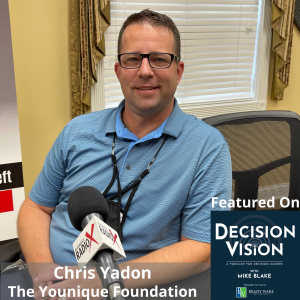
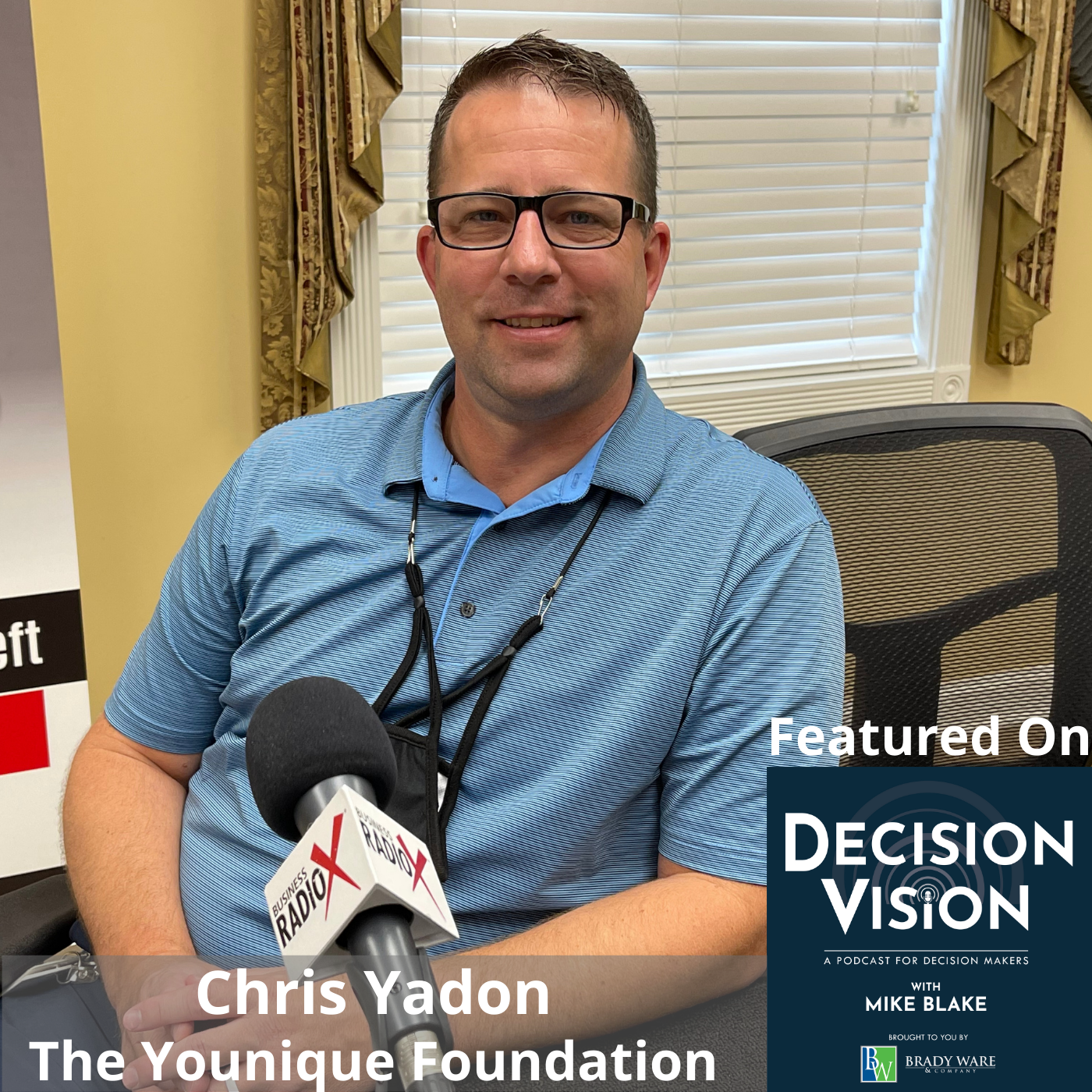
Decision Vision Episode 145:  Should I Start a Foundation? – An Interview with Chris Yadon, The Younique Foundation

December 2, 2021 by John Ray

The Younique Foundation
Decision Vision
Decision Vision Episode 145:  Should I Start a Foundation? - An Interview with Chris Yadon, The Younique Foundation
Loading
00:00 /
RSS Feed
Share
Link
Embed

Download file

The Younique Foundation

Decision Vision Episode 145:  Should I Start a Foundation? – An Interview with Chris Yadon, The Younique Foundation

What is a foundation, how do you start one, and what are the essential bases to cover from the outset? Chris Yadon, Executive Director of The Younique Foundation, and host Mike Blake dive into the details of effectively creating and running a foundation, funding, giving out money, governance, and much more. Decision Vision is presented by Brady Ware & Company.

The Younique Foundation

The Younique Foundation aims to inspire hope in women who were sexually abused as children or adolescents by providing healing services through educational retreats, support groups, and online resources.

They educate and empower parents and caregivers to protect children from sexual abuse through community and online resources.

They advocate for open discussions about sexual abuse through community dialogue and social awareness.

The Younique Foundation exists for the purpose of helping adult, female survivors of child sexual abuse navigate their healing journeys. We provide a range of free services, including:

  • Depression
  • Anxiety
  • Eating disorders
  • Suicidal thoughts
  • Insomnia
  • Panic attacks
  • Addictions and addictive behaviors
  • Unhealthy relationships
  • Chronic pain
  • Learning difficulties

Company website | LinkedIn | Facebook | Twitter | Instagram

Chris Yadon, Executive Director, The Younique Foundation

The Younique Foundation
Chris Yadon, Executive Director, The Younique Foundation

Chris Yadon joined The Younique Foundation as Executive Director in 2015. Chris is responsible for executive leadership, effective stewardship of financial resources, planning, fundraising, and reporting at The Younique Foundation.

He has previously held leadership positions in the start-up, tech, and nonprofit industries. He brings a valuable skillset to the organization and is deeply committed to addressing the epidemic of child sexual abuse. Chris plays a vital role as a spokesperson for The Younique Foundation. He is a sought-after local speaker and has also been invited to present nationally and internationally.

His expertise centers on heightening awareness to the epidemic of child sexual abuse, as well as educating the public on best practices for prevention and the healing services available to survivors. Chris has been featured across several media platforms where he is often requested to contribute as an industry thought leader and expert.

Chris considers his family as his greatest accomplishment. He is the grateful father of six children: three boys and three girls. He and his wife, Christy, have been married for 22 years.

LinkedIn

Mike Blake, Brady Ware & Company

Mike Blake, Host of the “Decision Vision” podcast series

Michael Blake is the host of the Decision Vision podcast series and a Director of Brady Ware & Company. Mike specializes in the valuation of intellectual property-driven firms, such as software firms, aerospace firms, and professional services firms, most frequently in the capacity as a transaction advisor, helping clients obtain great outcomes from complex transaction opportunities. He is also a specialist in the appraisal of intellectual properties as stand-alone assets, such as software, trade secrets, and patents.

Mike has been a full-time business appraiser for 13 years with public accounting firms, boutique business appraisal firms, and an owner of his own firm. Prior to that, he spent 8 years in venture capital and investment banking, including transactions in the U.S., Israel, Russia, Ukraine, and Belarus.

LinkedIn | Facebook | Twitter | Instagram

Brady Ware & Company

Brady Ware & Company is a regional full-service accounting and advisory firm which helps businesses and entrepreneurs make visions a reality. Brady Ware services clients nationally from its offices in Alpharetta, GA; Columbus and Dayton, OH; and Richmond, IN. The firm is growth-minded, committed to the regions in which they operate, and most importantly, they make significant investments in their people and service offerings to meet the changing financial needs of those they are privileged to serve. The firm is dedicated to providing results that make a difference for its clients.

Decision Vision Podcast Series

Decision Vision is a podcast covering topics and issues facing small business owners and connecting them with solutions from leading experts. This series is presented by Brady Ware & Company. If you are a decision-maker for a small business, we’d love to hear from you. Contact us at decisionvision@bradyware.com and make sure to listen to every Thursday to the Decision Vision podcast.

Past episodes of Decision Vision can be found at decisionvisionpodcast.com. Decision Vision is produced and broadcast by the North Fulton studio of Business RadioX®.

Connect with Brady Ware & Company:

Website | LinkedIn | Facebook | Twitter | Instagram

TRANSCRIPT

Intro: [00:00:02] Welcome to Decision Vision, a podcast series focusing on critical business decisions. Brought to you by Brady Ware & Company. Brady Ware is a regional full-service accounting and advisory firm that helps businesses and entrepreneurs make visions a reality.

Mike Blake: [00:00:21] Welcome to Decision Vision, a podcast giving you the listener clear vision to make great decisions. In each episode, we discuss the process of decision making on a different topic from the business owners or executives perspective. We aren’t necessarily telling you what to do, but we can put you in a position to make an informed decision on your own and understand when you might need help along the way.

Mike Blake: [00:00:43] My name is Mike Blake, and I’m your host for today’s program. I’m a director at Brady Ware & Company, a full-service accounting firm based in Dayton, Ohio, with offices in Dayton; Columbus, Ohio; Richmond, Indiana; and Alpharetta, Georgia. My practice specializes in providing fact based strategic and risk management advice to clients that are buying, selling or growing the value of companies and intellectual property. Brady Ware is sponsoring this podcast, which is being recorded in Atlanta for social distancing protocols.

Mike Blake: [00:01:12] If you would like to engage with me on social media with my Chart of the Day and other content, I’m on LinkedIn as myself and @unblakeable on Facebook, Twitter, Clubhouse, and Instagram. I also recently launched a new LinkedIn group called A Group That Doesn’t Suck, so please join that as well if you would like to engage. If you like this podcast, please subscribe on your favorite podcast aggregator and please consider leaving a review of the podcast as well.

Mike Blake: [00:01:41] Today’s topic is, Should I start a foundation? According to statistics published by Foundation Stats, in 2015 there are 86,000 foundations representing $712 billion dollars in assets. They fund philanthropic projects, scientific research, on real estate, and even make business investments.

Chris Yadon: [00:02:04] And, we haven’t covered foundations at all on this program. And, as we get to episode 140, whatever it is, I think it’s high time we do so because after you hear those statistics, you come to recognize that they represent – foundations represent a significant economic force for good, for change, for social development in our society.

Chris Yadon: [00:02:30] And, I’m confident at least by sheer luck there are at least some individuals that have the wherewithal to either start foundations themselves or significantly fund foundations that are within the sound of the voice of this podcast. And, I think many of us aspire one day to maybe be achieving a level of wealth and success where we can start a foundation. And, we may very well discover during the course of today’s conversation that it isn’t – that you don’t necessarily have to be a gazillionaire to start a foundation, and I think we’re going to learn that today.

Mike Blake: [00:03:11] Authorized by the IRS as a charitable foundation in 2015, The Younique Foundation inspires hope in women who are sexually abused as children or adolescents by providing healing services through retreats, support groups and online resources. They educate and empower parents and caregivers to protect children from sexual abuse through community and online resources. They advocate for open discussions about sexual abuse through community dialogue and social awareness.

Mike Blake: [00:03:38] And, joining us today to talk about Younique, as well as to talk about foundation creation in general, is Chris Yadon, who joined The Younique Foundation as executive director in 2015. Chris is responsible for the executive leadership, effective stewardship of financial resources, planning, fundraising and reporting at The Younique foundation. He has previously held leadership positions in the startup technology and nonprofit industries. He brings a valuable skill set to the organization and is deeply committed to addressing the epidemic of child sexual abuse.

Mike Blake: [00:04:12] Chris plays an important role as a spokesperson for The Younique Foundation. He is a sought after local speaker and has also been invited to present nationally and internationally. And, thanks to being here, you can put podcasts on his on his checklist.

Mike Blake: [00:04:27] His expertise centers on heightening awareness to the epidemic of child sexual abuse, as well as educating the public on best practices for prevention and the healing services available to survivors. Chris has been featured across several media platforms where he is often requested to contribute as an industry thought leader and expert.

Mike Blake: [00:04:45] Chris considers his family as his greatest accomplishment. He is the grateful father of six children, three boys and three girls. He and his wife, Kristy, have been married for 22 years.

Chris Yadon: [00:04:56] Well done, Chris Yadon. Welcome to the program.

Chris Yadon: [00:04:59] It’s so good to be here with you, Mike.

Mike Blake: [00:05:02] So, Chris, let’s start off with a very basic question, but I think it’s important because I’m not sure everybody knows the answer to this question that’s listening to this podcast. I’m not sure that I know the answer to the question correctly if I’m being perfectly honest. And, that is what is a foundation? When we hear the word foundation, what should we be thinking of?

Chris Yadon: [00:05:22] Yeah. That’s an interesting question because foundation can mean many things. There are public charities that use the word foundation. There are private foundations that use the word foundation. There are corporate foundations that use the word foundation. So, the word foundation in and of itself doesn’t necessarily designate a certain type of entity. For example, we’re called The Younique foundation. We’re actually a public charity. I would say, though, it’s most commonly used to describe a certain type of entity, which is a private foundation.

Mike Blake: [00:06:02] Now, that leads nicely to the next question, which is, as I was researching for this podcast, it seems like there are actually different types of structures of foundations. So, you mentioned that perhaps most of us think of a of a private foundation. But if you’re familiar with them, what are the other types of foundations that fit into this category?

Chris Yadon: [00:06:23] Yeah. So, you’ll – the two biggest type that you’ll see are the private foundations that are often associated with the family and the family’s wealth. So, The Bill and Melinda Gates Foundation is an example.

Chris Yadon: [00:06:38] But you’ll also see foundation often used with corporate foundations. So, Chick-Fil-A would have a corporate foundation.

Chris Yadon: [00:06:47] So, those are the two most common type of private foundations. But, again, kind of like I mentioned at the beginning, even some public charities like ours use the term foundation occasionally in their names.

Mike Blake: [00:07:03] And, interestingly, you know, for good or ill, and I’m sure I certainly don’t want to open a debate on this issue, but, you know, foundations can also be used as or have been used in the past as frankly tax reduction structures. And, again, I’m not going to debate as to whether or not that’s good or bad with the policy should be.

Mike Blake: [00:07:26] But interestingly enough, I learned that when Henry Ford passed away that he gave most of the shares of the Ford Motor Company to a foundation, a family foundation. Or, actually, yes, before you passed away. And then, ultimately one of the Ford family maintained control of that foundation to the board. But then the chairman resigned, I think it was Henry Ford Jr. resigned after some relatively minor dispute with the board but he sort of got as mad as hell and he wouldn’t take it anymore. That sort of thing. And then, in doing so, lost control of the Ford family fortune. They are only worth a fraction of what they’re worth actually have been say in the 1950s until he did that. But, you know, and Henry Ford was known for among other things. He just saw avoiding taxes as a a patriotic duty. It went beyond just financial. It was – he just thought that the government had no right to take his money into discussion. That’s why he created the foundation.

Mike Blake: [00:08:32] But, you know, back in the day, it wasn’t that easy to create a foundation that would effectively be a tax avoidance scheme. And, the second of that loophole was passed through by Ford Jr. The Ford family lost that a lot of that wealth. Now, they’re still holding on to the Detroit Lions. I’m not sure if that’s a good or bad. We’ll let other people decide. Maybe, the second prize is holding on to two Detroit Lions, but kind of interesting how a foundation and the governance of a foundation actually altered the course of the Ford family fortune.

Chris Yadon: [00:09:07] Yeah, you know, and it brings up a really important thing for us to acknowledge around private foundations is they almost always have a dual purpose. Most foundations genuinely want to do good, but it’s not just about doing good. It’s about doing good business as well and protecting their assets and ensuring that those assets can live in some level of perpetuity.

Chris Yadon: [00:09:32] And so, yes, there are tax advantages. They’re highly regulated because of that. As opposed to a public charity, public charities are more scrutinized by the public because of the type of structure that they are, whereas a private foundation has more regulatory requirements and more scrutiny from governing bodies.

Chris Yadon: [00:09:56] So, they both have their purpose. And, when you when you look at a private foundation, anybody should look at that private foundation and understand that they are dual purpose. They’re protecting assets for the family, dealing with the tax implications of those assets while also doing good by giving to public charities like ours.

Mike Blake: [00:10:19] And, you know, if my memory serves you are, if not one of the founders, maybe the founder of The Younique foundation, correct?

Chris Yadon: [00:10:29] Well, I was the first employee. I’ll give the founder credit where it belongs and that’s to our two founding board members that infused a significant amount of wealth into what we did. But me, along with those two, started on day one and and we fundamentally were grappling with some of these decisions on day one. Should we be a corporate foundation? Should we be a private foundation? Should we be a public charity? Ultimately, we landed on public charity for very clear and specific reasons, but all things were on the table when we first considered it.

Mike Blake: [00:11:03] So, I don’t want to get too much in your business and ask unfair questions, but to the extent that you’re able to disclose it, can you talk a little bit about the calculus of reaching that decision on the structure that you have and what those considerations were and why it was that ultimately led you to your current structure?

Chris Yadon: [00:11:24] Yeah. So, a couple of things. First of all, we knew we wanted to provide direct services to those people that we wanted to serve. Typically, private foundations, most of them do not provide direct services. There’s a particular type of private foundation that does, but most don’t. And so, that that was the first point. But even with that point, we still had an option to stay a private foundation.

Chris Yadon: [00:11:53] But for us, we knew the topic of sexual abuse was so broad and had penetrated so deeply into our country, into our communities and even internationally worldwide that we needed broad-based support from the public. And, you generally don’t get broad-based public support as a private foundation. It’s almost always funded by a small handful of individuals, whereas, we needed combined funding both from high networth individuals, including our founders, as well as the general public pitching in to help address our issue that we wanted to address.

Mike Blake: [00:12:33] Oh, that’s interesting. So, if I can read back to you what I think I heard, foundations tend to be kind of, if you will, kind of more closed entities, like a more closely held entity, perhaps within a single family. They don’t need outside support. They don’t want outside support. They don’t want outside influence, probably. Whereas, a public charity recognizes that it needs resources that can leverage beyond what the founders are able to provide on their own.

Chris Yadon: [00:13:00] That’s correct. You just nailed it. And, those those private foundations hold things closely because most of the money they give away is generated by investment returns from the assets that they’ve placed into the foundation. So, they want to manage those closely as a family or a small group, rather than having the public weigh in on how those should be managed or dealt with.

Mike Blake: [00:13:28] And, those assets might become more commonly thought of as an endowment, I guess.

Chris Yadon: [00:13:33] Yeah. There’s many different vehicles they use, but endowments are certainly one.

Mike Blake: [00:13:39] Okay. So, when you guys started Younique, what made you feel like you had to start your own entity versus throwing your considerable resource and influence behind an existing entity? Because I know you’re not the only foundation that addresses this problem. Don’t get me wrong. I’m glad you’re doing it, and the more the merrier as far as I’m concerned. But clearly, at some point, somebody asked a question why do we have to do this ourselves and have our own infrastructure? Why don’t we find a really good, if there is one, a really good entity and write them, you know, support them financially?

Chris Yadon: [00:14:16] Yeah. It’s a great question, and you might find me speaking out of both sides of my mouth here for a minute. I am a huge advocate of individuals that have wealth of finding existing causes rather than starting their own. There’s way too many nonprofits that exist already and many of those nonprofits are really struggling. But the few that are actually having impact, they always need more resource. So, I’d always recommend to a person of wealth to find a high quality nonprofit that can prove that they’re having impact and shovel their resources into those causes that they feel like they can get behind.

Chris Yadon: [00:15:02] But we didn’t do that. And, here’s the simple reason. The topic of sexual abuse was being addressed by many other nonprofits. But there is a very specific segment of sexual abuse survivors that was not being addressed effectively, and that was adult survivors who were sexually abused as children that were dealing with posttraumatic stress. They don’t really have resources outside of going to an individual therapist.

Chris Yadon: [00:15:28] There’s a lot of non-profits and resources in communities that help children who are being abused. There’s a lot of resources that help women who are currently going through domestic violence, including sexual violence. But there were very few resources for adult women who are sexually abused as children. They didn’t have options, and we felt strongly because of the size of that demographic there need to be a champion in that area. And, we decided we needed to be the one to lead that effort.

Mike Blake: [00:16:00] So, in that regard, it sounds very much like, very much like a business decision. Should I start a business or should I invest in other businesses that already exist?

Chris Yadon: [00:16:12] Yeah, identical thinking. I mean, the nuances are different, but the strategic thinking behind it is identical. I’ve spent much of my career in for profit startups, so I know both sides. I know both the nonprofit and for profit sides when it comes to early stage investing. And, it’s remarkably similar.

Mike Blake: [00:16:36] And, you know, I wonder if that’s why there seemed to be a lot of technology, entrepreneurs that are drawn to foundations, right, and affect it. It’s a startup, but a startup with a different ultimate bottom line.

Chris Yadon: [00:16:50] Yeah. Absolutely. You know, if you go to Maslow’s Hierarchy of Needs, you know, the one that was added after the fact was really based on this principle of when everything in my world has been met and I’ve reached self-actualization, what happens? Well, I turn around and give back.

Chris Yadon: [00:17:15] And so, for people that are have high networth, have been successful in their careers, where their needs have been met up and down, it’s no wonder they have a desire to give back and they’re intelligent people and they often feel like they can do it better than the next person. And, in some cases that’s true. And, in some cases, it would be better for them to jump in as an investor in these causes that are already doing good.

Mike Blake: [00:17:44] So, how does one – let’s say somebody is now checking off the boxes and they think they found an unmet niche that they need to start something as opposed to backing something that exists. At a high level, can you describe the process of starting a foundation?

Chris Yadon: [00:18:02] Yeah. Step one, and I would strongly discourage anybody from skipping this step, secure top-notch legal counsel and top-notch accounting counsel. Those are the two critical pieces. And, you specifically want to look for practices that specialize in nonprofit work. If you have those and the start of a board, meaning the core of that board of directors that’s going to start this, you have what you need to start having the strategic discussions of what’s next. But I wouldn’t even take a single step without engaging that legal and financial counsel.

Mike Blake: [00:18:49] Now, you make an emphasis on top-notch. Can I infer that there’s a story that you’re aware of where somebody didn’t use top-notch counsel and they got burned by it?

Chris Yadon: [00:19:01] Well, everybody has a friend or an uncle or a college roommate that, you know, is an accountant or an attorney. But their practice may not be in nonprofit.

Mike Blake: [00:19:14] Yeah.

Chris Yadon: [00:19:14] And, they know enough and can do enough to get you registered. But they’re not going to be there to warn you of the problems that are coming if you don’t set up your entity right and start your governance on day one in the right way. And, I’ve seen many nonprofits get into all sorts of trouble when they rely on their uncle that’s a tax accountant for mom and pop stores on main street who has zero experience in nonprofit and they are their tax advice for their nonprofit. It just doesn’t work. It may work if the nonprofit stays small with little to no impact but the moment they start growing, they’ll be in a mess if they don’t do it right on day one.

Mike Blake: [00:20:06] Especially since, and correct me if I’m wrong, I think registering the foundation is the easy part. I mean, that’s the part where almost anybody can kind of look up the rules. And, that’s probably what that tax accountant did was look at the rules and then just set it up, right? It’s about setting up the right way where you don’t create liability for the foundation founders, board of directors and that sort of thing, right?

Chris Yadon: [00:20:30] Yeah. You got it. Yeah. It’s pretty simple to get it through and and approved by the IRS. Even nonprofessionals do it often and people think that that’s enough. And, frankly, it’s not pretty to them to spend money on legal or spend money on accounting, but I can’t emphasize enough how critical it is. They won’t feel the pain of it till two or three, if they do it wrong, but they will feel the pain of it if they get it wrong.

Mike Blake: [00:21:01] So, what are some of those risks when one starts a foundation, and certainly this is something you’ve you’ve given a lot of thought to, I’m sure, and probably is on your mind daily. What are the risks associated with starting a foundation?

Chris Yadon: [00:21:15] Yeah. I’ll just give you one example. Charitable solicitation laws. Every state, there’s variances and differences in how you solicit funds. And, you know, for a small nonprofit that’s invisible, there’s probably not going to be too many regulatory bodies that care. But like I said, if someone’s aspirational in wanting to have a nonprofit that actually has significant impact on growth and influence, those regulatory bodies are going to watch and keep an eye on them.

Chris Yadon: [00:21:51] So, if I don’t have good counsel to help me know that I’ve got to register in in these 50 states if I’m going to solicit funds and to know how to register, I can get in all sorts of hot water with the way I solicit funds from donors, you know, then I’ve spent money that I’m getting, you know getting scrutiny on, and I don’t have recourse and will cause me all sorts of problems. So, there’s one simple example of what I’m talking about.

Mike Blake: [00:22:27] And, donors to foundations really don’t like their money being spent on lawyers to clean up compliance, right?

Chris Yadon: [00:22:35] That’s right.

Mike Blake: [00:22:36] That’s not what they’re in it for.

Chris Yadon: [00:22:37] They want their money to be spent effectively on programs, and they want a high percentage of it to be focused on programs.

Mike Blake: [00:22:46] So, we’ve touched a little bit on how you fund a foundation, so I’d like to switch to the other side now in terms of how foundations grant or give money. Are there any restrictions on the kinds of activities that a foundation can fund or entities that a foundation can give money to?

Chris Yadon: [00:23:06] Yeah. I mean, generally speaking, private foundations are going to give to 501(c)(3) public charities. That’s going to be the most common. They typically have a requirement to give 5% of whatever their net or their egg is that they’re investing.

Chris Yadon: [00:23:28] So, I have 100 million, you know, I’m going to be required to give 5 million a year. Now, obviously, that 100 million is, we hope growing and grows at a pace that not only meets that 5 million but exceeds it so that the net gets bigger over time. But there is a requirement to give a certain percentage. There are more detailed requirements and how it’s given and documented, but those those are the highest level basics that govern giving.

Mike Blake: [00:24:07] That’s interesting. I did not know about the 5% rule. And so, that has interesting implications for investment policy, right? Generally speaking, I mean, you can’t get in anywhere – you can’t sniff 5% on risk-free assets like you could in the good old days, right? So, you’ve got to be – you’ve got to apply some intellectual horsepower on how are you going to have a portfolio that generates at least 5% a year.

Chris Yadon: [00:24:35] Yeah. For most private foundations, they have an investment practice. It doesn’t necessarily have to be a large one, but obviously depending on the size of the funds that they have, it can dictate how involved that strategy is. But no, it’s not – they’re not just sitting on their hands when it comes to their investment strategy.

Mike Blake: [00:24:59] And, is that 5% measured on a year-to-year basis? Or is there a provision where say, if you have a bad year and you’re trying to preserve capital that you can catch up the next year? How does that work?

Chris Yadon: [00:25:11] Yeah. You’re getting into an area where I’m not as solid in my expertise. As a public charity, we interact with private foundations heavily, so I know a lot of the regulatory areas around them. But that particular question, I don’t want to mislead somebody on because I’m not sure I know the answer to that one.

Mike Blake: [00:25:31] All right. Fair enough. So, our audience can google it. I’m sure it’s out there.

Mike Blake: [00:25:38] So, are there best practices in terms of governance for a foundation to maximize the likelihood that it will be successful?

Chris Yadon: [00:25:52] Yeah, so.

Mike Blake: [00:25:52] What are they?

Chris Yadon: [00:25:53] Yeah. Specific to the giving portion of it, the most important thing that is emerging and growing right now is the role of private foundations in helping charities effectively partner with other community organizations. So, you’re seeing a lot more in private foundations, where they’re funding grants that encourage partnerships across intersectional areas of nonprofits.

Chris Yadon: [00:26:26] I’ll give you a great example of this. We work closely with a group called Stand Together. They work to eradicate poverty and they do so by enlarging and strengthening public charities that they work with. So, they actually apply good business practices in training as well as their giving strategy to encourage these nonprofits to scale and grow effectively, as well as partner with other charities that are working to eradicate poverty. So, you’re seeing – rather than them just kind of sit back and hand out checks, you’re seeing them get more involved strategically with their giving and using their giving to influence public charity strategy. And, I would consider that an emerging best practice.

Chris Yadon: [00:27:15] A couple others at the highest level, obviously good scrutiny and reporting from the charity itself is critical for foundations to ensure that their money is being used effectively. Being clear about what type or what stage a charity is when they invest. If it’s early stage, they know they’re investing and may not get a quote-unquote return on that investment because they’re investing in early stage to get a charity ready to have impact. But later stage charities, they’re looking for actual tangible numbers on, you know, for every dollar they gave, what type of impact did it actually have on the people that they served. So, you know, good, clear direction on when they give to a charity, what the actual strategic goal of that gift is.

Mike Blake: [00:28:10] Now, I’ve served on a few nonprofit boards and in my time. And, one of the things I’ve noticed as an emerging trend is foundations are looking for charities to become a little bit more self-sustainable that they don’t want to sort of be a constant, for lack of a better term, sort of a welfare check forever. But rather they’d like their money to be this something that cedes a program that somehow can at least offset some of its expenses with organic revenue, if not be self-sustaining entirely. Is that something you’re seeing as well? And, if so, why have foundations kind of moved in that direction?

Chris Yadon: [00:28:53] Yeah. It comes in several different flavors. So, there are certain charities based on the people they serve that can actually start businesses within that charity that then return revenue that allows it to perpetuate itself. That is definitely appealing to private foundations.

Chris Yadon: [00:29:15] Where there are charities that don’t have that opportunity or luxury, there’s still a principle here that charities are looking for and that is what else is that public, or sorry, the private foundations are looking for, and that is what is that charity doing to have recurring or stable revenue. So, the emergence of the $5 monthly donor is a great example of that.

Chris Yadon: [00:29:41] So, a small public charity, a private foundation is going to be interested to know, hey, how much money is coming from, you know, Joe public and how many of those are on a recurring basis? How many supporters do you have out there that are giving to your charity $5 a month? It very much becomes a recurring revenue source. And, private foundations are looking at that and whether those charities are growing that particular revenue stream to ensure that that charity is sustainable beyond just the large checks that private foundations tend to write.

Mike Blake: [00:30:20] Now, at the outset of this conversation, you alluded to the fact that foundations are subject to some oversight, which makes sense. Can you talk a little bit, again at a high level, it’s not fair to ask you to be too detailed and you’re not that kind of expert, I don’t think. But at a high level, what kind of oversight are foundations subject to themselves?

Chris Yadon: [00:30:46] Yeah. So, private foundations are subject to specifically dealings with related parties. That’s the biggest one. So, you know, they’re looking to see, “Hey, is this person using the private foundation basically to funnel money into their business interests?” And, that’s going to cause a private foundation a lot of problems.

Chris Yadon: [00:31:20] So, that’s the biggest one, and nothing else is really even close to it. What I would say, are the other ones that may be not as close but pop up or definitely how much are they giving? Who are they giving to? Just making sure all those boxes checked. But the self-dealing aspect of the oversight is by far the most critical piece of it.

Mike Blake: [00:31:48] Now, is anyone allowed to start a foundation? Could I just decide I’m going to start a foundation or are there certain criteria that one has to meet before one is allowed to start one?

Chris Yadon: [00:31:59] Yeah. I mean, technically, yes, Anybody can can start one. Generally speaking, though, the biggest rule of thumb is that there is a $5 million or more that’s put into that private foundation as a starting point. Obviously, many are much larger than that. But that, you know, as you talk to people that define best practices in the space tend to put around 5 million and give or take a little bit as as that starting point.

Mike Blake: [00:32:32] And, do foundations have owners per se, you know, somebody that can say this is my foundation or this foundation belongs to me or to this entity, to this vehicle, whatever? Is there a concept of ownership in a foundation structure?

Chris Yadon: [00:32:49] Not ownership in the business sense. I mean, definitely governance. And, when you’re looking at a private foundation, that governance is more similar to ownership, though it’s still not technically ownership. When you get to a public charity, it is very far away from ownership. It is governed by a board that has a certain number of board members that represent the public and that board provides that governance or decision-making and there’s no ownership power over it.

Chris Yadon: [00:33:22] So, it depends a little bit whether it’s a charity or a private foundation, but neither of them technically would have owners. And, the further away or the closer you get to a public charity, the further away you get from ownership principles.

Mike Blake: [00:33:37] So, how much flexibility or leeway do foundations have in terms of setting their own governance rules? Do they have a lot of latitude in terms of how they structure it? Or are there fairly rigid rules to which most foundations must adhere?

Chris Yadon: [00:33:56] Yeah. When you talk about the public charity side of it, there are pretty significant rules set by the IRS in the code that govern what we do. You know, in terms of governance around strategy or strategic thinking, there’s a lot of flexibility. But when it comes to finance and legal, you’re going to see a lot more structure and regulation. And, though I’m not as familiar with that in private foundations, I believe it’s substantially similar.

Mike Blake: [00:34:36] Now, you mentioned the distinction between a foundation and a public charity. Are there instances in which a foundation decides it would be better off as a public charity? And, if so, are you aware if there’s a mechanism to convert it as opposed to, say, having to shut down the foundation and start all over again with a brand new public charity?

Chris Yadon: [00:34:57] Yeah. So, the in-between between the two is referred to as a private operating foundation and those are private foundations that actually deliver services. That would be the bridge structure in terms of how to go through that transition. It’s not something I have gone through or even heard of someone go through. Typically, once someone starts their one or the other, you very rarely see any shifting from one to the other. It’s an early stage decision that people tend to stick with.

Mike Blake: [00:35:36] I guess that falls into the category of foundations hiring good legal and accounting counsel.

Chris Yadon: [00:35:43] That’s right.

Mike Blake: [00:35:43] They make sure that they’re making the right decisions so they don’t have to change it down the road.

Chris Yadon: [00:35:47] That’s right.

Chris Yadon: [00:35:48] Although, frankly, I’ve not heard of an operating foundation. So, that’s a useful piece of information because it sounds like technically you actually can sort of have your cake and eat it too. If you want to be both on the funding side and the operational side, there is a vehicle available with which to do that.

Chris Yadon: [00:36:06] Yeah. What you give up is public charities have less government scrutiny and regulation because the government relies on the public to provide that. So, your exchange there is you get some of the control you want of a private foundation but what you give up is you have someone looking over your shoulder more so than you would as a public charity.

Mike Blake: [00:36:33] Now, what about an unhappy scenario in which a foundation is not, for whatever reason not working out and the founders, I guess I’m not sure what the term of art would be, but I guess the people in charge decide that it’s time to just dissolve it or close it or whatever. Again, this certainly reflects my ignorance. I don’t even know what the term of art is. But, you know, is there a way to, in effect, terminate a foundation?

Chris Yadon: [00:37:00] There is, and it’s much more complex than I could effectively describe. But what I – the general principle is the funds of that entity are distributed into like entities or entities that are public charities. So, that’s the process that it would go through as it dissolves is – I don’t know of any process, and there may be an expert that knows more than me on this, where those assets end up in an individual’s hands. I think that’s counter to everything about the donation process and the donation structure would be ripe for abuse. And so, those funds will then get distributed to other private foundations or public charities if there was a dissolution.

Mike Blake: [00:37:58] Yeah. And, I would have to imagine if there were a way, if there were some legal mechanism by which funds might be returned to the initial guarantors that there would probably be significant tax penalties, as well as very unpleasant conversations with the IRS itself. Pleasant, expensive and – sorry, unpleasant and expensive and protracted conversations with the IRS.

Chris Yadon: [00:38:25] No doubt about it.

Mike Blake: [00:38:29] Can a foundation be transferred, and I guess this kind of gets into what you’re talking about a little bit, but I want to be clear. As an alternative to terminating a foundation, could you simply find another foundation, for example, that wants to take on that mission, take over the governance, et cetera? Is that an avenue that’s available?

Chris Yadon: [00:38:54] Yeah. Definitely. On the public charity side, it is. I wouldn’t say mergers are super common, but they are common enough that they happen, you know, happen on a regular basis. On the private foundation, I’m not sure if that’s a merger process or how that dissolution would occur. That’s an area I don’t know as much about.

Mike Blake: [00:39:19] Okay. We’re talking with Chris Yadon of The Younique Foundation and the topic is, should I start a foundation? A lot is made about how much principles of foundations and charities are paid, right? That’s a common, I guess, an easy target in some respects for the press. You know, CEO of Charity X makes Y number of dollars. Are there restrictions on how much foundations can pay, can compensate their employees, their board, et cetera?

Chris Yadon: [00:39:54] There are, but it’s very loose and is subject to a lot of loopholes. Here’s what I would take, you know, as a takeaway for people that hear things like that. A well-run nonprofit, whether it’s a private foundation or charity, is a business. And, it has to be run like a business. And, you’re competing, whoever you’re going to have as your executive, you’re competing with every other business that’s out there. Because running a charity is very similar, if it’s done right, to running any other business. Ninety-five percent of it is the same.

Chris Yadon: [00:40:44] So, charities, if they want top-notch leadership, they have to pay, not market rate, but they can’t be a tenth of a market. So, if you have an extremely large charity, that’s a multibillion-dollar charity, if they want the type of person that can run that charity, it’s the same type of person that can run a multibillion-dollar corporation and you’re not going to get that person for $100,000.

Mike Blake: [00:41:15] Right.

Chris Yadon: [00:41:15] You’re just not. And so, sometimes there’s an education that needs to happen of the public of what’s acceptable and that the market does govern it. And, you know, what donors should be concerned about is when it’s excessive. You know, when you see a brand new startup paying a million dollar salary to a CEO, something else is going on there.

Mike Blake: [00:41:43] Yeah, you know, and I think that public education is a really good point because, again, you’re the expert, you actually run and have been involved in these organizations much more than I have. But my own experience is that either a foundation or a charitable organization for that matter of any level of competence is run very much like a business. And, frankly, I think they often have to do more with less.

Mike Blake: [00:42:12] But there’s a notion out there that I’m not sure where it came with, but there’s this assumption that that if you work for a nonprofit, then they sort of have their own romper room and everybody sort of sits on cushy, bouncy chairs and everything else, and they have six-hour workdays and 28-hour work weeks and so forth. But, you know, most charities that I’m aware of, certainly anyone with which I’ve been associated, they work as hard and are under as much stress and strain as any startup and maybe more because the revenue models are so much more restricted.

Mike Blake: [00:42:47] It’s easier – it’s a lot easier to raise money when your goal is to make profit than to raise money when your goal is not to make profit. And, I guess that’s just a long winded way of agreeing with you.

Mike Blake: [00:42:57] But again, having served as a board member, this image of executive directors and board members just sort of taking money in and then living off of their largesse. You know, that’s very much the exception rather than the rule.

Chris Yadon: [00:43:15] Yeah. You’re spot on. And, I couldn’t have said it any better.

Mike Blake: [00:43:22] Chris, we’re running out of time, and I want to let you get back to kind of the rest of your day. But I do have two more questions I want to get to if we can. And, one is as a foundation, are there restrictions on funding sources?

Mike Blake: [00:43:38] For example, let’s say there’s a foreign funding source and you’re not entirely familiar with it, but they want to write you a $50 million check. As as a foundation manager or foundation board, do you have any obligation to kind of verify what the nature of that funding is, where that money came from and so forth, to make sure it’s not from a criminal source or a foreign terrorist agency or something like that or some form of money laundering, for example?

Chris Yadon: [00:44:08] Yeah. Great question. So,the governance here is more governed by ethics, business ethics. So, is there – can I accept a $50 million gift from an anonymous source that I’ve never met? The technical answer is yes. But I do have a responsibility, an ethical responsibility to scrutinize where my funding has come from, just like you would any business partnership with an investor. You know, when someone invests with you, they become part of your family, whether that’s a for profit or a nonprofit. And, you want to make sure that your family is ethical and healthy and helpful. So, yes, there is an ethical responsibility.

Chris Yadon: [00:45:00] Depending on the type of gift it is, there are some regulations that govern giving. For example, as a public charity, if someone gives you more than 2% two of your five-year operating expenses, that only up to 2% can be counted as a public gift and the other goes into a different calculation that you have to keep balanced as a public charity. So, I use that as a as a quick example. It’s referred to as the one-third test, to give you a sense of what types of regulations there are. So, balance and where funds come in is part of regulation.

Chris Yadon: [00:45:47] But in terms of who you do business with, it’s important that any charity, just like any business, scrutinize their partners from an ethical perspective.

Mike Blake: [00:45:58] Right. Just as we have a client acceptance process in our accounting firm, it’s probably a good idea to have a funding acceptance process of some kind within. Just because if nothing else, I mean, even if you put ethics aside for a second, even though I wouldn’t advise that, if you accept money from someplace and then it turns out to come from a very bad source, that can be a foundation-ending event.

Chris Yadon: [00:46:27] Yes. And, you know, the fact that you brought up a process is perfect. We have two, we have our grant making process where we do that scrutiny on any grants we receive and then we have a partnership process for any significant partnerships that we ask and answer certain types of ethics questions.

Mike Blake: [00:46:49] Chris, this has been a neat conversation. Again, I want to be respectful of your time and you’ve been so generous with your time today. If there are topics that we didn’t cover in as much depth as one of our listeners would have liked or other questions I didn’t think of to ask you but they would have wished I’d asked, can they contact you to extend this conversation or expand the conversation? And, if so, what’s the best way to do so?

Chris Yadon: [00:47:12] Sure. I’d be happy to visit with them. Best way to get a hold of me is through my email. I’m imagining you put them in the show notes, but it’s C Yadon spelled Y-A as an apple -D-O-N, @youniquefoundation.org.

Mike Blake: [00:47:30] And that’s Y-O-U-N-I-Q-U-E.

Chris Yadon: [00:47:35] Correct.

Mike Blake: [00:47:35] That’s going to wrap it up for today’s program, and I’d like to thank Chris Yadon so much for sharing his expertise with us.

Mike Blake: [00:47:41] We’ll be exploring a new topic each week, so please tune in so that when you’re faced with your next business decision, you have clear vision when making it. If you enjoy these podcasts, please consider leaving a review with your favorite podcast aggregator. It helps people find us that we can help them. If you’d like to engage with me on social media with my Chart of the Day and other content, I’m on LinkedIn as myself and @unblackeable on Facebook, Twitter, Clubhouse, and Instagram. Also, check out my new LinkedIn group called A Group That Doesn’t Suck. Once again, this is Mike Blake. Our sponsor is Brady Ware & Company. And, this has been the Decision Vision podcast.


Tagged With: 501(c)(3), Brady Ware & Company, Chris Yadon, Decision Vision, foundation, foundations, managing a foundation, Mike Blake, nonprofits, The Younique Foundation

Decision Vision Episode 144: Should I Be Thankful? – Mike Blake, Brady Ware & Company

November 25, 2021 by John Ray

Mike Blake
Decision Vision
Decision Vision Episode 144: Should I Be Thankful? - Mike Blake, Brady Ware & Company
Loading
00:00 /
RSS Feed
Share
Link
Embed

Download file

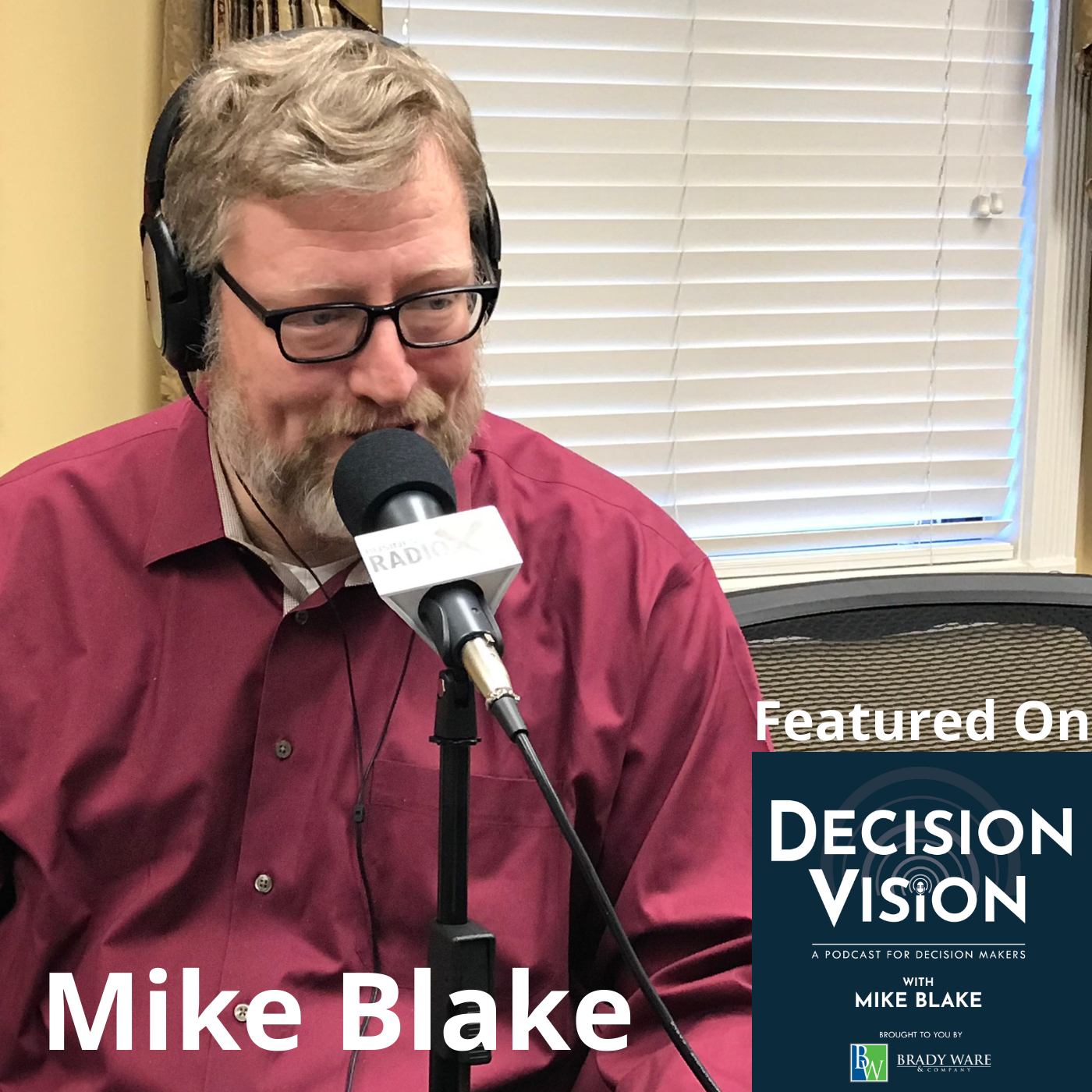
Mike BlakeDecision Vision Episode 144:  Should I Be Thankful? – Mike Blake, Brady Ware & Company

Decision Vision host Mike Blake reflects on 2021 and shares what he is thankful for this season. He discusses his family, events from the past year such as SpaceX, guests who’ve appeared on the show, and much more. Decision Vision is presented by Brady Ware & Company.

Mike Blake, Brady Ware & Company

Mike Blake
Mike Blake, Host of the “Decision Vision” podcast series

Michael Blake is the host of the Decision Vision podcast series and a Director of Brady Ware & Company. Mike specializes in the valuation of intellectual property-driven firms, such as software firms, aerospace firms, and professional services firms, most frequently in the capacity as a transaction advisor, helping clients obtain great outcomes from complex transaction opportunities. He is also a specialist in the appraisal of intellectual properties as stand-alone assets, such as software, trade secrets, and patents.

Mike has been a full-time business appraiser for 13 years with public accounting firms, boutique business appraisal firms, and an owner of his own firm. Prior to that, he spent 8 years in venture capital and investment banking, including transactions in the U.S., Israel, Russia, Ukraine, and Belarus.

LinkedIn | Facebook | Twitter | Instagram

Brady Ware & Company

Brady Ware & Company is a regional full-service accounting and advisory firm which helps businesses and entrepreneurs make visions a reality. Brady Ware services clients nationally from its offices in Alpharetta, GA; Columbus and Dayton, OH; and Richmond, IN. The firm is growth-minded, committed to the regions in which they operate, and most importantly, they make significant investments in their people and service offerings to meet the changing financial needs of those they are privileged to serve. The firm is dedicated to providing results that make a difference for its clients.

Decision Vision Podcast Series

Decision Vision is a podcast covering topics and issues facing small business owners and connecting them with solutions from leading experts. This series is presented by Brady Ware & Company. If you are a decision-maker for a small business, we’d love to hear from you. Contact us at decisionvision@bradyware.com and make sure to listen to every Thursday to the Decision Vision podcast.

Past episodes of Decision Vision can be found at decisionvisionpodcast.com. Decision Vision is produced and broadcast by the North Fulton studio of Business RadioX®.

Connect with Brady Ware & Company:

Website | LinkedIn | Facebook | Twitter | Instagram

TRANSCRIPT

Intro: [00:00:02] Welcome to Decision Vision, a podcast series focusing on critical business decisions. Brought to you by Brady Ware & Company. Brady Ware is a regional full-service accounting and advisory firm that helps businesses and entrepreneurs make visions a reality.

Mike Blake: [00:00:23] Welcome back to Decision Vision, a podcast giving you, the listener, a clear vision to make great decisions. And, last year, about this time I recorded, I guess, what amounts to an address, if I’m really honest about it, regarding the question, should I be thankful? And, as it turned out at that time, that was the most listened to episode of the podcast, which, you know, I’m a data guy that tells me that for whatever reason you are interested in what I’m thankful about and I’m certainly interested in sharing that with you.

Mike Blake: [00:01:03] This is not an attempt to be a knockoff of Oprah and her favorite things sort of stuff. It’s really just, you know, an opportunity to sort of take stock of the last year and pull something positive out of it, even though the things that are going on around us and in our lives aren’t necessarily always positive.

Mike Blake: [00:01:26] And so, I want to – what I’d like to do is I’d just like to express the things that I’m thankful for and I hope that you’ll find some value in it. Some things to think about, some things to find hope and positivity, and to give you a – you know, to give you an opportunity to kind of see through the fog, if you will see through the smoke of a lot of things that are negative, that surround us and find the good in things. Because if you don’t do that as we approach the holidays, at least here in the United States and most of what we would call the Western world, this is an important time for reflection. It’s a time of, for many of us, heightened spirituality. And, hopefully, you find this – hopefully, you find this useful and resonates in some way.

Mike Blake: [00:02:20] So, the first thing I want to be thankful for, express my thanks for is my family. You know, it’s a cliche, but, you know, those things are cliches for a reason. And, my family has been very supportive of my career. They have been very supportive of my doing this podcast, which takes some time.

Mike Blake: [00:02:41] They’ve been very supportive of the boundaries that I’ve had to set that in spite of the fact that I am at home, I’m not really at home, I’m not really available because I do have a job to do and there are people who are counting on me to do it.

Mike Blake: [00:02:55] And I’m grateful that all of them have cooperated in observing the coronavirus protocols that we have as a family have agreed upon. And that has, I think in no small part resulted in the fact that, knock on wood, nobody in the immediate family has contracted coronavirus, which, of course, is a good thing and particularly a good thing, because only just recently did my youngest son become eligible for the vaccine, and we do have a person close to us that visits us quite frequently, who if he did contract the virus, it would be a grave prognosis. So, I am thankful for that.

Mike Blake: [00:03:41] And, I’m thankful for a family that is more or less stayed unified, not just the immediate family, but the extended family. And in times like these, discussions such as race, such as the vaccine, science overall, policy, politics have divided families. They have disrupted family bonds. They have destroyed friendships.

Mike Blake: [00:04:09] And, I am thankful for the fact that that we have largely been unscathed in that regard, not that we are monolithic in our thinking. We are not. We have healthy debates all the time and sometimes I learn something and , I’ll change my mind if I’m presented with a compelling argument and in particular compelling thoughts and data to support that argument. But I am thankful for that.

Mike Blake: [00:04:36] And, as an extension, I’m thankful for my health. I’m thankful for the fact that vaccines that protect us, at least partially from coronavirus, are now effectively available to anybody who wants them whenever they want them. I need to get my booster shot and I will be doing that in the next few days and I guess I’m one of the fortunate ones. I don’t tend to react to those, unlike my wife, who unfortunately is very sensitive to them. But, you know, she grits her teeth and she gets vaccinated anyway.

Mike Blake: [00:05:09] If you choose not to be vaccinated, I don’t judge you for that. I don’t judge anybody for that. There’s really no point in judging you for that. I disagree with it. I may have a different personal risk profile than you, but it’s your risk profile. And, you know, at the end of the day, we all have the power to take whatever protections we see appropriate, at least, for the most part, to protect ourselves from the coronavirus and make our own decisions in terms of risk-reward. And I only encourage people to be vaccinated because it does seem to be, does seem to be effective. That’s how I interpret the data that I see. And I would rather people not get sick and die rather than have people get sick and die. So, it’s really as simple as that.

Mike Blake: [00:05:09] I’m thankful for SpaceX. I’m thankful, in spite of the fact that I’m on record as saying, you know, I think Elon Musk is both a genius and an inspired one as that and he’s probably a little bit nuts. And maybe those two things go hand in hand.

Mike Blake: [00:06:15] But thanks to SpaceX. There now exists a privately funded or privately derived, I guess, technically the government funds, but it’s privately operated crewed space flight program. And, I think that’s an important – an extremely important step for humanity.

Mike Blake: [00:06:36] I think that the fact that we have not returned to the moon since the early 1970s is really a shame. I think it’s something that has held American society back. I understand it was expensive to do that. I understand the main reason for getting there was so that the Russians wouldn’t or the Soviets wouldn’t, or at least get there before then.

Mike Blake: [00:06:58] But, you know, we do need to expand. We need the resources of extraterrestrial bodies. We need to understand what it takes to colonize other worlds and adapt to space flight, I’m sorry, life in space and new generations in space. And, you know, it’s such an extremely important step for all of human civilization what SpaceX is doing, you know.

Mike Blake: [00:07:24] And hopefully, Blue Origin will follow. They’re not there yet. They’re sort of doing the go outside the atmosphere fall back down, and that’s fine. But it ain’t what SpaceX is doing, where they actually have crewed missions that achieve orbit and ferry people to and from the space station. And they do so in a way that is economical. So, I’m very thankful for that.

Mike Blake: [00:07:49] I’m thankful for those who ask me for help. I serve in a volunteer capacity in a number of ways. I serve – have done office hours [inaudible] get back to that. But there are companies I coach informally that have decided that probably against their better judgment but have decided that I can help them achieve whatever it is that they want to achieve.

Mike Blake: [00:08:14] And, I’m mainly thankful for the opportunity to serve, to learn about new – about businesses that I don’t know a whole lot about and to support people as they grow and that includes my staff and my own company that has entrusted their careers – have entrusted their careers collectively to me. And, it’s an awesome responsibility and honor to do that.

Mike Blake: [00:08:43] I’m thankful for the fact we are having a very important discussion in a very, I think, listened-to discussion about the changing relationship between labor and employers. I don’t think the data suggests that people are leaving the workforce because of generous government benefits, though I remain open to being convinced. As I say very often, economics is a slow science. You know, it takes us a year to figure out if we’re in a recession, another year to figure out if we’re out of it. That’s just the way economics goes. It’s getting better. But economics is a slow science, and maybe we won’t really know the full effect of extended government benefits until early next year. But the data right now that I see indicates that there’s something more secular going on. It’s not simply about paying people not to work anymore. It’s about changing priorities. It’s about people deciding that if they don’t have to work, if they’re a second income in the family, at some point it’s not worth it. They’d rather take a step back in their so-called economic standard of living to get back a part of their life that they’re missing.

Mike Blake: [00:09:59] And I’m not – I’m neither cheering those people nor am I denigrating them in any way. I just think that it’s a very important discussion that needs to be had, and I’m grateful for the fact that both employees and employers are engaged in it. And, you know, it’s a scenario that’s been exacerbated by the fact that we have chosen to make immigration into the United States harder than it has been.

Mike Blake: [00:10:29] It’s been exacerbated by the fact that roughly 2 million people retired earlier than they would have because of the coronavirus pandemic. It’s exacerbated by the fact that roughly 350,000 working-age Americans are now dead that would not have been dead if not for the virus, and it’s a classic supply shock to go on top of a steadily declining workforce in terms of sheer numbers. And you know, that’s just we’re looking at.

Mike Blake: [00:11:01] And, I’m glad we’re having this conversation because it’s giving a chance to reopen the discussion of what we want the relationship of labor in our economy to be. Now, maybe it’s time to go back to right where it was in 2019. Maybe, we were all going right back to offices and cubicles and we’re going back to the hours we worked and, you know, pushing mental health aside and maybe not changing boundaries at all. I don’t think that’s the case, but I acknowledge the fact that it could happen. But if it does happen, at least it’s happened as a result of an intentional, society-wide conversation, which means there’s an implicit choice as opposed to millions of people feeling like that has been forced upon them.

Mike Blake: [00:11:45] I’m immensely grateful to you, the listeners, or at least the downloaders. You know, I can’t track who listens to this thing. That’s the way podcasts go. But I do know that I’m pretty sure over 30 million downloads have occurred since we launched this thing about 20 months ago. And, that’s a big number any way you slice it. And, you know, we’ve been consistently hitting now 40,000 downloads in the first 30 days after a new podcast is released. That puts us in the top 1% of at least business podcasts and maybe all podcasts altogether.

Mike Blake: [00:12:22] And it’s nice to get that feedback. It’s nice to feel like you’re having an impact. You know, the thing about podcasts is that it’s one of the least engaging social media formats out there. I talk in a microphone. You may or may not listen. That’s it. There’s no conversation that happens except for when I have the guests on. All I know is the download. So, the fact that you’re downloading and presumably you’re not all just downloading without listening.

Mike Blake: [00:12:56] I appreciate, at least, your willingness to take up valuable storage space on your cell phones, your smartphones, and that you find what we do useful. And as long as you find what we do useful, I think we’re inclined to keep doing it.

Mike Blake: [00:13:12] I’d like to thank the guests who’ve come on and have provided just a ton of expertise and, as I’ve said many times on this program, this is a way of my institutionalizing mooching from guests and their particular areas of expertise. You know, they come on, they’re not compensated. I don’t think they get a lot of referrals from the podcast. The podcast – podcast doesn’t really work that way. They do it because I asked them to, and they do it because they feel like they have something they want to share with the world and they want to share with our listener base and they take the time to do this. And, I’m enormously grateful to our guests or when they want to do that.

Mike Blake: [00:14:01] I’m grateful for political stability relatively speaking. I didn’t think I’d have this on the list at some point. Maybe, I always should have, but you don’t take – I guess you take things for granted until they’re not there anymore.

Mike Blake: [00:14:18] You know, the incidents of January 6. I don’t know how you view that as anything other than an insurrection. It was a minor one. It was one that had no chance of actually overthrowing the government. Nevertheless, it was an insurrection. Just the fact it was ineffective doesn’t mean that it wasn’t that; still met the definition.

Mike Blake: [00:14:43] And, you know, what happened afterwards were extraordinary events. Our president, whether you voted for him or not, our president was sworn in under circumstances of having to be surrounded by 25,000 National Guardsmen. We did not have a peaceful transition of power. They try to – they try to dress it up as such I guess because nobody threw a rock at the president during his oath – taking his oath of office and the vice president. But we do not have a peaceful transition. There’s a reason we needed those National Guardsmen there.

Mike Blake: [00:15:21] And, I’m thankful that at least in the first election since we’ve not had a repeat of anything like that, and, you know, our political environment while still highly divided, highly charged, highly unpredictable, at times irrational on both the left and the right. But we are, for the moment, enjoying political stability, and I’m thankful for that because I have no interest in – I have no interest in being put in a position where there’s martial law. I have no interest in picking up a gun because I have to defend my family. I don’t own a gun. I don’t want to own a gun. I don’t want my – my preference is to be in a scenario where I don’t need to have one. And, I think most people agree. Even those who own guns I think would agree with that.

Mike Blake: [00:16:16] So, I’m grateful for the relative political stability that we’ve had, and I hope that it – I hope that it continues, and that goes also for other insurrections, and I know that in other places in the country, they’re still going on. Portland, Oregon being one of them. But at least here in Atlanta, it’s a fairly safe place physically, and I am grateful for that.

Mike Blake: [00:16:43] I am grateful for digital transformation. This is not a new thought. It’s been said before and not by me but by others smarter than I am. The pandemic forced us to swallow ten years of digital transformation in about 18 months. We are learning to adopt new technologies. We are getting over Zoom fatigue. We’re starting, you know, I think most of us are starting to see Zoom calls as just simply something we do now. And, I wonder if there was ever a telephone fatigue where people were fatigued when they had their first phone call. I don’t know, I wasn’t alive back then. Sometimes it feels that way, but I wasn’t alive back then.

Mike Blake: [00:17:27] And, you know, companies are evolving to accommodate this in the ways they feel are most appropriate to accomplishing their missions. And, managers and leaders like myself are learning every day on the fly. How do you lead and engage teams digitally? How do you engage your audiences digitally? How do you maintain relationships digitally? And, I’m grateful that this has happened because I do think it was something that had to happen. It was more comfortable – more uncomfortable than we wanted to because of the suddenness of the transformation. We weren’t ready for it. But I think we’re going to find that we’re a better society for it.

Mike Blake: [00:18:10] I’d like to thank those who have engaged with me on LinkedIn, particularly with my content. It’s rewarding to write and to have people respond and feel like they’ve learned something and feel like they’ve been led to a thought that they hadn’t thought of before that there are some intellectual value.

Mike Blake: [00:18:27] And, I started a LinkedIn group recently that I’ll tell you about in a minute because the LinkedIn algorithm has become, I think, a form of alchemy at this point. And, I got tired of writing things that not everybody was seeing, just because it didn’t get enough likes in the right time period. So, now there’s a more consistent way to engage with my content.

Mike Blake: [00:18:52] I like writing. I like the way writing forces me to think. I like the way writing forces me to organize my thoughts, and I’m very thankful for the opportunity to do that for you.

Mike Blake: [00:19:05] And finally, I’d like to thank Brady Ware and Business RadioX for supporting this program. You know, Business RadioX has been a fantastic partner. There’s no way we have 30 million downloads without them, and it just ain’t happening. And you know, they do a lot of work behind the scenes, particularly in helping us schedule guests and get all those moving parts set and publishing this on social media and taking care of all the nice details to make sure that our guests feel like they’re appreciated and well treated and that the show has the high production quality that it does.

Mike Blake: [00:19:42] And so, you know, the folks at Business RadioX, in particular John Ray who’s been my recording partner for most of these programs, you know, has just done a fantastic job. And, you know, if you’re thinking about doing podcasting in a serious way, I cannot recommend them enough. We are where we are because of our partnership with them. And, it would be very hard to convince me otherwise.

Mike Blake: [00:20:11] And, Brady Ware deserves a lot of credit here too. Brady Ware pays Business RadioX to do this. John is not doing this out of the goodness of his heart. He has a good heart, but ain’t that good. And, it shouldn’t be. But Brady Ware does spend some significant money to produce this podcast. And, they don’t do it because they think it’s a massive business generator, it’s not. That’s not what podcasts are for. They do it because they have a commitment to increasing body of knowledge and business to help people become better business decision-makers.

Mike Blake: [00:20:52] And, my fellow shareholders have agreed that this is a good investment, that this is a way to give back to the community. This is a good vehicle to carry that knowledge forward. You know, and they, in effect, relieve me of some of my other duties as a shareholder in the firm so that I can invest the time and energy to do this and to do it at least well enough so that you’re inclined to listen to it.

Mike Blake: [00:21:22] So, to my partners at Brady Ware, I’m immensely grateful that you give me this platform to do this show.

Mike Blake: [00:21:32] So, that’s going to wrap it up for today’s program. Starting next week, we’ll go back to the normal format. I should know which one that is, what episode it is, but I don’t, but it’ll be awesome like all the other ones. So just, you know, tune in and keep tuning in so that when you’re faced with your next business decision, you have clear vision when making it. And, again, if you like these podcasts, please leave a review. Your reviews really help us because they help people find us. That helps us help them. We can’t help them if they don’t listen to us. They don’t listen to us, they don’t know we’re out there.

Mike Blake: [00:22:06] And, if you like to engage with me on social media, I published a chart of the day on LinkedIn and I’m also @unblakeable on Facebook, Twitter, Clubhouse, and Instagram. And, also check out my new LinkedIn group called A Group That Doesn’t Suck. And I call it that because most LinkedIn groups do suck and this one sucks a little bit less because we have more control over it. And, you know, I moderate it. I make sure there’s more content in there every day. I archive some of my old content because otherwise it disappears. And, again, if LinkedIn didn’t see fit to show it on a given day, it goes away. But there was some stuff that people thought was pretty cool.

Mike Blake: [00:22:43] And it’s also a place where other people are expressing their ideas and starting conversations, which I just really dig because that’s how I learned. It’s not about – it’s not a vehicle for Mike Blake to go out there and try to show off how smart he is. That would be a fool’s errand. But it is a vehicle for other people to share, I think, smart things and engage with smart ideas. And that, I think is, for me, is the primary attraction of any social media asset.

Mike Blake: [00:23:16] So with that, I’m going to wish you all a happy thanksgiving in 2022 whether you celebrate it or not. And this is Mike Blake. Our sponsor is Brady Ware & Company. And this has been, once again, the Decision Vision podcast.


Tagged With: Brady Ware & Company, Business Radio X, Decision Vision podcast, grateful, gratitude, John Ray, Mike Blake, thankful

Tara Griffin With G&A Partners

November 23, 2021 by Jacob Lapera

TaraGriffin
Denver Business Radio
Tara Griffin With G&A Partners
Loading
00:00 /
RSS Feed
Share
Link
Embed

Download file

Tara Griffin with G&A Partners, works with HR departments for 1-500 employees to strategically manage all aspects of the employment life cycle. Including: HR compliance, benefit program design, safety & risk management, compensation plans, payroll processing, hiring systems, and employee relations.

Follow G&A Partners on LinkedIn.

What You’ll Learn In This Episode

  • About G&A Partners
  • How G&A has helped businesses during the pandemic
  • G&A in helping businesses with recruiting and retention
  • Tapping into new industries
  • Post pandemic workplace

This transcript is machine transcribed by Sonix

TRANSCRIPT

Intro: [00:00:07] Broadcasting live from the Business RadioX Studio in Denver, Colorado. It’s time for Denver Business Radio. Now here’s your host.

Lee Kantor: [00:00:23] Lee Kantor here, another episode of Denver Business Radio, and this is going to be a fun one today on the show, we have Tara Griffin with G&A Partners. Welcome, Tara.

Tara Griffin: [00:00:34] Thank you very much.

Lee Kantor: [00:00:36] Well, I’m excited to learn what you’re up to. Tell us a little bit about Gina. How are you serving, folks?

Tara Griffin: [00:00:42] You bet. So Jana Partners is a full service P.O.. The term P.O. stands for Professional Employers organization. And so basically, that means that we work with other businesses and they outsource functions such as HR benefits, administration, payroll and risk management to our teams to help help their businesses grow and be competitive and, you know, help with employee retention and things like that.

Lee Kantor: [00:01:15] So now what types of companies are good fits to have a PPO?

Tara Griffin: [00:01:21] You know, really it isn’t industry specific. It has more to do with kind of the mindset and the desires of the business itself. We work with small, medium and large clients. I’ve got clients that I work with, with five employees. I have clients that I work with, with over 400 and 500 employees, and I know some of my counterparts work with even businesses larger than that. So really, it has more to do with the business’s own goals and how we can bring our expertize to the table to help them fulfill those goals rather than a specific industry. However, I will mention that there is a specific industry that we have recently started working with, and that is the cannabis industry. And in the past there have been some challenges that have now been overcome so that we can really serve those types of clients as well.

Lee Kantor: [00:02:17] Now the companies that tend to use POS. Is it that they started out maybe trying to do everything themselves and then they realized, Wow, this has a lot more complexity than I anticipated, or I’m not able to offer some of these benefits that my competitors are, and I’d like to get away. Find a way to be able to do that. Like what is typically the reason a company chooses a CEO from however they were doing it originally.

Tara Griffin: [00:02:46] You know, it’s all of the above all those things that you said were all valid reasons. So some people have experience working with the CEO in a in a prior work life. And so in a new work life, they may talk to the other people and say, Hey, let’s explore the options of a CEO. Maybe we can find some expertize there that can really supplement what we’re doing or help us with our employee lifecycle and an employee engagement or others might look at it and say, Hey, you know, benefits are really a tough thing right now. Let’s see what a CEO offering looks like. Some people just find themselves in a scenario like you brought up at the beginning where they say, I’m overwhelmed. I have so much to do to grow my business. And some of these things, like payroll and trying to keep up with the ever changing landscape of employment compliance these days is just too much for me. I need help and they go seek out help.

Lee Kantor: [00:03:39] Now, where does kind of these online payroll places fit into kind of your like what you do? How how is that different? How is it the same?

Tara Griffin: [00:03:52] So when you say online payroll places, give me an example of maybe something

Lee Kantor: [00:03:56] So like somebody goes, you know what? I don’t want to do payroll, so I’m going to just go to one of these, you know, kind of national branded payroll companies. And then they say they take that. Is that also a P.O. or is that they’re just doing kind of one part of what you guys do?

Tara Griffin: [00:04:15] So it depends. So they could go to a national or a local provider, and some of those national and local providers simply do payroll, and it’s a lot of self service. The business owner or whoever at the business can go online and utilize some type of software or system to produce payroll. And they just interact with them like a typical vendor. I’m buying this particular thing from you. I’m using it to produce payroll. It goes out the door. There are some situations like that where it is a P.O. and a P.O. arrangement. The difference between like just simply a payroll situation and a P.O. situation has to do with the term CO employment. And so an RPO situation, a company like GNC Partners actually enters into a contract where they became become a co employer of those employees. And so it kind of expands the scope of the interaction or services that can be offered to a client in that we can be the sponsoring employer for benefit packages and utilize economies of scale to offer more along the lines of a benefit package that a large company could offer and invite a small to medium sized business into our offering and take advantage of some of those economies of scale, if that makes sense. So that’s kind of the difference between maybe just going online and getting some payroll done. Jana Partners really looks for truly partner with our clients, and as much as they invite us to be part of their business and complement their strategy and their goals, we expand into benefits, risk management, HR consulting, you know, lots of things in any area that touches the employment lifecycle.

Lee Kantor: [00:06:13] Well, it sounds like you’re not you don’t really like kind of have a vendor relationship. You have more of a partner relationship that you’re there to be a trusted advisor to help them, whether it’s recruiting new employees, keeping existing employees, just helping them grow their business so they can focus in on their business side. And you’re kind of helping them focus on the people side.

Tara Griffin: [00:06:35] Absolutely. In fact, the team that I lead is one of the teams that is solely focused on that relationship with the client, and we know that it takes some time to build the trust so that we can be perceived and looked at and invited in as a trusted partner. So, you know, really starting with fulfilling the needs and accurately and timely and over time, we start to build trust and our goal is always to be that partner and to be in a consultative role with them and understand truly their needs so we can fulfill them.

Lee Kantor: [00:07:09] Now, a lot of times during a crisis is where some of this trust is built. Can you share how the pandemic, how you were able to help your clients kind of weather that and maybe help them kind of deal with the the post-pandemic issues of these hybrid workplace? Or, you know, some people going all remote, no remote, some remote and kind of navigate those waters because that’s been tough for a lot of folks.

Tara Griffin: [00:07:34] You bet. So if I may, I’ll start at the beginning of the pandemic and answering that question and really one of the most important things that. And reasons why we were able to help our clients so much is that the leadership team at GSA Partners is really built, a solid company where they didn’t have to worry about their own foundation. So we were able to just immediately mobilize and be the type and the quality of the professionals and people who work. Fit and partners mobilized very quickly to understand the laws and the regulations and things like PPP loans that were being thrown at us at lightning speed. And really, you know, work around the clock developing things that would help clients get things like PPP loans. So for example, we had a local community theater and one of our regions that we have an office and they had hundreds of employees and immediately they were out of work. They ended up being one of the very first companies to get a very large PPP loan to keep those employees paid, and we were able to help them get it back quickly because of how fast we mobilized to create the kinds of reports their banking institutions needed to approve such a such a loan. As time moved on again, we just within general partners designated different groups to become experts and to really study each new law or bill that was passed and how it would impact our clients so that we could disseminate that information through our organization and have answers and and help guide our clients with things like employer tax credits and and COVID, sick pay and different state compliance things that rolled out.

Tara Griffin: [00:09:27] For example, I’m in Colorado and Colorado had its own specific requirements in response to some of the COVID needs. You’ve also brought up that, you know, now talking about hybrid workplaces and things like that. And some of the results of the pandemic that we’re currently living and very involved with its client base to address those kinds of issues. How do we talk about employment engagement? What has changed? We’ve kind of changed from monitoring employees to really needing to facilitate a mindset of empowering employees because most of them are working remote. And a lot of our clients find themselves in situations where they would love to return back to the office and and see their teammates and people. They’re working together, but they find themselves in a situation where a lot of employees are saying time out, if you require me to come back to the office, I’m not going to continue to work here because there are other options and they have found working from home to be very beneficial to themselves. On the flip side, there are certainly employees who have been saying, I can’t stand working at home anymore, please send me back to an office and then they return to an office. But yet they’re not really surrounded by their teammates, which is something that feeds them. So there’s a lot of those types of dynamics that we’re hearing about from our clients and our HR professionals really have been working closely with them to help develop the policies that fit their particular need and and workforce.

Lee Kantor: [00:11:09] Now for your new clients, are they typically going from one IPO to a new IPO or are they going from no IPO to your IPO? Are they frustrated by a certain situation? They say, Hey, we need kind of help, like what is usually the spark that triggers a new relationship for you?

Tara Griffin: [00:11:30] That great question, so someone on the sales team may correct me, but from the new client sign ups that my team sees. I would say that probably seventy five percent of them are coming from a different relationship with either a different CEO or an accounting firm that’s been doing their payroll or a payroll relationship with just strictly payroll. I would say the majority of them fall into that category. There’s less of them that fall into the category of they’ve been doing it themselves and realized that in order for them to grow their business, they need to outsource some of these activities.

Lee Kantor: [00:12:15] So now what is what are they frustrated with that solution that they thought they had?

Tara Griffin: [00:12:22] Typically, it’s customer service and the ability to really talk to a specific individual that’s assigned to their account. We’ve seen in, you know, with our competitors and heard a lot of feedback from clients who joined our our company, our team, that the personal touch is starting to go away more and more and that they find themselves for all things, including payroll, having to call a general number. And it could be a different person processing payroll every time that they don’t have anybody direct number as their go to person. And so one of the things that Gina is committed to and continues to be committed to is that there are a couple of very specific points of contact that every client account has. And one of those is somebody for my team, which we would refer to as a client advocate, meaning that your go to person for anything that you don’t really answer to, or if there’s something that needs to be escalated or you feel like you want some additional service or you want to understand what’s available to you at Jana Partners, the people on my team really work at addressing those issues and having a relationship and an understanding of that particular business’s needs so it can translate to all of the specialists within our organization. The other specific contact that they always have by name is a payroll specialist, dedicated payroll specialist who certainly works on other client accounts besides just their own. But that is their go to person, the same person that always will process their payroll. And then the third consistent point of contact is a benefit specialist. If they participate in our benefit programs, they have a dedicated benefit specialist that both they and their employees can reach out to for assistance. For something as simple as getting a medical ID card all the way to, I’m really struggling to have a claim process the correct way. Can you please help me deal with the insurance carrier or make a short term disability claim or something like that? So that’s the big thing that I hear the most from clients who joined Gina and have just left a competitor of sorts.

Lee Kantor: [00:14:38] It’s what what was once old is new again, right? That that level of customer service and customer care is being automated out of everybody’s system to save themselves time and money and people. And that’s what people are hungry for, is that level of care.

Tara Griffin: [00:14:57] They are hungry for a level of care, and at the same time, there’s got to be a balance with those systems systems and some consistency in process, which are cyclical in nature at times, simply because the compliance piece of our world has continued to change and expand and get more complicated, that there are things that are necessary for an audit trail, so to speak, and to see who agreed to what. But you can’t really replace that human aspect where a human who’s got enough business acumen to understand the needs of their clients business and why it would even matter to them to have a competitive benefit strategy and translate that over to how they can fulfill that need and alleviate the time and the burden of that business leader so that they can go and continue to do what they got into business to do in the first place and grow their particular business.

Lee Kantor: [00:15:53] Well, if somebody out there that wants to learn more, what is the website?

Tara Griffin: [00:15:58] It is G and a partners,

Lee Kantor: [00:16:03] And that’s G. The letter n a partner’s

Tara Griffin: [00:16:08] Not as accurate. Correct? Yes.

Lee Kantor: [00:16:10] Well, thank you so much for sharing your story today. You doing important work and we appreciate you.

Tara Griffin: [00:16:16] Well, I appreciate your time, and thanks for inviting me to be here. All right,

Lee Kantor: [00:16:19] This is Lee Kantor will sail next time on Denver Business Radio.

Tagged With: Tara Griffin

Decision Vision Episode 143: Should I Learn Another Language? – An Interview with Lýdia Machová, Language Mentoring

November 18, 2021 by John Ray

Lydia Machova
Decision Vision
Decision Vision Episode 143: Should I Learn Another Language? - An Interview with Lýdia Machová, Language Mentoring
Loading
00:00 /
RSS Feed
Share
Link
Embed

Download file

Lydia Machova

Decision Vision Episode 143:  Should I Learn Another Language? – An Interview with Lýdia Machová, Language Mentoring

Lýdia Machová of Language Mentoring says that you don’t have to be a genius to learn multiple languages. You only need to be motivated and use the right tools. On this edition of Decision Vision, Lýdia and host Mike Blake discussed the ease of learning a language in the internet age, methods that work and don’t work, what it really takes to succeed at learning a language, and much more. Decision Vision is presented by Brady Ware & Company.

Language Mentoring

Language Mentoring is Lýdia’s way of guiding anyone on their language learning journey – whether starting from scratch as a beginner or trying to achieve fluency in a language that’s got rusty. The main pillars of Lýdia’s philosophy are having fun (enjoying the process), having intensive contact with the language, using effective methods, and building a sustainable system in one’s learning. The methods range from watching TV shows and listening to podcasts through learning vocabulary using the Goldlist method to learn vocabulary, to talking to oneself in order to practice speaking. Lýdia has already helped more than 10 thousand people learn more than 30 languages.

Company website | Instagram | Facebook

Lýdia Machová, Ph.D., Language Mentoring

Lýdia Machová
Lýdia Machová, Ph.D., Language Mentoring

Lýdia is a polyglot from Slovakia who has learned 9 languages on her own, without ever living abroad. In 2016, she turned her language passion into a business and founded Language Mentoring – her own way of helping people learn any language by themselves, using natural and fun methods known by polyglots. Formerly, Lýdia worked as a professional conference interpreter and interpreted several high Slovak politicians as well as international speakers such as Tony Robbins and Brian Tracy. She also organised the world’s largest event for polyglots and language lovers called Polyglot Gathering. Her TED talk has received more than 12 million views within the first 2.5 years of being online.

LinkedIn


Mike Blake, Brady Ware & Company

Mike Blake, Host of the “Decision Vision” podcast series

Michael Blake is the host of the Decision Vision podcast series and a Director of Brady Ware & Company. Mike specializes in the valuation of intellectual property-driven firms, such as software firms, aerospace firms, and professional services firms, most frequently in the capacity as a transaction advisor, helping clients obtain great outcomes from complex transaction opportunities. He is also a specialist in the appraisal of intellectual properties as stand-alone assets, such as software, trade secrets, and patents.

Mike has been a full-time business appraiser for 13 years with public accounting firms, boutique business appraisal firms, and an owner of his own firm. Prior to that, he spent 8 years in venture capital and investment banking, including transactions in the U.S., Israel, Russia, Ukraine, and Belarus.

LinkedIn | Facebook | Twitter | Instagram

Brady Ware & Company

Brady Ware & Company is a regional full-service accounting and advisory firm which helps businesses and entrepreneurs make visions a reality. Brady Ware services clients nationally from its offices in Alpharetta, GA; Columbus and Dayton, OH; and Richmond, IN. The firm is growth-minded, committed to the regions in which they operate, and most importantly, they make significant investments in their people and service offerings to meet the changing financial needs of those they are privileged to serve. The firm is dedicated to providing results that make a difference for its clients.

Decision Vision Podcast Series

Decision Vision is a podcast covering topics and issues facing small business owners and connecting them with solutions from leading experts. This series is presented by Brady Ware & Company. If you are a decision-maker for a small business, we’d love to hear from you. Contact us at decisionvision@bradyware.com and make sure to listen to every Thursday to the Decision Vision podcast.

Past episodes of Decision Vision can be found at decisionvisionpodcast.com. Decision Vision is produced and broadcast by the North Fulton studio of Business RadioX®.

Connect with Brady Ware & Company:

Website | LinkedIn | Facebook | Twitter | Instagram

TRANSCRIPT

Intro: [00:00:02] Welcome to Decision Vision, a podcast series focusing on critical business decisions. Brought to you by Brady Ware and Company. Brady Ware is a regional full-service accounting and advisory firm that helps businesses and entrepreneurs make visions a reality.

Mike Blake: [00:00:22] Welcome to Decision Vision, a podcast giving you the listener clear vision to make great decisions. In each episode, we discuss the process of decision-making on a different topic from the business owner’s or executive’s perspective. We aren’t necessarily telling you what to do, but we can put you in a position to make an informed decision on your own and understand when you might need help along the way.

Mike Blake: [00:00:43] My name is Mike Blake, and I’m your host for today’s program. I’m a director at Brady Ware and Company, a full-service accounting firm based in Dayton, Ohio, with offices in Dayton; Columbus, Ohio; Richmond, Indiana; and Alpharetta, Georgia. My practice specializes in providing fact-based strategic and risk management advice to clients that are buying, selling, or growing the value of companies and intellectual property. Brady Ware is sponsoring this podcast, which is being recorded in Atlanta and also Slovakia for social distancing protocols, probably the ultimate in social distancing.

Mike Blake: [00:01:15] If you like to engage with me on social media with my Chart of the Day and other content, I’m on LinkedIn as myself and @unblakeable on Facebook, Twitter, Clubhouse, and Instagram. And, also check out my new LinkedIn group that is called a group that doesn’t suck because they wouldn’t let me use LinkedIn in the title, but most LinkedIn groups suck, so this one doesn’t. If you like this podcast, please subscribe on your favorite podcast aggregator, and please consider leaving a review of the podcast as well.

Mike Blake: [00:01:44] So, today’s topic is, Should I learn a second language? And, I’m just going to get out in front of this and I will freely admit that this is something of a self-indulgent topic.

Mike Blake: [00:01:55] Language learning has been a hobby of mine for a very long time. I grew up in an environment where I was very fortunate to have exposure and training in foreign languages that frankly most people did not in the United States and it’s been a passion of mine.

Mike Blake: [00:02:13] And so, one of the benefits of the internet, believe it or not, there still are benefits of social media was, there’s been no better time to be somebody who likes languages. There’s so much material out there now. You can learn so much about language learning. You can learn so much about a particular language and you can engage with languages to an extent that’s simply when I was growing up many centuries ago was simply not – was not available.

Mike Blake: [00:02:43] But I do think that that the discussion of learning a second language does have applicability in business. I can tell you that in my own dealings with others who weren’t perhaps as comfortable in English as I am and speaking in other languages that it delights somebody when you make an effort to make their life easier and communicate with them, especially if it’s a language they don’t expect somebody like me to speak. But that may be a podcast for a different time.

Mike Blake: [00:03:16] According to the data that I found, 20% to 30% of Americans can converse in more than one language. I imagine most of those are immigrants. I imagine if you’re actually born here, I bet that statistic is much lower, but it’s compared with 50% to 60% of Europeans and I think that has a lot to do with the fact that in most European countries, you take a two-hour car drive and you’ve crossed three borders.

Mike Blake: [00:03:38] Bilingual workers in the United States are 5% to 20% more than their single-language counterparts, and bilingualism is associated with brain and mental health benefits as well, including the delay of the progression of Alzheimer’s disease, as well as fighting anxiety and depression. The most popular second languages in the United States are Spanish, German, and French, the usual suspects.

Mike Blake: [00:04:03] And so, I am so delighted to have joining us today, you know, really one of the neatest, I would say, language thinkers. We’re going to talk about why I put it that way in a minute. I discovered her on a TED Talk that I think about a million people or two million people have probably watched. So, that’s pretty darn good marketing, but also other YouTube videos that she’s done and not just about languages themselves, but the process of learning a language. And I think that that’s so important because learning a language is a challenge, but I think it’s often assigned a greater challenge than it necessarily needs to be.

Mike Blake: [00:04:45] So, joining us today from Slovakia is Dr. Lydia Machova of Language Mentoring. Lydia is a polyglot from Slovakia who has learned nine languages on her own without ever having lived abroad, which is hard to believe. Her English is just outstanding, better than mine.

Mike Blake: [00:05:02] In 2016, she turned her language passion into a business and founded Language Mentoring, her own way of helping people learn any language by themselves using natural and fun methods known by polyglots. Formerly, Lydia worked as a professional conference interpreter and interpreted several high Slovak politicians as well as international speakers such as Tony Robbins and Brian Tracy.

Mike Blake: [00:05:26] She also organized the world’s largest event for polyglots and language-lovers called Polyglot Gathering. And that’s on my bucket list to get over to Europe and do at some point.

Mike Blake: [00:05:34] Her TED Talk has received more than 12 million views, excuse me, I underestimated it by a factor of 10, within the first two-and-a-half years of being online.

Mike Blake: [00:05:44] Language mentoring is Lydia’s way of guiding anyone on their language learning journey whether starting from scratch as a beginner or trying to achieve fluency in a language that’s got rusty. The main pillars of Lydia’s philosophy are having fun, having intensive contact with the language using effective methods, and building a sustainable system in one’s learning.

Mike Blake: [00:06:04] The methods range from watching TV shows and listening to podcasts through learning vocabulary using the gold list method to learn vocabulary to talking to oneself in order to practice speaking. Lydia has already helped more than 10,000 people learn more than 30 languages.

Mike Blake: [00:06:20] Dr. Lydia Machova, welcome to the program.

Lydia Machova: [00:06:23] Thank you, Mike. I’m very happy to be here.

Mike Blake: [00:06:28] You know, there are lots of people who teach languages out there, but quite frankly, I don’t know anybody that has branded themselves as a language mentor. So, tell our audience, tell me what is language mentoring and how is that different from a language teacher?

Lydia Machova: [00:06:45] Right. So, it’s a term that I introduced. When I started in 2016, I was looking for someone doing what I considered to be different from language teaching, helping people to learn languages, and no one was doing it at that time. So, I said, “Okay, I’m going to call myself a language mentor.”

Lydia Machova: [00:07:00] And basically, the biggest difference is that I don’t teach anyone a language. I am not a teacher, so I never cover any grammar points with anyone. I don’t test anyone vocabulary. That’s very different from what I do because I teach people languages, which I don’t even speak, so to say.

Lydia Machova: [00:07:20] I help people learn any language by themselves. I always put a lot of stress on this themselves. No one can ever teach you a language, give it to you on a platter. You need to spend some time with it. And, I help people find the best methods and the best system to do it in a way which is enjoyable.

Mike Blake: [00:07:37] So, and I’m going to approach this conversation from an American perspective because that’s who I am and that’s who most of our audience is, I think. And, you know, I can tell you that among Americans who are not people who study languages a lot, they view people like us who are multilingual, especially those of us who are self-taught as opposed to having lived in a place where you learn five or six languages because that’s the country you live in, like India or something, they think we’re geniuses. Are you a genius or people like us geniuses because we’ve learned a couple of extra languages?

Lydia Machova: [00:08:14] Definitely not. I do not believe in that. Not any special talent or anything like that. We have a special knack. We like something that most people don’t. I’ve always considered myself as someone who simply loves learning languages, and that’s why I’ve spent a lot of time with them. But just like that, I could fancy gardening or computers or anything like that, and I would spend more time with it and I would have results in that area, right?

Mike Blake: [00:08:42] Yeah. Doesn’t it come to at the end of the day? And, I know you emphasize fun in your approach to language learning. At the end of the day, doesn’t a lot of it have to simply do with if you like doing something, you’re more likely to devote more time with it, be more focused, as opposed to viewing it as a job or a chore, or you’re forcing yourself to have to do it, and you don’t like it, and therefore it’s just not going to be as effective.

Lydia Machova: [00:09:08] Yeah. Exactly. And I believe this is a really, really strong factor. And, actually, that also answers the question why most people fail in language learning. Because when you look at the process that they have tried to learn the language, it’s usually not much fun, is it?

Lydia Machova: [00:09:22] I mean, when we look at the school methods, I know I didn’t enjoy learning languages at school using the traditional methods. But I have seen people now, as in my job as a language mentor, where this can really change. Because if you show someone a different approach to language learning, which can be fun for that person, suddenly they say, “Oh, why, why hasn’t anyone told me this? For 15 years, I’ve been trying, struggling to learn a language. I never enjoyed it, so I never had any results with it. Now that it’s fun, it actually works.” So, yes, I think this actually applies generally to anything, not just language learning.

Mike Blake: [00:09:59] And, I think and I’m curious as to your opinion, but I think maybe that desire might be a little more important for foreign language learning or, yeah, learning, which you can use that term, than in many other fields of study because when learning a foreign language, failure is a constant companion. Right? Mistakes are a constant companion. And, many of the mistakes are public, right?

Mike Blake: [00:10:28] If I mess up, if I make a mistake in a math problem, nobody knows except for me and my teacher. If I make a mistake in a language and I’ve made plenty of them that I wish I could have back, it’s out there and it’s public and it’s socially embarrassing. And, the human mind is hardwired to avoid those things, right?

Mike Blake: [00:10:49] So, doesn’t that mean that there has to be kind of an extra incentive or an extra way to make it fun to make it worth that vulnerability, to make it worth that the failure that is a necessary part of the learning?

Lydia Machova: [00:11:05] That’s a very interesting take, and I agree. It is more embarrassing for people to make a mistake when learning French than learning this and learning math.

Lydia Machova: [00:11:16] But I’m thinking this – I think this really has to do with one’s approach to making mistakes in general, in learning anything. And, I believe this is a problem that the school system again has taught us. Making mistakes is bad because the teacher is there to test you. And if you fail the test, if you make a mistake, then you will get a lower grade, right? And, that means that you are, let’s say, in inverted commas, but they are worth less or something. That’s what the students get, right, the feeling from it.

Lydia Machova: [00:11:46] So, obviously, they want to not do that because they don’t want to get bad grades and feel inferior in a way. And, I believe this has to change in the mindset of anyone trying to learn a language. And, just as you said, you need to embrace the fact that making mistakes, that is really what you want to do. Make as many mistakes as you can because that’s how you improve, right? If you don’t practice, you will not make any mistakes, but you will not learn.

Lydia Machova: [00:12:12] So, language learning really is a skill. It’s a skill that needs to be trained. And, just like any other skill, whether it’s playing the piano or doing any sports or anything, when you start working with it, when you start doing it, you will definitely make many mistakes. But that’s how you learn and you get better at it.

Mike Blake: [00:12:31] So, let’s dive in to, I think, what may be the most important question from a business perspective, and that is why learn a foreign language and in particular recognizing that. I happen to be fortunate. I was born in a country where my native language is one that is effectively the global trade language, right? Someday it might be Mandarin, but for now, it’s English. And so, a question that will come up here is, well, isn’t everybody that matters going to speak English and they’re going to speak it well enough so why do I need to devote my time to this? What’s the answer to that?

Lydia Machova: [00:13:13] Well, yes, you are lucky. If you were born speaking English and that is currently the lingua franca, the international language let’s say, yes, you are lucky, and it’s probably you are not that motivated to learn other languages. And, I think that’s okay for someone who doesn’t come in contact with people from other cultures.

Lydia Machova: [00:13:32] If you’re living in your little town and you don’t interact with people online or live and you plan to stay all your life in that English-speaking country, then, yeah, it’s okay. I don’t think anyone, everyone needs to learn a language at all costs.

Lydia Machova: [00:13:46] But if you do interact with other cultures, then just like you said, it makes a huge difference if you show even a tiny bit of interest in the other person’s culture, which definitely has to do with the language itself. So, even if you learn some basics of the language, you can actually go to great lengths with that.

Lydia Machova: [00:14:07] But personally, I’m a promoter of learning a language to fluency. So, not just basics of many different languages to impress many people in a two-minute conversation but what I try to do is to learn a language to a comfortable fluency level where I can really use it. I can read any book, talk to anyone, watch any movie. And that gives me immense possibilities in my life. But I understand that if someone is stuck in a little town, in an English-speaking country, then that’s a different scenario.

Mike Blake: [00:14:36] So, an interesting trend that I have noticed is, during the pandemic, and I don’t know if this is a cause or they’re simply a coincidence, but more people seem to have an interest in learning foreign languages now, which I find ironic because the opportunity to travel was closed, making it less likely that you would encounter somebody where a foreign language would be useful. Yet, many people, I think, who never would have considered trying to take on the challenge of learning a second language have chosen to do so during the pandemic. And, I’m curious, A, have you noticed something similar? And if so, do you have any kind of ideas as to why that might be?

Lydia Machova: [00:15:27] Yes. I have noticed that. We have noticed a greater interest in our courses. And, I think it’s not because people would want to use the language right away when speaking to foreigners, but maybe because they realize they know on some level that in order to speak a new language, you need to give it more time, right? And it seems like a never-ending process, and you never have time for it because you are so busy doing your everyday life. And so, when COVID came, people started to think, “Well, how could I use this time? I’m at home. I could do something useful.” There were so many videos out there, right? People calling to others, “Okay, do something with your life, learn some new skills.” And, I think for many people, the language has been probably on the backburner for some time and they have wanted to learn it, but they never had the time, right?

Mike Blake: [00:16:07] Right.

Lydia Machova: [00:16:17] I think this is the natural way of looking at it. So, now that people have time, they wanted to spend it with language learning, which I think is cool.

Mike Blake: [00:16:27] An observation, excuse me, that’s often made is that children learn languages much more easily. And, there’s a perception that one can be too old to learn a foreign language that if you’re at my old age of 51 years old, I’m too old to learn a new language. Is that true? Is there something to that or there’s a significant benefit to being younger, even very young, and does it create a big obstacle if you’re older?

Lydia Machova: [00:16:58] It’s definitely not true that someone is too old to learn a language. But it’s a very convenient excuse, right, for people who have tried a little and they found, “Oh, this is quite difficult. Maybe I’m too old. Okay, I will keep telling everyone I’m too old to do that and I don’t have to explain myself why I don’t speak other languages.” Right?

Lydia Machova: [00:17:15] I know for sure that this is not right because this is not true because I have met people at the polyglot events that you’ve mentioned at the beginning, someone who has started to learn languages in their 60s and I had a conversation with them, with him, in at least six or seven languages and he was very good at it. He was fluent and he was, when I met him, he was 72 or 73, and he just got so excited about language learning. He couldn’t stop learning new languages, right?

Lydia Machova: [00:17:43] And then, I asked him, “Well, why start so late? Why in the 60s? Why didn’t you do it earlier?” And he said, “Well, I didn’t know about the amazing possibilities and they weren’t there when I was younger.” Just again, as you mentioned.

Lydia Machova: [00:17:43] So, this only proves to me that it is possible if the person is really interested in doing it and spending time with the language obviously. It doesn’t come within a week or a weekend. Language learning takes its time. But if you dedicate the time to it, then you can achieve the results at any age.

Lydia Machova: [00:18:11] At the same time, I have to say that obviously children are more able or they learn quicker. But it’s not just languages, it’s anything, right? This is a natural thing. This is how our brains work. They are like sponges when they are very, very young, and then it gets a little bit more difficult. But there is definitely not an age after which you wouldn’t be able to learn a language at all.

Mike Blake: [00:18:36] Now, you touched on something, and I want to move into this now because I think it’s really important. And, that is, one of the things the internet and, I believe, social media has done is that it’s made it possible to have an outlet for a language in a way that was not possible when I was learning, when I was studying languages at first in the 1980s. Right? You know, there might be five-year-old magazines in the library and some old tapes or even records, Pimsleur came out on records initially, and a foreign language bookstore or something. But nothing in the order of today, whereas one of the languages I’m learning now is Swedish and I can walk out and I can use it today. I can engage on social media. I can listen to podcasts. I can watch anything that I want. And, you know, talk about that, you know, does the fact that we have the opportunity to engage in foreign languages does that lead to a greater interest and even a greater benefit of learning a new language?

Lydia Machova: [00:19:46] I think so, yeah. I mean, I was born in ’89, so I cannot say how it was in the ’80s or ’70s learning a language, but I think it would be very difficult. I cannot imagine how I would do it, even how I would go about doing it and learning a new language. But I also think that if people didn’t have so many opportunities to travel and to interact with other people, then obviously the motivation was a lot lower.

Lydia Machova: [00:20:12] And, I’m speaking of someone coming from Slovakia. We were a communist country at that time. You could not travel anywhere. The borders were closed, right? You could go to Russia or Ukraine, and that was it. So, no one really was motivated to learn English or some other Western languages.

Lydia Machova: [00:20:29] So, yeah, I think this is very natural. But I also look at it from the point of view of the process of the methods, how to learn a language. I think if someone just had one book available at the library with some tapes that go with it, that must have been really boring. I personally hate this type of learning because you listen to a short recording. It’s usually very artificial. It’s nothing, nowhere close to real-life conversations.

Lydia Machova: [00:20:59] And if you compare it to today, we have, I mean, just YouTube is the immense source of materials for any language. I mean, I used YouTube to help me learn Swahili, right?

Lydia Machova: [00:21:10] Any language that all you can have any content you like. It can be about a topic you’re genuinely interested in, and you don’t only listen to it because you’re supposed to practice, you’re listening right now, but because you actually want to learn about this interesting topic and you can see how much you understand. And it’s such a fascinating process when you are interested in the topic, right, and you listen to a recording, you’re still just a beginner, you only get a few words. But then you keep on listening and working on your language, improving your vocabulary, getting to know the grammar, and in a few months, you can actually start understanding whole pieces of the video. It’s such an amazing, fascinating process that I think people who were learning in the ’80s, ’70s just couldn’t get.

Mike Blake: [00:21:57] So, you mentioned that you learn Swahili and, of course, you know, nine languages. Somebody listening to this podcast may now be intrigued about learning a second language. How would you go about deciding which one to pick? I mean, there’s so many of them. How do you decide which one to learn?

Lydia Machova: [00:22:23] I would definitely say you need to have a solid reason for learning that language. Because if you pick a language randomly, like, “I think it would be cool to speak whatever,” right? Then you will have to put a lot of effort into something which doesn’t really enrich you in any way, right? You need to know why you want to learn that language or where you will practice it, how you will interact. As you said, you can use Swedish on social media.

Lydia Machova: [00:22:49] It can be just a hobby of yours, so you don’t need to necessarily have something to do with Sweden or the language that you want to learn. But you need to find it interesting to actually use the language in practice because otherwise why bother? Why learn the language at all?

Lydia Machova: [00:23:06] So, I personally had a reason to learn all of my languages, and some of the reasons, most of the reasons, were traveling. For example, I really wanted to do the Trans-Siberian Express, from Moscow to Mongolia. And, I said if I do this, I only want to communicate in Russian the whole time. I want to have a full experience, not be a tourist, smiling politely and hoping someone speaks English, right? I wanted to have genuine conversations with the locals. So, I spend two years learning Russian. And then, I took the trip and it was the most amazing trip in my life.

Lydia Machova: [00:23:39] So, yeah, definitely have a reason to learn a language. So, if someone is listening to this and thinking, “Hmm, I might learn a language just because.” I would actually say think twice or think how would that language enrich you? And if you have a strong reason, I believe you can get it to fluency. If not, if it’s just like I can give it three minutes a day, well, that will not work. You will not learn a language with three minutes a day.

Mike Blake: [00:24:06] So, yeah, I’ve never done the Trans-Siberian railroad, but I lived over there for a number of years. That’s another bucket list thing. That has to be an amazing experience, but anyway.

Lydia Machova: [00:24:22] It is.

Mike Blake: [00:24:22] So, you talk about fluency – actually, there’s one other question I want to ask before I get into that, and that is, you know, in business there may be something of a conflict in terms of which language to study. There may be a language that you want to study because it will help you in business. But that may not necessarily be a language that you’re interested in because you have an interest in the culture or interested in other things that are connected with the language.

Mike Blake: [00:24:49] So, I’m curious, have you mentored people that maybe kind of felt like they had to learn a language for business, but their heart really wasn’t in it? Maybe, there’s another one that wasn’t as useful immediately, but that was really – you know, maybe they had to learn Spanish, but they wanted to learn Finnish or something, right. Have you encountered that? And if so, how does that work? Are there people that can sort of overcome the feeling like they have to learn a language for business or does it have to be more organic to really be successful?

Lydia Machova: [00:25:26] Yes. So, my answer in that question, I have obviously met a lot of people. This is actually quite a common problem. “I feel I should improve my German because I have learned it at school and it’s useful and, you know, I want to put it on my CV, but actually, you know, my heart calls me towards Italian or something.” In that case, I tell those people to go where their heart calls them because you cannot really trick your mind.

Lydia Machova: [00:25:54] If you are not genuinely interested in learning that language, you can do whatever you want. You can have the most effective methods, but your brain is just not interested, right? I believe learning is a very natural process, and our brain wants to learn stuff that it finds interesting and useful for life.

Lydia Machova: [00:26:12] So, if you feel you should and maybe, you know, like kids at school, my parents want me to learn the language and it will be useful to me one day but I have no idea how right now, then it just doesn’t work, and you will not really pick up any of that language.

Lydia Machova: [00:26:27] So, that’s one way to put it. I would say start with the language that you really want to learn because then you can see what an amazing progress you can make in a much shorter time, and I believe that you will get so interested in the process of learning the language that you can then easily apply it to learning other languages that you will need later on in life. Right?

Mike Blake: [00:26:47] Right.

Lydia Machova: [00:26:48] But also, so if someone has a situation where they really need to learn that language, it would really help them and they cannot quite get interested in that, I would say work on making it interesting for you. And, I can use my own example. Speaking of German, that was my second language. So, my first language was English when I was 11, and then we added another language when I was 15, German, at school. And I just hated it for the first two years. I thought it was the most boring language in the world. I didn’t like the sound of it. It was too complicated. I just didn’t like it. I got good grades, right? I could learn those words and learn some grammar, but my heart wasn’t in it.

Lydia Machova: [00:27:28] And then, I realized that I wanted to become an interpreter and I will need two languages for that. And, now I’ve already spent two years learning German, so German should be probably the other one. So, I was thinking, how can I make this more fun? How can I make it more interesting? And that’s when I actually started developing the methods that I now teach people. And, for example, with German, I started to watch German TV massively, half an hour every single day, and I didn’t understand almost anything at the beginning. But I got into it, and then I started watching some sitcoms that were repeated on TV and that got me interested. And, it was just fascinating for me to see how I fell in love with the language just simply by spending time with it, by using materials which I found interesting, by being hooked to the content, right?

Lydia Machova: [00:28:20] So, you can change your attitude to the language to sum this up. But I think that you cannot really force yourself to learn a language that you are not interested in and you do not find any joy learning the language.

Mike Blake: [00:28:36] I have my own sort of language abandonment story, and I’ll probably come back to it at some point as a matter of personal pride. But for a while, I was learning Dutch, and for whatever reason, Dutch and my mind just did not click. Everything was such a struggle. And I think it’s because Dutch is so close to English that I couldn’t get my mind off of applying English to Dutch. And, you know, I never got the word order right. And, I can explain to the grammar, I could never get the word order right. And, at the end of the day, I wasn’t so interested in Dutch culture. I didn’t have so much interest in doing the business in the Netherlands, especially because that’s one of those countries where everybody really does speak English quite well, so, and they’re happy to do so, that I just could not sustain the motivation.

Lydia Machova: [00:29:30] Yeah. I totally understand that. And, actually, again, you are not the only one. I have so many friends who told me that they found it extremely difficult to practice their Dutch in the Netherlands because everybody replies in English and the Dutch find it a nice gesture like, “Oh, I see you’re a foreigner, so I’m going to switch to a language which you are comfortable with.” But then my friends, polyglots, wanted to practice the language, right? They came to the country to practice and they felt really heartbroken. It’s like, “Oh, is my Dutch so bad that you switch to English?” But that’s because it’s so natural for them to switch to English, right?

Mike Blake: [00:30:05] Yeah. The Scandinavians are the same way. I probably learn Swedish more by not actually going to Sweden because if I’m engaging on social media, it’s just there’s no incentive for them to switch the language, right? But if I try to speak Swedish in Sweden, they’ll look at me and they’ll say, “Well, you’re kind of cute, but let’s not do this.” Right?

Lydia Machova: [00:30:26] Sorry. That just proves the point that you don’t need to travel to that country to learn it. And as you said in your case, maybe you even shouldn’t, because that can be counterproductive, right?

Lydia Machova: [00:30:40] With the internet and with the immense possibilities we have today, you can create that country in your mind, right? You can put on podcasts and YouTube videos, and you can have people speaking in that language to you in your ears all day long. So, yeah, you really don’t need to travel to another country to learn the language.

Mike Blake: [00:31:01] So, you mentioned a term that I want to explore with you because I think, to me, it’s a very sensitive term, almost an explosive term in learning a language, and that is the term fluent or fluency.

Mike Blake: [00:31:21] I learned years ago or I decided years ago I was never going to tell somebody I was fluent in a language because somebody will always come along that knows it better than I do. And, it served no useful purpose for me. And so, I tend to use the term I’m comfortable in a language or I can generally speak it without a translator unless it’s something that, you know – if I were representing the United States in a nuclear arms discussion with Russia, I would have a translator regardless. It’s too important to miss that, right? Even though there’s nothing I couldn’t do in that language if I wanted to.

Mike Blake: [00:32:03] But, but fluency, you know, the first question I receive if it comes up that I’ve learned a language – fluent – are you fluent? How fluent are you? I’m not even sure you can say how fluent are you where it’s sort of how pregnant are you.

Mike Blake: [00:32:20] So, I’d like you to comment on how you see the word fluency. What does it mean to you and do you sort of have the same – do you have a similar experience with the word that it can be almost a dangerous word in learning languages, the term fluency?

Lydia Machova: [00:32:38] That’s a very good question, and I really love this metaphor about how pregnant are you. Actually, I think we can explain this using this metaphor because with language fluency, just like you said, there is – we kind of tend to think about it that there is this highest level of speaking that language. And if you are not there yet, you shouldn’t call yourself fluent, right? You shouldn’t tell other people that you know this language already.

Mike Blake: [00:33:04] Right.

Lydia Machova: [00:33:05] But this is just like with a pregnant woman. Is a woman pregnant when she’s one hour before giving birth? Probably not, right? You see her with a belly, so you will say that she’s pregnant even earlier. But in the first three months or four, she doesn’t really show, so, right?

Lydia Machova: [00:33:22] This is really quite similar to learning a language. So, when the belly starts showing, coming back to this metaphor, that’s when you are gaining fluency. And, I believe there is a certain level when you are really comfortable using that language, although you are still making mistakes and this is perfectly fine. Fluency doesn’t mean that you don’t make any mistakes, that you know every word and you understand everything.

Lydia Machova: [00:33:52] For me personally, this is my definition of it. It means that you can easily have a conversation with a native speaker of that language, and it is not unpleasant or painful for the other person to have this conversation with you. Because a native speaker can have a conversation with a beginner and be very patient, right? But they need to be very careful about how to express themselves and what words to use, and then this learner will ask them, “Well, can you please repeat it? Can you say it in a simpler way?” This is not a very natural and nice conversation to have, right?

Lydia Machova: [00:34:24] So, I personally try to achieve the level where I can have a nice fluent conversation and I can read stuff in that language, which was meant for native speakers. So, not some simplified text, but normal textbooks, usually nonfiction, that is understandable to native speakers. If I can understand it, if I can read the book and it’s not painful for me, it’s actually enjoyable, that’s how I know that “Okay, I got to this. I got to this level and I can now use the language in practice.” Right?

Mike Blake: [00:34:57] Right. So, in Europe, of course, as you know, but our listeners may not, there’s a testing system to determine your level of facility with a language A1, A2, et cetera. I forgot what it’s called, but I know it goes all the way up to C2 as my understanding. In your mind, what is your experience with that system, and how valid is it as a measurement of your command of a particular language?

Lydia Machova: [00:35:27] All right. I believe it’s quite unfortunate, actually. It’s called the European Framework of Reference for Language Learning, and it’s very heavily used in here, in Europe. So if you ask someone in the street, they will tell you, “Oh, my French is B1 and I’ve got a certificate of B2.”

Lydia Machova: [00:35:47] But again, it’s unfortunate because it kind of gives you the idea that what you want to achieve is the highest level, the C2. That’s when you can say that you can stop learning the language and you don’t need to work on it anymore, right?

Lydia Machova: [00:36:01] So, just to clarify, there are six levels. A1, A2. This is beginners, just basics in the language. Then, we have B1 and B2. This is intermediate. And then, we have C1 and C2. But what most people don’t really know is that C1 and C2 levels are for people who want to use the language professionally. That’s for translators, interpreters, language teachers. You do not need to be a C-level speaker in order to use the language comfortably.

Mike Blake: [00:36:27] Okay.

Lydia Machova: [00:36:28] So, getting back to the metaphor, sorry, these [inaudible] fluency level, that’s what I would call a B2. And, I have a nicer metaphor, maybe to explain this. Have you seen the movie Cast Away with Tom Hanks?

Mike Blake: [00:36:44] I’m familiar with it. Yes.

Lydia Machova: [00:36:45] Okay. So, he gets stuck on an island, right? And, I hope I don’t make any spoilers here, but he tries to get away from the island and he fails several times. He builds a little raft and he cannot get across the last wave because the waves further away from the island are bigger and bigger and they always kind of drag him back, right? So, he stays there for a long time.

Lydia Machova: [00:37:08] I believe this is very similar to language learning because you are trying to overcome those waves and they are very small at the beginning. That’s when you are learning your first words and everything seems easy because, you know, you learn hi and thank you and everything else. But then the waves start to get bigger. So, the more advanced you are in the language, the more difficult problems arrive. And, for you to get to a comfortable fluency level, you need to overcome that last wave so that you get away from the island and you are not dragged back towards it with the waves.

Lydia Machova: [00:37:40] And for me, this level is the B2 level. It doesn’t mean that you cannot get any further. You can always go deeper and have a better, more professional understanding of the language. But if you get to B2, you are above that, beyond that last wave, and that means that you can stop rowing. You don’t need to work on the language. You don’t need to keep learning and go to language schools and pay teachers. You are already there. You will not get dragged back towards the island to zero knowledge, to complete beginner. And, the only thing you need to do is to brush it up when you need to activate it.

Lydia Machova: [00:38:15] So, you can afford not to use the language even for several years. And then, when the occasion comes, you will say, “Okay, give me a weekend or a week or maybe a month, you know, and I will get back into the language and I’m back on that fluent level.” This, I believe, is something that most people don’t know and that’s why they try to either get to C2 or they think that they don’t speak the language yet. But this is just like with the pregnant woman, right? You are pregnant even when you are not one hour before giving birth.

Mike Blake: [00:38:47] I like that. I like that way of analogy. It takes me back to my Russian experience. I had the very good fortune to start learning Russian in high school, believe it or not, and then through college. But then I got a job in, sorry, I studied in Moscow, and then I got a job in Minsk. And, the first three months that I was there, I realized that my school Russian was not going to be enough. And in a place like Minsk, nobody spoke English whatsoever. I either spoke or starved. And, I remember for the first three months I was in bed by 7 o’clock because I was so exhausted from learning the language and the flying because I was translating it. I didn’t have the brain pathways that I was speaking it as a language. I was translating in real-time all the time.

Mike Blake: [00:39:36] And then, there is one day where I crossed that wave and I don’t know exactly when the day was, but there did come a time when I realized I was now thinking in that language. That was now – that time was a third language, and it was no longer that kind of effort. But I never thought of it that in that metaphor. So, I may borrow that.

Lydia Machova: [00:40:01] Please do. Yeah. I think it explains it well because you don’t need to achieve the highest point of a mountain or something, right? But you get to that level. And, I’m sure that it was a great feeling for you when you woke up that day and you realized, “Wow, I can speak Russian.” It’s an amazing feeling, isn’t it?

Mike Blake: [00:40:19] It was actually a great day when I realized I got home from work and I didn’t want to go to bed right away. That was the big thing.

Mike Blake: [00:40:19] So, it’s interesting. So, your definition of fluency then I think is very important because I think there’s a belief that if you don’t achieve sort of your level of fluency where you’re a professional linguist, you’re a professional translator, that therefore that you fail. But in point of fact, and again, this gets into – again, you know what your definition of fluent comfort level, whatever, you can still get a lot done in a language without achieving that level, right?

Mike Blake: [00:41:10] I think the statistic I saw was that if you learn 2000 words in a target language, you can engage in 80% of what you need to engage with, and then if it’s ten thousand words or it’s about 95%, which isn’t that much if you pick the right words, right?

Mike Blake: [00:41:26] And, is that kind of what you teach your clients that it’s not about knowing every word because even native speakers make mistakes. You know, a lot of Russians don’t fully know all the grammar rules with all the connections and so forth. Is that what you teach them to sort of set their expectations at a realistic level?

Lydia Machova: [00:41:52] Yes, yes. And, I think that many people don’t even know that there is, as you say, an attainable level that will not take you ages. We are used to, at least in Europe, we are used to learning languages all our lives, and most of the people I meet here, they will say, “Lady, I’m just – I’ve been learning English for 15 years. I still cannot speak it. What does that tell me? It tells me I’m obviously not talented. It tells me I obviously cannot learn a language because I’ve been trying for 15 years.”

Lydia Machova: [00:42:24] But then when we dig a little deeper, we realize that, well, what were the methods? How did you enjoy that process? How much time did you really spend? Because if someone goes to a lesson once a week and there are 10 people in the classroom and then they spend one lesson reading and then on one learning grammar, and then they speak every fifth lesson and they say two sentences. Well, no wonder you don’t speak the language because you haven’t practiced the skill of speaking, right?

Lydia Machova: [00:42:47] So, this is one problem that people feel that they have been learning the language forever and they still don’t have the results, but also they don’t realize that the result is actually usually very near at their stage. If they’ve been – if they’ve spent some time with the language for 15 years, then they can actually achieve amazing progress within half a year or a year if they give it maybe half an hour, an hour tops, a day, they can actually get to that fluent level and stop learning. You don’t need to keep on learning forever, so it actually saves you time, right? Rather than, if you decide to give it a little bit of your time, one hour one lesson a week for 15 years, and you feel you will never ever get there. It’s a huge difference. So, yeah, people don’t usually know about this comfortable fluency.

Mike Blake: [00:43:36] I’m really glad you brought that up because I think that point is so smart. Because when you look at it, if we tried to learn any skill, it could be computers, it could be making shoes, if the only exposure we had to it was one hour of lecture a week and hands-on experience of five minutes a week, you’d never make very good shoes. You’d never be very good with computers either. So, there’s no reason that should be different with a language.

Mike Blake: [00:44:06] And, I want to kind of pause on this a little bit because, and you’ve mentioned this before that people say they’re too busy to learn languages. I suspect you and I agree. It’s not that you’re too busy. It’s, A, you don’t know how – you don’t really understand what time it takes. And, B, you’re just choosing to do something else with your time, which is fine, right? But unless you tell me you never watch television, you never surf social media, you have time to learn a language. You’re just deciding those other things are more important.

Lydia Machova: [00:44:35] Exactly.

Mike Blake: [00:44:36] But, you know, and there’s a common, I think, misconception and I think you agree, but please tell me if you don’t, that the only way that you can – sorry, I was going to say the bad word, that you can learn a language well is through immersion that you have to live in that country or you have to be in a U.S. Military Monterey school, which is really good, or a three-month – live in a farm for three months where they only speak Egyptian or something. But that’s not really true, is it?

Lydia Machova: [00:45:10] No, definitely not. And, I believe it’s so comfortable for people to think of language learning in this way because it is easy, right? It’s like, “Hey, here’s my money. Come and teach me or bring me to your course where you will give me exactly the right material I need to have every day and walk me through your process. And after three months, I speak the language.” Right?

Lydia Machova: [00:45:34] I think that people like to approach it in this way. You need to travel because they want to maybe get rid of the responsibility for learning, right? And, obviously, it helps. I mean, if you can immerse yourself in the language by going and living in the country or being around the native speakers of that language, that’s awesome. Use it, use those opportunities. But you don’t have to in order to learn the language.

Lydia Machova: [00:45:59] And, I know so many people and actually, I’m an example of that too, that you don’t have to do it because you, as I said, you can create that environment, that language environment in your headphones, on your computer. You can look out for those opportunities to talk to people with today’s international world. Even for me living in Slovakia, it’s very easy to find native speakers speaking French or Spanish or Polish here in Bratislava, right. So, however you decide to approach this, make sure you find the right opportunities to practice the language and you can absolutely do it if you take the responsibility for doing this by yourself, right?

Mike Blake: [00:46:42] What in your mind is the most common mistake people make when setting out to learn a language?

Lydia Machova: [00:46:50] Well, it boils down to this responsibility again. They look for external resources that will feed them the language, spoon-feed them, right. They want a ready-made solution, a shortcut, something that will not cost them any energy, any time. They are willing to pay money but just do it quick, right, preferably in my sleep. And people just –

Mike Blake: [00:47:16] I was going to ask you about that. I take it you’re not a big fan of these programs that say they’ll teach you a language while you sleep.

Lydia Machova: [00:47:25] Well, I won’t say that they don’t work, but I haven’t found one that works yet. If someone comes and convinces me that this work, I’m very happy. I believe that technology has still to bring us a lot of inventions, amazing inventions, which will probably change even language learning.

Lydia Machova: [00:47:42] But so far, nothing like that has ever worked. I haven’t met a single person who would say I learned a language effortlessly. It doesn’t work because it’s a skill. You need to learn so many new words and you need to have listened to so many recordings, right, and need to have had so many conversations that it just doesn’t work. It does take time.

Lydia Machova: [00:48:01] So, most people realize this and they want the shortcut. And, usually, they look for the easiest solutions. So, they download an app, right? There are many very popular apps and they just want to give it this five minutes a day and they expect that this is how to learn a language, but it’s just not enough. It cannot work like that.

Lydia Machova: [00:48:20] So, I believe this is the biggest problem, taking responsibility for the learning and approaching language learning as a skill that requires some time.

Mike Blake: [00:48:29] We’re talking with Dr. Lydia Machova of Language Mentoring, and the topic is, Should I learn a second language?

Mike Blake: [00:48:35] Just a few more questions because our time is nearly up. But I did want to – you just touched on something I want to ask you. What is your opinion of all these new apps that are out? The Duolingo, the Memrise, the beams of the world. Maybe, even Rosetta Stone gets lumped into that. How useful are they as a language learning tool?

Lydia Machova: [00:49:00] I believe they are useful, and I’m personally also a fan of them. But I take them as a nice, playful addition to my language learning because I believe it’s very difficult for an app like this to cover all of the language skills that you need to learn.

Lydia Machova: [00:49:19] So, if I only put words to pictures within the app or I only repeat some phrases, I’m not forced to really think about some words and say them to create content in the language. It cannot help me to learn to speak. There is no process in this app that can help me to speak because the only way to learn to speak a language is to practice speaking it, right.

Lydia Machova: [00:49:44] So, these people expect that just by being playful with the language and playing with the words, they will somehow magically learn to speak the language. I don’t get it how it should be even possible. I don’t expect this from the app because I know I’m not practicing that, right?

Lydia Machova: [00:50:01] So, I’m not opposed to the idea. I think they’re a great gateway to learning languages, and I like it when people get excited and they’re very addictive. Let’s face it. They are built to be addictive, right? And, I myself have been hooked on Duolingo and Memrise and all of these apps. But I’ve always realized that this is a very nice game, right, to be in contact with the language but I need to work on the language elsewhere, too, if I want to really speak it. If I just want to kind of dabble in it and learn a few phrases to use on my holiday, then they’re the perfect solution. Go for that. Use them and go on holiday and impress the native speakers, right?

Lydia Machova: [00:50:40] But if you want to actually use the language, learn it, know it. Be beyond that last wave. Be fluent in it. The apps will never be enough, at least not the ones that we have so far. I haven’t seen an app which would cover all that.

Mike Blake: [00:50:54] I think I agree with that. I’ve found Duoling – I tend to use Duolingo and Memrise, and to me, they’re a good start, but I quickly found that if I really – if I wanted to achieve the level of comfort that I wanted to achieve, I needed to have an actual textbook in front of me where I could see how the language is structured. And, I’ve also found a word frequency dictionary to be helpful, as well as flashcards. Of course, everything’s different for other people.

Mike Blake: [00:51:30] In your system, and I hope I’m not asking you to give away too much intellectual property, but when somebody sets out to learn a language and maybe they did start with Duolingo but they realize that Duolingo can only take them so far, what are other tools does a person need to have in order to be successful?

Lydia Machova: [00:51:50] Right. At the very beginning, I agree that a textbook is a must. I have known a lot of other courses. I tried learning some of my languages with them so that I can test different resources and different materials. But at some point, I agree that in order to really understand the language and start understanding the nuances and the differences and why does it work like this, you need to have certain textbook material, right?

Lydia Machova: [00:52:19] But afterwards, if you get over those first two stages, A1, A2, beginner stages, and you become a lower intermediate where you can already understand roughly what texts in the language are about or you watch a movie and you don’t understand everything but you get different phrases and you can kind of get by, that’s when it starts getting really interesting because that’s when you can use immense resources online and you can start using them according to the topics you enjoy.

Lydia Machova: [00:52:49] So, that’s when you can introduce podcasts and start reading books. You can start with simplified books or bilingual books. There are hundreds and thousands of them online available. And, you can pick materials that you are interested in and then spend time with them systematically so that you can acquire new vocabulary and understand more of the grammar and also gradually start speaking, practicing the output as well.

Mike Blake: [00:53:16] So, just a couple more questions before you go. I want – I’d like to talk about the word polyglot because, you know, at least in the English language, I can’t speak for other languages, but the term polyglot has almost a magical meaning, in a way probably too magical, if I’m honest about it. Is a polyglot somebody who, in your mind, is that somebody who speaks three languages or more? Is it five? Is it 12? Does the term really even matter?

Lydia Machova: [00:53:56] I wouldn’t say it does, and there is no official definition of the word. A polyglot is a person who speaks multiple languages. But in today’s world where there are so many people from different backgrounds and countries, it’s very natural for people to naturally go through life and pick up two or three languages, right? Your mom is Spanish and your father is American, and you spend a lot of time in France, so you end up speaking three languages.

Lydia Machova: [00:54:24] But I believe polyglot is really someone who enjoys the process of learning new languages and learns them also for pleasure. So, it’s not that you picked up the languages because you had an international life or your dad was a diplomat or something, but because you are truly interested in the language, right? So, I see polyglots more as people who take language learning as a hobby.

Mike Blake: [00:54:50] Okay. Yeah. I think that’s right. I like that definition, and maybe it’s no different than somebody who just learned as a musician, who learns different instruments. Right? Maybe, someone plays the guitar and the piano, and that’s just what they decided to do.

Mike Blake: [00:55:05] Lydia, this has been a fun conversation. I could talk to you for hours, but I know it’s Friday evening where you are. So, I want to be, of course, respectful of your time. There are probably questions we didn’t get to that a listener would like to know about, or maybe a question we didn’t go into as much detail on. If a listener wants to contact you to find out more about this topic or maybe take advantage of your expertise, can they do so? And, what’s the best way to do that?

Lydia Machova: [00:55:35] Yeah. I would be happy to. So, you can find me at languagementoring.com. And, we are on social media as well, Facebook, Instagram. You can watch some YouTube videos. I have some lectures and presentations in polyglot events, also findable on YouTube. So, yeah, language mentoring is the term.

Mike Blake: [00:55:59] That’s going to wrap it up for today’s program. I’d like to thank Dr. Lydia Machova so much for sharing her expertise with us.

Mike Blake: [00:56:05] We’ll be exploring a new topic each week, so please tune in so that when you’re faced with your next big business decision, you have clear vision when making it. If you enjoy these podcasts, please consider leaving a review with your favorite podcast aggregator. It helps people find us so that we can help them. If you’d like to engage with me on social media with my Chart of the Day and other content, I’m on LinkedIn as myself and @unblackeable on Facebook, Twitter, Clubhouse, and Instagram. Also, check out my new LinkedIn group, a group that doesn’t suck. Once again, this is Mike Blake. Our sponsor is Brady Ware and Company. And, this has been the Decision Vision podcast.


Tagged With: Brady Ware & Company, Decision Vision podcast, language learning, Language Mentoring, learning a language, Lydia Machova, Mike Blake, second language

Chris Kneeland With Cult Collective

November 16, 2021 by Jacob Lapera

ChrisKneeland
Coach The Coach
Chris Kneeland With Cult Collective
Loading
00:00 /
RSS Feed
Share
Link
Embed

Download file

ChrisKneelandChris Kneeland is the cofounder and CEO of Cult Collective. He helps brand leaders develop better ways to engage with customers, prospects, and staff by applying eight common characteristics discovered while researching the most iconic, “cult-like” brands on the planet.

Chris has held marketing positions at John Deere and The Home Depot. He was also previously the Head of Retail Marketing at RAPP. He has consulted with brands like Harley Davidson, Zappos, Best Buy, Canadian Tire, Keurig, GoDaddy and more. He believes advocacy trumps awareness and that most brands have an unholy addiction to mass advertising and markdowns.

Chris has a Master’s Degree from Northwestern University and a B.A. from Brigham Young University. He’s worked extensively throughout the US and Canada and has spoken globally about the principles of Cult Branding. Chris is also the co-founder of The Gathering, a Forbes top-rated business conference that hosts 1,500 business executives annually in Banff Alberta.

Connect with Chris on LinkedIn.

What You’ll Learn In This Episode

  • Cult branding
  • The top cult brands in N. America
  • How businesses convert more customers into cult-like followers

This transcript is machine transcribed by Sonix

TRANSCRIPT

Intro: [00:00:02] Broadcasting live from the Business RadioX Studios in Atlanta, Georgia. It’s time for Coach the Coach radio brought to you by the Business RadioX Ambassador Program, the no cost business development strategy for coaches who want to spend more time serving local business clients and less time selling them. Go to brxambassador.com To learn more. Now, here’s your host.

Lee Kantor: [00:00:33] Lee Kantor here, another episode of Coach the Coach Radio, and this is going to be a fun one today on the show, we have Chris Kneeland with cult collective. Welcome, Chris.

Chris Kneeland: [00:00:42] Hey, thanks, Lee. Great to be here.

Lee Kantor: [00:00:43] Well, I’m excited to learn what you’re up to. Tell us a little bit about cult collective. How are you serving, folks?

Chris Kneeland: [00:00:48] We’re we’re what we refer to as an audience engagement firm. That’s a sort of a hybrid if an ad agency and a business consultant had a baby. We meaning we do business advisory services, but all within the construct of the customer experience. So we don’t get into things like supply chain management or M&A work or things like that. We really try to look at creating customers who can not only buy more product more often but be converted into cult like followers and cult like adoration or raving fans is sort of the pinnacle of audience engagement. And we’re fascinated by businesses that have sort of transcended that category and have spent a lot of time trying to reverse engineer what they do, how they do it so that everybody else can can copy it.

Lee Kantor: [00:01:36] Now is that something that can be reverse engineered for any company? Is it any company kind of cult worthy?

Chris Kneeland: [00:01:43] I don’t think every company is cult worthy. The two biggest disc qualifiers is an uninspired C-suite, so businesses that are just content with some form of financial performance don’t make good candidates because cult brands aspire to not only be successful, but they want to be significant in some way. It could be culturally significant, like Converse or vans, or it could be socially significant like, say, a Patagonia that’s trying to save the planet. So if you have a purpose beyond profit that makes you cult eligible, and then there are certainly some categories that are just so commoditized, home utilities comes to mind where it’s like, I don’t want to think about it. I have no affinity for it. I don’t know. Don’t care. Maybe business copy machine salesmen. They may have a hard time, you know, trying to create some noble purpose behind their business. But the flip side, Leigh, is that many businesses have sold themselves short. We our problem is not finding businesses that want to be cult like that can’t be our businesses. Our problem is finding businesses that should be more cult like, but aren’t.

Lee Kantor: [00:02:53] So you think that this could be a limiting belief for some organizations that they just think, Hey, we’re an accounting firm, so they all look alike. They have different names on the door, but we’re not kind of eligible for being a cult when you’re saying that. Maybe they are.

Chris Kneeland: [00:03:09] Yeah, I mean, take lots of different industries, nonprofits, colleges, health care be to be even accounting services. Yeah, it is rare that we would run into somebody that’s trying to find. I mean, really, it comes down to how were you overcoming commoditization? How are you choosing to compete beyond price or convenience? And so if you have a C-suite that says we don’t want to win on price or convenience, we must compete differently. I think we’re going to have a 90 plus percent success rate finding a way to let them use some principles from cult brands.

Lee Kantor: [00:03:42] So, so mindset is at the heart of this. It’s this if leadership doesn’t have the right mindset that it’s going to be difficult, but if they have the right set, then it’s possible.

Chris Kneeland: [00:03:52] Yeah, because then it gets into both courage and creativity, right? If you have the ambition, then you’re going to maybe have the courage to try something scary and buy scary. I mean, doing something that maybe, you know, your competitors have ever done before and then also just creative. And I just think that there’s too many businesses that have settled into mediocrity that are just failing to display appropriate levels of creativity to solve problems by applying different sorts of models or benchmarks.

Lee Kantor: [00:04:22] Now is it something that only kind of the largest organizations can take part in? Or is this something that if you’re a scrappy startup that you can say, you know what, instead of going the traditional marketing, I’m buying AdWords and Facebook, I want to kind of lean into this cult branding initiative. Is that something I can do? Or is it something only for the big boys?

Chris Kneeland: [00:04:44] I think the newer your business and the smaller your business, the bigger advantage you have for two reasons. One, the bigger you get, the more bad habits you start to embrace, the more you stop playing offense and start playing defense. You stop trying to to challenge and you start trying to protect. So big is usually bad, not good. As well as you know, a lot of these brand principles don’t require big investments in things like paid media, you know, so it’s if you don’t have a lot of money, you should be even more open minded to coach brand marketing because the answer is not ever going to be by Super Bowl commercial or, you know, maybe even not not even doing some paid media at all. Brands, some of our favorite cult brands that we run across Lululemon, Spanx, Costco, you know, they’re not they don’t do any advertising. And so if I’m a small business owner that’s trying to count my pennies, I’m thinking, Well, why wouldn’t I do that if I don’t have to then spend a bunch of money to Google or to some media publish?

Lee Kantor: [00:05:51] So now what are some ways we have a lot of coaches that listen to this show? What are some ways like a business coach where that could be a commodity type business can kind of create that cult brand around themselves? Is there any low hanging fruit that they could be doing today?

Chris Kneeland: [00:06:10] Well, yeah. I mean, the first thing we like to do if we talk to somebody that’s been doing it for a while is to assess their activities and question why are they doing anything that they were doing five years ago? So, you know, like I mentioned, one of the biggest challenges is legacy thinking and bad habits, and the world has changed so drastically, not just with the pandemic, but with options around how consumers are making buying decisions that, you know, 10 years ago, Harvard and McKinsey partnered up and completely obliterated all of the paradigms around the purchase funnel. And yet we still talk to B2B professionals that are talking about this funnel metaphor, about filling the top of the funnel. And it’s like, guys, the world has moved on from that a decade ago. And so if that’s still your guiding framework, that’s low hanging fruit to just rethink differently about, you know, lead generation and conversion. Obviously, there’s been macro shifts away from paid media into content marketing and inbound marketing. And then, you know something it doesn’t even exist on the purchase funnel that is so critical for today’s brand. Leaders and marketers is post-purchase. You know, the purchase funnel ends with getting someone who purchases and and we would argue at least 25 percent of your marketing effort should be spent on people who have already bought to not only get them to rebuy, but so that they become a noncommissioned sales force and start referring your business business to you.

Lee Kantor: [00:07:39] So now what’s been your most maybe favorite? I don’t want to say the most successful, because that’s probably in the eye of the beholder. But for you, a personal favorite of a brand that you work with that was struggling and maybe you took them to a new level and maybe they exceeded their expectations.

Chris Kneeland: [00:07:59] Um, well, it is true, it’s interesting you mentioned the brands that are struggling, unfortunately, most people that call us or businesses that are sort of in cardiac arrest. Maybe a new C-suite has come in the board kind of cleared house and they they need to make drastic measures. But that’s not always the case. I mean, some of our favorite engagements. I’ll share one with Home Depot. I mean, Home Depot was not in trouble. Home Depot was a, you know, over $100 billion in sales, but Home Depot wasn’t content to rest on their laurels. And Home Depot is looking in their crystal ball and realizing that what was shifting in consumer behavior was they do it for me, mentality. So Home Depot was built in the late 80s, early 90s on this idea of a do it yourselfer. And this, you know, that classic campaign, if you can do it, we can help. And all of their money came from selling products through their stores or their website. But what they saw with the rise of Angie’s List and Thumbtack and the pro referral was was this idea of I just want somebody to do it for me.

Chris Kneeland: [00:09:07] I don’t want to paint my house or mow my lawn or build my fence. I’m looking for a contractor, so they used us to help them birth and really exploit this idea of home services. And they didn’t want to use the same playbook. They didn’t want to create brand confusion. They didn’t want to use the same ad agencies. They didn’t want to use the same reliance upon fliers and discounting and promotions. They wanted to create a new entity that could be almost like a standalone business Home Depot Home Services, but certainly leveraging the brand equity that the strengths of the Home Depot brand. So we worked with them for many years to try to turn that into a multibillion dollar company, and it not only had elements of consumer understanding and appeal, but also we had to attract suppliers. We had to get professional roofers, window installers, painters, landscapers to come and join that Home Depot network and so called brand principles, I think was a much more effective way for them to get, you know, from zero to billions faster than if they had done more of a traditional approach.

Lee Kantor: [00:10:11] Can you share a story like that? But maybe with a smaller entity rather than somebody who like, I’m hearing you say that it can work for anybody. But when you have a pocketbook the size of Home Depot, you can take certain risks, even though culturally or politically it’s more difficult. But is there an example from a smaller company that you can share that there were some tactics or some principles that help them kind of grow?

Chris Kneeland: [00:10:36] Yeah. So I can think of a company that’s in Alberta, Canada, called F12. They’re in the B to B tech support to kind of managed I.T. solutions business. So if you’re a dental office or an auto mechanic shop and you don’t want to deal with your I.T. issues, you can outsource your infrastructure to f 12 and they’ll hook your team up with laptops and make sure that everything’s working and that the right software is downloaded and that you’re protected from malware or whatnot, right? So they had about 40 employees when they called upon us, and it was it was the CEO’s desire to stand for something more than what they call the break fix model. They didn’t just want to be known for. When you know when your computer crashes call us, they really wanted to be in the business of helping entrepreneurs grow big businesses. They wanted to be a partner and they wanted to take away all of the headache and the hassle that, you know, most people that start companies don’t have a clue about what their I.T. or network or server infrastructure should be. And so it’s kind of this necessary evil, and it’s a huge cost and a huge risk for many businesses. They just undervalue and under appreciate that. So we work with F12 again, leveraging these brand principles to create extreme differentiation of why you would choose to work with F12, then just going through any other sort of tech support provider that they might find on Google if they were looking for a vendor and they got into solutions that not only made them more, obviously, you know, distinct and different, but also it had huge implications on the people that they attracted. So they attracted a better caliber of employee. They attracted a better caliber of of tech support agent. And so they had huge cultural benefits as well, which was a wonderful sort of secondary side effect besides just creating more revenue and market share.

Lee Kantor: [00:12:38] So what are some of the tactics that are used to help that business person kind of convert more of their customers into this, like you said, raving fan?

Chris Kneeland: [00:12:48] So a lot of it was, you know, again, if you were to hire an ad agency, you’re going to find people that would start to find better ways to communicate. You know, maybe they would do something. Funny or clever or emotional to create some sort of resonance, but when you’re using a brand playbook, you’re getting into the value proposition itself. So we actually created products and subscription services and price points that were far more attractive and empathetic to specific types of audiences. That was another big part of, you know, brands don’t try to be all things to all people. They get very, very clear on who what we call their predominant and opportunity audiences are. So they get more narrow, they elevate their positioning, they become less of a generalist and they become more of a specialist to a very discrete group of people. And then what they’re selling is something that’s a lot more thoughtful and very, very rarely. I remember we did a project in Harley Davidson back in the day, and now we’re back to big companies. But Harley needed to attract a younger audience, and they’re not going to do that through an ad campaign. They can certainly buy media on channels that young people watch, but what Harley needed was a bike that was under $10000. No young person is going to go buy a cruiser for thirty five thousand dollars, and so Colt Brands think about their solutions, their offerings, their product mix in ways that non-core brands just think about. Well, this is what I’ve got. Let’s keep coming up with, you know, communications strategies to make it seem better versus, we don’t know, let’s actually go make something that’s that’s that is better for the market.

Lee Kantor: [00:14:22] So you mentioned the importance of kind of leaning into specialization and to really attract the folks that kind of resonate with your message. At some point, though, don’t you have to communicate whatever that is to these people? Like how do you kind of get in front of those people to let them know that this offering even exists?

Chris Kneeland: [00:14:42] Yeah, of course, you have to make sure that you have a a compelling storefront or a compelling website or a compelling sales force or a compelling, you know, a marketing or advertising campaign. I think what we’re disappointed by, though, is simply the the balance of that because, you know, nobody I didn’t get on to tick tock because I saw an ad for tick tock. I got on to tick tock because everybody in my circle started sharing videos with me about this crazy new thing called tick tock. That’s frequently how I find out about new restaurants in town or new movies to go watch or some streaming service. So I think that we’ve underestimated the power of word of mouth. It has always been and will always be the most persuasive form of business. So if we work with a brand new company, we’ll talk about what are you doing for the first hundred customers that will be completely unsustainable and scalable. But I need each of those 100 customers to be more than customers. I need them to become evangelists for what I’m doing, so I’m going to over invest in that experience. I’ll give you an example with trigger grills. Check your grills is a is a small and when I say small, I mean, there are a couple of hundred million now, but they used to be twenty five, $30 million and they were for sort of the extreme barbecue enthusiasts that wanted to smoke meat instead of grill it. And, you know, one of the missed opportunities that they stole from Apple, one of the world’s best cult brands, is that when you get your iPhone, it feels like Christmas morning.

Chris Kneeland: [00:16:19] The packaging is done right. The phone is already charged and ready to go. The onboarding app in terms of, you know, how it welcomes you and downloads all your stuff from the cloud, it just makes it sound so easy. Somebody was so thoughtful. Tesla is the same way. So Trager took the box that the grill showed up in and completely reimagined the way that the grill is assembled and how you actually would invite friends over. You know, there’s cupholders for beer cans in the Styrofoam of the box so that you’re having a little assembly party. And then when you’re done, you undo the box. You flip it inside out and it’s a log cabin playhouse for your children and the number of people that will then take a photo of the box and say, Look at this cool thing that Trager did when I mowed my thing. That’s what creates social conversation and the and the sort of we call becoming remarkable. Being remarkable doesn’t mean you’re exceptional being remarkable. It means that you’re giving people things to remark about. And not enough businesses are sitting down thinking about the entirety of their buying cycle to say, What would I expect somebody to say as a result of having visited my website? Talk with my sales, know, come into my store. It’s just all too ordinary. So therefore people don’t say anything. But if you can make it extraordinary, then all of a sudden you’re part of the conversation.

Lee Kantor: [00:17:39] So now when you’re working with a new client, what does that initial conversations look like? Is there some sort of an assessment to see where they’re at, where the opportunities lie? Like, how deeply do you have to really kind of immerse yourself in order to find that hidden gold that might be right there?

Chris Kneeland: [00:17:55] So we’ve identified eight areas that cult brands exceed their mediocre peers in. So yeah, that’s exactly what is. It’s a bit of an audit of how well are you living up to each of those eight areas and we just plot your sort of current state and the desired state desired could be either the ambition of the C-suite or desired could be benchmarked from what the best competitor in the category is doing. We’re looking at that right now for oil changes. As an example, there’s just a huge missed opportunity for how pedestrian, how boring, how inconvenient, how unexciting going to get your oil change could be. So the bar is so low that if you had a C-suite that said, I no longer want to compete instead of being forty nine, we’re going to be 39, which is what everybody is doing. They’re bombarding the marketplace with coupons to just become a cheaper oil change versus what if you could actually become a better oil change? What could what could the consumer be doing in the 20 minutes while they’re waiting for their car to be, you know, to have the oil changed on it? How might the appointment scheduling be handled? What might be happening after they leave now that you know, some information about that car and about that consumer? And so there’s just, I think the day it’s just thoughtfulness about some very specific areas. You don’t have to think about everything. We’ve kind of whittled it down to eight. And then with that, then you just create a prioritized list. Which ones are we going to tackle first?

Lee Kantor: [00:19:20] Now is there things that over time that you’ve learned like this is kind of the biggest bang for your buck? This is kind of where a lot of the opportunity is for folks like missed opportunity that they have it right there. They just have to do more of it. It sounds like some of it is around those kind of early people who are your clients that just lean into that and really understand what. They like about you and then how to kind of just wring more juice out of that.

Chris Kneeland: [00:19:47] Yeah, I think probably the biggest missed opportunity is around the customer experience. We do a lot with health care and, you know, just everything, particularly in the states, but also in Canada. The difference is it’s equally bad, but in the states, you’re paying more, obviously through it versus in Canada, it’s more of a social service. But you know, the waiting room experience absolutely sucks the the ambiguity around who you’re seeing, the credentials of the practitioner, the course of treatment or action afterwards, the access to a community of people that are suffering from the same thing that might have the same concerns, like the health care experience should not feel like the DMV experience, right? And yet it oftentimes does. And so if you’re trying to become a health care institution like the Mayo Clinic, for example, that’s going to stand out above the rest where, you know, people will fly across the country and pay premium dollar to access the Mayo Clinic. They’ve built that brand partially, certainly through the expertize of the things that they’re that they specialize in, but also just the thoughtfulness of the customer experience. Soup to nuts. And so, you know, yeah, if I was to say, the easiest place to start is not to assume that what you’re selling is good and you just need a better way to communicate it. Assume that what you’re selling could be radically enhanced so that you can actually create greater demand. And if you do it well enough, you know, the founder of Geek Squad and other tech support company that we worked with years ago said that, you know, advertising is a tax that brands pay for being unremarkable. You’re going to pay the money. Either way, it’s not about cost savings, it’s about are you going to pay the money and a bunch of paid media? Are you going to pay the money into putting something into the experience that makes it memorable and buzzworthy?

Lee Kantor: [00:21:35] So now when you’re working with your clients, do you have the the niche? You mentioned that anybody or a lot of companies that don’t think they’re eligible are eligible to be a cult if they kind of lean into this and open their mind to the opportunity there? That’s right in front of them. Do you have a sweet spot in terms of the types of clients you have like, are they enterprise level only at this stage of your growth? Or are you working with companies of all sizes?

Chris Kneeland: [00:22:04] You know, our sweet spot is sort of the fifty to four hundred million range, you know, the early stage, I think we can certainly add value, but what you’re doing is giving them ideas that they’ll need to execute as their business grows. And then, as I mentioned, kind of went you over five hundred million and maybe a billion. We’re kind of uninspired by you. I see a lot of people take their foot off their gas at that point, and they’re just trying to maintain. But if you’re like a yeti as an example, that kind of came out of nowhere and comes out with this $400 cooler where the next option was a fifty dollars Coleman from Walmart is like, Where is it? What’s this all about and how did this happen? And then they just kind of become this iconic brand for the outdoor enthusiasts that we work really well with businesses that have achieved a level of market fit. And now they’re trying to say, How do you scale this? How do you take it and make sure that we don’t ruin what we’ve got because we seem to be having something very special here?

Lee Kantor: [00:23:05] And then on your website, you have there’s opportunities for the smaller brands to get those ideas. You have ways for a smaller brand to learn about what you gained as well, right?

Chris Kneeland: [00:23:17] Yeah. We’ve, you know, lots of things and we were doing our best to keep not keep this a secret. So we’ve written a book. We host an event every year called The Gathering, where we put these iconic cult brands on stages and let people understand how they started and what bold things do they do. We do classes every month for two hundred bucks. You can come and participate in a workshop to understand how the brand principles can be applied. I go on every podcast and radio show like yours, Lee, that I can like. You know, the goal here is not to keep this close to our vest. The goal is to get people from to a be curious about, is there a better way and then be to start practicing, testing, applying, you know, you don’t have to go all in. You can take some product line, some regions, some new new division and experiment with it in a really safe way.

Lee Kantor: [00:24:11] And if somebody wants to learn more, what’s the website?

Chris Kneeland: [00:24:15] It’s cult ideas.

Lee Kantor: [00:24:18] Well, Chris, thank you so much for sharing your story today. You’re doing important work and we appreciate you.

Chris Kneeland: [00:24:23] Yeah. Thanks, Lee. Appreciate the time with you.

Lee Kantor: [00:24:25] All right, this is Lee Kantor. We’ll see, y’all next time on Coach the Coach radio.

Tagged With: Chris Kneeland, Cult Collective

Best Cost/Benefit Opportunities

November 16, 2021 by Mike

Leader-Dialogue-Tile
Gwinnett Studio
Best Cost/Benefit Opportunities
Loading
00:00 /
RSS Feed
Share
Link
Embed

Download file

Leader-Dialogue-Border

Every health system leader has unprecedented executive management challenges facing their organization in the wake of the pandemic. During a recent virtual executive roundtable session hosted by the Healthcare Management Academy (HMA), which included the Baldrige Foundation co-hosts Dr. Roger Spoelman and Dr. Charles “Chuck” Peck as panelists, the discussion clarified the top challenges to overcome for health systems to “future proof” their organizations.

On this episode of “Leader Dialogue Radio”, Dr. Peck will unpack the audience voting from the HMA interactive executive round table, providing keen insight as to the prioritized problems-to-solve and considerations for addressing the challenges.

Charles (Chuck) Peck, MD, FACS

Charles (Chuck) Peck is an internist and rheumatologist with more than 35 years of healthcare experience as a clinician, scientist, medical school faculty member, administrator, medical director, CEO, and partner in the global healthcare advisory company Guidehouse.

Chuck’s most recent projects include a $108M financial turnaround of a $2B integrated health system in the northeast leading to their affiliation with a leading academic health system. He was a member of President Joe Biden’s Health and Human Services transition team. Prior to joining Guidehouse, Chuck served as CEO of Piedmont Athens Regional Health System, on the board of Vizient Southern States, partner at a global healthcare consulting firm responsible for the clinical operations practice; CEO of a 150 physician group multi-specialty practice; president of the southeast and northeast regions of a large national health insurance carrier; chief medical officer of a start-up retail health clinic operator; chief medical officer/chief operations officer of a national disease management company; and CEO of an ambulatory surgery center and physician services company.

Chuck is a co-host of the Baldrige Foundation Leader Dialogue program and provides mentoring and thought leadership insights to numerous organizations and leaders across the country on a variety of operational, financial, and leadership topics.

Ben Sawyer, MBA, PT, OCS, LBB

Ben Sawyer is an ABOUT executive. He has more than 35 years of industry experience, most recently serving as CEO of SOAR Vision Group, and EVP of Care Logistics.

Ben started his healthcare career in 1985 as a Physical Therapist, focusing on sports medicine and orthopedics, and received his specialist certification as an Orthopedic Clinical Specialist (OCS) in 1997 from the American Board of Physical Therapy Specialties.

After securing his MBA, he moved into hospital administration, overseeing rehab, wellness, cardiac therapy, and occupational medicine services, specializing in team development and performance optimization. This expanded into a system leadership role overseeing performance and quality improvement. During that time Ben achieved his Lean Black Belt certification (LBB)

Ben has a gift for recognizing strategic gaps that can be turned into opportunities. For example, during the COVID-19 crisis he initiated national executive roundtables with the Baldrige Foundation via the Leader Dialogue program to help executives turn the pandemic disruption into an opportunity for improved collaboration and performance towards true Community Health beyond the walls of hospitals and to prioritize and coordinate action and resources.

Tagged With: about healthcare, baldrige foundation, baldrige leadership, ben sawyer, charles peck, chuck peck, Healthcare, healthcare challenges, healthcare leadership, leader dialogue, leader dialogue podcast, leader dialogue radio, roger spoelman

Jeff Lovejoy with ActionCOACH and Suzanne Nicol & Dana James with Holbrook of Sugar Hill

November 11, 2021 by Mike

Gwinnett Business Radio
Jeff Lovejoy with ActionCOACH and Suzanne Nicol & Dana James with Holbrook of Sugar Hill
Loading
00:00 /
RSS Feed
Share
Link
Embed

Download file

Jeff Lovejoy, Suzanne Nicol and Dana James

Jeff Lovejoy/ActionCOACH

For the past 14 years, Jeff Lovejoy has owned an ActionCOACH franchise (global coaching organization). His typical clients are successful, but come to him because they know their businesses is capable of greater success. They just don’t know how to achieve that success. Their knowledge has gotten them to where they are, but they don’t know how to get to the next level. They typically think that to achieve greater growth and success, they have to work longer and harder, which leads to frustration, loss of motivation and a poor work/life balance.
Jeff doesn’t teach them how to do the day-to-day work better, but rather how to become better owners by becoming more strategic and better managers of their time. His clients gain a sense of direction and focus. They become much more proactive vs. the typical owner who is totally reactive.

ActionCOACH focuses on marketing, sales, leadership, financial, customer experience, building a superior team, installing processes, and much more as they are moved into the next level.

Suzanne Nicol & Dana James/Holbrook of Sugar Hill

Opening Summer 2022, Holbrook Sugar Hill Assisted Living and Memory Care is designed on purpose for clinically-proven positive outcomes in seniors health and daily lives. Holbrook of Sugar Hill will offer state of the art features such as oversized one and two bedroom floorplans, on-site rehab, Hydrotherapy pool, UV lighting, and negative emissions. Holbrook Life communities, aim to enrich mind, body and spirit for life that’s lived to the fullest. Holbrook Sugar Hill is currently pre-leasing today!

Gwinnett Business Radio is presented by


Tagged With: Business RadioX, dana james, gwinnett business, Gwinnett Business Radio, holbrook at sugar hill, holbrook of sugar hill, holbrook senior living, Jeff Lovejoy, steven julian, suzanne nicol

Decision Vision Episode 142: What Should I Do After Graduating High School? – An Interview with Joseph Lambert, Joseph’s Junk Removal

November 11, 2021 by John Ray

Joseph Lambert
Decision Vision
Decision Vision Episode 142: What Should I Do After Graduating High School? - An Interview with Joseph Lambert, Joseph's Junk Removal
Loading
00:00 /
RSS Feed
Share
Link
Embed

Download file

Joseph Lambert

Decision Vision Episode 142:  What Should I Do After Graduating High School? – An Interview with Joseph Lambert, Joseph’s Junk Removal

As a senior in high school, Joseph Lambert started his junk removal business with a rented truck and hasn’t looked back. Now 20 years old, Joseph is in a unique position for this conversation with host Mike Blake on options for young people after high school. They discussed why college may not be a given anymore, Joseph’s path in his business and the lessons he’s learned, why Joseph believes undergraduate business degrees are a “waste of time,” how young people should figure out their own direction, and much more. Decision Vision is presented by Brady Ware & Company.

Joseph’s Junk Removal

Joseph’s Junk Removal is a customer service company specializing in junk removal.

Serving the Atlanta area, the Joseph’s Junk Removal Team is on a mission to help people “Clear clutter, relieve stress, and live cleaner lives.”

Company website | LinkedIn | Facebook

Joseph Lambert, Owner, Joseph’s Junk Removal

Joseph Lambert, Owner, Joseph’s Junk Removal

Joseph’s Junk Removal’s story really starts when Joseph was 12 years old. As his parents were finalizing their divorce, Joseph realized the challenge ahead for his mom as she would try to provide for him and his four younger siblings. In an effort to help, Joseph started mowing lawns and working in construction to cover his own expenses. As a result, Joseph was able to release some of the burden off his family and discovered a hunger for growing a business in the meantime.

As mowing lawns grew, Joseph partnered with a friend who was older and could drive. The business model was simple: Joseph handled customer service, marketing, and scheduling. Sam handled the transportation.

At age 17, Joseph made $1600 in 4 hours by removing a bunch of junk for a landscaping client. He couldn’t believe it! After completing the job, Joseph researched the junk removal industry and was blown away by the margins, simple process, and scalability potential. From this point on, he focused on junk removal.

By senior year of high school, Joseph’s junk hauling business “Highschoolers Hauling Junk” was growing rapidly. As he juggled work, football, and baseball, Joseph put classes on the back burner. Consequently, he ended up failing a crucial class necessary to earn a diploma. As a result, he stayed in high school an extra semester (while all his friends went off to college) to finish the class.

While Joseph finished the class, the junk removal business (now called “Joseph’s Junk Removal”) was booming! By now, he was convinced of the immense potential in junk removal. After a full power-point presentation, Joseph got the greenlight from his family to pursue it full-time after graduation.
Less than 2 years after Joseph “officially” graduated high school, Joseph’s Junk Removal has grown to 25+ employees and 5 trucks. In that time span, Joseph and his team have fallen on their faces a lot. Lessons have been learned (some the hard way). But ultimately, every challenge the team has faced has made them stronger and more equipped to conquer the future.

LinkedIn

Mike Blake, Brady Ware & Company

Mike Blake, Host of the “Decision Vision” podcast series

Michael Blake is the host of the Decision Vision podcast series and a Director of Brady Ware & Company. Mike specializes in the valuation of intellectual property-driven firms, such as software firms, aerospace firms, and professional services firms, most frequently in the capacity as a transaction advisor, helping clients obtain great outcomes from complex transaction opportunities. He is also a specialist in the appraisal of intellectual properties as stand-alone assets, such as software, trade secrets, and patents.

Mike has been a full-time business appraiser for 13 years with public accounting firms, boutique business appraisal firms, and an owner of his own firm. Prior to that, he spent 8 years in venture capital and investment banking, including transactions in the U.S., Israel, Russia, Ukraine, and Belarus.

LinkedIn | Facebook | Twitter | Instagram

Brady Ware & Company

Brady Ware & Company is a regional full-service accounting and advisory firm which helps businesses and entrepreneurs make visions a reality. Brady Ware services clients nationally from its offices in Alpharetta, GA; Columbus and Dayton, OH; and Richmond, IN. The firm is growth-minded, committed to the regions in which they operate, and most importantly, they make significant investments in their people and service offerings to meet the changing financial needs of those they are privileged to serve. The firm is dedicated to providing results that make a difference for its clients.

Decision Vision Podcast Series

Decision Vision is a podcast covering topics and issues facing small business owners and connecting them with solutions from leading experts. This series is presented by Brady Ware & Company. If you are a decision-maker for a small business, we’d love to hear from you. Contact us at decisionvision@bradyware.com and make sure to listen to every Thursday to the Decision Vision podcast.

Past episodes of Decision Vision can be found at decisionvisionpodcast.com. Decision Vision is produced and broadcast by the North Fulton studio of Business RadioX®.

Connect with Brady Ware & Company:

Website | LinkedIn | Facebook | Twitter | Instagram

TRANSCRIPT

Intro: [00:00:02] Welcome to Decision Vision, a podcast series focusing on critical business decisions. Brought to you by Brady Ware & Company. Brady Ware is a regional full-service accounting and advisory firm that helps businesses and entrepreneurs make visions a reality.

Mike Blake: [00:00:21] Welcome to Decision Vision, a podcast giving you, the listener, clear vision to make great decisions. In each episode, we discuss the process of decision making on a different topic from the business owners’ or executives’ perspective. We aren’t necessarily telling you what to do, but we can put you in a position to make an informed decision on your own and understand when you might need help along the way.

Mike Blake: [00:00:43] My name is Mike Blake, and I’m your host for today’s program. I’m a director at Brady Ware and Company, a full- service accounting firm based in Dayton, Ohio, with offices in Dayton; Columbus, Ohio; Richmond, Indiana; and Alpharetta, Georgia. My practice specializes in providing fact-based strategic and risk management advice to clients that are buying, selling, or growing the value of companies and intellectual property. Brady Ware is sponsoring this podcast, which is being recorded in Atlanta per social distancing protocols.

Mike Blake: [00:01:13] If you would like to engage with me on social media with my Chart of the Day and other content, I am on LinkedIn as myself and @unblakeable on Facebook, Twitter, Clubhouse, and Instagram. If you like this podcast, please subscribe on your favorite podcast aggregator and please consider leaving a review of the podcast as well.

Mike Blake: [00:01:32] So, today’s topic is different from what we normally cover, but I think it’s applicable. And I think the story that leads to the topic is so compelling. I think you, in our audience, are going to enjoy and, frankly, be inspired by hearing it.

Mike Blake: [00:01:53] But the topic is, What should I do after graduating high school? And you might be thinking, “Well, this is a show about executive business decision making. Why are we talking about the decision process for what an 18 year old kid should be doing with their life?”

Mike Blake: [00:02:14] And here’s my answer to it. The first answer is, it turns out that some number of listeners out there are actually in high school or high school age or younger, believe it or not. And I know this because they contact me. In fact, I will tell you that as a father of a 19 year old son, I have about as little street cred as you could possibly imagine. I can’t even do the white man’s overbite well.

Mike Blake: [00:02:43] But when he heard that I had a podcast that’s up at 30 million downloads and counting, all of a sudden for a brief moment, there is a glimmer of admiration and respect in his eyes, and I’m not sure I’ll ever see it again. But he is telling me that his friends are listening to the program as well. And they say that they look forward to it, and they enjoy it, and they feel like it speaks to them because, in many cases, this is the first time a lot of them are being privy to business kind of conversations as adults rather than as teenagers.

Mike Blake: [00:03:23] So, you know, to those of you who are in that demographic, you’re, of course, welcome. We love the fact that you’re listening. We love the fact that you’re taking an interest in business and becoming a better decision maker. And if you’re of that age, you are going to face one of the most important decisions of your life, almost unfairly so in terms of what you do with your life going forward.

Mike Blake: [00:03:48] You may choose to go to college, and I’m becoming increasingly convinced that asking 18 year olds to make decisions as to whether or not they should be taking on a quarter of a million dollars of debt, I’m not sure that’s a position we should be putting kids in. I think there needs to be a different model.

Mike Blake: [00:04:10] And we’re not going to talk about this explicitly today, but you may choose to risk your life serving our country. You know, the military has obviously been a route for upward mobility for many people. I have two cousins of whom I’m just tremendously proud that have had distinguished military careers where they’ve really just accomplished things that I’m not sure they would have necessarily accomplished had the military not given them those opportunities. And maybe we’ll cover the military separately in a different episode. We did do one with Jason Jones on the hiring side, should I hire people with a military background?

Mike Blake: [00:04:46] But the fact of the matter is, whether you’re not at age 18, life is going to force some pretty heavy decisions upon you. And I hope that the conversation we have today will at least add a different perspective than you may be getting from whatever advisors that you have. I think, also, that the show is going to be useful because parents are making an executive decision, if you will, or helping their children make an executive decision. Should I go to college? Should I undertake the enormous financial obligation that college entails? Or should I do something else?

Mike Blake: [00:05:31] And it’s tough. I can tell you as a parent, again, of a 19 year old who has chosen not to go to college at least for the time being, it is a very heavy decision. And as parents where many of us are for executives, not all of us, of course, but many of us grew up in a generation – I’m Gen X – where college was something you just didn’t even think about. If you had the opportunity to go, you just went. That’s all there was to it.

Mike Blake: [00:06:01] But the world has changed. The economics of college have changed. The psychology of the American teen has changed. The environment, of course, has changed in every way imaginable. The nature of the labor forces – we’ve gone into a lot of detail over several episodes – has changed. So, even though this is a little bit off the wall from what we normally talk about, I do believe that many of you will find that it holds relevance, if not today, then at some point down the line when you reach a later life stage.

Mike Blake: [00:06:40] So, with that as a preamble, I hope I’ve convinced you to hang in there and continue listening because I do think we have an excellent program lined up. And joining us today to talk about this might be our youngest guest ever, if not the youngest, probably in the top three – and that’s a good thing, by the way – is Joseph Lambert of Joseph’s Junk Removal.

Mike Blake: [00:07:04] And as I said, he has a story that I think just sets the table so nicely. I cannot possibly do justice to it, so I’m going to break from tradition here. And I’m going to just welcome Joseph to the program, and ask Joseph to talk about his background and how did he get from his first job as a kid, as a young teenager or adolescent, into being the founder and CEO of Joseph’s Junk Removal. Joseph, welcome to the program.

Joseph Lambert: [00:07:35] Hey, man. Thanks so much for having me on. I just can’t echo enough about how important this topic is, which you already laid out. Because, you know, for kids coming out of high school at 18 years old, 17 years old, they’re oftentimes forced to make the decision on what the next four or five years of their life looks like. And that’s a lot of time. And I’m a firm believer in time is the most valuable currency we have. So, there’s just a lot that goes into that decision.

Joseph Lambert: [00:08:04] So, whether you’re actually in the midst of making that decision for yourself right now, whether you’re a parent, or whether you’re somebody who is involved in somebody’s life who is going through that decision, this is a topic that can really apply to everybody because everybody either has to make that decision or can help somebody else make that decision.

Joseph Lambert: [00:08:23] But as far as my story goes, so I grew up in Atlanta, Georgia. Oldest of five kids. Really was very blessed growing up with two loving parents. But at 12 years old, my parents got a divorce, and it just shook our family, created a lot of challenges. Probably one of the most immediate challenges was my mom had to go from a stay at home mom to being in the workforce to put food on the table.

Joseph Lambert: [00:08:51] So, for me at 12 years old, I just was trying to figure out ways to help. And one of the clear pathways that I saw was just go out and earn money and cover your own expenses. So, I started mowing lawns for neighbors. I also started working in construction with a friend. So, I was doing everything I could just to earn as much money as possible just to lighten the burden on my mom.

Joseph Lambert: [00:09:18] So, that was kind of what got me kick started into working, you know, kind of the idea of entrepreneurship. And, really, it caught my attention. Like even at a young age, I loved it. I was, you know, seeking every opportunity to grow and get more clients. I remember it was such a big deal for me just to order business cards. And I spent so long even designing it. We didn’t have any lawn equipment, so I had to go out and actually buy all my own lawn equipment. So, there was like these lessons that I learned really early on that I think we’re super helpful.

Joseph Lambert: [00:09:48] And then, as I grew a little bit older, you know, I saved up. I bought a truck when I was 16 years old and I went from just kind of doing things that were within reach in the neighborhood and sometimes going around with some friends to be able to drive and get to a lot bigger client base.

Joseph Lambert: [00:10:09] And then, when I was a little bit older in high school, I ended up having a landscaping client who asked me to haul away some items out of her home. And I, really, at that point had not been exposed to the junk removal industry, but ended up doing that job for her and really hit a grand slam with it. I made about 1,600 bucks in four hours. So, at that moment, the junk removal industry just really caught my attention. I was like, “Wow. I need to look into this a little bit more.” Because landscaping had frustrated me up to that point because there was just so many moving parts and it was hard to replicate the process over and over and scale it.

Joseph Lambert: [00:10:49] But with junk removal, I saw a perfect pathway to just replicating that process and scaling it rather quickly. So, like even at the time I saw, you know, how this could go from one truck to four trucks to ten trucks. So, anyways, I started moving into the junk removal side of things kind of around senior year high school. So, in the meantime, I’m working a lot in senior year of high school. I’m playing football and baseball. And those are my two loves working and playing sports. And really put school on the backburner.

Joseph Lambert: [00:11:23] So, what ended up happening was, I ended up actually failing a class in my senior high school that I needed to graduate. And it ended up being a huge blessing in disguise because I had to stay home what would have been my first semester, my freshman year of college. And I had to finish that class so I could get my diploma. But in the meantime, I was working full time, 50 plus hours a week doing junk removal. And the beauty of it was, I was really able to give all my effort into the junk business at the time. And in the course of a couple of months, made around $50,000. And I was like, “Whoa. Okay. This is even better than I thought.”

Joseph Lambert: [00:12:03] So, you know, I was never really opposed to going to college. I just really wanted to run super hard after whatever my best opportunity was. And after doing junk removal for a semester full time, I realized, “Wow. This is a great opportunity. I don’t want to pass this up.” So, I discussed it with my family. I even made a PowerPoint presentation. It was like, “This is why this is the best option and I will happily go to college. I’m not trying to go against the grain. But I need to run hard after this because this is an awesome opportunity.” So, they saw the numbers, they saw the track record, and were totally supportive of it. So, anyways, that was January of 2020 that I’m doing this with them.

Joseph Lambert: [00:12:43] So, I go all in on the junk business after getting my diploma that spring, and then COVID hits. And, unfortunately, a ton of businesses suffered during COVID, but we were super blessed to actually really thrive because everybody was now at home staring at all the junk in their basement and in their closet that they didn’t want. So, my phone was ringing off the hook. And I went from just me driving around in a truck and trailer.

Joseph Lambert: [00:13:12] At one point we had four big U-Haul, 26 foot moving trucks that we parked in a Walmart parking lot, and I was stuffing them with every college and high school buddy I could find. And we were going all over Atlanta just hauling junk for people. It wasn’t perfect. And quite honestly, we really weren’t profitable for all of 2020. But, you know, there was a lot of lessons learned.

Joseph Lambert: [00:13:36] And, ultimately, we grew at such a fast rate that I realized, you know, we have a lot of potential here. This is legit. And I also proved myself that the revenue was there. And I just had to figure out how to make the revenue profitable. So, basically, we went from doing about $15,000 me by myself in January, to that July, we were doing about over 60,000 in revenue. And I’m doing this all at 18 years old. Like, I didn’t even know it was possible to make $60,000 in a month at that age.

Joseph Lambert: [00:14:09] So, anyways, I recognized at the time that what we were doing was not profitable, so I basically tore the business back down. We returned all the rental trucks, and we started buying our own trucks. And doing a bunch of other things to basically run our business in a way that would actually make money and make money long term. So, that kind of brings us to where we are now about a year later, so we don’t have any rental trucks now. We buy all brand new trucks. You know, we’ve transformed our team, transformed all of our processes, our web presence, and everything. But, man, it has been a tremendous learning experience. There’s nothing like the school of hard knocks. So, super thankful to be where I am today.

Mike Blake: [00:14:49] I think about what I would have done if I’d had $60,000 a month at your age. And I probably would have landed in jail somehow. So, whatever I would have done, it would not have been constructive. So, good for you. I mean, I think that’s a differentiator. Clearly, you have the maturity to kind of handle that and realize the responsibility that comes with that kind of money. And presumably now you have employees that are depending on you for their livelihood and so forth. And really just a remarkable responsibility to take on.

Mike Blake: [00:15:32] Gosh, there’s so many questions that’s coming out of this, so I got to sort of take a deep breath here and go back into my own script here. You started the business. You chose to do it. You’re sticking with it. Do you agree with me or not agree with me – either one is fine. I’m not going to, like, stop the program or anything – it seems to me that college isn’t the obvious path that it once was, right? I think times have changed. And do you find, like among your peers, it’s not just sort of college or bust anymore. It’s still like graduation and then maybe college, maybe later, or just something else?

Joseph Lambert: [00:16:11] Yeah. That’s an interesting question, and I’d love to dive into that one. So, I went to a small Christian school and I had a super close knit group of guys in high school. And what I thought was so cool is, you know, everybody before us, everybody went to college before our grade. And our grade was the first one where we really broke that mold. I think the majority of everybody still went to college. But there was probably at least five or six guys who did not go to college. So, I was one of them. There was another guy who actually started a landscaping company, and still doing so right now and running it rather successfully. And there was a couple of other guys who did the same thing.

Joseph Lambert: [00:16:52] So, I don’t by any means think college is a bad option when it’s used properly. I think what’s hard for me nowadays is, you know, I think for so many kids, college is the only option. I grew up around Kennesaw State University. So, even when I wasn’t in college, I knew a lot of guys that were students there, and there was a lot of guys who had tremendous potential who really didn’t need to go to college, but they just weren’t presented with anything else. So, my goal is to really speak into a lot of young high school guys and say, “Hey, there is other options. You just need to do what’s best for you once you’ve seen all there is to offer.”

Mike Blake: [00:17:33] So, if you could, what are your peers doing that chose not to go to college? What other paths have they taken? Are any entrepreneurs like you? Are they going to trade school or they’re doing something else?

Joseph Lambert: [00:17:47] Yeah. So, there’s a couple of them and they’re not all successful, by the way. So, there’s me. I’ve got my buddy who runs a landscaping business who’s doing great. I’ve got another buddy who went to trade school to be a welder. So, I don’t think he’s finished school yet. But, you know, as soon as he gets out of school, he’s going to have his choice of jobs and be employed for the rest of his life. There’s some other guys who just kind of aren’t going anywhere in life, who I think kind of tried and followed suit. They didn’t really want to go to school, so they thought they can make it without it, but really don’t have any direction. And it’s not for a lack of skill, it’s for lack of effort. There’s one or two other guys who were working for other people, but still knocking out of the park.

Joseph Lambert: [00:18:36] So, you don’t have to necessarily go out and be an entrepreneur to start doing business to be successful outside of college. And this kind of is getting into another topic. But I think the key is just having a plan and a goal regardless of what you’re going to do. So, if you’re going to college to be a doctor, let’s make a plan. What kind of doctor are you going to be? Let’s go for it and let’s work at it with all of our might. If you’re going to get a job, well, go work for somebody where there’s a runway, where you can really move up and learn things and get better. If you’re going to start a business, let’s make a plan. Let’s do it. But don’t hover in that ground like I don’t know what I want to do. That should never be the path.

Mike Blake: [00:19:17] So, let me ask this, how much do the economics of college do you think play into the decision now of people of your age, your generation? And I want to contrast that with my generation where, you know, you just went to college and it was just assumed that it would be a good investment, even if you didn’t necessarily get a practical major, even if you’re a literature major or basket weaving or whatever, right? If you have a degree, that was going to set you up. And I kind of look at the landscape today, and I think that conversation has changed. But you’re kind of in it at that age group. What do you see?

Joseph Lambert: [00:19:58] Yeah. So, I think we need to look more long term. Let’s look at this as a ten year decision, not as a four year and five year decision. Or not even like a now decision, that’s a really bad idea. So, let’s look at the ten year college decision. If you’re going to college to be a doctor, a lawyer, an engineer, first of all, you’re not going to get into any of those fields without going to college first. And due to the compensation for those type of jobs, it makes sense to go to college and possibly take on some debt to get to that end goal of having that position.

Joseph Lambert: [00:20:33] However, if you’re going for a business management degree, I would say you’re wasting your time and your money royally, because you can go and work for somebody and learn how they manage or learn how they don’t manage well. And then, you can move up and do it yourself. So, it just really depends on what you’re going for, I think.

Mike Blake: [00:20:53] So, I want to pause on that because I think you bring up a very interesting point about undergraduate business administration degrees. And while I don’t totally agree with your statement, I’m certainly very sympathetic to it. And I think there’s a lot to agree with there. But have you ever taken online courses, the Udemys of the world, for example, or others to find the education if you needed any or training that it didn’t make sense to go get a degree for?

Joseph Lambert: [00:21:28] I have. I have.

Mike Blake: [00:21:29] How was it? How is your experience with that?

Joseph Lambert: [00:21:33] So, my general experience with learning is, it depends on what kind of class you’re taking. So, I’m not a big fan of big overview courses that are just going to inform like large – I don’t know, I just feel like they’re not giving you a whole lot of content to actually use practically. Nevertheless, I have to learn a tremendous amount for my job today. So, the approach I take is, I think, just a lot more efficient in the sense that, when I learn something, I go learn everything there is to know about what I need to use it for. Versus, going and learning a bunch of information that I may never use.

Joseph Lambert: [00:22:13] So, take for example, if you’re starting a business, “Okay. In order to start a business, I’m going to need you to know how QuickBooks work. I’m going to need to know how accounting works.” So, go take three accounting classes, I think that’s a brilliant use of your time. But do you need to go to college for four years to figure that out? I don’t think so.

Mike Blake: [00:22:34] So, you bring up what I think is an interesting distinction, and I’m curious if you agree. And I see this in my son and his peer group too. They are much less interested in being – what we would call – educated, and are much more interested in being trained. And the difference being, education implies a well-rounded renaissance person kind of education. You have a lot of kind of required core courses because the institution wants you to be a well-rounded education individual.

Mike Blake: [00:23:06] But he tells, “Look. This is great, but I don’t want to learn French. I don’t plan on doing business in France or Quebec. And by the time I’m rich, I’ll just hire a translator.” But they are interested in, “Hey, here’s something that I can learn how to do.” It could be graphic design. It could be using a software package or accounting, for example. I can learn about and then walk right out of the video and then start to apply in something that actually matters to me materially. Does that sort of sync up with your thought process as well? Or am I way off base?

Joseph Lambert: [00:23:43] Totally. And I think there’s older guys who would, I think, agree with my standpoint. And I fall back on what Warren Buffett talks about. I mean, we all know Warren Buffett is brilliant, but he’s said multiple times like, “I’m really not that well-rounded of a person. I just picked one thing and became the best at it and learned everything there was to know about it. And that’s why I’m super successful.” So, I apply the same thing with junk removal. Like, I’m not trying to learn every business there is out there. I’m just trying to be the best junk removal business owner out there. And if I’m the best at it, then my business will be the most successful.

Joseph Lambert: [00:24:25] So, I take that general approach to learning in general. I’m not just out there to learn as much, I guess, content as possible. But what can I just zero in on and be the best at it? And I think there’s a lot of, you know, kids today who were, I think, trending towards that direction.

Mike Blake: [00:24:45] Well, yeah. And, frankly, I’m very sympathetic to it. You just cannot look at education anymore, unless you’re just independently wealthy already. Most people cannot, and I think should not, look at education as something that you do for its own sake, but has to be analyzed as a business investment. Otherwise, it kind of gets you into trouble. And we’re seeing millions of people that, I think, didn’t take that approach and, now, they’re experiencing real financial difficulty. And that’s prompting a very fundamental question right now about how education should be financed. But that’s a separate issue.

Mike Blake: [00:25:25] There’s a question I want to make sure to ask you, and that is, putting aside how it impacted your business, because you said that the pandemic was probably a net positive, I wonder if the pandemic and the way the job market now has shaped up after the pandemic, does that provide more opportunities to high school graduates than the world looked like before the pandemic? Because we have a general labor shortage. There’s shortage of everything. And there’s disruption. And my own personal belief is, wherever there’s disruption, there’s opportunity. Is this providing an opportunity because employers and customers are having to think about or having to rethink what they think qualifies other people to work with them or be their providers?

Joseph Lambert: [00:26:28] Absolutely. I mean, you hit the nail on the head because there is tremendous desperation right now. I mean, even in my own business, we’re having trouble with staffing, like everybody else is. So, there are opportunities for young individuals that previously just weren’t available to them simply because of their age. So, I truly think it is a golden opportunity right now to really go get some awesome experience that probably wasn’t available before and probably won’t be available in years to come.

Mike Blake: [00:26:57] So, did you have any kind of opportunity to dip your toe in the business? I mean, you had your business, obviously. But what I mean is, some schools will have business classes, some schools will have an entrepreneurial club, something like that. Did your school have anything like that? And if so, how did that help you or not help you?

Joseph Lambert: [00:27:20] Yeah. So, there’s kind of a two part answer to that question. First of all, we did have a business law class, which I think was helpful in that class. Actually, we had an entrepreneurship project where we had to start a business on paper. I was sitting next to my buddy, Sam, who now runs the landscaping business I told you about earlier, and he was about a-year-and-a-half older than me. So, after, like, making this landscaping business on paper, we looked at each other and was like, “Why don’t we actually do this?” So, sure enough, we started it. I was 15, he was 16. He had a car, I didn’t. So, we ran a business together at 15 and 16. You know, I was great at marketing and talking to people, and he had the car and could work circles around anybody. So, we were a great team for about a year. So, that was helpful.

Joseph Lambert: [00:28:14] But I think the biggest benefit I’ve had in my life kind of in that realm would just be some awesome mentors. So, I had a mentor in high school who was a Georgia Tech grad entrepreneur at the time, who was incredibly influential in my life. I mean, we pick up any call. We talk through every business idea. I had talked through his own business ideas. So, he taught me a lot about how to think as an entrepreneur and as a business owner.

Joseph Lambert: [00:28:39] And then, more recently started meeting with a new mentor of mine a little over a year ago, who’s the president of Thrive: Senior Living, a large senior living company, I guess, on the whole East Coast.

Joseph Lambert: [00:28:55] So, anyways, learning from those two guys has been tremendous. Probably the best way to describe it is just they’ve turned years into months just by sharing all their experience. So, that’s been incredibly helpful.

Mike Blake: [00:29:10] You know, I’m glad you brought that up because I wanted to have this discussion about mentors. Even though mentors have been getting a lot of attention, I think, and well deserved, I still think they’re a little underrated. I haven’t had many mentors in my career just the way things turned out. But early in my career, I did. And you know, they laid the groundwork for some things that still impact me and impact the way that I work, you know, almost 30 years later.

Mike Blake: [00:29:41] Tell me a little bit more about your mentors. How did you find them? How did they find you? And what do you think was it about you or what you’re doing that made them want to invest their time and energy in your success?

Joseph Lambert: [00:29:54] Oh, okay. Yeah, great question. So, first of all, my whole philosophy was, number one, I can learn something from anybody. And number two, I’m going to go and ask every successful person I know out to breakfast, coffee, or lunch. So, really, all throughout high school, I was constantly asking guys, “Hey, would you go grab lunch with me? Would you go grab breakfast with me? I don’t care what time it is. Just, can I get an hour of your time?” And very few of those – really, only two of those ended up actually being mentors. A lot of them we met for breakfast or lunch once or twice, and that was it.

Joseph Lambert: [00:30:31] But I think I learned a tremendous amount from each of them. And, also, I learned how to ask questions, how to ask about their story. And I think just to garner little bits and pieces from each one of them that kind of built who I am today. And these guys, like when you get the good ones, their time is incredibly valuable. So, like, they really have to be sought out and pursued. They’re not going to come knock on your door, especially a young guy.

Joseph Lambert: [00:30:57] But I think the reason why the two main guys ended up really being willing to invest in me is, they saw I was hungry, number one, because I continue to pursue them. And then, number two, direct application. So, the latest one, something he said he appreciated later on was he was like, “You know, a lot of times you apply stuff that we talk about in, like, three hours or less.” And I was like, “Yeah. That’s one of my goals, actually.”

Joseph Lambert: [00:31:26] So, one thing for these guys is because their time is so valuable, they want to know that they’re using it effectively. So, if they’re sharing things with you and then you go right away and apply it and they know they’re impacting things, man, they just want to keep feeding that. So, yeah, I think just really seeking these guys out, asking their story, asking for their advice on things. And then, when they tell you something, not just letting go in one ear and out the other, but going and doing it.

Mike Blake: [00:31:54] And, you know, I speculate that this is actually a benefit of youth. I think that there’s more enthusiasm to mentor people as young as you are versus people that are somewhat older. You know, I’m 51, nobody is going to mentor me. They’re like, “You should be the mentoring person.” But I do think that if I’m approached, somebody like you that is focused, is very young, is clearly focused on being a high achiever, that’s an easy person to say yes to because you can just imagine kind of what the trajectory looks like over a 30 year or 50 year period with that mentoring.

Mike Blake: [00:32:43] And I would just point out to the audience that while it may seem daunting to get mentors, on the same token, I do think that people like me in terms of age and seniority, we are actually more inclined to mentor people that are younger because we see a bigger impact, and the youth in itself is inspiring.

Joseph Lambert: [00:33:04] Yeah. If I could add one more thing too, one of my rules that I hope to live out the rest of my life is, always be learning from people 30 years or older than you. And, for me, I didn’t start out just trying to go find mentors. I just wanted to learn from guys, even if it was one breakfast or lunch. So, I started really small just trying to learn from those small bits. And then, a couple of them ended up turning into these long term relationships.

Joseph Lambert: [00:33:31] So, you know, to any of our listeners who say, “Hey, I would love a mentor.” I wouldn’t start out with that being your goal. Just start asking successful people in whatever area of life, whether it be as a business person, a husband, a father, whatever it looks like, ask them out, ask them how they do it. And then, maybe that will turn into a long term relationship.

Mike Blake: [00:33:53] So, another question I want to ask – and this may reveal my curmudgeonly-ness, but that’s okay. If it is, you can smack me down. That’s okay. I won’t take offense. But it’s been commented on quite a bit, and I think I see this, that it’s harder for young people to be focused and really concentrated on a goal today simply because, I think, there are more opportunities for distraction. And assuming you agree with that, you seem to have managed to avoid that. You’re clearly a very focused person. You have specific goals in mind. You sound like no nonsense. If this is not contributing to my goal, I’m not interested – which I think is fantastic.

Mike Blake: [00:34:49] Is that true? And how did you come by that? And is there any lesson from that that you can impart on our audience, either as parents to help our children with, or, again, people maybe slightly younger than you in terms of how to gain that focus that seems to be serving you so well?

Joseph Lambert: [00:35:07] Yeah. So, I think what it really starts with is defining your priorities or your roles in life. So, for me, I have three real roles. Number one is my family, so spending time with them. Number two is just being a part of my church. And number three is running my business. So, really, I look throughout the course of my life if my task throughout the day don’t fall into one of those three buckets, then it’s really not important. So, I’m going to make sure I do those three things really, really, really well. And then, everything else is secondary. So, nothing that’s contributing to that I’m not going to worry about it.

Joseph Lambert: [00:35:49] So, I think that’s where you’ve got to start because there’s so many things that are competing for our time and attention that sometimes it’s hard to decide what’s actually important. So, once you figure out what’s actually important, I think that’ll help people filter through what that actually looks like. Then, you can get to the point of actually setting goals for those specific roles that you have.

Joseph Lambert: [00:36:11] So, a goal for me with my family is, I’ve got four younger siblings who all play sports. And my goal was to not miss any of their games. So, like for this fall semester, I think I only missed one game for each sibling. And one time it was because I was at another cousin’s game and the other time I was doing a church serving opportunity. So, I think setting those specific goals for those roles is really helpful.

Joseph Lambert: [00:36:41] And then, I don’t think expecting perfection either. You know, as humans were all fallen and we’re all going to fail at some point. So, just the important part is learning from those failures and putting the things in place to not let it happen again. So, knowing what those roles are, setting the goals for those roles, and then not expecting perfection, necessarily.

Mike Blake: [00:37:07] I’m curious about something, and that is that, you’re now in a position of authority and you’re in a position now where there are people that want to sell stuff to you as a B2B business. You’re a business owner, the executive decision maker. Now, I’m not going to ask your specific age, but you’re in your late teens or early 20s. You’re not that far removed from socially having to refer to everybody as Mr. and Miss and Mrs. and so forth. And now you’re not only a peer relationship, but in some cases you’re in a position of authority over people who might be significantly older than you.

Joseph Lambert: [00:37:49] And I’m curious, is that a hard transition to make? And do you ever feel like you have to struggle with commanding the respect that you deserve because people look at your age and then assume certain things?

Joseph Lambert: [00:38:06] Yeah. I would say it’s always a challenge, but I’m going to start with the assumption on my end that I don’t think anybody owes me anything. So, I don’t necessarily expect respect from anybody if I haven’t already earned it. So, I think this depends on what setting. And there’s certainly still people in my life that I call Mr. and Mrs. just because that’s what I’ve called them for the last decade.

Joseph Lambert: [00:38:30] But in regards to people that I have authority over from a professional standpoint, I’ll go ahead and tell you, “I’m 20. I’ve got somebody on my staff who’s 40 and somebody who’s 60.” So, that right there is two times and three times my age. And I think that standpoint, we respect each other for the different roles we’re at in the company.

Joseph Lambert: [00:38:53] But then, again, something I emphasize to my team all the time is, we’re all in this together. We just have different roles. So, your role may be truck team member. Your role may be customer care representative. And my role may be chief decision maker. But we’re all here to make this company successful and earn a paycheck. And the question is, how do we do this best together? You know, I’m not trying to let my ego or their ego get in the way of what we actually need to do to get things done.

Mike Blake: [00:39:26] So, when you chose the entrepreneurial path, were you looking at all at other entrepreneurs who’ve been very successful despite not going to college either, they didn’t go right away, or they dropped out early? You know, one of my favorites is Dave Thomas, who founded Wendy’s. You know, he had a high school education and, obviously, built a very successful restaurant business. There’s, of course, a Bill Gates’, the Mark Zuckerbergs that that dropped out of college and so forth. Were people like that at all a role model to you? Or were they just in such a different world that it didn’t really connect?

Joseph Lambert: [00:40:09] I mean, I would say, yes. You know, we’ve all heard about the guy who started Microsoft. I can’t –

Mike Blake: [00:40:16] Bill Gates.

Joseph Lambert: [00:40:18] Bill Gates’ of the world and so many other guys who didn’t go to college or dropped out of college. So, I think them setting a precedent helped me realize this is possible. But, you know, I also really relied on people around me. I was asking them like, “Hey, do you think this is a good idea? Let’s talk through this.” I wasn’t trying to trust my very young and undeveloped brain to make all the decisions or at least inform all the decisions.

Mike Blake: [00:40:46] So, we hear frequently – and I’m not sure how good this advice is, but it’s certainly out there – that whatever you do in business, you should have a passion for it. Not everybody necessarily agrees with that, but that’s certainly a widely held view. And my question is really two part, one, in getting into your business, did you have a passion for junk removal? Do you feel like like God put you on this planet to do that in service to your fellowmen? Or is it more of a means to an end? But if you did that, how does somebody at your age figure out what they’re even passionate about? That’s so rare when you have so little life experience to, I think, even begin to answer that question intelligently.

Joseph Lambert: [00:41:39] Yeah. Well, first of all, let me start by saying this is still something I’m learning, and I don’t think I’ll ever fully figure it out. But I think the key to what you just said is, what is it that you’re passionate about? And it, I think is very rarely going to be the industry you’re in. It could be a variety of different things. So, what I start by asking people – because we’ve discussed this question a bit – what gets you excited? That’s a good start to figure out what you’re passionate about.

Joseph Lambert: [00:42:09] So, for me, personally, I’m passionate about people. I love conversation. I love teaching. I love just caring for people. So, one of my favorite things to do with my team is, you know, I do one on ones with a couple leaders on my team. So, what that means is, we meet at 6:00 a.m. at Starbucks. We have a little agenda we go through. We’re going through books together and we’re just learning and we’re talking about life. That is what I’m truly passionate about. So, my business is a vehicle for me to do that as well as many other things.

Joseph Lambert: [00:42:46] But I think the flip side of this question is, a lot of people can bar themselves off from some great opportunities because on the outset they don’t feel like they’re passionate about it. But what they’re probably really not telling themselves is it’s just not comfortable what they’re doing. There’s a big difference in being comfortable and being passionate. Because you may be passionate about something or you may not be passionate, but it may be really uncomfortable. And if we’re going to really be successful or high achieving in any way, shape, or form, you have to be really okay doing really uncomfortable stuff.

Joseph Lambert: [00:43:22] So, for me, like when I was just me and a truck with one other guy, like, I didn’t fully articulate that “Oh. I’m passionate about people.” I just thought, you know, junk removal is a great opportunity and it’ll lead to my next opportunity. So, that’s kind of really the thought train that it looked like for me. But I think definitely thinking about what you’re passionate about is good, but it definitely should not be the governing factor in your decision.

Mike Blake: [00:43:54] We’re talking with Joseph Lambert of Joseph’s Junk Removal. And the topic is, What should I do after graduating high school? And so, I want to flip the conversation a little bit because I do suspect that there are parents who are listening to this conversation. And, frankly, they’re probably blown away by you, Joseph. I know I am. I feel like I need to retire right now and sort of get the heck out of your way.

Joseph Lambert: [00:44:23] But as a parent – actually, I’m going to phrase this a little bit differently. So, you originally went to work because you had to supplement your income for your mom, who’s now became a single working mom. How, if at all, was she supportive of you in preparing you for this path? I know you said she was supportive of your decision. And I don’t know what your relationship with your father was after. But I’m just going to ask this very generically, you know, as a parent, were your parents able to kind of help encourage you, prepare you for this path? And whether that’s the case or not, if another parent would ask you for advice, how could a parent be constructive in helping their child who might be considering taking this path?

Joseph Lambert: [00:45:14] Yeah. So, first of all, they were very supportive. And I think what they were telling me the whole time was, you need to have a plan, we need to think this through, but it’s not like there’s a path that you have to take. So, what they didn’t want to see was they didn’t want to see Joseph just going kind of, you know, scatterbrain into life with no idea what he’s doing. But as long as I had a plan and it was realistic, they were going to come behind me completely.

Joseph Lambert: [00:45:43] And I think that is what a lot of parents, I would encourage them to do for their kids today. Encourage the process, not the results. So, the results may be get a job, go to college, start a business. Really, the results don’t matter. Because every kid is different. Every kid has different hopes and dreams and passions. But if you can encourage certain processes in them, like time management, like goal setting, like social skills, communication skills, writing skills, self-discipline, all those together. Encourage those processes, that’s what’s going to create the kind of person who can be successful in whatever they’re doing.

Joseph Lambert: [00:46:25] And, by the way, success is so much broader than anything financially. It could be, you know, they’re just super successful as a stay at home mom. Like, there are some awesome stay at home moms I know who are amazing at it. So, it can take a variety of different forms but I think setting those processes and encouraging those versus the results would probably be my biggest two cents.

Mike Blake: [00:46:53] Now, in the time we have left, we haven’t really talked about one potential decision path here, and that is trade school. And I know that’s not a path that you’ve taken, but I’m curious if you have a view as to the value of trade school as an alternative to starting a business, getting a job, or going to college. Are you a fan of that? Not a fan? How do you see your peers kind of looking at trade school? What’s your general impression of that path?

Joseph Lambert: [00:47:30] I think it’s an absolutely phenomenal option. So, quick stat for you here, the majority of HVAC technicians right now are in their 50s. So, over the next ten years, if we follow current trends for every ten HVAC technicians that retire, you’re going to have one technician coming into the workspace. So, right there, there is just tremendous opportunity because salaries are going to go up and there’s going to be a ton of demand for just things to get fixed.

Joseph Lambert: [00:48:03] So, whether it be HVAC, welding, plumbing, or a variety of other industries, I think there is tremendous potential to do it and really just provide a great living for your family and just a great foundation. Because there are certain things that are always going to have to be done, welding, fixing your air conditioner, I don’t think robots are taking over those roles anytime soon.

Joseph Lambert: [00:48:25] So, honestly, if we even look at these three options, going to college, getting a job, or starting a business, and we look at, ideally, which category would consume the most people, I would love to see more people going into the trades than any others, because there’s just so much opportunity there and it’s stuff that’s always going to be needed. So, I would definitely encourage anybody that’s considering it to go for it.

Mike Blake: [00:48:54] Yeah. I would agree with you. I don’t see those roles being roboticized anytime soon. And when you look at or analyze the expense of a trade education or trade training versus the tuition, the ROI is much more obvious, isn’t it?

Joseph Lambert: [00:49:14] Oh, totally.

Mike Blake: [00:49:18] So, I’ll follow this up a little bit before we let you go, because I do want to give this at least a little bit of its fair due, thinking about kids who are – I shouldn’t say kids – thinking about young adults that are graduating and they’re going to go directly into the labor force, how important is it in your mind that they take the kind of job where they can learn something, observe something that they’ll take with them through the rest of their lives, as opposed to just getting a job for the sake of having a job?

Joseph Lambert: [00:49:57] I think it’s incredibly important. So, let’s put it this way, whatever job you get from 18 to 22, 23 years old, from a financial standpoint, it’s more or less available. Because you’re really not going to make that much money anyways. So, you’re just figuring out a way to put food on the table and gas in your car. So, whatever else you’re getting from that role is really going to be what’s important, whether it be you’re learning something, whether it be you’re developing a reputation with a company, or just in the work field in general, that’s what’s going to have the lasting effect, not the actual money you earn in that time.

Joseph Lambert: [00:50:36] So, you know, I would even go as far as to say, if you’ve got two opportunities and you’ve got one that you know is a great opportunity from the perspective of a learning opportunity but maybe less pay versus a little bit higher pay for not as much as learning opportunity, I take the one with the learning opportunity and less pay, because that’s going to set you up much better for the next 10 to 20 years than with the other option.

Mike Blake: [00:51:00] Now, you are in a position – I don’t want to say fortunate – but I think you are in something of a minority position where you had a really clear idea of what you wanted to do when you graduated. Not everybody your age, I think, has that or even thinks that they have it. And so, if somebody is in that situation, where do you think they’re better off kind of waiting until they do figure out or – that’s the wrong question.

Mike Blake: [00:51:30] What in your mind is a good environment for people to help them figure that out? Is it school of some kind? Is it getting a job until you figure it out, see how the work world works? Is it traveling the globe in a backpack and meeting Sherpas in Nepal? Is it something else? In your mind, if you’re not there yet, what’s the best way to use that time constructively until you do figure out what direction you want to pursue?

Joseph Lambert: [00:51:58] Yeah. Great question. Using the time constructively, like you just said, is the key to that. Because everybody has something sitting in front of them that they can either choose to go about in a very mediocre way or they can absolutely crush it and do it with everything they got. So, I think the key is just whatever’s in front of you, do it to the best of your ability and try to be the best at it, regardless of what that is. And then, on top of that, always be thinking ten years down the road.

Joseph Lambert: [00:52:25] So, even when I graduated high school, I was thinking far enough down the road to see this could be something big. But I didn’t know it was going to be something big. I didn’t know that I wasn’t going to find a better idea three months down the road and go with that. So, it wasn’t like I knew from the get-go I’m going to do junk removal for the next five years. I mean, I still don’t know that. I’m two years into it. But I think the key is just really crushing what’s in front of you and then having the end goal in mind. And, usually, you’re going to figure stuff out in between there that you had no idea about before that’s going to, I think, inform your path as you go.

Mike Blake: [00:53:05] Joseph, this has been a really a fantastic conversation. You’ve got so much wisdom to share here, really candidly, beyond your years. I’m not sucking up to you. I just think it’s really a fascinating, really profound conversation that I’m really glad we decided to do this podcast and I’m grateful that you decided to come on. There are definitely topics that we could have explored but didn’t or maybe questions we could have gotten into more depth but didn’t, if somebody wants to follow up and maybe ask you, either as a parent or as a graduating young adult, to follow up on something regarding this conversation, can they do so? And if so, what’s the best way to contact you?

Joseph Lambert: [00:53:49] Yeah. Absolutely. So, you can just email me joseph@josephsjunkremoval.com. But, actually, I started using the Marco Polo app recently, and I absolutely love it. So, if you are interested in – I guess, videoing me through there is the new thing now – just search, put my email in there, joseph@josephsjunkremoval.com, I’d love to chat with you. You know, let’s talk.

Mike Blake: [00:54:18] That’s going to wrap it up for today’s program. I’d like to thank Joseph Lambert so much for sharing his expertise with us.

Mike Blake: [00:54:25] We’ll be exploring a new topic each week, so please tune in so that when you’re faced with your next business decision, you have clear vision when making it. If you enjoy these podcasts, please consider leaving a review with your favorite podcast aggregator. It helps people find us that we can help them. If you would like to engage with me on social media with my Chart of the Day and other content, I’m on LinkedIn as myself and @unblakeable on Facebook, Twitter, Clubhouse, and Instagram. Once again, this is Mike Blake. Our sponsor is Brady Ware and Company. And this has been the Decision Vision podcast.


Tagged With: Brady Ware & Company, Decision Vision podcast, high school, Joseph Lambert, Joseph's Junk Removal, Mike Blake, starting a business, young entrepreneur

  • « Previous Page
  • 1
  • …
  • 57
  • 58
  • 59
  • 60
  • 61
  • …
  • 81
  • Next Page »

Business RadioX ® Network


Our Most Recent Episode

CONNECT WITH US

  • Email
  • Facebook
  • LinkedIn
  • Twitter
  • YouTube

Our Mission

We help local business leaders get the word out about the important work they’re doing to serve their market, their community, and their profession.

We support and celebrate business by sharing positive business stories that traditional media ignores. Some media leans left. Some media leans right. We lean business.

Sponsor a Show

Build Relationships and Grow Your Business. Click here for more details.

Partner With Us

Discover More Here

Terms and Conditions
Privacy Policy

Connect with us

Want to keep up with the latest in pro-business news across the network? Follow us on social media for the latest stories!
  • Email
  • Facebook
  • Google+
  • LinkedIn
  • Twitter
  • YouTube

Business RadioX® Headquarters
1000 Abernathy Rd. NE
Building 400, Suite L-10
Sandy Springs, GA 30328

© 2025 Business RadioX ® · Rainmaker Platform

BRXStudioCoversLA

Wait! Don’t Miss an Episode of LA Business Radio

BRXStudioCoversDENVER

Wait! Don’t Miss an Episode of Denver Business Radio

BRXStudioCoversPENSACOLA

Wait! Don’t Miss an Episode of Pensacola Business Radio

BRXStudioCoversBIRMINGHAM

Wait! Don’t Miss an Episode of Birmingham Business Radio

BRXStudioCoversTALLAHASSEE

Wait! Don’t Miss an Episode of Tallahassee Business Radio

BRXStudioCoversRALEIGH

Wait! Don’t Miss an Episode of Raleigh Business Radio

BRXStudioCoversRICHMONDNoWhite

Wait! Don’t Miss an Episode of Richmond Business Radio

BRXStudioCoversNASHVILLENoWhite

Wait! Don’t Miss an Episode of Nashville Business Radio

BRXStudioCoversDETROIT

Wait! Don’t Miss an Episode of Detroit Business Radio

BRXStudioCoversSTLOUIS

Wait! Don’t Miss an Episode of St. Louis Business Radio

BRXStudioCoversCOLUMBUS-small

Wait! Don’t Miss an Episode of Columbus Business Radio

Coachthecoach-08-08

Wait! Don’t Miss an Episode of Coach the Coach

BRXStudioCoversBAYAREA

Wait! Don’t Miss an Episode of Bay Area Business Radio

BRXStudioCoversCHICAGO

Wait! Don’t Miss an Episode of Chicago Business Radio

Wait! Don’t Miss an Episode of Atlanta Business Radio