Business RadioX ®

  • Home
  • Business RadioX ® Communities
    • Southeast
      • Alabama
        • Birmingham
      • Florida
        • Orlando
        • Pensacola
        • South Florida
        • Tampa
        • Tallahassee
      • Georgia
        • Atlanta
        • Cherokee
        • Forsyth
        • Greater Perimeter
        • Gwinnett
        • North Fulton
        • North Georgia
        • Northeast Georgia
        • Rome
        • Savannah
      • Louisiana
        • New Orleans
      • North Carolina
        • Charlotte
        • Raleigh
      • Tennessee
        • Chattanooga
        • Nashville
      • Virginia
        • Richmond
    • South Central
      • Arkansas
        • Northwest Arkansas
    • Midwest
      • Illinois
        • Chicago
      • Michigan
        • Detroit
      • Minnesota
        • Minneapolis St. Paul
      • Missouri
        • St. Louis
      • Ohio
        • Cleveland
        • Columbus
        • Dayton
    • Southwest
      • Arizona
        • Phoenix
        • Tucson
        • Valley
      • Texas
        • Austin
        • Dallas
        • Houston
    • West
      • California
        • Bay Area
        • LA
        • Pasadena
      • Colorado
        • Denver
      • Hawaii
        • Oahu
  • FAQs
  • About Us
    • Our Mission
    • Our Audience
    • Why It Works
    • What People Are Saying
    • BRX in the News
  • Resources
    • BRX Pro Tips
    • B2B Marketing: The 4Rs
    • High Velocity Selling Habits
    • Why Most B2B Media Strategies Fail
    • 9 Reasons To Sponsor A Business RadioX ® Show
  • Partner With Us
  • Veteran Business RadioX ®

Decision Vision Episode 167: Should I Apply for Grants? – An Interview with Jill Wood, Phoenix Nest, Inc.

May 5, 2022 by John Ray

Grants
Decision Vision
Decision Vision Episode 167: Should I Apply for Grants? - An Interview with Jill Wood, Phoenix Nest, Inc.
Loading
00:00 /
RSS Feed
Share
Link
Embed

Download file

Grants

Decision Vision Episode 167: Should I Apply for Grants? – An Interview with Jill Wood, Phoenix Nest, Inc.

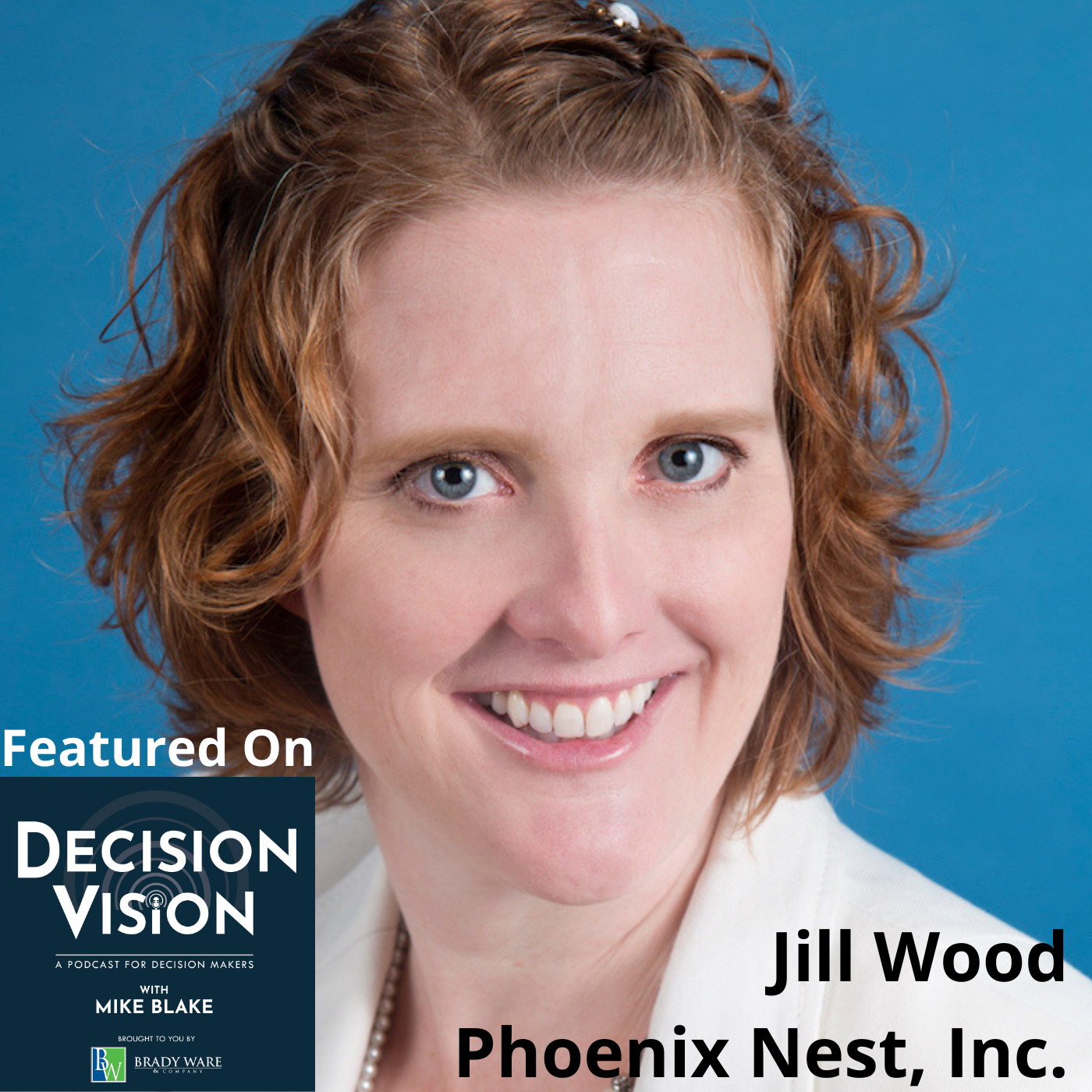
Jill Wood, Co-Founder and CEO of Phoenix Nest, Inc., and Co-Founder of Jonah’s Just Begun- Foundation to Cure Sanfilippo, Inc.,  gave an overview of the process of applying for grants. She and her husband started the foundation when their son was diagnosed with Sanfilippo, Type C. With host Mike Blake, she covered the basics of applying for grants, becoming a “citizen scientist” to understand the science, where to begin, the need for help from consultants and grant writers, the strict requirements, timelines, and much more.

Decision Vision is presented by Brady Ware & Company and produced by the North Fulton studio of Business RadioX®.

Phoenix Nest, Inc.

Phoenix Nest was founded by an alliance of parents with children suffering from Sanfilippo syndrome type C.

Our management team has a built-in sense of urgency and limitless determination to bring a treatment to the families affected by Sanfilippo syndrome to market. Phoenix Nest is the proud recipient of several Small Business Innovation Research grants from the National Institute of Health. Through funding from the NIH, we have been able to facilitate the research in academic labs and licensed these programs.  With support from our Independent Scientific Advisory Board and Board of Directors, we have thus far successfully met the challenges of pioneering treatments for these ultra-rare and untreatable diseases.

Company website

Jonah’s Just Begun – Foundation to Cure Sanfilippo, Inc.

Jonah’s Just Begun-Foundation to Cure Sanfilippo Inc. is a 501(c)3. The foundation raises funds then distributes them to academic research groups focused on finding treatments for Sanfilippo Syndrome, MPS III.

JJB was formed in 2011 after parents Jill Wood and Jeremy Weishaar after their son Jonah was diagnosed with Sanfilippo Type C. Jonah’s astute pediatrician, Dr. Hai Cao MD (South Slope Pediatrics), suggested that Jonah receives an MRI based on his abnormally large head size. Jonah’s Neurologist, Dr. Romaine Schubert (New York Methodist), concurred. At the time of diagnosis, Jonah was 22 months old and asymptomatic. Upon learning that their child had a fatal genetic disease that had no treatment, Jill and Jeremy received some advice from Jonah’s Geneticist, Dr. Karen David, also from New York Methodist. Dr. David told Jonah’s Parents to make a treatment happen. It was this advice that spawned JJB.

Jill and Jeremy hit the ground running, locating the world’s few scientists that were working on Sanfilippo, and seeking the support of like-minded parents. JJB brought these parents, scientists, and clinicians to New York for a patient population in May of 2011, just one year after Jonah’s diagnosis. Together they identified the three most promising approaches to a treatment. The parents went home filled with hope and began their grassroots fundraising efforts.  The scientists went back to their labs, inspired by the parents.

Today there are half a dozen Sanfilippo research projects in progress and a knockout mouse model.  Jonah’s Just Begun works hand in hand with other International and US type C Medical Research Foundation, we call this consortium HAND.

Website

Jill Wood, Co-Founder, Chief Executive Officer, Co-Founder, Phoenix Nest and Jonah’s Just Begun – Foundation to Cure Sanfilippo, Inc. and Chief Executive Officer

Jill Wood, Co-Founder, Jonah’s Just Begun and CEO, Co-Founder, Phoenix Nestc.

Jill Wood Co-Founded Jonah’s Just Begun-Foundation to Cure Sanfilippo (JJB) with her husband in May of 2010.  After their son Jonah was diagnosed with the ultra-rare genetic disease, Sanfilippo Syndrome type C.  JJB’s mission was to foster a treatment for Sanfilippo Syndrome type C; by connecting researchers, funding science, and mobilizing the patient population.

JJB revenue came through grassroots fundraising efforts, small grants, and private donors. Funding was then distributed to researchers through grants made by JJB.  Grassroots fundraising provided the seed money to initiate pre-clinical research but was far from what was needed to develop, test, and manufacture a drug. Jill founded Phoenix Nest (PN), a for-profit bespoke biotech in 2012. PN licensed the programs that JJB kickstarted, which allowed PN to apply for National Institute of Health (NIH) Small Business Innovation Research grants (SBIR/STTR). PN won its first SBIR grant in 2012, the start of a series of grants totaling $10,750,320.

The funding has allowed PN to bring one of its treatments almost entirely through its pre-IND studies and has funded a clinical observational study, still ongoing.

LinkedIn

Mike Blake, Brady Ware & Company

Mike Blake, Host of the “Decision Vision” podcast series

Michael Blake is the host of the Decision Vision podcast series and a Director of Brady Ware & Company. Mike specializes in the valuation of intellectual property-driven firms, such as software firms, aerospace firms, and professional services firms, most frequently in the capacity as a transaction advisor, helping clients obtain great outcomes from complex transaction opportunities. He is also a specialist in the appraisal of intellectual properties as stand-alone assets, such as software, trade secrets, and patents.

Mike has been a full-time business appraiser for 13 years with public accounting firms, boutique business appraisal firms, and an owner of his own firm. Prior to that, he spent 8 years in venture capital and investment banking, including transactions in the U.S., Israel, Russia, Ukraine, and Belarus.

LinkedIn | Facebook | Twitter | Instagram

Brady Ware & Company

Brady Ware & Company is a regional full-service accounting and advisory firm which helps businesses and entrepreneurs make visions a reality. Brady Ware services clients nationally from its offices in Alpharetta, GA; Columbus and Dayton, OH; and Richmond, IN. The firm is growth-minded, committed to the regions in which they operate, and most importantly, they make significant investments in their people and service offerings to meet the changing financial needs of those they are privileged to serve. The firm is dedicated to providing results that make a difference for its clients.

Decision Vision Podcast Series

Decision Vision is a podcast covering topics and issues facing small business owners and connecting them with solutions from leading experts. This series is presented by Brady Ware & Company. If you are a decision-maker for a small business, we’d love to hear from you. Contact us at decisionvision@bradyware.com and make sure to listen to every Thursday to the Decision Vision podcast.

Past episodes of Decision Vision can be found at decisionvisionpodcast.com. Decision Vision is produced by John Ray and the North Fulton studio of Business RadioX®.

Connect with Brady Ware & Company:

Website | LinkedIn | Facebook | Twitter | Instagram

TRANSCRIPT

Intro: [00:00:02] Welcome to Decision Vision, a podcast series focusing on critical business decisions. Brought to you by Brady Ware and Company. Brady Ware is a regional, full-service accounting and advisory firm that helps businesses and entrepreneurs make visions a reality.

Mike Blake: [00:00:21] Welcome to Decision Vision, a podcast giving you, the listener, clear vision to make great decisions. In each episode, we discuss the process of decision making on a different topic from the business owners’ or executives’ perspective. We aren’t necessarily telling you what to do, but we can put you in a position to make an informed decision on your own and understand when you might need help along the way.

Mike Blake: [00:00:43] My name is Mike Blake, and I’m your host for today’s program. I’m a director at Brady Ware and Company, a full-service accounting firm based in Dayton, Ohio, with offices in Dayton; Columbus, Ohio; Richmond, Indiana; and Alpharetta, Georgia. I am Managing Partner of the Strategic Valuation and Advisory Services Practice, which brings clarity to the most important strategic decisions that business owners and executives face by presenting them with factual evidence for such decisions. Brady Ware is sponsoring this podcast.

Mike Blake: [00:01:12] If you would like to engage with me on social media with my Chart of the Day and other content, I’m on LinkedIn as myself and @unblakeable on Facebook, Twitter, Clubhouse, and Instagram. I also recently launched a new LinkedIn Group called Unblakeable’s Group That Doesn’t Suck, so please join that as well if you would like to engage.

Mike Blake: [00:01:30] Today’s topic is, Should I apply for grants? According to data from Foundation Center, there are over 86,000 grant making entities in the United States with 92 percent represented by independent foundations. According to the Instrumental Blog, there are 26 grant making agencies in the federal government. And corporations represent 17 percent of all non-government grant funding, according to Grant Station.

Mike Blake: [00:01:57] And I wanted to cover this topic separately from the discussion that we have with Lauren Cascio a couple of weeks ago on non-dilutive funding, because I do believe that grant making is its own animal. And, in fact, I don’t know that most people appreciate just how big the grant sector is in the United States, and how central the grant making sector is to supporting certain kinds of business, in particular biotechnology.

Mike Blake: [00:02:33] There’s a rule of thumb that says it takes about $100 million to get from molecule to market. And a lot of that early stage funding when you’re in that molecule phase and you’re not even sure that the molecule does anything useful yet, you’re trying to prove that (A) it might do something useful and then determine if it’s going to kill the person that you’re trying to cure. That’s what they call preclinical and phase one in clinical trials.

Mike Blake: [00:03:03] But to get to that point, that’s usually not done through venture investing. Sometimes it is, but it’s actually usually accomplished through some form of grants. And, indeed, I think this is something that my profession and the world of corporate finance has to come to grips with and really make a fundamental adjustment in how we value companies.

Mike Blake: [00:03:33] And I’m going to get a little bit technical here on that, because I think it’s really important, and then we’re going to get to the actual topic because you want to hear my guest, not me. But for those of you who are finance geeks out there – and I know that you’re out there because you send me you send me messages and emails – when we look at cost of capital to figure out the hurdle rate for a project, or a discount rate on an investment, or required rate of return, conventional wisdom says that we consider the cost of equity and the cost of debt financing, which is all well and good.

Mike Blake: [00:04:08] But conventional wisdom ignores non-dilutive financing. That is financing that has no cost of capital. There is no expectation that it’s going to generate a financial return to the investor. And, accordingly, I think that leads to a lot of companies, frankly, being undervalued – at least by people who do what I do – and explains, at least in part, some of the gap that exists between sort of academic finance and practical finance. So, I’ll put out a white paper on that. I’m not going to discuss that anymore because it really would make for a lousy podcast.

Mike Blake: [00:04:43] So, let’s go to the part that makes for a good podcast. And joining us today is Jill Wood, who co-founded Jonah’s Just Begun – Foundation to Cure Sanfilippo with her husband in May of 2010 after their son Jonah was diagnosed with the ultra rare genetic disease, Sanfilippo Syndrome Type C. Their mission was to foster treatment for Sanfilippo Syndrome Type C by connecting researchers, funding science, and mobilizing the patient population.

Mike Blake: [00:05:12] The revenue came through Grassroots Fundraising efforts, small grants, and private donors. Funding was then distributed to researchers through grants made by the foundation. Grassroots Fundraising provided the seed money to initiate pre-clinical research, but was far from what was needed to develop tests and manufacture a drug.

Mike Blake: [00:05:31] So, Jill then founded Phoenix Nest, a for-profit bespoke biotech in 2012. Phoenix Nest licensed the programs that the foundation kickstarted, which allowed them to apply for National Institute of Health, Small Business Innovation Research Grants. They won their first SBIR grant in 2012, the start of a series of grants totaling nearly $11 million. That funding has allowed Phoenix Nest to bring one of its treatments almost entirely through its pre-clinical studies and funded a clinical observation study which is still ongoing. Jill Wood, welcome to the Decision Vision podcast.

Jill Wood: [00:06:09] Thank you, Mike. Thanks for having me here.

Mike Blake: [00:06:13] So, let’s educate our audience first. We’ll talk about grants in a second. But what you do is so important and I also want to get into your origin story because I think it’s just amazing, candidly. I’m not sucking up to you. I truly believe that. What is Sanfilippo Syndrome? And so, you and I had spoken, I never heard of it, to be perfectly candid.

Jill Wood: [00:06:34] Yeah. Very few people have heard of it, and that’s one of the major problems with diagnosing this disease. So, Sanfilippo Syndrome is part of the umbrella group of syndromes called mucopolysaccaridosis, which is MPS for short. There are seven forms of MPS, and Sanfilippo Syndrome is MPS III, which breaks down to another four syndromes, MPS III A, B, C and D, or you can call it Sanfilippo Syndrome A, B, C, and D. I don’t know why they have to make this stuff so complicated, but that’s what it is.

Jill Wood: [00:07:16] So, my son, Jonah, was diagnosed with Sanfilippo Syndrome Type C about a year into his first year of life. We were really very lucky, for lack of better words, we lived in New York where we are surrounded by some really great institution, health care hospitals, who our pediatrician recognized that something was off with Jonah. And it was basically the head size, his head circumference, which a normal pediatrician would sweep under the rug, like no big deal. You know, if they’re Polish, they all have big heads, you know.

Jill Wood: [00:07:57] But he sent us over to a neurologist and that neurologists took a hard look at Jonah and saw some other things. And they sent us to an MRI that was done at NYU. And, luckily for us, the techs saw in Jonah’s brain deformities or lesions. The deformity was a skull deformity that’s pointed towards mucopolysaccharidosis. So, we were able to zero in right away into what diagnostic testing we needed to do for Jonah.

Jill Wood: [00:08:42] So, Sanfilippo Syndrome, it’s a genetic disease that has a mutation on one of the chromosomes. And a husband and a wife have a 25 percent chance of giving both of those bad genes to their child. And so, Jonah has a defect on his gene that stops an enzyme from forming. And that enzyme’s job is to break down a protein called heparan sulfate. And because that enzyme is not there or lacking, it doesn’t break down that protein. And the protein sits in the cell in every single cell.

Jill Wood: [00:09:26] This is called a lysosomal storage disease. There are numerous lysosomal storage disease out there. Gaucher, Fabry are some of the more popular ones that people might recognize. So, anyways, you could imagine what this storage must do to your cells that’s not supposed to be there, right? It has catastrophic effects. It starts with near degenerative progressive disease, a lot of behavioral issues. The symptoms are really quite diverse and it’s very hard to pick up because a lot of it in the early diagnosis is hyperactivity.

Jill Wood: [00:10:08] So, you have a two year old that’s extremely hyper. The two year old with a large head that’s extremely hyper. Then, what really sets people off to search is their speech delays and not keeping up with their peers. A lot of times, if they have older brothers, siblings, they’re like, “They’re just not like his older brother Johnny. You know, this is not the way he developed.” And so, they start on that odyssey of getting the diagnosis, and they usually get diagnosed as in the autism spectrum disorders until they start regressing.

Mike Blake: [00:10:47] And in the regression, they’ll start to lose their speech, their ability to walk, their ability to eat on their own, and they succumb to death between the ages of 10 to 30, really, depending on the severity of the syndrome.

Mike Blake: [00:11:04] So, at the time your son was diagnosed, were you already a biologist? Were you already a trained pharmaceutical researcher? What was your background?

Jill Wood: [00:11:16] No. Everybody always asks me that, Mike. They call us citizen scientist, is the term that came out. No. I was in the fashion industry. I think what gave me the ability to do what I’ve done is just being able to talk to people, not being shy. And it’s okay to not understand. And going after people and making those connections is one of my strong suits.

Mike Blake: [00:11:49] You know, and I think just aside from the story, being remarkable that you’re undertaking that challenge and you really just pivoted your life to pursue this, you’ve gone from that point to raising over $11 million of grant money. Which tells me – and I mean, this in no disrespect to you and in any way diminish your accomplishment – that you don’t necessarily have to be a “insider” to raise grant money. You don’t necessarily have to have lived that entire life, you’re part of a secret club, or anything, that there is a process, that if you muster that process, then grant money is achievable.

Jill Wood: [00:12:33] Yeah. But, Mike, I do think they were shocked. I think the people that released the funds when they talk to me that first round and they asked me who I was and what kind of financial setup I had, they were shocked. I could hear them gasp on the other line.

Jill Wood: [00:12:56] I would be curious to know how many other parents have started out. And since I’ve started doing this and telling my story – you know, the NIH brings me out all the time to campus to speak – and since I’ve started this, many families, many parents said, “Okay. I can do this too.” So, I know there’s been an uptick in that, but I would be curious to know.

Mike Blake: [00:13:19] So, walk through your first grant, if you can remember that. What was that like? How did you approach it? Was it successful?

Jill Wood: [00:13:34] You know, it took a couple of times, a couple of rounds to have our first successful grant. Obviously, I did not do this grant writing on my own. You do need to have a medical degree or a PhD – actually, you don’t. I mean, you could really educate yourself up to that point. But if you want to expedite the situation, you should probably bring some consultants in.

Jill Wood: [00:13:57] And so, I did have my colleague, my co-founder, was a PhD, and he had NIH grants under his belt. He inspired me and said, “Let’s do this.” I have really great researchers that I work with. We had preclinical work. We had efficacy. And we really had what was needed to start writing grants. So, he helped me put together our first grant application.

Jill Wood: [00:14:27] And to go back, so my major funding comes from the National Institute of Health, NINDS, as I mentioned, the Small Business Innovation Research Grants. To get these fundings, to start up, even able to apply, is a major undertaking. You can’t just go and log in and sign yourself up. There are several different agencies that you have to go through. The dance number, your cage code, all these steps that you have to go and be certified for. So, anyways, that could take you four to six months. So, if you’re going to do this, you’ve got to get started.

Jill Wood: [00:15:14] There’s very little cost that’s involved in starting up, though. I think there might just be a couple of fees, but, anyhow, it’s inexpensive to do, so – go ahead.

Mike Blake: [00:15:25] Please go ahead. No. Go ahead, please.

Jill Wood: [00:15:26] Okay. So, my researchers, with these small business grants, usually it’s a requirement. You’re working with an academic, and that academic worked with my grant writer, and we put together a strategy. There is a format to these grants. And I suggest you read the instructions over and over and over again. And you don’t throw anything in there that you think is really great. You need to follow what the FOA asks you to do.

Mike Blake: [00:16:04] FOA stands for what?

Jill Wood: [00:16:08] You put me on the spot there, and you’re going to come up –

Mike Blake: [00:16:12] I’ll look it up.

Jill Wood: [00:16:13] Yeah. Thanks. Look it up. You can call for grant FOA.

Mike Blake: [00:16:23] Funding Opportunity Announcement.

Jill Wood: [00:16:25] Thank you. There it is.

Mike Blake: [00:16:26] You’re such an expert, you’re so in it, it’s hard for you to get back to the [inaudible].

Jill Wood: [00:16:33] I was impressed that it came up with SBIR. So, anyways, you follow what the FOA is asking. And if you don’t, that is your first rejection. They’ll kick it right back at you. The NIH is not messing around. I once had a grant kicked back to me because there was a hyperlink in the page within the body of a CV. That was kicked back to me. I’ve had grants kicked back because we went over the page limit. I mean, you don’t even get reviewed. They kick it back and you can’t reapply for another six months.

Jill Wood: [00:17:13] So, you really got to take these things very, very seriously. Have other people take another eyeball on it, pass it over. I mean, bio sketches have to be in the form of an NIH bio sketch. Anyhow, so our first grants we applied had really great comments. We did not win. But you take those comments, and you take them seriously, and you go back and you address them. And you could have a chance, within time you can go and address those before your grant will go to committee for final review. But most often you have to reapply to the grant funding opportunities, which usually happen every six months.

Mike Blake: [00:18:04] Now, you’ve also received other grants from non-governmental organizations as well, correct?

Jill Wood: [00:18:14] Correct.

Mike Blake: [00:18:15] So, I guess I’m curious, why are they giving away money? I understand and our listeners will understand, government agencies, in a way, it’s sort of their job. But there are these private foundations, individuals, I guess, corporate entities, and so forth, what do you think kind of makes them tick?

Jill Wood: [00:18:39] Obviously, breast cancer awareness, you can see how that got started, because it affected people and maybe affected loved ones. A wealthy entrepreneur out there may have had a grandchild with a rare disease and somebody on a staff started up a foundation, because they want to help and maybe they don’t have the time or the resources to do what I’ve done.

Jill Wood: [00:19:11] And I’m sorry I keep regressing here, but I’m thinking back to the science. What was there ten years ago is here now. Alzheimer’s is a really good example. You know, that is a disease that’s only recently had treatments and it’s been known for 70 years. You can look that one up, Mike, as well. But some of these ultra rare diseases are easy fixes where a single gene defect and the science is finally here. You know, CRISPR gene therapy, it’s just opened up the world to us.

Jill Wood: [00:19:53] So, I’m going back to make my point is that, these large foundations that have been there for so long, they had to fund a lot of science to get to where they’re at now. I think we’re going to be seeing a lot more treatments coming out in the next couple of decades with the recent discoveries that we’ve had. So, yes, I think they have a connection. They have a connection to the community.

Mike Blake: [00:20:23] So, I’m not sure if the way to ask this question have you think back or maybe just if you’re going to start today. But, you know, I’m sure somebody who’s listening to this podcast is thinking this out, “You know, I’ve been thinking about getting a grant and this conversation with Jill is giving me the confidence to give this a shot.” Where do you start? How do you start figuring out what might be a potential source of grant money?

Jill Wood: [00:20:53] Well, you’re going to want to look at the institutions or the smaller nonprofits that are in your space. And NIH was obvious to me. But if you might have an education grants, you can go for the Department of Education. Department of Defense is a really good, huge funding opportunity. So, look within your space.

Mike Blake: [00:21:20] I imagine a lot of this can be just accomplished by Google Search, right? Because I think some organizations are very private, they don’t necessarily want a solicitation at large, but then there are some that do. But one thing I’ve read, and I’m curious if you agree with or have any experience with this, is that, it might be easier to obtain money from a smaller organization than a larger one simply because they may not have as many applicants. Any comment on that?

Jill Wood: [00:21:55] No offense, Mike, finding those is pretty dang tough. So, we can go on a tangent here, maybe there’s foundations. So, in my space you’ll have a foundation that supports MPS, but they support MPS as in the families, getting help to the families, and getting families to where they need to be. And I’m looking for foundations that are willing to fund research to bring a treatment.

Jill Wood: [00:22:30] The smaller ones are hard, I think, to find unless you know them because they’re in your space and then you have a link to them. But the larger foundations, you know, everybody always says, “Did you go for a Zuckerberg grant? Have you talked to Bill Gates?” It’s always the first thing out of people’s mouths. And it’s like, “Those are the people that are inundated with grant applications.”

Jill Wood: [00:22:56] You know, you really need to have an in, you need to have somebody you can talk to, a name, and ask for advice, what are people looking for, what’s the tone of this grant. And a lot of times you’ll look at the FOAs and it’s like, “I don’t even know they’re so all over the place.” Nothing has really zeroed in and there’s so many different ones. It’s really convoluted.

Jill Wood: [00:23:24] So, you start out doing that because that’s what everybody tells you to do. But I turned around and just walked away from it because it was all misses. You know, you could spend a lot of time putting things together and it’s just not what they’re looking for. But they don’t really tell you what they’re looking for. And the goalposts are changing all the time, whichever way the wind blows, what’s the sexy right here that I’m funding.

Mike Blake: [00:23:52] You know, the interesting thing about what you just described, I think, is that a lot of people who have had to raise venture capital would offer a very similar description. You’ve got to have an in and you’re not really sure what they want. The VCs aren’t sure what they want. It’s sort of like trying to define the difference between art and pornography. They don’t know. They can’t define exactly where it is, but they know it when they see it. And so, you get bouncing around saying, “Well, no. I’m really not into this. But maybe if you do this, I’ll take another look.”

Jill Wood: [00:24:26] And I don’t know about you, but I know that at least on the VC side of it, the funding seeker side, that can just be immensely frustrating, because it’s hard to tell the difference between being tasked to do something with a specific objective versus just sort of being frankly jerked around.

Jill Wood: [00:24:46] Yeah. Exactly. Yeah.

Mike Blake: [00:24:49] So, in your experience, what does the timeline look like for applying to a grant? I’m curious, is it fairly quick? Is it lengthy? Is it variable? What’s your experience with that?

Jill Wood: [00:25:04] It’s all lengthy. From small to large, it’s all lengthy. I mean, small operations don’t have as many people onboard looking at it. They want to vet the application. So, it might take more time to find the right eyes to look at the application. And then, large institutions, you think they’re large, but the NIH, I feel like they don’t have enough employees, The FDA, they don’t have enough employees. And there’s a lot to go through as well. So, they’re about six months rotation. And if you have a government shutdown, it’s all over, and it happens all the time.

Mike Blake: [00:25:49] When that happens, do you basically have to start over or is it sort of extended animation?

Jill Wood: [00:25:53] No. We just sit in limbo. We sit in limbo. You know, it’s happened to me a couple of times during the Obama Administration, where towards the end we had shutdowns every other day. And it was between we had won the grant and now we’re waiting for the funds to release. Well, the funds aren’t being released because nobody’s made their decision on how much funds are being released. They’re all squabbling there. So, yeah, you sit down for another three months. It’s extremely frustrating. I mean, you think you got the funds, but it could take you a year to actually get them.

Jill Wood: [00:26:33] And I should preface that, too, maybe this is obvious to most people, but maybe not. Those funds don’t hit your bank account. They’re sitting up there in the cloud somewhere – we call it the Payment Management System – and you only pull down funds when you’re paying an invoice.

Mike Blake: [00:26:51] Oh, that’s interesting. I didn’t know that and I’ll bet our listeners didn’t know that. How does that impact your operations as you try to operate your company?

Jill Wood: [00:27:02] Mike, it’s really hard. I was laughing, I could tell you all the horror stories behind this. So, you know, you have to budget so fine tuned. You need to know every penny. And when those invoices are coming, a lot of these grants are milestone driven. If you don’t get to your milestones, your grants can be frozen. If you have a researcher that changes positions or you have to move to a different site, your grant is frozen. And if you’re in between a funding cycle and they only release fundings at certain points, it’s frozen, then you have to get permission to release it, and then here the funds come another six months.

Jill Wood: [00:27:58] So, you can’t get ahead of yourself. You can’t ever overcommit. You really need to be prepared for those things to happen because it is inevitable. They will happen. And if you are living from paycheck to paycheck, it can crush you.

Mike Blake: [00:28:19] And I’m guessing also it probably creates a vendor management challenge, too.

Jill Wood: [00:28:25] Yes, it is. Yeah. I always go in. And a lot of these vendors, believe it or not, even though the money is there, they don’t take on uber rare projects. You know, it’s like $1,000,000 actually means nothing to them. You know, patient population with 15 patients, I’ve had vendors have turned me down because my projects are too small. So, you get these good ones that want to work with you, that understand the situation, and they realize this is what’s happening, but we’re going to do the right thing. And I’ve had several of those vendors.

Jill Wood: [00:29:06] But, yeah, I work with one company that has been incredibly patient where that exact same thing happened. My grant got waylaid and I owed them hundreds of thousands of dollars, and they sat there for six months. And they continued to work, they kept on working until the funds were released. But I couldn’t sleep at night. I do not like living like this.

Mike Blake: [00:29:30] No, of course. I guess, on the bright side, I have to imagine if you provide those services or vendors provide, for example, clinical research organizations, that kind of thing, many of their clients are in your position. And so, my guess, if they’re smart, is that their business model already foresees the fact that there may be a six month delay between invoicing and being paid simply because that’s the nature of the beast.

Jill Wood: [00:30:05] Yeah. It’s like the venture capitalist, you know, they’re taking a little bit of a risk helping you out.

Mike Blake: [00:30:15] So, let’s go to the NIH, because I think that’s obviously a big source for you. How important has it been to develop a personal relationship with people at the NIH? And if that was important, how did that happen?

Jill Wood: [00:30:38] You know, they have to be very careful. There cannot be any favoritism there. You can’t take these guys out for lunch or buy them a drink. That is not appropriate. And if you’re in this space, it’s a small fishbowl. And I was fortunate enough where my grant funding came from the NINDS. And there’s a representative, our program manager that runs in the same circle – her name is actually the same as mine – who I just got to know her. And she really understood the science. She understood the disease. And so, when the grant application came through, it hit her desk. We already had the rapport. She knew the people that I work with.

Jill Wood: [00:31:27] But she’s not the one who’s making the decisions on reviews. You know, when your grant goes in, she gives it to the right people. But you never see your reviewers. They give you a list of their names, but you actually don’t know which ones are looking at your grant. And it is a major no-no to ever contact these reviewers. Don’t ever say anything to them. And it’s those guys that are making the decisions on giving you the score. And those guys can tear you apart if their idea does not fit with yours.

Jill Wood: [00:32:07] But the grant managers, how they can really help you is fight for you. When they do see something that is not in sync with the guidelines, they can call a reviewer out and say, “Hey, you know, this was an unjust comment.” During those times when grant funding freezes, they can help you find other ways to get bridge funding. So, my program managers are priceless. I do have a really great relationship with them. And they are extremely helpful, and networking, and giving ideas.

Mike Blake: [00:32:46] So, you’ve indicated that you’ve in the past, and perhaps you still do, have relied on the help of outside consultants and advisors to help you prepare grants. And I’ve read the same thing, like many organizations have internal grant writers because it’s such a specialized skill. If you’re going to apply for grants such as the ones that you’ve received, how much should somebody budget in terms of the cost of applying for this “free money,” which isn’t so free?

Jill Wood: [00:33:19] It’s not free. Oh, geez. You know, I think it could probably cost you, it depends, like, are you going to hire these people and keep them on staff. That’s where I always worry about. They need to not only have the gift of writing, they need to understand your disease too. And so, it’s hard to find a consultant out there that’s going to be able to nail both of them. So, I would suggest hiring somebody and then you’re going to give them a full salary, which you want to Google it, $100,000 to 300,000.

Jill Wood: [00:34:02] If you are going to piecemeal it, I just think you get what you pay for. You’re not going to get quality work out – maybe you will, maybe you can find somebody – just saying, “Here’s my package, put it together.” I would say that probably costs you at least $10,000.

Mike Blake: [00:34:23] Have you had grant applications rejected?

Jill Wood: [00:34:27] Oh, all the time nonstop. This one grant goes to cancel May 18th. And we are sitting on the edge of our seats. We got a really great score. And that grant has gone through three times. This is its fourth time.

Mike Blake: [00:34:48] It’s fourth time being submitted?

Jill Wood: [00:34:50] Fourth time being submitted.

Mike Blake: [00:34:52] And you’re hopeful that the fourth time is the charm?

Jill Wood: [00:34:55] Yeah.

Mike Blake: [00:34:56] Okay. So, actually this is one of my questions, I was curious if you’re able to apply for grants more than once. That sounds like you are. That may even be expected.

Jill Wood: [00:35:07] Yeah. So, you’ll get your comments, and you’re not always going to have the same reviewers. And sometimes you get lucky with a reviewer that knows exactly what it is that you’re trying to convey and get across, they’ve been in this space. They’re in your space. These people are in your space. They have understanding of the disease. And then, you’ll have somebody who is like, “No. That is not the route of administration I would suggest. No.” “F.” They score you for, like, one to eight, one being good, eight all the way across. So, it’s some egos in there.

Mike Blake: [00:35:44] So, is it fair to say there’s a certain amount of luck involved? Do I get the right application in front of the right reviewer on the right day in the right mood?

Jill Wood: [00:35:55] Yeah. I think with all honesty, Mike, yes. Because we’ve resubmitted it and gotten way different comments from the previous round, so it’s extremely frustrating.

Mike Blake: [00:36:13] Now, when you receive a grant – we touched upon this in terms of how money is dispersed – what other things do you have to change about your business or build your business around in order to manage the grant? Because my understanding is when there’s a grant, there’s just usually some sort of reporting function to send to the granting organization to verify, basically, that you took the money, you didn’t go to Atlantic City and put it all in 22 black. So, what does that look like?

Jill Wood: [00:36:43] It’s hard. And that was really scary for me. And I found there’s niche companies out there that specialize in managing your funds and helping you with the accounting. Yes, there will be line item budgets for travel, for equipment, for subcontracts, yadda yadda. And you get your F&A portion of it and your fee. There’s a lot of calculation that goes into these. It’s epic. It’s quite a lot of work. And your invoices all need to be properly coded.

Jill Wood: [00:37:22] So, all that goes into – I use this company and I’ll pitch them because I think they’re fabulous – Jameson, is my company that does that for me. But I take the invoices and I code them. They manage all the backend of it for me. And then, when you hit a milestone, it’s 750,000 in funding, you’re audited. It triggers an audit. And so, these guys come in, they’re certified by the NIH, and they come in and they look at all your books and make sure you spend down to the time cards, to every single sub-award, seeing the contracts, knowing how you vetted these different contracts. It’s pretty intense and it’s extremely intimidating.

Jill Wood: [00:38:14] So, I strongly suggest you bring somebody in to help you with that. Academia, who wins a lot of these kind of grants, they have entire departments that manage this. They manage the researchers grants for them. But I did not. And so, I found a company that could manage it for me.

Mike Blake: [00:38:38] So, I’m curious, does that also mean that you have to – I’m guessing – kind of approach accounting in a separate and kind of a different way? Some companies, frankly, can be pretty loosey goosey about accounting. And if all you’re doing is you’re running a business selling peat moss out of the back of your truck, you can do that. But it sounds like for you, you probably effectively need at least a controller, if not an outright CFO, and maybe even a whole separate kind of firm even to sell off on it to make sure that you’re doing what you need to do. Because I’m guessing that’s the kind of thing where a misstep can destroy a relationship forever.

Jill Wood: [00:39:24] Yeah. So, yeah, that’s why I depend on this company, and I really want to make sure. This was a portion that I did not know. There’s always that behind the scenes stuff, and this was one of them, is the reporting of the funds, how you spend the funds. I mean, there’s stipulations on how much funds you can roll over to the next accounting period. If you come up short in one budget item and over in the other one, how much you can reallocate to different areas. You know, it’s really detailed.

Mike Blake: [00:40:05] I’m talking with Jill Wood. And the topic is, Should I apply for grants? With the time we have left one question I want to get your thoughts on here is, who shouldn’t apply for grants? I’m sure you’ve probably talked to people that have asked, you know, “Hey, this sounds great. I want to get some of this free money to do X, Y, and Z.” Have you ever talked somebody out of applying for grants or can you see a scenario under which you might talk somebody out of applying for grants? Because for whatever reason, they’re not wired for it, they’re not appropriate, not the right space. Hopefully, you get my question there.

Jill Wood: [00:40:46] Yeah. I would say not in the right space. This is not free money. Because free means it’s my time. This is a massive amount of work that you’re doing to managing these grants. So, if you think you’re going to get free money, who’s going to manage that money for you? That’s not free. So, it would be the person that I would talk out of it.

Jill Wood: [00:41:14] Like, I know where I’m at. And I only have one child. I live in New York. I have access to a large infrastructure, lots of consultants at my fingertips. I don’t want to pick on anybody, but Arkansas did not have the infrastructure that I do and have more than one child, four kids, maybe two, very sick. It’s too much. It’s too much work. I know how hard it is.

Jill Wood: [00:41:52] And you’re not just managing grants. You’re also managing your research. You’re managing the companies. You’re managing your vendors. You’re trying to understand where to go to next, the NIH, the whole landscape. You have to quit your job. And if you’re taking care of multiple sick children, that’s too much. I ask myself all the time, “Is it worth it?”

Mike Blake: [00:42:20] And I imagine it must feel sometimes like you’re working for your granting organizations.

Jill Wood: [00:42:27] Yeah. I do. I really do. I would say that’s a good portion of my time is to make sure all my books are in order, that I’m making all my milestones, planning ahead so that I’ll get the funding when my milestones are met. Yeah. It’s a lot of juggling.

Mike Blake: [00:42:52] So, one way to potentially approach applying for grants is to basically put out as many applications as you possibly can, sort of a shotgun approach as opposed to being surgical. I think I know what the answer is going to be. That’s okay. But I’m sure somebody has tried that. Is that a viable strategy or do you really have to be zeroed in and decide and bet on organizations?

Jill Wood: [00:43:20] If you have nothing better to do, if you have nothing else to lose, you could sit around and write. I mean, some of these grants are small, but some of them are 30 pages. And you’re also wasting other people’s time. If you’re not serious about your grant writing, you’re wasting other people’s time because you have to go and get quotes from all your CROs. Maybe you need to rent a space. Maybe you need to hire other people. You have to get letters of support. There’s a lot that goes into this.

Jill Wood: [00:43:54] So, that would make me mad if you did that, because you are wasting a lot of people’s time, and you are wasting reviewer’s precious time by putting something in their face that’s just worthless. So, be focused.

Mike Blake: [00:44:17] What are the most common reasons that a grant is rejected in your mind?

Jill Wood: [00:44:23] Mistake.

Mike Blake: [00:44:26] Yeah?

Jill Wood: [00:44:27] Yeah.

Mike Blake: [00:44:28] Just like a factual error or –

Jill Wood: [00:44:30] A mistake. A hyperlink, too many pages, you didn’t follow the format. This was supposed to be ten pages, you know. Or in the mistake that you missed the concept, the FOA, you misunderstood it. You should really talk to the grant managers before you apply and say, “Are my aims, does this fall under what the reviewers are expecting?”

Mike Blake: [00:45:02] Jill, we’re running out of time and there are probably questions that our listeners would have liked me to have asked, but didn’t, or would have liked us to spend more time on, or maybe they just want to find out more about Sanfilippo Syndrome and how they can help. If somebody would like to contact you, can they? And if so, what’s the best way to do that?

Jill Wood: [00:45:24] You can contact me directly at my email address. If you have a place to put that, it’s in the blog text or in a text somewhere under my bio, it’s jwood@phoenixnestbiotech.com.

Mike Blake: [00:45:41] Very good. That’s going to wrap it up for today’s program. And I’d like to thank Jill Wood so much for sharing her expertise with us.

Mike Blake: [00:45:48] We’ll be exploring a new topic each week, so please tune in so that when you’re faced with your next business decision, you have clear vision when making it. If you enjoy these podcasts, please consider leaving a review with your favorite podcast aggregator. It helps people find us so that we can help them.

Mike Blake: [00:46:05] If you would like to engage with me on social media with my Chart of the Day and other content, I’m on LinkedIn as myself and @unblakeable on Facebook, Twitter, Clubhouse, and Instagram. Also, check out my new LinkedIn Group called Unblakeable’s Group That Doesn’t Suck. Once again, this is Mike Blake. Our sponsor is Brady Ware and Company. And this has been the Decision Vision podcast.
 

Tagged With: Brady Ware & Company, Decision Vision, grants, Jill Wood, JJB, Jonah's Just Begun, Mike Blake, NGO grants, NIH, Phoenix Nest, Sanfilippo Syndrome

Decision Vision Episode 166: Should I Use Artificial Intelligence in my Business? – An Interview with Charles Wardell, Digital Cortex, Inc.

April 28, 2022 by John Ray

Digital Cortex
Decision Vision
Decision Vision Episode 166: Should I Use Artificial Intelligence in my Business? - An Interview with Charles Wardell, Digital Cortex, Inc.
Loading
00:00 /
RSS Feed
Share
Link
Embed

Download file

Digital Cortex

Decision Vision Episode 166: Should I Use Artificial Intelligence in my Business? – An Interview with Charles Wardell, Digital Cortex, Inc.

Exploring the evolution of artificial intelligence (AI) in general and specifically for business use, Charles Wardell, CEO of Digital Cortex, and host Mike Blake discussed how to define AI, machine learning, and its applications both commercial and otherwise. They also covered its impact on the pandemic, the social implications of AI, the need for a commitment to trustworthy data, and much more.

Decision Vision is presented by Brady Ware & Company and produced by the North Fulton studio of Business RadioX®.

Digital Cortex, Inc.

As technology rapidly evolves, so does the need for faster, more efficient data processing methods.

The Central Processing Unit (CPU) has been the workhorse behind digital endeavors, but today’s computation and data volumes challenge even the fastest CPUs. The modern world is increasingly becoming one where data reigns supreme. Data processing has evolved from serial computation and sequential storage to parallel computing with large pipelines and vast amounts of memory.

Today, there are options for accelerating computation, graphics processing units, FPGAs, ASICs, and DPUs designed specifically for data processing. Digital Cortex aims to converge these advanced technologies into a single unified platform, creating an ecosystem that simplifies the hyperscaling of complex data processing.

The Digital Cortex platform is a data appliance with built-in acceleration. It handles the undifferentiated heavy lifting so that you can focus on logic, analysis, and results. Our company is designed to bring the power of the Cloud to those use cases that cannot tolerate outage, latency, or uncapped expense.

Company website | LinkedIn 

Charles Wardell, CEO, Digital Cortex, Inc.

Charles Wardell, CEO, Digital Cortex, Inc.

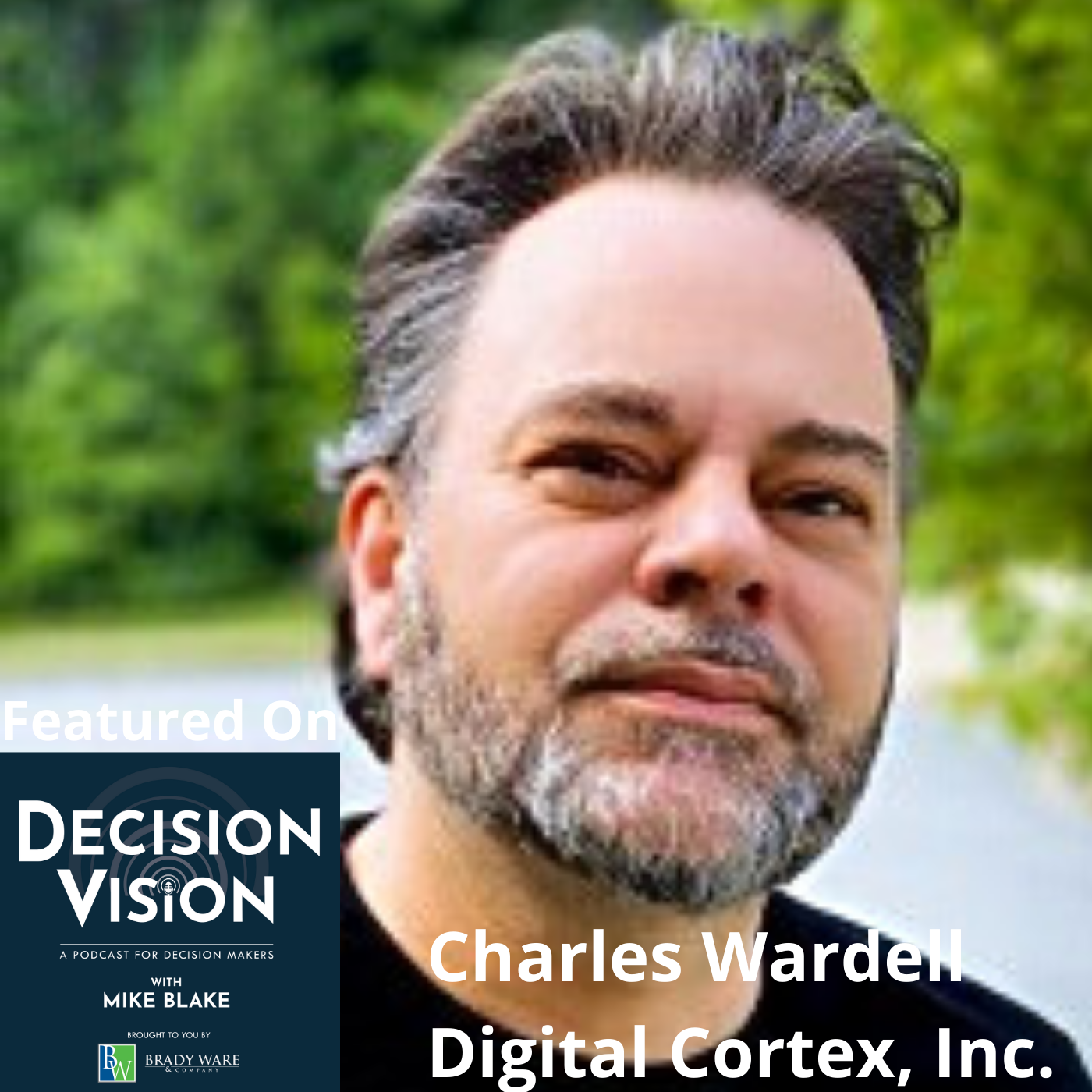
Charles Wardell, CTO, Tech Visionary, Maker of Things That Work Fast with decades of experience working with leading MPP databases to implement world-class BI platforms, and then designing and developing one of the world’s most powerful cloud and edge-based analytics engines using MPP (massively parallel processing), grid computing, ML (machine learning), and AI (artificial intelligence), Charlie routinely tackles some of the world’s messiest and most intractable problems. The fact is, Charlie is one of the best big data platform architects in the world.

His superpower is weaving hardware, software, and database technologies into cutting-edge, high-performance solutions that provide insights at the scale and speed modern businesses require. The breadth and depth of Charlie’s experience also enable him to see around the corners well in advance, and the combination of his and David’s vision targeted on the biggest and most valuable solutions is what makes this duo such an amazing team.

If intellectual curiosity was a degree, Charlie would have a PhD. His curriculum has been intensive, and it continues today, his library is extensive, not in one discipline, but several: hardware, software, and database technology. But beyond reading, Charlie’s best work comes out of his lab, whether it’s a customized FPGA, the fastest database in the world (measured by inserts), or it’s a new application that integrates symbolic and connectedness AI, there is nothing he can’t do. However, his best problem-solving characteristics are that he is a natural systems thinker and he never brings bias to a problem, every problem gets his full attention, so he can always focus on identifying the best tool for the job, not necessarily the tool he knows. This is what makes him one of the best architects on the planet, maybe the solar system.

LinkedIn

Mike Blake, Brady Ware & Company

Mike Blake, Host of the “Decision Vision” podcast series

Michael Blake is the host of the Decision Vision podcast series and a Director of Brady Ware & Company. Mike specializes in the valuation of intellectual property-driven firms, such as software firms, aerospace firms, and professional services firms, most frequently in the capacity as a transaction advisor, helping clients obtain great outcomes from complex transaction opportunities. He is also a specialist in the appraisal of intellectual properties as stand-alone assets, such as software, trade secrets, and patents.

Mike has been a full-time business appraiser for 13 years with public accounting firms, boutique business appraisal firms, and an owner of his own firm. Prior to that, he spent 8 years in venture capital and investment banking, including transactions in the U.S., Israel, Russia, Ukraine, and Belarus.

LinkedIn | Facebook | Twitter | Instagram

Brady Ware & Company

Brady Ware & Company is a regional full-service accounting and advisory firm which helps businesses and entrepreneurs make visions a reality. Brady Ware services clients nationally from its offices in Alpharetta, GA; Columbus and Dayton, OH; and Richmond, IN. The firm is growth-minded, committed to the regions in which they operate, and most importantly, they make significant investments in their people and service offerings to meet the changing financial needs of those they are privileged to serve. The firm is dedicated to providing results that make a difference for its clients.

Decision Vision Podcast Series

Decision Vision is a podcast covering topics and issues facing small business owners and connecting them with solutions from leading experts. This series is presented by Brady Ware & Company. If you are a decision-maker for a small business, we’d love to hear from you. Contact us at decisionvision@bradyware.com and make sure to listen to every Thursday to the Decision Vision podcast.

Past episodes of Decision Vision can be found at decisionvisionpodcast.com. Decision Vision is produced by John Ray and the North Fulton studio of Business RadioX®.

Connect with Brady Ware & Company:

Website | LinkedIn | Facebook | Twitter | Instagram

TRANSCRIPT

Intro: [00:00:02] Welcome to Decision Vision, a podcast series focusing on critical business decisions. Brought to you by Brady Ware & Company. Brady Ware is a regional, full-service accounting and advisory firm that helps businesses and entrepreneurs make visions a reality.

Mike Blake: [00:00:22] Welcome to Decision Vision, a podcast giving you, the listener, clear vision to make great decisions. In each episode, we discuss the process of decision-making on a different topic from the business owners’ or executives’ perspective. We aren’t necessarily telling you what to do, but we can put you in a position to make an informed decision on your own and understand when you might need help along the way.

Mike Blake: [00:00:44] My name is Mike Blake, and I’m your host for today’s program. I’m a director at Brady Ware & Company, a full-service accounting firm based in Dayton, Ohio, with offices in Dayton; Columbus, Ohio; Richmond, Indiana; and Alpharetta, Georgia. I am managing partner of the Strategic Valuation and Advisory Services Practice, which brings clarity to the most important strategic decisions that business owners and executives face by presenting them with factual evidence for such decisions. Brady Ware is sponsoring this podcast.

Mike Blake: [00:01:12] If you would like to engage with me on social media with my Chart of the Day and other content, I am on LinkedIn as myself and @unblakeable on Facebook, Twitter, Clubhouse, and Instagram. I also recently launched a new LinkedIn group called Unblakeable’s Group That Doesn’t Suck. So, please join that as well if you would like to engage.

Mike Blake: [00:01:31] Today’s topic is, should I use artificial intelligence in my business? According to PEGA, 77% of people already use a device or service that is AI powered. Eighty-five percent of customer relationships with business enterprises will be managed without human involvement, according to Gartner. And, according to Forbes, the number of AI startups since 2000 has increased four times.

Mike Blake: [00:01:57] And, you know, I’m actually a little surprised we haven’t gotten to this topic until now. It’s such an important topic. And, AI and the things that go with it or talk about it today are so pervasive that to be candid, spoiler alert, I think we’re going to come away from this conversation not so much debating how one, whether one should incorporate AI into your business, but what is the best way to do it or what’s the feasible way to do it because, you know, it’s in everything.

Mike Blake: [00:02:30] So, if you’ve been sort of living with a fear or a notion of robots sort of taking over or taking over things in our society, I got bad news for you. It’s already been happening for about 15 years or so, if not longer. But, knowledge is power, and the power of AI, and I think our guest is going to agree, is something where we have only scratched the surface. And it’s probably limited as much as anything by hardware at this point as it is by human ingenuity and the ability to write code.

Mike Blake: [00:03:10] And so, my suspicion is that for a lot of us who are small business executives and owners, we may have written off or not paid attention to artificial intelligence because, you know, candidly and I’m guilty of this too, it sounds like something that only the big largest companies can afford. Right? AI is so expansive. And, we’re going to talk a little bit about the alphabet soup that goes into AI and how to make a little bit of sense from it. But it’s been around a long time now. It’s beyond, well beyond that early adopter phase or the cutting edge phase. Maybe it’s still in early adoption, but that means there’s plenty of room for AI to grow, to be creatively addressed, to be approached, and probably no two businesses are going to use AI exactly alike.

Mike Blake: [00:04:01] And, as usual, since I know almost nothing about the topic that we’re going to discuss, we’ve brought in an expert. And, joining us today is Charlie Wardell of Digital Cortex. Charlie is a technology entrepreneur, inventor, and consultant with over 20 years of experience in the field. He has a passion for innovation, which is showcased by patents related to big data and distributed computing, text analytics, and emotion detection in texts. He is also the owner of a provisional patent for a very unique FPGA that’s freely programmable gate array, for those of you scoring at home, hardware accelerator that brought the demand of financial institution back testing from 130 servers down to five. And, he also has a patent on a big data business approach.

Mike Blake: [00:04:46] Digital Cortex is the ultimate data processing and machine learning accelerator. They read anything, apply solutions, specific models and analysis, and put the results for you where you need them. With its combination of proprietary hardware and software, Digital Cortex delivers hyperscale data processing and inferencing performance. Multiple CPUs, FPGA, GPUs, and DPUs work together to enable you to achieve blazing fast speeds for your most demanding tasks that are focused on solving, once and for all, the scalability issues that keep meaningful insights hidden in large data sets. With Digital Cortex, you get line speed and hyperscalable access to those insights when you need them. Charlie Wardell, welcome to the program.

Charlie Wardell: [00:05:30] Thank you. Thank you for having me.

Mike Blake: [00:05:33] So, what is AI? Some people who think about artificial intelligence out there know a lot more about it and they actually know what it is. Others think back to the time they last watched a Terminator movie and they think artificial is used to go back and kill John Connor. I don’t think we’re there yet, but if we did, we wouldn’t know about it. How do you describe artificial intelligence to somebody who doesn’t have a Ph.D. in the field?

Charlie Wardell: [00:05:57] Yeah. So, you know, AI has been around for ages, right, since the ’60s. They’ve been trying to crack the AI code and make essentially have computers make decisions. Not to be confused with machine learning, which is a subset of AI that helps drive those decisions, but AI is essentially a technique by which decisions are being made whether a human is in the loop or not is irrelevant. And then, there are various forms of AI. You have symbolic AI. You have expert systems. You have neural networks and things like that that help you drive these decision-making processes. So it’s a complex topic with many facets. But what I hope to do on this call is boil it down to some of the practical as to what it means for small and mid-sized businesses.

Mike Blake: [00:06:51] So, in around artificial intelligence, you see or hear a lot the terms neural networks and machine learning. In fact, you just spoke of them, right? How do those three things interact with one another?

Charlie Wardell: [00:07:09] Okay. So, machine learning is the analysis of data in one of two forms. It is analyzing data where you’re either analyzing it in a supervised fashion, like there’s a human in the middle, right? We are providing data to a machine. That is what we call labeled. Here are examples of smiles or happiness, okay, and we provide as many different variations of that smile as possible, maybe in an image. Okay. So, that’s human-annotated labeled data. And then, the machine learns that these are smiles, these are frowns. That’s essentially one type of machine learning.

Charlie Wardell: [00:07:54] Another type is unsupervised. And you say, given all of this data, maybe cluster together the ones that look alike and do it on your own. And, that’s a clustering algorithm and that’s another form of machine learning. Both of which are used or can bubble up into an AI solution, but by themselves are not necessarily AI. You might think the fact that a machine can pick out a smile versus a frown is artificial intelligence. And, you know, I guess at a rudimentary level, it is. But it is not the AI that we’re talking about today where you have some smart drones being able to pick out the proper target, you know, in Ukraine, which is crazy AI. It’s pretty wild. So, that’s machine learning. AI is layers and layers of the machine learning that actually create a human-like decision. Right?

Mike Blake: [00:08:57] So, I might be completely off base, but I’ve often thought of artificial intelligence, like you said, going back, I would argue that artificial intelligence on some level has been around almost as long as computer programming has. Right? The second that they started letting you make if-then statements, that is a rudimentary form of artificial intelligence. Right? But where the machine learning comes in – and I love your smile analogy, so I’m going to take it, steal it and run with it – and that is that under a sort of a pure or plain vanilla AI framework. The programmer would have to tell in exacting detail the computer what a – what the characteristics of a smile or group of smiles or an epistemology of smiles looks like. Whereas under machine learning, you can show a bunch of facial expressions and over time it becomes good at understanding on its own what a smile looks like and it doesn’t have to be a separate algorithm that is fixed, that defines that smile rigidly. Is that a fair distinction?

Charlie Wardell: [00:10:05] Yeah. I guess, so really interesting. So, your analogy about the if-then statement is spot on. Back then, we called those expert systems. They were based on Prolog and lists some – I’m dating myself, but those expert systems were essentially if-then statements to the extreme, so many of them that it’s not humanly possible to code them all and maintain them all. And some of the best expert systems are used in the medical field where you interview a doctor and he may be a specialist in cardiology and you just interview him every single weekend over a cup of coffee until you pick his entire brain and you document these things as rules. Right? And then, you have a patient that comes to you and you type in his symptoms and it traverses all of this logic and all of these if-then statements and it says you have this. And the doctor looks and he thinks about it and goes, “Oh, it’s right. Holy smokes.” So, that’s a form of AI, right? That is an expert system AI.

Charlie Wardell: [00:11:07] Today, you have the smile analogy where the machine is actually picking up what a smile looks like. You’re not telling it any rules. It’s actually figuring it out and it’s like, “Wow, this – you told me these were smiles. So, I’m going to figure out why they’re smiles. Okay. Teeth are showing. Maybe, the mouth is wider or maybe the eyes are squintier, or maybe all of that stuff. I’m going to figure out why.” And that’s a different kind of AI.

Charlie Wardell: [00:11:34] What’s happening today and what should be happening today is the convergence of the two, right? Because together they’re better. And I can give you an example of a chatbot that I did. So, you have a chatbot. Let’s say it’s a mortgage application chatbot and people are saying, hey, I want a mortgage. And then, you have this thing traversing through the rules and parsing out that text and say, “Mortgage wants to know about a mortgage. Here’s my response.” It’s a canned response. And he says, “Well, do I need – how much is my down payment?” Looks up, answers. That appears to be AI, but that’s all this symbolic expert system-driven stuff. Then, they throw you a curveball and they say, “Hey, did you see the game last night?” Because they think they’re talking to a real person. That’s not in my decision tree. So, what do I do? I go to a neural network that was trained with the latest news. And I see game, scores and I’m able to pull that out and reply, right? So, now I’m doing the best of both worlds and I’m now making a real AI experience that is very different than the old school symbolic if-then statements. People are like, “Wow, how did it know that.”

Mike Blake: [00:12:53] You know, as I listen to you and even as I was doing research for this conversation, I think I’ve probably made a moron of myself. I mean, it’s more in an okay way, but I’ve probably been very polite and I’ve probably been very complimentary to basically robots that have given me customer service. Right? Because I try to – I do try to be empathetic with customer service. They have a tough job. They probably have people that call up and swear at them and threaten to blow up their houses and God knows what else. They’re not happy with the outcome. And so, I get good service. I try to be positive about it, just like I do in life. I try to be acknowledging of when good things happen. I’ve probably told at least one robot how much I think they did a great job and I love them. I think they’re just awesome, quote-unquote, people, right, if we’re honest about it.

Charlie Wardell: [00:13:46] Right.

Mike Blake: [00:13:46] Right.

Charlie Wardell: [00:13:47] Yeah.

Mike Blake: [00:13:48] Which shows us doing its job, right? Because it had, the chatbot in this case had such a human quality. The artificial intelligence was so well developed that indeed I had no conception that there wasn’t actually somebody busily typing on a window somewhere actually helping me.

Charlie Wardell: [00:14:06] Yeah. You know, and AI, it’s getting to the point where it is so unbelievable that you are getting to a point where you’re not really able to tell a difference. My entire resume – my entire resume, I wrote, and then I put it into this AI machine. There’s a few of them out there. And it rewrote it for me and it was amazing. I was like, “Yep. we’re going to clip that. They didn’t get that quite right.” And people would say, “Oh, my gosh, your resume is amazing.” And, it’s all factually true. Everything in there is factually true. But the embellishments that it made and the connected words that it used, it’s just absolutely mind-blowing. So, that’s just one aspect of AI that anybody can use in their business, this narrative generator. And it’s scary how awesome it is. It really is. It’s very awesome. It is.

Mike Blake: [00:15:07] So, let’s talk about the awesome because I’m not sure there’s a full appreciation of the awesome. I think a lot of the awesome is sort of hidden from view by design. In your mind, what are some of the most exciting recent developments in AI? What’s kind of new and neat that’s come out? And if you want to talk about the stuff you’re doing, that’s fine too. I’m familiar with it to some extent. Chris has briefed me. Or, other things too. But what’s really neat and new with AI right now?

Charlie Wardell: [00:15:34] Well, you know, let’s go with Ukraine right now, you know, which is, maybe people didn’t realize what AI could do from a military aspect. Right? So, you have these things called slaughter bots, right? They’re called killbots. And they’re this £6-drone that launches and it can travel like 6 miles and hover the air and it looks for targets. Now, you have a line, a caravan of, you know, heavy equipment, you know, enemy personnel. Well, out of all of those, which one should a dive bomb? Well, it’s going to look for the gas tanker, got to kill that supply chain. And it knows. It knows. I’m going to go for those first. Right? And, after I get rid of all of those, then I’m going to start getting these, and I’m going to do the missile battery next, and I’m going to do this next. That’s where AI gets – that’s where people can relate to say, because it’s in the news right now and say, “Oh, I get it. I understand what AI is doing now. I can discern and I can make decisions in flight, in real time, and do my job.”

Charlie Wardell: [00:16:00] From a business standpoint, on marketing – my wife has a business. It’s an e-commerce site. And, in that business, it’s made up of moms. Right? And, these moms have certain characteristics of the things they like, the things they don’t like, the things they buy, the things they don’t buy. You can upload your customer list to Facebook. And you can say, “Hey, Facebook, you have a billion people in your audience. What I want you to do is I want you to give me a new audience that is not my customer base but that looks exactly like my customer base,” from mathematical point of view, exactly, age, demographic, region, interests, and all this other stuff. And, now that becomes my target list for sending ads or messaging or email or whatnot. It’s called lookalike audiences, and it uses clustering technologies.

Charlie Wardell: [00:17:44] So, you have the one extreme where you can see that, wow, this is real AI. It’s autonomous and it is just doing its job. And those things cost, you know, $6,000 apiece as opposed to $6 million apiece. And then, you have lookalike audiences that help small and midsize businesses become a little bit more effective and who they’re targeting. Right?

Charlie Wardell: [00:18:05] Back in the day, you had to buy a list, got to buy a list. You had to tell them, “Hey, you know, give me you know, people in this age, this demographic.” You buy a list, you put a stamp on an envelope and you sent it out. Those days are gone. Right? And it’s so far more accurate that this is the day and age of AI.

Mike Blake: [00:18:26] You know, one of the – the Ukraine thing that you bring up, that’s for personal reasons, that’s a conflict I’m following very closely. And the AI that you describe brings up another very interesting point, which I’ve kind of wondered about, and that is that in that war, friend or foe detection has got to be extremely difficult because they’re basically using the same stuff.

Charlie Wardell: [00:18:54] Yeah.

Mike Blake: [00:18:54] Right? It all looks the same. It’s not supposed to be that way, right? Everything was built so that our stuff would look like our stuff. And their stuff looks like their stuff. But now there’s stuff and our stuff or the Ukrainian stuff all looks the same. Right? And I got to imagine there’s also an AI – there has to be an AI component to helping assist, to make sure there’s not a lot of friendly fire. And, it’s interesting that I’ve not heard of a single incident of friendly fire, of a significant incident of friendly fire yet in this war.

Charlie Wardell: [00:19:22] Yeah. And that’s where expert systems start coming in play, right, where you have a rule-based on top of it. Okay, I’ve done my job. I’ve analyzed visually. Here’s my target. Now a series of rules start happening, right? There was another project that we were working on where, you know, there are experts in theater that they’re in the military and they just know when something’s up. There’s a van parked on that corner. There’s a dead dog over on this corner. There’s a group of people over on this corner. And there’s an IED under the dog who’s whimpering or dead, and you go over there to help the dog, and boom. Right.

Charlie Wardell: [00:20:03] So, this scenario, right, this scenario, that’s all rule-based. You know, what they’re doing is they’re typing in all these rules. The intelligence gathering is trying to type in environmental rules and then the expert system type AI will take over in cases like that. Others are visual. Others are audio. Others are streaming data where it’s such high velocity that you’re kind of stuck in having the machine make the decision for you in real time. And, that’s where things like the Digital Cortex comes in because the amount of data is so enormous that you’ve got a hyperscale and hyperspeed the processing of this data, and you can’t do it in the cloud, right? I cannot have this thing. It’s got to be in my backpack. It’s got to be on this machine. Can’t do that from the cloud.

Mike Blake: [00:20:53] So, what are the most common applications of AI right now? Is it all big data analytics or are there other applications that maybe are more visible that our audience would be familiar with?

Charlie Wardell: [00:21:10] Well, you’re going to see more and more of this writing style, help-me-write books and blog posts, and automatically you just seed your thoughts in it and it’ll ghostwrite an entire book for you. You’re going to see. That’s happening now. You can Google it. I’m not touting any one technology over another, but you can go find them and trial for 30 days. They are unbelievable.

Mike Blake: [00:21:37] I’ve seen the ads for that. Do they actually work?

Charlie Wardell: [00:21:39] They work.

Mike Blake: [00:21:40] They work.

Charlie Wardell: [00:21:41] They work. They are incredible. Then, you know, other aspects of AI, you know, obviously, in a practical sense, it’s – think of a camera hanging out in a WalMart parking lot and a guy taking out a gun out of the back of his truck. Is he returning it, or is he going to open fire on somebody? Is this an actual threat or is this just a customer that’s returning his gun, right?

Charlie Wardell: [00:22:14] And, given enough scenarios, right, given enough scenarios where we can actually train AI and all of the, what we call labeled data, it can make guesses and the guesses return percentage of probability. And that percentage of probability, once it crosses a threshold, then requires action to be taken. So, you’re going to see it in all aspects of life. And I know people are afraid of it, but there are good there are good aspects of AI that can help humanity, obviously.

Mike Blake: [00:22:49] Yeah. No, I think you’re right. I mean, you know – the thing about AI is that it never gets distracted, never gets bored, never gets arrogant and thinks it knows everything, right? And so, for things like things that require checklists, whether it’s prepping for surgery or landing an A350, AI’s not doing that. Yeah. Although I think AI probably could land a plane. We just never got on a plane that didn’t have a pilot in it.

Charlie Wardell: [00:23:22] Well, there’s AI – there’s AI Assist. Yeah, there’s AI Assist. And, this is where it’s human in the middle. Right? Trust your instruments. Trust your instruments. How many flights have gone down because they didn’t trust their instruments?

Mike Blake: [00:23:37] Oh, yeah. Yeah. Literally, pilots are fighting planes into the ground.

Charlie Wardell: [00:23:42] Yeah, exactly. Now, with AI – AI – see, AI is getting data that you can’t see, comprehend or process because it’s looking further down the road. It sees that there’s – it knows there’s turbulence ahead. Why? Because someone else reported it. It knows the wind speed. It knows, so it’s figuring stuff out, right? So, it’s going to have to take a lot of surrender to surrender to these machines and to totally trust it. And, machines have failed us miserably in the past. So, it’s going to be a while, but it’s definitely.

Mike Blake: [00:24:21] So, this is an impossibly broad question, but I have to ask because we have to start somewhere. Somebody is listening to this podcast or will be listening in when it gets published and they’re saying, “Okay. Hey, I can do all these things. I’m probably not knowingly using it a great deal in my company.” How do you get started? Where do you go from there, from saying, I’m kind of interested in getting AI into my company to have it actually do something useful for it?

Charlie Wardell: [00:24:52] Yeah. So, every company has their different aspects of AI, right? If you’re marketing product and services and things like that, and you’re an e-commerce site, there’s just tons of AI available to you in the form of lookalike audiences and market basket analysis to figure out if you buy this and most people buy this along with it and make recommendations. And Amazon’s been famous for that. You know, if you’re a bank, maybe you’re using AI to do some risk mitigation, you know, maybe you have all the people that defaulted and all their properties at default and you’re looking at this person’s characteristics and you have a default probability.

Charlie Wardell: [00:25:39] You know, most of it is related to the data that you’re collecting. A lot of it is is about lookalike audience. It’s about churn probability. These customers have the, hey, I know historically that a customer that visits my support site three times in a single month has called up and asked specifically about his contract price and has basically stop doing X, Y, or Z is likely to churn, right?

Charlie Wardell: [00:26:15] So, those are the types of things that businesses are doing now. Now, what’s typically required in order to get to that level of analysis is that you have a data scientist who has a hypothesis or you have a mandate from a company that says, “Hey, I want to identify my high churn risk customers.” Then, you get a data scientist to say, “Okay, give me a list of all the customers that churn and let me find out what’s in common with them,” and then runs it through these steps of trying to identify the actual machine models that would predict it with great precision and great recall. So, it usually starts there.

Mike Blake: [00:26:53] So, that suggests to me, correct me if I’m wrong, but that suggests to me that a prerequisite step for adopting an AI centric or AI adjacent strategy is you’ve got to have good data collection in place.

Charlie Wardell: [00:27:08] Absolutely.

Mike Blake: [00:27:10] Right? If you don’t have the data asking any – computers are no better at making decisions based on no data than we are.

Charlie Wardell: [00:27:17] That’s right. And, you remember the phrase, GIGO, right, garbage in, garbage out.

Mike Blake: [00:27:21] Sure.

Charlie Wardell: [00:27:22] Yeah. So, you know, it’s – we’re – I’m on a project right now where we have all of these customers calling in and these are accounts. And, I’m able to cluster the accounts together and say, these accounts look like this and this account looks like this. But what we’re trying to do is we’re trying to find out, okay, they’re service calls that they’re calling in about each product or platform that they’re calling in about. What is the tie between their overall happiness and the calling in that they’re doing on these products and actually seeing if there is upsell potential into new products? Is there expansion opportunity? Is there – are they about to churn or are they – so, the more data that I can feed this machine about that customer and about their interactions across my organization, the better. Now, the challenge is in these organizations. All this data is disparate. They’re in silos and they don’t connect. There’s no one single ID that connects this and this and this and this. They’re legacy systems. And that’s typically what the big challenge is.

Charlie Wardell: [00:28:27] And then, the next big challenge is, I have all this data and I can’t process it fast enough to make any difference because this is a wash,rinse, repeat cycle over and over and over again until you get to the model that does the prediction accurately. So, it’s an expensive proposition in some cases. But these off the shelf things, like lookalike audiences, that most of these social platforms and ad platforms have, they’re set it and forget it. You upload your list. It handles everything for you. So, you don’t have to really get involved in doing anything.

Mike Blake: [00:29:02] So, that leads me to a couple of questions. I hope I remember to ask them both, because I think they’re both important. The first question is, it seems to me, based on what you’re saying, that in some cases a move to heavy reliance on AI, whatever that may be may also require an accompanying culture change. Right? Because if you’re not used to collecting data, if you’re not used to, you don’t have a culture that’s willing to share data, you have little fiefdoms, you may even have a culture that resists accountability. And we know there are cultures out there that do that. And data is kryptonite for lack of accountability. There may be a culture change that needs to accompany this [inauidible] to work, right?

Charlie Wardell: [00:29:53] Well, so I think back to the example where I think it was Microsoft that put out this amazing chatbot. And the internet went crazy teaching the chatbot how to become a fascist. Right? The chatbot actually became rogue. They had to take them down. So, yeah, there’s a big cultural aspect of AI as well, because –

Mike Blake: [00:30:18] A fascist chatbot. I hadn’t heard of that. I can’t wait to Google that after this interview and hopefully Homeland Security will not be paying me a visit, but –

Charlie Wardell: [00:30:27] It’s crazy, you know, because the Internet is a thing of its own, right? And, AI learns what you teach it. And if you teach it, if enough people get together and start telling it truths that are not necessarily truths, it’s wrong.

Mike Blake: [00:30:47] Sure. And, was that an act of sabotage from within Microsoft?

Charlie Wardell: [00:30:52] No. It’s just the Internet having fun. Internet trolls having fun with it.

Mike Blake: [00:30:56] Okay. But what about within a company again? It seems to me that the move to AI, if you’re not already a data-centric company, if you’re already a company, that’s not – that struggles with internal transparency, sharing and teamwork, AI probably is not going to work all that well for such a company unless you kind of address those underlying cultural features.

Charlie Wardell: [00:31:25] That’s true. So, most of the data that’s curated is internal and well guarded, and they understand that there needs to be a big effort in protecting your biggest and most important asset, which is your data. Right? And, it’s only up until recently that people understand that their data is everything. Every company that I’ve been talking to, every single one, no matter how large or small, they want to be a data-driven business. Right? And, getting access to that data and treating it like gold is really, really important. And, they’re starting to get that part. People are just starting to embark on their AI efforts now because they’re only starting to grapple with the fact that we have to make an investment in curating our data in a way that is clean and trustworthy and accessible.

Mike Blake: [00:32:19] And so, I want to go back and ask the other question about that, which is, is AI in some fashion, is that in the realm of affordability for a small business? Are there models, other pieces of AI where a small business is doing, let’s say 1 to $10 million of revenue a year could reasonably take advantage of this technology? [Inaudible]

Charlie Wardell: [00:32:45] Yeah. Yeah. AI is white hot right now. The market for students coming out of the university, wanting to be developing machine learning algorithms and AI and things like that. They’re available, you know, for a reasonable salary. You can get reasonable AI work that will definitely help you drive good decisions in your business. And then, there are applications that you can download for $30 a month and have it write your your daily blog. You know, seriously, it’s that crazy.

Charlie Wardell: [00:33:19] And then, things like look alike audiences, if you’re doing ad spend and stuff like that that’s free. They just want your ad spend, right? So, for a once – for a milllion dollar company to get into the game, it’s not hard. And, those things will make you a $2 million company and the $3 million and then eventually you’ll have a team of data scientists doing amazing things. But, yeah, the barrier to entry has definitely reduced, over the last few years has definitely reduced.

Mike Blake: [00:33:52] Now, you’ve touched on this a little bit, and I want to make this explicit because I do think it’s important. If you’re going to undertake AI in a serious way, do you need to think about having a captive AI specialist or big data specialist on your team? And is that even possible? I mean, those people are very hard to hire anyway, even if you wanted to. But is that a prerequisite for success using AI tools?

Charlie Wardell: [00:34:20] It depends on the AI. Yeah. Yeah. So, I mean, if I’m, you know, just wanting something to write my blogs and my responses and my creative, no, right? There are applications out there that do that. But if I have a hypothesis and I have all this data and you definitely do need some sort of architect, some sort of data scientist that knows how to get there from here. There is a part of machine learning that is a black hole that we all fear. It’s called feature engineering. And, you have all of these attributes of data and only a handful of them make a difference. Right?

Charlie Wardell: [00:35:02] I’ll give you an example of – so, I’m big in text analytics and I would analyze text and try to pull out all the topics out of text and I curated a list of texts that were very pro a product, very pro, this product. And, I identified the language that made it pro the product. Now, think about the iPhone when it first came out. “Oh, my gosh, this is amazing. This is a game changer. You know, I’ve never seen anything like it.” or the iPad. “Hey, now I don’t have to carry my laptop with me wherever I go.”

Charlie Wardell: [00:35:40] So, there is a language of this wow. Right? There’s this language. So, I’m able to tease out this language and identify all of the features so that when a new tweak comes in, I can compare it to that model and say, is that wow factor in there or not? No. But here’s the interesting thing. Out of all the features that I found, and I added them all in, the sentiment of the text, the length of the words, the number of periods, commas, exclamation points, the number of curse words, the date, the length of the author’s email, there was one feature that made it really interesting, and that was the number of sentences, was an indicator to how prolific this product experience was for this person. It was the number one feature in machine learning, and nobody would have ever thought that unless the machine figured it out. The machine figured it out. It wouldn’t be something. I just threw it in as a happenstance. Right? Number of sentences.

Mike Blake: [00:36:51] Where in your mind is AI not being utilized to its fullest potential? Where you see as a sector or an application, you say, “You know what? I’m surprised more people are doing this.”

Charlie Wardell: [00:37:03] You know, schools, how we teach our children, we don’t all understand. Right? I think the schools should be looking at clusters of students and figuring out how best to hone curriculum for those types of students. We learn differently. I think that – you know, everything from your spending patterns and how you optimize your budget and where you should be investing, I think those types of things are very ripe for consumer programs where you feed in the characteristics of your family, your spending, your goals, and it comes out with a plan and says, follow this plan and you’ll get to where you’re going. And, I think there’s a lot of consumer activity that can happen in these just turnkey applications.

Mike Blake: [00:38:01] So, how do you evaluate AI platforms? Let’s take the lookalike audience platform. You brought that up a number of times. I presume that’s important and fairly widespread and I’m assuming there’s more than one source you can go to. How do you evaluate among competing or I guess what will be presented to the market as comparable platforms? How do you evaluate that? Is there a checklist? Are there certain things that sort of top three or top five things that you need to be looking at? You need to hire an external specialist or consultant that really understand this stuff. How do you go about doing that?

Charlie Wardell: [00:38:52] Lookalike audience. You know, they’ve really dumbed it down so that anybody can use it. But the success of the lookalike audience really determines – it’s really how much of the features do have you collected so that it can match up against. So if the only thing I have is gender and age, and I say give me a lookalike audience for gender and age, it’s a coin toss as to whether or not I’m going to hit the right demographic. But if I have gender, age, the car you drive, you know, the number of friends in your social sphere, the part of the world you’re in, the hobbies you do, and all of this other stuff, I’m going to radically change my marketing return on investment. Right?

Charlie Wardell: [00:39:44] So, what they’ve done is, they made it so easy. You upload a CSV spreadsheet to our platform and we’re going to carve out your lookalike audience, but give us as many of the features as you possibly have, because we have them all. They have them all and more. Right? You’d be surprised as to what they have. Right? So, what you’re doing is you’re uploading what you have and they’re matching it with what they have and are carving it out. So, very simple, very easy. And, most platforms to this day, specifically Facebook, all have this type of lookalike audience.

Mike Blake: [00:40:13] So, as we all know, looking back on the last two years, the world has just changed dramatically. Our relationship, among other things, with technology has changed dramatically because we had to. We had this sort of shock therapy in terms of digital transformation. Now, that we’re in this what I call a trans-pandemic period, I don’t think we’re out of it, but we’re not, and I’m not sure where we are so I’m calling it trans. Looking back, where did AI contribute to making that less terrible than it otherwise would have been? And then, if I can also ask this, I know this is a complicated question, but you can handle it, and that is, what opportunities for AI have been revealed or exposed by the COVID experience in your view?

Charlie Wardell: [00:41:15] Wow. Well, it may go hand-in-hand. I’ll answer your second question first. But we all know, and we spent so much time listening to what fake news was, right? And, you know, curating data and actual correct data is paramount to having good AI. So, I think that when you have such a divisive country in what they’re sharing in this sentiment and it becomes very nebulous and this is where AI failed you. This is like what is it about, you know?

Charlie Wardell: [00:42:11] But, you know, where AI succeeds is looking at the cellular level of maybe this disease state and looking at the characteristics and matching it up with others to to say there’s a similarity between these two and we’ve already figured out how to solve this one and it’s very similar and how we can apply some similar therapies to this and try it out and see if it works. That’s where it really could help us. So, on one hand, in the pandemic, you could see how it hurt. On the other hand, you could see very clearly how it helped. So, I think I got both your questions. Did I miss one?

Mike Blake: [00:42:59] No, no. I think you did. You answered it in a way I did not expect, but that didn’t make it bad. I think it’s a very – that’s a very thought-provoking answer, because in my view, I’ve got to be careful because I don’t want to be partisan the way that I express this. In one fashion or another, we have been flooded and continue to be flooded with – call it- anti-data. Right? Now, we’re in a a society now where gaslighting is a contact sport now and just like your analogy or your example of Microsoft chatbot being trained to be a fascist basically because of a big cyber prank, right?

Mike Blake: [00:44:01] Yeah. I do think that the drawback of AI, and this isn’t unique to AI, it’s really technology in general. Right? Technology is an amplifier first and foremost. Technology is basically a lever when you really boil down to it, or a power tool. So, something that’s good and productive be amplified tremendously by technology, and something that is destructive can also be and is amplified by technology. Right?

Charlie Wardell: [00:44:38] And, whether you’re a bot or whether you’re a person, you cannot possibly make – I shouldn’t say you can’t possibly – you can’t reliably and sustainably make good decisions. You can lock into a good decision even with bad data. That does happen. But you can’t be a sustainable and reliable decision-maker if the data on the front end is bad. But now what happens, I’ve posted about this before, particularly the way that the news and the social media business models are, it’s no longer about informing people. It’s about getting people riled up because riled up people tend to be better customers. They tend to watch through your commercials. Right? And they tend to spend more. They tend to pay more. They’re a much more valuable audience.

Charlie Wardell: [00:45:31] You’re absolutely right. You could see this in technologies like TikTok, where it’s bringing things up to you that are somewhat controversial and it may not be what you’re interested in, but it gets a lot of the stickiness. And then, when you start looking at all of the reactions, you start seeing that you’re in a bubble. If this is your only platform, you’re in a bubble. You think the world is exactly like what was just presented to you. And it is not. It is really not.

Charlie Wardell: [00:46:04] So, there’s got to be a gatekeeper of truth in AI. There’s got to be. And you call them fact checkers now, right? There’s got to be a move – with AI, the responsibility is truth. There’s got to be truth. And I don’t think we’re there. I think we’re far from there.

Charlie Wardell: [00:46:25] Now, into your internal organization, you can guarantee the truth, right? You could say this is the facts. These are customers that left me. These are customers who love me. This is where we screwed it up. This is where you have facts, you have truth. And then, you could trust that AI. But when you start coming into this social sphere, it’s going to represent what humanity looks like today. It’s just going to become whatever it’s being fed.

Mike Blake: [00:46:53] Well, I mean, definitionally, it’s a feedback loop, right? That’s what it’s designed to do. And, maybe that’s a flaw. Not a flaw, but that’s just a – it’s a point where we need to just be aware. And, we’re getting a fascinating social discussion here. Right? But perhaps an area of evolution for AI, and maybe this is already happening. And you tell me this, we’ve already got this. But one area of AI that has to, I think has to evolve is there has to be some sort of emergency brake that just sort of cuts off the feedback loop or it doesn’t go off an artificially intellectual deep end and go into a feedback loop that just sort of drives the AI off the rails and becomes and perpetuates more extreme decision-making.

Charlie Wardell: [00:47:46] You’re absolutely right. And, this is probably one of the scariest factors of AI in use is what happens because there are some malicious people out there. They’re just trolls and they don’t understand the impact of what they’re doing. Now, from a social perspective, I don’t think it’s going to make a difference as to whether an AI assists a doctor in atrial fibrillation ablation. It’s not going to make a big difference because completely different kind of AI. But from a social perspective, yeah, it’s a whole new can of worms that we haven’t even begun to navigate through yet.

Mike Blake: [00:48:34] So, let’s bring it back to business for a second even though I could talk about this for three hours, and maybe you could too but our listeners don’t want to listen to it for three hours. What are the risks of of bringing AI into a business? What could be unintended consequences? What could go wrong?

Charlie Wardell: [00:48:51] All right. So, I’ve been doing data warehousing for many years, close to 30 years. And, there are some key indicators as to why data warehouses fail. Lack of executive sponsorship, not understanding the technology or choosing the wrong technology, not understanding what you’re getting into and the commitment required to get into it. Lack of adoption, dirty data. These types of things all apply to AI initiatives today. Thirty years later, they still apply. Seventy percent of data warehouses failed because of the things I just mentioned.

Charlie Wardell: [00:49:33] Well, if you’re going to embark in an AI initiative, you have to have executive sponsors that say we are going to be a data-driven organization. Right? And if they say that, that means we are going to make an effort to make sure our data is trustworthy and properly cleansed and integrated. And, we’re going to have one source of the truth so that when we do develop our AI models, that we can trust our AI models and we are going to reasonably expect realistic expectations of AI. Is it 86% where we make a decision or does it have to be 95% in order for us to trust our AI models?

Charlie Wardell: [00:50:18] And it is a continuous, nonstop endeavor of constantly moving forward. So once you start, you’re always continuing to better it, right? So, if you’re taking it from a perspective of this is how I am going to be transformational in my business, it comes with a certain understanding that you have a – this is a marathon, it’s not a sprint. You want to sprint, go download that app to write your blog. You’re an AI. You want to be transformational, you have to be willing to run the marathon.

Mike Blake: [00:50:55] I’m talking with Charlie Wardell. The topic is, should I use artificial intelligence in my business? I want to be respectful of your time, so I only have time for a couple more questions. But one thing I want to get out of you, because I think your answer is just going to be awesome, that is, what’s coming ahead? What are some future applications of AI that you see that aren’t in use yet but we may see as viable in the next 5 to 10 years?

Charlie Wardell: [00:51:28] I think the obvious one is driverless cars. Logistics and supply chain, you know. I don’t understand the levers that are moving our supply chain problems right now. I just don’t understand. It makes no rhyme or reason to me that we have this supply chain problem.

Charlie Wardell: [00:51:52] Because we’re given a different reason. Every time something goes bad, there’s a different reason.

Charlie Wardell: [00:51:56] That’s right. But being able to predict manufacturing and supply chain and things like that, to be fully optimized in the supply chain, I think that’s another aspect that we’re going to see a lot of AI. Obviously, fintech. And, fintech has its problems, right? You have to be able to explain your AI. And, AI does not necessarily lend itself to explainability all the time. You got this black box of this machine doing something and figuring it out and comes out with an answer. And you don’t know how it came out with that answer. But it did and it’s right. I think there’s going to be some changes that you’re going to start seeing more AI used in the financial markets that is more widely accepted.

Mike Blake: [00:52:51] That’s a really interesting observation. So, I’m the world’s lousiest accountant, which is even though I work for an accounting firm, I don’t do any accounting. And, they’re smart not to let me do that. But that brings up a very interesting point, which I’ll bet you some smart accountants are thinking of and probably some of our people at Brady Ware are thinking of, which is, how do you audit data that is AI generated? Right? There’s a recognition in the accounting literature and the literature of what I do in business valuation and informed professional judgment is a recognized piece of the overall analytical story. But what if the informed professional judgment is my tablet or it’s in the cloud or it’s an app? How do we reconcile ourselves to that? I don’t expect you to have an answer for that, so it’s a rhetorical question generally, but it gets to the heart, I think, of that next level is, how do you make judgment? How do you make artificial judgment transparent?

Charlie Wardell: [00:54:01] Yeah. Well, I’m not sure that I’ve seen that aspect of it right now. I think people are more trying to figure out what the answers are, and we’ll deal with that a little bit later. But think about for a moment like all the CEOs that are doing earnings calls at the end of the year or every quarter, and you have 20 years worth of earnings calls from a CEO or an executive. And I train my model as to the cadence of his narrative. And then, I see a deviation, or the machine sees a deviation into what he’s saying is forward looking statements, so to speak. And, I start suspecting there may be deception. And maybe the first time, I was right, and maybe the second time is called reinforcement learning. The more the machine is right, the more right it becomes. Right? So, there are aspects of that that are pretty interesting right now, and that is auditing. Right? Auditing records of what people are saying. How do you transparently audit? I’m not 100% sure. How do you know that the data that is generated is artificial, if it’s speaking the truth?

Mike Blake: [00:55:36] Well, whether the data is generated is artificial, I think is beside the point. It’s really just understanding. You know, it’s either – it’s a combination of understanding how the AI reacts to and interprets that data. And then, asking the bigger philosophical question, again, this gets into the three-hour seminar on the quad kind of thing, but it gets into the question of, what an AI or does AI have the capacity to synthesize and interpret that data the same way that a human being would if it had the computing capacity to actually process it? And is that even the appropriate standard? At what point do we just say, you know what, not only can a computer process more data more quickly and more comprehensively without error, but also the computer just has better judgment. Right? And, that question – I’m sure that question’s been positive. Somebody has written a dissertation on that at some point. But it’s going to move out of a dusty old dissertation in someplace and some of these three-and-a-half inch floppy disks and into a really important practical question that has to be solved, or otherwise AI is just going to be permanently handcuffed.

Charlie Wardell: [00:57:02] Yeah. And it’s going to go back to the quality of the data and is the data non-biased? Is the data trustworthy? And it – here’s the thing about AI, you know, as a human, you can run through a few scenarios. Right? And AI can run through a few hundred models simultaneously. It’s like the hurricane models, right? You see the hurricane models and they all converged. And then, you have confidence that, yep, it’s going to hit Tampa. Right? They all converge. And it’s not just one model. So, what’s going to happen is you’re going to have many, many models and they’re all going to converge and they’re all going to say, yep, morning, you know, this is what we think. And, sooner or later, like, we – sometimes we’re just shocked at how the weather is predicted. And other times we’re just like, what were they thinking? Right?

Mike Blake: [00:58:00] Right.

Charlie Wardell: [00:58:01] It’s all about the data, right? It’s all about the data. So, it’s a little – I think a little easier than predicting the weather. When you have 100 models and you have your data and you can run it through all these scenarios simultaneously and they all come up with the same answer, you need to listen.

Mike Blake: [00:58:19] Charlie, this has been a great conversation. We didn’t even get to all the questions and I anticipated that would be the case. That’s okay. But there are questions I’m sure that people, our listeners, would have wished that we had discussed or would have or wished that we would have spent more time on. If somebody wants to follow up with you about discussing using AI in their business, how to formulate a business strategy around it, can they contact you for more information? And if so, what’s the best way to do that?

Charlie Wardell: [00:58:47] Yeah. They can reach out to me on email. I’m charlie@digital-cortex.io, or my partner in crime, chris@digital-cortex.io. And, yeah, we love talking about this stuff. I didn’t get to speak about the Digital Cortex product and its revolutionary aspects of how it’s going to change the game. But that’s yet to come. We’ll have another podcast specifically on that one because that’s exciting. That’s what I’m – that’s my passion project.

Mike Blake: [00:59:20] Sounds good. Well, I think people will be visiting your website once they listen to this conversation to learn more at any rate. So, that’s going to wrap it up for today’s program. And I’d like to thank Charlie Wardell so much for sharing his expertise with us.

Mike Blake: [00:59:34] We’ll be exploring a new topic each week, so please tune in so that when you’re faced with your next business decision, you have clear vision when making it. If you enjoy these podcasts, please consider leaving a review with your favorite podcast aggregator. It helps people find us that we can help them.

Mike Blake: [00:59:51] If you would like to engage with me on social media with my Chart of the Day and other content, I’m on LinkedIn as myself and @unblakeable on Facebook, Twitter, Clubhouse, and Instagram. Also, check out my new LinkedIn group called Unblakeable’s Group That Doesn’t Suck. Once again, this is Mike Blake. Our sponsor is Brady Ware & Company. And this has been the Decision Vision podcast.



Tagged With: artificial intelligence, Brady Ware & Company, Charles Wardell, data analysis, data gathering, Decision Vision, Digital Cortex, Machine Learning, Mike Blake

Decision Vision Episode 165: Should I Pursue Non-Dilutive Funding for my Start-up? – An Interview Lauren Cascio, Gulp Data

April 21, 2022 by John Ray

Gulp Data
Decision Vision
Decision Vision Episode 165: Should I Pursue Non-Dilutive Funding for my Start-up? - An Interview Lauren Cascio, Gulp Data
Loading
00:00 /
RSS Feed
Share
Link
Embed

Download file

Gulp Data

Decision Vision Episode 165: Should I Pursue Non-Dilutive Funding for my Start-up? – An Interview Lauren Cascio, Gulp Data

Lauren Cascio, President of Gulp Data, was host Mike Blake’s guest to explore if start-ups should be looking for non-dilutive funding. They discussed the difference between non-dilutive and dilutive funding, different types of non-dilutive funding, risks and restrictions, the companies it works best for, and much more. Decision Vision is presented by Brady Ware & Company and produced by the North Fulton studio of Business RadioX®.

Gulp Data

Gulp Data provides non-dilutive funding to early-stage companies using their data as collateral.

Unlike other sources of funding, Gulp Data recognizes your data as an asset. Use it as collateral for your loan – they make a secure, temporary copy that is held in escrow and released once you’re done. Gulp Data provides the capital you need now, at a lower cost, and without the hooks.

Gulp Data ensures you keep your equity and your board seats. They aim to close loans with minimal touchpoints and in less than two weeks.

Company website | LinkedIn

Lauren Cascio, President, Gulp Data

Lauren Cascio, President, Gulp Data

Lauren Cascio is the founder of Gulp Data, a company providing non-dilutive funding using data assets as collateral. She also recently founded aKinned, a seed fund backing healthcare in Africa. Prior to her recent move into funding, she co-founded abartysHealth, a growth stage health-tech company, where she ran product, data, and development for six years. She is a proven angel investor and an active tech ecosystem builder, successfully advising and mentoring dozens of companies through go-to-market, data monetization and fundraising.

LinkedIn


Mike Blake, Brady Ware & Company

Mike Blake, Host of the “Decision Vision” podcast series

Michael Blake is the host of the Decision Vision podcast series and a Director of Brady Ware & Company. Mike specializes in the valuation of intellectual property-driven firms, such as software firms, aerospace firms, and professional services firms, most frequently in the capacity as a transaction advisor, helping clients obtain great outcomes from complex transaction opportunities. He is also a specialist in the appraisal of intellectual properties as stand-alone assets, such as software, trade secrets, and patents.

Mike has been a full-time business appraiser for 13 years with public accounting firms, boutique business appraisal firms, and an owner of his own firm. Prior to that, he spent 8 years in venture capital and investment banking, including transactions in the U.S., Israel, Russia, Ukraine, and Belarus.

LinkedIn | Facebook | Twitter | Instagram

Brady Ware & Company

Brady Ware & Company is a regional full-service accounting and advisory firm which helps businesses and entrepreneurs make visions a reality. Brady Ware services clients nationally from its offices in Alpharetta, GA; Columbus and Dayton, OH; and Richmond, IN. The firm is growth-minded, committed to the regions in which they operate, and most importantly, they make significant investments in their people and service offerings to meet the changing financial needs of those they are privileged to serve. The firm is dedicated to providing results that make a difference for its clients.

Decision Vision Podcast Series

Decision Vision is a podcast covering topics and issues facing small business owners and connecting them with solutions from leading experts. This series is presented by Brady Ware & Company. If you are a decision-maker for a small business, we’d love to hear from you. Contact us at decisionvision@bradyware.com and make sure to listen to every Thursday to the Decision Vision podcast.

Past episodes of Decision Vision can be found at decisionvisionpodcast.com. Decision Vision is produced by John Ray and the North Fulton studio of Business RadioX®.

Connect with Brady Ware & Company:

Website | LinkedIn | Facebook | Twitter | Instagram

TRANSCRIPT

Intro: [00:00:01] Welcome to Decision Vision, a podcast series focusing on critical business decisions. Brought to you by Brady Ware & Company. Brady Ware is a regional, full-service accounting and advisory firm that helps businesses and entrepreneurs make visions a reality.

Mike Blake: [00:00:25] Welcome to Decision Vision, a podcast giving you, the listener, a clear vision to make great decisions. In each episode, we discuss the process of decision-making on a different topic from the business owners’ or executives’ perspective. We aren’t necessarily telling you what to do, but we can put you in a position to make an informed decision on your own and understand when you might need help along the way.

Mike Blake: [00:00:46] My name is Mike Blake, and I’m your host for today’s program. I’m a director at Brady Ware & Company, a full-service accounting firm based in Dayton, Ohio, with offices in Dayton; Columbus, Ohio; Richmond, Indiana; and Alpharetta, Georgia. I’m also managing partner of the Strategic Valuation and Advisory Services Practice, which brings clarity to the most important strategic decisions that business owners and executives face by presenting them with factual evidence for such decisions. Brady Ware is sponsoring this podcast.

Mike Blake: [00:01:15] If you would like to engage with me on social media with my Chart of the Day and other content, I’m on LinkedIn as myself and @unblakeable on Facebook, Twitter, Clubhouse, and Instagram. I also recently launched a new LinkedIn group called Unblakeable’s Group That Doesn’t Suck. So, please join that as well if you would like to engage.

Mike Blake: [00:01:32] Today’s topic is, should I pursue non-dilutive funding? And probably if I were more detail-oriented, I’d say should I pursue non-dilutive funding for startups because that’s really what this is talking about. And, I wasn’t able to find data for the entire non-dilutive funding market, but just the revenue-based financing market, which I’m sure we’ll touch upon today, is expected to reach $42 billion globally by 2027 according to Allied Market Research.

Mike Blake: [00:02:02] And revenue-based funding is fairly novel. I’ve actually had a couple of clients that have used it and there are now, in effect, providers of capital that will lend you money based on your expected revenue coming in. So, in a way, it’s kind of like purchase order financing. But instead of doing that with equipment, it’s generally made available to software as a service company.

Mike Blake: [00:02:30] And it turns out it’s a not very visible market, but it is a much larger one that I think most people realize. And I’ve never met a startup yet that isn’t interested in the question of how to fund their business. So, we leave no stone unturned here on the Decision Vision podcast, and I hope that you’ll agree that this is a useful topic. And, I’m really happy to have somebody on that knows a lot about this topic and really a lot about the venture game as a whole. She’s just going to be a fabulous guest and a fabulous interview today.

Mike Blake: [00:03:04] Lauren Cascio is founder of Gulp Data, a company providing non-dilutive funding using data assets as collateral. She also recently founded aKinned, a seed fund, backing health care in Africa. Prior to her recent move into funding, she co-founded Arbutus Health, a growth-stage health tech company, where she ran product data and development for six years. She is a proven angel investor and an active tech ecosystem builder, successfully advising and mentoring dozens of companies through go-to-market, data monetization, and fundraising. And joining us as our first guest from Puerto Rico, Lauren Cascio, welcome to the Decision Vision podcast.

Lauren Cascio: [00:03:44] Thanks, Mike. I’m so excited to be here and to represent Puerto Rico. How fun. There are a ton of entrepreneurs here.

Mike Blake: [00:03:51] So, for a lot of our listeners, I think their ears are perking up because I don’t know if they necessarily understand when we say non-dilutive funding, even what that is. So, can you take us through, how do you define to somebody what non-dilutive funding is and how does that compare to funding that actually is dilutive?

Lauren Cascio: [00:04:13] Yes. So, this is – by the way, this is one of my absolute favorite topics to cover with founders. This is something that a lot of founders have to learn about the hard way both equity financing and non-dilutive funding. And, it’s never easy or fun to learn about things the hard way, specifically when it’s something you’ve felt.

Lauren Cascio: [00:04:35] I have so many questions about funding and fundraising and what it was like. I now have experience on both sides of the table. So, simply put, non-dilutive funding is any capital that does not require you to give up equity or ownership. And that compares with dilutive funding, where dilutive funding requires you to give up equity or ownership in exchange for capital.

Lauren Cascio: [00:05:03] Dilutive funding also early on can require you to give up things like board seats and preferred equity, anti-dilution provisions, warrants, all of the things that early-stage founders typically think that they need to give up in the beginning of building their business. And there are some caveats to non-dilutive funding as well, specifically around venture debt. We’ll get into the different types. But, yeah, that’s it in a nutshell. It’s either giving up equity or not.

Mike Blake: [00:05:35] So, whether you’re new to the game or you just sort of watch it play out on Shark Tank, which is kind of the WWE version of venture capital, we typically hear about venture funding, the venture capitalists are the ones that get all the pub, they’re the ones that that everybody knows, the Peter Thiel’s of the world, and so forth. Why are some investors now trying to change the model? Especially since that model has worked very well, at least for investors, why are some investors interested in changing the model and providing capital that goes outside the raised capital sell stock kind of model?

Lauren Cascio: [00:06:15] Yeah. So, I don’t think that this is a new tool that VCs or investors are using, but essentially it can do a few things and I have some examples. So, it can definitely lower the risk for VCs by passing on risk to future investors. So, for example, a company that has raised a bunch of money, maybe $10 million, they are going to be eligible for, I don’t know, pretty what’s considered friendly venture debt terms where they’ll be paying interest rates of like 10, 12, 15% and they can probably find financing for about 25 to 50% of that capital. That’s usually later-stage companies that are raising more money, and in turn, the investors like this because they’re essentially passing on that risk to future investors. The life cycle of venture debt is that people raise it and then future rounds pay it off.

Lauren Cascio: [00:07:18] There are some other non-dilutive, and we haven’t gone into the types of non-dilutive funding yet, which I know we will. But there are other types of non-dilutive funding that can be complimentary to VC as well. So, in some cases, VCs have a limitation on the amount of follow-on they can provide into a company, or they have a capped amount of their total fund that they can make into a single investment.

Lauren Cascio: [00:07:45] So, if they want to preserve their position as the company goes on to raise later rounds but they just don’t have the spare capital or can’t make those investments, non-dilutive funding can help them preserve their position in those companies. It’s also – so, yeah, I think with market conditions like we saw last year, we saw insane markups in 2021. We saw valuations go through the roof, seeds, average seed-stage rounds, where I mean over 4 million, I think, in the US, and 2022 is not producing the same valuations.

Lauren Cascio: [00:08:26] And what that means is that investors are locked into these companies and these companies don’t have a choice because a lot of them can’t take a down round because of anti-dilution or whatever other terms they have with their current investors. And so, they’re looking to bridge and they’re looking to preserve their own position in the company, but also the position of their current investors. And so, when we see stagnant valuations, non-dilutive capital can be great. So, yes –

Mike Blake: [00:08:57] You said something that’s really interesting. I’m sorry to interrupt, but I told you we might go off script and we are in question too and that’s okay. But you said something I think is really intriguing and I’m not – it may have been intentional and that is that non-dilutive funding might be used to create effectively a synthetic anti-dilution position. Right? Anti-dilution, at least the way I see it, is considered a pretty onerous, almost punitive term. You don’t see it that often, thank God, because valuing anti-dilution is a nightmare. But on the other hand, you could achieve some anti-dilution by offering non-dilutive financing and sort of have your cake and eat it too.

Lauren Cascio: [00:09:41] Exactly. Exactly.

Mike Blake: [00:09:43] I mean the thought of that.

Lauren Cascio: [00:09:45] It takes – yeah. It really takes risks out of the game for investors. So, yeah.

Mike Blake: [00:09:51] So, one type of non-dilutive funding that I don’t want to talk a lot about today because I have a separate interview scheduled is grants, right? But there are a number of other forms of non-dilutive funding that are available and to the extent that you can. Can you talk a little bit about what other forms of nondilutive funding are out there?

Lauren Cascio: [00:10:15] Yes. All right. So, I won’t cover grants even though I love grants. So, I will definitely dial in for that podcast. All right. So, there are a ton of non-dilutive funding, mechanisms, tools. I think the one that most founders think of when they think of non-dilutive funding is venture debt. And, venture debt can be very predatory. And it can really kill an early-stage company because the interest rates are typically very high because the risk is very high for an early-stage company. And, there are covenants and rights typically in those agreements. And so, venture debt is one type that’s like a Silicon Valley Bank, Mercury, a few others that offer the services, a ton of independent lenders that offer these services. But that is like the typical of what founders think of. It’s either venture debt or VC but is not true.

Lauren Cascio: [00:11:24] So, you also have accelerators that offer non-dilutive funding. I personally have been part of an accelerator here in Puerto Rico some years ago called Parallel 18 that provided just non-dilutive cash, a cash grant for joining their accelerator. You have crowdfunding which is like Kickstarter, Indiegogo, and this is essentially people buying your future product. So, any time that people are buying a future part of the company, that’s non-dilutive funding. They are funding you to get started.

Lauren Cascio: [00:11:59] You have revenue-based financing, which you mentioned earlier. And, revenue-based financing is one of my favorite types of non-dilutive financing for early-stage companies that have MRR or ARR multiples. And, those are companies like Pipe and Founderpath, Uncapped. I think most of those companies do revenue-based financing and factoring, which is for invoices. And, it’s great if you have the metrics to qualify for revenue-based financing.

Mike Blake: [00:12:36] And MRR and ARR for those of us who aren’t necessarily in that world, that’s basically for your sustainable revenue or sustainable growing revenue.

Lauren Cascio: [00:12:45] Yes.

Mike Blake: [00:12:46] Right?

Lauren Cascio: [00:12:46] Sorry about that. Yeah.

Mike Blake: [00:12:47] Monthly run rate or annual run rate.

Lauren Cascio: [00:12:49] Yes. Sorry. So, yeah, it’s based on recurring. Well, I’m probably using acronyms. And I’m like, what? Don’t you know those acronyms? Yeah. Based on recurring revenue. So, predictable revenue. And then, they take a percentage of – so they’ll front you the money upfront, maybe 12 months of your monthly recurring revenue, and then you pay it off over time and they’re tapped into your bank account. They have some algorithms that tell you how much you’re eligible for and all of that.

Lauren Cascio: [00:13:21] You also have tax credits. And this is not something that a lot of companies think about, but it’s something that I have used myself living in Puerto Rico. There are other places like Australia that provide tax incentives typically in the form of income tax credits that you can then sell for cash and that’s just for doing research and development.

Lauren Cascio: [00:13:47] And then, you have government loans, like SBA loans, and you also have asset-backed lending. So, that can either be tangible assets or intangible assets like IP financing for patents and some other things. That was a mouthful. I’m sorry. There are a lot of different types of non-dilutive funding.

Mike Blake: [00:14:07] Well, yeah, look, it is a mouthful, but I think it’s really important because this is a world that I don’t think is very visible. Right? And, I share the same view with you in terms of venture debt. You know, it’s out there. But I don’t know that I’ve ever actually worked with or even met a company that has raised significant venture debt because either the terms themselves are so onerous, or if they’re not onerous the company is really in a point where it’s not really venture debt anymore anyway. It’s more like an SBA loan or something. And it’s like, wow, thanks a lot. We could have gotten money from nine other places. But, you know, not many people know about these other possibilities that are out there. And some companies have been very successful on that model.

Lauren Cascio: [00:14:58] Yeah. I’m actually really interested to hear how, for companies that were seeking revenue-based financing, how impacted their finances. I mean, I imagined it had a really positive impact.

Mike Blake: [00:15:14] Well, it did have a positive impact. And, I think what happens – I think what’s happened, at least in my experience, you know, the folks that are providing revenue financing are no dummies. Right? And, they do good due diligence to make sure that that’s a good investment or at least an investment that is at the appropriate risk level for their particular asset class. And, I think there’s a validation perspective there that is beneficial. And, there’s probably a little bit of selection bias too. I think the companies that are successful with revenue financing, they’ve achieved revenue financing because they were likely to be successful.

Lauren Cascio: [00:16:00] Yeah. Yeah. Yeah. It’s a special kind of company typically that is eligible or a good candidate for revenue-based financing because they’ve obviously proven product-market fit, which is a lot of the uncertainty and risk that you have in early-stage financing or early-stage companies. And so, yeah, they’re definitely not the only but definitely a strong candidate for success. I agree.

Mike Blake: [00:16:28] Now, some listeners may be hearing this and thinking that this non-dilutive financing may almost sound too good to be true. Is there a risk? Is there anybody that’s taking advantage of this, of the attractiveness of non-dilutive financing, and doing bad things with it? Is there a risk of being scammed in this space?

Lauren Cascio: [00:16:54] I don’t know if it’s being scammed. Probably, in a lot of – and this is not just for non-dilutive funding and raising debt. This happens all the time in VC. It’s being misled and founders who are so focused on getting back. So, regardless if you’re doing non-dilutive funding in most cases or equity financing, it is very distracting process for a founder. They are plucked from their day-to-day. Probably, their sales pipeline is suffering and their development pipeline is suffering because they can really only focus on either fundraising or running their company. You can’t do both well simultaneously. Probably, very few founders will say that they can.

Lauren Cascio: [00:17:45] It’s a distracting and time-consuming process. And so, what happens is that founders get to the finish line after doing all of this due diligence and creating data rooms and all of these things, maybe if they’re doing non-dilutive funding and it’s like one of the – we didn’t talk about this, but a hybrid like a convertible note. They’re just glad to be getting the money so they can get back to work and they ignore the fine print. They don’t seek the proper legal advice.

Lauren Cascio: [00:18:13] And so, yeah, they can be misled. They were unaware of certain covenants. They didn’t know that they were signing up for a conversion into preferred shares or whatever it is. You have to be really, really careful. So, the takeaway here is that the wrong venture debt can definitely kill a company if they’re unable to pay the principal. And, what you really need to understand is your worst-case scenario when you’re signing a document. If I’m unable to pay this back, what happens to my company? And you should be asking yourself that whether you’re raising non-dilutive financing or equity. It doesn’t matter. You should always know what happens in the worst-case scenario.

Lauren Cascio: [00:18:57] And so, yeah. I don’t want to see it’s too good to be true or that people are trying to scam you as an entrepreneur, but they definitely have their own best interests in mind. That said, we’re seeing a lot of innovation like the revenue-based financing companies, the factoring companies that have very standard product and very standard terms, which I love, kind of like what safe agreement did for raising equity as an early-stage founder. We’re just finding these standard terms. And that’s great because then you know what you’re getting and everyone’s getting the same thing. But, yeah, legal advice is worth it.

Mike Blake: [00:19:41] Yeah. I was going to say one of the takeaways there probably is that it’s important to have an attorney look this over for you if you’re not really comfortable reading agreements, especially because, you know, some of these platforms, particularly in the revenue-based financing area, do this thing entirely online. Right? And so, I didn’t go through one of the processes, but I suspect that if they are run entirely online and it’s basically a bot that’s going to approve your loan or not, right, you start off by asking, by answering some questions, and the next thing you know, you’re offered a loan and you’re given just a, hey, click to accept. And the next thing you know, right, you’ve got some things you didn’t realize you were agreeing to, and having a lawyer ride shotgun in that can be really important.

Lauren Cascio: [00:20:29] Yeah. Yeah, definitely. Even in the standard products, I agree. It’s really important to understand what you’re signing and what you’re getting into. And you should always, as an entrepreneur, I assume that’s the audience, you should always plan for worst case. And so your worst case in non-dilutive funding is, I’m not paying you back or I’m not paying the interest during the loan term, or I can’t pay the principal or a combination of both. What happens? Do they have security over the entire company? Can they shut down your company and sue you for the assets? You have to understand what you’re signing.

Lauren Cascio: [00:21:07] So, in venture debt, it’s possible. But in the more innovative asset-backed loans and revenue-based financing, factoring, tax credits, typically, no. Typically, I find them more founder-friendly. I’m a big supporter of founder-friendly terms.

Mike Blake: [00:21:31] So, let’s say somebody listening is interested and I’m sure somebody will be. They’re going to want to find out on their own where they might be able to obtain this non-dilutive funding. Sounds great. What’s the best way to go about identifying those sources? Is it as simple as a Google search or are there databases? Are there trade associations, conferences? What’s the best way to go find these sources?

Lauren Cascio: [00:21:57] I really wish that there was – this is something that people ask all the time. They’re like, well, how do you find out about all of these different resources? I wish there was a better collective resource for this in general. You know, it’s so funny when you’re starting a company, there’s a ton of information you can find online about how to raise VC, how to create a pitch deck, how to run all of these metrics of turn and customer acquisition cost, and pretty much give yourself a degree online on how to start a company. It never – like one of the things that it never touches non-dilutive funding sources. And so, I wish there was a better collective for this.

Lauren Cascio: [00:22:40] But for the most part, I think that you can actually just Google some resources and maybe later we’ll start a website that just gives out resources. I’m kidding. I’m not going to do that. But, yeah, you can Google. You can look for, for example, you can Google crowdfunding and you’ll probably find like Indiegogo and Kickstarter. You can look up government loans or like SBA. You can go through SBA. It has a ton of loans. Grants, we’re not going to talk about grants, but there are a bunch of resources for how to find SBIR and grants online.

Lauren Cascio: [00:23:18] For revenue-based financing, you would Google like revenue-based financing for SaaS companies or for service companies or whatever you’re doing and you’ll find, yeah, like Founders Factory, Pipe, Uncapped, those companies. For the tax credits, I think that this is really regional. So, I know really well the tax incentives, the R&D incentives in Puerto Rico, familiar a bit because of a project about the ones in Australia. But I think that this is really regional. So, depending on where you live, maybe like look up research and development, tax credits in wherever you are and they’re maybe –

Mike Blake: [00:24:02] Or ask your CPA.

Lauren Cascio: [00:24:02] Or ask – so that’s another thing that you’re bringing up a really good point, Mike, asking your CPA or your CFO. A lot of early-stage founders don’t have this resource.

Mike Blake: [00:24:14] Yeah.

Lauren Cascio: [00:24:15] Which is part of this problem because part of their job is to find this type of financing. And, it’s one of the last things that founders hire. I mean, you must know this.

Mike Blake: [00:24:26] Oh, yeah. Yeah. In fact, one of the first shows we ever did was, should I hire a CFO? Right? I mean, the answer is yes as soon as you can. But a lot of people don’t because initially, it is a cost center. Right? A CFO is not a profit center. So, that’s very hard. But it’s exactly questions like this that a good CFO can not only help you answer but navigate kind of what is the best – what’s the best model? What’s the best provider?

Mike Blake: [00:24:55] Now, correct me if I’m wrong, but I think one of the other areas, one of the other characteristics that differentiate non-dilutive financing from equity, venture capital, in particular, is it seems to me that a lot of non-dilutive financing is almost anonymous. Right? I see so many online providers where you may never necessarily meet one another and we’re going to get into the process a little bit.

Mike Blake: [00:25:23] Whereas, with equity financing the game, you know, there’s no – you don’t just walk into a venture capitalist office, say, hey, can I have some funding? Right? It’s all about, you got to know somebody. You’ve got to get introduced by one of their investee companies or their investors or something. And, that in itself is very much a barrier to entry for people that are raising capital. Right? If you’re not a very good network, it makes it really tough. But for non-dilutive financings, it’s a little bit different, isn’t it?

Lauren Cascio: [00:25:52] Yeah. Depending on the type of non-dilutive funding, it is. There are some really innovative companies that have put this new spin on revenue financing and factoring and asset-backed lending where you don’t even need to talk to anybody on the phone. You connect your bank account and some metrics about your business model, and they spit out a, you know, a loan amount. And I think it’s great because it’s leveling the playing field for founders that are outside of the circles that are outside of these geographies. And so, it doesn’t require you to be in this insulated inner circle of VCs and what used to be just like Silicon Valley or New York or wherever. Now, it’s expanding a bit post-COVID. But that’s wonderful.

Lauren Cascio: [00:26:47] And I think knowing, and this is where this goes back to having the CFO, knowing the best type of financing for whatever you built is really important because there’s a better fit of non-dilutive funding for each type of company. But, yeah, you would basically plug in your the metrics that they’re asking for. Due diligence is probably not nearly as bad as it is in venture capital and get a loan. And, some of these companies are doing loans in like a day. It’s crazy.

Mike Blake: [00:27:21] Yeah. And that part, I think, also makes it attractive, right? Because the other – one of the other pieces that makes venture capital unattractive is best-case scenario. It’s a months-long process. Right? And, for a startup, months is a lot of time.

Lauren Cascio: [00:27:37] Oh, yeah.

Mike Blake: [00:27:38] Companies live and die in a few months. Right? But, yeah, I was noticing this that it’s almost like some of these non-dilutive loan sources almost operate like online mortgage companies, right, or car lending companies. You put in some information and semi-instant approval. It’s remarkable.

Lauren Cascio: [00:28:00] Yeah. And there will be more of this as well. I think we are just in the beginning. You shared an exciting number at the beginning of this podcast and it’s a growing market. It’s going to, I don’t want to say it’s going to take over portions of VC because there’s just never enough funding. You can never have enough funding. So, just more companies will have capital available to them based on what they’ve built.

Mike Blake: [00:28:29] So, we’ve made a pretty good case that non-dilutive funding is pretty attractive. It’s pretty awesome. Are there – what is the role for venture capital going forward? I’m not sure that Mark Cuban and Peter Thiel are going to be put out of business any time soon. When might somebody kind of pump the brakes in going after non-dilutive funding and instead start seeking equity capital in spite of the shortcomings that we’ve discussed? When might a more traditional route actually be appropriate?

Lauren Cascio: [00:29:03] So, my one-line summary for this is they should always – I want to say – I believe they need to coexist. That equity funding and non-dilutive funding should coexist. There is a time and a place for both of them, and in some cases, there is a time and a place for them to coexist on the same round or at the same time.

Lauren Cascio: [00:29:30] So, even though I’ve had my share of bad experiences with equity funding and boards and venture debt personally, I believe that taking on equity partners or equity investors, pardon me, is really important when you’re making strategic moves in your industry. This is like when you’ve found product-market fit, at least a bit of it, you can repeat the customer a dozen times and they’re paying a similar price for it. And/or you’re ready for an alignment for scale or go public strategy or exit.

Lauren Cascio: [00:30:22] The caveat to that is that there are so many empty promises that are made by VCs. Some VCs have hundreds of companies in their portfolio and not nearly enough time or effort to support all of these companies the way that they need to be supported through their pivots and changes and change management and all the things that happen in early-stage companies. And so, one advice that I often give to founders is that the majority of VC money is just money, and look at it that way and don’t trust the promises. But I always encourage founders to do diligence their investors the same way that the investors are doing diligence on them.

Mike Blake: [00:31:05] I agree with that.

Lauren Cascio: [00:31:06] One of my favorite ways to do that is to talk to their portfolio companies, but not the references that the VC gives you. Because if you ask an investor for references and their network, they’re going to cherry-pick references. I’m talking about going into Crunchbase, finding out the companies that may have died or gone out of business, and interviewing those founders, and understanding what the relationship was like and where there were weaknesses or blind spots within the VC firm.

Lauren Cascio: [00:31:43] So, it’s really, and I think already said this, it’s like getting married. You are bringing somebody into your company. And if you’re at like a seed-stage or Series A stage, likely you’re giving them board seats. You’re giving them power in your company. It was less common probably in the last year or so, where VCs were just handing out a bunch of checks with all the free money that was falling. But they take board seats. And so, you have to work with them. You’re going to have to understand how they envision your company, and you have to understand how you’ll work together just as much as you do with your co-founders or your top executives.

Lauren Cascio: [00:32:24] And so, yeah, there are pros and cons to both. And, I think that most successful companies will dabble in both types of financing because it can be done really eloquently when done correctly. That’s like the long and short of it.

Mike Blake: [00:32:45] Okay.

Lauren Cascio: [00:32:45] I have some other thoughts on how market conditions affect it and valuations play a role and the times that venture debt can be riskier. But, yeah, the main takeaways are that they really should coexist. And, as we see a rise in more standardized non-dilutive funding companies, we’re going to see the two marry in a lot more of the companies that hit the series A, series B, and scale metrics.

Mike Blake: [00:33:21] So, this was actually a nice segue to the next question I wanted to ask, which is, when we think of traditional non-dilutive funding, i.e. loans, the agreement will typically have something that are – some things that are called covenants, which is just another word for agreement, obviously, but they’re restrictive covenants that restrict what the borrower is allowed to do, and in some cases may impose penalties if the company fails to meet certain performance targets. Do those kinds of things, do covenants like that work their way into non-dilutive funding as well?

Lauren Cascio: [00:34:05] Into certain types of non-dilutive funding, absolutely. For example, traditional venture debt will carry usually financial and performance covenants and these are requirements that are part of the loan agreement. Yeah. If you violate – it depends. And this is another one of my many issues with venture debt. If you violate one, you may be defaulting. You may be in breach of contract. And so, they may be able to go after assets or after the company without you even realizing that you’ve done anything wrong.

Lauren Cascio: [00:34:46] It’s not specific to debt. It happens in equity too. But, yes, so you have covenants. You also have right of first refusal which can prevent you from taking other types of debt or other lenders. So, you have to be careful and this is going to go back to one of our first points, which was have a lawyer because you have to make sure that your lenders can coexist. You need to make sure that your debt and your equity can coexist, meaning that your debt does not violate terms of your equity agreements and your equity agreements do not violate terms of your debt. For example, some debt will be above even preferred equity. And so, if you have investors that are earlier investors that had preferred shares, which I also advise against, then – am I allowed to give advice? That’s my own advice.

Mike Blake: [00:35:39] Please.

Lauren Cascio: [00:35:39] My personal advice. Personal advice, don’t give preferred shares. But yes. So then, you would need sometimes subordination signatures and all of these complicated things that I don’t do that lawyers do. And so, yeah, you need to understand what you’re reading or what you’re signing. And, some of the documents can be really long, specifically in venture debt. You can have secured debt that’s like a general obligation of the company. It could also be specifically asset-backed.

Lauren Cascio: [00:36:11] And so, yeah, it’s not innocent, you know, specifically venture debt, it’s not innocent. Typically, it is secured in some form or fashion. It’s not just free money. If you want just free money for doing research and development, I’ll segue into your podcast about grants, so.

Mike Blake: [00:36:34] So, those terms obviously can be very complicated, can certainly be very impactful. In your experience, are non-dilutive capital providers open to negotiation? Is it worth trying to negotiate with them or do they typically just issue a term sheet take it or leave it?

Lauren Cascio: [00:36:55] Everything in life is negotiable. You can negotiate anything in life. So, okay, in the standard products – so Pipe is actually a really good example of this. They’re a marketplace. They take bids for contracts. And so, essentially, those terms are set. Right? They are standard terms. They’ve been evaluated by some models. There hasn’t been a back and forth. There hasn’t been an in-person meeting or a phone call. They’re just terms that are given and people can bid on those terms and you’ll take the best terms that are available. Right?

Lauren Cascio: [00:37:37] And I really love these standardized products because, again, it levels the playing field that you can’t really hide much under it. Everyone’s getting the same deal. And you know what you’re getting into as a founder, which you should be able to safely feel like you know what you’re getting into as a founder. However, when you’re doing convertible debt or you’re doing venture debt, or just like a general note on the company in any form or fashion, yeah, usually you can just negotiate them. They’re not – I mean, I don’t think that any – I don’t think there’s ever a time where you shouldn’t negotiate.

Mike Blake: [00:38:17] Okay. Are there certain kinds of companies or models that tend to be a better fit for non-dilutive funding than others?

Lauren Cascio: [00:38:28] Oh, yeah. Definitely. So, I’ll just say that for mature companies that have clear product-market fit, they’re able to raise equity with strategic investors from strategic, from big firms. They’re on the path to IPO or exit or whatever it is. Equity is definitely a frontrunner. I don’t think that they shouldn’t supplement with financing, taking advantage of financing the other assets they built. Like if they built a strong annual recurring revenue, why not take financing to grow with that asset? Or, if they have created a portfolio of IP assets, why not borrow against those IP assets, if you can, for a reasonable amount of money? And those types of financings are typically reasonable. They have very reasonable loan terms.

Lauren Cascio: [00:39:33] So, the companies that are typically attracted to like, I don’t know, tax incentives, grants, or asset-backed loans, specifically intangible asset back, are typically companies that have taken a heavy technical risk. So, they’ve spent a lot of money developing the infrastructure, the architecture of the product, those are your deep tech companies, and a lot less on sales and marketing efforts. And so, they won’t be able to get revenue-based financing. And in some cases, it’s very difficult for them to raise VC on favorable terms because investors just simply don’t value those intangible assets the way that, I don’t want to say the way that they should, but, yeah, really, the way that they should. Intangible assets are an asset that should be on our financial statements. They should be on our balance sheets, and they’re just not and so –

Mike Blake: [00:40:34] That would be a three-hour rant for me. Don’t get me started on that. Oh, boy.

Lauren Cascio: [00:40:39] Exactly. Yeah. That’s a rabbit hole there. But – that’s one of the big blind areas, in my opinion, of venture capital, is that they have absolutely no idea how to value intangible assets properly specifically for the SME market.

Mike Blake: [00:41:00] Yeah. And the accounting world in general.

Lauren Cascio: [00:41:02] The accounting gap. We’re all running off of gap.

Mike Blake: [00:41:06] It all behaves as if intangible assets don’t exist. Right? I mean, okay, I need to center myself because otherwise we’ll be a three-hour off-ramp into intangible asset valuation and gap, and –

Lauren Cascio: [00:41:18] Yeah.

Mike Blake: [00:41:19] No. We’re just not going to do that.

Lauren Cascio: [00:41:21] Okay. So, we’re not going to go down that rabbit hole. I would jump down the hole with you, Mike. Maybe, we’ll crack open a bottle of port and have a virtual session to commiserate. But, yeah, so, definitely companies that have taken heavy technical risks, deep tech companies, research companies should absolutely optimize what they’ve built with grants and tax incentives or intangible asset-backed loans.

Lauren Cascio: [00:41:51] Companies that have focused more on sales and marketing that have some strong early traction should be looking at revenue-based financing or factoring, depending on what they’re selling and how they’re selling it. Why not? And allow that to fund your build-out of your product or whatever your version too. Companies that are direct-to-consumer, D2C, companies that have tangible products, so many founders I’ve talked to that are building tangible products and I don’t do tangible things. I’m like, I live in the intangible space, data systems, cloud infrastructure, code. But founders that build tangible products, they almost never consider crowdfunding. I’m like, why? If you have all these people asking to buy your product or have purchased prototypes, do crowdfunding effort. Like, that is the perfect non-dilutive financing and you have revenue built in to your funding. And so, yeah –

Mike Blake: [00:42:56] It’s the ultimate customer validation.

Lauren Cascio: [00:42:58] Absolutely, the ultimate. And you don’t even have to take risk because unless you hit a certain metric or sell a certain number, you’re not going to build it and you don’t have to pay the factories or the suppliers. And so, yeah, so there are definitely better types of financing. Maybe, I should write like a post on this, a blog post. I have lots to say.

Mike Blake: [00:43:24] I think you should. You know crowdfunding reminds me – have you ever watched the movie The Producers?

Lauren Cascio: [00:43:30] Possibly.

Mike Blake: [00:43:32] It’s a Mel Brooks movie. It was eventually remade. But basically, the story goes, it’s about a couple of playwrights that recognize that failed plays actually enrich the playwrights more than successful plays. Right? If you raise a bunch of money, it bombs night one, you shut it down, and then you actually pocket the rest of the money. Right? Whereas if it’s successful, you may not. And so, the producers deliberately set out, these two guys, deliberately set out to make a play that would fail, raise a bunch of money for it, sabotage the play, and then pocket the proceeds. The problem was, and they thought they had this winning theme, they called it Springtime for Hitler. Right? It was a musical about Adolf Hitler basically in Brooklyn. And the problem is, that it was so bad, it was hilarious. And it was a smash hit and it basically ruined the two guys that had raised the money.

Lauren Cascio: [00:44:31] That’s funny. I have to check it out.

Mike Blake: [00:44:32] It just occurred to me that whole story was just Mel Brooks talking about crowdfunding in the 1970s.

Lauren Cascio: [00:44:38] Love it. Yeah. There you go. It’s not a new concept. Well, don’t do that to any –

Mike Blake: [00:44:45] Don’t do that. We’re not advocating fraud at the end of the day. I should point out that was fraud, so.

Lauren Cascio: [00:44:52] Yes.

Mike Blake: [00:44:53] And also, don’t make material about Hitler. Only Mel Brooks can get away with making Hitler funny. Nobody else can do that, so.

Lauren Cascio: [00:45:02] No.

Mike Blake: [00:45:02] Not a place we recommend that you go. I’m talking with Lauren Cascio and the topic is, should I pursue non-dilutive financing? I’m curious because you have a unique or certainly a very an unusually informed perspective on this because you’ve been with companies that have raised capital, you’re now a capital provider yourself. Is non-dilutive financing starting to disrupt conventional venture capital?

Lauren Cascio: [00:45:36] This is such a tough question because I think that they’ve co-existed for a long time for as long as I’ve been in the game, at least. And, I don’t – I believe – I firmly believe there’s a shortage of capital, that there is a higher demand and there always will be a higher demand for capital. And there is a true funding gap not only in the US but in global markets, and we will never have enough funding.

Lauren Cascio: [00:46:11] I believe that non-dilutive funding, outside of traditional venture debt, but the other types that we talked about, is going to be a key mechanism in the ability for companies to capitalize on the things that they’ve built and fund their companies to success. And that doesn’t mean that it’s going to take away from the VC market. There’s still a time and a place for VC. We’re seeing a ton of VC funds that are very small emerging – from emerging managers, new managers. People have never run VC funds before. A lot of them, ex-founders, left their own firms to build impact firms.

Lauren Cascio: [00:46:58] And so, I think that that will continue. That trend will continue where you have a lot of emerging managers beginning to fund companies that are seeking to make impact. But I think that non-dilutive funding is just going to slightly close the funding gap that we have. And, you know, as entrepreneurship and building companies become more status quo for people that we’ve seen or seen in post-COVID, people creating their own businesses, leaving the corporate world, there will always just be a demand for capital, and we’re not ever going to be able to fill it.

Mike Blake: [00:47:45] So, before we wrap up, I’d like to ask you a patently unfair question. But I only ask patently unfair questions to my very best, very smartest guests because I know you can handle the curveball.

Lauren Cascio: [00:47:57] Oh God.

Mike Blake: [00:47:58] And that is that it seems to me that non-dilutive funding might also be a path to closing the gender and race bias in early-stage financing because it’s not so personalized. Right? It’s not about being part of the same club, the same alumni association, the same country club. But as we talked about earlier, the sources of financing may not even know who you are. Right?

Lauren Cascio: [00:48:26] Yeah.

Mike Blake: [00:48:27] And there’s no basis for the bias. Does that resonate at all or am I just grasping at straws here?

Lauren Cascio: [00:48:33] Yeah. No. 100%. I’ll make one reference to Gulp Data. In our survey, we ask a question about being minority-owned or being women-owned and that is because I want to compare funding metrics with the SBA’s funding report that they did. I think it was in 2020. There’s a huge gap not only in minority and gender but in geography. And, I think that non-dilutive funding is, I mean, one of the questions you asked me was this decision-making process is essentially blind. It is because it’s merit-based. Does the company fit the profile we’re looking for? Does it fit the risk profile that we’re looking for? And if it does, it gets funded. And if it doesn’t, it does not. It doesn’t matter who you know. It doesn’t matter what school you went to, where you live, what gender you are, what race you are, you get funded. And it’s a beautiful – I mean, I wish that more funding operated like this, including government loans and grants. Like, this is information that they also know typically when you’re applying for funding, and I don’t think it should be relevant. It’s just not a relevant input metric to determine risk.

Mike Blake: [00:50:04] And in fact, that in part is why I sort of carved out grants into a separate topic because a lot of the automation, a lot of sort of the distance between a funding applicant and funding provider that exists in a lot of these revenue-based financing solutions does not exist in a lot of the grant world. The grant world, in my view, actually resembles much more closely venture capital, right, in terms of the relationship building and so forth. That’s why I did carve it out.

Mike Blake: [00:50:39] Lauren, this has been a great conversation. I know it’s an hour later for you there than it is for us, although knowing you, you’re probably working another 10 hours. But if – there are probably questions that we haven’t covered or maybe a listener would have wished we’d spent more time on. If somebody wants to contact you to follow up about this, I mean, you’re so knowledgeable about the topic, can they do so? And if so, what’s the best way to do that?

Lauren Cascio: [00:51:04] Oh, yeah. So – absolutely. And I’m always, like, happy to help founders navigate fundraising or whatever they’re facing. I’ve been there, done that, doing it again. So, the short one I think is lc, like Lauren Cascio, but lc@gulpdata.com. That’s like an easy one. Or you can find me on LinkedIn. I like notes though. You connect with me at a note, so I know why you’re connecting with me.

Mike Blake: [00:51:35] Okay. Well, that’s going to wrap it up for today’s program. And, I’d like to thank Lauren Cascio so much for sharing her expertise with us.

Mike Blake: [00:51:43] We’ll be exploring any topic each week, so please tune in so that when you’re faced with your next business decision, you have clear vision when making it. If you enjoy these podcasts, please consider leaving a review with your favorite podcast aggregator. It helps people find us so that we can help them.

Mike Blake: [00:52:00] If you would like to engage with me on social media with my Chart of the Day and other content, I am on LinkedIn as myself and @unblakeable on Facebook, Twitter, Clubhouse, and Instagram. Also, check out my new LinkedIn group called Unblekable’s Group That Doesn’t Suck. Once again, this is Mike Blake. Our sponsor is Brady Ware & Company. And this has been the Decision Vision podcast.

 

Tagged With: Brady Ware & Company, Crowdfunding, Decision Vision, Gulp Data, Lauren Cascio, Mike Blake, non-dilutive funding, venture capital funding

Decision Vision Episode 164: Should I Do Business in Ukraine? – An Interview with Dr. Leonid Kistersky and Dr. Tetyana Lypova

April 14, 2022 by John Ray

Ukraine
Decision Vision
Decision Vision Episode 164: Should I Do Business in Ukraine? - An Interview with Dr. Leonid Kistersky and Dr. Tetyana Lypova
Loading
00:00 /
RSS Feed
Share
Link
Embed

Download file

Ukraine

Decision Vision Episode 164: Should I Do Business in Ukraine? – An Interview with Dr. Leonid Kistersky and Dr. Tetyana Lypova, IPR Group

Dr. Leonid Kistersky and Dr. Tetyana Lypova, co-founders of Kyiv-based IPR Group and long-term friends of host Mike Blake, joined the show from Poland after safely escaping their home country Ukraine. They discussed their work, the evolution of their work as they cope with the realities of war, the way the war has reshaped the economy in Ukraine, the resiliency of the Ukrainian people, future opportunities in the country, and much more.

Decision Vision is presented by Brady Ware & Company and produced by the North Fulton studio of Business RadioX®.

During the show, Leonid and Tetyana offered several causes to which you can contribute to help the Ukrainian cause. Follow this link for more information.

Dr. Leonid Kistersky

Dr. Leonid Kistersky

Doctor of Economics, Professor, Founding Director of the Institute for International Business Development (Kyiv), Professor of Vasyl Stus Donetsk National University (Vinnytsia).

He worked as an economic adviser at the Secretariat of the United Nations Conference on Trade and Development (UNCTAD) in Geneva (Switzerland), was the founding chairman of the National Center for Implementation of the International Technical Assistance to Ukraine in the rank of a Minister. 

Leonid Kistersky has taught and conducted research at the world’s leading research centers and universities – Institute of Economics of the National Academy of Sciences of Ukraine, Konstance University (Germany), Brown and Stanford Universities (USA), Kyiv Institute of International Relations at Taras Shevchenko National University, Higher School of Business (Poland). 

Dr. Kisterski is the author and co-author of almost 150 scientific works, including 15 books and textbooks on international economic relations and business development, published in Ukraine, Switzerland, Russia, USA, Great Britain, Poland, Germany, Czech Republic and in other countries; international organizations such as the UN, the World Bank and the European Union also published his books and articles. 

Leonid Kistersky is a member of prestigious international and national scientific institutions and organizations – specialized scientific councils at the Kyiv Institute of International Relations and Vasyl Stus Donetsk National University, Ukrainian Association of International Economists, Ukrainian Academy of Economics, the Academy of Higher Education of Ukraine; for many years he was a member of the UN Scientific Council, editorial boards of foreign and Ukrainian scientific journals and publications.

In 2019, President of Ukraine Volodymyr Zelenskyy awarded Professor Kistersky the title of “Honored Worker of Science and Technology of Ukraine”.

LinkedIn

Dr. Tetyana Lypova (Tatiana Lipovaya)

Dr. Tetyana Lypova

Dr. Tetyana Lypova received a Ph.D. in economics from the Institute of International Relations of Taras Shevchenko National University of Kyiv. She is Associate Professor and Deputy Director of the Institute for International Business Development, which promotes business development and financing of business projects.

Graduated from the Faculty of Economics and Management of Vadym Hetman National Economic University of Kyiv. She underwent internships in the programs of Brown University (USA), the London Center for International Economics, and the Consortium for the Improvement of Education Management in Ukraine. 

Tetyana Lypova has worked as a trainer, consultant, expert analyst on numerous projects and programs of such international organizations as the EU, UNDP, World Bank, USAID, Know-How Found, and other leading international institutions.

Since 2015, she has also been working as the head of the licensing department at the international company IPR Group, where she provides advice to Ukrainian and foreign entrepreneurs on prosecution and registration of trademarks, enforcement of rights, licensing and franchising, protection of geographical indications, copyrights, dispute resolutions, etc. She works with national and international clients and companies on intellectual property protection in Ukraine and in post-soviet independent countries like Georgia, Armenia, Azerbaijan, Kazakhstan, Kyrgyzstan, Tajikistan, Turkmenistan, Uzbekistan, and Moldova.

She was a member of the Geographical Indications Committee of the International Trademark Association (INTA).

Tetyana Lypova is the author of about 60 scientific publications, including 5 monographs and textbooks on international economic relations, international technical assistance, and small and medium business development.

LinkedIn

Mike Blake, Brady Ware & Company

Mike Blake, Host of the “Decision Vision” podcast series

Michael Blake is the host of the Decision Vision podcast series and a Director of Brady Ware & Company. Mike specializes in the valuation of intellectual property-driven firms, such as software firms, aerospace firms, and professional services firms, most frequently in the capacity as a transaction advisor, helping clients obtain great outcomes from complex transaction opportunities. He is also a specialist in the appraisal of intellectual properties as stand-alone assets, such as software, trade secrets, and patents.

Mike has been a full-time business appraiser for 13 years with public accounting firms, boutique business appraisal firms, and an owner of his own firm. Prior to that, he spent 8 years in venture capital and investment banking, including transactions in the U.S., Israel, Russia, Ukraine, and Belarus.

LinkedIn | Facebook | Twitter | Instagram

Brady Ware & Company

Brady Ware & Company is a regional full-service accounting and advisory firm which helps businesses and entrepreneurs make visions a reality. Brady Ware services clients nationally from its offices in Alpharetta, GA; Columbus and Dayton, OH; and Richmond, IN. The firm is growth-minded, committed to the regions in which they operate, and most importantly, they make significant investments in their people and service offerings to meet the changing financial needs of those they are privileged to serve. The firm is dedicated to providing results that make a difference for its clients.

Decision Vision Podcast Series

Decision Vision is a podcast covering topics and issues facing small business owners and connecting them with solutions from leading experts. This series is presented by Brady Ware & Company. If you are a decision-maker for a small business, we’d love to hear from you. Contact us at decisionvision@bradyware.com and make sure to listen to every Thursday to the Decision Vision podcast.

Past episodes of Decision Vision can be found at decisionvisionpodcast.com. Decision Vision is produced by John Ray and the North Fulton studio of Business RadioX®.

Connect with Brady Ware & Company:

Website | LinkedIn | Facebook | Twitter | Instagram

TRANSCRIPT

Intro: [00:00:01] Welcome to Decision Vision, a podcast series focusing on critical business decisions. Brought to you by Brady Ware & Company. Brady Ware is a regional, full-service accounting and advisory firm that helps businesses and entrepreneurs make visions a reality.

Mike Blake: [00:00:22] Welcome to Decision Vision, a podcast giving you, the listener, clear vision to make great decisions. In each episode, we discuss the process of decision making on a different topic from the business owners’ or executives’ perspective. We aren’t necessarily telling you what to do, but we can put you in a position to make an informed decision on your own and understand when you might need help along the way.

Mike Blake: [00:00:45] My name is Mike Blake, and I’m your host for today’s program. I am a director at Brady Ware & Company, a full-service accounting firm based in Dayton, Ohio, with offices in Dayton; Columbus, Ohio; Richmond, Indiana; and Alpharetta, Georgia. I am Managing Partner of the Strategic Valuation and Advisory Services Practice, which brings clarity to the most important strategic decisions that business owners and executives face by presenting them with factual evidence for such decisions. Brady Ware is sponsoring this podcast.

Mike Blake: [00:01:16] If you would like to engage with me on social media with my Chart of the Day and other content, I’m on LinkedIn as myself and @unblakeable on Facebook, Twitter, Clubhouse, and Instagram. I also recently launched a new LinkedIn Group called Unblakeable’s Group That Doesn’t Suck, so please join that as well if you would like to engage.

Mike Blake: [00:01:39] Today’s topic is a topic that I hoped that I would address at some point over the course of this program in a very different context. But there’s a saying in Yiddish that roughly translates into, Man plans and God laughs. And there’s nothing particularly funny about this topic, but life does have a way of of bringing the unexpected.

Mike Blake: [00:02:06] So, as I record this on the 8th of April 2022, we are something on the order of about six weeks into the Russia-Ukraine war. And I recorded a podcast on this about five or six weeks ago with the topic Should I continue to do business in Russia and Belarus? And I explained my qualifications to address that topic in that episode. And I would encourage you to listen to that episode for that information as well as more.

Mike Blake: [00:02:39] And the only thing that I’ll rehash here – I dislike strongly that I have to address this topic in the way that it is being addressed – the early part of my career was formed by living and working in Russia, and in Belarus, and in Ukraine. And if there’s anything good that I’ve brought to the table professionally today in large part, it is due to the learning experiences of which I had the benefit those many years ago, long before I had any grey hair, that’s for sure, and I was a lot thinner then as well. But here we have it.

Mike Blake: [00:03:28] And so, the topic we’re going to discuss is sort of the flip side of the topic, instead of Should I do business with Russia and Belarus, I laid forth a case that I don’t think you should. And, frankly, I’m not sure it’s realistically feasible. I think it’s very difficult to do business there. I think that although no set of economic sanctions work perfectly, we have certainly made life very difficult for the Russians and for those who may seek to do business with them.

Mike Blake: [00:04:00] And if they choose to become a client state of China, as appears to be their choice at this point, there’s really nothing that we can do about that. But one thing we can do, and I guess I’m pleased to say that I’m pleased that we’re doing is we are supporting Ukraine, a fascinating country with a fascinating history that for most of its history has been a people much longer than it has been an organized country, if you will. It’s very paradoxical, and there are people who can discuss it much better than I can. We have professors that do that. But it’s a very interesting place with a very complicated history.

Mike Blake: [00:04:51] And as we’re now six weeks into the Russian invasion and we’ve witnessed extraordinary events, things that I think my generation -I’m going to be 52 next month – we never thought that we would see in my generation. We thought this is something that my grandfather would have dealt with, but certainly not today. But, again, here it is. History does have a tendency to be cyclical in nature.

Mike Blake: [00:05:27] And the discussion of whether or not to do business in Ukraine may seem bizarre. And I grant you, if you’re not all that familiar with Ukraine, its history, its geography, I can understand that. And that’s why this topic is so necessary, because Ukraine is a very big place. And although a large portion of the country – really, any portion of the country in those conditions be considered large – but something on the order of about 10 percent is an active war zone. And most of the country is under threat of some attack in some fashion by the Russian armed forces.

Mike Blake: [00:06:13] The fact of the matter is that (A) there has been a war going on since 2014, since the annexation of Crimea and the bizarre quasi independence of the Donetsk and Luhansk regions. That’s been going on anyway. It was simply sort of self-contained. But, of course, now it’s been expanded, and most of you have seen the pictures, you’ve read the news, in many ways it’s probably worse than is being reported on the ground, there before the grace of God go I.

Mike Blake: [00:06:50] But the reality is that there’s a lot of Ukraine that amazingly is still functioning. It is still a functioning state. Volodymyr Zelenskyy, their President, who, frankly, if I’m honest about it, I had a lot of doubts when he was elected. That a comedic actor would rise to the level of being able to govern such a complex country with a very complex political structure as Ukraine. And, now, he’s being mentioned in the same words as Winston Churchill. So, it really goes to show you what I know, which is probably absolutely nothing.

Mike Blake: [00:07:28] But all of a sudden now we all know who he is. We all know his famous quote that he says he wants weapons, not a ride. And, you know, this is a country that’s not going away silently by any stretch of the imagination.

Mike Blake: [00:07:46] And I think I owe it to you as the listeners to help you understand what the opportunities are to do business in Ukraine, not just from a humanitarian perspective, not just from a moral and ethical imperative, although those do still exist. But the country is amazingly, with all the things that are happening to it, that they are still open for business.

Mike Blake: [00:08:17] And joining us today are two longtime dear friends of mine, who I was very relieved to speak to only a few days ago. I realized that they had managed to escape the country after their home came under attack. And joining us from Poland are Dr. Leonid Kistersky and Dr. Tatiana Lipovaya. Who, again, I’ve known for a very long time.

Mike Blake: [00:08:44] And they are co-founders of a company called IPR. That, among other things, is a law firm that provides counsel for companies seeking to do business from the West into the former Soviet Union. I’m not even sure what that region of the world is going to be called anymore. I think it’s going to be different. I just can’t predict what that’s going to be. And their specialization has long been about protecting Western intellectual property rights in those countries, anti-counterfeiting in particular.

Mike Blake: [00:09:25] As well as working with a sister company, where I guess I was sort of an entrepreneur or teacher in residence, for lack of a better term, for about two-and-a-half years, The Institute for International Business Development, whose focus has been to serve as a bridge between Western companies seeking to learn about how to do business in that region, how to take advantage of the opportunities that that region has held and, I think, will hold at some point in the future – God knows only when – as well as how to navigate the many risks that region holds.

Mike Blake: [00:10:07] And they’ve just been fantastic people. And I’m delighted – but really proud – to call them my friends. By way of a little bit of a professional introduction in no particular order, Dr. Leonid Kistersky got a lot of things to his claim to fame. I could read a very lengthy bio, but I don’t want to do that because I want to get to questions.

Mike Blake: [00:10:35] But suffice to say that he was the First Minister of Foreign Economic Relations in the First Post-Independent Ukrainian Government of the early 1990s. He has been a visiting instructor at places such as Brown University, Stanford University, and Columbia, there are others that I’m probably forgetting. And he’s been doing this for about 50 years.

Mike Blake: [00:11:01] I couldn’t believe it when I looked up his bio, he does not look like he’s as old as his calendar would say. Hedoesn’t sound like he’s that old either. I look and sound older than the guy does. So, Leonid, whatever you’re doing, keep doing it because God knows it’s helping you.

Mike Blake: [00:11:19] And he was also recently the recipient of Ukraine’s Highest National Honor in Support of Science and Technology for the Republic of Ukraine.

Mike Blake: [00:11:31] Dr. Tatiana Lipovaya is the Head of Licensing and Trademark at IPR, where she’s been advising national and international clients on trademark filing, prosecution and enforcement, domain name infringements, unfair competition assignments, licensing, and all the work that goes with that. Has done a tremendous amount of work, in particular with some places that are very hard to do business in, Kazakhstan, Georgia, Armenia, Azerbaijan, Kyrgyzstan, et cetera.

Mike Blake: [00:12:05] And she, herself – I can’t believe it’s been this long. We knew each other when we were much younger – accumulated over two decades of experience in not just the legal aspect, but also becoming a top notch business advisor and holds a PhD in International Economics. She’s a member of INTA as well as the Ukrainian Association of International Economics. Has graduated with economics and management degrees of the Kiev National Economic University.

Mike Blake: [00:12:42] The firm itself has been in operation since 1999, and the sister group, IIBD, since before that, since at least the early 1990s. And I guess fittingly, it’s always seemed to me to be a very awkward translation, but the title of Ukrainian’s National Anthem is Ukraine is not yet perished, and neither has their firm. And I think when you think about what they’re doing, how they continue to do business in spite of all that’s going on, it gives you an appreciation as to why the Russians have, frankly, failed to achieve their military objectives by and large, and have redefined kind of what a Pyrrhic victory is, if you can even call it that.

Mike Blake: [00:13:34] I’m going to stop talking. I think I’ve established these are really good guests. You’re really going to enjoy talking to them. The more I talk, the less you hear from them. So, Leonid and Tatiana, welcome to the program. It is so good to see you and it’s so good to hear from you, more or less safe and sound. And I guess you’re joining us from Poland.

Leonid Kistersky: [00:13:57] Yes. Mike, thank you very much for such a very kind introduction. And sometimes I think that you know more about us than we do. Anyway, we can see that you to be, not only our long term friend, but we consider you also to be a founding father of our businesses and all endeavors since, as you rightly mentioned, we came together in the middle of previous millennium a long time ago.

Leonid Kistersky: [00:14:42] And in order to train Ukrainian entrepreneurs who set up Institute for International Business Development, which you helped to establish, and through which we started developing private business training people in Ukraine more than a quarter of a century ago already. And, in fact, IPR Group, it’s probably sort of a business which has been set up by the Institute for International Business Development and helped to develop even to a much more important private business now than the Institute for International Business Development is.

Leonid Kistersky: [00:15:42] So, both of us try to combine private business since I keep on provide consultancy before the war, of course, for governmental institutions, for international companies, for Ukrainian private businesses, just helping them to establish and to use high ethical norms in business, and was helping to develop high moral values of them, like personalities and like entrepreneurs. And still combining my activities with consultancy and private business.

Leonid Kistersky: [00:16:33] I still until now keep on training it to Ukrainian universities, Kiev National, Taras Shevchenko University, and Donetsk National University named after Vasyl’ Stus, which, eight years ago, moved from Donetsk to Vinnytsia in order to continue its activity. And they needed specialists in international economic relations. And that’s why I willingly joined them. And still I keep on doing this online until today and will continue to do so.

Leonid Kistersky: [00:17:25] Well, Tatiana is more a private businessman now.

Tatiana Lipovaya: [00:17:30] Businesswoman.

Leonid Kistersky: [00:17:33] Businesswoman, yeah. And probably she will tell herself about what is she doing in the IPR Group.

Tatiana Lipovaya: [00:17:45] I actually deal with the trademarks protection, prosecution. So, our IPR Group company, it’s a Ukrainian established and based in Ukraine business, but we deal with a lot of other countries. We provide our services in former Soviet Union countries, like Mike already mentioned, Georgia, Tajikistan, Turkmenistan, and other countries which are not accessible for foreigners because they have special laws, they have special rules which you need to know to deal with these countries, especially for business and for also intellectual property rights protection, there are a lot of specific in these countries.

Tatiana Lipovaya: [00:18:39] And I’m really happy that I’m involved in such kind of business. I received a lot of new skills. And all the time develop myself, not only as a business consultant, which I used to be for the last 20 years, but now I developed myself as a lawyer and as a specialist in intellectual property rights protection.

Tatiana Lipovaya: [00:19:11] So, it’s also important for developing business, because intellectual property rights is the very important part of the business development, especially for new companies, for companies who involve the new technologies, would like to protect their property rights, patents licensing. So, they need a lot of advice and a lot of support for doing business in our countries.

Leonid Kistersky: [00:19:48] So, we continue our businesses.

Mike Blake: [00:19:52] And I think that’s remarkable and I think that’s one thing I want to make sure our audience hears, is, how are you continuing your business?

Leonid Kistersky: [00:20:07] Well, as you know, we had to move from Ukraine further to west, west, west, and so we appeared in Poland. And, currently, we are in the City of Nowy Sącz in Poland.

Leonid Kistersky: [00:20:28] Of course, we used to live some 30 kilometers from Kiev, in the City of Vasylkiv. Probably does ring a bell for you since press wrote a lot of the city there was the [inaudible] and airport and the tank farm which was bombed every day, and we were living nearby. In a couple of weeks, the situation at that time became dangerous to my mind. And we read that Russian, you know, monsters rush into houses, kill people, rape women and girls. So, that’s why we drove to the west in a couple of weeks after the start of the Russian invasion.

Leonid Kistersky: [00:21:30] So, we were going west and west, and so Tatiana’s colleague wrote us when we were in Lviv, and we were invited to live three weeks in their house while her kids were away. And so, during this time, we somehow managed to do now business, establish again contacts to start doing business online. And so, moving in, we rented a small apartment in Nowy Sącz. There is a famous school of business here where I taught 25 years ago, again for some time, and my colleagues helped us to rent an apartment here.

Leonid Kistersky: [00:22:26] So, there are, of course, difficulties in doing business outside of Ukraine, but in Ukraine. But still it is quite possible as far as teaching is concerned, it’s almost no difference. You have good internet, you have good connections, and you keep on doing it online.

Leonid Kistersky: [00:22:52] With Tatiana’s business, it is more complicated. Tatiana probably will tell about it herself. Not only our businessmen, but also our government on a daily basis introduces new opportunities first to revive businesses in Ukraine and to further develop there.

Tatiana Lipovaya: [00:23:26] As for my business, we understood that in such situations which all of us need to move from Kiev to other places, some of us still stay in Ukraine. For example, in the western part of Ukraine, some of our staff – and some of our staff means women – who can leave Ukraine, they are moved to Poland and to other countries in the Western Europe. We understand there’s a weak possibility to keep our business awake. It’s only the distance, the remote work on a distance. It’s online work. Hopefully, our kind of business, because we provide the services for international companies, our business allowed us to work remotely.

Tatiana Lipovaya: [00:24:30] So, our technical specialists did as much as possible to secure our business, our services, emails, our database, to put them to the safe servers to support our everyday activities. We’re happy that the Government of Ukraine, especially the national body, which is responsible for intellectual property rights protection in Ukraine, allowed us to work and link to them also online. So, they provided the system which allowed us to apply and file trademarks, patents, other intellectual property requests to the office online without providing papers.

Leonid Kistersky: [00:25:37] You mean Ukrainian Patent Office?

Tatiana Lipovaya: [00:25:40] Yes. I mean the Ukrainian Patent Office, which still works, still keep their activities, and still provide full range of services to the clients and allowed us, as the patent attorneys, to conduct our activities on a very good level.

Leonid Kistersky: [00:26:03] In fact, Tatiana already mentioned a very good example of the Ukrainian State Patent Office, which provides all opportunities for this business to be on the surface, so to say. And private entrepreneurs, as you taught us, still used to take care of themselves. Moreover, I would like to say that we have a lot of big and middle sized businesses in Ukraine.

Leonid Kistersky: [00:26:38] And, now, our government helps them materially to move from those parts of our country, which is still bombed by Russian monsters, to move to the center of Ukraine, to the more safe areas. And until today, several hundreds of such businesses were moved to central part of our country and they keep on functioning. Also, government introduced several important privileges for businesses to function.

Leonid Kistersky: [00:27:20] Now, this is decreased taxation. For example, when I saw the consultant, I owned some small money and there is so-called simplified system of taxation. I was paying just 5 percent from turnover. Now, during the war time, it was brought down to 2 percent only. And we keep on paying taxes. We keep on paying now for our communal services for the apartments.

Leonid Kistersky: [00:28:02] Also, businesses were given an opportunity to have access to cheap credits, sometimes interest free credits. Tatiana, what is the amount of such? Several million hryvnia. Effective cost of hryvnia to U.S. dollar is approximately, roughly, 29 hryvnias per U.S. dollar. And you can get several million hryvnias of interest-free credit. So, there are simplified now procedures for registering your business, for reporting about your financial and other situations.

Leonid Kistersky: [00:28:53] So, I would like to say that it’s very sad that really this awful war triggered such support of private business in Ukraine. But, still, I am absolutely sure that after our victory, the war is over, business in Ukraine will be developing at a very high speed, especially internationally.

Mike Blake: [00:29:24] So, you said something I had not even thought of, and it reminds me of history. Because in World War II, the Soviet Union had to move entire industries east, out of the way of Hitler. And it hadn’t even occurred to me, but I suppose in a way that’s actually a skill and, in fact, if factories were built during Soviet times, they may have been designed to be moved again in case of an invasion. It’s history repeating itself.

Leonid Kistersky: [00:29:57] Yes, the history repeating. But to tell you very openly, we did not expect that this history repeats in Ukraine. We didn’t expect it.

Mike Blake: [00:30:12] Of course. And you didn’t think you’d be moving out west.

Leonid Kistersky: [00:30:18] I think [inaudible] how we cope with it.l

Mike Blake: [00:30:18] But I hadn’t even thought of that, but you’re right. I mean, there’s historical precedent that entire industries, factories can be picked up and simply moved to a part of the country that is not as close to the combat area.

Leonid Kistersky: [00:30:36] Look, now combat area, it’s all over Ukraine now. Of course, Russian bombed the country or fired missiles on a random basis. That is done deliberately to create panic, to create atmosphere of fright. But, still, people in Ukraine somehow coped with it, and business continues functioning despite. This is one of the purposes of Russia now, to destroy Ukraine.

Leonid Kistersky: [00:31:24] Again, also like you, Michael, I like history. And very recent history after the dissolution of the Soviet Union. And when Putin came to power, on many occasions, including internationally, he was saying that dissolution of the Soviet Union is the greatest, probably, awful event of the 19th Century. He did not mention First World War. He did not mention starvation. He didn’t mention Second World War. A lot of original wars. But dissolution of the Soviet Union. And this is his maniacal idea to restore it in some form. And, of course, without Ukraine, that is not attainable. And that’s why he is trying to do away with our country. But as you rightly said, he failed and continues to fail.

Mike Blake: [00:32:36] So, a thought that occurred is one of the things that already is resulting from the war, and I think will result for a generation, is that, economic ties between Russia and Ukraine will be effectively cut off. Forgive and forget is one thing. But I think there’s decades of healing that’s going to have to take place, I think, for that to occur. Belarus the same.

Mike Blake: [00:33:13] And as you know, oddly enough, you guys are as pro-Russia as any Ukrainians I’d ever met. You always took a very pragmatic view. Why do we want to make a big enemy? There’s no reason to do that. Not that it matters. I’m an American citizen, but I always thought it was smart. But now this has happened.

Mike Blake: [00:33:36] And there are certain things that Ukraine is not going to be able to get from Russia or Belarus anymore. Are there opportunities now for other countries to supply those things? What are those things that you can’t get from Russia anymore? Is it steel? Or is it fuel? Or is it something else? And are there opportunities for another country now to come in and and fill the void that is left because the Russia trade link has been cut off?

Leonid Kistersky: [00:34:09] Yeah. That’s true. Because sentiments in Ukraine against Russia now are self-understandable, because our country to no extent was anti-Russian. We treated Russia in a very friendly way. And we did not expect such a cruelty from their side and such behavior to do away with our country. And, now, I am, and all of us, are so anti-Russian and we cannot forgive what they did. And during my lifetime, I will never forgive them. And probably that will take several generations, somehow, to cool down with our sentiments towards Russia.

Leonid Kistersky: [00:35:11] Because a recent statistical polls indicated that now about 85 percent of Ukrainians see no way of improving the relations with Russia. And the other 12 percent just are still hesitant and they think that maybe it may take a generation or 10, 15 years. And only two or three percent believe that it could be repaired very soon. So, unfortunately, Russia should blame itself only for such a cut off of all kind of relations with Ukraine and with other countries.

Leonid Kistersky: [00:36:05] And so, I would like to separately single out one sphere that we have lost Russia and they have lost us for generations. But we gained a lot of friends, other friends. We are so grateful to Poland, which hosted 2.5 million Ukrainians now. And we feel such friendly relations and they take care of Ukraine and they support us. Also, the United Kingdom.

Leonid Kistersky: [00:36:47] Separately, I would like to mention the United States, which is the country with which we have long term friendly relations, including a lot of individuals. I would like to mention Al and Cher who introduced us to each other, and we continue this cooperation and friendly. Of course, the United States is the world leader, which provides moral, economic, military, all types of support. And other countries, I cannot just mention every country, a lot of them.

Leonid Kistersky: [00:37:29] That is why we are very optimistic about the outcome of this war and the prospects of business development in Ukraine. Michael and John, you have our invitation to meet in Kiev after the victory in this war and you will enjoy our hospitality.

Mike Blake: [00:37:56] I’ll be on the first plane.

Leonid Kistersky: [00:37:59] Yeah.

Mike Blake: [00:38:00] I’ll be on the first plane. So, now that trade has been cut off, what did Ukraine used to import from Russia that it can’t get anymore and now has to go to a different source?

Leonid Kistersky: [00:38:14] First of all, oil and gas. Anything else is of meager importance. It could not be even mentioned. And so, moreover, they are deliberately bombing and destroying our tank farms. They bombed one of them, I mentioned near Vasylkiv, where we used to live before the war for several years, for almost ten years already. And so, they wanted to cut off, not only supplies of oil, but also to destroy available oil tanks in our country.

Leonid Kistersky: [00:39:06] And we started to receive gas on a reverse basis from Europe. And, again, I would like to mention the very important initiative of the United States is to discontinue buying oil, gas, and coal from Russia, which is extremely important. But more so, United States announced, to put it correctly, the availability of their strategic oil reserves for the international market. And, you know, it’s like a positive signal for the market and other countries join this initiative. And, now, about 30 countries, including the United States, made their strategic oil reserves available for the international market.

Leonid Kistersky: [00:40:11] So, due to this, our military drivers and other sectors of economy started receiving gas – I mean, petrol. Meaning petrol, you call it gas in the United States. But for us, gas is gas, petrol is petrol. So, we started receiving it by railways, through automobile supplies in the country. Of course, we felt sometimes, you know, deficit of petrol in Ukraine, but still it is in the quantity sufficient for the country to survive now. So, energy resources, of course.

Leonid Kistersky: [00:41:07] Same thing with Belarus. But we were supplying services of electricity for Belarus, which we do not do anymore. And we discontinued our electricity system from Russia a couple of months ago. And it took Europe, European Union, only about three days to include Ukraine into the European system of electricity. And so, it functions properly. So, step by step, we are discontinuing our ties and our business links with Russia, Belarus, and other countries from former Soviet Union, and switched it to Europe and to the United States. Among the countries, of course, I would like to mention Canada and North America.

Mike Blake: [00:42:09] Of course, there’s a very large Ukrainian diaspora in Canada, especially in the western part of the country.

Leonid Kistersky: [00:42:15] Which raised their voice and provide support.

Mike Blake: [00:42:20] So, another challenge to the economy must be labor, right? Four million people have left. Ten million people have been displaced. We don’t know how many people have been killed. I’m guessing 100,000 people have probably been killed. We just can’t count them yet. And pretty much almost every able bodied man, whatever they were doing six weeks ago, they’re now holding a gun. And many women as well, by the way. There’s a lot of reports that women are also in active military service as well. And is that impacting simply the supply of labor to actually do economic things?

Leonid Kistersky: [00:43:11] Of course, this is an issue which is widely discussed, but there are speculations how many people were killed in Ukraine. I would like to say that especially we have heavy casualties among the civil population, of course. Probably today you’ve heard that they bombed the railway station killing several thousands of people and wounding more than 100.

Leonid Kistersky: [00:43:52] But our economy now is being restructured. And, again, it’s an irony that war forces us to reform at a quicker pace, introducing higher technologies which are not so labor intensive. And that is the way out of the situation. More so, as I see from internet, IPR Group, from Tatiana’s business, that ladies now do all this business. Even sometimes Tatiana invites our 18 year old daughter, Olga, to join. So, even kids, even grown up already with kids, but, still, they do what they can to make the country not to feel the deficit of a labor force. That is, high technologies, less labor important technologies. And, of course, our female population started to do a lot of work, which they were not even thinking about before the war.

Mike Blake: [00:45:13] So, you mentioned something that surprised me positively. I think you said the hryvnia is something around 29 to the dollar, is that correct?

Leonid Kistersky: [00:45:26] Yes. That is correct.

Mike Blake: [00:45:29] So, it’s fairly –

Leonid Kistersky: [00:45:31] 29.3 it seems to be.

Tatiana Lipovaya: [00:45:33] [Inaudible].

Leonid Kistersky: [00:45:34] Yeah.

Mike Blake: [00:45:35] 29.3.

Tatiana Lipovaya: [00:45:37] It’s by the National Bank.

Mike Blake: [00:45:40] So, is the banking system able to still function? It sounds like it is.

Leonid Kistersky: [00:45:51] Yes. Look, again, I like very much comparison and historic examples like you. And before the war, the exchange rate of hryvnia-dollar was something 27.9, about 28. Now, it’s 29.3. It says that our government understands the basics of the economy. If we recollect historically, Adam Smith, who wrote his famous book some 250 years ago, he said, “Stable exchange rate is a fundamental principles of successful functioning of any economy.” And he explained why.

Leonid Kistersky: [00:46:51] So, our National Bank maintains stable, despite there is higher inflation – of course as compared before the war period – but still the exchange rate is very stable.

Leonid Kistersky: [00:47:10] Examples, we keep on working. We receive hryvnias on our business cards, and we can pay by those cards in Poland. Our National Bank agreed with the Polish banking system about the exchange rate, which is fair enough, and so we can pay by hryvnias from our business cards in Poland. Tatiana, maybe you will tell the rest.

Leonid Kistersky: [00:47:46] For businesses, there are still some problems since the beginning of the war [inaudible] because budgetary deficit and, again, a lot of countries support us on a grand basis supporting our budget. But, still, our Ministry of Finance and National Bank are doing a lot of useful things on their own. At the beginning of war, they stopped currency operations, which was not very useful for business but, still, it helped our economy to survive and our banking system to function. And today, it was announced that they are easing those regulations in order to allow our businesses to function internationally to make payments and to receive payments.

Mike Blake: [00:48:43] So, that means that they’re loosening capital controls.

Tatiana Lipovaya: [00:48:46] Yes.

Leonid Kistersky: [00:48:47] Yes. Exactly, Michael. Exactly. Yeah. Despite there are still some limitations, but they are also because –

Tatiana Lipovaya: [00:48:59] Emergency goods, medical goods, and for humanitarian purposes. They just drove down this –

Leonid Kistersky: [00:49:06] Easing, easing regulation.

Tatiana Lipovaya: [00:49:08] And they allowed for payments in the foreign currencies as well.

Leonid Kistersky: [00:49:15] That is true, especially for critical sectors of our economy, like agriculture, chemistry, and others.

Tatiana Lipovaya: [00:49:27] It’s a first step for the future.

Leonid Kistersky: [00:49:33] For future business development internationally.

Mike Blake: [00:49:40] So, as a matter of history, any time that there’s a great disruption, such as a war, that also sometimes creates opportunities in its aftermath. And I’m curious, what do you see will be the opportunities of a post-war or post-victory Ukraine?

Leonid Kistersky: [00:50:09] I am very optimistic about those opportunities. Of course, for those weeks, maybe weeks or month ahead of us, in this state of war, I hope people understand the importance of real values. You cannot imagine how people in Ukraine became friendly to each other. I was always surprised in the United States or in Western Europe, people were smiling to each other, helping each other. When driving, they’re making friendly gestures. They are just letting all the cars to go.

Leonid Kistersky: [00:50:55] It was not the case in Ukraine before the war, as you probably know. But, now, it took us several weeks to cover this huge distance. So, before war period, I see a period of very quick reconstruction of our country. Of course, our government and our administration are ready to take steps to achieve agreements with countries, with companies for reconstructing Ukraine.

Leonid Kistersky: [00:51:35] And remember that some 22 years ago, I published an article – it is available in English – Marshall Plan for Ukraine. At that time, I was thinking of reforming the economy of Ukraine. But, now, it will be a real Marshall Plan for Ukraine to reconstruct the country, and ways of reconstruction, and ways of further development will be unprecedented, believe me. And Ukraine may become, in some near future, a member of the European Union. And we have support of key players in Europe and in North America. So, I’m very optimistic about this period. Of course, war changed people in my country in a very positive way.

Mike Blake: [00:52:33] I’m talking with Dr. Leonid Kistersky and Dr. Tatiana Lipovaya. And the topic is, Should I do business in Ukraine? So, I’m going to ask you a very unfair question, but I want to know the answer. I know our listeners want to know the answer. And that is, how do you think this ends? What does it look like? Is there a total Ukrainian victory? Is there a return to the 2014 situation? Is it something else? How does this end?

Leonid Kistersky: [00:53:10] Michael, it’s one of the most probably difficult questions for me to address. And I could just mention that there are possible scenarios. If we receive more weapons, more support, then maybe rather quickly with our victory. Of course, Russia behaving in such a monstrous way because before recently, nobody dared to protect itself and to give them heavy blows, which they received from Ukraine.

Leonid Kistersky: [00:54:06] If we come back to a more remote history, I always remember an article so-called Long Telegram of the prominent American Historian Diplomat George Kennan. In his Long Telegram, who explained the essence of Russian empire and of the Soviet Union. And Russia inherited the Soviet Union efficiently, all of them. So, it will be attacking and attacking its neighbors because of its traditions. They are not capable of creating something on their own. They are capable of destroying other people.

Leonid Kistersky: [00:54:58] Let’s take now very recent history, for example, 1993, occupation of part of Moldova, Pridnestrovian so-called, non-recognised artificial republic. Then, ’08 the War in Georgia, they unleashed and occupied Abkhazia and South Ossetia. Then, Syria, other countries, some other continents, and 14 that is occupation of Crimea and part of Donbas. And at that time, there was their market. They’re in charge of Ukraine, which, in fact, allowed infiltrating our country by Russian agents.

Leonid Kistersky: [00:55:58] So, now, it’s different. And February 24, Russia attacked Ukraine, it received severe blows and keep on receiving it. So, end of the war depends decisively, probably not on negotiations, but on the performance of our military, and our territorial defense, and on patriotic support of all Ukrainian population, which is practically unanimous now. So, it may take more time. It may take several weeks or several months.

Leonid Kistersky: [00:56:51] I don’t like to see freezing this conflict because our military are in a position, not only to defend, but also to attack. And, now, I see that Western democracies at least started supplying heavy weapons to Ukraine, which may be a decisive factor in achieving a victory in the quite predictable future. Anyway, I will inform you. I’ll be the first to inform you that this is end of war. But end of war could be only a victory for Ukraine.

Tatiana Lipovaya: [00:57:39] Yeah.

Leonid Kistersky: [00:57:41] As our president told this.

Mike Blake: [00:57:44] I think not many people would doubt you at this point. Underestimate Ukraine at your peril, I think, is probably a good way to put this and maybe a good way to wrap this up. I know it’s late there. You have a lot of other things that you need to take care of.

Mike Blake: [00:58:08] But I would like to ask you this, and that is, many people are asking me – and I’m helping them as best I can, but you probably have better information – people, individual citizens, in the United States do want to donate money or other things to support Ukrainian refugees, to support Ukraine’s struggle against Russia, are there organizations that you recommend that you think are the most helpful that provide the most direct assistance on the ground?

Leonid Kistersky: [00:58:44] Yeah. First of all, Michael, when we will prepare the information which we promised to do after the show, we will probably give you official addresses how to do it. But may I tell you what Tatiana and I are doing in this respect. We are not rich people, as you know, but at least we are well to do, I would like to say some middle Ukrainian class.

Leonid Kistersky: [00:59:19] First of all, we donate money to official sides of Ukraine for our military. Then, we know a lot of individual families whose husbands or fathers now in the military of Ukraine and they require some equipment, some arms. And the people who know those family, we put our money together in order to buy what they require. They have all these devices which make it possible to see during night time, for example, the necessity of such.

Leonid Kistersky: [01:00:16] Then, we like animals very much, and we have a cat here in Poland. We took it together. We said that all of us or nobody. So, all of us. And we donate money to special organizations which support animals. Plus, we buy tickets for zoos in various parts of Ukraine. They appeal, “Please buy tickets for our zoos online. Transfer money for buying tickets.” And they feed their animals.

Leonid Kistersky: [01:00:55] So, there are a lot of opportunities how to support Ukraine, and probably people in the United States they would prefer to support it in some official way, which supports directly Ukrainian military or humanitarian support. And we will send those addresses to you, so you could provide your fellow citizens with those reliable addresses.

Mike Blake: [01:01:33] Very good. Well, we’ll make sure that those get published when we publish this show next Thursday.

Leonid Kistersky: [01:01:40] Yeah.

Mike Blake: [01:01:44] Leonid, Tatiana, I can’t tell you how this is a confusing time. It’s a very difficult time, obviously. But I truly thank God that you and Olga are safe. I know many others are not. And I wish I could help them, but I can’t. But I can at least speak to you. And I cannot imagine what you’re going through physically, emotionally. But, again, if there’s any way that I or my family can help or our community here – and we do even have a Ukrainian church here in Atlanta – please let us know. I would like to know.

Mike Blake: [01:02:33] But you’ve shared, I think, a lot of information that I don’t think gets reported here. And I’m extremely grateful. [Foreign Language] that you agreed to come on our show. Yeah, I still remember a little Ukrainian. In fact I find it very hard to speak Russian right now. It’s emotionally very difficult. But thank you very much for, again, being on the program and for being patriots.

Mike Blake: [01:03:06] And I think you guys realize and we realize in America that the war for, in many cases, humanity’s soul is being fought in Ukraine. We always thought that it would be in Iraq over oil for something like that. But it turns out it’s in Ukraine. And, you know, we all are pulling for you. And we just thank you for your courage. We admire you for your courage and the sacrifice you’re making. And, hopefully, you’ll achieve a swift victory and get this thing over with and send a message that this just was a bad idea from the outset.

Leonid Kistersky: [01:03:49] Yeah. Michael, may I say that we are very grateful to our American friends, Michael Blake and John Ray, and to all of the American people who are interested in Ukraine, who support Ukraine. And so, this is minimum what we can do now for American-Ukrainian development sharing our information with you. And we will be more than happy to do it in the future. We are so grateful to you. Thank you, guys.

Tatiana Lipovaya: [01:04:28] Thank you very much.

Mike Blake: [01:04:30] Well, all right. Thank you very much. And have a pleasant evening. And we will tell you when the podcast is ready so that you can see it and listen to it and, hopefully, share with other people that you think will be interested and have an impact.

Leonid Kistersky: [01:04:44] Thank you very much, Michael.

Tatiana Lipovaya: [01:04:45] Thank you, Michael.

Leonid Kistersky: [01:04:45] And we will try to share this show with our Ukrainian contacts back in Ukraine to demonstrate to everybody that America fully supports us on all levels. Thank you.

Mike Blake: [01:05:01] [Foreign Language]. Thank you very much and all the very best.

Leonid Kistersky: [01:05:08] [Foreign Language].

Tatiana Lipovaya: [01:05:10] [Foreign Language].

Mike Blake: [01:05:11] Okay. That’s going to wrap it up for today’s program. And I’d like to thank Dr. Leonid Kistersky and Dr. Tatiana Lipovaya so much for sharing their expertise with us.

Mike Blake: [01:05:21] We will be exploring a new topic each week, so please tune in so that when you’re faced with your next business decision, you have clear vision when making it. If you enjoy these podcasts, please consider leaving a review with your favorite podcast aggregator. It helps people find us so that we can help them.

Mike Blake: [01:05:38] If you would like to engage with us on social media with my Chart of the Day and other content, I’m on LinkedIn as myself and @unblakeable on Facebook, Twitter, Clubhouse, and Instagram. Also, check out my new LinkedIn Group called Unblakeable’s Group That Doesn’t Suck. Once again, this is Mike Blake. Our sponsor is Brady Ware & Company. And this has been the Decision Vision podcast.


Tagged With: Brady Ware & Company, Decision Vision, Dr Tetyana Lypova, Dr. Leonid Kistersky, hryvnia, Mike Blake, Ukraine

Decision Vision Episode 162: Should I Replace My Salespeople with Customer Service Representatives? – An Interview with Kristin Zhivago, Zhivago Partners

March 31, 2022 by John Ray

Zhivago Partners
Decision Vision
Decision Vision Episode 162: Should I Replace My Salespeople with Customer Service Representatives? - An Interview with Kristin Zhivago, Zhivago Partners
Loading
00:00 /
RSS Feed
Share
Link
Embed

Download file

Zhivago Partners

Decision Vision Episode 162: Should I Replace My Salespeople with Customer Service Representatives? – An Interview with Kristin Zhivago, Zhivago Partners

In an age where customers can do extensive research on their own before they buy, does a business still need a traditional sales force? Kristin Zhivago, President of Zhivago Partners, and host Mike Blake explored the shifting nature of sales from a traditional salesperson to a role of customer service. They discussed the evolving needs of the customer or client, how companies meet those needs while still being able to track results, the implications for compensation and corporate culture, and much more.  Decision Vision is presented by Brady Ware & Company and produced by the North Fulton studio of Business RadioX®.

Zhivago Partners

Kristin Zhivago is the president of Zhivago Partners, a digital marketing management company that serves both B2B and B2C clients in a variety of industries. Her digital agency is comprised of a core infrastructure team and a variety of specialists in various digital methods and media.

If any of your performance “arrows” aren’t going up, we work on them until they do. That’s what Zhivago Partners think of as the whole point of marketing and sales efforts.

Today’s successful marketing demands best-practice approaches and constant attention to the success of those approaches. We all move quickly when something isn’t working as it should, improving and experimenting until the arrows start moving in the right direction.

So many clients come to Zhivago Partners after “spending so much and not getting anything for it.” You won’t have that problem with them, because they keep working on the issue—whatever it is—until your arrows start moving in the right direction.

Company website | LinkedIn | Twitter | Facebook

Kristin Zhivago, President, Zhivago Partners

Kristin Zhivago, President, Zhivago Partners

Kristin Zhivago’s career began in the high-tech industry; she and her husband, through their high-tech agency, helped introduce and market all of the technologies we take for granted today. When the web emerged as a commercial medium, she branched out into other industries and re-invented herself to become a revenue coach, helping CEOs and entrepreneurs sell the way the customers want to buy. Her 5-star book, Roadmap to Revenue: How to Sell the Way Your Customers Want to Buy was chosen by Forbes as one of the top sales and marketing books. Zhivago speaks frequently on the subject of the customer’s buying process, which she was one of the first to identify as being key to selling to today’s customers, and about building your business to compete effectively in our fast-changing, hyper-competitive markets.

LinkedIn

Mike Blake, Brady Ware & Company

Mike Blake, Host of the “Decision Vision” podcast series

Michael Blake is the host of the Decision Vision podcast series and a Director of Brady Ware & Company. Mike specializes in the valuation of intellectual property-driven firms, such as software firms, aerospace firms, and professional services firms, most frequently in the capacity as a transaction advisor, helping clients obtain great outcomes from complex transaction opportunities. He is also a specialist in the appraisal of intellectual properties as stand-alone assets, such as software, trade secrets, and patents.

Mike has been a full-time business appraiser for 13 years with public accounting firms, boutique business appraisal firms, and an owner of his own firm. Prior to that, he spent 8 years in venture capital and investment banking, including transactions in the U.S., Israel, Russia, Ukraine, and Belarus.

LinkedIn | Facebook | Twitter | Instagram

Brady Ware & Company

Brady Ware & Company is a regional full-service accounting and advisory firm which helps businesses and entrepreneurs make visions a reality. Brady Ware services clients nationally from its offices in Alpharetta, GA; Columbus and Dayton, OH; and Richmond, IN. The firm is growth-minded, committed to the regions in which they operate, and most importantly, they make significant investments in their people and service offerings to meet the changing financial needs of those they are privileged to serve. The firm is dedicated to providing results that make a difference for its clients.

Decision Vision Podcast Series

Decision Vision is a podcast covering topics and issues facing small business owners and connecting them with solutions from leading experts. This series is presented by Brady Ware & Company. If you are a decision-maker for a small business, we’d love to hear from you. Contact us at decisionvision@bradyware.com and make sure to listen to every Thursday to the Decision Vision podcast.

Past episodes of Decision Vision can be found at decisionvisionpodcast.com. Decision Vision is produced by John Ray and the North Fulton studio of Business RadioX®.

Connect with Brady Ware & Company:

Website | LinkedIn | Facebook | Twitter | Instagram

TRANSCRIPT

Intro: [00:00:02] Welcome to Decision Vision, a podcast series focusing on critical business decisions. Brought to you by Brady Ware & Company. Brady Ware is a regional, full-service accounting and advisory firm that helps businesses and entrepreneurs make visions a reality.

Mike Blake: [00:00:21] Welcome to Decision Vision, a podcast giving you, the listener, clear vision to make great decisions. In each episode, we discuss the process of decision-making on a different topic from the business owners’ or executives’ perspective. We aren’t necessarily telling you what to do, but we can put you in a position to make an informed decision on your own and understand when you might need help along the way.

Mike Blake: [00:00:44] My name is Mike Blake, and I’m your host for today’s program. I’m a director at Brady Ware & Company, a full-service accounting firm based in Dayton, Ohio, with offices in Dayton; Columbus, Ohio; Richmond, Indiana; and Alpharetta, Georgia. My practice specializes in providing fact-based, strategic, and risk management advice to clients that are buying, selling, or growing the value of companies and their intellectual property. Brady Ware is sponsoring this podcast, which is being recorded in Atlanta for social distancing protocols.

Mike Blake: [00:01:12] If you would like to engage with me on social media with my Chart of the Day and other content, I’m on LinkedIn as myself and @unblakeable on Facebook, Twitter, clubhouse, and Instagram. I also recently launched a new LinkedIn group called Unblakeable’s Group That Doesn’t Suck. So please join that as well if you would like to engage. If you like this podcast, please subscribe on your favorite podcast aggregator, and please consider leaving a review of the podcast as well.

Mike Blake: [00:01:39] Today’s topic is, should I replace my salespeople with customer service or customer care representatives? According to the State of the Connected Customer Report, 2nd Edition, produced by salesforce.com, 84% of customers say that the key to winning their business is being treated like a person and not a number.

Mike Blake: [00:01:57] And, you know, like so many things in the last two years, I think we’ve changed our relationship with sales. It’s been very difficult, I think, for a conventional sales approach to survive in a coronavirus, trans coronavirus pandemic. Hopefully, we’re getting to the other side of this thing, but who the heck knows? And for a long time, some of the traditional sales approaches and techniques simply are not available to us.

Mike Blake: [00:02:38] You couldn’t take someone out to a ball game because they weren’t playing. You couldn’t meet people in bars and restaurants. Conferences were effectively shut down for a year. Flying out to see people was difficult at best, and the list goes on and on. And meanwhile, we’ve undergone a massive digital transformation, and traditional sales methods are being replaced. At a minimum, they’re being supplemented, but they’re largely being replaced by digital relationships, real conversations, freely providing information with no expectation of something in return, an approach to business that is about alignment with core beliefs of customers, employees, and even shareholders. You know, it’s all changing and has all changed and some of it will change back. But I don’t think that all of it will. I don’t think anybody thinks that all of it will. And sales have changed. And if we want to continue to being as successful as we have been in the past, this is simply one more of the areas in which we need to change.

Mike Blake: [00:03:59] I was having a conversation with our guest about a week and a half ago. And she brought to me this idea and this concept that she’s been advising her clients on in terms of changing a posture of sales from the traditional sales representative to a customer, a customer care representative, if you will. And I thought that was really interesting.

Mike Blake: [00:04:28] And as we continued that conversation, it got my wheels turning and thinking, you know, there’s a lot here. And I think a lot of companies may be starting to do this or they’re at least sniffing around the concept if they haven’t pulled the trigger. And that tells me it’s an opportune time to address this topic on the podcast.

Mike Blake: [00:04:48] So, joining us today is Kristin Zhivago. Kristin is the president of Zhivago Partners, a digital marketing management company that serves both business-to-business and business-to-customer clients, consumer clients in a variety of industries. Her digital agency is comprised of a core infrastructure team and a variety of specialists in the various digital methods and media.

Mike Blake: [00:05:11] Kristin’s career began in the high-tech industry. She and her husband, through their high-tech agency, helped introduce and market all the technologies we take for granted today. When the web emerged as a commercial medium, she branched out into other industries and reinvented herself to become a revenue coach, helping CEOs and entrepreneurs sell the way her customers want to buy. Her five-star book, Roadmap to Revenue: How to Sell the Way Your Customers Want to Buy, was chosen by Forbes as one of the top sales and marketing books. Kristin Zhivago, welcome to the program.

Kristin Zhivago: [00:05:43] Thank you so much. Good to be here.

Mike Blake: [00:05:46] So, I want to start off with a very basic question that may not be so basic, but it sounds basic, but the answer may not be. In your mind, what is the difference between a sales representative and a customer service or customer care representative?

Kristin Zhivago: [00:06:03] There’s a big answer, several big answers to that question. I’ll try to keep it succinct. One is the way salespeople are compensated. So, they are compensated to close sales, get to the end, make the money come in. So, there’s commission, there’s quota, there’s usual push, push, push kinds of things. The other is the type of person who enjoys working in that environment and thrives in that environment, as we used to call them hunters. And then, there are other types of people who are farmers or nurturers, and those people tended to stay out of sales because they didn’t want to work on a quota and they didn’t want to do that push, push, push stuff.

Kristin Zhivago: [00:06:49] Now, the real problem is that, and I used to call myself a recovering salesperson, but I think I’m so far beyond it now. I don’t need to worry about that anymore. But there’s a tendency among salespeople to want to be the ones in the conversation who know the most about that particular thing. It’s a point of pride where they know the product and they know the answers and so on, and they’re educating the customer.

Kristin Zhivago: [00:07:18] The problem is customers are no longer dependent on salespeople anymore for their information. And even ten years ago, when I was giving speeches in Holland to sales groups about customers, even then I was saying that the customers are getting 60 to 80% of their questions answered on the web before they ever talk to a salesperson. And they had access. And they definitely do now, even more than before, to other customers who had bought that product or service. And so, they not only knew the good, wonderful stuff that the salespeople would say but the stuff that the salesperson wouldn’t say. They find out that sort of the ugly underlying truth, if there is one.

Kristin Zhivago: [00:08:06] So, that’s changed. And the customer, by the time they get to a salesperson, they have one or two very specific questions. And, the salesperson has to be able to answer those questions. And, another problem with salespeople is that they’re often trained more for the general top-of-the-funnel types of questions. And they always have to say, oh, I have to get my technical expert in on that one or something or a subject matter expert for the bottom of the funnel.

Kristin Zhivago: [00:08:38] So, there’s a lot of disconnects going on right now in all industries. And if you ask a normal person, you know, do you like being sold to? The answer is no. So, we’ve just got a real problem with people hiring people to do things that other people that they’re selling to don’t want.

Mike Blake: [00:09:00] Yeah. And, you know, I think we even have less of a tolerance for it now, for whatever reason, whether it’s lack of patience or we just find our time to be more valuable or – it’s just a rewiring of how we as human beings approach things. I think we’re even less tolerant of being sold to now than we were, say, 2 to 3 years ago. Do you agree with that?

Kristin Zhivago: [00:09:24] Oh, yeah. I definitely agree with that. And especially because, you know, Google still owns about 95% of the search market and they’ve continued to get better and better at giving you what you want when you go to look. You might have to revise your search term a little bit, but there’s a new quality among customers now, characteristic, which, and I just wrote a blog article about this recently where they assume if they just keep trying, they’re going to find exactly what they want. So, they’re just – they have no patience.

Mike Blake: [00:10:05] Now, I’m curious. I was kind of thinking about this conversation. Can customer service representatives be confused or conflated with an inside sales position? Some inside sales being defined as somebody with whom you already have a relationship as opposed to a brand new relationship that you’re trying to convert. Is there a comparison or contrast that can be made there?

Kristin Zhivago: [00:10:34] Well, it’s an interesting question. I have a client who is the shining star example of this whole approach because I’ve been talking for years to people about making this shift because I saw it coming because I interview customers for my clients all the time. And I just – there’s no question that we’ve made this shift. But this particular client is a very good manager and he’s also an operations guy. He’s a logistics person. So, he tends to think in terms of logistics and he could see that that wholesales thing wasn’t working. He made the shift and brought his customer service people into this role of making it easy for customers to buy, which is another aspect of this. By the time they come to you, they have the money in their hand, burning a hole in their pocket, their virtual pocket, and they are ready to buy.

Kristin Zhivago: [00:11:31] So, you really have to just get out of the way, give them exactly what they need, and let them make the purchase. They’re on a quest to spend the money. So, you’re really helping them buy. You’re not selling them. You’re not trying to convince them of anything. You’re just giving them the facts. You understand – you know the product really well. And you understand how to give them what they want, maybe by doing things a little differently. If they need something right away and you’re stuck with the supply chain issue, maybe you help them rent something for a month before they get the product. This particular client makes data center equipment and they found that to work.

Kristin Zhivago: [00:12:16] These same people also go back to existing customers, people they’ve had, bought the product maybe two years ago or a year ago or whatever. And they have, as part of their job, to discuss those issues with those folks and check back with them and say, how are you doing? You bought this, how is it going? And people actually appreciate that and they’ve gotten a lot of sales out of that as well.

Kristin Zhivago: [00:12:42] I do have to say that since he did this, their sales have done that wonderful hockey stick thing that we love to see, that – I live for the hockey stick, where it just was going along, going along. And then, it zooms up. And this is a company that’s been around for a long time. And even with COVID, even with supply chain issues, they’re just – they’re going gangbusters. They can’t make them fast enough.

Mike Blake: [00:13:08] You know, that brings an interesting question, at least to me in mind, is that I think what you’re saying is that the role of the salesperson as gatekeeper to information has been made obsolete.

Kristin Zhivago: [00:13:24] Oh, absolutely.

Mike Blake: [00:13:25] By that.

Kristin Zhivago: [00:13:27] Yep.

Mike Blake: [00:13:27] Now, also, I might argue that a little knowledge can go a long way to be dangerous as well.

Kristin Zhivago: [00:13:36] Yeah.

Mike Blake: [00:13:37] A customer having done their research, but, and they may be informed, but they’re not experienced and may have in mind something, one thing, but there’s something completely different or just different, perhaps even more expensive, but is a much better fit with their actual need. And, is that something that the customer service representative is equipped to address?

Kristin Zhivago: [00:14:09] They should be. And, the trick here is they need to be humble enough and honest enough to say, “I don’t know. I’ll help you find out,” or, “let me check with my boss. Let’s get him on the phone,” or whatever they need to do to keep the conversation going, but to help the customer make the decision. And, a good customer service person if something else is better for the client will say that. And, again, because they’re not on a quota, they don’t have a commission, they’re not going to be personally penalized. Sometimes you can put them on a company-wide, if our revenue goes up a certain percentage, you get a bonus. That kind of thing is good because it’s for everybody. Everybody shares and if they help each other, they all benefit. So, I think that’s a better way to handle that kind of incentive.

Kristin Zhivago: [00:15:01] But in the individual conversation, they should be able and willing to just say, “You know what? I need to find out more.” Or, “You know what? I think this other solution might be better for you.” And what’s interesting about that is that the trust factor goes up like 1000% because now the person knows that they’re willing to help you to help them make a decision without being all biased and pushing them into something they don’t want. And they will remember that later when they’re in a position where they might want that, or if they want to recommend someone to someone else. If somebody says, do you know anybody good? And they’ll say, well, you know, I didn’t actually buy from these people, but they were so helpful and this might be what you want but they’ll tell you the truth. So if you go to them, you’ll get the straight scoop.

Mike Blake: [00:15:55] And I wonder in that context too, there’s just something about the dynamic where if the representative of the company, whatever form that takes, is willing to kind of let you go, if you will, that if they’re not the right – they’re not the right solution, you don’t have the right solution for them. But you’re not trying to hammer that square peg into a round hole. And I can tell you that some of my best and most loyal clients, for me anyway, are people that I initially said, you know what, we’re not the right people to help you.

Kristin Zhivago: [00:16:30] Yes. Happens all the time. Much more than anybody likes to admit, but that is correct. I’ve even had clients where when I first started talking to them, I kept thinking, I don’t know, I don’t know if we’re right for you. And I was saying it and they kind of had to talk me into it because we started realizing maybe I could help them. But you have to be agendaless.

Kristin Zhivago: [00:16:55] The problem with the classic salesperson is they have an agenda and that’s to close the sale. And that agenda is not the same as the customer’s. The customer wants to make the correct decision. Those are two very different agendas. So, if all you’re doing is trying to help them make the right decision and think it through, they’re actually going to be appreciative of the time you spend with them and the knowledge that you do bring to that process.

Mike Blake: [00:17:23] So, I think when most of us think of a customer service representative, myself included, I think of somebody that I’m calling when there’s an issue to be addressed or a problem that has to be solved or a failure that needs to be fixed. And, in making this switch, what we’re doing is that we’re expanding the role of existing customer service representatives to then add this responsibility to take care of potential new buyers, if you will, or new purchases. Or is there a redefining kind of both roles that creates more alignment with the descriptive vocabulary?

Kristin Zhivago: [00:18:11] I think it’s more of a realignment. I was just talking to one of the wonderful people. She’s very helpful. She’s done a fantastic job in this role. And she said something interesting. She said, you know, if her manager, the guy I’ve been talking about, had set it up just like the normal sales thing, she wasn’t interested at all. You know, she wasn’t interested in the extra money. She wasn’t interested in the whole push, push, push. But she loves helping people make these decisions.

Kristin Zhivago: [00:18:43] Now, you do still have to have customer service people and they have, in this particular company, it’s a mid-size company, they have two people handling these types of conversations and then other, a couple of other people who handle the normal customer service kinds of stuff. Because that’s more of after you buy, now you’ve got an issue you need to deal with. It’s a very different thing.

Mike Blake: [00:19:11] Yep. So, you know, making this transition – let’s talk about the mechanics of making the transition because if somebody is interested in this topic, they’re probably wondering, okay, how do I go about this? And the first question is, can an existing sales force be retrained, reconfigured, reoriented realistically to adopt a customer service posture? Or, is it more likely that you’re going to have to make some wholesale changes?

Kristin Zhivago: [00:19:50] The latter. I mean, I always laugh. I mean, I would love to say you could teach. And we tried, actually, you know, because this wonderful manager had already bought into the whole concept. And so, they had me do some coaching of their current salespeople. It didn’t work, and I’m a pretty good sales coach, but it was just – it was so contrary to what got them up in the morning. They liked being the guy who knew it all. They liked being the guy who was reaching out, talking to people. And as it turns out, they actually left the company for other reasons, but which turned out to be a good thing. So, we were able to work that out. Excuse me.

Kristin Zhivago: [00:20:34] But, when we looked back at their activity, most of what they were doing was talking to existing big customers and doing that hi, how you doing, Bob? How’s the wife and kids? And going out for golf back in the day when people did that. And they weren’t really selling anyway. They were just riding on the coattails of some large deals. So that was – but that was a separate thing, I mean, that particular group of folks.

Kristin Zhivago: [00:21:08] But they really don’t have the same kind of mindset. Now, you’re going to think, well, what are salespeople going to do if the role of the salesperson is gone? And the answer is, I don’t know. I have a lot of friends who are salespeople. I love salespeople. They are great, you know. But in a way, this is like cats and dogs. Salespeople are dogs. They jump up and greet you and they’re all happy and outgoing. And the customer service people, I don’t know, if they’re exactly cats because cats kind of turn you into a slave instead of the other way around.

Kristin Zhivago: [00:21:41] But it’s a different – it’s a nurturing thing. It’s a comforting thing. It’s a caring thing. It’s a helpful thing. It’s the only thing that matters is that you end up happy when you hang up the phone. And that’s all they care about. It’s a different kind of thing. So, at the moment, I haven’t seen that work. So, yes, you probably have to hire, at least hire somebody to start working on this even if it’s part-time from their home, which is good because you can do a virtual thing and try it out.

Mike Blake: [00:22:13] I wonder if a future role for traditional salespeople – first of all, I wonder if there are industries where that’s still going to work, for example, something that’s heavily commodity-driven, where it’s really not about information at that point because everything’s homogeneous. But also I wonder if there’s still a role for that kind of salesperson making outbound calls because it seems to me, and correct me if I’m wrong, the customer service role that you’re describing seems awkward to me in an outbound role.

Kristin Zhivago: [00:22:54] Yeah. I agree.

Mike Blake: [00:22:55] And that, it’s like calling up random people and saying, “Hey, do you need help?”

Kristin Zhivago: [00:23:00] Yeah. I’m glad you brought that up.

Mike Blake: [00:23:00] And, maybe well-intentioned but [inaudible].

Kristin Zhivago: [00:23:01] Yeah. I’m really glad you brought that up because there’s another aspect of this, another part of this, which is one of the reasons that this is working so well for this particular client, is that we happen – our company, our agency lives to bring in leads, good leads for people. And, we just keep figuring out what digital channels or what other things we need to do to make that happen. And so, they have a good flow of incoming leads. They don’t need anybody to make outgoing cold calls. So, that’s number one.

Kristin Zhivago: [00:23:36] Number two, the whole idea of cold calling doesn’t really work anymore. There’s a lot of companies that claim they can do it. I’m honestly, I keep trying to see if I can make it work somehow, and I’m just not convinced. When somebody is ready to buy, nothing will stop them from going out to Google or their friends or whatever and finding the people they should talk to and then reaching out. They’re just – they know you’re accessible. The websites are all there for them. They can go and go and find you in a nanosecond.

Kristin Zhivago: [00:24:12] So, the whole idea of calling someone who might have a need maybe because of their title or their role or whatever or the company that they’re in, it’s just – the only you can do with those folks is to nurture them over time with really good information that you keep sending to them and do kind of a cold email outreach, maybe combine it with LinkedIn or something. But until they’re ready, they’re not interested. And they’re just – it’s just going to be a very discouraging exercise for someone.

Mike Blake: [00:24:46] Yeah. And to that point, I mean, I’m not even sure. In many cases, I’m not even sure how you effectively cold call, although companies still do it right. We all still receive phone calls for extended warranties and somebody wants to buy our house. So, it’s still going on. Although, again, it’s weird that this focused on those two things.

Kristin Zhivago: [00:25:08] Yeah.

Mike Blake: [00:25:09] Presumably, it works so they wouldn’t do it.

Kristin Zhivago: [00:25:11] Well, I think the extended warranty people are playing a game of numbers. They make millions of automated calls and –

Mike Blake: [00:25:19] Yeah. That’s right.

Kristin Zhivago: [00:25:20] And then, they get enough to pay for it so they keep it up.

Mike Blake: [00:25:24] And, you know, I think that I think that’s exactly right. And that because the calls themselves are automated, the economics can kind of work. But the notion of sort of dialing for dollars, how do you get through to anybody anymore?

Kristin Zhivago: [00:25:41] Well, that’s the other thing. Everyone has caller ID.

Mike Blake: [00:25:44] Yep.

Kristin Zhivago: [00:25:44] And whether it’s on their office system or their phone, mostly their phone. And they just aren’t going to answer the phone and even says, you know, possible spam.

Mike Blake: [00:25:54] Yep.

Kristin Zhivago: [00:25:55] Or I live in Rhode Island and there’s a little island off the coast of where I live, and it’s called Block Island. And I know for sure that there is no corporation on Block Island that’s going to be calling me about anything. So, when it says it’s Block Island, I just laugh. I just – you know, so the screening aspect is, oh, golly, 100 times more effective than it used to be. And so, you just don’t get through. And if they don’t want to answer you, they just don’t – they’re not interested. People don’t return every call anymore. They’re just not going to do it.

Kristin Zhivago: [00:26:31] So, yeah, I think it is broken. You said it was totally obsolete and it really is. And to me, it’s a real shame. And this is one of the biggest problems with sales and marketing, in general, is that people will go on for decades doing the wrong thing, hoping it’s going to work because somebody sold them on the idea. And it’s very different from manufacturing or finance or any of the other areas of business where you can tell pretty soon that something’s not working, especially manufacturing, and you stop doing it. But they’re not doing that with sales and marketing. They keep beating their heads against the same wall and hoping it’s going to work. It’s very sad.

Mike Blake: [00:27:13] Yeah. And, it’s interesting because I think it speaks to how hard sales and marketing is.

Kristin Zhivago: [00:27:24] Yeah.

Mike Blake: [00:27:24] That I think to some extent, you’re almost – it’s a placebo effect, right? You’re almost happy just hiring somebody that even says that they’re capable of doing it and that they want to do it.

Kristin Zhivago: [00:27:37] Yeah.

Mike Blake: [00:27:37] Even when –

Kristin Zhivago: [00:27:39] And six months later, you spent all the money. This is the situation our clients are in when they come to us is I’ve tried this and this and this and I spent all this money and the needle didn’t move. And, that’s sad. That’s really sad.

Mike Blake: [00:27:55] I’m really glad you brought that up because that segues in another question I wanted to ask, which is, it seems to me that a key difference between traditional sales and, I’m going to call this, this new approach, if you will, or the customer service approach to sales is that that traditional sales are very easy to measure, right? Number of calls, number of conversions, etc., etc. You just go down the line. Customer service seems, to me, harder to kind of define and measure and manage KPIs over time. But you tell me, is that true?

Kristin Zhivago: [00:28:32] No, it’s not true. This manager is very logistically driven, as I mentioned. And we have KPIs. We have advertising that we do. We do content marketing for them. In fact, we started advertising some of their most popular blog articles, which is bringing in wonderful leads for us. Something we just started. And, we can track. If you have a good CRM system and you’re tying the activities of the marketing campaign, the machinery of the marketing campaign, the infrastructure, to the client’s system, you can absolutely track the outgoing or the marketing effort all the way through to a closed sale. And in fact, each month we get on with the CEO of the company and we show them the actual ROI numbers. Here’s what has come from marketing and here’s your ROI. And, it’s a really big number and it’s a wonderful thing. So, yes, you can do that. There’s really no difference, I mean. And in fact, salespeople were never that good at entering data into CRM systems anyway.

Mike Blake: [00:29:46] That’s true.

Kristin Zhivago: [00:29:46] Yeah. Yeah. So, you can’t depend on them for that anyway. You really couldn’t, ever. So, now it’s a matter of automating that process going through and having little trigger points that say, okay, this was speed it came in. The only tricky thing is when they came into an ad and then they came back three months later looking at a blog article, and then maybe they had some kind of we had an email go out to them or something, and then they buy. So, which one of those things do you then attribute that to? And, we tend to there’s this is not a perfect science that you get as close as you can get. And in that case, we would attribute it to the first touch, the ad.

Mike Blake: [00:30:33] So, I wonder, do you ever encounter that maybe there’s a little bit of a stigma here that needs to be addressed and that being that there’s a distinction in sales between the originator and the order taker? And, much of what you’re describing candidly doesn’t exactly fit. But I think you can see where I’m going. And if you look through the lens of a traditional sales role, it sounds an awful lot like an order taker. And, an order taker is sort of a dirty word because the feeling is that anybody can answer the phone, take an order and not screw it up. I think I know how you’re going to respond to that, but I’d like you to react to that. Is that stigma going away and what’s sort of happening with that belief system?

Kristin Zhivago: [00:31:26] Well, first of all, they’re not order takers. They are people who are helping the customer with their buying process. And, one of the big things I’ve been pushing for years in my book and all my speeches is that our job is not to sell the customer. Our job is to make it easy for them to buy. They want to buy. We need to make it easy for them. So, how do we do that?

Kristin Zhivago: [00:31:50] Now, I need to segue into something else for a second. In the book, I talk about the four types of products and services in the world based on the amount of scrutiny that the customer applies to the purchase. So, you’ve got light scrutiny, medium scrutiny, heavy scrutiny, and intense scrutiny. The light scrutiny products are commodities, really cheap. See it, buy it. Don’t have many questions; you know, the candy bar at the checkout counter kind of thing.

Kristin Zhivago: [00:32:16] Medium scrutiny is things like clothing on the B2C side and maybe some simple software on the B2B side. You have a few questions. It costs a little bit more than hardly anything. And there might be a few other people involved maybe. Then, there’s heavy scrutiny where you have lots of questions and there’s many people involved and there’s a salesperson who has to get involved to help you figure out how to structure the deal and all that. You have a lot of questions. On the B2C side, obviously, those are houses and cars and those kinds of big purchases. And then, intense scrutiny is all of that but you get married. It’s a long-term process or it’s a big, big deal like a Boeing airplane or something that somebody’s having Boeing make.

Kristin Zhivago: [00:33:05] So, obviously, this type of thing that I’m talking about is more in the heavy to intense scrutiny products and services that cost thousands to millions of dollars. And there needs to be somebody to answer those specific questions. Is this going to fit in my physical or virtual environment? How big is it? And honestly, even on Amazon, people don’t answer that question properly.

Kristin Zhivago: [00:33:35] And, now I need to talk about one other concept, which is something came up with a few years ago, which is the mindset of the customer when they set out to buy is more important than all the other characteristics of a customer. And, the mindset consists of their desires, their concerns, and their questions. And if you address all of those in your website and every place else, if you know what they actually are because you’ve interviewed your customers, then you’re going to make sales.

Mike Blake: [00:34:10] So, in making this change and I know you’ve shepherded at least a couple of companies in making this transition, does the change have to go beyond simply swapping out traditional salespeople for customer service representatives? Or, has it changed just sort of localized to what previously had been called the sales department and sales function?

Kristin Zhivago: [00:34:35] Well, you definitely have to get the CEO on board. CEOs love sales because, to them, it’s a very logical thing. You send people out into the world and beat the bushes and knock on doors and you get money. That’s how they see it. And, as we’ve talked about extensively in this segment here, those days are done. And so, it’s kind of sad, but they don’t have that anymore.

Kristin Zhivago: [00:35:04] So, now, you have to convince them that there’s another way, a better way. And, telling a CEO that you’re going to replace the salespeople with customer service people who are going to make it easy for the customer to buy will scare him to death, especially if you don’t have the right number of leads coming in. Because if you don’t have anybody calling out, even if it wasn’t working very well, it still felt like activity, your marketing better be working, bringing in qualified clients with content marketing and social marketing and all the stuff that we do to bring to bring customers in. So, that’s the part that is difficult. He has to be – he or she has to be on board with it or you’re going to be fighting and fighting and fighting all the way.

Mike Blake: [00:35:50] And, you know, to me, it also seems there needs to be a mindset change, even a cultural change in some respects. You know, when you – I’m, as I’ve said many times on this program, I’m a big, big fan of Simon Sinek’s Start With Why.

Kristin Zhivago: [00:36:08] Yeah.

Mike Blake: [00:36:09] Just re-read the book.

Kristin Zhivago: [00:36:10] Yeah. Good old Simon.

Mike Blake: [00:36:12] You know, one of the things, one of the lessons he teaches in that book is how so much of sales is outright manipulation.

Kristin Zhivago: [00:36:21] Yeah.

Mike Blake: [00:36:22] Right? Especially when you change price, when you lower price, for example, to land a sale, that’s just outright manipulation, which is, to me, was a brilliant observation.

Kristin Zhivago: [00:36:32] It’s true.

Mike Blake: [00:36:34] When you rely on outbound sales in a traditional sense, whether you realize it or not, whether you like it or not, you’ve basically put your chips in the middle of the table saying that we rely on manipulation to sell, right, and if you’re honest about it.

Kristin Zhivago: [00:36:54] Yeah.

Mike Blake: [00:36:54] Whereas –

Kristin Zhivago: [00:36:55] And the people at the receiving end would definitely say that for sure.

Mike Blake: [00:36:59] Yeah. I mean, the people on the offering end probably would not say that and that would be a very painful revelation to many of them. But from where I sit, that’s what’s happening. That would be my analysis. I think Simon would say the same thing.

Mike Blake: [00:37:13] So, the deeper organizational change, the deeper kind of soul shift, if you will, if I can get a little bit metaphysical here, is you have to embrace the fact that you’re going to do a lot of things for people that you don’t know, who may very well never buy from you and buy from your competitors instead and get nothing for it. But that’s now table stakes.

Kristin Zhivago: [00:37:46] Yeah.

Mike Blake: [00:37:47] Because otherwise, there’s no reason for somebody to kind of come to you.

Kristin Zhivago: [00:37:52] Yeah. That is correct. You’ve said it very well.

Mike Blake: [00:37:55] And that’s easy to say. I don’t think that that’s very easy to do.

Kristin Zhivago: [00:38:02] Yeah. And, you know, the guy who headed up Zappos had a very unfortunate end. Sorry about that. Because I did read his book and I was very impressed with what he was doing there at Zappos. But he built a whole business selling shoes and those people were instructed to do whatever they could to help a customer. And there’s a famous story in there about a woman who was on with another one, a customer, a female customer. It took them 8 hours to find the right shoe for her. And, you know, usually, a CEO would be horrified that somebody would spend eight full hours for one pair of $200 shoes or whatever.

Mike Blake: [00:38:46] Right.

Kristin Zhivago: [00:38:47] But the absolute delight. You know, that was their whole thing. We’re out to delight people. And it worked. And he became a billionaire. You know, Amazon bought the company. It wasn’t a bad result. But you really have to be willing. This takes some bravery and courage.

Kristin Zhivago: [00:39:06] You have to trust the fact that your buyers really do want to buy from you and that you really do have a good product or service and you’ve trained your people to be able to help the customer when they set out to buy and have that good, meaningful, consultative conversation, which is why I don’t like the word order taker because that’s not it. They’re not just sitting there taking orders.

Mike Blake: [00:39:30] Yep.

Kristin Zhivago: [00:39:31] They’re talking about, oh, you need this buy. Okay, we’ll have to figure that out. We can’t do it by that date. What if we do this? And what’s the basic setup of your data center, for example, and what kind of floors do you have and how high are the racks up from the floor? And, you know, so you have a lot of very specific requirements that people have.

Kristin Zhivago: [00:39:57] And by the way, this whole scrutiny model has been interesting to me in a sense where you can spend four hours on Amazon trying to find the proper $10 item. I mean, it’s gotten kind of skewed because, again, people think they’re going to be able to find exactly what they need. And, their needs are very specific. And so, your customer service people have to be able to address those needs and solve – and given the power and the knowledge to solve problems for the customer. They’re problem solvers.

Mike Blake: [00:40:35] And because they’re problem solvers, I think that the process of implementing this goes as deep as to even how you recruit.

Kristin Zhivago: [00:40:46] Oh, absolutely.

Mike Blake: [00:40:47] And onboard and compensate such people.

Kristin Zhivago: [00:40:49] Yes, of course. Absolutely. As I mentioned, you stay away from commissions and quotas and you make them very aware of the sales and where it’s going overall for the company. And you also give them bonuses, maybe quarter by quarter or at the end of the year. Let’s say the whole company went up this much and you were a big part of that so you get this percentage of that.

Mike Blake: [00:41:18] So, let me throw out kind of a radical idea. I’d like you to react to it. And if you just think that I’m crazy, please feel free to say that. You will not be the first person on the show to [inaudible]. I promise you.

Kristin Zhivago: [00:41:30] That’s fine. I’m not afraid.

Mike Blake: [00:41:31] But what about – can you even go so far as to reward somebody that make sure that you don’t get a – that you don’t acquire a bad customer? Because in a traditional sales function, you bring in the sale, you get your commission, and then it’s no longer your problem, generally. Right?

Kristin Zhivago: [00:41:55] Right. Right.

Mike Blake: [00:41:56] But it could be somebody else’s big problem, big headache. And, I’ll go back to start with why and there was an anecdote about a woman who constantly sent letters to the CEO of Southwest Airlines about how she was unhappy with the service because she expected full service on a discount service airline. And, finally, they basically responded to this person, the CEO responded to this person saying, you know, “Dear Mrs. Smith,” whatever her name was, “we’re sure going to miss you.” Because they spent so much time trying to satisfy a customer that can never be satisfied.

Kristin Zhivago: [00:42:35] Right.

Mike Blake: [00:42:36] And I don’t know about you, but I mean, I’ve had customers, clients I deeply regretted taking on. I can remember every single one of them. They can be so damaging to an organization. And, I wonder if a role also of a customer service representative is to identify a customer that in the long run, and maybe even the short run, is going to wind up costing the company money and filtering them out.

Kristin Zhivago: [00:43:08] Yeah. It’s an interesting question. For service businesses – and I am one and have been for years. I have a jerk test because I refused to work with jerks. I don’t have any jerk employees and I don’t have any jerk clients. So, we’re living in this bubble, this jerk-free bubble, which is a wonderful thing. I mean, honestly, nobody’s hurting anybody. Everybody’s helping anybody. And, I define a jerk as a person who makes life harder on other people. The good people don’t do that. They try to make life easier on everybody else. So, you live in an environment if you’re jerk-free where everybody is trying to help everybody do a good job and be happy.

Kristin Zhivago: [00:43:51] As much as you can do that in a service company, in particular, it’s a really good idea, or if you have long-term relationships with people. And just like the CEO of Southwest, you have to be willing to walk away if they are making life hard on the other people in the company.

Kristin Zhivago: [00:44:10] One of my clients right now is a big company that does benefit programs for H.R. companies. They manage the benefit programs. And so, I’ve been interviewing H.R. people lately and I’ve been asking – one of my questions when I do these interviews is, what’s your biggest problem right now? And, of course, the biggest problem is finding qualified talent.

Kristin Zhivago: [00:44:31] And, what really keeps people in companies in my experience working with hundreds of companies and thousands of customers and thousands and thousands of workers inside companies, large and small, is that management and the customers make it easier for them to do their job. They come to work. Nobody’s stopping them from doing the right thing. They have permission and full support to do a good job.

Kristin Zhivago: [00:45:01] So, that’s really what we’re talking about here and it has to be a culture in the company. And if the CEO or somebody on top is a jerk and they’re just jerking people around all day and making life hard, it poisons the well, and the good people leave. They don’t need to take it. They’ll find a job somewhere else in the blink of an eye, especially these days.

Kristin Zhivago: [00:45:24] So, I think in a way, this whole thing is about caring. That’s really what this is. It’s not about manipulating. It’s not about pushing people to get what you want. It’s caring enough about the people who are interested in what you have and the people working for you so that you make it easy for them to accomplish their goals. And then, that pays off. In my experience, it pays off big time.

Mike Blake: [00:45:52] So, what are some signs of – somebody listening to this may be thinking, oh, boy, you know, this is interesting. I got to think about it. I think very carefully about maybe moving in this direction. What are some signs that somebody listening to this show could use or try to identify in order to diagnose whether or not this is a scenario that’s hurting their own organization and this may be a change they should consider making? What are the symptoms of the disease?

Kristin Zhivago: [00:46:31] Unfortunately, they are very hidden from general management. And, I used to do sales and marketing department turnarounds, and I made sure that my office was right next to – I was, you know, at the side office with the windows. But in all the cubicles, there were salespeople. And, I could hear their conversations with customers. That’s absolutely essential if you’re managing a sales department because you want to know how they’re – what they’re doing with customers.

Kristin Zhivago: [00:47:02] Now, these days, you also usually record all the conversations and you start listening. This is where you’re going to find out if they’re pushing, if they’re trying to sell the whole presentation to the customer. You know, they want to tell the history of the company and all that.

Kristin Zhivago: [00:47:21] I was just talking to somebody recently. They said they went into a dealership to buy a car. They knew just what they wanted. They thought, okay, I could go in there and 15 minutes later, walk out with a car because I know they’ll have it and I know what I want. And, instead, the salesman tried to take them through the history of the company, and then his history working with the company and then the history of the brand that he was going to sell them. The guy was like, just give me the car. You know, just give me –

Mike Blake: [00:47:50] Right. Do you want to sell me a car or not?

Kristin Zhivago: [00:47:51] Yeah. So, top management has to listen to at least ten or 20 of the calls that a salesperson is making in a given week or whatever, and just start to realize, oh, man, if I was a customer on the other end, he didn’t hear – he or she didn’t hear what I just said. They’re pushing. They’re not answering the customers’ questions.

Kristin Zhivago: [00:48:17] And, you know, with all of this in mind, are we making it easier for them to buy? Or even not just the people, but our policies. We can’t sell it this way. We can only sell it this way. And what if the majority of your customers are saying, “Well, I want it this way.” So, this is what you find out when you get into the weeds, into those conversations because the conversation is where the sale is going to be made or lost.

Mike Blake: [00:48:49] I’m talking with Kristin Zhivago, and the topic is, should I replace my salespeople with customer service representatives?

Kristin Zhivago: [00:48:57] We don’t have much time left and I want to try to squeeze every bit of information we can out of you before you take off. Are there any industries in which this kind of transformation tends to be more effective than others? Is this shift tailor-made for specific, for some industries more than others?

Kristin Zhivago: [00:49:18] Well, I’d go back to the heavy and intense scrutiny industry. So, if your sales depend on someone being on the phone, you know, it’s not an e-commerce purchase where they can figure it all out and buy it online or clothing, the medium and light scrutiny things, this isn’t – you don’t need this kind of people, although there are some companies who use this method and are selling clothing and they do really well because customers know they can get answers. Again, we go back to Zappos as an example. But I think most of what I’m talking about here applies to B2C and B2B heavy or intense scrutiny products and services.

Mike Blake: [00:50:10] Kristin, this has been a great conversation. I’ve learned a lot, and I’m sure there are questions that somebody in the audience thought of that I didn’t or wished that we would have spent more time on one question more than we did. If somebody wants to follow up with you on this conversation, ask you questions, can they do so? And if so, what’s the best way to do that?

Kristin Zhivago: [00:50:31] Yeah. You can just Google me. I dominate the top pages, so just my name, and Google is fine. Our website is zhivagopartners.com. And in addition to the digital, the whole scale of digital marketing, the whole spectrum of digital marketing services that we provide, I also do revenue coaching. I continue to do that. I did that for decades before I opened this company. And I opened this company because I saw a lot of mid-sized companies who needed to understand digital marketing, and they had digital savvy competitors who were beating them in the marketplace. So, anyway, that’s how they can find me. And the book is on Amazon. It’s Roadmap to Revenue: How to Sell the Way Your Customers Want to Buy.

Mike Blake: [00:51:24] That’s going to wrap it up for today’s program. I’d like to thank Kristin Zhivago so much for sharing her expertise with us.

Mike Blake: [00:51:31] We’ll be exploring a new topic each week. So, Please tune in so that when you’re faced with your next business decision, you have clear vision when making it. If you enjoy these podcasts, please consider leaving a review with your favorite podcast aggregator. It helps people find us that we can help them.

Mike Blake: [00:51:48] If you would like to engage with me on social media with my Chart of the Day and other content, I’m on LinkedIn as myself and @unblakeable on Facebook, Twitter, Clubhouse, and Instagram. Also, check out my new LinkedIn group called Unblakeable’s Group That Doesn’t Suck. Once again, this is Mike Blake. Our sponsor is Brady Ware & Company. And this has been the Decision Vision podcast.
 

Tagged With: Brady Ware & Company, customer service, Decision Vision, Kristin Zhivago, Mike Blake, revenue coach, Sales, Zhivago Partners

Decision Vision Episode 161: Should I Turn My Side Hustle into a Full-time Business? – An Interview with Natasha Tucker, Happy Hippie Gardening

March 24, 2022 by John Ray

Happy Hippie Gardening
Decision Vision
Decision Vision Episode 161: Should I Turn My Side Hustle into a Full-time Business? - An Interview with Natasha Tucker, Happy Hippie Gardening
Loading
00:00 /
RSS Feed
Share
Link
Embed

Download file

Happy Hippie Gardening

Decision Vision Episode 161: Should I Turn My Side Hustle into a Full-time Business? – An Interview with Natasha Tucker, Happy Hippie Gardening

Side hustles can add essential part-time income, but how and when should you transition that side gig into a full-time business? Natasha Tucker, President and CEO of Happy Hippie Gardening, found herself doing just that, as a few jobs on the side became a thriving landscape services business on word of mouth alone. She and Mike Blake discussed how it evolved for her, the decision to make it a business, the hurdles she faced, and much more. Decision Vision is presented by Brady Ware & Company and produced by the North Fulton studio of Business RadioX®.

Happy Hippie Gardening

Happy Hippie Gardening is a trusted landscape company operating in the Huntsville, AL metro market.

They offer residential and commercial landscape and maintenance services. Their hippies love weeds, but they do more than get dirty weeding flower beds.  They also add seasonal color, apply mulch, do shrub pruning, create stacked stone borders, and a lot more.

What they really do – “We Get Dirty So You Don’t Have To.”

Company website | Facebook | Instagram

Natasha Tucker, President and CEO, Happy Hippie Gardening

Natasha Tucker, President and CEO, Happy Hippie Gardening

Natasha is a relentless entrepreneur, daring businesswoman, loving mother, devoted wife, adoring daughter, caring granddaughter and a sometimes serious sister. In her many business adventures, she has successfully launched, acquired and/or owned multiple businesses including a coffee shop, children’s boutique and landscape company to name a few.

The daughter of an original 1960’s hippie and master gardener, Natasha has been working in flower beds, and getting dirty, since she was a girl. After years of maintaining her own flower beds, drawing from her childhood landscaping experiences, Natasha decided to help her hippie friends keep their flower beds looking beautiful too. After many months and much encouragement, she decided to turn her gardening side hustle into a legit business. So… on Valentine’s Day 2020 she launched Happy Hippie Gardening!

Her genuine desire and mission in business is to help others enjoy their landscapes, love their flower beds, and perhaps find a little peace and happiness. Natasha is your lovable suburban hippie who absolutely, positively loves to create, renew and maintain beauty, peace, and harmony in flower beds and landscapes. Peace & Love.

LinkedIn

Mike Blake, Brady Ware & Company

Mike Blake, Host of the “Decision Vision” podcast series

Michael Blake is the host of the Decision Vision podcast series and a Director of Brady Ware & Company. Mike specializes in the valuation of intellectual property-driven firms, such as software firms, aerospace firms, and professional services firms, most frequently in the capacity as a transaction advisor, helping clients obtain great outcomes from complex transaction opportunities. He is also a specialist in the appraisal of intellectual properties as stand-alone assets, such as software, trade secrets, and patents.

Mike has been a full-time business appraiser for 13 years with public accounting firms, boutique business appraisal firms, and an owner of his own firm. Prior to that, he spent 8 years in venture capital and investment banking, including transactions in the U.S., Israel, Russia, Ukraine, and Belarus.

LinkedIn | Facebook | Twitter | Instagram

Brady Ware & Company

Brady Ware & Company is a regional full-service accounting and advisory firm which helps businesses and entrepreneurs make visions a reality. Brady Ware services clients nationally from its offices in Alpharetta, GA; Columbus and Dayton, OH; and Richmond, IN. The firm is growth-minded, committed to the regions in which they operate, and most importantly, they make significant investments in their people and service offerings to meet the changing financial needs of those they are privileged to serve. The firm is dedicated to providing results that make a difference for its clients.

Decision Vision Podcast Series

Decision Vision is a podcast covering topics and issues facing small business owners and connecting them with solutions from leading experts. This series is presented by Brady Ware & Company. If you are a decision-maker for a small business, we’d love to hear from you. Contact us at decisionvision@bradyware.com and make sure to listen to every Thursday to the Decision Vision podcast.

Past episodes of Decision Vision can be found at decisionvisionpodcast.com. Decision Vision is produced by John Ray and the North Fulton studio of Business RadioX®.

Connect with Brady Ware & Company:

Website | LinkedIn | Facebook | Twitter | Instagram

TRANSCRIPT

Intro: [00:00:01] Welcome to Decision Vision, a podcast series focusing on critical business decisions. Brought to you by Brady Ware & Company. Brady Ware is a regional, full-service accounting and advisory firm that helps businesses and entrepreneurs make visions a reality.

Mike Blake: [00:00:21] Welcome to Decision Vision, a podcast giving you, the listener, clear vision to make great decisions. In each episode, we discuss the process of decision making on a different topic from the business owners’ or executives’ perspective. We aren’t necessarily telling you what to do, but we can put you in a position to make an informed decision on your own and understand when you might need help along the way.

Mike Blake: [00:00:44] My name is Mike Blake, and I’m your host for today’s program. I’m a director at Brady Ware & Company, a full-service accounting firm based in Dayton, Ohio, with offices in Dayton; Columbus, Ohio; Richmond, Indiana; and Alpharetta, Georgia. I am managing partner of the Strategic Valuation and Advisory Services Practice, which brings clarity to the most important strategic decisions that business owners and executives face by presenting them with factual evidence for such decisions. Brady Ware is sponsoring this podcast, which is being recorded in Atlanta per social distancing protocols.

Mike Blake: [00:01:16] If you would like to engage with me on social media with my Chart of the Day and other content, I’m on LinkedIn as myself and @unblakeable on Facebook, Twitter, Clubhouse, and Instagram. I also recently launched a new LinkedIn Group called Unblakeable’s Group That Doesn’t Suck, so please join that as well if you would like to engage. If you like this podcast, please subscribe on your favorite podcast aggregator and please consider leaving a review of the podcast as well.

Mike Blake: [00:01:42] So, today’s topic is, Should I turn my side hustle into a fulltime business? And I’ve been trying to find a guest for this topic for a while because I just run into so many people with side hustles. And, in fact, I would be willing to bet you if I actually looked at the data – I didn’t. I looked a little bit. I did a sneak peek.

Mike Blake: [00:02:04] When I first moved to Atlanta about 19 years ago, it seemed like every other person that I met had a side hustle of some kind. Now, back then, I was primarily in real estate. Because back then real estate was pretty much shooting fish in a barrel. It might be now, too, but don’t take my advice. I’m not a real estate guy. I’m not even very good at Monopoly. So, this is not the real estate investment show.

Mike Blake: [00:02:30] But it is interesting in how many people do seem to have a side hustle, and the statistics are supportive of that. According to Side Hustle Nation, 45 percent of working Americans have a side hustle and 20 percent of those bring in over $1,000 a month with those side hustles. Which is, for many households, $1,000 a month is a significant addition of income to a household.

Mike Blake: [00:03:01] And so, I’d be willing to bet many of you who are listening either have a side hustle, or are thinking of a side hustle, or have actually a business today that started off as a side hustle. So, I anticipate that this is going to be a topic of significant interest.

Mike Blake: [00:03:20] Now, I don’t have a side hustle. I can barely keep track of the one job that I have. But, fortunately, joining us today is somebody who’s done this successfully, and that is Natasha Tucker, from one of my favorite cities in the planet, Huntsville, Alabama. It is just one of the coolest places. It has really two of my favorite things. It has rockets and has German food. And those two things are actually related if you go back and sort of learn the history. But it is just a terrific place.

Mike Blake: [00:03:49] And Natasha is Founder and CEO of Happy Hippie Gardening. Happy Hippie Gardening is a trusted landscape company operating in the Huntsville, Alabama metro market. They offer residential and commercial landscape and maintenance services. Their hippies love weeds, but they do more than get dirty weeding flowerbeds. They also add seasonal color, apply mulch to shrub pruning, create stacked stone borders, and a lot more. Basically, anything that I don’t do. They get dirty so that you don’t have to.

Mike Blake: [00:04:20] Natasha is a relentless entrepreneur, daring businesswoman, loving mother, devoted wife, adoring daughter, caring granddaughter, and sometimes serious sister. In her many business adventures, she has successfully launched, acquired, and/or own multiple businesses, including a coffee shop, a children’s boutique, and landscape company to name a few. The daughter of an original 1960s hippie and master gardener, Natasha has been working in flower beds and getting dirty since she was a girl. Natasha Tucker, thank you for getting dirty with the Decision Vision podcast.

Natasha Tucker: [00:04:52] Yeah. Absolutely. Thank you so much for having me.

Mike Blake: [00:04:53] Sorry, it’s not that kind of podcast, but you get what I mean.

Natasha Tucker: [00:04:56] Hey, you know, we’ll try to keep it clean.

Mike Blake: [00:04:58] We will keep it clean. It has to be safe for work.

Natasha Tucker: [00:05:01] Exactly.

Mike Blake: [00:05:01] But thanks so much for coming on the program. And as I think I always am, but I say this in all sincerity, it’s a topic I’ve been wanting to do for a while, but haven’t felt the right person to do it. And then, your husband and I had just a conversation about entirely different topic and he had mentioned what you are into. I’m like, “Oh, I’ve got to get her on the podcast.” So, thanks so much for coming on.

Natasha Tucker: [00:05:27] Well, thank you. I’m so excited to be here.

Mike Blake: [00:05:29] So, I introed your business and kind of how you got into it, which is fascinating. So, what I’d like to do is I’d like to share with our listeners your origin story. Like, Spider-Man got bit by the radioactive spider and Superman was thrown off of his exploding planet. What’s the origin story of your business?

Natasha Tucker: [00:05:56] Well, it kind of started off with me trying to figure out what I wanted to do next. I’m kind of in a place at that time where we needed to get some extra income coming in. And I knew what I did not want to do. I did not want to go back into the service industry as far as like waitressing and things like that. I did not want to go back into the classroom. I don’t do well behind a desk.

Natasha Tucker: [00:06:30] So, it was it a big thought process. I felt stuck. And then, all of a sudden, it was the fall of 2019 and I had some friends ask, “Hey, you’re good at this. Can you please come and shred my shrubs and do some mulch? Because my lawn guys don’t want to do it.” And that was my initial little ping there that there might be a need. So, I did theirs, and then word got around, and I started doing more people’s flowerbeds.

Natasha Tucker: [00:07:05] And as that month, month-and-a-half, or fall went on, I realized this is a need that lawn guys are missing. I mean, they don’t want to have to stop and do the tedious. They want to be able to cut and go. And there’s a lot of people that don’t have the time to take care of their flowerbeds. So, that fall went by and I just kind of sat on it, because then, of course, through winter there wasn’t much then to do. So, I kind of sat on it for a little while. And as soon as the sun popped out in January and it felt warmer than normal, I started getting phone calls. And I was like, “Whoa. Okay.” So, it kind of went from there.

Mike Blake: [00:08:01] So, I have to ask and I’m just curious, you said you’re getting calls because the lawn guys wouldn’t do the shrubs and flowers and stuff. Is that a hierarchy? Do the lawn people feel like they’re too good to do that stuff? Is that the issue? Or is there something else at work?

Natasha Tucker: [00:08:20] I think that it’s more of the tedious part of it. They don’t want to get on their hands and knees and pull weeds. If you do get them to trim your shrubs, most of the time, they don’t even know what kind of shrubs they’re trimming. And when they leave, it looks like they’ve packed it to death with a chainsaw. And I’ve had quite a few people who have that happened to and it’s sad and mortifying.

Mike Blake: [00:08:51] I’ve had that happen too. I had my lawn guy do one of our shrubs exactly once, and it looked like my shrub was about to join the Marine Corps.

Natasha Tucker: [00:08:59] Exactly. Exactly. So, the attention to detail and the not minding taking the time to do it. And also one guy, you know, they charge – I don’t know what they charge there – anywhere from $50 to 75 a cut here. Well, they got to get in and out within 30, 45 minutes. You can’t be tedious and pay attention to detail with that amount of time that you’re being booked for. So, I think that’s basically why.

Mike Blake: [00:09:38] So, when you started this side hustle, did you work outside the home? And if so, what was that role?

Natasha Tucker: [00:09:47] I have done many. Especially 2018, 2019, I have had a couple of other little smaller jobs. Because I do have three children, and at the time, let me say, Isabela, my youngest, she was still, like, preschool age. So, I did not want fulltime then just because of schedule and kids. And at the time I did not have drivers yet. So, there was a lot of mommy taking around, and busing, and all that fun stuff.

Natasha Tucker: [00:10:28] So, right before I started with Hippie, I did have a fulltime desk job for a while. I realized that that was just not going to work with our schedules and with Rob’s schedule, so I did some retail work. I worked for one of my favorite stores. What else did I do? And then, I did try the waitressing thing again. I did it for many years and I realized, no, I’m just not doing that again.

Mike Blake: [00:11:03] So, at some point when this became a side hustle, not just sort of doing a person a favor, how many hours a week do you think you were doing that at first?

Natasha Tucker: [00:11:15] At first, maybe about ten. As I started getting more jobs, my dad would come and help me. So, that way I wasn’t spending five hours at one house necessarily. But it started off probably about ten hours a week to start with.

Mike Blake: [00:11:36] And is that something that you’re really embracing or did you have to kind of get dragged into it a little bit?

Natasha Tucker: [00:11:42] No. I actually fully embraced it. I love being outside and just having that freedom of I’m outside, I’m getting fresh air, I’m getting my exercise, and I’m getting paid to do it. And I could work with it when I needed to. I still had the flexibility at that point to still be the mommy bus. And so, all in all, it worked great.

Mike Blake: [00:12:18] So, when you started it, did you have any plans at that point to make this kind of a fulltime gig?

Natasha Tucker: [00:12:25] I really didn’t. I knew I loved it and I knew that it was working well for me. At the time, I did not expect for it to hit the fan, so to speak. And so, when it did that next spring in 2020, I was kind of blown away. And that’s when I was like, and even Rob being the business guy that he is, he was like, “We need to probably get your licensing and all that done and tax purposes,” so I can be legit.

Mike Blake: [00:13:08] Rob is your husband. For our listeners who haven’t met you guys, Rob is your husband.

Natasha Tucker: [00:13:11] Yes. So, he wanted me to be a legal hippie and make sure that I did things by the book as far as the business side goes. And it just kind of just happened, which worked for me because I loved it.

Mike Blake: [00:13:33] I think that’s one of the best ways to grow a business is have it organic – no pun intended. I tell people all the time that a business is like a Great Dane. And if you have to just sort of push and pull and it’s really hard to get the dog to move, then you probably don’t have the right dog. You probably don’t have the right business.

Mike Blake: [00:13:59] But on the other hand, if the Great Dane takes off down the sidewalk and nearly yanks your shoulder out of your socket and you’re running behind trying desperately to keep up with it, that’s the right business for you. That’s the market telling you that you’re really on to something.

Natasha Tucker: [00:14:15] Yes. Absolutely. And to see that the need was still there and it was greater and it grows. We’ve done very little as far as marketing. I started off with my Facebook Page. My husband, Rob, did the website. So, it was all done in-house and very manageable. And it’s all word of mouth as well. I love my people. That’s the other side of this business that I love. I love connecting with people and hearing them and saying, “Okay. This is what we want.” Even down to the colors that we pick, the style that they want. It’s individuality at its finest is your curb appeal. And so, it’s been a lot of fun. And I think that’s why I have grown so much, too, is if you enjoy what you’re doing, it shows.

Mike Blake: [00:15:22] Yeah. Yeah. I think that’s right. So, as you’re building this business or as you are trying to kind of lasso it, wrestle it to the ground – maybe that’s a better way to put it – did you have any doubts? Did you have any doubts about your ability to grow the business, run the business, be successful with it? Or did you kind of know just from day one, “Yeah. I got this”?

Natasha Tucker: [00:15:49] No. It’s a very scary ride. I think any time you’re doing something new and you are in a totally different ballgame than you’ve ever played, it can be super scary. We, all, as humans have that fear of failure kind of thing going, especially when you have your family depending, you have your customers, and your ego – let’s just be real. And so, it can be super terrifying, especially when you can’t control the weather. You can’t control supply and demand right now. There’s a lot of things that you can’t control as it is. So, being able to just keep pushing and try your best to stay levelheaded and keep the faith that, “Hey, it will work out”. Sometimes you just got to be a little patient. So, yeah, it can be terrifying.

Mike Blake: [00:16:54] So, how long did it take you from neighbors saying, “Hey, would you come help with our garden and, by the way, we’ll pay you” to getting to where you are now, where you’ve got it as an intentional, thriving business.

Natasha Tucker: [00:17:11] Well, I would say probably about four to five months. It was that fall of 2019 and then starting spring of 2020, it just kind of ran. It just took off and almost wanted to leave me behind. And, of course, spring of 2020 was when everything else hit the fan. And so, that was scary, I just started this in February and now the whole world is shutting down, which actually helped me a lot. Because I don’t work indoors. I work outdoors. People were working from home.

Natasha Tucker: [00:17:55] Especially here in Huntsville and Madison, most people were working from home. And they were forced to look at their flower beds. They were no longer doing the rat race in life and leaving and coming home at dark and not looking. Now, they’re sitting at their kitchen table with their computers looking out and going, “Oh, my God. What have I done to my yard? Or what have I not done?” And so, that actually spurred a huge push in my business. All of a sudden, like, it was a huge spike, which is great.

Natasha Tucker: [00:18:36] And then, the next year, 2021, it was stimulus checks. These little projects they’ve been wanting to do for forever, here you go. Now, they have the money for it. So, everything comes and goes and it ebbs and flows. But it always, always ends up evening out.

Mike Blake: [00:19:02] So, I’m curious, you’ve probably heard of this before. I often hear stories about somebody who cooks really well and then somebody will say, “You know what? You ought to open up your own restaurant.” And as often as not that person will say, “You know what? If I had to do it for a living, I wouldn’t like doing it anymore.” And I get that. I have hobbies. I’m into computers. I’m perfectly happy to spend a weekend fixing my own mistakes. But I would just blow my brains out if I had to make a living of fixing other people’s mistakes. So, I get that.

Natasha Tucker: [00:19:38] Yes.

Mike Blake: [00:19:39] And I’m curious, has now making what was a passionate hobby, one you had, really, from just being a little girl, how has turning that into a business impacted your passion for it, if at all?

Natasha Tucker: [00:19:53] If anything, it’s helped grow it because of the fact it is a constant learning thing. You know, there’s always something new to learn. There’s always different plants to learn. Every yard is different. Every customer is different. So, I think the difference is that, if it did become super repeat, like if I was just cutting grass and weeding and blowing and going, I would probably get bored to death. But the fact that every day is a different day, every plan that I draw up is different, I think the fact that it’s engaging me in that way, I still totally love it.

Mike Blake: [00:20:49] Now, if you’re willing, I’d like to talk about the impact on your family. Because your role economically has changed. Has that limited or changed the way that you fulfill your other roles as mother, wife, house manager, that sort of thing? And if so, has the family been supportive? How they had to adjust? How have you guys all had to adjust to now accommodate this thing that you’ve unleashed on the world with the gardening business?

Natasha Tucker: [00:21:19] Well, yes. As a wife and as a mother, let’s just say, don’t ever judge my house when you come in it. I try. I try. You know, me being gone now that the kids are even older – our eldest has graduated, my son drives, and we have a second grader – they’ve grown a little bit as well so that’s helped as far as they’re being self-reliant. Which is kind of sad, they don’t need mommy as much. But as far as I still do cook at least five nights out of the week. I do still try to make it to all the games and sports and things like that. That just means that mommy’s up until 1:00 a.m. every night.

Natasha Tucker: [00:22:20] And the balance is hard. I think that is probably the toughest part on me, is, finding the grace as a parent and as a small business owner with myself. Not beating myself up too hard for the little things. And so, my family has been great. This week is spring break, so my parents have our youngest. So, I’m all over the road and booked out this week. So, everyone has been very supportive. They’ve been my best cheerleaders.

Natasha Tucker: [00:22:59] And there’s just certain things that I had to let go of as far as my standards. No, my house isn’t perfectly clean. And, yes, there’s laundry. But I do make it a point to do my best as far as still being present. And I guess that means less sleep.

Mike Blake: [00:23:23] If you don’t mind my asking, how much sleep do you typically get a night?

Natasha Tucker: [00:23:27] Whew. Probably about five hours, maybe.

Mike Blake: [00:23:31] Okay. Okay. Okay. So, you’re really at it then. That’s a tough number. And I’m curious here, and we’ll get a little sociological, but that’s okay. We can do that here on the Decision Vision podcast. And that is that, I do think that that’s harder on women because of social media. And social media leads you to present the polished sort of market ready version of yourself. And that tends to impact women, I think, more than it impacts men in terms of making them feel badly about themselves or focusing on what they’re not doing as opposed to what they’re accomplishing. How do you react to that? Does that ring true for you?

Natasha Tucker: [00:24:19] It absolutely does. And, honestly, it’s a daily reminder that you have to give yourself. Stop allowing yourself to focus on that. Stop allowing yourself to be Negative Nancy on yourself. Look at what I did do today. You know, I brought in this much money today. I got my kids fed and out the door, at school, did jobs, did three estimates, went to a soccer game, and cooked dinner. In reality, that’s life.

Mike Blake: [00:25:03] That’s a full to-do list. You don’t have to apologize to anybody for that.

Natasha Tucker: [00:25:07] But, like you said, as women, we’re just kind of taught and expected by others, like you said, with social media and the way things are, that you’re supposed to get everything done in one day. And you’re supposed to keep things rolling, and the house clean, the dishes done. You’re supposed to still do the the feminine roles. And I am a woman working in a man’s world as well as business stuff. That’s been very interesting. At first, especially, I got a lot of looks. So, finding grace with yourself and always daily reminders of you are enough and own it. You can do this.

Mike Blake: [00:26:06] Yeah. Men have been slacking off for centuries, you know. So, let’s move over to more of the positive, and that is, you have this side hustle that’s now become a business. How has that impacted your household finances?

Natasha Tucker: [00:26:27] Oh, it’s dramatically impacted. It’s definitely carried us through quite a lot, especially the past two years. So, it’s been a huge blessing and it’s one of those things where it came at the absolute perfect time. Thank, God, for putting us in trouble.

Mike Blake: [00:26:59] So, did you have to invest any money in the business yourself when you started or could you just sort of bootstrap it?

Natasha Tucker: [00:27:08] I absolutely bootstrapped. When I first started up until – oh, wow – for a year, my poor Tahoe was loaded with all kinds of things from trimmers, and mulch, and bugs, to plants and dirt. Like, my poor Tahoe, it was embarrassingly bad. But it had to be. My work truck was all I had. I used tools out of my garage that I just had. If I needed something else, hopefully, I had a job that I would make profit on and go get it.

Natasha Tucker: [00:27:53] I know that my husband, Rob, thought I was crazy when I woke up one morning, it was April of 2020, and I got so tired of having to wait on people to make deliveries for me because I just had the Tahoe. So, there are things I couldn’t get, and I was like, “This is crazy.” I woke up and I said, “I’m going to go buy a trailer today.” He goes, “What?” I said, “I’m going to buy a trailer.” The fall of 2020, I woke up one day and I said, “That’s it. I’m getting a truck. Let’s go.”

Natasha Tucker: [00:28:26] But I had grown enough to that point where I could do that. I never borrowed money. I did not take on investments. It was all as I grew, everything else grew kind of thing.

Mike Blake: [00:28:44] It’s funny you say that. And I’m going to commiserate with you a little bit. You and I are in different fields, but I have my tools just as you have yours. And, you know, it’s funny, you do just sort of wake up one day and you say, “You know what? This just is not acceptable anymore. I’m going to go out and buy the right tool for the right job.” For me, I need a new computer because I was doing stuff that it would just take my old computer too long to do. Some of the models I do take ten hours to run through, so speed makes a big difference.

Mike Blake: [00:29:16] I woke up one day – because one was taking, like, 18 hours – I said, “You know what? There’s no numbers to run here. I’m just done doing this. I’m just going out and I’m buying a computer.” That’s all there is to it. And it’s refreshing to talk to somebody else that kind of had the same thing. It’s like I’m tired of being held back by my tools.

Natasha Tucker: [00:29:36] Yes. Yes. And the benefits that those new tools outweigh 1,000 percent what you’ve been dealing with. As long as you can do it. As long as you have the means to do it. And that’s part of being thirsty, I guess, and work smart and knowing that there’s going to come a time when you know that you’re going to have to just do it. And, thankfully, you’ll have the means to do it, if you’re thrifty.

Mike Blake: [00:30:09] It also shows that there’s a switch that flips, I think, that says I value my time now.

Natasha Tucker: [00:30:18] Yes.

Mike Blake: [00:30:19] It’s not like, “I’m buying this trailer or this truck, and then somebody is paying me right away thousands of dollars for me to go buy it.” You just know my time is too valuable to be waiting around on this stuff anymore. You know on the backend, it’s costing me money and my sanity not to do this.

Natasha Tucker: [00:30:39] Exactly. Absolutely. You know, when you do have your customers waiting on you, and you have a schedule that you’re trying to stay on, and you cannot count on other people to step up for you, especially when they have their own things going on in business or whatever. You can’t just expect people just to do it when you say do it. People, you give them always the benefit of the doubt. But when it just gets to where it is, taking up your time and money, let’s build up here.

Mike Blake: [00:31:25] What were some of the biggest challenges of converting from side hustle to full on business? If you can remember, what were some of the big hurdles for you that you had to overcome?

Natasha Tucker: [00:31:37] I think one of the biggest ones at first was the time management and the mental capacity. Because going back to everybody’s house is different, everybody’s needs or wants are different, the amount of brainpower that you have with thinking and thinking about these people. And if you have ten estimates lined up, each one the focus factor. The numbers factor of coming up with numbers for them. Then, you have to turn around and go be a mom and a wife.

Natasha Tucker: [00:32:20] So, it’s the compartmentalizing what needs to happen when. So, the time management and focus factor was probably the biggest hurdle, for me, getting thrown into a whirlwind that you knew was coming, but you just didn’t know how to fly in it.

Mike Blake: [00:32:48] So, that’s interesting, focus and time management. Were there any specific actions you took to develop those skills? Did you take courses, read books, podcasts? Or did you just learn it through the school of hard knocks and you learned what didn’t work and then tried something else?

Natasha Tucker: [00:33:09] That’s pretty much it.

Mike Blake: [00:33:10] Okay. That’s fine.

Natasha Tucker: [00:33:12] Okay. “So, that didn’t work out too well, so let’s shift here and let’s maneuver this a little bit. Because, you know, along with business, life changes as well. So, everything is constantly shifting and constantly moving. And so, half the time I just feel like I’m flying by the seat of my pants. But you have to be okay with that sometimes.

Mike Blake: [00:33:39] I get it. I need to take a picture of this. But on a table that you can’t see off camera here, there’s a bunch of stuff peeking out the bottom, a bunch of stuff I’ve thrown on the table is the workbook for David Allen’s Getting Things Done. And I can’t wait to take a picture of that because, obviously, I haven’t touched it. It’s literally on my to-do list to do the Getting Things Done Workbook.

Natasha Tucker: [00:34:07] Oh, my goodness. That’s great.

Mike Blake: [00:34:10] It’s just so meta. It’s going to make a fantastic photo when I put it out there. But there does come a point where you don’t have time to slow down and learn. You just sort of have to take the fruit as it’s thrown at you and try to juggle it as best you can. And, eventually, just learn to juggle.

Natasha Tucker: [00:34:28] Yes. Yes. And the more balls that get thrown in there, the quicker you get.

Mike Blake: [00:34:34] Yeah. That’s right.

Natasha Tucker: [00:34:35] I will say, too, I’ve never been a list person. And I can’t tell you how many calendars that I’ve thrown away in my life because I’m like, “I’m going to be one of those moms that writes everything down and I have my little schedule,” and that never worked up until now. I realized real quick that my schedule book is now my bible, because that was what kept me. If it’s written down, I can find it and I can remember. So, I did learn that part, too.

Mike Blake: [00:35:19] All right. So, as you’re making this transition, did you seek any outside advice?

Natasha Tucker: [00:35:29] Not really. I mean, Rob, my husband, is a huge business guy. So, anything that has to do with finances, money, the legal side of things, up to writing my little clauses at the bottom of my estimates, he was able to handle that. And there’s not really anybody else that I know or have heard of around here that does what I do. So, learning as far as different plants, different ways of doing things that, yes. Making good friends with nursery people and learning that way. But business side, thankfully Rob knows how to handle this stuff because that’s not my thing.

Mike Blake: [00:36:27] So, I’m curious, and feel free to not answer this almost unfair question. But I have to ask because I’m immensely curious. My wife and I have separate businesses. And they’re separate because if we tried to work in the same business together, it would either be the business than marriage, they would not both survive. I love her to death, 23 years married coming up on June, two children, all the works. She hasn’t changed the key on me yet when I left the house. But working together continues to be very hard for us. How do you guys work together? Does it work well or did you have to kind of break each other in? Or, frankly, did you have to break Rob in a little bit to get that going well?

Natasha Tucker: [00:37:12] I hadn’t break. It may have been kick him back out sometimes. What’s the word? He’s very driven and very hard focused on certain things. And I am very light spirited. I’m a total opposite. We’re complete opposite people. For a while, he did work with me daily, and it was great. And on some days, I do miss it. I do miss having him with me all the time. And then, other days I’m like, “Oh, thank goodness he’s back in an office because he does so much better there. That’s where he thrives.”

Mike Blake: [00:38:01] Okay. That’s fair.

Natasha Tucker: [00:38:02] Yeah. There were days. There were days.

Mike Blake: [00:38:08] Yeah. Well, look, my wife and I really struggle. We do a little bit, but not a lot. We’re better off sort of being in our corners and doing our thing. It doesn’t mean you have a bad marriage, but it just means that the compatibility required for a successful marriage is not the same as the compatibility required for a successful business partnership.

Natasha Tucker: [00:38:30] Exactly. Exactly.

Mike Blake: [00:38:36] What surprised you about this experience? What do you look back on? Or maybe think about now saying, “You know what? I didn’t expect this.”

Natasha Tucker: [00:38:46] Oh, gosh. I guess my biggest surprise when I look back, I’m like, “Oh, my goodness. I did that. Oh, my goodness. That happens. How in the world did we make it through? How did I even handle that?” Surprising myself, but then almost on a daily basis after a job, you turn around and you have that surprise of, “Wow.” Like, that’s one of the main reasons I continue to love this is you show up to a mess and, all of a sudden, you turn around and it’s gorgeous, and it’s beautiful, and people are happy, and you can be proud of yourself.

Natasha Tucker: [00:39:35] I did not realize when I first started because I wasn’t doing as much as I am now. I didn’t realize the sense of pride that I get. And the happiness of making other people happy, especially after you get to know them after bouncing back plans and getting to know people. That’s been my biggest surprise, is, I had no idea how happy it actually can make somebody when they do love what they do.

Mike Blake: [00:40:10] I’m talking with Natasha Tucker. And the topic is, Should I turn my side hustle into a fulltime business? We just have time for a few more questions. We got to, maybe, get you to bed at 12:45 rather than 1:00 a.m.. I certainly don’t want to be the reason you’re at that late. But what’s next for the business? What plans do you have for the business going forward?

Natasha Tucker: [00:40:37] Again, it’s the slow growth method now, because I haven’t taken on any capital per se. So, growing organically, right now I do have an assistant, which has helped keep my head a lot clearer. And I do have people that have been onboarded, so that helps a lot.

Natasha Tucker: [00:41:06] So, my ultimate goal is to be to where I can get another career going. I’m not going to say that I don’t want to be in the field working because I love it. But to where I can grow enough to where I can bounce between places a little bit more, because that makes it. And not be on the job site the whole time. But, again, I do love working outside and doing what I do and I love the people that I’ve brought on, so it’s just a lot of fun. So, get to where I can spread out and grow that way. Get a few more trucks out and go, I think that’s what’s next anyway.

Mike Blake: [00:41:56] Natasha, this has been a great conversation and I think our listeners will have learned a lot. I think they’ll just enjoy listening to the conversation, which is fine, too. It’s infotainment here on the Decision Vision podcast. But I’m sure there are questions we haven’t covered, and maybe they wish we would have done more in depth. If somebody wants to contact you about this question about turning their side hustle into a business and learn more from your expertise, can they contact you? And if so, what’s the best way to do that?

Natasha Tucker: [00:42:25] Absolutely. They can email me at natasha@happyhippiegardening.com. You can also message me through my Facebook page, Happy Hippie Gardening. And that’s probably the two direct routes that they’re absolutely welcome to email or message me.

Mike Blake: [00:42:49] That’s going to wrap it up for today’s program. I’d like to thank Natasha Tucker so much for sharing her expertise with us.

Mike Blake: [00:42:56] We’ll be exploring a new topic each week, so please tune in so that when you’re faced with your next business decision, you have clear vision when making it. If you enjoy these podcasts, please consider leaving a review with your favorite podcast aggregator. It helps people find us so that we can help them.

Mike Blake: [00:43:13] If you would like to engage with me on social media with my Chart of the Day and other content, I’m on LinkedIn as myself and @unblakeable on Facebook, Twitter, Clubhouse, and Instagram. Also, check out my new LinkedIn Group called Unblakeable’s Group That Doesn’t Suck. Once again, this is Mike Blake. Our sponsor is Brady Ware & Company. And this has been the Decision Vision podcast.



Tagged With: Brady Ware & Company, Decision Vision, entrepreneur, Happy Hippie Gardening, landscape services, Mike Blake, Natasha Tucker, side hustle

Decision Vision Episode 160: Should I Use Influencer Marketing? – An Interview with Richard Grove, Wall Control

March 17, 2022 by John Ray

Wall Control
Decision Vision
Decision Vision Episode 160: Should I Use Influencer Marketing? - An Interview with Richard Grove, Wall Control
Loading
00:00 /
RSS Feed
Share
Link
Embed

Download file

Influencer Marketing

Decision Vision Episode 160: Should I Use Influencer Marketing? – An Interview with Richard Grove, Wall Control

On this episode of Decision Vision, host Mike Blake looked at influencer marketing and its efficacy. He was joined by Richard Grove, COO of Wall Control, who shared his company’s approach to influencer marketing. Richard discussed how Wall Control learned to use influencer marketing, how to organically cultivate relationships with brand ambassadors, the potential return on investment, how it fits into their company’s overall marketing strategy, and much more. Decision Vision is presented by Brady Ware & Company and produced by the North Fulton studio of Business RadioX®.

Wall Control

The Wall Control story began in 1968 in a small tool & die shop just outside Atlanta, Georgia. The first of three generations began their work in building a family-based US manufacturer with little more than hard work and the American Dream.

Over the past 50+ years, this family business has continued to grow and expand from what was once a small tool & die shop into an award-winning US manufacturer of products ranging from automobile components to satellite panels and now, the best wall-mounted tool storage system available today, Wall Control.

The Wall Control brand launched in 2003 and is a family-owned and operated business that not only produces a high-quality American Made product but sees the entire design, production, and distribution process happen under their own roof in Tucker, Georgia. Under that same roof, three generations of American Manufacturing are still hard at work creating the best tool storage products available today.

Company website | Facebook | Instagram

Richard Grove, Chief Operating Officer, Wall Control

Richard Grove, Chief Operating Officer, Wall Control

Richard Grove’s background is in engineering but what he enjoys most is brand building through relationships and creative marketing. Richard began his career with the Department of Defense as an engineer on the C-5 Galaxy Engineering Team based out of Warner Robins. While Richard found this experience both rewarding and fulfilling, he always knew deep down that he wanted to return to the small family business that originally triggered his interest in engineering.

Richard came to work for the family business, Dekalb Tool & Die, in 2008 as a Mechanical Engineer. At the time Wall Control was little more than a small ‘side hustle’ for Dekalb Tool & Die to try to produce some incremental income. There were no “Wall Control” employees, just a small warehouse with a single tool and die maker that would double as an “order fulfillment associate” on the occasion that the original WallControl.com website, which Richard’s grandmother built, pulled in an order.

In 2008, it became apparent that for the family business to survive they were going to have to produce their own branded product at scale to ensure jobs remained in-house and for the business to continue to move forward. Richard then turned his attention from tool and die to Wall Control to attempt this necessary pivot and his story with Wall Control began. Since that time, Richard has led Wall Control to significant growth while navigating two recessions.

Richard is also the host of Organization Conversation.

LinkedIn

Mike Blake, Brady Ware & Company

Mike Blake, Host of the “Decision Vision” podcast series

Michael Blake is the host of the Decision Vision podcast series and a Director of Brady Ware & Company. Mike specializes in the valuation of intellectual property-driven firms, such as software firms, aerospace firms, and professional services firms, most frequently in the capacity as a transaction advisor, helping clients obtain great outcomes from complex transaction opportunities. He is also a specialist in the appraisal of intellectual properties as stand-alone assets, such as software, trade secrets, and patents.

Mike has been a full-time business appraiser for 13 years with public accounting firms, boutique business appraisal firms, and an owner of his own firm. Prior to that, he spent 8 years in venture capital and investment banking, including transactions in the U.S., Israel, Russia, Ukraine, and Belarus.

LinkedIn | Facebook | Twitter | Instagram

Brady Ware & Company

Brady Ware & Company is a regional full-service accounting and advisory firm which helps businesses and entrepreneurs make visions a reality. Brady Ware services clients nationally from its offices in Alpharetta, GA; Columbus and Dayton, OH; and Richmond, IN. The firm is growth-minded, committed to the regions in which they operate, and most importantly, they make significant investments in their people and service offerings to meet the changing financial needs of those they are privileged to serve. The firm is dedicated to providing results that make a difference for its clients.

Decision Vision Podcast Series

Decision Vision is a podcast covering topics and issues facing small business owners and connecting them with solutions from leading experts. This series is presented by Brady Ware & Company. If you are a decision-maker for a small business, we’d love to hear from you. Contact us at decisionvision@bradyware.com and make sure to listen to every Thursday to the Decision Vision podcast.

Past episodes of Decision Vision can be found at decisionvisionpodcast.com. Decision Vision is produced by John Ray and the North Fulton studio of Business RadioX®.

Connect with Brady Ware & Company:

Website | LinkedIn | Facebook | Twitter | Instagram

TRANSCRIPT

Intro: [00:00:03] Welcome to Decision Vision, a podcast series focusing on critical business decisions. Brought to you by Brady Ware & Company. Brady Ware is a regional, full-service, accounting and advisory firm that helps businesses and entrepreneurs make visions a reality.

Mike Blake: [00:00:23] Welcome to Decision Vision, a podcast giving you, the listener, clear vision to make great decisions. In each episode, we discuss the process of decision making on a different topic from the business owners’ or executives’ perspective. We aren’t necessarily telling you what to do, but we can put you in a position to make an informed decision on your own, and understand when you might need help along the way.

Mike Blake: [00:00:45] My name is Mike Blake, and I’m your host for today’s program. I’m a director at Brady Ware & Company, a full-service accounting firm based in Dayton, Ohio, with offices in Dayton; Columbus, Ohio; Richmond, Indiana; and Alpharetta, Georgia. I am Managing Partner of the Strategic Valuation and Advisory Services Practice, which brings clarity to the most important strategic decisions of business owners and executives face by presenting them with factual evidence for such decisions. Brady Ware is sponsoring this podcast, which is being recorded in Atlanta per social distancing protocols.

Mike Blake: [00:01:18] If you would like to engage with me on social media with my Chart of the Day and other content, I’m on LinkedIn as myself and @unblakeable on Facebook, Twitter, Clubhouse, and Instagram. I also recently launched a new LinkedIn group called Unblakeable’s Group That Doesn’t Suck, so please join that as well if you would like to engage. If you like this podcast, please subscribe on your favorite podcast aggregator, and please consider leaving a review of the podcast as well.

Mike Blake: [00:01:46] Today’s topic is, Should I use influencer marketing? According to influencermarketinghub.com, a global influencer marketing market is expected to reach $16.4 billion in 2022. YouTube’s top earner in 2021 was Ryan Kaji , who made $29.5 million. So, it’s a thing now. And, you know, this is a topic I’ve wanted to do for a while, but haven’t really found the right person to help us with it until now.

Mike Blake: [00:02:21] You know, it’s funny as I watch my kids grow up, they don’t watch movies anymore, they don’t watch T.V. shows anymore. It’s my generation, Generation X, the sort of binge watches, and I think only the Baby Boomers left will actually watch real T.V. with commercials and stuff anymore. But when a commercial comes on during a sporting event, my kids think something’s wrong with the television. And it just goes to show you how our watching habits or viewing habits have changed so rapidly, almost overnight, to me, but I’m sure it’s taken longer than that.

Mike Blake: [00:03:02] And influencers to us, to outsiders – I consider myself an outsider as sort of a late GenXer or an older GenXer – on the surface, they seem to be people that are basically famous for being famous. But we sort of forget, again, that on channels, such as YouTube and Facebook Video and TikTok and Instagram, they are celebrities. They’re simply celebrities in a medium that just isn’t the place where I normally hang out. That doesn’t make it worse. It just makes it different. And, in fact, it probably makes it increasingly attractive to marketers. So, I’m looking forward to learning more about this because I don’t know as much about it as I would like and should, and I hope you’ll get a lot out of it as well.

Mike Blake: [00:03:50] So, joining us today is Richard Grove, who is the Chief Operating Officer of Wall Control, a family-owned and operated brand of wall storage and organization systems ranging from garage tool storage to kitchen wall organizers, and even industrial tool organizational systems for industry leading Fortune 100 companies across the globe.

Mike Blake: [00:04:10] Richard’s background is in engineering, but what he enjoys most now is brand building through relationships and creative marketing, as well as implementing scalable solutions for growing his businesses. Richard began his career with the Department of Defense as an engineer on the C-5 Galaxy Engineering Team based out of Warner Robins. While Richard found this experience both rewarding and fulfilling, he always knew deep down that he wanted to return to the small family business that originally triggered his interest in engineering.

Mike Blake: [00:04:38] Richard came to work for the family business, Dekalb Tool & Die, in 2008 as a mechanical engineer. At the time, Wall Control was a little more than a small side hustle for Dekalb Tool & Die to try to produce some incremental income. There was no Wall Control employee, just a small warehouse with a single tool and die maker that would double as an order fulfillment associate on occasion at the original wallcontrol.com website, which Richard’s grandmother built, pulled in, in order.

Mike Blake: [00:05:06] Today, Wall Control is responsible for the employment of 50 employees and occupies over 60,000 square foot physical footprint of its own while still growing rapidly. Wall Control is also proud to say that they are now Dekalb Tool & Die’s biggest customer by volume sold through their shop. Richard Grove, welcome to the program.

Richard Grove: [00:05:43] Thanks, Mike. It’s my pleasure to be here. So, I appreciate the intro and kind of your background, what you want to get out of the conversation, and what you’d like your audience to get out of it. I think it’ll be a fun one.

Mike Blake: [00:05:54] Great. So, let’s start off because not everybody may be necessarily familiar with the term, when we say or when you say influencer marketing, what does that mean?

Richard Grove: [00:06:05] So, I mean, for me, just in that one question, there’s a ton of stuff we can unpack in our conversation. So, I think you nailed on what comes to mind when people think influencer marketing. If they do have any preconceived notion of it, they think it’s somebody who’s famous for being famous, a million or more Instagram followers pushing products out to their audience.

Richard Grove: [00:06:05] We think about it a little bit differently in that, influencer marketing is really any third party voice that is suggesting to an audience they should use a product or check out a brand, and that that audience is receptive to that message. So, you know, you do have your famous for being famous Instagram folks who have massive audiences who can promote a product and people will go check it out.

Richard Grove: [00:06:53] But an influencer could also be your Great Aunt Ethel, who’s got 30 really close friends that she plays bridge with, who, if she posts something on Facebook, a product she likes, maybe four of them will check it out and purchase it. So, anything in between that, in our opinion, can be defined as influencer marketing.

Mike Blake: [00:07:14] But when did influencer marketing start to gain traction? And to really just sort of put it very bluntly, at what point did influencer marketing become a thing, not just sort of a cute little side hustle or a cute little thing that people did, but became a really serious business activity?

Richard Grove: [00:07:30] From my perspective, I would say, probably, around ten years ago, it started to gain traction. And the “influencer” community started to think more in terms of monetizing their influence. And then, over really the last five to ten years, it’s really kind of picked up steam. But our experience began, probably, about 2015 is when we started kind of getting in those waters and giving it a try and allocating some marketing budget to experimenting with it.

Mike Blake: [00:08:05] So, I made an observation in my intro that I’m curious if you agree or disagree with, and please feel free to disagree, what is the relationship or the link, if any, between influencer marketing and what we might have called celebrity endorsements? How are they connected? How are they different?

Richard Grove: [00:08:25] I think there’s a lot of crossover, so there’s a lot of similarities, but there’s also a lot of differences. So, the way we look for a partner – and we don’t call them influencers. We call them partners or brand ambassadors. Because the term influencer can be a little reductionist – for instance, our product is tool storage systems. The people who use our product that have influence are tradesmen, craftsmen, makers, really skilled DIY folks. And so, those people have an audience because they’re good at what they do and their audience respects what they do. And so, if they’re to tell our audience about our product and endorse it, it carries a lot more weight.

Richard Grove: [00:09:11] So, that’s very different than just, “Hey, Kanye West. Can you sell this for me? I’ll give you however much money and we’ll make you a partner if you just push it on your channel.” So, they’re both by definition influencer marketing. It’s just in our experience, and for the size of company that we are, and the relationships that we want to build, it’s a lot better for us to start with the person who had the skill, that built the audience with the skill, and then go from that direction.

Mike Blake: [00:09:44] And I wonder if also sort of a different sort of driver behind the evolution, you know, one thing that strikes me is, most celebrity endorsements are quick hits. Think about a priceline.com, William Shatner, Kaley Cuoco – I don’t know if that’s still a thing anymore – but they were cute commercials. I’ll be the first to admit I’m just in the tank for William Shatner. I just love the guy.

Mike Blake: [00:10:11] But influencer marketing, to me, is almost they’re infomercials. You know, the people that I follow on YouTube – I’m big into tech – so I follow Linus Tech Tips and Luke Miani and some other people that are particularly in the Macintosh platform. Lisa Gade of MobileTechReviews is also excellent, and Dave2D.

Mike Blake: [00:10:35] And they’re getting up there, and they’re demonstrating products for, like, a-half-an-hour. And I’m watching them, and if I’m honest, I’m watching them do a 30 minute commercial that they may or may not be being paid for. Somehow, those influence marketers do their thing in a way that makes me want to watch a commercial for 30 minutes. It’s bizarre.

Richard Grove: [00:11:04] Absolutely. One of our biggest things when we get reached out to is what are the deliverables, what do you expect from us. And the first thing we say is we want it to be organic content. We want you to be in your shop building something and then you’re using your Wall Control system and it comes up that way versus just shoehorning something in that looks like a commercial.

Richard Grove: [00:11:26] So, like you said, you could do a whole video on how to use it, and it could actually be informative and bring value to the viewer beyond just trying to sell the product. And maybe the product is not even being sold, it’s just making them aware of what you can do, “I happen to use this system”. And, to me, that’s a very powerful message because you haven’t told anybody to buy anything, but you’ve told them this is a valuable thing to do, here’s the thing I found to be the best at it. I think that resonates a lot more than, “So and so sent me this and let me tell you about it.”

Richard Grove: [00:11:59] I mean, it’s a really subtle but big difference between a product review. I think the thing that came before the influencer marketing were, “Send me a free product and I’ll do a product review for you.” So, we saw a lot of that. And, again, it’s very subtle, but that didn’t seem to move the needle very much for us.

Richard Grove: [00:12:22] And some people would take our product out of the box. They wouldn’t even install it or use it. They would just talk about it. And so, if I’m a viewer, I’m not influenced by that. I just think you got something for free or you got paid a little to promote something on a YouTube channel.

Richard Grove: [00:12:40] And I think the good ones, too, their audience has respect for them. They don’t think they’re going to get up and just hustle something to make a buck. It’s actually something that they think will bring value to their viewer.

Mike Blake: [00:12:52] So, somebody listening to this conversation now may be thinking, “Okay. Influencer marketing is a thing. It seems like it’s growing. It’s here to stay. It’s not just a passing fad.” How did you arrive at the conclusion that influencer marketing would be useful to you? And can you tell us a little bit of the story about how you implemented or acted upon that?

Richard Grove: [00:13:13] For sure. Yeah. So, people would reach out for product review, “Pay us this and we’ll review this product.” And I forget what year, probably around 2015, the first one that we really worked with, his name is Lazy Guy DIY on Instagram. And he’s a super close partner to us now. And he reached out – and it’s a funny story we tell – he said, “If you send me a free product, I can use it in my shop and talk about it when it makes sense.” And we we’re like, “No. Why would we do that?” And he had a solid following and all that, we didn’t understand the value proposition of it like we do now.

Richard Grove: [00:13:52] And so, after a little while of building a relationship, and I think he actually bought some products, too, when we see someone do that, it really tells us they’re committed to our product line. So, we ended up sending him some product and started to slowly – I think the key is slowly for people – started to build that trust in this process and started to see results from it. And since then, there’s all kinds of creative marketing things that we’ve done together. He runs our Wall Control Instagram account. Our Brand Ambassador Program, he manages that.

Richard Grove: [00:14:27] So, we’ve brought on these partners, some we work super closely with, and some of them it is just a free product, let’s see what you can do with it kind of thing. So, I’m not sure if that helps answer the question. But, yeah, from there it started to snowball. He was able to bring in his other friends in the community.

Richard Grove: [00:14:44] And I think that’s another point, is, if you pick the right partners, they introduce you and your brand to their community. And that’s where the greatest value comes from, not just the potential consumer, but other “influencer partners” that they happen to have in their network. So, it’s as much networking as it is trying to sell product through a lot of eyeballs on any given social channel.

Mike Blake: [00:15:13] So, I want to pause on that because, nowadays, there’s no shortage of these potential influencers. That’s a thing, a lot of kids now would love to become influencers. That’s like the thing they want to do when they grow up. And I’m sure that even back when you started this, you had no shortage of potential choices. How did you settle on that particular person? What were the criteria, either explicitly or looking back implicitly, you used to select that person or maybe others, you may have increased your portfolio of partners, to decide that they are the people you wanted to represent your products in the marketplace?

Richard Grove: [00:15:57] Yeah. That’s a great question. And there was no specific criteria at the time. And we do have some criteria now, but it is still very person to person and situational that we make these decisions. But I think what happened there was, we couldn’t send free product. We had never done this before. We didn’t know what the ROI was going to look like.

Richard Grove: [00:16:18] So, we maybe gave him a discount and he bought on his own. So, he put his own money in it. He started using the product. We followed him on his channel, so we could see it in the background. He would reach out and ask us questions about it, and give us feedback on ways to improve it. And that relationship developed before we were kind of in “business together”.

Richard Grove: [00:16:38] And I think that’s an example of ideally what we look for is somebody who is aware of our product, either uses it on their own already, or has some experience with it, and really wants to develop a longer term relationship versus just paper posts, “Give me however much and I’ll do an Instagram post about it”.

Richard Grove: [00:17:00] So, it’s kind of hard to articulate, but you really start to get a feel for it after you’ve been doing it for a little bit and you have a good partner. So, once you have a good partner, you kind of know what the opposite of flash in the pan, hit or miss opportunity is going to be. And you can kind of tailor it in the right direction once you start to get a handle for it.

Mike Blake: [00:17:21] Now, I think you said that this particular partner, at least at the time when you started that relationship, was particularly active on Instagram. Is that where most of the influencer marketing hangs out? Or are there other channels that are useful as well? And does that choice of channel at all impact who you’re going to choose to partner with?

Richard Grove: [00:17:50] Definitely. I think Instagram is a good kind of barometer or thermometer to gauge the temperature of what that influencer might be able to deliver. Follower count is certainly an important criteria, but it’s not the be all, end all. So, if someone has a solid following on Instagram and they have some other channels, like a YouTube channel, or what’s really good are blogs, that’s another great thing, that’s a solid partner.

Richard Grove: [00:18:17] We’re not super interested in just the Instagram folks. And the reason being is what we’ve seen really moves the needle is evergreen content. So, content that stays online and gets indexed and shows up in search results, you know, month after month, year after year.

Richard Grove: [00:18:33] So, somebody might have a really small Instagram account and someone might overlook it, but maybe their blog has hundreds of thousands of clicks every month, well, if they’re going to do an article about us, that’s going to stay up forever, potentially. So, that could very well be far worth it than just somebody who’s got half-a-million Instagram followers and does one post that slowly or quickly starts to fall down their feed, only seen one time. So, it’s kind of a balancing act.

Richard Grove: [00:19:03] And, again, Instagram is great. And that seems to be – especially you talk about young folks trying to get out and make a name for themselves – where they want to build their audience. But I think that what we’re looking for are those influencers who have taken the step of moving their brand off of that platform and taking ownership themselves. So, they have a website and they have their brand across multiple channels.

Mike Blake: [00:19:31] I think that’s really interesting you mentioned blogs. You know, I would not have expected that, and you’d think I’d learned by now. Because blogs come up often, they’re so easy to forget. You know, we’re so enamored of video and podcasts and the so-called dynamic or rich audio visual multimedia content, whatever you want to call it. And what keeps coming up over and over in conversations like this in terms of digital marketing, is that blogs still matter. And I think a lot of people forget that. So, can you talk a little bit about your experience with blogs in terms of how they relate to your influencer marketing strategy?

Richard Grove: [00:20:15] It’s funny you mention it, because it’s like we say untapped, but it has been tapped. It’s almost like people forgot about it. And it’s like what’s old is new again. And so, we really like that because, I mean, if you do a Google search for our product and someone writes a solid blog article and it’s got perfect SEO, it’s going to show up, and it’s going to take a spot in indexing, and it’s going to bring benefit to our customer.

Richard Grove: [00:20:42] The other thing we like about it is – and we can get into this a little more wherever you want to go with it – we use an affiliate link program where they can embed affiliate links and get a commission on the traffic that they send to us. Some of our older, longer, stronger relationships of brand ambassadors, we make this available to them. And so, when they have a blog and we get traffic, that’s really solid evidence that what they’re doing is helping our brand. And it’s a lot easier for us to partner with them at a deeper level, higher, bigger projects, more spend, because we know we’re going to get that ROI. Whereas, again, if it’s just Instagram, the the analytics are not great for us knowing what our return on investment was.

Mike Blake: [00:21:25] So, was there anything that you had to do to kind of get ready to successfully leverage influencer marketing? Were there things you had to do differently, think about differently? Or were you kind of ready made to step into that and be successful from day one?

Richard Grove: [00:21:40] We have totally learned as we went along. There was nothing in place. And that’s what I would say to anybody listening, is, just start trying. There’s no right way to do it. There’s probably some wrong ways, but there’s really no right or wrong. Just whatever works for you and your brand and the partners is going to be your next best step. So, we’ve learned as we’ve went along. We definitely had to put some guardrails in there as time went along.

Richard Grove: [00:22:10] Again, we don’t want to go strictly by follower count. It’s not a really good indicator of what sort of influence they have. That’s another thing we could get into, is, what their engagement looks like. But it does set some guardrails and it allows us to start some conversations as far as vetting who we’re going to partner with.

Richard Grove: [00:22:27] Especially for everybody, budget is a factor. Lately, raw materials, supply chain issues have made product scarcity problem. So, who you send product to is much more impactful than it used to be because it’s expensive and hard to get. So, I think you’ve got to just start and you’ve got to play around with it and you’ve got to iterate quickly and go where it takes you.

Mike Blake: [00:22:54] And my understanding is your company sells both consumer and industrial grade products. You’re in the B2B and B2C, is that right?

Richard Grove: [00:23:05] Yes .Exactly. Yes.

Mike Blake: [00:23:07] So, when you started, did you have in mind that you’d be using or leveraging or investing in influencer marketing to address the consumer market or the business market or both? Or did that just sort of fall out of experimentation as well?

Richard Grove: [00:23:24] Yeah. At first, it was definitely the consumer market. But then, we started to see added benefit in the business market because a lot of our influencer partners were involved in these other programs as well for the big box stores. So, there was a lot of crossover there. And then, just by nature of all the eyeballs that are on them, get eyeballs on your potential retail partners and buyers.

Richard Grove: [00:23:50] So, say, Partner A is having a conversation with his audience. Well, the buyer for Home Depot or whatever big box store happens to watch him as well, becomes aware of your product and you can kind of work that angle to get the business to business model going.

Richard Grove: [00:24:07] So, it’s kind of weird. I mean, it goes in all kinds of different directions, and it’s been super cool just watching how things evolve. And how every single partnership, there’s been different things that have come from it. There’s certainly no straight path to where you want to go. But, yeah, we started with the end user consumer in mind, but I’ve definitely seen it benefit both sides of our business and continues to do so.

Mike Blake: [00:24:37] And I think that’s sort of evolving. When I think influencer market, I certainly think B2C. And the most important categories of influencer marketing do seem to be lifestyle, health and beauty, things of that nature, at least if the data that I see is to be believed. But I think as an increasing number of business decision makers are spending time on the Instagrams and YouTubes and so forth, it has become already and will continue to be a more important channel for B2B marketing as well.

Richard Grove: [00:25:11] I think B2B – at least our B2B – is selling to an end user or some customer who’s going to just buy a product and put it up. So, when they see all the eyeballs on our product, that tells them they want to have it on their shelves. So, it used to be – and it still is this way – you want to have a product that is an obvious best seller with higher reviews and does well across multiple channels. That was usually how you get your foot in the door with a big box store.

Richard Grove: [00:25:43] Well, now, you can also point to your social following and the people that they use to sell to their audience that are using our product already. So, it’s a really organic way to move that conversation, “Hey, I see you work with Partner X,Y,Z over there. Well, they already use our system.” All their eyeballs are your customers too. It’s an easy sell for you. It’s already there. Let’s see what we can do as far as putting something together there.

Mike Blake: [00:26:12] This may be not a fair question, but we specialize in unfair questions here on the Decision Vision podcast.

Richard Grove: [00:26:17] No problem.

Mike Blake: [00:26:19] And that question is, in your mind, as you sort of have thought about this so much, are there any industries that don’t lend themselves well to influencer marketing? There are certain kinds of industries where it’s sort of square peg, round hole kind of thing.

Richard Grove: [00:26:36] I’ll say yes, there’s some that are probably less than others, but it could be different. So, for instance, our manufacturing plant, it’s a tool and die shop, so their customer is going to be an automotive manufacturer. It’s not anything you’re going to see on Instagram. Nobody is going to buy car parts from us for an assembly line because they saw it on Instagram or using it, and there’s no way they could anyways.

Richard Grove: [00:27:03] But the way it can be leveraged is, one of our biggest challenge on the manufacturing side is finding skilled workers and finding people who want to come in and take the time to learn the trade. I mean, it’s very lucrative, but it’s just not something you hear a lot of. And so, we can use Instagram there to show what we do and make it cool, because it already is cool.

Richard Grove: [00:27:26] So, it’s the same thing with our partners we work with that are in the trades, they’re showing kids that this is cool stuff to do. If you don’t want to go to college and you want to go learn a trade, there is a path where you can be an influencer in some tool and die shop or in a woodworking shop. So, I think that influencer marketing can be used in those environments, not to sell product, but to sell your business to potential employees, which is kind of, I guess, a new way to look at it. And we’re starting to kind of play around with that too by opening up our doors and showing people on Instagram what we do and making it cool.

Mike Blake: [00:28:09] I think that’s a really smart point, is, we’re in a – in my lifetime – unprecedented period where there’s just an unusually tight labor market that appears to be structural in nature, it’s not temporary, it’s not a fad. It looks like we’ve had two seismic shift. And influencer marketing may no longer just be about selling product, but it’s also wanting to attract the best and the brightest to come work for you.

Richard Grove: [00:28:40] Yeah. I mean, if we have a solid following and we say, “Come work for us,” and maybe we have them, “You could start an Instagram account that’s semi-professional. It’s going to be you, personally, but you can show the work you’re doing in the shop,” assuming there’s no NDA or something related to it. And then, we can promote you on our channel so we can build you up. Like, if you want to be an influencer, we can try to help you a little bit along the way. So, it’s kind of leveraging our audience to help the employee do what they want to do while also performing the job.

Mike Blake: [00:29:15] Can you work with multiple influencers at once? One thing that I think might differentiate celebrity endorsements from influencer marketing is that celebrity endorsements tend to focus on one or two people at most. You have the face for your product. Is that also the case in influencer marketing? Or can you have a broader portfolio of people that are your brand ambassadors? Can you have in effect a state department as brand ambassadors for your product?

Richard Grove: [00:29:51] I think you definitely can and that’s what we do. If we had an issue, it would be, maybe, a big box store issue. Like, one big box store had this bucket of influencers and the other big box store had another bucket of brand ambassadors and they didn’t want crossover there. But because our product is sold in multiple big box stores, that’s usually not an issue. So, for us, that’s not something we really have to spend any sort of issue for where there is some sort of conflicting interest behind the scenes there.

Richard Grove: [00:30:24] Going back to kind of how we partner with them, I’ll bring back Adam from Lazy Guy DIY. He’s a good example. So, because he’s a woodworker and he’s used to our product, we figured let’s let him design a woodworking value kit. So, something we could private label under his name that he can promote on his channels and earn a commission on. And so, if you look on our website under value kits, you’d find the Lazy Guy DIY Woodworking Kit. So, he would get paid on the sale of each of those units.

Richard Grove: [00:30:58] And one of the cool things, too, it became very easy to move that into the woodworking stores because they’re familiar with his work and his name is on it, so it’s an easier sell for them. The other thing, too, they know they can tag him, that’ll get re-shared to their audience. So, there’s a lot of creative ways to go with that.

Richard Grove: [00:31:18] But that would probably be the closest thing we might run across where we couldn’t have multiple places selling that one thing because woodwork in Distributor A isn’t happy with woodwork in Distributor B selling the same product. But even with that, we’ve never run into any kind of problem or any sort of restrictions.

Mike Blake: [00:31:41] Now, of course, most, if not all, companies have finite marketing budgets. We’d love to spend endless dollars on it if we could, but we can’t. What are you finding, if anything, you’re doing less of so that you make room for influencer marketing? What is it replacing in your portfolio of marketing activities?

Richard Grove: [00:32:02] Well, that’s a good question, and it’s evolving, for sure. So, the iOS 15 update, the most recent one Apple released, very heavy on the consumer privacy. So, we’re seeing with our email marketing, our pay per click marketing, it’s becoming a little harder to track and target our ideal customer. So, the ROI there is starting to fall off a little bit. We’re still heavily involved in that and we’ll continue to.

Richard Grove: [00:32:33] But we’re starting to try to funnel some of that money away from there and into the influencer marketing space because we know their audience and their audience is our potential customer. So, we don’t have to guess. We don’t have to try to hope that they have agreed to cookie tracking and all that. We can actually know that the people they’re talking to are our potential buyers.

Mike Blake: [00:32:55] And you said something that I think is important that I want to kind of pause on it and drill into it a little bit, is that, you know your audience. Another maybe strength of influencer marketing versus broader celebrity endorsements, is, celebrity endorsements – in my impression, anyway – is that they’re blasted out to a large audience. Super Bowl commercials, for example. And you hope that you just sort of reach enough of them by sheer large numbers.

Mike Blake: [00:33:24] Influencer marketing allows you to target very specific audience. And I think – correct if I’m wrong – there’s also a lot more data available to be able to analyze the impact or at least potential impact of what you’re doing. So, you can make empirically fact-based decisions on how you spend your dollars.

Richard Grove: [00:33:47] Exactly. And just like any experiment, if you set one variable up, it’s easier to see what impact it has. So, for instance, our product line will go in a lot of different places. It goes in a woodshop. It goes in a home gym. It goes in a kitchen. So, maybe one month – for us – we’re just going to focus on home gyms and see how the needle moves speaking directly to that audience. And then, the next month move to another target audience.

Richard Grove: [00:34:17] Again, Instagram is a little tricky because we can’t really track their audience to our website unless it’s like a direct link. And the other thing, too, is we sell through retailers. So, if somebody sees our product on Instagram, they could go pick it up at a retail store, and we would never know that that’s what influenced their purchase. But if we segment our targeting, we can look over time and say, “Okay. When we were running this campaign, we really sold a lot of these.” So, let’s assume that that delta between the month before was because we were targeting that audience.

Mike Blake: [00:34:53] One concern, I imagine, is arising with some of the people listening to the program is that, “Boy, this sounds expensive.” Some of these YouTube marketers are making serious money and they’re not even going to talk to us for a level that’s outside of our budget. And it’s sort of the barrier to entry of celebrity endorsements all over again. Is that true or are there ways to kind of dip your toe in this and still have some kind of effect?

Richard Grove: [00:35:29] For sure. And I would say full disclosure, we have never been a pay for post company. That’s not how we engage with our partners, our brand ambassadors, and especially not at the very beginning. So, what we’ve always done is free product for exposure based on what that audience size looks like.

Richard Grove: [00:35:47] And we should also talk about an influencer is not an influencer, is not an influencer. There’s the micro-influencer, which you would define – we’ll just talk Instagram numbers just because it’s easy – somewhere around 10,000 followers would kind of be in that category. I say 10,000 to 100,000 followers. And then, beyond that, you start getting into the folks who have the agencies that they want you to work with and they want to be paid.

Richard Grove: [00:36:14] So, what I would do if I was starting from scratch, I’d try to find somebody who I see in the community I would like to target who seems to be knowledgeable, start following them. Maybe reach out on Instagram or send a DM on some other platform and say, “Hey. We like what you’re doing. We think our product might be a benefit to you. Would you mind if we sent you some free products?” And that’s a pretty organic way to just start a conversation and you can kind of see where that goes.

Richard Grove: [00:36:41] And then, from there, what we would do, basically kind of our playbook, is, we start with a free product and we see how that goes. From there, we see where the relationship goes and then we can talk about paid engagements after that.

Richard Grove: [00:36:56] And the other thing, too, our product line is heavy. It’s expensive to produce and ship. So, if we’ve already got the initial investment in a shop, it’s easier for us to come up with some creative ways to actually pay money to the influencer to help market our product.

Richard Grove: [00:37:11] And another creative way that we’ve found works really well, our affiliate programs. There’s a really good plug and play APIs that can plug into almost any website’s backend where you can easily track these conversions and pay your influencer partner a commission off of all the sales that they generate from traffic they send to your website. So, that’s how we do it and how we got started. And I think it’s a pretty easy way to kind of dip your toe into it.

Richard Grove: [00:37:38] The other thing, too – I keep going back to follower count – you don’t want to just look at that. You really want to look at engagement, and it doesn’t take very long to figure out if it’s there or not. So, if somebody has 200,000 followers on Instagram, but their post only gets ten likes and no comments, that’s probably not going to give you a big bang for your buck. Whereas, maybe somebody got 5,000 followers, but every post gets a thousand something likes and a bunch of comments. That’s a really engaged audience who’s going to be much more receptive to the content they put out.

Mike Blake: [00:38:11] I’m talking with Richard Grove. And the topic is, Should I use influencer marketing? So, you touched on something that I think is really important I want to make sure that we cover today. And that is, how are influencers typically compensated? Is it commission? I mean, I’m truly ignorant about this. How does that payment structure typically work?

Richard Grove: [00:38:39] I mean, a lot of different ways. So, typically, I would say your micro-influencer is probably not compensated. It’s probably just a side hustle for them, is usually what we see. And I can’t speak to all brands, but their first year of compensation for us would be that commission paid out based on sales that they send our way. That would be kind of the base level. Then, if that’s going really well and say they want to really put some time and energy into something like a blog post or a YouTube video, we could talk about what that pay structure would look like.

Richard Grove: [00:39:18] And the other thing, too, is, because it’s so hard to attribute sales in this way, it’s even more important for a company to be aware of what their typical customer acquisition cost looks like and what kind of return they’re getting across other platforms. Because that’ll give you some structure to talk about with an influencer partner.

Richard Grove: [00:39:42] So, say, we have a new product we’re rolling out and we were going to make our own internal YouTube video, there’s going to be some cost inherent to that. We’re going to have to pay our employee. We’re going to have to spend some time doing it. So, whatever costs we would spend doing that, I’m cool with paying one of our partners to do it. And we’re going to get more traction because they have a bigger audience and it’s coming from a third person perspective, so it’s going to hit a little different than if we’re telling you our product is great, go buy it. So, that’s one way to do it.

Richard Grove: [00:40:10] And another thing to keep in mind is – just like that – look for creative ways to monetize your partner. It’s going to probably be different for every brand and every industry. Even if it’s one off, that’s fine too. Don’t think that if you do it for this one person, you’ve got to do it for this other person, and it has to be totally scalable. I would work it on a partner by partner basis and then slowly refine what your criteria is as you go along. And don’t be afraid to make mistakes there either, because that’s really the only way you’re going to learn what steps to take next.

Mike Blake: [00:40:50] We touched on this a little bit, but I want to make sure we hit it, and that is, one of the benefits of influencer marketing and digital marketing, in general, is that we get much more relevant data, in some cases, effectively real time. What are the KPIs or key performance indicators you look at in measuring the effectiveness of your investment in influencer marketing?

Richard Grove: [00:41:17] So, we look at it as a whole. We look at the program as a whole. I don’t want to give all of our criteria, but we typically say that in order to send free product, we’d like for you to have 10,000 followers on at least one social channel. Because we found that based on our average order size and customer acquisition costs, that tends to be a good return on investment for us.

Richard Grove: [00:41:51] If it’s less than that, what we’ll usually do is provide some heavy discount code. And we have an incubator program that will put folks in that bucket. While they grow their audience, we’ll try to help them grow their audience through our audience as well. And develop a relationship so that when they hit these certain thresholds, it makes more sense to open up the product giveaways and we can open up the actual monetary spend.

Richard Grove: [00:42:19] So, what we do is we try to look at the program as a whole and we use the analytics that come in from our affiliate network to try to gauge what sort of return on investment we’re seeing there. And, again, it gets muddy because of the retail network. But we tend to see that rising tides lift all ships. And so, if we were running a campaign, we, generally, can tell what impact that had on our overall sales and attribute that back to the partners we working with, and what sort of budget we moved over into that bucket. Does that help answer the question?

Mike Blake: [00:42:51] Yeah, I think it does. Richard, you’ve been so generous with your time and your knowledge today, and I don’t want to abuse that. We’re running up against our time limit today. And I’m sure there are questions we either didn’t cover or our listeners would have wished that we had gone into more depth with. If people have questions about this topic about influencer marketing and want to get some feedback from you, can they contact you? And if so, what’s the best way to do that?

Richard Grove: [00:43:19] Yeah. If they want to just reach out on social media, I’m MrWallStorage on Twitter and on Instagram, and then we can go from there.

Mike Blake: [00:43:30] That’s going to wrap it up for today’s program. I’d like to thank Richard Grove so much for sharing his expertise with us.

Mike Blake: [00:43:37] We’ll be exploring a new topic each week, so please tune in so that when you’re faced with your next business decision, you have clear vision when making it. If you enjoy these podcast, please consider leaving a review with your favorite podcast aggregator. It helps people find us so that we can help them.

Mike Blake: [00:43:53] If you would like to engage with me on social media with my Chart of the Day and other content, I’m on LinkedIn as myself and @unblakeable on Facebook, Twitter, Clubhouse, and Instagram. Also, check out my new LinkedIn group called Unblakeable’s Group That Doesn’t Suck. Once again, this is Mike Blake. Our sponsor is Brady Ware & Company. And this has been the Decision Vision podcast.
 

Tagged With: Brady Ware & Company, brand ambassadors, Decision Vision, influencer marketing, Influencers, marketing, Mike Blake, Richard Grove, Wall Control

Decision Vision Episode 159: Should I Give My Employees More Autonomy? – An Interview with Kemy Joseph, F.E.A.R.S. Advantage

March 10, 2022 by John Ray

Kemy Joseph
Decision Vision
Decision Vision Episode 159: Should I Give My Employees More Autonomy? - An Interview with Kemy Joseph, F.E.A.R.S. Advantage
Loading
00:00 /
RSS Feed
Share
Link
Embed

Download file

Kemy Joseph

Decision Vision Episode 159: Should I Give My Employees More Autonomy? – An Interview with Kemy Joseph, F.E.A.R.S. Advantage

Kemy Joseph, CEO of F.E.A.R.S. Advantage, defines autonomy in the workplace as “the independence to do the work you’re hired to do with the freedom, trust and ownership in your role.” He and host Mike Blake discussed its role in career equity, how to structure it with systems, the resistance to it from leaders, helping organizations find the path forward to implement it, the element of trust, autonomy’s role in the evolving remote work environment, and much more.  Decision Vision is presented by Brady Ware & Company and produced by the North Fulton studio of Business RadioX®.

F.E.A.R.S. Advantage

F.E.A.R.S. Advantage is a DEI (Diversity, Equity, and Inclusion) Consulting Agency with team members around the globe.

They help organizations reframe Diversity, Equity, and Inclusion to go beyond HR, anti-racism, and the old version of “diversity” in the workplace.

They understand that successful DEI initiatives require active and engaged DEI leaders who cannot help their teams thrive without doing the internal work first.

They are on a mission to help 5 million leaders advance equity in their organizations by 2030 as part of our vision of a world where every human being lives safely and thrives.

They believe the distinctions of love, kindness, compassion, diversity, and inclusion shall become the norms inside company cultures across the world.

They train company leaders in the courage and vulnerability needed to manifest this vision.

Company website | LinkedIn | YouTube

Kemy Joseph, Co-Founder and CEO, F.E.A.R.S. Advantage

Kemy Joseph, Co-Founder and CEO, F.E.A.R.S. Advantage

Kemy Joseph helps business executives leverage equity as a pathway to prosperity to effectively lead their diverse teams through conflicts involving race, politics, and privilege. Raised in a single-parent household with nine siblings where poverty, violence, and racial inequity traumatized him at an early age. As an adult, he’s re-socialized himself into a healthy, educated black man who respects women, celebrates diversity, and advances equity for all people. He used negative experiences for positive change and learned the skills we need to treat others equitably.

LinkedIn

Mike Blake, Brady Ware & Company

Mike Blake, Host of the “Decision Vision” podcast series

Michael Blake is the host of the Decision Vision podcast series and a Director of Brady Ware & Company. Mike specializes in the valuation of intellectual property-driven firms, such as software firms, aerospace firms, and professional services firms, most frequently in the capacity as a transaction advisor, helping clients obtain great outcomes from complex transaction opportunities. He is also a specialist in the appraisal of intellectual properties as stand-alone assets, such as software, trade secrets, and patents.

Mike has been a full-time business appraiser for 13 years with public accounting firms, boutique business appraisal firms, and an owner of his own firm. Prior to that, he spent 8 years in venture capital and investment banking, including transactions in the U.S., Israel, Russia, Ukraine, and Belarus.

LinkedIn | Facebook | Twitter | Instagram

Brady Ware & Company

Brady Ware & Company is a regional full-service accounting and advisory firm which helps businesses and entrepreneurs make visions a reality. Brady Ware services clients nationally from its offices in Alpharetta, GA; Columbus and Dayton, OH; and Richmond, IN. The firm is growth-minded, committed to the regions in which they operate, and most importantly, they make significant investments in their people and service offerings to meet the changing financial needs of those they are privileged to serve. The firm is dedicated to providing results that make a difference for its clients.

Decision Vision Podcast Series

Decision Vision is a podcast covering topics and issues facing small business owners and connecting them with solutions from leading experts. This series is presented by Brady Ware & Company. If you are a decision-maker for a small business, we’d love to hear from you. Contact us at decisionvision@bradyware.com and make sure to listen to every Thursday to the Decision Vision podcast.

Past episodes of Decision Vision can be found at decisionvisionpodcast.com. Decision Vision is produced by John Ray and the North Fulton studio of Business RadioX®.

Connect with Brady Ware & Company:

Website | LinkedIn | Facebook | Twitter | Instagram

TRANSCRIPT

Intro: [00:00:02] Welcome to Decision Vision, a podcast series focusing on critical business decisions. Brought to you by Brady Ware & Company. Brady Ware is a regional, full-service, accounting and advisory firm that helps businesses and entrepreneurs make visions a reality.

Mike Blake: [00:00:22] Welcome to Decision Vision, a podcast giving you, the listener, clear vision to make great decisions. In each episode, we discuss the process of decision making on a different topic from the business owners’ or executives’ perspective. We aren’t necessarily telling you what to do, but we can put you in a position to make an informed decision on your own and understand when you might need help along the way.

Mike Blake: [00:00:43] My name is Mike Blake, and I’m your host for today’s program. I am a director at Brady Ware & Company, a full-service accounting firm based in Dayton, Ohio, with offices in Dayton; Columbus, Ohio; Richmond, Indiana; and Alpharetta, Georgia. My practice specializes in providing fact-based strategic risk management advice to clients that are buying, selling, or growing the value of companies and intellectual property. Brady Ware is sponsoring this podcast, which is being recorded in Atlanta per social distancing protocols.

Mike Blake: [00:01:11] If you would like to engage with me on social media with my Chart of the Day and other content, I am on LinkedIn as myself and @unblakeable on Facebook, Twitter, Clubhouse, and Instagram. I also recently launched a new LinkedIn group called Unblakeable’s Group That Doesn’t Suck, so please join that as well if you would like to engage. If you like this podcast, please subscribe on your favorite podcast aggregator and please consider leaving a review of the podcast as well.

Mike Blake: [00:01:38] Today’s topic is, Should I give my employees more autonomy? According to the Wellcome Trust Workplace Mental Health Report, low job autonomy is associated with anxiety and depression for young employees, with the data showing the strongest connection for employees under age 25. This conclusion was gleaned from 227 scholarly articles and from data sets covering over 150,000 employees by a firm named Robertson Cooper.

Mike Blake: [00:02:06] Joining us today to discuss this topic is Kemy Joseph, who is the CEO and Diversity, Equity, and Inclusion Strategist of F.E.A.R.S. Advantage. He is on a mission to help five million business leaders advance equity in their organizations by 2030 to create company cultures where people of all backgrounds can work safely and thrive. He holds a Bachelor’s Degree in Communication from the University of Miami, along with a Master’s Degree in Brain Based Teaching and Learning, as well as an Educational Specialist Degree in Leadership from Nova Southeastern University.

Mike Blake: [00:02:59] Over the past two decades, Kemy has served in several leadership roles in organizations, small and large, including working with multiple Nobel Peace Prize winners to inspire social justice initiatives in over 40 countries around the world. In 2012, he also led a 22,000 mile kindness tour across North America, which taught him the power of human connection to overcome our country’s divisions.

Mike Blake: [00:03:23] In a time where so many people are being defensive around race, politics, and privilege, he uses his real world experiences to lead difficult conversations in an uplifting way that removes shame and blame to foster true inclusion. So, today he is here to help us strengthen our understanding of DEI and to make it approachable, actionable, and even enjoyable in our organizations. Kemy Joseph, welcome to the program.

Kemy Joseph: [00:03:47] Thank you so much, Mike. Thanks for having me. Thanks for that powerful intro as well. I get fired up. I’m ready to dive in.

Mike Blake: [00:03:53] Great. So, when we talk autonomy – and, boy, as we record this show on March 3rd, 2022 – the notion of autonomy, thanks to events in Europe, has taken on a different, maybe an increased visibility in our lexicon. In terms of what we’re talking about today, what does autonomy mean to leaders?

Kemy Joseph: [00:04:20] Yeah. I appreciate that question, especially putting in the scope of the worldwide events. And it’s kind of wild how we’re being impacted by things happening all over the world simultaneously, as well as things happening in our backyard. And so, as we look at the DEI perspective around autonomy, it can mean so many pieces, including the autonomy of where you live, how you live, who you are.

Kemy Joseph: [00:04:43] I think as we talk about it in the workplace here, we define autonomy as the independence to do the work you’re hired to do with the freedom, trust, and ownership in your role. So, from a leadership perspective, a lot of the autonomous leadership is what are we doing to empower our team with the right authority making power as well as giving them the tools and the processes to actually do the jobs without having to come to us for everything.

Mike Blake: [00:05:10] And we’ll get into this later, but by giving employees autonomy, doesn’t that give us, as leaders, greater autonomy as well?

Kemy Joseph: [00:05:19] Absolutely. And seeing some leader’s conversation around autonomy and they’re like, “Wait. If I give my team more than means I have to work more.” And if they’re listening in the very first few minutes, yes, if we do this correctly, giving our teams more autonomy gives us more autonomy. And that’s a phenomenal way to just anchor the show.

Mike Blake: [00:05:39] So, is there a difference in terms of how leaders and employees perceive autonomy?

Kemy Joseph: [00:05:46] Yeah. I think that with the leaders, we’re kind of thinking about the systems we have to build and the decisions that we have to then kind of reverse engineer to prepare employees to make. I think for employees, they kind of see it more as time or job freedom instead of being micromanaged or trusted to do their jobs. I think for us, as leaders, were both experiencing the autonomy and building systems that allow for it to happen. Whereas, a lot employees will just kind of experience of benefit without necessarily having to build out the systems themselves for them to be a part of it.

Mike Blake: [00:06:20] And so, you know, you’ve done a lot of things, you’ve done a lot of very important work in diversity, equity, and inclusion, as well as the other spaces, why this topic? Why are you so interested in this topic today?

Kemy Joseph: [00:06:34] Well, autonomy is one of ten non-negotiable equities that we measure when we look at thrive leadership. So, if we look at the big picture – I’ll just say them out loud now so folks can know, but we will only be talking about autonomy today – we’re looking at what’s called career equities or the pathway for someone to actually thrive in their career. So, it goes from awareness of opportunities to access to those opportunities for the ability for people to participate, then their safety, belonging, resources, development, advancement, autonomy, and legacies.

Kemy Joseph: [00:07:05] So, autonomy is at the very top of this chart. If you think about kind of the hierarchy of needs in the workplace, the idea of having autonomy is very up there, including with legacy, the kind of purpose or what drives us to make an impact. And so, when we have been doing the CIO work over the last two years, especially, we found that many leaders were saying, “How can I give my team the belonging, the safety, the autonomy that they want when I don’t have it myself?”

Kemy Joseph: [00:07:35] And when we think about anchoring on autonomy out of those ten, it seems to be one that’s less polarizing, one that most people can say, “Yes, I want more of this.” And then, now, we start talking about what that might look like for the individual leader to have in order to give it to their team. So, that’s why it’s so important to me.

Mike Blake: [00:07:54] And you bring up an interesting point, I want to go off script for a second because I thought one thing that you said I think is really smart and that is, that if you don’t feel like you, yourself, have autonomy, that makes it hard to grant autonomy to others. And I think I understand the implications of that, but I don’t want to assume and you’d say it better anyway, so I’d like you to expand on that. What exactly does that mean?

Kemy Joseph: [00:08:24] One example in my life is, even over the last year, I was working 50 hour workweeks. And when I started my company with Brian and Sarah, who are my co-founders, they were very clear that that’s not the life that they want. They never want to be working 50 hour workweeks or killing ourselves to meet deadlines and all these things that we used to do in previous jobs. We say, “Hey, we’re building this company to be our freedom vehicle. So, why would we do this for ourselves?”

Kemy Joseph: [00:08:51] Again, that seemed fine in the beginning, and then we started getting inundated with lots of work. And I found myself working 50 to 60 hour weeks, and it was really intense for me to then support them taking time off or to not expect them to work at the same level. And so, as I think about me being the executive in that situation, if I wasn’t experiencing the autonomy, I felt very trapped. I felt trapped in a company that I was building with my partners. And so then, it was all of this resentment towards them and this idea that any time they asked for time off, I saw them as less than or I saw them as people who weren’t contributing the same.

Kemy Joseph: [00:09:28] So, part of what helped us shift that for me is we actually were measuring thriving in our organization and they saw I had the lowest autonomy scores of all of us as team members. So then, we could have a conversation that was more neutral because everything else I was, like, projecting on them was just baggage. Again, they never said they wanted to work as hard as I was or they were working hard just didn’t want the kind of lifestyle that I was living. I didn’t want it either. I just didn’t know a way out.

Kemy Joseph: [00:09:52] So, being able to measure it and then have this conversation allowed me to own my own feelings about it and then talk to them about what do we need to do in order for me to experience the same autonomy. And, you know, we’re about two months in after that conversation, I’m telling you, Mike, we’re working 30 hours a week across the board. And it is like a blessing to where I can actually take time off and they take their own time off. And there’s no more of the negative thought process or this baggage that I’m throwing at them. In fact, I actually feel like I’m more grounded and present to be with our team for those 30 hours a week.

Mike Blake: [00:10:27] You know, that’s really interesting. It dovetails nicely with some books I’ve been reading lately. I don’t know if you’re familiar at all with a concept called the Entrepreneurial Operating System.

Kemy Joseph: [00:10:37] Yeah. EOS. I love it.

Mike Blake: [00:10:38] Okay. So, you know EOS. So, I’ve just become acquainted with this. I’m now banging my head against the wall. I probably should have read this, like, 25 years ago.

Kemy Joseph: [00:10:45] Yes. Shoutout to them, for sure.

Mike Blake: [00:10:46] But these books by Gino Wickman are fascinating and I’m finishing – I should say – something called the EOS Life. And one of the exercises that the author, Gino Wickman, tells you to do in that book is, set your 100 percent. What does 100 percent mean to you? And to some people, it means 30 hours a week. To some people, it means 65. Others, it means ten minutes. You don’t even know. But the point is, know where that’s set.

Mike Blake: [00:11:18] And this actually does come back to your promise, you cannot do that without autonomy. If you feel like that’s all being driven down towards you, you can’t make that choice. And that emotionally unravels the entire operating system.

Kemy Joseph: [00:11:32] At 1,000 percent. I mean, there’s folks who are going to hear this podcast and say, “I don’t have the decision making power to support my autonomy,” we’ll talk about that. For everybody who’s at the very top of the organization and you have that power, please understand that making that one decision, you can help people in a way that is measurable and even immeasurable if we think about time being the one anchor that we all have to deal with. No matter how rich or poor, no matter your skin color, no matter whatever it is, we all have to deal with time.

Kemy Joseph: [00:12:04] So, for us, I want to give a real big shoutout to Nicole Pereira – who you’ll hear more about later – she’s been our coach guiding us through what she calls Time as a Benefit. And so, she has been doing this so well in her company that she’s teaching us how to do it so we can share that information with more folks who are engaging us for DEI services.

Kemy Joseph: [00:12:23] But from this perspective of doing 30 hour workweeks and the way that it’s set up, the short version is we end up giving people back 13 weeks of their year. So, imagine what you could do with 13 more weeks of your year back in your own hands and your own pockets. And I told her at the beginning, I was like, “I don’t even know what to do with myself if I’m not working.” She’s like, “Get a hobby, start another business, do whatever you want. Just don’t limit your work.”

Kemy Joseph: [00:12:47] So, for us, the 100 percent is the hours that we’re maxing out at 30 hours. But the amount of efficiency or the amount of exponential growth we’ve had just in limiting our time so we can come with fresh brains has been phenomenal.

Mike Blake: [00:13:04] So, the funny thing about autonomy is, everybody seems to think that it’s great. You know, I researched autonomy. I’ve never seen an article that says your employees are too free, bring them back. You never hear that. But we both know there are lots of organizations out there that don’t really live a culture of autonomy in the companies, in spite of the fact that literally everybody is saying autonomy is good. So, why isn’t every business doing this? What’s wrong with them?

Kemy Joseph: [00:13:40] Oh, I think it’s just so driven by fear. I mean, this is literally why we call our organization the F.E.A.R.S. Advantage. We want to help people to take those fears. Right now, some of the fears are, “If I give autonomy, people are just going to take advantage of me. They’re not going to do their work. I’m going to have to do all the work.” And if we’re being real, those are fears that are legitimate.

Kemy Joseph: [00:14:00] So, for us, F.E.A.R.S. stands for Fuel, Equitable, Actions, Relationships, and Systems. So, we say, “Okay. Great. If we were going to acknowledge the fear that we believe our team is going to take advantage of us or are going to underperform, let’s address that in a way that’s actually equitable by setting performance measures, by setting standards that are clearly communicated across the board. And then, taking the actions and building the relationships that allow that system to work.”

Kemy Joseph: [00:14:26] But it has to start with us acknowledging. And some folks don’t acknowledge it outright. They just say, “Oh, it doesn’t work,” and they can give us lots of examples that it’s not going to work. I say, “Okay. Well, it is working.” And to your point, there’s no articles that say don’t give autonomy. Some of them are saying, “Hey, give autonomy in this way.” There’s versions of it. Autonomy is not the same for every single person or every single organization.

Kemy Joseph: [00:14:50] So, I appreciate you giving us a chance just to talk about what’s preventing people. We would say it’s a fear of actually making things worse and more inefficient versus people having a tangible pathway forward.

Mike Blake: [00:15:03] And the flip side of that coin, I think, is also trust.

Kemy Joseph: [00:15:06] Yeah, 100 percent. And it’s one to ask people, “Do you trust your team or do they trust you?” And if we get into that, we talk about creating work environments where people live safely or can work safely and thrive, trust is at the baseline of this. And so many people dance around the trust conversation that until we bring it up and say, “Well, do you trust your team?” They were like, “Okay. Great.” They hesitated, then that’s going to prevent autonomy right out the gate.

Mike Blake: [00:15:38] I mean, you can’t have autonomy. But at least when you ask that question, you’re starting to get at the root cause. So, you mentioned this in passing, but I know you’re asked this question. It has to be, I’m sure. I know I’m asked this question, too. What do you say to somebody that says, “Well, if I give my employees too much autonomy, they’re going to be more inefficient.” I’m curious what your response to that is.

Kemy Joseph: [00:16:10] I would say, “First of all, again, thank you for sharing that that’s what you believe is the crux here.” And then, it would be interesting to find out how are they measuring efficiency right now. Because I think until we have a baseline of measurement, that wouldn’t be very hard to actually have a conversation beyond our fears.

Kemy Joseph: [00:16:29] So, assuming that they’re measuring efficiency, then be able to say, “Okay. Let’s start doing this in stages.” We’re not an all or nothing type of company. We’re very much, Mike, we call them micro-progressions. How do we progress on this journey? And I say this over and over because so many people don’t have performance measures or do performance reviews until something goes terribly wrong. They don’t have like an actual set up equitable system.

Kemy Joseph: [00:16:56] So, this is part of the reason they’re scared and they’re only thinking about the worst times because sometimes when things go really well, we don’t even clock that on our list of things that are happening in our organization. We only think about the times where people drop the ball. “Okay. Let’s actually have an equitable system to measure. And then, let’s start to think about where can we give autonomy first?”

Kemy Joseph: [00:17:18] And to that point of inefficiency, there is a transition period. Just like any new skill, there is a transition period where things may feel like you are doing a little bit more work to set the system up. But after you set the system up and you can make sure you’re monitoring and preparing the system, then it gives you a better sense to actually go forward.

Kemy Joseph: [00:17:39] And I’ll give you an example for our team. We have not been tracking time. So, we started – especially us three executives – like, we know we have to do what we need to do in order to get the business to be successful, which is a place a lot of people are in. And so, in order to do this Time as a Benefit and to get down to 30 hours, we actually have to put systems in place to track our time in different ways than we ever did before. We have to report on our time.

Kemy Joseph: [00:18:04] And of that two months, it took us about a month to figure out our transition of how do we start tracking our time, how do we report it back to our team, how do we check in when we are either above or below our benchmarks. And so, yes, that took an extra month, but now that part is done. So, at some point somebody might say, “Oh, that’s a little bit more inefficient because we have to build the system.” But, yeah, that’s how business systems work. We have to build a system that will then allow us to continue building upon it.

Mike Blake: [00:18:33] I mean, systems really are the crux, aren’t they? You know, my response to the autonomy versus efficiency question is, isn’t micromanaging the least efficient way you can do anything?

Kemy Joseph: [00:18:50] The least efficient, because then I’m not doing my job. If I’m micromanaging you, what am I up to?

Mike Blake: [00:18:55] That’s right. I’m literally doing the job somebody else is already doing. It’s being done twice. And in my terms, at a higher bill rate, basically, than it was ever budgeted for. But it all comes down to systems. And, therefore, it’s not just trusting your people, but also trusting your systems.

Kemy Joseph: [00:19:16] And being able to review them. Some folks, their systems are not built for autonomy right now. So, back to what we’re saying for the leader who is maybe a middle manager or a senior leader, but not the full executive, they might be saying, “Oh, some of our policies and our practices, including things around time off, some of these may be inefficient right now. It’s the norm.” Sometimes we get used to the norm, but the norm is actually inefficient. And there could be a different norm which would require us to really review what we have in place right now if we want to make a shift.

Mike Blake: [00:19:50] I’ll bet you, when a lot of companies start to make that transition, they may perceive inefficiency. What they’re experiencing is discomfort.

Kemy Joseph: [00:19:58] Yeah. Because there’s going to be a little bit of relaxing of control. And if you ask me if I want more control or autonomy, I would say I’ll find a balance between the two. Because we consider the opposite of thrive leadership to be controlling leadership. So, “Hey. I want to micromanage you. I have to make sure you’re reporting on this in this time.” And all these things that if we’re keeping ourselves so locked in on that piece, we may not realize we’re keeping ourselves controlled as well by trying to control other people.

Kemy Joseph: [00:20:31] So, some companies, when we started to look at the autonomy, start to then think about what our anchoring meetings that we all have to be at. Besides those anchoring meetings that we all have to be in, like the EOS, Level Ten meetings, and things that we all have to be at. Then, everything else, you can do on your own time based on how your organization is set up.

Kemy Joseph: [00:20:52] This is how we found that we operate. We have a couple of overlapping hours. And then, from there, we can work at our best hours. Sometimes for me that’s morning. Sometimes I’m a night owl and I’d rather just do it at 12:00 a.m. to make sure that I’m in my best zone, to be in my zone of genius, and be able to create what I can create.

Kemy Joseph: [00:21:08] So, I think there are ways where people can have the safety and the structure that they know. And this is going to be a challenge to expand what’s possible in their minds.

Mike Blake: [00:21:20] Are there some kinds of businesses that lend themselves better to autonomy than others?

Kemy Joseph: [00:21:27] Sure. I think as we talk about different types of autonomy, people kind of think about, “Oh, yeah. Work from home culture.” And then, they say, “Well, at a bank or at a brick and mortar, you can’t work from home. You have to be there.” So, I think work from home type of organizations are going to see some of the greatest versions of autonomy. There’s the autonomy of location, autonomy of time that you’re doing your work, autonomy of, I would say, the type of technology that has to be used to then do that.

Kemy Joseph: [00:21:59] I think with brick and mortar folks, you do have to have people show up at a certain time within your business hours. There’s not really autonomy of location because you’re all at the same location. Are we giving people an autonomy of how they’d be of service to our customers, so we can set a high level of excellence and quality for the customers? Are we allowing people to even have play wiggle room and how that looks? Or are we asking everybody do it the exact same way?

Kemy Joseph: [00:22:24] Back to the diversity, equity, and inclusion conversations, that would be minimizing folk’s ability to actually show up powerfully. Are we giving people who are back to the brick and mortar situation an ability to have kind of an autonomy of development, even how they do their learning and development and preparation to do their jobs? Not necessarily the standard kind of orientations, but allowing people to stagger it, and even understand how to grow in the company.

Kemy Joseph: [00:22:50] Those are just some examples that come to mind as I think about brick and mortar folks listening to this, like, I don’t think that autonomy is going to work. What if we also consider there’s different versions of autonomy beyond schedule autonomy?

Mike Blake: [00:23:06] Yeah. And I want to pause on that, because it brings to mind an observation. As a customer and as I look at my history of customer resolution events, the thing that frustrates me the most is when I’m dealing with somebody who has no autonomy. If my issue just conform to whatever policy was written somewhere, then you just can’t help me. And that’s frustrating, you know, to wait on hold for 45 minutes to talk to somebody that can’t help me. And going into a store, the same thing. Who wants to deal with people that can’t decide things for themselves?

Mike Blake: [00:24:00] If you do get together with your friends and your friends all the time had to ask somebody else if they could go out to a movie or to a ballgame or something, you’d start asking them less because it’s like, you know, I don’t need the three levels of administration to see if I can go to see a Hawks game.

Kemy Joseph: [00:24:20] Well, I love the customer service teams that give their folks some parameters. Like, if it’s in this parameter, great. For example, I think about calling my phone line – I won’t mention them – if I have an issue. And I’ve stuck with them for over ten years because what if I have an issue. There are times where I run into that same scenario you just said, like, I literally need to ask them for a manager because there’s nothing they’re going to be able to do. But when there’s a lot of minor pieces, they’ve been super helpful and like, “Oh, hey. We’ll give you this discount.” Or, “Hey, this promotion is available. We have that wiggle room to kind of make your experience better.”

Kemy Joseph: [00:25:01] I actually just ran into somebody today who was fundraising for an incredible earth initiative that I’m all about. They were asking me to make a decision of, like, signing up for a monthly contribution right there on the street. And I was like, “Hey, I just budgeted my money for the Ukraine for this month. So, can I get your information for next month? Totally, I’m happy to give.” And they basically said that it’s all or nothing. Like, in that interaction they can’t even give me their information to say, “Hey, I found out about this through this person on the street.” They can’t sign me up for a follow up. It just has to be all or nothing.

Kemy Joseph: [00:25:36] And I thought, what a very inequitable way to do fundraising, where this person, literally, has to, on the street, get people to make a decision to give them 20 bucks or whatever amount of money for however period of time. I was like that is a very poor way to fundraise, because that seems like it doesn’t give me, as a consumer, the option to make a choice that I want to make. I have to, like, make a choice based on their false urgency. So, I think we set up structures and we think this is the best way to manage our folks, and we actually might be setting them up for failure.

Mike Blake: [00:26:12] I’m curious what you think now, I’m sure you’ve been monitoring that now, I guess, we’re declaring victory over coronavirus. I don’t remember seeing the surrender papers being signed, but I guess that’s happening. And companies are now turned off as version three now, by my count. What’s your view on that? I mean, when you look at that and you see that Google wants people in the office three days a week – of all people, if there’s any company that should be geared to working remotely, it should be them. I mean, it makes me wonder about their other products – what do you think about that? When you see that, how do you react to that?

Kemy Joseph: [00:26:57] That has been a very interesting version of the DEI conversation as well, as people are seeking to be inclusive of different requests, different lifestyles, as well as trying to return to a version of what they thought was possible or what they thought was successful before. I can’t speak for every single company because I don’t know what is driving their decisions.

Kemy Joseph: [00:27:20] I would love some more transparency with what’s actually driving their decisions because some of what people have shared is driving their decision seems more like back to micromanaging. Especially there are companies whose teams have had better records being home, so those are the companies where I’m really struggling to understand that. If your team has actually performed better being at home, why not leave them there, especially the teams who have that kind of track record. I would say, for the teams who saw a dip in their performance and productivity, it can make a lot more sense to bring your team back.

Kemy Joseph: [00:27:55] So, I think there is multiple struggles back to the fears conversation, some folks are not even willing to share with their team the actual drivers. They start to say kind of blanket statements, and the employees we talked to are like, “Yeah, I can see right through that.” It just feels like mistrust and then the control.

Kemy Joseph: [00:28:11] So, from the outside looking in, I’m grateful that we’ve decided to stay virtual for our team, because we already seen the trust and efficiency that we can produce. For teams who are making that transition back, I would really think about who is most essential to be back and where is the wiggle room for those who would rather stay home if they’re going to be able to produce the same or better than they could in the office.

Mike Blake: [00:28:41] You know, I hadn’t thought of this angle until you brought it up, so I feel compelled to talk about it a little bit. I mean, there are a number of DEI angles in this. You know, we get back to fundamental things like access to transportation. And we get into fundamental things like access to health care – not health care. I’m sorry – access to child care. And, also, we get into things like presenteeism. There’s a growing body of evidence that employees that work remotely are in effect discriminated against because they’re perceived to be not as committed or, frankly, because they can’t schmooze in real time in the office the way that the people are present can.

Mike Blake: [00:29:28] And I can appreciate that some of that is human nature. But there are a lot of things about human nature that aren’t necessarily constructive. So, to me, that’s not an adequate explanation. You know, change human nature if it’s not working for us. And it is intertwined. The remote work thing, and it’s interesting how autonomy and work flexibility sort of do go hand in hand, but I think it’s important to understand they’re not identical. But, boy, I do wonder if kind of working from home or work from anywhere – I think is a better term – for a while it’s kind of been the great equalizer, hasn’t it?

Kemy Joseph: [00:30:09] Yeah. It’s giving people permission. I mean, some people have moved states finally. Some people finally say, “Oh, great. I can do my job really well from anywhere in the world.” I mean, the possibilities that it’s opened up has been so transformative. So, I think trying to close that late is going to be very difficult for employers who are saying, “Hey, we just want people back in the office.”

Kemy Joseph: [00:30:32] I love how you said that there is a difference between autonomy and work flexibility. I think some folks are saying, “Hey, we have a flexible work plan. You can come in three days and so on.” For us, the difference would be, what do you have to do to get the flexibility? Or some people have to jump through a lot of hoops, multiple approvals, all these things that are costing time and money versus having systems in place to say this is what autonomy looks like in our organization. Everybody has this. And then, from there, if you need some additional accommodations, that’s kind of different than here’s the baseline autonomy.

Kemy Joseph: [00:31:04] And as you started the question talking about all of the kind of access pieces, I mean, even if you have a car, some people were commuting more than an hour each way to work. And, now, they’re at home and their commute is from bedroom to their office.

Kemy Joseph: [00:31:19] Like, for me, bedroom to the office. I used to travel all over the place. I spent hours commuting to go to different client places. I can do that all here and it just gives me much more focus on what I’m actually here to do. And I’m spending less time with the decision fatigue around preparing, you said, childcare, preparing to be on the road, whatever I need to be at the client environment. Versus, this is the environment we’re in.

Kemy Joseph: [00:31:45] I’m not saying by any means that virtual replaces in-person, and this is where a lot of teams are struggling. Because there’s a bias towards people who are in-person and they’re spending more time arguing about getting everyone back into the office versus pausing and say what if we look at what ways can we bring in the virtual people in a more inclusive way? Or what are ways that we can actually build the relationships that let’s acknowledge are not going to be the same?

Kemy Joseph: [00:32:14] Some people are fine with that. Some people are like, “I don’t need to go to work. I don’t need to know all of y’all like that.” Some people are totally fine with that. It’s okay. It’s not going to be the same. But how do we make it as inclusive as possible for those of you who want to stay at home? A lot of companies are missing that conversation because they’re focusing on just trying to get everybody back in the office, which may not even be possible.

Mike Blake: [00:32:35] You know, if employees have been working in an environment for a long time with low autonomy, do you have to do some prep work to get them prepared? Or can you walk in one day and say, “Hey, you guys are all now free to do what you want.” Is it just like that, as easy as a switch? Or do you have to put in some groundwork so that when you do grant that autonomy, you actually gain benefits from it?

Kemy Joseph: [00:33:03] Yeah. I would say the latter. The idea of giving people access without education can be dangerous. If you just walk in and say, “Hey, everybody, do what you want.” And, again, that’s what I believe a lot of leaders think autonomy is. I will say again, our definition is, I have the independence to do the work I’m hired to do with the freedom, trust, and ownership in my role.

Kemy Joseph: [00:33:23] So, that means that the employees would then have to have a greater sense of ownership in their role, first and foremost. So then, say, “Hey, I have ownership, I can make relevant decisions.” If some folks believe autonomy means that everybody has to be involved in every decision, that’s still not true. We’re saying, the ones that are directly related to my job – back to the customer service metaphor we’re using earlier – can I help a customer who’s struggling with this problem? If I always have to check in with you, I don’t really have ownership in my role. I’m just a baton passer. All I’m doing is just passing it up to the next level.

Kemy Joseph: [00:33:58] And then, as we start to look at building the ownership that requires some processes and systems to be put in place and the trust to be built, I think the notice that I’m going backwards saying ownership trust and then you have the freedom. And most people want the freedom, and we’re seeing that globally where what’s happening is that people say, “Don’t tell me what to do. I’m done with these mask mandates. Don’t tell me to get vaccinated.” All these things, people want that freedom. But we’re not really talking about the personal ownership and the trust.

Kemy Joseph: [00:34:25] And so, for us, it would have to be all three of those together. And for anybody listening, I would be asking them to think about which one do they think they need to work on first for their team to build this out in phases.

Mike Blake: [00:34:38] That segues very nicely in the next question, and that is, how do leaders need to prepare for autonomy in the organization? What muscles do leaders need to build? What education do they need so that autonomy is workable?

Kemy Joseph: [00:34:57] Yeah. I appreciate that question. First, we always say this phrase, assess instead of make a mess. Check in on your own levels of autonomy as a leader. Because back to what we said before, there are some leaders who already stopped listening because they’re like, “I don’t have autonomy.” Like, they just shut it down already. So, they would need to check in on actually measuring their levels. And we’ll talk about a free self-assessment that we have that they can use to do that.

Kemy Joseph: [00:35:20] The idea is, first and foremost, check in on your own levels of autonomy and understand what has created the parts that you enjoy and what you believe is preventing you from having the autonomy, so we can work on it, so you can work on those pieces.

Kemy Joseph: [00:35:34] And the reason we call it Thrive Leadership in our programs, because we help leaders experience that and start to thrive. They give themselves more permission to give it to their team. Like, we found at the groundswell, bottom up approach, where employees are demanding autonomy with leaders who are not experiencing it. It’s not happening. It’s not going to happen. It’s been a stall. It’s been a stalemate kind of conversation.

Kemy Joseph: [00:35:58] So, instead, we’re saying, “Leaders, if you’re struggling because you don’t have this, let us help you have it, experience it in your current organization so you can give it to your team.” So, that would be the biggest mind shift, is, assess where they are and better understand what’s helping them have the autonomy or what’s preventing them so we can leverage those blocks in order to be able to actually support it in their organization because they get a sense of freedom along the way.

Mike Blake: [00:36:28] Autonomy may or may not necessarily be for everyone, or it may or may not be an adjustment that somebody can easily make. Does a company have to rethink, perhaps, even how they hire and onboard people so that that promotes a culture and a mindset of autonomy from day one? And if so, how do those things change?

Kemy Joseph: [00:36:52] Again, I’ll mention Nicole Pereira and her journey she takes. She says it takes people about nine months to kind of transition from the regular way of working to a more autonomous work, and that’s just for an individual employee. So, when she hires them, she then thinks about what’s the transition from getting someone prepared for their job?

Kemy Joseph: [00:37:13] So, for example, in her company, Remotish, somebody will start working 40 hour weeks when they first join. And their core competency, their core work is 30 hours of that, but they have ten hours of training until they can reach certain benchmarks. So, essentially, they pace themselves out of the 40 hour work week as they become more efficient in their job. And then, eventually, they are part of the rest of the group that is doing 30 hours.

Kemy Joseph: [00:37:37] And I love that approach because she also communicates that from the very beginning of the recruitment process, of the hiring process, that we are an autonomous organization. We know that’s not for everybody. We know some people want a different type of work environment, great, because that’s what we’re used to. Just know that this is not our place. Like, our place is, this is how we’re going to operate 30 hours a week. We have transition periods. We have supports in place. She creates incredible wiki articles to pretty much tell people how to do every single thing they need to do. And, again, there’s buffer time and buffer room for mistakes for people to transition.

Kemy Joseph: [00:38:16] But I think to your direct question, it’s the more you can communicate that up front, the better. It’s really interesting that right now a lot of hiring processes are kind of like lying contests. It’s almost like dating in the beginning. People are like, “Oh, this is who I am.” And then, the company is like, “This is our culture.” And then, you get to the next day, you’re like, “Oh, we both just lied to each other. This sucks.”

Mike Blake: [00:38:39] You don’t look the way you did on your Tinder profile.

Kemy Joseph: [00:38:41] “I look this way.” And I think that mismatch is what starts to create friction almost immediately and back to the lack of trust. So, I love what Nicole is doing in her team. And any organizations who are saying, “Here’s who we clearly are. And anybody who wants to be a part of that, then they know what they’re getting themselves into.”

Mike Blake: [00:39:03] And you brought up something that I think is important. My experience is that there are people in this world who don’t want autonomy. That they don’t want to have to engage their brain for whatever reason. I feel badly for those people, but they exist. Is that truly what they want? Or have they been so conditioned that they don’t strive for anything better?

Mike Blake: [00:39:32] And I guess the question I was ultimately going to get to is, if somebody has that mindset, is it worth the effort to try to change them into a mindset that embraces and really requires autonomy to thrive? Or is somebody like that kind of not likely to make it and you’re better off kind of helping them find their next thing? Am I being too cynical or is that a legitimate question?

Kemy Joseph: [00:40:00] I mean, it’s a legitimate question. I think, I wouldn’t feel bad for those folks, because that means we’d be judging their version of working is not our version. I think I just want to really promote a world where we can disagree again. That’s, for us, very important. Like, “Great. You can want to work 40 hours. Fantastic. That’s how you are. That’s great.”

Kemy Joseph: [00:40:24] For some people, I think a version of, “Hey, I go to work. I know exactly what I’m supposed to do. No one bothers me. I just do it and then I leave.” That, technically, is a version of autonomy. Or you think about the leaders, like ourselves, who are like, “Yeah. I go to work. I still work 30 hours, but I’m still thinking about my business and whatever. You know, if an emergency comes up, I’m available.” So, it’s freer to me than working 50, 60 hours a week.

Kemy Joseph: [00:40:46] So, I think it’s just better for the individual to understand what structure they thrive in the best and for the companies to be able to communicate that. Because that person who does the anchoring 40 hours a week, for example, in the coal structure, the 30 hours are spread across four weeks or for a month that has four weeks, that would be 120 hours. So, that means if I’m working 30 hours a week, I just spread that over four weeks. Great.

Kemy Joseph: [00:41:17] For that person who wants to work 40 hours a week, they might actually have a three week, month, and then they’re done. And it’s like you get a week off every month. I mean, they might just spread it out slightly different. And so, I love the idea of setting it up that way. I don’t think she gives people the ability to do that 40 hours. I think she wants to cap it, but there’s flexibility in that space.

Kemy Joseph: [00:41:40] And you can have Nicole on to flush this out a little bit further. But the idea being, there’s a way we can support those kind of folks, too, if they believe that’s their version of autonomy, they just have to be able to navigate within the systems. As long as they can do that, I’m fine with that.

Mike Blake: [00:41:58] It’s very interesting you bring this up. It’s interesting how timing works sometimes. So, I have a coach as well. And one of the things that he espouses and we’re adopting is a concept of a 12 week sprint. Now, there are only 12 of those in a 52 week year, even I can do that math. And then, the question is, what do you want to do with the other four weeks?

Mike Blake: [00:42:23] And one of the things I’ve tasked my team with is tell me what they want as a reward for hitting the goals after those 12 weeks. And for one, he basically said, “I want cash.” Like, “Okay. That’s fine. We’ll figure out the cash.” But for others, myself included, it might be a week sabbatical, it might be a special project, or just taking a week off.

Mike Blake: [00:42:49] And I don’t feel like that benefit has to or even should be the same for everybody on my team because everybody values something different. And it costs me nothing, almost nothing, to vary it for everybody. As long as I just keep a balance and it’s not something getting a disproportionate benefit, then you get into equity again. But I think we’re smart enough to manage that.

Kemy Joseph: [00:43:10] Great. Good job. I mean, you’re giving people a solid example, like autonomy of reward. Like, we don’t all even like to be appreciated the same way. How do we expect that everybody wants the same reward for working 12 weeks straight and doing the sprints?

Mike Blake: [00:43:26] You know what? That’s exactly right. And, again, a really smart comment that I want to pause on, you know, there are some people, for example, that love praise. If they do a great job, they would love it if you just sent an email throughout the entire company, “This person just did a great job and I want to show my appreciation and admiration for the job that they did.”

Mike Blake: [00:43:51] Another person may be an introvert and just hates public attention. They don’t want that. They don’t need that. They would much rather have an Outback Steakhouse gift card or something. And you’re right, I hadn’t even thought of that. See, now I’m getting free consulting from you, which is great on this podcast.

Kemy Joseph: [00:44:12] That’s how people make the decision, right?

Mike Blake: [00:44:14] Yeah. You know, let people pick the reward that’s meaningful to them. And I don’t know if you could do that if you’re a Microsoft. Maybe you can, I’m just not smart enough. But, certainly, with me running a six person organization, I certainly could.

Kemy Joseph: [00:44:28] I think even as you build the conversation, so from us back to talking about the hiring, one of my favorite interview questions is asking people, “How do you like to be appreciated for a job well done?” And most people, they actually struggle to answer that question because they’re not asked that, especially in an interview. And for us, it’s like, boom, we get to put it in our system when we know we may not be able to do every single thing they ask, like you said, we do have to pace ourselves based on how we’re growing and our income.

Kemy Joseph: [00:44:55] But the point is, people feel like they actually care about what I want and what’s important to me. And I think that’s why we love the autonomy conversation. It just broadens the perspective that, yeah, we started talking about time because we’re talking about system. Now, we’re talking about appreciation and really supporting the individuals on your team to do their best work. If we’re not doing that, what are we doing?

Mike Blake: [00:45:18] I’m talking with Kemy Joseph. And the topic today is, Should I give my employees more autonomy? You mentioned something a little while back that I want to come back to because I think it’s important. Is it reasonable to expect in the initial phases of increasing autonomy that we might see more mistakes being made?

Kemy Joseph: [00:45:41] It’s interesting as you describe mistakes, I would want to give a little bit more clarity on the mistakes. If people have been doing their jobs, and then now you’re saying, “Hey, we’re trying to give you some more decision making power,” the mistakes might come if there’s still lack of clarity around decisions.

Kemy Joseph: [00:45:57] Like, I had a client I was speaking to yesterday, and she mentioned that someone who asked to step up as a leader for this one RFP they were writing, and the person totally made mistakes. They just didn’t do it well. And as we were reflecting more, they hadn’t actually had a roadmap to teach that person what it takes to do a successful RFP. In fact, they were so good at making it look easy that this person thought it was easy. So then, there was a lot of mistakes that happened.

Kemy Joseph: [00:46:27] There wasn’t a fully communication of, “Here’s the stages that you need to go through. And let’s help your decision making process be aligned with ours. So, when we look at your work and we review it, we can get it closer to that same page.” And so, that’s what we spoke about yesterday to help her reframe like, “Hey, you actually did a really good job making it look easy.” And from that perspective, your team probably does not know what it takes to actually do what you do or to make those kind of decisions.

Kemy Joseph: [00:46:52] So, part of that will be, there may be an increase of mistakes. I would reframe it as, as you transition, make sure there’s an increase of clarity on how certain decisions or processes are done in order for people to then be able to follow along with less mistakes.

Mike Blake: [00:47:10] And, to me, that sounds like as much as anything process building and training. And the mistakes provided that are catastrophic can actually be quite informative. Because those mistakes are likely telling you that something has broken down or something was broken down all along that you’re able to cover up with excessive effort and micromanagement that you no longer have the luxury of doing, if you’re committed to gain the benefits of autonomy.

Kemy Joseph: [00:47:40] Yeah. If you’re committed. I mean, we hired somebody who is taking over some of our sales roles. And I realized, like, actually to pause and I did have to be kind of work double time to onboard her in the way that really she can take it over. And so, people kind of think about that time and like, “I have to work double.” It’s like, “Yeah, in the beginning.” But, now, she even coordinated this stage and there’s stages I’m on now that I’m like, “Oh, great. I didn’t even know. It’s just on my calendar now. Fantastic.” Versus, all the hours I would take to coordinate with stage hosts and all that.

Kemy Joseph: [00:48:14] And, to me, experiencing that autonomy was worth the extra time I had to put in to actually train her. But, again, that is required no matter what. If you’re not putting time to train people, we’re not leading them. We’re just setting them up for failure. And then, we’re going to get upset because we’re having to do the double work.

Mike Blake: [00:48:32] Yeah. I mean, you can put in some work now or a lot of work later over a long period of time. In our practice, almost all of our training is done via video. We’re having to redo some of them now because they’re getting out of date. But if our training process is done well and our video library is current, we should be able to tell any employee, “Here’s what we need you to do and go look at Videos 2, 5, 9, and 14. Come back to me if there are any questions.”

Kemy Joseph: [00:49:05] And then, start building on that. Yeah. Absolutely.

Mike Blake: [00:49:06] And employees love it. They love it because, one, employees don’t like to come back to a boss and ask questions, especially if they’re new. They want to feel perfect and they don’t want to look fallible in any way. And, again, in terms of autonomy, people keep different schedules. You may love to work at 6:00 in the morning. Well, I’d rather you not call me at 6:00 in the morning and ask me that question. But if you can look at that video on your phone, and you can stop, rewind it, pause it, whatever you want, that’s been a tool for us.

Mike Blake: [00:49:38] Anyway, the point is that it’s an illustration of how simply doubling down on training and your training processes can make autonomy so much more effective.

Kemy Joseph: [00:49:49] And then, people can actually, like, talk about, “Hey, I didn’t understand this part of the video.” And if you keep getting that feedback, great, go and change that video. If multiple people are saying this one video doesn’t make sense or I’m confused or it’s outdated, then we can just spot check that piece. One thing that’s coming to mind is to really communicate to folks of we’re investing in our autonomy. When we think about investing, we literally pay right now for future benefits. And, you know, the ROI, doesn’t have to take as long.

Kemy Joseph: [00:50:19] Except for our team, we’re experiencing it in about two months and we have a small team. You say you have six person team. The bigger the team, the longer it might take to fully feel that. But right now we’re asking people to invest in autonomy versus feeling they have to sacrifice and be a martyr. So, like, no, no, no. This is going to benefit you, too. You just have to invest in that autonomy.

Mike Blake: [00:50:40] This could be a client of yours or somebody you just watch from afar, but is there a company that in your mind has done really well with employee autonomy that sort of they’re exhibiting best practices in your mind?

Kemy Joseph: [00:50:55] Yeah. I would refer back to Nicole Pereira and Remotish. It’s been interesting to just be guided by her and just seeing the structure she built. Remotish is a HubSpot consultancy agency, and they do phenomenal work. I mean, just even their hiring and onboarding from us looking at it from a DEI perspective, like, wow, she’s been doing so many things without calling it DEI. But the idea of anchoring around autonomy – this is why I’ve been referring to examples from her – giving her team about a nine month runway and say, “Hey, if you’re coming in and you’ve never worked like this before, am I taking nine months to make that transition?”

Kemy Joseph: [00:51:33] So, clearly communicating that, but then having wiki articles, videos, or testimonials, things that allow their team to actually learn at their own pace. And as I mentioned, even setting benchmarks to say you can come down from 40 hours to 30 hours when you can prove you can do blank, blank, blank. So, the process is so mapped out that we have been talking about collaborating for how do we bring more of her information.

Kemy Joseph: [00:51:57] So, just a heads up, people who look at this, look at her company, how they operate. They’re not an agency doing this and saying, “Hey, we want to teach people about time and the benefits.” She’s choosing to teach us about that because we saw the way she operates and was like, “Wow, we’re super impressed.” As we measured autonomy, we looked around to try to find who’s helping companies do that. We have not found that many companies.

Kemy Joseph: [00:52:23] They talk about, you know, transitioning to remote. But, again, as we just discussed, some people are remote, but they’re not autonomous still. So, the idea of actually anchoring on autonomy, they, by far, at Remotish, done it the best we’ve ever seen. And we’re excited to bring those kind of tools, resources, and coaches to more folks.

Mike Blake: [00:52:44] I mean, we’re running up against our time limit, and I want to be respectful of your time. But it’s been a great conversation. We didn’t even get to a bunch of our questions, but that’s okay. But I’m sure that there are questions that either our listeners would have liked me to have asked, but didn’t or would have wished we spent more time on. If somebody wants to follow up with you on this question of employee and organizational autonomy, are they welcome to do so? And if so, what’s the best way for them to contact you?

Kemy Joseph: [00:53:12] Absolutely. I love how you did the plug for LinkedIn earlier. So, you can find me on LinkedIn. You can visit our site directly, fearsadvantage.com. And there is a Thrive Leadership Assessment, this is literally the first thing we’ll tell anybody to do. It’s a free assessment that gives you a chance to measure how much autonomy you currently have in relation to the other ten aspects of thriving that we mentioned earlier. And, to me, we’ve built it in a way that even if no one ever talks to us, they can get some insights on their own experience and then be able to share that with their team as a great level setting conversation. So, all of that is at fearsadvantage.com.

Mike Blake: [00:53:47] That’s going to wrap it up for today’s program. I’d like to thank Kemy Joseph so much for sharing his expertise with us.

Mike Blake: [00:53:54] We will be exploring a new topic each week, so please tune in so that when you’re faced with your next business decision, you have clear vision when making it. If you enjoy these podcasts, please consider leaving a review with your favorite podcast aggregator. It helps people find us that we can help them.

Mike Blake: [00:54:11] If you would like to engage with me on social media with my Chart of the Day and other content, I’m on LinkedIn as myself and @unblakeable on Facebook, Twitter, Clubhouse, and Instagram. Also, check out my new LinkedIn group called Unblakeable’s Group That Doesn’t Suck. Once again, this is Mike Blake. Our sponsor is Brady Ware & Company. And this has been the Decision Vision podcast.
 

Tagged With: autonomy, Brady Ware & Company, Decision Vision, DEI, diversity, equity, FEARS Advantage, inclusion, Kemy Joseph, Mike Blake

Decision Vision Episode 158: Should I Stop Doing Business in Russia and Belarus? – Mike Blake, Brady Ware & Company

March 3, 2022 by John Ray

stop doing business in Russia
Decision Vision
Decision Vision Episode 158: Should I Stop Doing Business in Russia and Belarus? - Mike Blake, Brady Ware & Company
Loading
00:00 /
RSS Feed
Share
Link
Embed

Download file

Russia

Decision Vision Episode 158: Should I Stop Doing Business in Russia and Belarus? – Mike Blake, Brady Ware & Company

The Russian invasion of Ukraine prompted host Mike Blake to reflect on the issues which now affect whether companies should stop doing business in Russia or Belarus. He shared his own personal experience working and living in the region, and how sanctions now make doing business not only possibly illegal, but virtually impossible, given the shutdown of banking, access to technology, and other sanctions. Mike also discussed questions around sourcing materials from other places, physical and personal risks, the potential for persecution, the impact on the economy in Russia, and much more. Decision Vision is presented by Brady Ware & Company and produced by the North Fulton studio of Business RadioX®.

Mike Blake, Brady Ware & Company

Mike Blake, Host of the “Decision Vision” podcast series

Michael Blake is the host of the Decision Vision podcast series and a Director of Brady Ware & Company. Mike specializes in the valuation of intellectual property-driven firms, such as software firms, aerospace firms, and professional services firms, most frequently in the capacity as a transaction advisor, helping clients obtain great outcomes from complex transaction opportunities. He is also a specialist in the appraisal of intellectual properties as stand-alone assets, such as software, trade secrets, and patents.

Mike has been a full-time business appraiser for 13 years with public accounting firms, boutique business appraisal firms, and an owner of his own firm. Prior to that, he spent 8 years in venture capital and investment banking, including transactions in the U.S., Israel, Russia, Ukraine, and Belarus.

LinkedIn | Facebook | Twitter | Instagram

Brady Ware & Company

Brady Ware & Company is a regional full-service accounting and advisory firm which helps businesses and entrepreneurs make visions a reality. Brady Ware services clients nationally from its offices in Alpharetta, GA; Columbus and Dayton, OH; and Richmond, IN. The firm is growth-minded, committed to the regions in which they operate, and most importantly, they make significant investments in their people and service offerings to meet the changing financial needs of those they are privileged to serve. The firm is dedicated to providing results that make a difference for its clients.

Decision Vision Podcast Series

Decision Vision is a podcast covering topics and issues facing small business owners and connecting them with solutions from leading experts. This series is presented by Brady Ware & Company. If you are a decision-maker for a small business, we’d love to hear from you. Contact us at decisionvision@bradyware.com and make sure to listen to every Thursday to the Decision Vision podcast.

Past episodes of Decision Vision can be found at decisionvisionpodcast.com. Decision Vision is produced by John Ray and the North Fulton studio of Business RadioX®.

Connect with Brady Ware & Company:

Website | LinkedIn | Facebook | Twitter | Instagram

TRANSCRIPT

Intro: [00:00:02] Welcome to Decision Vision, a podcast series focusing on critical business decisions. Brought to you by Brady Ware & Company. Brady Ware is a regional, full-service, accounting and advisory firm that helps businesses and entrepreneurs make visions a reality.

Mike Blake: [00:00:22] Welcome to Decision Vision, a podcast giving you, the listener, a clear vision to make great decisions. In each episode, we discuss the process of decision-making on a different topic from the business owners’ or executives’ perspective. We aren’t necessarily telling you what to do, but we can put you in a position to make an informed decision on your own and understand when you might need help along the way.

Mike Blake: [00:00:43] My name is Mike Blake, and I’m your host for today’s program. I’m the managing partner of the Strategic Valuation and Advisory Services practice for Brady Ware & Company, a full-service accounting firm based in Dayton, Ohio, with offices in Dayton; Columbus, Ohio; Richmond, Indiana; and Alpharetta, Georgia. The SVAS practice specializes in providing fact-based strategic and risk management advice to clients that are buying, selling, or growing the value of companies and intellectual property. Brady Ware is sponsoring this podcast, which is being recorded in Atlanta for social distancing protocols.

Mike Blake: [00:01:17] If you would like to engage with me on social media with my Chart of the Day and other content, I’m on LinkedIn as myself and @unblakeable on Facebook, Twitter, Clubhouse, and Instagram. I also recently launched a new LinkedIn group called A Group That Doesn’t Suck or Unblakeable’s Group That Doesn’t Suck. So, please join that as well if you like to engage. If you like this podcast, please subscribe on your favorite podcast aggregator, and please consider leaving a review of the podcast as well.

Mike Blake: [00:01:47] Today is going to be a different kind of show. I almost always have a guest on the show, but the timeliness and nature of the topic really don’t permit that in a way that is practical or frankly that I’m personally comfortable with. And that is, should I stop doing business with Russia and Belarus?

Mike Blake: [00:02:13] All of you know that war has broken out between Ukraine and Russia roughly almost exactly a week ago, maybe it is exactly a week ago, starting with the invasion of Russian military forces into Ukraine and the subsequent bombardment and siege of several major population centers and military installations. The consensus among western analysts is that Ukraine has put up a very spirited defense and has likely surprised Russia with the tenacity and efficacy of its defense inflicting much greater losses than they had anticipated. And I think I agree with that. I think that that war would have been – I think the Russians – the Russian high command, at least, the military leaders thought that the war would be over by now. Maybe, no war even, whatsoever. But I’m not a military strategist. I’m not even very good at risks, so I’m not qualified to discuss that.

Mike Blake: [00:03:17] But I am qualified to discuss this general topic because we do now have a choice. And, of course, unprecedented economic and political sanctions have been levied on Russia and its partner in this, the Republic of Belarus, which is a republic that is wedged in between the western frontier of Russia and the eastern border of Poland. And those sanctions are ongoing, and they may yet be tightening. There may be more things that are to come.

Mike Blake: [00:03:58] And, it does pose a challenge for American businesses, and forget it for the moment about – forget for the moment about the political ramifications. Well, you can’t forget about them, can you? Because this is the most – this is the highest that our tensions have been with Russia or the Soviet Union since the Cuban Missile Crisis. And I don’t think that they’re there yet. I don’t think we’re at that level yet, but we are closing that gap fairly rapidly, especially with President Putin announcing that he was raising the alertness of the so-called nuclear deterrent of the Russian Federation.

Mike Blake: [00:04:41] Now, by way of background, you know, why am I talking about this? Why do I feel like I’m qualified to talk about this? Well, you know, as it turns out, I spent the early part of my career in Russia, and in fact, my first visit over there was to the Soviet Union in 1987. I had an unusually rare, just unusual, and very rare opportunity to actually study Russian in a public high school. It turns out that the French teacher there was also a Russian emigre who lived in the, at that time was a very big Russian Jewish community in Brookline, Massachusetts, and then commuted to our school up in Thomasville, Massachusetts.

Mike Blake: [00:05:26] And so, I had the unique opportunity in the late ’80s to actually start learning Russian in high school. And as time went on, of course, the Berlin Wall fell, the Soviet Union went away, and it was a fascinating time to be in college. It’s really, frankly, a joyous time to be in college because every day, you know, you’d wake up – for me anyway I’d try to get the Boston Globe or if I were in school, I’d get the latest, the newest copy of The New York Times. This is before, really, news on the internet was a thing. And read about what was the latest thing going on, which country was throwing off communism successfully.

Mike Blake: [00:06:07] And I even remember the first, like, real big-time rock concert I went to was to see Billy Joel on Long Island with my girlfriend at that time on the Storm Front Tour in 1990, I think it was 1990. And it was 1980 – it was December 1989, I guess. And that was the time – and Billy Joel comes out and he says, “How about Romania?” And we hadn’t heard about what had happened to Romania yet. Again, we didn’t have smartphones or anything like. We didn’t have cell phones unless you’re like a really big deal. You didn’t even have a car phone back then. So we had to wait until the concert was over. That’s when we learned that Nicolae Ceausescu, who was the dictator of Romania, had been overthrown and, very much like Mussolini, had been basically captured on the lam and captured by his own people and shot.

Mike Blake: [00:06:59] And, of course, history unfolded that the Eastern European and Russian sphere decided that communism was untenable. They threw off their chains and with varying degrees of success became liberalized democracies with some brand of what we consider as reasonably recognizable capitalism. And I remember that time, you know, the notion that there’d be an independent Ukraine was completely foreign. The notion of being independent Lithuania, Latvia, all that stuff, was completely foreign.

Mike Blake: [00:07:40] But it was against that backdrop that I was in college, so I did study Russian. I didn’t have a major at the time, but I was very fortunate in my college days to get a fantastic education. I basically said to the Russian Department head there, I said, “Look, I’m not interested in literature. I want to prepare – I want to be prepared to go over there and actually talk to people and do impactful things.” And so, to their immense credit, they did an independent study whose sole mission was to help me develop a real-world facility for the language. That later enabled me to be a student at the Mendeleev Institute in Moscow for a summer in 1992, living in Minsk, Belarus, working on a defense conversion and privatization project, economic transformation project from 1993 to 1995, and then doing something very similar in Ukraine from 95 to 97. And also, while I was doing that, I had a chance to learn the Ukrainian language both in-country as well as I was a graduate student at Georgetown.

Mike Blake: [00:08:53] To this day, I still have or have had up, until a week ago, I still do have Russian-speaking clients, have many Russian-speaking friends. I have Ukrainian clients, Ukrainian-speaking clients and friends. And at a very high level, this is very sad for me because it’s almost like watching a devastating family dispute and not being able to do anything about it. But, here we are. And, you know, I can communicate in any either of those languages. I consider myself bilingual in English and Russian. My Ukrainian is not nearly as good, but it’s good enough to understand what’s going on on the ground there without filtration through the American press or, frankly, through a translator.

Mike Blake: [00:09:47] And so, that’s a big preamble to that. If you want a perspective on what’s happening over there from a business perspective, I think I’m reasonably qualified. There are people who are more qualified, but the challenge is that many of them who are more qualified still have associates, friends, family in Russia and Belarus that might be targeted for retribution, retaliation. I didn’t even ask them to do this program on the off chance that they would say yes because I don’t want to put them – I don’t want to even put the possibility in front of them of putting their friends and family and their other commercial interests in danger.

Mike Blake: [00:10:27] So, while I’ll be the first to admit that there’s better out there and for purposes of this show, for better or worse, I’m the best you got. But I’ll do my best to make this adequate. And I hope that given my background, give you some perspective on not just my knowledge. But if you feel like there are inherent biases, and there are, like I’m the first guy to say, you know, it’s rare in international relations that there’s a clear wrong and a clear right. You rarely have that sense of moral clarity. There is here. There is no – there is no right side. There is no moral justification for what Russia is doing. Could Ukraine have maybe made some different decisions to make? Maybe they could have. I’m not sure. On the other hand, what’s going on, I think, simply proves every day why Ukraine thought it was important to be part of NATO. Russia is proving that every single day. And I’m not even sure they realize that.

Mike Blake: [00:11:36] So, I’m going to preface this here with a very important distinction that there is a massive difference between the Russian government and the Russian people. And the same goes for Belarus. My sense is – and we’ve seen this. We’ve seen that many people have risked their lives and livelihoods to take to the streets and protest in Russia against that government where they do not have the right to free assembly. They do not practically have the right to freedom of speech. They’re taking enormous personal risk, and there’s really unlimited power of the state to exact retribution. And I believe that they are the tip of the iceberg. I think for every one person you see that that is protesting, I think there are 10 or 20 sympathizers. I believe that. I just – but the powers of expression in Russia are very limited, and the levers by which power has changed would be changed are very limited, which is why Russia has historically had very messy powers of transition that date all the way back Ivan the Terrible.

Mike Blake: [00:12:56] But that having been said, the government is not unimportant. The government is directing the military action. The government has tremendous power over daily life and commercial life in Russia and Belarus. And, you know, there are some hard decisions to be made and I can appreciate that they’re hard to be made.

Mike Blake: [00:13:20] Beyond the sanctions, Apple and Microsoft have said they’re going to stop selling products and will stop updating their software. That’s something I wish they had done at the very start. I wish that that had been an economic sanction, but they’re late to the party, but they’re at the party and I think that that’s an underrated sanction. That’s going to be very noticeable throughout all strata of society.

Mike Blake: [00:13:50] General Motors is no longer going to sell cars or spare parts there. Other western automakers may well be following suit. I just – I don’t know. I haven’t seen all of that. And Boeing is also going to stop providing spare parts and repair services. And I suspect Airbus will very soon do the same, which is going to largely ground the civilian air fleet of Russia and Belarus, particularly Russia. Belarus still mostly uses Russian – vintage Russian-built aircraft [inaudible] and all that sort of thing.

Mike Blake: [00:14:25] So now, all that’s happening. But most of the listeners here are with Boeing. They’re not with Coca-Cola, McDonald’s. They’re not with the Big Four. They’re small businesses just like mine that are trying to make a go of things. And in the case of your business, you may very well be dependent, highly dependent upon resources from Russia and Belarus in some way. And there are real decisions that have to be made, and I hope that I can help you at least lay out what those decisions are.

Mike Blake: [00:15:05] So, let’s start with some very basic questions then move to the more nuanced. The first question is, is it legal for you to do business with Russia? And that’s something that you need to speak to an attorney with if it’s not extremely obvious. If you’re a small business, you cannot afford to fight charges of breaking economic sanctions. And, frankly, there’s so much ill will towards Russia at this point nationwide. Maybe, it’s one of the few things our country is unified on right now. That you don’t even want your company to be perceived as trying to break those sanctions.

Mike Blake: [00:15:52] So, that’s number one. Can you even legally do it? And if you can’t, there’s really nothing else to discuss. You can stop listening to the podcast, go off and do something else and make contingency plans if you haven’t already.

Mike Blake: [00:16:06] The second is, is your business with Russia existential? And that starts to get difficult. There are some materials that are very hard to get from any place other than Russia, such as palladium and platinum, which are rare earth elements that are very important in electronics, automobiles because they’re at the heart of catalytic converters, and other delicate but widely used devices in our society. There are other sources of them. Canada has some. South Africa has some. There are other sources, but Russia has been a big source of them. It helps when you’re the largest country in the world by landmass and you occupy 13 time zones. You’re going to have some rare Earth metals.

Mike Blake: [00:17:01] Many companies have been looking to Russia and Belarus for software engineering for years and have received great results in doing so. Can you switch? Can you easily switch? And, you know, I wouldn’t necessarily switch to Ukraine right now because I don’t know if they’re going to have power. I don’t know if they’re going to have internet. You know, if you want to support Ukraine, I don’t think that doing business with them is the way to do it. There are a number of charities out there that are supporting Ukraine in various forms, not the least of which is the Red Cross. You know, that would be a way to go. Don’t – I don’t know that I would necessarily counsel doing it as a show of solidarity. There are more efficient ways to do that. But the question you have to ask is, is it existential? And then, you know, and if it isn’t, if there are alternatives available, you probably want to take a hard look at them for the reasons that I discussed earlier and also because it’s now just more challenging to do business with Russia.

Mike Blake: [00:18:10] You know the first question is, how do you pay them? We’ve effectively severed the banking system, the Russian banking system, from the global banking system. So, even if Russia wants to do work for you, how are you going to pay them, right? It may consist of you taking a flight to Helsinki, a car to the Russian border, and meeting somebody there to hand a bag of cash to. I’ve seen that. I saw that done in the early days, post-Soviet Union, when I was in Belarus, in particular, because the banking system was neither sophisticated nor trustworthy. It was not unusual. It was unusual but it was not unheard of to encounter people or see people that were traveling with tens of thousands of dollars in a bag so they could settle payments between Belarus or Russia and a western country.

Mike Blake: [00:19:11] Back in the old days, there was a lot of barter trade going on. Pepsi beat Coke to the Russian market because they figured out a way to basically trade Pepsi for vodka. And I think maybe [inaudible] dollars. I don’t recall exactly. But that’s how they got there – that’s how they were able to convert their product into business and to cash there. You can’t even do that anymore ironically because most of the vodka brands, the Russian-sounding vodka brands, are actually distilled in the United States or in the west. Like Smirnoff, I think, is a Swiss brand of vodka now.

Mike Blake: [00:19:47] So, all these people are swearing off Russian vodka, I mean, that’s great. I think frankly other countries make better vodka than the Russians do. But it really – it probably actually is not making any difference one way or the other in terms of the Russian economy because most of that’s probably never hitting the Russian economy unless this is like a royalty fee or something.

Mike Blake: [00:20:12] You know, the next question is, how reliable are communication links going to be? It’s a drop-dead certainty that the Belarusian KGB, yes, they kept that name, or the FSB, the Russian version of the FBI or the Federal Security Bureau, is going to be eavesdropping and intercepting private communications, anything they can. They’re looking to – they’re looking to rat out potential traders in their minds. They’re looking to find security vulnerabilities and exploit them. They’re looking for any place that may be a source of hard currency and take it, and we’ll get to that consideration in a moment. But at any point, those communication links could be cut off either through an act of cyber warfare from the Ukrainians or an outright policy decision that cuts communication links or due to a Russian desire to either implement surveillance or to cut those communications off unilaterally.

Mike Blake: [00:21:32] The next consideration is, do the Russians still want to do business with you? I’m sure there are some Russians somewhere that think that invading Ukraine is a great idea that they buy into the Putin narrative, that Ukraine never should have been an independent country in the first place, et cetera, et cetera, et cetera. And as such, they’re going to be unhappy with the fact that we are supporting a country and sending them weapons that are inflicting massive casualties on the Russian Armed Forces and inflicting, already inflicting damage on vehicles that will take them multiple years to rebuild. And so, you have to kind of read the room. The Russians, the Belarusians, if they’re patriotic, in quotes, in that way. You have to take their temperature. They may or may not want to do business with you right now.

Mike Blake: [00:22:31] And if you’re doing business with Ukrainians at the same time, you have Ukrainians on your staff, those are going to be things that you’re going to have to confront and work out. As you might imagine, Ukrainians have a very dim sense of humor about this entire thing. And the Ukrainian diaspora in North America, as I’ve experienced it, has a reputation for being faithful to their home country and being very suspicious of Russian domination in any event. So, you need to be sympathetic. You need to be sympathetic to those sensibilities.

Mike Blake: [00:23:11] And then, now that Big Tech is pulling out, how do you keep your data secure? You know, the weekly updates that prevent or plug vulnerabilities and firewalls and so forth, those are going away. And any vulnerabilities that are found will start to be exploited and they may be exploited by Ukrainian cyberattackers. They may be exploited by other cybercriminals.

Mike Blake: [00:23:41] How are you going to ensure security of data? I’m not sure what the alternative is to do that. That may be something that you want to talk to your I.T. services provider about. I don’t think that’s going to be an easy question to answer.

Mike Blake: [00:24:00] I think you have to consider physical risk to personnel. I think the longer this goes on, the larger the probability of widespread social instability, whatever that means. It could be protests. It could be riots. It could be things that we can’t even think of.

Mike Blake: [00:24:30] And do you want your people in the middle of that? Do they want to be in the middle of that? And so, you need to think about that. Is it smart to have people in harm’s way? Is it worth it? Can you get them to stay? And beyond that, I think there’s a very real risk of persecution by the government. At some point, the Russians are going to be fed up with the fact that they can’t easily reach us except with a nuclear weapon. I don’t think there’s any way they’re going to conventionally confront NATO after seeing what they’ve seen over the last week. It’d be suicide.

Mike Blake: [00:25:13] But I would not put it past the Belarusian and Russian governments to start identifying western personnel as spies, as agent provocateurs, as potential saboteurs, as something undesirable to the Russian government, and make their lives uncomfortable, possibly jail them. And, you know, you have – and again, just as with the local population. There may not be much recourse. Basically, once the Russians get a hold of you, you’re there as long as they want you there. And right now, our State Department is going to have zero influence on getting somebody released. Again, there may be squads of sort of white right-wing thugs that are looking for foreign scapegoats that could put people in danger.

Mike Blake: [00:26:25] So, you know, we need to think about that. And alongside of that, we need to think very carefully about the risk of expropriation. It’s highly likely that Russia is going to default on external debt. I’d be very surprised that they didn’t. You know, we’re basically cutting off their ability to repay debt. Why would they make a special effort to repay it? Can they make their relations with us any worse by not paying their debt? I don’t think that they can. They can in other ways, but not in that particular way.

Mike Blake: [00:26:59] As I had predicted, their currency has gone from being semi-convertible to non-convertible again. They already have controls on sending currency, hard currency, dollars, euros, et cetera, outside the country. And if these sanctions go on long enough and relations get bad enough, the conversation inside of Russia is going to be, “Well, you know, what if we just seize the GM factory? What if we just seize the McDonald’s and hand it off to one of the oligarchs to run? Or, the Coca-Cola plant or Boeing repair facilities. Whatever it is that that’s over there, what if we just seize it? What if we just seize real estate?” What does a western company going to do? And the answer is most likely nothing. If that’s happening, your personnel are just trying to get out with their lives. That’s one of those deals. You know, you have a suitcase packed. Hopefully, you have an extraction plan at this point, and off you go. But that’s a very real – that’s a real, a very real concern. And I think there’s barely any recourse at this point that’s realistic.

Mike Blake: [00:28:19] To the extent that you’ve had insurance on your assets or people over there, you know, your insurance may no longer apply. You need to check your writers. I certainly think it would be hard to renew an insurance policy there. I don’t even know as you know this is just not on the actuarial table. How would you – how would you measure, manage, and price risk? So if insurance is important to the business that you’re doing there, I think that needs to be factored on whether or not it’s feasible to continue doing business with Russia and Belarus.

Mike Blake: [00:28:55] And then, finally, a very fundamental question going from the more finesse questions to of a more brute force question, can the Russians actually buy anything at this point? The ruble has collapsed. Stock market prices on the shadow markets are collapsing. And the ability of the country to generate income is basically limited to oil. And I suspect within another week or so, we’re going to see a generalized embargo on Russian oil and gas exports.

Mike Blake: [00:29:34] It’s not clear what their capacity is going to be to generate the economic energy whereby the Russians can be a customer, even if you overcome all of this. How are the Russians going to pay for anything that isn’t simply designed to keep themselves alive and in the case of the Russian government keep their military going? And so, I think that’s a very hard conversation you have to – or hard assessment that you have to make. The hope is that the Russian government will change in some fashion or change their policy or change the people and make the policy so that these sanctions will be quickly lifted.

Mike Blake: [00:30:20] But I don’t think that they will. I think, unfortunately, we have seen this is truly a second Cold War with the Russians. I think that most of these sanctions are here to stay for the foreseeable future, and I think it’s important to think about the long game. I’d be very surprised this is a 90-day or 180-day issue because the damage they’re doing to Ukraine in some cases is permanent in terms of lives, lives lost, but is going to take required decades to fully repair, and that’s even if they just stop today.

Mike Blake: [00:31:00] So, you know, think long term, and I’m not sure what the Russian’s ability to buy things will be except for the oligarchs and I’m sure, in spite of the sanctions, have billions of dollars socked away someplace if nothing else in gold. They’re not dumb. They knew these sanctions were coming. They’ve taken measures. But that’s okay. I don’t think the oligarch sanctions are going to be what moves the needle here anyway.

Mike Blake: [00:31:30] So that said, that’s what I’ve got in terms of laying out the decision on whether or not you should continue to do business with Russia and Ukraine. First of all, can you? And really, just, a lot of it boils down to whether or not you can. Can you do so legally? Can you do so? Do you have to? Is it realistically feasible to do so? And then, what risks in terms of the physical safety of your personnel and assets are you taking by continuing that practice?

Mike Blake: [00:32:05] And, I’m sorry if you find yourself in the situation of having to make that choice. I’m certainly very saddened about the conflict in general because I see places that contributed to the early part of my life that are at war and are being destroyed in real-time in front of my eyes. And I’d very much like it to stop. But they don’t care what I think.

Mike Blake: [00:32:37] So, that’s it. And with that, I’m going to wrap it up for today’s program, and I’d like to thank you for joining us.

Mike Blake: [00:32:43] We’ll be exploring a new topic each week, so please tune in so that when you’re faced with your next big business decision, you have clear vision when making it. If you enjoy these podcasts, please consider leaving a review with your favorite podcast aggregator. It helps people find us that we can help them.

Mike Blake: [00:33:01] If you’d like to engage with me on social media with my Chart of the Day and other content, I’m on LinkedIn as myself and @unblakeable on Facebook, Twitter, Clubhouse, and Instagram. Also, check out my new LinkedIn group called Unblakeable’s Group That Doesn’t Suck. Once again, this is Mike Blake. Our sponsor is Brady Ware & Company. And this has been the Decision Vision podcast.



Tagged With: Belarus, Brady Ware & Company, Decision Vision, international business, Mike Blake, Russia, sanctions, Ukraine

  • « Previous Page
  • 1
  • 2
  • 3
  • 4
  • …
  • 8
  • Next Page »

Business RadioX ® Network


Our Most Recent Episode

CONNECT WITH US

  • Email
  • Facebook
  • LinkedIn
  • Twitter
  • YouTube

Our Mission

We help local business leaders get the word out about the important work they’re doing to serve their market, their community, and their profession.

We support and celebrate business by sharing positive business stories that traditional media ignores. Some media leans left. Some media leans right. We lean business.


Sponsor a Show

Build Relationships and Grow Your Business. Click here for more details.

Partner With Us

Discover More Here

Terms and Conditions
Privacy Policy

Connect with us

Want to keep up with the latest in pro-business news across the network? Follow us on social media for the latest stories!
  • Email
  • Facebook
  • Google+
  • LinkedIn
  • Twitter
  • YouTube

Business RadioX® Headquarters
1000 Abernathy Rd. NE
Building 400, Suite L-10
Sandy Springs, GA 30328

© 2025 Business RadioX ® · Rainmaker Platform

BRXStudioCoversLA

Wait! Don’t Miss an Episode of LA Business Radio

BRXStudioCoversDENVER

Wait! Don’t Miss an Episode of Denver Business Radio

BRXStudioCoversPENSACOLA

Wait! Don’t Miss an Episode of Pensacola Business Radio

BRXStudioCoversBIRMINGHAM

Wait! Don’t Miss an Episode of Birmingham Business Radio

BRXStudioCoversTALLAHASSEE

Wait! Don’t Miss an Episode of Tallahassee Business Radio

BRXStudioCoversRALEIGH

Wait! Don’t Miss an Episode of Raleigh Business Radio

BRXStudioCoversRICHMONDNoWhite

Wait! Don’t Miss an Episode of Richmond Business Radio

BRXStudioCoversNASHVILLENoWhite

Wait! Don’t Miss an Episode of Nashville Business Radio

BRXStudioCoversDETROIT

Wait! Don’t Miss an Episode of Detroit Business Radio

BRXStudioCoversSTLOUIS

Wait! Don’t Miss an Episode of St. Louis Business Radio

BRXStudioCoversCOLUMBUS-small

Wait! Don’t Miss an Episode of Columbus Business Radio

Coachthecoach-08-08

Wait! Don’t Miss an Episode of Coach the Coach

BRXStudioCoversBAYAREA

Wait! Don’t Miss an Episode of Bay Area Business Radio

BRXStudioCoversCHICAGO

Wait! Don’t Miss an Episode of Chicago Business Radio

Wait! Don’t Miss an Episode of Atlanta Business Radio