Business RadioX ®

  • Home
  • Business RadioX ® Communities
    • Southeast
      • Alabama
        • Birmingham
      • Florida
        • Orlando
        • Pensacola
        • South Florida
        • Tampa
        • Tallahassee
      • Georgia
        • Atlanta
        • Cherokee
        • Forsyth
        • Greater Perimeter
        • Gwinnett
        • North Fulton
        • North Georgia
        • Northeast Georgia
        • Rome
        • Savannah
      • Louisiana
        • New Orleans
      • North Carolina
        • Charlotte
        • Raleigh
      • Tennessee
        • Chattanooga
        • Nashville
      • Virginia
        • Richmond
    • South Central
      • Arkansas
        • Northwest Arkansas
    • Midwest
      • Illinois
        • Chicago
      • Michigan
        • Detroit
      • Minnesota
        • Minneapolis St. Paul
      • Missouri
        • St. Louis
      • Ohio
        • Cleveland
        • Columbus
        • Dayton
    • Southwest
      • Arizona
        • Phoenix
        • Tucson
        • Valley
      • Texas
        • Austin
        • Dallas
        • Houston
    • West
      • California
        • Bay Area
        • LA
        • Pasadena
      • Colorado
        • Denver
      • Hawaii
        • Oahu
  • FAQs
  • About Us
    • Our Mission
    • Our Audience
    • Why It Works
    • What People Are Saying
    • BRX in the News
  • Resources
    • BRX Pro Tips
    • B2B Marketing: The 4Rs
    • High Velocity Selling Habits
    • Why Most B2B Media Strategies Fail
    • 9 Reasons To Sponsor A Business RadioX ® Show
  • Partner With Us
  • Veteran Business RadioX ®

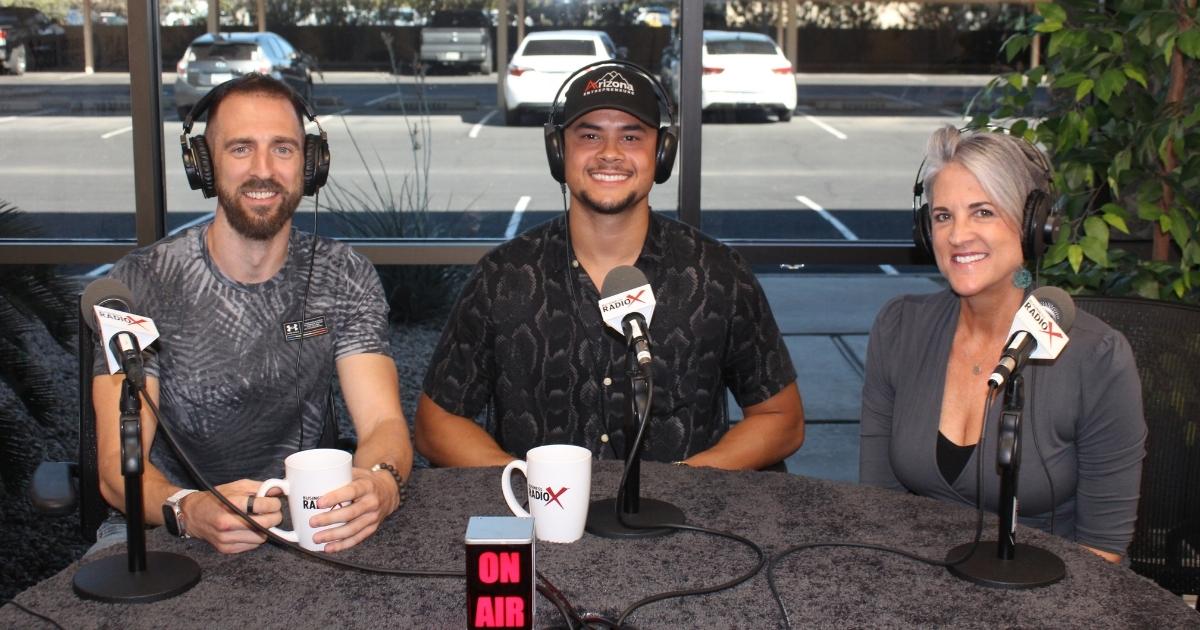
Aaron Velky with Money Club and Devin Butler with Arizona Entrepreneurs

October 20, 2022 by Karen

Aaron-Velky-with-Money-Club-and-Devin-Butler-with-Arizona-Entrepreneurs-feature
Phoenix Business Radio
Aaron Velky with Money Club and Devin Butler with Arizona Entrepreneurs
Loading
00:00 /
RSS Feed
Share
Link
Embed

Download file

Aaron-Velky-with-Money-Club-and-Devin-Butler-with-Arizona-Entrepreneurs

Aaron Velky with Money Club and Devin Butler with Arizona Entrepreneurs

Money-Club-Logo-FlatVersion1

Money Club is a community designed to help the employees of culture-driven companies build financial wellness into their lives. We are for people looking for a proven, formulaic approach to build generational wealth, produce passive income, and make smart decisions along their journey toward financial freedom. Learn more at www.wearemoneyclub.com

Aaron-Velky-Phoenix-Business-RadioAaron Velky is a keynote speaker, CEO and coach. His career has been dedicated to building movements, companies and leaders.

He’s coached and led workshops, retreats and leadership training for hundreds across the US, and continues to write, speak and create content for other emerging leaders and companies.

He’s the CEO of Money Club, an economic empowerment and financial wellness organization that blends personal finance with professional development.

He’s the author of Let Her Play, a book for sports coaches. And he’s a comic book nerd and adrenaline junky.

Connect with Aaron on LinkedIn, Facebook, Twitter and Instagram.

AE-Logo-dark-blue

Arizona Entrepreneurs is a community to help business owners build collaborative relationships with other like-minded entrepreneurs around the valley.

Devin-Butler-Phoenix-Business-RadioDevin Butler first discovered his true passion for entrepreneurship while he was in college in 2017.

Since then, he has successfully built one of the largest entrepreneur communities, Arizona Entrepreneurs, into a multiple 6 figure company and has brought together thousands of business owners.

Creating this community has given Devin the opportunity to speak on dozens of stages sharing his message that we’re all only ONE CONNECTION AWAY.

Connect with Devin on LinkedIn and Instagram.

Tagged With: arizona entrepreneurs, business owner, connections, entrepreneur, Entrepreneurship, executive coaching, financial wellness, networking, professional development, Team Building Retreats

Aligning Your Values and Professional Goals E8

August 29, 2022 by Karen

Ken-Meeker
Changing the Perception of Blindness
Aligning Your Values and Professional Goals E8
Loading
00:00 /
RSS Feed
Share
Link
Embed

Download file

Aligning-Your-Values-and-Professional-Goals-E6

Aligning Your Values and Professional Goals E8

Ken’s gave audience members an example of an organization that has defined DE&I practices… “Let’s assume a business is having a luncheon. Inclusion means that everyone has a seat at a table. Diversity is where the people attending (and invited) correctly reflect the community they are in or society as a whole. Equity is ensuring that the individual needs of everyone are met to enable their full participation. Meaning space for wheelchairs to pull up and fit comfortably alongside the chairs of any table, and others who use some type of mobility device are not corralled to one particular table. It means people’s food needs are met, such as addressing food allergies, or if they are vegetarian or vegan – or someone can only eat Kosher. Equity is doing what is necessary to provide for the individual needs of each person so that they can fully participate.” Vitality-career-logo

Vitality Career Coaching LLC specializes in executive and career coaching for adults who seek more from their professional lives.

Focused on meeting the individual needs of clients, Certified Professional Coach Ken Meeker utilizes a values driven method of helping clients identify and create an executable plan to reach their professional goals.

In addition to one-on-one coaching, Ken serves as a consultant, advocate, and speaker on diversity, equity, and inclusion initiatives with special emphasis on why developing equity is often the most challenging, yet most important aspect of any DEI initiative. By focusing primarily on how to integrate DEI within small business, Ken wants to bring the benefits of incorporating DEI to an often overlooked group of business owners.

Ken-MeekerKen Meeker is a Certified Professional Coach, owner of Vitality Career Coaching LLC, writer, DEI consultant, disability advocate, and speaker. After a nearly 20 year career in commercial insurance, Ken lost the majority of his sight in 2014 after relocating to Phoenix, Arizona.

After recovering from the illness that led to his vision loss, Ken completed the adult comprehensive vocational rehab program at the Foundation for Blind Children in Phoenix, obtained a Project Management certification, and became a Certified Professional Coach. Prior to launching his own coaching business with Vitality Career Coaching, he worked at the Foundation as the Career Specialist in their adult VR program.

Ken was also chosen as a fellow in the centennial cohort of the American Foundation for the Blind’s National Leadership Development Program. He is also selected as a mentor for the 2022-2023 cohort. Ken is launching a new podcast in August 2022 called “Dissing My Ability” where he will interview individuals living with disability. The podcast’s focus is to remove shame and stigma associated with disability.

Connect with Ken on LinkedIn.

About Your Host

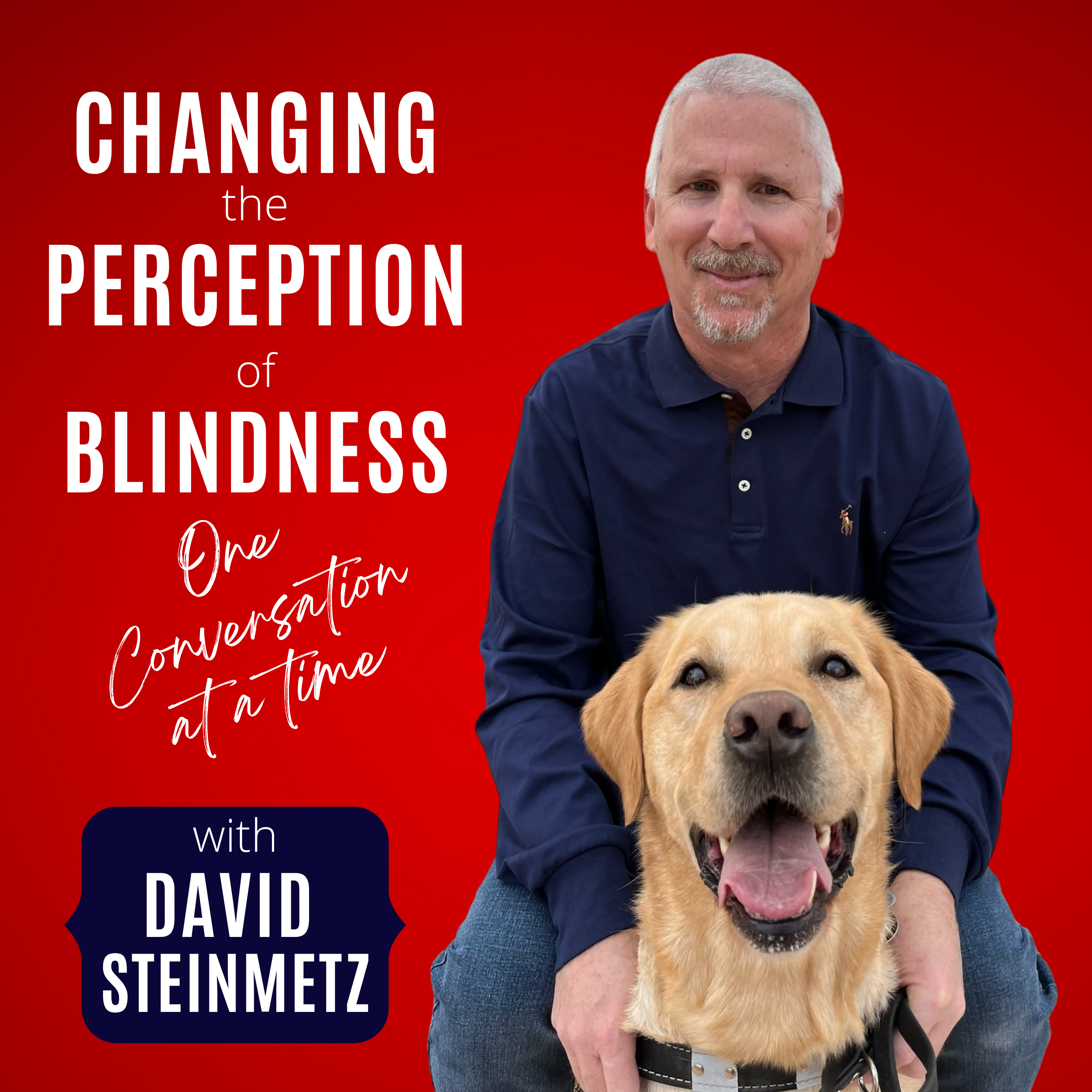
David-SteinmetzAs the manager of Community and Public Relations, David Steinmetz uses his expertise, education, and personal experiences to “change the perception of blindness.”
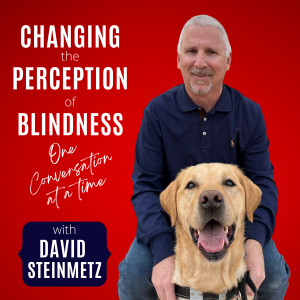
Diagnosed with RP, a blinding retinal disease, at the age of 19, David uses his personal story to drive change that leads to improved employment outcomes and community integration for people who are blind or visually impaired.

Mr. Steinmetz graduated from Arizona State University with a bachelor’s degree in Business Management and Economics. Additionally, Steinmetz has continued his education by graduating from the Business Management Training (BMT) program provided by Darden Graduate School of Business, University of Virginia.

In 2008, David was the national recipient of the National Industries for the Blind Milton J. Samuelson Career Achievement award. This prestigious award recognized Mr. Steinmetz for his career achievements and community service work.

David Steinmetz is a member of the Governors’ Council on Blindness & Visual Impairments, is a Board Member at the Arizona Center for the Blind & Visually Impaired (ACBVI) and serves his community through the Chandler Lions Club.

Connect with David on LinkedIn and Instagram.Changing-the-Perception-of-Blindness-iTunes

About the Show

Changing the Perception of Blindness; One Conversation at a Time is dedicated to breaking down barriers, de-mystifying blindness and promoting real world solutions that empower people who are blind to live a full and inclusive life.

Host, David Steinmetz connects with organizations, industry professionals and thought leaders who are working to bridge the gap that creates a world accessible for all.

About Arizona Industries for the Blind

Arizona Industries for the Blind is a nonprofit organization dedicated to creating employment opportunities for people who are blind. It’s employees, more than half of whom are blind, deliver a variety of products and services, including a full-service Warehousing and Distribution Center, confidential Digital Data Scan (DDS) services for private businesses and government and the operation of Base Supply Centers located at each of Arizona’s three military bases under the umbrella of the U.S. Department of Labor’s AbilityOne program.

Follow AIFB on LinkedIn and Facebook.

Tagged With: Diversity Equity Inclusion, executive coaching, Ken Meeker, Vitality Career Coaching

Iris Grimm, Dog-Gone Leadership

April 1, 2022 by John Ray

Dog-Gone Leadership
North Fulton Business Radio
Iris Grimm, Dog-Gone Leadership
Loading
00:00 /
RSS Feed
Share
Link
Embed

Download file

Dog-Gone Leadership

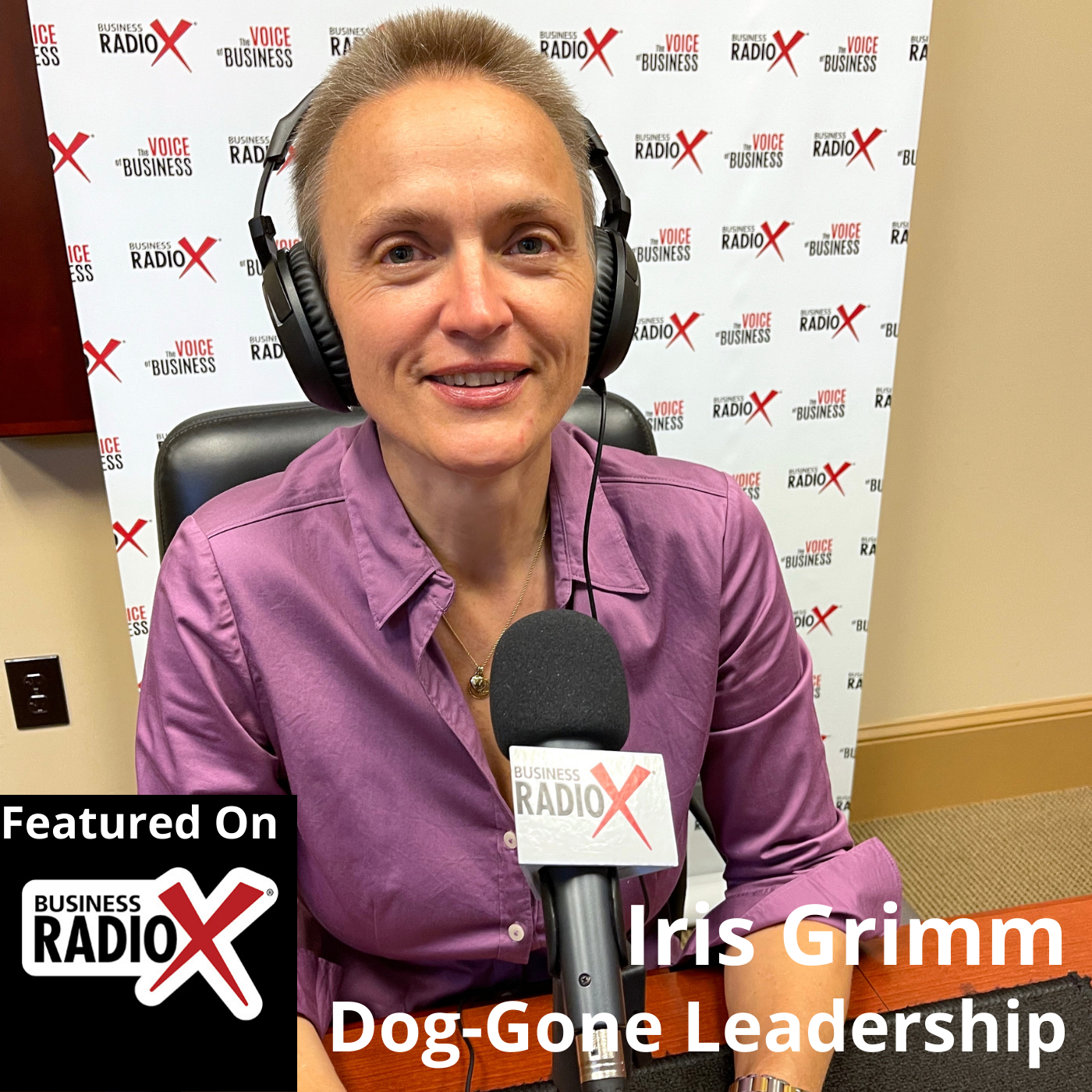
Iris Grimm, Dog-Gone Leadership (North Fulton Business Radio, Episode 446)

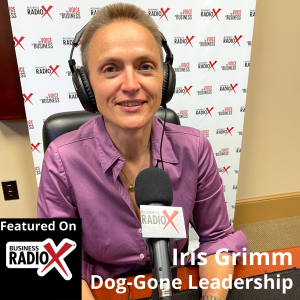
Iris Grimm, an executive and leadership coach for over two decades, developed a leadership program based on our relationships with dogs called Dog-Gone Leadership. She joined John Ray in the studio to share how this idea came to be, how she uses the metaphor of relationships with dogs to assist her clients, who she loves to work with, and much more. North Fulton Business Radio is broadcast from the North Fulton studio of Business RadioX® inside Renasant Bank in Alpharetta.

Iris Grimm (Master Performance Inc.)

For the past 21 years, Iris has guided executives, small business owners, and leaders in a variety of capacities and industries to reach the next level(s) of their success.

Their definition of success is as unique as their paths:

  • be more effective in their role as a leader, hence supporting their team better and having them be more engaged
  • start/expand their business or their career promotion in a purposeful way,
  • create more balance between work and personal life,
  • get out of their own way and show up at a better version every day and many more.

All these goals require an upgrade on inner leadership, trust in oneself and others, as well as letting go of unproductive habits, mindsets, and approaches.

Dog-Gone Leadership

Dog-Gone Leadership is a unique and innovative approach to optimizing performance in your company by utilizing canine relationships. Stop feeling resigned to the status quo and create better outcomes and connections with ease.

Dogs are not just (wo)men’s best friends. They can mirror our behavior and thinking. They reflect our leadership and energy. They can reveal our blind spots. They uplevel our performance and commitment.

Therefore, dogs are ideal partners for creating more conscious leaders, whether they are already in an official leadership position or not.

Dog-Gone Leadership with Iris Grimm steps outside of the conventional leadership development box.

  • Dogs shake off their stress with ease. Great leaders shake their stress off quickly and return to an emotional state that serves the situation best.
  • Dogs can read the energy of a room very quickly. Great leaders can read the energy in the room and adjust their style/approach accordingly.
  • Dogs let go of the past quickly (unless the humans get in the middle of it). Great leaders take nothing personally and let go of any grudges and conflicts swiftly.
  • Dogs reflect our leadership in vivid pictures and behaviors. Great leaders surround themselves with coaches and teachers who point out blind spots and challenge them to grow.

We take the boring out of leadership development and infuse playfulness, love, mindfulness, surrender, commitment, and many more leadership principles and skills that we can learn from dogs.

Dog-gone leadership is merging leadership performance with canine guardianship  – pulling out analogies, pointing out differences, and applying principles and skills with the dog that can be translated into the business world. This program is about bringing the best out of everyone – the leader, their team, and the dog.

As a result, participants transform their leadership with, from, and for their dogs – making this a win-win-win situation.

Company website | LinkedIn | Facebook

Iris Grimm, Executive/Leadership Coach & Trainer, Master Performance, Inc. and Dog-Gone Leadership

Iris Grimm, Executive/Leadership Coach & Trainer, Master Performance, Inc. and Dog-Gone Leadership

Iris Grimm has been in the coaching and training industry for over 20 years. Whether her clients are executives in larger companies, business owners, or entrepreneurs, she loves to support them in creating richer experiences in their lives and work.

Iris is also the founder of Dog-Gone Leadership, an experimental training program where her clients transform their leadership with, for, and from their dogs. Her love for dogs and her extensive experience with dogs, combined with her devotion to support people to perform better as leaders, makes her training programs engaging, practical, and life-changing.

When she is not meeting with her clients, Iris loves to hike with her dogs and spends time in nature.

LinkedIn

Questions and Topics in this Interview:

  • What is the focus of Dog-Gone Leadership?
  • How did you come up with this concept?
  • With the pandemic, many people finally adopted a dog since they work from home. And once they returned to the office, they felt reluctant leaving their dog at home by themselves. What is your opinion about pet-friendly workplaces?
  • When you present this program in companies, does every participant have to bring their dog?
  • Is having a dog a requirement to participate in the Dog-Gone Leadership program?
  • What lessons can we learn from dogs?

North Fulton Business Radio is hosted by John Ray and broadcast and produced from the North Fulton studio of Business RadioX® inside Renasant Bank in Alpharetta. You can find the full archive of shows by following this link. The show is available on all the major podcast apps, including Apple Podcasts, Spotify, Google, Amazon, iHeart Radio, Stitcher, TuneIn, and others.

RenasantBank


Renasant Bank has humble roots, starting in 1904 as a $100,000 bank in a Lee County, Mississippi, bakery. Since then, Renasant has grown to become one of the Southeast’s strongest financial institutions with over $13 billion in assets and more than 190 banking, lending, wealth management and financial services offices in Mississippi, Alabama, Tennessee, Georgia and Florida. All of Renasant’s success stems from each of their banker’s commitment to investing in their communities as a way of better understanding the people they serve. At Renasant Bank, they understand you because they work and live alongside you every day.


Special thanks to A&S Culinary Concepts for their support of this edition of North Fulton Business Radio. A&S Culinary Concepts, based in Johns Creek, is an award-winning culinary studio, celebrated for corporate catering, corporate team building, Big Green Egg Boot Camps, and private group events. They also provide oven-ready, cooked from scratch meals to go they call “Let Us Cook for You.” To see their menus and events, go to their website or call 678-336-9196.

Tagged With: Dog-Gone Leadership, dogs, executive coach, executive coaching, Iris Grimm, Leadership, leadership coaching, Master Coaching, North Fulton Business Radio, renasant bank

Workplace MVP: Soumaya Khalifa, Khalifa Consulting

March 24, 2022 by John Ray

Khalifa Consulting
Minneapolis St. Paul Studio
Workplace MVP: Soumaya Khalifa, Khalifa Consulting
Loading
00:00 /
RSS Feed
Share
Link
Embed

Download file

Khalifa Consulting

Workplace MVP: Soumaya Khalifa, Khalifa Consulting

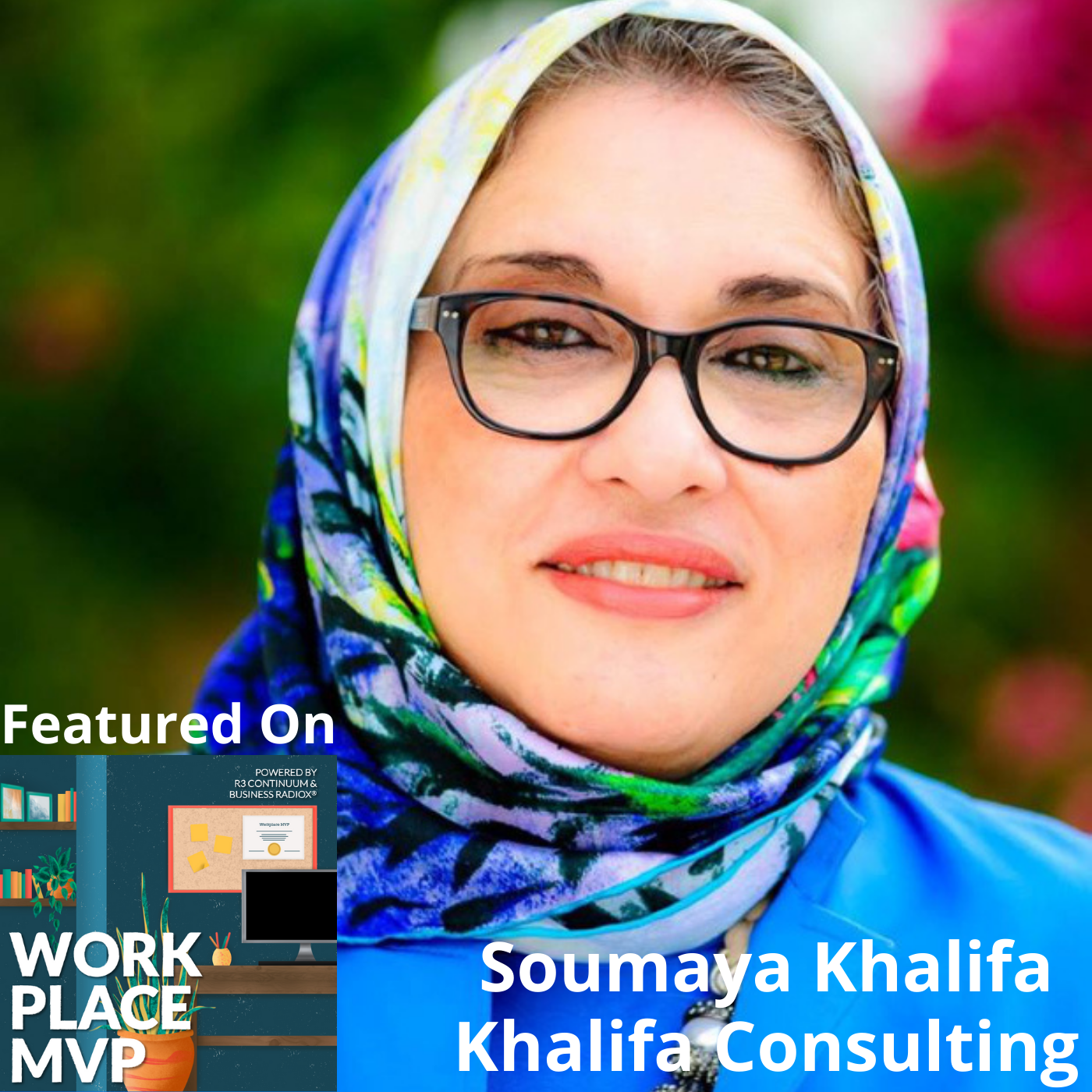
On this episode of Workplace MVP, Soumaya Khalifa, President of Khalifa Consulting, joined Jamie Gassmann to discuss diversity, equity, and inclusion at the leadership level. Noting that diversity is now a given when hiring, Soumaya elaborated on the qualities an effective leader must have to be an inclusive leader. She and Jamie went on to discuss what diversity is, the impact when it’s missing, how leaders can uncover their unconscious bias, a culture of belonging, and much more. Workplace MVP is underwritten and presented by R3 Continuum and produced by the Minneapolis-St.Paul Studio of Business RadioX®.

Khalifa Consulting

Khalifa Consulting provides Fortune 100 companies, non-profit organizations, and governmental institutions with wide-ranging expertise and practical solutions to cross-cultural operations in the Arab world and the US.

Our team of top-level Diversity and Inclusion experts offers training and coaching services including Understanding the Diversity and Cultures of Arab Americans, Intercultural Communication, Managing a Cross-Cultural Team, Cultural Competency for Law Enforcement, and Keys to Success as a Woman Executive in the Arab World.

▪ For international business clients, we offer the specific cultural tools and information needed to successfully conduct business in the Arab World, including how to work within global/virtual teams, and crafting culturally appropriate videos and other media messages.

▪ For domestic and international business clients, we offer training workshops and individualized coaching to support diversity, equity, and inclusion initiatives.

▪ For US-based clients, we offer guidance and technical assistance on how to provide reasonable accommodations for their Muslim employees, by auditing current practices, making recommendations, and suggesting inclusive ways to support a positive work environment.

▪ For clients planning relocations to or from the Arab World, we offer general and specific direction for personal and family adjustment, practical shortcuts for managing new systems, and how-tos for everyday life.

▪ For our executive coaching clients, Khalifa Consulting offers personalized, ongoing, one-on-one high-level coaching to increase motivation, improve business skills and create work-life balance leading to thriving businesses and families.

Company website | LinkedIn | Facebook | Twitter

Soumaya Khalifa, President, Khalifa Consulting

Soumaya Khalifa, President, Khalifa Consulting

Soumaya Khalifa is the president of Khalifa Consulting, an Atlanta-based consulting firm specializing in intercultural coaching, consulting, and training. She is also an executive coach and teaches at Emory University Continuing education courses on Human Resources Management, Diversity, Equity and Inclusion, and Women in Leadership.

Soumaya is passionate about her work to build bridges of understanding and help leaders and organizations positively impact their employees and their bottom line.


LinkedIn

About Workplace MVP

Every day, around the world, organizations of all sizes face disruptive events and situations. Within those workplaces are everyday heroes in human resources, risk management, security, business continuity, and the C-suite. They don’t call themselves heroes though. On the contrary, they simply show up every day, laboring for the well-being of employees in their care, readying the workplace for and planning responses to disruption. This show, Workplace MVP, confers on these heroes the designation they deserve, Workplace MVP (Most Valuable Professionals), and gives them the forum to tell their story. As you hear their experiences, you will learn first-hand, real-life approaches to readying the workplace, responses to crisis situations, and overcoming challenges of disruption. Visit our show archive here.

Workplace MVP Host Jamie Gassmann

Jamie Gassmann, Host, “Workplace MVP”

In addition to serving as the host to the Workplace MVP podcast, Jamie Gassmann is the Director of Marketing at R3 Continuum (R3c). Collectively, she has more than fourteen years of marketing experience. Across her tenure, she has experience working in and with various industries including banking, real estate, retail, crisis management, insurance, business continuity, and more. She holds a Bachelor of Science Degree in Mass Communications with special interest in Advertising and Public Relations and a Master of Business Administration from Paseka School of Business, Minnesota State University.

TRANSCRIPT

Intro: [00:00:04] Broadcasting from the Business RadioX Studios, it’s time for Workplace MVP. Workplace MVP is brought to you by R3 Continuum, a global leader in workplace behavioral health and security solutions. Now, here’s your host, Jamie Gassman.

Jamie Gassmann: [00:00:25] Hi, everyone. Your host, Jamie Gassmann, here, and welcome to this episode of Workplace MVP. Diversity and inclusion is an area of focus for many senior leaders and H.R. executives. A great number of workplaces are re-examining their organization’s approach to ensuring diversity and inclusion and looking for how they can improve, build or implement new initiatives for their work environments. There are a lot of ways employers can take to building their diversity and inclusion program. But to aid in their ability to ensure their program is effective and successful, their efforts need to start at the top where they’re leaders embodying what is called inclusive leadership.

Jamie Gassmann: [00:01:08] As an inclusive leader, you are aware of your own biases and you are actively seeking out and considering different perspectives to inform your decision making and collaboration with others. These leaders are committed to ensuring all team members are treated equitably, feel a sense of belonging and value, and have the resources and support they need to achieve their full potential. How does an organization ensure they have inclusive leaders or how do their leaders learn to be inclusive if not already? Where does this fall within the process of establishing or reinventing an organization’s diversity and inclusion program?

Jamie Gassmann: [00:01:47] Well, joining us today to share her expertise and recommendations for workplaces looking to incorporate or reinvent their diversity and inclusion programs is workplace MVP and President and CEO of Khalifa Consulting, Soumaya Khalifa. Welcome to the show, Soumaya.

Soumaya Khalifa: [00:02:03] Thank you. It’s so wonderful to be with you today.

Jamie Gassmann: [00:02:07] Oh, we’re really happy to have you. So, I’d like to start out with you sharing with me your journey to becoming the President and CEO of Khalifa Consulting.

Soumaya Khalifa: [00:02:16] That is an incredible question. It has been a long road and it also has been a very unconventional journey. I earned my B.S. degree in Chemistry of all things and decided that I wanted to do something with people and not in labs. So, what I did is I pursued my MBA in human resources, worked in Corporate America for many years in the H.R. field, which I truly loved. Towards the end of that career in Corporate America, I was involved in a lot of diversity and inclusion work as well as organizational effectiveness, and it’s really amazing that the two really kind of complement each other. When I went out on my own, I wanted to bring all of my journey, all of my experiences to my clients. And so, that’s when I founded Khalifa Consulting, and it’s been about 12, 13 years now.

Jamie Gassmann: [00:03:01] Wow. So, talk to me a little bit about some of the work and the business that you do with Khalifa Consulting and helping your clients.

Soumaya Khalifa: [00:03:09] Khalifa Consulting is a boutique firm with a network of consultants covering the world. We specialize in executive coaching, intercultural and DEI training and consulting. I have a special interest in women and leadership and how to bring religion or faith into the DEI framework. We cater to large and mid-sized organizations and in the intercultural and DEI work, and also we do executive coaching for all sizes of organizations.

Jamie Gassmann: [00:03:41] Great. So, this topic we’re talking about is very near and dear to your heart. Share with me your opinion about workplaces having a diversity and inclusion program. Should they – is it – what’s the level of importance in making sure that they have something built-in?

Soumaya Khalifa: [00:03:59] Well, you know, diversity is a given because our population right here in the US has been diversifying over the last couple of decades. So, it is a given. If we are, as employers, looking for the best talent that there is out there, we will get diverse talent. Now, the real issue is how do we make our workplaces inviting enough for that talent, that top talent, to want to join us, but not only in joining us but to stay with us. So, inclusion needs to be very intentional. What does an employer have to do to attract and retain the talent that’s out there?

Soumaya Khalifa: [00:04:39] And, you know, it’s not only about talent. But if we have that talent, we are able to get into new markets. Because when we go into new markets, we have to understand them. And if we do have representation from them, that gives us an advantage, a competitive advantage to reach people in different markets. And, diversity is being invited to a party, and inclusion is being able to dance up the party. So, that’s the framework. So, diversity is a given, but what do we do with it in organization is the act and that is inclusion.

Jamie Gassmann: [00:05:19] Yeah. It’s such a great analogy. I’ve never heard it referred to that way, but it gives some context to how those two play together, basically. So, looking at that term inclusive, inclusive leader, you know, can you share from your expertise what that means? I know I gave a little brief definition of it at the beginning, but can you share from your perspective what that means?

Soumaya Khalifa: [00:05:43] Sure. In my opinion, an effective leader by default is an inclusive leader. And if we are to look at some of the characteristics of an inclusive leader, they have to have commitment to cultivate a diverse and inclusive workforce, and that takes really time and energy from them. And they have to believe in the business case for diversity and inclusion and how that is driving or will drive or will impact on the mission and vision of their organization.

Soumaya Khalifa: [00:05:43] They need to have courage. They need to have courage and not be afraid to challenge organizational attitudes and practices that yield homogeneity, even if their recommendations are politically or culturally unpopular within their organization. You know, they have to be very careful there.

Soumaya Khalifa: [00:06:34] They need to also display humility by acknowledging their own personal limitations and seeking contributions from others to overcome that. Some leaders, you know, as we all know, find it difficult to admit that they don’t have all the answers. So if they are, if they do have humility and reach out to others, that makes them better leaders. They need to be able to recognize that they have biases. We all do this. It’s just human nature. They need to work on identifying what their own biases are and learn ways to prevent them from influencing their talent decisions.

Soumaya Khalifa: [00:07:14] They want to also look at their policies, processes and structures to see if there are organizational biases that are undermining diversity and inclusion in their organization.

Soumaya Khalifa: [00:07:27] They have to be curious. They have to have an open mind and a passion for learning and a desire for their own exposure to different ideas. And, they have to also be culturally intelligent. By that, I mean that they have to be aware of their cultural preferences. When they are on autopilot, how do they act? What do they go to? But they also need to learn about the cultures of people that they work with, their team, their colleagues, and be able to identify if there are gaps and how can they bridge those gaps to be able to leverage the best from all their team members.

Soumaya Khalifa: [00:08:13] An inclusive leader needs to also be collaborative. They have to understand that collaboration is important for the success of their teams. And for them to be collaborative, they have to create a psychologically safe environment in which all individuals feel that they are empowered to express their opinions in the group. So, these are just some of the characteristics of an inclusive and, in my opinion, an effective leader.

Jamie Gassmann: [00:08:45] Great. And now, looking at those biases and thinking about diversity, just real quick, can you share with us when we hear the term diversity. I feel sometimes that can show up differently with different individuals. From your perspective, when you hear the term diversity, what does that include? What does that mean?

Jamie Gassmann: [00:09:07] Sure. Diversity, in my opinion, is everything that makes us different but also everything that makes us the same. So, a lot of organizations focus on race and on gender. And, within the US framework, that’s usually what is focused in on. But there are so many different layers of diversity that we need to look into if we are telling people bring your whole professional self to work in terms of, for instance, sexual orientation, in terms of religion, and many other different layers of diversity.

Soumaya Khalifa: [00:09:51] People on the outside might look the same, but when we start peeling off the different layers, there are differences amongst them. So, we need to treat diversity in the broadest sense. And, what’s really interesting is diversity, we need to look at the history of the nation that we’re looking at diversity at. We need to look at the social construct in it and many other things.

Soumaya Khalifa: [00:10:15] I was working with a client who works for a French company, and the French company’s diversity and inclusion philosophy is getting more women in and bringing more non-French people into their boards and into their leadership. So, that is how they define it in a French company. In a US company, that is defined a little bit differently. There’s more emphasis on race and on gender, of course.

Jamie Gassmann: [00:10:45] Interesting. So, looking at that inclusive leadership and looking at that work environment, why is it so important that you have inclusive leadership within that work environment? What are the consequences if you don’t? Or the impact?

Soumaya Khalifa: [00:11:00] The impact there is really huge. And some of it is a direct impact and some is an indirect impact. If the workplace is not inclusive, where employees don’t feel like they belong, if it is a hostile work environment, it’s not a friendly work environment, then the implications can be very enormous, anywhere from a turnover rate where people are not – don’t want to stay with the company or the organization. People can get depressed. The medical cost of the organization that they pick up on productivity goes down. People call out sick more often. Just a lot of negative consequences if we don’t have an inclusive environment in our workplaces.

Soumaya Khalifa: [00:11:55] I don’t feel like I belong. If I don’t feel like I belong and I could be myself, I don’t want to be there. I want to find somewhere else to go. And, I think with COVID-19 and if leaders were not intentional in diversity and inclusion because we went into more online and it was more difficult to provide that culture of inclusivity when we are online. So, leaders have to be even more intentional and organizations have to be more intentional to bring that inclusiveness culture into the workplace.

Jamie Gassmann: [00:12:31] Yeah. Interesting. I could imagine with the great resignation, if you will, if maybe some of that realization was coming through for some of those employees. Do you think that that had some contribution to it once they moved into this kind of remote work environment, feeling a little bit more isolated than before?

Soumaya Khalifa: [00:12:50] I do believe so. I do believe so. All our worlds really turned upside down. We did not think that we could work from home as much as we did, and we adapted to it. Everybody had an opportunity to pivot. And, as employees, they looked at their priorities and what’s important to them and decided is this the right organization for me to stay in, or do I look for something else where I’m happier? Because happiness is really important for individuals now.

Jamie Gassmann: [00:13:24] Yeah. Absolutely. And so, looking at a leader in a work environment, you know, how do they identify the biases that they have? How do they know they’ve got them? Like, what are some ways that they can help themselves to maybe identify ones that they might have that they weren’t even aware of? So, just we’d like to get some of your thoughts around that.

Soumaya Khalifa: [00:13:47] Well, thank you so much for the question. We all have biases and we have unconscious bias, whether – and they’re called unconscious because we don’t know about them and they could be really detrimental for us. If we don’t know about them, we can’t do anything about them.

Soumaya Khalifa: [00:14:02] So, your question of how do we find out. Well, there are so many different ways to find out. One quick way of doing it is for the individual leader to look at their circle of friends. Do they all look like them? Look at who they’re hiring. Do they all look like them? This is similar to me impact. And, you know, so that is looking in the mirror and seeing what world have I created around me.

Soumaya Khalifa: [00:14:33] I was involved with Leadership Atlanta and I went through that many years ago. And one of the things that came out of it is that we were challenged to look at our circle of friends. And many people from our class decided that, hey, I golf with all white guys or all black guys or whatever the race and gender happened to be. And they made a conscious decision that I need to diversify my circle of friends, circle of people that I go out with, circle people that I golf with, and that impacted them.

Soumaya Khalifa: [00:15:15] Now, another way to find out about our own cultural biases or unconscious biases, I’m sorry, is to ask a colleague or confidant. That would be a very sensitive conversation. But there needs to be a very high level of trust there.

Soumaya Khalifa: [00:15:32] There’s another way too and that is, there’s an online tool that is developed – that has been developed by Harvard University, and that’s an instrument to identify unconscious bias. And it’s free and it’s online. And, if one types implicit Harvard edu, then they will take that, take it to that website. And it’s really an amazing one. If you want to look at race or gender or religion or what have you, there are many different instruments there for people to identify what unconscious bias they might be playing.

Jamie Gassmann: [00:16:09] So, you kind of identified a couple of approaches that they can take by looking at their group of peers or that they’re spending a lot of their extra time with and look, you know, re-evaluating and identifying ways to kind of diversify that. But what are some other ways that they could overcome their bias, their unconscious bias, or even biases they know that they have and relearn a thinking, you know, that likely has been instilled in them from a really young age, because I think some of our biases that we have comes from how we grew up or how we, you know, life events that we’ve experienced. And so, how can one kind of relearn, if you will, how to look at people differently or how to kind of be more diverse or more inclusive?

Soumaya Khalifa: [00:17:00] Yeah. That is such a great question. And, you know, we pick up our unconscious biases as children at the dinner table, what is said at the dinner table. So, parents and grown-ups and leaders, we need to be watching what is said at the dinner table because the younger generations are picking up on the biases that we already have, spoken and unspoken. So, we don’t have to say much of anything and that’s picked up. Kids are very, very smart.

Soumaya Khalifa: [00:17:30] So, in terms of how do we get over that, I know that a client, he worked with very diverse background people. And one of the stories that he shared is they were talking about we don’t have, you know, we only have one Jewish person in the group. And to him, he looked and he said, “Who’s that?” And that Jewish person was somebody that he became friends with and he no longer saw him as Jewish. He was just Ed.

Soumaya Khalifa: [00:18:11] And so, that is how we can work around unconscious biases. First of all, identifying what unconscious bias we might have, and then be intentional in terms of expanding our experiences so that we have meaningful interactions with people from whatever background that we have the unconscious bias on. And then, when we see people as individuals, the stereotypes or the assumptions we have based on the group kind of falls out the way. And that is a very effective way to overcome our unconscious biases. But, again, it takes awareness. It takes intentionality, and it also takes a strong will of wanting to do it.

Jamie Gassmann: [00:18:56] Great. Great, great advice there. Because I imagine there’s people who are like, I don’t want to be seen as that person that’s not inclusive because they might feel internally that they are and maybe aren’t aware of what they can’t see. So, very interesting.

Soumaya Khalifa: [00:19:11] And, you know, more on that because that is a very important subject to think about. Again, unconscious, it’s not seen, it’s not felt. But knowing that the biases show up when we are in an ambiguous situation, such as if we don’t know about a person and we meet them, and all of a sudden we go to our stereotypes. So, we want to be able to minimize ambiguous situations. We you want to learn about all the situations we get into so we won’t be surprised. We won’t be able to surprise ourselves in a negative way when snap decisions need to be made right away, our hardwired stereotypes pop up. So, taking time to make decisions. And usually, it’s recommended that leaders make decisions early in the day when they have had a good night’s sleep and they’re less likely to make mental shortcuts.

Soumaya Khalifa: [00:20:09] And, you know, being able to push back against default assumptions when we put a stereotype in our mind that’s hardwired, you know, and I’m a short person. I love to give that example. If our stereotype in our mind is that short people are not very smart and we see a short person, then the way the stereotype works is that they are not very smart. And if that happens, if that person happens to be smart, then we push back through those stereotypes. Well, well, they’re the exception. They’re not really the rule.

Soumaya Khalifa: [00:20:44] So, we need, again, self-awareness to get over that. And then, being able to learn, learn and meet new people, be challenged and challenge our stereotypes and prejudices if they have gotten to that level.

Jamie Gassmann: [00:21:06] Yeah. Ask questions get to know people. Yeah. Be open to that. That’s kind of the approach that I like to take because I just love to hear people’s stories. So, which is why this show is so great because I get to hear so many leaders’ stories and expertise.

Jamie Gassmann: [00:21:19] So, real quick, we’re going to take a break and listen from our sponsor. So, Workplace MVP is sponsored by R3 Continuum. R3 Continuum is a global leader in empowering leaders to effectively support and help their employees thrive during disruptive times. Through their tailored workplace behavioral health support, disruption response and recovery, and violence mitigation solutions, they can help you create a work environment where your employees can feel psychologically and physically safe. To learn more, visit our r3c.com today.

Jamie Gassmann: [00:21:53] So, you mentioned in our previous conversation the importance of creating a culture of belonging within that work environment. Can you help kind of describe for our listeners what does a culture belonging look and feel like?

Soumaya Khalifa: [00:22:09] Sure. Belonging is a sense one gets that they are a valued member of an organization. They feel a sense of purpose. A sense of belonging brings meaning into our lives and all the circles. I mean, let’s face it, we spend more time at work than we spend with our family. And if we feel good about ourselves, good about the organizations that we work for, just think about how that’s going to impact us individually, as employees, as leaders, but also the organization.

Soumaya Khalifa: [00:22:44] So, there was a survey done in 2019 by an organization called BetterUp, and they found that workplace belonging can lead to a 56% increase in job performance. It can also lead to a 50% reduction in employee turnover. Workplace belonging can lead to 75% decrease in employee sick days. So, those numbers really give us the business case for why having a culture of belonging is very important. It adds to the bottom line.

Jamie Gassmann: [00:23:19] Wow. Sounds like – I mean, those are great statistics to show, you know, just by creating that environment that people want to be at and be a part of. Fantastic. So, looking at that, there was something when we talked before that really resonated with me in regards to religion and the symbolism around religion and certain holidays that are celebrated. And you and I were kind of discussing, in particular, the Christmas or Hanukkah and kind of that a lot of leaders have taken the approach of this broad messaging of happy holidays, and then removing certain symbolism like Christmas trees. And you talked about how not all your employees really want you to take that down, even if they don’t celebrate it.

Jamie Gassmann: [00:24:06] And so, the question I have is, you know, by taking and removing some of those symbolism, does it help to create that culture belonging, or what are some of your thoughts around how they can really handle those holiday seasons, you know, in an appropriate approach that allows all employees to feel like they belong and that their holidays are being celebrated.

Soumaya Khalifa: [00:24:32] I love that question. I super love that question. I am not in favor of somebody saying happy holidays. First of all, I am a Muslim. And, most of the time I don’t have a holiday around Christmas. And, for somebody to say happy holidays, it really doesn’t resonate with me. And that’s not only for Muslims, but you have Buddhists and you have Hindus, etc., who do not have a holiday around the holiday season.

Soumaya Khalifa: [00:25:02] I am not in favor of taking down the Christmas tree, but I am in favor of having an inclusive work environment that acknowledges and celebrates the religious holidays and traditions that are represented in the workforce. So, if we do have Jewish members, then Hanukkah, Passover, needs to be acknowledged. Holly, Ash Wednesday, Ramadan, and the list goes on. I want to be – I want to feel like I’m validated. By just saying happy holiday, I think it’s just a brush over and it alienates the Christians and it does not bring anybody into the fold.

Soumaya Khalifa: [00:25:44] But we want to be intentional. Again, we want to be knowing who’s in our workforce and what matters to them. If we have a calendar, let’s put it on there that Ramadan starts April 2nd. Ash Wednesdays on that date. Hanukkah is on that date. So, bring all those holidays, acknowledged people, validate people, and they feel like, hey, my workplace cares about me enough to wish me a Ramadan Mubarak or Happy Hanukkah or whatever the holidays.

Jamie Gassmann: [00:26:16] Yeah. Well, even to allow other employees to understand how each of those faiths practice their various holidays and what the symbolism and meanings are behind what they’re practicing so that people can learn.

Soumaya Khalifa: [00:26:30] Yes. And that’s the intention behind that. Because if I know – if I am – we have something called the iceberg. And the iceberg is where we say that what’s visible is what people see. But what’s below the waterline is what drives the visible attributes that we see.

Soumaya Khalifa: [00:26:50] So, if people know that my colleague’s religion is Muslim and when he takes or she takes a longer lunch hour on Friday, it’s because they have to go to prayer, or they’re not eating from April 2nd to May 2nd lunch and they leave early and we know it’s Ramadan. What is Ramadan like? What is Hanukkah like? What is the Passover and High Holy Days are like? Then, we get to know people at a deeper level and that goes hand-in-hand with belonging. I am accepted for who I am. I’m celebrated for who I am, and I am appreciated for who I am. And I don’t have to fit a mold to be able to be a validated person.

Jamie Gassmann: [00:27:40] Yeah. I love that. So, looking at that and looking at that validation of a person because obviously, you know, not feeling like you belong, not feeling validated can start to really impact somebody’s mental health and obviously ultimately their productivity. So, how does a workplace that’s not culturally belonging in your opinion, what do you see as the impact on that mental health and productivity of its employees?

Soumaya Khalifa: [00:28:08] There’s been a lot of research about that. And the outcome says – it was a 20-year research project. And it said that there’s increased depression of the employees, substance abuse, and health issues that kind of manifest themselves because of the stress and the pressure that they feel in that particular workplace. And, we know we’ve heard about people being disgruntled. We’ve heard people possibly committing suicide. We’ve heard people going postal. If the situation really gets out of hand and there’s a mental issue there, an employee could go back to the workplace and do horrific things, do it. So, it does have very negative implications.

Soumaya Khalifa: [00:29:00] But, you know, we’re talking about the employee and their mental health, which is really important. But the research also shows that the organizations are suffering as well. So, they’re suffering from decreased productivity, lower levels of employee commitment, increased turnover, and that doesn’t take into account the higher medical insurance premiums that the employer will be paying, the use of the employee assistance programs. So, it’s negative for all concerned, both the employees, leaders and the organization.

Jamie Gassmann: [00:29:38] Yeah. Absolutely. You know, it’s like when you want to bring your whole self to work because you’re passionate about the work that the company is doing, but yet you don’t feel like your whole self can be at work. You know, you want to – it’s like when you’re at work, it gets like you’re home away from home is kind of how I call it when you’re in the office because you spend so much of your day there. You want to feel like you’re welcome just like you are within your own home. So, I could see where that could have a huge impact on those individuals.

Soumaya Khalifa: [00:30:04] Absolutely.

Jamie Gassmann: [00:30:07] So, looking at cultural differences you shared previously that there are cultures that are relationship-oriented and then there’s cultures like the US that are very task-oriented. So, within our workplaces becoming more and more diverse, how does this show up? How does a leader strike that balance between allowing people to really congregate and socialize, you know, at the water cooler, if you will, when we get, you know, get that opportunity back to those days to really that task-oriented? How do they strike that balance?

Soumaya Khalifa: [00:30:39] Yeah. So, I want to share that I ran into a website that is a Ramsey County Minnesota website. And what struck me is that that website has been translated into languages that I had never heard of before. I mean, Somali, Hmood, Oromo, and Kara. All right. I had to Google each one of those languages to see where they’re spoken. So, this is not a hypothetical question. This is a true question that we need to be thinking about is we have people represented from all over the world working right here. Different cultures have different orientations. You mentioned that task-oriented cultures and the relationship-oriented cultures and they are on a spectrum.

Soumaya Khalifa: [00:31:36] So, the task-oriented culture is let’s get to work. We have a project to do. Let’s get down to what’s going to be done. What is it going to be done? Who’s going to be responsible? Where are the deliverables? And, relationships are really a second or third item that people will think about. Let’s just get the job done.

Soumaya Khalifa: [00:31:55] Now, the cultures that are relationship cultures and all those languages that I just named off, they are relationship cultures, which means that before I start doing work with you, I want to get to know you. I want to get to know about your family. I want to get to know where you went to school. What do you like to eat? Let’s go out to lunch together. Right?

Soumaya Khalifa: [00:32:15] So, if we have people who are on the opposite spectrums of that task orientation or relationship and we want them to work together, we need to be very, again, intentional. That word is very important for understanding who do we have in our teams. Come up with the team norms, identify what is a hybrid culture that will work for both the task-oriented people and the relationship-oriented people.

Soumaya Khalifa: [00:32:44] The task-oriented people, just an FYI, will look at the relationship people and say, “Gosh, they waste so much time. Why do they need to do all this small talk and drink tea or coffee? Let’s just get down to business.” The relationship people will look at the task people and say, “Oh, they’re just so rude and abrupt. They don’t even say hello and drink coffee with me.” So, that can be a real issue in terms of breakdown and communication. So, as leaders, we need to know who is on our team and how do we create a culture that would be understood and accepted by both.

Soumaya Khalifa: [00:33:20] When we look at a lot of data and research and looking at a homogeneous team versus a multicultural team and looking at when they are at their best and when they are very well managed, the multicultural team way outperforms the homogeneous team. So, it is a gift to have the diversity, but we have to manage it well to be able to leverage the results that we want to be able to achieve.

Jamie Gassmann: [00:33:55] Yeah. I find that there’s so much value in being able to build up some of those relationships. Even as a leader, you get to know people so differently. If you’re only focused on the day-to-day task, you’re not taking that time to get to know the people you’re working with. And so, when you think of that culture of belonging, it makes me think there’s benefit in trying to bring them closer to a balancing act. What are your thoughts around that and like how it contributes to that culture of belonging?

Soumaya Khalifa: [00:34:26] Yeah. One thing that I want to mention here is we are in a business to do business. So, let’s not lose sight of that. Right?

Jamie Gassmann: [00:34:35] Right.

Soumaya Khalifa: [00:34:35] And doing DEI is a very strong business case to do our business better. So, I don’t want us to just talk about DEI and not forget the bigger picture. We are doing DEI because of the bigger picture and we have to keep that very clear in front of our eyes. We are here to further and achieve the mission and vision of our organizations, and I’m a firm believer that DEI will help us achieve that.

Soumaya Khalifa: [00:35:04] So, let me give you an example and we touched upon that just a little bit earlier when we include religion and the DEI conversation. All right. We want to be able to leverage the organizational values and how they are very much aligned with our employee values. And they’re probably aligned in their religious beliefs values. So, when we say bring your religion into work, it does not mean that, hey, let’s bring everybody together and let’s argue about which faith tradition is the right tradition that’s going to get us to heaven or what have you. But it is to understand what’s below the waterline for our employees is to get to know them. It’s to be able to celebrate them, make them feel like they’re validated. So here is the way, as an example with DEI, when we bring faith tradition into work, the parameters that we need to build around it. There shouldn’t be a discussion about or proselytizing or what have you, but it’s about the person, about my teammate, about my leader, about everybody matters. And that part of them, which in many situations is a big part of who they are.

Jamie Gassmann: [00:36:25] Yeah. Absolutely. And there definitely is that you still have a business to run. So, I love that you brought that up and, you know, sharing that you’re focusing on the business needs while also focusing on your employee needs. So, how do you know when you’ve got it right? Like, is there a way for them to measure that? I mean, is it employee surveying? Is it pulling? Like, what can a leader do to know they’re striking that right balance and that right chord within that organization?

Soumaya Khalifa: [00:36:52] Well, yeah. Employee surveys are definitely something that many organizations look at and, you know, they’re done anonymously so people feel comfortable giving their true, honest opinions about the culture of the organization, about whether the culture has moved the needle to belonging or not.

Soumaya Khalifa: [00:37:15] There is something called the stay interview, like the exit interview but for people who do stay in the company, to get a read on how others perceive in the company. There are employee exit interviews, of course, but hopefully, we don’t get there. But if we do, then we want to understand why people left.

Soumaya Khalifa: [00:37:36] And one of my favorites is a very simple thing, and it’s just sitting down and speaking with employees and team members about how things are going. We look at performance management. A lot of organizations do at least that it’s done once a year, but we do ourselves a disservice when we do that. Managers and leaders need to have frequent check-ins with their employees to see how they’re doing, and hopefully, they have created a relationship with their employees where they’re open enough to share with them how things are going for them.

Soumaya Khalifa: [00:38:12] A leader should not wait very, very long time to have that conversation, but the more frequent the conversations are, the better off it is. So, it’s not rocket science. It’s communication, it’s caring, and it’s letting the employees know that there is a positive psychology within the organization and they can speak their mind.

Jamie Gassmann: [00:38:36] Yeah. Awesome. So, the leader is looking to evaluate, build or reinvent their diversity and inclusion program within their organization. What is your advice for how they should prioritize this initiative and where should they start?

Soumaya Khalifa: [00:38:51] Well, a couple of thoughts here is they need to be very clear on why they want to do that. They need to understand the business case for it. If an organization is doing DEI just to check the box, they need to rethink that. I believe that when just checking the box is done, it has very negative repercussions on the organization. And they can hire an outside consultant to assess the organization in terms of where they’re at with their DEI and collaborate.

Soumaya Khalifa: [00:39:30] If somebody brings in a consultant, it needs to be a collaboration. It’s not, “Here, consultant, take this. Let me know what I need to do.” It needs to be a collaboration. It needs to be a commitment of time and energy and resources and to understand that DEI is really a journey and not a destination. We don’t get there. It’s always work in progress. So, a lot of times people want to say, “Okay, we’ve arrived.” There’s no such thing. It’s always work in progress.

Jamie Gassmann: [00:40:02] Great. Well, I know I personally have learned a lot from you, and I so appreciate you being here on our episode. But if we have guests that want to hear more from you, or to get a hold of you, how can they do that?

Soumaya Khalifa: [00:40:17] I am on LinkedIn, Soumaya Khalifa. Our website is khalifa.consulting. So, K-H-A-L-I-F-A, dot consulting. Send us a message at info@khalifa.consulting, or call at 678-523-5080. I would love and appreciate hearing from you.

Jamie Gassmann: [00:40:40] Yeah. Wonderful. Well, thank you again so much for being on the show, Soumaya. It’s been such a great conversation. I truly appreciate you and all the work that you do.

Soumaya Khalifa: [00:40:48] Thank you so much. What a pleasure and honor to be with you.

Jamie Gassmann: [00:40:52] And we also want to thank our show sponsor, R3 Continuum, for supporting the Workplace MVP podcast. And to our listeners, thank you for tuning in. If you’ve not already done so, make sure to subscribe so you get our most recent episodes and other resources. You can also follow our show on LinkedIn, Facebook, and Twitter at Workplace MVP. If you are a workplace MVP or you know someone who is, we want to hear from you. Email us at info@workplace-mvp.com. Thank you all for joining us today and have a great rest of your day.


Tagged With: belonging, DEI, diversity, equity, executive coaching, inclusion, Jamie Gassmann, Khalifa Consulting, R3 Continuum, sense of belonging, Soumaya Khalifa, Workplace MVP

Using Public Safety Tech to Improve Community Relations E23

March 1, 2022 by Karen

AZ-TechCast-E23-Feature
AZ TechCast
Using Public Safety Tech to Improve Community Relations E23
Loading
00:00 /
RSS Feed
Share
Link
Embed

Download file

Using-Public-Safety-Tech-to-Improve-Community-Relations

Using Public Safety Tech to Improve Community Relations E23

What technologies are law enforcement agencies and private-sector businesses adopting to protect public safety through a more informed lens? How can these entities implement these technologies effectively to produce more equitable outcomes, particularly for communities of color? And finally, which decisions should be made by humans and which ones can be made by AI?

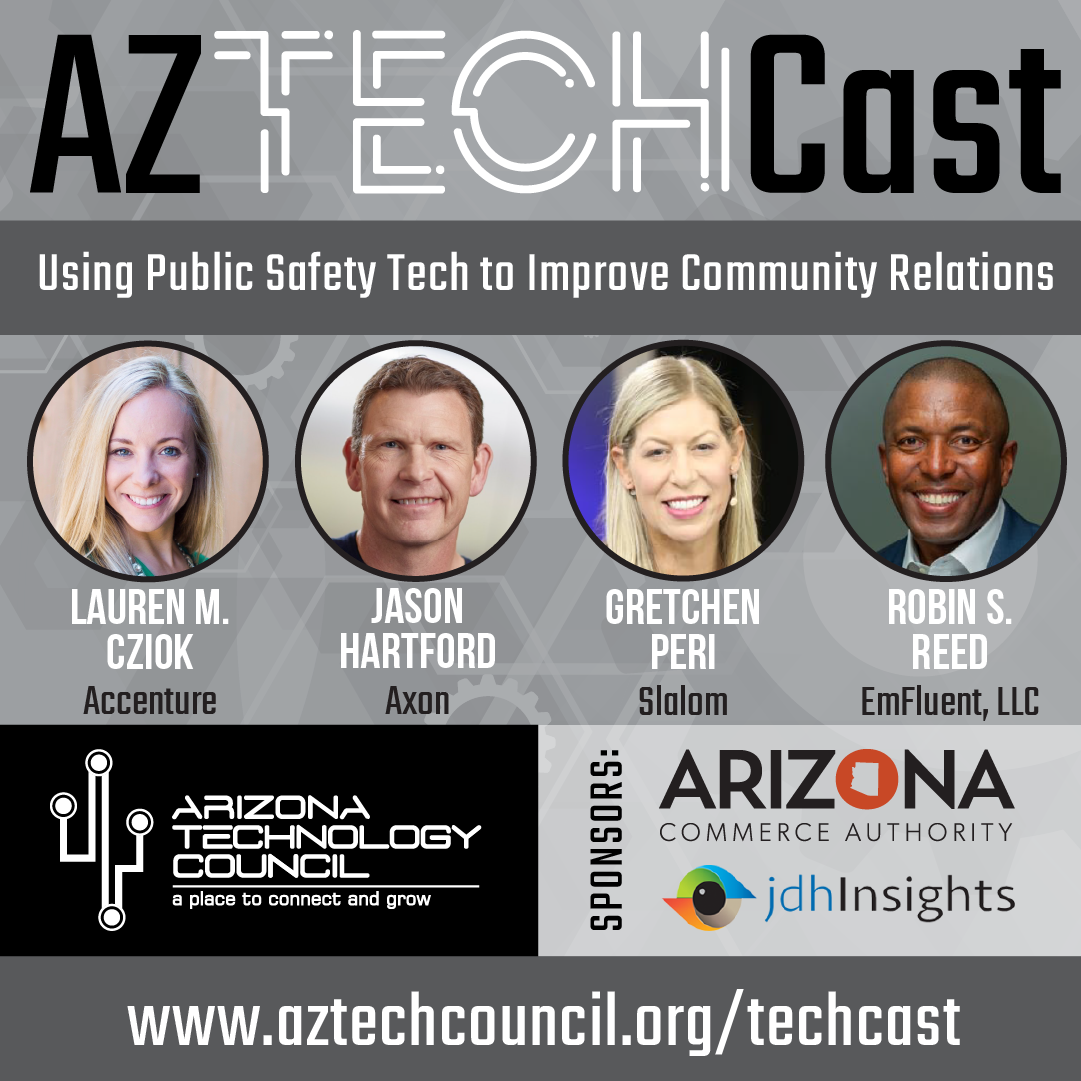
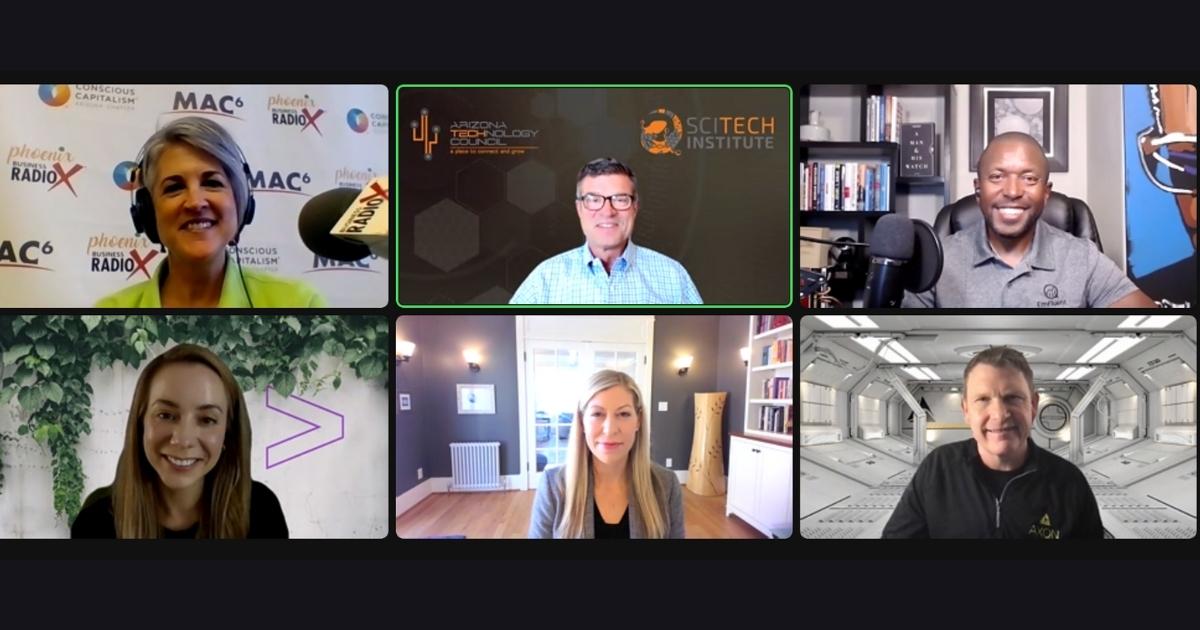
The February 2022 episode of the Arizona Technology Council’s TechCast podcast featured public safety experts including Lauren M. Cziok, public safety senior manager at Accenture; Jason Hartford, vice president of Axon devices at Axon; Gretchen Peri, senior director at Slalom and Robin S. Reed, co-founder and principal at EmFluent, LLC and president and CEO of the Black Chamber of Arizona. These leaders joined Steve Zylstra, Council president and CEO, and Karen Nowicki, president and owner of Phoenix Business RadioX, in exploring technology’s role in public safety and how new innovations can help first responders make better-informed decisions in real time.

Throughout this hour-long episode, this panel of public safety specialists explained the recent evolution of public safety technologies to emphasize racial and social equity. They acknowledge that historically, law enforcement has been slow to change, and hasn’t always progressed as quickly as it needs to in order to respond to society’s needs.

AccLogoBlackPurpleRGB

Accenture is a global professional services company with leading capabilities in digital, cloud and security. Combining unmatched experience and specialized skills across more than 40 industries, we offer Strategy and Consulting, Interactive, Technology and Operations services — all powered by the world’s largest network of Advanced Technology and Intelligent Operations centers.

Our 674,000people deliver on the promise of technology and human ingenuity every day, serving clients in more than 120 countries. We embrace the power of change to create value and shared success for our clients, people, shareholders, partners and communities.

Lauren-CziokLauren Cziok serves as Accenture’s North America Public Safety Lead, delivering technology projects and strategic support to law enforcement agencies around the world.

As a former crime analyst from a US state agency, Lauren has experience in Intelligence Analysis, Investigative Support, Public Safety Business Processes and Operations Systems for State, Local, Federal, and International Public Safety Agencies.

Lauren comes from a family of police officers with a combined 75+ years of service, which has fueled her passion for providing Public Safety Agencies with the tools and skills to further their goals of trust and legitimacy through Analytics.

Follow Accenture on LinkedIn, Facebook, Twitter and Instagram.

Axon-logo

With over 26 years of advancing technology, Axon is dedicated to a bold and powerful mission to Protect Life and Obsolete the Bullet. Axon is the global leader of connected public safety technologies. We stand for protecting life, protecting truth, transparency, and accountability.

Rick Smith founded Axon (formerly TASER International) following the deaths of two high school friends who were gunned down in an act of road rage. This tragedy sparked a passion in Rick to seek new technologies that would enable people to protect themselves without deploying lethal force.

Axon’s connected body-worn camera technology and evidence-management cloud are designed to help police officers work efficiently actively and transparently. Axon’s mission from the start has been to make the bullet obsolete, reduce social conflict and ensure criminal justice systems are fair and effective.

Following recent events, Axon has doubled down on its focus to eradicate racism and excessive force in the justice system.

Jason-HartfordJason Hartford is a technology product management, marketing, planning and supply chain leader with over 15 years experience in team development, process improvement and change management.

He has experience in managing across multiple industries, go-to-market models and high/low volume businesses and is recognized as a product management leader in developing innovative experiences and capabilities.

He has proven abilities in forming, managing and developing diverse, multi-cultural high performance teams and has a consistent reputation for delivering high-quality results in fast-paced, high-accountability work environments.

Finally, Jason has demonstrated success in developing innovative processes and solutions that improve profitability, enable increased revenue and improve asset management.

Follow Axon on LinkedIn, Facebook, Twitter and Instagram.

EmFluent-logo

The EmFluent team are trusted business advisors who provide the highest levels of applied experience, industry knowledge, expertise, and white-glove service.

We engage with organizations to improve strategic and tactical execution through comprehensive workforce analytics and custom-developed solutions.

Robin-ReedRobin Reed is the co-founder and Principal with EmFluent, an Executive Performance Consulting company that focuses on leadership strategy, talent optimization and sales arbitrage.

Robin is also President and CEO of the Black Chamber of Arizona and is recognized as a professional speaker and has spoken nationally and internationally on the topics of business development, strategy execution, talent optimization, sales arbitrage and mergers and acquisition.

Originally from Northern California, Robin currently lives in Phoenix, Arizona with his wife and is an avid golfer who enjoys getting out on the course 3-4 times per week.

Robin holds several board seats including:

  • Phoenix College President’s Advisory Board: Co-Chair since 2018
  • Treasure House: Board Member since 2019
  • Valley of the Sun United Way: Board Member Since 2020
  • Arizona State University, Knowledge Exchange for Resilience (KER), Council of Resilience Leaders
  • ASU W.P. Carey School of Business, AZNext – Steering Committee

Connect with Robin on LinkedIn and follow EmFluent on Facebook.

slalom-logo-blue-RGB-0c62fb-750x195

Slalom is a global consulting firm focused on strategy, technology, and business transformation. They redefine what’s possible, and create what’s next.

At Slalom, personal connection meets global scale. They build deep relationships with their clients in 41 markets around the world, while sharing insights across markets to bring the full breadth of Slalom’s expertise to every engagement.

Slalom’s regional Build Centers are hubs for innovation, attracting top talent to rapidly co-create the technology products of tomorrow. They also nurture strong partnerships with over 400 leading technology providers, including Amazon Web Services, Google Cloud, Microsoft, Salesforce, and Tableau.

Founded in 2001 and headquartered in Seattle, Slalom has organically grown to over 11,000 employees. Their Phoenix office has over 150 advisors, strategists, and engineers dedicated to serving the Greater Phoenix community. They believe in hiring locally and have a business model that allows consultants to serve clients in the same communities in which they live.

Slalom works with many Fortune 100 and Fortune 500 companies—along with startups, non-profits, public sector, and many other innovative organizations across the state of Arizona.

Gretchen-Peri-AZ-TechCastGretchen Peri serves as Slalom’s US Lead for Public Sector, helping Slalom build better tomorrows for all with its state and local government, education, and non-profit clients. During her 10 years with Slalom, she has held a variety of roles including leading the Seattle market’s Public Sector Practice, Innovation Program, and Women’s Leadership Network.

Gretchen began her career working at the US Immigration and Naturalization Service and the US Mission to the United Nations. Her early experiences in public sector inspired in her a passion for helping government agencies deliver the best public services to their communities.

After completing her MPA, Gretchen spent several years consulting justice and public safety agencies on how to best leverage technology to improve operations and integrated justice data sharing. She joined Slalom in 2011 where she started the firm’s inaugural Public Sector practice. Today, Slalom serves its government, education, and non-profit clients across the globe through a network of 40+ local markets.

In the community, Gretchen serves on the King County Strategic Advisory Council, providing guidance to appointed and elected leaders on how King County can best use technology to enable a community where everyone can thrive. She has been honored as a Puget Sound Business Journal’s Top 40 Under 40 Business Leader and is co-founder of the PSBJ 40U40 Alumni Advisory Board, whose purpose is to bring business leaders together from private, public, and non-profit industries to help solve our deepest local challenges.

Gretchen and her husband live on Bainbridge Island, a short ferry ride from Seattle, with their two children and a small army of farm animals.

Follow Slalom on LinkedIn, Facebook, Twitter and Instagram.

About AZ TechCastAZTECHCASTLOGOBRX-4-23-2020

AZ TechCast is dedicated to covering innovation and technology in Arizona and beyond.

Through the art of connected conversation, AZ TechCast’s guests will share their expertise, success stories, news and analysis about the region’s leading startups, companies and emerging technologies, as well as the latest industry trends and critical issues propelling the state’s growing technology ecosystem.

About Your Hosts

Steven-ZylstraSteve Zylstra serves as president and CEO of the Arizona Technology Council, a role he assumed in 2007. He is responsible for strategy, operations, finance and policy development. Zylstra is a vocal spokesman for the value technology can provide in raising social and economic standards in Arizona.
Zylstra serves on numerous councils, committees and boards, was named “Leader of the Year, Technology,” by the Arizona Capitol Times, and “Most Admired Leader” by the Phoenix Business Journal. In addition, he was awarded an honorary doctorate of science in technology from the University of Advancing Technology in Tempe, Ariz.

Zylstra earned a bachelor’s degree in automotive engineering technology from Western Michigan University.

KarenNowickiv2Karen Nowicki is a successful author, speaker and the creator of Deep Impact Leadership™ and SoulMarks Coaching™. She is a two-time recipient of the prestigious national Choice Award® for her book and personal development retreat. Karen was crowned the first-ever “Mompreneur of the Year” Award in 2010 for the southwestern states. She was recognized for her leadership, business acumen, and work-life balance.

Karen has been an expert guest on regional TV and radio shows, including Fox Phoenix Morning Show, Sonoran Living, Good Morning Arizona, The Chat Room, and Mid-Day Arizona. She has been a regular contributor to many print and online magazines – publishing articles and blogs for business and education.

In addition to working with private coaching clients, Karen is also the Owner & President of Phoenix Business RadioX. The Business RadioX Network amplifies the voice of business – serving the Fortune 500,000, not just the Fortune 500. Phoenix Business RadioX helps local businesses and professional associations get the word out about the important work they’re doing to serve their market, profession, and community.

Of all the experiences Karen has had the privilege of participating in over her vast career, she shares that Phoenix Business RadioX is a pinnacle adventure!

Connect with Karen on LinkedIn and follow Phoenix Business RadioX on Facebook and Instagram.

bianca-buliga-aztechcastBorn in Phoenix, Arizona, Bianca Buliga is a trilingual first-generation American of Romanian ethnicity. A marketing professional with experience in both the nonprofit and for-profit sectors, Bianca currently works as Director, Marketing & Communications for the Arizona Technology Council.

Previously, Bianca worked as Marketing Communications Lead at Proctorio, a learning integrity platform that offers remote proctoring software ensuring exam integrity for learners around the world.

Bianca also worked as Senior Marketing Manager at SEED SPOT, a social impact incubator that educates, accelerates, and invests in impact-driven entrepreneurs creating market-based solutions to social problems. In January of 2020, Bianca was selected as an awardee of the Mandela Washington Reciprocal Exchange Program and traveled to the African island of Mauritius to run entrepreneurship programming for 15 impact-driven ecopreneurs on behalf of the U.S. State Department’s Bureau of Educational and Cultural Affairs.

Bianca has also completed comprehensive consulting projects for IBM, ESAN Business School, and the Peruvian government, and interned at the Arizona House of Representatives and U.S. Embassy in Bucharest, Romania.

Bianca earned her Bachelor’s degree in International Affairs from Northern Arizona University in 2014 and her Master’s degree in Global Affairs and Management from the Thunderbird School of Global Management in 2017. She is an avid reader, yogi, and world traveler always planning her next trip.

Connect with Bianca on LinkedIn.

About Our Sponsor

The Arizona Technology Council, Arizona’s only statewide organization serving the technology sector, fosters a climate of innovation to enhance technology in Arizona.

A trusted resource in strengthening Arizona’s technology industry, the Council proactively eliminates impediments that companies face, accelerates the entrepreneurial mindset in the state’s expanding innovation ecosystem, and works to create a destination for companies to be, thrive and stay.

Follow Arizona Technology Council on LinkedIn, Facebook, and Instagram.

AZTClogomainRGBPNG300DPI


Tagged With: business consultants phoenix, consulting phoenix, digital transformation consultants, execution, executive coaching, Law Enforcement, optimization, performance, protect life, Public safety, strategy, strategy consulting phoenix, talent, tasers, Technology, technology consulting phoenix

Know The Mission, Know Yourself and Know Your Team! E86

January 5, 2022 by Karen

Know-The-Mission-Know-Yourself-and-Know-Your-Team-feature
Phoenix Business Radio
Know The Mission, Know Yourself and Know Your Team! E86
Loading
00:00 /
RSS Feed
Share
Link
Embed

Download file

Know-The-Mission-Know-Yourself-and-Know-Your-Team

Know The Mission, Know Yourself and Know Your Team! E86

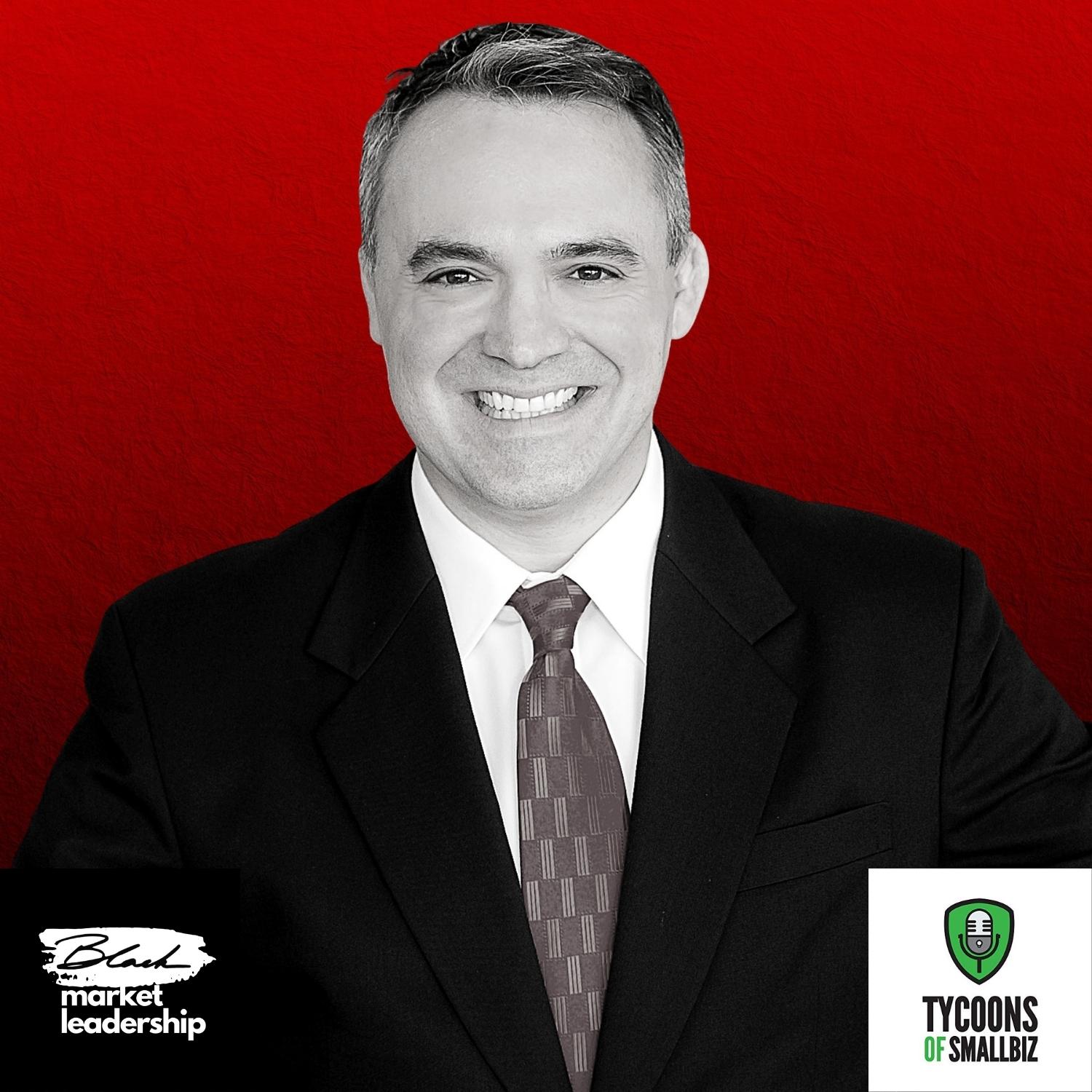
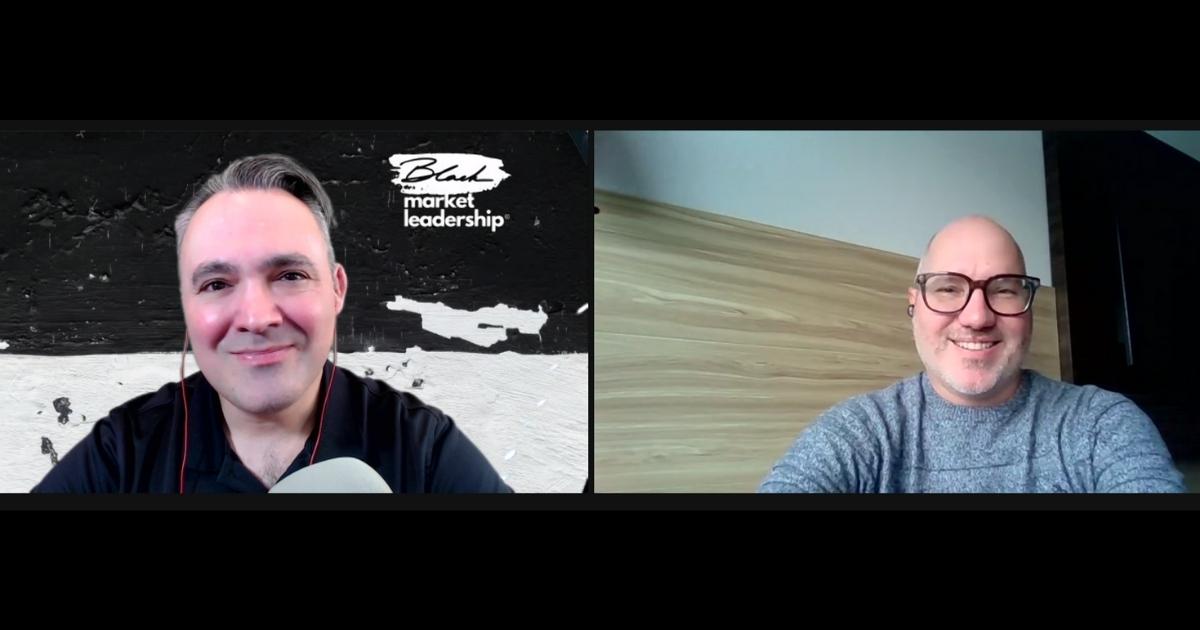
In this episode, host Austin Peterson welcomes guest, Kevin Black , Principal and Founder of Black Market Leadership.

Kevin Black is a veteran US Army officer, leadership expert and strategic advisor. He works with clients helping to develop leaders and align team across a variety of industries, from start-ups to public companies, such as LifeLock and Medtronic. Overall, he’s helped to create over $500M of value.

Kevin combines computer wargaming simulations with behavioral profiling. A veteran of the Forbes Coaches Council, he writes on issues dealing with leadership and strategy. He is the Director of the Phoenix Chapter of the COO Forum, host of the Black Market Leadership podcast, and author of the upcoming book, “Strength Through Chaos.”

Black-Market-Leadership-logo

Kevin-Black-Tycoons-of-Small-BizKevin Black, MA, MBA, is a veteran US Army officer turned nationally recognized leadership expert, executive coach, and strategy advisor who has helped create over $500 million dollars of value. Past clients include LifeLock, Medtronic, and McKesson.

Not satisfied with how leaders are developed today, Kevin created an online learning platform, Black Market Leadership. The subscription-based site provides Fortune 500 educational resources and certifications to leaders who want to be disruptive in their industries.

Kevin can help you:

  • Rapidly improve leader and team performance
  • Improve chances for promotion
  • Increase communication effectiveness
  • Enable team and organization flexibility
  • Plan operationally and strategically
  • Design online courses and curriculum

Connect with Kevin on LinkedIn and Facebook.

About the Show

Tycoons of Small Biz spotlights the true backbone of the American economy, the true tycoons of business in America… the owners, founders and CEO’s of small businesses. Join hosts,  Austin L Peterson, Landon Mance and the featured tycoons LIVE every Tuesday at 1 pm, right here on Business RadioX and your favorite podcast platform.

About Your Hosts

Autsin-Peterson-on-Phoenix-Business-RadioX

Austin Peterson is a Comprehensive Financial Planner and co-founder of Backbone Planning Partners in Scottsdale, AZ. Austin is a registered rep and investment advisor representative with Lincoln Financial Advisors. Prior to joining Lincoln Financial Advisors, Austin worked in a variety of roles in the financial services industry.

He began his career in financial services in the year 2000 as a personal financial advisor with Independent Capital Management in Santa Ana, CA. Austin then joined Pacific Life Insurance Company as an internal wholesaler for their variable annuity and mutual fund products. After Pacific Life, Austin formed his own financial planning company in Southern California that he built and ran for 6 years and eventually sold when he moved his family to Salt Lake City to pursue his MBA.

After he completed his MBA, Austin joined Crump Life Insurance where he filled a couple of different sales roles and eventually a management role throughout the five years he was with Crump. Most recently before joining Lincoln Financial Advisors in February 2015, Austin spent 2 years as a life insurance field wholesaler with Symetra Life Insurance Company. Austin is a Certified Financial Planner Professional and Chartered Life Underwriter. In 2021, Austin became a Certified Business Exit Consultant® (CBEC®) to help entrepreneurs plan to exit their businesses.

Austin and his wife of 23 years, Robin, have two children, AJ (21) and Ella (18) and they reside in Gilbert, Arizona. He is a graduate of California State University, Fullerton with a Bachelor of Arts in French and of Brigham Young University’s Marriott School of Management with a Master of Business Administration with an emphasis in sales and entrepreneurship.backbone-New-Logo

Connect with Austin on LinkedIn, Facebook, Twitter, and Instagram.

LandonHeadshot01

Landon Mance is a Financial Planner and co-founder of Backbone Planning Partners out of Las Vegas, Nevada. He rebranded his practice in 2020 to focus on serving small business owners after operating as Mance Wealth Management since 2015 when Landon broke off from a major bank and started his own “shop.”

Landon comes from a family of successful entrepreneurs and has a passion and excitement for serving the business community. This passion is what brought about the growth of Backbone Planning Partners to help business owners and their families. At Backbone Planning, we believe small business owners’ personal and business goals are intertwined, so we work with our clients to design a financial plan to support all aspects of their lives.

In 2019, Landon obtained the Certified Exit Planning Advisor (CEPA) designation through the Exit Planning Institute. With this certification, Backbone Planning Partners assists business owners through an ownership transition while focusing on a positive outcome for their employees and meeting the business owner’s goals. Landon is also a member of the Business Intelligence Institute (BII) which is a collaborative group that shares tools, resources and personnel, and offers advanced level training and technical support to specifically serve business owners. In 2021, Landon became a Certified Business Exit Consultant® (CBEC®) to help entrepreneurs plan to exit their businesses by counseling owners about exit options, estimating the value of the business, preparing the business for exit and tax considerations.

Landon enjoys spending time with his beautiful wife, stepson, and new baby twins. He grew up in sunny San Diego and loves visiting his family, playing a round of golf with friends, and many other outdoor activities. Landon tries to make a difference in the lives of children in Las Vegas as a part of the leadership team for a local non-profit. He regularly visits the children that we work with to remind himself of why it’s so important to, “be the change that you wish to see in the world.”

Landon received his B.S. from California State University Long Beach in business marketing and gets the rest of his education through the school of hard knocks via his business owner clients.

Connect with Landon on LinkedIn.

Austin Peterson and Landon Mance are registered representatives of Lincoln Financial Advisors Corp. Securities and investment advisory services offered through Lincoln Financial Advisors Corp., a broker/dealer (member SIPC) and registered investment advisor. Insurance offered through Lincoln affiliates and other fine companies. Backbone Planning Partners is a marketing name for registered representatives of Lincoln Financial Advisors. CRN-4043278-122721

Lincoln Financial Advisors Corp. and its representatives do not provide legal or tax advice. You may want to consult a legal or tax advisor regarding any legal or tax information as it relates to your personal circumstances.

The content presented is for informational and educational purposes. The information covered and posted are views and opinions of the guests and not necessarily those of Lincoln Financial Advisors Corp.

Business RadioX® is a separate entity not affiliated with Lincoln Financial Advisors Corp.

Tagged With: Black Market Leadership, Disruption, executive coaching, growth companies, Leadership

Dawn Cook Causey, DayBreak Enterprises, LLC

November 5, 2021 by John Ray

Dawn Cook Causey
North Fulton Business Radio
Dawn Cook Causey, DayBreak Enterprises, LLC
Loading
00:00 /
RSS Feed
Share
Link
Embed

Download file

Dawn Cook Causey

Dawn Cook Causey, DayBreak Enterprises, LLC (North Fulton Business Radio, Episode 408)

Executive coach Dawn Cook Causey joined host John Ray to define emotional intelligence (EQ) and explain why sharpening your EQ is so vital to business sucess. Dawn also offered practices for developing self-awareness, how she coaches her executive and business leader clients, and much more. She also shared a new e-book, Every Day is an Interview, which debuts soon.  North Fulton Business Radio is broadcast from the North Fulton studio of Business RadioX® inside Renasant Bank in Alpharetta.

DayBreak Enterprises, LLC

DayBreak’s mission is to help organizations drive profits by developing their people.

They believe that better emotional intelligence (EQ) leads to better leaders which lead to better business performance. Research shows that leaders and teams with high EQ perform at a higher level, contribute to increased corporate earnings, enjoy higher morale and experience lower turnover. They like proving that research is accurate.

Although DayBreak is based in Alpharetta, Georgia and many of our clients are in Atlanta, we provide executive coaching and leadership development world-wide. Raising the bar for leadership has no limits.

DayBreak offers a variety of tools and assessments to enable you and your team to improve your success.

Developing your team drives business results by increasing skill and motivation. Superstar performance comes from individual contributors leveraging each other’s strengths in addition to their own.

Training your team to increase leadership skills will be six times more effective when it is supported by a strong framework that includes laser-focused objectives, highly engaging content and management-supported follow-up.

Dawn assists clients, teams, and organizations in increasing self-awareness, self-management, social awareness and relationship management so they are EQuipped to bring about change in themselves and their organizations.

Company website | LinkedIn | Instagram

Dawn Cook Causey, Executive Coach, DayBreak Enterprises, LLC

Dawn Cook Causey, Executive Coach, DayBreak Enterprises, LLC

Dawn Cook Causey is an Executive Coach working with leaders and teams to improve their leadership bench strength, increase the speed/reduce cost of doing business through better work relationships and deliver better results.

Her mission is to help organizations drive profits by developing their people. Better emotional intelligence (EQ) means better leaders which means better business performance. Research shows that leaders and teams with high EQ perform at a higher level, contribute to increased corporate earnings, enjoy higher morale and experience lower turnover. She likes proving that research time and time again. Those ‘touchy feely’ competencies are touching and feeling bottom lines everywhere.

Dawn helps leaders who are intellectually bright and technically strong, yet struggle to maximize their own or their team’s potential because they fail to maximize the power of emotions. Her ideal client is the one who is as passionate about developing themselves as she is about helping them do it. She has an excellent track record helping leaders who need to better balance their strong, results-oriented nature with leveraging relationships.

If you or your executives are in any of these positions, Dawn can help you:

– Executive who blew the doors off their competition and rose quickly to the top, but now having to manage and motivate others is a challenge,

– Chief Information Officer responsible for technical types with ‘black and white’ thinking who need their communication styles to be as scalable and efficient as their enterprise solutions,

– Chief Engineering Officer who recognizes that their engineers need to design a better system for relating to non-engineering folks, or

– VP of Human Resources looking for ways to impact the bottom line through higher employee engagement and morale, lower turnover and recruiting costs,

LinkedIn

Questions and Topics Discussed in this Episode

  • There are lots of coaches out there, we’ve interviewed several on this show. What is your niche or what makes you unique?
  • How did you get into coaching? What’s your journey?
  • Who do you coach? Describe your clients and the types of things you coach with them on.
  • In your bio, you say your motto is, “It’s your choice. Make it count.” Tell me about that.
  • And how does making a choice tie to emotional intelligence, since that is your specialty?
  • Can you give us an example of how you’ve worked with a client to make better choices?
  • You call yourself an Executive Coach. Do you ever do Life Coaching?
  • How has the pandemic affected your coaching business?
  • How can people connect with you if they want to start making better, more emotionally intelligent choices?

North Fulton Business Radio is hosted by John Ray, and broadcast and produced from the North Fulton studio of Business RadioX® inside Renasant Bank in Alpharetta. You can find the full archive of shows by following this link. The show is available on all the major podcast apps, including Apple Podcasts, Spotify, Google, Amazon, iHeart Radio, Stitcher, TuneIn, and others.

RenasantBank


Renasant Bank has humble roots, starting in 1904 as a $100,000 bank in a Lee County, Mississippi, bakery. Since then, Renasant has grown to become one of the Southeast’s strongest financial institutions with over $13 billion in assets and more than 190 banking, lending, wealth management and financial services offices in Mississippi, Alabama, Tennessee, Georgia and Florida. All of Renasant’s success stems from each of their banker’s commitment to investing in their communities as a way of better understanding the people they serve. At Renasant Bank, they understand you because they work and live alongside you every day.


Special thanks to A&S Culinary Concepts for their support of this edition of North Fulton Business Radio. A&S Culinary Concepts, based in Johns Creek, is an award-winning culinary studio, celebrated for corporate catering, corporate team building, Big Green Egg Boot Camps, and private group events. They also provide oven-ready, cooked from scratch meals to go they call “Let Us Cook for You.” To see their menus and events, go to their website or call 678-336-9196.

Tagged With: A&S Culinary Concepts, Dawn Cook Causey, DayBreak Enterprises, emotional intelligence, EQ, executive coach, executive coaching, John Ray, Life Coach, North Fulton Business Radio, renasant bank, self-awareness

Chandria Harris, HireCultures

August 17, 2021 by John Ray

HireCultures
Nashville Business Radio
Chandria Harris, HireCultures
Loading
00:00 /
RSS Feed
Share
Link
Embed

Download file

HireCultures

Chandria Harris, HireCultures (Nashville Business Radio, Episode 28)

Being a first-generation college graduate, Chandria Harris worked her way through school and learned her lessons the hard way. She turned her experience into her new book, The Not So Buttoned-Up Approach. Chandria joined host John Ray to discuss her journey, her book, and how her work at HireCultures has evolved into executive coaching for CEOs and corporate leaders who want to successfully hire and lead a more diverse team. Nashville Business Radio is produced virtually from the Nashville studio of Business RadioX®.

HireCultures

HireCultures is a professional development firm that provides exceptional recommendations and best practices to recruit, retain and develop employees.

They assist manufacturing companies by providing consulting, inclusion training, recruiting, and more. People want to belong at work. Leaders want to keep employees. HireCultures makes both possible.

Since 2016, HireCultures has developed 15,000 students, staffed over 150 companies, and coached over 50 executives.

Company website | LinkedIn

Chandria Harris, CEO/Principal Consultant, HireCultures

HireCultures
Chandria Harris, CEO/Principal, HIreCultures

Chandria Harris is a Global Career Development Consultant and Certified Career Services Provider who has served in human resources at Fortune 500 companies and in higher education.

Chandria has proven experience in leading people strategy, organizational design and diversity initiatives that drive impactful results. Admired for developing professionals of color and coaching mid-level managers to executive status, Chandria is a trusted Career and Human Resource professional with an exceptional history of success facilitating leadership training in higher education and health care organizations.

Prior to launching her consulting firm, Chandria served as a Program Manager for Executive Leadership within a fortune 500 company in which she oversaw executive training for Chief Executive Officers and Chief Operation Officers. She facilitated an international training event with CEOS attending from the UK and 20 US states. She also served as a Performance Coach for recent graduates entering the workforce and was recognized for helping over 300 students land business professional internships.

Chandria has a Masters’s degree from The University of West Alabama, a Bachelors Degree in Social Science from Mississippi University from Women, and an Associates Degree from Meridian Community College. She holds certifications: Global Career Development, Career Services Provider, and Certified Professional Resume Writer.

Chandra has also just published her new book, The Not So Buttoned-Up Approach.

LinkedIn | Instagram

Questions and Topics in This Interview

  • Chandria’s new book for recent graduates  The Not So Buttoned-Up Approach
  • HireCultures and how we support companies with recruiting and retaining professionals of color
  • Chandria transition from career development to executive coaching
  • How organizations can embrace the gig economy to attract young professionals

Nashville Business Radio is hosted by John Ray and produced virtually from the Nashville studio of Business RadioX®.  You can find the full archive of shows by following this link. The show is available on all the major podcast apps, including Apple Podcasts, Spotify, Google, Amazon, iHeart Radio, Stitcher, TuneIn, and others.

Tagged With: Chandria Harris, diversity and inclusion, executive coaching, HireCultures, inclusion coaching, The Not So Buttoned-Up Approach

Andy Kalajian, Fort Leadership & Sales Consulting

June 21, 2021 by John Ray

Fort Leadership
North Fulton Business Radio
Andy Kalajian, Fort Leadership & Sales Consulting
Loading
00:00 /
RSS Feed
Share
Link
Embed

Download file

Fort Leadership

Andy Kalajian, Fort Leadership & Sales Consulting (North Fulton Business Radio, Episode 365)

Andy Kalajian of Fort Leadership & Sales Consulting joined host John Ray to discuss his leadership and sales consulting practice, the one common character trait of all effective leaders, the biggest challenges leaders face today, and much more.  North Fulton Business Radio is broadcast from the North Fulton studio of Business RadioX® inside Renasant Bank in Alpharetta.

Fort Leadership & Sales Consulting, LLC

Through Fort Leadership & Sales Consulting, Andy Kalajian offers Mastermind Teaching, Speaking and Executive, Individual and Team Coaching.

There is a synergy of energy, commitment, and excitement that participants bring to a mastermind group. Andy’s facilitated John C. Maxwell book study groups offer a combination of masterminding, peer brainstorming, education, accountability, and support in a group setting to sharpen business and personal skills. By bringing fresh ideas and a different perspective, Andy’s masterminds help participants achieve increased success.

As a Certified John Maxwell Coach, Trainer and Speaker, Andy offers customized presentations to fit individual or team needs and budget such as:

  • 10-minute briefing
  • “Lunch and Learn”
  • Keynote speech for your company sponsored event
  • Half-day and full-day workshop/seminar
  • In-house corporate training
  • Executive and personal retreat
  • Partnership Summit

In individual, executive or team coaching, Andy can see what clients are going through now and what is up ahead. Coaching is foreseeing, paving the way, coming alongside a client while helping them achieve goals and overcome limiting paradigms.

Company website

Andy Kalajian, Founder and President, Fort Leadership & Sales Consulting, LLC

Fort Leadership
Andy Kalajian, Fort Leadership

Andy Kalajian has been a highly sought-after public speaker for more than 25 years. He has received public acclaim for his brand, EnTheos, Latin for Spirit Within and origin to the word Enthusiasm. Andy enthusiastically delivers powerful talks and lessons steeped in the wisdom literature and their practical application into busy lifestyles. His tagline, transformational thought in action, serves as a reminder to the participant that one can, indeed, permanently change the destiny of their life by changing the nature of their thoughts and actions.

Andy was born and raised in Detroit Michigan. As a young boy he discovered his passion for serving others in medicine and his gift for public speaking. At the age of 12, Andy, at the urging of his father, began to earn his own way as a Golf Caddy. His sense of adventure also led him, along with his father, to the Boy Scouts of America where he achieved the rank of Eagle Scout. In High School, Andy’s mother introduced him to the books Think and Grow Rich by Napoleon Hill and How to Win Friends and Influence People by Dale Carnegie.

While a golf caddy, Andy was awarded the prestigious Evans Scholarship, a full academic and leadership scholarship, to study at Michigan State University, where he earned a Bachelor of Science degree in Medical Technology. In 1985, he coupled his lifelong passion for medicine and serving people with his gift of enthusiastic speaking and moved to Atlanta to begin his career in Medical Sales. As a young professional, Andy’s mom continued to fuel his desire for wisdom literature from authors/speakers Zig Ziglar, Earl Nightingale, Les Brown, Stephen Covey, and John Maxwell. Andy applied the character traits instilled in him from the Boy Scouts and the leadership skills taught to him by John Maxwell, Stephen Covey, and others to enjoy over 30 years in an award-winning medical sales career.  It was during this time that Andy was asked to speak to groups as small as 4 or 5 and as large as 500+ all over the US and Puerto Rico.

Andy and his wife, Sherrie, have four adult children and are active members of Pastor Andy Stanley’s congregation at North Point Community Church in Alpharetta, Georgia. Andy enjoys time invested with his wife Sherrie, his family, and friends.

LinkedIn

Questions and Topics in This Interview

  • What is Fort Leadership and Sales Consulting?
  • Your tagline is Transformational Thought in Action. What does that mean?
  • What distinguishes you from many of the other business curriculums out there in the marketplace?
  • What makes a good leader?
  • Character development is an “Inside Out” process.
  • How does character development manifest itself in a business or professional environment?

North Fulton Business Radio is hosted by John Ray, and broadcast and produced from the North Fulton studio of Business RadioX® inside Renasant Bank in Alpharetta. You can find the full archive of shows by following this link. The show is available on all the major podcast apps, including Apple Podcasts, Spotify, Google, Amazon, iHeart Radio, Stitcher, TuneIn, and others.

Renasant Bank has humble roots, starting in 1904 as a $100,000 bank in a Lee County, Mississippi, bakery. Since then, Renasant has grown to become one of the Southeast’s strongest financial institutions with over $13 billion in assets and more than 190 banking, lending, wealth management and financial services offices in Mississippi, Alabama, Tennessee, Georgia and Florida. All of Renasant’s success stems from each of their banker’s commitment to investing in their communities as a way of better understanding the people they serve. At Renasant Bank, they understand you because they work and live alongside you every day.

Tagged With: Andy Kalajian, executive coaching, Fort Leadership, keynote speaker, Leadership, leadership coaching, Sales, sales consulting

  • « Previous Page
  • 1
  • 2
  • 3
  • 4
  • 5
  • …
  • 7
  • Next Page »

Business RadioX ® Network


Our Most Recent Episode

CONNECT WITH US

  • Email
  • Facebook
  • LinkedIn
  • Twitter
  • YouTube

Our Mission

We help local business leaders get the word out about the important work they’re doing to serve their market, their community, and their profession.

We support and celebrate business by sharing positive business stories that traditional media ignores. Some media leans left. Some media leans right. We lean business.

Sponsor a Show

Build Relationships and Grow Your Business. Click here for more details.

Partner With Us

Discover More Here

Terms and Conditions
Privacy Policy

Connect with us

Want to keep up with the latest in pro-business news across the network? Follow us on social media for the latest stories!
  • Email
  • Facebook
  • Google+
  • LinkedIn
  • Twitter
  • YouTube

Business RadioX® Headquarters
1000 Abernathy Rd. NE
Building 400, Suite L-10
Sandy Springs, GA 30328

© 2025 Business RadioX ® · Rainmaker Platform

BRXStudioCoversLA

Wait! Don’t Miss an Episode of LA Business Radio

BRXStudioCoversDENVER

Wait! Don’t Miss an Episode of Denver Business Radio

BRXStudioCoversPENSACOLA

Wait! Don’t Miss an Episode of Pensacola Business Radio

BRXStudioCoversBIRMINGHAM

Wait! Don’t Miss an Episode of Birmingham Business Radio

BRXStudioCoversTALLAHASSEE

Wait! Don’t Miss an Episode of Tallahassee Business Radio

BRXStudioCoversRALEIGH

Wait! Don’t Miss an Episode of Raleigh Business Radio

BRXStudioCoversRICHMONDNoWhite

Wait! Don’t Miss an Episode of Richmond Business Radio

BRXStudioCoversNASHVILLENoWhite

Wait! Don’t Miss an Episode of Nashville Business Radio

BRXStudioCoversDETROIT

Wait! Don’t Miss an Episode of Detroit Business Radio

BRXStudioCoversSTLOUIS

Wait! Don’t Miss an Episode of St. Louis Business Radio

BRXStudioCoversCOLUMBUS-small

Wait! Don’t Miss an Episode of Columbus Business Radio

Coachthecoach-08-08

Wait! Don’t Miss an Episode of Coach the Coach

BRXStudioCoversBAYAREA

Wait! Don’t Miss an Episode of Bay Area Business Radio

BRXStudioCoversCHICAGO

Wait! Don’t Miss an Episode of Chicago Business Radio

Wait! Don’t Miss an Episode of Atlanta Business Radio