Business RadioX ®

  • Home
  • Business RadioX ® Communities
    • Southeast
      • Alabama
        • Birmingham
      • Florida
        • Orlando
        • Pensacola
        • South Florida
        • Tampa
        • Tallahassee
      • Georgia
        • Atlanta
        • Cherokee
        • Forsyth
        • Greater Perimeter
        • Gwinnett
        • North Fulton
        • North Georgia
        • Northeast Georgia
        • Rome
        • Savannah
      • Louisiana
        • New Orleans
      • North Carolina
        • Charlotte
        • Raleigh
      • Tennessee
        • Chattanooga
        • Nashville
      • Virginia
        • Richmond
    • South Central
      • Arkansas
        • Northwest Arkansas
    • Midwest
      • Illinois
        • Chicago
      • Michigan
        • Detroit
      • Minnesota
        • Minneapolis St. Paul
      • Missouri
        • St. Louis
      • Ohio
        • Cleveland
        • Columbus
        • Dayton
    • Southwest
      • Arizona
        • Phoenix
        • Tucson
        • Valley
      • Texas
        • Austin
        • Dallas
        • Houston
    • West
      • California
        • Bay Area
        • LA
        • Pasadena
      • Colorado
        • Denver
      • Hawaii
        • Oahu
  • FAQs
  • About Us
    • Our Mission
    • Our Audience
    • Why It Works
    • What People Are Saying
    • BRX in the News
  • Resources
    • BRX Pro Tips
    • B2B Marketing: The 4Rs
    • High Velocity Selling Habits
    • Why Most B2B Media Strategies Fail
    • 9 Reasons To Sponsor A Business RadioX ® Show
  • Partner With Us
  • Veteran Business RadioX ®

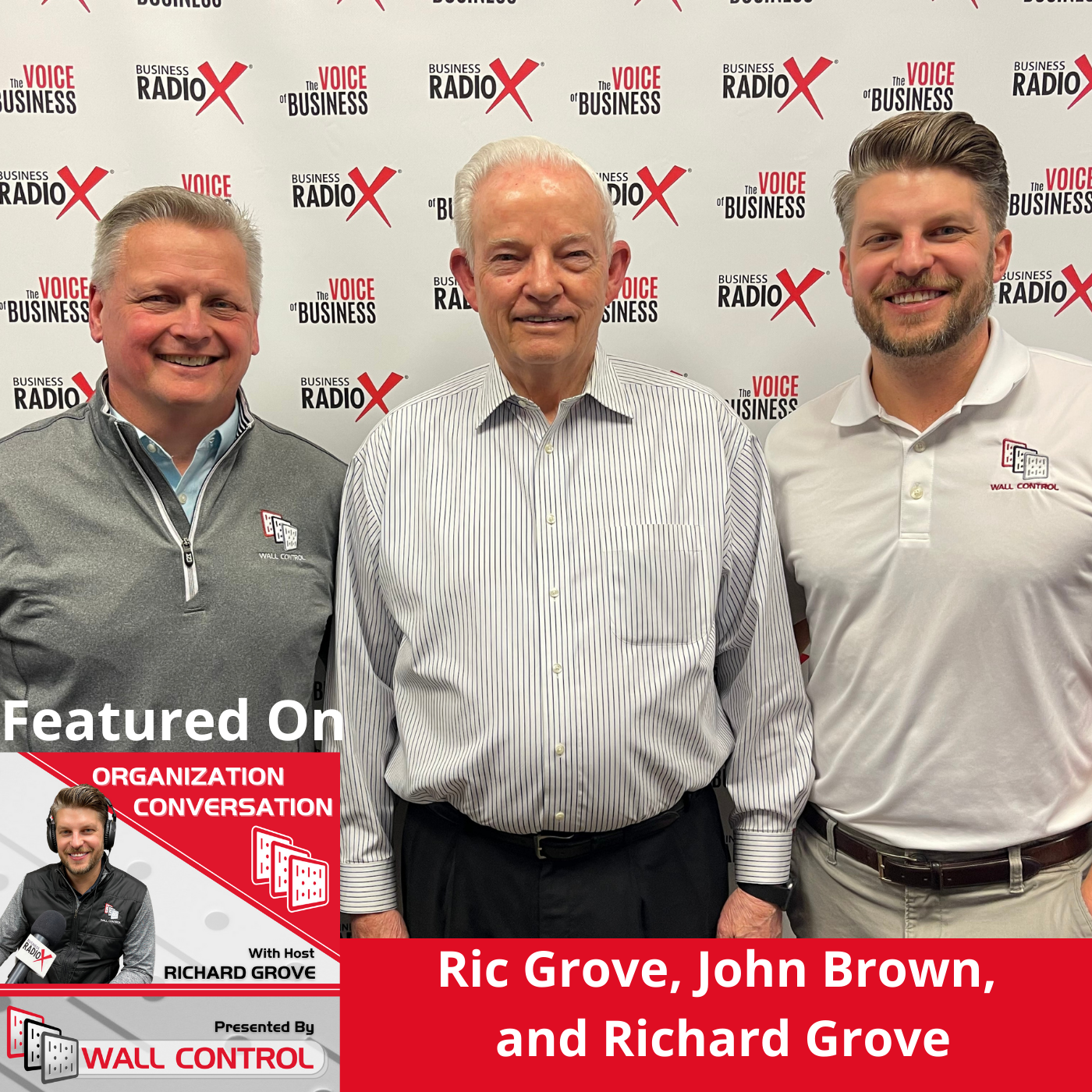
John Brown, Ric Grove, and Richard Grove of Wall Control

February 17, 2022 by John Ray

Richard Grove
North Fulton Studio
John Brown, Ric Grove, and Richard Grove of Wall Control
Loading
00:00 /
RSS Feed
Share
Link
Embed

Download file

Richard Grove

John Brown, Ric Grove, and Richard Grove of Wall Control (Organization Conversation, Episode 1)

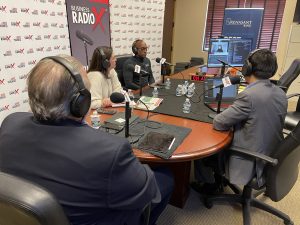
On the first episode of Organization Conversation, host Richard Grove is joined by his father and grandfather to share the story of Wall Control. They recall the history of their work in a tool and die company, developing the product that would become the Wall Control system, the struggles they experienced, when things began to turn around, the benefits of the products, the need for skilled labor, and much more. Organization Conversation is broadcast from the North Fulton studio of Business RadioX® inside Renasant Bank in Alpharetta.

Organization Conversation is hosted by Richard Grove, and broadcast and produced from the North Fulton studio of Business RadioX® inside Renasant Bank in Alpharetta. You can find the full archive of shows by following this link. The show is available on all the major podcast apps, including Apple Podcasts, Spotify, Google, Amazon, iHeart Radio, Stitcher, TuneIn, and others.

About Richard Grove

Richard Grove, Host, “Organization Conversation”

Richard Grove‘s background is in engineering but what he enjoys most is brand building through relationships and creative marketing. Richard began his career with the Department of Defense as an engineer on the C-5 Galaxy Engineering Team based out of Warner Robins. While Richard found this experience both rewarding and fulfilling, he always knew deep down that he wanted to return to the small family business that originally triggered his interest in engineering.

Richard came to work for the family business, Dekalb Tool & Die, in 2008 as a Mechanical Engineer. At the time Wall Control was little more than a small ‘side hustle’ for Dekalb Tool & Die to try to produce some incremental income. There were no “Wall Control” employees, just a small warehouse with a single tool and die maker that would double as an “order fulfillment associate” on the occasion that the original WallControl.com website, which Richard’s grandmother built, pulled in an order.

In 2008, it became apparent that for the family business to survive they were going to have to produce their own branded product at scale to ensure jobs remained in-house and for the business to continue to move forward. Richard then turned his attention from tool and die to Wall Control to attempt this necessary pivot and his story with Wall Control began. Since that time, Richard has led Wall Control to significant growth while navigating two recessions.

Outside of Richard’s work at Wall Control he enjoys helping other business owners, operators, and entrepreneurs along their own paths to success by offering personal business coaching and advising through his website ConsultantSmallBusiness.com. Richard has developed an expansive and unique skillset growing and scaling Wall Control through a multitude of challenges to the successful brand and company it is today. Richard is happy to share his knowledge and experience with others who are looking to do the same within their own businesses.

Connect with Richard:

Instagram | Twitter | LinkedIn | Richard’s Website

About Wall Control

The Wall Control story began in 1968 in a small tool & die shop just outside Atlanta, Georgia. The first of three generations began their work in building a family-based US manufacturer with little more than hard work and the American Dream.

Over the past 50+ years, this family business has continued to grow and expand from what was once a small tool & die shop into an award-winning US manufacturer of products ranging from automobile components to satellite panels and now, the best wall-mounted tool storage system available today, Wall Control.

The Wall Control brand launched in 2003 and is a family-owned and operated business that not only produces a high-quality American Made product but sees the entire design, production, and distribution process happen under their own roof in Tucker, Georgia. Under that same roof, three generations of American Manufacturing are still hard at work creating the best tool storage products available today.

Connect with Wall Control:

Company website | Facebook | Instagram

Tagged With: Family Business, Organization Conversation, Richard Grove, steel pegboard, Wall Control, wall systems

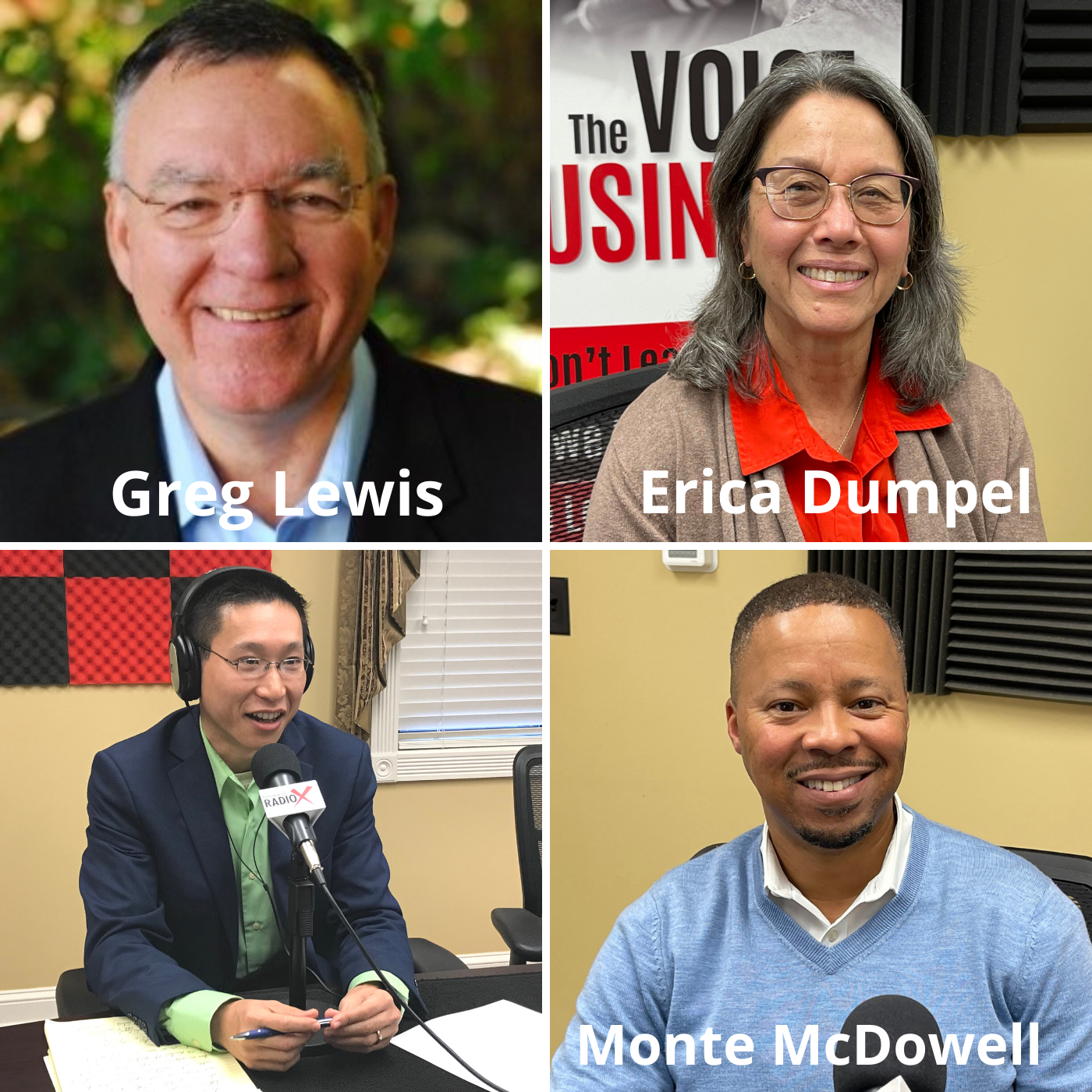
Greg Lewis, Tennessee Center for Family Business, Erica Dumpel, CDA Inc., and Monte McDowell, ARCpoint Labs of Atlanta-Northeast

December 16, 2021 by John Ray

CDA Inc.
Family Business Radio
Greg Lewis, Tennessee Center for Family Business, Erica Dumpel, CDA Inc., and Monte McDowell, ARCpoint Labs of Atlanta-Northeast
Loading
00:00 /
RSS Feed
Share
Link
Embed

Download file

CDA Inc.

Greg Lewis, Tennessee Center for Family Business, Erica Dumpel, CDA Inc., and Monte McDowell, ARCpoint Labs of Atlanta-Northeast (Family Business Radio, Episode 27)

Family businesses are in the spotlight on this episode of Family Business Radio with host Anthony Chen. Greg Lewis of Tennessee Center for Family Business worked for years in the family business and chose to use his experience to help other family businesses. Erica Dumpel founded CDA, Inc. to deliver affordable health insurance, and now her son is actively working with her. Monte McDowell of ARCpoint Labs chose to leave corporate work and purchase a lab services franchise and go into business with his wife. Anthony wraps up the episode with a commentary on the importance of talking with loved ones about the legacy they want to leave through their investments. Family Business Radio is underwritten and brought to you by Anthony Chen with Lighthouse Financial Network.

Greg Lewis, Co-Founder, Tennessee Center for Family Business

Greg Lewis, Co-Founder, Tennessee Center for Family Business

The Tennessee Center for Family Business is a family business advisory group. They help business owners deal with the unique challenges of working together in a family business, plan for a successful transition and working together create a lasting family legacy.

Greg Lewis is co-founder of The Tennessee Center for Family Business. He is an expert in organizational management, team building, and generational leadership transition. His servant leader approach and 30 plus years of experience in building and leading his own family businesses make him a valuable resource to family business executives who want to become more effective leaders as they deal with the unique mix of family and non-family team members, values, culture and processes in which their family business operates.

His clients work in a variety of industries including manufacturing, transportation, supply chain, nonprofit, retail, healthcare and agriculture.

Greg is a frequent speaker on leadership and social enterprise. He serves as a Master Mentor at The Nashville Entrepreneur Center as well as a Mentor in Residence at The Wondr’y Innovation and Entrepreneurship Center at Vanderbilt University. Greg has a passion for working with the next generation of entrepreneurs and family business leaders.

Greg received his Bachelor’s Degree from the University of Tennessee Knoxville and holds leadership certifications from the Keller Graduate School of Management at Northwestern University and the Center for Association Leadership in Washington, DC. He is a certified trainer with the Ken Blanchard Companies in Situational Leadership II ®, the most taught leadership model in the world.

He is an active member of the Franklin Rotary at Breakfast where he recently served as President. In his spare time, he loves spending time with family and friends, being outdoors and cooking.He is a certified Kansas City Barbeque Society Judge.

Greg lives in Williamson County, Tennessee with his wife and business co-founder, Jennifer, and their golden retriever, Giggles. He has three beautiful daughters, a great son-in-law and grandson. Greg loves being outdoors, gardening, travelling, cooking and spending time with family and friends.

Company website | LinkedIn

Erica Dumpel, Founder and President, CDA Inc.

Erica Dumpel, Founder and President, CDA Inc.

Czajkowski Dumpel & Associates, Inc. (CDA, Inc.) started as a boutique benefits agency in 1975 in the New York City market. Since moving to Georgia in 1981 many small to mid-market companies have benefited from CDA, Inc.’s willingness to look beyond traditional options for solutions to pay for employee healthcare costs.

CDA Inc. shops the market for the best benefit packages available to small companies and individuals with special consideration to claims that might be incurred specifically to the age/gender/family makeup of the group. The agency has grown from two to six individuals plus affiliated partnerships in order to provide the most expert and highest service levels possible. Continuation and succession planning is in place to guarantee ongoing levels of service and care to agency clients without interruption in case of any individual’s inability to perform at the levels of excellence our clients have come to expect.

Erica Dumpel is a co-founder and president at Czajkowski Dumpel & Associates, Inc.

Company website | LinkedIn

Monte McDowell, ARCpoint Labs of Atlanta-Northeast

Monte McDowell, ARCpoint Labs of Atlanta-Northeast

ARCpoint Labs of Atlanta-Northeast is a full-service lab collection service in Duluth, Georgia. They provide testing in the areas of drug and alcohol, DNA, and other clinical health and wellness lab services. The lab is a trusted partner for business and individual consumers. The business supports a wide range of professions including legal/judicial, medical, and government.

Monte has a background of over two decades in HR. In 2o20 he decided to take the leap to get into a franchise and chose ARCpoint Labs. He and his wife run the business together.

Company website | LinkedIn

Anthony Chen, Host of Family Business Radio

family owned craft breweries
Anthony Chen

This show is sponsored and brought to you by Anthony Chen with Lighthouse Financial Network. Securities and advisory services offered through Royal Alliance Associates, Inc. (RAA), member FINRA/SIPC. RAA is separately owned and other entities and/or marketing names, products or services referenced here are independent of RAA. The main office address is 575 Broadhollow Rd. Melville, NY 11747. You can reach Anthony at 631-465-9090 ext 5075 or by email at anthonychen@lfnllc.com.

Anthony Chen started his career in financial services with MetLife in Buffalo, NY in 2008. Born and raised in Elmhurst, Queens, he considers himself a full-blooded New Yorker while now enjoying his Atlanta, GA home. Specializing in family businesses and their owners, Anthony works to protect what is most important to them. From preserving to creating wealth, Anthony partners with CPAs and attorneys to help address all of the concerns and help clients achieve their goals. By using a combination of financial products ranging from life, disability, and long term care insurance to many investment options through Royal Alliance. Anthony looks to be the eyes and ears for his client’s financial foundation. In his spare time, Anthony is an avid long-distance runner.

The complete show archive of “Family Business Radio” can be found at familybusinessradioshow.com.


Tagged With: Anthony Chen, Benefits, CDA Inc., Erica Dumpel, Family Business, Family Business Radio, Greg Lewis, Lighthouse Financial Network, Tennessee Center for Family Business

Transitioning a Family Business from One Generation to Another (Part 2 of 2)

December 15, 2021 by Mike

Stewarding-Family-Wealth
Gwinnett Studio
Transitioning a Family Business from One Generation to Another (Part 2 of 2)
Loading
00:00 /
RSS Feed
Share
Link
Embed

Download file

Drew Gilbreath, Randy Brunson and Cole Porter

In the second part of a 2-part episode, host Randy Brunson discusses the benefits and challenges of transitioning a family business from one generation to another with second-generation business owners Drew Gilbreath of Sutter, McLellan & Gilbreath and Cole Porter of Porter Steel.

Drew Gilbreath/Sutter, Mclellan & Gilbreath

Sutter, McLellan & Gilbreath prides itself on being an independent agency and its ability to create a strategic business partnership between their client, their carrier and their community. Through mutually beneficial alliances, Sutter, McLellan & Gilbreath provide tailored services and products compatible with your expectations. SMG will communicate clearly and keep the program design concise. Brady is the only broker at the agency that focuses solely on employee benefits.

Cole Porter/Porter Steel

In business since 1983, Porter Steel is one of Atlanta’s premier providers of structural steel, miscellaneous metals, and architectural metals to General Contractors and other fabricators in the area. Additionally, they have a custom manufacturing division where they partner with other manufacturers in completing the steel portion of their product.


Randy Brunson/Centurion Advisory Group

Randy Brunson is the founding shareholder of Centurion Advisory Group. Randy has invested most of his forty-year career in financial services. He spent several years on the institutional side and had the opportunity to start a successful financial planning firm in 1991. Centurion Advisory Group serves individual and corporate clients, both in Georgia and throughout the country, offering personal and business financial planning, retirement plan design and management, and investment management services.

Randy studied engineering and marketing at UT Chattanooga. Randy currently holds the Accredited Investment Fiduciary (AIF®) and CKA designation and makes it a priority to stay on top of his knowledge in the financial industry through continuing professional educational opportunities and reading. In addition, Randy has completed studies in qualified plan design, estate planning and business transition planning and he enjoys speaking and writing regularly on these topics.

Stewarding Family Wealth is presented by

Tagged With: business transition, centurion advisory group, cole porter, drew gilbreath, Family Business, family business transition, financial advice, porter steel, randy brunson, stewarding family wealth, stewarding family wealth podcast, sutter mclellan & gilbreath, wealth and savings advice, wealth management, wealth podcast

Greg Romero, Romero Solutions Group

December 10, 2021 by John Ray

Romero Solutions Group
Business Leaders Radio
Greg Romero, Romero Solutions Group
Loading
00:00 /
RSS Feed
Share
Link
Embed

Download file

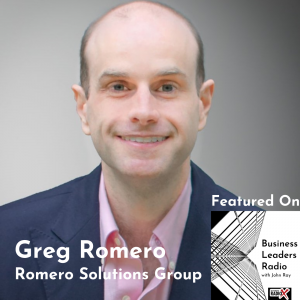
Greg Romero

Greg Romero, Romero Solutions Group

Greg Romero started his firm after successfully running and transforming a family business. Greg shares his experience, the lessons learned, what led him to start his practice, how he works with business owners, and much more. Business Leaders Radio is produced virtually from the Business RadioX® studios in Atlanta.

Romero Solutions Group

At Romero Solutions Group, they solve problems at the unique intersection of family and business. Greg Romero

They leverage their deep knowledge of family businesses, strategy, and business operations to help clients diagnose, plan and execute upon their change needs.

Company website | LinkedIn

Greg Romero, Founder and Principal, Romero Solutions Group

Greg Romero, Founder and Principal, Romero Solutions Group

Greg is the Founder and Principal of Romero Solutions Group, a management consulting firm based out of Harvard, MA. His firm specializes in helping small to mid-sized (SMB) family businesses problem solve and create value across strategy, business operations and the family dynamic.

Before starting his own business, Greg spent 4.5 years successfully running a consumer goods-focused family business. As President & VP of Operations, he transformed many facets of the organization while simultaneously designing and executing a value-maximizing exit strategy for family shareholders just prior to the pandemic. Greg built his foundation of problem-solving, strategy, planning, and execution at Morgan Stanley in high-impact internal consulting and operator roles.

Greg is a proven leader across professional, philanthropic, and academic settings. He holds his MBA from New York University Leonard N. Stern School of Business with a specialization in Strategy and Finance.

 LinkedIn 

Questions and Topics

  • Your experience running your wife’s family business
  • What led you to start your own management consulting firm?
  • What are a few of the prime situations in which you help clients?
  • How is your model different from other consulting firms?
  • What are your key principles and value proposition?
  • Any trends playing out or on the horizon that you think small to mid-sized family businesses leaders should be aware of?
  • What advice would you give to others who are interested in consulting and/or starting their own firms?


Business Leaders Radio is hosted by John Ray and produced virtually from the North Fulton studio of Business RadioX® in Alpharetta.  The show can be found on all the major podcast apps and a full archive can be found here.

Tagged With: Family Business, family run business, Greg Romero, Romero Solutions Group

Transitioning a Family Business from One Generation to Another (Part 1 of 2)

December 9, 2021 by Mike

Gwinnett Studio
Gwinnett Studio
Transitioning a Family Business from One Generation to Another (Part 1 of 2)
Loading
00:00 /
RSS Feed
Share
Link
Embed

Download file

Drew Gilbreath, Randy Brunson and Cole Porter

In the first part of a 2-part episode, host Randy Brunson discusses the benefits and challenges of transitioning a family business from one generation to another with second-generation business owners Drew Gilbreath of Sutter, McLellan & Gilbreath and Cole Porter of Porter Steel.

Drew Gilbreath/Sutter, Mclellan & Gilbreath

Sutter, McLellan & Gilbreath prides itself on being an independent agency and its ability to create a strategic business partnership between their client, their carrier and their community. Through mutually beneficial alliances, Sutter, McLellan & Gilbreath provide tailored services and products compatible with your expectations. SMG will communicate clearly and keep the program design concise. Brady is the only broker at the agency that focuses solely on employee benefits.

Cole Porter/Porter Steel

In business since 1983, Porter Steel is one of Atlanta’s premier providers of structural steel, miscellaneous metals, and architectural metals to General Contractors and other fabricators in the area. Additionally, they have a custom manufacturing division where they partner with other manufacturers in completing the steel portion of their product.


Randy Brunson/Centurion Advisory Group

Randy Brunson is the founding shareholder of Centurion Advisory Group. Randy has invested most of his forty-year career in financial services. He spent several years on the institutional side and had the opportunity to start a successful financial planning firm in 1991. Centurion Advisory Group serves individual and corporate clients, both in Georgia and throughout the country, offering personal and business financial planning, retirement plan design and management, and investment management services.
Randy studied engineering and marketing at UT Chattanooga. Randy currently holds the Accredited Investment Fiduciary (AIF®) and CKA designation and makes it a priority to stay on top of his knowledge in the financial industry through continuing professional educational opportunities and reading. In addition, Randy has completed studies in qualified plan design, estate planning and business transition planning and he enjoys speaking and writing regularly on these topics.

Stewarding Family Wealth is presented by

Tagged With: business transition, centurion advisory group, cole porter, drew gilbreath, Family Business, family business transition, financial advice, porter steel, randy brunson, stewarding family wealth, stewarding family wealth podcast, sutter mclellan & gilbreath, wealth and savings advice, wealth management, wealth podcast

Educate and Empower E74

September 29, 2021 by Karen

Educate-and-Empower-E74-feature
Phoenix Business Radio
Educate and Empower E74
Loading
00:00 /
RSS Feed
Share
Link
Embed

Download file

Educate-and-Empower-E74

Educate and Empower E74

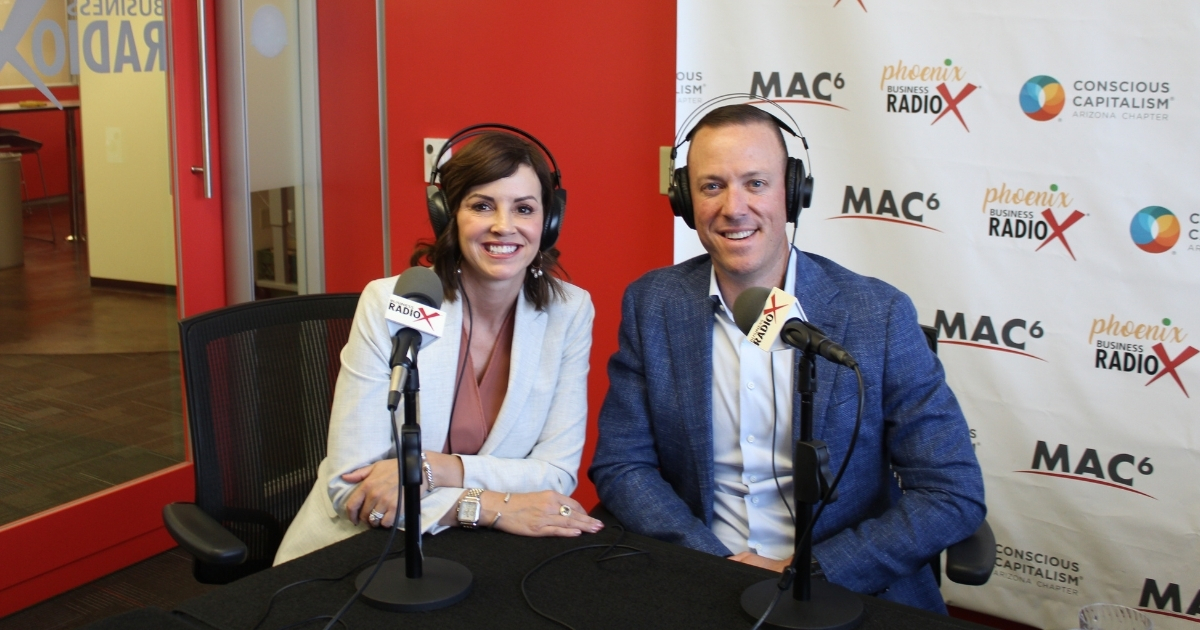
Join the Tycoons as guests, Casey & Teresa Strunk, talk about being in the family business and the importance of a strong, comprehensive employee benefits package. This team has it figured out and knows that in order to make the dynamic work, they all have to have a mutual level of respect for each other.

Strunk Insurance believes in the value of serving local businesses to educate and empower employees to make the right decisions for themselves and their families. They understand that in order to keep the great people that you already have, employee satisfaction is so important and employee benefits contributes in large part to that satisfaction.

You’ll want to listen to this episode to learn a lot about going into the family business, boundaries to respect, and employee retention. The workforce is shifting and people want choices to fit their lifestyle and Strunk Insurance can help bridge that gap. Find them on their multiple platforms to find out more!

The Strunk Insurance Group is a 40 year old multi-generation employee benefits firm. They serve over 200 corporate clients accross the country helping with everything from employee benefits, compliance, HR and retirement plans. As a botique regional agency, they specalize in working with those small to mid-sized employers with 50-500 enrolled employees.

Casey-StrunkWith the costs of benefits and health care rising, Casey J. Strunk is passionate about leveraging innovative methods coupled with traditional solutions to create fiscal efficiencies in today’s businesses’ employee offerings.

As President of Strunk Insurance Group, Mr. Strunk provides high level and strategic oversight of clients’ benefits packages, as well as making recommendations based upon the industry’s latest trends.

With the hopes of carrying on his father’s stellar legacy, Mr. Strunk is committed to providing the same quality of service that clients from the Strunk Insurance Group’s inception have come to expect to those in present day.

His future plans also include expanding both the services the company offers and the company’s reputation, geographically, to become one of the premier benefits agencies in the Southwest. Instilled with his father’s Midwestern values and work ethic, Mr. Strunk also continually strives to bring innovative, yet pragmatic processes and practices to the table.

Equipped with a Bachelor’s degree in communication from Northwestern University, Mr. Strunk understands the importance of being able to adapt to his audience, as he often works with a wide range of clients. This expertise has also helped him in translating complex laws and regulations into easy-to-digest concepts.

Casey is married to wife Teresa and they have daughters Margaret and Rachel.

Connect with Casey on LinkedIn and follow Strunk Insurance Group on Instagram.

Teresa-StrunkTeresa Strunk is Vice President of Strunk Insurance Group.

Connect with Teresa on LinkedIn.


About the Show

Tycoons of Small Biz spotlights the true backbone of the American economy, the true tycoons of business in America… the owners, founders and CEO’s of small businesses. Join hosts,  Austin L Peterson, Landon Mance and the featured tycoons LIVE every Tuesday at 1 pm, right here on Business RadioX and your favorite podcast platform.

About Your Hosts

Autsin-Peterson-on-Phoenix-Business-RadioX

Austin Peterson is a Comprehensive Financial Planner and co-founder of Backbone Planning Partners in Scottsdale, AZ. Austin is a registered rep and investment advisor representative with Lincoln Financial Advisors. Prior to joining Lincoln Financial Advisors, Austin worked in a variety of roles in the financial services industry.

He began his career in financial services in the year 2000 as a personal financial advisor with Independent Capital Management in Santa Ana, CA. Austin then joined Pacific Life Insurance Company as an internal wholesaler for their variable annuity and mutual fund products. After Pacific Life, Austin formed his own financial planning company in Southern California that he built and ran for 6 years and eventually sold when he moved his family to Salt Lake City to pursue his MBA.

After he completed his MBA, Austin joined Crump Life Insurance where he filled a couple of different sales roles and eventually a management role throughout the five years he was with Crump. Most recently before joining Lincoln Financial Advisors in February 2015, Austin spent 2 years as a life insurance field wholesaler with Symetra Life Insurance Company. Austin is a Certified Financial Planner Professional and Chartered Life Underwriter. In 2021, Austin became a Certified Business Exit Consultant® (CBEC®) to help entrepreneurs plan to exit their businesses.

Austin and his wife of 23 years, Robin, have two children, AJ (21) and Ella (18) and they reside in Gilbert, Arizona. He is a graduate of California State University, Fullerton with a Bachelor of Arts in French and of Brigham Young University’s Marriott School of Management with a Master of Business Administration with an emphasis in sales and entrepreneurship.backbone-New-Logo

Connect with Austin on LinkedIn, Facebook, Twitter, and Instagram.

LandonHeadshot01

Landon Mance is a Financial Planner and co-founder of Backbone Planning Partners out of Las Vegas, Nevada. He rebranded his practice in 2020 to focus on serving small business owners after operating as Mance Wealth Management since 2015 when Landon broke off from a major bank and started his own “shop.”

Landon comes from a family of successful entrepreneurs and has a passion and excitement for serving the business community. This passion is what brought about the growth of Backbone Planning Partners to help business owners and their families. At Backbone Planning, we believe small business owners’ personal and business goals are intertwined, so we work with our clients to design a financial plan to support all aspects of their lives.

In 2019, Landon obtained the Certified Exit Planning Advisor (CEPA) designation through the Exit Planning Institute. With this certification, Backbone Planning Partners assists business owners through an ownership transition while focusing on a positive outcome for their employees and meeting the business owner’s goals. Landon is also a member of the Business Intelligence Institute (BII) which is a collaborative group that shares tools, resources and personnel, and offers advanced level training and technical support to specifically serve business owners. In 2021, Landon became a Certified Business Exit Consultant® (CBEC®) to help entrepreneurs plan to exit their businesses by counseling owners about exit options, estimating the value of the business, preparing the business for exit and tax considerations.

Landon enjoys spending time with his beautiful wife, stepson, and new baby twins. He grew up in sunny San Diego and loves visiting his family, playing a round of golf with friends, and many other outdoor activities. Landon tries to make a difference in the lives of children in Las Vegas as a part of the leadership team for a local non-profit. He regularly visits the children that we work with to remind himself of why it’s so important to, “be the change that you wish to see in the world.”

Landon received his B.S. from California State University Long Beach in business marketing and gets the rest of his education through the school of hard knocks via his business owner clients.

Connect with Landon on LinkedIn.

Austin Peterson and Landon Mance are registered representatives of Lincoln Financial Advisors Corp. Securities and investment advisory services offered through Lincoln Financial Advisors Corp., a broker/dealer (member SIPC) and registered investment advisor. Insurance offered through Lincoln affiliates and other fine companies. Backbone Planning Partners is a marketing name for registered representatives of Lincoln Financial Advisors. CRN-3795463-092721

Lincoln Financial Advisors Corp. and its representatives do not provide legal or tax advice. You may want to consult a legal or tax advisor regarding any legal or tax information as it relates to your personal circumstances.

The content presented is for informational and educational purposes. The information covered and posted are views and opinions of the guests and not necessarily those of Lincoln Financial Advisors Corp.

Business RadioX® is a separate entity not affiliated with Lincoln Financial Advisors Corp.

Tagged With: employee benefits, Family Business, Strunk Insurance Group

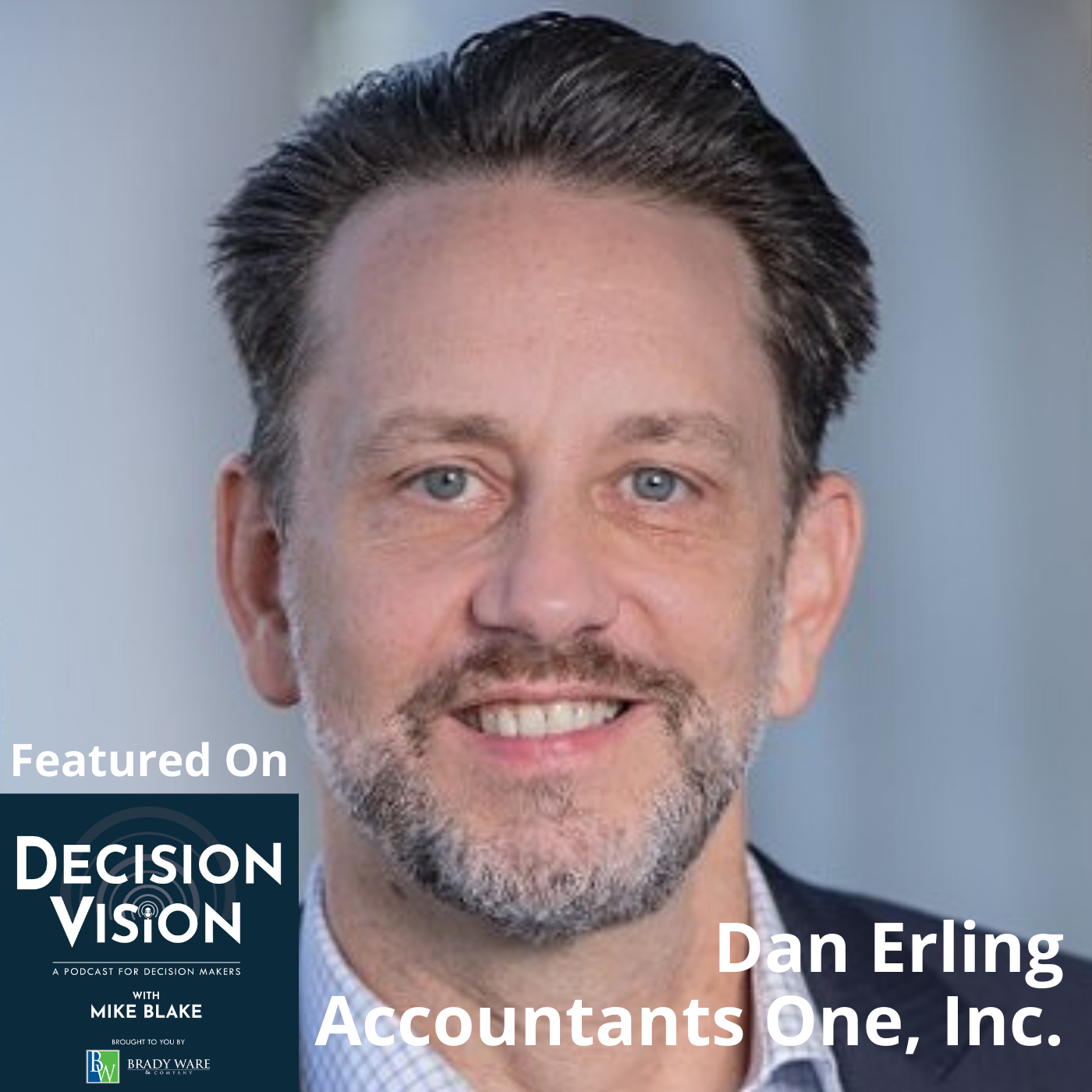
Decision Vision Episode 125:  Should I Take Over the Family Business? – An Interview with Dan Erling, Accountants One, Inc.

July 16, 2021 by John Ray

Accountants One
Decision Vision
Decision Vision Episode 125:  Should I Take Over the Family Business? - An Interview with Dan Erling, Accountants One, Inc.
Loading
00:00 /
RSS Feed
Share
Link
Embed

Download file

Accountants One

Decision Vision Episode 125:  Should I Take Over the Family Business? – An Interview with Dan Erling, Accountants One, Inc.

Dan Erling became CEO of Accountants One suddenly when his father died in 2010. As the sales director, Dan was embedded in the business but without a plan to take over. He and host Mike Blake chart the course of Accountants One from that point, and Dan shares his insights on what it takes to inherit a business, lucky breaks, things he would have done differently, how the business eventually flourished, and much more. Decision Vision is presented by Brady Ware & Company.

Accountants One, Inc.

Accountants One is a full-service accounting and finance recruiting firm specializing in direct hire and contract placements.Accountants One

Since 1973, they have been recognized as industry experts who align as trusted staffing partners with the organizations we serve. Their relationship-driven focus consistently leads to the highest rate of placement success in the industry. Headquartered in Atlanta, Georgia, Accountants One has the infrastructure in place to serve clients across the Southeast.

The CEO of Accountants One, Dan Erling, wrote the book on hiring – literally.  The book is called MATCH: A Systematic, Sane Process for Hiring the Right Person Every Time. The book details uniqueness of our approach.

Key points include:
Recognizing that a great hire is 75% culture fit, 25% skill fit. What this means for you: they get to know you and the unique culture of your company. They find candidates who not only have the right skills, they are also the right fit for your department and company.

Finding the right person requires a coordinated project management team. What this means for you: evaluating stacks of resumes, interviewing candidates, testing them, checking references, preparing them, following up – they utilize an entire team to work on your job order.

Understanding that mis-hire can cost a company up to 15 times their salary. What this means for you: they’re objective. They get to know you, and they know their candidates. They’ve interviewed thousands of people. They’re not fooled by someone who is great at interviewing but doesn’t have what it takes to work for your company. They have the highest success rate in the industry for a reason: they have the tools to match candidates with clients.

Working a consistent, proven process ensures success. What this means for you: the right process allows them to move forward methodically and ensures that all the angles are covered, so by the time the candidate gets to you, there are no surprises. No one ‘slips through the cracks.’

Developing meaningful long-term relationships with both clients and candidates makes the difference. What this means for you: They invest in getting to know you so that they can understand the intangibles – those qualities that go beyond an email or job write-up. They are your partner. They are with you for the long haul.  They develop the same deep relationships with our candidates; they have access to excellent people who work with them exclusively and confidentially on their job search.

Company website | LinkedIn | MATCH

Dan Erling, President, Accountants One

Dan Erling is the President of Accountants One. He is in the Georgia Association of Personnel Services (GAPS) Million Dollar Hall of Fame and was recognized as one of Atlanta’s Up and Comers by the Atlanta Business Chronicle. Under Dan’s leadership, Accountants One was named one of Atlanta’s Best Places to Work. Dan is the creator of the Search for the South’s Funniest Accountant. This combination fundraiser/stereotype debunker has become an annual favorite in the accounting community – consistently bringing in over 800 people to cheer for Funny Accountants. Through the Search Accountants One has helped raise over a quarter of a million dollars for Junior Achievement of Georgia.

He earned a Bachelor of Science in Mathematics from Georgia State University and his Masters from Emory University. Before joining Accountants One, Dan was an inner-city math teacher for 8 years. In 1996, he was named the Academic Achievement Incentive Teacher of the Year for Middle Schools. In 1998, Dan had the opportunity to join his father, Bert Erling, at Accountants One. This followed several summers of working as an IT Project Manager for the firm. While Dan unexpectedly lost his dad on May 2, 2010, he considered the opportunity to work with his dad as one of the highlights of his life.

Dan’s wife, Michelle, is an art educator and painter (she painted the two pieces that hang in the lobby of the main office). He has two sons that he is very proud of. Dan’s personal interests include abstract art and music. While dedicated to working a recruiting desk, Dan spends a great deal of time consulting with companies on Hiring Best Practices. The result of this work led to his book: MATCH, A Systematic, Sane Process for Hiring the Right Person Every Time. The book was published in December 2010 by Wiley Publishing and is available wherever books and ebooks are sold. You can learn more about Dan’s philosophy of hiring as well as read his blog by visiting www.danerling.com.

Dan is on the board of Junior Achievement of Georgia. Through this non-profit, he is able to be part of making a difference in the lives of children. Something that remains incredibly important to him. Dan is also on the board of the Georgia State Panther Athletic Committee. As a Georgia State University alum, he is incredibly proud of what is going on with Panther Sports. The impact of the sports community on the downtown area also inspires him. The opportunity to serve people and bring value in an authentic way continues to motivate and inspire Dan every day. He truly loves his job.

LinkedIn

Mike Blake, Brady Ware & Company

Mike Blake, Host of the “Decision Vision” podcast series

Michael Blake is the host of the Decision Vision podcast series and a Director of Brady Ware & Company. Mike specializes in the valuation of intellectual property-driven firms, such as software firms, aerospace firms, and professional services firms, most frequently in the capacity as a transaction advisor, helping clients obtain great outcomes from complex transaction opportunities. He is also a specialist in the appraisal of intellectual properties as stand-alone assets, such as software, trade secrets, and patents.

Mike has been a full-time business appraiser for 13 years with public accounting firms, boutique business appraisal firms, and an owner of his own firm. Prior to that, he spent 8 years in venture capital and investment banking, including transactions in the U.S., Israel, Russia, Ukraine, and Belarus.

LinkedIn | Facebook | Twitter | Instagram

Brady Ware & Company

Brady Ware & Company is a regional full-service accounting and advisory firm which helps businesses and entrepreneurs make visions a reality. Brady Ware services clients nationally from its offices in Alpharetta, GA; Columbus and Dayton, OH; and Richmond, IN. The firm is growth-minded, committed to the regions in which they operate, and most importantly, they make significant investments in their people and service offerings to meet the changing financial needs of those they are privileged to serve. The firm is dedicated to providing results that make a difference for its clients.

Decision Vision Podcast Series

Decision Vision is a podcast covering topics and issues facing small business owners and connecting them with solutions from leading experts. This series is presented by Brady Ware & Company. If you are a decision-maker for a small business, we’d love to hear from you. Contact us at decisionvision@bradyware.com and make sure to listen to every Thursday to the Decision Vision podcast.

Past episodes of Decision Vision can be found at decisionvisionpodcast.com. Decision Vision is produced and broadcast by the North Fulton studio of Business RadioX®.

Connect with Brady Ware & Company:

Website | LinkedIn | Facebook | Twitter | Instagram

TRANSCRIPT

Intro: [00:00:01] Welcome to Decision Vision, a podcast series focusing on critical business decisions. Brought to you by Brady Ware & Company. Brady Ware is a regional full service accounting and advisory firm that helps businesses and entrepreneurs make visions a reality.

Mike Blake: [00:00:21] Welcome to Decision Vision, a podcast giving you, the listener, clear vision to make great decisions. In each episode, we discuss the process of decision making on a different topic from the business owners’ or executives’ perspective. We aren’t necessarily telling you what to do, but we can put you in a position to make an informed decision on your own and understand when you might need help along the way.

Mike Blake: [00:00:42] My name is Mike Blake and I’m your host for today’s program. I’m a director at Brady Ware & Company, a full service accounting firm based in Dayton, Ohio, with offices in Dayton; Columbus, Ohio; Richmond, Indiana; and Alpharetta, Georgia. Brady Ware is sponsoring this podcast, which is being recorded in Atlanta per social distancing protocols. If you would like to engage with me in social media with my Chart of the Day and other content, I’m on LinkedIn as myself and @unblakeable on Facebook, Twitter, Clubhouse, and Instagram. If you like this podcast, please subscribe on your favorite podcast aggregator and please consider leaving a review of the podcast as well.

Mike Blake: [00:01:18] So, today’s topic is, Should I take over the family business? And before I get into this, I apologize for publishing this a day later than we normally do. Just some, frankly, scheduling difficulties. Now, that everybody is allowed to go back on vacation, I took for granted the fact that people basically had nothing better to do – literally, nothing better to do than to come on my podcast. And I got into a habit of not being aggressive enough in scheduling. And so, this is coming out a day later than we normally do. I would normally just blame it on technical difficulties, but I’m just going to own it and say I got into some bad habits. But this should be the only one that gets published late. It’s only a day late, so I’m sure everybody survived.

Mike Blake: [00:02:02] But today’s topic is, Should I take over the family business? And, you know, this topic is kind of interesting from a timing standpoint. About 15 years ago, we read all over the place that there was going to be a massive wave of baby boomers handing off their businesses to Generation X and – gasp – millennials. And we thought for sure that that was going to happen. And everybody said business brokers, M&A people, investment bankers, they’re going to make a killing. Business appraisers – like myself – are going to make a killing. There was going to be this massive transfer of wealth.

Mike Blake: [00:02:45] And kind of something interesting happened was really that nothing happened. I mean, it’s still happening on an ad hoc basis. But this wave of businesses that are being transferred just really has not happened 15 years later. And I think that’s happening for a lot of reasons. I think it’s happening, one, because people had a lot of ground to make up after the wealth they lost in the ’08, ’09 recession. And I think the other thing that’s happened is because healthcare and nutrition have become so good, is that a lot of people, frankly, have a lot of juice, they have a lot of gas left in the tank at age 65. And they don’t necessarily want to go off into the sunset unless their health just starts to prevent it.

Mike Blake: [00:03:33] But the reality is – and I’m a big advocate for this – you know, this notion of retiring at 65, if you want to do it, can do it, great. But our healthcare technology and nutrition is able to keep people viable for much longer. And that’s happening with businesses. And so, the transfer of a business from one generation to another, I think, is still a very special event and it’s an important event. It’s an important event because, you know, companies that are multigenerational, they’re hard to come by because they’re hard to do. And the track record of multigenerational businesses, frankly, is not all that awesome.

Mike Blake: [00:04:17] There’s a term called shirtsleeves to shirtsleeves, that wealth that’s transferred in generation one is 90 percent gone on average by generation three. And so, the numbers are really stacked against generational wealth really being successful. And that’s why when I see a scenario under which generational transfer is somewhat successful, I think that’s something to be highlighted because there are probably lessons that we can learn from it.

Mike Blake: [00:04:49] And joining us today is a friend of mine who I’ve known a lot of years before he took over his company, actually, is Dan Erling of Accountants One, which is a full service accounting and finance recruiting firm specializing in direct hiring and contract placements. Since 1973, they have been recognized as industry experts who aligns trust and staffing partners with the organizations they serve. Their relationship driven focus consistently leads to the highest rate of placement success in the industry.

Mike Blake: [00:05:21] Headquartered in Atlanta, Georgia, Accountants One has the infrastructure in place to serve clients across the southeast. Dan Erling is the President of Accountants One. He is the Georgia Association of Personnel Services Million Dollar Hall of Fame, and was recognized as one of Atlanta’s Up and Comers by the Atlanta Business Chronicle. Under Dan’s leadership, Accountants One was named one of Atlanta’s best places to work.

Mike Blake: [00:05:44] And I can see that. The things I observe him doing with his company are so fascinating, and groundbreaking, and authentic. I’m not surprised. In fact, I steal a lot of his ideas.

Mike Blake: [00:05:56] Dan is the creator for the Search for the Souths Funniest Accountant. This combination fundraiser stereotype debunker has become an annual favorite in the accounting community, consistently bringing in over 800 people to cheer for funny accountants. So, the Search for Accountants One has helped raise over a-quarter-of-a-million dollars for junior achievement of Georgia.

Mike Blake: [00:06:16] I’ve got to do that one year. I’m not technically an accountant, but I’m sort of accounting adjacent. And the funny thing is, by the way, for those of you who are listening, you think accountants to be funny. Well, Bob Newhart started as an accountant, actually. He was a CPA before he moved over into that. Bob Newhart, even today, is still a laugh. I mean, when he’s on the Big Bang Theory, I sit up and take notice.

Mike Blake: [00:06:37] Dan wrote the book on hiring, literally. The book is called Match: A Systematic, Sane Process for Hiring the Right Person Every Time. The book details the uniqueness of their approach. And, finally, Dan is a member with me of the Swedish American Chamber of Commerce. I think he’s a Swedish descent. I am not. I’m just an interloper, but I like meatballs. Dan, welcome to the program.

Dan Erling: [00:06:58] Oh, my gosh. Thank you so much. What an honor to be here today. I feel very, very lucky to be talking with one of Atlanta’s cultural icons, the legend, Mike Blake.

Mike Blake: [00:07:15] Well, we’ll change your mind halfway through the podcast.

Dan Erling: [00:07:17] All right. You got it.

Mike Blake: [00:07:17] But I don’t think you’re too much of a flight risk. So, Accountants One was founded in 1973. I didn’t realize it was that old. Tell me the origin story. What’s the lore of the history of Accountants One?

Dan Erling: [00:07:33] All right. Quick story, my dad’s a jazz musician. He has me, he says, “Boy, I need to do something where I can make money.” And so, he becomes an accountant. Rides up the org chart, really works for mostly the same company as he went from senior accountant to regional controller. And then, said, “You know, I really am an entrepreneur at heart. I am that jazz musician.” So, when I was in high school, he bought a two person bookkeeping search firm, started doing controller searches, and ran it for years. So, there’s your origin story of Accountants One.

Mike Blake: [00:08:22] And I forgot that your father was a jazz musician. I can see that. Typically jazz musician is not the fast way to wealth. What did he play? Was it saxophone?

Dan Erling: [00:08:34] No. His stand up bass. He was a bass player.

Mike Blake: [00:08:36] Stand up bass, okay. The upright bass. Yeah. And bass players don’t make a lot in any event.

Dan Erling: [00:08:42] Oh. No. No.

Mike Blake: [00:08:43] Unless you’re Getty Lee of Rush. That’s pretty much the only one I think so.

Dan Erling: [00:08:48] That’s a good one. Sure.

Mike Blake: [00:08:48] When did you start to work in the business?

Dan Erling: [00:08:50] All right. So, in my previous life, I’ve had two jobs. I was an inner city math teacher. I was the middle school teacher of the year at APS, and loved the kids, loved that experience. I was there for eight years. But along the way, I recognized that I belonged in an entrepreneurial world, and was working summers with my dad at the three person recruiting staffing firm.

Dan Erling: [00:09:24] And one summer, when I knew it was starting to become time where I went out and established myself, I went to him and said, “Hey, Dad. You know, I’d like to join you. Can I come to Accountants One next year after I finish this group of children I had promised that I would come back?” And he said, “Yeah. But there’ll be no nepotism here.”

Dan Erling: [00:09:49] And so, in 1998 with a two year old and a four year old, I joined Accountants One. And I’ve been here ever since. It’s been a great experience. And I quickly became our top sales guy. And, now, I’m very lucky that I’m the CEO.

Mike Blake: [00:10:13] I’m fascinated by the transition. I can see why you’d be a teacher who would resonate with kids and, of course, that explains your junior achievement.

Dan Erling: [00:10:21] Yes. Oh, absolutely. I still want to give back, especially we’ve created a fund or a nonprofit to serve inner city youth. Yes.

Mike Blake: [00:10:32] I mean, that’s a big change, from APS into accounting and recruiting firm. What was it that you saw from outside and said, “You know what? I want to do that. I want to drop what I’m doing,” that clearly had a lot of meaning for you. You’re clearly very dedicated, I can tell by your voice. I just don’t know how you’re wired. What did you see from afar that made you want to get involved in that?

Dan Erling: [00:11:01] I’ve never looked at sales as trying to control people. I don’t like the manipulative aspect of sales. But I did think, “You know, if I can sell inner city kids on math and coming in here and being excited about doing math and that’s fulfilling, what can I do from a sales standpoint in terms of bringing value to people as they change jobs?” And so, it was that sales aspect and the best use of sales in terms of motivating people and helping them to achieve more and bringing true value that motivated me.

Mike Blake: [00:11:53] So, I’m going to go off the script here because I think that’s so fascinating. I speculate – and you tell me if I’m wrong – I think when you’re going to teach math to kids in APS, unless they’re unusually motivated, I mean, isn’t there a sales job in there somewhere, too, to get them engaged and get one to do the work and do hard things and grow nerve endings?

Dan Erling: [00:12:16] Yeah. Oh, this job is a lot easier than the job at APS. I mean, selling math to inner city kids, that’s a lifetime achievement. And I really, really respect teachers and always want to give back, because trying to make that happen is not only so important for our society, but it’s also so difficult and hard to do on a day to day basis. So, bless those teachers that do it. I only did it for eight years.

Mike Blake: [00:12:50] Now, most people I know who do what you do, that is recruiting and accounting, have an accounting background, I think, anyway. Is that accurate? And if so, was it hard for you to kind of get in and learn the vocabulary? Or maybe being an outsider made it easy? I don’t know. You tell me.

Dan Erling: [00:13:08] So, we’re about half and half. We’ve got Big Four CPAs on the team and we’ve got people who really never did accounting or finance. But in my case, I grew up with it, listening to my dad, understanding what he did. And, you know, if you do this long enough – I mean, you do not want me to do your books, but we probably can have a pretty deep conversation about mergers and acquisitions, and we play CFOs all the time – you learn about how it all fits together, even though you’re probably not an expert in doing.

Mike Blake: [00:13:52] So, how long did you work in the business until you started to have thoughts of, “You know what? I’d like to make a go of this when it’s my dad’s time to hang them up and move on?”

Dan Erling: [00:14:05] All right. So, I thought a lot about this interview, and I decided that if people were going to get value out of this, I needed to come clean and to tell the real story. So, I hope that I don’t later on regret anything that I’m about to say. Because if I can be of help to anybody that’s listening to this, I would be delighted.

Dan Erling: [00:14:34] So, the answer to your question as to how did I make that decision was, I absolutely did not. And if I can help anybody to be prepared for that decision, then I would feel great. And I’d be delighted to talk to anybody who’s in this space. So, in 2010, I became the CEO for the worst reason, and that is that my dad passed away. I mean, he was mowing the grass, he had a heart attack, and the paramedic said he was dead in 30 seconds.

Dan Erling: [00:15:12] So, I went from sales manager to CEO in a day. With, we had just landed a major, major account, which had a hundred contractors. And my dad was working with a bank on how to figure that out. And this is 2010, which, things were upside down economically, we just had a collapse, the banks were falling apart, they were trying to figure out how to hold themselves together. And I wound up inheriting the company at just the worst time that one could ask for.

Mike Blake: [00:16:01] And so, I want to come back to that, because I knew part of that story, I didn’t know he literally just passing away mowing the lawn. With the reason I should never mow my lawn again.

Dan Erling: [00:16:16] It’s a great reason to not mow your lawn, definitely love that.

Mike Blake: [00:16:19] Especially in the Atlanta heat. But if you’d had to do over differently, what might you have done in terms of planning? Or what did you wish might have been done in advance that would have saved headaches down the road?

Dan Erling: [00:16:37] So, the timing for this was perfect, because what I am doing right now is what I wish that I would have done back then with my dad, which is clarifying everything. It is working with a lawyer. It is working with a CPA firm. It is discussing how the transaction should happen, the tax implications, getting people that are much smarter than I. And right now, I’m working with a financial coach. My goal is that, by the end of the year – and we’re in a transition right now. Let me explain that in a moment, because I think this is important. It’s important to do it now and it’s important to do it in three years because the company will be in a much different spot.

Dan Erling: [00:17:35] But I have set a goal of delivering to my financial coach, my CPA firm, my lawyer, and key people on the Accounts One team so that they’re hearing what exactly our wishes are, how things are going to be turned over if I happen to pass away mowing my grass. This is what I wish that my dad and I would have done. I wish we would have been more disciplined to have gone through that process so that we had a documentation in place. So that it was clear, instead of me inheriting all of these problems, all of these questions on top of the stress of losing your dad.

Dan Erling: [00:18:26] And I just wanted to add that, we also have plans for doing this in three more years, because if your company is growing – I mean, if my company wasn’t growing, I probably would be fine for a ten year plan. But we’ve already put into place some things where we know where we are now. We’re going to have to relook at this again in three years as the company changes.

Mike Blake: [00:18:55] So, knowing that story, I kind of reorganized my thoughts here a little bit. Was it clear that you would be the one taking it over when that happened? In other words, was there anybody else in the company who thought, “I mean, Dan’s great, but he’s just in sales. And I’m the one who has been here for 30 years or something. I really should be running the firm. I should be the obvious successor. I’ve been the number two.” Frankly, were there other pretenders to the throne?

Dan Erling: [00:19:30] No. No.

Mike Blake: [00:19:33] Good. That made it easier then.

Dan Erling: [00:19:33] Well, in this case, because nobody would have wanted that responsibility. And I told you, I was going to tell the truth. My dad was an awesome businessman. He died at the wrong spot. Again, I went into this saying I’m going to share some things that are embarrassing. But if somebody can learn from them, I’m fine with it. Because I’m just going to say my dad was a guru businessman. I love my dad. He was an excellent dad and a great business partner. But because of the time that he died, and he was the sole owner of the company, he had some real estate that was underwater because of 2010 – it didn’t have anything to do with him – that was connected to the business.

Dan Erling: [00:20:38] So, what I wound up inheriting – isn’t this a wonderful inheritance? – is a major debt. Because it’s just like concrete galoshes here that are pulling you down. But I think it is funny, the one disagreement that my dad and I ever had in business was, “I don’t want to be an owner of property. If you want to do it, go ahead.” We did not think through the fact that if he died, what was going to happen was if those buildings were underwater, they would start to sink the company. My lawyer, my wonderful lawyer said, “Dan, you should declare bankruptcy.”

Mike Blake: [00:21:22] No kidding.

Dan Erling: [00:21:23] “Because this isn’t your fault. This is just the way things are. It’s tied to those buildings.” So, the answer to your question is, nobody else would have been crazy enough to have wanted to inherit that organization at that time.

Dan Erling: [00:21:41] Which, by the way, I’m going to throw this out here right now, my dad would be incredibly proud of us. In fact, I would say that I was very honored – I’m going to say this because I want you to know where we started. And I’m a modest person, I won the award for Most Admired CEO in Atlanta in Accounting through the Atlanta Business Chronicle. And I say that because I want you to know where we’ve come from, to where we’ve gone to, and how proud my dad would be of that change.

Dan Erling: [00:22:22] I don’t know many scenarios that could have been worse than the one that I’m painting. And if you fight through them, then you can make it. But we would have been so much better off if we would have had more planning in place for the loss of my dad.

Mike Blake: [00:22:43] So, that brings me to something I really want to get into with you, and that is that, I suspect and other clients I’ve advised, they feel sort of a push and pull of how much do you want to keep out of respect for the traditions of the firm? And how much do you want to make change, because I’m younger, I’m closer to the younger generation, I have new ideas that maybe the older generation was either reluctant to implement or really didn’t even think about? Did you have that tug of war? And if so, how did you make peace with that?

Dan Erling: [00:23:24] I think that it is critical that best idea wins whether you’re the son of the owner or not. And I think that that’s the rule of our firm. And I think that as a leader in the firm, whether you’re the CEO or not, that it is imperative in a family business to make it clear that the one rule of the business is that even the son or the daughter can be fired if they’re not good at their job. And if that’s not in place, then you wind up with a weaker organization that can be dragged down by dumb ideas that are owned by somebody who has clout because they’re a family member versus a great idea that brings value regardless of who you are.

Mike Blake: [00:24:28] So, I just thought of the question I should have asked, so I’m going to ask it now, which is, you paint a pretty bleak picture of the business when you had it fall in your lap for better or worse, right?

Dan Erling: [00:24:41] Right.

Mike Blake: [00:24:44] Why did you take it over? Was there an alternative of declaring bankruptcy, trying to sell it, doing something else with it? Why did you take it over? What was in your decision calculus to get you to that point?

Dan Erling: [00:24:57] There’s two reasons. Number one, I love the job. Now, in fairness to me, I was the sales manager. That was the responsibility that I wanted. I had two kids that I wanted to spend time with. I didn’t want to be the CEO. So, I love the job. I just didn’t have all of that responsibility. That was my dad’s thing. So, there was never any reluctance in terms of loving the job.

Dan Erling: [00:25:29] And then, the thing that really motivated me to want to keep it going was the people that this organization serves. And as I looked at myself and the others, I knew it was the right thing to do to keep it going. So, passion for the job and then love of people motivated me to keep it going. And, gosh, there’s very few people that were here then that aren’t here now.

Mike Blake: [00:26:05] So, what were some of the changes that you’ve made as a result of you taking this over and running it? Did you resist making changes? First of all, was it hard to make changes?

Dan Erling: [00:26:25] Well, especially when you didn’t have any money, yes, yes. It’s a lot easier to make changes when you’ve got some money in the bank. It’s so much easier, because you can afford to make mistakes, too, right? That is one of the benefits of having some money in the bank. But, I mean, this was a wonderful, flexible job that had great earning potential and the ability to be flexible, to match with my my schedule as I was taking care of my family.

Dan Erling: [00:27:04] What happened after I became the CEO was, I realized that in order to scale it up, it needed more processes. So, we added a COO, we added structure to the organization, we added a controller, we have a director of recruitment now. So, a lot of structural changes. The biggest change would be the addition of a COO. That was our first executive that wasn’t a salesperson.

Dan Erling: [00:27:36] And the impact that Tom Kapish, our COO, has had on the organization has been huge. And he’s been just a great partner. And the reason that over the past five years, we’ve increased three fold. We’re now up to 40 people on the team. All of that has to do with Tom in some of the structures that he’s put into place. But then, also, just adding great people to support the organization as a whole.

Dan Erling: [00:28:06] I’ll give you one one cool thing that we’ve added to the organization as you’ve had to get more sophisticated. Back in the day, when we would get a job, it would be a nice siloed recruiter working on that role. Now, we have a whole project management system, where multiple people, you have marketing, and sourcing, and a junior recruiter, and a senior recruiter, how all of those people are interconnected. We have daily scrum meetings on our searches so that we can identify where we are. That was unheard of in 2010, it wasn’t because we were unsophisticated. It was just a simple system of an individual recruiter being able to meet the needs of multiple clients. We’ve come a long way because of the growth.

Mike Blake: [00:29:12] So, you know, again, going back to the circumstances under which you literally inherited the company, did you have any kind of mental fights with yourself in terms of, you know, can I do this? Should I do this? Because I think you were so unprepared for it mentally. How could you have been otherwise? Was it hard to mentally wrap your head around the magnitude of the responsibility you are now taking on and the learning curve that you had in front of you?

Dan Erling: [00:29:47] You know, I think I’m not a very smart person, which helps a lot in situations like this. You have no idea what you’re getting yourself into. So, I think that was one of my strengths. If I would have known what I was doing, I would never have done it. But it did. I will tell you this, I now am such a better business leader because of all of the lessons that were learned through this and embracing those lessons. And I’m just going to say, wonderful team that I could rely on when things got really tough, wonderful family situation.

Dan Erling: [00:30:33] My wife was very, very supportive. I, to this day, remember her saying, “Well, the worst thing that could happen is we would lose the house and we’d have to move into some kind of an apartment somewhere, but we’d still be together.” When your wife says that, man, that gives you all of the intestinal fortitude needed to go fight the battle the next day.

Dan Erling: [00:30:57] And I learned a lot about deep breathing exercises. I’m serious, that saved my butt. So many times I’m like, I’ve got the bank calling me. I’ve got clients calling me. I’ve got problems. All of these things, what do you work on? I learned how to do some deep breathing exercises that would get me through that and then emerge from that exercise and know, “Okay. Let’s just go solve this one problem.”

Mike Blake: [00:31:35] So, when you took over the business, did you feel like it was your business right away? Or did you go through any kind of period where you felt like, you know, “I’m sort of a caretaker.” And if there was that sort of transition, how long did it take for you to really feel like the business was yours?

Dan Erling: [00:31:56] It took me five years to rid myself of the debt. After the five years, I felt it was mine. Because I knew how to read a financial, kind of, when I inherited the business. I sure do know how to read a financial now. And just big shoutout to my CPA firm who really came in. CPA firms are so much help in cases like this. This guy just really, really helped me to organize myself and run the business from an accounting standpoint.

Mike Blake: [00:32:37] So, you know, you mentioned that you changed some things, the team oriented process. What about things like branding? And actually more to the point, here’s the right question to ask, how long did it take for people to get comfortable looking at you as the face of Accountants One CEO and not kind of referencing your father?

Dan Erling: [00:33:04] Yeah. That’s a good one. I hope this doesn’t sound like I’m bragging, but I was the sales leader of the organization already.

Mike Blake: [00:33:18] That probably helped a lot.

Dan Erling: [00:33:19] It helped a lot. Exactly. Because I’m not a one dimensional sales CEO by any means. Meaning that, some CEOs, it’s all about sales. For us, it’s about many things. And sales is critical. I mean, you can’t run a business without sales. But coming out of the loss of my dad, sales was the most important thing. That was the thing that was going to keep our payroll running. It was going to keep us moving forward. So, the fact that I was an expert in sales really helped with that transition from my dad being the CEO to me now being a CEO, because I knew what buttons to push on the sales side.

Mike Blake: [00:34:17] Yeah. And I don’t want to use the term – it sounds lucky, but that’s not quite the right term. I think that somewhere along the line there is just a good match that you happen to be what your company needed most because it was underwater from a debt standpoint. Revenue is the most important thing. That wouldn’t be the case in every scenario. If you’ve been a manufacturing company, operations might have been much more paramount. Or in some other area, like if you’re running a software company, it’s writing code or might be writing code that’s paramount.

Mike Blake: [00:34:59] And I don’t know if this is by design or by fate or maybe just a subconscious match, but it sounds like, I mean, a lot of ways you have the right skillset in the right place at the right time. Whereas, maybe if you’ve been a CEO as opposed to a market facing person, it might have been a much more difficult path.

Dan Erling: [00:35:20] So, you said it. I’m going to just agree with you wholeheartedly. Complete luck.

Mike Blake: [00:35:27] That’s why you’re my favorite guest, but thank you.

Dan Erling: [00:35:30] But luck, I can’t believe how lucky we were. So many times, there could have been things that happened that would have taken us down. I have no idea how we made it through. There was several lucky things that all came together. But, you know, I talked to a lot of people in business that have been through tough times. Luck matters. I think Jim Collins talks about this all the time, the fortitude of luck. And I happen to be the right guy with the right amount of energy to get us through. And we’ve become an incredibly strong true organization now because of what we’ve been through.

Mike Blake: [00:36:18] You know, I like that. And I’ve been a big proponent of the role of luck in business as well. In fact, Scientific American published a great blog about two years ago that talked about an Italian research paper that talks about the role of luck in business and economic outcomes. That doesn’t absolve you of the responsibility to try to manufacture a better outcome. But the reality is, is that, who you’re born to may give you a head start or not. The country you’re born in, are you born in a stable economy that respects the rule of law and capitalism versus – I don’t know – Somalia, the war zone. There’s luck involved in that. You can’t deny there’s luck involved in that.

Dan Erling: [00:37:06] So, I really like the fact that you acknowledge that because I think, candidly, it shows a lot of self-awareness. And I think that’s probably a big reason why you’ve become the – not to suck up to you but that’s documented – admired CEO that you are is an acknowledgement that it’s really not about you and your brilliance. And, you know, by sheer force of will, with my bare hands, like Paul Bunyan, I took the thing. I think that humility of the limitations of all our abilities, you know, I think that probably played a big role.

Dan Erling: [00:37:44] Thank you.

Mike Blake: [00:37:47] Let me ask you this, I mean, you know, since your father had run that business – I’m doing the math in my head – 37 years, were there any clients, were there any people resources that simply couldn’t accept you as the new CEO and decided that they needed to change their relationship with the firm?

Dan Erling: [00:38:10] You know, you asked earlier what changes we made at Accountants One. One change that we never have made is this is a relationship driven firm. And so, the good thing, again, probably in the luck category, is that, we still have clients today that I knew when I was in high school because of the way my dad treated his clients and his candidates. So, I don’t think we lost a single client during that transition. Because most of my friends, they watched me grow up. So, that was the benefit of my dad, and that is still the culture. And the thing that we talk about all the time, we still have Bert’s office here, we still remember Bert, we still talk about the way he did business.

Dan Erling: [00:39:06] We’ve just added some levels of sophistication in how we deal with people, but we never forget that this is the people business. This is about connecting individuals and making a difference in their lives. And that was what my dad brought every day. And I was just lucky enough to be around. And so, when it came time to me inheriting those relationships, it was really easy because I knew him and they were my friends.

Mike Blake: [00:39:35] So, I mean, first of all, it’s really cool you still actually maintain his office.

Dan Erling: [00:39:39] Oh, yeah.

Mike Blake: [00:39:40] That’s great. You know, I think it’s helpful. I’ve been to other offices where they’ve maintained the founder’s office even after he’s left, either retirement or passing away. And I think that’s important to sort of maintain that continuity. That’s a good decision for what it’s worth.

Dan Erling: [00:39:59] Thank you.

Mike Blake: [00:40:06] You said something a couple of times, and I’m going to go back and I’m going to offer an alternative viewpoint, because you said that you’d done no preparation, you weren’t prepared to take over the business. But as you described your experience leading up to it, I actually disagree with you. You may not have had, “In case my dad dies of a heart attack, mowing the lawn, break glass plan.” Number one, I’m sure he made good on his promise that he was not going to be easy on you because you’re his kid. But number two, because he gave you the role or because you assumed the role that you did, you are getting on the job training for that role. You probably just didn’t necessarily realize it as such at that point.

Dan Erling: [00:40:51] I’m going to agree with you. I am not going to be a difficult host. I’m going to agree with you whole heartedly and say you are right. And probably the most important thing is, preparing you for – look, I’ve seen a lot of companies where the son inherits the company and is a terrible leader. Gosh, I didn’t mean to paint myself as different than that. But I’m just going to say, I think that the thing that my dad taught me day to day the important parts of business.

Dan Erling: [00:41:31] And, certainly, my message to anybody listening is, work with an organization like Brady Ware, work with professionals like Mike, to help prepare. Because it’s already hard enough when that inheritance happens, so the documentation, the tax implications, how the entity moves through the loss, and how that succession planning works, it’s so important to talk through with professionals and it will just make the job easier. So, even somebody who is prepared as I was in the nuts and bolts of the business, I had a very difficult time working through that because those pieces, the documentation, the clarity was not there. Does that make sense? Did I make my point well?

Mike Blake: [00:42:29] Yeah. It does. It does. And a much different outcome, I mean, they don’t really have mailrooms anymore, but if they did, if you’ve been working in the mailroom just to give you a job, you really would not have had any preparation and probably a different outcome.

Dan Erling: [00:42:49] We’re talking with Dan Erling, who is President of Accountants One. And the topic is, Should I take over the family business? And I want to ask you something about your title. Because I noticed that it’s not CEO. I noticed that it’s not managing partner, whatever, grand poobah. Is your dad still the CEO in your mind and you’re president? Or am I getting too psychological here?

Dan Erling: [00:43:15] I think, yes. I think I’m the president and the CEO. And I think Bert would be extremely, extremely proud that I’m wearing that.

Mike Blake: [00:43:26] So, given what you’ve learned, I know you’re doing some long term strategic planning, so good for you. And your firm, obviously, will, of course, benefit from that. In your strategic planning, are you thinking now about your children potentially being involved in the family business and paving the way or a path for them to assume your role as owner, co-owners, what have you, when that time comes?

Dan Erling: [00:43:54] That’s a great question. My philosophy with my kids was to allow them the space to make their own decisions. And they’ve both done just an exceptional job, one is a nuclear engineer and the other one is an underwater welder. And so, I don’t see them coming back, which is fine. I love them dearly, and I just wish them the best, and want them to establish themselves as they want to define themselves. So, I’ve never given them any pressure and never have I expected them to want to be part of the organization.

Mike Blake: [00:44:48] Dan, this has been a great conversation, but I want to be respectful of your time. In case somebody wants to ask a question that we didn’t ask or go deeper on something that we did, would you be willing to make yourself available if they want to follow up with you? And if so, what’s the best way for them to contact you?

Dan Erling: [00:45:05] Probably the best way to get in touch with me is through LinkedIn, and it’s just Dan Erling. I enjoy the LinkedIn format and I will certainly respond. And I would be delighted to start conversations there. Or you can reach me at dan@accountantsone.com or call me at the office, 770-395-6969.

Mike Blake: [00:45:30] Thank you, Dan. That’s going to wrap it up for today’s program. And I’d like to thank Dan Erling so much for sharing his expertise with us today.

Mike Blake: [00:45:37] We’ll be exploring a new topic each week, so please tune in so that when you’re faced with your next business decision, you have clear vision when making it. If you enjoy these podcasts, please consider leaving a review with your favorite podcast aggregator. It helps people find us that we can help them. If you would like to engage with me on social media with my Chart of the Day and other content, I’m on LinkedIn as myself and @unblakeable on Facebook, Twitter, Clubhouse, and Instagram. Once again, this is Mike Blake. Our sponsor is Brady Ware & Company. And this has been the Decision Vision podcast.


Tagged With: Accountants One, Brady Ware & Company, Dan Erling, Family Business, family business transition, family run business, MATCH: A Systematic Sane Process for Hiring the Right Person Every Time, Mike Blake

Neeli Shah, The Law Offices of Neeli Shah; Richard Grove, Wall Control; and Tim Fulton, Small Business Matters

June 10, 2021 by John Ray

Wall Control
North Fulton Studio
Neeli Shah, The Law Offices of Neeli Shah; Richard Grove, Wall Control; and Tim Fulton, Small Business Matters
Loading
00:00 /
RSS Feed
Share
Link
Embed

Download file

Wall Control

Neeli Shah, The Law Offices of Neeli Shah; Richard Grove, Wall Control; and Tim Fulton, Small Business Matters (ProfitSense with Bill McDermott, Episode 22)

On this edition of ProfitSense, three top-notch business leaders joined host Bill McDermott to share the great work they do. Neeli Shah discussed her decision to start her own firm and how she assists business owners with succession and estate planning. Richard Grove with Wall Control described how his family business developed around their vision of a new product and its subsequent success, and Tim Fulton with Small Business Matters shared his work with peer groups, his new book, and much more. “ProfitSense with Bill McDermott” is produced and broadcast by the North Fulton Studio of Business RadioX® in Alpharetta.

Neeli Shah, The Law Offices of Neeli Shah

Neeli Shah, The Law Offices of Neeli Shah
The Law Offices of Neeli Shah is a boutique will, trusts, and estates law practice that provides comprehensive legal advice to individuals, small businesses, and nonprofits.
At the Law Offices of Neeli Shah, they believe that planning for the future should be purposeful and practical.  They work with and/or help to develop a collaborative team of advisers committed to navigating the planned and unplanned transitions of life.  They strive to empower and enrich the financial lives of those they serve as a source of education, information, and solutions by integrating personal family dynamics and relationships with the financial and tax planning processes.
Company website | LinkedIn

Richard Grove, COO, Wall Control

Wall Control
Richard Grove, Wall Control

Wall Control’s story begins in 1968 in a small tool & die shop just outside Atlanta, Georgia. The first of three generations began their work in building a family-based US manufacturer with little more than hard work and the American Dream. Over the past 50 years, our patriarch has continued to grow and expand with what was once a fledgling tool & die shop into an award-winning US manufacturer of products ranging from automobile components to satellite panels and now, the best wall-mounted tool storage system available today, Wall Control.

The Wall Control brand launched in 2003, and is a family-owned and operated business that not only produces a high-quality American Made product but sees the entire design, production, and distribution process happen under our own roof in Tucker, Georgia. Under that same roof, you’ll still find 3 generations of American Manufacturing hard at work to bring you the best tool storage products available today. We certainly take pride in our history and heritage and that is reflected in the high-quality products we work hard to bring you every day.

Their Commitment: Wall Control is committed to being the industry leader in pegboard style storage & organization. Simply put, no other tool storage system can match the quality, versatility, and value of the award-winning Wall Control System. Their commitment to quality is not only reflected in their product but is also evident in their practices. They strive to do right by their customers every day, starting at product design conception and continuing through with superb product and customer support. Being committed to quality means keeping a close eye on product production to be sure that the Wall Control values are stamped into every panel and accessory that is produced. They achieve this by manufacturing our entire product line here, in the USA.

Their Product: The award-winning Wall Control pegboard storage system solves five main wall-mounted storage challenges better than any other system available today; Durability, Strength, Versatility, Ease of Installation, and Attractive Appearance.

Durability – Their strong metal pegboard prevents the peg holes from fraying and wearing out over time. Traditional pegboard panels start out ugly, wear out quickly, and eventually, the pegboard hooks no longer stay engaged in their peg hole and will fall out when the tool is removed. Their panel face, manufactured in the US from 20 gauge steel, ensures that Wall Control’s system will last a lifetime; many times longer than traditional pegboard products.

Strength – Traditional pegboard is weak by nature due to the material it is made from. The strength of steel, combined with a formed flange around the perimeter, makes their metal pegboard panels over 10 times stronger than conventional pegboard. More strength equals more storage.

Versatility – Their unique “Combo” style panels allow the user the option of utilizing 1/4 in traditional pegboard hooks as well as their own patented, much more secure, “double offset” hook and slot design. Wall Control’s metal panels are also magnetic so you can attach all your magnetic accessories as well. Engineered for both secure engagement and ease of movement, Wall Control’s Hooks, Brackets, Shelves, and Accessories will install easily and stay put. The versatility of these storage panels is also highlighted by the all-steel shelving system that Wall Control panels support. Finally, a pegboard system that has the ability to support substantial weight on a matching, integrated shelving system.

Ease of installation – Wall Control installs in minutes. Ease of installation was a key criterion during the design phase of this pegboard system. Manufactured with a built-in flange on all four sides, the Wall Control storage panel requires no pre-built framework and mounts directly to any flat surface. The flange spaces the panel’s perforated face away from the wall so that the hooks, brackets, and shelves will engage with no wasted area. The convenient 16″x32″ standard size and modular design make it easy to handle and a snap to install. If you have traditional 16″ stud spacing, you can hit studs all the way down your wall with Wall Control’s brilliant mounting hole instructions. If not, have no worries, they include drywall anchors as well, so hitting studs is not required, although obviously preferred, if possible.

Attractive Appearance – Available in eight durable, scratch-resistant, powder-coated colors as well as a very reflective and attractive metallic galvanized finish, Wall Control Storage Systems truly are suitable for use in any location wall-mounted storage is desired in the home, office, or workplace. These high-quality finishes resist rust and stains and even wipe clean with a damp rag. When you combine sleek design with a high-quality finish, you can’t go wrong. Wall Control storage systems are the industry leader when it comes to pegboard tool storage and organization, and for good reason, but don’t take their word for it. They encourage you to check out their online product reviews from reputable places like Amazon and Home Depot to see for yourself that their products truly are in a league of their own when it comes to quality, versatility, value, and ultimately, customer satisfaction.

Company website | LinkedIn | Facebook | Twitter

Tim Fulton, President, Small Business Matters

Tim Fulton, Small Business Matters

With over 30 years of experience, Small Business Matters (SBM) brings a results-based approach to each and every client. Whether your business has been established for 50 years or 50 days, we are passionate about helping you achieve your goals and mission.

Small Business Matters was established in 1994 as an independent management consulting and training practice. The primary goal of SBM is to increase the effectiveness and enhance the lives of CEOs. Since its founding, Small Business Matters has worked with companies such as Lucent Technologies, Carlson Companies, CB Richard Ellis Real Estate Services, Inc. (formerly Insignia/ESG, Inc.), and Georgia Power.

Small Business Matters is owned and operated in Atlanta, Georgia by Tim Fulton. Tim is a nationally recognized small business coach, consultant, and advocate. He has been involved in the field of entrepreneurship for over three decades as a successful business owner, small business counselor, and adjunct university professor.

Tim is currently a Vistage Emeritus in Atlanta. Vistage is an international membership organization for company CEOs and Presidents that provides a very unique growth experience for its members. In addition, Tim is a former facilitator for the University of Georgia SBDC’s GrowSmart training program, which is designed for growth-oriented small business owners, operators, and executives.

Tim has recently authored a new book, The Meeting, available on his website and where books are sold.

Company website | LinkedIn | Facebook | Twitter

About “ProfitSense” and Your Host, Bill McDermott

Bill McDermott
Bill McDermott

“ProfitSense with Bill McDermott” dives into the stories behind some of Atlanta’s successful businesses and business owners and the professionals that advise them. This show helps local business leaders get the word out about the important work they’re doing to serve their market, their community and their profession. The Show is presented by McDermott Financial Solutions. McDermott Financial helps business owners improve cash flow and profitability, find financing, break through barriers to expansion and financially prepare to exit their business. The show archive can be found at profitsenseradio.com.

Bill McDermott is the Founder and CEO of McDermott Financial Solutions. When business owners want to increase their profitability, they don’t have the expertise to know where to start or what to do. Bill leverages his knowledge and relationships from 32 years as a banker to identify the hurdles getting in the way and create a plan to deliver profitability they never thought possible.

Bill currently serves as Treasurer for the Atlanta Executive Forum and has held previous positions as a board member for the Kennesaw State University Entrepreneurship Center and Gwinnett Habitat for Humanity and Treasurer for CEO NetWeavers. Bill is a graduate of Wake Forest University and he and his wife, Martha have called Atlanta home for over 40 years. Outside of work, Bill enjoys golf, traveling, and gardening.

Connect with Bill on LinkedIn and Twitter and follow McDermott Financial Solutions on LinkedIn.

Tagged With: Bill McDermott, Family Business, Law Offices of Neeli Shah, Neeli Shah, profitability coach, Richard Grove, Small Business Matters, Tim Fulton, Wall Control

Decision Vision Episode 114: Should I Let My Children Take Over the Business? – An Interview with David Ray and Matthew DiCicco of Eubel, Brady & Suttman

April 29, 2021 by John Ray

Eubel, Brady & Suttman
Decision Vision
Decision Vision Episode 114: Should I Let My Children Take Over the Business? - An Interview with David Ray and Matthew DiCicco of Eubel, Brady & Suttman
Loading
00:00 /
RSS Feed
Share
Link
Embed

Download file

Eubel, Brady & Suttman

Decision Vision Episode 114:  Should I Let My Children Take Over the Business? – An Interview with David Ray and Matthew DiCicco of Eubel, Brady & Suttman

Only one in nine businesses make it to the third generation of family ownership. David Ray and Matthew DiCicco of Eubel, Brady & Suttman joined Mike Blake to cover some of the financial and psychological issues of transferring a business to the next generation, and the factors which go into that decision. “Decision Vision” is presented by Brady Ware & Company.

Eubel, Brady & Suttman Investment and Wealth Management

Eubel Brady & Suttman was formed when three friends came together as business partners more than two and a half decades ago. From the very beginning, a high value has been placed on trust, friendships, caring for clients, long-term investment results and a single value-oriented investment philosophy focused on absolute rather than relative returns. EBS clients are business partners and often become friends. They strive to communicate accordingly – being as transparent as possible. For EBS, Investing in You is about taking the time to learn what is important to every client, those they care about and how the firm’s investment and wealth management processes might provide them peace of mind.

Company website

David Ray, Chief Operating Officer, Eubel, Brady & Suttman

Eubel, Brady & Suttman
David Ray, Chief Operating Officer, Eubel, Brady & Suttman
David is responsible for the day-to-day business operations for the firm. He is also a member of the Consulting Services Group where he works with individual clients and business owners. David has 38 years of corporate management experience. Prior to joining EBS in 2003, he worked in various financial and management capacities at The Berry Company and as Chief Financial Officer of AcuSport Corporation. David holds a B.S. degree in Accounting from Wright State University in Dayton, Ohio and an M.B.A. from the University of Dayton in Dayton, Ohio.


Matthew DiCicco, Senior Vice President of Consulting Services & General Counsel, Eubel, Brady & Suttman

Matthew DiCicco, Senior VP Wealth Management / General Counsel

Matt is responsible for developing long-term relationships with high net worth individuals and business owners, and serving as the firm’s general counsel. He takes a collaborative approach and applies the experience gained through his prior law practice to help clients address their unique circumstances. Prior to joining EBS in 2016, Matt practiced law in the private sector for more than 15 years. He holds a B.A. degree in Psychology from Gannon University in Erie, Pennsylvania and a J.D. from the University of Dayton in Dayton, Ohio.


Mike Blake, Brady Ware & Company

Mike Blake, Host of the “Decision Vision” podcast series

Michael Blake is the host of the “Decision Vision” podcast series and a Director of Brady Ware & Company. Mike specializes in the valuation of intellectual property-driven firms, such as software firms, aerospace firms, and professional services firms, most frequently in the capacity as a transaction advisor, helping clients obtain great outcomes from complex transaction opportunities. He is also a specialist in the appraisal of intellectual properties as stand-alone assets, such as software, trade secrets, and patents.

Mike has been a full-time business appraiser for 13 years with public accounting firms, boutique business appraisal firms, and an owner of his own firm. Prior to that, he spent 8 years in venture capital and investment banking, including transactions in the U.S., Israel, Russia, Ukraine, and Belarus.

Brady Ware & Company

Brady Ware & Company is a regional full-service accounting and advisory firm which helps businesses and entrepreneurs make visions a reality. Brady Ware services clients nationally from its offices in Alpharetta, GA; Columbus and Dayton, OH; and Richmond, IN. The firm is growth-minded, committed to the regions in which they operate, and most importantly, they make significant investments in their people and service offerings to meet the changing financial needs of those they are privileged to serve. The firm is dedicated to providing results that make a difference for its clients.

Decision Vision Podcast Series

“Decision Vision” is a podcast covering topics and issues facing small business owners and connecting them with solutions from leading experts. This series is presented by Brady Ware & Company. If you are a decision-maker for a small business, we’d love to hear from you. Contact us at decisionvision@bradyware.com and make sure to listen to every Thursday to the “Decision Vision” podcast.

Past episodes of “Decision Vision” can be found at decisionvisionpodcast.com. “Decision Vision” is produced and broadcast by the North Fulton studio of Business RadioX®.

Connect with Brady Ware & Company:

Website | LinkedIn | Facebook | Twitter | Instagram

TRANSCRIPT

Intro: [00:00:02] Welcome to Decision Vision, a podcast series focusing on critical business decisions. Brought to you by Brady Ware & Company. Brady Ware is a regional full service accounting and advisory firm that helps businesses and entrepreneurs make visions a reality.

Mike Blake: [00:00:21] Welcome to Decision Vision, a podcast giving you, the listener, clear vision to make great decisions. In each episode, we discuss the process of decision making on a different topic from the business owners’ or executives’ perspective. We aren’t necessarily telling you what to do, but we can put you in a position to make an informed decision on your own and understand when you might need help along the way.

Mike Blake: [00:00:41] My name is Mike Blake, and I’m your host for today’s program. I’m a director at Brady Ware & Company, a full service accounting firm based in Dayton, Ohio, with offices in Dayton; Columbus, Ohio; Richmond, Indiana; and Alpharetta, Georgia. Brady Ware is sponsoring this podcast, which is being recorded in Atlanta per social distancing protocols. If you would like to engage with me on social media and my Chart of the Day and other content, I’m on LinkedIn as myself, and @unblakeable on Facebook, Twitter, Clubhouse, and Instagram. If you like this podcast, please subscribe on your favorite podcast aggregator, and please consider leaving a review of the podcast as well.

Mike Blake: [00:01:15] So, today’s topic is, Should I let my children or family take over the business? And, you know, this is not a topic that people run into every day, but it is a topic that has a lot of depth to it. And most of us, if we’re not in a family business, we probably know somebody that is. And it might be a business that’s been in the family for one generation, it might be a business that’s been in the family for many generations. And, interestingly, on a side note, some of the businesses with the most longevity are insurance businesses, interestingly enough.

Mike Blake: [00:01:50] And I wonder if the fact that they have this actuarial model somehow enables them to manage risk over the long term, maybe, than other firms. But it is a fascinating topic. And I think given the way that our economy is shaping capital gains, tax changes, notwithstanding, that family businesses are going to become an increasingly important asset. You know, we live in a time of great uncertainty and there’s a lot of literature now coming out of both The Wall Street Journal and The Economist that, you know, for the time being, the notion of this risk-free rate of return of a five percent that most of us have grown up with counting on is really not in the cards.

Mike Blake: [00:02:37] People who are millennials or And Gen Xers may be fortunate to have a risk- free rate of return of two to three percent, frankly, and there are a lot of factors going into that. But I’m not going to discuss it in this particular program. But, you know, a family business is potentially a tremendous asset for wealth building, for legacy building, for taking care of one’s children or not. Warren Buffett’s been very clear, he’s not going to leave a whole lot of money to his children. Bill Gates is sort of the same way. But everybody approaches this differently.

Mike Blake: [00:03:16] And intergenerational businesses do sort of take on a life of their own. I have a few clients like that where I’ve helped them write their family business charter, the family charter, which is sort of like the constitution of how are you going to govern these things. And there are businesses that are multigenerational family businesses that are names that you may not have realized. Kikkoman, the soy sauce maker in Japan, is a business that traces back to a group of eight families that are still in ownership today, back in the 17th century. The Rothschilds date back to the 18th century back in Bavaria. Something closer to home, you know, the Fords are on their fourth generation. And the Mellon’s are in something like their sixth or seventh generation. So, you know, they are around and they may not be as visible, but they’re around.

Mike Blake: [00:04:09] So, I hope you’ll find this a very interesting topic, even if it doesn’t necessarily apply to your particular situation. Or maybe you’ll decide you want to make it a situation. If you’re just starting out with your business, maybe this will inspire you to create an asset that can be valuable to future generations to come.

Mike Blake: [00:04:28] And joining us today are David Ray and Matt DiCicco of Eubel Brady & Suttman. With over 40 years of corporate management experience, David has successfully held multiple positions within the C-Suite prior to joining EBS in 2003. Today, David is responsible for the day-to-day business operations of EBS. As a member of the Wealth Management Group, David works closely with high net worth individuals and brings the ability to assist clients with the preservation and growth of a closely held family business. David also brings a unique talent through his study of behavioral assessment and talent optimization. Using behavioral analysis, David helps business owners and clients define and develop an ideal state definition for their personal business and financial future.

Mike Blake: [00:05:12] Matt joined EBS in 2016 after practicing law in the private sector for over 15 years. Today, Matt applies his experience to serve high net worth individuals and business owner clients as a member of the Wealth Management Group of EBS. Whether a client has a family member going through divorce, a probate question, or an issue burdening their business, Matt is the legal resource to provide direction. Utilizing a proactive approach, Matt helps clients prepare for the positive and negative life issues that may impact their portfolio. Matt is also responsible for managing the legal risk within EBS’s private investments.

Mike Blake: [00:05:45] Eubel Brady & Suttman was formed when three friends came together as business partners more than two-and-a-half decades ago. From the very beginning, a high value has been placed on trust, friendships, caring for clients, long term investment results, and a single value oriented investment philosophy focused on absolute rather than relative returns. EBS’s clients are business partners and often become friends. They strive to communicate accordingly being as transparent as possible. For EBS investing in you is about taking the time to learn what is important to you, those you care about, and how the firm’s investment and wealth management processes might provide you peace of mind. David and Matt, welcome to the program.

Matthew DiCicco: [00:06:23] Thank you.

David Ray: [00:06:24] Thank you very much, Mike.

Mike Blake: [00:06:26] So, I read a statistic that indicates that something on the order of eight out of ten family businesses have no succession plan whatsoever. Do you think that’s an accurate statistic? And if so, why do you think that number is so high? And this seems high to me.

David Ray: [00:06:46] Mike, I think, one of the challenges we’ve got with answering that question is, succession, if you say you have a succession plan, I think means a lot of different things to different people. And in our experience, we would view succession plan and having one in place as having a number of elements. It would include, for example, the management succession, the depth of your bench. It would include estate and tax strategies. It would include how are you going to work with families, something you alluded to in your opening comments, kind of what is the philosophy of the family around the business, and the role of active shareholders as well as those that aren’t involved in the business.

David Ray: [00:07:33] And then, ultimately, what’s the vision for the company down the road, whether it be sold or transferred or whatever that might be. So, it’s a pretty all encompassing definition in terms of the way we look at it. And, frankly, it’s not something as a to-do item. We look at it as kind of an ongoing item that’s key in governing the business correctly.

Matthew DiCicco: [00:07:58] And, Mike, I might add to that and say, when you referenced no succession plan, I think that that implies that they have no plan at all in place. I think that most business owners have some idea of what they want to do with the business some day, some conceptual idea. Now, that conceptual idea may very well change as they become educated about their options and consequences of the different strategies they wish to employ. But I think that that statistic is high. I think that most people do have some conceptual idea of what they want to do with the business.

Mike Blake: [00:08:32] So, I want to share an observation with you, you know, it seemed to me that back in the first decade of this century, I think there are a lot of predictions that somewhere around 2010, 2011, that a lot of family businesses were going to turn over. That people simply were going to have to sell their businesses. And I think investment bankers, in particular, were kind of licking their chops saying, “Oh, boy. We’re going to have the best years ever selling all of these family businesses.” And, you know, I’m not sure that that’s necessarily happened. I think that baby boomers are hanging in their businesses longer than a lot of people would have predicted. Do you agree? Do you have a similar observation? And if so, what do you think is driving that?

David Ray: [00:09:20] I would say that that’s probably correct. We were exposed in some previous presentations to a number of over 15 million private businesses and about two-thirds of those are controlled by baby boomers, Michael. And I think, frankly, one of the things that we’ve seen with many of our business owner clients is, frankly, they’d like to be farther along than they are.

David Ray: [00:09:48] However, in many cases, for you to take on some of these succession issues related, for example, to developing your management team and your bench strength, it is the equivalent of adding a part time job. And most of the business owners I know are operating the business day-to-day, frankly, are working way more than 40 hours anyway. And so, when you look at the possibility of adding on to a part time job, that’s just something that’s not practical for them to do both. I think that’s one big issue.

David Ray: [00:10:20] And I think the other one is that, people, in some cases, get so much out of running the business and are so excited about it. That’s one of those things that’s easy to procrastinate, until there’s some kind of event where you really have to act. And we see that in many cases where you have fewer options, in fact, because of the whole situation or whatever it might be becomes a reality.

Matthew DiCicco: [00:10:47] Yeah. I may speak more to really what’s driving this. And, you know, one thing I would say is, medical advancements or living longer or healthier, valuations are high right now, so, frankly, it limits the buyer pool. And then, you know, when things are good, when you’re feeling good – pre-COVID – the business is throwing off cash, valuations in the market – I think you referred to, you know, a two to three percent risk-free rate of return – when you get a whole bunch of money for your business, now, you have to figure out what you’re going to do with that money. And there’s not a lot of good options.

Matthew DiCicco: [00:11:26] So, when you’re doing good and you’re feeling good and your business is throwing off cash, it tends to lead to procrastination. And then, you can look at all the reasons why people procrastinate in the formulation of a formal strategic plan and the implementation of a formal strategic plan. And there’s lots of reasons, right? You know, one of those is tough decisions have to be made. You’re making decisions about your baby. For some people, their lifetime of work and achievement that they almost view as being a reflection of themselves, a piece of themselves. And, you know, when you have family members involved in the business, it requires tough decisions to be made with regard to those family members.

Matthew DiCicco: [00:12:11] And then, finally, there’s finality. When you make that decision, you formulate that formal plan, you begin to implement that plan, and changes start to be made. That is a real life changing moment for some people.

Matthew DiCicco: [00:12:27] So, Mike, one of the things that the David and I work together on is utilizing what — and then that succession blueprint. We’re helping business owners proactively define what a successful transition would look like for them. And in doing that, we’ll provide insight into their own behavior and the consequences of their behavior can have on planning the transition. As well as just identifying priorities, identifying the marketability of the business, what can make it more or less valuable. As well as providing some different ranges of valuations on a roughly right type of basis.

Matthew DiCicco: [00:13:08] And helping them using one of our proprietary models identify what that retirement is going to look like and what this hypothetical pot of money is going to do for them based upon their own anticipated needs. And sometimes just providing a lot of education and peace of mind can help them get over that procrastination stumbling block and start making decisions whereby they can transfer to the next generation.

Mike Blake: [00:13:36] So, I think I’m going to want to come back to that succession blueprint. But before I do, you said something at the outset of that answer that I think I’m going to make up a new word, just subtle smart. And because of that, I want to come back because I think it’s so important and it’s easy to miss. And that is that, when you sell a business, you suddenly become an investor, especially if most of your investable assets have been locked into the business. And I think something that gets missed – and I advise my clients on too – is, when you sell your business, ostensibly, you have this big pile of cash. You now need to do something with or should do something with. And is it going to generate as high a return on a risk adjusted basis as what you are already doing?

Mike Blake: [00:14:24] And trying to map that puzzle is not as easy as it sounds. And on this I’d love you to comment, a market like what we have today, I think is actually a double edged sword. Because on one hand that may allow you to sell your business for an attractive valuation. But on the other hand, when you have a market that might be at the top – and I’m not going to I’m not going to offer hard or fast comment. I’m not a RIAA. I’m unlicensed – but if you are at a high point in the market, what kind of returns are you going to get at that particular point in time? It’s just how high can these things go in the short term?

Mike Blake: [00:15:06] And, you know, that’s a subtle question that you have to think about. And maybe that may lend to a decision to keep the business in the family simply because of a market timing issue. Every CFA in the world is just about to point a gun at my head. I’m not advocating market timing. But if you have a market environment where returns are hard to come by, I do think it’s only prudent to look at that environment when you sell your business into it. I took much more time asking that question than I should have, but I love you to react to it.

David Ray: [00:15:45] So, it’s funny, because Ronny, one of our founding partners, talks about this issue a lot with business owners and with us internally. And you’re exactly right, Michael, and I’ll use an example. I think I’ll use an example, if you had bought Cisco Systems and you really liked the company in 1999. And 20 years from then, you plan to retire. Actually, when you liquidated that 20 years later, you would have had a pretty substantial double digit loss. And it’s because Cisco sold at a very high price.

David Ray: [00:16:21] And one of the things that generally is the case is, private markets and valuations you get in sales in the privates tend to follow the public markets. And, therefore, to your point, if valuations are high and you’re getting a good number on a sale to have a private business, it’s very important that you go in with both eyes wide open from a preservation of capital standpoint. Because the last thing you really want to have somebody do is to go through and to work their tail off and then, all of a sudden, reinvest and have losses that are significant. So, I think that’s something as we work with clients, we really try to manage expectations when prices are very high in terms of that reinvestment strategy.

Matthew DiCicco: [00:17:06] Yeah. And what I would say in addition to that is, we work very hard to minimize the risk of a permanent loss of capital. So, you liquidated your business for a good number. We’re going to employ several different strategies to try to minimize any risk of you throwing it into an investment now at a high number that may ultimately come down. It may not recover by the time you’re ready to use this asset. So, that could be a whole another podcast on the different strategies [inaudible], but we do employ them.

Mike Blake: [00:17:37] So, a concern I hear – and you touched on a little bit, but I’d love you to expand upon it – frequently in transferring a business within the family is the risk of creating family strife. And for good or ill, I make a lot of money on adjudicating, in effect, or refereeing those family strife kind of issues. And I’m curious, is that a consideration that you see frequently? Is that a realistic fear? And if so, what are some tips you can provide to manage it or even assess if that family strife even is manageable?

David Ray: [00:18:12] Well, to answer your question, we see it a lot particularly in situations where you have some family members who are active in the business, may have a managerial role, but may have an employee role, whatever it might be. And then, you also have other folks who live off the dividends, let’s say, of the cash flow of the business. And particularly at times when the owners and operators of the business may be looking at long term issues, and that may, for example, behoove the business to defer dividends, for example, that’s going to create some strife. But there’s also personality related issues that we see that create strife. There’s extreme examples that we’ve seen where a judge had to even intervene. And for board meetings have representation for kind of a divided family here in a business not too far from us. So, this is a huge issue.

David Ray: [00:19:10] But I think the one lesson that we see and we think is really important is, yes, there’s going to be strife. But if you don’t deal with that strife proactively, the strife down the road can be much more painful. And so, one of the things that we try to do is to kind of work with folks, give them behavioral insights on things that may help them understand why someone may be looking at the same situation differently than they do. And try to, in some cases, even encourage conversations and have kind of whiteboard sessions to really get to the bottom of these issues so that there can be a continuity in terms of how these things are addressed.

Matthew DiCicco: [00:19:54] And I think David and I could both spat off a bunch of examples. As, Mike, I’m sure you could as well, of the various causes for family strife. There’s lots of different things that that can cause it. But, you know, frankly, in terms of managing it, some of the more effective things that I’ve seen have just been where you have a strong family member, business owner-member, who’s willing to set expectations of the next generation early on.

Matthew DiCicco: [00:20:21] And then, secondly, have the confidence and the courage to put the right person in the right seat. And that’s not always the easiest thing to do. But, you know, frankly, managing and promoting your kids as you would any other employee, having defined job descriptions and duties, having performance reviews and those types of things, I think, can be helpful.

Matthew DiCicco: [00:20:42] But then, also, actually one unique thing that David and I have seen is a family business, multigenerational, where all of the kids in the next generation were required to complete college, and work outside of the family business for a period of years before they were even eligible to work in the family business. And by that point, some of the folks decided, “I’m not that interested anymore. I found what I like over here.” And for the ones that did come back, they now have real world perspective. They’ve had to work for somebody. They’ve had to answer to somebody that’s not mom or dad, or grandma, grandpa, or whoever else is there.

Matthew DiCicco: [00:21:19] You know, I can tell you, I think it’s exceptionally valuable. And that I have some investments and businesses of my own and I’ve fired my own son. And, you know, it’s a tough thing to do, but sometimes it’s the right thing to do and it certainly provides an education.

Mike Blake: [00:21:37] Well, you know, you talked about a future podcast topic, firing your own son, that’s about as real and raw as it gets.

David Ray: [00:21:45] Mike, my first business – as a side – I fired the guy who became my best man later in my wedding. So, yeah, we’ve got a whole topic opportunity there.

Mike Blake: [00:21:56] Well, boy. We’ll have you back. So, to me – and this is a an uneducated view – it seems like keeping the business seems like almost kind of a natural thing to do. It seems, at least on the surface, you don’t have to go find a buyer, for example. You know, at some point, you let somebody take over the family business. We’ve talked about the complexities in doing that. But at a very high level, that just sort of seems like the path of least resistance. In your experience, do you think that more business owners than not actually take that path? Or do more of them tend to gravitate towards some sort of external exit?

David Ray: [00:22:36] The statistics would show – and we’ve seen a couple of independent studies on this, and I’ll quickly reference one – that you take nine businesses, four tend to vanish before they get through a second generation, two are sold, three get to the second generation, but only one of those get to a third generation. So, the statistics would suggest that it’s a tough road. And I think Matt kind of alluded to this previously, but I think the more professional the management approach is, probably, the greater chance that you have to pass the business through generations in an orderly manner and continue to grow the business in value.

David Ray: [00:23:17] And, you know, we use EOS as a governance management system at our company, you know, there’s a bunch of successful ones. But in our experience and in doing some of these companies, the disciplines that they have in place, which you can pick up on pretty quick just kind of spending time with managers or touring facilities, they’re kind of the key to the ability to keep things thriving.

Matthew DiCicco: [00:23:47] Yeah. I would add that, you know, I think a lot of it depends on the type of business and then also what’s important to the owner and to the family. You know, is this a business that started as a family business, like a family restaurant or a family nursery or something like that? And other people, frankly, they are just serial entrepreneurs, right? They can’t wait to stand up the next idea, and grow it, and sell it, and amass generational wealth by building and selling companies over the course of their career. So, I mean, I would say that it’s a little bit specific.

Mike Blake: [00:24:22] So, you know, that phenomenon you just brought up segues, I think, nicely into a question. Is that, there’s a phenomenon out there called shirtsleeves to shirtsleeves. And the the notion there is that, if wealth is built in one generation, usually around a family business, that it’s typically gone by the third generation. And that might almost seem to argue against trying to keep the business in the family, because, statistically speaking, the subsequent generation just may not be equipped either emotionally, skill set, or otherwise to take on that responsibility. Would you agree with that? I mean, it sounds like at least the statistics bear that out. If only one in nine of those companies ever make it to the third generation or less than that. But what do you think about that?

David Ray: [00:25:13] You know, I think it goes back to Matt’s point, I think it is kind of facts and circumstances. I could cite an example where the first company I was in made it very successfully to the third generation. There was a sale that the third generation key person stayed on. But, frankly, chose of his own accord to leave, frankly, because of some differences of opinion and he wasn’t used to reporting to somebody. I think that’s a key part of it.

David Ray: [00:25:42] But it depends probably, Michael, more than anything else about how valuable that business is. Because you’ve got a really valuable business that is being run effectively by the family, then it’s easy to keep going. But if you can start to see the wheels slow down, the other family members who are owners, and there’s just not the level of professional management that needs to kind of take to the next generation. If you don’t do something, like trying to sell, for example, or at least take some money out, then all you’re doing is seeing that golden goose kind of a road.

Matthew DiCicco: [00:26:18] Yeah. And I’ll really be interested to see how that statistic may change with the advent of the technological advances that we have of late. Because I can think of several examples where there is a multigenerational family business that everybody has done very well. And then, you have the younger generation come in and utilize this thing called the Internet and they explode it. And, you know, it wouldn’t surprise me if you see a lot more of the younger generations coming in and taking a good, strong family business, and scaling it through technology.

Mike Blake: [00:26:53] That is a fascinating and a very compelling statement, and I haven’t given any thought to that. But, I mean, it makes sense to me – it’s also hard to put this into words. The fact of the matter is that we’re all surrounded by technology, right? Many of us maybe more than we want to. And it’s not like growing up around a car company or a candy company where you don’t just build cars or make candy over the course of your normal life, but you certainly interact with technology over the course of your normal life. Right? And that could provide sort of an environment for companies in that industry, at least, or families whose companies are in that industry to sort of have a head start in terms of the mentality about technology and how it changes. And don’t get too comfortable in so many of the other rules that make technology businesses different.

David Ray: [00:27:53] And I think to Matt’s point, if you look at some of these companies that have had in the past but have basically been forced into embracing e-commerce, and if they’ve got the right firepower behind them, they, in some cases, are experiencing very explosive growth on that segment of their business.

Mike Blake: [00:28:18] So, you know, not everybody is built to run a business necessarily. Have you encountered scenarios in which a business, maybe an owner really wanted to pass their business on to children or at least a family member. But to your mind, they weren’t really qualified. And maybe the children themselves said, “I don’t want to do this. I’ll run this into the ground. Just sell it.” What’s your advice in those circumstances? Do you just sort of then ride that out? Or do you try to be proactive in trying to get family members interested and skilled to run the business? What, in your mind, is best practices in that kind of scenario?

David Ray: [00:29:04] Well, on this behavioral side that you touched on, that’s something that we’re fascinated by and have learned a lot from. And I learned a lot from a guy named Michael Bole, who we still use, frankly, to talk to some of our business owner clients about this very issue, Michael. And I will tell you that, often without someone knowing it, they may take that next generation and kind of force them into a role that, frankly, does not give them satisfaction. They may have the confidence to do it. But, frankly, over time, they don’t get much satisfaction out of it.

David Ray: [00:29:46] And that can be something that leads to an erosion of value of business. Not to speak of, you might be contributing to that child not having as happy a life as they deserve and should have. And we’ve seen that. For example, if you get a really extroverted individual who ran the business, was great at creating relationships, and drove sales through that relationship building. And all of a sudden, you’ve got somebody that comes along that’s much more operational oriented and you try to put them in that role. We’ve seen that kind of scenario. And it’s important to kind of recognize that not just is the competence there and the desire, but is there a fit from the standpoint of a behavioral match on success for that type of job?

Matthew DiCicco: [00:30:34] Yeah. And that’s part of that succession blueprint. Some of the tools that we can offer to assess multiple factors, such as the aptitude, the competence, desire, and interest. And there’s more to the decision of finding the right person for the right seat than just who you were born to, right? So, I mean, if you’re really looking for the overall right person to move the business forward, sometimes that’s going to result in decisions that, you know, might not be the best for the family, but it’s best for business versus the opposite.

David Ray: [00:31:12] And, Mike, obviously, I think maybe one of the trickiest combinations is that, you’ve got a child who really desires to be a part of the business and take it over. But, frankly, just the aptitude or the ability to embrace what’s necessary just isn’t there. And that can create for some significant family challenges that are very apparent to the employees. Probably the employee knows better than anybody that that kid is capable of running the business.

Matthew DiCicco: [00:31:43] Yeah. And that child may have a role. It may not be in the role of –

David Ray: [00:31:47] A leader.

Matthew DiCicco: [00:31:48] Right. Exactly.

Mike Blake: [00:31:50] And at least not right away, right? I mean, the beauty of a family business, I do think the time horizons are expanded. And I think, in fact, there’s data out there that suggests that family businesses tend to outperform their non-family counterparts. I think one of the things that drives that is the fact that they tend not to make snap decisions. They tend to really kind of take their time. And, frankly, they have a longer investment time horizon, too, because they’re generally not wired to a quarter to quarter basis.

Mike Blake: [00:32:22] So, in that scenario that you described with a child that would like to take over the business, in a family scenario, I imagine that means the conversation isn’t necessarily know, but just simply not yet. Whereas, in a more “professionalized environment,” for lack of a better term, it’s more like up and out. You’re not going to give me the opportunity that I’m out.

David Ray: [00:32:44] Yes.

Mike Blake: [00:32:46] And so, I want to switch gears here. I want to talk a little bit about valuation, because that’s near and dear to my heart. And I think one of the trickiest things about a family business and one of the drivers of the decision, of course, is, what is the value of the business and what is its value to a third party buyer versus the value to the business.

Mike Blake: [00:33:16] And an observation I hear frequently, particularly from investment bankers and private equity folks is, “I couldn’t sell that business” or “I couldn’t buy that business because the seller was simply irrational.” And I kind of wonder about that because I wonder if maybe they’re irrational because the seller isn’t a private equity group. They’re not an investment banker. But I kind of wonder if sometimes the business can just simply be worth more to the current owner than it is to anybody else. And that doesn’t make anybody’s fault. That’s just kind of how the numbers kind of work and how the values kind of work. What do you think about that? Am I crazy? Do I have three heads for saying that? Or do you think there’s a grain of truth in that notion?

David Ray: [00:34:04] I think that I would tend to agree with you. And particularly, if you don’t just measure in purely an economic sense, there’s a lot of things we’ve seen that are run through the business that enhance the quality of life that by themselves can make the business more valuable to that owner. That is a significant issue that we see that can really enhance lifestyle that you would lose if you sold the business. So, I think you’re exactly right on that one.

David Ray: [00:34:43] In fact, Matt and I were talking about this in preparation. And I was telling him, all the folks I’ve sat down with that have never sold their business, I’ve only seen one that really had some internal resources that had their arms around what the business was really worth to a sophisticated buyer. And so, there really is two different notions about what a business is worth. And I think it’s really hard to keep it purely economic because of legacy issues, and lifestyle, and other things that that business owner enjoys along with the economics.

Matthew DiCicco: [00:35:21] Yeah. And, you know, we typically come across situations like that. Oftentimes, it has been brought about by locker room talk or golf course talk or cocktail party talk where, you know, they hear so-and-so got a certain EBITDA multiple for their business or, you know, Sally’s Machine Shop sold for, you know, whatever down the street. And so, therefore, my business must be worth at least that. And those situations really require education, Mike.

Matthew DiCicco: [00:35:52] And that’s where this business marketability element of that succession blueprint comes in, where, you know, we look at the different factors that impact multiples and valuation such as the type of the business, the health of the business. You know, they have a ton of revenue, but it’s concentrated in one or two customers or they don’t have recurring revenue. Every single dollar is a unique customer in a single transaction. They don’t have a moat. They don’t have any real competitive advantage. They don’t have a stable management team. I mean, you can think of all the different reasons that impact valuation.

Matthew DiCicco: [00:36:29] And sometimes helping them just understand what is impacting the valuation, but more importantly, here are some steps we can take on a going forward basis to improve valuation and improve marketability. And here’s a due diligence checklist. And this is what your prospective buyer is going to be asking of you. So, rather than try to do all this in, you know, 30 days, when you get the request for information, why don’t we change some policies and procedures on a going forward basis to start compiling that data and then you’re ready to go. You have like a very organized well run machine when you’re ready to sell. And that also improves valuation.

David Ray: [00:37:09] And, Michael, related to that, one of the tools we’ve used with business owners that we’ve worked with is to basically go through a quick assessment based on eight factors that we think drive business value through the eyes of sophisticated buyers. And try to get them to critically and independently think about where they are on those eight factors. And then, we often take some of that information and use this provider model we’ve developed for business owners that simulates liquidation at different valuations. And then, your ability to kind of sustain a lifestyle, all of that. But it really is.

David Ray: [00:37:47] Things like culture are very important in, for example, assessing value, depending on the buyer, of course. But things like that – obviously Matt alluded to this – if you got a subscription type business where the cash flows are really predictable, you’ve already got a foot up on a lot of folks.

Mike Blake: [00:38:07] But when we think about transferring a business, the word that comes to mind is selling the business. But it occurs to me that there’s more than one way to kind of skin that cat, right? You don’t necessarily have to. Or are there other ways to effectuate a transfer of a business to family members other than simply selling it to them? And if so, what are the most common ones that you see?

Matthew DiCicco: [00:38:32] Yeah. And there are several estate planning type tools that can be implemented. And right now, frankly, you’re seeing somewhat of a push in this area because of the current estate tax and estate and gift tax exemption for 2021, so 11.7 million per person and 23.4 for a husband and wife. You know, you can take advantage of that. Now, that all is expected to sunset with the Tax Cut Jobs Act on December 31 of 2025, and there’s several different plans that are out there right now. The Biden Plan, you know, I expect it’ll probably be somewhat of a reversion back to 2009 rates to three-and-a-half million for the estate tax, maybe a million for the gift tax.

Matthew DiCicco: [00:39:19] But, you know, so there are estate planning tools that you can use and there are several. Most of which, you know, I would recommend you talk to your legal advisor or to Brady Ware, or your tax advisor. But things like the Grantor Retained Annuity Trusts and the Grantor Retained Unitrust, the GRAT and the GRUT, both allow you to create an irrevocable trust. And put those business assets in there for a defined period of time and transfer to another generation. Intentionally Defective Grantor Trust, where the guarantor business owners pay taxes to allow the trust assets to appreciate. So, there are several different estate planning tools that can be used. That could be another topic in and of itself.

Matthew DiCicco: [00:40:10] But another thing that I’ve seen used quite frequently is creating and gifting non-voting shares of stock, voting and non-voting shares. And that’s also sometimes a way to manage those family dynamics that come up where you can have one family member of the next generation that’s really been active in the business. But you have several family members that work in the business and take income from the business and rely upon it. And so, you can create family voting and non-voting shares or membership units. And the benefit of that, when you’re transferring it from the parent-donor down to the kid, the parent-donor can retain the voting shares, the kids can get the non-voting shares, and then the gifts can be discounted for lack of marketability, lack of control, discounts, other things to try to get under those as gift exemption should they decline.

David Ray: [00:41:10] And, Mike, the one thing I’d add to that is that, one of the challenges we’re seeing in this environment is, with some of the multiples that are being paid by private equity with the amount of money they have sitting on the sidelines, that if there’s a material number of shares that need to be transferred with a single owner, that owner is probably going to have to be somewhat altruistic in order to be able to transfer rather than to sell outright to somebody. And so, that’s kind of created a challenge for some businesses in this high valuation environment.

David Ray: [00:41:46] The other thing we’ve seen, you have to have a certain size for this to make sense because there’s a lot of administrative costs associated with it. But we’re seeing more ESOP transactions, frankly, with some of the folks that we deal with. And we know a couple of them really well that are in the throes of an ESOP transaction. That’s another alternative in this area.

Matthew DiCicco: [00:42:08] And it would not surprise me if, you know, right now, the maximum capital gains rate is 20 percent with the addition of 3.8 percent on top of that for a combined total of 23.8 percent. Some of the proposals that I’ve seen coming out yesterday, Bloomberg reported that it was going to be 39.6 percent under Biden’s Plan as the top capital gains rate, with that additional 3.8 percent. CNBC reported today, it’s likely going to be less than that, but nobody really knows. But if that doubles, I think you’re going to see more and more folks that are looking to avoid any way they can that capital gains rate, which may cause them to want to seek an alternative other than to sell it in a third party transaction.

Mike Blake: [00:42:56] We’re talking to David Ray and Matt DiCicco of Eubel Brady & Suttman. And the topic is, Should I let my children or family take over the business? You know, working with your clients and just talking to them, I’m curious, is there any kind of consensus or common sentiment around giving their children a leg up in life? You know, many of these businesses were probably created in that generation. They’re self-made high net worth individuals as opposed to having inherited it. Do you find that it troubles them at all to turn something over a big head start to their children? Or maybe, do they tend to find that gratifying that they consider that an accomplishment of their lives? Where do most of your clients, you think, fall on that spectrum?

David Ray: [00:43:43] And, Michael, it’s a pretty simple tool we use is what we call an ownership issues assessment. And one of the things on there, it asks basic questions like, you know, how important is it to you to maintain the culture whether you transfer the business or sell the business? And so, it gives you insight into how important legacy is to them. And I believe, by and large, other than maybe the exception where somebody is just trying to maximize money, they’re just a person who just wants to make money.

David Ray: [00:44:17] But I think most folks, those soft issues like you’re talking about, are important to them. They’ve worked hard, maybe they’ve inherited this business from their mother or father, and they’ve worked hard to try to maintain that business’s reputation and grow its value. And they want to see it passed to the next generation. And that legacy is important to them. And so, in those cases, I think they are trying to do everything possible to (A) create interest from that child, and then (B) to prepare them. And Matt alluded to some things earlier, where they may go out and work in another company, get some training through that, and then come back in more prepared. But yes, we see that pretty regularly.

Matthew DiCicco: [00:45:00] And I think some people would say that shirtsleeves to shirtsleeves, you talked about earlier, is caused by as generations turn, they lose the hunger, the ambition, the drive. They’ve grown up privileged and wealthy. And how do you continue to stoke that fire into the next generation? So, some would say giving them too much of a head start in life is actually a bad thing. You know, others feel differently. But, yeah, I mean, that is a problem of balancing that approach to make sure that the kids still have drive and ambition and want to move on to the next level.

Mike Blake: [00:45:37] We only have time for a couple more questions. But before we do wrap up, one question I did want to make sure that I ask you is, how important is legacy to your clients? And how important is it to them that what they built simply survives beyond their own lifetimes? And maybe you can even touch upon whether or not you find how frequently your clients want to have their legacy live on maybe through charitable contributions, foundations, things of that nature? But starting with focusing on the business, you know, how important is it to your clients that they just simply want to make sure that whatever they built doesn’t go away like a couple of years after they step back. Even taking out the financial consideration, they just don’t want to see what they built over decades turn into, you know, a pile of sand.

David Ray: [00:46:36] I think I’ll use an example. When you go back to like, ’09, ’10, right after the Great Recession, trying to come out of that, there were some people who were going into that, the legacy was really important. But they became so beat down by what they had to go through and how the business suffered. And I believe this is the case in the COVID environment with certain businesses, where some of those have really gotten beaten up. And so, I think, Michael, in those situations, you’ve got people who all of a sudden kind of threw that legacy to the side of the road, that lays the issues to the side of the road.

David Ray: [00:47:14] However, I think by and large, there is great pride and there is a part of their self-image – that Matt touched on earlier – that is the business. And, in fact, I think that’s one of the reasons that slows down this process of getting into succession planning, because there’s such an attachment between their self-worth and the image of the business that the business owner has trouble separate themselves from that. And so, I would say, based upon just that issue alone, that that legacy issue is very important if you survey the majority of the people that we deal with.

Matthew DiCicco: [00:47:53] Yeah. And I guess to add on to that, I would say that I see this issue of legacy being more important to those folks that founded the business, you know, the ones that grew the business from the start. And legacy is not just tied to themselves or their family or the business itself. A lot of times legacy includes those relationships with employees, with customers, with vendors, a number of different folks that in many regards grew up with that business owner, and with the business, and wanting to make sure that the business vision and relationships continue on into perpetuity becomes very important.

Mike Blake: [00:48:35] This has been a very insightful conversation. I think our audience is going to get a lot out of this. We didn’t get to cover everything, and I think we could have covered today probably even a fraction of it. But if people want to follow up, they have questions about this issue of transferring a business to family members, whether it’s a next generation or just simply within the same one, can they contact you to to discuss it? And if so, what’s the best way to do so?

Matthew DiCicco: [00:49:00] Yeah. We would welcome that, David and I would. And either, the best way to reach us through our 800 number, 800-391-1223. Or you can go to our website by Googling Eubel Brady & Suttman Investment Wealth Management or going to ebs-asset.com. We would love to talk to you.

Mike Blake: [00:49:26] Well, that’s going to wrap it up for today’s program. I’d like to thank David Ray and Matt DiCicco of Eubel Brady & Suttman so much for joining us and sharing their expertise with us.

Mike Blake: [00:49:36] We’ll be exploring a new topic each week, so please tune in so that when you’re faced with your next business decision, you have clear vision when making it. If you enjoy these podcasts, please consider leaving a review of your favorite podcast aggregator. It helps people find us that we can help them. If you would like to engage with me on social media with my Chart of the Day and other content, I’m on LinkedIn as myself, and @unblakeable on Facebook, Twitter, Clubhouse, and Instagram. Once again, this is Mike Blake. Our sponsor is Brady Ware & Company. And this has been the Decision Vision podcast.


Tagged With: Brady Ware, Brady Ware & Company, business succession planning, business transition, David Ray, EBS, Eubel Brady & Suttman, Family Business, family business transition, Matthew DiCicco, Michael Blake, Mike Blake, wealth management

  • « Previous Page
  • 1
  • 2
  • 3
  • 4
  • 5
  • 6
  • …
  • 20
  • Next Page »

Business RadioX ® Network


Our Most Recent Episode

CONNECT WITH US

  • Email
  • Facebook
  • LinkedIn
  • Twitter
  • YouTube

Our Mission

We help local business leaders get the word out about the important work they’re doing to serve their market, their community, and their profession.

We support and celebrate business by sharing positive business stories that traditional media ignores. Some media leans left. Some media leans right. We lean business.

Sponsor a Show

Build Relationships and Grow Your Business. Click here for more details.

Partner With Us

Discover More Here

Terms and Conditions
Privacy Policy

Connect with us

Want to keep up with the latest in pro-business news across the network? Follow us on social media for the latest stories!
  • Email
  • Facebook
  • Google+
  • LinkedIn
  • Twitter
  • YouTube

Business RadioX® Headquarters
1000 Abernathy Rd. NE
Building 400, Suite L-10
Sandy Springs, GA 30328

© 2025 Business RadioX ® · Rainmaker Platform

BRXStudioCoversLA

Wait! Don’t Miss an Episode of LA Business Radio

BRXStudioCoversDENVER

Wait! Don’t Miss an Episode of Denver Business Radio

BRXStudioCoversPENSACOLA

Wait! Don’t Miss an Episode of Pensacola Business Radio

BRXStudioCoversBIRMINGHAM

Wait! Don’t Miss an Episode of Birmingham Business Radio

BRXStudioCoversTALLAHASSEE

Wait! Don’t Miss an Episode of Tallahassee Business Radio

BRXStudioCoversRALEIGH

Wait! Don’t Miss an Episode of Raleigh Business Radio

BRXStudioCoversRICHMONDNoWhite

Wait! Don’t Miss an Episode of Richmond Business Radio

BRXStudioCoversNASHVILLENoWhite

Wait! Don’t Miss an Episode of Nashville Business Radio

BRXStudioCoversDETROIT

Wait! Don’t Miss an Episode of Detroit Business Radio

BRXStudioCoversSTLOUIS

Wait! Don’t Miss an Episode of St. Louis Business Radio

BRXStudioCoversCOLUMBUS-small

Wait! Don’t Miss an Episode of Columbus Business Radio

Coachthecoach-08-08

Wait! Don’t Miss an Episode of Coach the Coach

BRXStudioCoversBAYAREA

Wait! Don’t Miss an Episode of Bay Area Business Radio

BRXStudioCoversCHICAGO

Wait! Don’t Miss an Episode of Chicago Business Radio

Wait! Don’t Miss an Episode of Atlanta Business Radio