Business RadioX ®

  • Home
  • Business RadioX ® Communities
    • Southeast
      • Alabama
        • Birmingham
      • Florida
        • Orlando
        • Pensacola
        • South Florida
        • Tampa
        • Tallahassee
      • Georgia
        • Atlanta
        • Cherokee
        • Forsyth
        • Greater Perimeter
        • Gwinnett
        • North Fulton
        • North Georgia
        • Northeast Georgia
        • Rome
        • Savannah
      • Louisiana
        • New Orleans
      • North Carolina
        • Charlotte
        • Raleigh
      • Tennessee
        • Chattanooga
        • Nashville
      • Virginia
        • Richmond
    • South Central
      • Arkansas
        • Northwest Arkansas
    • Midwest
      • Illinois
        • Chicago
      • Michigan
        • Detroit
      • Minnesota
        • Minneapolis St. Paul
      • Missouri
        • St. Louis
      • Ohio
        • Cleveland
        • Columbus
        • Dayton
    • Southwest
      • Arizona
        • Phoenix
        • Tucson
        • Valley
      • Texas
        • Austin
        • Dallas
        • Houston
    • West
      • California
        • Bay Area
        • LA
        • Pasadena
      • Colorado
        • Denver
      • Hawaii
        • Oahu
  • FAQs
  • About Us
    • Our Mission
    • Our Audience
    • Why It Works
    • What People Are Saying
    • BRX in the News
  • Resources
    • BRX Pro Tips
    • B2B Marketing: The 4Rs
    • High Velocity Selling Habits
    • Why Most B2B Media Strategies Fail
    • 9 Reasons To Sponsor A Business RadioX ® Show
  • Partner With Us
  • Veteran Business RadioX ®

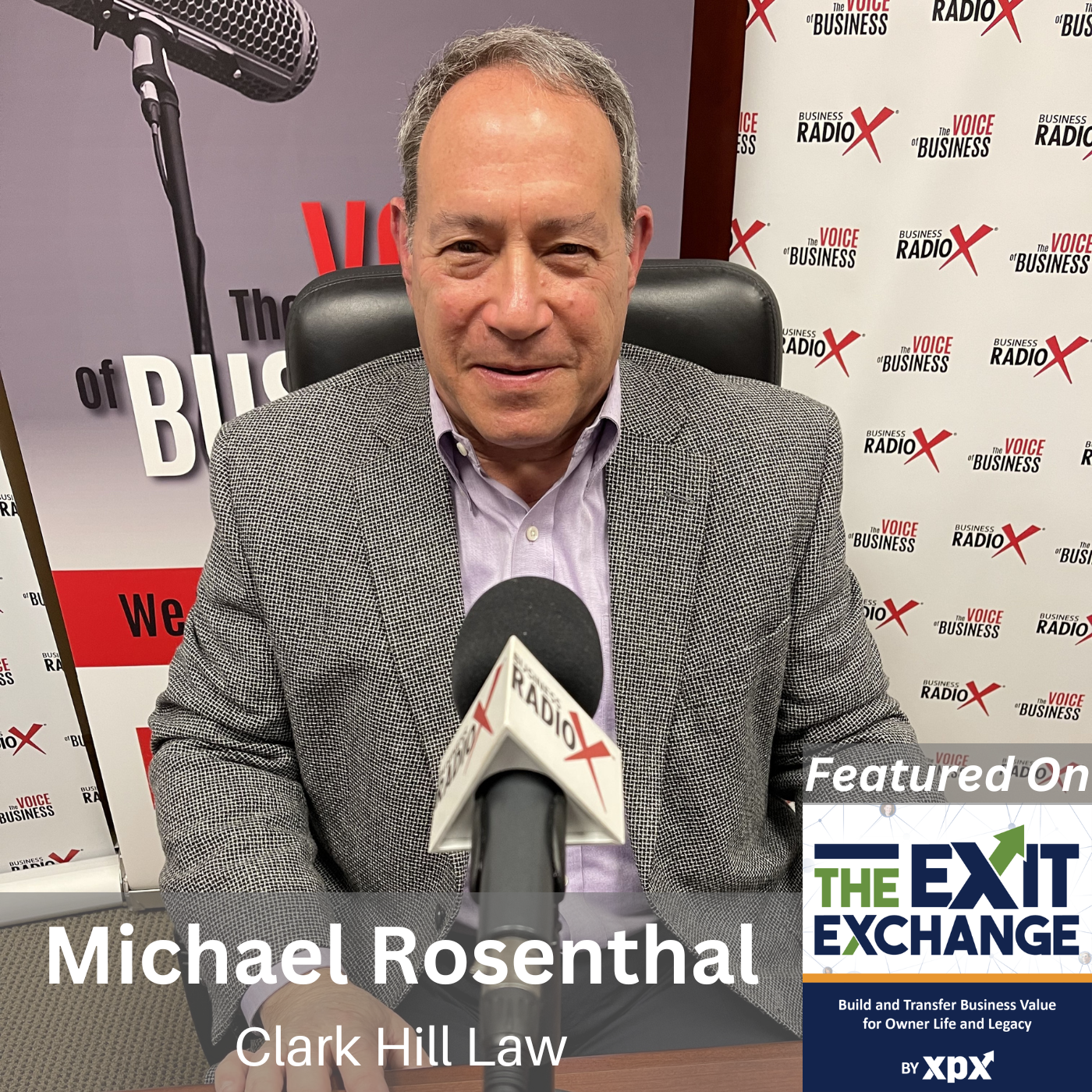
Franchise Strategies from Startup to Exit, with Michael Rosenthal, Clark Hill Law

December 11, 2024 by John Ray

Franchise Strategies from Start to Exit, with Michael Rosenthal, Clark Hill Law, on The Exit Exchange with host John Ray
North Fulton Studio
Franchise Strategies from Startup to Exit, with Michael Rosenthal, Clark Hill Law
Loading
00:00 /
RSS Feed
Share
Link
Embed

Download file

Franchise Strategies from Start to Exit, with Michael Rosenthal, Clark Hill Law, on The Exit Exchange with host John Ray

Franchise Strategies from Startup to Exit, with Michael Rosenthal, Clark Hill Law (The Exit Exchange, Episode 21)

In this episode of The Exit Exchange, hosted by John Ray, the discussion features Michael Rosenthal, a founding member of XPX Atlanta and a seasoned advisor in franchise and distribution law. Michael delves into the intricacies of franchising, covering both franchisor and franchisee perspectives, and shares his insights into trends such as the increasing role of private equity in the franchise industry. The conversation also touches on the importance of due diligence, proper record-keeping, and considering the exit strategy right from the start when buying a franchise. Additionally, Michael discusses the value of XPX Atlanta for business owners and professionals involved in exit planning.

The host of The Exit Exchange is John Ray, and the show is produced by John Ray and the North Fulton affiliate of Business RadioX®. John Ray and Business RadioX-North Fulton are Gold Sponsors of XPX Atlanta.

Michael Rosenthal

Michael Rosenthal has recently transitioned to Clark Hill Law after a successful tenure at Taylor English Duma LLP.

With a robust background in corporate law, he specializes in franchising, distribution, and business succession planning. Throughout his career, Rosenthal has represented both franchisors and franchisees, providing comprehensive legal support that includes Franchise Disclosure Document preparation, state registrations, and ongoing business counseling. His expertise has garnered him recognition in prestigious publications such as Who’s Who Legal and Franchise Times, solidifying his reputation as a leading attorney in the field.

In addition to his legal practice, Rosenthal has held significant roles in various organizations, including serving as an independent director for Inland Retail Real Estate Trust, Inc. (IRRETI) and as a board member of the Exit Planning Exchange’s Atlanta Chapter. He is also an active member of the American Bar Association Forum on Franchising.

A graduate of the University of Florida for both his undergraduate and law degrees, Rosenthal has been recognized in The Best Lawyers in America® from 2023 to 2025.

LinkedIn 

Clark Hill Law

Clark Hill’s value proposition is straightforward: the firm offers clients an exceptional team dedicated to delivering outstanding service.

They recruit and develop talented individuals, empowering them to contribute to a rich diversity of legal and industry experience.

With locations across the United States, Ireland, and Mexico, Clark Hill operates in agile, collaborative teams, partnering with clients to help them achieve and surpass their business goals.

Clark Hill. Simply Smarter.

LinkedIn | Instagram | Facebook

Topics Discussed in this Episode

00:00 Introduction to The Exit Exchange
00:32 Meet Michael Rosenthal
02:12 Understanding Franchise and Distribution Law
06:17 Trends in the Franchise Industry
09:10 Franchisee Considerations and Due Diligence
13:29 The Economics of Franchising
18:29 Exit Planning for Franchisees
27:03 The Value of XPX Atlanta
35:00 Conclusion and Contact Information

The Exit Planning Exchange Atlanta

The Exit Planning Exchange Atlanta (XPX) is a diverse group of professionals with a common goal: working collaboratively to assist business owners with a sale or business transition. XPX Atlanta is an association of advisors who provide professionalism, principles, and education to the heart of the middle market.

Their members work with business owners through all stages of the private company life cycle: business value growth, business value transfer, and owner life and legacy. Their Vision: To fundamentally change the trajectory of exit planning services in the Southeast United States. XPX Atlanta delivers a collaborative-based networking exchange with broad representation of exit planning competencies. Learn more about XPX Atlanta and why you should consider joining our community by following this link.

The host of The Exit Exchange is John Ray, and the show is produced by the North Fulton affiliate of Business RadioX® in Alpharetta. The show archive can be found by following this link.

John Ray and Business RadioX North Fulton are Gold Sponsors of XPX Atlanta.
Tagged With: Clark Hill Law, exit planning, Exit Planning Exchange, FDD, franchise, Franchise Disclosure Document, franchise law, Franchising, michael rosenthal, The Exit Planning Exchange Atlanta, XPX Atlanta

Matt Genova with Next Act Franchise Advisors

June 14, 2021 by angishields

Matt-Genova-Next-Act
South Florida Business Radio
Matt Genova with Next Act Franchise Advisors
Loading
00:00 /
RSS Feed
Share
Link
Embed

Download file

Next-Act-logo

Matt-Genova-Next-ActMatt Genova is President, NEXT ACT Franchise Advisors. Matt was a Multimedia Sales and Sponsorship professional having worked for brands like The Walt Disney Company’s ESPN and WarnerMedia’s CNN. His teams helped local, regional and Fortune 500 companies reach new customers or reinforce their brand promise to current customers via cutting edge multimedia campaigns spanning broadcast, digital, mobile, audio, print and events.

After leaving the corporate world, Matt leveraged his sales and consultancy skills and launched Next Act Franchise Advisors, a franchise consultancy where he educates, guides and coaches people through the process of exploring business ownership through franchising. After relocating to Delray Beach, FL from Garden City, NY this Spring with his wife, Matt launched another company, Snackify Vending LLC, a healthy snack and drink vending machine business that will allow business owners to provide the nourishment their employees and/or customers need when they need it.

He has a charitable side to him as well. Matt’s eldest son, Jake, who graduated from Florida Tech last month, has Cystic Fibrosis, a progressive and deadly genetic disease with no cure. He most recently chaired the Advocacy & Outreach committee for the Greater NY Chapter of the Cystic Fibrosis Foundation where helped to activate the CF patient and family community around specific initiatives and lobby for the CF Foundation in Washington, DC and Albany, NY.

Matt can be reached by phone: 917-522-0040 or email: matt@nextactfranchiseadvisors.com. You can also connect with him on LinkedIn.

What You’ll Learn in This Episode

  • Franchise vs. Starting your own business
  • What is a Franchise Consultant?
  • Advice for potential candidates
  • Traits of a successful entrepreneur
  • What it costs and funding options
  • Management structure options

Tagged With: franchise, Next Act Franchise Advisors

Mijo Alanis with Beyond Juicery + Eatery

June 10, 2021 by angishields

Beyond-Juicery-andEatery-logo
Franchise Marketing Radio
Mijo Alanis with Beyond Juicery + Eatery
Loading
00:00 /
RSS Feed
Share
Link
Embed

Download file

Brought To You By SeoSamba . . . Comprehensive, High Performing Marketing Solutions For Mature And Emerging Franchise Brands . . . To Supercharge Your Franchise Marketing, Go To seosamba.com.

Mijo-Alanis-Beyond-JuiceryMijo Alanis opened the first Beyond Juicery + Eatery in 2005 alongside his wife, Pam Vivio, after working in the restaurant industry for many years.

The couple founded the fast-casual concept in response to seeing how customers’ needs were changing. They noticed that people began to trade fries for salads and knew they could create a business to fill the void of healthy food options in Michigan.

With more than 25 restaurants open across the Midwest, Mijo is committed to growing the Beyond Juicery + Eatery brand while maintaining the brand’s commitment to “be the best part of someone’s day.”

Follow Beyond Juicery + Eatery on LinkedIn and Instagram.

What You’ll Learn in This Episode

  • Brand overview for Beyond Juicery + Eatery
  • How Mijo came up with the concept
  • The major brand differentiators for Beyond Juicery + Eatery
  • How Mijo encourages Beyond locations to get involved with the community
  • Beyond Eatery’s  culture and how it plays a role in the day-to-day operations at each restaurant and when deciding if a franchisee is the right fit
  • The ideal franchise candidate and target markets
  • What’s next for Beyond

This transcript is machine transcribed by Sonix

TRANSCRIPT

Intro: [00:00:07] Welcome to Franchise Marketing Radio, brought to you by CEO Sambor comprehensive high performing marketing solutions for mature and emerging franchise brands. To supercharge your franchise marketing, go to CEO Sambar Dotcom. That’s CEO, S.A.M. Bay Dotcom.

Lee Kantor: [00:00:32] Lee Kantor here, another episode of Franchise Marketing Radio, and this is going to be a good one today, we have with us Mijo Alanis with Beyond Juicery and Eatery. Welcome. Hello. I’m excited to learn what you’re up to tell us about Beyond and Eatery. What are you doing for folks?

Mijo Alanis: [00:00:53] Well, we’re a smoothie juice cell in a rap franchise. We started back in two thousand and five, gain some traction right around 2014. We started building the franchise model and in twenty eighteen we opened our first franchise. We have five corporate locations and we’ve doubled in size for the last three years. And yesterday we opened our twenty ninth location. We have 12 more under construction.

Lee Kantor: [00:01:28] Now what’s the how’d you come up with the concept.

Mijo Alanis: [00:01:31] Boy that’s a, that’s a, that’s a story that started way back when I first started for started working. I started off washing dishes when I was 15 years old and I quickly learned what people did and did not like to eat. I would see it in the bus stops. Fast forward a. Throughout my career, I always wanted the next guy’s job from prep, cook to cook to manager to GM, worked every aspect of the restaurant business, bartenders, server, the guy that came in and cleaned. But I. I started noticing around twenty five to right around nineteen ninety nine, two thousand, I started seeing people throwing away their hamburger buns and French fries. I noticed it in the bus stops. And I went to the customer and I asked, why are you throwing it away? Because back then we were filling the plate with French fries. I was in the bar industry and they wanted to substitute a salad or they were just trying to eat healthier. And that concept didn’t really hit me until I was taking a mountain. And we’ve come down from the mountain and I would go we’d go to a juice bar. We were in Arizona at the time and I would we’d go to the juice bar and I thought it was fantastic. I like the way it made me feel. And I come back home to Michigan and I’m driving up one of the major arteries. And I realized there wasn’t a place to buy a banana. There wasn’t a place that if I wanted a quick salad for lunch or a banana or a smoothie or juice was not available. And that’s when the idea was born.

Lee Kantor: [00:03:10] So now a lot of kind of healthy eating places and drinking places are popping up, what what is separating you guys?

Mijo Alanis: [00:03:19] So for for us, we we work every day on clean products, we make our own salad dressings, we manufacture our own juice, we don’t have any preservatives in it, were clean as we possibly can get.

Lee Kantor: [00:03:38] Now, is is that a kind of a corporate culture thing? Is that you personally? Is that how you live?

Mijo Alanis: [00:03:46] Yes, well, so that’s funny you should say that I think it’s the way that a lot of us want to live, that they want to have those options. And when I have two young kids and when it’s time to eat and we want to decide where we want to go, it’s not always to where we want to go. But there’s always that option. And that’s what we consider ourselves as having that option for people when they want to eat better. You can go to our place and have something that’s not so healthy, you something in our world where healthy food meets quality.

Lee Kantor: [00:04:23] And then so the menu is it changes every season based on what’s available, like how do you manage the kind of availability of fresh and clean ingredients,

Mijo Alanis: [00:04:34] Kale, that that is a challenge. We have a quarterly offering that comes out. Our core menu stays the same. But we we run a new a new seasonal item every quarter.

Lee Kantor: [00:04:48] Now, are you finding that the public is actually kind of investing in their own health in this way? Or is it something that people say, yeah, I want to eat healthy, but they never really end up eating healthy?

Mijo Alanis: [00:05:01] I think that’s two fold. I think when we look at our kids today from the ages of 10 to 15, I think that they’re more conscious of looking at the label more conscious. And I think in the next five years we’re going to see that what’s in our foods is going to be has to be more transparent than ever.

Lee Kantor: [00:05:24] And what’s an example of something that isn’t as transparent as maybe people think it is?

Mijo Alanis: [00:05:32] When you’re talking like salad dressings, how how are they manufactured, what’s inside the salad dressing? Is it clean? Are they using preservatives?

Lee Kantor: [00:05:47] And that is that something that you find that maybe is frustrating for you, since you are kind of going this extra step of trying to be as clean as you can? Is that a lot of maybe bigger brands that have more resources are trying to pretend to be kind of healthy and clean, but in actuality, they may not be really living up to that standard.

Mijo Alanis: [00:06:09] Yeah, so, you know. I believe that once you try the product, you taste it, they don’t know they don’t know why they come back, they just know that they like it because there’s this fresh taste. There’s a fresh feel from the design of the restaurant to your experience inside the store. And they don’t know why, but they can they can tell the difference once they eat it.

Lee Kantor: [00:06:36] Now, is the prospective franchisee, is it somebody who is this kind of fitness person that’s living a healthy, wellness oriented life?

Mijo Alanis: [00:06:45] That’s a plus, but not necessarily what they do. Our franchisees recognize it, and like I said, I think that majority of the people here want the opportunity to live a healthier lifestyle. And that’s where it came from for me, was I was in the bar restaurant industry. And when I wanted something unhealthy, it just wasn’t there, you know, so I made something more as a hobby in the beginning that when I got done working out, there was a place that I could go to and get a smoothie or get a juice or have a salad for lunch. Fast food. Back then, nobody had a nobody had a salad on the menu, I think right around twenty three to twenty five as when Wendy’s came out with their salad. It was the first time that I actually saw salad on a fast food menu.

Lee Kantor: [00:07:37] And then where did you start. Where was this kind of born.

Mijo Alanis: [00:07:41] Birmingham, Michigan.

Lee Kantor: [00:07:42] So it was born and Michigan. And there wasn’t a lot of kind of healthy choices around you. Like you were kind of.

Mijo Alanis: [00:07:49] Oh, so when I opened, it was I think I had 20 customers coming in and I thought I made the biggest mistake in my life because that came from the restaurant bar industry where people come in and they don’t have one, they have one after another. And when they come to eat, they order an appetizer. They bring four people. So imagine my sales when somebody comes in about four dollars smoothie back then and I only had 20 customers throughout the entire day, I made the biggest mistake of my life. What I did realize was I had to get the product into people’s mouths in order to get the product in your mouth. Did anything and everything I possibly could. I put in a frame out on the sidewalk and I killed it, twisted it. So the only way that they could turn was towards the door. So as they were walking down, they had to actually turn towards the door and as they turned towards the door, we were there with samples. Give it a try. Here you go. Before, you know, we started getting the kids and we call them soccer moms and then the business people and they’d be walking in and it was it was something new that you haven’t actually had anywhere else at that time, especially in our area. It was it was busy in the Sunshine State and on the coast, but not in the Midwest.

Lee Kantor: [00:09:09] Now, do you partner with other businesses in the community or other organizations in the community? Is that part of how you go to market?

Mijo Alanis: [00:09:19] So that is a strategic plan of ours. We love partnering with established businesses. Back in the beginning, we had smoothies on our menu named after the businesses that were patronizing us.

Lee Kantor: [00:09:36] So is that part of the kind of standard operating procedure for a franchisee is you tell them to kind of immerse themselves in the local community, maybe partner with some fitness organizations or some schools or high schools or teams you got?

Mijo Alanis: [00:09:52] There shouldn’t be a reason why any kid that goes to school in your territory doesn’t get a free smoothie when school starts. There shouldn’t be a gym membership that doesn’t get a free society for signing up. There shouldn’t be a kids swim club, soccer team, baseball team. That’s that you’re not part of. I tell the franchisees, tell your intel you can’t answer your phone anymore. You should be giving out your cell phone to everybody. That’s I think that’s the number one thing that actually differentiates us from other brands, is that we want you to be part of the community and you need to be part of the community. And when it comes time like there is no other choice, it is us.

Lee Kantor: [00:10:35] Now, is that prospective franchisee or are they kind of is this their main business or is this kind of a complementary brand and a portfolio of brands?

Mijo Alanis: [00:10:47] So we have a mix and match that. We have some that’s actually exited other brands and started building. Building their business inside of ours, we have one offs that they bought, they love the brand and they bought it, and they’re the person that’s actually behind the counter. We have we sold Ohio. Ohio was 20 stores and they were a big company and they’re building the brand and five stores per year, actually opening one tomorrow. Green, Green, Ohio.

Lee Kantor: [00:11:24] And so it’s a combination, so you don’t have a preference, you just need somebody that really kind of believes in the culture and the mission and really wants to serve healthy food and drinks to their community.

Mijo Alanis: [00:11:36] It’s it’s being there and being the face of the business and having a good operator that is going to smile. We’ve I like to say that we’ve we’ve done it over the past 15 years. We’ve done all the work to make sure the menus correct. The flavor profiles are correct. The pricing is correct. We’ve got the labor in line. And your job is to execute the plan and take care of the guests.

Lee Kantor: [00:12:08] And how do you see kind of growth coming now as we come out of this pandemic? Is it are you guys pretty aggressively expanding?

Mijo Alanis: [00:12:18] So when the when the pandemic kills? I remember sitting in the office and by the way, that I can describe it is we were on a seven forty seven and it was heading straight to the ground and. We were debating on cutting labor, cutting corporate overhead, cutting like we could see, couldn’t see the other side, and my director of operations came in and said, Hey, model, that goes completely against our core values, like we do what others won’t. And we should be thinking in the opposite way. And I said, you’re absolutely right. We didn’t cut anybody. We we broke up into groups, we broke up into pots and we weathered the storm. I took a look at before we cast every single Sunday and decided to guarantee the employees their their wage for that time, set up meetings, got closer with our vendors. I remember I remember at one point my mainline distributor came in and I said, how is everybody else doing? He said, there is nobody else. Migiro, you’re my only client. Same thing with the produce company. We were able to pivot and switch. We moved app usage completely through the roof. We created we listen to the customer. I have people calling customers the top 10 percent of our customers every day, asking them what they want, what they need, if there’s anything we can do for them. We expanded our delivery. We created curbside for us. We actually put a little grocery store because we had all the products from lemons to oranges to tortillas, cheeses, meats.

Mijo Alanis: [00:14:09] At one point we actually had toilet paper. We realized that people were at home and the kids were driving him crazy. So we actually made we call them Kizzire in home smoothie kits where they can pick them up from the store. We’ll deliver them to your house. And you gave your kid an activity to do. There was coloring books we sell sold. We realize the moms were stressed out so we actually created a charcuterie kit. We had eleven versions of that circulatory kit that we sold over the course of the year was probably our grand slam that Friday nights. The moms going to have it delivered to their house or family because we were all in pods at that time. And I also have somebody else call the franchisee’s every day, and we had somebody else call in our employees and our general managers walking them through a. Situation that none of us have been through, but just let them know that we’re there for them and if there’s anything that they need, that we we would do it. And I knew that we get to the other side of this. We’re going to have more opportunity than we can handle. And that’s where we’re at right now, is we have opportunity and we’re building the infrastructure that we’re in. Two states now just left the meeting where they’ll be a third state here shortly. And our three year goal is to be in eight states. And it’s not if it’s it is going to happen.

Lee Kantor: [00:15:40] So now, if somebody wants to learn more, have a more substantive conversation about this opportunity with you or somebody on the team with the website

Mijo Alanis: [00:15:47] Of the judiciary and eatery Dotcom.

Lee Kantor: [00:15:51] Good stuff. Well, congratulations on all the success. You’re doing important work and we appreciate you.

Mijo Alanis: [00:15:56] Thank you. Thank you very much.

Lee Kantor: [00:15:58] All right. This is Lee Kantor rules here next time on Franchise Marketing Radio.


Tagged With: Beyond Juicery + Eatery, franchise

Marietta Snetsinger with Ascend Franchise Solutions

June 1, 2021 by angishields

Ascend-Franchise-Solutions
Franchise Marketing Radio
Marietta Snetsinger with Ascend Franchise Solutions
Loading
00:00 /
RSS Feed
Share
Link
Embed

Download file

Brought To You By SeoSamba . . . Comprehensive, High Performing Marketing Solutions For Mature And Emerging Franchise Brands . . . To Supercharge Your Franchise Marketing, Go To seosamba.com.

Marietta-Snetsinger-Ascend-Franchise-SolutionsMarietta Snetsinger is committed to supporting entrepreneurs as they convert to a franchise system; helping them avoid the costly and common mistakes of many emerging franchisors. Her thorough knowledge of franchise operations and recruitment experience makes her an asset to any emerging or established franchise system.

As an active member of the Canadian Franchise Association and with her down to earth and practical advice approach, she is a popular speaker at franchise events. This year marks her 10th anniversary as a Franchise Growth Expert and Founder of Ascend Franchise Solutions.

With a visionary approach, Marietta is often the one to say “Did you ever think about…?, I wonder if we could…?, Let’s figure out how we can…”, and excels in franchise start-up situations. She teaches emerging franchisors EXACTLY what they need to know to get franchise disclosure documents ready.

Through her “done with you” approach, emerging franchisors are able to create their own Franchise Operating System so they can be confident, market ready and equipped to attract franchisees aligned with their franchise culture. Her clients cover a wide range — from service, to food, to bricks and mortar, and anything in between. Marietta is a true expert in the art of franchise model scalability.

Her forthcoming book “The Happy Profitable Franchisor” is set to be released in Fall 2021.

Connect with Marietta on LinkedIn and follow Ascend Franchise Solutions on Facebook.

What You’ll Learn in This Episode

  • Scaling a business
  • Should you franchise your business
  • Is your business franchisable
  • How to get started as a franchisor
  • Who shouldn’t franchise their business
  • Best practices of franchising
  • Mistakes of emerging franchisors

This transcript is machine transcribed by Sonix

TRANSCRIPT

Intro: [00:00:07] Welcome to Franchise Marketing Radio, brought to you by SEOSamba: comprehensive, high-performing marketing solutions for mature and emerging franchise brands. To supercharge your franchise marketing, go to SEOSamba.com. That’s SEOSamba.com.

Lee Kantor: [00:00:31] Lee Kantor here. Another episode of Franchise Marketing Radio. And this is going to be a good one. Today, we have with us Marietta Snetsinger with Ascend Franchise Solutions. Welcome, Marietta.

Marietta Snetsinger: [00:00:43] Thanks. How are you?

Lee Kantor: [00:00:45] I am doing great. I’m so excited to learn what you’re up to. Tell us a little bit about Ascend. How are you serving folks?

Marietta Snetsinger: [00:00:51] Yeah. So, I help the person or the successful entrepreneur who is thinking about franchising their business, they’re not really sure where to start. I teach them what they need to know to get franchise disclosure document ready, often in as little as 90 days. And it’s more of a done-with-you approach versus a done-for-you. And I believe there’s a lot of value in having done the work yourself. You’ll show up as a more confident franchisor as a result of that.

Lee Kantor: [00:01:17] Now, what are some characteristics of businesses that are out there that might make good franchises?

Marietta Snetsinger: [00:01:25] Yeah, yeah. That’s actually a really great question, and I get asked that every day. I have those types of conversations every day. I think the first thing I’ll start with is they need to be profitable. And in fact, I kind of say they need to be highly profitable, so that they have a really good sense of what the metrics are in their business, the dollars and cents, if you will, around their business, and that they actually are more profitable than many of their competitors. So, there’s some room for that margin and, of course, the royalty as they move forward with the franchise model.

Lee Kantor: [00:01:57] Now, how important is kind of the operation side of this? Because I know a lot of successful business people who their businesses kind of melded with their personal, and it’s hard for them to discern kind of where one starts and one stops. Like, I would think in a franchise, you’ve got to be pretty tight and have really solid systems that you can transfer, so it isn’t like, “Oh, when you get this, I put that, this goes over here, and I got this deal here. And I don’t even show that.” Like a lot of businesses are kind of in a lot of gray areas when it comes to the finances.

Marietta Snetsinger: [00:02:35] Yeah, I would say that’s probably two other. You’ve hit on two other areas that I think are really important when you’re kind of that franchise timeframe. One would be you have a really solid way of attracting, and retaining and onboarding, if you will, your clients. So, you’ve kind of got the marketing part of it figured out. You know exactly how you’re going to attract. So, it’s kind of the marketing and the sales process have been figured out. Those would kind of be the two areas I would like to be looking at to make sure that you’ve kind of got that figured out. You’ve got a steady flow of customers, you’ve got the marketing, the branding is solid, it’s in alignment with your brand and you’re able to bring those customers in.

Marietta Snetsinger: [00:03:18] And then, you have a process internally. From the time they say yes to become your customer, you’ve got a process in place to help make that happen. That’s probably more on the service side, and you could apply that to, really, any business. But having a solid kind of beyond the financial, a solid marketing, client acquisition and retention plan in place would be really important.

Lee Kantor: [00:03:40] Now, when a person is saying to themselves, “Okay, you know what? We run this one pizza place. I think we got this. I think there can be one of these things everywhere,” at that point, do they call you or is it something that they have to open a second one to kind of prove the model before they call you? Like at what point do they get involved with you?

Marietta Snetsinger: [00:04:02] Yeah, you know what? I don’t think it’s ever too early to start making a plan to franchise. If it’s something that you’re thinking about, whether you ever franchise or not, I find my clients will take a lot of value away from working with me just because, normally, they’re entrepreneurs, very entrepreneurial minded, maybe a little bit averse to that system process, maybe they’re a more sophisticated entrepreneur and they kind of understand why that is important. I don’t think it’s ever too early to get started in the best practices of franchising, and even getting ready to franchise can be applied to any business.

Marietta Snetsinger: [00:04:37] So, I would say it’s never too early to start. And what you really want to think about is what is the proposition and the value that you bring to the table? How do you differentiate yourself at the customer level? What’s your unique selling proposition around your pizza? Like whatever that looks like to your customers, what makes it a better option than maybe some of the other brands that they would consider?

Marietta Snetsinger: [00:04:59] And then, on the on the other side, like when you become a franchisor, basically, you’re starting a brand new company as a franchisor. What’s the proposition? And I call it the UFP, your unique franchise proposition. Again, what is it that you do uniquely different better than maybe some of the other franchise concepts, whether they’re similar pizza franchises or maybe another food concept? What’s the value that you bring to the table as part of the business, the operating system? And I call it the franchise operating system. How are we going to duplicate it? How are you going to make it easier for your franchisees to get up and running and profitable more quickly and more efficiently than if they were to do it themselves?

Lee Kantor: [00:05:41] Now, if I have a business like a pizza, or chicken wings, or something that looks like in some markets there’s 5-10 of them in a market, how do I know that that’s really franchiseable or scalable? Or is it just something that, well, my market there’s only two, and I’ve been here 20 years, so that’s why people love me. Like I don’t know if it transfers in another market.

Marietta Snetsinger: [00:06:06] Yeah, for sure, you have to look at market penetration. That definitely makes sense. Like, is there room for another chicken wing place in my market? And maybe that is part of it, that maybe part of your proposition is that you have created a model that will serve a smaller market that might be underserved by some of your competitors. That might even be part of your proposition.

Lee Kantor: [00:06:28] So, then, you would say, well, of course, in the, maybe, the the big metro city, there’s 10. But in you’re kind of secondary city, there’s only two. And these people are-.

Marietta Snetsinger: [00:06:41] Yeah.

Lee Kantor: [00:06:42] Instead driving to the big city to get it, they can just stay here and get it.

Marietta Snetsinger: [00:06:47] Right. Like, that might actually be part of the proposition that the model is built and the economics of the model work in a market that’s maybe 50,000 versus 150,000. And that is part of the proposition is we actually have a franchise model and a business proposition that can do well in a market of 50,000, for example.

Lee Kantor: [00:07:09] And then, so, rather than looking that as a negative, you can kind of look at it as a positive, and then kind of tweak your franchise operations and your system to accommodate that market.

Marietta Snetsinger: [00:07:20] Yeah, totally.

Lee Kantor: [00:07:22] And that’s where I would think an expert like you comes in where you’re able to, even though they might have started in a 150,000 kind of population area, but it might be better to franchise in a 50,000, you could help them kind of think of that strategically and help them position their offer better.

Marietta Snetsinger: [00:07:41] That’s exactly the case. In fact, it’s so funny you even mentioned pizza because I have a client right now. He is in a smaller market. He has done phenomenally well in that smaller market, and there’s a few competitors in there. But because he’s in a smaller market, and the branding, and the marketing that he has done, he’s done really well, and he’s really mastered local marketing and really creating a presence for himself. And he is able to stand out because he is in a smaller market.

Lee Kantor: [00:08:07] Now, let’s talk about that local marketing, because I would think that some people who are considering buying a franchise think that the marketing is not as important for them because they think that I’m buying this brand, so that’s part of what I’m getting is they’re are supposed to be smart about this part of it. But local marketing is critical to the success of any franchisee. And a lot of times, it falls on the franchisee to kind of do the heavy lifting when it comes to their own specific local market.

Marietta Snetsinger: [00:08:35] So, what I would say around that is, number one, a franchise owner needs to understand and a franchisee needs to understand the roles and responsibilities. Like who does what? Like in pretty much every aspect of the business, one of the things I do with my clients is take them through a roles and responsibilities exercise where we break down the key functional areas of the business – for example, you mentioned the marketing – and we understand who’s going to do what on each of those sites.

Marietta Snetsinger: [00:09:04] And usually, the franchise owners can kind of look after the branding side of it, but in most cases, the franchisee is going to be responsible for that local store marketing, and the franchisor as a successful business has kind of probably got a handle around what that looks like. And often, it’s event-based. It’s like kind of the in-person stuff that you just can’t do digitally or it has to be done in person. Maybe it’s like, like I said, the event side of it often. And the franchisee needs to be willing and able to kind of go out and market their business locally using strategies and tactics that the franchisor’s probably going to teach them to do.

Marietta Snetsinger: [00:09:45] So, a great example of that would be like a local home show. If the franchisor, in their experience, has found that home shows are a great way to generate the leads for the next six months, then the franchisee would be responsible for implementing that in their own market. And of course, we can be back to doing more things in person, they would actually maybe go and do a whole show, and meet people in their local community for whatever period of time. So, that kind of like local marketing.

Marietta Snetsinger: [00:10:16] The other side of it too, which I think is really important, there’s no such thing as a build it and they will come. And I think that can be a little bit of a misconception for prospective franchisees. When they’re looking at it, they think, “Oh, I don’t have to do anything.” Like you said, they’re just going to come because it’s a franchise, and they know the name and the brand. And sometimes, that’s the case. Often, it isn’t.

Marietta Snetsinger: [00:10:37] And when I’m qualifying franchisees or meeting people who want to be potential franchisees, I’m going to ask them if they are thinking they’re going to join a franchise to avoid sales, to having to actually do sales, and be a salesperson, that’s probably the wrong person for a franchise system. Just because you’re in a franchise system, it doesn’t mean you don’t have to do sales anymore. As a franchisee, you should be really good at local sales, building networking. Again, building that like, know, trust with people very quickly, and efficiently, and easily and really enjoy that side of it, because that’s going to be a big part of what you’re doing as a franchisee.

Lee Kantor: [00:11:16] Now, when a company comes to you, an emerging franchise, sometimes, they don’t have any other locations, right? They have their one business that they’re inquiring about, “Can I franchise it?” Do you ever work with franchises that may have tried to start franchising and have kind of plateaued at like three or five, and haven’t been able to get that escape velocity?

Marietta Snetsinger: [00:11:40] Yeah, I have, in the past, worked with those types of clients and it can be challenging, for sure. I’m kind of like, “Let’s just start with a really great offering,” because what happens is if they’ve got three or four people already in their system, how do future franchisees validate a franchise system? Well, they’re going to talk to your existing franchisees. So, instead of actually doing that, what I would say is they probably have a problem with the relationship between their existing franchisees and themselves now, and I would be inclined to say, “Let’s get that figured out.” Maybe it is a part of, like, revisiting what it is that they’ve done. And I would be focused on making sure those existing franchisees, those three or five franchisees, are highly successful and that they are really doing well before I even went back to market to find.

Marietta Snetsinger: [00:12:32] I kind of want to go reverse engineer it a little bit and find out what’s not really going well for those franchisees, and what can we do to support them, and then kind of go back to market. Maybe we do have to refine the offering. But it’s kind of — I guess, I don’t know if I really answered your question, but that’s kind of what my solution would be to something like that.

Lee Kantor: [00:12:52] But in your practice, are you focusing primarily on that first-time franchisor or you kind of fixing-

Marietta Snetsinger: [00:13:01] Yeah. So, through my own practice, I’m ten years into this now, 25 plus in the franchise space, I really enjoy — I kind of want to get it done right the first time. So, I, probably, am a better fit for someone who is really in the early stages of making the decision, “Should I franchise. If I do, what does it look like? How can I get there?” And then, once they kind of get the business model figured out, then we would work with the lawyer to kind of — most states and provinces have a franchise disclosure requirement. There are legal documents that need to be done. And when they go to the lawyer, they’re going to be in a much better position to be able to answer the questions that are going to, of course, be incorporated within the franchise disclosure document. So, to answer your question, I could be either but mostly, my clients right now are in the free FDD phase. Really, the early decision making, getting ready, getting started and getting prepared to convert to a franchise.

Lee Kantor: [00:13:58] Now, you’re in Canada. Is your work primarily in Canada, or do you do kind of US? You do other other countries?

Marietta Snetsinger: [00:14:05] Yeah, absolutely. The beautiful thing about franchising is it really is a business model, and it’s a way to scale and expand a business. So, the legal side of it, obviously, you’re going to need local counsel, but the model, the franchise model of scaling is basically universal. I mean, there may be some minor tweaks around the legality, but that’s the legal. You’re going to need the local legal counsel anyway. It’s a way of scaling a business and that is somewhat universal. So, it doesn’t really matter where my clients are. Primarily, they’ve been in Canada, but I would really love to work with more companies outside of Canada. And I’ve begun dipping my toes into the US market and had some good success there so far. And I look forward to serving clients in other parts of the world.

Lee Kantor: [00:14:55] So, now, how do you identify a business that you think is franchiseable or how do they even get on your radar? Because I would think they’re just kind of doing their business out there. Do you have thought leadership? Do you have a book? Do you have something out there that kind of can capture their attention?

Marietta Snetsinger: [00:15:14] Yeah, my book is actually going to be finished this fall, and it is going to be called The Franchise Business. And it really is for those people who are thinking about it. So, you can watch for that. Maybe I’ll get back in touch with you when that’s done. And a lot of my leads truly do come from lawyers and other consultants. I’m very referral based, and a lot of people come to me because their clients need someone or they have a client who’s been thinking about what that looks like or what franchising looks like, and it’s beyond their scope of expertise, but definitely a lot of referral.

Lee Kantor: [00:15:50] So, like a business attorney would have a client that says, “Hey, I’m thinking of franchising,” and the attorney is like, “Oh, I know the person. You’ve got to talk to Marietta.”

Marietta Snetsinger: [00:15:58] Yeah. Or franchise attorneys and lawyers. Yeah.

Lee Kantor: [00:16:02] So, there’s attorneys that are just specialists in franchising that don’t do the part that you do. They just do the kind of the legal part,

Marietta Snetsinger: [00:16:11] The legal drafting of the franchise. So, a franchise disclosure document, again, it does vary by state and province what’s required, but it’s essentially a backgrounder on the franchisor and what they are legally able to say to a prospective franchisee. So, those folks, I mean, it’s more of a business. I’m helping them with the business side of it, the franchise operating system side of it. And then, the lawyer is going to step in. And usually, it’s kind of a bit of a back and forth and, often, collaborating with the lawyers to help. Between the two of us, we can generally support a client really well as far as making a business decision, and what are the legal implications, and likewise making a legal decision, what are the business implications? It’s kind of marrying the two together.

Marietta Snetsinger: [00:16:53] So, I often work very closely with franchise lawyers, and it is definitely a very specific practice of law and area of practice. And that’s generally who would bring me into the picture. Sometimes, I’m sending people to — sometimes, people find me through associations. Like in Canada, we have the Canadian Franchise Association. So, they would be kind of looking there, and they might find me there. But yeah, honestly, a lot of referral. It’s a lot of like, know, trust.

Lee Kantor: [00:17:25] Yeah. Just like their business will be wherever local market that they’re in. I mean, that doesn’t really change from that standpoint.

Marietta Snetsinger: [00:17:33] No. And with technology today, honestly, it doesn’t really matter where someone is in the world. We can work together, so.

Lee Kantor: [00:17:41] Now you mentioned that kind of there’s a business model around franchising that an effective franchise are going to check certain boxes and be exceptional in certain areas because that’s what will make them a successful franchise. Do you find that that concept translates and transfers to a business that doesn’t necessarily want to franchise? They may want to expand or they want to kind of be the best they can be, but are these kind of foundational elements in the business?

Marietta Snetsinger: [00:18:12] I think they are, truly, because it’s really perfecting what it is you do. So, that would be beneficial to any business. It’s creating brand awareness and top-of-mind awareness, that would be effective for any business. Te profitability piece, that’s effective for any business. This is another area that I think is kind of interesting, again, around franchise preparation and a successful business. I believe a successful business is one where you’re able to remove yourself from the day-to-day operations as an entrepreneur, so that you have a team, a system, a process in place where you don’t necessarily have to be there every day. And that means that you get that freedom of being an entrepreneur. And at some point, you may want to exit your business.

Marietta Snetsinger: [00:18:59] So, it also sets you up really well for a nice exit strategy where someone else could step into your business and maybe purchase your business or acquire your business from you. And because you’ve kind of operated it in this way and added and documented how we do things around here, it’s easy for someone else to kind of step into that. So, it adds a value, an extra level or value to your business. And in fact, if you’re looking on the kind of the resale or how you exit from your business, if someone’s looking for a business to acquire or to purchase, and they’re kind of comparing apples to apples, perhaps a business that has already an established branding can actually show proof of concept around what the operating system looks like, that’s a more valuable business than one that does not have that infrastructure or that operating system in place.

Lee Kantor: [00:19:58] So, then, it would be worthwhile to have a conversation with you or somebody on your team, even if they’re thinking of exiting probably in the next five years or so because, then, they can build up to having kind of those tight systems, get the culture right, get the brand right, and get the systems right, so that they can then have a sellable business rather than, “Hey, I’m doing well. But every one of my customers are not going to follow me when I quit. They’ll find somebody else.”

Marietta Snetsinger: [00:20:28] Yeah, it’s kind of almost — I don’t mean this to be a negative thing, but really it’s kind of removing the person of the business and building an actual true business, not a person-centric business. Does that make sense?

Lee Kantor: [00:20:40] Yeah. Well, I see a lot of — Like, I’ll give you a real example that happened to me when I was younger. I had a dentist that I went to for many years, and the dentist was great. And then, he retired. And he’s like, “Now, this new person’s going to take over my practice.” And then I’m like, “Who is this new person?” Like, they just changed the name on the door. And I’m like, “Well, why would I go to this? If I’m going to go to this new person, I’m going to pick a new person that’s closer to my house.” Like there’s no compelling reason to switch to this new person.

Marietta Snetsinger: [00:21:16] You have to stay here, right, because it’s not like — Really, truly, it’s creating a proprietary way versus a proprietary person who could leave the business.

Lee Kantor: [00:21:26] Right. And I think a lot of folks, especially small business people, it is personality-centric and the people are buying that person, they’re not buying the business solution. They’re buying that individual’s personality.

Marietta Snetsinger: [00:21:39] Yeah. So, it’s how do we duplicate your personality? How do we find that mini me, that person that can kind of come in and be mentored by you, trained by you, and kind of get your customers used to that, that it may not always be you, but they are trained in the way that you do things and can deliver a consistent — consistency also comes into that, right? Like a consistent way of delivering on a customer experience can be really valuable to a business. And that’s really the gift in removing yourself from the business.

Lee Kantor: [00:22:11] Right. And I bet you, if you do that right, now, you’ve increased the value of your business. It’s not dependent on you anymore. It’s the business they’re buying, not you.

Marietta Snetsinger: [00:22:20] Right. And if you look at failure rates of businesses that are changed hands, and the founder-led organization, the founder leaves, and someone else purchases it, the failure rates of that business being successful and continuing on, the legacy part of it, is often very low.

Lee Kantor: [00:22:43] So, now, if there is somebody out there that wants to kind of have a conversation with you or somebody on your team about taking this next step and maybe elevating their business to the franchise level, or just to learn more about how to have a succession plan that’s going to be effective and maybe increase the value of their business, what’s the website?

Marietta Snetsinger: [00:23:04] Yeah, it’s ascendfranchise.com or you can also email me Marietta@ascendfranchise.com, and we’d have a conversation and see if that does make sense for you. I mean, again, we do specialize in the franchise space. It is very niche. However, like I said, I do believe that some of my clients will start to work with me and some of them will go on to franchise, they’re kind of not sure. And other times, they’ll be like, “You know what? I’m really glad that I went through this process because it helped me determine that I actually don’t want to be a franchise owner.” So, that also can be very valuable.

Lee Kantor: [00:23:43] Right. I would imagine just going through a conversation with you, and you can kind of share with them the pros and cons, and the kind of upside and downside about taking this. Because franchising is a big deal and that is a different business. Being a franchisor is different than running — a pizza franchisor is not the same as running a pizza shop. I mean, your clients are different. I mean, you have a different kind of — it’s a separate business, really.

Marietta Snetsinger: [00:24:07] Totally, totally true. And I would agree with you. Like it really is. It’s probably the biggest decision you’ll ever make within your business other than deciding to exit your business. Converting to a franchisor, your business will never be the same. Even if you don’t franchise, I take my clients through — my program is called the Franchisor Blueprint Experience. And we take you through the steps and the considerations that you need to make in order to franchise your business. Now, like I said, some people will and some people won’t. But I can promise you, you will never look at your business the same way once you’ve kind of gone through that process because, really, we are setting up that operating system for franchisees or even for your own personal exit strategy.

Lee Kantor: [00:24:53] Right. It’s a good exercise either way.

Marietta Snetsinger: [00:24:58] Yeah, totally.

Lee Kantor: [00:25:00] Well, Marietta, thank you for sharing your story today. You’re doing such important work, and we appreciate you.

Marietta Snetsinger: [00:25:05] Thank you for having me.

Lee Kantor: [00:25:07] All right. This is Lee Kantor. We will see you all next time on Franchise Marketing Radio.

Tagged With: Ascend Franchise Solutions, franchise, Franchise Growth Expert

Launching a Franchise with EagleONE CEO Mike Hutzel EP 2

March 26, 2021 by angishields

Mike-Hutzel-EagleOne
Denver Business Radio
Launching a Franchise with EagleONE CEO Mike Hutzel EP 2
Loading
00:00 /
RSS Feed
Share
Link
Embed

Download file

This is Episode 2 of a 4 Part Series on Launching a Franchise

Mike-Hutzel-EagleOneMike Hutzel, CEO and Founder of EagleONE, brings his deep and wide understanding of the industries we serve. He gained his knowledge from working as Director of Strategic Initiatives, Client Services Director, and Vice President of Sales.

He and his teams create and improve sales metrics and analysis. We tweak and improve marketing strategies assuring measurable ROI. Mike’s 25 years of experience in the Customer Experience industry serve EagleONE’s clients and lead to higher satisfaction levels of customers and stakeholders.EagleOne

Mike brings experience in the following verticals: banking, payment processing, retail, non-profit, insurance, identity protection, healthcare, IT, and staffing augmentation. He also brings experience with federal-level and state-level governmental clients and contractual obligations for fulfillment.

Mike has both an undergraduate and graduate degree from Ohio State University. He also serves as the Membership Director for Knights of Columbus Council 13813, Lay Spiritual Director of Christ Renews His Parish (CRHP) Ministry.

Connect with Mike on LinkedIn, and follow EagleONE on LinkedIn and Facebook.

About Franchise Bible Coach Radio

The Franchise Bible Coach Radio Podcast with Rick and Rob features no-nonsense franchise industry best practices and proprietary strategies that franchisors and FranchiseBibleCoachRadioTilefranchise owners can implement to improve their profitability and operational efficiencies.

Our show guests are franchise superstars and everyday heroes that share their tips for growth and strategies to survive and thrive during the current challenges.

About Your Hosts

Rick-GrossmanRick Grossman has been involved in the franchise industry since 1994. He franchised his first company and grew it to 49 locations in 19 states during the mid to late 1990s. He served as the Chief Executive Officer and primary trainer focusing on franchise owner relations and creating tools and technologies to increase franchisee success.

Rick developed and launched his second franchise organization in 2003. He led this company as the CEO and CMO growing to over 150 locations in less than three years. He developed the high tech/high touch franchise recruiting and sales system.

Both companies achieved ranking on Entrepreneur Magazine’s Franchise 500 List. During this period Rick served as a business and marketing consultant to small business and multimillion dollar enterprises. He also consulted with franchise owners and prospective franchisees, franchisors, and companies seeking to franchise.

Rick had the honor of working with his mentor, Erwin Keup as a contributing Author for the 7th edition of Entrepreneur Magazine’s Franchise Bible published by Entrepreneur Press.

Mr. Grossmann has been chosen as the new Author of Franchise Bible and his 8th Edition was released worldwide in January of 2017. He currently serves as an executive coach and strategist for multiple franchise clients.

Follow Franchise Bible Coach on Facebook.

RobGandleyHeadShot250x250Rob Gandley has served as SeoSamba’s Vice President and Strategic Partner since 2015.
With 25 years of experience in entrepreneurship, digital marketing, sales, and technology, he continues to focus on leading the expansion of SeoSamba’s product and service capabilities and US market penetration. SeoSamba specializes in centralized marketing technology built for multi-location business models and continues to win industry awards and grow consistently year over year.

Concurrent with his work at SeoSamba, Gandley is a strategic growth consultant and CEO of FranchiseNow, a digital marketing and sales consulting firm.  Gandley consults digital businesses, entrepreneurs, coaches and multi-location businesses across diverse industries.  Prior to SeoSamba, he built an Internet Marketing business and platform responsible for generating over 100,000 qualified franchise development leads used by more than 400 US-based franchise brands for rapid business expansion.

Gandley also held various senior sales and management positions with IT and Internet pioneers like PSINet, AT&T, and SunGard Data Systems from (1993-2005) where he set sales records for sales and revenue growth at each company.  He graduated from Pennsylvania State University’s Smeal Business School in 92’ with a BS degree in Finance and emphasis on Marketing.

Connect with Rob on LinkedIn.

Share
Tweet
0Share

Tagged With: EagleONE, franchise, Launching a Franchise

Decision Vision Episode 95: Should I Buy an Existing Franchise? – An Interview with Leslie Kuban, FranNet Atlanta

December 10, 2020 by John Ray

FranNet Atlanta
Decision Vision
Decision Vision Episode 95: Should I Buy an Existing Franchise? - An Interview with Leslie Kuban, FranNet Atlanta
Loading
00:00 /
RSS Feed
Share
Link
Embed

Download file

Decision Vision Episode 95:  Should I Buy an Existing Franchise? – An Interview with Leslie Kuban, FranNet Atlanta

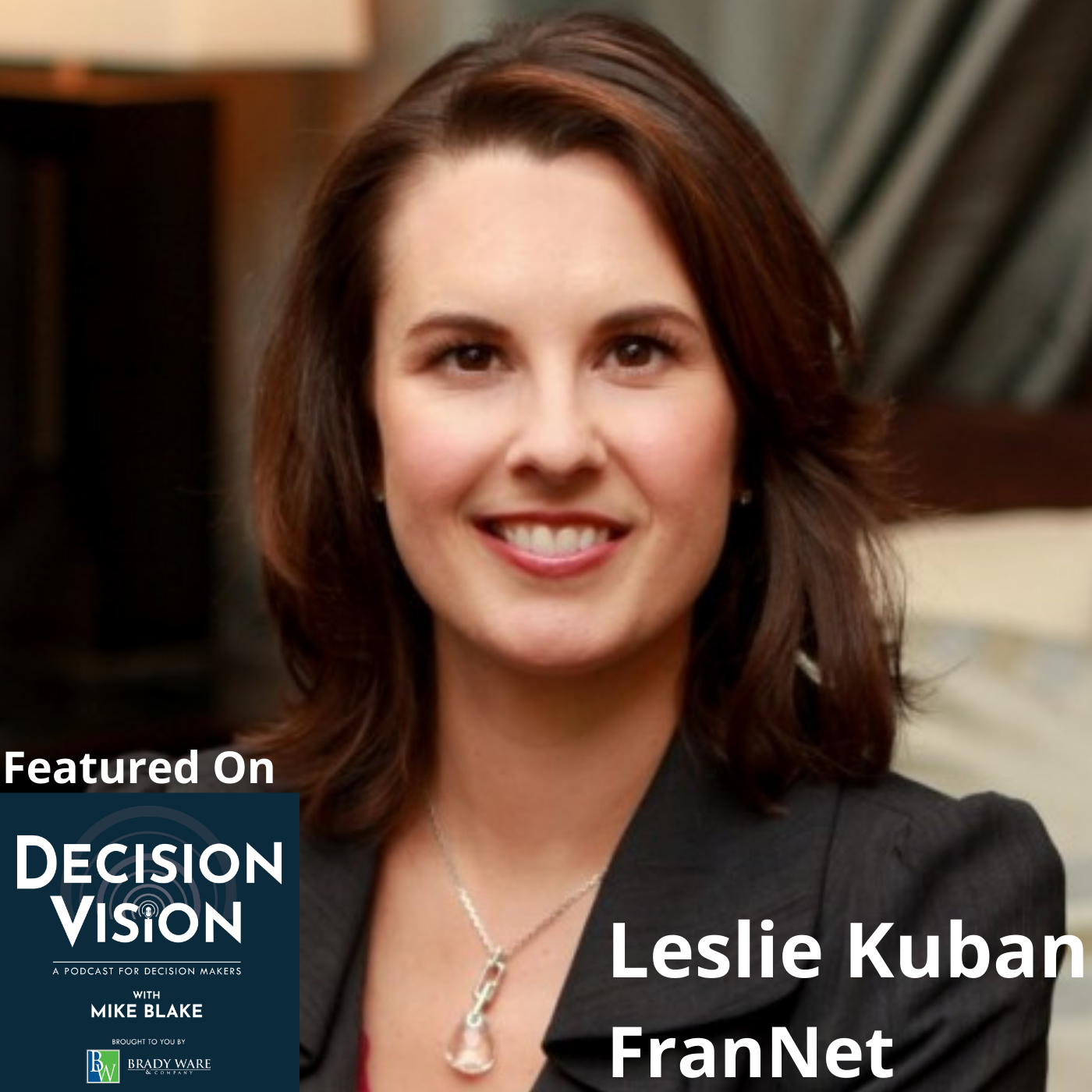
Leslie Kuban, FranNet Atlanta, joins host Mike Blake to discuss the pros and cons of buying an existing franchise business vs. starting a new franchise from scratch. “Decision Vision” is presented by Brady Ware & Company.

Leslie Kuban, Market President, FranNet Atlanta

For over 30 years, FranNet experts across North America have been matching individuals with franchise opportunities through a no-cost, extensive educational and coaching process.

Locally owned and operated, FranNet Atlanta has consistently been a top producing FranNet office. Our team of experts has helped over 500 individuals and families choose the best franchise brand for their needs and goals.

After a rewarding chapter with Mail Boxes Etc. (now the UPS Store), Leslie and her father launched FranNet Atlanta in 1999. They’re well versed in growing a family business during strong economic times and in recessions. They’re proud to have helped over 500 individuals and families choose the best franchise brand for their needs and goals.

Leslie became an Amazon bestselling business author as one of 15 franchise industry thought leaders contributing to More Than Just French Fries, a collaborative work on successful business ownership through franchising. Leslie is featured in Chapter 9: Family Ties, where she discusses multigenerational franchise ownership. Leslie has won 17 awards within FranNet since 2001 and is a graduate of Vanderbilt University.

Connect with Leslie on her company website and on LinkedIn.

Mike Blake, Brady Ware & Company

Mike Blake, Host of the “Decision Vision” podcast series

Michael Blake is the host of the “Decision Vision” podcast series and a Director of Brady Ware & Company. Mike specializes in the valuation of intellectual property-driven firms, such as software firms, aerospace firms, and professional services firms, most frequently in the capacity as a transaction advisor, helping clients obtain great outcomes from complex transaction opportunities. He is also a specialist in the appraisal of intellectual properties as stand-alone assets, such as software, trade secrets, and patents.

Mike has been a full-time business appraiser for 13 years with public accounting firms, boutique business appraisal firms, and an owner of his own firm. Prior to that, he spent 8 years in venture capital and investment banking, including transactions in the U.S., Israel, Russia, Ukraine, and Belarus.

Brady Ware & Company

Brady Ware & Company is a regional full-service accounting and advisory firm which helps businesses and entrepreneurs make visions a reality. Brady Ware services clients nationally from its offices in Alpharetta, GA; Columbus and Dayton, OH; and Richmond, IN. The firm is growth-minded, committed to the regions in which they operate, and most importantly, they make significant investments in their people and service offerings to meet the changing financial needs of those they are privileged to serve. The firm is dedicated to providing results that make a difference for its clients.

Decision Vision Podcast Series

“Decision Vision” is a podcast covering topics and issues facing small business owners and connecting them with solutions from leading experts. This series is presented by Brady Ware & Company. If you are a decision-maker for a small business, we’d love to hear from you. Contact us at decisionvision@bradyware.com and make sure to listen to every Thursday to the “Decision Vision” podcast.

Past episodes of “Decision Vision” can be found at decisionvisionpodcast.com. “Decision Vision” is produced and broadcast by the North Fulton studio of Business RadioX®.

Visit Brady Ware & Company on social media:

LinkedIn:  https://www.linkedin.com/company/brady-ware/

Facebook: https://www.facebook.com/bradywareCPAs/

Twitter: https://twitter.com/BradyWare

Instagram: https://www.instagram.com/bradywarecompany/

Show Transcript

Intro: [00:00:01] Welcome to Decision Vision, a podcast series focusing on critical business decisions. Brought to you by Brady Ware & Company. Brady Ware is a regional full-service accounting and advisory firm that helps businesses and entrepreneurs make visions a reality.

Mike Blake: [00:00:21] Welcome to Decision Vision, a podcast giving you, the listener, clear vision to make great decisions. In each episode, we discuss the process of decision making on a different topic from the business owners’ or executives’ perspective. We aren’t necessarily telling you what to do, but we can put you in a position to make an informed decision on your own and understand when you might need help along the way.

Mike Blake: [00:00:41] My name is Mike Blake, and I’m your host for today’s program. I’m a director at Brady Ware & Company, a full-service accounting firm based in Dayton, Ohio, with offices in Dayton; Columbus, Ohio; Richmond, Indiana; and Alpharetta, Georgia. Brady Ware is sponsoring this podcast, which is being recorded in Atlanta per social distancing protocols. If you like this podcast, please subscribe on your favorite podcast aggregator and please consider leaving a review of the podcast as well.

Mike Blake: [00:01:09] So, today’s topic is, Should I buy an existing franchise? And we’ve had a couple of shows on franchise topics before. We have had a show early on with Anita Best to talk about, you know, should I, basically, buy into a franchise system and start a new franchise? We recorded a couple of weeks ago, and it will be out by the time you hear this but it’s not published yet as of the date of this recording, with Lauren Fernandez where we talked about the decision to take your existing business and to become a franchisor. And then, to kind of complete the three-legged stool here, we’re going to talk to our next guest about buying an existing franchise. And I think that’s a different discussion. We’re going to find out just how different. I could be entirely wrong. It could be a boring podcast. But I don’t think I’m wrong. I think there are some subtle differences that, despite their subtlety, are important.

Mike Blake: [00:02:10] Because buying something that somebody already has up and running is different from starting something new, good or bad. You can buy something that’s already been successful and then your goal is to not run into the ground. Or, you could buy something that has its own problems, kind of like buying somebody else’s car. You may be buying into their problems and you need to understand kind of where they are. And there are different implications in terms of the capital required and value. When you open a new franchise location or you’re a new franchisee into a system, you know, your cost is largely startup costs and you’re trying to capitalize to make sure that you have sufficient capital to develop and grow the business and survive for, at least, a little while in case the business doesn’t take financially right away.

Mike Blake: [00:03:07] Whereas, with an existing franchise, just like any other business, if it’s already successful, an owner is rightly going to expect to be paid for the fact that they built and own a successful business that is an income-producing asset. So, it is different. And this kind of topic, I think, given where we are with coronavirus where a lot of people are in transition, the data shows that people are now considering and launching into being their own boss and being the owner of their own company in numbers that we have not seen for a long time. And I think this is by necessity. There have been massive job losses. We’re still hovering 800,000 and 900,000 new unemployment claims a week, which by American standards is very high. And there are industries and jobs that are not coming back. I mean, it’s unfortunate. It’s hard to hear. But, you know, the people who are going to successfully transition are going to be the ones who make peace with that earlier than later and take aggressive action as to what their next step is.

Mike Blake: [00:04:19] So, I think this is going to be a good show as just about all of our shows have been, thankfully. And joining us today as our expert is my friend, Leslie Kuban, of FranNet. FranNet helps their clients buy the right business so that they can make income they need in a business they enjoy. FranNet are experienced local franchise experts, consultants, and brokers that help you match the perfect business opportunity to meet your goals. They assist with identifying franchises for sale, matching the right franchise to the right buyer, and performing due diligence.

Mike Blake: [00:04:53] After a rewarding chapter with Mail Boxes Etc. – now, the UPS Store – Leslie and her father launched their franchise consulting business in 1999. They’re well versed in growing a family business during strong economic times and in recessions. They’re proud to have helped over 500 individuals and families choose the best franchise brand for their needs and goals.

Mike Blake: [00:05:14] Leslie became an Amazon bestselling business author as one of 15 franchise industry thought leaders contributing to More Than Just French Fries, a collaborative work on successful business ownership through franchising. Leslie is featured in Chapter 9: Family Ties, where she discusses multigenerational franchise ownership. Leslie has won 17 awards – that I can account – within FranNet since 2001 and is a graduate of Vanderbilt University. Leslie, thank you for coming on the program and welcome.

Leslie Kuban: [00:05:44] Well, thank you. That’s quite an introduction. I appreciate it.

Mike Blake: [00:05:48] Well, it’s your fault you did all those things. So, before we get started, I got to ask you a question, because as I was preparing for the show today, and you and I have known each other for a bit, but I didn’t realize something that, actually, you started that Mail Boxes Etc. franchise right out of school, didn’t you?

Leslie Kuban: [00:06:05] I was not even a year out of college. And so, I didn’t know a whole lot about business. So, I think it’s a good example of if I could do it, then anybody should be able to learn it and do it.

Mike Blake: [00:06:18] I mean, I want to get some of that background story. This isn’t what we brought you on for, but I do think it’s a really interesting conversation in itself. I mean, it it seems very daunting. It seems almost impossible to imagine that you graduate from college, here’s your degree, and then, bang, you’re a franchise owner. Can you talk a little bit about kind of how that happened and how you made that happen?

Leslie Kuban: [00:06:45] Well, I had some help. I mean, that’s for sure. And to be fair, I can’t say my experience was completely cold. My father had been in franchising for a long time prior to that. And a very actually similar story to most people that I work with today, he had a long career and a big company, 3M. It was all he ever knew. Corporate reshuffling happened for him and had him look at business ownership as a career option. And franchising was how he entered into business ownership. So, I grew up around small business. We had a successful sign company. He had dealt with some other franchise brands. I managed a MotoPhoto franchise in high school that he had been involved with. And so, it wasn’t really my first rodeo.

Leslie Kuban: [00:07:34] But I graduated college. I didn’t really see myself wired to go do the corporate thing. Back in the day, Andersen Consulting came on Vanderbilt campus with their army of recruiters recruiting college graduates. And I think I was the only one who didn’t get a job offer from them because I just wasn’t wired for that. And so, I graduated school. And kind of since doing something on my own was my path and speaking of existing franchises, this was an up and running Mail Boxes Etc. franchise that my father helped me find and get into. And it was a struggling location. The owner had basically abandoned their business so I was able to take it over for practically nothing. And I made it work because MBE was a really strong franchise with great training. And I went through the full suite of franchise training, even though it was an existing location. I had all the support resources that I called every day needing help with this and with that. And that’s how I made it work and it was successful for me.

Mike Blake: [00:08:42] Well, I’m glad we went down this road because I did not know this. So, what we’re learning is that your first experience in the franchise world is exactly the topic of this conversation. You bought an existing franchise and maybe one that was underperforming, that maybe opened some doors for you. But that is, in fact, how you got started.

Leslie Kuban: [00:09:01] Yes. Yes. It sure is. So, very topical.

Mike Blake: [00:09:06] Yeah. So, good, we picked the right guest for sure. You know, you can buy a franchise and you can buy a standalone business. And the first question is, are those two things different at all or are there some significant differences that someone needs to be aware of if they’re going to look at buying an existing operating franchise as opposed to a standalone business?

Leslie Kuban: [00:09:34] I think there’s certainly some similarities but there are some key differences, and I’ll just jump into the differences. So, first of all, the franchisor is always going to reserve the right to approve the buyer. So, if I’m a franchisee and I want to sell my business or I need to exit, I can’t just go sell it to everybody or to anybody. So, any potential buyer of my franchise at some point is going to have to interact with the franchisor. They’re going to have to go through the same disclosure process and education process. The franchisor has to want that person. They have to feel like that person has the right skills and credentials and money to take that business over and make it work. So, that’s a key difference, is, if you have an independent business, there’s no one out there in reserving right to approve that transaction. Go ahead, Mike.

Mike Blake: [00:10:35] You’re right. You’re right. I do think that’s a key difference. And that segues, actually, nicely to the next thing I want to talk about, which is, in your experience and you’ve been doing this for a while now, how often does a franchisor exercise their right to block a sale?

Leslie Kuban: [00:10:52] So, a franchisor’s incentive is to further the system and grow their royalty stream and the validation and success of their brand. So, they have a franchisee who needs or wants to exit and isn’t really gung ho about participating in the business anymore. Then, it is to their advantage to help in that process and to facilitate a new buyer coming in who’s going to be committed and energized to run the business. So, the only time a franchisor would not approve someone is if they think that potential buyer just isn’t a good candidate. They don’t have the right talents. They don’t have the right commitment level. They don’t have the money. That would be the only reason I could think of that they would not approve a buyer of their franchisee who’s ready to go.

Mike Blake: [00:10:52] And in your career, how often has that happened? And I’m happy to give you a chance to apply yourself here as part of your process making sure that a buyer would not prompt a franchisor to exercise that option.

Leslie Kuban: [00:12:01] Well, I mean, in 21 years of being in my business, I can’t think of a scenario of where the buyer was not approved. Because that’s what my business is. I mean, my business is providing qualified buyers. So, if I’m doing a good job on my end of making sure that the franchise is a fit for what the buyer is looking for, they have the right credentials of what the franchisor is looking for, that usually isn’t the problem. The problem usually comes in on the seller. The seller changing their mind about selling their business or having very unrealistic expectations about what their business is worth. Kind of the same reasons, whether it’s a franchise or not, that the seller is usually the issue, not necessarily the buyer.

Mike Blake: [00:12:47] And thank you for reminding me why I got out of investment banking, because that kind of thing used to drive me crazy. And it’s why I have so much respect for people in your business, because it takes a certain mentality to be able to absorb that. Now, in spite of that sort of threat being out there, there must be a reason why buying a franchise might be more attractive than buying a standalone business. So, can you kind of walk us through what is the case for buying into an existing operating franchise as opposed to something standing alone?

Leslie Kuban: [00:13:27] Yeah. Well, I think there’s a lot of good reasons to consider that if the right types of opportunities are available to you. And some of those answers aren’t necessarily just only for an existing franchise. It’s kind of the case for franchising, period, is, it’s a great way to minimize the risk of getting into business because you have the ability to do all kinds of due diligence, whether it’s new or existing. It’s advisable to go out and speak to other franchisees about their experience running that business and their relationship with the franchisor. I mean, you could even speak to franchisees who acquired an existing franchise within that same system and get a sense of comparables and what their words of the wise would be around that. You know, there’s also the benefit of you not being the only one marketing your business. This is just a key franchising benefit as you have lots of people out there marketing the business and creating brand awareness. That’s not all your time and your money and energy doing that.

Mike Blake: [00:14:35] So, I’m glad you brought that up, because, again, I’m not a franchise expert. I don’t hold myself out to be that. But as I was preparing for the show and kind of reading through other people’s blogs and newsletters and whatnot on why you should buy a franchise, how to do it, and so forth, one thing that occurred to me that I don’t know is talked about enough is that, I think, a franchise in many ways is more transparent than a garden variety standalone business. Because the systems demand that transparency. And you have that disclosure document and you can talk to other people that literally owned the exact same business elsewhere designed to be carbon copies. You can’t do that with most other standalone businesses, right?

Leslie Kuban: [00:15:24] Exactly. I mean, you can try to go talk to some competitors. But competitors have no real incentive to help you do your due diligence if you’re going to become a competitor. And franchisees, they’ll tell you the good, the bad, and the ugly. I mean, you really get the real deal, what people like, what they don’t, what kind of money it took them to get to cash flow positive, how they financed the business, what they would do differently. There’s no crystal ball in any of this. But that’s the closest thing that I’ve seen and experienced myself that you can take advantage of when you can go out and speak to people in the same business who really would be collaborators and not competitors to you by and large.

Mike Blake: [00:16:06] You know, there’s something about franchises that I’ve learned, again, preparing for the show and others, that, the good franchises seem like communities, almost fraternities, if you will. Am I overstating that? Am I drinking too much of the Kool-Aid? Or is that a fair characterization?

Leslie Kuban: [00:16:25] I think it’s in the pathway of very fair. Like, I think I’m great friends with many of my fellow FranNet franchisees. FranNet is a franchise, by the way. I don’t know if I’ve ever shared that with you. So, in my business as a franchise consultant and broker, I’m a part of a brand. I have a franchise agreement. I pay the royalties. So, yeah, I’ve become great friends with many of my fellow FranNet franchisees. We vacation together. We help each other. If we’re troubleshooting ideas, that’s usually my go-to is brainstorming with some of my fellow colleagues that are not competing with me but collaborate with me. So, we’re all on the same team and we wear the same jersey, which is a lot of fun.

Mike Blake: [00:17:12] So, on the less fun side, but I think a reality, is that I’ve seen instances where a franchisor sometimes forces a sale. Well, I’m just going to stop there. Is that true? And why does that happen? And in your mind, from a biased perspective, is that a red flag or a bargain opportunity?

Leslie Kuban: [00:17:37] So, what I’ve seen, I can’t say that I’ve ever seen a franchisor force a sale. But, certainly, they will terminate franchisees who are uncompliant. And some typical grounds for termination would be a real backlog of not paying owed fees and royalties. Most franchises have a minimum performance standard of some kind to stay a part of the system. You have to meet a certain revenue level. They may calculate that differently, but they’re not going to allow franchisees just to be dormant, sitting on territory, doing nothing. So, I’ve definitely seen franchisors terminate franchisees who have abandoned their business or are way out in left field in terms of what they need to be doing. But I can’t say that I’ve ever seen a franchisor force a sale, that contractually forced a sale.

Mike Blake: [00:18:41] Okay. Again, you’re the expert. I’m not. But in the limited work that I’ve done – and this is probably why I’ve gotten involved with my hat as an appraiser – is that, I have been involved in one or two instances where it was effectively a nonperformance issue. And the franchisor doesn’t want bad franchisees out there, because that can be, for lack of a better term – there probably is a better one – but it can be cancerous on the brand, right? If the one location of a franchise, the only one that a big part of the market sees, that does cast a blight and makes it difficult for others to kind of establish and maintain their brand and reputation.

Leslie Kuban: [00:19:26] It is the franchisor’s responsibility to protect the investment of their other franchisees to deal with rogue franchisees who could be damaging the brand and other franchisee investments.

Mike Blake: [00:19:40] Well, yeah, that’s right. And I’m sure that often a lever that is used, if it’s not outright forcing the sale, is that there is a threat out there that you’re not guaranteed a franchise for life, right? So, either shape up, ship out, or sell out. But one way or the other, this thing is changing.

Leslie Kuban: [00:20:01] Yes. Yes. So, I think, actually, you know, selling your business and maybe getting something for your investment versus an outright termination, in my mind, would be attractive to the exiting franchisee. And it could definitely be a bargain for a new franchisee coming in. They’re probably going to have some problems to fix, some things to clean up, which will require investment of time and energy and money. So, it probably isn’t going to be worthless, but it could be a good opportunity, definitely.

Mike Blake: [00:20:36] So, let’s take a step back here, because we’ve gone into the weeds, which is good, I want to do that. But somebody may be listening right now or is going to be at this point on the podcast saying, “Okay. This sounds great. Where do I start? How do I identify a franchise that’s potentially for sale?” I mean, do you open up Craigslist? Does somebody email you? Do they find them on Facebook marketplace? How do you start? How do you identify something for sale?

Leslie Kuban: [00:21:06] So, I think some of the common channels, bizbuysell.com, of course, is the largest online marketplace. But a good business broker friend of mine said, “You know, what you ought to do is have a good stiff drink before you get on BizBuySell and just kind of peruse what is out there.” Because the reality is, there’s so much garbage out there. So, existing franchises is about 20 percent of my business. And the reason it’s not more is because finding good opportunities is hard. And so, BizBuySell would be a place to start. Certainly, some business brokers, the way it works in my world is – you know, I’m not a business broker that’s taking listings – when a franchisor knows of one of their franchisees who’s ready to exit the business for whatever reason, they’ll call me and give me some information about that business. But I’m not seeing or evaluating or auditing the franchisee’s financial statements, but it can be one of the arrows in my quiver of potential opportunities. So, I’m a source for those kinds of opportunities. But, still, if you’re really bent on buying an existing business, I would just plan on taking quite a while and having to kiss a lot of frogs before you find the right opportunity.

Mike Blake: [00:22:29] Okay. So, you said something that I want to drill down on because I think there’s a real opportunity here to educate. You look at BizBuySell listings and a lot of them – we’ll just go ahead and use your vocabulary – are garbage. For somebody that has a trained eye like yourself, what are the things that you look at and you can spot, that somebody like me who is not a franchise expert would miss, and say, “Okay. I already know looking at it for two seconds, it’s not worth my time. Nothing to see here. Move on.” What are the kind of things that sort of send those signals to you?

Leslie Kuban: [00:23:02] Well, the first questions that I’m going to ask are, of course, what is the performance of the business and what is the seller thinking that it’s worth? And there is usually a big divide – oftentimes a big divide – in what the seller thinks it’s worth. This whole notion of valuation is a little bit of a slippery slope, because at the end of the day, the value is what the buyer is going to buy it for and what the seller is willing to sell it for. And, usually, neither are satisfied at the end of the day. I’m sure you see that every day in your line of work.

Mike Blake: [00:23:38] It’s come up

Leslie Kuban: [00:23:39] Yes. But sometimes the seller is just in fantasyland on what they actually think the value of their business is. On one hand, it’s their baby. They put a lot of time and energy into it. And they’re looking to recoup what they’ve made from it or what they put into it at a minimum. And I actually think there’s an argument for that. I mean, one way to look at this is, if I were to buy that same franchise in that same territory as a startup, what would it cost me to get into the business and get it to where it is now? There’s an argument that that’s some kind of a baseline value. Not everybody sees it that way, and I understand that, too.

Leslie Kuban: [00:24:24] But that’s the first thing, it is the questions that I’m going to ask. Where is the seller? Are they really ready to sell? What is their plan after they sell their business? Too many times, you know, someone gets to the 11th hour of selling their business and the buyers already put a lot of time and effort into financial evaluation and hiring the attorney. And then, the seller doesn’t really have a plan for after the sale and they get scared and bail on selling the business, which is really frustrating for everybody.

Mike Blake: [00:24:56] Yeah. And expensive.

Leslie Kuban: [00:24:58] And expensive. So, right off the bat, I’m kind of asking questions around where the seller is, what their plans are, and that right there can give me a sense of if I’m even going to mention it to people I’m working with because I don’t want to waste their time.

Mike Blake: [00:25:15] There’s so much to unpack here, because a lot of what you’re talking about, I think, also applies to buying a standalone business too. The seller’s motivation, desire to sell, you know, on a failing franchise or failing business, really, one of the hurdles I think people face is, you know, we’re psychologically hard wired against loss. And so, the business owner has a construct in their mind that says, “Well, if I can just get out what I got back, I’ll be great.” But your business may not be worth what you put into it. There are businesses that actually destroy value. And, you know, it’s really about sort of get what you can. And it’ll take some time to reconcile a seller. And, unfortunately, it may take three or four, two or three failed purchase efforts or failed sale efforts to convince them that even what they put in is not a sustainable value because people keep walking off the lot, basically.

Mike Blake: [00:26:26] But, you know, it’s interesting that you put valuation very high in there. And I don’t talk about valuation a whole lot of the podcast because I don’t want to make it about me. But I think it’s very interesting that valuation comes up so early for you. And what that tells me is that, from your mindset, one thing that you think about very clearly and very early is that, does this make financial sense?

Leslie Kuban: [00:26:51] Yeah. And, I mean, in an ideal world, you want it to be a win-win for everybody. But, you know, the new buyer needs to be able to come into the business. They need to understand what could they do differently very quickly to turn that business around if it’s a struggling business. Some are very successful businesses and people are cashing out on their equity. And that’s a whole different conversation. But, you know, a lot of what is out there has some warts on it. And where the franchisor can come into play and actually kind of help with some of the stuff is in having a process for educating their franchisees. And they’re selling franchisees on what they need to have in place before they will help that franchisee sell their business. And a franchisor cannot dictate the value of the franchise. They cannot tell their franchisee, “You have to sell your franchise for this.” But they can give some strong recommendations of what is realistic and kind of coach their franchisees on how to think about it and how to position it so that they can actually exit, hopefully, in a satisfactory way.

Mike Blake: [00:28:07] Yeah. Great. This is great. You’re driving this conversation in really awesome places. So, that reminds me in a couple of the franchise scenarios in which I’ve been involved, sometimes the franchisor will even make available data on valuation multiples for what other franchises in their system have sold for. Not all the time. And I’m not even sure it happens a majority of the time. But it happens more than once in a meteor strike, basically. Have you seen that as well? And if so, how often or how accessible can that data be?

Leslie Kuban: [00:28:43] Yeah. Comparables. And I think you start to see that with more mature franchise systems. And this is kind of on my end of things, the franchisor really being my paying client. They’re the ones with whom brokers, like me, have our contract. We have our financial relationship with the franchisor. And what we see is that, sometimes franchisors, younger brands, they haven’t even thought about this until they have their first resale on their hands. And they kind of scramble with, “Oh, boy. What do we do now?” And don’t have a process in place. So, what you’re referring to, you really see with more mature brands that even have a whole resale department. I worked with some very mature brands that they have dedicated people in their franchise development departments just handling resales. But you don’t see that until the brand usually has 300 or 400 franchisees out there and enough transitions under their belt to really figure that out and have a streamlined process to help both the buyer and the seller with that.

Mike Blake: [00:29:50] So, in the intro, you mentioned something that leads to a question I want to make sure that we covered, and that is, as a new franchisee entering by way of being the buyer, am I going to have the same access to training as if I were a new franchisee? And if so, is it the exact same? Is it different in an existing system? And who bears that cost?

Leslie Kuban: [00:30:20] So, the short answer is yes. A good franchisor is not going to rely on their exiting franchisee to train their new franchisee. And things may be very different. The franchisee who is selling, they may have been in that business for 10 years, 15 years, longer. And so, advancements in the business, their systems, the services they offer probably have evolved over that lifespan of that exiting franchisee. So, I can’t think of a scenario where the franchisor is not also reserving the right to train the new buyer in the same way that they would train any new franchisee coming into the system. And the more sophisticated brands – I actually had this just happen with a recent transaction – where they’ve been around long enough to where they know that a buyer coming into an existing franchise is going to have different needs than the buyer of a new license. So, with more mature franchises, they may have an extra track for buyers of existing franchises. But, again, you see that in much more mature brands. Not in emerging brands.

Mike Blake: [00:31:30] And that’s a great question to ask about, right? And one of the things I’m learning through this conversation is that, when you’re buying into a franchise system in this way, you’re really performing due diligence in two directions, one of the franchisor and one of the selling franchisee. And one of those questions may be, “Hey, do you have a separate track to help me kind of get on board?” And that can be very comforting, right? Because if it’s a standalone business, more often than not, the seller wants to drop off the keys and retire to their condo in Costa Rica, basically, and never see it again.

Leslie Kuban: [00:32:06] Yeah. They’ve joined the circus at that point. And so, if you’re asking what might the benefit be of an existing franchise versus someone’s independent company – this is a big one – is the availability for initial and ongoing training and support from the franchisor, the collaboration with the other franchisees. It can be a game changer.

Mike Blake: [00:32:29] And that means as a buyer, you don’t necessarily have to be an expert in that business on the way in. One of my cardinal rules of investing is, a great way to lose your money is to invest in something that you do not understand. And buying a business that you don’t understand and don’t have an opportunity to get to speak quickly in a formal way, that’s just asking for trouble. And from what you’re describing, buying an existing franchise does take a lot of that particular risk off the table.

Leslie Kuban: [00:33:01] And not only that, but most franchise companies and industries – not all, but most -they would prefer someone who doesn’t have any industry experience. They want someone who has the right soft skills. Like, if it’s a business to business franchise, your key role as the owner is probably business development and sales and outbound relationship cultivation. So, they would like to see that you’ve been successful in that soft skill somewhere in your history. Or you’re confident that you have the ability to learn it. Others, you may have a lot of employees and your role as the owner is, you know, team and employee leadership and development. So, have you been in a leadership and management role somewhere in your career? But if you have a lot of experience in their industry, you’re probably bringing your baggage and your bad habits, some good habits, too. But, typically, they would rather have a fresh slate and train you in the way of their business. But you’re bringing the right soft skills to get off the ground running quickly with whatever skills are required. So, there’s a difference between skills and experience here. They definitely are looking for certain skills, but prefer that they be the ones to train you and give you the experience in their industry.

Mike Blake: [00:34:19] So, let’s switch gears a little bit here. Often – not all the time – but often franchisees own more than one location. I would argue that’s indicative of a pretty successful one because scale and franchising is really important. Are sellers at all willing to sell their franchisees off piecemeal? Or, more often than not, do you got to be able and willing to buy the whole thing or find something else?

Leslie Kuban: [00:34:47] You know, I see both, Mike. I can’t say one or the other is really the more common available opportunity. You know, I saw this a lot of my Mail Boxes Etc. days, that being the owner of multiples required very different skills than owning one. And people may have been very successful in owning one. But then, they get into a whole different ball game trying to lead and manage multiples, and they realize it’s just not for them. They’re not wired for it. So, oftentimes, you will see franchisees sell their second or third business that they’ve tried to start and realize that it’s just more than they can handle if they want to retain their original business, because that’s where they are in their comfort zone. So, I’ve seen that a lot. But if they’re really ready to exit the business, they usually are preferring to sell the whole business, whatever that looks like.

Mike Blake: [00:35:43] I think that’s really interesting because, I think, that’s such an astute observation that warrants spending a bit on it. And it is a different skill set. You know, running a one location shop is a very different skill set, is a very different temperament from managing a system, chiefly, because you cannot be at all your places of business at the same time. And so, it must put much more pressure on your ability to hire well and to put in systems. And, as I like to call it, you know, you have less of an opportunity to outwork your mistakes, basically. It just isn’t enough if you’re going around. Is that kind of where you’re coming from?

Leslie Kuban: [00:36:30] Yeah. And sometimes it’s someone’s comfort zone is being able to see and put their hands on every element of the business. You grow into multiple territories. I mean, you’ve got to hire people to help you. You can’t be in three different places at once. And so, it becomes does one have the comfort and ability to delegate through others and hand over responsibility and control to others. And some people are just not good at that or they’re not comfortable with it.

Mike Blake: [00:37:00] So, you know, price in terms of buying a business is important. The other part of it is where do you come up with the money. And, of course, you know, some businesses are bought where somebody just has cash in their account. They wire and then they own the business. But often they’re financed in some way. Standalone businesses have the luxury or, at least, the option of some sort of seller financing. And that’s a long preamble to the question being this, that, are the financing options different for buying a franchise as opposed to buying a standalone business? And if so, how are they different?

Leslie Kuban: [00:37:40] I haven’t seen them be substantially different, Mike. I think it’s kind of the same scenario of the proper equity injection that the bank would require. Oftentimes, there is some seller financing or an earn out in some form or fashion. I think what might help, though, is if the franchise has a history of successful SBA financing behind it. It actually can hurt or it can help that there’s what’s been termed an SBA registry that franchise brands will be known to be on. And there’s a history there of loan payment or defaults. And so, if it’s a good history, it might expedite the process a little bit. And that whoever the lending sources has some familiarity and comfort with the brand, they still have to be comfortable with the borrower and with the deal. But it might expedite it a little bit. You still have to be a qualified buyer in order to get the financing. And there, oftentimes, is some seller financing. Maybe it’s making up the gap between what the bank is willing to lend, and what the seller wants for the business, and the buyer still wanting to buy that business, even though the bank is only willing to bank it so much.

Mike Blake: [00:39:02] So, franchises almost always have something that they are subject to call a franchise disclosure document or something like that. As I’m buying into an existing franchise, can you talk about where would you start looking in terms of making sure there’s nothing in the document that would be a showstopper for me? What are the key areas that I need to pay attention to or maybe tell my lawyer to pay attention to as I review that document?

Leslie Kuban: [00:39:32] Well, I think the key is having a qualified franchise attorney to review the franchise disclosure document, review the franchise agreement, which may be very different than the franchise agreement and the FDD of the seller. If they’ve been in the business for 10 years or 15 years, the terms in the FDD and the franchise agreement do evolve over time. So, it would be important for the buyer to – and the Federal Trade Commission regulates this. So, it’s really not an issue that the buyer has to obtain and have in their possession for at least 14 days the most current FDD and franchise agreement. And there’s things in there that you want to pay attention to, like the investment.

Leslie Kuban: [00:40:21] But what is reported in the FDD is investment for a new franchise. They’re not typically giving information pertaining to buying an existing franchise other than transfer fees. There’s usually a transfer fee that is involved. The new buyer would be signing a new franchise agreement. They’re not assuming the remaining amount of time on the seller’s franchise agreement. So, I mean, I think that you’re looking for the same things that you would be looking for in a new franchise. But really, the resource is a good franchising attorney than trying to decide for yourself what does or doesn’t make sense.

Mike Blake: [00:40:59] I’m talking with Leslie Kuban of FranNet, and the subject is, Should I buy an existing franchise? So, on the topic of that franchise agreement, is there a possibility that the agreement I’m going to be signing as the buyer may be different from the one that was signed going in? Maybe the terms and limiting conditions have changed. Maybe they’re purely pro forma because of court decisions or new regulations, something like that. But can you assume that the new franchise disclosure – I’m sorry – the new agreement I’m going to sign as a buyer is substantially the same as the one that the seller is operating under? Or, do I look at that very carefully to see if there are any changes?

Leslie Kuban: [00:41:49] Well, it may be very similar. It may be very different. I think there’s a lot of it depends embedded in there. The biggest one being, how long has the selling franchisee owned that business? If they’ve been a franchisee for 20 years, their original franchise agreement is probably different in some form or fashion. And it may be around fees. Franchisors do tend to increase their fees over time. And some of that is just when they’re young, they just don’t know any better. They don’t really know what is required to successfully run and augment their systems. So, they do tend to realize they need to increase their fees over time. So, that’s usually the biggest difference. Sometimes they have changed territory sizes. They may be larger. They may be smaller.

Leslie Kuban: [00:42:47] The selling franchisee agreement, in some ways, is almost irrelevant because the new buyer is going to have to sign a new franchise agreement under the new terms, whatever they are. A franchisor can’t cut some special deal if you get a different royalty rate or you have a different term to the agreement. So, I’m not going to say it’s completely irrelevant, but I don’t know that that’s a source of negotiation with what the original franchisee’s terms were in their agreement.

Mike Blake: [00:43:18] Now, you touched on this but I want to be clear, in your model, you get paid by the franchisor or the seller, I guess, just like a business broker or an investment banker would, right? So, somebody who’s looking to buy a franchise doesn’t owe you a dime under most cases, I guess? And so, I imagine that puts you in a position of kind of sifting through who’s going to kind of make it to the finish line. Because you can’t afford to spend a lot of time on nonbuyers, basically. And so, my question is this, what are the characteristics of somebody that you get to know and it doesn’t make sense for them to buy a franchise? You can see they’re just not wired to be part of a franchise system or something. You know, when is somebody kind of not ready and maybe they should consider going back to looking at a conventional business instead?

Leslie Kuban: [00:44:15] So, if the question is an existing franchise versus an independent existing business, I think the answer is, you know what, you’re a part of a franchise. You do have to comply with some things. You can’t just go off and do whatever you want. When I had my Mail Boxes Etc., I couldn’t just decide to sell pizza out of my franchise. You know, the training and the systems and the protocols, I kind of liken them to guardrails that helps someone learn and run that new business, that helps them prevent themselves from making fatal mistakes. But it also kind of hold you in to something.

Leslie Kuban: [00:44:57] So, you have to be comfortable with the fact that you do have to kind of toe the party line on some things and you can’t just go out and do everything you want. And so, I think the person who is wired for that, they air on the side of, “I like the security and the safety of having something that have some systems to it, and I’m willing to forgo some individual freedoms.” But there are, too, people who are just too entrepreneurial and would never work well in any franchise system. So, that’s part of it. And I think someone who’s a true lone wolf, you know, they may not like the fact that you’re involved with other franchisees in the same market. You are swimming in the same swimming pool. And people who view that as competitive versus collaborative, you know, may be better off going the independent route than the franchise route.

Mike Blake: [00:45:56] Leslie, this has been a terrific conversation. There are other questions that we could cover, but we don’t have the time to do that. If people have questions about buying into a franchise, can they contact you? And if so, what’s the best way for them to do that?

Leslie Kuban: [00:46:09] I would love for them to contact me. I’m on LinkedIn, so that’s always a great place to hook up. But my number is 404-236-9115. And my website is FranNet, F-R-A-N-N-E-T, .com.

Mike Blake: [00:46:28] That’s going to wrap it up for today’s program. I’d like to thank Leslie Kuban so much for joining us and sharing her expertise with us. We’ll be exploring a new topic each week, so please tune in so that when you’re faced with your next executive decision, you have clear vision when making it. If you enjoy these podcasts, please consider leaving a review at your favorite podcast aggregator. It helps people find us that we can help them. Once again, this is Mike Blake. Our sponsor is Brady Ware & Company. And this has been the Decision Vision podcast.

Tagged With: buying a franchise business, franchise, Frannet Atlanta, Leslie Kuban, Michael Blake, Mike Blake

Decision Vision Episode 90: Should I Franchise my Business? – An Interview With Lauren Fernandez, The Fernandez Company

November 5, 2020 by John Ray

The Fernandez Company
Decision Vision
Decision Vision Episode 90: Should I Franchise my Business? - An Interview With Lauren Fernandez, The Fernandez Company
Loading
00:00 /
RSS Feed
Share
Link
Embed

Download file

Decision Vision Episode 90:  Should I Franchise my Business? – An Interview With Lauren Fernandez, The Fernandez Company

Lauren Fernandez of The Fernandez Company joins host Mike Blake to discuss what considerations business owners should weigh before becoming a franchisor, the legal foundations a franchise organization must establish, the success factors in running a franchise organization, and much more. “Decision Vision” is presented by Brady Ware & Company.

Lauren Fernandez, The Fernandez Company

The Fernandez Company specializes in helping restaurant brands grow from 2 units to 20 and beyond. Lauren Fernandez is fully immersed in the restaurant industry as an operator, developer and executive with deep business and industry understanding. The Fernandez Company generates new revenue streams for companies, particularly in the food & hospitality industries. They diversify revenue streams outside the four walls of a restaurant by creating new channels of revenue in the areas of organic expansion, franchising, product development and licensing. They create this growth for their clients through  their process of strategic consulting, management support and investment.

Learn more at their website.

Mike Blake, Brady Ware & Company

Mike Blake, Host of the “Decision Vision” podcast series

Michael Blake is Host of the “Decision Vision” podcast series and a Director of Brady Ware & Company. Mike specializes in the valuation of intellectual property-driven firms, such as software firms, aerospace firms and professional services firms, most frequently in the capacity as a transaction advisor, helping clients obtain great outcomes from complex transaction opportunities. He is also a specialist in the appraisal of intellectual properties as stand-alone assets, such as software, trade secrets, and patents.

Mike has been a full-time business appraiser for 13 years with public accounting firms, boutique business appraisal firms, and an owner of his own firm. Prior to that, he spent 8 years in venture capital and investment banking, including transactions in the U.S., Israel, Russia, Ukraine, and Belarus.

Brady Ware & Company

Brady Ware & Company is a regional full-service accounting and advisory firm which helps businesses and entrepreneurs make visions a reality. Brady Ware services clients nationally from its offices in Alpharetta, GA; Columbus and Dayton, OH; and Richmond, IN. The firm is growth minded, committed to the regions in which they operate, and most importantly, they make significant investments in their people and service offerings to meet the changing financial needs of those they are privileged to serve. The firm is dedicated to providing results that make a difference for its clients.

Decision Vision Podcast Series

“Decision Vision” is a podcast covering topics and issues facing small business owners and connecting them with solutions from leading experts. This series is presented by Brady Ware & Company. If you are a decision maker for a small business, we’d love to hear from you. Contact us at decisionvision@bradyware.com and make sure to listen to every Thursday to the “Decision Vision” podcast.

Past episodes of “Decision Vision” can be found at decisionvisionpodcast.com. “Decision Vision” is produced and broadcast by the North Fulton studio of Business RadioX®.

Visit Brady Ware & Company on social media:

LinkedIn:  https://www.linkedin.com/company/brady-ware/

Facebook: https://www.facebook.com/bradywareCPAs/

Twitter: https://twitter.com/BradyWare

Instagram: https://www.instagram.com/bradywarecompany/

Show Transcript

Intro: [00:00:01] Welcome to Decision Vision, a podcast series focusing on critical business decisions. Brought to you by Brady Ware & Company. Brady Ware is a regional, full-service accounting and advisory firm that helps businesses and entrepreneurs make visions a reality.

Mike Blake: [00:00:21] And welcome to Decision Vision, a podcast giving you, the listener, clear vision to make great decisions. In each episode, we discuss the process of decision making on a different topic from the business owners’ or executives’ respective. We aren’t necessarily telling you what to do, but we can put you in a position to make an informed decision on your own and understand when you might need help along the way.

Mike Blake: [00:00:40] My name is Mike Blake, and I’m your host for today’s program. I’m a Director at Brady Ware & Company, a full-service accounting firm based in Dayton, Ohio, with offices in Dayton; Columbus, Ohio; Richmond, Indiana; and Alpharetta, Georgia. Brady Ware is sponsoring this podcast, which is being recorded in Atlanta per social distancing protocols. If you like this podcast, please subscribe in your favorite podcast aggregator, and please consider leaving a review of the podcast as well.

Mike Blake: [00:01:05] Today’s topic is, Should I Franchise My Business? So, we’ve had conversations about franchising before. Mainly, the one that I’m thinking of is with Anita Best. It was very early on in the podcast series. I think she’s in the single digits. And she’s a person that is an expert in helping people find a franchise to buy into. So, if you want to become a franchisee, how do you figure out the right one? And if that interests you, please go back and listen to it. It’s a good, informative show.

Mike Blake: [00:01:41] But being a franchisee is only one-half of the equation. The other half is, should I become a franchisor? Which means that you’re going to make your business and your business model available to other people that would like to participate in it in a hybrid sort of operational and ownership way.

Mike Blake: [00:02:08] And franchising is actually kind of interesting. I did a little bit of background research. Uncharacteristically of me, I did some background research prior to this interview. And it turns out that franchising actually dates back to the medieval Catholic Church. It turns out that the initial territories, if you will, or dioceses, as we call them in Catholicism, were apportioned in Europe in a way that were set up effectively as franchises, including a certain portion of revenue generated by that church would be sent back to, for the most part, the Vatican. The seat of Catholic Catholicism was in Southern France for a brief period of time, but mostly to the Vatican. And of course, in exchange, the Vatican lent the brand name of Catholicism, and the rights, and rituals, and so forth, and all the other things that Catholicism brings to the table.

Mike Blake: [00:03:07] So, I had no idea that franchising goes back that far. And that’s a far cry now from starting a McDonald’s franchise, or a car wash franchise, or a dry cleaning franchise, but it just goes to show you that that business model has been around for a very, very, very long time. And anything that lasts that long probably has something going for it, despite all the change that’s occurred.

Mike Blake: [00:03:38] So, clearly, it’s a topic that’s worthy of discussion. And I have a feeling that there are some folks that are in businesses right now, either as an owner or as a key decision maker, that are thinking about the issue or the question, should I franchise my business? So, I have leant with you the sum total of my expertise on this topic, and that means we have more time to fill in the podcast.

Mike Blake: [00:04:01] And today, joining us to fill that time with expertise is Lauren Fernandez of the Fernandez Company. They are simple, effective and elegant, providing growth solutions for food and hospitality. At the Fernandez Company, they generate new revenue streams for companies, particularly in the food and hospitality industries. They diversify revenue streams outside the four walls of a restaurant by creating new channels of revenue – and we’re going to talk a lot about this – in the areas of organic expansion, franchising, product development, and licensing. They create this growth for their clients through their process of strategic consulting, management support, and investment.

Mike Blake: [00:04:38] Lauren is the founder of The Fernandez Company. The culmination of over a decade of practice as a trusted brand consultant and legal adviser with all kinds of clients from startups to multinational companies. Lauren started the Fernandez Company after starting funding with private equity and selling an eight location restaurant chain at a substantial return. She consults with companies on all aspects of restaurant and franchise development, brand licensing, product development, and market implementation. She focuses her practice on regulated industries, particularly in the food and drug space.

Mike Blake: [00:05:10] Before forming the Fernandez Company, Lauren served as the general counsel for Focus Brands, where she was instrumental in the rapid growth of the licensing program. Prior to joining Focus Brands, she was part of an elite team at Novartis CIBA Vision that successfully launched the company’s first new product in over a decade. She started her career in one of Atlanta’s most respected intellectual property boutiques, Gardner Groff. Lauren holds an undergraduate degree from Stetson University, as well as a juris doctorate and MBA from Emory University. She serves on the advisory board for the Atlanta Community Food Bank. She’s also a dedicated fundraiser for the Leukemia and Lymphoma Society and was named the 2015 Woman of the Year for raising $95,000 in less than three months for cancer research. She’s a native of the Tampa Bay area but has lived in the Atlanta area for over 15 years. So, she’s almost accepted as a near native. But she’s native to our hearts and native to the podcast. Lauren Fernandez, welcome to the program.

Lauren Fernandez: [00:06:06] Thanks for having me. That was quite an intro there.

Mike Blake: [00:06:09] So, before we jump in, I want to ask you this, $95,000 for cancer research. First of all, thank you for doing that. My mother is a two time cancer survivor. What motivated you to do that?

Lauren Fernandez: [00:06:27] Well, it’s actually a very personal cause for me as well. In the early years of my law school education, my mom actually passed away from an extremely rare lymphoma. And for years I wanted to do something to help fund research. And as you know, there are hundreds of different types of blood disorders that are classified as leukemias or lymphomas. And the research, because there are so many differentiated different blood cancers, it is very difficult to tailor research to actual treatment plans. And one of the things I love about Leukemia and Lymphoma Society is they put those dollars that we raise almost dollar for dollar directly into tailoring research to effective solutions to target cures for these cancers.

Lauren Fernandez: [00:07:13] And I’m so pleased that we were able to fund not one, but two separate research studies that directly targeted T-cell lymphoma, which had affected my mother. And the survival rate for that cancer in the last 15 years has shot up from nearly four percent, which is abysmal to the double digits, which is fantastic. So, I was very blessed to be a part of that and to use my network and my friends and family to help us all fundraise, to fund those two research studies. It was very important.

Mike Blake: [00:07:46] Yeah. It’s remarkable. And I’ve noticed, I don’t know anybody who’s suffered with that particular cancer. But there’s been a lot of progress there. And that’s one area of cancer where there’s a lot of movement, too. So, again, thank you for contributing to that success.

Lauren Fernandez: [00:08:02] It’s my pleasure.

Mike Blake: [00:08:02] So, getting into your area of expertise, let’s help people understand that may not necessarily be expert. What does it mean to move into a franchise model? And how does a franchise model differ from other, maybe, more conventional business models?

Lauren Fernandez: [00:08:21] Right. So, franchising is actually a little bit of an American invention in terms of its legal structure and recognition and regulation. The United States is pretty much the leader in the law defining a franchise. We have the FTC in the United States who helps regulate the disclosures attached to franchising. But it might surprise most people to know that on a state by state basis, that’s where we look to for the governance regarding business relationships and specifically franchises. So, there’s about 15 to 16 states that have specific franchise rules and disclosures that are tailored to that type of business model.

Lauren Fernandez: [00:09:07] So, what is it exactly? Well, the true answer is it varies a little bit from state to state. But in reality, we can talk about it generally in the common denominators of what forms of franchise. So, a franchise is generally defined as three key elements. One, you have the brand. You have the trademark. And that trademark is licensed to an individual who, two, wants to use a proprietary system to run a business. And three, that person who has the system, i.e. the franchisor, is the person who’s controlling the quality and the execution of that system. So, there are some quality controls and guidance that are provided along with the ability to and the license to use the brand and the System.

Lauren Fernandez: [00:09:54] Now, when we say the System, we use that term kind of capital S, System. What does that really mean? Well, it could be anything, like if you’re in a restaurant, it could be methods, it could be floor plans and designs for the restaurant, it could be recipes, menus, interior decor, operational training, et cetera. Often you will also see franchisors manage things like marketing through a marketing fund. So, the idea here is that you are taking a workable, ostensibly profitable business model and licensing it for your use as an entrepreneur. So, it’s kind of like being an entrepreneur, but with guide rails, if you will.

Mike Blake: [00:10:37] And that’s interesting because I think that’s a very important point that I want to highlight, because I think when most people start to explore franchising, they think about the brand. Because the brand for us, as consumers, is a front facing part. But the part that strikes me that is actually the harder part to really nail down is that that system that you’re going to sell and then put people in a position to execute with their own dollars. So, I’m glad you mentioned that, because I think that’s a very important kind of learning point for our audience. So, if I have a business now and I start to think about franchising, I’ve heard about it from someplace. In your experience, what motivates people to start to consider franchising? Why are people asking you about it? Why are your clients asking you about franchising?

Lauren Fernandez: [00:11:30] This is a great question. And this is just my instincts and from many years of talking to people who are interested, I believe it’s because they are genuinely interested in growing their revenue and growing their business, whether it’s a restaurant or a service industry, et cetera. And that just is the most common way that they know of or have heard about, whether it be through television or movies or they’ve seen other success stories on Shark Tank, et cetera. And so, they think that that is the natural way to necessarily grow their business.

Lauren Fernandez: [00:12:10] However, I like to ask the why question. Why are you looking to grow? What’s really behind that? Do you need an exit strategy? Are you not making enough money? Do you need to fund two kids going to college? I think when you really spend time – and in our case with our clients, this is at least a two hour interview where we spend a lot of time getting to know them and their goals. And then, I think the question is, is franchising the appropriate fit for growth if that’s what we’re going for? I would say about 90 percent of the time you hear two things when we ask that why question. They want to grow their business and they want to make more money. But it doesn’t necessarily always follow that franchising is the right answer. Because with franchising, there’s a lot of other things that you have to consider, including supporting a franchise system, operational costs, loss of control to some extent, et cetera, that I think lots of people don’t necessarily think of when they consider franchising.

Mike Blake: [00:13:14] And I suspect – and you tell me if I’m wrong – at the end of the day, a lot of this boils down to the prospective franchisor is trying to figure out how to achieve scale and probably try to do it relatively rapidly, right? At the end of the day, to me, that’s what that sounds like. Am I off base or is that close to being right?

Lauren Fernandez: [00:13:33] I think sometimes that’s one of the reasons. But, ultimately, I think, again, that why question, yes, there is always ways to grow your business and to create scale in your own business without necessarily engaging in franchising as the appropriate model. And so, for us, even especially having been a franchisee myself and an owner-operator, I think really understanding their pains and their day to day operations, like what’s really going on? Why do you feel like you can’t scale it yourself? Why do you feel like you need other people to partner with you as franchisees in order to achieve scale? I think really driving down in those deeper questions gets us really to the problems they’re facing so we can solve them better. Because I will say this, while, franchising, I very deeply believe in it. I think it’s a wonderful way to kind of harness the American entrepreneurial spirit. It provides viable growth for a lot of different people, both the franchisor and the franchisee. It is not always the answer for growth. There are many different ways you can grow your business.

Mike Blake: [00:14:40] So, I want to dive into that here. I haven’t ripped off the script in a long time, but I’m going to rip it up a little bit today, because what you’re describing to me is that that process or the thought process, at least, when you consider franchising, it sounds like maybe a symptom of potential issues in the company that franchising is not going to solve the problem, in fact, it may make it worse. It sounds like that probing that you do helps identify whether or not the problem they’re solving is even franchise appropriate. And by definition, I guess, can be solved externally as opposed to something that really is an internal problem. Is that fair?

Lauren Fernandez: [00:15:22] No. I think you absolutely nailed it. And it’s not to say that there are people out there who are ready to franchise and who are good to go the minute they walk in the door. But in my practice, one of the things we do is our initial consulting in the first three to six months is, what I would call, tidying up. We go into the business, we really start to understand it, and we solve for what we know will be problems later. Because you cannot copy, paste, repeat and rapidly grow, whether it’s through your own organic growth or through franchising or any other channel, unless you really clean up the house and the foundation is strong.

Lauren Fernandez: [00:16:01] And so, in my experience, we see three things almost every single time when we go into a business that need correction or need tightening, if you will. One is, you’ve got to clean up the books. You have to have really daily available, accurate accounting. You’ve got to be able to show very key metrics. And I’ll use restaurants as an example, since that’s my wheelhouse. You’ve got to be able to, obviously, show the daily sales. You’ve got to be able to show your daily food costs, your daily labor costs. And you need to be running on what you think a target profit margin should be and show those numbers over time. Because if we don’t know those numbers, we can’t diagnose and show room for improvement. And we need to be able to show profit margin over time or else who’s going to want to buy your business as a franchisee if it’s not making significant amounts of money.

Lauren Fernandez: [00:16:55] The second thing is we tighten up operations. And sometimes that’s the people piece and making sure that the H.R. is all buttoned up and the risk is managed. That, from an operator’s point of view, if you can’t easily teach somebody else how to do it with a manual, with SOPs, with charts, and basic instructions, you’re not ready to franchise yet. And that’s usually not a huge hurdle. We just need to document, document, document. The third thing is you’ve got to define the brand. Sometimes there’s a little work to be done on making sure the brand messaging is clear, the design is clear. It’s really consistent and it’s differentiated so that when you move to market, that value proposition to a prospective franchisee is there. So, there is some work to be done, yes. When people come and do actually decide the franchise, we still spend a significant amount of time on, what I would call, that sort of tidying up period before we even really get to the growth plan and whether or not that involves franchising.

Mike Blake: [00:18:03] All right. So, let’s fast forward a little bit and say that somebody has made it through those three gates, if you will. And so, “Okay. I agree. Let’s go ahead and launch this franchising model.” At a high level, what do the steps look like to get from I’m not a franchise yet into now we’re a franchise?

Lauren Fernandez: [00:18:29] Right. So, there’s a significant amount of the cleanup, as we just discussed. But then, you really need to make sure we’ve got the legal foundation there. And I think there’s a misconception that this costs hundreds of thousands of dollars or that it costs, you know, even $50,000. It’s just not the case. So, you need to check some legal boxes. So, typically, that involves a federal trademark filing to make sure that the trademark is secure and available for use. And that you can protect those rights and the rights of others to use the system. Because, inherently, a franchise is a trademark license, first and foremost. So, buttoning up that kind of brand itself with the legal function of the trademark is very important.

Lauren Fernandez: [00:19:12] You know, there are franchise agreements that are required and also franchise disclosure documents, which, as I mentioned earlier, are regulated by the FTC and also 15 or so states. So, those legal documents provide the foundation of the relationship between the franchisor and the franchisee. And it starts from the minute that you engage them in a sales discussion. So, really, I think the foundation there is necessary.

Lauren Fernandez: [00:19:40] And then, as a secondary step, we like to educate our clients on what it means to be a franchisor. What it’s going to look like in a year, in two years, in five years as the company grows. And that includes, in the very early stages, making sure that they get their mission as a franchisor to become a good partner for franchisees. And they understand what transparency looks like and what it really means in a legal and practical context to be a franchisor and try to sell to a prospect. I think that those are really key initial first steps for anyone who’s building a franchise system.

Mike Blake: [00:20:22] And that disclosure document sounds to me like it looks fairly similar to a placement memorandum or an information memorandum for companies that are going to go out and raise capital. I don’t know if you’re familiar with those.

Lauren Fernandez: [00:20:36] Yes.

Mike Blake: [00:20:36] So, is that fair they’re fairly similar? They have some similarities.

Lauren Fernandez: [00:20:40] Yes. There’s a defined structure that’s outlined by the FTC that governs the shape and form of what’s called an FDD, a Franchise Disclosure Document. And, again, there are states out there that have additional disclosure requirements. So, you will often see one universal or nationwide FDD with several writers for each individual state. So, it is a checkmark, if you will. But it is essentially the four walls of your ability to sell the franchise. Because, ostensibly, you should not be discussing anything about the system or making any claims or forward looking statements about the franchise system other than what’s fully disclosed in that FDD.

Lauren Fernandez: [00:21:26] So, for sales people, including the original owners and the franchisor and their team, it’s very important that they understand the legal requirements behind that. And that, also, that they work with you and the legal team in producing an FDD that’s meaningful and substantial so they can talk about the brand and that there is decent substance in the disclosure. Because we like to operate in the light, I think that’s just the best way to roll. So, we try and make the FDD, not just to legal check the box, but more so a legitimate living sales document that helps the team not only sell into prospects, but helps prospects really genuinely understand the opportunity.

Mike Blake: [00:22:09] So, can you give an estimated timeline, and it can be from maybe the idea of having a franchise or maybe after they go through your cleanup process – maybe that’s better but I’ll let you decide – what does the time timeframe look like between, you know, deciding that you’re going to launch a franchise to actually having it out there and be available for potential franchisees to buy into?

Lauren Fernandez: [00:22:37] That’s a great question. So, our process involves that initial tidying up or cleanup period, which is somewhere between three and six months. A lot of that time is usually spent either in operations or buttoning up the accounting, cleaning up the finances, et cetera. And then, as a secondary stage, we go through what’s called a growth planning process. So, it’s a little bit more strategic. We sit down and we talk about goals, visions, planning, et cetera, and talk about the end game. And assuming that franchising is a part of that growth plan, then we go ahead and start the legal process of forming those documents. That’s about a two month process. The documents that need to be registered with various states in which you plan to sell the franchise. So, I would say all said and done that that whole process usually is somewhere between ten months to a year before it can be offered to the general consuming public.

Mike Blake: [00:23:33] And do you typically kind of have a suggested budget in mind? How much should a company plan to set aside to kind of go through that process?

Lauren Fernandez: [00:23:46] That is a wonderful question. So, a really good benchmark that we give to people is we assume that they’re making a certain number, a certain amount of profit margin. Because as I discussed earlier, in my opinion, if you’re not making a decent amount or profit out of your business, you probably have no business franchising it in the first place. But assuming they got –

Mike Blake: [00:24:06] Yeah. It’s like trying to solve a bad marriage with having a baby, right? I mean, it sounds like a really bad idea.

Lauren Fernandez: [00:24:14] Right. So, anywhere in the first year alone, we like to reserve about 20 to 25 percent of their annual profit margin in reserve for funding not only the legal documents that come of that, which is an initial upfront expense, but other expenses like state registration, sales, people, commissions, et cetera. So, there’s a decent amount of that, I would say, usually, north of $10,000 that’s legal in nature, whether that’s the sales disclosure documents, the FDD, the registration, the trademark registration, as we discussed earlier. Those costs are up front. But then, there’s some ongoing concern. There’s the people that it takes, the time that it takes to actually coach and manage and lead these franchisees to success. So, we also have to be thoughtful and considerate about who on the team and how much time it’s going to take to, for example, help a franchisee open a location, to train a franchisee at your headquarters, et cetera. So, there’s a decent amount of expense and I would say even more so than probably the legal expense and just the human capital and the time investment it takes to help franchisees.

Mike Blake: [00:25:27] So, I want to switch gears a little bit here. You know, you do everything you can to help. But then, a franchise, you know, at some point, it has to either execute or not or it has to thrive or not. And, of course, not all franchises, you know, succeed. I’m sure the ones you launch all do. But not every franchise succeeds. So, in your mind kind of post-launch, what are some of the differentiating factors that make a franchise launch successful versus not successful?

Lauren Fernandez: [00:26:06] This is a great question. So, I always say it’s not just about the horse that you pick, but it’s about putting it in the right race. So, there might be phenomenal prospective franchisees out there but they’re just not a good fit for your brand because, for example, your brand requires a very hands-on owner-operator. And the person that you’re talking to has a day job that they don’t want to leave and wants to treat the business more like it’s a check in the mailbox. And there’s nothing wrong with that. There are brands and systems for which that is the norm and it works. An example would be like a coin operated car wash. That’s a very different type of franchise system than, for example, owning a restaurant, which might be a lot more hands-on where you need to be the face of the restaurant. You need to be involved and engaged and be the mayor of your local community, et cetera.

Lauren Fernandez: [00:27:06] So, I would say when we see individual franchisee failures, largely, it is because it’s a mismatch between the system and the abilities or willingness of the franchisee to kind of buy into that, literally and figuratively. So, I do often think sometimes that you have to put the responsibility on both parties. So, while a franchisee may fail because it’s a mismatch or not a good alignment with the franchisee, there are instances of franchisors also not providing appropriate support in all of the areas where a franchisee would need it. It happens.

Lauren Fernandez: [00:27:48] I do think that there are some brands out there that franchise a little bit too early and it puts a lot of stress on a company to support rapidly growing franchise units who need that field business consultant. They need the marketing support. They need the customer service. They need the supply chain support. So, suddenly, the overhead for a franchise system to a franchisor can shoot up exponentially. I’ve seen numbers north of a million to $2 million a year in operating costs for 30 to 40, 50 units. And I think for a lot of franchisors, that kind of can take you by surprise if you do not have a properly laid out growth plan. So, unfortunately, it happens. I do not think that it’s the norm. I do think franchising as a system is a wonderful entrepreneurial spirit. Again, it gives people a chance to own their own business with the guide rails of someone else’s experience and expertise helping you along the way.

Mike Blake: [00:28:56] Good. So, this segues nice in a question I want to address with you, because it’s, in my experience, a very controversial topic. I think you have a lot to contribute to that. And that is, that I suspect that you’re aware that the the Small Business Administration website has a list of failure rates for SBA loans by franchise. And I didn’t look. I should have. But I think they kind of list their lowest 50 failure rates and their highest 50 failure rates. And, you know, some of the failure rates are quite striking. I remember the last time I looked at it, the highest failure rate was something in the 70 percent. And I think it was one of those ice cream places where they dump a bunch of ice cream on a cold table and mix some M&Ms or something inside a $10 ice cream cone. But my question is this, are you familiar with that list? And do you think there’s any validity to it at all in terms of the metric of the relative strength or business viability of one franchise system versus another?

Lauren Fernandez: [00:30:10] This is a phenomenal question. And it is controversial, right? I will just start with a general comment. So, in franchising. I think that there is a tendency to have what we will call fad franchises. So, there was a hot moment where, like, you could not open a pizza joint fast enough, then it was froyo, then it was mix-ins, like you just used the mix-in yoghurt example. Then, it was burgers. You remember there was, like, designer burgers on every corner. So, it’s driven by people. And so, when there are food demands or trends in the marketplace, you often see quick to act and sometimes well-positioned brands out there to benefit from those food trends in the marketplace. So, one of the current trends is poke bowl everywhere. Everywhere is a poke bowl, fresh tuna, rice, avocado, and a bowl. And it’s moved from the West Coast to the East Coast. Another trend right now, huge one, is ramen. There’s ramen everywhere.

Lauren Fernandez: [00:31:16] And so, occasionally, what you will see is there’s a glut in the marketplace where there are some initial first movers that are usually established brands who know what they’re doing. And they’re out there to kind of ride the first wave of that trend in the marketplace with consumer taste and diet. And then, you see the second movers, right? You see, like, these brands that just want to jump on that wagon very quickly and sell as many as possible as quickly as possible. So, when we’re looking at failure rates, I think sometimes what I quickly spot are those fads or those trends falling out of favor with the American public. You just see things not being as popular anymore as they once were or the fad is over. It’s just done. And so, there’s so much saturation in the marketplace with competing brands to serve that hunger in the marketplace, for lack of a better word, that eventually not everyone’s going to survive. And the brands that do survive are usually the ones that are more nimble, but also more mature and can respond to the changing diet in the marketplace or the changing tastes.

Lauren Fernandez: [00:32:23] The other thing that we see sometimes is, again, not a proper filtering or selection for prospective franchisees. So, that mismatch is happening and that’s why you have to have very specific guidelines for your sales team and a clear understanding of what a good franchisee looks like for your brand. And I think sometimes that means that the growth rate isn’t quite as exponential as what you might see in some of these other brands. But for the long term relationship, it’s the right thing to do. And I firmly believe in that. I think most people don’t catch this. But just like commercial real estate leases that are north of 10, 15, or 20 years, franchise agreements often run in similar length terms. So, you are signing up for a long term relationship with these prospective franchisees. And so, getting that match right is extremely important.

Lauren Fernandez: [00:33:24] You know, I think the third thing I will leave with is, part of that screening process is proper capitalization. Making sure that your franchisees have the amount of liquidity and proper balance of liquidity to leverage the debt to open these units. Because it’s not just about getting the doors open. You have to have available cash in reserve to maintain good inventory levels, to fix things that break, to hire the right managers, et cetera. So, there are estimates and FDDs that will give a prospective franchisee an idea of the low and the high. But I think screening to make sure that that available capital is really there and it’s a mix of capital and debt, if necessary, is really important. Because you’re going to cut off a lot of these issues before they even start when you do that.

Mike Blake: [00:34:21] You know, you said something in that answer that I just I think is so smart that I want to extract that because it has application, not just to this particular topic, but I think business decision making in general. And that is, that sometimes the best deal is the one you don’t make. And defining your business, not in terms of what you do, but what you won’t do or whom you’re going to exclude because they’re not a good fit or they’re not ready. As opposed to, you know, “Hey, can I come.” Sort of being the online ministry of franchisors or anybody who signs up is now ordained. So, I think that’s so smart and that the selectivity of the franchise – and any business, I think – means so much.

Mike Blake: [00:35:17] In my own business, one of most liberating and best decisions I made was I decided there’s certain kinds of assignments I don’t take on. I’m not good at them. I don’t enjoy them. They operate in a way that is immensely disruptive to my natural workflow. And there are people that do them way better than I do and will refer me work back, so I just refer them out. And I think encouraging anybody to decline customers that just aren’t a good fit. You know, listen to that inner voice saying, “Yeah. I’m not sure they’re the right one.” In my own experience, I’ve never turned down a client and then regretted that and wanted them back. And I’m not turning this into Mike Blake interview, but I wanted to raise point because I think that’s so important that it comes out of the franchise model because as general application. What do you think about that?

Lauren Fernandez: [00:36:14] You know, I have seen it across multiple brands. And some of the most successful growth stories that I’ve seen with brands that I’ve worked with come from exceptional leadership at the top. A vision to treat franchisees as partners and long term partners. And franchisors who are constantly asking the question, is what we’re doing today good for the franchisee? Is it good for the System – capital S? And, also, who invest in really high quality sales people who understand this about their brand.

Lauren Fernandez: [00:36:51] And I’ve worked with some phenomenal sales professionals at my time at Focus and since then. And I think that that sometimes makes all the difference because when they’re interviewing prospects, they know what to look for and they have a long term vested interest in not just selling a quick deal. They’ll sell the right deal to the right person. And those are the people that I keep going back to for continued sales growth. I trust them. I trust them to bring me the right qualified prospects. Because I don’t want to put the wrong people in front of my clients either.

Lauren Fernandez: [00:37:28] It’s the same with investors, even as a franchise or if you take investors, we do the same level of screening. Is it the right person to be a partner with us long term in the growth of this brand? I think that the same applies there too. You want to bring quality investors who understand the mission, who understand the trajectory of the growth plan, who are going to push a different agenda, and who are in the boat rowing in the same direction. And I can’t highlight that enough. I think when you’re in a system, franchising by definition, again, it’s a long term, mutually beneficial relationship. So, you got to know who you’re getting into bed with, right? You got to know and you got to choose wisely.

Mike Blake: [00:38:18] Yeah. A question I want to make sure that we get to is, you know, it strikes me with a franchise is that once you move from, presumably, a single location – or maybe not a single location – but a self-contained business model to franchise, you probably have to develop new skill sets. The things that made you successful as a self-contained business may need to expand or may need to change for the ones that are going to make you a successful franchisor. Do you agree with that? And if so, what do some of those new skills look like?

Lauren Fernandez: [00:38:59] So, wonderful segue. I think, here, one of the things I would highlight is the best franchise brands that I’ve seen, you see an owner-operator really become a leader of a community. So, they go from being the mayor of their one or two restaurants, for example, to being the leader of their entire brand. And there’s a level of camaraderie, inclusiveness, and transparency in that leadership that inspires everyone to do better.

Lauren Fernandez: [00:39:36] And I think that there is an element to this of – again, I’m using the restaurant terminology here of the owner-operator, where you’ve walked the walk and you talked the talk. So, you know what it is when the fryer goes down and what that means at lunch rush. And so, when the franchisee complains that the equipment keeps breaking, you don’t say, “Well, tough, it’s the equipment package.” You know that you’ve got to find a solution and your solution is based in your own practical experience. And I think those kinds of simple, and elegant, and down to earth solutions are really what define the best franchises because the leadership is in the trenches with the franchisees. So, I think if I could identify one type of skill set that is a must have, it’s that type of leadership. It’s the servant base with you all the way kind of leadership.

Mike Blake: [00:40:35] You know, that’s interesting. I’m not a franchise expert, as I’ve said, but I’ve observed that some franchises, in a way, have a multilevel market. I’m sure you’re going to cringe as soon as I bring that in, but let me finish. Is that some franchises do develop almost a cult of personality around the founder and a cult around the brand. And that they have huge – did, anyway, before the virus wrecked everything. But they had huge annual conferences, and trips, and contests, and internal recognition, and who’s the best franchisee in this region for whatever characteristic. And, you know, I hadn’t really thought about that but you’re right that, you know, there are a lot of franchises that really do place a high premium on strong leadership.

Lauren Fernandez: [00:41:36] Yeah. So, Mike, to that, I will say, I think that’s a little bit of a double edged sword, too. Because if you build the cult of personality around any leader, whether it’s the founder or the hired and gone CEO, what have you, you run the risk of that not being fully scalable. And, you know, you’re putting all your eggs in one basket. But the best leaders I’ve seen create this community with an entire executive team. They are experts that recruiting in talent and making sure everyone’s compass is pointed north and is going in the same direction.

Lauren Fernandez: [00:42:18] And so, there’s a level of redundancy to the messaging, the community, and the reinforcement of it is in the daily actions. And I cannot stress this enough. You want to make sure that the leadership for the brand is divested across an entire group of people who all have the integrity to do the right thing even when nobody is looking. And I think that it’s more than just one person. And it needs to be more than just one person.

Mike Blake: [00:42:53] Who, in your mind, does franchising really well? If you’re going to highlight somebody out there, they’re just a great franchisor, they really know what they’re doing, and their best practices a lot of franchisors can learn from. Is there a name or two you can throw out there that you think are just great kind of examples or exemplars of franchising?

Lauren Fernandez: [00:43:17] You know, I am extremely biased because I actually came out of a career in food and product development. And, as an attorney, I was working at Novartis and doing pharmaceutical development. And was recruited over to Focus Brands by Russ Umphenour, who, to me, is still one of the industry’s legends. And much of what I learned, I learned from him and from the team that he put around him, who brought me in with open arms into the industry, taught me about restaurants, taught me about franchising. And I think that my time at Focus there when I was working with Ross and the team was just one of the best examples of what a class act franchiser looks like.

Lauren Fernandez: [00:44:07] That said, there are plenty of others in the industry, you know, under David Novak’s leadership, Yum! Brands was a phenomenal example of this. And working hand in hand with them on a number of deals with some of their brands, I was just so impressed with the consistency within their organization, even though they were massively so much bigger than us as Focus Brands at the time. Just really impressed with the way that they handled themselves across multiple different departments. And I think that’s, again, the test of really good leadership is, everybody on the team doing the same things even when you’re not looking. It’s that integrity diversified across the entire talent pool, which is really hard to do as a leader to inspire people to really be at their best and have the right kinds of folks on your team, not only in recruitment, but in retention and the training of those folks.

Lauren Fernandez: [00:45:02] And I think the common denominator, if I can just say this, is all of these brands or franchisors, if you will, have a heavy investment in people, in talent, and in continued training. I’ve never seen anything like it in my life. I mean, I must have been at a conference at least once a month as an executive. I spent months in brand training individually in all of our brands before I ever touched a contract when they hired me at Focus, which I thought was insane. But I understand it now as an operator. I totally get it. How can you assist any of these brands unless you really know what it is to operate one? And I have insane amounts of respect for the people who operate these businesses as franchisees and owners. So, I think, to me, that’s a major common denominator behind the best franchisors.

Mike Blake: [00:46:01] You know, thinking of Yum! Brands because I have a personal observation that before the Pizza Huts, Taco Bells, and KFC, I think, were consolidated under Yum! Brands, my perception is I don’t think those franchisors were particularly successful. I think they’re floundering. I think they had that operational consistency and branding problems. And, you know, you’re right. I think ever since they were consolidated – and you know the inside out, I don’t. But ever since they were consolidated and, I think, probably recapitalized with that consolidation, they have turned those all into very powerful competitive brands. And, you know, the same core food. You know, Pizza Hut food has not changed. KFC has not changed. Taco Bell a little bit. But they’ve elevated their game. I think they’re a good example of how great management and leadership makes an impact.

Lauren Fernandez: [00:47:02] Well, right. And if you’re making the system innovative, forward thinking, exciting, and profitable for your franchisees, you’re going to energize the heck out of them and they’re going to want to carry that flag up the hill. And I think the other thing that these brands tend to do really well is they’re nimble. And so, when they take the brand to other countries or into markets that are, maybe, a little bit different, they are not so rigid that they can’t figure out a way to make it happen. And I think that that’s also something they treat the brand with a level of respect. The brand is invested, not only by the people who are operating the brand on a daily basis by it, but by its customer base. So, they’re respectful and reverent with how they develop, evolve, and mature these brands. And I think that that’s really key.

Mike Blake: [00:48:01] We’re speaking with Lauren Fernandez of the Fernandez Company about the decision to franchise your business. We’re running up against the clock so we only have time for a couple more questions before we let you get out of here and help some more people. But one question I’d like to ask is, I think most people associate franchising with restaurants, first and foremost. Is there something about restaurants that makes them more franchiseable or more tempting to franchise than other lines of business?

Lauren Fernandez: [00:48:38] I don’t necessarily think so. I think that’s just what’s front of mind. There are so many service industries out there. There are a million brands, batteries plus, pet supplies plus. There’s a number of different brands out there that you may not even realize are franchised. I think because we, in this country, grew up with franchising, we sort of developed it or evolved it, if you will. And we have McDonald’s to sort of think as sort of our industry titan and leader in the channel of franchising to thank for that. So, I think it’s what’s front of mind, but I don’t think that it’s a universal truth that obviously all franchises are not restaurants.

Lauren Fernandez: [00:49:22] Restaurants, themselves, are actually fairly complicated. Whereas, there are other models that are fairly straightforward. You purchase the inventory, you open the doors, and it’s a lot simpler. There are service industry models, I believe Glass Doctor would be a good example of that, where you’re an owner-operator, but you’re servicing an actual need in the community. So, it’s a more service driven franchise. And those are very successful, too. They’re just a different model. Again, I think it’s just that restaurants are front of mind. Obviously, I have a huge bias towards them because that’s what I specialize in. So, it’s an interesting question, though. But no, I don’t know that I’ve seen any statistics on proportionately, like, what percent of franchises are restaurants. But it seems to me like it can’t be more than 50 percent of the total number of franchises in the US.

Mike Blake: [00:50:16] Lauren, we’ve learned a lot and we can learn a lot more, but we are running out of time and I want to be respectful of yours. If people want to contact you to learn more about this topic, can they do so? And what is the best way to do so?

Lauren Fernandez: [00:50:32] Yeah. Hit us up on our website, so we’re at the fernandezcompany.com. There’s a way to reach me with a form on there. Also, we have our contact information with our phone number and our email address. And we do provide consultations. And we are here to consult and help you figure out what the right growth strategy is for you and your brand. It may be franchising, but it may be some of the other tricks we have up our sleeve. And so, we’re here to help if you are interested in growing.

Mike Blake: [00:51:02] Well, thank you. And that’s going to wrap it up for today’s program. I’d like to thank Lauren Fernandez so much for joining us and sharing her expertise with us. We’ll be exploring a new topic each week, so please tune in so that when you’re faced with your next executive decision, you have clear vision when making it. If you enjoy these podcasts, please consider leaving a review with your favorite podcast aggregator. It helps people find us that we can help them. Once again, this is Mike Blake. Our sponsor is Brady Ware & Company. And this has been the Decision Vision podcast.

Tagged With: Brady Ware, Brady Ware & Company, franchise, Franchising, Franchisor, Lauren Fernandez, Michael Blake, Mike Blake, The Fernandez Company

Franchise Marketing Radio: Kelly Gray with Rapid Fired Pizza and Hot Head Burritos

July 31, 2020 by angishields

Kelly-Gray-Rapid-Fired-Pizza
Dayton Business Radio
Franchise Marketing Radio: Kelly Gray with Rapid Fired Pizza and Hot Head Burritos
Loading
00:00 /
RSS Feed
Share
Link
Embed

Download file

Brought To You By SeoSamba . . . Comprehensive, High Performing Marketing Solutions For Mature And Emerging Franchise Brands . . . To Supercharge Your Franchise Marketing, Go To seosamba.com

Hot-Head-Burritos-logo

Kelly-Gray-Rapid-Fired-PizzaKelly Gray is a co-founder of Rapid Fired Pizza Franchising and partner in Hot Head Burritos Franchising. She was named one of Dayton’s 50 most influential women by Dayton Business Journal for the past 5 years.

Kelly is a 10 year+ CCIM (Certified Commercial Member of the Board of Realtors) Real Estate veteran with extensive experience in site selection, development, leasing and capital investments. She was the go-to agent for ten franchisors for nearly a decade who direct their franchisees to her to site stores in the Ohio Valley region.

Her national real estate network supports store development nationwide in concert with the franchise system Area Developers. Under her leadership, Hot Head Burritos and Rapid Fired Pizza corporate stores and franchisees transitioned to from traditional in-line, Subway style locations to high profile, prime retail end-cap and free standing formats.

Kelly is former Series 7 licensed Financial Securities Representative with a degree in Public Relations. She and her PR team have marshaled the brands to national rankings in the Top 100 QSR/Fast Casual Movers & Shakers and Future 50 brands to watch in 2019 and 2020..

Kelly has her Bachelor’s Degree in Public Relations from Capital University, Columbus, OH.

Connect with Kelly on LinkedIn.

Tagged With: franchise, Hot Head Burritos, Rapid Fired Pizza

Franchise Marketing Radio: Michael McFall with BIGGBY COFFEE

July 22, 2020 by angishields

MichaelMcFallwithBIGGBYCOFFEE
Franchise Marketing Radio
Franchise Marketing Radio: Michael McFall with BIGGBY COFFEE
Loading
00:00 /
RSS Feed
Share
Link
Embed

Download file

Brought To You By SeoSamba . . . Comprehensive, High Performing Marketing Solutions For Mature And Emerging Franchise Brands . . . To Supercharge Your Franchise Marketing, Go To seosamba.com

BIGGBYCOFFEE

MichaelMcFallwithBIGGBYCOFFEEMichael McFall doesn’t have a yacht, a podcast or an MBA, and you won’t hear him talking about being disruptive, leveraging assets or changing paradigms. He is, however, the founder of Global Orange Development, the co-CEO of BIGGBY COFFEE®, a fast-growing $100-million-dollar coffee franchise with 250+ locations across the Midwest and quickly expanding into the East Coast in 2020, and is author to the Inc. Original, Grind.

Mike’s story in the business world began during the Spring of 1997 when he and BIGGGBY founder Robert Fish went on their ‘infamous’ walk to discuss Mike’s role within the company which at the time had one location in East Lansing, Michigan. Two hours later, they were no longer talking about Mike managing a second store, but were agreeing on terms for creating a franchise and growing the brand. A handshake sealed the deal, and suddenly, they were partners of what is now the third-largest coffee franchise in the United States.

Having originally started with BIGGBY in 1996 as a minimum wage barista, Mike has since held every subsequent position within the company, including his current title as co-CEO (May 2016). Mike believes his time in each of his previous roles has allowed him to form a bond with his employees based on understanding, credibility, and respect. Two decades later, Mike shares his personal experiences having led Biggby through survival mode, stability, and aggressive growth.

One of many turning moments for Mike as a leader was the realization that just because BIGGBY was making money, didn’t mean they were doing a great job. From employees leaving without any notice to those who had no passion in what they were doing, Mike and his co-CEO came to the conclusion that something needed to change. After that pivotal moment, Mike was committed to making positive improvements, including creating a workplace culture based on love.

Connect with Michael on LinkedIn and follow BIGGBY COFFEE on Facebook.

Tagged With: coffee, entrepreneur, franchise, leader

  • 1
  • 2
  • 3
  • 4
  • Next Page »

Business RadioX ® Network


Our Most Recent Episode

CONNECT WITH US

  • Email
  • Facebook
  • LinkedIn
  • Twitter
  • YouTube

Our Mission

We help local business leaders get the word out about the important work they’re doing to serve their market, their community, and their profession.

We support and celebrate business by sharing positive business stories that traditional media ignores. Some media leans left. Some media leans right. We lean business.

Sponsor a Show

Build Relationships and Grow Your Business. Click here for more details.

Partner With Us

Discover More Here

Terms and Conditions
Privacy Policy

Connect with us

Want to keep up with the latest in pro-business news across the network? Follow us on social media for the latest stories!
  • Email
  • Facebook
  • Google+
  • LinkedIn
  • Twitter
  • YouTube

Business RadioX® Headquarters
1000 Abernathy Rd. NE
Building 400, Suite L-10
Sandy Springs, GA 30328

© 2025 Business RadioX ® · Rainmaker Platform

BRXStudioCoversLA

Wait! Don’t Miss an Episode of LA Business Radio

BRXStudioCoversDENVER

Wait! Don’t Miss an Episode of Denver Business Radio

BRXStudioCoversPENSACOLA

Wait! Don’t Miss an Episode of Pensacola Business Radio

BRXStudioCoversBIRMINGHAM

Wait! Don’t Miss an Episode of Birmingham Business Radio

BRXStudioCoversTALLAHASSEE

Wait! Don’t Miss an Episode of Tallahassee Business Radio

BRXStudioCoversRALEIGH

Wait! Don’t Miss an Episode of Raleigh Business Radio

BRXStudioCoversRICHMONDNoWhite

Wait! Don’t Miss an Episode of Richmond Business Radio

BRXStudioCoversNASHVILLENoWhite

Wait! Don’t Miss an Episode of Nashville Business Radio

BRXStudioCoversDETROIT

Wait! Don’t Miss an Episode of Detroit Business Radio

BRXStudioCoversSTLOUIS

Wait! Don’t Miss an Episode of St. Louis Business Radio

BRXStudioCoversCOLUMBUS-small

Wait! Don’t Miss an Episode of Columbus Business Radio

Coachthecoach-08-08

Wait! Don’t Miss an Episode of Coach the Coach

BRXStudioCoversBAYAREA

Wait! Don’t Miss an Episode of Bay Area Business Radio

BRXStudioCoversCHICAGO

Wait! Don’t Miss an Episode of Chicago Business Radio

Wait! Don’t Miss an Episode of Atlanta Business Radio