Business RadioX ®

  • Home
  • Business RadioX ® Communities
    • Southeast
      • Alabama
        • Birmingham
      • Florida
        • Orlando
        • Pensacola
        • South Florida
        • Tampa
        • Tallahassee
      • Georgia
        • Atlanta
        • Cherokee
        • Forsyth
        • Greater Perimeter
        • Gwinnett
        • North Fulton
        • North Georgia
        • Northeast Georgia
        • Rome
        • Savannah
      • Louisiana
        • New Orleans
      • North Carolina
        • Charlotte
        • Raleigh
      • Tennessee
        • Chattanooga
        • Nashville
      • Virginia
        • Richmond
    • South Central
      • Arkansas
        • Northwest Arkansas
    • Midwest
      • Illinois
        • Chicago
      • Michigan
        • Detroit
      • Minnesota
        • Minneapolis St. Paul
      • Missouri
        • St. Louis
      • Ohio
        • Cleveland
        • Columbus
        • Dayton
    • Southwest
      • Arizona
        • Phoenix
        • Tucson
        • Valley
      • Texas
        • Austin
        • Dallas
        • Houston
    • West
      • California
        • Bay Area
        • LA
        • Pasadena
      • Colorado
        • Denver
      • Hawaii
        • Oahu
  • FAQs
  • About Us
    • Our Mission
    • Our Audience
    • Why It Works
    • What People Are Saying
    • BRX in the News
  • Resources
    • BRX Pro Tips
    • B2B Marketing: The 4Rs
    • High Velocity Selling Habits
    • Why Most B2B Media Strategies Fail
    • 9 Reasons To Sponsor A Business RadioX ® Show
  • Partner With Us
  • Veteran Business RadioX ®

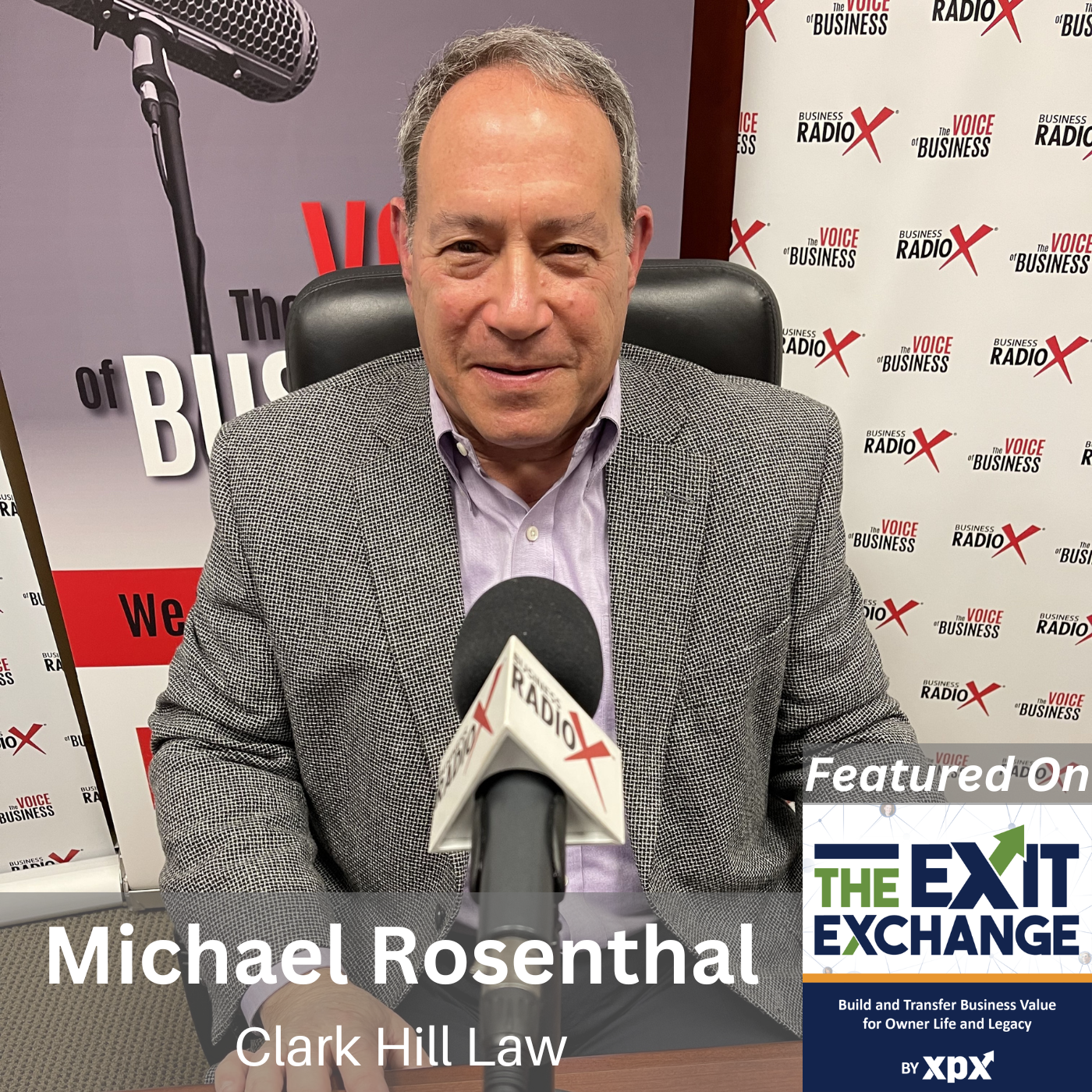
Franchise Strategies from Startup to Exit, with Michael Rosenthal, Clark Hill Law

December 11, 2024 by John Ray

Franchise Strategies from Start to Exit, with Michael Rosenthal, Clark Hill Law, on The Exit Exchange with host John Ray
North Fulton Studio
Franchise Strategies from Startup to Exit, with Michael Rosenthal, Clark Hill Law
Loading
00:00 /
RSS Feed
Share
Link
Embed

Download file

Franchise Strategies from Start to Exit, with Michael Rosenthal, Clark Hill Law, on The Exit Exchange with host John Ray

Franchise Strategies from Startup to Exit, with Michael Rosenthal, Clark Hill Law (The Exit Exchange, Episode 21)

In this episode of The Exit Exchange, hosted by John Ray, the discussion features Michael Rosenthal, a founding member of XPX Atlanta and a seasoned advisor in franchise and distribution law. Michael delves into the intricacies of franchising, covering both franchisor and franchisee perspectives, and shares his insights into trends such as the increasing role of private equity in the franchise industry. The conversation also touches on the importance of due diligence, proper record-keeping, and considering the exit strategy right from the start when buying a franchise. Additionally, Michael discusses the value of XPX Atlanta for business owners and professionals involved in exit planning.

The host of The Exit Exchange is John Ray, and the show is produced by John Ray and the North Fulton affiliate of Business RadioX®. John Ray and Business RadioX-North Fulton are Gold Sponsors of XPX Atlanta.

Michael Rosenthal

Michael Rosenthal has recently transitioned to Clark Hill Law after a successful tenure at Taylor English Duma LLP.

With a robust background in corporate law, he specializes in franchising, distribution, and business succession planning. Throughout his career, Rosenthal has represented both franchisors and franchisees, providing comprehensive legal support that includes Franchise Disclosure Document preparation, state registrations, and ongoing business counseling. His expertise has garnered him recognition in prestigious publications such as Who’s Who Legal and Franchise Times, solidifying his reputation as a leading attorney in the field.

In addition to his legal practice, Rosenthal has held significant roles in various organizations, including serving as an independent director for Inland Retail Real Estate Trust, Inc. (IRRETI) and as a board member of the Exit Planning Exchange’s Atlanta Chapter. He is also an active member of the American Bar Association Forum on Franchising.

A graduate of the University of Florida for both his undergraduate and law degrees, Rosenthal has been recognized in The Best Lawyers in America® from 2023 to 2025.

LinkedIn 

Clark Hill Law

Clark Hill’s value proposition is straightforward: the firm offers clients an exceptional team dedicated to delivering outstanding service.

They recruit and develop talented individuals, empowering them to contribute to a rich diversity of legal and industry experience.

With locations across the United States, Ireland, and Mexico, Clark Hill operates in agile, collaborative teams, partnering with clients to help them achieve and surpass their business goals.

Clark Hill. Simply Smarter.

LinkedIn | Instagram | Facebook

Topics Discussed in this Episode

00:00 Introduction to The Exit Exchange
00:32 Meet Michael Rosenthal
02:12 Understanding Franchise and Distribution Law
06:17 Trends in the Franchise Industry
09:10 Franchisee Considerations and Due Diligence
13:29 The Economics of Franchising
18:29 Exit Planning for Franchisees
27:03 The Value of XPX Atlanta
35:00 Conclusion and Contact Information

The Exit Planning Exchange Atlanta

The Exit Planning Exchange Atlanta (XPX) is a diverse group of professionals with a common goal: working collaboratively to assist business owners with a sale or business transition. XPX Atlanta is an association of advisors who provide professionalism, principles, and education to the heart of the middle market.

Their members work with business owners through all stages of the private company life cycle: business value growth, business value transfer, and owner life and legacy. Their Vision: To fundamentally change the trajectory of exit planning services in the Southeast United States. XPX Atlanta delivers a collaborative-based networking exchange with broad representation of exit planning competencies. Learn more about XPX Atlanta and why you should consider joining our community by following this link.

The host of The Exit Exchange is John Ray, and the show is produced by the North Fulton affiliate of Business RadioX® in Alpharetta. The show archive can be found by following this link.

John Ray and Business RadioX North Fulton are Gold Sponsors of XPX Atlanta.

Tagged With: Clark Hill Law, exit planning, Exit Planning Exchange, FDD, franchise, Franchise Disclosure Document, franchise law, Franchising, michael rosenthal, The Exit Planning Exchange Atlanta, XPX Atlanta

The Path to Franchise Ownership, with Sue and Craig Derene, Franchise Connect Pro

June 11, 2024 by John Ray

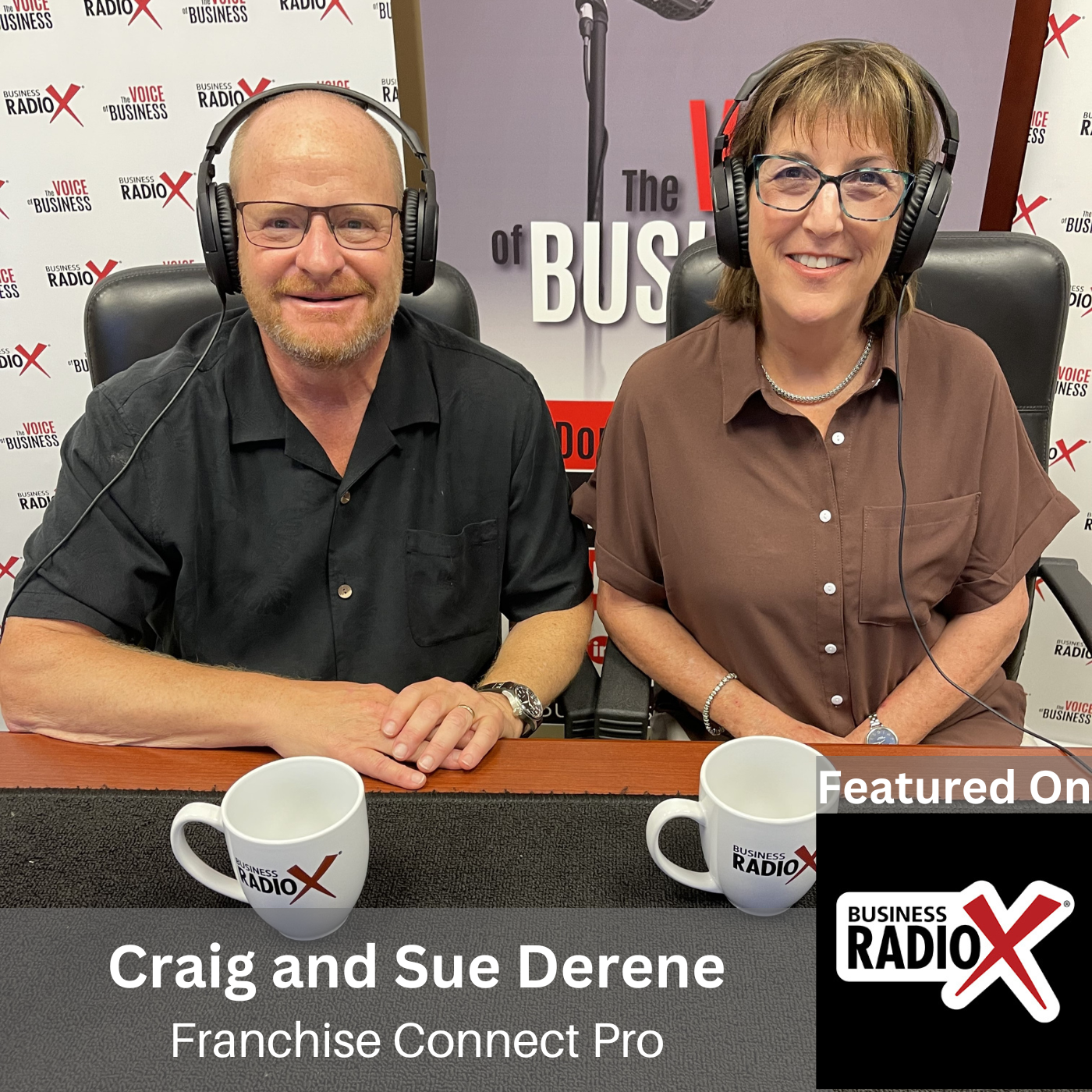
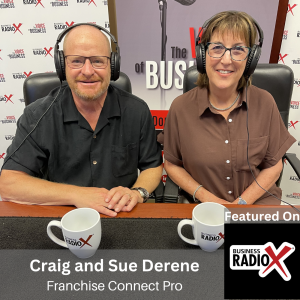
Craig and Sue Derene, Franchise Connect Pro
North Fulton Business Radio
The Path to Franchise Ownership, with Sue and Craig Derene, Franchise Connect Pro
Loading
00:00 /
RSS Feed
Share
Link
Embed

Download file

Craig and Sue Derene, Franchise Connect Pro

The Path to Franchise Ownership, with Sue and Craig Derene, Franchise Connect Pro (North Fulton Business Radio, Episode 777)

On this episode of North Fulton Business Radio, host John Ray interviews Sue and Craig Derene of Franchise Connect Pro. Sue and Craig discuss how they assist individuals in selecting the right franchise model based on their backgrounds, skills, and financial capabilities. The Derenes emphasize the importance of responsible franchising, including the concepts of transparent business models and sustainable growth. They share success stories of clients who have successfully transitioned from corporate roles to franchise ownership, highlighting the importance of fit and commitment in achieving business success. Sue and Craig also provide insights into their process, from initial consultations to detailed discovery steps and funding assistance.

John Ray is the host of North Fulton Business Radio. The show is recorded and produced from the North Fulton studio of Business RadioX® inside Renasant Bank in Alpharetta.

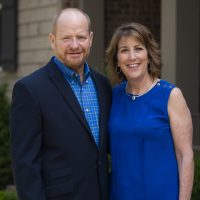
Sue and Craig Derene, Franchise Connect Pro

Sue and Craig Derene, Franchise Connect Pro
Craig and Sue Derene, Franchise Connect Pro

Sue and Craig Derene’s passion for helping people led them to a career guiding individuals toward their dreams of business ownership. Franchising can provide financial security, lifestyle freedom, and legacy building.

Franchise Connect Pro specializes in finding the perfect franchise or business opportunity. Their free consultation process has a proven track record of success, helping to identify and research franchise opportunities that present a true chance for success in specific target markets. With over 3,000 franchise concepts available in the United States alone, searching for the right franchise can be a daunting task.

Craig and Sue Derene, Franchise Connect ProAdditionally, not all franchises are created equally, and even top-rated franchises are not always the best fit for everyone. Their process takes a close look at an individual’s goals, experience, strengths, weaknesses, desired lifestyle, and more to find opportunities that present a realistic chance for long-term success and happiness.

At Franchise Connect Pro, they provide free franchise consulting services to assist in making the best decision when buying a franchise or business opportunity. They represent over 900 of today’s leading franchise opportunities and are affiliated with a strong, dedicated franchising network of professionals and franchise partners.

Their focus is on helping clients navigate through the entire process and matching them with the ideal business.

Website | Instagram | Facebook | X (Twitter) | Sue LinkedIn | Craig LinkedIn | Company LinkedIn

Topics Discussed in this Episode

00:00 Welcome to North Fulton Business Radio
01:31 Meet Sue and Craig Derene
01:58 Franchise Connect Pro: What They Do
03:30 The Derene’s Journey to Franchise Consulting
04:38 Helping Clients at a Crossroads
10:54 Responsible Franchising
19:08 Matching Skill Sets with the Right Franchise
20:37 Ideal Clients for Franchise Connect Pro
22:54 The Process of Working with Franchise Connect Pro
26:10 The Importance of Transparency and Commitment
31:40 Success Stories and Client Experiences
34:38 How to Connect with Sue and Craig
35:38 Closing Remarks and Additional Information

Renasant Bank and Casa Nuova Italian Restaurant support North Fulton Business Radio

Renasant BankRenasant Bank has humble roots, starting in 1904 as a $100,000 bank in a Lee County, Mississippi, bakery. Since then, Renasant has become one of the Southeast’s strongest financial institutions, with over $13 billion in assets and more than 190 banking, lending, wealth management, and financial services offices in Mississippi, Alabama, Tennessee, Georgia, and Florida. All of Renasant’s success stems from each of their banker’s commitment to investing in their communities as a way of better understanding the people they serve. At Renasant Bank, they understand you because they work and live alongside you every day.

Casa Nuova Italian RestaurantCasa Nuova is a proud family-owned and operated restaurant, serving classic, authentic and traditional Italian cuisine and top tier hospitality since 1998.

Casa Nuova is a cook-to-order kitchen, serving traditional fare including pasta, chicken, seafood, veal, vegetarian and gluten-free options, plus daily specials. They are a farm-to-table establishment, meaning that in the summertime, they cultivate their own vegetables in their garden, steps away from the restaurant, including tomatoes, corn, peppers, zucchini, sunflowers and more!

Celebrating more than 25 years, Casa Nuova has become a true staple in the Alpharetta area, serving more than three generations of families, including friends old and new, visiting near and far from all over the metro Atlanta area and beyond.

Website | LinkedIn | Facebook | Instagram

About North Fulton Business Radio and host John Ray

With over 770 shows and having featured over 1,200 guests, North Fulton Business Radio is the longest-running podcast in the North Fulton area, covering business in our community like no one else. We are the undisputed “Voice of Business” in North Fulton!

The show welcomes a wide variety of business, non-profit, and community leaders to get the word out about the important work they’re doing to serve their market, their community, and their profession. There’s no discrimination based on company size, and there’s never any “pay to play.” North Fulton Business Radio supports and celebrates business by sharing positive business stories that traditional media ignore. Some media leans left. Some media leans right. We lean business.

John Ray, Business RadioX - North Fulton, and Owner, Ray Business Advisors
John Ray, Business RadioX – North Fulton, and Owner, Ray Business Advisors

John Ray is the host of North Fulton Business Radio. The show is recorded and produced from the North Fulton studio of Business RadioX® inside Renasant Bank in Alpharetta. You can find the full archive of shows by following this link. The show is available on all the major podcast apps, including Apple Podcasts, Spotify, Google, Amazon, iHeart Radio, and many others.

The studio address is 275 South Main Street, Alpharetta, GA 30009.

John Ray, The Generosity MindsetJohn Ray also operates his own business advisory practice. John’s services include advising solopreneurs and small professional services firms on their value, their positioning and business development, and their pricing. His clients are professionals who are selling their expertise, such as consultants, coaches, attorneys, CPAs, accountants and bookkeepers, marketing professionals, and other professional services practitioners.

John is the national bestselling author of The Generosity Mindset: A Journey to Business Success by Raising Your Confidence, Value, and Prices.

Tagged With: business ownership, Craig Derene, Franchise Connect Pro, franchise consulting, franchise opportunity, franchise ownership, Franchising, John Ray, North Fulton Business Radio, Sue Derene

Steve Taylor with The Franchise Consulting Company

March 4, 2022 by Karen

Steve-Taylor-with-The-Franchise-Consulting-Company-feature
Phoenix Business Radio
Steve Taylor with The Franchise Consulting Company
Loading
00:00 /
RSS Feed
Share
Link
Embed

Download file

Steve-Taylor-with-The-Franchise-Consulting-Company

Steve Taylor with The Franchise Consulting Company

The Franchise Consulting Company logo

The Franchise Consulting Company helps clients structure a franchise strategy based on the uniqueness of their situation and what they find most compelling as to brand, culture and operating models in order to attain their goals. We work with both clients interested in identifying and investing in franchises AND with business owners that want to incorporate franchising into their growth strategy by becoming franchisors and selling franchises.

  1. We understand you, your background, and build a personalized business plan that defines what you want to achieve.
  2. We introduce you to concepts and resources that we think best fit your skill sets, interests, financing, and other factors that we have seen lead to success.

  3. You get a chance to meet owners and test the field of franchising for these top candidates.

  4. We have relationships with many top banks, legal experts, and other, best in class resources and can guide you to experts that can help you with all of your legal paperwork.

Join us in achieving entrepreneurship through one of the most stable routes in the world.

Steve-Taylor-Phoenix-Business-RadioXSteve Taylor is a former Navy Lieutenant and Naval Academy graduate who proudly served afloat and ashore for seven years following graduation.

Upon completion of his military service, Steve began a career in high tech and consumer electronics. While enjoying a healthy career, he began to look into franchising and small business ownership as a way to insulate himself from the vagaries of technology and large business. He purchased his first franchise during the ‘great recession, eventually building it into one of the top units in a large system, selling a majority interest in 2019

Realizing his passion and interests were evaluating and exploring the vast opportunities in franchising and then sharing this knowledge, Steve joined the FCC team as a partner. He genuinely enjoys “evangelizing” the American Dream as embodied in Franchise and Small Business Ownership while helping clients both visualize and realize a better quality of life.

As a franchise consultant, Steve is dedicated to providing his clients with the most thorough and honest guidance possible.

Steve lives in Pleasanton, California with his wife with their three children (including twins). In his spare time, Steve enjoys cooking, skiing with his kids and traveling throughout the state and beyond.

Personal Statement: I absolutely believe that the best way to transform our communities and ultimately, our country is by identifying, enabling, and creating a new class of business owners.

For example, the franchise model and military veterans are purpose-made for each other. On one hand, you have a model that comes with a ready-made template for success – on the other, you have a group of people that know how to follow a process, persevere through adversity, and seize opportunities while remaining creative and focused.

My passion is to identify opportunities and resources and match them with veterans and others that have a desire to change the trajectory of their lives and their communities while achieving something out of the ordinary for themselves and their families.

Connect with Steve on LinkedIn, Twitter and Instagram.

Tagged With: Franchisee, Franchises, Franchising, military veteran, small business, Veteran

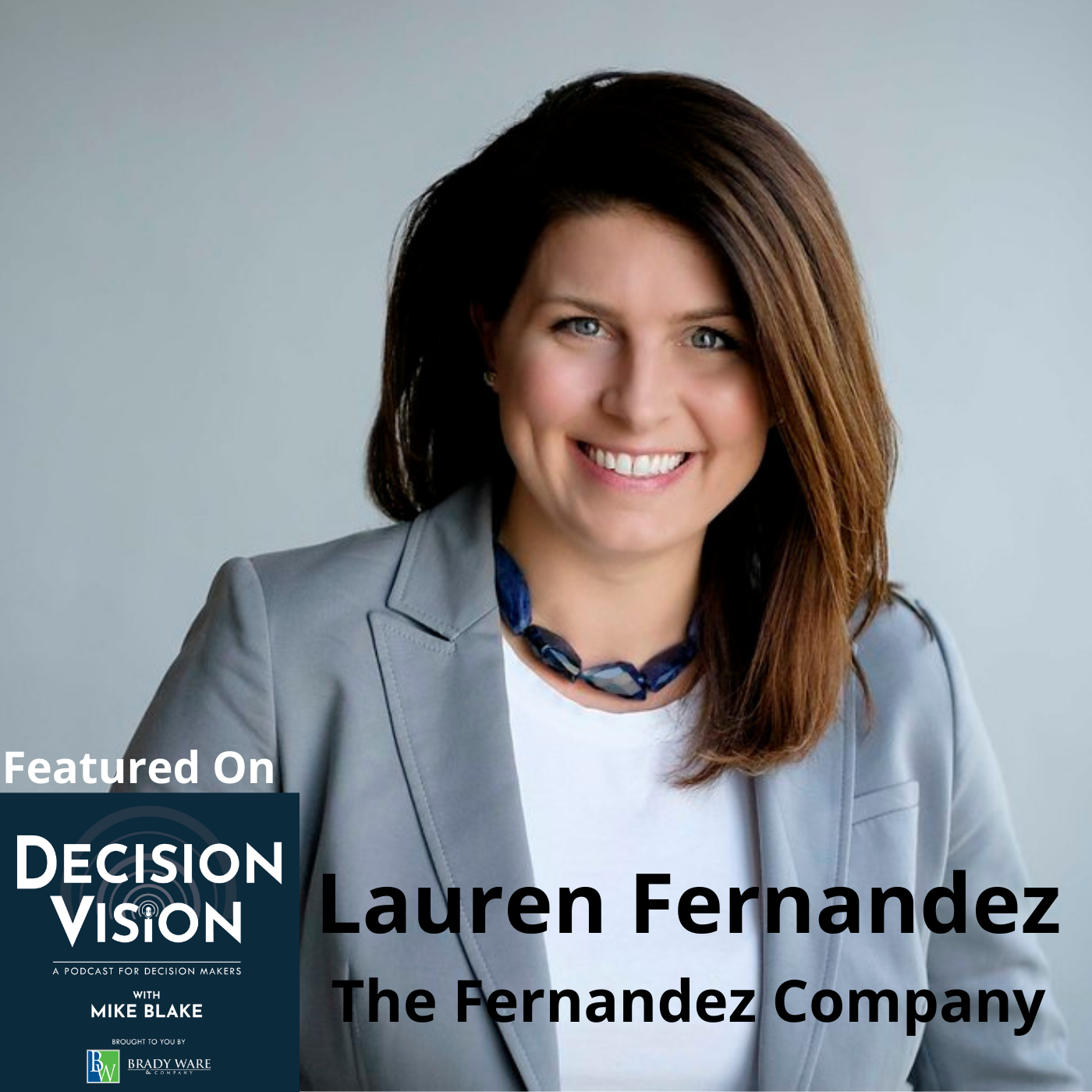
Decision Vision Episode 90: Should I Franchise my Business? – An Interview With Lauren Fernandez, The Fernandez Company

November 5, 2020 by John Ray

The Fernandez Company
Decision Vision
Decision Vision Episode 90: Should I Franchise my Business? - An Interview With Lauren Fernandez, The Fernandez Company
Loading
00:00 /
RSS Feed
Share
Link
Embed

Download file

Decision Vision Episode 90:  Should I Franchise my Business? – An Interview With Lauren Fernandez, The Fernandez Company

Lauren Fernandez of The Fernandez Company joins host Mike Blake to discuss what considerations business owners should weigh before becoming a franchisor, the legal foundations a franchise organization must establish, the success factors in running a franchise organization, and much more. “Decision Vision” is presented by Brady Ware & Company.

Lauren Fernandez, The Fernandez Company

The Fernandez Company specializes in helping restaurant brands grow from 2 units to 20 and beyond. Lauren Fernandez is fully immersed in the restaurant industry as an operator, developer and executive with deep business and industry understanding. The Fernandez Company generates new revenue streams for companies, particularly in the food & hospitality industries. They diversify revenue streams outside the four walls of a restaurant by creating new channels of revenue in the areas of organic expansion, franchising, product development and licensing. They create this growth for their clients through  their process of strategic consulting, management support and investment.

Learn more at their website.

Mike Blake, Brady Ware & Company

Mike Blake, Host of the “Decision Vision” podcast series

Michael Blake is Host of the “Decision Vision” podcast series and a Director of Brady Ware & Company. Mike specializes in the valuation of intellectual property-driven firms, such as software firms, aerospace firms and professional services firms, most frequently in the capacity as a transaction advisor, helping clients obtain great outcomes from complex transaction opportunities. He is also a specialist in the appraisal of intellectual properties as stand-alone assets, such as software, trade secrets, and patents.

Mike has been a full-time business appraiser for 13 years with public accounting firms, boutique business appraisal firms, and an owner of his own firm. Prior to that, he spent 8 years in venture capital and investment banking, including transactions in the U.S., Israel, Russia, Ukraine, and Belarus.

Brady Ware & Company

Brady Ware & Company is a regional full-service accounting and advisory firm which helps businesses and entrepreneurs make visions a reality. Brady Ware services clients nationally from its offices in Alpharetta, GA; Columbus and Dayton, OH; and Richmond, IN. The firm is growth minded, committed to the regions in which they operate, and most importantly, they make significant investments in their people and service offerings to meet the changing financial needs of those they are privileged to serve. The firm is dedicated to providing results that make a difference for its clients.

Decision Vision Podcast Series

“Decision Vision” is a podcast covering topics and issues facing small business owners and connecting them with solutions from leading experts. This series is presented by Brady Ware & Company. If you are a decision maker for a small business, we’d love to hear from you. Contact us at decisionvision@bradyware.com and make sure to listen to every Thursday to the “Decision Vision” podcast.

Past episodes of “Decision Vision” can be found at decisionvisionpodcast.com. “Decision Vision” is produced and broadcast by the North Fulton studio of Business RadioX®.

Visit Brady Ware & Company on social media:

LinkedIn:  https://www.linkedin.com/company/brady-ware/

Facebook: https://www.facebook.com/bradywareCPAs/

Twitter: https://twitter.com/BradyWare

Instagram: https://www.instagram.com/bradywarecompany/

Show Transcript

Intro: [00:00:01] Welcome to Decision Vision, a podcast series focusing on critical business decisions. Brought to you by Brady Ware & Company. Brady Ware is a regional, full-service accounting and advisory firm that helps businesses and entrepreneurs make visions a reality.

Mike Blake: [00:00:21] And welcome to Decision Vision, a podcast giving you, the listener, clear vision to make great decisions. In each episode, we discuss the process of decision making on a different topic from the business owners’ or executives’ respective. We aren’t necessarily telling you what to do, but we can put you in a position to make an informed decision on your own and understand when you might need help along the way.

Mike Blake: [00:00:40] My name is Mike Blake, and I’m your host for today’s program. I’m a Director at Brady Ware & Company, a full-service accounting firm based in Dayton, Ohio, with offices in Dayton; Columbus, Ohio; Richmond, Indiana; and Alpharetta, Georgia. Brady Ware is sponsoring this podcast, which is being recorded in Atlanta per social distancing protocols. If you like this podcast, please subscribe in your favorite podcast aggregator, and please consider leaving a review of the podcast as well.

Mike Blake: [00:01:05] Today’s topic is, Should I Franchise My Business? So, we’ve had conversations about franchising before. Mainly, the one that I’m thinking of is with Anita Best. It was very early on in the podcast series. I think she’s in the single digits. And she’s a person that is an expert in helping people find a franchise to buy into. So, if you want to become a franchisee, how do you figure out the right one? And if that interests you, please go back and listen to it. It’s a good, informative show.

Mike Blake: [00:01:41] But being a franchisee is only one-half of the equation. The other half is, should I become a franchisor? Which means that you’re going to make your business and your business model available to other people that would like to participate in it in a hybrid sort of operational and ownership way.

Mike Blake: [00:02:08] And franchising is actually kind of interesting. I did a little bit of background research. Uncharacteristically of me, I did some background research prior to this interview. And it turns out that franchising actually dates back to the medieval Catholic Church. It turns out that the initial territories, if you will, or dioceses, as we call them in Catholicism, were apportioned in Europe in a way that were set up effectively as franchises, including a certain portion of revenue generated by that church would be sent back to, for the most part, the Vatican. The seat of Catholic Catholicism was in Southern France for a brief period of time, but mostly to the Vatican. And of course, in exchange, the Vatican lent the brand name of Catholicism, and the rights, and rituals, and so forth, and all the other things that Catholicism brings to the table.

Mike Blake: [00:03:07] So, I had no idea that franchising goes back that far. And that’s a far cry now from starting a McDonald’s franchise, or a car wash franchise, or a dry cleaning franchise, but it just goes to show you that that business model has been around for a very, very, very long time. And anything that lasts that long probably has something going for it, despite all the change that’s occurred.

Mike Blake: [00:03:38] So, clearly, it’s a topic that’s worthy of discussion. And I have a feeling that there are some folks that are in businesses right now, either as an owner or as a key decision maker, that are thinking about the issue or the question, should I franchise my business? So, I have leant with you the sum total of my expertise on this topic, and that means we have more time to fill in the podcast.

Mike Blake: [00:04:01] And today, joining us to fill that time with expertise is Lauren Fernandez of the Fernandez Company. They are simple, effective and elegant, providing growth solutions for food and hospitality. At the Fernandez Company, they generate new revenue streams for companies, particularly in the food and hospitality industries. They diversify revenue streams outside the four walls of a restaurant by creating new channels of revenue – and we’re going to talk a lot about this – in the areas of organic expansion, franchising, product development, and licensing. They create this growth for their clients through their process of strategic consulting, management support, and investment.

Mike Blake: [00:04:38] Lauren is the founder of The Fernandez Company. The culmination of over a decade of practice as a trusted brand consultant and legal adviser with all kinds of clients from startups to multinational companies. Lauren started the Fernandez Company after starting funding with private equity and selling an eight location restaurant chain at a substantial return. She consults with companies on all aspects of restaurant and franchise development, brand licensing, product development, and market implementation. She focuses her practice on regulated industries, particularly in the food and drug space.

Mike Blake: [00:05:10] Before forming the Fernandez Company, Lauren served as the general counsel for Focus Brands, where she was instrumental in the rapid growth of the licensing program. Prior to joining Focus Brands, she was part of an elite team at Novartis CIBA Vision that successfully launched the company’s first new product in over a decade. She started her career in one of Atlanta’s most respected intellectual property boutiques, Gardner Groff. Lauren holds an undergraduate degree from Stetson University, as well as a juris doctorate and MBA from Emory University. She serves on the advisory board for the Atlanta Community Food Bank. She’s also a dedicated fundraiser for the Leukemia and Lymphoma Society and was named the 2015 Woman of the Year for raising $95,000 in less than three months for cancer research. She’s a native of the Tampa Bay area but has lived in the Atlanta area for over 15 years. So, she’s almost accepted as a near native. But she’s native to our hearts and native to the podcast. Lauren Fernandez, welcome to the program.

Lauren Fernandez: [00:06:06] Thanks for having me. That was quite an intro there.

Mike Blake: [00:06:09] So, before we jump in, I want to ask you this, $95,000 for cancer research. First of all, thank you for doing that. My mother is a two time cancer survivor. What motivated you to do that?

Lauren Fernandez: [00:06:27] Well, it’s actually a very personal cause for me as well. In the early years of my law school education, my mom actually passed away from an extremely rare lymphoma. And for years I wanted to do something to help fund research. And as you know, there are hundreds of different types of blood disorders that are classified as leukemias or lymphomas. And the research, because there are so many differentiated different blood cancers, it is very difficult to tailor research to actual treatment plans. And one of the things I love about Leukemia and Lymphoma Society is they put those dollars that we raise almost dollar for dollar directly into tailoring research to effective solutions to target cures for these cancers.

Lauren Fernandez: [00:07:13] And I’m so pleased that we were able to fund not one, but two separate research studies that directly targeted T-cell lymphoma, which had affected my mother. And the survival rate for that cancer in the last 15 years has shot up from nearly four percent, which is abysmal to the double digits, which is fantastic. So, I was very blessed to be a part of that and to use my network and my friends and family to help us all fundraise, to fund those two research studies. It was very important.

Mike Blake: [00:07:46] Yeah. It’s remarkable. And I’ve noticed, I don’t know anybody who’s suffered with that particular cancer. But there’s been a lot of progress there. And that’s one area of cancer where there’s a lot of movement, too. So, again, thank you for contributing to that success.

Lauren Fernandez: [00:08:02] It’s my pleasure.

Mike Blake: [00:08:02] So, getting into your area of expertise, let’s help people understand that may not necessarily be expert. What does it mean to move into a franchise model? And how does a franchise model differ from other, maybe, more conventional business models?

Lauren Fernandez: [00:08:21] Right. So, franchising is actually a little bit of an American invention in terms of its legal structure and recognition and regulation. The United States is pretty much the leader in the law defining a franchise. We have the FTC in the United States who helps regulate the disclosures attached to franchising. But it might surprise most people to know that on a state by state basis, that’s where we look to for the governance regarding business relationships and specifically franchises. So, there’s about 15 to 16 states that have specific franchise rules and disclosures that are tailored to that type of business model.

Lauren Fernandez: [00:09:07] So, what is it exactly? Well, the true answer is it varies a little bit from state to state. But in reality, we can talk about it generally in the common denominators of what forms of franchise. So, a franchise is generally defined as three key elements. One, you have the brand. You have the trademark. And that trademark is licensed to an individual who, two, wants to use a proprietary system to run a business. And three, that person who has the system, i.e. the franchisor, is the person who’s controlling the quality and the execution of that system. So, there are some quality controls and guidance that are provided along with the ability to and the license to use the brand and the System.

Lauren Fernandez: [00:09:54] Now, when we say the System, we use that term kind of capital S, System. What does that really mean? Well, it could be anything, like if you’re in a restaurant, it could be methods, it could be floor plans and designs for the restaurant, it could be recipes, menus, interior decor, operational training, et cetera. Often you will also see franchisors manage things like marketing through a marketing fund. So, the idea here is that you are taking a workable, ostensibly profitable business model and licensing it for your use as an entrepreneur. So, it’s kind of like being an entrepreneur, but with guide rails, if you will.

Mike Blake: [00:10:37] And that’s interesting because I think that’s a very important point that I want to highlight, because I think when most people start to explore franchising, they think about the brand. Because the brand for us, as consumers, is a front facing part. But the part that strikes me that is actually the harder part to really nail down is that that system that you’re going to sell and then put people in a position to execute with their own dollars. So, I’m glad you mentioned that, because I think that’s a very important kind of learning point for our audience. So, if I have a business now and I start to think about franchising, I’ve heard about it from someplace. In your experience, what motivates people to start to consider franchising? Why are people asking you about it? Why are your clients asking you about franchising?

Lauren Fernandez: [00:11:30] This is a great question. And this is just my instincts and from many years of talking to people who are interested, I believe it’s because they are genuinely interested in growing their revenue and growing their business, whether it’s a restaurant or a service industry, et cetera. And that just is the most common way that they know of or have heard about, whether it be through television or movies or they’ve seen other success stories on Shark Tank, et cetera. And so, they think that that is the natural way to necessarily grow their business.

Lauren Fernandez: [00:12:10] However, I like to ask the why question. Why are you looking to grow? What’s really behind that? Do you need an exit strategy? Are you not making enough money? Do you need to fund two kids going to college? I think when you really spend time – and in our case with our clients, this is at least a two hour interview where we spend a lot of time getting to know them and their goals. And then, I think the question is, is franchising the appropriate fit for growth if that’s what we’re going for? I would say about 90 percent of the time you hear two things when we ask that why question. They want to grow their business and they want to make more money. But it doesn’t necessarily always follow that franchising is the right answer. Because with franchising, there’s a lot of other things that you have to consider, including supporting a franchise system, operational costs, loss of control to some extent, et cetera, that I think lots of people don’t necessarily think of when they consider franchising.

Mike Blake: [00:13:14] And I suspect – and you tell me if I’m wrong – at the end of the day, a lot of this boils down to the prospective franchisor is trying to figure out how to achieve scale and probably try to do it relatively rapidly, right? At the end of the day, to me, that’s what that sounds like. Am I off base or is that close to being right?

Lauren Fernandez: [00:13:33] I think sometimes that’s one of the reasons. But, ultimately, I think, again, that why question, yes, there is always ways to grow your business and to create scale in your own business without necessarily engaging in franchising as the appropriate model. And so, for us, even especially having been a franchisee myself and an owner-operator, I think really understanding their pains and their day to day operations, like what’s really going on? Why do you feel like you can’t scale it yourself? Why do you feel like you need other people to partner with you as franchisees in order to achieve scale? I think really driving down in those deeper questions gets us really to the problems they’re facing so we can solve them better. Because I will say this, while, franchising, I very deeply believe in it. I think it’s a wonderful way to kind of harness the American entrepreneurial spirit. It provides viable growth for a lot of different people, both the franchisor and the franchisee. It is not always the answer for growth. There are many different ways you can grow your business.

Mike Blake: [00:14:40] So, I want to dive into that here. I haven’t ripped off the script in a long time, but I’m going to rip it up a little bit today, because what you’re describing to me is that that process or the thought process, at least, when you consider franchising, it sounds like maybe a symptom of potential issues in the company that franchising is not going to solve the problem, in fact, it may make it worse. It sounds like that probing that you do helps identify whether or not the problem they’re solving is even franchise appropriate. And by definition, I guess, can be solved externally as opposed to something that really is an internal problem. Is that fair?

Lauren Fernandez: [00:15:22] No. I think you absolutely nailed it. And it’s not to say that there are people out there who are ready to franchise and who are good to go the minute they walk in the door. But in my practice, one of the things we do is our initial consulting in the first three to six months is, what I would call, tidying up. We go into the business, we really start to understand it, and we solve for what we know will be problems later. Because you cannot copy, paste, repeat and rapidly grow, whether it’s through your own organic growth or through franchising or any other channel, unless you really clean up the house and the foundation is strong.

Lauren Fernandez: [00:16:01] And so, in my experience, we see three things almost every single time when we go into a business that need correction or need tightening, if you will. One is, you’ve got to clean up the books. You have to have really daily available, accurate accounting. You’ve got to be able to show very key metrics. And I’ll use restaurants as an example, since that’s my wheelhouse. You’ve got to be able to, obviously, show the daily sales. You’ve got to be able to show your daily food costs, your daily labor costs. And you need to be running on what you think a target profit margin should be and show those numbers over time. Because if we don’t know those numbers, we can’t diagnose and show room for improvement. And we need to be able to show profit margin over time or else who’s going to want to buy your business as a franchisee if it’s not making significant amounts of money.

Lauren Fernandez: [00:16:55] The second thing is we tighten up operations. And sometimes that’s the people piece and making sure that the H.R. is all buttoned up and the risk is managed. That, from an operator’s point of view, if you can’t easily teach somebody else how to do it with a manual, with SOPs, with charts, and basic instructions, you’re not ready to franchise yet. And that’s usually not a huge hurdle. We just need to document, document, document. The third thing is you’ve got to define the brand. Sometimes there’s a little work to be done on making sure the brand messaging is clear, the design is clear. It’s really consistent and it’s differentiated so that when you move to market, that value proposition to a prospective franchisee is there. So, there is some work to be done, yes. When people come and do actually decide the franchise, we still spend a significant amount of time on, what I would call, that sort of tidying up period before we even really get to the growth plan and whether or not that involves franchising.

Mike Blake: [00:18:03] All right. So, let’s fast forward a little bit and say that somebody has made it through those three gates, if you will. And so, “Okay. I agree. Let’s go ahead and launch this franchising model.” At a high level, what do the steps look like to get from I’m not a franchise yet into now we’re a franchise?

Lauren Fernandez: [00:18:29] Right. So, there’s a significant amount of the cleanup, as we just discussed. But then, you really need to make sure we’ve got the legal foundation there. And I think there’s a misconception that this costs hundreds of thousands of dollars or that it costs, you know, even $50,000. It’s just not the case. So, you need to check some legal boxes. So, typically, that involves a federal trademark filing to make sure that the trademark is secure and available for use. And that you can protect those rights and the rights of others to use the system. Because, inherently, a franchise is a trademark license, first and foremost. So, buttoning up that kind of brand itself with the legal function of the trademark is very important.

Lauren Fernandez: [00:19:12] You know, there are franchise agreements that are required and also franchise disclosure documents, which, as I mentioned earlier, are regulated by the FTC and also 15 or so states. So, those legal documents provide the foundation of the relationship between the franchisor and the franchisee. And it starts from the minute that you engage them in a sales discussion. So, really, I think the foundation there is necessary.

Lauren Fernandez: [00:19:40] And then, as a secondary step, we like to educate our clients on what it means to be a franchisor. What it’s going to look like in a year, in two years, in five years as the company grows. And that includes, in the very early stages, making sure that they get their mission as a franchisor to become a good partner for franchisees. And they understand what transparency looks like and what it really means in a legal and practical context to be a franchisor and try to sell to a prospect. I think that those are really key initial first steps for anyone who’s building a franchise system.

Mike Blake: [00:20:22] And that disclosure document sounds to me like it looks fairly similar to a placement memorandum or an information memorandum for companies that are going to go out and raise capital. I don’t know if you’re familiar with those.

Lauren Fernandez: [00:20:36] Yes.

Mike Blake: [00:20:36] So, is that fair they’re fairly similar? They have some similarities.

Lauren Fernandez: [00:20:40] Yes. There’s a defined structure that’s outlined by the FTC that governs the shape and form of what’s called an FDD, a Franchise Disclosure Document. And, again, there are states out there that have additional disclosure requirements. So, you will often see one universal or nationwide FDD with several writers for each individual state. So, it is a checkmark, if you will. But it is essentially the four walls of your ability to sell the franchise. Because, ostensibly, you should not be discussing anything about the system or making any claims or forward looking statements about the franchise system other than what’s fully disclosed in that FDD.

Lauren Fernandez: [00:21:26] So, for sales people, including the original owners and the franchisor and their team, it’s very important that they understand the legal requirements behind that. And that, also, that they work with you and the legal team in producing an FDD that’s meaningful and substantial so they can talk about the brand and that there is decent substance in the disclosure. Because we like to operate in the light, I think that’s just the best way to roll. So, we try and make the FDD, not just to legal check the box, but more so a legitimate living sales document that helps the team not only sell into prospects, but helps prospects really genuinely understand the opportunity.

Mike Blake: [00:22:09] So, can you give an estimated timeline, and it can be from maybe the idea of having a franchise or maybe after they go through your cleanup process – maybe that’s better but I’ll let you decide – what does the time timeframe look like between, you know, deciding that you’re going to launch a franchise to actually having it out there and be available for potential franchisees to buy into?

Lauren Fernandez: [00:22:37] That’s a great question. So, our process involves that initial tidying up or cleanup period, which is somewhere between three and six months. A lot of that time is usually spent either in operations or buttoning up the accounting, cleaning up the finances, et cetera. And then, as a secondary stage, we go through what’s called a growth planning process. So, it’s a little bit more strategic. We sit down and we talk about goals, visions, planning, et cetera, and talk about the end game. And assuming that franchising is a part of that growth plan, then we go ahead and start the legal process of forming those documents. That’s about a two month process. The documents that need to be registered with various states in which you plan to sell the franchise. So, I would say all said and done that that whole process usually is somewhere between ten months to a year before it can be offered to the general consuming public.

Mike Blake: [00:23:33] And do you typically kind of have a suggested budget in mind? How much should a company plan to set aside to kind of go through that process?

Lauren Fernandez: [00:23:46] That is a wonderful question. So, a really good benchmark that we give to people is we assume that they’re making a certain number, a certain amount of profit margin. Because as I discussed earlier, in my opinion, if you’re not making a decent amount or profit out of your business, you probably have no business franchising it in the first place. But assuming they got –

Mike Blake: [00:24:06] Yeah. It’s like trying to solve a bad marriage with having a baby, right? I mean, it sounds like a really bad idea.

Lauren Fernandez: [00:24:14] Right. So, anywhere in the first year alone, we like to reserve about 20 to 25 percent of their annual profit margin in reserve for funding not only the legal documents that come of that, which is an initial upfront expense, but other expenses like state registration, sales, people, commissions, et cetera. So, there’s a decent amount of that, I would say, usually, north of $10,000 that’s legal in nature, whether that’s the sales disclosure documents, the FDD, the registration, the trademark registration, as we discussed earlier. Those costs are up front. But then, there’s some ongoing concern. There’s the people that it takes, the time that it takes to actually coach and manage and lead these franchisees to success. So, we also have to be thoughtful and considerate about who on the team and how much time it’s going to take to, for example, help a franchisee open a location, to train a franchisee at your headquarters, et cetera. So, there’s a decent amount of expense and I would say even more so than probably the legal expense and just the human capital and the time investment it takes to help franchisees.

Mike Blake: [00:25:27] So, I want to switch gears a little bit here. You know, you do everything you can to help. But then, a franchise, you know, at some point, it has to either execute or not or it has to thrive or not. And, of course, not all franchises, you know, succeed. I’m sure the ones you launch all do. But not every franchise succeeds. So, in your mind kind of post-launch, what are some of the differentiating factors that make a franchise launch successful versus not successful?

Lauren Fernandez: [00:26:06] This is a great question. So, I always say it’s not just about the horse that you pick, but it’s about putting it in the right race. So, there might be phenomenal prospective franchisees out there but they’re just not a good fit for your brand because, for example, your brand requires a very hands-on owner-operator. And the person that you’re talking to has a day job that they don’t want to leave and wants to treat the business more like it’s a check in the mailbox. And there’s nothing wrong with that. There are brands and systems for which that is the norm and it works. An example would be like a coin operated car wash. That’s a very different type of franchise system than, for example, owning a restaurant, which might be a lot more hands-on where you need to be the face of the restaurant. You need to be involved and engaged and be the mayor of your local community, et cetera.

Lauren Fernandez: [00:27:06] So, I would say when we see individual franchisee failures, largely, it is because it’s a mismatch between the system and the abilities or willingness of the franchisee to kind of buy into that, literally and figuratively. So, I do often think sometimes that you have to put the responsibility on both parties. So, while a franchisee may fail because it’s a mismatch or not a good alignment with the franchisee, there are instances of franchisors also not providing appropriate support in all of the areas where a franchisee would need it. It happens.

Lauren Fernandez: [00:27:48] I do think that there are some brands out there that franchise a little bit too early and it puts a lot of stress on a company to support rapidly growing franchise units who need that field business consultant. They need the marketing support. They need the customer service. They need the supply chain support. So, suddenly, the overhead for a franchise system to a franchisor can shoot up exponentially. I’ve seen numbers north of a million to $2 million a year in operating costs for 30 to 40, 50 units. And I think for a lot of franchisors, that kind of can take you by surprise if you do not have a properly laid out growth plan. So, unfortunately, it happens. I do not think that it’s the norm. I do think franchising as a system is a wonderful entrepreneurial spirit. Again, it gives people a chance to own their own business with the guide rails of someone else’s experience and expertise helping you along the way.

Mike Blake: [00:28:56] Good. So, this segues nice in a question I want to address with you, because it’s, in my experience, a very controversial topic. I think you have a lot to contribute to that. And that is, that I suspect that you’re aware that the the Small Business Administration website has a list of failure rates for SBA loans by franchise. And I didn’t look. I should have. But I think they kind of list their lowest 50 failure rates and their highest 50 failure rates. And, you know, some of the failure rates are quite striking. I remember the last time I looked at it, the highest failure rate was something in the 70 percent. And I think it was one of those ice cream places where they dump a bunch of ice cream on a cold table and mix some M&Ms or something inside a $10 ice cream cone. But my question is this, are you familiar with that list? And do you think there’s any validity to it at all in terms of the metric of the relative strength or business viability of one franchise system versus another?

Lauren Fernandez: [00:30:10] This is a phenomenal question. And it is controversial, right? I will just start with a general comment. So, in franchising. I think that there is a tendency to have what we will call fad franchises. So, there was a hot moment where, like, you could not open a pizza joint fast enough, then it was froyo, then it was mix-ins, like you just used the mix-in yoghurt example. Then, it was burgers. You remember there was, like, designer burgers on every corner. So, it’s driven by people. And so, when there are food demands or trends in the marketplace, you often see quick to act and sometimes well-positioned brands out there to benefit from those food trends in the marketplace. So, one of the current trends is poke bowl everywhere. Everywhere is a poke bowl, fresh tuna, rice, avocado, and a bowl. And it’s moved from the West Coast to the East Coast. Another trend right now, huge one, is ramen. There’s ramen everywhere.

Lauren Fernandez: [00:31:16] And so, occasionally, what you will see is there’s a glut in the marketplace where there are some initial first movers that are usually established brands who know what they’re doing. And they’re out there to kind of ride the first wave of that trend in the marketplace with consumer taste and diet. And then, you see the second movers, right? You see, like, these brands that just want to jump on that wagon very quickly and sell as many as possible as quickly as possible. So, when we’re looking at failure rates, I think sometimes what I quickly spot are those fads or those trends falling out of favor with the American public. You just see things not being as popular anymore as they once were or the fad is over. It’s just done. And so, there’s so much saturation in the marketplace with competing brands to serve that hunger in the marketplace, for lack of a better word, that eventually not everyone’s going to survive. And the brands that do survive are usually the ones that are more nimble, but also more mature and can respond to the changing diet in the marketplace or the changing tastes.

Lauren Fernandez: [00:32:23] The other thing that we see sometimes is, again, not a proper filtering or selection for prospective franchisees. So, that mismatch is happening and that’s why you have to have very specific guidelines for your sales team and a clear understanding of what a good franchisee looks like for your brand. And I think sometimes that means that the growth rate isn’t quite as exponential as what you might see in some of these other brands. But for the long term relationship, it’s the right thing to do. And I firmly believe in that. I think most people don’t catch this. But just like commercial real estate leases that are north of 10, 15, or 20 years, franchise agreements often run in similar length terms. So, you are signing up for a long term relationship with these prospective franchisees. And so, getting that match right is extremely important.

Lauren Fernandez: [00:33:24] You know, I think the third thing I will leave with is, part of that screening process is proper capitalization. Making sure that your franchisees have the amount of liquidity and proper balance of liquidity to leverage the debt to open these units. Because it’s not just about getting the doors open. You have to have available cash in reserve to maintain good inventory levels, to fix things that break, to hire the right managers, et cetera. So, there are estimates and FDDs that will give a prospective franchisee an idea of the low and the high. But I think screening to make sure that that available capital is really there and it’s a mix of capital and debt, if necessary, is really important. Because you’re going to cut off a lot of these issues before they even start when you do that.

Mike Blake: [00:34:21] You know, you said something in that answer that I just I think is so smart that I want to extract that because it has application, not just to this particular topic, but I think business decision making in general. And that is, that sometimes the best deal is the one you don’t make. And defining your business, not in terms of what you do, but what you won’t do or whom you’re going to exclude because they’re not a good fit or they’re not ready. As opposed to, you know, “Hey, can I come.” Sort of being the online ministry of franchisors or anybody who signs up is now ordained. So, I think that’s so smart and that the selectivity of the franchise – and any business, I think – means so much.

Mike Blake: [00:35:17] In my own business, one of most liberating and best decisions I made was I decided there’s certain kinds of assignments I don’t take on. I’m not good at them. I don’t enjoy them. They operate in a way that is immensely disruptive to my natural workflow. And there are people that do them way better than I do and will refer me work back, so I just refer them out. And I think encouraging anybody to decline customers that just aren’t a good fit. You know, listen to that inner voice saying, “Yeah. I’m not sure they’re the right one.” In my own experience, I’ve never turned down a client and then regretted that and wanted them back. And I’m not turning this into Mike Blake interview, but I wanted to raise point because I think that’s so important that it comes out of the franchise model because as general application. What do you think about that?

Lauren Fernandez: [00:36:14] You know, I have seen it across multiple brands. And some of the most successful growth stories that I’ve seen with brands that I’ve worked with come from exceptional leadership at the top. A vision to treat franchisees as partners and long term partners. And franchisors who are constantly asking the question, is what we’re doing today good for the franchisee? Is it good for the System – capital S? And, also, who invest in really high quality sales people who understand this about their brand.

Lauren Fernandez: [00:36:51] And I’ve worked with some phenomenal sales professionals at my time at Focus and since then. And I think that that sometimes makes all the difference because when they’re interviewing prospects, they know what to look for and they have a long term vested interest in not just selling a quick deal. They’ll sell the right deal to the right person. And those are the people that I keep going back to for continued sales growth. I trust them. I trust them to bring me the right qualified prospects. Because I don’t want to put the wrong people in front of my clients either.

Lauren Fernandez: [00:37:28] It’s the same with investors, even as a franchise or if you take investors, we do the same level of screening. Is it the right person to be a partner with us long term in the growth of this brand? I think that the same applies there too. You want to bring quality investors who understand the mission, who understand the trajectory of the growth plan, who are going to push a different agenda, and who are in the boat rowing in the same direction. And I can’t highlight that enough. I think when you’re in a system, franchising by definition, again, it’s a long term, mutually beneficial relationship. So, you got to know who you’re getting into bed with, right? You got to know and you got to choose wisely.

Mike Blake: [00:38:18] Yeah. A question I want to make sure that we get to is, you know, it strikes me with a franchise is that once you move from, presumably, a single location – or maybe not a single location – but a self-contained business model to franchise, you probably have to develop new skill sets. The things that made you successful as a self-contained business may need to expand or may need to change for the ones that are going to make you a successful franchisor. Do you agree with that? And if so, what do some of those new skills look like?

Lauren Fernandez: [00:38:59] So, wonderful segue. I think, here, one of the things I would highlight is the best franchise brands that I’ve seen, you see an owner-operator really become a leader of a community. So, they go from being the mayor of their one or two restaurants, for example, to being the leader of their entire brand. And there’s a level of camaraderie, inclusiveness, and transparency in that leadership that inspires everyone to do better.

Lauren Fernandez: [00:39:36] And I think that there is an element to this of – again, I’m using the restaurant terminology here of the owner-operator, where you’ve walked the walk and you talked the talk. So, you know what it is when the fryer goes down and what that means at lunch rush. And so, when the franchisee complains that the equipment keeps breaking, you don’t say, “Well, tough, it’s the equipment package.” You know that you’ve got to find a solution and your solution is based in your own practical experience. And I think those kinds of simple, and elegant, and down to earth solutions are really what define the best franchises because the leadership is in the trenches with the franchisees. So, I think if I could identify one type of skill set that is a must have, it’s that type of leadership. It’s the servant base with you all the way kind of leadership.

Mike Blake: [00:40:35] You know, that’s interesting. I’m not a franchise expert, as I’ve said, but I’ve observed that some franchises, in a way, have a multilevel market. I’m sure you’re going to cringe as soon as I bring that in, but let me finish. Is that some franchises do develop almost a cult of personality around the founder and a cult around the brand. And that they have huge – did, anyway, before the virus wrecked everything. But they had huge annual conferences, and trips, and contests, and internal recognition, and who’s the best franchisee in this region for whatever characteristic. And, you know, I hadn’t really thought about that but you’re right that, you know, there are a lot of franchises that really do place a high premium on strong leadership.

Lauren Fernandez: [00:41:36] Yeah. So, Mike, to that, I will say, I think that’s a little bit of a double edged sword, too. Because if you build the cult of personality around any leader, whether it’s the founder or the hired and gone CEO, what have you, you run the risk of that not being fully scalable. And, you know, you’re putting all your eggs in one basket. But the best leaders I’ve seen create this community with an entire executive team. They are experts that recruiting in talent and making sure everyone’s compass is pointed north and is going in the same direction.

Lauren Fernandez: [00:42:18] And so, there’s a level of redundancy to the messaging, the community, and the reinforcement of it is in the daily actions. And I cannot stress this enough. You want to make sure that the leadership for the brand is divested across an entire group of people who all have the integrity to do the right thing even when nobody is looking. And I think that it’s more than just one person. And it needs to be more than just one person.

Mike Blake: [00:42:53] Who, in your mind, does franchising really well? If you’re going to highlight somebody out there, they’re just a great franchisor, they really know what they’re doing, and their best practices a lot of franchisors can learn from. Is there a name or two you can throw out there that you think are just great kind of examples or exemplars of franchising?

Lauren Fernandez: [00:43:17] You know, I am extremely biased because I actually came out of a career in food and product development. And, as an attorney, I was working at Novartis and doing pharmaceutical development. And was recruited over to Focus Brands by Russ Umphenour, who, to me, is still one of the industry’s legends. And much of what I learned, I learned from him and from the team that he put around him, who brought me in with open arms into the industry, taught me about restaurants, taught me about franchising. And I think that my time at Focus there when I was working with Ross and the team was just one of the best examples of what a class act franchiser looks like.

Lauren Fernandez: [00:44:07] That said, there are plenty of others in the industry, you know, under David Novak’s leadership, Yum! Brands was a phenomenal example of this. And working hand in hand with them on a number of deals with some of their brands, I was just so impressed with the consistency within their organization, even though they were massively so much bigger than us as Focus Brands at the time. Just really impressed with the way that they handled themselves across multiple different departments. And I think that’s, again, the test of really good leadership is, everybody on the team doing the same things even when you’re not looking. It’s that integrity diversified across the entire talent pool, which is really hard to do as a leader to inspire people to really be at their best and have the right kinds of folks on your team, not only in recruitment, but in retention and the training of those folks.

Lauren Fernandez: [00:45:02] And I think the common denominator, if I can just say this, is all of these brands or franchisors, if you will, have a heavy investment in people, in talent, and in continued training. I’ve never seen anything like it in my life. I mean, I must have been at a conference at least once a month as an executive. I spent months in brand training individually in all of our brands before I ever touched a contract when they hired me at Focus, which I thought was insane. But I understand it now as an operator. I totally get it. How can you assist any of these brands unless you really know what it is to operate one? And I have insane amounts of respect for the people who operate these businesses as franchisees and owners. So, I think, to me, that’s a major common denominator behind the best franchisors.

Mike Blake: [00:46:01] You know, thinking of Yum! Brands because I have a personal observation that before the Pizza Huts, Taco Bells, and KFC, I think, were consolidated under Yum! Brands, my perception is I don’t think those franchisors were particularly successful. I think they’re floundering. I think they had that operational consistency and branding problems. And, you know, you’re right. I think ever since they were consolidated – and you know the inside out, I don’t. But ever since they were consolidated and, I think, probably recapitalized with that consolidation, they have turned those all into very powerful competitive brands. And, you know, the same core food. You know, Pizza Hut food has not changed. KFC has not changed. Taco Bell a little bit. But they’ve elevated their game. I think they’re a good example of how great management and leadership makes an impact.

Lauren Fernandez: [00:47:02] Well, right. And if you’re making the system innovative, forward thinking, exciting, and profitable for your franchisees, you’re going to energize the heck out of them and they’re going to want to carry that flag up the hill. And I think the other thing that these brands tend to do really well is they’re nimble. And so, when they take the brand to other countries or into markets that are, maybe, a little bit different, they are not so rigid that they can’t figure out a way to make it happen. And I think that that’s also something they treat the brand with a level of respect. The brand is invested, not only by the people who are operating the brand on a daily basis by it, but by its customer base. So, they’re respectful and reverent with how they develop, evolve, and mature these brands. And I think that that’s really key.

Mike Blake: [00:48:01] We’re speaking with Lauren Fernandez of the Fernandez Company about the decision to franchise your business. We’re running up against the clock so we only have time for a couple more questions before we let you get out of here and help some more people. But one question I’d like to ask is, I think most people associate franchising with restaurants, first and foremost. Is there something about restaurants that makes them more franchiseable or more tempting to franchise than other lines of business?

Lauren Fernandez: [00:48:38] I don’t necessarily think so. I think that’s just what’s front of mind. There are so many service industries out there. There are a million brands, batteries plus, pet supplies plus. There’s a number of different brands out there that you may not even realize are franchised. I think because we, in this country, grew up with franchising, we sort of developed it or evolved it, if you will. And we have McDonald’s to sort of think as sort of our industry titan and leader in the channel of franchising to thank for that. So, I think it’s what’s front of mind, but I don’t think that it’s a universal truth that obviously all franchises are not restaurants.

Lauren Fernandez: [00:49:22] Restaurants, themselves, are actually fairly complicated. Whereas, there are other models that are fairly straightforward. You purchase the inventory, you open the doors, and it’s a lot simpler. There are service industry models, I believe Glass Doctor would be a good example of that, where you’re an owner-operator, but you’re servicing an actual need in the community. So, it’s a more service driven franchise. And those are very successful, too. They’re just a different model. Again, I think it’s just that restaurants are front of mind. Obviously, I have a huge bias towards them because that’s what I specialize in. So, it’s an interesting question, though. But no, I don’t know that I’ve seen any statistics on proportionately, like, what percent of franchises are restaurants. But it seems to me like it can’t be more than 50 percent of the total number of franchises in the US.

Mike Blake: [00:50:16] Lauren, we’ve learned a lot and we can learn a lot more, but we are running out of time and I want to be respectful of yours. If people want to contact you to learn more about this topic, can they do so? And what is the best way to do so?

Lauren Fernandez: [00:50:32] Yeah. Hit us up on our website, so we’re at the fernandezcompany.com. There’s a way to reach me with a form on there. Also, we have our contact information with our phone number and our email address. And we do provide consultations. And we are here to consult and help you figure out what the right growth strategy is for you and your brand. It may be franchising, but it may be some of the other tricks we have up our sleeve. And so, we’re here to help if you are interested in growing.

Mike Blake: [00:51:02] Well, thank you. And that’s going to wrap it up for today’s program. I’d like to thank Lauren Fernandez so much for joining us and sharing her expertise with us. We’ll be exploring a new topic each week, so please tune in so that when you’re faced with your next executive decision, you have clear vision when making it. If you enjoy these podcasts, please consider leaving a review with your favorite podcast aggregator. It helps people find us that we can help them. Once again, this is Mike Blake. Our sponsor is Brady Ware & Company. And this has been the Decision Vision podcast.

Tagged With: Brady Ware, Brady Ware & Company, franchise, Franchising, Franchisor, Lauren Fernandez, Michael Blake, Mike Blake, The Fernandez Company

Julian Reid, The Entrepreneur’s Source

May 15, 2020 by John Ray

Julian Reid
North Fulton Business Radio
Julian Reid, The Entrepreneur's Source
Loading
00:00 /
RSS Feed
Share
Link
Embed

Download file

Julian Reid
Julian Reid, The Entrepreneur’s Source

Julian Reid, The Entrepreneur’s Source (North Fulton Business Radio, Episode 235)

Julian Reid, The Entrepreneur’s Source, joined the show to discuss how he helps individuals assess whether business ownership through a franchise is right for them. The host of “North Fulton Business Radio” is John Ray and the show is produced virtually by the North Fulton studio of Business RadioX® in Alpharetta.

Julian Reid, Career Ownership Coach, The Entrepreneur’s Source

Take Ownership of Your Career One Proven Path to Entrepreneurship: Franchising! Julian Reid is an Award-winning Career Ownership Coach – and franchise owner – with The Entrepreneur’s Source.

WHAT is Julian’s Mission? “To help professionals assess their career possibilities and dreams – specializing in their exploration of business ownership and franchise opportunities”.

HOW Julian Helps Career Professionals: The process Julian follows is a *no cost* coaching approach, which takes his clients on a journey of self-discovery. The tools used are assessments, education, coaching, and access to hundreds of franchise business possibilities in dozens of industries. The net result: His clients arrive at a “point-of-clarity”, and then confidently embark on their next career venture with excitement – and a high probability of success!

The WHY behind Julian’s work: Because if you’ve ever wondered what it would be like to take ownership of your career destiny, be self-sufficient, and run your own business – without having to “invent” it, then you owe it to yourself to explore what’s possible! Many professionals feel like they’re stuck in a subservient job of “trading time for money”, and just know there’s a better way to make a living. Others are downsized, frustrated, entrepreneurial, or recently retired and don’t know WHERE to start looking for viable alternative career options. Julian helps his clients chart a course from “Your Career 1.0” to “Your Career 2.0”.

A strategic and tactical thinking leader, with engineering and organization management credentials, Julian is well acquainted with the strategies required for small business start-ups and franchise operations. Mail Boxes Etc. (now The UPS Store) business development, operations, and marketing was Julian’s first experience with franchising – over 20 years ago. Since then, he’s also helped small business owners with their critical needs for improved cash flow and funding for growth; in addition to his 7 years as a Career Ownership Coach.

Julian holds a BChE degree from Georgia Tech. He and his wife Lynn have 4 grown children and live in Canton, GA. He enjoys tennis, golf, skiing, college football, and spending time with friends and family. Julian also serves in several volunteer leadership roles at Woodstock City Church, an Atlanta area campus of North Point Ministries. For more information: 

 Schedule a ~15 minute phone meeting at jreid.YouCanBook.me , or
  send a LinkedIn connection request.  Julian can be reached at (770) 521-0698
  or visit his website.

The Entrepreneur’s Source (“TES”) is the premier franchise coaching organization, dedicated to empowering potential entrepreneurs toward achieving their personal and professional goals through self-employment. For 35 years, TES has provided tens of thousands of people with the tools, answers, and opportunities they needed to improve their lives. Today, over 140 Career Ownership Coach franchisees comprise TES, which is recognized as the industry leader in franchise education, coaching, and the knowledge of franchise opportunities across North America.


North Fulton Business Radio” is produced virtually from the North Fulton studio of Business RadioX® in Alpharetta. You can find the full archive of shows by following this link. The show is available on all the major podcast apps, including Apple Podcasts, Spotify, Google, iHeart Radio, Stitcher, TuneIn, and others.

Renasant Bank has humble roots, starting in 1904 as a $100,000 bank in a Lee County, Mississippi, bakery. Since then, Renasant has grown to become one of the Southeast’s strongest financial institutions with over $13 billion in assets and more than 190 banking, lending, wealth management and financial services offices in Mississippi, Alabama, Tennessee, Georgia and Florida. All of Renasant’s success stems from each of their banker’s commitment to investing in their communities as a way of better understanding the people they serve. At Renasant Bank, they understand you because they work and live alongside you every day.

Tagged With: career ownership coach, Franchising, franchising expert, John Ray, Julian Reid, North Fulton Business Radio, The Entrepreneur's Source

Franchise Marketing Radio: Paul Flick with Premium Service Brands

February 14, 2020 by angishields

Premium-Service-Brands-logo
Atlanta Business Radio
Franchise Marketing Radio: Paul Flick with Premium Service Brands
Loading
00:00 /
RSS Feed
Share
Link
Embed

Download file

Brought To You By SEO SAMBA . . . Comprehensive, High Performing Marketing Solutions For Mature And Emerging Franchise Brands . . . To Supercharge Your Franchise Marketing, Go To SEO SAMBA.com

Premium-Service-Brands-logoPaul Flick is the founder and CEO of Premium Service Brands, one of the leading franchisors in North America.

With six home services franchises — 360 Painting, Maid Right, ProLift Garage Doors, Handyman Pro, Kitchen Wise, and Renew Crew.

Paul is looking forward to expanding the company’s footprint to give more people access to superior customer service and professional products through Premium Service Brands.

Follow Premium Service Brands on LinkedIn and Facebook.

What You’ll Learn in This Episode

  • What does Premium Service Brands do and who do you serve?
  • What is unique about what you do?
  • Who is your ideal franchisee candidate?
  • How does your training work?
  • What are your growth plans?
  • Why is it important to you to have multiple brands?

Tagged With: families, Franchising, Home services, homeowners, painting

Franchise Marketing Radio: Alex Samios with HotBox Infrared Sauna Studio

January 15, 2020 by angishields

HotBox-Infrared-Sauna-Studio
Atlanta Business Radio
Franchise Marketing Radio: Alex Samios with HotBox Infrared Sauna Studio
Loading
00:00 /
RSS Feed
Share
Link
Embed

Download file

Alex-Samios-HotBox-Infrared-Sauna-StudioAlex Samios, Co-Founder of HotBox Infrared Sauna Studio has been in the franchise industry for 24 years. He began his career in Operations, opening and running restaurants for Papa John’s Pizza before becoming a franchisee in 1996. He was a franchisee for a total of 11 years: building opening and operating 34 restaurants in 4 years (nominated “Franchisee of the Year” three times).

In 2000, Alex was also the first franchisee for a mobile pet grooming concept and started his own franchise in the health & wellness industry in 2010. Before joining Dogtopia in January 2016, Alex had been an investor and consultant to emerging brands while serving on several Boards. Mr. Samios grew up in and around the franchise industry – his father was the first franchisee for Jiffy Lube.

How to Connect with Alex

  • Website: https://hotboxsaunastudio.com
  • Facebook: https://www.facebook.com/hotboxsaunastudio/
  • Twitter: https://twitter.com/HotBox_Sauna
  • Instagram: https://www.instagram.com/HotBoxSaunaStudio/

What You’ll Learn in this Episode

  • About HotBox Infrared Sauna Studio
  • What Infrared Sauna is
  • About HotBox Infrared Sauna Studio entering the Atlanta market
  • About Alex Samios and his experience and family history in franchising

Tagged With: Franchising, Health & Wellness, HotBox Infrared Sauna Studio, Infrared Saunas

Decision Vision Episode 17: Should I buy a franchise? – An Interview with Anita Best

May 30, 2019 by John Ray

Decision Vision
Decision Vision
Decision Vision Episode 17: Should I buy a franchise? – An Interview with Anita Best
Loading
00:00 /
RSS Feed
Share
Link
Embed

Download file

Michael Blake, Host of “Decision Vision,” and Anita Best, President of Find Your Franchise, Inc.

Should I buy a franchise?

How do I decide on the best franchise? What’s the process of buying the right franchise? Why are true entrepreneurs not the best franchise owners? Anita Best of Find Your Franchise, Inc. answers these questions and more on this episode of “Decision Vision,” with Host Michael Blake.

Anita Best, Find Your Franchise, Inc.

Anita Best, President, Find Your Franchise, Inc.

Anita Best is the President of Find Your Franchise, Inc.  Anita has spent the last ten years consulting others who are considering owning a franchise. She is passionate about small business ownership and lifestyle independence. She specializes in helping people leverage their beliefs, attitudes and transferable skills into a franchise opportunity that will meet their financial and personal goals.

Anita has owned four franchises, including a Keller Williams franchise she opened as a managing partner. Through her stewardship, the business achieved profitability in year one and her office grew to over 125 agents in less than 3 years. Because of her inimitable business acumen and success in running the franchise, she was invited to join the business coaching program at KW, where she coached other business owners to reach their peak performance.

Michael Blake, Brady Ware & Company

Mike Blake, Host of “Decision Vision”

Michael Blake is Host of the “Decision Vision” podcast series and a Director of Brady Ware & Company. Mike specializes in the valuation of intellectual property-driven firms, such as software firms, aerospace firms and professional services firms, most frequently in the capacity as a transaction advisor, helping clients obtain great outcomes from complex transaction opportunities. He is also a specialist in the appraisal of intellectual properties as stand-alone assets, such as software, trade secrets, and patents.

Mike has been a full-time business appraiser for 13 years with public accounting firms, boutique business appraisal firms, and an owner of his own firm. Prior to that, he spent 8 years in venture capital and investment banking, including transactions in the U.S., Israel, Russia, Ukraine, and Belarus.

Brady Ware & Company

Brady Ware & Company is a regional full-service accounting and advisory firm which helps businesses and entrepreneurs make visions a reality. Brady Ware services clients nationally from its offices in Alpharetta, GA; Columbus and Dayton, OH; and Richmond, IN. The firm is growth minded, committed to the regions in which they operate, and most importantly, they make significant investments in their people and service offerings to meet the changing financial needs of those they are privileged to serve. The firm is dedicated to providing results that make a difference for its clients.

Decision Vision Podcast Series

“Decision Vision” is a podcast covering topics and issues facing small business owners and connecting them with solutions from leading experts. This series is presented by Brady Ware & Company. If you are a decision maker for a small business, we’d love to hear from you. Contact us at decisionvision@bradyware.com and make sure to listen to every Thursday to the “Decision Vision” podcast. Past episodes of “Decision Vision” can be found here. “Decision Vision” is produced and broadcast by Business RadioX®.

Visit Brady Ware & Company on social media:

LinkedIn:  https://www.linkedin.com/company/brady-ware/

Facebook: https://www.facebook.com/bradywareCPAs/

Twitter: https://twitter.com/BradyWare

Instagram: https://www.instagram.com/bradywarecompany/

Show Transcript

Intro: [00:00:01] Welcome to Decision Vision, a podcast series focusing on critical business decisions, brought to you by Brady Ware & Company. Brady Ware is a regional, full-service, accounting and advisory firm that helps businesses and entrepreneurs make visions a reality.

Michael Blake: [00:00:20] And welcome back to another episode of Decision Vision, a podcast giving you, the listener, clear vision to make great decisions. In each episode, we discuss the process of decision making on a different topic. Rather than making recommendations because everyone’s circumstances are different, we talk to subject matter experts about how they would recommend thinking about that decision.

Michael Blake: [00:00:38] Hi. My name is Mike Blake, and I’m your host for today’s program. I’m a Director at Brady Ware & Company, a full-service accounting firm based in Dayton, Ohio, with offices in Dayton; Columbus, Ohio; Richmond, Indiana; and Alpharetta, Georgia, which is where we are recording today. Brady Ware is sponsoring this podcast. If you like this podcast, please subscribe on your favorite podcast aggregator, and please also consider leaving a review of the podcast as well.

Michael Blake: [00:01:03] So, our topic for today is about franchising and, specifically, should you buy or maybe buy into a franchise? And this is a model for business that has just been exploding in the last couple of decades. And we’re going to be a good friend and expert come on and talk about this in a minute. But it’s a very exciting topic because entrepreneurship is becoming increasingly important. But not only that, entrepreneurship is changing.

Michael Blake: [00:01:33] Historically, when we think about entrepreneurs, especially in my generation as a Gen-Xer, we think about Silicon Valley, we think about Steve Jobs, we think about Mark Zuckerberg, we think about Jeff Bezos, and Elon Musk, and so forth. And they’re entrepreneurs. No doubt about it. Nothing wrong with what they did. But only one person, not everybody can kind of be a genius that’s going to start a business that literally changes how civilization works. And it’s not a stretch to say that those are the kinds of businesses that have done that.

Michael Blake: [00:02:13] There’s a lot of entrepreneurship that that occurs. It’s what I call kind of meat and potatoes businesses. They’re not sexy like the Silicon Valley kind of businesses, but all they do is they make money. And at the end of the day, businesses are supposed to do that. Companies like Uber and Pinterest that did IPOs, and they’re so under water, the next CEO’s going to be Aquaman. These businesses make money. There’s nothing wrong with them. And I think we’re going to see an even greater interest in franchising because we’re seeing a lot of people, kind of, in transition in their careers.

Michael Blake: [00:02:54] And for my part, I reached a point where I needed to stop being an employee sometime in my early 40s, a few years ago. And one of the things that people, then, might look at if you’re going to start a business, and you’re not going to go the venture capital route, is franchising. And it works very well for some people. And for other people, it doesn’t work as well. But that’s the nature of, really, any business. That’s not unique to franchising. But we’re going to talk today about how do you find out if franchising is the best fit for you, or, frankly, if it’s not a good fit for you, stay away from it, and do something else.

Michael Blake: [00:03:33] So, joining us today is my pal, Anita Best. Anita is the President of Find Your franchise Inc. She has owned four franchises herself and has spent the last 10 years consulting others who are considering owning a franchise. She is passionate – and that’s an understated passion with a capital P – about small business ownership and lifestyle independence. She specializes in helping people leverage their beliefs, attitudes, and transferable skills into a franchise opportunity that will meet their financial and personal goals. Anita, thanks for coming on the program.

Anita Best: [00:04:09] My pleasure, Michael. Thanks for asking me.

Michael Blake: [00:04:11] So, how’d you get into this business? You’ve been doing it for 10 years. What led you to this path that you’ve chosen?

Anita Best: [00:04:21] Like many things in life, it was really an accident. I sold real estate all through the ’90s. And when Keller Williams came to Atlanta, Keller Williams Real Estate, they were a younger company at the time, they were recruiting me. And through the course of those discussions, I had been selling real estate a long time, and the opportunity came up to buy into the Buckhead franchise when it was opening up. And so, I did became an investor in the franchise and was the managing partner for the first three years. So, I really started from the inside of the franchise business. Keller Williams has a very sophisticated coaching program that they recruited me into. So, I helped coach other Keller Williams franchise owners around the country on how to grow and build their franchise and be successful.

Anita Best: [00:05:11] A few years later, I did that for three years, built it into one of the top, at the time, one of the largest franchises in the country. And, now, I decided to take a little break. The coaching was very lucrative that I was doing with them. And so, I hired a new broker to run the office, retain my ownership, and move down to Florida to spend some great years with my parents. They were getting older. And looking back on it, that was a great decision.

Anita Best: [00:05:33] I decided to come back to Atlanta a few years later, and they wanted me back in the Keller Williams system. But it was a great job but a very difficult job. And I started thinking about the fact that I had been down in Florida for three years, and had not worked at the franchise even through ’08 and all that downturn, I still got a check every quarter. So, mailbox money was nice and decided that maybe buying another franchise would be a good thing to do.

Anita Best: [00:06:02] And so, in my research, looking at franchise opportunities, I came across a franchise broker and was really intrigued by that business model. So, again, I started researching that, in addition to looking at some franchises, and decided that with my coaching training and background, with my franchise ownership background, it was a perfect fit. So, I got some education, got some training, hung up a shingle, and the rest is history.

Michael Blake: [00:06:31] And how did you move from franchise, or do o you consider what you do now franchise brokerage or more of an advisory?

Anita Best: [00:06:39] I never felt like a broker. That’s a technical name for what I do. But almost, from the very beginning, my business was very consulting-based. I tell my clients that I am a a research assistant, a subject matter expert, and a coach. And I tell them right from the beginning, the majority the people that come to me, that are referred to me, my business is virtually all referral, don’t buy a franchise. They’re on a dual path. They’re looking at another corporate job. They’re in transition. But almost without exception, they refer people to me. So, my goal is to have them have a good experience, get educated, and not for them necessarily to buy a franchise. Although happily, I can say it does happen often enough.

Michael Blake: [00:07:27] Okay. So, when I broached the subject of franchise, and you’ve taught me a lot about franchise over the years that we’ve known each other, so now I can have an intelligent conversation for about eight minutes or so, and I said, “Well, people will come to me, and they’re in various kind of situations.” We’ll talk about that later in the interview. But the question I always get back or the reaction I always get back is, “Well, I can’t do a franchise I don’t want to be in the restaurant business. I hate food service. I don’t want to own a McDonald’s.” I mean, the franchise world is a lot more than food service now, isn’t it?

Anita Best: [00:08:00] Yeah. I’ve been, as you said, doing these 10 years, I’ve only sold two food franchises. I, typically, tend to talk people out of it just because I think there’s so many other incredible opportunities out there. Only about 20% of franchises are food. Franchising is just a business model. Most people don’t know but most of, if not many of, the Coca-Cola bottlers are franchises, traditional franchises. Your favorite sports team is a traditional franchise.

Anita Best: [00:08:28] I’ve challenged people to name an industry that I can’t find a franchise in. One time somebody said drones. And at the time, I didn’t have one. I have since found one in drones. There’s one that’s gone out of business in the marijuana business in states where it was legal there. They’re no longer around. But there’s franchise in everything – health care, technology, home services, education. Just about every industry you can think of, there would be a franchise, at least, relative to it.

Michael Blake: [00:08:57] Now, that one that went out of business, was that the drone business that went out of business or the marijuana that’s just going out of business.

Anita Best: [00:09:03] No, no. I think the drone business is doing well. It was the marijuana business.

Michael Blake: [00:09:06] I was just kind of wondering. Marijuana and flying drones may or may not be the best combination out there. Just sort of my gears kind of turning on that.

Anita Best: [00:09:18] [Crosstalk].

Michael Blake: [00:09:18] So, the Small Business Administration provides a list of franchise failure rates. Not all franchises are created equal. And they get a lot of — Frankly, I think, they get a lot of negative attention, sometimes undeserved. And I think it’s because nobody wants to read a story about a plane landing safely, right. But it’s always fun to beat on some franchisor that is taking too much money, whatever they’re doing, right. But I think the Small Business Administration has a list of the franchise failure rates as a function of where the SBA provides the financing to buy a franchise, and then what is the default rate. Have you seen that list? You think that’s a good thing for somebody to consult as they think about the kind of franchise or the specific franchise they might consider buying into?

Anita Best: [00:10:12] It might be a small data point, Michael. I’m very familiar with it. It’s the Coleman Report. The last one that I have the entire report of was from 2011. If a franchise sells a hundred franchises, and two of them use SBA, and one of those fail, it’s going to show up as a 50% failure rate on the SBA’s list.

Michael Blake: [00:10:38] True.

Anita Best: [00:10:38] So, you can extrapolate all kinds of crazy numbers that would come up. I think the Coleman Report is more effective to use from an industry perspective if you are to take all the restaurants out of the Coleman Report and see how many restaurants fail versus how many, let’s say, auto repair franchises fail, versus how many homecare franchises fail. You can come up with some data there that’s interesting from which industries may have higher failure rates, but there’s so many other things that go into it.

Anita Best: [00:11:09] And the simple fact that it’s, in my opinion, very few people use SBA loans. A small minority of my clients use SBA loans. They use everything from home equity, to commercial loans, to a lot of retirement funds. There’s government IRS-approved programs where you don’t have to pay penalties and interest on the money that you use if it’s done under very strict guidelines. So, I don’t see it as a strong indicator without having a lot of other information to look at as well.

Michael Blake: [00:11:41] Okay. So, maybe, it’s one piece of the whole conversation, but don’t make it your whole conversation.

Anita Best: [00:11:45] No. I typically don’t even look at it anymore.

Michael Blake: [00:11:49] Really?

Anita Best: [00:11:50] Yeah.

Michael Blake: [00:11:50] Okay.

Anita Best: [00:11:50] As I said, other than from an industry perspective, you can sort the list, if you buy the current list, which I’ll quit doing because I didn’t find it to be that important for me. You can sort it. And the perfect example is there’s one — I don’t want to mention the name. It might be too controversial.

Michael Blake: [00:12:08] Got it.

Anita Best: [00:12:08] But there’s a household name franchise that everyone would know that is very successful and has made many, many millionaires. And for 2000 to — I’m sorry, 2000 — yeah, 2000 to 2010, they showed a 20% SBA loan failure rate-

Michael Blake: [00:12:26] Ha.

Anita Best: [00:12:26] … which I find very difficult to believe. And even if some of the units failed, the operation didn’t fail. It failed for other reasons. And the franchisor took it back, ran it successfully, sold it to someone else. So, I think, it’s not one of the stronger tools to use.

Michael Blake: [00:12:45] Interesting, okay. So, somebody walks in the door or hit you by e-mail, and they say, “Anita, I’m interested in exploring franchises, types. What kind of franchise might be right for me?” what does that process look like.

Anita Best: [00:13:03] Yeah. A lot of it is a getting-to-know-you process. Personally, I have a business personality assessment that I use. It’s very similar to the DiSC Profile. You’re probably familiar with the DiSC Profile.

Michael Blake: [00:13:15] I am. I took one for my old job, and they said I was clinically insane.

Anita Best: [00:13:19] Yeah. Actually, those tests are not a good predictor of mental illness. So, I use that. By the way, I do see assessments more of a conversation tool, not a dictate. For example, like my DiSC Profile shows me all DI, low SC, which means that I would be terrible with details. And it’s more a matter of comfort. I don’t like details, but I use computer lists. Very disciplined with using my computer. Nothing ever falls through the cracks. If I had to sit in front spreadsheets all day long, I’d be miserable. So, we all have compensating factors for our natural personality styles, but it’s a great conversation piece for me to get to know people.

Anita Best: [00:14:05] And then, I also have a four-page candidate questionnaire that my clients tell me really helps them think through business ownership, and everything from B2B versus B2C, service versus product, number of employees they’d like to have, lots of questions like that, and a list of industries to rate which ones they have higher or lower interest in. And by going through that process, after I get that information back from my clients, we then have another conversation, I have more questions, they have more questions. I send them information to read. And then, I start doing my research based upon what they said. There’s no magic wand that comes out of that, like, poof, the perfect franchise with for them doesn’t pop out, but that getting-to-know-you process really helps me to refine things that would be good for them..

Anita Best: [00:14:55] And then, I’d been remiss. The economics is crucial. I’ve taught many people out of buying a franchise. Right now, I know a guy’s out of work. He’s maybe got $100,000, and he’s got four kids, and his wife doesn’t work, and he wants to buy a franchise. I go, “You need a job,” you know.

Michael Blake: [00:15:12] Yeah, good, yeah.

Anita Best: [00:15:13] Yeah. And-

Michael Blake: [00:15:13] That’s a sign of a great professional, by the way, that will look at somebody in an instant, like, “I’m going to talk myself out of work here, but this ain’t for you, man.”

Anita Best: [00:15:23] Yeah, but that’s okay. They send me business. They appreciate it.

Michael Blake: [00:15:25] Yeah, that’s right.

Anita Best: [00:15:25] So, that works out just fine. But both their current financial situation, how much money they need to make, their comfort level with it, obviously those, how much they have, and how much they need to make, and what their overhead is, have them look at all of those points and make sure that it makes sense. And, of course, there’s franchises you can buy for $50,000 without brick and mortar, that don’t have the high overhead, but as a general rule, it’s going to be more than that.

Michael Blake: [00:15:56] So, it sounds like you invest a lot of time, maybe as much or more, but you can correct me, on the personal match as opposed to just the raw economics of the franchise. Maybe there’s some — I’m sure there’s some very good franchises out there, franchise systems that enjoy consistent success, maybe they’re booming, they’re capturing a great trend, right. But is it fair to say that could be trumped if the personality match isn’t right, then, maybe you’d go with something that on the surface is financially a little less lucrative if it’s clearly a better personal match?

Anita Best: [00:16:35] It’s probably both.

Michael Blake: [00:16:37] Okay.

Anita Best: [00:16:40] A lot of people come to me wanting to do something they love. They love to play golf or they — well, let’s just use golf. If you look at most golf professionals, they’re out there hot and sweaty all day. They’re not making a lot of money. They don’t become golf pros. They become golf teachers. And it’s not necessarily doing what they like, and they don’t make a lot of money. Most people that are doing what they really love aren’t making a lot of money – artists, musicians. So, oftentimes, that kind of fit is not as important as finding something you can be passionate about delivering really well and loving what a day in the life is all about. That’s more, to me, what a great fit is. I’m not sure if I exactly answered your question there.

Michael Blake: [00:17:28] You did. No, you actually did.

Anita Best: [00:17:30] That, yeah.

Michael Blake: [00:17:30] Yes, you did. So, I mean, it sounds like it’s a pretty even — it actually sounds like a pretty complicated balancing act matching economics with personality.

Anita Best: [00:17:39] Yeah. Well, I spend probably half of my time looking at franchise opportunities, so that I have a mental inventory. I’ve got contracts with about 600 brands, but I have access to detailed data on over 2500 brands through a service I subscribe to. And I also have a mastermind group of a dozen top women. We call ourselves the Power Women Brokers, a dozen female brokers around the country. We have a once-a-month scheduled call. We have daily e-mails going back and forth where we share good concepts, bad concepts, clients we’re having trouble fitting. It’s a great support group because this kind of consulting can be very lonely. You spend a lot of time in front of a computer by yourself doing research.

Anita Best: [00:18:24] So, I’m reading about, learning about good brands in many different areas, many different price ranges, researching their success rates, it gives me a mental inventory of concepts. And then, when I have a client, and I learn a lot about them, the financial piece, really, is first. If the financial piece isn’t there, then it’s not a good fit.

Michael Blake: [00:18:48] The rest wouldn’t matter.

Anita Best: [00:18:48] Right. Then, it becomes something that they can get excited about, can see themselves executing on a daily basis. And so, therein lies the fit. And there’s no franchise that has 100% success right.

Michael Blake: [00:19:02] There’s no business that has 100% success rate.

Anita Best: [00:19:05] Yeah. I mean, I usually say there’s like a 33/33.33. When you look at franchises, you’re going to find 33% of the people that buy them that are miserable, and wish they hadn’t done it, and aren’t making enough money. You’re going to find that 33.3% in the middle that are out of their corporate job. They’re not killing it, but they’re happy. It’s improved their lifestyle. And then, you’re going to find that top third, hopefully, that are go-getters. They’re executing at a very, very high level. They’re exceeding their expectations from a financial perspective and from a lifestyle perspective.

Anita Best: [00:19:43] Oftentimes, I compare it to real estate. I was a real estate broker for three years. And before that, I sold real estate for 10 years. Talk about a revolving door. Probably 90% the people that get a real estate license a year later are not selling real estate. It doesn’t make real estate a bad business. It’s got to be the right fit, and you have to be passionate about it, and you have to execute. And franchise ownership is very, very similar.

Michael Blake: [00:20:04] So, that segues nicely, kind of, in the next question in that a franchise, and maybe even entrepreneurship, in general, is not for everybody, right. And thank God. If everybody in the world was an entrepreneur, it’d be chaos.

Anita Best: [00:20:16] Yeah

Michael Blake: [00:20:17] Nobody would ever take direction, and nine billion people going in different directions. But what’s kind of a profile where you kind of know pretty early in the process that somebody is not a good candidate to be a franchise owner? What are, kind of, the warning signs you frequently see?

Anita Best: [00:20:38] I’d like to come back to that in a second, but I just want to touch on entrepreneurship for a moment.

Michael Blake: [00:20:42] Yeah.

Anita Best: [00:20:42] I heard a great definition of entrepreneurship. It’s the Harvard Business School definition actually, and it says, “The pursuit of opportunity without regard to resources currently controlled.” When you’re buying a franchise, it has to be in regard to resources currently controlled or, at least, that’s my coaching on the subject. So, depending on your definition of entrepreneurs, I find that true entrepreneurs, by that definition, don’t make good franchisees.

Michael Blake: [00:21:13] Really?

Anita Best: [00:21:13] Because they want to do it their way.

Michael Blake: [00:21:15] Oh, but a franchise has — I mean, they have a playbook-

Anita Best: [00:21:18] They have a playbook.

Michael Blake: [00:21:19] … which you, more or less, have to follow exactly.

Anita Best: [00:21:21] Exactly. So, senior executives make great franchisees because even though they’ve got a lot of control, they have to execute. Even if they’re the president, they’ve got to execute according to the board’s control, or there’s lots of restrictions. There’s a budget that they have to follow. They’ve got a chief marketing officer that’s going to give them direction. So, senior executives make great franchisees typically. A true entrepreneur is going to want to do it his way or her way.

Michael Blake: [00:21:54] Right.

Anita Best: [00:21:54] And in my experience, the two reasons franchisees typically fail, one is under capitalization, which I’ll do everything I can to keep that from happening to somebody, at least, on the front end. And number two is not following the model. You’re buying a franchise because it’s a proven business model. Well, there are those that come in there and think they have a better way to do it. And that can be a recipe for disaster. Oftentimes, after the first year or two, after you’re executing according to the model, great. You got some good ideas, try them out. Talk to other franchisees in that system, see if they’ve tried it, if it’s worked or not. That’s called the franchise family.

Anita Best: [00:22:33] Most franchises they talk to each other, and so they can compare notes on that, so you’re less likely to make mistakes because there may be others that have already made those mistakes, or tried those things, or you might come up with a great way to make the brand better. Most franchise companies have, not board, but a board of franchisors awards that get together regularly and talk about new systems, new models, new ways to do things. So, you’ve kind of got that bigger brain working on your business with you.

Michael Blake: [00:23:06] All right. So, if you’re not a rule-follower, right, then being a franchise will be difficult. What else? Are there other kind of warning signs or features that you, kind of, flag somebody away from doing a franchise?

Anita Best: [00:23:19] Really, the capitalization piece. If you’re well-capitalized enough, and you want to be independent, and have more control over your life, and you’re willing to follow a model, which, by the way, many franchisors, in their process of taking someone through learning about their franchise, if people don’t show up for calls, or weren’t willing to follow the models, or don’t do “homework” that’s given to them – homework in quotation marks – they won’t want them as a franchisee because they have to report their success rate in their FTD every year. So, there. There you have it.

Michael Blake: [00:24:02] Okay.

Anita Best: [00:24:02] Yeah.

Michael Blake: [00:24:03] So, in terms of the capitalization, does that mean you’re basically talking about how much runway they have, so that the — not every business will just start making money hand over fist right away, right. Even a franchise most won’t. So, is there a rule of thumb in terms of how much runway you recommend somebody have before embarking on this?

Anita Best: [00:24:24] It depends. It depends on the brand.

Michael Blake: [00:24:26] Okay.

Anita Best: [00:24:27] If you’re doing a home-based franchise or something that can be run out of a small warehouse or a small office, you don’t need a lot of runway. And those typically cost less on the front end. Oftentimes, it can have a much higher long-term income potential. You got to be able to pay your bills. If you’re looking at investing in anything in a strip shopping center or real brick and mortar where you’ve got to sign a five-year lease, and you’ve got to pay employees, and you’ve got to have inventory, you need to have 18 months to two years runway, both working capital and personal living expenses. Some can ramp up much faster than that. But if it doesn’t, if you don’t execute as quickly as you think, or there’s a blip anywhere, that’ll take you down; whereas, if you’re working out of a warehouse or a small office, a lot less money is needed to have a much longer runway.

Michael Blake: [00:25:28] Okay.

Anita Best: [00:25:28] So, it depends on the concept and the type of franchise.

Michael Blake: [00:25:29] And some franchises are much more capital-intensive than others, like you just alluded to. If you have a highly service-based business where you, yourself, even could kind of show up and provide the service, that’s one thing. But if you’re going to do — I don’t know. If you’re going to do a hotel, for example, many of which are franchised, right?

Anita Best: [00:25:54] Right.

Michael Blake: [00:25:54] That’s millions of dollars potentially of upfront costs

Anita Best: [00:25:58] Yeah, and ongoing capital investment for sure.

Michael Blake: [00:26:00] Right, right, okay.

Anita Best: [00:26:02] Yeah.

Michael Blake: [00:26:03] So, I would imagine a lot of the people that come to you, they may have an interest in a franchise, but they haven’t necessarily been in that business before. Is that a deal breaker if somebody wants to get into health care, but they’ve never done health care, they don’t even know how to put a Band-Aid on? Does not preclude them from being in the business, or can they be trained up, or how does that dynamic work?

Anita Best: [00:26:33] The vast majority of people that I see buying franchises wind up in an industry that they are completely unrelated to. Now, there are some that having knowledge of that industry is helpful, but that’s part of the beauty of a franchise. It’s more your skillset, your desire, energy, and ability to execute. Feeling an affinity for the business, that is important. But in most cases, you don’t need to have a lot of experience in that industry. You have to have the skill set to execute the business model.

Michael Blake: [00:27:12] And in most these franchise systems, not only offer training, they’ll require you to participate and do well in the training before they’ll grant you the franchise, correct?

Anita Best: [00:27:25] Well, no. Actually not.

Michael Blake: [00:27:27] Okay.

Anita Best: [00:27:27] Most of them do have extensive training. And the research process with any franchise concept is typically going to take, at least, six weeks. They’ll have webinars. They’ll have different people in the company they want you to speak to. You’re going to want to be doing some research on your own. But I only have heard of one franchise over the years that actually allows you to go to training before you purchase the franchise because, I think, that would be kind of fraught with trouble for the franchisor because of insider knowledge and information to not let just anybody come-

Michael Blake: [00:28:02] Yeah, that makes sense.

Anita Best: [00:28:03] … to their franchise training.

Michael Blake: [00:28:05] There are trade secrets there.

Anita Best: [00:28:05] Right. But every franchise has training. Some of it is distance training. Some of it is you go off to them for a week or two weeks. I know many that have a two-week training program. Some of them, obviously, have required reading for you to do. Some of them send people into your territory. And most of them have some combination of those three. So, there is a lot of training once you sign on the dotted line and purchase your franchise.

Anita Best: [00:28:34] And there’s ongoing training to, varying degrees. Many franchisors have coaches that you talk to once a week, and you can call more often if you want to. Many of them have annual conventions where there’s a lot of training. A lot of them have weekly calls that all the franchisees can get on, and talk to each other, and compare notes, and share, or intranets where you can type in information. And another franchisee that has the answer will respond and jump on a call with them if you need more information. So, there’s lots of resources for ongoing support-

Michael Blake: [00:29:12] Got it.

Anita Best: [00:29:12] … in a good franchise model.

Michael Blake: [00:29:14] So, do you have a favorite success story of somebody that you’ve helped get into the franchising business?

Anita Best: [00:29:21] One of my favorites, and this is just about two years ago now, a female executive here, a Kettering member, a good friend of mine called me and said that her daughter was a meteorologist in Alabama, and they were married, and her husband was selling insurance, and she was looking for change, he was looking for a change of what I talked to them about franchise opportunities. Of course, that’s very flattering when somebody will trust you with their children.

Michael Blake: [00:29:47] Yeah.

Anita Best: [00:29:47] And so, I worked with them probably for five or six months. They purchased a franchise. It was a home modification franchise for seniors, a rather small warehouse. And they loved it. They’re so excited. They sent me these lovely notes. They were rookie of the year their first year. And when I see their mom, she’s so grateful. I mean, it’s just to see younger — must my candidates our senior executives just because that’s the world I’ve been living in. That’s rewarding too, but to have the children of a good friend achieve that level of success, and to see these young kids starting out on this entrepreneurial journey.

Anita Best: [00:30:29] And I think it’s great because most — and I use the entrepreneurial warden, but most people, they get into business for themselves, it’s usually not the last one. It usually turns into multiple streams of income. You’ve got the freedom to control your schedule. So, oftentimes, other opportunities present themselves or additional territories possibly with the concept that you’ve already are working within, or just other opportunities start to present themselves. So, it was really fun and exciting to see this young couple do that.

Michael Blake: [00:31:05] All right. So, we’re running out of time here. So, I think, the last question I want to ask you is, if someone wants to learn more about this kind of opportunity, this kind of direction for themselves, how can they best contact you? Can they contact you? And if so, how can they do that?

Anita Best: [00:31:21] Of course. Thank you, Michael. That would be very nice. They could send me an email at Anita@findyourfranchise.com, just like it sounds. They could call me 404-218-7808, or they could send me a text, and I’d be delighted to chat with them.

Michael Blake: [00:31:39] Okay. So, that’s going to wrap it up for today’s program. I’d like to, again, thank Anita so much for joining us and sharing her expertise with us today. We’ll be exploring a new topic each week. So, please tone in, so that when you’re faced with your next business decision, you have clear vision when making it. If you enjoy this podcast, please consider leaving a review through favorite podcast aggregator. It helps people find us, so that we can help them. Once again, this is Mike Blake. Our sponsor is Brady Ware & Company. And this has been the Decision Vision Podcast.

Tagged With: Dayton accounting, Dayton business advisory, Dayton CPA, Dayton CPA firm, Find Your Franchise, Find Your Franchise Inc., food service franchise, franchise brokerage, franchise coach, franchise compatibility, franchise consultant, Franchise Disclosure Document, franchise selection, Franchisee, franchisees, Franchising, Franchisor, home-based franchise, Keller Williams, Michael Blake, Mike Blake, transition out of corporate

Chuck Teliin with Valpak and Michael Blake with Brady Ware & Company

February 1, 2019 by John Ray

North Fulton Business Radio
Chuck Teliin with Valpak and Michael Blake with Brady Ware & Company
Loading
00:00 /
RSS Feed
Share
Link
Embed

Download file

Michael Blake and Chuck Teliin

Chuck Teliin with Valpak

Chuck Teliin is a Regional General Manager of Valpak managing 10 markets in six states. Prior to Valpak, Chuck was with AT&T Yellow Pages for over 26 years, first as a sales rep, then sales manager, and General Manager before rising to Regional Vice President. Chuck retired from AT&T in 2017.

You may have come to know Valpak as the “coupon mailer people” and you wouldn’t be wrong. Since 1968, Valpak has been mailing coupons to consumers to save them money and support small, local businesses in communities throughout North America. That’s what they were. Valpak has grown up, just as a teenager develops into a confident adult. Today, Valpak is a full-service marketing agency. We provide industry leading, traditional and digital marketing solutions to local and national businesses. With Valpak, you’ll still find the coupons that they’re known for, only now you’ll find them online and in digital apps as well as in our iconic Blue Envelope®. We mail to 38 million homes and drive over 11 million in daily online traffic. From The Blue Envelope to website design, development and everything in between, Valpak supports small businesses with a full suite of innovative marketing services.

Call Valpak at 1-866-235-0870 or visit them at www.valpak.com/advertise.

Michael Blake with Brady Ware & Company

Michael Blake is a Director of Brady Ware & Company. Mike specializes in the valuation of intellectual property-driven firms, such as software firms, aerospace firms and professional services firms, most frequently in the capacity as a transaction advisor, helping clients obtain great outcomes from complex transaction opportunities. Mike is also a specialist in the appraisal of intellectual properties as stand-alone assets, such as software, trade secrets, and patents.

He has been a full-time business appraiser for 13 years with public accounting firms, boutique business appraisal firms, and an owner of his own firm. Prior to that, he spent 8 years in venture capital and investment banking, including transactions in the U.S., Israel, Russia, Ukraine, and Belarus.

Brady Ware & Company is a regional full-service accounting and advisory firm which helps businesses and entrepreneurs make visions a reality. Brady Ware services clients nationally from its offices in Alpharetta, GA; Columbus and Dayton, OH; and Richmond, IN. The firm is growth minded, committed to the regions in which they operate, and most importantly, they make significant investments in their people and service offerings to meet the changing financial needs of those they are privileged to serve. The firm is dedicated to providing results that make a difference for its clients.

Mike is the Host of Decision Vision, a podcast series focusing on critical business decisions and brought to you by Brady Ware & Company. Decision Vision is produced and broadcast by Business RadioX®.

Tagged With: consumer intelligence, coupons, database marketing, Dayton accounting, Dayton CPA, Decision Vision, digital coupons, digital marketing, digital marketing solutions, digital marketing strategy, direct mail, direct mail marketing, direct marketing, email marketing, Franchising, intangible assets, leads tracking, mailers, Michael Blake, mobile app, online marketing, print coupons, problem solving, sales tracking, SEM, SEO, SMS, Social Media, Startup Lounge, sustainability, targeted mail, targeted marketing, uncomfortable business topics, Valpak, Valpak mobile app, valuations, variable data printing, website design

  • 1
  • 2
  • Next Page »

Business RadioX ® Network


Our Most Recent Episode

CONNECT WITH US

  • Email
  • Facebook
  • LinkedIn
  • Twitter
  • YouTube

Our Mission

We help local business leaders get the word out about the important work they’re doing to serve their market, their community, and their profession.

We support and celebrate business by sharing positive business stories that traditional media ignores. Some media leans left. Some media leans right. We lean business.

Sponsor a Show

Build Relationships and Grow Your Business. Click here for more details.

Partner With Us

Discover More Here

Terms and Conditions
Privacy Policy

Connect with us

Want to keep up with the latest in pro-business news across the network? Follow us on social media for the latest stories!
  • Email
  • Facebook
  • Google+
  • LinkedIn
  • Twitter
  • YouTube

Business RadioX® Headquarters
1000 Abernathy Rd. NE
Building 400, Suite L-10
Sandy Springs, GA 30328

© 2025 Business RadioX ® · Rainmaker Platform

BRXStudioCoversLA

Wait! Don’t Miss an Episode of LA Business Radio

BRXStudioCoversDENVER

Wait! Don’t Miss an Episode of Denver Business Radio

BRXStudioCoversPENSACOLA

Wait! Don’t Miss an Episode of Pensacola Business Radio

BRXStudioCoversBIRMINGHAM

Wait! Don’t Miss an Episode of Birmingham Business Radio

BRXStudioCoversTALLAHASSEE

Wait! Don’t Miss an Episode of Tallahassee Business Radio

BRXStudioCoversRALEIGH

Wait! Don’t Miss an Episode of Raleigh Business Radio

BRXStudioCoversRICHMONDNoWhite

Wait! Don’t Miss an Episode of Richmond Business Radio

BRXStudioCoversNASHVILLENoWhite

Wait! Don’t Miss an Episode of Nashville Business Radio

BRXStudioCoversDETROIT

Wait! Don’t Miss an Episode of Detroit Business Radio

BRXStudioCoversSTLOUIS

Wait! Don’t Miss an Episode of St. Louis Business Radio

BRXStudioCoversCOLUMBUS-small

Wait! Don’t Miss an Episode of Columbus Business Radio

Coachthecoach-08-08

Wait! Don’t Miss an Episode of Coach the Coach

BRXStudioCoversBAYAREA

Wait! Don’t Miss an Episode of Bay Area Business Radio

BRXStudioCoversCHICAGO

Wait! Don’t Miss an Episode of Chicago Business Radio

Wait! Don’t Miss an Episode of Atlanta Business Radio