Business RadioX ®

  • Home
  • Business RadioX ® Communities
    • Southeast
      • Alabama
        • Birmingham
      • Florida
        • Orlando
        • Pensacola
        • South Florida
        • Tampa
        • Tallahassee
      • Georgia
        • Atlanta
        • Cherokee
        • Forsyth
        • Greater Perimeter
        • Gwinnett
        • North Fulton
        • North Georgia
        • Northeast Georgia
        • Rome
        • Savannah
      • Louisiana
        • New Orleans
      • North Carolina
        • Charlotte
        • Raleigh
      • Tennessee
        • Chattanooga
        • Nashville
      • Virginia
        • Richmond
    • South Central
      • Arkansas
        • Northwest Arkansas
    • Midwest
      • Illinois
        • Chicago
      • Michigan
        • Detroit
      • Minnesota
        • Minneapolis St. Paul
      • Missouri
        • St. Louis
      • Ohio
        • Cleveland
        • Columbus
        • Dayton
    • Southwest
      • Arizona
        • Phoenix
        • Tucson
        • Valley
      • Texas
        • Austin
        • Dallas
        • Houston
    • West
      • California
        • Bay Area
        • LA
        • Pasadena
      • Colorado
        • Denver
      • Hawaii
        • Oahu
  • FAQs
  • About Us
    • Our Mission
    • Our Audience
    • Why It Works
    • What People Are Saying
    • BRX in the News
  • Resources
    • BRX Pro Tips
    • B2B Marketing: The 4Rs
    • High Velocity Selling Habits
    • Why Most B2B Media Strategies Fail
    • 9 Reasons To Sponsor A Business RadioX ® Show
  • Partner With Us
  • Veteran Business RadioX ®

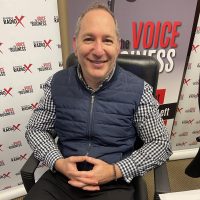
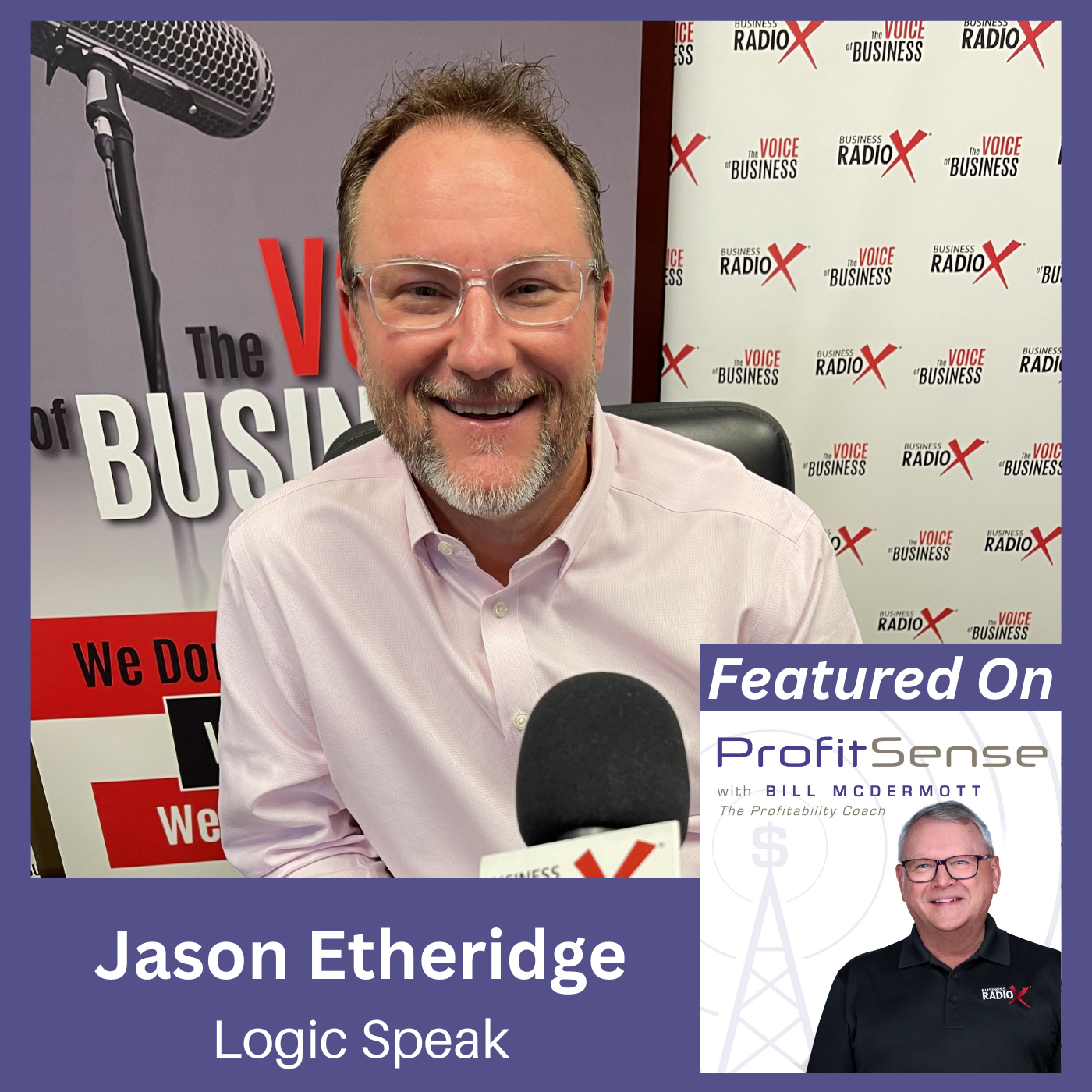
Being Charitable and Profitable at the Same Time, with Jason Etheridge, Logic Speak

December 9, 2024 by John Ray

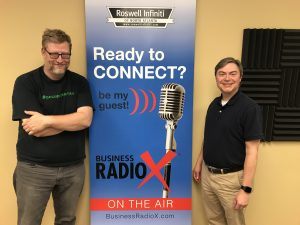
Being Both Charitable and Profitable at the Same Time, with Jason Etheridge, Logic Speak, as heard on ProfitSense with host Bill McDermott
North Fulton Studio
Being Charitable and Profitable at the Same Time, with Jason Etheridge, Logic Speak
Loading
00:00 /
RSS Feed
Share
Link
Embed

Download file

Being Both Charitable and Profitable at the Same Time, with Jason Etheridge, Logic Speak, as heard on ProfitSense with host Bill McDermott

Being Charitable and Profitable at the Same Time, with Jason Etheridge, Logic Speak (One Minute Interview, Episode 129)

Jason Etheridge:  I do think it’s possible to be both charitable and profitable.

But you have to decide that first. You can’t be profitable first and then decide to be charitable. Because we all know the more we get, the more we feel like we have to hold on to it. Being charitable for us is like opening our hands and recognizing that not everything we have is for our use and for our benefit.

And that was one of the reasons that we added to the community in our mission statement is that we wanted to recognize that we always are out for. Helping and serving other people including our community so in order to be profitable and charitable, you have to decide first you have to put the big rock in first Secondly, you have to recognize that maybe you don’t want that Ferrari that you thought you wanted when you were young You can still be profitable and healthy and give back as well.

At the end of my days, when I’m up at the front of a church in a casket, I don’t know that the cars that I drove or the really nice things that I have are going to be what I’m remembered for, or at least I hope not. It should be, what I did and how I impacted other people.

Those are some of the ways that, that we think about being charitable and profitable.

Listen to Jason’s full ProfitSense with Bill McDermott interview here.

Jason Etheridge, Logic Speak

Jason Etheridge, Logic Speak, on ProfitSense with host Bill McDermott
Jason Etheridge, Founder & President, Logic Speak

Jason Etheridge is the Founder and President of Logic Speak

Logic Speak works with local Atlanta businesses to provide proactive technology strategy, support and security. Since 2004, Logic Speak has focused on making a positive impact on organizations to leverage technology better.

IT Strategy: A well-defined technology strategy is essential for aligning IT initiatives with business goals. It involves identifying the right technologies that can drive innovation, enhance productivity, and improve operational efficiency. By developing a clear roadmap, you can ensure that your technology investments are strategic and yield long-term benefits.

Support: Effective technology support is crucial for maintaining a productive workforce. It involves providing timely assistance and troubleshooting for IT-related issues. This can range from software and hardware support to network and infrastructure management. By ensuring that employees have access to reliable support services, you can minimize downtime and maximize productivity.

Security: Security is paramount in today’s digital world, especially with the rise of cyber threats. A strong security strategy involves implementing measures to protect sensitive data and systems from unauthorized access, breaches, and other security risks. This includes deploying firewalls, encryption, multi-factor authentication, and regular security audits.

Find out more at www.logicspeak.com or send an email to hello@logicspeak.com

Website | LinkedIn | Jason’s LinkedIn | Instagram | Facebook


The “One Minute Interview” series is produced by John Ray and the North Fulton studio of Business RadioX® in Alpharetta. You can find the full archive of shows by following this link.

Renasant Bank has humble roots, starting in 1904 as a $100,000 bank in a Lee County, Mississippi, bakery. Since then, Renasant has grown to become one of the Southeast’s strongest financial institutions, with over $13 billion in assets and more than 190 banking, lending, wealth management, and financial services offices in Mississippi, Alabama, Tennessee, Georgia, and Florida. All of Renasant’s success stems from each of their banker’s commitment to investing in their communities as a way of better understanding the people they serve. At Renasant Bank, they understand you because they work and live alongside you every day.


Tagged With: Bill McDermott, charitable, giving back, Jason Etheridge, Logic Speak, One Minute Interview, profitable

Business Success, Networking, and Giving Back, with Mark McKenzie, Docqmax Digital Printing

January 19, 2024 by John Ray

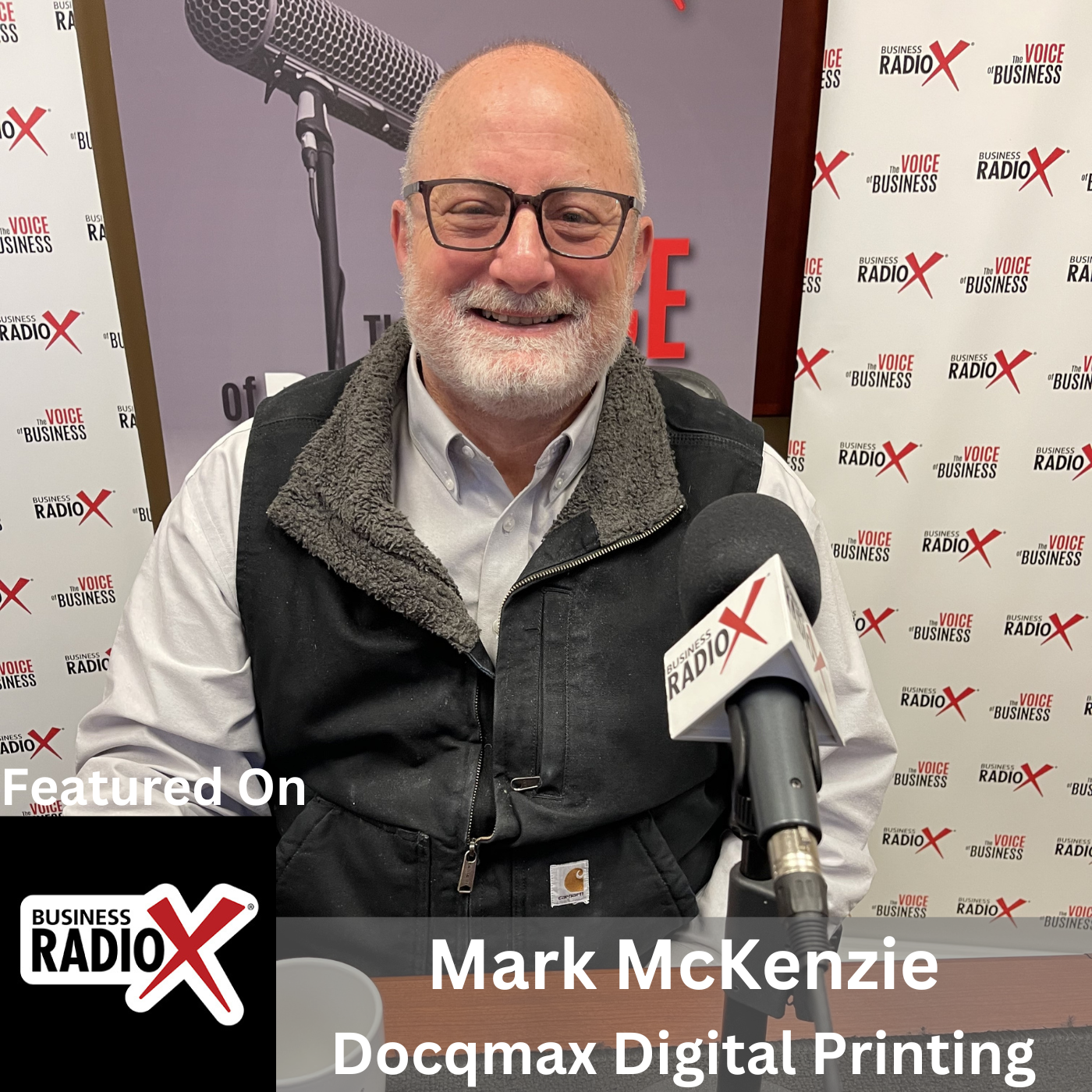
Mark McKenzie, Docqmax Digital Printing
North Fulton Business Radio
Business Success, Networking, and Giving Back, with Mark McKenzie, Docqmax Digital Printing
Loading
00:00 /
RSS Feed
Share
Link
Embed

Download file

Mark McKenzie, Docqmax Digital Printing

Business Success, Networking, and Giving Back, with Mark McKenzie, Docqmax Digital Printing (North Fulton Business Radio, Episode 738)

This episode of North Fulton Business Radio features Mark McKenzie of Docqmax Digital Printing, who joined host John Ray to share his experiences as a business owner and the significant lessons he’s gained over the course of his career. Mark discussed the history of Docqmax, their remarkable record as a second-generation family business, and how he and his brothers have navigated the twists and turns in the printing industry. Mark shared his views about the importance of networking and creating valuable relationships for business growth. He also discussed the importance of giving back, touching on his longtime involvement with the Golf for the Kids Invitational, an annual golf tournament that raises funds for Children’s Healthcare of Atlanta and supports children battling cancer. Additionally, Mark imparted insights on how investing in real estate became one of Docqmax’s best business moves, the importance of support from outside professional advisors, and much more.

North Fulton Business Radio is hosted by John Ray and broadcast and produced from the North Fulton studio of Business RadioX® inside Renasant Bank in Alpharetta.

Docqmax Digital Printing

Docqmax Digital Printing and the McKenzie Brothers have been providing their experience and expertise in marketing, printing, and copying to Metro Atlanta area businesses since 1975, and you’ll find that they’re enthusiastic about what they do.

They started out as a Quik Print Printing Franchisee in the heart of Buckhead and established locations in Downtown and Midtown Atlanta, as well as the Cobb Galleria Area. During this time, Rich, Mark, and Mike became second-generation owners and led the company to become one of the top Quik Print franchisees in the nation. After more than 22 years of being a consistent sales leader and producer in the Quik Print franchise system, they became an independent printing company, and Docqmax Digital Printing was launched.

They later consolidated their strengths under one roof in Atlanta’s West Midtown district in 2004. In their current location, they have been able to capitalize on technologies, processes, efficiencies, longtime experienced staff and partners, all of which help them meet their client’s demands, which allows them to drive revenue and sleep at night.

They do all this by offering an online, print-on-demand web portal, strategic marketing services, traditional full-color offset printing, various digital printing services such as digital color printing, black-and-white digital printing, high-speed duplicating, large-format color printing, banners, posters, variable-date printing, and direct mail, as well as a complete bindery and finishing department.

Docqmax Digital Printing is a unique and special place. As a second-generation family-owned business, the McKenzie brothers feel privileged to be the owners of this company. They are 100% locally owned and operated and are proud of the fact that over 85% of all the labor, supplies, raw materials, and resources they use to create and manufacture printing are purchased from other locally owned companies that support our local economy.

The mission of Docqmax Digital Printing is to provide the best printing and most helpful service in our community.

How do they do that? First, while they are in the business of printing, they believe that their company produces something much larger than ink and toner on paper. They print your ideas, hopes, and dreams. They take pride in the fact that the documents they create help tell your story and make your business more successful. Finally, they make every effort to be successful, but recognize that they can only accomplish this if they can help you be successful.

Website | LinkedIn | Facebook | X (Twitter)

Golf for the Kids Invitational

In 20204, Golf for the Kids will celebrate 17 years of making a difference for children with severe medical diagnoses. This tournament, held in October every year, raises funds for Children’s Healthcare of Atlanta.

To learn more, register, sponsor, or donate, follow this link.

Topics Covered in this Interview

00:04 Show Introduction
01:14 Guest Introduction: Mark McKenzie from Docqmax Digital Printing
01:46 The Evolution and Impact of the Printing Industry
02:37 The Power of Direct Mail in the Digital Age
07:02 The Role of Print in Different Industries
12:11 The Value of Print in a Digital World
14:08 Golf for the Kids
19:23 The Impact of Canine for Kids Program at Children’s Hospital
22:52 The Power of Networking
23:19 The Importance of Referrals and Business Relationships
24:12 The Impact of Networking on Business and Personal Growth
25:18 The Philosophy of Giving and Receiving
25:47 The Unexpected Returns of Generosity
26:07 The Power of Awareness in Recognizing Blessings
26:24 The Importance of Giving in Business and Personal Life
36:37 Investing in Real Estate as a Business Owner
38:24 Taking Action on Advice
39:06 The Value of Having a Strong Support System in Business
41:00 Closing Remarks and Contact Information


North Fulton Business Radio is hosted by John Ray and broadcast and produced from the North Fulton studio of Business RadioX® inside Renasant Bank in Alpharetta. You can find the full archive of shows by following this link. The show is available on all the major podcast apps, including Apple Podcasts, Spotify, Google, Amazon, iHeart Radio, and many others.

RenasantBank


Renasant Bank has humble roots, starting in 1904 as a $100,000 bank in a Lee County, Mississippi, bakery. Since then, Renasant has become one of the Southeast’s strongest financial institutions, with over $13 billion in assets and more than 190 banking, lending, wealth management, and financial services offices in Mississippi, Alabama, Tennessee, Georgia, and Florida. All of Renasant’s success stems from each of their banker’s commitment to investing in their communities as a way of better understanding the people they serve. At Renasant Bank, they understand you because they work and live alongside you every day.

Tagged With: Children's Healthcare of Atlanta, Docqmax Digital Printing, giving back, Golf for the Kids, golf tournament, John Ray, Mark McKenzie, networking, North Fulton Business Radio, printing

Triumph Over Trauma E53

May 20, 2021 by Karen

Triumph-Over-Trauma-Feature
Phoenix Business Radio
Triumph Over Trauma E53
Loading
00:00 /
RSS Feed
Share
Link
Embed

Download file

Triumph-Over-Trauma-E52

Triumph Over Trauma E53

Anthony “Doc” Ameen shares his powerful story not knowing what path he intended to take as a young man to join the military and being influenced by the tragedies he survived. He now dedicates his time to assisting military members, first responders and their families, fighting for them as they have fought for us. Wings for Warriors non-profit has helped over 5,000 veterans with securing benefits, benefits counseling and travel assistance among other holistic needs.

If you or someone you know is a veteran or a first responder, Wings For Warriors Foundation can support you with a wide array of services and programs with the help of their 4 beneficiaries.

WFWF-10Yea-rLogo-FINAL

Wings For Warriors Foundation is a nationally recognized, 501(c)(3) non-profit organization in support of veterans, first responders, and their families.

Wings For Warriors Foundation supports the holistic needs of veterans, first responders, and their families with transformational growth, well-being, and spiritual fitness.

Taylor & Lawrence is a boutique consulting firm helping healthcare organizations of all sizes achieve their desired goals by building cooperative alliances and strategic partnerships.

Taylor & Lawrence’s mission is to provide loyal and mutually beneficial partnerships for healthcare organizations to thrive together, ensuring sustainability, growth, and increased quality.

Anthony-Doc-Ammen-Tycoons-of-Small-Biz

Anthony Ameen’s life changed in an instant in 2008. And it’s been evolving ever since…

As a Hospital Corpsman, Ameen earned the nickname “Doc” as he embraced a culture of order and duty. His catastrophic battlefield injury changed the course of the life he envisioned, but Anthony eventually chose to view his new path as one that would be watered by the nurtured outflow of the adversity he had faced. His experiences, though challenging at times, allowed him to see potential for change and fueled an entrepreneurial spirit within him, which led to his creation of the non-profit Wings For Warriors.

Under Ameen’s leadership, the non-profit organization matured from an idea to a nationally-recognized foundation that aims to advocate for the holistic and spiritual needs of veterans, first responders, and their families. As Founder & CEO, Anthony personally counseled more than 5,000 veterans and helped launch Wings for Warriors outlets in 30 different cities across the country.

It quickly became clear that the grit, determination, perseverance and leadership capabilities “Doc” channeled in the military served him well in civilian life as an entrepreneur, an advocate, and a nationally-recognized public figure. He is the face and the lifeblood of Wings For Warriors, and with that brings invites from national media outlets, speaking engagements at large-scale events and sponsorships earned from Fortune 500 companies.

Along the way, Doc turned his focus into co-founding and building Taylor & Lawrence, a boutique consulting firm that specializes in serving the Department of Defense (DoD), and Healthcare industries by unearthing strategic business partnerships for increased performance and quality patient care.

Ameen’s past continues to fuel his future. And, his story provokes anyone listening to realize they have not fully tapped every ounce of their potential. Anthony addresses his successes and pitfalls through his emotional and physical recovery in an uncommonly honest way, all while holding his listeners internally responsible for the changes they need to make in order to grow. Ameen’s story incites change, triggers action and spurs productivity. And, perhaps most importantly, it plants a seed of accountability.

When he isn’t traveling for speaking engagements, Anthony spends time with his wife, and their four children, at their home in Phoenix, Arizona.

Connect with Anthony on LinkedIn, Facebook and Twitter.

About the Show

Tycoons of Small Biz spotlights the true backbone of the American economy, the true tycoons of business in America… the owners, founders and CEO’s of small businesses. Join hosts,  Austin L Peterson, Landon Mance and the featured tycoons LIVE every Tuesday at 1 pm, right here on Business RadioX and your favorite podcast platform.

About Your Hosts

Autsin-Peterson-on-Phoenix-Business-RadioX

Austin Peterson is a Comprehensive Financial Planner and co-founder of Backbone Planning Partners in Scottsdale, AZ. Austin is a registered rep and investment advisor representative with Lincoln Financial Advisors. Prior to joining Lincoln Financial Advisors, Austin worked in a variety of roles in the financial services industry.

He began his career in financial services in the year 2000 as a personal financial advisor with Independent Capital Management in Santa Ana, CA. Austin then joined Pacific Life Insurance Company as an internal wholesaler for their variable annuity and mutual fund products. After Pacific Life, Austin formed his own financial planning company in Southern California that he built and ran for 6 years and eventually sold when he moved his family to Salt Lake City to pursue his MBA.

After he completed his MBA, Austin joined Crump Life Insurance where he filled a couple of different sales roles and eventually a management role throughout the five years he was with Crump. Most recently before joining Lincoln Financial Advisors in February 2015, Austin spent 2 years as a life insurance field wholesaler with Symetra Life Insurance Company. Austin is a Certified Financial Planner Professional and Chartered Life Underwriter. In 2021, Austin became a Certified Business Exit Consultant® (CBEC®) to help entrepreneurs plan to exit their businesses.

Austin and his wife of 23 years, Robin, have two children, AJ (21) and Ella (18) and they reside in Gilbert, Arizona. He is a graduate of California State University, Fullerton with a Bachelor of Arts in French and of Brigham Young University’s Marriott School of Management with a Master of Business Administration with an emphasis in sales and entrepreneurship.backbone-New-Logo

Connect with Austin on LinkedIn, Facebook, Twitter, and Instagram.

LandonHeadshot01

Landon Mance is a Financial Planner and co-founder of Backbone Planning Partners out of Las Vegas, Nevada. He rebranded his practice in 2020 to focus on serving small business owners after operating as Mance Wealth Management since 2015 when Landon broke off from a major bank and started his own “shop.”

Landon comes from a family of successful entrepreneurs and has a passion and excitement for serving the business community. This passion is what brought about the growth of Backbone Planning Partners to help business owners and their families. At Backbone Planning, we believe small business owners’ personal and business goals are intertwined, so we work with our clients to design a financial plan to support all aspects of their lives.

In 2019, Landon obtained the Certified Exit Planning Advisor (CEPA) designation through the Exit Planning Institute. With this certification, Backbone Planning Partners assists business owners through an ownership transition while focusing on a positive outcome for their employees and meeting the business owner’s goals. Landon is also a member of the Business Intelligence Institute (BII) which is a collaborative group that shares tools, resources and personnel, and offers advanced level training and technical support to specifically serve business owners. In 2021, Landon became a Certified Business Exit Consultant® (CBEC®) to help entrepreneurs plan to exit their businesses by counseling owners about exit options, estimating the value of the business, preparing the business for exit and tax considerations.

Landon enjoys spending time with his beautiful wife, stepson, and new baby twins. He grew up in sunny San Diego and loves visiting his family, playing a round of golf with friends, and many other outdoor activities. Landon tries to make a difference in the lives of children in Las Vegas as a part of the leadership team for a local non-profit. He regularly visits the children that we work with to remind himself of why it’s so important to, “be the change that you wish to see in the world.”

Landon received his B.S. from California State University Long Beach in business marketing and gets the rest of his education through the school of hard knocks via his business owner clients.

Connect with Landon on LinkedIn.

Austin Peterson and Landon Mance are registered representatives of Lincoln Financial Advisors Corp. Securities and investment advisory services offered through Lincoln Financial Advisors Corp., a broker/dealer (member SIPC) and registered investment advisor. Insurance offered through Lincoln affiliates and other fine companies. Backbone Planning Partners is a marketing name for registered representatives of Lincoln Financial Advisors

CRN-3566695-042721

Lincoln Financial Advisors Corp. and its representatives do not provide legal or tax advice. You may want to consult a legal or tax advisor regarding any legal or tax information as it relates to your personal circumstances.

The content presented is for informational and educational purposes. The information covered and posted are views and opinions of the guests and not necessarily those of Lincoln Financial Advisors Corp.

Business RadioX® is a separate entity not affiliated with Lincoln Financial Advisors Corp.

Tagged With: Business Management, Charity, Christianity, consulting, first responders, giving back, Health, Healthcare, inspiration, Leadership, medical equipment, medical supplies, motiviation, Nonprofit, post traumatic growth, PPE, public speaking, spiritual fitness, spirituality, strategic sourcing, Supply Chain, Veterans, wellbeing

Decision Vision Episode 19: How Should I Engage in Philanthropy?, An Interview with Chris Gabriel

June 13, 2019 by John Ray

Decision Vision
Decision Vision
Decision Vision Episode 19: How Should I Engage in Philanthropy?, An Interview with Chris Gabriel
Loading
00:00 /
RSS Feed
Share
Link
Embed

Download file

“Decision Vision” Host Mike Blake and Chris Gabriel

How Should I Engage in Philanthropy?

Most everyone would agree that it’s good to give back. But what’s the best way to give? Can giving become enabling or even toxic? Chris Gabriel has performed extensive research on philanthropy and individuals who are heavily philanthropic. He shares his insights with Host Mike Blake on this edition of “Decision Vision,” presented by Brady Ware.

Chris Gabriel, Age of Generosity, LLC and the Generosity Project

Chris Gabriel

Chris Gabriel runs a wealth management practice for a major investment firm. He also has more than 25 years of experience serving charitable organizations and their donors as a development director, as a nonprofit finance and fundraising consultant, and as a guide for successful charitable givers.  He has participated in the gift process from every vantage point as a staffer, board member, consultant, and financial advisor.

His process focuses on “philanthropic enabling” which seeks to maximize the value and benefits of charitable contributions for everyone involved. His mission is helping successful people to be even more generous and generous people to be even more successful.

Chris is an honors graduate of Yale College and earned his master’s degree from Oxford University. He also is the founder of Age of Generosity, LLC and of The Generosity Project, a nonprofit seeking to promote giving as an essential virtue of a life well lived. Chris is writing a set of books and building a giving consulting platform, both of which are scheduled to launch in 2020.

Michael Blake, Brady Ware & Company

Mike Blake, Host of “Decision Vision”

Michael Blake is Host of the “Decision Vision” podcast series and a Director of Brady Ware & Company. Mike specializes in the valuation of intellectual property-driven firms, such as software firms, aerospace firms and professional services firms, most frequently in the capacity as a transaction advisor, helping clients obtain great outcomes from complex transaction opportunities. He is also a specialist in the appraisal of intellectual properties as stand-alone assets, such as software, trade secrets, and patents.

Mike has been a full-time business appraiser for 13 years with public accounting firms, boutique business appraisal firms, and an owner of his own firm. Prior to that, he spent 8 years in venture capital and investment banking, including transactions in the U.S., Israel, Russia, Ukraine, and Belarus.

Brady Ware & Company

Brady Ware & Company is a regional full-service accounting and advisory firm which helps businesses and entrepreneurs make visions a reality. Brady Ware services clients nationally from its offices in Alpharetta, GA; Columbus and Dayton, OH; and Richmond, IN. The firm is growth minded, committed to the regions in which they operate, and most importantly, they make significant investments in their people and service offerings to meet the changing financial needs of those they are privileged to serve. The firm is dedicated to providing results that make a difference for its clients.

Decision Vision Podcast Series

“Decision Vision” is a podcast covering topics and issues facing small business owners and connecting them with solutions from leading experts. This series is presented by Brady Ware & Company. If you are a decision maker for a small business, we’d love to hear from you. Contact us at decisionvision@bradyware.com and make sure to listen to every Thursday to the “Decision Vision” podcast. Past episodes of “Decision Vision” can be found here. “Decision Vision” is produced and broadcast by Business RadioX®.

Visit Brady Ware & Company on social media:

LinkedIn:  https://www.linkedin.com/company/brady-ware/

Facebook: https://www.facebook.com/bradywareCPAs/

Twitter: https://twitter.com/BradyWare

Instagram: https://www.instagram.com/bradywarecompany/

Show Transcript

Intro: [00:00:01] Welcome to this Decision Vision, a podcast series focusing on critical business decisions, brought to you by Brady Ware & Company. Brady Ware is a regional, full-service, accounting and advisory that helps businesses and entrepreneurs make vision a reality.

Mike Blake: [00:00:20] And welcome back to Decision Vision, a podcast giving you, the listener, clear vision to make great decisions. In each episode, we discuss the process of making decision on a different topic. Rather than making recommendations because everyone’s circumstances are different, we talk to subject matter experts about how they would recommend thinking about that decision.

Mike Blake: [00:00:38] My name is Mike Blake, and I am your host for today’s program. I’m a Director at Brady Ware & Company, a full-service accounting firm based in Dayton, Ohio, with offices in Dayton; Columbus, Ohio; Richmond, Indiana; and Alpharetta, Georgia, which is where we are recording today. Brady Ware is sponsoring this podcast. If you like this podcast please subscribe on your favorite podcast aggregator, and please also consider leaving a review of the podcast as well.

Mike Blake: [00:01:02] And today, we’re going to be talking about philanthropy and, specifically, the decision as to whether or not you should engage in philanthropy or not engage in philanthropy. And in some respect, maybe that sounds like a loaded question. Of course, you should engage in philanthropy. We should all be interested in giving back to our communities, sending the elevator back down, whatever cliché you want to use. Who doesn’t like a good philanthropist? Who doesn’t like someone that’s going to be throwing $100 bills around or $1000 checks around, always going to be the life of the party? But when you get into philanthropy, it’s really not that simple. And philanthropy not done well can be not just not impactful but, in some cases, can actually be harmful.

Mike Blake: [00:01:51] One of the things I’ve done a lot of in the last few years, I’ve studied dynastic wealth, which means that wealth that has survived for a number of generations. And what a lot of people may not realize is that being rich actually is hard. It’s just hard in a different way. You have trouble paying your light bill, your cable bill, but then managing wealth responsibly is not easy, and it’s a skill set.

Mike Blake: [00:02:19] And there are wealthy families whose names that you would know – the Vanderbilt’s come to mind – that have literally philanthropies themselves into the ground. It’s that they’re very generous. And, of course, their names are on many buildings in New York. Their name is on Vanderbilt University and so forth. But as Anderson Cooper, who is a sixth generation Vanderbilt, has said, “There ain’t no trust fund waiting for me.” And 150 years ago, that would be unthinkable. And so, this is a complex topic that I hope as you, as the listeners, a little bit different than what we normally talk about, but one that I think is very important.

Mike Blake: [00:03:02] And joining us today is my very good friend, Chris Gabriel, and somebody who I’ve known for a number of years, longer than we would care to admit. Neither of us had gray hair, that’s how long we’ve known each other. And he’s been a student of philanthropy for as long as I have known him, and is starting to break out of his shell, and systematize the way that he shares his knowledge.

Mike Blake: [00:03:29] He runs a wealth management practice for a major investment firm that has more than 25 years of experience serving charitable organizations and their donors as a development director, as a nonprofit finance and fundraising consultant, and as a guide for successful charitable givers. He has participated in the gift process from every vantage point as a staff, or a board member consultant, and financial advisor.

Mike Blake: [00:03:52] His process focuses on philanthropic enabling, which seeks to maximize the value and benefits of charitable contributions for everyone involved. His mission is helping successful people to be even more generous and generous people to be even more successful.

Mike Blake: [00:04:07] Chris is an honors graduate of Yale College and earned his Master’s Degree from Oxford University. He is also the Founder of Age of Generosity LLC and the Generosity Project, a nonprofit seeking to promote giving as an essential virtue of a life well lived. Chris is writing a set of books and building a giving consulting platform, both of which are scheduled to launch in 2020. I’m going to hold you to that. Chris, thank you so much for coming on the program.

Chris Gabriel: [00:04:33] Thank you, Mike. It’s such a pleasure to be here.

Mike Blake: [00:04:36] So, what led you to start down the path of becoming an effective student of philanthropy.

Chris Gabriel: [00:04:44] Would you believe, midlife crisis?

Mike Blake: [00:04:47] I believe midlife crisis is responsible for a lot of things. I’ve seen people buy motorcycles, sports cars, and-

Chris Gabriel: [00:04:52] Yeah. It seemed more positive and less expensive than the proverbial red sports car. But in all seriousness, I was noodling over my career, and personal life, and other things that were important to me a few years back. And I was at that crossroads in life that the others have described as a transition from success to significance. And in thinking that through, I came to a realization of really four things that mattered to me – my spiritual life, my family and friends, my professional work, and my community service. And I wanted to be more deliberate and intentional about how to align those different forces together.

Chris Gabriel: [00:05:34] And in thinking that through, I recognized that the unifying thread through all those different areas and experiences at all stages of my life had been generosity, people who had been generous to me, generous acts that I had witnessed, or participated in, or benefited from. It really sparked a curiosity that’s led down a journey of getting to know more about the topic, talking with inspiring people, and really immersing myself in what I found to be a very worthwhile and enjoyable effort. So, that’s what brings us here this afternoon.

Mike Blake: [00:06:11] So, we’re in a society of greed is good. There’s a certain zeitgeist right now, I think, of sort of every person for themselves to a certain extent. And I won’t turn this into an NPR interview. I’ve already said zeitgeist. I don’t want to do that because that does sound like NPR. I don’t want to go in that direction. But in a culture that fosters and glorifies, really, self-reliance, and you earn what you get, you keep what you earn, et cetera, et cetera; in spite of all those kind of external forces, why do people give? And why do people give a lot?

Chris Gabriel: [00:06:54] Yeah, it’s a great question. And there’s a lot of different ways that you could approach it. I’ll start with what you might think of as an unusual source. So, Adam Smith is well-known as the protocapitalist, the founder of classical economics.

Mike Blake: [00:07:09] Of course.

Chris Gabriel: [00:07:09] He was actually a professor of moral philosophy. And while his very large difficult-to-read, coffee-table-sized book, Wealth of Nations, it gets most of the press. I think his best work is a much thinner volume called Theory of Moral Sentiments. And that book starts out by saying, essentially, as an observation of human nature and the human character, that there’s something about giving and altruism that just seems to be hardwired into who we are. These were his observations about the human condition. And we seemed to get pleasure from the success of others, and even more pleasure from participating in that success.

Chris Gabriel: [00:07:44] And it turns out, if you look across the spectrum of research on the topic, there’s almost unanimous agreement on that topic. One of the inspirations for my own understanding is a fellow by the name of James Doty, who is a Professor of Neurosurgery at Stanford. He also founded an organization called the Center for Compassion and Altruism Research and Education. The founding benefactor of which is the Dalai Lama, interesting friends.

Chris Gabriel: [00:08:14] And what Dr. Doty has realized in all of his work as a physician, so healing physical illness, there were bigger illnesses in play that were illnesses more of the spirit. And he felt compelled to travel down that path and see where it led. And what he discovered is a whole lot of research around the notion that giving is both psychologically and physiologically essential to health. It’s on par with exercise and your ideal body weight.

Chris Gabriel: [00:08:46] And there’s a whole system of physiological processes that relate to our sympathetic and parasympathetic nervous systems, if you want to get into the technical side of it. That mean that giving is rewarding to us in very selfish ways, and that our human evolution is designed to reward compassionate altruistic behavior.

Mike Blake: [00:09:09] So, it’s a dopamine rush at the end of the day, right?

Chris Gabriel: [00:09:12] Even as simple as in a smile. There’s a whole article in Psychology Today about how a simple smile triggers this whole cascade of effects, physiological effects in terms of neurotransmitters and activity in the brain. And not only does that benefit the person who receives the generous act of a smile, but it benefits the person who smiles as well, and there’s this virtuous cycle. So, again, even its most fundamental level, there’s something about generosity that’s worthwhile.

Mike Blake: [00:09:42] So, in your writings, I’ve had the privilege of seeing, I think before most people have, you linked giving with wisdom. Talk through that connection.

Chris Gabriel: [00:09:53] So, my working definition of wisdom is that it is — understanding that exists at the intersection of moral truth and practical experience. And there’s something about wisdom that really is fundamental to success in life. We live in a society that prizes knowledge and prizes achievement.

Chris Gabriel: [00:10:12] But the ancients may have one up on us here. They taught their children wisdom. They were concerned with helping them to make good decisions about how to live. And I think we missed out on a lot of that in terms of our education and a lot of our cultural milestones and markers. And generosity was at the center of that set of constant texts around successful living, whether you call that virtue, or wisdom, or anything else.

Chris Gabriel: [00:10:42] And what’s interesting, to connect Dr. Doty’s work and there are millions literally. If you Google generosity science, there’s over 38 million hits. There’s a ton of research done. And what that research suggests, essentially, is the guys in the white lab coats, the scientists, and the ladies in the white robes, the sages, all agree that this is something that’s meaningful and worthwhile.

Chris Gabriel: [00:11:06] If you want to use an example of how that type of wisdom intersects in real life, think of something really big and important that’s happened in our society in the course of the last couple of generations. Let’s think about the Civil Rights Movement. So, the Civil Rights Movement recognized that there was something unjust about racial inequality. And that sense of injustice drove people to organize around overcoming that great wrong in our society.

Chris Gabriel: [00:11:35] But at the same time, there was a sense of love that drove the behavior of the people that were protesting and advocating for change. And that love, which was generous on their part, really drove a constructive outcome from what might have been a very destructive set of forces in society. And there’s a wonderful sermon from Dr. Martin Luther King called Loving Your Enemies.

Mike Blake: [00:11:58] I’m familiar with that.

Chris Gabriel: [00:12:00] He preached in 1957 that summarizes this whole concept really brilliantly. And that, to me, is the definition of generosity and wisdom. It’s a good outcome. It’s a practical outcome. We improved society and humanity in the process, but it was really based on the sense of something fundamentally generous happening on the part of the people that were forwarding that change.

Mike Blake: [00:12:22] So, to that end, and I suspect this is not a random connection, you’ve developed something called the WISE Giving Framework. Can you walk us through it at high level? I mean, it’s a very detailed framework. So, we don’t have time but, at a high level, what is the WISE Framework?

Chris Gabriel: [00:12:39] Sure. And it’s a great question. So, you think about the nature of generosity, and the working title of one of the books I’m producing is called Transformational Generosity. And the idea of that transformation is that it’s this incredibly virtuous 360-degree cycle of positive change that happens when people give, and when they give wisely and well. And I think we’ll talk some more about what that means.

Chris Gabriel: [00:13:05] But the notion of constructive giving boils down to an appreciation of the internal benefits and the external benefits that are involved. And those benefits, again, if they’re done well produce positive change on the part of the giver, on the part of the receiver. And then, by extension is that effect ripples out into community and into society as a whole. You have all of these positive effects that are produced.

Chris Gabriel: [00:13:32] So, the WISE giving process, WISE is an acronym, and you know me well enough to know I’m a sucker for acronyms and alliteration.

Mike Blake: [00:13:38] Who doesn’t love a good acronym?

Chris Gabriel: [00:13:39] I can’t help myself. So WISE is well-grounded, inspired, satisfying, and effective. And those four components reflect that dynamic of internal and external benefits. Inspired and satisfying, things that relate to us and the benefits that we get from giving. Well-grounded and effective, looking outward to the beneficiaries of the giving and making sure that those gifts have the kind of impact that we want them to have. And so, the process aligns a set of different forces and factors together to help produce those good outcomes, back to the philanthropic enabling that you referenced at the outset.

Mike Blake: [00:14:16] So, I mean, why have a plan? It seems like one of the easiest thing is in the world to do is to just give money away, right?

Chris Gabriel: [00:14:23] Sure.

Mike Blake: [00:14:23] It’s not like nobody is going to take it. In most cases, you walk into, really, anything, it doesn’t have to be a nonprofit, “Hey, you want a thousand bucks?” “Sure.” So, why does there need to be a planning process around something that, at least, on a very fundamental level seems like a lot of the easiest thing in the world?

Chris Gabriel: [00:14:45] Yeah, it’s a great question. And on the one hand, you certainly don’t want to overthink it. There should be no paralysis by analysis when it comes to giving. But on the other hand, like every other aspect of life, better inputs lead to better outputs. And the more time and effort you put into a project or a decision, the more likely that there is going to be a good outcome for that decision.

Chris Gabriel: [00:15:05] I’ll give you a concrete example because I think it helps to illustrate the point. And it’s one of my favorites that I’ve come across in the generosity journey that I’ve been on. There is an entrepreneur in California, a Chinese-American named Kenneth Yang. And he’s founded a very successful tea company. And having gone back and forth to China for years in developing and promoting his business, he became very troubled by the plight of disabled Chinese orphans who are put in institutions, have very little in the way of support, and opportunities, and prospects. And this disturbed him.

Chris Gabriel: [00:15:42] And he reached a milestone in his life personally and professionally where he felt he needed to do something about that. And so, it became something of an existential crisis. Am I going to fold up my business, or sell it, or do something else? Am I going to dedicate myself full time to this effort about which I feel really passionate? Interwoven with all of that was, his favorite pastime was photography, really passionate, very capable photographer.

Chris Gabriel: [00:16:06] And so, as he’s thinking through all of these different issues and potential decisions, he seeks counsel from a wise guide. And the advice that he ends up getting and the conclusion that he arrives at is wonderfully powerful. He realized that his business was a platform and created its own opportunities.

Chris Gabriel: [00:16:26] And so, he started traveling back to China more intentionally and taking pictures of the smiling faces of the children that he was coming across in these different residences that he was going to visit. And then, he put those pictures on the packets of his tea, and described the circumstances by which the photos were taken, and the opportunity there was to support this great need that he had found. And he created a foundation to help serve that effort and raised millions of dollars which then got funneled back to the care of the children he was so concerned about.

Chris Gabriel: [00:16:58] So, he created this amazing dynamic. And I referenced the word power before one of my touchstones in this set of processes around giving is the idea of powerful giving, which is if you can imagine Venn Diagram, there’s opportunity, passion, and impact. And the things that we’re really passionate about, the things that we have an opportunity to pursue, and the pursuits that have the potential for impact. You align all those together, that’s really where the best giving happens. And I think Mr. Yang’s example is a great one.

Mike Blake: [00:17:28] So, I’d like to go off the script a little bit and follow up on something because I think you touched on something that is really important, which is the notion of a business as a platform. In my own work and study, as I’ve been studying dynastic wealth and sustain multigenerational wealth, one common theme I’ve noticed is that the business is the platform that supports that family and sustains it. And I think by extension, the business sustains giving because it’s the income generator.

Mike Blake: [00:18:02] And I’m curious if you think there’s a correlation between families that maintain kind of that family enterprise versus selling out, which is what the Vanderbilt stood, for example, made themselves more liquid, which means it’s easier to give your stuff away and screw it up, as opposed to having the platform business. Do you think there’s a connection between the ability to sustain philanthropy over the longer term if there’s that enterprise level engine, or am I just making this up, and I’m just sleep deprived on a Friday?

Chris Gabriel: [00:18:35] I think your intuition is correct. So, I work with a lot of entrepreneurs, and the goal is to help navigate through the various challenges and opportunities that they have when it comes to their businesses, and their families, and their communities. And giving can and should be at the center of that. And what’s interesting about giving, and we may talk more about this, but my work is focused not just on financial giving. That’s certainly an important piece of it, but there’s actually five types of giving.

Chris Gabriel: [00:19:05] There’s possessional giving, which is money and stuff. There is personal giving, which is time and talent. There is social giving, which is everything from hospitality and manners to civic duty. There is emotional giving, which starts to get more personal. It’s about connectivity, and vulnerability, and really being supportive of folks with whom you are close. And then, lastly, relational giving, which, in essence, is the sum of all the others. And that’s where the rubber meets the road in our lives.

Chris Gabriel: [00:19:30] We are defined, to a very large degree, by our relationships, and the quality of our life is determined by those relationships. And so, to get to an answer to your question, if you think about generosity across all those different dimensions, and then you look at what makes success in a family — and this is something that I’ve been thinking and working on a lot about lately with a colleague. We’ve been developing a set of constructs and processes around wealth and success.

Chris Gabriel: [00:19:56] And our appreciation has stemmed from the fact that wealth success has both a family and a financial component to it. And the family component’s really about relationships. And, of course, the financial component is about resources. And when you look at where success comes in — and by the way, success is almost unbelievably rare. The shirtsleeves-to-shirtsleeves phenomenon that we hear about is alive and well. 90% of wealthy families don’t make it past the third generation in terms of intact functioning family or finances.

Chris Gabriel: [00:20:32] And I think families that have businesses have a purpose, and a purpose that fosters relational connectivity and resource generation. And that is a great recipe for success, provided that the business is run well and provided that the relationships in the family survive the pressures of having the business. But I do think, in cases where I’ve seen where family wealth is sustained across generations — and I can think of several examples. One family, in particular, that’s into their sixth generation now and is still quite successful. There was a family business at the center of that.

Mike Blake: [00:21:04] And it underscores a fact that people don’t like to talk about, but there’s ample data to support this, the family unit is an economic unit. We don’t want to think about that necessarily, but economics does factor into that in many complicated ways.

Chris Gabriel: [00:21:23] Sure.

Mike Blake: [00:21:24] So, it’s hard to separate that. And, actually, that segues very nicely into my next question, which is, is it fair to categorize a will as a form of giving?

Chris Gabriel: [00:21:37] I think it is. Based on what I just shared, a will is a legal document that transfers assets. And, of course, it focuses on physical assets, possessions. But at the same time, it embeds values, and relationships, and other essential aspects of the family, and is a mechanism by which all of those different things are passed from one generation to another. So, certainly, families that do wealth transfer well and do legacy well have built into those mechanics. A lot of other elements that relate to values, and priorities, and purpose, and meaning.

Chris Gabriel: [00:22:18] And I had a friend, when I was describing some of this a few years back, who leaned back and thoughtfully said, “Well, what you’re really describing is operating at the intersection of money and meaning.” I said, “Yeah, that’s exactly right. I think I’m going to write that down. That’s really good.” And so, a will is a document that represents that, an intersection of money and meaning, and the values, and the relationships, and all the other aspects of the family. So, it is a form of giving. And then, that kind of estate planning, if it’s done wisely and well, I think can produce very good outcomes, or it can instill a lot of discord and division within a family if it’s not done well.

Mike Blake: [00:22:55] So, let’s talk about maybe potential, maybe downsides or pitfalls. What are some cases where giving can go bad, or what are the risks associated with giving?

Chris Gabriel: [00:23:13] That’s a great question. So, I’m a cheerleader for giving, and I think it’s good. And I’ve used the expression already, “If it’s done wisely and well.” In fact, Adam Smith makes this point later in the same book I referenced earlier. It, perhaps, is the human virtue of which there can be no excess if it’s done well. You can have too much of almost anything, but you can’t be too generous if you’re going about it the right way.

Chris Gabriel: [00:23:39] And so, what is the right way? If there is a formula, if we could reduce giving to a formula, I’d suggest it would be something along the lines of consider-it attitude, plus carrying action, equals a positive generous outcome. And so, where things go wrong is in those dynamics. If your attitude is not considerate, if your actions are not caring, and that’s two-way because there is a reciprocity in the giving dynamic. There is a giver and a receiver. And it’s a two-way process. And so, both the giver and receiver have responsibility in terms of what happens with the gift in the end.

Chris Gabriel: [00:24:13] And, in general, a poor attitude will lead towards a gift that doesn’t have the kind of meaning that it could have and benefit psychologically to either or both parties. And uncaring actions typically will lead to a result that suboptimal in terms of impact or, sort of, physical outcome. And there are lots of dynamics you can point to where those are real issues.

Chris Gabriel: [00:24:39] I’ll call your listeners’ attention to one particular book on this topic, which is really powerful. It’s by a local Atlantan, named Bob Lupton, and he wrote a book called Toxic Charity. And after decades spent assisting the poorest people in our community, he came to the conclusion that more harm than good was done out of a lot of well-meaning support, which robbed people of dignity and effective opportunity in the name of providing them with some kind of support. And a lot of times, that did more good for the people giving than people receiving. So, there is a lot of research out there on this topic.

Mike Blake: [00:25:14] So, that’s interesting. And it brings to mind something that I know you and I both wrestle with because we are both parents. And I have a teenager. Are either of your kids a teenager yet?

Chris Gabriel: [00:25:25] Yes.

Mike Blake: [00:25:25] Yes, okay. So-

Chris Gabriel: [00:25:26] Joyfully.

Mike Blake: [00:25:27] Yeah. So, that’s where most of my gray hair came from. And as parents, we are givers, right? And one of the things that I know you’re mindful of, and I’m mindful of, is where is the line between generosity and enabling, right? And enabling, actually, is a selfish act because what you’re really doing is you’re bribing somebody to make a problem staring you in the face to go away. That needs to be solved with some process that is much more difficult, right.

Mike Blake: [00:26:01] That, to me, strikes as very similar to that toxic charity that you’re describing where the road to hell is paved with the best of intentions, right? And there’s this line between charity and enabling. And even charities, if something’s not structured correctly, not just individuals, organizations, can be harmed with too much too fast, right?

Chris Gabriel: [00:26:30] Again, very thoughtful and insightful question. One of the great insights that I’ve taken away from all this work is positivity. And it relates very much to this point. There’s other research on this topic that I’m drawing on here that makes the point that if you look at what produces good outcomes in a charitable community development context, they almost always involve coming into this situation with a sense of positivity and optimism.

Chris Gabriel: [00:27:09] In other words, asking the question, “What is right here?” rather than “What is wrong?” If you’re showing up in this situation saying, “Everything here is horribly broken. You’re clearly terribly messed up. And I’m here to help you fix it,” that is a totally different dynamic than coming in and saying, “Thank you so much for the opportunity to be engaged with you. What is it that you want and need? And what is it that is going right in your life? And how can we help build on that?”

Chris Gabriel: [00:27:14] There’s a bunch of research that’s just come out of Harvard. Even in the most intractable problems that we have in the world, like systemic poverty, that point out that international aid efforts that focus on creating opportunity in a society have far greater success than ones that focus in on whatever the pathologies and difficulties are. So, to your question about parenthood, I’m totally guilty of exactly what you described, by the way, that-

Mike Blake: [00:28:01] We all are.

Chris Gabriel: [00:28:02] … enabling mindset because it’s just easier – let’s face it – to get that immediate issue out of the way because I’ve got other things to do. And I see myself, at times, robbing my kids of an opportunity to build their own sense of dignity, and self-confidence, and self-reliance just because it’s convenient for me at that particular moment. And I think we run into a lot of those same issues when we try to do good, and the most thoughtful people in that world are folks that recognize those challenges and look to approach their efforts in ways that get past them.

Mike Blake: [00:28:37] Now, I’m going to go off the script again because this topic begs kind of another question. And a very practical and unusual example, you may remember the ALS Ice Bucket Challenge-

Chris Gabriel: [00:28:51] Absolutely.

Mike Blake: [00:28:51] … of three or four years ago. And that raised roughly $120 million, which was something like what the ALS Association of United States raises over a 12-year period basically, right? And they were faced with an interesting problem that, all of a sudden, they had more money than they had the capacity to manage. And for them, it created a real problem because, (1), they received a lot of money, they have obviously a very important mission to battle that disease, and they’re extremely high profile. All right. Everybody knew what the ALS Ice Bucket. They didn’t even know what ALS was, right, people were dumping buckets of ice over their head. And I did it, but it was thoroughly physically traumatic.

Mike Blake: [00:29:40] But there’s need to be planning ideally on the side of the recipient too that if this windfall comes, right, we got to be prepared to use it and use it responsibly. Now, thankfully, the ALS Association, on the fly, I think, they figured it out and everything. I’ve read about them is that they handled it very well, what they have, and used it, put in endowments, they funded a lot of research. But even that’s a challenge, right? Even a firehose of generosity is still a firehose.

Chris Gabriel: [00:30:15] So, parenting comes to mind again, although I’ll use a business example first. Having been around a lot of businesses and entrepreneurs through the years, one of my observations is the number one cause of business failure is failure. And the number two cause is success. It is certainly possible to grow too fast to take on too much and to being unable to digest even good fortune. And charities are no different and, certainly, have those same kinds of risks.

Chris Gabriel: [00:30:48] And so, back to your question about planning, particularly, for people in society who have more in the way of resources and do have more in the way of potential impact, that set of responsibilities that goes along with that is really important because if you’re not careful about where you give your money and how you give it, then, again, you can end up messing up a good organization by being too generous, by giving it too much in a way that it’s not prepared and doesn’t have a good strategy or plan in place about how to manage it.

Chris Gabriel: [00:31:15] So, there is definitely a reciprocity that goes into good giving. Back to that concept of philanthropic enabling again, having a conversation and a real dialogue where everyone around the table is trying to achieve a positive outcome and figuring out what resources can be brought to bear, what challenges can those resources be applied towards, and what are the outcomes that we’re seeking, and what’s the strategy that’s in place to make that happen. That’s where you see the best giving.

Mike Blake: [00:31:40] Now, I want to shift gears a little bit. There’s a conversation that we had I think around corporate philanthropy and Warren Buffett. I call him Warren, He says, “Who the hell are you?” or “Why are you in my office?” But Warren Buffett has written about philanthropy at the corporate level, and whether or not it’s appropriate. And his position if you read his essays has been, “Look, it’s not my job to use this company as a platform to make any kind of social statement, or an economic statement, or a philosophical statement. My job is to build shareholder value, period, end of discussion.”

Mike Blake: [00:32:22] I’m curious if that’s something that’s ever kind of crossed your path in terms of the conversations you’ve had with your entrepreneurial clients. Where does that line — where do you think the optimal line is, or how do you how do you set that line between? As somebody of means, and you’re a steward of shareholder money, where do you think that line is in terms of supporting philanthropy through a corporate entity versus, “We’ll we’ll just declare a lot of dividends that people can give to whatever they want to”? Does that make any sense?

Chris Gabriel: [00:32:56] Oh, totally.

Mike Blake: [00:32:56] So, how do you kind of talk through that?

Chris Gabriel: [00:32:58] That’s a great question. And you’re illuminating a real debate. And it’s a debate between two different models of corporate purpose and structure. And there’s the shareholder model and there’s the stakeholder model. And the shareholder model is along the lines of what you described Mr. Buffett is advocating. And at the end of the day, it’s a simple job that we have as corporate stewards. It’s to make money. And what the owners of our companies do with that money is up to them.

Chris Gabriel: [00:33:24] The stakeholder model has a more complex view of corporate structure and behavior and recognizes that corporations are, in fact, engaged in various ways with various groups from owners, of course, but also employees, and managers, the communities in which they operate, society as a whole. And there’s an interplay potentially between those different elements that’s important to consider. And it fits into that framework better than it does the shareholder framework.

Chris Gabriel: [00:33:57] My personal view is while I’m as capitalist as they come or, at least, believe in the virtues and benefits of capitalism. I think, at least, there should be a balance, if not more of an appreciation for the stakeholder model. And I think it’s good business, as well as being something that’s an extension of values even.

Chris Gabriel: [00:34:22] From a legal standpoint, if you think about the way corporations are treated under the law, in areas like free speech, for instance. Corporations are imagined to be like people. And in the same way that people get all of the benefits that I had described earlier from generosity, companies can as well. And I think that thoughtful stewards of corporate resources can make good decisions about how to apply those in service to needs in their community, they can have a very positive impact on the company, as well as on the community.

Chris Gabriel: [00:34:48] However, I think you can go awry there as in other areas. And there are some trends right now that I think are not so constructive. And this is editorializing, but there are some institutional investors that are getting on their soapboxes and telling companies, “Not only do we want you to do all these things in the name of stakeholder value, but we want to tell you what you should be doing.” And that I find more troubling. So, there is a balance to strike, I would say. But it’s a great question in there. I don’t think there’s an easy answer or necessarily one that fits all enterprises. It’s certainly something that if I were in management, I would want to think through.

Mike Blake: [00:35:22] A great example of that is the Koch Brothers, right? Regardless of what you think of their political outlook, they are very clear that they’re in a certain social political camp, and they’re not afraid of using their wealth, their power, their enterprise to support that. And I think it’s an open question as to what impact that’s had on their business, right. To some people, I’m sure they’re cheering them right along, right. That’s great. What do the Koch Brothers sell? You sell carpet. Okay. I’m going to buy as much carpet as I possibly can.

Mike Blake: [00:35:58] But there are others that are strongly philosophically opposed to their political viewpoint, would prefer they be defeated rather than advanced. And it probably cost them some customers. And there’s probably no way or, at least, nobody’s really cared to take a look to see kind of what the net is, but we see examples of that struggle happening right in front of us in real time. And for us, as citizens — at least, for myself. I don’t want to lump you into this. As a citizen who is a voter, I’m not really all that interested in what Koch Brothers do or do not do per se, but it clearly has an impact. And I’m not a shareholder either.

Chris Gabriel: [00:36:44] Right.

Mike Blake: [00:36:44] Right? And it raises some very interesting questions about that web between individual philosophy enterprise and society that we’ll never solve.

Chris Gabriel: [00:36:57] And there are cynics out there that will argue that any giving by very wealthy donors is inherently suspect and corrupt. If you want to take it all the way into a Marxist framework. Marx believed that giving, in general, was immoral because it was the ill-gotten fruits of the proletariat labor that the bourgeoisie unjustly accumulated, and then doled back out to them. It was a form of oppression.

Chris Gabriel: [00:37:29] You actually prompted me to do this in one of our many conversations over libations. In the interest of really exploring the challenges to the giving paradigm, there is a section in in one of the books that will be coming out looking to the most intractable opponents of a generosity framework and, sort of, gauging the ideas that I’m developing and promoting against their philosophy, one of which is Marx.

Chris Gabriel: [00:38:03] At the one extreme end of the spectrum, to Marxist communitarianism, if you will. And at the other end of the spectrum is extreme individualism in the form of Ayn Rand. And I think they both get humanity and human nature wrong. And there’s something in between. Again, back to Adam Smith about us that just is naturally generous.

Chris Gabriel: [00:38:20] And so, applying that in the context that you described, I think it is interesting that many of the famous philanthropists distinguished between their businesses and their giving. And that trend has continued up to the present day with with folks like Bill Gates. And, again, a cynic might say that it’s not very difficult to give away vast amounts of money if you have vast amounts of money.

Chris Gabriel: [00:38:47] One friend with whom I had a conversation along these lines early on in my process just shook his head and said, “Look, this is really waste management. Let’s be honest. We give all these people all these accolades because they’re so generous. But in reality, they’d never spend a tiny fraction of the money they have. They could light it on fire, they could throw it in the ocean, or they could give it away. We applaud them for giving it away and maybe so, but it’s not any great sacrifice. And it’s really no act of nobility on their part.”

Chris Gabriel: [00:39:13] I don’t share that view entirely. In fact, a couple of the billionaires that I’ve interviewed have made the point, because I’ve asked them, “How would you rate the difficulty of giving money away versus making it?” and they’ve said, “It’s, in many respects, more difficult to give it away wisely and well than it is to make it in the first place.” And so, I think, you rightly point out that there’s a lot of complexity to this and a lot of challenges involved in giving in and being a responsible steward of the assets that you’ve been given.

Mike Blake: [00:39:44] So, you mentioned Bill Gates I want to. I want to address that because Bill Gates is such an interesting guy in that 20 years ago, for a lot of us, he was a laughing stock, even seen as a somewhat sinister figure because he was the guy that foisted Windows 98 on us, right. As if he was the guy who wrote the code. And he was the guy that was crushing this plucky little company in Cupertino called Apple. And they were so mean. And anything that was innovative, they’d buy up and crush. That was the narrative for Bill Gates, right?

Chris Gabriel: [00:40:24] And Lotus and my beloved Word Perfect-

Mike Blake: [00:40:27] There you go.

Chris Gabriel: [00:40:27] … all went the way of the dinosaur.

Mike Blake: [00:40:31] And if you’re a gamer, Halo, that was supposed to be a Mac-only platform. A lot of people blame the destruction of the Mac as a gaming platform on buying Bungie and Halo, right. right.

Mike Blake: [00:40:44] Fast forward now, I’m not sure I can name a more famous philanthropist of our time, right. And, really, in my own opinion, I think, deservedly, his reputation has been rehabilitated, and he’s successfully changed the narrative. And he’s come out – you know this, but the audience may not – that he’s basically pledged to give away 99% of his wealth. That is his mission is that before he and Melinda go to the great windows machine in the sky that they’re going to give away 99% of their wealth. And not only are they going to do that, but they are encouraging other billionaires – and Warren Buffett has signed on with this and a few others have – to also give away the bulk of their assets because, as your friend noted, what are you going to do with it? Are you going to build yourself a solid gold pyramid when you go or freeze your head like Walt Disney and hope you can be resuscitated? So, I’m curious in that. How does that movement mesh, or is it described at all by your WISE framework?

Chris Gabriel: [00:41:55] Yeah, it’s a great question. And part of what’s interesting about that, if you look into where that idea came from, it actually had very humble origins. And one of the things I’d like to overcome in my work is the misperception that generosity is narrowly defined as the province of only the very wealthy in terms of professional generosity, or only the saintly in terms of personal generosity. If I’m not Mother Teresa, then what good is what I do? What kind of impact is it going to have?

Chris Gabriel: [00:42:32] And as a case in point, if you actually look at the origins of the billionaires giving pledge, Gates himself credits an organization called Bolder Giving, which was a group started by a husband and wife that was designed to be a platform to celebrate extraordinary acts of generosity on the part of everyday, normal people like us. And they defined generosity in terms of time and talent, as well as treasure. And they found stories, and posted them, and celebrated them. And it grew into something of a mini movement. And there are school teachers, and college students, and retirees, and folks from all walks of life, every age and stage.

Chris Gabriel: [00:43:14] And Gates said that he read an account of this group and the work that they were doing, and that was the inspiration for him to say, “If I’m not doing at least as much as these folks, then shame on me.” And I think a lot of his peers felt the same once they were presented with the opportunity.

Chris Gabriel: [00:43:32] And back to the idea of generosity having its selfish benefits as well, David Rubenstein who founded the Carlyle Group, and is one of the billionaires I’ve interviewed, he’s so rich that he bought the — and so generous that he bought one of the few existing copies of the Magna Carta on a whim, so that he could donate it to America, and then built the building to put it in where it now resides in the National Archives. So, yeah, it’s nice if you can do that.

Chris Gabriel: [00:44:00] I asked him about the giving pledge, in particular, and he said he was already very much inclined along these lines and was doing the same thing, but was happy to sort of sign on as a public participant. But the point that he made was even more blunt. He said, “Look. if you’ve got several billion dollars, and you’re 70 years old, and you don’t know what you’re going to do with it, that’s not only a problem for society, that’s a problem for you. That is going to cause you a great deal of grief.” And back to the idea of family and wealth success, if you haven’t thought that clearly through, then you’re going to be creating a whole lot of heartache and headache for people that are close to you.

Mike Blake: [00:44:40] We’re running a little a little long, but there’s a couple more questions I’ve got to get in here because I feel like I won’t have done the topic justice. To that point that you just made, I mean, do some people think of wealth almost like a ticking time bomb that you got to do something with it? And particularly, maybe the longer you hang onto it, that’s when the ravens or the vultures in the family starts circling, and you see more agendas kind of pop up; whereas, if you’ve already said, “Hey, look, guys, this is already gone. Don’t worry about it.” Is that something you see, or is that something I’m just making up?

Chris Gabriel: [00:45:19] No, I think it’s very real. Look, money is a tool. It’s the meta tool. It’s the tools by which we acquire all other tools.

Mike Blake: [00:45:26] It’s a power tool.

Chris Gabriel: [00:45:27] It’s a power tool. So, it’s extraordinarily important. And it is central to our lives. And great spiritual and philosophical teachings focus on it for a reason. At the same time, like any other form of technology or tool, it can be used for good or bad. A hammer is great if I want to build a house. It’s not so good. If I hit you in the head with it. And money is the same way. And the way in which money is used for ill is when people prioritize it above other values and above other people. And that kind of corruption is easy to fall prey to. And you see that happen in families all the time and in other parts of our society.

Chris Gabriel: [00:46:07] So, these are very real challenges. And part of what I’ve discovered in the course of the research I’ve done, coming back again to this idea of wealth success, the common denominator among families that beat those odds and actually survive in terms of relationships and resources are families that are generous. And there are families that are generous both internally and externally. They treat each other well, and they treat the people around them well. And as an expression of that generosity, they are very active and committed to causes in their communities.

Chris Gabriel: [00:46:39] And so, there’s something very healthy about all of these forces and how they work together in people’s lives. That is one of the reasons why I’m such a tireless advocate for giving. I think it truly is an essential virtue of a life well lived, and it’s an antidote for much of what ails our society and our lives. And everyone, again, from the scientists to the sages draws the same conclusion.

Mike Blake: [00:47:06] Again, this is one of these topics we could easily open a bottle of 18-year-old and just sort of do this three hours or so.

Chris Gabriel: [00:47:14] Can we do that?

Mike Blake: [00:47:15] Oh, it’s tempting, but we can’t do that. We’ve got to be respectful of your time and that of others. If somebody within the earshot of this podcast would like to learn more about generosity, and how to structure it, and how to be generous in a way that is mutually beneficial and kind of meets that WISE framework, can they contact you to find out more?

Chris Gabriel: [00:47:42] Absolutely.

Mike Blake: [00:47:42] How do they do that?

Chris Gabriel: [00:47:43] I’d welcome any correspondence. In fact, I’m looking for great stories about generosity. I love being connected to people who are interested in being effectively generous and working with the types of charitable and nonprofit organizations to help them be more effective in engaging with their constituents and supporters.

Chris Gabriel: [00:48:03] As we’re preparing this platform of generosity to launch at some point, our public-facing side of that is not yet up, but I’d encourage people and welcome email correspondence to my personal email address, which is ccgabriel2@mindspring.com, flash from the past, and would love to hear from folks.

Chris Gabriel: [00:48:25] And for a final thought, since a lot of your listeners, I imagine, are successful executives, and entrepreneurs, and business people, or on a trajectory that’s going to lead them in that direction, I will put in a plug for effective use of community capital, and say from a very practical sense, the best giving gets done with appreciated assets. And those appreciated assets, if there are interests in a business that you own or help to start, are often the best ways.

Chris Gabriel: [00:48:55] And we get back to that idea of the three things that matter to an entrepreneur. It’s the business, it’s their family, and it’s their community, in many cases. And coming up with ways to balance all those out and, in essence, redirect community capital away from Uncle Sam and towards causes that you really care about, that’s one of my favorite things to do. So, if there’s any opportunity along those lines in the part of any of your listeners, I would love to hear from them.

Mike Blake: [00:49:18] All right. Well, I think that’s going to wrap it up for today’s program, a program that has ranged from Karl Marx to Adam Smith. You don’t see that every day, I’ll tell you that right now, and certainly not on this podcast. But I would like to thank Chris Gabriel so much for joining us and sharing his expertise with us. This has just been a heck of an intellectual exercise and a lot of information. I don’t think you can find anywhere else. So, thank you so much for joining us.

Chris Gabriel: [00:49:43] My pleasure. Thank you, Mike.

Mike Blake: [00:49:44] We’ll be exploring a new topic each week. So, please tune in, so that when you’re faced with your next business decision, you have clear vision when making it. If you enjoy this podcast, please consider leaving a review with your favorite podcast aggregator. It helps people find us, so that we can help them. Once again, this is Mike Blake. Our sponsor is Brady Ware & Company, and this has been the Decision Vision Podcast.


Tagged With: Corporate Philanthropy, Dayton accounting, Dayton business advisory, Dayton CPA, Dayton CPA firm, dopimine rush, emotional giving, financial giving, generosity, giving, giving back, giving to charities, Michael Blake, Mike Blake, personal giving, philanthrophy, philanthropists, planned giving, relational giving, responsible giving, social giving, The Generosity Project, Toxic Charity, Transformational Generosity

Shut Up and Eat! – Marc Bell with Tavern 53

November 1, 2018 by Mike

Gwinnett Studio
Gwinnett Studio
Shut Up and Eat! - Marc Bell with Tavern 53
Loading
00:00 /
RSS Feed
Share
Link
Embed

Download file

Marc Bell and Tom Vooris

Marc Bell/Tavern 53

More than just restaurant. Tavern 53 is a Destination!  Offering great good, entertainment, and incredible friendly service! The best small music venue with food worthy of Paula Dean! Tavern 53’s culinary staff is specialized in fine dining, southern style dishes, and is lead by a 20+ year Soul Food Chef, that is eager to excite your pallet!


Tagged With: food delivery, food service, giving back, live music venue, Marc Bell, shut up and eat, southern food, Tavern 53, Tom Vooris

CULTURE CRUSH RX Harrahs Ak-Chin Casino with Beth Amoroso and HMA Public Relations with Abbie S Fink

October 8, 2018 by Karen

CULTURE-CRUSH-RX-Harrahs-Ak-Chin-Casino-Beth-Amoroso-and-HMA-Public-Relations-with-Abbie-S-Fink
Phoenix Business Radio
CULTURE CRUSH RX Harrahs Ak-Chin Casino with Beth Amoroso and HMA Public Relations with Abbie S Fink
Loading
00:00 /
RSS Feed
Share
Link
Embed

Download file

CULTURE-CRUSH-RX-Harrahs-Ak-Chin-Casino-with-Beth-Amoroso-and-HMA-Public-Relations-with-Abbie-S-Fink

CULTURE CRUSH RX Harrahs Ak-Chin Casino with Beth Amoroso and HMA Public Relations with Abbie S Fink

In this episode of Culture Crush Rx,  Deb talks with Beth Amoroso, director of human resources at Harrah’s Ak-Chin and Abbie Fink vice president and general manager with HMA Public Relations. In the casino and hospitality industry it’s all about fun and Harrah’s actively cultivates a culture of play while simultaneously creating a culture of caring. Learn about some of the unique ways they’re keeping employees happy and encouraging loyalty among both employees and guests. The discussion also dives into servant leadership, volunteerism, and how giving back to the community makes for a better workplace.

CULTURE-CRUSH-Rx-Beth-AmorosoAs director of human resources for Harrahs Ak-Chin Casino, Beth Amoroso provides strategy, direction and leadership for the casino and resort.  She is responsible for Recruitment, Training and Development, Employee Relations, Communication, Compensation, Benefits and Service. Harrah’s Ak-Chin Casino Resort has been recognized by Phoenix Business Journal as one of the “Best Places to Work in the Valley,” Named one of Arizona’s Most Admired Companies; Valley’s Healthiest Employers won the Governor’s Award on Volunteerism and Service 2011.

All you have to do is visit Harrah’s Ak-Chin Casino and you’ll know the place is special. The first clue is the personal greeting that every visitor receives from each and every Ak-Chin Casino employee. Guests feel welcomed and appreciated the minute they walk in the door.

The leadership team has worked hard to create a culture that makes people feel appreciated and that ensures every employee carries and fosters a sense of pride in their work. The culture enforces the importance of each individual role and personally acknowledges team members for excellent work and commitment.

A sense of connection and loyalty creates and champions programs that carry on the tradition of providing a great experience, excellent products, and unsurpassed service.

Follow Harrah’s on Twitter and Facebook.

HMA Public Relations, a full-service public relations and marketing communications firm, understands the importance of corporate culture and social responsibility. Throughout the company’s nearly 40-year history, the agency and its team members have impacted hundreds of nonprofit organizations by giving time and talent to help them raise awareness and funds to continue the good work they do each and every day in our community. The agency’s staff has the freedom and flexibility to serve on boards of directors, volunteer with passion projects and serve the communities closest to them.

And when working with its clients, the agency regularly emphasizes the role of social responsibility in business, incorporating these important messages into a client’s communications efforts, as it has done for Harrah’s during these nearly 10 years.

CULTURE-CRUSH-Abbie-S-FinkAbbie S. Fink is the vice president/general manager of HMA Public Relations, a full-service marketing communications firm based in Phoenix. She’s been with the firm since 1993. An award-winning communications professional, Abbie serves as HMA’s primary media and digital communications trainer and has conducted training sessions for a variety of corporate and nonprofit organizations, government agencies and associations.

Follow HMA Public Relations on Twitter and Facebook.

ABOUT CULTURE CRUSH Rx

Culture Crush Rx is an exploration of what makes a great company culture, how successful leaders create it, and how it affects the overall success of the company. We highlight the companies in our community who are crushing it with culture and get practical tips from local experts on how to do the same.

Each episode, we dive into real-life experiences, tips, and best practices for creating a healthy work environment in which everyone is functioning at their highest level and finding joy and satisfaction in their work. Whether you’re a top-level leader, a startup entrepreneur, or part of team, we aim to provide you with valuable insights to help make your work enjoyable and your life well-rounded.

If company culture isn’t consciously created, it will still be created.

ABOUT YOUR HOST

Deb Caron is the owner and principal consultant of Anahata Marketing, a Phoenix-based marketing and brand communication consultancy that focuses on empathic listening and content creation to foster real connection between businesses and the customers they serve. She hosts Culture Crush Rx as part of her personal passion for helping people live healthier, more fulfilling, well-rounded lives. Deb is also a registered yoga teacher and she truly enjoys sharing her knowledge and love for the practice with her community. Deb can be reached at deb@anahatamarketing.com and on Linkedin.

Anahata Marketing


Tagged With: giving back, Harrah’s Ak-Chin Casino, HMA Public Relations, Public Relations

Dominique Hypolite of because Event Space and Shayla Van Hofwegen of Owl Love You Forever E5

July 23, 2018 by Karen

Dominique Hypolite of because Event Space and Shayla Van Hofwegen of Owl Love You Forever E5
Phoenix Business Radio
Dominique Hypolite of because Event Space and Shayla Van Hofwegen of Owl Love You Forever E5
Loading
00:00 /
RSS Feed
Share
Link
Embed

Download file

Dominique Hypolite of because Event Space and Shayla Van Hofwegen of Owl Love You Forever E5

Dominique Hypolite of because Event Space and Shayla Van Hofwegen of Owl Love You Forever E5

because Event Space (“because” stands for beauty and events for a cause), is a family-owned Phoenix event venue that gives back to seven local charities in a major way.

The space’s success is largely due to its generous heart. For every event booked in the Phoenix event space, 10 percent of your booking cost goes back to a charity of your choice. Patrons can choose becauseLogoBLKGRYfrom seven different charities – The Arizona Humane Society, Children’s Cancer Network, Owl Love Your Forever, Vet Tix, Phoenix Rescue Mission, Hustle Phoenix or Chrysalis. If a nonprofit books the space, 10 percent of their booking cost goes back to their own charity.

In addition to giving back, because is focused on enriching the space with local art from dozens of Valley artists. The walls are lined with original, colorful works that brighten the clean, stunningly decorated space.

The space itself has so many flexible options for events, from weddings to film screenings. There is a theater, cocktail space, rooms for brides and grooms to get ready, business meeting spaces and much, much more.

because is the passion project of the Sweet family, who truly live up to their name. The family owns automätik, the award-winning, all-encompassing automotive training facility directly next door to because.

Dominique-Hypolite-with-because-event-space-on-Business-RadioXWith a past life as a dancer and musician and over 15 years of customer service experience, Dominique Hypolite is a kind of because renaissance-woman performer/musician/logistics genie. Known to friends as Dee, she is as inimitable as they come! Born in Germany, and raised in Beantown, this Southie has been all over the map—Chicago, Houston, and Missoula each hold a spot in her heart, but more recently Dominique calls Phoenix home. No stranger to the spotlight, Dee is not afraid to bust a move when the mood strikes her, reliving her stint dancing with the prestigious Boston Ballet, no doubt. Whether ballet to breakdance to coordinating the fine details of an event, Dominique has got all the right moves!

Born with a servant’s heart, Dee has spent most of her life giving back, volunteering for many charities, and organizations. From balancing several events into perfect harmony, to finding the perfect florist, Dee has a lock on all things logistics. She’s here at because to help make your vision become a reality! Taking charge behind the scenes, and serving as a “human arrow” from time to time, has opened her eyes to a career that fits her creative, eclectic personality to a “T”. Through all the chaos that comes with event support, Dominique still finds time to relax and enjoy her family. With two amazing kids, plus all things because, there is never a dull moment in her life—and she wouldn’t have it any other way!

Follow because on Facebook  and Instagram.

Owl Love You Forever’s hope is to create a memorable and positive hospital experience for families that lose their baby before, during, or shortly after giving birth. We provide boxes with OwlLoveLogoBadge-2meaningful items for the families, including specially designed blanket sets and a soft stuffed owl. Help us fill these grieving mom’s arms by donating online today.

Shayla-Van-Hofwegen-with-Owl-Love-You-Forever-on-Business-RadioXShayla Van Hofwegen, along with her husband Arie, founded Owl Love You Forever to help turn tragedy into joy after saying having to say goodbye just a few hours after her twin’s birth.

Follow Owl Love You Forever on Facebook.

Dominique Hypolite of because Event Space and Shayla Van Hofwegen of Owl Love You Forever E5

About 3C Amplified

3C Amplified is a space to highlight businesses, nonprofit organizations and individuals collaborating to amplify their impact in the community.  We share real world examples for how partnerships allow for growth both within our businesses and our communities. Listen in as we share how others are connecting, creating and collaborating and how you can be part of something greater.

About Jacqueline Destremps

HostJacquelineDestrempsHeadShotJacqueline Destremps is a creative marketing strategist and founded Another Hand Advantage, LLC in 2014 to help community minded small business owners and nonprofit professionals move forward more confidently with their marketing strategy.  After graduating from Arizona State University with a degree in Psychology, she has spent her professional career working in both the nonprofit and for-profit sector.

She now enjoys being self-employed and the flexibility it provides to allow more time to volunteer, serve on nonprofit boards, choose pro-bono projects, run 100+ Women Who Care Valley of the Sun (which she co-founded in 2014) and travel the world.  Jacqueline believes in creating connections between businesses and nonprofits in the community to stimulate growth and collaboration.

Follow AHA on Twitter and Facebook.

Tagged With: event planning, event space, giving back, grief, grieving mom, Nonprofit, owl love you forever

Business RadioX ® Network


Our Most Recent Episode

CONNECT WITH US

  • Email
  • Facebook
  • LinkedIn
  • Twitter
  • YouTube

Our Mission

We help local business leaders get the word out about the important work they’re doing to serve their market, their community, and their profession.

We support and celebrate business by sharing positive business stories that traditional media ignores. Some media leans left. Some media leans right. We lean business.

Sponsor a Show

Build Relationships and Grow Your Business. Click here for more details.

Partner With Us

Discover More Here

Terms and Conditions
Privacy Policy

Connect with us

Want to keep up with the latest in pro-business news across the network? Follow us on social media for the latest stories!
  • Email
  • Facebook
  • Google+
  • LinkedIn
  • Twitter
  • YouTube

Business RadioX® Headquarters
1000 Abernathy Rd. NE
Building 400, Suite L-10
Sandy Springs, GA 30328

© 2025 Business RadioX ® · Rainmaker Platform

BRXStudioCoversLA

Wait! Don’t Miss an Episode of LA Business Radio

BRXStudioCoversDENVER

Wait! Don’t Miss an Episode of Denver Business Radio

BRXStudioCoversPENSACOLA

Wait! Don’t Miss an Episode of Pensacola Business Radio

BRXStudioCoversBIRMINGHAM

Wait! Don’t Miss an Episode of Birmingham Business Radio

BRXStudioCoversTALLAHASSEE

Wait! Don’t Miss an Episode of Tallahassee Business Radio

BRXStudioCoversRALEIGH

Wait! Don’t Miss an Episode of Raleigh Business Radio

BRXStudioCoversRICHMONDNoWhite

Wait! Don’t Miss an Episode of Richmond Business Radio

BRXStudioCoversNASHVILLENoWhite

Wait! Don’t Miss an Episode of Nashville Business Radio

BRXStudioCoversDETROIT

Wait! Don’t Miss an Episode of Detroit Business Radio

BRXStudioCoversSTLOUIS

Wait! Don’t Miss an Episode of St. Louis Business Radio

BRXStudioCoversCOLUMBUS-small

Wait! Don’t Miss an Episode of Columbus Business Radio

Coachthecoach-08-08

Wait! Don’t Miss an Episode of Coach the Coach

BRXStudioCoversBAYAREA

Wait! Don’t Miss an Episode of Bay Area Business Radio

BRXStudioCoversCHICAGO

Wait! Don’t Miss an Episode of Chicago Business Radio

Wait! Don’t Miss an Episode of Atlanta Business Radio