Business RadioX ®

  • Home
  • Business RadioX ® Communities
    • Southeast
      • Alabama
        • Birmingham
      • Florida
        • Orlando
        • Pensacola
        • South Florida
        • Tampa
        • Tallahassee
      • Georgia
        • Atlanta
        • Cherokee
        • Forsyth
        • Greater Perimeter
        • Gwinnett
        • North Fulton
        • North Georgia
        • Northeast Georgia
        • Rome
        • Savannah
      • Louisiana
        • New Orleans
      • North Carolina
        • Charlotte
        • Raleigh
      • Tennessee
        • Chattanooga
        • Nashville
      • Virginia
        • Richmond
    • South Central
      • Arkansas
        • Northwest Arkansas
    • Midwest
      • Illinois
        • Chicago
      • Michigan
        • Detroit
      • Minnesota
        • Minneapolis St. Paul
      • Missouri
        • St. Louis
      • Ohio
        • Cleveland
        • Columbus
        • Dayton
    • Southwest
      • Arizona
        • Phoenix
        • Tucson
        • Valley
      • Texas
        • Austin
        • Dallas
        • Houston
    • West
      • California
        • Bay Area
        • LA
        • Pasadena
      • Colorado
        • Denver
      • Hawaii
        • Oahu
  • FAQs
  • About Us
    • Our Mission
    • Our Audience
    • Why It Works
    • What People Are Saying
    • BRX in the News
  • Resources
    • BRX Pro Tips
    • B2B Marketing: The 4Rs
    • High Velocity Selling Habits
    • Why Most B2B Media Strategies Fail
    • 9 Reasons To Sponsor A Business RadioX ® Show
  • Partner With Us
  • Veteran Business RadioX ®

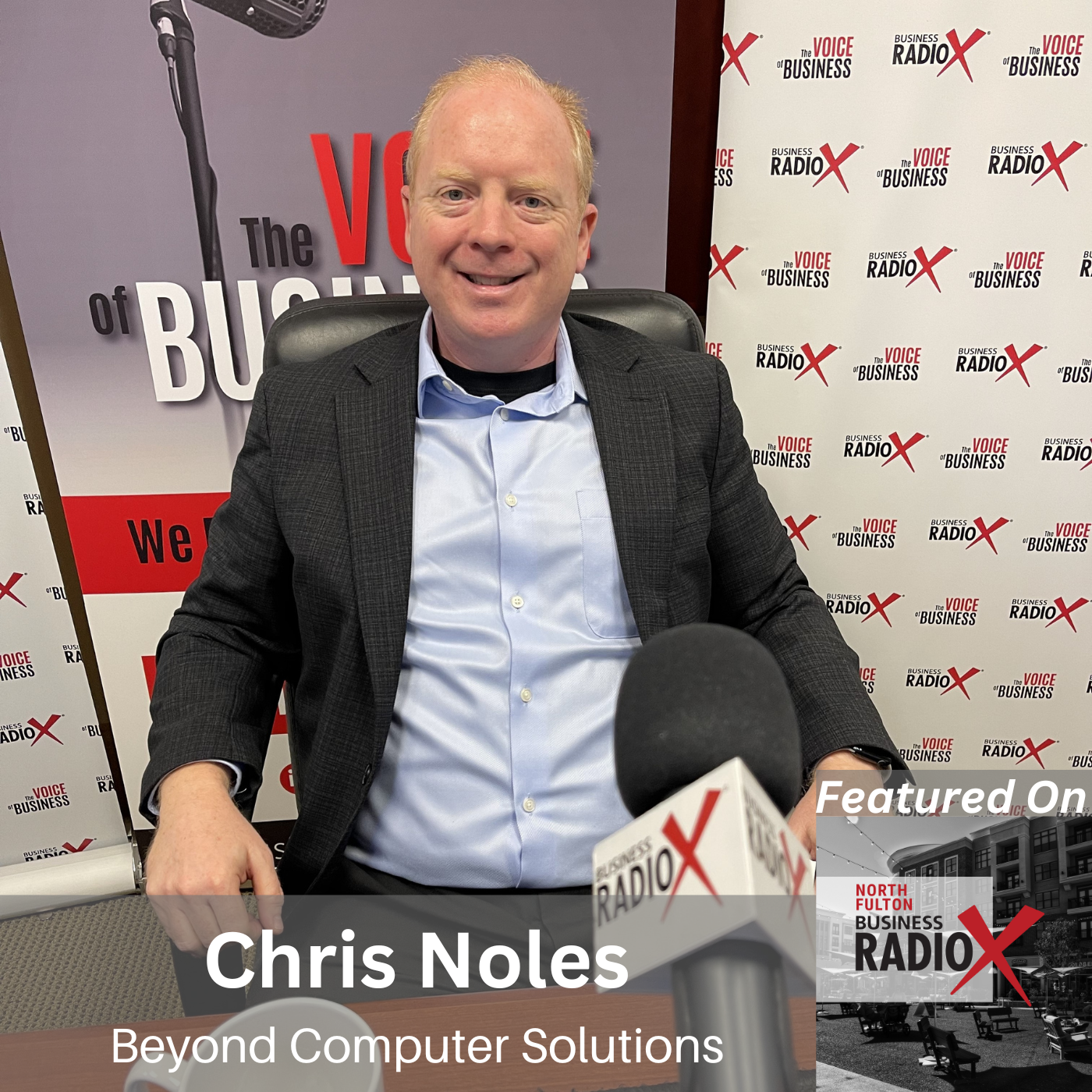
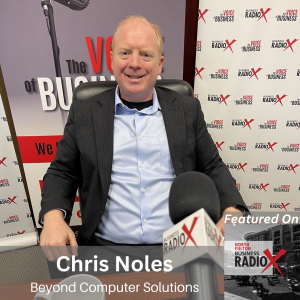
AI, Cyber Threats, and Your Business with Chris Noles, Beyond Computer Solutions

July 2, 2025 by John Ray

AI, Cyber Threats, and Your Business with Chris Noles, Beyond Computer Solutions, on North Fulton Business Radio with host John Ray
North Fulton Business Radio
AI, Cyber Threats, and Your Business with Chris Noles, Beyond Computer Solutions
Loading
00:00 /
RSS Feed
Share
Link
Embed

Download file

AI, Cyber Threats, and Your Business with Chris Noles, Beyond Computer Solutions, on North Fulton Business Radio with host John RayAI, Cyber Threats, and Your Business with Chris Noles, Beyond Computer Solutions (North Fulton Business Radio, Episode 880)

In this episode of North Fulton Business Radio, host John Ray welcomes back Chris Noles, owner and president of Beyond Computer Solutions, to discuss what every business, large or small, needs to know about modern cybersecurity threats. Chris breaks down the evolving risks posed by phishing attacks, AI-powered scams, and outdated systems, and why human error remains the biggest vulnerability. He also shares critical updates on the upcoming Windows 10 end-of-life deadline, the importance of password managers and multifactor authentication, and the truth about cyber insurance coverage most businesses get wrong.

Beyond the insights, John announces that North Fulton Business Radio is a proud client and partner of Beyond Computer Solutions. Whether you’re a law firm, healthcare practice, or construction company, this episode is a must-listen if protecting your data and operations matters to you like it does to John and his team.

John Ray is the host of North Fulton Business Radio. The show is produced by John Ray and North Fulton Business Radio, LLC, an affiliate of Business RadioX®, and is recorded inside Renasant Bank in Alpharetta.

Key Takeaways from this Episode

  • Cyberattacks target everyone, not just large organizations. If your device connects to the internet, you’re at risk.
  • Phishing and impersonation attacks are on the rise, and AI makes them harder to detect.
  • Training staff and having robust monitoring tools in place is more critical than ever.
  • Windows 10 support ends October 15, 2025. Businesses should plan device upgrades now to avoid security vulnerabilities.
  • Cyber insurance is often inadequate. Attorney fees alone in a breach can exceed $800,000.
  • Don’t use browsers to save passwords. Use secure password managers like Bitwarden instead.
  • AI tools like Microsoft Copilot can boost productivity but must be deployed securely.
  • Proactive IT partners make all the difference. Responsiveness, strategy, and security should be non-negotiable.

Topics Discussed in this Episode

00:00 Introduction to North Fulton Business Radio
01:55 Guest Introduction: Chris Noles
03:01 Cybersecurity Insights and Risks
09:00 Microsoft Updates and Cybersecurity Measures
11:30 Password Management and Multifactor Authentication
13:12 Cyber Insurance: Are You Covered?
15:07 AI in Business: Opportunities and Risks
17:29 Big Announcement: Partnership with Beyond Computer Solutions
18:39 IT Support and Success Stories
23:05 Conclusion and Contact Information

Chris Noles, Founder and CEO, Beyond Computer Solutions

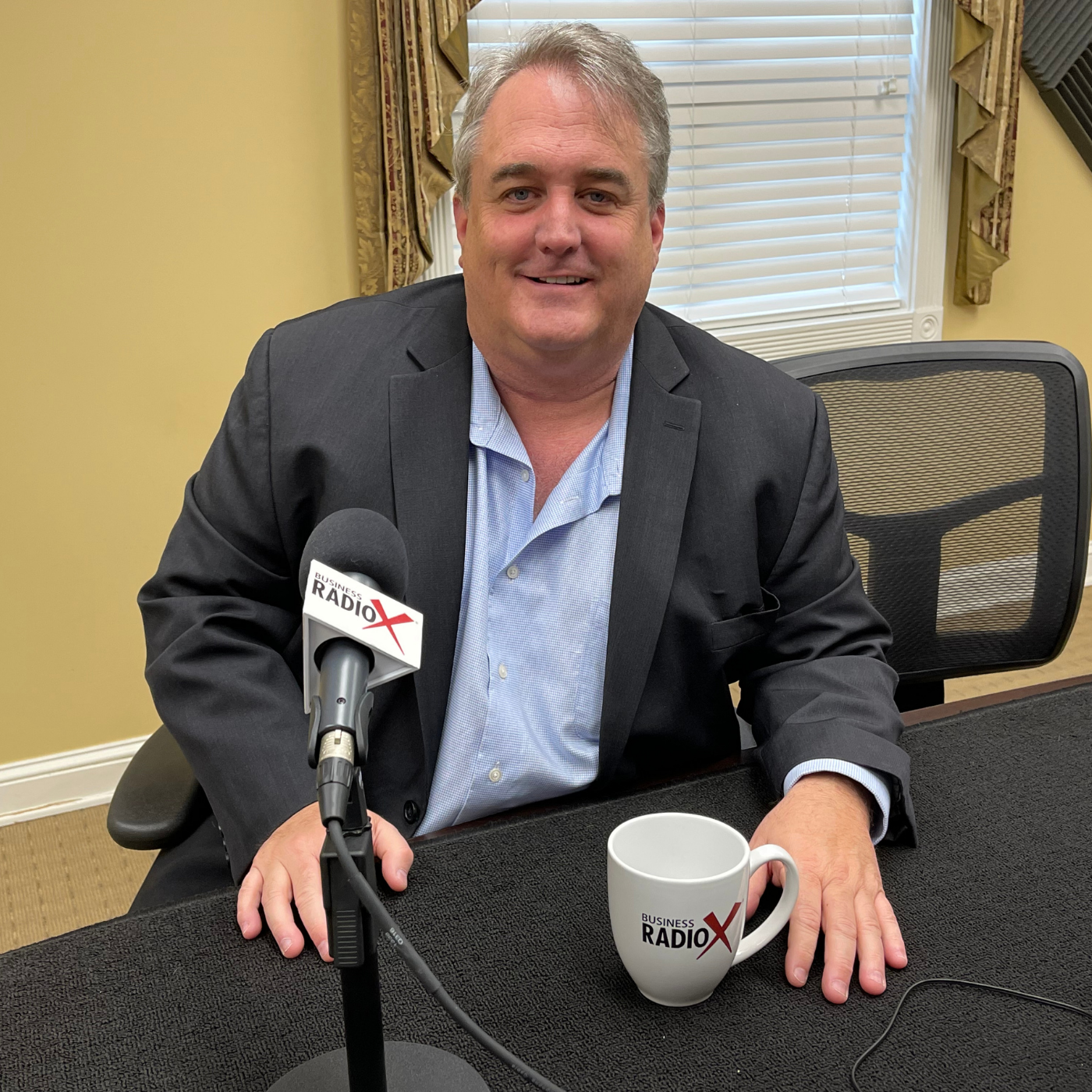
Chris Noles, Owner and President, Beyond Computer Solutions

Chris Noles is an experienced virtual CIO and technology consultant for professionals and business owners. Chris has over 26 years of information technology experience and over 24 years of experience as a business owner providing managed IT and cybersecurity services.

Chris began his career in the 1990s providing specialized IT services for law firms and business owners, and many of those same law firms and business owners continue to work with his team of experts today. Chris is a trusted advisor who has provided IT services, compliance, and security solutions to politicians, attorneys, doctors, and executives for organizations of all sizes.

Chris and his firm have over 20 years of experience keeping businesses running so that business owners can focus on running their businesses. His team has also played a significant role in responding to and remediating high-profile cybersecurity breaches. Chris has been featured in multiple articles, providing cybersecurity expert advice to medical and legal professionals who are concerned about protecting their reputations. Chris’s firm has been recognized as one of the top 501 MSPs worldwide.

When Chris isn’t helping business owners solve problems with technology, he enjoys spending time with his new daughter, traveling, and spending time outdoors.

LinkedIn

Beyond Computer Solutions

Beyond Computer Solutions is an Atlanta-based IT services provider specializing in managed IT solutions, cybersecurity, cloud computing, and IT consulting for small and medium-sized businesses. The company helps organizations such as law firms, manufacturing companies, and other businesses protect themselves from cyberattacks and maintain compliance with industry regulations.

Beyond Computer Solutions acts either as a full IT department or as an extension of an existing team, offering proactive management and support to ensure secure, stable, and efficient technology operations. Their approach emphasizes personalized service, industry-specific expertise, and a commitment to building long-term, trusting relationships with clients.

Founded in 2009, the company is privately held and recognized for its attentive, responsive staff and its ability to deliver reliable, tailored IT solutions that help clients focus on growth while minimizing technology risks.

Website | LinkedIn | Facebook | YouTube

Renasant Bank supports North Fulton Business Radio

Renasant BankRenasant Bank has humble roots, starting in 1904 as a $100,000 bank in a Lee County, Mississippi, bakery. Since then, Renasant has become one of the Southeast’s strongest financial institutions, with over $17 billion in assets and more than 180 banking, lending, wealth management, and financial services offices throughout the region. All of Renasant’s success stems from each banker’s commitment to investing in their communities as a way to better understand the people they serve. At Renasant Bank, they understand you because they work and live alongside you every day.

Website | LinkedIn | Facebook | Instagram | X (Twitter) | YouTube

Beyond Computer Solutions supports North Fulton Business Radio

If you’re a law firm, medical practice, or manufacturer, there’s one headline you don’t want to make: “Local Business Pays Thousands in Ransom After Cyberattack.” That’s where Beyond Computer Solutions comes in. They help organizations like yours stay out of the news and in business with managed IT and cybersecurity services designed for industries where compliance and reputation matter most.

Whether they serve as your complete IT department or simply support your internal team, they are well-versed in HIPAA, secure document access, written security policies, and other essential aspects that ensure your safety and well-being. Best of all, it starts with a complimentary security assessment.

Website | LinkedIn | Facebook | YouTube

About North Fulton Business Radio and host John Ray

With over 870 shows and having featured over 1,300 guests, North Fulton Business Radio is the longest-running podcast in the North Fulton area, covering business in our community like no one else. We are the undisputed “Voice of Business” in North Fulton!

The show invites a diverse range of business, non-profit, and community leaders to share their significant contributions to their market, community, and profession. There’s no discrimination based on company size, and there’s never any “pay to play.” North Fulton Business Radio supports and celebrates businesses by sharing positive stories that traditional media ignore. Some media lean left. Some media lean right. We lean business.

John Ray, host of  North Fulton Business Radio, and Owner, Ray Business Advisors
John Ray, host of  North Fulton Business Radio and Owner, Ray Business Advisors

John Ray is the host of North Fulton Business Radio. John and the team at North Fulton Business Radio, LLC, an affiliate of Business RadioX®, produce the show, and it is recorded inside Renasant Bank in Alpharetta.

The studio address is 275 South Main Street, Alpharetta, GA 30009.

You can find the full archive of shows by following this link. The show is available on all the major podcast apps, including Apple Podcasts, Spotify, Google, Amazon, iHeart Radio, and many others.

John Ray, The Generosity MindsetJohn Ray also operates his own business advisory practice. John’s services include advising solopreneurs and small professional services firms on their value, their positioning and business development, and their pricing. His clients are professionals who are selling their expertise, such as consultants, coaches, attorneys, CPAs, accountants, bookkeepers, marketing professionals, and other professional services practitioners.

John is the national bestselling author of The Generosity Mindset: A Journey to Business Success by Raising Your Confidence, Value, and Prices.

Tagged With: Beyond Computer Solutions, Chris Noles, cyberattacks, cybersecurity, cybersecurity services, cyberthreats, IT support, John Ray, managed IT services, managed IT support, North Fulton Business Radio, outsourced IT services, phishing

Cybersecurity and IT Strategies for Small Businesses, with Chris Noles, Beyond Computer Solutions

January 22, 2024 by John Ray

Chris Noles, Beyond Computer Solutions
North Fulton Business Radio
Cybersecurity and IT Strategies for Small Businesses, with Chris Noles, Beyond Computer Solutions
Loading
00:00 /
RSS Feed
Share
Link
Embed

Download file

Chris Noles, Beyond Computer Solutions

Cybersecurity and IT Strategies for Small Businesses, with Chris Noles, Beyond Computer Solutions (North Fulton Business Radio, Episode 739)

On this episode of North Fulton Business Radio, John Ray spoke with Chris Noles, Owner and President of Beyond Computer Solutions. Chris discussed the importance of cybersecurity in the current digital era, especially for small businesses, explaining how these businesses often overlook their vulnerability to cyber threats, thinking they are too small to attract attention. He delved into some strategies businesses can utilize to improve their online security, the impact of a cybersecurity breach, and the importance of receiving training and seeking professional advice. Chris also touched on the regulatory environment surrounding cybersecurity, the services that Beyond Computer Solutions offers, and success stories.

North Fulton Business Radio is hosted by John Ray and broadcast and produced from the North Fulton studio of Business RadioX® inside Renasant Bank in Alpharetta.

Chris Noles, Owner and President, Beyond Computer Solutions

Chris Noles, Owner and President, Beyond Computer Solutions

Chris is an experienced virtual CIO and technology consultant for professionals and business owners. Chris has over 25 years of information technology experience and over 23 years of experience as a business owner providing managed IT and cybersecurity services.

Chris began his career in the 1990’s providing specialized IT services for law firms and business owners, and many of those same law firms and business owners continue to work with his team of experts today. Chris is a trusted advisor who has provided IT services, compliance, and security solutions to politicians, attorneys, doctors, and executives for organizations of all sizes.

Chris and his firm have over 20 years of experience keeping businesses running so that business owners can focus on running their businesses. His team has also played a significant role in responding to and remediating high-profile cybersecurity breaches. Chris has been featured in multiple articles, providing cybersecurity expert advice to medical and legal professionals who are concerned about protecting their reputations. Chris’s firm has been recognized as one of the top 501 MSPs worldwide.

When Chris isn’t helping business owners solve problems with technology, he enjoys spending time with his new daughter, traveling, and spending time outdoors.

LinkedIn

Beyond Computer Solutions

Beyond Computer Solutions works with specialized medical practices and attorneys to help them stay out of the news headlines so that a cybersecurity breach doesn’t ruin their good reputation. They know the internal systems and controls needed to help you stay in compliance and keep the bad guys out.

Being entrenched in your industry, they know your business challenges and regulatory needs, i.e., securing documents, accounting systems, and your EMR system. HIPAA Compliance isn’t just a regulatory requirement; it’s also about protecting you from the consequences, which on average start at $10k per incident (think about that loss per patient record!) They ensure their client’s medical practices stay safe and stay in business by providing top-rated customer service through their US-based team.

The conversation starts with a complimentary security assessment, either by phone or video conference.

The company works with office managers, physicians, practice owners, CFOs, attorneys, and CIOs.

An example of what others say: “Beyond Computer Solutions fully understands the magnitude of the regulation and compliance we face in every aspect of our business. We trust their knowledge and expertise in making recommendations that help support and protect our compliance responsibilities. This allows us to focus on our core mission of healthcare.” (Pamela Rhoton, Office Manager, Peachtree Vascular Associates)

Website | LinkedIn | Facebook | YouTube

Topics Discussed in this Interview

00:04 Introduction and Welcome
01:27 Introducing Chris Noles and Beyond Computer Solutions
02:19 The Evolution of Technology and Business
05:28 The Challenges and Solutions in Cybersecurity
08:40 The Impact of Cybersecurity Breaches on Businesses
12:22 The Role of IT in Business Strategy and Productivity
23:19 The Risks and Solutions in Mobile Technology
27:23 Closing Remarks and Contact Information


North Fulton Business Radio is hosted by John Ray and broadcast and produced from the North Fulton studio of Business RadioX® inside Renasant Bank in Alpharetta. You can find the full archive of shows by following this link. The show is available on all the major podcast apps, including Apple Podcasts, Spotify, Google, Amazon, iHeart Radio, and many others.

RenasantBank


Renasant Bank has humble roots, starting in 1904 as a $100,000 bank in a Lee County, Mississippi, bakery. Since then, Renasant has become one of the Southeast’s strongest financial institutions, with over $13 billion in assets and more than 190 banking, lending, wealth management, and financial services offices in Mississippi, Alabama, Tennessee, Georgia, and Florida. All of Renasant’s success stems from each of their banker’s commitment to investing in their communities as a way of better understanding the people they serve. At Renasant Bank, they understand you because they work and live alongside you every day.

Tagged With: Beyond Computer Solutions, Chris Noles, cybersecurity, cybersecurity services, it services, IT services for law firms, John Ray, managed IT services, North Fulton Business Radio

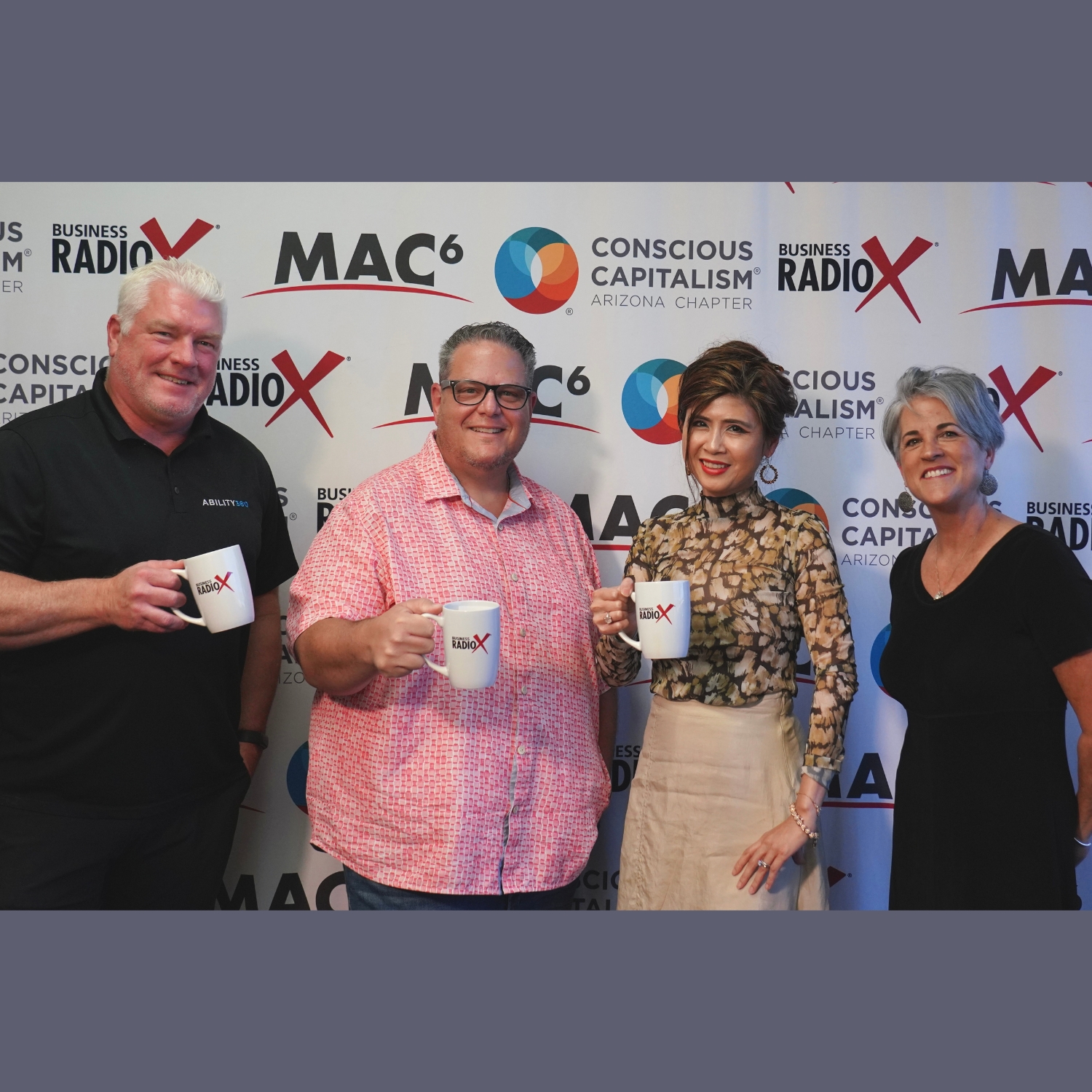
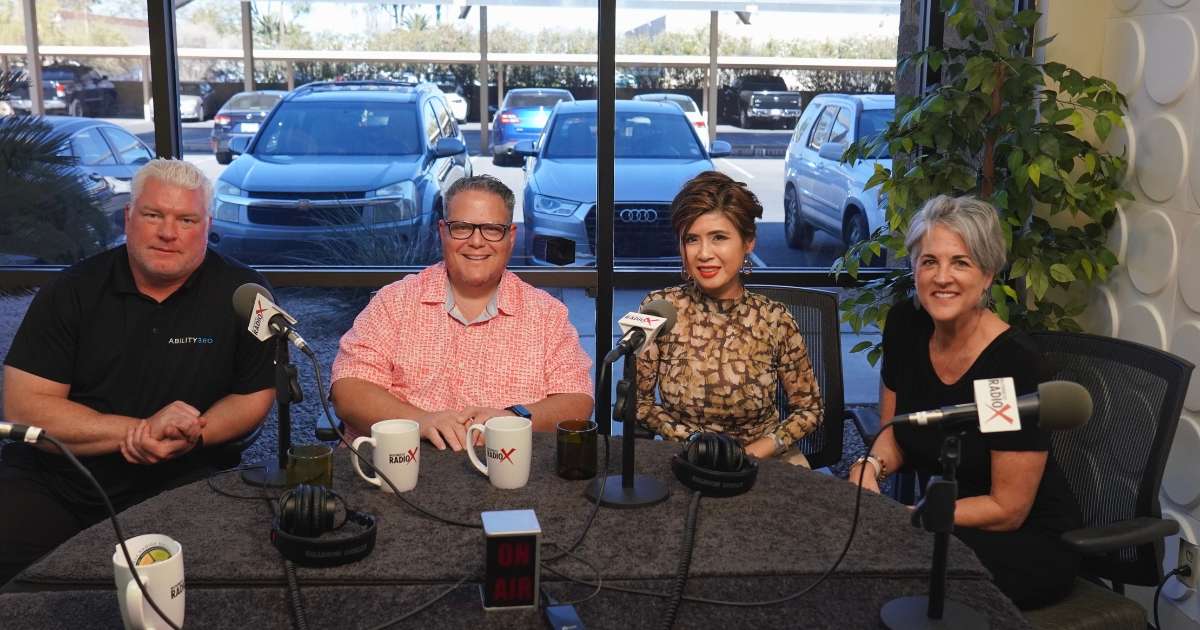
Stuart Selbst with Nothing but NET, Gus LaZear with Ability360 and Elaine Szeto with Integro Bank

November 8, 2023 by Karen

Stuart-Selbst-with-Nothing-but-NET-Gus-LaZear-with-Ability360-and-Elaine-Szeto-with-Integro-Bank-feature
Phoenix Business Radio
Stuart Selbst with Nothing but NET, Gus LaZear with Ability360 and Elaine Szeto with Integro Bank
Loading
00:00 /
RSS Feed
Share
Link
Embed

Download file

Stuart-Selbst-with-Nothing-but-NET-Gus-LaZear-with-Ability360-and-Elaine-Szeto-with-Integro-Bank

Stuart Selbst with Nothing but NET, Gus LaZear with Ability360 and Elaine Szeto with Integro Bank

NBN-Logo

Established in 2001 by Bob Cox and Steve Brown, Nothing But NET was founded with a clear vision: to offer top-tier technology solutions while prioritizing customer satisfaction. They maintain close collaborations with their clients, partners, and vendors, ensuring successful engagements for all.

In 2023, Nothing But NET proudly achieved the #7 rank among the world’s leading Managed Service Providers (MSPs). Nothing But NET is renowned for its agility, flexibility, and innovation, consistently adapting to meet the evolving needs of our customers.

They are committed to continual self-reinvention, always staying ahead of the curve to serve our clients better.

Stuart-SelbstStuart Selbst, known as Stu, serves as the Director of Client Experience at Nothing But NET, where he plays a crucial role in overseeing the sales team and ensuring the success of all our clients. With over three decades of experience in the IT industry, Stu has an impressive background. He has worked in both corporate IT and has also successfully managed his own IT firm.

His expertise extends beyond national borders, as he has provided consultancy services to IT firms and software companies worldwide. Stu’s career highlights include serving as the COO of a thriving software company.

Stu is not only a seasoned IT professional but also a dedicated business leader with a genuine passion for helping others achieve success. In addition to his professional commitments, he organizes a popular monthly networking event named Business and Brews, which fosters connections among local businesses at nearby craft breweries.

Residing in Mesa, AZ, Stu shares his home with his wife, Loree, and their cherished feline companions, Cliff and Chloe. An enthusiastic sports fan, Stu enjoys embracing life and immersing himself in the world around him. His love for adventure extends to travel, where he seeks to experience all that the world has to offer. Stu also takes great pleasure in treating his friends and family to his mouthwatering BBQ creations.

Follow Nothing but Net on LinkedIn, Facebook and Twitter.

ABILITY360-logo

Ability360 is a Center for Independent Living.  A Center for Independent Living, otherwise known as a CIL, is a 501 (c)(3) nonprofit organization run by people with disabilities, for people with disabilities to address needs and barriers within the community.

Ability360 is located in Phoenix, Arizona and provides services throughout the state of Arizona. We also own and operate the Ability360 Sports and Fitness Center where we provide exceptional adaptive sports, recreation, aquatic, and fitness programs that promote the independence, health, and overall well being of people with disabilities and their family members.

Gus-LaZear-headshotGus LaZear currently serves as Ability360’s Vice President of Operations and the Sports and Fitness Center for persons with Disabilities.

LaZear, whose background includes more than 29 years of experience managing major programs and initiatives in rehabilitative medicine, recreational therapy, outdoor adventures and other adaptive programming for people with disabilities.

Prior to Ability360, LaZear handled responsibilities as lead therapeutic recreational therapist at the Barrow Neurological Institute at St. Joseph’s Hospital and Medical Center in Phoenix. During that time he also served on the Board of Directors for Arizona Disabled Sports.

Before joining St. Joseph’s, LaZear had been with Casa Colina Centers for Rehabilitation in Pomona, CA working on the Outdoor Adventure team that organized adaptive surfing, skiing/snowboarding, sailing, fishing, camping, dog sledding, rock climbing, scuba diving, horseback trips, kayaking, outrigger canoeing, wheelchair sports and cycling programs.

LaZear earned a Master’s of Business Administration with an emphasis in Health Systems Management from Grand Canyon University and a Bachelor of Science in Therapeutic Recreation from California State University Northridge.

LaZear’s licenses and certifications include Certified Therapeutic Recreation Specialist, National Council of Therapeutic Recreation; Certified Pool Operator, National Swimming Pool Foundation; Certified in Aqua Stretch (Aquatic Therapy Technique); Certified in Ai Chi (Aquatic Therapy Technique); Advanced Scuba Diver, Professional Association of Diving Instructors; Certified Dive Buddy, Handicapped Scuba Association and Member of American Therapeutic Recreation Association.

He also serves as a guest speaker for the Barrow Neurological Institute Stroke Symposium, SCI Symposium, and Brain Injury Symposium. LaZear served as an associate Faculty at Arizona State University through 2020 and Grand Canyon University through 2019.

Follow Ability360 on LinkedIn, Facebook and Instagram.

Integro-Bank-logo

Integro Bank is a Mission-based bank with the objective of helping small businesses grow and increase employment.

Integro Bank is considered an industry disrupter with its proprietary INTEGRO360 consultation tool, powered by impactful data analytics and Integro CEO Club to serve the unique needs of small businesses.

Elaine-SzetoElaine Szeto – EVP, Chief Innovation Officer, and Founder of Integro Bank oversees and leads business strategy through operational excellence, digital marketing, technology, innovation, and strategic deliverables to provide leading-edge financial technology tools and proprietary INTEGRO360 services, driving and delivering best-in-class client experiences to position business clients for success and to fuel businesses and employment growth.

Szeto is a proven and forward-thinking leader in driving extraordinary growth via innovation and transformation in technology, digital solutions & products, marketing, and service excellence with winning business strategies for Fortune 500 companies with more than 30 years of success.

Connect with Elaine on LinkedIn.

Tagged With: Advocate, banking, CEO Club, consultation, Cybersecurity Provider, digital, Elaine Szeto, empower, equality, inclusion, Independence, Innovation, Integro Bank, IT support, Leadership, managed IT services, Nothing But NET was named the 7th top MSP Globally by Channel Futures, women leaders

Todd Gooden, The Solutions Team, Inc.

May 23, 2023 by John Ray

The Solutions Team
Dental Business Radio
Todd Gooden, The Solutions Team, Inc.
Loading
00:00 /
RSS Feed
Share
Link
Embed

Download file

The Solutions Team

Todd Gooden, The Solutions Team, Inc. (Dental Business Radio, Episode 44)

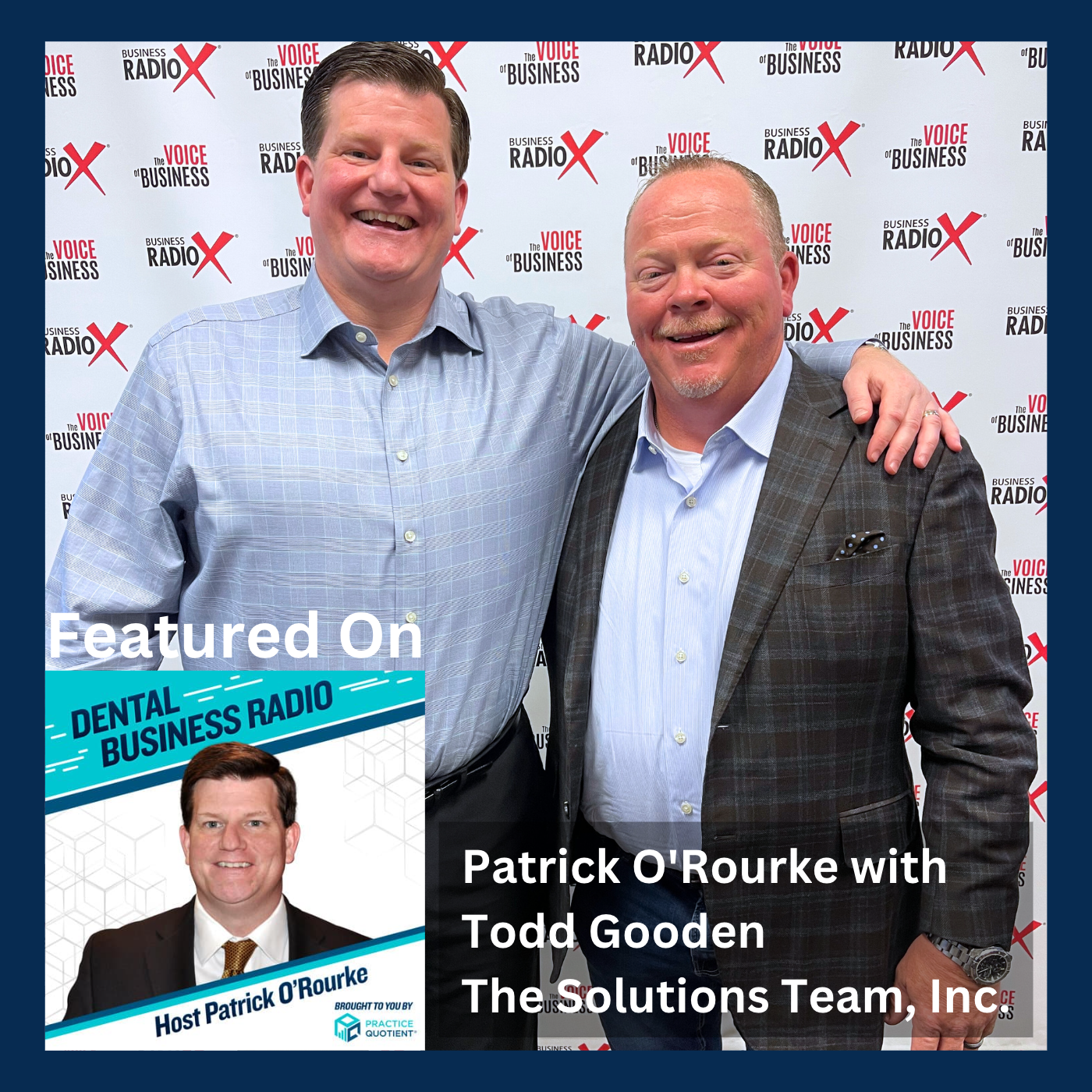
Todd Gooden, CEO of The Solutions Team, Inc. was behind the mic with host Patrick O’Rourke to discuss IT services and the business model he’s created to serve the dental industry. Todd also covered IT problems that can arise in a dental practice, cybersecurity, mitigating risk, why practices in smaller cities and towns are at risk, and much more.

Dental Business Radio is underwritten and presented by Practice Quotient: PPO Negotiations & Analysis and produced by the North Fulton studio of Business RadioX®.

The Solutions Team, Inc.

In 2007, while managing a routine Disaster Recovery implementation for a major corporation in Central Mississippi, Todd Gooden, Founder and Chief Executive Officer of The Solutions Team explored outsourcing several key components in an effort to minimize the company’s infrastructure expenses. His inability to find a provider of the services he needed led to the founding of The Solutions Team.

In 2008, The Solutions Team began specializing in “Cloud” technology – designing Public, Private and Hybrid Cloud Solutions for emerging and mid-sized companies seeking to protect critical server data (financials, e-mail messages, databases, etc.), while reducing operational costs in server backup and recovery. Today, headquartered in Jackson, Mississippi, The Solutions Team is a leading cloud-services company – serving businesses nationwide (40 states).

The Solutions Team has emerged as the go-to provider for companies looking to outsource their entire IT department or simply deploy key portions of their system to the ‘cloud’. The company offers proven expertise on a variety of cloud-based managed services and solutions, including Cloud-Hosted Email. Managed Email On-Site, Virtual IT Support, Managed Networks, Cloud Data Backup/Disaster Recovery and Data Breach Response.

Company website| LinkedIn | Facebook | Twitter

Todd Gooden, CEO, The Solutions Team, Inc.

Todd Gooden, CEO, The Solutions Team, Inc.

In 1996, at 24 years of age, Todd was the youngest person at the time to ever receive the Mississippi Business Journal’s “Top 40 Under 40” distinction – awarded annually to rising business leaders throughout the state. More than two decades and three companies later, he continues to be recognized as an IT services innovator and leader.

He was named a ‘Most Successful Entrepreneur of 2018’ by Beyond Exclamation magazine, and more recently was named one of the state’s ‘Top CEOs of 2020’ by the Mississippi Business Journal. Through the years, The Solutions Team has emerged as the go-to provider for companies looking to outsource their entire IT department or simply deploy key portions of the ‘cloud’ or Cyber Security Solutions. TST’s innovative ‘performance-based’ billing model and stellar track record for service availability and responsiveness have helped clients minimize IT service interruptions and increase productivity, while managing their budgets and reducing costs more effectively.

Under Todd’s leadership, The Solutions Team was named to the prestigious Pioneer 250 of CRN magazine’s 2019 Managed Service Provider 500 list, recognizing North American solution providers with cutting-edge approaches to delivering managed IT services. Other recognitions include TST being named a ‘Best Place to Work’ for six consecutive years since 2017 by the Mississippi Business Journal.
In his spare time, he enjoys spending a day out on his boat, hitting the green at tee time, cheering on his favorite football team, connecting with nature during a camping trip, or even hanging out with his hunting buddies at deer camp. Todd has been married to his beautiful wife, Brandi for 23 years whom he shares four children: Dakota, Aubrey, Kaelon, and Eli.

LinkedIn

About Dental Business Radio

Patrick O'Rourke
Patrick O’Rourke, Host of “Dental Business Radio”

Dental Business Radio covers the business side of dentistry. Host Patrick O’Rourke and his guests cover industry trends, insights, success stories, and more in this wide-ranging show. The show’s guests include successful doctors across the spectrum of dental practice providers, as well as trusted advisors and noted industry participants. Dental Business Radio is underwritten and presented by Practice Quotient and produced by the North Fulton studio of Business RadioX®. The show can be found on all the major podcast apps and a complete show archive is here.


Practice Quotient

Dental Business Radio is sponsored by Practice Quotient. Practice Quotient, Inc. serves as a bridge between the payor and provider communities. Their clients include general dentist and dental specialty practices across the nation of all sizes, from completely fee-for-service-only to active network participation with every dental plan possible. They work with independent practices, emerging multi-practice entities, and various large ownership entities in the dental space. Their PPO negotiations and analysis projects evaluate the merits of the various in-network participation contract options specific to your Practice’s patient acquisition strategy. There is no one-size-fits-all solution.
Connect with Practice Quotient

Website | LinkedIn | Facebook | Twitter

Tagged With: cybersecurity, Dental Business Radio, dental industry, it services, managed IT services, Mississippi, Patrick O'Rourke, Practice Quotient, The Solutions Team, Todd Gooden

LIVE from the GNFCC Grand Opening Celebration: Connor Griffin, Cortavo

September 23, 2022 by John Ray

Cortavo
North Fulton Business Radio
LIVE from the GNFCC Grand Opening Celebration: Connor Griffin, Cortavo
Loading
00:00 /
RSS Feed
Share
Link
Embed

Download file

Cortavo

LIVE from the GNFCC Grand Opening Celebration: Connor Griffin, Cortavo (North Fulton Business Radio, Episode 524)

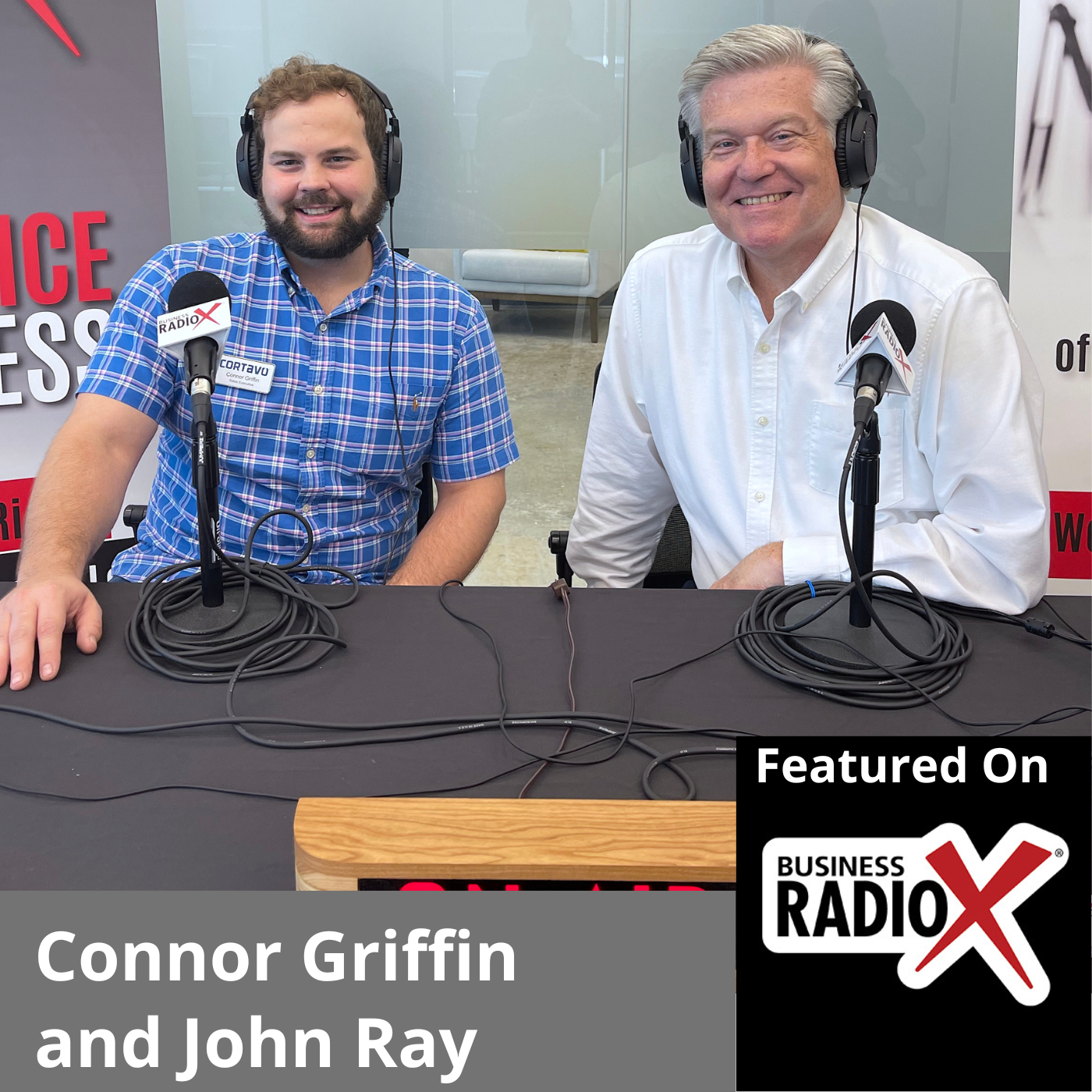
Connor Griffin, Sales Manager and Account Executive at Cortavo, joined host John Ray LIVE from the Greater North Fulton Chamber of Commerce Grand Opening Celebration. Connor discussed not only the IT solutions Cortavo solves for their clients, but some of the serious technology issues businesses are facing right now. Connor also talked about Cortavo’s membership in GNFCC, the GNFCC Small Business Awards, and much more.

This show was originally broadcast live from the Grand Opening celebration and ribbon cutting of the new offices of the Greater North Fulton Chamber of Commerce at the 10000 Building at Avalon in Alpharetta, Georgia, on August 18, 2022.

North Fulton Business Radio is produced and broadcast by the North Fulton studio of Business RadioX® inside Renasant Bank in Alpharetta.

Connor Griffin, Sales Manager and Account Executive, Cortavo

Connor Griffin, Sales Manager and Acount Executive, Cortavo

Headquartered in Atlanta, Georgia, Cortavo was founded in 2019 as a complete and affordable IT solution for small to mid-sized businesses.
Cortavo’s mission is to remove the complexity of business IT and provide everything businesses need to be successful. From cybersecurity, helpdesk support, networking equipment, and cloud data storage to hybrid workplace systems. Their all-inclusive IT plans and support are designed to scale as your business grows.

With Cortavo, all you have to do is focus on your business while they handle your IT.

Company website | LinkedIn | Facebook | Connor Griffin LinkedIn 

Questions and Topics in the Interview:

  • About Cortavo
  • Problems they have been solving for their clients
  • Connor’s involvement with GFNCC
  • GNFCC Small Business Awards

North Fulton Business Radio is hosted by John Ray and broadcast and produced from the North Fulton studio of Business RadioX® inside Renasant Bank in Alpharetta. You can find the full archive of shows by following this link. The show is available on all the major podcast apps, including Apple Podcasts, Spotify, Google, Amazon, iHeart Radio, Stitcher, TuneIn, and others.

RenasantBank


Renasant Bank has humble roots, starting in 1904 as a $100,000 bank in a Lee County, Mississippi, bakery. Since then, Renasant has grown to become one of the Southeast’s strongest financial institutions with over $13 billion in assets and more than 190 banking, lending, wealth management and financial services offices in Mississippi, Alabama, Tennessee, Georgia and Florida. All of Renasant’s success stems from each of their banker’s commitment to investing in their communities as a way of better understanding the people they serve. At Renasant Bank, they understand you because they work and live alongside you every day.


Special thanks to A&S Culinary Concepts for their support of this edition of North Fulton Business Radio. A&S Culinary Concepts, based in Johns Creek, is an award-winning culinary studio, celebrated for corporate catering, corporate team building, Big Green Egg Boot Camps, and private group events. They also provide oven-ready, cooked-from-scratch meals to go they call “Let Us Cook for You.” To see their menus and events, go to their website or call 678-336-9196.

Tagged With: A&S Culinary Concepts, Avalon, Connor Griffin, Cortavo, GNFCC, managed IT services, North Fulton Business Radio, renasant bank, small business awards

Sean Barker, cloudEQ

May 5, 2021 by John Ray

Sean Barker, cloudEQ
North Fulton Business Radio
Sean Barker, cloudEQ
Loading
00:00 /
RSS Feed
Share
Link
Embed

Download file

Sean Barker, cloudEQ
                    Sean Barker, cloudEQ

Sean Barker, cloudEQ  (North Fulton Business Radio, Episode 354)

Sean Barker founded cloudEQ to provide cloud migration and related IT services to enterprise-level clients. He joined host John Ray to discuss the dynamics which drive large companies to the cloud, why cloudEQ’s work is not just technology based but also people focused, and much more.  North Fulton Business Radio is broadcast from the North Fulton studio of Business RadioX® inside Renasant Bank in Alpharetta.

cloudEQ

cloudEQ is a professional services company providing customized cloud-based solutions.

Our focus is on cloud execution tailored to meet your goals and work with you to evaluate your current cloud model to improve performance, increase security, deliver automation, reduce cost and optimize your cloud environment.

cloudEQ is a professional services company specializing in Several areas of “Cloud” based services.

  •  Optimization for performance and cost-efficiency
  • DevOps – Automation for repetitive tasks and application deployment
  • Application Development of services, corporate and mobile
  • Security to ensure systems and data are safe and secure
  • Transformation to take advantage of more efficient technologies
  • Migrations to move your systems from your datacenters to the cloud
  • Production Support for client applications as well as performance enhancements
  • Operations Support to help manage client day-to-day services and systems

cloudEQ’s priorities are always keeping the focus on the customer and the business value generated, providing extensive expertise in creating robust, secure, high-performing DevOps design, implementation and support, using Agile methodology, always keeping clients in the loop, and complete project visibility and multiple open lines of communication from day one.

Company website | LinkedIn | Facebook | Twitter

Sean C. Barker, CEO, cloudEQ

cloudEQ
Sean C. Barker, CEO, cloudEQ

Sean C. Barker founded cloudEQ and serves as its Chief Executive Officer. Mr. Barker founded cloudEQ after a successful career as an entrepreneur and executive in Fortune 100 companies. He has over twenty-five years of experience in IT and IT leadership in infrastructure, operations application development, SaaS, PaaS, and program management.

Prior to founding cloudEQ he founded Omadas; a consulting firm with clients across the globe and served as the COO of Boardwalk Entertainment group where he holds a patent for a Mobile Replacement Dialogue Recording system. Prior to becoming an entrepreneur, he was the CTO and VP IT at Ingram Micro (NYSE:IM $40B revenue) and Director IT WellPoint health Networks/Anthem (NYSE: ANTM $100B revenue).

He holds a B.A. in Business and an M.B.A. in Finance and Marketing from American Intercontinental University.

LinkedIn

Questions and Topics in this Interview:

  • Tell us about cloudEQ? What do you do? Why is it relevant now?
  • Why are you focused on the cloud and what makes the cloud relevant now?
  • What are some examples of the work cloudEQ does?
  • Has COVID affected cloudEQ or your clients?
  • What makes cloudEQ different?
  • What are you particularly proud of at cloudEQ?

North Fulton Business Radio is hosted by John Ray, and broadcast and produced from the North Fulton studio of Business RadioX® inside Renasant Bank in Alpharetta. You can find the full archive of shows by following this link. The show is available on all the major podcast apps, including Apple Podcasts, Spotify, Google, Amazon, iHeart Radio, Stitcher, TuneIn, and others.

Renasant Bank has humble roots, starting in 1904 as a $100,000 bank in a Lee County, Mississippi, bakery. Since then, Renasant has grown to become one of the Southeast’s strongest financial institutions with over $13 billion in assets and more than 190 banking, lending, wealth management and financial services offices in Mississippi, Alabama, Tennessee, Georgia and Florida. All of Renasant’s success stems from each of their banker’s commitment to investing in their communities as a way of better understanding the people they serve. At Renasant Bank, they understand you because they work and live alongside you every day.

Tagged With: cloud computing, cloud migration, cloud services provider, cloudEQ, DevOps, it services, managed IT services, Migration, outsourced IT services, Sean C. Barker, Technology

Decision Vision Episode 38: Should I Outsource My IT? – An Interview with Tony Rushin, Network 1 Consulting

October 31, 2019 by John Ray

Decision Vision
Decision Vision
Decision Vision Episode 38: Should I Outsource My IT? – An Interview with Tony Rushin, Network 1 Consulting
Loading
00:00 /
RSS Feed
Share
Link
Embed

Download file

Mike Blake and Tony Rushin

Decision Vision Episode 38:  Should I Outsource My IT? – An Interview with Tony Rushin, Network 1 Consulting

Will outsourcing my IT increase my cybersecurity? What’s a human firewall and how does a managed services provider help me with this aspect of my IT? In this episode of “Decision Vision,” host Mike Blake explores these questions and much more with Tony Rushin, Network 1 Consulting. “Decision Vision” is presented by Brady Ware & Company.

Tony Rushin, Network 1 Consulting

Tony Rushin

Tony Rushin is a Vice President, Sales & Marketing, with Network 1 Consulting.

Network 1 Consulting is a 21-year-old, IT Support company in Atlanta, GA. They become – or augment – the IT department for law firms, medical practices and real estate & construction companies. Their IT experts can fix computers, but what their clients value most are the industry-specific best practices we bring to their firms. This is especially important with technology, along with regulations and cyber threats, changing so rapidly. They take a proactive approach to helping our clients use technology to gain and keep their competitive advantage.

For more information, go to the Network 1 Consulting website, or contact Tony directly by email.

Michael Blake, Brady Ware & Company

Mike Blake, Host of “Decision Vision”

Michael Blake is Host of the “Decision Vision” podcast series and a Director of Brady Ware & Company. Mike specializes in the valuation of intellectual property-driven firms, such as software firms, aerospace firms and professional services firms, most frequently in the capacity as a transaction advisor, helping clients obtain great outcomes from complex transaction opportunities. He is also a specialist in the appraisal of intellectual properties as stand-alone assets, such as software, trade secrets, and patents.

Mike has been a full-time business appraiser for 13 years with public accounting firms, boutique business appraisal firms, and an owner of his own firm. Prior to that, he spent 8 years in venture capital and investment banking, including transactions in the U.S., Israel, Russia, Ukraine, and Belarus.

Brady Ware & Company

Brady Ware & Company is a regional full-service accounting and advisory firm which helps businesses and entrepreneurs make visions a reality. Brady Ware services clients nationally from its offices in Alpharetta, GA; Columbus and Dayton, OH; and Richmond, IN. The firm is growth minded, committed to the regions in which they operate, and most importantly, they make significant investments in their people and service offerings to meet the changing financial needs of those they are privileged to serve. The firm is dedicated to providing results that make a difference for its clients.

Decision Vision Podcast Series

“Decision Vision” is a podcast covering topics and issues facing small business owners and connecting them with solutions from leading experts. This series is presented by Brady Ware & Company. If you are a decision maker for a small business, we’d love to hear from you. Contact us at decisionvision@bradyware.com and make sure to listen to every Thursday to the “Decision Vision” podcast. Past episodes of “Decision Vision” can be found here. “Decision Vision” is produced and broadcast by the North Fulton studio of Business RadioX®.

Visit Brady Ware & Company on social media:

LinkedIn:  https://www.linkedin.com/company/brady-ware/

Facebook: https://www.facebook.com/bradywareCPAs/

Twitter: https://twitter.com/BradyWare

Instagram: https://www.instagram.com/bradywarecompany/

Show Transcript

Intro: [00:00:02] Welcome to Decision Vision, a podcast series focusing on critical business decisions, brought to you by Brady Ware & Company. Brady Ware is a regional, full-service accounting and advisory that helps businesses and entrepreneurs make visions a reality.

Michael Blake: [00:00:20] And welcome to Decision Vision, a podcast giving you, the listener, clear vision to make great decisions. In each episode, we discuss the process of decision making on a different topic. Rather than making recommendations because everyone’s circumstances are different, we talk to subject matter experts about how they would recommend thinking about that decision.

Michael Blake: [00:00:37] My name is Mike Blake, and I’m your host for today’s program. I’m a director at Brady Ware & Company, a full-service accounting firm based in Dayton, Ohio, with offices in Dayton; Columbus, Ohio; Richmond, Indiana; and Alpharetta, Georgia, which is where we are recording today. Brady Ware is sponsoring this podcast. If you like this podcast, please subscribe on your favorite podcast aggregator. And also, please, consider leaving a review of the podcast as well.

Michael Blake: [00:01:01] Our topic today is, should I outsource my IT or information technology functions? And you know, I think this is a question that companies wrestle with quite a lot. In fact, I know companies that kind of do the IT two-step where they’ll insource it, and then outsource it for a while then. And then, thrilled to kind of bring it back, and then send it out again. And, you know, it’s really sort of the Texas two-step information technology style. And, you know, having been a business owner myself, I had to face that decision.

Michael Blake: [00:01:32] Now, as an anecdote, when I had my firm for a while, Arpeggio Advisors, our family at that time had started out as a Windows platform family. And then, something like three weeks into my trying to launch my company where my blood pressure was at a fairly high level, all of a sudden, my wife’s computer crashes and my oldest son’s computer crashed. Basically a race time when they can’t do anything and we’ve got to figure it out. And I’ve spent an entire day getting them back up and running, which I eventually did. But I said I’m just never doing that again.

Michael Blake: [00:02:16] So, on Saturday, I don’t know if Apple salespeople work on commission or not. But whoever—if they did, they made a lot of money on me that day because that day all the PCs are out. Macs were in. Never had trouble since. And this is not meant to be an Apple infomercial. I mean I do actually still have Windows machines for some things, but it’s indicative of how IT can be disruptive to a business, even if you’re a sole practitioner or even if you’re a home based business. That when you—when you’re infrastructure doesn’t work well, it is a real pain in the neck. It’s one of those things. It’s kind of like an umpire in baseball. You don’t notice and necessarily they do great. But boy, when they fail, you notice the heck out of them.

Michael Blake: [00:03:02] And IT is like that one. When your technology fails you, I can tell you from my perspective, I feel betrayed when my technology does not work. So, I feel like, you know what? I’m doing my my job. Right. Why is Apple, why is Microsoft, why is whoever not sort of holding up their end of the bargain? And so, the IT function in a company in the 21st century is every bit as important, if not more important than sales, than an accounting product delivery. You know, it’s right up there. But I don’t think that there’s as much controversy or consternation on whether or not to to keep that function or to outsource it or maybe if there’s, you know, identify kind of where that inflection point is, where you should consider that—you should consider that decision.

Michael Blake: [00:03:59] And so, as is often the case, you know, I’m not qualified to advise you on how to make that decision. So, I’ve brought in somebody who is qualified to help you make that decision. And joining us today is my friend Tony Rushin, who is vice president of Network 1 Consulting. Spending 30 years in high technology sales and marketing from IBM to startups, Tony brings his broad experience and business development marketing in IT business strategy to Network 1’s leadership team clients and partners. His passion is to help people achieve greatness and however they define it. And by the way, if your Atlanta Braves fan, you will appreciate this. He does run it out when the ball is hit into the gap in the outfield. Unlike some of our players here.

Michael Blake: [00:04:38] Network 1 delivers I-T managed services exclusively to businesses in Metro Atlanta. Since 1998, Network 1 becomes or augments the IT department for companies. Network 1’s IT experts fix computers for what their clients really values, the industry best practices they bring to the firm. It’s especially important with technology, along with regulations and cyber threats, which are changing rapidly.

Michael Blake: [00:05:02] With over 30 employees, Network 1 has built a culture that attracts and retains network and desktop professionals who know their stuff and have an outstanding desk side. Man, that is not easy to do. They find a fixed root causes instead of putting a Band-Aid on issues. Network 1 delivers proactive planning, so their clients avoid problems and gain competitive advantage. They’re not just a cost function. Network 1 is a fractional chief information officer, a support desk network engineer and everything in between. Tony, welcome to the program.

Tony Rushin: [00:05:32] Well, glad to be here, Mike. Thank you.

Michael Blake: [00:05:34] So many of us encounter outsource support when we need to fix our computer in sort of a robot vacuum. Is outsourced IT support simply hiring day from India. What does that look like?

Tony Rushin: [00:05:49] Well, no offense today from India, but if that’s all outsourced, IT support would be, there wouldn’t be much outsourced IT. So, it’s much more than that. But, you know, it can be confined to that, too. It really runs the gamut as far as what companies need, and then what they go out and get.

Michael Blake: [00:06:08] So, you know, what if a company happens to have a lot of people who are relatively computer uncomfortable, does that change the equation? Not every company necessarily has or needs people who are power users at every desk, right? Does that at all impact the decision on whether or not you should keep that function in-house versus outsourcing it?

Tony Rushin: [00:06:29] Great question. We’ve got 120 clients around Metro Atlanta. And I would say most of the users we support are relatively uncomfortable with technology and yet they still have a job to do. And their threshold for when they need help is much lower than that, power user often. And some of those that are uncomfortable with technology are also in some form the rainmakers. It could be a salesperson. It could be a managing partner in a law firm. And so, we haven’t found any correlation to whether or not you outsource to the how comfortable or uncomfortable people are with technology.

Michael Blake: [00:07:15] So, let’s back up. I probably should have made this the first question but too late. But there’s a term people hear a lot and I’m not sure they understand what it means. What—when we say managed services, what does that mean?

Tony Rushin: [00:07:27] Yeah. Managed services. It can mean something different to different IT support companies. What it means for Network 1, and in general I think we’re aligned with the industry, it’s the ongoing and always up to date services that are delivered by your outsourced IT company. So, what does that mean? And not all outsourced IT is—includes managed services.

Tony Rushin: [00:07:53] But, for instance, basic security. Well, that’s antivirus. Well, making sure it’s the latest version and it’s on everyone’s desktop or laptop. Well, that kind of infers that desktops and laptops need to be monitored to make sure that the latest is on there. It could be advanced security suite that’s got more tools and solutions in there to protect and prevent bad guys from getting in, but also detecting them when they get in. It can be managing a firewall. So, it always has the latest firmware and software involved in the company that is being managed on behalf. Never has to worry about it, never has to buy the hardware, it just gets supplied. So, think of it as baked in.

Michael Blake: [00:08:40] And so, in effect, is it fair to kind of characterize managed services for the most part as just a turnkey solution to some IT operation that needs to happen?

Tony Rushin: [00:08:50] Yeah, great, great summary of it. Turnkey and but typically it’s also based on a menu. Hey, I need this, that and the other and I don’t need those other things.

Michael Blake: [00:08:59] Okay. So, I think—in fact, I know a question on a lot of business owners and executives minds. As you know, we both understand the importance of IT to an organization. Right. And when IT doesn’t work, an organization can stop dead. And we’ve seen, we’ve heard of those those things. How do you overcome as an executive this notion or the idea or the fear that if I don’t own my IT department, really own them, right, they’re employees and I can, I don’t know, yell at them or fire or throw rocks at them, whatever, right, that that just leaves me more vulnerable to a disaster?

Tony Rushin: [00:09:42] Yeah. You know, it’s great you do this podcast because you’re getting advisors in here that have some experience and yet some in your audience that own businesses will say, yeah, I hear that but I think I have a better way. And so, we don’t do too much to educate people. We let the marketplace educate them for them. What I mean by that is the common sense of one business owner might be, I need IT in-house and it could be going great because let’s say there are financial advisory company and they’ve got 15 people and they’ve got an IT guy. That’s good. He’s customer-oriented. He’s focused. He runs around. He helps fix issues. And then, he gets sick or he quits or he’s not so good and he’s spotty.

Tony Rushin: [00:10:36] That’s the education of the owner like, oh, wait a minute, he is who he is. And by the way, the dynamic of the marketplaces, if he is really good, and I say he because most of them are guys, then he won’t be satisfied forever at a 15 person financial advisory company. He’ll want colleagues. He’ll want more challenges, whatever it is. And so, if someone chooses to bring it in-house, it could work great. My guess is for a small size business, say under 50 employees, it will bite them in some way, in some form or fashion.

Michael Blake: [00:11:17] You bring up something I want to make sure that I talked about because I do think it’s important. You know what was not intended to create innuendo here, but I think size really does matter. Right? I mean, I think there’s a—is it fair to speculate on my part that there’s maybe a sweet spot where, you know, can an organization get so big that having outsourced IT just isn’t—at least entirely, is no longer practical and maybe even on the small end, right, outsourced IT may kind of even be overkill, right? If you only wanted two people and you know your way around a computer, maybe it should just kind of do that. Is that fair?

Tony Rushin: [00:11:57] It is fair. And I’ll talk in generalities because it’s different depending on the kind of business it is. Some are highly regulated. I use financial advisory as an example and some are less regulated for instance. In the marketplace over time—and Network 1’s 21 years old. I’ve been there almost 10 years. I’ve seen almost a physics of size and when they need certain IT support. And if you’re less than 10 employees or or less than 8, you can often get away with some kind of as needed IT support. So, the opposite of managed services. You simply pick up the phone and call somebody if you need their help, only when you have an issue. And sometimes that can be done internally if you got a smart guy. And hey, I’ll fix it for you, right.

Tony Rushin: [00:12:52] Sometime between 5 and 10 employees, if they’re doing it with a smart person in-house and they’re growing, they might say, hey, wait a minute, it’s better to have Sally get out there and get new clients than fix our computers, and she’s really good at getting new clients, for instance. And so, that’ll happen. And they’ll say, well, let’s get someone that can fix things when they break. Often at about that 10 employees standpoint up to say 50, they’ll say, hey, look, I need—it would be better if there was someone more proactive and all inclusive delivering these services, not just when my hair’s on fire. Because when my hair’s on fire, I need him here now. And you can always get him here now. Whereas if they’re fixing little things along the way, it can avoid the big thing.

Tony Rushin: [00:13:42] So, really, for companies less than 50 employees, but 10 to 50, we don’t find a lot of in-house IT people. They’re outsourcing everything. Somewhere between 50 and 100, typically, we see them get their first IT person and that can actually be worked really well with an outsourced firm. We love working with an internal IT person because no matter how good our support desk is and they’re really good, I mean, they get to every issue within on average, seven minutes.

Michael Blake: [00:14:16] Wow.

Tony Rushin: [00:14:16] But the person on site can beat that every time. Now, not if he’s helping Joe and Susie down the hall needs him at the same time.

Michael Blake: [00:14:26] Right. That just assumes a personal sort of waiting for the phone to ring and that phone lights up and all of a sudden-

Tony Rushin: [00:14:32] Yeah.

Michael Blake: [00:14:32] … you’re rushing up to that person, right?

Tony Rushin: [00:14:34] Yeah. But between that 50 and 100 people, they typically have a person onsite. And then, if they get to that issue where, hey, we have multiple people and you know, our IT guy can’t get to them all, they’ll often bring in someone like us and say, hey, look, is there a way we can streamline, so that they take what they can? But if it’s over their technology knowledge or if they’re flat out, you know, covered up with a couple different issues or you know what, the dang employee wants vacation once in a while, go figure, right. They’ll have a relationship with someone like us, a managed service company, and says, look, we want to escalate or we want to hand off whenever we need to. So, that’s about 50 to 100.

Tony Rushin: [00:15:19] And then, when you get multiple people in I.T., then they have colleagues, then they can internally go on vacation or go to a class and still have someone to back fill. And we find that typically when there’s more than 100 employees.

Michael Blake: [00:15:35] So, I think there’s an important point there that I want to make sure we highlight is that this choice may or may not necessarily be an either or. Right. It very well could be an and, right. You may have, you know, one IT resource that is captive. Right. But then some firm like yours might then be available to augment that. It could be as needed, it could be strategic, whatever. Right. So, maybe in some cases it’s a fault—you can have your cake and eat it, too.

Tony Rushin: [00:16:09] Yeah. Really, it ends up being managing the business risk and managing the ongoing productivity of the employees on a fundamental level. The business risk is I have one IT guy and he gets sick. He leaves, he goes on vacation, whatever. And, of course, Murphy says that’s when the bad things gonna happen. And you need help.

Michael Blake: [00:16:28] Absolutely.

Tony Rushin: [00:16:29] And if you wait till then to have this outsourced relationship, well, the company you bring in doesn’t know your system. And so, they’re doing the best they can. But at best, it’s triage learning the systems. Oh, was it documented? Oh, you don’t even know passwords. Well, then they’re hacking into your system.

Michael Blake: [00:16:48] Right. It’s like an emergency room visit.

Tony Rushin: [00:16:50] Exactly. Whereas if you do it when everything’s quiet, you’ve got your IT person, they’re part of the solution of bringing in the company. They’re actually even getting, hey, what’s my style? What’s the style of the person to work with? Do they work with me well? Then they’re part of the solution. And it works fine for when those emergencies come up.

Michael Blake: [00:17:12] So, you mentioned something else I want to make sure to underline, because I think one of the arguments somebody might have to maintain a captive IT resource is that notion that while I own most of the service, the response time is going to be instantaneous. Right. But, you know, that’s not necessarily the case. And if you work with the right partner, you may very well find that you get, you know, assuming it doesn’t necessarily need to be an onsite because most of these—most computer issues can be addressed remotely now that you aren’t necessarily making that sacrifice of responsiveness that you thought you might.

Tony Rushin: [00:17:47] Yeah, it all depends. It depends a lot on how customer service oriented is the person you hire. And, you know, people can be really good in interviews, and then you get what you get. But let’s say they’re great, you know, and they know their technology and they’re really customer service oriented. You still run into, oh, my gosh, the rainmaker’s on the road and his laptop failed and yet they’re addressing a server down issue in the other part of your company, they can’t do two things at once. But that’s part of the business dynamic. I think companies get there on their own, get their meaning. Oh, we need to augment the current person we have in site simply from enduring enough IT issues that, you know, the person can’t clone themselves.

Michael Blake: [00:18:36] So, I would have to imagine that you’re having many more conversations about cyber security now than you were, say, 10 years ago, 5 years ago, right. So, how does—how do concerns about cyber security impact that decision of outsourcing IT functions? On the one hand, I could see an argument that’s well, again, if I have this captive asset, I own it, it’s ostensibly a closed cycle that should be nominally more secure. On the other hand, maybe it’s by outsourcing your brain and expertise, you could not possibly afford to hire cause cyber security experts are—they’re as well paid as a senior software engineer, if not more, at this point. Where do you kind of fall in that? Where—how do you kind of look at that, that many decision within the decision process?

Tony Rushin: [00:19:27] Yeah, great question. I don’t think overall it really affects the fundamental of do I outsource or do I bring it, have it in-house. What it has done—and really we’ve seen the acceleration rapidly in the last three years, you know, where cyber security, it’s gone from reading about it in the newspaper like, oh, it happened to someone else, to people—oh, it happened in my company or my next door neighbor’s company and I know him personally and I think that’s what’s accelerated it.

Tony Rushin: [00:20:00] You kind of set it up really well with if it’s that single in-house person and you’re keeping them really busy, how much time do they have to do that proactive. Hey, what new solutions are in the marketplace that might protect us better? Do they have colleagues already in-house that they can pick up the phone and just have a brainstorm sounding board conversation about, hey, we got this bad malware, how did you guys prevent it? It’s hard to find that really tactically good computer broke, fix it fast, person. And have that same person be that strategic, always looking forward, hey, what’s on the horizon? What do the bad guys do and what do the good guys do and what solutions should I be looking at? Oh, I should bring it in and vet it and do a pilot on it. Oh, wait a minute, this guy’s computer broke. That’s where I have to spend my time. And that’s the reality of what that single shingle person is involved with. And so, it ends up driving more people, I think driving more outsourced I.T.’s conversations, whether you keep that internal person and if he’s good, you should or whether you simply want to outsource all of it.

Michael Blake: [00:21:15] So many companies now are also using cloud services or putting all their data up in the cloud, whether that’s One Drive, Dropbox, something like that. Does that impact a need to—does that impact at all kind of the decision as to whether or not you outsource versus keep in-house, given that by definition, when you’re putting your data in a cloud, you’re already taking a step to outsource anyway, right?

Tony Rushin: [00:21:41] Yeah. Yeah. And a lot of things that are bundled into that, you know, cloud solution are what a company like us would do if you had it running on a server internally, meaning the servers in that cloud solution if you picked a good one, right. Not one that’s really in someone’s basement, but, you know, Microsoft or, you know, Office 365 or something like-

Michael Blake: [00:22:10] Josvpn.com.

Tony Rushin: [00:22:12] Right. They’re going to have redundancy built in. They’re going to have backups built in. And they’re going to make sure that everything is designed in a way where the application is not going to go down. Or if it goes down, it’s gonna be minutes and, you know, like that, not two days. So, all of that is a real big step up where we find that people—I mean you still need—you still have users and you still have them. I mean, I’ll flip it around, ask you question. Do people still go to the wrong websites?

Michael Blake: [00:22:47] All the time.

Tony Rushin: [00:22:47] Do they still get tricked by that e-mail, that phishing e-mail, and they might click on something?

Michael Blake: [00:22:53] You better believe that.

Tony Rushin: [00:22:55] Do they still forget to run the updates when their computer says run these updates?

Michael Blake: [00:23:00] Especially with Windows, I think many people actively avoid it.

Tony Rushin: [00:23:04] Yeah, because then, you know, you got a reboot or hey, the update might cause a problem.

Michael Blake: [00:23:09] And takes a minute.

Tony Rushin: [00:23:10] Takes a minute. So, it’s the user issues that are still the same. In fact, maybe they’re more complicated because you’re not going to pick up the phone if Office 365’s not working right and call Microsoft and actually get a response.

Michael Blake: [00:23:23] Right. Not unless you’re a really big user.

Tony Rushin: [00:23:25] Right.

Michael Blake: [00:23:26] Or you’ve really paid for their Cadillac plan, which they will sell you. Right. But then are you really saving anything, right?

Tony Rushin: [00:23:31] Right.

Michael Blake: [00:23:32] You know, I want to go back to those questions you just asked because they’re so important. You know, speaking of spear phishing attack, a friend of mine who was a CFO fell prey to a spear phishing attack and lost her job.

Tony Rushin: [00:23:52] Wow.

Michael Blake: [00:23:52] Within two days, gone. Right. Now, I do not believe it was her fault. The organization had never trained her or anybody to recognize spearfishing. There are no policies, rules, procedures, right? Yes, there’s human error. But to me, that was human error that was set up by an organizational failure to be prepared. So, my question for you is, beyond kind of the nuts and bolts of of keeping a machine running and keeping software update and so forth, can an outsourced IT function, if it’s not you, maybe somebody else, also help kind of establish those rules, procedures, create awareness? Because the end of the day, you do still need your end users to be smart about this thing.

Tony Rushin: [00:24:37] Yeah, and it’s interesting. The biggest weakness in any network is still the human firewall.

Michael Blake: [00:24:44] Yeah.

Tony Rushin: [00:24:44] It’s that person. And you hit the nail on the head. Well, how do you make that human firewall more secure? It’s through education. It’s through training. It’s through—and not one time events. Right. It’s like, hey, security is important. And that’s the day that you hired him, and then you never talk about it again. Well, that doesn’t work.

Michael Blake: [00:25:06] Right. This isn’t sensitivity training. OK, just kidding, just kidding, hold your e-mails.

Tony Rushin: [00:25:11] Right. So, the—first of all, we, as the outsourced IT or any outsourced IT can influence the leadership of the company to take security seriously and make it part of their employee handbook, make it part of their regularly ongoing employee training. But at the end of the day, if they don’t—if the leadership doesn’t step up to lead it and say this is important and this is what we’re doing, we can only influence, right.

Tony Rushin: [00:25:51] But let’s say it is a company that they care. It’s like, look, I want this to care. Then, yeah, we can advise. Well, then here are the steps, the processes, the training that you should incorporate into your culture. And here’s the frequency at which you should do it. So, I think most companies that are like us and helping those smaller companies can at least advise, influence, give some examples of processes and procedures to put in place to raise up their security. And solutions are put in place. If they need—if they’re in a regulated industry and they need something more robust than you’ve got those paid as much as a software developer kind of people that are consultants to put whole company assessments in place around security, physical and online security and put, you know, really extensive processes and procedures in place.

Michael Blake: [00:26:53] I mean, that—yeah, and that security space has has evolved into sort of the neurosurgery, I think of the IT world. Partially because I’m glad about the regulations, because, you know, financial statement, audit rules are now directly addressing this. Right. Your data security. In my world now, you know, I am—although badly I am now asking customers, not customer, I’m asking clients, why appraise their business? What are they doing about data security? How many records do they have that are potentially exposed, right, to do business in Europe where GDPR becomes effective or in California where their roles become effective? Because I don’t think that if you’re—if you ignore that, you’re really missing a big potential risk, right?

Tony Rushin: [00:27:38] Yeah.

Michael Blake: [00:27:39] So—but it’s become so specialized that, you know, if you’re a generalist, you just can’t cover it, right. And if you’re really sensitive, if you’ve got high sensitivity, that maybe another IT function that needs to ultimately be outsourced and just part of the cost of doing business. Right?

Tony Rushin: [00:27:56] Yeah. And the good news is. When you look at the tools of the technology that’s available to also help protect and prevent and detect security breaches, in this day and age, they are very affordable for small businesses. And especially if they outsource because what they also get the benefit of, let’s say with us, is a 50 person company pays a 50 person price for whatever licenses they might get of Cisco umbrella that protects them way out on the Internet side, or Huntress Labs, which is a cool piece of software that doesn’t protect you. But it always scans to check and detect if something made it through because something’s going to get through no matter how good your protection is.

Tony Rushin: [00:28:51] Well, those things for a 50 person company might cost them, say, $40 per computer per month. Well, a company like us will buy 2000 nodes for all our clients, and then we’ll offer it to our clients for $10 a computer a month. Plus, by the way, you know, we’ll get an alert when something happens and we’ll dig into it. You don’t even have to know about it. So I wanted to bring in costs because it’s important. These solutions typically start with big companies. And then, over the years, more competition comes in or that same company will develop a price point that is very palatable for small businesses.

Michael Blake: [00:29:37] And interestingly enough, I see the same thing, but from a different angle. I see that also occurring because small companies, most of them at some point would like to be bought by a larger company. And I have seen deals get stopped dead or at least get dragged through the mud and prices go down because the larger acquirer that does have kind of “best practices”, I think they do. Right. And they’re reaching down into this small company that is farther behind. Right. And it’s like trying to buy a house and you realize you’ve got to put a million dollars to get up the code and the deal can fall apart.

Michael Blake: [00:30:18] So, you know, I think a best practice for many companies is to make your IT as best practice as you can afford if you want to be acquired, because an information officer will say, look, this is too risky.

Tony Rushin: [00:30:33] Right.

Michael Blake: [00:30:33] Either they’ve got to go through and get a real grown up IT audit and a clean bill of health from your national firm or it just doesn’t make sense. An Exhibit A was the Verizon Yahoo! deal. Right. I remember when Verizon bought Yahoo! a while ago. And in the middle of that deal, they discovered a breach and it shaved billions of dollars off the acquisition price. I mean that’s an extreme example, but it happens all the time.

Tony Rushin: [00:30:57] Yeah. And I want to play off that a couple different ways. And in your example, it doesn’t mean the small company has to spend big company money. I mean, at the end of the day, you have to be more secure than your neighbor, just like physical security with your house.

Michael Blake: [00:31:13] Run faster than the other guy when you’re running from there.

Tony Rushin: [00:31:16] Exactly. And so, no one’s asking them to, you know, spend what Yahoo! or Verizon spent. In fact, no matter how much they’re spending, they can’t keep themselves safe. So, if the bad guys want to get you, they’re going to get you. What you want to do is button down things, so when they knock on your door from a cyber standpoint, oh, no one’s home. Go to the next. I checked the windows, can’t get in and they quickly go to the next. And so, you don’t have to spend that kind of price. You just have to pay attention to it appropriately.

Tony Rushin: [00:31:51] And going back to outsourcing, if you’re a single small business, you may not know what’s available out there in your price point or what are best practices without overspending for a company that’s 40 people. Whereas a company like us has one hundred and twenty clients that are that size and we work in there all day. And by default then because we earn a living doing this, we understand what best practice is or what’s appropriate and what’s available for that sized company.

Michael Blake: [00:32:23] Now, correct me if I’m wrong. If I’m not mistaken, a lot of your clients are law firms and accounting firms.

Tony Rushin: [00:32:30] They’re law firms and financial advisors.

Michael Blake: [00:32:31] Financial advisors, okay.

Tony Rushin: [00:32:32] Yeah, not quite accounting firms.

Michael Blake: [00:32:34] So, is that because those kinds of firms tend to lend themselves better to outsourced IT than do others? And are there other kinds of firms that say, you know what, this kind of firm probably really needs to just have staff in-house?

Tony Rushin: [00:32:51] So, way back in our history, 21 years, our founder married an attorney and the daughter of an attorney. So, it’s not rocket science why we got law firms at the beginning. We got referred in by people that knew our-

Michael Blake: [00:33:05] Right. Fair enough.

Tony Rushin: [00:33:06] And then, we built enough reputation there for being good. We call it that side manner to be able to explain things to an attorney or their staff that wasn’t tech talk and to be empathetic and to be responsive. And so, we got more law firms and attorneys. So, truth be told. Now, are some better outsourced than others? No, pretty much we find across the board any business can benefit from it. The ones we found actually—I say any. The ones that don’t seem to be quite as good a fit is that technology company that part of their offering is delivered through technology that’s facing for their client.

Tony Rushin: [00:33:52] Think of Amazon when they were really little. Well, when they were really little, they’re structured the same way as they are now and their technology was really client facing. Click here and go on and order a book. Well, if you outsource the IT support for that, you may not—that’s a critical function to their business. Those critical functions or the family jewels, if you will, you typically want to have in-house. So, that’s not quite a fit. But any others, we haven’t seen the correlation.

Michael Blake: [00:34:29] So, what does—what are the economics of outsourcing IT typically look like? And what I mean by that in a more specific way is, is pricing typically done on a monthly retainer? Is it on a per incident basis, done on an hourly basis, some other basis? How does that typically work?

Tony Rushin: [00:34:53] Yeah. Well, the good news for that small business owner is it’s a highly competitive marketplace. In Metro Atlanta alone, there’s over 800 IT support companies.

Michael Blake: [00:35:07] Wow.

Tony Rushin: [00:35:07] Yeah.

Michael Blake: [00:35:08] I thought I had competition.

Tony Rushin: [00:35:09] That’s a real number. And now, granted, 780 of those 800 are one, two or three-man shops. But the good news is that business owner, you brought up examples, you know, is it on a monthly retained basis, is it per incident, is it this or that? The answer’s yes.

Michael Blake: [00:35:26] Got it.

Tony Rushin: [00:35:26] You can find a provider that works with any of those models.

Michael Blake: [00:35:31] And what about you guys? Is it—do you find that you kind of tailor your pricing to the particular needs and wants of that customer as while? Do you sort of have—or do you have kind of a more of a fixed model?

Tony Rushin: [00:35:44] It’s both. We have three different basic plans, and then we have these managed services that, oh, you don’t need the advance security suite in your environment. Okay, don’t get that. Or you don’t need the the backup and recovery with disaster recovery built into it or at least it’s not at your price point. Great, let’s not do that. So, it’s some of both smorgasbord and fixed plans.

Tony Rushin: [00:36:10] We, in particular, won’t take a client that merely wants to call us when their hair’s on fire. That’s the as needed only. However, we’ve been around Atlanta for 21 years. So, if we find someone or if someone’s referred to us and say this is the kind of plan I want, we’ll simply say, well, that doesn’t fit us but we know two people that are really good at that. And would you like their names. Yes, we would. All right. Go call them. We found—we—I’ve been there 10 years. And for the first three years of me being there, we tried to serve both kind of client and we found we simply couldn’t because our monthly retained clients are where we put all our resources. And then, that person with their hair on fire calls and it’s like, do we take this engineer off this client that pays us every month? No, of course, we don’t. And then, we’d never be responsive enough for the hair on fire guy.

Michael Blake: [00:37:00] Right. That makes sense. And it would be like working at, you know, at a car company. And they have this assembly line, that’s their model, and then all of a sudden the CEO wants a custom car built, right? It would break everybody. Right. You wouldn’t get a very good custom car and it would disrupt the entire assembly line, too. Tony, this has been great. We’re running out of time, so we’re gonna need to wrap up. But if somebody wants to contact you with questions about this decision, how can they do that?

Tony Rushin: [00:37:31] Yeah, a lot of ways to contact. It’s trushin, R-U-S-H-I-N, @network1consulting.com. And that’s the numeral 1. So, that’s long the first time you type it. You know, just put me in as a contact. You can find me on LinkedIn, Tony Rushin. We’ve got a website. You know, we do tweet and we do Facebook. Personally, I’m not on those too much cause our—I’m on LinkedIn mostly cause that’s where business people are.

Michael Blake: [00:37:56] Right.

Tony Rushin: [00:37:57] Yeah.

Michael Blake: [00:37:58] Well, good. Well, that’s going to wrap it up for today’s program. I’d like to thank Tony Rushin so much for joining us and sharing his expertise with us. We’ll be exploring a new topic each week. So, please tune in, so that when you’re faced with your next business decision, you have clear vision when making it. If you enjoy these podcasts, please consider leaving a review with your favorite podcast aggregator. It helps people find us, so that we can help them. Once again, this is Mike Blake. Our decision—our sponsor is Brady Ware & Company and this has been the Decision Vision podcast.

Tagged With: CPa, CPA firm, Dayton accounting, Dayton business advisory, Dayton CPA, Dayton CPA firm, Decision Vision, firewall, Information technology, information technology strategies, IT managed services, it outsourcing, managed IT services, managed IT support, Managed Service Provider, managed services, Michael Blake, Mike Blake, Network 1 Consulting, outsourced it, outsourced IT services, outsourcing IT, Tony Rushin

Howard Page, TeamLogic IT, and Tommy Heaton, Small Business Development Center (SBDC) at Georgia State University

August 27, 2019 by John Ray

North Fulton Business Radio
Howard Page, TeamLogic IT, and Tommy Heaton, Small Business Development Center (SBDC) at Georgia State University
Loading
00:00 /
RSS Feed
Share
Link
Embed

Download file

John Ray, Howard Page, and Tommy Heaton

“North Fulton Business Radio,” Episode 158:  Howard Page, TeamLogic IT, and Tommy Heaton, Small Business Development Center (SBDC) at Georgia State University

On this edition of “North Fulton Business Radio,” Howard Page of TeamLogic IT talks technology services and cybersecurity, and Tommy Heaton outlines some of the advisory work and classes offered by the SBDC at GSU.

Howard Page, TeamLogic IT, Atlanta Midtown

Howard Page

Howard Page is the Owner of TeamLogic IT, Atlanta Midtown. Their philosophy is simple:  they treat you the way you’d want to be treated. They make the technology invisible so your focus is on what you do best, growing your business. They’re flexible. They accommodate different levels of service from fully-outsourced IT to supplemental IT to projects. They follow best practices. They have documented implementation across the whole IT market. They’re dedicated. They will not stop learning about your business and thinking of ways to improve it via technology.

For more information, follow this link or call Howard directly at 770-450-0910.

Tommy Heaton, Small Business Development Center at Georgia State

Tommy Heaton

Tommy Heaton is a Small Business Consultant with the Small Business Development Center (SBDC) at Georgia State. With 17 locations across the state of Georgia, the SBDC’s goal is to enhance the economic well-being of Georgians by providing a wide range of educational services for small business owners and aspiring entrepreneurs. The SBDC offers one-on-one consultation on a wide variety of subjects to address the needs of Georgia’s small business community.

For more information on the SBDC Grow Smart Program mentioned on the show, go to this link. For information on other upcoming SBDC classes and events in the Atlanta office, go to their website.

To contact SBDC at GSU directly, call 404-413-7830.


“North Fulton Business Radio” is broadcast from the North Fulton studio of Business RadioX®, located inside Renasant Bank in Alpharetta. Renasant Bank has humble roots, starting in 1904 as a $100,000 bank in a Lee County, Mississippi, bakery. Since then, Renasant has grown to become one of the Southeast’s strongest financial institutions with approximately $12.9 billion in assets and more than 190 banking, lending, wealth management and financial services offices in Mississippi, Alabama, Tennessee, Georgia and Florida. All of Renasant’s success stems from each of their banker’s commitment to investing in their communities as a way of better understanding the people they serve. At Renasant Bank, they understand you because they work and live alongside you every day.

Tagged With: cyber attacks, cyber security, georgia sbdc. SBDC at GSU, Grow Smart Program, Howard Page, managed IT services, Midtown Atlanta, North Fulton Business Radio, phishing attack, small business consultant, small business consulting, Small Business Development Center, small business development center at Georgia State, Team Logic IT, technology advisor, Thomas Heaton, Tommy Heaton

Brady Barron with Sutter, McLellan & Gilbreath and Shan Dholaria with PCPlus Networks

August 7, 2019 by Mike

Gwinnett Business Radio
Brady Barron with Sutter, McLellan & Gilbreath and Shan Dholaria with PCPlus Networks
Loading
00:00 /
RSS Feed
Share
Link
Embed

Download file

Amanda Pearch, Shan Dholaria, Brady Barron, Mike Sammond

Brady Barron/Sutter, McLellan & Gilbreath (SMG)

Sutter, McLellan & Gilbreath prides itself on being an independent agency and its ability to create a strategic business partnership between their client, their carrier and their community. Through mutually beneficial alliances, Sutter, McLellan & Gilbreath provide tailored services and products compatible with your expectations. SMG will communicate clearly and keep the program design concise. Brady is the only broker at the agency that focuses solely on employee benefits.

Shan Dholaria/PCPlus Networks

PCPus Networks is a full-service IT company providing #1 IT support, “Best in Class” managed IT services, top notch network security and cyber security solutions for all business technology such as desktops, servers, firewall, email, Internet, VoIP phone systems, data, backup, and disaster recovery solutions. PCPLus Networks also designs and installs IT infrastructure solutions, wireless networks, network cabling/wiring, and video surveillance, all with #1 customer service, better people, and better solutions.

Tagged With: cyber security, disaster recovery solutions, eastside medical center, employee benefits, Gwinnett Business Radio, independent insurance agency, insurance broker, IT Solutions, managed IT services, Mike Sammond, network security, PC Plus, Shan Dholaria, SMG, subaru of gwinnett, sutter mclellan & gilbreath

  • 1
  • 2
  • Next Page »

Business RadioX ® Network


Our Most Recent Episode

CONNECT WITH US

  • Email
  • Facebook
  • LinkedIn
  • Twitter
  • YouTube

Our Mission

We help local business leaders get the word out about the important work they’re doing to serve their market, their community, and their profession.

We support and celebrate business by sharing positive business stories that traditional media ignores. Some media leans left. Some media leans right. We lean business.

Sponsor a Show

Build Relationships and Grow Your Business. Click here for more details.

Partner With Us

Discover More Here

Terms and Conditions
Privacy Policy

Connect with us

Want to keep up with the latest in pro-business news across the network? Follow us on social media for the latest stories!
  • Email
  • Facebook
  • Google+
  • LinkedIn
  • Twitter
  • YouTube

Business RadioX® Headquarters
1000 Abernathy Rd. NE
Building 400, Suite L-10
Sandy Springs, GA 30328

© 2025 Business RadioX ® · Rainmaker Platform

BRXStudioCoversLA

Wait! Don’t Miss an Episode of LA Business Radio

BRXStudioCoversDENVER

Wait! Don’t Miss an Episode of Denver Business Radio

BRXStudioCoversPENSACOLA

Wait! Don’t Miss an Episode of Pensacola Business Radio

BRXStudioCoversBIRMINGHAM

Wait! Don’t Miss an Episode of Birmingham Business Radio

BRXStudioCoversTALLAHASSEE

Wait! Don’t Miss an Episode of Tallahassee Business Radio

BRXStudioCoversRALEIGH

Wait! Don’t Miss an Episode of Raleigh Business Radio

BRXStudioCoversRICHMONDNoWhite

Wait! Don’t Miss an Episode of Richmond Business Radio

BRXStudioCoversNASHVILLENoWhite

Wait! Don’t Miss an Episode of Nashville Business Radio

BRXStudioCoversDETROIT

Wait! Don’t Miss an Episode of Detroit Business Radio

BRXStudioCoversSTLOUIS

Wait! Don’t Miss an Episode of St. Louis Business Radio

BRXStudioCoversCOLUMBUS-small

Wait! Don’t Miss an Episode of Columbus Business Radio

Coachthecoach-08-08

Wait! Don’t Miss an Episode of Coach the Coach

BRXStudioCoversBAYAREA

Wait! Don’t Miss an Episode of Bay Area Business Radio

BRXStudioCoversCHICAGO

Wait! Don’t Miss an Episode of Chicago Business Radio

Wait! Don’t Miss an Episode of Atlanta Business Radio