
Business RadioX ®

  • Home
  • Business RadioX ® Communities
    • Southeast
      • Alabama
        • Birmingham
      • Florida
        • Orlando
        • Pensacola
        • South Florida
        • Tampa
        • Tallahassee
      • Georgia
        • Atlanta
        • Cherokee
        • Forsyth
        • Greater Perimeter
        • Gwinnett
        • North Fulton
        • North Georgia
        • Northeast Georgia
        • Rome
        • Savannah
      • Louisiana
        • New Orleans
      • North Carolina
        • Charlotte
        • Raleigh
      • Tennessee
        • Chattanooga
        • Nashville
      • Virginia
        • Richmond
    • South Central
      • Arkansas
        • Northwest Arkansas
    • Midwest
      • Illinois
        • Chicago
      • Michigan
        • Detroit
      • Minnesota
        • Minneapolis St. Paul
      • Missouri
        • St. Louis
      • Ohio
        • Cleveland
        • Columbus
        • Dayton
    • Southwest
      • Arizona
        • Phoenix
        • Tucson
        • Valley
      • Texas
        • Austin
        • Dallas
        • Houston
    • West
      • California
        • Bay Area
        • LA
        • Pasadena
      • Colorado
        • Denver
      • Hawaii
        • Oahu
  • FAQs
  • About Us
    • Our Mission
    • Our Audience
    • Why It Works
    • What People Are Saying
    • BRX in the News
  • Resources
    • BRX Pro Tips
    • B2B Marketing: The 4Rs
    • High Velocity Selling Habits
    • Why Most B2B Media Strategies Fail
    • 9 Reasons To Sponsor A Business RadioX ® Show
  • Partner With Us
  • Veteran Business RadioX ®

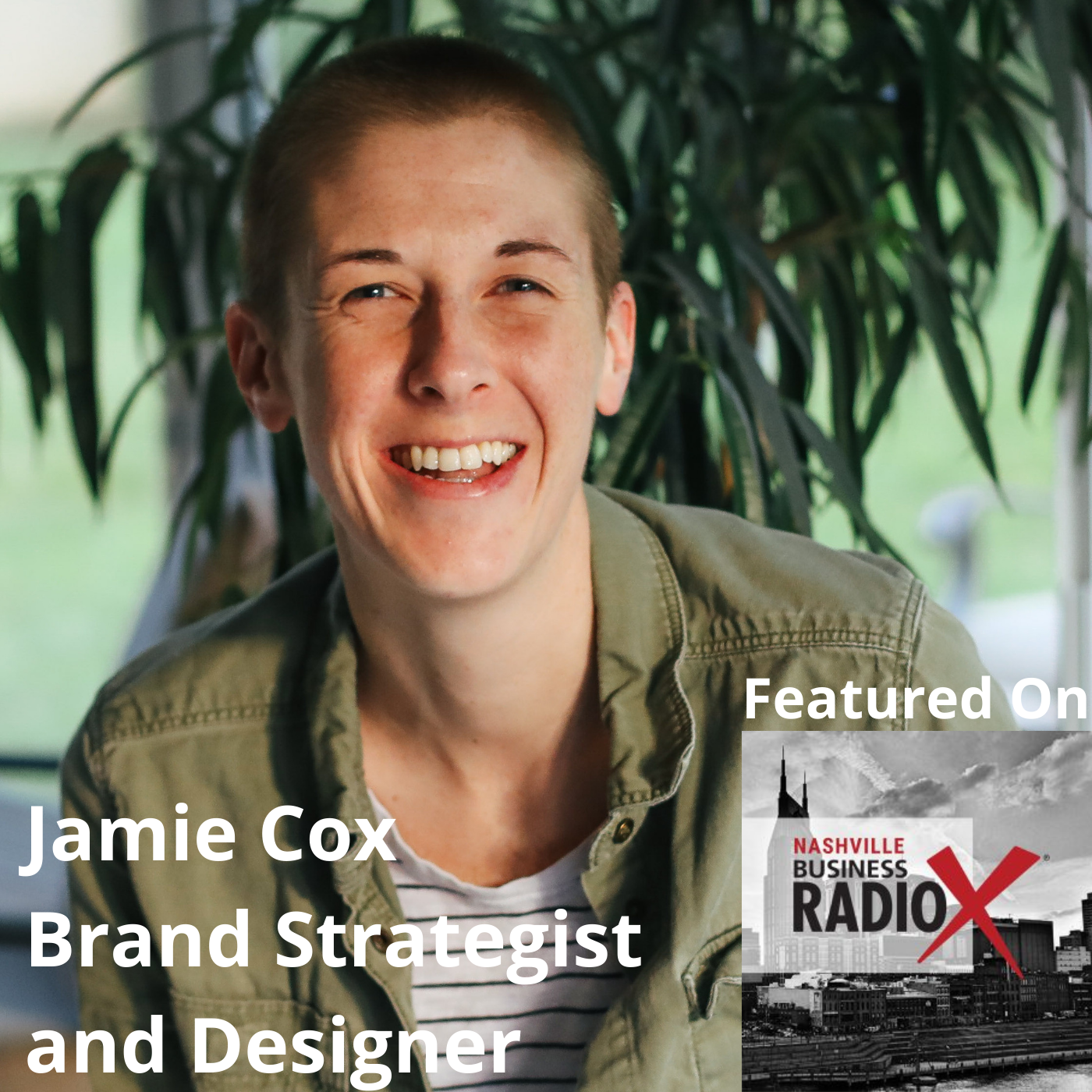
Jamie Cox, Brand Strategist and Designer

March 31, 2022 by John Ray

Jamie Cox
Nashville Business Radio
Jamie Cox, Brand Strategist and Designer
Loading
00:00 /
RSS Feed
Share
Link
Embed

Download file

Jamie Cox

Jamie Cox, Brand Strategist and Designer (Nashville Business Radio, Episode 40)

With a breadth of experience in the branding and marketing space, brand strategist and designer Jamie Cox took the leap in early 2020 to open her own business. Acknowledging that the timing wasn’t ideal, Jamie discussed her journey with host John Ray and shared how she made it work. She also talked about her approach to working with solopreneurs, the need for clients to keep an open mind, content creation, spin classes(!), and much more.  Nashville Business Radio is produced virtually from the Nashville studio of Business RadioX®.

Jamie Cox, Brand Strategist and Designer

Jamie Cox, Brand Strategist and Designer

Jamie Cox is a brand strategist and designer in Nashville, TN.

She works one-on-one with business owners and entrepreneurs to help them identify their brand purpose and share it with their target customers.

Jamie began her career as the Creative Services Manager at Visit Franklin. She started her business in what she thought was the middle of the COVID-19 pandemic, in May of 2020. She bet on herself—leaving her corporate career as a Creative Director to pursue something that would make her happy.

Named one of Destinations International’s 2017 30 Under 30, she graduated from Indiana University – Bloomington with a BS in Arts Management and a focus in Studio Art. She’s had the pleasure of speaking at conferences like Destinations International and the Wyoming Governor’s Conference on Tourism.

This isn’t her first business venture. From 2017 to 2019, Jamie ran a cookie company, The Ruby Cookie. Jamie has a lot of hobbies to keep her busy. In addition to her work as a consultant, she coaches spin classes at KrankFIT in Nashville. Always one to dabble in something new, Jamie’s latest project is restoring a 1920’s Chandler & Price Craftsman Press.

When she’s not working, spinning, or sleeping, Jamie can be found traveling with her husband, Cory, and cuddling with her rescue pups, Georgia and Snoop.

Company Website | LinkedIn | Instagram

Questions and Topics Discussed in this Episode

  • What is brand strategy and why it’s important for every business
  •  What it’s like to work with a brand strategist
  • Content creation and marketing to build a brand.
  • Leaving a corporate job and moving into consulting
  • What else are you up to?

Nashville Business Radio is hosted by John Ray and produced virtually from the Nashville studio of Business RadioX®.  You can find the full archive of shows by following this link. The show is available on all the major podcast apps, including Apple Podcasts, Spotify, Google, Amazon, iHeart Radio, Stitcher, TuneIn, and others.

Tagged With: Brand Strategist, Branding, Jamie Cox, marketing, Nashville Business Radio, Solopreneur, spin class

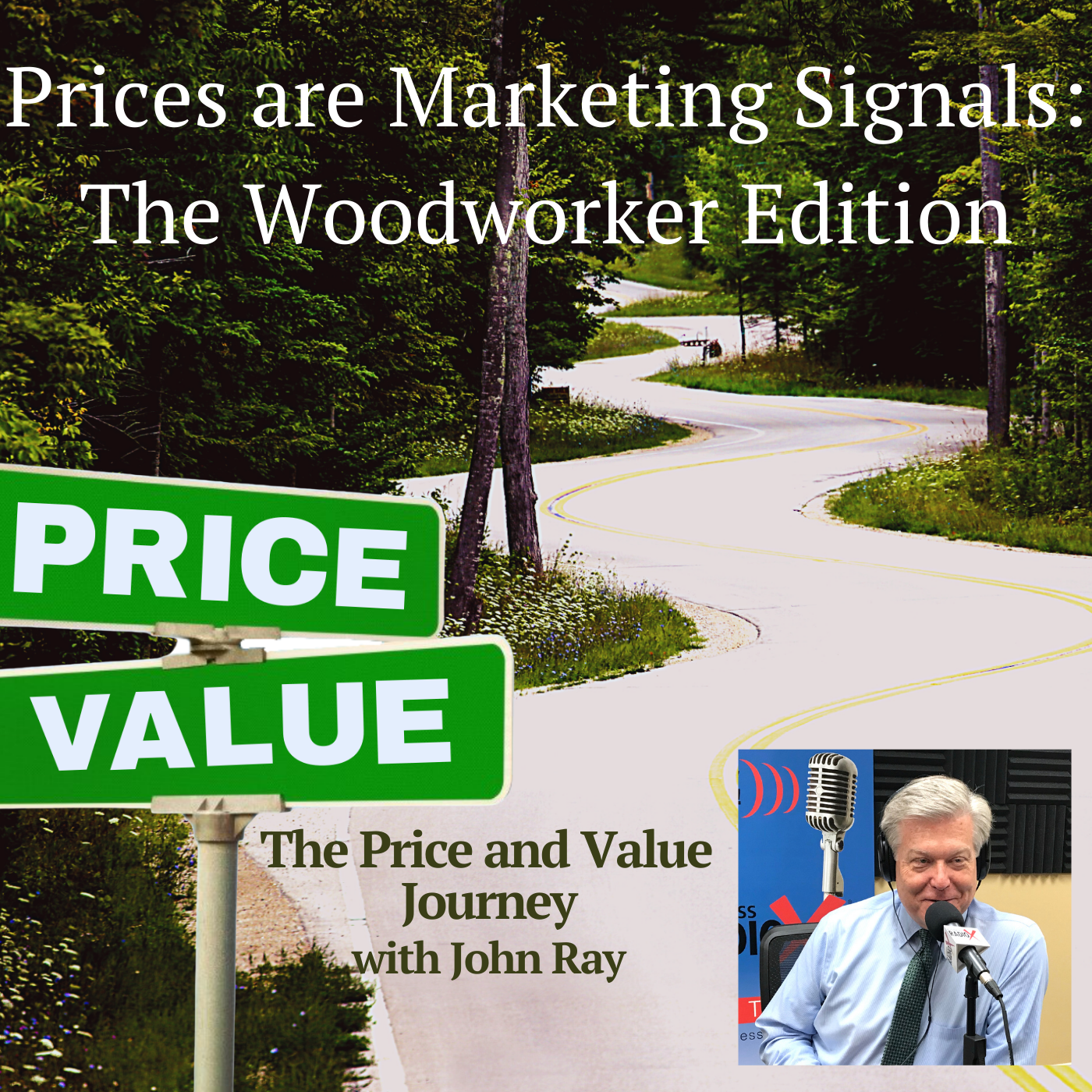
Prices are Marketing Signals: The Woodworker Edition

March 28, 2022 by John Ray

Prices are Marketing Signals The Woodworker Edition
North Fulton Studio
Prices are Marketing Signals: The Woodworker Edition
Loading
00:00 /
RSS Feed
Share
Link
Embed

Download file

Prices are Marketing Signals The Woodworker Edition

Prices are Marketing Signals: The Woodworker Edition

Prices are marketing signals. Prices send messages of quality, and sometimes prices send a signal you didn’t intend:  that your service is inferior in some way. A master woodworker’s story illustrates the point. The Price and Value Journey is presented by John Ray and produced by the North Fulton studio of Business RadioX®.

TRANSCRIPT

John Ray: [00:00:00] Hello. I’m John Ray on The Price and Value Journey. A few years ago, I gave a presentation to a group of business owners on pricing and specifically how pricing is the most important driver of revenue and profit growth in a business.

John Ray: [00:00:15] To understand pricing, it’s important to understand the value equation customers sort through as they evaluate a purchase. Regardless of whether they consciously realize it or not, clients weigh a comparison in their head. Does the value received from this product or service exceed the cost of the purchase? Now, that value could be tangible or intangible. Most often it’s a combination of both.

John Ray: [00:00:43] After my presentation, I received a comment from Hans Meyer. He’s a friend of mine who, at the time, was in the office products business. But on the side, Hans is a phenomenally talented wood craftsman. In fact, he does that work fulltime now that he’s retired. He makes a variety of wood decorative items, toys, puzzles, teaches other craftsmen, and exhibits at weekend trade shows.

John Ray: [00:01:12] Hans shared with me that he started making wood fret crosses. Now, wooden fret crosses can be extremely ornate and intricate. They’re beautiful works of art. Hans had made several large ones, which he had priced at $40 to 50 each. Despite their beauty, the crosses were just not selling. And in turn, this led to another problem, these crosses had been to eight or ten different craft shows and had not sold.

John Ray: [00:01:43] Well, finally, out of frustration at one show where, again, the crosses were not selling and not wanting to have to lug them back home yet again, Hans decided to mark them down and get rid of them. With pen in hand, he started changing prices. What are you doing? A voice called urgently from the next booth. It was a lady who was exhibiting her crafts next to Hans and she was curious.

John Ray: [00:02:10] Hans told her the saga of his crosses and how he wanted to mark them down to get rid of them. “No,” she replied emphatically, “do not do that. Absolutely not.” Hans was exasperated, he said, and he handed her the pen, “Okay then, you price them.” Well, she took the pen and she made new tags for the crosses, pricing them from $125 to 150 each. During that same show, Hans sold three crosses at the new higher prices to three different customers.

John Ray: [00:02:48] Hans now routinely sells these ornate crosses from $175 to 225 each. That’s about four times more than before his fellow exhibitor took that pen and in just a few short moments completely transformed the profitability of these products.

John Ray: [00:03:08] As business owners, we need to understand that our price is sometimes interpreted as a signal by customers. A signal of quality or a lack thereof. A readiness to discount or markdown may be interpreted by the client as an admission that the product or service really doesn’t have that much value after all. In such cases, discounts may not actually drive a sale. On the contrary, the signals sent by a discounted or low price may drive the client away and into the arms of another provider whose higher price signals better quality.

John Ray: [00:03:47] In the case of Hans and his decorative fret crosses, a higher price reinforced in the minds of buying clients what they came to the craft show to purchase, an intricately carved handmade item, handmade by a master craftsman. Hans’ original much lower price may have been interpreted by potential buyers as a signal these items were not of much quality and craftsmanship.

John Ray: [00:04:16] If you enjoy a craft beer or wine and you’re not really a connoisseur, think about how you order in a restaurant confronted by a list of beers and wines. Some of which you’ve never had before. Some of which you’ve never heard of. What’s your first impression of the $8 glass of craft beer you’ve never heard of compared to that $2 Budweiser draft? The former has to be good if it’s $8, right?

John Ray: [00:04:45] Now, you don’t have to imbibe to be subject to this phenomena. What about that delivered pizza from the national chain which you purchased with a discount you accidentally found online and which comes in a box with more coupons taped on top? How does your perception of the quality of that pizza compare in your mind to the more expensive version you get in a sit down Italian restaurant, which, not only doesn’t deliver, but doesn’t discount?

John Ray: [00:05:15] This dynamic is not just true in extremely subjective products like arts and crafts or food and drink. What’s your immediate perception of the experience, intellectual depth, advice, and service quality of the attorney advertising on a billboard for a $199 divorce versus an attorney who asks for a $10,000 retainer to begin the divorce process? Absent any other information, which attorney would you think offers the best quality service?

John Ray: [00:05:53] Understand that your price is a signal to potential buyers. Price your service with care. Those prices may be interpreted in ways you never considered and can reveal much more about your service than you can imagine.

John Ray: [00:06:10] I’m John Ray on the Price and Value Journey. Other episodes in this series can be found at pricevaluejourney.com or on your favorite podcast app.

John Ray: [00:06:21] I want to give a shoutout to Hans Meyer. If you’d like to see more of his work, go to hanspuzzles.com, that’s H-A-N-S-puzzles.com Hans is an outstanding woodworker who makes not only puzzles and fret crosses, but all manner of unique handcrafted wood products.

John Ray: [00:06:46] If you’d like to connect with me directly, you can send me an email, john@johnray.co. Thank you for joining me.


About The Price and Value Journey

The title of this show describes the journey all professional services providers are on:  building a services practice by seeking to convince the world of the value we offer, helping clients achieve the outcomes they desire and trying to do all that at pricing which reflects the value we deliver.

If you feel like you’re working too hard for too little money in your solo or small firm practice, this show is for you. Even if you’re reasonably happy with your practice, you’ll hear ways to improve both your bottom line as well as the mindset you bring to your business.

The show is produced by the North Fulton studio of Business RadioX® and can be found on all the major podcast apps. The complete show archive is here.

John Ray, Host of The Price and Value Journey

John Ray The Price and Value Journey
John Ray, Host of “The Price and Value Journey”

John Ray is the host of The Price and Value Journey.

John owns Ray Business Advisors, a business advisory practice. John’s services include advising solopreneur and small professional services firms on their pricing. John is passionate about the power of pricing for business owners, as changing pricing is the fastest way to change the profitability of a business. His clients are professionals who are selling their “grey matter,” such as attorneys, CPAs, accountants and bookkeepers, consultants, marketing professionals, and other professional services practitioners.

In his other business, John is a Studio Owner, Producer, and Show Host with Business RadioX®, and works with business owners who want to do their own podcast. As a veteran B2B services provider, John’s special sauce is coaching B2B professionals to use a podcast to build relationships in a non-salesy way which translate into revenue.

John is the host of North Fulton Business Radio, Minneapolis-St. Paul Business Radio, Nashville Business Radio, Alpharetta Tech Talk, and Business Leaders Radio. house shows which feature a wide range of business leaders and companies. John has hosted and/or produced over 1,100 podcast episodes.

Connect with John Ray:

Website | LinkedIn | Twitter

Business RadioX®:  LinkedIn | Twitter | Facebook | Instagram

Tagged With: John Ray, marketing, marketing signals, Price and Value Journey, prices, pricing, professional services, professional services providers, solopreneurs, The Price and Value Journey, value

Decision Vision Episode 160: Should I Use Influencer Marketing? – An Interview with Richard Grove, Wall Control

March 17, 2022 by John Ray

Wall Control
Decision Vision
Decision Vision Episode 160: Should I Use Influencer Marketing? - An Interview with Richard Grove, Wall Control
Loading
00:00 /
RSS Feed
Share
Link
Embed

Download file

Influencer Marketing

Decision Vision Episode 160: Should I Use Influencer Marketing? – An Interview with Richard Grove, Wall Control

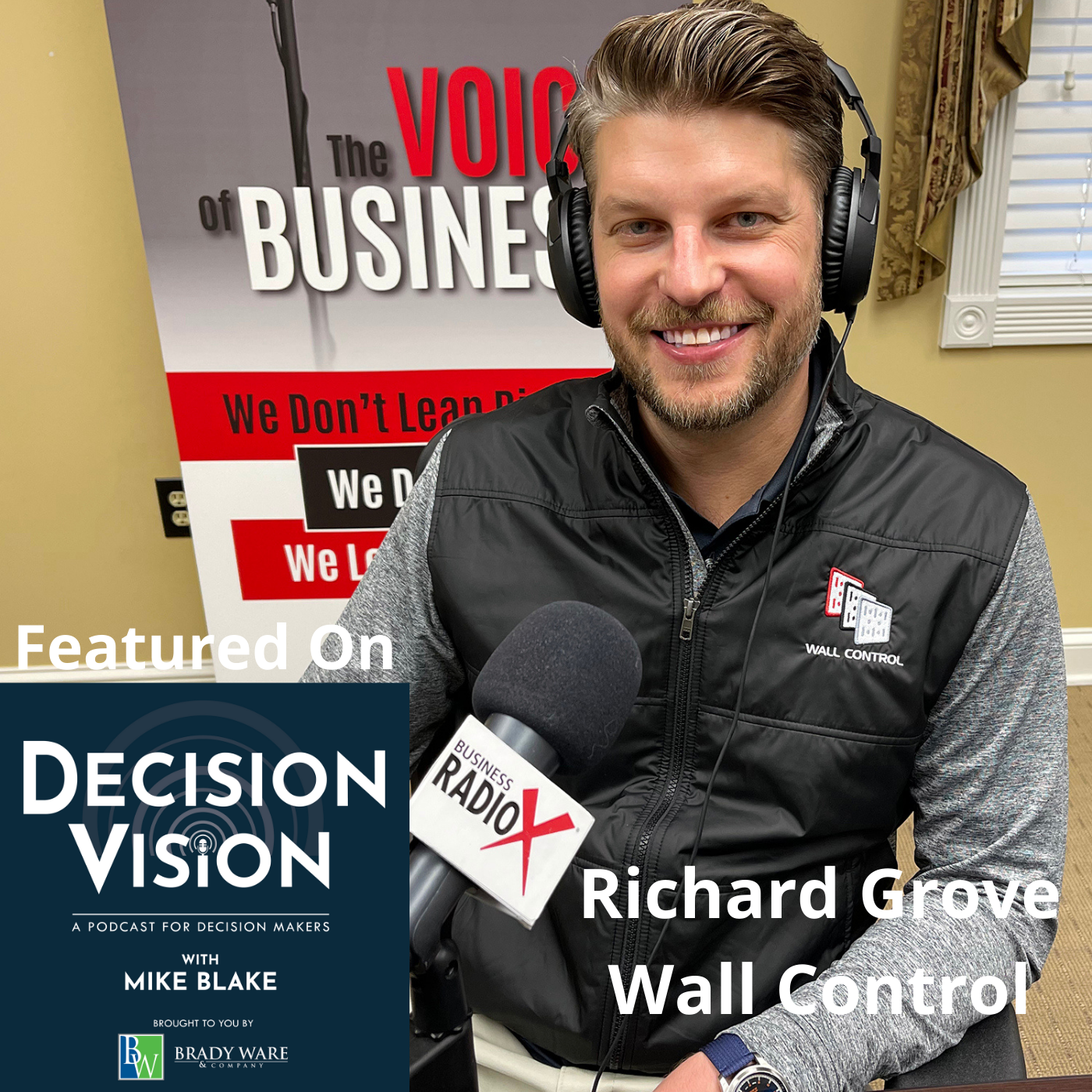
On this episode of Decision Vision, host Mike Blake looked at influencer marketing and its efficacy. He was joined by Richard Grove, COO of Wall Control, who shared his company’s approach to influencer marketing. Richard discussed how Wall Control learned to use influencer marketing, how to organically cultivate relationships with brand ambassadors, the potential return on investment, how it fits into their company’s overall marketing strategy, and much more. Decision Vision is presented by Brady Ware & Company and produced by the North Fulton studio of Business RadioX®.

Wall Control

The Wall Control story began in 1968 in a small tool & die shop just outside Atlanta, Georgia. The first of three generations began their work in building a family-based US manufacturer with little more than hard work and the American Dream.

Over the past 50+ years, this family business has continued to grow and expand from what was once a small tool & die shop into an award-winning US manufacturer of products ranging from automobile components to satellite panels and now, the best wall-mounted tool storage system available today, Wall Control.

The Wall Control brand launched in 2003 and is a family-owned and operated business that not only produces a high-quality American Made product but sees the entire design, production, and distribution process happen under their own roof in Tucker, Georgia. Under that same roof, three generations of American Manufacturing are still hard at work creating the best tool storage products available today.

Company website | Facebook | Instagram

Richard Grove, Chief Operating Officer, Wall Control

Richard Grove, Chief Operating Officer, Wall Control

Richard Grove’s background is in engineering but what he enjoys most is brand building through relationships and creative marketing. Richard began his career with the Department of Defense as an engineer on the C-5 Galaxy Engineering Team based out of Warner Robins. While Richard found this experience both rewarding and fulfilling, he always knew deep down that he wanted to return to the small family business that originally triggered his interest in engineering.

Richard came to work for the family business, Dekalb Tool & Die, in 2008 as a Mechanical Engineer. At the time Wall Control was little more than a small ‘side hustle’ for Dekalb Tool & Die to try to produce some incremental income. There were no “Wall Control” employees, just a small warehouse with a single tool and die maker that would double as an “order fulfillment associate” on the occasion that the original WallControl.com website, which Richard’s grandmother built, pulled in an order.

In 2008, it became apparent that for the family business to survive they were going to have to produce their own branded product at scale to ensure jobs remained in-house and for the business to continue to move forward. Richard then turned his attention from tool and die to Wall Control to attempt this necessary pivot and his story with Wall Control began. Since that time, Richard has led Wall Control to significant growth while navigating two recessions.

Richard is also the host of Organization Conversation.

LinkedIn

Mike Blake, Brady Ware & Company

Mike Blake, Host of the “Decision Vision” podcast series

Michael Blake is the host of the Decision Vision podcast series and a Director of Brady Ware & Company. Mike specializes in the valuation of intellectual property-driven firms, such as software firms, aerospace firms, and professional services firms, most frequently in the capacity as a transaction advisor, helping clients obtain great outcomes from complex transaction opportunities. He is also a specialist in the appraisal of intellectual properties as stand-alone assets, such as software, trade secrets, and patents.

Mike has been a full-time business appraiser for 13 years with public accounting firms, boutique business appraisal firms, and an owner of his own firm. Prior to that, he spent 8 years in venture capital and investment banking, including transactions in the U.S., Israel, Russia, Ukraine, and Belarus.

LinkedIn | Facebook | Twitter | Instagram

Brady Ware & Company

Brady Ware & Company is a regional full-service accounting and advisory firm which helps businesses and entrepreneurs make visions a reality. Brady Ware services clients nationally from its offices in Alpharetta, GA; Columbus and Dayton, OH; and Richmond, IN. The firm is growth-minded, committed to the regions in which they operate, and most importantly, they make significant investments in their people and service offerings to meet the changing financial needs of those they are privileged to serve. The firm is dedicated to providing results that make a difference for its clients.

Decision Vision Podcast Series

Decision Vision is a podcast covering topics and issues facing small business owners and connecting them with solutions from leading experts. This series is presented by Brady Ware & Company. If you are a decision-maker for a small business, we’d love to hear from you. Contact us at decisionvision@bradyware.com and make sure to listen to every Thursday to the Decision Vision podcast.

Past episodes of Decision Vision can be found at decisionvisionpodcast.com. Decision Vision is produced by John Ray and the North Fulton studio of Business RadioX®.

Connect with Brady Ware & Company:

Website | LinkedIn | Facebook | Twitter | Instagram

TRANSCRIPT

Intro: [00:00:03] Welcome to Decision Vision, a podcast series focusing on critical business decisions. Brought to you by Brady Ware & Company. Brady Ware is a regional, full-service, accounting and advisory firm that helps businesses and entrepreneurs make visions a reality.

Mike Blake: [00:00:23] Welcome to Decision Vision, a podcast giving you, the listener, clear vision to make great decisions. In each episode, we discuss the process of decision making on a different topic from the business owners’ or executives’ perspective. We aren’t necessarily telling you what to do, but we can put you in a position to make an informed decision on your own, and understand when you might need help along the way.

Mike Blake: [00:00:45] My name is Mike Blake, and I’m your host for today’s program. I’m a director at Brady Ware & Company, a full-service accounting firm based in Dayton, Ohio, with offices in Dayton; Columbus, Ohio; Richmond, Indiana; and Alpharetta, Georgia. I am Managing Partner of the Strategic Valuation and Advisory Services Practice, which brings clarity to the most important strategic decisions of business owners and executives face by presenting them with factual evidence for such decisions. Brady Ware is sponsoring this podcast, which is being recorded in Atlanta per social distancing protocols.

Mike Blake: [00:01:18] If you would like to engage with me on social media with my Chart of the Day and other content, I’m on LinkedIn as myself and @unblakeable on Facebook, Twitter, Clubhouse, and Instagram. I also recently launched a new LinkedIn group called Unblakeable’s Group That Doesn’t Suck, so please join that as well if you would like to engage. If you like this podcast, please subscribe on your favorite podcast aggregator, and please consider leaving a review of the podcast as well.

Mike Blake: [00:01:46] Today’s topic is, Should I use influencer marketing? According to influencermarketinghub.com, a global influencer marketing market is expected to reach $16.4 billion in 2022. YouTube’s top earner in 2021 was Ryan Kaji , who made $29.5 million. So, it’s a thing now. And, you know, this is a topic I’ve wanted to do for a while, but haven’t really found the right person to help us with it until now.

Mike Blake: [00:02:21] You know, it’s funny as I watch my kids grow up, they don’t watch movies anymore, they don’t watch T.V. shows anymore. It’s my generation, Generation X, the sort of binge watches, and I think only the Baby Boomers left will actually watch real T.V. with commercials and stuff anymore. But when a commercial comes on during a sporting event, my kids think something’s wrong with the television. And it just goes to show you how our watching habits or viewing habits have changed so rapidly, almost overnight, to me, but I’m sure it’s taken longer than that.

Mike Blake: [00:03:02] And influencers to us, to outsiders – I consider myself an outsider as sort of a late GenXer or an older GenXer – on the surface, they seem to be people that are basically famous for being famous. But we sort of forget, again, that on channels, such as YouTube and Facebook Video and TikTok and Instagram, they are celebrities. They’re simply celebrities in a medium that just isn’t the place where I normally hang out. That doesn’t make it worse. It just makes it different. And, in fact, it probably makes it increasingly attractive to marketers. So, I’m looking forward to learning more about this because I don’t know as much about it as I would like and should, and I hope you’ll get a lot out of it as well.

Mike Blake: [00:03:50] So, joining us today is Richard Grove, who is the Chief Operating Officer of Wall Control, a family-owned and operated brand of wall storage and organization systems ranging from garage tool storage to kitchen wall organizers, and even industrial tool organizational systems for industry leading Fortune 100 companies across the globe.

Mike Blake: [00:04:10] Richard’s background is in engineering, but what he enjoys most now is brand building through relationships and creative marketing, as well as implementing scalable solutions for growing his businesses. Richard began his career with the Department of Defense as an engineer on the C-5 Galaxy Engineering Team based out of Warner Robins. While Richard found this experience both rewarding and fulfilling, he always knew deep down that he wanted to return to the small family business that originally triggered his interest in engineering.

Mike Blake: [00:04:38] Richard came to work for the family business, Dekalb Tool & Die, in 2008 as a mechanical engineer. At the time, Wall Control was a little more than a small side hustle for Dekalb Tool & Die to try to produce some incremental income. There was no Wall Control employee, just a small warehouse with a single tool and die maker that would double as an order fulfillment associate on occasion at the original wallcontrol.com website, which Richard’s grandmother built, pulled in, in order.

Mike Blake: [00:05:06] Today, Wall Control is responsible for the employment of 50 employees and occupies over 60,000 square foot physical footprint of its own while still growing rapidly. Wall Control is also proud to say that they are now Dekalb Tool & Die’s biggest customer by volume sold through their shop. Richard Grove, welcome to the program.

Richard Grove: [00:05:43] Thanks, Mike. It’s my pleasure to be here. So, I appreciate the intro and kind of your background, what you want to get out of the conversation, and what you’d like your audience to get out of it. I think it’ll be a fun one.

Mike Blake: [00:05:54] Great. So, let’s start off because not everybody may be necessarily familiar with the term, when we say or when you say influencer marketing, what does that mean?

Richard Grove: [00:06:05] So, I mean, for me, just in that one question, there’s a ton of stuff we can unpack in our conversation. So, I think you nailed on what comes to mind when people think influencer marketing. If they do have any preconceived notion of it, they think it’s somebody who’s famous for being famous, a million or more Instagram followers pushing products out to their audience.

Richard Grove: [00:06:05] We think about it a little bit differently in that, influencer marketing is really any third party voice that is suggesting to an audience they should use a product or check out a brand, and that that audience is receptive to that message. So, you know, you do have your famous for being famous Instagram folks who have massive audiences who can promote a product and people will go check it out.

Richard Grove: [00:06:53] But an influencer could also be your Great Aunt Ethel, who’s got 30 really close friends that she plays bridge with, who, if she posts something on Facebook, a product she likes, maybe four of them will check it out and purchase it. So, anything in between that, in our opinion, can be defined as influencer marketing.

Mike Blake: [00:07:14] But when did influencer marketing start to gain traction? And to really just sort of put it very bluntly, at what point did influencer marketing become a thing, not just sort of a cute little side hustle or a cute little thing that people did, but became a really serious business activity?

Richard Grove: [00:07:30] From my perspective, I would say, probably, around ten years ago, it started to gain traction. And the “influencer” community started to think more in terms of monetizing their influence. And then, over really the last five to ten years, it’s really kind of picked up steam. But our experience began, probably, about 2015 is when we started kind of getting in those waters and giving it a try and allocating some marketing budget to experimenting with it.

Mike Blake: [00:08:05] So, I made an observation in my intro that I’m curious if you agree or disagree with, and please feel free to disagree, what is the relationship or the link, if any, between influencer marketing and what we might have called celebrity endorsements? How are they connected? How are they different?

Richard Grove: [00:08:25] I think there’s a lot of crossover, so there’s a lot of similarities, but there’s also a lot of differences. So, the way we look for a partner – and we don’t call them influencers. We call them partners or brand ambassadors. Because the term influencer can be a little reductionist – for instance, our product is tool storage systems. The people who use our product that have influence are tradesmen, craftsmen, makers, really skilled DIY folks. And so, those people have an audience because they’re good at what they do and their audience respects what they do. And so, if they’re to tell our audience about our product and endorse it, it carries a lot more weight.

Richard Grove: [00:09:11] So, that’s very different than just, “Hey, Kanye West. Can you sell this for me? I’ll give you however much money and we’ll make you a partner if you just push it on your channel.” So, they’re both by definition influencer marketing. It’s just in our experience, and for the size of company that we are, and the relationships that we want to build, it’s a lot better for us to start with the person who had the skill, that built the audience with the skill, and then go from that direction.

Mike Blake: [00:09:44] And I wonder if also sort of a different sort of driver behind the evolution, you know, one thing that strikes me is, most celebrity endorsements are quick hits. Think about a priceline.com, William Shatner, Kaley Cuoco – I don’t know if that’s still a thing anymore – but they were cute commercials. I’ll be the first to admit I’m just in the tank for William Shatner. I just love the guy.

Mike Blake: [00:10:11] But influencer marketing, to me, is almost they’re infomercials. You know, the people that I follow on YouTube – I’m big into tech – so I follow Linus Tech Tips and Luke Miani and some other people that are particularly in the Macintosh platform. Lisa Gade of MobileTechReviews is also excellent, and Dave2D.

Mike Blake: [00:10:35] And they’re getting up there, and they’re demonstrating products for, like, a-half-an-hour. And I’m watching them, and if I’m honest, I’m watching them do a 30 minute commercial that they may or may not be being paid for. Somehow, those influence marketers do their thing in a way that makes me want to watch a commercial for 30 minutes. It’s bizarre.

Richard Grove: [00:11:04] Absolutely. One of our biggest things when we get reached out to is what are the deliverables, what do you expect from us. And the first thing we say is we want it to be organic content. We want you to be in your shop building something and then you’re using your Wall Control system and it comes up that way versus just shoehorning something in that looks like a commercial.

Richard Grove: [00:11:26] So, like you said, you could do a whole video on how to use it, and it could actually be informative and bring value to the viewer beyond just trying to sell the product. And maybe the product is not even being sold, it’s just making them aware of what you can do, “I happen to use this system”. And, to me, that’s a very powerful message because you haven’t told anybody to buy anything, but you’ve told them this is a valuable thing to do, here’s the thing I found to be the best at it. I think that resonates a lot more than, “So and so sent me this and let me tell you about it.”

Richard Grove: [00:11:59] I mean, it’s a really subtle but big difference between a product review. I think the thing that came before the influencer marketing were, “Send me a free product and I’ll do a product review for you.” So, we saw a lot of that. And, again, it’s very subtle, but that didn’t seem to move the needle very much for us.

Richard Grove: [00:12:22] And some people would take our product out of the box. They wouldn’t even install it or use it. They would just talk about it. And so, if I’m a viewer, I’m not influenced by that. I just think you got something for free or you got paid a little to promote something on a YouTube channel.

Richard Grove: [00:12:40] And I think the good ones, too, their audience has respect for them. They don’t think they’re going to get up and just hustle something to make a buck. It’s actually something that they think will bring value to their viewer.

Mike Blake: [00:12:52] So, somebody listening to this conversation now may be thinking, “Okay. Influencer marketing is a thing. It seems like it’s growing. It’s here to stay. It’s not just a passing fad.” How did you arrive at the conclusion that influencer marketing would be useful to you? And can you tell us a little bit of the story about how you implemented or acted upon that?

Richard Grove: [00:13:13] For sure. Yeah. So, people would reach out for product review, “Pay us this and we’ll review this product.” And I forget what year, probably around 2015, the first one that we really worked with, his name is Lazy Guy DIY on Instagram. And he’s a super close partner to us now. And he reached out – and it’s a funny story we tell – he said, “If you send me a free product, I can use it in my shop and talk about it when it makes sense.” And we we’re like, “No. Why would we do that?” And he had a solid following and all that, we didn’t understand the value proposition of it like we do now.

Richard Grove: [00:13:52] And so, after a little while of building a relationship, and I think he actually bought some products, too, when we see someone do that, it really tells us they’re committed to our product line. So, we ended up sending him some product and started to slowly – I think the key is slowly for people – started to build that trust in this process and started to see results from it. And since then, there’s all kinds of creative marketing things that we’ve done together. He runs our Wall Control Instagram account. Our Brand Ambassador Program, he manages that.

Richard Grove: [00:14:27] So, we’ve brought on these partners, some we work super closely with, and some of them it is just a free product, let’s see what you can do with it kind of thing. So, I’m not sure if that helps answer the question. But, yeah, from there it started to snowball. He was able to bring in his other friends in the community.

Richard Grove: [00:14:44] And I think that’s another point, is, if you pick the right partners, they introduce you and your brand to their community. And that’s where the greatest value comes from, not just the potential consumer, but other “influencer partners” that they happen to have in their network. So, it’s as much networking as it is trying to sell product through a lot of eyeballs on any given social channel.

Mike Blake: [00:15:13] So, I want to pause on that because, nowadays, there’s no shortage of these potential influencers. That’s a thing, a lot of kids now would love to become influencers. That’s like the thing they want to do when they grow up. And I’m sure that even back when you started this, you had no shortage of potential choices. How did you settle on that particular person? What were the criteria, either explicitly or looking back implicitly, you used to select that person or maybe others, you may have increased your portfolio of partners, to decide that they are the people you wanted to represent your products in the marketplace?

Richard Grove: [00:15:57] Yeah. That’s a great question. And there was no specific criteria at the time. And we do have some criteria now, but it is still very person to person and situational that we make these decisions. But I think what happened there was, we couldn’t send free product. We had never done this before. We didn’t know what the ROI was going to look like.

Richard Grove: [00:16:18] So, we maybe gave him a discount and he bought on his own. So, he put his own money in it. He started using the product. We followed him on his channel, so we could see it in the background. He would reach out and ask us questions about it, and give us feedback on ways to improve it. And that relationship developed before we were kind of in “business together”.

Richard Grove: [00:16:38] And I think that’s an example of ideally what we look for is somebody who is aware of our product, either uses it on their own already, or has some experience with it, and really wants to develop a longer term relationship versus just paper posts, “Give me however much and I’ll do an Instagram post about it”.

Richard Grove: [00:17:00] So, it’s kind of hard to articulate, but you really start to get a feel for it after you’ve been doing it for a little bit and you have a good partner. So, once you have a good partner, you kind of know what the opposite of flash in the pan, hit or miss opportunity is going to be. And you can kind of tailor it in the right direction once you start to get a handle for it.

Mike Blake: [00:17:21] Now, I think you said that this particular partner, at least at the time when you started that relationship, was particularly active on Instagram. Is that where most of the influencer marketing hangs out? Or are there other channels that are useful as well? And does that choice of channel at all impact who you’re going to choose to partner with?

Richard Grove: [00:17:50] Definitely. I think Instagram is a good kind of barometer or thermometer to gauge the temperature of what that influencer might be able to deliver. Follower count is certainly an important criteria, but it’s not the be all, end all. So, if someone has a solid following on Instagram and they have some other channels, like a YouTube channel, or what’s really good are blogs, that’s another great thing, that’s a solid partner.

Richard Grove: [00:18:17] We’re not super interested in just the Instagram folks. And the reason being is what we’ve seen really moves the needle is evergreen content. So, content that stays online and gets indexed and shows up in search results, you know, month after month, year after year.

Richard Grove: [00:18:33] So, somebody might have a really small Instagram account and someone might overlook it, but maybe their blog has hundreds of thousands of clicks every month, well, if they’re going to do an article about us, that’s going to stay up forever, potentially. So, that could very well be far worth it than just somebody who’s got half-a-million Instagram followers and does one post that slowly or quickly starts to fall down their feed, only seen one time. So, it’s kind of a balancing act.

Richard Grove: [00:19:03] And, again, Instagram is great. And that seems to be – especially you talk about young folks trying to get out and make a name for themselves – where they want to build their audience. But I think that what we’re looking for are those influencers who have taken the step of moving their brand off of that platform and taking ownership themselves. So, they have a website and they have their brand across multiple channels.

Mike Blake: [00:19:31] I think that’s really interesting you mentioned blogs. You know, I would not have expected that, and you’d think I’d learned by now. Because blogs come up often, they’re so easy to forget. You know, we’re so enamored of video and podcasts and the so-called dynamic or rich audio visual multimedia content, whatever you want to call it. And what keeps coming up over and over in conversations like this in terms of digital marketing, is that blogs still matter. And I think a lot of people forget that. So, can you talk a little bit about your experience with blogs in terms of how they relate to your influencer marketing strategy?

Richard Grove: [00:20:15] It’s funny you mention it, because it’s like we say untapped, but it has been tapped. It’s almost like people forgot about it. And it’s like what’s old is new again. And so, we really like that because, I mean, if you do a Google search for our product and someone writes a solid blog article and it’s got perfect SEO, it’s going to show up, and it’s going to take a spot in indexing, and it’s going to bring benefit to our customer.

Richard Grove: [00:20:42] The other thing we like about it is – and we can get into this a little more wherever you want to go with it – we use an affiliate link program where they can embed affiliate links and get a commission on the traffic that they send to us. Some of our older, longer, stronger relationships of brand ambassadors, we make this available to them. And so, when they have a blog and we get traffic, that’s really solid evidence that what they’re doing is helping our brand. And it’s a lot easier for us to partner with them at a deeper level, higher, bigger projects, more spend, because we know we’re going to get that ROI. Whereas, again, if it’s just Instagram, the the analytics are not great for us knowing what our return on investment was.

Mike Blake: [00:21:25] So, was there anything that you had to do to kind of get ready to successfully leverage influencer marketing? Were there things you had to do differently, think about differently? Or were you kind of ready made to step into that and be successful from day one?

Richard Grove: [00:21:40] We have totally learned as we went along. There was nothing in place. And that’s what I would say to anybody listening, is, just start trying. There’s no right way to do it. There’s probably some wrong ways, but there’s really no right or wrong. Just whatever works for you and your brand and the partners is going to be your next best step. So, we’ve learned as we’ve went along. We definitely had to put some guardrails in there as time went along.

Richard Grove: [00:22:10] Again, we don’t want to go strictly by follower count. It’s not a really good indicator of what sort of influence they have. That’s another thing we could get into, is, what their engagement looks like. But it does set some guardrails and it allows us to start some conversations as far as vetting who we’re going to partner with.

Richard Grove: [00:22:27] Especially for everybody, budget is a factor. Lately, raw materials, supply chain issues have made product scarcity problem. So, who you send product to is much more impactful than it used to be because it’s expensive and hard to get. So, I think you’ve got to just start and you’ve got to play around with it and you’ve got to iterate quickly and go where it takes you.

Mike Blake: [00:22:54] And my understanding is your company sells both consumer and industrial grade products. You’re in the B2B and B2C, is that right?

Richard Grove: [00:23:05] Yes .Exactly. Yes.

Mike Blake: [00:23:07] So, when you started, did you have in mind that you’d be using or leveraging or investing in influencer marketing to address the consumer market or the business market or both? Or did that just sort of fall out of experimentation as well?

Richard Grove: [00:23:24] Yeah. At first, it was definitely the consumer market. But then, we started to see added benefit in the business market because a lot of our influencer partners were involved in these other programs as well for the big box stores. So, there was a lot of crossover there. And then, just by nature of all the eyeballs that are on them, get eyeballs on your potential retail partners and buyers.

Richard Grove: [00:23:50] So, say, Partner A is having a conversation with his audience. Well, the buyer for Home Depot or whatever big box store happens to watch him as well, becomes aware of your product and you can kind of work that angle to get the business to business model going.

Richard Grove: [00:24:07] So, it’s kind of weird. I mean, it goes in all kinds of different directions, and it’s been super cool just watching how things evolve. And how every single partnership, there’s been different things that have come from it. There’s certainly no straight path to where you want to go. But, yeah, we started with the end user consumer in mind, but I’ve definitely seen it benefit both sides of our business and continues to do so.

Mike Blake: [00:24:37] And I think that’s sort of evolving. When I think influencer market, I certainly think B2C. And the most important categories of influencer marketing do seem to be lifestyle, health and beauty, things of that nature, at least if the data that I see is to be believed. But I think as an increasing number of business decision makers are spending time on the Instagrams and YouTubes and so forth, it has become already and will continue to be a more important channel for B2B marketing as well.

Richard Grove: [00:25:11] I think B2B – at least our B2B – is selling to an end user or some customer who’s going to just buy a product and put it up. So, when they see all the eyeballs on our product, that tells them they want to have it on their shelves. So, it used to be – and it still is this way – you want to have a product that is an obvious best seller with higher reviews and does well across multiple channels. That was usually how you get your foot in the door with a big box store.

Richard Grove: [00:25:43] Well, now, you can also point to your social following and the people that they use to sell to their audience that are using our product already. So, it’s a really organic way to move that conversation, “Hey, I see you work with Partner X,Y,Z over there. Well, they already use our system.” All their eyeballs are your customers too. It’s an easy sell for you. It’s already there. Let’s see what we can do as far as putting something together there.

Mike Blake: [00:26:12] This may be not a fair question, but we specialize in unfair questions here on the Decision Vision podcast.

Richard Grove: [00:26:17] No problem.

Mike Blake: [00:26:19] And that question is, in your mind, as you sort of have thought about this so much, are there any industries that don’t lend themselves well to influencer marketing? There are certain kinds of industries where it’s sort of square peg, round hole kind of thing.

Richard Grove: [00:26:36] I’ll say yes, there’s some that are probably less than others, but it could be different. So, for instance, our manufacturing plant, it’s a tool and die shop, so their customer is going to be an automotive manufacturer. It’s not anything you’re going to see on Instagram. Nobody is going to buy car parts from us for an assembly line because they saw it on Instagram or using it, and there’s no way they could anyways.

Richard Grove: [00:27:03] But the way it can be leveraged is, one of our biggest challenge on the manufacturing side is finding skilled workers and finding people who want to come in and take the time to learn the trade. I mean, it’s very lucrative, but it’s just not something you hear a lot of. And so, we can use Instagram there to show what we do and make it cool, because it already is cool.

Richard Grove: [00:27:26] So, it’s the same thing with our partners we work with that are in the trades, they’re showing kids that this is cool stuff to do. If you don’t want to go to college and you want to go learn a trade, there is a path where you can be an influencer in some tool and die shop or in a woodworking shop. So, I think that influencer marketing can be used in those environments, not to sell product, but to sell your business to potential employees, which is kind of, I guess, a new way to look at it. And we’re starting to kind of play around with that too by opening up our doors and showing people on Instagram what we do and making it cool.

Mike Blake: [00:28:09] I think that’s a really smart point, is, we’re in a – in my lifetime – unprecedented period where there’s just an unusually tight labor market that appears to be structural in nature, it’s not temporary, it’s not a fad. It looks like we’ve had two seismic shift. And influencer marketing may no longer just be about selling product, but it’s also wanting to attract the best and the brightest to come work for you.

Richard Grove: [00:28:40] Yeah. I mean, if we have a solid following and we say, “Come work for us,” and maybe we have them, “You could start an Instagram account that’s semi-professional. It’s going to be you, personally, but you can show the work you’re doing in the shop,” assuming there’s no NDA or something related to it. And then, we can promote you on our channel so we can build you up. Like, if you want to be an influencer, we can try to help you a little bit along the way. So, it’s kind of leveraging our audience to help the employee do what they want to do while also performing the job.

Mike Blake: [00:29:15] Can you work with multiple influencers at once? One thing that I think might differentiate celebrity endorsements from influencer marketing is that celebrity endorsements tend to focus on one or two people at most. You have the face for your product. Is that also the case in influencer marketing? Or can you have a broader portfolio of people that are your brand ambassadors? Can you have in effect a state department as brand ambassadors for your product?

Richard Grove: [00:29:51] I think you definitely can and that’s what we do. If we had an issue, it would be, maybe, a big box store issue. Like, one big box store had this bucket of influencers and the other big box store had another bucket of brand ambassadors and they didn’t want crossover there. But because our product is sold in multiple big box stores, that’s usually not an issue. So, for us, that’s not something we really have to spend any sort of issue for where there is some sort of conflicting interest behind the scenes there.

Richard Grove: [00:30:24] Going back to kind of how we partner with them, I’ll bring back Adam from Lazy Guy DIY. He’s a good example. So, because he’s a woodworker and he’s used to our product, we figured let’s let him design a woodworking value kit. So, something we could private label under his name that he can promote on his channels and earn a commission on. And so, if you look on our website under value kits, you’d find the Lazy Guy DIY Woodworking Kit. So, he would get paid on the sale of each of those units.

Richard Grove: [00:30:58] And one of the cool things, too, it became very easy to move that into the woodworking stores because they’re familiar with his work and his name is on it, so it’s an easier sell for them. The other thing, too, they know they can tag him, that’ll get re-shared to their audience. So, there’s a lot of creative ways to go with that.

Richard Grove: [00:31:18] But that would probably be the closest thing we might run across where we couldn’t have multiple places selling that one thing because woodwork in Distributor A isn’t happy with woodwork in Distributor B selling the same product. But even with that, we’ve never run into any kind of problem or any sort of restrictions.

Mike Blake: [00:31:41] Now, of course, most, if not all, companies have finite marketing budgets. We’d love to spend endless dollars on it if we could, but we can’t. What are you finding, if anything, you’re doing less of so that you make room for influencer marketing? What is it replacing in your portfolio of marketing activities?

Richard Grove: [00:32:02] Well, that’s a good question, and it’s evolving, for sure. So, the iOS 15 update, the most recent one Apple released, very heavy on the consumer privacy. So, we’re seeing with our email marketing, our pay per click marketing, it’s becoming a little harder to track and target our ideal customer. So, the ROI there is starting to fall off a little bit. We’re still heavily involved in that and we’ll continue to.

Richard Grove: [00:32:33] But we’re starting to try to funnel some of that money away from there and into the influencer marketing space because we know their audience and their audience is our potential customer. So, we don’t have to guess. We don’t have to try to hope that they have agreed to cookie tracking and all that. We can actually know that the people they’re talking to are our potential buyers.

Mike Blake: [00:32:55] And you said something that I think is important that I want to kind of pause on it and drill into it a little bit, is that, you know your audience. Another maybe strength of influencer marketing versus broader celebrity endorsements, is, celebrity endorsements – in my impression, anyway – is that they’re blasted out to a large audience. Super Bowl commercials, for example. And you hope that you just sort of reach enough of them by sheer large numbers.

Mike Blake: [00:33:24] Influencer marketing allows you to target very specific audience. And I think – correct if I’m wrong – there’s also a lot more data available to be able to analyze the impact or at least potential impact of what you’re doing. So, you can make empirically fact-based decisions on how you spend your dollars.

Richard Grove: [00:33:47] Exactly. And just like any experiment, if you set one variable up, it’s easier to see what impact it has. So, for instance, our product line will go in a lot of different places. It goes in a woodshop. It goes in a home gym. It goes in a kitchen. So, maybe one month – for us – we’re just going to focus on home gyms and see how the needle moves speaking directly to that audience. And then, the next month move to another target audience.

Richard Grove: [00:34:17] Again, Instagram is a little tricky because we can’t really track their audience to our website unless it’s like a direct link. And the other thing, too, is we sell through retailers. So, if somebody sees our product on Instagram, they could go pick it up at a retail store, and we would never know that that’s what influenced their purchase. But if we segment our targeting, we can look over time and say, “Okay. When we were running this campaign, we really sold a lot of these.” So, let’s assume that that delta between the month before was because we were targeting that audience.

Mike Blake: [00:34:53] One concern, I imagine, is arising with some of the people listening to the program is that, “Boy, this sounds expensive.” Some of these YouTube marketers are making serious money and they’re not even going to talk to us for a level that’s outside of our budget. And it’s sort of the barrier to entry of celebrity endorsements all over again. Is that true or are there ways to kind of dip your toe in this and still have some kind of effect?

Richard Grove: [00:35:29] For sure. And I would say full disclosure, we have never been a pay for post company. That’s not how we engage with our partners, our brand ambassadors, and especially not at the very beginning. So, what we’ve always done is free product for exposure based on what that audience size looks like.

Richard Grove: [00:35:47] And we should also talk about an influencer is not an influencer, is not an influencer. There’s the micro-influencer, which you would define – we’ll just talk Instagram numbers just because it’s easy – somewhere around 10,000 followers would kind of be in that category. I say 10,000 to 100,000 followers. And then, beyond that, you start getting into the folks who have the agencies that they want you to work with and they want to be paid.

Richard Grove: [00:36:14] So, what I would do if I was starting from scratch, I’d try to find somebody who I see in the community I would like to target who seems to be knowledgeable, start following them. Maybe reach out on Instagram or send a DM on some other platform and say, “Hey. We like what you’re doing. We think our product might be a benefit to you. Would you mind if we sent you some free products?” And that’s a pretty organic way to just start a conversation and you can kind of see where that goes.

Richard Grove: [00:36:41] And then, from there, what we would do, basically kind of our playbook, is, we start with a free product and we see how that goes. From there, we see where the relationship goes and then we can talk about paid engagements after that.

Richard Grove: [00:36:56] And the other thing, too, our product line is heavy. It’s expensive to produce and ship. So, if we’ve already got the initial investment in a shop, it’s easier for us to come up with some creative ways to actually pay money to the influencer to help market our product.

Richard Grove: [00:37:11] And another creative way that we’ve found works really well, our affiliate programs. There’s a really good plug and play APIs that can plug into almost any website’s backend where you can easily track these conversions and pay your influencer partner a commission off of all the sales that they generate from traffic they send to your website. So, that’s how we do it and how we got started. And I think it’s a pretty easy way to kind of dip your toe into it.

Richard Grove: [00:37:38] The other thing, too – I keep going back to follower count – you don’t want to just look at that. You really want to look at engagement, and it doesn’t take very long to figure out if it’s there or not. So, if somebody has 200,000 followers on Instagram, but their post only gets ten likes and no comments, that’s probably not going to give you a big bang for your buck. Whereas, maybe somebody got 5,000 followers, but every post gets a thousand something likes and a bunch of comments. That’s a really engaged audience who’s going to be much more receptive to the content they put out.

Mike Blake: [00:38:11] I’m talking with Richard Grove. And the topic is, Should I use influencer marketing? So, you touched on something that I think is really important I want to make sure that we cover today. And that is, how are influencers typically compensated? Is it commission? I mean, I’m truly ignorant about this. How does that payment structure typically work?

Richard Grove: [00:38:39] I mean, a lot of different ways. So, typically, I would say your micro-influencer is probably not compensated. It’s probably just a side hustle for them, is usually what we see. And I can’t speak to all brands, but their first year of compensation for us would be that commission paid out based on sales that they send our way. That would be kind of the base level. Then, if that’s going really well and say they want to really put some time and energy into something like a blog post or a YouTube video, we could talk about what that pay structure would look like.

Richard Grove: [00:39:18] And the other thing, too, is, because it’s so hard to attribute sales in this way, it’s even more important for a company to be aware of what their typical customer acquisition cost looks like and what kind of return they’re getting across other platforms. Because that’ll give you some structure to talk about with an influencer partner.

Richard Grove: [00:39:42] So, say, we have a new product we’re rolling out and we were going to make our own internal YouTube video, there’s going to be some cost inherent to that. We’re going to have to pay our employee. We’re going to have to spend some time doing it. So, whatever costs we would spend doing that, I’m cool with paying one of our partners to do it. And we’re going to get more traction because they have a bigger audience and it’s coming from a third person perspective, so it’s going to hit a little different than if we’re telling you our product is great, go buy it. So, that’s one way to do it.

Richard Grove: [00:40:10] And another thing to keep in mind is – just like that – look for creative ways to monetize your partner. It’s going to probably be different for every brand and every industry. Even if it’s one off, that’s fine too. Don’t think that if you do it for this one person, you’ve got to do it for this other person, and it has to be totally scalable. I would work it on a partner by partner basis and then slowly refine what your criteria is as you go along. And don’t be afraid to make mistakes there either, because that’s really the only way you’re going to learn what steps to take next.

Mike Blake: [00:40:50] We touched on this a little bit, but I want to make sure we hit it, and that is, one of the benefits of influencer marketing and digital marketing, in general, is that we get much more relevant data, in some cases, effectively real time. What are the KPIs or key performance indicators you look at in measuring the effectiveness of your investment in influencer marketing?

Richard Grove: [00:41:17] So, we look at it as a whole. We look at the program as a whole. I don’t want to give all of our criteria, but we typically say that in order to send free product, we’d like for you to have 10,000 followers on at least one social channel. Because we found that based on our average order size and customer acquisition costs, that tends to be a good return on investment for us.

Richard Grove: [00:41:51] If it’s less than that, what we’ll usually do is provide some heavy discount code. And we have an incubator program that will put folks in that bucket. While they grow their audience, we’ll try to help them grow their audience through our audience as well. And develop a relationship so that when they hit these certain thresholds, it makes more sense to open up the product giveaways and we can open up the actual monetary spend.

Richard Grove: [00:42:19] So, what we do is we try to look at the program as a whole and we use the analytics that come in from our affiliate network to try to gauge what sort of return on investment we’re seeing there. And, again, it gets muddy because of the retail network. But we tend to see that rising tides lift all ships. And so, if we were running a campaign, we, generally, can tell what impact that had on our overall sales and attribute that back to the partners we working with, and what sort of budget we moved over into that bucket. Does that help answer the question?

Mike Blake: [00:42:51] Yeah, I think it does. Richard, you’ve been so generous with your time and your knowledge today, and I don’t want to abuse that. We’re running up against our time limit today. And I’m sure there are questions we either didn’t cover or our listeners would have wished that we had gone into more depth with. If people have questions about this topic about influencer marketing and want to get some feedback from you, can they contact you? And if so, what’s the best way to do that?

Richard Grove: [00:43:19] Yeah. If they want to just reach out on social media, I’m MrWallStorage on Twitter and on Instagram, and then we can go from there.

Mike Blake: [00:43:30] That’s going to wrap it up for today’s program. I’d like to thank Richard Grove so much for sharing his expertise with us.

Mike Blake: [00:43:37] We’ll be exploring a new topic each week, so please tune in so that when you’re faced with your next business decision, you have clear vision when making it. If you enjoy these podcast, please consider leaving a review with your favorite podcast aggregator. It helps people find us so that we can help them.

Mike Blake: [00:43:53] If you would like to engage with me on social media with my Chart of the Day and other content, I’m on LinkedIn as myself and @unblakeable on Facebook, Twitter, Clubhouse, and Instagram. Also, check out my new LinkedIn group called Unblakeable’s Group That Doesn’t Suck. Once again, this is Mike Blake. Our sponsor is Brady Ware & Company. And this has been the Decision Vision podcast.


Tagged With: Brady Ware & Company, brand ambassadors, Decision Vision, influencer marketing, Influencers, marketing, Mike Blake, Richard Grove, Wall Control

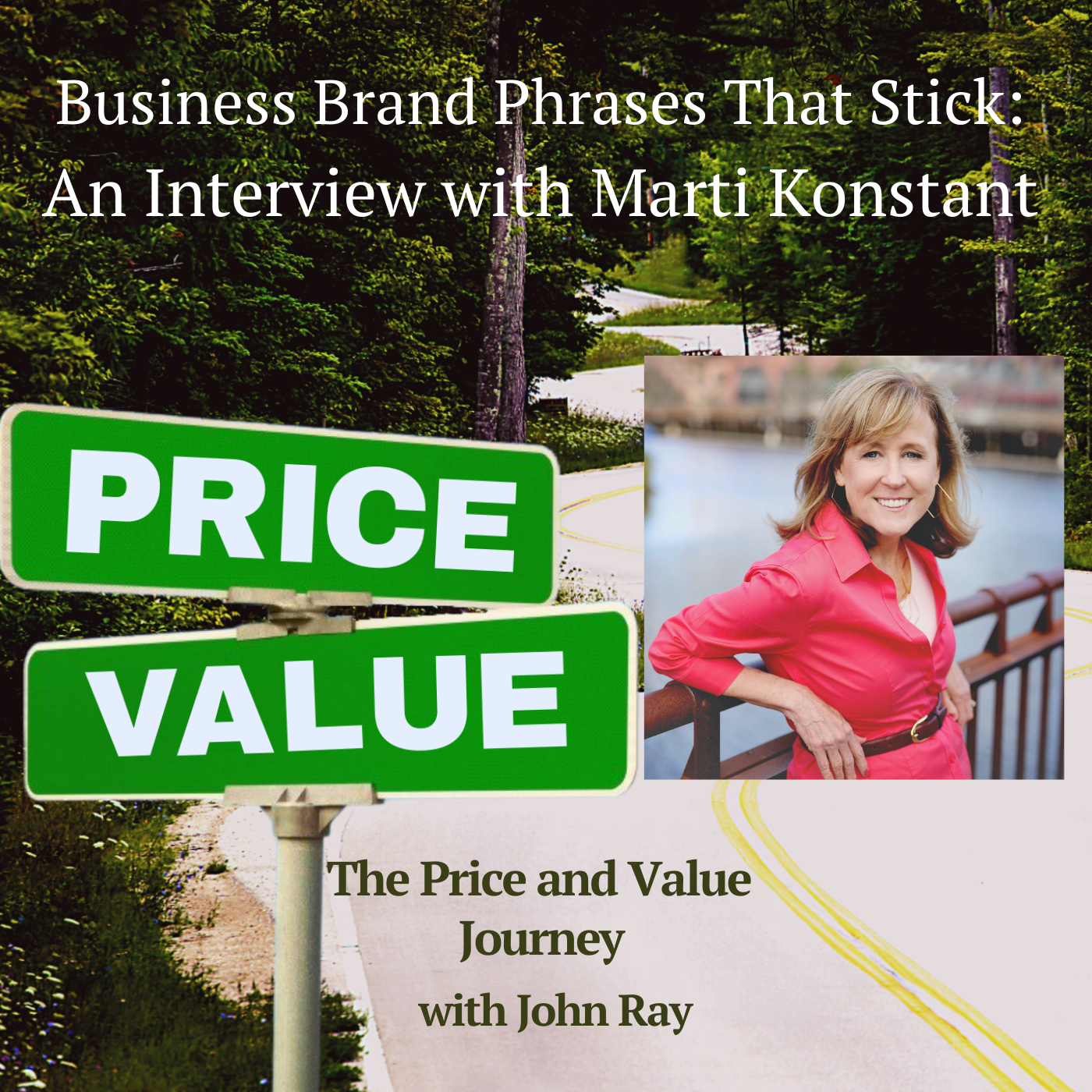
Business Brand Phrases That Stick: An Interview with Marti Konstant

March 16, 2022 by John Ray

Marti Konstant
North Fulton Studio
Business Brand Phrases That Stick: An Interview with Marti Konstant
Loading
00:00 /
RSS Feed
Share
Link
Embed

Download file

Marti Konstant

Business Brand Phrases That Stick: An Interview with Marti Konstant

How should we as professional services providers address our business branding? How can we develop branding which is memorable? Marti Konstant, noted speaker, coach, and best-selling author, joined John Ray to address these questions and much more. Marti recounted her own journey, from teenage years in a full body brace to Silicon Valley marketing executive, to running her own successful services practice, and how that career arc shaped her business branding. She spoke from her own experience on how to handle a branding process that can be overwhelming, examples of compelling brand phrases and the professionals who developed them, how effective branding affects pricing, and much more. The Price and Value Journey is presented by John Ray and produced by the North Fulton studio of Business RadioX®.

Marti Konstant, Workplace Futurist

Marti Konstant, Workplace Futurist

Marti Konstant is a workplace futurist with an agile mindset. She is a career growth analyst, author, speaker, and founder of the Happy Profitable Employee Project™.

An early adopter of workplace trends and technology change, her career path includes artist, designer, entrepreneur, technology marketing executive, business advisor, and investor. Starting her profession in the tech sector launched a style of deliberate career growth, guided by personal preferences.

As a marketing professional, Marti managed marketing programs for companies like Samsung Mobile, Apple, Tellabs, Platinum Technology, Clear Communications, and Open Kernel Labs (OK Labs). As a chief marketer in the mobile security space, her digital demand generation and market awareness strategies resulted in the acquisition of OK Labs by General Dynamics

What started out as a quest to fine-tune her evolving career sparked a research project, workshops, and book, where future of work and career agility are central themes. Her story-driven book, Activate Your Agile Career: How Responding to Change Will Inspire Your Life’s Work, is the result of 120 interviews and custom research.

She earned a Bachelor of Fine Arts in Graphic Design from the University of Illinois and holds a Master of Business Administration from the University of Chicago Booth School of Business. A persistent optimist and prolific photographer, she lives in Chicago with her husband.

Website | LinkedIn| Twitter

TRANSCRIPT

John Ray: [00:00:00] And hello again, everyone. I’m John Ray on the Price and Value Journey. Today, we’re going to chat with Marti Konstant, and Marti is a friend of mine who – we were having a conversation that resulted in this topic, and I’ll talk about the topic in a minute. But first, let me introduce Marti.

John Ray: [00:00:18] Marti is a workplace futurist. She’s the best-selling author of Activate Your Agile Career, which is a great book, by the way. She has an MBA from the University of Chicago Booth School of Business. She’s a former technology executive from Silicon Valley. I want to say more about that in just one second. She’s been featured in a variety of media outlets and has been named a top career influencer to watch. She’s worked with companies like Samsung, Dow Jones, and Apple. And her areas of expertise include the future of work, career development, the workplace, personal branding, workplace trends and ideas, agility, and I’m sure there’s some other things we could talk about. It makes me tired to read that list, Marti. You’re awesome. Congratulations on all that great work.

Mari Konstant: [00:01:12] Thanks so much for that, John. I am so psyched about this conversation because I’ve been following your work for quite some time now.

John Ray: [00:01:19] Well, thank you. I’m honored to have you on the show. Now, one of the things we just need to point out here is that Marti has tremendous experience that a former technology executive from Silicon Valley, all that experience really relates to branding and specifically B2B branding. And that’s where some of our recent chat, we were talking about business brand phrases for professional services firms. And that’s the whole notion here of this conversation is to talk about that as it relates to professional services providers. So, let’s start, Marti, by maybe talking about your own branding journey when you went out on your own and started your practice.

Mari Konstant: [00:02:08] Sure. It really starts long before that. When I was 12 years old, I was immobilized. I was in a full-body brace through my high school years and I was constricted. I couldn’t move and I couldn’t do sports and it was hard to get around. And what I learned from that experience is, well, first of all, I learned how to dream about mobility, agility, flexibility, all the things that I wanted to be doing. And I learned what it was like to go from constriction to unrestricted access to the world. And this was a very powerful backdrop for the type of work that I did. I started out in the creative field, got into branding, got my MBA, got into marketing management, and was managing growth-stage tech company brands as well as certain aspects of large company brands at that time. And right now, how has this affected my brand? Well, I invented the word career agility 10 years ago. It was a term that did not exist. So that is one way. And the phrase that I often used during that time and throughout the book is, if you don’t, it’s adapt or die. It’s flex or fade. It’s the contrast. It’s stagnation or it is growth. Why wouldn’t you want to grow?

John Ray: [00:03:47] For sure. So, this may seem like an obvious question, but I find that sometimes obvious questions give unexpected answers. So, I mean, how do you define a business brand phrase?

Mari Konstant: [00:04:05] I coined the business brand phrase terminology because people were getting stuck in making it a big, long initiative that a lot of small businesses can’t even fathom doing. They can’t fathom doing something for six to 12 months or even three to six months. And I noticed when I was managing brands in the tech space, and as I formed my own brand as a workplace futurist and as a career decoder, I noticed that things that I thought were really easy, coining phrases that didn’t exist, talking about yourself in a way that’s memorable. I just thought that everybody did that. And I realized that if you can just use a phrase and you don’t have to come up with the whole perfect elevator pitch, you can be memorable because that’s all branding is. It’s about being top of mind. It’s about being memorable when someone else wants to work with you for your services or your product.

John Ray: [00:05:22] So, I’m curious about – it just strikes me about the workplace agility phrase that you invented combines something about your life. You described your teenage years and the pain and development, I guess, that you went through because of that, right, and then, your expertise, the workplace. It combines those two things. Talk – say more about that. Is there something significant in that?

Mari Konstant: [00:05:59] Yeah. I think this idea of agility. I just thought, you know, as one who was prevented from moving for a few years, I just thought, you know, if you are agile and you are flexible, anything is possible. So, all of those self-help books like you can if you think you can are true. And you can’t do if you think you can’t, that’s also true. And I think the idea of agility has really resonated well in this area of pandemic and post-pandemic that if you are able to adapt and be agile in your thinking, you are going to future proof just about anything you’re doing because every business, every industry will be reinvented in the next 10 years. That is my futurist self stating this.

John Ray: [00:07:08] Got it. So, I can hear – so, you know, our audience here is solopreneurs, small professional services firms. You’ve got your own practice. I can hear folks saying, you know, look, I do wills and trusts or as an attorney or, you know, I do social media for other clients. I mean, what – you know, I’m a professional services provider here, Marti, not a can of green beans. So, I mean, how, how – why do I need to worry about a business brand phrase per se?

Mari Konstant: [00:07:44] Well, when you’re networking and you say something like I’m a trusted advisor, how many other businesses do you think have that as their tagline? I mean, let’s just guess. Let’s just guess, John.

John Ray: [00:07:59] Oh, 50 million. I don’t know.

Mari Konstant: [00:08:02] Yeah. It’s – I don’t even have the number. What I do know is, it starts to sound trite, and then I ask myself, well, what do people really mean when they say that? Well, sometimes they mean that they are an unapologetic truth-teller. Sometimes they mean that they have your back. Sometimes they mean that they have vision in a way that they can see through things that you can’t, and I think about taking these types of phrases. And if you’re at a networking event or at a dinner event and you make that tangible is what you do for people. People will remember that. They’ll remember things. Like, I’ll use the idea of my surgeon. He was working on my shoulder and I said, “You know, I got to know. Like, is this going to work?” And he could have said, “You know, I’m a surgeon. I’m a really good surgeon.” But what he told me, he told me something quantitative and exciting, and he said, “Marti, I have 100% confidence that you will have a full recovery. I have done 9000 shoulder surgeries.”

John Ray: [00:09:17] Oh, wow.

Mari Konstant: [00:09:18] Now I felt going into that surgery, I didn’t even have a doubt in my mind, and they tell you so much is about mindset. So, who wouldn’t want to have a doctor like that that exhibits such confidence gave me a metric. So, sometimes it’s a metric that you could put out there. That could be part of your branding phrase. It doesn’t have to be a tagline, and I’ve got lots and lots of examples. Like, a nonprofit executive that says that they do all these wonderful things. And, oh, by the way, they’re able to turn red into black. Everything is hemorrhaging right now in the nonprofit sector in, say, things like, you know, the creative arenas like orchestras and plays and things like that. Who wouldn’t want somebody that knows how to turn red into black? They could just say, “Well, I’m a CFO,” or, “I am a bean counter and I can keep things organized for you.” Well, that’s not selling me confidence.

John Ray: [00:10:20] And it’s not very memorable.

Mari Konstant: [00:10:23] No. And it’s – part of it is it’s just that confident piece of it that seems when you use something trite when you use a phrase that’s trite like the trusted advisor or there’s a number of them. I mean, maybe you can come up – maybe – what do you think people say that’s like – like they say, “Well, you know, on time, on target, on budget.” Those are good things, right?

John Ray: [00:10:52] Right.

Mari Konstant: [00:10:53] But it’s not memorable.

John Ray: [00:10:55] Yeah, for sure. You know, the interesting thing here is, I think for some people is how do I come up with something that’s memorable, but I’m not sure I’m as inventive as Marti, I mean, because workplace agility is something that – you Google workplace agility, folks, you find Marti. The question is if I’m a financial adviser, let’s say, and I’m one of a bazillion financial advisers, how do I come up with something that really is unique that makes me stand out?

Mari Konstant: [00:11:31] I think you work with a person that you know you trust that can help you do that. You could also create your own group and do some brainstorming exercises. You can learn how to do some of this. I think there’s so many consultants. And I think of things that can translate to others.

Mari Konstant: [00:11:49] Like, I often run into people in the IT space and they go, “Well, you know, I integrate this and that and it doesn’t sound all that interesting.” Yet, when they tell me, well, I’m able to translate and then they say, “Well, I translate.” And I go, “Well, tell me more about that.” And then, you come up with something like the digital fluency. Like, I am multilingual. I speak tech and I speak tech translation. That’s better than saying I translate text so that everyone can understand it. Now, you can say that other phrase I translate text so everyone can understand it after you’ve said the thing about I’m multilingual and I take digital fluency to another level. You could substitute words like financial fluency in there. You can take other words and other phrases.

Mari Konstant: [00:12:23] I thought about management consulting. There’s a lot of people that do small business management consulting, how to make your businesses more profitable and more effective. And if you said something in a networking program, you said, “You know, I’m like a master chess player.” I process if-then scenarios quickly helping you and your team to focus on a decision when every second counts, or something like that. Some sort of story –

John Ray: [00:13:14] Sure.

Mari Konstant: [00:13:14] That makes it interesting and tangible. Like, what happens when small businesses have an eruption of some sort? What do they do? What is that scenario? What does it feel like? How do they make a decision? And so, you go through a series of questions like this, figure out how that feels. And the way that you can make an effective branding phrase is to put your brain and your shoes and your feet in the shoes of your customer. You have to be an outsider looking in. You have to be a beginner. You can’t be the perfect practitioner that you already are. You have to go back to the beginning and say, “Why the heck did you start this business in the first place?” Something was broken, right? You wanted to make it better. That’s the kind of stuff that needs to come out.

John Ray: [00:14:06] I’m glad you went there because that’s where I wanted to go in terms of, again, I’m going to showcase you. I mean, your business brand that sticks is really about the client. I mean, workplace agility. It’s about the client. It’s not about your expertise. It’s about what you help affect on behalf of the client. And that’s what’s I think striking about, and the difference maybe, in the effective business brands versus the non-effective ones. Don’t you, don’t you – does that make sense?

Mari Konstant: [00:14:44] Exactly. Yeah. And I have a little acronym that I use for this. It’s called mode, M-O-D-E. And it is speaking like a media, a media professional, number one, speaking like a great PR professional, being able to talk, and then actually looking from the outside, and that’s the O. And D is being able to be different, and then E, being able to look at the world with an empathetic brain. So, that’s a little bit of part of the outside looking in.

Mari Konstant: [00:15:27] If you can do those things if you can apply mode to that, and I can go into why being like a media pro is so important, but it’s just as important as being different. I think Sally Hogshead has a book coming out, Why Different Is Better Than Better. And I’ve heard numerous branding executives say this. It’s such a smart phrase because the reason it’s better than better, you know, we all talk about in tech, smarter, faster, cheaper, that kind of thing, but really different is what makes you memorable.

John Ray: [00:16:06] I love it. Folks, we’re here chatting with Marti Konstant and we’re speaking about creating business brand phrases that stick. So, we talked about clients and our prospects and how coming up with our branding from their perspective is so crucial. How did you involve your clients’ prospects in your branding or did you? How did that work for you?

Mari Konstant: [00:16:38] Okay. So, how did I get some of the phrases that I got? I will offer you a phrase that I’m using now because I also work with job seekers and right now my phrase for them is I help mid-career job seekers, that’s the target audience, mid-career job seekers, translate their experience into a visible in-demand portfolio of skills so they can find that right fit role. And how you get to that, I think what you’re getting at, John, is understanding, looking from the outside in, wearing the shoes of who it is that you’re serving, and understanding their pain and being able to approach that with empathy.

Mari Konstant: [00:17:27] So, if for the job seeker, for instance, we all know what that’s like, and I’ve coached enough people to know how painful some of these feelings are. So, being – when people don’t know where to start, like portfolio, I’m not a creative person, why do I need a portfolio of skills? Doesn’t even make sense to them? Right? So, they don’t know where to start. They don’t even know – I was on a call this morning with some mid-career folks in between roles, and they didn’t really know how to look into the camera and to be themselves and be part of that confident brand. The lighting was poor. One-half of their face was dark. I mean, you can go on and on about how this impacts your brand.

John Ray: [00:18:24] So, let me ask you this, and, again, I’m getting back to the, I guess, the perspective and it’s – I guess the reason why we would bring in a third-party consultant or someone to help us with this is because they give us that outside view. But when you developed your branding around mid-career job seekers, did you talk to some of them about this is the branding I’m considering? Or, how did you – did you involve them?

Mari Konstant: [00:19:02] Well, I started a little bit further back than that.

John Ray: [00:19:06] Okay.

Mari Konstant: [00:19:06] So, even though I’ve studied branding, I’ve been a creative person my entire career, any time, even when I was a chief marketer, I hired outside help. So, I, as a solopreneur, have probably invested more in personal branding than most small businesses, and I do it gladly because they hold the mirror up to me so that I can see myself better. And absolutely as a marketing thinker or because I’ve done market research as well, I never want a product ever without knowing what the customer is thinking about it and whether or not they buy it.

Mari Konstant: [00:19:49] Too many entrepreneurs put products out that they think is really cool, but they don’t – they’ve not consulted with a marketer and they are not a marketer at heart, so they are not understanding the value proposition. They haven’t done the types of testing, market validation we call it. What – you know, are you doing the market validation testing for your products to say, “Gee, does this look like a problem you have?” And even better yet, what problems do you have? And we will create a product for that.

John Ray: [00:20:27] Yeah. And so – I guess the question is, how do I know if I’ve got it right? I mean, you know, if I do all this work, how do I know – beyond getting a third party to really help me soundcheck it, how do I know I’ve got it right?

Mari Konstant: [00:20:46] I will tell you. When you get it right, it feels right. Even if you have one word that describes what you do, you know it in your heart and your gut and you inhabit it like no other. And the other way that you notice when you are in front of a customer and when they are shaking their heads or smiling, now we get to see people not just online but in person at times, when you can see something land, it’s palpable. It is visible. If that is not – I mean, I’m a professional speaker, too. So if people aren’t nodding their heads, they’re not smiling, they’re not interested, they’re not even looking up from their devices, I know I have lost them. And so, it’s the same thing as a business person.

Mari Konstant: [00:21:37] And that’s why when I was working in tech, market validation was so important. We wanted to know that we were solving a problem that people wanted. And then if it was a positioning piece that was more marketing-centric, you could do the same thing. You could test that – you could do the market validation for the messaging as well. You don’t just have to do it for a product.

John Ray: [00:22:04] Does going through this exercise, does it help me – as a professional services provider, does it help me better clarify my niche, or is it the other way around? Do I have to have that segment identified and then do the branding?

Mari Konstant: [00:22:23] This is such a great question. It’s like probably the most favorite question I’ve ever gotten, and the answer is it is definitely a clarifying process. When you go through a branding process, as I have with other professionals, sometimes for like two or three days straight I’m working with an outside professional, you start to think about your business differently.

Mari Konstant: [00:22:52] I have a business that I work for corporations and I do this professional speaking, bringing the future to the present. So I have a couple of different channels of services that I deliver. One might say, “Oh, my gosh, that’s all over the place,” but many of us deliver a few services and I think a lot of entrepreneurs can relate to that.

Mari Konstant: [00:23:18] So, it absolutely is a – it’s a lightning rod, I think, for understanding who you are, what you do, why it’s important, and is this solving a problem. I mean, Sara Blakely solved the problem with Spanx. It wasn’t so much that she had these nylons, but she wanted to get rid of the lines that existed underneath skirts and pants for women. She wanted to erase those so that they weren’t so distracting. So, she knew her problem really well. And, of course, I’m sure the way that she named it and all of that, I mean, there’s we could talk a whole lot about names. I mean, right now, we’re – aren’t we in the middle of March Madness or – yeah.

John Ray: [00:24:06] Yeah.

Mari Konstant: [00:24:06] March. Isn’t that a great phrase?

John Ray: [00:24:09] For sure.

Mari Konstant: [00:24:10] I mean, isn’t that just the greatest phrase ever?

John Ray: [00:24:13] Yeah.

Mari Konstant: [00:24:13] Or just do it on Nike. But you can categorize something as simple as a theme and make it – you can generate a lot of enthusiasm around your brand, and it could just be over one of your offerings. It doesn’t even have to be the name of your company.

John Ray: [00:24:32] And I guess what you’re getting at, correct me if I’m wrong, but what I hear you saying is, is that it really doesn’t even have to cover everything I do. I mean, let’s use the March Madness, for example. The madness occurs really the first weekend of the tournament when all these Davids beat up on Goliaths, and that’s the fun part. But eventually, the Goliaths normally went out after three weeks. So, the madness only occurs, let’s say, in the first part of the tournament. So, if you want to productize that, that’s really only part of the tournament, right? The March Madness, if you will.

Mari Konstant: [00:25:10] You could say that. You could look at it that way or you can look at it in a bigger thing that this is the time period of the tournament, right? It’s something that has legs and it’s scalable beyond those few parts of the tournament. And I think I’d like to get back to what you said, you know, branding phrases. It could be a word, it could be a phrase, it could be your positioning, it could be your tagline. And the reason I’ve been expressing it this way is because a lot of people don’t get in the game and they don’t get their feet wet because they’re overwhelmed by this exhaustive branding process.

Mari Konstant: [00:25:52] I mean, I’ve gone through the branding process a few times. It’s definitely worthwhile. It’s definitely worth the investment. But if you don’t understand it and you want to dip your toes in, you can take the template of what is it that you do and what is it that is different about what you’re offering and what is that pain point that you’re getting at. Or, you could do two out of the three of those. You don’t have to do all of them, but the template is easy. Like, describing what you do in a creative way is really more memorable than not doing it that way.

John Ray: [00:26:37] How important is it that an effective business branding phrase brings up a visual? Because it’s hard for me – let’s just use workplace agility. It’s hard for me to visualize that. Yet, it’s such an effective – it makes me lean in and want to know more. Like, what do you mean by that, Marti? Which makes it for me effective. But it’s not really a visual. So, talk about that.

Mari Konstant: [00:27:07] Well, what’s interesting that you say, like five years ago, I invented this term 10 years ago, so I didn’t have a brand for it. But when I – before I launched the book and when I was – it took me five years to write this book. I did come up with a whole logo for Agile Career, and it’s got some movement to it. It’s chrome yellow and black. It’s really beautiful. I had business cards. And I knew just having been in branding for so long, I knew that that was going to be a placeholder that worked for my book at the time. But I knew that Agility Think was going to be much more expansive than that. And the name of my business is Konstant Change. It has been for 20 years. It was always my side business.

Mari Konstant: [00:27:59] So in a way, I considered the agility piece a subbrand. So, now I’m getting to my branding hierarchy. So, Konstant Change is also part of the brand. Marti Konstant is my brand for my speaking, for my keynote speaking, right? And then, the agility piece is a consulting and an offering.

Mari Konstant: [00:28:22] So you could brand it in – they call it House of Brands or a branded house. There’s all different ways of doing it. But to do it in a smart way that’s methodical makes sense. So, I actually thought that out. I thought that out, like seven years ago. So I do have business cards with Konstant Change on it. And I also have, if you go to my LinkedIn profile, Konstant Change is the logo that it pulls in to what it is that I’m doing now. It looks like I’ve been doing it for 20 years. I haven’t been doing it for 20 years. It’s just that I started my side gig of Konstant Change 20 years ago.

John Ray: [00:29:02] So, you don’t have to answer with numbers, but I’m just curious, I want to get back to the – you said you’ve spent, and I don’t remember the adjective, but I’ll just say enormous amount of time and resources on your own branding journey with third-party experts. What’s the ROI of that been for you?

Mari Konstant: [00:29:30] If I had to classify that, I could give you some anecdotal. I now am attracting five-figure speaking engagements. So, that’s 10,000 and above for keynote speaking engagements. I wasn’t eligible for that before. I’m a big believer in contact marketing and branding, so putting all of that out there contributes to the ROI. So can you say, Oh, because I had a logo or because I had these branding phrases. No, I am an integrated marketing thinker. It is your PR. It’s how you deliver on your services. It’s your personality. It’s everything about that that contributes to your brand. That’s why the investment is just a part of it.

Mari Konstant: [00:30:24] I mean, I’m even working with- for keynote speaking – I’m working with hiring a stylist, a clothing stylist. I mean, I’m sure a lot of women do this. I had never done it. But I’m just like I’m open to it because I know it’s important to package myself in a way that’s believable and credible. So, it’s just another thing that I am investing in besides the whole other part of the branding.

Mari Konstant: [00:30:51] And as I told you before, we said before we talked, I actually work with large companies and help their executives with personal branding so that they can talk to each other in a way that lets others know what their strong points are, what they’re good at, and what they’re better at than anyone else not so much what they’re really good at, but where the overlap is for what they really want to be doing because there’s a lot of people that are mismatched in organizations. And if they are better equipped to talk about what they do, it’s going to be better for the organization. It’s going to be better for the executives and better for employee retention and beyond.

John Ray: [00:31:36] For sure. So, in terms of, and maybe you can give some advice to folks, there’s a lot of branding experts out there, a lot of folks that they could hire that, you know, have got a lot of claims on what they can do for us and help transform us. Give some advice on how to find the right person.

Mari Konstant: [00:32:01] Well, it depends on what you want to do. I just mentioned I was working with a styling person. That’s her part of branding. Some people may just want to dip their toe in the water and work with somebody like Gregg Burkhalter. He’s called the LinkedIn guy.

John Ray: [00:32:17] I know that guy.

Mari Konstant: [00:32:18] Yeah. That’s his brand, right?

John Ray: [00:32:18] Yup.

Mari Konstant: [00:32:20] So, he helps individuals and businesses understand how they can better manage their content marketing program on LinkedIn, how they can better engage. I mean, he just -he came up with this idea. It’s not a new idea, but he reinforced it for me last week. I’m doing an article and he offered this, and he said, “You know, Marti, when you comment on a really popular topic on LinkedIn,” and he has a hashtag strategy. So, like, say, you know, you can go to the hashtag of your business or something and look at it. And when you can start commenting on the stream and interacting with people that have bigger businesses than you do, you are going to start to cultivate a network and an ecosystem of people that will help your business go bigger. I mean, if that’s not branding, I don’t know what it is, but it’s a different type of branding, right?

John Ray: [00:33:22] For sure.

Mari Konstant: [00:33:23] It’s not exactly phrases. But he’s got lots of ideas about how just to use – it’s the platform branding, right? So, he’s the LinkedIn guy.

John Ray: [00:33:32] Right.

Mari Konstant: [00:33:33] And then, there’s other people. I know other people that deal with small businesses. And, in fact, one of them – she’ll probably laugh when I say her name but her name is Michelle Heath. She’s out of Boston and she works with small businesses. And one of the things she did when she got hired as a marketer, she crafted one of these branding phrases about how she helps not just do the marketing stuff, but she actually brings the content to the customer at the point at which they’re willing to buy.

Mari Konstant: [00:34:13] So, you might not think, “Oh, well, that’s not that clever.” But it is. Like, how do you find how to get to that person? So, she did that. And then at the end of it, she said, and this isn’t an interview, she said, “You know, I bring the giddy-up.”

John Ray: [00:34:25] I love that.

Mari Konstant: [00:34:26] And this is a Kramer phrase, right, from Seinfeld.

John Ray: [00:34:28] Yeah.

Mari Konstant: [00:34:29] And she said I bring the giddy-up. And she was really animated. That guy hired her on the spot. Right? But she’s a person now that has her own business and works, and she’s all about branding.

Mari Konstant: [00:34:42] So there’s – you know, it’s about talking within your network and saying what type of business are you. There are specialists that only – you know, we all, you know Harry Beckwith wrote the book, Selling the Invisible, all about services about 25 years ago. A phenomenal little book.

John Ray: [00:35:00] Yup.

Mari Konstant: [00:35:01] That was the first book that really acknowledged that services were like – they’re not like – they’re not like products. And so, 25 years ago, that was an innovative thought, but it’s a timeless book. But, yeah, so there are people that specialize in services. You know, I’m working with a person right now in job search that works, you know, is an engineer and a product manager, and it’s like, I know all about this stuff. So, people like that gravitate to me because I’ve worked in tech my whole career. So, that’s my world. That and marketing. So, people like that gravitate towards me.

Mari Konstant: [00:35:40] So, yeah, there’s specialists for all different types. There’s people that do it across types of businesses. I’ve spoken at manufacturing firms. And manufacturing firms have a whole aura of their own as well.

John Ray: [00:35:55] Yeah, for sure. So, I’ve got to ask the money question, which you would expect me to ask. It’s about pricing. How does an effective business brand phrase improve your pricing? You already talked about speaker’s fees, but just address that question generally.

Mari Konstant: [00:36:15] Yeah. So, I would say the way that I would answer it is, is it enables you to close the deal? Because they remembered. So if you don’t have that deal, you’re at zero. And so, the way to quantify that is you go from zero to whatever it is that you charge for your services and you become more valuable the more people that know you and talk about you.

Mari Konstant: [00:36:44] So, I’ve got 30,000 subscribers to my Agility Think newsletter on LinkedIn. I am known in certain segments of the world, you know, as the agility person. I’ve spoken at three global agility conferences about mindset agility, and that’s worth something. And that all comes from the phrases and the positioning within LinkedIn and other places. I also use a couple of the channels, but mainly it’s, you know, you only have time for one depending on your business.

John Ray: [00:37:24] Yup.

Mari Konstant: [00:37:24] LinkedIn is probably the one for you.

John Ray: [00:37:26] Yup. I think for most of our listeners, that’s – you’ve got it. You’re right about that.

Mari Konstant: [00:37:32] But it’s worth more now. I mean, I used to do everything for free. And that’s when you know, our mutual friend Gregg said, you know, you got to talk to John. Like, you shouldn’t be doing things for free anymore.

Mari Konstant: [00:37:45] You know, it’s like it takes a while for us to get into the mindset of what our time is worth. You know, you can say a keynote that’s an hour time. No, it’s 40 hours. It’s customized.

John Ray: [00:38:00] Right.

Mari Konstant: [00:38:00] You know, it’s out of market for two days. It’s so much more than what you think it is. If you’re doing a one-hour webinar, you’ve spent 20 hours customizing it to that audience and you make certain that you deliver on the goods of the expectations. So, it’s worth more. So, it’s not, you know – I think to some – I think I had a mindset issue that probably wasn’t as healthy where I thought, “Well, I’ve got to do it for free. I’ve got to prove myself first.” And I don’t necessarily think that that’s accurate, but it’s the way that I was wired since I was a young person. You know, you got to go to college. You got to get your MBA. You got – like, you’ve got to be a manager, then you’ve got to be a director, then you’ve got to be a VP. You’ve got to prove yourself and you just have to keep on going. And in the end, I realized it was just a story I was telling myself.

John Ray: [00:38:59] Well and I think that’s a common experience most people have, right? I mean, it comes from their time in corporate. It comes from their childhood. What they’re maybe parents or whoever, you know, raised them might have put in their head or what have you. It comes from the competition, right? So, it comes from a variety of places. We get bombarded by it.

Mari Konstant: [00:39:20] Yeah. And, I mean, I know when, and this is your business, but I know that when you price things in a certain way, you have less customers, but you make more and –

John Ray: [00:39:34] Isn’t it that magic?

Mari Konstant: [00:39:36] And I honestly didn’t – I didn’t mind having a lot of clients and making less. I didn’t mind it. I mean, I was learning so much. It’s part of the game. I only want to call it a game. It’s part of learning. But I have to say when you get to a point where you know your value, it’s more fun. I wished I could have been here sooner. And I will say that getting your name out there and being the best media PR person you can for yourself.

Mari Konstant: [00:40:13] I’ll give you an example. Five years ago or six years ago, I was trying to get press opportunities for myself. I thought I’ve done this for organizations. How hard can it be for myself? I couldn’t get any traction. I hired somebody on the side to help pitch and, like, I couldn’t even get free. I mean, I got some free speeches and then I thought, “Well, you know, what the hell? I’m just going to do my own keynote speech and I’m going to film it. I’m going to pay people to put it out there, and I’m going to put it on YouTube, and I’m going to get it out there. I’m going to make my own speaker real. I’m not going to let this stop me.”

Mari Konstant: [00:40:48] But when you’re starting from zero or from a little bit above zero, it just takes a while to gain that traction. Now, I get inquiries every week. In the past, I would have just loved to have gotten an inquiry from a credible global conference. I would have loved that, but they were just – I couldn’t get in free because they didn’t know me. They didn’t know my name. They didn’t know what I stood for.

Mari Konstant: [00:41:21] I got a call from a university on the West Coast and they used my book for their curriculum. It’s called the LEAD Curriculum. It’s a very common curriculum within universities and part of it is to prepare students for the world of work. And I said, “How did you find me?” And they said, “Well, simple. I just looked up, you know, what is career agility. I knew that that was a thing.”

Mari Konstant: [00:41:52] So, any of the listeners that would type in what is career agility, you’re going to find me as the number one result. And that’s then – that’s another type of branding that exists for content. And I owe that to LinkedIn, and I owe that to people that have written articles about me in Forbes.

John Ray: [00:42:13] Wow! Great conversation with Marti Konstant. Marti, I could keep going with you, but we got to let you get on to some of the other work that you’re doing. And I want to give a proviso to listeners. Marti does not do branding work. We’re talking about her own practice and her own perspective. So, she doesn’t do branding work, but she said she’s willing to talk and give folks some general direction if they want to be in touch. Did I get that right, Marti?

Mari Konstant: [00:42:49] Yes, yes.

John Ray: [00:42:50] Awesome.

Mari Konstant: [00:42:51] And absolutely I can be a conduit to resources.

John Ray: [00:42:55] There you go.

Mari Konstant: [00:42:56] And I’ve definitely used resources myself. And the type of branding I do is on the speaking realm. You know, so there’s a speaking engagement that – or a workshop. I do three-hour workshops.

John Ray: [00:43:10] Got it. So, how can folks that would like to be in touch, how can they find you?

Mari Konstant: [00:43:15] There’s two ways. And if you go on to LinkedIn, I’m an open networker. I am the only Marti, with an I, Konstant, with a K, in the world. And so, I’m open networking. And then the other way is by subscribing to the Agility Think newsletter, which is expansive. It’s mindset agility. It’s beyond career agility. You can learn about what I’m publishing on a daily, not on a daily but on a weekly and monthly basis. And then, I guess there’s really three. It’s martikonstant.com and that’s M-A-R-T-I, the same thing, konstant.com, where the repository of my speaking engagements and speaker reels and other blog posts and things of that nature. I need to update – I need to update some of my positioning on it. I have to admit, so.

John Ray: [00:44:13] Well, I was going to say –

Mari Konstant: [00:44:15] Hopefully, you’ll understand that.

John Ray: [00:44:18] Hey, I understand that. You’re way ahead of me, Marti. In fact, I have to say, and just, folks, you really need to go to Marti’s website just to get an idea of what somebody that’s really got a tight personal brand. You say you need work on it. I think it looks fantastic. And it gives folks an idea of what they ought to do. And I told you this when Gregg first put the two of us together, you’re like the most tightly wrapped up personal brand that I’ve ever seen in a solopreneur and the work you do. So, congratulations on that.

Mari Konstant: [00:44:54] That’s so nice of you to say and I’ll – people can’t see this that I’m drinking out of a branded mug. Is this radio, you know, x? Like really wonderful. And it’s like the biggest mug I own that I have from John. And it’s like things like this, brands extend themselves in a variety of ways. It’s not just in one area. You know, we used to think, “Oh, handing out pens and mugs, is that going to be enough?” Well, yeah. I mean, it’s something that I’m going to remember. I got a T-shirt from somebody that I was on a podcast on in their manufacturing arena, and it was a really, really nice T-shirt about women in manufacturing with the woman with her fist up in the air like this.

John Ray: [00:45:42] Right.

Mari Konstant: [00:45:43] Really super fun. And I’m starting to work on that, too. So, you’re ahead of me on that, John.

John Ray: [00:45:50] Well, you know, you said a word and I’m going to let you go. But you said a great word there that we hadn’t used in this conversation. Fun. That’s – you know, fun is an important word here, folks, right? Right, Marti?

Mari Konstant: [00:46:04] Absolutely. To me, and, you know, John, you can see my face when I start talking about this topic I’ve been and this is fun. This is my world. And, you know, as a creative being and a business being, when things manifest themselves in a visual and contextual way, it’s just really thrilling and a lot of fun.

John Ray: [00:46:31] For sure. Marti Konstant has been our guest today, folks, on the Price and Value Journey. Marti, it’s been a delight. I’m so glad we were able to do this.

Mari Konstant: [00:46:40] Thank you.

John Ray: [00:46:41] Thank you. And just a quick reminder as we wrap up here, if you are listening to this show for the first time and you want to hear other episodes of the Price and Value Journey, go to pricevaluejourney.com or search Price Value Journey on your favorite podcast app. You can email me directly if you’d like, john@johnray.co. Thank you for joining us.


About The Price and Value Journey

The title of this show describes the journey all professional services providers are on:  building a services practice by seeking to convince the world of the value we offer, helping clients achieve the outcomes they desire, and trying to do all that at pricing which reflects the value we deliver.

If you feel like you’re working too hard for too little money in your solo or small firm practice, this show is for you. Even if you’re reasonably happy with your practice, you’ll hear ways to improve both your bottom line as well as the mindset you bring to your business.

The show is produced by the North Fulton studio of Business RadioX® and can be found on all the major podcast apps. The complete show archive is here.

John Ray, Host of The Price and Value Journey

John Ray The Price and Value Journey
John Ray, Host of “The Price and Value Journey”

John Ray is the host of The Price and Value Journey.

John owns Ray Business Advisors, a business advisory practice. John’s services include advising solopreneur and small professional services firms on their pricing. John is passionate about the power of pricing for business owners, as changing pricing is the fastest way to change the profitability of a business. His clients are professionals who are selling their “grey matter,” such as attorneys, CPAs, accountants and bookkeepers, consultants, marketing professionals, and other professional services practitioners.

In his other business, John a Studio Owner, Producer, and Show Host with Business RadioX®, and works with business owners who want to do their own podcast. As a veteran B2B services provider, John’s special sauce is coaching B2B professionals to use a podcast to build relationships in a non-salesy way which translate into revenue.

John is the host of North Fulton Business Radio, Minneapolis-St. Paul Business Radio, Nashville Business Radio, Alpharetta Tech Talk, and Business Leaders Radio. house shows that feature a wide range of business leaders and companies. John has hosted and/or produced over 1,100 podcast episodes.

Connect with John Ray:

Website | LinkedIn | Twitter

Business RadioX®:  LinkedIn | Twitter | Facebook | Instagram

Tagged With: Branding, branding professional services, Business Brand Phrases, futurist, Happy Profitable Employee Project, John Ray, marketing, Marti Konstant, pricing, professional services providers, solopreneurs, The Price and Value Journey, value

Peter Carpenter, Thoroughbred Design Group

February 16, 2022 by John Ray

Thoroughbred Design Group
North Fulton Business Radio
Peter Carpenter, Thoroughbred Design Group
Loading
00:00 /
RSS Feed
Share
Link
Embed

Download file

Thoroughbred Design Group

Peter Carpenter, Thoroughbred Design Group (North Fulton Business Radio, Episode 433)

Peter Carpenter, Owner and Creative Director at Thoroughbred Design Group, was in the studio with host John Ray to discuss branding and design. He talked about how to create impactful branding, how he works with schools and school systems to take the seed of their ideas to branding which connects with the community, the unique branding challenges of educational institutions, his work with the FoCAL Center, his thoughts on work and life balance, and much more. North Fulton Business Radio is broadcast from the North Fulton studio of Business RadioX® inside Renasant Bank in Alpharetta.

Thoroughbred Design Group

Thoroughbred Design Group is a creative agency headquartered in Alpharetta, GA.Thoroughbred Design Group

They provide award-winning graphic design for their clients, and help take their marketing efforts to the next level.

Whether your needs range from direct mail and advertisement or identity development and annual report design, Thoroughbred Design Group will provide creative options to satisfy the most discriminating tastes. Working together with their clients, they produce winning results.

Company website | LinkedIn | Facebook | Instagram

Peter Carpenter, Creative Director, Thoroughbred Design Group

Peter Carpenter, Creative Director, Thoroughbred Design Group

Peter Carpenter is the owner and creative director at Thoroughbred Design Group. His dream of building a branding and creative agency stems back to high school when he worked for the various industry-related businesses in Milwaukee, Wisconsin.

His time spent at an ad agency fueled his fire. Looking over the shoulders of art directors and photographers as they designed ads for Harley-Davidson and seeing the finished work of art in print was his Disney World! Peter worked for 8 years after college in corporate and small agency settings when in 1998 decided to break out on his own!

Thoroughbred Design Group had designed for almost every industry and collected several national awards for their work. Peter has 2 daughters. One in the marketing field and the other recently graduated from Georgia! Go Dawgs! She is about to enter some post-graduate education in order to become a nurse anesthetist.

In his free time, Peter enjoys music, good company, and football!

LinkedIn 

Questions and Topics in this Interview:

  • FoCAL Center opening (design of various elements to help brand and market the grand opening)
  • Supply chain issues related to Covid
  • Focus on the educational industry as we grow.
  • Embrace eNewsletter and Social Media presence for TDG – Engage/Inform/have fun!
  • Work/Life Balance – Continuing to hone the ideal balance
  • Branding and visual development of the Wellness Program within the Forsyth County school system.

North Fulton Business Radio is hosted by John Ray and broadcast and produced from the North Fulton studio of Business RadioX® inside Renasant Bank in Alpharetta. You can find the full archive of shows by following this link. The show is available on all the major podcast apps, including Apple Podcasts, Spotify, Google, Amazon, iHeart Radio, Stitcher, TuneIn, and others.

RenasantBank


Renasant Bank has humble roots, starting in 1904 as a $100,000 bank in a Lee County, Mississippi, bakery. Since then, Renasant has grown to become one of the Southeast’s strongest financial institutions with over $13 billion in assets and more than 190 banking, lending, wealth management and financial services offices in Mississippi, Alabama, Tennessee, Georgia and Florida. All of Renasant’s success stems from each of their banker’s commitment to investing in their communities as a way of better understanding the people they serve. At Renasant Bank, they understand you because they work and live alongside you every day.


Special thanks to A&S Culinary Concepts for their support of this edition of North Fulton Business Radio. A&S Culinary Concepts, based in Johns Creek, is an award-winning culinary studio, celebrated for corporate catering, corporate team building, Big Green Egg Boot Camps, and private group events. They also provide oven-ready, cooked from scratch meals to go they call “Let Us Cook for You.” To see their menus and events, go to their website or call 678-336-9196.


Tagged With: A&S Culinary Concepts, ad agency, Branding, branding and marketing, FoCAL Center, marketing, North Fulton Business Radio, Peter Carpenter, renasant bank, Thoroughbred Design Group

Brian Falony, Inovautus Consulting

February 8, 2022 by John Ray

Brian Falony Inovautus Consulting
Business Leaders Radio
Brian Falony, Inovautus Consulting
Loading
00:00 /
RSS Feed
Share
Link
Embed

Download file

Brian Falony

Brian Falony, Inovautus Consulting

Brian Falony with Inovautus Consulting joined host John Ray to discuss marketing for accounting firms. Brian has extensive marketing experience with multiple accounting firms, and he shared his thoughts about how accounting firms can excel by updating their marketing perspective and processes. He and John discussed how marketing in the accounting industry has evolved, the role of marketing in talent acquisition and succession, why he’s active in the Association for Accounting Marketing, his work with Inovautus, and much more. Business Leaders Radio is produced virtually from the Business RadioX® studios in Atlanta.

Inovautus Consulting

Inovautus helps firms assess their marketing and business development strategy, customize practical growth plans and guide the execution of those plans through leadership, coaching and training services.

  • The Inovautus Consulting Complete Professional Advisor™ offers accounting and advisory professionals the comprehensive set of programs they need to grow their practice while still providing their clients with top-quality service.
  • In collaboration with the Association for Accounting Marketing, the Inovautus Consulting Growth Outlook Survey takes an annual pulse check on the state of marketing and growth across the accounting firm profession.

The name Inovautus is a creative combination of the English word innovate, and the Latin word autus, which means growth. The mission of the company is to help firms grow faster and in the right direction.

They proudly represent and provide for a full range of accounting firms and work hard to stay on top of trends, while integrating best practices with practical application. All their business development consultants have worked inside accounting firms as marketing professionals with a seat at the leadership table.

Company website |LinkedIn | Facebook

Brian Falony, Inovautus Consulting

Brian Falony, Inovautus Consulting

Brian Falony is a Consultant with Inovautus Consulting. He works with clients to develop a strong market identity and brand as well as create marketing plans and strategies tailored to the client’s specific needs and capabilities. He also helps clients improve lead generation and conversion.

He has over 30 years of experience in accounting marketing. Prior to joining Inovautus, he led the marketing functions for two of the top 50 CPA firms in the U.S. and has consulted with firms across North America on improving their marketing programs. In 2013, he was inducted into the Association for Accounting Marketing Hall of Fame.

LinkedIn

Questions and Topics

  • Tell us your story
  • What led you to choose to work at Innovatus?
  • What are some of the differences in marketing from the larger firms to the smaller firms?
  • Do you hear objections to updating marketing to include social media?
  • What short-term things can firms do to realize results from their marketing?
  • What elements does a firm need to have to take the next step in their marketing?
  • Talk about the shift towards being an advisory firm and what’s required to do that
  • Tell us about the Association for Accounting Marketing
  • Tell us about what Inovautus offers

Business Leaders Radio is hosted by John Ray and produced virtually from the North Fulton studio of Business RadioX® in Alpharetta.  The show can be found on all the major podcast apps and a full archive can be found here.

RenasantBank


Renasant Bank has humble roots, starting in 1904 as a $100,000 bank in a Lee County, Mississippi, bakery. Since then, Renasant has grown to become one of the Southeast’s strongest financial institutions with over $13 billion in assets and more than 190 banking, lending, wealth management and financial services offices in Mississippi, Alabama, Tennessee, Georgia and Florida. All of Renasant’s success stems from each of their banker’s commitment to investing in their communities as a way of better understanding the people they serve. At Renasant Bank, they understand you because they work and live alongside you every day.

Tagged With: accounting firms, accounting marketing, Association for Accounting Marketing, Brian Falony, Business Leaders Radio, Inovautus Consulting, John Ray, marketing, renasant bank, succession, talent acquistiion

Decision Vision Episode 141: Should I Hire a Copywriter? – An Interview with Maria Constantine, Mindmaven

November 4, 2021 by John Ray

Copywriter
Decision Vision
Decision Vision Episode 141: Should I Hire a Copywriter? - An Interview with Maria Constantine, Mindmaven
Loading
00:00 /
RSS Feed
Share
Link
Embed

Download file

Copywriter

Decision Vision Episode 141:  Should I Hire a Copywriter? – An Interview with Maria Constantine, Mindmaven

Knowing how a copywriter can help you, Maria Constantine notes, is the first step in deciding whether to hire one or not.  Copywriters make business communications easier, more effective, and build relationships through the emails and marketing pieces they write. Maria discussed with host Mike Blake how a copywriter enhances a brand presence, how they write in a client’s “voice,” how hiring one frees up the client’s time, when to hire a copywriter with a particular expertise, how to know whether they’re good at what they do, and much more.  Decision Vision is presented by Brady Ware & Company.

Mindmaven

Mindmaven is an executive coaching firm that’s spent the last 12+ years working with 100’s of leaders at companies like Reddit, Thumbtack, and Roblox, as well as heavy hitters in the tech startup world such as Sequoia Capital, Andreessen Horowitz, Benchmark, and First Round Capital.

Mindmaven helps leaders drive greatness by unleashing three key executive superpowers: Leverage, Intent, and Fellowship. With Leverage, you’ll free up 8-10 hours of your time each week by fundamentally changing how you work with your EA/Chief of Staff. With Intent, you can become more proactive and highly focused on growth, mastery, and the things that matter most. With Fellowship, you’ll learn how to build an irrationally loyal following of people (both within your company and greater network).

Company website | Twitter

Maria Constantine, Head of Educational Partnerships & Programs, Mindmaven

Maria Constantine, Head of Educational Partnerships & Programs, Mindmaven

Maria Constantine is an educator turned marketing generalist with a background in ed tech, entrepreneurship, and copywriting. As the Head of Educational Partnerships & Programs for Mindmaven, Maria partners with CEO peer groups and organizations to host educational workshops on how to free up 8+ hours/week—through reimagining the role of an EA—and how to become a leader people are proud to follow.

LinkedIn


Mike Blake, Brady Ware & Company

Mike Blake, Host of the “Decision Vision” podcast series

Michael Blake is the host of the Decision Vision podcast series and a Director of Brady Ware & Company. Mike specializes in the valuation of intellectual property-driven firms, such as software firms, aerospace firms, and professional services firms, most frequently in the capacity as a transaction advisor, helping clients obtain great outcomes from complex transaction opportunities. He is also a specialist in the appraisal of intellectual properties as stand-alone assets, such as software, trade secrets, and patents.

Mike has been a full-time business appraiser for 13 years with public accounting firms, boutique business appraisal firms, and an owner of his own firm. Prior to that, he spent 8 years in venture capital and investment banking, including transactions in the U.S., Israel, Russia, Ukraine, and Belarus.

LinkedIn | Facebook | Twitter | Instagram

Brady Ware & Company

Brady Ware & Company is a regional full-service accounting and advisory firm which helps businesses and entrepreneurs make visions a reality. Brady Ware services clients nationally from its offices in Alpharetta, GA; Columbus and Dayton, OH; and Richmond, IN. The firm is growth-minded, committed to the regions in which they operate, and most importantly, they make significant investments in their people and service offerings to meet the changing financial needs of those they are privileged to serve. The firm is dedicated to providing results that make a difference for its clients.

Decision Vision Podcast Series

Decision Vision is a podcast covering topics and issues facing small business owners and connecting them with solutions from leading experts. This series is presented by Brady Ware & Company. If you are a decision-maker for a small business, we’d love to hear from you. Contact us at decisionvision@bradyware.com and make sure to listen to every Thursday to the Decision Vision podcast.

Past episodes of Decision Vision can be found at decisionvisionpodcast.com. Decision Vision is produced and broadcast by the North Fulton studio of Business RadioX®.

Connect with Brady Ware & Company:

Website | LinkedIn | Facebook | Twitter | Instagram

TRANSCRIPT

Intro: [00:00:01] Welcome to Decision Vision, a podcast series focusing on critical business decision. Brought to you by Brady Ware & Company. Brady Ware is a regional, full-service, accounting and advisory firm that helps businesses and entrepreneurs make visions a reality.

Mike Blake: [00:00:23] Welcome to Decision Vision, a podcast giving you, the listener, clear vision to make great decisions. In each episode, we discuss the process of decision making on a different topic from the business owners’ or executives’ perspective. We aren’t necessarily telling you what to do, but we can put you in a position to make an informed decision on your own and understand when you might need help along the way.

Mike Blake: [00:00:44] My name is Mike Blake, and I’m your host for today’s program. I’m a director at Brady Ware & Company, a full-service accounting firm based in Dayton, Ohio, with offices in Dayton; Columbus, Ohio; Richmond, Indiana; and Alpharetta, Georgia. My practice specializes in providing fact-based strategic and risk management advice to clients that are buying, selling, or growing the value of companies and intellectual property. Brady Ware is sponsoring this podcast, which is being recorded in Atlanta per social distancing protocols.

Mike Blake: [00:01:12] If you’d like to engage with me on social media with my Chart of the Day and other content, I’m on LinkedIn as myself and @unblakeable on Facebook, Twitter, Clubhouse, and Instagram. If you like this podcast, please subscribe on your favorite podcast aggregator and please consider leaving a review of the podcast as well.

Mike Blake: [00:01:31] Today’s topic is, Should I hire a copywriter? According to statistics published by Real Business – and I have no idea, by the way, how real Real Business is or not, but it sounds good. And it’s on the internet, so what could possibly go wrong? – 59 percent of people would actually avoid buying from a company who made obvious spelling or grammar mistakes in their copy. Which, I can understand. That sort of drives me crazy as well.

Mike Blake: [00:01:56] And I think many firms are faced with a decision as to whether or not they should hire a copywriter because writing has actually taken on a much greater level of importance. I think that it ever has in human history. And this is with all due respect to LinkedIn videos, and YouTube, and everything else, and videos out there, certainly, is an important platform.

Mike Blake: [00:02:25] But there’s so much written content out there and everybody now has connection and access to a global marketplace and a global audience that, you know, I’m old enough where I can remember my first emails were written on a digital emulated VT100 VAX terminal in the bottom of a computer science lab that I had to get special permission to use. And back then, email was pretty easy, right? Nobody is ever going to see it. We didn’t know yet that all caps meant that you were shouting at people. In fact, I think our terminal didn’t even have a caps button. Everything was all caps.

Mike Blake: [00:03:10] And, now, we’re in a world that has exploded where, whether we realize it or not, we’re writing all the time. We don’t do phone calls nearly as much as we do. We text. The only way I can communicate nowadays with my 19 year old son, I try to actually talk to him in a real conversation or have him pick up the phone. Forget it. He’s had a phone for five years. I don’t even think he’s set up his voicemail, so I know that that’s not a winning proposition. But if I send him a text, I’ll get something right back.

Mike Blake: [00:03:41] So, whether it’s texting, whether it’s social media, whether it’s newsletters – and we’ve had an episode not long ago about whether you should have a newsletter – writing is just so endemic now. And I think there’s some real questions as to whether we, as decision makers, should be writing as much as we are. Is it a good use of our time? Are we qualified to write on behalf of our companies our information ourselves?

Mike Blake: [00:04:14] And if you want to exhibit A as to the cautionary tale, look no further than the National Football League. We’re seeing ten-year-old emails that are being dug up, in really only tangentially related legal matter that have so far gotten a National Football League coach fired. And are now having Congress calling to potentially subpoena – I don’t know the legal grounds, I’m no lawyer – basically, years of emails involving the Washington Football Team.

Mike Blake: [00:04:45] And so, writing is just more important than I think, frankly, it’s ever been when you think about it. And because it’s so important, the question really boils down to, can we afford to to leave writing to amateurs like ourselves?

Mike Blake: [00:05:04] And joining us today to help us understand this question and talk about it is Maria Constantine, who’s head of Educational Partnerships and Programs for Mindmaven, and has also been a freelance copywriter for the past, nearly, seven years.

Mike Blake: [00:05:20] Maria is an educator turned marketing generalist with a background in educational technology, and entrepreneurship, and, of course, copywriting. Maria partners with chief executive officers, peer groups, and organizations to host educational workshops on how to free eight or more hours per week through reimagining the role of an executive assistant and how to become a leader people are proud to follow.

Mike Blake: [00:05:45] Mindmaven is an executive coaching firm that has spent the last 12 plus years working with hundreds of leaders at companies like Reddit, Thumbtack, and Roblox, as well as heavy hitters in the tech startup world such as Sequoia Capital, Andreessen Horowitz, Benchmark, and First Round Capital.

Mike Blake: [00:06:03] Mindmaven helps leaders drive greatness by unleashing three key executive superpowers: leverage, intent, and fellowship. With leverage, you’ll free up eight to ten hours of your time each week by fundamentally changing how you work with your chief of staff. With intent, you can become more proactive and highly focused on growth mastering the things that matter most. And with fellowship, you learn how to build an irrationally loyal following of people both within your company and greater network. Maria, welcome to the program.

Maria Constantine: [00:06:33] Thank you, Mike. It’s wonderful to be here.

Mike Blake: [00:06:36] So, let’s start off because it may not be obvious to everybody in the audience. What exactly is a copywriter? And what do people like you and your copywriting persona, what do you guys do?

Maria Constantine: [00:06:51] Yeah. The best way I can describe what a copywriter does is by giving you a little story. So, first of all, a copywriter, I would say, is to words, as a master painter is to paint. They can take the most basic, most regular, even most boring ideas and turn them into something that’s compelling, something that is a masterpiece.

Maria Constantine: [00:07:14] As I was thinking about this podcast, it’s really interesting, actually, just this week, I bought a bed frame from a company that I used a couple of years back, probably about six years ago now. And when I was looking for this bed frame that I just bought this week, I remembered this company from six years ago. Because when I ordered from them the first time, I got this welcome packet along with the bed frame. The bed frame was great, by the way.

Maria Constantine: [00:07:40] But what stuck out to me was the welcome packet, because the copywriter who created this welcome packet invited themselves into my life. They congratulated me on this piece that was turning a house into a home. They made me feel like they were a friend that knew me that was part of this journey with me. It was a little bit cheeky. There were some puns in there. I laughed. I took pictures of it and sent it to my friends.

Maria Constantine: [00:08:08] And this connection that I had with this person I’ll never meet and never know who wrote that is exactly why, six years later, when I was comparing models and I could go with the same company that I went with six years ago or a new company that had a cheaper bed frame – exactly the same, but cheaper – I went with the more expensive bed frame because I love these people. I feel like they’re part of my home buying journey. And that right there is the magic of a copywriter.

Mike Blake: [00:08:38] So, do copywriters only serve marketing needs? Or are there other needs that copywriters serve?

Maria Constantine: [00:08:45] That’s a great question. So, of course, typically they work in marketing but, especially in Mindmaven, we think about copywriting pretty uniquely. We have this role called an engagement manager, which is like an executive assistant, but upgraded, who works to support the office of the CEO, but also can work with a leadership team to actually increase how many opportunities come from the leadership’s network.

Maria Constantine: [00:09:16] So, if you think about it, every time you send an email, you’re building a relationship with someone, right? So, a copywriter can help actually craft that email for you – or with you, rather. We do something where we’ll have the executive dictate an email, so it’s still a genuine expression of what they’re doing, it’s still coming from them. But then, you have an engagement manager who often has some kind of copywriting experience come in and wordsmith that to really bring an extra level of intention and help the exact to really connect with people in a meaningful way. So, that’s another way that a copywriter can support a business.

Maria Constantine: [00:09:56] Also, copywriters can help sales teams. They can help you craft outreach emails or follow up emails. And even social media is under marketing, but it’s not. Sometimes there’s actually an overlap between customer service and social media. That was something I did in one of my jobs where my role was a social media manager. But a lot of times, I just spent a lot of time writing answers to customers. People would ask us questions, I would answer, but then also engage with them to, again, try to form that relationship with them. So, there’s a lot of different ways that a copywriter can support a business.

Mike Blake: [00:10:37] Yeah. You know, it occurred to me that we see, of course, the gaffe email that a company sends out. But I think the most damaging internal communications, not just emails, are ones that are internal because they don’t see the light of day, they aren’t intended to see the light of day. And, therefore, I wonder if sometimes the authors feel a little bit more careless about them. But that internal email or internal communication can be disastrous. It can be demoralizing. It can set you up for liability. It can undermine your brand. The wrong communication can send, like, five very valuable people over to indeed.com looking for their next job, right?

Maria Constantine: [00:11:35] Yeah. Absolutely.

Mike Blake: [00:11:38] And so, you know, it just gets back to at least my point – I want to pat myself in the back – it does go back to the point where we’re just writing so pervasive. And so pervasive, we don’t even think about it. And when you don’t think about it, that’s when you get killed.

Maria Constantine: [00:11:54] Yeah. Yeah. Absolutely. And actually this is the concept of good to great. That’s something that a lot of people are familiar with. One area where leaders can really shine is in their personal communications. When you send an email, you can be the person who sends two liners that are quick, short to the point, not a lot of fluff. Maybe as a follow up email to someone that you’ve met with, you want to just kind of quick grab the things that you both agreed on, you throw it into an email, you send that out.

Maria Constantine: [00:12:27] Or you can spend 30 extra seconds wordsmithing that with the support of a copywriter. And then, you leave this impact on the person you’ve met with where, again, it’s the relationship building. They’re going to feel like, “Wow. I really like this person. I’m walking away from this meeting feeling really good about this.” And a lot of that is because you took 30 extra seconds on the follow up email that you sent them.

Mike Blake: [00:12:55] So, what are some signs that a company could see that would lead them to the conversation or the question, “Hey, maybe you need to think about hiring a copywriter? What are the warning signs?”

Maria Constantine: [00:13:07] Yeah. I would say a big thing is, if your leadership team, if you are the CEO, or in the senior leadership team, and you spend more than 20 minutes wordsmithing one particular thing, I would say that is a sign that you should be hiring a copywriter. Because at the end of the day, that’s opportunity cost. As the leader of a company, you can outsource this, you can outsource copywriting. There are brilliant, talented people who do this. But there’s not a lot of people you can outsource the leadership of your company to. That is your role.

Maria Constantine: [00:13:43] And if your very valuable time is being taken up trying to figure out exactly what to say in an email or even on a newsletter or in a blog, those are things that you can do in a much more effective way while being supported by a copywriter. So, that’s a big thing.

Maria Constantine: [00:14:02] I would say, if you feel some hesitancy around this, I think it’s really common for leaders to feel like they have control over their messaging when they do the copywriting. If you are the one typing the words out, that gives you a sense of control over that, some ownership. And it feels good to have that. But if you feel yourself resisting, that you want to hold on to that for longer, that’s actually a sign. It’s probably time to let that go because that’s not your core objective as the leader.

Maria Constantine: [00:14:36] Again, there are so many other things that you can use your time for. And being able to bring in someone new is going to help you connect with your audience more, because you’re going to get some fresh perspective in there, you’re going to be able to pump out content in a much higher rate. And it’s just going to be better for you to be able to have that support to do so many more things that are really going to push the needle forward.

Mike Blake: [00:15:01] Now, of course, the name of the game with marketing is engagement. It’s one thing to write something. It’s another thing to have somebody actually care about what you wrote and read it. How can a copywriter improve engagement?

Maria Constantine: [00:15:18] Yeah. So, this, again, comes back to relationships. If a copywriter is good at what they do, they are going to give the reader the sense that you have a relationship with them. One of these funny things that we love to think that people are rational. We like to think that we make decisions based on facts and data. But we don’t. No one does. We make decisions based on how we feel, how someone else makes us feel.

Maria Constantine: [00:15:47] An example of this, actually, I subscribe to a lot of different tech newsletters. That’s a big part of our clientele. So, I’m on a bunch of newsletters, but I get busy, so I don’t read very many of them. I’ll admit I can’t keep up with all of them.

Mike Blake: [00:16:02] No, you can’t.

Maria Constantine: [00:16:02] But the one that I do keep up with is TechCrunch. And it’s not because it’s particularly better than the others – maybe some would argue it is – but it’s because the editor is a riot. Every time they write their newsletter, it starts with some personal note from the editor that has me cracking up. It is so fun and I feel like I have this connection with the editor who writes the TechCrunch weekly newsletter. And so, right there is an example of this very talented copywriter is bringing me back because of the relationship that I feel that I have with that writer on the other end of this newsletter.

Mike Blake: [00:16:44] So, it’s a very interesting theme that you’re kind of coming back to, which I hadn’t considered but it makes sense now that you bring it up, which is writing is relationships. If that’s where most of our communication is taking place and the thing about writing is that it is permanent. When we were kids who are always warned that something was going to go into our permanent record. And now that we’re adults, everything we write, it goes into our permanent record, whether we like it or not.

Maria Constantine: [00:17:09] Yeah. Exactly right. And the fun thing is that, unlike in-person communication where maybe there’s other emotions happening, of course, you want to communicate well in-person as well, but there’s not as much time, there’s not as much space to really craft the communication the way you want. In writing, the amazing thing about it, is that, you have as much time as you need. I mean, you have the opportunity, you have that space to really craft. It’s like a gift that you’re giving someone. That communication is an opportunity to make them feel good, to make them feel connected to you, to make them feel good about themselves. Every time you right something to someone else, you have that opportunity.

Mike Blake: [00:17:57] So, I think what we’re learning here is there can be an impression that you might hire a copywriter just because you don’t write well. And there is some of that, right? Not everybody can be a good writer. And I wonder if writing is kind of like driving, we all think we’re better at it than we actually are. But if you hire a copywriter, it’s not necessarily kind of admitting that you think you’re a bad writer. It’s not just for people that struggle with, you know, grammar and vocabulary.

Maria Constantine: [00:18:29] Yeah. Absolutely right. And, actually, I would say that if you have strong copywriting skills, if that’s just a natural skill of yours, it’s actually going to be easier for you to find and really leverage a copywriter. Because one skill that, at least, good copywriters will have is that they’re going to be able to emulate a tone, especially someone with agency background or who’s done freelancing similar to what I’ve done. They need to be able to switch hats really quickly and slip into the tone and the branding of whatever account that they’re working on.

Maria Constantine: [00:19:07] So, that means, if you have a really strong brand, if you have a really strong voice already, your copywriter is going to be able to hit the ground running because they don’t have to start from scratch creating a voice. They can just learn from what you’ve done that you really like. And then, again, increase the amount that they can output.

Mike Blake: [00:19:28] So, I’ve heard an argument – and please tell me if I’m wrong. Although, you’re welcome to tell me if I’m right, if I happen to be – there’s benefit to hiring a copywriter simply to gain some distance from the topic. You talked about, for example, in your answer to the first question about adding excitement. You know, if I’m working, I’ll just cop to this. I’ve been doing business appraisals and strategic advisor for 15 years. It sometimes can be hard to summon up the excitement for one more piece of collateral material, because I’ve been doing it for so long. Somebody who’s encountering it for the first time, I’ve been told, can bring a different energy, a different level of excitement that somebody who’s in the weeds every day isn’t necessarily going to be able to summon. Is that fair?

Maria Constantine: [00:20:21] Yeah. I think that’s totally fair. And thinking about this, you know, in terms of there are different sort of industries where I would say having someone with familiarity is really important. If you have a very technical business, if you have something very technical that you’re trying to communicate – because copywriters, again, you can do that outward facing like marketing copywriting, but you can also do product descriptions, technical instruction books, those kinds of things, all of that can be done by a copywriter.

Maria Constantine: [00:20:55] So, depending on what you’re looking for this copywriter to do, if it’s more technical, of course, having someone in the industry with experience is really essential, really important. But if you’re looking for that marketing spark, if you’re looking for someone to bring an excitement to reinvigorate the brand, and even to see your product from the perspective of an audience member who’s seeing it for the first time, if you think about that, if you’ve been doing this for so long, you have certain blinders because you know what to expect, you know this inside and out.

Maria Constantine: [00:21:35] But someone from the outside is coming at your product, coming at your service, the way your target client would for the first time. They’re going to find the things that make them excited, which is probably going to be similar to what’s going to get your audience excited.

Mike Blake: [00:21:52] So, is there a typical model in that? Let’s narrow this down. We’ll talk about for our audience. Most of our audience is comprised of owners or executives and businesses with, say, $100 million of annual revenue or less. For businesses like that, are they more likely to find it beneficial to hire somebody full-time? Or are they more likely to find a beneficial to outsource it?

Maria Constantine: [00:22:21] Yeah. That’s a great question. So, freelancers are amazing. You can get some incredible work from finding folks on places like Upwork or Fiverr. There’s a lot of talented copywriters out there. One thing that you want to know if you’re going to be doing a freelance position with a copywriter is that, every time you find someone new, every time you find a new freelancer, you are paying them to learn your brand. So, there’s a cost to that.

Maria Constantine: [00:22:51] A really good copywriter can do that quickly. But there is a learning time, where if you give them a deadline and say, “I need something by the end of today,” it might be a stretch for some freelancers where they say, “Well, you just brought me on. I need time to get to know your brand first, to get to know your product first.” If you have someone that’s on your team as a full time copywriter, you should definitely look for someone who can really help you in other areas of marketing as well.

Maria Constantine: [00:23:24] Most people who have in-house copywriters, especially for smaller businesses, they don’t only do copywriting. When I was a full-time marketing specialist, I was a copywriter, a social media manager, and I ran interviews, actually, for our sales and training team. So, they found areas where they could plug me in, where, “All right. You’re good at words. Here are the places where we need someone who’s good at words.”

Maria Constantine: [00:23:49] So, if you’re going to have someone full time, really think big. And when you hire that person, think about where your needs are and look for overlaps. Because there’s, like I said, a lot of copywriters who overlap with funnel building, copywriters who overlap with social media. So many different marketing channels that you can get out of someone who’s a copywriter, if you choose to do that, bring them on board full time.

Mike Blake: [00:24:16] So, if you are going to go the outsourced route – and I suspect many companies will do that if they’re using a copywriter for the first time to sort of try before they buy – where do you find them? Where do they hang out? How do you identify people that are identifying themselves as being capable in that area? How do you find them?

Maria Constantine: [00:24:36] You know, there’s a couple of different ways. Upwork is the obvious one. They’re a huge hub for copywriters. I would say, actually, maybe an unconventional one is Instagram. One thing about Upwork or even Fiverr, Elance, places like that, is that, the copywriter is going to be a little bit mad because part of their pay goes to Upwork, goes to the other platform. So, they have to charge you more, but you’re not actually paying them that much. So, there’s a disconnect there, where it doesn’t feel as good as a copywriter to know I’m worth this number, but I have to give part of that to this platform.

Maria Constantine: [00:25:19] But if you can go directly through Instagram or even Facebook, maybe LinkedIn, I would say Instagram is a big one where more and more copywriters are starting to create their branded profiles on there. I have a couple friends that I follow. A Cup of Copy is one example where she’ll just highlight some incredible freelance copywriters that are out there. I think she now doesn’t do freelance work. But she still will highlight freelancers.

Maria Constantine: [00:25:51] And if you can find someone directly, it’s better for you because you don’t have to pay them as much because they don’t have to bump up their rate to compensate for that charge from Upwork or whatever else. But then, Instagram is a great place to see their portfolio. A good copywriter will know how to market themselves as well and have a lot of great examples for you to look through.

Mike Blake: [00:26:17] Yeah. And that actually brings us back to what you touched on that I want to make sure that I addressed, are there copywriters that are industry specialists that tend to do most of their work in one or two verticals? And if so, is there a benefit to that? Is it worth looking for somebody that already has deep or at least deep-ish industry knowledge is somebody that you select for that role?

Maria Constantine: [00:26:43] Yeah. So, I would say, definitely, if you’re doing a freelance sort of set up, you should look for copywriters who have some experience in the industry where you’re working. The reason for that is, again, it’s going to shorten that learning curve.

Maria Constantine: [00:26:58] I remember I did a freelance arrangement once where I was writing for, it was like a scientific journal about fishing. And, you know, I’ve gone fishing with my dad a couple of times as a kid. But beyond that, my knowledge of fishing, technical tools, or even the type of fish, I had to do a lot of research to be able to talk about this as an expert. So, they were very happy with the product in the end, but they paid me for the research that I did. If you had someone who has a lot of experience in your technical field, then you’re able to pay more just for the actual writing and not so much for that research bit.

Mike Blake: [00:27:43] So, there’s a train of thought and I do think that there’s some value to it that suggests that companies, or individuals, executives, owners, should do as much writing as possible as they can themselves because that’s the only way to capture their authentic self. It’s got to sound like your voice, your hand, your fingers, your keyboard, whatever. How much weight do you place in that argument? How do you strike a balance? Or is it a non-issue? Maybe good copywriters are really good at capturing your voice. That’s a spurious argument. But what’s your take on that?

Maria Constantine: [00:28:27] Yeah. I would say, especially for smaller businesses where your relationship with your customers is a big part of your brand, where they feel like they’re connected with you, they feel like they’re working with you because of the ownership, because they know the owner, there is value in making sure your genius is captured whatever your authentic tone is. But the thing is, you do not have to type it up in order to do that.

Maria Constantine: [00:28:59] So, at Mindmaven, we teach people to use dictations for everything that you possibly can. We actually talk about rather than hiring a copywriter first, we tell people to hire an engagement manager first, that executive assistant plus. And all of our executives, all of our senior leadership team will dictate, whether it’s a blog or an email or anything, anything that you would have typed, you can dictate to your engagement manager. And then, they type it up and publish it for you. So, it’s still your voice, it’s still your authentic experience, and even just your personality will still come through. But you have a copywriter, especially who’s good at editing.

Maria Constantine: [00:29:42] If you’re going to go that direction, if you’re looking for an engagement manager and want someone with a copywriting experience, you look for someone who has some editing experience who really loves the details, very detail-oriented, so that they can polish that for you, so that when it goes out, you’re not worried about grammar mistakes or spelling mistakes. Also, it goes so much faster. You can talk like four times the speed you can type for most of us. And then, you have that ability, again, to leverage a copywriter but still capture your authentic contribution.

Mike Blake: [00:30:17] My question is this, is it reasonable to look for a copywriter that has the capability to write with SEO in mind?

Maria Constantine: [00:30:29] SEO is incredibly important for any business. I would say, you know, if you only are going to hire one person for SEO, if that’s all that you have in your budget, then, yes, your copywriter should have some experience with SEO. What you should know about SEO is that there are very, very technical bits of it that you have the writing side of it, which any copywriter should be able to do. But then, the technical side of SEO, really, it’s not quite fair to expect that from a copywriter. Those are like two very different skills.

Maria Constantine: [00:31:06] So, actually, as an example, here at Mindmaven, we work with an amazing firm called White Hat Ops, and they do our technical side of SEO. But then, our writing team, our copywriting team will implement the insights that we get from our technical SEO support. So, you don’t necessarily have to hire someone who has all of the magical SEO skills because it’s kind of a unicorn. That person doesn’t really exist. Either you have someone who’s an incredibly talented creative writer or you have someone who’s incredibly skilled at the technical side of things.

Maria Constantine: [00:31:41] Just starting with the writing is a great place to start. If you want to go really deep into SEO, it’s worth at least talking to an SEO expert and really considering all the bits that go into really making your website and your content optimized for search engines.

Mike Blake: [00:32:02] Okay. So, Maria, where do copywriters come from? I don’t know that people necessarily grow up saying, “Hey, I want to be a copywriter when I grow up.” I mean, I didn’t say I want to be a business appraiser when I grew up either. It’s not a criticism. It’s just the way it works. Is there a common path that people take to become copywriters?

Maria Constantine: [00:32:28] That’s a great question. I actually love that. It made me think back on my own journey getting into copywriting, and it’s fun. So, for me, personally, I always wanted to be a writer as a kid. But I had two accountants as parents. So, when I told them I wanted to be a writer, then like, “Oh yeah. That’s nice. Who’s going to feed you? Who’s going to pay for the heat in your home when you’re an adult?” Like, “Okay.” So, writing is not a career, I guess, that my parents encouraged. My parents are wonderful and encouraged all my dreams. But, you know, they like to keep me nice and pragmatic too.

Mike Blake: [00:33:04] Some dreams more than others.

Maria Constantine: [00:33:06] Exactly. Especially the dreams that pay the bills, you know? So, I went into teaching. I taught English. I taught writing, creative writing and drama. And that was a really fulfilling way to use my love of writing. But I found pretty quickly that it wasn’t enough. I wanted to do more. And somehow, I don’t even know, I think it was a friend who needed help ghostwriting their dissertation, it was something like that. That was my first freelance project. And, suddenly, I was making better money than I ever had before doing something that I loved.

Maria Constantine: [00:33:43] Freelancing can be tricky because it’s hard to be a full-time job. You’re just constantly spending a lot of time looking for jobs, which isn’t very fun, I’ll admit. So, for my copywriting journey, it’s something I enjoy on the side, but it wasn’t something I wanted to pursue full-time. I think a lot of people who end up in copywriting have a love of human behavior. People who notice things, who watch, who like to tell stories, there’s a lot of different tracks into copywriting. And I guess, I’m really focusing on the more creative copywriters because there are also, like I mentioned, more technical copywriters who will help.

Maria Constantine: [00:34:26] Actually, that dissertation project is a perfect example, a ghostwriter on a very technical dissertation. That would be a copywriter job, but someone with a very specific technical skillset. And they’re probably going to get into it because they’re just in the industry, because they have that expertise and they maybe want to make a little money on the side, they want to give back to this industry that they love. So, there’s a lot of different tracks into copywriting.

Maria Constantine: [00:34:53] I think the creative copywriters tend to be folks who love storytelling in one way or another and want to contribute to that connection that we feel when you read some good copy. Really thinking about how do I move people to action? You know, there’s a lot of power in that. That’s a really exciting thing to be able to inspire people or help people. And that drive, I think, is what is behind at least the best copywriters. I’ll say it that way.

Mike Blake: [00:35:27] An observation that I have is what you’re describing in terms of the mindset of the copyrighter very closely resembles how I’ve heard comedians describe.

Maria Constantine: [00:35:39] Hmm, interesting.

Mike Blake: [00:35:41] Because I mean, they observe the world, and they’re creative, and they have a story that they want to tell. Every comedian comes up with a series of stories that they’re trying to tell. And, you know, I wonder if there’s two sides really to the same coin. And maybe that’s why there are a lot of people who write for comedians that are effectively copywriters.

Maria Constantine: [00:36:04] Yeah. Yeah.

Mike Blake: [00:36:05] Jimmy Fallon doesn’t just show up and write jokes, right? He has a whole team of people that are writing content for him all day. So, I wonder if there’s a common thread there.

Maria Constantine: [00:36:14] Yeah. I think that makes a lot of sense. And we see humor is a huge tool in marketing. If you can get a copywriter who has the ability to write jokes, to write some good humor into your content. The amazing thing about humor is that it’s based in an understanding of the human condition. Humor is only funny because we all get it. We all recognize something in it. And that’s what the best marketing is, too, you read a piece of marketing and you say, “I see myself in that.” Or, “I didn’t even know there were words for this thing I was feeling. Now, I’m compelled to do something about it.” That’s what really good copywriting is at its core.

Mike Blake: [00:36:59] I’ll bet you’re funny. I don’t know you very well, but I’ll bet you can tell a joke or two and hold an audience. I’ll bet you got some funny stories. I’m not going to put you on the spot to say something funny. That’s idiotic. But I can tell that resonates with you because I’ll bet you in a social setting, you’re probably pretty funny. Your friends would say, if I ask them, that you’re funny.

Maria Constantine: [00:37:22] I do like making people laugh. That’s something my poor teachers in school didn’t love it because I was a bit of the class clown. But I worked hard, too, so, it was okay. I balanced it out.

Mike Blake: [00:37:36] So, I think I know the answer to this, but I don’t want to assume. Do copywriters get better over time by working for the same client or with the same company? Is there sort of like a break-in period? Maybe the first couple of pieces are good. But after developing a relationship with the company, the people, the brand, they internalize it, do they get better? So, is this sort of like a break in period or ramping up period with copywriters? Or should you expect them to just be awesome right off the bat?

Maria Constantine: [00:38:10] Yeah. I would say a really good copywriter will show you how good they are within the first week. So, a really good copywriter should be able to slip into your tone, into your brand, and produce excellent content within a week. Now, that being said, I think there’s a lot of benefit to having continuity with a copywriter because, of course, as they get to know you more, as they get to know your audience more, really, it’s almost like they build traditions with your audience, whether that’s through a specific type of spotlight content or maybe it’s the newsletter having a specific style of how you start the newsletter. You need continuity for that.

Maria Constantine: [00:38:59] It’s much harder, I should say. I won’t speak in absolutes there, but it’s much harder to do that if you have a different copywriter doing your newsletter every quarter or so. And building that long term relationship is something that is easier if you have someone there to really go deep with your audience.

Maria Constantine: [00:39:19] One thing really that comes out of that as well is kind of like what I mentioned with the social media, sometimes the copywriter is on the frontline to actually consume feedback from your customers. Maybe because your customers are responding to the emails that they wrote. Maybe it’s because they’re reaching out on social media or engaging in comments and your copywriter is responding. So, they’re really as a forward facing person to your audience. And having them around for a while allows you to have really valuable insights from your audience, but it also allows your copywriter to then write with that insight in mind.

Maria Constantine: [00:40:01] And a lot of what copywriters do is hard to translate or to, like, capture in a best practice. Sometimes it does come down to your copywriter generally feels they have a connection with your audience and so that comes out. There’s a little bit of magic there that’s – so let me backtrack. Because I said they’re going to write good content for you in the first week. They’re going to do great work for you there. But you’re not going to have that magic until they find their legs a little bit more. And that’s maybe a little bit of a difference here if we’re talking about, “Yeah. It’s okay to expect excellent things from them right off the bat.” But if you’re expecting magic right off the bat, give them a little bit of time to actually learn your audience and your product a little bit deeper.

Mike Blake: [00:40:52] We’re talking with Maria Constantine of Mindmaven. And the topic is, Should I hire a copywriter? Have you found that copywriters are more effective or less effective in certain industries? Do they work well in one particular industry versus another? Or can they work well across the board? Is there such a thing as an industry that doesn’t lend itself well to working with copywriters?

Maria Constantine: [00:41:19] No. I would say, if you are a business that sells a product, service, or experience, which is every business I have ever heard of, then you can benefit from a copywriter. Because your copywriter is going to take whatever you are selling, whatever you are giving back to the world, and connect it to your audience. Whether that’s super technical, whether it’s very emotional, relationship driven, your copywriter is your mouthpiece to the world. And getting an audience, getting more attention to what you are creating is the goal of any business. So, there’s no field that wouldn’t benefit from a copywriter.

Maria Constantine: [00:42:01] And like we were talking about earlier, even technical pieces, like your instruction books, sometimes people will kind of use those as a throwaway opportunity. They just get someone to write out something that’s basic, straightforward, no bells or whistles. And maybe that’s okay, you know, it doesn’t have to be shiny and fancy every time. But if you have a copywriter who takes care of any piece of writing that your company puts out, people are going to notice, people are going to feel connected to you.

Mike Blake: [00:42:38] I mentioned at the top of our program, videos are now sort of riding shotgun along with writing in terms of being the preferred communication. And as much as I love podcasts, I mean, podcasts are a little bit behind that. That’s fine. You know, I’m dabbling in video now and I’m predictably terrible at it. But the one thing that strikes me I wanted to ask you was, can copywriters help write scripts for people that are going on video?

Mike Blake: [00:43:14] My wife, has a skill that she doesn’t appreciate how good that is. She can turn the camera on, look in the camera, talk for several minutes and sound intelligent. Me, if I do that, I sound like I’m in the middle of a hostage tape, basically. And so, I’ve got to have a script or it’s going to be beyond terrible. And so, my question is, are copywriters now providing services to help people write scripts for their videos?

Maria Constantine: [00:43:43] Absolutely. Yeah. I did a freelance gig for a company that had only two products, if you will. They created SEO rich websites and they created videos sponsored by cities to attract tourists. That was all they did. And they had two teams of writers for both products. They had a team of writers that did SEO and they had a team of writers who created the scripts. And more than that, they created the storyline of the video. Because at the end of the day, a good video is a storytelling tool.

Maria Constantine: [00:44:18] If your video has a beginning that captures you, a middle that has some kind of conflict that you’re resolving, and an end that wraps up and makes you feel good or like you want to know more, then that video is successful. That is an amazing storytelling tool. So, to have a writer support you on creating scripts for videos makes so much sense.

Maria Constantine: [00:44:42] And even better, I’ve actually done some work in my freelance career where I wrote the storyline of the video. I wrote the copy that actually showed up on screen. And I created the video. I have a little bit of video experience, so I did the whole thing for them. So, you can find copywriters who have a really rich experience in video creation or even editing.

Mike Blake: [00:45:08] So, we’ve learned, ladies and gentlemen, that Maria is a triple threat here.

Maria Constantine: [00:45:13] I don’t know about that. I find problems and I solve them, you know?

Mike Blake: [00:45:19] So, Maria, this has been a great conversation. We’re running out of time and I’m sure there are questions that I might have asked and our listeners would have liked me to ask that we didn’t get two or maybe a question that they would have liked us to go into more depth with. If somebody wants to follow up with you on this conversation, can they? And if so, what’s the best way to contact you?

Maria Constantine: [00:45:39] Absolutely. You can find me on LinkedIn as myself, Maria Constantine. I’m also behind the Mindmaven Twitter, @mindmavenHQ. You can also email me, maria.c@mindmaven.com. And then, you can also always reach out on our website, mindmaven.com.

Mike Blake: [00:46:02] That’s going to wrap it up for today’s program. I’d like to thank Maria Constantine so much for sharing her expertise with us.

Mike Blake: [00:46:09] We’ll be exploring a new topic each week, so please tune in so that when you’re faced with your next business decision, you have clear vision when making it. If you enjoy these podcasts, please consider leaving a review with your favorite podcast aggregator. It helps people find us so that we can help them. If you would like to engage with me on social media with my Chart of the Day and other content, I’m on LinkedIn as myself and @unblakeable on Facebook, Twitter, Clubhouse, and Instagram. Once again, this is Mike Blake. Our sponsor is Brady Ware and Company. And this has been the Decision Vision podcast.


Tagged With: Brady Ware & Company, Content writing, copywriter, copywriting, Decision Vision podcast, Maria Constantine, marketing, Mike Blake, Mindmaven, writing

Alina Lee, Your Ad Attorney

October 7, 2021 by John Ray

Your Ad Attorney
North Fulton Business Radio
Alina Lee, Your Ad Attorney
Loading
00:00 /
RSS Feed
Share
Link
Embed

Download file

Your Ad Attorney

Alina Lee, Your Ad Attorney (North Fulton Business Radio, Episode 396)

Alina Lee, Founder of Your Ad Attorney, raises numerous legal pitfalls which small business owners may confront with their marketing, yet most never consider. You’ll be glad you listened to Alina’s conversation with host John Ray, as she covered the legal risks of social media, why legal review of marketing materials could save major expense and big headaches later, the “must have” for working with an agency or outside contractors like designers or copywriters, and much more. North Fulton Business Radio is broadcast from the North Fulton studio of Business RadioX® inside Renasant Bank in Alpharetta.

Your Ad Attorney

Proactive compliance with consumer and business laws is the best protection from marketing risks and liabilities.

You’ll find Your Ad Attorney’s approach to marketing legal services avoids typical legal hurdles and makes better business sense for every size business.

Alina Lee is the founder of Your Ad Attorney, which advises businesses on how to minimize legal risk. Based in Atlanta, she serves clients across the country. She provides day-to-day general counsel services for your business.  She offers drafting and negotiating custom contracts and service agreements, legal counseling to bring new products and services to market, intellectual property licensing and counseling for copyrights, trademarks, and publicity rights.
Your Ad Attorney will review websites, marketing materials, and consumer communications for legal compliance, help you prepare your business for sale, and more!

Company website | LinkedIn | Twitter | Facebook 

Alina Lee, Founder, Your Ad Attorney, LLC

Alina Lee, Founder, Your Ad Attorney, LLC

Alina Lee is the founding partner of Your Ad Attorney, LLC.  She is a marketing law and business transactions attorney who helps marketing agencies and companies with marketing departments protect their reputation through providing legal drafting and review for their marketing materials.

Prior to starting her law firm, Your Ad Attorney, LLC, she was Senior Corporate Counsel at Mailchimp, a profitable tech company with millions of customers worldwide. At Mailchimp, she was the primary attorney who led legal matters for the partnerships department and marketing department. Alina was also the primary attorney over all major marketing initiatives and managed the company’s trademark portfolio.
Alina graduated from Vanderbilt University Law School and the University of Georgia.
LinkedIn


Questions and Topics

  • What are some things business leaders should know about legal pitfalls with their marketing?
  • What are the differences between trademarks, copyrights, and publicity rights?
  • How do you know who owns what intellectual property? What if you have an agency or independent contractors handling your copywriting and photography?
  • What are things to watch out for when working with talent for photos, audio, and video marketing?
  • Can the fine print or disclosures “fix” potentially misleading marketing claims?
  • What are some legal risks with social media advertising and celebrity endorsers?
  • What are some pointers for contracts with major customers and vendors?,

North Fulton Business Radio is hosted by John Ray, and broadcast and produced from the North Fulton studio of Business RadioX® inside Renasant Bank in Alpharetta. You can find the full archive of shows by following this link. The show is available on all the major podcast apps, including Apple Podcasts, Spotify, Google, Amazon, iHeart Radio, Stitcher, TuneIn, and others.

RenasantBank


Renasant Bank has humble roots, starting in 1904 as a $100,000 bank in a Lee County, Mississippi, bakery. Since then, Renasant has grown to become one of the Southeast’s strongest financial institutions with over $13 billion in assets and more than 190 banking, lending, wealth management and financial services offices in Mississippi, Alabama, Tennessee, Georgia and Florida. All of Renasant’s success stems from each of their banker’s commitment to investing in their communities as a way of better understanding the people they serve. At Renasant Bank, they understand you because they work and live alongside you every day.


Special thanks to A&S Culinary Concepts for their support of this edition of North Fulton Business Radio. A&S Culinary Concepts, based in Johns Creek, is an award-winning culinary studio, celebrated for corporate catering, corporate team building, Big Green Egg Boot Camps, and private group events. They also provide oven-ready, cooked from scratch meals to go they call “Let Us Cook for You.” To see their menus and events, go to their website or call 678-336-9196.

Tagged With: Alina Lee, contracts, copyrights, Intellectual Property Law, John Ray, marketing, North Fulton Business Radio, publicity rights, trademark registration, Your Ad Attorney

Decision Vision Episode 135: Should I Create an Email Newsletter? – An Interview with Michael Katz, Blue Penguin Development

September 23, 2021 by John Ray

Miichael Katz
Decision Vision
Decision Vision Episode 135: Should I Create an Email Newsletter? - An Interview with Michael Katz, Blue Penguin Development
Loading
00:00 /
RSS Feed
Share
Link
Embed

Download file

Miichael Katz

Decision Vision Episode 135:  Should I Create an Email Newsletter? – An Interview with Michael Katz, Blue Penguin Development

Do you need an email newsletter? How long should it be? What should you write about? Although written off quite a few times, email is still not dead. Mike Blake’s guest Michael Katz, email newsletter authority with Blue Penguin Development, discusses the strategy of email newsletters, how to make them effective, how to make the most of the content, and much more. Decision Vision is presented by Brady Ware & Company.

Michael Katz, Chief Penguin, Blue Penguin Development

Michael Katz, Chief Penguin, Blue Penguin Development

Blue Penguin Development Inc is a marketing and advertising company based out of Hopkinton, Massachusetts.

An award-winning humorist and former corporate marketer, Blue Penguin founder and Chief Penguin, Michael Katz, specializes in helping professional service firms and solos talk and write about their work in a way that is clear and compelling.

Since launching Blue Penguin in 2000, Michael has been quoted in The Wall Street Journal, The New York Times, Business Week Online, Bloomberg TV, Forbes.com, Inc.com, USA Today, and other national and local media.

He is the author of four books and over the past 20 years has published more than 500 issues of “The Likeable Expert Gazette,” a twice-monthly email newsletter and podcast with 6,000 passionate subscribers in over 40 countries around the world.

Michael has an MBA from Boston University and a BA in Psychology from McGill University in Montreal. He is a past winner of the New England Press Association award for “Best Humor Columnist.”

Company website | LinkedIn

Mike Blake, Brady Ware & Company

Mike Blake, Host of the “Decision Vision” podcast series

Michael Blake is the host of the Decision Vision podcast series and a Director of Brady Ware & Company. Mike specializes in the valuation of intellectual property-driven firms, such as software firms, aerospace firms, and professional services firms, most frequently in the capacity as a transaction advisor, helping clients obtain great outcomes from complex transaction opportunities. He is also a specialist in the appraisal of intellectual properties as stand-alone assets, such as software, trade secrets, and patents.

Mike has been a full-time business appraiser for 13 years with public accounting firms, boutique business appraisal firms, and an owner of his own firm. Prior to that, he spent 8 years in venture capital and investment banking, including transactions in the U.S., Israel, Russia, Ukraine, and Belarus.

LinkedIn | Facebook | Twitter | Instagram

Brady Ware & Company

Brady Ware & Company is a regional full-service accounting and advisory firm which helps businesses and entrepreneurs make visions a reality. Brady Ware services clients nationally from its offices in Alpharetta, GA; Columbus and Dayton, OH; and Richmond, IN. The firm is growth-minded, committed to the regions in which they operate, and most importantly, they make significant investments in their people and service offerings to meet the changing financial needs of those they are privileged to serve. The firm is dedicated to providing results that make a difference for its clients.

Decision Vision Podcast Series

Decision Vision is a podcast covering topics and issues facing small business owners and connecting them with solutions from leading experts. This series is presented by Brady Ware & Company. If you are a decision-maker for a small business, we’d love to hear from you. Contact us at decisionvision@bradyware.com and make sure to listen to every Thursday to the Decision Vision podcast.

Past episodes of Decision Vision can be found at decisionvisionpodcast.com. Decision Vision is produced and broadcast by the North Fulton studio of Business RadioX®.

Connect with Brady Ware & Company:

Website | LinkedIn | Facebook | Twitter | Instagram

TRANSCRIPT

Intro: [00:00:02] Welcome to Decision Vision, a podcast series focusing on critical business decisions. Brought to you by Brady Ware & Company. Brady Ware is a regional full-service accounting and advisory firm that helps businesses and entrepreneurs make visions a reality.

Mike Blake: [00:00:21] Welcome to Decision Vision, a podcast giving you, the listener, clear vision to make great decisions. In each episode, we discuss the process of decision making on a different topic from the business owners’ or executives’ perspective. We aren’t necessarily telling you what to do, but we can put you in a position to make an informed decision on your own and understand when you might need help along the way.

Mike Blake: [00:00:42] My name is Mike Blake, and I’m your host for today’s program. I’m a director at Brady Ware & Company, a full-service accounting firm based in Dayton, Ohio, with offices in Dayton; Columbus, Ohio; Richmond, Indiana; and Alpharetta, Georgia. My practice specializes in providing fact-based, strategic, and risk management advice to clients that are buying, selling, or growing the value of companies and intellectual property. Brady Ware is sponsoring this podcast, which is being recorded in Atlanta per social distancing protocols.

Mike Blake: [00:01:09] If you like to engage with me on social media with my Chart of the Day and other content, I’m on LinkedIn as myself and @unblakeable on Facebook, Twitter, Clubhouse, and Instagram. If you like this podcast, please subscribe on your favorite podcast aggregator and please consider leaving a review of the podcast as well.

Mike Blake: [00:01:27] Our topic today is, Should I create an email newsletter? And in doing this topic, I almost think like what’s old is new again, back to the future, retro, however you want to call it. Email newsletters, I think, have been declared dead more times than your typical cat or Rasputin, take either one.

Mike Blake: [00:01:52] First, it was spam blockers. And the next was social media. Of course, social media was going to obviate the need for email newsletters. And then, of course, everybody told us, if we don’t send people things in the analogue world and handwrite them, then nobody’s ever going to read it. And the list goes on and on.

Mike Blake: [00:02:12] And to coin a phrase from, about, five years ago, “And yet they persist”. And I think they persist for very good reason, is that, they’ve taken all kind of all comers. And in spite of that, in spite of many attempts and ongoing attempts to disrupt that world, email newsletters continue to thrive. And perhaps the best indicator of that is the fact that Atlanta’s own homegrown startup Mailchimp was just bought by Intuit for $12 billion. Mailchimp basically exists to help people and companies publish email newsletters.

Mike Blake: [00:02:53] Now, why does a tax company want a newsletter company? I’m not sure. I was going to say I’m not in that business. But I guess working for a CPA firm, I technically am, but I’m not. And I don’t even do my own taxes although I’m a CPA. And I don’t understand the strategic rationale for that deal or the price that they paid. But, you know, good for Ben Chesnut and his team, they’ve worked hard on that company for a very long time. They certainly deserve to see the fruits of that labor. And that’s a big feather in the cap for those of us who believe in the Atlanta startup ecosystem as I do.

Mike Blake: [00:03:33] And so, you know, I think that this is a topic that requires and I think many of us will benefit from this discussion. And helping us with this is is Michael Katz, who’s an award-winning humorist and former corporate marketer and Founder and Chief Penguin of Blue Penguin. And he specializes in helping professional services firms and solos talk and write about their work in a way that is clear and compelling.

Mike Blake: [00:04:01] Since launching Blue Penguin in 2000, Michael has been quoted in The Wall Street Journal, The New York Times, BusinessWeek Online, Bloomberg TV, Forbes.com, Inc.com, USA Today, and other national and local media. And you can tell that he had nothing to do with my introductory comments. He is the author of four books. And over the past 20 years has published more than 500 issues of The Likeable Expert Gazette, a twice monthly email newsletter and podcast with 6,000 passionate subscribers in over 40 countries around the world.

Mike Blake: [00:04:33] Michael has an MBA from Boston University – I grew up in Boston. A B.A. in Psychology from McGill University in Montreal – home of my favorite actor and yours, William Shatner, or at least birthplace. He is a past winner of the New England Press Association Award for Best Humor Columnists. Michael, welcome to the program.

Michael Katz: [00:04:52] Great to be here. Thanks for having me.

Mike Blake: [00:04:55] So, you know, there’s so many ways to communicate in the written word now with our intended audiences. And I actually think it is helpful, it may sound like the most inane question in the world, but I do think that the definitions have been blurred and it is important. In your mind what makes a newsletter a newsletter? And what separates it from other forms of written – I’m going to say – mass communication. I probably cringe at saying that, but it is sort of a one-to-many kind of communication model. What makes a newsletter a newsletter?

Michael Katz: [00:05:31] Well, I think it is pretty blurry. I mean, I always think of it, it’s just a glorified email sent to more than one person. Maybe the email that Target sends to you telling you you’ve got 30 percent off and the email that your accounting firm sends with useful information, they’re both technically newsletters and people pretty much use them interchangeably. So, you know, the definition really hasn’t gotten any clearer over the years. It sort of depends what business you’re in, but I think it applies when you send it by email to a number of people and generally not personalized beyond, you know, dear name.

Mike Blake: [00:06:12] You know, it’s interesting, even I would not have thought of the Target virtual flyer being a newsletter. But I guess it is, right? And that definition between advertisement, newsletter, blog post, something else, I think, has been blurred. And I guess I’ll follow up with this question, is that distinction even meaningful?

Michael Katz: [00:06:41] I think the distinction is, is this a thing that lands in your inbox or is it somewhere else, social media, video, all that? So, you know, I think as you were saying, Mike, earlier, it’s written and it shows up in your email. And so, that then becomes the question. So, is that still valuable or not? But I think all those things, I suppose, are the same species, email and newsletter.

Mike Blake: [00:07:05] Okay. So, those of us who are listening to this podcast, they may well be hearing newsletter and wondering, “Oh, my gosh. Do I have to basically now become a professional writer? I didn’t like writing five page essays in school. And, now, I got to do something every week or maybe more than that.” Is there an ideal length in your mind for a newsletter? Can newsletters be short? Do they need to be long form? They need be very long form? What’s best practices in determining just how much content goes into a newsletter?

Michael Katz: [00:07:41] Yeah. I always say one word is perfect. However, you have to get over two bars at least, again, in the world that I live in. So, again, I’m not doing the Target 30 percent off. I work exclusively with small professional service firms, financial planners, consultants, recruiters, coaches. So, these are all people who are selling themselves or their small firm, essentially. And so, those kind of newsletters are information-based. They’re not about an event. They’re not click to buy kinds of things, like click here and buy it. They’re really about – and we’ll talk more about it – getting in front of a group of people. So, yes, shorter is better because I can get your stuff sooner.

Michael Katz: [00:08:26] However, two things. One is, you have to tell me something that I will read it and have learned something. So, I’m always saying, you’re looking for me to read it and go, “Oh, there’s something I just learned about accounting, legal, management, consulting, whatever.” The second thing is, I think you want your newsletter to be long enough that you include some of your personal voice story experience. Because if it’s just information, well, I can get information by Googling it.

Michael Katz: [00:08:56] So, if you can say something that includes something useful and enough story – which I know we’ll talk about – then I think that’s good. I would say that for most people then, you’re talking 500 to 800 words to get that in there. But even among my own clients, there’s variations there.

Mike Blake: [00:09:18] So, how do you decide what goes in? And I’ll preface this with kind of my experience with this podcast, and you’ve done a lot more of these things than I have, so God bless you, I don’t know how you do it. But the question I’m asked most frequently is, how do you decide on the topics and how do you kind of keep it fresh? And my answer to them is, “Well, for me, I just keep a running note in every note. And every time something pops in my head, I write it down. And then, if I’m really stuck, I’m not afraid to revisit something if I think somebody else can bring a different voice to the same topic.” How do you decide what goes into your newsletter?

Michael Katz: [00:10:06] So, my point of view is, I’m trying to help my readers not need to hire me, which sounds counterintuitive. But what I mean is that – and this is true for any profession that I’m working with – help them learn not to need you. So, if you took a very simple example, suppose you’re a carpenter. Your newsletter should be about how to use a hammer, how to buy wood, how to climb a ladder. It’s very simple stuff. And, yes, if I got and received and retained a thousand newsletters like that, I suppose I would know as much as my carpenter.

Michael Katz: [00:10:42] But the truth is, you’ll never give away your business with those 500 or 700 word tidbits. But it has to be useful so that I read it like everybody thinks about what do I say to promote my business. Which is fine, that’s why we’re doing it. But your readers don’t care about your business. They are only going to read it, and stay with you, and tell other people about it if they find it useful.

Michael Katz: [00:11:06] So, that’s the sort of basis of it always, you have to match up to the audience that presumably would hire you by giving them something that will make them live their lives better or do their jobs better instead of running out of information. I mean, I’ve written 500 newsletters. I have, like, 30 ideas. So, it’s funny, I mean, I don’t republish them. And, by the way, that’s where stories come in.

Michael Katz: [00:11:30] But I’ll address a similar topic with a slightly different angle or something. Nobody says, “Wait a second. Four years ago in April, you said the same thing.” It’s sort of like, you know, if you have a personal trainer at the gym, the guys told you a thousand times to keep your back straight when you do pushups. You don’t say, “Wait a second. You already told me that.” So, people need repetition anyway. That’s fine.

Michael Katz: [00:11:56] The other thing is, even your most loyal readers will probably read every other one, so it’s fine. You’re trying to be out in front of a particular population over and over again with useful information and some personality because, again, your goal is that they refer you or maybe they hire you. So, it’s sort of easier than you think. I always say, if you know enough to be in a profession, you’ll never run out of content. My longest running client, an attorney, we’ve been doing a newsletter for 18 years and still publishing.

Mike Blake: [00:12:29] You know, you bring up that topic of what’s the likelihood that somebody’s going to remember a topic? I guess that’s right. In fact, I would love it if somebody has actually listened to this podcast with enough intentionality and frequency that they could spot any kind of repetitive material. And, frankly, I think I might actually buy a steak dinner if you sort of organically did that. Because I don’t think I have the kind of following like somebody, a dragon con, who shows up and questions one of the actors like, “In episode 192, how do the physics work when the spaceship went from galaxy to galaxy?” I don’t think I have that kind of following.

Mike Blake: [00:13:09] So, it probably is okay to kind of recycle stuff. And if you put a slant on it, so much the better. But you’re right, the portion of the population that’s going to have encyclopedic recall of all of your newsletters is a pretty small one. And if they are, you’ve probably already got them hooked anyway.

Michael Katz: [00:13:27] Right. I agree.

Mike Blake: [00:13:29] So, I’m going to go off script a little bit because your narrative brings to mind what I think is a really innocent question. And that is, can you recall the most memorable newsletter you either received or published? Either one you’re really proud of, or one you helped somebody publish because I know that’s what you do, or one that you received that maybe you said, “I really got something great out of that newsletter that I still use. I got it ten years ago. I still use that today.”

Michael Katz: [00:14:01] That’s a good question. And my answer is no, but here’s why. Because the value of a newsletter is a cumulative event. It’s like if I said to you, “Can you remember the best work you ever had?” You’re like, “How do I know?” Like, “Oh, yeah. It was like a Tuesday five years ago.” It’s the same thing. And I often have to talk people down from this, even people who are thinking of hiring me to say, “Look. It’s not a Super Bowl ad. You’re not going to publish a newsletter and have your phone ringing off the hook.”

Michael Katz: [00:14:34] And I do always use the exercise metaphor, that, exercising five times, you may as well not do it at all. But without question, if you exercise regularly for six months, you’ll get results. The same thing, it’s an ongoing event where people start to know you. They start to remember what you’re writing about. And then, one day, somebody needs what you’re selling. So, one important thing about a newsletter in its regularity is, it takes timing out of the equation.

Michael Katz: [00:15:04] So, the problem with advertising is you have to keep doing it. Because if you see a car ad today and you just bought a car last week, you have zero interest. Or if you’re planning to buy it in a year, zero interest. So, the reason that car people, for example, have to advertise constantly is because there’s always a slice of the population that’s ready to buy a car. So, they waste a ton of money on everyone else who isn’t.

Michael Katz: [00:15:26] Well, the newsletter, and particularly if you’re a small professional service firm, you don’t have advertising money, this is putting you in front of people over and over again. And so, one day they’re tired of their financial planner, their accountant doesn’t return their phone calls, whatever. They say, “Do you know anybody who could help me with this?” The newsletter acts as that constant prompt in front of them. So, visibility is a big part of what’s going on.

Mike Blake: [00:15:53] I think that’s really smart. And I actually kind of want to pause a little bit on that, because I’ve talked to many people, for example, in the podcast – I don’t have a newsletter. I eventually have to come out with one, but I don’t have one yet. But I think with the podcast it’s the same – I’m frequently asked, “How much business have you gotten out of it?” And my answer is, “Frankly, I have no earthly idea.” Because nobody is going to listen to my podcast and then pick up the phone and say, “Hey, I need you to do an appraisal of my company.” It’s just not going to happen. And podcasts, in particular, really don’t work that way.

Mike Blake: [00:16:32] But it’s the cumulative reminding people that you’re out there, that you have this expertise, you have that service so that it’s much more likely that that need is going to meet availability. And so, it’s about impact. It’s not so much about it’s important and it’s urgent. But there’s a third dimension out there about impact. And when you do a newsletter consistently, I think there’s a very similar philosophical ingredient to it or foundation to it that it’s not about the newsletter that you published today. It’s the aggregate of newsletters that you have published and continue to publish over an extended length of time.

Michael Katz: [00:17:13] Right. In fact, I’d even say, the person who calls you because they heard one podcast is suspect. That’s not a good client. That’s like, “What can I say to a woman in a bar to get her to marry me?” Nothing. Anyone who would say yes is bad. You want someone who’s listened to your podcast for a year. Because, first of all, you’ve screened out all the people who would actually hate you if they hired you. Because they’re like, “I like this guy.” And the people who don’t, go away.

Michael Katz: [00:17:46] Because my entire business is based on my own newsletter. No one ever gets in touch with me who isn’t kind of pre-qualified. So, it’s very effective in that way. And the best clients are the ones who’ve been listening for a while and finally say, “Hey, we’re ready to hire you.” I mean, it’s the easiest sales call you’ll ever get, an inbound call like that.

Mike Blake: [00:18:08] So, as I said in my introduction, newsletters, they’ve been declared dead a lot. And they’re still here and you’re still here. You don’t look dead to me. You don’t sound dead. So, why have they survived? Why do they continue to thrive? And I think they thrive, see if you agree with me. Why do they continue to thrive where there’s so much competition now for our attention?

Michael Katz: [00:18:38] Yeah. Well, you’re right. I mean, it’s so interesting how much it’s changed. So, I started doing newsletters in 2001. And the biggest objection I received from potential clients was that not enough of their clients and customers had email. And, like, blogs came out. That was going to kill it. Then, it was the whole spam thing. I mean, it’s amazing to think that Congress got together and passed a CAN-SPAM Act. That spam was so bad that there was a law passed about it. And then, social media came.

Michael Katz: [00:19:14] And I have to say about, maybe, whatever it was, ten years ago when social media sort of started, I was concerned. Like, you know, I don’t want to be so selling this thing that’s like a dinosaur. And so, paying very close attention what’s the next thing, looking around. And I think a couple of things. One is, nobody is in charge of email.

Michael Katz: [00:19:37] So, the problem with social media – and there have even been some very high profile examples – they can kick you off if they want. They run the whole thing. Like, nobody knows what the algorithm on LinkedIn is or Facebook to get you in front of different people. It’s a secret. So, you could be very popular on LinkedIn, and tomorrow they change the algorithm, and now it drops.

Michael Katz: [00:19:59] So, you don’t own the real estate if you build a business on any of the social media platforms. There’s somebody in between you and the recipient. Email is a completely distributed system. Nobody is in charge of email. So, the only people who decide whether my newsletter is read and opened are the people on the list. So, that’s very powerful.

Michael Katz: [00:20:21] Secondly, it shows up in your inbox. So, it’s funny, sometimes if I’m talking to you a live group, I’ll say, “Okay. Raise your hand if you’ve checked LinkedIn today.” And you get, like, half the group. “Raise your hand if you’ve checked email.” Everybody. So, as much as email is dead, it’s sort of like the day you can sign up for a social media account without an email address, I believe it’s dead. It still is the default in our life. It’s not even do you have email anymore. There’s things you can’t do. I can’t make a doctor’s appointment anymore without an email address. So, even though I’ve been wondering will it die, it still continues to be very compelling.

Michael Katz: [00:21:05] And, again, because my newsletter will sit in your inbox until you delete it, I think that’s also more powerful than a post on LinkedIn, which in the time we’ve been talking, if somebody posted, it’s already gone. You know, it’s pushed down. So, it’s funny, it’s like skinny ties – for no good reason, but if you wait long enough, I guess – I don’t know if something will replace it. But I’ve never found anything that says effective in all the ways we’ve been talking about is email, so still a lot.

Mike Blake: [00:21:39] Yeah. That’s a really interesting description. I hadn’t thought of either of those things. But it’s right to me. Social media, we don’t own the real estate. We don’t control who sees our thing, who sees our content. And we try to read the tea leaves in terms of what’s going to to gather the most, first of all, visibility, and then engagement, which is entirely a different animal. But then, this notion that, in a way, email has become like broadcast television. The way that you described it, I think that’s so smart.

Mike Blake: [00:22:26] And I guess it resonates to me because several years ago we cut the cord. No cable T.V. But we still do subscribe to the Netflix, Hulu. I have no idea if we’re saving money. We’re probably not, if I’m totally honest about it. But one of the the reason we still do that is because you can’t just sort of turn on Netflix and a program appears. You have to be with the modern television model. You have to be intentional about what you want to watch. Unless you do cable and then you can do that. That’s what we want to do.

Mike Blake: [00:23:02] Email is kind of the same thing, right? It’s so ingrained. Like you said, you cannot make a doctor’s appointment, you can’t do almost anything you want to do in life. The phone book has been replaced by email in some regard. And so, if you’re a functional adult in the society, you are actively managing and looking at an email account. And that’s the way in to everybody is through that channel. And I had not thought about that until you raised that before. That’s really interesting and that’s really important.

Michael Katz: [00:23:33] I think it does somewhat depend on the population, too. So, you know, everyone I work with is – I don’t know – 40 or older. Whereas, you know, I have a 22 year old son, I have to text him to tell him to check his email, even though he has an email account. It is possible if you’re talking to that audience – and who knows the sort of next generation that it moves on – at least for now, you know, my people are the middle aged and older, we’re still very much tied to email.

Mike Blake: [00:24:06] Yeah. I’m with you. I’m on the older side of Gen X myself. So, email is going to be my primary conduit. And I have a teenager and I kind of do the same thing. But what he’s finding is that texting amongst themselves and his friends is fine. But for the really important stuff, he misses a lot if he doesn’t check email. For what it’s worth for now, you and I are still controlling the world. In 20 years, it maybe different, but we still rule the world with an iron fist.

Mike Blake: [00:24:39] So, let me switch gears here, and it’s a little bit more the how. So, there are services out there, as you know, where you can send out a newsletter that’s basically canned content. Somebody writes it for you and then you put your name on it, you say that it’s yours. What do you think of those? Is there any value to those in your mind? Is there a value case to a certain kind of customer? Are they really valuable? What’s your view there?

Michael Katz: [00:25:08] I think there’s value there. I mean, again, because the option of not doing that is you’re invisible. So, even if I never open your email, but you show up once a month or whenever, and I, for whatever reason, don’t unsubscribe, at least I know you’re alive. So, that’s better than nothing.

Michael Katz: [00:25:33] There’s a few things missing, though. The problem is, you know, back in the day when it was print emails, and the insurance industry was famous for this, where you could get your photo and your contact information onto something they mailed. Well, back then, it was valuable to have someone give you some information about buying insurance, for example. Today, I can get any piece of information I want on anything in a minute with Google. So, if all you’re sending me is canned information, number one, it’s not unusual in any way. And number two, it’s not even your point of view.

Michael Katz: [00:26:10] So, this sort of funny thing going on, people sign up for your newsletter because they want the information. But what I’m trying to do is get them to know who I am or who my clients are. Because if you’re selling a professional service, the problem is the people who are your prospects and even your clients cannot tell how good you are relative to the other options.

Michael Katz: [00:26:31] It’s like you don’t have the slightest idea how medically capable your own doctor is. You don’t even know where he or she went to medical school. You’re like, “I don’t know.” And if I said, “Do you like your doctor?” So, again, I often will say to an audience, “Raise your hand if you like your doctor.” You get a lot of hands going up. “Keep your hand up if you know where your doctor went to medical school.” Nobody. So, why do you like your doctor then, or your accountant, or your auto mechanic? “I like the way they talk to me. I like their point of view. I like their personality.”

Michael Katz: [00:26:59] It has nothing to do with their capability. Yes, you have to be capable. But everybody who’s worth worrying about is capable. In fact, if you’re in an industry like yours, Mike, that’s where certification is required, CPA, medical school, you know, whatever. It’s actually harder to distinguish yourself because I know as long as I hire a CPA, I got somebody who’s over the bar. So, the differentiator is not capability. Again, you have to be good enough. It’s all this soft, squishy, non-professional business stuff.

Michael Katz: [00:27:35] And so, to me, what a newsletter ought to be is story and personality wrapped around useful information. Because over time, people get to know you. What’s funny is when I write a newsletter, let’s say, for myself, I’ll write about my family just took a trip to Colorado. Nine out of ten of the comments I get relates to someone else who went to Colorado. It’s not about the business thing. If I only wrote a newsletter and just told you about a family trip, you don’t subscribe.

Michael Katz: [00:28:05] But when I wrap this around the useful information, the soft stuff is what they notice. And, ultimately, I think that’s why you hire me versus somebody else or don’t hire me because you don’t like me. But again, I’m happy about that. You’re better off if we wouldn’t get along to go elsewhere.

Michael Katz: [00:28:24] So, it’s a really weird thing, but it’s extremely powerful because that’s really how word of mouth works anyway. People just passing other people around. And the newsletter done this way is just a very scalable way to do this, you know, to network, essentially.

Mike Blake: [00:28:43] And, you know, that’s interesting how you bring the individual voice into that, and I agree with that. And you’re right, it is in the accounting industry very challenging for people to separate themselves. And you ought to be really careful and say I’m the best accountant in the world. That’s a hard position to sustain or quantify. But you can always make yourself different. But you can’t make yourself different unless you’re actually communicating with somebody that they can see how you’re different. And I don’t think it’s all that effective to just say, “Well, I’m different.” You have to lead people to their own conclusion that you’re different by acting differently.

Mike Blake: [00:29:30] So, I want to get to creating a content in a second, but I do want to cover another model for newsletters, which is not a canned service per se, but maybe a newsletter that’s based on curating somebody else’s content. Like, you’re a big reader and you’re doing a service for your readers who don’t have as much time to read and gather information as much as you do. So, you’re going to kind of aggregate information on behalf of somebody else. In your mind, how effective is that kind of newsletter content strategy?

Michael Katz: [00:30:05] So, I think of it as a long a continuum. So, all the way to one side is, I never publish anything. As far as you know, I’m dead. Next step is, here’s a newsletter where it’s got my picture on it and my contact information, but it’s totally candid and I had nothing to do with it. But way better than nothing. I mean, because, I think half the game is showing up.

Michael Katz: [00:30:25] The curated one is one step further because, now, at least you’ve had input into what you decided is important. The downside is, you’re hosting other experts, essentially. So, I don’t know anything about how you think. I don’t know anything about your voice, your story, your personality. I just know, “Okay. He or she said these things matter.” What I want to get to is one step beyond that, which is, this is my point of view.

Michael Katz: [00:30:48] Again, if you’ve been a CPA for 20 years, you know a lot of stuff. And the other thing is people will think, “Oh, so I have to write something that’s never been said before in the world of accounting? I mean, we all have one or two things, maybe, and that’s it.” You got to remember your audience. If I’m a reader of your newsletter, I don’t know anything about accounting. I don’t want to know a lot about accounting. I just want a little insight that goes, “Blah, blah, blah. Here’s what you need to do.” It’s accounting 101. It’s embarrassingly simple.

Michael Katz: [00:31:21] Again, in that carpentry example, how to buy wood. Another carpenter would be like, “Well, no kidding.” But to me, as a homeowner, I don’t know. So, super simple. A little nugget that makes me go, “Oh. Okay. I just learned something. I’ll come back next month.” And, again, if you include that with some personal story, which, by the way, the only unique thing you have in terms of information is your story. Like, nobody can tell the story I told about going to Colorado with my family. I’m the only one on Earth who can do it. Anyone could have told the insight – whatever it was, I don’t really remember – that came with it.

Michael Katz: [00:31:56] So, it’s the more custom, I think, the better. Because, again, you’re trying to not just be known as an accountant. You’re trying to be known as that guy, Mike, that I like. And maybe one day I will hire him because I’m kind of sick of our accounting for whatever reason.

Mike Blake: [00:32:12] So, when I think of newsletters – this probably reveals my age. Again, I’m a Gen Xer. That’s the way it is – I think of newsletters that have maybe three or four articles in them and they have sort of a professional publishing format and so forth. Is that best practices now? Does a newsletter have to talk about three or four different things to kind of be worthy of the name? Or can you send out a newsletter that, in effect, is one message?

Michael Katz: [00:32:46] So, now, we’re getting into stuff where it’s like I don’t think there’s a must be this way or must be that way. As long as you satisfy useful information wrapped inside personality, I think you’re there. Because the other question is, should I make them click to read it or should I put the whole thing in the email? Pluses and minuses on both sides. It’s funny how in the same breath people will say, “Nobody has time to read anything. Should I have five articles?”

Michael Katz: [00:33:15] I mean, I wasn’t kidding when I said one word is the best. Because although I don’t think length equals quality, there’s reality that if your newsletter is too long, I think people stockpile them, which kind of adds up to never read them.

Michael Katz: [00:33:30] I have a friend/client, the only person I’ve ever met who can satisfy the useful information and personality in 300 words. I don’t know how he does it. But his newsletter is so short that when it arrives, I read it right away because I know it’s going to be short.

Michael Katz: [00:33:47] So, I think it’s okay to have the several stories. But, again, my goal isn’t to be a publisher. It’s to generate business. So, I just want to make sure I tick the box of useful and story. And so, I’m inclined towards the main article. There’ll be some tidbits like, “Hey, you know, we just won this award.” Or, you know, again, with my clients, that might be another section. Or I have someone who does, like, a book of the month that she reads, she’s an attorney. But there’s that one main article, and I find that works pretty well and it gets read as a result.

Mike Blake: [00:34:27] So, you talked about – and I agree – that it’s important for a newsletter, if possible, to reveal as much of the voice of the creator of the newsletter as possible. What do you do if you’re not a particularly good writer? Some people are good at math, some people are good at writing, some people want to be good at writing, and others couldn’t care less. Are newsletter just sort of closed off to you? Or is it a massively hard slog if you just don’t fancy yourself as a writer?

Michael Katz: [00:35:04] Okay. So, I’m going to use another exercise analogy.

Mike Blake: [00:35:09] Please.

Michael Katz: [00:35:09] So, like, ten years ago, I had knee surgery. I had my ACL replaced. And afterwards the physical therapist said, “Okay. You’ve got to go to the gym and get on an elliptical machine because you can’t run for a while.” And I never used an elliptical machine but I did belong to a gym. So, I go in there and I looked, and there’s, like, four different kinds of elliptical machines.

Michael Katz: [00:35:31] And so, I go up to the front desk and there’s the guy, and it’s huge muscle guy with just tiny little T-shirt reading a muscle magazine. He doesn’t even look up at me. And I go, “Hey. Which of these elliptical machines is the best one?” And he said what I believe is, like, the most wisdom I’ve ever heard, without looking up, he goes, “Whichever one you’ll stay on the longest.” The reason we have multiple machines is because some people like this one and some people like that one. The point of exercise is more of it too.

Michael Katz: [00:36:05] It’s sort of the same thing that you’re trying to do something you don’t hate. So, I can talk all day about why newsletters are great. But if you’re going to do it yourself without help and you hate writing, you’re not going to do it. So, find something else. Maybe you’re a good talker and so podcasts is better for you. Maybe you’re good on camera and video or social media, whatever. You have to pick marketing tactics that you, at least, can tolerate – the same thing, some people hate running, some people like swimming – or you’ll never do it.

Michael Katz: [00:36:41] Because the rest is really sort of nuance. Is a podcast better than a newsletter? I don’t know. The point is, keep showing up. Keep doing it. I don’t think you have to be a great writer, though, as long as you’re willing to do it. It’s funny, I’ve had so many people over the years say, “I’m a terrible writer.” No one has ever said to me, “I can’t talk to other people. What do I do?” It’s sort of the same thing. This isn’t like you’ve got to be Stephen King here.

Michael Katz: [00:37:08] In fact, I spent a lot of time unteaching people to stop writing like they’re writing marketing. Like, they get into this mode of it’s either a super formal or it’s like, “Hey, dude. Let’s kill it,” and the guy is, like, 60. I think your newsletter – because, again, it is an email – it’s inherently informal. So, your newsletter, I think, should sound like you speaking, as close as that as you can get. And since most people can speak coherently, if you do that, you’re good. Now, you may need an editor because you don’t want it to look unprofessional with punctuation or misused words, but that’s okay.

Michael Katz: [00:37:52] Most of my clients, the arrangement is some people I interviewed them and they never touched a keyboard, that’s fine. But I have other people where after we’ve figured out all this voice and, you know, it’s the design and the Mailchimp set up and all that, every month we talk about, “Okay. What’s the topic going to be?” We’ve already identified a bunch of areas. We go back and forth on, “Well, yeah, I think that sounds like three topics. What if you did this one?”

Michael Katz: [00:38:19] They write the first draft badly. I always say, “I don’t need you to write it well. I just need the raw material. Give me enough information that I can do it.” I don’t do any research. And, by the way, neither do they. Because, again, you don’t need to do accounting research. You could talk forever. And then, I fix it. So, I’m essentially a writer.

Michael Katz: [00:38:40] But as long as they just give me the blah, I then take it and fix it. But, again, whereas there’s other professionals I know who do the whole thing themselves. So, you can do it. But you’ve got to do it. It’s like you can’t go to the gym twice. You’ve got to keep going.

Mike Blake: [00:38:57] Has the advent of mobile devices changed at all how you do, or how you create, or think about newsletters as a medium?

Michael Katz: [00:39:05] Yeah. I mean, you know, when it starts to become a thing – I don’t know – five or six years ago, we had to get rid of the newsletters with the side column, which was sort of the standard, because it has to look good on a phone. And then, there’s this term responsive, meaning your newsletter response to whatever device it’s on. So, the same newsletter will work on a computer or a tablet or a phone. And, you know, the Mailchimps of the world have made that automatic, so you don’t have to worry about it.

Michael Katz: [00:39:35] But half of the world, at least, is opening email on a phone. I don’t know what percent will actually read it there. But you have to make sure you know the font is big enough, that you don’t have graphics that don’t work on a phone, so you just test it. But it’s not a problem, but you certainly have to account for it.

Mike Blake: [00:39:56] So, I want to switch gears here. An important driver of success in a newsletter, I would imagine, is having an audience to send it to. And it seems to me that building an email list – well, I’m getting ahead of myself. I’m sure there are listeners who are listening to this right now that think, “You know what? Newsletter sounds great. I don’t know who I’m going to send it to.” Is there a special order of operations? Or how do you come up with a mailing list? Or are there tips? Do you think about building a mailing list really quickly? And then, how you do that? Any content? I mean, is the newsletter only a game, I guess, for somebody that already has a big mailing list?

Michael Katz: [00:40:46] No. Because, again, I’m working with professional service providers. No. None of those people have mailing lists. But you’re mailing lists are the people you know. I define people you know as, if you call them up, you wouldn’t have to introduce yourself. So, it’s not everybody you went to college with. It’s not the membership list of your professional organization. That’s spam. But it’s the humans on Earth you know. I find like the average middle aged person knows, like, 400 or 500 people. They always say, “Oh, I only know 50”. But now we sit down, it’s your college roommate, it’s your brother-in- law, it’s former clients. We’ll talk about what’s the value of your brother-in-law here?

Michael Katz: [00:41:26] So, people make two mistakes. One is, they just get every email they can get and now they’re seen as a spammer. Don’t do that. The other is they think, “Who might hire me? They only have, like, 15 people.” It’s a word of mouth game. So, the way I get hired as a marketing consultant, yes, sometimes it’s a potential client. But more often than not, you know, four out of five, it’s somebody else. My brother-in-law who reads my newsletter and finally knows what I do for a living after how many years, and a friend.

Michael Katz: [00:41:58] If you think about how word of mouth works, it’s two people sitting in Starbucks and somebody goes, “I’m just so sick of my accountant. He never calls me back, blah, blah, blah.” And then, the other guy goes, “Look at this guy’s newsletter, call him.” What’s funny is when people refer professionals like that, they don’t even necessarily know how the professional works, what they charge, how good they are. If I said, “I need a guitar teacher,” your brain goes, “Who do I know? Call this guy.”

Michael Katz: [00:42:27] So, if you take those 500 people, your brother-in-law, your college roommate, colleagues, more business people, and you’re in front of them every month, talking, whatever it is you do, what happens is they refer you. So, when I start a newsletter with a new client, I’m like, “Give me those people. Again, only people you know.” The first time you publish, out of 500, 50 of those people are going to unsubscribe. And, yes, you’ll get one person maybe.

Michael Katz: [00:42:51] Although, it doesn’t even happen anymore, who’s angry that they’re on the list. It happened ten years ago and when everybody was like, “Spam. Don’t spam me.” Now, for whatever reason, like when was the last time you heard somebody complain about spam? It’s not even a thing anymore. But, now, you’re off and running with your 450 people. And, yes, it’s good to add people because it’s a leaky bucket. Every month, people move or whatever. But you don’t need to, like, aggressively grow your list. In fact, I don’t know a way to do that that isn’t spam.

Michael Katz: [00:43:19] But I practice what I call aggressive opt in. When I meet somebody, I go, “Hey, can I do my list?” And we connect. So, I’m adding onesies, twosies all the time. You will get some people who wandered over to your website and sign up. But not a lot if you’re the average professional person. So, you have to kind of work it intentionally. But what’s amazing is, you only need, like, 500 people you know. Yes, if you’re selling products, you need 50,000 people. If you’re selling professional services, I mean, if I get 20 new clients a year, it’s all I can handle.

Michael Katz: [00:43:54] So, the numbers are small. And, again, it works very well for this population, which is different than if your target needs to do all kinds of stuff like this. It’s really not a list size thing. It’s a quality thing. Quality of the list.

Mike Blake: [00:44:09] Is there an optimal frequency for publishing newsletters?

Michael Katz: [00:44:12] Everyday. I think, again, for a professional service newsletter – once again, just to say – it varies. If you owned a bar, it’s probably once a week on a Thursday afternoon. But in my world, almost everybody I work with, it’s once a month. So, it’s only 12 times a year. And I say only, because it has to be manageable. I publish my newsletter every two weeks, which I think is perfect in terms of effectiveness. But most people can’t sustain that because they have real jobs. Once a month is a nice rhythm to that. It gives you time to get it ready, publish it, and then get some breathing room for a couple of weeks and start again.

Michael Katz: [00:44:57] It’s funny, like, 18 years ago, I would say to people, “Once a month, and your troubles are over.” Now, I say, “The least you can do it, I think, is once a month because there’s so many other things out there that you’ll be invisible if you back up to the default, which is quarterly.” I don’t think that’s enough anymore. But it’s more than enough – well, it’s enough. I mean, again, all my clients do it that way, mostly. And they all regularly, because people share their success stories, like, “Hey, I just got a new client. They read some of my newsletter.” You know, it happens all the time. So, it’s a good pace.

Mike Blake: [00:45:30] So, we’ve talked a little bit about, in effect, a long tail of newsletters and how you measure performance. But it also seems to me that one of the benefits of newsletters is that, unlike podcasts, for example, there’s a lot of data out there that can give you insight in terms of who’s opening it and who’s reading it, that sort of thing. Are those metrics that you follow? Do they matter to you? And if so, what do you really pay attention to? What do you use? And maybe what’s overhyped too?

Michael Katz: [00:46:02] Well, I think newsletter data is overhyped, because the only thing you can measure is opens and clicks and bounces. So, because that’s the only thing you can measure, that’s what we measure. But the truth is, if I’m not selling sneakers or something, what’s the difference how many clicks there were? It doesn’t matter. What matters is, has anyone ever said, “I called you because of your newsletter”? And I’d say even there, yes, you get these direct connects, which are great. I love when a client tells me that or I get that. My favorite call is somebody goes, “Hi. We’ve been reading your newsletter for two years and want to talk to you.” That’s a client coming up right there.

Michael Katz: [00:46:47] But people like to measure stuff. The thing is, with opens is, first of all, it’s inaccurate in many ways. And, by the way, Apple just made a change to their privacy policy. So, every Apple device is going to look like it opened your newsletter, so everybody is going to become even more irrelevant. But we’re not in a click to buy world. We’re in a relationship building world. So, it’s almost like if you went to a networking event and measured how many hands you shook, it kind of relates to did you make your way around the room. But it’s not really what you’re measuring.

Michael Katz: [00:47:21] So, although I do provide data to my clients, and people ask about it often or usually before they hire me, I’m not even sure they even look at it after they’re up and running. There’s a certain leap of faith, though, because it’s relationship building. It’s hard to connect A to B.

Michael Katz: [00:47:40] Part of the reason I work only with small firms now – I used to work with big companies – is because I got tired of having to defend it. Because if you’re the marketing guy in a big company – because I used to be – you got to defend everything you spent to the CFO. If you owned the business, I don’t need to explain to you the value of relationship building. So, I’d much rather work with someone who goes, “Yeah, I get it.”

Mike Blake: [00:48:03] So, we’re talking with Michael Katz. And the topic is, Should I create an email newsletter? Does the time of day that you send an email newsletter out matter?

Michael Katz: [00:48:19] Not anymore. I mean, back in the day when we all closed our computers at 5:00 on Friday and didn’t look at them until Monday morning, I think so. But it’s very much a 7 by 24 thing now. I try and avoid the times people are in heavy delete mode. So, even though it’s 7/24, people do sleep. So, you wouldn’t want to send a newsletter overnight.

Michael Katz: [00:48:40] Like, my wife wakes up, reaches for her phone, and starts deleting. She’s trying to clear the day so when she gets in front of her desk, she’s got less stuff. You don’t want to be in that pile because the bar is higher. I also avoid Mondays, because even though, yes, it’s 7/24, we do sort of slow down.

Michael Katz: [00:48:57] So, to me, a newsletter, any time between, like, 9:00 in the morning or 8:00 in the morning, I try to do in the morning rather than in the afternoon. But I have no data for that. And then, you know, Tuesday through Friday, again, for a business newsletter. But I have never found a difference in any measurable way that says, you know, middle of the week, middle of the day is better. But this kind of stuff, I don’t think matters.

Mike Blake: [00:49:26] One piece of advice you hear pretty frequently when engaging in digital marketing is to reuse that content if you can. If you’ve got a newsletter article, make it into a YouTube video, podcast, whatever, do you – no pun intended – subscribe to that theory? Or do you think that content needs to be more kind of siloed?

Michael Katz: [00:49:49] I totally agree. In fact, the best thing that happened to email newsletters is social media. I mean, when I first started doing a newsletter, you’d send the thing out and then it evaporated, it was email. So, if you subscribed to my newsletter 30 seconds after I sent it out, not only did you not get that one, you didn’t get any of the other ones because it was in the days before WordPress, where you could easily put the thing on your website. So, initially ,it was just email, send it, gone.

Michael Katz: [00:50:18] Then, the blog is invented. Now, you could send it, but also post it on your website, same content, though. But the nice thing is it now lives on your website, Google likes it, people can check it out after the fact. So, that was the state of the world for another five or six years.

Michael Katz: [00:50:34] Now, in social media, for example, with my newsletter. I put it on my website before I send it, now it’s a blog. Then, I send it, then I record it, now it’s a podcast. I don’t interview people like you’re doing, I just record it. But there’s a lot of sight impaired people, people who prefer to listen. What do I care? It adds 30 minutes to the process. So, now, I have a podcast. It’s on my website. It’s on iTunes. Then, I take it and I chop up little pieces of it.

Michael Katz: [00:50:59] And for the next year, I cycle it through my social media – which, for me, is almost entirely LinkedIn – with all my other newsletters. And then, it expires in a year. It’s just a little bit of a segment of it, an image, and I link it back to the thing on my website. So, I’m getting people who missed the first one. I mean, even your best readers, you know, if you’re open rate is north of 35 percent, you’re doing well. So, that means two out of three people don’t read each one at best. So, they see it on social media. I published a book, it was just 29 slightly changed newsletters.

Michael Katz: [00:51:38] So, it’s great. The hard part is writing it once. Then, how many different ways can you just spray this around over and over again? And, yes, I suppose – as I was joking earlier – there are some people who are like, “Hey, wait a second. I read this before.” But most people don’t. And this way you get way more mileage for your hard work of writing it once.

Mike Blake: [00:52:01] Michael, this has been a great conversation. We’re running out of time and I want to be respectful of yours. There are probably questions that we didn’t cover that somebody would have asked or didn’t go as deeply as somebody would have liked. If someone wants to contact you for more information about this topic, can they do so? And if so, what’s the best way to do that?

Michael Katz: [00:52:19] My website is just michaelkatz.com, and they can subscribe to my newsletter or contact me there.

Mike Blake: [00:52:27] Well, great. That’s going to wrap it up for today’s program. I’d like to thank Michael Katz so much for sharing his expertise with us.

Mike Blake: [00:52:35] We’ll be exploring a new topic each week, so please tune in so that when you’re faced with your next business decision, you have clear vision when making it. If you enjoy these podcasts, please consider leaving a review with your favorite podcast aggregator. It helps people find us that we can help them. If you’d like to engage with me on social media, with my Chart of the Day and other content, I’m on, LinkedIn as myself and @unblakeable on Facebook, Twitter, Clubhouse, and Instagram. Once again, this is Mike Blake. Our sponsor is Brady Ware & Company. And this has been the Decision Vision podcast.


Tagged With: Blue Penguin Development, Brady Ware & Company, Decision Vision podcast, email marketing, email newsletter, marketing, Michael Katz, Mike Blake, professional services marketing

  • « Previous Page
  • 1
  • …
  • 4
  • 5
  • 6
  • 7
  • 8
  • …
  • 45
  • Next Page »

Business RadioX ® Network


Our Most Recent Episode

CONNECT WITH US

  • Email
  • Facebook
  • LinkedIn
  • Twitter
  • YouTube

Our Mission

We help local business leaders get the word out about the important work they’re doing to serve their market, their community, and their profession.

We support and celebrate business by sharing positive business stories that traditional media ignores. Some media leans left. Some media leans right. We lean business.

Sponsor a Show

Build Relationships and Grow Your Business. Click here for more details.

Partner With Us

Discover More Here

Terms and Conditions
Privacy Policy

Connect with us

Want to keep up with the latest in pro-business news across the network? Follow us on social media for the latest stories!
  • Email
  • Facebook
  • Google+
  • LinkedIn
  • Twitter
  • YouTube

Business RadioX® Headquarters
1000 Abernathy Rd. NE
Building 400, Suite L-10
Sandy Springs, GA 30328

© 2025 Business RadioX ® · Rainmaker Platform

BRXStudioCoversLA

Wait! Don’t Miss an Episode of LA Business Radio

BRXStudioCoversDENVER

Wait! Don’t Miss an Episode of Denver Business Radio

BRXStudioCoversPENSACOLA

Wait! Don’t Miss an Episode of Pensacola Business Radio

BRXStudioCoversBIRMINGHAM

Wait! Don’t Miss an Episode of Birmingham Business Radio

BRXStudioCoversTALLAHASSEE

Wait! Don’t Miss an Episode of Tallahassee Business Radio

BRXStudioCoversRALEIGH

Wait! Don’t Miss an Episode of Raleigh Business Radio

BRXStudioCoversRICHMONDNoWhite

Wait! Don’t Miss an Episode of Richmond Business Radio

BRXStudioCoversNASHVILLENoWhite

Wait! Don’t Miss an Episode of Nashville Business Radio

BRXStudioCoversDETROIT

Wait! Don’t Miss an Episode of Detroit Business Radio

BRXStudioCoversSTLOUIS

Wait! Don’t Miss an Episode of St. Louis Business Radio

BRXStudioCoversCOLUMBUS-small

Wait! Don’t Miss an Episode of Columbus Business Radio

Coachthecoach-08-08

Wait! Don’t Miss an Episode of Coach the Coach

BRXStudioCoversBAYAREA

Wait! Don’t Miss an Episode of Bay Area Business Radio

BRXStudioCoversCHICAGO

Wait! Don’t Miss an Episode of Chicago Business Radio

Wait! Don’t Miss an Episode of Atlanta Business Radio