Business RadioX ®

  • Home
  • Business RadioX ® Communities
    • Southeast
      • Alabama
        • Birmingham
      • Florida
        • Orlando
        • Pensacola
        • South Florida
        • Tampa
        • Tallahassee
      • Georgia
        • Atlanta
        • Cherokee
        • Forsyth
        • Greater Perimeter
        • Gwinnett
        • North Fulton
        • North Georgia
        • Northeast Georgia
        • Rome
        • Savannah
      • Louisiana
        • New Orleans
      • North Carolina
        • Charlotte
        • Raleigh
      • Tennessee
        • Chattanooga
        • Nashville
      • Virginia
        • Richmond
    • South Central
      • Arkansas
        • Northwest Arkansas
    • Midwest
      • Illinois
        • Chicago
      • Michigan
        • Detroit
      • Minnesota
        • Minneapolis St. Paul
      • Missouri
        • St. Louis
      • Ohio
        • Cleveland
        • Columbus
        • Dayton
    • Southwest
      • Arizona
        • Phoenix
        • Tucson
        • Valley
      • Texas
        • Austin
        • Dallas
        • Houston
    • West
      • California
        • Bay Area
        • LA
        • Pasadena
      • Colorado
        • Denver
      • Hawaii
        • Oahu
  • FAQs
  • About Us
    • Our Mission
    • Our Audience
    • Why It Works
    • What People Are Saying
    • BRX in the News
  • Resources
    • BRX Pro Tips
    • B2B Marketing: The 4Rs
    • High Velocity Selling Habits
    • Why Most B2B Media Strategies Fail
    • 9 Reasons To Sponsor A Business RadioX ® Show
  • Partner With Us
  • Veteran Business RadioX ®

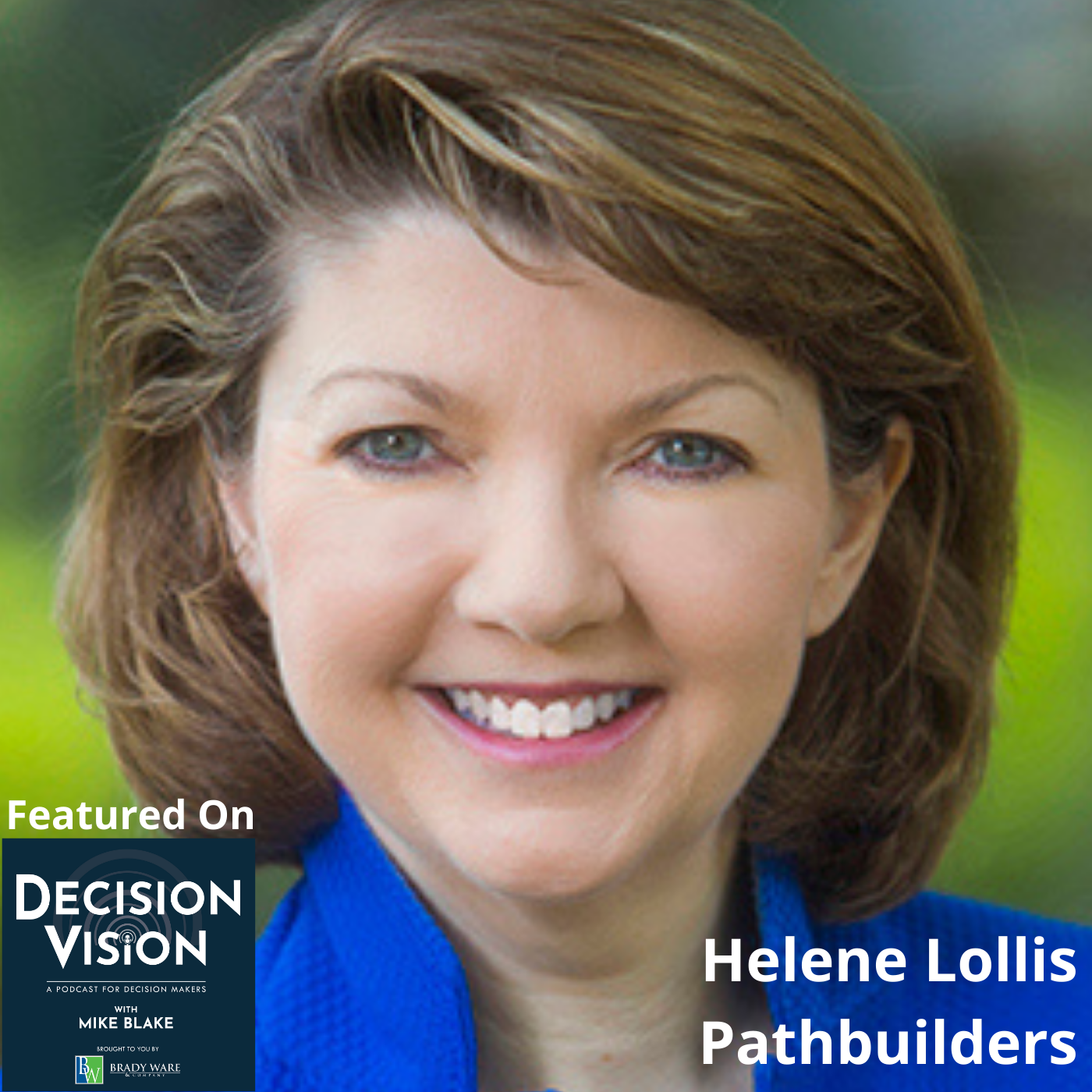
Decision Vision Episode 110: Should I Pivot my Company? – An Interview with Helene Lollis, Pathbuilders

April 1, 2021 by John Ray

Pathbuilders
Decision Vision
Decision Vision Episode 110: Should I Pivot my Company? - An Interview with Helene Lollis, Pathbuilders
Loading
00:00 /
RSS Feed
Share
Link
Embed

Download file

Pathbuilders

Decision Vision Episode 11o:  Should I Pivot my Company? – An Interview with Helene Lollis, Pathbuilders

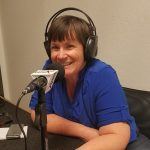
As CEO of Pathbuilders, Helene Lollis started the year 2020 planning her company’s 25th anniversary celebrations. Those plans quickly faded, however, as a pandemic created an enormous challenge for a business based on in-person learning. Helene spoke with host Mike Blake on how she guided a pivot for Pathbuilders and how the company thrived because of it. “Decision Vision” is presented by Brady Ware & Company.

Pathbuilders

Pathbuilders is a professional mentoring and leadership development company. They offer cross-company mentoring programs for women at each phase of their careers, and custom programming for organizations focused on developing high-potential women and men, creating mentoring cultures, launching women’s initiatives, and retaining key talent.Pathbuilders

At Pathbuilders, they design and deliver high-impact mentoring programs for organizations using custom tools and proven methodologies that create formalized learning environments. It is the purposeful structure and practical nature of their content that make the learnings applicable and actionable, and we pride ourselves in creating lasting mentoring relationships for our clients that directly impact retention, promotion, and satisfaction.

Company website | LinkedIn

Helene Lollis, CEO, Pathbuilders

Helene Lollis, CEO, Pathbuilders

Helene Lollis is the chief executive officer of PATHBUILDERS, an organization focused on moving women forward and increasing gender diversity in leadership. For 25 years, Pathbuilders has focused on advancing top-tier talent through high-impact mentoring, professional development, and consulting with senior executives to create cultures where women thrive. Helene guides strategic direction and program development consults with key clients and represents Pathbuilders in the community. Trained as an engineer, Helene spent 12 years with Amoco and BP Corporations in plastics process design, product development, marketing, strategic planning, and company mergers and acquisitions.

Helene is frequently invited to speak on the topics of mentoring, women in the workplace, and career planning. She has been published in HR Magazine, Diversity Executive, and Talent Management and has been featured in The Wall Street Journal. Extremely active in the community, Helene is a past chair and on the executive board of Junior Achievement of Georgia and is a Trustee of the Woodruff Arts Center, where she is a chair of its Women’s Giving Circle. She serves on the Boards of the NC State University Engineering Foundation, the Rotary Club of Atlanta, and SHRM-Atlanta and has previous board service with the Metro Atlanta Chamber and Leadership Atlanta. She is also a member of the International Women’s Forum.

Helene was proud to be recognized as one of Atlanta’s Most Admired CEOs by the Atlanta Business Chronicle in 2020. She received the Gold Leadership Award from the Junior Achievement USA Board of Directors for her service to JA. She was inducted into the YWCA Academy of Women Achievers, and she was recognized as the Guiding Star by Emory’s Executive Women of Goizueta. Helene served as a subject matter expert at The Wall Street Journal Executive Task Force on Women in the Economy. She received her bachelor’s and master’s degrees in chemical engineering from NC State and Purdue Universities.

LinkedIn

Mike Blake, Brady Ware & Company

Mike Blake, Host of the “Decision Vision” podcast series

Michael Blake is the host of the “Decision Vision” podcast series and a Director of Brady Ware & Company. Mike specializes in the valuation of intellectual property-driven firms, such as software firms, aerospace firms, and professional services firms, most frequently in the capacity as a transaction advisor, helping clients obtain great outcomes from complex transaction opportunities. He is also a specialist in the appraisal of intellectual properties as stand-alone assets, such as software, trade secrets, and patents.

Mike has been a full-time business appraiser for 13 years with public accounting firms, boutique business appraisal firms, and an owner of his own firm. Prior to that, he spent 8 years in venture capital and investment banking, including transactions in the U.S., Israel, Russia, Ukraine, and Belarus.

Brady Ware & Company

Brady Ware & Company is a regional full-service accounting and advisory firm which helps businesses and entrepreneurs make visions a reality. Brady Ware services clients nationally from its offices in Alpharetta, GA; Columbus and Dayton, OH; and Richmond, IN. The firm is growth-minded, committed to the regions in which they operate, and most importantly, they make significant investments in their people and service offerings to meet the changing financial needs of those they are privileged to serve. The firm is dedicated to providing results that make a difference for its clients.

Decision Vision Podcast Series

“Decision Vision” is a podcast covering topics and issues facing small business owners and connecting them with solutions from leading experts. This series is presented by Brady Ware & Company. If you are a decision-maker for a small business, we’d love to hear from you. Contact us at decisionvision@bradyware.com and make sure to listen to every Thursday to the “Decision Vision” podcast.

Past episodes of “Decision Vision” can be found at decisionvisionpodcast.com. “Decision Vision” is produced and broadcast by the North Fulton studio of Business RadioX®.

Visit Brady Ware & Company on social media:

LinkedIn:  https://www.linkedin.com/company/brady-ware/

Facebook: https://www.facebook.com/bradywareCPAs/

Twitter: https://twitter.com/BradyWare

Instagram: https://www.instagram.com/bradywarecompany/</a

TRANSCRIPT

Intro: [00:00:03] Welcome to Decision Vision, a podcast series focusing on critical business decisions. Brought to you by Brady Ware & Company. Brady Ware is a regional, full service accounting and advisory firm that helps businesses and entrepreneurs make visions a reality.

Mike Blake: [00:00:23] Welcome to Decision Vision, a podcast giving you, the listener, clear vision to make great decisions. In each episode, we discuss the process of decision making on a different topic from the business owners’ or executives’ perspective. We aren’t necessarily telling you what to do, but we can put you in a position to make an informed decision on your own and understand when you might need help along the way.

Mike Blake: [00:00:44] My name is Mike Blake, and I’m your host for today’s program. I’m a director at Brady Ware & Company, a full service accounting firm based in Dayton, Ohio, with offices in Dayton; Columbus, Ohio; Richmond, Indiana; and Alpharetta, Georgia. Brady Ware is sponsoring this podcast, which is being recorded in Atlanta per social distancing protocols. If you like this podcast, please subscribe on your favorite podcast aggregator and please consider leaving a view of the podcast as well.

Mike Blake: [00:01:12] So, today’s topic is a topic that we’ve visited before. We had Brandon Cooper on talking about pivoting a company. And today’s topic is, Should I pivot my company? And as I mentioned when we crossed the 100th episode threshold that, I decided that I wasn’t going to be afraid to revisit topics, because, you know, a lot of people approach the same problem or decision with a different fact set with a different fact set, with a different set of priorities and with, frankly, a different set of circumstances.

Mike Blake: [00:01:50] And, therefore, I’ve decided and the listenership seems to agree given the rise of numbers we’ve had, that it’s okay to kind of revisit a problem again and again. We’re not going to make this the pivot our company podcast or it’s all pivots all the time. But, nevertheless, I do want to come back and revisit these conversations.

Mike Blake: [00:02:12] And, of course, we have this thing called coronavirus, which as of March 25th, when we are recording this podcast, it looks like we are at least in a position where we’re seeing a light at the end of the tunnel. We’re not there. We’re not post-pandemic. I call it trans-pandemic. But we’re certainly getting there. And as many of us know, COVID has presented us with decisions we would not have ever imagined we would have needed to make. And probably if we did make them, we had to make them in a way that would have been different in the pre-pandemic environment.

Mike Blake: [00:02:50] And Brandon’s conversation was more about – or was about a circumstance where a pivot was required in a pre-pandemic scenario. But our guest today is going to come in and talk to us about the decision to pivot a company during the pandemic as a result of the pandemic. And I think a lot of companies can recognize this.

Mike Blake: [00:03:16] And even though we are emerging from the pandemic at this point, it’s still going to be instructive because we don’t know when that next external shock is going to happen. We don’t know when the next pandemic is going to happen. I mean, frankly, you know, if we’re honest about it, we don’t necessarily know that we have COVID licked. I mean, I think right now we have the upper hand, but there are mutations out there. You know, we just don’t know. So, I do believe that this is going to be somewhat of an evergreen topic for good or ill.

Mike Blake: [00:03:46] And helping us with this is my long time friend, Helene Lollis, who is the Chief Executive Officer of Path Builders. An organization focused on moving women forward and increasing gender diversity in leadership. Extremely active in the community, Helene is a past chair and on the executive board of Junior Achievement of Georgia – she’s been doing that forever, I know – and as a trustee of the Woodruff Arts Center, where she is the chair of its Women’s Giving Circle. She serves on a bunch of other boards, too, it’d take out the program to list all of them. Just take my word for it, she does a lot of stuff.

Mike Blake: [00:04:21] Helene was also recognized as one of Atlanta’s Most Admired CEOs by the Atlanta Business Chronicle in 2020. She received the Gold Leadership Award from the Junior Achievement USA Board of Directors for her service to Junior Achievement. And she was inducted into the YWCA Academy of Women Achievers and was recognized as the Guiding Star by Emory’s Executive Women of Goizueta, which is their school of business. She was trained as an engineer – which I did not know. And I’m embarrassed that I did not know this. I never asked.

Helene Lollis: [00:04:49] Why don’t you know that?

Mike Blake: [00:04:49] But she was trained as an engineer and received her Bachelor’s and Master’s Degree in Chemical Engineering from North Carolina State and Purdue University. And spent 12 years at the Amoco and BP Corporations in plastics, process design, product development, marketing, strategic planning, and company mergers and acquisitions.

Mike Blake: [00:05:08] For 25 years, Path Builders has focused on advancing top tier talent through high impact mentoring, professional development and consulting with senior executives to create cultures where women thrive. Boy, do we need that today. And Helene guides strategic decision and program development, consults with key clients, and represents path builders in the community. Helene Lollis, welcome to the program.

Helene Lollis: [00:05:30] Welcome. I wish I sent you a shorter bio.

Mike Blake: [00:05:34] No, I’m glad that we got that out there. The cool thing is, I mean, I’ve had a lot of friend whom I’ve known for some time, and it’s uncanny how many things I learn about them when I actually have to go and do the homework and learn about the bio. Fortunately, I haven’t found that somebody was like a convicted felon or anything, that might be kind of awkward, or a traitor to the state. But, you know, I did not know that you have that long background in engineering and material science before you moved into this. And at some point, I hope our conversation will come around to how does that background give you, maybe, a different perspective on the things that you do, because I suspect that it does.

Helene Lollis: [00:06:19] It does. Yeah.

Mike Blake: [00:06:20] As opposed to what I would expect a more kind of human resource background, for example.

Helene Lollis: [00:06:25] Yeah. I would tell you, my team knows every single day that I’m an engineer. You know, it’s a way of thinking. It’s a way of framing. There’s no question. And even in the processes of the things that we do at Path Builders, there’s engineering all around.

Mike Blake: [00:06:40] So, before we get into this, I’d like you to describe Path Builders. I mean, you really have been, as your bio reads, a fixture in the community. What does Path Builders do and what is the origin story of Path Builders?

Helene Lollis: [00:06:56] Yeah. So, our focus is helping companies to move women forward and to elevate their best talent every single day. And we’re probably best known for large scale mentoring programs where we match women with mentors and peers, and take them through experiential learning to really equip them to be better able to move into leadership roles inside their organizations.

Helene Lollis: [00:07:21] But if the company was actually an Anderson incubator business back in the 90s, I was a mentee, actually, in one of the programs. So, I was working for Amoco at the time. They placed me in the program as a mentee. The gentleman with whom I was matched as my mentor is still my mentor. I talk with him on Saturday. So, it clearly was rather pivotal in my own career. So, we’re probably best known for those cross-company mentoring programs.

Helene Lollis: [00:07:53] But I bought the company in 2002 after leaving BP. And, initially, kept the dynamic that the previous owners had in place, this model of mentoring women. I felt right away a couple of things. One, they were starting too late. They were kind of starting with director level women who could be officers. And if you’re serious about building a pipeline of female talent, you got to start earlier than that. And, two, we’re exclusively working with women. And to create environments where women thrive, you’ve got to be working with both women and men. So, the nutshell is, we work with organizations to move women forward. We work to really develop talent and leadership benches with both women and men inside organizations.

Helene Lollis: [00:08:40] And then, I would say, the last few years, what we have added to complement all of that is consulting at the C-suite on how do you create an environment where women can thrive and women can move forward. How do you change the dialogue in the C- suite to be around how gender is strategic to really building a great company.

Mike Blake: [00:09:01] So, you are doing that. I know you had a lot of very high profile clients. But the thing that struck me is, you’ve been working with the U.S. Military for a long time now, at least you had been. I presume that’s still the case. And then, one year ago happens, right? It was just around St. Patrick’s Day or a little bit before then, when, frankly, our world changed. So, you know, coronavirus happens. The next thing you know by, I guess, April, a lot of us are told to “shelter in place”. And what happened to Path Builders at that point?

Helene Lollis: [00:09:36] Yeah. So, I said the company is 25 years old, actually, last March was the 25th anniversary. And we had this fantastic plan that it was going to be a year of parties. And my leadership team had actually built this fantastic idea. Instead of having one big event, we were going to have a whole year of pop-up parties. And one of our clients, WesTrac, had already signed on to be the first pop-up party. And we were going to be inside all of our clients, helping them to celebrate their commitment to women. And then, a week later, we decided we’re probably not going to have at least that first pop-up party.

Helene Lollis: [00:10:17] So, long story short, I had no idea that what started out as a year thinking it was going to be celebrating an anniversary, two enormous changes. So, one, completely reinventing how we deliver. But I will also say, overnight, we shifted from being a sales driven company to being a marketing driven company. You already highlighted how much I do in the community. My whole team is out and about and it was very much being with people talking about what we do. That was one of the primary drivers of really where our clients came from. And clearly those opportunities were gone. So, I mean, not only were we shifting how we do what we do, but we were even shifting how we built the pipeline for what we do.

Mike Blake: [00:11:00] So, as coronavirus hit – and I’m curious where you kind of fall with this – my own perspective was, you know, I knew it was serious, but my own reaction was kind of incremental. Things are changing, but do I have to necessarily blow everything up to survive? I’m not there yet. So, here are five or six things I think are going to be kind of small changes and maybe we can kind of ride it out. Was that your experience, too? And if so, what were the small changes that you tried and maybe worked or didn’t work?

Helene Lollis: [00:11:35] Yeah. So, I’m fully transparent that there were four [inaudible], and I lived in each of those stages for a period of time. I mean, number one was the very simple denial, “Helene, this can’t possibly be happening. This isn’t the way we do things.” And I remember initially having that moment of paralysis of, “Oh, my gosh. We can’t do what we do in this environment.” And the reality of it was, you couldn’t survive that way, right? So, we moved to the, “Okay. If we have to, for a few weeks, do whatever.”

Mike Blake: [00:12:14] Thus bargaining.

Helene Lollis: [00:12:17] Yeah. Exactly. I can hang right with Elisabeth Kubler Ross right through this whole dynamic. Absolutely. But then, we thought, “Okay. We’ll do a couple of webinars from the basement of my house and it’ll be okay.” And it was talking about things that worked and things that did not work. We pride ourselves on flawless execution, and that means there are a lot of people monitoring different aspects of things. And so, we were doing what we deemed to be interactive workshops, but literally two of us in a basement. The rest of the team we were communicating with through Teams. And so, here, I’m trying to deliver a workshop while communicating with my team on Teams, while silently communicating with my – bless his heart – husband trying to manage the technology.

Helene Lollis: [00:13:06] And I will tell you, the morning of a huge program launch, I will never forget when the people across the street from us had one of those chipper trucks drive up in front of their house. And my husband and I are literally, like, putting together our cash. Like, could we come up with 100 bucks to make these people go away? We can’t so much of a run.

Mike Blake: [00:13:24] Wow, what a story.

Helene Lollis: [00:13:26] So, I mean, recognizing those moments – unbelievably they finished before so we didn’t have to pay them. But then, we had a client who just said, “You know what? We’ve been waiting and we don’t want to wait anymore. We’re ready to go.” And it was a client where we were working with developing all of their newly promoted managers and directors. And we had designed it as opportunities where they would be convening in one of their offices, so either in Chicago or Atlanta or New York. And it was as much about developing managers and directors to be great leaders as it was about them building a leadership team.

Helene Lollis: [00:14:05] So, the way we had designed the program was about being in-person together and relationship building. And so, we just kept postponing. We kept saying, “Well, we’ll wait until we can do that.” And they came back and said, “You know what? We’re ready to go. Figure it out, make it happen.” And so, we said, “Okay. Will you give us the space to completely redesign the program?” Because we can’t just pick it up and and pretend it’s the same online. And so, absolutely fantastic working with them. But we went back to the drawing board and we said, “Okay. So, instead of a monthly gathering, this now needs to be two week touch points.” And there’ll be certain sorts of breakout groups we do when they’re in session with us. But then, certain learning teams that they’re going to be connected to and we’ll build discussion guides and threads through all of that.

Helene Lollis: [00:15:02] So, phase three for us was, we can make – I guess that’s really phase two, we can make something that’s meaningful. Phase three, for me, was the, “Oh, my gosh. This might have some legs.” We’re actually creating connectivity, and relationship, and trust building that is not only positively impacting these people as leaders, but now they’re actually able to extend their network more broadly than they might have been able to otherwise. And then, finally, stage four for me was, this is probably something we should have done a long time ago.

Helene Lollis: [00:15:43] In the fall, we launched a program, a cross-company program completely designed to be in the online world. And first time coming out of the blocks are amazing. Clients trusted us so much. We had women from 11 states the first time we set it up to go forward. And, now, it’s such an interesting time to be having this conversation because now we’re really trying to figure out who are we going to be after, when we’re no longer trans-pandemic, as you said, but when we are perhaps actually post.

Mike Blake: [00:16:17] So, I’m going to go off-script here, because what you said and the way that you said it brings something that is, I hope, an important observation. And that is that, in all those sort of stages of grief, the one that I don’t think that you had, or at least if you did, it lasted for probably about 18 seconds, was the depression part. I think it sounds to me and knowing you as well as I think that I do, I think that this is right is that, you quickly recognized that just sort of things had to change. And you can be frustrated with it all you want, but at some point you got to solve the problem.

Helene Lollis: [00:16:57] Yeah. And, I mean, I think some of that is just a bent to the eternally optimistic entrepreneur, right? But I’d be a liar. I mean, (A) Elisabeth Kubler Ross would tell you, you don’t get to skip stages. So, clearly, I had to be there, and maybe it was a short visit point. But there were certainly moments right before going live with big offerings where that inner voice does this, “This can’t be happening to us.” But I will tell you, again, unbelievably loyal clients. Suddenly, the feedback we were getting after we got out of the basement – the basement, the feedback wasn’t too great, to be completely honest.

Helene Lollis: [00:17:43] But we were back in the office and starting to build out a Zoom studio in April and May. And I will say, largely because we had not done a lot of this, it was a brand new world for us. So, we weren’t tied to any mindset of what online delivery was going to look like. And so, I think that the creativity – and I mean, I can’t say enough positive things about the team around me – we had and the way we were redesigning to create experiential learning, we started getting such great feedback so fast that it pulled us through that curve pretty quickly.

Mike Blake: [00:18:25] So, I’m curious. I think a lot of us have had to, on some level, become amateur video and audio engineers, like it or not. Otherwise, I mean, you just can’t communicate. And as much as sort of Zoom and other platforms are interesting, one, they don’t all work the same. And number two, they are not the realization of AT&T’s video phone. You don’t just simply pick up the handset and you’re talking to somebody on video.

Mike Blake: [00:18:57] What was it like? Were you energized about the opportunity to pick up an entirely different skillset? Was your team energized about that? Were they scared? Were they frustrated? Was it a cocktail of all three? What was that like?

Helene Lollis: [00:19:11] Yeah. I don’t know that any of us took the time to contemplate it as a wonderful learning opportunity. I don’t know that that one existed. I will tell you what the team says to me. The team says to me, there was just never a moment – and I guess they mean me – at which I wasn’t just saying we are going to do this. Like, it’s just we must, we will. The mission is too important, we’ve got to continue doing what we’re doing.

Helene Lollis: [00:19:48] I will say, though, you are absolutely right in terms of this team of people who were expert at making something happen in a big ballroom, suddenly becoming producers, and onscreen personalities, and learning so fast that, quite frankly, we were doing it before we even understood what we were doing because necessity drove us to do that. So, I don’t know, I mean, I think now in retrospect, it’s easy to look back and think, “Oh, my gosh. What a fantastic learning year it was”. In the moment, you just kind of feel like you’re living in the hell of, “Okay. I don’t know.” And I can remember any number of times where we would be getting ready to go live with a couple hundred people from all over the country coming on. And we would all just kind of look each other in the eye and say, “Here we go.” I lost you.

Mike Blake: [00:20:47] Yeah. We’re going to push this button and hopefully it works, right?

Helene Lollis: [00:20:50] Okay. Yeah, yeah. Crossed fingers.

Mike Blake: [00:20:53] So, I want to be clear, you know, comparing kind of pre-COVID Path Builders to post-COVID Path Builders, what are the big differences? Or if you had to describe the before and describe the after, what do those look like?

Helene Lollis: [00:21:08] Yeah. So, the bulk of our work was, literally, we have rented a tremendous amount of ballroom space in the Atlanta area and we have traveled to our clients. So, while we don’t have offices in other locations, we’ve always gone wherever clients are. And so, if I go back even just the year before the pandemic, I spent a lot of time in New York. I had clients in Texas, and California, and Chicago, and wherever clients needed us to be live.

Helene Lollis: [00:21:43] And we pride ourselves on part of the development experience is rich interactive peer exchange. So, what it looked like was, somebody facilitating a workshop, tabletop exercises, super thoughtful seating arrangements that propagated networking, teaching people how to have dialogue and conversation. But I will also say that much of our work is surrounding creating powerful mentoring partnerships. And so, we always met every single individual with whom we were working individually for what we used to call an hour long behind closed door interview.

Helene Lollis: [00:22:27] And so, Mike, I was skeptical if even the interview piece would be able to have the same integrity to it, to really understand what was making people tick, and what their opportunities were, and what their challenges were. But if I had to come down to one element that gave me the greatest pain, what we go through when we first introduced a mentee to a mentor, we have to be really focused on the fact that we don’t want people to have preconceived notions because we’re creating mentoring partnerships that would never happen on their own.

Helene Lollis: [00:23:02] And so, if people are prejudging their partner before they meet them, that works against us. And so, when mentee and mentor meet for the first time, the first couple of experiences that they have together was always pretty carefully planned in a live environment and recreating – I wouldn’t for a second dismiss how hard it was to get all the technology in place to do what we do. But when I think about the big lift, it was, how do we redesign moments of individuals interacting so that the same sort of trust building relationship can be there to create the vulnerability that we know has to be there or people just don’t grow.

Mike Blake: [00:23:42] So, as you say that, a thought occurs in that. I wonder if Path Builders in some respects is impacted even more than most because, not only is your service delivery impacted, but the downstream effects after your service delivery and how you’re training people to communicate and build relationships are now impacted, right? It’s not just that you have to deliver things over video, but, now, how do you be an effective mentor remotely? How do you build real relationships virtually? And that may or may not be the most desirable goal, but, you know, July of 2020 is all you got. And some of that is probably going to stay. I think most of us think that some of that’s going to stay. In what proportion? That remains to be seen. And so, I’m curious, is that also kind of a part of the calculus that makes that sort of extra challenging for you guys?

Helene Lollis: [00:24:52] Yeah. So, you’re absolutely right on that. The creation of a lasting relationship. I mean, I commented at the top of our time that I’m still connected to my mentor and that, 20 years later, is still my mentor. That emotion of, will we do enough for that to even be feasible? Again, I will tell you that what it took was being highly prescriptive. Like, where it used to be, we kind of celebrated how we put people together. But then, we gave them a little space to be natural. We couldn’t afford that anymore because, now, it’s the silence of before a conversation and after a conversation, which we all know creates a degree of awkwardness.

Helene Lollis: [00:25:35] And so, thinking about how we were using music and what were the first questions they would ask each other, I mean, all of that was so highly scripted to bring them to a point where we knew that they would go forward. But, now, in answer to the question that you closed with there, Mike, the thing that had us so getting out of bed in the morning right now is the more senior people we work with, we’re always going to be at a level where their companies would pay to put them on an airplane to go someplace. When I think of the work we’re doing with manager level individuals who now have an ability to build a national network, that was never going to happen without this.

Helene Lollis: [00:26:19] We launched a program in three weeks, it’s one of our programs for women new managers. It’s got women from 15 states in Canada. And the thought that those individuals, on a monthly basis, are building close trusting personal relationships with women from all across the country, that was never going to happen for them at the manager level before. So, it absolutely informs where do we go from here?

Mike Blake: [00:26:46] That’s fascinating. That went in a direction I did not anticipate. But you’re right, I mean, to me, what you’re really talking about is that, it enables you to scale your impact in a way that just simply would not have been possible in person. The benefit of digital today is scale.

Helene Lollis: [00:27:04] Yeah. Yeah. And I will tell you, I’m in a CEO peer group. We just, in the first quarter, did our go around the room and tell each other what we do well and what we suck at because we’re peers and that’s what we do for each other. And to a person, my whole group said, “Fantastic watching how you pivoted. Hate that it took a pandemic to make it happen.”

Mike Blake: [00:27:31] It’s that classic necessity being the mother of invention, right? But it also created the conditions, too. Because, you know, in the start of this thing, many of us are resistant. We really resisted Zoom. You know, we talk about Zoom fatigue and I got to do Zoom calls. And I can’t speak for other people, but for myself, I’ve gotten used to Zoom now. I’ve gotten used to seeing my mug on camera. And become more comfortable that it’s not nearly as emotionally and mentally draining as it once was. You know, the pandemic also created the conditions, I think, for a market that was receptive to this kind of delivery.

Helene Lollis: [00:28:13] Agreed. Yeah. I will tell you, though, you asked earlier around learnings and things that we extracted from things that were challenging. One of the things we never saw coming was, we need to be brokering very different conversations with our clients about the expectations that they are putting on their people. And so, what I mean by that is, like, we just assumed if we have an event, people show up and they listen. And the downside of what you just said with that comfort is, I have watched far too many people start to move into a mode of audit. That, quite frankly, the work that we do, where we’re focused on experiential learning, doesn’t play well in audit mode.

Helene Lollis: [00:29:03] And, quite frankly, it causes us to be very provocative with participants in our programs about, if you’re auditing today, how much of your career are you auditing? And, literally, recognizing now that when we go inside a client, we’re having to have conversations with the client around, “We need you saying to your folks this is a cameras on experience. This is a get into breakout groups and have dialogue.” Because one of the things we have learned looking over the past 12 months is, you having your camera off in a breakout room doesn’t only negatively impact you from the lack of exposure. It’s impacting the other people in the room.

Helene Lollis: [00:29:43] And I’ll tell you the quote one of the women shared with us. She go into a breakout room and somebody’s got their camera off, “It’s like there’s this big black creepy box sitting there. And I wonder if the big black creepy box is listening to me or if it’s going to speak.” And I think we’ve got to be really clear, especially as we start to move into hybrid mode now, we’re talking a lot with our clients around what are the norms that you’re putting in place so that folks don’t live in audit mode?

Mike Blake: [00:30:12] Yeah. That’s interesting. And the one thing, I think, the technology has not yet fixed in-person and maybe virtual reality will be the thing that crosses that. But, frankly, it’s just knowing that the people in the room are paying attention. The downside to virtual is that, it’s too easy to pretend that you’re paying attention when you’re not. And, yeah, I can imagine that. In particular, if a leader looks like they’re “in audit mode” what a disastrous message that sends to the rest of the group.

Helene Lollis: [00:30:50] Well, and as somebody who’s been accustomed to working with large groups in ballrooms, I always had the ability to walk over to a table and stand near someone and make them uncomfortable. I don’t have that ability any longer. And, you know, when you’re in the space of developing people, people have to want to be a part of that. But I’m also going to be super frank, one of our biggest challenges is, there’s a lot of really lousy online stuff out there. And if you’re entering with the mindset that this is going to be another lousy online thing. And then, we’re bringing you together, tossing you into a breakout, and telling you to go on a scavenger hunt in your house as a way to get to brainstorm what it’s like to work with people, and you’re in a mode of thinking you’re going to show up and have your camera off were a little bit of a surprise.

Mike Blake: [00:31:50] Yeah. So, I want to ask you a question that may be blatantly unfair, but I’m going to kick myself if I don’t ask the question. And your response to the last one sort of led into it. And that question is this, is a digital relationship perhaps even better for women with the challenges they face? And I mean two things. One is, for good or ill, women still bear primary responsibility for home management and child development. And that, in my view, unfortunately, has not changed materially. And you can’t fix that. But at least the digital world, I think, in some cases gives a woman a fighting chance to balance some of that or at least levels the playing field where you’re not present, where some of your other cohorts are also not present for certain things. And you know as well as I do, that lack of presence, whether consciously or unconsciously, can be a barrier to career development.

Mike Blake: [00:33:00] And the second – and I have to ask this question, because it just begs the asking – frankly, is it safer for women? We both know – you know, I’m sure, a hundred times more than I do – the workplace can be very predatory towards women in certain cases, right? We have a governor in New York that seems like every day has got another allegation. And I don’t know if they’re true or not, but it’s bad optics at the minimum. At least in the digital world, do women feel safer? Is the digital world potentially a leveler of the playing field for some of the women that you’re coaching?

Helene Lollis: [00:33:42] Yeah. I mean, it’s an interesting question and I think it’s going to be something that we’re all challenged with as we start to think about this whole return to work, back to work mindset, and what that is. I will tell you, we’re working pretty closely with women to get them today thinking about the strategy of what return to work looks like for them. Because you’re absolutely right, and I’ll add to your list that women, in addition to child care, it’s elder care as well. So, I mean, it’s on every side of the spectrum, right, that women take the challenges on.

Helene Lollis: [00:34:19] I mean, I will say, I agree that there is an access element that is probably positive. There are no question women that, because of getting kids on the bus, miss and choose not to participate in things if I have to drive an hour someplace to get to an experience. So, no question that access element is there.

Helene Lollis: [00:34:45] I will tell you, we have mentoring partnerships where both mentee and mentor, especially in an environment where we’ve got about 80 percent of our mentors repeat from year to year, mentors are telling us that in some cases they actually feel like they’re getting to a degree of depth faster than they did when there was a lot of we’re eating breakfast or lunch and we end up talking about a lot of random things. Part of that is the online world. Part of that is what you just said, the comfort we’re all building with Zoom.

Helene Lollis: [00:35:19] I hesitate to jump into your thread of safety only because, at the end of the day, there is a real world and we need to be in it. And I do not think that the answer is just extracting ourselves from that reality as a way to advance in that reality. And I feel that we absolutely have to be really strategically thinking. I mean, Wall Street Journal had a whole section last week around this whole idea of what return to work is going to look like, what hybrid is going to look like. And one of the huge challenges managers are facing right now is figuring out, “How do I make sure that I’m continuing to create exposure opportunities for individuals to have informal conversations?” This world is particularly challenged in creating informality.

Helene Lollis: [00:36:17] So, I totally see why the depth of a mentoring conversation actually might be there online. What we are hearing so loud and clear from women, Mike, is, they didn’t realize how much learning there was from the, “I’m in the middle of a meeting and the senior leader turns to me and says one quiet thing and that becomes a launch point for something.” Or,” I hang around five minutes after the meeting and get to express my interest in being on that new project.” And the loss of that informal interaction, I think, from a long term standpoint would exceed the benefit of what you’re talking about.

Mike Blake: [00:36:57] Interesting. Okay. So, getting back to the topic at hand, we’ve talked about your service delivery having changed as a result of the pandemic. Has it impacted your business model at all? For example, it occurs to me there might be an opportunity for more modular offerings or things that are prerecorded. I don’t know if you’re pursuing that, but it seems to me there might be opportunities to have a more diverse business model as a result of the pandemic. Is that something you’ve thought about? And if so, what are your thoughts on that?

Helene Lollis: [00:37:36] Yeah. So, you know, it’s interesting, the video thing comes up a lot. And our model is so interactive. Our model is so driven by scripting what the conversation is that you’re going to have in a breakout, and mixing you into a different breakout, and having that experience. So, I will say, yes, there are absolutely elements of the model that are changing. So, in addition to the large scale programs that we run and the custom programs that we do inside organizations, we also have public programming.

Helene Lollis: [00:38:12] And maybe a week ago, it became evident to us, “You know what? Public programming is never going back to a ballroom.” Like, that will forever be something that is all around reach and making sure we are getting more and more, in this case, women focused on great content, great ability to interact. I will also say that, clearly the business model has changed in terms of the ability to work with global clients. And so, we have organizations now where, you know, we do each workshop several times and we pick up the team in Israel at one time a day. We pick up the team in Asia at another time of day. And in a world where that used to mean jumping on an airplane and now, absolutely, we’re able to design series for global clients in a way that we’ve never been able to before.

Helene Lollis: [00:39:08] I will also just say that, as we look at this world of not only the program execution, but the consulting, we work with C-suite leaders to really help increase their awareness around gender diversity, change their dialogue around diversity, get them to think about their talent plans. And one of the biggest hurdles that has typically been in place for us to have a great session with a C-suite is their ability to be in the same place at the same time. And so, absolutely, that is an added opportunity that now we’ve got an ability to convene those individuals and, I think, be able to have at least more frequent touches. It would be like, “Okay. They’re going to be together this day, pack it all in. We’re going to do a four hour session.” Where, now, we’ve got the ability to really thoughtfully think how do we move an executive team’s awareness because I can work with them for individual hours instead of a four hour session. Does that make sense?

Mike Blake: [00:40:12] It does make sense. And it also, for me, raises the question then, has the pandemic with digitization or digital transformation, has that led to opportunities maybe for longer term times of engagements, too? Because I imagine in your world, you do a workshop and the way I’ve understood workshop – I’m not a workshop guy – you’ve had to basically get the unanimous consent of the UN General Assembly to get all the people at the same time. They’re going to commit. They’re going to be there in the same room, same time for four hours, go. And if you don’t do it in that four hours, it all blows up. And the plan is still in line for five years.

Mike Blake: [00:40:57] And on the one hand, I can see the value in the intensity of that. But on the other hand, it seems to me that it opens up now a vista or an opportunity of a different kind of instruction that can be delivered over time, which has some benefits over a one shot intense kind of workshop.

Helene Lollis: [00:41:20] Yes. So, we’ve never been one shot, intense kind of workshop people. But I will say, you’re absolutely correct in this environment aligning better with that. So, our model has always been those one shot things are great if you want to inspire people and charge them up. It’s not going to develop people. Development is a step-by-step process over time where you try some stuff and then you’ve got people you can talk about with what worked and what didn’t work. And then, you try some more stuff. And so, absolutely, this format allows us, I think, to be more impactful with that, because of what you said, it’s hard to get everybody to fly into the Chicago office to do that.

Helene Lollis: [00:42:04] My sense is where we will evolve to, is, there will be moments in programs that are like that. There will be a big kickoff where it is live and in-person. But then, the execution throughout the months that follow, the beginnings, endings, things like that. But, absolutely, this format lends itself to that ability to make sure we’re having that high touch connectedness that really allows development to happen.

Mike Blake: [00:42:36] Do you ever record any of those interactions?

Helene Lollis: [00:42:38] Yes. So, I will say that is different. It did used to be a world where, if you missed, you missed. And so, absolutely, now we’re recording so that if something does happen on that day or whatever happens, yeah. So, now, we’re writing into all of our contracts with clients that we will record and make that available for the term so that people can get up to speed. So, certainly, that’s a new add that wasn’t there before.

Mike Blake: [00:43:06] We’re talking with Helene Lollis of Path Builders. And the topic is, Should I pivot my company? Is there anything from pre-pandemic Path Builders that you’re still trying to figure out how to bring into trans and post-pandemic Path Builder? Something that still is a work in progress that you want to make sure carries over?

Helene Lollis: [00:43:27] Yeah. So, yes, and it’s funny because we were holding out and we weren’t going to do it. And folks came to us and said you need to do this. So, we’ve identified what we see as the four key stages in a woman’s career. And so, entry level women, women learning to manage, women learning to lead leaders, and then executive suite women. At the executive level, we have always hosted these intimate, small, invitation only dinners, where we bring together women that are all facing the same sort of issues. And it was always a lovely private club, nice dinner, nice wine opportunity to come together. But really to dive into really substantive issues that maybe you can’t talk about all the time. And almost in that vision of the officers club where you get to have some of those conversations. And we had just been avoiding it, Mike. We just were like, “Oh, we can’t do and bring you dinner.” And women came to us and said, “What’s up? Like, we’re ready to have one of these.”

Helene Lollis: [00:44:36] So, literally, a couple of weeks ago, we moved heaven and earth and worked with this fantastic little wine shop in Atlanta where they created these special little wine and cheese plates. And we had them TaskRabbit it all over the city. And then, oh, my gosh. Two people from Florida signed up. And, oh, my gosh. Somebody who just happened to be skiing in Colorado signed up and somebody in Richmond signed up. And so, suddenly, we were working with all of these different little shops, sending little bottles of wine and food.

Helene Lollis: [00:45:13] There’s still something so magical about creating those safe environments where we get to have conversation. And there’s a social element to it as well. And, you know, they loved the first one. I’m not so sure my team did. It was a little bit of a lift, maybe all of that happened. But, clearly, we’ve got to be able to come back to do something and maybe it evolves to where it travels from city to city.

Mike Blake: [00:45:42] So, as you look back at your transformation, are there any decisions you look back and said, “You know what? If I had to do that over again, I would have done it differently or sooner or later.”

Helene Lollis: [00:46:03] Wow. Yeah. You’d think I would have been prepared for that question.

Mike Blake: [00:46:09] I mean, maybe the answer is no. I mean, maybe you’re happy with everything the way turned out, and that’s fine.

Helene Lollis: [00:46:13] You know, I don’t know, that is not to make it sound like it was easy. That is not to make it sound like there weren’t things that we didn’t do particularly well. I’m just not one for regret much. I mean, things that didn’t go well, we fixed it the next time. Yeah. Now, if I think back to those first couple of webinars in our basement, I wouldn’t mind erasing that from my memory. I will tell you, the very first that we did out of the basement was a group mentoring program where there are three men. So, everybody’s from different companies, three mentees, one mentor. And I’m not going to remember, but maybe there were 40 or some odd groups. And I will never forget the first time we hit that button to go into breakout rooms. And I think it took us half-an-hour to get everyone in breakout groups, which now totally cracks me up since that’s now a 30 second activity.

Helene Lollis: [00:47:13] But, yeah, was there stuff we didn’t do well? Absolutely. I don’t have regret. I think everything we did, we learn from, and we may have changed it. But maybe we needed to screw that up to be able to figure out what it needed to look like going forward. And I hope that doesn’t sound too gratuitous. I’m not sure I would actually do it differently.

Mike Blake: [00:47:35] Well, look, I think if it’s true, it’s not gratuitous. So, you know, if you think it’s true, I’m sure that it is, so that’s fair. And you said yourself, the first few webinars, you know, that’s a learning curve. We’ve all had to learn how to present in this world. And, for me, you do much more presenting than I do because that’s what you do for a living. The first few webinars I’ve done over Zoom, where you have to generate all the energy yourself, there’s no audience to generate it from, they look like hostage tapes, man. Literally, it looked like I was kidnapped someplace and they just ripped the duct tape off of my mouth. And you’ve got to free some people out of a German prison somewhere or I’m not going to get let out by this people. They’re that bad.

Mike Blake: [00:48:29] Yeah. I will tell you, though, I mean, it’s caused us to think about – I mean, the bookends on a meeting are silent, which is such a different norm. One of the things we focused on a lot is sound and feeling and how there’s got to be music on the way in.

Helene Lollis: [00:48:47] And one of the things I was most struck by was, early in the pandemic, one of our participants said to us that she missed the energy of the room. And when we did a deep dive on that, what we really recognized was, when you’re surrounded by other people who care about what you care about, even if you aren’t hearing the words of the conversation, the energy of that conversation when everybody cares about the same thing, opens you up to listen in a way that isn’t there when it’s silent and you’re sitting at your home PC drinking a cup of coffee. And then, boom, it turns on and somebody is speaking.

Helene Lollis: [00:49:27] Like, none of that preparedness for embracing insight and knowledge is there. And you’re absolutely right, I mean, we’ve worked really hard how do we create mood and how do we really think about. So, I mean, this is perhaps a silly little thing. But now that we’ve done it, it’s another thing that we think we’ll probably never go back. We now create welcome kits for all of our participants, where a box comes and it’s a Path Builder’s box. And you’ve got your Path Builders pen, and your Path Builders coaster, and your Path Builders – now, we’re doing ring lights for their laptops. I mean, we need to do something for them to feel that sense of connectedness and togetherness that they might be getting if they were in a ballroom together. But, now, that I think of some of those elements, that’s some of the stuff that just won’t go away.

Mike Blake: [00:50:22] You know, it’s really interesting, that just gave me an idea I’m going to steal from my own practice. I mean, the move to virtual and digital does provide an opportunity to embrace a different kind of client onboarding. And who doesn’t love to receive a welcome kit? And it could be stupid. It could be one of those stress balls or whatever, and maybe a COVID mask or something – I don’t know. A little go on or some big ass mug or something like this. But, you know, it’s those those simple things. And even grown ups like to receive something in the mail that isn’t a bill. It’s something that they didn’t pay for. That just is never going to go away, right? I may steal that idea. That’s a great client onboarding idea.

Mike Blake: [00:51:10] Helene, you’ve been very generous with your time and I want to be respectful of that generosity. But I’ll close the question I always close with, which is, if one of our listeners or some of our listeners have a question that we didn’t cover, they like to go into more depth than we were able to today, can they contact you with questions about how you pivoted? And if so, what’s the best way to do that?

Helene Lollis: [00:51:32] Yeah. Absolutely. And thank you for asking. So, website, pathbuilders.com, I’m sure is the easiest. Not to be confused with Pathfinders because the car makes people think Pathfinders. We’re actually Path Builders. But I will say, not only about pivoting, but, Mike, I feel like we’ve gotten such insight into what could be holding women back right now in this – I’ll go with your phrase – trans-pandemic environment. And if that’s something people find value in talking about as well, I’d love to talk with folks about that.

Mike Blake: [00:52:05] Excellent. Well, that’s going to wrap it up for today’s program. I’d like to thank Helene Lollis so much for joining us and sharing her expertise with us. We’ll be exploring a new topic each week, so please tune in so that when you’re faced with your next business decision, you have clear vision when making it. If you enjoy these podcasts, please consider leaving a review of your favorite podcast aggregator. It helps people find us that we can help them. Once again, this is Mike Blake. Our sponsor is Brady Ware & Company. And this has been the Decision Vision podcast.
 

Tagged With: Brady Ware, Brady Ware & Company, gender diversity, Helene Lollis, mentoring, mentoring women, Michael Blake, Mike Blake, Pathbuilders, pivoting your business, Women in Leadership

A Life in Black and White: How to Authentically Discuss Race in Business, with Paul Mitchell, Mitchell Sales Advisors

August 25, 2020 by John Ray

A Life in Black and White
North Fulton Business Radio
A Life in Black and White: How to Authentically Discuss Race in Business, with Paul Mitchell, Mitchell Sales Advisors
Loading
00:00 /
RSS Feed
Share
Link
Embed

Download file

A Life in Black and White: How to Authentically Discuss Race in Business, with Paul Mitchell, Mitchell Sales Advisors (North Fulton Business Radio, Episode 276)

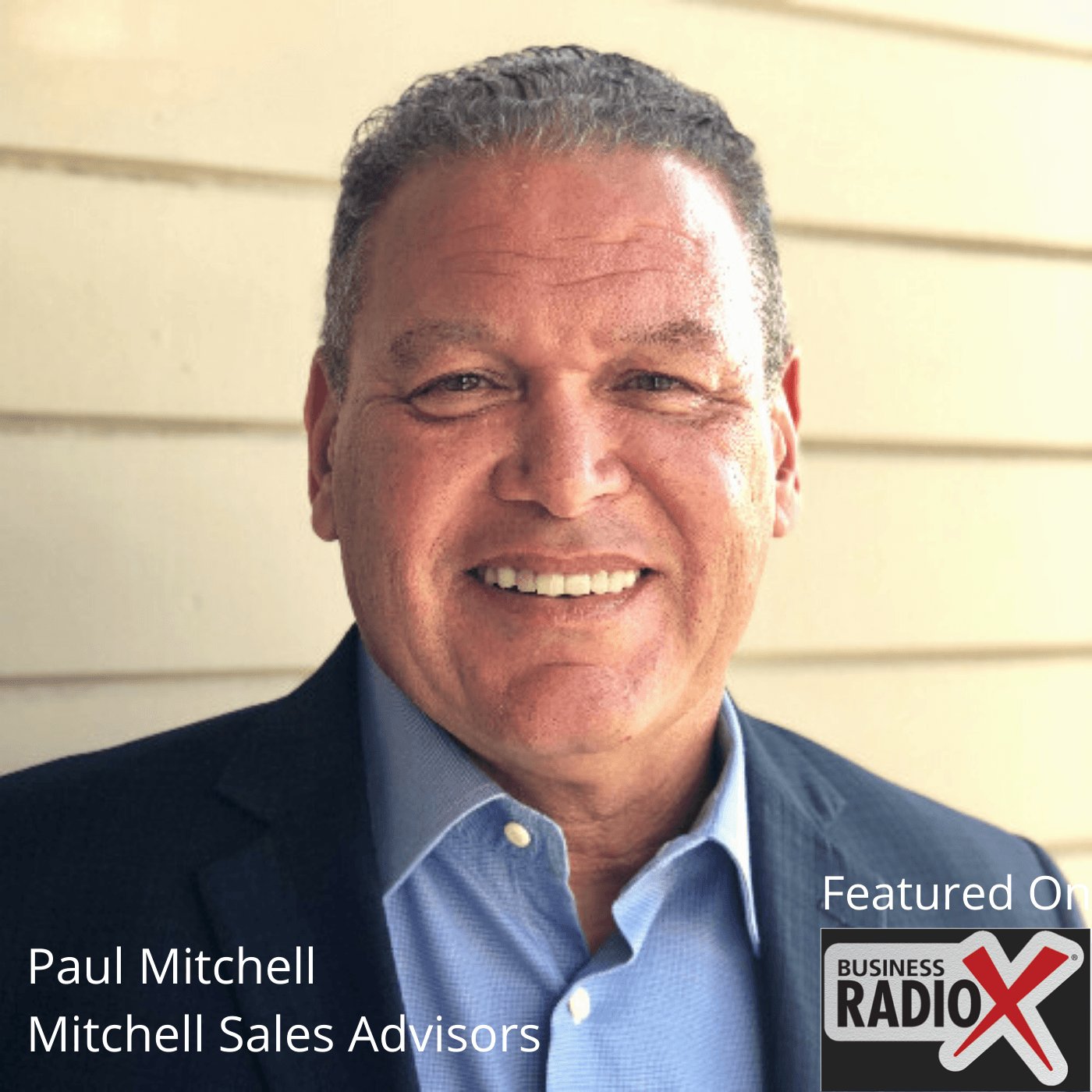
“A Life in Black and White” is not just a random title for Paul Mitchell’s talks and webinars; it describes his own journey in business and his efforts to foster understanding and positive change around race in the workplace and in business. “The host of “North Fulton Business Radio” is John Ray, and the show is produced virtually by the North Fulton studio of Business RadioX® in Alpharetta.

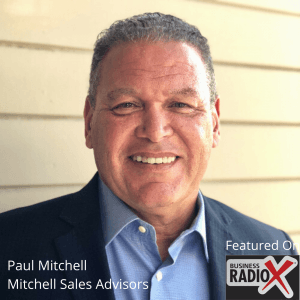
Paul Mitchell, President, Mitchell Sales Advisors

Paul Mitchell, is President of Mitchell Sales Advisors, a firm specializing in sales strategy, sales process, sales execution. Paul has a 25 year history of solving problems through these sales efforts. Paul’s goal is to use this experience and his unique life experiences to help primarily White leaders to learn more about the challenges facing the black community and how it affects their businesses through exposure, education, compassion and empathy.

“A Life In Black and White”

“What do I mean by that? Because of my life experiences, I have been uniquely positioned to provide information and understanding to people of power, primarily White people, to help support better communication and engagement with their employees, families, and expand opportunities to show empathy and compassion to the Black community. Our goal is to help provide information to those who authentically want to learn more about the challenges the black community face in the workplace and how we can develop a true partnership through genuine understanding and knowledge, to help make our workplaces more collaborative and productive. I am seeing interest from many White Americans who want to learn how they can help break the cycle of Black racism and social injustice. This is a key time for business leaders to educate themselves on how to have these meaningful conversations with their employees of all races. Due to my business and life experiences, I find that I am uniquely qualified to offer support in doing just that.”

Paul Mitchell’s LinkedIn profile

Mitchell Sales Advisors website

Questions/Topics Discussed in this Show

  • Why Paul is uniquely qualified to have this discussion
  • Race discussion in business
  • Why this important for business leaders to address now
  • “Getting into relationship” through mentoring black employees and colleagues
  • Why do Blacks feel the way they do in society and the workplace
  • What should White business leaders do to effect change in their organizations
  • How do we help educate the leaders to build organizations that are diverse and how this affects innovation and productivity.
  • How empathy as a learned skill helps in this work
  • How White people who want to help get over the concern of “what if I say the wrong thing?”
  • The problem with the statement “I’m color-blind”
  • What is our way forward and what will “A Life in Black and White” do to help and support that

North Fulton Business Radio” is hosted by John Ray and produced virtually from the North Fulton studio of Business RadioX® in Alpharetta. You can find the full archive of shows by following this link. The show is available on all the major podcast apps, including Apple Podcasts, Spotify, Google, iHeart Radio, Stitcher, TuneIn, and others.

Renasant Bank has humble roots, starting in 1904 as a $100,000 bank in a Lee County, Mississippi, bakery. Since then, Renasant has grown to become one of the Southeast’s strongest financial institutions with over $13 billion in assets and more than 190 banking, lending, wealth management and financial services offices in Mississippi, Alabama, Tennessee, Georgia and Florida. All of Renasant’s success stems from each of their banker’s commitment to investing in their communities as a way of better understanding the people they serve. At Renasant Bank, they understand you because they work and live alongside you every day.

Tagged With: empathy, John Ray, mentoring, mentoring black employees, Mitchell Sales Advisors, North Fulton Business Radio, Paul Mitchell, race discussion, Racism, workplace racism

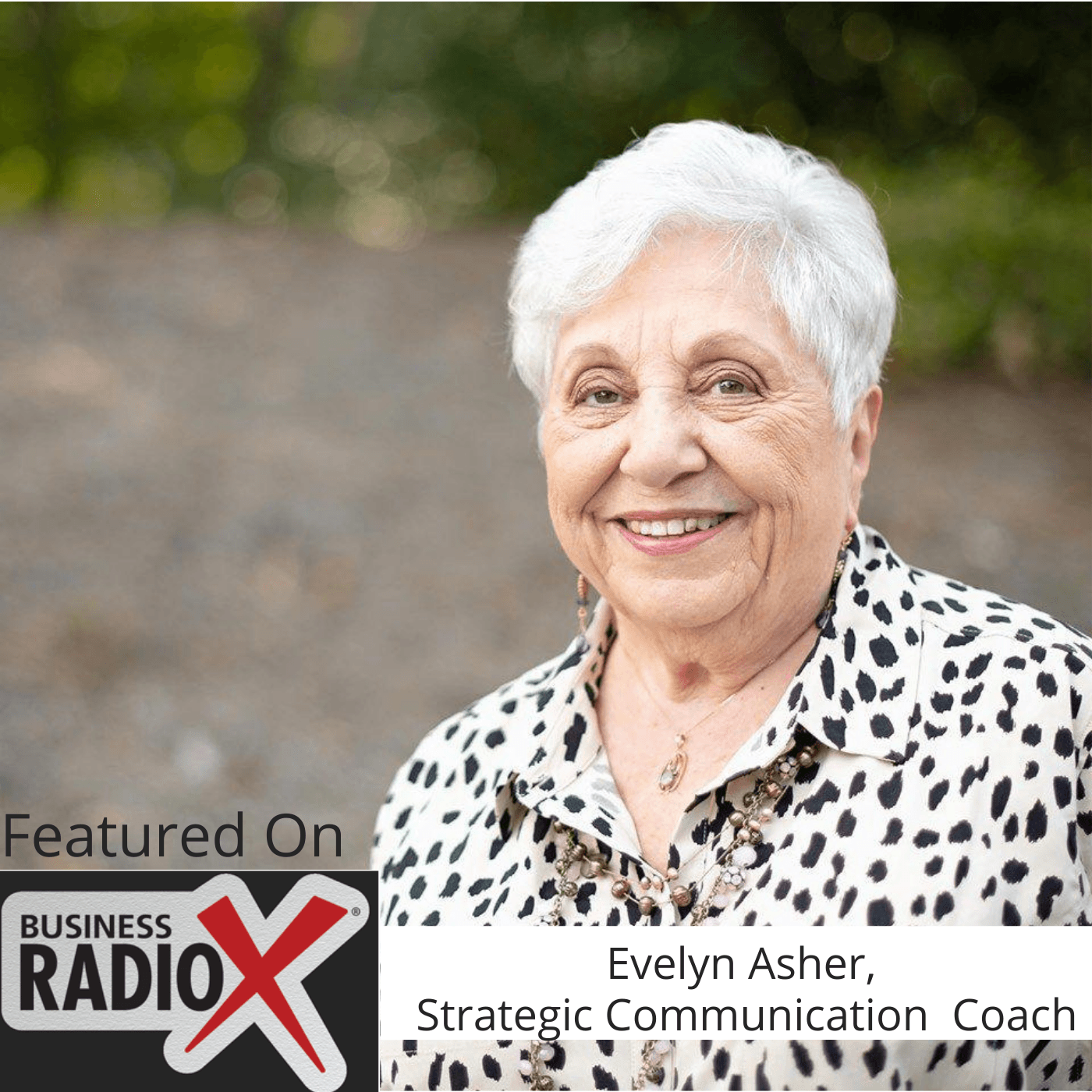
Evelyn Asher, Strategic Communication Coach

July 27, 2020 by John Ray

Evelyn Asher
North Fulton Business Radio
Evelyn Asher, Strategic Communication Coach
Loading
00:00 /
RSS Feed
Share
Link
Embed

Download file

Evelyn Asher

Evelyn Asher, Strategic Communication Coach (North Fulton Business Radio, Episode 263)

Evelyn Asher thrives on helping women in technology and others who want to improve their communications skills so that their value shines through. Evelyn joined host John Ray to discuss her insights on persuasive communication, the importance of understanding how others perceive you, and much more. “North Fulton Business Radio” is produced virtually by the North Fulton studio of Business RadioX® in Alpharetta.

Evelyn Asher

Evelyn Asher has a passion for every voice to be heard and respected. She is the founder of Wisdom Collective, a community designed to connect women through online writing experiences.

She opened her consulting practice in 2014 when she moved back to Gainesville, after serving as Certified Small Business Center Director for Caldwell Community College & Technical Institute on two campuses – Hudson and Boone, NC. She has served in the marketing departments of three Fortune 500 companies.

A life-long learner, Evelyn attributes much of her knowledge to research she has edited over the past twenty years in a solo-entrepreneurial venture, She has published a caregiver anthology and a collection of poetry entitled “A Gypsy’s Tapestry: A Woman Observed. A Woman Observing. Currently she is crafting her second collection of poetry highlight profiles of courage she witnesses in the immigrant population in her community.

This will be her 13th year mentoring elementary school children. She values each thread in her tapestry of global friendships. She explores painting techniques including those proffered by one of her granddaughters during their FaceTime, writing and poetry groups.

Point of Contact for Evelyn Asher

Evelyn’s website

LinkedIn

Facebook

Instagram

Questions/Topics Discussed in this Show

  • The value of mentoring and communication in an uncertain climate
  • Ensuring crystal clear, persuasive communication that denotes the why with all stakeholders
  • Understanding how others perceive you
  • The value of having an external confidant who understands your business and is a radical listener
  • When employees are trying to keep things together at home and work which can be the same environment, they benefit from being heard.
  • Creating space for wonder in each day – even in small increments – being accountable with a mentor will weave wonder into workplace.
  • Customer service communication (I received communication from four different companies that were first grade, not first-rate.)

North Fulton Business Radio” is produced virtually from the North Fulton studio of Business RadioX® in Alpharetta. You can find the full archive of shows by following this link. The show is available on all the major podcast apps, including Apple Podcasts, Spotify, Google, iHeart Radio, Stitcher, TuneIn, and others.

Renasant Bank has humble roots, starting in 1904 as a $100,000 bank in a Lee County, Mississippi, bakery. Since then, Renasant has grown to become one of the Southeast’s strongest financial institutions with over $13 billion in assets and more than 190 banking, lending, wealth management and financial services offices in Mississippi, Alabama, Tennessee, Georgia and Florida. All of Renasant’s success stems from each of their banker’s commitment to investing in their communities as a way of better understanding the people they serve. At Renasant Bank, they understand you because they work and live alongside you every day.

C

Tagged With: communication, communication coach, customer service communication, Evelyn Asher, John Ray, mentoring, North Fulton Business Radio, persuasive communications, Wisdom Collective

Kyle Sanders, Let There Be Rock, Dan Solla, PTSD Foundation of America

November 13, 2019 by Beau Henderson

Business RadioX® Community
Kyle Sanders, Let There Be Rock, Dan Solla, PTSD Foundation of America
Loading
00:00 / 17:20
RSS Feed
Share
Link
Embed

Download fileDuration: 17:20

Kyle Sanders – Let There Be Rock

Let There Be Rock School is a music lesson facility and rock and roll community center. Students from age 5 to adult learn to play guitar, bass, drums, keys and vocals while interacting with their peers. All students have the opportunity to join a band learning classic, current and writing original songs to perform at a real rock n roll venue!!

What Kyle and his team have so much more to offer than just music and vocal lessons…  community, likeness and spirit are developed here!

Dan Solla, JD – PTSD Foundation Of America Atlanta


“Hope and Healing for the Invisible Wounds of War: Support and Treatment for our Communities’ Combat Veterans”

Dan Solla is the Managing Director of the PTSD Foundation of America’s-Atlanta/North Georgia Chapter.  The PTSD Foundation of America operates an 80-bed residential treatment and interim housing facility for combat veterans, facilitates local peer-based support groups, and organizes recreational and outdoor events, outings, and challenge expeditions for veterans and their families.  Mr. Solla’s work and passion is helping other combat veterans struggling with adjustment to civilian life, combat trauma, PTSD, addiction and thoughts of suicide. 

Mr. Solla is a veteran of the United States Army Infantry, having served as a rifleman in the 1st Armored Divisions 1/36 Infantry Battalion out of Ray Barracks Freidberg, Germany.  He served 15 months as a rifleman in Iraq during the invasion of 2003-2004 and was awarded the Combat Infantryman’s Badge for actively engaging in ground combat with the enemy.  He received a Bachelor of Arts in Political Science from the University of Tennessee and a Doctor of Jurisprudence from the University of Tennessee College of Law in Knoxville.  A resident of Flowery Branch, he is a member of the American Legion Post 7 in Gainesville, a parishioner of St. Gabriel’s Episcopal Church in Oakwood and father to Jude and Zen Solla. 


Tagged With: criminal behavior, Dan Solla, Dr. bill lampton, Drums, education, Freidberg, ga, Gainesville, Georgia, germany, gifts, ground combat, guitar, help, individual lessons, interaction, Kyle Sanders, Lesson, Lessons, Let There Be Rock, local, local peer-based support groups, local veterans, mentoring, music, music interaction, North Ga Business Radio X, north georgia business radio, north georgia business radiox, original music, outreach, peers, piano, ptsd, PTSD Foundation of America, PTSD Foundation of America Atlanta, recreational and outdoor events, Suicide, treatment center, tribe, venue, Veterans, Vocal, vocals

Inspiring Women, Episode 13: Building Up the Women Around You

September 9, 2019 by John Ray

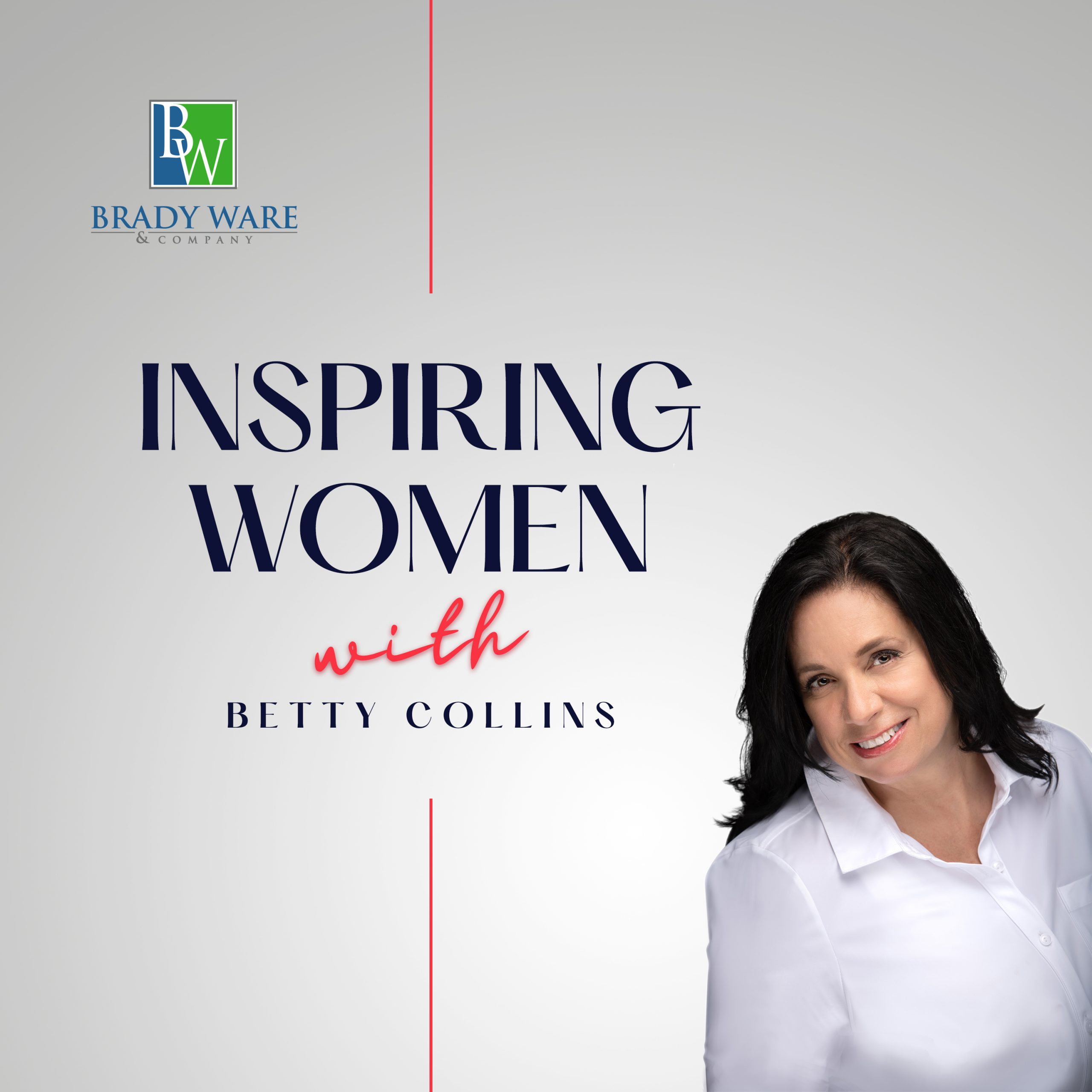
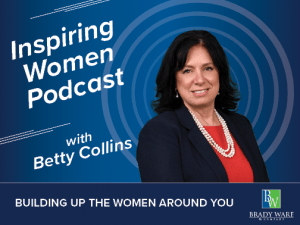
Inspiring Women PodCast with Betty Collins
Inspiring Women, Episode 13: Building Up the Women Around You
Loading
00:00 /
RSS Feed
Share
Link
Embed

Download file

Building Up the Women Around You

On this edition of “Inspiring Women,” host Betty Collins addresses the imperative all women should take on to build up, encourage, and mentor other women around them. “Inspiring Women” is presented by Brady Ware & Company.

Betty Collins, CPA, Brady Ware & Company and Host of the “Inspiring Women” Podcast

Betty Collins, Brady Ware & Company

Betty Collins is the Office Lead for Brady Ware’s Columbus office and a Shareholder in the firm. Betty joined Brady Ware & Company in 2012 through a merger with Nipps, Brown, Collins & Associates. She started her career in public accounting in 1988. Betty is co-leader of the Long Term Care service team, which helps providers of services to Individuals with Intellectual and Developmental Disabilities and nursing centers establish effective operational models that also maximize available funding. She consults with other small businesses, helping them prosper with advice on general operations management, cash flow optimization, and tax minimization strategies.

In addition, Betty serves on the Board of Directors for Brady Ware and Company. She leads Brady Ware’s Women’s Initiative, a program designed to empower female employees, allowing them to tap into unique resources and unleash their full potential.  Betty helps her colleagues create a work/life balance while inspiring them to set and reach personal and professional goals. The Women’s Initiative promotes women-to-women business relationships for clients and holds an annual conference that supports women business owners, women leaders, and other women who want to succeed. Betty actively participates in women-oriented conferences through speaking engagements and board activity.

Betty is a member of the National Association of Women Business Owners (NAWBO) and she is the President-elect for the Columbus Chapter. Brady Ware also partners with the Women’s Small Business Accelerator (WSBA), an organization designed to help female business owners develop and implement a strong business strategy through education and mentorship, and Betty participates in their mentor match program. She is passionate about WSBA because she believes in their acceleration program and matching women with the right advisors to help them achieve their business ownership goals. Betty supports the WSBA and NAWBO because these organizations deliver resources that help other women-owned and managed businesses thrive.

Betty is a graduate of Mount Vernon Nazarene College, a member of the American Institute of Certified Public Accountants, and a member of the Ohio Society of Certified Public Accountants. Betty is also the Board Chairwoman for the Gahanna Area Chamber of Commerce, and she serves on the Board of the Community Improvement Corporation of Gahanna as Treasurer.

“Inspiring Women” Podcast Series

“Inspiring Women” is THE podcast that advances women toward economic, social and political achievement. The show is hosted by Betty Collins, CPA, and presented by Brady Ware and Company. Brady Ware is committed to empowering women to go their distance in the workplace and at home. Past episodes of “Inspiring Women” can be found here.

Show Transcript

[00:00:00] Well, this is an inspiring women’s podcast, so I would expect that the title today, building up the women around you would be a given, but it really is not always that case. I want to talk about that today. You know, building up and supporting the women in your life sounds easy. It sounds good. We all think that we do that. I don’t think anyone’s going to go. You know, I really don’t want to support women today. I don’t want to build women up. But unfortunately, it’s not the case when you look at the data that’s out there and the issues that are out there surrounding this topic of just lack of building up, in fact, tearing down can be fairly OK. Right. But it’s a huge barrier to the professional advancement, your professional career, you know, in your personal life when you don’t build up women around you and you don’t you don’t have that camaraderie. So, you know, sometimes we just think, well, women are more catty. Right. Men are not. Men blow it off. Their ego doesn’t allow them to do this. My emotions just get the best to me. And that’s just who I am. It’s probably still not OK. And this is always, you know, have you experienced that exodus of the Mean Girls Club? You know, I can honestly say I’ve never been a victim of I mean, Girls Club, but that’s not fun. And it’s not just in junior high, right? It’s it’s more than that.

[00:01:29] I just think we need to do better at building each other up if we really want to see us advancing, go forward. You know, we focus more on the men. You know, they’re not nice or they’re the with the white, a middle aged male. But in reality, they beat us on this one. And I think sometimes it’s why they rule the world. So I want to talk about that today. There’s a Facebook post. I see it a lot. I always save it. And it shows a woman with a crooked crown and it shows a woman straining the crown. And then it shows one of them ripping off her head. The sad reality, there’s a huge deficit that exists in the number of women who really are intentional or make it a goal to elevate other women. So, you know, it’s a choice and you hear the term we’re stronger together. Sure. Maybe corny, but you know, it really is true. It’s true for any type of community setting. It’s out there. Collectively, we have more impact. So isn’t that the goal anyways in the movement for women or inspiring those women around you? It is to have impact. If you really want to see the advancement and the empowerment of women, build them up. The them could be your family. It could be your girls. Your daughters. It could be your neighbors. You probably work with women that you need to do that.

[00:02:57] It could be your peers. I mean, you’re surrounded by other women, I’m sure. But men do a better job. I’m not going to focus on them today. The question is, why is this true? Why? Let’s start there. We’ve all been taught to be competitive. Competitive, good. You know, competitive is what is why we have a very successful marketplace in the United States. Competition can be good and healthy. It can make you better at what you do. But sometimes you get to look at there’s just as much strength and there’s miss just as much success in collaboration. Competition is fine. You just can’t take it too far. Collaboration is a good thing and you needed to probably shift a little bit your mindset with that. You know, we tend to have a defense mechanism. Women are really good about defense mechanisms and those kick in. And we have you know, it’s kind of a culture that we’ve created a lot of times. You know, we’re responding to something and we respond really negatively. And then we we go into a defense mechanism that that just keeps the the the tearing down and the lack of building. It just keeps it going. So I think the defense the defense mechanism is something you have to really check yourself on beyond defense mechanisms. And we’ve kind of had that competitive edge or attitude. We also have a queen bee mentality.

[00:04:29] The queen bee that’s everywhere. It’s really was was probably more in the back 70s and 80s with women, because that was when people. That was when women were really rising up in companies. And if you know anything about bees, the queen bee in the colony is the one who dominates. She is the one who takes control because that’s I guess what you have to do is bees. I don’t know, but there’s not a lot of room for anyone else but the queen bee. And unfortunately, a lot of times, especially in the years before us and 70s, 80s and 90s, if a woman was able to advance, say, in her career, she she was very protective of that territory because she was lucky to have it. And so that queen bee domination, maybe not taking other women with her, not having the elevator door open so they could come up. It just wasn’t there. I think it’s there a lot more probably today because there’s a lot more women at the top of the elevator. So but that usually the queen bee and undermine her, they push women out of the way. And unfortunately, that still exist. And then just negative thinking, you know, I think this is why we end up, you know, being a little little catty. We had to be the mean girls club. But the negative thinking. I mean, you heard this because it made the news over and over again.

[00:05:51] And Madeleine Albright with Hillary Clinton when she was at a campaign rally. It was. It was funny. I mean, there was no definite. But she gave her speech and she at the end said there’s just a special place in hell for women who do not vote for Hillary Clinton or support women. And it was funny. It made the news over and over again. So but but I don’t think she was wanting anyone in hell. But we don’t always have that positive. There’s a special place for women who support women in heaven, which is completely the opposite. Right. So between negative attitudes in those defense mechanism, the queen bee stuff. I just think we don’t build each other up like we could because of those habits, because of those cultures that get created. So where do you start? Where do you make this change? You have to look at at who you are in those areas. And do you have those characteristics? Are those things that you’re going. Yeah, I can relate to that because I probably am that. So that’s where you have to start. But you really have to take the high road and lead by example. You know, you just have to if you’re going to build up other women, you know, obviously the mentoring being very open and honest and consistent mentoring is not just, oh, it this is all really cool.

[00:07:03] You know, I’m going to mentor you and make you into something. Mentoring is helping you get along through your journey because it’s yours. It’s not someone else’s. And so when you have a good mentor, chances are they’re gonna be pretty open and honest with you about what they see. That’s not being catty. I think that’s helping you. I always feel sorry for the person in the office or maybe that family member, because we all have one. Right, that everyone just knows this is who they are. And so they kind of just let the behavior or let the situation be what it is. Nobody confronts it. Nobody talks to them. Instead, there be literally men and making fun of them. So a good mentor is gonna be that open, honest. They’re going to be constructive, yet have some compassion when they have to have those things. And I will tell you, this is a very simple thing, but it really it really had an impact on me. Oh, probably Billy in the early 2000s, maybe two between, you know, up to 2005, somewhere in that timeframe. I always wore the big 80s hair. I had just always worn the big hair. Not that hair is life and death. Right. But that’s what I did. And I liked it. It was easy. It was simple. My hairdresser was the same person all the time. So I got this new client who owned a salon.

[00:08:22] And I thought, you know, I should go to her salon, see what she has.

[00:08:26] And I think I had a massage and she said, you know, you really do you want us to cut your hair? And I said, Oh, no, I have a great hairdresser. She just said, you know. I must say, this is nice.

[00:08:37] Cambridge, you’re to live it in the 80s with your hair still and this is like the 2000s and there’s a thing called a straightener and you know, all these different things that you could do with your hair. And and I was a little taken back. I just, you know. But I was really kind of glad it stuck with me. She was somebody she said it very nicely. She wasn’t making fun of me. She wasn’t talking about coming back on was she’s not out of the 80s yet. Instead, she just said, hey, I’m a salon.

[00:09:03] I’m a hairdresser. We could do something really cool with your hair. And that’s a simple thing. But that’s what a good mentor does. So how else do you lead by example? You got to be tenacious when you’re tenacious.

[00:09:17] Other women around you, you don’t have to say it. Preach it. Have meetings, journal it. All these things they’re watching you. And by doing that, it’s giving them confidence and you don’t even know it. They’re seen you work through something. They’re seeing you not giving up. You’re busting through that roadblock and you’re showing them it can be done.

[00:09:36] Never underestimate the influence you will have by being tenacious. So that really helps build up the women around you because they they tend to watch it and then they hopefully follow it if it’s done well. You know, I think we can probably more some supportive, especially when someone’s wants to take a risk. So what does that mean? Well, I’m going to quit my really good job in the middle of pay. My kids are in college with tuition and I’m going to start a bracelet business. OK, now, is that a risk that you would just sit and go? Cool. I love your jewelry. Or would you say, Manolis? Let’s really talk about that before you do it. Great idea. But there’s a path probably you need to take. That’s a way you build up women so that a year from now, when they’re now borrowing money to go to school or they can’t keep their kid in school, they’re going, why did I ever do this? And there just might be a different time to make jewelry. So I think being supportive, especially when they won’t take risk, we need to help them navigate through it. And another thing you have to do, and I’m not very good at this because I don’t ever want to see people to see me with any kind of wrong emotion.

[00:10:54] I mean, I should call it wrong emotion. But, you know, I’m not a person who’s going to cry a lot in front of people. I’m not. You know, I don’t really want to go on a rampage and melt down in front of it. But sometimes you need a safe space to go. You need a place to go and just be who you can be, be who you are. Let those things down and then, you know, open the door and smile and walk out. I think women could do that more often instead of you blow up at the wrong time, in the wrong place. And then the tearing down and their ripping of the crown off the off the head comes along. The other thing you really need to do in a great way, but you better be ready to do it. You’ve got to pass on the lessons you’ve learned from bad treatment so that it doesn’t happen to other women and they can maybe be more aware of it. And lastly, be empathetic. You know, chances are other women are going through what you’re going through and come together, learn from it. But most certainly anyone around you that you see needs some advocacy for them.

[00:11:59] Go advocate for them. Stand for them. Be with them. You know, kind of defend them, do those things. Those are ways, certainly that you take the high road and you kind of get away from the wise. It happens that we act this way. These are ways that you can change the course of that circle, whether it’s your family or your community or somewhere you volunteer at your work, all that kind of stuff. When women come together, though, and build each other up and they can get that alliance that’s healthy. That alliance that’s positive. You’re going to experience power. There is power in the pact, right? There’s power in more. There’s power in numbers sometimes. It’s a good kind of power. Don’t abuse it. But that’s a result of leading the way in your circles of influences. You think on experiences you’ve had where other women have built you up? I could go on and on about this, but we have to continue to move on in the podcast. But you know who’s coming to your mind right now and you think that woman was a champion for me? That woman advocated for me. That woman really stepped up when I took a risk and she stayed with me.

[00:13:10] What woman straighten the crown for you versus ripped it off? You know, sometimes we just watched from a distance. The crowds, Kirk, and we don’t do anything about it. Right. But. I think you should look at those folks first and you thank them, you know. Think about that. Thank them. But also say me and I could also be that to other people, to other women, all the opportunities in the world are ours for the taking and ours to be shared in when building women up isn’t so much about your voice.

[00:13:41] It’s how you use your stage, it’s how you use your venue to encourage and support them so that they can find their voice.

[00:13:50] Brady, where’s my venue? And I have a responsibility to use that wisely, I try to do that through our women’s initiative, through supporting organizations like Navajo and the WNBA, using that venue wisely.

[00:14:05] How can you rise to the challenge? You keep it simple, don’t sit and think you had to have this big organizational thing and I’m going to, you know, help everyone and solve the world’s problems. Keep it simple, but take the opportunities and challenges those risk without even questioning your worth or ability or places a woman. And then don’t be afraid to be a little unruly. OK, I read a great article from Glamour magazine by Olivia Perez and she talks about being unruly. It’s OK. But listen. Just picture Thanksgiving dinner with this family. So she said I was genetically bred to be an unruly woman. I was raised in Los Angeles by a Jewish, French, Moroccan father and a Serbian mother, kind of in a Brady Bunch family, strong female figures, four sisters, two stepmothers, three godmothers and a mom, the mom who dedicate her life to bringing us all up as independent daughters. Just picture that things cute tender. These were all women I aspire to become. They they were ones who coexisted despite marriages, divorce, different backgrounds. They supported one another unconditionally. And they taught me that being soft spoken was maybe not always an option. Not at our dinner table anyways, for sure. But unruly can be good. Just say for building up other women, you know, really, that’s a whole nother podcast. But sometimes you need to be a little unruly and shake the pot, and that is a way to support women. I just found that and I just thought that was just a great way to describe her family and the people around her. And she probably uses it in a good way. But being a little unruly is OK. You know, other things you can do, though. You just show up every day for women and envision the change together with them. You know, see it together and work towards it. Certainly creating environments for women to take up space. All right. So what does that mean? Panels and conferences, events, interviews, girls night out. You know, really, it’s about thriving in their environment. What space is that that the women in your life would would really thrive in?

[00:16:20] I will say that my daughter, she gets some, you know, a little tired of hearing about my podcast because I wonder, listen. She gets kind of little tired about hearing about women’s initiative things. I mean, I’m always trying to get her to join in. But she did come to my conference in back in June, the Women’s Leadership Conference, which we had about 350 women. We had panels, we had national speakers, Navajo and WBA. We all just came together, put this conference ago and she came. And she was just it wasn’t even so much that I bribed her with new clothes to be there and said she could have a great time together. Night feeder. Well. Right.

[00:16:57] But she loved that she saw me thriving in an environment that I loved. And she she wrote on Facebook that night. I get it now. I saw it today. And that was just that was the whole. That was the best part of that conference for me. It was because it inspired her in a different way. But she was like, Mom, that’s where you belong.

[00:17:20] And that’s what I’m talking about. We’re creating space. What are environments for the women around you and your lives that would make them thrive or where you see them thrive and you’re like supporting them. And so it was a cool story. You know, other ways besides being alone, really, which I kind of like that whole phrase, be transparent and open. Do you understand that secrecy breeds jealousy? I want you to think about that again. Secrecy breeds jealousy. And that then leads to what I now call head trash. I got that from a conference that I was just. You know, those voices that head trash man being a little more open, being a little more transparent. Women tend to take it and run in secrecy, just turns into jealousy and then those voices in your head. So think about that. When you see when you see a women who are tearing each other down, chances are that could be a real way it all started.

[00:18:16] Here’s one. This is the challenge of the day. You’ll probably go right by this one. But zero gossip policy. Try that one. It’s hard sometimes if you just test right down every time you’re gossiping or take a little, you know, checkmark. There we go. You’d be surprised. I did it once because I was in a class on negativity. And that was one of the things we had to do. Every time you have mental negative thought, you had a checkmark. Every time you gossip or put someone down your check mark. You would be surprised. And it did kind of make me go, oh, it’s kind of like tracking your steps on fit, but you’re like, I’m not walking today. Right. It just just a suggestion. I know it’s not easy. You got to go beyond. You look really pretty, right?

[00:18:54] Women are so much more than their physical attributes. And we have a whole society built on that. But I would tell you to encourage women to to take care of themselves and do self care. The emotional part of your life is huge. And I kind of did that post divorce. I said these are the things I’m going to do for Betty Collins. And I sat down with The New York Times. I only ordered like three months of it because it was I don’t know why I needed to read The New York Times, but I did. I just did that for an hour on Sundays with no interruption. And once I was kind of done, I moved on. But it was something that I I it was my time. It was my place. So I think that’s something you have to look at and do. I know I just spent this last year really involved with physical activity and and weight loss. It was not because I wanted to be a size 2. I just knew that I have pretty good health for a 56 year old. And yet I’m not treating the gift like I need to because it’s a gift. I have a lot of people around me and my age who we’ve had people pass away. We’ve had people with cancer. We’ve had people who, you know, just can’t control certain addictions. I don’t have any of that. I don’t even take any of her blood pressure, heart medicine, nothing.

[00:20:07] Why would I not take care of the gift that I’ve been given into her? What’s been weird is not the size, too. It’s just I’m I’m feeling better. And it’s kind of my time. I’m not rushing out the door every morning because I’m I’m doing some workout stuff that’s not crazy. I’m not putting my toe over my head and, you know, wrapping myself up like a pretzel. I would tell you, self care go beyond that. You look pretty stuff being a vehicle that turns a young woman with big dreams into what she was destined to be. You know, you see people with potential and you don’t do anything about it. But I would tell you, never underestimate tapping into that woman’s potential that she can’t see. But you do even this podcast. I question myself, should I keep doing this podcast? And the people that help me record this always say you have no idea what the potential this has. You need to keep going. You need to keep doing. Again, women building up women. Sounds easy, sounds good. It is my hope that you can step back, observe and dive in by speaking life into a woman around you. Doing life together stronger, together with some fun along the way in my life. I have an amazing mom, a big family, 41 to be exact as my immediate family, lots of women. I have a daughter and a daughter law.

[00:21:23] I work for a company where I direct a women’s initiative where 49 percent of the workforce are women. I’m part of several groups. I mentioned Navajo and the WNBA. So women in teh team building are a pretty daily part of my life. Really, it’s a responsibility and it’s a deep passion. I’ve seen both sides building and tearing. We are better together. Ladies, take to heart this podcast. Do some soul searching on your part of building up other women. Go forth and straighten or pick it off the floor. The ground she is wearing. Don’t stand in the background and watch it. I’m Betty Collins and I’m glad you joined me today.

Tagged With: CPa, CPA firm, Dayton accounting, Dayton business advisory, Dayton CPA, Dayton CPA firm, Inspiring Women, Inspiring Women podcast, mentoring, mentoring women, woman owned business, women entrepreneurs, Women in Business, women-owned businesses

Brandon Barton with Square One for Youth

May 29, 2019 by Mike

Case In Point
Case In Point
Brandon Barton with Square One for Youth
Loading
00:00 /
RSS Feed
Share
Link
Embed

Download file

Brandon Barton and Rick Strawn

Brandon Barton/Square One for Youth

Square One for Youth is a non-profit organization that seeks to work with and uplift the youth of our community. The core of their curriculum goes beyond academics and golf. Square One also integrates important values such as ambition, compassion, integrity, respect, work ethic, and accountability, which can positively impact every aspect of the students’ lives. The Mission of Square One for Youth is to help Gwinnett’s youth succeed personally, academically, and, ultimately, professionally. By investing in the students’ lives through vocational guidance, mentoring, academic tutoring, and golf instruction, Square One opens doors to opportunities that allow their students to achieve success.

Tagged With: golf instruction, mentoring, Paradigm Security, Paradigm Security Services, Rick Strawn, security, Square One, Square One for Youth

BEST OF HEALTH St Pauls Towers Executive Director Mary Linde

May 6, 2019 by Karen

BEST-OF-HEALTH-St-Pauls-Towers-Executive-Director-Mary-Linde2
Best Of Health
BEST OF HEALTH St Pauls Towers Executive Director Mary Linde
Loading
00:00 /
RSS Feed
Share
Link
Embed

Download file

BEST-OF-HEALTH-St-Pauls-Towers-Executive-Director-Mary-Linde1

BEST OF HEALTH St Pauls Towers Executive Director Mary Linde

St. Paul’s Towers is a multi level life plan community in the heart of Oakland California, providing independent living, assisted living, memory support, skilled nursing, and short term rehabilitation. SPT is a vibrant community of seniors who live life to the fullest.

Mary-Linde-on-Phoenix-Business-RadioXMary Linde is a nurse and nursing home administrator who has been in progressive administration in aging services for the past 21 years. Prior to that she was a neuro critical care nurse.

Follow St. Paul’s Towers on Facebook and Instagram.


BEST-OF-HEALTH-St-Pauls-Towers-Executive-Director-Mary-Linde

WHY BEST OF HEALTH?

I am a Physician Assistant who has been caring for patients for over 20 years and Family Practice (cradle to grave) is my specialty.

Following the footsteps of three generations of family practice physicians (my father, grandfather and great grandfather) this was a natural and genetic calling that I do not regret.

Given this, I have a unique perspective and it’s time to share that perspective through Ask the PA. As a health care provider, teacher, business owner, patient, and advocate for my family and friends throughout the years, it has been painfully apparent there are disconnects within the current state of health care in the US and throughout the world. It can be confusing and frankly very scary.

It is my goal though this series, Best of Health, to bring people together that are passionate about their roles in the business of health care… and yes, whether or not you want to hear that it’s a business, it is — and that’s the fact. I will introduce to you great, dedicated practitioners and people with a passion for getting the word out about their personal journeys and causes. I will provide information about navigating through a confusing system, asking the right questions and share ways for saving money and time along the way.

It’s time to create change by partnering, empowering, and focusing on the patient, their families and their providers of care. It’s time for you to take the driver’s seat rather than leave your health care solely in the hands of entities such as insurance companies and the pharmaceutical industry.

Stay tuned. Here’s to your Best of Health.

~ Barb 

ABOUT BARB

Barb is a Physician Assistant (PA) and a primary care provider with a passion for education and advocacy. Prior to becoming a Physician Assistant (PA), Barb was an accomplished musician and teacher.  In 1992, Barb made the conscious decision to leave teaching and her musical career in pursuit of a career in medicine. She graduated from AT Still University’s first PA class in 1997 with a Masters of Science in Physician Assistant Studies.

Barb has spent several years working in clinics and family practices. Currently, Barb works for Premise Health at Insight Enterprises in Tempe, AZ as a solo practitioner providing primary care to employees and families on campus. She was also a partner in Renaissance Medical Group and Renaissance Medical Properties in Chandler and Maricopa, AZ and had a dual role of Chief Operations Officer and practicing PA for 14 years.

Along with being a PA, Barb is the author of the book Surviving the “Business” of Healthcare, Knowledge is Power! She is a certified Medical Professional Legal Consultant and Patient Advocate, speaker and influencer for change in healthcare for the patient, provider and family members. Barb is also certified by the National Commission of Certification of Physician Assistants and is an active member of the American Academy of Physician Assistants.

In her spare time, she loves to travel, maintaining an active lifestyle that includes running, biking, swimming. She loves to spend time outdoors with her family and friends, whether it’s walking on the beach or hiking in the desert.

For more information about Ask the PA and to connect with Barb:

Askthepa.com
Facebook: Ask the PA
LinkedIn: Barb Regis, M.S.,PA-C

Tagged With: Healthcare, Leadership, mentoring

Brian Sutherlin with Green Go Box and Ronnell Richards with Ronnell Richards LLC

November 15, 2018 by Mike

GwinnettBusinessRadio-Thumbnail
Gwinnett Business Radio
Brian Sutherlin with Green Go Box and Ronnell Richards with Ronnell Richards LLC
Loading
00:00 /
RSS Feed
Share
Link
Embed

Download file

Steven Julian, Brian Sutherlin, Ronnell Richards, Mike Sammond

Brian Sutherlin/Green Go Box

Green Go Box is an Atlanta-based company that rents plastic totes as an alternative to cardboard moving boxes to be used during a move. They deliver the boxes to you at your current address, you pack and move or have a moving company pack and move, then they pick them up from you at your new address once you have unpacked.


Ronnell Richards/Ronnell Richards LLC

Ronnell Richards is an accomplished, inspirational, and resourceful sales executive with a flawless record of guiding start-up and expansion organizations to achieve impressive revenue gains, exponential profit growth, and extraordinary market-share increases. Throughout his career, he has demonstrated expertise in training, coaching, motivating, and mentoring sales teams and sales professionals to high levels of professional achievement, bringing diverse individuals together to form cohesive teams. As a natural, authentic communicator and relationship builder, he has a talent for creating and capitalizing on networks and business connections, and excel in aligning strategy with organizational vision and goals while interpreting the voice of the customer. Moreover, he is thoroughly conversant in all aspects of the sales cycle ‐ an expert in the psychology of sales and what motivates people.

Tagged With: Green Go Box, Gwinnett Business Radio, mentoring, Mike Sammond, motivational speaker, moving, packing, psychology of sales, Ronnell Richards, Ronnell Richards LLC, Sales, steven julian

Read Better Be Better with CEO and Founder Sophie Etchart and Paracore President Adam Arkfeld E12

November 13, 2018 by Karen

Read Better Be Better with CEO and Founder Sophie Etchart and Paracore President Adam Arkfeld E12
Phoenix Business Radio
Read Better Be Better with CEO and Founder Sophie Etchart and Paracore President Adam Arkfeld E12
Loading
00:00 /
RSS Feed
Share
Link
Embed

Download file

Read Better Be Better with CEO and Founder Sophie Etchart and Paracore President Adam Arkfeld E12

Read Better Be Better with CEO and Founder Sophie Etchart and Paracore President Adam Arkfeld E12

Read Better Be Better is an after school literacy program designed to be highly effective and evidence informed. Their mission is to help children improve literacy skills to become better learners.

They create change by helping children master reading comprehension in three ways:

  • Improving concentration
  • Encouraging an active enjoyment of reading
  • Helping develop a deeper understanding of what is being read

They support basic classroom instruction with additional comprehension strategies to improve proficiency and positively impact future academic success. Read Better Be Better with CEO and Founder Sophie Etchart and Paracore President Adam Arkfeld E12

RBBB uses trained 8th grade volunteers to implement a simple, but highly structured after-school program for 3rd graders. The older students work one-on- one with the younger students, modeling and fostering active engagement with a variety of texts. The program also includes constructive play activities specifically chosen for their ability to focus attention and improve concentration.

Sophie-EtchartSophie Etchart was born in Connecticut, but raised and educated in England. She studied Spanish, French and German at the University of Newcastle-Upon- Tyne. As part of her degree, Sophie spent her third year of University living and working in Belgium and Spain.

Upon graduation, Sophie joined a financial services agency specializing in board-level strategic HR consulting. In 2009 Sophie designed and executed the Private Equity Foundation / Deutsche Bank Leadership Program: a series of instructional workshops and networking events in partnership with INSEAD business school, France. After spending a year on loan to the Private Equity Foundation as a strategic HR consultant, Sophie committed to a full transition into the non-profit sector.

Sophie moved to Peru in 2010 to run the education program at SKIP, an international development organization in northern Peru. For 2 years she managed a team of 25 staff and volunteers working with 330 young people aged 3-17. The key component of the program was a comprehension curriculum designed to complement the national public schooling system. This program received a commendation during a site visit by professional contacts at the Bill Gates foundation.

Sophie met her husband, an Arizona native, in Peru and moved to Phoenix in 2012. She spent 2 years managing the JA BizTown® team at Junior Achievement. Upon her departure, each member of her team had delivered “outstanding” performance according to standardized quantitative KPI assessments.

Sophie had identified the need for basic reading comprehension support during her 2 years at Junior Achievement. The JA BizTown® program serves over 20,000 students per year; an alarming number of whom had neither the focus nor the foundational skills to obtain the most value from the experience. When the “Move On When Reading” law was announced, she decided that the timing was critical to support those 3rd graders at risk of being kept behind. Read Better Be Better is based on the proven SKIP model and adapted to the current environment.

In 2017, Sophie was recognized as one of Phoenix Business Journal’s 40 Under 40 younger business leaders making an impact in the Phoenix area.

Connect with Sophie on LinkedIn, and follow RBBB on Facebook, Twitter and Instagram.


PCLogoRGB-HR

ParaCore is a pay per click lead generation agency helping high-growth businesses scale using paid media. By harnessing the power of Facebook Ads, Google AdWords, and other social and search  marketing platforms, we create a consistent ow of qualified leads at the lowest cost for growing companies. We measure metrics at every step to ensure our clients can easily measure ROI on their  marketing.

Adam-Arkfeld1Adam Arkfeld owns one of the few pay-per-click specialized agencies in Arizona. ParaCore was founded in 2009, but niched its focus to PPC in 2016. Since then, the agency has grown to manage over $3 million in ad spend with a roster of clients ranging from home service companies to online retailers.

Adam serves on the board of Entrepreneurs’ Organization and is President of Arizona’s EO Accelerator program, an organization to help entrepreneurs grow their businesses to a million dollars and beyond.

Connect with Adam on LinkedIn, Facebook and Instagram.

About 3C Amplified

3C Amplified is a space to highlight businesses, nonprofit organizations and individuals collaborating to amplify their impact in the community.  We share real world examples for how partnerships allow for growth both within our businesses and our communities. Listen in as we share how others are connecting, creating and collaborating and how you can be part of something greater.

About Jacqueline Destremps

HostJacquelineDestrempsHeadShotJacqueline Destremps is a creative marketing strategist and founded Another Hand Advantage, LLC in 2014 to help community minded small business owners and nonprofit professionals move forward more confidently with their marketing strategy.  After graduating from Arizona State University with a degree in Psychology, she has spent her professional career working in both the nonprofit and for-profit sector.

She now enjoys being self-employed and the flexibility it provides to allow more time to volunteer, serve on nonprofit boards, choose pro-bono projects, run 100+ Women Who Care Valley of the Sun (which she co-founded in 2014) and travel the world.  Jacqueline believes in creating connections between businesses and nonprofits in the community to stimulate growth and collaboration.

Follow AHA on Twitter and Facebook.

Tagged With: facebook ads agency, Leadership, literacy, mentoring, pay per click marketing, phoenix paid media agency, ppc agency, tutoring

  • « Previous Page
  • 1
  • 2
  • 3
  • 4
  • Next Page »

Business RadioX ® Network


Our Most Recent Episode

CONNECT WITH US

  • Email
  • Facebook
  • LinkedIn
  • Twitter
  • YouTube

Our Mission

We help local business leaders get the word out about the important work they’re doing to serve their market, their community, and their profession.

We support and celebrate business by sharing positive business stories that traditional media ignores. Some media leans left. Some media leans right. We lean business.

Sponsor a Show

Build Relationships and Grow Your Business. Click here for more details.

Partner With Us

Discover More Here

Terms and Conditions
Privacy Policy

Connect with us

Want to keep up with the latest in pro-business news across the network? Follow us on social media for the latest stories!
  • Email
  • Facebook
  • Google+
  • LinkedIn
  • Twitter
  • YouTube

Business RadioX® Headquarters
1000 Abernathy Rd. NE
Building 400, Suite L-10
Sandy Springs, GA 30328

© 2025 Business RadioX ® · Rainmaker Platform

BRXStudioCoversLA

Wait! Don’t Miss an Episode of LA Business Radio

BRXStudioCoversDENVER

Wait! Don’t Miss an Episode of Denver Business Radio

BRXStudioCoversPENSACOLA

Wait! Don’t Miss an Episode of Pensacola Business Radio

BRXStudioCoversBIRMINGHAM

Wait! Don’t Miss an Episode of Birmingham Business Radio

BRXStudioCoversTALLAHASSEE

Wait! Don’t Miss an Episode of Tallahassee Business Radio

BRXStudioCoversRALEIGH

Wait! Don’t Miss an Episode of Raleigh Business Radio

BRXStudioCoversRICHMONDNoWhite

Wait! Don’t Miss an Episode of Richmond Business Radio

BRXStudioCoversNASHVILLENoWhite

Wait! Don’t Miss an Episode of Nashville Business Radio

BRXStudioCoversDETROIT

Wait! Don’t Miss an Episode of Detroit Business Radio

BRXStudioCoversSTLOUIS

Wait! Don’t Miss an Episode of St. Louis Business Radio

BRXStudioCoversCOLUMBUS-small

Wait! Don’t Miss an Episode of Columbus Business Radio

Coachthecoach-08-08

Wait! Don’t Miss an Episode of Coach the Coach

BRXStudioCoversBAYAREA

Wait! Don’t Miss an Episode of Bay Area Business Radio

BRXStudioCoversCHICAGO

Wait! Don’t Miss an Episode of Chicago Business Radio

Wait! Don’t Miss an Episode of Atlanta Business Radio