Business RadioX ®

  • Home
  • Business RadioX ® Communities
    • Southeast
      • Alabama
        • Birmingham
      • Florida
        • Orlando
        • Pensacola
        • South Florida
        • Tampa
        • Tallahassee
      • Georgia
        • Atlanta
        • Cherokee
        • Forsyth
        • Greater Perimeter
        • Gwinnett
        • North Fulton
        • North Georgia
        • Northeast Georgia
        • Rome
        • Savannah
      • Louisiana
        • New Orleans
      • North Carolina
        • Charlotte
        • Raleigh
      • Tennessee
        • Chattanooga
        • Nashville
      • Virginia
        • Richmond
    • South Central
      • Arkansas
        • Northwest Arkansas
    • Midwest
      • Illinois
        • Chicago
      • Michigan
        • Detroit
      • Minnesota
        • Minneapolis St. Paul
      • Missouri
        • St. Louis
      • Ohio
        • Cleveland
        • Columbus
        • Dayton
    • Southwest
      • Arizona
        • Phoenix
        • Tucson
        • Valley
      • Texas
        • Austin
        • Dallas
        • Houston
    • West
      • California
        • Bay Area
        • LA
        • Pasadena
      • Colorado
        • Denver
      • Hawaii
        • Oahu
  • FAQs
  • About Us
    • Our Mission
    • Our Audience
    • Why It Works
    • What People Are Saying
    • BRX in the News
  • Resources
    • BRX Pro Tips
    • B2B Marketing: The 4Rs
    • High Velocity Selling Habits
    • Why Most B2B Media Strategies Fail
    • 9 Reasons To Sponsor A Business RadioX ® Show
  • Partner With Us
  • Veteran Business RadioX ®

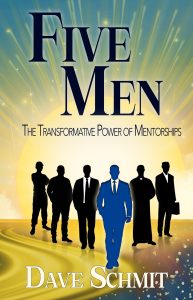
How Mentorship Transforms: Five Men by Dave Schmit

July 15, 2025 by John Ray

How Mentorship Transforms: Five Men by Dave Schmit, on North Fulton Business Radio with host John Ray
North Fulton Business Radio
How Mentorship Transforms: Five Men by Dave Schmit
Loading
00:00 /
RSS Feed
Share
Link
Embed

Download file

How Mentorship Transforms: Five Men by Dave Schmit, on North Fulton Business Radio with host John Ray

How Mentorship Transforms: Five Men by Dave Schmit (North Fulton Business Radio, Episode 884)

What happens when you reflect on the people who shaped your character, not just your career?

Dave Schmit, principal of Schmit + Associates and author of Five Men: The Transformative Power of Mentorship, joins host John Ray for a moving conversation about the mentors who changed his life. From his father and a high school baseball coach to a faith leader who walked with him through unimaginable grief, Dave shares how each man left a lasting imprint. Their influence continues to guide his work, his family, and his approach to leadership.

This episode is not about business tips. It is about legacy. It is about the quiet power of showing up for someone else. Dave’s book is an invitation to reflect on the mentors in your own life and the person you could become for someone who needs you.

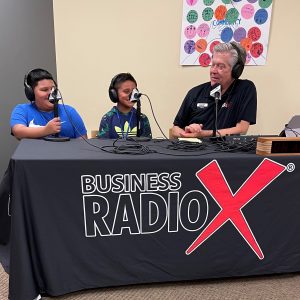
John Ray is the host of North Fulton Business Radio. The show is produced by John Ray and North Fulton Business Radio, LLC, an affiliate of Business RadioX®, and is recorded inside Renasant Bank in Alpharetta.

Key Takeaways from this Episode

  • Mentorship is built over time: Dave’s mentors spanned decades and shaped every part of his life—vocational, personal, and spiritual.
  • Mentors speak hard truths: The most meaningful guidance often comes in the form of tough love, delivered with care.
  • Mentorship vs. coaching: Unlike coaching, true mentorship is grounded in long-term relationships and mutual respect.
  • Anyone can be a mentor: teachers, bosses, priests, parents; many roles can become mentoring relationships when trust and consistency are present.
  • Mentorship can heal division: Dave and his book’s preface writer, Egbert Perry, highlight how mentorship fosters understanding in a divided world.

Topics Discussed in this Episode
00:00 Introduction and Welcome to North Fulton Business Radio
01:51 Guest Introduction: Dave Schmit
02:23 Dave Schmit’s Background and Career
03:29 The Inspiration Behind Five Men
06:53 Mentorship Stories and Lessons
09:18 The Importance of Long-Term Mentorship
12:09 Personal Stories: Lessons from Dad
17:12 Truth Tellers: The Role of Mentors
17:50 A Career in Development
18:35 Meeting Fred Fisher
19:39 Building Connections
22:08 A Personal Story of Loss and Faith
24:26 The Importance of Mentorship
26:52 Encouraging Young People to Seek Mentors
28:56 How to Be a Better Mentor
30:29 Final Thoughts and Book Information
34:17 Closing Remarks and Announcements

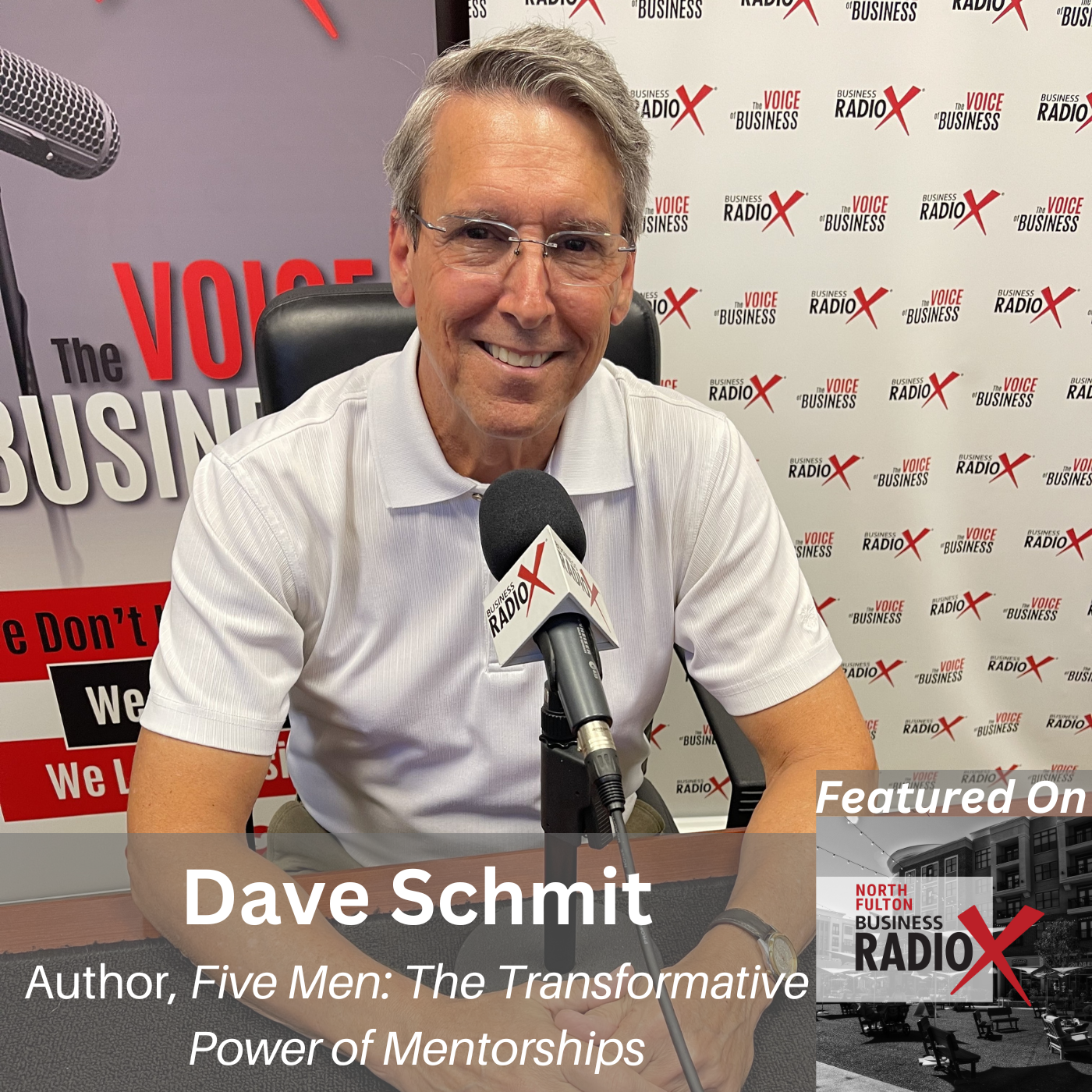
Dave Schmit
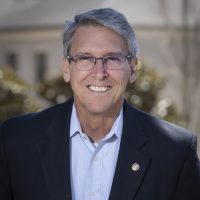
Dave Schmit, Author of Five Men: The Transformative Power of Mentorships

Dave Schmit is a seasoned real estate developer, entrepreneur, and mentor dedicated to building communities and future leaders.

As the founder of Schmit + Associates, he has helped shape walkable, experience-driven developments across Georgia.

Outside of business, Dave is passionate about mentorship, leadership, and faith, drawing from his experiences as an athlete, coach, and community leader.

Five Men is his debut book, sharing the invaluable lessons he learned from the mentors who shaped his life. His mission is to inspire others to recognize, appreciate, and become mentors in their communities.

LinkedIn | Amazon

Renasant Bank supports North Fulton Business Radio

Renasant BankRenasant Bank has humble roots, starting in 1904 as a $100,000 bank in a Lee County, Mississippi, bakery. Since then, Renasant has become one of the Southeast’s strongest financial institutions, with over $17 billion in assets and more than 180 banking, lending, wealth management, and financial services offices throughout the region. All of Renasant’s success stems from each banker’s commitment to investing in their communities as a way to better understand the people they serve. At Renasant Bank, they understand you because they work and live alongside you every day.

Website | LinkedIn | Facebook | Instagram | X (Twitter) | YouTube

Beyond Computer Solutions supports North Fulton Business Radio

If you’re a law firm, medical practice, or manufacturer, there’s one headline you don’t want to make: “Local Business Pays Thousands in Ransom After Cyberattack.” That’s where Beyond Computer Solutions comes in. They help organizations like yours stay out of the news and in business with managed IT and cybersecurity services designed for industries where compliance and reputation matter most.

Whether they serve as your complete IT department or simply support your internal team, they are well-versed in HIPAA, secure document access, written security policies, and other essential aspects that ensure your safety and well-being. Best of all, it starts with a complimentary security assessment.

Website | LinkedIn | Facebook | YouTube

About North Fulton Business Radio and host John Ray

With over 880 episodes and having featured over 1,300 guests, North Fulton Business Radio is the longest-running podcast in the North Fulton area, covering business in our community like no one else. We are the undisputed “Voice of Business” in North Fulton!

The show invites a diverse range of business, non-profit, and community leaders to share their significant contributions to their market, community, and profession. There’s no discrimination based on company size, and there’s never any “pay to play.” North Fulton Business Radio supports and celebrates businesses by sharing positive stories that traditional media ignore. Some media lean left. Some media lean right. We lean business.

John Ray, host of  North Fulton Business Radio, and Owner, Ray Business Advisors
John Ray, host of North Fulton Business Radio and Owner, Ray Business Advisors

John Ray is the host of North Fulton Business Radio. John and the team at North Fulton Business Radio, LLC, an affiliate of Business RadioX®, produce the show, and it is recorded inside Renasant Bank in Alpharetta.

The studio address is 275 South Main Street, Alpharetta, GA 30009.

You can find the full archive of shows by following this link. The show is available on all the major podcast apps, including Apple Podcasts, Spotify, Google, Amazon, iHeart Radio, and many others.
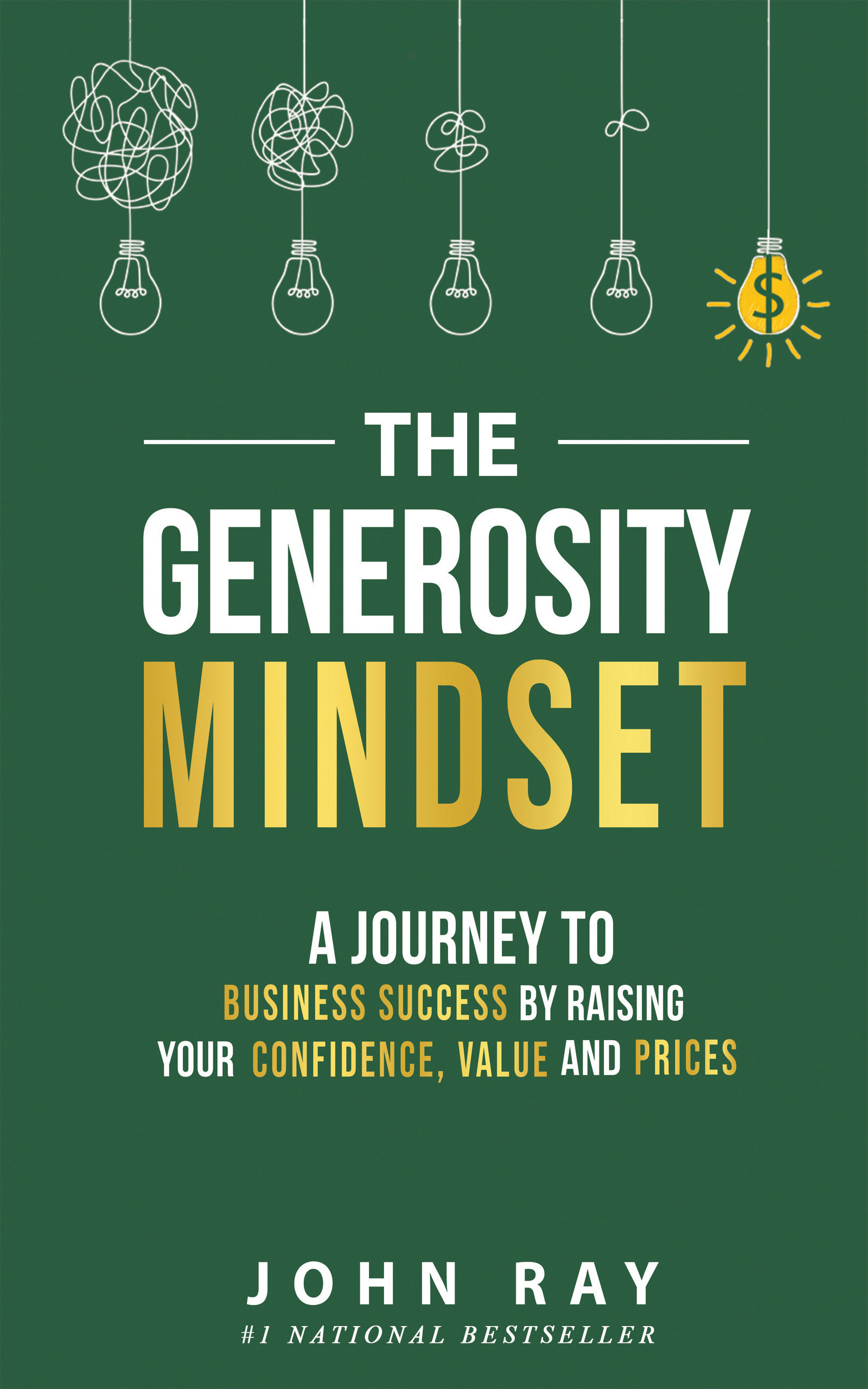
John Ray, The Generosity MindsetJohn Ray also operates his own business advisory practice. John’s services include advising solopreneurs and small professional services firms on their value, their positioning and business development, and their pricing. His clients are professionals who are selling their expertise, such as consultants, coaches, attorneys, CPAs, accountants, bookkeepers, marketing professionals, and other professional services practitioners.

John is the national bestselling author of The Generosity Mindset: A Journey to Business Success by Raising Your Confidence, Value, and Prices.
Tagged With: Author, Beyond Computer Solutions, Coaching, community leader, Dave Schmit, Egbert Perry, Five Men, John Ray, mentoring, Mentors, mentorship, North Fulton Business Radio, renasant bank, Schmit+Associates

Roswell Program of Path to Shine

March 10, 2023 by John Ray

North Fulton Business Radio
Roswell Program of Path to Shine
Loading
00:00 /
RSS Feed
Share
Link
Embed

Download file

The Roswell Program of Path To Shine, Inc. (North Fulton Business Radio, Episode 619)

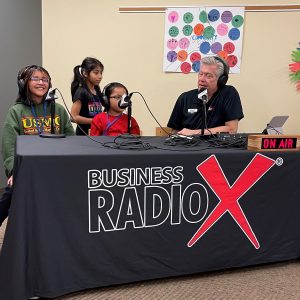
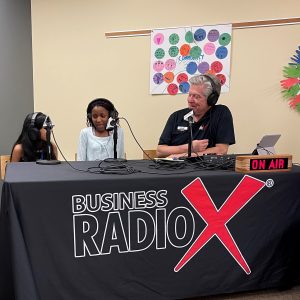
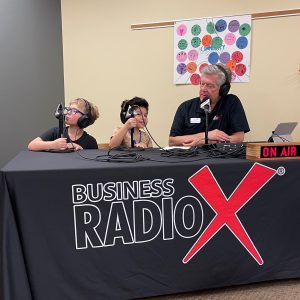
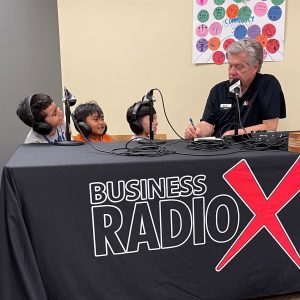
North Fulton Business Radio Host John Ray went on the road to visit the children and mentors of the Roswell program of Path to Shine, an after-school mentoring and tutoring program for children at Mimosa Elementary School. John was joined by Judith Windsor, Program Director, who discussed the children they serve, the results which come from their mentorship model, how interested individuals can become a mentor, and more. John also interviewed children in the program, including Javier, Kayden, Karla, Inielka, Lia, Asia, Mia, Candler, Andy, Kathryn, Diego, Jesus, Matthew, and Ross.

North Fulton Business Radio is produced and broadcast by the North Fulton studio of Business RadioX® inside Renasant Bank in Alpharetta.

Path To Shine, Inc.

Path To Shine®, Inc. is a mentoring and tutoring program for elementary school children in North and Middle Georgia.

Its purpose is to provide academic and social support to encourage children to thrive in school and build self-confidence to achieve their dreams.

PTS’s success stems from its principles to maintain a ratio of no more than one Mentor to two students, to have a flexible structure that adapts to each local community, and to consistently seek collaboration with other organizations.

Website | Instagram | LinkedIn | Facebook


North Fulton Business Radio is hosted by John Ray and broadcast and produced from the North Fulton studio of Business RadioX® inside Renasant Bank in Alpharetta. You can find the full archive of shows by following this link. The show is available on all the major podcast apps, including Apple Podcasts, Spotify, Google, Amazon, iHeart Radio, Stitcher, TuneIn, and others.

RenasantBank

Renasant Bank has humble roots, starting in 1904 as a $100,000 bank in a Lee County, Mississippi, bakery. Since then, Renasant has grown to become one of the Southeast’s strongest financial institutions with over $13 billion in assets and more than 190 banking, lending, wealth management and financial services offices in Mississippi, Alabama, Tennessee, Georgia, and Florida. All of Renasant’s success stems from each of their bankers’ commitment to investing in their communities as a way of better understanding the people they serve. At Renasant Bank, they understand you because they work and live alongside you every day.

Since 2000, Office Angels® has been restoring joy to the life of small business owners, enabling them to focus on what they do best. At the same time, we honor and support at-home experts who wish to continue working on an as-needed basis. Not a temp firm or a placement service, Office Angels matches a business owner’s support needs with Angels who have the talent and experience necessary to handle work that is essential to creating and maintaining a successful small business. Need help with administrative tasks, bookkeeping, marketing, presentations, workshops, speaking engagements, and more? Visit us at https://officeangels.us/.

Tagged With: after school care, children, mentoring, Mentors, Mimosa Elementary School, Non Profit, Path to Shine, Roswell, roswell ga, tutoring

“Under the Radar” Resources for Business Owners, with Paul Wilson, Jr., UGA Small Business Development Center at Georgia State University

September 23, 2020 by John Ray

UGA Small Business Development Center Paul Wilson
North Fulton Business Radio
"Under the Radar" Resources for Business Owners, with Paul Wilson, Jr., UGA Small Business Development Center at Georgia State University
Loading
00:00 /
RSS Feed
Share
Link
Embed

Download file

“Under the Radar” Resources for Business Owners, with Paul Wilson, Jr., UGA Small Business Development Center at Georgia State University (North Fulton Business Radio, Episode 289)

The UGA Small Business Development Center (SBDC) at GSU is a “best kept secret” asset for both established businesses and startups. Area Director Paul Wilson joins host John Ray to discuss their extensive resources, which includes free consulting services with experienced mentors, and how much value their work has added to businesses and, in turn, the Georgia economy. “North Fulton Business Radio” is produced virtually from the North Fulton studio of Business RadioX® in Alpharetta.

UGA Small Business Development Center at Georgia State University

The Small Business Development Center (SBDC) provides tools, training and resources to help small businesses grow and succeed. Designated as one of Georgia’s top providers of small business assistance, the SBDC has 17 offices ranging from Rome to Valdosta to serve the needs of Georgia’s business community. Since 1977, our network of partners has helped construct a statewide ecosystem to foster the spirit, support, and success of hundreds of thousands of entrepreneurs and innovators.

The Small Business Development Center, a Public Service and Outreach Extension of The University of Georgia, is funded in part by the U.S. Small Business Administration (SBA). The University of Georgia Small Business Development Center is nationally accredited by the Association of SBDCs.

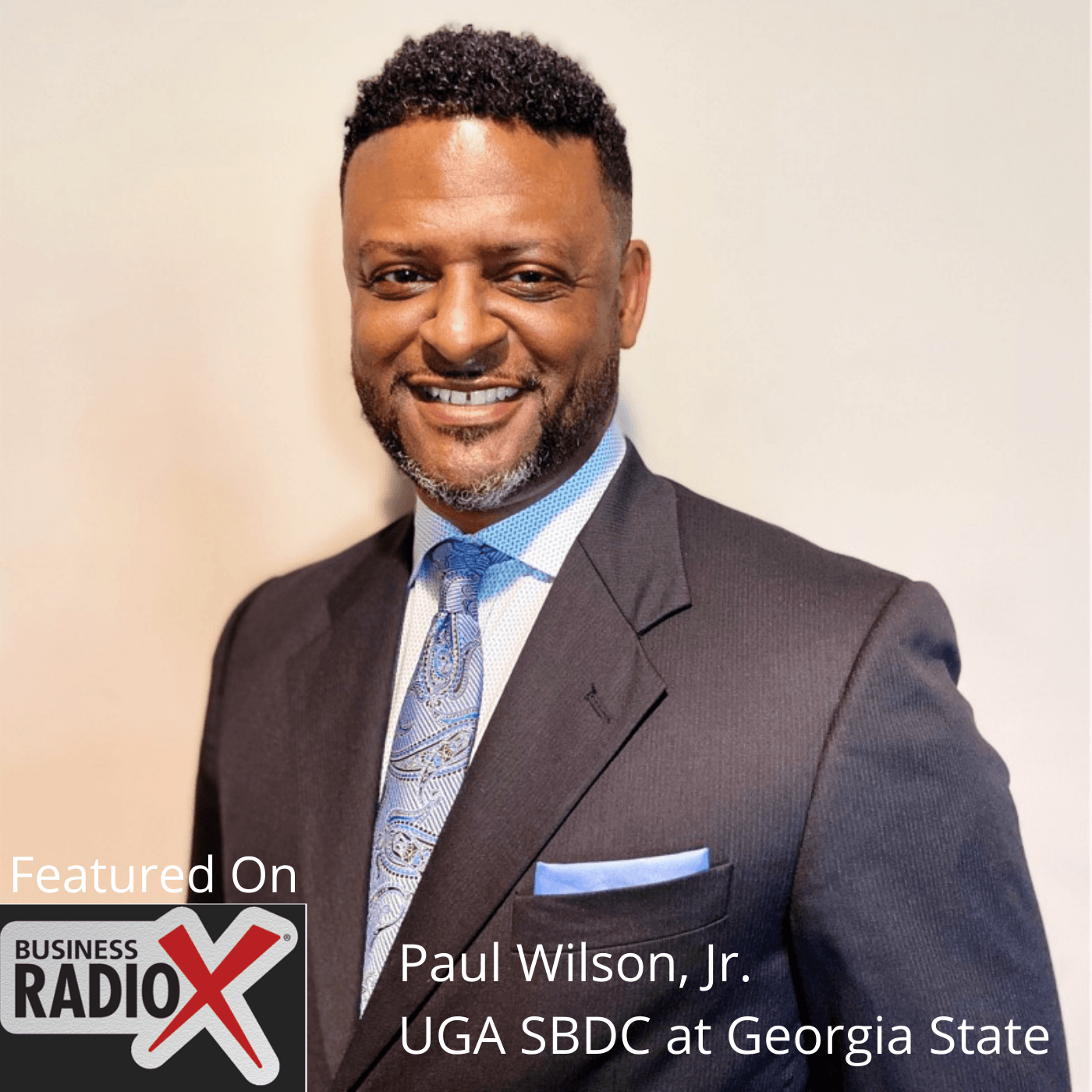
Paul Wilson, Jr.  Area Director

Paul Wilson, Jr. is an innovative and effective entrepreneurial leader with nearly 20 years of experience creating and delivering high caliber consulting and training solutions to large corporations, small businesses, non-profits, and professionals at all levels. He currently leads the UGA Small Business Development Center at Georgia State University where his team provides consulting services, market research, business resources, and educational support to startup, growing, and mature small businesses to help them achieve their short and long-term goals.

He has extensive industry experience that spans leadership roles in supply chain management, supplier diversity, and small business development. His expertise includes strategic planning, organizational development, process improvement, leadership development, government and corporate contracting, and curriculum design and development.

Prior to joining GSU, he had the opportunity to work with several Fortune 500 companies, consult with multiple NFL teams, and teach at a university. He is also a published author, actor, and youth development advocate. He is passionately driven by a strong desire to create a significant impact with under-resourced individuals and communities.

Company website

LinkedIn

Facebook

Instagram

Questions/Topics Discussed in this Show

  • SBDC consulting services and training resources
  • Small business resources in metro Atlanta
  • How to develop new strategies for your business in the current environment
  • Economic disaster funding
  • Other small business needs or concerns

North Fulton Business Radio” is hosted by John Ray and produced virtually from the North Fulton studio of Business RadioX® in Alpharetta. You can find the full archive of shows by following this link. The show is available on all the major podcast apps, including Apple Podcasts, Spotify, Google, iHeart Radio, Stitcher, TuneIn, and others.

Renasant Bank has humble roots, starting in 1904 as a $100,000 bank in a Lee County, Mississippi, bakery. Since then, Renasant has grown to become one of the Southeast’s strongest financial institutions with over $13 billion in assets and more than 190 banking, lending, wealth management and financial services offices in Mississippi, Alabama, Tennessee, Georgia and Florida. All of Renasant’s success stems from each of their banker’s commitment to investing in their communities as a way of better understanding the people they serve. At Renasant Bank, they understand you because they work and live alongside you every day.

Tagged With: business consulting, business resources, consulting, market research, Mentors, mentorship, Paul Wilson, SBDC, small business resources, uga sbdc, uga small business devlopment center

Decision Vision Episode 44: Should I Run for Political Office? – An Interview with Rep. Dar’shun Kendrick, Georgia House of Representatives, and Councilman Colin Ake, City of Woodstock

December 19, 2019 by John Ray

should I run for political office
Decision Vision
Decision Vision Episode 44: Should I Run for Political Office? - An Interview with Rep. Dar'shun Kendrick, Georgia House of Representatives, and Councilman Colin Ake, City of Woodstock
Loading
00:00 /
RSS Feed
Share
Link
Embed

Download file

should I run for political office

Decision Vision Episode 44: Should I Run for Political Office? – An Interview with Rep. Dar’shun Kendrick, Georgia House of Representatives, and Councilman Colin Ake, City of Woodstock

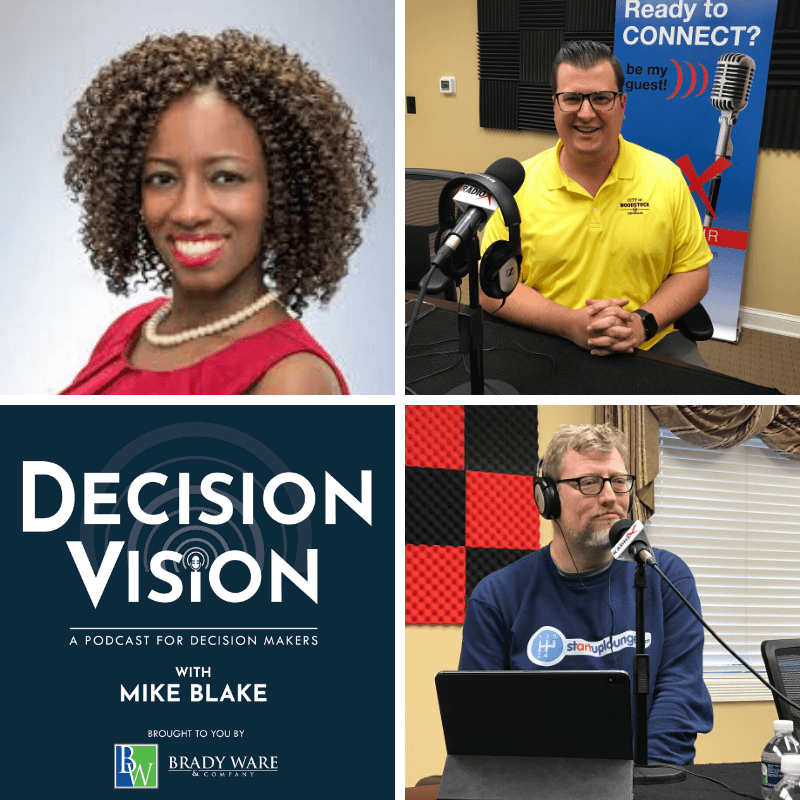
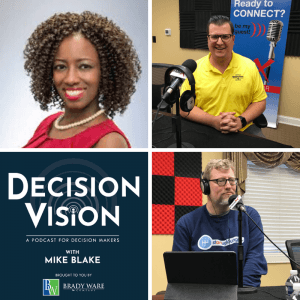
More business owners than ever are running for political office. What should I consider in making this decision? How will holding political office affect my business? On this edition of “Decision Vision,” host Mike Blake speaks with business Rep. Dar’shun Kendrick, Georgia House of Representatives, and Councilman Colin Ake, City of Woodstock on these questions and much more. “Decision Vision” is presented by Brady Ware & Company.

Rep. Dar’shun Kendrick, Georgia House of Representatives

should I run for political office
Georgia Rep. Dar’shun Kendrick

Dar’shun Kendrick was born and raised in Decatur, Georgia. She has a dual degree in political science and communications from Oglethorpe University, a law degree from the University of Georgia and a Master in Business Administration from Kennesaw State. Both of her parents are entrepreneurs so she grew up understanding the unique challenges of business owners, particularly business owners of color.

That’s why since 2010, Dar’shun has dedicated her capital compliance law firm to making sure everyone has access to legal services and tools to raise capital for their business in a way that makes sense for every size business and every investor. Her passion and focus have specifically been on making sure that minorities and women have access to the tools and resources they need to reach their capital raising goals. To date, she has helped companies raise over half a billion ($500MM) in investment funds. In 2019, she became a Series 65 license holder (investment adviser representative) with the ability to provide strategic investment advice to her corporate clients as a part of her services.

Dar’shun is also an innovator and community activist. She was featured in the Huffington Post as 1 of 25 people positioned to Scale Atlanta’s Growing Inclusive Technology Start Up Ecosystem for Black Americans and Beyond. In 2017, she was elected to the Technology Association of Georgia’s (TAG) Corporate Development Board and in 2018 elected to the TAG Diversity Board. She is also a past contributor to Black Enterprise Magazine focusing on economic justice issues. In 2017, she founded Georgia’s 1st ever Georgia Blacks in Tech Policy Conference & Follow Up “Day of Action” with the focus on advocating for inclusive tech policy throughout the state. This event continues on today as the “Tech for All” Policy Conference.

Dar’shun’s service extends beyond her capital compliance firm. Since the age of 27, she has also served as a member of the Georgia House of Representatives. She represents over 54,000 Georgians in DeKalb and Gwinnett counties. She also founded Georgia’s first Technology, Innovation & Entrepreneurship Caucus which is a bipartisan caucus of Georgia legislators and stakeholders committed to the mission of supporting entrepreneurs within the state. She currently serves as the Chief Deputy Whip of the House Democratic Caucus and a ranking member of the Small Business & Jobs Creation committee.

Awards (last 3 awards awarded)- She was awarded the Urban League of Greater Atlanta Young Leader Award (2019) and named as an awardee for the Atlanta Business Chronicle’s “40 under 40” awards (2019) and nominated for 2 NAACP awards for criminal justice reform and her business (2017 and 2019).

Dar’shun is a community activist, public speaker & teacher, elected official, private securities attorney, and a proud member of Alpha Kappa Alpha Sorority, Inc. She currently resides in Lithonia, Georgia.

Councilman Colin Ake, City of Woodstock

should I run for political office
Councilman Colin Ake, City of Woodstock

Colin Ake was elected to Woodstock City Council in 2017. Prior to announcing his run for City Council, Colin served as the Mayor’s appointee on the Woodstock Planning and Zoning Commission for a year and a half. While on the Planning Commission, he was elected Vice-Chair by his peers. Colin served as the Chair of the Greenprints Alliance Board of Directors in 2016 and 2017, and as the Vice-Chair in 2015. He was invited to represent Greenprints Alliance on the Woodstock Police Department’s Body-Worn-Camera Working Group. Colin has provided significant input to the Cherokee Office of Economic Development and Woodstock Office of Economic Development on Fresh Start Cherokee and The Circuit as they work to incorporate startups into their economic development plans.

Professionally, Colin is employed by Georgia Tech’s VentureLab, where he works with commercialization projects. He teaches entrepreneurship to commercialization teams through the NSF I-Corps Program, where he is a Regional Lead Instructor. He leads programs across the southeast and assists in the administration of the I-Corps South grant at Georgia Tech. Colin has taught at Georgia Tech’s Scheller College of Business and is a member of the Georgia Tech Faculty Senate. He also represented Georgia Tech on the State Senate’s Camden County Spaceport Study Committee, where he studied the opportunities and challenges facing the potential spaceport on the Georgia coast.

Prior to joining Georgia Tech, Colin spent four years rebuilding an aerospace company focused on reusable launch operations and lunar/planetary lander technology development. He previously worked at the Georgia Tech Research Institute and at an early-stage technology startup for two years. Colin holds a Bachelor of Science in Management and a MBA from Georgia Tech.

Colin grew up a mile from Woodstock and moved back to the city with his wife Nikki to start their family. Colin, Nikki, and children (Owen & Lealynn) are members at Sojourn Community Church in Woodstock, where Nikki is an active member of the finance committee, and Colin plays drums and works on long-term planning projects.

Michael Blake, Brady Ware & Company

Mike Blake, Host of “Decision Vision”

Michael Blake is Host of the “Decision Vision” podcast series and a Director of Brady Ware & Company. Mike specializes in the valuation of intellectual property-driven firms, such as software firms, aerospace firms and professional services firms, most frequently in the capacity as a transaction advisor, helping clients obtain great outcomes from complex transaction opportunities. He is also a specialist in the appraisal of intellectual properties as stand-alone assets, such as software, trade secrets, and patents.

Mike has been a full-time business appraiser for 13 years with public accounting firms, boutique business appraisal firms, and an owner of his own firm. Prior to that, he spent 8 years in venture capital and investment banking, including transactions in the U.S., Israel, Russia, Ukraine, and Belarus.

Brady Ware & Company

Brady Ware & Company is a regional full-service accounting and advisory firm which helps businesses and entrepreneurs make visions a reality. Brady Ware services clients nationally from its offices in Alpharetta, GA; Columbus and Dayton, OH; and Richmond, IN. The firm is growth minded, committed to the regions in which they operate, and most importantly, they make significant investments in their people and service offerings to meet the changing financial needs of those they are privileged to serve. The firm is dedicated to providing results that make a difference for its clients.

Decision Vision Podcast Series

should my business buy real estate?“Decision Vision” is a podcast covering topics and issues facing small business owners and connecting them with solutions from leading experts. This series is presented by Brady Ware & Company. If you are a decision maker for a small business, we’d love to hear from you. Contact us at decisionvision@bradyware.com and make sure to listen to every Thursday to the “Decision Vision” podcast. Past episodes of “Decision Vision” can be found here. “Decision Vision” is produced and broadcast by the North Fulton studio of Business RadioX®.

Visit Brady Ware & Company on social media:

LinkedIn:  https://www.linkedin.com/company/brady-ware/

Facebook: https://www.facebook.com/bradywareCPAs/

Twitter: https://twitter.com/BradyWare

Instagram: https://www.instagram.com/bradywarecompany/

Show Transcript

Intro: [00:00:09] Welcome to Decision Vision, a podcast series focusing on critical business decisions brought to you by Brady Ware & Company. Brady Ware is a regional full-service accounting and advisory firm that helps businesses and entrepreneurs make visions a reality.

Mike Blake: [00:00:28] And welcome to Decision Vision, a podcast giving you, the listener, clear vision to make great decisions. In each episode, we discuss the process of decision making on a different topic from the business owners or executives perspective. We aren’t necessarily telling you what to do, but we can put you in a position to make an informed decision on your own and understand where you might need help along the way.

Mike Blake: [00:00:48] My name is Mike Blake, and I’m your host for today’s program. I’m a director at Brady Ware & Company, a full-service accounting firm based in Dayton, Ohio, with offices in Dayton; Columbus, Ohio; Richmond, Indiana; and Alpharetta, Georgia, which is where we’re recording today. Brady Ware is sponsoring this podcast. If you like this podcast, please subscribe in your favorite podcast aggregator and please consider leaving a review of the podcast as well.

Mike Blake: [00:01:11] So, today, we’re going to talk about whether you as a business owner executive should run for political office. And regardless, I think, of where you are in the political spectrum, if you are at any place, I’m not sure where I am anymore, I think that’s an increasingly important topic. I think we’re seeing more people with a business background seeking office at all levels. And indeed, like them or love them, love them or not like them, the current President of the United States does come from a business background. And indeed, he ran on his business background as a reason why that is the case he made that he would be a good president of the United States. And that’s something that he invokes fairly regularly.

Mike Blake: [00:02:02] And it’s not just he that’s doing that. Mike Bloomberg has recently jumped into the race. There’s discussion now about, you know, whether billionaires can buy their way to the presidency. And again, we’re not going to talk about that particular topic, but I think there’s an increasingly blurred line now between politics and business. And maybe there’s always been a blurred line and depending, again, where you sit, maybe it’s an uncomfortably blurred line. But the fact of the matter is, I think, that the people who did not think that they had the stuff or the wherewithal, even the desire to run for political office and just sort of put themselves in the seat of being a business person, now, are thinking of themselves potentially in a dual role or maybe it’s even something they do with either a subsequent or intervening chapter in their lives.

Mike Blake: [00:02:56] And, you know, the recent statistics on this podcast still are flooring to me. We’re pushing about three-and-a-half million downloads, I understand, since February. Chances are good at least one of you has thought about running for political office. So, at least, this could be interesting to one of you out there. But I think it will be interesting to more on that. And we actually have a director at Brady Ware & Company that was elected mayor for one of the towns, I believe, outlying Dayton. He took over as mayor when the previous mayor resigned. And then, ran and was elected in his own right. So, we’re even seeing that inside our own company.

Mike Blake: [00:03:35] So, as you know, when you listen to this podcast, we’re bringing in people who actually know what they’re talking about, because I certainly don’t. And coming in to talk about this topic today are two people who are balancing public service and their own careers. And so, joining us today is Dar’shun Kendrick, a five-term member of the 93rd and/or 94th Districts of Georgia in the Georgia House of Representatives as the chief deputy whip. And I say the 93rd/94th, because I think it was a 94th District for her first term. And then, thanks to redistricting, I think it then became the 93rd. But for those who aren’t in Georgia, our assembly is made up of 180 members, a fairly large body, partially because we just have, I think, more counties than anybody in the country.

Mike Blake: [00:04:25] We’re not serving her constituents in this capacity. Dar’shun is a capitol compliance lawyer dedicated to guiding Black and female founders in the capitol, raising investing process. She provides these services through her company, the Kendrick Advisory, an advocacy group. She’s an arbitrator of the Financial Industry Regulatory Authority or FINRA. I did not know that before I was researching this podcast and she holds a bachelor of arts from Oglethorpe University, I live about a-mile-and-a-half from there, holds an MBA from Kennesaw State University and a law degree from the University of Georgia.

Mike Blake: [00:04:56] And she’s joining us by phone today. So, you may hear some noise in the background. With those of you who are not from Georgia, we have a unique driving environment here. And one of the unique features of the driving environment is that rain, particularly cold rain, will turn the streets of the greater Atlanta metropolitan area into an episode of Ice Road Truckers, basically. So, Dar’shun, please drive carefully as you’re on the podcast. Thanks for joining us.

Dar’Shun Kendrick: [00:05:25] Yeah. Thanks so much. And I’m sorry I couldn’t be in the office or in the studio today. But as you know, we are getting ready for session. So, we’re trying to make do with the 24 hours we get.

Mike Blake: [00:05:37] Yeah. Well, if you guys can vote a 26-hour day, I’d really appreciate that.

Dar’Shun Kendrick: [00:05:42] Yeah. So would I. I’ll work on that.

Mike Blake: [00:05:45] Also, joining us today is Colin Ake. Colin was elected city councilman in 2018 for the City of Woodstock, Georgia, a municipality of southern Cherokee County, the population of just over 30,000. And Woodstock is, oh, I’m going to say about 20 miles north and west of downtown city of Atlanta, maybe a little bit farther than that. Prior to serving in that role, Colin was a—or give me some help here, was it a or the planning and zoning commissioner for the City of Woodstock.

Colin Ake: [00:06:13] I was one of seven.

Mike Blake: [00:06:15] Okay. One of seven. So, a planning and zoning commissioner. When not serving his constituents, Colin is a principal at Georgia Tech VentureLab, where he serves as an instructor on innovation and entrepreneurship. Colin actively works with entrepreneurs and researchers to commercialize research, identify, and secure grant funding, mentor startups, and modify and implement Georgia Tech’s evidence-based entrepreneurship curricula. This includes training and evaluating other instructors in the customer development methodology employed by the I-Corp program and across Georgia Tech.

Colin Ake: [00:06:44] At some point, I’d have you back to talk about because that’s an interesting program. It’s one that I think is unique. Colin holds his bachelor degree in management and his MBA from Georgia Tech. So, regardless of any kind of political discussion here, we have somebody from the University of Georgia and somebody from Georgia Tech, and that’s probably going to create more tension on this program than anything. And if you are from Alabama or Auburn or Florida, Florida State, you know exactly what I’m talking about. Colin, welcome to the program.

Colin Ake: [00:07:10] Thanks, Mike. Thanks for having me.

Mike Blake: [00:07:12] And interestingly, you’re wearing a shirt today that’s yellow with black stitching on that. Is that something that you arranged or?

Colin Ake: [00:07:20] Not specifically because of where Dar’shun went to get her law degree, but I did pick it out.

Mike Blake: [00:07:29] All right. So, let’s jump into it, because we got a ton to cover here. So, Dar’shun, let me let you go first. Ten years ago, you began to serve in your capacity in the Georgia legislature. What motivated you to do that?

Dar’Shun Kendrick: [00:07:49] Well, here, I have a very unique and interesting story. So, I essentially was at the right place at the right time or the right place at the wrong time, depending on which day of the week it is. I was a 27-year old who had just started practicing law for small business litigation firm downtown. And the law firm imploded one summer. And so, they let everybody go. And so, I had started my MBA program. And I had to start my own law firm.

Dar’Shun Kendrick: [00:08:28] So, I actually happened to be down as the capitol because two hours before I got down there to meet with our rep on some sort of marketing for my new firm, the person in my seat decided to run for governor. And so, they were looking for people. And I just so happened to be at the capitol meeting on an unrelated matter. I didn’t even know they would qualify me. And so, the person I was meeting with, I had known since I was a teenager because I worked at the capitol and they asked me what district I was in.

Dar’Shun Kendrick: [00:09:04] And I said, House District 94, which is 94 at the time. And he said, “Well, we need you to run for office.” And of course, I thought he was crazy because I was starting the MBA program and a new law firm. But the long story short is I ended up qualifying 30 minutes before the qualifying ended. So, I actually went from a private citizen to a full-blown candidate unexpectedly overnight. So, I wish I had a better inspirational story about how I worked hard enough and I planned to be in this position, but that is the true story of how it happened.

Dar’Shun Kendrick: [00:09:43] But I ultimately decided to say yes because I knew I eventually wanted to work on state house. I just thought it would be kind of be, you know, sort of when I had a more stable career, when I was older, maybe with a family. But I decided to say yes, because, you know, I grew up in DeKalb County and I represent Dekalb County. I knew that I was more qualified than the people that were running. I already had tremendous support before I even signed the qualification document, so I knew that I could do it. And even though it came unexpectedly and it came fast, I have had a pleasure of serving 54,000 Georgians ever since.

Mike Blake: [00:10:29] Okay. And I have a feeling there are probably other stories that are kind of like that. But Colin, how about you? What’s your story? Did you also sort of fall into public service that way or is that the more of a longer term ambition of yours?

Colin Ake: [00:10:44] No, I kind of fell into it. I grew up in Woodstock. And Woodstock has changed a lot. It has grown massively in the last couple of decades and really become a place that is much different than where I grew up. My wife and I moved back to Woodstock in 2013. And I got involved in a local nonprofit focused on building a trail system just because I want to be able to raise a family somewhere over there. It was a good outdoor recreation opportunity. And from there, I got asked one day to serve on the Planning and Zoning Commission, which was not on my radar, not something I’d been to, not something I was involved in.

Mike Blake: [00:11:26] Did you know anything about planning and zoning?

Colin Ake: [00:11:27] I did not know anything about planning and zoning. But I love learning new things. And so, I dove in and had a lot of fun over the course of about a-year-and-a-half. Planning and zoning in the State of Georgia, most bodies are recommending bodies. In other words, they’re appointed by mayor and city council, but they recommend decisions. And then, the mayor and city council make the final decision. And after about a-year-and-a-half of seeing recommendations go one way or the other and the city council listened to some of them and not listened to others, I decided, well, it might be time to make this vote count if I’m spending the time on it.

Mike Blake: [00:12:05] Like the Christmas song goes, if you’re so smart, you rig up the lights, right?

Colin Ake: [00:12:09] Something like that.

Mike Blake: [00:12:10] So, let’s go into that then. Your first election, talk about running in your first election was like.  You, yeah.

Colin Ake: [00:12:21] Yeah.

Mike Blake: [00:12:22] Colin.

Colin Ake: [00:12:22] So, my first election was an experience. So, I ran against an incumbent that was first elected and hadn’t been in office continuously, but was first elected in the year 1990.

Mike Blake: [00:12:35] Wow.

Colin Ake: [00:12:36] So, 2017, I’m running against a guy who has been in office in and out a couple of times, but for for a while. Nice guy. But I wanted a shot. So, I qualified and started running. Somebody else also qualified. So, I had a three-way race and that was quite the experience. It’s a lot of door-knock and it’s a lot of talking to people. It’s a lot of time. It is a great experience. You know, I teach this entrepreneurship stuff at Georgia Tech, right? We teach researchers to go talk to customers and actually understand the people. I mean, knocking on doors is all that, right?

Mike Blake: [00:13:12] Yeah.

Colin Ake: [00:13:12] It is essentially sitting there and that-

Mike Blake: [00:13:13] I hadn’t thought about that. That’s right.

Colin Ake: [00:13:15] … you are learning about your constituents or potential constituents at this point. And what do they care about? Why do they care about those things? And it’s a lot of fun, but it’s a lot of work. You wear through some shoes and it was a good time. I was fortunate enough to avoid a runoff. I won outright. I was a little surprised. You know, I know a lot of people do these victory parties, I didn’t do any of that. I was ready to find out who I was going to be against in the runoff. And I had about four people at my house. And it turned out okay.

Mike Blake: [00:13:51] Well, knowing you, that sounds about right though. You’re kind of a low-key guy, so I don’t see you as a victory lap guy. Dar’shun, how about you? I mean, I know you, sort of, were an overnight qualification story, but what was that first election like? Were you opposed?

Dar’Shun Kendrick: [00:14:09] I was. So, I had four other people was—and my district is largely democratic. So, obviously—general. But I did have four other people in the primary. It is somebody who is very active in the Democratic Party. Somebody who had ran for this three times before. And there’s somebody who was very, very active that have supporters in Rockdale. But I’m just—so, I was the youngest. And so, every time the media printed something, they just ask it without at least letting you know for whatever reason.

Dar’Shun Kendrick: [00:14:53] But I, you know, knocked on doors. I have been involved in politics since I was 18. So, we have to like run a campaign. And so, I had a number of primary voters who were at least three times. And that’s when the primary—fly. It wasn’t in vain like it is now. So, it was a long, hot summer, a very long, hot summer. And I, you know, didn’t quite know how I was able to—start a law firm while knocking on doors. That still felt quite interesting in how I did it—business.

Mike Blake: [00:15:38] Well, let’s, in fact, talk about that, because, you know, one of the things that draws me to this conversation is, you know, where does running for office intersect with business, right? And both of you, in your case, you have a business and Colin has, you know, a career and neither of your post, they’re not designed to have you be a career politician in that respect. But I’m curious, as you are knocking on doors, do you think that that actually helped you kind of understand your market better, Dar’shun?

Dar’Shun Kendrick: [00:16:20] You know, I think it helped me not only to understand my market better, but just to broaden my understanding of just opinions and the issues facing Georgia in general. When I first ran for office, I was—at Rockdale County. And Rockdale County is that county who have very, very active supporters of commerce. And so, you know, on the campaign, so obviously, I was engaged with those two views. But it helped me that I did have a business background to sort of, I think, connect with people on the campaign trail at these retail or business centers.

Dar’Shun Kendrick: [00:17:06] And I am accused more than I would like about being one of the more full-business Democrats. But I think it served me well, because I am able to understand sort of the base of my calling, which is labor and balancing with the people that I represent, which are obviously founders of this. So, I definitely learned a lot about that market, but around Georgia issues as well. It was a really great opportunity to just meet people and hear different views. I really enjoyed the campaign. I know it’s hard, but I learned a lot of their stories.

Mike Blake: [00:17:47] So, Colin, my next questions for you is, you know, as you are preparing to run, have you had professional mentors or advisors in your life that maybe, you know, have helped you along the way to get to where you’ve been professionally? Did you also rely on them as you contemplated this political step? And if so, were they helpful? If not, then where did you kind of find that expertise?

Colin Ake: [00:18:11] Yeah, it’s a great question. So, you know, I tend to be the student of, you know, whatever world I’m going into. I worked with a bunch of different entrepreneurs from a bunch of different backgrounds and bunch different industries, right? And so, that’s taught me to take advice from the people who have experienced something before and go find people that can share something with me that, you know, is based off that experience. I certainly had conversations with business mentors or people that I worked with previously. I’m about running for office. I got encouragement to do so.

Colin Ake: [00:18:45] But of course, you know, if you’ve not run a campaign, you generally go well. But I’ve never run a campaign and that’s kind of, you know, where that stops. I had some help from some friends that had experienced parsing data and find someone that they can parse data well. And go grab some voter data and, you know, data’s data. You got to know what you’re looking for, but once you know what you’re looking for, it’s fairly easy to pull together a strategy.

Mike Blake: [00:19:13] Indeed, I’ve heard that superior command of data was a big factor in enabling the president to win in 2016, right? It wasn’t whether he’s a better candidate or not, but this was a lot of analysis. And I think there’s some truth to this that he and his team just paid more attention and just did better with parsing data.

Colin Ake: [00:19:36] My experience has been that the data certainly gives you an edge. And it helps inform whatever strategy you’re developing as a team. Dramatically different to run for president than it is to run for city council for the City of Woodstock.

Mike Blake: [00:19:49] Sure.

Colin Ake: [00:19:51] For the small business owners that are out there that are thinking about getting involved in local government, at either the local or the county or the state level, it’s really easy to not even be—you know, you don’t have to be a presidential level data parser to make a difference in a small race.

Mike Blake: [00:20:12] Yeah. And in fact, interestingly enough, there is one of these rare cases where a meaningful office was won by one vote, a Boston city council office, after their fourth recount was just decided by one vote with over 70,000 thousand votes involved. So-

Colin Ake: [00:20:30] That’s fairly narrow.

Mike Blake: [00:20:31] There’s probably going to be a lawsuit, too. One vote, you know, you got to believe that’s gonna be challenged, I would think. But still-

Colin Ake: [00:20:39] Hanging chad somewhere.

Mike Blake: [00:20:40] Yes. So, it does happen. So, Dar’shun, how about you? I suspect, but you tell me. I don’t want to put words in your mouth. What about your mentors and advisors? Have they been the same for you along the way in business as in politics or have you found that they’ve been different?

Dar’Shun Kendrick: [00:21:01] So, my sort of mentors in business have always been my parents. So, I grew up in an entrepreneurial household. So, I love business owners, but typically, minority female founders and Black-owned founders share sort of the challenges that they went through. So, my parents have kind of taught me a lot about business. And, you know, I have people that I sort of look up to. I wouldn’t say that I have a formal mentorship with anyone. And that’s probably because, believe it or not, I’m—about it. So, you know, I just had not gotten opportunity to ask somebody to do that mentorship. But I am because one of the things that I added to my success and firm is I just recently got a series of job life investment-

Dar’Shun Kendrick: [00:22:05] So, I am intentional about how people have been successful in the state for a very, very long time with that aspect of it. But political-wise, you know, as a politician, I value amongst anything else—good and anything like that is people who are persistent in their belief and that is true. So, one of the reasons that one of my best friends is a partner is because we are very, very truthful with one another. And because above all else, we are very persistent in our belief. So, for me, you know, I will look up to or admire anybody in the political world that is consistent in their belief and persistent about it.

Mike Blake: [00:22:59] So, you’ve been in public service now for a decade. Really remarkable. And which means you’ve won five elections. Again, remarkable. How have you found that’s impacted your legal practice and your consulting practice?

Dar’Shun Kendrick: [00:23:20] So, obviously, in the beginning, since I was an overnight candidate, from a law firm perspective, I wasn’t prepared to be a full-blown candidate. So, I think that was the hardest time because I didn’t have the preparation. I literally went from a private citizen to a full-blown candidate overnight. So, those early years are very, very rare. I’ve done a very good job, indeed, of managing it.

Dar’Shun Kendrick: [00:23:54] And so, one of the things that I do, particularly during this upcoming legislative session, is I’m very, very good about saying no. Obviously, I have about 31,000 followers on this and everybody, you know, wants to pick my brain or hear a story or just advice about this. And I just say, “Hey, listen, I’m very good about saying no.” But the other thing is I try to focus on policies that I have an expertise into it, which is capital label, security work, investment, strategies, and things like that.

Dar’Shun Kendrick: [00:24:32] So, it makes the work a little, not only more fun or more engaging, but a little easier to just pass the learning curve as you’re not spending as much time on it, you’re just focused on things that you really couldn’t deal with. So, over the years, I’ve been able to really find that balance. And I think that it served not only me will, but the State of Georgia will to have somebody focusing on policies that is also a part of their day job.

Mike Blake: [00:25:06] And Colin, how about you? You haven’t been in service quite as long, but it looks certainly long enough to have an impact. How have you found that’s impacted your career?

Colin Ake: [00:25:13] Yeah. It’s got a time impact for sure. You know, juggling multiple responsibilities is a challenge. You have to be very good about saying no.

Mike Blake: [00:25:25] And you’re moonlighting. Both of you are basically moonlighting when it comes down to it.

Colin Ake: [00:25:28] And, you know, there’s beauty and there’s challenge in citizen legislature and in citizen governance, but there’s balance that comes from having those multiple perspectives and experience. You have to find things that are important to you and prioritize them. You have to say no to a lot of things. People ask me what my hobbies are. My hobby is serving the citizens. You know, there are no other hobbies.

Colin Ake: [00:25:53] I’ve got a family, I’ve got a real job, and I’ve got an elected office. And that’s the majority of my time. So, you know, it changes things because it gives you different perspectives on life. You know, we don’t manage a budget anywhere near the size that Dar’shun deals with. This is, you know, at the city level, it’s a much smaller world. You know, our form of government, we have a city manager that’s full-time, essentially the CEO.

Colin Ake: [00:26:25] And we act as, you know, kind of a part-time board. But there are infinite subjects at any point time you can go learn a lot about, right? There are people who have built their careers off of public safety response, out of public works, out of community development. And to be a student of each of those games, enough where you’re informed, but not enough where you’re unable to focus on other things as, you know, you just have to juggle it.

Mike Blake: [00:26:50] So, the question I want to ask both of you, I’ll give Colin first crack at this, is there’s what I would call a romantic notion out there. And I used to have this. I’ve moved away from this view myself. But there’s a romantic notion that if you could just run government the way you’d run a private business, everything would just be hunky dory. And I’m not sure that our attempts to do that have worked out well, but I’m willing to be educated otherwise. Colin, in your experience, is that a realistic expectation? Is it partially realistic? Where do you kind of come down on that?

Colin Ake: [00:27:30] I’m going to say and I am making up an answer on the spot here. I think it depends on the level of government. Local government, small municipality is dramatically different from large municipality, it’s dramatically different from county government, and dramatically different from state government, which none of that, you know, is nearly as complex as the federal government. When you’re in a small municipality or, you know, we’re just over 30,000 people, it’s growing fast, there are elements that certainly translate.

Colin Ake: [00:28:05] You have HR challenges, you have budget challenges. So, there’s elements that translate. I don’t think it’s necessarily the same, right? Because you’re dealing with a lot of things like social contracts between neighbors and zoning issues that are really personal for people and really come down to, you know, interpretation of and belief in basic rights and principles. And so, there’s elements that translate, there’s elements that don’t translate even at the local level. But I don’t know if at the local level there’s more of it or less of it. What’s your your thought, Dar’shun?

Mike Blake: [00:28:43] Dar’shun, where do you come down on this?

Dar’Shun Kendrick: [00:28:46] Yeah. So, it’s interesting. I just had finished going to a retreat with the technology advancements in Georgia. And my colleague, Joe, does a lot of technology work. He said, when he first got elected, which was last year, he said, “I have the misconception that government is—like a business. And boy, did I get a big surprise?” And I think if that is right and that—the problem with running government like a business is that their end goal is different, right?

Dar’Shun Kendrick: [00:29:20] So, for businesses, this is representing corporations like I do, their first responsibility is a job upholder, which is to make profits, right? That is the end goal. There is the fiduciary duty that’s involved there. With government, obviously, it’s very, very different. The end goal is uphold constitution, improving for the public safety and welfare of their citizens. So, I think, the common point, you are going to have some-

Dar’Shun Kendrick: [00:29:53] You know, sometimes, when it works well, like under Georgia, we have a 26-billion dollar budget and we are not allowed to print money or borrow money like the federal government is. So, every year, we have to balance our budget like I effectively—but at the same time, you know, we were making those various techs and things that the priorities are going to be very, very different. Because it is a government entity, I suppose they have really different budgeting.

Mike Blake: [00:30:23] You know, that’s an interesting point. I want to kind of underscore something that in terms of that capacity to borrow. And in fact, most private businesses can borrow at some point, right? Even if you’re a sole practitioner, you could put a $20000 Mac Pro on your credit card if you wanted to. I’m not sure what you’d do with it, but you could certainly do that. Whereas, you know, as you said, if you’re not in the federal government, generally speaking, there is no borrowing capacity. You balance the budget, end of discussion or you just run out of money.

Dar’Shun Kendrick: [00:31:03] Yeah. And, you know, that’s one of the things that obviously, the—this upcoming legislative session. And those conversation is just going to be different than if I was having a conversation with a board that I represented in the business.

Mike Blake: [00:31:22] So, has there been at some point, Dar’shun, where you’re concerned about there being a negative impact in your business? I mean, you know, we’re taught that we should be not discussing politics and business and generally speaking from the except of some very close business associates, I don’t entertain that discussion. You can’t avoid that because you’re out there and you got bumper stickers and you got signs on people’s house corners and so forth. You know, have there been points in which, you know, maybe that’s negatively impacted your business? Because there are people who look at you as a Democrat and say, “You know what, I’m just not going to do business with a Democrat, end of discussion.”

Dar’Shun Kendrick: [00:32:06] Yeah. That’s very possible. You know, I don’t have any empirical data that somebody has done that. But two things to your point. So, the first thing is I am an oddball and that I am not one of those people that think that we shouldn’t discuss policy. I think that’s the reason. Otherwise, because you don’t have those horrible sessions, that dinner on the table, so I am free and open—probably to my social media rather than dinner table.

Dar’Shun Kendrick: [00:32:39] So, I am probably an anomaly and that I think it will never be obviously the factors of—it had taught me to be more tolerant of other people’s opinions. And so, I just think holding it up doesn’t serve anybody. So, I’m definite in my belief in that respect. But the second thing is, as I mentioned before, I tend to be one that criticized on both sides. But particularly, for Democrats, because I do understand and relate to business owners and founders, what they might do for the underlying labor movement.

Dar’Shun Kendrick: [00:33:16] And that’s not to say that, you know, I’m against labor or anything like that. It’s just that I bring a different perspective. And so, I think knowing that and because of the things that I do as far as policy and collaborations and things like that, people might know that I’m a Democrat. But when it comes to business, particularly when it comes to technology, really, the people are more willing to—to me because of my support of businesses on the side.

Mike Blake: [00:33:55] So, let me switch gears here, because I think there’s an important question. And somebody out there is thinking about this question, I guarantee it. And that question is this. Colin, let me put it to you first. Somebody is thinking, “Wow. If I could just run for office, that would really help raise my profile.” What a great resume build or what a great thing to put on LinkedIn. And maybe it even gives you some other opportunities as well. And we’ll talk about conflicts of interest in a minute. But just generally speaking, you know, in your mind, is it worth running for office to help your career?

Colin Ake: [00:34:37] To me, no. There’s different opinions on this, obviously.

Mike Blake: [00:34:41] Right.

Colin Ake: [00:34:41] I think it’s worth running for office if you want to invest yourself in something and you want to learn a different perspective. Sure. I am sure there are examples of people who’ve gone into politics and their career has blossomed as a result. But at the local level, right? To me, I want counterparts on council, I want counterparts on the county commission that are dedicated to making the place that we live a better place, right?

Colin Ake: [00:35:12] And they come with a desire to invest their time and their resources and their energy in making those decisions that are never easy. And that’s a much better motivator to me than someone who’s there for them. It’s about a group. It’s about, you know, building consensus amongst people that don’t necessarily always see eye-to-eye and understanding nuances of issues and finding ways to come to agreements. Like that’s what it’s about. It’s not about, you know, personal gain.

Mike Blake: [00:35:50] Dar’shun, how about you? If somebody is thinking about running for office because they think it would help them personally or from a business perspective, is it worthwhile to have that thought process?

Dar’Shun Kendrick: [00:36:08] I think that is probably the biggest myth besides—that I have heard with respect to public office. Well, because you want to prove and just have the heart to prove it. That I will tell you personally, one of the biggest, most helpful things that people just adviced that I got before I entered the legislature or that before I entered the legislature, it came from my predecessor, who was a lawyer, a legislator.

Dar’Shun Kendrick: [00:36:40] And for those that don’t know, lawyer legislators are a dying breed. When I first got into office, we were about almost 25% of the general assembly and now, we’re down to about 17%. So, you might think that’s not bad, but it is what it is. So, that is—in the general assembly. But historically, we had less than that number. So, this lawyer legislator said it and put it ever so distinctly and it has been every bit of truth, is that it’s not a matter of if we will lose revenue and income in this position, it’s a matter of how much.

Mike Blake: [00:37:26] Okay.

Dar’Shun Kendrick: [00:37:27] And every time a lawyer legislator is thinking about running for office, even if they have zero motives, I always give them the same advice. Your revenue and you income will go down. It’s not a matter of if it is going to go down, the question is how much. And a lot of that had to do with the fact that, you know, we especially engage in policy making for the first few months of the year, right? But then, there’s also, you know, possible conflict of interest, particularly if you work with bigger firms that might come about.

Dar’Shun Kendrick: [00:38:04] People think we just work for four months out of the year. But I can tell you that I work no less than about three hours outside of session a week on legislature side. So, you know, you can be one of those legislators that just shows up and doesn’t advice anything and never say anything and just for like a check. I mean, that is, you know, “Why don’t you show up and vote for the budget?” Constitutionally, you’ve done what it is that you’re required to do on this constitution.

Dar’Shun Kendrick: [00:38:32] But most people, you know, don’t want to do that and they wanted to be re-elected, so it does become a full-time desk job during the session and then, the other part is the time we’re out, it’s more of a part-time job. So, I would caution anybody who thinks that this is better, it’s going to raise your brand, for sure, but if you think that is going to translate to dollars, I would just be cautious about this and that it’s going to have a correlation.

Mike Blake: [00:39:00] So, Dar’shun, you brought something up that I want to jump on, because I think it makes sense to talk about here. And it’s another critical question we got to cover, which is I have to imagine there are many opportunities, particularly in your position, for conflict of interest to arise. How do you manage that?

Dar’Shun Kendrick: [00:39:22] So, it actually is not as much of a conflict as you would think. So, because there are citizen legislators, right? Everybody knows we have a full-time job and we have to work. So, if I work for a bigger firm and I had a client of the firm that was advocated for a deal, that would be, of course, sort of conflict of interest right there. But because I’m a solo and because I am an attorney, you know, constitutionally, nobody can prevent me from practicing law, because just by law—right.

Dar’Shun Kendrick: [00:40:06] So, you know, I consult on reviews that we have and things like that because that’s literally my job as a lawyer. But there are sometimes that the legislature will specifically set the legislation that we can’t engage in particular firms, particularly AJC—which was cannabis bill that we passed for the—growing the cannabis. I have never in my mind used to being down there seeing legislation that specifically sits in what I call a poison pill.

Dar’Shun Kendrick: [00:40:47] And that it specifically prohibits legislators, former and current legislators, from investing in the cannabis business past 5% of an investment. And that was put in there for a long, drawn out reason that I know about. But anyway, it does prohibit. So, for example, I started an investment group that is going to participate in investing in the supply chain for cannabis. Well, I started the group, but I only serve as general counsel.

Dar’Shun Kendrick: [00:41:23] I’m not investing into it. I’m not putting any money into it. I’m not, you know, having input on the pitch process, in the investment process. Just because there is that specific proposition in there and I don’t want to be on the front page of AJC. So, there are times when the conflict is written into either the law or they probably prohibit us from engaging in it. But because, you know, it’s literally my profession, I’m generally allowed to sort of practice law and give advice, even though I might vote on this bill.

Mike Blake: [00:42:05] So, Colin, I’ll ask you a different question as we head to the end here. You know, how does sort of having a job and doing what you do alongside being a city councilman inform how you vote and how you propose and pursue policy?

Colin Ake: [00:42:29] It’s a good question. So, how does having a job help inform policy? So, I’m an entrepreneur turned academic, right? My day job is down at Georgia Tech. As such, I get access to a ton of people who are really smart in any given field. You know, we’re very fortunate to have a school of city and regional planning that is really good at pumping out good planners. There’s people down there that I can learn from on a technical topic. There’s a balance there, right? There’s obviously people with deep expertise that we can learn from and turn that into knowledge that informs policy.

Colin Ake: [00:43:18] There’s also a balance of, you know, when I’m at Georgia Tech, my Georgia Tech hat is on. And when I go off the clock there and go to City of Woodstock, my City of Woodstock hat has to be on. So, it’s a great question. For local policy, it’s different, I think, because local policy is often about things like sign code or zoning regulations or, you know, it gets into the minutiae really fast. And it’s not necessarily, you know, directly the same thing that I do with it at Georgia Tech. So, you know, I’ve got all sorts of ideas on an entrepreneurship policy or policy that could impact that world, the professional world that I deal with, but it’s not the same scale of policy that we deal with at the city level.

Mike Blake: [00:44:08] So, if I’m understanding correctly, in reality, you’re kind of in two parallel worlds that don’t necessarily meet a whole lot.

Colin Ake: [00:44:15] They don’t meet a whole lot.

Mike Blake: [00:44:18] Okay. We are running out of time here. And I want to thank you both so much for joining us. We could talk a lot longer about this, but we have to let you get back to serving your constituents. Dar’shun, how can people contact you if they may have an interest in running for office and want to learn more about it and why to do it and maybe why not to do it?

Dar’Shun Kendrick: [00:44:41] Yeah, sure. Anybody can follow me on social media. Beware, though, I am very vocal. So, just like yourself. But it’s just Dar’shun and Kendrick, D-A-R-S-H-U-N, Kendrick, K-E-N-D-R-I-C-K on Instagram and LinkedIn and Facebook and Twitter. So, people can, you know, invite me on there. I’m a millennial and I will give out my cellphone number, but that might be a little dangerous. So, if you can contact me on social media or either email me, just dkendrick@kendrickfor, F-O-R, georgia, Georgia—.com, then I will try my best to get back with you if we can if I’m not very, very busy. And short messages and questions.

Mike Blake: [00:45:33] Very good. And Colin, how about you?.

Colin Ake: [00:45:37] Email me at cake@woodstockga.gov, C-A-K-E, @woodstockga.gov. More than happy to lend some thoughts. My encouragement would be find a way to get involved in your local community and invest your time and energy somewhere near you. It doesn’t have to be an elected office, but we need people that are engaged, that are giving back, and that are trying to make the world a better place.

Mike Blake: [00:46:05] Okay, that’s gonna wrap it up for today’s program. I’d like to thank Dar’shun Kendrick and Colin Ake so much for joining us and sharing their expertise with us. We’ll be exploring a new topic each week, so please tune in so that when you’re faced with your next executive decision, you have clear vision when making it. If you enjoy these podcasts, please consider leaving a review with your favorite podcast aggregator. It helps people find us so that we can help them. Once again, this is Mike Blake, our sponsor is Brady Ware & Company. And this has been the Decision Vision podcast.

Tagged With: CPa, CPA firm, customer discovery, Dar'Shun Kendrick, data analytics, Dayton accounting, Dayton business advisory, Dayton CPA, Dayton CPA firm, Decision Vision, Georgia Tech, Mentors, Michael Blake, Mike Blake, political campaigns, political consulting, politics, running for political office

Inspiring Women, Episode 11: The Benefits of a Women’s Initiative in Your Company

June 17, 2019 by John Ray

Inspiring Women PodCast with Betty Collins
Inspiring Women, Episode 11: The Benefits of a Women’s Initiative in Your Company
Loading
00:00 /
RSS Feed
Share
Link
Embed

Download file

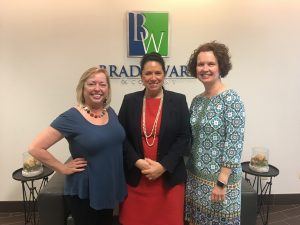
Mary McCarthy, Betty Collins, and Christy Farnbauch

Betty’s Show Notes

If you want to encourage the women in your organization to achieve more success, a women’s initiative can help.

There are several key parts to forming a successful women’s initiative.

  1. 100% buy in from the top level of the company.
  2. The mindset cannot be “have to” but a “want to.” It’s not a fad or short-term. It has to become a part of the culture.
  3. It’s not a one-person show. All the women in your company need to participate. It’s about addressing the needs of all the women in your company in their varying stages.
  4. Evolving goals and purposes.
  5. Partnering with strong women-oriented organizations in your area, such as the Women’s Small Business Accelerator (WSBA) and the National Association of Women Business Owners (NAWBO).

The benefits of a women’s initiative include developing leadership skills, attracting and retaining employees, energizing your current workforce, building confidence and networking skills, and more.

This episode includes interviews with Christy Farnbauch, Executive Director of the Columbus Chapter of the National Association of Women Business Owners, and with Mary McCarty, Co-Founder of the Women’s Small Business Accelerator.

Christy Farnbauch, Executive Director, NAWBO Columbus

Christy Farnbauch, NAWBO Columbus

Christy Farnbauch is the Executive Director of NAWBO Columbus. Established in 1996, NAWBO Columbus is the largest chapter of NAWBO in the nation. This chapter’s work includes elevating women business owners through connections, advocacy, and mentorship. Founded in 1975, the National Association of Women Business Owners (NAWBO) is the unified voice of America’s more than 10 million women-owned businesses representing the fastest growing segment of the economy. NAWBO is the only dues-based organization representing the interests of all women entrepreneurs across all industries; and boasts over 7,000 members and 70 chapters across the country.  With far-reaching clout and impact, NAWBO is a one-stop resource to propelling women business owners into greater economic, social and political spheres of power worldwide.

Mary McCarthy, Women’s Small Business Accelerator

Mary McCarthy, Women’s Small Business Accelerator

Mary McCarthy has 20+ years of experience as an entrepreneur and seven years as the owner and founder of YMT Consultants, Inc., a business consulting and development firm. McCarthy is the former Chairperson of SCORE Columbus, sat on the Athena PowerLink Governing Body, sits on the programming committee for the Westerville Chamber, and public policy committee for National Association of Women Business Owners (NAWBO) Columbus Chapter. She is a former member of the now-retired Ohio Department of Development’s Small Business Advisory Council. In 2018, Mary was hired at the WSBA as executive director. Her leadership and passion for the organization and its mission cannot be matched. She plans to take the organization to the next level and beyond. For more information go to https://www.wsbaohio.org/.

“Inspiring Women” Podcast Series

Betty Collins, CPA, Host of “Inspiring Women”

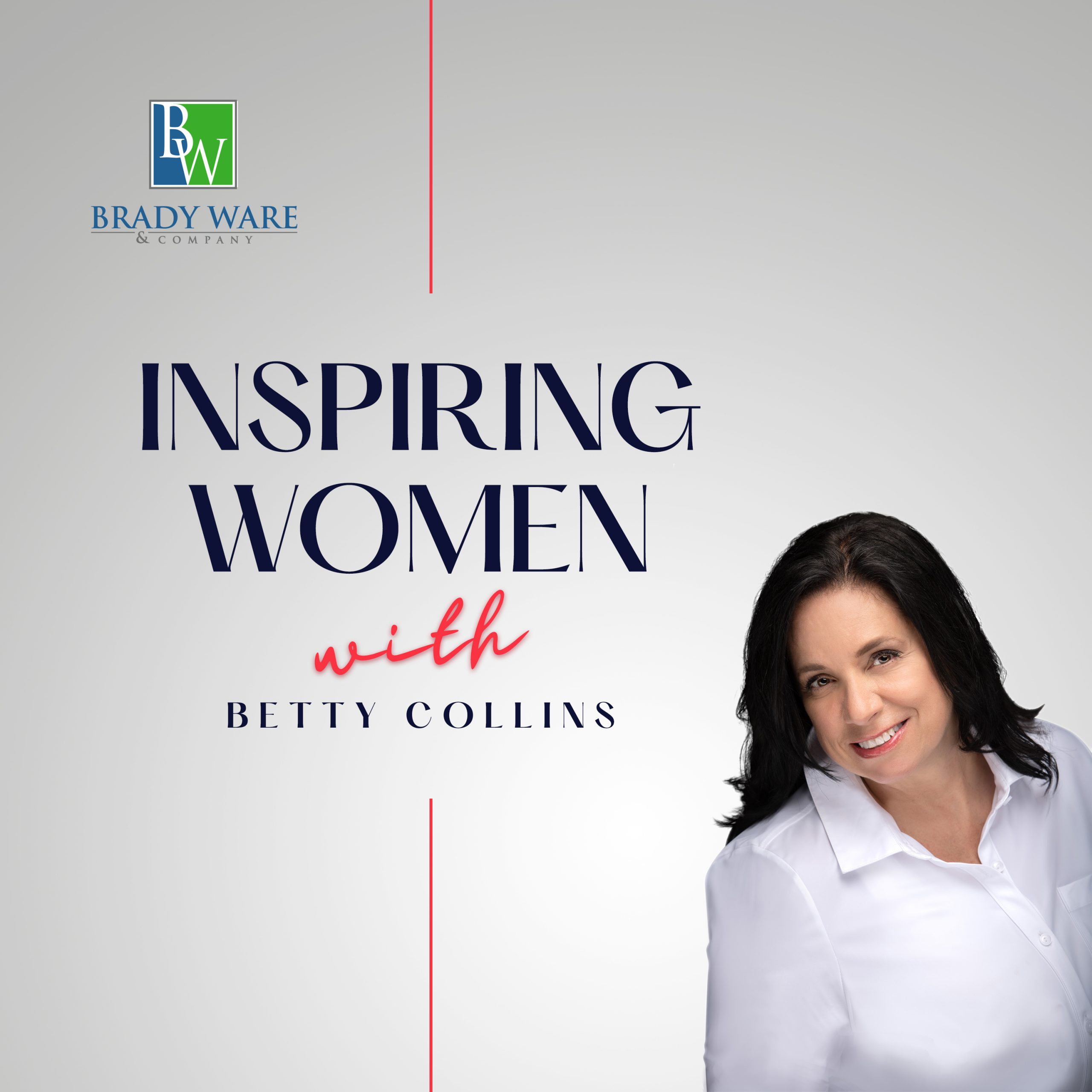
“Inspiring Women” is THE podcast that advances women toward economic, social and political achievement. The show is hosted by Betty Collins, CPA, and presented by Brady Ware and Company. Brady Ware is committed to empowering women to go their distance in the workplace and at home. Past episodes of “Inspiring Women” can be found here.

Show Transcript

Betty Collins: [00:00:01] This is Betty Collins, and we are Inspiring Women, presented by Brady Ware. This is the podcast that advances women towards economic, social, and political achievement. I am here to inspire you to take steps to the next level in your career. Thanks for listening and investing your time in yourself. More about Inspiring Women in this episode can be found at Bradyware.com/resources.

Betty Collins: [00:00:29] Today, I want to talk about having a women’s initiative in your company, or in your organization. A women’s initiative, a lot of that started, easily, years ago, and it kind of became a checklist, and it was more- it was the right thing to do.

Betty Collins: [00:00:49] A lot of times those initiatives within companies turned out to be not very good, because the women were set up, in many ways, to fail, because it was a given that they were getting promotions. It was a given that they were getting a job before someone who might have qualified for it. In some ways, it served a purpose, but in other ways, it was not probably the way to do it.

Betty Collins: [00:01:12] I can tell you, from my experience, I have had the privilege of directing a women’s initiative within my company, and it’s had a lot of success wrapped up in it. I wish I could just be a director of the women’s initiative at Brady Ware, but unfortunately, I have to work for a living, right? I’m a CPA, and an advisor, and play leadership roles within my company that are really important, but I put the directing the women’s initiative as one of those that are just as important.

Betty Collins: [00:01:44] If you have a company that you would like to really empower your workforce, or you would really like to support women, or get the women within your organization to achieve more, have more success, then this is one of the ways that you can do that.

Betty Collins: [00:02:02] I’m going to go a little bit on the journey of the women’s initiative that I have directed, and started, and founded at Brady Ware. The key, and success to it – truly I believe this – was, from the beginning in 2014, the CEOs of Brady Ware, Brian Carr, and Jim Kaiser, were absolutely behind the initiative.

Betty Collins: [00:02:24] People within our organization saw that this came from the top, and obviously the board of directors agreed to it, and then all the shareholders. It was a unanimous vote that we would start this initiative.

Betty Collins: [00:02:39] The second key to this was that the mindset of this initiative was not a “have to”. It was a “want to,” and it was not to be a fad, it was not to be short term. It was to just become part of the culture, and part of the mindset, and the way we think. I was really, really fortunate that I had that leadership from the beginning, and then, they challenged me to just take this, and go, and let’s see where it ends up.

Betty Collins: [00:03:12] The third thing I would tell you, as to why there was success, was it was not Betty Collins’ initiative. It was the women of the company. “What is it that you want?” We have times where we do a lot more with women’s initiative than we don’t, and it has ebbs, and flows, and timing. We don’t do a whole lot in women’s initiative stuff during tax season, with the exception of celebrating Women’s International Day. We just have a fun time doing that.

Betty Collins: [00:03:38] Otherwise, it’s the ideas, and it’s what they need, and it’s not what I think. I think women should read lots of books. They do not have that same opinion. In the beginning, I was thinking we can have a book club, and we can really read, and we can go with that. Some of them still like to do that, and I encourage that at all, because you’re better, if you read.

Betty Collins: [00:04:00] I just thought I’m going to go ahead, and let them make ideas, let them say what they would like to see happen. They also, at that time, didn’t know what that meant, but, we just kind of evolved into different things.

Betty Collins: [00:04:14] You have to really have some goals, and purposes. You can have great leadership support you; you can make sure this isn’t a fad; that this is going to stay around for a while; you can make sure, obviously, even that this is what the women of your company want, but you would still have to have: what is the goal, and purpose of having the initiative?

Betty Collins: [00:04:37] Our overall goal was to empower women, obviously, to succeed professionally, but also personally. We wanted to focus on them, and doing that with investing in resources, development of skills – that’s what I call reading books, by the way – creating support systems for women, every day, so that they can live out that full potential, and balance a lot of life.

Betty Collins: [00:05:01] Advancing their careers is a huge issue, but also that they can deal with issues that are in their personal life, that are at home, because that affects your career, and your professional life. You have to make sure that’s all in balance.

Betty Collins: [00:05:15] We really had those goals in mind. It was about their success professionally, their success personally. Then we invested. I mean, it takes that when you want to do this; you can have things like seminars, and meetings, and things that are directed to them. We also made sure that we were involved in our community outside of our office.

Betty Collins: [00:05:37] We’re a CPA, as you know. We sit in office a lot, and you can get kind of lost in that. Sometimes, you need to get out in your community, and see what’s happening with other women, and other organizations.

Betty Collins: [00:05:49] We did that, and we’re going to talk about that at the end of this podcast. Two organizations: the WSBA, which is the Women’s Small Business Accelerator, and NAWBO, which is the National Association of Women Business Owners. We got involved in those things. Those organizations really helped the women in our office, and other offices did other things, because we’re in four locations.

Betty Collins: [00:06:11] We also wanted to develop skills in women, utilizing resources like books, and CPE, speakers, or encouraging them to go to things, get involved with things. Meeting, also, as a group. Because we have four offices, we made sure that, at least once a year, our four offices come together, and we get to know other women within Brady Ware. That has been a big plus.

Betty Collins: [00:06:38] We do that once a year; we have about a day and a half, where we just spend on topics, on self-development, on what we think the firm needs, what we think that we would like for them to do. Then, we also have some kind of speaker come in, and talk; always getting that other perspective. We’ve done that ever since, so, those are things …

Betty Collins: [00:06:58] Then you have to have support systems that create, and value a culture that addresses the barriers, and the hurdles that women face. Over 50 percent of accountants today are women; it’s a little over 50 percent, and 21 percent of them are in the leadership, whether it’s the board of directors, or the shareholders.

Betty Collins: [00:07:25] What are those hurdles as to why they’re not in more of the leadership? When I came to Brady Ware there were two shareholders that were women, and I was one of them. Today, we have six. On top of that, we have a lot of managers, and senior managers that could still continue to go the distance, if they choose to do that, so we want to keep cultivating, “What are those barriers that are holding you back?”.

Betty Collins: [00:07:54] Women have different seasons in life; the 20s look nothing like the 30s, the 30s look nothing like the 40s, and certainly your 50s look like none of those. I don’t know what 60s look like, because I’m not there, but there’s different seasons, and there’s different times.

Betty Collins: [00:08:11] I have no regrets, when my kids were certain ages, that I wasn’t trying to build more of my career. I have no regrets in that. I’ve had parents aging. I have no regrets that I can drop, and go do what I need to do there. There are things, and times … When your kids are in college, you need to make sure that you make as much money as you can. Those years are different than other years, and they’re not home, and you have time, and you can be doing that.

Betty Collins: [00:08:38] There comes a point in time, too, I found in my 50s, “Wow, I’ve built a lot, and now I have opportunity to build even more if I want it.” If I would have looked, and thought about that in my 30s, I would have never seen that my 50s will be this period of freedom in my life. Every season’s different, and you just need to help them get there.

Betty Collins: [00:09:00] I never missed a game for my kids; I never missed the birthday parties; I always took off a day with them. Those type of things will never come back. In my 50s, it’s just different, and I’m seizing more opportunity. Everybody’s seasons are different, and we have to help them get through those barriers.

Betty Collins: [00:09:19] There’s also this whole thing on we have to balance professional and personal life, and I will tell you now – I’m doing this for 30-plus years – it’s a myth. You will never balance it. My theory has really become more, and I want to make sure other women understand this, is you can have it all. You just can’t do it all.

Betty Collins: [00:09:36] You have to have systems around you that allow you to say no. You had to have systems around you, where people will tell you “No, you’re not going to do that”, and you have to promote a sense of it’s okay that every everything is not okay. Instead of we think we have to live this ideal perfect life. Those are things that women need encouragement about. Those are things that women need support systems about. By the way, so do men in your organizations, they just handle things differently.

Betty Collins: [00:10:09] The real success that you want to see in a women’s initiative is that they are going the distance. They don’t cut short, they don’t stop when they can keep going forward, and when it comes to their decision in it, it’s theirs. We just need to make sure we help them run as far as they can go.

Betty Collins: [00:10:27] What benefits can come out of a woman’s initiative? I can tell you for sure – this has gone on for five years – I think we could still do a lot more; we’ve just scratched the surface in many respects, but you definitely develop leadership.

Betty Collins: [00:10:42] I had a woman come to Brady Ware as an intern, and she was young, and she just didn’t know a lot, right? We’re starting the women’s initiative, and man, did she just take off during those years. She isn’t with Brady Ware, because public accounting was not her forte, at the end of the day.

Betty Collins: [00:11:01] The development I saw in her, from being a pretty quiet, reserved person, in some regards, to serving on committees at N.A.W.B.O., and getting out there, and wanting to do marketing events, even when she wasn’t supposed to … She didn’t have to sell. She was still out there wanting to do it. I just saw development in her in a very quick time, and so we need to do that.

Betty Collins: [00:11:25] You will recruit new talent because of women’s initiatives, and you will retain them. When we do recruitment at colleges, the women’s initiative always comes up. When we have people look at our website, when they interview, most of the time, if they’re women, they’ve looked at the women’s initiative part of our website, and that’s a big play for them. It has kept people here longer than they might have not- left early, or whatever, but it’s really part of recruiting, and retaining.

Betty Collins: [00:11:53] You will energize your current workforce. When you have annual meetings with them, when you have conferences, when you’re getting them to events, when they’re going to fundraisers that benefit women, and they’re seeing success in those stories, you will energize your workforce. They will love doing it.

Betty Collins: [00:12:07] 55 percent of our workforce are women. I want them to have success. Their talent is valuable, and I don’t want them getting bogged down in things that women get bogged down in. Number-one thing they get bogged down in is just time, and there’s not enough of it, but the other would be lack of confidence. When we have things that support that, or enhance that, we’re going to see them really develop.

Betty Collins: [00:12:34] The other benefit from the women’s initiatives most certainly is … In my world is I now have well over 50 percent of my business are women-owned, and I’m known in the community, and in the marketplace for that.

[00:12:26] Business is business. Women aren’t any different, when it comes to … They have to have cash in the bank, like a man-owned business. Those things stay the same, but I will tell you that women have a different perspective sometimes of how they do things, and sometimes their battle is just bigger, because of that perspective, and the way they do things. As an advisor, I’ve been able to have a totally different outlook on how to help a woman-owned business.

Betty Collins: [00:13:23] Those are just some of the benefits that we’ve seen over the last five years. Now, here are some of our results for sure: in 2014, again, we had two shareholders that were women, and now we have six.

Betty Collins: [00:13:36] Those shareholders, those women, all look different on what they do, and how they do it, and how much time they work, and how much time they don’t work. It’s been very, very flexible for them, but that’s a good success, not because we can say we have women in the boardroom. We have the talent that we want in the boardroom, and that’s huge.

Betty Collins: [00:13:55] Some of the results … I think one of our biggest successes have been that we founded a woman’s conference, and this is year six for us, that we have had in the central-Ohio area. We partner with two organizations that I had mentioned earlier, that we’re going to interview.

Betty Collins: [00:14:10] Those organizations benefit, because this is- number one, it’s for their members; it’s for their connections, but it also helps their profits, and the profits of this conference go to their organizations. That has been a huge success, and that conference is happening June 28th of this year, and it’s at the OSU Marriott, and it will sell out. We’re already well halfway there on registration. I will tell you that that’s been a huge, huge thing.

Betty Collins: [00:14:39] Other results: we started a one-and-a-half to two day retreat, just for the women in Brady Ware, where we get together, and it’s totally optional. They do not feel pressure to come to this. It is something that they want to do; it’s something that they really look forward to. It’s just been one of those things where we’ve really learned a lot from each other, and we’ve been able to have some cohesiveness that has been fantastic.

Betty Collins: [00:15:03] We have a podcast series; you’re listening to it. This is one of the things that came out of the women’s initiative, as I got more and more into women-owned businesses, and the more I speak the more I’m out there. The podcast became something that we wanted to do, and it’s been extremely well-received.

Betty Collins: [00:15:21] We celebrate Women’s International Day. The first day we did it, the theme was on persistence. I asked the women of Brady Ware to write about that persistent woman in their life, and those stories were just phenomenal. We had a great day reading those, and celebrating those, of course with chocolate, but it was a fun time.

Betty Collins: [00:15:38] Just two success stories that I would share with you because of the women’s initiative. Sharon Hess, who is a senior manager out of our Dayton office, she’s been involved with Habitat for Humanity, and she’s on their board.

Betty Collins: [00:15:53] They decided to build a house for a single mom. She really, really took that to heart, and just went with it. She’s one of our leading women in the firm, who just has that energy, and smile. She raised the most money. In fact, she was involved to the point that she had the women of our Dayton office go … They had shovels, and hammers, and they just got really into helping that single woman. It was a great story … She did a phenomenal job.

Betty Collins: [00:16:22] The other one I would tell you is that Loranί Orobitg, who is a tax manager in our Columbus office, she … When the hurricane hit Puerto Rico – well, actually they had to hit within a week’s time – the second one just wiped out a school for girls that she had attended there, because she grew up in Puerto Rico.

Betty Collins: [00:16:43] She just hated to see the devastation. The school was suffering quite extensively, not just from damage, but the fact that nobody was working, so they couldn’t send their kids. She said “Hey could we just start a fundraiser in Brady Ware?” I said “Sure, you know, let’s have a breakfast, and we’ll charge a crazy amount for that.”

Betty Collins: [00:16:43] Before you know it, all four offices had some kind of fundraiser for that. Then, on top of that, her daughter went to Columbus School for Girls, where she goes to school, and got them involved. Now, that school, and the Puerto Rican school kind of are sister schools. At the end of the day, we raised almost ten thousand dollars. It all comes from the empowerment. It’s the thing that we push, but it was awesome to see that.

Betty Collins: [00:17:32] The biggest thing I hear from the women’s initiative … We’re all very busy here. We have day jobs, and we’re out there; we’re helping women-owned businesses, but we’re also CPAs, and we’re busy. The thing I hear the most is that the conversation started in 2014 about women, about what women need, about the empowerment of women, I could go on and on. The good news is is that conversation still continues. It’s still there.

Betty Collins: [00:17:58] Why did we have success? Because it was not my idea, or the top leadership idea. That was just the go to have it. It was that the women created what happened, and they had to step up, and they had to get involved, and then they helped it evolve into what it is.

Betty Collins: [00:18:17] Then, the last reason, of course, is that we are out there in our community, like the conference that I talked about. This conference isn’t just come for two hours, and have breakfast. It is an entire day. It is a breakfast panel of very successful women that will be a really good moderated time.

Betty Collins: [00:18:35] It’s about awards, and celebrations for women who are visionaries, and emerging leaders. It will have a national keynote speaker, and it has 10 breakout sessions of professionals. That’s a lot to accomplish in a five-year period to build that reputation of that conference, and there’ll be 300-plus women there.

Betty Collins: [00:18:55] The last part of the success, though, is that we partnered with other organizations that help, and support women who are in business, who are business leaders, who are executives in their companies. That, to me, is women supporting women.

Betty Collins: [00:19:12] It has just been an incredible journey, and I would encourage you, if you think you would like to do something, start out small. Start out with a vision that will go bigger, and be committed to it for a time period, and you’re going to energize a workforce, and develop some leadership there that you will have for a long time.

Betty Collins: [00:19:31] After the podcast, I’m going to interview Mary McCarthy, who is the co-founder and the executive director of the WSBA, and Christy Farnbauch, who is the executive director of NAWBO Columbus, which is the largest chapter in the country.

Betty Collins: [00:19:47] We’ve been talking about women’s initiatives in corporate America today, and how can that work that we can empower our workforce and really energize and develop talent? That’s what it’s about, at the end of the day, when you have these types of initiatives within a company.

Betty Collins: [00:20:06] Well, part of really having this success is partnering with the right people. I’m fortunate that we’re from Columbus. Ohio. There’s tremendous amounts of women’s groups that we can get involved with. We had to choose, and in the beginning of this, we went to a NAWBO event. We came back from that, and everyone was like “That’s what we’re going to do. That’s the place, that’s the place”.

Betty Collins: [00:20:33] Now, of course, NAWBO is the tribe; that’s where we belong. It’s the National Association of Women Business Owners. It’s the number-one chapter in the country. It does everything very, very well. It’s been very impactful, certainly for me, professionally, and as a person, and the women within my company.

Betty Collins: [00:20:57] You can’t go wrong by getting the right organization, and because we represent a lot of small businesses, it really is very, very helpful. I don’t go to NAWBOs events to always go get a client. I go there because you’re supporting other women, and then they’re helping you, and they don’t even know it.

Betty Collins: [00:21:12] I have the privilege today of interviewing Christy Farnbauch. She is the executive director for NAWBO Columbus. I would love for her just to … I’m going to ask her some questions, and some general things, and talk about the organization.

Betty Collins: [00:21:23] I could talk about it all day, and the impact that it’s had, but she really has some other perspectives. First, why don’t you tell my listeners a little just about yourself- that 30-second commercial thing?

Christy Farnbauch: [00:21:35] Well, thanks, Betty; thanks for having me with you today. I really appreciate the opportunity. I’m a loyal listener of your podcast, so it’s kind of fun to be on the other side today.

Christy Farnbauch: [00:21:44] I became the first professional executive director of NAWBO Columbus in July of 2017, so just almost two years. Prior to that, my whole career, you know, almost 30 years, as surprising as that is to say, almost 30 years in nonprofit-sector work …

Christy Farnbauch: [00:22:01] In 2006, I got the entrepreneurial bug, and started a small business working with non-profits, coaching them in board development, and fundraising, that kind of work, grant writing. This position really blends my expertise of nonprofit governance, and my entrepreneurial spirit.

Betty Collins: [00:22:17] As the executive director of NAWBO, tell us about the mission, and the purpose of your organization.

Christy Farnbauch: [00:22:23] NAWBO Columbus exists to elevate women business owners, of all sizes, and from all industries. We’re really the only association that works in that way. We do our work through networking, advocacy and mentorship, which are our three key pillars.

Christy Farnbauch: [00:22:38] We’re keenly focused on helping women business owners be competitive in an inclusive economy. Women are really important to the growth of the economy in Ohio, and in the country, so that’s really our long term focus, is on the impact.

Betty Collins: [00:22:51] Why do you serve in this position? What’s the why? What’s the passion?

Christy Farnbauch: [00:22:54] I said a minute ago, it really blends my nonprofit governance  experience, and my entrepreneurial spirit. I just really like helping people. One of my core values is leave people, and organizations better than where you found them, and fill them up.

Christy Farnbauch: [00:23:07] Malcolm Gladwell, if you’re familiar with him, and his book, “The Tipping Point,” would probably call me a maven, and a connector. I’m a learner at heart, and I collect information, all in the spirit of maybe sharing it with somebody, helping somebody learn, and grow, and develop.

Christy Farnbauch: [00:23:22] I love to connect people. Some of my favorite things – put people together, and let the magic happen, so they can achieve their goals, and dreams. I’m just super-passionate about empowering women, and this cause of women’s entrepreneurship.

Betty Collins: [00:23:35] Small business, you just get that bond, that entrepreneurship, and then when you add in that “Hey, we’re women who own businesses,” there’s a passion there. When you can get in a group of women that all support that, it’s just a phenomenal thing. I would ask: who should belong to NAWBO? What’s your membership made up right now? That was two questions …

Christy Farnbauch: [00:23:58] Yeah. This chapter’s 20 years old, as you know. I personally believe every woman who’s an entrepreneur should belong to NAWBO, and it’s not about the transaction of joining. It’s not about how many meetings I can come to, or how many things I get out of my membership.

Christy Farnbauch: [00:24:13] It’s really about the transformation that happens when you surround yourself with peers and mentors, who are on the same journey. We hear a lot of women who say “Oh, I’m looking for women,” or “I’m lonely,” or “I gotta get out of my house …” It’s that tribe.

Christy Farnbauch: [00:24:27] Then, second, becoming a part of the movement of women’s entrepreneurship. We’re better together, and we go farther, faster, together. Of our 250 members, to date, we really range from solopreneurs, multi-level marketing consultants, ladies- like financial advisors, and attorneys who have books of business, all the way up to multi-million-dollar companies. It’s the whole range.

Christy Farnbauch: [00:24:27] For me, I’ve been thinking about this a lot lately, my vision is that any woman who considers herself an entrepreneur joins this tribe, and wears that badge of honor, as an entrepreneur, proudly. This is the place you want to be to sort of shout that from the rooftops.

Betty Collins: [00:25:08] Women in business have challenges. Any business owner does. You’re a risk-taker; the liability’ on you. You might have the largest check, but you might not have any check. What is the challenge that you find in the business environment today for women, and how does NAWBO help navigate that?

Christy Farnbauch: [00:24:50] There are two that I hear a lot, and one is access to mentors. “Where are women who look like me, who are maybe a little farther, or a lot farther ahead of me, that I can aspire to be?” We do that in a host of ways, through the events that we host every month, through our round-tables, our groups of six to eight women who work on their business, and just helping women connect. “I want to know so-and-so,” and we can help make those connections. I hear that a lot – access to mentors.

Christy Farnbauch: [00:25:58] The other piece is access to capital. As you know, NAWBO was founded over 30 years ago, when women were not allowed, or didn’t have the right to borrow money for a business loan in their own name. Here we are, 30 years later, past that milestone, and women still receive only two percent of the capital that go to businesses in the country.

Christy Farnbauch: [00:26:18] That needle hasn’t moved in 30 years. Why is that? How …? We’re starting to look at that a little bit. Our new Women’s Business Certification for the state of Ohio will help women be more competitive across state lines, and in the state, and give us the first data that we have to sort of understand the ecosystem of women business owners.

Christy Farnbauch: [00:26:37] Along those lines, I shared a stat the other day with someone, and they were stunned to learn this; we talk a lot about wage gap, and wage disparity among women, and the whole ’80 cents on the dollar’ conversation … For entrepreneurs, female entrepreneurs make about 25 cents on the dollar, compared to men, and that’s a host of reasons.

Christy Farnbauch: [00:26:57]  Part of it is we can’t access the capital, and sometimes we don’t ask for what we’re worth; we charge too little, and what not. I feel like if we’re going have the wage conversation, we’re at that table, because it’s pretty abysmal for women entrepreneurs. Those are the two biggies – capital, and mentors.

Betty Collins: [00:27:14] Yes, okay. Where can my listeners, and a lot of them probably are joint members of NAWBO, but where can they find NAWBO? Where can they find, and get connected to you?

Christy Farnbauch: [00:27:25] Our website is a great place to start: nawbocbus.org. I always invite new women entrepreneurs that I meet to just come check us out; come to an event; come meet some folks. I can pretty much guarantee you, you’ll be welcomed with open arms, and members are curious about your journey. They’re quick to offer help. “How can we support each other?”

Christy Farnbauch: [00:27:47] It’s pretty interesting the magic that happens in that room. While I think we are- well, I know we are, the largest chapter in the country, we try to break it down into a smaller community, so that when you show up, and you don’t know anybody, we’ll shepherd you through that.

Betty Collins: [00:28:03] I appreciate you coming, and talking with me today, and being part of my podcast. I can tell you that one of the reasons that I am a member of NAWBO is I look at the past, and the sacrifice, and work that people, over 30 years, and certainly over 20 years in Columbus … The sacrifice that was made to have NAWBO what it is today is huge.

Betty Collins: [00:28:24] In the present, I want to seize those opportunities. I want to seize, and make sure that we honor them by seizing our opportunities. Then, we have generations behind us, who are watching, and I want to make sure what they’re seeing is what they should be seeing. Thank you for coming to us today, and I’m looking forward to our conference that we’re having soon.

Betty Collins: [00:28:46] I’m interviewing Mary McCarthy, and she is with the WSBA, which stands for Women Small Business Accelerator. A few years ago, I got to know … Well, actually, I’ve known, Mary McCarthy, and the other founder, Caroline Worley, for- I don’t know when I haven’t known them, I guess is how I’ll say it.

Betty Collins: [00:29:04] I went to an event that they had, and was just so inspired by it. I said, “This is where we can give back. This is where Brady Ware can be involved,” because if women in small business can accelerate, it will just totally impact the marketplace. Women have a harder time, in those initial years as entrepreneurs, than men.

Betty Collins: [00:29:27] I don’t want to go into a lot of that today, but this is another partner that Brady Ware chose to be with, because it was just a way to give back, and it was a way to get women- “Hey, how can we help you so that you can succeed?”

Betty Collins: [00:29:42] It’s not, to me, that women need to take over the world … Okay, maybe they do, but, there’s a lot of talent, and there’s a lot of passion, and there’s a lot of ideas, and we want to make sure they’re successful. We’re just going to call this the WSBA; it’s much easier for me to say. Tell my listeners a little bit about yourself. Give that 30-second commercial of, just, Mary McCarthy.

Mary McCarthy: [00:30:03] Okay. Well, hi, everybody. I am Mary McCarthy. I have two organizations. YMT Consultants is a business consulting firm. I have been a business consultant, working with the early-stage micro-business owner for over 10 years.

Mary McCarthy: [00:30:21] Back in 2011, I ran across an SBA article that said, “If all things are equal, why are men succeeding more than women?” That launched the really good question of: well, the answers weren’t anything unique, but the fact is, we’re still saying the same answer, so what can we do to change that?

Mary McCarthy: [00:30:43] I happened to talk a really good friend of mine into launching the organization called the Women’s Small Business Accelerator. We’re actually entering our seventh year of operations, so I’m busy running two organizations on a daily basis.

Betty Collins: [00:30:55] Yes you are. I’ve known you a long time, and I don’t know that you’ll ever not be busy, Mary, but that’s okay. So, tell me, as the executive director of the WSBA, what is the mission, and the purpose of the organization?

Mary McCarthy: [00:31:09] When we go back to the SBA article, it really talked about “if education and income are the same between men and women, why are men succeeding?” The answers, again, were no surprise. Men assumed they would be a million-dollar business; women hoped to pay their bills. A man said he wanted to launch a business, and he was told “Good luck, and congratulations.” A woman was, “How do you do that, and support your family,” right?

Betty Collins: [00:31:35] Right.

Mary McCarthy: [00:31:35] That’s not necessarily going to change. What we determined was we really needed support. We needed guidance. When we created the WSBA, our mission is to help all women. It’s not based on income, or age, ethnicity, location; it’s all women, regardless, that wants to have a successful business.

Mary McCarthy: [00:31:58] Success is what they define it as, not what society defines it as. If you do want that – make money and be home to support, and care for your family – good for you. You should be able to, and you should be able to do it with pride that you are balancing your life, and caring for your family, and providing a financial means. If you want to be a multi-million-dollar business owner, great. We’re going to help you do that, as well. We want all women to be helped, regardless.

Betty Collins: [00:32:26] When you help women, what does that mean? What is the help you’re giving them?

Mary McCarthy: [00:32:32] Well, I think, first, it is just appreciation that they can accomplish whatever they would like. They’re no longer doing it alone. We’re there to help, mentor, guide, support, push, listen to – whatever that you need.

Mary McCarthy: [00:32:49] We have a lot that we deal with on a daily basis, and we allow ourselves, at times, to get completely overwhelmed. We want to work through all of that, and really take the emotion out; figure out what is the business model that we want to accomplish. How are we going to accomplish it? Then, let’s put a plan in action, and let’s make it happen.

Betty Collins: [00:33:08] You have a mentoring program, an educational program, as well as Power Circles. You want to just tell us a little bit about that?

Mary McCarthy: [00:33:15] We have three signature programs. We work with the “I’ve got an idea,” all the way through “I want to grow.” The idea stage, to “I have launched, but I’m not making any money, because I haven’t really figured out my business model …” that’s called the inspired entrepreneur. “We have a great dream, a great desire. How do we monetize?”.

Mary McCarthy: [00:33:36] It is a six-month education program, and it’s focused on really creating a model. Who is your target customer? What is your pricing? The outcome is a written business plan. I like to tell people it’s not the plan that matters, it’s the journey. It’s the research, it’s understanding the information, not the assumption, on what your business is going to be, and do.

Mary McCarthy: [00:34:00] Power Circles is once you’ve been in business for a year … Think of a mini-mastermind group. We have a group of six to eight women that get together on a monthly basis, that support each other, that provide ideas, information, support, but it’s facilitated by a business expert that brings in the business tools, brings in the knowledgeable speakers. It’s about dealing with the day-to-day, allowing you to get out of your head, and focus on working on the business.

Mary McCarthy: [00:34:31] Then, Mentor Match. Once you’ve been in business for three years, or more, it is time now for a mind-shift change. You want to grow, and you’re not sure how to do it. We’ve got to change you from being the owner of your small business, to becoming the CEO of your organization. We will match you, and it’s all a hand-selected match, based on what your needs are, with a very successful woman business owner who’s already done it, that can help provide strategy, and guidance.

Betty Collins: [00:35:00] Those are awesome programs. It’s why Brady Ware has definitely wanted to partner with you in helping to make sure those launch, and get going, because you guys are only seven years old. It’s taken some time, but you’ve built up quite a bit of clientele, and a good board, and you have a lot of substance in your stuff.

Mary McCarthy: [00:35:17] We’ve come a long [00:35:18] way [cross talk]  [00:35:18]

Betty Collins: [00:35:18] Tell me this; tell me the favorite story of the woman who’s come through your program.

Mary McCarthy: [00:35:24] There are so many incredible women that have come through the program. We had one who had been very successful. She had to take time out of her business, in order to be a caregiver, and that meant she had a year, almost a year and a half, where she wasn’t generating any income.

Mary McCarthy: [00:35:42] When the individual passed, she’s sitting there, going “What do I do?” She got a mentor. They created very specific goals, and it was all about sales. She had someone who held her accountable. She accomplished goals in four months.

Betty Collins: [00:35:58] Wow.

Mary McCarthy: [00:35:59] I had somebody who went through the Inspired, because I’m going to give you [00:36:02] two [cross talk] You asked for one, but [00:36:03] I’m going to give you two. She went through the Inspired, and she wanted to be a food business. One of my favorite sayings, if you’re a food entrepreneur, is “Just because your friends, and family like your food, does not mean they will pay for it,” right?

Betty Collins: [00:36:15] Yes.

Mary McCarthy: [00:36:18] She started a Friday night supper club. She delivered food to somebody that knew someone, and next thing you knew, she ended up on Food Network.

Betty Collins: [00:36:27] Very nice.

Mary McCarthy: [00:36:27] She was on Food Court Wars, if anyone remembers that show, on Food Network. She won. Couldn’t tell anyone that she won, but she won. She needed funding to open up, and it was in a food court. Wasn’t necessarily what she wanted to be, but it was a good learning lesson, so we decided to go for it.

Mary McCarthy: [00:36:44] After she won, we had to get funding; signed a very strict nondisclosure, and we couldn’t say she won. The lender didn’t want to give her money unless they knew she won. We had to navigate that. Finally got the funding, got her launched, ran it for a year. She learned so much, shut it down; then went back to catering. She was pregnant, and she had a child.

Betty Collins: [00:37:06] Okay.

Mary McCarthy: [00:37:06] She recently just went back into her business, big time, and she is now in Cameron Mitchell’s food court.

Betty Collins: [00:37:14] Very nice, very nice. The success stories are what keep your vision alive. It keeps the purpose, it keeps … Because you’re very busy, and so, for you to still be co-leading this, and doing this is awesome.

Betty Collins: [00:37:27] Let’s go with the last question, which is where can business owners, inspire people … What did you call them, the Inspired Entrepreneur?

Mary McCarthy: [00:37:37] The Inspired Entrepreneur.

Betty Collins: [00:37:38] Where do they find the WSBA? Where can they go on, and find your information?

Mary McCarthy: [00:37:42] Well, I would say the easiest way to find us is on our web site, which is wsbaohio.org. They can come to the Women’s Conference and see us. We have our annual gala, and fundraiser every October, and they can come. We celebrate with 300 to 350 of our closest friends. You’re welcome to be a friend, and come join us as well.

Betty Collins: [00:38:02] Well, I appreciate, today, Christy, and Mary, both coming. These partnerships for Brady Ware have been invaluable. We look at them as just part of the success of our women’s initiative.

Betty Collins: [00:38:14] I cannot emphasize to you enough that if you really want to start this within your company, and you don’t need to be a large company to start a women’s initiative, you’ve got to partner with the right people in town that support you, and you support them. It will make a difference in that.

Betty Collins: [00:38:32] As your career advancements continue, your financial opportunities will continue to grow. Be prepared. Visit bradyware.com/resources to download a copy of the financial checklist for every stage of your life. Everything about the Inspiring Women podcast, this episode, and Brady Ware & Company Accounting Services can be found in the podcast show notes.

Tagged With: Dayton accounting, Dayton business advisory, Dayton CPA, Dayton CPA firm, leadership development, Mary McCarthy, Mentors, NAWBO, NAWBO Columbus Chapter, recruiting women, retaining women, woman-owned business enterprise, Women in Business, women owned business

TIFFANY KRUMINS SHOW: Mark Hubbard with IgniteHQ

July 16, 2017 by Mike

Gwinnett Studio
Gwinnett Studio
TIFFANY KRUMINS SHOW: Mark Hubbard with IgniteHQ
Loading
00:00 /
RSS Feed
Share
Link
Embed

Download file

Tiffany Krumins and Mark Hubbard

Mark Hubbard/IgniteHQ

IgniteHQ is an ecosystem of investors, enterprises, and entrepreneurs working together to locate, build, and scale innovative solutions. Through its unique funding, academic, and industry partnerships, IgniteHQ is the next generation startup community. Some of IgniteHQ’s member benefits include free networking and access to educational events, fast internet access, access to mentors and advisors, access to conference rooms, access to printers/copiers/scanners, complimentary coffee, and so much more!

A big THANK YOU to chef Lindsay Collette with Collette Caters for today's lunch! Chicken and Waffles! Yum!
A big THANK YOU to chef Lindsay Collette with Collette Caters for today’s lunch! Chicken and Waffles!

Tagged With: free networking, innovative solutions, Mentors, Shark Tank

KSU Shrimp Tank features Tom DiGregorio on Atlanta Business Radio

December 15, 2015 by angishields

Atlanta Business Radio
KSU Shrimp Tank features Tom DiGregorio on Atlanta Business Radio
Loading
00:00 /
RSS Feed
Share
Link
Embed

Download file

The Shrimp Tank

Feeding Young Entrepreneurial Minds & Businesses Plans Entrepreneurs come to the Shrimp Tank to compete for funding to grow their dreams.

Ted Jenkin, Tom DiGredorio and Chris Hanks

L to R Co-Host Ted Jenkin, Tom DiGregorio and Co-Host Chris Hanks


Tom DiGregorio is President and Owner of AquaGuard Basement Systems, Tom has strived to raise his customers expectations of residential contractors by developing and running his business with his slogan “A Service Company with Integrity, A Contractor who Cares” as his guide.


Tom DiGregorio/Aquaguard


As President and Owner of AquaGuard Basement Systems, Tom has strived to raise his customers expectations of residential contractors by developing and running his business with his slogan “A Service Company with Integrity, A Contractor who Cares” as his guide.

With over 21 years in residential home services, Tom has an extensive understanding of the residential basement waterproofing industry and foundation repair. He brings a focused and intelligent approach to each job and is a true waterproofing and foundation repair expert. Tom achieved his certifications from premiere organizations including The National Association of Waterproofing & Structural Repair Contractors, The Basement Systems International Waterproofing Contractors Network and Foundation SupportWorks International.


 Ted Jenkin/Oxygen Financial

(Co – Host)

Ted Jenkin has spent the past 22 years giving personal financial advice to thousands of people across the United States. After graduating from Boston College in 1991, Ted spent more than 16 years working for American Express Financial Advisors/Ameriprise Financial. He was one of the youngest people in the history of the company to reach both Field Vice President and Group Vice President level. He managed more than 800 financial advisors throughout 8 states in his last position with the company. He won the premier performer award, leader of the year award, and had the number one office in the country for more than two years in a row. In 2008, Ted founded oXYGen Financial to help revolutionize the financial services industry by creating a new company that focused on serving the X and Y Generation. oXYGen Financial now has more than 1,700 clients throughout 25 states across the country. Ted has been featured in over 25 magazines and newspapers including the Wall Street Journal, Business Week, and The Huffington Post. He has six advanced designations from the College for Financial Planning (CFP®, CRPC®, CRPS®, AWMA®, AAMS®, CMFC®) and is an on air radio personality featured on the popular drive time Atlanta radio show The Rock 100.5 Morning Show on Rock 100.5 FM. Ted lives in Milton, GA with his wife Genna and three kids Olivia, Lyla, and Louden.


 Chris Hanks/ KSU EC

(Co – Host)


Christopher C. Hanks is the founder and executive director of the KSUEntrepreneurship Center. Prior to this, Hanks was the founder and director of the entrepreneurship program at the University of Georgia. He has owned multiple businesses, including music, e-commerce, publishing, and export ventures. He is also the co-author of a best-selling book on low risk entrepreneurship.


Hanks leads the International Entrepreneurship Institute and is certified in business valuation, providing expert witness testimony. Before teaching at UGA, Hanks taught entrepreneurship at Georgia State University and assisted in leading the Russell Center for Entrepreneurship. He earned a BBA from University of Georgia and an MBA from San Jose State University. Before launching his first business, Hanks held corporate risk management positions in the pharmaceutical and beverage industries.


IMG_7839

Tagged With: entrepreneur, Kennesaw State Entrepreneurship Center, Kennesaw State University, KSU, Leaders, Mentors, On The Air, Shrimp Tank, small business, Talk Radio, Tom DiGregorio

STARTING A NEW BUSINESS: Peter Hildebrandt with SCORE

April 29, 2015 by Mike

On the Money
On the Money
STARTING A NEW BUSINESS: Peter Hildebrandt with SCORE
Loading
00:00 /
RSS Feed
Share
Link
Embed

Download file

Joe Moss, Peter Hildebrandt

On this episode of “On the Money”, host Joe Moss of Embassy National Bank interviews Peter Hildebrandt of SCORE about how that organization helps small businesses get off the ground.

Peter Hildebrandt/SCORE

Peter Hildebrandt, SCORESCORE is a nonprofit association dedicated to helping small businesses get off the ground, grow and achieve their goals through education and mentorship. They have been doing this for over 50 years.

Since their work is supported by the U.S. Small Business Administration (SBA), and thanks to a network of over 11,000 volunteers, they are able to deliver their services at no charge or at very low cost.  Anyone can sit down for mentoring sessions with a SCORE mentor, and it’s always free.  The SCORE mentors are all successful business people who have either started their own business or been executives in larger organizations

—————————————————————————

“On the Money” focuses on topics and issues allowing small businesses to better navigate the financial services minefield, with analysis and opinions from today’s industry experts on banking and loans. “On the Money” also introduces you to some of the top small business leaders in the Atlanta market.

Hosted by Joe Moss, the president of Embassy National Bank, “On the Money” airs live every Wednesday at 3:00 PM EST from the Business RadioX studio in Gwinnett.

Joe and Peter in Subaru of Gwinnett studio

Tagged With: Embassy Bank, Embassy National Bank, gwinnett mentoring, mentoring, mentoring sessions, Mentors, mentorship, On The Money, On The Money Radio, peter hildebrandt, SCORE, SCORE Atlanta, score gwinnett, small business, small business advice, starting a business, starting a small business

Girl Scouts of Greater Atlanta, bfonics and NEXT Steps Youth Entrepreneur Program

April 3, 2015 by Mike

Business Leaders of Today
Girl Scouts of Greater Atlanta, bfonics and NEXT Steps Youth Entrepreneur Program
Loading
00:00 /
RSS Feed
Share
Link
Embed

Download file

Chris Horne, Dana Jewel Harris, Derek Griffin, Vikki Millender-Morrow, Nekeidra Taylor, Tess Turrin

Nekeidra Taylor & Vikki Millender-Morrow/Girl Scouts of Greater Atlanta

Nekeidra Taylor & Vikki Millender-Morrow, Girl Scouts of Greater AtlantaGirl Scouts of Greater Atlanta is the premier leadership development organization for girls, serving more than 43,000 girls and 17,000 volunteers in 34 counties in the greater metropolitan Atlanta area, northwest Georgia and Polk County, TN. Girl Scouting builds girls of courage, confidence and character, who make the world a better place. For more information on how to join, volunteer or donate to Girl Scouts of Greater Atlanta, call (800) 771-1139 or visit www.GirlScoutsATL.org.

Derek Griffin/bfonics

Derek Griffin on Business RadioXBfonics is an end-to-end proximity marketing platform based on the iBeacon technology from Apple. They work with retailers, hospitality clients, third party advertisement agencies, mall owners, cities, metro transportation companies/systems to engage the customers in real time by sending notifications, messages, deals and much more to their smart phones. Their products & solutions help retailers leverage cost-effective mobile technology to connect with their customers and offer customized deals. Their platform is designed based on the ‘iBeacon’ Technology from Apple to seamlessly integrate the digital and physical world. Their “Smart Beacons” along with mobile solutions are used to provide customers the best value for the money and also help them increase their ROI.

Dana Jewel Harris/NEXT Steps Youth Entrepreneur Program

Dana Jewel Harris, NEXT StepsThe NEXT Steps Youth Entrepreneur Program is a 501(c)3 non-profit organization that provides youths (grades 2-12) with STEM++ education, entrepreneurship training, and access to mentors and career opportunities in Georgia’s high demand STEM++ industries.


Tagged With: dana harris, dana jewel harris, derek griffin, end-to-end marketing, girl organizations, girl scout cookies, girl scout movement, Girl Scouts, girls scouts of greater atlanta, i beacon, ibeacon, ibeacon technology, marketing, marketing platform, Mentors, mobile technology, nekeidra taylor, next steps yep, next steps youth entrepreneur program, nonprofit youth program, retail mobile technology, retailers, smart beacons, smart phones, smiles4military, STEM, stem plus, tess turrin, vikki millender-morrow, vocallogic, vocalogic

Business RadioX ® Network


Our Most Recent Episode

CONNECT WITH US

  • Email
  • Facebook
  • LinkedIn
  • Twitter
  • YouTube

Our Mission

We help local business leaders get the word out about the important work they’re doing to serve their market, their community, and their profession.

We support and celebrate business by sharing positive business stories that traditional media ignores. Some media leans left. Some media leans right. We lean business.

Sponsor a Show

Build Relationships and Grow Your Business. Click here for more details.

Partner With Us

Discover More Here

Terms and Conditions
Privacy Policy

Connect with us

Want to keep up with the latest in pro-business news across the network? Follow us on social media for the latest stories!
  • Email
  • Facebook
  • Google+
  • LinkedIn
  • Twitter
  • YouTube

Business RadioX® Headquarters
1000 Abernathy Rd. NE
Building 400, Suite L-10
Sandy Springs, GA 30328

© 2025 Business RadioX ® · Rainmaker Platform

BRXStudioCoversLA

Wait! Don’t Miss an Episode of LA Business Radio

BRXStudioCoversDENVER

Wait! Don’t Miss an Episode of Denver Business Radio

BRXStudioCoversPENSACOLA

Wait! Don’t Miss an Episode of Pensacola Business Radio

BRXStudioCoversBIRMINGHAM

Wait! Don’t Miss an Episode of Birmingham Business Radio

BRXStudioCoversTALLAHASSEE

Wait! Don’t Miss an Episode of Tallahassee Business Radio

BRXStudioCoversRALEIGH

Wait! Don’t Miss an Episode of Raleigh Business Radio

BRXStudioCoversRICHMONDNoWhite

Wait! Don’t Miss an Episode of Richmond Business Radio

BRXStudioCoversNASHVILLENoWhite

Wait! Don’t Miss an Episode of Nashville Business Radio

BRXStudioCoversDETROIT

Wait! Don’t Miss an Episode of Detroit Business Radio

BRXStudioCoversSTLOUIS

Wait! Don’t Miss an Episode of St. Louis Business Radio

BRXStudioCoversCOLUMBUS-small

Wait! Don’t Miss an Episode of Columbus Business Radio

Coachthecoach-08-08

Wait! Don’t Miss an Episode of Coach the Coach

BRXStudioCoversBAYAREA

Wait! Don’t Miss an Episode of Bay Area Business Radio

BRXStudioCoversCHICAGO

Wait! Don’t Miss an Episode of Chicago Business Radio

Wait! Don’t Miss an Episode of Atlanta Business Radio