Business RadioX ®

  • Home
  • Business RadioX ® Communities
    • Southeast
      • Alabama
        • Birmingham
      • Florida
        • Orlando
        • Pensacola
        • South Florida
        • Tampa
        • Tallahassee
      • Georgia
        • Atlanta
        • Cherokee
        • Forsyth
        • Greater Perimeter
        • Gwinnett
        • North Fulton
        • North Georgia
        • Northeast Georgia
        • Rome
        • Savannah
      • Louisiana
        • New Orleans
      • North Carolina
        • Charlotte
        • Raleigh
      • Tennessee
        • Chattanooga
        • Nashville
      • Virginia
        • Richmond
    • South Central
      • Arkansas
        • Northwest Arkansas
    • Midwest
      • Illinois
        • Chicago
      • Michigan
        • Detroit
      • Minnesota
        • Minneapolis St. Paul
      • Missouri
        • St. Louis
      • Ohio
        • Cleveland
        • Columbus
        • Dayton
    • Southwest
      • Arizona
        • Phoenix
        • Tucson
        • Valley
      • Texas
        • Austin
        • Dallas
        • Houston
    • West
      • California
        • Bay Area
        • LA
        • Pasadena
      • Colorado
        • Denver
      • Hawaii
        • Oahu
  • FAQs
  • About Us
    • Our Mission
    • Our Audience
    • Why It Works
    • What People Are Saying
    • BRX in the News
  • Resources
    • BRX Pro Tips
    • B2B Marketing: The 4Rs
    • High Velocity Selling Habits
    • Why Most B2B Media Strategies Fail
    • 9 Reasons To Sponsor A Business RadioX ® Show
  • Partner With Us
  • Veteran Business RadioX ®

Building Community One Relationship at a Time E25

July 28, 2022 by Karen

E25-Building-Community-One-Relationship-at-a-Time-feature
Phoenix Business Radio
Building Community One Relationship at a Time E25
Loading
00:00 /
RSS Feed
Share
Link
Embed

Download file

E25-Building-Community-One-Relationship-at-a-Timev2

Building Community One Relationship at a Time E25

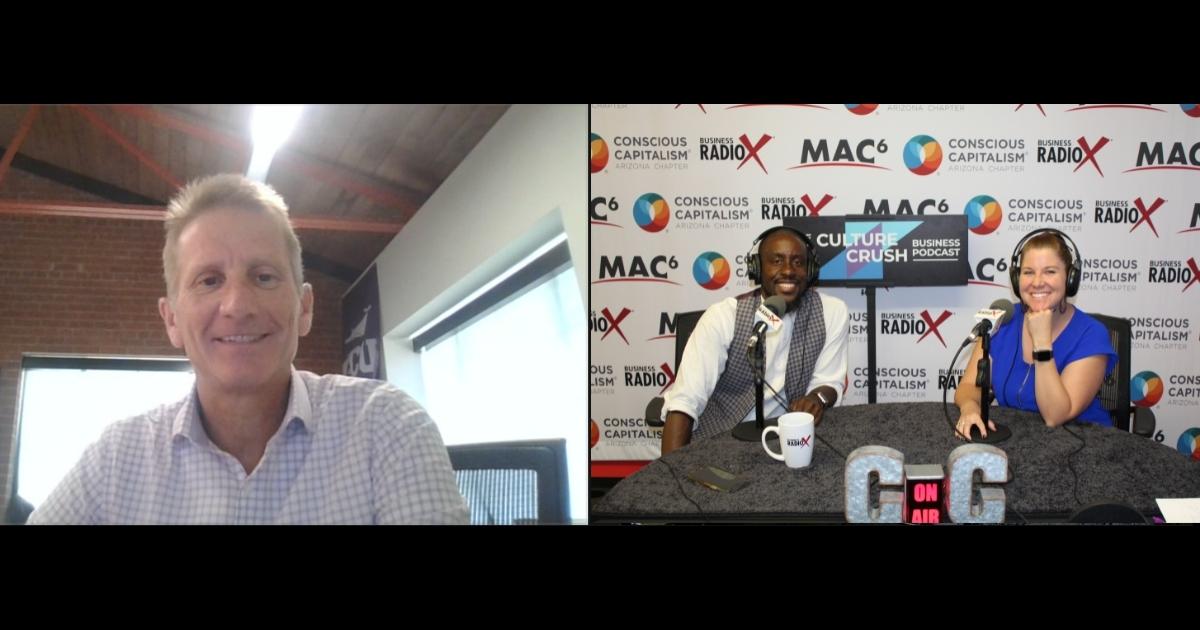
Another great LIVE show in the books! It was great to have Randy and Lloyd on the show together. Not only was there alignment in the conversation around conscious business, community focus, and education improvement, there is also a new relationship built between the two of them in the Phoenix Business Community. This is another beautiful example of how we can make change in the community- one relationship at a time.

These two are making amazing change in the Phoenix community and showcasing the importance of building strong communities. Along with the discussions of culture and community, there were some great tidbits and takeaways from the conversation that can be acted on immediately.

What were some of the takeaway tidbits?

  • Never discount anyone
  • Articulate who you are
  • Everyone wants to make a difference. Just find what is meaningful to you

Just because the recording is over, doesn’t mean the involvement stops there. There were some great discussions that include some actions that you can take to get involved.

Time to Take Action!

September 12th Event at Grand Canyon University- Beyond Zero Movie Screening Event

After a life changing epiphany, the CEO of a global public company embarks on a high stakes quest to eliminate all negative environmental impacts by 2020. To succeed they must overcome deep skepticism, abandon the status quo and ignite a new industrial revolution.

The full event will include snacks and drinks, networking, movie screening, and an on stage conversation with the film’s producer. You can find more details by emailing Randy.gibb@gcu.edu and let him know that you heard about it on the Culture Crush Business Podcast.

Classroom Supply Drive and Annual Fundraiser for the Million Dollar Teacher Project

The Million Dollar Teacher Project could use your support. They are doing their best to support students by supporting teachers and can use a little more help in doing so. There is an annual fundraiser and a classroom drive going on right now. 

Email lloyd@mdtproject.org to learn more and let him know that you heard about it through the Culture Crush Business Podcast.
NewMDTPhorizontallogoPNG

Million Dollar Teacher Project is a nonprofit organization that partners with Title I Schools, in marginalized communities, on creating community-centered strategies to help them increase how their teachers are recognized, drive more support directly into their classrooms and create innovative ways to impact how their teachers are compensated.

Lloyd-Hopkins-HeadshotLloyd Hopkins is the Executive Director/Founder of Million Dollar Teacher Project. Lloyd is an organizational leader with extensive experience in community and nonprofit work. He has worked in and around education for 18 years.

He graduated from Arizona State University with his degree in Nonprofit Management and Leadership and took his passion for ensuring quality education for all to launch the teacher recruitment and retention program, Million Dollar Teacher Project.

In addition to being a Founder and Executive Director he is also an entrepreneur and philanthropist. As a philanthropist he is the Chair of Real Engagement through Active Philanthropy (R.E.A.P) which is a fund under the Arizona Community Foundation the supports programs making positive impacts on African-American Youth and is currently working with an Achieve60AZ Taskforce on improving attainment for the African American community in Arizona.

For his efforts he was recently a finalist for the Phoenix Center of the Arts Mayor’s Arts Awards for his Million Dollar Teacher Tree program and was honored by the East Valley NAACP with the Malala Yousafzai Equity in Education Award. He is also an alum of Valley Leadership’s Class 40.

Connect with Lloyd on LinkedIn and follow Million Dollar Teach Project on Facebook, Twitter and Instagram.
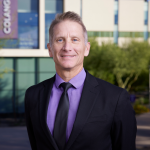
Randy-Gibb-headshotRandy Gibb, PhD, joined GCU in July 2014 and served as the dean of the Colangelo College of Business until 2022. His team grew the college based the pillars of servant leadership, ethics, and entrepreneurism and promoted the ideals/concepts of free market capitalism and business as a form of ministry.

In July 2022, he stepped into the role as Provost. Dr. Gibb served 26 years in the U.S. Air Force and commanded two Air Force flying units and retired as a Colonel and Command Pilot.

He also has academic leadership experience and taught as Department Chair of the U.S. Air Force Academy’s Behavioral Science and Leadership Department, helped lead the human systems integration program at the Air Force Institute of Technology in Dayton, OH, as a Senior Military Professor at the Graduate School of Engineering and Management Department, and served at Arizona State University as an Associate Professor and Chair of the Human and Environmental Systems Department.

Dr. Gibb has extensive experience in aviation safety, human factors, visual perception and spatial disorientation, as well as leadership development. Dr. Gibb, originally from Wisconsin, earned his PhD and MS in Industrial Engineering from Arizona State University. He also has an MA from the U.S. Naval Command and Staff College in Newport, RI, and was a distinguished graduate from the U.S. Air Force Academy in 1986.

Dr. Gibb served on the Governor’s Workforce Arizona Council, Canyon Angels founding board, WESTMARC board of directors, and Arizona’s board of Conscious Capitalism.

Connect with Randy on LinkedIn, and follow Grand Canyon University on LinkedIn, Twitter and Facebook.

About Culture Crush

Culture is not just a tag word to be thrown around. It is not something you throw in job descriptions to draw people to applying for jobs within a company.

According to Marcus Buckingham and Ashely Goodall in their book Nine Lies About Work, “Culture is the tenants of how we behave. It’s like a family creed. This is how we operate and treat each other in the family.”CultaureCrushKindraBanner2
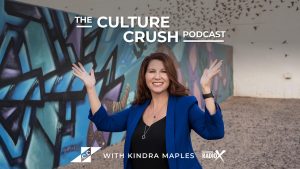
As a growing company- Culture Crush Business Podcast is THE culture improvement resource that supports companies and leaders.  Our Mission is to improve company cultures so people WANT to go to work. Employees and leaders should like where they work and we think this is possible.

Within the company: Culture Crush has Vetted Resources and Partnerships with the right people and resources that can help improve your company culture.

On this podcast:  We focus on everything surrounding businesses with good company culture. We will talk with company leaders to learn about real-life experiences, tips, and best practices for creating a healthy work environment where employees are finding joy and satisfaction in their work while also striving and growing within the company.  We also find the companies that offer resources to help improve company culture and showcase them on the show to share their tips and tricks for growing culture.

About the Host
ABHOUTHOSTHEADSHOT

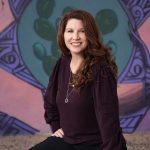
Kindra Maples  is spartan racer, past animal trainer, previous magician’s assistant, and has a weakness for Oreo cookie shakes. Her journey working with people actually started working with animals as a teenager (don’t worry we won’t go that far back for her bio).

She worked for over 15 years in the zoo industry working with animals and the public. Her passion of working with animals shifted into working with people in education, operations and leadership roles. From there her passion of leadership and helping people develop has continued to grow.

Then came the opportunity for leading  the Culture Crush Business Podcast and she jumped on it. Leadership, growth, and strong company cultures are all areas that Kindra is interested in diving into further.

Shout Outs

We want to thank a few people for their behind the scenes effort in helping this relaunch to come to life. James Johnson with Tailored Penguin Media Company LLC.– It is a small, but powerful video production company with a goal to deliver the very best by articulating the vision of your brand in a visually creative way. Gordon Murray with Flash PhotoVideo, LLC. -Flash Gordon has been photographing since high school and evolving since then with new products that will equip, encourage, engage, and enable. Renee Blundon with Renee Blundon Design – She is not only one of the best free divers (that’s not how she helped with the podcast) but she is great with graphics design and taking the direction for the vision that you have while also adding creative ideas to bring to your vision to life.

These are just a few of the folks that supported the relaunch of the podcast. If you would like to be part of the Culture Crush team or would like to support underwriting the show- please reach out: info@culturecrushbusiness.com
Tagged With: education, entreprenuers, Grand Canyon University, nonprofits, students, teachers

Keith Parker, Goodwill of North Georgia

July 27, 2022 by John Ray

Keith Parker
North Fulton Studio
Keith Parker, Goodwill of North Georgia
Loading
00:00 /
RSS Feed
Share
Link
Embed

Download file

Keith Parker

Keith Parker, Goodwill of North Georgia (GNFCC 400 Insider, Episode 77)

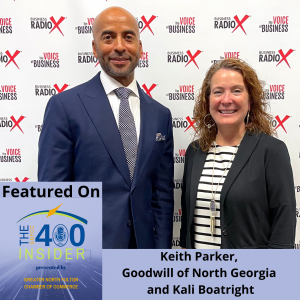
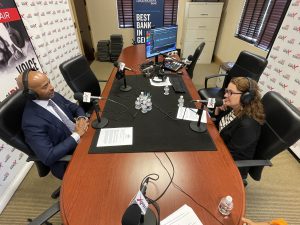
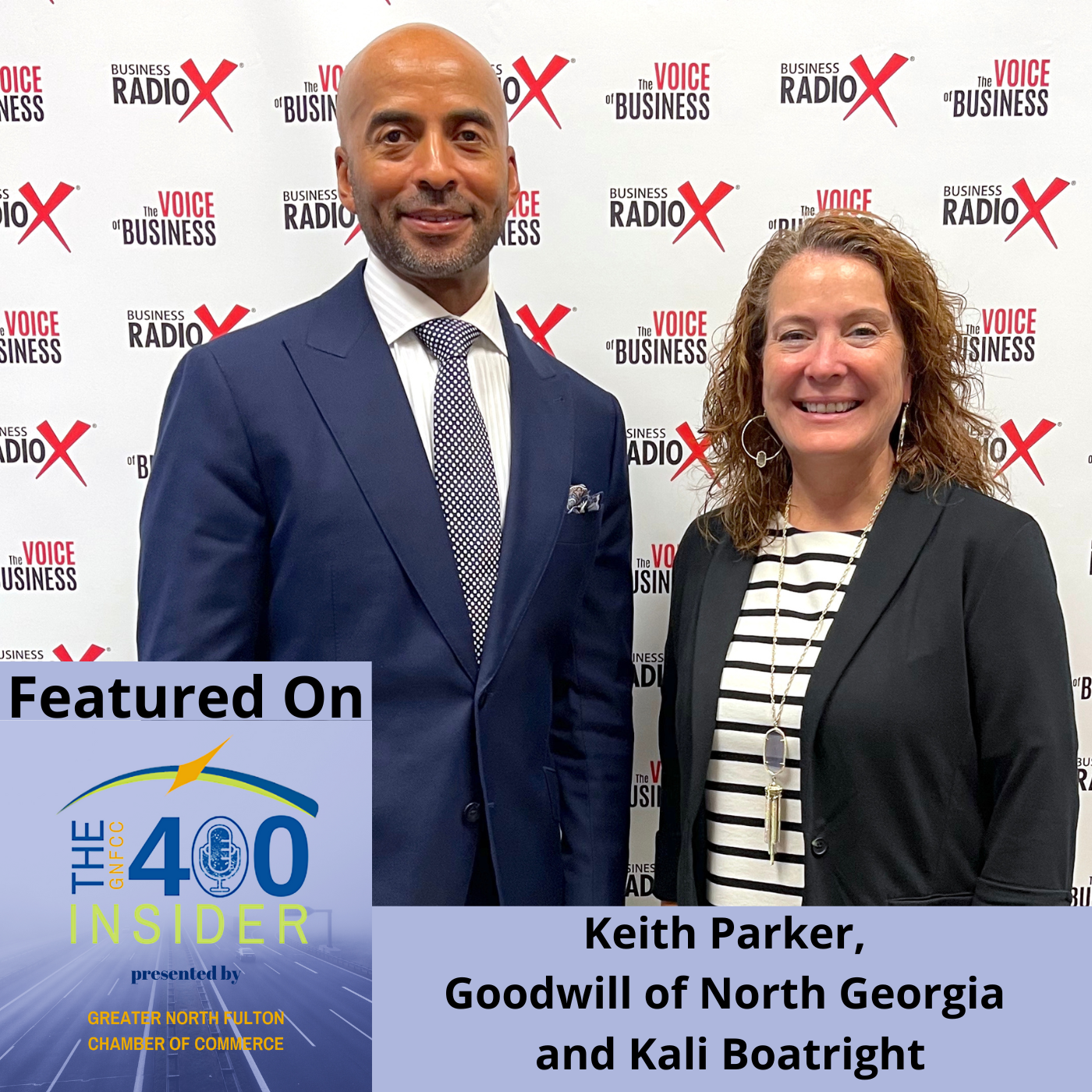
Keith Parker, President and CEO of Goodwill of North Georgia, joined host Kali Boatright to share the tremendous work his organization performs for jobseekers securing employment. Keith shared Goodwill success stories, their specific work in North Fulton, his career journey, which includes a five year stint as CEO of MARTA, and much more.

The GNFCC 400 Insider is presented by the Greater North Fulton Chamber of Commerce and produced by the North Fulton studio of Business RadioX®.

Goodwill of North Georgia

At Goodwill of North Georgia, their mission is a simple one: they put people to work.

Every day, thousands of men and women face barriers that make it difficult for them to find work and earn a paycheck to support their families. Sometimes it’s lack of training or education, limited job skills, or a disability. But with the support of donors and shoppers like you, Goodwill overcomes those barriers.

At career centers throughout North Georgia, Goodwill offers job-search resources, helps with writing a professional résumé and cover letter, provides access to employment opportunities, delivers hands-on skill training, and so much more.

They provide access to important job search resources like computers, résumé writing tools, local job listings, telephones, and photocopiers. They also host regular recruiting events, employment seminars, and even offer software training. As an extension of their career center services,  they launched Career Connector powered by Goodwill of North Georgia, a site that allows you to register online and access job search resources from anywhere.

Their training programs prepare people for careers in a wide array of fields such as retail, financial services, floor technology, healthcare, traditional and green construction, forklift operations, and more.

Think about Goodwill and the good they do the next time you’re deciding what to do with your gently used goods, or even when you’re about to go treasure hunting for a bargain. If you’d like to help them improve our communities, strengthen families, and energize the economy, they welcome your donations and invite you to visit their stores.

Company website | LinkedIn | Facebook | Twitter | Instagram

Keith Parker, President and CEO, Goodwill of North Georgia

Keith Parker, President and CEO, Goodwill of North Georgia

Keith T. Parker is president and chief executive officer (CEO) of Goodwill of North Georgia. One of the largest nonprofit organizations in the southeast, Goodwill spans a 45-county territory, operating 60 stores, 58 donation centers, and 13 career centers. Goodwill employs nearly 3,000 people, each of whom plays a direct or supporting role in the organization’s donated goods retail operations and its career services. Annually, Goodwill collects upwards of 2.5 million donations and serves more than 7 million shoppers. Through the revenue generated in its stores, the organization is able to connect tens of thousands of North Georgians to jobs each year. Parker took the helm at Goodwill of North Georgia in October 2017. Prior to transitioning into his leadership role at Goodwill, Parker has served as CEO of the largest transit systems in several cities, including San Antonio, Charlotte and most recently, Atlanta.

Throughout his career, Parker has received numerous awards and accolades for his work as an organizational leader and transportation visionary. He won Texas CEO of the Year Awards in 2011 and 2012.  He was recognized as the nation’s Outstanding Public Transportation Manager by the American Public Transportation Association (APTA) in 2015. METRO Magazine named Parker as one of its 20 Most Influential People of the Decade. In 2016, Parker was appointed by President Barack Obama to serve on the National Infrastructure Advisory Council (NIAC). In November the same year, he was named one of eight Public Officials of the Year by Governing magazine. In August 2017, Parker was selected as one of Atlanta’s Most Admired CEOs by Atlanta Business Chronicle.

A native of Petersburg, Virginia, Parker was appointed to the Virginia Commonwealth University Board of Visitors by Governor Terry McAuliffe in 2016. Parker received VCU’s Alumni Star Award in 2015.

Parker served on the board of directors for Goodwill of San Antonio and Goodwill of North Georgia. He remains active and engaged in civic and charitable organizations, including service on various national and local boards of directors – such as Georgia Chamber of Commerce Board of Advisors, Metro Atlanta Chamber of Commerce Board of Directors, National Infrastructure Advisory Council, The Eno Center for Transportation, Park Over Georgia 400 Steering Committee, Virginia Commonwealth University Board of Visitors, Virginia Commonwealth University Health Systems Board of Directors, Grande West Board of Directors and Atlanta Convention and Visitors Bureau.

Parker holds an MBA from the University of Richmond, as well as a Master of Urban and Regional Planning and a BA in Political Science from Virginia Commonwealth University.

LinkedIn

About GNFCC and The GNFCC 400 Insider

Kali Boatright, President and CEO of GNFCC

The GNFCC 400 Insider is presented by the Greater North Fulton Chamber of Commerce (GNFCC) and is hosted by Kali Boatright, President and CEO of GNFCC. The Greater North Fulton Chamber of Commerce is a private, non-profit, member-driven organization comprised of over 1400 business enterprises, civic organizations, educational institutions, and individuals.  Their service area includes Alpharetta, Johns Creek, Milton, Mountain Park, Roswell and Sandy Springs. GNFCC is the leading voice on economic development, business growth and quality of life issues in North Fulton County.

The GNFCC promotes the interests of our members by assuming a leadership role in making North Fulton an excellent place to work, live, play and stay. They provide one voice for all local businesses to influence decision-makers, recommend legislation, and protect the valuable resources that make North Fulton a popular place to live.

For more information on GNFCC and its North Fulton County service area, follow this link or call (770) 993-8806. For more information on other GNFCC events such as this North Fulton Mayors Appreciation Lunch, follow this link.

For the complete show archive of GNFCC 400 Insider, go to GNFCC400Insider.com. The GNFCC 400 Insider is produced by John Ray and the North Fulton studio of Business RadioX®.


Tagged With: GNFCC, Goodwill of North Georgia, Greater North Fulton Chamber of Commerce, Kali Boatright, Keith Parker, Keith T. Parker, MARTA, marta transit, nonprofits, North Fulton, The GNFCC 400 Insider

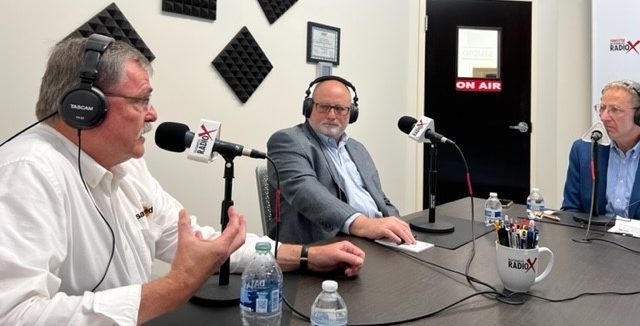
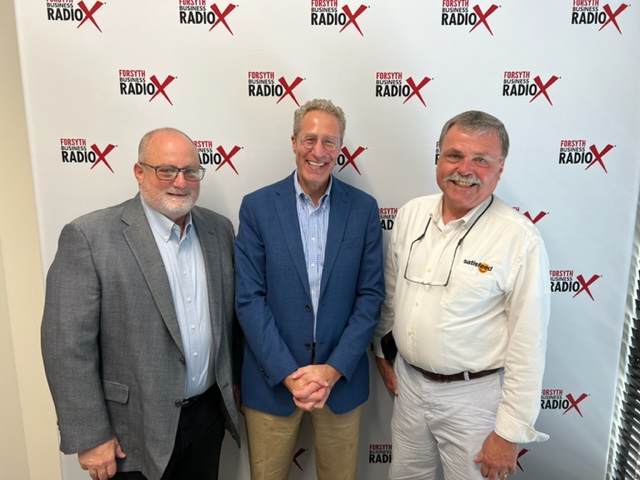
Simon Says Lets Talk Business 2.0: Tim Turner of Satisfeed & Mark McKenzie of Docqmax Digital Printing join Host Gary Zermuehlen of Sandler Training, Simon INC

July 11, 2022 by Amanda Pearch

Forsyth Studio
Forsyth Studio
Simon Says Lets Talk Business 2.0: Tim Turner of Satisfeed & Mark McKenzie of Docqmax Digital Printing join Host Gary Zermuehlen of Sandler Training, Simon INC
Loading
00:00 /
RSS Feed
Share
Link
Embed

Download file

Tim Turner | Founder of Satisfeed, Mark McKenzie | Docqmax Digital Printing

and Host Gary Zermuehlen | Sales Coach and Trainer at Sandler Training, Simon INC


Tim Turner is the, Founder and CEO of Satisfeed Food Pantry.

SATISFEED is a community food pantry. They start with food because we know hunger interferes with healing (Maslow’s Hierarchy of Needs). Ultimately, they will build Community Service Center(s) and provide wraparound services to feed our guests Physically, Financially, Socially, Emotionally, Relationally, and Spiritually. Visit satisfeed.org to learn more and how to contribute.

Mark McKenzie Partner & Business Developer at Docqumaz Digital Printing

They are in the business of printing. As a second-generation family-owned business they do everything with the purpose of improving service for customers, making the company more profitable, while improving the standard of living of their employees.
Their team takes pride in the fact that the products they create help to
make businesses more successful.

Host Gary Z is a Sales Trainer & Coach at Sandler Training, Simon Inc.
Companies depend on sales force development. Gary and team equip sales professionals to drive sales revenue higher, uncover significantly more business opportunities, shorten their selling cycles, and protect their gross profit margins. Using a powerful combination of consulting, sales training, they help their client community to achieve goals and overcome challenges.


Stay tuned for “Sales 1, 2, 3… with Gary Z” at the end of each episode. Listen to the LIVE boradcast on businessradiox.com/forsyth-studo OR SUBSCRIBE to “Simon Says, Lets Talk Business 2.0” on any podcasting platform.  Series proudly presented by Sandler Training, Simon Inc.

Simon-Says-Forsyth-banner.png


Broadcasted LIVE from the Forsyth Business RadioX Studio in Cumming, Georgia

 Produced by Amanda Pearch

Tagged With: al simon, amanda pearch, Business Coalc, Cumming, digital marketing, Docqumaz Digital Printing, Forsyth, Gary Zermuehlen, Leadership, Mark McKenzie, nonprofits, print, Sales, Sandler Training, Satisfeed Food Pantry, service, Simon Inc, Tim Turner, train, Trustegrity

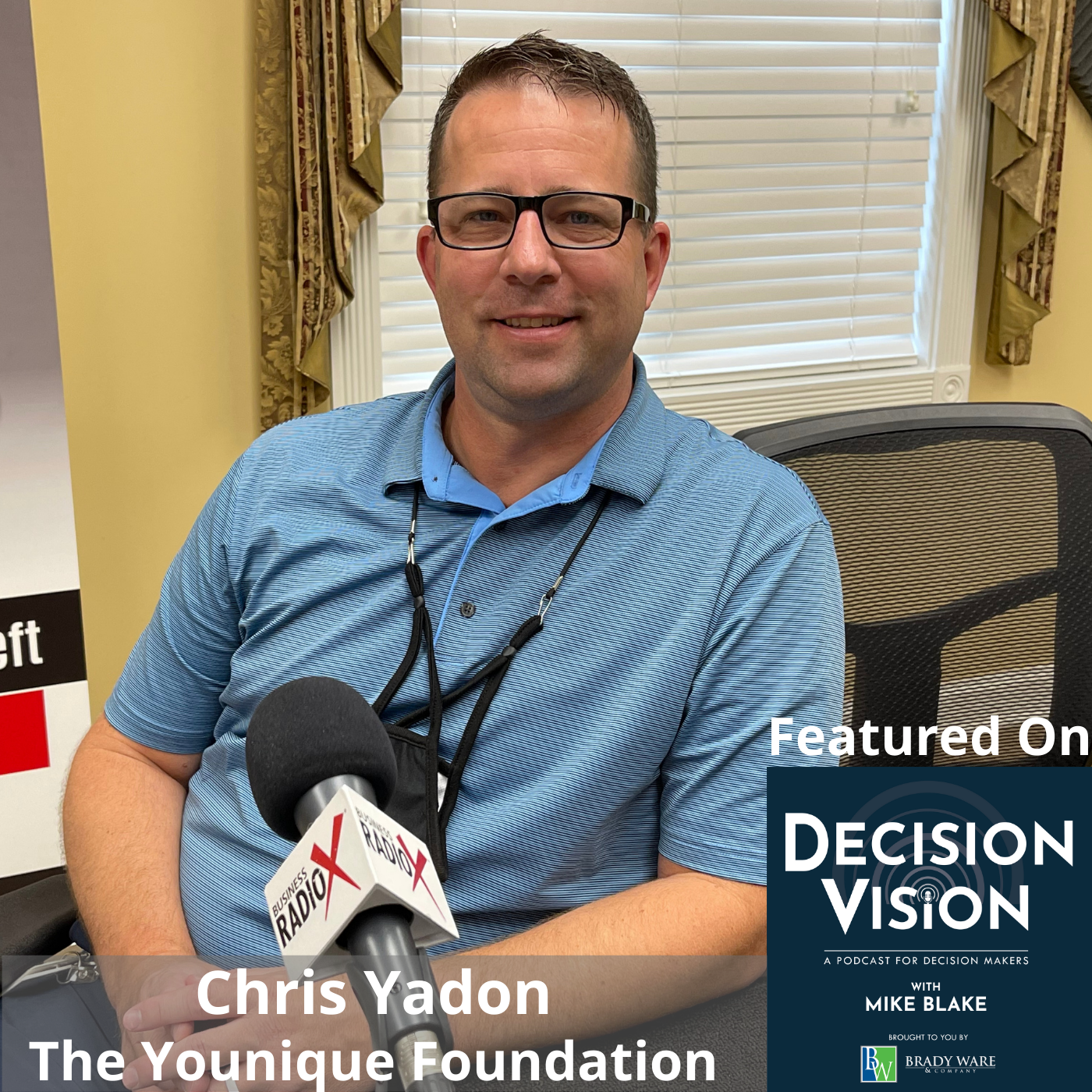
Decision Vision Episode 145:  Should I Start a Foundation? – An Interview with Chris Yadon, The Younique Foundation

December 2, 2021 by John Ray

The Younique Foundation
Decision Vision
Decision Vision Episode 145:  Should I Start a Foundation? - An Interview with Chris Yadon, The Younique Foundation
Loading
00:00 /
RSS Feed
Share
Link
Embed

Download file

The Younique Foundation

Decision Vision Episode 145:  Should I Start a Foundation? – An Interview with Chris Yadon, The Younique Foundation

What is a foundation, how do you start one, and what are the essential bases to cover from the outset? Chris Yadon, Executive Director of The Younique Foundation, and host Mike Blake dive into the details of effectively creating and running a foundation, funding, giving out money, governance, and much more. Decision Vision is presented by Brady Ware & Company.

The Younique Foundation

The Younique Foundation aims to inspire hope in women who were sexually abused as children or adolescents by providing healing services through educational retreats, support groups, and online resources.

They educate and empower parents and caregivers to protect children from sexual abuse through community and online resources.

They advocate for open discussions about sexual abuse through community dialogue and social awareness.

The Younique Foundation exists for the purpose of helping adult, female survivors of child sexual abuse navigate their healing journeys. We provide a range of free services, including:

  • Depression
  • Anxiety
  • Eating disorders
  • Suicidal thoughts
  • Insomnia
  • Panic attacks
  • Addictions and addictive behaviors
  • Unhealthy relationships
  • Chronic pain
  • Learning difficulties

Company website | LinkedIn | Facebook | Twitter | Instagram

Chris Yadon, Executive Director, The Younique Foundation

The Younique Foundation
Chris Yadon, Executive Director, The Younique Foundation

Chris Yadon joined The Younique Foundation as Executive Director in 2015. Chris is responsible for executive leadership, effective stewardship of financial resources, planning, fundraising, and reporting at The Younique Foundation.

He has previously held leadership positions in the start-up, tech, and nonprofit industries. He brings a valuable skillset to the organization and is deeply committed to addressing the epidemic of child sexual abuse. Chris plays a vital role as a spokesperson for The Younique Foundation. He is a sought-after local speaker and has also been invited to present nationally and internationally.

His expertise centers on heightening awareness to the epidemic of child sexual abuse, as well as educating the public on best practices for prevention and the healing services available to survivors. Chris has been featured across several media platforms where he is often requested to contribute as an industry thought leader and expert.

Chris considers his family as his greatest accomplishment. He is the grateful father of six children: three boys and three girls. He and his wife, Christy, have been married for 22 years.

LinkedIn

Mike Blake, Brady Ware & Company

Mike Blake, Host of the “Decision Vision” podcast series

Michael Blake is the host of the Decision Vision podcast series and a Director of Brady Ware & Company. Mike specializes in the valuation of intellectual property-driven firms, such as software firms, aerospace firms, and professional services firms, most frequently in the capacity as a transaction advisor, helping clients obtain great outcomes from complex transaction opportunities. He is also a specialist in the appraisal of intellectual properties as stand-alone assets, such as software, trade secrets, and patents.

Mike has been a full-time business appraiser for 13 years with public accounting firms, boutique business appraisal firms, and an owner of his own firm. Prior to that, he spent 8 years in venture capital and investment banking, including transactions in the U.S., Israel, Russia, Ukraine, and Belarus.

LinkedIn | Facebook | Twitter | Instagram

Brady Ware & Company

Brady Ware & Company is a regional full-service accounting and advisory firm which helps businesses and entrepreneurs make visions a reality. Brady Ware services clients nationally from its offices in Alpharetta, GA; Columbus and Dayton, OH; and Richmond, IN. The firm is growth-minded, committed to the regions in which they operate, and most importantly, they make significant investments in their people and service offerings to meet the changing financial needs of those they are privileged to serve. The firm is dedicated to providing results that make a difference for its clients.

Decision Vision Podcast Series

Decision Vision is a podcast covering topics and issues facing small business owners and connecting them with solutions from leading experts. This series is presented by Brady Ware & Company. If you are a decision-maker for a small business, we’d love to hear from you. Contact us at decisionvision@bradyware.com and make sure to listen to every Thursday to the Decision Vision podcast.

Past episodes of Decision Vision can be found at decisionvisionpodcast.com. Decision Vision is produced and broadcast by the North Fulton studio of Business RadioX®.

Connect with Brady Ware & Company:

Website | LinkedIn | Facebook | Twitter | Instagram

TRANSCRIPT

Intro: [00:00:02] Welcome to Decision Vision, a podcast series focusing on critical business decisions. Brought to you by Brady Ware & Company. Brady Ware is a regional full-service accounting and advisory firm that helps businesses and entrepreneurs make visions a reality.

Mike Blake: [00:00:21] Welcome to Decision Vision, a podcast giving you the listener clear vision to make great decisions. In each episode, we discuss the process of decision making on a different topic from the business owners or executives perspective. We aren’t necessarily telling you what to do, but we can put you in a position to make an informed decision on your own and understand when you might need help along the way.

Mike Blake: [00:00:43] My name is Mike Blake, and I’m your host for today’s program. I’m a director at Brady Ware & Company, a full-service accounting firm based in Dayton, Ohio, with offices in Dayton; Columbus, Ohio; Richmond, Indiana; and Alpharetta, Georgia. My practice specializes in providing fact based strategic and risk management advice to clients that are buying, selling or growing the value of companies and intellectual property. Brady Ware is sponsoring this podcast, which is being recorded in Atlanta for social distancing protocols.

Mike Blake: [00:01:12] If you would like to engage with me on social media with my Chart of the Day and other content, I’m on LinkedIn as myself and @unblakeable on Facebook, Twitter, Clubhouse, and Instagram. I also recently launched a new LinkedIn group called A Group That Doesn’t Suck, so please join that as well if you would like to engage. If you like this podcast, please subscribe on your favorite podcast aggregator and please consider leaving a review of the podcast as well.

Mike Blake: [00:01:41] Today’s topic is, Should I start a foundation? According to statistics published by Foundation Stats, in 2015 there are 86,000 foundations representing $712 billion dollars in assets. They fund philanthropic projects, scientific research, on real estate, and even make business investments.

Chris Yadon: [00:02:04] And, we haven’t covered foundations at all on this program. And, as we get to episode 140, whatever it is, I think it’s high time we do so because after you hear those statistics, you come to recognize that they represent – foundations represent a significant economic force for good, for change, for social development in our society.

Chris Yadon: [00:02:30] And, I’m confident at least by sheer luck there are at least some individuals that have the wherewithal to either start foundations themselves or significantly fund foundations that are within the sound of the voice of this podcast. And, I think many of us aspire one day to maybe be achieving a level of wealth and success where we can start a foundation. And, we may very well discover during the course of today’s conversation that it isn’t – that you don’t necessarily have to be a gazillionaire to start a foundation, and I think we’re going to learn that today.

Mike Blake: [00:03:11] Authorized by the IRS as a charitable foundation in 2015, The Younique Foundation inspires hope in women who are sexually abused as children or adolescents by providing healing services through retreats, support groups and online resources. They educate and empower parents and caregivers to protect children from sexual abuse through community and online resources. They advocate for open discussions about sexual abuse through community dialogue and social awareness.

Mike Blake: [00:03:38] And, joining us today to talk about Younique, as well as to talk about foundation creation in general, is Chris Yadon, who joined The Younique Foundation as executive director in 2015. Chris is responsible for the executive leadership, effective stewardship of financial resources, planning, fundraising and reporting at The Younique foundation. He has previously held leadership positions in the startup technology and nonprofit industries. He brings a valuable skill set to the organization and is deeply committed to addressing the epidemic of child sexual abuse.

Mike Blake: [00:04:12] Chris plays an important role as a spokesperson for The Younique Foundation. He is a sought after local speaker and has also been invited to present nationally and internationally. And, thanks to being here, you can put podcasts on his on his checklist.

Mike Blake: [00:04:27] His expertise centers on heightening awareness to the epidemic of child sexual abuse, as well as educating the public on best practices for prevention and the healing services available to survivors. Chris has been featured across several media platforms where he is often requested to contribute as an industry thought leader and expert.

Mike Blake: [00:04:45] Chris considers his family as his greatest accomplishment. He is the grateful father of six children, three boys and three girls. He and his wife, Kristy, have been married for 22 years.

Chris Yadon: [00:04:56] Well done, Chris Yadon. Welcome to the program.

Chris Yadon: [00:04:59] It’s so good to be here with you, Mike.

Mike Blake: [00:05:02] So, Chris, let’s start off with a very basic question, but I think it’s important because I’m not sure everybody knows the answer to this question that’s listening to this podcast. I’m not sure that I know the answer to the question correctly if I’m being perfectly honest. And, that is what is a foundation? When we hear the word foundation, what should we be thinking of?

Chris Yadon: [00:05:22] Yeah. That’s an interesting question because foundation can mean many things. There are public charities that use the word foundation. There are private foundations that use the word foundation. There are corporate foundations that use the word foundation. So, the word foundation in and of itself doesn’t necessarily designate a certain type of entity. For example, we’re called The Younique foundation. We’re actually a public charity. I would say, though, it’s most commonly used to describe a certain type of entity, which is a private foundation.

Mike Blake: [00:06:02] Now, that leads nicely to the next question, which is, as I was researching for this podcast, it seems like there are actually different types of structures of foundations. So, you mentioned that perhaps most of us think of a of a private foundation. But if you’re familiar with them, what are the other types of foundations that fit into this category?

Chris Yadon: [00:06:23] Yeah. So, you’ll – the two biggest type that you’ll see are the private foundations that are often associated with the family and the family’s wealth. So, The Bill and Melinda Gates Foundation is an example.

Chris Yadon: [00:06:38] But you’ll also see foundation often used with corporate foundations. So, Chick-Fil-A would have a corporate foundation.

Chris Yadon: [00:06:47] So, those are the two most common type of private foundations. But, again, kind of like I mentioned at the beginning, even some public charities like ours use the term foundation occasionally in their names.

Mike Blake: [00:07:03] And, interestingly, you know, for good or ill, and I’m sure I certainly don’t want to open a debate on this issue, but, you know, foundations can also be used as or have been used in the past as frankly tax reduction structures. And, again, I’m not going to debate as to whether or not that’s good or bad with the policy should be.

Mike Blake: [00:07:26] But interestingly enough, I learned that when Henry Ford passed away that he gave most of the shares of the Ford Motor Company to a foundation, a family foundation. Or, actually, yes, before you passed away. And then, ultimately one of the Ford family maintained control of that foundation to the board. But then the chairman resigned, I think it was Henry Ford Jr. resigned after some relatively minor dispute with the board but he sort of got as mad as hell and he wouldn’t take it anymore. That sort of thing. And then, in doing so, lost control of the Ford family fortune. They are only worth a fraction of what they’re worth actually have been say in the 1950s until he did that. But, you know, and Henry Ford was known for among other things. He just saw avoiding taxes as a a patriotic duty. It went beyond just financial. It was – he just thought that the government had no right to take his money into discussion. That’s why he created the foundation.

Mike Blake: [00:08:32] But, you know, back in the day, it wasn’t that easy to create a foundation that would effectively be a tax avoidance scheme. And, the second of that loophole was passed through by Ford Jr. The Ford family lost that a lot of that wealth. Now, they’re still holding on to the Detroit Lions. I’m not sure if that’s a good or bad. We’ll let other people decide. Maybe, the second prize is holding on to two Detroit Lions, but kind of interesting how a foundation and the governance of a foundation actually altered the course of the Ford family fortune.

Chris Yadon: [00:09:07] Yeah, you know, and it brings up a really important thing for us to acknowledge around private foundations is they almost always have a dual purpose. Most foundations genuinely want to do good, but it’s not just about doing good. It’s about doing good business as well and protecting their assets and ensuring that those assets can live in some level of perpetuity.

Chris Yadon: [00:09:32] And so, yes, there are tax advantages. They’re highly regulated because of that. As opposed to a public charity, public charities are more scrutinized by the public because of the type of structure that they are, whereas a private foundation has more regulatory requirements and more scrutiny from governing bodies.

Chris Yadon: [00:09:56] So, they both have their purpose. And, when you when you look at a private foundation, anybody should look at that private foundation and understand that they are dual purpose. They’re protecting assets for the family, dealing with the tax implications of those assets while also doing good by giving to public charities like ours.

Mike Blake: [00:10:19] And, you know, if my memory serves you are, if not one of the founders, maybe the founder of The Younique foundation, correct?

Chris Yadon: [00:10:29] Well, I was the first employee. I’ll give the founder credit where it belongs and that’s to our two founding board members that infused a significant amount of wealth into what we did. But me, along with those two, started on day one and and we fundamentally were grappling with some of these decisions on day one. Should we be a corporate foundation? Should we be a private foundation? Should we be a public charity? Ultimately, we landed on public charity for very clear and specific reasons, but all things were on the table when we first considered it.

Mike Blake: [00:11:03] So, I don’t want to get too much in your business and ask unfair questions, but to the extent that you’re able to disclose it, can you talk a little bit about the calculus of reaching that decision on the structure that you have and what those considerations were and why it was that ultimately led you to your current structure?

Chris Yadon: [00:11:24] Yeah. So, a couple of things. First of all, we knew we wanted to provide direct services to those people that we wanted to serve. Typically, private foundations, most of them do not provide direct services. There’s a particular type of private foundation that does, but most don’t. And so, that that was the first point. But even with that point, we still had an option to stay a private foundation.

Chris Yadon: [00:11:53] But for us, we knew the topic of sexual abuse was so broad and had penetrated so deeply into our country, into our communities and even internationally worldwide that we needed broad-based support from the public. And, you generally don’t get broad-based public support as a private foundation. It’s almost always funded by a small handful of individuals, whereas, we needed combined funding both from high networth individuals, including our founders, as well as the general public pitching in to help address our issue that we wanted to address.

Mike Blake: [00:12:33] Oh, that’s interesting. So, if I can read back to you what I think I heard, foundations tend to be kind of, if you will, kind of more closed entities, like a more closely held entity, perhaps within a single family. They don’t need outside support. They don’t want outside support. They don’t want outside influence, probably. Whereas, a public charity recognizes that it needs resources that can leverage beyond what the founders are able to provide on their own.

Chris Yadon: [00:13:00] That’s correct. You just nailed it. And, those those private foundations hold things closely because most of the money they give away is generated by investment returns from the assets that they’ve placed into the foundation. So, they want to manage those closely as a family or a small group, rather than having the public weigh in on how those should be managed or dealt with.

Mike Blake: [00:13:28] And, those assets might become more commonly thought of as an endowment, I guess.

Chris Yadon: [00:13:33] Yeah. There’s many different vehicles they use, but endowments are certainly one.

Mike Blake: [00:13:39] Okay. So, when you guys started Younique, what made you feel like you had to start your own entity versus throwing your considerable resource and influence behind an existing entity? Because I know you’re not the only foundation that addresses this problem. Don’t get me wrong. I’m glad you’re doing it, and the more the merrier as far as I’m concerned. But clearly, at some point, somebody asked a question why do we have to do this ourselves and have our own infrastructure? Why don’t we find a really good, if there is one, a really good entity and write them, you know, support them financially?

Chris Yadon: [00:14:16] Yeah. It’s a great question, and you might find me speaking out of both sides of my mouth here for a minute. I am a huge advocate of individuals that have wealth of finding existing causes rather than starting their own. There’s way too many nonprofits that exist already and many of those nonprofits are really struggling. But the few that are actually having impact, they always need more resource. So, I’d always recommend to a person of wealth to find a high quality nonprofit that can prove that they’re having impact and shovel their resources into those causes that they feel like they can get behind.

Chris Yadon: [00:15:02] But we didn’t do that. And, here’s the simple reason. The topic of sexual abuse was being addressed by many other nonprofits. But there is a very specific segment of sexual abuse survivors that was not being addressed effectively, and that was adult survivors who were sexually abused as children that were dealing with posttraumatic stress. They don’t really have resources outside of going to an individual therapist.

Chris Yadon: [00:15:28] There’s a lot of non-profits and resources in communities that help children who are being abused. There’s a lot of resources that help women who are currently going through domestic violence, including sexual violence. But there were very few resources for adult women who are sexually abused as children. They didn’t have options, and we felt strongly because of the size of that demographic there need to be a champion in that area. And, we decided we needed to be the one to lead that effort.

Mike Blake: [00:16:00] So, in that regard, it sounds very much like, very much like a business decision. Should I start a business or should I invest in other businesses that already exist?

Chris Yadon: [00:16:12] Yeah, identical thinking. I mean, the nuances are different, but the strategic thinking behind it is identical. I’ve spent much of my career in for profit startups, so I know both sides. I know both the nonprofit and for profit sides when it comes to early stage investing. And, it’s remarkably similar.

Mike Blake: [00:16:36] And, you know, I wonder if that’s why there seemed to be a lot of technology, entrepreneurs that are drawn to foundations, right, and affect it. It’s a startup, but a startup with a different ultimate bottom line.

Chris Yadon: [00:16:50] Yeah. Absolutely. You know, if you go to Maslow’s Hierarchy of Needs, you know, the one that was added after the fact was really based on this principle of when everything in my world has been met and I’ve reached self-actualization, what happens? Well, I turn around and give back.

Chris Yadon: [00:17:15] And so, for people that are have high networth, have been successful in their careers, where their needs have been met up and down, it’s no wonder they have a desire to give back and they’re intelligent people and they often feel like they can do it better than the next person. And, in some cases that’s true. And, in some cases, it would be better for them to jump in as an investor in these causes that are already doing good.

Mike Blake: [00:17:44] So, how does one – let’s say somebody is now checking off the boxes and they think they found an unmet niche that they need to start something as opposed to backing something that exists. At a high level, can you describe the process of starting a foundation?

Chris Yadon: [00:18:02] Yeah. Step one, and I would strongly discourage anybody from skipping this step, secure top-notch legal counsel and top-notch accounting counsel. Those are the two critical pieces. And, you specifically want to look for practices that specialize in nonprofit work. If you have those and the start of a board, meaning the core of that board of directors that’s going to start this, you have what you need to start having the strategic discussions of what’s next. But I wouldn’t even take a single step without engaging that legal and financial counsel.

Mike Blake: [00:18:49] Now, you make an emphasis on top-notch. Can I infer that there’s a story that you’re aware of where somebody didn’t use top-notch counsel and they got burned by it?

Chris Yadon: [00:19:01] Well, everybody has a friend or an uncle or a college roommate that, you know, is an accountant or an attorney. But their practice may not be in nonprofit.

Mike Blake: [00:19:14] Yeah.

Chris Yadon: [00:19:14] And, they know enough and can do enough to get you registered. But they’re not going to be there to warn you of the problems that are coming if you don’t set up your entity right and start your governance on day one in the right way. And, I’ve seen many nonprofits get into all sorts of trouble when they rely on their uncle that’s a tax accountant for mom and pop stores on main street who has zero experience in nonprofit and they are their tax advice for their nonprofit. It just doesn’t work. It may work if the nonprofit stays small with little to no impact but the moment they start growing, they’ll be in a mess if they don’t do it right on day one.

Mike Blake: [00:20:06] Especially since, and correct me if I’m wrong, I think registering the foundation is the easy part. I mean, that’s the part where almost anybody can kind of look up the rules. And, that’s probably what that tax accountant did was look at the rules and then just set it up, right? It’s about setting up the right way where you don’t create liability for the foundation founders, board of directors and that sort of thing, right?

Chris Yadon: [00:20:30] Yeah. You got it. Yeah. It’s pretty simple to get it through and and approved by the IRS. Even nonprofessionals do it often and people think that that’s enough. And, frankly, it’s not pretty to them to spend money on legal or spend money on accounting, but I can’t emphasize enough how critical it is. They won’t feel the pain of it till two or three, if they do it wrong, but they will feel the pain of it if they get it wrong.

Mike Blake: [00:21:01] So, what are some of those risks when one starts a foundation, and certainly this is something you’ve you’ve given a lot of thought to, I’m sure, and probably is on your mind daily. What are the risks associated with starting a foundation?

Chris Yadon: [00:21:15] Yeah. I’ll just give you one example. Charitable solicitation laws. Every state, there’s variances and differences in how you solicit funds. And, you know, for a small nonprofit that’s invisible, there’s probably not going to be too many regulatory bodies that care. But like I said, if someone’s aspirational in wanting to have a nonprofit that actually has significant impact on growth and influence, those regulatory bodies are going to watch and keep an eye on them.

Chris Yadon: [00:21:51] So, if I don’t have good counsel to help me know that I’ve got to register in in these 50 states if I’m going to solicit funds and to know how to register, I can get in all sorts of hot water with the way I solicit funds from donors, you know, then I’ve spent money that I’m getting, you know getting scrutiny on, and I don’t have recourse and will cause me all sorts of problems. So, there’s one simple example of what I’m talking about.

Mike Blake: [00:22:27] And, donors to foundations really don’t like their money being spent on lawyers to clean up compliance, right?

Chris Yadon: [00:22:35] That’s right.

Mike Blake: [00:22:36] That’s not what they’re in it for.

Chris Yadon: [00:22:37] They want their money to be spent effectively on programs, and they want a high percentage of it to be focused on programs.

Mike Blake: [00:22:46] So, we’ve touched a little bit on how you fund a foundation, so I’d like to switch to the other side now in terms of how foundations grant or give money. Are there any restrictions on the kinds of activities that a foundation can fund or entities that a foundation can give money to?

Chris Yadon: [00:23:06] Yeah. I mean, generally speaking, private foundations are going to give to 501(c)(3) public charities. That’s going to be the most common. They typically have a requirement to give 5% of whatever their net or their egg is that they’re investing.

Chris Yadon: [00:23:28] So, I have 100 million, you know, I’m going to be required to give 5 million a year. Now, obviously, that 100 million is, we hope growing and grows at a pace that not only meets that 5 million but exceeds it so that the net gets bigger over time. But there is a requirement to give a certain percentage. There are more detailed requirements and how it’s given and documented, but those those are the highest level basics that govern giving.

Mike Blake: [00:24:07] That’s interesting. I did not know about the 5% rule. And so, that has interesting implications for investment policy, right? Generally speaking, I mean, you can’t get in anywhere – you can’t sniff 5% on risk-free assets like you could in the good old days, right? So, you’ve got to be – you’ve got to apply some intellectual horsepower on how are you going to have a portfolio that generates at least 5% a year.

Chris Yadon: [00:24:35] Yeah. For most private foundations, they have an investment practice. It doesn’t necessarily have to be a large one, but obviously depending on the size of the funds that they have, it can dictate how involved that strategy is. But no, it’s not – they’re not just sitting on their hands when it comes to their investment strategy.

Mike Blake: [00:24:59] And, is that 5% measured on a year-to-year basis? Or is there a provision where say, if you have a bad year and you’re trying to preserve capital that you can catch up the next year? How does that work?

Chris Yadon: [00:25:11] Yeah. You’re getting into an area where I’m not as solid in my expertise. As a public charity, we interact with private foundations heavily, so I know a lot of the regulatory areas around them. But that particular question, I don’t want to mislead somebody on because I’m not sure I know the answer to that one.

Mike Blake: [00:25:31] All right. Fair enough. So, our audience can google it. I’m sure it’s out there.

Mike Blake: [00:25:38] So, are there best practices in terms of governance for a foundation to maximize the likelihood that it will be successful?

Chris Yadon: [00:25:52] Yeah, so.

Mike Blake: [00:25:52] What are they?

Chris Yadon: [00:25:53] Yeah. Specific to the giving portion of it, the most important thing that is emerging and growing right now is the role of private foundations in helping charities effectively partner with other community organizations. So, you’re seeing a lot more in private foundations, where they’re funding grants that encourage partnerships across intersectional areas of nonprofits.

Chris Yadon: [00:26:26] I’ll give you a great example of this. We work closely with a group called Stand Together. They work to eradicate poverty and they do so by enlarging and strengthening public charities that they work with. So, they actually apply good business practices in training as well as their giving strategy to encourage these nonprofits to scale and grow effectively, as well as partner with other charities that are working to eradicate poverty. So, you’re seeing – rather than them just kind of sit back and hand out checks, you’re seeing them get more involved strategically with their giving and using their giving to influence public charity strategy. And, I would consider that an emerging best practice.

Chris Yadon: [00:27:15] A couple others at the highest level, obviously good scrutiny and reporting from the charity itself is critical for foundations to ensure that their money is being used effectively. Being clear about what type or what stage a charity is when they invest. If it’s early stage, they know they’re investing and may not get a quote-unquote return on that investment because they’re investing in early stage to get a charity ready to have impact. But later stage charities, they’re looking for actual tangible numbers on, you know, for every dollar they gave, what type of impact did it actually have on the people that they served. So, you know, good, clear direction on when they give to a charity, what the actual strategic goal of that gift is.

Mike Blake: [00:28:10] Now, I’ve served on a few nonprofit boards and in my time. And, one of the things I’ve noticed as an emerging trend is foundations are looking for charities to become a little bit more self-sustainable that they don’t want to sort of be a constant, for lack of a better term, sort of a welfare check forever. But rather they’d like their money to be this something that cedes a program that somehow can at least offset some of its expenses with organic revenue, if not be self-sustaining entirely. Is that something you’re seeing as well? And, if so, why have foundations kind of moved in that direction?

Chris Yadon: [00:28:53] Yeah. It comes in several different flavors. So, there are certain charities based on the people they serve that can actually start businesses within that charity that then return revenue that allows it to perpetuate itself. That is definitely appealing to private foundations.

Chris Yadon: [00:29:15] Where there are charities that don’t have that opportunity or luxury, there’s still a principle here that charities are looking for and that is what else is that public, or sorry, the private foundations are looking for, and that is what is that charity doing to have recurring or stable revenue. So, the emergence of the $5 monthly donor is a great example of that.

Chris Yadon: [00:29:41] So, a small public charity, a private foundation is going to be interested to know, hey, how much money is coming from, you know, Joe public and how many of those are on a recurring basis? How many supporters do you have out there that are giving to your charity $5 a month? It very much becomes a recurring revenue source. And, private foundations are looking at that and whether those charities are growing that particular revenue stream to ensure that that charity is sustainable beyond just the large checks that private foundations tend to write.

Mike Blake: [00:30:20] Now, at the outset of this conversation, you alluded to the fact that foundations are subject to some oversight, which makes sense. Can you talk a little bit, again at a high level, it’s not fair to ask you to be too detailed and you’re not that kind of expert, I don’t think. But at a high level, what kind of oversight are foundations subject to themselves?

Chris Yadon: [00:30:46] Yeah. So, private foundations are subject to specifically dealings with related parties. That’s the biggest one. So, you know, they’re looking to see, “Hey, is this person using the private foundation basically to funnel money into their business interests?” And, that’s going to cause a private foundation a lot of problems.

Chris Yadon: [00:31:20] So, that’s the biggest one, and nothing else is really even close to it. What I would say, are the other ones that may be not as close but pop up or definitely how much are they giving? Who are they giving to? Just making sure all those boxes checked. But the self-dealing aspect of the oversight is by far the most critical piece of it.

Mike Blake: [00:31:48] Now, is anyone allowed to start a foundation? Could I just decide I’m going to start a foundation or are there certain criteria that one has to meet before one is allowed to start one?

Chris Yadon: [00:31:59] Yeah. I mean, technically, yes, Anybody can can start one. Generally speaking, though, the biggest rule of thumb is that there is a $5 million or more that’s put into that private foundation as a starting point. Obviously, many are much larger than that. But that, you know, as you talk to people that define best practices in the space tend to put around 5 million and give or take a little bit as as that starting point.

Mike Blake: [00:32:32] And, do foundations have owners per se, you know, somebody that can say this is my foundation or this foundation belongs to me or to this entity, to this vehicle, whatever? Is there a concept of ownership in a foundation structure?

Chris Yadon: [00:32:49] Not ownership in the business sense. I mean, definitely governance. And, when you’re looking at a private foundation, that governance is more similar to ownership, though it’s still not technically ownership. When you get to a public charity, it is very far away from ownership. It is governed by a board that has a certain number of board members that represent the public and that board provides that governance or decision-making and there’s no ownership power over it.

Chris Yadon: [00:33:22] So, it depends a little bit whether it’s a charity or a private foundation, but neither of them technically would have owners. And, the further away or the closer you get to a public charity, the further away you get from ownership principles.

Mike Blake: [00:33:37] So, how much flexibility or leeway do foundations have in terms of setting their own governance rules? Do they have a lot of latitude in terms of how they structure it? Or are there fairly rigid rules to which most foundations must adhere?

Chris Yadon: [00:33:56] Yeah. When you talk about the public charity side of it, there are pretty significant rules set by the IRS in the code that govern what we do. You know, in terms of governance around strategy or strategic thinking, there’s a lot of flexibility. But when it comes to finance and legal, you’re going to see a lot more structure and regulation. And, though I’m not as familiar with that in private foundations, I believe it’s substantially similar.

Mike Blake: [00:34:36] Now, you mentioned the distinction between a foundation and a public charity. Are there instances in which a foundation decides it would be better off as a public charity? And, if so, are you aware if there’s a mechanism to convert it as opposed to, say, having to shut down the foundation and start all over again with a brand new public charity?

Chris Yadon: [00:34:57] Yeah. So, the in-between between the two is referred to as a private operating foundation and those are private foundations that actually deliver services. That would be the bridge structure in terms of how to go through that transition. It’s not something I have gone through or even heard of someone go through. Typically, once someone starts their one or the other, you very rarely see any shifting from one to the other. It’s an early stage decision that people tend to stick with.

Mike Blake: [00:35:36] I guess that falls into the category of foundations hiring good legal and accounting counsel.

Chris Yadon: [00:35:43] That’s right.

Mike Blake: [00:35:43] They make sure that they’re making the right decisions so they don’t have to change it down the road.

Chris Yadon: [00:35:47] That’s right.

Chris Yadon: [00:35:48] Although, frankly, I’ve not heard of an operating foundation. So, that’s a useful piece of information because it sounds like technically you actually can sort of have your cake and eat it too. If you want to be both on the funding side and the operational side, there is a vehicle available with which to do that.

Chris Yadon: [00:36:06] Yeah. What you give up is public charities have less government scrutiny and regulation because the government relies on the public to provide that. So, your exchange there is you get some of the control you want of a private foundation but what you give up is you have someone looking over your shoulder more so than you would as a public charity.

Mike Blake: [00:36:33] Now, what about an unhappy scenario in which a foundation is not, for whatever reason not working out and the founders, I guess I’m not sure what the term of art would be, but I guess the people in charge decide that it’s time to just dissolve it or close it or whatever. Again, this certainly reflects my ignorance. I don’t even know what the term of art is. But, you know, is there a way to, in effect, terminate a foundation?

Chris Yadon: [00:37:00] There is, and it’s much more complex than I could effectively describe. But what I – the general principle is the funds of that entity are distributed into like entities or entities that are public charities. So, that’s the process that it would go through as it dissolves is – I don’t know of any process, and there may be an expert that knows more than me on this, where those assets end up in an individual’s hands. I think that’s counter to everything about the donation process and the donation structure would be ripe for abuse. And so, those funds will then get distributed to other private foundations or public charities if there was a dissolution.

Mike Blake: [00:37:58] Yeah. And, I would have to imagine if there were a way, if there were some legal mechanism by which funds might be returned to the initial guarantors that there would probably be significant tax penalties, as well as very unpleasant conversations with the IRS itself. Pleasant, expensive and – sorry, unpleasant and expensive and protracted conversations with the IRS.

Chris Yadon: [00:38:25] No doubt about it.

Mike Blake: [00:38:29] Can a foundation be transferred, and I guess this kind of gets into what you’re talking about a little bit, but I want to be clear. As an alternative to terminating a foundation, could you simply find another foundation, for example, that wants to take on that mission, take over the governance, et cetera? Is that an avenue that’s available?

Chris Yadon: [00:38:54] Yeah. Definitely. On the public charity side, it is. I wouldn’t say mergers are super common, but they are common enough that they happen, you know, happen on a regular basis. On the private foundation, I’m not sure if that’s a merger process or how that dissolution would occur. That’s an area I don’t know as much about.

Mike Blake: [00:39:19] Okay. We’re talking with Chris Yadon of The Younique Foundation and the topic is, should I start a foundation? A lot is made about how much principles of foundations and charities are paid, right? That’s a common, I guess, an easy target in some respects for the press. You know, CEO of Charity X makes Y number of dollars. Are there restrictions on how much foundations can pay, can compensate their employees, their board, et cetera?

Chris Yadon: [00:39:54] There are, but it’s very loose and is subject to a lot of loopholes. Here’s what I would take, you know, as a takeaway for people that hear things like that. A well-run nonprofit, whether it’s a private foundation or charity, is a business. And, it has to be run like a business. And, you’re competing, whoever you’re going to have as your executive, you’re competing with every other business that’s out there. Because running a charity is very similar, if it’s done right, to running any other business. Ninety-five percent of it is the same.

Chris Yadon: [00:40:44] So, charities, if they want top-notch leadership, they have to pay, not market rate, but they can’t be a tenth of a market. So, if you have an extremely large charity, that’s a multibillion-dollar charity, if they want the type of person that can run that charity, it’s the same type of person that can run a multibillion-dollar corporation and you’re not going to get that person for $100,000.

Mike Blake: [00:41:15] Right.

Chris Yadon: [00:41:15] You’re just not. And so, sometimes there’s an education that needs to happen of the public of what’s acceptable and that the market does govern it. And, you know, what donors should be concerned about is when it’s excessive. You know, when you see a brand new startup paying a million dollar salary to a CEO, something else is going on there.

Mike Blake: [00:41:43] Yeah, you know, and I think that public education is a really good point because, again, you’re the expert, you actually run and have been involved in these organizations much more than I have. But my own experience is that either a foundation or a charitable organization for that matter of any level of competence is run very much like a business. And, frankly, I think they often have to do more with less.

Mike Blake: [00:42:12] But there’s a notion out there that I’m not sure where it came with, but there’s this assumption that that if you work for a nonprofit, then they sort of have their own romper room and everybody sort of sits on cushy, bouncy chairs and everything else, and they have six-hour workdays and 28-hour work weeks and so forth. But, you know, most charities that I’m aware of, certainly anyone with which I’ve been associated, they work as hard and are under as much stress and strain as any startup and maybe more because the revenue models are so much more restricted.

Mike Blake: [00:42:47] It’s easier – it’s a lot easier to raise money when your goal is to make profit than to raise money when your goal is not to make profit. And, I guess that’s just a long winded way of agreeing with you.

Mike Blake: [00:42:57] But again, having served as a board member, this image of executive directors and board members just sort of taking money in and then living off of their largesse. You know, that’s very much the exception rather than the rule.

Chris Yadon: [00:43:15] Yeah. You’re spot on. And, I couldn’t have said it any better.

Mike Blake: [00:43:22] Chris, we’re running out of time, and I want to let you get back to kind of the rest of your day. But I do have two more questions I want to get to if we can. And, one is as a foundation, are there restrictions on funding sources?

Mike Blake: [00:43:38] For example, let’s say there’s a foreign funding source and you’re not entirely familiar with it, but they want to write you a $50 million check. As as a foundation manager or foundation board, do you have any obligation to kind of verify what the nature of that funding is, where that money came from and so forth, to make sure it’s not from a criminal source or a foreign terrorist agency or something like that or some form of money laundering, for example?

Chris Yadon: [00:44:08] Yeah. Great question. So,the governance here is more governed by ethics, business ethics. So, is there – can I accept a $50 million gift from an anonymous source that I’ve never met? The technical answer is yes. But I do have a responsibility, an ethical responsibility to scrutinize where my funding has come from, just like you would any business partnership with an investor. You know, when someone invests with you, they become part of your family, whether that’s a for profit or a nonprofit. And, you want to make sure that your family is ethical and healthy and helpful. So, yes, there is an ethical responsibility.

Chris Yadon: [00:45:00] Depending on the type of gift it is, there are some regulations that govern giving. For example, as a public charity, if someone gives you more than 2% two of your five-year operating expenses, that only up to 2% can be counted as a public gift and the other goes into a different calculation that you have to keep balanced as a public charity. So, I use that as a as a quick example. It’s referred to as the one-third test, to give you a sense of what types of regulations there are. So, balance and where funds come in is part of regulation.

Chris Yadon: [00:45:47] But in terms of who you do business with, it’s important that any charity, just like any business, scrutinize their partners from an ethical perspective.

Mike Blake: [00:45:58] Right. Just as we have a client acceptance process in our accounting firm, it’s probably a good idea to have a funding acceptance process of some kind within. Just because if nothing else, I mean, even if you put ethics aside for a second, even though I wouldn’t advise that, if you accept money from someplace and then it turns out to come from a very bad source, that can be a foundation-ending event.

Chris Yadon: [00:46:27] Yes. And, you know, the fact that you brought up a process is perfect. We have two, we have our grant making process where we do that scrutiny on any grants we receive and then we have a partnership process for any significant partnerships that we ask and answer certain types of ethics questions.

Mike Blake: [00:46:49] Chris, this has been a neat conversation. Again, I want to be respectful of your time and you’ve been so generous with your time today. If there are topics that we didn’t cover in as much depth as one of our listeners would have liked or other questions I didn’t think of to ask you but they would have wished I’d asked, can they contact you to extend this conversation or expand the conversation? And, if so, what’s the best way to do so?

Chris Yadon: [00:47:12] Sure. I’d be happy to visit with them. Best way to get a hold of me is through my email. I’m imagining you put them in the show notes, but it’s C Yadon spelled Y-A as an apple -D-O-N, @youniquefoundation.org.

Mike Blake: [00:47:30] And that’s Y-O-U-N-I-Q-U-E.

Chris Yadon: [00:47:35] Correct.

Mike Blake: [00:47:35] That’s going to wrap it up for today’s program, and I’d like to thank Chris Yadon so much for sharing his expertise with us.

Mike Blake: [00:47:41] We’ll be exploring a new topic each week, so please tune in so that when you’re faced with your next business decision, you have clear vision when making it. If you enjoy these podcasts, please consider leaving a review with your favorite podcast aggregator. It helps people find us that we can help them. If you’d like to engage with me on social media with my Chart of the Day and other content, I’m on LinkedIn as myself and @unblackeable on Facebook, Twitter, Clubhouse, and Instagram. Also, check out my new LinkedIn group called A Group That Doesn’t Suck. Once again, this is Mike Blake. Our sponsor is Brady Ware & Company. And, this has been the Decision Vision podcast.


Tagged With: 501(c)(3), Brady Ware & Company, Chris Yadon, Decision Vision, foundation, foundations, managing a foundation, Mike Blake, nonprofits, The Younique Foundation

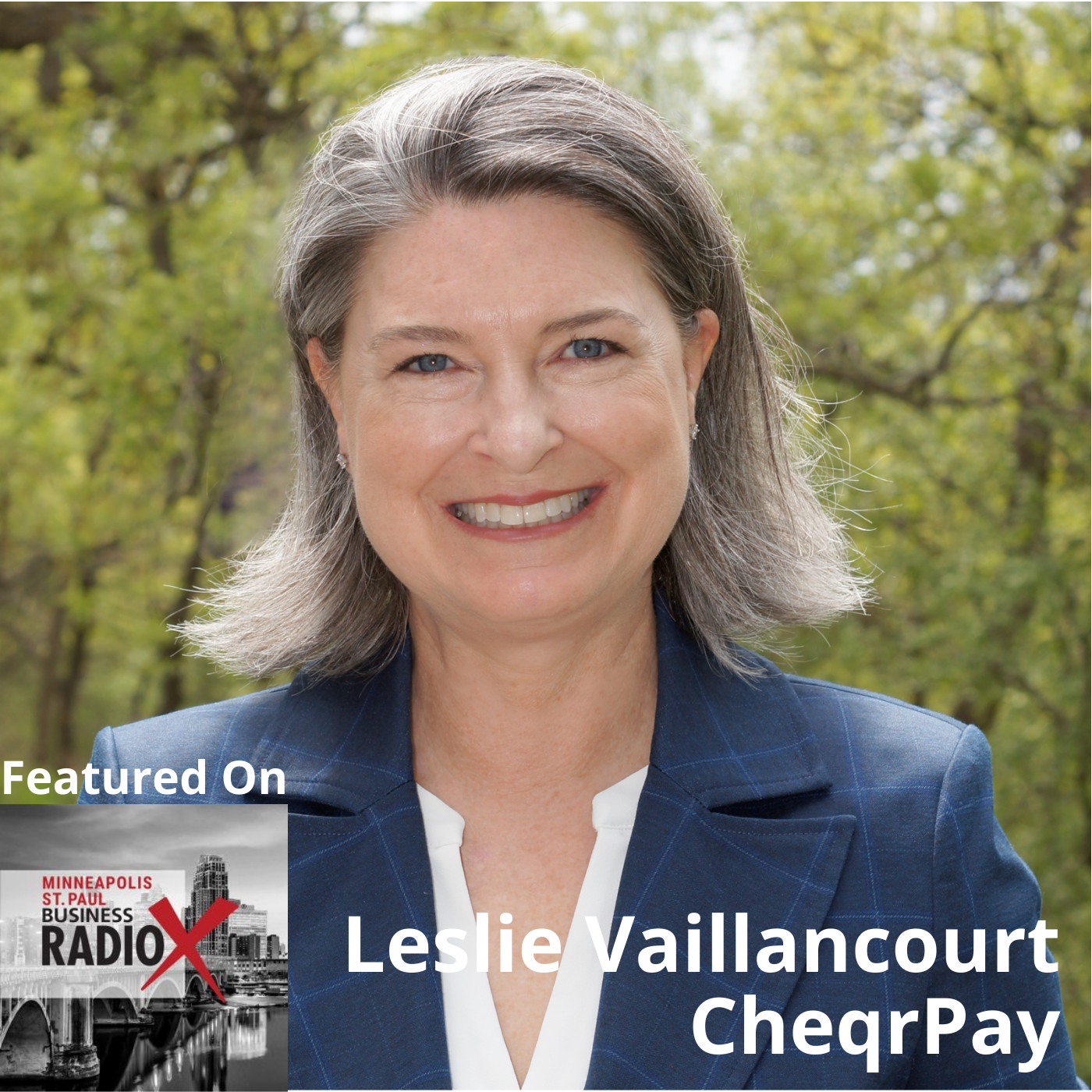
Leslie Vaillancourt, CheqrPay

June 29, 2021 by John Ray

CheqrPay
Minneapolis St. Paul Business Radio
Leslie Vaillancourt, CheqrPay
Loading
00:00 /
RSS Feed
Share
Link
Embed

Download file

CheqrPay

Leslie Vaillancourt, CheqrPay (Minneapolis-St. Paul Business Radio, Episode 13)

Fintech veteran Leslie Vaillancourt is committed to supporting the work of nonprofits through the company she founded, CheqrPay. Unlike other well-known payment applications which nonprofits have traditionally used, CheqrPay offers donors a frictionless giving experience, which in turn creates more potential donations for the charity. Leslie joined host John Ray to discuss CheqrPay and her entrepreneurial journey. Minneapolis-St. Paul Business Radio is produced virtually by the Minneapolis St. Paul studio of Business RadioX®.

CheqrPay

At the heart of CheqrPay is the desire to serve.  Their team has served countless hours volunteering with nonprofit organizations – large and small.

This experience led them to the belief that there had to be a better solution for small nonprofits who needed an uncomplicated and cost-effective way to collect donations while interacting with their patrons.  The answer is CheqrPay – an application that is easy to use and provides just what small organizations need without an overwhelming amount of features.  They keep transaction fees low by keeping the app simple.

Though made for small organizations, CheqrPay is a great tool for any nonprofit to have in their toolkit.  Their platform costs nothing to set up and only incurs a low transaction fee once you start using it.  Their hope is to make interactions with donors simple and easy, no matter where or when you choose to engage!

Keeping with their mission of strengthening the bottom line for small nonprofits, CheqrPay commits to returning 10% of their profits on an annual basis in the form of grants to select member organizations.  Look for more information on this program in 2021.

Company website | Facebook | Twitter | Instagram

Leslie Vaillancourt, Founder and CEO, CheqrPay

Leslie Vaillancourt, Founder and CEO, CheqrPay

Leslie Vaillancourt is the founder and CEO of CheqrPay, a Minneapolis-based software company that provides online fundraising services to nonprofit organizations.

Leslie has a background in finance and technology and a passion for working with nonprofit organizations to serve others. She volunteers as the Business Development Director for Women Entrepreneurs of Minnesota (WeMN) and donates time to local nonprofits providing technical support.

LinkedIn


Questions and Topics in this Interview

  • Let’s start with some history and an overview of your company? What services do you provide?
  • What was your inspiration for creating CheqrPay?
  • Who are your ideal customers and can you tell us some success stories?
  • What is your vision for the company? Tell us what it looks like in 10 years.
  • Can you tell us a little about your personal journey? What is your background? How did you transition into entrepreneurship?
  • What advice would you give to anyone that is thinking of starting their own company?

Minneapolis-St. Paul Business Radio is hosted by John Ray and produced virtually from the Minneapolis St. Paul studio of Business RadioX® .  You can find the full archive of shows by following this link. The show is available on all the major podcast apps, including Apple Podcasts, Spotify, Google, Amazon, iHeart Radio, Stitcher, TuneIn, and others.

Tagged With: Charity, CheqrPay, donation software, donors, FinTech, fintech innovation, giving, Leslie Vaillancourt, nonprofits

Sean Taylor, Smith & Howard

February 2, 2021 by John Ray

Smith Howard
North Fulton Business Radio
Sean Taylor, Smith & Howard
Loading
00:00 /
RSS Feed
Share
Link
Embed

Download file

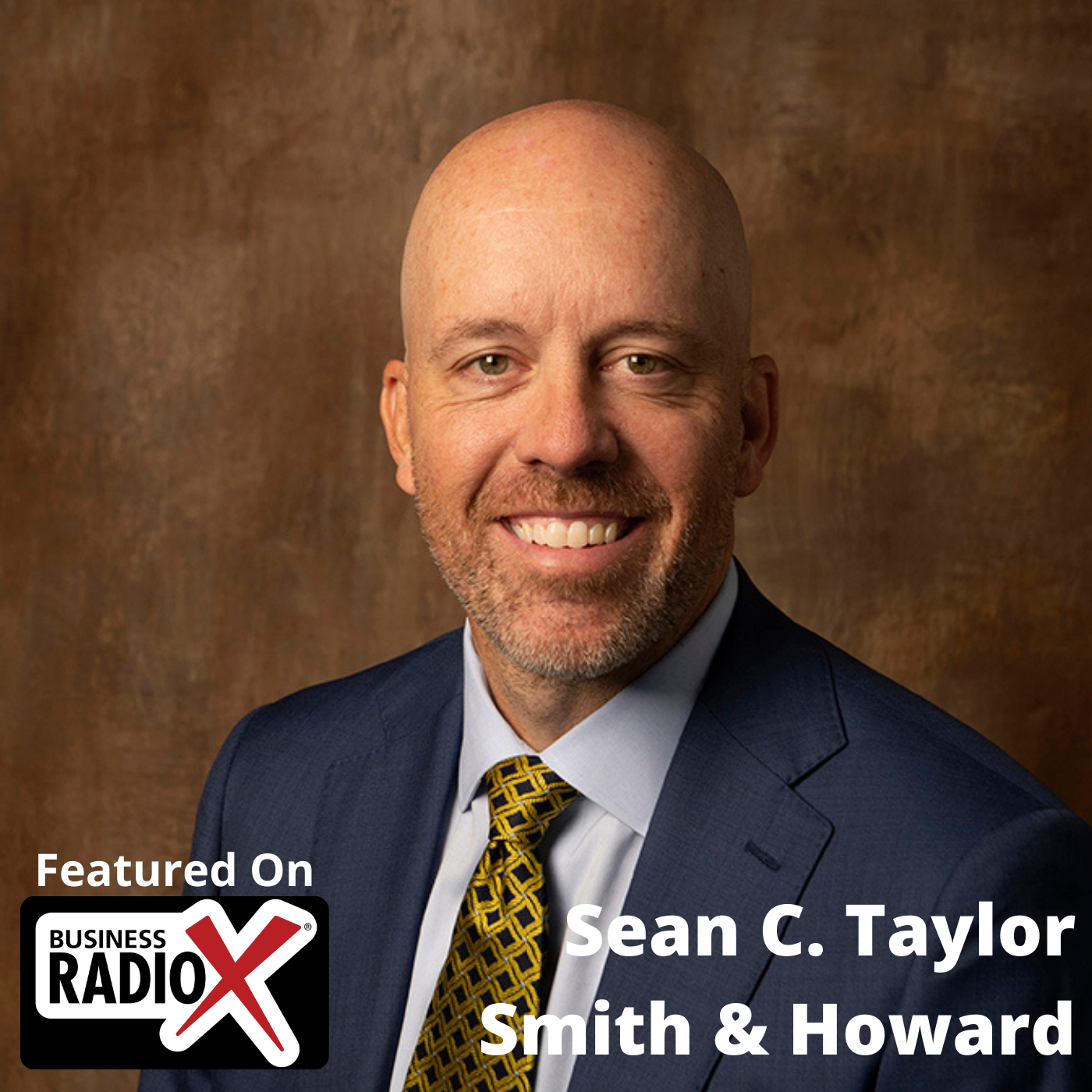
Sean C. Taylor, Smith & Howard (North Fulton Business Radio, Episode 326)

Sean Taylor, Managing Partner with Smith & Howard, joined host John Ray to discuss how his firm has navigated the uncertainties of the pandemic, managing remote employees while maintaining firm culture, opportunities and challenges in 2021, and much more. “North Fulton Business Radio” is produced virtually from the North Fulton studio of Business RadioX® in Alpharetta.

Sean C. Taylor, Managing Partner, Smith & Howard

Sean Taylor became Managing Partner of Smith & Howard in January 2019 after 25 years of leadership progression in the Assurance Services group. He joined Smith & Howard as an intern and was ultimately named Partner in charge of the Assurance Service group in 2010, a role he held until becoming Managing Partner in 2019. Sean will drive the vision, innovation and growth of the firm and its people through the next stage of the firm’s life.

Sean was named an Atlanta 2020 Most Admired CEO by the Atlanta Business Chronicle in recognition of his leadership. Sean is called on to present to many for-profit and nonprofit businesses, lenders, and other professional service providers. He has both served on and moderated numerous workshop and conference panels, has presented on the effects of healthcare reform, presented at Smith & Howard’s “Blueprint for Understanding Contractors” workshop to construction companies and commercial lenders, and has presented on several complex accounting principles to local and national audiences. As an Assurance professional, he has spent a career providing advisory, audit, review, attestation, and other assurance services for privately-held businesses and nonprofit organizations.

Sean co-founded and led the firm’s nonprofit practice with Marc Azar and is still an active member of the nonprofit group at Smith & Howard. Sean has been – and remains – an active participant and advocate at Smith & Howard for our mentoring program, personally mentoring many of our professional and administrative staff through career progression and advancement. Sean graduated from the University of Georgia with a B.B.A. in Accounting. He is a member of the American Institute of Certified Public Accountants and the Georgia Society of Certified Public Accountants, where he served on the inaugural Georgia Society of Certified Public Accountants Leadership Academy.

Sean is actively involved as a multi-year member of various committees at Dunwoody United Methodist Church (DUMC), including Finance, Staff Parish Relations, Leadership Roundtable, Organ and Evangelism. Sean was also selected to chair the Strategic Planning Task Force for DUMC in developing the church’s current five-year strategic plan. He recently completed service as co-chairman of DUMC’s $5.6 million Moving Forward Together Capital Campaign. Sean served seven years on the Council on Finance and Administration at the North Georgia Conference of the United Methodist Church, including time as the Vice Chair and Chair. He also serves on the Finance Committee for Wesleyan School, a private K-12 college preparatory school and began a five year term on the school’s Board of Trustees in September 2019.

With his personal time, Sean is an active volunteer in the community. He was the recipient of the Georgia Society of Certified Public Accountants’ 2020 Public Service Award, the organization’s annual Public Service Award that recognizes a member who has distinguished himself or herself in public service activities at the local, state, regional or national level. In 2012, Sean co-founded FoodStock, an annual food packaging event in Dunwoody, Georgia where over 1,000 community members come together annually to package over 300,000 meals in one day for children in school feeding programs around the globe. This is the largest single day food packaging event of its kind in Georgia and, to date, this event and other food packaging events in the Dunwoody community associated with FoodStock have packaged over 2.4 million meals. Additionally, Sean serves as a mentor to 13 teenage boys through a group he founded called Fit 4 Life, meeting weekly to discuss various aspects of faith and life for these 13 young men.

Company website

LinkedIn

Questions and Topics in this Interview:

  • Now that we have 2020 in our rearview mirror and a month of the new year under our belts, what are your primary areas of focus in business operations for the coming year that you can share with other CEOs?
  • How did the pandemic and the switch to remote work impact the culture for your firm and what are you doing to maintain that during this unique time?
  • What advice you can give to C-Suite leaders as they kick off 2021 – any last-minute business planning tips?
  • What are you and other leaders of Smith & Howard most excited about in 2021?
  • What challenges are you anticipating for 2021?

North Fulton Business Radio” is hosted by John Ray and produced virtually from the North Fulton studio of Business RadioX® in Alpharetta. You can find the full archive of shows by following this link. The show is available on all the major podcast apps, including Apple Podcasts, Spotify, Google, Amazon, iHeart Radio, Stitcher, TuneIn, and others.

Renasant Bank has humble roots, starting in 1904 as a $100,000 bank in a Lee County, Mississippi, bakery. Since then, Renasant has grown to become one of the Southeast’s strongest financial institutions with over $13 billion in assets and more than 190 banking, lending, wealth management and financial services offices in Mississippi, Alabama, Tennessee, Georgia and Florida. All of Renasant’s success stems from each of their banker’s commitment to investing in their communities as a way of better understanding the people they serve. At Renasant Bank, they understand you because they work and live alongside you every day.

Tagged With: accounting firm, C-Suite, CEO, firm culture, managing remote employees, nonprofits, Sean Taylor, Smith & Howard

Decision Vision Episode 78:  Should I Join a Non-Profit Board? – An Interview with Cindy Cheatham, Good Advisors

August 13, 2020 by John Ray

join a non-profit board
Decision Vision
Decision Vision Episode 78:  Should I Join a Non-Profit Board? - An Interview with Cindy Cheatham, Good Advisors
Loading
00:00 /
RSS Feed
Share
Link
Embed

Download file

Decision Vision Episode 78:  Should I Join a Non-Profit Board? – An Interview with Cindy Cheatham, Good Advisors

Cindy Cheatham of Good Advisors joins host Mike Blake to explore the issues to consider as one decides whether to join a non-profit board. “Decision Vision” is presented by Brady Ware & Company.

Cindy Cheatham, President, Good Advisors

Good Advisors LLC, is an independent management consulting organization led by Cindy Cheatham focused on strategic and business planning, board development, and organizational development for a diverse range of national, regional and local nonprofits and social-impact minded businesses.   

Ms. Cheatham is very passionate about her work, always seeking to advance the impact of the clients she serves both during and after her engagements.

Prior to Good Advisors, Ms. Cheatham  served as the VP of Consulting for the Georgia Center for Nonprofits where she led and oversaw work with foundations and hundreds of nonprofits.  She also served as Venture Catalyst at Georgia Tech’s ATDC  where she advised entrepreneurs and worked to build the entrepreneurial ecosystem.   Ms. Cheatham began her consulting career with leading management consultancy Bain & Company 

Ms. Cheatham is a frequent speaker on topics including leadership and succession, strategic and business planning, governance, collaborations and partnerships, nonprofit business models , social enterprise and entrepreneurship.  She has developed and facilitated award-winning leadership programs. 

Ms. Cheatham is active in the community where she serves as an elder of North Avenue Presbyterian Church. She has been a leader in a variety of Dekalb County Schools .  Ms. Cheatham is a 2010 fellow of the Georgia Partnership for Excellence in Education (GPEE) Policy Fellowship Program. 

She is a University of North Carolina at Chapel Hill Tarheel Honors Graduate and an MBA with distinction from Harvard Business School.  

Michael Blake, Brady Ware & Company

Mike Blake, Host of the “Decision Vision” podcast series

Michael Blake is Host of the “Decision Vision” podcast series and a Director of Brady Ware & Company. Mike specializes in the valuation of intellectual property-driven firms, such as software firms, aerospace firms and professional services firms, most frequently in the capacity as a transaction advisor, helping clients obtain great outcomes from complex transaction opportunities. He is also a specialist in the appraisal of intellectual properties as stand-alone assets, such as software, trade secrets, and patents.

Mike has been a full-time business appraiser for 13 years with public accounting firms, boutique business appraisal firms, and an owner of his own firm. Prior to that, he spent 8 years in venture capital and investment banking, including transactions in the U.S., Israel, Russia, Ukraine, and Belarus.

Brady Ware & Company

Brady Ware & Company is a regional full-service accounting and advisory firm which helps businesses and entrepreneurs make visions a reality. Brady Ware services clients nationally from its offices in Alpharetta, GA; Columbus and Dayton, OH; and Richmond, IN. The firm is growth minded, committed to the regions in which they operate, and most importantly, they make significant investments in their people and service offerings to meet the changing financial needs of those they are privileged to serve. The firm is dedicated to providing results that make a difference for its clients.

Decision Vision Podcast Series

“Decision Vision” is a podcast covering topics and issues facing small business owners and connecting them with solutions from leading experts. This series is presented by Brady Ware & Company. If you are a decision maker for a small business, we’d love to hear from you. Contact us at decisionvision@bradyware.com and make sure to listen to every Thursday to the “Decision Vision” podcast.

Past episodes of “Decision Vision” can be found at decisionvisionpodcast.com. “Decision Vision” is produced and broadcast by the North Fulton studio of Business RadioX®.

Visit Brady Ware & Company on social media:

LinkedIn:  https://www.linkedin.com/company/brady-ware/

Facebook: https://www.facebook.com/bradywareCPAs/

Twitter: https://twitter.com/BradyWare

Instagram: https://www.instagram.com/bradywarecompany/

Show Transcript

Intro: [00:00:01] Welcome to Decision Vision, a podcast series focusing on critical business decisions. Brought to you by Brady Ware & Company. Brady Ware is a regional full service accounting and advisory firm that helps businesses and entrepreneurs make visions a reality.

Mike Blake: [00:00:21] And welcome to Decision Vision, a podcast giving you, the listener, clear vision to make great decisions. In each episode, we discuss the process of decision making on a different topic from the business owner’s or executive’s perspective. We aren’t necessarily telling you what to do, but we can put you in a position to make an informed decision on your own and understand when you might need help along the way.

Mike Blake: [00:00:40] My name is Mike Blake and I’m your host for today’s program. I’m a director at Brady Ware & Company, a full service accounting firm based in Dayton, Ohio. With offices in Dayton, Columbus, Ohio, Richmond, Indiana, and Alpharetta, Georgia. Brady Ware is sponsoring this podcast, which is being recorded in Atlanta for social distancing protocols. If you like this podcast, please subscribe on your favorite podcast aggregator and please consider leaving a review of the podcast as well.

Mike Blake: [00:01:07] Today’s topic is, should I accept a nonprofit board position? And, you know, this is a trickier topic than, I think, maybe some people appreciate. And a lot of it, I think, depends on kind of what stage of life, what stage of career you’re on. When I was 20 years younger and I did not yet have two arthritic ankles and gray hair, you know, I’d be inclined to accept almost any kind of board position because, one, I was stunned that anybody wanted me. And number two, that I would want to – that’s a great way to build professional experience, to build a network, to build certain skills. We’re going to talk about that later today.

Mike Blake: [00:01:58] But as one kind of advances in life and in one’s career and has, frankly, more choices and more demands on their time, the discussion of deciding whether or not to join a nonprofit board, I think, becomes a lot more complex. And, you know, some people may find out that they’re not particularly good board members. One of the things I’ve figured out over my career, I’m really not a great board member. I do my share for nonprofits, but I’m a better kind of rank and file person than I am a board member. I’m more effective when I get out there doing stuff rather than planning the stuff. But that’s not me. As we’re going to find out, the doing and the planning are equally valuable, but they’re different skill sets.

Mike Blake: [00:02:50] And joining a nonprofit board should be a very seriously taken decision. And the decision may not simply be to join a board, but which board do you join? Chances are you will have multiple opportunities at once that come up. And being able to sift through kind of whether or not to take on multiple opportunities, or how one opportunity is a better fit than another, or whether to do it at all is an important decision.

Mike Blake: [00:03:23] And we have a terrific guest to come on to talk exactly about that. And it’s my friend, Cindy Cheatham, who is president of Good Advisors. And I’ll get to her formal introduction in just a second. But Cindy and I have known each other for more years than we probably cared to admit to one another. But we both kind of grew up a little bit in the Atlanta startup community. And that’s where we both met. And then, several years ago she kind of branched off into nonprofit support and consulting work. And I’ve done my thing in corporate finance and now decision science. But that’s kind of where we both kind of intersect. And I don’t think that’s by accident.

Mike Blake: [00:04:11] I think in Atlanta – I think in any thriving startup ecosystem, you almost have to have a nonprofit mentality to be successful, especially in Atlanta ten, fifteen years ago, where we did not have any kind of thriving venture capital ecosystem. It was very much a work in progress. And it wasn’t progressing very far or very fast at the time. And Cindy may disagree, but from my perspective, you know, serving the startup ecosystem was almost like serving on a nonprofit board or serving in a nonprofit capacity. I think it draws that kind of mentality. And I think it’s interesting now how that kind of comes full circle, at least, in terms of our relationship and where we’ve bumped into each other over the years.

Mike Blake: [00:05:04] Good Advisors is an independent management consulting organization focused on serving diverse organizations, including nonprofits, social enterprises, and entrepreneurial businesses. And we recently recorded a podcast on benefit corporation. So, in fact, that was published last week as I record this episode on July 31st, so check that out. They provide strategic consulting in areas of planning, organizational development and effectiveness, governance collaborations and partnerships, and leadership coaching. They also provide customer retreat, facilitation, training, and workshops using experience as a certified facilitator and development of award winning practical adult education programs. Their particular strengths include ability to bring strength and analytics with excellence in working with people and organizations to accomplish goals and to undertake successful change initiatives.

Mike Blake: [00:05:56] Cindy helps motivate, lead, and equip mission minded leaders and organizations to achieve their full potential by developing and sharpening their strategy, strengthening their leaders, launching new products or services, growing revenue, and forming strategic partnerships. Cindy is particularly skilled at working with people in organizations who conceptualize a future and lead them through a process of planning and change. She’s a very quick learner and is able to quickly assess an organization while also bringing objectivity to the work to design a practical yet innovative plan or solution for a diverse range of clients.

Mike Blake: [00:06:31] Cindy takes a value-added approach, always seeking to use her network of business associates and leaders to facilitate valuable connections on behalf of her clients. Cindy is passionate about helping her clients to get great results for themselves and their organizations. Oh, and by the way, she has an undergraduate degree from the University of North Carolina and a Harvard MBA. So, definitely on the far right of the bell curve in terms of IQ. Cindy, welcome to the program.

Cindy Cheatham: [00:06:58] Thank you. It’s a pleasure to be here. And yeah, I resonate very much. I always tell people that I used to work with cash-strapped change the world startups. And now, I’m working with change the world cash-strapped nonprofits. So, you and I are on the same page there.

Mike Blake: [00:07:14] It’s like slipping from one old pair of shoes into another, right? So, as we always do or we typically do on the show, let’s set a baseline here. What is a nonprofit board and why do nonprofit boards exist?

Cindy Cheatham: [00:07:32] Yes. Well, there are different types of organizations as we know, private businesses, government, public organizations. And nonprofit is one of the types that the government has created a tax status for and has a regulatory framework for. What we particularly, probably, think about when we think about nonprofit boards is the 501(c)(3), which is the charitable model where the IRS is giving those nonprofits the benefit of not paying taxes as well as securing and taking donations. And the donors get a tax deduction in return.

Cindy Cheatham: [00:08:08] There are also 501(c)(6) that most of us, as business leaders and professionals, we are part of associations. So, those are different. 501(c)(6) nonetheless are a type of nonprofit. But the ones I think we’re mostly talking about today are the charitable 501(c)(3).

Cindy Cheatham: [00:08:26] And it’s a legal responsibility. I like the fact that you said that this is a serious decision because I think a lot of people don’t take it as seriously as they should. You are legally responsible for being the fiduciary of the nonprofit’s mission success. That’s why the government has created that. It’s a public good and you have the duty of care, loyalty, and obligation as a board member.

Mike Blake: [00:08:50] And you mentioned something about a 501(c)(6) and not as many people, I think, are familiar with it because it’s really not the big name. But as you know and some of our listeners know, I started or co-founded and then ran a nonprofit called Startup Lounge, which helps entrepreneurs go from idea to venture to business. And we had a pretty good ten year run. And as we were forming that, the best advice we ever received was not to do a (C)(3) but instead to do a (C)(6). Because, you know, we were doing it, as Scott Burkett, our guest in Episode 2, he would readily admit we were a couple of knuckleheads who didn’t know what we were doing. All we wanted to do was to execute a mission. And the oversight for a (C)(3) is so much greater than that for a (C)(6), which is almost non-existent. It was the perfect fit for us. But until we got that advice, we hadn’t even heard of it. And, really, it was great advice that we got.

Cindy Cheatham: [00:09:50] Yeah. Good. Good choice.

Mike Blake: [00:09:54] So, when we think or we bring up the term nonprofit board, I think if you’re not familiar with it, one’s mind can then think to something with which you are familiar with, which is a corporate board. Are they very similar things or are they very different kind of animals?

Cindy Cheatham: [00:10:12] Well, they’re both similar in that they have governance responsibilities. Legally, they both can be sued. Ideally, they both are adding value to the entity through their strategic partnering with, typically, the executive. A good executive board relationship is key to a successful board. There’s similar attributes of the most effective corporate boards to nonprofit boards asking tough questions, not just being consensus driven. But a lot of the practices of the culture of boards that make for effective boards are similar.

Cindy Cheatham: [00:10:51] But they’re quite different in that nonprofit board members are supposed to go in there and they’re legally responsible for not having self-interest. They have to sign conflicts of interest. And nonprofit boards tend to operate more from consensus. For-profit boards can sometimes operate that way, but a lot of times for-profit board – sorry – for-profit boards can have investors who have a stake directly. They can have majority control. Both of them can have issues between executive and CEO. But don’t get me wrong, there’s challenges of managing that relationship among both. But for-profit boards, also, frankly, I think in many ways have an easier job of measuring success.

Cindy Cheatham: [00:11:37] Bottom line, financial success metrics are easier for the nonprofit board who’s trying to understand how do we measure success in a mission that’s very difficult. We all know there’s a lot of difficult problems out there. How do we take somebody who’s abused and turn their lives around? How do we get more equity in America? These are difficult problems and these nonprofit boards have a more difficult lens in terms of being responsible for understanding how to achieve a mission goal and having the right measurement tools to do so. No easier bottom line in the nonprofit world.

Mike Blake: [00:12:19] So, you brought up something that I want to follow up on. So, we’re right on schedule. I’m going to rip up the script already. If somebody is going to join a nonprofit board for the first time and they have experience interacting with or maybe sitting on a corporate or company board, do board members behave similarly or do they behave differently? And you kind of inferred this, but I really like to hit this directly because I suspect that if you’re not used to a nonprofit and you’ve only dealt with a for-profit, can there be a little bit of culture shock there?

Cindy Cheatham: [00:12:56] Yeah. I mean, I know some corporate boards are very high performing, some are more casual, some are more formal. But I would say as a general rule, probably, the corporate board is probably more formal because just the nature of corporate beans. Kind of nonprofit boards can really vary. They can be extremely corporate in their practices and buttoned up, you know, with their agenda and closely following it depending on the chair. But they can be very casual in nature and very informal in nature, everything in between.

Cindy Cheatham: [00:13:34] So, If a corporate board member is used to everything being buttoned up, you know, all the material sent out weeks and weeks in advance, all well done, very well organized agenda, and everybody having done their homework. Of course, corporate board members in many cases are getting paid to do that work, so that helps. Or they have a personal incentive to do that work. They can go on to a nonprofit board and have a bit of culture shock for a variety of reasons.

Cindy Cheatham: [00:14:04] One is because it doesn’t sometimes always operate as formally and professionally. And that is not always as clear and available too. Frankly, a lot of times they don’t do their homework. You know, they go in with more casualness to the prep and the commitment that they make. Which frustrates the heck out of me when I see these great corporate people just come and show up to a board meeting and not taking it seriously. So, there’s different reasons for that.

Mike Blake: [00:14:32] Now, I’ve encountered a term and I suspect you’re familiar with it, too, that talks about three different kinds of roles that individual board members often serve. And it’s referred to and, at least, I’ve heard it as sort of the three W’s, which is wisdom, work, and wealth. Have you heard of something like that as well? And if so, can you talk about what those things mean?

Cindy Cheatham: [00:14:58] Yeah. Absolutely. Whether you call it wisdom, work, and wealth or time, talent, wealth, absolutely. Yeah, I try to break it down into the three hats. One is on the wisdom side, it’s the strategy lens. You know, you’re responsible for helping to shape a strategy of a nonprofit along with the executive to shape the funding strategy, to shape the mission strategy, and bring your wisdom of your field or your professionalism to that role.

Cindy Cheatham: [00:15:30] On the talent side, again, a nonprofit board should ideally have a mix of the different talent, whether it be the marketing talent, the legal talent, the business development. We always need salespeople that are willing to knock down doors and open up doors for recruiting board members, for opening up doors to donors. So, that’s on the talent side. And that ideally gets deployed by your committee work or taking on a pro bono. Sometimes, you know, nonprofits are run by board members who literally are the marketing. Small nonprofits have their boards running the operations. That’s not the ideal. You know, you have to be careful in a larger board that the board member keeps their lane and doesn’t get into the daily operations of the nonprofit. But they usually do their talent through the committee.

Cindy Cheatham: [00:16:24] And then, the time. Time is rolling up your sleeves and literally going and showing up. When we’re not in a pandemic and we actually get together for fundraising events, or tours, or events, program events, board members should show up to some of those events and have a presence. They should be a spokesperson and they should be out there opening up doors with their time.

Mike Blake: [00:16:51] So, what I take from that is a lot of times when we think about who serves on a board, we think that, “Oh, wow. You have to be a big time donor or a big time influencer, corporate giant, something like that, to serve in a nonprofit board.” It doesn’t sound like that’s necessarily the case, is it?

Cindy Cheatham: [00:17:11] No. It really, really varies. There’s a lot of different types of boards. The high museum board, you know, is certainly a board that does tend to be seeking the C levels, CEOs and people with a lot of wealth. But even there, they have their executive board and then they have, you know, the larger, larger board. But the vast, vast majority of nonprofits, they need some wealth, ideally. And they need a handful of people that are willing to at least help organize the board’s role in fundraising. But what they mostly need are people willing to not just show up to meetings, but to actually help be a team leader, whether it be an officer or a committee chair.

Cindy Cheatham: [00:17:59] And so, I worked with the Federal Reserve in placing people on boards. And one of my favorite board members that’s become the chair of two different boards that I placed him on, he always says, “You know, the Federal Reserve doesn’t have a big corporate foundation behind us. So, I know that I have to give leadership. That on my role, I can write my small check or my modest check, but what I know I can bring is leadership to a board.” And sure enough, he’s risen to chair because he’s demonstrated and been willing to go in as an officer and provide that critical leadership.

Mike Blake: [00:18:37] Now, is it a prerequisite that if you’re recruited for a nonprofit board or maybe you, yourself, want to approach and join or see if there’s an opportunity to join, is it a prerequisite that you have to already be a subject matter expert? Let’s just take for example, the ALS Association, which is a charity near and dear to my heart. Would I have to be an expert in Lou Gehrig’s disease to be considered for a board? Or is that not necessarily either a qualifying or disqualifying criteria?

Cindy Cheatham: [00:19:18] It’s definitely not a criteria. What is important, I think – one of the number one things that I think is important is that the individual joining does have a passion and/or at least a strong interest. If they’re doing it in part because the networking opportunity or in part because their corporation says, “Hey, this is a cause we support and we need somebody to represent,” which frequently happens. You know, Cox or others say we support environmental causes. We support these education causes. We need somebody to serve on the JA board, you know, Junior Achievement. So, it can be a combination. But passion and interest is important. So, if you really can’t get excited about the mission of the organization, either because you don’t have personal experience or expertise, I would think twice.

Cindy Cheatham: [00:20:05] But no, you don’t need to be an expert. It is helpful for every board to have one or two people that can relate to the mission, either because their family member has Lou Gehrig’s, their child has it. That really does fuel a lot of passion and commitment. And some of our best nonprofits were founded because of the personal experience of Mothers Against Drunk Driving. You know, that’s how a lot of these things get started. But it’s not essential. And frankly, you need diverse thinking on a board. You don’t want everybody to come from the same experience and have the same perspective. You need different thinkers.

Mike Blake: [00:20:47] Corporate board members are often compensated. What about nonprofit board members, are nonprofit board members typically compensated in any way?

Cindy Cheatham: [00:20:55] No. You know, they can sometimes get their expenses reimbursed for travel and so forth. I rarely ever see that. Maybe some of the larger nonprofits that have people gathering, national ones that have people having to travel all across the country occasionally. But for the most part, people just pay for that themselves. Their compensation is in the goodwill of doing good and in the relationships. One of the reasons people most join a board is also the opportunity for the relationships that they form with fellow board members and colleagues, the collegiality, the sense of doing good, the learning that they have that may be different from the way that things work in their organization. Having a different perspective of decision making, collaboration, working in a more diverse environment than where they may come from. So, it’s really all those learnings and the relationships and then the sense of doing good, that’s their compensation.

Mike Blake: [00:21:55] Now, other than doing good and serving a cause that I believe in, for example, are there other benefits to joining a nonprofit board?

Cindy Cheatham: [00:22:06] I mean, absolutely. You know, like I said, relationships and networking, not everybody values the network as much as I do. But I know it’s kind of a pay it forward when you have a network of people that you’ve worked with well in your life. Frankly, with my business, I barely even got a website. It’s kind of embarrassing, I think, I got one up about a year or so ago. But it’s all based on my network and referrals from all the various places I’ve worked over the years and people I’ve worked with that have led to the opportunities that I have. And so, you know, people have a life ahead of them, whether it be a new career, a business opportunity, a referral, even getting people to help your kids get internships and so forth.

Cindy Cheatham: [00:22:54] I have a lot of people on boards that are always calling me and saying, “Hey, there’s this young person from UGA who wants to get into nonprofits. Will you help me?” And then, if you want to get into leadership programs like LEAD Atlanta as a young person or Leadership Atlanta, you have to have a track record of community leadership. So, for example, with the Federal Reserve, some of their young high potentials, they come to me and say, “Hey, can you help this person find a good board where they can find a passion and a fit and gain community leadership experience?”

Cindy Cheatham: [00:23:25] Because, one, we believe in doing that because we need to get outside of our four walls and see how the community is doing and to see the economic health. And two, we want our leaders to be in a position to further lead and to be candidates for LEAD Atlanta and Leadership Atlanta, for example.

Mike Blake: [00:23:47] Now, what about building new skills? Can you learn skills from a nonprofit that you can then take back to your life in the for-profit world?

Cindy Cheatham: [00:23:57] Absolutely. Not everybody has, for example, been part of strategic planning or had the chance to be part of a strategic planning committee. Because they might be a bean counter or an accountant. Or even if you’re an accountant, you may not have done fund accounting before. There’s the learning around just – there’s just different types of problems and problem solving. If you’re used to a very corporate decision making environment and the nonprofit you’re in is more of a shared – you know, there’s not as much – it depends on the nonprofit but a lot of nonprofits are less hierarchical in nature. And so, the world is moving to be less hierarchical. So, even just the way that you collaborate to get things done and make decisions together can be a learning exercise from your work in nonprofit.

Mike Blake: [00:24:58] Now, a question, I think, that follows from that is, if I’m considering joining a nonprofit board, is it okay for me to consider kind of what’s in it for me? Not from a rich man standpoint financially, but at least from a perspective of how it might help my career, how it might help develop my skill set. Is it okay to consider that in evaluating the opportunity? Or is that considered being opportunistic or too self-centered? Is that a legitimate way to or, at least, a legitimate consideration?

Cindy Cheatham: [00:25:39] Absolutely. And as long as it can be managed so it’s not a conflict of interest, you know, where you’re pushing your own priority and interest within the board operations. I mean, there are even bankers, for example, that do business as a bank, that sit on nonprofit boards. You just have to have practices to make sure you make non-conflicted, that you have competitive processes.

Cindy Cheatham: [00:26:03] But to the extent that there’s learning that you want to do, you know, “Hey, I do this for a day job. I’m in finance, but I really want to have a chance. I’ve never sat on the strategy team of a for-profit before of my business. I really am looking forward to being part of the executive leadership.” That’s a learning. Yeah, absolutely. It makes you more motivated.

Cindy Cheatham: [00:26:31] You know, I’m interviewing somebody for a board right now and this person is a PhD and engineering graduate from Georgia Tech. She has a lot to bring to this particular STEM oriented nonprofit board, but she told me one of her reasons is that she wants to learn. And she just started her own nonprofit and she’s trying to get her feet and her learning undertaken and I think that’s fine. And I appreciate her sharing that that was one of three reasons that she’s interested in this nonprofit board. I think she’ll be more motivated as a result as long as she’s not conflicted and I don’t think there is a conflict there.

Mike Blake: [00:27:14] Now, we touched upon this a little bit earlier, but I do want to hit it directly. And that is that, I think when a lot of people think about joining a nonprofit board, that means they’re automatically going to be on the hook for raising a certain amount of money or sponsoring one or multiple tables at their annual fundraising event or gala. Is that necessarily true? I mean, do you have to kind of come to the table with some significant financial resources to be a viable board member?

Cindy Cheatham: [00:27:47] You know, I highly recommend that the best boards do expect a give and/or get from all their board members. There are some that don’t. And they particularly are ones that maybe have their predominant funding coming from the government, for example. Not all nonprofit funding comes from philanthropy. The predominant income stream, if you add it all up in nonprofit, comes from, one, a lot of fee for services. All the schools in the world that are nonprofits, they charge tuition. Two, government money.

Cindy Cheatham: [00:28:21] But the ones that rely heavily on philanthropy, I always recommend that the nonprofits do ask their board members to be the role models, to be the first to give their time and their talent. But that doesn’t mean it’s a lot. I mean, it can be – but I do recommend it’s a meaningful amount for that particular board member. So, it should be one of your top three to five checks that you stroke, you know, if you’re religious, to your synagogue or your church, to your kid’s school, your university, and then the one or two boards. It should be a meaningful check that then can allow you to then better represent when you’re out there as a spokesperson to help get money to help be able to speak to the reason.

Cindy Cheatham: [00:29:13] I always ask board members, why is this board worth your time and your money? You have to be able to speak to that and be able to give your time and give your money. Otherwise, you could just be a pro bono expert. Sit outside the board, give your expertise as a marketing person, give your expertise as a pro bono accountant.

Cindy Cheatham: [00:29:34] Does that answer your question? But it doesn’t mean that – you know, boards can range from having no dollar amount to as many as – Big Brothers Big Sisters asks for a $10,000 check. So, yes. There are some boards that ask for a lot. I always try to work with board members providing what is your comfort zone, what is something meaningful that you can give, and then match that up to the nonprofit.

Mike Blake: [00:29:59] And my understanding, a big portion, a big piece of that, too, is that potential donors almost always ask, what is your percentage of board participation? Meaning, what percentage of your board members have made themselves a financial contribution? How much financial skin in the game do they have? And it really got to be 100 percent. Anything less than 100 percent does tend to raise a red flag, doesn’t it?

Cindy Cheatham: [00:30:27] Yeah. Not only that, but some of the institutions will ask for the total dollars raised. And they look at that and they’ll then look at the composition of your board. And they don’t expect a lot. If your board is composed – if it’s a grassroots organization in a disadvantaged community with community leaders and pastors and ministers and just community people, they don’t expect necessarily the same dollars as if you were a CEO board.

Cindy Cheatham: [00:30:58] The other thing that people need to realize about nonprofit donations that come from the board, so many dollars out there that come from large institutions, like foundations, are what they call restricted. Restricted means they’re giving you a grant to accomplish a certain program or with certain expectations. Thankfully, not all institutions do that. The community foundation has been a big proponent of non-restricted grants that basically are saying, “Tell us what your overall strategy is and we’re going to trust it. We’re not going to micromanage where you spend.”

Cindy Cheatham: [00:31:37] But a lot of the large grants do have – you know, they’re either funding a particular program or they’re funding like, “Hey, we’re going to help you hire your first fundraiser.” So, the dollars that come from board members are what I consider gold money because it’s unrestricted. It allows the nonprofit to have some of their own control of their own money for their own priorities. Including, “Hey, we actually need to invest in something. Like, we need to hire a fundraising person. We think it can pay off. We don’t have the dollars for that. Otherwise, we think that we can do this.” And sometimes you can even use that to go out and do a challenge grant. You know, a board can say, “Hey, we’re going to raise 30,000. We’re going to go and challenge the community to get another 30,000.”

Mike Blake: [00:32:28] And that brings up a point I want to drill down because it brings up a question that, actually, I never thought of. And that is, because you mentioned that donors not just look at amount of board participation, but actually the dollar amount contributed. And it brings to mind, at least my understanding that, you know, no foundation wants to be overly responsible for the survival of one organization. They don’t want one organization to be so dependent upon them that if they change mission, don’t have as much money themselves to give that year. That all of a sudden, that particular organization is imperiled. So, I like to see diversity of financing sources. Is there a percentage of, sort of a target percentage, if you will, of overall operating budgets they like to see coming from the board in terms of – so, is there a percentage they like to see?

Cindy Cheatham: [00:33:29] You know, again, like I said, if it’s a grassroots organization, that would maybe be – well, it would probably tend to be a smaller budgeted organization. I don’t see that. I’ve never seen that target set. But I do see sometimes boards say, shouldn’t it be closer to ten percent that in total, in aggregate, which usually is driven.

Cindy Cheatham: [00:33:51] It’s good if a board has a couple, what I call, major givers on it. You know, there can be a board that has a bunch of people giving $500 or $1,000. But then, it’s helpful if there’s a handful that are able to get five or ten. And most major givers are then able – they tend to have peers that can give five or ten, right? Their peer network. So, you know, I’ve seen ten percent thrown out there, sometimes five percent. But I think it’s just a point of leverage too. When a board is saying, “Hey, we need to do these things,” and they’re setting strategy and they’re not sure how they’re going to fund it. And sort of you add it up and say, “Well, we think we can get 80 percent of the way there.” That’s a good time to say, “Board, can we step our game up?” I think board members, just like donors, want to see what’s the case for support.

Cindy Cheatham: [00:34:48] And nonprofits need to not just expect board members to give. They need to also be able to communicate why do we need your money even for a board. It shouldn’t just be an expectation. There should still be a process of that board being able to ask questions and feel good about how the nonprofit is using the money and to make a case for why do we need more money. You know, how are our dollars going to help achieve results? And of course, they’re part of shaping that as part of strategy development with the executive director. But if they don’t feel like there’s a reason to write more checks then they need to also self-evaluate. “Well, then why don’t we believe in the mission? Do we not have a future that we’re excited to help make us realize?” If that makes sense? There still need to be a case for support made even with board members, especially if you’re asking them for something more or substantial.

Mike Blake: [00:35:50] Sure. I mean, you can’t go out and advocate for the organization if you, yourself, don’t believe in it and don’t understand it, right? And that’s a reasonable expectation of a board member. Now, let’s say that now a listener has been hanging out with us for, you know, the 35 minutes or so we’ve been on and they’re now seriously considering joining a nonprofit board, maybe accepting an invitation or proactively pursuing one. What is kind of a personal inventory that I might take for myself to determine if I have the right tools or personal characteristics to be a good board member or even if I would find it rewarding?

Cindy Cheatham: [00:36:38] Yeah. Well, I think, you know, have I met one or more of the people in the organization or are there people that I would enjoy working with? Do I have a passion for the cause or an interest? Do I see that there may be a seat or a place for me that I might feel like I could contribute? There’s either – of course, it’s obvious if they need a treasurer and I’m willing to be treasurer. You know, an immediate match in terms of a need that they’re trying to fill. Are the expectations give, get, and/or time? Even the meeting frequency and time, you know, the time of day, are they a morning board or are they an evening board? I mean, I know somebody who was meeting on Friday nights. That have to work in your life.

Cindy Cheatham: [00:37:27] And then, you know, at the end of the day, am I excited? Do I feel like this is going to – you know, it’s a commitment. Am I excited to take on this new challenge and this commitment and feel like it’s – you know, and they have been thoughtful about it, too, and not just, “Hey, somebody grabbed me and said come join this board.” The process of joining the board ideally should be not just, “Hey, Mike asked me to join Board X.” There’s very little exchange of information, very little thoughtfulness.

Cindy Cheatham: [00:38:04] So, I would encourage and urge people to not jump right away, to do some of their homework. Including, like, is there any major crisis going on with this organization? I mean, very few nonprofits are really super, super stable in this pandemic. You know, just like small businesses, nonprofits are particularly vulnerable and that’s always the case. But of course, pandemic makes it worse.

Cindy Cheatham: [00:38:29] But, you know, is the organization – this is not a reason not to join, but at least having clarity. Is there any reserve? What’s the balance sheet look like? Has there been any – you know, have we been operating in the black or the red? How does the board feel about where the board is right now? Or is there some kind of board crisis going on? Is our long time 20 year founder going to all of a sudden retire on day one when I join the board and we’re going to have to do one of the hardest things the board has to do, find a new CEO? Just sort of be eyes wide open to what the current situation is, too, because that can really influence your experience as a board member.

Mike Blake: [00:39:15] We’re talking with Cindy Cheatham of Good Advisors. And we’re discussing the decision point of should I join a nonprofit board. We’ve only got time for a couple more questions, so I want to make sure I get them in because I know we have a little bit of a hard stop here. But one question I do want to make sure we get to is – and we just touched upon it with that last responses – you know, typically with a nonprofit board, what kind of time commitment is the board member typically looking at?

Cindy Cheatham: [00:39:45] Well, it can really vary, but the BoardSource, which is a national consultancy focused on governance does this yearly, would say that an officer can spend as many as six, eight, ten hours a month, a chair especially. But I think on average, four to six hours per month for the board, you know, for a board that’s doing its job, that is kind of doing the wisdom, talent, and wealth. So, you know, it’s not giant, but it’s not unsubstantial as you think about the amount of free time we have relative to exercise, family, and other other commitments that we may have.

Mike Blake: [00:40:26] Now, one thing you touched upon earlier and I want to make sure we get to is, you know, joining a nonprofit board is not like going to community college. It’s a serious commitment. You don’t just sort of sign up and walk in. And one of the things that makes it a serious commitment is that there is real liability if things go south and it’s kind of on your watch. How do do board members manage that liability? Or does the nonprofit help manage that liability? What is the strategy for doing that?

Cindy Cheatham: [00:41:01] Well, the board is responsible for its duty of care, obligation, and so forth to follow the law. And should be responsible to make sure the nonprofit does have policies in place for things like finances, financial controls to prevent fraud, HR policies in terms of whistleblower, nondiscriminatory policies, and so forth. So one, their job is to make sure those policies and practices are in place and to do that audit. But they should also have nonprofit board insurance. There is insurance just like there is for corporate boards. You know, that is an insurance policy.

Cindy Cheatham: [00:41:44] But what I see a lot of times is board members who are particularly sensitive to risk. And a lot of the people that I place at the Federal Reserve are very much risk – you know, they manage risk and they come from finance. And so, they’ll go into a board and ask a lot of questions around the audit and see practices or lack of practices and take leadership in putting those in place. That’s one of the roles of a board is to bring those practices to reduce the liabilities and the risk. So, it’s their job to do it. And then, on the protection side, it’s fair to ask do you have directors and officers insurance? And the vast majority do. And you can go to Georgia Center for Nonprofits and others to secure that relatively inexpensively.

Mike Blake: [00:42:38] Now, let’s go to kind of the other end of the spectrum, let’s say that I really get a lot out of serving on a nonprofit board. And maybe I’m at a point in my life in my career where, you know, I can make a substantial commitment to nonprofit support. Is it possible, or ill advised, or somewhere in between to serve on multiple boards?

Cindy Cheatham: [00:43:03] Oh, absolutely. I would say a good number of community minded leaders that do like that work do find a lot of fulfillment from it and are frankly good at leadership sit on multiple boards. You know, and especially ones that just – yeah. But it’s a big commitment. I always encourage people to think twice, and three, and four times before they do that, especially joining at the same time because there’s always a learning curve of going onto boards.

Cindy Cheatham: [00:43:40] And I had one individual that went on two different boards. One was really very much aligned with the corporate center interest. “This is going to be very good for my career and very much appreciated me serving on this board, because this is right up the alley of my – this is really the business that my bank is in.” So, I’m going to see that board service is really kind of more professional. And the other one was the Ronald McDonald House, which was very, very personal. And so, that’s also common, too, because there are professional boards that you can serve on for some professional purposes. And then, there’s another one that really is just totally kind of melt your heart. “This cause is near and dear to me.” So, he did both of those well, because I think he had strong motivations. And he’s one of those just very organized giving people that can get a lot done in a little bit of time.

Mike Blake: [00:44:36] So, actually that brings up another question I want to touch upon, because I think we can squeeze this in. And that is, if I’m thinking of joining a nonprofit board, what kind of support should I reasonably expect from my employer to allocate the time or allow me the time to just sit on a nonprofit? Or do companies make allowances for that? Do companies recognize that it’s in their best interest to have their employees and their leaders out there serving the community? Or do businesses and employers tend to think of it as the same thing as going fishing that if you want to do this, that’s fine, but it’s a hobby and it’s separate from work

Cindy Cheatham: [00:45:20] Well, I think it varies. I haven’t seen enough of how small more entrepreneurial businesses do this. But I would think that they should – you know, that if they don’t have an established policy or practice for encouraging service or these practices, a lot of corporations, large established corporations, they have policies on amount of service time you can take during the workday. And they have those policies all in practice. They communicate them. They encourage them. They even organize their team based events to help people utilize those community service hours. They have matching gifts to match. You know, if you give a certain number of hours, you can also earn a match and gifts. So, big established companies absolutely encourage – professional service firms, legal, accounting, encourage it because of business development purposes.

Cindy Cheatham: [00:46:17] So, you know, it really varies. And then, of course, just talking to your boss. A lot of times it’s you and your relationship to your direct supervisor in terms of how this is going to impact. If your meetings are always at lunch time or always during the workday, you just have to have a good – even if your corporation encourages it, it’s always good to just kind of give a heads up to your supervisor and get them on board. But some of the best companies, the most thriving, purposeful companies are also encouraging of leadership in the community for both personal satisfaction as well as a corporate benefit. They see the learning. They see the professional development. They see the goodwill that comes when their employees know that their employer is encouraging them to have a life in the community and not just in their building.

Mike Blake: [00:47:13] Cindy, we are unfortunately out of time, as is typically the case. I have a lot more questions that I could ask, but we do need to be respectful of your time. But I’m sure our listeners have other questions they love to follow up with you about. How can people contact you for more information about this topic?

Cindy Cheatham: [00:47:31] Sure. Well, I have a website. It’s www.good, G-O-O-D, and then, dash advisors, A-D-V-I-S-O-R-S.com. And then, cindy@good-advisors.com. I welcome additional questions and opportunities. I really enjoyed this conversation, Mike. And appreciate any time to collaborate with you. Let’s keep it going.

Mike Blake: [00:47:57] All right. Thanks so much. That’s going to wrap it up for today’s program. I’d like to thank Cindy Cheatham so much for joining us and sharing her expertise with us today.

Mike Blake: [00:48:06] We’ll be exploring a new topic each week. So, please tune in so that when you’re faced with your next executive decision, you have clear vision when making it. If you enjoy this podcast, please consider leaving a review with your favorite podcast aggregator. It helps people find us that we can help them. Once again, this is Mike Blake. Our sponsor is Brady Ware & Company. And this has been the Decision Vision podcast.

Tagged With: 501(c)(3), 501(c)(6), board development, Brady Ware & Company, Cindy Cheatham, Georgia Center for Nonprofits, Good Advisors, join a non-profit board, Michael Blake, Mike Blake, nonprofit board, nonprofits

GWBC Radio: Kenzie Biggins with Worxbee

April 22, 2020 by angishields

Worxbee-square
GWBC Radio
GWBC Radio: Kenzie Biggins with Worxbee
Loading
00:00 /
RSS Feed
Share
Link
Embed

Download file

Kenzie-Biggins

Kenzie-Biggins-WorxbeeKenzie Biggins is the Founder of Worxbee. Approachable and participative, Kenzie is known for orchestrating people and processes to transform cultures and generate high performance. She has established herself as a results-driven leader, accomplished in talent attraction and development, operational team management, and enhancing the customer experience in diverse nonprofit, small businesses, and corporate environments.

Throughout her career, Kenzie has demonstrated solid conceptual and analytical thinking combined with a strong P&L orientation and is adept in problem-solving and leading consequential projects to create and sustain trusted relationships at all levels. She has infused these skills into Worxbee, creating an innovative solution for business leaders who value a partner that understands their executive-level needs and are seeking assistance to make their life easier.

Worxbee’s purpose is to help businesses thrive virtually with three product offerings: Worxbee Support, Worxbee Community, and Worxbee Strategy. Worxbee Support is a place for businesses to find the highly skilled administrative support they need for long-term one on one support or short-term project-based work. Worxbee Community is a place to connect, collaborate, and share as well as provide educational resources for the professional development and growth of Executive Assistants and Admins. Worxbee Strategy provides consulting, strategies, action plans, and resources for working virtually.

Follow Worxbee on LinkedIn, Twitter and Facebook.

TRANSCRIPT

Intro: [00:00:04] Broadcasting live from the Business RadioX Studios in Atlanta, Georgia, it’s time for GWBC Radio, conversations to grow your business. Now, here’s your host, Roz Lewis.

Lee Kantor: [00:00:25] Hey, everybody. This is Lee Kantor in for Roz Lewis today. And this is going to be a fantastic GWBC Radio episode. We have with us today Kenzie Biggins with Worxbee. Welcome, Kenzie.

Kenzie Biggins: [00:00:38] Thank you, Lee.

Lee Kantor: [00:00:40] Before we get too far into things, tell us about Worxbee. How are you serving folks?

Kenzie Biggins: [00:00:45] Yes. So, we are a virtual executive assistant solutions company, and we have traditionally serviced people by providing ongoing one-on-one executive assistant support. But as most people are right now, we’re doing a slight pivot to expand their offerings to different needs.

Lee Kantor: [00:01:01] So, now, are you seeing people having some trouble adjusting to this kind of virtual world that you’ve probably been doing for the whole history of Worxbee?

Kenzie Biggins: [00:01:13] We’re seeing lots of trouble for people adjusting to this new world. It’s interesting to us because we have done a lot around building our culture and community online and maintaining, creating relationships online. And there’s a lot of people who never had to think about building or supporting their team in that way. So, we’re getting lots of questions everyday about best ways to interact and maintain that sense of community.

Lee Kantor: [00:01:36] So, do you have any tips for some of these businesses that are kind of making this adjustment?

Kenzie Biggins: [00:01:42] Yes, we have tons of tips. But my top three are [1], looking at core hours. So, a lot of times, when you’re in an office from 9:00 to 5:00 every day, you’re not working straight through that entire time. You’re having breaks to talk with people at the watercooler, celebrate birthdays, grab coffee. So, we find with people at home, they don’t know what to do to fill their time. And especially for younger folks, our millennials are getting very overwhelmed by the idea of how do I look busy and keep busy from 9:00 to 5:00 every day.

Kenzie Biggins: [00:02:13] So, to take that pressure off of everyone, especially for folks with children at home, we say core hours are a great idea, and it’s really about the idea of people being available to each other during a set amount of time each day, and knowing where your team is, knowing what times you can schedule calls. So, we’re saying 10:00 to noon, and then 1:00 to 3:00 would be a great time to have core hours.

Kenzie Biggins: [00:02:34] Also, don’t lose sight of your culture. Just because you’re not in the office together doesn’t mean that you can’t still have fun culture activities. So, when you’re doing conference calls, instead of just starting a conference call, think about an icebreaker that you can do with your team. Think about ways for people to share good news or what they’re excited about.

Kenzie Biggins: [00:02:53] And then, of course, we’re doing more check-ins than we did before. We’ve always done a large amount of check-ins, but now work very purposeful about each week, making sure that someone makes direct contact with every single one of our team members to make sure that they’re okay, especially our team members who live alone.

Lee Kantor: [00:03:09] So, how do you balance kind of using technology that is an always-on kind of tool for a lot of people to, like you mentioned, kind of delegating certain times? But how do you protect, like, the worker from going, “I really got to get this done. And, now, it’s 11:00 at night. I’m still working on things like that”? Like because there’s one side of the management side, being respectful of boundaries and time. But then, there’s also the worker that might not take enough self-care, maybe, and then just keep working and working and working?

Kenzie Biggins: [00:03:49] Right. So, a couple of things. One, obviously, everybody is on video together, right? But you’ve got dog running around, you got kids running around. Make it very comfortable for your team members as far as calm as you are. Like we, basically, children are welcome on our calls. We have one team member, her daughter, who is 4, shows up to every single call. I think she thinks our calls are really about her and what she has going on that day, which is hilariously adorable. But make it very comfortable for your team.

Kenzie Biggins: [00:04:18] But, also, a big piece of it is reduce the number of meetings that you’re having every day. So, as a team, we have two management calls per week. And then, there’s like two one-on-one calls that fall in there. Everybody, as a group per the week, has no more than four hours’ worth of call for the entire week. And part of that being an office environment, I feel like there’s this obligation to have meetings but that does not work when you’re virtual. And that’s how you get people working until 11:00 p.m. at night because they spend their entire day on Zoom calls. And we really have to break that up in a virtual environment because, [1], it just doesn’t make sense; [2], it’s overwhelming; and [3], people still have work to get done. Like the Zoom chat, the other video platforms that people are using, they’re fun, they’re great, they’re a great way to keep your team engaged and interactive, but you can’t do it all day, every day. Then, nothing gets done.

Lee Kantor: [00:05:13] Now, there’s a phrase that I hear bandied about called the new economy. What does that mean to you? And can you share a little bit about your thoughts about this new economy that we’re seeing?

Kenzie Biggins: [00:05:26] Yeah. I have some business owners talking about the idea, things getting back to the way that they were. But we are at Worxbee have been talking a lot about the new economy and the fact that things are going to be changed forever. And the prime example I use for this is thinking about people going to school to get a degree in education. Getting a degree in education used to mean going into a classroom, observing the classes, putting together lesson plans, be taught in person. So, we can all bet that going forward, that won’t be what education degree looks like anymore. There’s been a lot of conversations around virtual learning and how to make it work.

Kenzie Biggins: [00:05:59] You even wonder what snow days will look like going forward for school children if they know that they can continue school work online, and they don’t have to have that disruption going on in the school year. So, just in thinking about it, just in a simple context of something that’s been going on for decades of going to school every day and how that’s going to change in the future, we have to look at our businesses to say, how are we meeting the new economy? Because people, at least, for the next—even getting past the point of having therapeutics and a vaccine, it’s going to take a while for people to return to any type of old habits if they return to them.

Kenzie Biggins: [00:06:38] So, how do you offer more delivery services? How do you offer easier points of access to your service? I think, it’s going to be extremely important for all business owners, especially the women-business enterprises out there, to start thinking about how are they changing to meet the needs of the new economy and the habits of the new economy.

Lee Kantor: [00:06:58] And for some of these folks, it might be something pretty dramatic. But for others, it just might be adding different services, right?

Kenzie Biggins: [00:07:07] Yes, definitely. So, we’re actually in the process of adding different services, as I mentioned earlier. So, now, we’re going to be offering project-based work. So, still access to high level executive assistant support versus having to have a long-term relationship and engagement, you may say, “I need help with a research project,” or “I need help taking in a bit that’s normally an in-person meeting to a virtual meeting.” We’re going to be providing those short term services, which is going to be a great need, especially considering half of our clients are small businesses. So, we need to be able to meet them where they are as far as them dealing with the new economy and helping them overcome some of the challenges that they’re having.

Kenzie Biggins: [00:07:48] And then, the other part that we are building it as a company is community. So, the same way we have built out a community for our executive offices, we have started offering that for all companies that want to get their executive assistants an additional way to receive training and engagement that doesn’t fall on their plate because leaders have a lot on their plate right now.

Lee Kantor: [00:08:10] Now, do you have any thoughts about the people maybe in the health care or wellness industry? I had a call interview recently with somebody in health care that they’ve had to pivot to more telemedicine and do kind of online services. And I’ve had fitness people that have had to adjust where people used to go into their gym or their fitness center, and now they’re doing online classes. Do you have any thoughts about those folks about how they can leverage some of this technology or maybe some of your services to help them?

Kenzie Biggins: [00:08:42] Yeah. So, I think it’s an interesting place to be. And as far as something that’s so dependent on someone being in person, and that’s what you’ve been selling the whole time, I think it’s how you continue to connect with people in that space. So, versus before, you were depending on them walking in the door, I think it’s going to require a lot more outreach, especially for folks who have gyms, people who are training. How do you create enough outreach, so people feel like they can continue to connect with you? And then also, how do you remind people about self-care and how to take care of themselves?

Kenzie Biggins: [00:09:17] One of the challenges you mentioned, the idea of people working until 11:00 p.m. one are the challenges of working from home is that there’s nothing to cut it off. You’re not leaving an office and going to a gym to cut it off. You’re not walking into a doctor to take care of your health. So, I think it’s how does a conversation continue around how that changes. So, you blog, it could be video, it can be a call to your clients to say, “Are you working out? And what does it look like?” But challenging people on how they’re taking care of themselves will be extremely important.

Lee Kantor: [00:09:52] Now, to change gears a little bit but not necessarily, a lot of work nowadays is being done via maybe video call. And for some people who have never done a video call before, do you have any tips when it comes to how to best present yourself? Like you talked about, right now, it’s kind of acceptable to have kids running around or dogs barking. People are kind of giving a lot of grace to that; whereas maybe before that was not businesslike enough, but everybody kind of understands. But are there any tips like from a lighting or background standpoint or where’s the best place to do the call that you can share?

Kenzie Biggins: [00:10:30] So, my mom and I had this conversation a couple of weeks ago because she, of course, like everybody else, has transferred from doing lots of things in person to online. So, my number one tip is a black T-shirt and a necklace will get you a really long way. It looks really professional and polished, but you’re not up trying to think for hours of what to put on for the video. It’s very simple. It’s very clean.

Kenzie Biggins: [00:10:53] Also, I keep a light on my desk that I shine towards me. So, one of the challenges of being on video is if you have a lot of lighting going on behind you from a window, it can cause your light to go in and out as you’re talking to people. So, just desk light will work. Shine it toward you, so you’re always lit and people can see you. And then, I’m a big believer in that you do need to see the people you’re talking to. So, always having video on and encouraging your team to keep video on, which part of encouraging them to keep video on is part of making it okay for a kid to pop up in the background or to run by.

Kenzie Biggins: [00:11:34] But there’s a lot to be said for when think about when you’re in office with somebody, the social cue that you take from someone, that you’re not going to get if you’re just talking to them via Zoom but without a video. So, keeping those videos on is extremely helpful. But just lighting and keep it super simple. You don’t need to come with some brand new fancy outfit every day. People are very forgiving right now. Like I said, a black T-shirt and a necklace are always the way to go.

Lee Kantor: [00:12:04] Now, you mentioned earlier the importance of communication and staying connected. How important is a group like GWBC for you in order to stay connected with the members there and the leadership there? And any advice for women business owners out there that aren’t familiar with GWBC that maybe that they could be leveraging that?

Kenzie Biggins: [00:12:27] Yeah. So, it’s important to have someone that you can talk to that understand what you’re going through. And I mean, I love my team dearly, but in the same breath, I don’t want to startle them with some of the things going on as far as trying to navigate the TPP, or some of the other loans and grants going on out there, or thinking about next steps. You need people who are in your shoes that you can talk to.

Kenzie Biggins: [00:12:51] And GWBC gives me that. I have a community of other female entrepreneurs within GWBC that I know that I can reach out to. I also love the different newsletters and emails they’re coming out. I mean, I feel like it’s a moving target right now as far as the information going on and the updates out there. But to have a trusted resource that I know that I can go to and that they’re going to put out information that’s meaningful to me as a woman business owner right now to help me make it to the other side is extremely important. So, those would be my two big things I’m very thankful for GWBC for.

Lee Kantor: [00:13:26] So, now, talk about your business specifically. Who your exact target market is and what it’s like? Like how do you onboard a new client?

Kenzie Biggins: [00:13:36] Yeah. So, our focus are really— I say we serve two clients. We serve the executive assistant and we serve the executive they support because we want to help them thrive together. And more importantly, right now, we want to help them really thrive in a virtual environment. So, one, for the executive assistant, we help connect them to clients. But like I said, we also have that community piece that we’re rolling out. So, for companies, for the independent executive assistant, trying to figure out how to stay connected and engage, a place where they can get training, a place where they can connect with their peers if they have a question, and they’re trying to navigate this virtual phase themselves, we provide that.

Kenzie Biggins: [00:14:18] And then, on the executive side, it’s really about connecting them to the resources of support that they need. So, through those two access points, when you look at project-based work, it’s really about knowing what they need, and then connecting them to the right EA who could take care of it for them immediately. So, there is a very short term relationship there. But then, for that ongoing support, that full-service, virtual executive support where you are paired with someone for years, I mean, we have clients who’ve been with us for multiple years, it’s about finding the right pairing for you. So, we actually start those relationships by presenting candidates to the client for them to interview and select the best EA to support their needs. And a lot of ways, we kind of function like an executive search firm to find them the best support that they need and help them build that long-term relationship.

Lee Kantor: [00:15:12] And so, you’re kind of being a matchmaker to try and make sure that the fit is good.

Kenzie Biggins: [00:15:18] Yes, yes. And I mean, a lot of it goes in to how does the client like to communicate, what is expectations around work be done for them, what are their top administrative needs. That all makes it impact on the final selection of who we’re helping pair them with. And then, it’s also the idea of we want to make sure that we’re truly offering the best talent. So, we have executive assistants who had 10+ years experience, which is key to really getting that high-level support that executives and leaders need to succeed.

Lee Kantor: [00:15:51] And then, do you have assistants that are good in certain industries, like maybe they come from a medical background or maybe they had worked previously for manufacturing, so they bring some specialized knowledge also to the table?

Kenzie Biggins: [00:16:07] Yes, we say every EA kind of has a secret sauce of something they have experience in the past or they bring that special skill set with them. We have EAs that have worked in hospitals. We have EAs that have worked specifically at tech startups. So, it really runs the full gamut. The great thing about a really good, true executive assistant that you can drop them into almost any situation because they’re an executive, right? So, I would say to an executive assistant is an executive who is chosen to be a servant leader. So, from that perspective and the skill set, like a great COO can drop into almost any organization because there is a basic skill set of being a great COO. That’s how we look at our executive assistants. They are great executives who are coming in from a servant perspective, which means that they’re also willing to research your industry if they haven’t directly worked there.

Lee Kantor: [00:17:01] Now, what do you need more of right now? Are you looking for a more virtual assistants? Are you looking for more clients?

Kenzie Biggins: [00:17:08] I mean, I am a small business in a pandemic, we’re always looking for more clients. So, as we prepare to launch our new website, which we’ll have additional information about our project-based work, we would love to see more clients there, and we would love to be able to support more executive assistants to our community. So, always looking for more access because as we bring in more clients, especially through our project-based work, we’re able to support more EAs across the country. And that’s really what it’s all about. Part of the reason I started this company is, how could we connect EAs who were impacted by the Great Recession to connect them to more work and a sustainable income to support their families and their households. So, that’s always going to be one of our top goals. How do we continue to connect our EAs to the resources to sustain their household?

Lee Kantor: [00:18:03] Now, what is the pain that a client might be having right now where Worxbee is the right solution?

Kenzie Biggins: [00:18:09] Yeah. The top pain that we’re seeing right now are people trying to take traditional business services where it’s always been in person and move it to virtual. So, I mean, luckily, for some reason, I had the vision to say back in February that we need to start helping all of our clients move their in-person meetings to virtual meetings and start thinking about what that looks like and help them start that process. So, it’s what we’ve been working on since then, but it’s what we’re getting the most questions about from people who are not clients, how do they move those items virtual?

Kenzie Biggins: [00:18:45] And then, we’re also getting lots of questions about how they engage their team virtually, which an EA can also help with as far as that outreach and making sure that team members know what’s going on. I mean, part of the benefit of our executive assistants is that they are all virtual, and they’re very used to working in a virtual environment. So, they just have a lot of knowledge to offer. I’ve been telling our team since February, “You guys are the experts in this area, and you have a lot to share to help businesses through this time.”

Lee Kantor: [00:19:14] Now, if somebody wanted to learn more, what’s the website?

Kenzie Biggins: [00:19:17] Yes. Our website is worxbee.com.

Lee Kantor: [00:19:22] Good stuff. Well, thank you, Kenzie, for sharing your story. You’re doing important work, and you shared some great tips and wisdom for our listeners.

Kenzie Biggins: [00:19:31] Thank you, Lee. Have a great day.

Lee Kantor: [00:19:33] All right, this is Lee Kantor. We will see you all next time on GWBC Radio.

About Your Host

Roz-Lewis-GWBCRoz Lewis is President & CEO – Greater Women’s Business Council (GWBC®), a regional partner organization of the Women’s Business Enterprise National Council (WBENC) and a member of the WBENC Board of Directors.

Previous career roles at Delta Air Lines included Flight Attendant, In-Flight Supervisor and Program Manager, Corporate Supplier Diversity.

During her career she has received numerous awards and accolades. Most notable: Atlanta Business Chronicle’s 2018 Diversity & Inclusion award; 2017 inducted into the WBE Hall of Fame by the American Institute of Diversity and Commerce and 2010 – Women Out Front Award from Georgia Tech University.

She has written and been featured in articles on GWBC® and supplier diversity for Forbes Magazine SE, Minority Business Enterprise, The Atlanta Tribune, WE- USA, Minorities and Women in Business magazines. Her quotes are published in The Girls Guide to Building a Million Dollar Business book by Susan Wilson Solovic and Guide Coaching by Ellen M. Dotts, Monique A. Honaman and Stacy L. Sollenberger. Recently, she appeared on Atlanta Business Chronicle’s BIZ on 11Alive, WXIA to talk about the importance of mentoring for women.

In 2010, Lewis was invited to the White House for Council on Women and Girls Entrepreneur Conference for the announcement of the Small Business Administration (SBA) new Women Owned Small Business Rule approved by Congress. In 2014, she was invited to the White House to participate in sessions on small business priorities and the Affordable Care Act.

Roz Lewis received her BS degree from Florida International University, Miami, FL and has the following training/certifications: Certified Purchasing Managers (CPM); Certified Professional in Supplier Diversity (CPSD), Institute for Supply Management (ISM)of Supplier Diversity and Procurement: Diversity Leadership Academy of Atlanta (DLAA), Negotiations, Supply Management Strategies and Analytical Purchasing.

Connect with Roz on LinkedIn.

About GWBC

The Greater Women’s Business Council (GWBC®) is at the forefront of redefining women business enterprises (WBEs). An increasing focus on supplier diversity means major corporations are viewing our WBEs as innovative, flexible and competitive solutions. The number of women-owned businesses is rising to reflect an increasingly diverse consumer base of women making a majority of buying decision for herself, her family and her business. GWBC-Logo

GWBC® has partnered with dozens of major companies who are committed to providing a sustainable foundation through our guiding principles to bring education, training and the standardization of national certification to women businesses in Georgia, North Carolina and South Carolina.

Tagged With: executives, nonprofits, small businesses, Virtual Community, Virtual Executive Assistant, Virtual Support

Atlanta Cares Radio: Shilpa Jadwani with One Path Legal, Nicole File with Softer Streets and Karen Cramer with TechBridge

December 19, 2019 by angishields

Atlanta-Cares-Feature-12-19
Atlanta Business Radio
Atlanta Cares Radio: Shilpa Jadwani with One Path Legal, Nicole File with Softer Streets and Karen Cramer with TechBridge
Loading
00:00 /
RSS Feed
Share
Link
Embed

Download file

Atlanta-Cares-Group-12-19

Shilpa Jadwani is the Owner & Managing Attorney at One Path Legal with its head offices in Alpharetta, Georgia. Originally from New Jersey, she graduated from Atlanta’s John Marshall Law School in 2012. Ms. Jadwani holds the CALI for Excellence Award in Immigration Law, Attorney of the Year Georgia from Corporate America Magazine, Super Lawyer’s Rising Star Award, Top Attorneys of North America Recipient and Top Women Attorneys Recipient to name a few.

In addition to her Juris Doctorate, Shilpa also has a Bachelor’s Degree in Psychology from Seton Hall University and a Certificate in Paralegal Studies for Farleigh Dickinson University. Ms. Jadwani specializes in all areas of Immigration Law including employment-based classifications, family-based applications and victim-based petitions. The Firm also handles Family Law & Business Law Matters.

Follow One Path Legal on Facebook.

Nicole File is the Control Room Editor at CNN, responsible for “the last line of defense” for CNN’s on-air broadcasts. A four-time Peabody Award winner and an Emmy nominee and judge, Nicole has over 20 years’ experience crafting CNN’s breaking news and is a highly esteemed editorial trainer and mentor at the company’s world headquarters.

Nicole has extensive experience in volunteering, fundraising, organizing and logistics in the nonprofit sector. An expert on human trafficking and slavery, she has coordinated nationally and internationally broadcast segments on those issues and has extensively researched risk factors including poverty and homelessness. She has conducted groundbreaking research into child sex trafficking, and has worked and gathered information on the ground in India, Guatemala and the U.S. She maintains relationships with philanthropists and nonprofits in multiple countries.

Her experience gives her valuable expertise in building relationships with those traumatized by extreme stress or abuse, as well as an understanding of the holistic challenges many such people face. She was a leader in a campaign that raised $30 million in 100 days for Sweet Briar College, and organized medical and relief flights to Haiti after the 2010 earthquake — totaling more than a dozen specialized surgeons and nurses and more than two tons of equipment and supplies, in less than 36 hours.

As Softer Streets’ co-founder, Nicole helped expand the organization to seven states and raise just under $50,000 in its first year, with 87% of the funds being used directly to help our clients.

Follow Softer Streets on Facebook.

Karen Cramer is the Vice President of Community Impact at TechBridge. TechBridge is a national nonprofit with a vision of poverty alleviation through collective action. Karen is passionate about data sharing and building data collaboratives across the broader nonprofit community that allow for the better coordination of services and the matching of service demand and capacity to improve community outcomes.

TechBridge is a national nonprofit that breaks the cycle of generational poverty through the innovative use of technology to transform nonprofit and community impact. TechBridge improves the capacity of front-line nonprofits and service providers to share data and coordinate care with other providers, funders, and cross sector organizations. This allows for the more efficient allocation of resources and funding to the combination of programs and services most effective in moving residents out of poverty.

Karen’s 18 years of nonprofit professional experience have been focused on performance measurement, program evaluation, program development, and grants management. She is a proud co-founder of Helping Mamas, the metro Atlanta baby supplies bank and winner of United Way of Greater Atlanta’s spark prize.

Karen received her master of science in social work degree from the University of Texas at Austin and serves a peer reviewer for the Council on Accreditation.

Follow TechBridge on LinkedIn and Facebook.

About Your Host

Grace Hayden is dedicated to building comprehensive wealth management strategies to suit each of her clients’ financial paths. By establishing and maintaining good relationships with her clients, Grace is able to set up her clients’ accounts based on their needs, goals, and objectives.

In addition to being a familiar face around Atlanta Planning Group, after obtaining two bachelor’s degrees in Economics from the University of Venice – Ca’ Foscari and Georgia State University, Grace went on to work for some of the most well-known names in the financial industry, including Jackson National and Invesco, a global asset manager headquartered in Atlanta.

In Grace’s spare time she enjoys hiking, rock climbing, traveling and exploring Atlanta’s culinary scene.

Tagged With: Current Immigration Policies, homeless, immigration attorney, immigration law, Indian Immigration Attorney, nonprofits, Outdoors, poverty, shelter, Technology

  • « Previous Page
  • 1
  • 2
  • 3
  • Next Page »

Business RadioX ® Network


Our Most Recent Episode

CONNECT WITH US

  • Email
  • Facebook
  • LinkedIn
  • Twitter
  • YouTube

Our Mission

We help local business leaders get the word out about the important work they’re doing to serve their market, their community, and their profession.

We support and celebrate business by sharing positive business stories that traditional media ignores. Some media leans left. Some media leans right. We lean business.

Sponsor a Show

Build Relationships and Grow Your Business. Click here for more details.

Partner With Us

Discover More Here

Terms and Conditions
Privacy Policy

Connect with us

Want to keep up with the latest in pro-business news across the network? Follow us on social media for the latest stories!
  • Email
  • Facebook
  • Google+
  • LinkedIn
  • Twitter
  • YouTube

Business RadioX® Headquarters
1000 Abernathy Rd. NE
Building 400, Suite L-10
Sandy Springs, GA 30328

© 2025 Business RadioX ® · Rainmaker Platform

BRXStudioCoversLA

Wait! Don’t Miss an Episode of LA Business Radio

BRXStudioCoversDENVER

Wait! Don’t Miss an Episode of Denver Business Radio

BRXStudioCoversPENSACOLA

Wait! Don’t Miss an Episode of Pensacola Business Radio

BRXStudioCoversBIRMINGHAM

Wait! Don’t Miss an Episode of Birmingham Business Radio

BRXStudioCoversTALLAHASSEE

Wait! Don’t Miss an Episode of Tallahassee Business Radio

BRXStudioCoversRALEIGH

Wait! Don’t Miss an Episode of Raleigh Business Radio

BRXStudioCoversRICHMONDNoWhite

Wait! Don’t Miss an Episode of Richmond Business Radio

BRXStudioCoversNASHVILLENoWhite

Wait! Don’t Miss an Episode of Nashville Business Radio

BRXStudioCoversDETROIT

Wait! Don’t Miss an Episode of Detroit Business Radio

BRXStudioCoversSTLOUIS

Wait! Don’t Miss an Episode of St. Louis Business Radio

BRXStudioCoversCOLUMBUS-small

Wait! Don’t Miss an Episode of Columbus Business Radio

Coachthecoach-08-08

Wait! Don’t Miss an Episode of Coach the Coach

BRXStudioCoversBAYAREA

Wait! Don’t Miss an Episode of Bay Area Business Radio

BRXStudioCoversCHICAGO

Wait! Don’t Miss an Episode of Chicago Business Radio

Wait! Don’t Miss an Episode of Atlanta Business Radio