Business RadioX ®

  • Home
  • Business RadioX ® Communities
    • Southeast
      • Alabama
        • Birmingham
      • Florida
        • Orlando
        • Pensacola
        • South Florida
        • Tampa
        • Tallahassee
      • Georgia
        • Atlanta
        • Cherokee
        • Forsyth
        • Greater Perimeter
        • Gwinnett
        • North Fulton
        • North Georgia
        • Northeast Georgia
        • Rome
        • Savannah
      • Louisiana
        • New Orleans
      • North Carolina
        • Charlotte
        • Raleigh
      • Tennessee
        • Chattanooga
        • Nashville
      • Virginia
        • Richmond
    • South Central
      • Arkansas
        • Northwest Arkansas
    • Midwest
      • Illinois
        • Chicago
      • Michigan
        • Detroit
      • Minnesota
        • Minneapolis St. Paul
      • Missouri
        • St. Louis
      • Ohio
        • Cleveland
        • Columbus
        • Dayton
    • Southwest
      • Arizona
        • Phoenix
        • Tucson
        • Valley
      • Texas
        • Austin
        • Dallas
        • Houston
    • West
      • California
        • Bay Area
        • LA
        • Pasadena
      • Colorado
        • Denver
      • Hawaii
        • Oahu
  • FAQs
  • About Us
    • Our Mission
    • Our Audience
    • Why It Works
    • What People Are Saying
    • BRX in the News
  • Resources
    • BRX Pro Tips
    • B2B Marketing: The 4Rs
    • High Velocity Selling Habits
    • Why Most B2B Media Strategies Fail
    • 9 Reasons To Sponsor A Business RadioX ® Show
  • Partner With Us
  • Veteran Business RadioX ®

Casey Jenkins, Eight Twenty-Eight Consulting

January 11, 2024 by John Ray

Casey Jenkins, Eight Twenty-Eight Consulting
Family Business Radio
Casey Jenkins, Eight Twenty-Eight Consulting
Loading
00:00 /
RSS Feed
Share
Link
Embed

Download file

Casey Jenkins, Eight Twenty-Eight Consulting

Casey Jenkins, Eight Twenty-Eight Consulting (Family Business Radio, Episode 52)

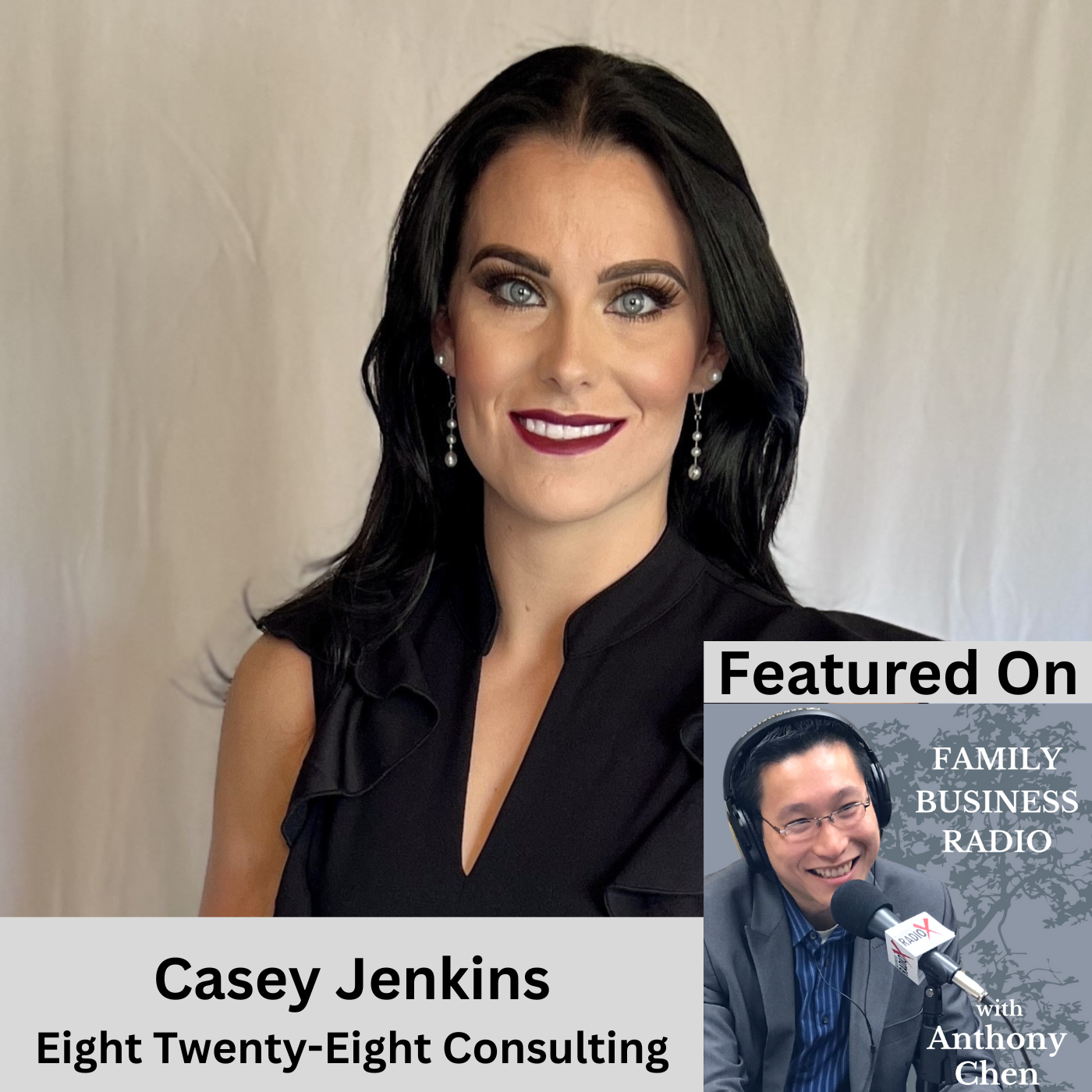
On this episode of Family Business Radio, host Anthony Chen welcomed Casey Jenkins, CEO of Eight Twenty-Eight Consulting. Casey shared her journey from aspiring to be a meteorologist to falling into the supply chain industry by chance and staying by choice. Casey shared insights on managing processes and disruptions in supply chain business, emphasizing the significance of understanding the sequence of operations. She highlighted the need for companies, particularly small businesses, to identify their core capabilities and take incremental steps towards improvement. Furthermore, she underscored the importance of having a risk management plan to navigate different potential business disruptions.

Host Anthony Chen closed the show with a brief commentary on the value of taking just one small step in financial planning.

Family Business Radio is underwritten and brought to you by Anthony Chen with Lighthouse Financial Network.

Casey Jenkins, Founder and CEO, Eight Twenty-Eight Consulting

Casey Jenkins, Eight Twenty-Eight Consulting

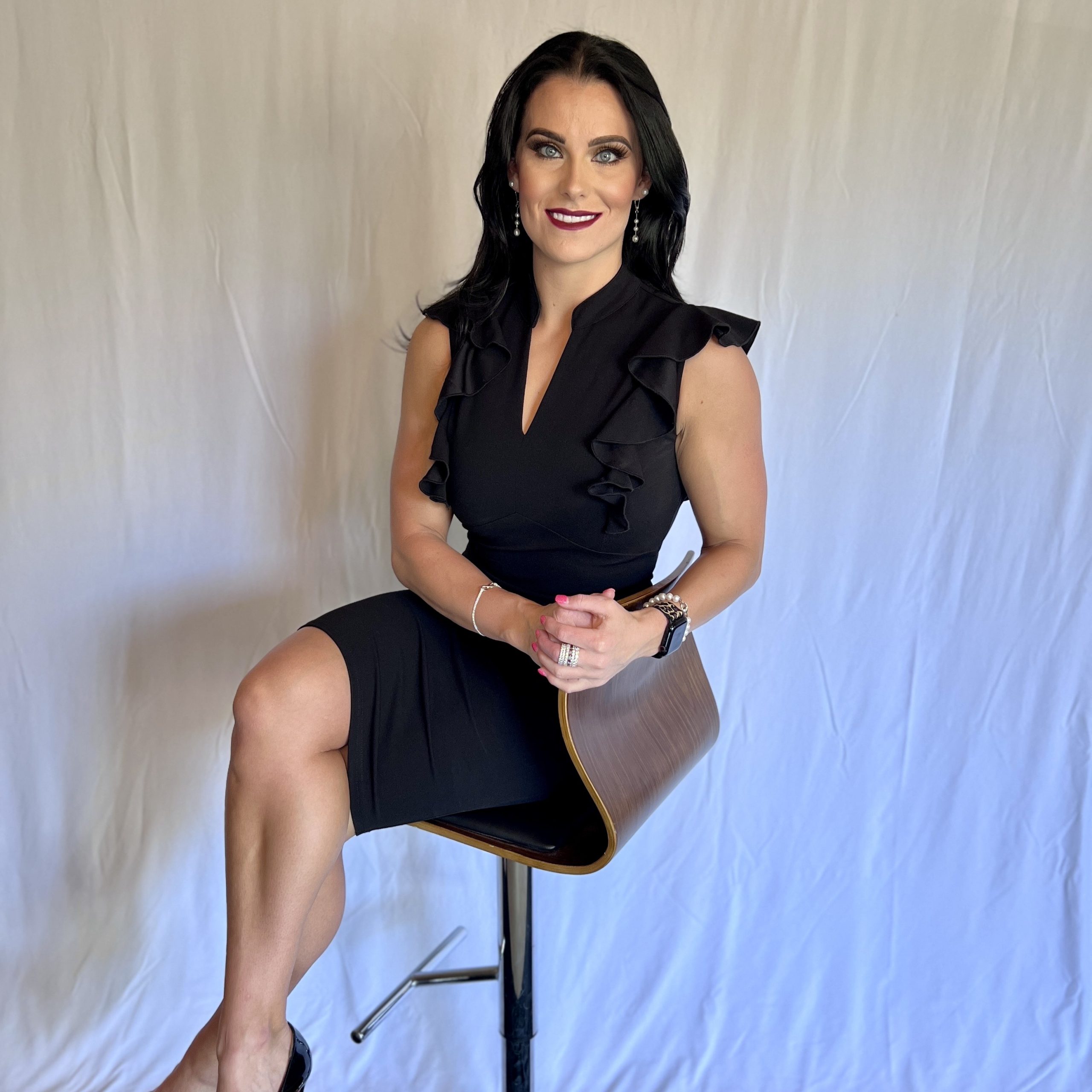
Casey Jenkins (CJ), the Owner of Eight Twenty-Eight Consulting LLC, stands out as a results-oriented business professional specializing in supply chain and process improvement. With a rich background encompassing over a decade of diverse supply chain experience, Casey holds dual master’s degrees in Supply Chain Management and Project Management, accompanied by a Black Belt in Lean Six Sigma. She adeptly combines her educational prowess and hands-on experience to navigate and resolve intricate supply chain challenges, consistently achieving maximum results and operational excellence.

A demonstrated track record in the strategic execution of various project types across numerous industries serves to highlight Casey’s expertise. Notably, she has successfully generated approximately $15 million through key initiatives and the completion of over 20 projects throughout her career.

In the ever-evolving landscape of the supply chain industry, Casey remains committed to staying ahead of emerging trends and technologies. Her pursuit of a Doctor of Business Administration in Supply Chain Management and Logistics, which will begin in January 2024, exemplifies her commitment to lifelong learning. Casey thrives on collaboration and actively engages in networking to enhance her knowledge.

Beyond her professional endeavors, Casey is an active community member in Savannah, GA, participating in volunteer work and church activities. A fitness enthusiast, she commits to twice-daily gym sessions. Casey shares her life with two Mini-Aussiedoodles, Skye and Enzo, whom she cherishes spending time with when not immersed in her professional pursuits.

LinkedIn

Eight Twenty-Eight Consulting LLC

With a mission to propel businesses and supply chains forward, Eight Twenty-Eight Consulting is your strategic partner in supply chain and process improvement. Employing a distinctive blend of execution-style methodology, strategic expertise, and elevated interactions, solutions are crafted with a forward-thinking mindset.

Eight Twenty-Eight Consulting transcends beyond a one-time transaction; it’s about lasting support and tailored solutions that enhance your core capabilities. Drawing on over a decade of experience and a rich educational background, forward-thinking solutions are delivered that are easy to implement, sustainable through company growth, and evolve seamlessly with industry changes.

As a catalyst for success, Eight Twenty-Eight Consulting challenges the status quo, recognizing the uniqueness of every organization.

Reach out today to find out how to Take Your Company to the Summit.

Website | LinkedIn | Instagram | YouTube

Topics Discussed in this Episode

00:06 Introduction to Family Business Radio
00:29 Meet the Guest: Casey Jenkins
00:42 Casey’s Journey into Supply Chain Management
02:33 Demystifying Supply Chain
04:25 The Intersection of Meteorology and Supply Chain
06:14 The Impact of COVID-19 on Supply Chain
07:27 Understanding ‘Just in Time’ and ‘Just in Case’
09:53 How 828 Consulting Helps Businesses
15:48 The Importance of Risk Management
32:21 Managing Stress in the Supply Chain Industry
37:18 When to Seek Help for Your Business
39:49 Conclusion and Contact Information

Anthony Chen, Host of Family Business Radio

Anthony Chen, Host of Family Business Radio

This show is sponsored and brought to you by Anthony Chen with Lighthouse Financial Network. Securities and advisory services are offered through Royal Alliance Associates, Inc. (RAA), member FINRA/SIPC. RAA is separately owned, and other entities and/or marketing names, products, or services referenced here are independent of RAA. The main office address is 575 Broadhollow Rd., Melville, NY 11747. You can reach Anthony at 631-465-9090, ext. 5075, or by email at anthonychen@lfnllc.com.

Anthony Chen started his career in financial services with MetLife in Buffalo, NY, in 2008. Born and raised in Elmhurst, Queens, he considers himself a full-blooded New Yorker while now enjoying his Atlanta, GA, home. Specializing in family businesses and their owners, Anthony works to protect what is most important to them. From preserving to creating wealth, Anthony partners with CPAs and attorneys to help address all of the concerns and help clients achieve their goals. By using a combination of financial products ranging from life, disability, and long-term care insurance to many investment options through Royal Alliance, Anthony looks to be the eyes and ears for his client’s financial foundation. In his spare time, Anthony is an avid long-distance runner.

The complete show archive of Family Business Radio can be found by following this link.

Tagged With: Anthony Chen, business processes, Casey Jenkins, Eight Twenty-Eight Consulting, Family Business Radio, just in time, Logistics, Operations, Risk Management, Supply Chain, supply chain management

Non-Profit Consultant Jeff Fischer

May 2, 2023 by John Ray

Jeff FIscher
North Fulton Business Radio
Non-Profit Consultant Jeff Fischer
Loading
00:00 /
RSS Feed
Share
Link
Embed

Download file

Jeff FIscher

Non-Profit Consultant Jeff Fischer (North Fulton Business Radio, Episode 658)

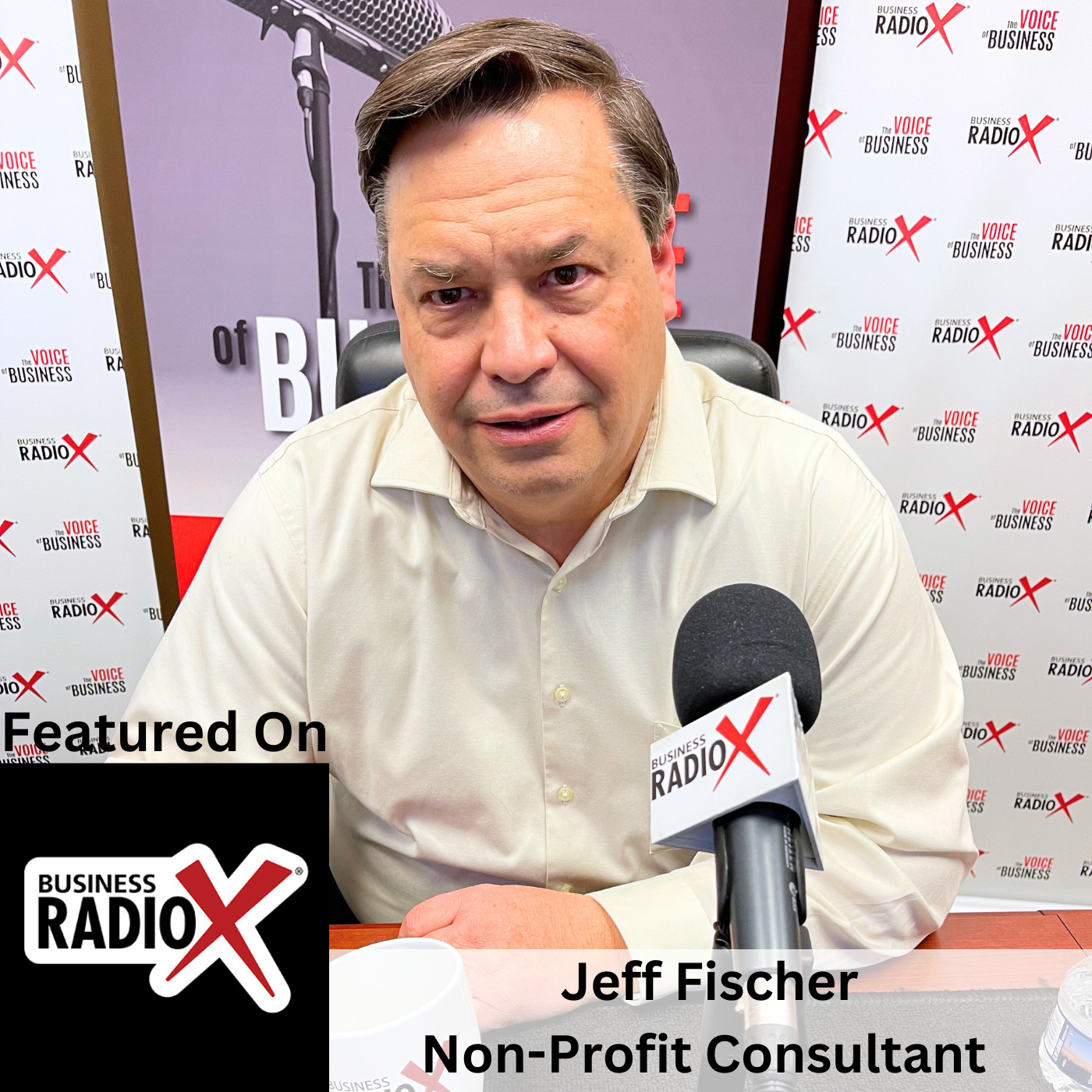
After a forty-year career in global logistics, Jeff Fischer retired five years ago and moved into consulting in the non-profit space. He joined host John Ray to track the course of his career, discuss how he got into nonprofit consulting, the challenges he sees in nonprofits that he works with, strategies he’s used in supporting them, his thoughts on fundraising, boards, and much more.

North Fulton Business Radio is broadcast from the North Fulton studio of Business RadioX® inside Renasant Bank in Alpharetta.

Jeffrey Fischer, Non-Profit Consultant and Business Owner

Jeffrey Fischer, Non-Profit Consultant and Owner, The Whole Business

Jeffrey Fischer has over 35 years’ experience within the Global Supply industry; of which the final 25 were with UPS. During his UPS career, Jeff developed innovative and integrated logistics solutions for the world’s largest Fortune 100 companies. During his tenure he also was a member several domestic and international Merger and Acquisition teams, including the largest in 2001, of the Mailboxes Etc. (MBE) acquisition team that converted the 4,200+ shipping retail network into today’s UPS Stores. He also led management teams within UPS’s sales training, business development, operations, product development, and customer experience divisions.

In 2014, he was UPS’s Corporate United Way Campaign Co-Coordinator, overseeing all program activities, that successfully raised $63.7 Million. Prior to joining UPS, Jeff worked for Fuji Photo Film and Lever Brothers in New York City. Jeff has written and published dozens of articles within a variety of trade magazines and has been a guest columnist to the Cambridge Information Network and the Global Business Network.

He was an adjunct professor in New York and Georgia colleges teaching logistics, international management, thesis research and writing, and organizational management. He holds both a Bachelor of Science in Transportation and Distribution Management and a Bachelor of Science in Marketing from Syracuse University with a minor in Economics; and earned a Master of Business Administration in Management from Long Island University with a minor in Finance.

Since retiring from UPS in March 2018, Jeff started a consulting service, The Whole Business, which takes a holistic approach examining an organization’s order-to-cash cycle to determine the root causes that create unnecessary cost, impede growth, and inhibit a positive customer experience. He applies those same techniques to non-profits to improve their efficiency and those that seek fundraising assistance and/or guidance by leveraging his communication, writing, and teaching skills.

He is co-owner of Roswell’s Houck’s Grille since opening in 2015. Jeff is married 38 years to Nancy and has 2 adult children, Matthew, and Christine.

LinkedIn

Questions and Topics in this Interview:

  • How did you get motivated or inspired to give back to the local community becoming involved with Non-Profits?
  • So, 40 years in corporate America, how has that helped you prepare for working with & supporting non-profits?
  • What specific acquired experiences and skills do you bring to non-profits?
  • Non-profits come in many shapes and sizes, how do you decide who to help and how?
  • What are some of the biggest challenges local non-profits, collectively, seem to face, particularly since the pandemic?
  • What challenges have you faced when initially engaging with or while engaging with a non-profit?
  • What’s next for your consulting career and more specifically within the non-profit arena?

North Fulton Business Radio is hosted by John Ray and broadcast and produced from the North Fulton studio of Business RadioX® inside Renasant Bank in Alpharetta. You can find the full archive of shows by following this link. The show is available on all the major podcast apps, including Apple Podcasts, Spotify, Google, Amazon, iHeart Radio, Stitcher, TuneIn, and others.

RenasantBank


Renasant Bank has humble roots, starting in 1904 as a $100,000 bank in a Lee County, Mississippi, bakery. Since then, Renasant has grown to become one of the Southeast’s strongest financial institutions with over $13 billion in assets and more than 190 banking, lending, wealth management, and financial services offices in Mississippi, Alabama, Tennessee, Georgia, and Florida. All of Renasant’s success stems from each of their banker’s commitment to investing in their communities as a way of better understanding the people they serve. At Renasant Bank, they understand you because they work and live alongside you every day.

Since 2000, Office Angels® has been restoring joy to the life of small business owners, enabling them to focus on what they do best. At the same time, we honor and support at-home experts who wish to continue working on an as-needed basis. Not a temp firm or a placement service, Office Angels matches a business owner’s support needs with Angels who have the talent and experience necessary to handle work that is essential to creating and maintaining a successful small business. Need help with administrative tasks, bookkeeping, marketing, presentations, workshops, speaking engagements, and more? Visit us at https://officeangels.us/.

Tagged With: Fundraising, global logistics, Houck's Grille, Jeff Fischer, non profit consultant, nonprofits, North Fulton Business Radio, Office Angels, renasant bank, Supply Chain, UPS

Matt Fain, PopCapacity®

April 25, 2023 by John Ray

PopCapacity®
Business Beat
Matt Fain, PopCapacity®
Loading
00:00 /
RSS Feed
Share
Link
Embed

Download file

PopCapacity

Frazier & Deeter’s Business Beat: Matt Fain, PopCapacity®

Matt Fain, Co-Founder and CEO of PopCapacity®, joined Business Beat and host Roger Lusby to discuss his company’s tech solution for the warehousing and supply chain industry. Founded at the time of the pandemic, Matt addressed the challenges they encountered, why PopCapacity’s solutions were adapted by enterprise level companies so quickly, ongoing supply chain issues, how they serve the needs of both suppliers and shippers, and much more.

Business Beat is presented by Alpharetta CPA firm Frazier & Deeter and is produced by the North Fulton studio of Business RadioX®

PopCapacity®

Established in March 2020, PopCapacity® had a vision to digitize the procurement of 3PL warehousing and fulfillment capacity. By offering enhanced visibility and frictionless connectivity within our digital marketplace, they were able to offer the logistics industry a new modern way to procure space.

After launching a successful marketplace they saw an opportunity to introduce their frictionless process and technology to other nodes of the supply chain, thus creating the first ever digital procurement platform for logistics.

Company website | LinkedIn | Facebook | Twitter

Matt Fain, Co-Founder, & CEO, PopCapacity®

Matt Fain, Co-Founder, & CEO, PopCapacity®

Matt Fain has been in the Supply Chain & Logistics industry for over a decade. His career in supply chain began in transportation technology, starting a franchise based 3PL called, Bluegrace Logistics.

After selling his 3PL he then started a transportation company called, GO Expedited which led him to the ideas behind PopCapacity®.


LinkedIn


Frazier & Deeter

The Alpharetta office of Frazier & Deeter is home to a thriving CPA tax practice, a growing advisory practice and an Employee Benefit Plan Services group. CPAs and advisors in the Frazier & Deeter Alpharetta office serve clients across North Georgia and around the country with services such as personal tax planning, estate planning, business tax planning, business tax compliance, state and local tax planning, financial statement reviews, financial statement audits, employee benefit plan audits, internal audit outsourcing, cyber security, data privacy, SOX and other regulatory compliance, mergers, and acquisitions and more. Alpharetta CPAs serve clients ranging from business owners and executives to large corporations.

Roger Lusby, Partner in Charge of Alpharetta office, Frazier & Deeter
Roger Lusby, Partner in Charge of the Alpharetta office of Frazier & Deeter

Roger Lusby, host of Frazier & Deeter’s Business Beat, is an Alpharetta CPA and Alpharetta Office Managing Partner for Frazier & Deeter. He is also a member of the Tax Department in charge of coordinating tax and accounting services for our clientele. His responsibilities include a review of a variety of tax returns with an emphasis in the individual, estate, and corporate areas. Client assistance is also provided in the areas of financial planning, executive compensation and stock option planning, estate and succession planning, international planning (FBAR, SFOP), health care, real estate, manufacturing, technology, and service companies.

You can find Frazier & Deeter on social media:

LinkedIn | Facebook | Twitter

An episode archive of Frazier & Deeter’s Business Beat can be found here.


Tagged With: Business Beat, CPa, digital procurement platform, Frazier & Deeter's Business Beat, Frazier and Deeter, Logistics, Matt Fain, PopCapacity, Roger Lusby, Supply Chain, warehouse leasing, warehouse space, warehousing

LIVE from HAVEN 2022: Greg Freuler, FreeForm Brush

October 28, 2022 by John Ray

Freeform Brush
North Fulton Studio
LIVE from HAVEN 2022: Greg Freuler, FreeForm Brush
Loading
00:00 /
RSS Feed
Share
Link
Embed

Download file

Freeform Brush

LIVE from HAVEN 2022: Greg Freuler, FreeForm Brush (Organization Conversation, Episode 46)

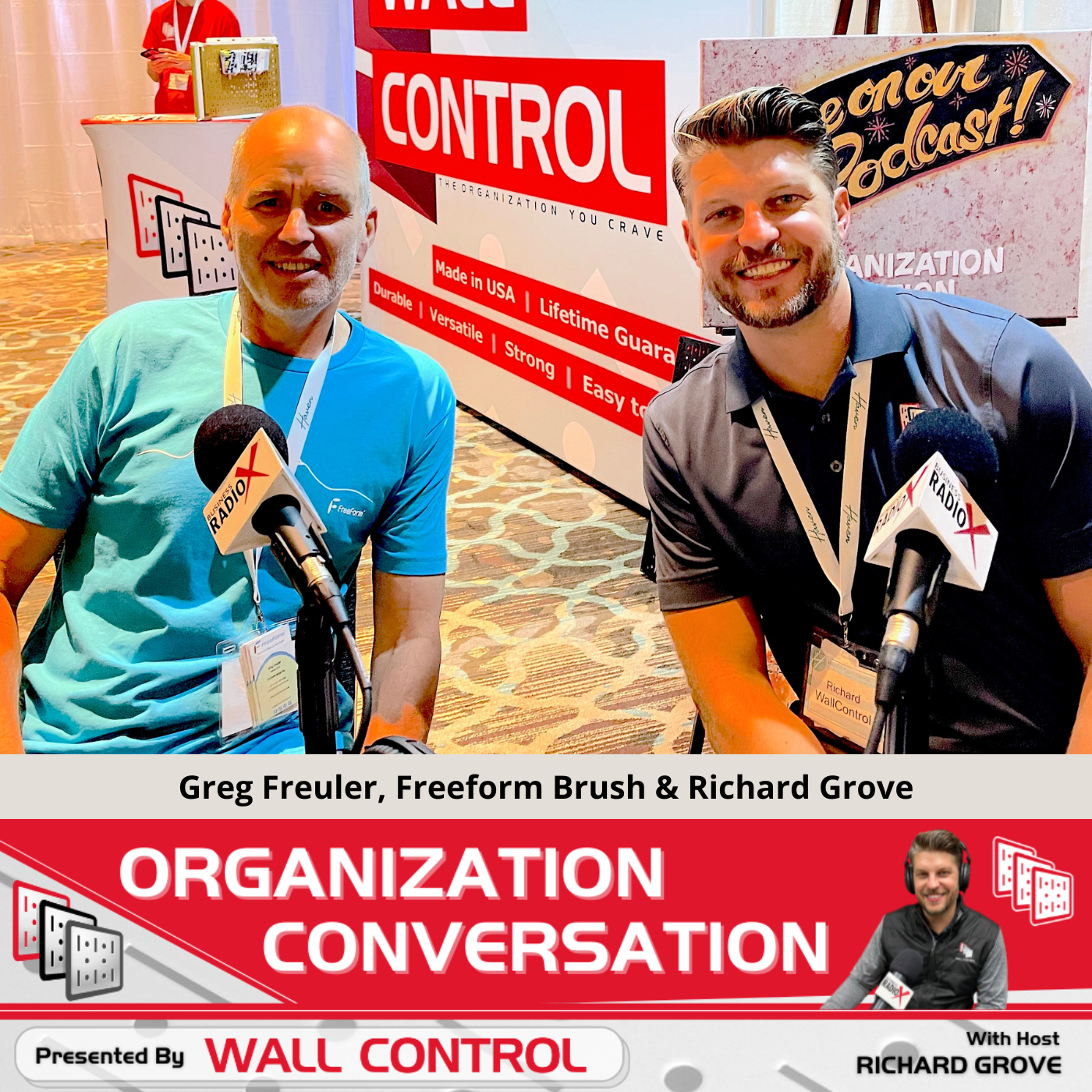
Greg Freuler, Founder and President of FreeForm Brush, joined host Richard Grove live from HAVEN Conference 2022. Greg discussed the development of the FreeForm Brush, how he grows his business, recent supply chain issues, the next exciting product coming, and much more.

This show was originally broadcast live from the 2022 HAVEN Conference held at the Grand Hyatt Buckhead in Atlanta, Georgia.

Organization Conversation is broadcast from the North Fulton studio of Business RadioX® inside Renasant Bank in Alpharetta.

Greg Freuler, Founder and President, FreeForm Brush

Greg Freuler, Founder and President, FreeForm Brush

FreeForm Founder and President Greg Freuler, an industrial designer, discovered the one job he dreaded most was painting. The centuries-old paintbrush design caused his hand to cramp and eventually led to carpal tunnel syndrome. He set out on a mission to redefine the paintbrush.

Two-and-a-half years and nearly 100 prototypes later, the patented Grip-Free Paintbrush was born.

Why Use a Grip-Free Paintbrush?

Holding a conventional paintbrush with a pinch grip causes a chain reaction of tensing muscles all the way from your fingers to your neck. It’s like driving your car with the emergency brake for hours. With a Grip-Free Paintbrush, your fingers are relaxed, allowing the arm and shoulder to relax. This means a steadier hand for superior control and greatly reduced fatigue.

With a Grip-Free Paintbrush, as you apply more pressure to the work surface with the bristles, it locks tighter to your hand, requiring virtually no grip pressure. The brush is elevated, providing visibility to the work surface without compensation and without pain.

Website | LinkedIn | Instagram | Facebook | TikTok

About Organization Conversation

Organization Conversation is hosted by Richard Grove and broadcast and produced from the North Fulton studio of Business RadioX® inside Renasant Bank in Alpharetta. You can find the full archive of shows by following this link. The show is available on all the major podcast apps, including Apple Podcasts, Spotify, Google, Amazon, iHeart Radio, Stitcher, TuneIn, and others.

About Richard Grove

Richard Grove, Host, Organization Conversation

Richard Grove‘s background is in engineering but what he enjoys most is brand building through relationships and creative marketing. Richard began his career with the Department of Defense as an engineer on the C-5 Galaxy Engineering Team based out of Warner Robins. While Richard found this experience both rewarding and fulfilling, he always knew deep down that he wanted to return to the small family business that originally triggered his interest in engineering.

Richard came to work for the family business, Dekalb Tool & Die, in 2008 as a Mechanical Engineer. At the time Wall Control was little more than a small ‘side hustle’ for Dekalb Tool & Die to try to produce some incremental income. There were no “Wall Control” employees, just a small warehouse with a single tool and die maker that would double as an “order fulfillment associate” on the occasion that the original WallControl.com website, which Richard’s grandmother built, pulled in an order.

In 2008, it became apparent that for the family business to survive they were going to have to produce their own branded product at scale to ensure jobs remained in-house and for the business to continue to move forward. Richard then turned his attention from tool and die to Wall Control to attempt this necessary pivot and his story with Wall Control began. Since that time, Richard has led Wall Control to significant growth while navigating two recessions.

Outside of Richard’s work at Wall Control he enjoys helping other business owners, operators, and entrepreneurs along their own paths to success by offering personal business coaching and advising through his website ConsultantSmallBusiness.com. Richard has developed an expansive and unique skillset growing and scaling Wall Control through a multitude of challenges to the successful brand and company it is today. Richard is happy to share his knowledge and experience with others who are looking to do the same within their own businesses.

Connect with Richard:

Instagram | Twitter | LinkedIn | Richard’s Website

About Wall Control

The Wall Control story began in 1968 in a small tool & die shop just outside Atlanta, Georgia. The first of three generations began their work in building a family-based US manufacturer with little more than hard work and the American Dream.

Over the past 50+ years, this family business has continued to grow and expand from what was once a small tool & die shop into an award-winning US manufacturer of products ranging from automobile components to satellite panels and now, the best wall-mounted tool storage system available today, Wall Control.

The Wall Control brand launched in 2003 and is a family-owned and operated business that not only produces a high-quality American Made product but sees the entire design, production, and distribution process happen under their own roof in Tucker, Georgia. Under that same roof, three generations of American Manufacturing are still hard at work creating the best tool storage products available today.

Connect with Wall Control:

Company website | Facebook | Instagram

Tagged With: Freeform brush, Greg Freuler, grip-free paintbrush, HAVEN 2022, Haven Conference, Organization Conversation, paintbrushes, painting, Richard Grove, Supply Chain, Wall Control

Decision Vision Episode 163: Should I Increase Inventory? – An Interview with Jason Haith, OEC Group, Louisville

April 7, 2022 by John Ray

OEC
Decision Vision
Decision Vision Episode 163: Should I Increase Inventory? - An Interview with Jason Haith, OEC Group, Louisville
Loading
00:00 /
RSS Feed
Share
Link
Embed

Download file

OEC

Decision Vision Episode 163: Should I Increase Inventory? – An Interview with Jason Haith, OEC Group, Louisville

Many businesses are wrestling with the question of whether they should build up inventory to counter delivery delays due to supply chain disruption. In this interview with host Mike Blake, Jason Haith of the OEC Group contends that while those supply chain challenges have abated somewhat, they have not been solved, and may become even more challenging. Jason discussed many of the issues at hand, what may be coming later in 2022, what solutions may be available, diversifying shipping and sourcing, and much more. Decision Vision is presented by Brady Ware & Company and produced by the North Fulton studio of Business RadioX®.

OEC Group

Founded in 1981, OEC Group had a vision to provide comprehensive logistics services to clients.

Today OEC Group serves destinations throughout the world and has grown into one of the leading logistics providers from Asia to North America.

Their annual cargo volume has consistently put us in the top position for Transpacific Trade.

With offices in over fifty countries, they take pride in being close to your cargo at all times.

Proximity of their OEC logistics professionals to your cargo enables them to stay on top of relevant market trade intelligence. Their Asia offices bridge the connection between you and your supplier, bringing additional insight to the entirety of your supply chain.

Company website | LinkedIn | Twitter

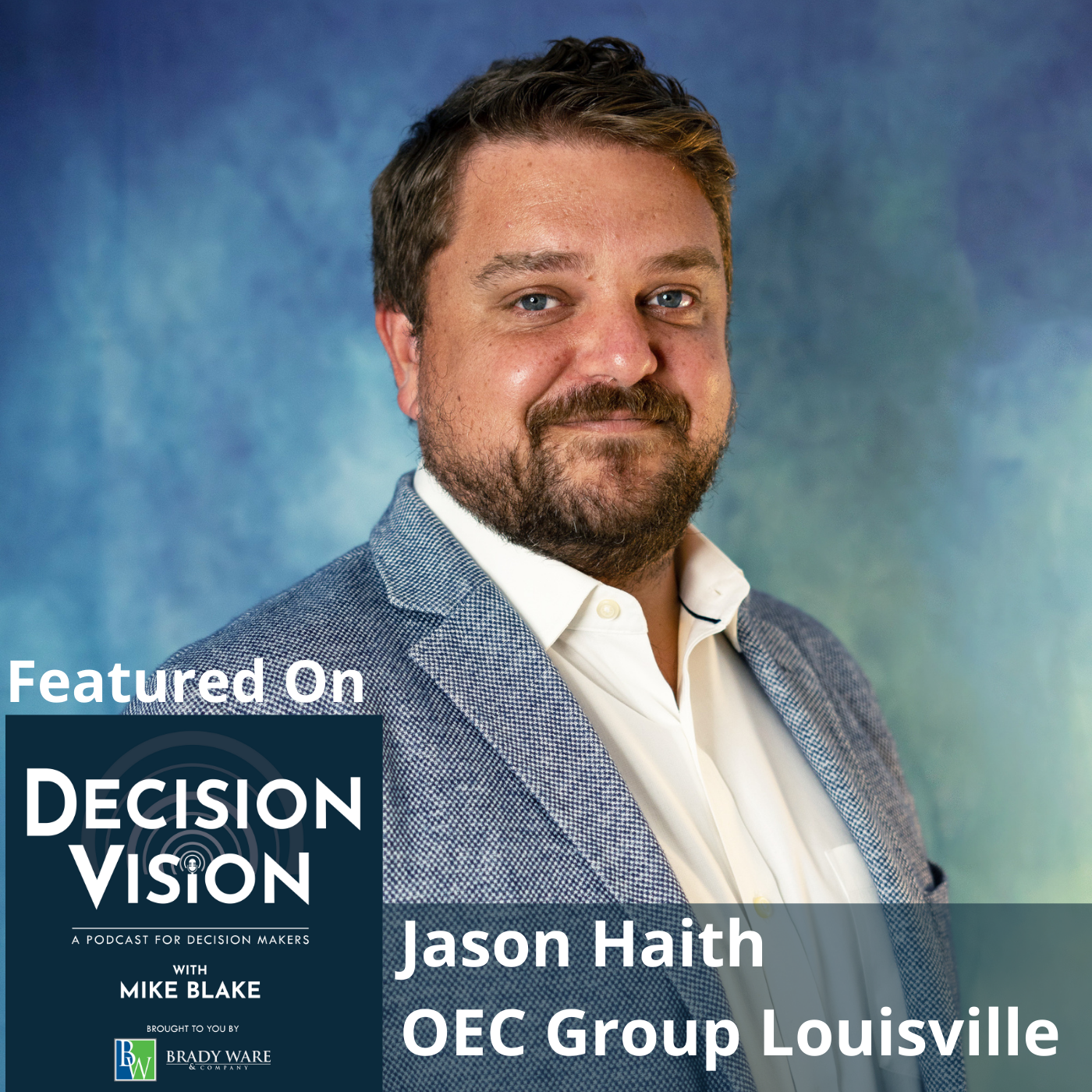
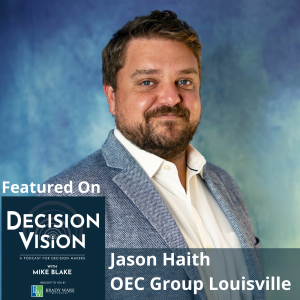
Jason Haith, Manager, OEC Group, Louisville

Jason Haith, Manager, OEC Group Louisville

OEC Group is an incredibly dynamic International Logistics company specializing in the Asia and West Asia trade. OEC offers Full container, LCL, Airfreight, warehousing, and Customs Compliance services.

Jason is the manager of the office in Louisville, Kentucky and has been with OEC since 2011.

Jason has a degree from The University of Kansas. He lives in Louisville.

LinkedIn

Mike Blake, Brady Ware & Company

Mike Blake, Host of the “Decision Vision” podcast series

Michael Blake is the host of the Decision Vision podcast series and a Director of Brady Ware & Company. Mike specializes in the valuation of intellectual property-driven firms, such as software firms, aerospace firms, and professional services firms, most frequently in the capacity as a transaction advisor, helping clients obtain great outcomes from complex transaction opportunities. He is also a specialist in the appraisal of intellectual properties as stand-alone assets, such as software, trade secrets, and patents.

Mike has been a full-time business appraiser for 13 years with public accounting firms, boutique business appraisal firms, and an owner of his own firm. Prior to that, he spent 8 years in venture capital and investment banking, including transactions in the U.S., Israel, Russia, Ukraine, and Belarus.

LinkedIn | Facebook | Twitter | Instagram

Brady Ware & Company

Brady Ware & Company is a regional full-service accounting and advisory firm which helps businesses and entrepreneurs make visions a reality. Brady Ware services clients nationally from its offices in Alpharetta, GA; Columbus and Dayton, OH; and Richmond, IN. The firm is growth-minded, committed to the regions in which they operate, and most importantly, they make significant investments in their people and service offerings to meet the changing financial needs of those they are privileged to serve. The firm is dedicated to providing results that make a difference for its clients.

Decision Vision Podcast Series

Decision Vision is a podcast covering topics and issues facing small business owners and connecting them with solutions from leading experts. This series is presented by Brady Ware & Company. If you are a decision-maker for a small business, we’d love to hear from you. Contact us at decisionvision@bradyware.com and make sure to listen to every Thursday to the Decision Vision podcast.

Past episodes of Decision Vision can be found at decisionvisionpodcast.com. Decision Vision is produced by John Ray and the North Fulton studio of Business RadioX®.

Connect with Brady Ware & Company:

Website | LinkedIn | Facebook | Twitter | Instagram

TRANSCRIPT

Intro: [00:00:01] Welcome to Decision Vision, a podcast series focusing on critical business decisions. Brought to you by Brady Ware & Company. Brady Ware is a regional, full-service accounting and advisory firm that helps businesses and entrepreneurs make visions a reality.Welcome to Decision Vision, a podcast giving you, the listener, clear vision to make great decisions. In each episode, we discuss the process of decision-making in a different topic from the business owners’ or executives’ perspective. We aren’t necessarily telling you what to do, but we can put you in a position to make an informed decision on your own and understand when you might need help along the way.

Mike Blake: [00:00:41] My name is Mike Blake, and I’m your host for today’s program. This program is sponsored by Brady Ware & Company, a full-service accounting firm based in Dayton, Ohio, with offices in Dayton; Columbus, Ohio; Richmond, Indiana; and Alpharetta, Georgia. I am managing partner of the Strategic Valuation and Advisory Services Practice, which brings clarity to clients facing critical strategic decisions by presenting clients with empirical facts that enable great decision making.

Mike Blake: [00:00:41] If you would like to engage with me on social media with my Chart of the Day and other content, I’m on LinkedIn is myself and @unblakeable on Facebook, Twitter, Clubhouse, and Instagram. Also, check out my LinkedIn group called Unblakeable’s Group That Doesn’t Suck. So, please join that as well if you would like to engage. If you like this podcast, please subscribe on your favorite podcast aggregator and please consider leaving a review of the podcast as well.

Mike Blake: [00:01:32] Today’s topic is, should I increase my inventory holdings, and, specifically inventory holdings coming from abroad? During the pandemic, according to the US Census Bureau Data, US businesses on average have 37 days of inventory in hand. That is the lowest since the 2009 recession and is still trending lower. So, we all know that there are supply chain issues whether you had a hard time getting a Peloton during COVID and now they can’t give them away. It’s taking four or five weeks to get a brand new MacBook Pro. We’re routinely seeing products that we’re used to seeing on the shelves. We’re seeing empty shelves from everything – everything from steak to corned beef hash to oyster crackers. And, of course, remember in the early days when there were massive shortages of disinfectant wipes, disinfectant sprays, the great toilet paper craze of 2020, and the list goes on and on.

Mike Blake: [00:02:39] And, we are told that the reason or a reason that we’re seeing, the inflation that we’re seeing of late, is because the supply chain has yet to recover. And, that appears to be true. And from a consumer’s perspective, of course, it’s irritating. It’s disappointing. And, in some cases where inflation is really hitting, it’s potentially existential. But, of course, this is a show that is aimed at business decision-makers and this is impacting many businesses that are simply running out of product. And running out of product is a bigger deal than you might imagine, at least in some cases. Our guest will talk more about this, I’m sure.

Mike Blake: [00:03:31] But, you know, I think about – it wasn’t that long ago when you could walk into a Home Depot and you could buy Halloween or Christmas decorations on Christmas Eve and they would still have fully stocked shelves. Right. And then, if you wanted to, you could wait a few days later, they’d be selling everything off at $0.30 on the dollar or something. Now, if you’re not stocked up on that stuff by December 15th, that’s already out of there because companies have really tightened up their inventory management practices and they have decided in some cases that they’d rather miss out on a sale rather than being left holding the bag on inventory that they can’t move or going to have to take a bath on.

Mike Blake: [00:04:16] But we’re seeing now the exposure that that creates just in time inventory is fantastic when everything is working the way that it’s supposed to. But it’s vulnerable to one thing not working as well. One bottleneck will have ripple effects throughout the entire supply chain. And then, if you have ten bottlenecks as is the case or more in some of our supply chain, well, you see what we have. Right. And so, you lead to stockouts, which lead to disappointed customers. And if you’re dealing with online retail, I understand that one of the things that can just kill your rankings is if you’re just out of inventory. And that’s really hurting a lot of electronic retailers.

Mike Blake: [00:05:03] And so, this is an important decision, I’m sorry, an important conversation that is leading to a decision about whether or not companies need to change their inventory practices. Some probably have. Others are probably thinking about it very hard. If so, how to do that now? I’m not an inventory guy. I’m not a supply chain guy. I’m a finance guy through and through. So, I have told you the sum total of everything I know about the topic. So, we’ve brought in a guest who knows a heck of a lot more about the topic.

Mike Blake: [00:05:32] And joining us today is Jason Haith, who is the branch manager for OEC Group, Louisville. He’s been with OEC for 16 years, handling full container import-export, less-than-container consolidations, including buyer consolidation, airfreight import-export, along with consulting with clients and documentation. Founded in 1981, OEC had the vision to provide comprehensive logistics services to clients. They serve destinations throughout the world, and has grown into one of the leading logistics providers from Asia to North America. Jason, welcome to the program.

Jason Haith: [00:06:04] Mike, thanks so much for having me.

Mike Blake: [00:06:07] So, I’ve tried to, in a very ham-handed way, set the table here. We’ve been told for a long time excess inventory is bad. It consumes cash. It promotes inefficiency, among other things. Now, all of a sudden, we’re finding ourselves lacking in inventory. Why would companies want to go back the other way right now?

Jason Haith: [00:06:35] In terms of adding additional inventory, you mean?

Mike Blake: [00:06:37] Yes, that’s right.

Jason Haith: [00:06:38] So, I think a lot of what you’d said in your introduction is accurate. I think one of the biggest challenges the import community has faced isn’t just the cost of product in particular or shipping. It’s the uncertainty of transit time. Those issues have abated some as we’ve come out of Chinese New Year this year. But there is an issue that’s looming on the horizon that importers are really going to have to start taking a look at. And that’s the contract, the labor contract renegotiations on the West Coast. That contract is up this year, July 1st, and the possibility of a labor disruption or a full-on strike is likely enough that it’s forced conversations with clients to provide alternatives.

Jason Haith: [00:07:34] The ILWU, the International Longshore and Warehouse Association, effectively controls all of the freight terminals, and these are the terminals that [inaudible] actual vessels come into to be unloaded at the ports. They are the men and women that operate the cranes and move containers around the port facility. That contract is due July 1. And if they’re unable to reach an agreement, the possibility of a labor disruption is likely.

Jason Haith: [00:08:08] That poses a number of problems for the community. The first is that the West Coast of the United States is responsible for something around 60% of all of the volume that’s coming into the country. So, if those gateways effectively go down or inoperable, it places a huge amount of pressure on the remaining ports that are still operable. That would be the Gulf Coast, primarily Houston; the East Coast, primarily Savannah, Norfolk, and New York I think at this point. Those facilities are much smaller. They’re much smaller facilities and just not really capable of handling the volumes that are going to be coming their way. I think it’s going to be tough.

Mike Blake: [00:08:59] Now, leading up to this, there’s been an obsession, I think, or at least certainly a lot of focus on not carrying excess inventory. So, let’s go back to sort of inventory supply chain 101. How did we get to that point? Why did – why have people – why do people decide they wanted to carry as little inventory as possible? Why did we expose ourselves to this risk now?

Jason Haith: [00:09:24] I mean, ironically, I think it was because of the fluidity of the supply chain. Several years ago companies were easily able to operate in that JIT sort of scenario because product was – and product production and the transportation of that product was efficient enough that it allowed companies to sort of build these foundational pillars and how they’re going to operate moving forward. It’s those foundational pillars, I think, that have been shaken by what we saw in 2021.

Jason Haith: [00:09:59] In terms of inefficiency and excess cost, I think importers were looking at what was happening on the sales side and thinking to themselves, “Oh, my gosh, I don’t have – based on the way sales are now, I’m not sure I have the product that I’m going to need in the future. Let’s get more product moving.” And, the difficulties that I think importers saw in 2021 are really leading them to pursue a different course of action up to and including carrying inventory now that they may not have previously just because they’re unsure, not just from a transportation perspective. Transportation is incredibly inefficient. But that’s just one portion of it.

Jason Haith: [00:10:47] On the production side, there are issues as well. COVID lockdowns in China continue. Suppliers in China continue to have issues with inflation and increased product costs. The shipping delays have left product at supplier facilities longer than expected. In some cases, suppliers have had to either slow production or cancel it altogether not because they don’t have the raw materials to produce it, but because once it’s produced, they physically have no other, nowhere to put the product. Their warehouses are so stuffed full of product that was supposed to ship that didn’t that it’s hampering production. So the importers are really in a tough spot because they’re seeing these issues from literally all sides.

Mike Blake: [00:11:39] So, speaking as a citizen now and here as a consumer, I think we are under the hope that supply chain would have been kind of fixed by now or figured out by now. And clearly, it’s not. If anything, I don’t know if it’s worse or not, but it’s clearly not the way we’re used to seeing it. Why are there supply chain challenges? Is it still just on the raw production side where companies are having trouble just getting people in to do the work? Or, is it more on the distribution side? Or is it everywhere throughout?

Jason Haith: [00:12:16] I would say, to answer your question directly, it’s everywhere throughout. I think the initial problem began and is directly related to COVID. Specifically, the first three months of 2020, China was shut down. They were all locked down and US importers couldn’t really get much production because there wasn’t anyone working. And just as China starts to come out of those lockdowns, the US goes under lockdown. And so, US importers are, again, unsure. Should I bring product in or not?

Jason Haith: [00:12:49] When the US starts opening, there’s effectively a 5 to 6 month period in 2020 where not a whole heck of a lot happened, and the economy starts picking up and importers are seeing sales increase so they start to place more orders. That’s what really kicked off this craziness.

Jason Haith: [00:13:09] We find ourselves in this position now because of all of the issues that the initial problems spurred. So, all of this volume starts coming out of Asia. Steamship lines add additional vessels to start carrying it. But the ports on the US side aren’t capable of processing all of those vessels. So, we start to see congestion and then we start to see congestion at the rail, and then we start to see steamship lines canceling sailings because boats are stuck off the West Coast for three weeks. If you’re three weeks late getting to LA, you’re also three weeks late getting back to Shanghai. So, each one of these issues that we’ve seen that’s sort of propagated across the supply chain in this wave are really sort of predicated on the previous problem.

Jason Haith: [00:14:01] And, the issue I think now is I don’t – there’s no real way to throw money at the problem. A lot of people, I think, in the US are sort of under the understanding, well, let’s just build more infrastructure. And, that’s I think a necessity where it’s possible. LA, there’s just no more land. They need to make the ports more efficient. But the caveat is you don’t necessarily build the transcontinental railroad in two weeks or dredge a whole new port terminal in a month.

Mike Blake: [00:14:39] Right.

Jason Haith: [00:14:39] That infrastructure is necessary. But, man, oh, man, is it going to take a while to show up. And these issues have sort of spring boarded or bounced from one side of the Pacific to the other from the US side, back to the Asia side, back to the US side. And I think that is what has continued to present problems. I believe the community, in general, sort of thinks that all of the infrastructure that’s required to get product, say, from a supplier’s door in Shanghai to their door in Wisconsin or Illinois, it’s all the same person.

Jason Haith: [00:15:20] Similar to Amazon here in the US, you order a product on Amazon and it’s Amazon that shows up at your doorstep in most cases to deliver that. This is different. The trucking companies on the China side are not associated with the depot where they collect the container and they’re not – neither the depot nor the trucking company is really associated with the port terminal. And, the terminal is different than the steamship line. And, the steamship lines are different than the railroads in the US.

Jason Haith: [00:15:50] So, these are all sorts of segmented parts of the process that previously worked together in relative harmony. I mean, it was amazing that you could get a 40-foot container of product from, say, Shenzhen to Kansas City or Chicago in 27 days with very little problem and accurately predict the timing. And now, because, just, for example, the port gets congested in Los Angeles and the, excuse me, the truckers aren’t able to have filled enough chassis to pull out all the containers. A vessel discharges 1000 boxes. There’s only enough chassis to pull 500. Then, the next vessel arrives with 1000 containers on it and discharges all of those. They’ve got to go somewhere. So, those containers get put on top of the 500 that didn’t leave, that weren’t pulled out, and now they’re buried in a stack somewhere waiting to be exposed so that somebody can come in and collect them.

Jason Haith: [00:16:51] So, that particular problem, truckers, chassis shortage, in Los Angeles compound the issue at the port because now there are additional containers at the port that aren’t able to be cleared out. And, those containers compound the congestion issue in vessels waiting because the port can’t process as many vessels if they don’t have a place to put all of those containers, so that vessel gets delayed, and then it gets back up to Shanghai. And that’s sort of the circle, the vicious circle, I think that we in the market find ourselves.

Mike Blake: [00:17:23] So, does that mean that what we’re in is a new normal at least for a while? And if so, what is the timeframe in which we’re going to have to cope with uneven supply issues, especially from foreign sources, before it gets back to what we’re used to?

Jason Haith: [00:17:44] I think the term new normal is pretty accurate, and I think that is a lot of the pain that the import community has gone through that adjustment specifically. I think the remainder of this year will be very challenging. There are already processes underway to try and avert issues with the US West Coast. I think importers are really going to have to take a look at, excuse me – really going to have to take a look at what product is important to them. I think these problems could potentially extend through 2023, where the market and steamship lines are introducing new IMO regulations. Effectively, it’s a Go Green Decarbonization program that will result in lower overall capacity in terms of ships in the water available to move containers.

Jason Haith: [00:18:46] So from the import perspective, I do think it’s a good idea for importers to start looking for product and soon. I think those transit times, most importers right now are already considering or directly arranging shipments to avert the West Coast. The appetite for risk on the import community side is just zero. They don’t need or want any other problems or possibilities that could cause delays. So, I think they’re already taking action in sending product to some of these other places. I do think that’s a good way of proceeding. The other side is the economic side, what’s happening with the economy and our sales in three, six, nine months going to be the same as what they may be looking at right now.

Mike Blake: [00:19:40] So, in this, in the before time, if you will, there is pretty established math or algorithms to decide or determine what your optimal inventory level should be. And I’m guessing a lot of those are being either updated or thrown out the window entirely. In this new normal, how do you attack this? Do you just make sure that you have like, you’re used to having 60 days inventory, you need to make room for 120? Or, is there more math or rigor that can be used to optimize inventory under these conditions? Or is it even possible to do something like that?

Jason Haith: [00:20:22] I think a lot of people have taken a genuine swing at that problem. I’m not sure many have connected with a genuine solution that resolves the issue. The problem is the uncertainty of transit time. Yes, production is an issue. Maybe, it’s delayed a week or two or maybe a month. But the uncertainty of transit is the really difficult part. I’ve seen some shipments take 92 to 120 days to arrive. I’ve seen shipments on the subsequent vessel show up in 25 days. So, that span is incredible to try and account for.

Mike Blake: [00:21:04] Yes. It seems random.

Jason Haith: [00:21:05] It’s complete – it seems like some of these shipments that move really quickly should be kind of statistical outliers. But then, there’s an instance where your vessel arrives and the port’s too congested and they have nowhere to store the containers so you just happen to be the lucky person whose container gets moved straight over because they have no other place to physically put the product. It moves straight through. I’ve seen other instances where the containers get buried in stacks.

Jason Haith: [00:21:34] I think one of the best things that importers could probably do to the best of their ability is diversify, how some of this cargo is coming over and how the product is being routed. So, for example, a 40-foot high cube will hold roughly 65 to 67 cubic meters of cargo. If you just think of a regular old pallet, 4-foot by 4-foot by 4-foot tall, that’s about 1.81 cubic meters. So, a high cube will hold 65 to 67, excuse me, ICBMs. If you take 10 cubic meters off that order and put it in a 40-foot container and send that container to Houston and maybe arrange the other 10 cubic meters through a different port, Savannah or New York or Charleston or something along those lines, that arrangement from a financial perspective is probably more expensive than putting everything in one container. The difference is the product itself, the routing, has been diversified.

Jason Haith: [00:22:39] So, if your container in Houston gets stuck, for example, because there’s port congestion, it sits there for 45 days. If all of your product is in one container, that whole PO is stranded until the vessel docks. If you split that order up, yes, you may be looking at additional costs, but you’re also garnering an additional gateway and access to that product.

Jason Haith: [00:23:05] So, those are some of the ways and some of the advice that I’ve worked with current clients on because I really think that what we’re looking at will be extraordinarily challenging. And, like I said, if all the product is in a single container and there’s a problem with the vessel, with the port, with congestion, you’re basically waiting for everything to be processed at once.

Mike Blake: [00:23:32] That’s interesting. So, I mean, at the end of the day, it is a diversification problem, I suppose. But I don’t know. You tell me that. The reason supplies were concentrated in the first place was because that’s probably how you got the best pricing.

Jason Haith: [00:23:48] Yes.

Mike Blake: [00:23:49] And so, implicit is that you’re probably going to give some ground on pricing in order to ensure or at least hedge to make sure at least some inventory is getting through in a timely or at least net/net on a semi-regular basis. Is that right?

Jason Haith: [00:24:06] That is 100% correct. Price was initially the concern, as it should be, should always be considered. But I think if you were to pose the question to a general importer, would you be willing to pay more money? Fill in the blank, whatever that number may be. More money for better access or more consistent access to your product. I think the answer might be yes because it’s not only the cost that’s really become a problem.

Jason Haith: [00:24:40] Like, I said, I mean, the costs have jumped substantially, but importers have been able to make some of that difference up in increasing their price. That’s a problem that they’re able to cope with in one way, one form or another, not knowing when that product is going to show up. And, the span of time could be 30, 60, 90 days. That’s a problem that retailers and importers don’t really have a good solution for. And so, splitting some of these things up and looking at different gateways will help make more product available more often.

Jason Haith: [00:25:21] I do think all of the Gulf and East Coast ports will be congested, but we could see individual issues exacerbate the problem. Say, in Houston, maybe there’s a chassis issue in Houston and the port overall slows down substantially. If that’s the only bet you’ve made, all your product is subject to that contention. But if you have something coming through Savannah, maybe the delays in Savannah are only 10 days. You know, they’ve recently had to commandeer an airport to store empty equipment because of how much cargo was inside those terminals. At least, the tap is still running. And I think that’s going to be really key moving into third and fourth quarters of this year because this could be really, really challenging.

Mike Blake: [00:26:14] But you touched on something I want to come back to a little bit more explicitly, and that’s pricing. Basic economics says, well, if there’s a shortage of a product, simply raise the price, so I get a market-clearing price. It made me, at least, in the short term, that the seller may make more money. Is that a viable strategy? Or why don’t more companies adopt that approach? Or, maybe they are and I just don’t realize it.

Jason Haith: [00:26:46] I think a lot of companies are trying to do that. I think a lot of them have been successful. Larger companies tend to take a little bit longer to move that mark because the numbers are just a little bit different. I think the short-term answer to your question is, yes, raising their price is a viable solution to the fire that’s in front of them, but there just naturally comes a point when whatever that price is, it’s just too high. Whatever that price becomes just becomes too expensive for that individual making the decision at the store to purchase.

Jason Haith: [00:27:27] And, I think the scary part for a good part of the community is it’s really difficult to find that out quickly. And, what I mean by that is if March 1, let’s say April 1, the consumer is making this decision not to buy that item, you may start to see that develop or become represented in sales, maybe on the 15th of the month. But you could already have 10 or 15 or 20 containers on the water of that product with the costing built-in, assuming the price that is now too high for people to pay. So the long-term answer, I think, is, no, I don’t think it’s a viable option to continue to have to raise the costing. I think that’s a temporary answer to a problem that needs something more resolute in the long term.

Mike Blake: [00:28:25] Are there – other than what you suggest, are there areas where or elements that boiled down to, and put in quotes, simple, and there’s nothing simple about it but maybe just straight-ahead inventory management. Are there other inventory management techniques that can be tightened up also, that can help alleviate, you know make this problem a little bit less severe for businesses?

Jason Haith: [00:28:55] I do. Yeah. I think the answer is yes. I think that requires a lot of coordination between the sales team for that particular company and their operations staff who may be fulfilling those orders. I’ve frequently encountered situations where salespeople are selling a product or presenting a product that may not have arrived, that may still be stuck in congestion.

Jason Haith: [00:29:23] And so, one of the things I do in working with my clients every few weeks, I will personally put together market updates that really speak to issues that I think affect or could affect specific clients. And, I do that because I certainly want the people I’m working with to know what’s going on. But I frequently invite in not just salespeople to those conversations, but also those from the purchasing team because oftentimes the severity of the problem may not necessarily get accurately communicated to a salesperson or a purchasing person, and then they’re sort of left to whatever devices they’ve come up with to manage the problem.

Jason Haith: [00:30:10] So, I think the first place to start is to make sure all of the staff or employees in that chain to move the product from operations to sales are communicating. I think accurate information and really close coordination with providers of all types is really, really important and in conjunction with communication with suppliers, the ones actually producing the product. You definitely don’t want to solve or answer the transportation question, the warehousing question, the congestion or delay question and find out your supplier’s 60 days behind in production.

Jason Haith: [00:30:55] And so, I think businesses in the US have really been sort of stricken with a lot of requirements to operate now that just didn’t exist. These just weren’t problems that the average employee had to really address three years ago. It’s just – everything just kind of happened. The shipment got booked, it moved, showed up when it was supposed to. They got an invoice that matched what they were expecting. They paid it and life went on. So, I think communication is the first place to start.

Mike Blake: [00:31:28] So, actually, that segue is very nice in the next question I want to ask which is, how much do supplier relationships matter? And, I’m going to lump transportation and logistics here, too. And I guess what I’m really getting at is, do relationships matter to make sure or at least influence whether your shipment is going to be prioritized versus somebody else’s I guess what I’m really getting at. Does that matter? Is that a thing?

Jason Haith: [00:32:00] It can be. There are avenues. It’s certainly not easy. On the forwarding side, it requires an awful lot of communication and late-night phone calls and those types of things. That is possible for individual shipments or purchase orders. When you start talking about I want you to prioritize everything I do, that’s a different – sort of a different question. It’s no secret that capacity is really tight. Again, it’s abated. Right now, it’s a little easier now than it used to be. But capacity is expected to be really tight moving forward.

Jason Haith: [00:32:41] And so, I think forming a realistic plan with your provider on how to handle shipments that may genuinely be a line-down situation as opposed to, yes, I need this but I also understand the difficulty in getting this product moved. It is possible to prioritize individual shipments. Usually, that means there’s a cost associated with it, especially if it’s something you’re going to want to continue to do on a regular basis. If everything is hot and priority important, then sort of effectively nothing is because it’s all the same.

Mike Blake: [00:33:21] So, in this kind of and this kind of new normal, what’s the – do we change? Are there different KPIs now for inventory management than they were, or are the KPIs the same but the goalposts have moved?

Jason Haith: [00:33:42] I think the KPIs have probably changed and I think the KPIs have probably changed as a result of changes in sales that importers have seen. And I think that’s one of the big difficulties. In 2020, up through June, nothing had really been ordered because no one was really buying anything. And then, the importers started to see sales increase, realized they hadn’t really placed purchase orders for five or six months, and really started driving inventory because sales really dictated that as a necessity. I think that is likely one of the biggest challenges importers have faced is this violent swing in demand from very light to nonexistent to all of the sudden, more people want to buy my product than I have product. There is, I think, absolutely a backside to this mountain that we’re climbing, the difficulties we face, the challenges. There’s definitely a backside to this.

Jason Haith: [00:34:54] I wish I knew when exactly that was going to be. But the violent swing up in consumer demand and purchasing may result in a similar swing downward trend where people or the general consumer recoils from purchasing those items, maybe because of inflation, whatever the reason may be. And so, I think the topic of conversation, what should I do with inventory, is really pertinent for importers. I think the best direct advice I could provide, I do think importers should add to inventory soon. I do not think importers should assume sales numbers currently or in the previous quarter are the same numbers that will carry over into maybe third, fourth quarter, first quarter of 2023, kind of time frame. I think demand will wane.

Mike Blake: [00:35:52] So, we’re seeing a couple of cases. I don’t know if they’re outliers or not, but one thing we’re seeing is that semiconductor manufacturers or semiconductor vendors, probably the best way to put it, are now starting to break ground on facilities back here in the United States. Do you think there’s going to be – will there be more repatriation of production, or do you think that that’s going to be a very unique scenario? And, we’re just so interwoven with Asia that it’s just not realistic to break ourselves out unless something cataclysmic happens.

Jason Haith: [00:36:29] Yeah. So, funny you mention it. I was just earlier today speaking with a client about this exact topic. I think a few things are going to happen. I think companies, semiconductors, and auto parts potentially will reshore product just exactly like they’re doing because the disruption of supply of that item is so significant to the company that increased cost to produce it here makes sense. It’s a viable option, even though it may be a little more expensive.

Jason Haith: [00:37:04] For companies that aren’t necessarily able to reshore production because of a cost scenario, I think what a lot of them start doing is looking to other sources for similar product. Maybe, that means 60% production in Guangdong, in South China, 40% in a place like Brazil or Germany or France, or something like that. For particular commodities that are able to do it, garments, textiles, things like that, there’s an awful lot of production that goes on in places like India, Pakistan, Central America. There is a sort of pseudo trend, I suppose, called nearshoring, which isn’t necessarily coming back to the United States, but that of a country that is a lot closer, say, than Asia will be.

Jason Haith: [00:37:53] But I definitely think this problem forces importers to genuinely consider where that product is being sourced from. The process was so smooth and so easy that huge swaths of the import community had no problem whatsoever, sinking 100% of their production or near that into the Asian market because things were working so well. And this disruption, I think, has proved that changes can come swiftly and can be painful. And having options available in time of need is now a necessity.

Mike Blake: [00:38:37] So, it makes me wonder, and again I speak more of this as a citizen rather than a business person, but maybe we found the trap that we were paying too little for what we were getting because in effect, what we’re talking about is, whether you’re diversifying supply or repatriating production and those are going to lead to higher costs to some extent, mostly. But that higher cost is basically an insurance policy. Right? An insurance. Insurance is a cost of doing business.

Jason Haith: [00:39:10] I think you are exactly right. Companies in the US, you know, if you go back to the ’40s, ’50s, ’60s, maybe even ’70s, production was substantial in the United States of everything, televisions, refrigerators, all that kind of stuff. That production got outsourced specifically because it was less expensive. They didn’t have to pay people as much and the supply chain infrastructure allowed for it.

Jason Haith: [00:39:39] And I think now what the market is seeing is a period of exceptional delay. There have been disruptions in the industry before and sometimes it took a month and sometimes it was three months, sometimes it was four or five months, but things always went back to the way that they were. And I think that maybe detrimentally reinforced companies’ decisions to leave production in Asia because the problem always blew over and this issue that we’re seeing now hasn’t. It hasn’t gone away in three months or six months. It may not go away for 18 to 24 months. It could be 2023, from 2020. It could be 2023 before we see this settle at whatever it’s going to evolve into. And that landscape warrants a different approach to how companies conduct business as opposed to the landscape or environment that they saw in, say, 2015 or 16, when all of these issues were really sort of resolved.

Jason Haith: [00:40:45] You’re right. I think the US, general US consumer has benefited substantially from the lower cost of that item, and maybe not just the lower cost of the item, but the lower cost, the lower associated cost of production of that item. There are a lot of places in China that have been turned into just terrible places to be, with river pollution and air pollution and those types of things. It didn’t happen here because it was produced somewhere else.

Jason Haith: [00:41:17] I think you’re right. I think people are going to have to adjust to a higher cost product if they want to be able, in your example, to walk into a Home Depot and purchase whatever the item is whenever they happen to be at that particular place.

Mike Blake: [00:41:35] So, I want to ask sort of a broader question here. So, as we rerecord this on March 23rd, 2022, the Russia-Ukrainian War is entering its fourth week and the result of that has been in effect. The West has basically said we’re no longer interested in doing business on almost any level with Russia. And I think that a knock-on effect with that is that I think China will do business with Russia, maybe not to the extent that Russia wants to, but I don’t see them joining the sanctions, which tells me that there’s going to be competing – there’s going to be competing interests for Chinese production capacity and probably capacity throughout Asia, again for the countries that are not participating in the Russian sanctions. Is that something now – is this yet another headache that American or European importers now may have to consider? Is it that – because we’re likely seeing a massive realignment of trade flows at a fundamental level that China may not quite be as available to us just by sheer demand for capacity than it has been in the past?

Jason Haith: [00:42:58] Yeah. You know, there are, I think, a lot of issues that are stemming from Russia’s invasion of Ukraine. One of them is the average consumer certainly sees that when they go to a gas station to put fuel in their car. Trucking companies absolutely see it when they go to fill trucks up with fuel. So, you know, the cost of goods delivered by truck increases. That’s where the average US consumer, I think, sees those problems.

Jason Haith: [00:43:27] I do think this is, as you explained, a realignment potentially of trade. You know, China recently opened a railroad that flows from central China into Europe in the hopes of sort of relying less maybe on ocean transportation but a portion of that rail runs through Russia. And since they’re sanctioned now, they’re not able to bring that product through into Europe because part of the railroad goes through Russia.

Jason Haith: [00:43:58] I do think that China may look to align themselves a little more closely with Russia. Russia may look to buy more products. They may look to settle more transactions internationally, financially, not just for product. But they may look to settle more financial transactions in the yuan as opposed to maybe the dollar, which could really change the dynamic of trade in exactly the way that you had described. Chinese suppliers may be at capacity in providing products into Russia as opposed to providing that product into the United States.

Jason Haith: [00:44:39] Now, I think it has to be said that the Russian economy as compared if you’re China and you’re looking at Russia as a potential customer and the United States as a potential customer, the US wins on pretty much all fronts. They order more products. They’re more consistent. The transactions are easier. People get paid on time, all of those types of things.

Jason Haith: [00:45:04] So, there may be instances where Russia looks to maybe soak up some of that Chinese production, but I’m not sure suppliers opt to offer preference to a supplier in Russia because in most cases, those OEM buyers in the United States will be buying much larger portions of product.

Mike Blake: [00:45:30] Now, this assumes, I think that the suppliers have full freedom of choice.

Jason Haith: [00:45:36] Correct. That’s absolutely true.

Mike Blake: [00:45:39] I’m not sure they will.

Jason Haith: [00:45:39] That’s absolutely true. You know, China’s really exercised pretty stringent control over a lot of functions of business in the economy over there. A lot of their tech companies have been delisted on the US side or are in jeopardy of being delisted from stock exchanges. China’s had no problem in allowing Alibaba and Tencent and guys like that to effectively lose tens of billions of dollars in value to regain some sort of authority over how that business operates and what they do.

Jason Haith: [00:46:20] There certainly could be cases where the Chinese government may be redirects particular product or I think potentially more likely China looks to purchase product from Russia that they weren’t able, that they may not have been able to purchase on their own. So, Russia and Ukraine produce a lot of fertilizer, fertilizer components. I’ve seen some articles around that these additives are really important to US farmers in terms of crop growth.

Jason Haith: [00:46:53] If Russia and Ukraine are potentially unable to sell that product to the United States, China, I don’t think right now, wants to be seen donating money or equipment to Russia because of the sanctions. But I don’t know that it would be all that unrealistic for them to purchase products from Russia that they’re either already purchasing, but just now in larger quantities or new products that they’re trying to pull production out of as a way to sort of funnel money into the government there.

Jason Haith: [00:47:26] It’s a really, really difficult and I think extremely tenuous situation. This is definitely I don’t think the type of situation the US government wanted to find themselves in, not just with Ukraine and Russia, but the relationship specifically with China and Taiwan because it’s a very similar type of situation, I think.

Mike Blake: [00:47:50] Yeah. Well, I think China is watching this very carefully. And my own view, I think China has no interest in getting directly involved in the Russia-Ukraine thing. But they’re not our friends. They’re not our friends either. So, I think they’ll probably offer just enough support to maintain the Russian relationship but no more than that. They might supply food. They’re going to want to buy Russian oil and oil for food kind of thing, but I don’t think it will go much beyond that.

Jason Haith: [00:48:23] Yeah. It’s a tough – it’s, I mean, definitely not what any market needed right now, financial, transportation, or otherwise. It’s just one more additive to this variable concoction that people now have to try and figure out how to account for. And I think at this point, there are so many variables that people are really having a hard time coming up with a solution to the equation.

Mike Blake: [00:48:51] I’m talking with Jason Haith. And the topic is, should I increase my imported inventory holdings? Running up against the clock here, but one or two more questions I want to ask before we let you go. One is, it sounds like a tongue-in-cheek question, but it really isn’t. And that is, if we’re advocating – we’re advocating in some cases that companies may want to carry more inventory than they’re used to carrying but there are shortages. That seems paradoxical. Right? How do you build up inventory in a shortage economy?

Jason Haith: [00:49:32] I think an awful lot of people are trying to answer that question. The way that – I mean, effectively, the only way to do it is to order the product and try and wait for it to get there and hope that more product arrives than what you sell, so you’re able to increase that inventory. Now, if that’s what you’re looking to do, the only realistic way, I think, to get ahead is to just spend the money and airfreight everything over. I think in a lot of instances that’s just prohibitively expensive but I think certainly placing orders to start with. But I also think diversifying how that product is coming over, it will be a real benefit.

Jason Haith: [00:50:17] I think changing the way POs are placed. You know, maybe an importer only sends a 40-foot container instead of a 40-foot high cube. The remaining 10 cubic meters of that product are sent through a different port, and maybe you pull 15 or 20 cartons to airfreight that product over. So, you sort of have three modes of transportation, three different gateways for products to come into the United States in order to try and get ahead of the issue. I think watching sales is going to be really pertinent to try and match on the inventory that may be on the water with what types of numbers are coming down the pipeline. So, you’re in a position where you’re not over-ordering.

Jason Haith: [00:51:09] But I really think diversifying how your product, even if you don’t want to separate individual containers out, I don’t think it’s a good idea to send everything you got to one place. If you’re an importer in Chicago, I would be considering potential Mexico gateways – OEC Group has a program to bring containers into Manzanilla, Mexico – and then transport those containers in bond into Laredo, Texas. Customs clearance works exactly the same. Products get spotted in a warehouse in Laredo and then it can be pushed out to wherever it may need to go.

Jason Haith: [00:51:45] I think Houston would be an option. I would be looking at Norfolk and I’d be looking at New York. And if I had four different containers, I would send one through Mexico, one to Houston, one through Norfolk, and one in New York. Because the problem is product isn’t transiting in a timeframe that can be accurately predicted. And, if all of your product is going into one place and there’s a problem at that one place, you’re dead in the water. Everything you have is sitting on a vessel outside of Savannah or whatever. And, at least, if you’re considering additional gateways and potentially methods of transportation, airfreight or LCL, something like that, you’re lessening the risk that your business gets slammed with a huge backorder issue because all your product is stuck in a single area.

Mike Blake: [00:52:42] Jason, it’s a great topic. We covered a lot of ground, but there’s still other questions we could cover and there are likely questions that our listeners would have liked us to spend more time and a lot more depth. If they want to reach out to you for more information about this topic, can they reach out to you? And if so, what’s the best way to do that?

Jason Haith: [00:53:00] Yeah. They can send me a message, jh.sdf@oecgroup.com. I’d be happy to explain market conditions and offer some advice about how to move forward and some different options to get product over and really sort of strategize in learning what they’re trying to accomplish and trying to tailor something that most closely meets that need.

Mike Blake: [00:53:26] That’s going to wrap it up for today’s program. I’d like to thank Jason Haith so much for sharing his expertise with us.

Jason Haith: [00:53:32] We’ll be exploring a new topic each week, so please tune in so that when you’re faced with your next business decision, you have clear vision when making it. If you enjoy these podcasts, please consider leaving a review with your favorite podcast aggregator. It helps people find us that we can help them.

Mike Blake: [00:53:49] If you would like to engage with me on social media with my Chart of the Day and other content, I’m on LinkedIn is myself and @unblakeable on Facebook, Twitter, clubhouse, and Instagram. Also, check out my LinkedIn group called Unblakeable Group’s That Doesn’t Suck. Once again, this is Mike Blake. Our sponsor is Brady Ware & Company. And this has been the Decision Vision podcast.


Tagged With: Brady Ware & Company, consumer goods, Decision Vision podcast, international shipping, Jason Haith, Mike Blake, OEC Group, shipping, Supply Chain

Using E-Commerce to Expand Your Online Presence E24

March 29, 2022 by Karen

Using E-Commerce to Expand Your Online Presence Feature
AZ TechCast
Using E-Commerce to Expand Your Online Presence E24
Loading
00:00 /
RSS Feed
Share
Link
Embed

Download file

Using-E-Commerce-to-Expand-Your-Online-Presence

Using E-Commerce to Expand Your Online Presence E24

The global e-commerce market is expected to total $5.55 trillion in 2022. Between the pandemic, the transition to remote work and increased digitization, e-commerce is expected to continue growing, reaching approximately 24.5% of sales by 2025.

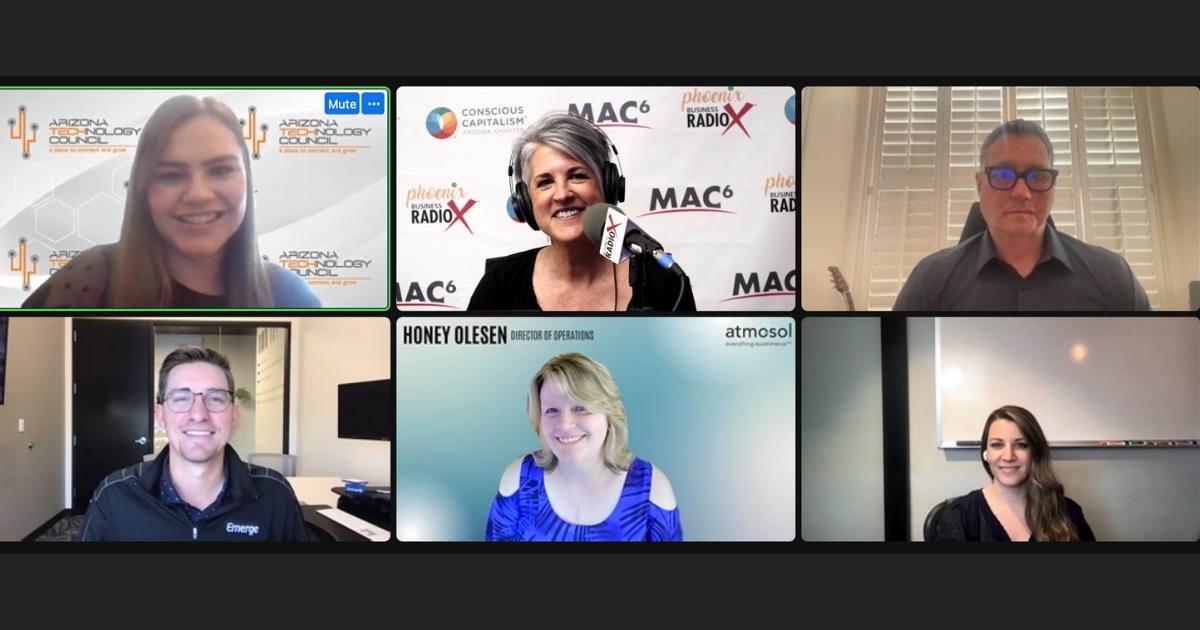
The March 2022 episode of the Arizona Technology Council’s TechCast podcast featured e-commerce experts including Amory Borromeo, director of Technology Operations & Talent at Carvana; John Lott, founder & CEO of e-Commerce Industry Council and chief financial officer of SpearmintLOVE; Honey Olesen, director of operations at atmosol; and Brad Wheeler, senior director of Customer Strategy at Emerge.

These leaders joined Karen Nowicki, president and owner of Phoenix Business RadioX, and Bianca Buliga, director of marketing + communications at the Council, in exploring technology’s role in discussing how small- to mid-sized companies can build e-commerce stores to gain a competitive edge and expand their businesses online.

Throughout this hour-long episode, this panel of e-commerce specialists defined e-commerce and detailed the various benefits of adopting e-commerce in today’s increasingly digitized world. For companies who have historically depended on a brick-and-mortar, in-person format of transacting with their customers, exploring the world of e-commerce provides an avenue to make their existing sales process more efficient, while simultaneously granting them access to new customers they wouldn’t have previously been able to reach.

SpearmintLOVE-logo

SpearmintLOVE is a leading DTC brand in the infant clothing and apparel market. SpearmintLOVE.com curates nearly 300 of the most important brands in the market along with our proprietary label SpearmintLOVE.

John-Lott-AZ-TechCastJohn Lott is a 30 year veteran of the private equity and e-commerce industry.

Prior to SpearmintLOVE, he was a C-level executive for companies in a variety of industries including consumer products, financial services, manufacturing and distribution.

Follow SpearmintLOVE on Instagram.

Carvana-logo

Founded in 2012 and based in Phoenix, Carvana’s mission is to change the way people buy and sell cars. With a continued focus on its customers, technology and innovation, Carvana offers an intuitive and convenient online car buying, selling and financing experience.

Carvana.com enables customers to quickly and easily shop more than 55,000 vehicles, finance, trade in or sell their current vehicle to Carvana, sign contracts and schedule delivery or pickup at one of its patented, automated Car Vending Machines.

Carvana is a Fortune 500 company, providing as-soon-as-next-day delivery to customers in over 300 U.S. markets. For further information on Carvana, please visit www.carvana.com.

Amory-Borromeo-AZ-TechCastAmory Borromeo has worked at Carvana for the past four years. She started as a technical product manager who worked with various product and engineering teams to develop innovative, sustainable solutions for a variety of technical platforms, services and tools.

As the current Director of Technology Operations and Talent, she has the pleasure of building the system to enable and develop all of Carvana’s tech disciplines including design, analytics, data science, engineering, product management, tech services, and more.

Her role includes managing the teams responsible for developing people systems and tools, data governance and security, employee branding, learning & design, talent acquisition, talent development, technology operations, and more. She is proud to be leading the charge on how Carvana is changing and approaching the way they think about career development and community engagement.

Amory’s passion and focus are on enabling and unlocking high-growth opportunities across companies in a sustainable way. She believes that people come first; however, she also recognizes the power of creating technology levers balanced with just the right amount of rigor and process.

Organizations need to adapt to the evolving workforce today and can do that by finding a balance between scrappy start-up mentalities and enterprise-level structure. She loves bringing her unorthodox technology background to new business areas that aren’t accustomed to having that kind of voice at the solutioning table.

Follow Carvana on LinkedIn, Facebook, Twitter and Instagram.

Emerge-Logo

Transforming the $800 billion freight industry, Emerge empowers meaningful logistics relationships through its award-winning Freight Procurement Platform. Built by freight professionals for freight professionals, Emerge offers solutions that enhance the procurement process, enabling shippers and carriers to make more empowered, strategic decisions.

Founded in 2017 and located in Scottsdale, Arizona, Emerge is one of the fastest-growing technology startups in the U.S. Visit www.emergemarket.com to learn more or view current open positions.

Brad-Wheeler-AZ-TechCastBrad Wheeler, one of the company’s “starting lineup,” has been with Emerge since its inception in 2017. Over the last five years, his role within the company evolved as the company continued to expand.

In Brad’s current role as the Senior Director of Customer Strategy, he leads a team of Solution Engineers whose mission is to work directly with shippers to bring efficiency to the capacity procurement process. The goal of the Customer Strategy team is to work hand in hand with shippers to tackle complex issues they are facing within the supply chain by leveraging technology to introduce simple solutions during the procurement process.

Additional experience as the Manager of Sales and later the Director of Business Operations, has been a key contributor to successfully scaling Emerge from a workforce of 30 to over 300 employees.

Brad brings it all to the table from characterizing Emerge’s brand and culture, presenting Emerge’s value proposition to the industry, and determining pivotal insights to enhancing customer experience.

Follow Emerge on LinkedIn, Facebook and Twitter.

atmosol-logo-blackonwhite

As a full-service eCommerce & SaaS agency, atmosol takes a total-solutions approach to solving problems. They offer complete and integrated in-house services from start to finish. Keeping your best interests in mind, they leverage partnerships with Magento, BigCommerce, Klaviyo, shogun, Avalara, Nexcess, and many others to determine your unique business needs, challenges, and goals. That way, you benefit from an unbiased, holistic consultation.

In their more than 15 years of providing technology services and building products, they have worked on a myriad of technologies, languages, and packages. Their cloud expertise is one of the many aspects where they stand out.

Cloud infrastructure has made it easy for anyone and especially for SaaS software builders to have infrastructure on demand, whether it be as Platform as a Service (PaaS) or just Infrastructure as a Service (IaaS). While many development companies would have come across the cloud in one form or another, deep expertise on the cloud deploying and maintaining high performant products used by hundreds of thousands or millions of users is still not commonplace.

Honey-Olesen-AZ-TechCastHoney Olesen has over 11 years in the e-commerce, technical industry.

A strategic, detailed business professional with substantial experience in leadership & management, operational strategy and project management, e-commerce and digital marketing, forensic analysis, customer experience, and organizational development.

Follow atmosol on LinkedIn, Facebook, Twitter and Instagram.

About AZ TechCastAZTECHCASTLOGOBRX-4-23-2020

AZ TechCast is dedicated to covering innovation and technology in Arizona and beyond.

Through the art of connected conversation, AZ TechCast’s guests will share their expertise, success stories, news and analysis about the region’s leading startups, companies and emerging technologies, as well as the latest industry trends and critical issues propelling the state’s growing technology ecosystem.

About Your Hosts

Steven-ZylstraSteve Zylstra serves as president and CEO of the Arizona Technology Council, a role he assumed in 2007. He is responsible for strategy, operations, finance and policy development. Zylstra is a vocal spokesman for the value technology can provide in raising social and economic standards in Arizona.

Zylstra serves on numerous councils, committees and boards, was named “Leader of the Year, Technology,” by the Arizona Capitol Times, and “Most Admired Leader” by the Phoenix Business Journal. In addition, he was awarded an honorary doctorate of science in technology from the University of Advancing Technology in Tempe, Ariz.

Zylstra earned a bachelor’s degree in automotive engineering technology from Western Michigan University.

KarenNowickiv2Karen Nowicki is a successful author, speaker and the creator of Deep Impact Leadership™ and SoulMarks Coaching™. She is a two-time recipient of the prestigious national Choice Award® for her book and personal development retreat. Karen was crowned the first-ever “Mompreneur of the Year” Award in 2010 for the southwestern states. She was recognized for her leadership, business acumen, and work-life balance.

Karen has been an expert guest on regional TV and radio shows, including Fox Phoenix Morning Show, Sonoran Living, Good Morning Arizona, The Chat Room, and Mid-Day Arizona. She has been a regular contributor to many print and online magazines – publishing articles and blogs for business and education.

In addition to working with private coaching clients, Karen is also the Owner & President of Phoenix Business RadioX. The Business RadioX Network amplifies the voice of business – serving the Fortune 500,000, not just the Fortune 500. Phoenix Business RadioX helps local businesses and professional associations get the word out about the important work they’re doing to serve their market, profession, and community.

Of all the experiences Karen has had the privilege of participating in over her vast career, she shares that Phoenix Business RadioX is a pinnacle adventure!

Connect with Karen on LinkedIn and follow Phoenix Business RadioX on Facebook and Instagram.

bianca-buliga-aztechcastBorn in Phoenix, Arizona, Bianca Buliga is a trilingual first-generation American of Romanian ethnicity. A marketing professional with experience in both the nonprofit and for-profit sectors, Bianca currently works as Director, Marketing & Communications for the Arizona Technology Council.



Previously, Bianca worked as Marketing Communications Lead at Proctorio, a learning integrity platform that offers remote proctoring software ensuring exam integrity for learners around the world.

Bianca also worked as Senior Marketing Manager at SEED SPOT, a social impact incubator that educates, accelerates, and invests in impact-driven entrepreneurs creating market-based solutions to social problems. In January of 2020, Bianca was selected as an awardee of the Mandela Washington Reciprocal Exchange Program and traveled to the African island of Mauritius to run entrepreneurship programming for 15 impact-driven ecopreneurs on behalf of the U.S. State Department’s Bureau of Educational and Cultural Affairs.

Bianca has also completed comprehensive consulting projects for IBM, ESAN Business School, and the Peruvian government, and interned at the Arizona House of Representatives and U.S. Embassy in Bucharest, Romania.

Bianca earned her Bachelor’s degree in International Affairs from Northern Arizona University in 2014 and her Master’s degree in Global Affairs and Management from the Thunderbird School of Global Management in 2017. She is an avid reader, yogi, and world traveler always planning her next trip.

Connect with Bianca on LinkedIn.

About Our Sponsor

The Arizona Technology Council, Arizona’s only statewide organization serving the technology sector, fosters a climate of innovation to enhance technology in Arizona.

A trusted resource in strengthening Arizona’s technology industry, the Council proactively eliminates impediments that companies face, accelerates the entrepreneurial mindset in the state’s expanding innovation ecosystem, and works to create a destination for companies to be, thrive and stay.

Follow Arizona Technology Council on LinkedIn, Facebook, and Instagram.

AZTClogomainRGBPNG300DPI

Tagged With: Buy a used car, eCommerce web design and development, Emerge Software, find a car, Freight Management System, Headless eCommerce builds, infant clothing, Mobile Apps and PWA, Online Freight Marketplace, Procurement Process, Scalable SaaS Development, sell us your car, SpearmintLOVE, Supply Chain, UI/UX Experience, used car retailer in Tempe

Supply Chain Obstacles in 2022, with Jason Haith, OEC Group Louisville

February 18, 2022 by John Ray

Jason Haith
Business Leaders Radio
Supply Chain Obstacles in 2022, with Jason Haith, OEC Group Louisville
Loading
00:00 /
RSS Feed
Share
Link
Embed

Download file

Jason Haith

Supply Chain Obstacles in 2022, with Jason Haith, OEC Group, Louisville

Jason Haith, Manager of the Louisville branch for OEC Group, joined host John Ray to discuss the myriad of issues creating supply chain obstacles in 2022. Jason discussed the increasing difficulty in the ports on the west coast of the US, the complications added by the Chinese New Year, the contract negotiations with the ILWU, how OEC is addressing their own issues moving cargo, and much more. Business Leaders Radio is produced virtually from the Business RadioX® studios in Atlanta.

OEC Group

Founded in 1981, OEC Group had a vision to provide comprehensive logistics services to clients.

Today OEC Group serves destinations throughout the world and has grown into one of the leading logistics providers from Asia to North America.

Their annual cargo volume has consistently put us in the top position for Transpacific Trade.

With offices in over fifty countries, they take pride in being close to your cargo at all times.

Proximity of their OEC logistics professionals to your cargo enables them to stay on top of relevant market trade intelligence. Their Asia offices bridge the connection between you and your supplier, bringing additional insight to the entirety of your supply chain.

Company website | LinkedIn | Twitter

Jason Haith, Manager, OEC Group, Louisville

Jason Haith, Manager, OEC Group Louisville

OEC Group is an incredibly dynamic International Logistics company specializing in the Asia and West Asia trade. OEC offers Full container, LCL, Airfreight, warehousing and Customs Compliance services.

Jason is the manager of the office in Louisville, Kentucky and has been with OEC since 2011.

Jason has a degree from The University of Kansas. He lives in Louisville.

LinkedIn

Questions and Topics

  • The impact of the pandemic and where we are now
  • The Chinese Lunar New Year and its effect on the supply chain
  • The negotiation with ILWU (Longshoreman and dock workers union)
  • What can importers do to face some of these issues?
  • Address the issues ahead for business owners and consumers
  • What services does OEC Group provide?

Business Leaders Radio is hosted by John Ray and produced virtually from the North Fulton studio of Business RadioX® in Alpharetta.  The show can be found on all the major podcast apps and a full archive can be found here.

RenasantBank


Renasant Bank has humble roots, starting in 1904 as a $100,000 bank in a Lee County, Mississippi, bakery. Since then, Renasant has grown to become one of the Southeast’s strongest financial institutions with over $13 billion in assets and more than 190 banking, lending, wealth management and financial services offices in Mississippi, Alabama, Tennessee, Georgia and Florida. All of Renasant’s success stems from each of their banker’s commitment to investing in their communities as a way of better understanding the people they serve. At Renasant Bank, they understand you because they work and live alongside you every day.

Tagged With: airfreight, Business Leaders Radio, cargo, dock workers, global supply chain, ILWU, importers, international shipping, Jason Haith, John Ray, longshoreman, OEC Group, Port of Savannah, renasant bank, Supply Chain, warehousing

Paul Noble with Verusen

July 9, 2021 by angishields

Paul-Noble-Verusen
Atlanta Business Radio
Paul Noble with Verusen
Loading
00:00 /
RSS Feed
Share
Link
Embed

Download file

OnPay-Banner

Verusen-logo

Verusen is a Supply Chain Intelligence company focused on materials management that uses AI to provide complex global supply chains material truth for data, inventory optimization, and procurement intelligence.

The company’s platform harmonizes disparate material data across many ERP instances/systems while providing trusted data across the enterprise to reduce inventory costs and build trust in production uptime. The result is a data foundation organizations can trust to fuel digital transformation and support related Industry 4.0 initiatives.

Paul-Noble-VerusenAs founder and CEO of Verusen, Paul Noble oversees the company’s vision and strategic direction. He has extensive experience in the industrial supply chain and distribution space, as he was recognized as a Supply Chain Pros to Know by Supply and Demand Chain Executive in 2021.

Prior to founding Verusen, Paul spent over a decade with The Sherwin-Williams Company, where he specialized in supply chain/manufacturing and led its Eastern U.S. Industrial Distribution business unit.

Paul graduated cum laude with a bachelor’s degree in Management and Marketing from Lincoln Memorial University in Harrogate, Tennessee.

Connect with Paul on LinkedIn and follow Verusen on Twitter.

What You’ll Learn in This Episode

  • About Verusen and their growth and expansion efforts
  • Atlanta’s global presence as Supply Chain City and Tech Square quickly adopting an alter ego of “Supply Chain Square” for attracting leading supply chain talent and resources

About Our Sponsor

OnPay’sOnPay-Dots payroll services and HR software give you more time to focus on what’s most important. Rated “Excellent” by PC Magazine, we make it easy to pay employees fast, we automate all payroll taxes, and we even keep all your HR and benefits organized and compliant.

Our award-winning customer service includes an accuracy guarantee, deep integrations with popular accounting software, and we’ll even enter all your employee information for you — whether you have five employees or 500. Take a closer look to see all the ways we can save you time and money in the back office.

Follow OnPay on LinkedIn, Facebook and Twitter

Tagged With: Supply Chain, Supply Chain Square, Verusen

Triumph Over Trauma E53

May 20, 2021 by Karen

Triumph-Over-Trauma-Feature
Phoenix Business Radio
Triumph Over Trauma E53
Loading
00:00 /
RSS Feed
Share
Link
Embed

Download file

Triumph-Over-Trauma-E52

Triumph Over Trauma E53

Anthony “Doc” Ameen shares his powerful story not knowing what path he intended to take as a young man to join the military and being influenced by the tragedies he survived. He now dedicates his time to assisting military members, first responders and their families, fighting for them as they have fought for us. Wings for Warriors non-profit has helped over 5,000 veterans with securing benefits, benefits counseling and travel assistance among other holistic needs.

If you or someone you know is a veteran or a first responder, Wings For Warriors Foundation can support you with a wide array of services and programs with the help of their 4 beneficiaries.

WFWF-10Yea-rLogo-FINAL

Wings For Warriors Foundation is a nationally recognized, 501(c)(3) non-profit organization in support of veterans, first responders, and their families.

Wings For Warriors Foundation supports the holistic needs of veterans, first responders, and their families with transformational growth, well-being, and spiritual fitness.

Taylor & Lawrence is a boutique consulting firm helping healthcare organizations of all sizes achieve their desired goals by building cooperative alliances and strategic partnerships.

Taylor & Lawrence’s mission is to provide loyal and mutually beneficial partnerships for healthcare organizations to thrive together, ensuring sustainability, growth, and increased quality.

Anthony-Doc-Ammen-Tycoons-of-Small-Biz

Anthony Ameen’s life changed in an instant in 2008. And it’s been evolving ever since…

As a Hospital Corpsman, Ameen earned the nickname “Doc” as he embraced a culture of order and duty. His catastrophic battlefield injury changed the course of the life he envisioned, but Anthony eventually chose to view his new path as one that would be watered by the nurtured outflow of the adversity he had faced. His experiences, though challenging at times, allowed him to see potential for change and fueled an entrepreneurial spirit within him, which led to his creation of the non-profit Wings For Warriors.

Under Ameen’s leadership, the non-profit organization matured from an idea to a nationally-recognized foundation that aims to advocate for the holistic and spiritual needs of veterans, first responders, and their families. As Founder & CEO, Anthony personally counseled more than 5,000 veterans and helped launch Wings for Warriors outlets in 30 different cities across the country.

It quickly became clear that the grit, determination, perseverance and leadership capabilities “Doc” channeled in the military served him well in civilian life as an entrepreneur, an advocate, and a nationally-recognized public figure. He is the face and the lifeblood of Wings For Warriors, and with that brings invites from national media outlets, speaking engagements at large-scale events and sponsorships earned from Fortune 500 companies.

Along the way, Doc turned his focus into co-founding and building Taylor & Lawrence, a boutique consulting firm that specializes in serving the Department of Defense (DoD), and Healthcare industries by unearthing strategic business partnerships for increased performance and quality patient care.

Ameen’s past continues to fuel his future. And, his story provokes anyone listening to realize they have not fully tapped every ounce of their potential. Anthony addresses his successes and pitfalls through his emotional and physical recovery in an uncommonly honest way, all while holding his listeners internally responsible for the changes they need to make in order to grow. Ameen’s story incites change, triggers action and spurs productivity. And, perhaps most importantly, it plants a seed of accountability.

When he isn’t traveling for speaking engagements, Anthony spends time with his wife, and their four children, at their home in Phoenix, Arizona.

Connect with Anthony on LinkedIn, Facebook and Twitter.

About the Show

Tycoons of Small Biz spotlights the true backbone of the American economy, the true tycoons of business in America… the owners, founders and CEO’s of small businesses. Join hosts,  Austin L Peterson, Landon Mance and the featured tycoons LIVE every Tuesday at 1 pm, right here on Business RadioX and your favorite podcast platform.

About Your Hosts

Autsin-Peterson-on-Phoenix-Business-RadioX

Austin Peterson is a Comprehensive Financial Planner and co-founder of Backbone Planning Partners in Scottsdale, AZ. Austin is a registered rep and investment advisor representative with Lincoln Financial Advisors. Prior to joining Lincoln Financial Advisors, Austin worked in a variety of roles in the financial services industry.

He began his career in financial services in the year 2000 as a personal financial advisor with Independent Capital Management in Santa Ana, CA. Austin then joined Pacific Life Insurance Company as an internal wholesaler for their variable annuity and mutual fund products. After Pacific Life, Austin formed his own financial planning company in Southern California that he built and ran for 6 years and eventually sold when he moved his family to Salt Lake City to pursue his MBA.

After he completed his MBA, Austin joined Crump Life Insurance where he filled a couple of different sales roles and eventually a management role throughout the five years he was with Crump. Most recently before joining Lincoln Financial Advisors in February 2015, Austin spent 2 years as a life insurance field wholesaler with Symetra Life Insurance Company. Austin is a Certified Financial Planner Professional and Chartered Life Underwriter. In 2021, Austin became a Certified Business Exit Consultant® (CBEC®) to help entrepreneurs plan to exit their businesses.

Austin and his wife of 23 years, Robin, have two children, AJ (21) and Ella (18) and they reside in Gilbert, Arizona. He is a graduate of California State University, Fullerton with a Bachelor of Arts in French and of Brigham Young University’s Marriott School of Management with a Master of Business Administration with an emphasis in sales and entrepreneurship.backbone-New-Logo

Connect with Austin on LinkedIn, Facebook, Twitter, and Instagram.

LandonHeadshot01

Landon Mance is a Financial Planner and co-founder of Backbone Planning Partners out of Las Vegas, Nevada. He rebranded his practice in 2020 to focus on serving small business owners after operating as Mance Wealth Management since 2015 when Landon broke off from a major bank and started his own “shop.”

Landon comes from a family of successful entrepreneurs and has a passion and excitement for serving the business community. This passion is what brought about the growth of Backbone Planning Partners to help business owners and their families. At Backbone Planning, we believe small business owners’ personal and business goals are intertwined, so we work with our clients to design a financial plan to support all aspects of their lives.

In 2019, Landon obtained the Certified Exit Planning Advisor (CEPA) designation through the Exit Planning Institute. With this certification, Backbone Planning Partners assists business owners through an ownership transition while focusing on a positive outcome for their employees and meeting the business owner’s goals. Landon is also a member of the Business Intelligence Institute (BII) which is a collaborative group that shares tools, resources and personnel, and offers advanced level training and technical support to specifically serve business owners. In 2021, Landon became a Certified Business Exit Consultant® (CBEC®) to help entrepreneurs plan to exit their businesses by counseling owners about exit options, estimating the value of the business, preparing the business for exit and tax considerations.

Landon enjoys spending time with his beautiful wife, stepson, and new baby twins. He grew up in sunny San Diego and loves visiting his family, playing a round of golf with friends, and many other outdoor activities. Landon tries to make a difference in the lives of children in Las Vegas as a part of the leadership team for a local non-profit. He regularly visits the children that we work with to remind himself of why it’s so important to, “be the change that you wish to see in the world.”

Landon received his B.S. from California State University Long Beach in business marketing and gets the rest of his education through the school of hard knocks via his business owner clients.

Connect with Landon on LinkedIn.

Austin Peterson and Landon Mance are registered representatives of Lincoln Financial Advisors Corp. Securities and investment advisory services offered through Lincoln Financial Advisors Corp., a broker/dealer (member SIPC) and registered investment advisor. Insurance offered through Lincoln affiliates and other fine companies. Backbone Planning Partners is a marketing name for registered representatives of Lincoln Financial Advisors

CRN-3566695-042721

Lincoln Financial Advisors Corp. and its representatives do not provide legal or tax advice. You may want to consult a legal or tax advisor regarding any legal or tax information as it relates to your personal circumstances.

The content presented is for informational and educational purposes. The information covered and posted are views and opinions of the guests and not necessarily those of Lincoln Financial Advisors Corp.

Business RadioX® is a separate entity not affiliated with Lincoln Financial Advisors Corp.

Tagged With: Business Management, Charity, Christianity, consulting, first responders, giving back, Health, Healthcare, inspiration, Leadership, medical equipment, medical supplies, motiviation, Nonprofit, post traumatic growth, PPE, public speaking, spiritual fitness, spirituality, strategic sourcing, Supply Chain, Veterans, wellbeing

  • 1
  • 2
  • 3
  • …
  • 8
  • Next Page »

Business RadioX ® Network


Our Most Recent Episode

CONNECT WITH US

  • Email
  • Facebook
  • LinkedIn
  • Twitter
  • YouTube

Our Mission

We help local business leaders get the word out about the important work they’re doing to serve their market, their community, and their profession.

We support and celebrate business by sharing positive business stories that traditional media ignores. Some media leans left. Some media leans right. We lean business.

Sponsor a Show

Build Relationships and Grow Your Business. Click here for more details.

Partner With Us

Discover More Here

Terms and Conditions
Privacy Policy

Connect with us

Want to keep up with the latest in pro-business news across the network? Follow us on social media for the latest stories!
  • Email
  • Facebook
  • Google+
  • LinkedIn
  • Twitter
  • YouTube

Business RadioX® Headquarters
1000 Abernathy Rd. NE
Building 400, Suite L-10
Sandy Springs, GA 30328

© 2025 Business RadioX ® · Rainmaker Platform

BRXStudioCoversLA

Wait! Don’t Miss an Episode of LA Business Radio

BRXStudioCoversDENVER

Wait! Don’t Miss an Episode of Denver Business Radio

BRXStudioCoversPENSACOLA

Wait! Don’t Miss an Episode of Pensacola Business Radio

BRXStudioCoversBIRMINGHAM

Wait! Don’t Miss an Episode of Birmingham Business Radio

BRXStudioCoversTALLAHASSEE

Wait! Don’t Miss an Episode of Tallahassee Business Radio

BRXStudioCoversRALEIGH

Wait! Don’t Miss an Episode of Raleigh Business Radio

BRXStudioCoversRICHMONDNoWhite

Wait! Don’t Miss an Episode of Richmond Business Radio

BRXStudioCoversNASHVILLENoWhite

Wait! Don’t Miss an Episode of Nashville Business Radio

BRXStudioCoversDETROIT

Wait! Don’t Miss an Episode of Detroit Business Radio

BRXStudioCoversSTLOUIS

Wait! Don’t Miss an Episode of St. Louis Business Radio

BRXStudioCoversCOLUMBUS-small

Wait! Don’t Miss an Episode of Columbus Business Radio

Coachthecoach-08-08

Wait! Don’t Miss an Episode of Coach the Coach

BRXStudioCoversBAYAREA

Wait! Don’t Miss an Episode of Bay Area Business Radio

BRXStudioCoversCHICAGO

Wait! Don’t Miss an Episode of Chicago Business Radio

Wait! Don’t Miss an Episode of Atlanta Business Radio