Business RadioX ®

  • Home
  • Business RadioX ® Communities
    • Southeast
      • Alabama
        • Birmingham
      • Florida
        • Orlando
        • Pensacola
        • South Florida
        • Tampa
        • Tallahassee
      • Georgia
        • Atlanta
        • Cherokee
        • Forsyth
        • Greater Perimeter
        • Gwinnett
        • North Fulton
        • North Georgia
        • Northeast Georgia
        • Rome
        • Savannah
      • Louisiana
        • New Orleans
      • North Carolina
        • Charlotte
        • Raleigh
      • Tennessee
        • Chattanooga
        • Nashville
      • Virginia
        • Richmond
    • South Central
      • Arkansas
        • Northwest Arkansas
    • Midwest
      • Illinois
        • Chicago
      • Michigan
        • Detroit
      • Minnesota
        • Minneapolis St. Paul
      • Missouri
        • St. Louis
      • Ohio
        • Cleveland
        • Columbus
        • Dayton
    • Southwest
      • Arizona
        • Phoenix
        • Tucson
        • Valley
      • Texas
        • Austin
        • Dallas
        • Houston
    • West
      • California
        • Bay Area
        • LA
        • Pasadena
      • Colorado
        • Denver
      • Hawaii
        • Oahu
  • FAQs
  • About Us
    • Our Mission
    • Our Audience
    • Why It Works
    • What People Are Saying
    • BRX in the News
  • Resources
    • BRX Pro Tips
    • B2B Marketing: The 4Rs
    • High Velocity Selling Habits
    • Why Most B2B Media Strategies Fail
    • 9 Reasons To Sponsor A Business RadioX ® Show
  • Partner With Us
  • Veteran Business RadioX ®

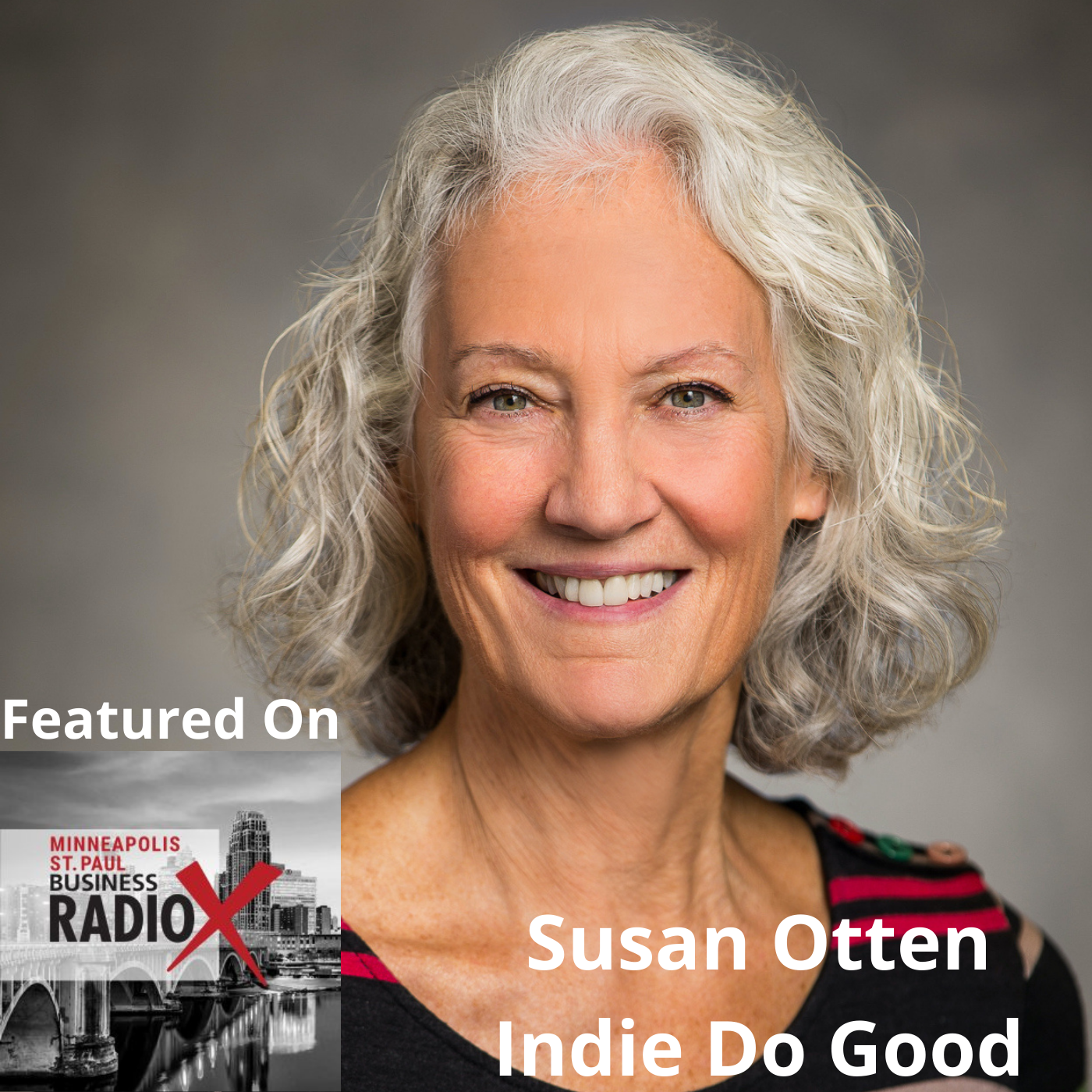
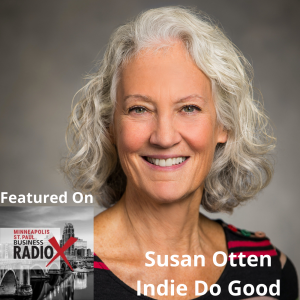
Susan Otten, Indie Do Good

April 30, 2021 by John Ray

Indie Do Good
Minneapolis St. Paul Business Radio
Susan Otten, Indie Do Good
Loading
00:00 /
RSS Feed
Share
Link
Embed

Download file

Indie Do Good

Susan Otten, Indie Do Good (Minneapolis-St. Paul Business Radio, Episode 3)

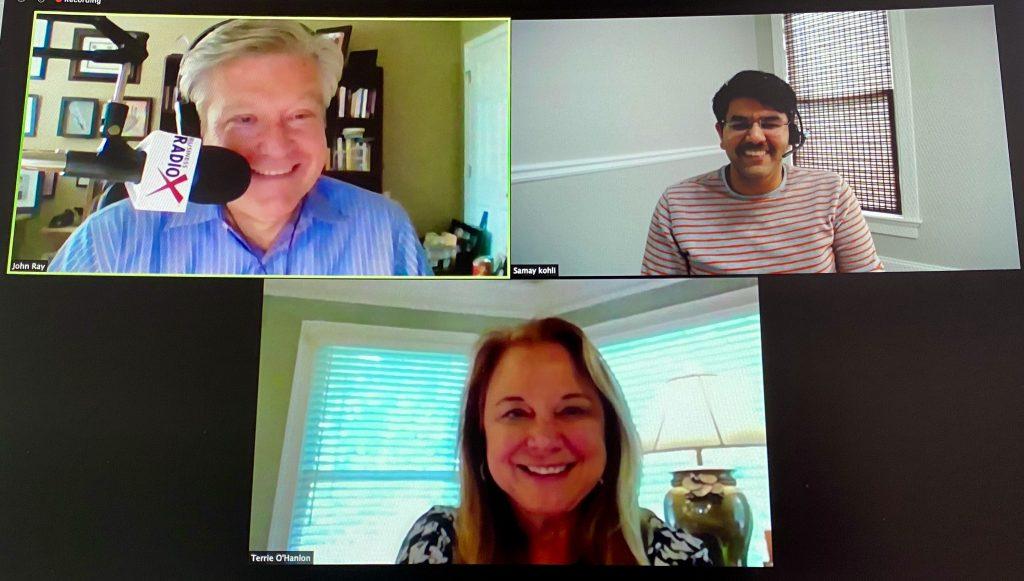
Susan Otten of Indie Do Good joined host John Ray to discuss why businesses should be doing good in their communities, how Indie Do Good supports their clients with logistics, supply chain, and marketing services, and much more. Minneapolis-St. Paul Business Radio is produced virtually by the Minneapolis St. Paul studio of Business RadioX®.

Indie Do Good

Indie Do Good is a storage facility, distribution, and fulfillment center. They offer fulfillment services for e-commerce and retail fulfillment including DTC, B2B, Amazon, and more.

They are passionate about supporting businesses, freeing up your time, and giving clients the flexibility to handle more orders. Indie Do Good shares a vision to help through collaboration, believing the more successful clients are, the more successful they all are.

Indie Do Good’s fulfillment and distribution services are strategically located in the Midwest, and our team of fulfillment experts ensures your product gets picked, packed, and shipped in a fast, affordable, and accurate manner.

In addition, they offer business planning, product engineering, and marketing.

Company website | Facebook | Instagram

Susan Otten, MBA, ABC*, Founder and CEO, Indie Do Good

Indie Do Good
Susan Otten, CEO, Indie Do Good

After a successful, 15 year corporate career at Apple, plus global roles at two agriculture companies, COO at a behavioral health consulting company and as a strategic sales & marketing consultant supporting small as well as global businesses, Susan and her husband Ron founded Indie Do Good, a services/consulting company, and Otten Associates as the investment arm. With the purpose of investing in and helping entrepreneurial companies who do good, both as non-profits and profit-based companies, Susan’s passion is helping businesses grow by driving engagement through relationships, logistics, marketing, engineering, process and delighting (not just “satisfying”) the customer. An award-winning, accredited business communicator, marketer, and business development strategist, Susan helps entrepreneurs achieve success faster and with more impact.

On a personal note, Susan is an avid well-being enthusiast, from advocating and teaching the importance of balancing all dimensions of well-being with her family, friends, and clients, to eating planet-forward foods, such as crickets for their sustainability and health benefits, she seeks ways to mitigate stress, improve health and lead a happier/more impactful life. Susan recently completed the Chicago Marathon, beating her time when she ran it previously (22 years ago).

*ABC = Accredited Business Communicator

LinkedIn

Questions and Topics in this Interview

  • What Indie Do Good does
  • What is doing good?
  • The services they offer
  • Success stories


Minneapolis-St. Paul Business Radio is hosted by John Ray and produced virtually from the Minneapolis St. Paul studio of Business RadioX® .  You can find the full archive of shows by following this link. The show is available on all the major podcast apps, including Apple Podcasts, Spotify, Google, Amazon, iHeart Radio, Stitcher, TuneIn, and others.

Tagged With: fulfillment, fulfillment services, Indie Do Good, Logistics, marketing, Supply Chain, Susan Otten

The Manco Logistics Show – Ryan McLeod with SIC Cups

April 18, 2021 by angishields

RomeBusinessRadioLogosquare
Rome Business Radio
The Manco Logistics Show - Ryan McLeod with SIC Cups
Loading
00:00 /
RSS Feed
Share
Link
Embed

Download file

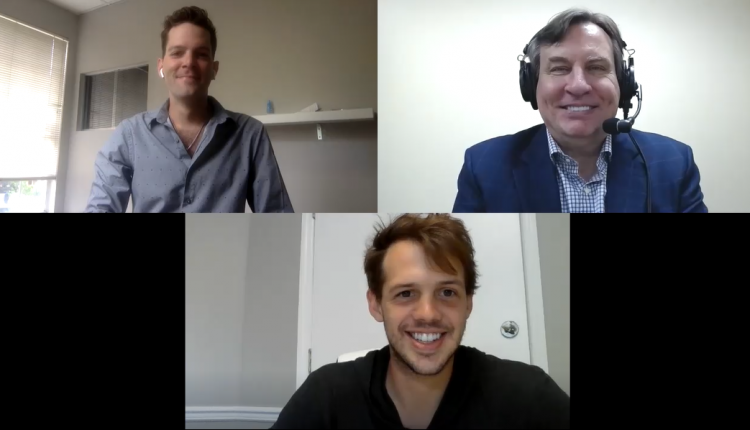
2021-04-16 Manco Logistics Picture

Tagged With: Broad Street, Jacksonville, Jaden Bratton, Logistics, Manco Logistics, Manco Logistics Corp., Rome Floyd County Business, Rome Georgia, Ryan McLeod, SIC (Seriously Ice Cold) Cups, SIC Cups, Supply Chain

Kara Brown with SmithBrown Marketing

July 3, 2020 by angishields

Kara-Brown-SmithBrown-Marketing
Atlanta Business Radio
Kara Brown with SmithBrown Marketing
Loading
00:00 /
RSS Feed
Share
Link
Embed

Download file

OnPay-Banner

Kara-Brown-SmithBrown-MarketingKara Brown is the Founder and CEO of SmithBrown Marketing, a fractional CMO and team focused on B2B sales and marketing alignment and execution. Originally from Chicago, Brown was one of the first employees of Echo Global Logistics, the first tech-enabled freight broker. Brown was a one-woman department single-handedly managing the company’s brand, image and marketing initiatives as the company grew 3000% in just over 3 years.

In 2008, she took on the role of Investor Relations and was part of the company’s successful 2009 IPO (NYSE:ECHO). This was all by the time she was 26. She was recruited by OHL (Ozburn-Hessey Logistics), at the time a $2B Nashville-based global supply chain provider with clients like Apple, Starbucks, Samsung, Sony and Remington. SmithBrown-Marketing-logo

A few years before OHL was bought by GEODIS in 2015, she kicked up a consulting practice in Chicago and was the fractional CMO for six transportation and transportation technology companies. In 2016 Brown and her family moved to Atlanta when she was tapped to be Rubicon Global’s first VP of Marketing.

Since then, SmithBrown has become a part of the Atlanta B2B marketing and sales landscape.

Follow SmithBrown Marketing on LinkedIn.

What You’ll Learn in This Episode

  • SmithBrown Marketing’s business strategy during COVID-19
  • B2B Marketing
  • Lead Generation

About Our Sponsor

OnPay’sOnPay-Dots payroll services and HR software give you more time to focus on what’s most important. Rated “Excellent” by PC Magazine, we make it easy to pay employees fast, we automate all payroll taxes, and we even keep all your HR and benefits organized and compliant.

Our award-winning customer service includes an accuracy guarantee, deep integrations with popular accounting software, and we’ll even enter all your employee information for you — whether you have five employees or 500. Take a closer look to see all the ways we can save you time and money in the back office.

Follow OnPay on LinkedIn, Facebook and Twitter.

Tagged With: B2B, Female Founder, Lead Conversion, Supply Chain

Decision Vision Episode 72: Should I Leverage Blockchain in my Business? – An Interview with Linda Goetze, Blockchain Chamber of Commerce

July 2, 2020 by John Ray

blockchain in my business
Decision Vision
Decision Vision Episode 72: Should I Leverage Blockchain in my Business? - An Interview with Linda Goetze, Blockchain Chamber of Commerce
Loading
00:00 /
RSS Feed
Share
Link
Embed

Download file

blockchain in my business

Decision Vision Episode 72: Should I Leverage Blockchain in my Business? – An Interview with Linda Goetze, Blockchain Chamber of Commerce

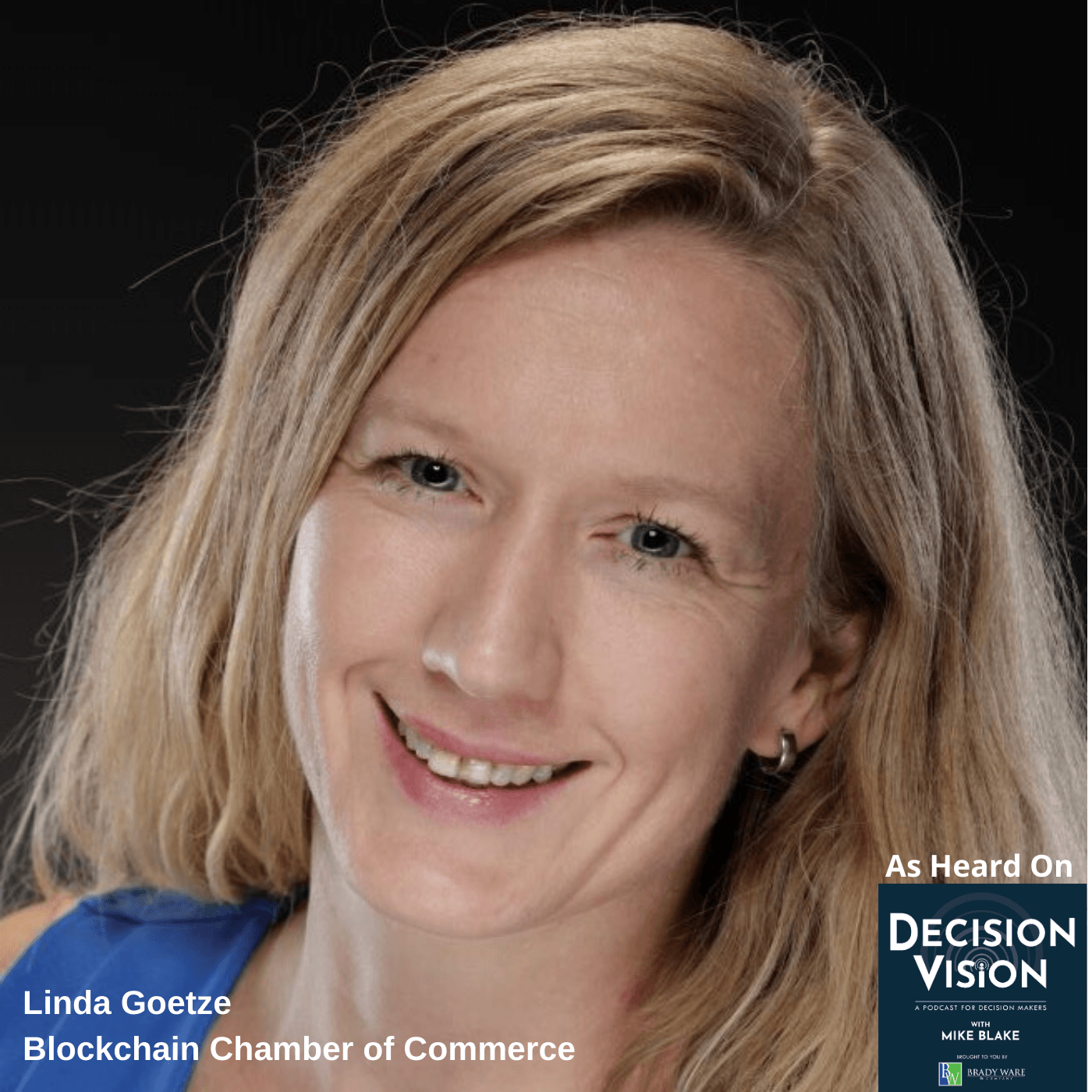
How can blockchain lower my costs? What’s the risk? On the other hand, how does blockchain lower my risk? Linda Goetze, President of the Blockchain Chamber of Commerce, answers these questions and much more with “Decision Vision” host Mike Blake. “Decision Vision” is presented by Brady Ware & Company.

The Blockchain Chamber of Commerce

The Blockchain Chamber of Commerce, Inc. (BCC) is an international association supporting the emerging blockchain, distributed ledger technologies, and crypto currency industries. BCC is a membership-based organization comprised of professionals, individuals, corporations, blockchain companies, vendors, partners, non-profits and government agencies.

MISSION: “Awareness – Adoption – Advocacy” Their mission is to raise awareness, facilitate adoption, and insipire advocacy in 3 core areas: a) blockchain for commerce b) blockchain for consumers c) blockchain for careers

CHALLENGES (SOLUTIONS):

1) AWARENESS: Blockchain technology and crypto currencies are new and are cumbersome to understand. The mainstream community is entering into this market and needs to be aware of the risks, challenges, and rewards. (EDUCATION, EVENTS, COACHING, NEW CHAPTERS)

2) ADOPTION: Millions of individuals and new companies will join the blockchain ecosystem; new startups, new careers, or investors. Standards and best practices are needed.

3) ADVOCACY: a) Blockchain industry needs a proper balance of regulations for technological advancements, prevention of market scams, and protecting individual and corporate privacy/rights. (SMART REGULATIONS, INDUSTRY ORGANIZATION, DECENTRALIZED SOLUTIONS)

The https://blockchainecosystem.io/ platform is an initiative of the Chamber and a place for the community to organize, be seen, and collaborate.

Linda Goetze

Linda Goetze, M.Ed., is the President and CEO of the Blockchain Chamber of Commerce and has served on the Blockchain Association Board of Directors. An educator and connector, Linda has been engaged with blockchain technology since 2012. A member of Mensa and CEO of Balancing Health, Linda helped establish the Atlanta Neurotherapy Institute after spending 13 years as an award-winning educator. An advocate for the safe mass adoption of blockchain and cryptocurrencies, she led the team that launched the BlockchainECOsystem.io platform to give the community a place to get rewarded for their contributions in a synergistic environment (where privacy is respected.) Proud mother of twins birthed as the Bitcoin whitepaper was completed, she is passionate about cutting edge technologies, her family and her favorite charity, BloomintheDark.org.

Michael Blake, Brady Ware & Company

Mike Blake, Host of the “Decision Vision” podcast series

Michael Blake is Host of the “Decision Vision” podcast series and a Director of Brady Ware & Company. Mike specializes in the valuation of intellectual property-driven firms, such as software firms, aerospace firms and professional services firms, most frequently in the capacity as a transaction advisor, helping clients obtain great outcomes from complex transaction opportunities. He is also a specialist in the appraisal of intellectual properties as stand-alone assets, such as software, trade secrets, and patents.

Mike has been a full-time business appraiser for 13 years with public accounting firms, boutique business appraisal firms, and an owner of his own firm. Prior to that, he spent 8 years in venture capital and investment banking, including transactions in the U.S., Israel, Russia, Ukraine, and Belarus.

Brady Ware & Company

Brady Ware & Company is a regional full-service accounting and advisory firm which helps businesses and entrepreneurs make visions a reality. Brady Ware services clients nationally from its offices in Alpharetta, GA; Columbus and Dayton, OH; and Richmond, IN. The firm is growth minded, committed to the regions in which they operate, and most importantly, they make significant investments in their people and service offerings to meet the changing financial needs of those they are privileged to serve. The firm is dedicated to providing results that make a difference for its clients.

Decision Vision Podcast Series

“Decision Vision” is a podcast covering topics and issues facing small business owners and connecting them with solutions from leading experts. This series is presented by Brady Ware & Company. If you are a decision maker for a small business, we’d love to hear from you. Contact us at decisionvision@bradyware.com and make sure to listen to every Thursday to the “Decision Vision” podcast.

Past episodes of “Decision Vision” can be found at decisionvisionpodcast.com. “Decision Vision” is produced and broadcast by the North Fulton studio of Business RadioX®.

Visit Brady Ware & Company on social media:

LinkedIn:  https://www.linkedin.com/company/brady-ware/

Facebook: https://www.facebook.com/bradywareCPAs/

Twitter: https://twitter.com/BradyWare

Instagram: https://www.instagram.com/bradywarecompany/

Show Transcript

Intro: [00:00:02] Welcome to Decision Vision, a podcast series focusing on critical business decisions brought to you by Brady Ware & Company. Brady Ware is a regional full-service accounting and advisory firm that helps businesses and entrepreneurs make visions a reality.

Mike Blake: [00:00:22] And welcome to Decision Vision, a podcast giving you, the listener, clear vision to make great decisions. In each episode, we discuss the process of decision making on a different topic from the business owner’s or executive’s perspective. We aren’t necessarily telling you what to do, but we can put you in a position to make an informed decision on your own and understand when you might need help along the way.

Mike Blake: [00:00:42] My name is Mike Blake and I’m your host for today’s program. I’m a director at Brady Ware & Company, a full service accounting firm based in Dayton, Ohio. With offices in Dayton, Columbus, Ohio, Richmond, Indiana, and Alpharetta, Georgia. Brady Ware is sponsoring this podcast, which is being recorded in Atlanta for social distancing protocols. If you like this podcast, please subscribe on your favorite podcast aggregator. And please consider leaving a review of the podcast as well.

Mike Blake: [00:01:09] So today’s topic is showing leverage blockchain in my small business. And blockchain, I think, has been on everybody’s radar screen to some extent for, I’m going to say, at least the last five years or so, maybe a little bit longer, depending on how much the bleeding as you are in terms of technology. And blockchain so far seems to be one of these things that’s always on the horizon. We haven’t really hit that inflection point where a blockchain appears to be everywhere. Although, I’ll bet you, it is more prevalent than we realize. It’s just not one of those things that you drive by somebody’s office building and say, “Hey, they’ve got a blockchain.” So it’s not necessarily all that visible, right?

Mike Blake: [00:01:55] And the media’s attention only lasts for so long, right? They’re only going to really get behind and publicize something for so long. And they don’t really like gradual improvements or gradual incarnations or intrusions upon the status quo. They like to report the Big Bang because that’s kind of what grabs headlines and click-throughs and so forth. But it’s a mistake to think that blockchain, I think, has gone away. It’s not going away. It is, I believe, much more prevalent in Europe and Asia. And in fact, there’s increasing regulation that is requiring blockchain to accomplish certain things in Europe that we do not have in the United States yet.

Mike Blake: [00:02:47] But I promise you, all of the big four accounting firms, all the major consulting firms, continue to have blockchain on their radar screen and continue to train their people on not just the tactical implementation of blockchain, but also that the strategic implications and opportunities that blockchain provides. Because it is coming. But this is one of these things that’s gonna be, I think, top down because the level of knowledge is so specialized. And also because, I think, frankly, blockchain has the biggest monetary impact on large businesses. When you think about one of the applications, say, smart contracts of blockchain, blockchain becomes a lot more interesting if you have 10,000 contracts than if you’re a small business that has four of them. So the fact that you have something that makes four contracts more efficient, “Nuh,” right? That’s not going to get your attention. At least not yet, especially, if it’s a five or ten percent increase of efficiency.

Mike Blake: [00:03:53] But eventually that’s going to become – it’s either going to become law. You’re either going to see either legal ramifications or, in certain cases, large suppliers and customers saying, “I want to do this in blockchain and we just can’t do business together.” Or the cost benefit relationship is going to change. And maybe the cost savings instead of ten percent or 90 percent. And that’s going to have an impact on small businesses wanting to flip over to blockchain.

Mike Blake: [00:04:31] So now, of course, I understand we’re recording this on May 21st, 2020. This likely is not going to be published, I think, until a month later. So mid to late June, if everything kind of holds up. And I understand that everybody here is still, in some way or another, responding to coronavirus. And we’ve published a number of podcasts. I think we’ll do one or two more that talk about specific tactical responses to blockchain. And if you haven’t listened to these, I’d encourage you to do so. We’ve done about five or six of this special episode. And you may find that even now they give you some helpful tips.


Mike Blake: [00:05:16] But a lot of people, whether you agree with it or not – and I know there’s a lot of disagreement out there – are ready, frankly, to put coronavirus behind them and get back to some semblance of normalcy. And I’m not going to comment on whether that’s the right thing or not. I’m not an expert. I can’t tell you whether that’s the right thing or not.

Mike Blake: [00:05:39] But what I do know or, at least, I strongly believe, is that there are a lot of companies that are chomping at the bit to get back to business as usual. To not think about masks, and infection vectors, and vaccine, clinical trials, and constant sanitation, which turns everybody into an OCD patient. But get back to kind of the strategic elements that that make business interesting and stimulating and in some cases fun. And, really, COVID has been fun for, I think, exactly zero people. And so, with respect to this topic, this is sort of a small step in that direction as well.

Mike Blake: [00:06:25] So, I’m well read on blockchain, but I’m hardly expert. And if you’re a listener to this program with any regularity, you know that what we do is we bring in experts. And boy, we’ve got a good one. So, today, joining us is Linda Goetze. Linda is President of the Blockchain Chamber of Commerce. The Blockchain Chamber of Commerce is leading the grassroots effort to bring collaborative connectivity throughout the blockchain ecosystem in order to raise awareness, facilitate adoption, and inspire advocacy for commerce, consumers, and professionals building careers in blockchain technology. Linda, thanks for joining us on the program.

Linda Goetze: [00:07:03] My pleasure, Mike. Happy to be here.

Mike Blake: [00:07:06] So, before I get to the first question, we’re going to have question zero instead of question one because I just thought of something. How long has the  Blockchain Chamber of Commerce been around?

Linda Goetze: [00:07:15] We were established the end of 2017. And if you know your blockchain history, that was right at the peak of the hype cycle. And Abraham Xiong actually was the ideator of the Chamber. And he was actually educating about blockchain technology and cryptocurrencies to people who are coming to classes that he was doing through the Government Contractors Association. And he found that there was a real dearth of good information.

Linda Goetze: [00:07:43] And if you know anything about hype cycles, you know that that’s a lot of people putting out as much noise as they can to get you to look at them and invest in their token, their coin. That was happening in spades in 2017. And because Abe saw that and he was trying to provide quality education to the community that was connecting with him through the Government Contractors Association, he’s like, “Something needs to change. We need to have some trust in source. Some resource base to be able to come to a place for the community to gather.” And that’s how the the Blockchain Chamber of Commerce was born.

Mike Blake: [00:08:20] So, I’m glad you used that term. I didn’t want to use the hype cycle because I didn’t want to, frankly, be pejorative. But I think –

Linda Goetze: [00:08:30] Were very open about it. No worries.

Mike Blake: [00:08:32] But I certainly give – that’s fair. And I think in some ways I wonder if the hype cycle maybe hurt blockchain a little bit because it raised expectations well ahead of where blockchain could reasonably be expected to penetrate industry.

Linda Goetze: [00:08:49] Yeah. The hype cycle is just a natural sequence of events that’s happened in the adoption of just about every new technology. So, it is really part of the adoption cycle. And when you have things hyped up that aren’t true value ads, then, yes, it’s detrimental. Absolutely. But it’s just part of the process. And one of the good things of having a hype cycle and then having, I guess, they called it crypto winter after the 2017, 2018 timeframe it roots out the bad actors. And it shows them for what they are. And then the people that are really doing good things with the technology that continue moving forward and continue building are able to showcase the end result of their work.

Linda Goetze: [00:09:35] And so, the hype cycle is just part of the process of mass adoption. And we’ll have another one, basically, run by the increasing price of Bitcoin that will fundamentally bring a greater adoption. And the goal is to have mass adoption through education. Not through the fear of missing out. Just to share my perspective, we’ve had an issue where fear has been the major driver. And at first, it’s fear of the unknown. People experience that with every new technology. They don’t understand  it. They don’t know it.

Linda Goetze: [00:10:16] Remember when people first used credit cards on the internet? Like, “Wow.” You can just read all the commentaries around that, right? But as people got comfortable with it, then you had mass adoption occur. The same thing, we have fear of the unknown with blockchain. And the only thing that has pushed people past the fear of the unknown is the fear of missing out. So, we actually have two fears at play here. And that’s what drives the hype cycle. People see their buddy 10x-ing in their money and they’re like, “I don’t want to miss out on that.” They don’t have a clue about the technology but they jump in. They’re like, “I’m just gonna get my piece of this action.” And that’s been what we’ve seen.

Linda Goetze: [00:10:55] But I believe that education is truly the key to help us go into mass adoption. Not necessarily having to have the fear of missing out being the motivator. Actually, having people educated about what blockchain is, what value-add it can bring to their business, what level of diversification it can help them bring to their portfolio. There’s so many different value-adds and potential pain points that people need to be educated around, so that they can make informed decisions. And we can have a smoother mass adoption cycle.

Mike Blake: [00:11:32] Yeah, in fact, I would speculate – and you tell me if I’m wrong, but I would speculate that when a FOMO or fear of missing out person jumps into blockchain and then it doesn’t work out, as it probably won’t because they don’t really know why they’re doing it or how to maximize the value once they’re in there. That’s even more damaging to the reputation. Because then you have one person and is, “Ah. You know what? I put X number of thousand dollars into blockchain or a cryptocurrency.” We’ll get into that distinction in a second. “And it didn’t work out, the whole thing is vaporware,” which is grossly unfair, right?

Mike Blake: [00:12:08] That’s like saying, “Well, I got into a plane. I sat in the cockpit. And it didn’t go anywhere.” Well, because you don’t know how to fly. But Bombardier is going to take the hit. So, let’s dive in and sort of level set here. Because blockchain, I’m sure to you it’s second nature. But it is a little bit of a complex concept to somebody, especially if they’re not kind of really into technology, if you know what I mean. I’m sure you know there’s nobody better to define this. So, what’s sort of the simplest, kind of easiest layman’s way to convey blockchain and its value to somebody listening to this podcast?

Linda Goetze: [00:12:50] Well, that’s a great question. And I’m going to assume that the majority of people on this call will have heard or participated in, let’s say, a group text. So, you think about you get a group text. And you can look at it. You can see it. You can forward it. But you can’t pretend that something was sent in that group text that wasn’t actually sent. You can’t make one person think that that was – say, you send – like, you take the text and you switch it around and then you send it to someone who was in the group text previously. And say, “Hey, this is really what happened.” They can look back  at their previous text and go, “You’re totally spinning this. And that’s not what happened.” Anyone in that group text can validate the actual sequence of messages that were sent in that group text. And you can’t pretend it was any different.

Linda Goetze: [00:13:58] So, that’s a little bit what the value of blockchain is, is you have data and it can be transactions, it can be hashes of songs, or evidence that you are the creator of a piece of content. And once it is put into one of these blocks – and I am going to use a kind of a generalized blockchain because there are literally thousands of different blockchains. And they all have variances in how they function. So, I don’t want anyone to hear what I’m saying and be like, “No. That’s not how the theory of blockchain works.” Because they very well may be right. It may not be how the Bitcoin blockchain works.

Linda Goetze: [00:14:42] But the overarching aspect of what makes blockchain blockchain is that there are a series of blocks where each one has the hash of the previous block in it. And there’s a lot of nuances that can go into that. But if you try to change something in any of the previous transactions, everybody who’s in that group text, everyone that’s a node or a validator on that blockchain can say, “Nuh-uh. That’s not correct. That didn’t really happen.” And your attempt to change the past is invalidated and the blocks continue forward.

Linda Goetze: [00:15:25] One of the things that’s a potential pain point is you can put faulty data in to a block when it is originally formed. Okay? So, when I say faulty data, I’m saying, for instance, with the Bitcoin blockchain, one of the first things that was put on it was an article that was talking about the 2008 meltdown. And you could have had someone, instead of putting something that was real news, put in a piece of fake news. And that fake news would have been held immutably in the Bitcoin blockchain for the last 11 plus years. So, it’s an immutable record.

Linda Goetze: [00:16:06] It is a way for multiple parties to interact with each other without having to know or trust each other. They trust the code and how it works. And they work within the rules of that blockchain. So, I don’t know if that was a good explanation or not. But if you understand a group text and you know that, “Hey, everybody knows what really happened and can look back to see it,” that’s kind of how it is with blockchain.

Mike Blake: [00:16:32] I think the group text is a great analogy, right? Because you can’t erase all the records of history. And that’s really the key is that, there’s no one single point of failure that would enable you to call and to question the veracity of the reliability – yeah – the reliability of the information. It’s just there.

Linda Goetze: [00:16:57] The reliability of the information that it’s there. Not necessarily the reliability of the information.

Mike Blake: [00:17:02] Yes. That is there.

Linda Goetze: [00:17:04] The cool thing about that, though, is it gives a really high level of accountability. Because if you are the one that put that information there and it gets proven out as being false, then you can’t pretend you didn’t put it there. It’s on you. So, it does create a level of trust, and accountability, and responsibility within the ecosystem.

Mike Blake: [00:17:32] So, we talked about cryptocurrencies a little bit, what is the difference between blockchain and cryptocurrency such as Bitcoin? I hear those terms often used interchangeably. And I’m not sure that’s right.

Linda Goetze: [00:17:45] Yeah. One of the first things I learned was that blockchain was not spelled B-I-T-C-O-I-N. And that’s a very important distinction to draw. But the Bitcoin blockchain was the first iteration of something built on blockchain that the majority of people have heard about.

Linda Goetze: [00:18:07] There may be some deep devs that might have heard of blockchain previous to that. But that was the first instance that the majority have been exposed to. So cryptocurrencies need blockchain to function. Like, they function on blockchains. But blockchain as a technology does not require cryptocurrencies to exist or to do its job of having an immutable record.

Mike Blake: [00:18:40] If a dollar is a currency, and then we have the Fed and we have the U.S. Mint, is blockchain more like the Fed or is it like the Mint? Just pick one.

Linda Goetze: [00:18:50] I really don’t want to get political on this answer.

Mike Blake: [00:18:54] Well, no. It’s not political. It’s not a question of what they should do. But a question of what their current function is. Right? I mean, they’re not regulating it. But the blockchain effect really issues it and just sort of keeps track of who has what, right?

Linda Goetze: [00:19:10] Right. The blockchain is just the record. Right? So, you can have a blockchain that one person can take. And issue a billion coins on that blockchain. You can have a blockchain like the Bitcoin blockchain that its design enables a deflationary aspect. So, with the Fed, we have an institution that can print dollars at will. With the Bitcoin blockchain, that’s impossible. The code just mandates that only 21 Bitcoin will ever exist.

Linda Goetze: [00:20:03] And we just had the happening that occurred where the block reward that’s given to minors for supporting the Bitcoin blockchain went from 12.5 Bitcoin every ten or so minutes to 6.25. So, it’s actually a deflationary supply that is being provided over time. And that’s something that is just inversely – I mean, it’s so, I guess, polar opposite is the best way to describe it compared to how we’ve seen the U.S. dollar function and the inflation that has occurred with that. It’s a staggering difference.

Mike Blake: [00:20:53] Okay. So, I think when most people think of blockchain, of course, they think of cryptocurrency as the application. Let’s set that aside for the moment. What are some of the more common applications of blockchain aside from a cryptocurrency?

Linda Goetze: [00:21:12] Yeah. That’s a great question, because we have loads of them. There is, in FinTech, a lot of implementations. And to a certain extent you might say that still includes cryptocurrencies because you’re transferring value digitally, quickly using cryptocurrencies. But those can be stable coins. There’s a lot that’s been done in the financial services sector. So, that’s a huge vertical that has been impacted just by the use of the technology, but also using the cryptocurrency side of things.

Linda Goetze: [00:21:48] In agriculture. we actually just did an event the Chamber hosted where AgriLedger was one of the guests. Gen Leveille, I believe, is the CEO’s name, a beautiful lady. That has just worked with Haitian’s to bring their mangoes to market using blockchain technology. And it doesn’t use cryptocurrency at all. But what it effectively did is took farmers that we’re getting about two percent of the value of their mangoes back to them, to getting 20 percent of the final value of the mangoes back to them. Huge positive impacts. Supply chain is a really huge vertical that we’ve seen fantastic impact through blockchain implementation.

Linda Goetze: [00:22:43] And just going digital with the bills of lading is a really key reducer in cost. And really raises transparency and allows for a lot more seamless interaction between parties that may not know each other well or trust each other. You can have smart contracts in place that just put rules around the transaction that if you don’t meet them, then you don’t get paid. And it’s just built into the code. It’s not something that you have to go chase somebody across the world and try to get your money back or force them to pay you. It’s just executed automatically through a blockchain. So, yeah, those are just a couple of avenues. But there’s a lot that I can talk about.

Mike Blake: [00:23:40] So, what was the mechanism? I’m curious about this Haitian mango trade. What’s the mechanism by which blockchain enable the farmers to capture more of their value? Is it because it took the need away for intermediaries? Is that what happened?

Linda Goetze: [00:23:55] The intermediary aspect of it was huge. Yes, they were able to disintermediate the intermediaries. But yeah, it allowed for the payment to everybody in the supply chain at the time of the final purchase. So, if you can imagine how that is a value add. It also was set up in the smart contract to penalize different parts of the supply chain that didn’t meet the requirements that they were supposed to. And there’s certain, like, temperature and timeframes that are mandated by the FDA in regards to food that can be sold in the U.S.

Linda Goetze: [00:24:36] So, any piece in the supply chain that did not manage the temperature effectively or deliver in a timely manner had a penalty that actually gave back to the farmer directly. So, even if their mangoes couldn’t go to market, they at least got that two percent that they would have made in the traditional flow of supply chains. So, to be able to guarantee that you’re going to get at least your two percent, but then have the potential to get 20 plus percent over, it’s going to change a lot of farmer’s lives.

Mike Blake: [00:25:19] So, where are you seeing blockchain? Again, putting cryptocurrency aside. So, I think this is just sort of a different animal. Where are you seeing blockchain have the most impact in the U.S. or, if you prefer, maybe among your Chamber of Commerce members?

Linda Goetze: [00:25:37] I would point to supply chain. Right now, we have – and this is gonna be showcased probably three weeks before this show comes out. The last Thursday of this month, which is May. We are going to be showcasing DFM Data Corp., which is a member of the Chamber.

Linda Goetze: [00:25:55] And a fun story there, you have Michael Darden, who is the president and CEO of that organization. He’s been a member of the Chamber for about a year. But the story starts back in 2004 when he wrote a patent. And that patent defined digital freight matching. It’s been cited over 100 times and it has – I mean, the Walmart’s, the Uber freight’s, the big boys that are doing digital freight matching now all reference back into that patent. And he wrote it after he actually managed the logistics for Coca-Cola during the 1996 Olympics. So, he has an interesting background in supply chain starting with his work with Coke.

Linda Goetze: [00:26:42] And that coming forward, interestingly, he wrote the patent while working for another company. And because he did, the company held that patent. But right at the time, I was initially meeting him a little over a year ago, that patent was reacquired by Michael. And so, it’s one of those things that at the time that he wrote it, there weren’t even cell phones in people’s cars. And he envisioned a time where every driver would have a digital device that could showcase where they were that could allow them to get information about where they should go to pick up their load.

Linda Goetze: [00:27:23] And blockchain really wasn’t a thing that he was aware of. But what he’s come to recognize – and it was neat being part of the process with him – is that he can use blockchain technology to really bring together a brand new marketplace and facilitate the most efficient digital freight matching. And the numbers that we’ve seen, I think we’re going to be able to see a reduction of about 30 percent of carbon emissions by empty trucks on the roads. So, that’s carbon that shouldn’t be being burned. And having efficient matching of those loads to the available drivers that have the certifications for that specific type of load and have the license for the different states and all of that. Those complexities can be managed by the code. And you can have consistent matching of the most efficient combination of driver, tractor, trailer, load. And, yeah, blockchain enables that.

Linda Goetze: [00:28:23] So, it’s definitely one of those if you want to say, “Where have you seen this potential?” I think that’s one of the biggest areas that you’re going to really see a lot of benefit and value add, both for the drivers, for the companies, and for the environment.

Mike Blake: [00:28:45] So, this is probably an unfair question, but I’m in the unfair questions business. And that is, can you think of an application of blockchain that has surprised you? Maybe somebody has done something with blockchain who said, “You know what? Huh. I don’t think that would be something you’d use blockchain for.” But there they are and they’re kind of making a go of it. Is there anything like that out there that you can think of?

Linda Goetze: [00:29:14] Your listeners can look up SpankChain and have an idea of some of the things that have shocked me.

Mike Blake: [00:29:19] Okay. It sounds like we’ll just leave it at that.

Linda Goetze: [00:29:22] I would. Yes, sir.

Mike Blake: [00:29:25] Maybe not do it from your work computer it sounds like. In your observation, what industries are being disrupted the most by blockchain?  I guess supply chain logistics. And if that would be your answer, is there a particular part of supply chain? Is it freight management? Is it something else? What industry is really having to undergo or is undergoing a sharp change because blockchain has come on the scene?

Linda Goetze: [00:29:57] As much as I’d love to point back to the supply chain side of things, because that’s our focus this month at the Chamber. I really have to point to financial services and banks. And the good thing is they have been disrupting themselves. They have recognized what this implementation of blockchain through cryptocurrencies, through almost instant value transfer for not even pennies. Like hundreds of pennies per transaction. They realized that that was going to just what it does, shake up their model of charging.

Linda Goetze: [00:30:40] I’ve heard ridiculous numbers. But you send a hundred bucks, it ends up costing you 30 dollars to get it to where you want it. That just is untenable. When I can take my digital wallet and send it to the digital wallet of anybody in the world in seconds for almost nothing. So, the banks saw that they would be disrupted. And they are also established institutions. They have relationships, they have reputations, some positive, some not. And they realized that they would have to shift.

Linda Goetze: [00:31:18] The majority – it’s very interesting. I think Bank of America probably has the most blockchain patents of any organization I’m currently aware of. And that may have changed since I saw those numbers. But we have a lot of banks that have put a lot of effort into figuring out how they could use blockchain technology for their benefit and for the benefit of their customers. And really try to stay ahead of this adoption cycle, so that they weren’t the ones disintermediated.

Mike Blake: [00:32:00] Is there an emerging application? I’m going to go back, I just want to react  It’s interesting how banks – the thing you said how banks have really taken a lead in blockchain adoption. Because they are not known for being the most forward thinking, an industry that’s willing to self-disrupt. So, that’s interesting that they have embraced this. To me, that means that they see that the economics are quite compelling. That has to be it, right?

Linda Goetze: [00:32:28] Well, absolutely. And I mean, the JP story, Jamie Dimon, basically, threatened that he would fire anybody who bought Bitcoin that was on his staff. And then next thing you know, JP Morgan is leading the charge. And the story that I heard was that it was an internal – I think it was a VP that showcased the power of blockchain in some transactions. I believe it was with the Royal Bank of Scotland. And when they saw the reduction in fees that was possible based on making it a blockchain transaction, I think that won over the administration. So, it was a very interesting transition. And now, obviously, they’re leading in a lot of different aspects there and building network.

Linda Goetze: [00:33:17] And yeah, I mean, they saw the writing on the wall against their will in many cases. But you can’t deny that it’s a disruptor. And then, you either just say, “Hey, like Polaroid. We’re just going to keep making this film.” Or you go, “Hey, we’re going to bring out a better digital camera.” So, anyway, I think it’s a good thing. But it hasn’t been an easy road necessarily during this transition time.

Mike Blake: [00:33:53] How important is regulation for a blockchain adoption? And how important do you think it’s going to be?  Is widespread – I mean, aside and fair, is increased blockchain adoption going to continue to be led by the private sector in the U.S. just simply seeing the value of adopting it and maybe some customers forcing their providers to adopt it? Or do you think regulation has a significant role to play here?

Linda Goetze: [00:34:23] I think we’re in a really, really interesting time in history. And COVID-19 is playing part of the role of making this even more interesting. But we’ve seen a lot of RFPs coming from government, both on the national and state level. And not just here in the U.S. India, Australia. There’s been a lot of outreach from government into the private sector looking for blockchain based solutions to help deal with the current issues.

Linda Goetze: [00:34:52] That said, there needs to be kind of a catch up done with the regulatory and legislative side of things to make sure that the things that are in place are not going to – I mean, just think about when being able to have a digital signature was a big deal. And was it valid? Would it stand up in court? We’re getting that same stage now with blockchain-based technologies. Is you signing with your private key tantamount to you validating personally and then you’re legally responsible for that? Those are the questions that need to be answered.

Linda Goetze: [00:35:33] And there’s standards bodies. GS1 has been working towards bringing standards to bear our global standards. I think they’re right around now completing the blockchain and supply chain standards. And it’s a process. And because the technology is so nascent and because there’s so many iterations of it, building a standard that actually speaks to all of the possibilities is challenging. And we’re moving in to the graph of things timeframe. And that’s a whole another way of the world working that’s almost going past blockchain and enabling digital agency.

Linda Goetze: [00:36:24] And digital agency is something that another one of the members of the Chamber is bringing to the table. And they have a phenomenal technology stack. Just to give you a quick awareness point, Charlie Northrup is the gentleman that owns the technology stack. And he’s the guy that saw an instance of the internet when it was just in between universities. And his buddy was a professor. Charlie sees this and he said, “That’s gonna be commercialized.” And his buddy is like, “No. Man, this is just how we share research.” Charlie went home and wrote ten patents that defined e-commerce.

Linda Goetze: [00:37:01] And I got to sit at lunch with him a couple of months ago when he was hanging out with the guys who had helped broker the sale of his first patent stack. And one of them said, “Hey, Charlie. Did we tell you about that email we got from the winning broker after the bids got wrapped up?” And Charlie is like, “No. What did it say?” And it was in response to the broker’s request for how much more he could bid. And the email said, “Whatever it takes.” And it was signed Bill Gates. And so, that’s the start point. And the winning bid basically has been what has funded the development of this new technology stack.

Linda Goetze: [00:37:43] And at that same lunch table, Charlie said, “You know what? My current patent stack will dwarf my first one.” And I believe it will. He has a way of approaching digital identity and provisioning people into the digital space, into the digital world, into digital ecospheres and ecosystems that is unique and is empowered by digital agents that are a brand new form of A.I..

Linda Goetze: [00:38:16] So, I mean, it can be spun up on a raspberry pie. This isn’t, like, super complex tech, but it’s 500,000 lines of code that empower his digital agent. And that agent can learn. And it can learn nouns, verbs, and modifiers. And it is going to, I believe, usher in the fourth industrial revolution and empower us, as humans, to actually have agency in the web, in the digital world. And right now, what do we do? We provision ourselves into someone else’s website using a username and password. We get tracked all our activities by cookies while we’re on that site. And then that information that’s gleaned from our activities is then sold to sell us more. And we don’t benefit from that.

Linda Goetze: [00:39:12] I’m really happy that because my daughter searched up something on my phone, I start getting advertising for slime or whatever the little 10, 11 year old thing is that she’s looking at. That’s not the way we should have our data managed, for us as human beings, to be able to take control of our data and be able to provision it at our own benefit to whoever we think it’s most appropriately provisioned to, I think, should be part of our digital rights.

Mike Blake: [00:39:51] We’re talking with Linda Goetze, who is President of the Blockchain Chamber of Commerce. And one thing I want to make sure we get to for this interview is, there’s a concept of a private blockchain and a public blockchain. What are the differences between the two?

Linda Goetze: [00:40:10] Yeah. Private blockchain is nodes are spun up by, say, an institution. It could be – I don’t want to name names – but you guys know the big boys. They can spin up 20 nodes. And they can provision them to other companies that are in their trusted network. And it’s distributed. But it’s not decentralized. So, DLT stands for Distributed Ledger Technology. And that’s blockchain and DLT get thrown back and forth, usually as synonymous but there are variances. So, you have this distributed ledger that is shared by multiple trusted parties. That’s a private blockchain.

Linda Goetze: [00:41:00] And one central entity is responsible for determining the governance of the blockchain. And sometimes that central entity can actually be a consortia. So, there’s a group of companies that are in the decision making process, but it’s centralized. Nobody from anywhere can just tap into it and interact on it.

Linda Goetze: [00:41:25] But a public blockchain does have the capacity for anybody, like for instance, the Bitcoin blockchain. You could spin up a Bitcoin node today if you wanted to participate in the blockchain. You can go purchase Bitcoin on public exchanges. It’s not only reserved for an elite group of people to transact on their specific business implementation blockchain instance.

Linda Goetze: [00:41:59] So, the main difference is, one is publicly accessible and is distributed to the public. And anybody can go and look at the blockchain. So, you can use a block explorer and go see all of the different wallets and how much they hold. And have an awareness of what’s happening on a public blockchain in a way that you can’t unless you’re provisioned into a private blockchain. So, it’s the provisioning into it, who is able to do that provisioning, who has the right to see the data. That’s very different in a public and private blockchain.

Mike Blake: [00:42:38] Are there used cases in small businesses today? And we’ve talked about supply chain a little bit  We’ve talked about banks, I don’t think are necessarily small businesses. But the main street kind of businesses that we think of in terms of retail, restaurants, bars, things of that nature, is there a use case or creative firms, consulting firms? Is there a use case for blockchain for firms like that?

Linda Goetze: [00:43:11] There are multiple use cases. And one of the things that we’re seeing in the ecosystem at large is the building out of platforms that are low code or no code. And they’re basically taking the business functions that a blockchain could make better, faster, cheaper. And allowing a small business to take advantage of those functions without having to create their own blockchain, spin up all their own nodes to participate. So, that’s happening more and more.

Linda Goetze: [00:43:44] So, it’s going to be how creative do you want to get. And which of your business processes do you think would benefit from the automation of a blockchain implementation. But for businesses in general, anybody can benefit from starting to engage with cryptocurrencies. Taking payment in cryptocurrencies, paying their suppliers. You reduce costs across the board. You’re not having to pay, possibly, a MasterCard or a Visa one to three percent on every transaction.

Linda Goetze: [00:44:23] It can reduce costs for anybody who’s willing to say, “Hey, I’m interested in starting to explore this. I’m interested in a deflationary currency rather than an inflationary currency. I’d like to diversify.” There’s a lot of ways to approach it. But I believe every business and any human being gets value from diversification. And that’s what I see both the cryptocurrency side of things and the blockchain implementation. It’s diversifying. It’s saying, “All my eggs aren’t in the same basket. I’m not dependent on just one way of doing business. I am making the choice to diversify.” And I think diversification is going to determine our destiny. And that’s as individuals and as companies.

Mike Blake: [00:45:18] So, we’re running out of time. But I have a couple more questions I do want to get to. And one is, in your view – and I’ll bet you see this a lot – how is blockchain most frequently misunderstood?

Linda Goetze: [00:45:38] How is it most frequently misunderstood?

Mike Blake: [00:45:43] Yeah. Is there a common misconception around what blockchain can do or can’t do that you find yourself having to or needing to educate people about?

Linda Goetze: [00:45:54] I think probably saying that it is a trustless way of doing business is something that’s just saying that it’s confusing. But the way that some people take that and say, “Hey, if it’s on the blockchain, it’s immutable and it’s correct.” And it’s like, “No. No. That doesn’t necessarily mean it’s correct.” Going back to the example I gave near the beginning around the fake news. If you put fake news on any blockchain, it’s still fake news. And it doesn’t engender trust. And the fact that it is immutable does give a responsibility point to whoever posted it. But it doesn’t make it truth and it doesn’t make it trustworthy. So, that’s something that has been a kind of scratch your head when you hear people talking about that aspect of blockchain.

Mike Blake: [00:47:01] Okay. I think that’s a great point. And I would agree with that. I think that is the most widely misunderstood other than blockchain and Bitcoin being the same thing. I think the other misunderstood part is that because it’s blockchain, therefore it’s true. When, in fact, it’s only as true as the veracity of the data when it was first entered into the blockchain ledger. It was false to begin with. It’s false all the way through.

Linda Goetze: [00:47:27] Yeah. And it’s provable that somebody put it in false.

Mike Blake: [00:47:30] Yeah. That’s right.

Linda Goetze: [00:47:30] And that’s a value add for sure.

Mike Blake: [00:47:32] There is that accountability that you’re talking about, right?

Linda Goetze: [00:47:36] Absolutely.

Mike Blake: [00:47:36] So, there’s no dilution there. Linda, this has been great. There’s more to this topic than we can possibly cover in an hour. How can people contact you for more information?

Linda Goetze: [00:47:47] Yeah. Blockchainchamber.org is our website. The blockchainecosystem.io platform is another one I’d like to welcome all of your listeners to come to. It’s a great place to connect with people. I don’t like calling people experts, but experienced contributors to blockchain technology can be found there. And I would be happy to have anyone reach out to me. I’m on LinkedIn. My name is spelled G-O-E-T-Z-E. So, Linda Goetze. I’m one of the few on there. I don’t think you’ll have any trouble finding me. So, I would be happy to connect with your audience and the community that’s listening to this podcast today.

Mike Blake: [00:48:30] Well, thanks very much. That’s going to wrap it up for today’s program. I would like to thank Linda Goetze of Blockchain Chamber of Commerce so much for joining us and sharing her expertise with us. We’ll be exploring a new topic each week. So, please tune in, so that when you’re faced with your next executive decision, you have clear vision when making it. If you enjoy this podcast, please consider leaving a review with your favorite podcast aggregator. It helps people find us that we can help them. Once again, this is Mike Blake. Our sponsor is Brady Ware & Company. And this has been the Decision Vision podcast.

Tagged With: Bitcoin, blockchain, Blockchain Chamber of Commerce, Brady Ware, Brady Ware & Company, cryptocurrencies, cryptocurrency, Linda Goetze, Michael Blake, Mike Blake, Supply Chain

Decision Vision Episode 65: Should I Have a Supplier Diversity Program? – An Interview with Stacey Key, Georgia Minority Supplier Development Council

May 14, 2020 by John Ray

supplier diversity program
Decision Vision
Decision Vision Episode 65: Should I Have a Supplier Diversity Program? - An Interview with Stacey Key, Georgia Minority Supplier Development Council
Loading
00:00 /
RSS Feed
Share
Link
Embed

Download file

Stacey Key, CEO, Georgia Minority Supplier Development Council

Decision Vision Episode 65:  Should I Have a Supplier Diversity Program? – An Interview with Stacey Key, Georgia Minority Supplier Development Council

Should my company develop or formalize a supplier diversity program? How does a supplier diversity program build my own company’s value? The answer to these questions and more are answered by Stacey Key of the Georgia Minority Supplier Development Council in a conversation with host Mike Blake. “Decision Vision” is presented by Brady Ware & Company. (This episode was recorded March 13, 2020)

Stacey Key, Georgia Minority Supplier Development Council

supplier diversity program
Stacey Key, CEO, Georgia Minority Supplier Development Council

Stacey Key is the President and Chief Executive Officer of the Georgia Minority Supplier Development Council (GMSDC), the leading authority on supplier diversity and minority business development in the state of Georgia. Key has more than 20 years of corporate experience in sales, marketing, operations and customer service at global brands like IBM, AT&T, Schlumberger and Samsung Telecommunications.

Prior to joining the GMSDC, Stacey was responsible for leading nationwide marketing efforts at Samsung Telecommunications as its Marketing Director. She also served as Vice President – Public Sector for Schlumberger, the world’s leading supplier of products and services to the oil and gas industry. She is an accomplished entrepreneur, with more than 15 years of experience at the helm of a successful family business.

Stacey has been recognized as a leader throughout the state for her career accomplishments and community service. Some of her awards and honors include: the 100 Influential Women to Know by Engineering Georgia, Who’s Who of Black Atlanta, the Business Advocacy Award from MARTA, the Atlanta Business League’s 100 Top Women of Influence, Diversity Plus Magazine’s Top 25 Women in Power Impacting Diversity, the Black & Latino Council’s Global Commerce Award, and the DeKalb Chamber of Commerce Apex Small Business Champion Award.

Key earned a Bachelor of Science degree in Business Administration and Computer Science from Western Kentucky University, and an MBA from Kennesaw State University. She holds a certificate in Mergers and Acquisitions from Kennesaw State University and is a graduate of the Leadership Atlanta Class of 2014. Key is actively involved in the community and serves on numerous boards of directors, including the Georgia Department of Transportation, Georgia Chamber of Commerce, the Midtown Alliance and the Renew Atlanta Infrastructure Bond Advisory Committee. She is the proud mother of one daughter who is a college student.

You can learn more about the work of the GMSDC on their website, and you can also find them on Twitter and Facebook. To get in touch directly, call them at 404-589-4929.

Michael Blake, Brady Ware & Company

Mike Blake, Host of the “Decision Vision” podcast series

Michael Blake is Host of the “Decision Vision” podcast series and a Director of Brady Ware & Company. Mike specializes in the valuation of intellectual property-driven firms, such as software firms, aerospace firms and professional services firms, most frequently in the capacity as a transaction advisor, helping clients obtain great outcomes from complex transaction opportunities. He is also a specialist in the appraisal of intellectual properties as stand-alone assets, such as software, trade secrets, and patents.

Mike has been a full-time business appraiser for 13 years with public accounting firms, boutique business appraisal firms, and an owner of his own firm. Prior to that, he spent 8 years in venture capital and investment banking, including transactions in the U.S., Israel, Russia, Ukraine, and Belarus.

Brady Ware & Company

Brady Ware & Company is a regional full-service accounting and advisory firm which helps businesses and entrepreneurs make visions a reality. Brady Ware services clients nationally from its offices in Alpharetta, GA; Columbus and Dayton, OH; and Richmond, IN. The firm is growth minded, committed to the regions in which they operate, and most importantly, they make significant investments in their people and service offerings to meet the changing financial needs of those they are privileged to serve. The firm is dedicated to providing results that make a difference for its clients.

Decision Vision Podcast Series

supplier diversity program“Decision Vision” is a podcast covering topics and issues facing small business owners and connecting them with solutions from leading experts. This series is presented by Brady Ware & Company. If you are a decision maker for a small business, we’d love to hear from you. Contact us at decisionvision@bradyware.com and make sure to listen to every Thursday to the “Decision Vision” podcast. Past episodes of “Decision Vision” can be found here. “Decision Vision” is produced and broadcast by the North Fulton studio of Business RadioX®.

Visit Brady Ware & Company on social media:

LinkedIn:  https://www.linkedin.com/company/brady-ware/

Facebook: https://www.facebook.com/bradywareCPAs/

Twitter: https://twitter.com/BradyWare

Instagram: https://www.instagram.com/bradywarecompany/

Show Transcript

Intro: [00:00:02] Welcome to Decision Vision, a podcast series focusing on critical business decisions. Brought to you by Brady Ware & Company. Brady Ware is a regional full-service accounting and advisory that helps businesses and entrepreneurs make vision a reality.

Mike Blake: [00:00:20] And welcome to Decision Vision, a podcast giving you, the listener, clear vision to make great decisions. In each episode, we discuss the process of decision making on a different topic from the business owner’s or executive’s perspective. We aren’t necessarily telling you what to do, but we can put you in a position to make an informed decision on your own and understand when you might need help along the way.

Mike Blake: [00:00:39] My name is Mike Blake, and I’m your host for today’s program. I’m a Director at Brady Ware & Company, a full-service accounting firm based in Dayton, Ohio, with offices in Dayton; Columbus, Ohio; Richmond, Indiana; and Alpharetta, Georgia, which is where we’re recording today. And as of March 13th, when we were recording this, we are not yet under quarantine. Brady Ware is sponsoring this podcast. The beauty of being a podcast. I guess you probably could do it under quarantine. If you like this podcast, please subscribe on your favorite podcast aggregator. And please consider leaving a review of the podcast as well.

Mike Blake: [00:01:12] So, today, we’re going to talk about implementing a supplier diversity program. And I think most people who are listening to this podcast have heard that term before but may not know exactly what it is. I think they don’t know exactly what the benefits are in providing one, and then how you actually go about doing it. It is not necessarily as simple as saying, “Hey, I want to give people of color a chance to supply stuff for my business.” And I think it’s a little more complicated than that.

Mike Blake: [00:01:45] And also, in order to make it a sustainable exercise, it needs to go beyond a purely socially motivated activity. At least, I think that’s the case. We will find out. I am not an expert on this. And as we do on our program, I invited somebody who is an expert on this. And joining us today is Stacey Key, who is President and CEO of the Georgia Minority Supplier Development Council. Stacey has more than 20 years of corporate experience in sales, marketing, operations and customer services at global brands like IBM, AT&T, Schlump Berger, and Samsung Telecommunications.

Mike Blake: [00:02:20] Her educational accomplishments include a Bachelor’s Degree in Computer Science and Business Administration from Western Kentucky University, her MBA from Kennesaw State University and the Regional Leadership Institute in 2018. Stacey sits on the boards of the Georgia Chamber of Commerce and the Midtown Alliance, and as a graduate of the Leadership Atlanta Class of 2014, the best class ever, where she is my classmate.

Mike Blake: [00:02:47] In 2018 and ’19, Stacey was named to the list of 100 Influential Women to Know by Engineering Georgia Magazine, was named to the Atlanta Business League’s 100 Top Women of Influence, and received the DeKalb Chamber of Commerce as APICS’ Small Business Champion Award. She has many more awards. Her trophy case looks like Michael Jordan’s. But we don’t have time to go through all that because we have a topic to discuss. Stacey, thank you so much for coming on the program.

Stacey Key: [00:03:12] Michael, thank you so much for having me. Wow. Listening to myself. I don’t really know that person.

Mike Blake: [00:03:20] So, you’re head of the Georgia Minority Supplier Development Council.

Stacey Key: [00:03:26] GMSDC, it’s actually called.

Mike Blake: [00:03:26] Okay, GMSDC. And it’s Georgia’s leading small business development supplier diversity organization. it’s been around a long time, hasn’t it?

Stacey Key: [00:03:35] Actually, thank you for that lead-in. We’re celebrating 45 years this year. And it’s been a journey, I will tell you. And a little bit about it, if I have the liberty, a little bit about our history.

Mike Blake: [00:03:45] Please, please.

Stacey Key: [00:03:45] … and our pedigree, 45 years ago, if you can imagine, corporation, the Coca-Cola Company and some other major corporations, WesTrac, which was then MeadWestvaco, Cox was involved, Delta involved, AT&T, Southern Company, Georgia Power, these companies came together and decided that they wanted to open up their supply chain and be more inclusive. And so, they led the charge to form this non-profit organization to help them in doing that. Again, there were other major corporations at the table at the time, but they saw the long-term vision and value and, actually, return on investment to their shareholders of expanding their supply chain to include others that can bring innovative solutions and products to the table.

Mike Blake: [00:04:35] And you have quite a bit of corporations that are engaged with you right now, isn’t it? What’s the number?

Stacey Key: [00:04:41] We have over 400 corporations. And all the ones you know and love here, of course.

Mike Blake: [00:04:45] Yeah.

Stacey Key: [00:04:45] You’re a Southern Company, Georgia Power, UPS, the Coca-Cola Company, Home Depot, Cox obviously, Delta Airlines, everybody, NCR, AT&T. All those you know and love are engaged, and involved, and have a commitment, again, to drive shareholder value by opening up that supply chain to include others.

Mike Blake: [00:05:08] And roughly how many minority business suppliers are there that are kind of under your tender caring stewardship?

Stacey Key: [00:05:15] I love that tender caring stewardship. We have over 700 minority businesses throughout the great State of Georgia that are involved and certified through us. And let me take a minute to tell you a little bit more about GMSDC. And so, corporations formed us. And so, are our customer is primarily corporate America. The minority businesses are the constituents that we serve on behalf of corporate America. And so, the process is that we certify minority businesses. We certify that you are who you are, a minority business, that you own, manage and control 51% of that business. And we’ve heard some of those horror stories of companies that are not quite that, but I’m in the business of making sure that the suppliers I bring to the table for the Coca Cola’s, and the UPSs, and the Coxes that they are who they say they are, and I’m in the business of protecting them and their supply chain.

Mike Blake: [00:06:10] So, let’s go ahead and jump in to that then because I think that’s that’s very important. There’s, obviously, an incentive to become identified as a diversity supplier. Is that the right term of ours, diversity supplier?

Stacey Key: [00:06:24] Diverse supplier. And that includes, it could be women. That can be minority-owned. It could be veterans or not diverse, but veterans are part of that. LGBTQ a part of that.

Mike Blake: [00:06:35] Oh, they are.

Stacey Key: [00:06:36] They are part of that.

Mike Blake: [00:06:36] Okay, I did not know that. Okay.

Stacey Key: [00:06:37] Yeah. And there are organizations that certify the women, LGBTQ, those other organizations that are there, and they’re part of the family that they certify those other groups.

Mike Blake: [00:06:47] And is that a certification a definition that is determined at the state level or the federal level?

Stacey Key: [00:06:52] Neither.

Mike Blake: [00:06:53] Okay.

Stacey Key: [00:06:53] GMSDC is a private sector certification.

Mike Blake: [00:06:57] Oh, okay.

Stacey Key: [00:06:58] So, corporations look to that. If you’re doing business with the State of Georgia, they use a certification that is done by either GDOT or MARTA. I sit on the GDDOT board and, actually, head of the Equal Access Committee in the State of Georgia. If you’re going to do business with the City of Atlanta, they have their own, but they all are asking for the same thing. They call them different things. DBEs, if you’re looking to do business on a federal level, it’s got Disadvantaged Business Enterprise. That’s not based on ethnicity. That’s based on size and income of the business.

Mike Blake: [00:07:33] So, definitely a lot of ground kind of being covered here. I’m going to take a little bit of a different tack than I originally thought because our conversation is taking a different tack and it’s fine. Some of my listeners, some of our listeners may be thinking about becoming identified and certified as a supplier  in this regard. And I know I have clients that, perhaps, would be eligible, and they decide not to for whatever reason. I think some of them say, “Well, I don’t need an advantage.” Others say, “I don’t want the government involved.” And, now, they just learned this is not a government exercise. It’s actually a private exercise.

Stacey Key: [00:08:09] There is no government involved. It’s private enterprise.

Mike Blake: [00:08:11] And others worry that it’s a bunch of hoops that you have to go through, and is it really kind of worth it for the opportunity? So, before we dive into the main questions I want to talk about, could you kind of make the pitch for somebody listening that if they’re eligible as a female-owned businesses, African-American, LGBTQ, whatever the classification may be, make the case that it’s worth it?

Stacey Key: [00:08:35] So, let me tell you this, not every business should be certified. For those that should be, let me tell you, where else can you go for an introduction to someone at Coca-Cola, UPS, Delta Airlines to sell your product or service? Where else can you go to get in front of them, someone brings you to the door, opens it up, and sits you down in front of them. There’s no way that a small, diverse business would have the access and/or the connections to be exposed to the vast array of corporations that are a part of our organization. And that’s why they come to the door. And everyone comes with the idea of Coca-Cola, Home Depot, all of those. But also, a side benefit is you may be able to market your product and services to 700 other small businesses that are part of the family. Your services, you’re in a CPA accounting kind of-

Mike Blake: [00:09:32] Correct.

Stacey Key: [00:09:34] Every single small business needs one. Why can’t it be you? And so, we open doors to other small businesses. We open the door to corporate America. And if you feel you have the gravitas to be able to do that on your own, then maybe it’s not for you. But for the majority of the small businesses, they do not have access to that door and GMSDC opens that door.

Mike Blake: [00:10:01] So, the impression I have, and this is purely an impression. I’m embarrassed I do not have data to back this up. I should look this up today.

Stacey Key: [00:10:10] You have, yeah.

Mike Blake: [00:10:10] But I think my impression is that companies that are looking for diverse suppliers frequently can’t find enough to fit the bill. There’s kind of a shortage. Is that an accurate picture in a lot of cases?

Stacey Key: [00:10:26] In many sectors and industries, that is absolutely correct. And that’s my job of helping them do just that. And so, corporations don’t have the time or the resource to go in and find diverse suppliers. Hence, that’s why maybe they become members of GMSDC because my job is to work on their behalf to do exactly that.

Mike Blake: [00:10:47] So, I didn’t know this. It’s worth underscoring, is that not only are you certifying, not only are you advocating, but you’re actually walking people in the door to the decision maker, the people that have the potential to sign multi-million dollar contracts.

Stacey Key: [00:11:00] We are connecting them to the supply chain to do business. We are looking for companies that are corporate-ready to go to the table with appropriate products and services. So, part of the things that we also do with our suppliers is make sure you are corporate-ready because I may have the vision that I’m ready, but can I afford to wait 120 days for my invoice? I’ve got a full cash. Do I have a product or service that corporate America is looking for? If I’m selling widgets, are they looking for more widgets? That’s the part of the discussion we have as part of the developing because we certify, develop and connect them to corporate supply chains.

Mike Blake: [00:11:40] So, you then also serve a vetting role?

Stacey Key: [00:11:43] Absolutely.

Mike Blake: [00:11:43] But it also sounds like if somebody is not ready for primetime, you don’t just sort of leave them there. You have a process and a program in place to help them get ready for primetime.

Stacey Key: [00:11:54] Absolutely, corporate-ready. We have developmental programs. In fact, about 10 years ago, we took over the State of Georgia’s Mentor Protege Program. And that’s a program that partners a small business, not a minority business necessarily, but a small business with a major corporation for growth, and development, and for long-term sustainable growth. So, think about if you were a company, and you’re partnered with UPS for a year. UPS is bringing the vast resources of their company to the table to help you grow. Where else is that happening?

Mike Blake: [00:12:28] Nowhere.

Stacey Key: [00:12:31] Exactly.

Mike Blake: [00:12:31] Certainly not my round. Look, I’m a white guy. Nobody’s given me an outside complaint. That’s just a reality. But it sounds great.

Stacey Key: [00:12:38] And we have white guys in that program. Again, it’s about small business. It’s not about ethnicity. It’s not about income. Well, income, yes. We’re looking for companies that are part of the mid protegé that are, at least, a million dollars but not not over $30 dollars. And so, that’s a sweet spot for us to help grow them to the next level.

Mike Blake: [00:13:01] So, why does Coca-Cola, why does Delta or Cox care? Why do they feel like a special effort is required, necessary, desirable to diversify their supplier base?

Stacey Key: [00:13:15] Because it brings shareholder value. Do you actually think people would do this just because? No. Because they clearly understand that using diverse suppliers with innovative products and services that they don’t currently have access to today brings shareholder value. It drops to the bottom line. That’s why they care.

Mike Blake: [00:13:37] And can that translate to a smaller business too? We’ve talked about sort of brand names, right? And although I think it’d be great if Home Depot and Delta are listening to this podcast. I think most of my listeners are a little smaller than that.

Stacey Key: [00:13:53] But you know what? I’m gonna send this to them, so they have an opportunity to hear this podcast.

Mike Blake: [00:13:58] Well, great. Well, Delta, Home Depot, Cox, welcome aboard. We’re glad to have you. Glad to have you. So, you’re walking me up to them?

Stacey Key: [00:14:06] That is exactly correct.

Mike Blake: [00:14:06] There’s no off switch, is there?

Stacey Key: [00:14:06] Yes.

Mike Blake: [00:14:10] But let’s take kind of a smaller business now, right? Does this scale downward? Can a smaller business benefit? Are some of the corporate partners with whom you work, are they smaller businesses?

Stacey Key: [00:14:23] Well, there’s a concept we call like tier two. And so, for example, if I’m a a major corporation, and I have a relationship with the Coca-Cola Company. And so, Coca-Cola has a process in place, and most do that, says, “Stacey Kay Inc., and I’m doing business with Coke. Coke also wants me to do business with other small suppliers as well, feeding that supply chain.” And so, there is an opportunity. I may not be able to be big enough to actually do business with Coca-Cola but I can do business with the prime that is doing business with Coca-Cola. So, downstream, I’m engaging other smaller suppliers that are not quite as big to do business with me, but they can do business with my prime suppliers.

Mike Blake: [00:15:06] Like in the auto industry-

Stacey Key: [00:15:07] Correct.

Mike Blake: [00:15:07] … they have tier one, tier two-

Stacey Key: [00:15:08] Exactly.

Mike Blake: [00:15:08] … all that stuff.

Stacey Key: [00:15:08] That’s exactly correct. There a prime industry that’s done an outstanding job of feeding that complete supply chain of small businesses and giving them opportunities. And then, ultimately, I grow up, and maybe I can be a prime. Not necessarily but that potential exist.

Mike Blake: [00:15:26] So, you said a diverse supplier base drives shareholder value. And I think I’ve seen-

Stacey Key: [00:15:32] And innovation.

Mike Blake: [00:15:32] Okay. I want to drill into that because I think I’ve seen the high level case but, candidly, that is not something I’ve studied in great depth. What are the levers where having a diverse supplier base translates into that higher shareholder value?

Stacey Key: [00:15:47] And so, as I open up the supply chain, cost because supply chain is about driving cost out of the business, which is value. And so, I may have a select group that I currently do business with that I have not opened up. By opening it up, I have the potential [1], to lower my cost.

Mike Blake: [00:16:05] Through competition, if nothing else.

Stacey Key: [00:16:07] Absolutely. Bringing in a new product that provides value to my customer that may allow me to raise my pricing because I’m adding additional value. So, I’ve got top line revenue there. They may have an innovative thing that gives me a competitive advantage that sets me apart from my competition. So, now, I own market share. Again, driving value.

Mike Blake: [00:16:31] So, is another part of this, also, just simple visibility? For example, as you know, I’m involved in the tech community.

Stacey Key: [00:16:40] Yes.

Mike Blake: [00:16:41] I go to a tech meeting. Pretty much there, everybody looks like me or my wife. All right?

Stacey Key: [00:16:47] Okay. And we need to talk about how, ’cause we have a technology industry group, how we help you change that.

Mike Blake: [00:16:52] Yes, absolutely. And there are others in our class that are interested in that, as you know, and are trying to do what they can as well. But I’m clueless. But the point is, is that the normal places where if I were looking for a supplier of some technology solution within a diversity-driven community, the normal places I look, I’m just not seeing them, right? And I don’t think that it’s a function that people of color, that people who are of a different orientation or whatever are unwelcome. I think just the outreach has not been there. There’s a lack of awareness.

Stacey Key: [00:17:32] I think you’re going to see, there’s a more of a technology focus because technology is the foundation for many things. For example, we’ve got a technology industry group. And then, we also have transportation and logistics. We also have focused on retail or the movie industry. And a lot of that’s focused around technology. And so, our technology industry group is going to be the kind of the peach tree, with that peach, the color peach, one little thing when you’re doing experiments, but our technology group is kind of the-

Mike Blake: [00:18:04] The peach pep.

Stacey Key: [00:18:04] It’s going to be the catalyst.

Mike Blake: [00:18:06] The petri dish.

Stacey Key: [00:18:06] Petri dish.

Mike Blake: [00:18:06] That’s it, yeah.

Stacey Key: [00:18:06] Petri dish. But art technology group is going to be the foundation for all of our industry groups because it’s at the core of what you do. So, if there’s something innovative that the technology group can do to help the transportation and logistics industry group. Is there something that the manufacturing group can help with? That’s the key for us. And so, I think, there’s more technology out there that’s being developed by people of color. I think getting them access to and exposed to that broader ecosystem is key. I know there’s Rodney Sampson, who he’s out there, he’s working hard around this technology.

Mike Blake: [00:18:48] Boy, is he ever?

Stacey Key: [00:18:49] Yeah, he’s working hard. And there’s recently online, the Russell Innovation Center that’s coming online that’s got to focus around technology.

Mike Blake: [00:18:56] I was just there two weeks ago.

Stacey Key: [00:18:57] So, you see it coming and more and more. You’re going to see more of that. And today, I’ve got some phenomenal suppliers that have some great technology today that they’re working on and doing things with corporate America, but there’s more to come.

Mike Blake: [00:19:15] So, I think there’s a pretty compelling case that a diverse supplier base is a good thing to do.

Stacey Key: [00:19:24] Absolutely.

Mike Blake: [00:19:25] And this can scale down. You touched upon this, but I want to make sure. If I, myself, am the owner of, say, a $20 million business, I can still benefit from this, right?

Stacey Key: [00:19:36] Let me tell you, we have companies that are billion-dollar enterprises. Absolutely. Again, for the mid protegé, we do want $1 to $30 million. Yeah. And so, yes, if you’re $20 million, any business that’s interested in growing. If you’re not interested in growth, then maybe not. But if you’re interested in growing that business, I would look at all my options around the business plan to diversify my options.

Mike Blake: [00:20:03] So, I’m listening to this now, this program now, and I realize that I would benefit from having a more diverse supplier base.

Stacey Key: [00:20:14] And maybe you even need to partner with a diverse supplier. That’s even opens up a whole another avenue.

Mike Blake: [00:20:19] Well, let’s talk about that because I would like to get into the nuts and bolts of this, right? Right now, I realize I’ve got a supplier base that is not very diverse. I need to change it. First two or three steps to implement are what?

Stacey Key: [00:20:34] Well, first of all, if you are a corporation or entity, you want to develop a policy, something that the whole organization can rally around and be a part of, something that truly reflects the culture of the organization and what you intend to do. So, first of all, it’s establishing a policy, “Here’s what we’re gonna do. We’re going to open up our supply chain. We’re going to use diverse suppliers. I need everybody on board. That’s my policy.”

Stacey Key: [00:20:56] Then, you start developing processes around and execute on that. How a supplier is going to know that I’m now excited about this? How do I communicate that to everybody? How do I find diverse suppliers? What areas of my business am I going to have opportunities for suppliers? All of that’s the background. And that’s where a GMSDC organization, we help corporations come to us every single day due to do just that.

Mike Blake: [00:21:22] So, a charged word that is associated with diversely suppliers and, frankly, anything where diversity is engaged in business is the word quota, right? And quota is a very charged word. You particularly see it in diversity, hiring, affirmative action. I’m not going to open that Pandora’s box here.

Stacey Key: [00:21:42] Let’s open that door. Let’s open the door because when you-

Mike Blake: [00:21:46] Take it down.

Stacey Key: [00:21:47] Yeah, yeah. When we’re dealing with corporate America and the private sector, there are no quotas. There’s no set-asides. That’s more government-related.

Mike Blake: [00:21:54] Really?

Stacey Key: [00:21:54] So, you have to compete for the business.

Mike Blake: [00:21:57] Okay.

Stacey Key: [00:21:58] And so, when a diverse supplier wins, it’s because they’re the best of the best. The pricing and the product and service, all of that meets the corporation standards. They’re not lowering standards to do business with diverse suppliers. Their suppliers are coming up to the corporate standard.

Mike Blake: [00:22:15] So, okay. So, I’m delighted you’ve kicked down that door because I thought I knew the answer to that question. I don’t. So, if you don’t kind of know this world, I think you’re thinking, “Oh, gosh, if I put in this program, then we’re going to have a quota. And meeting that quota leaves all kinds of awkward distortions.”

Stacey Key: [00:22:32] It does not.

Mike Blake: [00:22:33] But you’re saying quotas is not part of it. Quota is not best practices.

Stacey Key: [00:22:37] There are no quotas in corporate America in doing business. Now, government sectors and federal government may have the 8A Program, which is a set-aside specifically. They may have designated and organizations may have designated, but in corporate, that just does not exist. They are interested in doing business with the best and brightest to derive shareholder value to their corporations. There is no favoritism here.

Mike Blake: [00:23:01] Okay. So, how do you ensure that setting up a program like this has impact beyond PR and marketing that has a real substantive impact that digs itself into the supply chain?

Stacey Key: [00:23:16] And we call it having teeth to the program.

Mike Blake: [00:23:17] Having teeth, I love it.

Stacey Key: [00:23:19] Well, you set some measurements. You set some goals. And so, when you’ve got your C-suite involved and engaged in this process, and so the whole company, it’s part of their culture, it’s part of their DNA, and you tie it to performance. “Oh, my. I measured on that now.” What gets measured gets done. And so, now, I’m integrating it in the culture of the organization. And so, it’s beyond just PR because people are compensated based on it, people are measured based on it, and there’s requirements for how does this impact our bottom line? So, when you have those kind of measurements involved in the process, people rally around it or are part of that.

Mike Blake: [00:24:01] So, some companies go so far … Actually, I’m going to ask that question later because there’s another final question I want to ask. When you do measure the integration of a diversity supplier program or supplier diversity program, what do you think are the most important metrics? What KPI would I be looking for?

Stacey Key: [00:24:19] And so, some of the metrics that are there today. For example, last year, I believe our number was about $7 billion was spent on diverse suppliers in this state last year.

Mike Blake: [00:24:19] That’s a big number.

Stacey Key: [00:24:30] It’s a huge number, $7 billion. So, spend. How much are you spending? How many diverse suppliers that are a part of your supply chain? What strategic areas are you using them as part of the supply chain? What are you doing to help develop them and grow them as part of your supply chain? Some of the measurements that are there today to help and guide this journey.

Mike Blake: [00:24:54] So, I believe that some of, at least, larger companies will actually have a person who is in charge of-

Stacey Key: [00:25:01] Supplier diversity?

Mike Blake: [00:25:01] … supplier diversity.

Stacey Key: [00:25:03] Yes, and that-

Mike Blake: [00:25:03] Chief diversity. Your chief supplier diversity officer, in fact.

Stacey Key: [00:25:05] They have a resource committed to this process. That’s absolutely required. Some have one, some have two, some have five, some have six. Whatever that number, I’ve committed resources because it’s important to my business.

Mike Blake: [00:25:19] And do you need to commit that resource because it’s just so time consuming and the expertise is so specialized that you can’t sort of make that a side gig, you’ve got to really kind of commit yourself to it?

Stacey Key: [00:25:31] My personal opinion is that it should not be a side gig. However, there are people that have that role of supplier diversity, and they may have sourcing, which is they’re a buyer as well. So, depending on the organization and the timing of when they develop their program depends on the resources and the commitment.

Mike Blake: [00:25:49] So, I have to imagine all programs like these are not alike, right?

Stacey Key: [00:25:55] Yeah.

Mike Blake: [00:25:55] What Delta needs and what Home Depot needs, they’re different.

Stacey Key: [00:25:57] That is correct. The programs are different. And as they should be, the needs of their businesses are unique and should be different, yes. But they have some common things across all businesses in terms of their focus and and some of the measurements, but the execution could be different based on that individual business.

Mike Blake: [00:26:15] So, this may not be a fair question, but I’m in the business of asking unfair questions.

Stacey Key: [00:26:21] Okay, okay, that’s fine.

Mike Blake: [00:26:21] Can you describe common threads that run through most diversity supplier programs? Talk about measurement. That’s one.

Stacey Key: [00:26:29] Okay. That’s the-

Mike Blake: [00:26:29] What are some other threads?

Stacey Key: [00:26:30] All of them have a resource, even if it’s a shared resource. Most of them are measuring spend, how much they’re actually spending. Most of them are looking at the quantitative or qualitative parts of it in terms of helping suppliers grow. For the most part, they care that they grow them and have a long-term relationship. And all of this is relationship-based. And so, typically, I do business with people I know, like and trust. And so, that’s a common thread that you’re going to see among most of them as well. But those are some of the basic things that you will see across the board. The measurements, I’ve got a resource, how many I’m doing business with, the spend, how much I’m spending with them, helping them develop, and grow, and understand my organization, so that they can truly be a partner as opposed to a vendor.

Mike Blake: [00:27:24] So, I am going to go back a little bit in our interview here because I think it’s now relevant here, which is talking about a mission statement. And I’m  actually a big fan of mission statements because I’m a big Simon Sinek fan. And it borders on the man crush.

Stacey Key: [00:27:39] Okay. Oh, wow, man crush!

Mike Blake: [00:27:39] It borders on the stalker kind of level, okay?

Stacey Key: [00:27:43] Okay.

Mike Blake: [00:27:43] So, Simon, I love you! Come on our podcast. But he’s, obviously, big on missions if you’re familiar with his work at all, right? And so, I’m curious, as I’m formulating a mission to address this kind of activity, supplier diversity, are there sort of best practices for the elements of what that mission ought to contain?

Stacey Key: [00:28:06] Well, again, you have to customize that mission to the culture of the organization. So, you can’t have a cookie cutter. What works for Southern Company and Georgia Power may not work for Delta. So, you’ve got to customize it based on the organization and the commitment. But again, the bottom line, as part of that mission statement, it is to say we are committed to utilizing, and growing, and incorporating diverse suppliers in our supply chain to create shareholder value and create jobs in this great state, because that’s what that does. And so, some semblance of that and how they craft it based on their culture and their unique organizational traits is up to them.

Mike Blake: [00:28:54] So, how do you go about – not you personally, but a firm that’s sort of in the reach of our voice today. How do they start to go about recruiting candidates to become diverse suppliers? Obviously, they can work through you, but even you can’t handle every potential request coming in.

Stacey Key: [00:29:12] Oh, but we can. Small but mighty.

Mike Blake: [00:29:16] Okay.

Stacey Key: [00:29:16] Small but mighty. Yes, we can. But no, if an organization is looking to do outreach to identify diverse suppliers, you’ve got to establish some communication channels. Again, GMSDC, because corporations don’t have a time and resources, “GMSDC, I need your help. I need to find suppliers that can sing, dance and jump through a hoop, and then bend over backwards at the same time.” That’s what I go find. I go to my network, I go to my small business partner networks, and I identify those suppliers, and vet them, and bring them back. Now, they can put out communications using all kinds of of tools. They can use their individual corporate websites. They can send a blast-out. They can do all that work, or they can rely on organizations. That’s our core competency. That’s what we do every day and leverage us to do that.

Mike Blake: [00:30:11] Can you work with out-of-state clients?

Stacey Key: [00:30:13] Well, I am part of a network, a nationwide network across the country of councils. You’ve got the Chicago Minority Supplier Development Council. You’ve got the Michigan Supplier. So, part of a network. My corporations are not all in Georgia. For example, Accenture has a large presence here, but they’re headquartered in Chicago. And Accenture is one of our key partners. Johnson & Johnson, they’re headquartered up on the East Coast. But Procter & Gamble, they may have some distribution channels here, but they’re in Ohio. And so, we work with corporations all over the country that are interested in having suppliers in this state. But again, I have counterparts across the country that can service them if they’ve got other interests in other states throughout the country.

Mike Blake: [00:30:57] So, that’s a benefit. You’re not a government organization. So, although your name-

Stacey Key: [00:31:01] That’s right.

Mike Blake: [00:31:01] … says Georgia, that doesn’t mean you’re necessarily beholden to our state.

Stacey Key: [00:31:05] It says Georgia because I certify, develop and connect minority businesses in this state. I work across the country with all of the Fortune 1000 corporations that are interested in doing business in this state.

Mike Blake: [00:31:17] So, do companies alongside working with you, do they have their own parallel programs to help identify suppliers? Are we-

Stacey Key: [00:31:27] Absolutely.

Mike Blake: [00:31:27] What are some of the things that they do?

Stacey Key: [00:31:29] Yeah. Again, for example, we get requests all the time but, again, it just happened this week, Hartsfield Jackson Airport just held their annual outreach. We partner with them or we’ll work with them because they’re a member of GMSDC, but they do all the lifting and they do all the work. So, they do the outreach to the whole community and say, “Hey, we’re having an annual conference. We love you to be a part of it,” and they do the outreach and invite suppliers, and working through their prime suppliers as well.

Mike Blake: [00:31:55] Okay. So, in effect, they have kind of their own captive trade fair out there.

Stacey Key: [00:31:59] They have, yes. They have their own database of people that they’ve done business with that want to do business and they do outreach to those organizations as well.

Mike Blake: [00:32:07] Okay.So, I love to learn a little bit more and let you share more about what your process is for vetting potential suppliers because that seems to me to be a huge amount of value that you bring knowing that it’s got your seal of approval, that it’s okay, right?

Stacey Key: [00:32:24] So, that seal is cuts being a certified minority business. And anybody who is an ethnic minority can be certified through us. Again, there are other sister organizations if you’re going to get women, or LGBT, or even veteran. And then, SBA has a self-certify for small business. So, you can go to any one of those organizations, but there’s a process. We’re going to ask for operating agreement. We’re going to look for bank statement, bank signature cards. We’re going to make sure you all manage and control your operating agreement for that entity. We’re asking for a lot of information to make sure we’re protecting corporate America and that you are who you say you are for doing business.

Mike Blake: [00:33:01] So, you’re putting on the rubber glove.

Stacey Key: [00:33:03] That’s exactly right, and all the way up, and we’re using them.

Mike Blake: [00:33:06] Okay. How long does that process take?

Stacey Key: [00:33:10] It could take anywhere from 30 to 60 days.

Mike Blake: [00:33:12] Okay, not long.

Stacey Key: [00:33:12] Yeah. Again, assuming you bring all the stuff in, it’s electronic, you upload all the information, and we take it from there.

Mike Blake: [00:33:21] And like so many things like that, the more organized your information is, the easier your job is.

Stacey Key: [00:33:25] Yes. We have a checklist on our website. You go through the checklist. We do a pre-certification webinar. You can sit in the comforts of your home and listen, and we go through the whole application, and we could take you through the whole process.

Mike Blake: [00:33:37] So, what are some mistakes that are made that are sort of cautionary tales from folks that have tried to put in programs like this and they have not been successful? What are some what are some crashes along the side of the road we can look by and say, “We shouldn’t do that”?

Stacey Key: [00:33:57] I don’t know if this crashes along the road, but if you don’t have the commitment from your C-suite, And you’ve not got the commitment from the organization, it’s tough to execute. You’ve got to have buy-in. Everybody’s got to be all in. Otherwise, you’re swimming up the stream the whole time and it’s harder. But when you’re C suite comes out or your CEO says, “We’re gonna do this, I need all hands on deck,” everybody lands up to support the effort. When you tie it to compensation, guess what? Everybody’s focused.

Mike Blake: [00:34:26] Sure does.

Stacey Key: [00:34:26] Laser-focused and intentional about the actions they take. So, it’s getting the entire organization is probably the number one thing. Supply chain can’t do it by themselves. They’ve got to have their end user groups involved as part of this process.

Mike Blake: [00:34:41] Now, will your office also not just bring people to the table but can you also help a company formulate those policies, procedures-

Stacey Key: [00:34:51] It can.

Mike Blake: [00:34:51] … or maybe even help them make the internal argument to the C suite-

Stacey Key: [00:34:54] We do that all the time. We’ve got some best practices that we share that help. Companies come and say, “We’re new. We’re starting. We’re gonna start down this journey, but we’re gonna need your help.” We may partner them with another major corporation, like AT&T, as a buddy, because AT&T is big, bad and audacious. They spend well over $2 billion with diverse suppliers. And so, we can do that as part of our network and part of being a part of our family.

Mike Blake: [00:35:20] So, you answered the question that I thought might be unfair, but if there’s anything I’ve learned over the last half an hour, I don’t think you have an unfair question. So, sounds like AT&T is a great example of somebody who’s doing this very well.

Stacey Key: [00:35:31] AT&T is a perfect example of some and there’s others. They’re not alone who’s doing it well. As I said, the Coca-Cola Company, UPS, Cox, Southern Company, Georgia Power, Delta Airlines, Home Depot, we’ve got some great partners that are doing some phenomenal things. Accenture does some phenomenal, phenomenal things. You’ve got SunTrust. You’ve got Bank of America … no, I’m sorry, SunTrust, now Truist.

Mike Blake: [00:36:00] I still struggle with that.

Stacey Key: [00:36:01] Yeah, the SunTrust, now Truist.

Mike Blake: [00:36:01] I know you have to correct yourself, and that’s appropriate. I have to admit, when I hear it, I still feel like I’m biting into aluminum foil. I’m still struggling with it.

Stacey Key: [00:36:10] I’ve got SunTrust, now Truist. Wells Fargo. So, you’ve got some great companies here in Georgia that are truly committed and laser-focused. E&Y comes to mind. E&Y is incredible. They do a phenomenal job. Their Entrepreneur of the Year program that is the best conference I’ve been in in my career. They’ve got some good stuff.

Mike Blake: [00:36:32] It’s well known, but I did not know that there is a diversity supplier element to that.

Stacey Key: [00:36:38] It’s an entrepreneur segment to it that has not just diverse suppliers but it has entrepreneurs. Their conference, the E&Y Entrepreneur of the Year, outstanding. It’s the best conference I’ve been in. It’s incredible.

Mike Blake: [00:36:56] I’m, again, going to go off script because it’s so fascinating to me and I’m kind of thinking through in real time, how can I kind of implement some of this? So, my firm is 65 years old.

Stacey Key: [00:37:09] Wow!

Mike Blake: [00:37:09] We’re based in Ohio. And to be perfectly candid, we do not have enough diversity in our company. I don’t think that it’s a specific thing. In fact, I’m confident it’s not. I would not be a shareholder if I thought that were the case. But I think that firms like us don’t know how to diversify our supplier base or by extension, a lot of our inputs are people.

Stacey Key: [00:37:39] That’s right.

Mike Blake: [00:37:39] Getting more people of color, getting more people that are diverse into our industry, and then getting them into our firm. Is that the kind of thing you help in E&Y with because they’re just a big competitor to us. I imagine they just face similar problems on a larger scale.

Stacey Key: [00:37:54] I am going to tell you, E&Y has been at this for a very, very long time. And their CEO is all in globally. They’re not doing it just here. This is globally for them. But for a company of your size, you’ve got history of 65 years, there’s an opportunity for you to form some strategic alliance and partnerships because you may have a core competency and skill that other firms don’t have that you can bring to the table. And so, in working with another diverse business or businesses, depending on the key pieces of elements of your business, that could make sense for you. So, it not only brings suppliers, it may be it brings up opportunity for corporations to grow your business by working with corporate America as well.

Mike Blake: [00:38:46] This is a major strategic decision for a company to do. I think it’s hard to imagine a scenario in which this is not a good thing for a company to explore, because why not take advantage of the opportunity? It seems to cost you so little to do it, right? It’s just-

Stacey Key: [00:39:00] Well, again, you’ve got to commit resource to do it. And so, it’s been shown, the return on investment here, it pays for itself tenfold. I mean, yeah.

Mike Blake: [00:39:12] How can people contact you to learn more about this? What’s the best way for someone to reach out to you? I mean, you’re kind of shy, I can tell.

Stacey Key: [00:39:18] Yeah, I know.

Mike Blake: [00:39:18] But maybe we can get them to get you to come out of your shell and talk to them.

Stacey Key: [00:39:21] So, you can always go to our website at www.gmsdc.org or you can call our office. Let me give you a number, 404-589-4929. And again, you can Google us, www.gmsdc.org, find out all about what we do, how we do it. We’re celebrating 45 years of doing just this. I’m telling you, we’re creating jobs. I think, last year, the number was about 55,000 jobs in the state from diverse suppliers. So, we’re part of this economic engine of the state that’s growing this thing. So, this train is moving and moving fast.

Mike Blake: [00:40:01] Well, that’s a great place to leave it. You want to be on a fast train. You want to be on it, not in front of it. So, if you are, give Stacey a call or give her staff a shout. That’s going to wrap it up for today’s program. I’d like to thank Stacey Key so much for joining us and sharing her expertise with us today. We’ll be exploring a new topic each week, so please tune in, so that when you’re faced with your next executive decision, you have clear vision when making it. If you enjoy this podcast, please consider leaving a review with your favorite podcast aggregator. It helps people find us, so that we can help them. Once again, this is Mike Blake. Our sponsor is Brady Ware & Company. And this has been the Decision Vision Podcast.

Tagged With: Brady Ware, Brady Ware & Company, diversity supplier program, diversity suppliers, Georgia Minority Supplier Development Council, GMSDC, LGBTQ, Michael Blake, Mike Blake, minority business, minority business suppliers, Stacey Key, supplier diversity program, Supply Chain, vendor management, Veteran Owned Business, women owned business

Alpharetta Tech Talk: Samay Kohli, GreyOrange

May 13, 2020 by John Ray

Samay Kohli, GreyOrange
Alpharetta Tech Talk
Alpharetta Tech Talk: Samay Kohli, GreyOrange
Loading
00:00 /
RSS Feed
Share
Link
Embed

Download file

Samay Kohli, GreyOrange

“Alpharetta Tech Talk,” Episode 16: Samay Kohli, GreyOrange

GreyOrange uniquely combines robotics, artificial intelligence, and machine learning to shape the fulfillment industry and help their customers respond to “Amazon customer experience” expectations. CEO Samay Kohli joined host John Ray to discuss this and much more in a fascinating interview. “Alpharetta Tech Talk” is produced virtually by the North Fulton studio of Business RadioX® in Alpharetta.

GreyOrange

Three technologies are fundamentally changing the nature of how things work: Artificial Intelligence, Machine Learning and Robotics. GreyOrange combines all three to shape the future of the fulfillment industry in real time.

GreyOrange is the only company that integrates software and robots built together specifically to improve order fulfillment throughput, scale, accuracy and economics. Ranger robots are developed in concert with GreyMatter software and use machine learning to adjust decisions and behavior based on real-time observations. Additionally, maximum-life engineering ensures every Ranger robot delivers ‘last and learn’ value. Communication among the robots and the GreyMatter central system incorporates that learning so the entire system continues to get smarter. The GreyMatter Command Center gives fulfillment personnel on the warehouse floor insights into the movement of inventory, performance levels of people and robot teams, order fulfillment rates, Service Level Agreement rates and other relevant information.

GreyOrange is a global company headquartered in the United States with additional core operations in Singapore, Germany, Japan and India. The company has more than 70 installations of its solutions around the world.

Samay Kohli, CEO

Samay Kohli, GreyOrangeWhile still an engineering student at India’s Birla Institute of Tech and Science (BITS Pilani), Samay Kohli began attracting attention as an innovator in robotics as the founder and leader of a team of students who invented a humanoid robot, AcYut, at the institute’s Center for Robotics and Intelligent Systems.

As the team successfully competed in various global robotics competitions, Samay and fellow teammate Akash Gupta decided to join together to channel their passion for robotics, Artificial Intelligence and machine learning into a company focused on “a problem big enough to be worth solving.”

After interviewing leaders from several different industries, Samay and Akash were struck by the lack of modernization they saw in fulfillment operations. They found the core challenges perfectly suited for solving by robotics, AI software and machine learning: thousands of decision variables shaped in real time, the ‘it depends’ nature of optimal decisions, the need to operate quickly but also at the right cost, and the challenge of attracting and retaining high-performing workers. They founded GreyOrange in 2011 to solve these challenges.

Today, Samay Kohli, GreyOrange Co-Founder and Chief Executive Officer, and Akash Gupta, Co-Founder and Chief Technology Officer, are changing the face – and pace – of fulfillment. GreyOrange has evolved from the right idea to a global force of innovators defining “what’s next” in eCommerce and omnichannel fulfillment, working in partnership with leading retailers and third-party logistics providers worldwide.

Samay Kohli, GreyOrangeWhat Samay and Akash understood that others didn’t is that tacking robots onto software built for earlier times improves fulfillment performance some…but not nearly enough. After all, those robots are simply hardware appendages limited by the capabilities of the software systems to which they interface.

Instead, GreyOrange delivers a fundamentally new Fulfillment Operating System: One driven by an AI-enabled software brain called GreyMatter that integrates robots rather than merely interfacing to them. Robots leverage GreyMatter software built into their core to communicate with other robots and with the central system, creating continuous feedback between the algorithms in the software brain and the real-time operations on the floor. In this way, prescribed operations are continuously informed by alternate real-time options to ensure GreyMatter’s always-solving intelligence calculates each “best decision” moment to moment.

In recognition of his achievements, Samay has been named to the Forbes 30 under 30 list, MIT Technology Review’s Top 35 Innovators Under 35, and Fortune’s 40 Under 40 list. He is a frequent speaker at logistics, fulfillment and robotics industry events.

Find out more at their website, or call (470) 223-2260.

Samay Kohli, GreyOrange

About “Alpharetta Tech Talk”

“Alpharetta Tech Talk” is the radio show/podcast home of the burgeoning technology sector in Alpharetta and the surrounding GA 400 and North Fulton area. We feature key technology players from a dynamic region of over 900 technology companies. “Alpharetta Tech Talk” comes to you from from the North Fulton studio of Business RadioX®.

Past episodes of “Alpharetta Tech Talk” can be found at alpharettatechtalk.com.

Renasant Bank has humble roots, starting in 1904 as a $100,000 bank in a Lee County, Mississippi, bakery. Since then, Renasant has grown to become one of the Southeast’s strongest financial institutions with approximately $12.9 billion in assets and more than 190 banking, lending, wealth management and financial services offices in Mississippi, Alabama, Tennessee, Georgia and Florida. All of Renasant’s success stems from each of their banker’s commitment to investing in their communities as a way of better understanding the people they serve. At Renasant Bank, they understand you.


Tagged With: AI, Akash Gupta, Alpharetta Tech Talk, artificial intelligence, fulfillment, GreyMatter, GreyOrange, John Ray, Machine Learning, order fulfillment, robotics, robots, Samay Kohli, Supply Chain, third-party logistics

GWBC Radio: Hope White with HD White Logistics

April 29, 2020 by angishields

HD-White-Logistics
GWBC Radio
GWBC Radio: Hope White with HD White Logistics
Loading
00:00 /
RSS Feed
Share
Link
Embed

Download file

HopeWhitescreenshotHope White is the CEO of HD White Logistics and the Founder of Hope White Consulting.

As a Logistics Consultant, Hope helps companies improve operations and develop cost-effective solutions for supply chain, warehouse, material handling, and distribution issues.

As CEO of HD White Logistics, she is responsible for the operations and strategic direction of the company.

Follow HD White Logistics on LinkedIn and Facebook and Twitter.

Show Transcript

Intro: [00:00:04] Broadcasting live from the Business RadioX studios in Atlanta, Georgia, it’s time for GWBC Radio’s Open for Business. Now, here’s your host.

Lee Kantor: [00:00:18] Hey, Lee Kantor here. Another episode of Open for Business, GWBC Radio’s show, where we spotlight business owners doing amazing things that are part of the GWBC community. And this show will be no exception. We got today Hope White with HD White Logistics. Welcome, Hope.

Hope White: [00:00:38] Hi. How are you doing today?

Lee Kantor: [00:00:41] We are doing well. How about you? Tell us about HD White Logistics. How are you serving folks?

Hope White: [00:00:48] So, we are a third party logistics provider here out of McDonough. We provide trucking assets in the form of dry van, flatbed, and reefer. Since COVID-19, we have been supporting our small businesses and non-profit organizations with truck load services with some COVID supplies. So, that’s how we’ve been doing our part here with COVID-19.

Lee Kantor: [00:01:14] Yes. So, that has disrupted a lot of industries, a lot of organizations. Have you had to make any kind of drastic changes in your operation? Any pivots since this crisis began?

Hope White: [00:01:27] Yeah, definitely, we’ve done some pivot. So, we are working from home. We’re working virtually, which is working out pretty well because we can do everything from the internet as well. It did impact some of our marketing and sales piece because we did do a lot of conferences and networking events. So, we’ve had to turn to, of course, LinkedIn, and then set up Zoom calls of that nature. And then, from the sales perspective or business perspective, we were onboarding maybe three or four very large contracts. And when COVID hit, everything ceased. And we understand what happened, but we lost a great deal of sales there when COVID hit.

Lee Kantor: [00:02:13] Right. And that’s one of those things where it’s no fault of anybody, no fault of anything but the circumstance that we’re in. And then, a lot of businesses have had to adjust and create additional kind of revenue stream, some of them out of thin air. Do you have anything going on where you’re able to create revenue while not doing some of that work that you had already planned to do?

Hope White: [00:02:38] Absolutely, absolutely. So, one of my other revenue streams is training and consulting. And so, although COVID took our mainstream out, I was able to create a product of an online course, which I probably had been putting off for a little while, but our online course were training for people who were interested or companies that are currently in logistics and transportation understanding the industry. So, I actually launched online course, as well as a consulting piece to my business. So, that has picked up tremendously. We’ve actually done two other podcasts on large supply chain platforms. And so, that has really been driving us forward and keeping us afloat.

Lee Kantor: [00:03:28] And those are good lessons for business owners out there that some of those things that were on the back burner, you might want to move to the front burner, and then just kind of play it out and see. You never know because when this thing ends and it will end, that could be a part of your business going forward that maybe you had thought you’d like to do but is now just kind of an active part of your revenue streams.

Hope White: [00:03:53] Right. Definitely, definitely. Like really, just to be honest, I procrastinated on that online class forever. I put up all kind of blocks and fears, which we tend to do as entrepreneurs is we have all these blocks. But when COVID happened, and I had to scale back and sit down, per se, there was no other reason but to do it. And it actually took me about two weeks. My first launch was in Milwaukee. We had some challenges with the launch of the website but we all have time now. And so, we just went back. We built the site and they’ve been going successful now. So, yeah, definitely, we’ll be going up for a consistent piece of the business now – the consulting and the training team.

Lee Kantor: [00:04:44] Now, you mentioned that relationships are important in your work during normal times. And you mentioned maybe you’re active on different channels or maybe using them more, maybe more often or more frequently nowadays. Can you talk about maybe some tips for our listeners on how to kind of keep up those relationships and stay top of mind during this crisis?

Hope White: [00:05:09] So, part of my business, which is logistics, more of my business is logistics and transportation, msot people focus on sales – sales, sales, sales, sales, sales. I’ve always been at HP White Logistics a relationship person. And right now, what the world needs is relationship and empathy; not fake empathy, but true, genuine empathy. My clients are coming to me now or my students that I partner with now, I’ve just advised that in order to move your business forward during COVID and after COVID is to come with your arms extended out to your potential customers or those that are in need. Have your hands extended out with help, with the solution, and not necessarily add to the problem that’s currently going on. And so, we’ve been able to continue a lot of the relationship that we were already building because we’re now providing solutions to those customers in a way that they weren’t always prepared with COVID-19.

Intro: [00:06:17] Now, has this opened up maybe new partnerships or maybe looking at some kind of complementary business people that maybe you weren’t working with? Maybe, now, you introduced yourself and build a relationship around?

Hope White: [00:06:31] Absolutely. My business specialty is driving and freight, like retail, grocery, electronic, and some flatbeds. We had just gotten into heavy haul services, [indiscernible], which I know some people, that’s probably a little foreign, but that’s what we had taken on prior to COVID. Well, since COVID, when COVID hits, a lot of truckers or logistics industry pivoted towards the essential item, leaving the non-essential items available to still need work. And so, we have now stepped over into the pool of hazmat because you had all the chemical companies that were still needing that moved, the cargo moved, and we were there to assist. So, then, now we added a new specialty, which is hazmat.

Lee Kantor: [00:07:31] And that’s brand new to HD White Logistics, right? Like this is now an opportunity that you were able to kind of serve that market. And then, again, when this thing’s over, now, that’s another tool in your toolbelt, right?

Hope White: [00:07:45] Absolutely, absolutely. It’s another tool in our toolbelt. We’re going to season that tool and definitely push it forward after COVID as well. So, I know some people, not with the help side of it, but from a business perspective, some people have kind of been damned. And it’s because I feel like they weren’t prepared, and no one was really prepared. Let me not say that. But I want to encourage everyone to take the opportunity to pivot and look into those things that you have fear behind in your business, and those are actually the things that will help you sustain durign this time.

Lee Kantor: [00:08:28] Now, let’s talk about your training opportunity that you’ve opened up. You built this course. Who is the ideal kind of learner for this course?

Hope White: [00:08:38] Okay. So, my consulting is hopewhiteconsulting.com. An ideal clientele for my course is those who are currently in the industry. So, a driver; a supply chain corporate associate who’s wanting to come up the supply chain from logistics, and want to start their own logistics company, and not really understanding how it works on the entrepreneur side; or a family-run trucking company that they want to scale the business to the next level, take it maybe from the carrier side to the broker side or even warehousing or cross backing, but understanding that piece of the industry. So, we’re kind of diverse with our customers with maybe the entry level, maybe seasoned owner or operator in logistics transportation, and then your corporate entities that’s coming out of the corporate into their own business.

Lee Kantor: [00:09:36] And then, by taking this course, how will that help them either create additional revenue or maybe just give them more contacts in the business? Like what’s the benefit of taking the course? What can they expect?

Hope White: [00:09:50] So, my course, my background, let me give a little bit of background on me, I’m from supply chain. I worked with big-box retail for five years, actually, in logistics and transportation. And so, what I found my personal experience coming out trying to start my own business, particularly in freight brokering and transportation, on the private, information and education is limited. The resources, people weren’t so open to giving, I guess you could say, the tricks of the trade. With my course and with partnering with me, I actually have a genuine passion to help people understand the industry, so that, ultimately, we provide the end goals to the customer, which is the best service.

Hope White: [00:10:38] Coming from Home Dept, working for five years, in that role, I noticed that there were a lot of logistics providers that the dollar was the goal versus the service to the goal. So, coming and working with my organization and learning from me, you learn how to have a sustained long-term logistics business versus just chasing the dollar. And so, we provide the who, what, when, why and where of logistics, how to get started, what happens when your business gets started, who’s your target customer, specialized in your market, invoicing, sales. We go through everything. I even offer long-term consulting services after the course. So, it’s not a one-time just come learn the information and you’re done. For the life of the relationship, the student has access to our services to help them be successful in their business.

Lee Kantor: [00:11:35] Now, how long does it take to complete the course?

Hope White: [00:11:38] So, we offer two different course types. We offer online, and we offer in-person. The in-person course is a four-day course hosted here in Atlanta. It’s four days, eight hours, and five different instructors. And then, the online course, it’s four different packages. So, it depends on what the student this wanting. Some people already have some knowledge coming to us. We understand that, so we broke the packages out. But the online course, those are from two hours all the way up to a 16-hour online course that can be split across three or four days. It just depends on the student. It’s self-paced.

Lee Kantor: [00:12:17] So, you can go at your own pace. So, you can-

Hope White: [00:12:19] You can. It’s self-paced. So, you may take those 16 hours and turn them into eight. It’s up to you.

Lee Kantor: [00:12:26] Right. So, now, talk about GWBC. How have they helped you through this crisis and helped you grow your business?

Hope White: [00:12:34] Oh, wow. So, GWBC is probably one of the best decisions that I could have ever made for my business, becoming a member. GWBC, during this crisis, has kept me informed as far as the financial piece with the benefits of applying for the SBA loans, and grants, and awards that’s out there. Make sure that I’m keeping my brand facing forward for my customers or potential customers out there. And then, GWBC has given me this platform to have this interview today to get my brand further out there during this crisis when some small businesses are overlooked. GWBC provides that platform for a business like mine who was up against larger logistics competitors for clientèle to see me as a very viable logistics provider. So, I am so grateful for GWBC and, obviously, I will sing it praises from the rooftop.

Lee Kantor: [00:13:39] Now, how did you become aware of that? Because some companies, especially women-owned companies aren’t aware of them. How did you become aware of them? And if you could tell those women-owned businesses that aren’t familiar the importance of getting involved with a group like them?

Hope White: [00:13:58] So, I became aware of GWBC, of course, through my women-owned certification through WBENC, GWBC’s entity under WBENC. And so, last year, I had heard just through like people talking on social media about women-owned certification, women-owned certification. And so, I did my research to find different organizations that certify women-owned businesses. And GWBC stuck out to me with the things that they will offer and the corporate partners that they will partner with. There were definitely customers that I will targeting, and so I wanted to align myself with an organization that had those type contacts, and could grow me, or mentor me in the direction that I need to be to do business with these clientèle. And it has worked. Since me becoming a member of GWBC, I was recently awarded a large contract with Georgia Power for heavy haul services. So, again, I will forever sing the praises for GWBC off the rooftop.

Lee Kantor: [00:15:10] Now, for the people that aren’t familiar, this is one of the big benefits for the small to mid-sized company is they give you the tools and the connections to penetrate these large organizations that for the smaller firm, it’s difficult to know what’s what, and the strategies, and the techniques to kind of build relationships within these large companies, right?

Hope White: [00:15:37] Right.

Lee Kantor: [00:15:37] And they give you kind of like the secret map in, right, to how you kind of get through all the clutter and to stand out. And they really have a real shot at doing business with these larger firms.

Hope White: [00:15:50] Right. So, you hit the nail on the head. That has been one of the most comfortable things about me being a member of GWBC. When we have, say, the Tables of 8 or different networking events that GWBC have, if you’ve been targeting a specific customer, then you all are placed in the same room, and the environment is very natural. The conversation is very natural. You don’t forced. You just have to be prepared as a business owner to make that connection. Now, granted, you may not just find a contract or do business immediately then, but that relationship is formed with those type networks and events. So, through those type events with GWBC, I’ve been able to leverage those relationships, and then foster them to eventually get some business there.

Lee Kantor: [00:16:42] Right. It’s not the magic wand that you just show up and you get these contacts. But if you’re a good business person and you’re proactive, there’s a lot of opportunity at your fingertips if you just deliver on what you’re promising, right?

Hope White: [00:16:58] That’s right. That’s right. And that’s another piece with being a member of GWBC. They’re going to give you the platform, but what you do with it is very important. So, being a member of GWBC, yes, you’re gonna get that connect but you need to follow up as a small business owner. A lot of small business owners, we are intimidated sometimes by large corporations. So, once that initial contact comes in, we don’t know what to say. You have to keep that, you have to strike one at a time. You have to keep that card going. Send a card, or a lunch invite, or a thank you note, or something to let that corporate know and GWBC know that you’re grateful for that connection.

Lee Kantor: [00:17:42] Good stuff. Well, Hope, that-

Hope White: [00:17:44] So, that-

Lee Kantor: [00:17:44] Go ahead. I’m sorry.

Hope White: [00:17:45] Go ahead. I’m sorry.

Lee Kantor: [00:17:45] Well, Hope, it sounds like you are doing what good business people do. They figure out a way. They don’t say, “I’m just going to sit here and wait this out.” You just keep trying different things until you find things that work. And congratulations.

Hope White: [00:18:04] Thank you so much. I appreciate it.

Lee Kantor: [00:18:07] Now, if somebody wanted to learn more about HD White Logistics, whether it’d be your normal day job of doing logistics or if they want to take advantage of this training course, what is the website to find you?

Hope White: [00:18:19] So, my website is hdwhitelogistics.com. For consulting and training, it’s hopewhiteconsulting.com. And then, we also can be found at @hdwhitelogistics on IG, and as well as on Facebook and LinkedIn.

Lee Kantor: [00:18:36] Well, good stuff. Thank you so much for sharing your story today, Hope.

Hope White: [00:18:40] Thank you.

Lee Kantor: [00:18:41] All right. This is Lee Kantor. We will see you all next time on GWBC Radio

About Your Host

Roz-Lewis-GWBCRoz Lewis is President & CEO – Greater Women’s Business Council (GWBC®), a regional partner organization of the Women’s Business Enterprise National Council (WBENC) and a member of the WBENC Board of Directors.

Previous career roles at Delta Air Lines included Flight Attendant, In-Flight Supervisor and Program Manager, Corporate Supplier Diversity.

During her career she has received numerous awards and accolades. Most notable: Atlanta Business Chronicle’s 2018 Diversity & Inclusion award; 2017 inducted into the WBE Hall of Fame by the American Institute of Diversity and Commerce and 2010 – Women Out Front Award from Georgia Tech University.

She has written and been featured in articles on GWBC® and supplier diversity for Forbes Magazine SE, Minority Business Enterprise, The Atlanta Tribune, WE- USA, Minorities and Women in Business magazines. Her quotes are published in The Girls Guide to Building a Million Dollar Business book by Susan Wilson Solovic and Guide Coaching by Ellen M. Dotts, Monique A. Honaman and Stacy L. Sollenberger. Recently, she appeared on Atlanta Business Chronicle’s BIZ on 11Alive, WXIA to talk about the importance of mentoring for women.

In 2010, Lewis was invited to the White House for Council on Women and Girls Entrepreneur Conference for the announcement of the Small Business Administration (SBA) new Women Owned Small Business Rule approved by Congress. In 2014, she was invited to the White House to participate in sessions on small business priorities and the Affordable Care Act.

Roz Lewis received her BS degree from Florida International University, Miami, FL and has the following training/certifications: Certified Purchasing Managers (CPM); Certified Professional in Supplier Diversity (CPSD), Institute for Supply Management (ISM)of Supplier Diversity and Procurement: Diversity Leadership Academy of Atlanta (DLAA), Negotiations, Supply Management Strategies and Analytical Purchasing.

Connect with Roz on LinkedIn.

About GWBC

The Greater Women’s Business Council (GWBC®) is at the forefront of redefining women business enterprises (WBEs). An increasing focus on supplier diversity means major corporations are viewing our WBEs as innovative, flexible and competitive solutions. The number of women-owned businesses is rising to reflect an increasingly diverse consumer base of women making a majority of buying decision for herself, her family and her business. GWBC-Logo

GWBC® has partnered with dozens of major companies who are committed to providing a sustainable foundation through our guiding principles to bring education, training and the standardization of national certification to women businesses in Georgia, North Carolina and South Carolina.

Tagged With: Consultant, Distibution, Logistics, Manufacturing, Supply Chain, Transportation

Frazier & Deeter’s Business Beat: James Dawson, Frazier & Deeter

December 18, 2019 by John Ray

Jim Dawson Frazier & Deeter
Business Beat
Frazier & Deeter's Business Beat: James Dawson, Frazier & Deeter
Loading
00:00 /
RSS Feed
Share
Link
Embed

Download file

Jim Dawson, Frazier & Deeter
Roger Lusby and Jim Dawson

Show Summary

James Dawson, Frazier & Deeter international tax partner, joins host Roger Lusby, CPA to address how middle market businesses will be affected by Brexit, the U.S.-China trade war, and changing global supply chain patterns. “Business Beat” is brought to you by Alpharetta CPA firm Frazier & Deeter.

James Dawson, Frazier & Deeter

James Dawson, Frazier & Deeter
Jim Dawson

James Dawson is an experienced international business and tax advisor in growing global enterprises. His focus is on both U.S. and foreign tax planning, structuring of international operations, cross border transactions, project management and coordination of services in foreign jurisdictions. James provides a full range of international tax and accounting services for both private and public companies. His experience includes tax efficient global supply chain management, international reorganization planning, due diligence, efficient planning for movement of both intellectual property and cash, acquisition planning, tax efficient inbound planning, maximization of export incentives, transfer pricing consultation and addressing both U.S. and local country controversy matters.

To find out more, go to the Frazier & Deeter website here, email James, or call 404-573-4136.

Frazier & Deeter

The Alpharetta office of Frazier & Deeter is home to a thriving CPA tax practice, a growing advisory practice and an Employee Benefit Plan Services group. CPAs and advisors in the Frazier & Deeter Alpharetta office serve clients across North Georgia and around the country with services such as personal tax planning, estate planning, business tax planning, business tax compliance, state and local tax planning, financial statement reviews, financial statement audits, employee benefit plan audits, internal audit outsourcing, cyber security, data privacy, SOX and other regulatory compliance, mergers and acquisitions and more. Alpharetta CPAs serve clients ranging from business owners and executives to large corporations.

Roger Lusby, Partner in Charge of Alpharetta office, Frazier & Deeter

Roger Lusby, host of Frazier & Deeter’s “Business Beat,” is an Alpharetta CPA and Alpharetta Office Managing Partner for Frazier & Deeter. He is also a member of the Tax Department in charge of coordinating tax and accounting services for our clientele. His responsibilities include a review of a variety of tax returns with an emphasis in the individual, estate, and corporate areas. Client assistance is also provided in the areas of financial planning, executive compensation and stock option planning, estate and succession planning, international planning (FBAR, SFOP), health care, real estate, manufacturing, technology and service companies.

You can find Frazier & Deeter on social media:

LinkedIn: https://www.linkedin.com/company/frazier-&-deeter-llc/
Facebook: https://www.facebook.com/FrazierDeeter
Twitter: https://twitter.com/frazierdeeter

An episode archive of Frazier & Deeter’s “Business Beat” can be found here.

Tagged With: CPA tax practice, Frazier Deeter, global minimum tax, global supply chain, international business tax advisor, International taxes, international trade, middle markets, new tax act, North Fulton Business Radio, North Fulton Studio, Supply Chain, tax penalties, trade tarrifs, u.s. trade war

Procurement Innovation Radio at the 2019 NMSDC Conference

October 18, 2019 by Mike

The nation’s premier forum on minority supplier development, the 2019 National Minority Supplier Development Council (NMSDC) Annual Conference and Business Opportunity Fair, was held October 13-16, 2019 at the Georgia World Congress Center in Atlanta, GA.

Over 6,000 corporate CEOs, procurement executives, and supplier diversity professionals from the top multinational companies, as well as leading Asian, Black, Hispanic and Native American business owners and international organizations, participated in the 4-day event.

The event marked the launch of “Procurement Innovation Radio” on Business RadioX, hosted by Raj Verma, the VP of Procurement Services with GoProcure.

Christina Morrow, Director of Global Procurement – Ricoh USA

https://stats.businessradiox.com/30490.mp3


Corey Smith, Senior Director of Supplier Diversity – Major League Baseball (MLB)

https://stats.businessradiox.com/30493.mp3


Jalal Slade, Assistant GM, Airport Business Diversity – Hartsfield-Jackson Atlanta International Airport

https://stats.businessradiox.com/30494.mp3


J.P. Keating, Manager of Supplier Inclusion & Diversity – Allstate Insurance

https://stats.businessradiox.com/30495.mp3


Keith Browning, Director, Supply Chain Management – Delta Air Lines

https://stats.businessradiox.com/30496.mp3


Kimberly Marcus, Director of Supplier Diversity – AARP

https://stats.businessradiox.com/30497.mp3


Lisa Miller, VP of Supplier Diversity – SunTrust Bank

https://stats.businessradiox.com/30499.mp3


Veronica Maldonado-Torres, President & CEO – VMT Consulting

https://stats.businessradiox.com/30498.mp3


Tagged With: corey smith, Delta Air Lines, diversity, diversity and inclusion, global procurement, go procure, goprocure, goprocure radio, greory michel, hartsfield airport, j.p. keating, jalal slade, keith browning, kimberly marcus, lisa miller, mlb, mlb diversity, National Minority Supplier Development Council, nba, nba diversity, nbc universal, nbcuniversal, NMSDC, NMSDC conference, procurement, procurement executives, procurement innovation, Procurement Innovation Radio, raj verma, Ricoh, Ricoh USA, Suntrust Bank, supplier diversity, Supply Chain, Veronica Maldonado, veronica maldonado torres, vmt consulting

  • « Previous Page
  • 1
  • 2
  • 3
  • 4
  • …
  • 8
  • Next Page »

Business RadioX ® Network


Our Most Recent Episode

CONNECT WITH US

  • Email
  • Facebook
  • LinkedIn
  • Twitter
  • YouTube

Our Mission

We help local business leaders get the word out about the important work they’re doing to serve their market, their community, and their profession.

We support and celebrate business by sharing positive business stories that traditional media ignores. Some media leans left. Some media leans right. We lean business.

Sponsor a Show

Build Relationships and Grow Your Business. Click here for more details.

Partner With Us

Discover More Here

Terms and Conditions
Privacy Policy

Connect with us

Want to keep up with the latest in pro-business news across the network? Follow us on social media for the latest stories!
  • Email
  • Facebook
  • Google+
  • LinkedIn
  • Twitter
  • YouTube

Business RadioX® Headquarters
1000 Abernathy Rd. NE
Building 400, Suite L-10
Sandy Springs, GA 30328

© 2025 Business RadioX ® · Rainmaker Platform

BRXStudioCoversLA

Wait! Don’t Miss an Episode of LA Business Radio

BRXStudioCoversDENVER

Wait! Don’t Miss an Episode of Denver Business Radio

BRXStudioCoversPENSACOLA

Wait! Don’t Miss an Episode of Pensacola Business Radio

BRXStudioCoversBIRMINGHAM

Wait! Don’t Miss an Episode of Birmingham Business Radio

BRXStudioCoversTALLAHASSEE

Wait! Don’t Miss an Episode of Tallahassee Business Radio

BRXStudioCoversRALEIGH

Wait! Don’t Miss an Episode of Raleigh Business Radio

BRXStudioCoversRICHMONDNoWhite

Wait! Don’t Miss an Episode of Richmond Business Radio

BRXStudioCoversNASHVILLENoWhite

Wait! Don’t Miss an Episode of Nashville Business Radio

BRXStudioCoversDETROIT

Wait! Don’t Miss an Episode of Detroit Business Radio

BRXStudioCoversSTLOUIS

Wait! Don’t Miss an Episode of St. Louis Business Radio

BRXStudioCoversCOLUMBUS-small

Wait! Don’t Miss an Episode of Columbus Business Radio

Coachthecoach-08-08

Wait! Don’t Miss an Episode of Coach the Coach

BRXStudioCoversBAYAREA

Wait! Don’t Miss an Episode of Bay Area Business Radio

BRXStudioCoversCHICAGO

Wait! Don’t Miss an Episode of Chicago Business Radio

Wait! Don’t Miss an Episode of Atlanta Business Radio