Business RadioX ®

  • Home
  • Business RadioX ® Communities
    • Southeast
      • Alabama
        • Birmingham
      • Florida
        • Orlando
        • Pensacola
        • South Florida
        • Tampa
        • Tallahassee
      • Georgia
        • Atlanta
        • Cherokee
        • Forsyth
        • Greater Perimeter
        • Gwinnett
        • North Fulton
        • North Georgia
        • Northeast Georgia
        • Rome
        • Savannah
      • Louisiana
        • New Orleans
      • North Carolina
        • Charlotte
        • Raleigh
      • Tennessee
        • Chattanooga
        • Nashville
      • Virginia
        • Richmond
    • South Central
      • Arkansas
        • Northwest Arkansas
    • Midwest
      • Illinois
        • Chicago
      • Michigan
        • Detroit
      • Minnesota
        • Minneapolis St. Paul
      • Missouri
        • St. Louis
      • Ohio
        • Cleveland
        • Columbus
        • Dayton
    • Southwest
      • Arizona
        • Phoenix
        • Tucson
        • Valley
      • Texas
        • Austin
        • Dallas
        • Houston
    • West
      • California
        • Bay Area
        • LA
        • Pasadena
      • Colorado
        • Denver
      • Hawaii
        • Oahu
  • FAQs
  • About Us
    • Our Mission
    • Our Audience
    • Why It Works
    • What People Are Saying
    • BRX in the News
  • Resources
    • BRX Pro Tips
    • B2B Marketing: The 4Rs
    • High Velocity Selling Habits
    • Why Most B2B Media Strategies Fail
    • 9 Reasons To Sponsor A Business RadioX ® Show
  • Partner With Us
  • Veteran Business RadioX ®

Mastering Video Marketing, with Maxwell Bentley, Bentley Media

December 16, 2024 by John Ray

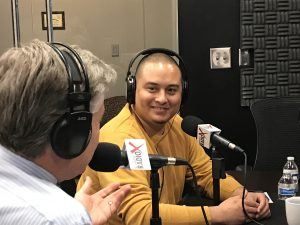
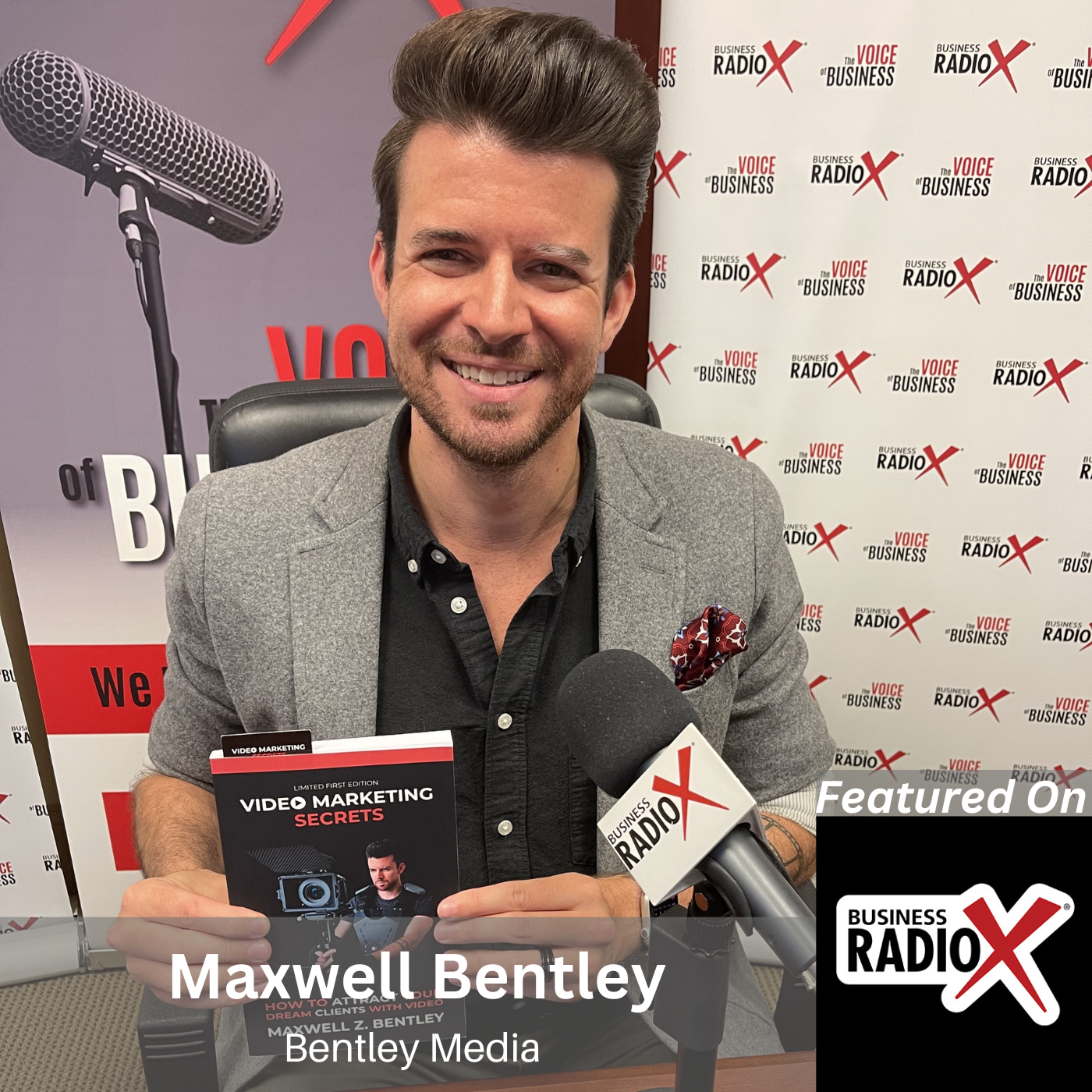
Maxwell Bentley, Bentley Media, on North Fulton Business Radio with host John Ray
North Fulton Business Radio
Mastering Video Marketing, with Maxwell Bentley, Bentley Media
Loading
00:00 /
RSS Feed
Share
Link
Embed

Download file

Maxwell Bentley, Bentley Media, on North Fulton Business Radio with host John Ray

Mastering Video Marketing, with Maxwell Bentley, Bentley Media (North Fulton Business Radio, Episode 828)

In this episode of North Fulton Business Radio, host John Ray welcomes back Maxwell Bentley, a prominent video production expert and the founder of Bentley Media. The discussion delves into Maxwell’s decade-long career in video production and his evolution into a marketing authority. Maxwell shares insights on the importance of video marketing for entrepreneurs, the rise of short-form video content on platforms like LinkedIn, and the effective use of video testimonials. The episode also touches on the potential and pitfalls of AI-generated video content and showcases Maxwell’s success stories, including transforming a health coach’s practice through compelling video storytelling.

John Ray is the host of North Fulton Business Radio. The show is recorded and produced by the North Fulton affiliate of Business RadioX® inside Renasant Bank in Alpharetta.

Maxwell Bentley, Bentley Media
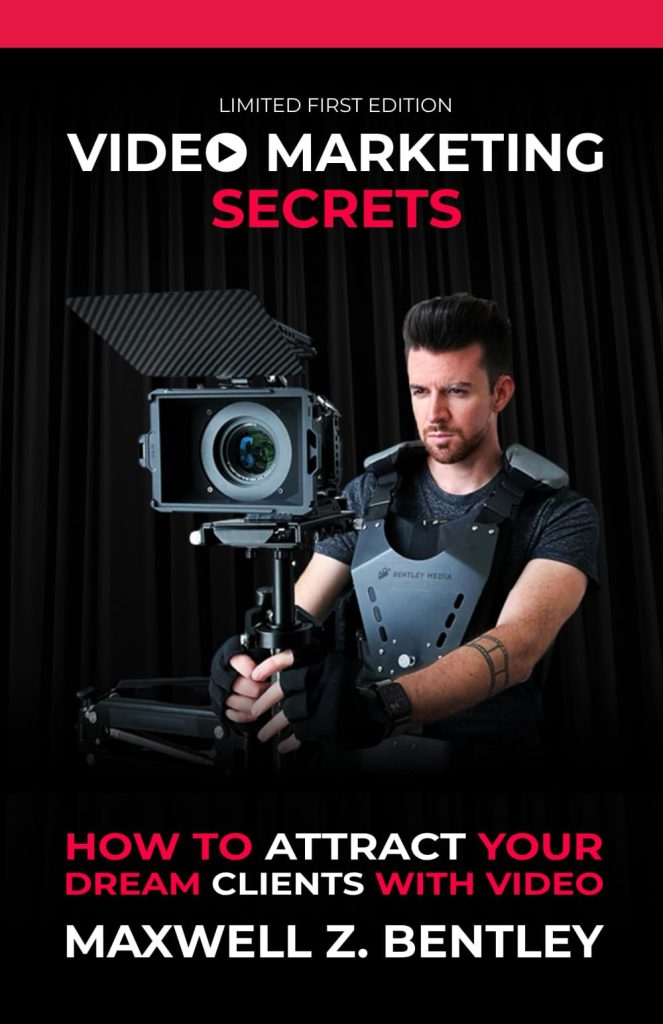
Video Marketing Secrets, Maxwell BentleyMaxwell Bentley is a video producer known for launching high-performing video marketing campaigns for brands across the globe, including Hyundai, Quantum Bank, and Eversheds Sutherland. He is the founder of Bentley Media, a video marketing agency that was named a finalist for Forsyth County Business of the Year in 2018 and 2019. His agency has generated over one hundred million trackable video impressions that have translated to millions of dollars in sales revenue for his clients since 2015.

​Maxwell has made significant contributions to the gaming industry, having produced a trailer for a Disney Moana video game and for the Xbox title Super Bomb Survival, and served as the lead editor for the Roblox app trailer. 
 
He has also produced marketing videos for prominent Georgia schools, including Emory, UGA, and KSU, and for nonprofits such as TED, Saprea, and GPB. In 2022, he produced a donor appeal film for Meals by Grace, a Georgia nonprofit dedicated to fighting childhood hunger, that helped raise over $187,000 for the organization. He was subsequently named to the University of North Georgia’s inaugural 20 Under 40 Alumni class. 

He serves on multiple advisory boards and has partnered with Metro Atlanta schools to help prepare rising talent for the demands of the Georgia film and video production industry. He exists to form meaningful relationships where his clients and his staff feel successful.

Connect with Maxwell: Website | LinkedIn | Instagram | Facebook

Connect with Bentley Media: Website | YouTube | LinkedIn | Instagram | Facebook | X (Twitter)

Topics Discussed in this Episode

00:00 Introduction and Welcome to North Fulton Business Radio
01:35 Guest Introduction: Maxwell Bentley
01:49 Maxwell’s Journey in Video Production
06:43 The Power of Video Marketing
13:23 Overcoming Camera Shyness
20:39 Leveraging Video Testimonials
24:09 LinkedIn and Short-Form Video Content
30:07 AI in Video Production
37:53 Success Stories and Conclusion
42:32 Closing Remarks

Maxwell Bentley, Bentley Media and author of Video Marketing Secrets, with North Fulton Business Radio host John Ray, author of The Generosity Mindset
Maxwell Bentley with host John Ray

Renasant Bank supports North Fulton Business Radio

Renasant BankRenasant Bank has humble roots, starting in 1904 as a $100,000 bank in a Lee County, Mississippi, bakery. Since then, Renasant has become one of the Southeast’s strongest financial institutions, with over $17 billion in assets and more than 180 banking, lending, wealth management, and financial services offices throughout the region. All of Renasant’s success stems from each banker’s commitment to investing in their communities as a way to better understand the people they serve. At Renasant Bank, they understand you because they work and live alongside you every day.

Website | LinkedIn | Facebook | Instagram | X (Twitter) | YouTube

About North Fulton Business Radio and host John Ray

With over 800 shows and having featured over 1,200 guests, North Fulton Business Radio is the longest-running podcast in the North Fulton area, covering business in our community like no one else. We are the undisputed “Voice of Business” in North Fulton!

The show welcomes a wide variety of business, non-profit, and community leaders to get the word out about the important work they’re doing to serve their market, their community, and their profession. There’s no discrimination based on company size, and there’s never any “pay to play.” North Fulton Business Radio supports and celebrates business by sharing positive business stories that traditional media ignore. Some media leans left. Some media leans right. We lean business.

John Ray, Business RadioX - North Fulton, and Owner, Ray Business Advisors
John Ray, Business RadioX – North Fulton, and Owner, Ray Business Advisors

John Ray is the host of North Fulton Business Radio. The show is recorded and produced from the North Fulton studio of Business RadioX® inside Renasant Bank in Alpharetta. You can find the full archive of shows by following this link. The show is available on all the major podcast apps, including Apple Podcasts, Spotify, Google, Amazon, iHeart Radio, and many others.

The studio address is 275 South Main Street, Alpharetta, GA 30009.
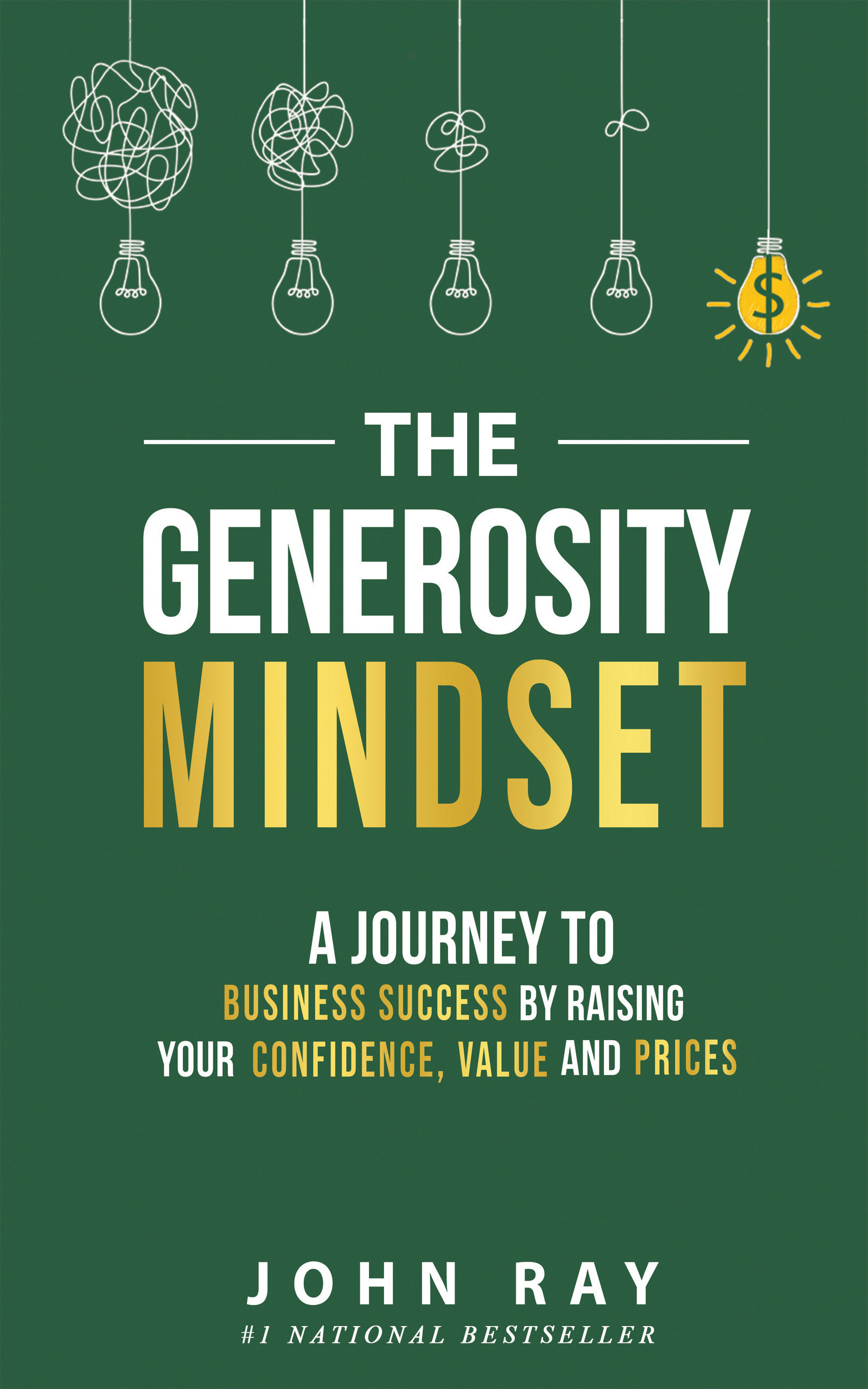
John Ray, The Generosity MindsetJohn Ray also operates his own business advisory practice. John’s services include advising solopreneurs and small professional services firms on their value, their positioning and business development, and their pricing. His clients are professionals who are selling their expertise, such as consultants, coaches, attorneys, CPAs, accountants and bookkeepers, marketing professionals, and other professional services practitioners.

John is the national bestselling author of The Generosity Mindset: A Journey to Business Success by Raising Your Confidence, Value, and Prices.
Tagged With: AI, Bentley Media, Bentley Media Group, Bentley Media LLC, John Ray, Maxwell Bentley, North Fulton Business Radio, video, video marketing, video production, video testimonials

Mark Hayes, Mark Hayes Consulting LLC

August 10, 2021 by John Ray

North Fulton Business Radio
Mark Hayes, Mark Hayes Consulting LLC
Loading
00:00 /
RSS Feed
Share
Link
Embed

Download file

Mark Hayes Consulting

Mark Hayes, Mark Hayes Consulting LLC (North Fulton Business Radio, Episode 375)

Mark Hayes is well known and loved in Atlanta as a former longstanding television anchor. For the last decade, he has used his extensive media experience to empower brands through their media presence and the power of their story. He joined host John Ray to discuss the power of storytelling, why video remains such a compelling marketing medium for business, the rewards of coaching, sources of continued learning for him, and much more. North Fulton Business Radio is broadcast from the North Fulton studio of Business RadioX® inside Renasant Bank in Alpharetta.

Mark Hayes Consulting LLC

For over a decade, Mark Hayes has helped businesses create their brand presence and achieve their goals.Mark Hayes Consulting

His process is designed to empower your brand and outfit your business with the marketing tools needed to succeed. Mark utilizes nearly three decades of television news experience to help you tell your brand story.

Company website | Facebook | Instagram | LinkedIn

Mark Hayes, President/CEO, Mark Hayes Consulting LLC

Mark Hayes Consulting
Mark Hayes, President/CEO, Mark Hayes Consulting

Thirty years of television news experience, TedX Speaker, & Certified Jack Canfield Trainer for over a decade, Mark has helped businesses create their brand presence and achieve their goals. His process is designed to empower your brand and outfit your business with the marketing tools needed to succeed. Mark utilizes nearly three decades of television news experience to help you tell your Brand story.

Mark Hayes has spent nearly three decades bringing news viewers in major cities across the country their news and information of the day. Some of his stops include Dallas, Denver, Detroit and Baltimore. However, his proudest accomplishments came during his tenure in the great city of Atlanta, GA. For more than a decade, Mark was a staple of early morning television on Good Day Atlanta. He believes his most noteworthy achievement, was the nearly 20 hours he spent on air during the Fulton County Courthouse shootings and the subsequent capture of Brian.

After 2 Emmy nominations and highly coveted National recognition for spot news coverage from the National Press Photographers Association, Mark is now currently the President and CEO of his own media training and strategy company. Mark Hayes Consulting, LLC was founded in 2010. The goal is to help everyone from CEO’s to small business owners make the most of their opportunity for media exposure.

He has been a passionate supporter of Boys and Girls Clubs in every city he has been a part of. Mark has also been a fervent supporter of Drug Abuse, recovery & prevention efforts with different organizations. He was one of the earliest supporters and assisted Simply Grace House in Dallas, TX as they began their efforts to help recovering addicts of drug and alcohol addiction.

Mark and his wife Latonya have been together since they met in 1988 at Howard University. They have been married for 25 years and have two children, Malcolm and Kenny. Mark is also a member of the Omega Psi Phi Fraternity, Inc. and loves to travel the world over. His favorite destination to date has been the most amazing week his family spent on the beautiful island of Kauai, which they described as “paradise on earth.”

Contact Mark today so he can support your growth, maximize your opportunities for media exposure and put you on a solid track to success and profit!

LinkedIn

Questions and Topics in This Interview

  • Covid Convenience — And Zoom
  • Why video is so powerful for your brand
  • Using video to tell your authentic story
  • Creating your brand story
  • Authenticity and Your Brand

North Fulton Business Radio is hosted by John Ray, and broadcast and produced from the North Fulton studio of Business RadioX® inside Renasant Bank in Alpharetta. You can find the full archive of shows by following this link. The show is available on all the major podcast apps, including Apple Podcasts, Spotify, Google, Amazon, iHeart Radio, Stitcher, TuneIn, and others.

RenasantBank


Renasant Bank has humble roots, starting in 1904 as a $100,000 bank in a Lee County, Mississippi, bakery. Since then, Renasant has grown to become one of the Southeast’s strongest financial institutions with over $13 billion in assets and more than 190 banking, lending, wealth management and financial services offices in Mississippi, Alabama, Tennessee, Georgia and Florida. All of Renasant’s success stems from each of their banker’s commitment to investing in their communities as a way of better understanding the people they serve. At Renasant Bank, they understand you because they work and live alongside you every day.

Tagged With: Branding, corporate marketing videos, John Ray, Mark Hayes, Mark Hayes Consulting, marketing videos, media exposure, North Fulton Business Radio, using video in marketing, video, video marketing

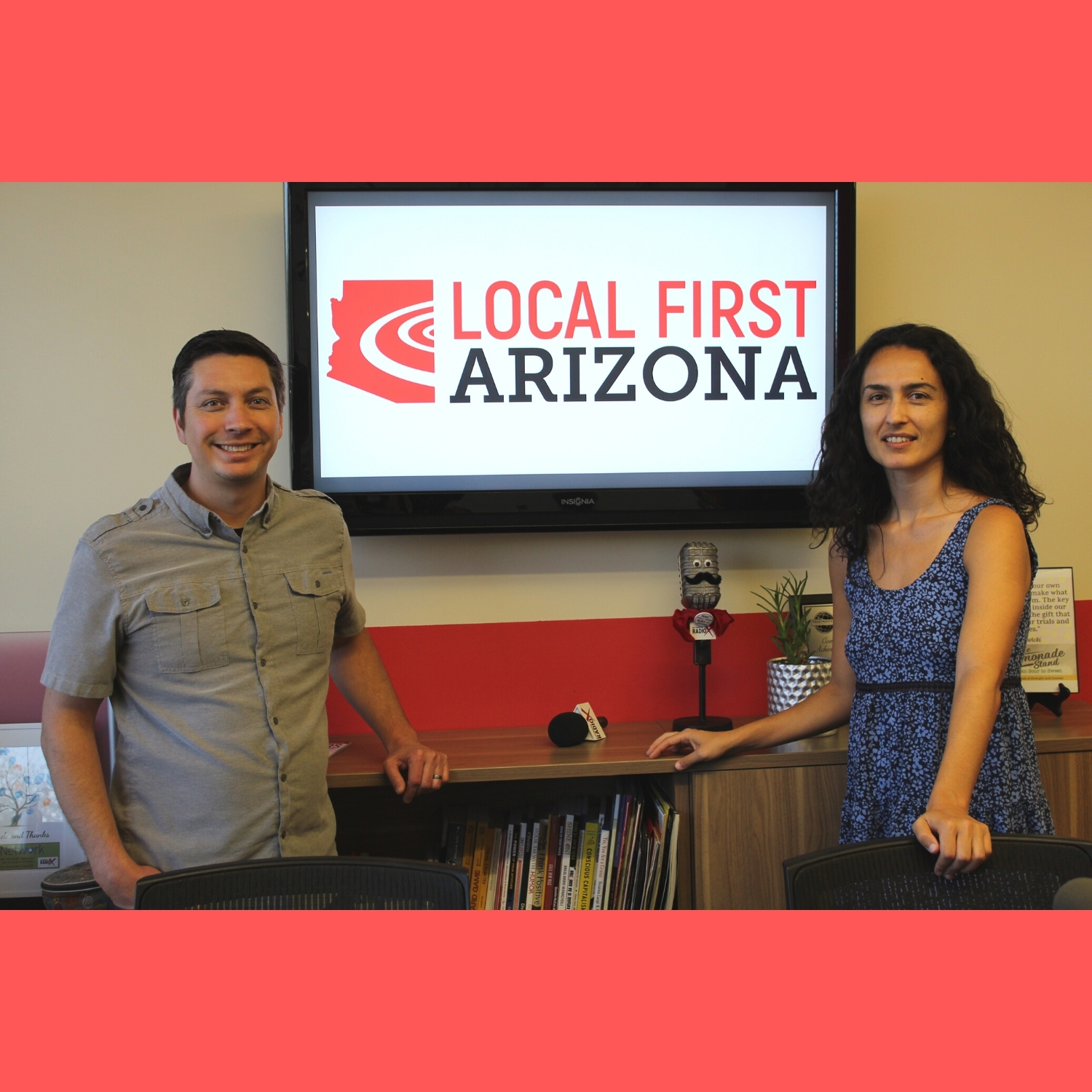
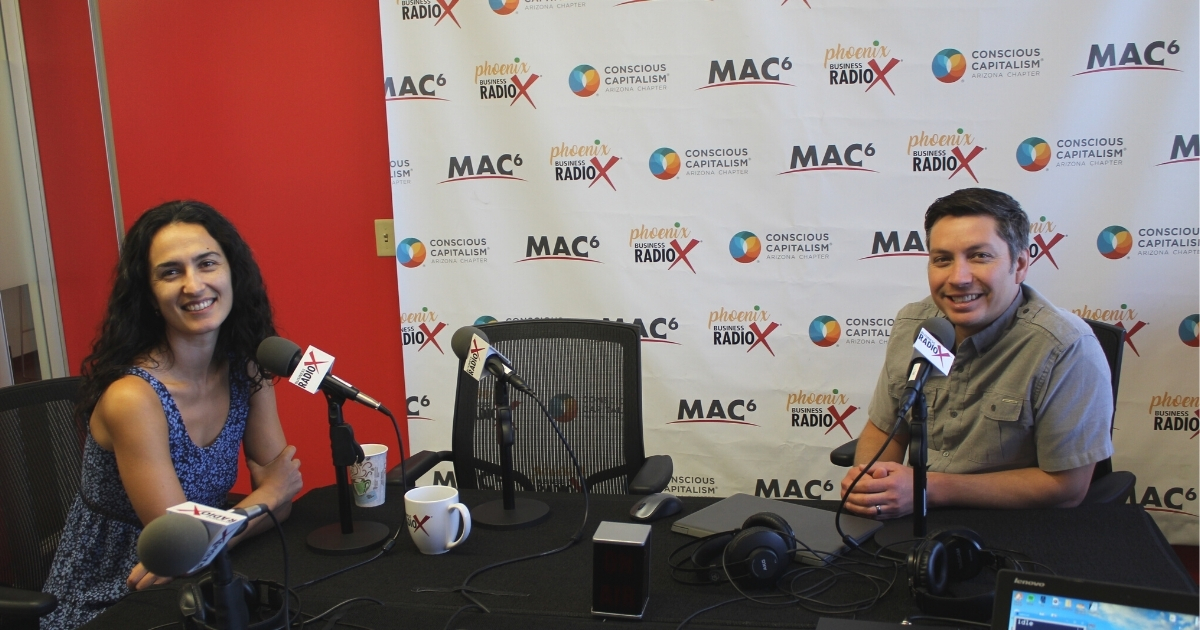
Regina Revazova with Open Conversation E24

June 10, 2021 by Karen

Regina-Revazova-with-Open-Conversation-E24-feature
Phoenix Business Radio
Regina Revazova with Open Conversation E24
Loading
00:00 /
RSS Feed
Share
Link
Embed

Download file

Regina-Revazova-with-Open-Conversation-E24

Regina Revazova with Open Conversation E24

Open-Conversation-logo

Regina-Revazova-Phoenix-Business-RadioXOpen Conversation was created in 2017 as a branded podcast producer and a voiceover service provider. We deliver top quality editorial and corporate podcasts in a variety of forms and across a range of genres from our base in Phoenix, Arizona.

We take a flexible approach to partnerships and strive to make shows that represent diversity of ideas, communities and interests.

Founder and Executive Producer Regina Revazova was previously a technical director, producer and a broadcast journalist at NPR and BBC networks.

Follow Open Conversation on LinkedIn, Facebook, Twitter and Instagram.

About Arizona Good Business

What is good business? What are local businesses doing to build a better Arizona?

Join Arizona Good Business to hear from local companies who are:

  • Centering purpose at the forefront of business
  • Creating social well-being for the community
  • Prioritizing sustainability and positive environmental practices
  • Growing strong company cultures through building authentic teams
  • Ensuring diversity, equity, and inclusion are involved in all business decisions

Arizona Good Business features local business leaders that are redefining what it means to do good business.

About Your Host

Thomas-BarrThomas Barr is the Executive Director for Local First Arizona, the largest coalition of local businesses in North America. He advocates for a strong local business community that contributes to building vibrancy, equity, and prosperity across the state. A proud Arizona native and graduate of Arizona State University, Thomas leads the business coalition of Local First Arizona by advocating for the economic and cultural benefits provided by building strong local economies.
Thomas steers the strategic direction of LFA’s major programs and initiatives as well as the engagement of over 3000 businesses across Arizona. As Executive Director, Thomas guides a team of statewide senior directors overseeing the execution of LFA’s communication strategy, major initiatives and key partnerships, as well as the collaboration of over 30 staff implementing work in entrepreneurship programs, small business advocacy, local food initiatives, sustainability, urban development and community building. He frequently speaks to groups locally and nationally, presenting the impact of Local First Arizona and the importance of local economy work in building prosperity.

Outside of Local First Arizona, Thomas has participated in volunteering his time to many causes and organizations throughout the Valley including Young Nonprofit Professionals – Phoenix, Equality Arizona, Alliance of Arizona Nonprofits, Arizona Commission on the Arts, Heritage Square Foundation and Phoenix Legal Action Network. Additionally, Thomas is a 2018 Phoenix Magazine 40 Under 40 honoree, alumni of Arizona Leading for Change, and current participant in Valley Leadership Institute’s 40th cohort.

Connect with Thomas on LinkedIn and Twitter.

LFA-Logo

Local First AZ

Local First Arizona is a nonprofit organization that celebrates independent, locally owned businesses. We support, promote and advocate for a strong local business community and raise public awareness of the economic and cultural benefits provided by strong local economies. Local businesses contribute to a sustainable economy for Arizona and build vibrant communities we’re all proud to call home.

Tagged With: audio storytelling, podcast production, podcasting, studio, video

Video Marketing in the Age of Covid-19, with Maxwell Bentley, Bentley Media Group

August 5, 2020 by John Ray

Bentley Media Group
North Fulton Business Radio
Video Marketing in the Age of Covid-19, with Maxwell Bentley, Bentley Media Group
Loading
00:00 /
RSS Feed
Share
Link
Embed

Download file

Bentley Media Group

Video Marketing in the Age of Covid-19, with Maxwell Bentley, Bentley Media Group (North Fulton Business Radio, Episode 268)

Bentley Media Group Founder Maxwell Bentley joins host John Ray to discuss his pivot in a pandemic, the challenges he faced in that pivot, and why video marketing is so important in a Covid-19 economy. “North Fulton Business Radio” is produced virtually by the North Fulton studio of Business RadioX® in Alpharetta.

Maxwell Bentley, Bentley Media Group

Maxwell Bentley is the Founder and Executive Producer at the Bentley Media Group, a strategic video marketing studio in Atlanta. He has produced video content for brands such as Hyundai, Roblox, and TED. In 2017, he produced a trailer for the Xbox title Super Bomb Survival and served as the lead editor for the Roblox app trailer. He was named one of seven finalists for Business of the Year in Forsyth County, GA in 2018 and 2019. He sits on the advisory board for the UNG Center for Entrepreneurship and Innovation and serves as a Forsyth County Partner in Education. He has been featured in Lenz On BusinesPoint of Contact for Maxwell Bentley

Company website

LinkedIn

Facebook

Questions/Topics Discussed in this Show

  • Marketing a business during a pandemic
  • Why is innovation critical during these uncertain times?
  • What does it mean to “pivot your business to stay relevant”?
  • Video production in the age of Covid-19
  • How can business owners create their own video

North Fulton Business Radio” is hosted by John Ray and produced virtually from the North Fulton studio of Business RadioX® in Alpharetta. You can find the full archive of shows by following this link. The show is available on all the major podcast apps, including Apple Podcasts, Spotify, Google, iHeart Radio, Stitcher, TuneIn, and others.

Renasant Bank has humble roots, starting in 1904 as a $100,000 bank in a Lee County, Mississippi, bakery. Since then, Renasant has grown to become one of the Southeast’s strongest financial institutions with over $13 billion in assets and more than 190 banking, lending, wealth management and financial services offices in Mississippi, Alabama, Tennessee, Georgia and Florida. All of Renasant’s success stems from each of their banker’s commitment to investing in their communities as a way of better understanding the people they serve. At Renasant Bank, they understand you because they work and live alongside you every day.

Tagged With: Bentley Media Group, John Ray, Maxwell Bentley, media, video, video marketing, video production

North Deck Productions – Graham Cain and Rhett Brittain, J’s Place Recovery Center – Jordan Hussey

February 18, 2020 by Beau Henderson

North Georgia Business Radio
North Deck Productions - Graham Cain and Rhett Brittain, J's Place Recovery Center - Jordan Hussey
Loading
00:00 /
RSS Feed
Share
Link
Embed

Download file

North Deck Productions – Graham Cain & Rhett Brittain

North Deck Productions is a full service video production company that services the greater Atlanta area. We offer a variety of services, ranging from commercial video production to aerial photography and event coverage. We take pride in turning your vision into reality.

As a commercial video production company, we work closely with businesses to create digital video advertising, primarily for social media, to spark online growth and brand awareness. These commercials often feature a personal touch that makes them effective in captivating online audiences. As online video continues to be the fastest growing form of entertainment and advertising, we recommend online video as a valuable tool to generate long term business growth. In addition to online video production, North Deck Productions offers commercial video production, television commercial production, drone footage/photography, wedding and event coverage, photography, narrative film production, etc. 


J’s Place Recovery Center – Jordan Hussey

The Jeffrey Dallas Gay Recovery Center is a 501(c)(3) non-profit organization that is dedicated to enhancing the culture of recovery for the people of northeast Georgia.  We provide a place of sanctuary for people in recovery, whether they are newly in recovery or have years of recovery behind them, whether they are recovering from alcoholism or opioid addiction. Here, we grow stronger,  gain support and new skills, and help one another stay in recovery.

The center is named in memory of Jeffrey Dallas Gay, Jr, who died of an opioid overdose. His family has championed support for recovery in our community so that those suffering from substance abuse disorder can live long and fulfilling lives.


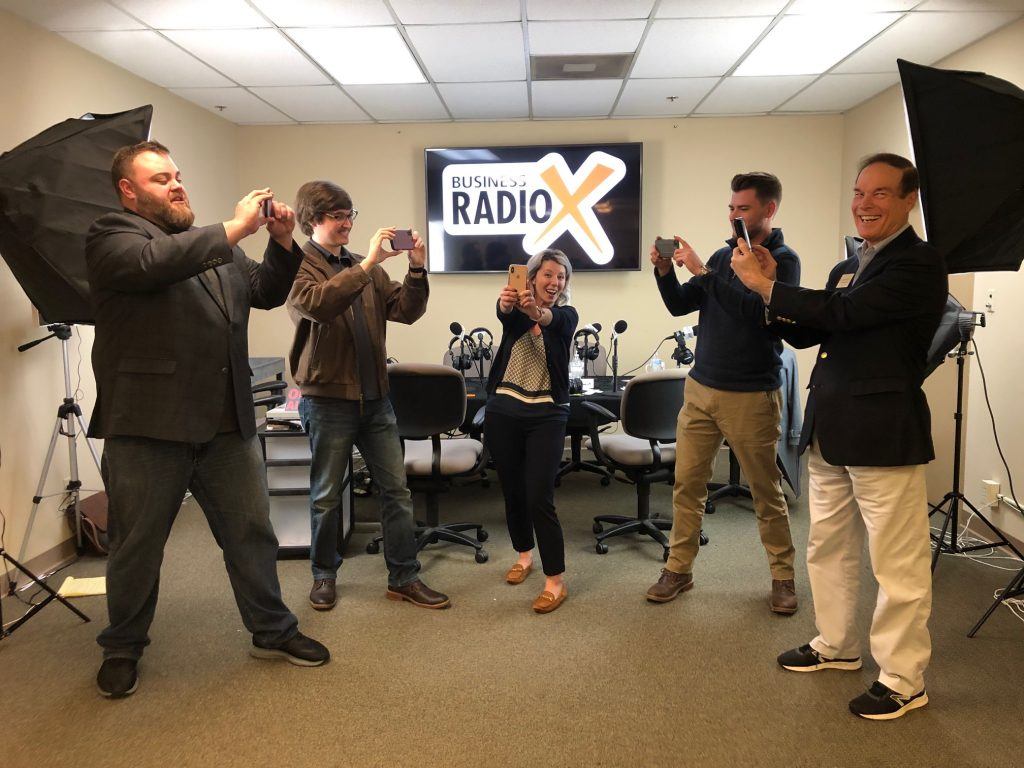
Ready for another “Zoo Crew” photo?!?


Tagged With: Dr. bill lampton, North Ga Business Radio X, Recovery, video

Decision Vision Episode 35: Should I Hire a Business Development Coach? – An Interview with Rod Burkert, Burkert Valuation Advisors

October 10, 2019 by John Ray

Decision Vision
Decision Vision
Decision Vision Episode 35: Should I Hire a Business Development Coach? – An Interview with Rod Burkert, Burkert Valuation Advisors
Loading
00:00 /
RSS Feed
Share
Link
Embed

Download file

Mike Blake and Rod Burkert

Decision Vision Episode 35: Should I Hire a Business Development Coach? – An Interview with Rod Burkert, Burkert Valuation Advisors

Why should I hire a business development coach? What are the most important aspects of marketing my professional services? In this interview with “Decision Vision” host Mike Blake, Rod Burkert of Burkert Valuation Advisors answers these questions and much more. “Decision Vision” is presented by Brady Ware & Company.

Rod Burkert, Burkert Valuation Advisors

Rod Burkert, CPA, CVA, and his wife, Amy Burkert, CPA, CFA, with their dogs Buster, left, and Ty, stand in front of the RV that serves as their mobile office and their home.

Rod Burkert is the Founder and President of Burkert Valuation Advisors.

In one way, shape, or form, Rod has performed valuations since the late 1980s. In July 2000, he started Burkert Valuation Advisors in Philadelphia where he ran a “traditional” valuation practice for 10 years that focused on tax purpose valuations for manufacturers and distributors.

Based on that experience, in 2013 Rod began coaching BVFLS (business valuation and forensic legal services) professionals to mentor them in the marketing and positioning skills they need.

In March 2010, he began traveling full time throughout the US and Canada in an RV with his wife and dogs. Today his mobile consulting firm includes his valuation practice and a coaching business, all of which he built by leveraging his professional network, social media, and hiring virtual assistants to make the available technology work for him.

For more information, you can email him directly, go to his website, or you can find him on LinkedIn.

Michael Blake, Brady Ware & Company

Mike Blake, Host of “Decision Vision”

Michael Blake is Host of the “Decision Vision” podcast series and a Director of Brady Ware & Company. Mike specializes in the valuation of intellectual property-driven firms, such as software firms, aerospace firms and professional services firms, most frequently in the capacity as a transaction advisor, helping clients obtain great outcomes from complex transaction opportunities. He is also a specialist in the appraisal of intellectual properties as stand-alone assets, such as software, trade secrets, and patents.

Mike has been a full-time business appraiser for 13 years with public accounting firms, boutique business appraisal firms, and an owner of his own firm. Prior to that, he spent 8 years in venture capital and investment banking, including transactions in the U.S., Israel, Russia, Ukraine, and Belarus.

Brady Ware & Company

Brady Ware & Company is a regional full-service accounting and advisory firm which helps businesses and entrepreneurs make visions a reality. Brady Ware services clients nationally from its offices in Alpharetta, GA; Columbus and Dayton, OH; and Richmond, IN. The firm is growth minded, committed to the regions in which they operate, and most importantly, they make significant investments in their people and service offerings to meet the changing financial needs of those they are privileged to serve. The firm is dedicated to providing results that make a difference for its clients.

Decision Vision Podcast Series

“Decision Vision” is a podcast covering topics and issues facing small business owners and connecting them with solutions from leading experts. This series is presented by Brady Ware & Company. If you are a decision maker for a small business, we’d love to hear from you. Contact us at decisionvision@bradyware.com and make sure to listen to every Thursday to the “Decision Vision” podcast. Past episodes of “Decision Vision” can be found here. “Decision Vision” is produced and broadcast by the North Fulton studio of Business RadioX®.

Visit Brady Ware & Company on social media:

LinkedIn:  https://www.linkedin.com/company/brady-ware/

Facebook: https://www.facebook.com/bradywareCPAs/

Twitter: https://twitter.com/BradyWare

Instagram: https://www.instagram.com/bradywarecompany/

Show Transcript

Intro: [00:00:02] Welcome to Decision Vision, a podcast series focusing on critical business decisions, brought to you by Brady Ware & Company. Brady Ware is a regional, full-service, accounting and advisory firm that helps businesses and entrepreneurs make vision a reality.

Michael Blake: [00:00:20] And welcome to Decision Vision, a podcast giving you, the listener, clear vision to make great decisions. In each episode, we discuss the process of decision making on a different topic. Rather than making recommendations because everyone’s circumstances are different, we talk to subject matter experts on how they would recommend thinking about that decision.

Michael Blake: [00:00:39] My name is Mike Blake, and I’m your host for today’s program. I’m a Director at Brady Ware & Company, a full-service accounting firm based in Dayton, Ohio, with offices in Dayton; Columbus, Ohio; Richmond, Indiana; and Alpharetta, Georgia, which is where we are recording today. Brady Ware is sponsoring this podcast. If you like this podcast, please subscribe on your favorite podcast aggregator, and please also consider leaving a review of the podcast as well.

Michael Blake: [00:01:03] So, our topic today is, should I hire a business development coach? And I’ve picked this topic because, as most of you know, I’m a shareholder inside an accounting firm. And one of the hard—one of the struggles that almost every accounting firm faces is, how do we motivate people to develop business? How do we train people to develop business? Because at the end of the day, in the 21st Century economy, it’s all well and good to be a great technician, but if all you have in a firm is technicians, it’s like trying to win a baseball game with great pitching only, you wind up having zero to zero. And you can’t win that way. So, you’ve got to have people and a culture that drives the ability to generate revenue. And the accounting industry, in particular, is not one that is necessarily known for its outgoing, gregarious nature. And so, that’s a particular area that that we focus on.

Michael Blake: [00:02:08] And, for me, as a leader of a valuation and strategic advisory practice, at least 70% of what I do has something to do with business development. And I can tell you that the things on the mind of our partners all the time is, how do we get people excited, and not just excited, but also trained to generate revenue? Because it’s not fair to send a bunch of kids out there, or sometimes not kids say, you know, “Go back, get us some business. Go get them.” That’s not going to produce an outcome, except for the occasional outlier. There needs to be an important support system for that.

Michael Blake: [00:02:46] And I say this is not somebody to whom sales necessarily comes naturally. When I started my career in investment banking, I was the clock guy. I was the guy they locked into a room, and shoved in front of a spreadsheet, and left them with the textbooks, and just made sure it never ever got in front of the client because that was my role. We had other people that were much more comfortable than I. And then, over a number of years, working with coaches, including Rod, for a time, I’ve managed to become slightly below average, which doesn’t sound a lot, except when you understand the disaster I was when I started. And, actually, it’s quite a long way.

Michael Blake: [00:03:25] And joining us today by phone is is Rod Burkert, who is, I think, the best in the business when it comes to this kind of topic in the business valuation arena. And I’m proud to say that I was actually a client of his when I had my own practice for a little bit under a year, and I fired him for the best reason possible, is that I was generating so much business, I could not handle all of it. I had to turn off basically. And I give him a lot of credit for that, as well as another coach sort of earlier in my career. And I can’t think of a better endorsement than that. And it happens to be true.

Michael Blake: [00:04:03] But Rod is the founder of Burkert Valuation Advisors, a business valuation and litigation support firm. His assignments focus primarily on income, gift, and estate matters, specializing in closely held companies and private investment partnerships. He also provides report, review, and project consulting services to assist attorneys and other practitioners with their engagements between 1996 and 2025. Rod was a member of an elite instructor for the National Association of Certified Valuation Analysts – just rolls off the tongue – Consultants Training Institute. Missing the classroom environment, he rejoined the NACVA’s teaching circuit in 2011, championing the subject of Report Writing, another topic near and dear to my heart.

Michael Blake: [00:04:42] He is a recipient of various instructor awards, including the Circle of Light and Instructor of the Year. He is a past chairman of NACVA’s executive advisory board and education board, and has been named one of NACVA’s outstanding members. He is also a regular contributing author to Business Valuation Update, the Value Examiner, and Financial Valuation and Litigation Expert. If you’re not in valuation, you don’t know what those are, but those are basically the Sports Illustrated of the Valuation World, the New York Times of the valuation world. Rod is leveraging social media to build a mobile valuation consulting practice, allowing him to travel full time in an RV throughout the United States and Canada with his wife, Amy, and their two dogs. And Rob, thank you for taking time off the road to talk to us today.

Rod Burkert: [00:05:26] Hey, thanks, Mike, for having me. I appreciate it. I—gosh, until you read my bio, I didn’t realize how much I’ve done, but it sure sounds like a lot, doesn’t it?

Michael Blake: [00:05:38] Well, as I tell people, one of the benefits I see for myself having gray in my beard and two arthritic ankles is, at least, when you look behind in the rearview mirror, there’s some interesting stuff.

Rod Burkert: [00:05:49] Exactly, exactly.

Michael Blake: [00:05:51] So, you started out, I think, as did I, as a practitioner, giving out the work. Why did you decide that you’re going to develop, if you will, this persona or this new vocation of practice development training?

Rod Burkert: [00:06:13] Well, one of the things that you said in the beginning kind of struck me as pretty close to home is back in the day, when I started doing valuations, if someone said to me, “Describe your ideal day,” I would have said, “Sitting in front of a computer building an Excel model to help a client accomplish some—you know, or solve a valuation problem.” So, I was very much the nerd sitting in front of a computer as well, but I had my own practice, and I had to bring in work in order to build those kinds of models.

Rod Burkert: [00:06:50] And so, I’m kind of an outgoing person. I don’t mind getting out there. And I actually found that the more I did it, the more I enjoyed it. And then, I turned 60. So, I’m 63 now, but when I turned 60, I’m thinking my health is really good, I’m having a great time, I’m not thinking about retiring, I’ve got a long road ahead of me, and I have an opportunity really to embark on a second career. And for me, that second career piggybacked on what I know and what I do best, which is doing business valuation work. But instead of doing the work, I’m actually, as you said, helping people get the work because there is a lot of information out there that’s of a very technical nature. It tells us how to do the work, but nobody tells us how to get the work.

Rod Burkert: [00:07:47] And the last piece of why I’m doing what I’m doing, as you mentioned in the introduction two days ago, my wife and I officially crossed 9.5 years that we have lived full time in our RV, traveling throughout the United States and Canada with our two dogs. There’s no home. There’s no storage facility. Everything is in the RV. And I want to give that RV equivalent experience to other people in our profession. So, I don’t expect everybody to think that they’re going to pull up stakes and live in an RV like Amy and I do. But rhetorically speaking, Michael, what is your RV equivalent experience? What is it that you would like to do in tandem or in parallel with the business valuation work that you do? And one of my—kind of one of my success stories is a client that I am working with, and he really had a previous life as a painter and an artist. And we’ve restructured her practice to give that life back to her again.

Michael Blake: [00:09:00] So-

Rod Burkert: [00:09:00] That’s why I’m doing this.

Michael Blake: [00:09:02] Okay. So, yeah. And obviously, you’re helping a lot of a lot of people with it. So, before we go, I’m going to define a term because what we’re going to be talking about here is business valuation because that just happens to be my world. But I want to emphasize that Rod, also, helps people that are in the forensic and litigation services area, which generally means expert witnesses. And that that’s not an area which I play in. I’m on record saying that’s not my strength, to put it mildly. But a lot of what Rod does is he works with professionals like that as well.

Michael Blake: [00:09:38] So, when I say business valuation, because I don’t want to say that entire mouthful each and every single time, just imagine to yourself out in the audience that we’re also talking about forensic and litigation services. So, with that in mind, the question then is, can anyone do this? Can literally anyone who decides that, for whatever reason, for career development, or for survival, because they’ve got to eat, and they’ve got this practice, can anyone develop a business valuation practice?

Rod Burkert: [00:10:11] I think, to an extent, the answer to that question is yes with a huge but caveat. And that caveat is simply this, it’s that you have to be willing to keep showing up to try new things and always keep moving forward. And I think that’s the problem with many people in our profession. They don’t have that dedication to the consistency and persistency that’s required for the marketing that you need to build a practice.

Rod Burkert: [00:10:46] So, one of my coaching clients coined a really cool term. He’s been accused by his friends and colleagues of dolphin marketing. And what is dolphin marketing? Well, dolphin marketing is when you need work because everything in the pipeline is done, you come up for air, you breach out of the water, you grab a few new clients, and then you disappear under water, and nobody hears from you again until you need more work. That’s dolphin marketing.

Rod Burkert: [00:11:18] Anyone in our industry who we might call an industry titan, the seasoned professional, will tell you that you need to be out there marketing, if not every day, at least every week. And I think, given some of the mentality in our profession, we don’t want to do that. We convince ourselves—to me, we convince ourselves, “I’m a person that was never good in math,” and I had convinced myself that I will never be good in math. When actually, it’s a learned skill like anything else that we do. You can learn to be good in math, and you can learn to be good in marketing and practice development if you don’t talk yourself out of it.

Michael Blake: [00:12:05] What you talk about resonates with me. A podcast to which I listen fairly frequently is the Rosen Institute. You might have heard of it.

Rod Burkert: [00:12:14] Oh, yes.

Michael Blake: [00:12:15] Yeah. I mean, Lee Rosen is very much a kindred spirit of yours, except he goes global. And one of the things he says is that almost any marketing activity you do will be successful as long as you stick with it, and you’re consistent.

Rod Burkert: [00:12:31] And yes, I agree with that. And related to that, Michael. You have to like it. I mean, one of the things is what works for others may not work for you. And what works for you may not work for others. But the important thing is to play to your strengths. I would never advise a coaching client that they need to be out there speaking constantly if they didn’t really like speaking, or writing, or doing videos, or anything like that. You have to pick a marketing skill that you are halfway good at, so that you can learn to get better and enjoy doing or else, you won’t stick with it. And that goes back to being consistent and persistent.


Michael Blake: [00:13:14] So, why isn’t just being a great technician good enough? I mean, the little voice in my head that says the world in America is a meritocracy. Tell us. And maybe this is a rationalization that the marketing and sales are just fluff, but I’m a professional of substance, and I’m really good at the business valuation, et cetera, world. Why is that not good enough?

Rod Burkert: [00:13:39] Yeah. I mean, I used to think being a technician would be good enough. And then, I read Dale Carnegie’s book, How to Win Friends and Influence People. That book was written back in the 1930s. So, 80 some years ago, Dale Carnegie had this observation about the finance, about the success of the people that he was coaching. And he says, basically, it’s by observation that if you look at anyone who has achieved some level of financial success, 15% of that success is due to technical skills, and 85% of it would be due to what we would call today people engineering skills, the soft skills like good listening, having empathy, being patient. That has—I think, many times, we gravitate to somebody who can capture our imagination and tell us what they can do for us without, actually, supplying the mathematical solution for what they can do for us.

Michael Blake: [00:14:56] Now, sales, for people who don’t do it, and for me, I surprisingly found to my to my astonishment, really, that I get a big endorphin rush from it, but not everybody does. And some people—I think a lot of people still look at sales with a certain amount of apprehension, even dread. And I’m sure it comes across people’s minds, “Maybe I could just hire a salesperson or maybe partner up with a salesperson.” Is that. Is that a model that could work for a small firm, or is that just sort of putting a Band-Aid on a gunshot wound?

Rod Burkert: [00:15:32] Well, there are firms out there, even in our business valuation space, that have a team of salespeople only. They do not do valuation, or forensic accounting, or litigation services work at all. They go out and their job is to sell the work. And they have built an incredibly successful practice. I think they are five or six offices. They’ve been around for like 80 years, and they have used that model to some success.

Rod Burkert: [00:16:09] Rhetorically speaking, though, if you’re the prospect, at that point, because you haven’t signed on, this isn’t a widget that we’re selling. We’re selling a solution to an acute problem that could be the death of a family member, and their interest in the business needs to be valued for estate tax purposes. It could be the sale of your business, something that you’ve built over the course of your lifetime. And now, it represents the largest asset that you own. When it comes to interviewing somebody that’s going to help you solve that problem, do you want to meet somebody who’s selling the solution or somebody who is going to be preparing this solution?

Rod Burkert: [00:16:56] So, I’m not saying that the sales model where you’re wanting to hire somebody to outsource the sales piece of your practice development won’t work. But I think where we really fail most often is the people that do the work that we do, we don’t put ourselves in the shoes of the client. And how would we feel if we were going to have our problems solved by a salesperson as opposed to a person that’s going to actually do the work?

Rod Burkert: [00:17:27] You go to a doctor, there’s no salesman selling you the procedure that you need to have performed. There is the doctor that’s telling you the what, the why, and the how that this procedure needs to be performed. And I think with a professional service like ours, to me, prospects and clients want to meet with the person that’s going to be doing the work, not the person that’s just going to be selling the work.

Michael Blake: [00:17:57] Now, one of the objections, I’m sure, you face, and I certainly see with somebody who is confronted with the need to develop a business development mentality and business development practice, if you will, is a lack of time. I don’t have time to sit. I don’t have time to do X, Y and Z. And I’m curious, I would imagine that—I know this for a fact, as I’ve been a client of yours, is that it’s not a free ride to kind of jump on board the Rod Burkert training and become a coaching client, is it? I mean, there’s a there’s a time commitment and not just inside of school, if you will, but outside as well to prepare and build those skills, and build those business development muscle, isn’t there?

Rod Burkert: [00:18:45] There is. And I think, a big factor in all of this in what you said, Michael, is really how—first of all, well, how successful of a practice do you want? What does success mean to you? Because there are some people, you and I both know them, that have a successful practice simply by sitting in their office and aggressively waiting for the phone to ring. That’s a term that I used in coaching with you. And they are perfectly happy with that. They’ll never make high six figures doing that or it would be unusual to think that they could, but if they’re making a low six figure billing revenue and however you want to look at it, that may be all they need, and they’re not going to invest time with a coach like me.

Rod Burkert: [00:19:38] And on the other hand, there are people who want more for different reasons. And they’re not just necessarily saying more income. I’m saying more time, more money, more freedom. You have to put some systems in place to realize those things. And that’s what I would like to think that my coaching helps people do, not just more money but more money with more time and more freedom to use that money to, again, have that RV-equivalent experience.

Michael Blake: [00:20:12] And one of the time investment required by a coaching client of yours, let’s say, in a given week? How many hours do they expect to invest in their education that’s being led by you?

Rod Burkert: [00:20:25] I would say that there is a ramp up. In the beginning, it may be a few hours a week tailoring down. I mean, there’s two things, if you can bear with me here, Michael. Number one is it depends on when you come to me, how much authority, how much awareness that you have because there are people in the profession that don’t do marketing per se. They’re not out there networking like we think that they might do. Their networking is speaking and writing. And so, for them, they’re not investing any time in marketing, again, per se. They’re just doing what they like to do, which is speaking and writing.

Rod Burkert: [00:21:07] The other part of what this is, of what I teach, is something that you should be doing anyhow to build your practice. Let me give you a great example. I’m at a speaking event, someone says to me, “I’m a tax person. I would love to get a valuation practice up and running. And I just don’t—but I just don’t have the time.” And I was kind of blunt, and that’s my style. And my first question out of my mouth was, how much television do you watch a week? And he was all proud of the fact that he was a Cubs fan, and that during baseball season, he’s watching every game somehow streaming on television. And I said, “So, to me, an average baseball game is like three hours a week, three hours a game. And you’re watching multiple games a week. And now, you want to tell me that you don’t have time for marketing.”

Rod Burkert: [00:22:02] So, that enters into it as well. Meaning, how badly do you want this? Do you just want to gripe about your situation, or do you actually want to take time from other activities that really don’t contribute any value to get you to where you say you want to end up, and invest it in coaching time, and learning how to market and build a practice?

Michael Blake: [00:22:30] I remember reading that story. You put it on your mailings, at least, once. And it’s—yeah, it is a great story. And television is one of styles, sort of, t sucks too. You don’t realize how much time has gone until you—sometimes, you do wake up, but you look up, and you say, “Oh, my gosh. My whole evening is gone. I could have written an entire article in the four hours I just spent watching that TV.”.

Rod Burkert: [00:22:57] Right.

Michael Blake: [00:23:00] So-

Rod Burkert: [00:23:00] And if I can say, one of the last things—well, one of the things that I teach people is how to automate certain processes. Now, I don’t have a sales system or anything like that. But given what I know, given what I can teach people about platforms like Facebook and LinkedIn, there is a way to automate your connection requests. There’s a way to automate your scripts and use conversations on LinkedIn Messenger or Facebook Messenger to make it seem like you’re actually having a conversation until you get to the point where you find out that the person really does want to buy from you whatever they’re buying, and you take that conversation offline, and have—and call them, reach out, and phone, and have them have that real discussion.

Rod Burkert: [00:23:51] But there’s a lot of automation that can go on at the front end that you don’t have to be sitting at your computer to do or it happens for you. You’ve got to invest the time to set the system up. But man, once it’s running, it really works.

Michael Blake: [00:24:09] So, what about the duration of an optimal coaching relationship?

Rod Burkert: [00:24:14] And I’m supposing some of them may not be true. So, I’m likely going to learn something, but contrast with, say, a therapist, where—and I think part of what you do is therapy, good therapy, but there are some people that have lifelong relationships, or certainly years or decades-long relationships with therapists, is there ever a point in a coaching program such as the one that you run where your clients graduate, or is this something that you think that it’s a long term, maybe ideally a semi-permanent commitment to that relationship?

Rod Burkert: [00:24:51] Yeah, good question. And tongue in cheek, I think you stay with a coach as long as the return on investment is greater than or equal to the investment. And I think what really pivots people here is that our average engagement could be anywhere from at the really low end if you’re competing on the basis of price, maybe you’re doing work for $5000. But our engagements could easily go up to $25,000, $30,000, $50,000. $100,000 if you’re doing litigation support work, and it’s a big case. I mean, that happens.

Rod Burkert: [00:25:29] So, if I can teach you something that helps you get those kinds of—that kind of case work at those kinds of fees, and let’s say my coaching is $10,000 for an entire year, or that’s what it comes out to, because it’s close to that, but I’m helping you get three, four, five engagements at a multiple of $10,000, or $15,000, or $20,000 that you would not have otherwise gotten as a result of the coaching. Why wouldn’t you stick with me or any other coach, for that matter, that can help you develop that kind of a return on your investment?

Michael Blake: [00:26:08] Well, okay. So, yeah. So, there you go. So, I’d like to jog down to that a little bit because we’ve talked about the skill set that you help your clients acquire. And that’s a big part of what you’re offering. But my sense, also, is that’s for some people, you’re also just offering an accountability partner, so that people do, in fact, stay engaged, they stay motivated, they stay on task. (A), is that a fair characterization? And (B), if you had to guess, in many cases, is that accountability contribution even of equal value to the technique and skills contribution that you make?

Rod Burkert: [00:26:52] Yeah, it’s interesting that you put it that way, Michael, because if you think about it, we know – we know what we need to do to be successful because what it takes to be a success in an industry like ours hasn’t changed in generations. Quite frankly, it hasn’t changed in centuries. You get known for what you know by a combination of speaking and writing. And perhaps, in this day and age, video or podcasting. So, you see, you know what you should be doing. So, one of the big reasons people come to me is that accountability because they know that we’re going to have twice monthly meetings, and I’m going to ask them what progress that they’ve made towards the goals that they set for themselves to have the practice that they say that they want to have.

Rod Burkert: [00:27:48] So, accountability is a big thing. It’s not like I can’t teach you some things about, for example, something has come out in the last couple of weeks that has really changed the game about how people should be using LinkedIn. I can teach you that, but it doesn’t take away from the fact that you know you should be using LinkedIn in some way, shape, or form to help build your practice. Now, are you going to do it? Are you going to set aside 10 or 15 minutes every morning and every afternoon to use it? Well, that’s where accountability comes in because you know, as a coaching client, you’re going to have to report back to me about what you did and didn’t do in the last two weeks.

Michael Blake: [00:28:35] So, you’re a big proponent of your clients making themselves visible experts. And it’s important to note, there are there other marketing opportunities or channels available if you choose to. But you’re very much on the visible expert train. Why exactly is that as opposed to other potential marketing channels or approaches?

Rod Burkert: [00:28:59] A great question. And I think the answer is simple. If you put yourself—if we’re—if we put ourselves in the client’s shoes when we have a problem, we want a visible expert to solve it. I mean, if there’s something going on in your family, in your household, in your home, and it needs to be—and by that, it could be a medical emergency, all the way down to a plumbing emergency, do you want to call somebody that nobody has never heard of to solve your problem, or do you want to call somebody that you know of, or that your friends can highly recommend because they know that that person can successfully solve your problem? And I think we would agree with the latter. I mean, we want somebody who has solved our problem multiple times successfully.

Rod Burkert: [00:29:51] And the way you do that is to have—first of all, you have to have the skills and knowledge. So, you have to be an expert. You have to have expertise. But no one’s going to know about your expertise, or your authority, or what you’re known for if you don’t get out there because we need to be where the buyers of our services are when they need us. And so, if you’re not out there constantly priming the pump with speaking engagements, writing articles, again, whatever is your strength, doing videos, how’s anybody going to know to call you?

Michael Blake: [00:30:30] Well, yeah. That’s true. And, of course, as a presupposition, and I think an important one, that you don’t want to be a commodity. One thing you could do is the alternative, is you could adopt sort of a Yellow Pages model, put yourself in directories. Believe it or not, I actually do a case. I get an email from appraisers.org. I never landed a client or even came close, but at any rate—and you can sort of go that route, but by making yourself a visible expert, you are elevating yourself and making yourself, I think, a much more obvious fit to solve that problem too, right?

Rod Burkert: [00:31:06] Right.

Michael Blake: [00:31:07] So-

Rod Burkert: [00:31:08] Exactly.

Michael Blake: [00:31:09] I want to switch gears a little bit and talk about the the the nature of the coaching relationship itself. Somebody is looking for a coach like you, and they may have a view as to what an outcome, desirable outcome would be. Can you talk about what are some—what are realistic expectations of a coaching relationship? I’ll just have you talked about you because I don’t want you to speak for all other coaches, but what are realistic expectations of a relationship with you? And maybe what might be some unrealistic expectations somebody might have in a relationship with you?

Rod Burkert: [00:31:47] Sure. You’ve heard the expression, “You can lead a horse to water,” right?. And I think the an example of an unrealistic expectation and a coaching relationship is that me imparting knowledge to you is going to solve your problem because information is dramatically different than implementation. And the coaching client in any field is going to have to take the information from the coach and implement it. So, I can give you what you need to do. I can tell you why it’s important that you do that. And as a coaching client, I will even show you how to go about doing it. So, I will give you the what, the why, and the how. But if you don’t do anything with it, if you don’t do the work, if you don’t implement it, your situation is not going to change.

Rod Burkert: [00:32:47] You just may—you may learn more, you may be more knowledgeable, but if you don’t do anything, nothing’s going to change. If you don’t get out there on LinkedIn, if you don’t get out there and write, if you don’t get out there and speak, even though, again, you know these are the things you should be doing, nothing’s going to change. And quite frankly, Michael, when I see that happening in a coaching relationship, I will terminate the relationship because I’m not—I don’t want to take people’s money. If I see that they’re not implementing, we have a come-to-Jesus conversation, and I give them a little bit of time after that, and if they’re not working it, then I’m not helping them.

Michael Blake: [00:33:28] And look, I think, to be perfectly candid, too, it’s a self-defense mechanism for you as well. And I know how you coach in groups. So, if a person is not engaging, it means they’re not contributing to the other people who are, sort of, in your study group, if you will. And also—and I fired clients for similar things where I don’t want a client paying me, not taking my advice, have it not worked out, and then run around telling everybody what a moron I am because they didn’t take my advice.

Rod Burkert: [00:34:02] Right, exactly. I mean, there’s there is something in your reputation that you want to preserve out of all this too.

Michael Blake: [00:34:08] I think absolutely. What you talk about reminds me of a running joke my wife and I have. So, years and years ago, I used to be a tournament chess player. And one thing that my wife could always count on was whenever I came home from a tournament, I’d come home with, at least, three chess books. And they looked great, and they make you sound so smart. But there’s a problem with chess books, and this is the spoiler alert. They’re really boring to read. And so-

Rod Burkert: [00:34:38] I can imagine.

Michael Blake: [00:34:38] Right? They’re just not a page turner. Even though I was, in my day, a pretty strong player, they’re not boring. They look great on the shelf. And at some point, I had to stop stop myself from buying them because only in the books did not magically create this energy field that made me a stronger chess player. They just took up space on my bookshelf and made free space in my bank account.

Rod Burkert: [00:35:07] God. Yeah. Again, the difference between information and implementation.

Michael Blake: [00:35:14] So, one issue practices have, and I face this in mine, not urgently, but it’s something I think about a lot is training kind of the next generation. Many practices, as you know, sort of have a patriarch at the top of the practice, right? It could be Chris Mercer, who I know you have a good relationship. It could be Shannon Proud. It could be Jim Hitchner. And then, they have people that are working for them and are professionals in their own right. And all of those people know what it takes to build a successful and valuable firm, that if it’s going to have value, better not be entirely dependent on one person doing all the rainmaking. Do you think there’s a role for coaching in some capacity to help address the problem or the challenge of raising the next generation of visible experts? And if so, do you have any idea of what that may look like?

Rod Burkert: [00:36:16] Yes and yes. I think, to get to the heart of your question, it sounds like, well, is there a problem in training the next generation? And I think you’ve got to look at it from the origin of marketing. I mean, again, we came into this profession, Michael, many, many years ago, where there was no expectation that we needed the market. We were going to be those technicians and succeed solely on that basis. And then, things got tough.  We started to realize that if we really did want to get anywhere, we needed to do marketing.

Rod Burkert: [00:36:55] Just as a quick aside, I had a managing partner and accounting firm come to me when I was running a valuation practice in an accounting firm, comes into my office one day and says, “Damn it. The problem that I’m having is I can always find people to do the work. You can’t find people who can get the work.” And so, I suddenly realized, that was like a big aha moment for me that if I wanted to get anywhere, I needed to get the work. And so, begrudgingly, my generation – again, I said I was 63 at the top of the podcast – I happen to be what I consider a baby boomer trapped in a millennial body, or, I’m sorry, I’m a millennial trapped in a baby boomer body, the other way around. But we’ve begrudgingly learned these things that we have to do to bring in more work. We have to network. We have to have lunches, and breakfasts, and coffees with attorneys. We have to do it this way.

Rod Burkert: [00:37:54] And that patriarch at the top of the firm is saying to the younger generation, “This is how you have to do it,” and it doesn’t work that way because generations change. And the patriarch grew up with a certain generation of colleagues and referral sources for which networking events, for example, worked for them. But I hate to even say the millennial generation because it sounds like we’re maligning them, but I don’t mean to, they’re growing up with a cohort of similar-minded people who saw the damage of being away from your family all the time create. So, going out and networking every night of the week is not something that you’re going to convince the millennials the right thing to do. They’ve grown up with all sorts of phone apps, and texting, and that is how they communicate with each other.

Rod Burkert: [00:38:54] And these millennials, if they’re professional service providers, they’re going to get work from attorney and CPA referral sources who are their own age, who grew up with the same technology, and have the same shared experience of wanting to be with family and wanting to do a good job. So, I think when there’s a breakdown between trying to train the younger generation, it’s because we’ve already approached the relationship that these people are lazy, and they spend too much time on their phones, and they don’t want to get out there, and we make them bad and wrong because we want them to do it our way.

Michael Blake: [00:39:37] Yeah. And darn it, we want them to pair the same horrible price we had to pay, regardless how much sense it makes.

Rod Burkert: [00:39:43] Exactly. I mean, think about it the other way around. What if patriarchal generation grew up with texting as a way to bring in new work, but the younger generation didn’t like that? They don’t like texting. They want to have real conversations with people. They want to go out and meet them in person. They want to go to networking events. Would we, the older generation, be yelling at millennials if they didn’t want to stop texting to get business, and instead wanted to go out and do networking events? Would we be yelling at them because they want to do networking and not rely on something more technology related?

Michael Blake: [00:40:23] Yeah, and I see that. I see that in my practice because, as you know, I do a lot of work in the tech space. So, my demographic tends to skew a little bit younger. And I’ve actually not met about half of my clients in person, and it doesn’t matter, right? Even if I did a site visit, I wouldn’t even see servers anymore. I would see a bunch of Macbooks, and iPads, and a couple of conference rooms. If, they might even be in a coworking space. But they’ll respond to a text, they’ll respond to a tweet. I can read some through Instagram. And as you have often said, in a way, that millennial generation has it right because if you think about the investment you have to make, meeting one person at a time, breakfast, lunch, drinks, whatever it is, right, in the time you spend doing that over the course of a month, you could have reached 100,000 people over social media.

Rod Burkert: [00:41:19] Several times. Several times over. That’s exactly right. And just try and say, “Hey, we don’t care so much.” What we’re really saying as the patriarch, we don’t care about the results as much as we care about your methodology.

Michael Blake: [00:41:38] Right.

Rod Burkert: [00:41:38] And I think that’s wrong.

Michael Blake: [00:41:39] Yeah. Clearly wrong, right? That is just—that’s no longer a business solution. That’s a psychological issue.

Rod Burkert: [00:41:47] Right.

Michael Blake: [00:41:48] So-

Rod Burkert: [00:41:49] Again, like you said, we want those people to pay the same price that we had to.

Michael Blake: [00:41:54] That’s right. So, you obviously coach this business valuation forensic area, I think, exclusively. Do these—could these principles—again, could these principles apply in other industries? Law? Digital marketing? Management consulting? Could they be applicable anywhere, or are they strictly useful only and in the field that we’ve chosen?

Rod Burkert: [00:42:21] I think that what I do is applicable to other fields, but  you know from working with me, I’m a big fan of niching. So, I’ve got this minimum viable audience of business appraisers. So, I would be violating my own philosophy of niching if I try to go out and proselytize about how to develop an accounting practice or a law practice. I just—I’m not saying it couldn’t work, but I don’t think I’d have any authority or credibility because I’ve never built an accounting practice, or I’ve never built a law practice, but what I have built a couple of times over different iterations is a business valuation practice. I know what my clients are up against. I know how things are changing because I still run a traditional valuation practice. And I think it gives me the authority and credibility to do and to talk about what I do for similarly situated professionals. I’d have no idea. I wouldn’t really know where an accountant is coming from. I mean, I sort of would, but you get what I’m trying to say.

Michael Blake: [00:43:32] Yeah, sure, sure. And to be clear, I’m not suggesting that you should diversify, but somebody who I—some—it is most likely that the vast majority of people listening to this discussion today have nothing to do or have no interest in the business valuation industry or profession, but they may be wondering, if I could find a coach with a similar approach in my industry, would that be viable? My own answer is it probably would. It’s just a matter of finding the right person who are similarly niche that understands kind of the industry-specific realities that have to intersect with the techniques.

Rod Burkert: [00:44:15] Number one, I would agree with what you said. And number two, I would also like to point out that I think you’d be really hard pressed, Mike, to identify anyone that has achieved any level of success in finance, in industry, in sports, any field of endeavor without a coach or mentor. People say, “Well, why do I need a coach?” And I’m like, “Hey, do you ever watch a basketball game?” “Yeah.” “What’s the objective of the game?” “Score more points than the other team.” “Do you think the five players out on the court know that that’s what the objective is?” “Yes.” “Well, then why did those five players need a coach? Why don’t they just go out and score more points than their opponent? They know what they have to do. They don’t need a coach. right?” And then, there’s a big pause.

Michael Blake: [00:45:07] I’m glad you brought that up because I think the reputation of the professional coach has evolved and elevated significantly, certainly, in the last 10 years. And I think, in particular, in the last four or five. And I think it’s elevated partially because I think coaches have become better, and the coaches themselves are people that are accomplished as opposed to 10 years ago, I seemed to encounter a lot of coaches that weren’t very successful in the actual field. So, those who can’t do teach kind of thing.

Michael Blake: [00:45:42] But I think, also, there’s a recognition that particularly in business development, and I know you don’t like the word sales, so I’m trying to avoid it, but business development, we don’t teach that anymore. And it used to be—you’re a little older than I am, but, certainly, in the baby boomer generation, in most professional services firms of any size, even the smaller ones, there was a notion that the senior people would impart their wisdom, their knowledge, and would participate in the management and development of that next generation of business developers.

Michael Blake: [00:46:16] Now, what I see is just everyone for themselves. They got to meet their billable hours goals. I think to a certain extent, they’re fearful the younger generation will come and take their jobs. They’re certainly not rewarded for developing new talent as much as most firms kind of give lip service to that. And that confluence has created, I think, an opportunity for people like you to fill a very real vacuum that, I think, has occurred and has generally been harmful to most professional services industries.

Rod Burkert: [00:46:50] Yeah, yes. I mean, you’re preaching to the choir. And I know this sounds self-serving, but I think a lot of people might be more willing to embrace a coach, but I think they look at it as a cost instead of an investment. And that goes back to, well, how long should they stay in the coaching relationship? Well, as long as you’re getting a return on your investment, it’s not a sunk cost. If you’re not getting a return on investment, you should find another coach or quit your existing coach, find another coach. But investing in your own personal development, I don’t know where else you should spend your money first if not spending it on or not investing it in your own personal growth.

Michael Blake: [00:47:37] I think there’s plenty of literature out there that is very clear that one of the best investments anybody can ever make is on themselves, right? And certainly, one of the best bets you can make is on yourself.

Rod Burkert: [00:47:47] Correct.

Michael Blake: [00:47:48] So, we’re winding down here, and I want to get you back to your beautiful weather and your scenery. But two more questions I like to ask. One is, can you think about kind of one of your favorite coaching success stories and tell us a little bit about that.

Rod Burkert: [00:48:07] Yeah, yeah, yes. And actually, I’m going to—more than one comes to mind, but let me tell you the one that had the most impact that I feel like I’ve had the most impact on somebody. My biggest success story was somebody who I coached out of business valuation, because one of the things that goes back to, “Well, why don’t we like marketing?”, we realize for this person, for this individual, that she did not really like—the reason she didn’t really want to do marketing is because she really didn’t like business valuations. And actually coached her out of the business valuation world. She went to work for her husband’s business and is, now, focusing on something that she realized that she really wanted to do, which was to become a writer. And so, she’s starting out selling detective stories on Amazon. And I’d like—from a personal standpoint, from my viewpoint, that is like my most successful story.

Rod Burkert: [00:49:17] From another client’s perspective, I have an older client, late 60s, early 70s, who came to me really drained. I mean, emotionally drained of the years of just doing one project after another. And we’ve turned things around. We’ve tried to get away from one-to-one client service. He’s created a one-to-many product that he’s selling—creating one time, selling to his industry niche, and they don’t want to say what it is, what his niche is, but it’s webinar related. And he’s making almost as much money from a one-to-many product, which takes him a couple of days, a month to create, as he was going out there trying to sell and do one-to-one client service engagements. And he’s got a whole new—he feels totally reinvigorated about his practice and the possibilities for his practice.

Michael Blake: [00:50:23] And I do think those are very important outcomes. And at first, I have a similar one. As you know, I do office hours a few times a month.

Rod Burkert: [00:50:32] I think it’s a great idea. Let me—I’m sorry, Michael, to interrupt you, but everybody thinks it’s got to be something so secret saucy, there’s a magic bullet, secret potion, silver bullet that is the answer to marketing. And the simple things that I see you do on LinkedIn, creating the hard candy is an example. Letting it be known that you’re going to be at a restaurant for a certain time, and anybody who shows up during that time, you’re going to help them. I think, sometimes, we get so lost in the trees, and we don’t see the forest. And then, it’s the simple things that if we did consistently and persistently, we wouldn’t even consider it marketing. We wouldn’t hate to do it because we think it’s—you hate going to lunch and having those open office hours? I don’t think so.

Michael Blake: [00:51:21] No, no. And you take one look at my waistline, you know I do not going to lunch and having those office hours. But one of my favorite stories of office hours was I’d call a successful failure like Apollo 13. I had office hours. And this was about eight to nine years ago. And a guy showed up, ran his pitch, his venture pitch by me, and said, “What do you think?” I said, “I think this thing has a lot of holes, and I think that you are risking years in your family’s finances on a very dubious proposition. And it’s most likely going to fail.” And he was so upset that he got up, walked away, stuck me with this bill, and called me a couple of names on the way out. He was not happy.

Michael Blake: [00:52:07] Six months later, I received a handwritten note from him thanking me through the fact that I told him something that his friends and family just didn’t have the heart to do and for having the courage to kind of tell him that he needed to do that. And he sent me $100 gift card hoping that was going to cover his tab, which is more than it did, but that was somebody I held by getting him out of something that just was not going to be successful. So, there’s no nothing wrong with that.

Michael Blake: [00:52:36] All right. So, I’m already going over time for both of us, but I want to make sure I get this last one. And that is, how can people contact you to learn more about business development coaching? And maybe if you’re not the right person because they’re not in business valuation, maybe elsewhere, how can they reach out to you?

Rod Burkert: [00:52:57] Well, I think just saying it over the phone, probably the easiest way is just if you know how to spell my name, you can find me on LinkedIn. I’m there a lot. That is my social media platform of choice. And so, you can message me on LinkedIn. I have a website that outlines pretty much who I am and what I do. And that website URL is rodburkert.com. And my email address piggybacks off of that. You can email me at rod@rodburkert.com.

Michael Blake: [00:53:31] All right. Well, thanks very much for that. And that’s going to wrap it up for today’s program. I’d like to thank Rod Burkert – B-U-R-K-E-R-T, so you know how to spell it – so much for joining us and sharing his expertise with us today. We’ll be exploring a new topic each week. So, please turn in so that when you’re faced with your next business decision, you have clear vision when making it. If you enjoy this podcast, please consider leaving a review with your favorite podcasts aggregator. It helps people find us, so that we can help them. Once again, this is Mike Blake. Our sponsor is Brady Ware & Company. And this has been the Decision Vision Podcast.

Tagged With: CPa, CPA firm, Dale Carnegie, Dayton accounting, Dayton business advisory, Dayton CPA, Dayton CPA firm, Decision Vision, dolphin marketing, forensics services, litigation services, marketing, marketing professional services, Michael Blake, Mike Blake, podcasting, professional services firms, professional services marketing, professional services sales, Rod Burkert, Sales, selling professional services, speaking, valuation services, video

David Maradiaga, Maradiaga Media, and John Mitchell and Randy Hasslinger, Slingshot Product Development Group

March 12, 2019 by John Ray

North Fulton Business Radio
David Maradiaga, Maradiaga Media, and John Mitchell and Randy Hasslinger, Slingshot Product Development Group
Loading
00:00 /
RSS Feed
Share
Link
Embed

Download file

John Ray, David Maradiaga, John Mitchell, and Randy Hasslinger

David Maradiaga, Maradiaga Media

David Maradiaga, Maradiaga Media

David Maradiaga is the CEO of Maradiaga Media. Maradiaga Media is a video production and marketing agency that helps business owners express their passion and mission, all while reaching more clients. From wedding videos to television commercials, Maradiaga Media has the experience and expertise to deliver your story to the masses. Visit MaradiagaMedia.com for more information.


John Mitchell and Randy Hasslinger, Slingshot Product Development Group

Randy Hasslinger and John Mitchell, Slingshot Product Development Group

John Mitchell is Chairman of the Board and Randy Hasslinger is Vice President, Business Development with Slingshot Product Development Group. Slingshot Product Development Group, founded in 2001, develops new products for customers in consumer, medical, military/security, and industrial markets. It is driven by the knowledge that new products are the life blood of companies, large or small, and that clients will lead their markets with innovative solutions that meet their customer’s needs. From napkin sketch to manufacturing, Slingshot applies a comprehensive and seasoned set of skills for impactful results through each phase of development. For further information, go to http://www.slingshotpdg.com/.

Tagged With: David Maradiaga, Facebook, facebook marketing, instagram, Instagram marketing, iPhone video, LinkedIn, Maradiaga Media, north fulton business, north fulton business community, North Fulton Business Radio, product design, product development, product engineering, product management, product research, Randy Hasslinger, social media marketing, video, video for small business, video production

Virginia Bowman with Synergetic Media

January 17, 2019 by Mike

ePresence
ePresence
Virginia Bowman with Synergetic Media
Loading
00:00 /
RSS Feed
Share
Link
Embed

Download file

Virginia Bowman and Mark Galvin

Virginia Bowman/Synergetic Media

In today’s on-demand world – where speed rules and ”good enough” is often an acceptable outcome, Synergetic Media believes there’s a better way. It all starts with their people.  Their design team is classically trained, from the likes SCAD and Art Institute. Synergetic Media’s print production specialists are the envy of their peer set. With 30 plus years of experience, they’ve seen it all.  Bottom line: They love this stuff.  They’ve been doing this a long time and are confident that their focus on collaboration will efficiently and effectively deliver the very best product.

Mark Galvin/ePresence

ePresence provides personal branding services for individuals, executives and entrepreneurs. They leverage social media on an individual level since that is where the audience is most engaged. Mark Galvin, CEO and Founder of ePresence, is a personal social media expert with 29 years of business management and hotel industry experience including stops with Marriott, Hyatt, Omni and IHG.


Tagged With: design, ePresence, Facebook, instagram, LinkedIn, Mark Galvin, marketing, print, Savannah College of Art and Design, SCAD, Social Media, social media marketing, Synergetic Media, Twitter, using video in marketing, video, Vimeo, Virginia Bowman

NORTH ATLANTA’S BIZLINK: Jennifer Finkelstein Hall with MatchKey Consulting and Bonnie Mauldin with The Mauldin Group

January 15, 2019 by John Ray

North Fulton Studio
North Fulton Studio
NORTH ATLANTA’S BIZLINK: Jennifer Finkelstein Hall with MatchKey Consulting and Bonnie Mauldin with The Mauldin Group
Loading
00:00 /
RSS Feed
Share
Link
Embed

Download file

Jennifer Finkelstein Hall, Kali Boatright, and Bonnie Mauldin

Jennifer Hall with Matchkey Consulting

After spending 22 years with SunTrust Bank and over 4 with Atlantic Capital Bank, both in Atlanta, Jennifer Finkelstein Hall started MatchKey Consulting in June 2017. MatchKey Consulting is a professional development consulting firm that works with business owners to develop their internal teams and external networks. Internal development happens when team members feel empowered, equipped and educated. External development is the result of connecting with the best resources to accomplish corporate goals and objectives. The right MATCH is KEY.

During Jennifer’s career, she has been a commercial relationship manager, credit administrator, sales director, training program developer, premium finance company sales leader, sales process trainer and curriculum designer. She has developed new lines of business, corporate referral programs and new business client portfolios from scratch on several occasions. She has never met a stranger.

Bonnie Mauldin with The Mauldin Group

Bonnie Mauldin is the Founder and CEO of The Mauldin Group. The Mauldin Group is an award winning 5-star rated internet marketing and public relations agency focused on helping small businesses generate new leads online and getting positive media exposure in the local community. Bonnie and her team have helped many small businesses grow and be profitable.


North Atlanta’s Bizlink is produced by the Greater North Fulton Chamber of Commerce (GNFCC) and is hosted by Kali Boatright, President and CEO of GNFCC. The Greater North Fulton Chamber of Commerce is a private, non-profit, member-driven organization comprised of over 1400 business enterprises, civic organizations, educational institutions and individuals.  Our service area includes Alpharetta, Johns Creek, Milton, Mountain Park, Roswell and Sandy Springs. GNFCC is the leading voice on economic development, business growth and quality of life issues in North Fulton County.

The GNFCC promotes the interests of our members by assuming a leadership role in making North Fulton an excellent place to work, live, play and stay. We provide one voice for all local businesses to influence decision makers, recommend legislation, and protect the valuable resources that make North Fulton a popular place to live.

For more information on GNFCC and its North Fulton County service area, follow this link or call (770) 993-8806.

Tagged With: customer rapport, GNFCC, gnfcc podcast, gnfcc radio, gnfcc radio show, GNFCC small business, GNFCC women in business, Greater North Fulton Chamber of Commerce, Kali Boatright, marketing, MatchKey Consulting, mobile marketing, networking, north fulton business, north fulton business community, north fulton chamber podcast, north fulton chamber radio show, online sales, partnerships, rapport, reputation management, Sales, sales funnel, sales growth, Social Media, The Greater North Fulton Chamber of Commerce, The Mauldin Group, trust, video, video marketing, webinars

  • 1
  • 2
  • 3
  • Next Page »

Business RadioX ® Network


Our Most Recent Episode

CONNECT WITH US

  • Email
  • Facebook
  • LinkedIn
  • Twitter
  • YouTube

Our Mission

We help local business leaders get the word out about the important work they’re doing to serve their market, their community, and their profession.

We support and celebrate business by sharing positive business stories that traditional media ignores. Some media leans left. Some media leans right. We lean business.

Sponsor a Show

Build Relationships and Grow Your Business. Click here for more details.

Partner With Us

Discover More Here

Terms and Conditions
Privacy Policy

Connect with us

Want to keep up with the latest in pro-business news across the network? Follow us on social media for the latest stories!
  • Email
  • Facebook
  • Google+
  • LinkedIn
  • Twitter
  • YouTube

Business RadioX® Headquarters
1000 Abernathy Rd. NE
Building 400, Suite L-10
Sandy Springs, GA 30328

© 2025 Business RadioX ® · Rainmaker Platform

BRXStudioCoversLA

Wait! Don’t Miss an Episode of LA Business Radio

BRXStudioCoversDENVER

Wait! Don’t Miss an Episode of Denver Business Radio

BRXStudioCoversPENSACOLA

Wait! Don’t Miss an Episode of Pensacola Business Radio

BRXStudioCoversBIRMINGHAM

Wait! Don’t Miss an Episode of Birmingham Business Radio

BRXStudioCoversTALLAHASSEE

Wait! Don’t Miss an Episode of Tallahassee Business Radio

BRXStudioCoversRALEIGH

Wait! Don’t Miss an Episode of Raleigh Business Radio

BRXStudioCoversRICHMONDNoWhite

Wait! Don’t Miss an Episode of Richmond Business Radio

BRXStudioCoversNASHVILLENoWhite

Wait! Don’t Miss an Episode of Nashville Business Radio

BRXStudioCoversDETROIT

Wait! Don’t Miss an Episode of Detroit Business Radio

BRXStudioCoversSTLOUIS

Wait! Don’t Miss an Episode of St. Louis Business Radio

BRXStudioCoversCOLUMBUS-small

Wait! Don’t Miss an Episode of Columbus Business Radio

Coachthecoach-08-08

Wait! Don’t Miss an Episode of Coach the Coach

BRXStudioCoversBAYAREA

Wait! Don’t Miss an Episode of Bay Area Business Radio

BRXStudioCoversCHICAGO

Wait! Don’t Miss an Episode of Chicago Business Radio

Wait! Don’t Miss an Episode of Atlanta Business Radio