
Business RadioX ®

  • Home
  • Business RadioX ® Communities
    • Southeast
      • Alabama
        • Birmingham
      • Florida
        • Orlando
        • Pensacola
        • South Florida
        • Tampa
        • Tallahassee
      • Georgia
        • Atlanta
        • Cherokee
        • Forsyth
        • Greater Perimeter
        • Gwinnett
        • North Fulton
        • North Georgia
        • Northeast Georgia
        • Rome
        • Savannah
      • Louisiana
        • New Orleans
      • North Carolina
        • Charlotte
        • Raleigh
      • Tennessee
        • Chattanooga
        • Nashville
      • Virginia
        • Richmond
    • South Central
      • Arkansas
        • Northwest Arkansas
    • Midwest
      • Illinois
        • Chicago
      • Michigan
        • Detroit
      • Minnesota
        • Minneapolis St. Paul
      • Missouri
        • St. Louis
      • Ohio
        • Cleveland
        • Columbus
        • Dayton
    • Southwest
      • Arizona
        • Phoenix
        • Tucson
        • Valley
      • Texas
        • Austin
        • Dallas
        • Houston
    • West
      • California
        • Bay Area
        • LA
        • Pasadena
      • Colorado
        • Denver
      • Hawaii
        • Oahu
  • FAQs
  • About Us
    • Our Mission
    • Our Audience
    • Why It Works
    • What People Are Saying
    • BRX in the News
  • Resources
    • BRX Pro Tips
    • B2B Marketing: The 4Rs
    • High Velocity Selling Habits
    • Why Most B2B Media Strategies Fail
    • 9 Reasons To Sponsor A Business RadioX ® Show
  • Partner With Us
  • Veteran Business RadioX ®

Waffles, Pricing, and Client Context

April 18, 2022 by John Ray

Waffles, Pricing, and Client Context
North Fulton Studio
Waffles, Pricing, and Client Context
Loading
00:00 /
RSS Feed
Share
Link
Embed

Download file

Waffles, Pricing, and Client Context

Waffles, Pricing, and Client Context

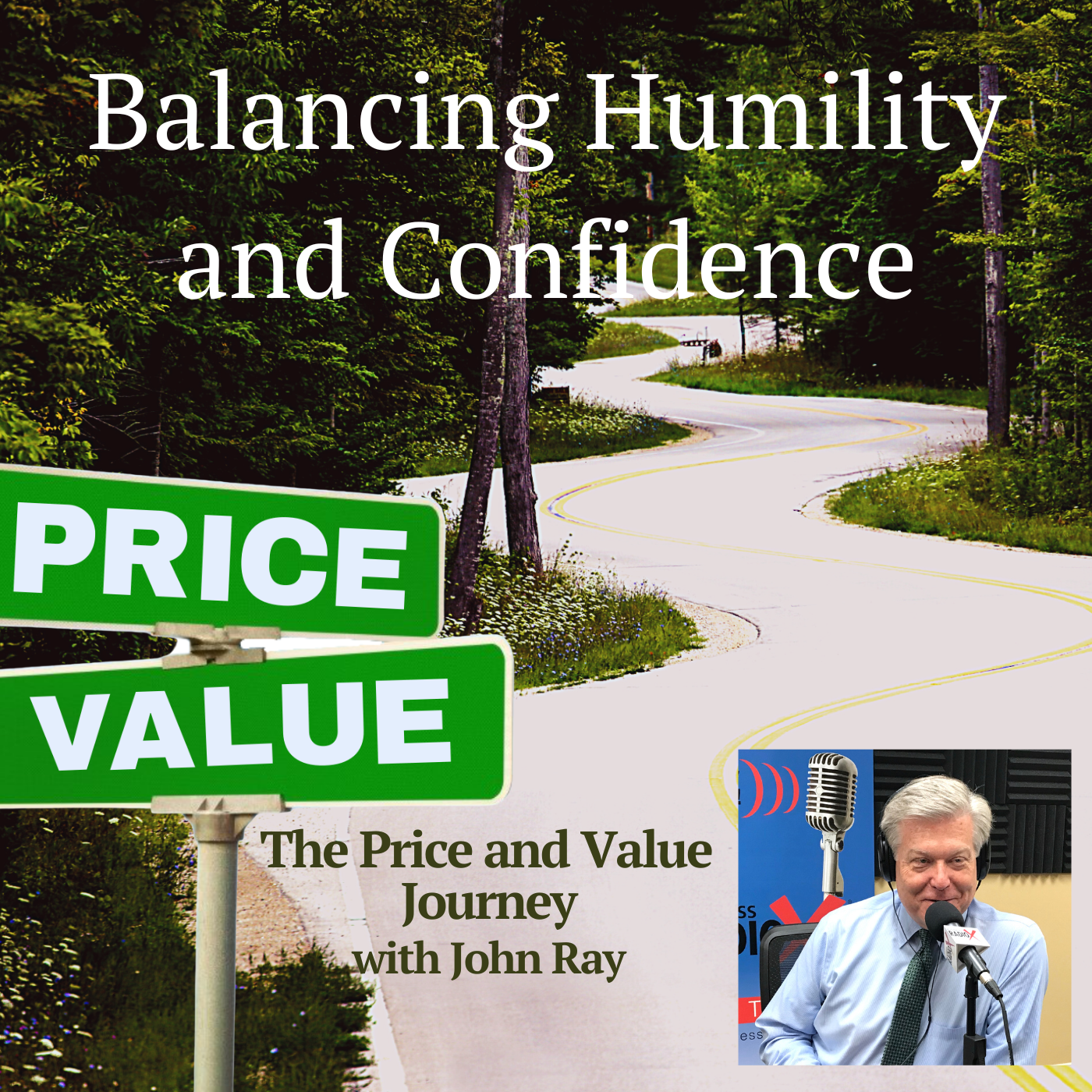
A story about kids’ waffles, and how professional services providers miss the opportunity to price based on client context, while in doing so treat their best clients unfairly. The Price and Value Journey is presented by John Ray and produced by the North Fulton studio of Business RadioX®.

TRANSCRIPT

John Ray: [00:00:00] Hello again. I’m John Ray on the Price and Value Journey.

John Ray: [00:00:04] My son is a Waffle House fan and he has been since he was old enough to know what was going on. Waffle House is a 24/7, mostly breakfast, quick-serve restaurant based in Atlanta and covers a lot of the Southeast. In fact, there are some exits in the Atlanta and Georgia area where there’s a Waffle House on both sides of a freeway exit.

John Ray: [00:00:30] When my son was in preschool, his standard order at Waffle House for a long time involved a waffle. Kids’ waffles at Waffle House when he was that age were a dollar. Today, kids’ waffles with bacon are now $4.25. So this long ago gone value was indeed quite a deal. Now, if you’ve been to Waffle House, you know that all the waffles come out of the same-sized griddle, which you can see. So, it’s no big secret. A kid’s waffle, therefore, was priced significantly below an adult waffle even though the product was the same. Same waffle mix, same size, same plate, $1. This was a great deal for that age and stage when as much of the waffle ended up on the table and floor is in your kid’s mouth.

John Ray: [00:01:25] At a certain point, though, things changed on our Waffle House trips. One day my son, who was about five or six years old, changed his order. On this trip, I ask him, “Do you want your waffle?” He said yes. So to the server, I said, “A kids’ waffle for him.” He said, “Dad, I want an adult waffle.” The server stood there, her pen poised over her order pad, wondering what Dad’s next move was going to be. “The kids’ waffle and the adult waffle are the same size,” I said. “But, Dad, I want the adult waffle.” “It’s the same waffle, John. It comes out of the same griddle my waffle does you see over there.” And I pointed to the waffle griddle, but he was having none of it. “Dad, I want an adult waffle.”

John Ray: [00:02:21] Our server stood there looking at me with this expression on her face, something like, “Okay, Dad, what now? Now that you’re reasoning with a five-year-old is a complete flop.” At this point in that uncomfortable moment, when my kid is about ready to cry and the server is waiting, my willingness to pay shifted dramatically. “Okay. Get him an adult waffle.” I was suddenly willing to pay an adult price for that same exact waffle. If my server had told me that adult waffle prices had suddenly doubled for cheapskate dads with crying kids, I would probably have been willing to pay that amount.

John Ray: [00:03:07] A client’s willingness to pay is subject to context as well as the geography they find themselves in. Customers expect to pay more for a soda at the ballpark, for example, or the movie theater, even though it’s the same exact cola they enjoy for a lot less at home. Now, it should work the same way in services too. But sometimes professional services providers missed the mark on this.

John Ray: [00:03:39] Here’s a great example, and I’ve seen this repeatedly for bookkeepers who might have a client that walks in the door with the proverbial box full of receipts and they need to get their books in order by a certain time. And that certain time, of course, is going to require heaven and earth to be moved to get that done. Yet what does that bookkeeper sometimes do? Charge them the same amount and it’s often an hourly rate. That’s a whole nother subject. The same amount that they would a regular client always on time getting that bookkeeper everything that they need to keep the books in order on a regular basis.

John Ray: [00:04:28] A rush to completion time for the same work should command a premium price for the added benefit of speed. But sometimes service providers, like bookkeepers, for example, often miss this opportunity to differentiate. And it’s really not fair, frankly, even if those clients don’t know that your regular clients are paying the same price as the clients who are a mess and want something done at the last minute. It’s just not fair.

John Ray: [00:05:01] So, how does context work for the clients in your business? If you’re not factoring in context for your customers, your price is undoubtedly wrong.

John Ray: [00:05:15] I’m John Ray on the Price and Value Journey. Past episodes of this series can be found at pricevaluejourney.com. Or if you’d like to connect with me directly, you can do so by sending me a note, john@johnray.co. Thank you for joining me.


About The Price and Value Journey

The title of this show describes the journey all professional services providers are on:  building a services practice by seeking to convince the world of the value we offer, helping clients achieve the outcomes they desire and trying to do all that at pricing which reflects the value we deliver.

If you feel like you’re working too hard for too little money in your solo or small firm practice, this show is for you. Even if you’re reasonably happy with your practice, you’ll hear ways to improve both your bottom line as well as the mindset you bring to your business.

The show is produced by the North Fulton studio of Business RadioX® and can be found on all the major podcast apps. The complete show archive is here.

John Ray, Host of The Price and Value Journey

John Ray The Price and Value Journey
John Ray, Host of “The Price and Value Journey”

John Ray is the host of The Price and Value Journey.

John owns Ray Business Advisors, a business advisory practice. John’s services include advising solopreneur and small professional services firms on their pricing. John is passionate about the power of pricing for business owners, as changing pricing is the fastest way to change the profitability of a business. His clients are professionals who are selling their “grey matter,” such as attorneys, CPAs, accountants and bookkeepers, consultants, marketing professionals, and other professional services practitioners.

In his other business, John is a Studio Owner, Producer, and Show Host with Business RadioX®, and works with business owners who want to do their own podcast. As a veteran B2B services provider, John’s special sauce is coaching B2B professionals to use a podcast to build relationships in a non-salesy way which translate into revenue.

John is the host of North Fulton Business Radio, Minneapolis-St. Paul Business Radio, Nashville Business Radio, Alpharetta Tech Talk, and Business Leaders Radio. house shows which feature a wide range of business leaders and companies. John has hosted and/or produced over 1,100 podcast episodes.

Connect with John Ray:

Website | LinkedIn | Twitter

Business RadioX®:  LinkedIn | Twitter | Facebook | Instagram

Tagged With: bookkeepers, client context, John Ray, Price and Value Journey, pricing, professional services providers, solopreneurs, The Price and Value Journey, value

Decision Vision Episode 164: Should I Do Business in Ukraine? – An Interview with Dr. Leonid Kistersky and Dr. Tetyana Lypova

April 14, 2022 by John Ray

Ukraine
Decision Vision
Decision Vision Episode 164: Should I Do Business in Ukraine? - An Interview with Dr. Leonid Kistersky and Dr. Tetyana Lypova
Loading
00:00 /
RSS Feed
Share
Link
Embed

Download file

Ukraine

Decision Vision Episode 164: Should I Do Business in Ukraine? – An Interview with Dr. Leonid Kistersky and Dr. Tetyana Lypova, IPR Group

Dr. Leonid Kistersky and Dr. Tetyana Lypova, co-founders of Kyiv-based IPR Group and long-term friends of host Mike Blake, joined the show from Poland after safely escaping their home country Ukraine. They discussed their work, the evolution of their work as they cope with the realities of war, the way the war has reshaped the economy in Ukraine, the resiliency of the Ukrainian people, future opportunities in the country, and much more.

Decision Vision is presented by Brady Ware & Company and produced by the North Fulton studio of Business RadioX®.

During the show, Leonid and Tetyana offered several causes to which you can contribute to help the Ukrainian cause. Follow this link for more information.

Dr. Leonid Kistersky

Dr. Leonid Kistersky

Doctor of Economics, Professor, Founding Director of the Institute for International Business Development (Kyiv), Professor of Vasyl Stus Donetsk National University (Vinnytsia).

He worked as an economic adviser at the Secretariat of the United Nations Conference on Trade and Development (UNCTAD) in Geneva (Switzerland), was the founding chairman of the National Center for Implementation of the International Technical Assistance to Ukraine in the rank of a Minister. 

Leonid Kistersky has taught and conducted research at the world’s leading research centers and universities – Institute of Economics of the National Academy of Sciences of Ukraine, Konstance University (Germany), Brown and Stanford Universities (USA), Kyiv Institute of International Relations at Taras Shevchenko National University, Higher School of Business (Poland). 

Dr. Kisterski is the author and co-author of almost 150 scientific works, including 15 books and textbooks on international economic relations and business development, published in Ukraine, Switzerland, Russia, USA, Great Britain, Poland, Germany, Czech Republic and in other countries; international organizations such as the UN, the World Bank and the European Union also published his books and articles. 

Leonid Kistersky is a member of prestigious international and national scientific institutions and organizations – specialized scientific councils at the Kyiv Institute of International Relations and Vasyl Stus Donetsk National University, Ukrainian Association of International Economists, Ukrainian Academy of Economics, the Academy of Higher Education of Ukraine; for many years he was a member of the UN Scientific Council, editorial boards of foreign and Ukrainian scientific journals and publications.

In 2019, President of Ukraine Volodymyr Zelenskyy awarded Professor Kistersky the title of “Honored Worker of Science and Technology of Ukraine”.

LinkedIn

Dr. Tetyana Lypova (Tatiana Lipovaya)

Dr. Tetyana Lypova

Dr. Tetyana Lypova received a Ph.D. in economics from the Institute of International Relations of Taras Shevchenko National University of Kyiv. She is Associate Professor and Deputy Director of the Institute for International Business Development, which promotes business development and financing of business projects.

Graduated from the Faculty of Economics and Management of Vadym Hetman National Economic University of Kyiv. She underwent internships in the programs of Brown University (USA), the London Center for International Economics, and the Consortium for the Improvement of Education Management in Ukraine. 

Tetyana Lypova has worked as a trainer, consultant, expert analyst on numerous projects and programs of such international organizations as the EU, UNDP, World Bank, USAID, Know-How Found, and other leading international institutions.

Since 2015, she has also been working as the head of the licensing department at the international company IPR Group, where she provides advice to Ukrainian and foreign entrepreneurs on prosecution and registration of trademarks, enforcement of rights, licensing and franchising, protection of geographical indications, copyrights, dispute resolutions, etc. She works with national and international clients and companies on intellectual property protection in Ukraine and in post-soviet independent countries like Georgia, Armenia, Azerbaijan, Kazakhstan, Kyrgyzstan, Tajikistan, Turkmenistan, Uzbekistan, and Moldova.

She was a member of the Geographical Indications Committee of the International Trademark Association (INTA).

Tetyana Lypova is the author of about 60 scientific publications, including 5 monographs and textbooks on international economic relations, international technical assistance, and small and medium business development.

LinkedIn

Mike Blake, Brady Ware & Company

Mike Blake, Host of the “Decision Vision” podcast series

Michael Blake is the host of the Decision Vision podcast series and a Director of Brady Ware & Company. Mike specializes in the valuation of intellectual property-driven firms, such as software firms, aerospace firms, and professional services firms, most frequently in the capacity as a transaction advisor, helping clients obtain great outcomes from complex transaction opportunities. He is also a specialist in the appraisal of intellectual properties as stand-alone assets, such as software, trade secrets, and patents.

Mike has been a full-time business appraiser for 13 years with public accounting firms, boutique business appraisal firms, and an owner of his own firm. Prior to that, he spent 8 years in venture capital and investment banking, including transactions in the U.S., Israel, Russia, Ukraine, and Belarus.

LinkedIn | Facebook | Twitter | Instagram

Brady Ware & Company

Brady Ware & Company is a regional full-service accounting and advisory firm which helps businesses and entrepreneurs make visions a reality. Brady Ware services clients nationally from its offices in Alpharetta, GA; Columbus and Dayton, OH; and Richmond, IN. The firm is growth-minded, committed to the regions in which they operate, and most importantly, they make significant investments in their people and service offerings to meet the changing financial needs of those they are privileged to serve. The firm is dedicated to providing results that make a difference for its clients.

Decision Vision Podcast Series

Decision Vision is a podcast covering topics and issues facing small business owners and connecting them with solutions from leading experts. This series is presented by Brady Ware & Company. If you are a decision-maker for a small business, we’d love to hear from you. Contact us at decisionvision@bradyware.com and make sure to listen to every Thursday to the Decision Vision podcast.

Past episodes of Decision Vision can be found at decisionvisionpodcast.com. Decision Vision is produced by John Ray and the North Fulton studio of Business RadioX®.

Connect with Brady Ware & Company:

Website | LinkedIn | Facebook | Twitter | Instagram

TRANSCRIPT

Intro: [00:00:01] Welcome to Decision Vision, a podcast series focusing on critical business decisions. Brought to you by Brady Ware & Company. Brady Ware is a regional, full-service accounting and advisory firm that helps businesses and entrepreneurs make visions a reality.

Mike Blake: [00:00:22] Welcome to Decision Vision, a podcast giving you, the listener, clear vision to make great decisions. In each episode, we discuss the process of decision making on a different topic from the business owners’ or executives’ perspective. We aren’t necessarily telling you what to do, but we can put you in a position to make an informed decision on your own and understand when you might need help along the way.

Mike Blake: [00:00:45] My name is Mike Blake, and I’m your host for today’s program. I am a director at Brady Ware & Company, a full-service accounting firm based in Dayton, Ohio, with offices in Dayton; Columbus, Ohio; Richmond, Indiana; and Alpharetta, Georgia. I am Managing Partner of the Strategic Valuation and Advisory Services Practice, which brings clarity to the most important strategic decisions that business owners and executives face by presenting them with factual evidence for such decisions. Brady Ware is sponsoring this podcast.

Mike Blake: [00:01:16] If you would like to engage with me on social media with my Chart of the Day and other content, I’m on LinkedIn as myself and @unblakeable on Facebook, Twitter, Clubhouse, and Instagram. I also recently launched a new LinkedIn Group called Unblakeable’s Group That Doesn’t Suck, so please join that as well if you would like to engage.

Mike Blake: [00:01:39] Today’s topic is a topic that I hoped that I would address at some point over the course of this program in a very different context. But there’s a saying in Yiddish that roughly translates into, Man plans and God laughs. And there’s nothing particularly funny about this topic, but life does have a way of of bringing the unexpected.

Mike Blake: [00:02:06] So, as I record this on the 8th of April 2022, we are something on the order of about six weeks into the Russia-Ukraine war. And I recorded a podcast on this about five or six weeks ago with the topic Should I continue to do business in Russia and Belarus? And I explained my qualifications to address that topic in that episode. And I would encourage you to listen to that episode for that information as well as more.

Mike Blake: [00:02:39] And the only thing that I’ll rehash here – I dislike strongly that I have to address this topic in the way that it is being addressed – the early part of my career was formed by living and working in Russia, and in Belarus, and in Ukraine. And if there’s anything good that I’ve brought to the table professionally today in large part, it is due to the learning experiences of which I had the benefit those many years ago, long before I had any grey hair, that’s for sure, and I was a lot thinner then as well. But here we have it.

Mike Blake: [00:03:28] And so, the topic we’re going to discuss is sort of the flip side of the topic, instead of Should I do business with Russia and Belarus, I laid forth a case that I don’t think you should. And, frankly, I’m not sure it’s realistically feasible. I think it’s very difficult to do business there. I think that although no set of economic sanctions work perfectly, we have certainly made life very difficult for the Russians and for those who may seek to do business with them.

Mike Blake: [00:04:00] And if they choose to become a client state of China, as appears to be their choice at this point, there’s really nothing that we can do about that. But one thing we can do, and I guess I’m pleased to say that I’m pleased that we’re doing is we are supporting Ukraine, a fascinating country with a fascinating history that for most of its history has been a people much longer than it has been an organized country, if you will. It’s very paradoxical, and there are people who can discuss it much better than I can. We have professors that do that. But it’s a very interesting place with a very complicated history.

Mike Blake: [00:04:51] And as we’re now six weeks into the Russian invasion and we’ve witnessed extraordinary events, things that I think my generation -I’m going to be 52 next month – we never thought that we would see in my generation. We thought this is something that my grandfather would have dealt with, but certainly not today. But, again, here it is. History does have a tendency to be cyclical in nature.

Mike Blake: [00:05:27] And the discussion of whether or not to do business in Ukraine may seem bizarre. And I grant you, if you’re not all that familiar with Ukraine, its history, its geography, I can understand that. And that’s why this topic is so necessary, because Ukraine is a very big place. And although a large portion of the country – really, any portion of the country in those conditions be considered large – but something on the order of about 10 percent is an active war zone. And most of the country is under threat of some attack in some fashion by the Russian armed forces.

Mike Blake: [00:06:13] The fact of the matter is that (A) there has been a war going on since 2014, since the annexation of Crimea and the bizarre quasi independence of the Donetsk and Luhansk regions. That’s been going on anyway. It was simply sort of self-contained. But, of course, now it’s been expanded, and most of you have seen the pictures, you’ve read the news, in many ways it’s probably worse than is being reported on the ground, there before the grace of God go I.

Mike Blake: [00:06:50] But the reality is that there’s a lot of Ukraine that amazingly is still functioning. It is still a functioning state. Volodymyr Zelenskyy, their President, who, frankly, if I’m honest about it, I had a lot of doubts when he was elected. That a comedic actor would rise to the level of being able to govern such a complex country with a very complex political structure as Ukraine. And, now, he’s being mentioned in the same words as Winston Churchill. So, it really goes to show you what I know, which is probably absolutely nothing.

Mike Blake: [00:07:28] But all of a sudden now we all know who he is. We all know his famous quote that he says he wants weapons, not a ride. And, you know, this is a country that’s not going away silently by any stretch of the imagination.

Mike Blake: [00:07:46] And I think I owe it to you as the listeners to help you understand what the opportunities are to do business in Ukraine, not just from a humanitarian perspective, not just from a moral and ethical imperative, although those do still exist. But the country is amazingly, with all the things that are happening to it, that they are still open for business.

Mike Blake: [00:08:17] And joining us today are two longtime dear friends of mine, who I was very relieved to speak to only a few days ago. I realized that they had managed to escape the country after their home came under attack. And joining us from Poland are Dr. Leonid Kistersky and Dr. Tatiana Lipovaya. Who, again, I’ve known for a very long time.

Mike Blake: [00:08:44] And they are co-founders of a company called IPR. That, among other things, is a law firm that provides counsel for companies seeking to do business from the West into the former Soviet Union. I’m not even sure what that region of the world is going to be called anymore. I think it’s going to be different. I just can’t predict what that’s going to be. And their specialization has long been about protecting Western intellectual property rights in those countries, anti-counterfeiting in particular.

Mike Blake: [00:09:25] As well as working with a sister company, where I guess I was sort of an entrepreneur or teacher in residence, for lack of a better term, for about two-and-a-half years, The Institute for International Business Development, whose focus has been to serve as a bridge between Western companies seeking to learn about how to do business in that region, how to take advantage of the opportunities that that region has held and, I think, will hold at some point in the future – God knows only when – as well as how to navigate the many risks that region holds.

Mike Blake: [00:10:07] And they’ve just been fantastic people. And I’m delighted – but really proud – to call them my friends. By way of a little bit of a professional introduction in no particular order, Dr. Leonid Kistersky got a lot of things to his claim to fame. I could read a very lengthy bio, but I don’t want to do that because I want to get to questions.

Mike Blake: [00:10:35] But suffice to say that he was the First Minister of Foreign Economic Relations in the First Post-Independent Ukrainian Government of the early 1990s. He has been a visiting instructor at places such as Brown University, Stanford University, and Columbia, there are others that I’m probably forgetting. And he’s been doing this for about 50 years.

Mike Blake: [00:11:01] I couldn’t believe it when I looked up his bio, he does not look like he’s as old as his calendar would say. Hedoesn’t sound like he’s that old either. I look and sound older than the guy does. So, Leonid, whatever you’re doing, keep doing it because God knows it’s helping you.

Mike Blake: [00:11:19] And he was also recently the recipient of Ukraine’s Highest National Honor in Support of Science and Technology for the Republic of Ukraine.

Mike Blake: [00:11:31] Dr. Tatiana Lipovaya is the Head of Licensing and Trademark at IPR, where she’s been advising national and international clients on trademark filing, prosecution and enforcement, domain name infringements, unfair competition assignments, licensing, and all the work that goes with that. Has done a tremendous amount of work, in particular with some places that are very hard to do business in, Kazakhstan, Georgia, Armenia, Azerbaijan, Kyrgyzstan, et cetera.

Mike Blake: [00:12:05] And she, herself – I can’t believe it’s been this long. We knew each other when we were much younger – accumulated over two decades of experience in not just the legal aspect, but also becoming a top notch business advisor and holds a PhD in International Economics. She’s a member of INTA as well as the Ukrainian Association of International Economics. Has graduated with economics and management degrees of the Kiev National Economic University.

Mike Blake: [00:12:42] The firm itself has been in operation since 1999, and the sister group, IIBD, since before that, since at least the early 1990s. And I guess fittingly, it’s always seemed to me to be a very awkward translation, but the title of Ukrainian’s National Anthem is Ukraine is not yet perished, and neither has their firm. And I think when you think about what they’re doing, how they continue to do business in spite of all that’s going on, it gives you an appreciation as to why the Russians have, frankly, failed to achieve their military objectives by and large, and have redefined kind of what a Pyrrhic victory is, if you can even call it that.

Mike Blake: [00:13:34] I’m going to stop talking. I think I’ve established these are really good guests. You’re really going to enjoy talking to them. The more I talk, the less you hear from them. So, Leonid and Tatiana, welcome to the program. It is so good to see you and it’s so good to hear from you, more or less safe and sound. And I guess you’re joining us from Poland.

Leonid Kistersky: [00:13:57] Yes. Mike, thank you very much for such a very kind introduction. And sometimes I think that you know more about us than we do. Anyway, we can see that you to be, not only our long term friend, but we consider you also to be a founding father of our businesses and all endeavors since, as you rightly mentioned, we came together in the middle of previous millennium a long time ago.

Leonid Kistersky: [00:14:42] And in order to train Ukrainian entrepreneurs who set up Institute for International Business Development, which you helped to establish, and through which we started developing private business training people in Ukraine more than a quarter of a century ago already. And, in fact, IPR Group, it’s probably sort of a business which has been set up by the Institute for International Business Development and helped to develop even to a much more important private business now than the Institute for International Business Development is.

Leonid Kistersky: [00:15:42] So, both of us try to combine private business since I keep on provide consultancy before the war, of course, for governmental institutions, for international companies, for Ukrainian private businesses, just helping them to establish and to use high ethical norms in business, and was helping to develop high moral values of them, like personalities and like entrepreneurs. And still combining my activities with consultancy and private business.

Leonid Kistersky: [00:16:33] I still until now keep on training it to Ukrainian universities, Kiev National, Taras Shevchenko University, and Donetsk National University named after Vasyl’ Stus, which, eight years ago, moved from Donetsk to Vinnytsia in order to continue its activity. And they needed specialists in international economic relations. And that’s why I willingly joined them. And still I keep on doing this online until today and will continue to do so.

Leonid Kistersky: [00:17:25] Well, Tatiana is more a private businessman now.

Tatiana Lipovaya: [00:17:30] Businesswoman.

Leonid Kistersky: [00:17:33] Businesswoman, yeah. And probably she will tell herself about what is she doing in the IPR Group.

Tatiana Lipovaya: [00:17:45] I actually deal with the trademarks protection, prosecution. So, our IPR Group company, it’s a Ukrainian established and based in Ukraine business, but we deal with a lot of other countries. We provide our services in former Soviet Union countries, like Mike already mentioned, Georgia, Tajikistan, Turkmenistan, and other countries which are not accessible for foreigners because they have special laws, they have special rules which you need to know to deal with these countries, especially for business and for also intellectual property rights protection, there are a lot of specific in these countries.

Tatiana Lipovaya: [00:18:39] And I’m really happy that I’m involved in such kind of business. I received a lot of new skills. And all the time develop myself, not only as a business consultant, which I used to be for the last 20 years, but now I developed myself as a lawyer and as a specialist in intellectual property rights protection.

Tatiana Lipovaya: [00:19:11] So, it’s also important for developing business, because intellectual property rights is the very important part of the business development, especially for new companies, for companies who involve the new technologies, would like to protect their property rights, patents licensing. So, they need a lot of advice and a lot of support for doing business in our countries.

Leonid Kistersky: [00:19:48] So, we continue our businesses.

Mike Blake: [00:19:52] And I think that’s remarkable and I think that’s one thing I want to make sure our audience hears, is, how are you continuing your business?

Leonid Kistersky: [00:20:07] Well, as you know, we had to move from Ukraine further to west, west, west, and so we appeared in Poland. And, currently, we are in the City of Nowy Sącz in Poland.

Leonid Kistersky: [00:20:28] Of course, we used to live some 30 kilometers from Kiev, in the City of Vasylkiv. Probably does ring a bell for you since press wrote a lot of the city there was the [inaudible] and airport and the tank farm which was bombed every day, and we were living nearby. In a couple of weeks, the situation at that time became dangerous to my mind. And we read that Russian, you know, monsters rush into houses, kill people, rape women and girls. So, that’s why we drove to the west in a couple of weeks after the start of the Russian invasion.

Leonid Kistersky: [00:21:30] So, we were going west and west, and so Tatiana’s colleague wrote us when we were in Lviv, and we were invited to live three weeks in their house while her kids were away. And so, during this time, we somehow managed to do now business, establish again contacts to start doing business online. And so, moving in, we rented a small apartment in Nowy Sącz. There is a famous school of business here where I taught 25 years ago, again for some time, and my colleagues helped us to rent an apartment here.

Leonid Kistersky: [00:22:26] So, there are, of course, difficulties in doing business outside of Ukraine, but in Ukraine. But still it is quite possible as far as teaching is concerned, it’s almost no difference. You have good internet, you have good connections, and you keep on doing it online.

Leonid Kistersky: [00:22:52] With Tatiana’s business, it is more complicated. Tatiana probably will tell about it herself. Not only our businessmen, but also our government on a daily basis introduces new opportunities first to revive businesses in Ukraine and to further develop there.

Tatiana Lipovaya: [00:23:26] As for my business, we understood that in such situations which all of us need to move from Kiev to other places, some of us still stay in Ukraine. For example, in the western part of Ukraine, some of our staff – and some of our staff means women – who can leave Ukraine, they are moved to Poland and to other countries in the Western Europe. We understand there’s a weak possibility to keep our business awake. It’s only the distance, the remote work on a distance. It’s online work. Hopefully, our kind of business, because we provide the services for international companies, our business allowed us to work remotely.

Tatiana Lipovaya: [00:24:30] So, our technical specialists did as much as possible to secure our business, our services, emails, our database, to put them to the safe servers to support our everyday activities. We’re happy that the Government of Ukraine, especially the national body, which is responsible for intellectual property rights protection in Ukraine, allowed us to work and link to them also online. So, they provided the system which allowed us to apply and file trademarks, patents, other intellectual property requests to the office online without providing papers.

Leonid Kistersky: [00:25:37] You mean Ukrainian Patent Office?

Tatiana Lipovaya: [00:25:40] Yes. I mean the Ukrainian Patent Office, which still works, still keep their activities, and still provide full range of services to the clients and allowed us, as the patent attorneys, to conduct our activities on a very good level.

Leonid Kistersky: [00:26:03] In fact, Tatiana already mentioned a very good example of the Ukrainian State Patent Office, which provides all opportunities for this business to be on the surface, so to say. And private entrepreneurs, as you taught us, still used to take care of themselves. Moreover, I would like to say that we have a lot of big and middle sized businesses in Ukraine.

Leonid Kistersky: [00:26:38] And, now, our government helps them materially to move from those parts of our country, which is still bombed by Russian monsters, to move to the center of Ukraine, to the more safe areas. And until today, several hundreds of such businesses were moved to central part of our country and they keep on functioning. Also, government introduced several important privileges for businesses to function.

Leonid Kistersky: [00:27:20] Now, this is decreased taxation. For example, when I saw the consultant, I owned some small money and there is so-called simplified system of taxation. I was paying just 5 percent from turnover. Now, during the war time, it was brought down to 2 percent only. And we keep on paying taxes. We keep on paying now for our communal services for the apartments.

Leonid Kistersky: [00:28:02] Also, businesses were given an opportunity to have access to cheap credits, sometimes interest free credits. Tatiana, what is the amount of such? Several million hryvnia. Effective cost of hryvnia to U.S. dollar is approximately, roughly, 29 hryvnias per U.S. dollar. And you can get several million hryvnias of interest-free credit. So, there are simplified now procedures for registering your business, for reporting about your financial and other situations.

Leonid Kistersky: [00:28:53] So, I would like to say that it’s very sad that really this awful war triggered such support of private business in Ukraine. But, still, I am absolutely sure that after our victory, the war is over, business in Ukraine will be developing at a very high speed, especially internationally.

Mike Blake: [00:29:24] So, you said something I had not even thought of, and it reminds me of history. Because in World War II, the Soviet Union had to move entire industries east, out of the way of Hitler. And it hadn’t even occurred to me, but I suppose in a way that’s actually a skill and, in fact, if factories were built during Soviet times, they may have been designed to be moved again in case of an invasion. It’s history repeating itself.

Leonid Kistersky: [00:29:57] Yes, the history repeating. But to tell you very openly, we did not expect that this history repeats in Ukraine. We didn’t expect it.

Mike Blake: [00:30:12] Of course. And you didn’t think you’d be moving out west.

Leonid Kistersky: [00:30:18] I think [inaudible] how we cope with it.l

Mike Blake: [00:30:18] But I hadn’t even thought of that, but you’re right. I mean, there’s historical precedent that entire industries, factories can be picked up and simply moved to a part of the country that is not as close to the combat area.

Leonid Kistersky: [00:30:36] Look, now combat area, it’s all over Ukraine now. Of course, Russian bombed the country or fired missiles on a random basis. That is done deliberately to create panic, to create atmosphere of fright. But, still, people in Ukraine somehow coped with it, and business continues functioning despite. This is one of the purposes of Russia now, to destroy Ukraine.

Leonid Kistersky: [00:31:24] Again, also like you, Michael, I like history. And very recent history after the dissolution of the Soviet Union. And when Putin came to power, on many occasions, including internationally, he was saying that dissolution of the Soviet Union is the greatest, probably, awful event of the 19th Century. He did not mention First World War. He did not mention starvation. He didn’t mention Second World War. A lot of original wars. But dissolution of the Soviet Union. And this is his maniacal idea to restore it in some form. And, of course, without Ukraine, that is not attainable. And that’s why he is trying to do away with our country. But as you rightly said, he failed and continues to fail.

Mike Blake: [00:32:36] So, a thought that occurred is one of the things that already is resulting from the war, and I think will result for a generation, is that, economic ties between Russia and Ukraine will be effectively cut off. Forgive and forget is one thing. But I think there’s decades of healing that’s going to have to take place, I think, for that to occur. Belarus the same.

Mike Blake: [00:33:13] And as you know, oddly enough, you guys are as pro-Russia as any Ukrainians I’d ever met. You always took a very pragmatic view. Why do we want to make a big enemy? There’s no reason to do that. Not that it matters. I’m an American citizen, but I always thought it was smart. But now this has happened.

Mike Blake: [00:33:36] And there are certain things that Ukraine is not going to be able to get from Russia or Belarus anymore. Are there opportunities now for other countries to supply those things? What are those things that you can’t get from Russia anymore? Is it steel? Or is it fuel? Or is it something else? And are there opportunities for another country now to come in and and fill the void that is left because the Russia trade link has been cut off?

Leonid Kistersky: [00:34:09] Yeah. That’s true. Because sentiments in Ukraine against Russia now are self-understandable, because our country to no extent was anti-Russian. We treated Russia in a very friendly way. And we did not expect such a cruelty from their side and such behavior to do away with our country. And, now, I am, and all of us, are so anti-Russian and we cannot forgive what they did. And during my lifetime, I will never forgive them. And probably that will take several generations, somehow, to cool down with our sentiments towards Russia.

Leonid Kistersky: [00:35:11] Because a recent statistical polls indicated that now about 85 percent of Ukrainians see no way of improving the relations with Russia. And the other 12 percent just are still hesitant and they think that maybe it may take a generation or 10, 15 years. And only two or three percent believe that it could be repaired very soon. So, unfortunately, Russia should blame itself only for such a cut off of all kind of relations with Ukraine and with other countries.

Leonid Kistersky: [00:36:05] And so, I would like to separately single out one sphere that we have lost Russia and they have lost us for generations. But we gained a lot of friends, other friends. We are so grateful to Poland, which hosted 2.5 million Ukrainians now. And we feel such friendly relations and they take care of Ukraine and they support us. Also, the United Kingdom.

Leonid Kistersky: [00:36:47] Separately, I would like to mention the United States, which is the country with which we have long term friendly relations, including a lot of individuals. I would like to mention Al and Cher who introduced us to each other, and we continue this cooperation and friendly. Of course, the United States is the world leader, which provides moral, economic, military, all types of support. And other countries, I cannot just mention every country, a lot of them.

Leonid Kistersky: [00:37:29] That is why we are very optimistic about the outcome of this war and the prospects of business development in Ukraine. Michael and John, you have our invitation to meet in Kiev after the victory in this war and you will enjoy our hospitality.

Mike Blake: [00:37:56] I’ll be on the first plane.

Leonid Kistersky: [00:37:59] Yeah.

Mike Blake: [00:38:00] I’ll be on the first plane. So, now that trade has been cut off, what did Ukraine used to import from Russia that it can’t get anymore and now has to go to a different source?

Leonid Kistersky: [00:38:14] First of all, oil and gas. Anything else is of meager importance. It could not be even mentioned. And so, moreover, they are deliberately bombing and destroying our tank farms. They bombed one of them, I mentioned near Vasylkiv, where we used to live before the war for several years, for almost ten years already. And so, they wanted to cut off, not only supplies of oil, but also to destroy available oil tanks in our country.

Leonid Kistersky: [00:39:06] And we started to receive gas on a reverse basis from Europe. And, again, I would like to mention the very important initiative of the United States is to discontinue buying oil, gas, and coal from Russia, which is extremely important. But more so, United States announced, to put it correctly, the availability of their strategic oil reserves for the international market. And, you know, it’s like a positive signal for the market and other countries join this initiative. And, now, about 30 countries, including the United States, made their strategic oil reserves available for the international market.

Leonid Kistersky: [00:40:11] So, due to this, our military drivers and other sectors of economy started receiving gas – I mean, petrol. Meaning petrol, you call it gas in the United States. But for us, gas is gas, petrol is petrol. So, we started receiving it by railways, through automobile supplies in the country. Of course, we felt sometimes, you know, deficit of petrol in Ukraine, but still it is in the quantity sufficient for the country to survive now. So, energy resources, of course.

Leonid Kistersky: [00:41:07] Same thing with Belarus. But we were supplying services of electricity for Belarus, which we do not do anymore. And we discontinued our electricity system from Russia a couple of months ago. And it took Europe, European Union, only about three days to include Ukraine into the European system of electricity. And so, it functions properly. So, step by step, we are discontinuing our ties and our business links with Russia, Belarus, and other countries from former Soviet Union, and switched it to Europe and to the United States. Among the countries, of course, I would like to mention Canada and North America.

Mike Blake: [00:42:09] Of course, there’s a very large Ukrainian diaspora in Canada, especially in the western part of the country.

Leonid Kistersky: [00:42:15] Which raised their voice and provide support.

Mike Blake: [00:42:20] So, another challenge to the economy must be labor, right? Four million people have left. Ten million people have been displaced. We don’t know how many people have been killed. I’m guessing 100,000 people have probably been killed. We just can’t count them yet. And pretty much almost every able bodied man, whatever they were doing six weeks ago, they’re now holding a gun. And many women as well, by the way. There’s a lot of reports that women are also in active military service as well. And is that impacting simply the supply of labor to actually do economic things?

Leonid Kistersky: [00:43:11] Of course, this is an issue which is widely discussed, but there are speculations how many people were killed in Ukraine. I would like to say that especially we have heavy casualties among the civil population, of course. Probably today you’ve heard that they bombed the railway station killing several thousands of people and wounding more than 100.

Leonid Kistersky: [00:43:52] But our economy now is being restructured. And, again, it’s an irony that war forces us to reform at a quicker pace, introducing higher technologies which are not so labor intensive. And that is the way out of the situation. More so, as I see from internet, IPR Group, from Tatiana’s business, that ladies now do all this business. Even sometimes Tatiana invites our 18 year old daughter, Olga, to join. So, even kids, even grown up already with kids, but, still, they do what they can to make the country not to feel the deficit of a labor force. That is, high technologies, less labor important technologies. And, of course, our female population started to do a lot of work, which they were not even thinking about before the war.

Mike Blake: [00:45:13] So, you mentioned something that surprised me positively. I think you said the hryvnia is something around 29 to the dollar, is that correct?

Leonid Kistersky: [00:45:26] Yes. That is correct.

Mike Blake: [00:45:29] So, it’s fairly –

Leonid Kistersky: [00:45:31] 29.3 it seems to be.

Tatiana Lipovaya: [00:45:33] [Inaudible].

Leonid Kistersky: [00:45:34] Yeah.

Mike Blake: [00:45:35] 29.3.

Tatiana Lipovaya: [00:45:37] It’s by the National Bank.

Mike Blake: [00:45:40] So, is the banking system able to still function? It sounds like it is.

Leonid Kistersky: [00:45:51] Yes. Look, again, I like very much comparison and historic examples like you. And before the war, the exchange rate of hryvnia-dollar was something 27.9, about 28. Now, it’s 29.3. It says that our government understands the basics of the economy. If we recollect historically, Adam Smith, who wrote his famous book some 250 years ago, he said, “Stable exchange rate is a fundamental principles of successful functioning of any economy.” And he explained why.

Leonid Kistersky: [00:46:51] So, our National Bank maintains stable, despite there is higher inflation – of course as compared before the war period – but still the exchange rate is very stable.

Leonid Kistersky: [00:47:10] Examples, we keep on working. We receive hryvnias on our business cards, and we can pay by those cards in Poland. Our National Bank agreed with the Polish banking system about the exchange rate, which is fair enough, and so we can pay by hryvnias from our business cards in Poland. Tatiana, maybe you will tell the rest.

Leonid Kistersky: [00:47:46] For businesses, there are still some problems since the beginning of the war [inaudible] because budgetary deficit and, again, a lot of countries support us on a grand basis supporting our budget. But, still, our Ministry of Finance and National Bank are doing a lot of useful things on their own. At the beginning of war, they stopped currency operations, which was not very useful for business but, still, it helped our economy to survive and our banking system to function. And today, it was announced that they are easing those regulations in order to allow our businesses to function internationally to make payments and to receive payments.

Mike Blake: [00:48:43] So, that means that they’re loosening capital controls.

Tatiana Lipovaya: [00:48:46] Yes.

Leonid Kistersky: [00:48:47] Yes. Exactly, Michael. Exactly. Yeah. Despite there are still some limitations, but they are also because –

Tatiana Lipovaya: [00:48:59] Emergency goods, medical goods, and for humanitarian purposes. They just drove down this –

Leonid Kistersky: [00:49:06] Easing, easing regulation.

Tatiana Lipovaya: [00:49:08] And they allowed for payments in the foreign currencies as well.

Leonid Kistersky: [00:49:15] That is true, especially for critical sectors of our economy, like agriculture, chemistry, and others.

Tatiana Lipovaya: [00:49:27] It’s a first step for the future.

Leonid Kistersky: [00:49:33] For future business development internationally.

Mike Blake: [00:49:40] So, as a matter of history, any time that there’s a great disruption, such as a war, that also sometimes creates opportunities in its aftermath. And I’m curious, what do you see will be the opportunities of a post-war or post-victory Ukraine?

Leonid Kistersky: [00:50:09] I am very optimistic about those opportunities. Of course, for those weeks, maybe weeks or month ahead of us, in this state of war, I hope people understand the importance of real values. You cannot imagine how people in Ukraine became friendly to each other. I was always surprised in the United States or in Western Europe, people were smiling to each other, helping each other. When driving, they’re making friendly gestures. They are just letting all the cars to go.

Leonid Kistersky: [00:50:55] It was not the case in Ukraine before the war, as you probably know. But, now, it took us several weeks to cover this huge distance. So, before war period, I see a period of very quick reconstruction of our country. Of course, our government and our administration are ready to take steps to achieve agreements with countries, with companies for reconstructing Ukraine.

Leonid Kistersky: [00:51:35] And remember that some 22 years ago, I published an article – it is available in English – Marshall Plan for Ukraine. At that time, I was thinking of reforming the economy of Ukraine. But, now, it will be a real Marshall Plan for Ukraine to reconstruct the country, and ways of reconstruction, and ways of further development will be unprecedented, believe me. And Ukraine may become, in some near future, a member of the European Union. And we have support of key players in Europe and in North America. So, I’m very optimistic about this period. Of course, war changed people in my country in a very positive way.

Mike Blake: [00:52:33] I’m talking with Dr. Leonid Kistersky and Dr. Tatiana Lipovaya. And the topic is, Should I do business in Ukraine? So, I’m going to ask you a very unfair question, but I want to know the answer. I know our listeners want to know the answer. And that is, how do you think this ends? What does it look like? Is there a total Ukrainian victory? Is there a return to the 2014 situation? Is it something else? How does this end?

Leonid Kistersky: [00:53:10] Michael, it’s one of the most probably difficult questions for me to address. And I could just mention that there are possible scenarios. If we receive more weapons, more support, then maybe rather quickly with our victory. Of course, Russia behaving in such a monstrous way because before recently, nobody dared to protect itself and to give them heavy blows, which they received from Ukraine.

Leonid Kistersky: [00:54:06] If we come back to a more remote history, I always remember an article so-called Long Telegram of the prominent American Historian Diplomat George Kennan. In his Long Telegram, who explained the essence of Russian empire and of the Soviet Union. And Russia inherited the Soviet Union efficiently, all of them. So, it will be attacking and attacking its neighbors because of its traditions. They are not capable of creating something on their own. They are capable of destroying other people.

Leonid Kistersky: [00:54:58] Let’s take now very recent history, for example, 1993, occupation of part of Moldova, Pridnestrovian so-called, non-recognised artificial republic. Then, ’08 the War in Georgia, they unleashed and occupied Abkhazia and South Ossetia. Then, Syria, other countries, some other continents, and 14 that is occupation of Crimea and part of Donbas. And at that time, there was their market. They’re in charge of Ukraine, which, in fact, allowed infiltrating our country by Russian agents.

Leonid Kistersky: [00:55:58] So, now, it’s different. And February 24, Russia attacked Ukraine, it received severe blows and keep on receiving it. So, end of the war depends decisively, probably not on negotiations, but on the performance of our military, and our territorial defense, and on patriotic support of all Ukrainian population, which is practically unanimous now. So, it may take more time. It may take several weeks or several months.

Leonid Kistersky: [00:56:51] I don’t like to see freezing this conflict because our military are in a position, not only to defend, but also to attack. And, now, I see that Western democracies at least started supplying heavy weapons to Ukraine, which may be a decisive factor in achieving a victory in the quite predictable future. Anyway, I will inform you. I’ll be the first to inform you that this is end of war. But end of war could be only a victory for Ukraine.

Tatiana Lipovaya: [00:57:39] Yeah.

Leonid Kistersky: [00:57:41] As our president told this.

Mike Blake: [00:57:44] I think not many people would doubt you at this point. Underestimate Ukraine at your peril, I think, is probably a good way to put this and maybe a good way to wrap this up. I know it’s late there. You have a lot of other things that you need to take care of.

Mike Blake: [00:58:08] But I would like to ask you this, and that is, many people are asking me – and I’m helping them as best I can, but you probably have better information – people, individual citizens, in the United States do want to donate money or other things to support Ukrainian refugees, to support Ukraine’s struggle against Russia, are there organizations that you recommend that you think are the most helpful that provide the most direct assistance on the ground?

Leonid Kistersky: [00:58:44] Yeah. First of all, Michael, when we will prepare the information which we promised to do after the show, we will probably give you official addresses how to do it. But may I tell you what Tatiana and I are doing in this respect. We are not rich people, as you know, but at least we are well to do, I would like to say some middle Ukrainian class.

Leonid Kistersky: [00:59:19] First of all, we donate money to official sides of Ukraine for our military. Then, we know a lot of individual families whose husbands or fathers now in the military of Ukraine and they require some equipment, some arms. And the people who know those family, we put our money together in order to buy what they require. They have all these devices which make it possible to see during night time, for example, the necessity of such.

Leonid Kistersky: [01:00:16] Then, we like animals very much, and we have a cat here in Poland. We took it together. We said that all of us or nobody. So, all of us. And we donate money to special organizations which support animals. Plus, we buy tickets for zoos in various parts of Ukraine. They appeal, “Please buy tickets for our zoos online. Transfer money for buying tickets.” And they feed their animals.

Leonid Kistersky: [01:00:55] So, there are a lot of opportunities how to support Ukraine, and probably people in the United States they would prefer to support it in some official way, which supports directly Ukrainian military or humanitarian support. And we will send those addresses to you, so you could provide your fellow citizens with those reliable addresses.

Mike Blake: [01:01:33] Very good. Well, we’ll make sure that those get published when we publish this show next Thursday.

Leonid Kistersky: [01:01:40] Yeah.

Mike Blake: [01:01:44] Leonid, Tatiana, I can’t tell you how this is a confusing time. It’s a very difficult time, obviously. But I truly thank God that you and Olga are safe. I know many others are not. And I wish I could help them, but I can’t. But I can at least speak to you. And I cannot imagine what you’re going through physically, emotionally. But, again, if there’s any way that I or my family can help or our community here – and we do even have a Ukrainian church here in Atlanta – please let us know. I would like to know.

Mike Blake: [01:02:33] But you’ve shared, I think, a lot of information that I don’t think gets reported here. And I’m extremely grateful. [Foreign Language] that you agreed to come on our show. Yeah, I still remember a little Ukrainian. In fact I find it very hard to speak Russian right now. It’s emotionally very difficult. But thank you very much for, again, being on the program and for being patriots.

Mike Blake: [01:03:06] And I think you guys realize and we realize in America that the war for, in many cases, humanity’s soul is being fought in Ukraine. We always thought that it would be in Iraq over oil for something like that. But it turns out it’s in Ukraine. And, you know, we all are pulling for you. And we just thank you for your courage. We admire you for your courage and the sacrifice you’re making. And, hopefully, you’ll achieve a swift victory and get this thing over with and send a message that this just was a bad idea from the outset.

Leonid Kistersky: [01:03:49] Yeah. Michael, may I say that we are very grateful to our American friends, Michael Blake and John Ray, and to all of the American people who are interested in Ukraine, who support Ukraine. And so, this is minimum what we can do now for American-Ukrainian development sharing our information with you. And we will be more than happy to do it in the future. We are so grateful to you. Thank you, guys.

Tatiana Lipovaya: [01:04:28] Thank you very much.

Mike Blake: [01:04:30] Well, all right. Thank you very much. And have a pleasant evening. And we will tell you when the podcast is ready so that you can see it and listen to it and, hopefully, share with other people that you think will be interested and have an impact.

Leonid Kistersky: [01:04:44] Thank you very much, Michael.

Tatiana Lipovaya: [01:04:45] Thank you, Michael.

Leonid Kistersky: [01:04:45] And we will try to share this show with our Ukrainian contacts back in Ukraine to demonstrate to everybody that America fully supports us on all levels. Thank you.
Mike Blake: [01:05:01] [Foreign Language]. Thank you very much and all the very best.

Leonid Kistersky: [01:05:08] [Foreign Language].

Tatiana Lipovaya: [01:05:10] [Foreign Language].

Mike Blake: [01:05:11] Okay. That’s going to wrap it up for today’s program. And I’d like to thank Dr. Leonid Kistersky and Dr. Tatiana Lipovaya so much for sharing their expertise with us.

Mike Blake: [01:05:21] We will be exploring a new topic each week, so please tune in so that when you’re faced with your next business decision, you have clear vision when making it. If you enjoy these podcasts, please consider leaving a review with your favorite podcast aggregator. It helps people find us so that we can help them.

Mike Blake: [01:05:38] If you would like to engage with us on social media with my Chart of the Day and other content, I’m on LinkedIn as myself and @unblakeable on Facebook, Twitter, Clubhouse, and Instagram. Also, check out my new LinkedIn Group called Unblakeable’s Group That Doesn’t Suck. Once again, this is Mike Blake. Our sponsor is Brady Ware & Company. And this has been the Decision Vision podcast.


Tagged With: Brady Ware & Company, Decision Vision, Dr Tetyana Lypova, Dr. Leonid Kistersky, hryvnia, Mike Blake, Ukraine

LinkedIn For Professional Services Providers: An Interview with Gregg Burkhalter, The “LinkedIn Guy”

April 14, 2022 by John Ray

LinkedIn
North Fulton Studio
LinkedIn For Professional Services Providers: An Interview with Gregg Burkhalter, The "LinkedIn Guy"
Loading
00:00 /
RSS Feed
Share
Link
Embed

Download file

Gregg Burkhalter The LinkedIn GuyLinkedIn for Professional Services Providers: An Interview with Gregg Burkhalter, The “LinkedIn Guy”

Gregg Burkhalter, dubbed “The LinkedIn Guy” by his clients, joined host John Ray to share his advice about effective relationship building and personal branding on LinkedIn. Gregg talked about successful LinkedIn strategies for time-starved professional services providers, creating and sharing content, the value of being genuinely helpful without an agenda, and much more. The Price and Value Journey is presented by John Ray and produced by the North Fulton studio of Business RadioX®.

Gregg Burkhalter, Personal Branding, LinkedIn Training, Speaker

Gregg Burkhalter
Gregg Burkhalter, Personal Branding, LinkedIn Training, Speaker

It is very important to have a strong personal brand. Companies understand that their employees’ brand contributes largely to the company’s success.

Everyone has a personal brand. Your brand is built one of two ways: 1) By default: do nothing and you have to settle for how it turns out, or 2) By design: if you consistently focus on developing and building your brand, you can help shape the outcome.

LinkedIn has over 770 million users and is the digital home of your personal brand. LinkedIn is also a great place to build relationships and grow your professional network.

When you set up your LinkedIn profile, you’re defining what you’d like your brand to be. It is not your personal brand until others believe it. 

Gregg Burkhalter is a recognized authority on personal branding and LinkedIn. He has helped countless professionals in the U.S. and around the world define and grow their personal brand using LinkedIn.

Gregg is known by many as “The LinkedIn Guy”. He provides Personal Branding Coaching and LinkedIn Training via one-on-one and group training sessions, corporate presentations, and webinars.

Website | LinkedIn

TRANSCRIPT

John Ray: [00:00:00] Hello again, friends. I’m John Ray on The Price and Value Journey. I’m delighted to welcome an old friend today, Gregg Burkhalter. Gregg is known as the LinkedIn Guy, and that’s actually a name his clients and friends have given him because Gregg, in their eyes and I think you’ll hear as we go along on this show, is a recognized authority on personal branding and LinkedIn.

John Ray: [00:00:25] He has helped countless professionals in the U.S. and around the world define and grow their personal brand using LinkedIn. Gregg spent the first part of his professional career behind the mic at radio stations in Savannah, Jacksonville, Charleston, and Atlanta. And following his radio years, Gregg worked in national music marketing and distribution.

John Ray: [00:00:48] And as I mentioned today, Gregg is known by many as the LinkedIn Guy. He provides personal branding, coaching, and LinkedIn training via one-on-one and group training sessions, corporate presentations, and webinars. And he does this for clients and groups all around the world. Gregg Burkhalter, welcome.

Gregg Burkhalter: [00:01:09] John Ray, thank you for having me on your podcast. It’s great to see you again. And I’ve got to tell you, I’m a fan of your podcast, as are a lot of people right now. And I’ve noticed the guests that respect your knowledge so much, they get on your podcast. I’m honored to be among those guests. Thank you.

John Ray: [00:01:26] Well, I’m delighted to have you. And this is a topic that when we started the show, I immediately marked down – and immediately marked you for it, of course – because LinkedIn is so important for small professional services providers, for solopreneurs that are mostly B2B services, so we want to talk to those folks.

John Ray: [00:01:52] But before we get into some of the details of that, I want to talk about you and a little bit more about your journey because you’ve got an advisory practice. So, talk about how you built that practice around the use of LinkedIn.

Gregg Burkhalter: [00:02:05] Correct. Well, my early career, as you alluded to, was in music and broadcasting. And like most professionals, you don’t usually work your entire career in the same job. You usually have some kind of pivot or transition.

Gregg Burkhalter: [00:02:17] Well, my pivot occurred a little over eight years ago when the company I worked for, my dream job, kind of disappeared. And I started my period of discovery to see what is the next chapter in the Gregg Burkhalter life. And, fortunately, that chapter unfolded without me actually searching heavily for it. I found myself, on occasion, doing some speaking on LinkedIn to some social groups or some community groups in the area. And what do you know? Within, like, a short period of time, I started having people ask me, “Would you come talk to my group about LinkedIn?”

Gregg Burkhalter: [00:02:48] Of course this would not have happened had I not had the courage – thanks to a friend – to set up my very first LinkedIn profile and began using it. And I began using it with a strategy that proved to be correct. So, now that I’ve started my consulting business, I’ve watched it grow, I’ve watched others get impact from the strategy and advice I share with them. And I’m on a run right now that I’m really enjoying this facet in my career. And I would love to see others be able to experience what a service provider journey looks like when you have a strategy and a focus on helping others being of value and providing a service that others want.

John Ray: [00:03:27] For you, it’s hard to separate LinkedIn versus your practice, because LinkedIn is your practice. I mean, for the rest of us, LinkedIn is just a tool for us in our practice. But just talk about, I guess, just the building of your practice and maybe what you’ve learned as a solopreneur, what you’ve learned along the way in terms of how you’ve done what you’ve done and how you’ve been successful.

Gregg Burkhalter: [00:04:02] Well, I can tell you, step number one is building relationships. Because you can’t do it on your own. And that is why LinkedIn is so valuable. LinkedIn is a great tool – as you said, tool – for building and nurturing those relationships. That’s the beginning process. Then, the next step is probably beginning to decide what is your message? What value do you bring to your service area? How do you want to present yourself? And then, once you kind of get that voice down, then you begin using LinkedIn to become part of the community.

Gregg Burkhalter: [00:04:36] Again, while you’re spreading your message, you’re not becoming a one trick pony where it’s all about you. Because LinkedIn, in all reality, is not about you. It’s about the value you bring to the community. And it’s about building and nurturing professional relationships that will create ongoing opportunities for you throughout your business and your career.

Gregg Burkhalter: [00:04:56] So, LinkedIn, for me, I can tell you personally is more than a tool. It allows you to feel more fulfilled as a person because it allows me in the most effective way possible to help other people and to accomplish what I’m trying to do.

John Ray: [00:05:10] So, before you were the LinkedIn Guy and you started that profile, you opened that profile, what you brought was a relationships first mentality to the platform. It seems like your philosophy of being in the world and doing business really meshed with what LinkedIn is. That’s not necessarily true for everyone that’s on the LinkedIn, though, of course.

Gregg Burkhalter: [00:05:36] That’s correct.

John Ray: [00:05:37] I mean, most – I won’t say most – a lot of folks that are on LinkedIn, it’s about either they’re on there to get a job, which there’s nothing dishonorable about that. A lot of us have been on there for that. Or they’re on their cell, whatever they’ve got, their service or whatever it is. But you really came to the platform with the relationships first mentality. And I guess it was just your way of looking at the world, your philosophy of the world, just happened to hit the right platform.

Gregg Burkhalter: [00:06:14] Well, I can tell you that it actually helped my business grow at a rapid fashion. Because if you’re getting on LinkedIn and you’re nothing but a sales pitch machine, you might get lucky every now and then and maybe land a client, but your chances for long term success is not very good. Because relationships, not only with your clients, but with the community, is going to help you continue to do your business.

Gregg Burkhalter: [00:06:38] So, there’s two ways you can really use LinkedIn, in fact, just like hunting and fishing. I started out as a fisherman. I started fishing. I started trying to fish for relationships that I could nurture and grow. And then, once I got that traction going, I put on my hunter’s hat, and I started hunting for people that might be potential clients. Not to send them a one off sales pitch, but to decide I may want to nurture that relationship for future opportunities. So, it’s really a mix of both. But I can tell you if you’re only game plan is hunting, that is not a successful long range game plan.

John Ray: [00:07:15] Okay. Well, let’s dive into this right now, because I’m sure people are thinking because I’m thinking this. You went after people that you wanted to develop a relationship with. What does that look like for you? You go out after someone that you think is a great target for you – I hate to use that word – a great relationship for you to have, how do you nurture the relationship without being salesy?

Gregg Burkhalter: [00:07:42] Well, first of all, let me tell you, a potential client is not your only target on the relationship you’re looking for.

John Ray: [00:07:48] Oh, come on.

Gregg Burkhalter: [00:07:49] When you look for a potential client, that’s one particular person that you have on your radar. The one that people miss all the time is finding that person who already has a well-established brand who has a network of people who enjoys introducing and connecting people. That’s the relationship that will replicate sale after sale, intro after intro for you. So, that’s the two you should be going for.

Gregg Burkhalter: [00:08:16] But as for your approach, please do not just push the connect button on LinkedIn and expect me to grovel all over you and the services you provide. You’re not talking to me. You’re treating me like I’m just a number. Well, the next step is, maybe you write me a note. That’s a perfect thing to do. Write me a note. Explain to me why you’re reaching out to connect. What is the commonality that led you to want to connect with me and connect with me.

Gregg Burkhalter: [00:08:41] But please don’t give me a copy paste sales pitch immediately after we connect. Or in the original invitation you’re sending me, don’t send me a link to your calendar to schedule a time to talk. You’ve got to give time for that relationship to grow. And that is not usually in the first one or two conversations on LinkedIn. There’s more to it than that.

Gregg Burkhalter: [00:09:05] You’ve got to bring some value, value that you’re not expecting anything in return for to start nurturing that relationship. And that value might even be introducing your client to someone you already know who provides a different service that might be a good source for them. This is adding value. There’s ways you add value and just soliciting them to buy your product is not the top way to add value.

John Ray: [00:09:32] So, beyond introducing connecting people, which I can hear folks thinking, “Well, I don’t really want to connect someone I just connected with on LinkedIn who I don’t know to my clients,” so how do I add value to that person I’ve just connected with sort of connecting them with my clients?

Gregg Burkhalter: [00:09:55] Well, first of all, you can start figuring out exactly what your client’s needs are, what they’re looking for, what kind of resources they might get to utilize. And maybe you could maybe send them a link to an article that they would like to read. Or maybe invite them to something going on in the business community that maybe they would like to attend, and you’re going to be there, you’d like to say hello to them.

Gregg Burkhalter: [00:10:17] Or like I said earlier, maybe connecting with someone that once you speak with them, you say, “You know what? There’s some commonality here between these two.” They need to know each other. Create a synergy connection with somebody in your network that would be of value to them.

John Ray: [00:10:30] So, not necessarily a client, just a referral partner or someone that you think they ought to know for synergy reasons or what have you. Let’s talk about comments and how you make helpful comments that create connection.

Gregg Burkhalter: [00:10:47] I got to tell you, John, commenting on posts right now is one of the most valuable ways, most efficient ways, to create brand exposure for yourself. It’s also a very volatile way, if done incorrectly, to create brand damage.

John Ray: [00:11:03] Say more on that.

Gregg Burkhalter: [00:11:05] So, for example, say you see an article on LinkedIn by somebody you know or someone who’s respected in your industry, and you want to add a comment to give yourself a little brand exposure. If you type in “Great article,” don’t even waste your time. That’s phoning it in. There’s nothing there. So, if you’re going to comment, at least read the article. Find something in the article that you want to read the accent on, maybe add a little different perspective to.

Gregg Burkhalter: [00:11:32] But for goodness sake, please don’t either try to hijack the comment to promote yourself, or make a comment that would devalue what the person who’s posting is saying. You don’t want to grandstand. This is about helping others create brand exposure. And when you do that, believe it or not, you create brand exposure for yourself.

Gregg Burkhalter: [00:11:53] And commenting right now is one of the fastest ways to do that on LinkedIn. In fact, I tell a lot of my clients, if you’re not comfortable posting just yet, let’s become part of the community. Let’s find some people that you respect the content they share, that you admire, you like their message. And let’s start interacting with those people. If you do that, you’re going to jump start your branding on LinkedIn.

John Ray: [00:12:15] Yeah. I was going to ask you about those folks. So, the stats are -and I think I got this from you somewhere along the way – that there’s 90, 95 percent, maybe more, of LinkedIn users that get on and never make a comment. They never make a post. They rarely make one. They may get on and surf the feed a little bit and then they get off. And maybe they do that because they don’t know what to post or whatever the reason is. But can you build a strategy on LinkedIn around simply offering genuinely helpful comments to others and celebrating their work.

Gregg Burkhalter: [00:13:01] By the way, the person you just described, John, I use the term digitally dormant. It’s kind of like having a home phone nowadays, that phone is not going to ring. You’ve got a phone, but it’s not ringing. That’s what happens when you have a LinkedIn account and you don’t use it, it’s a home phone. Doesn’t happen.

Gregg Burkhalter: [00:13:19] So, yes, absolutely. That’s what I like about LinkedIn, is that LinkedIn allows you to even comment on people’s posts outside of your normal network. And the way you do that, by the way, is you can follow people on LinkedIn that are thought leaders way high above your branding stature, but you can follow these people and interact with those people and become part of the conversation. I call it getting out of the LinkedIn pond into the LinkedIn ocean.

Gregg Burkhalter: [00:13:47] But, again, if you’re going to comment, please read the article. There’s nothing worse than commenting on something. And when the viewer reads your comment, they say that comment has nothing to do with the article. Again, if you’re going to take time to comment, let’s take time to make sure that it’s a valid comment.

John Ray: [00:14:04] Right. Right. Yeah. That’s the minimum viable comment right there. And I think the other one – this is a personal pet peeve of mine – is what you mentioned earlier about hijacking comments and comments that are superficially helpful, but what they really are, are referential back to the writer of the comment. And people can see through that and it does damage, I think, to people that do that that they don’t see.

Gregg Burkhalter: [00:14:40] You’re talking about the person that tags a comment that says, “When I work with my clients, I tell them this. And by the way, I have a workshop coming on Tuesday where I’m going to reinforce this.”

John Ray: [00:14:49] Yeah. That person. That’s who I’m talking about.

Gregg Burkhalter: [00:14:53] That person really doesn’t understand what they’re doing. They think they’re walking that line of being humble and they’re so far over that humble line. It’s unbelievable.

John Ray: [00:15:00] Yeah. So, if you’re the victim of a comment like that, what do you suggest you do about that?

Gregg Burkhalter: [00:15:09] You’ve got to decide, is this person going to continue to do that over and over again? Maybe this person doesn’t need to be in your network. I mean, if they’re not interested in helping you grow your brand and be successful while you do it, that’s not one of their concerns, then maybe they don’t need to be part of your community.

Gregg Burkhalter: [00:15:24] And there’s a few ways that you can kind of solve that issue. One of the fastest ways is maybe you remove the connection on LinkedIn. But the ultimate way to fix that problem is you can block people on LinkedIn. That’s what I love about the platform is I can control the noise around my brand. And some people do not respect my brand at the level that I think they should, and they treat it like it’s a stepping stone to what they want to do. Those people you can block.

Gregg Burkhalter: [00:15:50] And if you block people on LinkedIn, basically they disappear from your LinkedIn community, you disappear from their LinkedIn community. And that particular problem of negativity or hijacking, it’s gone. So, that’s the highest level of getting rid of it. And I got to tell you, during COVID, a lot of the salespeople got extremely aggressive on LinkedIn, and my block people list grew rapidly. So, you can actually block up to 1,400 people.

John Ray: [00:16:18] Oh, really?

Gregg Burkhalter: [00:16:19] And right now I’m probably in the 300 range because, again, I avoid negativity. I don’t like self-promoters who are disrespectful of other people. I don’t like people who post comments that actually are negative towards certain people. I get rid of negativity and noise if it gets to loud.

John Ray: [00:16:37] Folks were chatting with Gregg Burkhalter. Gregg is the LinkedIn Guy, and he is a recognized authority on personal branding and on LinkedIn, and growing your personal brand through LinkedIn.

John Ray: [00:16:52] Gregg, I want to talk to those folks – and there’s a lot more of those folks – the people that really don’t use LinkedIn than the ones that are using it. Those folks that are early in their business and they’re saying, “Look, I’m trying to build a business. You know, I don’t have time for the fishing approach. I don’t have time to put my line in the water and just wait for things to happen. I mean, I’ve got to make things happen.” Respond to that individual?

Gregg Burkhalter: [00:17:25] Well, first of all, you’ve got to take your LinkedIn profile seriously. Because here’s why. John – I was telling someone the other day – most contacts that come to your company via email or a phone call, that first contact is not the first time someone’s heard of you. Because everybody nowadays, including myself, the first moment they consider doing business with someone and want to validate someone, what do we do? We go to Google and we type in their name. And you can guess what shows up at number one or number two, that is your LinkedIn profile.

Gregg Burkhalter: [00:17:57] So, your LinkedIn profile in reality is one of the first interests people have of you. And on LinkedIn, as a general rule, nobody is going to get to your LinkedIn company page unless they see something done by one of your team on the personal page that attracts them to you. So, that’s why you at least have to have a page that represents you well.

Gregg Burkhalter: [00:18:19] And what I see happen a lot of times is, people kind of have the attitude of that guy, the infomercial guy, Ron Popeil, the guy that does the rotisserie chicken, the guy that says, “Just set it and forget it”. That’s what they do. I mean, they set up their LinkedIn profile and they move away. Their career evolves. Their business evolves. And their LinkedIn profile is still stuck seven years before.

Gregg Burkhalter: [00:18:42] And one of the things I’ve noticed is, a lot of the service providers generally start their own business a lot of times the latter part of their career. And what they do is they never fully address on their LinkedIn profile the pivot that’s just occurred.

Gregg Burkhalter: [00:18:57] For example, you may go to a new service provider company, maybe led by an executive that used to work at an I.T. firm. You go to the person’s profile, and their profile reads like somebody looking for a job. So, they wrote their profile originally in job search mode. And, now they’re in client search mode and they haven’t changed their voice.

Gregg Burkhalter: [00:19:19] So, your LinkedIn profile should be a client attracting profile with the words below your name, how you present yourself in the About section, how you describe the services you provide, and who you provide those services to. That should be there. Not just a work history. I mean, we want to know what value would you bring should I engage with you. That should be prevalent in your LinkedIn profile. That’s the minimum.

Gregg Burkhalter: [00:19:44] In other words, I don’t even want you being active on LinkedIn if your LinkedIn profile does not represent you well. Because your purpose for being active on LinkedIn is to become part of the community, but it’s also to attract people to your page on LinkedIn. And if you get them there and there’s a derail, then you haven’t served your purpose. So, get your profile buttoned up first, then we can look at becoming more active.

John Ray: [00:20:08] So, what I hear you saying is that, it’s not about simply just give, give, give without any hope of getting anything back. It’s giving and being generous, maybe to a fault sometimes in the eyes of some. But that generosity comes back in ways you would never forecast, from places that you would never forecast.

Gregg Burkhalter: [00:20:37] That is correct. I mean, in the early part of your career, development for your company or growing your company, the giving is even more important. Because you’ve got to start helping other people in giving, and giving people an opportunity to realize there’s a value in what you do. And networking is part of that giving, sharing posts and content on topics that would be of interest to people that they may want to read.

Gregg Burkhalter: [00:21:02] By the way, please don’t post on LinkedIn about how you’re providing quality content, and then you give me the link to your web page and the post. I mean, every post you do should not have lead generation in the focus. It’s okay to have one that has a subtle lead generation, but it can’t be every one of them. It’s all about the percentage of what you do that is helping the community as opposed to what you’re doing and tried to help yourself.

Gregg Burkhalter: [00:21:30] And I would say the general mix is, if you’re just starting to use LinkedIn as a tool to grow your brand in business, I would say 75 percent of what you’re doing on LinkedIn has no direct input on generating a direct sales lead for you. You’ve got to make sure you give, give, give, and then you can take a little bit. Just give, give, give first.

John Ray: [00:21:52] Right. So, let’s talk about folks that hire other people to post for them on LinkedIn. Talk about the opportunities and the pitfalls.

Gregg Burkhalter: [00:22:06] Okay. There’s a couple of ways you can have people post for you. One is you can use a service like, say, Hootsuite, or Buffer, or one of these auto-publish services on LinkedIn. That happens all the time. I actually recommend that or actually say it’s okay to use those services for your company page. That doesn’t really bother me.

John Ray: [00:22:25] Your company page or your personal page?

Gregg Burkhalter: [00:22:26] You can use some for your personal page. But here’s my fear, if you automate your posting, you may think that you’ve done all you need to do on LinkedIn and you don’t become part of the community. So, posting is not the way initially to grow. It’s about being part of the community. Posting is an aspect. It’s not the most important thing.

Gregg Burkhalter: [00:22:47] Now, the thing you don’t want to do is hire someone to pretend to be you. In other words, it’s against LinkedIn rules to hire someone to log into your LinkedIn account and pretend to be you. That is against LinkedIn rules. It’s also against LinkedIn rules to use some sort of outside software like a bot or something like that to automate processes inside of LinkedIn that are normally done manually. For example, inviting people to connect, looking at LinkedIn profiles. These kind of things go against LinkedIn terms and service.

Gregg Burkhalter: [00:23:24] But the real problem is this, though, rules aside, you got to put some skin in the game. You can’t fake relationships. People see through it. We’re in the digital age. Social media has been around long enough. LinkedIn has been around long enough. We’ve seen it all. We can pretty well sense when something is genuine or when something is being phoned in.

Gregg Burkhalter: [00:23:46] So, to really be successful in growing your brand, growing your network, and using LinkedIn for long term success, you’ve got to have some skin in the game and that’s investing time yourself in the platform.

John Ray: [00:23:59] You know, you and I spoke about this offline when we were getting ready to do the show, and I’m going to bring it up here. I may post on it at some point. But I had a person who reached out to me, it was obviously automated. And I realized that now after talking to you. Folks, I’m going to read it. It said, “Hi, John. Excellent work at Ray.” That really turned me on right there. “I am really impressed by your experience in the medical industry.” Thank you. “Recently helped another chiropractor, like you, increase their monthly sales by 40 percent using Google ads. Do you have time this week for a quick call?”

Gregg Burkhalter: [00:24:54] There’s no chance that was generated by a bot or a computer, correct? That was not copy-paste. That was a handwritten, well-thought out –

John Ray: [00:24:59] That was so personalized, right?

Gregg Burkhalter: [00:25:02] You can tell.

John Ray: [00:25:04] And the problem is that – I’m not going to mention who this person is – I bring it up because folks need to know what these automations are capable of and what it makes their brand look like if they hire people to do this kind of stuff and those people don’t know what they’re doing.

Gregg Burkhalter: [00:25:24] Correct. In fact, if you have somebody who is actually helping you, maybe post content on your company page or on occasion maybe they’re auto publishing something to your personal profile, don’t accept what they’re doing. You need to go in and review what’s going on. You cannot turn your brand over to someone and just assume everything is going well. You’ve got to monitor. You’ve got to be part of the process.

Gregg Burkhalter: [00:25:48] And like I said, having that human aspect, that personal touch, even if you are using some auto-publish tools on occasion, just that human touch of that comment, or that like, or that interaction you can do publicly on LinkedIn, that’s what creates that emotional connection. It’s not the marketing material. It’s that emotional interaction with other people that creates that connection.

John Ray: [00:26:11] So, Gregg, we’ve talked about the negative, let’s talk about the positive. Let’s talk about, first of all, the right way to use LinkedIn. What I’ve noticed about you over the years, which you do extraordinarily great work in curating great content on LinkedIn, that’s not all you post, but that’s a lot of what you post. Talk about the right way to use it, why that works for you, why that may not work for others.

Gregg Burkhalter: [00:26:42] Okay. People ask me all the time, “Gregg, what is the proper way of using LinkedIn?” There is no specific proper way. The proper way depends on you. I know in my particular business there are certain things I’m looking for. I want to have time to build and nurture relationships. I want to have time to be part of the community and help other people. I don’t have a whole lot of time to sit and write a lot of content, because my time is focused on relationships and what I want to accomplish. That is one of the reasons why a lot of my focus when I’m finding stuff to post on LinkedIn is curated content.

Gregg Burkhalter: [00:27:18] But I got to tell you, John, even though it’s curated content, you’d be amazed how many people reach out to me to tell me how much they enjoy the stuff I share. So, even curated content, if it’s the proper quality stuff, it’s stuff that can add value to your community and to your brand. So, that could be that too. But the proper way on LinkedIn, it’s all on what you’re trying to do. There’s no proper way. The key thing is have a strategy, ease into it, don’t get too loud too fast.

Gregg Burkhalter: [00:27:46] This happens all the time. When I’ll speak to a group of people, they’ll get so jazzed up, they will leave there and they go from being not on LinkedIn to loud on LinkedIn. I mean, you got to ease into it. So, once you decide to be present on LinkedIn, start building up your exposure slowly. Don’t get too loud too fast.

Gregg Burkhalter: [00:28:06] John, you’re a great writer. I mean, you have the ability to take out a piece of paper and really lay down some thoughts in a real fluid manner, in a timely manner. That’s why I believe you writing content is so important to your brand. That’s part of the John Brand.

John Ray: [00:28:22] Thank you.

Gregg Burkhalter: [00:28:22] And likewise, there’s some people who make great video presentations. They can use video in there. But because video works for one person doesn’t mean the person who doesn’t make a good on screen appearance should have videos their number one tool. It all depends on the person.

John Ray: [00:28:37] Right. Right. And do you advise people on that?

Gregg Burkhalter: [00:28:42] Yeah. I would say, first of all, if –

John Ray: [00:28:44] I mean, in your work. When you work with someone, do you advise them on what to do?

Gregg Burkhalter: [00:28:48] Yeah. I kind of get a feel for what their strengths are. On your LinkedIn profile, as you probably are aware, you can actually put video on your LinkedIn profile. It’s up by your photo area. It’s called a Profile Video. But if you don’t make a good on screen appearance, I recommend my clients don’t do that. If it doesn’t represent you well or you don’t feel confident, don’t do that.

Gregg Burkhalter: [00:29:08] But there’s other things you can do. Like you can put your voice on your profile that’s a little bit less intense, that may add a little emotional side to your profile, you can do that. If you do use video, I’m going to recommend that unless video is the item you’re selling, I’m going to recommend you use it sparingly. Because just because a video is a powerful tool doesn’t mean every time I see you, I see a video of you.

Gregg Burkhalter: [00:29:34] Because in my opinion, video is the most high profile “Look at me. I have something to say” presentation way you can present on LinkedIn. So, if you come from nowhere, not being active, to all of a sudden you’re the video person, that’s a really high profile “Look at me” from not being anywhere. So, I think video is the kind of thing you use sparingly, but use it as part of your mix. It shouldn’t be everything you do.

John Ray: [00:30:00] And the other problem with video, and audio, too, for that matter, is, you can’t scan it and see is this something I want to spend time with? I mean, that’s part of the other problem. And so, you know, I’ve found for myself, when I post audio versus when I post something that’s written or an article that I’ve curated, those are two different responses.

Gregg Burkhalter: [00:30:27] That’s why audio podcast are so big now because you can take them with you.

John Ray: [00:30:31] No. Well, that’s true. But you can’t preview them. You really can’t preview them and scan them just like you would scan a post real quick to see, “Hey, I want to stay with this and dig into it.”

Gregg Burkhalter: [00:30:46] I think when you post a video and instead of just posting a video, it would help to have a proper introduction, maybe spotlighting some of the things that you talk about in the video. And, hey, here’s an idea, how about a time cue? Maybe do a little cue, “At 00:01:10, I talk about this”. I mean, there’s ways you can kind of help the viewer decide if they want to engage and to go right to what they need, if they want to. That’s an idea, maybe, when you post a video.

John Ray: [00:31:10] Yeah. No, that makes sense. I’m curious – you don’t have to mention names – just the circumstances behind folks that you have seen build not just their brand, because I think people think brand and they think that’s some ethereal attention getting thing that doesn’t have anything to do with their building their business, and they’re looking to build their bottom line.

John Ray: [00:31:44] I’m talking about folks that maybe they built their brand, not on purpose, but what they’ve done at the same time is they’ve really built their business out of LinkedIn and how they’ve been able to do that. And, again, I’m speaking right to those folks that may not even listen to this podcast, frankly, but those ones that are not on LinkedIn, not spending time on LinkedIn, but are missing out on the potential of it for building their business. I want to encourage those folks.

Gregg Burkhalter: [00:32:17] LinkedIn is the center of the B2B universe. There’s so many business conversations occurring on there daily. There’s endless opportunities of discovering new people to, maybe have as a potential client in the future, maybe to help along their journey. Just so many things you could do.

Gregg Burkhalter: [00:32:37] And what you have to realize about LinkedIn for small or medium sized entrepreneur companies, your personal brand is the driving force for your company brand. If you don’t have a solid personal brand and you’re leading a company in a certain industry, a service provider company, then the chance of that company being successful are greatly reduced. Because, again, until you build up traction and recognition for your company, you are the brand.

Gregg Burkhalter: [00:33:09] Like, people all the time hear me speak, but they never ask me, “Gregg, what is the name of your company?” Because they’re not buying my company. They’re buying the Gregg Burkhalter knowledge base. So, my company, I do have a company name, but I don’t drive my business based on what my company knows, it’s driven based on what Gregg Burkhalter knows and what folks around me in my community say about what I do.

Gregg Burkhalter: [00:33:35] So, yeah, if you’re not on LinkedIn, again, I go back to the home phone, it’s not going to ring. I mean, you’re not building digital proof. And more importantly, you’re not digitizing your business relationships. Yes, relationships have always been very important.

Gregg Burkhalter: [00:33:53] But if you haven’t digitize those relationships where you can groom those and nurture those in the digital realm, you are slowly losing those relationships. And LinkedIn is the public platform where you can do just that. And you can do it with ease. And you can do it while providing value to the community.

Gregg Burkhalter: [00:34:14] In fact, here’s another thing I’ll tell you about LinkedIn. If you get on LinkedIn and you clearly define your brand and you start getting traction, it’s a tremendous confidence builder. It also can actually make you happier, because LinkedIn, if you build your brand and start growing your business with a branding strategy, it builds clarity on what you do.

Gregg Burkhalter: [00:34:37] LinkedIn is going to force you when you’re writing your profile. You’re going to be forced to figure out what you’re about. And what you sorted out, kind of put it on your LinkedIn profile, and start that journey of sharing content and interacting with content around this particular topic, it builds confidence and clarity that you don’t have unless you make that journey.

Gregg Burkhalter: [00:34:59] If you’re not on LinkedIn, you’re marketing. We’re beyond marketing messages. It’s about communication, conversation. It’s about emotional connection to your company through your employees and your message through your employees. It’s not about what somebody is sending you marketing material-wise, that doesn’t convert. It’s the connection that converts.

John Ray: [00:35:24] And see, again, I think this is where some people are on LinkedIn, they think LinkedIn is marketing. If I’m on LinkedIn, that’s my marketing. And so, they’ve got that mentality as opposed to what we’ve been talking about, probably ad nauseum for folks, is being there to be part of a community.

Gregg Burkhalter: [00:35:45] Yes. They’re marketing self-promoting. Is that what it is? I mean, if what they’re doing on LinkedIn is self-promoting, then that’s self-promoting marketing. But if they’re on LinkedIn to build those relationships, bring value to the community, use LinkedIn for the purpose it was created, which, by the way, LinkedIn was created basically to help you connect and strengthen your professional relationships, learn skills that will help you be better at what you do. I mean, this is actually in LinkedIn’s terms of service. What is LinkedIn? In the first sentence or two, it talks about relationships. I mean, that’s what LinkedIn says it does.

John Ray: [00:36:22] You know, you sent this to me, and I want to read this or part of it. I’m not going to read all of it. But it says, “LinkedIn is the world’s largest professional network on the internet. You can use LinkedIn to find the right job or internship, connect and strengthen professional relationships.” There you go. “And learn the skills you need to succeed in your career.” I guess, LinkedIn learning is what they’re referring to there. But there it is, connect and strengthen professional relationships. So, that’s the way the platform is built. They put it right there right upfront.

Gregg Burkhalter: [00:37:02] Correct. But you’ve got to realize that LinkedIn as a business, okay? Microsoft bought LinkedIn. LinkedIn is a business. It’s doing well. So, LinkedIn has kind of expanded a little bit on that original description of LinkedIn. And, now, are offering some sales tools for companies to kind of help them in their sales process.

Gregg Burkhalter: [00:37:23] But what you’ve got to realize, sales tools or no sales tools, the center of what LinkedIn is about, building relationships is the center of LinkedIn. So, selling as a first strategy without the consideration of others and building relationships is marketing, and that’s old school. The new school is conversation, value, connection, validation, digital proof. Those are all parts of the new thing. It’s not just what you say, it’s what I can see about what you say, and what do others say, and what can I validate online about you. That’s where the conversions occur.

John Ray: [00:38:05] Now, speaking of LinkedIn being a business, should I have the paid version of LinkedIn.

Gregg Burkhalter: [00:38:16] LinkedIn has its value at the paid version. But let me just kind of tell you the different version of LinkedIn briefly. I’m on the free version. I’ve been on the free version since day one. Could I use the paid version and maybe get some extra benefits? Yeah, I probably could. So, why don’t I have it? Well, I just want to prove to people that buying something doesn’t necessarily make it work.

Gregg Burkhalter: [00:38:38] So, if you’re looking to build relationships on LinkedIn, share content for the community, grow your network, that kind of stuff, and you’re not really doing a lot of hunting, the free version of LinkedIn will be fine for you. But if you’re part of a sales team and you’re actually trying to identify potential customers, then getting the paid version of LinkedIn will have some extra value for you.

Gregg Burkhalter: [00:39:00] In fact, something most people don’t know is this, if you’re on LinkedIn and you either have the free version of LinkedIn or you have LinkedIn Career or LinkedIn Business, if you have one of those three versions, when you search for something on LinkedIn, the results you’re seeing are only your first, second, and third level connections.

Gregg Burkhalter: [00:39:21] So, if you’re a person with 300 connections and you do a search for a particular topic and I do a search for the same topic, my search results are vastly more extensive than yours. Likewise, if somebody in LinkedIn does a search for the service you provide and you have a very small network, you may not show up in their first, second, or third level result.

Gregg Burkhalter: [00:39:43] So, that’s why growing your network and to continuing growing your network is so important to creating brand exposure for you. But I bring this up to tell you that there’s only one way that you can search LinkedIn and actually search all 800 members of LinkedIn community. And that is with a paid version of LinkedIn called LinkedIn Sales Navigator. It is strictly focused on sales lead generation.

Gregg Burkhalter: [00:40:09] But what you need to know is, any activity you do inside of Sales Navigator, all the conversations you have inside of Sales Navigator, any of those conversations you have, if you ever change your mind and decide you don’t want to use Sales Navigator anymore, you will lose all those conversations.

Gregg Burkhalter: [00:40:25] So, that’s why I recommend that if you are going to use Sales Navigator, let’s start building those relationships, creating those conversations inside of the regular version of LinkedIn, and then maybe use the Sales Navigator to identify potential people you want to talk to. But let’s have the bulk of your conversations be inside of regular LinkedIn, so you have a documentation like a CRM of that whole relationship.

John Ray: [00:40:49] You know, one thing that I think some people have a real problem with is, they’re victims of the sector that they’re in, the business line that they’re in. Let me give you an example. If I help coaches build their business and I go out on LinkedIn and I want to build relationships and I go to connect with someone, then – I know it’s true for me. I’ve talked to you about it. I think true for you as well – when you have people that you connect with you and you read that profile, the cynicism measure goes way up real fast when you see someone that says I help coaches build their business through this. Because you’re expecting to get pitched when you connect with that person.

John Ray: [00:41:48] So, let’s give advice to those folks. How do they go build their network on LinkedIn – a financial advisor is another good example, an insurance salesman professional is a great example too – people are expecting to get pitched when they connect with that person. So, how do you build your network? And even though you’re in an area where others have given it a bad name.

Gregg Burkhalter: [00:42:18] Got you. Well, first of all, any time anybody sees you on LinkedIn, whether you invite them to connect or whatever, they see three things about you, your face, your name, and the words below your name. So, if the words below your name say something like, “I could sell ice to an Eskimo, the number one salesperson in America,” you may not want to connect with that person because they’re all about selling.

Gregg Burkhalter: [00:42:43] But if their headline or the words below their name say, “Improve operational efficiency, save 30 percent per year,” that might have interest. But to be sold to, we’ve all witnessed that so much in the last couple of years, we don’t like that.

Gregg Burkhalter: [00:43:00] And you were talking about the stigma, sometimes certain industries have certain stigmas. I read an article a few months ago and it really hit home with me about when somebody first hears about you or has a conversation with you, their mind goes through three brand filtering processes.

Gregg Burkhalter: [00:43:22] First of all, if they know nothing about you, they don’t know anything about your company or they know nothing about you, your brand and their opinion of you is based entirely on the industry you work in and the contacts they’ve had with people in that industry. So, if they don’t know the company you work for and your insurance, they don’t know who you are, you are an insurance agent, and in their mind, you’re the same person as every insurance agent they’ve ever met.

John Ray: [00:43:49] The next filter is, do they know your company? And do they respect what your company does? If they do, then you’ve gotten above that industry filter to now they sort of respect what you do because of your company. They know your company is good. But the ultimate filter is if they know about you, what you do, the skill with which you do it, that trumps all the other stuff. That is the ultimate tool for building trust with people and getting your brand and your message across in the manner you want.

John Ray: [00:44:26] Gregg Burkholder, folks. Gregg is the LinkedIn Guy. I think you know that by now if you didn’t already. And he is quite the authority on building your personal brand through LinkedIn. Greg, I’ve got to ask you, because we’re The Price and Value Journey, we talk a lot about pricing on this podcast, talk about the effect that being proficient on LinkedIn, building your brand on LinkedIn, your authority on LinkedIn, has with your pricing.

Gregg Burkhalter: [00:45:05] It’s amazing. I mean, if you want to attract the best customers who recognize your value, and respect your value, and are willing to pay you what it’s worth, if not even more than what you think it’s worth, a personal brand and a strong digital presence can do that for you.

Gregg Burkhalter: [00:45:25] Because the way business happens nowadays is people are going to validate you digitally. They’re going to look online for digital proof about you. They’re going to search your name and look for proof. And if they can find stuff online, either in your voice or from client voices or your activity in the community just shows that you’re a respected authority at what you do, if they can find that, if your brand has that kind of credibility, and they call you or email you for the first time, they are well on their way to doing business with you. That’s the value of having a strong brand, digital proof, and a community around you supporting and validating that you are the person you say you are.

Gregg Burkhalter: [00:46:06] It opens doors faster. It closes doors on sales faster. And it creates ongoing opportunities on LinkedIn because even though mentally you’re focused on the client at hand or maybe the client or two that maybe you have on your radar, but if you’re using LinkedIn properly, you are attracting numerous other clients out there that at this point you don’t know it’s happening.

Gregg Burkhalter: [00:46:30] So, just don’t ever assume that something’s not happening. Because if you’re using LinkedIn strategically, consistently, and with the proper attitude, you are always attracting people. I don’t know how far up the pipeline they are, but they are out there listening to your message.

John Ray: [00:46:49] And that in turn impacts your pricing and your ability to price.

Gregg Burkhalter: [00:46:53] Again, if they perceive your value and they recognize you as a thought leader or an authority on your subject, price does not usually even come up in the conversation. Initially, it’s are you available and how do I engage with you, that’s generally the conversation.

John Ray: [00:47:08] Oh, that’s music to everyone’s ears, for sure. Well, Gregg, as we close, this has been awesome, and I want to get to your contact information for folks that want to be in touch in just a second. But talk about the future of LinkedIn. I mean, what does that look like for you as you look through the crystal ball? And there’s lots of changes that keep happening in LinkedIn, what does the future look like for people that are active on the platform or want to be active on the platform?

Gregg Burkhalter: [00:47:37] Well, if you’re not active on the platform right now, you’re rapidly, rapidly getting behind the eight ball here. So, you’ve got to be on the platform. Linkedin is not going anywhere. It’s only going to get bigger. With the support of Microsoft and the vast database that LinkedIn has built up of business entail about your companies, employees, and stuff, there’s just so much information, and information is value. So, LinkedIn is only going to continue you to grow.

Gregg Burkhalter: [00:48:04] Yes, you’re going to see more people getting on LinkedIn. And, yes, you’re going to see people getting on LinkedIn that don’t understand how you’re supposed to look at LinkedIn. And they’re going to end up burning their brand and they’re going to leave after a while. I call those people LinkedIn opportunist. LinkedIn is not an opportunist platform. It’s more about long term.

Gregg Burkhalter: [00:48:24] So, if you get on LinkedIn and you say, “I think I’m going to try it for about 90 days,” don’t even try it. It’s not like that. It’s just a continual, consistent, everyday thing you do that you never let up on. And the good thing about it is if you use that strategy of being consistent, and authentic, and on their everyday, after about six months or so of doing that, nobody’s going to have to push you to do it.

Gregg Burkhalter: [00:48:47] You’re going to start seeing things happening that would not have happened had you not been on LinkedIn. And you’re going to start getting that confidence and that zeal for what the value of LinkedIn has. And by a year end, they’d have to force you to not get on LinkedIn because you know there’s so much good stuff there.

Gregg Burkhalter: [00:49:03] So, yeah, LinkedIn is going to continue to grow, continue to build. It’s going to involve. You’ve probably noticed all the changes. There’s more multimedia. There’s new features happening all the time.

Gregg Burkhalter: [00:49:12] In fact, thank you, LinkedIn, for always rolling out features and never telling anybody. It helps keep me in business. Because LinkedIn, I will log on one morning and everything is different and I start the discovery process. But that’s what I do. I kind of help people around me through the LinkedIn learning curve. So, yeah, LinkedIn is a place to be. Get on it or you’re going to get left behind.

John Ray: [00:49:33] And you do an awfully great job with that. I’ve relied on you for years in my journey on LinkedIn. And I would encourage folks to be in touch, if you’re interested, in the services Gregg has to offer in this regard. Or maybe you’ve got groups that could benefit from hearing what he has to say on LinkedIn and building your brand on LinkedIn. So, Gregg, let’s get to that important question, how folks can be in touch with you.

Gregg Burkhalter: [00:50:02] I would love for anyone listening to this podcast, if they would like to, to invite me to connect on LinkedIn, go to my profile, drop me a note, tell me you heard this podcast. I would love to have you to my network. You can also find out more information about what I do and kind of my talking points and my strategy by looking at the bottom of my LinkedIn profile under the Publications area, you’ll see several interviews and podcasts there.

Gregg Burkhalter: [00:50:26] And for more information, you can visit my website, which, of course, is my name, greggburkhalter.com. So, I would welcome the opportunity to connect with you, maybe have a conversation with you, and help you with what you’re trying to do on LinkedIn. Again, it’s a community. We’re all in this together. I’ll be glad to be of assistance any way I can.

John Ray: [00:50:44] Gregg Burkhalter, the LinkedIn Guy. Gregg, always a lot of fun. Thank you for coming on.

Gregg Burkhalter: [00:50:49] John, again, congratulations on your success of The Price and Value Journey. Great to be with you. Hope to see you again soon.

John Ray: [00:50:54] Oh, yeah. Absolutely. On LinkedIn. Folks, just a quick reminder that past episodes of this series, The Price and Value Journey, can be found at pricevaluejourney.com. And if you’d like to connect with me directly, you can email me, john@johnray,co. Thank you for joining us.


About The Price and Value Journey

The title of this show describes the journey all professional services providers are on:  building a services practice by seeking to convince the world of the value we offer, helping clients achieve the outcomes they desire, and trying to do all that at pricing which reflects the value we deliver.

If you feel like you’re working too hard for too little money in your solo or small firm practice, this show is for you. Even if you’re reasonably happy with your practice, you’ll hear ways to improve both your bottom line as well as the mindset you bring to your business.

The show is produced by the North Fulton studio of Business RadioX® and can be found on all the major podcast apps. The complete show archive is here.

John Ray, Host of The Price and Value Journey

John Ray The Price and Value Journey
John Ray, Host of “The Price and Value Journey”

John Ray is the host of The Price and Value Journey.

John owns Ray Business Advisors, a business advisory practice. John’s services include advising solopreneur and small professional services firms on their pricing. John is passionate about the power of pricing for business owners, as changing pricing is the fastest way to change the profitability of a business. His clients are professionals who are selling their “grey matter,” such as attorneys, CPAs, accountants and bookkeepers, consultants, marketing professionals, and other professional services practitioners.

In his other business, John a Studio Owner, Producer, and Show Host with Business RadioX®, and works with business owners who want to do their own podcast. As a veteran B2B services provider, John’s special sauce is coaching B2B professionals to use a podcast to build relationships in a non-salesy way which translate into revenue.

John is the host of North Fulton Business Radio, Minneapolis-St. Paul Business Radio, Nashville Business Radio, Alpharetta Tech Talk, and Business Leaders Radio. house shows that feature a wide range of business leaders and companies. John has hosted and/or produced over 1,100 podcast episodes.

Connect with John Ray:

Website | LinkedIn | Twitter

Business RadioX®:  LinkedIn | Twitter | Facebook | Instagram

Tagged With: build a personal brand, gregg burkhalter, John Ray, LinkedIn, personal brand, personal branding, pricing, professional services, professional services providers, solopreneurs, the linkedin guy, The Price and Value Journey, value

Krista Ryan, KfG Coaching

April 14, 2022 by John Ray

Krista Ryan
Minneapolis St. Paul Studio
Krista Ryan, KfG Coaching
Loading
00:00 /
RSS Feed
Share
Link
Embed

Download file

Krista Ryan

Workplace MVP: Krista Ryan, KfG Coaching

In 2017, days after completing coaching training, Krista Ryan traveled to Las Vegas, Nevada for the Route 91 Harvest Festival. She was a witness to the horrific mass shooting at that event which killed 60 people and injured hundreds.  On this episode of Workplace MVP, Krista recounted that experience with host Jamie Gassmann. Krista shared her struggle to find immediate help for her experience, her journey of recovery, how she has merged her experience and her training to help others through KfG Coaching, the model she developed based on her own recovery, and much more.  Workplace MVP is underwritten and presented by R3 Continuum and produced by the Minneapolis-St.Paul Studio of Business RadioX®.

KfG Coaching

Krista Ryan, the founder of KfG Coaching, has been coaching employees across the United States, Canada, Europe, and Asia. As a smaller business owner herself, Krista personally understands the unique challenges smaller business owners and employees face every day.

Through her experiences working with C-Suite and Fortune 500 companies, she realized there was a lack of professional coaching and support available to small and medium-sized businesses and their employees. KfG Coaching is a business coaching company designed specifically for these situations. KfG Coaching supports the employees within organization through confidential conversations, strategy-building, professional coaching, and action plans. Often times, KfG coaching is considered a bridge between the employee and the HR department. With KfG Coaching support, employees can identify ways to hold themselves accountable for their own success, creating a happier, more productive workplace for everyone.

Company website | LinkedIn | Facebook

Krista Ryan, PCC, Founder, KfG Coaching

Krista Ryan, PCC Founder, KfG Coaching

Krista Ryan is a professional business and employee success coach who supports employees across the United States, Canada, Europe, and Asia. Krista comes from 18 years of experience in the financial industry as the Human Resources Director at a community bank she and her husband own and operate in southeast Minnesota. Krista coaches business owners and employees through her I.R.S. method. This formula was created in 2017 after her personal involvement in the mass shooting in Las Vegas at the Route 91 Harvest Festival which claimed the lives of 59 innocent lives and remains America’s largest mass shooting as of today. With this formula, she leads employees through key factors in successfully self-navigating and coaching others within their own organizations through events out of their control.

Whether it be the pandemic, divorce, job/title change, medical diagnosis, the decline of a promotion, bonus/salary adjustment, or organizational changes, there are many events requiring a unique way of navigating to achieve success. The I.R.S. method will lead individuals through actionable steps for themselves and their teams while maintaining personal and professional success through unplanned events that life may present.

LinkedIn

About Workplace MVP

Every day, around the world, organizations of all sizes face disruptive events and situations. Within those workplaces are everyday heroes in human resources, risk management, security, business continuity, and the C-suite. They don’t call themselves heroes though. On the contrary, they simply show up every day, laboring for the well-being of employees in their care, readying the workplace for and planning responses to disruption. This show, Workplace MVP, confers on these heroes the designation they deserve, Workplace MVP (Most Valuable Professionals), and gives them the forum to tell their story. As you hear their experiences, you will learn first-hand, real-life approaches to readying the workplace, responses to crisis situations, and overcoming challenges of disruption. Visit our show archive here.

Workplace MVP Host Jamie Gassmann

Jamie Gassmann, Host, “Workplace MVP”

In addition to serving as the host to the Workplace MVP podcast, Jamie Gassmann is the Director of Marketing at R3 Continuum (R3c). Collectively, she has more than fourteen years of marketing experience. Across her tenure, she has experience working in and with various industries including banking, real estate, retail, crisis management, insurance, business continuity, and more. She holds a Bachelor of Science Degree in Mass Communications with special interest in Advertising and Public Relations and a Master of Business Administration from Paseka School of Business, Minnesota State University.

Company website | LinkedIn | Facebook | Twitter

TRANSCRIPT

Intro: [00:00:04] Broadcasting from the Business RadioX Studios, it’s time for Workplace MVP. Workplace MVP is brought to you by R3 Continuum, a global leader in workplace behavioral health, and security solutions. Now, here’s your host, Jamie Gassmann.

Jamie Gassmann: [00:00:25] Hi, everyone. Your host Jamie Gassman here and welcome to this episode of Workplace MVP. Work is just one part of an employee’s life. Outside of the workplace, they have various other commitments, responsibilities, and activities that they are involved with. Great way to sum it up, it’s their life outside of work. And just like at work, disruptive events or events out of the employee’s control can occur, the death of a loved one, divorce, pandemic stress, catastrophic accident, natural disaster, and violent acts, to name a few.

Jamie Gassmann: [00:00:59] Disruption is one’s life with – disruption in one’s life whether at work or at home, can have an impact on their ability to remain productive and thrive both in and out of the workplace. When the disruption is personal, how can an employer help their employee with the recovery journey? And in doing that, what are the benefits they receive from providing that support?

Jamie Gassmann: [00:01:22] Well, joining us today to share her personal story of recovery following the Las Vegas Route 91 Harvest Music Festival mass shooting and her journey to helping other organizations support their employees through events that are out of their control is Workplace MVP and Professional Business and Employee Success Coach for Bravely and founder of KFG Coaching Krista Ryan. Welcome to the show, Krista.

Krista Ryan: [00:01:47] Thank you. Thank you so much for having me. It’s a pleasure being with you today.

Jamie Gassmann: [00:01:52] Yeah. We’re really, really happy to have you on the show and so excited to hear from you in terms of, you know, the journey that you’ve been on and how you’ve turned that into your coaching career and in helping other individuals with disruption. So with that, can you start off by walking us through, now I know you had a career in human resources and coaching prior to forming KFG Coaching. So can you walk us through your journey of becoming a success coach?

Krista Ryan: [00:02:22] Yes. Absolutely. Honestly, it’s one of those journeys that I never would have dreamt. This is where I’d be sitting today. Never in my wildest dreams. I’m communications major. That’s really where my heart lies. I’ve always enjoyed conversations and having communication with other people. I thought I was going to go into journalism for a while. There was just something in me that really enjoys having conversations. So with that being said, I quickly realized that that’s not just what my career is. It’s a passion.

Krista Ryan: [00:02:57] So, when I talk about how I became this employee success coach, it was really by accident. I have 18 years background experience as a human resources director in an organization that actually my husband and I own. So, I had that conversation piece very consistent. It was happening on a daily basis with our staff as their human resources director. What I realized I was doing was, in essence, I believed what I was doing through my conversations was coaching them.

Krista Ryan: [00:03:30] So, long story short, I remember walking into my husband’s office and saying, I think I need to figure out that I’m doing this effectively, that I actually know what I’m doing. I would love to go out and get formally certified, get my education as a career business coach and make sure I can apply those skill sets to our staff. So, very supportive. He was all on board with that. I went out – in 2016 is when I went and got my formal education with executive employee coaching, got certified, and then came back.

Krista Ryan: [00:04:04] So, my education, I’m based out of Minnesota. My education was at Newfield Network in Colorado. I came home, flew home, literally. It was such in-depth information. It’s one of those moments where you’re like, whoa, that was a huge overload of information. I literally remember sitting on my patio that night after flying in. It was a late flight. And I sat there and I remember looking up at the stars and thinking, What in the world am I going to do with all of this information? It was a lot. How am I going to apply this? How am I going to make an impact with all of this information just given to me?

Krista Ryan: [00:04:44] So, interesting how the world works was four days after the flight home and that actual question, my husband and I and some close friends of ours flew out to Las Vegas. So, we’re big country music fans. We enjoy outdoor concerts. We absolutely love the energy all that brings. So, we went out to celebrate. My husband and I really wanted to celebrate my certification in this new journey of mine as an employee coach and also just celebrate with our friends at this musical festival, so Route 91. So, we were there in what turned out to be a celebration quickly turned into tragedy as we were involved in the Route 91 Harvest Music Festival Mass Shooting, which stands today as America’s largest mass shooting; 58 lives were claimed that night. Two other individuals passed away since then due to the injuries.

Krista Ryan: [00:05:44] So, it definitely was an opportunity and it’s how I got to where I’m at today. Through my recovery, through the lessons I learned, I’d been given this tool kit, all of these tools I had just learned in my education and in my certification for coaching. And I was actively working them. But I had that opportunity, the gift to not just talk the talk but now I was walking the walk, utilizing these tools that I had received through coaching in my own recovery.

Krista Ryan: [00:06:19] And it sounds like okay that’s the story but it was years of hard work, years of new awareness, years of learning who I am and how I can effectively respond to every situation that I’m encountered with. So, that’s really how I got into developing my own business, KFG Coaching. It’s really to help employees of organizations across the globe understand that it’s up to them on how they respond to any situation and through coaching. That’s the support that we really offer and that’s the impact that I am inspired to make on the employees and really overall the world.

Jamie Gassmann: [00:07:02] Right. I mean, and that it’s such a – you know, it’s like there’s always things in our life that’s like, oh, now I understand why I had to go through that. Right? I mean, obviously going through mass shooting, we all hear it on the news and it’s – you always, I don’t know about, you know, I’m sure you experiencing it firsthand. It’s like, what was that like? What was that in that moment? What were some of the things that you carried with you after that? What was your kind of the survival of it, the recovery of it? Can you talk us through some of the feelings that you were going through when that event was happeningAbsolutely. It’s interesting. I’d heard of all these kinds of events. Right. So, you see them on the news. You hear about them. You have some sort of really close connection that’s going through something that you can’t even wrap your head around. You just can’t even understand it. I quickly realized it as being part of it, as of there was 22,000 plus people in attendance of that event. I mean, it was an impactful event for thousands and thousands of people, not just those in attendance, but those that are connected to them, our family members, our close friends. It was really a trickle effect for those that were involved.

Krista Ryan: [00:08:18] What I learned is you actually know nothing, right? There’s so much that is out of your control, even in the heat of the moment. So, some main points that really stand out from my experience there specifically at that night was I actually don’t remember making any kind of decisions. It was just all of a sudden your body takes over and action takes place. So, I don’t remember making the decision to lie down on the ground. I don’t remember making the decision to stand up and start running. I do remember when the shot started, my husband and I and our friends, actually, I got separated from all of them. So, I had 2% on my phone battery and the last text message went to one of my dear girlfriends and said, “My phone is at 2%. I’m really worried that it’s going to die and then I’m going to be not able to find you guys.” I’m really concerned about that.

Krista Ryan: [00:09:18] My husband was on a mission to find the world’s biggest belt buckle. That’s what he was doing. That’s how we were separated. So, he was looking for a belt buckle. And I was frustrated because we couldn’t find each other. So, there were already emotions that were involved in the story before the shots even started.

Krista Ryan: [00:09:36] When they started, I do remember the gut feeling, right, and I’ve always been one that follows my gut. I don’t always follow my heart or my head, but I definitely am listening if something is in my gut of what’s going on. And something told me those were not fireworks and this was very serious. Those that were around me were saying, “You guys, it’s fine, it’s fine. It’s got to be fireworks. It’s got to be fireworks.”

Jamie Gassmann: [00:10:03] So, there was that conversation right at the beginning, but then it very quickly turned into absolute chaos because we were seeing individuals that had been hit. We were seeing people, the effects of it. And it was almost as if someone was spraying a garden hose up in the air because there was a lot of ricocheting. We are the – concert was on solid ground, so it wasn’t grass. So, a lot of the bullets were kind of like ricocheting off things. So, there was really no safe area, a lot of chaos. No one really knew where the shots were coming from.

Krista Ryan: [00:10:39] It was only the next day that we found out exactly what had happened from the news. We had absolutely no clue if it was one person, if there were multiple, if we were surrounded, and we really were caged. We were in this area that was fenced in. So, I don’t remember making choices. I do remember the world turned black and white. Like for some reason, there was no color and that was just my own body’s way of observing what was happening I guess. I remember very little sound other than the shots. I don’t remember screams or cries or people even really talking. It was almost as if life just slowed down. You know, life really just went in slow motion for a while.

Krista Ryan: [00:11:28] And then it was one of those, “What’s the next best thing? What do I need to do next?” And my decision, everyone had that question without even knowing they had that question. That’s where you see some people their next best thing is laying on top of someone to protect them. You know, the next person, their next best thing is to run, jump over the fence, try to get out of there. The other person’s next best thing is to wrap gauze around someone that was wounded. So, everyone had different action steps that they were taking. And mine were – my next best thing for me is I’m getting out of here. I’m going home to my three kids. That’s definitely in the forefront of my mind. I’m going to do absolutely everything I can to get out of this situation and to get home.

Krista Ryan: [00:12:17] That piece of it actually took a ton of recovery for me because that decision I held on to and started asking myself, why didn’t I stop and help people that I saw were injured? Why did I keep running? Why didn’t I do more on my part to X, Y or Z? So, those are the questions that started to come to the surface and they were not helping me. They were hurting me because it was holding me back. And, really, I got sucked into that deep, deep, dark victim mindset.

Krista Ryan: [00:12:53] So, was I a victim? And were those that were there that night of victim? Absolutely, 100%. But the next hour, the next day, the day after, the month after, we’re not victims anymore. If we choose to respond in a way that really supports us in that moment, we’re not victims. So, it’s really – it was a really a long journey of recovery and a lot of tools, a lot of hard work to kind of start shifting away from that mindset because it’s all about the way you respond.

Jamie Gassmann: [00:13:26] Yeah. And in that recovery, let’s talk a little bit about that because I kind of formed, you know, some of what we’re talking about today is, you know, what was it like getting on that plane to fly home?

Krista Ryan: [00:13:38] Oh, that was absolutely horrific, to be completely honest with you. It was not only was it horrific because we absolutely were traumatized. We flew home the next day. I don’t know. But I’m assuming most of the people on that flight had witnessed what we had. There was a lot of scary, dark, heavy emotions that were attached on the flight. We were scared.

Krista Ryan: [00:14:06] You know, when I say we, I’m using myself. I can only tell my story. You know, I can only share my piece of it. But we, as my friends and myself and my husband, can collectively agree that we were definitely afraid. You know, we were afraid. We knew that we were changed in some way, shape, or form likely for the rest of our lives. And it was just a really scary flight home because we had no idea what’s next. We have no idea.

Krista Ryan: [00:14:34] We all knew we had different stories. And it actually took days and days, maybe even a week or two after before we started sharing internally within the group of us what exactly had happened, you know. So, there was a lot of that shutdown, close in, protect ourselves. And that flight home, it was terrible weather. It was very bumpy. The emotions were already there. I cried personally the whole way home. I just remember nonstop tears, which brought a lot of different emotions. It was tears of gratitude, tears of sorrow, tears of what just happened. We were definitely in shock. And tears of what’s next. What do we do now? What’s the next best thing for us or for me?

Jamie Gassmann: [00:15:24] Yeah. A lot to process.

Krista Ryan: [00:15:26] It absolutely was.

Jamie Gassmann: [00:15:27] And also that, you know, I hear a lot of like kind of that survivor’s guilt and you touch a little bit on that where your focal point was to get out of there so you could get home for your kiddos. And yet you’re thinking back on, could I have done more in that moment? You know, so when you got back, you know, and we’ve talked about this on a previous call in terms of that recovery journey.

Krista Ryan: [00:15:52] Yeah.

Jamie Gassmann: [00:15:52] Share with us a little bit. I mean, because one of the things that you touched on is that you shared. There wasn’t really a lot of – you couldn’t find support that could help with addressing what you just went through.

Krista Ryan: [00:16:04] Yeah.

Jamie Gassmann: [00:16:05] And I know our show sponsor, R3 Continuum, provides support at a workplace level, but this is a personal disruption so –

Krista Ryan: [00:16:13] Absolutely.

Jamie Gassmann: [00:16:14] Share with me a little bit some of the challenging parts of the recovery what you would want workplace leaders that might be listening to know and how they can reach out and support their employees.

Krista Ryan: [00:16:26] Yeah. So that was a huge piece and a really huge awareness for myself. So, I’ve always been one who’s not afraid to ask for help. So, that is one thing I’ve always known about myself. I’ve had no problem reaching out and saying like, “Hey, I’m a big believer in therapy.” You know, I’m a big believer that if you’re navigating something and you have questions about if this is effective or if I’m doing this, is this for my best interest that we’re not meant to figure that out alone, that it’s important to ask for support from others. So, in this situation – pardon me, I’m taking a drink. In this situation, it was one of those things that I got home and I knew immediately I’m going to need some major help. I absolutely. I can’t self-diagnose PTSD, but I knew I was in shock, so I was not afraid to start searching and asking for help.

Krista Ryan: [00:17:19] I remember being in the real heat of the moment that brought that awareness to me was the day after we got back. I tried to get into my normal life again immediately. And I remember being afraid to go to bed that night. I didn’t want to turn off the lights. I didn’t want to hear any kind of flashbacks. I didn’t want to hear the gunshots. I had to stop watching the news because it was all over the news. And I started attaching myself to what I was seeing on the news, thinking did I see that? Did I witness that piece? Is that me? I was navigating and looking for, is that me in this new story? Is that me? And looking for answers that were never going to come. They were – I was never going to find the answers of why that happened. What could I have done differently? How could I have responded differently? Those were answers that were hurting me and not helping my recovery.

Krista Ryan: [00:18:09] I was at the grocery store the day after returning and I live not too far from Mayo Clinic. So, we have a helicopter that’s from the hospital that flies over frequently. The helicopter flying over eerily sounded very much like the gunshots at night. And my body went into protection mode at the grocery store. When I was walking out with my cart of groceries, that’s when I knew I cannot continue on this way. I have to ask for some help and assistance. That was my first blockade.

Krista Ryan: [00:18:39] I reached out to multiple places begging for help and I got the response consistently back like, “Yeah, we can open up our calendar for you. We can get you in. It’s going to be three months. It’s going to be eight weeks. It’s going to be.” And I thought if I continue in this way, in this mindset, I’m going to have to admit myself or something because I was helpless. I didn’t know what to do.

Krista Ryan: [00:19:04] So, bless my husband mentioned he has a close connection and a dear friend of ours actually that he said, “Have you thought of reaching out to her?” And I said, “No, I haven’t really.” So, I did. And she got me in the next day. And that was the first step for me really recovering and my body was responding. There’s a lot of somatics involved in recovery when you’re recovering from something like this, shaking of the body, tears. Your body is just trying to process what happened.

Krista Ryan: [00:19:42] So, that was step one for me, and the first time I shared my story with anybody was with her. And it was terrible. It was, you know, tears and shaking, but it was also the most beautiful moment because it was the first one for me to make that step forward. So, my first learning there is don’t think for a second you’re expected to do this alone because you, quite frankly, cannot. It’s too much for one person to be able to navigate alone. So, keep looking, keep looking for support, and don’t stop asking until you receive the support that you’re looking for. That was my first awareness and a really big lesson I took.

Jamie Gassmann: [00:20:28] Yeah. It’s like you’re not alone in that journey of recovery. There’s help for you out there. Yeah. And so we talked a little bit about how each individual has a different experience or perception and a journey following disruption. I know you’ve touched a little bit on that with your husband had a totally different experience and his recovery was different, and even your friends. Can you share how you saw that between the two of you? Like the differences between. Because I know sometimes people start to try to relate, well, you know, you’re not – you should be going through it the same way and they assume that can cause kind of some hindrance to recovery or unintentional, like aggression between. So, you talk a little bit about some of that differentiation that you and your husband went through.

Krista Ryan: [00:21:19] Yeah. Absolutely. And it happens in our personal lives and you see it all over the workplace, too, right. So, you identify someone’s going through something challenging and you immediately come up with solutions for them, right? So that I did it myself with my husband. I decided that since I was going to a somatic therapist, that’s what everyone that experience this should be doing because it was right for me. And then, when it wasn’t happening, when he was recovering, he was on his own journey that he was involved in his story. I was attaching myself to it because I love him. And then I was getting frustrated because he’s not doing things in the way that I feel like he should have but that it had nothing to do with me. That was a really hard pill for me to swallow. And it was a big breakdown for me, right?

Jamie Gassmann: [00:22:07] So, I realized I was attaching myself to his journey so I could avoid looking at my own and, really, what supports me in my own recovery, in my own growth, in my own experience is not cookie-cutter the same for everybody. Everyone observes situations differently. Everyone – some people walked away from that experience with no, they didn’t need any kind of therapy. They observed it. They processed it. They found the healthy steps to move forward from it. And they lived healthy, happy lives a lot faster than I did.

Krista Ryan: [00:22:46] I had to do hard work because I didn’t know how to do it. I didn’t realize it that I was the one accountable for myself and actually no one else. It’s a lot easier to tell someone how they should recover. Right? And it’s a lot easier to draft and say, I think you should do this. I think you need to do this. I think you need to do this, that it’s quite frankly and it’s really a blunt way to say it, but it’s none of our business. It is their own journey to process. And that was frustrating as heck to me because I love these people so much I wanted them to come with me and do it my way because it was supporting me. And that created more breakdown than good.

Jamie Gassmann: [00:23:30] Yeah. And, I imagine too, there could be like the reverse, where you feel like they should be feeling the same way that you are and should understand how you’re feeling.

Krista Ryan: [00:23:39] Yeah.

Jamie Gassmann: [00:23:39] Did you experience some of that as well where, you know – I kind of attribute it to maybe to COVID when the pandemic broke out and people’s reactions to it and maybe when, you know, and then when schools shut down and there’s kids back at home and there’s all this new stress and challenges that we’re navigating. You know, one spouse might be thinking of it one way and dealing with it one way, while the other might be the, you know, doing another thing. But they are not realizing that they might be feeling differently and assuming that each other should be feeling the same.

Krista Ryan: [00:24:13] Yeah.

Jamie Gassmann: [00:24:13] Have you seen that in some of your coaching and how do they navigate those types of situations?

Krista Ryan: [00:24:18] I see it every, every – I don’t want to say every day, but pretty much every day. Right? So, everyone, not just navigates things differently, they experience things differently. It’s really one of the biggest lessons I’ve learned is how important it is for me in my own success, in my own growth, to listen to understand and not listen to respond. Right?

Krista Ryan: [00:24:45] So, so many times people are listening and they’re preparing a way to respond, right? And like, this is what you need to do. This is what – I think this is right. That’s a listening to respond. Listening to understand is kind of like where the level playing field is. That means I’m not right. You’re not right. I’m not wrong. You’re not wrong. We are different people. You know, like there’s no right and wrong. It’s not us versus them. It’s this is how I’m processing. This is what I believe. You’re a different person. You experience things differently. There’s no way we’re going to be aligned on absolutely everything. Let me listen so I can understand how you process what you believe, how you view things, the world, the pandemic, the vaccines, and let me understand. There’s no response that’s even necessary.

Jamie Gassmann: [00:25:39] Yeah. Sometimes they just want to be heard.

Krista Ryan: [00:25:42] Absolutely.

Jamie Gassmann: [00:25:43] Not looking for someone to provide that solution, but just to be heard, which I think, and you know, in looking at the journey that you’ve gone on, you took that and you took that coaching background that you had and you turned it into an opportunity from a coaching perspective so that the event itself that you experienced completely out of your control but yet you took that and you established the IRS models that you created. Can you share with our listeners what this model is? What does the IRS in that name stand for and how does it work in helping people that might be going through, you know, either a similar traumatic experience or other types of disruption in their life? You know, how does it work to help them through that?

Krista Ryan: [00:26:35] Yeah. It’s a process that I formed years, through the years of work after coming back. Right? I didn’t even know I was formulating this method until all of a sudden it was like, “Wow. I’m consistently coaching on the same things. I’m consistently having similar conversations with people across the world.” We are so connected in the way that we navigate and respond that it was one of those aha moments and like this is why, this is how I can turn that experience into a gift to offer others, right? Like, “Whoa. This is my learnings.”

Krista Ryan: [00:27:11] The IRS stands for, quite frankly, I is identification. That’s acknowledging that something is happening that maybe you’re stuck in a victim mindset due to an experience, right? That there is some sort of breakdown. There’s something happening. There’s something out of your control that is taking place that is disrupting your life and your success. That’s the identification.

Krista Ryan: [00:27:35] Some of the key things to keep in mind there is, like, if you’re blaming and complaining a lot, if you’re looking at a surrounding and you’re like, “Why is this happening to me? What’s going on?” You know, a lot of that blame and complain is a keynote of here’s a moment for you to pause and identify exactly what’s going on. So, that’s what the I in the IRS method stands for.

Krista Ryan: [00:27:59] The R is the magical moment. That’s your response. So, anything can happen, anything, the pandemic, a medical diagnosis, the loss of a loved one, the loss of your job. There’s so many things that happen on a day-to-day basis that are completely out of our control. What we can control is our own response to it, and that is where that R sits. And that’s what that magical holding places, the R. Not someone else’s response to it. You can’t control that. You can only control your own.

Krista Ryan: [00:28:35] And then, the S is the power. That’s where the freedom is and that’s sharing your story. We are all connected through sharing our stories. It’s how I got introduced to you. I started talking and get in recovering and I quickly got introduced to Jim Mortensen, who is R3 Continuum. And I like to consider him now a friend. And it’s through sharing stories and learning from each other and looking for more impact and growth moments, and what else can I learn about myself in this moment, and how are we connected. We’re so connected as humans through our stories.

Krista Ryan: [00:29:14] And my experience in Las Vegas, there’s a lot of similarities with people that have been in a car accident or they’re dealing with something that’s challenging in their life. And if they’re not, they will be. The only guarantee is that life is full of unexpected events.

Krista Ryan: [00:29:32] The IRS method is something I’m actively coaching employees across the globe on, and it’s not to help navigate through something, right? So, I want to be really clear that that is definitely therapy. But coaching is to help give them the tools to prepare them for these moments to say like, “You know what? I can handle this through my response. What is my next best thing? What can I do? How can I respond effectively?” So, that is the power of the IRS method. It’s really empowering people to be prepared for events that are out of their control. So, when they do, not if, when they do happen, that they have this tool kit to really utilize to move forward from it.

Jamie Gassmann: [00:30:23] Wonderful. And, yes, that was how I connected with Jim Mortensen, our company president, because I remember following the Harvest Music Festival Mass Shooting. R3 Continuum did respond to that to various workplaces that were either involved or nearby. But we thought about all of you that we’re getting on planes to head home and how could our services be further reaching and how could we support this broader group of people who get on a plane and head home following that, knowing that they need support to some capacity or may not, but at least they know what’s available. So, yeah, definitely –

Krista Ryan: [00:31:02] Yeah. It gives me chills. Jamie, it does. It gives me chills because I never even knew until after this happened and my healing took place. You are – you’re so close to me in my home state. You’re literally miles away. And I got in the car and I drove up and I said, “I would love to have a conversation with you. Tell me the impact that you’re making.” It’s just – I was so inspired to learn more. I was thirsty to hear the support that you’re offering individuals that are navigating situations such as this, and through the sharing of stories, that’s how I’m reaching out to other people. That’s how we’re learning from each other. That’s how we’re improving and that’s the freedom. And, really, the last step of this IRS method is here’s now how you can take the experience and make impact for others.

Jamie Gassmann: [00:31:49] Yeah. And that’s so powerful because we do all. There’s different – it might be different levels of disruption and obviously, we’re all going to respond to it differently But it’s how – it’s having tools and knowing that you have that support there. Sometimes you may not be ready to talk about it, but when you are knowing that you’ve got that option.

Krista Ryan: [00:32:08] Yes.

Jamie Gassmann: [00:32:08] And so powerful. So, speaking of R3 Continuum, R3 Continuum is the sponsor of Workplace MVP. They are a global leader in empowering leaders to effectively support and help their employees thrive during disruptive times through their tailored workplace behavioral health support, disruptions, response and recovery, and violence mitigation solutions. They can help you create a work environment where your employees can feel psychologically and physically safe. To learn more, visit r3c.com.

Jamie Gassmann: [00:32:39] So, continuing with some – now, I want to shift into kind of talking about that workplace, right. I know for you the workplace was your own organization, but for others that might be going back to a work environment, you know, following some type of a disruption, you know, from the coaching that you’ve done, how does personal disruption or one struggle to recover from maybe a particular event that’s out of their control impact that workplace, almost like as a whole?

Krista Ryan: [00:33:11] Multiple ways. I mean in so many ways. It’s almost easier to identify how it does not. Right? Because it’s a lot less. It impacts it in all ways. It impacts the relationships. It impacts productivity. It impacts vulnerability. There are so many ways that it impacts the entire organization, not just the person that is going through the disruption. Sometimes it’s an individual disruption. Sometimes it’s an entire organizational disruption that multiple team members are involved with. So, there’s a lot of layers to the onion of what exactly it means.

Krista Ryan: [00:33:48] But the one – the key thing to note is despite whether it’s one individual or the entire organization going through collectively, every single person is disrupted by it. So, every single, whether they’re the one experiencing it or not, they are completely disrupted by it. So, and everyone navigates different. Right? So, there’s no, if I could create a step-by- step and send it out to every business and organization and say when you’re going through this, here’s the steps to effectively move forward. I would love to do that. It’s impossible because everyone’s different. Everyone is made up differently and receives processes differently.

Krista Ryan: [00:34:34] The best thing that in my personal experience I found is vulnerability, transparency, and no guessing. So, what that means is in organizations, key leaders, team members, managers, supervisors, owners, through asking questions without making any kind of assumption. Right? So, even the question you’re asking me now is a beautiful question to ask team members. What can we do? What can we do to support you through this? Because, quite frankly, we have no idea. And that is the first step. Right? What can we do to support you through this?

Krista Ryan: [00:35:16] My learning in my own experience was, it was hurtful when I came back and was asked information and details. That didn’t feel like support to me. That felt like curiosity and it was hurting me. So, there was – and not by any ill intention either, right, by a lack of awareness and me not being transparent and saying, “Hey, I’m protecting myself in this moment right now. Your questions of curiosity are actually hurting me,” because it’s not something I’m ready to talk about. Right? Some people would just flat out ask the questions if I had seen anyone lose their life that night or how traumatic it was. And it’s not because they’re ill people or that they’re ill-intended people. They are curious, but the curiosity was hurtful to me.

Krista Ryan: [00:36:01] So through my learning, I found that the most supportive questions were the ones of I literally have no idea what to do in this moment to support you, know I’m here, and that I will do anything to support you. That felt like support because I wasn’t quite sure what I needed. I was still trying to figure that out. Did I need more time off? I don’t know. Did I need a person to talk to? I don’t know. I wasn’t sure if I was ready to talk. I didn’t know if I wanted to be home and isolating. I did not know what I needed. But having someone actually be vulnerable and open and say, “I don’t know what to do in this moment, but I’m here for you.” That was the most impactful comment and that helped me breathe and give me space to actually start figuring out what do I need, what does Krista need?

Jamie Gassmann: [00:36:57] Yeah. Very interesting, because I’m sure, you know, it’s similar if somebody gets the news of a, you know, an illness that’s terminal. And, you know, you just – it’s hard to know sometimes how to comfort that person and you feel like you have to, I think, by human nature. But to your point, sometimes it’s better just – it’s okay to say I don’t know what you need from me but I just want you to know I’m here. That’s a very powerful statement because I think, you know, it helps people kind of have that – that gives them that ability to kind of just express that support without having to put too many words into it and make it worse.

Krista Ryan: [00:37:33] Absolutely.

Jamie Gassmann: [00:37:34] Very interesting.

Krista Ryan: [00:37:35] And even how you just mentioned like it’s human nature to want to support and it’s human nature to want to comfort. Right? There was a lot of times I did not want the comfort at all. I was angry and I was rigid. And when people tried to comfort me, I shut them out even harder because I was like that is not the support I need right now. That feels good to you, but it’s not part of my journey right now. So, it was the more questions of like, I don’t know. I literally have no idea what to say or do. And that that felt like, “Oh, that’s real. Okay. Thank you. Because I don’t either.”

Jamie Gassmann: [00:38:10] Yeah. And I can see so that that kind of leads me to my next question about some of those challenges as like a workplace leadership, typically has that job of helping employees, right, you know, or being aware of their employees and identifying when they might need some additional support or might be struggling with something from a personal disruption. What advice would you provide to a workplace leader who might have an employee where they openly know they just went through something? What is their best first steps in supporting that employee? Is it following similar to what you just commented on, or are there ways they can prep the team for it? What are some of your thoughts around that?

Krista Ryan: [00:38:58] Every situation is different. I would say the first step is to have a conversation, quite frankly, with the individual and with that key leader, whoever wants, as the team lead that wants to initiate this conversation, identifying that something happened and that there’s awareness around it, and then formulating the next steps. Right? A lot of conversations are happening, too, because employees don’t, or employers don’t know what to do to support them, but they also still need the job to get done. So, they’re like walking on eggshells and don’t quite know how to approach it, being that we need this job to get done. We have no idea how to support the individual. We don’t want to trigger them or make it seem that we don’t have that support in place for them. But this job needs to get done.

[00:39:42] So, it’s really having that vulnerable conversation of given the fact that this has happened and we need this job done, let’s collectively work together and have constant conversations, not one and done. It’s every day that employee is going to be different. They’re going to show up differently every day through this recovery process. So, let’s meet every day and say, in order to get this job done as effectively as possible, let’s talk about what support looks like for you today. And then, that conversation can happen tomorrow because that employee may show up in a different way tomorrow.

Krista Ryan: [00:40:18] So, it’s a really – it’s an action. It’s not a conversation and done. It’s an action moving forward as the recovery is taking place, as they change. As new things come up, it’s constantly – it’s malleable. It’s constantly changing and shifting.

Jamie Gassmann: [00:40:36] So, and from a leader perspective, what are some of the benefits that that employer can benefit from when they are prepared and able to respond to employee’s personal disruption, where they have some of these kinds of either whether it’s training or educational tools or resources and tools in place to help support employees when they go through that? What are some of the benefits that come from that?

Krista Ryan: [00:41:00] Oh, this guy is so important. It’s really – it’s preparing for the unknown so that when it happens, not if, when it happens, they’re able to effectively navigate, that they have something in place. It can also show that we are truly here to support you, even without having something going already happening. Right? So, let’s support you before we’re going through something. Let’s set this up for success now so that when something happens, we already have the game plan in place and then we can start taking those steps.

Krista Ryan: [00:41:37] So, it can build trust amongst the entire team when you start having conversations about the unknown and how you’re going to navigate. It can establish deeper connection relationships. It can really encourage vulnerability and trust. I mean, all of those are beautiful gifts that will help. Those are assets that help the organization grow.

Krista Ryan: [00:41:58] So, setting something up for success before you have to, that is the sky’s the limit for possibilities that will come from that. And whether that be bringing in external sources or resources ahead of time, having game plans in place, you know, it’s kind of like how kids at school go through. They go through like active shooter drills now. They go through fire alarms or tornado drills. They do that so that if something were to happen, if there’s a tornado coming through town, they actually have some awareness of what to do. Now, will it be perfect? Absolutely not. They’ll have some idea of what to do, how to navigate. They’ll have already received that support. And then, the aftermath, it can be the more individualized support. So, it’s just part of – I feel like it’s part of the employee manual that needs to be constantly updated, talked about, and implemented.

Jamie Gassmann: [00:42:54] And if anything that – we always say, if anything that the pandemic taught us, is that disruption can happen. It’s not an if. It’s usually a when. And it’s how do you – how prepared are you in supporting that workplace when it does? So, to that point, if you were going to leave our audience with any points, point, advice, tools, or resources that you highly recommend that they reach out to or that they put into place now in preparation for these types of situations, what would you share with them?

Krista Ryan: [00:43:29] I would share that everyone has the ability. Everyone, no matter who you are, no matter what you believe you’re able or capable of, you have, within you, you already have the ability to navigate through anything life gives you. It’s through the support of others that it can be the most impactful and successful and you can really step into a whole new way of yourself. So, everyone has the ability to do it. It’s reaching out and connecting with others and learning and constantly shifting and changing. Talk about being like – it’s all about pivoting, learning how to pivot through all these changes and you’re not intended to do it alone. It involves connections.

Jamie Gassmann: [00:44:16] Yeah. That’s a beautiful statement. And it just – it’s so true. And it’s been such a great conversation listening to you. Thank you so much for sharing your story with us. I applaud you. I know – it’s great to see your recovery. I know that had to have been a very hard journey. And I just really appreciate you sharing that with us.


Jamie Gassmann: [00:44:36] But if our audience wanted to get a hold of you and learn more information about your IRS model or KFG Coaching or your coaching services or ask you questions, how can they go about doing that?

Krista Ryan: [00:44:48] The best way to do that would be at my website. It will have my direct contact information. They can reach out to me. I will immediately get back to them. It’s kfgcoaching.com. So, it means keep flipping going. It’s really what we all need to do in our lives. Right? Keep going. So, that’s what CFG coaching is and that’s all we need to do. So, definitely reach out to me on that and I would be happy to have a conversation with them.

Jamie Gassmann: [00:45:19] Wonderful. Thank you again so much, Krista. It’s been so great to chat with you. Really appreciate you being on our show and being a guest and letting us celebrate your accomplishments where you’re at today.


Krista Ryan: [00:45:31] Thank you. Thank you so much, Jamie. And thank you to R3 Continuum.

Jamie Gassmann: [00:45:35] Yeah. Thank you. Also, we also want to thank our show sponsor, R3 Continuum, for supporting the workplace MVP podcast. And to our listeners, thank you for tuning in. If you’ve not already done so, make sure to subscribe so you get our most recent episodes and other resources. You can also follow our show on LinkedIn, Facebook, and Twitter at Workplace MVP. And if you are a Workplace MVP or you know someone who is, we want to hear from you. Please email us at info@workplace-mvp.com. Thank you all for joining us and have a great rest of your day.


Tagged With: Jamie Gassmann, KfG Coaching, Krista Ryan, Las Vegas shooting, R3 Continuum, Route 91 Harvest Festival, traumatic event recovery, Workplace MVP

Caffeine

April 14, 2022 by John Ray

Caffeine
North Fulton Studio
Caffeine
Loading
00:00 /
RSS Feed
Share
Link
Embed

Download file

Caffeine

Caffeine (Episode 73, To Your Health with Dr. Jim Morrow)

On this episode of To Your Health, Dr. Morrow shared information about caffeine:  from coffee to green tea to energy drinks. He covered the health benefits of consuming caffeine, and that of coffee in particular, such as its impact on exercise and some forms of cancer. He discussed concerns of note when consuming caffeine, particularly for pregnant women, and much more. To Your Health is brought to you by Morrow Family Medicine, a Member of Village Medical, which brings the care back to healthcare.

About Morrow Family Medicine, A Member of Village Medical

Morrow Family Medicine, a Member of Village Medical, is an award-winning, state-of-the-art family practice with offices in Cumming and Milton, Georgia. The practice combines healthcare information technology with old-fashioned care to provide the type of care that many are in search of today. Two physicians, three physician assistants and two nurse practitioners are supported by a knowledgeable and friendly staff to make your visit to Morrow Family Medicine, A Member of Village Medical one that will remind you of the way healthcare should be.  At Morrow Family Medicine, a Member of Village Medical, we like to say we are “bringing the care back to healthcare!”  The practice has been named the “Best of Forsyth” in Family Medicine in all five years of the award, is a three-time consecutive winner of the “Best of North Atlanta” by readers of Appen Media, and the 2019 winner of “Best of Life” in North Fulton County.

Village Medical offers a comprehensive suite of primary care services including preventative care, treatment for illness and injury, and management of chronic conditions such as diabetes, congestive heart failure, chronic obstructive pulmonary disease (COPD) and kidney disease. Atlanta-area patients can learn more about the practice here.

Dr. Jim Morrow, Morrow Family Medicine, and Host of To Your Health with Dr. Jim Morrow

Covid-19 misconceptionsDr. Jim Morrow is the founder and CEO of Morrow Family Medicine. He has been a trailblazer and evangelist in healthcare information technology, was named Physician IT Leader of the Year by HIMSS, a HIMSS Davies Award Winner, the Cumming-Forsyth Chamber of Commerce Steve Bloom Award Winner as Entrepreneur of the Year and he received a Phoenix Award as Community Leader of the Year from the Metro Atlanta Chamber of Commerce.  He is married to Peggie Morrow and together they founded the Forsyth BYOT Benefit, a charity in Forsyth County to support students in need of technology and devices. They have two Goldendoodles, a gaggle of grandchildren and enjoy life on and around Lake Lanier.

Facebook: https://www.facebook.com/MorrowFamMed/

LinkedIn: https://www.linkedin.com/company/7788088/admin/

Twitter: https://twitter.com/toyourhealthMD

The complete show archive of To Your Health with Dr. Jim Morrow addresses a wide range of health and wellness topics and can be found at www.toyourhealthradio.com.

Dr. Morrow’s Show Notes

What is caffeine?

  • Caffeine is a natural stimulant most commonly found in tea, coffee, and a few other plants.
  • It works by stimulating the brain and central nervous system, helping you stay alert and prevent the onset of tiredness.
  • Historians track the first brewed tea as far back as 2737 B.C.
  • Coffee was reportedly discovered many years later by an Ethiopian shepherd who noticed the extra energy it gave his goats.
  • Caffeinated soft drinks hit the market in the late 1800s and energy drinks soon followed.
  • Nowadays, 80% of the world’s population consumes a caffeinated product each day, and this number goes up to 90% for adults in North America.

How it works

  • Once consumed, caffeine is quickly absorbed from the gut into the bloodstream.
  • From there, it travels to the liver and is broken down into compounds that can affect the function of various organs.
  • That said, caffeine’s main effect is on the brain.
  • It functions by blocking the effects of adenosine, which is a neurotransmitter that relaxes the brain and makes you feel tired
  • Normally, adenosine levels build up over the day, making you increasingly more tired and causing you to want to go to sleep.
  • Caffeine helps you stay awake by connecting to adenosine receptors in the brain without activating them. This blocks the effects of adenosine, leading to reduced tiredness.
  • It may also increase blood adrenaline levels and increase brain activity of the neurotransmitters dopamine and norepinephrine
  • This combination further stimulates the brain and promotes a state of arousal, alertness, and focus. Because it affects your brain, caffeine is often referred to as a psychoactive drug.
  • Additionally, caffeine tends to exert its effects quickly.
  • For instance, the amount found in one cup of coffee can take as little as 20 minutes to reach the bloodstream and about 1 hour to reach full effectiveness

What foods and drinks contain caffeine?

  • Caffeine is naturally found in the seeds, nuts, or leaves of certain plants.
  • These natural sources are then harvested and processed to produce caffeinated foods and beverages.
  • Here are the amounts of caffeine expected per 8-ounce (240-mL) serving of some popular beverages:
  • Espresso:240–720 mg
  • Coffee:102–200 mg
  • Energy drinks:50–160 mg
  • Brewed tea:40–120 mg
  • Soft drinks:20–40 mg
  • Decaffeinated coffee:3–12 mg
  • Cocoa beverage:2–7 mg
  • Chocolate milk:2–7 mg


  • Some foods also contain caffeine. For instance, 1 ounce (28 grams) of milk chocolate contains 1–15 mg, whereas 1 ounce of dark chocolate has 5–35 mg
  • You can also find caffeine in some prescription or over-the-counter drugs like cold, allergy, and pain medications. It’s also a common ingredient in weight loss supplements.


May improve mood and brain function

  • Caffeine, once again, has the ability to block the brain-signaling molecule adenosine.
  • This causes a relative increase in other signaling molecules, such as dopamine and norepinephrine
  • This change in brain messaging is thought to benefit your mood and brain function.
  • One review reports that after participants ingested 37.5–450 mg of caffeine, they had improved alertness, short-term recall, and reaction time
  • In addition, a study linked drinking 2–3 cups of caffeinated coffee (providing about 200–300 mg caffeine) per day to a 45% lower risk of suicide
  • Another study reported a 13% lower risk of depression in caffeine consumers
  • When it comes to mood, more caffeine isn’t necessarily better.
  • A study found that a second cup of coffee produced no further benefits unless it was consumed at least 8 hours after the first cup
  • Drinking between 3–5 cups of coffee per day or more than 3 cups of tea per day may also reduce the risk of brain diseases such as Alzheimer’s and Parkinson’s by 28–60%
  • It’s important to note that coffee and tea contain other bioactive compounds (besides caffeine) that may also be beneficial.

May boost metabolism and fat burning

  • Because of its ability to stimulate the central nervous system, caffeine may increase metabolism by up to 11% and fat burning by up to 13%
  • Practically speaking, consuming 300 mg of caffeine per day may allow you to burn an extra 79 calories daily
  • This amount may seem small, but it’s similar to the calorie excess responsible for the average yearly weight gain of 2.2 pounds (1 kg) in American
  • However, a 12-year study on caffeine and weight gain noted that the participants who drank the most coffee were, on average, only 0.8–1.1 pounds (0.4–0.5 kg) lighter at the end of the study

May enhance exercise performance

  • When it comes to exercise, caffeine may increase the use of fat as fuel.
  • This is beneficial because it can help the glucose stored in muscles last longer, potentially delaying the time it takes your muscles to reach exhaustion
  • Caffeine may also improve muscle contractions and increase tolerance to fatigue
  • Researchers observed that doses of 2.3 mg per pound (5 mg per kg) of body weight improved endurance performance by up to 5% when consumed 1 hour before exercise
  • Doses as low as 1.4 mg per pound (3 mg per kg) of body weight may be sufficient to reap the benefits
  • What’s more, studies report similar benefits in team sports, high-intensity workouts, and resistance exercises
  • Finally, it may also reduce perceived exertion during exercise by up to 5.6%, which can make workouts feel easier

May protect against heart disease and diabetes

  • Despite what you may have heard, caffeine doesn’t raise the risk of heart disease
  • In fact, evidence shows a 16–18% lower risk of heart disease in men and women who drink between 1–4 cups of coffee daily (providing approximately 100–400 mg of caffeine)
  • Other studies show that drinking 2–4 cups of coffee or green tea per day is linked to a 14–20% lower risk of stroke
  • One thing to keep in mind is that caffeine may slightly raise blood pressure in some people.
  • However, this effect is generally small (3–4 mmHg) and tends to fade for most individuals when they consume coffee regularly
  • It may also protect against diabetes.
  • A review noted that those who drink the most coffee have up to a 29% lower risk of developing type 2 diabetes. Similarly, those who consume the most caffeine have up to a 30% lower risk
  • The authors observed that the risk drops by 12–14% for every 200 mg of caffeine consumed
  • Interestingly, consuming decaffeinated coffee was also linked to a 21% lower risk of diabetes. This indicates that other beneficial compounds in coffee can also protect against type 2 diabetes

Other health benefits of coffee

  • Coffee consumption is linked to several other health benefits:
  • Liver protection.
    • Coffee may reduce the risk of liver damage (cirrhosis) by as much as 84%. It may slow disease progression, improve treatment response, and lower the risk of premature death
    • Drinking coffee may decrease the risk of premature death by as much as 30%, especially for women and people with diabetes
  • Decreased cancer risk.
    • Drinking 2–4 cups of coffee per day may reduce liver cancer risk by up to 64% and colorectal cancer risk by up to 38%
  • Skin protection.
    • Consuming 4 or more cups of caffeinated coffee per day may lower the risk of skin cancer by 20% 
  • Reduced MS risk.
    • Coffee drinkers may have up to a 30% lower risk of developing multiple sclerosis (MS). However, not all studies agree 
  • Gout prevention.
    • Regularly drinking 4 cups of coffee per day may reduce the risk of developing gout by 40% in men and 57% in women
  • Gut health.
    • Consuming 3 cups of coffee a day for as few as 3 weeks may increase the amount and activity of beneficial gut bacteria
  • Keep in mind that coffee also contains other substances that improve health.
    • Some benefits listed above may be caused by substances other than caffeine.

Safety and side effects

  • Caffeine consumption is generally considered safe, although habit-forming.
  • Some side effects linked to excess intake include anxiety, restlessness, tremors, irregular heartbeat, and trouble sleeping
  • Too much caffeine may also promote headaches, migraine, and high blood pressure in some individuals
  • In addition, caffeine can easily cross the placenta, which can increase the risk of miscarriage or low birth weight.
  • Pregnant women should limit their intake
  • Caffeine can also interact with some medications.
  • Individuals taking the muscle relaxant Zanaflex or the antidepressant Luvox should avoid caffeine because these drugs can increase their effects

Recommended dosages

  • The U.S. Department of Agriculture (USDA) considers a daily intake of 400 mg of caffeine to be safe.
  • This amounts to 2–4 cups of coffee per day
  • That said, it’s worth noting that fatal overdoses have been reported with single doses of 500 mg of caffeine.
  • Therefore, it’s recommended to limit the amount of caffeine you consume at one time to 200 mg per dose
  • According to the American College of Obstetricians and Gynecologists, pregnant women should limit their daily intake to 200 mg

The bottom line

  • Caffeine isn’t as unhealthy as it was once believed.
  • In fact, evidence shows that it may be just the opposite.
  • Therefore, it’s safe to consider your daily cup of coffee or tea as an enjoyable way to promote good health.

Credit to www.healthline.com

Tagged With: caffeine, caffeine and pregnancy, coffee, diabetes, Dr. Jim Morrow, Exercise, liver cancer, tea, To Your Health With Dr. Jim Morrow, Village Medical

Mentor and Mentee Pt. 1

April 12, 2022 by John Ray

Mentor-Mentee-Inspiring-Women
Inspiring Women PodCast with Betty Collins
Mentor and Mentee Pt. 1
Loading
00:00 /
RSS Feed
Share
Link
Embed

Download file

Mentor-Mentee-Inspiring-Women

Mentor and Mentee Pt. 1 (Inspiring Women, Episode 44)

In this episode of Inspiring Women, Merry Korn and Sheryl Marrero share the story of how they came together in a mentor-mentee relationship through the Women’s Small Business Accelerator. The host of Inspiring Women is Betty Collins and the show is presented by Brady Ware & Company.

Betty’s Show Notes

I have two women who completely inspired me at an event that I attended for the Women’s Small Business Accelerator. The WSBA has a gala every fall, and Brady Ware & Company is a big supporter of that organization.

Merry Korn and Sheryl Marrero told their story of how they came together. They started out together as mentor-mentee through a six-month program with the WSBA. As women business owners, we need to be inspired by other women business owners. So I really want them to tell a little bit about their journey together. And then we’re going to talk about mentoring, being a mentor or a mentee.

Merry is the owner of Pearl Interactive Network, Inc., and Sheryl is the President of SavKon Construction.

We cover a lot of ground in this episode, including how and why Sheryl needed the mentor relationship that Merry had to offer to help her with her business debt.

I was in a large deficit and so I was referred to the Mentor Match program through the WSBA. I ended up at the table with Merry. And although her business was totally different from mine, I instantly felt trust in her. And that was one of the things I had hoped for and prayed for, for a mentor who I could trust.

Find out what made the difference in turning her business around, and more detail about Merry’s Wellness Checkup Plan.

This is THE podcast that advances women toward economic, social, and political achievement. Hosted by Betty Collins, CPA, and Director at Brady Ware and Company. Betty also serves as the Committee Chair for Empowering Women, and Director of the Brady Ware Women Initiative. Each episode is presented by Brady Ware and Company, committed to empowering women to go their distance in the workplace and at home.

For more information, go to the Resources page at Brady Ware and Company.

Remember to follow this podcast on Apple Podcasts and Google Podcasts.  And forward our podcast along to other Inspiring Women in your life.

TRANSCRIPT

[00:00:00] Betty
So today on inspiring women. I have two women who completely inspired me at an event that I attended for the Women’s Small Business Accelerator. They have a gala every fall, and we’re a big supporter of that organization. I’ll refer to it as the SBA, and these two ladies told their story and how they came together. And it’s Merry Korn and Sheryl Marrero. And they just were so awesome that I said, I’ve got to have this out to women, business owners and women so they can, you know, take their journey if they’re in the same path that these two have been on and utilize the experience of it and come together. So, you know, they started out together as mentor mentee, which is like this six month program with the SBA. Well, that’s a couple of years ago, I think. So they’ve really had a great time with it and really have just done some amazing things. And as women business owners, we need to be inspired by other women business owners. And so I really want them to to tell a little bit about their journey together. And then we’re going to talk about mentoring, being a mentor or a mentee. So first, Merry, I’m going to just start with you. Just a real quick introduction of who you are. I look at you as the Merry Corn in Columbus, Ohio, but maybe just tell us two or 3 minutes at the most of who you are and your company. It can be 30 seconds as well, but go ahead.

[00:01:34] Merry
Yeah. So I am a clinical social worker by background and I love business and our company is a women owned federal contracting call center. We’re a social impact firm in that we always give hiring priority to disabled veterans, veterans, military spouses, people with disabilities, and people living in geographically challenged areas at the number of employees. We have changes by the day, but it’s anywhere from 700 to 1200 employees we have in 27 states.

[00:02:15] Betty
Wow. I would just wrap up that with she’s a mover and shaker. She gets it done and she really is just an inspiration to women in the Columbus, Ohio and beyond area. So thank you again for being here, Merry and Sheryl, if you could just give your 32nd to three minute commercial on who you are and what you do.

[00:02:39] Sheryl
Okay. So my name is Sheryl Marrero, and I am a business owner of a company known as Self Construction. The company has been around since 2010. And what we do, we do renovations for residential and commercial real estate, and it’s always been a passion of mine, although my background was in information technology. But real estate is just been a passion of mine. So that’s what we do, definitely.

[00:03:09] Betty
When when Sheryl told her background of growing up and it’s a great story. So if you’re inspired, maybe you should have a conversation with her and coffee over zoom but she she really loved real estate and construction when she was what six or seven years old wanting to fix her house. So it’s a great story, great background. I wish we had all the time for it, but but these two ladies got together and a lot of times we we go to mentors or find mentors. Sometimes we have them. We don’t even realize it. But because Sheryl really needed some help and she sought that out. And so I want Merry and Sheryl to kind of just share quickly that time that day you met and what you had to face, what you were facing. Sheryl, we’ll start with you. Kind of like I went, sought out a mentor, got connected to Merry. Where were you at that moment in time as a business owner and a person?

[00:04:06] Sheryl
So at that moment in time, I was actually at what I would consider one of my lowest points as an entrepreneur. I was actually thinking that I was going to have to close my doors, things. They just weren’t going as planned or as I had hoped for. I was in a large deficit and so I was referred to the Mentor Match program through the SBA. And initially, what was strange, I initially was at a table with another woman entrepreneur who was in construction, but after we traded tables, I ended up at the table with Merry Korn. And although her business was totally different from mine, I instantly felt trust with her. And that was one of the things I had hoped for and prayed for, for a mentor who I could trust. And just to help me turn my business around to a point where I wanted it to just break even and possibly walk away. But it ended up being so much more than that after we connected and she agreed to be my mentor.

[00:05:23] Betty
Merry, do you remember the day when you heard the story of Sheryl and how you just thought, oh, my gosh. Take us back to that start.

[00:05:33] Merry
I thought, I don’t know anything about construction. She’s not she doesn’t want me because I just I know government contracts, which, by the way, Sheryl knows government contracts. But I was intimidated because I felt incompetent. And I am I don’t know government. I don’t know construction. But I know business.

[00:06:00] Betty
Right? Right. And did you ever see you know, when you heard where she was, did you think, could we get through this challenge? Because you’re a business owner, right?

[00:06:12] Merry
Yeah. Business owners need so much support. It is so hard. And it’s lonely. And it is so lonely. But I was sitting with Melissa. Inger. Is it Ingersoll?

[00:06:27] Betty
Yeah.

[00:06:28] Merry
She was the president of KeyBank. And sure, both of us heard your story, and both of us came to the same conclusion of You just need to get well planned. Because, you know, Sheryl, very few people get beyond 90,000 a year in revenue and you were three, almost three quarters of a million. You came too far to turn away.

[00:07:02] Betty
Right. Right. Well, and so the starting point was a lot of debt lay offs. All of I mean, it was just one big bundle of mess, which, you know, every entrepreneur goes through it. I don’t care who you are. It’s not an easy path. But let’s do one thing. That’s that was the starting moment we met each other. Now, where are you right now, Sheryl? Where are you today?

[00:07:27] Sheryl
Today I am profitable. The deficit is very manageable and I’m in business. My doors are open. And, you know, the biggest thing is I’m out of debt and I’m very happy because I’m doing what I love to do as an entrepreneur, you know, just being passionate about real estate. I feel like I’m back at it. I’m taking it slower and it’s it feels really good. So I’m in a very good place today.

[00:08:01] Merry
By the way.

[00:08:02] Betty
Go ahead, Merry.

[00:08:03] Merry
I’ve just seen Cheryl go through this. She’s not the same person today. When I met Sheryl, she was broken and timid and uncertain. And all I knew is that she had this great heart for the work she did. And Sheryl, I look at you and no one would know you were the same person, because there’s this level of strength and confidence and joy as you’re working on screen with her.

[00:08:37] Betty
She’s she is all confident. She’s all smiles.

[00:08:40] Merry
And so different. Right. So different.

[00:08:43] Betty
Well, that was what I loved about the connection at that gala when you guys were talking about this journey. And I wanted to go back to that starting day of despair, overwhelmed. How am I ever going to do this to There is victory, it’s still work, it’s still a journey. You’re always on a journey as an entrepreneur, right till you sell and you have the check in your hand. But that success is due to a lot of hard work in between that starting day to now. Which which. Merry, what was the time frame of that? Is it about two, two and a half years?

[00:09:18] Merry
Yeah. Nobody told me it was only supposed to be six months.

[00:09:23] Betty
Well, in trying to get rid of that kind of debt, you could never have that. What? The debt that you were in, Cheryl, you could have never done that in six months. It was a process in time, right?

[00:09:33] Merry
It still is a process. Sure.

[00:09:35] Speaker1
Sure. So what I want to talk about and I and I loved this and I’ve done this a long time and I read every book. And I you know, I’m out there with hearing speakers and such, but I never heard the wellness checkup or plan. You always hear you need a business plan. Well, she already had a business. She already had a plan that went amuck. It was now we just need to fix, you know, we need to to to get wellness in business. And I thought that was a great I liked the way that flowed for sure when you guys talked about it. And the plan, of course, was attached to accountability and some mentoring, because obviously Mary took the time to go. I’m going to mentor, I’m going to tell you facts, I’m going to give you direction. And I kind of expect you to do it right. So what I’d love to hear from is just some highlight, Sheryl, from you of why why you have this success in the wellness program. What did you do? What were the things that made the difference for the turnaround? Because women need to hear that they’re listening right now that are where you are.
What were some key things that turned it around for you? And then, Mary, I want you to kind of add to what she’s saying.

[00:10:52] Speaker3
Okay. So for me, I’m the type of person I’ve always been like a hard worker and I’ve always held myself accountable and responsible for things maybe too much versus the average person, I would say. So for me, I was very hard on myself because I couldn’t figure out like, how did I get to that point so fast? And so the first thing I think was key for me was just to surrender. Like I surrendered everything and I put my trust into my mentors guidance. I had to trust her 100%. And although some of the advice that was given or even some of the tasks in the beginning, it seemed kind of foreign to me because it wasn’t the way I was used to operating, but I had to have that trust and I trusted her from day one, and that’s why I thought she would be the best mentor for me. I never had any doubt that if I, you know, open up any financial statements or just anything to her, that I could just really trust her. So giving complete trust to your mentor, although you may not understand the task, but you just go and do it and with trust.

[00:12:15] Speaker3
The second thing I would say for me, it was, you know, I learned this from Mary. Like, don’t be so hard on myself. I was really hard on myself. I had beaten myself up in addition to the deficit that I was facing. So she taught me during the journey, like just something personal, like be kind to yourself and I’ll never forget the words when she told me that. And so once I started looking at myself differently, as, you know, there’s no way you could have known. You know, I wasn’t ever exposed to certain types of resources and things like that. I started to just give myself a break because that’s what I would have done for someone else. So you just have to do it for yourself as well. So I would say trust a trusted mentor, you know, just surrender to it and hold yourself accountable to the task that they give you. You know, you may not understand it, but it’ll all work out.

[00:13:19] Speaker1
Well, it sounds like you had to be pretty transparent with Mary, and that’s a hard thing. Everyone’s like, Oh no, I’m smiling today and I have a perfect Facebook life. You had to be really open and say, Here’s where I’m at. How was that for me?

[00:13:38] Speaker3
I thought it was going to be hard because part of my story was part of my deficit had come. You know, it it turned out because I ended up having employees and people who are very close to me who I couldn’t trust. So I didn’t know how I was going to go about trusting a total stranger. But because I felt like Mary was just God sent, I surrendered and I trusted her. So it was very easy from day one.
Like I said, that was the first thing about her, is why I wanted her to be my mentor, because I felt like an instant trust with her. But it was easy. I was very transparent with her. It was easy for me to just open up everything from my business to my personal life, just everything. And so she was able to just give me the proper coaching and advising that was needed to get me in a better place.

[00:14:42] Speaker1
I hope my audience hears that because that’s so key. So key that you could be trusted. You can trust someone, you can be open and then go, okay, I’m going to surrender this and I’m going to listen. I mean, perfect. So, Mary, tell me about the things in the wellness thing. Like you probably challenged her with things that she wasn’t used to doing, but kind of go back to that time where you were helping her through things to get out of the position she was in.

[00:15:11] Speaker2
So there is an old adage when the student is ready, the teacher comes. And so step number one is Cheryl attained heights in business that she has the God given talent for. But there’s a big difference between top line and bottom line revenue. Yes. And so a big first step is we’ve got to get your finances into account. And we introduced her to a financial advisor who was I think the. Is it okay to mention names?

[00:15:50] Speaker3
Oh, absolutely.

[00:15:52] Speaker2
They weren’t like, Yeah, she was perfect because Cathy is very pro women in business. And I remember I saw Cathy and I said, I really think you could help her. And she did. And Cheryl, you could go into detail about what she did. But so many people get so enamored with the business. And they and Betty, you know this, when it comes to finances, it’s like, oh, it’s a deer in headlights. But the other thing that Sheryl and I worked on is a go, no go. So even though contracts sound really good and wonderful, they could put you under if you don’t have a very thoughtful process. And which contracts are you going to take on and which are you not? So step number one is pay down the debt. And Sheryl has the fortitude of having a really good full time job. So plan number one is pay down the debt. Plan number two was go, no go. Plan A, number three, a really good, solid financial advisors who got deep into the weeds but sure went through a whole lot of heartache with her family and health. And I felt like almost 50% of my being there is just the heartache, just being there and saying, this is a horrible thing that’s going on with the health of all these people you love and the losses you’ve had. But you can do this and you can go on. Don’t give up. Sheryl at least that’s my perception is, well, the financials were incredibly important. It was the belief, the support behind you saying this feels insurmountable, but you’re going to get through it. And sometimes in all of our lives, terrible things happen. But to let you know, sometimes you can’t be there for people who are dying and that you love. And sometimes your personal life has to take precedence because you can’t do it all right. All the time.

[00:18:09] Speaker1
Right. Well. And hopefully, you know, women that are listening to this podcast can take away that there’s there’s plans there steps, but there’s emotions. All of it needs to be dealt with. All of it need. It’s a whole package. And I love the fact that you said you can’t do it all. And women don’t get that. I mean, especially women. I always say you can have it all. You just can’t do it. All right. And those are two different things. So I just wanted to kind of get that background before we dive into being mentors and being the mentor and being the mentee so that they kind of would get an idea of the journey that you guys have gone on together. And I can’t emphasize enough, and probably it’s because I am a professional that I always go, You’re as good as your professionals, but it’s true. And there’s many professionals you have to have in your life when you when you run a business. I mean, some of them are different for other things. But the banker and not the bank, the banker, you know, the financial advisor that understands.

[00:19:17] Speaker2
The accounting, the bookkeeping.

[00:19:20] Speaker1
Right. And you have to understand that, you know, earning money like she had to go back to a job for a while because you’ve got to pay bills. And so it was this whole big balance, which I that’s why I just wanted you guys to encourage people today. There’s ways out. It might not be what you think it is at first, but man, where you are today, Cheryl, you have a lot more options because you chose to do those things that you maybe didn’t want to do. So let’s just take this one step further. Can you guys I mean, because. You were in a pretty, pretty bad place. And I’d love for you to give perspective of the debt you had and that that big, big, big cloud over you so people can understand that you can get out of anything if you put together the things we just talked about.

[00:20:06] Speaker3
So for me, I had well over $200,000 in debt. Like, I was upside down with the business and. Initially I didn’t know how I would be able to pay it off because at the time, you know, I was under with my business. I couldn’t see a way out. And I think. One of the most impactful things from having a mentor. I’m not going to say that it diminished my fear, but it when I was open with Mary about it, I was very I mean, she listened. She understood that I didn’t have a clue how to get rid of that amount of debt that was strictly just from the business. But. She always had words of encouragement as if it was nothing. That’s how I interpreted it. So she was like, Oh, that’s nothing. You can do this. And so. I would walk away or, you know, thinking maybe I’m thinking this is bigger than what it actually is. And so I could take a step back and take a breather and go through the world plan. And then I just started to tackle the debt we mean some of the tasks were to get refinanced and, you know, take out loans and different things of that nature, you know, lower interest rates and just start plugging away at paying it down, you know, as efficiently as possible.

[00:21:50] Speaker3
And just to hear someone else say that, you know, it can be done. When I didn’t have a clue how to get it done. It just, I guess more so confirms that you really have to trust them. You have to trust their advice and trust what they tell you. And it also. Boosted my confidence because as I started to pay things down, then it was like, I can do this. She’s right, I can’t do this. And then the tasks just seemed easier and easier. I mean, they were a lot of tasks, but I was able to accomplish them and, and just it was just one step at a time until I was able to pay it down. And just to give you a perspective like today, I think I’m like closer to $41,000 in debt at this point, but it’s very, very manageable.

[00:22:53] Speaker1
Well, I appreciate Mary and Sheryl sharing so beautifully and being very open and honest with the audience. But this is this is a great time to kind of recap, because we’re going to have part two where we really talk about what it is to be a mentor and what it is to be a mentee and what works and what doesn’t. So make sure you tune in for part two of this podcast. Inspiring Women has been presented by Brady and Company. As your career advancements continue, your financial opportunities will continue to grow. Be prepared. Visit Brady where to find out more about the accounting services that can assist you to that next level. All this, plus more about the podcast can be found in the show notes for this episode. Thank you so much for tuning in. Feel free to share this show or give us a review. Remember, inspiration is powerful. Whose life will you be changing?

Automated transcription by Sonix www.sonix.ai

Tagged With: Betty Collins, Brady Ware & Company, Inspiring Women, mentor, Merry Korn, Pearl Interactive Network, SavKon Construction, Sheryl Marrero

Value in a Worthless Lottery Ticket

April 11, 2022 by John Ray

Value in a Worthless Lottery Ticket
North Fulton Studio
Value in a Worthless Lottery Ticket
Loading
00:00 /
RSS Feed
Share
Link
Embed

Download file

Value in a Worthless Lottery Ticket

Value in a Worthless Lottery Ticket

Is there value in a worthless lottery ticket? Yes, and it’s a perfect illustration of how our prospective clients (and all of us, actually) make buying decisions based on intangibles which have nothing to do with our services, experience, or credentials. The Price and Value Journey is presented by John Ray and produced by the North Fulton studio of Business RadioX®.

TRANSCRIPT

John Ray: [00:00:00] Hello again. I’m John Ray on the Price and Value Journey.

John Ray: [00:00:03] The largest single lottery pool in United States history was a Powerball jackpot of 1.6 billion in January 2016. Three winners in California, Tennessee, and Florida each had the option of receiving a $533 million pre-tax annuity or a lump sum payment of 327.8 million. Now, the odds of picking the correct six numbers in such a lottery are one in 300 million. Now, expressed another way, the chances of success in this game are essentially 0.00000033. Yes, essentially zero.

John Ray: [00:00:54] Now, any logical analysis of this purchase would deem these lottery tickets to be essentially worthless. So why would anyone spend $2 to buy what is basically a worthless piece of paper? Moreover, why would they stand in long lines like thousands did in the days that led up to that drawing to buy a ticket, which essentially has no monetary value? What drives the purchases of these tickets? Well, hopes and dreams, for one. The dream might be to pay off the mortgage or student loans or both. Maybe they want to buy a house for mom or something more extravagant, like a vacation home in Spain or Costa Rica. Maybe it’s an around-the-world cruise.

John Ray: [00:01:44] Whatever the motivation, visualizing the realization of that dream is something lottery ticket buyers receive. It’s intangible. Buyers are also motivated by identification. Everyone else is buying, so maybe you ought to give it a shot. Another motivation is the fear of missing out. It’s the I can’t win if I don’t play thinking.

John Ray: [00:02:09] Now, where I live here in the state of Georgia, lottery proceeds fund scholarships to in-state colleges. Some buyers, while accepting the extremely long odds, justify their purchase as a contribution to education. What’s the common thread in all these motivations? They are all intangible. Clients buy for intangible reasons which have nothing to do with the features and benefits of the product or service or what you might think might be logical about those products or services. This is true for all customers and everything they buy. This is true for you. This is true for me. Everything. Everyone.

John Ray: [00:02:58] And if you’re a professional services provider, you might think it’s different for you and you’d be wrong. Your clients aren’t any different. They’re motivated by their own mix of intangibles, many of which have nothing to do with your features and benefits. They will buy from you based on reasons you might think are crazy, meaningless, silly, or irrational. They will also turn down your pitch or even fire you based on reasoning you think is illogical. They will buy worthless pieces of paper for two bucks and find value there when they do. The extent to which you understand and internalize and act upon this fundamental aspect of human behavior will drive your ability to effectively market your services, price your services, and serve your clients.

John Ray: [00:03:51] I’m John Ray on the Price and Value Journey. Past episodes of this series can be found at pricevaluejourney.com. Or you can email me directly, john@johnray.co. Thank you for joining me.


About The Price and Value Journey

The title of this show describes the journey all professional services providers are on:  building a services practice by seeking to convince the world of the value we offer, helping clients achieve the outcomes they desire and trying to do all that at pricing which reflects the value we deliver.

If you feel like you’re working too hard for too little money in your solo or small firm practice, this show is for you. Even if you’re reasonably happy with your practice, you’ll hear ways to improve both your bottom line as well as the mindset you bring to your business.

The show is produced by the North Fulton studio of Business RadioX® and can be found on all the major podcast apps. The complete show archive is here.

John Ray, Host of The Price and Value Journey

John Ray The Price and Value Journey
John Ray, Host of “The Price and Value Journey”

John Ray is the host of The Price and Value Journey.

John owns Ray Business Advisors, a business advisory practice. John’s services include advising solopreneur and small professional services firms on their pricing. John is passionate about the power of pricing for business owners, as changing pricing is the fastest way to change the profitability of a business. His clients are professionals who are selling their “grey matter,” such as attorneys, CPAs, accountants and bookkeepers, consultants, marketing professionals, and other professional services practitioners.

In his other business, John is a Studio Owner, Producer, and Show Host with Business RadioX®, and works with business owners who want to do their own podcast. As a veteran B2B services provider, John’s special sauce is coaching B2B professionals to use a podcast to build relationships in a non-salesy way which translate into revenue.

John is the host of North Fulton Business Radio, Minneapolis-St. Paul Business Radio, Nashville Business Radio, Alpharetta Tech Talk, and Business Leaders Radio. house shows which feature a wide range of business leaders and companies. John has hosted and/or produced over 1,100 podcast episodes.

Connect with John Ray:

Website | LinkedIn | Twitter

Business RadioX®:  LinkedIn | Twitter | Facebook | Instagram

Tagged With: buying decisions, intangibles, John Ray, lottery, Price and Value Journey, pricing, professional services providers, solopreneurs, The Price and Value Journey, value

Finding the Ain’t

April 8, 2022 by John Ray

Finding the Ain't
North Fulton Studio
Finding the Ain't
Loading
00:00 /
RSS Feed
Share
Link
Embed

Download file

Finding the Ain’t

A visit with one of my clients and a CPA we were interviewing led to “finding the ain’t.” The “ain’t” in this meeting was the intangible my client identified which attracted him to this CPA. A real-life lesson in how intangibles are what makes prospective clients lean in, not our certifications or experience. The Price and Value Journey is presented by John Ray and produced by the North Fulton studio of Business RadioX®.

TRANSCRIPT

John Ray: [00:00:00] Hello. I’m John Ray on the Price and Value Journey. In the work I do as an outside CFO for a few clients and as a business advisor, I rely on CPAs to handle the tax work for my clients because compliance work, like taxation, for example, is not my expertise.

John Ray: [00:00:21] Not long ago, I had a series of different meetings with a client and a few prospective CPAs. After we’d completed our interviews, I asked my client which one he preferred. And he told me his favorite. “Why did you like him?” I asked. He answered, “Because any man who says ain’t is a man I know I can talk to,” he said. That’s not exactly the answer I was expecting, but I wasn’t surprised either. I was expecting to hear an intangible, and the only question was which one or two of those intangibles might stand out for my client?

John Ray: [00:01:03] I expected to hear an intangible rationale for my clients’ selection because clients do not select professional services providers like CPAs, attorneys, bookkeepers, or coaches based on qualifications and expertise. No, they don’t really care what school you went to, unless, of course, you just happen to go to the same school they did and then they might care. But they don’t care that you’ve got a great website. They don’t really care about your certifications and in a lot of cases, they don’t even know what all those letters mean. Your certifications and mine are worthless.

John Ray: [00:01:45] Okay. Now, that’s a deliberate overstatement. Certifications and all of the education and work that we’ve put into becoming subject matter experts in our given field are vital but only to a point. They are just the tickets to get into the show. They don’t get you backstage in that client’s mind. What gets you backstage is to have a value conversation. And that’s what this particular CPA who got chosen did. He didn’t spend any valuable time covering all the things we already knew and had moved past. He didn’t talk about his qualifications or his certifications or whatnot. He asked a lot of why questions and then he shut up and listened. His use of the word ain’t wasn’t really the ultimate determinant for my client, of course. It was just a symbol that he could point to, which indicated for him that this professional understood his problems, hopes, fears, and dreams.

John Ray: [00:02:48] As professional services providers, our job is to be known as someone who understands and holds solutions to problems. But you already know that. What can be hard for us to internalize, though, is that clients come to believe that we have solutions because of intangibles, which often have nothing to do with how you and I end up solving their problems. There’s an ain’t with every client. Spend your time trying to find it.

John Ray: [00:03:22] I’m John Ray on the Price and Value Journey. Past episodes of this podcast can be found at pricevaluejourney.com. Or, you can email me if you’d like to connect directly, john@johnray.co. Thank you for joining me.


About The Price and Value Journey

The title of this show describes the journey all professional services providers are on:  building a services practice by seeking to convince the world of the value we offer, helping clients achieve the outcomes they desire and trying to do all that at pricing which reflects the value we deliver.

If you feel like you’re working too hard for too little money in your solo or small firm practice, this show is for you. Even if you’re reasonably happy with your practice, you’ll hear ways to improve both your bottom line as well as the mindset you bring to your business.

The show is produced by the North Fulton studio of Business RadioX® and can be found on all the major podcast apps. The complete show archive is here.

John Ray, Host of The Price and Value Journey

John Ray The Price and Value Journey
John Ray, Host of “The Price and Value Journey”

John Ray is the host of The Price and Value Journey.

John owns Ray Business Advisors, a business advisory practice. John’s services include advising solopreneur and small professional services firms on their pricing. John is passionate about the power of pricing for business owners, as changing pricing is the fastest way to change the profitability of a business. His clients are professionals who are selling their “grey matter,” such as attorneys, CPAs, accountants and bookkeepers, consultants, marketing professionals, and other professional services practitioners.

In his other business, John is a Studio Owner, Producer, and Show Host with Business RadioX®, and works with business owners who want to do their own podcast. As a veteran B2B services provider, John’s special sauce is coaching B2B professionals to use a podcast to build relationships in a non-salesy way which translate into revenue.

John is the host of North Fulton Business Radio, Minneapolis-St. Paul Business Radio, Nashville Business Radio, Alpharetta Tech Talk, and Business Leaders Radio. house shows which feature a wide range of business leaders and companies. John has hosted and/or produced over 1,100 podcast episodes.

Connect with John Ray:

Website | LinkedIn | Twitter

Business RadioX®:  LinkedIn | Twitter | Facebook | Instagram

Tagged With: certifications, customer discovery, experience, intangibles, John Ray, Price and Value Journey, pricing, professional services, professional services firms, professional services marketing, solopreneurs, value

Decision Vision Episode 163: Should I Increase Inventory? – An Interview with Jason Haith, OEC Group, Louisville

April 7, 2022 by John Ray

OEC
Decision Vision
Decision Vision Episode 163: Should I Increase Inventory? - An Interview with Jason Haith, OEC Group, Louisville
Loading
00:00 /
RSS Feed
Share
Link
Embed

Download file

OEC

Decision Vision Episode 163: Should I Increase Inventory? – An Interview with Jason Haith, OEC Group, Louisville

Many businesses are wrestling with the question of whether they should build up inventory to counter delivery delays due to supply chain disruption. In this interview with host Mike Blake, Jason Haith of the OEC Group contends that while those supply chain challenges have abated somewhat, they have not been solved, and may become even more challenging. Jason discussed many of the issues at hand, what may be coming later in 2022, what solutions may be available, diversifying shipping and sourcing, and much more. Decision Vision is presented by Brady Ware & Company and produced by the North Fulton studio of Business RadioX®.

OEC Group

Founded in 1981, OEC Group had a vision to provide comprehensive logistics services to clients.

Today OEC Group serves destinations throughout the world and has grown into one of the leading logistics providers from Asia to North America.

Their annual cargo volume has consistently put us in the top position for Transpacific Trade.

With offices in over fifty countries, they take pride in being close to your cargo at all times.

Proximity of their OEC logistics professionals to your cargo enables them to stay on top of relevant market trade intelligence. Their Asia offices bridge the connection between you and your supplier, bringing additional insight to the entirety of your supply chain.

Company website | LinkedIn | Twitter

Jason Haith, Manager, OEC Group, Louisville

Jason Haith, Manager, OEC Group Louisville

OEC Group is an incredibly dynamic International Logistics company specializing in the Asia and West Asia trade. OEC offers Full container, LCL, Airfreight, warehousing, and Customs Compliance services.

Jason is the manager of the office in Louisville, Kentucky and has been with OEC since 2011.

Jason has a degree from The University of Kansas. He lives in Louisville.

LinkedIn

Mike Blake, Brady Ware & Company

Mike Blake, Host of the “Decision Vision” podcast series

Michael Blake is the host of the Decision Vision podcast series and a Director of Brady Ware & Company. Mike specializes in the valuation of intellectual property-driven firms, such as software firms, aerospace firms, and professional services firms, most frequently in the capacity as a transaction advisor, helping clients obtain great outcomes from complex transaction opportunities. He is also a specialist in the appraisal of intellectual properties as stand-alone assets, such as software, trade secrets, and patents.

Mike has been a full-time business appraiser for 13 years with public accounting firms, boutique business appraisal firms, and an owner of his own firm. Prior to that, he spent 8 years in venture capital and investment banking, including transactions in the U.S., Israel, Russia, Ukraine, and Belarus.

LinkedIn | Facebook | Twitter | Instagram

Brady Ware & Company

Brady Ware & Company is a regional full-service accounting and advisory firm which helps businesses and entrepreneurs make visions a reality. Brady Ware services clients nationally from its offices in Alpharetta, GA; Columbus and Dayton, OH; and Richmond, IN. The firm is growth-minded, committed to the regions in which they operate, and most importantly, they make significant investments in their people and service offerings to meet the changing financial needs of those they are privileged to serve. The firm is dedicated to providing results that make a difference for its clients.

Decision Vision Podcast Series

Decision Vision is a podcast covering topics and issues facing small business owners and connecting them with solutions from leading experts. This series is presented by Brady Ware & Company. If you are a decision-maker for a small business, we’d love to hear from you. Contact us at decisionvision@bradyware.com and make sure to listen to every Thursday to the Decision Vision podcast.

Past episodes of Decision Vision can be found at decisionvisionpodcast.com. Decision Vision is produced by John Ray and the North Fulton studio of Business RadioX®.

Connect with Brady Ware & Company:

Website | LinkedIn | Facebook | Twitter | Instagram

TRANSCRIPT

Intro: [00:00:01] Welcome to Decision Vision, a podcast series focusing on critical business decisions. Brought to you by Brady Ware & Company. Brady Ware is a regional, full-service accounting and advisory firm that helps businesses and entrepreneurs make visions a reality.Welcome to Decision Vision, a podcast giving you, the listener, clear vision to make great decisions. In each episode, we discuss the process of decision-making in a different topic from the business owners’ or executives’ perspective. We aren’t necessarily telling you what to do, but we can put you in a position to make an informed decision on your own and understand when you might need help along the way.

Mike Blake: [00:00:41] My name is Mike Blake, and I’m your host for today’s program. This program is sponsored by Brady Ware & Company, a full-service accounting firm based in Dayton, Ohio, with offices in Dayton; Columbus, Ohio; Richmond, Indiana; and Alpharetta, Georgia. I am managing partner of the Strategic Valuation and Advisory Services Practice, which brings clarity to clients facing critical strategic decisions by presenting clients with empirical facts that enable great decision making.

Mike Blake: [00:00:41] If you would like to engage with me on social media with my Chart of the Day and other content, I’m on LinkedIn is myself and @unblakeable on Facebook, Twitter, Clubhouse, and Instagram. Also, check out my LinkedIn group called Unblakeable’s Group That Doesn’t Suck. So, please join that as well if you would like to engage. If you like this podcast, please subscribe on your favorite podcast aggregator and please consider leaving a review of the podcast as well.

Mike Blake: [00:01:32] Today’s topic is, should I increase my inventory holdings, and, specifically inventory holdings coming from abroad? During the pandemic, according to the US Census Bureau Data, US businesses on average have 37 days of inventory in hand. That is the lowest since the 2009 recession and is still trending lower. So, we all know that there are supply chain issues whether you had a hard time getting a Peloton during COVID and now they can’t give them away. It’s taking four or five weeks to get a brand new MacBook Pro. We’re routinely seeing products that we’re used to seeing on the shelves. We’re seeing empty shelves from everything – everything from steak to corned beef hash to oyster crackers. And, of course, remember in the early days when there were massive shortages of disinfectant wipes, disinfectant sprays, the great toilet paper craze of 2020, and the list goes on and on.

Mike Blake: [00:02:39] And, we are told that the reason or a reason that we’re seeing, the inflation that we’re seeing of late, is because the supply chain has yet to recover. And, that appears to be true. And from a consumer’s perspective, of course, it’s irritating. It’s disappointing. And, in some cases where inflation is really hitting, it’s potentially existential. But, of course, this is a show that is aimed at business decision-makers and this is impacting many businesses that are simply running out of product. And running out of product is a bigger deal than you might imagine, at least in some cases. Our guest will talk more about this, I’m sure.

Mike Blake: [00:03:31] But, you know, I think about – it wasn’t that long ago when you could walk into a Home Depot and you could buy Halloween or Christmas decorations on Christmas Eve and they would still have fully stocked shelves. Right. And then, if you wanted to, you could wait a few days later, they’d be selling everything off at $0.30 on the dollar or something. Now, if you’re not stocked up on that stuff by December 15th, that’s already out of there because companies have really tightened up their inventory management practices and they have decided in some cases that they’d rather miss out on a sale rather than being left holding the bag on inventory that they can’t move or going to have to take a bath on.

Mike Blake: [00:04:16] But we’re seeing now the exposure that that creates just in time inventory is fantastic when everything is working the way that it’s supposed to. But it’s vulnerable to one thing not working as well. One bottleneck will have ripple effects throughout the entire supply chain. And then, if you have ten bottlenecks as is the case or more in some of our supply chain, well, you see what we have. Right. And so, you lead to stockouts, which lead to disappointed customers. And if you’re dealing with online retail, I understand that one of the things that can just kill your rankings is if you’re just out of inventory. And that’s really hurting a lot of electronic retailers.

Mike Blake: [00:05:03] And so, this is an important decision, I’m sorry, an important conversation that is leading to a decision about whether or not companies need to change their inventory practices. Some probably have. Others are probably thinking about it very hard. If so, how to do that now? I’m not an inventory guy. I’m not a supply chain guy. I’m a finance guy through and through. So, I have told you the sum total of everything I know about the topic. So, we’ve brought in a guest who knows a heck of a lot more about the topic.

Mike Blake: [00:05:32] And joining us today is Jason Haith, who is the branch manager for OEC Group, Louisville. He’s been with OEC for 16 years, handling full container import-export, less-than-container consolidations, including buyer consolidation, airfreight import-export, along with consulting with clients and documentation. Founded in 1981, OEC had the vision to provide comprehensive logistics services to clients. They serve destinations throughout the world, and has grown into one of the leading logistics providers from Asia to North America. Jason, welcome to the program.

Jason Haith: [00:06:04] Mike, thanks so much for having me.

Mike Blake: [00:06:07] So, I’ve tried to, in a very ham-handed way, set the table here. We’ve been told for a long time excess inventory is bad. It consumes cash. It promotes inefficiency, among other things. Now, all of a sudden, we’re finding ourselves lacking in inventory. Why would companies want to go back the other way right now?

Jason Haith: [00:06:35] In terms of adding additional inventory, you mean?

Mike Blake: [00:06:37] Yes, that’s right.

Jason Haith: [00:06:38] So, I think a lot of what you’d said in your introduction is accurate. I think one of the biggest challenges the import community has faced isn’t just the cost of product in particular or shipping. It’s the uncertainty of transit time. Those issues have abated some as we’ve come out of Chinese New Year this year. But there is an issue that’s looming on the horizon that importers are really going to have to start taking a look at. And that’s the contract, the labor contract renegotiations on the West Coast. That contract is up this year, July 1st, and the possibility of a labor disruption or a full-on strike is likely enough that it’s forced conversations with clients to provide alternatives.

Jason Haith: [00:07:34] The ILWU, the International Longshore and Warehouse Association, effectively controls all of the freight terminals, and these are the terminals that [inaudible] actual vessels come into to be unloaded at the ports. They are the men and women that operate the cranes and move containers around the port facility. That contract is due July 1. And if they’re unable to reach an agreement, the possibility of a labor disruption is likely.

Jason Haith: [00:08:08] That poses a number of problems for the community. The first is that the West Coast of the United States is responsible for something around 60% of all of the volume that’s coming into the country. So, if those gateways effectively go down or inoperable, it places a huge amount of pressure on the remaining ports that are still operable. That would be the Gulf Coast, primarily Houston; the East Coast, primarily Savannah, Norfolk, and New York I think at this point. Those facilities are much smaller. They’re much smaller facilities and just not really capable of handling the volumes that are going to be coming their way. I think it’s going to be tough.

Mike Blake: [00:08:59] Now, leading up to this, there’s been an obsession, I think, or at least certainly a lot of focus on not carrying excess inventory. So, let’s go back to sort of inventory supply chain 101. How did we get to that point? Why did – why have people – why do people decide they wanted to carry as little inventory as possible? Why did we expose ourselves to this risk now?

Jason Haith: [00:09:24] I mean, ironically, I think it was because of the fluidity of the supply chain. Several years ago companies were easily able to operate in that JIT sort of scenario because product was – and product production and the transportation of that product was efficient enough that it allowed companies to sort of build these foundational pillars and how they’re going to operate moving forward. It’s those foundational pillars, I think, that have been shaken by what we saw in 2021.

Jason Haith: [00:09:59] In terms of inefficiency and excess cost, I think importers were looking at what was happening on the sales side and thinking to themselves, “Oh, my gosh, I don’t have – based on the way sales are now, I’m not sure I have the product that I’m going to need in the future. Let’s get more product moving.” And, the difficulties that I think importers saw in 2021 are really leading them to pursue a different course of action up to and including carrying inventory now that they may not have previously just because they’re unsure, not just from a transportation perspective. Transportation is incredibly inefficient. But that’s just one portion of it.

Jason Haith: [00:10:47] On the production side, there are issues as well. COVID lockdowns in China continue. Suppliers in China continue to have issues with inflation and increased product costs. The shipping delays have left product at supplier facilities longer than expected. In some cases, suppliers have had to either slow production or cancel it altogether not because they don’t have the raw materials to produce it, but because once it’s produced, they physically have no other, nowhere to put the product. Their warehouses are so stuffed full of product that was supposed to ship that didn’t that it’s hampering production. So the importers are really in a tough spot because they’re seeing these issues from literally all sides.

Mike Blake: [00:11:39] So, speaking as a citizen now and here as a consumer, I think we are under the hope that supply chain would have been kind of fixed by now or figured out by now. And clearly, it’s not. If anything, I don’t know if it’s worse or not, but it’s clearly not the way we’re used to seeing it. Why are there supply chain challenges? Is it still just on the raw production side where companies are having trouble just getting people in to do the work? Or, is it more on the distribution side? Or is it everywhere throughout?

Jason Haith: [00:12:16] I would say, to answer your question directly, it’s everywhere throughout. I think the initial problem began and is directly related to COVID. Specifically, the first three months of 2020, China was shut down. They were all locked down and US importers couldn’t really get much production because there wasn’t anyone working. And just as China starts to come out of those lockdowns, the US goes under lockdown. And so, US importers are, again, unsure. Should I bring product in or not?

Jason Haith: [00:12:49] When the US starts opening, there’s effectively a 5 to 6 month period in 2020 where not a whole heck of a lot happened, and the economy starts picking up and importers are seeing sales increase so they start to place more orders. That’s what really kicked off this craziness.

Jason Haith: [00:13:09] We find ourselves in this position now because of all of the issues that the initial problems spurred. So, all of this volume starts coming out of Asia. Steamship lines add additional vessels to start carrying it. But the ports on the US side aren’t capable of processing all of those vessels. So, we start to see congestion and then we start to see congestion at the rail, and then we start to see steamship lines canceling sailings because boats are stuck off the West Coast for three weeks. If you’re three weeks late getting to LA, you’re also three weeks late getting back to Shanghai. So, each one of these issues that we’ve seen that’s sort of propagated across the supply chain in this wave are really sort of predicated on the previous problem.

Jason Haith: [00:14:01] And, the issue I think now is I don’t – there’s no real way to throw money at the problem. A lot of people, I think, in the US are sort of under the understanding, well, let’s just build more infrastructure. And, that’s I think a necessity where it’s possible. LA, there’s just no more land. They need to make the ports more efficient. But the caveat is you don’t necessarily build the transcontinental railroad in two weeks or dredge a whole new port terminal in a month.

Mike Blake: [00:14:39] Right.

Jason Haith: [00:14:39] That infrastructure is necessary. But, man, oh, man, is it going to take a while to show up. And these issues have sort of spring boarded or bounced from one side of the Pacific to the other from the US side, back to the Asia side, back to the US side. And I think that is what has continued to present problems. I believe the community, in general, sort of thinks that all of the infrastructure that’s required to get product, say, from a supplier’s door in Shanghai to their door in Wisconsin or Illinois, it’s all the same person.

Jason Haith: [00:15:20] Similar to Amazon here in the US, you order a product on Amazon and it’s Amazon that shows up at your doorstep in most cases to deliver that. This is different. The trucking companies on the China side are not associated with the depot where they collect the container and they’re not – neither the depot nor the trucking company is really associated with the port terminal. And, the terminal is different than the steamship line. And, the steamship lines are different than the railroads in the US.

Jason Haith: [00:15:50] So, these are all sorts of segmented parts of the process that previously worked together in relative harmony. I mean, it was amazing that you could get a 40-foot container of product from, say, Shenzhen to Kansas City or Chicago in 27 days with very little problem and accurately predict the timing. And now, because, just, for example, the port gets congested in Los Angeles and the, excuse me, the truckers aren’t able to have filled enough chassis to pull out all the containers. A vessel discharges 1000 boxes. There’s only enough chassis to pull 500. Then, the next vessel arrives with 1000 containers on it and discharges all of those. They’ve got to go somewhere. So, those containers get put on top of the 500 that didn’t leave, that weren’t pulled out, and now they’re buried in a stack somewhere waiting to be exposed so that somebody can come in and collect them.

Jason Haith: [00:16:51] So, that particular problem, truckers, chassis shortage, in Los Angeles compound the issue at the port because now there are additional containers at the port that aren’t able to be cleared out. And, those containers compound the congestion issue in vessels waiting because the port can’t process as many vessels if they don’t have a place to put all of those containers, so that vessel gets delayed, and then it gets back up to Shanghai. And that’s sort of the circle, the vicious circle, I think that we in the market find ourselves.

Mike Blake: [00:17:23] So, does that mean that what we’re in is a new normal at least for a while? And if so, what is the timeframe in which we’re going to have to cope with uneven supply issues, especially from foreign sources, before it gets back to what we’re used to?

Jason Haith: [00:17:44] I think the term new normal is pretty accurate, and I think that is a lot of the pain that the import community has gone through that adjustment specifically. I think the remainder of this year will be very challenging. There are already processes underway to try and avert issues with the US West Coast. I think importers are really going to have to take a look at, excuse me – really going to have to take a look at what product is important to them. I think these problems could potentially extend through 2023, where the market and steamship lines are introducing new IMO regulations. Effectively, it’s a Go Green Decarbonization program that will result in lower overall capacity in terms of ships in the water available to move containers.

Jason Haith: [00:18:46] So from the import perspective, I do think it’s a good idea for importers to start looking for product and soon. I think those transit times, most importers right now are already considering or directly arranging shipments to avert the West Coast. The appetite for risk on the import community side is just zero. They don’t need or want any other problems or possibilities that could cause delays. So, I think they’re already taking action in sending product to some of these other places. I do think that’s a good way of proceeding. The other side is the economic side, what’s happening with the economy and our sales in three, six, nine months going to be the same as what they may be looking at right now.

Mike Blake: [00:19:40] So, in this, in the before time, if you will, there is pretty established math or algorithms to decide or determine what your optimal inventory level should be. And I’m guessing a lot of those are being either updated or thrown out the window entirely. In this new normal, how do you attack this? Do you just make sure that you have like, you’re used to having 60 days inventory, you need to make room for 120? Or, is there more math or rigor that can be used to optimize inventory under these conditions? Or is it even possible to do something like that?

Jason Haith: [00:20:22] I think a lot of people have taken a genuine swing at that problem. I’m not sure many have connected with a genuine solution that resolves the issue. The problem is the uncertainty of transit time. Yes, production is an issue. Maybe, it’s delayed a week or two or maybe a month. But the uncertainty of transit is the really difficult part. I’ve seen some shipments take 92 to 120 days to arrive. I’ve seen shipments on the subsequent vessel show up in 25 days. So, that span is incredible to try and account for.

Mike Blake: [00:21:04] Yes. It seems random.

Jason Haith: [00:21:05] It’s complete – it seems like some of these shipments that move really quickly should be kind of statistical outliers. But then, there’s an instance where your vessel arrives and the port’s too congested and they have nowhere to store the containers so you just happen to be the lucky person whose container gets moved straight over because they have no other place to physically put the product. It moves straight through. I’ve seen other instances where the containers get buried in stacks.

Jason Haith: [00:21:34] I think one of the best things that importers could probably do to the best of their ability is diversify, how some of this cargo is coming over and how the product is being routed. So, for example, a 40-foot high cube will hold roughly 65 to 67 cubic meters of cargo. If you just think of a regular old pallet, 4-foot by 4-foot by 4-foot tall, that’s about 1.81 cubic meters. So, a high cube will hold 65 to 67, excuse me, ICBMs. If you take 10 cubic meters off that order and put it in a 40-foot container and send that container to Houston and maybe arrange the other 10 cubic meters through a different port, Savannah or New York or Charleston or something along those lines, that arrangement from a financial perspective is probably more expensive than putting everything in one container. The difference is the product itself, the routing, has been diversified.

Jason Haith: [00:22:39] So, if your container in Houston gets stuck, for example, because there’s port congestion, it sits there for 45 days. If all of your product is in one container, that whole PO is stranded until the vessel docks. If you split that order up, yes, you may be looking at additional costs, but you’re also garnering an additional gateway and access to that product.

Jason Haith: [00:23:05] So, those are some of the ways and some of the advice that I’ve worked with current clients on because I really think that what we’re looking at will be extraordinarily challenging. And, like I said, if all the product is in a single container and there’s a problem with the vessel, with the port, with congestion, you’re basically waiting for everything to be processed at once.

Mike Blake: [00:23:32] That’s interesting. So, I mean, at the end of the day, it is a diversification problem, I suppose. But I don’t know. You tell me that. The reason supplies were concentrated in the first place was because that’s probably how you got the best pricing.

Jason Haith: [00:23:48] Yes.

Mike Blake: [00:23:49] And so, implicit is that you’re probably going to give some ground on pricing in order to ensure or at least hedge to make sure at least some inventory is getting through in a timely or at least net/net on a semi-regular basis. Is that right?

Jason Haith: [00:24:06] That is 100% correct. Price was initially the concern, as it should be, should always be considered. But I think if you were to pose the question to a general importer, would you be willing to pay more money? Fill in the blank, whatever that number may be. More money for better access or more consistent access to your product. I think the answer might be yes because it’s not only the cost that’s really become a problem.

Jason Haith: [00:24:40] Like, I said, I mean, the costs have jumped substantially, but importers have been able to make some of that difference up in increasing their price. That’s a problem that they’re able to cope with in one way, one form or another, not knowing when that product is going to show up. And, the span of time could be 30, 60, 90 days. That’s a problem that retailers and importers don’t really have a good solution for. And so, splitting some of these things up and looking at different gateways will help make more product available more often.

Jason Haith: [00:25:21] I do think all of the Gulf and East Coast ports will be congested, but we could see individual issues exacerbate the problem. Say, in Houston, maybe there’s a chassis issue in Houston and the port overall slows down substantially. If that’s the only bet you’ve made, all your product is subject to that contention. But if you have something coming through Savannah, maybe the delays in Savannah are only 10 days. You know, they’ve recently had to commandeer an airport to store empty equipment because of how much cargo was inside those terminals. At least, the tap is still running. And I think that’s going to be really key moving into third and fourth quarters of this year because this could be really, really challenging.

Mike Blake: [00:26:14] But you touched on something I want to come back to a little bit more explicitly, and that’s pricing. Basic economics says, well, if there’s a shortage of a product, simply raise the price, so I get a market-clearing price. It made me, at least, in the short term, that the seller may make more money. Is that a viable strategy? Or why don’t more companies adopt that approach? Or, maybe they are and I just don’t realize it.

Jason Haith: [00:26:46] I think a lot of companies are trying to do that. I think a lot of them have been successful. Larger companies tend to take a little bit longer to move that mark because the numbers are just a little bit different. I think the short-term answer to your question is, yes, raising their price is a viable solution to the fire that’s in front of them, but there just naturally comes a point when whatever that price is, it’s just too high. Whatever that price becomes just becomes too expensive for that individual making the decision at the store to purchase.

Jason Haith: [00:27:27] And, I think the scary part for a good part of the community is it’s really difficult to find that out quickly. And, what I mean by that is if March 1, let’s say April 1, the consumer is making this decision not to buy that item, you may start to see that develop or become represented in sales, maybe on the 15th of the month. But you could already have 10 or 15 or 20 containers on the water of that product with the costing built-in, assuming the price that is now too high for people to pay. So the long-term answer, I think, is, no, I don’t think it’s a viable option to continue to have to raise the costing. I think that’s a temporary answer to a problem that needs something more resolute in the long term.

Mike Blake: [00:28:25] Are there – other than what you suggest, are there areas where or elements that boiled down to, and put in quotes, simple, and there’s nothing simple about it but maybe just straight-ahead inventory management. Are there other inventory management techniques that can be tightened up also, that can help alleviate, you know make this problem a little bit less severe for businesses?

Jason Haith: [00:28:55] I do. Yeah. I think the answer is yes. I think that requires a lot of coordination between the sales team for that particular company and their operations staff who may be fulfilling those orders. I’ve frequently encountered situations where salespeople are selling a product or presenting a product that may not have arrived, that may still be stuck in congestion.

Jason Haith: [00:29:23] And so, one of the things I do in working with my clients every few weeks, I will personally put together market updates that really speak to issues that I think affect or could affect specific clients. And, I do that because I certainly want the people I’m working with to know what’s going on. But I frequently invite in not just salespeople to those conversations, but also those from the purchasing team because oftentimes the severity of the problem may not necessarily get accurately communicated to a salesperson or a purchasing person, and then they’re sort of left to whatever devices they’ve come up with to manage the problem.

Jason Haith: [00:30:10] So, I think the first place to start is to make sure all of the staff or employees in that chain to move the product from operations to sales are communicating. I think accurate information and really close coordination with providers of all types is really, really important and in conjunction with communication with suppliers, the ones actually producing the product. You definitely don’t want to solve or answer the transportation question, the warehousing question, the congestion or delay question and find out your supplier’s 60 days behind in production.

Jason Haith: [00:30:55] And so, I think businesses in the US have really been sort of stricken with a lot of requirements to operate now that just didn’t exist. These just weren’t problems that the average employee had to really address three years ago. It’s just – everything just kind of happened. The shipment got booked, it moved, showed up when it was supposed to. They got an invoice that matched what they were expecting. They paid it and life went on. So, I think communication is the first place to start.

Mike Blake: [00:31:28] So, actually, that segue is very nice in the next question I want to ask which is, how much do supplier relationships matter? And, I’m going to lump transportation and logistics here, too. And I guess what I’m really getting at is, do relationships matter to make sure or at least influence whether your shipment is going to be prioritized versus somebody else’s I guess what I’m really getting at. Does that matter? Is that a thing?

Jason Haith: [00:32:00] It can be. There are avenues. It’s certainly not easy. On the forwarding side, it requires an awful lot of communication and late-night phone calls and those types of things. That is possible for individual shipments or purchase orders. When you start talking about I want you to prioritize everything I do, that’s a different – sort of a different question. It’s no secret that capacity is really tight. Again, it’s abated. Right now, it’s a little easier now than it used to be. But capacity is expected to be really tight moving forward.

Jason Haith: [00:32:41] And so, I think forming a realistic plan with your provider on how to handle shipments that may genuinely be a line-down situation as opposed to, yes, I need this but I also understand the difficulty in getting this product moved. It is possible to prioritize individual shipments. Usually, that means there’s a cost associated with it, especially if it’s something you’re going to want to continue to do on a regular basis. If everything is hot and priority important, then sort of effectively nothing is because it’s all the same.

Mike Blake: [00:33:21] So, in this kind of and this kind of new normal, what’s the – do we change? Are there different KPIs now for inventory management than they were, or are the KPIs the same but the goalposts have moved?

Jason Haith: [00:33:42] I think the KPIs have probably changed and I think the KPIs have probably changed as a result of changes in sales that importers have seen. And I think that’s one of the big difficulties. In 2020, up through June, nothing had really been ordered because no one was really buying anything. And then, the importers started to see sales increase, realized they hadn’t really placed purchase orders for five or six months, and really started driving inventory because sales really dictated that as a necessity. I think that is likely one of the biggest challenges importers have faced is this violent swing in demand from very light to nonexistent to all of the sudden, more people want to buy my product than I have product. There is, I think, absolutely a backside to this mountain that we’re climbing, the difficulties we face, the challenges. There’s definitely a backside to this.

Jason Haith: [00:34:54] I wish I knew when exactly that was going to be. But the violent swing up in consumer demand and purchasing may result in a similar swing downward trend where people or the general consumer recoils from purchasing those items, maybe because of inflation, whatever the reason may be. And so, I think the topic of conversation, what should I do with inventory, is really pertinent for importers. I think the best direct advice I could provide, I do think importers should add to inventory soon. I do not think importers should assume sales numbers currently or in the previous quarter are the same numbers that will carry over into maybe third, fourth quarter, first quarter of 2023, kind of time frame. I think demand will wane.

Mike Blake: [00:35:52] So, we’re seeing a couple of cases. I don’t know if they’re outliers or not, but one thing we’re seeing is that semiconductor manufacturers or semiconductor vendors, probably the best way to put it, are now starting to break ground on facilities back here in the United States. Do you think there’s going to be – will there be more repatriation of production, or do you think that that’s going to be a very unique scenario? And, we’re just so interwoven with Asia that it’s just not realistic to break ourselves out unless something cataclysmic happens.

Jason Haith: [00:36:29] Yeah. So, funny you mention it. I was just earlier today speaking with a client about this exact topic. I think a few things are going to happen. I think companies, semiconductors, and auto parts potentially will reshore product just exactly like they’re doing because the disruption of supply of that item is so significant to the company that increased cost to produce it here makes sense. It’s a viable option, even though it may be a little more expensive.

Jason Haith: [00:37:04] For companies that aren’t necessarily able to reshore production because of a cost scenario, I think what a lot of them start doing is looking to other sources for similar product. Maybe, that means 60% production in Guangdong, in South China, 40% in a place like Brazil or Germany or France, or something like that. For particular commodities that are able to do it, garments, textiles, things like that, there’s an awful lot of production that goes on in places like India, Pakistan, Central America. There is a sort of pseudo trend, I suppose, called nearshoring, which isn’t necessarily coming back to the United States, but that of a country that is a lot closer, say, than Asia will be.

Jason Haith: [00:37:53] But I definitely think this problem forces importers to genuinely consider where that product is being sourced from. The process was so smooth and so easy that huge swaths of the import community had no problem whatsoever, sinking 100% of their production or near that into the Asian market because things were working so well. And this disruption, I think, has proved that changes can come swiftly and can be painful. And having options available in time of need is now a necessity.

Mike Blake: [00:38:37] So, it makes me wonder, and again I speak more of this as a citizen rather than a business person, but maybe we found the trap that we were paying too little for what we were getting because in effect, what we’re talking about is, whether you’re diversifying supply or repatriating production and those are going to lead to higher costs to some extent, mostly. But that higher cost is basically an insurance policy. Right? An insurance. Insurance is a cost of doing business.

Jason Haith: [00:39:10] I think you are exactly right. Companies in the US, you know, if you go back to the ’40s, ’50s, ’60s, maybe even ’70s, production was substantial in the United States of everything, televisions, refrigerators, all that kind of stuff. That production got outsourced specifically because it was less expensive. They didn’t have to pay people as much and the supply chain infrastructure allowed for it.

Jason Haith: [00:39:39] And I think now what the market is seeing is a period of exceptional delay. There have been disruptions in the industry before and sometimes it took a month and sometimes it was three months, sometimes it was four or five months, but things always went back to the way that they were. And I think that maybe detrimentally reinforced companies’ decisions to leave production in Asia because the problem always blew over and this issue that we’re seeing now hasn’t. It hasn’t gone away in three months or six months. It may not go away for 18 to 24 months. It could be 2023, from 2020. It could be 2023 before we see this settle at whatever it’s going to evolve into. And that landscape warrants a different approach to how companies conduct business as opposed to the landscape or environment that they saw in, say, 2015 or 16, when all of these issues were really sort of resolved.

Jason Haith: [00:40:45] You’re right. I think the US, general US consumer has benefited substantially from the lower cost of that item, and maybe not just the lower cost of the item, but the lower cost, the lower associated cost of production of that item. There are a lot of places in China that have been turned into just terrible places to be, with river pollution and air pollution and those types of things. It didn’t happen here because it was produced somewhere else.

Jason Haith: [00:41:17] I think you’re right. I think people are going to have to adjust to a higher cost product if they want to be able, in your example, to walk into a Home Depot and purchase whatever the item is whenever they happen to be at that particular place.

Mike Blake: [00:41:35] So, I want to ask sort of a broader question here. So, as we rerecord this on March 23rd, 2022, the Russia-Ukrainian War is entering its fourth week and the result of that has been in effect. The West has basically said we’re no longer interested in doing business on almost any level with Russia. And I think that a knock-on effect with that is that I think China will do business with Russia, maybe not to the extent that Russia wants to, but I don’t see them joining the sanctions, which tells me that there’s going to be competing – there’s going to be competing interests for Chinese production capacity and probably capacity throughout Asia, again for the countries that are not participating in the Russian sanctions. Is that something now – is this yet another headache that American or European importers now may have to consider? Is it that – because we’re likely seeing a massive realignment of trade flows at a fundamental level that China may not quite be as available to us just by sheer demand for capacity than it has been in the past?

Jason Haith: [00:42:58] Yeah. You know, there are, I think, a lot of issues that are stemming from Russia’s invasion of Ukraine. One of them is the average consumer certainly sees that when they go to a gas station to put fuel in their car. Trucking companies absolutely see it when they go to fill trucks up with fuel. So, you know, the cost of goods delivered by truck increases. That’s where the average US consumer, I think, sees those problems.

Jason Haith: [00:43:27] I do think this is, as you explained, a realignment potentially of trade. You know, China recently opened a railroad that flows from central China into Europe in the hopes of sort of relying less maybe on ocean transportation but a portion of that rail runs through Russia. And since they’re sanctioned now, they’re not able to bring that product through into Europe because part of the railroad goes through Russia.

Jason Haith: [00:43:58] I do think that China may look to align themselves a little more closely with Russia. Russia may look to buy more products. They may look to settle more transactions internationally, financially, not just for product. But they may look to settle more financial transactions in the yuan as opposed to maybe the dollar, which could really change the dynamic of trade in exactly the way that you had described. Chinese suppliers may be at capacity in providing products into Russia as opposed to providing that product into the United States.

Jason Haith: [00:44:39] Now, I think it has to be said that the Russian economy as compared if you’re China and you’re looking at Russia as a potential customer and the United States as a potential customer, the US wins on pretty much all fronts. They order more products. They’re more consistent. The transactions are easier. People get paid on time, all of those types of things.

Jason Haith: [00:45:04] So, there may be instances where Russia looks to maybe soak up some of that Chinese production, but I’m not sure suppliers opt to offer preference to a supplier in Russia because in most cases, those OEM buyers in the United States will be buying much larger portions of product.

Mike Blake: [00:45:30] Now, this assumes, I think that the suppliers have full freedom of choice.

Jason Haith: [00:45:36] Correct. That’s absolutely true.

Mike Blake: [00:45:39] I’m not sure they will.

Jason Haith: [00:45:39] That’s absolutely true. You know, China’s really exercised pretty stringent control over a lot of functions of business in the economy over there. A lot of their tech companies have been delisted on the US side or are in jeopardy of being delisted from stock exchanges. China’s had no problem in allowing Alibaba and Tencent and guys like that to effectively lose tens of billions of dollars in value to regain some sort of authority over how that business operates and what they do.

Jason Haith: [00:46:20] There certainly could be cases where the Chinese government may be redirects particular product or I think potentially more likely China looks to purchase product from Russia that they weren’t able, that they may not have been able to purchase on their own. So, Russia and Ukraine produce a lot of fertilizer, fertilizer components. I’ve seen some articles around that these additives are really important to US farmers in terms of crop growth.

Jason Haith: [00:46:53] If Russia and Ukraine are potentially unable to sell that product to the United States, China, I don’t think right now, wants to be seen donating money or equipment to Russia because of the sanctions. But I don’t know that it would be all that unrealistic for them to purchase products from Russia that they’re either already purchasing, but just now in larger quantities or new products that they’re trying to pull production out of as a way to sort of funnel money into the government there.

Jason Haith: [00:47:26] It’s a really, really difficult and I think extremely tenuous situation. This is definitely I don’t think the type of situation the US government wanted to find themselves in, not just with Ukraine and Russia, but the relationship specifically with China and Taiwan because it’s a very similar type of situation, I think.

Mike Blake: [00:47:50] Yeah. Well, I think China is watching this very carefully. And my own view, I think China has no interest in getting directly involved in the Russia-Ukraine thing. But they’re not our friends. They’re not our friends either. So, I think they’ll probably offer just enough support to maintain the Russian relationship but no more than that. They might supply food. They’re going to want to buy Russian oil and oil for food kind of thing, but I don’t think it will go much beyond that.

Jason Haith: [00:48:23] Yeah. It’s a tough – it’s, I mean, definitely not what any market needed right now, financial, transportation, or otherwise. It’s just one more additive to this variable concoction that people now have to try and figure out how to account for. And I think at this point, there are so many variables that people are really having a hard time coming up with a solution to the equation.

Mike Blake: [00:48:51] I’m talking with Jason Haith. And the topic is, should I increase my imported inventory holdings? Running up against the clock here, but one or two more questions I want to ask before we let you go. One is, it sounds like a tongue-in-cheek question, but it really isn’t. And that is, if we’re advocating – we’re advocating in some cases that companies may want to carry more inventory than they’re used to carrying but there are shortages. That seems paradoxical. Right? How do you build up inventory in a shortage economy?

Jason Haith: [00:49:32] I think an awful lot of people are trying to answer that question. The way that – I mean, effectively, the only way to do it is to order the product and try and wait for it to get there and hope that more product arrives than what you sell, so you’re able to increase that inventory. Now, if that’s what you’re looking to do, the only realistic way, I think, to get ahead is to just spend the money and airfreight everything over. I think in a lot of instances that’s just prohibitively expensive but I think certainly placing orders to start with. But I also think diversifying how that product is coming over, it will be a real benefit.

Jason Haith: [00:50:17] I think changing the way POs are placed. You know, maybe an importer only sends a 40-foot container instead of a 40-foot high cube. The remaining 10 cubic meters of that product are sent through a different port, and maybe you pull 15 or 20 cartons to airfreight that product over. So, you sort of have three modes of transportation, three different gateways for products to come into the United States in order to try and get ahead of the issue. I think watching sales is going to be really pertinent to try and match on the inventory that may be on the water with what types of numbers are coming down the pipeline. So, you’re in a position where you’re not over-ordering.

Jason Haith: [00:51:09] But I really think diversifying how your product, even if you don’t want to separate individual containers out, I don’t think it’s a good idea to send everything you got to one place. If you’re an importer in Chicago, I would be considering potential Mexico gateways – OEC Group has a program to bring containers into Manzanilla, Mexico – and then transport those containers in bond into Laredo, Texas. Customs clearance works exactly the same. Products get spotted in a warehouse in Laredo and then it can be pushed out to wherever it may need to go.

Jason Haith: [00:51:45] I think Houston would be an option. I would be looking at Norfolk and I’d be looking at New York. And if I had four different containers, I would send one through Mexico, one to Houston, one through Norfolk, and one in New York. Because the problem is product isn’t transiting in a timeframe that can be accurately predicted. And, if all of your product is going into one place and there’s a problem at that one place, you’re dead in the water. Everything you have is sitting on a vessel outside of Savannah or whatever. And, at least, if you’re considering additional gateways and potentially methods of transportation, airfreight or LCL, something like that, you’re lessening the risk that your business gets slammed with a huge backorder issue because all your product is stuck in a single area.

Mike Blake: [00:52:42] Jason, it’s a great topic. We covered a lot of ground, but there’s still other questions we could cover and there are likely questions that our listeners would have liked us to spend more time and a lot more depth. If they want to reach out to you for more information about this topic, can they reach out to you? And if so, what’s the best way to do that?

Jason Haith: [00:53:00] Yeah. They can send me a message, jh.sdf@oecgroup.com. I’d be happy to explain market conditions and offer some advice about how to move forward and some different options to get product over and really sort of strategize in learning what they’re trying to accomplish and trying to tailor something that most closely meets that need.

Mike Blake: [00:53:26] That’s going to wrap it up for today’s program. I’d like to thank Jason Haith so much for sharing his expertise with us.

Jason Haith: [00:53:32] We’ll be exploring a new topic each week, so please tune in so that when you’re faced with your next business decision, you have clear vision when making it. If you enjoy these podcasts, please consider leaving a review with your favorite podcast aggregator. It helps people find us that we can help them.

Mike Blake: [00:53:49] If you would like to engage with me on social media with my Chart of the Day and other content, I’m on LinkedIn is myself and @unblakeable on Facebook, Twitter, clubhouse, and Instagram. Also, check out my LinkedIn group called Unblakeable Group’s That Doesn’t Suck. Once again, this is Mike Blake. Our sponsor is Brady Ware & Company. And this has been the Decision Vision podcast.


Tagged With: Brady Ware & Company, consumer goods, Decision Vision podcast, international shipping, Jason Haith, Mike Blake, OEC Group, shipping, Supply Chain

  • « Previous Page
  • 1
  • …
  • 142
  • 143
  • 144
  • 145
  • 146
  • …
  • 276
  • Next Page »

Business RadioX ® Network


Our Most Recent Episode

CONNECT WITH US

  • Email
  • Facebook
  • LinkedIn
  • Twitter
  • YouTube

Our Mission

We help local business leaders get the word out about the important work they’re doing to serve their market, their community, and their profession.

We support and celebrate business by sharing positive business stories that traditional media ignores. Some media leans left. Some media leans right. We lean business.

Sponsor a Show

Build Relationships and Grow Your Business. Click here for more details.

Partner With Us

Discover More Here

Terms and Conditions
Privacy Policy

Connect with us

Want to keep up with the latest in pro-business news across the network? Follow us on social media for the latest stories!
  • Email
  • Facebook
  • Google+
  • LinkedIn
  • Twitter
  • YouTube

Business RadioX® Headquarters
1000 Abernathy Rd. NE
Building 400, Suite L-10
Sandy Springs, GA 30328

© 2025 Business RadioX ® · Rainmaker Platform

BRXStudioCoversLA

Wait! Don’t Miss an Episode of LA Business Radio

BRXStudioCoversDENVER

Wait! Don’t Miss an Episode of Denver Business Radio

BRXStudioCoversPENSACOLA

Wait! Don’t Miss an Episode of Pensacola Business Radio

BRXStudioCoversBIRMINGHAM

Wait! Don’t Miss an Episode of Birmingham Business Radio

BRXStudioCoversTALLAHASSEE

Wait! Don’t Miss an Episode of Tallahassee Business Radio

BRXStudioCoversRALEIGH

Wait! Don’t Miss an Episode of Raleigh Business Radio

BRXStudioCoversRICHMONDNoWhite

Wait! Don’t Miss an Episode of Richmond Business Radio

BRXStudioCoversNASHVILLENoWhite

Wait! Don’t Miss an Episode of Nashville Business Radio

BRXStudioCoversDETROIT

Wait! Don’t Miss an Episode of Detroit Business Radio

BRXStudioCoversSTLOUIS

Wait! Don’t Miss an Episode of St. Louis Business Radio

BRXStudioCoversCOLUMBUS-small

Wait! Don’t Miss an Episode of Columbus Business Radio

Coachthecoach-08-08

Wait! Don’t Miss an Episode of Coach the Coach

BRXStudioCoversBAYAREA

Wait! Don’t Miss an Episode of Bay Area Business Radio

BRXStudioCoversCHICAGO

Wait! Don’t Miss an Episode of Chicago Business Radio

Wait! Don’t Miss an Episode of Atlanta Business Radio