Business RadioX ®

  • Home
  • Business RadioX ® Communities
    • Southeast
      • Alabama
        • Birmingham
      • Florida
        • Orlando
        • Pensacola
        • South Florida
        • Tampa
        • Tallahassee
      • Georgia
        • Atlanta
        • Cherokee
        • Forsyth
        • Greater Perimeter
        • Gwinnett
        • North Fulton
        • North Georgia
        • Northeast Georgia
        • Rome
        • Savannah
      • Louisiana
        • New Orleans
      • North Carolina
        • Charlotte
        • Raleigh
      • Tennessee
        • Chattanooga
        • Nashville
      • Virginia
        • Richmond
    • South Central
      • Arkansas
        • Northwest Arkansas
    • Midwest
      • Illinois
        • Chicago
      • Michigan
        • Detroit
      • Minnesota
        • Minneapolis St. Paul
      • Missouri
        • St. Louis
      • Ohio
        • Cleveland
        • Columbus
        • Dayton
    • Southwest
      • Arizona
        • Phoenix
        • Tucson
        • Valley
      • Texas
        • Austin
        • Dallas
        • Houston
    • West
      • California
        • Bay Area
        • LA
        • Pasadena
      • Colorado
        • Denver
      • Hawaii
        • Oahu
  • FAQs
  • About Us
    • Our Mission
    • Our Audience
    • Why It Works
    • What People Are Saying
    • BRX in the News
  • Resources
    • BRX Pro Tips
    • B2B Marketing: The 4Rs
    • High Velocity Selling Habits
    • Why Most B2B Media Strategies Fail
    • 9 Reasons To Sponsor A Business RadioX ® Show
  • Partner With Us
  • Veteran Business RadioX ®

Inspiring Women, Episode 2: Confidence, Insecurity, and Arrogance

May 29, 2019 by John Ray

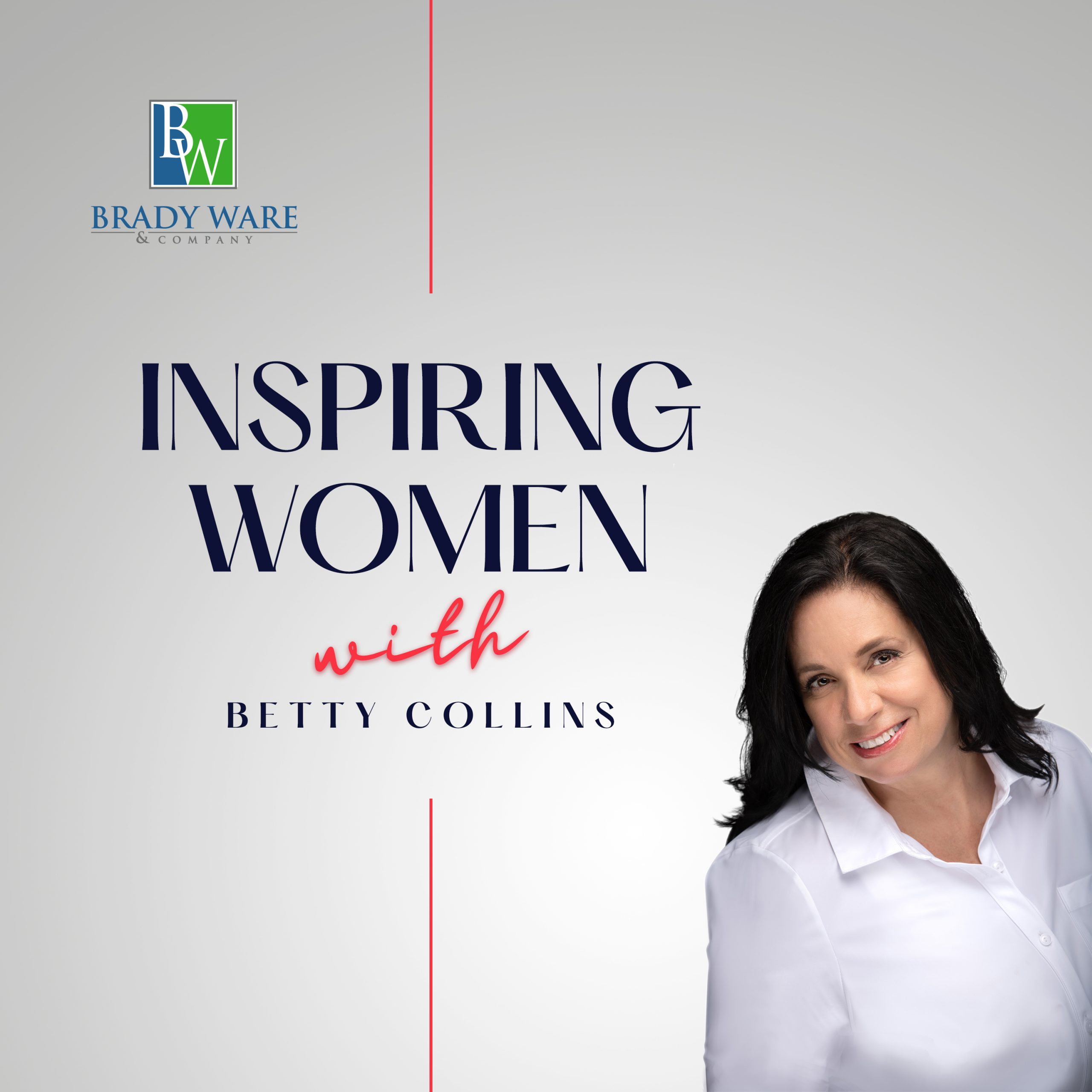
Inspiring Women PodCast with Betty Collins
Inspiring Women, Episode 2: Confidence, Insecurity, and Arrogance
Loading
00:00 /
RSS Feed
Share
Link
Embed

Download file

Betty’s Show Notes

What is confidence? How would your life improve if you were more self-confident? What can you do to boost your confidence? In Brady Ware’s latest podcast episode, learn the characteristics of a confident woman and how you can apply the self-confidence formula to your life.

In this episode I cover:

  • What is confidence?
  • How would your life improve if you were more self-confident?
  • What can you do to boost your confidence?

The self-confidence formula for women:

  • Take responsibility for yourself.
  • Begin to experiment with life.
  • Develop an action plan and implement it.
  • Stick with it.
  • Act “as if.”
  • Find a mentor.

Handouts for this podcast:

  • How To Know if You are Confident
  • Actions to Boost Your Confidence

“Inspiring Women” Podcast Series

“Inspiring Women” is THE podcast that advances women toward economic, social and political achievement. The show is hosted by Betty Collins, CPA, and presented by Brady Ware and Company. Brady Ware is committed to empowering women to go their distance in the workplace and at home. Past episodes of “Inspiring Women” can be found here.

Show Transcript

Betty Collins: [00:00:03] Confidence is silent. Insecurities are very loud. And arrogance is just completely ignored. And I want to talk about those things today.

Betty Collins: [00:00:18] So I’m watching this YouTube video of Aretha Franklin. And I was blown away. I watched it over and over. And of course she comes out, everyone knows the name for the most part right. And she’s singing “You Make Me Feel Like A Natural Woman.” And not only is she just singing it, she’s singing this for the President of the United States, Barack Obama and his wife Michelle Obama. And they’re sitting with Carole King who actually wrote the song. And she first comes out and she’s on stage. It’s a full crowd. And she starts singing. She’s playing her own music. So she’s just sitting there, playing and singing like it’s the most natural thing. Meanwhile they show her President wiping a tear from his eye. And they show Carole King totally, totally into the fact that here is this woman singing this song, the way she is, Aretha Franklin. Doesn’t seem fazed at all. She’s just doing what she does.

Betty Collins: [00:01:28] And then about halfway through the song she decides to get up. Someone takes over the piano. She’s now no longer kind of hiding behind her piano. Maybe it’s easier to sing there. I don’t know, I’m not an entertainer. And she comes out to the middle of the stage and she kicks it up. So she takes a natural talent and totally makes it completely unique for her. And not only that, about probably two thirds of the way into the song, everyone’s on their feet, including the President of the United States, and she throws off her big fur. And she pulls that microphone out, she raises her arms like there’s no tomorrow, and she belts it out as if she’s 20 years old.

Betty Collins: [00:02:16] And of course the crowd is on their feet with her. And I watched it over and over. What came to me was you would never know if she was confident or not in what she was doing. She came out like it was the most natural thing. I mean I couldn’t imagine performing for the President of the United States in the first place, let alone meet him. And she’s doing this like it’s an everyday thing. But if you really read her story and you go back through her life, that was not always there. But that night the confidence was just natural and amazing.

Betty Collins: [00:03:01] Confidence is really hard. And so today when I want to cover is what is confidence? What are the qualities of a confident person? And how can you be confident? Because I know for me, I can start a day out at 7 a.m. and I can be insecure. And by 9 arrogant, and by 2, confident, maybe. And by the end of the day and secure again. So I go to all three of those. But obviously we don’t want to hang around with insecure people. And we don’t want to hang around with arrogant people. We’d rather be with real confident type individuals in our lives. Professionally and personally. So when I talk about confidence you have to know what it is. And for me the definition is easy because it’s just the quality of being certain of your abilities. I mean you are certain of who you are. You’re certain of what you can do. And you trust and you have a firm belief in that. And then you you go with it.

Betty Collins: [00:04:01] Arrogance is the quality of being very superior. Your overbearing. Nobody wants to be around them.

Betty Collins: [00:04:11] But insecurity, to me, is just as bad as arrogance. And women tend to be more insecure. Men tend to be more arrogant. And neither is good.

Betty Collins: [00:04:23] So how do you get to that quality of being confident. And you’re not always going to be confident. You’re just going to have those times. But you have to admit your flaw and you have to say no. And sometimes you have to listen and not conform. You’ve got to be open for help and you’ve got to own your own feelings, and guilt isn’t your friend. And you’ve got to support others. And when you start putting that whole mix together, you’re probably going to become a confident person. It’s not easy and it doesn’t happen overnight. Aretha Franklin didn’t get on stage her first time and sing for the President and have people on their feet emotionally engaged with her. And I’m sure that took a lifetime to do.

Betty Collins: [00:05:15] Without confidence you’re going to be really mired down in unfulfilled desire in your life. You’re going to be full of excuses more than you are why you are who you are. And you’re going to be paralyzed by fear. It’s something I deal with all the time. And that takes away from being confident. What’s really funny about women today is we’re turning the corner in so many ways. And so we need to start acting like that and start taking more risk and stop the grumbling and apologizing because the results are starting to really happen. And there is now research and statistical evidence that confidence is more important than your ability. I’m in an industry as a CPA where technical ability is really valued. Has to be. The confidence is now showing is just as important if not more.

Betty Collins: [00:06:16] And here are the things that are happening for women. So more of us are getting college and graduate degrees. We’re running some of the largest countries in the world, not just the United States. There are now 17 female Heads Of States in the world. 105 seats in Congress are held by women which, is nineteen point six percent. Twenty five percent of board members are now women. And those companies tend to be more profitable when the when women are on their boards. This is the best one. We control 80 percent of U.S. consumer spending. 26 percent of women in the U.S. do not work. They can have the lifestyle of raising their children and being home and it’s ok. Mothers are now the primary or sole earners for 40 percent of households. We comprise over 50 percent of the workforce. And now 30 percent of businesses owned by women are being started by women. And three out of ten women serve their country or government in some capacity. Those are major, major statistics and they’re happening because of confidence and hard work and drive. But it’s a huge factor in the development of things that are happening for women in the things I’m talking about. But it’s also confidence that affects your relationships, your family life, where you volunteer, maybe where you go to church. How you are confident in those roles.

Betty Collins: [00:07:54] There are a lot of myths about confidence. We think we can be more confident. Women believe that if we work harder our talent will shine through. So we just don’t ask questions, we just accept our circumstances. And we just work harder. And then we assume that we’re better at having conversations in our head than with people. And what that does, again, it takes from the confidence factor. On top of all that, we focus on perfection. And perfection is not confidence, it’s just paralyzing to you. And I hate to tell you, but we kind of overthink a lot of things. So all of that leads up to we care too much about then what others think. And we believe it’s easier for everyone else around us, it’s easier for them. Those are myths that take away from confidence.

Betty Collins: [00:08:49] And so what I want to ask you is this. Are you a perfectionist? Are you hesitant? Do you micromanage every aspect of your life? Do you disengage because doing work and leveraging your skills is harder? Are you afraid to fail? And are you blessed with very uncooperative people in your life? You’ve got to answer those things because when you answer those, those are the things that drain your confidence. So you have to look at what risk are you willing to take to change those. And you can’t change them all overnight. But those are really, really important questions. In fact I have handouts for you today that tell you are you confident or are you not. And so start looking at those and be honest.

Betty Collins: [00:09:41] Why the confidence issue for women? I just went through, pretty hard stuff, all the myths. I just talked about which we have a great hand out for you on that. But let me give you examples of women who are confident and women who are not.

Betty Collins: [00:09:58] Women who are confident talk about dreams. Your plans, your aspirations. What you want to be. Where you want to go. Visions. And women who are not confident, they just talk about other women. It’s evidence and it’s statistically proven. You need to think about that.

Betty Collins: [00:10:17] Here’s another one. Confident people. They are the trendsetters. Confident people follow the trendsetters. Not everyone needs to be a trendsetter. But I mean those are those are characteristics of that you’re pretty confident if you can you can set the trend instead of follow it.

Betty Collins: [00:10:37] Confident women don’t try to please everyone. In fact their motto is “Confidence is not that they will like me, Confidence is I’ll be fine if they don’t.” So when you’re consumed in “I got to please everyone around me,” or “Hey, I’m not going to try to please you because I’m trying to do the right thing.” So those are things that show you that you’re confident and that’s how you know you’re not.

Betty Collins: [00:11:10] So what is the self confidence formula for women? As a CPA, we do everything with formulas, so here we go. Step 1. Take responsibility for yourself. The path towards your confidence is the one that you travel, not everyone else. It’s your journey.

Betty Collins: [00:11:29] Step 2. You’ve got to start experimenting with some things in your life. I did this when I was 38 years old. There were just things I wanted to do that I talked about doing but didn’t. One of them was I wanted to read the New York Times from cover to cover. Why? I don’t know. But it was one of those things that was so refreshing because I found my little place where nobody could be. And I read The New York Times. And once I finally got over “I don’t need to probably read the New York Times,” but it was kind of one of those things where I said “I’m going to do this. I want to try. I want to see what it was about.” It was very interesting. When I got bored with that, I went on to something else. Try new things.

Betty Collins: [00:12:13] You got to develop an action plan and then you implement it. I know for myself I read a book, Start With Why by Simon Sinek. And I always did the “How” and the “What.” We all do. Or the when the “How” and the “What” is easier, but you got to know the why. And for the longest time my “Why” was “I’m going to help you with your business. I’m going to do your accounting. I’m going to get your taxes done.”

Betty Collins: [00:12:43] Then I said no. I’m going to have a completely different action plan for my clients. In fact, I’m going to make sure that you’re successful so that as the employer, your employees are successful. And those employees are households that are the infrastructure of a community. So it took a whole new turn how I advised, and energized, my client, versus just doing your taxes. Because that’s just a given everyone has to do them. So I developed a whole new action plan on my “Why” and started doing that “Why” in thinking about that “Why” for everything. It was excellent.

Betty Collins: [00:13:21] You’ve got to stick with something. Self-confidence. It doesn’t come because you tried one thing. You took one pill. That’s what we generally like to do. Or we read one book. It’s a continual evolvement in development.

Betty Collins: [00:13:35] You always act “As if.” “As if” I’m putting in quotes. So “If” you put off action until you have confidence, you’ll never do it. “If” you take action, do it within a semblance of outward confidence. Sometimes, the inward true confidence will follow. My mother always told us “False cheer is better than real crabbiness.” And I always used that. Sometimes you just have to get out there and you just have to act like it’s all okay. Even though it isn’t. I wouldn’t hide from all those things but there are times that confidence will get you there. And once you’re out there going “OK everything’s good. Get your smiles on.” That was our Sunday morning. Every week. It’s church time kids. All six of us got in the van. Put your smiles on we’re, going to church. We did all getting ready with one bathroom.

Betty Collins: [00:14:22] And then you have to find a mentor if you want confidence. Because you need somebody’s outside perspective telling you when you went to the arrogant side or now you’re back at the insecure side. You’ve got to have that person in your life that comes in and says here’s what you do. So those are kind of the formulas and again we’ll give you these handouts on our website that will refer to at the end of this podcast. These are things that are just easy reading, easy simple stuff. Take away one or two of them and start it.

Betty Collins: [00:14:50] But there are things you can do to boost your confidence. As women, it’s very important. One is dress nicely, groom yourself. That sounds really simple but I will tell you the last time I spoke at the Brady Ware’s Women’s Conference, I decided to engage [00:15:04] Sue Kantor. Sophisticated Styling is her company. [00:15:08] I thought I just want to look great that day. And she just was fabulous. I showed up to the store and in there she has all of these outfits for me to try on. And it came down to three of them and she says well what do you think. And I mean people were just awesome. I had the shoes, the jewelry ,the clothes, the makeup. Here’s what you need to do. And I just felt great. She goes “Which one do you want?” I said, “Oh no, I’m taking it all. Pack it up.” And I bought every bit of it. And you know I went to the conference that day and, this is kind of embarrassing even to say, but I ended up wearing all three outfits throughout the day. It was just fun and it was a fun thing for the day. And I felt confident just doing it and it was just fun. So those things can really get you.

Betty Collins: [00:15:58] I have a whole list of things that can boost your confidence. Stand taller. Speak slower. Be prepared. Sometimes just decide you’re going to be kind and generous all day. You’ll be amazed at what that can do because you’ll forget the “stuff” in your life. Focus on solutions. Smiling is easier than frowning. Sometimes you got to just clear your desk and clean it. There are all kinds of ways to do it. But I can tell you people who are confident will get on the stage, perform for a President, not hide behind a piano, and sing like she’s 20. And you can do that. It just takes time. It takes development. But it’s rewarding at the end of the day.

Tagged With: confidence, confidence building, Confidence For Women Professionals, confidence level, Dayton accounting, Dayton business advisory, Dayton CPA, Dayton CPA firm, dreams, get a mentor, insecurities, insecurity, mentor, personal responsibility, preparation, self confidence, the confidence to move forward

Charlie Jones, Marshall Jones & Co.

May 28, 2019 by John Ray

North Fulton Business Radio
Charlie Jones, Marshall Jones & Co.
Loading
00:00 /
RSS Feed
Share
Link
Embed

Download file

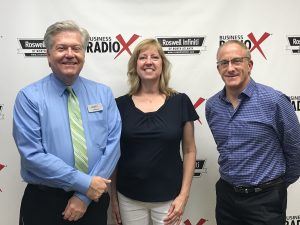
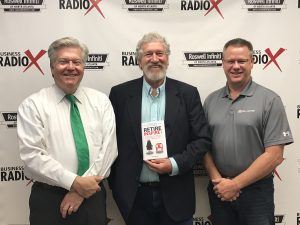
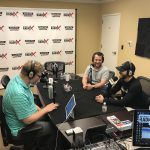
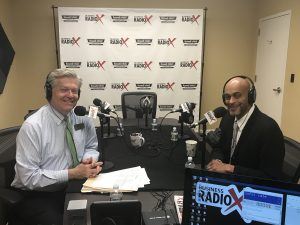
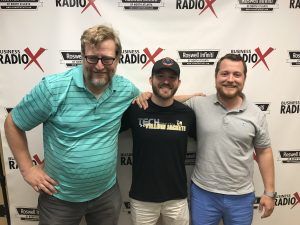
Host John Ray and Charlie Jones, Marshall Jones
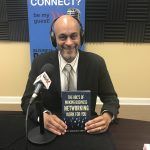
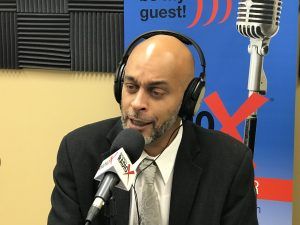
Charlie Jones, Marshall Jones

Charlie Jones is the co-founder of Marshall Jones & Co. Marshall Jones is a 35-year-old Atlanta CPA firm with offices in Alpharetta and the Buckhead area of Atlanta. The firm has 20 professionals who specialize in serving privately owned businesses, nonprofit organizations, and high income or otherwise wealthy individuals. Their corporate clients are in the construction, nonprofit, real estate, professional services and distribution industries. Marshall Jones provides year end financial statement audits, reviews and compilation services. The firm’s tax department provides planning, consultation and tax return preparation services.  The outsourced bookkeeping department provides all back office functions such as bill paying, payroll, bank reconciliation, and general ledger maintenance and financial statement preparation.  The firm’s core values are integrity, technical competence, responsiveness and proactivity.

As Senior Partner, Charlie focuses on client relationships and business development. Charlie has performed peer reviews for other CPA firms since 1990 in 9 states. He performs reviews for firms with 5-50 professionals. He became a member of the Georgia Society of CPA’s Review Acceptance Board in early 2019. Charlie’s career has consisted of auditing, contract controllership, systems and other consulting. He ensures that the firm maintains the critical quality necessary to effectively serve our clients. He holds a strong knowledge in real estate, construction, technology, distribution, government, and non profit industries. Charlie has also lead many projects in Sarbanes Oxley internal control compliance for several public companies. In addition he has been a frequent lecturer and trainer in this and other audit related areas.


“North Fulton Business Radio” is broadcast from the North Fulton studio of Business RadioX®, located inside Renasant Bank in Alpharetta. Renasant Bank has humble roots, starting in 1904 as a $100,000 bank in a Lee County, Mississippi, bakery. Since then, Renasant has grown to become one of the Southeast’s strongest financial institutions with approximately $12.9 billion in assets and more than 190 banking, lending, wealth management and financial services offices in Mississippi, Alabama, Tennessee, Georgia and Florida. All of Renasant’s success stems from each of their banker’s commitment to investing in their communities as a way of better understanding the people they serve. At Renasant Bank, they understand you because they work and live alongside you every day.

Tagged With: contract CFO, CPA Alpharetta, CPA firm, former NFL players, gender diversity, Marshall Jones, Marshall Jones & Co., Marshall Jones CPA, millennials, Millennials successful in Business, outside audit, outsourced bookkeeping, outsourced cfo, payroll, renasant bank, Sarbanes-Oxley, tax advice, tax advisor

ATL Developments with Geoff Smith: Ann Hanlon, Perimeter Community Improvement Districts

May 28, 2019 by John Ray

North Fulton Business Radio
ATL Developments with Geoff Smith: Ann Hanlon, Perimeter Community Improvement Districts
Loading
00:00 /
RSS Feed
Share
Link
Embed

Download file

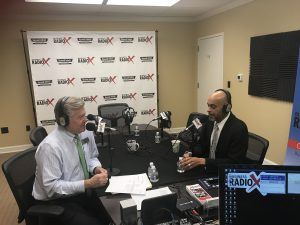
Geoff Smith and Ann Hanlon on “ATL Developments with Geoff Smith”

ATL Developments with Geoff Smith:  An Interview with Ann Hanlon, Perimeter Community Improvement Districts

Host Geoff Smith speaks with Ann Hanlon, Executive Director of the Perimeter CIDs, on the history of community improvement districts in Georgia, why they are so important in economic and infrastructure development, and the project priorities for the Perimeter CIDs.

Ann Hanlon, Perimeter Community Improvement Districts

Ann Hanlon, Perimeter Community Improvement Districts (PCIDs)

As Executive Director for the Perimeter Community Improvement Districts (PCIDs), Ann Hanlon is in charge of the organization’s daily operations, as well as its investments in transportation infrastructure. The Perimeter CIDs have an annual operating budget of $8 million.

Previously, Ann was the Executive Director of the the North Fulton CID for 12 years, beginning when it was a start-up. Prior to joining the North Fulton CID, Ann served as a Senior Program Specialist at the Atlanta Regional Commission. She began her career in the private sector, as a Research and Development Analyst with Press Ganey & Associates, a healthcare consulting firm in South Bend, Indiana.

A native of South Georgia, Ann received a Bachelor of Arts degree with a double major in Government and Computer Science from the University of Notre Dame, and a Masters of Public Administration degree in Management and Finance from Georgia State University.

Ann was honored as the “Woman of the Year” by the Women’s Transportation Seminar Atlanta Chapter in November 2016. In April 2015 and again in 2017, Governor Nathan Deal appointed Ann to the Board of Directors for the Georgia Regional Transportation Authority where she serves on the Projects and Planning committees. Ann was named “Business Woman of Excellence” by the Greater North Fulton Chamber of Commerce in 2019, selected as one of Atlanta Business Chronicle’s “40 under 40” in 2018, named a “Notable Georgian” by Georgia Trend Magazine in 2017, one of the Atlanta Business Chronicle’s “Women Who Mean Business” in 2015 and as one of Georgia Trend Magazine’s “40 under 40” in 2012.

Ann is a graduate of the Regional Leadership Institute of the Atlanta Regional Commission (2010) and Leadership North Fulton (2006). She currently serves as Vice Chairman of the Board of Directors for the Council for Quality Growth and will be the Council’s first female Chairman in 2019. Additionally, Ann serves on the Board of Directors for the Women’s’ Transportation Seminar, Atlanta Chapter, the Sandy Springs Chamber of Commerce, and the DeKalb Chamber of Commerce. She has been a citizen member of the “Shape Dunwoody” Comprehensive Plan committee, the North Fulton Poverty Task Force and was Co-Chair of the DeKalb County Charter Review Commission. She is a Chairman’s Circle member of the Greater North Fulton Chamber of Commerce, the Cobb Chamber of Commerce and the Georgia Chamber.

Personally, Ann is a volunteer with the Girl Scouts of Metro Atlanta, a member of All Saints Catholic Church and a sustainer with the Junior League of Atlanta. She lives in Dunwoody with her husband, Michael, and their two daughters, Elizabeth and Mary Catherine.

Geoff Smith, Host of “ATL Developments with Geoff Smith”

Geoff Smith, Host of “ATL Developments with Geoff Smith”

“ATL Developments with Geoff Smith” covers all things economic development in the Atlanta Metro area. From everything inside the Beltline to Avalon and beyond, Geoff Smith interviews the movers and shakers making the ATL one of the best places to live, work and play. An archive of past episodes can be found here.

Geoff Smith is a mortgage banker with Assurance Financial working with Real Estate agents and homebuyers to help them get happily to their closing table. Geoff is an authority on the latest economic development trends shaping the Atlanta Metro area. His interviews reveal an inside perspective at how things get done in the ATL.

Geoff is an active member of his community serving on the Board of Directors of the Greater North Fulton Chamber of Commerce, as well as holding the position of chairman for the Chamber’s Education Committee. He is also Secretary of the Roswell Youth Baseball Association and coaches his sons in football, baseball and basketball. Geoff enjoys golf, camping and traveling with his wife and two sons. He is a graduate of the University of Georgia.


“ATL Developments with Geoff Smith” is broadcast from the North Fulton studio of Business RadioX®, located inside Renasant Bank in Alpharetta. Renasant Bank has humble roots, starting in 1904 as a $100,000 bank in a Lee County, Mississippi, bakery. Since then, Renasant has grown to become one of the Southeast’s strongest financial institutions with approximately $12.9 billion in assets and more than 190 banking, lending, wealth management and financial services offices in Mississippi, Alabama, Tennessee, Georgia and Florida. All of Renasant’s success stems from each of their banker’s commitment to investing in their communities as a way of better understanding the people they serve. At Renasant Bank, they understand you because they work and live alongside you every day.

Tagged With: Dunwoody, economic development, GA 400, GA 400 express lanes, Geoff Smith, infrastructure, infrastructure improvements, infrastructure projects, live work play, MARTA, Metro Atlanta traffic, North Fulton CID, North Fulton Community Improvement District, Perimeter CIDs, Perimeter Community Improvement District, private-public partnerships, public transportation, Sandy Springs, traffic, transit, transit options, Transportation, transportation infrastructure, transportation planning

NORTH ATLANTA’S BIZLINK: North Fulton Education Leaders Allison Townsend, 2019 Georgia Teacher of the Year, and Dr. Doannie Tran, Fulton County Schools

May 23, 2019 by John Ray

North Fulton Studio
North Fulton Studio
NORTH ATLANTA’S BIZLINK: North Fulton Education Leaders Allison Townsend, 2019 Georgia Teacher of the Year, and Dr. Doannie Tran, Fulton County Schools
Loading
00:00 /
RSS Feed
Share
Link
Embed

Download file

Dr. Doannie Tran, Kali Boatright, and Allison Townsend

Allison Townsend, 2019 Georgia Teacher of the Year, Barnwell Elementary School

Allison Townsend, 2019 Georgia Teacher of the Year, Barnwell Elementary School

As the 2019 Georgia Teacher of the Year, Mrs. Allison Townsend passionately believes each child should have a voice in his or her learning. She is dedicated to helping teachers create transparent classroom environments where, together with their students, they can make connections and have an impact beyond the four walls of their classrooms.

Since graduating from Clemson University in 2012, Allison Townsend has been a teacher in Fulton County Schools in Atlanta, Georgia. She has taught pre-k, 3rd, and 4th grades at Shakerag and Barnwell Elementary Schools. She inspires her students to grow beyond “engagement” to “ownership” by empowering them with a co-planning learning model she has created. She is also an advocate for transparency in education by inviting parents, teachers, and community members into her classroom, coaching teachers at her school, presenting at conferences, and using Twitter as a window into her classroom. Her mission is to inspire students and teachers to take risks, connect with people from around the world, and smile along the way!

In her role as 2019 Georgia Teacher of the Year, Mrs. Townsend is traveling the state as an advocate for students and teachers and spreading her message of student ownership, transparency in education, and the power of human connection.

Dr. Doannie Tran, Fulton County Schools

Dr. Doannie Tran, Fulton County Schools

Dr. Doannie Tran is the Assistant Superintendent for Innovative Programs for Fulton County Schools. He is also overseeing the launch of FCS’s two innovative STEM schools, including the North Fulton STEM High School located in Alpharetta and to be opened in Fall 2020.

Doannie gradated from North Springs High School in Sandy Springs, GA and earned a Chemistry degree from the University of Georgia before joining Teach For America where he taught middle school science in Oakland, California. After moving to Boston, Doannie taught high school science in Boston before joining the staff of Teach For America to launch the Massachusetts region in 2009. Doannie was responsible for professional development for all new TFA teachers in Massachusetts. He built up their partnership with Boston University, where he has also served on faculty. During that time, the Massachusetts region was in the top 10% of all regions in terms of effectiveness, satisfaction and retention of teachers. The 2014 NCTQ/US News and World Report study of teacher preparation programs gave the program Doannie designed and executed the only high rating given to an alternative certification program.

Doannie received his doctorate in education leadership from the Harvard Graduate School of Education. As a graduate student, he trained extensively in design thinking and Lean Startup methodologies and was sponsored as an Entrepreneur-in-Residence at NewSchools Venture Fund. As an entrepreneur, he used design thinking and Lean principles to launch an education company called the Teaching Genome that provided teachers with insight into their teaching styles and used that knowledge to better support coaching and professional learning communities.

Doannie left his startup to join the leadership team of Boston Public Schools as Assistant Superintendent for Academics and Professional Learning. In that role, he focused on ensuring that every educator had high-quality curricular options and were competent in evidence-based instructional practices. He led a team of twenty-two teachers and over seventy central office experts to collaboratively develop the Essentials for Instructional Equity, Boston Public School’s vision for instruction that closes opportunity gaps. He led the collaboration of central office departments and dozens of teacher leaders to develop learning experiences that align to the Essentials, and to date, thousands of teachers have engaged in these courses.

Doannie is married to Holly Gooding, also a UGA alum and adolescent medicine physician at Emory and has two small children, Elliot (7) and Louise (5).

About GNFCC and “North Atlanta’s Bizlink”

Kali Boatright, President and CEO of the Greater North Fulton Chamber of Commerce

“North Atlanta’s Bizlink” is presented by the Greater North Fulton Chamber of Commerce (GNFCC) and is hosted by Kali Boatright, President and CEO of GNFCC. The Greater North Fulton Chamber of Commerce is a private, non-profit, member-driven organization comprised of over 1400 business enterprises, civic organizations, educational institutions and individuals.  Their service area includes Alpharetta, Johns Creek, Milton, Mountain Park, Roswell and Sandy Springs. GNFCC is the leading voice on economic development, business growth and quality of life issues in North Fulton County.

The GNFCC promotes the interests of our members by assuming a leadership role in making North Fulton an excellent place to work, live, play and stay. They provide one voice for all local businesses to influence decision makers, recommend legislation, and protect the valuable resources that make North Fulton a popular place to live.

For more information on GNFCC and its North Fulton County service area, follow this link or call (770) 993-8806.

Dr. Doannie Tran and Allison Townsend


Tagged With: Dr. Doannie Tran, Fulton County School System, Fulton County Schools, GNFCC, gnfcc podcast, GNFCC President, gnfcc radio, gnfcc radio show, greater north fulton chamber, Greater North Fulton Chamber of Commerce, Innovative Programs, North Fulton Schools, North Fulton STEM, North Fulton STEM high school, The Greater North Fulton Chamber of Commerce

Decision Vision Episode 16: Should I locate my business in an incubator or accelerator? – An Interview with Sanjay Parekh, Prototype Prime

May 23, 2019 by John Ray

Decision Vision
Decision Vision
Decision Vision Episode 16: Should I locate my business in an incubator or accelerator? – An Interview with Sanjay Parekh, Prototype Prime
Loading
00:00 /
RSS Feed
Share
Link
Embed

Download file

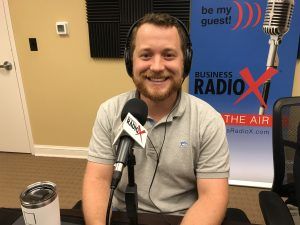
Michael Blake, Host of “Decision Vision,” and Sanjay Parekh, co-founder of Prototype Prime

Should I locate my business in an incubator or accelerator?

What’s the difference between an incubator and an accelerator? Should I locate my business in an incubator? What are the factors I should consider? On this episode of “Decision Vision,” Host Michael Blake speaks with Sanjay Parekh, co-founder of Prototype Prime, on these questions and more.

Sanjay Parekh, Prototype Prime

Sanjay Parekh, Prototype Prime

Sanjay Parekh is a co-founder of Prototype Prime. Prototype Prime is a 501(c)3 non-profit hardware & software startup incubator. Their mission is to provide startup companies with the support they need to launch and scale. Funded by the City of Peachtree Corners. Prototype Prime is a regional affiliate of the Advanced Technology Development Center (ATDC) at Georgia Tech, and is located just 30 minutes north of Atlanta.

Sanjay Sanjay a co-founder of Prototype Prime, a non-profit incubator and a serial technology entrepreneur. In addition to co-founding Prototype Prime, Sanjay is a co-founder of MailMosh, a startup focused on making email a better experience. He is also the co-host of Tech Talk Y’all, a self-proclaimed tech comedy podcast.

Previously Sanjay launched Startup Riot, a conference for startups which pioneered the three minute, four slide presentation format. Prior to founding Startup Riot, Sanjay was the founding CEO of Digital Envoy and the inventor of the company’s patented NetAcuity IP intelligence technology. At Digital Envoy, Sanjay led the company to raise $12 million in angel and venture funding. Digital Envoy was acquired by Landmark Communications in June 2007.

Sanjay holds an electrical engineering degree from the Georgia Institute of Technology and an MBA from Emory University’s Goizueta Business School.

Michael Blake, Brady Ware & Company

Mike Blake, Host of “Decision Vision”

Michael Blake is Host of the “Decision Vision” podcast series and a Director of Brady Ware & Company. Mike specializes in the valuation of intellectual property-driven firms, such as software firms, aerospace firms and professional services firms, most frequently in the capacity as a transaction advisor, helping clients obtain great outcomes from complex transaction opportunities. He is also a specialist in the appraisal of intellectual properties as stand-alone assets, such as software, trade secrets, and patents.

Mike has been a full-time business appraiser for 13 years with public accounting firms, boutique business appraisal firms, and an owner of his own firm. Prior to that, he spent 8 years in venture capital and investment banking, including transactions in the U.S., Israel, Russia, Ukraine, and Belarus.

Brady Ware & Company

Brady Ware & Company is a regional full-service accounting and advisory firm which helps businesses and entrepreneurs make visions a reality. Brady Ware services clients nationally from its offices in Alpharetta, GA; Columbus and Dayton, OH; and Richmond, IN. The firm is growth minded, committed to the regions in which they operate, and most importantly, they make significant investments in their people and service offerings to meet the changing financial needs of those they are privileged to serve. The firm is dedicated to providing results that make a difference for its clients.

Decision Vision Podcast Series

“Decision Vision” is a podcast covering topics and issues facing small business owners and connecting them with solutions from leading experts. This series is presented by Brady Ware & Company. If you are a decision maker for a small business, we’d love to hear from you. Contact us at decisionvision@bradyware.com and make sure to listen to every Thursday to the “Decision Vision” podcast. Past episodes of “Decision Vision” can be found here. “Decision Vision” is produced and broadcast by Business RadioX®.

Visit Brady Ware & Company on social media:

LinkedIn:  https://www.linkedin.com/company/brady-ware/

Facebook: https://www.facebook.com/bradywareCPAs/

Twitter: https://twitter.com/BradyWare

Instagram: https://www.instagram.com/bradywarecompany/

Show Transcript

Intro: [00:00:01] Welcome to Decision Vision, a podcast series focusing on critical business decisions, brought to you by Brady Ware & Company. Brady Ware is a regional, full-service, accounting and advisory firm that helps businesses and entrepreneurs make vision a reality.

Michael Blake: [00:00:20] And welcome back to another episode of Decision Vision, a podcast giving you, the listener, clear vision to make great decisions. In each episode, we discuss the process of decision making on a different topic. Rather than making recommendations because everyone’s circumstances are different, we talk to subject matter experts about how they would recommend thinking about that decision.

Michael Blake: [00:00:37] My name is Mike Blake, and I am your host for today’s program. I am a Director at Brady Ware & Company, a full-service accounting firm based in Dayton, Ohio, with offices in Dayton; Columbus, Ohio; Richmond, Indiana; and Alpharetta, Georgia, which is where we are recording today. Brady Ware is sponsoring this podcast. If you like this podcast, please subscribe on your favorite podcast aggregator, and please also consider leaving a review of the podcast as well.

Michael Blake: [00:01:03] So, today’s topic is about co-working spaces, accelerators, incubators, and there are probably three or four other names for these kinds of places that I’m not even familiar with yet. I can’t speak for the rest of the country, but they have popped up like dandelions all over Atlanta in the last five years. And even in my hometown of Chamblee that has, I think, a population of about 30,000 people, we have, at least, two co-working spaces, accelerators, of which I’m aware. And I happen to be a member of one of them. It’s a nice place to kind of hang out. It’s at the airport, and a place we’re allowed to have meetings. They do a good job.

Michael Blake: [00:01:42] But for the most, it’s very likely that if you can listen to this podcast, there is a co-working space, an accelerator, an incubator near you. And you might be kind of wondering, does it make sense for me to be in one of these places? What’s it all about? Why are they generating the interest and the buzz they are? Why are some of my competitors there? Why are a lot of startups there? And is it right for me, whether I’m a startup or a more mature company?8

Michael Blake: [00:02:11] And today, we are joined by my pal, Sanjay Parekh, who is one of the true OGs of the startup community here in the Atlanta area. Unlike me, who’s basically been one of the world’s ugliest cheerleaders for about 12 years or so, he has actually started companies, had exits, ran a very important organization called Startup Riot about the same time as we were doing Startup Lounge. And I’m proudly wearing one of the Startup Riot T-shirts here today. And Sanjay has been about as active as anybody for as long as anybody in the startup community.
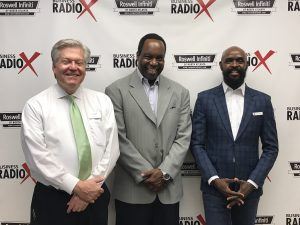
Michael Blake: [00:02:50] And one of the hats that he is wearing at this point is he is co-founder of Prototype Prime. He is a serial technology entrepreneur. He’s currently founder of MailMosh, a startup focused on making e-mail a better experience. And maybe we’ll get some information about that. As I mentioned before, he’s co-founder of the startup — not really so much a startup anymore, but an accelerator – I guess. Sanjay will probably correct me – called Prototype Prime that is in the northern Atlanta Metro area, about three miles north of where I live.

Michael Blake: [00:03:21] He’s also the co-host of his own podcast called Tech Talk Y’all, a podcast covering technology with a Southern flair. And if you haven’t, I listened to a couple of episodes. If you’re into technology, and you want to understand the local, sort of, southern, the Southeastern startup scene, because it is different from other places in the country, you really ought to give it a listen.

Michael Blake: [00:03:41] Previously, Sanjay launched Startup Riot, a conference for startups, which pioneered the three-minute, four-slide presentation format. And that was an extremely important event. I think they got up to hundreds of attendees and was eventually holding these things downtown. And the thing I loved about it was that Sanjay was not afraid to use the vaudeville hook either. If you went 301, you are done. And think about pitches that if they drag, man, they are tedious. And Sanjay made sure that didn’t happen.

Michael Blake: [00:04:12] Prior to founding Startup Riot, he founded Founder Fables, an off-the-record conference for founders. He was also the founding CEO of a company called Digital Envoy, and the inventor of the company’s patented NetAcuity IP intelligence technology. At Digital Envoy, Sanjay led the company to raise $12 million in angel and venture funding. Digital Envoy was acquired by Landmark Communications in June 2007.

Michael Blake: [00:04:36] He holds an Electrical Engineering degree from Georgia Tech and an MBA from Emory University’s Goizueta Business School. And weren’t you on also one of those special European study grants? Was it called the MacArthur grant? I’m trying to remember.

Sanjay Parekh: [00:04:50] No. It was actually the Marshall Memorial Fellowship.

Michael Blake: [00:04:52] That’s what it is, okay.

Sanjay Parekh: [00:04:53] Yeah, yeah. So, that was in ’04, and it was a month-long trip. It’s a fantastic trip. They take Americans to Europe for a month, and Europeans come to the US for a month. And, really, it’s about building better transatlantic relations between. It’s really, kind of, a gift back to us. It’s from the German Marshall Fund of the United States. It’s a gift back to us from the people and government of Germany for the help that we gave them during the Marshall Plan post-World War 2.

Michael Blake: [00:05:17] I wonder if that program’s still going on today?

Sanjay Parekh: [00:05:20] It is, yeah.

Michael Blake: [00:05:21] Okay.

Sanjay Parekh: [00:05:21] And it’s still a pretty strong program because it’s an important thing. I think between Europeans and Americans, we need to understand each other better.

Michael Blake: [00:05:28] More than ever today, right?

Sanjay Parekh: [00:05:30] Yeah. And you realize as you travel that Europeans are different, right? You’ve got the Eastern European, versus Western, versus Southern. It’s all very different in their mentality. I had a very different experience based on the places I went to.

Michael Blake: [00:05:44] Yeah. As you know, I lived in Eastern Europe for a number of years.

Sanjay Parekh: [00:05:47] Yeah.

Michael Blake: [00:05:47] And that kind of experience does change you, I think.

Sanjay Parekh: [00:05:51] Yeah, absolutely.

Michael Blake: [00:05:52] And for me, that kind of experience led me to look at kind of what is the other person thinking.

Sanjay Parekh: [00:05:59] Right.

Michael Blake: [00:05:59] Not just sort of have my mouth open, which is what I normally would have done before I went over there. But instead, what is the other person’s viewpoint. And the best way to do that is to actually kind of be in that room, right.

Sanjay Parekh: [00:06:10] Right, exactly. And be receptive to the feedback and their perspective of what you’re doing. Like, we got railed on. I mean, if you can imagine 2004, and the things that we were doing, and what was going on in the world, we got kind of blamed for a bunch of stuff that we didn’t necessarily agree with, and because our country and our government was doing those things. And so, it was hard.

Michael Blake: [00:06:30] Yeah.

Sanjay Parekh: [00:06:30] I will say when we went to Poland, that was a nice respite from all of that because those Poles, they love us.

Michael Blake: [00:06:37] They do. They do. I’ve been to Poland a little bit. And you’re absolutely right. They roll out the red carpet.

Sanjay Parekh: [00:06:42] That is a great country for Americans. I really love my time there.

Michael Blake: [00:06:47] So, let’s jump in. So, we were talking, and I was talking in the intro about this advent of co-working, and accelerators, and incubators. And so, Prototype Prime was not the first in by any stretch of the imagination.

Sanjay Parekh: [00:07:05] Absolutely not, yeah.

Michael Blake: [00:07:05] So, you saw all these other co-working spaces, all these other — I’m just going to call them spaces because it just takes too long to go slash, slash, slash.

Sanjay Parekh: [00:07:15] Right.

Michael Blake: [00:07:16] Right. All these spaces, what made you think that we needed frankly another one? What’s the differentiator? What was the market need?

Sanjay Parekh: [00:07:23] Yeah. Well, so, for me, I definitely saw a need on the northern arc of Atlanta. There’s a lot of stuff going on inside the city, inside the perimeter, but not as much around the kind of northern arc. But honestly, I was not really looking to start one of these. I was on a panel that ATDC was doing probably about three years ago now.

Michael Blake: [00:07:43] That’s the Advanced Technology Development Center at Georgia Tech.

Sanjay Parekh: [00:07:46] Right. And our mutual friend, Jen Bennett, was running it then. She was GM. And they’d been asked by the City of Peachtree Corners to come up and do a panel to, kind of, figure out the appetite of doing an incubator there. And Jen was like, “I know you live up that way. Would you mind doing this?” And as most things, when somebody asks me to come and speak, I’m always happy to do it, with the caveat that they should know that, look, I’m going to tell you things that you’re probably not going to agree with or be happy about me saying, but it’s because that’s what I believe. You don’t have to listen to what I say. You don’t have to do what I have to say. It’s just that’s what I believe.

Sanjay Parekh: [00:08:21] And so, I did exactly that on this panel. And then, afterwards — and I laid it out. I told them like, “These are the things that are wrong here, and these are the things that you need to fix to make this all work.” The mayor’s wife, Debbie Mason, came up to me and said, “I love what you had to say. Let me introduce you to the Mayor.” Introduced to Mike Mason, who is still currently the mayor of Peachtree Corners. And we started this series of breakfast, and it was really just me unloading on him all the ideas that I had that he should go do.

Michael Blake: [00:08:48] That sounds like your dream conversation.

Sanjay Parekh: [00:08:50] Absolutely. Like, “Let me tell you everything you should do, and I’m not going to do any of it. You execute it, and I’m going to just cheer from the sidelines.” But by the end of that, he was basically going, he’s like, “Well, obviously, I want you.” And it wasn’t obvious to me. “Obviously, I want you to come in, and help with this thing, and help start it up.” And so, I actually have never told him yes. I told him no a bunch. I even went to his house and told him no because I was busy at Georgia Tech at that point. And somehow, still, I ended up managing to be involved with this thing and helping found it.

Sanjay Parekh: [00:09:21] So, that’s how that whole thing happened. And I’ll tell you, it’s been a great experience. The city — it’s a non-profit. Prototype Prime is a nonprofit, standalone. The city funds it. So, funds the budget every year. And they let me do a lot of crazy things. I believe a few things strongly about Atlanta that we’ve got great art, great music, great film, great startups, great corporates, great non-profits, but these things don’t talk to one another.

Sanjay Parekh: [00:09:44] And I think that’s a challenge in almost every city out there where you have got these great silos of stuff, but they don’t cross-pollinate. And so, if anybody is out there in another city, if you’re thinking about what you can do better for your city, it’s trying to figure out ways for that to happen, that cross-pollination happen.

Sanjay Parekh: [00:10:00] So, one of the things that I did is I engaged with Atlanta artist to come and do artwork on the walls, right. So, when we started, it was a depressing building. It was white walls everywhere, very echoey, nobody was there. And now, there’s a lot of artwork. People walk in and they feel the energy. They feel the vibe of the place. And it’s been great for us. That’s not the right answer for every place, but it was the right answer for us.

Michael Blake: [00:10:23] So, when you were telling the mayor of Prototype Prime and-

Sanjay Parekh: [00:10:28] Peachtree Corners.

Michael Blake: [00:10:30] Sorry, Peachtree Corners, what they needed to fix what, were some of the top three or four things you thought needed to be fixed and done differently?

Sanjay Parekh: [00:10:39] Yeah. One of my top things was, and still is, is transportation. So, we’re in Gwinnett County. We have MARTA. The closest MARTA stop is Doraville, which is maybe a 10 or 12-minute ride.

Michael Blake: [00:10:52] It’s closer to me in Chamblee than it is to you in Peachtree Corners.

Sanjay Parekh: [00:10:55] Right, exactly. Now here’s the thing. So, there is a Gwinnett County bus, that is in Tech Park, that will take you to Marta. So, I said it’s a 10 to 12-minute ride by car. It will take you over an hour on that bus.

Michael Blake: [00:11:07] And you just had a referendum, unfortunately, on joining MARTA. And it was surprisingly strongly defeated actually.

Sanjay Parekh: [00:11:15] Yeah. There’s a lot of discussion about that, and why that happened, and the timing of it, and all these kinds of things but-

Michael Blake: [00:11:20] Read the editorials in ajc.com for that.

Sanjay Parekh: [00:11:23] Right, exactly. But I think that will eventually change down the line because the makeup of Gwinnett County is changing. And it’s the largest county in the Metro area, and there’s so many jobs, there’s so many people commuting in and out of that county that if we’re going to actually fix and address the transportation issues across Metro Atlanta, it’s got to involve Gwinnett County and be a part of that puzzle.

Sanjay Parekh: [00:11:42] So, that was one of the major things that I told them that needs to be it. But the other parts were we’re really kind of being engaged with the startups and really helping out in a lot of stuff. So, one of the things that I asked them to do is something that passed in the City of Atlanta where we did this thing, or the City of Atlanta did this thing where the business licenses for early stage startups are waived for the first couple of years. And so, that’s an ordinance in the City of Atlanta.

Sanjay Parekh: [00:12:11] I think it’s absolutely great. I think all of the cities and municipalities in Metro Atlanta should pass the same exact thing. I asked the Mayor and the City Council of Peachtree Corners to pass that. They basically took the text of the City of Atlanta ordinance and passed it as well.

Sanjay Parekh: [00:12:24] So, that was one of those things like, okay, I understand you’re going to do this, and you’re going to put money behind it, but you’ve got to show more of that support than just, “Hey, we set up this thing, start companies, and have them be here,” right. It’s got to be that whole messaging. And a couple hundred dollars a year is really not going to change the calculus of a startup failing or succeeding, but it sends the message.

Sanjay Parekh: [00:12:46] And so, right along with that, having City Council folks and the Mayor in the space, around the space, just around, even if they’re not meeting with teams, it’s important because it sends that message that this is something that they care about, and this is something that they support.

Michael Blake: [00:13:01] Now, you mentioned the geography. And geography is important everywhere. But Atlanta has a strange geography. There’s this emotional barrier of our Ring Road 285.

Sanjay Parekh: [00:13:11] Right.

Michael Blake: [00:13:11] You feel like you need a passport to kind of cross over. I sold my company and joined a firm that’s up in Alpharetta. So, I live inside the perimeter now. I occasionally commute outside the perimeter. And the thing you don’t realize until you do it, and you probably do know this, I’m sure you know this, is that it’s actually very different communities. Like if I go to startup events in Buckhead, Midtown, the usual suspects, you know most of the people in the room.

Sanjay Parekh: [00:13:39] Yeah.

Michael Blake: [00:13:39] Alpharetta, I know two people in a room full of a hundred. And until you do that, you don’t realize how different those communities are, and how important that geographic segmentation is.

Sanjay Parekh: [00:13:51] Yeah. And that kind of goes back to that same idea of we need these things to cross-pollinate, right. As a metro city, we’re not going to continue to improve our startup community unless those communities are cross-pollinating, right. I mean, we should be able to go into an event in Alpharetta or wherever and know more than two people. That’s not good.

Michael Blake: [00:14:12] Yeah. And yeah, that’s right. So, you’re trying to fix this a little bit now with Prototype Prime. Other than the geographic location and the message you’re trying to send, what are some of the other differentiating features in your mind?

Sanjay Parekh: [00:14:26] Yeah. So, number one, it’s a nonprofit. So, my view on this was this is not something that is associated with me as a name. This is something that I’m building to be a long-term asset in the community. So, I often talk about as of this year, the 81-year plan. How do we get to the year 2100 with what we’re doing right now? I don’t really care about the next couple of years. I really care about Prototype Prime being around at the turn of the next century and still helping people.

Sanjay Parekh: [00:14:57] So, that is my focus. I have a concern about other facilities in and around town, and even across the US that are these for-profit places. I don’t really know that they’re going to be around at the turn of the next century. Is Prototype Prime going to be? I don’t know. I hope so. That’s what we’ve been building for. And that’s the message that I keep sending that we’re focused on the year 2100. So, we’re trying to make decisions that are based on the long-term, not on the short-term with the space.

Michael Blake: [00:15:25] And how do those kinds of decisions differ? How would a decision maybe you’re faced with, if you’re thinking of a five-year horizon versus a 2100 horizon, what’s the difference?

Sanjay Parekh: [00:15:38] Yeah. So, I think part of it is being a nonprofit. That builds in that idea that this is going to pass from hand to hand. It’s not going to start with a founder. And then, when they’re tired of it, it’s going to shut down. This is definitely going to live on.

Sanjay Parekh: [00:15:51] The other part of it is some of the moves that we’ve made. So, recently, we got granted $1.8 million by the Federal Government to buy the building that we’re in. We were leasing it from a landlord, which was not the city. We, now, own that building completely. So, 25,000 square feet owned by the organization. So, it has a home. It’s not going to go away from that home, or maybe down the road, it well when it sells that building and moves into another building.

Sanjay Parekh: [00:16:15] Alongside of that, we’ve been forging these partnerships. So, we’re building this advanced autonomous test track. So, a vehicle test track, 1.4-mile loop inside of Tech Park, where vehicle companies can come and test out their vehicles on this dedicated track that is dedicated, but it still interacts with the public. So, there’s that interaction. Alongside of that, Sprint is coming in and doing a 5G deployment inside of Tech Park, starting from our building. So, it’s called Curiosity Lab. And that’s an opportunity for this next stage of startups to be able to use next-generation communication technologies.

Sanjay Parekh: [00:16:50] So, it’s trying to build in all of these things that really create an excitement. And the fact that we’re in Tech Park, which used to be the hotbed of telecom, kind of, innovation in Atlanta that’s kind of gone away, but we’re trying to bring it all back. So, it’s not just telecom. It’s a bunch of other things. It’s vehicles, it’s software startups, it’s all of these things. And hopefully, they’ll graduate from our place, and then move close by, and so we can still be involved with them.

Michael Blake: [00:17:15] So, a common theme that I can hear from, at least, the Sprint and the car track exercise is that those are prototyping resources.

Sanjay Parekh: [00:17:23] Yeah. Essentially, yeah.

Michael Blake: [00:17:24] What do you know, Prototype Prime, prototyping resource.

Sanjay Parekh: [00:17:27] Right, Prime being the first place that you do your prototype, right. That’s your call.

Michael Blake: [00:17:30] Is that deliberate? Are there other prototyping resources as well, maker spaces, things of that nature?

Sanjay Parekh: [00:17:35] Yeah, exactly. So, we’re one of only two spaces – the other one being a TDC in Atlanta – that has a design and development lab. So, we’ve got a lab. We’ve got a handful of teams that use that lab. One of them has grown tremendously with us. Trellis started with two people. They’re now, I think, 16. And they build all their products in our lab. So, we’ve got 3D printers. We’ve got soldering stations. I mean, you name it, we’ve got it.

Michael Blake: [00:18:01] So, I want to come back to this 2100 description because I think that’s fascinating. So, I’m going off script a little bit. The typical space model is you help a company for some period of time.

Sanjay Parekh: [00:18:19] Yeah.

Michael Blake: [00:18:20] And then they “graduate”, right?

Sanjay Parekh: [00:18:22] Right.

Michael Blake: [00:18:22] You slash encourage them to leave, kick them out, whatever.

Sanjay Parekh: [00:18:25] Yeah, yeah.

Michael Blake: [00:18:27] Is the fact that you’re, kind of, designed for longevity from day one, does that mean that that part of the model changes too, or maybe you’d love it if a company stayed there for 10 years?

Sanjay Parekh: [00:18:37] Yeah. So, no. We don’t want companies to stay there for long term.

Michael Blake: [00:18:41] Okay.

Sanjay Parekh: [00:18:41] Really, the goal is to help them early, early stage when they’re just fledgling companies, get them to the point where they’re starting to scale. So, our three tag lines are dream it, build it, scale it. That’s what we help entrepreneurs do. So, dream it when they’re just starting out, figuring out what to do. Build it when they’re starting to build their company, and then when they’re starting to scale. But as they start to scale, that’s the time for them to get pushed out.

Michael Blake: [00:19:01] Okay.

Sanjay Parekh: [00:19:02] So, we actually had one team, that was our second team in. So, Trellis was our first team in, grew from two people to 16 now. Our second team in site grew from a single founder to, now, I think, it’s about 18 or 20 people. And they were actually getting to the size where I was starting to talk to them about it’s going to be time to leave soon. And the founder said, “Yeah, we’re not going to leave.” And I said, “”No, no. I’m not kidding. I’m serious that you guys are just getting too big.” And this was only when we had the downstairs. And so, they said, “No. We like it here too much. We don’t want to leave.”

Sanjay Parekh: [00:19:35] And so, with the upstairs, City Hall used to upstairs, and they left, that opened up the possibility for us to take over the upstairs. So, we ended up taking a third of the space upstairs dedicating it to them. And so, we have a different relationship with them now. But I think that was a one-off. I don’t think we’re going to do that again. When they leave in a couple of years, that space is probably going to get reclaimed and be just regular startup space that people are coming in, there for a little while.

Sanjay Parekh: [00:20:01] My plan has always been three to four years, at the most, that we would hold onto a team. We want teams to graduate from us, and then move on to the Atlanta Tech Village, Switch Yard, Flat Iron, Strongbox, Atlanta Tech Park — Park Tech — Tech Park Atlanta. Tech Park Atlanta.

Michael Blake: [00:20:20] Yeah.

Sanjay Parekh: [00:20:20] Yeah. I always get that confused, 22TechPark. Like any of those places. The Alpharetta. Any of those places. We really view ourselves as the early, early stage. And we’re going to help the companies get their feet under them and get going, so that they can graduate to these other places. And the other places don’t have to worry about the viability of those teams. They know that they’re going to come in. They know what they’re doing. They’re going to continue to grow. And they’ll probably, at some point, outgrow those spaces as well. But I think that’s good.

Sanjay Parekh: [00:20:49] And the reason why we view ourselves that way is that, again, to that 2100 view, this was an area that I saw was lacking, and all of those places that I mentioned are run by friends of mine. And I didn’t ever want to compete with friends of mine because we have so many challenges and every city has challenges. Like why try to compete over the same things over and over again. Figure out something new and something different. And that’s what we decided to do with Prototype Prime.

Michael Blake: [00:21:16] In that respect, it’s like Startup Riot and Startup Lounge all over again, right?

Sanjay Parekh: [00:21:19] Yeah. No, exactly.

Michael Blake: [00:21:19] We need to be careful that we weren’t marginalizing somebody else inadvertently.

Sanjay Parekh: [00:21:24] Right.

Michael Blake: [00:21:24] Because the goal for both of our organizations was put ourselves out of business-

Sanjay Parekh: [00:21:28] Yeah.

Michael Blake: [00:21:28] … which, thankfully, we did.

Sanjay Parekh: [00:21:29] Yeah. Exactly, yeah.

Michael Blake: [00:21:30] So-

Sanjay Parekh: [00:21:30] Although everybody still keeps telling me that they wish that Startup Riot would come back. And I tell them that that boat has sailed at this point.

Michael Blake: [00:21:37] I have to say the same thing about Startup Lounge.

Sanjay Parekh: [00:21:39] Yeah.

Michael Blake: [00:21:39] But everybody wishes it would come back, but they also wished that I would do it. And that’s not happening.

Sanjay Parekh: [00:21:44] Yeah. I say the same thing. I’m like, “Yeah, if you want to do it, I’m happy to give you all the stuff. I got stickers still. I would cheer you on.”

Michael Blake: [00:21:52] We’ll give you the nuclear launch codes to the website, everything.

Sanjay Parekh: [00:21:55] Exactly.

Michael Blake: [00:21:55] No, man, I got too much stuff going on.

Sanjay Parekh: [00:21:56] No, no, no, I’m too busy. I e-mailed 3000 people saying, “Who wants take it over?”

Michael Blake: [00:22:01] I remember that.

Sanjay Parekh: [00:22:01] Crickets.

Michael Blake: [00:22:03] I remember that. And that’s the evolution of the market.

Sanjay Parekh: [00:22:08] It is. And truth to be told, like you know this as well, events are hard to do. And I don’t blame anybody for not taking it up because it’s a painful exercise, and I don’t wish that on anybody.

Michael Blake: [00:22:19] Yeah. I mean, you got to love it. And neither of us got paid for it either.

Sanjay Parekh: [00:22:24] No, exactly. Yeah. Labor of love for both of them.

Michael Blake: [00:22:26] Definitely. So, where does Prototype Prime fit, in your mind? It doesn’t sound like it’s really co-working space. Is it an accelerator? Is it an incubator? Is it a hybrid? Is it something else? Maybe the distinction is not meaningful. What bucket would you put it into?

Sanjay Parekh: [00:22:45] So, we call ourselves an incubator. So, to me, an incubator is a place that helps companies like this but doesn’t put money in. To me, an accelerator is a place where you have a structured program, as well as money that’s going in as an investment.

Michael Blake: [00:22:59] Okay. So, GT Flashpoint, for example, was an accelerator.

Sanjay Parekh: [00:23:03] That’s an accelerator.

Michael Blake: [00:23:04] Because they had money in the wings kind of for-

Sanjay Parekh: [00:23:05] Absolutely, absolutely.

Michael Blake: [00:23:06] Okay.

Sanjay Parekh: [00:23:06] Yeah. And it might not be money that’s directly from the program, but it might be a side fund, which is what Flashpoint was. And I don’t know if that’s changed now. But Atlanta Tech Village, to me, is more of a co-working space than it is an incubator-

Michael Blake: [00:23:21] I agree.

Sanjay Parekh: [00:23:22] … or an accelerator. So, for us, an incubator is that we’re still pretty heavily involved with teams. So, we’re around, we’re meeting with teams. I was just there yesterday chitchatting with a handful of teams, talking about their problems, giving them ideas, things like that; whereas, in a co-working space you don’t necessarily have that.

Sanjay Parekh: [00:23:39] And all of these though, you do have the serendipity, the casual kind of interaction that ends up happening. You’re running into folks and you might find the aha solution to whatever problem you’ve been struggling with. So, that’s, I think, the benefit of doing any one of these. But as an incubator, I think we’re a little bit different. We don’t have a deadline that says, “You’ve got to get out by then.”

Michael Blake: [00:24:00] Right, okay. So, what kinds of companies do you think incubator — I’ll focus on incubator and accelerators. What kinds of companies you think do best in those kinds of environments?

Sanjay Parekh: [00:24:13] Yeah. So, for an accelerator, they usually have a target kind of market niche that they can help with. So, I would focus on that. Incubators are, often, the same way as well. So, we are a hardware and software incubator. We are not a lifestyle business incubator or anything else like that. So, if you’re starting up dry cleaning stores or barbershop, you should not come to Prototype Prime. We are not going to be able to help you. And it’s not that we don’t love you, it’s just that we don’t have the skills to help in that environment.

Michael Blake: [00:24:38] That’s not your thing.

Sanjay Parekh: [00:24:39] Yeah.

Michael Blake: [00:24:39] You don’t know anything about running a dry cleaning business.

Sanjay Parekh: [00:24:40] No, not at all. I have no idea. I don’t know the issues you’re going to face or anything else like that. Your best to go to a place where you’re served and helped by people that understand your space. So, that’s, I think, number one that you should think about.

Sanjay Parekh: [00:24:55] The other thing is that somebody that’s actually willing to be coachable and listen to feedback. All the feedback is not going to be dead-on accurate. You’ve got to figure out for yourself what’s right and wrong, but you’ve got to be, at least, open and willing to listen to it.

Sanjay Parekh: [00:25:10] And I’ll give you an example. I was interviewing an entrepreneur just not too long ago. So, we screen all the companies coming into Prototype Prime to make sure that, first of all, we’re a good fit for them, that we can help them with the things that they’re working on, but that they are also a good fit for us, that they’re going to be somebody that we want to have in the space, that makes sense, that we’re going to actually be able to help because they’re listening.

Sanjay Parekh: [00:25:31] This particular entrepreneur, I said something, they only had a handful of customers. and I said, “You know what? I think what you need to do is probably go out, and get some more customers first, and drive revenue before you start deciding to build custom products because I don’t know that you necessarily know what your customers want.” Well, this ticked off the entrepreneur, stood up halfway through the meeting. At that point, shook my hand, and said, “Well, thank you very much.” And stormed out of the meeting.

Sanjay Parekh: [00:25:56] That’s not the right personality. Even generally, if you’re gonna be an entrepreneur, you’ve got to have a thick skin. People are going to call your baby ugly. That’s just what it is. And so, you’ve got to have that conviction. You’ve got to have that understanding and that drive to be able to take it, and take that criticism, prove them wrong, but do it in a way that doesn’t burn bridges either. Like that entrepreneur, if he ever asked me for help, I’m going to be like, “Yeah, no.” Because I’m not going to introduce somebody like that to somebody I know and burn the bridge that I might have with them.

Michael Blake: [00:26:26] All right. I got to share this story with you.

Sanjay Parekh: [00:26:30] Yeah.

Michael Blake: [00:26:30] So, as you know, I’ve done office hours for a decade or so.

Sanjay Parekh: [00:26:34] Yeah, absolutely.

Michael Blake: [00:26:34] And years ago, a guy came and wanted my opinion on his business. In fact, I didn’t say it was even a baby, it’s more of like a wombat. I mean, they’re just so far off in left field. And he was upset, got up, left, and didn’t even paid his check. I wanted him to cover his check.

Sanjay Parekh: [00:26:54] Okay.

Michael Blake: [00:26:54] And then, about six months later, I got a handwritten note. And basically, he shut down his business. And he wrote me a note apologizing, had a $20 bill in it, cash, and said, “I’m so sorry. You were the one person who was honest with me. All my friends and family were cheerleading because they thought I was the supportive thing to do. They would have helped me more had they said my baby was really a wombat. And I wouldn’t waste all this time and money.” So, sometimes, you get that sort of delayed gratification, but for people that invest so much, it’s so hard for them to hear that.

Sanjay Parekh: [00:27:33] It is.

Michael Blake: [00:27:35] And maybe the first time somebody has ever said that to them.

Sanjay Parekh: [00:27:37] Right, absolutely. And I always try to be honest with entrepreneurs, and probably just like you, in a nice way.

Michael Blake: [00:27:43] Yeah.

Sanjay Parekh: [00:27:43] Right. We’re not going to do it ruthlessly, but-

Michael Blake: [00:27:46] We don’t go Simon Cowell on them.

Sanjay Parekh: [00:27:47] Exactly. But we try to do it in a way that is helpful to the entrepreneur because I agree with you. And this is why I always ask people when I do presentations or anything else, I want you to tell me what I did wrong. That’s all I care about. I don’t want to know how I did right because, obviously, I tried my best. I wouldn’t have come here and done anything if I wasn’t trying my best. So, I want you to tell me all the wrong things.

Sanjay Parekh: [00:28:10] And I think a lot of times, people need that permission from you to be able to tell you what you did wrong. But that’s generally what I do. That’s did on that panel for Peachtree Corners. I’m going to tell you what I think is wrong, like what you’re going to mess up on, and what you’re messing up on right now because that’s the only way to get better.

Michael Blake: [00:28:28] So, you’ve had a long entrepreneurial journey.

Sanjay Parekh: [00:28:32] I think you just called me old.

Michael Blake: [00:28:34] Nope. You called yourself old. You’ve had a long and storied entrepreneurial journey. And a lot of these places just did not exist back in ’07, ’08, and the ATL

Sanjay Parekh: [00:28:45] Yeah, yeah/

Michael Blake: [00:28:47] How would your journey have been different? Wouldn’t it have been different if there had been things like this available back when you were a pup?

Sanjay Parekh: [00:28:54] Yeah, I think it absolutely would’ve been different. I remember starting my first company. So, I came up with the idea for Digital Envoy in ’99, went full time in 2000. There, basically, was nobody as a mentor for me. There was nobody to learn from. Went to a few events that were technology-oriented around town, but they were basically wall-to-wall service providers just trying to sell me stuff. There was nobody trying to actually help.

Sanjay Parekh: [00:29:19] And so, I think, from kind of the capital of perspective, if there had been places like this, my costs would have been a lot less. I probably could have raised a lot less money, and been a lot more effective. But on the other side of it, I think I could have gotten to a point of solving things and getting the right answers quicker.

Sanjay Parekh: [00:29:39] I’ll give you an example. It’s kind of a minor example, but when we had our first office, me and my two co-founders, we’d never started a company before. This is the first -time starting a company. I was, at this point, 20 — having our first office, 25 years old, 26 years old, something like that. And a guy from the Better Business Bureau came in to sign us to operate. We’re like, “Oh, yeah. We’ll sign.” It was free. So, we’re like, “Yeah, sure. We can do that.” And so, he’s filling out the paperwork right there, and then he asked us – and we’d been in this office for a couple months at this point – “So, yeah. So, where’s your business license?” We’re like, “It must be in the mail. We haven’t got any yet. It’s in the mail. We’ll let you know that once we get it.”

Michael Blake: [00:30:19] Of course, you have business license

Sanjay Parekh: [00:30:21] Yeah. So, that very same day, our CFO ran to the City of Duluth and got our first business license because we didn’t know we needed one. Nobody tells you that. And look, it was a minor issue, even if we’d gotten caught and fined, it probably wouldn’t have been that outrageous. But, still, it’s those little things that just helped you along that process and speed you up in terms of making things happen that had we been in a space like that, we would have just not had to worry about some of those things. We wouldn’t have to worry about which accounting firm are we’re going to go with, or which law firm are we going to go with, or who do we use for X, Y, and Z, or how do we do benefits. Like all of that stuff would’ve been solved, and all that stuff is just the cruft garbage stuff that you have to do in starting a company, but it adds no value. It’s not the thing that you’re around for.

Michael Blake: [00:31:08] It’s like stock options valuations.

Sanjay Parekh: [00:31:09] Yeah. You’ve got to do it, but it doesn’t add any value.

Michael Blake: [00:31:15] No, it does not. I mean, it’s a distraction.

Sanjay Parekh: [00:31:17] It is, absolutely.

Michael Blake: [00:31:19] So, one last question. I know we got to get you out of here. I know you got some other stuff you got to do today, as you always do. But I want to ask you one other question, as a new — I don’t know that it’s a new concept but a new term called a colliding space. Have you heard that term before?

Sanjay Parekh: [00:31:33] I’ve heard that term people talk about. Yeah. Serendipity, collisions, and things like that. I don’t know exactly what a colliding space is and how that’s different from a co-working space, but I think all of us are essentially built for that.

Michael Blake: [00:31:47] Yeah.

Sanjay Parekh: [00:31:47] I was at Prototype Prime yesterday and randomly happened to see – you might know – CBQ, Charles Brian Quinn, with Greenzie, the robotic lawnmowing company.

Michael Blake: [00:31:56] I know of them, but don’t know him.

Sanjay Parekh: [00:31:58] Okay. So, CBQ has been around Atlanta for quite some time, and I was surprised to see him there. He was like, “Oh, yeah, we’re going to be doing some,” because we’ve got the autonomous advanced vehicle stuff. It’s like, “We’re going to be doing some autonomous lawn mowing alongside of all that.” I was like, “That’s kind of cool,” right.

Sanjay Parekh: [00:32:17] And having those random collisions. And then, I saw he was meeting with the Trellis team, which is monitoring water usage for farmers in their crop fields. And so, having those kind of serendipity, kind of collisions happening, I think, that’s a great thing. That’s a great thing for Atlanta. It’s a great thing for any city. And so, if governments are listening to this, anybody that’s in a municipality, if there’s one thing that you want to try to help do is create those collisions between people that are doing innovative stuff because you never know how they might be able to help one another.

Michael Blake: [00:32:49] So, we’re just about out of time, but we, obviously, can have a three-hour conversation on this, and then some. But if somebody wants to ask you a question, maybe follow up, can they reach out to you? And if so, how best can they contact you?

Sanjay Parekh: [00:33:02] Yeah. The best place always, for me, is on Twitter. So, I’m @Sanjay, that’s S-A-N-J-A-Y. I’m pretty responsive on Twitter. You can @ me, and my DMs are open, so you can private message me if it’s something you don’t want to plaster publicly on Twitter.

Michael Blake: [00:33:17] Okay. Well, very good. That’s going to wrap it up for today’s program. I’d like to thank Sanjay so much for joining us and sharing his expertise with us.

Michael Blake: [00:33:25] We’ll be exploring a new topic each week. So, please tune in, so that when you’re faced with your next business decision, you have clear decision when making it. If you enjoyed this podcast, please consider leaving a review through your favorite podcast aggregator. That helps people find us, so that we can help them. Once again, this is Mike Blake. Our sponsor’s Brady Ware & Company. And this has been the Decision Vision podcast.

Tagged With: coworking, Dayton accounting, Dayton business advisory, Dayton CPA, Dayton CPA firm, early stage startups, incubator, Michael Blake, Mike Blake, Non Profit, non-profit incubator, peachtree corners, startup accelerator, startup incubator, startups, Tech Park, Technology, vehicle test track

Sonja Smith, Fotopia, and Sallie Boyles, Write Lady Inc.

May 22, 2019 by John Ray

North Fulton Business Radio
Sonja Smith, Fotopia, and Sallie Boyles, Write Lady Inc.
Loading
00:00 /
RSS Feed
Share
Link
Embed

Download file

Host John Ray, Sallie Boyles of Write Lady, Inc., and Sonja Smith of Fotopia

Sonja Smith, Fotopia

Sonja Smith, Fotopia

Sonja Smith is the Director of Sales, North America, for Fotopia. At Fotopia, they design easy to use software application exclusively for SharePoint and Office 365 that enhance its features and functionalities. With the Fotopia Viewer application, you can scan, view, edit, annotate, and redact data on documents from within SharePoint allowing you to collaborate with internal and external teams securely.

Fotopia also solves transactional content management challenges. Fotopia Capture will allow you to scan 50,000 pages a day of transactional data, such as invoices, employee files, and finance directly to SharePoint.  With Fotopia Discovery, the Search and Retrieve application provides access to your data in the blink of an eye so you can find the right document, at the right time, to make the right decisions.

If you’d like more information, you can reach Sonja at (404) 806-7496 or go to www.fotopiatech.com.

Sallie Boyles, Write Lady Inc.

Sallie Boyles, Write Lady Inc.

Combining her marketing experience and writing talent, Sallie Wolper Boyles launched Write Lady Inc. in 2003. Based in Atlanta, Write Lady provides freelance ghostwriting, copy writing, journalism and editing services to a wide assortment of clients—aspiring authors, creative and PR agencies, website developers, publishers, business and nonprofit executives, professionals and entrepreneurs—wherever they happen to be.

You can read her blog, learn more about her services, and contact Write Lady Inc. via www.writelady.com or connect with Sallie Boyles through LinkedIn at https://www.linkedin.com/in/sallieboyles/.


“North Fulton Business Radio” is broadcast from the North Fulton studio of Business RadioX®, located inside Renasant Bank in Alpharetta. Renasant Bank has humble roots, starting in 1904 as a $100,000 bank in a Lee County, Mississippi, bakery. Since then, Renasant has grown to become one of the Southeast’s strongest financial institutions with approximately $12.9 billion in assets and more than 190 banking, lending, wealth management and financial services offices in Mississippi, Alabama, Tennessee, Georgia and Florida. All of Renasant’s success stems from each of their banker’s commitment to investing in their communities as a way of better understanding the people they serve. At Renasant Bank, they understand you because they work and live alongside you every day.

Tagged With: document management, document storage, Fotopia', ghost writing, Ghostwriter, ghostwriting blogs, north fulton business, North Fulton Business Radio, renasant bank, Sallie Boyes Inll, Sallie Boyles, Sonja Smith

To Your Health With Dr. Jim Morrow: Episode 9, Lyme Disease

May 22, 2019 by John Ray

North Fulton Studio
North Fulton Studio
To Your Health With Dr. Jim Morrow: Episode 9, Lyme Disease
Loading
00:00 /
RSS Feed
Share
Link
Embed

Download file

Dr. Jim Morrow, Morrow Family Medicine, and Host of “To Your Health With Dr. Jim Morrow”

Episode 9, Lyme Disease

What causes Lyme Disease? What about chronic Lyme Disease? What is it about some treatments of chronic Lyme Disease that should be concerning?  On this episode of “To Your Heath,” Dr. Jim Morrow addresses these questions and more. Dr. Morrow also talks about why he maintains ownership of his practice and what that means for his patients.

Dr. Morrow’s Show Notes on Lyme Disease

  • Today, I am going to talk about Lyme Disease, and before I am finished, I suspect that some of you will be shaking your heads and changing the dial, metaphorically at least.
  • Lyme disease, caused by the bacterium Borrelia burgdorferi, is the most common tick-borne illness in the United States.
    • Transmission occurs primarily through the bite of an infected deer tick.
    • Lyme disease cases are concentrated in the Northeast and upper Midwest, with 14 states accounting for over 96% of cases reported to CDC.
    • Georgia has had cases of documented Lyme disease but the numbers are very low.
    • Identification of an erythema migrans rash following a tick bite is the ONLY clinical manifestation sufficient to make the diagnosis of Lyme disease in the absence of laboratory confirmation.
    • The Centers for Disease Control and Prevention recommends a two-tier approach using an enzyme-linked immunosorbent assay initially, followed by the more specific Western blot to confirm the diagnosis when the assay samples are positive or equivocal.
      • This is a tremendous point of conflict among patients. The test reports a series of positive or negative “bands” that correspond to possible infection.
        • In order for the test to be POSITIVE, you MUST have FIVE or more positive bands. This is due to cross-reaction or false positive results on any one band.
        • Very often, when we get these results back, 1-3 bands are positive. I have seen too many times when the patient, or even on occasion, the clinician, made the diagnosis of Lyme disease based on this.
  • This is just wrong and is completely unfair to the patient. And it can make the patient vulnerable to the mountain of information available that would make them believe that they could someday have what has been labeled as “chronic Lyme disease”
  • The treatment of Lyme disease is determined mainly by the clinical manifestations of the disease.
  • Doxycycline is often the preferred agent for oral treatment because of its activity against other tick-borne illnesses.
  • Preventive measures include
    • avoiding areas with high tick burdens,
    • wearing protective clothing,
    • using tick repellants (e.g., DEET),
    • performing frequent body checks and
    • bathing following outdoor activities, and
    • instituting environmental landscape modifications (e.g., grass mowing, deer exclusion fencing) to reduce the tick burden.
  • Although there is controversy regarding treatment of post–Lyme disease syndrome and chronic Lyme disease, there is no biologic or clinical trial evidence indicating that prolonged antibiotic therapy is of benefit.
  • Symptoms of early Lyme disease usually begin one to two weeks after a tick bite (range of three to 30 days)
  • There are three well-recognized clinical stages of Lyme disease, and clinical manifestations are different at each stage.
  • As many as 80 percent of patients develop the characteristic erythema migrans rash, which may be confused with other similar conditions.
  • Erythema migrans is classically reported as a single lesion
    • most commonly appears as a uniform red oval rash with average size of about 7-8 inches. It can be as small as a couple of inches.
  • Approximately 19 percent of Lyme rashes are a “bull’s-eye” rash. So, if you are basing the diagnosis only on a bulls eye rash, you could easily miss this.
  • Multiple similar rashes may occur in up to 10 to 20 percent of patients.
  • Associated symptoms are similar to a nonspecific viral illness and often include fatigue, malaise, fever, chills, myalgia, and headache.
  • Following this initial stage, the bacteria disseminate systemically via the lymphatic system or blood.
  • With untreated disease, the most common sites of extra-cutaneous involvement are the joints, nervous system, and cardiovascular system.

Stages of Lyme Disease

  • Early localized
    • Erythema migrans – (typical rash)
    • Virus-like illness (e.g., fatigue, malaise, fever, chills, myalgia, headache)
  • Early disseminated:
    • Cardiac (e.g., atrioventricular block)
    • Dermatologic (e.g., multiple erythema migrans lesions)
    • Musculoskeletal (e.g., arthralgia, myalgia)
    • Neurologic (e.g., lymphocytic meningitis, facial nerve palsy, encephalitis)
  • Late
    • Arthritis (can be one or multiple joints)
    • Neurologic symptoms (e.g., encephalomyelitis, peripheral neuropathy)
  • These are associated with a positive test for Lyme disease

Chronic Lyme Disease

  • Symptoms attributed to Chronic Lyme Disease are chronic pain, fatigue, neurocognitive, and behavioral symptoms
    • Clinicians who subscribe to the idea that chronic Lyme is a real entity will misread, either intentionally or through ignorance, the lab tests for Lyme disease.
    • Too often, they will explain to the patient that the only treatment for their symptoms is long-term antibiotic treatment with or without some other very involved, complex and almost always wasteful treatment THAT ONLY THEY CAN PROVIDE.
    • Perhaps the most recognized and contentious facet of this debate is whether it is effective, appropriate, or even acceptable to treat patients with protracted antibiotic courses based on a clinical diagnosis of CLD.
    • Patients and their families spend an unbelievable amount of money every year on these treatments. Thousands and thousands of dollars are wasted and just handed over to unscrupulous physicians who prey on the hardship of others.
  • The dialogue over CLD provokes strong feelings, and has been more acrimonious than any other aspect of Lyme disease.
    • Many patients who have been diagnosed with CLD have experienced great personal suffering; this is true regardless of whether Lyme infection is responsible for their experience.
    • On top of this, many patients with a CLD diagnosis share the idea that the medical community has failed to effectively explain or treat their illnesses.
      • In support of this patient base is a community of physicians and alternative treatment providers as well as a politically active advocacy community.
      • This community promotes legislation that has attempted to shield CLD specialists from medical board discipline and medicolegal liability for unorthodox practices, to mandate insurance coverage of extended parenteral antibiotics, and most visibly to challenge legally a Lyme disease practice guideline.
      • The advocacy community commonly argues that Lyme disease is grossly underdiagnosed and is responsible for an enormous breadth of illness; they also argue that the general scientific and public health establishments ignore or even cover up evidence to this effect.
      • A large body of information about CLD has emerged on the Internet and other media, mostly in the forms of patient testimonials and promotional materials by CLD providers.
      • This volume of information can be confusing and difficult to navigate.
    • The concept of CLD has for the most part been rejected. Clinical practice guidelines discourage the diagnosis of CLD and recommend against treating patients with prolonged or repeated antibiotic courses.
      • National and state public health bodies agree with this rejection of CLD.
      • Within the medical community, only a small minority of physicians have accepted this diagnosis: 2.1%
    • Many patients referred for Lyme disease are ultimately found to have a rheumatologic or neurologic diagnosis.
      • Rheumatologic diagnoses commonly misdiagnosed as Lyme disease include osteoarthritis, rheumatoid arthritis, degenerative diseases of the spine.
      • Some patients are found to have neurologic diseases, including multiple sclerosis, demyelinating diseases, amyotrophic lateral sclerosis, neuropathies, and dementia.
      • Some CLD advocates have argued that these various conditions are simply manifestations of Lyme disease, but these hypotheses are unable to be proven.
      • There is no evidence that these conditions are related to Lyme infection at any time.
    • Bottom line on chronic Lyme disease is that there is just no science behind it. No study has ever shown a definitive link between these vague symptoms and Lyme disease.
      • The only information even found with the infamous Google search is found on non-medical sites. Websites of any scientific value (those reporting actual scientific studies) reveal NO DATA supporting chronic Lyme disease.
      • The symptoms of chronic Lyme can sometime be explained by other REAL disease processes, but more often than not, these symptoms are just the symptoms of life. They can happen to anyone and do happen to a huge percentage of people in the everyday living of life.

(Information included in these notes comes, in part, from the American Academy of Family Physicians website at www.aafp.org.)

About Morrow Family Medicine and Dr. Jim Morrow

Morrow Family Medicine is an award-winning, state-of-the-art family practice with offices in Cumming and Milton, Georgia. The practice combines healthcare information technology with old-fashioned care to provide the type of care that many are in search of today. Two physicians, three physician assistants and two nurse practitioners are supported by a knowledgeable and friendly staff to make your visit to Morrow Family Medicine one that will remind you of the way healthcare should be.  At Morrow Family Medicine, we like to say we are “bringing the care back to healthcare!”  Morrow Family Medicine has been named the “Best of Forsyth” in Family Medicine in all five years of the award, is a three-time consecutive winner of the “Best of North Atlanta” by readers of Appen Media, and the 2019 winner of “Best of Life” in North Fulton County.

Dr. Jim Morrow, Morrow Family Medicine, and Host of “To Your Health With Dr. Jim Morrow”

Dr. Jim Morrow is the founder and CEO of Morrow Family Medicine. He has been a trailblazer and evangelist in the area of healthcare information technology, was named Physician IT Leader of the Year by HIMSS, a HIMSS Davies Award Winner, the Cumming-Forsyth Chamber of Commerce Steve Bloom Award Winner as Entrepreneur of the Year and he received a Phoenix Award as Community Leader of the Year from the Metro Atlanta Chamber of Commerce.  He is married to Peggie Morrow and together they founded the Forsyth BYOT Benefit, a charity in Forsyth County to support students in need of technology and devices. They have two Goldendoodles, a gaggle of grandchildren and enjoy life on and around Lake Lanier.

Facebook: https://www.facebook.com/MorrowFamMed/

LinkedIn: https://www.linkedin.com/company/7788088/admin/

Twitter: https://twitter.com/toyourhealthMD

Tagged With: Cumming doctor, Cumming family doctor, Cumming family medicine, Cumming family practice, Cumming md, Cumming physician, doxxycycline, Erythema migrans, lyme disease, Milton doctor, Milton family doctor, Milton family medicine, Milton family practice, Milton md, Milton physician, neurologic diagnosis, post treatment lyme disease syndrome, rash, rashes, rheumatologic diagnosis, skin rashes

Inspiring Women, Episode 1: Are Your “Nevers” Your Opportunities?

May 22, 2019 by John Ray

Inspiring Women PodCast with Betty Collins
Inspiring Women, Episode 1: Are Your "Nevers" Your Opportunities?
Loading
00:00 /
RSS Feed
Share
Link
Embed

Download file

Betty’s Show Notes

The “nevers” became my opportunities once I chose to consider them. Why do we say “never” first?

1) Youth and inexperience
2) Lack of confidence
3) Easy is easier
4) No guidance
5) Fear is paralyzing

My “nevers” included:
Never going to use my accounting degree.
Never going to be a CPA.
Never going to be the employer, content with being an employee.
Never going to merge.

My “never” became “Maybe, OK, Probably” and finally “Yes” due to influencers and facing my challenges.

What are your challenges?
Do you value who you are – no one will ever value you as much as YOU
Are you leveraging your uniqueness?
Are you paralyzed by fear?
When and how you do say NO – that is not a never!

“Nevers” just may be your opportunities.
Be more aware of the people in your life. Ask more questions versus acceptance.  No one will value you more than you. Paralyzed by fear, you will miss your moment.  Leverage your uniqueness, it is your journey.

“Inspiring Women” Podcast Series

“Inspiring Women” is THE podcast that advances women toward economic, social and political achievement. The show is hosted by Betty Collins, CPA, and presented by Brady Ware and Company. Brady Ware is committed to empowering women to go their distance in the workplace and at home. Past episodes of “Inspiring Women” can be found here.

Show Transcript

Betty Collins: [00:00:06] So here I am 30 years later and I’m a shareholder and a director of a CPA firm. We’re regional with about 20 owners. We hover in that area. Probably 150 plus employees. I’ve been elected to the board of directors in my company by my peers. And then a year ago I was appointed to be lead of one of our offices. So we have four of those people in our office. But the fun thing probably the energy that fuels me to do what I do is I get to direct a Women’s Initiative. 60 percent of our employees are women in Brady Ware.

Betty Collins: [00:00:56] And so it’s not about entitlement, it’s about empowerment. So that’s why I get a lot of energy from that. I love what I do every day. Probably what makes the “Why” for me is I’m a business owner advising business owners. I wish I would have had that a long time ago in my own life as a small business owner. So it’s really my passion because I believe that the marketplace is huge and the business community plays a role in making sure that employers have employees who are families and households. And so I get to do that every day. And then I get to give back. I support a really great organization, the WSBA, which is about women in business. Small, accelerating, moving along. And then I’m the president elect for NAWBO, which is the National Association of Women Business Owners. And the Columbus chapter is the largest in the country. So that’s 30 years later. So I go “Wow, how did I get here? Why am I here?”.

Betty Collins: [00:02:04] And here’s my story. And really it comes down to all the “Nevers.” Everything I said never to really became my opportunity. And if it would have not been open after I said “Never” I would have never been where I am right now. So what I want to do is is kind of go back 30 years ago and talk about the process of those “Nevers.”

Betty Collins: [00:02:30] You know I’m a practical thinker. My world is really small which a lot of us live in. But the greatest thing along the way was others saw in me what I didn’t see. And that’s a good thing. And it’s a bad thing. But I’ll talk about that later. But generally I would start a sentence “I would never do that.” Now any time I say never I go “I shouldn’t be saying never. What am I missing?”

Betty Collins: [00:02:56] My “Nevers” were this. I was never going to be an accountant. Even though I had a college degree to do that. I was never going to get a CPA. It was “Who cares about that? Right?” I don’t want to take a test and go through all that agony. Let alone own a CPA firm or stay in public accounting or now go to a big company merge into a company. Every one of those things I said no to. Never an accountant. Never a CPA. Never an owner. And never going to merge. And those four things were the catalyst to all my opportunities.

Betty Collins: [00:03:34] So “Never” going to use my accounting degree. I chose accounting because I had to choose a major. It was not a passion. It was a good way to get a job, right?! Fortunately, I did find that when I was 50 that accounting can be passionate and I can be passionate about what I’m doing. I definitely see that in my two kids who at 20 chose college majors because it’s what they wanted to do in life. I didn’t do that till 50. So I took the first job, of course, that’s offered to me. Now I have a job and I have that paycheck every two weeks. And it took me to an upstate New York town called Rochester. And I loved it. Except I was a Buckeye at heart and want to be back in Ohio. So I came back. And how I came back was, my neighbor of my parents owned a CPA firm and said I can give you a job tomorrow. But I go I don’t want to be an accountant. But I need a job to get back to Ohio. So my second choice was that I would come and be an accountant. But I said I’m only staying for a while. This is not what I want to do. So no passion, no dream, everything was logical. Those types of things.

Betty Collins: [00:04:40] So I came back, started working there and I actually kind of liked it. But I was “Never” going to be a CPA. He challenged me over and over to do and I didn’t want to do it. And then he moved on and another owner came into play. And he said, “You act like an owner, why wouldn’t you be one?” I said, “Well, I don’t want to be a CPA.” I didn’t really want to be an accountant. I’m “never” going to be a CPA because I “never” want to own the company. And so he made me a great offer and said, “You act like an owner. I’ll make you one immediately if you just get your CPA.” How do you turn that down? Because most people had to have clients and build rapport. I didn’t have to do that. So I said okay fine, I’m going to be an accountant for a little bit longer and I’ll go get my CPA and maybe become an owner. And so in 2009, I became that owner. And for 10 years we built an amazing business. I was content. It was a good thing.

Betty Collins: [00:05:38] Well then people started calling saying “Hey, would you like to merge?” Of course I “never” going to merge. I’ve got a nice little gig. I know my next 10 years. I live in a small world. Remember I’m a logical person. And so I said this is what I’m going to do. I don’t want to merge. So my partner at that time said I think you need to meet Brian Carr of Brady Ware. I said bring him on. I will be glad to meet him. I’ll see what he’s like. And we immediately had this synergy.

Betty Collins: [00:06:08] And so I said I guess I could merge. I mean, if I can be a CPA and I can own a business, I guess I can merge. And so that’s what I did. So it was those “Nevers” that was like “Wow.” But I didn’t want the pressure of making payroll. I just wanted to be paid. I didn’t want to take risks. That isn’t comfortable for me. And I wanted to work for clients not find clients. That’s two very different things. So all of this went against my little small world. All of this went against the things I didn’t think I wanted to do. But yet I started this podcast with “This is what I’m doing today.” So I’m certainly glad that I now can look back and think if I would have said never and stuck with that I would not have this opportunity that I have right now.

[00:06:58] So you have to go. What are the things I’m saying “Never” to? And I don’t care what age you are. Because the “Maybe,” the “OK,” the “Probably,” and finally the “Yes,” may really just turn into something that’s amazing.

Betty Collins: [00:07:14] So how did that happen for me? Because I look at this as I just evolved into this and now hindsight shows me this along the way. So I want to make sure people know you don’t have to go and evolve and hope it all works out. So influencers are the biggest thing about your “Nevers.” Because there are times you need to say no. There are times it’s just absolutely no.

Betty Collins: [00:07:41] But I have great influencers. So Jane Davis was probably really my first mentor. And she, in the 70s, went through things, like divorce, when it wasn’t popular. And she married a guy named Randy Nipps. He was the first accounting firm that I worked for that merged into Nipps Brown Collins, eventually Brady Ware. But Jane was a big huge influencer. And when you look at the influencers right now in your life. what are they influencing you in?

Betty Collins: [00:08:12] So my first boss was Austin Swallow, who showed me that integrity and faith could be drivers and you could still be a business person and make money. So it’s all OK.

Betty Collins: [00:08:24] The second one was Randy Nipps who showed me the value of your employees. You don’t have that, you can’t continue to grow, you can’t grow at all. They’re your biggest asset.

Betty Collins: [00:08:36] Gary Brown showed me loyalty and focus. Those are the things that drive you to next levels. And he had a passion for his client which are people with disabilities. That was always the underline of everything he did.

Betty Collins: [00:08:49] And then Brian Carr, who is now the CEO I work for. He’s a person of vision. He’s always thinking about something bigger and that there’s always more. And I worked for each one of these men. And I was always the “Never.” And they were going you need to say yes. So I was lucky that I had that. They saw in me what I didn’t see. And while that’s all sounds great, what if I would have seen it? Then I could have had maybe a little more control of my destiny. Not that I needed to but you have to look back and ask that, right? So if I would just say yes on my own instead of yes to maybe what somebody else was saying I should be, I might have gone further and farther. I don’t know. So I look at that and say great, I had these influencers and these were the different things. However, I needed to see in me that I could do this. They saw it. But there were challenges with like anything in any career. And now I want to make sure that people don’t go through the challenges, the things that I went through.

Betty Collins: [00:09:55] You have to value who you are. It can’t be somebody else valuing you. You have to do it. You have to leverage your uniqueness. I’m surrounded by experts. I’m surrounded by technicians. I’m surrounded by people with really big careers. Yet I have things that they don’t. Which is I’m very personable and very passionate. I make sure I find the right technician because they’re everywhere. And I have a relationship with a client because I’m a business owner helping business owners. And I can see that the business marketing community has to have us in order to have those households that form communities. So I have a uniqueness of looking at things differently.

Betty Collins: [00:10:44] Paralyzed by fear will get you nowhere, even if you say yes to your opportunity. When I first came to Brady Ware, the first day I was downtown in my big office I could see The Scioto Mile on one side and the Capitol on the other. And I had the same computer, the same mouse, the same software, the same employees. And I sat there having no idea what to do. I was paralyzed by fear because I’m surrounded by experts and big career and now I’m in a big company. So I said yes but yet I’m paralyzed for the opportunity. So I left that day knowing what to do, which was go to lunch. And I went to lunch and I came back, because I talked to my husband he said, “This is your moment don’t miss it. Are you kidding? This is your moment.” So I didn’t. I did not let fear paralyze me once I said the “Yes.” And so again the opportunity came out. But there are times you have to understand there’s a “Yes” which promotes the opportunity but there’s “No” which means you didn’t go down the wrong path. And sometimes you just need someone to help you understand which ones those are.

Betty Collins: [00:11:51] So hopefully what your takeaway is today from the things of my story to you, because we all have a story, is “Nevers” just may be your opportunity. So take a mental note of when did I say never today. Or just even how many times you’ll say “Never” and “No” in a day. You’ll be surprised.
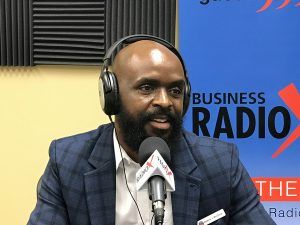
Betty Collins: [00:12:13] You have to be more aware of the people in your life, the influencers you are with right now. How are they influencing you? Are they the things you really believe? Are they the things that want to drive you? I mean I had great people of integrity and loyalty and vision and big picture. You have to ask more questions before you accept something. And women don’t do that. They just accept the circumstance. Men always ask questions.

Betty Collins: [00:12:39] No one will ever value you more than you. Don’t let somebody dictate your worth. And don’t let somebody take advantage of what you’re worth. Because they will.

Betty Collins: [00:12:51] Don’t be paralyzed by that fear, because you’ll miss your moment. And others saw my value and directed my path. My next 10 years I’m directing my path and I’m never going to say never. Ha. It’s a mindset. I only want opportunity if I choose to take it.

Tagged With: Dayton accounting, Dayton business advisory, Dayton CPA, Dayton CPA firm, faith, FOCUS, Influencers, integrity, Leadership, loyalty, National Association of Women Business Owners, NAWBO, NAWBO Columbus Chapter, opportunities

Frazier & Deeter’s Business Beat: Scott Ballard, Northside Anesthesiology Consultants

May 22, 2019 by John Ray

Business Beat
Business Beat
Frazier & Deeter's Business Beat: Scott Ballard, Northside Anesthesiology Consultants
Loading
00:00 /
RSS Feed
Share
Link
Embed

Download file

Dr. Scott Ballard, Northside Anesthesiology Consultants, Jen Portilla, Frazier & Deeter, and Roger Lusby, Frazier & Deeter, on “Business Beat” presented by Alpharetta CPA firm Frazier & Deeter

Show Summary

Dr. Scott Ballard of Northside Anesthesiology Consultants joins Frazier & Deeter’s “Business Beat” to talk about managing the growth of his practice, the business challenges in medicine today, and recruiting physicians for a growing practice. This inspiring story of business success is brought to you by Alpharetta CPA firm Frazier & Deeter.

Dr. Scott Ballard, Northside Anesthesiology Consultants

Dr. Scott Ballard, Northside Anesthesiology Consultants

Dr. Scott Ballard is the Chairman and a practicing anesthesiologist at Northside Anesthesiology Consultants.  Northside Anesthesiology Consultants (NAC) is one of the largest anesthesiology groups in the country.  By the end of the summer we will have 75 anesthesiologists and nearly 170 anesthetists.  NAC covers all three of the Northside hospitals as well as about 18 surgery centers.  NAC partnered with a large corporate partner in late 2015, now known as Envision.  Envision is the largest employer of physicians in the country.  NAC is the sole aneasthesiology provider in the Northside system.


 

Frazier & Deeter

The Alpharetta office of Frazier & Deeter is home to a thriving CPA tax practice and Employee Benefit Plan Services group. CPAs and advisors in the Frazier & Deeter Alpharetta office serve clients across North Georgia and around the country with services such as personal tax planning, estate planning, business tax planning, business tax compliance, state and local tax planning, financial statement reviews, financial statement audits, employee benefit plan audits, internal audit outsourcing, cyber security, data privacy, Sarbanes-Oxley (SOX) and other regulatory compliance, mergers and acquisitions, and more. Alpharetta CPA professionals serve clients ranging from business owners and executives to large corporations.

Roger Lusby, Managing Partner of Alpharetta CPA firm Frazier & Deeter

Roger Lusby, host of Frazier & Deeter’s “Business Beat,” is the Alpharetta Office Managing Partner for Frazier & Deeter. He is also a member of the Tax Department in charge of coordinating tax and accounting services for our clientele. His responsibilities include a review of a variety of tax returns with an emphasis in the individual, estate, and corporate areas. Client assistance is also provided in the areas of financial planning, executive compensation and stock option planning, estate and succession planning, international planning (FBAR, SFOP), health care, real estate, manufacturing, technology and service companies.


Find Frazier & Deeter on social media:

LinkedIn: https://www.linkedin.com/company/frazier-&-deeter-llc/
Facebook: https://www.facebook.com/FrazierDeeter
Twitter: https://twitter.com/frazierdeeter

Past episodes of Frazier & Deeter’s “Business Beat” can be found here.


Tagged With: Frazier & Deeter's Business Beat, Frazier and Deeter, Frazier Deeter, Northside Anesthesiology Consultants, Partner at Frazier & Deeter, physician recruitment, physician reimbursement, Roger Lusby, Roger Lusby CPA

  • « Previous Page
  • 1
  • …
  • 264
  • 265
  • 266
  • 267
  • 268
  • …
  • 276
  • Next Page »

Business RadioX ® Network


Our Most Recent Episode

CONNECT WITH US

  • Email
  • Facebook
  • LinkedIn
  • Twitter
  • YouTube

Our Mission

We help local business leaders get the word out about the important work they’re doing to serve their market, their community, and their profession.

We support and celebrate business by sharing positive business stories that traditional media ignores. Some media leans left. Some media leans right. We lean business.

Sponsor a Show

Build Relationships and Grow Your Business. Click here for more details.

Partner With Us

Discover More Here

Terms and Conditions
Privacy Policy

Connect with us

Want to keep up with the latest in pro-business news across the network? Follow us on social media for the latest stories!
  • Email
  • Facebook
  • Google+
  • LinkedIn
  • Twitter
  • YouTube

Business RadioX® Headquarters
1000 Abernathy Rd. NE
Building 400, Suite L-10
Sandy Springs, GA 30328

© 2025 Business RadioX ® · Rainmaker Platform

BRXStudioCoversLA

Wait! Don’t Miss an Episode of LA Business Radio

BRXStudioCoversDENVER

Wait! Don’t Miss an Episode of Denver Business Radio

BRXStudioCoversPENSACOLA

Wait! Don’t Miss an Episode of Pensacola Business Radio

BRXStudioCoversBIRMINGHAM

Wait! Don’t Miss an Episode of Birmingham Business Radio

BRXStudioCoversTALLAHASSEE

Wait! Don’t Miss an Episode of Tallahassee Business Radio

BRXStudioCoversRALEIGH

Wait! Don’t Miss an Episode of Raleigh Business Radio

BRXStudioCoversRICHMONDNoWhite

Wait! Don’t Miss an Episode of Richmond Business Radio

BRXStudioCoversNASHVILLENoWhite

Wait! Don’t Miss an Episode of Nashville Business Radio

BRXStudioCoversDETROIT

Wait! Don’t Miss an Episode of Detroit Business Radio

BRXStudioCoversSTLOUIS

Wait! Don’t Miss an Episode of St. Louis Business Radio

BRXStudioCoversCOLUMBUS-small

Wait! Don’t Miss an Episode of Columbus Business Radio

Coachthecoach-08-08

Wait! Don’t Miss an Episode of Coach the Coach

BRXStudioCoversBAYAREA

Wait! Don’t Miss an Episode of Bay Area Business Radio

BRXStudioCoversCHICAGO

Wait! Don’t Miss an Episode of Chicago Business Radio

Wait! Don’t Miss an Episode of Atlanta Business Radio