Business RadioX ®

  • Home
  • Business RadioX ® Communities
    • Southeast
      • Alabama
        • Birmingham
      • Florida
        • Orlando
        • Pensacola
        • South Florida
        • Tampa
        • Tallahassee
      • Georgia
        • Atlanta
        • Cherokee
        • Forsyth
        • Greater Perimeter
        • Gwinnett
        • North Fulton
        • North Georgia
        • Northeast Georgia
        • Rome
        • Savannah
      • Louisiana
        • New Orleans
      • North Carolina
        • Charlotte
        • Raleigh
      • Tennessee
        • Chattanooga
        • Nashville
      • Virginia
        • Richmond
    • South Central
      • Arkansas
        • Northwest Arkansas
    • Midwest
      • Illinois
        • Chicago
      • Michigan
        • Detroit
      • Minnesota
        • Minneapolis St. Paul
      • Missouri
        • St. Louis
      • Ohio
        • Cleveland
        • Columbus
        • Dayton
    • Southwest
      • Arizona
        • Phoenix
        • Tucson
        • Valley
      • Texas
        • Austin
        • Dallas
        • Houston
    • West
      • California
        • Bay Area
        • LA
        • Pasadena
      • Colorado
        • Denver
      • Hawaii
        • Oahu
  • FAQs
  • About Us
    • Our Mission
    • Our Audience
    • Why It Works
    • What People Are Saying
    • BRX in the News
  • Resources
    • BRX Pro Tips
    • B2B Marketing: The 4Rs
    • High Velocity Selling Habits
    • Why Most B2B Media Strategies Fail
    • 9 Reasons To Sponsor A Business RadioX ® Show
  • Partner With Us
  • Veteran Business RadioX ®

Search Results for: kids care

Dr. Julianna Hynes With Julianna Hynes and Associates

September 24, 2021 by Jacob Lapera

Bay Area Business Radio
Dr. Julianna Hynes With Julianna Hynes and Associates
Loading
00:00 /
RSS Feed
Share
Link
Embed

Download file

Leah-Davis-Ambassador-logo1

Dr. Julianna Hynes is a global leadership development and advancement strategist, coach, facilitator, and author. She is known for her expertise in women’s leadership.

Dr. Hynes earned her Ph.D. in Organizational Psychology and focused her dissertation on successful Black women leaders. She learned that having professional savvy, being a continuous learner, garnering the right support and accountability, and drafting and executing an actionable and measurable plan was the secret to advancement for any leader.

In her latest book, Leading on Purpose: The Black Woman’s Guide to Shattering the Glass Ceiling, Dr. Hynes springboards off the lessons learned in her research and shares the principles, insights, and strategies needed to thrive professionally. This book is for diverse talent and their champions alike.

Dr. Hynes enjoys working with various professionals at various levels in their careers, from high-performing individual contributors to seasoned VPs, in industries such as healthcare and technology

She works with clients on developing key skills, building confidence, and shifting their mindsets to a more intentional way of leading.

Connect with Dr. Julianna on LinkedIn and Twitter and follow her Facebook Page.

What You’ll Learn In This Episode

  • Leading on Purpose: The Black Woman’s Guide to Shattering The Glass Ceiling
  • Key skills/techniques for women to work on development in order to maintain momentum in their career while working remotely
  • Strategies for women looking to successfully pivot their career
  • How women can overcome lack of confidence or feelings of imposter syndrome in work settings
  • Maintaining work/life balance and how to manage self-care

This transcript is machine transcribed by Sonix

TRANSCRIPT

Intro: [00:00:06] Broadcasting live from the Business RadioX Studios in the Bay Area. It’s time for Bay Area Business Radio. Now here’s your host

Lee Kantor: [00:00:17] Lee Kantor here, another episode of Bay Area Business Radio and this is going to be a fun one. But before we get started, it’s important to recognize our sponsor, Leah Davis, coaching inspiring women of color to claim their wealth legacy. Today on Bay Area Business Radio, we have Dr. Juliana Hines with Julianna Hynes and Associates. Welcome, Julianna.

Dr. Julianna Hynes: [00:00:40] Thank you, Lee. Pleasure to be here.

Lee Kantor: [00:00:42] Well, I’m excited to learn what you’re up to. Tell us about your practice. How are you serving, folks?

Dr. Julianna Hynes: [00:00:47] Yeah, so thank you for that. I really this really started. It was birthed out of my own early career experiences. When I went into the workforce, I was a lot younger, female, black, new college graduate, and I worked with a lot of older white men, made tons more money than I did, and there was just a mismatch between leadership, them and those being led like me. And so I got to a point that I really just consciously thought there’s got to be a better way. There’s got to be a better way for me to develop as this young, ambitious person, person and professional. And there’s got to be a better way for them to lead as leaders and particularly someone that’s a person of color female just different from them. And so I started my business, Julianna Hines Associates, to address that challenge, and I work with business execs of all the way throughout the organization. If you consider yourself a leader, I work with you and on more interpersonal skills such as influence and communication and showing up as an executive.

Lee Kantor: [00:02:09] Now, when you were starting out in your career and you had this thought, Hey, this is this is a happening to me, I think it’s probably impacting other people and I’m want to solve this kind of complex problem. Sure. What were some of the baby steps you took from that kind of epiphany? Hey, there’s a problem here, too. Now where you are today launching this, you know, kind of global leadership program that you have. So obviously that was a journey and it didn’t happen overnight. But what were some of the steps you took so others can learn from that journey?

Dr. Julianna Hynes: [00:02:43] Absolutely. So from the time that I had the revelation, I was in grad school and I was getting my degree in clinical psychology, a master’s degree. And from these experiences, I shifted my focus to organizational psychology. And I often joke that those that needed the therapy weren’t going to see therapists. They were still in the organization. So that’s where I want it to be. And so I got a little bit more education and experience under my belt. And then when I started my business, I was working full time at another company. By then, I had just got remarried and had a baby and I was in my PhD program. So that seemed to be the ideal time, if you will, to start my business because I was juggling a lot and starting my business would have been advantageous and was advantageous for my family so I could be home when I needed to be. And so that’s those were the beginnings, the steps I took, and I am actually walking my 16 year old daughter through this. Now she’s starting her business, and I first decided I had to legitimize my business. So get a fictitious business name, get a license and do all the things that were required of me by the state and county to be an official business. I got the website and business cards and all of that good stuff, but I would say the biggest thing that I did and I recommend whether someone’s starting a business or growing their career or just want to do more with their life is building relationships and networking. And I did a lot of that just calling people being introduced to people having lots of lunches, and I like to eat. So that was fun or coffees and just sitting down and talking with people about their perspectives, their companies, what are their challenges? And the more I did that, the more that informed the work I’m doing now.

Lee Kantor: [00:04:53] Now, a lot of people believe that their network is their net worth, and it sounds like you’re a believer of that as well. Any. Hips for the young people out there who may feel like they don’t have a way to reciprocate and that it isn’t peer to peer that they’re looking for help and they don’t have much to offer, this person that has is more seasoned than them. Do you have any advice for them on how to kind of, you know, kind of improve their network?

Dr. Julianna Hynes: [00:05:20] Absolutely. So a couple of things. First, I definitely get you want to give back in some way. And it doesn’t have to be necessarily quid pro quo in that they you have as much experience as the person you’re talking with. You might be able to share some things with them that they don’t know. Being a younger person, they might. You might be able to help them figure out something like technology or social media. You might come across an article that you just share with that person and let them know, Hey. From our conversation or just thinking about you. Here’s an article I thought you would find helpful. And then in terms of expanding the network, I really am a believer of talking with the people that are in your closest circle and finding out who they know because they have their own networks and asking for a warm introduction to another person. And even if that’s a little bit scary, then practice on some of the other people. Think about what? What are you going to say? What questions do you have and what do you really want the result of the meeting to be? Oftentimes, especially if someone’s in job search, they’re thinking, OK, I have to get a job, but that’s not really the intent of sitting down with someone. They might not have a job for you, or they might not have something for your business if you’re a business owner. But just having that relationship expands your ideas and also opens doors to meet other people.

Lee Kantor: [00:06:53] Now I’ve found that I from talking with a lot of different people that kind of getting involved in associations and groups around your business or whatever you’re doing and then volunteering, taking leadership roles that really kind of can change the way people see you. And it’s something that young people. I don’t know if they really appreciate how much value that that provides not only to the association, but how it elevates them and their position in the minds of the leaders that are also members of that group.

Dr. Julianna Hynes: [00:07:26] Absolutely. And that visibility is so important because then people get to see you in action, so to speak, without any pressure or without them having to be concerned about, was this person trying to sell to me? They just see you doing your thing.

Lee Kantor: [00:07:45] Now you decided to write the book Leading On Purpose, The Black Woman’s guide to shattering the glass ceiling. Was this something that came about because, you know, you’ve just been gathering all this information and you’re maybe frustrated at the speed of which change happens? And then you just wanted to share everything you’ve kind of learned thus far in this book and get to get it to as many people as possible.

Dr. Julianna Hynes: [00:08:10] Yeah, exactly. So the book was birthed out of the outcome or results of my doctoral dissertation. I study successful black female leaders and learned some of the strategies that they use, the challenges that they face. And it was just such a gift for me to sit down and have the conversations. I wanted to afford anyone and everyone the opportunity to have the experience that I did, and so the book was the best way to do that. And yeah, it really is. For those who are starting out in their career, how how do you want to think about building your career, but also for those that are already more seasoned than their career? There’s some great nuggets and reminders for them as well.

Lee Kantor: [00:09:01] Now, do you find that some folks kind of don’t approach their career strategically, that they kind of are just floating around and then of someone offers them a job and then they start doing that and then they get frustrated and they look for another job and they leap over there and then they get frustrated. But because they’re not really kind of leading, you know, kind of living on purpose, they’re kind of just kind of exactly.

Dr. Julianna Hynes: [00:09:24] That’s what. Yeah, yeah. So. And that was me. I thought I was going to be a therapist until I had this experience and I took a what was called a visionary leadership class in one of my grad school classes. And it really opened my eyes to having a vision, having a strategy, being intentional. And in that class, I had the opportunity to do my first vision board and really dream and think about what do I want my life to look like and what do I want it to be? And it was amazing. I mean, there’s this thing called the reticular activating system, and all of this stuff gets stored there, even though we don’t remember. But having that vision really put me in on track to where I am today. At the time I did my vision I was I was in a graduate program, not my PhD, so I hadn’t had that, but that was on my vision board. I wasn’t in a house. I’m in the house I bought now and that was on my vision board. I wasn’t married at the time. I’m remarried kids. So everything that I wanted my life to be just by putting it on paper and putting it in front of me really made a difference and help me to really help me to realize that being intentional, deliberate living your life leading on purpose can really be not only advantageous for us as individuals, but our communities, our organizations, the businesses that we want to bring about.

Lee Kantor: [00:10:57] Now do you find that? I don’t know if this is just black women, women, just the human beings, just as a whole that a typical person doesn’t aim high enough, that they’re they’re just kind of almost selling themselves short, that there can be so much more. But for whatever reason, they don’t want to dream big enough. And that I would imagine that that exercise of the vision board really almost forces you to dream bigger.

Dr. Julianna Hynes: [00:11:28] It gives you permission to dream bigger. When I was about a week or so ago, I was working with my daughter on hers and she wants to go into the beauty industry and I said, Who would be your ideal client if you were to work with anybody that you could? And she named Rihanna, and I thought, that is such a big vision in that it’s so great. And my daughter was like, Well, I’ll probably never work with her. You never know just by you putting it out there and by you having that idea of who you want to work with, it’s going to draw you down that road. So yeah, I encourage people to dream big and don’t censor their their dreams or their vision. There will be plenty of time to do that. But just to start, just think dream idealize, whatever it is you need to do to to dream as big as possible.

Lee Kantor: [00:12:27] Now, do you think that the reason a lot of people don’t dream bigger is that maybe when they were younger that people kind of squashed some of those dreams early? And then just kind of they just people kind of learned that, hey, that’s silly. That’s impossible. And then they don’t. Then it’s almost like they’re cutting them off at their legs. They don’t. They stop trying because what’s the purpose?

Dr. Julianna Hynes: [00:12:53] Right? Absolutely. So mindset is what you’re really speaking to is big for someone if they’re going to go after a dream or a goal. And especially as a business person, because they’re going to be a lot of ups and downs as they go through this journey. And so having that North Star, if you will, having that confidence in yourself that you can do it regardless of what anyone else is telling you. When we first started this part of the conversation I quote came to mind by less I think it’s less brown. That said, if you shoot for the moon and miss, you’ll land somewhere among the stars. And I thought that was so great because it just opens up opportunities that you never know. You’ll you’ll make if you’re not or get an opportunity to do certain things if you don’t even shoot for that goal that you want.

Lee Kantor: [00:13:50] Yeah, that’s being a parent myself. I know that was something that I was being very mindful about with my child is that I didn’t want to be the one to tell him he couldn’t do something. I was always trying to say, Why not you? Why not you? Because life is hard enough. And a parent, I think, shouldn’t be the the dream killer. They should be the one that’s enabling as many dreams to come true as possible.

Dr. Julianna Hynes: [00:14:18] I agree. I tell my kids I’m their biggest cheerleader, right?

Lee Kantor: [00:14:22] And they can count on me to be rooting for them and I and that’s and that gives them the security to kind of be bolder, I think.

Dr. Julianna Hynes: [00:14:30] Yes, yes. And you’re right. And that’s part of the intentionality as well is I speak into my children’s lives as often as I can. There’s the discipline side, but there’s also the side that saying you can do it and I believe in you. And how can I support you or do I? What do I need to do to invest in you? And also encouraging them to learn the lessons along the way. I can’t do everything for them, but I’m here to definitely be that that wind beneath their wings, so to speak right?

Lee Kantor: [00:15:03] And give them places to kind of fail safely. It’s better to fail, like in a lot of ways younger where the stakes aren’t as high as opposed to never failing. And then all of a sudden something big happens and then you fail in and then people don’t have kind of the resilience to handle it.

Dr. Julianna Hynes: [00:15:22] Absolutely. I wholeheartedly agree.

Lee Kantor: [00:15:25] Now are there any kind of key skills that you’d like to share for women to work on in order to kind of have that escape velocity in their career to make it the way they would like it to be?

Dr. Julianna Hynes: [00:15:37] Yeah, great question. Thank you. So from my dissertation, I really teased out and found a few things from talking with these amazing women, and there were really three pillars that supported their advancement. The first was professional savvy, and that’s where you find all the interpersonal skills, influence, executive presence, communication, all those things. So how do you know what to develop? I always encourage leaders to do an assessment, ask for feedback, do a three sixty, whatever they need to get the information from others about how they’re showing up. How what are their strengths? And then also, what are their development opportunities? And that’s. Are a lot of professionals stop and often get frustrated because they’re doing all these things and still not getting the opportunities. So the second pillar is around support and accountability and finding the mentors, the sponsors, the coaches, friends, family, colleagues, whomever to provide that support to you that you can talk to, brainstorm with ask questions of. And then with that, the accountability piece that you’re sharing something with someone like that dream we were talking about. Once you share it with someone, it kind of puts a little bit more pressure on you to accomplish it. So you have that person being really encouraging and saying, Hey, what’s going on with this? Or How can I support you? And so that’s the second pillar and then the last pillar a lot of professionals don’t think about as well, which is a strategy. So putting a plan in place, one that’s measurable, one that’s actionable, one that is going to keep you motivated to advance to those those levels wherever you want to go in your career or to build a business. So I always speak about those three pillars when I share with leaders really what is their success strategy around advancement or starting a business?

Lee Kantor: [00:17:56] Now, can you share a little bit about who that ideal client is for you? Is it that kind of high achieving woman that is kind of rocketing up the corporate ladder? Is it the person that’s frustrated or plateaued and doesn’t know what’s happened and seeing other people be promoted around them? Or is it the organization that says, you know what? We have to invest in our people and then put a program in place to help them be the best them they can be?

Dr. Julianna Hynes: [00:18:25] Yeah, so all of the above is who I work with. My ideal client is that first one, the high achieving woman black woman who really just needs a safe space to share challenges and difficulties to brainstorm ideas around how to overcome one thing or another. And typically, the organizations bring me in. So they’re identifying this person as a high potential to be in the C-suite, and this person needs a little bit more development in a certain area. So they’ll call me in to work with the executive women and help them shore up some of the skills that they will need to be more successful.

Lee Kantor: [00:19:16] Now, are you finding at the corporate level that having a coach or investing in their people in terms of coaching is something that’s more accepted and is kind of moving further down the food chain, if you will, when it comes to more and more people having access to this kind of service because it seems like there’s a lot more acceptance accepting of coaching nowadays than maybe there were, you know, 10 years ago.

Dr. Julianna Hynes: [00:19:44] Yes, absolutely. I firmly believe in coaching. I was first a trainer when I was in HR and then I became a trainer and training’s great. And sharing new concepts or perspectives or ideas with a group of people is an amazing opportunity. What I found, though, is that someone will go to training, they’ll learn all this good stuff, they’ll leave and all. They’re all excited about it, and then they’ll go back to their group or team or company that hasn’t taken the training and they get indoctrinated again back into that culture. If the culture doesn’t change, it’s really hard to bring different mindsets or a new attitude back. So coaching really ingrained those lessons so I could teach communication in a class to 10 people in a year or even six months. Those 10 people, it’ll probably be very little they retained. But if I coach someone on communication for six months and I go back to them another six months, typically they’ve now incorporated those behaviors. I fully think coaching should be offered at every level. I really do see an opportunity for organizations to offer it further down the pipeline because then they’ll see more a more robust, stronger pipeline of leaders, people that are ready to take on those roles because they’ve already prepare for them earlier in their careers.

Lee Kantor: [00:21:27] And I would I would also believe that that you’re going to change the culture of the company. If you believe in your people that much, you’re investing that much in them.

Dr. Julianna Hynes: [00:21:36] Absolutely. Absolutely. Yeah. Well, and go ahead.

Lee Kantor: [00:21:40] I’m sorry.

Dr. Julianna Hynes: [00:21:41] I was just going to say it’s a great way to show your key talent that you believe in them. That investment really goes a long way for I’ve talked to leaders and they are so excited to get a coach and they don’t want to let the company down. They don’t want to let their manager down because they understand the investment that’s going into it.

Lee Kantor: [00:22:04] Well, Julianna, congratulations on all the success you’re doing. Important work and we appreciate you. If somebody wants to learn more about your book, about maybe getting on your calendar to have more substantive conversation. Is there a website they can go to?

Dr. Julianna Hynes: [00:22:22] Yes. So my web address is the same as my name, Juliana Haines dot com, and I have a gift on the website for anyone who is interested. It’s leading on purpose tools for getting unstuck, focused and in action. So as for those that do feel like they’re plateaued and they’re trying to figure out what’s next, it’s a great book for them and my contact information and calendars on my website, as well as the books that I have produced already.

Lee Kantor: [00:22:57] And that’s Jli A. and a h. Y. Juliana Heins, thank you so much for sharing your story today.

Dr. Julianna Hynes: [00:23:07] Thank you for your time and for having me.

Lee Kantor: [00:23:10] All right, this is Lee Kantor. We’ll see next time. Bay Area Business Radio.


Tagged With: Julianna Hynes, Julianna Hynes & Associates

Nick Arambula Mike Fretto and Chris Lee with Neighbor

September 24, 2021 by Karen

Nick-Arambula-Mike-Fretto-and-Chris-Lee-with-Neighbor-feature
Phoenix Business Radio
Nick Arambula Mike Fretto and Chris Lee with Neighbor
Loading
00:00 /
RSS Feed
Share
Link
Embed

Download file

Nick-Arambula-Mike-Fretto-and-Chris-Lee-with-Neighbor

Nick Arambula Mike Fretto and Chris Lee with Neighbor

Neighbor-logo-rectangle

Neighbor is a Phoenix based outdoor furniture company. They launched in late 2020 with a teak lounge collection and have since expanded into dining and accessories.

Neighbor distributes with Crate&Barrel and Huckberry, but their sales are predominately through their website. They started the company driven by an desire to find a way to disconnect and build more memories with those we love, in the midst of the pandemic.

Nick-Arambula-Mike-Fretto-and-Chris-Lee-with-Neighbor-groupNick Arambula is a reformed CPA, who left the world of public accounting more than seven years ago. However, his exposure to corporate tax and management consulting have made Nick pretty good with numbers and strategy.

Prior to Grand Collective, Nick was the Interim CEO and COO at Tuft & Needle. He played a key role in growing revenue from $40M to $200M through expansion of physical retail stores and product distribution, by establishing deals with Lowe’s, and Crate&Barrel. As Interim CEO, Nick led the company to its most profitable months since inception.

In his spare time, Nick can be found riding his bike or dancing to any song from Trolls with his daughters, Chloe and Eva.

Mike Fretto is our craftsman. Mike is nearing 20 years of experience in design and brand development. Early in his career Mike was a consultant supporting clients like Facebook and Coca- Cola, all while finding time to build his own non-profit that benefited poverty stricken citizens by telling their stories through design.

Before Grand Collective, Mike was the Head of Product Experience at Tuft & Needle. In his time at T&N, Mike played in pivotal role in building the brand and products. In short, if you opened a product from T&N in the last four years, Mike had something to do with every element of that process.

In his free time, Mike explores the outdoors with his kids, Eleanor, Abraham and Boone.

Chris Lee started his career managing a team in the Midwest on a factory floor. That introduction to manufacturing gave Chris a strong foundation in supply chain and process optimization.

More recently, Chris led critical operations at Tuft & Needle as the Head of Supply Chain. He was responsible for enabling the business to go from manufacturing and fulfilling a few hundred mattresses a week, to nearly 10,000 a week at its peak.

In addition to supply chain contributions, Chris facilitated the introduction of new products and played a key role is conceptualizing T&N’s award winning Mint Mattress.

When not working – which is a rare occurrence – there is a good chance you’ll find Chris crafting his latest DIY endeavor.

Follow Neighbor on Facebook and Instagram.

Tagged With: Outdoor furniture, patio furniture, Teak furniture

Patrick Metzger With PM and Associates

September 23, 2021 by Jacob Lapera

PatrickMetzger
Coach The Coach
Patrick Metzger With PM and Associates
Loading
00:00 /
RSS Feed
Share
Link
Embed

Download file

PMandAssociates

PatrickMetzgerCertified EOS Implementer Patrick Metzger has always been a teacher, coach and facilitator at heart. After spending over a decade as a public school teacher and coach where he helped build high achieving teams and assist them in reaching their goals, he decided to embark on the entrepreneurial journey.

After starting his own coaching and consulting business, Patrick transitioned into holistic high performance coaching. Within two years, he was working with clients across North America and performing professional talks and trainings.

Patrick is passionate about using his teaching and coaching skills and expertise in partnering with and supporting teams and leaders for growth and success as an EOS Implementer, CEO of PM and Associates and Founder of Velocity Masterminds which is launching late 2021.

Currently, Patrick works with dozens of organizations across the Midwest and nation within a variety of industries in helping them get more out of their businesses, themselves and live their ideal lives. He enjoys helping young startups lay the foundational bricks of success, as well as guiding $100M+ companies in increasing efficiencies and making a greater impact in the world.

What You’ll Learn In This Episode

  • How to create a successful business

This transcript is machine transcribed by Sonix

TRANSCRIPT

Intro: [00:00:02] Broadcasting live from the Business RadioX Studios in Atlanta, Georgia. It’s time for Coach the Coach radio brought to you by the Business RadioX Ambassador Program, the no cost business development strategy for coaches who want to spend more time serving local business clients and less time selling them. Go to brxambassador.com To learn more. Now, here’s your host.

Lee Kantor: [00:00:33] Lee Kantor here, another episode of Coach the Coach Radio, and this is going to be a good one today on the show, we have Patrick Metzger with PM and associates. Welcome, Patrick.

Patrick Metzger: [00:00:42] Hey, thanks so much for having me, Lee. Excited to be here, man.

Lee Kantor: [00:00:45] Well, I’m excited to learn what you’re up to. Tell us about your practice. How are you serving, folks?

Patrick Metzger: [00:00:50] Yeah, so I’m a certified iOS implementer, so I work with small to medium sized businesses all across the nation, and what I really do is I come into those businesses as a business coach and facilitator and really help them execute at a much higher level by helping them implement an overall operating system that deals with everything from helping clarify their vision and structure to making sure they’re tracking the correct data and executing to the fullest, basically.

Lee Kantor: [00:01:21] So now what is kind of the pain point that your clients are coming to you with? Are they just at the beginning stages that they want to just kind of start fresh and then build their own, you know, professional operating system? Or is it something that they’re just kind of struggling and they come to you to kind of help them through a challenge?

Patrick Metzger: [00:01:40] Yeah, great question. You know, if you look at every business, it doesn’t matter if you run a lemonade stand or if you’re running Google. Everybody has issues, right? Everyone has multiple issues around people, processes, lack of vision, lack of communication. So the the big item that I typically see with businesses, you know, I work with everyone from solopreneurs to $100 million plus companies. But there’s so many issues around lack of communication. Owners, visionaries having trouble letting go of things. That’s a huge one that I very, very frequently see as well. And then just, you know, people want to get more out of their business and they just don’t have a really solid method of how to get there. And anybody that’s ever worked with a coach knows that when you have an outside, an outside facilitator and outside perspective, it’s absolutely priceless. And pointing out a lot of the things and digging out a lot of the things that you may be know are there, but they’re either hard or you don’t know how to bring them up, maybe within your business.

Lee Kantor: [00:02:44] So now, what’s your back story, how did you just start finding a heart for these entrepreneurs?

Patrick Metzger: [00:02:50] Yeah, yeah, I kind of I’ve kind of gotten here in an unorthodox way to tell you the truth. So I was actually a teacher for 11 years. A lot of middle school, a little bit of upper elementary. Loved it. So teaching coaching has always been my passion. It’s always been my big, big, my big. What do they do and my big why? As part of that is everything I’ve done over my professional career has always been about helping people achieve more. So I’ve helped students. I have helped kids on an athletic field. I was a football coach for a long time. Now it’s really just transition to helping individuals through some high performance coaching, but now mainly working with just leadership teams across the country. And how do you get more out of your team? How do you get more out of your business because every single person is is looking for that. But I, you know, going way back, I left teaching to find what it was that I really wanted to do, and it took me a while to realize that teaching coaching was absolutely something I wanted to do forever. But I did not like the lack of freedom in teaching.

Patrick Metzger: [00:03:57] And, you know, I worked with a business coach myself and to tell you the truth, that’s really who kind of set me on a different direction. I did a lot of health, wellness coaching, consulting when I left teaching because I had a very strong background in that. But he’s the one that really kind of saw way more in me and really started to dig that out. And from there, I really transitioned from health wellness into more holistic, high performance coaching that led me to working with CEOs managers. And that’s where I really ran across the iOS framework, which stands for entrepreneurial operating system. And I was sold. I immediately borrowed thirty thousand dollars against my house, went and did the training and never looked back, started with my first business six weeks after that. Fast forward to now just about a couple of years and work with over 20 companies nationwide. Everyone from, like I said, solopreneurs that are really building the foundation and laying the bricks of their business to $100 million plus companies that are really just trying to break through the ceiling.

Lee Kantor: [00:04:58] Now, for the sake of this conversation, let’s talk about the beginning stages and how to create that successful business. Once you had the framework from iOS and you had kind of a blueprint on how to execute the service of coaching, I guess, and the deliverable back to your client. How did you get that first client? How did you kind of move from? I don’t know. Can I do this to, yeah, I’m doing this and this is I can do this and I won’t have any kind of imposter syndrome. I’m qualified to do this and I’m the person to do this.

Patrick Metzger: [00:05:31] Mm hmm. Yeah, that’s a great question. You know, I’m always one of those people where I’d rather have my back up against the wall or put me in a corner because I’m going to figure it out. And I’ve just always had an attitude like that of Don’t tell me what I can’t do because I’m going to make sure that I prove you wrong. But I had a I, you know, when I when I first was looking into becoming a professional iOS implementer to tell you the truth, I I talked to a lot of other implementers around the country and I said, You know, you guys, I don’t, you know, I don’t have the business experience that the rest of you do. A lot of you guys have done, you know, you’ve been CEOs, you’ve done consulting forever. I mean, I was a teacher. I said, I’m a teacher. You guys, you know, how is that going to work even? And they every single one of them told me the exact same thing. They said, Patrick, if you’re a great teacher, you can get people to understand things like the system, the tools, the methods that we use. If you can facilitate really tough discussions, ask things that people feel extremely awkward asking or talking about, they said. If you can do those things, they said you’ll learn about people’s businesses.

Patrick Metzger: [00:06:41] And if you’re a smart guy, you’ll learn them very, very quickly. So that, you know, that gave me a ton of confidence in like, Hey, I can absolutely do this and I’m going to be very, very good at it. And they said that they a few of them actually said, You know, some of our best implementers are former teachers because they know how to teach the tools and then they’re deadly effective at it. So, you know, when I started out, I knew it was going to be a journey because I did not have a really strong business network. I mean, actually, it was very, very, very small. So I knew no one thing I needed to do first was really build up that network and then just start putting myself out there, start being seen, start, start offering up value. That’s a huge part of this business is in helping first, providing value first. So my first client actually came like I said, it was about six, maybe six or seven weeks after I became an implementer. I offered to do a talk at an entrepreneurial center right here in North Dakota, where I live, and I think I only had man, I think I only had four attendees at that thing. You know, I put on about a two hour workshop around iOS and all the benefits it provides and such.

Patrick Metzger: [00:07:54] And the client, eventually that I got out of that talk wasn’t even at the talk. He was somebody that had signed up for the workshop ended up not showing up. And here’s the power of follow through in sales right here is I asked him. I sent him a message after the workshop. I think it was the next day or something. I said, Hey, so sorry that you couldn’t make it, you know, I’d still love to chat with you. And I never heard anything. So I thought, OK, whatever. Well, fast forward, probably a week or two after that, I was driving along interstate here in North Dakota and I was about to go by his business and I thought, You know what? I’m going to stop, I’m going to pull in and I’m going to go introduce myself. And long story short, he and I sat there for two or two and a half hours. He started dumping on me on all the struggles in his business and things that were happening and weren’t happening and booked a 90 minute meeting with his leadership team that night. I think I came back that next week right away, presented as a team, they were sold. And that’s how I got started. Really? Wow. Be persistent. Right?

Lee Kantor: [00:09:02] That is great advice. And that is and and great being so proactive. A lot of folks, you know, the first little hint of they don’t like me, they just hide and then forget about them and try to repress all that. But you kind of leaned into it and said, Look, you know, people are busy. Let me go. Check this. Let me, you know, literally knock on the door and congratulations for doing that. I mean, that’s a great testament to others about really, how hungry are you? Who wants it more?

Patrick Metzger: [00:09:31] And yeah, some you know, some people hear the word no or they hear silence and it breaks their spirit. For me, I hear those things or I get silence and I go, All right, here we go, baby. You know, I look at it as a challenge, really, right?

Lee Kantor: [00:09:45] Like, no does have to me. No, it could just mean not now. So you got to just keep grinding. Now, for folks out there that are kind of building their maybe first business, maybe they’re about to take that leap from, you know, working a corporate job or just a normal person job and then being an entrepreneur. What are some of the kind of foundational pieces they need or the tools they need in order to be successful?

Patrick Metzger: [00:10:12] Yeah, I would say a couple of things number one, bank on your network. You know, the people that can help you go to them, ask for help. Don’t be afraid to ask for help. The biggest item, though, Lee, I mean, man, you have to be willing to invest in yourself. And that’s a huge leap. You know, when you when you leave, whether it’s corporate or, you know, steady job, whatever it may be that you’re doing. And if you’re going to go out on your own, it’s terrifying. It’s exciting in the same. But man, the best advice I can give is if I could go back and do it all over again, I would have borrowed the money. I would have taken the steps to do things correctly and right from the very, very beginning. So I think a lot of people kind of they leave, they kind of test the water, you know, they kind of get partway in and then they get a little worried and then they back out a little bit and then they dove in for a little bit further. And it’s it’s it’s time, you’re burning time and you’re burning money along the way to me.

Patrick Metzger: [00:11:16] You know, if you’re going to roll your roll the dice on yourself, you have to go all in and that’s always energy resources, money, time. But yeah, man, if I could go back, I would have borrowed. I would have borrowed a huge amount of cash and said, Hey, I’m going to hire the people that I need that are experts in marketing, and I’m going to get coaching and I’m going to do all these other things so that I can blast off from the very beginning. And it’s a huge step backward, and that’s what scares most people is they feel like they can’t go backward. And, you know, I always make the analogy of, man, if you’re going to jump across a cliff, you know, a huge valley or canyon, you can’t stand at the edge and just jump. You always have to go backward and you better take a good run at it. So invest in yourself, do what you got to do up front because it will accelerate the process tremendously. And that’s, you know, you’re you’re you’re wasting time. I think if you don’t do those things

Lee Kantor: [00:12:14] Now, when you look back at your career thus far and you kind of look at your teaching to now, your coaching. Are you finding some threads and similarities on how folks learn and how they absorb this kind of information? Like do you think coaching would be a worthwhile way to maybe tweak some of what the learning that happens in schools?

Patrick Metzger: [00:12:38] Oh, absolutely. You know, as a as a former teacher for a long time and coach and now working with adults, I mean, I can see so many of the things that are missing and a lot of what’s missing is it’s, you know, there’s a difference between teaching and coaching. You know, if you’re familiar with like John Maxwell’s five levels of leadership, there’s a big difference also between management and checking boxes. But at the top is coaching and coaching is truly caring, connecting, making sure people understand it. I think a lot of people, when they hear teaching or when they attempt to teach, they think it’s just presenting information. And you can present all the information you want. Does it mean that it’s soaking in and that it doesn’t mean it’s being absorbed and being used effectively? Because that’s the biggest difference is implementing being able to implement what you learn and execute it as well. So, you know, as I think of kind of my whole journey to. An effective coach is not just presenting the information, they’re not just putting it out there, they are connecting through stories. They’re connecting through commonalities. They’re getting very they’re making an emotional connection with the people that they work with because that’s what makes the biggest difference. I don’t care who you are or what level you’re at business school and athletic field. You know, you look at the most successful coaches in the world. If you’re going to talk athletics in particular, there are people that can connect with their athletes and their staffs extremely, extremely well. And it’s all about being your true self and being a fantastic listener, swallowing your pride and being genuinely curious about people, I think is big too.

Lee Kantor: [00:14:32] Now, any advice for that listener out there, that is, they have their business and maybe they’re struggling. Is there something that they can do right now? Is there some low hanging fruit for that entrepreneur that is kind of maybe in a rut or a plateau that they can kind of. You know, elevate their game a little bit and move the needle in their business.

Patrick Metzger: [00:14:57] Mm-hmm. Absolutely. You know, you use your network or reach out to people that can help you. You know, on one end of that, you could work with a coach. You could pay to work with somebody like that. Not everyone has those resources, even though I would highly recommend it because it’s going to pay for itself in the in the long run. But a lot of us have fantastic resources and connections around us. At many times. We unfortunately don’t tap into, you know, if you’re a business owner, man, talk with other business owners, join a mastermind. There’s a ton of resources online groups online that you can get a ton of valuable feedback, whether it’s personal, professional, whatever it may be. But don’t be afraid to ask for help because everybody needs it and nobody likes asking for it. No one likes to swallow their pride and do those things. But when you do, it’s going to make the difference. And ultimately, that’s what we’re all looking for.

Lee Kantor: [00:15:54] Now, I know you’re relatively kind of young in your career as a business coach, but have you kind of landed on a sweet spot of what type of an entrepreneur is the best fit client for you?

Patrick Metzger: [00:16:07] Yeah, I’m yeah, I’m thirty eight years old. I feel like I’ve lived three different lives. I always say that I feel like I had my teaching life. My transition life and now doing what I’m doing now as a business coach. But the neat thing about iOS and what I bring into organizations is it’s industry agnostic, so it doesn’t matter. I mean, I have clients that are, I have medical, I have construction, I have real estate technology. I have a little bit of everything and it works fantastic fantastically within companies that are anywhere from. I mean, I have some solopreneurs. I have some $100 million plus companies with hundreds of employees also. But I will always say I kind of have a sweet spot. They’re not such a sweet spot, a sweet spot. I kind of have a soft spot in my heart for working with entrepreneurs that are really starting at ground zero because there’s nothing more exciting than working with someone that has a dream. They can see the dream, but what what I’m doing is I’m coming in and I’m actually making that dream a reality. I’m helping walk them through that process of creating clarity around everything from their values to their organizational structure to their big why and what and who they are and what they’re going to be about and what’s really important to them all the way to.

Patrick Metzger: [00:17:37] How are we going to execute it? What’s the rock hard rock solid plan that we’re going to start right now that is actually going to get you to that point? And it’s so fun to see as a team grows, and maybe it’s one or two people that start and then they’re able to add that next employee and then it helps elevate them. And then they add that next employee and they’re able to elevate further and further. And then it’s and then you just have that compounding effect. But too many people don’t ask for help early enough in the process, and they just sit there and they spin and they spin and they spin and they wish and they wish about what all these things that they want to see happen, but they don’t take the steps to actually make it happen. So yeah, I would say those startup entrepreneurs I absolutely love, but you’ve got to find someone to that’s willing to make that, that investment because it is a big one at the beginning.

Lee Kantor: [00:18:30] Now I see here that you’re also launching a national mastermind platform. Can you speak of that a little bit?

Patrick Metzger: [00:18:38] I am, yeah. So the Mastermind platform is called Velocity Masterminds, hoping to launch it late fall or very beginning of twenty twenty two. And the whole concept from that really came from the idea of looking at all these other masterminds and business groups and things around the nation and even world that exist. The one piece set I felt like was really missing is they are a little borderline. Even your best ones are a little borderline transactional. But there’s also that personal growth and development piece missing from it. So this mastermind is going to be similar to many others you would find, and I’m not going to name any in particular some of the biggest, most popular ones, you know, but it’ll include a fantastic peer group, regular meetings around talking business, talking through issues, introducing each other’s businesses. How can we help? What can we do for you? But there’s also going to be a different component to it that really focuses on, Hey, if we can improve you as a professional or as a on a personal level, excuse me, we can really improve who you are as a person and start to have deeper and higher level conversations and get really open and transparent and rah about who you are and who you aren’t and start to improve that facet within a person. It raises your professional ceiling as well. And I felt like all these masterminds that are out there really lack that deep connection within the group and with between the people within that group. So, yeah, super excited to to launch that. It’s going to be really niched out by different industries and as far as professional level. So we’ll have visionary CEO groups, we’ll have more operations and integrator type groups, but then we’ll also have groups based on industries as well. So real estate groups and technology groups and construction groups and you name it. So yeah, it’s it’s going to be a lot of fun spend a lot of work so far, but it’s going to make a big impact.

Lee Kantor: [00:20:47] Well, we’d like to support you in that if there’s anything the Business RadioX network can be doing to help you get the word out about that. I’m a big believer in mastermind groups and I think that that sometimes they do get too transactional and that it creates a lot of pressure to bring leads. And I think that there is something missing and I think a bigger Y and really getting maybe layers deep with the individual would help them kind of see that and not make it so transactional. So we’re here to support you. So if there’s anything we can be doing for you, please let us know because that’s a cause that we would love to get behind.

Patrick Metzger: [00:21:20] Awesome. I appreciate that.

Lee Kantor: [00:21:22] Lee Now, if there is someone out there that wants to learn more about what you’re up to. Is there a website they can go to to maybe find some of your resources or get on your calendar?

Patrick Metzger: [00:21:33] Yeah, the best website is go to my personal one. It is Patrick Metzger. You can learn a little bit about everything that I do. So like I said, I am a certified iOS implementer. You’ll find a link on there that will actually take you to my iOS website kind of a microsite. There you can learn about the strategic consulting team that I have, where we really kind of take a concierge approach to helping with people issues within businesses. And then very shortly there will be some information coming on that mastermind onto my personal website. And then also you can find my podcast there as well. So I do run the Patrick Metzger Show podcast, where we interview high performers from around the world really focusing on their journey to the top and what’s what they’ve had to do to get there.

Lee Kantor: [00:22:18] Good stuff. Well, congratulations on all the success you’re doing. Important work and we appreciate you.

Patrick Metzger: [00:22:24] Yeah. Thanks so much, Leigh.

Lee Kantor: [00:22:25] All right, this is Lee Kantor. We’ll see, y’all next time on Coach the Coach radio.

Tagged With: Patrick Metzger, PM and Associates

Mental Health Matters – Kicking My Blue Genes in the Butt

September 23, 2021 by Karen

Mental-Health-Matters-Kicking-My-Blue-Genes-in-the-Butt-feature
Phoenix Business Radio
Mental Health Matters - Kicking My Blue Genes in the Butt
Loading
00:00 /
RSS Feed
Share
Link
Embed

Download file

Mental-Health-Matters-Kicking-My-Blue-Genes-in-the-Butt

Mental Health Matters – Kicking My Blue Genes in the Butt
The Emerson Theater Collaborative (ETC) is a 501(c)(3) non-profit organization whose mission is to serve youth, under-represented communities and artists with an emphasis on diversity, by producing innovative and thought-provoking theater both in southeastern Connecticut and Sedona, Arizona. One such example is a wonderful play called Vivian’s Music 1969 by Monica Bauer that was a featured program at ETC in February 2020.

Camilla-Ross-on-Phoenix-Business-RadioXCamilla Ross is the President and Chairman of Emerson Theater Collaborative, Inc., Producer and Actress (Portray’s Harriet Tubman – Harriet Tubman’s Dream written by Lisa Giordano). She is also the President and Chairman of the Sedona Arts Academy.

“To be a catalyst for social change is really where it’s at for me,” Camilla said. “I believe theater should always be a venue for social change. I love the art of live theater and love what it does to the human soul and spirit. It moves us to look at life differently. To leave off the rose-colored glasses and really see the human condition.”ETC is a shining example. Founded in 2008 to give voice to actors’ innate talent for character development, Camilla has since produced more than 20 inspired, original performances. Emerging and professional cast and crew have blossomed under her guidance. And together they’ve created profound, can’t-ever-forget shows that illuminate social issues, and transform audience curiosity into concern and action.ETC_Logo_CMYK

Camilla has a deep well of experience and mentorship to tap into for her ETC roles—from her days at Emerson College and then in regional theaters and commercials. Among her favorite portrayals? Capturing the heart, spark, and essence of Harriet Tubman in the one-woman show Harriet Tubman’s Dream. Camilla is also deeply involved with youth, their visions for social change, and the desire to see the world as a stage of peace. To that end, she’s a tireless advocate for children and adults with Asperger’s Syndrome. She gives kids and teen real-life theatrical experience through ETC’s Summer Youth Program and enlivens their eagerness to learn about the history and genuine heroes through ETC’s school programs. Camilla is a steadfast suicide prevention advocate too, helping teens and adults avoid this tragedy and move forward to a happier, more positive future.

Camilla has taught business courses part-time at Three Rivers Community College since 2005, Sat on the Emerson College Alumni Board for ten years, and is past president of the Connecticut Alumni Chapter. In May 2014 Camilla was honored by the Writer’s Block of New London, Conn., for her past work as an instructor. In June 2013 she was named Woman of The Year by the Women’s Network of Southeastern Connecticut, and she’s been featured in many periodicals for her community service. In 2019 Emerson Theater Collaborative was nominated as Collaborator of the year in Sedona AZ. A veteran of the U.S. Navy and member of Kappa Beta Delta, Camilla earned her BA in Performing Arts: Acting from Emerson College in 1985 and her MBA in Finance from Baker College in Michigan.

Connect with Camilla on LinkedIn and follow ETC on Facebook, Twitter and Instagram.

Nami

Kathy-BashorKathy Bashor is a staunch advocate of peer and family driven care in the behavioral health system.  Her can-do spirit has resulted in the strengthening of peer/family voice, access to care and choice in services throughout the system. 

Personally, understanding the impact of trauma on health, Kathy lead the Arizona department of Health on a successful statewide campaign to adopt Trauma Informed Care in all aspects of the Behavioral Health system.

Kathy earned a master’s degree from Arizona state University where she served on the faculty for 4 years.

Kathy recently retired from AHCCCS as the Bureau Chief of the Office of Individual and Family Affairs

Recent awards:   ASU Center for Applied Behavioral Health Policy 2017 Award for Leadership            

                              In Advocacy                                         

                             David’s HOPE  2018 Max Dine Award for Advocacy and Leadership

Recent publication:  Recovery: Principles, Research and Practices in Inpatient Psychiatric Hospital, Stigma and Recovery

Kathy is very grateful to have the opportunity to participate in the Read Earth Theater writing class.  She arrived curious and with the hope of making new friends.  Through the process she gained so much more.  She greatly values the opportunity to meet others who have met life challenges with courage and respect.  Most importantly, through the writing process, Kathy has been able to find peace within herself.

Josh-Rivedal-Rose-Boerner-Suicide-The-Silent-KillerJosh Rivedal‘s one man, live Broadway-style play Kicking My Blue Genes in the Butt includes fifteen characters and seven songs and is both comedic and poignant.

Mr. Rivedal discusses the tragic suicides of both his father and grandfather in a primal piece of live storytelling that creates an emotional connection with the audience and conveys the powerful message that suicide is preventable.

Finally, there will be a live Q&A between Mr. Rivedal and the audience on the importance of mental health and suicide prevention. Representatives of NAMI of Phoenix, will moderate the after-show discussion.

Connect with Josh on LinkedIn, Facebook and Twitter.

Who:

Emerson Theater Collaborative in collaboration with NAMI, Verde Valley Mental Health Coalition, I Am Worthy Project, and the i’Mpossible Project

Why:

Because Mental Health Matters

When:

Thursday, Friday & Saturday

September 23th, 24th, 25th @ 7-8:30pm – 2pm -3:30pm on the 25th

Where:

Sedona Arts Academy, The Collective, 7000 SR 179 Ste. C100, Sedona AZ 86351

Tickets:

In-Person theater costs. For the first time ever, pick your seats with our new “seating” map.

– Advance /Reserved Seating – $55 (sit at table with your friends/family, drink tickets available and table service)

– Advance /Reserved Table – $165 (reserve an entire table of three for your friends/family, drink tickets available and table service)

– Advance – $35

– At Door – $45

Stream from Home via On-the-Stage (video on-demand) – $20

– USE THIS LINK to purchase and “stream” on-demand – https://bit.ly/etc-blue-genes-on-demand

– Available for viewing 9/24/2021 to 10/7/2021

Following CDC COVID-19 recommendations on masks and vaccinations.

Tagged With: Emerson Theater Collaborative, Kicking My Blue Genes in the Butt, mental health, NAMI of Phoenix, Suicide prevention

Workplace MVP LIVE from SHRM 2021: Josh Rock, Nuss Truck Group, and Jessica Miller-Merrell, Workology

September 22, 2021 by John Ray

Josh Rock
Minneapolis St. Paul Studio
Workplace MVP LIVE from SHRM 2021: Josh Rock, Nuss Truck Group, and Jessica Miller-Merrell, Workology
Loading
00:00 /
RSS Feed
Share
Link
Embed

Download file

Josh Rock

Workplace MVP LIVE from SHRM 2021:  Josh Rock, Nuss Truck Group, and Jessica Miller-Merrell, Workology

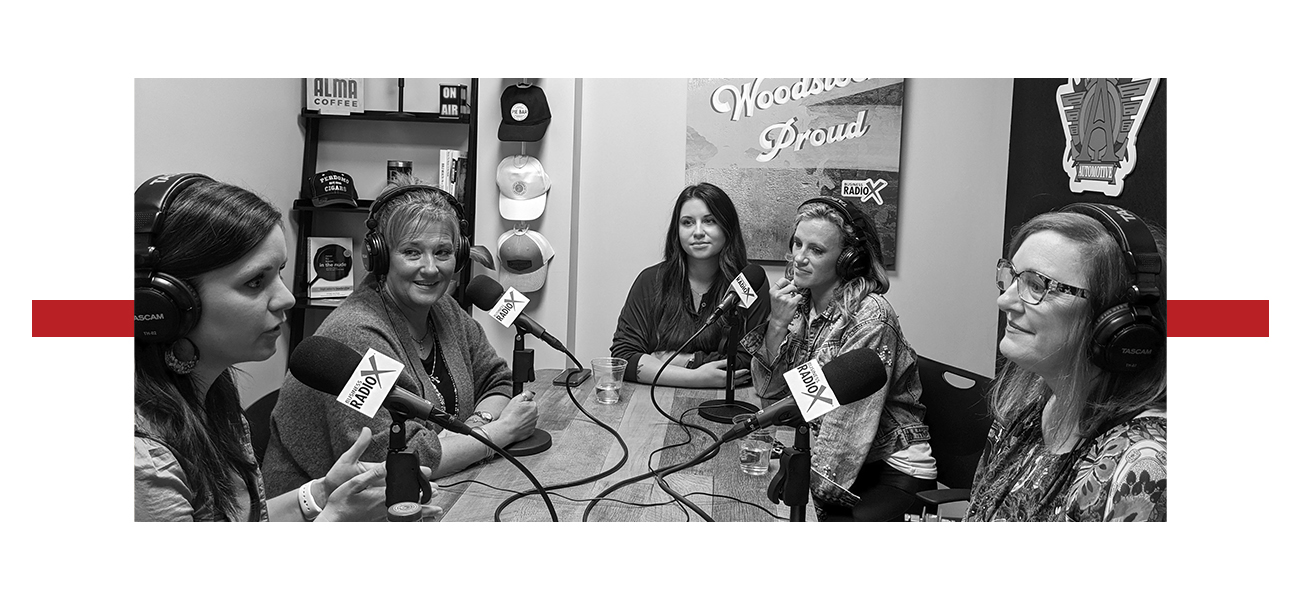
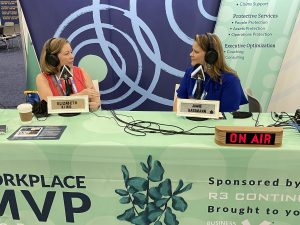
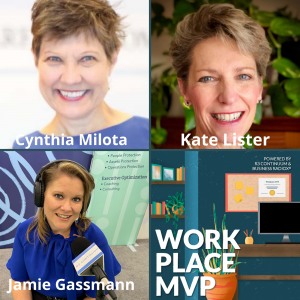
Josh Rock, Talent Acquisition Manager at Nuss Truck Group, and Jessica Miller-Merrell, CEO of Workology, had a lively conversation with host Jamie Gassmann about connecting with talent, going where the talent is, global HR issues as the workforce is remote, the Workology podcast, and much more. Workplace MVP is underwritten and presented by R3 Continuum and produced by the Minneapolis-St.Paul Studio of Business RadioX®.

This show was originally broadcast live from the 2021 SHRM Annual Conference held at the Las Vegas Convention Center in Las Vegas, Nevada.

Josh Rock, Talent Acquisition Manager at Nuss Truck Group Inc.

Josh Rock, Talent Acquisition Manager at Nuss Truck Group Inc.

After nearly a decade in recruiting with healthcare companies, Josh Rock moved the Nuss Truck Group as their Talent Acquisition Manager.

Josh holds a degree from the University of Minnesota-Duluth and is an active alum. He is the recipient of the 2001 Sieur du Luth Award Winner, given for the highest level of involvement and service to the university community.

LinkedIn | Twitter

Nuss Truck Group

With eight locations in the midwest, Nuss Truck & Equipment is proud to carry the best lines of trucks, trailers, and construction equipment. Their sales and service teams are highly trained to deliver and maintain the right truck or machine for your application to ensure maximum productivity and efficiency. You and your business can rely on Nuss.

Company website | LinkedIn

Jessica Miller-Merrell, SHRM-SCP, SPHR, CEO & Founder, Workology

Jessica Miller-Merrell, SHRM-SCP, SPHR, CEO & Founder, Workology

Jessica Miller-Merrell is the Founder of Workology, a workplace resource for HR, recruiting professionals and business leaders. The site was listed twice as a top 75 career resource by Forbes Magazine. Jessica is the president and CEO of Xceptional HR, a human capital strategy and consulting agency, and a published author of Tweet This! Jessica is listed by Forbes as a top 50 social media power user. Because of vast industry expertise and knowledge, Jessica’s professional opinions and expertise are sought after and sourced by publications and media including: the Economist, Forbes, CIO Magazine, CBS, Entrepreneur Magazine, and SHRM’s HR Magazine.

LinkedIn | Facebook | Twitter | Instagram

Workology

Workology is a destination for the disruptive workplace leader discussing trends, tools, and case studies for HR, recruiting professionals, and business leaders. The site and community are designed for those who are tired of the status quo and are compelled to change and transform not just their organization but the world of work and the human capital industry. If you are interested in contributing, please click here. If you are interested in advertising, click here.

We reach a half-million HR and Recruiting leaders each month with our website, newsletters, and podcasts. Workology and its community are founded and managed by XceptionalHR Consulting. XceptionalHR Consulting is a workplace consulting company focused on developing resources, training, and content for HR, Recruiting, and Workplace Leaders.

Workology and Xceptional HR Consulting is led by our Founder and Chief Innovation Officer, Jessica Miller-Merrell. She’s available for speaking, consulting, writing and research opportunities. If you are interested in advertising opportunities, visit our advertising page.

Company website | LinkedIn | Twitter | Instagram

About Workplace MVP

Every day, around the world, organizations of all sizes face disruptive events and situations. Within those workplaces are everyday heroes in human resources, risk management, security, business continuity, and the C-suite. They don’t call themselves heroes though. On the contrary, they simply show up every day, laboring for the well-being of employees in their care, readying the workplace for and planning responses to disruption. This show, Workplace MVP, confers on these heroes the designation they deserve, Workplace MVP (Most Valuable Professionals), and gives them the forum to tell their story. As you hear their experiences, you will learn first-hand, real-life approaches to readying the workplace, responses to crisis situations, and overcoming challenges of disruption. Visit our show archive here.

Workplace MVP Host Jamie Gassmann

Jamie Gassmann, Host, “Workplace MVP”

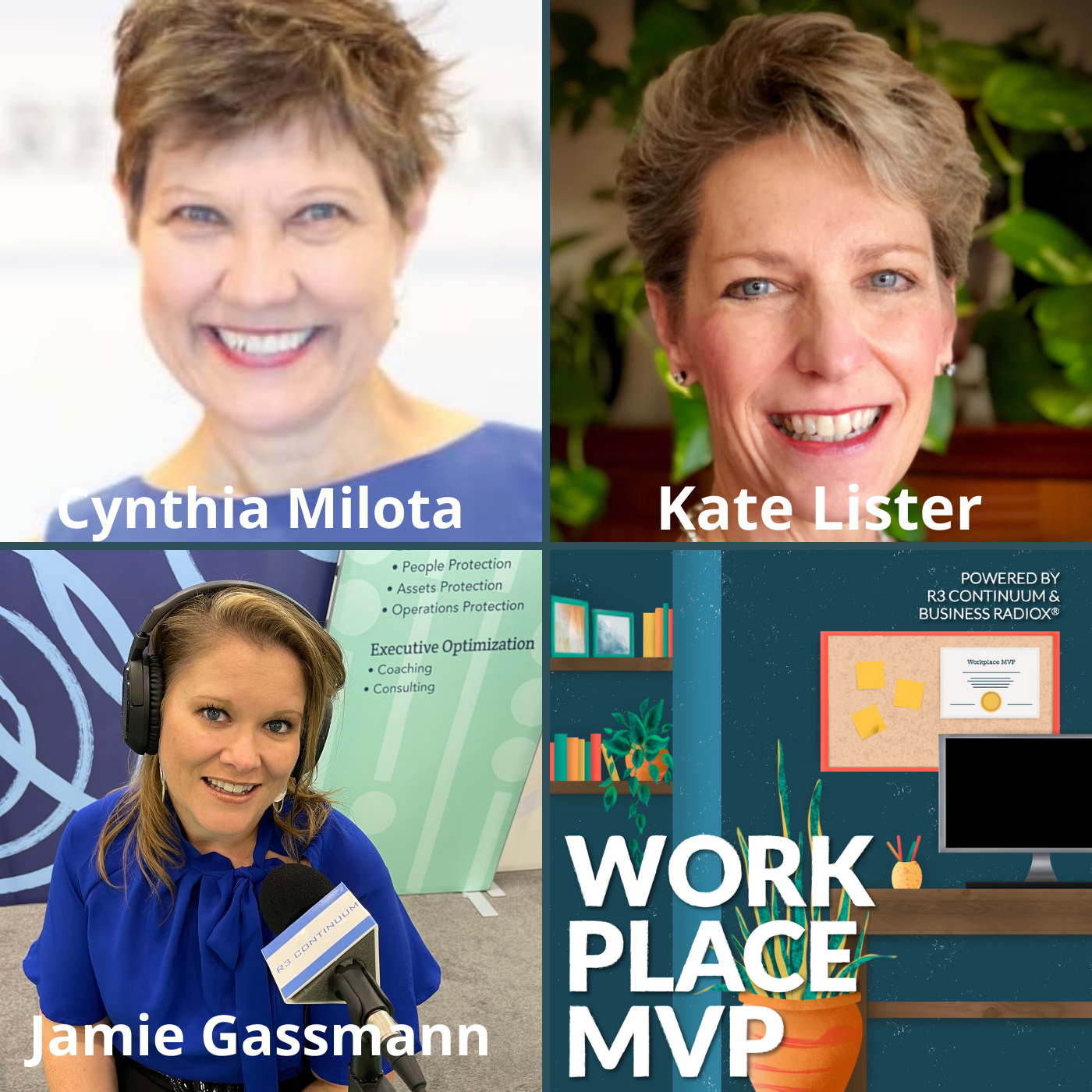
In addition to serving as the host to the Workplace MVP podcast, Jamie Gassmann is the Director of Marketing at R3 Continuum (R3c). Collectively, she has more than fourteen years of marketing experience. Across her tenure, she has experience working in and with various industries including banking, real estate, retail, crisis management, insurance, business continuity, and more. She holds a Bachelor of Science Degree in Mass Communications with special interest in Advertising and Public Relations and a Master of Business Administration from Paseka School of Business, Minnesota State University.

R3 Continuum

R3 Continuum is a global leader in workplace behavioral health and security solutions. R3c helps ensure the psychological and physical safety of organizations and their people in today’s ever-changing and often unpredictable world. Through their continuum of tailored solutions, including evaluations, crisis response, executive optimization, protective services, and more, they help organizations maintain and cultivate a workplace of wellbeing so that their people can thrive. Learn more about R3c at www.r3c.com.

Company website | LinkedIn | Facebook | Twitter

TRANSCRIPT

Intro: [00:00:03] Broadcasting live from the SHRM 2021 Conference at the Las Vegas Convention Center, it’s time for Workplace MVP. Brought to you by R3 Continuum, a global leader in workplace behavioral health, crisis, and, security solutions. Now, here’s your host.

Jamie Gassmann: [00:00:17] Hey, everyone. Jamie Gassmann here, your host of Workplace MVP. And we are broadcasting our episode today from the SHRM 2021 Conference in Las Vegas, Nevada. And I have two wonderful guests with me today. I’ve got Josh Rock from Truck & Equipment. He’s the Talent Acquisition Manager. And from Workology, I have Jessica Miller- Merrell, Founder and Chief Innovation Officer. Welcome to the show you two.

Josh Rock: [00:00:48] Thanks, Jamie.

Jessica Miller- Merrell: [00:00:49] Awesome to be here.

Jamie Gassmann: [00:00:50] So, I’m going to start out by talking with Josh, because I know you’ve kind of waited a little bit to connect with us on our show.

Josh Rock: [00:00:57] We’ve been chatting here and hanging out, and talking with your guys online via Twitter, you know, here at the show, just having a good time.

Jamie Gassmann: [00:01:02] Awesome. So, tell us a little bit about your background, how you got into talent acquisition, and just share with our audience a little bit more about you.

Josh Rock: [00:01:10] So, if any of your listeners are familiar with the cartoon Family Circus, where the kids would walk around a lawn and the whole yard and they have the dotted line, that’s how I fell into H.R. I started going to school for law, of all things. I fell into advertising for 16 years. And through that, I did ten years of recruitment advertising and trying to be a trusted advisor to H.R. professionals across the country and across the globe. And left that organization and went to work for my clients to teach them what I was doing outside but then within their walls, give them back control, back their budget, back to the power, instead of putting it in the hands of agencies. And I’ve been doing it ever since.

Josh Rock: [00:01:47] I went to work for a couple of health care organizations. I recently left a 36,000 employee health care group out of Minneapolis to join a truck dealership of nine locations, with now almost 400 employees. So, a huge paradigm shift, not only in the industry, but employee size, to lead their talent acquisition efforts and just have a good time every day.

Jamie Gassmann: [00:02:08] Yeah. Wow. And, obviously, now, hiring concerns and issues, how has that impacted the truck industry that you’re in?

Josh Rock: [00:02:17] You know, there’s impact. There’s not enough students going into the heavy duty diesel programs. And so, connecting with the schools, helping build curriculum to make that a more profitable venture for not only the schools, but the students, obviously. So, that way, we can continue to drive great business for us and then our customers. So, it’s going full cycle. It’s not just opening up a requisition, posting it on Indeed or any other partner just to wait for candidates to come in. We’ve had to be more holistic in our approach of finding, acquiring, and hiring great talent.

Jamie Gassmann: [00:02:51] Right. And so, talk to me a little bit about that approach. Are you going out to actual universities? You live in the St. Cloud area, I know there’s a big university in St. Cloud. I know I’ve been talking to you a little bit already. I know you’re a big Duluth.

Josh Rock: [00:03:06] Go Bulldogs.

Jessica Miller- Merrell: [00:03:07] Go bulldogs.

Josh Rock: [00:03:08] Shane here from R3, he’s also a UMD Bulldog. We connected on Twitter because of our alumni association with UMD. So, yeah, I mean, I actively go out. Even in a post-pandemic world, I’m out visiting colleges already. I was down in Dallas recently. I was down in Denver. I’m now here going out and talking to students about how their careers could go well in diesel truck repair. And, you know, finding great ways about, not only who we are, what we do, and how they can grow with us, and set themselves up and maybe their families up for great success through careers in this venture. So, it’s fun.

Jamie Gassmann: [00:03:45] Yeah. Absolutely. And that’s such an impressionable age, right? I’m guessing you’re really looking at all students. But, you know, when you’ve got somebody who’s going through their program and they’re trying to figure out what they want to be when they get older, you can really have an impact. So, if another employer was looking at taking that same approach, you know, what are some kind of your advice, if you will, on how you would approach that?

Josh Rock: [00:04:13] You know, for me, it’s all about engagement. And engagement comes in different forms. Through active questioning of the people that you’re talking to, whether it’s a student or a student’s parents, about where do they want to take their career, where do they want to go, what do they want to achieve. You know, those things, layering those questions in to create a picture, a painting, of what that could be. And then, finding your organization – like mine here at Nuss – where that resonates. For some, it’s time off. For some, it’s paid. For some, it’s advancement.

Josh Rock: [00:04:46] You’re going to find those threads just in genuine conversation and questions with those students or alumni from the schools or parents looking at how do I help set my child up for a successful career. And then, just finding those threads. It doesn’t have to be, “Hey, we’re offering a $10,000 sign on bonus and you can start tomorrow.” It’s more about what do you want? And then, finding that lane of the value proposition from your organization and going through that.

Jamie Gassmann: [00:05:15] Yeah. Well, and it’s interesting you mentioned, like, finding that lane and kind of having that engagement opportunity. Because, you know, I’ve read job descriptions over my career. I think we all have.

Josh Rock: [00:05:25] Unfortunately.

Jamie Gassmann: [00:05:25] And sometimes you’re left going, “I don’t get it. I don’t know. Maybe I like this job, but there was one word that kind of threw me off.” So, it’s almost like how can that employer step out of that job description. How can they empower themselves to take that different approach? What’s worked for you?

Josh Rock: [00:05:43] So, a great story. I had a local – or, actually, a national job board reach out to me and say,” Hey Josh. You need to invite people through our portal to apply for your positions.” And I told him he was wrong. Straight up I said, “You know what? Actually, what I need to do is when somebody voices interest in one of our jobs through your portal, I’m going to call them. I’m going to text them and say, ‘Hey, you know what? I found your information. I want to talk about where your career is going and what we can do together.'”

Josh Rock: [00:06:14] Because my job is not a gatekeeper. There’s a lot of recruiters, unfortunately, in the United States that act like gatekeepers. Actually, what you should be doing is being dance partners. Helping them navigate to their career within your organization. And so, instead, what I told this vendor, I said, “What I’m going to do is you guys are going to bring me information. I’m going to digest that information. I’m going to actively reach out to them on my own, through my own information, my own tools and technology and say, ‘Hey, I’m interested in you because. Now, I want you to join me because.'” Instead of saying, “Hey, do this for me, do this for me.” Because they’re getting the information. They’re holding the power. No.

Jamie Gassmann: [00:06:52] No. I need to hold the power, right?

Josh Rock: [00:06:53] Exactly. Exactly. I’m the customer. I need to do what works for me. Not what works for you and your technology. And what you can then put on your advertisement to say you had this many candidates to customers. That doesn’t matter to me. What matters to me is that Paul Alexander from Sheboygan, Wisconsin applied for my position, has an interest in my role, was in the U.S. Military, now wants to come work for me. I want to get him on the phone as quickly as I can and find a way that maybe this is an opportunity for him to drive his career forward.

Jamie Gassmann: [00:07:24] And so, you’re very active on social media with the Twitter, because that’s how you found us.

Josh Rock: [00:07:30] Kind of. Yeah.

Jamie Gassmann: [00:07:31] So, talk to me how do you leverage Twitter or how do you leverage LinkedIn? How do you empower even Facebook, potentially, I’m guessing, could be a really good avenue for you? How do you leverage that in a way that’s helped you to get good candidates to reach out to?

Josh Rock: [00:07:45] So, in my current industry in transportation, I’m not going to find a ton of diesel technicians on Twitter. It’s just not going to happen. I can do it on Facebook. I can do searches by putting in diesel technology. I can look for trucking. I can do keywords to find people that have similar similarities or have posted something about it, and then reach out to them that way.

Josh Rock: [00:08:07] In my previous industry in health care, I could do it much easier. Because I could go on to Pinterest and find a female in Atlanta, Georgia looking at recipes for something. But she also posted on her Pinterest wall scrubs that she really liked.

Jamie Gassmann: [00:08:25] Interesting.

Josh Rock: [00:08:25] And I can say, “Oh, I see you’re a nurse. We’ve got opportunities here in Minnesota. What’s your specialty? Are you an ED? Are you in transplant?” Strike up a conversation, say, “Hey, you know what? I work for this organization. We have this many openings. I’ve got these many hospitals, depending upon the kind of community you want to be in.” I can do those types of things that way.

Josh Rock: [00:08:40] You can do a lot of different things on social channels based on what somebody is interested in. It doesn’t have to be just the resume on LinkedIn or that they’re looking for a job that they posted on Twitter. That stuff’s easy. You can do that really quickly. But sometimes it’s just as simple as finding that moment in time post about what they liked and then find the correlations. It takes time. It’s sourcing. It’s active sourcing. But you can find really good talent.

Jamie Gassmann: [00:09:07] Yeah. And sometimes going out of the script of, like, this role helps you to kind of get that engagement that you’ve been mentioning.

Josh Rock: [00:09:15] Well, you talked about social media so a great story about SHRM. We’re sitting here in Las Vegas. We all flew here Tuesday, Wednesday, Thursday. And I’m on the flight from Minneapolis here and I’m sitting by four people in my row. I’m like, “Hey, are any of you guys going to the SHRM Conference?” All four of them said yes. I said, “Anybody staying at Resorts World, the new Conrad Hotel?” It’s where I’m staying. By the way, if you haven’t been to Las Vegas’s brand new hotel, it’s fantastic. There’s their plug. I love those guys. It’s good.

Josh Rock: [00:09:45] But this young man, his name is Ethan. He’s from Minneapolis. He was sitting with his mom. And they’re like, “Yeah. We’re staying there too.” I said, Well, why don’t we ride share? Save each other some money. Maybe we could put it on gambling, or food, or something like that later on.” Come to find out he’s a senior at a local college back in Minnesota looking to, you know, build upon his career. And I said, “Are you on social media?” “Well, yeah. I’m on Twitter.” I said, “Well, here. We’re going to do something while we’re in the car.”

Josh Rock: [00:10:08] So, I took a photo, tagged him in a post. I said, “Hey, all my SHRM social influencers, I want you to meet Ethan. All H.R. leaders here at SHRM, I want you to meet Ethan. He’s looking to start his career in the next year. Let’s connect with him, and help build him, and get to network with him, and connect with him.” He has over 50 followers now. When I talked to him, he was at 18 on the flight. He’s over 50. And these are all H.R. leaders. These are people that could offer him an opportunity, could give him tips towards connecting with other leaders. It’s endless.

Josh Rock: [00:10:36] We’re walking through the hall and I run into Ethan. We’re sitting with the other students. I said, “Hey, Ethan. How’s it going for you so far?” “It’s great. I met these people. I got invited to these dinners. I’m going to this social. All because you shared who I am at this conference.”

Josh Rock: [00:10:50] And there’s this young lady from University of Tennessee, Knoxville, sitting behind me. Her name is Stephanie. And I said, “Stephanie, can we blow you up on Twitter too?” “Sure.” The next thing you know, people are following Stephanie. Her dad followed me on Twitter yesterday and said, “Thanks for expanding my daughter’s networking world.” These are the things that we do.

Jamie Gassmann: [00:11:09] I love that.

Josh Rock: [00:11:09] You know, it may not benefit me as a recruiter at Nuss. But if I can give back, I’m happy to do it. And that’s part of the reason of one of the things we talked about earlier before coming on the show was #JobHuntChat. We’ve been doing a job advice chat on Twitter for over 11 years every Monday night. I don’t do it because I’m getting paid off it. I do it because I enjoy it. I love to give back, because if one little bit allows somebody to leverage their career, provide for themselves or their family, good karma for the day.

Jamie Gassmann: [00:11:36] Yeah. Absolutely. And engagement is the key. Not being afraid to strike up that conversation and start just, you know, getting to know people. I mean, it’s amazing what you can find out and what you can learn, which is obviously what we’re doing today, which is great.

Josh Rock: [00:11:48] Exactly.

Jamie Gassmann: [00:11:48] Well, thank you so much, Josh. It has been great chatting with you. I’m going to shift over to our next guest from Workology, Jessica Miller-Merrell. Welcome. She’s the Founder and Chief Innovation Officer. Talk to us, Jessica, how did you get into this?

Jessica Miller- Merrell: [00:12:03] I started a blog. I started a blog in 2005. It was a job search blog originally called Blogging for Jobs. And I was an H.R. director at a Fortune 200 company, and I was trying to fill inside/outside sales positions and supporting roles. And I started the blog to be able to build a pipeline of candidates. And it’s now became a business. I have a team of 11 and we provide resources, information, support, and training for H.R. And workplace leaders. We reach over 800,000 every single month. It’s amazing.

Jamie Gassmann: [00:12:37] That is amazing. Fantastic. So, now, you’re here at SHRM, obviously, probably been here multiple times. How do you leverage this conference for building on maybe your content or learning about what’s kind of trending within the H.R. space?

Jessica Miller- Merrell: [00:12:53] So, it’s my first conference in – what? – two-and-a-half years or whenever the world stopped, right? So, it’s been great to hug people, shake hands, masked of course. But just connect in person and have a conversation that doesn’t involve screens. I mean, my business is predominantly online, and the work that we do is mostly digital. But it’s nice to just be able to randomly connect with somebody on Twitter or in a session and then learn more about what they’re doing and what’s important to them.

Jessica Miller- Merrell: [00:13:27] I have a lot of access to different resources information in people. And so, for me, it’s all about connecting those people to other people or those other resources. And sometimes the best way to do that is in crazy atmosphere like this, where we’re all kind of the same, but we’re all different, but we all have that thing in common which is working and loving the human resources industry.

Jamie Gassmann: [00:13:49] Absolutely. And so, for content, I mean, you mentioned it’s kind of a resource hub. You’ve got different elements that help H.R. leaders. I got to imagine you’ve just been pushing a ton of content out over this last year helping them with how to guide through the pandemic and others. So, how do you create that and how are they accessing it?

Jessica Miller- Merrell: [00:14:09] So, predominantly, there’s four different ways that H.R. leaders get access to our resources. We do have a number of trainings. We provide H.R. certification prep for HRCI and SHRM certification resources that’s all digital and on demand. And then, we also have a membership that allows H.R. leaders to get access to our library of resources, connect with me, connect with others. And then, be able to just have aggravated customized content delivered to them or training or information. So, training is number one.

Jessica Miller- Merrell: [00:14:39] And then, we also have a newsletter that reaches over 500,000 H.R. leaders at Workology every single week. And we organize and deliver similar stuff – like, the Biden press conference will probably be on our next newsletter – just providing information to help them do their jobs better and to spend less time searching the internet for it, like we just deliver it out for them. So, I’m like their trusted friend that knows all the things over cocktails or coffee that’s like, “Here’s everything that you need.”

Jessica Miller- Merrell: [00:15:09] We also have a podcast ourselves. It’s called the Workology Podcast, over seven years going. So, that’s been a lot of fun. And then, of course, my blog, and we have over 8,000 articles and information there. It’s this living embodiment and a testament to how vast, and interesting, and amazing the human resource industry really is.

Jamie Gassmann: [00:15:30] Yeah. Well, there’s so many different facets. You know, there’s the legal side, regulation, talent and acquisition that we talked about, and there’s also the hiring part of it. So, one part of HR that’s your favorite that gets you just all giddy, what would that be?

Jessica Miller- Merrell: [00:15:48] Right now, I’m really fascinated with the evolution of the chief human resources and the chief people officer. I was telling Nicole as we were waiting that we have been doing a podcast series, really, since the beginning of the pandemic that’s just focused on talking to CHROs, and understanding what has their attention right now, maybe an initiative or program. What’s their HR organization like? How do they talk to their executive team? And it has been amazing. We’ve talked to companies that are, you know, Fortune 5 CHROs. And then, we’ve talked to companies that have 57 employees that are chief people officers in their organization.

Jessica Miller- Merrell: [00:16:29] So, it’s really interesting to see how that’s evolving and changing. And then, the kinds of resources that we need as CHROS, regardless of the company size, need, tools, information technology is really evolving. And it definitely has increased in the speed with the pandemic, because we have to be able to be more flexible and pivot and agile. And that’s different than it ever has before because we don’t know – well, we always didn’t know what tomorrow is going to be. But we really don’t know what tomorrow is going to be in the workplace.

Jamie Gassmann: [00:17:02] Yeah. Even still today, right?

Jessica Miller- Merrell: [00:17:04] Yeah. Every single day, it’s changing. And, especially if you’re a global H.R. leader, if you have a global organization, maybe you’re in the U.S., maybe you’re in India, maybe you have a team in Pakistan or Mexico, you have to be able to lead not just to your core team or your team in the U.S., but you have to be able to support those employees everywhere.

Jessica Miller- Merrell: [00:17:25] And now that so many people are remote, you might have Susan who decides to move to Portugal and now you’re faced with a whole another challenge as the head of HR. Like, how do I set a payroll and taxes and all these things for Susan who didn’t tell me for the last eight months that she relocated to Portugal. And this is happening a lot. I’m seeing it. I’m getting emails, DMs, text messages of, you know, freaked out H.R. personnel like, “I need help.” And I have been drowning for the last two years. And now here’s another just pivot or thing that we have to become an expert on and support the organization and our employees in.

Jamie Gassmann: [00:18:06] That’s fascinating. Because when they move, everything changes in terms of their employment. So, I mean, how an employee doesn’t share that with them, but you know [inaudible].

Jessica Miller- Merrell: [00:18:15] Well, they wanted to work remotely. I think the pandemic, like for me, I’ve had to really sit back and think about my life. And I think a lot of people have taken stock, like what is really important, what matters. And I hope that if you haven’t done that as an H.R. leader, you are doing that. And then, also, thinking about who you want to be in 18 months, two years or five years. Not just who you want to be as a person to your family and your friends, but as a leader in an organization supporting the business.

Jessica Miller- Merrell: [00:18:44] And employees are making decisions and saying, “Hey, you know what? YOLO. I’m moving to Portugal. And right now everybody’s working from home, so nobody knows because I can do it over Zoom.” But they are just thinking about, “Okay. My boss, I just want to show them, him or her, that I can do this here. Or, you know, they’re probably never going to know.” They’re not thinking about the things that we have to deal with as H.R. leaders, employment laws, payroll, taxes, all the fun things. And, now, it’s not just somebody moving from Texas to Minnesota, it is somebody moving from Texas to Portugal or, you know, wherever else.

Jamie Gassmann: [00:19:21] So, quick question, because I had not heard that yet, but it makes total sense when you bring that up that an employee would do that because why not, right? How can an employer be proactive in saying, “If you’ve got ideas of doing this,” I mean, is there a way they can gently put that out there without maybe showing that they’re encouraging, but maybe is there communication that can be done?

Jessica Miller- Merrell: [00:19:44] It starts with a culture of trust and conversation. So, H.R. leaders – and they should be. And I know we have got a lot on our plate, so I hear you because you’re going to groan when I make this recommendation – you need to be investing as much time as you can talking to your people. And I don’t mean your managers and your frontline managers and your executive team. I mean, your actual people. And so, that means popping into Zoom calls, scheduling appointments, scheduling meetings, in-person or remote, however you’re going to do it. But the majority of your time should be spent with the people in the organization, and building that trust, and leading by example.

Jessica Miller- Merrell: [00:20:23] So that when Susan decides to relocate to Portugal, she sees us as a human being, Josh or Jessica, “I might need to let my boss or Josh or Jess know what’s going on.” Just to check in.

Jessica Miller- Merrell: [00:20:38] I think a lot of times we just look at someone who is in a position of management or leadership as a logo, not necessarily a person. So, as H.R. leaders, we need to lead with the humanity side of things. Go out there and build those relationships, set the tone for the rest of the organization.

Jessica Miller- Merrell: [00:20:57] So that when Susan has a question because she’s probably just like, you know, no news is good news, right? So, she hasn’t heard anything about it, so she thinks it’s okay. But then, we can start to have those conversations because if there’s one person that’s done it in your organization, I guarantee you, there’s probably 15, 25, 45 more.

Jessica Miller- Merrell: [00:21:17] I mean, personally, my goal is to move to Belize. I want to be, like, part time. I want to be in Texas. I want to be in Belize and wherever. My husband, he’s a little bit different. He just wants to relocate to wherever my daughter goes to college. Which I’m like, “Okay. We can own a house. But I’m moving to the Caribbean somewhere. I’m going to be snorkeling on my days off and when I’m not podcasting or speaking.”

Jamie Gassmann: [00:21:41] Like, this is going to happen.

Jessica Miller- Merrell: [00:21:41] Yeah. And I think a lot of other people are wanting to do this. But if we don’t plan or prepare or at least consider this might be happening, because if it’s not moving to Belize or Portugal, it is mental health conversations or PTSD, or I’m having a lot of financial problems right now, or other things. This year has been hard for so many people, and so they’re just grabbing onto the one thing that brings them some happiness and just fills up their cup. And for Susan, that’s moving to Portugal. For me, it is Belize. And I’m going to talk about it on every podcast. I am moving there because I’m going to manifest and make it happen.

Jamie Gassmann: [00:22:21] Yeah. And then, you’ll do a podcast on living in Belize.

Jessica Miller- Merrell: [00:22:24] Yeah. There’ll be a whole blog and a business. It’s going to be a whole thing.

Jamie Gassmann: [00:22:26] I can see it now. Fantastic. No, I’m glad we’re having that conversation, and I know you said people will groan at that. But you’re not the first person that I’ve talked to at the show that has mentioned that, about that senior, that executive level leadership needing to have more visibility kind of with employees. And that is a struggle, right? Because some of them are feeling the burn. They’re trying to balance all the shifts and turns and keep that organization strategically running forward.

Jessica Miller- Merrell: [00:22:52] It’s the reason that I’m here to connect with the H.R. community. Because I’m providing resources just like H.R. leaders are providing their employees and organizations resources. If I don’t invest the time, like H.R. leaders are not investing time in their people, I might go somewhere else and start writing about Alaska when I should be writing about Belize or whatever resource that I’m providing. I want to make sure that we’re connected together and that I’m able to do my job and what my superpower is.

Jessica Miller- Merrell: [00:23:22] Just like as H.R. leaders, we need to be able to do that. And that’s really that human connection piece that people focus first. That is so important right now in moving forward, because we will continue to be a hybrid workplace, whether our organizational leaders want it or not. The employees are speaking, and they are walking out of jobs, and making decisions, or moving to Portugal and not telling their organization because it is such an important thing. It doesn’t mean that working remotely is less productive, but it allows for some work-life flexibility that they maybe didn’t have in the same way before.

Jamie Gassmann: [00:24:03] Yeah. And are so appreciating that aspect over the last year of that work-life, you know, they don’t want to give that up so they’re really holding on to it.

Jessica Miller- Merrell: [00:24:10] As someone who has worked remotely for over 12 years, it’s good and bad. I do like going to the office because I can leave my work at work.

Jamie Gassmann: [00:24:22] Yeah. Yeah. Absolutely. Well, if anybody wanted to get a hold of you, Jessica, how would they do that? Or how would they access Workology so they can get those great resources that you talked about?

Jessica Miller- Merrell: [00:24:34] workology.com is the best place to go. If you want to connect with me one-on-one, all the places and all the social medias. Facebook is great. Twitter is excellent. Linkedin, you can connect with me there as well. You can also send me an email, you know, if you’re not on the social medias. And that’s jessica@workology.com. I’m here to support H.R. leaders and help empower them to be better at their jobs and also better at just life. I mean, this is all that we have. That’s one opportunity. So, we should make the best of it.

Jamie Gassmann: [00:25:09] Absolutely. I love that. And, Josh, if they wanted to get in touch with you, how would they get in touch with you?

Josh Rock: [00:25:14] Easy. You can find me on LinkedIn, just like many other H.R. pros that are here. Twitter, JRock96, the hockey number follows me everywhere I go. But if you’re looking for a job or seeking advice, you can always check out #JobHuntChat Monday nights 8:00 p.m. Central, we’ll be there. And you can contribute if you’re an H.R. pro and you want to help job seekers. Or if you have other job seekers that want to know more, tell them to jump on Twitter and follow us along.

Jamie Gassmann: [00:25:43] Awesome. Well, thank you both for joining us. It’s been great to chat with you.

Josh Rock: [00:25:46] Awesome. Thanks, Jamie.


Tagged With: find talented people, hiring, Human Resources, Jamie Gassmann, Jessica Miller-Merrell, Josh Rock, Nuss Truck Group, SHRM 2021, talent acquisition, Workology, Workplace MVP

Workplace MVP LIVE from SHRM 2021: Nicole Roberts, MVAH Partners and John Baldino, Humareso

September 22, 2021 by John Ray

Humareso
Minneapolis St. Paul Studio
Workplace MVP LIVE from SHRM 2021: Nicole Roberts, MVAH Partners and John Baldino, Humareso
Loading
00:00 /
RSS Feed
Share
Link
Embed

Download file

Humareso

Workplace MVP LIVE from SHRM 2021: Nicole Roberts, MVAH Partners and John Baldino, Humareso

Nicole Roberts with MVAH Partners and John Baldino with Humareso joined host Jamie Gassmann on this live edition of Workplace MVP. Nicole spoke to the steps her company took to support their workforce, employee, and HR burnout, and how to be there for each other. John Baldino shared his work at Humareso, the HR consulting firm he founded, the unprecedented pace of change in compensation, and much more. Workplace MVP is underwritten and presented by R3 Continuum and produced by the Minneapolis-St.Paul Studio of Business RadioX®.

This show was originally broadcast live from the 2021 SHRM Annual Conference held at the Las Vegas Convention Center in Las Vegas, Nevada.

Nicole Roberts, SHRM-CP, PHR, Vice President of People & Culture, MVAH Partners

Nicole Roberts, VP of People & Culture, MVAH Partners

Nicole Roberts is Vice President of People & Culture for MVAH Partners. She started in March, 2020, three days before the pandemic affected their business. She went right to work figuring out how to help employees feel supported and finding solutions such as Support Link, a 14 touch point EAP service to employees.

Nicole started in human resources in 2004.

LinkedIn

MVAH Partners

MVAH began developing affordable housing in 1993. Since then they have developed more than 7,000 affordable housing units ranging across a broad spectrum of housing types: multi-story apartment properties for families and seniors, villas, single-family developments, rehabs, adaptive reuse of existing buildings in large and small communities. MVAH has a singular focus on developing quality affordable housing for those who need it most. This includes over 100 affordable housing properties in 15 states.

MVAH provides development services for their own long-term ownership as well as for other companies. MVAH values long-term partnerships and relationships with non-profits and public agencies and will continue to try to build relationships like those with others.

Company website

John Baldino, MSHRD SPHR SHRM-SCP, President, Humareso

John Baldino, MSHRD SPHR SHRM-SCP, President, Humareso

John is an SPHR, SHRM-SCP certified professional with 25+ years of HR experience in strategic planning, organizational development, coaching, leadership development, training, curriculum development, compensation analyses, employee relations, policies & procedures, business development, payroll & benefits administration.

He delivers keynote addresses across the US and in the international community. John was the 2012 Delaware Valley (Philadelphia Metropolitan Area) HR Person of the Year.

John started Humareso in 2012. He has a Master’s in Human Resource Development from Villanova.

LinkedIn

Humareso

Humareso is able to strategize with your company and develop plans to manage talent, recruit for skill gaps based on employee inventories, assess markets for growth, develop long-range succession plans and influence a culture of enthusiastic buy-in. Humareso handles all facets of employee engagement and business development. Humareso provides HR solutions and administration for small businesses trying to manage budget and growth.

Humareso sits strategically to support an organization’s vital talent needs. Talent is what they believe in cultivating. They look to drive organizational health through true employee engagement, strategic workforce planning and invested management training. Having a culture that values people, policy, and performance in the right measures is the differential needed to stand apart from other organizations. Whether your organization has 10 or 100,000 employees, dynamic human resources will build corporate strength and recognize talent contribution.

Company website | LinkedIn


About Workplace MVP

Every day, around the world, organizations of all sizes face disruptive events and situations. Within those workplaces are everyday heroes in human resources, risk management, security, business continuity, and the C-suite. They don’t call themselves heroes though. On the contrary, they simply show up every day, laboring for the well-being of employees in their care, readying the workplace for and planning responses to disruption. This show, Workplace MVP, confers on these heroes the designation they deserve, Workplace MVP (Most Valuable Professionals), and gives them the forum to tell their story. As you hear their experiences, you will learn first-hand, real-life approaches to readying the workplace, responses to crisis situations, and overcoming challenges of disruption. Visit our show archive here.

Workplace MVP Host Jamie Gassmann

Jamie Gassmann, Host, “Workplace MVP”

In addition to serving as the host to the Workplace MVP podcast, Jamie Gassmann is the Director of Marketing at R3 Continuum (R3c). Collectively, she has more than fourteen years of marketing experience. Across her tenure, she has experience working in and with various industries including banking, real estate, retail, crisis management, insurance, business continuity, and more. She holds a Bachelor of Science Degree in Mass Communications with special interest in Advertising and Public Relations and a Master of Business Administration from Paseka School of Business, Minnesota State University.

R3 Continuum

R3 Continuum is a global leader in workplace behavioral health and security solutions. R3c helps ensure the psychological and physical safety of organizations and their people in today’s ever-changing and often unpredictable world. Through their continuum of tailored solutions, including evaluations, crisis response, executive optimization, protective services, and more, they help organizations maintain and cultivate a workplace of wellbeing so that their people can thrive. Learn more about R3c at www.r3c.com.

Company website | LinkedIn | Facebook | Twitter

TRANSCRIPT

Jamie Gassmann: [00:00:07] Well, I think you hire veterans. I’m going to totally play off of that. So, I watch for my little clues of good convo.

Nicole Roberts: [00:00:17] I love it.

Jamie Gassmann: [00:00:17] Awesome.

Male Speaker: [00:00:18] So, let’s do a real quick soundcheck. I want to make sure we’re good. Nicole, pull that mic in, if you will, just a little bit. Awesome. And, these are directional mics, meaning if you’re back here or off to the side, you can hear the difference. So, we want you in there loud and proud. So, Nicole, just give your name and company affiliation.

Nicole Roberts: [00:00:36] Nicole Roberts.

Male Speaker: [00:00:38] Perfect. John?

John Baldino: [00:00:39] John Baldino.

Male Speaker: [00:00:42] Awesome. Okay. I think we’re ready to go.

Jamie Gassmann: [00:00:45] I think we are.

Male Speaker: [00:00:45] Okay.

Jamie Gassmann: [00:00:46] Awesome.

Male Speaker: [00:00:46] Here we go. You all have fun.

Intro: [00:00:53] Broadcasting live from the SHRM 2021 Conference at the Las Vegas Convention Center, it’s time for Workplace MVP. Brought to you by R3 Continuum, a global leader in workplace behavioral health, crisis, and security solutions. Now, here’s your host.

Jamie Gassmann: [00:01:12] Hello, everyone. Jamie Gassmann, your host here for Workplace MVP. And I am broadcasting from SHRM 2021 in Las Vegas, Nevada. And really exciting. I have three guests for this episode. So, I’m going to start out with our first guest, Nicole Roberts, who’s Vice President of People & Culture from MVAH Partners. Welcome to the show, Nicole.

Nicole Roberts: [00:01:34] Thank you very much.

Jamie Gassmann: [00:01:35] So, why don’t we start out with you telling us a little bit about your H.R. background, how you came into H.R., and a little bit about MVAH partners?

Nicole Roberts: [00:01:45] Sure. So, I started in H.R. in 2004 and started out in benefits and then moved into employee relations and was a department of one a couple of times and really just moved into more amplified roles throughout my career until I got into, you know, executive leadership and building and developing teams. And, currently, my role as vice president at People & Culture, I am able to set the strategy and be really intentional in how we want to show up and how we want to take the best care of our people and to really be intentional with our culture.

Jamie Gassmann: [00:02:24] Awesome. So, over the last year and looking at going now into 2021 and I know it’s hard to not talk about over the last year because H.R. has been impacted so much. And, from a cultural perspective, what have been some of the challenges that you’ve seen that you’ve had to get really strategic and kind of overcome over that last year?

Nicole Roberts: [00:02:42] So, when I started with MVAH partners, my first day was March 9 and as we know the kind of beginning, so to speak, of the impact of the pandemic on our cultures and on our workplaces was March 11. So, the traditional aspect and the traditional approach of, you know, get in, learn the culture, learn the people, all that, like all of that went out the window. And it was, what is most important to the business? How can we best support our people?

Nicole Roberts: [00:03:12] We are in 15 states and we have 100 locations. And, because we’re affordable housing, it’s essential that people have a place to live. So, we have not stopped through the entire pandemic. And so, our major focuses were making sure that our people who were working, you know, at front lines, so to speak, really felt supported and that we see you and we understand and we acknowledge that you are right there public-facing.

Nicole Roberts: [00:03:40] And, one of the things that we’ve done recently is we implemented Core Links…. It’s called SupportLink. And, what it is is it is what I would call an EAP on steroids. And, it is a 14-touchpoint EAP program. So, it really just meets people where they are if it’s an app, a phone number, a website. And, it really just was one of those benefits where we looked at it and we said we really can’t afford not to do this.

Jamie Gassmann: [00:04:13] Yeah. It’s almost like giving them access to something in the way that they want to receive that information. And, what kind of difference have you seen within the employees, maybe from a utilization perspective, by implementing something different like that?

Nicole Roberts: [00:04:25] So, one of the main things is during the pandemic, there were so many people that were reaching out and saying, “Hey, does our benefit program cover mental health? Do we have tech support? Do we have phone calls? How many visits is it?” And all of that.

Nicole Roberts: [00:04:41] And so, even before our renewal of 10/1, I started to talk to our broker and, like, what can we do? What solutions are out there? And so, we looked at four or five different companies and we decided that SupportLlink was perfect for us because it met people where they were and we’ve gotten so much positive feedback from that that not only do you have access to the care, but it is a licensed professional that you speak to the first time that you call.

Jamie Gassmann: [00:05:09] Right. So, they’re more accessible. Fantastic. So, you know, as you kind of look at it towards the end of this year, are there any things that you’re seeing now that we’ve kind of seen this increase in cases again? You know, are there challenges that are resurfacing that you’re having to navigate? And, what is that looking like for your organization?

Nicole Roberts: [00:05:27] Well, for us, so we went through, you know, state-by-state, and in some states, it was municipality-by-municipality, where the guidance was different. The regulations were different. And, there was kind of this feeling like, okay now we can breathe and then right back into it. So, for us, it’s really just making sure that, you know, the compassion fatigue doesn’t get to a point of complete burnout and exhaustion, and that people, you know, feel supported and that there’s – our biggest thing really is making sure that they have as much information as possible so that there’s not that additional stress of the uncertainty to go with it.

Jamie Gassmann: [00:06:13] Right. Well, and isn’t compassion fatigue and burnout becoming some of the most common things we’re hearing across multiple industries but particularly that frontline, kind of, essential worker, like here we go again kind of environments.

Jamie Gassmann: [00:06:28] So, when how – and I know you’ve got this program. But are there other things that you’re seeing with that compassion fatigue and burnout? And, are there ways that employers or H.R. people can be looking at and doing things to help out?

Nicole Roberts: [00:06:41] I think one thing that we really need to pay attention to as well is it’s not just our employees, it’s H.R. I mean, part of how you build resilience is you have that period of rebuilding and we just aren’t having that in this case. I mean, some of us have been, you know, just full steam ahead for so long that we haven’t even stopped to feel authentically how this actually is for us.

Nicole Roberts: [00:07:10] And so, I think from that aspect, we just need to really grant each other a lot of grace and we need to make sure that we’re caring for one another coming into situations with that positive intent, that benefit of the doubt, and asking, how are you? Not just what do you need and what can I get for you? And, you know, from a benefit perspective or anything like that. But really at the personal level, how are you? How are you dealing with this? Do you have kids that all of a sudden have been sent back home? Or, you know, what’s going on with you? And, I think that the biggest thing that we can do as H.R. is to not only be there for our employees but for each other.

Jamie Gassmann: [00:07:51] Oh, that’s a fantastic way, and SHRM is a great place to be able to do that. Reconnect with colleagues you probably haven’t seen for a while. Well, thanks, Nicole.

Jamie Gassmann: [00:08:00] We’re going to go into our next guest here, John Baldino from Humareso.

John Baldino: [00:08:06] Excellent.

Jamie Gassmann: [00:08:06] Did I say it right?

John Baldino: [00:08:08] Yes. Humareso.

Jamie Gassmann: [00:08:09] I tried really hard to punch that up for you.

John Baldino: [00:08:12] You did a great job. Fantastic.

Jamie Gassmann: [00:08:13] So, John, why don’t we start out with you introducing yourself, telling us a little bit about your background, tell us a little bit about Humareso, and kind of give us a little bit of background on you.

John Baldino: [00:08:22] Sure. So, I’m one of the old ones here at SHRM. Yes, I’m getting head nods. This month actually is my 30th year in human resources. And, I started out in personnel because that’s kind of what we used to be known as. And, I started out in the retail world and my career just, you know, evolved from there and leadership development and organizational design and development and H.R. stuff right over the past 30 years.

John Baldino: [00:08:51] And so, Humareso is my H.R. consulting firm that I began a little over nine years ago. And, it’s been a great ride. I mean, really, it’s been a lot of fun because we do a lot of great work with organizations of various sizes across the country, a little bit international. And so, from startups, which is really exciting, right, to watch all the startups trying to get things going, but also to organizations that are enterprise, multistate, multilevel organizations that have some of the same problems that startups have and trying to figure out a way to be customized in the approach to handle those problems because of their specific details. But there’s a lot of similar applications, right. So, it’s fun for our team to get to be a part of those things.

Jamie Gassmann: [00:09:32] Yeah. And, I imagine as a consulting firm, you see everything.

John Baldino: [00:09:34] I mean, unfortunately.

Jamie Gassmann: [00:09:37] Like everything.

John Baldino: [00:09:37] Everything. And videos. Yes.

Jamie Gassmann: [00:09:40] Okay, so everything.

John Baldino: [00:09:41] Thank you. Yes.

Jamie Gassmann: [00:09:41] Have to add that, right. So, talk to me. What are some of the, you know, kind of, you know, from the – I’m looking at the last year because I think that that’s really top of mind for a lot of people. But, you know, what are some of the things that you’ve seen in the consulting world that have been growing, kind of trending concerns or challenges that H.R. teams or employers have faced?

John Baldino: [00:10:01] Yeah. I mean, obviously, and then Nicole just did a great job talking about COVID response and you can’t ignore that. But there’s some residual in that as well. And so, we’re seeing some difficulty when it comes to talent management and talent acquisition. And, we’re also seeing difficulty when it comes to compensation management. How much do we pay people now? You know, the rate of pay is changing so quickly. I just was sharing this with somebody else.

John Baldino: [00:10:25] You know, again, I’ve been doing this a long time. There’s some great data that’s done from a compensation analytics standpoint that for the first time with some of the large providers of compensation data, they’re putting their hands up and saying, “We are so sorry. We’ve never experienced this kind of turnover in comp data. We can’t keep up.”

Jamie Gassmann: [00:10:46] Wow.

John Baldino: [00:10:47] And, that’s absolutely unusual. Like, never have I seen this before.

John Baldino: [00:10:52] Yeah. Well, in the rate of change, just in the worlds, I mean, you know, constant in terms of what people are needing.

John Baldino: [00:10:59] Yes.

Jamie Gassmann: [00:11:00] So, it’s very interesting. Have you seen, you know, obviously, from your experience, in nine years of doing consulting, are there some trends that might have been starting prior to COVID? So, you already saw the writing on the wall, but due to COVID just completely sped up the rate of the change.

John Baldino: [00:11:18] Yeah. You know, I know that we’ve talked a lot about work from home obviously over the past year. And, what I would say is, pre-pandemic there already were organizations trying to figure out how to be a bit more nimble and flexible. And so, this concept, I mean, even in my own organization in Humareso, not everyone came into the office every day, not every – and they weren’t hired in the city where the corporate offices are.

John Baldino: [00:11:41] So, we already had a sense of that. But, obviously, when COVID hit and that became much more of the conversation, for some organizations, it was, you know, a little too late. They could have been planned a bit better when it came to flexibility. But for some, they really saw this as the push to make things cleaner when it comes to employee experience and to finding talent. I mean, we’re seeing organizations that are – so, our corporate offices are in the Philadelphia area and we’re seeing companies, for example in Philadelphia, that are hiring their first employees this past year in San Francisco, in Chicago, in Austin, Texas, and, you know, Topeka, Kansas, because they can.

Jamie Gassmann: [00:12:28] Yeah.

John Baldino: [00:12:29] Right? And that’s kind of exciting.

Jamie Gassmann: [00:12:30] Right. Your candidate pool just expanded across the globe, basically.

John Baldino: [00:12:33] And, it needed to.

Jamie Gassmann: [00:12:34] Yeah. Absolutely.

John Baldino: [00:12:34] We needed it, too.

Jamie Gassmann: [00:12:35] But on top of that, though, how does that impact compensation? I know you mentioned the compensation numbers are off the charts. But when you live like, let’s say you have, you know, your offices are in somewhere remote Nebraska, but you’re trying to hire somebody in San Francisco. I mean, that rate of pay is like a night and day. How how does an employer navigate that?

John Baldino: [00:12:54] It’s a great question. I’m going to say they navigate it not very well and usually –

Jamie Gassmann: [00:13:00] And they need to hire you, right? Yeah. They need to call John.

John Baldino: [00:13:05] And, you know, then you get into – there’s a couple of different ways to approach it. There is a philosophy around the job is worth what the job is worth. Because that’s what you’re paying for is the skill sets and knowledge to be applied to get that work done. And that is worth X, whatever that is.

John Baldino: [00:13:21] Some organizations will do that as sort of a baseline, but then you have sort of cost of living add-ons put onto it to say, you know, living in San Francisco, as an example, or San Diego, it’s a lot different than living in Lincoln, Nebraska, right? It’s a little different for a variety of reasons. But compensation being one. And so, we can do the offset from a cost of living adjustment if we needed to. This way you’re not committing yourself to something beyond.

John Baldino: [00:13:46] But I will say there are employers that are, I hope, listening, right, who have put themselves in a corner to say we will never hire anybody from California because we don’t want to pay X, Y, or Z, we don’t want to do this and that. And I get that. But I would also say we’re in a time where talent is at a premium. So, you can’t afford to be that snotty about where you’ll take people, right. It’s not someone’s fault that they grew up in California. That’s where they are.

Jamie Gassmann: [00:14:14] It’s where they live. And then, the question comes to is with the shortage of employers or employees, right, that strain on employers trying to find that talent, you know, to your point, you know, sometimes they can’t really be overly picky, but, you know, how – they got to get into a certain mindset. So, if you were going to coach somebody and can kind of consult on how they should be approaching that, especially in today’s hiring world, what would be some of those key things you would remind them to do?

John Baldino: [00:14:42] Yeah. That’s really a good question. So, one of the things that I like to do and our team does is the hiring manager or executive who is having these thoughts. We try to say to them, okay, we’re going to take out a piece of paper, right old school, grab a pen, old school, and write down the top 10 tasks that you have in your job. Your job.

John Baldino: [00:15:05] And, you know, we’ll watch them write these 10. And, I’ll say, “When you started here, could you do these 10?” And, really have a heart-to-heart about – right. Well, I could do six out of 10 of these. I couldn’t do all six as well as I do them now, but I had an understanding. Okay. If I had your resume today, you wouldn’t let me hire you for that job. Right?

Jamie Gassmann: [00:15:28] That just got deep.

John Baldino: [00:15:29] Right.

Jamie Gassmann: [00:15:30] That’s awesome.

John Baldino: [00:15:31] You’re welcome. But you caused them to have a reality check. Like, you’ve been in your role, maybe for six years. You’re very comfortable. You know what you’re doing. You’ve had job enlargement and enrichment and have grown with it. You are not looking at it with those same eyes anymore to remember. You need to do that for this person who is bringing – you know, one of the things, and I know that this is going to come up probably a little bit later, too. But when you put out these job postings with these qualifications or what’s there, we have some people in our country who will look at these qualifications and self-select out.

John Baldino: [00:16:04] The statistics are off the chart about that. Look, if there are 10 bullet points of what you need and you’re a dude, you’ll do, too. If I have two out of 10, I’m 100% qualified for this job. That’s what you think. Women will be somewhere between seven and eight bullet points, and so they’ll self-select out of. And, if you’re in the military, the statistics are almost 10 out of 10.

John Baldino: [00:16:23] Come on, right. So, what are we doing that’s precluding people from thinking that they can be a part of it? Take a look at what you’re advertising, which you’re asking for a little bit deeper. And, remember, you can grow into some things. It’s not a day one.

Jamie Gassmann: [00:16:37] Right. And I love that perspective because that’s so true. And, I’ve heard that before, where men, you know, sometimes are, “Yeah, I’m fully qualified. I’m applying for it.” And, women tend to kind of take a step back.

John Baldino: [00:16:48] Yes.

Jamie Gassmann: [00:16:48] And so, if you were going to give advice to a candidate, you know, what – you know, who is looking at those job descriptions and going, “Oh my gosh, can I do this? Can I not do this?” What would be some of the advice you would give to them that helps them to identify that “No, you can do that.” You know, you may need to grow into some of these skills. But how should they present themselves or how should they kind of build up maybe some of that confidence?

John Baldino: [00:17:10] I think that when you look at it from a talent sourcing standpoint, finding people and connecting with someone to exactly your point, and saying and listening to someone say, “You know, I can’t do this. I see what you sent me. I can’t do this,” I’ll often say, “Oh, this is just, you know, a barometer of some of what’s needed. Let me ask you a question.” And then, I’ll ask something that seems disconnected and I’ll listen to someone share success that they’ve had and how they’ve been rewarded for that success. And, I’ll say fascinating. By doing whatever that is, X, the skills you demonstrated were a B and C. Funny how that will likely apply to these couple of areas that you’re saying I don’t have that. You have it all over the place, especially, I mean, again, something that might be common to some people listening is returning. If you’ve made a choice as a woman to take some time off to raise kids and you want to come back into the workforce and you say, “Well, I haven’t been working.” “Well, what have you been doing at home? I’d like to know?” Right? Because I have three kids and I know, right?

Jamie Gassmann: [00:18:18] I am a mom. I know.

John Baldino: [00:18:20] But you know what I mean?

Jamie Gassmann: [00:18:21] Yes. Absolutely. And to be able to say to you, “Did you manage the household? How about a budget?” Right? “Did you plan menus? Like, did you get your kids where they needed to be on time?” You know, maybe they weren’t dressed, but they were there on time. Like, whatever it is to just sort of laugh with it, be a little tongue in cheek about it, but remind them you demonstrated skill sets just in a different arena.

Jamie Gassmann: [00:18:42] Yeah, but they’re transferable.

John Baldino: [00:18:43] And, they are totally transferable.

Jamie Gassmann: [00:18:45] Yeah. Yeah. And so, one additional question because I am just kind of thinking about it. You know, in today’s candidate market and to some of the points you made about when people are reading those job descriptions and kind of self-selecting out, you know, do you think some of that comes down to how employers are writing that job description and how can they write them better that helps the candidates understand, “No, I can do that job,” or that may not be required on day one but we’re going to be looking for you to expand into that. I mean, is there’s something that they can be doing to maybe kind of get a little bit more innovative so candidates understand?

John Baldino: [00:19:20] Absolutely. I mean, I think there are a couple of things that come to mind. Number one, stop going to Google and, you know, downloading a job description, for Pete’s sake. I mean, I appreciate the accessibility but it’s the wrong way to approach it, right. Should I go on Google for your job description? You know, CEO, CFO, because you may not make it. Because it depends on the one that I’ll download.

Jamie Gassmann: [00:19:44] Right, right.

John Baldino: [00:19:45] The other thing I would say is, be creative in the way in which you can vet for qualifications. Use video. Use Facetime, right? You can do pre-records. You can do lives. We should be a lot more comfortable with those things as a result of this past year, right, to your point, earlier, like what has changed. Be creative in that way, too.

John Baldino: [00:20:05] I recently was working on a marketing specialist at our organization and the key to entry was, where’s your link to your portfolio, your online portfolio? Just send the link. I don’t – well, I have to get my resume together. No, thank you.

Jamie Gassmann: [00:20:21] Yeah. I want to see actual work.

John Baldino: [00:20:23] Right. No thank you. I’ll get the resume later. I need your name and email address. Can I just have the link to your – are you sure? Yeah. Actually, I know, I run the company. I’m pretty sure. Just sent it to me. It’s okay.

Jamie Gassmann: [00:20:36] Are you questioning me? Are you questioning me? Really?

John Baldino: [00:20:40] And, you do that and someone is – the interesting thing about that in that particular role is that’s their bread and butter.

Jamie Gassmann: [00:20:47] Yeah.

John Baldino: [00:20:48] The creative, innovative approach to design and development. So, start with the best foot forward. Why wouldn’t you want to?

Jamie Gassmann: [00:20:55] Yeah. What is your LinkedIn look like and is you have a picture on it? I mean, that’s –

John Baldino: [00:20:59] Right.

Jamie Gassmann: [00:20:59] Honestly, I mean, that’s going to be – you’re going to be expected to do that and so –

John Baldino: [00:21:03] Right.

Jamie Gassmann: [00:21:03] Fantastic. Yeah.

John Baldino: [00:21:03] So, to have that kind of different approach, I would say for employers, look at the job, and I know we’re going to hear some more about that from a talent acquisition standpoint. But what does this job ask for? Is there are different ways that you can find out that information than just a sheet of paper?

Jamie Gassmann: [00:21:15] Yeah. Fantastic. Well, thanks so much for joining us, John.

John Baldino: [00:21:18] Thank you.

Jamie Gassmann: [00:21:21] So, yeah, thank you for joining us. Sorry, I just got a little bit distracted from the show floor here. Lots of people coming by. Very exciting. But we’re going to – if anybody needs to get a hold of you, John, how would they do that if they wanted to get in touch with you and reach out for more information?

John Baldino: [00:21:37] So, certainly the website @humareso.com, H-U-M-A-R-E-S-O .com. And you can connect with me there, or I’m on Twitter all over the place @bjalive, like not dead, but alive, jbalive.

Jamie Gassmann: [00:21:51] Fascinating. Well, it’s been great to have you on the show. Thank you so much. And, thanks to Nicole as well who did have to step away because obviously, these are working, you know, H.R. folks trying to get all their education here at the show. And, if you are in the area, stop by Booth 4076 and check out R3 Continuum’s booth, our show sponsor. And, thank you again. Have a great day.


Tagged With: Affordable housing, HR Consultant, Human Resources, Humareso, Jamie Gassmann, John Baldino, MVAH Partners, Nicole Roberts, R3 Continuum, SHRM 2021, Workplace MVP

Carl Sharperson Jr. With Sharperson’s Executive Leadership

September 21, 2021 by Jacob Lapera

Coach The Coach
Coach The Coach
Carl Sharperson Jr. With Sharperson's Executive Leadership
Loading
00:00 /
RSS Feed
Share
Link
Embed

Download file

Carl Sharperson Jr. is a Leadership Innovation Strategist, speaker, author, and coach. He specializes in taking leaders from mediocre to maximizing their potential in work and personal life.

He transforms his audience and coaching clients through his proprietary Sharp Leadership coaching process as well as drawing from his unique experiences in the military, Corporate America and entrepreneurship.

A graduate of the United States Naval Academy and a former United States Marine Corps pilot with a BS in Engineering, Carl documented those experiences in his book, Sharp Leadership Overcome Adversity To Lead With Authenticity, which is a life-changing book.

Following his service, he went on to hold a number of senior sales and operational positions with Frito Lay, Procter & Gamble, and Colgate Palmolive. In fact, he was the Vice President of Manufacturing for an international sports company, when he felt the tug towards entrepreneurship.

He then launched Sharperson’s Executive Leadership in 2000, where he has worked with executives at companies including Harley Davidson, BMW, University of North Carolina, and Chick-fil-A, just to name a few.

As a speaker, Carl travels nationally and was trained by the Center for Creative Leadership in Greensboro, NC, as an adjunct trainer, where he specialized in executive coaching, leadership, and organizational development.

Carl recognizes the value of giving back and works on several communities and faith-based initiatives, serving as a mentor and a resource to maximize the potential of youth today. Carl and his wife make their home in the upstate of SC, and they are the proud parents of a son and a daughter.

Connect with Carl on Facebook and LinkedIn.

What You’ll Learn In This Episode

  • Addressing the work-life balance principle
  • Sharp Leadership – Life Changing Principles

This transcript is machine transcribed by Sonix

TRANSCRIPT

Intro: [00:00:02] Broadcasting live from the Business RadioX Studios in Atlanta, Georgia. It’s time for Coach the Coach radio brought to you by the Business RadioX Ambassador Program, the no cost business development strategy for coaches who want to spend more time serving local business clients and less time selling them. Go to brxambassador.com To learn more. Now here’s your host.

Lee Kantor: [00:00:32] Lee Kantor here, another episode of Coach the Coach Radio, and this is going to be a good one today on the show, we have Carl Sampson Jr. and he is with sharpersons executive leadership. Welcome, Carl.

Carl Sharperson Jr.: [00:00:44] Welcome. Thank you. Glad to be here.

Lee Kantor: [00:00:45] Lee, well, I am so excited to learn what you’re up to. Tell us a little bit about your practice. How are you serving, folks?

Carl Sharperson Jr.: [00:00:52] Well, I’ll start off with I’m the grandson of a Virginia tobacco sharecropper, and what I do is I basically use leadership principles to change cultures. That’s what it’s all about. The culture of an organization, be it church, be it Fortune 500 company, be at the military starts at the top and I work with leaders to change the culture to get better results.

Lee Kantor: [00:01:18] Now you made a point to share that you know your legacy is from the past of a sharecropper to where you are today. Is there anything when you look back at that lineage that says our folks were destined to the greatness that you’ve achieved?

Carl Sharperson Jr.: [00:01:36] Oh, I think it says that it doesn’t make any difference where you start, it’s where you end up. And if you have good people around you to surround you and you stay grounded in the truth that you can achieve whatever you want to achieve.

Lee Kantor: [00:01:54] So now in your journey, were there points where you were like forks in the road where you’re like, I can, you know, choose this path or that path? And then it seems like you’ve chosen the right path throughout, but maybe there were times where you went awry a little bit.

Carl Sharperson Jr.: [00:02:14] Well, one of the things that I’ve always done throughout my life is things would happen to me and I’d say, OK, what did I learn from that situation and how can I make it better to continuously improve? So I remember when I went out for football for the first time and never played tackle football before, and my coach, who was the third most influential person in my life, Coach Spark, said, You got your pass today. You don’t want to play tournament, no harm, no foul. But if you come back tomorrow, I need you to stay until the end of the season because quitters never win. And winners never quit. Is that if you quit my football team, you might quit school, quit school, get married, might quit your spouse, have kids, quit your kids because once you quit the first time, it’s easier to quit the next time. So at that point in time, I developed a mindset to never quit, and that has served me well.

Lee Kantor: [00:03:04] So now. So mindset is critically important and that that statement obviously left a mark. Was it because you knew people that quit and you were like, Well, the I have evidence that kind of backs that up? Or did you just kind of trusted this guy knew what he was talking about because he was a good coach?

Carl Sharperson Jr.: [00:03:22] Yeah, I pretty much believe the coach took him at his word and said, I’m going to, you know, that’s what I want to do. I want to play and I’m not going to quit.

Lee Kantor: [00:03:30] And then so then that decision kind of puts you on a journey that was probably hard and difficult and challenging, but you were able to overcome that and be successful there, and that led you to the next kind of step in your career.

Carl Sharperson Jr.: [00:03:44] Exactly. So I did not quit. At the time, I was five foot six hundred and three pounds ninth grade. I never played tackle football before. Fast forward, I stick out the season, my senior year. I’m the most valuable player of the team. My coach sent the recruiter to my high school to recruit me to play football at the Naval Academy, and I didn’t know what the Naval Academy was and it was only 90 miles up the road. If I had quit, that would have never happened.

Lee Kantor: [00:04:12] And then once you were in the Naval Academy, there was a lot of other leadership training happening there.

Carl Sharperson Jr.: [00:04:18] I’m sure exactly a lot of training, a lot of a lot of good relationships with good people with the best of the best, and it just sharpened me and helped me to become the person that I am.

Lee Kantor: [00:04:31] So now, having gone through the Naval Academy and and I interviewed business leaders all the time and a lot of them have that kind of same journey, yours in terms. Not exactly, obviously, but in terms of going through the military and then taking those leadership skills from the military into the business world. Why do you think that the military does such a great job developing leaders and none of we don’t kind of transfer any of that knowledge into like the public school system, like it’s part of the government and we have all this knowledge and have all this track record of success. But none of it is kind of trickling down to the little kids and those same lessons, I would think, would be just as meaningful.

Carl Sharperson Jr.: [00:05:19] Well, it sounds like you were in my conversation yesterday when I was meeting with some with a dean of a school that works with troubled middle schoolers and saying the same thing so the military gives. What does it give you? It gives you discipline. It lets you know exactly what you need to do to get rewarded. It’s physically challenging and it’s mentally challenging. Ok. Those same principles need to be applied in our school systems or any learning system, those exact same things. There are a multitude of young men in particular that went into the military and changed their life because of those elements and more than anything else, the structure and the discipline.

Lee Kantor: [00:06:04] Right. And in the military, they have kind of a machine to do this like that’s it’s kind of they’re not expecting like the highest achieving people to come into the military. This is built to help regular folks be successful.

Carl Sharperson Jr.: [00:06:19] Yeah, it’s designed to help anybody that comes in no matter what your intellectual level is, what your physical thing is, just some common elements that you go through that will allow you to maximize your potential, whatever that is.

Lee Kantor: [00:06:34] Now is the thing that makes the military an effective leadership teaching machine or training machine. The fact that people have to raise their hand and say, I have to sign a paper and say, I want to do this, whereas school, they’re just kind of put in it and then they’re just, you know, they don’t feel like maybe they chose this.

Carl Sharperson Jr.: [00:06:56] Well, I don’t think that that’s necessarily the differentiator because I’m a firm believer that everybody wants the same thing, no matter what your economic level is, no matter what your background is, no matter what your culture is, everybody wants the same thing. They want to be loved, they want to be respected and they want to be successful. So in any environment, I don’t care. You know, if you can identify those things in an individual, they will perform. If you do those things

Lee Kantor: [00:07:27] Right and then you just have to convince them that they really want that and that to to persuade them maybe to change some behaviors to help them get what they really want, not what they think they want.

Carl Sharperson Jr.: [00:07:40] Yeah, identify what they want, what they’re what they want, what their purpose is, and then allow them. You give them the tools to achieve that and they’re off to the races.

Lee Kantor: [00:07:52] Well, sorry for this kind of aside about this, because this to me is fascinating and it’s important to me. And it’s a it’s a hard problem that I think that we should all spend some energy trying to solve is to, you know, instill some of these leadership qualities in as many young people as possible, because I think without that, we’re going to have problems down the line. I agree. Now let’s talk about your executive leadership, how did you transition from the Naval Academy into business and then from business into, you know, kind of coaching other business leaders?

Carl Sharperson Jr.: [00:08:28] I think one of the things that I had in my body, soul or whatever was kind of a coach mentality. So when you think about what does a coach do, an athletic coach or business coach or military leader, you really you’re developing people, you’re developing leaders. So that was something that was always in me. I think military gave me some skills. I entered corporate America working for Procter and Gamble, which had one of the best organizational development team building, strategic planning, high performing work systems systems. I learn that system in Albany, Georgia, which transformed the community in a multicultural way and got the best results in the company’s history. So I got that learning. I went to Frito-Lay, which was an upper out organization, to learn how to deal in that organization and work for Colgate-Palmolive, a union facility. And then I decided to do my own thing. So I took the learnings from athletics, the military, Procter & Gamble Frito-Lay Union facility in Colgate-Palmolive. It said, OK, what works, what elements of this stuff works, so I just kind of parlayed that and started doing that. I went to some training at the Center for Creative Leadership to get quote unquote fixed. And I went through the training, which is one of the top leadership institutes that’s nonacademic, went through a program called the Looking Glass Experience. Twenty one executives come in on assimilation for a day and then you debrief how you impact the organization and how the organization impacts you.

Carl Sharperson Jr.: [00:10:06] At the end of that, they say, and that was the first time I really got accurate, timely and specific feedback. And I have an opportunity to work with a lot of individuals because I did that on an ongoing basis. So I’m working with high powered executives and all different disciplines, and one of the things I learned was everybody wants the same thing again. They want to be loved, respected and successful, and everybody has issues. I don’t care how much money you have, how much power you have. The question that I asked the executives when they got done was, what’s the one thing that you need to do to become a better leader? They would say this thing. I need to work on my work balance. They say I’m on my third wife and she just filed for divorce. I’m 60 pounds overweight, just had my third stent put in. I’ve got two kids, one doesn’t know me and the other one is on drugs. Ok, those were the things that high powered executives were saying, right? So I knew that I could coach executives and really anybody and everybody has the same thing. Everybody’s got issues just like I have. So that propelled me to go into coaching and consulting.

Lee Kantor: [00:11:15] And then was it a difficult transition having always been involved in kind of a a team enterprise like you’ve had been, whether it’s the military or in these large enterprise level organizations to now being OK, now it’s my show. You know, your team is you. When you started, I’m sure maybe you had a couple of other people around you, but it was basically kind of you and you didn’t have that kind of whole support of an organization around you. Was that a difficult transition?

Carl Sharperson Jr.: [00:11:46] It wasn’t one of the things that I did. Subconsciously, as I think about my career, is as I was picking up these skills, I was always trying to pick up some more know, not knowing what I was going to do with them. And then by the time I got ready to move geographically to be closer to family, I said, I don’t want to do my own thing and I’ve got the skills. I’ve got the ability and then I can look in the mirror every day and see whose fault it is if it’s not working.

Lee Kantor: [00:12:15] Now, when you when it is your own show, how do you kind of handle kind of the sales and marketing? Because not only is it you, the implementer and the leader, but you’re also kind of the marketer and the salesperson and the, you know, you’re all you’re wearing multiple hats here, Rick.

Carl Sharperson Jr.: [00:12:39] And I think that in all those environments that I’ve been in, one of the most important things to remember that I’ve learned is it’s all about relationships. Nobody gets to where they are without having good relationships in the military. People get promoted and get opportunities because of relationships that they have created. If you ask anybody that’s been in the job market for any length of time, say, how did you get this opportunity that you have with this job, that you’re 80 percent of the time? They’ll say somebody, I know a relationship that I had, you know, so that so I’m basically a relationship guy when I talk to people say these are skills, this is what I can offer, build relationships, and that’s kind of how I’ve got my business.

Lee Kantor: [00:13:23] And then as part of this show’s mission, we’re trying to help other coaches learn from each other, obviously by telling their story and then kind of sharing some of the lessons learned. Can you share maybe how you got your last client? Like, how did the last client come to you? So others can learn from your experience and maybe either replicate, replicated or, you know, might kind of spark something?

Carl Sharperson Jr.: [00:13:50] Yeah, the last client I got started out just with a reach out on LinkedIn. One of the things that I do is I’ll periodically look at LinkedIn and look at people that I think or have a commonality with me. And not only do I look at what they do. I look at what they do when they’re not getting paid. In other words, are they working for Boys and Girls Club? Are they working with United Way or are they on this board? You know, what do they do? What do they do outside of making work? You know, because I’m a firm believer that the whole person, the people that I want to spend time with, not only, you know, are successful at work, they’re also successful at home. They’re leaders in the community. So that’s kind of one of the that’s how I got my most recent client is conversation and relationship building. And how can I help you and how can you help me

Lee Kantor: [00:14:47] Now in your journey, you decided to write a book sharp leadership. Can you talk about what was kind of the catalyst for the idea and why was it important for you to kind of document your philosophy and your kind of life principles in a book form?

Carl Sharperson Jr.: [00:15:03] I went to some coaching myself about four years ago, and one of the things that the instructors said was that it helps if you have a book to give slash that talks about what you do. So I had an idea that I wanted to do it, but to me, it was intimidating to get the grammar right. That would flow have something people want to read. So my daughter, who’s 30 years old now, called me one day and said, Dad, are you serious about writing your book? I said, yes, she says. Are you committed to write in your book? I said yes, she says. If you’re committed to write in your book, she says, I found a book coach and I’ll pay for the services up through the manuscript. So that took away all the. Different excuses that I had. She connected me with a young book coach that was, at the time, thirty two years old. Ok, so if a 32 year old can understand what I’m saying, then that’s a pretty good check. And what I did was I wrote down some things I wanted to talk about in my life.

Carl Sharperson Jr.: [00:16:08] Send it to her, she says. What about this? What about this? I have a question about this and after about four months. It was ready, and I got a lawyer friend to write the acknowledgment or the forward. And a couple of people that I know do a book review in it. My daughter did the the back and I did a why I wrote it and the book popped out and I call it a manual for overcoming adversity in any environment, in any stage of life. I’ve had a 10 year old reading ninety nine year old great great grandmother, C.E.O.s, military leaders, community leaders, family ended up talking about my trials and tribulations, one of which 11 years ago I was diagnosed with stage four non-Hodgkin’s lymphoma. Right? I went to a prep school because I wasn’t academically prepared to go to the Naval Academy. I played football at the Naval Academy. You know, work for three Fortune 500 companies. So those journeys, I document that and what I learned from it. So it’s an easy read with a lot of nuggets in it.

Lee Kantor: [00:17:15] And then is it kind of theoretical or is there a kind of practical insights that a reader can take with them and implement in their business?

Carl Sharperson Jr.: [00:17:25] It’s all my experiences. It’s all my. It’s no theory. It’s all. It’s all examples of, you know, for example, one would be when I was looking for when I was in East Corp, one of the things I learned from, I guess, probably Tony Robbins of 20 30 years ago, Tony Robbins said, learn from the best of the best. You know, if you got something you want to do, learn from the best. So I applied that when I was in corporate America, when I was working for Procter and Gamble and I went to corporate headquarters. Michael Rowland goal was to meet with the best of the best, so I called up the president of the company. I called up several VP’s and I said, I want to meet with you. Ok, we get in the meeting. And I said I told him a little bit about myself. I said, I like for you to do the same. And then I want to find out from you what will be your advice for me to get to this certain level and they all talk to me. Nobody. I was never denied. Learn from the best of the best.

Lee Kantor: [00:18:20] Iron sharpens iron.

Carl Sharperson Jr.: [00:18:22] He does. That’s right.

Lee Kantor: [00:18:24] And and that’s a great lesson for young people to not be afraid to make that call. I have found that the same thing true in my life as well, that leaders are open to talking, especially to young people. And you don’t have to have this kind of really super creative, clever way to get in front of that. They want to give back and they want to share what they know. A lot of the times they’ll make time for a young person. Questions and passion.

Carl Sharperson Jr.: [00:18:54] You’re exactly right, and that’s that’s young people, that’s old people, because it’s a natural phenomenon or natural want and need for for people to help others. So what I tell people all the time, if young people know people, if you want to, if you if you’re doing something productive, there’s a ton of people that will help you. But you got to ask them for help.

Lee Kantor: [00:19:16] Right. I think a lot of folks just wait for that phone to ring and they just keep waiting and they can’t understand why other people’s phones are ringing. And it’s because the phone works two ways.

Carl Sharperson Jr.: [00:19:29] You’re exactly right.

Lee Kantor: [00:19:31] So now the types of companies you work with, are they those enterprise level companies that from your past or are you working with entrepreneurs who is your ideal client for coaching?

Carl Sharperson Jr.: [00:19:42] All of the above. I work with young entrepreneurs, old entrepreneurs, I work with Fortune 500 companies, nonprofits, school systems. One of the things that I have learned over time, Lee, is and I’ll ask this question, I’ll say, what does a general in the Marine Corps, a CEO of a Fortune 500 company, a very successful entrepreneur, a superintendent of a school system? What is the one thing that they all have income? The one thing they all have in common is they don’t have anybody they can talk to.

Lee Kantor: [00:20:19] And and that’s where why they hire you, because you become that sounding board.

Carl Sharperson Jr.: [00:20:23] That’s one of the major reasons. Ok. Everybody’s got blind spots. So no matter how smart you are and what you do, there’s some things you can’t see that you miss it. Ok, so what I found is that those that really understand that then they hire, they hire people or put people around them to cover their blind spots. And for an entrepreneur, there’s a ton of blind spots.

Lee Kantor: [00:20:47] Yeah. Now is there industries you work with? Is there a certain kind of symptom that your clients are having? Is it the the Work-Life Balance? Is that the kind of area where they’re struggling, where you’re your team is a good fit or is there, you know, does this work better in manufacturing over like creative services or professional services like? I would imagine it’s industry agnostic, but maybe the point of entry is something around work life balance? Or could it be something else?

Carl Sharperson Jr.: [00:21:19] Yeah, the point of entry normally is I find out what’s keeping them up at night. And so I focus on the organization. I focus on the leadership. So with that, it crosses all different types of industries, you know, so so that’s that’s what I have found. But the work life balance, what I do when I coach, I do a holistic approach and I look just at the business. I look at family. I have to look at family, family, career finances, social, intellectual and the whole holistic way of looking at act. Because when you when you’re talking to somebody or give an example, let’s say somebody calls me and they want me to help them get through something, OK? And then I found out, I found out after talking to them that, yeah, they have some business business things that need to be worked on. But the most important thing that they need to work on is this this child that they got at home is causing havoc. You know, so you know, so if that gets fixed, then the work becomes a whole lot easier.

Lee Kantor: [00:22:24] Right? Yeah. I mean, that’s really important to go layers deep and not they might come to you with, Hey, this is my problem, and then you have a conversation for a few minutes. You’re like, That’s that’s definitely a problem, but I don’t know if that’s the big problem. Let’s go. When you go a little deeper, that’s where you kind of uncover some stuff.

Carl Sharperson Jr.: [00:22:45] Exactly.

Lee Kantor: [00:22:46] Well, Karl, thank you so much for sharing your story today. If somebody wants to get a hold of the book or get a hold of you. What is the website?

Carl Sharperson Jr.: [00:22:54] It’s w w w got my first name. Last name J.R.. Carl Sharp Person, J.R. dot com. And if you just Google, my name stuff will pop up podcasts, website speeches, so I’m easy to get a hold up.

Lee Kantor: [00:23:12] Good stuff. Well, thank you again for sharing your story. You’re doing such important work and we appreciate you.

Carl Sharperson Jr.: [00:23:18] Thank you, sir, I appreciate that and my book Sharp Leadership Overcome Adversity to lead with authenticity. Amazon, Barnes Noble and on my website.

Lee Kantor: [00:23:27] Good stuff. Thank you again.

Carl Sharperson Jr.: [00:23:29] Thank you for having me.

Lee Kantor: [00:23:31] All right, this is Lee Kantor. We’ll see you all next time on Coach the Coach radio.

Tagged With: Carl Sharperson Jr, Sharperson's Executive Leadership

Leh Meriwether from Meriwether Millworks

September 20, 2021 by Kelly Payton

Woodstock Proud
Woodstock Proud
Leh Meriwether from Meriwether Millworks
Loading
00:00 /
RSS Feed
Share
Link
Embed

Download file

The Innovation SpotAlma Coffee


Leh MeriwetherLeh Meriweather, Founder of Meriwether Millworks

Leh Meriwether is not your normal lawyer.  In fact, he is not even practicing law anymore.  In 1998, he co-founded Meriwether and Tharp, LLC.  Since its founding, he and his partner, Bob Tharp, built the firm from nothing to the largest divorce and family law firm in Georgia with 42 lawyers and 100 employees.  They made the Law Firm 500 for fastest growing law firms in the country several years in a row as well as the Inc. 5000 several years in a row.  They have several office locations, including one in Woodstock and one in Orlando, Florida.  As a lawyer, Leh won multiple awards including Super Lawyer, Georgia’s Legal Elite, and a 10 out of 10 rating on AVVO.    Despite the successes, Leh felt called to something completely different. 

At the end of 2019, he retired from the practice of law and he and his wife, Stephanie, began working toward building a marriage venue.  The plan was (and still is) to build a series of timber frame buildings on their property to host marriage intensives to help couples in crisis, marriage enrichment programs, and weddings.  When COVID slowed down their plans in 2020, Leh bought a portable saw mill with the intention to build the buildings himself using the timber on their property.  That is when the saw mill took on a business of its own.  At the beginning of 2021, Leh officially went from Lawyer to Sawyer helping homeowners and woodworkers turn fallen trees into stories.  

You can read about Leh’s new business at www.meriwethermillworks.com

Meriwether MillworksConnect with Leh on LinkedIn


This transcript is machine transcribed by Sonix


TRANSCRIPT

Speaker1: [00:00:02] Broadcasting live from the Business RadioX Studios in Woodstock, Georgia. This is Woodstock proud, spotlighting the individuals, businesses and organizations that make Woodstock one of the premiere destinations in metro Atlanta to live, work and play. Now, here’s your host.

Speaker2: [00:00:29] Hello, and welcome back once again to Woodstock, proud you’re on Business RadioX, I’m your host, Jim Bulger. If you’ve been with us before, it’s great to have you back if you’re joining us for the first time. We really appreciate you spending a few minutes of your time with us as we get better acquainted with the individuals and businesses that are making a daily difference here in the Woodstock community. You know, one of my joys and a real privilege for me that I never fail to appreciate is the opportunity I have here on Woodstock. Proud to showcase some of our neighbors and to hear the back stories of their businesses, their passions and their visions. And you know, a lot of times those life journeys that they’ve been on have taken them down some unexpected new paths and into some new ventures as they’ve just followed their hearts. And on today’s episode of Woodstock Proud, you’re going to meet Lee Meriwether and hear one of the most interesting, one of the most unique and I think one of the most inspirational self-discovery stories that I know of. So, Lee, welcome to Woodstock.

Speaker3: [00:01:36] Proud. Well, thank you so much for having me, by the way. I love that intro music. It’s just awesome. Oh, that is just I’m fired up just from hearing it.

Speaker2: [00:01:44] You’ll be humming it on the way home. I will be. So before we talk about the path you’ve traveled, let’s go back a few years. You and I met five or six years ago at one of the many Woodstock business networking events. And describe what you were doing then.

Speaker3: [00:02:02] So then at that time, I was a divorce lawyer and building up one of the largest or actually the largest family law firm in the state of Georgia with my along with the help of my partner and the other great employees there and lawyers. And so. Practicing law. Eventually, I got to the point where the firm had gotten so large that I wasn’t I wasn’t actively handling cases anymore. I was trying. My role had shifted to help all the other lawyers become better than I ever was.

Speaker2: [00:02:36] That’s great. No. And and the firm, as you said, was the largest family law firm in the state and was one of the fastest growing law firms in the country, I believe, right?

Speaker3: [00:02:48] Yes, we were at 45 when I by the time I left, I was we were at 45 lawyers and about 100 employees. We made the Inc 5000 list. Now we’ve made it several years in a row. We made the law firm 500 list, which is one of the fastest 500 growing law firms in the country. We made that several years in a row. So, yeah, exciting things were happening.

Speaker2: [00:03:14] And I know you personally and some of your attorneys were also individually recognized as some of the top attorneys

Speaker3: [00:03:21] In the state. Yeah, we had a huge number of super lawyers. That’s one of the awards. It’s the top five percent of lawyers in the in the state of Georgia. And so I had made one of those awards and several years in a row and several of other lawyers had also done that along with other great awards. Like now there’s it’s been so many years, I forgot all. I guess that’s a good problem to have you forget what your awards were.

Speaker2: [00:03:48] Well, and we mentioned family law. So what kind of cases were you representing?

Speaker3: [00:03:52] So mostly divorces. But there’s along with that child custody cases, modification cases, contempt cases, things called legitimation where a child was born out of wedlock and in Georgia, a father has no rights until they legitimize the child. So there was those kind of cases some adoptions, but the vast majority were divorce cases.

Speaker2: [00:04:15] Ok, so in your in your daily work life, you’re dealing with couples whose relationships are in turmoil, in fact. They’re looking to end those relationships in many cases. But at the same time, outside of work through your church and through other organizations, you’re involved with different groups that have a different purpose than that, right?

Speaker3: [00:04:38] Yes. So believe it or not, when oftentimes when people would call me, I would ask lots of questions. And if I saw an opportunity to maybe talk them out of hiring me, I would jump on it really. Now the right circumstances had to be there and but. With God’s help, I was able to save about six marriages a year where they were, they were. I was getting the call to get a divorce and I was able to open the door, another door that led them to saving their marriage. And one of the things we were doing is we were leading a group called Thrive. So it was a group to a church and it was there were several couples that would be involved, usually six to eight, and we would they’d come to our home. It was a 13 week course. And then like one one case, I won’t give too many details, but the person had called. I noticed a trauma in the relationship. The trauma was never addressed and that led them to a point where they were getting ready to get a divorce. I invited them to the to our group rather than hiring me, which also, by the way, if they showed up, that meant I couldn’t represent either of them in the divorce. So I was walking away for potential money. And what was really unique about that was how God opened the door. So the phone call was on Thursday on Saturday. This person took their children to an event at the church and it was for the children, and the whole event was about forgiveness. And this person said, what are the odds that I called a divorce lawyer for divorce? They try to talk me out of it. Talk to me about forgiveness. And then two days later, I’m going to vent for my children talking about forgiveness. The next day, person comes running to me at church. Is it too late to join the group? I said, absolutely not. That was 2013. Last time I saw him was before the pandemic hit, and not only they still married, but they are actually now happily married.

Speaker2: [00:06:42] That’s fantastic.

Speaker3: [00:06:43] So one of my favorite stories? Oh yeah.

Speaker2: [00:06:46] So when we look at that, I mean, did that cause any kind of emotional tension for you in that you’re legally ending relationships in your work as an attorney, but you’re learning about building relationships through the thrive work you’re doing?

Speaker3: [00:07:03] Yeah, it was very emotionally taxing. So and even when the decision was made to move forward with the divorce, I was doing everything I could. To make it as amicable as possible, I was looking for ways to resolve the divorce not litigated. Not that I was afraid of trials. I had a lot of fun trials. And for a lawyer, the trial can be a lot of fun, but it’s not fun for the the participants, right? Although I was telling a story the other day where the my client actually. Her husband, her husband was he was a piece of work, and we had this wonderful time, I go out and share this story, if that’s all right.

Speaker2: [00:07:41] Sure.

Speaker3: [00:07:42] So it was believed he had cheated on her. And so we’re in court and we’d given him this amazing settlement offer. He didn’t take it. So we had to go to court and we’re in there, and he’s as one of those few cross where just everything lined up and you don’t normally win. On cross-examination, 80 percent of cases are won on direct examination. That’s where you’re presenting your evidence. So I have him across and he keeps denying he has a girlfriend, and then we get to his credit card statements where there’s all these purchases that Victoria’s secrets. So ask him. I said so. So you were buying lingerie for your girlfriend at Victoria’s Secret? He goes, No, I wasn’t buying lingerie from my girlfriend. Oh, were you buying it for yourself? And then he was like, Whoa, no, no, that’s not what I mean. It was at the time it was. It was like this whole setting. There was a whole series of questions that led up to it. The judge is laughing. He’s trying to cover his face, so you can’t see him laughing. My client is laughing. But besides, but and then at the end, I mean, the judge signed our order gave actually more than what we were asking for. So he should have taken that mediation, but we walk out and she starts to cry. I didn’t want this. I mean, she didn’t have a choice. There was family violence involved. He attacked her. He attacked the kids. But she’s like, I just want my old husband back. I didn’t want to have to be here, man. That just that’s heartbreaking. You go in there and you just as a lawyer, you do the very best job you can and. You know, the client was happy with me. Don’t get me wrong, but still there was no joy in the outcome. There was sadness.

Speaker2: [00:09:31] And that had to have an effect on you personally, right?

Speaker3: [00:09:34] Oh yeah. And for years, I I kept telling myself, you know, I’m just I’m still doing the right thing. I’m still doing the right thing. But it still didn’t change what was eating away inside of me.

Speaker2: [00:09:48] So here you are, you’ve built this incredible law firm. You know, a dream most lawyers could only aspire to. But then the next chapter, let’s go ahead to about 20, 19 or so. Mm hmm. And talk about the next chapter.

Speaker3: [00:10:08] Let me let me share. Let me say just two things before we hit that. Sure. So number one, it wasn’t just me. I just want to give a shout out to Bob Tharp, who was my partner. He was. We had an awesome relationship. He’s a great lawyer. We we we built this together. So and you weren’t saying it’s I just don’t want anybody to think that, sure, this is all me. This was this is a collective effort, and I really enjoyed working with him. And so that was one thing, but I went to him in 2019 and just said, Man, I can’t do this anymore. And he’s like, You know, I was wondering when you were going to come to me, really? And he said, your heart hasn’t felt like it’s been here for for about five years. And. I said, well, that’s about right, because about five years before I was sitting in church and our pastor was giving a sermon, we were building a building. And he said the whole point of this building, this building is so we can invite more people to church. It’s not to say great things about the church so we can have more people come here. The good news about Jesus Christ. And so he said, you know, this is how you can help us. If everybody could buy a chair, at least one chair so that some you know, so you can invite one person to church with you. So I was like, Wow, so I get out. I’m all inspired. I get out. I’m like, You know what? I’m going to buy the entire auditorium. Yeah, I can do this. And I was like, Wait a minute. That means I have to divorce a lot more people. And man, that just that really started a downward spiral for me that in order to be successful on one end, I have to be tear apart more relationships on the other.

Speaker2: [00:11:50] So before you had that conversation with Bob, where you told him that you’re thinking about leaving, you had been considering this for a while.

Speaker3: [00:11:56] Yes. Mm hmm.

Speaker2: [00:11:59] But I’m going to guess it still wasn’t an easy decision to make.

Speaker3: [00:12:02] No, it wasn’t. Just because, you know, you’re walking away something you’ve built. You spent 20 plus years building. It’s been successful. Many people, you know, think you’re crazy for doing something like that. And my wife, she didn’t think I was crazy, but she wanted to make sure I love my wife and she’s very wise and she is. I want to make sure you’re not running from something. You’re actually running to something you’re not running from something. And so she said, Why don’t you know, maybe you should see a counselor? And I was I was like, Oh. Because at first, my you know, my defensive. Oh, I don’t need a counselor, you know, when I’m like, Wait, I give that advice all the time. I mean to listen to my wife. So I found this great psychologist and he’s also like a life coach. So he had all the credentials and I scheduled appointment with him. I saw him for over the course of several months and he gave me all kinds of homework assignments. And so I spent a lot of time doing a lot of internal research in answering all this questions and everything. And so it was this that was part of the journey to make sure I wasn’t crazy. Always a good story. Yeah. At one point, his professional opinion that he did not see anything clinically wrong with me. So that was good. And and and he he actually helped me with that part of that journey as well.

Speaker2: [00:13:27] So when when your wife Stephanie, right? Yes. When Stephanie asked you if you were running away from something or toward something, did you know what you were running towards?

Speaker3: [00:13:36] I did. So there was there was a couple of things that I was running towards. So we had bought a property a few years ago. And actually that search for that property was was in a very interesting one because we had started several years before and we got a lot of no’s from God. So we just found these properties and just one thing after another, it didn’t work out. So we stopped and we said, we’re not going to look anymore. And then three years go by like this, let’s look. Something came up, we started looking again, got a few no’s and then all of a sudden this property came on the market and and a builder I was actually meeting with she. She saw this and she’s like, You know what? Why? You don’t need me to build this. This is the property you need. You’ve been talking about wanting a marriage wedding venue. This is it right here. You can do it right here. I was like, Wow, I didn’t even think about that. So it was it was actually a friend of mine who pointed out this particular piece of property. We looked at it, we loved it, and we said, you know, we’d love to build a marriage venue. So when I say marriage venue, we want to do more than just weddings. We want to do what’s called marriage intensives.

Speaker3: [00:14:44] So a marriage intensive, think of it as the emergency room for your divorce, for your marriage, because, you know, I would over the years, I would send people to counseling. But the problem is that counseling life gets in the middle between each session, and you may be getting ready to make a breakthrough in a session, but then, oh, our hours up and then life gets caught in the middle and then so it can stall progress. And if you’re right on that tipping point. Sometimes counseling doesn’t work. But a marriage intensive is three intensive days of counseling, and it’s a mixture of group settings and breakout sessions and everything, but a lot of the ones I’m aware of have about an 80 percent success rate where the couples go in there. Certain they’re going to get a divorce and 80 percent walk out recommitted to their marriage. So we wanted to. But the problem was there wasn’t enough venues. So I had a number of psychologists and counselors that wanted to do this, but they weren’t enough venues available. So we were thinking we would build a venue that would allow them to come in and do it. I wasn’t going to do it. I was just going to facilitate it and then we would fund it because this isn’t a way to really make money, but we would fund it with weddings.

Speaker2: [00:16:00] So and this is just part of why I find your story so interesting is that, you know, a lot of people have some turns in the road in their career. You had like a U-turn. I mean, you, you went from divorce attorney to looking at marriage counseling. Yeah. And these marriage intensives. So you have this property and the properties up in Canton, right? Right. So you have this property, you decide you’re going to put a venue on it and that’s going to require some building. Yup.

Speaker3: [00:16:31] And so that I wanted to build the building myself, really. So I wanted to do we we had to decide what the last year we decided we were going to do a timber frame. But I wanted to build it myself. I’m a woodworker. That was my a form of personal therapy throughout all these divorces. It was woodworking. So I’m like, I want to do this myself. This is going to be part of the therapy, too.

Speaker2: [00:16:52] Have you ever done that before?

Speaker3: [00:16:54] Built a structure? Yeah, no.

Speaker2: [00:16:56] I mean, I’m a hobby woodworker, too, but there is a big difference between a bookshelf and a building. Oh yeah,

Speaker3: [00:17:02] Which I’m quickly learning about. But hey, I’d never built a law firm before either side. So I wasn’t afraid of the challenge. I was really looking forward to it then. So we 20 20 hits and COVID hits and wow, did that change things because we were going to get a small business loan to get the, you know, some of the finances together to do it. But when COVID hit, everybody shifted to the PPP and the idle loans and nobody was doing, you know, startup loans for a small business, for an industry that was shut down. So so that got that started at a time of reflection for me. And what was interesting was the psychologist had told me that you really should take some time off where you do nothing. I was like, Man, what? I don’t need do that. I’m a workaholic. I need to work. And he’s like, No, you need some time to detox. And I didn’t believe him at first. But boy, I mean, it was almost like, I don’t want to sound like, but I took advantage of the lockdown to reflect and everything. That’s when I also decided we decided to do the timber frame, which led me to buy a sawmill.

Speaker2: [00:18:12] So oh, wait, wait, wait, wait. When they moved you to buy a sawmill, talk about that.

Speaker3: [00:18:19] Yeah, so so timber frames can be very expensive because you have to get these huge frame the timbers that are, you know, six by six or eight by eight and 20 plus feet long. But there’s a company out there. It’s called Wood Miser, and you can buy a portable sawmill and mill your own lumber from the trees on your property and build your timber framed building and say, thousands and thousands of dollars. So I started learning about that,

Speaker2: [00:18:46] And this is professional grade timber that you can turn out on this portable sawmill. Yes. So I mean, you’re not just a guy with a chainsaw out there. No, this is real equipment, real equipment.

Speaker3: [00:18:58] It was not cheap. It was not cheap at all. And so here was the irony of all this. Well, the sawmill took on a business of its own, and now, now I am now I’m going to people’s properties and helping them find their, like, achieve their dreams. So while I’m still working on everything on our property

Speaker2: [00:19:23] And there’s an official term for somebody who has a sawmill, right? Sawyer? Sawyer.

Speaker3: [00:19:29] So I’ve moved from lawyer to Sawyer

Speaker2: [00:19:32] Makes it easy when you only have to change one letter on the business card, doesn’t it? Super easy. And I noticed on one of your sites you talk about urban logging. Mm hmm. What is

Speaker3: [00:19:45] That? So urban logging is something that’s been growing since really the 80s, and that’s when that’s sort of what motivated wood miser. That’s what caused when you read their story about how they came about, because logging companies, they want a certain kind of log because their machinery process it very, very fast. But there’s other logs they don’t want to touch. They really don’t like logs from, you know, from urban areas because a lot of times there’s metal in it. They grow funny. They’re not consistent. You can’t get a whole lot of them. But this company that came along and now I’m doing it thanks to them. But why can’t we build a sawmill that can go out to the logs rather than logs coming to the sawmill? So I mean, this thing is it can handle a two ton log to 4400 pounds, twenty one feet long and thirty six inches wide, and it’s all hydraulic. And so I can take it. Like this past weekend, I went out to a couple, was clearing an area to build. They’re going to build their home, they’re going to build a barn. So I took the wood that they had cut down. So rather than being hauled off to the dump or landfill, I turned in a two by 10s, two by eights, two by 12 20 feet long. I they had an oak, they wanted to. They wanted part of the wood, the trees on the property to be in their home, so we took this huge oak. It was about 35 inches wide and we was called live edge slab that we slammed it. And so the homeowner is one of the homeowners he’s going to turn it into. She has enough wood to make two dining room tables out of it.

Speaker2: [00:21:23] And the live edge. Means just that’s not a finished edge on

Speaker3: [00:21:28] It, right, right? So you just leave the natural edge of the tree in there. So with a when you’re doing lumber, the first thing you do is square up the log, so you turn it from around lock to a square log. But with live edge, you don’t do that where you just clean up the top and the bottom and you just cut along the lateral lines and then you have nice what’s called live edge slabs.

Speaker2: [00:21:51] So I know there’s, you know, there’s obviously a lot of people out there who have differing views when it comes to logging as far as you know what it does to the environment in this and that. But I mean, your business is very environmentally friendly because you’re only dealing with fallen trees, right?

Speaker3: [00:22:10] Right. So I mean, there’s some sometimes when people will clear an area that I’ll go take care of that. But like hurricanes, that actually generates a fair amount of work. So some trees will come down and result, or a lot of rainstorms in the ground gets wet and they fall down. And so I’m able to go out there and turn their fallen trees into stories. So you may have a home with an oak on it or whatever species of wood that been there for 40 50 years. And the they maybe it’s grandma’s house, but the kids remember playing under that growing up that tree. So rather than that tree being chopped up in firewood and burned in a fireplace, I can come out there and turn it into live edge slabs or lumber so they can build a dining room table. And that’s that’s the most common thing, but that you can build all kinds of whatever you want out of the wood provide. It’ll pass code, you know?

Speaker2: [00:23:10] Well, and you had. I mean, we’ve kind of talked about the residential, but you also had some commercial jobs that you’ve worked on

Speaker3: [00:23:17] Too, right? Right. So I’ve got a few, at least one for sure, maybe two properties where they cleared the land and they’re building buildings on it, and they delivered the largest logs to my property and I’m slapping those logs. I’ve actually built a dehumidification kiln. I just finished it and I will be putting those slabs in the khim. So I’ll be drying the wood and then I’ll be turning it to conference room tables and desks to go back in the business. It’s going to be on the property.

Speaker2: [00:23:47] So these same trees that stood on the property originally are going to be used in the office building as conference room tables. Correct. It’s kind of ultimate recycling isn’t exactly.

Speaker3: [00:23:57] That’s why this is such a fun business to have. I mean, that’s it took on a business life of its own, and I didn’t. When I bought it, I wasn’t sure that’s what I was going to do. I bought it really to build the timber frame. And so this has been a wonderful opportunity for me to really just get outside and enjoy myself, make some money that I’m going to be able to use on the to build the the the venue. Because going back to your point earlier, there’s a big difference between building a bookshelf and a building and the costs associated with building this. And because you have to, especially if you’re inviting people to it now, you’re getting into a whole new level. And there was expenses I never even thought of. And after one of my first meetings with the county, I was like, Wow, this is going to cost me 150 grand more than I thought. So I’m like, I need more money.

Speaker2: [00:24:48] Well, you talked about the kiln. I mean, before you built this kiln where you just air drying the wood? Yeah, yeah. And that would take how long?

Speaker3: [00:24:56] Well, air drying can take. Like Red Oak, each inch can take up to a year. So we have a two inch thick piece of red oak. Take two years air drying to get it down to the moisture content. So that’s you want wood that’s in a building or whether it be a home or a commercial building. Most of that wood’s at about eight six to eight percent. And but if you have it like if you took some wood, that was like a 20 percent moisture content. That’s the amount of moisture that H2O that’s inside the wood and you bring it inside the air conditioned dehumidifier area. That water can come out very quickly and cause the wood to warp and twist. And so it looks like this nice flat piece of wood is suddenly looks like a potato chip.

Speaker2: [00:25:42] Really? Yeah, well, and if it’s taken two years for that piece of wood to dry, that slows down your business model a little bit

Speaker3: [00:25:51] Too big time. So this deal modification came. I bought it’s an industrial unit. I had to build the the chamber that it goes in, but I’ve learned all about it industrial. I brought in some electricians just to help me make sure I didn’t electrocute myself because I had to wire a lot of it myself and build it myself, which is part of, I mean, I just absolutely love it. I will say I’ve looked at the instructions like for eight hours over and over again the same page because I couldn’t quite figure it out at first. Like this is a lot more hard. It’s just a lot harder than reading wall books. Wait, what’s this diagram saying,

Speaker2: [00:26:30] Which nobody has ever said before? Yeah.

Speaker3: [00:26:35] So, but so now I can. This thing will pull two hundred and fifty pounds of water out of the air every day. And so I can put 4000 board feet of oak in it and it will dry it like so I can. A tree can be cut down, I can mill it and put it in there and within thirty five days have pulled up the water out of it and get it down to a six to eight percent moisture content, so it’s ready to go inside a building.

Speaker2: [00:26:59] So you went from two years to a month or so? Right? Wow. And that will hold enough wood for you for how long are you going to need multiple kilns?

Speaker3: [00:27:11] I actually so I’ve built one, I bought two. Oh, so I just haven’t built the second one yet, but I got the first one built so I can start drying the wood. So I will eventually have three kilns. So the third one is actually going to be a solar kiln. So it’s using the power of the sun to dry the wood. The disadvantage the there’s two disadvantages of the solar kiln one. It’s a little slower than a dehumidification. It’s actually better than a dehumidification kiln when it comes to how it dries the wood because it’s it’s much faster than letting it air dry and every night it gets to rest. So the sunlight is causing it to. It’s not. The sunlight is not directly hitting it, but you’re using the sunlight to generate heat to pull the water out of the wood. And so that puts stress on the wood. But at night, the sun’s gone and it relaxes the dehumidification kiln. It’s constant. It’s constantly pushing that it’s forcing that water out of there. But I cannot sterilize the wood in a solar kiln. I can sterilize the wood in this dehumidification kiln because at the end of the drying cycle, I can heat it up to one hundred and fifty degrees and keep it there for twenty four hours and I’ll kill all the insects, all their eggs. And so that, you know, the last thing you want is to install a bar and a restaurant or something. And then suddenly you see sawdust on the ground and some not, you know, a larva crawling out of it that would not be too appetizing.

Speaker2: [00:28:37] Well, we haven’t even mentioned yet. The name of the business is

Speaker3: [00:28:41] Meriwether Mill Works,

Speaker2: [00:28:42] Merriweather Mill works, and we’ve talked about furniture, but talk a little bit more about the kinds of services that you provide and the kinds of projects that you can perform for people.

Speaker3: [00:28:55] So this one of the services I can, I often go out to people’s homes where the trees have come down in storms or they were building something on their property and they cleared the they cleared the land and then but didn’t have the logs hauled off. I can come to them and mill their wood into whatever they’re asking for. For instance, I did a. Let’s see, I did one where I just did one by 10s or one by eights, and I turned all the poplar trees that he had into one by eights, and he’s using it as siding in a big barn.

Speaker2: [00:29:29] He’s building and you’re able to do all of

Speaker3: [00:29:30] That on site. On site. Yeah. I just need a relatively flat area that’s 28 by 28, and I bring a tractor with me so I can move the logs around and move the the milled lumber and so they can stack it on the property. So I do that, I can. I had a customer that wanted to put this to build a big bar. Live edge bar in their basement and build it out. And a big oak could come down. So I went out there and milled that oak and stacked it up for him, its air drying. Another customer was custom building a home and they had some beautiful hardwood. So I went and I made them their mantles for their house. I cut some red oak for them to use and flooring and for them to use for the stairs in their house. So certain parts of their house, you know, you don’t you don’t have to have a greater grade, the wood. So I’m able to go out there and mill all that for them and so they can use it in their home.

Speaker2: [00:30:26] Well, we were talking before we went on the air today about, you know, you’ve been around so many types of wood now that you can almost tell by the smell what kind of wood it is.

Speaker3: [00:30:36] Yeah, there’s some that surprised me from time to time. But yeah, sometimes I’ll look at a log. I’m like, I’m not sure what that is, and I start cutting them like, Oh, that’s Red Oak, you know, because it just, you never know. That’s the urban logging. Sometimes trees grow very oddly, and but you can smell from the sawdust. The different smells

Speaker2: [00:30:56] Well, and there is nothing like the smell of fresh sun wood. As far as I’m concerned. I mean, any of us who have done any woodworking at all just know a piece of wood is something to be revered and taken good care of. And I’m one of those people that if somebody tries to put a coat of paint on a piece of wood furniture, I flinch every time now.

Speaker3: [00:31:23] So one of the other services I provide is like a let’s say, a company has a huge trailer and their trailer, they you know, they haul heavy equipment, bulldozers or excavators or something like that. They have wood on those trailers because the metal tracks they you can’t have metal on metal. The metal tracks will start sliding, so they actually need wood for the metal tracks to dig into. So I may like I’ll get calls for two by eight 20 foot long, two by eight oak for them to put on there. So I will mill that for them and deliver it to them so they can. Riddick a trailer so a lot of specialty thing milling.

Speaker2: [00:32:02] So I’m just kind of envisioning this. And if someone has downed trees from a storm or something. Can you do individual projects like that or do you need a lot of volume?

Speaker3: [00:32:17] Well, it depends. Well, so and I say it depends because I try to be a huge cost benefit for the customer. You know, I don’t want to I don’t want to go out there and there be a pine tree because pine is that’s a relatively now. Several months ago, it wasn’t relatively inexpensive, right? But normally it is a relatively inexpensive wood that you can buy from your big box stores. So it may not be worth it unless there’s some sort of history with that tree. But for a lot like oak, it’s worth it for me to go out there and mill it. So maybe there may be only be one tree, and it may only take me a half day and usually I have a minimum it’s got. I have to be able to spend at least two to four hours out there because then it’s not worth it for me. But you have one big oak that comes down that could take depending on where you’re like, bringing the oak to the where it fell on the property and how how am I going to get it to the sawmill? So that could take a day. And that, you know, with something like that, especially if like what you call quarter song. If you quarter saw the Red Oak, then it’s definitely worth my time.

Speaker2: [00:33:22] And if there’s any developers who are listening, I mean, when there have to clear cut a property and a lot of trees have to come down so that they can build on it. You’re definitely somebody who can help them out with that.

Speaker3: [00:33:36] Oh, yeah, absolutely. I’ve talked with some of them about like what I can cut so they can use on the property. So like white oak, that’s a that’s a wood that handles itself very well outside. Pine actually handles itself fairly well outside, even without not touching talking about where it touches the ground. I’m talking about if it’s off the ground. The key is actually to keep it pining outside painted so that it can handle the sunlight. The sunlight’s the top killer of the wood, especially pine. So but I can go out there and make some two by six or two by eight like so if they have wide oak, I can mill it and they can turn it into a cool bench on the property and or. Like that guy, he was building a horse fence and he had 40 acres, so it was going to be a big fence. And I went out there and he had the pine taken down, and so I milled, I think, 1.2 miles if you put them together at one point two miles of one by sixes for him. And it was cheaper for me to do that than to go buy all the wood at Home Depot.

Speaker2: [00:34:44] So as we talk about your progression, I mean, this whole sawmill, Merriweather Mill works, came out of wanting to build the buildings. Yeah, or for the marriage venue. Yeah. And before we wrap up, I want to talk a little bit more about that because I know you’re in that process right now of getting that built and up and running. Talk a little bit about where you are in that process and what you envision it being.

Speaker3: [00:35:13] So where I am is I started talks with the Cherokee County when I bought the property. I didn’t have to have this. But now, after I bought the property, I have to have what’s called a special use permit to have a venue on a piece of property zoned agricultural. So I learned that out loud. I learned that last year. And so but before you can even apply for that, you have to go through a series of meetings and I’ve gone through two of the three meetings. I still have one more meeting to go through, and I need to have some landscape architect work done because you have to have a preliminary plan of what you want to do. And so I’m in that process and a few things have happened along the way. I kind of slowed it down only because going back to what I was saying earlier about detoxification, I did what I didn’t realize what along this was just how how much I’d lost my empathy. I was going. Nobody would have known it talking to me because I’d gotten really good at going through, asking the right questions and acting a certain way. But deep down, I’d lost my empathy and sympathy for people caught in these situations, and I shouldn’t have. But I mean, but that was a real problem I was having, but I didn’t realize it at first and it didn’t start.

Speaker3: [00:36:30] I didn’t really become aware of it until this past year, and I said, Well, I can’t really help couples. If I’m not going to be 100 percent in this, so I kind of slowed down on things to just let my I don’t know, I’m trying to think the right word let my heart heal. I don’t know if that’s the right word, but I just want to make sure I’m in the right mindset. So because if I’m not, two things could happen. I can’t give my all to these couples. And well, I should say it was. It’s not going to be just me. It’s going to be my wife and I. I can’t get. We can’t give our all and to. I’m going to get burned out on that, just like I did on the practice of law. Mm hmm. So I got to make sure my heart’s in the right place. I mean, but I still want to do it. I mean, it’s we’re still working for it. But I said, let’s just slow down. Let me get a little healing in here. Make sure we do it right. We’re still debating whether we’re going to pay for it all in cash or if we’re going to get like a small business loan. So that’s what we’re we’re working through those things right now.

Speaker2: [00:37:32] How long will it take you to build the buildings?

Speaker3: [00:37:36] That’s a good question, because whatever I say, it’s going to take twice as long as it always

Speaker2: [00:37:42] Does, doesn’t it?

Speaker3: [00:37:43] That’s what I’ve been learning. I would say the timber frame. Are you counting cutting the wood for it, too? Sure. So if you’re talking about if I can because I can actually put it up green, so which means I don’t dry it because that’s going to be hard to dry big timbers like that from the from the time of cutting it to the time, you know, getting concrete in the ground and building it six to nine months. I’ve seen them put them put up timber frames in two weeks, but that’s what a lot of help. And I was trying to do a lot of it myself.

Speaker2: [00:38:18] Well, again, your story, I mean, from litigating divorces to. Trying to keep couples from considering divorce. I mean, obviously, you have had a total change of perspective in the way you’re looking at it, and I know this is something that is still on your heart and it’ll happen when the time is right. Right? You know, one of the things I find so interesting in your story is your obvious passion for helping others. Your ability to take. And bring new life into seemingly damaged situations, I mean, whether that’s a fractured relationship that can be repaired or a fallen tree that can be repurposed into beautiful furniture, that has to give you a real sense of fulfillment.

Speaker3: [00:39:15] It does. It does. And and if there’s something I’ve learned in the last few years since retiring from the practice of law, it’s that there’s this part of me that just loves to make things and. I wasn’t really fulfilling that because in a divorced practice, I’m tearing things apart. I’m trying to do it in the best way possible so that I preserve the co-parenting relationship. If there’s children involved, that was very important to me. And this is to most divorce lawyers. So I want to be clear about that. But that takes a lot of effort. And but it’s still at the end of the day, you’re facilitating the breakdown of a relationship of a family. And that was wearing on me more than I had any idea because the joy I get from just making things, it’s just there’s days less. I was telling a friend of mine the other day, there are days where I’ll go out there and I’ll get paid for this and I’ll literally drink. So this is the summer I’ll drink. Twenty two gallons of water, which is just over 16 pounds, and I’ll come inside still having lost four pounds. So I am busting my butt and I’m getting paid for and I’m and I walk inside. I’m exhausted and I’m like, Well, I don’t feel like I’m kind of feeling guilty because I felt like I didn’t work. And I’m like, I’ve got a check in my hand. But somehow I felt like I didn’t work. I was feeling guilty. And so that’s like, it just hits you that, oh my gosh, this is, you know, this is where what I’ve been missing all these years.

Speaker3: [00:40:47] I’m able to make things. Yeah, I made things with the firm. And so I don’t want to take away from that. But there’s something about when you can actually see when you can see a physical object that you have helped make. Like, I just love taking pictures of that finished table. I may have just finished building or I see the look on the customer’s face when I opened up this log that they want to turn into furniture and there’s this beautiful grain. They’re like, Oh wow, I just can’t wait to get started on this and you can see it. And when you can see, I mean, I. There was another and I’ll try to be super short because I know we’re running out of time. That’s fine. The another one of my favorite stories is I had a client that. The I really didn’t see why he was getting a divorce and I kept pushing him. I mean, we were literally on the eve of trial mediation. It failed. I kept, I kept pushing him. You don’t need to get a divorce. And they wound up dropping their case and working on it. I get a call six months later. It’s not working out. I’m like, you can’t expect someone to stop 20 years of bad habits in six months. And I told them that it sounds like your wife’s. Not, she’s not. She’s not being what’s called a safe spouse. So what’s that? So we’ll listen to our podcast. My wife and I did do a podcast at one point from some of the material.

Speaker3: [00:42:13] It’s called about being a safe spouse. And so I say, you need to go listen to that. So I didn’t hear from them again. And then I got a call from a lawyer saying, Can you send over the file like, Oh, it didn’t work. And then two four months later, I get this comment on our website. It said never in a million years I would suspect my husband’s divorce lawyer save our marriage. Sorry. It makes me. Yeah, I was just so cool and I ran into him at Home Depot a couple of years later and he had this big smile on his face and I had this big smile. I gave him a hug. His kids were like, Who’s this guy giving you a hug? Of course he couldn’t tell them, but I was like, How are you doing? Like, we’re doing great. And not only are we doing great, he says. I mean, obviously, we’re still learning. We’re still we still have a rough patches, but we know how to get through them now. And he said, but but in our church, we’re the beacon of hope for those couples that are having trouble in their marriage. And so like, because God was able to help me help save his marriage, he’s now able to help save other marriages and be like, This is what a great marriage that can weather any storm looks like. And seeing that look on his face, that smile that I have never been happier in my entire life because he told me that I mean, that just just brought tears to my eyes.

Speaker2: [00:43:38] Well, and I think it’s so interesting. I mean, you know, everyone’s journey is different. But when you look at all the years that you were practicing family law and you saw what the end result of not working on those relationships is, and you probably saw some of the warning signs that people weren’t realizing themselves in those relationships that could have been addressed earlier. Yeah. You know, before we before we wrap up here. And I don’t have the right word for this, except for maybe extreme yours is one of the more extreme career transitions that I know of. But if there’s somebody listening who you know, is working in a job right now. But his feeling drawn or called to follow their passion and is considering a change in careers. Any advice you’d give them?

Speaker3: [00:44:32] Yeah. Oh, so. Go for it. Well, I say that, but you know, the longer you wait, the less likely you’re going to be able to do it. I mean, I made the transition from being behind a desk to handling 4000 pound logs, and sometimes I’m rolling these things myself with what’s called a canned hook. And I’m 50 years old, so I think if I’d been another 10, 15 years, it would be a little more difficult. Now I’m a big guy so I can handle it, but you wait too long and maybe your health gets in the way or other life events get in the way of making that happen. But I can tell you just the joy I feel now that I haven’t felt in a long time. It is so worth it now. Don’t I forgot the name of the book, but there was a great book this description of, you know, stepping off of your safe space and to something completely new, and it says it’s like a boat you don’t want to try to take the step on. The boat has drifted away from the dock and then you wind up falling in and getting wet. Make sure you can pull that boat close to the dock so you don’t have to rush to do it.

Speaker3: [00:45:42] But definitely, if you’re struggling, start doing your research, start going well. What would it look like if I left this and started a new business? We could do a whole show on that, but don’t at least start doing your research to make this jump. The reason? The only thing I hesitate because you know you don’t want to jump into something, you can’t make any money from that. But but I do talk to people all the time that are like, Man, I can’t do this, there’s this security and where they are. But. If you’re not careful that it’s not really that secure because it may be causing you the stress, the internal stress from where you are could be leading you to an early death. I’m not trying to scare anybody, but I’ve seen people that have been just they worked so hard. It’s something they didn’t like and literally they had a stroke in their office or an aneurysm or heart attack. And, you know, it just took them out. And I don’t want I wouldn’t want somebody to experience that. Don’t there are ways to make that transition well.

Speaker2: [00:46:50] And even if it’s not health issues, it can be relationship issues. It can be just general happiness. I mean, we all know people who are very successful and very unhappy.

Speaker3: [00:47:02] Yes. Oh yeah. A lot of them were getting divorced, too.

Speaker2: [00:47:06] Well, there you go. Ali, thank you so much for being here, for sharing your time. I know how busy you are and just your incredible story with us. We everybody here at Business RadioX wishes you and Stephanie and Meriwether M. works all success in the future. And if someone listening would like to contact you, learn more about the work you’re doing or want to talk to you about downed trees they may have on their property. What’s the best way to contact you?

Speaker3: [00:47:37] Well, they can go to a website. Merryweather Millwork, Ask.com and my email address there. It’s Lee Meriwether, a gmail.com right now. I spelled Lee a little bit different. It’s Lee H. But Lee Meriwether at gmail.com or go to the website got my phone number on there and they can email me or call me.

Speaker2: [00:47:55] And I’ve looked at the website and also on there. You have some great pictures of some of the work you’ve done and some of the steps in the process with the portable mill. And as the marriage intensive as the wedding venue comes to reality here. Will that have a separate website or will you be linking that to your website?

Speaker3: [00:48:14] Oh, it’s going to be a separate website for sure, but I’ll probably detail its building process on mine.

Speaker2: [00:48:20] Ok, so people will be able to find it through that? Yes. Well, again, thank you so much for being here, and we thank you for listening to Woodstock. Proud, we hope you enjoyed getting to know our guest. Lee Meriwether a little bit better today. Until next time, this is Jim Bulger saying Take good care of yourself. Stay safe and we will talk with you again. Real soon.

Tagged With: Meriwether Millworks

Workplace MVP: 9/11 Survivor Garland Williams, Ph.D, USA COL (ret)

September 20, 2021 by John Ray

Garland Williams
Minneapolis St. Paul Studio
Workplace MVP: 9/11 Survivor Garland Williams, Ph.D, USA COL (ret)
Loading
00:00 /
RSS Feed
Share
Link
Embed

Download file

Garland Williams

Workplace MVP:  9/11 Survivor Garland Williams, Ph.D., USA COL (ret)

Then a Colonel in the United States Army, Garland Williams was working in the Pentagon on September 11, 2001, when American Airlines Flight 77 was hijacked by al-Qaeda terrorists and crashed into the west side of the building. In this compelling interview with host Jamie Gassmann, he discussed his experiences that day and afterward, the effect on his family, his advice for other leaders guiding employees through traumatic events, and much more. Workplace MVP is underwritten and presented by R3 Continuum and produced by the Minneapolis-St.Paul Studio of Business RadioX®.

Garland Williams, Ph.D., USA COL (ret), District Sales Coordinator, Aflac

Garland Williams, Ph.D, USA COL (ret)

Colonel (ret) Garland H. Williams, Ph.D., a native of Atlanta, GA, graduated from Auburn University as a Pre-Law/Journalism major and was commissioned a Second Lieutenant in the US Army Corps of Engineers.  As a company grade officer, Garland served in a variety of command and staff assignments both at Fort Stewart, Georgia, and in Bad Kissingen, Germany. He attended the Duke University Graduate School, attaining his Master of Arts and Doctorate of Philosophy degrees in Political Science.

As a field grade officer, his assignments included duty as an Assistant Professor in the Social Sciences Department at the United States Military Academy and staff officer positions in the 24th Infantry Division in the United States, and Allied Forces Southern Europe in Naples, Italy.  He commanded the 16th Armored Engineer Battalion in Giessen, Germany, and then served as the Military Advisor for the Assistant Secretary of the Army (Civil Works) in the Pentagon.  Following his Pentagon assignment, Garland completed a US Army War College fellowship at the United States Institute of Peace in Washington DC.

Garland’s Colonel-level commands included Garrison Commander of US Army Garrison – Japan, followed by Commandant of the Army Management Staff College until his retirement in 2009.  His operational deployments included Kuwait, Egypt, Bosnia, Kosovo, and Albania.

Transitioning from the Army, Garland worked at the University of Phoenix from 2010 until 2017, first as the Associate Regional Vice President for the Military Division and then as the Dean of Operations for the Colleges of Humanities and Social Sciences.  His last position at the university was the Dean of Academics for the College of Criminal Justice & Security simultaneously serving as the Vice President for Military Relations.  He was inducted into the International Adult and Continuing Education Hall of Fame in 2015, inducted into the Chamblee High School Hall of Fame in 2018, and has published two books – Engineering Peace and Perspectives On Leadership.  He moved back home to the Atlanta area in 2017 and now works as a District Sales Coordinator with AFLAC.

Garland has been married for 40 years to Kathy Perkins Williams of Dothan, Alabama, and has two married daughters, Rebecca, a 911 Dispatcher for the Sacramento, CA, SWAT team, and Leah, a Marriage and Family Therapist in Queens, NY.

LinkedIn

Aflac

Aflac is a Fortune 500 company, providing financial protection to more than 50 million people worldwide. When a policyholder or insured gets sick or hurt, Aflac pays cash benefits promptly, for eligible claims, directly to the insured (unless assigned otherwise). For more than six decades, Aflac voluntary insurance policies have given policyholders the opportunity to focus on recovery, not financial stress.

Company website

About Workplace MVP

Every day, around the world, organizations of all sizes face disruptive events and situations. Within those workplaces are everyday heroes in human resources, risk management, security, business continuity, and the C-suite. They don’t call themselves heroes though. On the contrary, they simply show up every day, laboring for the well-being of employees in their care, readying the workplace for and planning responses to disruption. This show, Workplace MVP, confers on these heroes the designation they deserve, Workplace MVP (Most Valuable Professionals), and gives them the forum to tell their story. As you hear their experiences, you will learn first-hand, real life approaches to readying the workplace, responses to crisis situations, and overcoming challenges of disruption. Visit our show archive here.

Workplace MVP Host Jamie Gassmann

In addition to serving as the host to the Workplace MVP podcast, Jamie Gassmann is the Director of Marketing at R3 Continuum (R3c). Collectively, she has more than fourteen years of marketing experience. Across her tenure, she has experience working in and with various industries including banking, real estate, retail, crisis management, insurance, business continuity, and more. She holds a Bachelor of Science Degree in Mass Communications with special interest in Advertising and Public Relations and a Master of Business Administration from Paseka School of Business, Minnesota State University.

R3 Continuum

R3 Continuum is a global leader in workplace behavioral health and security solutions. R3c helps ensure the psychological and physical safety of organizations and their people in today’s ever-changing and often unpredictable world. Through their continuum of tailored solutions, including evaluations, crisis response, executive optimization, protective services, and more, they help organizations maintain and cultivate a workplace of wellbeing so that their people can thrive. Learn more about R3c at www.r3c.com.

Company website | LinkedIn | Facebook | Twitter

TRANSCRIPT

Intro: [00:00:07] Broadcasting from the Business RadioX Studios, it’s time for Workplace MVP. Workplace MVP is brought to you by R3 Continuum, a global leader in workplace behavioral health, crisis, and security solutions. Now, here’s your host, Jamie Gassmann.

Jamie Gassmann: [00:00:30] Hi, everyone. Your host, Jamie Gassmann, here. And welcome to this episode of Workplace MVP. 9/11 is a day in our history that we will never forget, especially for those who were survivors or who had loved ones lost during the events of that day.

Jamie Gassmann: [00:00:47] Our guest today is one of those survivors. On the morning of 9/11, following the attacks on the Twin Towers in New York, the Pentagon was attacked when hijacked American Airlines Flight 77 was deliberately flown into the west side of the building by Al Qaeda terrorists. With us today to share his personal experience from being inside the Pentagon at the time of that attack is Workplace MVP, Army Colonel (Ret.) Garland Williams. Welcome to the show, Col. Williams.

Garland Williams: [00:01:15] Thanks, Jamie. I appreciate you all having me on.

Jamie Gassmann: [00:01:18] So, let’s start out with walking us through your Military career journey and give us a little bit kind of background of where you’re at today with your career.

Garland Williams: [00:01:28] Oh, sure. Yeah. I was fortunate to be able to spend 28 years in the Army. I retired in 2009 as a colonel. I was an engineer officer. And I playfully say that I blew stuff up for a living for 20 years, and did some institutional stuff at the end. But I retired in 2009 and then I went to work on my second career. I was a Dean and Associate Regional Vice President for University of Phoenix. My job there was to help military veterans and active duty achieve their higher education goals, you know, go back to college.

Garland Williams: [00:01:57] And then, now I work for Aflac. I’m a District Sales Coordinator for Aflac. And I call it my third helping career where we can help individuals if they have a medical emergency and they don’t have a financial emergency at the same time.

Jamie Gassmann: [00:02:08] Perfect. So, while you were working at the Pentagon, can you share with us a little bit about what was your role while you were stationed there? And, you know, give us kind of a sense about how long you were stationed there before the attacks occurred?

Garland Williams: [00:02:22] Sure. Yeah. So, I had been in the Pentagon about three-and-a-half months. I had just spent five years in Europe between Italy and Germany. I had just come out of Italian Command, and my boss had nominated me to be one of the aides to one of the assistant secretaries of the Army. So, my job title was actually Military Assistant to the Assistant Secretary of the Army for Civil Works. So, if you do a quick count, that’s a 12 word job title requiring a really big business card.

Garland Williams: [00:02:47] But, basically, I was the Military Aide to the Civilian Head of the Corps of Engineers. And so, I’ve been in the Pentagon about three-and-a-half months still trying to figure out what all that was and trying to figure out the building as well.

Jamie Gassmann: [00:02:58] Yeah. So, speaking of the building, you know, we see that building on T.V. They show it sometimes in shows and even on the news. Can you walk us through how that building is structured and what the office structure looks like? Give us a sense of how you were positioned within it.

Garland Williams: [00:03:16] Sure. Yeah. It’s a crazy building. It’s the largest office building in the world. It was built in 16 months during World War II. And, in fact, at about the 11th month mark of that, the General Marshall decides he wanted a third floor, so they added a third floor in the middle of construction. So, it has three floors above ground and a classified number of floors below ground. It has 17 miles of quarters and 23,000 of your closest friends work there.

Garland Williams: [00:03:42] So, it’s got five rings. The center ring is the A ring and goes out to the E ring. I was in the E ring, because I was, again, the aide to one of the assistant secretaries. And the army has five assistant secretaries, so it’s a pretty big deal, four star equivalent presidential appointee. And the great thing about being on the E ring is we had windows. You know, none of the other rings really had windows, so we actually could see the Sun occasionally. But it’s a big building.

Jamie Gassmann: [00:04:08] Yeah. So, in looking at, like, the day of the attacks, you know, you were working in the offices during that timeframe and the attacks started in New York. So, what was going through your mind or when did you first hear about those attacks happening while you were working?

Garland Williams: [00:04:28] Sure. Yeah. Well, my day started, I mean, it was a gorgeous day. It was a perfect fall day in D.C. I mean, it was one of those days when you have the first hint of fall. There was not a cloud in the sky. I’ve done my normal physical training in the morning. I went running my three-and-a-half, four miles, or whatever it was. I drove into the Pentagon.

Garland Williams: [00:04:45] And I was actually getting a travel voucher ready to take to the Army Budget Office. My boss and I had gone to Chicago the week prior to look at some core projects. And after every trip, you have to go into your settlement so you can get your travel documents. That’s what I was working on.

Garland Williams: [00:05:00] And my office number was 2Echo545. And the reason that’s important, the way you translate that, the two means I was on the second floor; echo means I was on the E ring; and 545 meant that my office was between the fifth and sixth quarters. There was ten quarters, those are like the spokes to the Pentagon. And I finished up the travel paperwork and I was going to take it to the Army Budget Office. But it was about two minutes to 9:00, and we had our normal weekly staff meeting at 9:00. So, I just kind of packed that up on my desk and said I’ll do it after the staff meeting. And I went to the staff meeting.

Garland Williams: [00:05:34] About three minutes into the staff meeting – our office is made up of 18 people, it had three Military and 15 civilians. And one of the civilians, Bruce, had a BlackBerry. You say, “BlackBerry, that’s old equipment.” Well, back then, it had just come out. I mean, I still had the old Gibbs NCIS flip phone – Bruce had a BlackBerry, and he got the first notice that a plane had hit one of the towers. And we didn’t know how bad it was.

Garland Williams: [00:06:00] And I actually told my boss, I said, “You know, you have a speech on Friday at the Millennium Hotel -” which is one of the seven hotels that rang the trade towers “- do you want me to change your reservations?” He said, “No. You know, they’ll have it all cleaned up by then. We’re good.” We’re thinking a Cessna like everybody else did. In about 20 minutes later, Bruce got the second notification that the second plane had hit the towers. And we quickly realized something’s going on. And then, that’s about when the Pentagon got hit.

Jamie Gassmann: [00:06:32] Almost immediately after you heard about the second tower, roughly.

Garland Williams: [00:06:36] It was. Yeah. I want to say that notification came in about 9:34-ish and the Pentagon got hit at 9:37.

Jamie Gassmann: [00:06:44] So, you really didn’t have time to process what was happening in New York before you, yourself, were under attack.

Garland Williams: [00:06:50] Right. Yeah. Our office was responsible for – we headed up the Corps of Engineers. So, we did water policy, we also did tribal policy, and we also oversaw Arlington Cemetery. So, the idea of terrorism and everything really didn’t sink in well. But we found out later that was going to really be a big part of our job just because of the oversight of things like locks and dams, things like ports, things like river flow, things that we never really had thought about needed to be hardened for terrorism. But, yeah, in those three minutes, it didn’t hit. It didn’t affect us.

Jamie Gassmann: [00:07:25] And when the plane hit, did you know it was a plane that was hitting the Pentagon?

Garland Williams: [00:07:29] No. Again, I was an engineer in the Army, and so I did a lot of explosives. I could do C-4, TNT, Bangalore torpedoes, mines. I could also do liquid explosives. And we also trained on if we didn’t have real explosives expedient, so I can go to Home Depot and grab some stuff if I need to. I’m not going to, but I can do that.

Garland Williams: [00:07:49] And so, when the plane hit, it felt like a bomb. A big bomb, but it didn’t feel like a plane. So, if something happens like that, you’re going to get up and go see what’s what. And I was the closest person to the door, so I got up and opened the door. I looked down the hallway toward the noise, and all I could see was a rolling cloud. If you ever think about Indiana Jones and Temple of Doom, and he’s running away from that big rock, replace that rock with a big rolling dust cloud and replace Indiana Jones with our admin staff running away from this cloud. And that’s what you saw.

Garland Williams: [00:08:25] And Military mind kicks in, if this is a bomb and if it’s terrorism, where can we be safe, at least temporarily, until we figure out what’s going on? We owned our conference room. It was always locked unless we were in there. So, I grabbed the admin staff and said, “Come on in. Let’s kind of figure out where we go from here.”

Jamie Gassmann: [00:08:44] Yeah. So, walk us through what happened next. Can you give us kind of the timeline of how you were able to get to safety out of the building as well as bring some of your staff with you out of the building.

Garland Williams: [00:08:57] So, again, I’ve been there about three-and-a-half months, and in the time that I had been there, we had never practiced a fire alarm. And I don’t know how long they had not done that before I arrived, but they’d been a while. And we got the alarm to evacuate the building. And as we opened up the door to go to the hallway, the first time I opened it up, it was clear, except for that cloud to my left. Now, that cloud had already gone past, so you see kind of this rolling cloud of dust. The lights didn’t go out yet, but all you can really see were, like, the exit signs.

Garland Williams: [00:09:29] And at that time, they did not have lights that would kind of lead you to the exit. That was a change they made to the Pentagon after this, so we could follow lights on the floor because that’s where you would see if you want to get low for smoke and things like that.

Garland Williams: [00:09:43] The sounds, you heard the alarm, you heard a lot of shuffling of feet. But what I thought was really interesting, there wasn’t panic. I mean, people were walking with a purpose, but they were walking with a purpose. They weren’t running. They weren’t knocking people down. I was pretty proud of the Pentagon for that, actually. You know, the Pentagon is made up of a mixture of civilians and Military. Military, you kind of sort of expect that because it’s hammered into us. Civilians kind of adopted that mindset and just, “We got to go this way. Everybody’s got to go this way. Let’s all go that way together.”

Garland Williams: [00:10:15] So, as we were going out, one of our senior civilians, she was an SES2, Senior Executive Service 2, and that’s like a two star equivalent military terms. She said, “Let’s go to the center courtyard. And I’m thinking to myself, “Okay. Ma’am, you might be expert on water policy, but you are not an expert on military. So, no, we’re not going to do that.” I’m thinking if we go to that center courtyard and it really is a terrorist attack, we’re putting ourselves in a vulnerable position with snipers on top. You’re in a cage.

Garland Williams: [00:10:45] Now, a sideline on that, the center courtyard for the Pentagon, when the Soviet Union was a Soviet Union, that center courtyard was on their nuclear target list. And the reason it was on the nuclear target list is because they kind of saw that a lot of people gathered there in the middle of the afternoon, so it must be a really important place. It’s got a really good café with really good hot dogs, that’s why people were there in the middle of the day. And, in fact, it was renamed the Ground Center Cafe.

Garland Williams: [00:11:13] Anyway, so the SPS said, “Got it. Makes sense. We’re going to go out.” So, we went to the river entrance, which was the closest entrance to us. And, now, I didn’t have my cell phone. I didn’t have my car keys. I didn’t have my hat. In the Pentagon, cell phones just don’t work. It’s too hard of a building. You can’t get connectivity. Keys in a Military uniform, especially in Class B’s or Class A’s, there’s really no good place to carry it and look Military. And the hat, you don’t need a hat in the Pentagon. Even in the center courtyard, it’s a no hat area. So, all that stuff was on my desk. So, I didn’t have a phone.

Garland Williams: [00:11:47] As we were coming out of the building, I did borrow a cell phone from one of our supply clerks to call my wife. And I got a call out, which is amazing because all that stuff crashed pretty soon afterwards. I called her and said, “Hey, there’s been a bomb. I’m okay. I’ll call you when I know more.” And she was oblivious. She had been out walking, again, it was a gorgeous fall morning. Then, she came in and she was chatting with a friend of hers in Australia. Had not turned on the T.V. And she says “A bomb? Are you okay? Whose phone is this? Are you coming home?” She had no idea.

Garland Williams: [00:12:23] As we went outside, nobody in our office got hurt from the blast. But we did have a lady that had an epileptic attack in the middle of this and we had to carry her out of the building. She was okay. We got outside. And, again, we have not practiced this evacuation, so we didn’t really know where our spot was to go, because everybody is designated a spot. But we found a spot. We counted noses to make sure that everybody was there.

Garland Williams: [00:12:48] And, again, my boss was one of the assistant secretaries, so I borrowed a phone. I called into the Army Operation Center – we call it the Tank – just to let them know where my boss was – kind of key. I hung up the phone. And then, we got the call from the MPs, Military Police, for all military to go forward and help out with casualty evac.

Jamie Gassmann: [00:13:08] Wow. And at that point, you still had no idea it was a plane that had hit? You’d still thought it was a bomb. At what point did you identify that it was a plane that had hit and that it had been terrorists that had caused that plane crash?

Garland Williams: [00:13:23] Yeah. So, as we came out of the building, I noticed parts on the ground that were sized like dinner plates. And I was thinking, “Okay. Maybe it wasn’t a bomb.” But there was a helipad just outside our office and I thought maybe a helicopter exploded. Because you can do what’s called a hot refueling of a helicopter. Basically, that means you’re filling up a helicopter while the rotors are still going. If you do it right, it’s perfectly safe. If you do it wrong, helicopters tend to go boom and blow up. And so, I thought maybe that’s what had happened.

Garland Williams: [00:13:50] But as we got called to the MP line, we ran forward, the three of us, there was a colonel, I was a lieutenant colonel at the time, and a sergeant. We ran forward, and as we came around the corner of the building, we saw a bright, bright, bright fire, kind of like what you would see for a welding torch. It was just really bright white. “Okay. That’s weird. Maybe it was a bomb. I don’t know.” When we got to the MP line, they stopped us, and they said, “There’s a fourth airliner in the air. Start running.” That’s the first time I knew it was an airline. And then, all the pieces with the World Trade Center and all that start to kind of come in play. And if there’s a fourth airliner, nobody knew where it was going. So, we started running toward Arlington about that time.

Jamie Gassmann: [00:14:31] Wow. And walk us through, so you’re running towards Arlington, about how far away is Arlington Cemetery from the Pentagon?

Garland Williams: [00:14:41] Yeah. In metro terms, it’s one stop. It’s probably maybe a-half-mile to three-quarters-a-mile. Now, that’s interesting. The lady that said let’s go to the center courtyard, she had had a hip replaced in that year, she ran faster than I did. We got about halfway to Arlington and kind of stopped. Let everybody sort of gather their breath a little bit and figured out what we’re going to do.

Garland Williams: [00:15:05] So, my boss had not been at the Pentagon very long himself. He had a townhouse in Georgetown, and so he said, “Okay. I’m going to walk to my house.” The colonel had his keys and could get to his car on the south parking lot. So, he took three of the staff with him. The rest of us kept on walking toward the Arlington Metro and we got to the metro station.

Garland Williams: [00:15:28] Now, you would think in a national disaster, they would just start piling people on the metro to get them out of the area. Well, nope. Still had to pay. I had a $20 bill to my name, so I had to buy $20 worth of metro tickets. We got on the train. People kind of fanned out because the way the metro works throughout D.C., you have the orange line, you have the green Line, you have the blue line. And so, wherever you had to go, that’s kind of where you could go. And most of those came into the Arlington Station.

Garland Williams: [00:15:56] So, me and another guy, Chip, in my office got on this because he lived near me. They took us out two stops and they made everybody get off. And then, they just started rotating the train back and forth to get people out of the immediate area.

Garland Williams: [00:16:09] So, as we’re waiting for the next train, I said, “I need to call my wife. Tell her what’s going on. Tell her that she needs to pick me up if she could.” And I didn’t have my cell phone, but I had a government travel phone card that we’re supposed to use on official only kind of thing. I was, “Okay. There’s nothing more official than this.” So, I went to the payphone, tried to use it. The call wouldn’t go through because the phone lines were all jammed. And as I hung up, I said something like, “Okay. I’ll try later.” And, like, four people handed me their cell phones. People I had no idea who they were.

Garland Williams: [00:16:42] I got into a call to Cathy, my wife, and I said, “Okay. Chip and I are coming out. Please get us at the Dunn Loring Station,” which is farther out in the orange line. I lived in Annandale, for those that know where that is. And so, that’s what happened. So, we went out to Dunn Loring. Cathy picked us up. We took Chip home first. That was Chip’s birthday, so happy birthday, Chip. And then, we went to our house. And then, we started trying to figure out what’s next.

Jamie Gassmann: [00:17:09] Yeah. And how did you navigate that? Because, obviously, at that point, you really just evacuated the area and got people to safety and got yourself to safety, and now you’re with your family. You know, how did it play out from there? Like, how did you talk with your family? And you’ve mentioned in a previous call that you had children at the time, how did they find out and how did you talk with them?

Garland Williams: [00:17:32] Yes. So, there was, like, two parts of my brain, I guess, kind of going through this. First, the professional piece, you know, “Oh, crud. I’m not at work. How do we kind of keep this going on?” And then, the family piece.

Garland Williams: [00:17:42] So, the work piece, I was actually part of the group that was part of the Pentagon alternate headquarters. So, if something happened to the headquarters, whether it be terrorism or hurricane or something, there was a small group of us that would go to an alternate location to have continuity of operations. Well, we couldn’t get there. Normally, we kind of pile up on a bus or some kind of mass transportation to get out there, but we couldn’t get out there. So, Pentagon really didn’t have a full load operation center going at the time.

Garland Williams: [00:18:13] The second piece was family. And so, I finally got home about 12:30. And I have two daughters. The two daughters at the time they were in school. One, she was almost 12 and sixth grade and one that was almost 16 in tenth grade. So, on Tuesdays in Fairfax County schools, in the elementary schools, they have what’s called teacher in-service day. So, the kids get off a little bit early so teachers can do their training.

Garland Williams: [00:18:37] And so, Leah, my youngest, comes bopping in with a ponytail swinging and saying, “Hey, mom. I got this homework. I got that homework, et cetera, et cetera.” And mom says, “Okay. That’s okay. You can do your homework later. And dad needs to talk to you.” And she went, “Wait a minute, what do you mean I could do my homework later? That’s not normal. And what’s dad doing home?” So, I brought her to the back of the house.

Garland Williams: [00:18:56] Now, they had not told any of the kids at the elementary school, which is a good thing. And so, I kind of walked her through what’s going on or what I knew, because I didn’t know the scope of it. You all probably knew more than I did at that point because you all have been watching T.V. I had not. And I kind of explained what I did. And she said in her 12 year old self, “Okay. Thanks. All right.” And kind of bebopping and went did her homework.

Garland Williams: [00:19:18] My other daughter was in tenth grade in public school in Fairfax County, and somebody came over the intercom and said, “America’s under attack. If you have a parent that works in the World Trade Center or the Pentagon, come to the counseling office.” And so, Becca, my oldest, ran to the counselor’s office, got a call into mom. And mom said, “I’ve heard from dad. He’s doing fine.” And she said okay. And she came home at the normal time. But if you were to look at the front of her school, all these limousines started coming through the front of the school because there were a lot of embassy kids from other countries. And all the embassy kids were starting to get picked up. So, that’s not normal. She came home.

Garland Williams: [00:19:59] My wife in the middle of this, like I said, she was oblivious to it all. Our house is a cell phone hole, the only place you could talk on your cell phone was at the mailbox. So, if you can picture her in her workout clothes with a cell phone in one hand and a cordless phone on the other trying to call family and all that, she did amazing things.

Garland Williams: [00:20:20] And then, she made a remarkable decision. She said, “I got to go to the grocery store because we don’t know what’s going to happen and I know we’re out of bread.” And the way she says it right now is, you know, you can’t have a natural disaster without bread. So, she went to the grocery store, because the grocery stores did shut down for a couple of days. And then, like the rest of everybody else, we started watching T.V.

Jamie Gassmann: [00:20:43] Yeah. And that’s probably where the full scope of what was going on you were able to actually see and kind of catch up to what everybody else had been watching. How did you feel at that moment?

Garland Williams: [00:21:01] Yeah. Interesting you ask. At that point, I did not know who I knew that were killed or hurt. And that’s one thing that my wife did really well, because I’ve been in the Pentagon three months, there’s 23,000 of your closest friends. Every day when I go down the hallway, I run into somebody else that I didn’t know worked there, that I had been stationed with before. And I come home at night and say, “Hey, guess who I saw today? Guess who I saw today?” And so, she probably had a list of 20 people that she could call them and say, “I heard from Garland. Have you heard from Bob? Have you heard from John? Have you heard from whatever?” Just kind of doing the Army family tree support thing.

Garland Williams: [00:21:41] And so, I didn’t know to be sad yet. I was mad. I was kind of mad. I did not know how close I was yet. We were watching it. And you know what was on T.V., they kept showing the Pentagon and that second plane flying in there. It was just, you know, “What are we getting into?” Now, as a soldier, I knew we were going to war. I just didn’t know with who. So, we watched and watched and watched.

Garland Williams: [00:22:07] The next morning, I thought I was around one of the points in the Pentagon. I thought it hit here and I was around one of the points over here. On the front page of The Washington Post, they had a diagram of the Pentagon and showed where that plane went in. And I finally realized the plane went here and I was 100 yards to the right of it. You kind of get a cold shudder like, “I just dodged something.”

Garland Williams: [00:22:33] Now, you asked me how I feel, Thursday night, my mother-in-law called and she was dancing around it trying to be nice, you know, nice to her son-in-law. And she went to be like a journalist, you know, how do you feel kind of thing. And I said, “Well, you know, some idiot with an airplane just tried to kill me and it kind of pissed me off.” I’m just trying to make light of it. And that became the quote that ended up in the Atlanta Journal the next year when I did a one year anniversary speech. So, it was like, be careful what you say in public because it might come back to haunt you. But I was mad.

Garland Williams: [00:23:04] And my wife and I, we always said at some point it’s going to hit us. At some point, we’ll be cutting onions and start crying or something. And it took about a year. And my wife was doing something and you start crying for no reason. So, I was mad.

Garland Williams: [00:23:23] But then, the operational piece kicked in. We got to go on. The family still got to go on. We’ve got to figure out how we can get back to normal. I mean, for parents, you always want your kids to get back to normal. You want to protect them. Every time we moved, the biggest thing we want to do is to get them settled and get them back to normal. I mean, Jamie, you’re a military kid. You know what that feels like?

Jamie Gassmann: [00:23:45] I do.

Garland Williams: [00:23:46] And normalcy, because we uproot our kids every two or three years, the faster we can get to normalcy, the better off they can be. And this is no different. But what was really weird is, when you go outside, it was silent. There were no airplanes in the air. And in the D.C. area, you always hear airplanes. I live in the Atlanta area, you always hear airplanes. The traffic was down because a lot of businesses were closed. You know, Wall Street was still trying to figure out what they were going to do.

Garland Williams: [00:24:14] And I just remember, you still got a workout, you still got to be in shape, and I went to ride my bike. And I was in a forest and just stopped. I could hear birds, but that’s about it. It was weird. Very, very weird. And then, we did find a place to go to work. We kind of piled in on top of the Corps of Engineers. And on that following Monday, I had to go on another business trip. We had to fly out to San Francisco. And as we got on the plane, the pilot came over and said, “I don’t know if anything’s going to happen, but if it does, we’ll take care of it. Let’s go.” “Okay. Let’s go.”

Jamie Gassmann: [00:24:47] Wow. And we’re going to talk a little bit about your recovery and things that you did as a family and for yourself in just a moment. But we just have a quick word from our show sponsor. Workplace MVP is sponsored by R3 Continuum. R3 Continuum is a global leader in workplace behavior health, crisis, and violence solutions. And would like to extend their gratitude to the 9/11 first responders, to Col. Garland Williams for his service to our country, and to all the service men and women who are currently serving, have served, and who gave the ultimate sacrifice for our country. To learn more about R3 Continuum, please r3c.com.

Jamie Gassmann: [00:25:26] So, you mentioned you had to get on another business trip, like, that following Monday. I’m sure that had to be really hard. But you also mentioned in previous conversation the days following 9/11, you began your recovery. And I know you talked about that effort to get back to normalcy. And I definitely know how that feels. I think I actually attribute that to my resiliency as an adult so there’s definitely some benefits to that.

Jamie Gassmann: [00:25:52] But talk to me through what did that recovery process look like for you. Because, obviously, you’ve shared kind of that journey that you went through going through it and then identifying kind of comrades and coworkers that you lost on that day. How did you work through that process for yourself?

Garland Williams: [00:26:14] Sure. Yeah. So, one thing I didn’t say is, that very first decision I made about not going to the Army Budget Office was probably the one that saved my life. If I had gone to the Army Budget Office, I would have been talking to a lady named Judy Rolet. Judy was one of the victims, because the Army Budget Office was the point of impact. And so, if I had been talking to her, I wouldn’t not be talking to you today. So, you asked me about survivor’s guilt or whatever, yeah, that’s a big one.

Garland Williams: [00:26:42] But to recover, a couple of pieces to recovery. Obviously, there’s the mental and physical individual recovery, which I’ll talk about in a second. But there’s also a recovery of the office functions in the office, because we just have been attacked and the headquarters of our response is going to be in the Pentagon. How do we get that back up?

Garland Williams: [00:27:04] There are three offices that got hit, the Army Budget Office, the Army G1 or Personnel Office, but also the Army Computer Center. And you don’t realize how much you rely on your computer files. We were literally in the dark. All my contacts, all that stuff, went away with that. Now, whoever recovered that stuff, they were able to recover 87 percent of the information that was in that computer center. So, it was amazing if they could pull that back together.

Garland Williams: [00:27:33] As far as the office, we relocated with the Corps of Engineers for about eight weeks. We did go back in our office about four weeks to see what we could recover. We got in the hazmat suits and everything. They said not to recover anything that was cloth or paper, and I violated that and I’ll tell them why in a minute. But we had to go through and see what was messed up. So, again, fire didn’t go through, but water did. I mean, it was an incredible amount of water damage.

Garland Williams: [00:28:00] Because we had a new assistant secretary, as they come in, they get to choose new furniture because their big deals are presidential appointees. All that furniture had whipped up water, all this kind of a nice, cheery wood furniture. So, we’re picking up furniture and throwing it out the second window.

Garland Williams: [00:28:15] I went to my office and I hit the keyboard on my computer and water would just shoot up. I did take a uniform, at that time it was called Army Class A Greens. It was a little more green than normal from the mold. I did take a flag that had flown over Congress that was in one of my drawers, I thought that’s kind of important. And I did grab my military personnel file, which is just soggy. And I didn’t know if I could recover it, so I took it and, eventually, just kind of laid out all those pages in my garage to dry out.

Garland Williams: [00:28:44] So, we had to figure out it was a long term. And about eight weeks later, the kind of key people in the office, my boss and myself and two others, came back in the Pentagon. Because you need to be close to the chief of staff. You need to be close to the army secretary. And then, everybody else came in about four weeks later.

Garland Williams: [00:29:02] The Pentagon was undergoing a renovation. Again, it had been built in 16 months, but is going through a ten year renovation called PENREN, Pentagon Renovation. And that wedge that was hit was the very first wedge that had been renovated. They hadn’t been occupied, like, 30 days before. And a little bit of precedence, but as part of that renovation, they wanted to see how they could harden the Pentagon to catch an airplane.

Garland Williams: [00:29:32] So, I mean, the terrorists weren’t all that smart. They could have picked nine other wedges, but they pick the one that they probably would have the hardest time to penetrate. So, the plane, it did go to the E ring, it did go to the D ring, and partially through the C. That hardening actually saved the life of a friend of mine, which I’ll talk about.

Garland Williams: [00:29:51] And then, we had to figure out, we have the Corps of Engineers, 37,000 primarily civilians stationed across the world, how do we get them involved in making sure that we won’t have another attack? So, we were going to places like the locks and dams on the Mississippi River, the dams out in Oregon, going to the Port of Long Beach, you know, because there’s hundred thousands of tons of stuff that come through every single day. We’re trying to figure out how do we harden our country but still maintain the openness that we enjoyed? And it’s not an easy problem to solve.

Garland Williams: [00:30:27] We were also trying to figure out how do we honor the victims? Because part of our job is we oversaw Arlington Cemetery. And so, my boss had changed in the middle of this. My new boss was a political appointee, former congressman, but he also owns some funeral homes before he went into Congress. And so, he and the head of Arlington got along really well. And the challenge was trying to figure out how we honor the victims with their remains in Arlington without being able to separate out the terrorists remains. There’s just no way to do it. And I think they came up with a pretty good way to do it. It’s a five sided monument in Arlington. And then, of course, we came up with the Pentagon memorial that truly honored the victims.

Garland Williams: [00:31:15] And then, there was the recovery of myself. We did go through one group counseling, it was an Army colonel doctor. And she came and did, basically, a group session with us and talked about our feelings. You know, Army officers don’t talk about their feelings, but they want us to do that. And we had the option to continue. I didn’t do that. And in retrospect, I probably should have. But I just didn’t do it. I just didn’t think I needed it. My life was going so fast trying to keep up with my boss and my family.

Garland Williams: [00:31:50] And we were just kind of coming out of the stigma of behavioral health. You know, it used to be that if you went to behavioral health on your own, you were admitting weakness and you didn’t want to admit weakness, especially as an officer or a non-commissioned officer. We were starting to come out of that. But in the last 20 years, we’ve come way out of that. Where, as people are redeploying from a combat zone, they go through questionnaires to see if they should probably get some help. And getting help is not a sign of weakness. It’s actually a sign of strength. So, I probably should have done that.

Garland Williams: [00:32:23] My family, they bounced back pretty well. But my kids, I think they know they almost lost their dad. And for me, it made me want to go and make sure every day counted. So, before, I was a normal Army officer where I’d planned out six months and I was living not for the moment, but down the road. Now, you got to wake up and see what can I do today that counts?

Jamie Gassmann: [00:32:50] Yeah. And that led to some of your career changes later in life, too, as well.

Garland Williams: [00:32:56] It did. It did. Yes. So, I was 20 years in the Army at that point. I was never going to make the Army as a career. That wasn’t my plan. I was going to do my five years to pay back my scholarship, get out, and make a million bucks. And I found out I like blowing stuff up and I found out I liked who I was doing it with. And so, my wife and I decided we would do a stateside assignment. For our first assignment, we do an overseas assignment, Germany, do company command, and then we make a decision.

Garland Williams: [00:33:23] And in the middle of the company command, I got the bright idea to apply to teach at West Point after I got turned down by the Army to go get a master’s degree in something else. And lo and behold, they accepted me and they sent me to a really good school. They sent me to Duke for a master’s degree. I was able to finish up my PhD there. But when I got my orders, it said for every one day in class, I owe the Army three more days. And so, that would take me up to, like, 13-1/2 years. I said, “Okay. It would be dumb to get out then.” I can do another six-and-a-half to go to retirement. And then, it kept snowballing and snowballing, and I ended up with 28. So, I missed my goal by 23 years.

Garland Williams: [00:34:00] And when I came out of the Army, I couldn’t stay for two more years. I had commanded twice as a colonel. I knew I wasn’t going to get promoted to brigadier general because I didn’t command a brigade in combat. My choices, I was either going to be sent downrange into Afghanistan or Iraq, which was fine. I don’t have a problem with that. Or I was going to get buried in the Pentagon for my last couple of years.

Garland Williams: [00:34:20] And my mom was sick at the time. I did not know how much longer she had. So, I opted to go ahead and leave a perfectly good paying job in 2009, which, if you look at the economics, was probably not the most smart thing. And then, I transitioned to the University of Phoenix to run the Military Division, so it wasn’t much of a change for me. And then, now, for four years, I’ve been working in Aflac, again, trying to help people if they have a medical emergency and not have a financial emergency at the same time.

Jamie Gassmann: [00:34:51] Fantastic. So, now, looking at, obviously, yourself and your family, what, from your perspective, are some of the long term effects that you’ve had over this last 20 years?

Garland Williams: [00:35:06] For me, as I said, it made me think about making an impact, being present in the family. Because, you know, a couple of times during my major and lieutenant colonel years, my wife really needed a cardboard cut out to prove that she was married – life in the Military. Make sure I was present with my kids, you know, to attend everything I could. And I did a pretty good job with them. I mean, I was still traveling a lot, but one thing that if my kids ever call, I take the call.

Garland Williams: [00:35:37] And that one came kind of funny. I was out at Fort Lewis in my last job in the Army. I was doing a presentation in front of about 4,000 people. I was talking about the Civilian Education System. And my phone rang, I forgot to silence it. And I looked at it, it’s my daughter. And they say, “Oh. Go ahead and answer it.” So, I answer it, it’s Leah. I said, “Okay. Leah, you’re on speaker in front of 4,000 people. Can I help you?” And she’s, “I’m okay, dad. You can call back later.” But the idea is I always take the call. And they know that any time I’ll take it.

Garland Williams: [00:36:13] My kids, I think at a very young age realized how resilient they can be and how precious life is. And my youngest, actually, partly because of this experience, partly because of another experience in high school, she is a marriage and family therapist. And so, she talks to people through this. My daughter-in-law is a behavioral analyst. She has her Ph.D. in psychology. She works with kids with autism and works through problems. And then, my oldest daughter is a 9/11 dispatcher, first responder. She works with the Sacramento County SWAT Team. So, I’m pretty proud of it, they all picked jobs at service.

Jamie Gassmann: [00:36:54] And so, as a leader and an employee – because, obviously, in your role within the Military, you would have been seen as an officer, so a leader of that group and an employee also – having gone through the events that you did that day, if you were going to be speaking to other leaders about how they can focus on the support of their employees, both in the immediate aftermath of that event but then also in years following, what would be some things that you would want them to take into consideration and do for their people?

Garland Williams: [00:37:30] Well, I mean, you say I was a leader in the Pentagon. I was a lieutenant colonel, and in the Pentagon that doesn’t really mean a lot. I mean, because, you got four, three, two and one stars. I’m pouring coffee for those guys. But I was an officer. And I don’t care what rank you are, civilian or military, you lead by example. You know, the lowest private can be the leader if he’s doing the right things.

Garland Williams: [00:37:54] And so, if I was to go through this again – I don’t know if force is the right word – I would probably highly encourage everybody to talk this out. Because things don’t get better with age. Bad news doesn’t get better with age. And, also, bottled up feelings don’t get better with age. It’s tough conversations. It’s still tough conversation, very emotional event, lost friends, have friends who got hurt.

Garland Williams: [00:38:24] Now, probably long term, I would tell people to make sure their priorities are in the right order. People always say, when somebody is on their last dying day, they probably don’t say, “I really wish I worked more.” That’s probably not the last wish. They’d probably say, “I probably wish I’d spent more time with my kids. I probably wish I had done this hobby a little bit more.” And you realize you don’t necessarily live to work. A lot of us do. That’s our identity. But, really, you need to work to live. And, also, live in the moment.

Garland Williams: [00:39:00] I mean, as an Army officer, we have a tendency to plan. I like to know what’s going to happen six months out. And have a plan that at least we can change a little bit as we meet the enemy. A plan never survives contact with the enemy, whatever that enemy is. But at least you have a way to go. But you can also overlook the great things that happened today. And that’s the one thing that I continue to struggle with, but I still try to enjoy what I’m doing today. It might be the last day. You never know.

Jamie Gassmann: [00:39:27] That’s such great advice. So, if any of our listeners listening want to get a hold of you, how can they do that?

Garland Williams: [00:39:34] They can call me or they can email me. I’ll give my phone number out, it’s 480-307-1929. And, yes, that’s a Phoenix Area phone number. But that was my first cell phone after the Army. But I live in the Atlanta area, so don’t worry, it’s not a telemarketer. Or you can send me an email, garlandwilliams@ymail.com. A lot of people dance around and say, “Are you willing to talk about 9/11?” Of course, I’m willing to talk about 9/11. I don’t do a lot of Facebook posts, but I always do one on 9/11. Because a lot of people have never met somebody that has been there and just make yourself available to talk through it.

Jamie Gassmann: [00:40:16] Yeah. Well, you’re certainly the first person that I’ve met firsthand that has been through it. And I thank you for letting us celebrate you, for letting you tell your story with our listeners and about the events of that day. And I really appreciate you being on the show. It truly was an honor for me to be able to interview you and a privilege, and I really thank you for that.

Garland Williams: [00:40:42] Well, I appreciate that. I don’t ask people to think about 9/11 every day. There’s a lot of other things that are on our mind. I do think about it in some way. Like I said, I want to make sure that every day counts. But I do ask people to think about it at least once a year on 9/11, on Patriot’s Day. And think about the people that were lost. Think about the people that are injured. But more importantly, think about the families, because the families really bore the brunt of this. And I know 2,977 victims of that day would appreciate it if you thought about the families.

Jamie Gassmann: [00:41:11] Yeah. Absolutely. So, just closing out the show here today, I want to thank our show sponsor, R3 Continuum, for supporting the Workplace MVP podcast. And to our listeners, thank you for tuning in for this special edition and episode featuring Col. Williams.

Jamie Gassmann: [00:41:30] If you’ve not already done so, make sure to subscribe to get our most recent episodes and our other resources. And you can also follow our show on LinkedIn, Facebook, and Twitter at Workplace MVP. Thank you all for joining us and have a great rest of your day.
 

Tagged With: 9/11, Aflac, Col. Garland WIlliams, Jamie Gassmann, Pentagon, R3 Continuum, September 11th, terrorist attack, Workplace MVP

  • « Previous Page
  • 1
  • …
  • 105
  • 106
  • 107
  • 108
  • 109
  • …
  • 162
  • Next Page »

Business RadioX ® Network


Our Most Recent Episode

CONNECT WITH US

  • Email
  • Facebook
  • LinkedIn
  • Twitter
  • YouTube

Our Mission

We help local business leaders get the word out about the important work they’re doing to serve their market, their community, and their profession.

We support and celebrate business by sharing positive business stories that traditional media ignores. Some media leans left. Some media leans right. We lean business.

Sponsor a Show

Build Relationships and Grow Your Business. Click here for more details.

Partner With Us

Discover More Here

Terms and Conditions
Privacy Policy

Connect with us

Want to keep up with the latest in pro-business news across the network? Follow us on social media for the latest stories!
  • Email
  • Facebook
  • Google+
  • LinkedIn
  • Twitter
  • YouTube

Business RadioX® Headquarters
1000 Abernathy Rd. NE
Building 400, Suite L-10
Sandy Springs, GA 30328

© 2026 Business RadioX ® · Rainmaker Platform

BRXStudioCoversLA

Wait! Don’t Miss an Episode of LA Business Radio

BRXStudioCoversDENVER

Wait! Don’t Miss an Episode of Denver Business Radio

BRXStudioCoversPENSACOLA

Wait! Don’t Miss an Episode of Pensacola Business Radio

BRXStudioCoversBIRMINGHAM

Wait! Don’t Miss an Episode of Birmingham Business Radio

BRXStudioCoversTALLAHASSEE

Wait! Don’t Miss an Episode of Tallahassee Business Radio

BRXStudioCoversRALEIGH

Wait! Don’t Miss an Episode of Raleigh Business Radio

BRXStudioCoversRICHMONDNoWhite

Wait! Don’t Miss an Episode of Richmond Business Radio

BRXStudioCoversNASHVILLENoWhite

Wait! Don’t Miss an Episode of Nashville Business Radio

BRXStudioCoversDETROIT

Wait! Don’t Miss an Episode of Detroit Business Radio

BRXStudioCoversSTLOUIS

Wait! Don’t Miss an Episode of St. Louis Business Radio

BRXStudioCoversCOLUMBUS-small

Wait! Don’t Miss an Episode of Columbus Business Radio

Coachthecoach-08-08

Wait! Don’t Miss an Episode of Coach the Coach

BRXStudioCoversBAYAREA

Wait! Don’t Miss an Episode of Bay Area Business Radio

BRXStudioCoversCHICAGO

Wait! Don’t Miss an Episode of Chicago Business Radio

Wait! Don’t Miss an Episode of Atlanta Business Radio