Business RadioX ®

  • Home
  • Business RadioX ® Communities
    • Southeast
      • Alabama
        • Birmingham
      • Florida
        • Orlando
        • Pensacola
        • South Florida
        • Tampa
        • Tallahassee
      • Georgia
        • Atlanta
        • Cherokee
        • Forsyth
        • Greater Perimeter
        • Gwinnett
        • North Fulton
        • North Georgia
        • Northeast Georgia
        • Rome
        • Savannah
      • Louisiana
        • New Orleans
      • North Carolina
        • Charlotte
        • Raleigh
      • Tennessee
        • Chattanooga
        • Nashville
      • Virginia
        • Richmond
    • South Central
      • Arkansas
        • Northwest Arkansas
    • Midwest
      • Illinois
        • Chicago
      • Michigan
        • Detroit
      • Minnesota
        • Minneapolis St. Paul
      • Missouri
        • St. Louis
      • Ohio
        • Cleveland
        • Columbus
        • Dayton
    • Southwest
      • Arizona
        • Phoenix
        • Tucson
        • Valley
      • Texas
        • Austin
        • Dallas
        • Houston
    • West
      • California
        • Bay Area
        • LA
        • Pasadena
      • Colorado
        • Denver
      • Hawaii
        • Oahu
  • FAQs
  • About Us
    • Our Mission
    • Our Audience
    • Why It Works
    • What People Are Saying
    • BRX in the News
  • Resources
    • BRX Pro Tips
    • B2B Marketing: The 4Rs
    • High Velocity Selling Habits
    • Why Most B2B Media Strategies Fail
    • 9 Reasons To Sponsor A Business RadioX ® Show
  • Partner With Us
  • Veteran Business RadioX ®

Search Results for: kids care

Supply Chain Now Radio Episode 80

May 10, 2019 by angishields

Ep80polaroid
Supply Chain Now
Supply Chain Now Radio Episode 80
Loading
00:00 /
RSS Feed
Share
Link
Embed

Download file

Ep80overbios

Supply Chain Now Radio, Episode 80
“Digital Supply Chain, Dropshipment & Food Industry Transportation”
Live from Purchasing Power HQ – Learn more here: https://corp.purchasingpower.com/

TimoKirschner2018-ColorTimo Kirschner is Vice President, Supply Chain at Purchasing Power, LLC, an e-commerce voluntary benefit company offering the leading employee purchase program through the convenience of payroll deductions. In this position, Kirschner oversees all aspects of supply chain management, including vendor performance management as well as shipping and delivery operations in the multi-carrier structure.

He also is responsible for the day-to-day execution and for building and implementing the company’s long-term supply chain strategy, driving flexibility and convenience for customers, while optimizing cost and service levels. Kirschner is based in Atlanta at Purchasing Power headquarters and reports directly to the company’s Chief Executive Officer Richard Carrano. Prior to joining Purchasing Power, Kirschner served as vice president of operations at KEH Camera.

Kirschner led the logistics, B2C purchasing, customer service and sales teams, and implemented foundational improvements resulting in significant efficiency gains while setting the foundation for high double-digit growth. Kirschner previously served as the chief operations officer at brands4friends.de, a $200MM eBay subsidiary based in Berlin, Germany, where he oversaw the logistics, operational excellence and customer service teams. He helped improve the company’s profitability and scalability by redesigning business processes and improving the integration of external business partners and service providers.

Before this, Kirschner worked for UTi and DB Schenker, two of the world’s largest logistics service providers, where he oversaw large supply chain projects and optimizations serving customers in various industries in Europe, Asia, South America and North America.

Kirschner holds a master’s degree in industrial engineering from the University of Applied Sciences in Gelsenkirchen, Germany. Bilingual in German and English, he also is Six Sigma Green Belt Certified. Purchasing Power®, LLC, one of the fastest-growing voluntary benefit companies in the industry, also provides financial tools and resources to improve employee financial wellness. Purchasing Power is available to millions of people through large companies including Fortune 500s, associations and government agencies. Purchasing Power is a Flexpoint Ford, LLC company. For more information, visit https://corp.purchasingpower.com/

Jim9336colorJim Becker is the CEO of Becker Logistics, LLC. Jim Becker entered the logistic world in 1991 and in 1997 from his kitchen table, Jim started what we fondly know today as Becker Logistics. He built the company on the founding core values of: Integrity, Quality, Innovation, Safety, Competitiveness, Openness, Respect, and Equal Work Life Balance.

These foundational values combined with his leadership and industry expertise, have allowed Jim to author a great story of mind-blowing growth in Becker Logistics; growing the company 10 times (1000%) since 2013. Along the way, he has learned to focus on the journey of life rather than solely on whatever goal or endpoint may serve as a destination. He has realized his passion to help the people he encounters to become a better version of themselves—to help them live life without regrets, to feel empowered, and to act with confidence.

Jim is very involved within the logistics community. He sits on the Executive Advisory Council for McLeod Software and has spoken at McLeod’s Users conference on growing a company with sales and looking at how to scale operations along with the importance of customer service within our industry. Jim is on the Board along with being on the Education Committee, and past chairman of the hazmat committee of Transportation Intermediaries Association (TIA). He is also currently on the Mentor/Mentee committee. Connect with Jim Becker on LinkedIn and visit Becker Logistics’ website for more information: https://www.beckerlogistics.com/

LanceheadshotLance D. Roberts serves as Branch Manager at Becker Logistics – a third party logistics company based in Glendale Heights, IL. In this role, he oversees all aspects of the sales and operations for the Irving, Texas facility. At the age of 47, Roberts has been involved in every aspect of the industry. He has spent 31 of his 35 years of business experience in management and leadership positions.

A visionary entrepreneur even at a young age, Roberts found ways to make money, selling roses from his mother’s garden and going door-to-door in his Canyon Lake, California neighborhood selling candy. He also held garage sales, selling items around his parent’s house to make money. He paid cash for his first car at age 16 – a 1978 Honda Accord. Roberts spent the first ten years of his professional career at the Canyon Lake Property Owners Association in California, starting as an assistant to the golf pro, and then moving into administration where he was city maintenance manager. He later worked for Gottschalks department store in San Bernardino as a dock worker, and was promoted twice within two weeks to the role of shipping/receiving manager.

In 1997 he spent five years with Roadway Express in operations management. During his tenure at Roadway, he successfully completed his Bachelor of Science in Business Management from University of Phoenix. Roberts attributes his promotion at Roadway and successive opportunities to the bachelor’s program. Roberts ran his own company as a truck broker/agent for Freedom Express. He then joined JTS in April 2003 as an agent in the Fresno office. Bringing a small book of business to the company, he quickly developed the dairy division within two months and as a result was promoted in 2003 to Director of Sales for the Dairy division. He left JTS in 2009 as VP of Sales and Marketing and then in 2010 he Open RLS a $65M 3PL & RTC a 20-truck operation.

In 2012 Roberts sold the two companies and worked as VP of RMX then in 2016 he opened a consulting firm. Roberts successfully turned around 5 companies & a few M&A due diligence projects including a 100-unit trucking company and helped 3 start ups before joining Becker Logistics. Roberts while working at JTS, received a Master of Business Administration from the University of Phoenix in 2007. The masters program prepared him for the working world using real life business applications of the principles taught in the classroom for courses such as business, finance, sales, and human resources – all of which contributed to the creation of the JTS, RLS, RMX and many of the turnaround strategic business plan.

Roberts resides in Fort Worth, Texas along with his wife Amy, step daughter Asha and son Logan and has one step son in college in Wisconsin. He is an ardent supporter of charitable organizations such as MDA, United Way, and Habitat for Humanity CEC and is active with his local church. In his spare time he enjoys spending time with his wife and kids and watching his kids hockey matches. Connect with Lance Roberts on LinkedIn and visit Becker Logistics’ website for more information: https://www.beckerlogistics.com/

WillHarawayheadshotWill Haraway is Founder & Lead Evangelist at Backbeat Marketing. Will has 20 years of executive experience in B2B Technology Marketing. Will is a certified analyst relations practitioner by the Knowledge Capital Group and has helped companies including Manhattan Associates, Aptos, Atlantix Global Systems, American Software and Rubicon Global improve their brand reputations with marketing results that help increase sales.

Will also serves as a member of the APICS Atlanta Executive Advisory Board. The Backbeat team includes lead generation, digital marketing, media relations and content marketing specialists with a combined 50 years of experience in their chosen disciplines. Connect with Will on LinkedIn and learn more about Backbeat Marketing here: www.backbeatmarketing.com

ScottheadshotScott W. Luton is the founder of Supply Chain Now Radio and also serves as Managing Partner for TalentStream. He has worked extensively in the end-to-end Supply Chain industry for more than 15 years, appearing in publications such as The Wall Street Journal, Dice and Quality Progress Magazine.

Scott currently serves as Executive Vice President of APICS Atlanta, was recently named a 2019 Pro to Know in Supply Chain by Supply & Demand Executive. He served on the 2018 Georgia Logistics Summit Executive Committee and currently serves as Chair of the 2019 Atlanta Supply Chain Awards Planning Committee. He is a certified Lean Six Sigma Green Belt and holds the APICS Certified Supply Chain Professional (CSCP) credential.

As a Veteran of the United States Air Force, Scott also volunteers on the Business Pillar for VETLANTA, and maintains active membership in the Georgia Manufacturing Alliance & CSCMP Atlanta Roundtable. Connect with Scott Luton on LinkedIn and follow him on Twitter at @ScottWLuton. Learn more about TalentStream, a leading recruiting & staffing firm that helps companies find top talent in the Engineering, Manufacturing and Supply Chain space, by visiting their website here: www.talentstreamstaffing.com

Upcoming Events & Resources Mentioned in this Episode
SCNR’s Scott Luton at Verusen event on “Digital Innovation & Intelligence”: click here
SCNR Tunes, Track 1, featuring Tommy Townsend & Will Haraway: click here
APICS Atlanta CSCP and CLTD Boot Camps at Georgia Tech: click here
Learn more about Supply Chain 101: https://youtu.be/Qc6U9WWUsYo
See SCNR’s latest webinar featuring an update on Drones & IoT technologies: https://youtu.be/K21zQICAnIg
Transparency 2019: https://www.freightwaves.com/transparency19
EFT 3PL & Supply Chain Summit: click here
Gartner Supply Chain Leadership Conference in Phoenix: https://www.gartner.com/en/conferences/na/supply-chain-us

Tagged With: Purchasing Power, Supply Chain, Supply Chain Now Radio, TalentStream

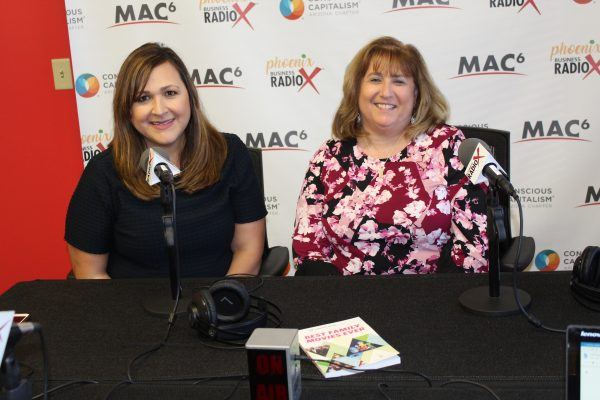
Lisa Hullinger with Campus Advisers Jessica Corral with Headfarmer and Special Guest Co-Host Stephanie Angelo

May 1, 2019 by Karen

Lisa-Hullinger-with-Campus-Advisers-Jessica-Corral-with-Headfarmer-and-Special-Guest-Co-Host-Stephanie-Angelo
Phoenix Business Radio
Lisa Hullinger with Campus Advisers Jessica Corral with Headfarmer and Special Guest Co-Host Stephanie Angelo
Loading
00:00 /
RSS Feed
Share
Link
Embed

Download file

Lisa-Hullinger-with-Campus-Advisers-Jessica-Corral-with-Headfarmer-and-Special-Guest-Co-Host-Stephanie-Angelo1

Lisa Hullinger with Campus Advisers Jessica Corral with Headfarmer and Special Guest Co-Host Stephanie Angelo

Campus-Advisers

Campus Advisers has been a leader in the field of college planning since 2001. We are proud to have helped more than 4,000 families recognize and afford the best college match, i.e. not borrowing your future!

We focus on “THE COLLEGE MONEY TALK?” because there are some conversations that are hard for families to have.

The reality is that every parent wishes they had more saved and started saving earlier. You don’t want to let your kids down. That is every parent’s worst fear. You are not alone!

Having a realistic money conversation as a family will keep hearts from being broken and ensure that your student graduates with manageable student debt, without robbing mom and dad’s retirement or delaying your student’s adult decisions such as travel, cars, houses, marriage, and family.

IT STARTS BY KNOWING YOUR SCORE!

Lisa-Hullinger-on-Phoenix-Business-RadioXLisa Hullinger is a College Planning Specialist and the primary contact for Campus Advisers. She has been with Campus Advisers since 2012. As a University of Arizona alum and mother of two college-aged daughters, Lisa is a beneficiary of the Know Your Score process.

In addition to working with students and their families throughout the college journey, Lisa also assists individuals in choosing their best Medicare and Long-Term Care insurance options. She’s been a licensed agent since 2008.

In 2017, she launched Campus Realities, a 501(c)(3) non-profit organization. Campus Realities was formed out of necessity to be the source of awareness and education around the $1.5 trillion of growing student debt. Our goal is to help students and their families make better college and loan decisions before they are capsized with unforgivable debt that cannot be discharged. As President, Lisa manages the daily operations as well as any fundraising activities.

Follow Campus Advisers on LinkedIn, Twitter and Facebook.

Headfarmer is a local boutique recruiting firm that specializes in Finance and Technology, placing both direct hire and contract roles within the greater Phoenix area.

Jessica-Corral-on-Phoenix-Business-RadioXJessica Corral is a Partner and Founder at headfarmer, bringing over 20 years of recruiting experience. She started her career in New York City recruiting for Wall Street professionals.

In 2000, she moved to Phoenix where she spent seven years working for one of the largest Accounting and Finance recruiting firms in the nation. HFSquareShe co-founded headfarmer in July of 2011 and thus began the mission to exceed recruiting industry standards and focus on how to be of genuine service to people.

Jessica is passionate about giving back to the community and making a difference. She has chaired local non-profit board positions, is always donating her time to helping people both personally and professionally, and enjoys expanding her network by building relationships with quality people who also put service ahead of all personal goals.

She has served as a trusted advisor to major employers and leaders in the greater phoenix metropolitan area….and she LOVES every minute of it.

Follow headfarmer on LinkedIn, Facebook and Twitter.

Stephanie-Angelo-on-Phoenix-Business-RadoXStephanie Angelo is a Mastermind group leader for enterprising people in a range of industries, from recruiters and marketers, wealth advisors, and commercial interior designers.  She helps entrepreneurs and solopreneurs grow and build their own businesses, increase sales, revenue and market share.

She has a unique knack for connecting people and creating collaborative relationships that result in measurable growth.  She’s sought out for mastermind group membership so people, and their business, can benefit from her skills.

She is innovative and creates teams that make more money, blow away the competition and have better businesses as a result.

Stephanie has been a management expert for over 30 years and is experienced in dealing with people and their challenges including individuals who are dealing with crisis. She’s experienced in managing group dynamics, individual coaching and is skilled in diffusing emotional conflict and looking for consensus.

She knows a lot about goal achievement and takes that skill to her Masterminds.  In 2014 she co-created the first-ever board game to address domestic violence – OUTrage™ – A Game to Recognize and Change Abusive Behavior.  Stephanie co-wrote the true crime memoir Serrated. She has won several awards for her work.

Stephanie is a professional member of National Speakers Association and on the Board of NSA-AZ.  She is also a member of Society for Human Resource Management. Stephanie was named a Finalist in the Best Entrepreneur – Service Businesses – Up to 100 Employees category for the 2011 Stevie Awards for Women in Business.

She has dual US and EU citizenships and is able to travel and work world-wide.

Lisa-Hullinger-with-Campus-Advisers-Jessica-Corral-with-Headfarmer-and-Special-Guest-Co-Host-Stephanie-Angelo2

Tagged With: Expected Family Contribution, FAFSA, Families with College-bound students, finance, Finance Recruiter, get informed about the college financial aid process, Phoenix, Phoenix Tech Recruiter, Recruiting, Student Loan Debt, Technology

Decision Vision Episode 12: Splitting Up a Business Partnership – An Interview with Bill Piercy, Berman Fink Van Horn

April 25, 2019 by John Ray

Decision Vision
Decision Vision
Decision Vision Episode 12: Splitting Up a Business Partnership - An Interview with Bill Piercy, Berman Fink Van Horn
Loading
00:00 /
RSS Feed
Share
Link
Embed

Download file

Michael Blake, Host of “Decision Vision” and Bill Piercy, Berman Fink Van Horn

Splitting Up a Business Partnership

It’s inevitable that business partnerships will dissolve, argues Bill Piercy of Berman Fink Van Horn, so partners need to prepare for the inevitable. In this episode of “Decision Vision” host Michael Blake talks with Piercy on how to prepare ahead of time, signs it is time to dissolve a partnership, and mistakes to avoid.

Bill Piercy, Berman Fink Van Horn

Bill Piercy is a Shareholder with Berman Fink Van Horn. Bill works with business owners to bring successful resolution to disputes concerning the management and control of the business. Frequently this means representing partners or shareholder groups who find themselves embroiled in controversy with their co-owners. After more than two decades of practice in the “corporate divorce” arena, he understands the challenges and the opportunities that arise from internal dissension within the management, operations and ownership of a closely held business.

Bill was named a “SuperLawyer” in the Atlanta legal community by Atlanta Magazine in 2012 – 2019, and as a “Rising Star” by that same periodical in 2006, 2009, 2010 and 2011. He is a member of the 2012 Class of Leadership DeKalb, as well as an Eagle Scout.

Recently, Bill put pen to paper to share his more than two decades of practice in the “corporate divorce” arena with entrepreneurs in his new book Life’s Too Short for a Bad Business Partner.

Michael Blake, Brady Ware & Company

Mike Blake, Host of “Decision Vision”

Michael Blake is Host of the “Decision Vision” podcast series and a Director of Brady Ware & Company. Mike specializes in the valuation of intellectual property-driven firms, such as software firms, aerospace firms and professional services firms, most frequently in the capacity as a transaction advisor, helping clients obtain great outcomes from complex transaction opportunities. Mike is also a specialist in the appraisal of intellectual properties as stand-alone assets, such as software, trade secrets, and patents.

He has been a full-time business appraiser for 13 years with public accounting firms, boutique business appraisal firms, and an owner of his own firm. Prior to that, he spent 8 years in venture capital and investment banking, including transactions in the U.S., Israel, Russia, Ukraine, and Belarus.

Brady Ware & Company

Brady Ware & Company is a regional full-service accounting and advisory firm which helps businesses and entrepreneurs make visions a reality. Brady Ware services clients nationally from its offices in Alpharetta, GA; Columbus and Dayton, OH; and Richmond, IN. The firm is growth minded, committed to the regions in which they operate, and most importantly, they make significant investments in their people and service offerings to meet the changing financial needs of those they are privileged to serve. The firm is dedicated to providing results that make a difference for its clients.

Decision Vision Podcast Series

“Decision Vision” is a podcast covering topics and issues facing small business owners and connecting them with solutions from leading experts. This series is presented by Brady Ware & Company. If you are a decision maker for a small business, we’d love to hear from you. Contact us at decisionvision@bradyware.com and make sure to listen to every Thursday to the “Decision Vision” podcast. Past episodes of “Decision Vision” can be found here. “Decision Vision” is produced and broadcast by Business RadioX®.

Visit Brady Ware & Company on social media:

LinkedIn: https://www.linkedin.com/company/brady-ware/

Facebook: https://www.facebook.com/bradywareCPAs/

Twitter: https://twitter.com/BradyWare

Instagram: https://www.instagram.com/bradywarecompany/

Show Transcript:

Intro: [00:00:01] Welcome to Decision Vision, a podcast series focusing on critical business decisions, brought to you by Brady Ware & Company. Brady Ware is a regional, full-service accounting and advisory firm that helps businesses and entrepreneurs make vision a reality.

Michael Blake: [00:00:20] And welcome back to another episode of Decision Vision, a podcast giving you, the listener, clear vision to make great decisions. In each episode, we discuss the process of decision making on a different topic. Rather than making recommendations because everyone’s circumstances are different, we talk to subject matter experts about how they would recommend thinking about that decision.

Michael Blake: [00:00:38] Hi, I’m Mike Blake. And I’m your host for today’s program. I’m a Director at Brady Ware & Company, a full-service accounting firm based in Dayton, Ohio, with offices in Dayton; Columbus, Ohio; Richmond, Indiana; and Alpharetta, Georgia, which is where we are recording today. Brady Ware is sponsoring this podcast. If you like this podcast, please subscribe on your favorite podcast aggregator, and please also consider leaving a review of the podcast as well.

Michael Blake: [00:01:04] Today, we’re going to talk about splitting up a business partnership, or some people call it a business divorce. And for purely selfish reasons, this is a topic that’s near and dear to my heart because this, actually, happens to be a big part of my practice. Often though, not every time, that there’s a business split, somebody wants to know what the number is that one person should be bought out at. And, so, that’s a part of my practice from, sort of, a purveyor of misery.

Michael Blake: [00:01:35] But the thing about business divorces is that they can be equally as dramatic, equally as painful, equally as tense. And, yes, on some levels, equally as entertaining as watching a conventional marital divorce. But we don’t have to just take my word for it. We’re bringing in a subject matter expert. And joining us today, to help us work through this decision process is my good friend Bill Piercy of Berman Fink Van Horn here in Atlanta.

Michael Blake: [00:02:02] Bill works with business owners to bring successful resolution to disputes concerning the management and control of businesses. Frequently, this means representing partners or shareholder groups who find themselves embroiled in controversy with their co-owners. After more than two decades of practice in the corporate divorce arena, Bill understands the challenges and the opportunities that arise from internal dissension within management, operations, and ownership of a closely-held business.

Michael Blake: [00:02:28] Through hard work, candid advice and effective advocacy, Bill helps clients achieve successful outcomes. Bill was named a Super Lawyer in the Atlanta Legal Community by Atlanta Magazine in 2012 and as a Rising Star by that same periodical in 2006, 2009, 2010 and 2011. Bill is a member of the 2012 Class of Leadership DeKalb. Bill previously served on the Executive Committee of the Gators for Business Arm of the Atlanta Gator Club and as a member of the Board of Directors of the Sole Practitioner Small Firm Section of Atlanta Bar Association.

Michael Blake: [00:03:04] In addition, to practicing in the corporate divorce arena, Bill has written a book on the subject, Life’s Too Short for a Bad Business Partner. Bill’s book is available for purchase at amazon.com. I would also say a bookseller near you, but those are pretty much gone now, especially, I think, Barnes & Noble is history, about to be history. And Bill has an undergraduate degree from the University of Florida and earned his law degree from Emory University in Atlanta. And I understand his parents did not bribe either institution in order to get in there. So, we’re getting the real deal. Bill Piercy, thanks so much for coming on the program.

Bill Piercy: [00:03:38] Thank you very much. I appreciate the opportunity to be here.

Bill Piercy: [00:03:41] So, you’ve got kids, I’ve known you a long time. You’re a busy successful attorney doing important things. Why do you find the time to write this book on business divorce?

Bill Piercy: [00:03:55] I found myself saying the same things to clients over and over again. And it occurred to me one day, “Why don’t I write this stuff down? It might be easier or better for people to digest it that way.” When someone has dissension in their business particularly with the other owners that can be a very lonely time and a lonely place to be.

Bill Piercy: [00:04:23] You can’t really go talk to the CPA to ask for a referral to a lawyer because, well, he answers to your business partner too. You certainly don’t want to go to clients and had them know that there’s some sort of problem with the business. You don’t tell vendors, you don’t tell lenders. And so, sort of like when your leg hurts and you go on to Google or Web MD to figure out what’s going on, people would find my blog and find me through that. And it occurred to me that if I created maybe a little more comprehensive guide, I might be able to help even more people.

Michael Blake: [00:05:02] Okay. I’d never thought of that but you’re right. I mean, all the venues that you would normally associate with getting help are close to you because the last thing you want broadcasted to anybody is I’ve got a potential business dispute internally. That freaks out employees. It freaks out advisors. It freaks out clients, vendors. Pretty much everybody within earshot gets freaked out by that.

Bill Piercy: [00:05:28] It’s absolutely right.

Michael Blake: [00:05:28] So, essentially. I haven’t thought of it that way, but that makes sense. So, they say that debt and taxes are the two things in the world that are inevitable. Is the same true of business partnerships? Are business partnerships kind of hired to be fired?

Bill Piercy: [00:05:43] I mean, they should be. Marriage is supposed to last forever or until death do us part, but that’s not the way business partnerships are supposed to be. You come together. You work together. It’s the common goal of making some money. And hopefully everybody leaves with their pockets loaded and as friends. Sometimes, they don’t end that way. And my practice is typically revolves around those situations where folks are less than happy as they are parting ways.

Michael Blake: [00:06:16] I did not expect that answer. I learned something. And you’re right, the notion of death do us part. And what the heck, my wife will never listen to this. But we know that that convention came into play when the life expectancy was about 42. And by then, you’re expected to die of black death, or a rotten chicken bone, or having somebody impale you with a hoe, basically, right?

Michael Blake: [00:06:45] And, now, things have changed. That till death do you part is a much larger commitment. I think when we think of partnership as intimate as a business partnership, I have to admit, I think of it as a lifelong engagement. But maybe you’re right, it’s healthy that you should kind of plan for the split. And maybe if it works out, that you both, as two business partners, you die lovingly and in each other’s arms on a pile full of money, right?

Bill Piercy: [00:07:15] That’s right.

Michael Blake: [00:07:15] Maybe that’s the optimal outcome, but that’s sort of a rarity. So, planning for that in advance, I guess, makes you more prepared, right?

Bill Piercy: [00:07:25] Absolutely.

Michael Blake: [00:07:26] Okay. So, where do the cracks start? I mean, you and I could trade war stories probably all afternoon. We don’t have unlimited time unfortunately. But I’d like to hear from you and maybe I’ll jump in, but where the cracks start to show? What are the things that tend to be the kernels that, ultimately, result in a dispute that is most likely to lead to some kind of split?

Bill Piercy: [00:07:52] Sure. Lack of communication is huge. Lack of transparency is distinguished, in my mind, from lack of communication because it’s one thing for everybody be talking. It’s another thing to actually reveal the financial statements or the underlying transactions that one partner may be responsible for as opposed to the other. The lack of a shared vision among the partners, one wants fast growth, the other doesn’t.

Bill Piercy: [00:08:28] And tied to that, maybe a divergent comfort level with risk score, with debt. Some people, rob Peter, pay Paul, let’s run to the races. And other people want all kinds of money in the bank before they do anything. And that can cause a lot of tension among owners of a business. Disparity and contribution, right. It’s owned 50/50, but one guy is doing 80% of the work. You can see why he might get frustrated.

Bill Piercy: [00:08:56] And a lack of clearly defined roles. Sometimes, early on, we’re all going to jump in. We’re all going to do everything that needs to be done to make this a success, and they’re excited. And 10 years down the line, it would make sense for one person with a particular set of skills to do certain aspects of the business, and someone else to do other tasks. And sometimes, those either formally or informally happen. Sometimes, they don’t. Sometimes, it’s, “Well you were in the office, so you did it, or I thought you were going to do it,” and that can lead to problems.

Michael Blake: [00:09:36] That communication transparency part it, really resonates with me. With the partnership splits in which I’ve been involved in appraising the core business, it has always struck me that if a few honest conversations for 30 minutes had happened two years prior to when they’ve hired me, we may very well not be here, right? And the transparency, to me, is connected with surprise, right?

Bill Piercy: [00:10:11] That’s right.

Michael Blake: [00:10:11] When a surprise happens in the business. In my case, one of the things I really insist on is if a company hires me in a buy/sell that I want to interview both partners even if one of them is retaining me, and try to get them all involved in that, and engaged in that conversation because you’re more likely to get buy-in if there’s not a surprise, if you see the freight train coming, right. And the lack of transparency leads to surprise. Surprise leads to anger. And then, that leads to imagination.

Bill Piercy: [00:10:43] That’s exactly right.

Michael Blake: [00:10:44] And that’s where you kind of get the runaway train, right?

Bill Piercy: [00:10:46] Well put.

Michael Blake: [00:10:50] So, are there are the reasons that are, kind of, avoidable? I mean, we just talked a little about communication. But when you kind of look at that portfolio of partnership disputes, what are the ones you see most often that maybe resonate with what I describe which is, “Jeez, why are we here?” Like the old cartoon of what would you’ve done right to the police is never what would have happened, that sort of thing. Are there things in your mind or patterns that you see that have you, kind of, asking yourself why we’re at this point or are we sure this is not reparable?

Bill Piercy: [00:11:29] It’s whatever the problem is, it’s festering for a while. And so, it’s not necessarily — I mean, communication is a huge one, but whatever the issue is, the people, the partners involved aren’t addressing it head on. They aren’t confronting it with each other. And from my perspective, if there is tension in that way, I would encourage folks to consider ending the business relationship, in its current form. I’m not saying that every fight should lead to divorce, but if there is a persistent problem, the underlying structure isn’t working, right.

Bill Piercy: [00:12:22] And so, it may just need to be fixed, but I find it’s often more productive to go into that fix with, “You know what, the old way is done. We are starting from scratch, and we’re going to talk about how often we’re going to communicate, and we’re going to talk about who is responsible for what, and we’re going to talk about who stays in whose lane, and we’re going to decide what level of commitment and what level of compensation we’re going to have.” And I think those are the business relationships that can be salvaged, if that’s the right word.

Michael Blake: [00:12:57] Yes. So, I’m going to go off script a little bit. I think that’s really smart, if nothing else, because I never thought of it that way. The notion that there is this binary choice that you either keep the partnership as is, baby and bathwater, or you dump baby and bathwater out, it’ s a false choice, isn’t it, right? There’s an option to say, to consider, maybe this relationship, the way it’s structured, isn’t working. But what if we just sort of took a blank sheet of paper, literally a blank sheet of paper, that clean slate, what would we do differently to make us both happy? And maybe there’s a way to salvage that.

Bill Piercy: [00:13:33] That’s my idea.

Michael Blake: [00:13:35] And I’m curious, what’s your betting average with that? Have you suggested that? Have you gotten traction with that?

Bill Piercy: [00:13:44] I have, not a lot.

Michael Blake: [00:13:46] Yeah.

Bill Piercy: [00:13:46] By the time folks get to me, and they’re paying a lawyer by the hour to fight, they’re generally pretty mad. I think that there are probably a lot of transactional lawyers that do this sort of thing all the time. I’m a litigator. When they get to me, we’re typically filing lawsuits, or threatening lawsuits, or being threatened with a lawsuit.

Bill Piercy: [00:14:12] And so, it’s pretty rare, but I do have one shining moment example where I helped. And my opposing counsel was of a similar mindset. And we got these folks to agree to have breakfast at Shoney’s every Friday morning with a checklist. And they would talk through that checklist because despite all their hating each other, they were printing money, and it just made sense to keep printing money. And as far as I know, they’re still printing money today.

Michael Blake: [00:14:43] No kidding. Well, good for you. Well, if the law thing doesn’t work out, maybe you can be a counselor.

Bill Piercy: [00:14:48] Maybe.

Michael Blake: [00:14:48] Maybe as a second career. So, you’ve written this book, and you’ve done it because it’s an opportunity to, kind of, avoid the repetition. And it’s a quick read. Certainly, you’re not going to be mistaken for a Russian novel. But even that having been said, if you wanted a reader to take one thing away from that book, what do you think that would be? ***

Bill Piercy: [00:15:15] To focus on the future, where you’re headed, where you want to be, and not on the past, and what your partner did or didn’t do, and how angry you are about it, if you’re at the point where you’re reading a book called Life’s Too Short for a Bad Business Partner, or talking to a business litigator, or to a business valuation person because your business is in some sort of crisis, then, you’ve already, kind of, lost. And, now, it’s time to stop the bleeding, and to focus on going somewhere else, and making some money. It is easy to let that anger or fear consume you, and it’s just not productive.

Michael Blake: [00:16:07] And I will attest that. I’ve never had to go as far as a litigation, but I’ve been involved in business partnerships where I’ve been upset. And I think that advice is so good that, on the one hand, you do feel like you’ve been wounded somehow. And you’ve been wounded in what, really, is a very intimate relationship. You’ve placed your financial well-being and that of your family in somebody else’s hands to a certain extent.

Bill Piercy: [00:16:39] That’s right.

Michael Blake: [00:16:39] And that means that the second that is even a whiff of being threatened in some way, it’s very hard not to react. Like your bass is super tight in piano string, right?

Bill Piercy: [00:16:51] I’m not suggesting it’s easy.

Michael Blake: [00:16:52] Yeah. And there’s a lot of deep breaths and whatnot that sort of have to take place. And I think that focusing kind of — because you can remedy the passing. A lot of what you do is to recover things from the past, the past injuries. But the end of the, day everything’s out in front of us, I guess, right?

Bill Piercy: [00:17:12] That’s right.

Michael Blake: [00:17:15] Okay. So, you talked about, by the time you get to reading a book, by the time you get to talking to somebody like you, and paying your fees, and so forth, what is that trigger? How do I know that I’m so mad that I got to contact Bill Piercy, and have him help me figure this out, and have some combination of making me whole/extracting horrible revenge versus, yeah, I’m ticked off, but do I really like to get a lawyer involved? You know what I mean? What’s that Rubicon? What’s that inflection point?

Bill Piercy: [00:18:01] Sure. It’s nice when folks have the option of just being mad or annoyed. Sometimes, they do. Sometimes, they don’t. Frankly, in either circumstance, I would encourage folks to get a handle pretty quickly on what rights and obligations they have to and from the business, to and from the other owners, to and from lenders and landlords. And that may mean getting a hold of your shareholder’s agreement, seeing where you can’t remember if you guaranteed the lease on the building or not. Those kinds of things.

Bill Piercy: [00:18:44] Some people are pretty organized. And sometimes, those documents are pretty easy to read. Sometimes, it takes a lot of work. Sometimes, there is no document. Sometimes, it’s on the back of a napkin, or it’s just a handshake, right. And a good lawyer can help folks understand that the law will impose some order on your situation, but it’s not intuitive always what those rules are. So, I would encourage folks to do it.

Bill Piercy: [00:19:15] And as for the trigger, as to when you start investigating those things, I mean, when you don’t trust your partner anymore, when you just can’t see yourself being in business with them anymore. or on a shorter time frame when your little key doesn’t work in the office lock one day-

Michael Blake: [00:19:37] Okay, that’s a trigger.

Bill Piercy: [00:19:38] … or you get served with a summons. I mean those sorts of things.

Michael Blake: [00:19:43] Okay, yeah. Or, as I’ve had with a client, just all of a sudden, one day, gets walked out of the building.

Bill Piercy: [00:19:51] That’s right.

Michael Blake: [00:19:51] Right. Obviously, there’s going to be a call to maybe multiple counsel at that point. So, I was going to ask one question, but I want to interject or intercede one question. Obviously, one sign that a business breakup is coming is that summons, that walking out, right. But are there more subtle signs that it’s sort of happening, but it may not be that apparent, and you’re like the frog in the water? You don’t realize it’s a business break until you’re the boiled frog in the water. You know what I mean?

Bill Piercy: [00:20:25] There are. There absolutely are. Trust that spidey sense or trust your gut. If it seems like maybe, “Boy, my partner seems to be having a lot of meetings with a closed door, or out of the office, or he’s kicked the can down the road on our weekly catchup meeting four weeks in a row. And I keep asking about the financial statements, and I keep being told I’ll see them tomorrow.” We all have other things to do. And not everybody turns everything in on time. But when those things start to lag, and you start to get suspicious, listen to your gut. Trust but verify.

Michael Blake: [00:21:12] Yeah. So, when that spidey sense, then, kicks in, what should you do? First thing, top of the to-do List.

Bill Piercy: [00:21:24] Gather whatever information you can that will help you and your team understand what rights and obligations you have and your partner has because that will be hugely determinative about your next steps and, frankly, the obstacles and opportunities that you have.

Michael Blake: [00:21:47] Now, do you have to treat a little bit differently when — I mean, you’re a company insider. On the one hand, I could certainly see advising somebody to be aggressive because if you think you might get locked out of the business, that means you may be locked out of your access to that information, and the only way we’re going to get it is through discovery. But on the other hand, do I have to be careful if I’m in that scenario because I may be acquiring and taking information that isn’t rightfully mine to have custody? Or I’m an owner of the business, therefore, I have the right to custody. Is there a balance there or a maze there that has to be navigated?

Bill Piercy: [00:22:28] It’s absolutely a complicated maze. And you’ve touched on a really good point. It’s as an owner of the business, you generally have the right to look behind the curtain and see whatever is there. But property that belongs to the business doesn’t belong to you just because you own a piece of the business. It’s not so much taking that information to yourself. I wouldn’t counsel anybody to email the customer a pricing list to their Gmail account, but I would encourage them to access it regularly and to ensure that they have that access.

Bill Piercy: [00:22:28] Sometimes, the division of labor leads partners to where one’s never met the landlord, or the IT guy, or the banker. And, all of a sudden, those things get shut off. It’s much harder to turn it back on when the relationship manager at the bank has never heard of you, and the IT guy doesn’t really know who you are. But if you have — not saying you take over that responsibility, but every once in a while, you stick your head in, and you make sure those folks know you. It’s much easier to restore your access should your partner do something nefarious.

Michael Blake: [00:23:49] So, one of the lessons here is in a partnership, protect yourself. Make sure that there are no key relationships and information sources that are proprietary to your other business partner. Maybe you’ll never have to call upon that, but if you do, you’ll be glad that you made that effort to have that line of communication, that recognition regularly.

Bill Piercy: [00:24:10] Absolutely.

Michael Blake: [00:24:10] So, sort of a hypothetical. Let’s say that that maybe there’s a bunch of information on a laptop, right. It’s a company laptop. It’s one that has not necessarily been assigned to me, but that laptop has information that, I think, is material to my potential case going forward. Is that’s something I may be forced to kind of leave behind, or can I take it, or is it a it-depends kind of deal.

Bill Piercy: [00:23:12] I mean, it’s a it-depends kind of deal. Is it used in the day-to-day business by you? Physically taking it, are you depriving the business of the opportunity to use that information? I’m not so worried about where the laptop sits. It’s, “Can the other partner access the data on it just because it’s sitting in your living room?” Maybe. Maybe it’s linked to cloud, or they can call you up and say, “Hey, I want to come look at it.” And if you allow that, I’m much less concerned about that conduct than one partner excluding the other from some critical piece of the business.

Michael Blake: [00:25:19] Right. So, don’t take the laptop, and then put in a safe deposit box, or bury it, or something like that.

Bill Piercy: [00:25:25] That’s probably right.

Michael Blake: [00:25:26] Okay. So, one of the most common mistakes you see business owners, soon-to-be-splitting partners make during that process that if they hadn’t made those mistakes, they might have had a better outcome.

Bill Piercy: [00:25:40] I think that we’ve touched on really the two big ones already here today. And that’s taking company property and assuming that because you own a piece of that company, you can take this equipment or this data, and either use it for competitive purposes or exclude the other folks in the business from using it. That’s number one. And number two, just not having keys to the castle. Not knowing how to turn your access to the network back on, or get back in the front door, or whatever it may be.

Michael Blake: [00:26:18] I’m going to go off script again because I think this is an important question. What about the scenario, I’ve got two clients in the scenario now, the majority shareholder, basically, fires a minority shareholder, cuts off their income, cuts off access to bank accounts. How is that properly handled? Can the majority shareholder typically just do that? Is it that simple, or, for the minority shareholders, is there are remedy, or does a majority shareholder have to go through a process to do that legally?

Bill Piercy: [00:26:53] So, the firing, pretty much if the majority owner can say, “You know what, we’re going to hire out whatever work you’ve been doing,” or “I’m going to start doing it.” And it’s a complicated question but, generally, can show that minority owner to the door.

Michael Blake: [00:27:15] Okay.

Bill Piercy: [00:27:16] But access to information, if you own a piece of the company, you have a statutory rite, generally, to review the books and records of the business. And it’s a different right, whether it’s a corporation or an LLC, but, generally, you’ve got that right. And you’re supposed to just be able to write a letter, and then be provided reasonable access and an opportunity at your cost to copy whatever information you want to copy. And if that information is not provided, there is generally an expedited legal remedy for ensuring your access to that information. Basically, it means filing a lawsuit, but that lawsuit is supposed to and typically does move faster than your average case.

Michael Blake: [00:28:13] Okay. So, not all business divorces go to court, right, thankfully. But some of them do. I think you’ve touched upon this, but I want to make sure the point is clear. What, in your mind, distinguishes the amicable or, at least, non-hostile partnership dissolution from the all-out, knockdown, drag-out, street-fight of litigation?

Bill Piercy: [00:28:42] Sure. Fundamentally, people change their interest in the business, change their interest in being involved in the business, and what they want to do can change over time. Those are legitimate bases for folks just deciding to part ways and go do something else. Where it turns hostile and expensive, typically, I mean without getting too philosophical about it, it’s pride, greed, lust, anger, gluttony, envy, and sloth. The seven deadly sins or some combination of them that cause people not only to decide they don’t want to be in business together but decide that I want all the business or whatever their dispute may be. Those typical, those raw emotions are often what’s behind it.

Michael Blake: [00:29:44] That’s interesting. That’s a heck of a checklist. I’ve been around a long time now. So, have you found — I mean, people talk a lot about buy/sell agreements. And for the listeners, a buy/sell agreement is just the rules by which the two or more partners agree that a share will be bought out either by the company of one or more shareholders or between each other when somebody is going to get out of the partnership. Have you found them to be helpful? I mean, are they as useful as advertised?

Bill Piercy: [00:30:16] So, in some, typically, when they’re is useful as advertised, I never see it because it doesn’t result in litigation. And so, the transactional lawyers that are deal makers do them and do them well all the time. And I think they provide a valuable set of rules for — agree when you’re agreeable, right. And so, everyone has come to it. We’ve already established how we’re going to decide, how much, and when somebody pays somebody else for their share in the business. And we’re going to already decide ahead of time on these triggering mechanisms. And so, it provides, I think, an efficient and useful tool for helping people through what can sometimes be a pretty difficult situation.

Michael Blake: [00:31:09] Okay.

Bill Piercy: [00:31:10] That said, when I see them, either there is a legitimate dispute about language, and who’s got the right to do what, or somebody is gaming the system. It may be that one partner or faction has significantly more resources than the other. And so, a common buy/sell arrangement is one in which one partner makes an offer to buy the other out at a fixed price per share. And the recipient of that offer, then, has the option. I can either take that offer, or turn it around, and buy out the offer, or at the same price. So, that ought to result in a fair offer because you don’t know if you’re going to be a buyer or a seller.

Bill Piercy: [00:32:02] And it, probably, most of the time, does. I never see it because I’m a business litigator. I see it when maybe one side has more money than the other and thinks, “You know what, even if I make a low-ball offer, he still can’t come up with the cash to buy me out,” or the insider trading, kind of, “I know something about the business that’s about to happen that he doesn’t know. So, I’m either going to offer more than fair market value or try to get myself bought out before things go down the tubes by manipulating my offer. So, those are, unfortunately, the kinds of things that I see on a fairly regularly basis with buy/sell. But I’m certainly not against them. I think in a lot of situations, they can be very useful.

Michael Blake: [00:32:56] I see similar manipulation. In particular if the buy/sell price is either a set number or a set formula because that’s set number or set formula could be right whenever the buy/sell was initiated. But now, five years down, the road the company has changed, the market has changed, the economy has changed. That price is going to benefit someone, right?

Bill Piercy: [00:33:21] Right.

Michael Blake: [00:33:23] And then, there’s at least a financial incentive to manipulate or force a transaction because you know you’re either going to be bought dear or you have an opportunity to sell cheap, right?

Bill Piercy: [00:33:33] That’s absolutely right.

Michael Blake: [00:33:34] And I’m guessing that’s also a scenario that might come your way even though there is a buy/sell. I think in those cases the buy/sells actually can do more harm than good because they motivate the kind of behavior they’re trying to avoid.

Bill Piercy: [00:33:48] That’s right.

Michael Blake: [00:33:51] So, I’m going to switch gears here, more of a governance question. So, I would imagine if I’m a general counsel for a company – internal, external, it doesn’t matter – I have to imagine the worst nightmare I could think of is I’m in the middle now of a business partnership because I’m going to be asked to take sides. All right. It’s just inevitable.

Michael Blake: [00:34:21] But on the other hand, I mean, on one level, it’s “Golly, does the company have to have an attorney, and both sides have to have their own counsel and combine? You’re running the clock at $2000 an hour or something like that.” Have you seen that? Is that a legitimate concern? How does that get resolved? If you’re a corporate counsel or if you’re involved in that, what can you reasonably expect your corporate counsel to do and not do…

Bill Piercy: [00:34:48] Sure.

Michael Blake: [00:34:49] … or that they cannot do for you.

Bill Piercy: [00:34:51] That’s right. The corporate counsel can certainly help partners to access the information that they need to determine their respective rights and obligations like we’ve talked about. What the company’s lawyer can’t do, what would be a conflict of interest is for the company’s attorney to offer advice or suggestions to one partner, or the other, or God forbid. both on what their respective rights are, or what positions or strategies they might employ. The company’s lawyers got to look out for the company and really needs to be careful not to be answering to more than one chief at any one time.

Michael Blake: [00:35:47] The last thing you said, “God forbid, both.” So, I want to expand on that a little bit because I can see a scenario where maybe a counsel feels like they’re doing the right thing, right. They feel like, somehow, they’re giving equal advice to both parties. There’s no conflict of interest. Can you expand that upon it? That sounds like a land mine.

Bill Piercy: [00:36:08] I mean, yeah, it sounds to me like a call to your malpractice carrier at some point because, eventually, likely, one partner is not going to be happy with the advice they got, or even if they are happy with it, they may see an opportunity, and because desperate times call for desperate measures. And really, it doesn’t help anybody to do that. Partners would do well to go get their own private independent counsel even if it’s just a, “Hey, run through this with me for an hour and help me understand where I stand,” as opposed to relying on someone who has multiple folks to answer to and may or may not have your best interest at heart.

Michael Blake: [00:36:59] Now, I think, if I’m not mistaken, there’s a nuclear option out there where if there’s enough of an impasse, at least, in our State in Georgia, I don’t know if this is true in all 50 states. Logically, I don’t, but a judge could actually dissolve a company if there is a sufficient impasse. Is that correct? And what are the circumstances under which that might actually occur?

Bill Piercy: [00:37:23] There absolutely is. It’s called judicial dissolution. And there are two general scenarios when that can happen. One is — and I think it’s the more common of the two deadlock. And that would be very common if you’ve got two partners, and each one of them owns 50% of the company, and one of them wants to franchise and go national, and the other wants a sole location and to become the master of one particular area of town in which whatever they do, they do. One wants white, the other wants black. They can’t agree. They have equal voting power. The company can’t do anything. In that circumstance, a judge can order that the company be dissolved. And we’ll talk about that. I’ll talk about that just a little more after I talk about the other factor.

Bill Piercy: [00:38:19] The other is waste. If the one partner – often, the majority owner – is taking advantage of the company paying unequal distributions, just taking money, and not even calling it a distribution out of the company or steering work to other businesses, all of those things can happen. And in those circumstances, a judge can order, “You know what, this is never going to work. The majority isn’t taking care of the minority here, not fulfilling his fiduciary duties. I’m just going to order this company dissolved.”

Bill Piercy: [00:38:57] And basically, a receiver is typically appointed. some third party. It might be a business broker. It might be a real estate agent. It, kind of, depends on what the company’s assets are. The assets are marshaled, gathered all in one place, and then sold. Sometimes, on the courthouse steps on foreclosure day. Other times, in a more orderly fashion. And then, that money is used to pay the company’s debts. And if there’s any money left over, it’s divided up pro-rata among the owners of the company.

Michael Blake: [00:39:31] And just like that.

Bill Piercy: [00:39:32] It is not a simple process, it’s not an inexpensive process, and you’re never going to get top dollar for a business that’s being sold on the first Tuesday of the month.

Michael Blake: [00:39:44] Yeah, yeah. In effect, it’s a slightly dignified fire sale.

Bill Piercy: [00:39:50] That’s exactly it. I’m not even sure it’s dignified.

Michael Blake: [00:39:53] Okay, fair enough. I certainly don’t want to put words in your mouth. Well, we’re running out of time. I wish we could talk more about this. There’s a lot of war stories I know that we could swap. But if somebody wants to learn more, or they’re thinking about they may be in this situation, think may be in the situation, and want to learn more, how can they contact you to to benefit from your expertise?

Bill Piercy: [00:40:16] I am fairly easy to find on the internet. Again, my name is Bill Piercy. I practice law with the Berman Fink Van Horn. The firm web site is bfvlaw.com. And my email address is bpiercy@bfvlaw.com.

Michael Blake: [00:40:37] All right. Well, thank you. That’s going to wrap it up for today’s program. I’d like to thank Bill Piercy so much for joining us and sharing his expertise with us today. We’ll be exploring a new topic each week. So, please tune in, so that when you’re faced with your next business decision, you have clear vision when making it. If you enjoy this podcast, please consider leaving a review with your favorite podcast aggregator. It helps people find us, so that we can help them. Once again, this is Mike Blake. Our sponsor’s Brady Ware & Company. And this has been the Decision Vision Podcast.

Tagged With: corporate counsel, corporate divorce, Dayton accounting, Dayton business advisory, Dayton CPA, Dayton CPA firm, debt, Decision Vision, Decision Vision podcast, Decision Vision podcast series, dissolving a business partnership, dissolving a partnership, lack of shared vision, lack of transparency, mediation, Michael Blake, Mike Blake, partnership disputes, risk, shareholders agreement, splitting a business partnership, William J. Piercy

Decision Vision Episode 11: The Atlanta startup ecosystem and the Siggie Awards – An Interview with Gordon Rogers, Avondale Innovation District

April 18, 2019 by John Ray

Decision Vision
Decision Vision
Decision Vision Episode 11: The Atlanta startup ecosystem and the Siggie Awards – An Interview with Gordon Rogers, Avondale Innovation District
Loading
00:00 /
RSS Feed
Share
Link
Embed

Download file

“Decision Vision” Host Michael Blake and Gordon Rogers

The Atlanta startup ecosystem and the Siggie Awards

Startup investor and mentor Gordon Rogers speaks with “Decision Vision” host Michael Blake on the history and development of the Atlanta startup ecosystem, the pivotal role of Sig Mosley in this community, and the “Siggie Awards,” which honor Sig’s contribution and recognize other noteworthy Atlanta investors.

Gordon Rogers, Avondale Innovation District

Gordon Rogers

Gordon Rogers is a three decade veteran in the Atlanta startup community, particularly in the field of education technology and online learning. In 1992, he founded a company that created one of the industry’s first learning management systems. He led the start-up from the bootstrapped stage to an IPO, through a merger with Paul Allen’s company, Asymetrix Learning in 1998, now part of SumTotal Systems, a SkillSoft company. He has spent the past 15 years working with startups in the ed-tech sector, including K-12, higher-ed and career & tech ed programs.

He mentors early stage ventures at Georgia Tech’s ATDC incubator and Flashpoint programs. As a social impact investor and entrepreneur, he advises Village Capital’s Ed-Tech Accelerator and Points of Light Civic Accelerator programs. He’s served as an advisor to over a dozen startups, including Authentica Solutions (now BrightBytes), Crescerance, ExceptionALLY, and RapidLD. In his role as advisor to CTE Portfolio, he works with Career & Technology Education directors to streamline Work-Based Learning and Apprenticeship Programs. CTE Portfolio can be thought of as a student-friendly version of LinkedIn.

He is Past President of Atlanta Technology Angels, and serves on the TAG Top 40 committee. He co-founded Teachers & Techies, a group of educational innovators working to improve technology in schools. He also serves as a guest lecturer and business competition judge at Georgia State, Georgia Tech, Emory, University of Georgia and Kennesaw State University business schools.

The Avondale Innovation District™, located in downtown Avondale Estates, is a place-based urban development designed specifically to support entrepreneurs and creative professionals, foster open innovation, attract and accelerate new business ventures. It is the venue for the inaugural Siggie Awards.  The “Siggies” are a way to recognize some of the unsung heroes in the Atlanta startup community: early-stage investors. The “Siggies” are named after Sig Mosley, Managing Partner of Mosley Ventures. To nominate an Atlanta investor for a Siggie award or to get more information on the inaugural event on May 15, 2019, click here.

Michael Blake, Brady Ware & Company

Mike Blake, Host of “Decision Vision”

Michael Blake is Host of the Decision Vision podcast series and a Director of Brady Ware & Company. Mike specializes in the valuation of intellectual property-driven firms, such as software firms, aerospace firms and professional services firms, most frequently in the capacity as a transaction advisor, helping clients obtain great outcomes from complex transaction opportunities. Mike is also a specialist in the appraisal of intellectual properties as stand-alone assets, such as software, trade secrets, and patents.

He has been a full-time business appraiser for 13 years with public accounting firms, boutique business appraisal firms, and an owner of his own firm. Prior to that, he spent 8 years in venture capital and investment banking, including transactions in the U.S., Israel, Russia, Ukraine, and Belarus.

Brady Ware & Company

Brady Ware & Company is a regional full-service accounting and advisory firm which helps businesses and entrepreneurs make visions a reality. Brady Ware services clients nationally from its offices in Alpharetta, GA; Columbus and Dayton, OH; and Richmond, IN. The firm is growth minded, committed to the regions in which they operate, and most importantly, they make significant investments in their people and service offerings to meet the changing financial needs of those they are privileged to serve. The firm is dedicated to providing results that make a difference for its clients.

Decision Vision Podcast Series

Decision Vision is a podcast covering topics and issues facing small business owners and connecting them with solutions from leading experts. This series is presented by Brady Ware & Company. If you are a decision maker for a small business, we’d love to hear from you. Contact us at decisionvision@bradyware.com and make sure to listen to every Thursday to the Decision Vision podcast. Past episodes of Decision Vision can be found here. Decision Vision is produced and broadcast by Business RadioX®.


Visit Brady Ware & Company on social media:

LinkedIn: https://www.linkedin.com/company/brady-ware/

Facebook: https://www.facebook.com/bradywareCPAs/

Twitter: https://twitter.com/BradyWare

Instagram: https://www.instagram.com/bradywarecompany/

Show Transcript:

Intro: [00:00:01] Welcome to begin Decision Vision, a podcast series focusing on critical business decisions brought to you by Brady Ware & Company. Brady Ware is a regional, full-service accounting and advisory that helps businesses and entrepreneurs make vision a reality.

Michael Blake: [00:00:20] And welcome to another episode of Decision Vision, a podcast giving you, the listener, clear vision to make great decisions. In each episode, we discuss the process of decision making on a different topic. Rather than making recommendations because everyone’s circumstances are different, we talk to subject matter experts about how they would recommend thinking about that decision.

Michael Blake: [00:00:38] My name is Mike Blake, and I’m your host for today’s program. I am a Director at Brady Ware & Company, a full-service accounting firm based in Dayton, Ohio, with offices in Dayton; Columbus, Ohio; Richmond, Indiana; and Alpharetta, Georgia, which is where we are recording today. Brady Ware is sponsoring this podcast. If you like this podcast, please subscribe on your favorite podcast aggregator, and please also consider leaving a review of the podcast as well.

Michael Blake: [00:01:03] So, today, we’re going to talk about a startup project in Atlanta called the Siggie Awards. And we’re going to talk a little bit about the award program itself, but also dig into what goes into launching an award program, what it takes to build and sustain one, and whether you, as a business owner or decision maker, should consider being involved in an award program in your community.

Michael Blake: [00:01:25] And to help us today is Gordon Rogers, the Avondale Innovation District. Gordon is a 25-year veteran of startups in the field of digital education and learning management, both as a founder and an investor. Gordon is a mentor at Georgia Tech’s ATDC and Flashpoint Accelerator Programs, as well as Managing Director of Vernon Bridge Ventures, an early-stage capital advisory firm. He serves on the advisory boards of Authentica Solutions, Crescerance, ExceptionAlly, and Rapid LD.

Michael Blake: [00:01:55] As a social impact investor and entrepreneur, he advises Village Capital’s Education Accelerator, as well as Points of Light Civic Accelerator programs. He is also past president of Atlanta Technology Angels. He sits on planning committees for Venture Atlanta and TAG, Technology Association of Georgia, Top 40. He also serves as a guest lecturer and business plan competition judge at Georgia State University, Georgia Tech, Emory University, Kennesaw State University, and the University of Georgia Business Schools. He has made angel investments in mobile learning, online language training and employee wellness companies, and virtual world startups.

Michael Blake: [00:02:32] Gordon’s newest project is serving as venture partner of the Avondale Innovation District located in downtown Avondale Estates, which is almost due, well, I guess north and east of Atlanta. Avondale Innovation District is a place-based urban development designed specifically to support entrepreneurs and creative professionals foster open innovation, attract and accelerate new business ventures. It is the venue for the inaugural Siggies Awards. The Siggies is our way to recognize some of the unsung heroes in the Atlanta startup community. The Siggies are named after Sig Mosley, who is the Managing partner of Mosley Ventures and is widely regarded as the godfather of the Atlanta early stage investment community.

Michael Blake: [00:03:17] In addition, Gordon, how many children do you have? Seven or eight?

Gordon Rogers: [00:03:20] Seven at last count.

Michael Blake: [00:03:22] Severn at last count.

Gordon Rogers: [00:03:23] We’re holding.

Michael Blake: [00:03:24] And holding steady. Very talented, by the way. I’m an amateur musician. Gordon’s family is a gaggle of musicians and have some fascinating YouTube videos. In particular, a couple where they all play around the same piano doing a couple of songs. He’s doing percussion, playing the strings, playing the keys. And it’s remarkable, not only the musicianship, but they all get along well enough to accomplish that.

Gordon Rogers: [00:03:51] For those three minutes.

Michael Blake: [00:03:51] For those three minutes. Well, I have two, I have two kids, I’m not sure I can accomplish that for those three minutes. So, congratulations to you.

Gordon Rogers: [00:03:59] Thank you.

Michael Blake: [00:03:59] And I guess I didn’t realize how much you’re involved in addition to your expansive family. How on earth do you find the time for this?

Gordon Rogers: [00:04:12] Well, as you know, kids grow up. So, most of them have finished college by now. So, they’re “self-sustaining adults.”

Michael Blake: [00:04:21] Congratulations.

Gordon Rogers: [00:04:23] And we have one about to graduate from high school. So, we are not quite as encumbered as we once were.

Michael Blake: [00:04:30] The herd is somewhat thinning, I guess.

Gordon Rogers: [00:04:32] Yeah, but it’s kind of like a herd of cats.

Michael Blake: [00:04:34] But you’re still — I mean, you’re still busy, but you somehow found time to take on this new project. So, you, obviously, have a lot of demands on your time. You don’t say yes to everything. Why did you say yes to this?

Gordon Rogers: [00:04:46] Well, it was a chance to work with two people that I’ve admired and enjoy working with for quite some time. Ed Rieker, who is the guy who started and launched Avondale Innovation District, a serial entrepreneur from ATDC and others who have several healthcare startups that have gone on to success. And he’s always been a great supporter of the startup community.

Michael Blake: [00:05:11] Yes, he has.

Gordon Rogers: [00:05:10] And I’ve worked with him for, at least, 10 years. As a matter of fact, fun fact, I think, Mike, you and I were behind the microphones at a different podcast in 151 Locust in 2010.

Michael Blake: [00:05:27] That sounds right. Yeah, the old Startup Lounge Podcast.

Gordon Rogers: [00:05:29] The Startup Lounge Podcast was there. And you and Scott were kind of the originators of this whole process. And 151 Locust was an old farmhouse that Ed converted in the middle of Avondale Estates into a co-working space. And we held a lot of events there, one of which was hosting your Startup Lounge Podcast.

Michael Blake: [00:05:51] Yeah. And that was sort of a co-working space before it became cool to have co-working spaces. Really, I mean, before Atlanta Tech Village, before Tech Square, before Opportunity Hub, before for any of these guys, right?

Gordon Rogers: [00:06:03] Ed was a man ahead of his time.

Michael Blake: [00:06:06] And so, you’re involved now in the Avondale Innovation District. And then, at some point the conversation came up, “Let’s have, I guess, an awards ceremony,” or was that you’re just sick and tired of Sig getting every award there is? So, we’ve got to find a way to give an award to somebody else. How did that conversation come around?

Gordon Rogers: [00:06:24] It was a little bit of both. We thought, “Okay, Sig has received a lot of awards. Maybe it’s time to put him on the other side instead of being on the receiving end,” which is well-deserved over all those years. But to give him yet another award might be just another of the same old, same old.

Gordon Rogers: [00:06:43] And we both recognized that Sig has been around, a fixture really, for three decades or more. And he really is the guy who got the whole angel early startup program off within Atlanta. And, now, it’s time that he kind of takes a little more time to go off to his villa in Costa Rica and other places. And there’s so many other people around the community that are doing similar work but may not get such recognition. So, we thought, what better way to honor that legacy that Sig has created and let him provide some accolades to others, other deserving souls?

Michael Blake: [00:07:27] And I think there’s another benefit. I do want to get into the notion of recognizing people are social contributors. But, also, for a long time, this town was basically Sig, and maybe Charlie Paparelli, and maybe Steven Fleming. And if those three said no, you basically felt like your deal was done.

Michael Blake: [00:07:47] And Sig is still so highly regarded. He’s such an important fixture that I think a lot of people who would like guidance and funding themselves don’t realize there are many active people, maybe more active at their stage of their lives versus Sig at this point that can be resource to them. It’s an opportunity to highlight that and pass the baton on in a way, sort of, kind of, this group succession planning. Is that a reasonable way to think about it, or am I off the reservation?

Gordon Rogers: [00:08:16] No, I think you’re right. And let’s go back to another throwback to that Startup Lounge here. I don’t know if it was you or your buddy, Scott, that came up with that t-shirt “Sig said No.”

Michael Blake: [00:08:28] That was Scott. He was the funny one.

Gordon Rogers: [00:08:29] All right. So, just for those who weren’t around in that era, there was a T-shirt that kind of threw a little bit of humor at. If you got a no from Sig, essentially, your startup was dead in the town of Atlanta. And that put a lot of pressure on Sig, of course. And it just didn’t give a lot of opportunities for people with ideas to go somewhere else.

Michael Blake: [00:08:54] I think Sig would tell you, he didn’t want to be in that position.

Gordon Rogers: [00:08:57] Absolutely not.

Michael Blake: [00:08:57] He did not want to be that that grand inquisitor, that grand executioner.

Gordon Rogers: [00:08:59] Right, exactly. But he was the default. And I look back, and if you look at Silicon Valley, if Ron Conway was the only guy out there that made angel investments, where would that be today? There’s a lot of Ron Conways out there. And I argue there’s a lot of folks like Sig, but they don’t have the same name and reputation. And, now, it’s time to build more pillars. I mean, he’s been the central tent pole, but we need others holding up the tent as well.

Michael Blake: [00:09:29] I think part of that is cultural too. I think Silicon Valley has a culture where if you’re an angel investor, you’re kind of like the rock star mentality, you’re kind of okay with the spotlight and drawing a lot of people to you. I think, in Atlanta, we still have a little bit more keep it close to the vest. Yeah, I’d like to make some investments, but I don’t necessarily want everybody knowing that I have the wherewithal financially to make those investments too.

Gordon Rogers: [00:09:55] Fair enough. And, yeah, Sig is kind of the unsung hero. And he is, obviously, responsible for a lot of successes. But you know what, you can’t rely on one person because that one person is not going to do it forever. And so, if you want a sustainable ecosystem you got to have a lot of people in the game.

Michael Blake: [00:10:12] So, you’re setting up this award program. What are you looking to reward? What are you looking to acknowledge and bring to light? What categories do you want to acknowledge people in?

Gordon Rogers: [00:10:26] Well, the first people who we’re turning to are those entrepreneurs who have raised capital and want to recognize the angels and mentors that have helped them do that. So, for founders that have started companies and raised anywhere between, say, 250K up to a million dollars, it’s an actual seed stage investment.

Gordon Rogers: [00:10:47] We want them to nominate angel investors and others who have helped them raise that round because anyone who’s done a startup knows that that first round is probably the hardest. And the more people that are involved in that process, the better chances you have of getting that first round. So, that’s the launching pad. So, that’s one award.

Michael Blake: [00:11:09] Okay.

Gordon Rogers: [00:11:11] The other one is Investors’ Choice, which comes from angels choosing other investors and recognizing other investors. And that’s not necessarily people who write the biggest checks or the most checks. It’s the people who are there helping those startups refine their pitch deck, work on product market fit, mentor them through the many different programs that are around here today, which were not around back in the Startup Lounge days.

Gordon Rogers: [00:11:41] Besides ATDC, which has been there all along, but you’ve got the Farm, you’ve got TechStars. Most of the universities have entrepreneurship programs. All those rely on outside mentors and many angels to help provide that support. And those are the people we’re looking to recognize.

Michael Blake: [00:12:02] Now, you also have a category, an award called the Resurgent Award. What is that? Who do you think the ideal nominee for that award would be?

Gordon Rogers: [00:12:11] Well, yeah. We had a list of potential award categories, and I came up with 8 or 10, and we had to pare it down. But the two that Sig really, really wanted to make sure got recognized, one of those was that, originally, we call it the Comeback Kid, but it’s recognized as a fact that not every founder and, certainly, not every startup is successful the first time around. And we need to recognize and honor those who have gone through failure and be willing to do it again, and maybe got socked by the markets, or they had missed the product market fit, but they learned from that, and that wasn’t the end of their journey. And so, by giving this award and this recognition to someone who is “resurgent,” we want to encourage failure, and learning from that, and continuing. And that’s how you build the ecosystem.

Michael Blake: [00:13:09] And Bill Gates is famous for saying that, “That success is a lousy teacher.” I think that concept is so important. My wife is in entrepreneurial venture. And her business partner, who himself has had a couple of failed ventures said that, I think is very profound, “If you don’t start a business after the failed one, then you’ve wasted the most expensive education you’ve ever had.”.

Michael Blake: [00:13:36] And I think that’s profound, right? When you get to sort of rewind, you realize, “I should have paid more attention to marketing,” or “I should have had a compensation program that was different,” or “I should have pivoted.” Whatever those would have, could have, should have were, you gain no value from them if you don’t find some way to, sort of, act upon them and profit that, right? And profit from that.

Gordon Rogers: [00:13:58] Exactly.

Michael Blake: [00:13:59] And, of course, the other part of that is it requires an investment community to be accepting a failure. And one of the criticisms of the Atlanta ecosystem for a long time has been, one and done. You lose money, you get that reputation, you’re damaged goods, and you’re just done. Do you think that’s changing now in the Atlanta area? Can you get a second shot?

Gordon Rogers: [00:14:24] Absolutely. And that’s what the purpose of this award is to recognize that shift. Before 2010-2011, I would say what you just described was absolutely the situation. As more capital has come in and as investors have become more sophisticated, they are looking at the founders and say, “Did you learn from this? Are you coachable? Are you willing to try again?” And they’re willing to give them another shot. And that’s the whole purpose of this award is to recognize that the shift has occurred and to encourage that failure. We’re willing to try and try again.

Michael Blake: [00:15:03] So, you’ve mentioned the timeline of the startup community here in Atlanta. And you and I have both been referred to as the OGs of the community. I’m not sure how I feel about that, but I’m going to lean into it for the time being. What are some of the other ways you’ve seen the startup community here evolve in the last 10-15 years?

Gordon Rogers: [00:15:22] Well, again, the support infrastructure that did not exist back when 151 Locust was, as you’ve mentioned, the first co-working space, before it became cool. Now, you cannot throw a rock without hitting either an accelerator, incubator, or co-working space. And that’s also part of a stronger ecosystem. Back before, if you try a startup, and you were working out one or two places that were the only place you could go, if you failed there, you might want to go somewhere else, but there really wasn’t anywhere else.

Gordon Rogers: [00:15:59] And, now, you can bounce around from one accelerator program to the next. And, hopefully, you’re learning something from those. And those accelerator programs, they’re not all based just here. They’re part of national chains and international organizations, such as TechStars, for example. They are bringing international focus to these startups. And so, they plug those founders into a network, not just of national but international investors and customers. And so, none of that infrastructure was there even five years ago. It’s really shifted in the last few years.

Michael Blake: [00:16:33] Yeah. Even in Chamblee, where I live, there are, at least, two co-working spaces of, which I’m aware. And then just three miles north up Peachtree Boulevard, this Prototype Prime, Sanjay Parekh is out there. We’ll get him on a podcast at some point. And, now, you’re seeing some market segmentation, right? Each of these are bringing something a little bit different to the table. Globe Hub in Chamblee has sort of an international focus, and Prototype Prime has a maker space, and Opportunity Hub has become a focus for minority entrepreneurs or entrepreneurs of color. Kind of interesting how that’s shaking out, isn’t it?

Gordon Rogers: [00:17:12] Yeah. Well, because there’s so many products out there, there has to be some product differentiation. One aspect, a potential downside that I worry about is growth of a species called accelerators surfers. And that’s people who really don’t necessarily have a business plan, but they can exist and survive three months at a time going from one accelerator program to another. Hopefully, they’re learning from that program, but it could also be a lifestyle. It’s like, “Hey, this is cool, I get to hang around with other innovative thoughtful people,” and they go through three or four accelerators, and they still don’t have a product. But, hopefully, that’s not going to be the case with most entrepreneurs.

Michael Blake: [00:17:55] Now, one thing I would argue has been, I think, a refreshing constant of the Atlanta community is even though capital has been hard to come by, historically, and to some extent appropriately so, there’s always been, I think, a very broad willingness to kind of pitch in not necessarily because you think you’re going to get something out of it, but I think people like you, like Sig, like many others, Scott Burket, have been very willing to give of their time to be a resource to help the entrepreneurs up their game, because I think that’s been another shift. I think entrepreneurs on the local market are better. I think they’re more skilled, they’re more sophisticated. What do you think?

Gordon Rogers: [00:18:36] Well, I agree. And I agree, the mentorship aspect has always been healthy and robust. But without the other side of that coin, literally, which is writing checks, the capital does still have to be there. Now, arguably, you can do more with less capital, and that has created a much bigger funnel of choice for VCs and angel investors because if you have an idea, and you can set up a wireframe, and get yourself a cloud account, you may have a company.

Gordon Rogers: [00:19:09] And so, as a result, thousands of companies are created. How many make it across the finish line? How many are actually able to raise capital? That’s a tougher thing to look at. And so, with a large pipeline, one of the benefits of these accelerators is you can help whittle down the actual likely people who are going to succeed out of those programs.

Michael Blake: [00:19:32] I guess, part of it, also, and I post this on a chart of the day about a week and a half ago, and you just alluded to it, the cost of starting the business now is so much less. It’s down to orders of magnitude in the last 20 years, right? I guess, part of the other side of the coin is you may not need the coin, right? Bootstrapping a company is much more viable than it was even five years ago. So, there’s actually a little, I think – tell me if I’m wrong- – there’s a little bit of a supply crunch to of companies that might have been coming to you, or to Sig, or to Atlanta Technology Angels. They’re not coming to them anymore because they’re finding they can do it on their own, thank you very much.

Gordon Rogers: [00:20:15] Well, absolutely. And the more of that, the better because startups should not have to rely solely on VC and venture funds to get off the ground. And by being able to go further and achieve some kind of customer penetration with bootstrap funds, and they become healthier, then that just raises their own valuations, and then puts those founders in a much better position, more in the driver’s seat when it comes to negotiation for valuation, when it comes time to actually raise capital.

Michael Blake: [00:20:46] Now, I understand you’re partnering with a nonprofit organization in putting the Siggies together. Tell us about that.

Gordon Rogers: [00:20:51] Yes. Well, one of the important things that we wanted to do here is to bring members of the investment community, angel community together with those who are supportive of nonprofits. And so, we wanted to find a nonprofit that followed the philosophy that we all support. And in this case, STE(A)M Truck is the one that we selected. And STE(A)M Truck, started by Jason Martin three or four years ago, essentially, is maker labs on wheels. They travel around the schools that don’t have their own facility, and it teaches STEM and STEAM skills to middle-school kids, and it gives them the access to those facilities that they might not otherwise have. And he’s grown from one pickup to five or six trucks and trailers in the last four years.

Michael Blake: [00:21:45] And so, why them? What’s that connection that you saw, or what connection did they see with you?

Gordon Rogers: [00:21:53] Well, I first met Jason when he was in the Civic X Accelerator Program, which Points of Light started several years ago. And that’s where nonprofits and social enterprises learned, build, and perfect their business model, so they can become sustainable. And they were scrappy, they figured out how to do it. And they’ve lasted several years now and grown to serve thousands of kids all around Georgia.

Gordon Rogers: [00:22:24] And so, to me, that’s a model that more nonprofits and social enterprises need to be able to follow. Still, they need capital, they need help. And by bringing them in the same room as investors in more for-profit startups, hopefully, there’s going to be some serendipity there, and people will take a look and say, “Yeah, this is a great model.”

Michael Blake: [00:22:47] Okay. So, I want to switch a little bit to kind of the nuts and bolts because, I think, a lot of people think about starting awards programs, getting involved in awards programs. You’re now doing it. Is this the first one? I guess not because you’ve been involved with Tag top 40, Venture Atlanta, and awards program of sorts, at least, as competitive to be invited to make a pitch. And that’s become a very successful exercise on its own right. Probably one the most awarded in Atlanta now.

Michael Blake: [00:23:19] From your perspective, you’re a successful individual, you got a lot of demands in your time, why choose to be involved in awards programs? Why is that a good outlet for your time or a good use of your time?

Gordon Rogers: [00:23:31] Well, I guess, I looked at this, and Ed and I kind of put our heads together, and we decided, “Okay, let’s go from ironic to iconic.” And so, we’re going to start off with — it’s sort of tongue and cheek. It’s not-

Michael Blake: [00:23:44] That sounds like Ed, by the way.

Gordon Rogers: [00:23:46] Yes, yeah. We decided not to take this too seriously. And, thankfully, Sig is happy to play along. So, we’re not giving out any kind of gold statuettes. We’re actually giving out bubbleheads with Sig’s likeness on it. And, again, we stole that idea from Scott because he had that idea back in the day. And we’re looking at some interesting things. Our version of the swag bag for the winners is the Siggie sack. And so, there will be some interesting things in that for the winners.

Gordon Rogers: [00:24:18] And so, we hope to have fun along the way, not take it too seriously. It is the first one of these awards. So, it’s the inaugural Siggie awards. But we’re hoping it will become an annual event, a must-attend event. And, again, as people age out of the ecosystem like Sig, he’s not going to be here forever, we need to build that next generation. So, my tag line for this is “Star Trek the Next Generation.”

Michael Blake: [00:24:48] Okay. Well, yeah. And I think for something like this, it is important not to take it too seriously.

Gordon Rogers: [00:24:56] That’s why we’re bringing you and Scott in to help with that.

Michael Blake: [00:24:59] I clearly see. Clearly, you’re not afraid of failure. That’s for sure.

Gordon Rogers: [00:25:02] Right.

Michael Blake: [00:25:03] Just as a side note, we’d contemplated doing some kind of awards program. We just didn’t have the time to pull it off. But we did get as far as we were going to name at the Shafties.

Gordon Rogers: [00:25:14] Okay.

Michael Blake: [00:25:15] Because the Startup Lounge logo was a gear shift. So, we’re going to give people like a golden gear shaft or something like that.

Gordon Rogers: [00:25:23] Right, right.

Michael Blake: [00:25:23] But we couldn’t really decide if that was going to be kind of too edgy or not. So, it kind of died there.

Gordon Rogers: [00:25:29] Well, we think the community is matured enough that they are ready for this kind of event.

Michael Blake: [00:25:34] I think so. I think you’re going to find that there’s going to be a tremendous amount of community support. Of course, Brady Ware supporting the program.

Gordon Rogers: [00:25:42] We appreciate that.

Michael Blake: [00:25:43] And we’re delighted to be a charter sponsor, so.

Gordon Rogers: [00:25:45] We know Sig is willing to play along because, again, going back to the 151 Locust days, we had those events called the Spring Fling. And we took over the streets. And there was a dunk tank, and guess who was in the middle the dunk tank? Sig Mosley.

Michael Blake: [00:26:00] He was. I did the dunk tank as well, and I learned a couple of things. The one I learned just how much my children hate me because when they couldn’t hit the target, they would just simply walk up and smack the target to make sure that I would be dunked.

Gordon Rogers: [00:26:17] Right.

Michael Blake: [00:26:18] Have you ever done a dunk tank?

Gordon Rogers: [00:26:20] I did. At that point, yes.

Michael Blake: [00:26:21] It is-

Gordon Rogers: [00:26:22] I didn’t let my kids participate though.

Michael Blake: [00:26:23] It is jarring.

Gordon Rogers: [00:26:25] It is.

Michael Blake: [00:26:26] I don’t think my back has ever been so wrenched as to when, all of a sudden, the seat just sort of gives way. And even though you fall into a tank of water, now, I know how the coyote feels basically when that happens. It’s a surprisingly weird physical experience.

Gordon Rogers: [00:26:41] Well, as I said, Sig has a good sense of humor, but he drew the line at that. He wouldn’t do the dunk tank this time.

Michael Blake: [00:26:46] Well, everybody has to draw the line someplace.

Gordon Rogers: [00:26:48] Yeah.

Michael Blake: [00:26:52] Thinking as somebody, then, who is a financial contributor, what’s the case for a company that has limited funds, limited marketing budget to support awards programs like this?

Gordon Rogers: [00:27:06] Well, I think it shows that they are recognizing the importance of building the community. And I hate to use that proverbial, it takes a village term, but it really does. And by participating in that, I mean, these things don’t happen automatically. We have to pay caterers. And, thankfully, Ed is really digging into his own because he’s providing the facility without charge.

Gordon Rogers: [00:27:32] And it’s also to showcase the fact that there are other centers of activity besides Midtown, and Buckhead, and Alpharetta. Avondale Estates is kind of a well-kept secret, although it’s due east, five miles due east of Ponce. So, we just want to show showcase the fact that there’s other parts for entrepreneurship activity around Atlanta. And it’s a stone’s throw from downtown Decatur.

Michael Blake: [00:28:02] You’re right about that. I mean, Decatur is sneaky entrepreneurial. Avondale is sneaky entrepreneurial. Chamblee is sneaky entrepreneurial in that way as well. I haven’t thought about that, but you’re right. A way to sort of — and there’s nothing wrong with the center of gravity, and the Georgia Tech Mafia and so forth, but there’s a lot of Atlanta that is not Georgia Tech, and TechSquare, and ATDC. And they’re great organizations, but they’re not for everybody. They’re not for everybody from a programmatic perspective. And we know how hard it is to get around town too, that for somebody coming in from Avondale Estates having to go into Midtown, that’s not an insignificant time commitment anymore. So, being able to localize these things, I think, is really important.

Gordon Rogers: [00:28:46] That and the fact that, as you’ve pointed out, as the economy has improved, rates for per square foot have gone up in those areas that you just mentioned. And most startups are pretty cash-strapped. And while some of these programs do give them free rent for two to three months, eventually, they have to start paying. And no one wants to commute two hours to get to their office. And so, they can find affordable space along with other people – mentors and co-workers – who are doing similar things with startups that provide that support. Then, they shouldn’t have to drive for two hours to get there.

Michael Blake: [00:29:27] So, how do you define — have you set a vision for this program will be a success if A, B, and/or C happen? And if so, what are those A, B, and Cs?

Gordon Rogers: [00:29:40] I guess if we get a flood of nominations for these different categories and get a lot of people recognized for what they’re doing, and we get a great turnout on May 15th at Avondale Innovation District, I think those are the things. And if we get people who were not prior to this event, didn’t have that awareness, or didn’t have that recognition. And so, then, founders can say, “Well, here’s some more people that I can tap into that I didn’t even know existed.” And so, again, it’s spreading the word about the entrepreneurial ecosystem.

Michael Blake: [00:30:17] Is there also a hope that perhaps by recognizing those who have made those contributions that it might inspire others to follow suit and maybe be that generation after next?

Gordon Rogers: [00:30:28] Yes, what you said, exactly.

Michael Blake: [00:30:29] And, hopefully, inspire the current one maybe to expand that as well, I guess.

Gordon Rogers: [00:30:34] Absolutely.

Michael Blake: [00:30:35] So, I think one of the challenges that awards programs have is they can become a little cynical. I think, you’ve probably seen it. I know that I have. They can be taken over by sponsors. They can start to become a vehicle, whereby the primary goal starts to become not so much recognizing whatever it is the award program was supposed to recognize. But then, sponsors want to recognize their clients, people on the board selection committee want to nominate p they can generate business. We’ve both seen that. And I’m sure you’re very aware of that. How do you keep an award program like this from going in that direction to make sure that it maintains its value over the long term?

Gordon Rogers: [00:31:32] Well, I think, by adhering to the standards. Ed, as I pointed out, has graciously agreed to put this event on. And, obviously, he’d love to have help from others, but there’s no real necessity to bow to that kind of financial pressure. We want people who are going to contribute on the basis of recognizing and helping building that ecosystem. And so, hopefully, we can stay true to that philosophy.

Michael Blake: [00:32:03] Do you see this award continuing to be to be run 5-10 years from now?

Gordon Rogers: [00:32:11] I would think, yeah, that’s quite a possibility. I mean, I think, it’s a — again, a lot depends on the first couple of years. It always takes a while to get these events off the ground. I remember with Tag Top 40, that was a much smaller production than it is now. And it takes two to three years to get these things into momentum. Even Venture Atlanta started off relatively small scale back in, I think, 2010 when they started or ’09. And it’s been a great success, but it’s taken a few years to get to reach their stride.

Michael Blake: [00:32:47] One of the things I’ve found, as I’ve been involved in a few of these things, it’s surprisingly hard to get nominations. I’ve always found that. I always figured, “Well, having award and nominations are flowing. Who wouldn’t like to have the public recognition, have people clap for you, etcetera, etcetera, so they get a front seat of the banquet?” But it’s actually deceptively hard to get a good nomination flow, isn’t it?

Gordon Rogers: [00:33:09] Well, it is. And, also, people don’t necessarily like to follow directions. When I send out this-

Michael Blake: [00:33:13] I have teenager, so I’m familiar with that. Yes.

Gordon Rogers: [00:33:15] Well, yeah, but even adults. You send them an email saying, “Hey, we’re having this event. Here’s the link to the Siggie awards site. We’d love for you to nominate.” And they reply, “Oh, great idea. Here’s five people I want to nominate.” And they missed the fact that, well, you need to fill out the form because why you’re nominating this individual, et cetera. So, I appreciate their willingness to help, but they’ve got to take that final step to actually get the nominations.

Michael Blake: [00:33:41] Yeah, if you break the — And we ran this at Startup Lounge to is that people want to be in the program, but they know us. They figure they can just send us an email, but the thing is we have systems of knowing who’s going to be in. If you break the system, then we might remember you’re coming, or we might not remember that you’re coming, right?

Gordon Rogers: [00:33:59] Right.

Michael Blake: [00:34:00] It’s not personal. It’s just Scott and I aren’t all that bright to, sort of, remember everything.

Gordon Rogers: [00:34:05] Well, you got a lot going on.

Michael Blake: [00:34:05] So, in order to sustain this program, what do you think are the key two or three things you need to make sure that this program is sustainable, so 5-10 years, we are still talking about, hopefully, as, by then, an institution of the Atlanta startup scene?

Gordon Rogers: [00:34:26] Well, for that, I would almost prefer to throw that over to my colleague and your good friend as well, Peter Baron of Carabiner Communications, because they are our communications partner. And they are starting to socialize this. And they are the experts on how to make something like this become, hopefully, a meme or something that people want to get to, what’s the buzz, and let’s find out what this is all about, and it’s a must-attend event.

Gordon Rogers: [00:34:55] Now, that doesn’t happen overnight typically, but by getting it into the hands of the right people and building awareness in the communications side of things with the owners and the investors, hopefully, the VCs will pay attention to this because this is helping their pipeline down the road. Typical VCs aren’t going to invest in the seed round, but they do want to keep their eyes open for the promising entrepreneurs. So, it behooves them to have this event continue because five years from now, they’re going to be writing series A and B checks for those same entrepreneurs.

Michael Blake: [00:35:31] It is a visibility into who is working with lots of entrepreneurs too, right-

Gordon Rogers: [00:35:35] Oh yeah.

Michael Blake: [00:35:35] … because you’re networking your pipeline?

Gordon Rogers: [00:35:37] Yes.

Michael Blake: [00:35:37] So, all right. So, I’m running out of time. So, we have to kind of wrap this up. How can people contact you or follow you to learn more about the Siggies?

Gordon Rogers: [00:34:54] Well, I’m on LinkedIn at Gordon Rogers. The Siggie Awards has its own site, siggieawards.com. And so, I would start with those two.

Michael Blake: [00:35:56] All right. Well, that’s going to wrap it up for today’s program. I’d like to thank Gordon Rogers so much for joining us, and sharing his expertise with us, and helping us learn more about the Siggie Award Program.

Michael Blake: [00:36:07] We’ll be exploring a new topic each week. So, please tune in, so that when you’re faced with your next business decision, you have a clear vision when making it. If you enjoy this podcast, please consider leaving a review with your favorite podcast aggregator. It helps people find us, so that we can help them. Once again, this is Mike Blake. Our sponsor is Brady Ware & Company. And this has been the Decision Vision Podcast.

Tagged With: Dayton accounting, Dayton business advisory, Dayton CPA, Dayton CPA firm, Emory University, Gordon Rogers, Investors Choice, Kennesaw State University, Michael Blake, Mike Blake, Mosley Ventures, Sig Mosley, Siggie Awards, Siggies, startup community, startup ecosystem, startups, venture capital, venture capital funding

MARKETING MATTERS WITH RYAN SAUERS: Marcie Reif with Marcie Reif Photography

April 11, 2019 by Garrett Ervin

Gwinnett Studio
Gwinnett Studio
MARKETING MATTERS WITH RYAN SAUERS: Marcie Reif with Marcie Reif Photography
Loading
00:00 /
RSS Feed
Share
Link
Embed

Download file

Marcie Reif, Ryan Sauers, Jane Bishop

Marcie Reif/Marcie Reif Photography

Marcie Reif is an in-demand kids, family, and commercial photographer in Atlanta, GA.  In addition to running her portrait business she is also a photography educator.  Marcie is the co-founder of The Photographer’s Retreat, and educational experience for female photographers, and the author of the best selling instructional resource Bringing Home the Story of the Beach.  She started her professional photography career in 2010, transitioning from a hobbyist taking pictures of her own children to begin growing the Marcie Reif Photography brand into the commercial and portrait photography experience it is today. She speaks several times a year at conferences around the country leading other photographers by giving them the confidence and tools to create strong portraits of family and children, as well as motivational strategies on building their photography community.  Her work has been featured countless times by industry-leading companies and has appeared in multiple highly-acclaimed magazines.

Jane Bishop/Take the Next Step

Jane Bishop, is CEO of Take the Next Step which emerged out of her passion to help others “go for their It.” She helps small business owners, entrepreneurs strengthen and align with their inner core for success by using her coaching and training skills. When you work with Jane you will experience accomplishing your “it,” and be a greater influence to those around you.  Jane uses her E4U system to help clients get to the core faster to create and execute a plan for effectiveness.  Jane is also a professional speaker and published author.  Curious? Reach out and book a complimentary session and see where that leads.

Ryan Sauers/President of Sauers Consulting Strategies

Ryan T. Sauers has spent over 25 years leading and/or consulting with marketing, media, and related companies. He is also owner of two Our Town Gwinnett monthly magazines. Sauers is a frequent national speaker and global columnist. He serves as an adjunct university professor teaching leadership courses. Ryan is a Certified Myers Briggs, DiSC, and Emotional Intelligence practitioner. Ryan is working on his Doctoral degree in Leadership. He is author of the best-selling books Everyone is in Sales and Would You Buy from You?

Show Overview

Marketing Matters is a radio show discussing topics as they relate to marketing, communications, sales, leadership and more. Host Ryan Sauers, a best-selling author and national speaker, discusses how these topics play a role in every aspect of our lives. Each episode shares tangible nuggets of information that listeners can easily understand and apply to their everyday life, whether personal or business. The show challenges listeners’ current state of thinking so they can grow to new heights and see new opportunities in business, which is rapidly changing, multi-generational. and noisy in nature.


Tagged With: consulting, Marcie Reif, Marcie Reif Photography, marketing, Marketing Matters, marketing matters with ryan sauers, Photography, portrait photography, Ryan Sauers, Ryan T. Sauers, Sauers Consulting Strategies, small businesses, take the next step, training

Tucson Business Radio: Conscious Capitalism Ep 7

April 10, 2019 by angishields

Tucson Business Radio
Tucson Business Radio: Conscious Capitalism Ep 7
Loading
00:00 /
RSS Feed
Share
Link
Embed

Download file

Guests

Goodman Interior Structures
Jeff Kiewel
Email: you-jkiewel@goodmans.com&michelew@goodthreads.net
https://www.goodmans.com/
SOCIAL MEDIA: Facebook | Instagram | Twitter |

Jeff is a Tucson native and a graduate of the University of Arizona where he received his degree in Business Administration while becoming a three-year letterman for Arizona Football. Jeff was an All Pac10 performer that has gone on to earn his Masters of Business Administration from Duke University’s Fuqua School of Business. Along the way, Jeff has held leadership positions at some of the biggest brands in the golf industry. In 2015, Jeff joined Goodmans Interior Structures to be a part of their mission “At Goodmans, we will change our community”. Goodmans is officially a Benefit Corporation that is focused on our community, environment, and employees as well as our shareholders. We are active supporters of Local First and our own GoodTHREADS (collecting and redistributing clothing to the foster and kinship community of Southern Arizona). Jeff is a big supporter of local community outreach, is a graduate of the Greater Tucson Leadership class of 2018, and an active member in the Chamber of Commerce, Metropolitan Pima Alliance and other local associations that aim to make Tucson a better place to live and raise a family.

GoodTHREADS
Michele Wright
http://www.goodthreads.net/ 
SOCIAL MEDIA: LinkedIn |

As a foster and adoptive parent, Michele had a deep personal understanding of the challenges foster, adoptive and kinship families face in Arizona. She had an idea and brought it to her employer, Goodmans Interior Structures, a local 64-year-old, 3rdgeneration, family-owned business. Goodmans supported her personal mission with an investment of company resources such as warehouse space, delivery trucks, donation bins, marketing support and by encouraging employee volunteer participation. Together with the Goodmans Tucson team, GoodTHREADS has clothed over 12,000 kids and enjoyed watching them benefit from the warmth, dignity, pride, and sense of community that comes with the nice clothing and accessories provided by GoodTHREADS and the experience of attending a GoodTHREADS exchange event.

About Your Hosts

Sarah-McCrarenBioshotMcCraren Compliance
sarah@mccrarencompliance.com

Sarah McCraren is CEO and President of McCraren Compliance and is a Tucson native with a strong sense of community. Sarah spent many years in the corporate finance world specializing in the operational analysis, measurement and accountability systems, project management and software implementations. However, Sarah wanted to do work which was meaningful and would positively impact her community. She found that saving lives and reducing injuries through comprehensive safety programs fit that bill. Sarah leads the McCraren Compliance team by keeping everyone focused on their primary purpose and balancing the needs of all their stakeholders.

Sarah serves on the Board for the Society for Mining, Metallurgy and Exploration Tucson Chapter, Southwest University of Visual Arts, Conscious Capitalism Arizona and are active with the Arizona Builders Alliance, Arizona Rock Products Association and Arizona Transportation Builders.

Follow McCraren Compliance on LinkedIn and Facebook.

JeremyDeisHostConsciousCapitalismEp1Retirement Evolutions
jneis@retevo.com
www.retevobiz.com

Jeremy Neis is an Investment Advisor with Retirement Evolutions and a small business operator fueled by the desire to enrich the life experience. He grew up in the Chicago area and chased the sun to get a degree at the University of Arizona in human and organizational communications. After doing so, he returned to Illinois where over the next 15 years he would find joy in co-launching and growing a technology solutions company and establishing a family. In 2014 he returned to the desert to join his current venture, Retirement Evolutions, where his focuses are: (1) Conduct planning with individuals and families so that they can maximize the likelihood of leading secure and comfortable retirements. (2) Through the business services arm, Resourceful, empower business leaders to care for the people that they will rely upon to be thriving, sustainable organizations.

Jeremy is a proud contributor to the Conscious Capitalism movement as he views it as a powerful vehicle to bring about greater prosperity and reduced suffering for our human family. Over his career, he has had the privilege to work closely with hundreds of different enterprises across many markets and industries. A common theme emerges among those firms that he’s seen excel and that is to be great not just with what they are bringing to market, but also with the manner in which they are doing so.

Connect with Jeremy on LinkedIn and follow Retirement Evolutions on Facebook.

Tagged With: Conscious Capitalism

E27 Judy Umlas from IIL and Jason Kwolek from meltmedia

April 9, 2019 by Karen

PROJECT-MANAGEMENT-OFFICE-HOURS-Judy-Umlas-with-International-Institute-of-Learning-and-ason-Kwolek-with-Meltmedia
Phoenix Business Radio
E27 Judy Umlas from IIL and Jason Kwolek from meltmedia
Loading
00:00 / 58:52
RSS Feed
Share
Link
Embed

Download fileDuration: 58:52

PROJECT-MANAGEMENT-OFFICE-HOURS-Judy-Umlas-with-International-Institute-of-Learning-and-ason-Kwolek-with-Meltmedia

E27 Judy Umlas from IIL and Jason Kwolek from meltmedia

In this episode of Project Management Office Hours, Joe Pusz, PMO Joe, talks with guests Judy Umlas from IIL and Jason Kwolek from meltmedia. The show takes a deep dive into the topic of Grateful Leadership and Project Management in a leading digital agency.

We learn from Judy the story behind her book, “Grateful Leadership, Using the Power of Acknowledgment” and the start of her career as an author, speaker and leader of the Center of Grateful Leadership. Judy walks us through several stories of the impact of acknowledgment and the travels that ensued sharing this message across the globe. Listen to hear Judy discuss the emotions with acknowledgment, vulnerability and the immediate impact one can experience when giving the gift of acknowledgment.

Like many leaders, Jason shares his story to Project Management leadership as an Accidental Project Manager working his way up the career ladder leading to his current role. Jason shares the important elements clients should consider when selecting a digital partner. We also hear how meltmedia holds many of the beliefs expressed within Judy’s book including communication from the Executive level of the organization. Listen in to get this behind the scenes access to how a leading digital agency operates and ways to ensure you are optimizing your benefits with your digital partners.

Tune in for upcoming shows with Project Management leaders and also Subscribe to the podcast on Apple Podcast, iHeartRadio, Spotify, Stitcher, Spreaker or your favorite podcast platform! Our next show will be April 18th with Todd Williams and Dustin Thompson.

Judy-Umlas-on-Phoenix-Business-RadioXJudith W. Umlas is Sr. Vice President, author and trainer at International Institute for Learning, Inc. (IIL), a global corporate training company. She is the publisher of IIL Publishing, New York. She is also the author of the ground-breaking book, The Power of Acknowledgment ©2006, IIL Publishing, New York, which has been credited with changing workplaces and lives by making use of the 7 Principles of Acknowledgment she IILlogoUSpngdeveloped. Her book on Grateful Leadership, Using the Power of Acknowledgment to Engage All Your People and Achieve Superior Results was published by McGraw-Hill Professional in association with IIL in early 2013 and You’re Totally Awesome! The Power of Acknowledgment for Kids was published in late 2013 by IIL Publishing.

Judith delivers inspiring, motivational and transformational keynote addresses on Grateful Leadership and The Power of Acknowledgment all over the world. She also leads webinars and teaches full day virtual and traditional courses to organizations such as Volvo, the U.S. Army, Prudential, JMP Engineering, the World Bank, Fannie Mae, IBM, AT&T, Google, Amway, the New York Police Department and many others. She has trained over 50,000 people through her leading edge, highly interactive and engaging courses and keynotes – with outstanding and longlasting results.

In 2016 she founded the Center for Grateful Leadership whose members from around the world are committed to practicing and implementing the Grateful Leadership initiative in their organizations. Grateful Leadership and The Power of Acknowledgment are Judith’s passion, mission and purpose!

Connect with Judith on LinkedIn and follow Grateful Leadership on Twitter, Facebook and Instagram.
meltmedia is a digital transformation partner specializing in pharmaceutical, biotech & life sciences marketing. They help you orchestrate a better customer journey through websites, apps, and other digital touch points.

The company was founded in 2000, and has no outside debt/equity. All employees are “in house” (They do not outsource) and operate with over 50% female staff. meltmedia employs expert UX and Visual Designers, has a dedicated Quality Assurance team, and has developers with the deep and diverse skill sets essential for problem solving.

Jason-Kwolek-on-Phoenix-Business-RadioXStarting as an interactive developer over a decade ago, Jason Kwolek now operates as a key executive at Phoenix’s highest rated web design and mobile application development firm in the Phoenix area (#1 web design rm, #1 mobile application developer, #4 interactive marketing rm, #4 software rm, and #12 best small places to work in the Phoenix Business Journal’s 2018 Book of Lists, the leading business ranking directory in Arizona).

Over the course of his career, he has accumulated a wealth of project management, leadership, and operational experience in the internet and software industries. From highly regulated verticals such as healthcare or government, to more leisurely professions like entertainment and hospitality, he’s worked with a large spectrum of varying personality types, cultures and environments.

Jason has successfully managed projects for clients such as Disney, The Weather Channel, Tyson Foods, Blue Cross Blue Shield, Genentech, The Queensland State Government (Australia), and many more. He enjoy’s traveling the globe whether it’s for business or pleasure, and takes each of those experiences as an opportunity to grow both personally and professionally.

Connect with Jason on LinkedIn and follow meltmedia on Facebook and Twitter.

ABOUT PROJECT MANAGEMENT OFFICE HOURS SERIES

Project Management Office Hours is intended to provide Project Management professionals a place to drop in and discuss Success Stories, Best Practices, and Lessons Learned.  Project Management Consultant Joy Gumz has shared with us, “Operations keep the lights on, strategy provides the light at the end of the tunnel, but project management is the train engine that moves the organization forward.”  

Each of us has a unique story to tell, but collectively we share a message that organizations who embrace Project Management Best Practices perform better than those which don’t.  Organizations which align Projects to Strategy perform better.  Organizations with Engage Executive Sponsors deliver better results.  Organizations which measure Project Management performance outperform those which don’t.

During our Project Management Office Hours, we hear directly from Industry leaders how to make an impact in our profession. How we, collectively, will Advance Project Management Best Practices, One Listener at a time! 

Project Management Office Hours is powered by The PMO SQUAD 

ABOUT YOUR HOST

Joe Pusz started THE PMO SQUAD to bring real world PMO Leadership experience to the consulting space and to advocate for Project Management through his blog PMOJOE.com. The old saying is “Do what you love and you’ll never work a day in your life.” Following this mindset Joe left Corporate America in 2013 to start THE PMO SQUAD and work with fellow Natural Born Project Managers to advance Project Management Best Practices.


THE PMO SQUAD focuses exclusively on PMO and Project Management consulting. Corporate America is full of Accidental Project Managers running projects who haven’t been trained to be PMs. To help solve this problem THE PMO SQUAD is on the Leading Edge with PMO As a Service. PMO As a Service allows our clients to focus on their respective core competencies while THE PMO SQUAD delivers Project Management expertise. Contact Joe at 678-591-7868. Follow The PMO Squad on LinkedIn, Twitter and Facebook.

Tagged With: digital agency, digital marketing agency, grateful leadership, gratitude, Servant Leadership, three grateful sisters, web design agency, web development agency

RHINO NATION ACN Regional Vice President Wendee Saunders and Exceptional Sales Performance Coach Connie Kadansky

March 28, 2019 by Karen

RHINO-NATION-ACN-Regional-Vice-President-Wendee-Saunders-and-Exceptional-Sales-Performance-Coach-Connie-Kadansky
Phoenix Business Radio
RHINO NATION ACN Regional Vice President Wendee Saunders and Exceptional Sales Performance Coach Connie Kadansky
Loading
00:00 /
RSS Feed
Share
Link
Embed

Download file

RHINO-NATION-ACN-Regional-Vice-President-Wendee-Saunders-and-Exceptional-Sales-Performance-Coach-Connie-Kadansky

RHINO NATION ACN Regional Vice President Wendee Saunders and Exceptional Sales Performance Coach Connie Kadansky

ACN began as a reseller of long distance services in the U.S., and within their first five years in business, ACN ranked 22nd in Inc. magazine’s list of fastest-growing companies in North America.

Founded in 1993, ACN was the vision of four entrepreneurs – Greg Provenzano, Robert Stevanovski, Tony Cupisz and Mike Cupisz. They had countless years of direct sales experience between them, but were dissatisfied with other companies and job opportunities they had encountered. They realized that the only way to find a company they wanted to be a part of was to create that company.

So with a yellow legal pad in front of them, they formulated a business plan. On one side of the page they wrote down everything that they knew worked well, and on the other side everything that didn’t. They ripped the page in half and only kept the side that contained what would become the governing principles behind ACN – integrity, solid business practices, and a commitment to always putting the needs of the masses above the needs of themselves. And those are the same principles that drive the company today, over two decades later.

Wendee-Saunders-on-Phoenix-Business-RadioXFor over 25 years now Wendee Saunders has been celebrating a woman’s right to success and independence. Whether through her business, career, family or personal relationships. As a Mom she is committed to inspiring her kids to grow and become their highest potential and live a full, happy, purposeful life by being an example of what’s possible. As a business woman she is committed to bringing constant value to her clients and business partners, both economically and socially developing rewarding relationships along the way. All of this requires Wendee to be in a constant state of growth to appreciate all people and learning, to live in a state of abundance to attract wealth, greater opportunities and to inspire others to do the same.

Wendee is blessed to be in a business where she can continuously shoot for the stars, where they have a network of individuals that hold them to account, and that through the personal growth she is pushed towards each day, she can be an example for many.

Connect with Wendy on Twitter, Instagram and Facebook.

Connie Kadansky works with sales organizations where the activity management of the sales force is the highest priority. Organizations that want to make sure their salespeople are engaged in the right activities, i.e., getting in front of customers and selling their products. When salespeople are not focused on their daily key performance indicators, there are many different reasons. One reason which is often ignored and devilishly costly – Sales Call Reluctance, the emotional hesitation to prospect and self-promote.

Connie administers the only assessment on the market that measures the 12 types of Sales Call Reluctance, along with the motivation and goal orientation of the sales person. Proper diagnosis is key prior to any prescriptive measures. Once diagnosed, Connie consults/advises on getting the results. She has been working with diverse sales teams for 20 years.

Connie-Kadansky-on-Phoenix-Business-RadioXConnie Kadansky is an exceptional sales coach and trainer who shares with clients how to increase sales and revenue generating bandwidth. She has discovered the art of developing and maintaining a sales process that works. Connie has a passion for helping clients take proactive steps to move the sales conversation forward and make sure the client is served. For the past 20 years, Connie has been licensed by Behavioral Sciences Research Press, Dallas, Texas, the world-renowned behavioral scientists who address Sales Call Reluctance, the emotional hesitation to prospect and self-promote. She has consulted with more than 1800 clients across the globe and has coached and/or trained clients in the financial services, insurance, real estate, banking, pharmaceutical, software, medical device, medical malpractice and microbiological culture media manufacturing.

Connie is particularly gifted in helping sales managers empower their teams to reach their goals. Interviewed by the Wall Street Journal, Bloomberg Business, Investor’s Business Daily, and Inc. Magazine, Connie shared insightful thoughts on topics that cover demonstrating increased productivity, creating a positive mindset, leveraging practical execution, overcoming limiting beliefs, and restarting a stalled career. She authored articles for Horsesmouth, Forbes and Salesforce.com. She is a certified Conversational IntelligenceTM coach and is certified through the International Coach Federation (ICF). Connie facilitates Roadmap to RevenueTM weekly on-line, on-camera mastermind groups. Clients benefit from the rhythm of accountability and productivity.

Connect with Connie on LinkedIn, Twitter and Facebook.

ABOUT RHINO NATION

Rhino Nation is a growing community of influential entrepreneurs and small business owners that share a common trait, they don’t walk, they don’t run, they CHARGE to their destiny. We acknowledge and celebrate their business expertise, leadership and fearless attitude to be victorious in their goals. Rhino Nation is committed to making powerful connections and providing enhanced exposure to broaden the reach and promote the extraordinary talents of our community members.

ABOUT YOUR SPONSOR

Michelle-Faust-Rhino-NationRhino Online Strategies & eCreativity helps you free up your precious and limited time as a business owner, to do what you do best….running and growing your business. Michelle Faust and her partner, Jacob Fann, work with you to identify your content and marketing needs and provide you with fresh, innovative, dynamic copy that will effectively reach your target market, leading to increased customer engagement, a higher conversion rate, and increased sales.

Great content becomes the seeds of a bountiful business harvest, so you can cultivate and grow your business. We take the time to personally understand you and your company’s purpose, so your marketing message reflects who you are and speaks directly to your target market. For good content to be truly effective you need it to reach your ideal audience. A great strategic marketing plan includes the ability to target selectively and capture those targets for increased engagement which results in greater revenue generation. We’ll partner with you to develop powerful messaging strategies that work.

Michelle has an extensive background in sales, marketing and public speaking, primarily in the pharmaceutical industry. When she left her corporate career, she shifted into the entrepreneurial world, combining her experience, talents and passions to reinvent herself. As a marketer and content writer, Michelle thrives on discovering what motivates people into action and what their key emotional triggers are. Michelle and her team create powerful and targeted messaging that improve conversion rates and increase sales.  Michelle loves to connect people through the power and beauty of the written word. Her passion is helping people create a road-map to success, so they can fulfill their dreams and live their destiny.

For more about Rhino Online Strategies & eCreativity find them at www.rhinostrategy.com, on Facebook and LinkedIn.

Jacob-Fann-Fanntastic-Media-on-Phoenix-Business-RadioXJacob Fann is the CEO and Founder of Fanntastic Media, which has elevated over 90 businesses to a greater level of success. Gross revenues from his combined clients total over 32 million and that number continues to grow with his customized marketing strategies. He specializes in social media marketing; creating powerful brand presence, capturing new customers and finding untapped markets by optimizing target marketing and social media algorithms that results in higher conversion rates and increased sales.

Jacob first spread his entrepreneurial wings when he set up a lemonade stand in front of his home close to a popular hiking trail. Location, demand and an inherent business savviness netted him enough money to solidify his desire to be a future business owner and master of his own destiny. In 1963 Jacob’s grandfather Floyd and uncle Don founded Fann Toyota. The Fann legacy holds tradition for respected ethical practice, trust, and valued work. As a 22-year-old college graduate from Northern Arizona University, Jacob founded Fanntastic Media based on those same principles, which he learned first-hand by working in the family business.

After graduation he expanded his business knowledge and experience by getting his real estate license and working as a day trader. Since then he has built up an
impressive list of clients, connections, and relationships doing what he loves; helping people thrive in life and in business.

Tagged With: Connie Kadansky, Leadership, network marketing, residual income, Roadmap to Revenue, Roadmap to Revenue Mastermind Group, Sales Call Reluctance, success coach

SCOTT-FOUNDATION THOUGHT AND SERVICE LEADERS Hummingbird Tiny Home Inn CEO Justin Beers and Jewell Homes AZ Realtor Gretchen Jewel

March 28, 2019 by Karen

SCOTT-FOUNDATION-THOUGHT-AND-SERVICE-LEADERS-Hummingbird-Tiny-Home-Inn-CEO-Justin-Beers-and-Jewell-Homes-AZ-Realtor-Gretchen-Jewell1
Phoenix Business Radio
SCOTT-FOUNDATION THOUGHT AND SERVICE LEADERS Hummingbird Tiny Home Inn CEO Justin Beers and Jewell Homes AZ Realtor Gretchen Jewel
Loading
00:00 /
RSS Feed
Share
Link
Embed

Download file

SCOTT-FOUNDATION-THOUGHT-AND-SERVICE-LEADERS-Hummingbird-Tiny-Home-Inn-CEO-Justin-Beers-and-Jewell-Homes-AZ-Realtor-Gretchen-Jewell

SCOTT-FOUNDATION THOUGHT AND SERVICE LEADERS Hummingbird Tiny Home Inn CEO Justin Beers and Jewell Homes AZ Realtor Gretchen Jewel

Coming Fall 2019! The idea of The Hummingbird Tiny Home Inn came from a desire to find a way to live a more meaningful life and spend more time with our children. We want to create a place where we can live out our own dreams but also share with others the benefits of living a simpler life. Please join us as we journey down the road less traveled…

At The Hummingbird Inn, we pride ourselves in making tiny living luxurious and comfortable. Each of our homes are custom built by Arizona’s own Uncharted Tiny Homes™, and are designed with their own unique personality. From traditional lofted tiny homes, to single level suites, there will be a floor plan to match your needs. Each home will feature a full bathroom with Kohler™ fixtures, fully equipped tiny kitchen, living area with full size couch, plush beds from Tuft and Needle™ fitted with luxurious linens, high-efficiency LED lighting, and outdoor patio which overlooks our 3000+ square foot common area with sustainable lawn, indigenous plants and vegetable gardens.

Justin-Beers-on-Phoenix-Business-RadioXGrowing up the son of a salesman truly laid the foundation for Justin Beers’ nomadic lifestyle. Moving up and down the West Coast in his early years (Washington, Oregon and California) and adapting to new people became “normal” and inspired his profession and wanderlust spirit.

After stumbling into the hospitality industry at 15 years old, Justin quickly realized that he had a passion for creating memorable experiences for people he interacted with. Over his 20+ year career in the Hospitality Industry, he held many positions such as room service attendant at Little America, fine dining server at Kai, Front Office Manager at The Sheraton Wild Horse Pass, Director of Guest services at The St. Regis Deer Valley, to his most recent role of Director of Operations at Phoenix’s only 5 Star boutique hotel, The Canyon Suites at the Phoenician.

He is excited to bring his passion for hospitality, attention to detail and living small to the first Tiny Home Hotel in Arizona while being able to spend more time on his biggest passion, his family.

Connect with Justin on LinkedIn and follow The Hummingbird Inn on Facebook.

Jewell Homes AZ works in all parts of the greater Phoenix area and supporting buyers, sellers and investors in all types of home sales from condominiums, townhomes, single family homes, short sale, bank-owned (foreclosure) and new home construction builds.

Phoenix is a great place to own a home for the enjoyment of ownership and the strong investment opportunity. The market is exciting and complex
and Gretchen would be honored to help you navigate your sale or purchase!

Gretchen-Jewell-on-Phoenix-Business-RadioXGretchen Jewell is a professional Real Estate Agent with natural excitement for helping people find their dream home in their most desired neighborhood.

Her philosophy is to bring dedication and loyalty to your transaction and treat you like she would her own family. She carefully assess your needs to find the best possible fit for your family and lifestyle.

Connect with Gretchen on LinkedIn and Facebook.

ABOUT THE THOUGHT & SERVICE LEADER Podcast and Scott-Foundation

Scott-Foundation has big aspirations and a different path for Arizona foster youth. They imagine a journey that changes the face of humanity and inspires their kids to be their absolute best today while making tomorrow’s world a much better place for all. They imagine an education and societal system focused on the power of community rather than competition; and they imagine a world where children are taught we are not separate, but instead, we are all a part of something much bigger than ourselves – we are one.

SF-logo-1

Scott-Foundation is a 501(c)(3) nonprofit organization that invests in the future of Arizona foster youth who wish to make the world better than they found it. The foundation produces year-round experiential programming that highlights, inspires and educate youth on the importance of social emotional well-being, while mindfully developing their heart and purposeful career path.

WHAT DO YOU LEAVE BEHIND? What kind of person do you want to be? Life/Legacy Plan – What is the history of your future? How can you make the world better than you found it?

Motivated by tragedy, youth transform to find their true self and become self- supporting, successful, community-minded, “compassionate people”.

ABOUT YOUR HOSTS

Autumn-WilsonAutumn Wilson has proudly stepped into the Community Relations Specialist position with Scott-Foundation as well as continued work as a Thought & Service Leader and Mentor.

Having been in the foster care system since she was 3, she began her Scott-Foundation journey at 15 and her passion is “helping others”. Things that make her the happiest is her sisters, helping people and “knowing” she will never be like the people who hurt her.

She describes herself as brave, courageous and kind.  Her challenge is trust, very hard to do, and her biggest fear is being left alone, being lonely and empty.

Her direction in life has always been very clear for her since she was little, with a dream to be an Inspirational Public Speaker and possibly a Therapist advocating for kids in foster care. She’s grown a lot since she’s been with Scott-Foundation and very quickly declared her wish to take the Founder & CEO of the Scott-Foundation’s position, Colleen Walski.

​If she could make one rule that everyone in the world had to obey, it would be – “Everyone would be caring.”

When asked how she wants to help the world, Autumn shares, “I want to make it safer, better for us to live in.  I want everyone to know there are people that are out there and care about them.”

Her future is bright with career interests of being a Thought & Service Leader, Public Speaker, helping others use their voice, being there for others, making her mark on the world and by making Scott-Foundation’s worldwide and breaking the cycle of foster care.

SarahAnn-GoreeSarahAnn Goree, Thought & Service Leader & Mentor. Her Scott-Foundation journey began at 14 and her passion is helping others in need, drama club and writing.  She is happiest when she is helping her siblings and others; and loves being together with them.

She describes herself as nice, funny, caring, loving and terrific.  Her challenge is depression and bad memories along with her eye sight. Her biggest fear is not being able to feel and control her emotions.

Heading into her third year she has found her gift of “love that guides her to stay strong as a growing leader.   Her future is bright with career interests of starting a band, dancing, singing and acting, writing, public speaking and helping other foster kids.  Her wish for the future is to be successful and help others. She wants to be an actress with a message of peace and nonviolence.

Follow Scott-Foundation on Facebook.

Tagged With: Phoenix real estate, Phoenix Real Estate Agent, Tiny Home Hotel

  • « Previous Page
  • 1
  • …
  • 136
  • 137
  • 138
  • 139
  • 140
  • …
  • 162
  • Next Page »

Business RadioX ® Network


Our Most Recent Episode

CONNECT WITH US

  • Email
  • Facebook
  • LinkedIn
  • Twitter
  • YouTube

Our Mission

We help local business leaders get the word out about the important work they’re doing to serve their market, their community, and their profession.

We support and celebrate business by sharing positive business stories that traditional media ignores. Some media leans left. Some media leans right. We lean business.

Sponsor a Show

Build Relationships and Grow Your Business. Click here for more details.

Partner With Us

Discover More Here

Terms and Conditions
Privacy Policy

Connect with us

Want to keep up with the latest in pro-business news across the network? Follow us on social media for the latest stories!
  • Email
  • Facebook
  • Google+
  • LinkedIn
  • Twitter
  • YouTube

Business RadioX® Headquarters
1000 Abernathy Rd. NE
Building 400, Suite L-10
Sandy Springs, GA 30328

© 2026 Business RadioX ® · Rainmaker Platform

BRXStudioCoversLA

Wait! Don’t Miss an Episode of LA Business Radio

BRXStudioCoversDENVER

Wait! Don’t Miss an Episode of Denver Business Radio

BRXStudioCoversPENSACOLA

Wait! Don’t Miss an Episode of Pensacola Business Radio

BRXStudioCoversBIRMINGHAM

Wait! Don’t Miss an Episode of Birmingham Business Radio

BRXStudioCoversTALLAHASSEE

Wait! Don’t Miss an Episode of Tallahassee Business Radio

BRXStudioCoversRALEIGH

Wait! Don’t Miss an Episode of Raleigh Business Radio

BRXStudioCoversRICHMONDNoWhite

Wait! Don’t Miss an Episode of Richmond Business Radio

BRXStudioCoversNASHVILLENoWhite

Wait! Don’t Miss an Episode of Nashville Business Radio

BRXStudioCoversDETROIT

Wait! Don’t Miss an Episode of Detroit Business Radio

BRXStudioCoversSTLOUIS

Wait! Don’t Miss an Episode of St. Louis Business Radio

BRXStudioCoversCOLUMBUS-small

Wait! Don’t Miss an Episode of Columbus Business Radio

Coachthecoach-08-08

Wait! Don’t Miss an Episode of Coach the Coach

BRXStudioCoversBAYAREA

Wait! Don’t Miss an Episode of Bay Area Business Radio

BRXStudioCoversCHICAGO

Wait! Don’t Miss an Episode of Chicago Business Radio

Wait! Don’t Miss an Episode of Atlanta Business Radio