
Business RadioX ®

  • Home
  • Business RadioX ® Communities
    • Southeast
      • Alabama
        • Birmingham
      • Florida
        • Orlando
        • Pensacola
        • South Florida
        • Tampa
        • Tallahassee
      • Georgia
        • Atlanta
        • Cherokee
        • Forsyth
        • Greater Perimeter
        • Gwinnett
        • North Fulton
        • North Georgia
        • Northeast Georgia
        • Rome
        • Savannah
      • Louisiana
        • New Orleans
      • North Carolina
        • Charlotte
        • Raleigh
      • Tennessee
        • Chattanooga
        • Nashville
      • Virginia
        • Richmond
    • South Central
      • Arkansas
        • Northwest Arkansas
    • Midwest
      • Illinois
        • Chicago
      • Michigan
        • Detroit
      • Minnesota
        • Minneapolis St. Paul
      • Missouri
        • St. Louis
      • Ohio
        • Cleveland
        • Columbus
        • Dayton
    • Southwest
      • Arizona
        • Phoenix
        • Tucson
        • Valley
      • Texas
        • Austin
        • Dallas
        • Houston
    • West
      • California
        • Bay Area
        • LA
        • Pasadena
      • Colorado
        • Denver
      • Hawaii
        • Oahu
  • FAQs
  • About Us
    • Our Mission
    • Our Audience
    • Why It Works
    • What People Are Saying
    • BRX in the News
  • Resources
    • BRX Pro Tips
    • B2B Marketing: The 4Rs
    • High Velocity Selling Habits
    • Why Most B2B Media Strategies Fail
    • 9 Reasons To Sponsor A Business RadioX ® Show
  • Partner With Us
  • Veteran Business RadioX ®

Search Results for: kids care

Workplace MVP LIVE from SHRM 2022: CJ Gross, Ascension Worldwide

July 7, 2022 by John Ray

CJ Gross
Minneapolis St. Paul Studio
Workplace MVP LIVE from SHRM 2022: CJ Gross, Ascension Worldwide
Loading
00:00 /
RSS Feed
Share
Link
Embed

Download file

CJ Gross

Workplace MVP LIVE from SHRM 2022: CJ Gross, Ascension Worldwide

CJ Gross, Founder and CEO of Ascension Worldwide, is the author of the newly released book, What’s Your Zip Code Story? CJ joined host Jamie Gassmann live from SHRM 2022 and discussed the book’s focus on our own personal upbringing and the class biases that unfold from our individual experiences. They also covered his career journey, his presentation at SHRM in 2019, understanding others’ stories, the new sport he’s taken up, and much more.

Workplace MVP is underwritten and presented by R3 Continuum and produced by the Minneapolis-St.Paul Studio of Business RadioX®.

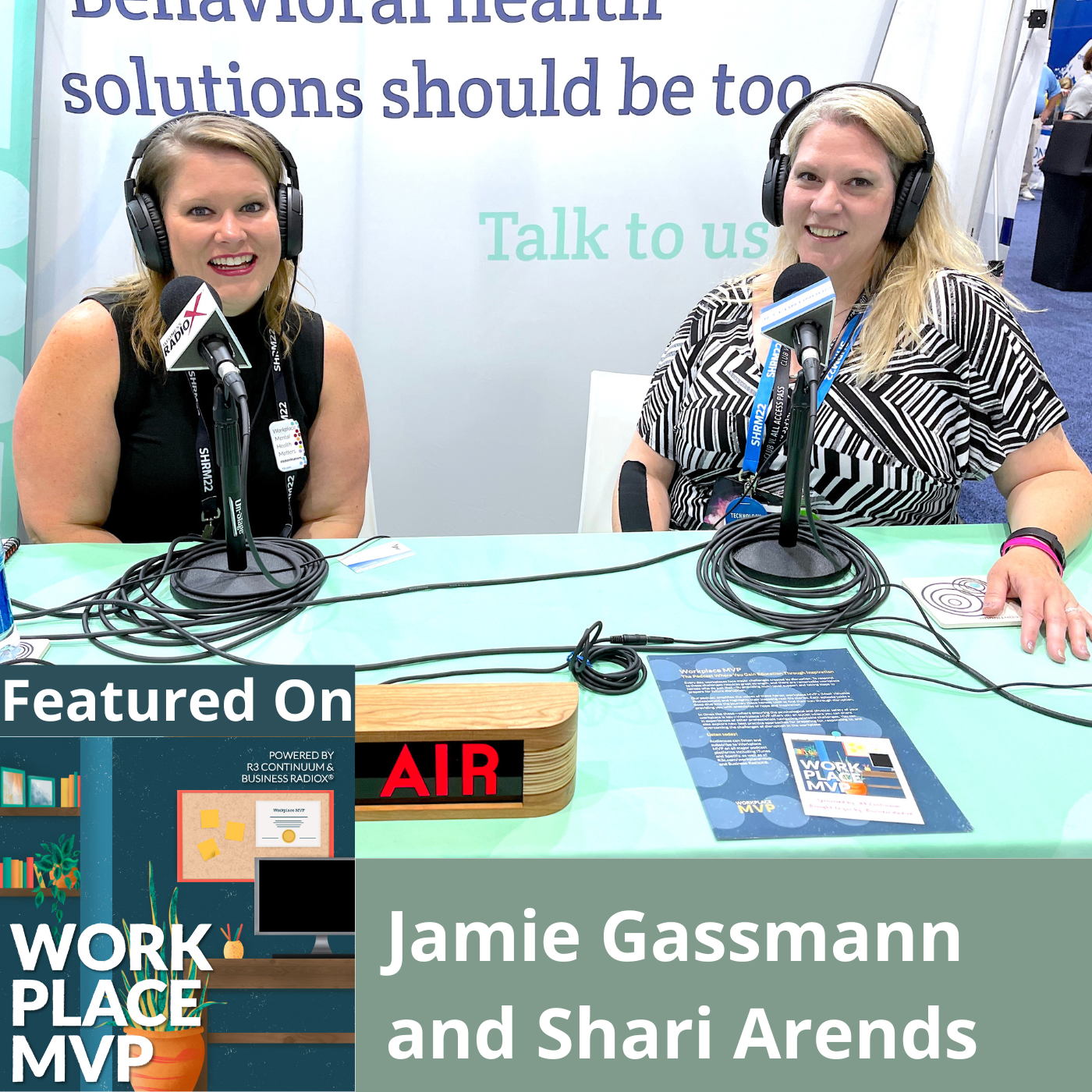
This show was originally broadcast live from the 2022 SHRM Annual Conference held at the New Orleans Convention Center in New Orleans, Louisiana.

Ascension Worldwide

Ascension Worldwide is a full-service minority-owned consulting firm committed to helping clients achieve workplace inclusion, employee and client diversity, and innovative growth opportunities beyond their imagination. We are a global company that utilizes Blue Ocean strategies, quantitative and qualitative analysis, internal analysis, master-minding, and other innovative techniques to support exponential growth in companies while providing specialized target business consulting services that bridge the gap in technology and human capital development.

​Ascension Worldwide provides an array of services, including talent management, leadership development, diversity, inclusion & equity consulting, strategic planning, process improvement, and other business management services.

Ascension Worldwide services clients from local and national non-profits, government agencies, as well as fortune 100 and 500 companies. We have experience in several industries including manufacturing, healthcare, construction management, engineering, law-enforcement, finance, education, insurance, retail, IT, and the military.

Company website | LinkedIn | Facebook |Twitter

CJ Gross, Founder and CEO, Ascension Worldwide

CJ Gross, Founder, Ascension Worldwide

Christopher “CJ” Gross is an international organizational development consultant specializing in leadership development and Diversity and Inclusion. CJ has 17 years of experience as a certified Social + Emotional Intelligence coach, trainer, Keirsey Temperament professional, and executive coach, with additional expertise in organizational mediation. He also serves as a Business Management, Adjunct Faculty for the Community College of Baltimore County. CJ possesses the unique ability to uncover and resolve social issues that hinder employee performance and efficiency.

CJ’s book, What’s Your Zip Code Story?, is now available and was born out of a Ted Talk you can find here.

CJ started his career as a mechanical designer at General Electric (GE) where he learned to lay out mechanical designs and run calculations. At GE, he learned how effective companies run and the importance of employee relationships to a company’s success. After receiving multiple corrective preventive idea awards for employee development, CJ merged his engineering skills with his innate understanding of people, offering professional coaching and staff development to companies in need of improved performance and effectiveness.

CJ cultivated his diversity and Inclusion acumen through an intense training and coaching program from Cook Ross, an internationally known diversity and Inclusion consulting firm. The program included key concepts from Daniel Kahneman’s book, Thinking Fast and Thinking Slow, brain science theory, and life-changing deep-dive identity coaching. In addition, CJ has worked with domestic and international leaders from fortune 500 companies, nonprofits, and government agencies on their diversity and Inclusion strategies and initiatives. This training and experience enable CJ to help clients explore impactful strategies for identity, diversity, inclusion, equity and access from a unique vantage point.

CJ received a B. A. degree in organizational management from Ashford University through the Forbes Entrepreneurship Scholarship.

CJ has consulted with domestic and international companies including the United States Postal Service, Toyota, Turner Construction Company, Oracle, Arent Fox D.C, Washington Post, D.C. Child and Family Services, Morgan Stanley, Loyola University, Howard University: School of Social Work, Maryland Association of Community Service, Primerica, Delta Sigma Theta Sorority, Inc., Maryland-National Capital Parks and Planning Commission, Maryland Department of Juvenile Services, the District of Columbia-Metropolitan Police Department, Penn State and others.
CJ has been featured in the Washington Post, the Washington Informer Newspaper, East of the River Newspaper, Diamonds Xcel Magazine, the Baltimore Examiner, and on the Tom Joyner Show, the Audrey Chapman Show, DCTV Cable, WPGC 95.5 FM, WOL 1450 AM, WUSA 9, WBAL-TV, and FOX45.

He has published three other books including How to Get a Job in 90 Days, Seeds of Greatness, and The Parent Connection. Most recently, he has co-written an article titled, Design Thinking + D&I=Innovation.

LinkedIn

About Workplace MVP

Every day, around the world, organizations of all sizes face disruptive events and situations. Within those workplaces are everyday heroes in human resources, risk management, security, business continuity, and the C-suite. They don’t call themselves heroes though. On the contrary, they simply show up every day, laboring for the well-being of employees in their care, readying the workplace for and planning responses to disruption. This show, Workplace MVP, confers on these heroes the designation they deserve, Workplace MVP (Most Valuable Professionals), and gives them the forum to tell their story. As you hear their experiences, you will learn first-hand, real-life approaches to readying the workplace, responses to crisis situations, and overcoming challenges of disruption. Visit our show archive here.

Workplace MVP Host Jamie Gassmann

Jamie Gassmann, Host, “Workplace MVP”

In addition to serving as the host to the Workplace MVP podcast, Jamie Gassmann is the Director of Marketing at R3 Continuum (R3c). Collectively, she has more than fourteen years of marketing experience. Across her tenure, she has experience working in and with various industries including banking, real estate, retail, crisis management, insurance, business continuity, and more. She holds a Bachelor of Science Degree in Mass Communications with special interest in Advertising and Public Relations and a Master of Business Administration from Paseka School of Business, Minnesota State University.

R3 Continuum

R3 Continuum is a global leader in workplace behavioral health and security solutions. R3c helps ensure the psychological and physical safety of organizations and their people in today’s ever-changing and often unpredictable world. Through their continuum of tailored solutions, including evaluations, crisis response, executive optimization, protective services, and more, they help organizations maintain and cultivate a workplace of wellbeing so that their people can thrive. Learn more about R3c at www.r3c.com.

Company website | LinkedIn | Facebook | Twitter

TRANSCRIPT

Intro: [00:00:03] Broadcasting live from SHRM 2022 at the New Orleans Convention Center, it’s time for Workplace MVP. Brought to you by R3 Continuum, a global leader in helping workplaces thrive during disruptive times. Now, here’s your host.

Jamie Gassmann: [00:00:20] Hi, everyone. Coming to you from SHRM 2022 Exhibit Hall, I am your host, Jamie Gassmann. And we are in our show sponsor’s booth, R3 Continuum. And joining me is CJ Gross from Ascension Worldwide. Welcome to the show, CJ.

CJ Gross: [00:00:35] Hey, Jamie. Thank you so much for having me. I’m very excited about today, really, at SHRM. It’s awesome kickoff here and I’m really excited about the book.

Jamie Gassmann: [00:00:44] Yeah. And I know you’ve got your book here. But before we dive into that, tell me a little bit about your background. Tell me a little bit about your journey so far in your HR career that led to you writing the book.

CJ Gross: [00:00:54] Yeah. Absolutely. So, I’m actually not in HR. My background is in engineering. And I worked for General Electric for about eight years, and I learned lots of information about how leadership happens in a healthy and productive way by things that didn’t happen and things that did happen while I was at General Electric.

CJ Gross: [00:01:17] From there, I moved into consulting work. I did leadership development for the last 20 years. And after a lot of work in diversity, equity, inclusion, I realized that it needed to be done differently. So, I actually brought my background in engineering as a different approach to talk about diversity, equity, and inclusion. Because people, really honestly, they’re tired of talking about it in the way that we’ve been talking about it. In some cases it’s very polarized and in other cases it’s exclusive to certain groups. And things don’t always change in organizations as we talk about these topics.

Jamie Gassmann: [00:01:54] Yeah. And so, you wrote a book and I know you have this book. It’s sold out of the SHRM Store.

CJ Gross: [00:02:01] Yeah. It sold out.

Jamie Gassmann: [00:02:01] What’s Your Zip Code Story?

CJ Gross: [00:02:03] In a few hours, it’s sold out.

Jamie Gassmann: [00:02:03] I know. You got to be absolutely so proud of that. That’s amazing. And I want to dive into hearing about the book. Because when we’re talking before we got on the microphone, it was just so interesting when you said you were covering some of the biases that this book kind of talks about. Let’s dive into it. Tell me a little bit about what is your book about. And what does an HR leader learn from this or a business leader? Because I think it could be really anybody that’s leading an organization. Let’s talk a little bit about what’s inside there.

CJ Gross: [00:02:32] Sure. So, the book is called What’s Your Zip Code Story? And that concept is about not just where you grew up, but how you grew up, the sights and sounds outside of your door, the conversations around the dinner table, the conversations with your parents. All those things influence and flavor the way you see the world and, ultimately, the way you build relationships in the workplace, mentorship, build teams, hire people, and really shapes the lens in which you see the world and how you connect to other people.

CJ Gross: [00:03:04] The second part of it is about class bias. So, they’re really connected there, the two components. Now, the class bias piece is something that we’re really not diving into in the diversity, equity, and inclusion conversation. So, that component came out of a presentation I did for SHRM 2019 Inclusion Conference. They put me on the very last day, the very last hour when people are leaving the conference. I was like, “No one’s going to show up.” And to my surprise, one person walked through the door. So, I was like, “Okay, I’m not alone.” And then, 60 other people walked through the door.

Jamie Gassmann: [00:03:40] Nice.

CJ Gross: [00:03:41] And not only did they stay, they wouldn’t leave. The tech person had to pull the microphone because people were staying in there, they were crying. They were weeping because they not experienced a place where they can share their own – what we call – your zip code story. And that’s really about your uniqueness and it goes beyond just your identity that we can see.

CJ Gross: [00:04:07] And so, this book really touches on those two components, your zip code story – what your background is, where you’re from – and also the eight class biases that we just talked about. And how does one expand their zip code story to mitigate those biases in the workplace.

Jamie Gassmann: [00:04:26] Yeah. So, fascinating. Because, really, we all have so many different experiences across our life from childhood on up. You know, I’m an army brat. When you look at me, you don’t know that I’m an army brat. You would never know that. But I tell you it – honestly, just sharing this as a conversation – one of the things that I hear is, “Was it hard to grow up moving a lot? That’s awful.” I’m like, “Really? That shaped who I am. That’s change management right there.”

CJ Gross: [00:04:53] It’s like a super power. It’s like a super power.

Jamie Gassmann: [00:04:53] Right. Yes. I’m like, “I actually thrive in that.” It’s actually a powerful thing. You know, you could look at it is a negative, but we never did. And so, it’s just interesting because when you think about that, everybody grows up a little different and you automatically draw an assumption about the person when you hear it.

CJ Gross: [00:05:12] The story.

Jamie Gassmann: [00:05:12] That’s so fascinating. So, how do you embrace those stories? How do you pull those stories out of your employees? Because, you know, as a leader, that can be challenging, right?

CJ Gross: [00:05:23] It is challenging across the board for all diversity conversations, not for every single person, but for many people. Because the first thing they think about is diversity, “If I’m not a part of a certain diverse culture or identity, then is this for me?” So, the first thing I tell the leaders is, “First, know your own zip code story.” It’s the first thing. Understanding your background and how that shapes the way you see the world, it’s the first thing.

CJ Gross: [00:05:49] The second thing is to share your background story, share your upbringing, share your experiences, and things that have made you who you are. And through that, you are then the leader which opens up the door for other people in different backgrounds to share their story. And then, you can lean into that story.

CJ Gross: [00:06:08] Honestly, you don’t even have to go down the road of talking about all the diversity conversations that we know. Not to say those aren’t important. But if you really want to create psychological safety, then you share your story. And you can also share the story about something about yourself that people wouldn’t know just by looking at you.

CJ Gross: [00:06:27] Because you may now be the leader sitting up high in the organization and people think, “Oh. They’ve been there. They had it easy. They’re privileged.” It’s what we hear a lot. It’s not to say that people are not privileged. But when people really know your story, you come down to earth, it’s more authentic. There is a bridge of connection there that allows people to connect with you in a different way.

CJ Gross: [00:06:49] And when you share your zip code story as a leader, you create this psychological safety which allows other people to lean in and share theirs. And it leads to better performance, lowers turnover, and you get more creativity out of those individuals, which ultimately lead to increased market share, which every company wants.

Jamie Gassmann: [00:07:12] Absolutely. Well, when I hear you talking, it makes me think you humanize yourself.

CJ Gross: [00:07:19] Yes.

Jamie Gassmann: [00:07:19] You’re a human just like your people. You give them an opportunity to relate with you at that human level.

CJ Gross: [00:07:25] It makes you relatable.

Jamie Gassmann: [00:07:27] And it allows you that opportunity, really, to be an authentic person, authentic leader. You know, at different episodes, we talk a lot about how do you create that opportunity of being vulnerable in front of your team or bringing your true self to work, that’s what I think about when I think about your book in this whole What is Your Zip Code Story? That’s amazing. Fascinating. So, if somebody wanted to get a copy of your book – I understand it’s on Amazon.

CJ Gross: [00:07:56] It’s on Amazon.

Jamie Gassmann: [00:07:57] But how do they get a copy of it now that it’s sold out at SHRM? You’ve got to let the rest of those that didn’t get to the bookstore fast enough know.

CJ Gross: [00:08:04] Well, don’t tell anyone, just between you and I, I had a private stash that I had in my book bag that I just took over there earlier before I came here. So, there’s probably about 20 books left now. So, we already sold out the first hundred in less than two hours. And now, we have, like, 20 something left, so that’s not going to last.

Jamie Gassmann: [00:08:27] So, anybody not getting it at SHRM who missed out –

CJ Gross: [00:08:32] They can go and find it on Amazon and everywhere else books are sold. And also the book, before we came a book – I was a about to say a Broadway play. But it wasn’t.

Jamie Gassmann: [00:08:40] It was a great play.

CJ Gross: [00:08:41] I know, right? It was an awesome play. What is Your Zip Code Story?

Jamie Gassmann: [00:08:43] I can see it. I think we could write the script right now.

CJ Gross: [00:08:46] But it was a TED Talk.

Jamie Gassmann: [00:08:46] So, you’re singing part to it?

CJ Gross: [00:08:48] Yeah. I wouldn’t do it. You wouldn’t want me to do it.

Jamie Gassmann: [00:08:50] You wouldn’t want me either. But a TED Talk, that’s really cool.

CJ Gross: [00:08:53] It turned into a TED Talk. And from the TED Talk, it turned into a book, and it just came out. And, actually, this is the third week that it’s been out. And next month, I’m actually doing a book talk and some work around this concept in England, London.

Jamie Gassmann: [00:09:13] Great. So, if they want to see the schedule for that book tour, so if we have any international listeners, where could they find all this great information?

CJ Gross: [00:09:20] So, the information for the UK is not on the website as of yet. It’s a good idea. I’ve been moving so fast. But they can go to either one of my websites which is, cjgrosstalks.com or ascensionworldwide.com.

Jamie Gassmann: [00:09:36] Wonderful. They’ll find you.

CJ Gross: [00:09:37] Type in CJ Gross, and I will pop up, you’ll find my LinkedIn. One of the things that I do that I want to mention about – well, it’s on LinkedIn – what makes this work for me unique is, as you look at me, I’m a person of color, I’m a male. But the zip code story, what people wouldn’t know, is that I do motocross.

Jamie Gassmann: [00:10:02] I love that. I should have asked you, what’s your zip code story?

CJ Gross: [00:10:06] It’s too much to talk about.

Jamie Gassmann: [00:10:07] I kept sitting here going, “What’s my zip code story?” Like, I’m listening to you going, “Gosh. You know, what would mine look like?” So, you do motocross?

CJ Gross: [00:10:14] I do motocross. I am learning Spanish, [Foreign language]. I am learning to surf. So, there’s so many things that I’m doing to expand my zip code. That’s what the book is also about, is expanding your zip code story around people, places, and things. I’ve taken up golf. I’ve joined the Rotary Club, I did a presentation there – was it last week or yesterday? I couldn’t remember. I’m so busy.

CJ Gross: [00:10:37] But the point is, when people read the book, yes, you should understand your zip code story. You should understand other people’s zip code story. But you should also expand your zip code story. Because from there, two things happen. One, you get to see what another person experiences. The other thing is you get to learn new cool things about yourself.

CJ Gross: [00:10:56] Like, I would have never thought I would have been into motocross. I do skeet shooting. I started swimming, so I scuba dive now. Like, all of this is within the last five years, though, and I won’t tell you how old I am. But most people would not expand their zip code because they think, “I’m too old. I’m too young.”

Jamie Gassmann: [00:11:13] You’re never too told.

CJ Gross: [00:11:15] “I’m this. I’m that.” But what this does is allows you a doorway to expand who you are. And, really, this is a new competency for the future of leadership. So, you can look diverse, but if you don’t have a mindset for diversity – traveling does that as well – you’re going to be out of a job. And it may not be today, but it will be tomorrow. And so, the goal is to expand your zip code story by doing different things and different experiences.

Jamie Gassmann: [00:11:44] I love that. And, honestly, travel can do that for you. And don’t just go to Senor Frogs. Like, seriously, go off the beaten path.

CJ Gross: [00:11:50] Go where?

Jamie Gassmann: [00:11:51] Don’t just go to Senor Frog’s if you’re in Mexico. Go to Napa, just the tourist traps. But really, really experience the culture of where you’re at and embrace it.

CJ Gross: [00:12:01] I want to tell you a quick story if we have time.

Jamie Gassmann: [00:12:03] We do. Absolutely. As much time as you want. We can talk here all day.

CJ Gross: [00:12:08] So, I went to Nicaragua. And in order to get to Nicaragua, I had to fly into Costa Rica. We’re at Costa Rica, we took a cab to the border. And from the border of Costa Rica, we had to walk – I don’t know – a-quarter-of-a-mile to Nicaragua. And on that passage, I had to show my passport, like, six or seven different times. And I remember coming back home and complaining. I was like, “You know I had to show my passport?” And then, we had to take a cab to the port. And at the port, we took a water taxi to an island. And then, I took another taxi.

CJ Gross: [00:12:54] So, not to mention all of those things, when people talk about, you know, inclusion or a privilege, you might say, “Oh. This is a person, a person of color, they don’t have privilege like other people.” But just having a U.S. passport is a privilege that people don’t think about. And when I gained that experience by actually putting myself in that situation and not really speaking the language – I only speak, like, 12 words of Spanish – but I was able to get around and get fed.

CJ Gross: [00:13:22] But the thing is, when I came back to the States and for my friends or colleagues who English is their second language, I had a whole nother appreciation for their experience. And it doesn’t mean I agree with everything that’s set out there in politics and all that, but what it means is that I can now have empathy.

CJ Gross: [00:13:41] You know, Brene Brown talks a lot about that, having empathy. I can now have empathy from someone who has a different culture and has a different passport. The same thing with women’s rights. You know, there’s lots of things that I learned about women that I had to be made aware of. For example, we asked people, “What’s the number one bias you have flying on an airplane?” And a lot of people say different things, we won’t go into that.

Jamie Gassmann: [00:14:07] I had to think about that.

CJ Gross: [00:14:10] Babies, number one.

Jamie Gassmann: [00:14:13] Sitting next to a crying baby?

CJ Gross: [00:14:15] Yes.

Jamie Gassmann: [00:14:15] Oh. See, I’m a mother. I get it.

CJ Gross: [00:14:18] Yeah. They have biases against other kids, but not theirs because they left their kids at home. But 25 percent of women said, “I want to sit next to someone who is the same gender.” And I made a comment that showed my awareness at the time. I said, “Whoa. What’s wrong with guys?” And they said, “Well, you’ve probably never been a woman on an airplane.” I was like, “You know I haven’t, right?” But women are assaulted at times on the airplane when they go to sleep or people bother. And I was like, “That’s never happened to me in that way because I’m not a woman.”

CJ Gross: [00:14:50] But hearing from women in that way created a greater empathy for their experience. So then, when you look at engineering, where I come from, where there are not a lot of women or people of color, when a woman says something, a person of color says something, I can relate with that. But, now, what it means to be the only woman in a male dominated environment opens my eyes because I’ve heard something. Or if I reverse engineer it, and I am the only.

CJ Gross: [00:15:17] So, being the only for a leader is important because if you’re trying to support someone – we always say this in our organization – you can’t take someone where you’re not willing to go yourself or you have never been yourself. So, if you’ve never been the only, if you haven’t interviewed people and understand what that’s like, it’s hard to empathize. And, although, we want to create pay equity and all those other initiatives, it’s going to fall short because people don’t have that experience.

Jamie Gassmann: [00:15:45] That’s so interesting. I would have never thought that on the airplane, and I travel quite a bit for work.

CJ Gross: [00:15:53] When you get on an airplane –

Jamie Gassmann: [00:15:54] I’m never going to get that thought out of my head now, CJ.

CJ Gross: [00:15:56] … you automatically assess people up and down and you create a story and you’re like, “Mm-hm. Not that guy. Not that woman.”

Jamie Gassmann: [00:16:03] You do. What they’re wearing. It might be what they’re looking like. I mean, if they look like they just rolled out of bed, and grabbed their pillow and their blankie, and brought it to the airport with them, I’m going, “Oh, boy.”

CJ Gross: [00:16:14] “I’m not going to sit next to them, they smell funny.”

Jamie Gassmann: [00:16:18] “They didn’t shower this morning, obviously. Like, I hope they’re not next to me.” And it was next to you, right? That’s so interesting. But we all do it. And you do it everywhere you go and everywhere you’re at, and you don’t even realize sometimes that you’re even doing it. That’s so interesting. Now, I’m going to be walking around going, “I wonder what their story is. What’s their zip code story?”

CJ Gross: [00:16:40] And that’s the hope for this book, is, it catches on and people go, “well, what’s their zip code story?” And they won’t just think about their brain is creating a story about them, but they actually lean in and lean past that bias conversation and say, “You know what? That person would never be good for this job because of this.”

CJ Gross: [00:17:02] Or here’s another one for women we hear is that, if you look like you’re of childbearing age – how does someone know? – people will not give you assignments that require travel. Because they’re thinking that, one, if you have kids, they’re thinking you may want to stay home with your kids. They didn’t ask.

Jamie Gassmann: [00:17:25] Do they do that to men?

CJ Gross: [00:17:30] No. That’s the zip code for it, because you don’t know that there are a lot of men that are actually playing the role. And so, just judging people in that way is exclusive. But, again, when we’re just talking about the normal topics of diversity, we’re missing out on a whole different conversation.

Jamie Gassmann: [00:17:50] So fascinating. Oh, my goodness. I think we’ll have to have another follow up on this. I think we could talk for hours on that.

CJ Gross: [00:17:56] Yeah. Maybe I’ll come back tomorrow or something.

Jamie Gassmann: [00:17:57] There we go. We’ll do two. Why not? It was a piggyback. We’ll talk about interviewing. Like, how do you use the zip code story in interview?

CJ Gross: [00:18:06] Stay tuned. We’ll talk tomorrow about it.

Jamie Gassmann: [00:18:07] Stay tuned. There we go. So, if you are interested in checking out CJ’s book, which I highly recommend because it sounds super interesting and I think it’d be very beneficial to any business leader or HR leader out there, What’s Your Zip Code Story?, definitely check out amazon.com. Very cool. Thanks so much, C.J. It’s been great talking with you.

CJ Gross: [00:18:31] Thank you. This has been awesome.

Outro: [00:18:31] Thank you for joining us on Workplace MVP. R3 Continuum is a proud sponsor of this show, and is delighted to celebrate most valuable professionals who work diligently to secure safe workplaces where employees can thrive.


Tagged With: Ascension Worldwide, CJ Gross, DEI, Diversity Equity and Inclusion, HR, Jamie Gassmann, R3 Continuum, SHRM 2022, What's Your Zip Code Story?, Workplace MVP

The R3 Continuum Playbook: How Can Your Organization Cultivate a Psychologically Safe Workplace?

July 6, 2022 by John Ray

Psychologically safe
Minneapolis St. Paul Studio
The R3 Continuum Playbook: How Can Your Organization Cultivate a Psychologically Safe Workplace?
Loading
00:00 /
RSS Feed
Share
Link
Embed

Download file

Psychologically safe

The R3 Continuum Playbook: How Can Your Organization Cultivate a Psychologically Safe Workplace?

Dr. George Vergolias, R3 Continuum Medical Director, provides insight for leaders to help them determine what a psychologically safe workplace looks like for their organization. Dr. Vergolias describes crucial factors to consider when navigating the process of bringing more psychological safety to the work environment.

The full webinar can be found here.

The R3 Continuum Playbook is presented by R3 Continuum and is produced by the Minneapolis-St.Paul Studio of Business RadioX®. R3 Continuum is the underwriter of Workplace MVP, the show which celebrates heroes in the workplace.

TRANSCRIPT

Intro: [00:00:00] Broadcasting from the Business RadioX Studios, here is your R3 Continuum Playbook. Brought to you by Workplace MVP’s sponsor R3 Continuum, a global leader in workplace behavioral health, crisis, and security solutions.

Shane McNally: [00:00:15] Hi, there. My name is Shane McNally, Digital Marketing Project Lead at R3 Continuum. On this episode of The R3 Continuum Playbook, we’ll be featuring a segment from a recent webinar presented by R3 Continuum Medical Director, Dr. George Vergolias. This webinar was titled How Can Your Organization Cultivate a Psychologically Safe Workplace?

Shane McNally: [00:00:33] Dr. Vergolias has over 20 years of experience as a forensic psychologist and certified threat manager and has assessed over 1000 cases related to threat of violence or self-harm, sexual assault, stalking, and communicated threats. In this short segment from his webinar, Dr. Vergolias offers his expert insight into psychological safety and what makes a psychologically safe workplace, and how leaders can create that sort of environment for their employees.

George Vergolias: [00:01:02] Now, I want to pivot and talk a little bit about solutions and ways to think about how do we foster psychologically safe workplaces. So, first I want to define that, right? I really believe the Center for Creative Leadership is really a good – they have a really good, useful definition that’s approachable and it hits home and it can translate to practical applications. Right?

George Vergolias: [00:01:32] So, what they define is a shared belief held by members of a team that others on the team will not embarrass, reject or punish you for speaking up. Now, what’s key here is, this doesn’t mean that you get to say whatever you want. It doesn’t mean that any individual’s viewpoint is automatically accepted. Right? And it doesn’t mean we’re nice all the time. I think just sometimes there’s a false narrative that psychological safety means no one will ever say anything that will upset you, right? No.

George Vergolias: [00:02:10] Let me say it this way. No one has a right to not be offended on the one hand. There’s going to be interactions in our lives, personal and in the workplace, that might annoy us or offend us or rub us wrong. What this means is that we are embracing that conflict and we feel that we have a platform, an engagement level, a dialogue by which we can work through those disagreements and conflicts in a productive way so that the group moves forward so that the group is better off for it as a result of that process. And that process isn’t always fine. Conflict is sometimes difficult. That’s why many of us avoid it.

George Vergolias: [00:02:52] So, it’s important to keep in mind that pragmatic definition, because what I feel is there is a real risk of organizations having kind of a hyperbolic reaction in either of the extremes. One extreme is we have to absolutely accept everything everybody says, and we can’t say anything that might be challenging or even remotely perceived as offensive. Right? That’s fraught with its own problems.

George Vergolias: [00:03:24] And the other is where we’re totally tone deaf to the realities, that there are issues that need to be navigated. There are issues whether they’re diversity, equity and inclusion issues, or other issues that we need to talk through and work through and do the difficult work ahead. So food for thought.

George Vergolias: [00:03:43] What they also identify are four stages of types of safety. And the first is inclusion safety, and that satisfies the basic human need to belong. So in this stage, what we’re looking at is we feel safe to be oneself and you’re accepted for who you are, including your unique attributes and defining characteristics. Right? Again, there are limits to this, right?

George Vergolias: [00:04:08] Typically what we mean here is someone can be free. Whether it’s sexual identity, racial identity, other types of identity, they can feel free to express that in a way that they can live their fullest life and not be falsely judged or negatively impacted by that. Right?

George Vergolias: [00:04:27] There are laws that somewhat protect that. And there’s been a big move through corporate America to try to adopt that. That doesn’t mean that if I – I’m going to use an extreme example here. If I identify with neo-Nazism that I have a right to bring that insignia into the workplace because it’s very threatening to other people. So there are limits that organizations will have to determine where they draw those lines. But that’s what we mean by inclusion safety.

George Vergolias: [00:05:00] Next stage is learner safety. What we mean here is, this satisfies the need to learn and grow. And when we feel this, we feel safe to exchange ideas, take risks, put an opinion out there in a way, ask questions, give and receive feedback in a way that isn’t always comfortable, because, again, that’s not the goal, but in a way that we feel safe to do so. We could take those risks in a way that we feel that it is a growth experience, not a stunting or traumatizing or shaming experience.

George Vergolias: [00:05:35] Third stage is contributor safety. So here, what we’re satisfying or the need satisfies the need to make a difference. We feel like we have agency. We can make a difference. We can have an impact. We have relevance in our role, in our job, in our teams, and in our organizations, right, to the degree that we’re gonna use our skills and abilities to do that.

George Vergolias: [00:05:56] And then lastly, challenger safety. What we mean by challenger safety, this satisfies the need to make things better. How do we challenge the status quo in a way that we can grow as individuals but also as teams and as organizations, right? And how do you take up that challenge in a way that is promotional for whatever the values of the team or the organization have behind them?

George Vergolias: [00:06:21] Now, these sound great. They’re very well thought through. Practically, how do we implement them? That’s the big challenge, I think, facing us. Where do we draw those lines, right? A recent one, where do I as a leader, as if this was up to me, but where do I as a leader draw the line between somebody that has a loved one at home that’s immunosuppressed and wants everyone to still wear masks at the workplace and other people that feel like they’ve done everything they possibly can include getting vaccinated and have asthma and find that wearing masks is difficult, not necessarily life-threatening, but really difficult for them? Where do we draw the line between that, right? These are difficult sometimes issues to answer. And we’re going to have to navigate those as we go forward.

Shane McNally: [00:07:15] Hey, George, just going back one side here. I do have a question. You mentioned it’s difficult to implement this. And I was just curious, you know, if you’re an organization that’s been around for a very long time, you’ve got employees that have been there 20, 30, 40 years, I don’t know, they’ve been there for a very long time and say you’re looking at these steps and you’re like, we don’t really have anything like this. Is this something that they should start implementing now, or do you think that these employees that have been there for so long might, you know, it might be something that’s frowned upon?

George Vergolias: [00:07:48] So, it’s a great question. I do think there is something to be said about the longer that we engage in habits, the longer that we engage in a pattern, whether it’s self-imposed or it just was the status quo that we came up with. There is something to be said about it. Yes, it can be more difficult to change. But what I constantly push back when I hear that and I hear that a lot, Shane, from organizational leaders that I consult with on resilience and workplace turnaround and all kinds of things is that every one of us has made those changes. Every one of us has made those changes, right?

George Vergolias: [00:08:23] There are people – there’s a dear friend of mine right now that’s going – just went through a liver transplant. He wasn’t an alcoholic by any means. And that wasn’t why – he had a blood issue, a blood disorder issue going on, and he needed a new liver. But he certainly enjoyed having a few beers back then. Guess what? He’s done drinking. He’s done drinking for the rest of his life, right? Now, it’s easy to say, “Well, that was life or death.” Trust me, I used to do transplant candidacy evaluations. There are a lot of people that can’t make that change or don’t want to, right?

George Vergolias: [00:08:52] Someone has a heart attack at age 50 or 55 or 60, and they totally redo their diet and their workout regimen. Somebody goes through marital counseling and completely reorients their approach to their spouse after 15 years of a volatile marriage. We, as human animals, change all the time. And so, what I don’t accept, I will accept that it’s difficult, but I won’t accept that it’s impossible.

George Vergolias: [00:09:15] And what the key then is for those leaders to do is to really figure out how do we promote the culture of change. How do we give people every chance to make that change and embrace it? And then those that are going to absolutely hold out against it at some point, maybe they’re no longer a good fit for the organization. And those are tough choices for sure, Shane, definitely. But that’s how I would think about that.

Shane McNally: [00:09:41] Awesome. Thank you.

George Vergolias: [00:09:42] Yeah, yeah, yeah. But I’m glad you asked that because that segues to my next slide. A big part of this also has to do with hope, right? As leaders, if you’re going to say to somebody, “Hey, we’re going to go into that wilderness. And although we know a little bit of that wilderness, we don’t totally know that wilderness and that’s new for you. You’ve been working for 25 years and this is a new thing for you, right? You never talked about this before when you came up in the workforce. I want you to trust me, right?”

George Vergolias: [00:10:11] As a leader, we have to give them a clear message around that and we have to give them motivation and we have to give them a sense of hope. Right? So, again, we drown not by falling in the river, we drown by staying submerged in it. So, as we look, you know, the best companies that adapted well, maybe some that even thrived during the pandemic, had leaders that really rallied the troops and they instilled a sense of hope as well as a sense of direction.

George Vergolias: [00:10:44] Later in the presentation, I’m going to mention that hope – we’ve all heard this statement, hope floats. But I have a little add-on. Hope floats but it doesn’t swim. Right? Hope gets us and rises us emotionally to the top. But then we need action and direction and intention to get somewhere with that energy. And I think that’s where that is an important part of the messaging at a leadership level.

George Vergolias: [00:11:11] And, again, Shane, I think you were getting at – your question was insightful because it was getting at the sentiment and I hear this all the time, “Well, man, that’s hard to do.” Well, yeah, it is hard. These are hard changes. But the pandemic was hard. The reality is, though, if you look back as difficult as the pandemic was at so many levels for us as individuals, as teams, as organizations, we’re here. Every time we said we couldn’t go on, we did it because we’re still here. So, it’s important to realize that as individuals and as organizations, if we want to get somewhere or get something that we never had, we have to start doing something that we never did. And it’s important to start thinking in those terms.

George Vergolias: [00:11:58] So, what does this mean? More practically, it’s a conceptual shift. So, the idea is it’s no longer a top-down. I’m not going to negate hierarchies. Decisions need to be made. Stewardship needs to still occur. And there needs to be direction at the team level and at the organizational level, for sure, without a doubt. But the conceptual shift now is more different. It’s about engagement. And it’s about shifting how we do that over time and engaging a process from end to end so that when we bump into problematic behaviors, hostility, people that are struggling, instead of Stephen Covey’s first response on that train, on that subway, which was what’s up with this jerk dad who isn’t managing his kids, that completely shifted in an instant to this guy’s really struggling and his kids are really struggling. And now, we know we have a deeper insight. And with that deeper insight, we have a whole other response that that calls for. Right?

George Vergolias: [00:13:04] So engagement from end to end and moving from an adversarial and contentious way of approaching our employees or our employee problems to one that is more collaborative and supportive. And, again, I want to be clear. Support doesn’t mean you let people get away with stuff if there’s bullying, sexual harassment, prejudice, other types of even hate verbiage, right? We just saw in Buffalo, right, a heinous mass shooting that clearly was a hate-driven crime. Those are not acceptable. So when we say supportive, we don’t mean a blank check, but we mean providing a culture by which those issues are dealt with directly and in a timely manner while also continuing to build cultures of inclusion.

George Vergolias: [00:13:48] So, education on that process is important, message of support that is balanced with the need to protect our people and our business interests, and then create alignment of those resources beyond just intervention as a singular event. All too often we think of “George is struggling. Let’s go get him an FFD.” Like that’s an event. “Let’s get him a fitness for duty.” And those, by the way, can be very, very useful. Right? Or we think, let’s give him a write-up or let’s send him to mentoring, or let’s give them a verbal warning. Right? There’s a million, not a million, but there are many ways we can think of how we deal with some problematic behavior or performance issue.

George Vergolias: [00:14:28] All too often we think of that as an intervention, a singular thing that we do, and that thing should somehow promote change. But we need to start thinking of is it’s a process and the intervention is one step in a process that might, if we’re lucky, fix the problem right then and there. But often it won’t. And there might be other steps that we need to take, and at some point we have to make the decision. Is this individual worth keeping with the organization or are they a bad fit? So, all of these are just different ways of thinking about how we start promoting psychological safety and thriving.

Shane McNally: [00:15:09] Creating a psychologically safe workplace is something that has become a lot more top of mind in the last few years. No matter the industry you’re in, ensuring that your employees feel heard and are able to receive the support and resources they need is crucial to the overall well-being of your people and organization.

Shane McNally: [00:15:26] With R3 Continuum evidence-based interventions, specialized evaluations, and tailored behavioral health programs, we can help promote your organization’s individual and collective psychological safety, recovery, and thriving. Connect with us and learn more about our services at www.r3c.com or email us directly at info@r3c.com.


Show Underwriter

R3 Continuum (R3c) is a global leader in workplace behavioral health and security solutions. R3c helps ensure the psychological and physical safety of organizations and their people in today’s ever-changing and often unpredictable world. Through their continuum of tailored solutions, including evaluations, crisis response, executive optimization, protective services, and more, they help organizations maintain and cultivate a workplace of wellbeing so that their people can thrive. Learn more about R3c at www.r3c.com.

R3 Continuum is the underwriter of Workplace MVP, a show which celebrates the everyday heroes–Workplace Most Valuable Professionals–in human resources, risk management, security, business continuity, and the C-suite who resolutely labor for the well-being of employees in their care, readying the workplace for and planning responses to disruption.

Connect with R3 Continuum:  Website | LinkedIn | Facebook | Twitter

Tagged With: Culture, Dr. George Vergolias, inclusion, psychological safety, R3 Continuum, R3 Continuum Playbook, support, Workplace MVP

Nora Farhat With Pool Scouts, British Swim School And Mathnasium

July 1, 2022 by Jacob Lapera

NoraFarhat
Franchise Marketing Radio
Nora Farhat With Pool Scouts, British Swim School And Mathnasium
Loading
00:00 /
RSS Feed
Share
Link
Embed

Download file

Brought To You By SeoSamba . . . Comprehensive, High Performing Marketing Solutions For Mature And Emerging Franchise Brands . . . To Supercharge Your Franchise Marketing, Go To seosamba.com.

NoraFarhatNora Farhat already owns one location of British Swim School, another Buzz franchise with 200-plus locations that provide swimming lessons for children. She has been running her swim school for seven years and also owns a Mathnasium tutoring center.

Always eager to fill any gap she notices in a market, Farhat, who works with her husband, Neil, jumped at the opportunity to open a Pool Scouts unit.

What You’ll Learn In This Episode

  • Pool Scouts opening
  • Recent success with British Swim School & Mathnasium
  • How Buzz Franchise Brands sets its franchisees up for success

This transcript is machine transcribed by Sonix

TRANSCRIPT

Intro: [00:00:07] Welcome to Franchise Marketing Radio. Brought to you by SeoSamba comprehensive high performing marketing solutions for mature and emerging franchise brands. To supercharge your franchise marketing, go to seosamba.com. That’s seosamba.com

Lee Kantor: [00:00:32] Lee Kantor here another episode of Franchise Marketing Radio and this is going to be a good one. Today on the show we have Nora Farhat and she is a multi unit, multi brand franchisee with Pool Scouts, British Swim School, Mathnasium. Welcome, Nora.

Nora Farhat: [00:00:49] Hi. Thank you so much for having me.

Lee Kantor: [00:00:51] Well, I’m excited to learn about your journey. How did you choose did you choose all three of those brands simultaneously or did you start with one and evolve? Can you tell your your story a little bit?

Nora Farhat: [00:01:03] Yeah, absolutely. I can’t even imagine what would have happened if I picked all at the same time. You know, it was definitely a journey. I think that is certainly the right word. I started out my my career pretty much in corporate. Like most entrepreneurs, I was pursuing corporate type jobs. And then I always wanted to have my own business, but I didn’t quite know how to get there. I didn’t know how to start it. I didn’t have a craft. I didn’t have a specific skill set, I didn’t have a product. But I definitely always had the energy and enthusiasm I’m going to call it as an entrepreneur. But I started out in corporate and just through years of working through corporate jobs, owning my own business was always something in the back of my mind, and there was a point in time where I was working overseas and I was looking to transfer back to the US and I thought, you know what, this is probably the only time I can choose to either go get another job or I could potentially just pursue this. And that’s kind of what started my journey of franchising. So it was how do I give myself this chance of how do I take a risk on myself? After years of working a corporate world, I kind of knew where my skill sets were. I knew I was an operator, and that’s kind of actually what attracted me to franchising was I loved the idea that these models were proven out and you really got to take a concept that was already in the market and then just really bring it into a community and kind of run it the best way that you can.

Nora Farhat: [00:02:33] So just based on that starting point, that’s when we started to do some research working with some franchise consultants, and I ran into British Swim School. That was my first franchise and that was really just mainly, you know, through a lot of research, it seemed like it allowed you to either start off small and it allowed me to grow it the way I thought would make sense. And it was a kids business and I had young kids and they needed swim lessons. So I was actually probably the consumer of the product that I was out there kind of looking for. So that started us out with British Swim School. British Swim School Starts is swim lessons. It focuses on survival lessons first, stroke development second. And we start as early as three months and we go all the way to adult swimming. And that model really just kind of worked for us. It worked really nicely and we were able to be very successful with it. And after a few years later, we were going and driving our kids about 30 minutes from town for a really good math program. It was a math learning center and this is pre COVID time, but I recognize the importance of math skills and every time I would make a drive, I would just be like, Man, this is missing in my community.

Nora Farhat: [00:03:50] And then I thought, Well, am I waiting for somebody to open it or is it the right fit for us? So that’s kind of what led us to our second business, which was magnesium, which is a math learning center, and it focuses on working with kids, on filling their gaps or keeping them advanced in math. And it’s anywhere from first grade to kind of 12th grade is usually the range that it goes to. So with my British swim school experience, we still had that. Then we were able to kind of build magnesium. Then the pandemic made me realize how many people started to build or own home pools. And through that, through just kind of getting the phone calls, how do we service our pool? Where do we go for this service? Kind of looked around again where, you know, entrepreneur at heart. I was like, we have a problem here and I think we can figure out a solution. And that kind of led us to our third, which was pool scouts, which is a primarily residential home pool cleaning service and some maintenance work. So that’s kind of our journey. I don’t see it that it’s it’s ending any time soon, but it’s kind of one played off the other and it kind of kept building from there.

Lee Kantor: [00:05:04] Now, at the beginning of the journey, you mentioned you worked in corporate, a lot of folks who work in corporate. Their first move and leaving corporate is to be a consultant to the same people that they’re working with in corporate. How what was your thought process in and around that? Were you saying, look, I’ve just got to pull the ripcord. I don’t want to do this at all anymore and I’m just going to go in a totally different direction. Did you consider doing consulting and you just felt that this was just more of the same and you were looking for a dramatic change, like talk about kind of the mindset at that stage where you were right at that cusp of where you were and where you wanted to go.

Nora Farhat: [00:05:47] Yeah, absolutely. And, you know, that’s such an important point because I think this decision could go so many different ways for people. I would have not left a a job to go pursue a business just blindly. I guess let me just kind of put that out there. I think, you know, there’s the financial side of it, there’s the experience side of it. For me, it was a transition period. Regardless, I had been living and working overseas. I was in the Abu Dhabi Dubai area for about eight years, and at that time when I was looking to transition with my family back to the US, I could have gone and pursued, just kind of stepped back into another corporate job or just transferred with the company that I was working with. But then I thought, what a rare opportunity. Instead of going and jumping from one corporate career to the other is where I get to kind of experience this. You know, I knew what funds I had available. I knew what timeline I had in mind in my mind. And honestly, my kind of leap was, if this doesn’t work or if this takes longer to kick off, then I think I want I’ll go back and get another job I trusted in my skill sets enough and I knew I had enough networks and you know, I could probably hopefully get another job down the line.

Nora Farhat: [00:07:04] So my plan was I’m going to take this leap of faith a little bit. And again, everybody’s situation is so unique, right? Like everybody knows what their own individual financial status is and timing and their spouse and so many different factors play into it. But for me, I knew it was the right time for me. I knew that I could take this on as that 24 seven kind of project. And I also felt like I had been working for this for years. I knew where my background was strong, I knew what I brought to the table, and I was really comfortable with that. It really just took a chance for me to kind of take a leap and faith on myself. But I recognize that that’s not everybody’s journey. I know I have spoken to so many people where maybe that’s not the right decision or they might look at it as This has to be something that works after hours. You know, I still need my job and I need to be there and that’s completely okay. So but for me at that time, that was kind of that leap that I was able to take, and I recognized that that was a rare opportunity and I would not do it otherwise if it was not. Everything was kind of aligning the way it should for me.

Lee Kantor: [00:08:11] So when you decide to make the leap into a different kind of career path and a different industry, now the world is your oyster. There’s thousands of choices when it comes to a franchise specifically, and other choices would have been to buy an existing business. And wherever you were moving to, I mean, there was there was a variety of choices that you could have made in this regard, but you decided to go the franchise route. Now, once you go down that path, then there’s a whole other bunch of choices, because no matter who’s advising you, they’re showing you only a sliver of what’s all of it that’s available. They’re not showing you the entire universe of franchises. They’re showing you what they represented, their companies represent. How did you kind of navigate those waters and and find, okay, these are the people I trust these people because it’s the Wild West out there. There’s a lot of great franchise people and there’s a lot of not so great franchise people. So how did you kind of get the lay of the land and know, okay, these are the good people. These people, I think I’ll just keep an arm’s length. I believe what this person is saying, this person, I’m a little skeptical. How did you kind of navigate that?

Nora Farhat: [00:09:24] You know, it’s interesting, but sometimes ignorance is a little bliss in this situation. I think I didn’t know how to start a business, and I think that that’s an interesting perspective. I think I was in the mindset of I want a business. I am not sure if I have a personal trait or something that I want to sell myself. Let me look at a franchise and then it was more just navigating exactly with my instincts. It was kind of going through and saying, I know what I want to spend X amount of money because you and I both know that that’s an important factor when considering a franchise. Some franchises, you can’t enter the market with less than $1,000,000. Others are going to tell you you need a minimum of this amount. So for me, it was also how much money am I willing to put into this venture? And, you know, what am I interested in personally? Honestly, I could have gone in so many different directions, but I didn’t let all of that inundate me too much. I think it was I like things very black and white for myself. So for me it was more, Hey, this is kind of the money. These are the fields, these are the areas I would be interested in. And then a franchise consultant said, Hey, here’s the 50 lists of different businesses you can potentially do. And I said, Well, let’s narrow that down.

Nora Farhat: [00:10:37] I know these are my skill sets. And then it was just kind of going on my own instincts. I think you have to sometimes if you keep checking and checking and recheck. You can keep circling that for a long time. I’ve run into people that say I’ve been searching for a franchise for the last three years or 40 years and they’ve talked to everybody. And I just thought, wow, they drown themselves with too much information. You know, you almost have to step back a little bit and just be like, wait a second, what is the right fit? First, you have to know what you’re looking for in order to find it. If you blindly let everybody give you the sales pitch, you’re going to feel a bit overwhelmed with it. I think the trick is first, figure out where your lines are, where your parameters are, and then how what meets my needs. Because there’s businesses out there that you can. There’s every type of business. There are small investment businesses there, service industry, there’s product businesses. But I think for me the very first step is what am I willing, what am I looking for and what am I willing to invest into this business? And actually what attracted me to our British swim school model. It wasn’t like the other swim schools where you would have to spend millions of dollars building out a facility, because I wasn’t ready to take that kind of jump yet.

Nora Farhat: [00:11:52] I didn’t know anything about that business. It was more, Hey, here’s a program. This is an excellent program, and I learned a lot about the program. So I love the program. But then it was you can start off with renting facilities, you can start off this way. My business, from the day I signed the contract, which started off as just renting facilities to today, I have my own million dollar buildout type facility. It just it transitioned into that. But it was not a decision I would have made when I first started seven years ago. So I think the first trick is what exactly are you looking for and what can you invest before you start doing a lot of that research? Because exactly like you said, you can get inundated with just too much information and I’m not looking for sales pitch. I have to look at the numbers. It has to make sense for me. You know, is this profitable? Is this a service? Do I see this working? And my biggest factor always is, is this something that I would buy? Is this something I would invest in? And even as you hear my journey, everything I kind of invested in was something I already decided that I would be a consumer of that product or service.

Lee Kantor: [00:13:00] Now, when you were going about this process and you were learning as you were going along and becoming more educated at every step, were there certain things that you were able to you know, maybe it was your gut instinct. Maybe it’s just your, you know, kind of your natural gifts of understanding business and people. But there are certain things that when you talk to a franchise or franchisor that were like, okay, these are kind of must haves. I need these qualities. This makes me feel comfortable when I hear too much of this. This makes me a little uncomfortable. I’m a little skeptical of this. Like, were there certain kind of signals that were like, okay, this is a green light here. This is a yellow, this is a red that you can share with the listeners who are going through the same process, like things that are kind of must have things that are run away from us, from based on your experience in dealing with a variety of these folks?

Nora Farhat: [00:14:01] Yeah, absolutely. I think it was just more my instincts. I don’t love too much sales pitches, so if somebody overselling me something, it always makes me step back a little bit. For me, it’s a little bit of a red flag because the reality is everything sounds great, right? We know that we everything can sound incredible and great. So sometimes with some businesses, it was almost like an oversell or urgency. I don’t believe in urgency. I don’t believe there’s only ten territories left. And if you don’t act fast, I find that I don’t I didn’t care for people who would put like, kind of arbitrary, like time time limits on me. I didn’t think it was necessary. I think a good business is a viable business in a good area. So for me, an over sales pitch was always kind of a little bit of a red flag for me or a time limit. There is no time limit to run when you’re not even ready yet. And again, granted, there’s always time parameters, but the idea that it’s selling out or that it’s an urgency that’s it’s kind of like a car sales dealership. And if you don’t sign today, you’re going to lose out because somebody’s behind you. Well, then maybe it wasn’t meant for me. I’m very comfortable with that. And I think that to me, those are my personal red flags.

Nora Farhat: [00:15:19] I know everybody has different ones. Also, any business that I could not see myself fully doing, some businesses were very sales like it was. You have to go. You have to go meet people. It was very driven by actions that I would have to take. And then I thought from all my strong suits, I don’t love sales. I could do sales, but I don’t love it. Like that wasn’t who I was as a person. And I knew if I had to show up every single day and go off in. These sales pitches. It wasn’t going to be the best fit for me. So for me it also depends on is whatever I’m signing up for something that I also fit within my skill set and something that I love. I don’t necessarily believe you have to hire somebody for Oh, I don’t want to do sales. I’ll hire somebody. I don’t believe that. Especially when you’re first starting your business. You have to first be the one that’s leading it. You’re fully comfortable with the business before you kind of start staffing it like that. So for me, it was knowing also my skill sets. I didn’t love a heavy sales side of it. Okay, I’m going to stay away from that a little bit. Deadlines, things like that were definitely red flags.

Lee Kantor: [00:16:28] So now when you got involved with Buzz, a franchise brand, and they had a brand that you were excited about, and then then then there were complementary brands that seemingly were also part of the evolution of your business. Did that once you were comfortable there? Was that pretty much it? Like now I’m part of the family. Now I’m going to kind of let’s bring as much value out of this relationship as we possibly can.

Nora Farhat: [00:16:56] So it’s interesting. So for everybody kind of listening. So Buzz owns British Swim School. Buzz Brands franchising, owns British Swim School, and they own pool scouts, both franchises that I have. When I originally signed with British Swim School, it was not owned by Buzz. It was owned by Rita Goldberg, who had developed the program. So that’s what I bought into. And then a few years later, that was sold off to Buzz, and that was a new corporate office kind of getting to know their style, what they do. Well, by the time I was looking for the pool business, it wasn’t specifically that I was like, Oh, I’m already in the Buss family. Let me see what they have. It was actually what I liked about it. It was actually the opposite. It was, Hey, we think that there’s a real need here. Who are the companies that do this best? And then through that due diligence is how I kind of looked back around. And obviously I knew Buzz. I knew what they brought to the table. I knew their strong marketing backgrounds. So those things were definitely attractive, but it was not what ultimately made my decision. So it was really more it was just, you’ve got to do your own due diligence and then you can kind of go with maybe what you know as well, right? So it kind of helped definitely played into making my decision, but it wasn’t the only factor. We looked at other companies that provided the same service we were looking for, but we did not feel maybe as confident or, you know, we didn’t necessarily I didn’t see it was maybe the right fit. So and sometimes there is no wrong answer. There’s just what is the right answer for you at that moment? And that was kind of that decision to stay within the Buzz family and do pool scouts.

Lee Kantor: [00:18:34] Now for you personally, now that you have experience in multiple brands and in multiple industries, really, have you thought of, hey, why don’t I do the a brand of some problem that I’d like solved and start your own franchise?

Nora Farhat: [00:18:52] You know, I can’t say I’ve never thought of it. I have thought of everything I have even you know, I think it’s a natural progression. I think as you grow, as you open businesses, as you know what it takes to run a business, I think the more you more options you have on the table. So definitely that’s something that I have thought of, I have considered. But right now I know that that’s not where I’m at. It’s not necessarily my next step today. I, I really love kind of taking concepts, bringing them to my community. That is a big part of how I built my portfolio. So I think I really like that route right now. But could that change? Absolutely. I think that experience is priceless. And I think a lot of what I’ve gained with multiple brands and working with franchises is that very diverse experience of being able to know. I know the difference between the different levels of support and what support I need and how to best kind of get that. So is it on the table? Hopefully in the future? Absolutely nothing is off the table. But for today, right now, you know, I love kind of where I’m at. I love being able to bring some of these brands and into areas that they’re not currently operating. That’s also very exciting for me.

Lee Kantor: [00:20:04] So what do you need more of right now? How can we help?

Nora Farhat: [00:20:08] What do I need? Famous last words. I think most business owners would say more staffing, but other than that, I think it really just comes down to. I think that the community as a whole, I think business owners, you know, there’s so much out there, there’s so much in the market, there’s so much about, you know, customer surveys and employee satisfaction. I think there’s so much mixed things out there. I think like everybody, I think ultimately is, you know, you want brand recognition. You want to make sure that you’re doing the best that you can. And I think that there is already some great services out there that provide a lot of information. But content is key. I always say to people, especially other business owners, speak openly and speak honestly of your experiences. I’ve spoken to business people that only highlight the best of the best, and then I’m sitting back here at night going, Oh, how is it everybody else figured this out? But I haven’t, you know, or I’d face a certain challenge and I’d be like, What is happening? But the truth is that’s not unique to me.

Nora Farhat: [00:21:13] So I think that the number one thing our industry needs is just more honest conversations, you know, putting it more out there, right. What is actually that growth? What did it take for you to build that? There is no black and white kind of answer for everything. I want the gray. I love, you know, kind of more of those personal stories and people saying, hey, this really does take seven days a week. This takes a lot of my time. You know, balance is kind of nonexistent. I left a a corporate job, but I’m also working 100 hours a week now. I bought a lot with that. Right. I got flexibility, income. I’m controlling my revenue and my income. There’s so many positives, but there’s also kind of that hard side of it that I think sometimes people glaze over, especially people that have been in the industry. And I think it’s okay to have both conversations because I think people should know also what they’re what they’re working with and how to get that motivation to kind of keep moving forward.

Lee Kantor: [00:22:11] Yeah, I, I hear that a lot. Like a lot of times, especially in the media and especially on social media, you’re just seeing kind of the highlight reel and you’re not seeing kind of the day to day. And a lot of people are hungry for that good, the bad, the ugly. So I know what I’m getting myself into. It’s not something that you’re necessarily dissuading me from doing something. You’re just telling me what to expect so that when something unusual or seemingly unusual is happening, I realize it’s not unusual. This is just part of the journey.

Nora Farhat: [00:22:44] Absolutely. And honestly, I find it kind of encouraging. I don’t see it as a negative. I don’t see if I tell somebody, you’re going to work a lot of hours, that’s not negative. That’s your baby. That’s your business. You want to hustle at your business, you know? But I see it as just a little bit more transparency. There’s many times in my own journey where I didn’t know what that next step was. I didn’t know where to go from there. Right. It was almost like I had to keep taking small steps and allowing it to keep developing. And there was many times, I think, within my own journey in full transparency, where I was like, Oh, this is just not going to work. This is not right. This is not working. And then it was like, wait, wait, wait, step back. Now let’s solve the problem. You know, I have to also kind of go through that. So for me, when I hear of a struggle, it isn’t necessarily like, Oh, see, it’s all bad. No, not at all. It’s kind of encouraging. It’s kind of like, Oh, okay, they went through it and that means we’re going through it and that means we got to just keep moving forward. And I think that that’s such an important part of the entrepreneurial kind of process, is just figuring that out too, like, hey, not every day is great, but you’re going to figure it out and just kind of look at it as one thing at a time, right? Don’t get overwhelmed with the details.

Lee Kantor: [00:23:58] Yeah. One of my favorite books is by a guy named Ryan Holladay who wrote The obstacle is the way that obstacles aren’t there to just mess you up. They’re just part of the journey. And part of the journey sometimes means going around the obstacle, over the obstacle through the obstacle. That’s just part of the journey. It’s not there to sabotage you or to stop you from getting where you want to go. It’s just there. So just deal with it.

Nora Farhat: [00:24:24] Absolutely. That is the best way you could have said it. Absolutely.

Lee Kantor: [00:24:28] So if somebody wants to connect with you or learn more about your brand or brands, what is the best coordinates?

Nora Farhat: [00:24:35] Absolutely. You can find me at Nora Farhat pretty much on any platform that could be LinkedIn or you can find me on Instagram and it’s just Nora and Ray and my last name, Farhat F r h a t. So that’s pretty much the best way to kind of link up with me. Or you can find us on British Fool.com, you can look up our Detroit locations. We’re in the Michigan market or pull scouts or magnesium. You look us up, you’ll definitely find us.

Lee Kantor: [00:25:02] Well, congratulations on all the success. And thank you so much for sharing your story. You’re doing important work and we appreciate you.

Nora Farhat: [00:25:09] Thank you so much. Thank you for having me.

Lee Kantor: [00:25:11] All right. This is Lee Kantor. We’ll see you all next time on Franchise Marketing Radio.
Tagged With: British Swim School, Pool Scouts

Renee Dierdorff & Amy Guest With Kid Biz And Kristy Chadwick With Prime Leadership

June 30, 2022 by Jacob Lapera

CherokeeBusinessRadio062822pic1
Cherokee Business Radio
Renee Dierdorff & Amy Guest With Kid Biz And Kristy Chadwick With Prime Leadership
Loading
00:00 /
RSS Feed
Share
Link
Embed

Download file

This Episode was brought to you by

The Innovation SpotAlma Coffee


CherokeeBusinessRadio_062822_pic3

ReneeDierdorffAmyGuestRenee Dierdorff & Amy Guest are co-founders of Empowered Youth Entrepreneurs, a 501(c)3 organization. Our goal is to empower kids with resources & education to grow their entrepreneurial spirit.

Follow Empowered Youth Entrepreneurs on Facebook and LinkedIn.


KristyChadwickKristy Byess Chadwick, Founder at Prime Leadership

Kristy began her career in the banking industry as Assistant Branch Manager of Security State Bank where she gained the knowledge to help in her next adventure of starting a new bank. In 1999, Kristy joined the elite 13 team members to start Community Bank of Pickens County. In this role as Banking/ Mortgage Officer, she set all policies and procedures for both the Consumer Loan Department and Mortgage Department.

Maintaining her relationship at the bank, she founded Cherokee Elite Mortgage, Inc where she successfully closed over $100 million in mortgage loans. After selling Cherokee Elite Mortgage in 2008, she moved into the fin-tech industry where she held the position of Chief Operations Officer for General Financial, Inc. until 2018. She managed the daily operations for the Company and was responsible for implementing and developing a positive, engaging, and encouraging workplace culture. =

By overseeing Human Resources, Accounting, Compliance, Collections, and Customer Service, she developed best practices and procedures to ensure compliance with State and Federal regulations and laws. During her tenure at General Financial, she increased the loan portfolio to over 40%, maintained a default rate of less than 8%, and a retention rate of 97%. Since 2018, Kristy has been developing leaders while providing interim leadership solutions to small to medium businesses.

Connect with Kristy on Facebook and LinkedIn.


This transcript is machine transcribed by Sonix

TRANSCRIPT

Intro: [00:00:07] Broadcasting live from the Business RadioX studios in Woodstock, Georgia. It’s time for Cherokee Business Radio. Now, here’s your host.

Stone Payton: [00:00:23] Welcome to another exciting and informative edition of Cherokee Business Radio Stone Payton here with you this morning. And today’s episode is brought to you in part by Alma Coffee, sustainably grown, veteran owned and direct trade, which of course means from seed to cup, there are no middlemen. Please go check them out at my Alma coffee and go visit their Roastery Cafe at 34 or 48 Holly Springs Parkway and Canton. As for Harry or the brains of the outfit, Letitia, and please tell them that Stone sent you. First up on Cherokee Business Radio this morning, it is my distinct pleasure to welcome to the broadcast with Kid Biz Empowering Youth Entrepreneurs. Ms.. Renee Deardorff Good morning.

Renee Dierdorff: [00:01:11] Good morning. Thanks for having us.

Stone Payton: [00:01:13] Oh, it’s a delight to have you and your your your corporate structure here. Yes. In the studio, we had a chance to touch base at a million cups event, which I thoroughly enjoyed, and I felt like you were. So both of you, you and Amy, both so articulate, so passionate about what you’re doing. But let’s talk about as we start here, mission, purpose. Why are you doing this, Renee?

Renee Dierdorff: [00:01:43] Well, our overall mission and goal is to empower youth entrepreneurs and their entrepreneurial spirit through entrepreneurship. So the things that they learn through that journey, those lessons they learn, they’re invaluable. So whether or not they go on to run their own business or not, it’s the journey and the lessons learned along the way that we are trying to create a space for for that.

Stone Payton: [00:02:10] So I suspect you’ve learned a couple of things along the way, too, right? Absolutely.

Renee Dierdorff: [00:02:15] I just we’re leading by example.

Stone Payton: [00:02:18] So what was the genesis? A noble pursuit I think we can all identify with that is nobody says, oh, we don’t want to do that in this community. Right? Yes. But none of the rest of us did it. So what was the genesis? What was the catalyst?

Renee Dierdorff: [00:02:30] Well, I mean I mean, Amy can probably speak to this, but her youngest or her middle kiddo, Avery, wanted to sell cotton candy and started there. I don’t want to.

Amy Guest: [00:02:43] I mean, yeah. So about two years ago, one summer, Avery decided that she was going to rule the world by selling cotton candy.

Stone Payton: [00:02:51] All right, way to go, Avery.

Amy Guest: [00:02:53] She had her toy machine, and she wanted to be different, so she started figuring out ways to do flavors. I was all aboard. Like, I was like, this is amazing. I’m going to, you know, support you full wholeheartedly. Her sisters became her employees, and we started making cotton candy and going to farmers markets at least once a week as like a summer project. It kept him busy, which was great. And then our sisters were like, Wait a minute, we want to be a business owner. We don’t want to be an employee. So then we had to decide individually because she has two of them which who was going to do what and what was going to be their businesses. So now I’ve got three kids with businesses, oh my. Go into farmers markets. And then that kind of trickled because my oldest, best friend is Renee’s oldest daughter, Lila. So so then Lila was like, well, my best friend’s making money. So here we are in a trickle down effect with five girls, with businesses going to farmers markets around the county, just letting them explore what they could do and how they could run their own little companies. Everybody did something different, but we did start to notice that the community loved the ideas of having these kids out there, and we predominantly were the only kids out there in these markets. You know, most markets are even artist markets. Vendor markets in general are mostly adults. So it was a unique to have these kids out there. And so everybody was very supportive. But it kind of came down to, well, this is really cute, but if there’s an adult across the way making something a little bit better or it really wasn’t the right venue at the same time, so we’re like, we need a more even.

Renee Dierdorff: [00:04:43] Kid oriented.

Amy Guest: [00:04:44] Kid oriented, even playing field because there’s probably more kids out there. It’s not just our five kids that want to do this. So we kind of ran with that at the time. We’re like, Wait a minute, let’s see what we could do with this. And we.

Renee Dierdorff: [00:04:58] Actually, about a year ago now.

Amy Guest: [00:05:00] Right, was our very first time that we did it. So last August, we kind of just put it out there like, Hey, is do any other parents have kids? With an entrepreneurial spirit to have a small business, don’t know where to take them, don’t know what to do, want them to have a place to showcase what they’ve got. And we created the first kid Biz Expo and we had 28 kids. Wow, the very first time. And all we did was put make a post on Facebook and we had 28 kids right away. We hosted it at Sutley Baptist Church up on Highway 20, and we had so without anything residual, like no other events happening, no other things going on in that general area because it’s kind of out there on 20. Just with our promotion alone, we probably had at least 300 people from the community just come out solely to support these kids. Yeah, the the feel in the air, you could just everybody was stoked. Like it was very exciting. The kids you could just see going from like, we’re not sure about this to like, oh my God, I’m killing this by the end of the day. Like, their confidence levels. It was amazing. And everybody was very interactive, very generous. And, you know, they stop by each booth and they would talk to the kids like, how did you do this? What’s going on? Kind of things. And the community support was amazing, so we kind of took it from there.

Renee Dierdorff: [00:06:23] Yeah, they were like, Are you going to do this again? Not just the kids that were participating, the parents are participating, but the community like are. There’s going to be more of these and stuff. And so we packed up that day and we’re like and we’re tired. We’ll just we’ll revisit this revisit this in a few days. And just the very next day, we’re like, Let’s do this again. We couldn’t help it, you know. So then we did another one in November.

Stone Payton: [00:06:44] So I bet some of the businesses were interesting. What kind of businesses were the kids in and what kind of things?

Amy Guest: [00:06:49] We’ve had broad ranges, so our daughter’s alone. So Layla makes dip, dry dip mixes, Austin does epoxy resin. At the time, Avery did cotton candy. We have since rebranded to Popcorn. Ha Harper has done hot chocolate, but I think she’s doing muffins this time. But we’ve had like baked goods, lots of jewelry, some artwork in general. We had.

Renee Dierdorff: [00:07:14] Magic.

Amy Guest: [00:07:15] Kits, magic kit. Some of the boys get really creative trying to go in different directions. So we had five PVC marshmallow shooters walking sticks. We have slime.

Renee Dierdorff: [00:07:27] Melted.

Amy Guest: [00:07:28] Crayons, melted crayons, turning them into different shapes. The creativity out there was was quite amazing. It was a full gamut of options all bit.

Stone Payton: [00:07:37] And now this thing has grown beyond just the expo, right? There’s several pillars, aspects to the to the whole thing. Yes, I’ll speak to that a little bit.

Renee Dierdorff: [00:07:45] Yeah. So we have I guess if you consider the expo is a program, it’s the main overall goal that we’re trying to get kids ready for and let them showcase themselves to the community. But under that, we have the Kid Biz Workshop and that’s where a business professional in the community comes out and talks to the kids and teaches them a certain subject. It’s usually business related but can be mindset, just general life skills. And then we have Kid Biz Coach where it is a kid and a adult can, in a group setting mentor each other. And we’ll do that a couple of times a year. And then we have Kid Biz Connect, where it’s peer to peer networking so that they can be among other kids that are in the same mindset is them and going through the same life experience and learn from and bounce.

Amy Guest: [00:08:37] Just ideas.

Renee Dierdorff: [00:08:38] Yeah, brainstorm, but also just get just have someone relate to them.

Stone Payton: [00:08:42] Fantastic. All right. Let’s hear from some entrepreneurs, okay? Leila.

Leila: [00:08:48] Hi.

Stone Payton: [00:08:48] Hello, Leila, tell us tell us about about this business that you’re in now.

Leila: [00:08:54] My business is dip it good. It’s like dry dip mixes. They come in like there’s nine flavors. Yeah. And you can have samples at the market and you put them in sour cream. I have one sweet flavor. That’s cream cheese and they make dips.

Stone Payton: [00:09:13] It sounds marvelous. Just last night, I made, like, these chicken patty things, so I’m wondering if I couldn’t have mixed it in with that. Like, yes, I did some chicken and did some eggs and some breadcrumbs, but I could have put some of this in there.

Leila: [00:09:25] Fiesta is really good with.

Stone Payton: [00:09:27] Well, there you go. See, she’s taking me right to the. Yeah, she’s closing. She’s very good.

Renee Dierdorff: [00:09:32] She knows what pairs well with things.

Leila: [00:09:34] Now you can also put like the some of the flavors on the sandwiches. Some are good with like desserts, apples, carrots.

Stone Payton: [00:09:44] All right. So it’s cool now, but you had to get started. And entrepreneurs of any age, I think sometimes they can think it all through, sometimes maybe even overthink it through, but it’s getting it going. What was the the the the thing that you enjoyed the most about about launching it and getting it going? And what did you find the most difficult? The most challenging?

Leila: [00:10:07] The most challenging part was. Is. There wasn’t anything challenging, but. There was a part where like you have to figure out what flavors and which, like what’s better and what’s not. Because when my flavors, it was good, but it wasn’t like fantastic. So I had to tweak the recipe a little bit and that’s a really good seller.

Stone Payton: [00:10:31] Were there any flavors that sounded good on paper or when you were talking but or thinking about it and then you’re trying like, Nah, that’s not going to play.

Leila: [00:10:39] Actually, all of them have kind of worked out.

Renee Dierdorff: [00:10:42] Are you wanting to maybe change things up a little?

Leila: [00:10:44] Yeah. Feel like seasonal flavors would be cool. Like pumpkin, something for fall, like fun fruit, things for spring and summer.

Stone Payton: [00:10:54] That’d be cool. All right. So the the primary application of this that, you know, works is you mix it in with sour cream and then what do you do with the sour cream? There must be a gazillion things you can do with it once you’ve got your your flavored sour cream made.

Leila: [00:11:08] Yeah, you can put it sandwiches. Just with chips, with pretzels, with carrots. It’s really good.

Stone Payton: [00:11:15] Okay. All right. So you.

Leila: [00:11:16] Say.

Stone Payton: [00:11:17] Baby bagels. Oh, that sounds all right. So you go to the expo or. Or maybe someone finds you somehow, some way they know that you’re selling this. What does that conversation look like? Because they probably ask some of the same questions, but mainly they just they want to go home with something in the right thing. So what is that conversation like?

Leila: [00:11:36] I like, hi, I have samples. So that draws them in like, hey, free food and then they just try them all. Some people try. One is like, yes. And then like, I don’t try this one, I try that one. And then once they kind of have their mind set on a few, I have a deal where it’s like more for cheaper and then, you.

Stone Payton: [00:11:57] Know, whose idea was that to do like these deals? So it’s good to have a mentor or have some input, right?

Leila: [00:12:03] Yeah, they can order online. I talk about that and then sometimes people will ask like, how did you do this? What made you get into this? Where do you see going? So sometimes I would really long conversations about that.

Stone Payton: [00:12:16] Fantastic. All right. So did Harper switch with me or do I still have Harper on the other end here? Who’s at the mic right here.

Amy Guest: [00:12:23] In.

Stone Payton: [00:12:24] Austin? Okay. I think when I looked down at Austin, snuck in there. Austin, tell us a little bit about your business.

Amy Guest: [00:12:30] I sell a epoxy crafts, which include tumblers, keychains, trays, pens, all sorts of little things. Really. If it has a silicone mold, I could figure out how to make it so. So there’s a lot of those things and they can do all kinds of colors and glitters and any sort of design on the object itself.

Stone Payton: [00:12:51] So we have Austin tumblers in the room. I know you guys can see that out in radio land, but we have Austin tumblers.

Amy Guest: [00:12:56] I have made a cup for each of these.

Stone Payton: [00:12:59] They’re very good fun, and I’m operating under the impression we could have a Business RadioX tumbler.

Amy Guest: [00:13:07] Absolutely. Yes, definitely.

Stone Payton: [00:13:09] Cool. I think we should do that. And maybe like raffle it off or like a prize for a sponsor or part of a sponsor. Oh, great. That could be fun. So why that? Did you think about other businesses? And then you said then you kind of migrated to that well.

Amy Guest: [00:13:23] So like she said earlier, my sister had sort of cotton candy. And about a year or so later, my mom was scrolling on Facebook and she saw an ad for resin coasters and she was like, Oh, that’d be really cool to do. And so we went and bought the molds and watched a couple of YouTube videos and figured out how to do it. And once we did figure out how to do it, we realized there were so many other things you could do with resin. And so it started with a couple of coasters and then we went on from there. And then a little while later I started going to farmers markets with Avery. And so that’s kind of how that became a thing.

Stone Payton: [00:13:59] All right. Went and bought the mold. Let’s talk about that a little bit, because sometimes entrepreneurs have to make an investment early on before they’re getting a return. Did you get your capital? Did you get your money from another source? Did you save it up? Did you borrow to talk us through?

Amy Guest: [00:14:14] That was your primary investor.

Renee Dierdorff: [00:14:16] We’ve got some generous investors.

Amy Guest: [00:14:19] We’re quite generous investor. That helps me purchase some of my things.

Stone Payton: [00:14:25] So you got some of that? Do you do you pay it back?

Amy Guest: [00:14:27] Yes. After the Expos, I give her whatever amount spent on that specific expo, I give her back.

Stone Payton: [00:14:33] What does she get that a little bit more? Does she get an interest or like a return?

Amy Guest: [00:14:39] I get my products for free.

Stone Payton: [00:14:40] Oh, okay. There’s perks that’ll work. All right, so it sounds like it’s been fun. It sounds like it’s been rewarding. You clearly enjoy it and you’re a human. And sometimes things may not go well all the time. What are some of the challenges in running this business in particular? In business in.

Amy Guest: [00:14:57] General? Well, was this one specifically when you have to mix resin like perfectly or it will not harden correctly? And I’ve made a bunch of cups where it does not work and the resin still sticky. So you can’t use the cup or some of the other things that are bendy or just don’t look good. So that’s one of the things that. To work, and then sometimes any of the designs or stickers won’t stay. And so then it looks weird when you put the resin over it. So it’s become a science. It’s become a science that you have to.

Kristy Byess Chadwick: [00:15:28] Perfect.

Amy Guest: [00:15:29] To make it work.

Stone Payton: [00:15:31] So what have you learned about the marketplace and what people want and maybe they don’t want or what they like more or how they like to go by or what have you learned from interacting with the customers?

Amy Guest: [00:15:47] Most of them, when they come up to my tent, they’ll start looking at the tumblers because there’s a ton of different designs that you can do. Or they’ll ask me like, How did this start? Or Why did you do this? Or What not? There’s a bunch of keychains that usually get bought that people will look at.

Stone Payton: [00:16:05] Keychains? Yes. You don’t have one that floats, do you? I just lost my hat. Did you do a hat? Didn’t I thought hats would float and I was. That was at the river. So anyway, just if you put a little floaty thing on one. But keychains are popular.

Amy Guest: [00:16:22] Yes. Jewelry, jewelry, necklaces, keychains and tumblers are probably the main three that get sold to.

Leila: [00:16:30] I have one of your necklaces I like.

Stone Payton: [00:16:33] Oh, you guys do business with each other, so you team up. And do you ever give her food?

Leila: [00:16:37] She gives me necklaces.

Stone Payton: [00:16:38] Yeah. And if someone buys one of your dips, you can all you can always say, oh, you might really enjoy a keychain or a tumbler. You can help each other out.

Amy Guest: [00:16:46] I’ve done that a couple of times and sent them over to her table.

Leila: [00:16:48] We have. For other children?

Stone Payton: [00:16:50] Yes.

Renee Dierdorff: [00:16:52] Is it everyone?

Stone Payton: [00:16:52] Well, no, that’s handy and it’s important again, no matter what age you are, you know, in my world, it’s it’s important that I work with other people, with other media platforms, and we try to collaborate other people in other lines of business. Or if I have a client who’s a professional services person, they might be a CPA, but maybe they tell her, you know, a business attorney, hey, maybe you ought to talk to the or at least come on the show. If not if not, become a. All right. So let’s talk about the where. So it’s nice when you have the expo and the people come to you. If you found other places like, I don’t know, like a website or a Facebook page or something like that.

Amy Guest: [00:17:29] Yeah. And we’ve also been to a couple different farmers markets. One was that River Church on Sixes Road. One of them was in battleground on that green.

Stone Payton: [00:17:40] Yeah.

Amy Guest: [00:17:41] And social media do sell a couple of things there, whichever Facebook page.

Leila: [00:17:48] So people can order my stuff on the Facebook.

Stone Payton: [00:17:50] Page. Oh, nice. All right. So you’ve got an e-commerce situation going there. Yes.

Leila: [00:17:56] So professional.

Stone Payton: [00:17:58] No, that’s fair. That’s fantastic. All right. So, moms, we have an event or some events coming up.

Amy Guest: [00:18:06] Absolutely. We have. Our next expo is July 24th. We’ll be here in Woodstock on the the green.

Stone Payton: [00:18:18] Like right behind reformation. Reformation is my beacon and then everything is in reference to reformation.

Amy Guest: [00:18:25] So that makes sense. We will be directly across from reformation in the arts green green event area switch. And that is, like I said, July 24th from 1 to 6. All right. We have right now 46 children signed up to be mine.

Stone Payton: [00:18:45] Yes. All right. Well, color me there. You know I’m going to be there. Yes. We would love to have you there. Absolutely. All right. So do you pay an admission to to get in the venue itself or not?

Renee Dierdorff: [00:18:55] No, it’s free to the public.

Amy Guest: [00:18:56] Yeah. The venue itself is just a fun, free community event. The vendors set up and do their thing. We’ll have face painters and ice cream trucks and all the fun things that make it a good, worthwhile event. But the vendors do their thing, so it is for them to do.

Stone Payton: [00:19:14] Very nice. So bring your wallet. Yes, right.

Amy Guest: [00:19:17] Absolutely. Come to shop and.

Stone Payton: [00:19:19] Be ready to shop and talk with these young, young entrepreneurs.

Renee Dierdorff: [00:19:23] Do want them we do want the public to talk to them because there’s a lot that can be they can learn a lot from the questions that they.

Stone Payton: [00:19:29] Ask.

Renee Dierdorff: [00:19:30] Yeah, but the public learns a lot from them, too.

Amy Guest: [00:19:34] Absolutely.

Renee Dierdorff: [00:19:34] It’s really, really cool.

Stone Payton: [00:19:36] All right. So let’s hear from a couple of other entrepreneurs. I have Harper and Austin. Avery and Avery, man, we have a studio full here. Yes. Yes. All right, Harper, talk to me. Tell me about your business. So you know what? You know what I’m going to do, Harper? I’m going to turn your microphone on, and that’s going to make the whole thing sound better. I turned it down when you guys were switching around. So I’m getting better at this, you know? Look, you know, we’re all we’re all practicing. Let’s try it again. Now that I turned your microphone.

Leila: [00:20:05] On so I make kind of, like, circle cakes, and I’m going to.

Renee Dierdorff: [00:20:16] Book called Cake Bites, right?

Leila: [00:20:18] Yeah. My business name is Cake and Glaze.

Stone Payton: [00:20:22] Cute chicken glaze. All right. So a lot of different flavors. Yeah. Yeah. Like different tastes, different people. Like different ones.

Leila: [00:20:30] Yeah.

Stone Payton: [00:20:31] What’s your favorite?

Leila: [00:20:34] Well.

Stone Payton: [00:20:36] I think I could like Oreo. Well, you have Oreo at this next event that they’re talking about. Will you bring Oreo?

Leila: [00:20:40] Yeah.

Stone Payton: [00:20:41] Yeah. How about jalapeno? No.

Renee Dierdorff: [00:20:45] What other flavors do you think you’re going to do? What do we get?

Leila: [00:20:48] Cinnamon crunch.

Stone Payton: [00:20:50] Oh, baby. Lemon.

Leila: [00:20:52] Lemon.

Renee Dierdorff: [00:20:53] Chocolate and funfetti.

Stone Payton: [00:20:55] Yeah. All right, so. So one thing that I don’t think the general public always acknowledges and maybe even newer entrepreneurs may not realize there’s there’s the where you’re at the booth and you’re at the event or it’s available online. But sometimes they don’t see all the activity, all of the work that goes into getting ready to be able to actually hand someone the Oreo cake and get to it. Tell me a little bit about all the work behind the scenes that has to happen, for example, to get ready for this event. There’s a lot of there’s a lot that goes into it, isn’t there?

Leila: [00:21:29] It’s really simple to me, to be honest with you. It’s you just it’s supposed to be like whenever I get the box is supposed to be a cake. So I make the batter and then I can there’s like this little mini oven, you know, and it has like nine spheres in it.

Stone Payton: [00:21:48] Yeah.

Leila: [00:21:50] And then.

Stone Payton: [00:21:53] So you figured out the process. But while you’re in there doing that work and I think it sounds like you enjoy the work.

Leila: [00:21:59] Yeah, it’s really fun.

Stone Payton: [00:22:00] Some of the other kids are out playing, right. And maybe you’re playing, too, which is part of why that’s entrepreneurs. We enjoy what we’re doing, but there’s a lot to it. Okay, so you’ve got to make up the batter, then you got to make them pretty right and package them so that it looks like something I might want to buy.

Leila: [00:22:17] Yeah, it’s going to be where someone buys it, and then they can eat it while they’re walking around the kitchen.

Stone Payton: [00:22:23] And then they’ll buy another one before they leave. That’s right. That’s a good idea. Encourage them to eat it right down and tell them to come back, buy on their way out. Right.

Renee Dierdorff: [00:22:31] You’re going to have samples, too, aren’t you?

Leila: [00:22:32] Yeah, it’s just going to be free samples.

Stone Payton: [00:22:34] All right. Fantastic. All right. Again, I’m all mixed up with the names. Austin.

Amy Guest: [00:22:40] Avery.

Stone Payton: [00:22:40] Avery. All right, Avery, lay it on me now. You started this whole thing.

Amy Guest: [00:22:46] The whole.

Stone Payton: [00:22:46] Thing. All right. So talk about that very first idea with the cotton candy. You personally like cotton candy? Was that part of it? Yeah. All right. So tell us more about where in the world did you think at what point did you say, hey, I want to do this, I want to make this a business?

Leila: [00:23:05] So I got a cotton candy machine for Christmas and I wanted to do something fun. So we started to get like logos and started to go to farmers markets at River Church.

Amy Guest: [00:23:24] And then how did you come up with your flavors? Because that’s where it was very creative.

Stone Payton: [00:23:32] Oh. Did you ask anybody what they might like? Or you went with your favorites at first.

Leila: [00:23:43] I mean, I went with my favorites and in some of the best sellers that I would take to.

Stone Payton: [00:23:53] There you go. Well, that’s what I did. I started out doing the shows that I wanted to do, talking to. And then I found out that clients and listeners and people, they had ideas for other shows, kind of conversations that they would want to have. And then, yes, I also gravitated to the best sellers. Right. That’s just good, solid business right there. All right. So this has not been that long. I mean, it might seem longer to you than it does to me because I have gray hair, but it’s only been like this whole thing is like a year a year old. A lot has happened in a year. Yes. I’m going to ask you both, but I’ll start with you, Avery. Where do you see this thing going like a year from now? Will it be bigger and all of that or what do you think we’d be selling more stuff?

Leila: [00:24:43] Yeah, I think it will definitely be bigger. And I’ll have more ideas.

Stone Payton: [00:24:48] In.

Leila: [00:24:49] Better flavors or. Any other ideas?

Stone Payton: [00:24:57] Yeah. How about you, Miss Harper?

Leila: [00:25:01] I’ll probably start game. I’ll probably start and make, like, other kinds of cake. Yeah. Yeah. Then I’ll just grow from there.

Stone Payton: [00:25:11] Yeah. So. And I’ll start with you, Harper, but I want I want to ask you both about this question. If we had and we probably do, a seasoned business person, a mentor who has been through a lot, probably made some mistakes, probably had a great many successes. If you could ask them a question that you think would would help you or something you’ve been curious about that might help you in your business, is there a is there a question or something you’ve been wondering about, something that you would want to have a conversation about?

Leila: [00:25:42] Not really.

Stone Payton: [00:25:43] You got to figure it out, huh? I do know you got to you don’t need a bunch of outsiders. You just but you do pay attention to your customers. That’s the customers are good mentors, right? Because they’re going to they will speak to you. If they don’t tell you directly, they’ll tell you by what they bought right at the last expo. You can you can learn. You can learn from them. Avery, how about you? Would you have a question that you would want to know, like anything from managing the money to how to sell more or you got this thing figured out to.

Leila: [00:26:13] I think I got it figured.

Stone Payton: [00:26:14] I love it.

Leila: [00:26:15] It’s true.

Renee Dierdorff: [00:26:16] They’ve been coming to our workshops.

Stone Payton: [00:26:19] You have been going to the workshops? Yeah. So what kind of things do they talk about at the workshops?

Leila: [00:26:24] Just like I to like time management.

Stone Payton: [00:26:26] Oh, okay. Yeah, well, I need to go to that workshop.

Leila: [00:26:29] It was very. That’s the only one I’ve been to.

Stone Payton: [00:26:32] Yeah. Yeah.

Renee Dierdorff: [00:26:33] Usually the older ones are the ones that. That can hold the tension long enough.

Stone Payton: [00:26:39] Yeah.

Leila: [00:26:39] Yeah, well, I can barely hold it.

Stone Payton: [00:26:42] That might be true. I think those of us that there’s some of us, regardless of age, that that remains a challenge. Sure. Yeah. Yeah, I feel that. All right. So I’ll ask you to the same question, and I’ll start with you, Amy. Where do you see this thing going?

Amy Guest: [00:26:58] Well, our world wide world know our plans and our dreams and hopes and aspirations for Kid Expo in general. As our like as an organization grows, we would love a stable, a solid facility in the community. Okay. To kind of become that staple of where you send your kids to enhance their entrepreneurial spirit, to learn more about business, to learn life skills, to practice these these things, we could have more pop up shops. We could do like classes and camp longer classes in camps than just the occasional workshops. We could offer more to these kids that want to absorb it, just the things that they may not be getting in a traditional school setting because the curriculum doesn’t have the time for it or the focus for it, just based on different schooling systems, but just having an an outside resource that these kids can go to and learn these skills at a young age and kind of just prepare them for not only business, but just a lot of life skills.

Stone Payton: [00:28:00] Well, it certainly seems like there’s plenty of opportunity. I’m sure there are plenty of kids and parents who would love to to be a part of this. So it may be close to infinite as far as the number of people you could you could serve in that way.

Amy Guest: [00:28:15] Yeah, absolutely. I mean, we would love to make it something where we could have chapters across the state. So like we’re the Cherokee County version, we can have a COB version if we solidify how it works and duplicate it and offer the more children can benefit from it.

Stone Payton: [00:28:33] Well, you know, you bring up a good point, because so much of what you’ve learned, you’re going to want to get this and maybe you’re already working on this. You’re going to want to get the I call it the playbook, but you’re going to want to get it bottled right and documented so that you have repeatable processes and transferable.

Amy Guest: [00:28:49] Tools in that process. We have a board of directors, so we are working on all the the done our I’s and crossing our T’s, getting everything organized.

Stone Payton: [00:28:59] That’s fantastic. So, Renee, what can the community do to help? How can the community at large, how can businesses, how can media, how can we help?

Renee Dierdorff: [00:29:13] Well, at the grassroots level, people coming out and supporting the kids at the Expos, sharing our workshops and getting the word out. And when you hear this, just getting the word out and getting letting people know who we are on a business level, we need donations because Amy and I operate at you know, we don’t take a salary from this. This is our own time. We don’t.

Stone Payton: [00:29:37] There hasn’t been a wealth building exercise, so it has been.

Renee Dierdorff: [00:29:39] A self-funded.

Stone Payton: [00:29:40] Exercise.

Renee Dierdorff: [00:29:42] But we’ve talked several times when it’s just me and her and it’s like, this feels important, so it’s 100% worth it.

Stone Payton: [00:29:50] Yeah.

Renee Dierdorff: [00:29:51] And it doesn’t really matter how long it takes to kind of build things where we can. Make this our full time thing, because overall it’s just more important than anything else. So but yeah, we we are a 501 three organization, so all the business donations are tax deductible. And they would go toward the donations would go towards our general operating funds that we can work on all of the programs and all of those lead up to the expose that we do three times a year.

Stone Payton: [00:30:25] Yeah. So that’s a nonprofit designation. So Cherokee Business RadioX was a nonprofit in February.

Renee Dierdorff: [00:30:33] Oh, congratulations.

Stone Payton: [00:30:34] No, no, no. Just in February. Oh, okay. Now we’re back in the black. Oh, okay. Gotcha. Under designation. Oh, yes, I understand. So. All right, so let’s talk about businesses. Is there is there a way maybe to get some returns? There’s there’s the donation side of things, and that’s great. But could we could someone like a Business RadioX or a law firm or whatever, could we be a sponsor? Yes. Like like at this upcoming event, what might that look like or probably get pretty creative with it, right?

Renee Dierdorff: [00:31:06] Yeah. So we have a, you know, event sponsorship for the Expos where it’s, you know, your traditional levels of donating. And then we also have annual giving that a business may able to do is to be an annual sponsor. Yeah. And then another way a business can give back to the organization is to lead workshops.

Stone Payton: [00:31:30] Ah.

Renee Dierdorff: [00:31:31] So we in return would. Advertise your business and then you can come and get in front of these kiddos and really make an impact. So, yeah, donate your time.

Stone Payton: [00:31:44] No, the time is precious.

Renee Dierdorff: [00:31:45] It is. And we appreciate we’ve had so many people already do this and participate in the workshops. So those have been great.

Stone Payton: [00:31:54] So probably an off air conversation, but I want to plan a couple of seats with you before we wrap this segment and move to to our other. Yes. What if business radio sponsored an upcoming event and maybe got some presence in the value of that? I don’t know. In the literature there’s a banner or something like that. But what if periodically we had some of the kids come and talk about their business, either here in the studio or another idea that might be worth exploring? It might even help us get a third party sponsor they could help fund is at events like this. One of the areas was kid biz radio or that kind of wonderful and and really and let them kind of run the thing and maybe interview the board members. Yes that that’s what the.

Renee Dierdorff: [00:32:43] Explosions that sounds incredible because we’ve been trying to think of we thought about having like a booth there or something where we could interview people that are there, like to get kind of like testimonials, but just really hear back from the community what they got out of it. And then also the kids, what they’re getting out of it because because like we talked about, the kids learn what to make based off of the sales. We want to make sure that we’re serving the community the way that they want to be served. So we need that feedback and live and in person at that event is the best way to do that.

Stone Payton: [00:33:17] All right. So we got a thumbs up from Renee and Amy. But Harper, you down for something like that? You like that idea of having radio at the event? Yeah. Yeah. So would you be on the show and or would you be on the show but asking some questions. What do you think about that idea?

Leila: [00:33:34] That’s fine with that.

Stone Payton: [00:33:35] You’re cool with that? You got that? Yeah.

Renee Dierdorff: [00:33:36] You’ve done this.

Leila: [00:33:37] Expert.

Renee Dierdorff: [00:33:38] Now.

Stone Payton: [00:33:39] How about you, Avery? Is that something you could get into? Yes. Yeah.

Renee Dierdorff: [00:33:43] All right. Well, the kids interviewing kids would be. Really?

Stone Payton: [00:33:46] I think so.

Leila: [00:33:47] That’d be awesome.

Stone Payton: [00:33:48] Okay. We went from I think so to awesome. I think we’re making it. All right. So let’s before we wrap, let’s make sure that our listeners have an easy way to reach out to these to these businesses. And so I want to make sure that and let’s make sure we get the info and we’ll publish that when we publish. But for now, let’s make sure that they have an easy way to reach out and have a conversation with you or learn more about you and Amy, either one or both, whatever you think is appropriate, whether it’s a LinkedIn or Facebook email, whatever.

Renee Dierdorff: [00:34:22] So we’re on Facebook, Instagram and TikTok at Kid Biz Expo. So you can just search for us there and you’ll find it. And then you can go to Kid Biz Expo dot com for our website and everything’s there and you can message us on Facebook and we’re very responsive and we’ll be happy to talk to anybody that wants to connect.

Stone Payton: [00:34:40] Well, it has been a real delight having you and your entrepreneurs here in the studio. Sounds like we’re going to get a chance to do to work and play together. That sounds some more. But thank you so much. Keep up the good work. What you guys are doing is so important and we really do appreciate you and the community and Business RadioX Cherokee specifically. We’re going to we’re going to see what we can do to help. All right.

Renee Dierdorff: [00:35:03] Appreciate it.

Stone Payton: [00:35:04] Hey, how about hanging out with this gang while we visit with our next guest? We might learn something cool that. Yeah. You’re willing to stay with us, Harper?

Leila: [00:35:11] Yeah.

Stone Payton: [00:35:12] All right. All right. Next up on Cherokee Business Radio, please join me in welcoming to the broadcast with prime leadership Christy Chadwick. How are you?

Kristy Byess Chadwick: [00:35:24] Great. Thank you for having me.

Stone Payton: [00:35:25] Oh, it’s a delight to have you here. So what’d you learn in that last segment?

Kristy Byess Chadwick: [00:35:30] Well, maybe they made their way smarter than.

Stone Payton: [00:35:33] I am, that’s for sure. You picked up on that quick, huh?

Kristy Byess Chadwick: [00:35:37] I did.

Stone Payton: [00:35:38] I did know. It was a lot of fun visiting with them. So we are going to get more involved. Okay. Let’s talk about prime leadership, mission purpose. What are you out there trying to do for folks?

Kristy Byess Chadwick: [00:35:49] I’m well, I’m at the next step that these kids would take in their career. So I like to focus on the middle management where someone is just wanting to get into management, learning those life skills, learning the leadership, the culture, what it really means to build a great team, a great foundation, and what it is to really lead with culture.

Stone Payton: [00:36:14] So I got to ask, and I’ve been wanting to ask this question in the minute that I saw you were going to be on the show. So I’m going to ask her this question. I’ve asked a lot of people this question over the over the years, leadership. Is it an art? Is it a science? How would you characterize that, that word, that thing?

Kristy Byess Chadwick: [00:36:31] I wrote about this in my book. So it’s part science. Part art. Okay. So part art is something that you’re going to learn by experience, by grace under fire, I guess by just doing it and learning, you know, what works when you’re managing someone, everyone is managed differently. Just like when you have kids, each kid is parented differently.

Stone Payton: [00:36:56] And if they burn the cakes, you got to handle that otherwise. That’s right. That’s right.

Leila: [00:37:00] Yeah.

Kristy Byess Chadwick: [00:37:01] But the science part is the things that you can learn, meaning that, you know, you build your foundation with goals and core values at my, you know, at heart. And as long as you lead with your heart and with those core values, then that’s where the where the art comes in.

Stone Payton: [00:37:18] So if you do lead with your heart and your people see you kind of living into these core values that you’re espousing, do you? It’s my theory. So I will tell you, I my answer is yes, but I’m interested in your in your answer. Do you feel like people will give you a little leeway, give you a little space because they recognize your human too, and that if they see you living into that, they don’t just automatically turn off. Turn off. Is that been your.

Kristy Byess Chadwick: [00:37:44] Well, I mean, leadership is loyalty and trust. That’s a lot of it. Yeah. So you want your people to trust you and you want them to be loyal to you. I learned that from being in a corporate world and now shifting my career to to helping others. But we the. Court. The court leadership and leading by heart is by, you know, leading by example.

Stone Payton: [00:38:11] So so the when you’re thinking through establishing, reestablishing, communicating, re communicating values, are there some, I don’t know, do’s and don’ts or some some things to try to keep in mind as you’re establishing them or communicating them? What’s your take on that?

Kristy Byess Chadwick: [00:38:33] Setting expectations early. Yeah. So letting everybody know what the expectation is, what your expectation. If you was to interview 100 people who’s worked under me in the past, they would say that I’m hard but fair.

Stone Payton: [00:38:46] Hmm.

Kristy Byess Chadwick: [00:38:46] And that’s because I’ve set a very clear expectation, and I it’s very high. But, you know, I give them the resources and communicate with them, let them know what I’m expecting, make sure that they’re successful. Because if they’re not successful, I’m not successful. And that’s the way I lead. And that’s that’s the workshops that I’m doing to lead other middle management to be top, top executives.

Stone Payton: [00:39:12] And when you set the expectation and it’s not met, it doesn’t mean you got to terminate someone. Right? But you can’t just ignore that or it’s no longer an expectation. Is that accurate?

Kristy Byess Chadwick: [00:39:25] That is absolutely accurate. So you just have to coach.

Stone Payton: [00:39:29] Yeah.

Kristy Byess Chadwick: [00:39:30] So you’re I mean, you’re when you when they’re doing something that you don’t like, you know, you’re having a meeting of the minds and you are, you know, maybe, maybe they see something that you don’t see. So you have to listen as a leader as well. You just can’t. It’s not your way or the highway per se, but you’re kind of meeting in the middle because sometimes they’re going to have better ideas than you. So sometimes that’s a hard pill to swallow. However, that’s how that’s how lead. That’s how leaders grow.

Stone Payton: [00:39:57] So talk about this workshop. So walk us through some of the things we might expect if we participate in one of your workshops.

Kristy Byess Chadwick: [00:40:04] Yeah. So right now we have the ten day later, the ten day leadership challenge going on. So it’s just ten days. It’s virtual right now where you, you know, you get an activity, you send in the activity and then we talk about it at the end of the week in a zoom. So we do one of those a month right now. So it’s just now started. We just started in February. So it’s brand new and off the ground, but it’s so, so, so far so good.

Stone Payton: [00:40:31] Okay. So in the virtual environment, we have the conversation, we set the context, and then there’s there’s an activity or a set of actions, and then we’re supposed to go back to the ranch in our own environment and apply that activity.

Kristy Byess Chadwick: [00:40:45] Correct. And then you come back with real world, real world experiences, feedback. So you’re in an a group environment with mentors. You know, we have other people that come in and help because obviously I don’t I don’t know at all. So I want to bring people in who know more than I do. Right. That can help help people who are in the workshop to engage and that kind of thing.

Stone Payton: [00:41:08] I would think that that would be an incredibly powerful method of of learning far more powerful than just sitting and listening to you, no matter how eloquent or articulate or how right you might be about all these, to just write it down in my notebook. I mean, there’s value in that. But compared to actually, okay, now go back to to the office and do that and then come back with the results which aren’t always pristine, I’m guessing.

Kristy Byess Chadwick: [00:41:35] Correct. That’s part that’s half science, half art. So with them having engaged engagement, that’s your art part. So you’re learning to actually implement what your what your are your learning to implement, what your what we’re teaching.

Stone Payton: [00:41:50] So how does the whole sales and marketing thing work for a for a practice like yours? I’m anticipating that it might not be terribly easy to just pick up the phone and say, Hey, would you like to participate in my workshops? How does the whole sales and marketing thing work for a thing like your?

Kristy Byess Chadwick: [00:42:08] Fortunately, I started by warm leads by just my network. I was at a position in November. I decided to part ways at the beginning.

Stone Payton: [00:42:20] Of this past November.

Kristy Byess Chadwick: [00:42:22] Oh wow. And decided to go to do my own thing from some encouragement from some past coworkers of mine. Oh, good. So they had called me up and said, Hey, I’m wanting to teach your method to my coworkers, to my team. Will you will you come in? And I was like, maybe not. So I sit on it for a little bit, kind of like with me coming onto the show, right? So it took me it took me a minute to to say yes, but eventually I did. And I’m glad I did because it’s been it’s been real rewarding.

Stone Payton: [00:42:54] Yeah. All right. So the the early part of a conversation, if do you work with individuals as well or right now it’s.

Kristy Byess Chadwick: [00:43:01] Individuals and businesses.

Stone Payton: [00:43:02] All right. So so if if it’s an individual. Or a business, I guess. Talk me through the early part of engagement. I recognize that part of what the execution might be a workshop or some individual coaching or any number of things, but that that first conversation, that early in the engagement, what is that like? Are you are you asking a lot of questions about my world? Like, what’s a what’s that first exchange?

Kristy Byess Chadwick: [00:43:29] Like, I want to see what their mindset is. So I want to see what they I mean, this leadership or my style of leadership is half half science, half art. And I need to make sure that they don’t want to operate totally on science because they will not be successful. So I want to make sure that the partnership is successful. Kind of like when you’re hiring somebody new, you’re hiring for culture, not for not for their ability, because their ability most times, most times you can train somebody to do a certain task, right? You never can hire for culture. You can’t once somebody is who they are, that’s who they are.

Stone Payton: [00:44:08] Okay, so lesson learned.

Kristy Byess Chadwick: [00:44:09] Yeah. So once, you know, you have to define that culture, your company culture, same thing. When I’m working with people, I want to make sure that it’s a fit and I’m not wasting their time. They’re not wasting my time. So I want to make sure that they’re 100%, you know, that I’ve set them up for success.

Stone Payton: [00:44:22] So what do you do now that you’ve gone out on your own, you’re doing this work, what are you finding the most rewarding? What are you enjoying the most.

Kristy Byess Chadwick: [00:44:30] Help business owners, you know, redefine their operations. Yeah, putting people in the right seat, recruiting for them. So we started doing a little bit recruiting. So where we have people that come through our leadership training, we’ve now partnerships with companies, so we’re actually onboarding them. So we went into the company and we have we know how their operations work. So now we’re training those people. So now instead of that six, sometimes 12 week training period, that has been reduced because we’re training them as we’re onboarding them.

Stone Payton: [00:45:07] So the hiring and the onboarding, I intellectually, I know just how critical that is and practically I haven’t proven to be great at either. I at least self identified. I have a tendency to hire in my own image. Right? I mean, I’m probably not the only one, right? No. Is that a common pattern?

Kristy Byess Chadwick: [00:45:30] Yeah, I would say more than 70% of people do that.

Stone Payton: [00:45:33] Wow. And I if someone tells me they can do something, I just I want to believe them. I want to give them that shot. So it’s a I’m not a I’m not a tough job interview.

Kristy Byess Chadwick: [00:45:47] I don’t my interviews are not tough either. I like it to be very I want them to be very comfortable because I want to see how they are in their natural self versus their adaptive self.

Stone Payton: [00:46:01] Oh, yeah, talk.

Kristy Byess Chadwick: [00:46:02] More about that. So that gets a little bit into the behavioral analysis. So you want to make sure that, you know, when somebody said adapt and have an adaptive personality, then that means that they’re they’re adaptive to being who you think they are. So it’s more natural in a pressure situation. That’s who they’re going to be is their natural self. So, you know, if the building is on fire and they panic, they’re not going to get your team out. They’re going to get themselves out. So, you know, in in an executive or a management role, you want to make sure that your your team comes out on top. So you’re only as weak as you’re you’re only as strong as your weakest link. And if you you know, that’s part of being big and culture, making sure that you’re making the natural self more than the adaptive self.

Stone Payton: [00:46:50] So in our earlier segment, we touched on the idea of mentorship a little bit. Have you had the gift of someone mentoring you in your earlier career or as you start this?

Kristy Byess Chadwick: [00:47:03] I did. I did. She may kill me for mentioning her name on radio, but Geraldine Moody was my mentor. So I say she raised me in the bank. She was one of the founders of Community Bank of Pickens County, brought me under her wing, taught me everything that she knew. And I’ve been lucky enough to house that friendship over all these years. But yes, she would be my mentor.

Stone Payton: [00:47:28] So some insights, lessons learned on either side of that table as a mentor or mentee is. That’s right. Yeah. Like, well, let’s take it from the mentee. Let’s say that I have decided, you know what, I need and want to be mentored. Are there some things I could do or maybe should not do to get the most out of that relationship? The ways I can approach those conversations or any insights you might have on that?

Kristy Byess Chadwick: [00:47:58] Nope. Just be honest to yourself. Have the right mindset.

Stone Payton: [00:48:02] Yeah.

Kristy Byess Chadwick: [00:48:03] You know, always learn. From other people. So, yeah, you never want to be the smartest person in the room, that’s for sure.

Stone Payton: [00:48:10] Not been a problem for me. I got I got I got some challenges in this business that has not been one of them. So, like everyone in this room, your your enthusiasm for the business, your passion comes through, certainly here in person, I’m sure, over the airwaves. And I mean, you got to run out of gas sometimes. Where do you go? And I don’t necessarily mean a physical place. How do you. Recharge the batteries and find your inspiration to keep going.

Kristy Byess Chadwick: [00:48:44] My family, for sure. So I come from a huge family. I have. There’s five of me.

Stone Payton: [00:48:50] So am I.

Kristy Byess Chadwick: [00:48:50] I have a brother and four sisters and two daughters, two teenage daughters. Both of them are very active. One of them does rodeo, so.

Stone Payton: [00:48:59] Oh, cool. I love these conversations, guys. And I’ve said this before on the air. If you want to really get to know someone and learn some interesting stuff about them, get yourself a radio show because there’s just so much. It’s that tip of the iceberg thing. There’s just so much. So do you have a family member in rodeo?

Kristy Byess Chadwick: [00:49:17] My daughter. My youngest.

Stone Payton: [00:49:19] Oh, wow. How fun is that? I raised two. Well, Holly raised two wonderful young ladies, but I got to hang out during the process. And my youngest was a gymnast, and I was so proud of her. I thoroughly enjoyed watching the the bars and the floor exercise. I could not watch the balance beam thing. Right. Do you ever feel that way on it? Yes.

Kristy Byess Chadwick: [00:49:45] My my oldest daughter was a catcher.

Stone Payton: [00:49:48] In softball.

Kristy Byess Chadwick: [00:49:49] So I’ve spent most of my life since I’ve had kids and they’ve been old enough to be active, closing my eyes for at least 30 seconds during each event.

Stone Payton: [00:49:59] Yeah. Yeah. Oh, that is fun stuff. All right. So where do you think you’re going to take this thing? Do you want to at some point certify your methodology and have other people teach it as that or. Yeah.

Kristy Byess Chadwick: [00:50:16] I don’t know that I would go certification, but, you know, I have some other people that work with me that I’m training to kind of teach the same thing, right? So, you know, more workshops more more people like myself that teach different things, you know, like social media or marketing technology.

Stone Payton: [00:50:35] So like maybe team up with other people who are best in class in that domain and bring them to the so. Well, that’s a neat idea.

Kristy Byess Chadwick: [00:50:42] Yeah. I’m bringing bring like a group and then have, you know, maybe have a membership to that group where you meet once or twice a month and then you’re meeting the best, have a speaker. And then I like the engagement piece where you know you’re having activities and it’s just not a lot of lecture. And then you mix that up with some real world experience. That way you can test it out and then come back and say, okay, this worked, this didn’t work, why didn’t this work? Let’s go back and try it again.

Stone Payton: [00:51:11] Yeah. All right. Let’s let’s if we can leave our listeners, including the listeners in the room. So I’m going to ask you to approach it. You’re going to be covering some a lot of real estate here, but let’s leave them with some counsel, either from lessons learned, good or bad, some things that you have found. You know, these these couple of things I’m doing have really led to the progress so far. Boy, if I had it to do again or knew what I know now, I probably would not have invested as much time and energy in this. Anything along those lines that’ll help anybody in this room, including me?

Kristy Byess Chadwick: [00:51:47] That’s a hard question. So if I could go back and do anything again, it would be get a coach early. So, okay. So I had a mentor, but not really a coach. So, you know, I’ve I learned the hard way. You know, I spent all these all this money on softball lessons and riding lessons. But we don’t we don’t do those lessons in your career and in your business. So, you know, as you’re growing businesses, you want to learn as much as you can. And a lot of this, they don’t teach at school, but some but you’re learning real world. So you can have you know, you want to do social media, find you a coach. Somebody knows how to do it better than you.

Stone Payton: [00:52:25] I think that’s marvelous advice. All right. Before we wrap, let’s make sure that that we leave our listeners with a way to reach out to you, learn more about your coaching programs, or if they’d like, have a conversation with you or someone on your your team.

Kristy Byess Chadwick: [00:52:42] Yeah. So you can find me on LinkedIn. We have prom leadership, LinkedIn and Facebook, and we have a website so you can find us up from leadership dot com.

Stone Payton: [00:52:50] Fan Oh, I meant to ask why? Why did you call it prime? Why prime.

Kristy Byess Chadwick: [00:52:53] The leadership it was I come up with a couple of names, sent it to my family. My husband’s like, This is it.

Stone Payton: [00:53:00] I said, okay, it sounds like your family and particularly your spouse, very supportive of this move.

Kristy Byess Chadwick: [00:53:10] They are. Yeah.

Stone Payton: [00:53:11] So so yeah. I got to ask, though, what was that conversation like when you went home saying, you know, I got this great job, hubby, you know, and this is all good, but I’m not going to do that. I’m going to go out on my own. It was was that a five minute conversation or was that a weekend?

Kristy Byess Chadwick: [00:53:25] He said, it’s about time.

Stone Payton: [00:53:27] Oh, good for you hubby. Shout out for the hubby.

Kristy Byess Chadwick: [00:53:31] Yeah, he said it’s about time.

Stone Payton: [00:53:33] All right, one more time. Coordinates. Best way to reach out to you.

Kristy Byess Chadwick: [00:53:36] You can find us on website WW. Leadership or on I’m sorry on website WW leadership dot com or on Facebook at Prime Leadership or on LinkedIn at Prime Leadership dot com.

Stone Payton: [00:53:48] Marvelous. Well, thanks for coming down and visiting with us. Something you might entertain if you’re up for it. I think it might be an interesting segment. If you have a local client sometime that you’ve worked with, have them come on, maybe talk about their business so we can give them that opportunity as well. But maybe also talk about the relationship and what they got out of the coaching and the workshop and that guy. If you’re up for that, yeah, yeah. Reach out and we’ll have like a special episode. A special segment on that.

Kristy Byess Chadwick: [00:54:16] Absolutely. And I would love to mentor these kids. So great pairing.

Stone Payton: [00:54:18] Very nice. I have no idea who’s sitting at number four, but it’s one of our young entrepreneurs.

Leila: [00:54:25] Layla.

Stone Payton: [00:54:26] Layla, I’m horrible with the names. Layla, what do you think about that idea? You like that? Thanks. Yes. All right. So we got a lot of we got a lot done here and we have a lot of future plans. All right. This is Stone Payton for our guest today and everyone here at the Business RadioX family saying we’ll see you next time on Cherokee Business Radio.

Tagged With: Amy Guest, Kid Biz, Kristy Chadwick, Prime Leadership, Renee Dierdorff

Porter L. “Buddy” Ozanne, III With Probity Advisors, Inc.

June 29, 2022 by Jacob Lapera

PorterL.BuddyOzanneIII
Dallas Business Radio
Porter L. “Buddy” Ozanne, III With Probity Advisors, Inc.
Loading
00:00 /
RSS Feed
Share
Link
Embed

Download file

ProbityAdvisorsInc.

PorterL.BuddyOzanneIIIPorter L. “Buddy” Ozanne, III AEP®, ChFC, founder of Probity Advisors, Inc., a Dallas-based registered investment advisory firm(RIA), is celebrating his 50th work anniversary in the financial industry. Over the past five decades, Ozanne, III has helped innumerable Dallas families and individuals create and conserve wealth.

The native Texan entered the financial industry in1971 when he joined his father, Porter L. Ozanne, Jr.’s, insurance agency, Ozanne and Associates, and later acquired the business in 1976.  As a forward-thinker, Ozanne, III, wanted to provide Dallas area residents with holistic wealth management solutions and foundedProbity Advisors, Inc. in 2002. By adding investment, retirement portfolio and asset management services, the firm has been able to better accommodate its clients’ financial and estate planning goals. Probity Advisors, Inc. is now focused on helping multi-generational families build and grow wealth.

Asa Southern MethodistUniversity (SMU) alumnus, Ozanne, III has dedicated his professional life serving SMU by holding various board positions and mentoring business students and student-athletes. He also donates his time and resources to serve local Dallas nonprofits and organizations.

Not one to sit at home, Ozanne, III and his wife, Linda attend SMU sports games, primarily football and basketball. He also enjoys golf, fly fishing, travel, and flying. An avid flyer, he had to land planes in two in-flight emergency situations. After his first emergency landing, his first thought was how relieved he had just bought additional life insurance for his family.

Ozanne, III believes that integrity is the most important aspect of running a business. That’s why he named the firm Probity Advisors, Inc.

Connect with Porter on LinkedIn and follow Probity Advisors on Facebook and Twitter.

What You’ll Learn In This Episode

  • The secret to your success
  • The transition from insurance to wealth management
  • The most important (obstacle) Americans will be facing financially in the future

This transcript is machine transcribed by Sonix

TRANSCRIPT

Intro: [00:00:05] Broadcasting live from the Business RadioX studios in Dallas, Texas. It’s time for Dallas Business Radio. Now, here’s your host.

Lee Kantor: [00:00:17] Lee Kantor here, another episode of Dallas Business Radio. And this is going to be a good one. Today on the show, we have Buddy Ozanne with Probity Advisors. Welcome, Buddy.

Porter L. “Buddy” Ozanne, III: [00:00:28] Oh, thank you, Liddy. It’s good to be here.

Lee Kantor: [00:00:30] Well, before we get too far into things, tell us about probity advisors. How are you serving folks?

Porter L. “Buddy” Ozanne, III: [00:00:36] Okay. So property advisors, we help people create and conserve wealth. We’re an independent registered investment advisory firm registered with the SEC and independent. We offer our clients financial planning, estate planning, business succession planning, retirement planning services, and we follow that up with excellent asset management services to fill the clients needs on a fee only basis, by the way.

Lee Kantor: [00:01:15] Now, I think in today’s world, especially with the turbulent times that we’re dealing with right now, to have somebody like you on the team is a must have. It’s not a nice to have. I think that when things are going well, then everybody is kind of quote unquote system is working great. But when things are kind of going through a rough patch, this is where you need a steady hand of an advisor. How do you help your clients, you know, through this kind of what are some of the conversations you’re having with the clients now as opposed to if I was there on my own and I’m seeing headlines and woe is me stories left and right, and I’m just going to have to sort through this on my own without any help. Like, I think that what you’re doing is critically important.

Porter L. “Buddy” Ozanne, III: [00:02:03] You know, that’s a great question. First of all, you know, I’ve been in this business now for over 50 years, 50, 52nd year. And the entire my entire career, I have focused on helping people plan, plan for retirement, plan their estates. You know, we do a lot of estate settlement work. We help people, you know, take people to attorneys that do a great job of of setting up trusts and so on and so forth and so and, you know, my dad actually started our business back in in the 1950s. And and so we’re serving in a few cases, fourth generation clients of our family, of our business family. But it’s all been focused on on planning. And so when times get tough, we’re able to take our clients back to the plan and show them where. Yes, you know, we’ve planned for downtimes. You know, we we expect during your retirement, we expect, you know, after someone’s passed away and we’re and we’re managing money for, you know, widows and orphans, we expect we expect these times and we show them where we’ve we’ve gone through the process of planning and and, you know, so. We expected these times. This is what we’re doing about it. And and, you know, according to the plan, you’re still on track.

Lee Kantor: [00:03:48] Now, how do you help people with the mindset? Because as people age, it’s one thing like you’re going through your working years and you and you have a plan and you’re like, I’m going to invest. And so when there’s a downturn, you’re like, Good, I’m buying things on sale because I know I feel good about all this and everything’s, you know, going to be better down the road and you keep investing in a downturn. And then it goes, you know, the market goes up and then you’re investing and maybe you’re not getting as many shares, but you still feel good about the system because you’re betting on some better future. But what if you had to retire? You know, last year and you were going through the downturn at the time where you’re no longer accumulating wealth, you’re accumulating and spending down your nest egg. How do you help people through that time? Because that’s a mental shift. You know, it’s one thing when you know that I’m always refilling that bucket. But now when I’ve stopped filling the bucket and I’ve got to live with what’s in the bucket, that’s a different kind of mentality.

Porter L. “Buddy” Ozanne, III: [00:04:52] You’re absolutely right. And and I will say this, that my observation has been over almost 52 years in this business, that our happiest clients are clients that can afford to live on dividends, primarily those clients when they retire. Honestly, it just doesn’t matter. As long as we have them broadly diversified, we have, you know, some in fixed income. But but on the equity side, focused on dividends. That’s that’s not where the problem is. The problem is where people haven’t been. Doing their financial planning long enough to to have a portfolio that’s focused primarily on generating income from dividends and interest. And so they they kind of have to create we have to create dividends for them in in the form of, you know, capital gains, selling off some capital gains. And you’re right, you know, somebody if they begin this process just as they retire and and their assets are invested. You know as well as we can along, according to modern portfolio theory, which is is the system that we use in determining what kind of asset allocation that we provide for clients. If we’re having to depend on that, then then the client has to go through we have to take them through a planning process that shows them what’s going to happen if if indeed they wind up retiring and the market goes through a downturn like we’re experiencing. Once again, we want to make sure that that plan stands up and it becomes a spending policy issue. We help our clients figure out what their spending policy should be. Planning for a potential downturn. You know, once they once they hit retirement, it’s not it’s it’s it’s more comforting than just saying, well, this happens. But it’s, you know, it’s problematical for people. But what we find is if we’re doing the planning right, the the the the asset allocation will hold and, and our clients portfolio survives.

Lee Kantor: [00:07:47] Yeah. And I think it goes back to again, you have to have somebody on the team doing the work that you’re doing to play out scenarios and what ifs. And, and could you live with this kind of a budget or what would be the most you would need? What would be the least you would need? What are you willing to, you know, sacrifice? What are you not willing to sacrifice? You know, when it comes to lifestyle or choices or vacations or future, you know, giving grandkids stuff like all of these questions should be asked and answered well before you’re retired.

Porter L. “Buddy” Ozanne, III: [00:08:21] Oh, absolutely. And you mentioned someone has to be able to help people figure that out. And one of the things that we’re really blessed with here at Probity Advisors is although I’m in my seventies, we have five experts who do a great job on the planning side, and we have three wonderful analysts, two of whom are CFOs who who do the portfolio construction to meet the goals that are that our planners set. And, you know, one of my policies has been ever since we you know, created probity advisors was to hire. People that are smarter, smarter than I am. And so that makes life pretty easy for me right now. I mean, you know, we’ve we have our own analysts that are, you know, that are paying attention on every day to what’s going on in the economy and and doing, you know, company specific research, portfolio construction. And once again, to meet the goals that the our CFP, our planners set with our clients, it’s a great marriage. And we, like I say, we’ve just been blessed with wonderfully. Smart people and wonderful clients that have a tendency to stick to us. Stick with us, and. But. Does that answer your question? Yeah.

Lee Kantor: [00:10:00] And where do you fit when you have a portfolio or you’re managing someone’s portfolio or any of your clients portfolios where is you know, obviously a portfolio is investing a lot of times in other businesses and other organizations. How much of a portfolio should you invest in yourself, in your own entrepreneurial venture? Is there a place for that in a in your clients portfolios?

Porter L. “Buddy” Ozanne, III: [00:10:28] Oh, absolutely. We have a lot of entrepreneurial clients. And honestly, the best thing in the world for people to do if if they have a good business idea, is to invest in themselves. But once that once that business begins to make money and it’s throwing off. You know profits that that are not. Immediately needed. That that business needs to be looked at. We do actually, we manage for entrepreneurs a number of portfolios for businesses we refer to as sinking funds. But but they’re just portfolios of investable cash that the business has. You know, we counsel people on setting up retirement plans for tax efficiency and ways to save for their employees and themselves. And so, yeah, we really encourage people to to invest in themselves if they have a good business idea. Once that business idea starts bearing fruit, then we encourage those entrepreneurs to begin to diversify and and move. So much so that so that they’re not wiped out if if their particular industry gets hit by a recession or or something worse.

Lee Kantor: [00:12:10] Now, it sounds like your firm is kind of holistic in the sense that you’re trying to watch your clients back from a variety of places, whether it’s from wealth management. It sounds like there’s some insurance in there as well, and a variety of ways to really be that trusted advisor that a person needs if they really want to have that kind of good retirement they dream about.

Porter L. “Buddy” Ozanne, III: [00:12:38] Yeah. That’s a that’s a great point. My father started our business or the incubation of our business back in the 1950s when he went into the life insurance business. And he opened a an agency for the Guardian Life Insurance Company in Dallas in 1960. I went to work for him January the second of 1971. Guardian created the very first insurance. To my knowledge, the insurance company owned mutual fund, which I think is still there. And when I went to work for my dad, the first thing he had me doing was killing people on paper, filling out the estate tax return for small business owners as if the owner died as the spouse died. And back then, the estate tax rate was 70% the top. A state tax bracket back then was 70%. There was no unlimited marital deduction back then. So in a community property state like Texas, if the business owner or spouse died or if the business owner died, half the value of the business was exposed to a state tax with a $30,000 exemption. And like I say, up to a 70% tax. Well, we we we would run these numbers or I would run these numbers and we would have the business owner, you know, show.

Porter L. “Buddy” Ozanne, III: [00:14:26] Show them what what the cost was going to be of of the business owner dying, the spouse dying. And then we would try to help figure out, okay, so how do you reduce the cost? How do you and one of the ways of doing that, of course, is to get life insurance out of the estate and available for the family to use either to pay estate tax or to live on. And, you know, that evolved into financial planning, which evolved into providing financial solutions for retirement planning and other other areas of financial planning. And then that evolved into a fee only basis of serving clients. We still hold we still actually own the insurance agency, but that’s not really a part of probity advisors. And so, you know, we we make available to our clients the ability to acquire life insurance to solve that part of the financial plan and estate plan. And we fully disclose what the costs of doing that are and what and what individuals that are in that agency get paid. But but probity advisors is a fee only institution and totally separate from that agency.

Lee Kantor: [00:15:59] Now do you think that the role of Financial Advisor, obviously some of the job requirements have changed over the years and what they may do in a day to day basis. But at the heart of what they’re doing is helping people navigate a successful retirement and have more, I guess, predictable income as they age. As has that part change? Is it still a relationship business where you really have to care about people? It can’t. It seems like a lot of folks are moving to this robo advisor world where they think they can just put in, you know, pay a fee every month that just comes out of your account. You don’t have to talk to a human. And it all just happens like magic.

Porter L. “Buddy” Ozanne, III: [00:16:41] Yeah, that’s a good point. You know, in some people, we’re going to do just fine with robo advisor. But but, but they’re going to have to if they want financial planning, they’re going to have to do that themselves, too. If they want a state planning, they’re going to have to either do that themselves or go find, you know, somebody that’ll do the estate plan for them, an attorney CPA, a CFP. We find that our clients are very comforted with the holistic approach that we take. We we provide the planning and then we find the solutions for them. And. And of course, you know, we provide some of those solutions. But, you know, not every client is going to. You know, you’re absolutely right in our business model. Care for the client? Integrity. Really, really good people. Providing service is really the key to success.

Lee Kantor: [00:17:54] Well, I think that, as you mentioned earlier, you have clients that span multiple generations, which I think is pretty unusual in your in your industry, that most financial advisors, their kids don’t don’t take up the same financial advisor they are. They’re kind of go their own way. So if you’ve been able to crack the code to have multiple generations still under your umbrella, you must be doing something right.

Porter L. “Buddy” Ozanne, III: [00:18:22] Yeah, that’s exactly right. As a matter of fact, honestly, then this big key to my success is honestly has been prayer. You know, I’ve prayed for guidance. I pray every day for the ability to help somebody. And and a long time ago, when I first went to work for my dad, that that estate planning focus that that that we began with and we still continue with his actually, that’s the key to the code. The the fact is if we do the estate planning, we get a really good estate planning attorney involved to draft the documents when mom or dad passes away. The family seeks out our help. In doing the estate settlement work. And during that process, we get to we get to kind of shine in front of the family. Okay. Well, so we do. This is the next step. This is the next step. We get a tax ID number for the trust. Whatever it is that we know that we’re doing, we we allocate assets between trusts. We help hold their hands through that, that making that decision process. We then do financial planning for the beneficiaries to figure out how much income they need. And what happens is when someone dies, instead of the kids taking assets to their relationships more frequently, we wind up with additional assets because they see the competency of the work that we’ve done for their parents.

Lee Kantor: [00:20:12] Well, I think it’s super wise to invest in the next generation. Like, why try to find brand new clients when you have a pile of them just sitting there with your existing clients?

Porter L. “Buddy” Ozanne, III: [00:20:23] Right. That’s exactly right. In the estate planning and estate settlement process is is key to to to hang on to those clients.

Lee Kantor: [00:20:34] But most, at least in my work, I’ve seen a lot of financial advisors don’t want to invest in the children because they don’t have the assets yet. And, you know, if you wait till the last second, you know, they’ve already they might already make a decision. So at least show them some value prior so that they think of you when the moment comes.

Porter L. “Buddy” Ozanne, III: [00:20:58] That’s exactly right. And as a matter of fact, you know, to to that end, we’re not snobs. You know, a lot of our competitors will say, you know, we don’t want to deal with you unless you have $1,000,000,000 portfolio or a half million dollar portfolio. There’s TV advertisements. I won’t mention the name. You know, if you have a half million dollars or more, come to us. We’re not snobs like that. We we have actually created, you know, a small account service for kids and grandkids, you know, where, you know, grandparents, parents, you know, they want to set up a five9 account for the. You know, for their kids or grandkids. We’re going to help them do that. And. And so, you know, we do invest in. You know, generations to come. But we also in the estate planning process, we get our clients to bring their families in before anyone dies to to help the family, the kids understand what their responsibilities are in the estate plan. You know what? The way their parents have set up their estate, you know what their ultimate goal is for their family and what the kids responsibilities are with regards to, you know, what if what do we do if dad passes away and mom, you know, needs mental care assistance, for example? You know, we have those frank discussions with the family. We get to know the family. We get to know the kids. And the kids have needs. We’re going to figure out a way to fill those needs, too.

Lee Kantor: [00:22:55] Yeah. And what better way to teach them the the proper way to save and to get, you know, the power of compounding working in their favor early, earlier, the better.

Porter L. “Buddy” Ozanne, III: [00:23:06] Absolutely. Absolutely.

Lee Kantor: [00:23:09] So what do you need more of now? How can we help? Do you need more advisors? You need more clients. What do you. What do you need?

Porter L. “Buddy” Ozanne, III: [00:23:18] Well, of course, you know, we need good, experienced advisors, actually. We have, like I mentioned, three analysts. We have a a an SME football player is interning with us this summer. But our newest our most recent employee, HA, has been with us eight years. He’s a young CFP. We have five scopes and they’re all, of course, younger than I am. And, you know, we have great tenure. The youngest, like I say, employee, has been with us eight years. And it goes all the way to two of our CFOs have been with us 20 years. You know, we would love to find an advisor that likes the kind of of client centric. The only client loving, planning focused service. You know, if that appeals to people, the idea of being independent of of of the big company, you know, we’re looking for those advisors and of course, you know, we we would love to add clients. We we, you know, work solely by referral. You know, we don’t none of our people do code calls and such. So we’re sure we’re we’re still looking to grow.

Lee Kantor: [00:25:00] So if somebody wants to learn more about property advisors, what’s the website?

Porter L. “Buddy” Ozanne, III: [00:25:06] W w w probity advisors dot com.

Lee Kantor: [00:25:10] Well, buddy, thank you so much for sharing your story today. You’re doing important work and we appreciate you.

Porter L. “Buddy” Ozanne, III: [00:25:16] Lee. Thank you for having me. This is this has been a fun experience.

Lee Kantor: [00:25:20] All right. This is Lee Kantor. We’ll see you next time on Dallas Business Radio.

Tagged With: Porter L. “Buddy” Ozanne III, Probity Advisors Inc.

Fintech South 2022

June 28, 2022 by angishields

Fintech-South-2022-Feature
Atlanta Business Radio
Fintech South 2022
Loading
00:00 /
RSS Feed
Share
Link
Embed

Download file

fintech-2022-v2

Atlanta-Blockchain-Center-Sponsor-v2

Fintech South 2022 is a world-class summit with its nexus in Atlanta live and in-person, a global financial technology hub that is home to more than 200 fintech companies. The top 15 public fintech companies in Georgia alone generate more than $100 billion in revenues.

On June 14-15, 2022, we welcomed fintech leaders from around the world for 2 amazing days of content and experiences designed to help you make the most of the opportunities of the fintech revolution.

Larry-Williams-TAGLarry Williams, President, TAG

TRANSCRIPT

Intro: [00:00:07] Broadcasting live from the Georgia World Congress Center for Fintech South 2022, it’s time for Atlanta Business Radio. Brought to you by Atlanta Blockchain Center. Now, here’s your host.

Lee Kantor: [00:00:27] Lee Kantor here back at Fintech South 2022, right in the heart of Innovation Alley. So excited to be talking to Larry Williams, the president, CEO of TAG. Welcome, Larry.

Larry Williams: [00:00:39] Great. It’s great to be here. Thank you all for having me.

Lee Kantor: [00:00:41] So, what do you think? Fintech South back, live in person.

Larry Williams: [00:00:46] You know —

Lee Kantor: [00:00:46] People, humans everywhere.

Larry Williams: [00:00:47] You know, I get to see people’s teeth again. And I’m just delighted to see that everybody’s got the energy here. You can just feel it. It’s palpable. It’s just people are excited. The interactions, the businesses happening here. It’s really what this is all about. You know, in TAG, whenever we started producing Fintech South five years ago, this is our fifth annual, this is what we envisioned it would be. We did a great job with a virtual platform for the last two years, but it’s great to be back in person and great to make those human connections.

Lee Kantor: [00:01:18] So, when you’re planning around an event like Fintech South, it’s a combination, obviously, education, there’s panels, there’s networking. We also have the whole Innovation Challenge, folks. You got the startups and the matching with the enterprise. How do you even, kind of, begin an event like this to make sure that all of those constituents are getting what they need?

Larry Williams: [00:01:42] Well, if you think about it, this really does bring together all of the elements of the ecosystem. So, everything, as you mentioned, from the startup. So, we really work through our Fintech society at TAG. And so, they really help start us at a very early stage. And really it’s an all year — it’s a year-round process. So, if we start to think about the Innovation Challenge, getting those startups because there’s a whole mentorship program that goes along with this. It’s not just the award on stage that we see here.

Lee Kantor: [00:02:12] Right, that we see the end result.

Larry Williams: [00:02:14] Right, so this has been going —

Lee Kantor: [00:02:14] There has been weeks or months ahead of time

Larry Williams: [00:02:17] Yes, months ahead. Same with the Advanced Awards and thinking about who are those companies that have really been accelerating and moving the ecosystem. These are all important parts of what we’re doing. And then it’s the professional development, the trends, the knowledge, news you can use that people can really go back and say, hey, this is what the trends of Fintech are. This is what I can apply back to my business. Even the thought sharing and the thought leadership that goes into it.

Larry Williams: [00:02:44] Now, one thing you did mention is also the workforce. You know, we’ve had lots of students here. We’ve had over 30 students here that have really — that are going through the FinTech Academy and other things to prepare that next generation of leaders in our Fintech community.

Lee Kantor: [00:02:58] And that’s a big innovation to have an academy that is just has a curriculum around Fintech. There’s probably not a lot of those in other places in the country, right? That are so specific to fintech and to grow your own talent, because the need is so great. We have to do something. You can’t sit here and wait and hope that this solves itself.

Larry Williams: [00:03:18] You know, we were really pioneers in this and led the way. There’s a lot that has popped up around the country that like to say they — I’d like to say me too. But I can really say that we really started it here. Our companies, our University System of Georgia really got behind it. We move fast. We stood it up and it’s doing a great job.

Lee Kantor: [00:03:36] Right. And so, can you share a little bit about how that works? Like how did — you know, how does a student get involved with that to take their career to a new level?

Larry Williams: [00:03:47] Yes, it’s really about getting the main doorways through the University System of Georgia. So, any of the schools, although it’s based at Georgia State University, other students at other universities can access it. So, it’s really just, you know, look for the FinTech Academy, you know, and go to the website and it will direct you on how to get engaged.

Lee Kantor: [00:04:07] Now, you mentioned five years ago the event began, and even in the short period of time of five years, the Fintech kind of brand has expanded, right? And Fintech is touching so many more things than it did five years ago.

Larry Williams: [00:04:21] You know, Fintech touches everything. As I like to say, everybody likes to get paid on time, every time. And as we go more and more to a digital platform, Fintech is really at the center of it. And it really does touch every industry because there’s no industry that there’s not some type of financial transaction happening.

Lee Kantor: [00:04:41] Right.

Larry Williams: [00:04:42] So it’s been great because we’ve been talking about everything here at Fintech South on our breakouts and on main stage. We’ve been talking about diversity and inclusion, financial literacy. We’ve been talking about the fan experience and you know, what’s going on whenever you have a large event at Brave Stadium or over at Mercedes-Benz Stadium with MLS. All of these things and this financial transaction, this intersection with the point of sale all affects that fan experience or the customer experience if we’re talking about retail or others.

Lee Kantor: [00:05:15] Right.

Larry Williams: [00:05:15] So, all of this has been part of it. And so, what we’ve been seeing, especially, which was accelerated over the last two years, is this idea of frictionless payments.

Lee Kantor: [00:05:24] Right.

Larry Williams: [00:05:24] You know, how do you start to make it even easier? So, you know, Amazon makes it pretty easy, you know, hit the, you know, one click button. But you’ve got to think about now where we’re going with wearables, with your digital wallet. The adoption of these types of tools have accelerated greatly, and that’s what we’re going to consider — continue to see happen. And just more adoption. You know, the younger generation, they’re not carrying cash anymore.

Lee Kantor: [00:05:48] Right.

Larry Williams: [00:05:48] You know, they’re not doing it at all. They don’t want to.

Lee Kantor: [00:05:52] Yes, they don’t walk into banks.

Larry Williams: [00:05:53] They don’t walk into banks and they don’t want to. And, you know, and part of it is when you think of the brick and mortar side of it, a lot of people say that people don’t need banks, they need services. And so, you’ll see the banking models starting to evolve that it really is service focused about what is it that we can do and how people can access them in a very easy and convenient way.

Larry Williams: [00:06:19] Now, the big pond, the big opening right now, and the big opportunity is really we’ve done a lot with consumer payments, but it’s really moving to business to business. So business to business is still predominantly done by checks. So, remember a check? When was the last time you wrote a check?

Lee Kantor: [00:06:36] Right.

Larry Williams: [00:06:36] You know, but business is still done that way. And so, if we think about the evolution of where payments are going, Fintech is going to be able to facilitate more business-to-business interactions.

Lee Kantor: [00:06:47] So, now as the leader of TAG, TAG touches all these kind of technology special interests. How are you seeing that evolve over the years of your leadership in terms of there’s many more things that are falling under the umbrella of technology? Like at one point — like you just said, everybody’s a Fintech company now whether they want it or not. Everybody’s been a technology company, whether they want to be or not.

Larry Williams: [00:07:11] Yes, you know, that’s been an evolution that’s happened. You know, every company is a technology company even if it’s not something that’s, you know, a recognized brand. But, you know, Home Depot, UPS, Coca-Cola, all technology companies, because that’s how we do business and that’s how we connect with our customers and that’s how we grow our businesses in many, many different ways.

Larry Williams: [00:07:32] So, you know, I’m just proud of, you know, TAG of really being able to think about the things and the next, you know, what’s the next generation of innovation? What is the next thing that’s coming around, you know, whether it be blockchain or whether it be evolution in things about sales leadership? Because people we sell differently in the technical cells. The marketing of how you market and go to market’s very, very important now.

Larry Williams: [00:07:56] And you know — and so these things, marketing technology is a big core competency here in Georgia. If you think about what David Cummings has done, you know, with Pardot. What’s going on with Salesloft and lots of other companies that are really driving that, that’s an important part of it.

Larry Williams: [00:08:12] Blockchain, and really thinking about what Blockchain is doing, inclusive of but not exclusive to cryptocurrency. You know, right now, I think you’ve heard us say a million times, the 70% of all debit, credit, and reward card transactions are processed through Georgia. Today, we can say that 80% of global commercial cryptocurrency transactions are processed through Georgia.

Lee Kantor: [00:08:35] Wow.

Larry Williams: [00:08:36] And so, that’s us staying at the head of innovation. Now, the other thing that’s similar to this is cybersecurity. You know, cybersecurity, we’ve been in cybersecurity for decades and I’m going back to mainframes, to network, and to internet security. Things that we’ve done through Georgia Tech with the Department of Defense. And now we’ve been at the forefront.

Larry Williams: [00:08:59] We’ve been able to create great, great companies like ISS that became part of IBM. Secureworks that have been part of Dell. AirWatch, you know, that grew up and is now part of VMware, but is the company that — it was the first mobile security application that Apple led onto the iPhone platform that enabled people to choose an iPhone. And if you remember the BlackBerry.

Lee Kantor: [00:09:26] Right.

Larry Williams: [00:09:27] Blackberry didn’t make it. And that was all, you know, generated out of here. But that — it’s really to illustrate that we were able to go from, you know, the enterprise type of security all the way up to mobile phones and build it here. Because we built — we knew every iteration of the evolution of the technology.

Larry Williams: [00:09:48] And so, we’re seeing that with Fintech digital health. You know, we’ve got a broad portfolio here and that’s good for our economy.

Lee Kantor: [00:09:55] Right, that’s why I think that the Georgia economy is always so strong because of the diversity of the industries that allow us if there’s a downturn somewhere or something, there’s an upturn somewhere else. And a lot of times it’s here still in the State of Georgia.

Larry Williams: [00:10:08] You always want a balanced portfolio, right?

Lee Kantor: [00:10:11] Exactly.

Larry Williams: [00:10:11] You know, so that’s more resilient. And so, we’ve got a great portfolio here that makes us resilient. And so, it’s a great time to be here.

Lee Kantor: [00:10:18] And it’s important that folks like you that are leading a community of people in technology, that you’re a part of it. And we have the public and the private intersection where everybody is being so collaborative and everybody’s helping each other. This environment is what allows Georgia to be as successful as it is.

Larry Williams: [00:10:37] You know, it’s hard for new people to believe that this is true. But as people get into this market, they really do start to learn that people here want you to be successful.

Lee Kantor: [00:10:48] Right.

Larry Williams: [00:10:48] And people will help you. And many times —

Lee Kantor: [00:10:50] It’s collaborative.

Larry Williams: [00:10:50] It’s collaborative. And many times those are competitors. But they say — they know that your success is our success.

Lee Kantor: [00:10:57] Right.

Larry Williams: [00:10:57] And so, I think that’s a great community. And people are always amazed that there’s something like TAG. You mean, I can just, you know, get plugged in immediately? Yes, you can.

Lee Kantor: [00:11:07] Right, and it’s — and it doesn’t matter what niche you’re in, in technology. There’s a space for you.

Larry Williams: [00:11:13] That’s exactly right. And it opens the doors to many, many other organizations and other ways to get networked or get support.

Lee Kantor: [00:11:19] Well, Larry, thank you so much for sharing your story today. If somebody wants to connect on — at TAG, what’s a website?

Speaker3: [00:11:27] At tagonline.org.

Lee Kantor: [00:11:29] Good stuff. Well, Larry, thank you again for sharing your story. You’re doing important work and we appreciate you.

Larry Williams: [00:11:33] Appreciate all you all doing. Thanks for being here.

Lee Kantor: [00:11:35] All right. This is Lee Kantor. We’ll be back in a few at Fintech South 2022.

Outro: [00:11:47] This episode has been brought to you by Atlanta Blockchain Center, the catalyst for Atlanta’s emergence as the Premier Blockchain Innovation hub globally, through cultivating entrepreneurship, inclusivity, and education. To learn more, go to atlblockchaincenter.com.


https://stats.businessradiox.com/36600.mp3

DOWNLOAD HERE


Amyn-SadruddinAmyn Sadruddin, Intellekt AI

TRANSCRIPT

Intro: [00:00:08] Broadcasting live from the Georgia World Congress Center for Fintech South 2022, it’s time for Atlanta Business Radio. Brought to you by Atlanta Blockchain Center. Now here’s your host.

Lee Kantor: [00:00:28] Lee Kantor here. Back at Fintech South 2022. I’m so excited to be talking to an old friend, Amyn Sadruddin with Intellekt. Welcome.

Amyn Sadruddin: [00:00:36] Hey, what’s up, man? Long time no talk.

Lee Kantor: [00:00:38] I know. So, what brings you to Fintech South?

Amyn Sadruddin: [00:00:41] So, we are a finalist for the Innovation Showcase.

Lee Kantor: [00:00:45] Oh, congrats.

Amyn Sadruddin: [00:00:45] Thank you so much. So, we pitched yesterday the investors, and today we’ll be pitching, I think, during the keynote hours. So, pretty excited and gotten a lot of great support from the tech folks and all the folks at Fintech South.

Lee Kantor: [00:00:57] So, tell us about Intellekt. How you serving folks?

Amyn Sadruddin: [00:00:59] Sure.

Lee Kantor: [00:00:59] What’s you’re — what’s the product service?

Amyn Sadruddin: [00:01:02] Yes. So we’re a platform, a SaaS platform. And what we do is we help Fintechs onboard their customers. It’s a self-onboarding tool. And basically, what we do is we offer compliance around the onboarding process and we offer the data to be cleaned during that process from their customers so that they can efficiently onboard them. And then they can also leverage the data to run, you know, cross-sell, up-sell as well. So, basically, what we do is at the inception point of how a Fintech onboards their customer. We basically enrich the data that they are processing so that they can be more intuitive with it. So, enhance the Intellekt.

Lee Kantor: [00:01:41] Now, what was the genesis of the idea had to come about?

Amyn Sadruddin: [00:01:44] So, I joined this company as co-founder and chief revenue officer about two years ago. The origin of the company was a managed services firm and we did a lot of data evolution projects for financial institutions, banks, neobanks, crypto. And we saw a high resonance that all Fintechs have an issue or have some gaps or pain points around the onboarding process. So, we basically came in and we were doing a lot of data aggregation work and found that you know, through the tools and technologies that we’ve built that we can, you know, transform this into a platform that could be a self-serve tool, so.

Lee Kantor: [00:02:19] And then what are some of the symptoms that, you know, your potential clients are having were Intellekts the solution? Like, what are the clues that they might have a problem that they may not even realize?

Amyn Sadruddin: [00:02:31] Sure. You know, folks in the Fintech space are, you know, it’s highly competitive now. It’s very digital in nature. And if you look at some of the bigger banks or bigger institutions, they’re trying to serve a very digital audience, millennials, Gen Zs. No one wants to go to a brick and mortar, but some of the items that need to be digested by a Fintech is sometimes very brick-and-mortar related, right? Submitting an ID, right?

Lee Kantor: [00:02:55] Right.

Amyn Sadruddin: [00:02:55] It has to be on point, right? It has to be scanned properly. You know my name, Amyn Sadruddin, as long as it is. But I sometimes shorten it and just do Amyn S. And depending on how that institution is collecting my profile information, whether it’s, you know, connecting to a Facebook account or whether it’s attaching to my e-mail. Those are a lot of data points that need to be aggregated and make sure that when you build the persona of an Amyn or a Lee, you know, that you do it at the most accurate level. So, that when you verify them to transact on your platform, that you’re doing it with accuracy. So, that you know that, hey, I know that if I give Lee a credit card in my platform or if I let him transact on my platform, that I know that he’s not going to commit fraud, so.

Lee Kantor: [00:03:35] And then it’s also — there’s opportunity because if you’re using different, you know, like Amyn, Amyn S,whatever the — whatever Amyn means, right?

Amyn Sadruddin: [00:03:44] Exactly.

Lee Kantor: [00:03:45] Then they want to make sure that there’s the right offer at the right time for you, that’s relevant to you rather than just not you.

Amyn Sadruddin: [00:03:54] Yes, I think the — you know, one of the pain points that we saw and, you know, we did a lot of customer discovery through Fintech CXOs in the market. And a lot of them, you know, always look at the data that they collect from their customer as like an after-effect that they want to then leverage that data afterwards to then do the cross-sell and upsell. But you know, the origination of when the customer submits their data is when you should tackle it, and clean it, and prep it. So that whenever you put it into your lead management system or your CRM system, or you want to do continuous monitoring on an individual, it all boils down to clean data.

Amyn Sadruddin: [00:04:30] So, that’s kind of what we provide is that, you know, we do a lot of shit cleaning on the front end and then provide a lot of intuitiveness on the back end so that when a Fintech wants to onboard a customer, they have a lot of confidence in who they’re onboarding. Because compliance is also an issue. I think in — yesterday the three tracks that I attended, including the main stage, compliance was touched on. And that you know, they’re —

Lee Kantor: [00:04:49] Each one of them?

Amyn Sadruddin: [00:04:50] Of them on each one of them.

Lee Kantor: [00:04:51] Right.

Amyn Sadruddin: [00:04:51] Yes, yes. So, that — they were trying to figure out is, how do we instill more accurate compliance? Because compliance, you know, kind of presents two issues for the Fintech, is one is that they’ll get penalized, right, for not doing it properly?

Lee Kantor: [00:05:04] Right.

Amyn Sadruddin: [00:05:04] And then you lose the customer, too. So, now you’re like double negative revenue, right?

Lee Kantor: [00:05:07] Right. And it’s table stakes now.

Amyn Sadruddin: [00:05:11] Correct.

Lee Kantor: [00:05:11] And then for you, do you have any examples of when you are that clean at the beginning, that the results are worth the effort to do that?

Amyn Sadruddin: [00:05:21] Absolutely. You know, I think a lot of companies now are using identity verification tools. And to make sure that they, you know, have fewer false positives.

Lee Kantor: [00:05:31] Right.

Amyn Sadruddin: [00:05:32] And, you know, an identity verification tool is only as strong as what you put into it. So, kind of as mentioned, you know, all of the — I think, we have six active customers right now. And each of them, you know, we basically reduced the cycle time for onboarding.

Amyn Sadruddin: [00:05:48] So, if you look at one of our customers, a crypto exchange, they were — they had a backlog of about 35 days to onboard a customer. So, this is —

Lee Kantor: [00:05:56] Really, 35?

Amyn Sadruddin: [00:05:56] 35 days, yes. And it’s because there’s, you know, crypto is a very wild, wild west —

Lee Kantor: [00:06:04] Sure.

Amyn Sadruddin: [00:06:04] — you know, industry. There’s different wallets that are available. Different wallets that need to be identified and connected to a persona. So, that presents a lot of problem in being able to really do a workflow that, you know, will give the company confidence and how they are servicing that individual coming on to their crypto exchange.

Amyn Sadruddin: [00:06:24] So, you know, all the verification needs and cleaning the data up front makes it easier for them to then have a better customer experience plan around that. Because you want to activate them and then serve them with who they are and how you can potentially, you know, engage them in other opportunities that the Fintech could have, right? So, if the crypto exchange says that, hey, you know, you are — you’re available for maybe a crypto line of credit. That boils down to you knowing who that person is and what he’s transacting with. So, one is that, you know, reducing the cycle time is, kind of, been our key, I would say secret sauce and slash like value prop is that, you know, we can reduce the cycle time and being able to onboard your customer and we’re more accurate with it because we’re cleaning the data and we’re giving clean data, the verification tool. So —

Lee Kantor: [00:07:04] So, in that case, it went from 35 days to what?

Amyn Sadruddin: [00:07:07] Four days?

Lee Kantor: [00:07:08] Wow. So, that’s dramatic.

Amyn Sadruddin: [00:07:10] It’s dramatic, yes. And, you know, creating those workflows has been a key piece of what we do is, you know, when data gets digested if any —

Lee Kantor: [00:07:18] Do they believe you when you tell them that because that seemed like really —

Amyn Sadruddin: [00:07:21] Well, we don’t — we just show them. I mean, we run a POC, you know.

Lee Kantor: [00:07:24] Right.

Amyn Sadruddin: [00:07:24] We take a set and we say — take a set of customers and we, you know, show them, here’s what — here’s how you’re ingesting your data about the individual. And here’s a better way to do it through our technology that will give you more insights. And because you’re cleaning the data upfront, you’re now able to enrich that for your cross-sell and upsell. Because now you actually have a holistic individual versus you trying to go back to say, OK, can we pull this — can we pull Lee from CRM? Can we pull them from our credit card system –.

Lee Kantor: [00:07:50] Right.

Amyn Sadruddin: [00:07:50] — and see like, what is he doing now? But when you clean the data upfront, it makes it — it empowers the Fintech by a lot because now the C-suite has a good viewpoint of where they are. And if there are gaps. So, let’s say there’s a — I’m going to just focus on crypto. Let’s say there’s a certain coin or token that is either being spent or, you know, being transacted on more, or there’s one that’s more volatile. Now, as a company, you have a good know of who that customer base is that’s transacting on that sort of crypto and how you can better service them because now you’re just aware.

Lee Kantor: [00:08:23] Now, for you at Fintech South, I know you’re in this competition —

Amyn Sadruddin: [00:08:28] Innovation challenge?

Lee Kantor: [00:08:28] Right. So, now you have that going for you. But you’re also getting — it sounds like a lot out of the education that’s happening here.

Amyn Sadruddin: [00:08:35] Well, of course. Yes, that’s been phenomenal. I think Fintech South and TAG did a really great job with getting industry experts to break down. I think I learned a lot about ethics today. That was one of the things that I think was touched on a lot. Like how do you, in Fintech ethics or, you know, ethics law, and how do you make sure that there’s no racial discrimination with data? And how do you assess someone getting a loan? That was the most insightful for me. I know there’s going to be some gaming conversation, NFT conversations today. So, I’m looking forward to those as well.

Lee Kantor: [00:09:06] And if somebody wants to learn more about Intellekt, what’s the website?

Amyn Sadruddin: [00:09:09] intellekt.ai.

Lee Kantor: [00:09:11] And then the ideal customer for you is who?

Amyn Sadruddin: [00:09:14] Pass, Neobank, Lender, LinTech.

Lee Kantor: [00:09:17] And then at the leadership level, that’s who you want to have more conversations with?

Amyn Sadruddin: [00:09:21] Yes. Yes, we were fortunate that we got — we were able to connect with Johnson Cook at Green Light. So, it’s definitely a connection make — you know it’s awesome about this stuff being in person is that all the folks that I reached out to on LinkedIn.

Lee Kantor: [00:09:35] Right.

Amyn Sadruddin: [00:09:36] Yes, they’re here. And I’m like, hey, Dave, open your LinkedIn messages box, man. Yes, you remember me reaching out? So, I think it’s, you know, having in-person event is always, you know, you get to feel energy, transfer energy.

Lee Kantor: [00:09:46] Sure.

Amyn Sadruddin: [00:09:46] And I think that holds a lot of value for business. But, you know, for me, it’s always, you know, building relationships so that, you know, these in-person events like this are always just so effective.

Lee Kantor: [00:09:56] Well, congratulations on all the success.

Amyn Sadruddin: [00:09:58] Thanks, Lee.

Lee Kantor: [00:09:58] All right, this is Lee Kantor. We’ll be back in a few at Fintech South 2022.

Outro: [00:10:10] This episode has been brought to you by Atlanta Blockchain Center. The catalyst for Atlanta’s emergence as the premier blockchain innovation hub globally through cultivating entrepreneurship, inclusivity, and education. To learn more, go to atl.blockchaincenter.com.


https://stats.businessradiox.com/36601.mp3

DOWNLOAD HERE


Glen-Sarvady-Don-CampbellGlen Sarvady and Don Campbell, GA Fintech Ecosystem Report

TRANSCRIPT

Intro: [00:00:00] Broadcasting live from the Georgia World Congress Center for Fintech South 2022, it’s time for Atlanta Business Radio. Brought to you by Atlanta Blockchain Center. Now, here’s your host.

Lee Kantor: [00:00:28] Lee Kantor here broadcasting live at the 2022 Fintech South Conference. I’m so excited to have with me right now two folks from TAG Fintech Society, Glen Sarvady and Don Campbell. Welcome.

Glen Sarvady: [00:00:42] Thanks for taking the time to talk to us.

Don Campbell: [00:00:43] Yes, thank you.

Lee Kantor: [00:00:44] Well, I know you just released your report, the TAG report 2022, Georgia FinTech Ecosystem Report. Tell us some of the key learnings. What’d you learn?

Don Campbell: [00:00:53] Well, this has been a labor of love for Glen and I for probably the last 10 or 12 years. We used to do one every two years. And now we’ve kind of updated it more on an annual basis. And the reason for that is the data about the ecosystem is changing so dynamically that we really kind of need to keep our fingers on the pulse of what’s going on.

Don Campbell: [00:01:16] Today, there’s over 210 Fintech companies that are either based in Georgia or have a large presence here in Georgia. And when we look at that presence, there’s over 42,000 employees that call themselves Fintechers. And so, our job is to kind of monitor what’s going on. Take a look at the recent trends and report on them.

Glen Sarvady: [00:01:42] And I’ll take that a step further. I mean, if you go back to when we started this, I believe our count of companies was in about the 75 range.

Don Campbell: [00:01:48] Correct.

Lee Kantor: [00:01:49] And when was that when you started counting?

Glen Sarvady: [00:01:51] I’m trying to recall, it’s 2010, maybe.

Don Campbell: [00:01:53] 2010.

Glen Sarvady: [00:01:53] Yes. And, you know, the thing is, I think two things have either, one, the ecosystem has just exploded here dramatically, and we’ve always had that strong foundation. But I think the, you know, the periphery in terms of outside those, kind of, key companies that have always been here as the foundation just continues to grow, which is wonderful. But there’s a lot of companies that were hiding in plain sight that just as we became, you know, more visible. This is a crowdsourced initiative. There’s no official source that we’re trying to make it as official as possible on what we do. But we’re trying to make sure that these companies get the attention they deserve.

Glen Sarvady: [00:02:25] And as Don mentioned, you know, we turned it into an annual thing. This literally just came off the presses on Monday. We already know of two more companies that we’ve added to the list. So, we’ve got an ongoing updated version on our georgiafintech.org side as well and encourage people to go there. And you can download the full report there, too.

Lee Kantor: [00:02:42] Now, you mentioned 210-ish firms that are, you know, in the fintech space. How has the pandemic, was that a dramatic shift? Did it go up dramatically from last year or the year before to now, or was it gradual?

Don Campbell: [00:02:58] It was probably gradual but somewhat exponential. If we go back into the history of the Fintech community here, it goes back to actually 1987 when the local government passed a law that enabled payment processors to come into Georgia and gain financial benefits from that. So, as Glen said, we had about — in 2010, we had about 75. And all of a sudden that began to ramp up as Fintech began to broaden out in terms of its scope. So, it may have started with payments, but then expanded into lending, into security software, identity software, and the like. So, that broadened the perspective a lot.

Glen Sarvady: [00:03:44] And you know, to the point about the number of companies, I wouldn’t say that the — I’d say the growth and the number of companies has been gradual. The activity within those companies probably was more exponential driven by the pandemic. Perfect example of that came yesterday. The Hall of Fame, the — our TAG FinTech Hall of Fame recipients, Kabbage, Kathryn Petralia and Rob Frohwein, talked about the fact that they provide small business funding. They’re now owned by American Express. They were bought toward the end of the pandemic, I shouldn’t say the end, but the latter stages of 2020.

Glen Sarvady: [00:04:15] But in the course of the pandemic, because they were in a position to really facilitate the PPP loans and helping get the funding out to small businesses, they extended as much funding in about a six-month period as they had in the prior five years or seven years combined. That just gives you a sense of the exponential growth that happened because of the pandemic and the need for this kind of service in the space.

Lee Kantor: [00:04:37] Now, are you seeing the, you know, larger firms, kind of — some of the executives spinning off their own firms? And you’re seeing kind of a cluster organically grow around, you know, kind of the — these larger entities and, you know, kind of spinning off this smaller startup?

Don Campbell: [00:04:55] Exactly. If you look at the large ones that, like, at First Data or a Thesis or Global Payments, all these companies recently have merged. Fiserv have acquired First Data. FIS acquired Worldpay, Thesis and Global Payments merged. And there was a, kind of, spin-out activity as executives or people within the organization simply had bright ideas, saw opportunities and invested either on a bootstrapping basis or went for outside capital to start making that happen.

Lee Kantor: [00:05:29] But they’re still staying in Georgia?

Glen Sarvady: [00:05:30] Yes.

Don Campbell: [00:05:30] Yes, yes.

Glen Sarvady: [00:05:31] Another great example, not to keep plugging Rob Frohwein at Kabbage, but Rob and Kathryn just started their new company, and they just kind of made themselves a little bit more publicly visible. Company called Keep Financial Technologies that deals with employee retention. They raised their first seed round from Andreessen Horowitz Capital. And their new fund — their new business, their partner began with this one is again based in Georgia.

Glen Sarvady: [00:05:53] There’s lots of examples like that. I can think of Greenlight. Fiserv, one of their two principals. Tim Sheehan was based out of Atlanta with Fiserv before he — that’s where he got the idea.

Don Campbell: [00:06:06] If we go back about five years, the ecosystem was growing very organically via these very large companies. And when we looked at where the activity was happening in the Fintech industry, a lot of people would say, well, it’s in San Francisco or it’s in New York or it’s in Boston or some other place. And we’ve been pushing, Glen and I have been personally pushing for a long time that this is somewhat of the epicenter of innovation, because a lot of those innovations have occurred there.

Don Campbell: [00:06:38] But more importantly, this is a point that Glenn and I have made over the years, is that if you were a young startup company, let’s say you were out of Denver and you invented something and you wanted to bring it to market, the best place to bring it to market was here in Georgia or specifically Atlanta. Because these larger companies had the footprint, not only in a national but an international basis. And they could make these products kind of successful, somewhat, overnight as long as they adopted the — that technology.

Lee Kantor: [00:07:11] And I think that’s part of Georgia’s secret sauce, is that there are so many enterprise-level companies that are willing to collaborate with these startups and that it’s very collaborative. It’s not kind of this zero-sum game that it may be other markets, it’s more cutthroat.

Glen Sarvady: [00:07:27] Yes, I think that’s absolutely true. I think, you know, San Francisco and Silicon Valley would take credit for taking that similar approach. But kind of, as Don said, a lot of the companies, when people think about places like San Francisco, you’ve got Uber and Lyft and PayPal and folks like that because they market to the end consumer. So, many of the businesses here in Georgia tend to be — not necessarily be to be, but they’re working behind the scenes helping the existing financial infrastructure work better.

Glen Sarvady: [00:07:54] So, I think that’s one of the reasons. And, you know, that’s why Greenlight, which is one of the success stories recently here, they’ve partnered with other places. They’ve got funding from Truist, they’ve got funding from TTV Capital, which is also local here. But one of the reasons that they’re a little bit better known is because they actually have an outbound marketing campaign that advertises on TV.

Glen Sarvady: [00:08:13] You don’t hear about a lot of the other companies like Kabbage didn’t advertise on TV. A lot of the other ones that are pretty prominent in the space. People don’t spend a lot of time — I find it interesting that Fiserv, you know, is probably best known now because they’ve got the branding rights on the Fiserv forum with the Miami Bucks, which gave them some more visibility. But they’ve got relationships with pretty much every bank, the vast majority of banks in the U.S. But there’s no reason the end-user consumer needs to know that.

Lee Kantor: [00:08:36] Now, from a standpoint of trends are looking ahead, are you seeing the — just the growth of the Georgia scene spilling over to other cities in the Southeast? Are you seeing that, you know, kind of this rising tide is lifting all boats?

Don Campbell: [00:08:52] I think in general it is lifting all boats, although I think we’d continue to remain the epicenter in terms of funding and in terms of innovation. So, we’re seeing some activity in Charlotte. We’re seeing activity in, you know, different parts of Florida, so.

Glen Sarvady: [00:09:09] A little bit in Birmingham as well. But I mean, again, it’s a little like you said, there’s you know, it’s collaborative. There’s no reason for us to be in competition. There’s plenty of, you know, opportunity for the rising tide to lift all boats.

Lee Kantor: [00:09:21] Now, any trends that you’re seeing in the Fintech space that we should keep our eye on in the year to coming?

Don Campbell: [00:09:29] There are tons of trends. So, if you look at, you know, the concept of the ecosystem was originally based around payments. There are now probably, you know, fairly a deep dive into probably 10 or 12 verticals and horizontally going out beyond that. So, everything from, you know, buy now, pay later to where Glen, don’t you —

Glen Sarvady: [00:09:56] Well, the one that comes to my mind is Insurtech. If you think about, kind of, going outside the general payment space, we did a sidebar within this report. We took kind of a different approach this year. And we’ve got contributions from a variety of different subject matter experts in the periphery of, you know, the different areas of where we’ve kind of branched out.

Glen Sarvady: [00:10:13] There’s a great report on the Insurtech space, which is really growing rapidly. That’s where a lot of the technology — if you think about one of the most established long-term industries that still is running a relatively traditional basis. And I guess some would say ripe for disruption would be insurance. So, that’s where a lot of the technology, you know, kind of thought leadership is going right now.

Lee Kantor: [00:10:34] So, if somebody wants to get their hands on the report, what’s the best way to do that?

Don Campbell: [00:10:38] Well, if you’re here at the conference, there are printed copies here available. Otherwise, you go to the TAG website, which is tagonline.org. And then go to the Fintech Society and you’ll find the PDF versions there.

Glen Sarvady: [00:10:56] And I’ll give you a shortcut too, georgiafintech.org will get you, kind of, without having to, kind of, navigate all those pages. But please, do check out the rest of the TAG site as well. Not only is the actual PDF of the report there, but that’s where you’ll find our ongoing listing of the companies, both broken up publicly and privately, and all the transactions. We had over a billion dollars in funding transactions that have taken place over the course of the last year and a half. And we continually update that list as well.

Lee Kantor: [00:11:21] And there’s so much opportunity in this space. And especially exciting is that Georgia Fintech Academy, where it’s part of, now, the university system so that they can get more, I’m sure, because they’re hungry for employees, right? You’ve got to train your own.

Don Campbell: [00:11:37] Right. And that’s something that TAG has been working with the major corporations here in Atlanta and throughout Georgia. There are so many universities, a lot of them have a technical orientation. And the key thing that the technology side of Fintech needs are the people who can take the business ideas and put them into technology, otherwise known as simply coding.

Lee Kantor: [00:12:01] Right. So, it’s important to kind of grow our own, right? And to keep them here.

Don Campbell: [00:12:05] Yes.

Glen Sarvady: [00:12:05] And that’s another one of those places where I’d say, to some extent, the secret’s out about Georgia, because, I mean, you see more and more companies coming here specifically because of the initiatives like the technology that Georgia Fintech Academy. Because we have this robust and diverse talent base. I mean, Visa, Capital One, Cash App which is part of Square, have all announced that they’re moving more people here to take advantage of that robust talent base.

Don Campbell: [00:12:29] In addition to that, it’s key technology companies like Microsoft and Intel are moving in. And obviously, the technical side of Fintech needs all that infrastructure to work with.

Glen Sarvady: [00:12:42] And. Yes, exactly, correct. There’s no reason to limit ourselves to the true Fintech companies and the line blurs all the time. That people say that at some point Fintech will stop being a relevant term because it’ll just be part of everything.

Lee Kantor: [00:12:53] Right. Same with — it’s just like technology, right? Like at first there were technology companies, now everybody is a technology company.

Glen Sarvady: [00:13:00] Exactly.

Don Campbell: [00:13:00] Yes. And what they’re saying, too, in the marketplace is that all companies will become Fintech companies one way or another.

Lee Kantor: [00:13:07] Right.

Don Campbell: [00:13:08] Because they’ll use electronic payments to conduct their business.

Lee Kantor: [00:13:11] Well, Glen and Don, thank you so much for sharing your story today. You’re doing important work and we appreciate you.

Don Campbell: [00:13:16] Thanks so much.

Glen Sarvady: [00:13:17] Thanks for giving us the chance.

Lee Kantor: [00:13:18] All right. This is Lee Kantor. We’ll be back in a few at Fintech South 2022.

Outro: [00:13:30] This episode has been brought to you by Atlanta Blockchain Center. The catalyst for Atlanta’s emergence as the premier blockchain innovation hub globally, through cultivating entrepreneurship, inclusivity, and education. To learn more, go to atlblockchaincenter.com.


https://stats.businessradiox.com/36602.mp3

DOWNLOAD HERE


John-GordonJohn Gordon, Ribbit.ai

TRANSCRIPT

Intro: [00:00:08] Broadcasting live from the Georgia World Congress Center. For Fintech South 2022, it’s time for Atlanta Business Radio. Brought to you by Atlanta Blockchain Center. Now, here’s your host.

Lee Kantor: [00:00:27] Lee Kantor here broadcasting live from Fintech South 2022. So, excited to be talking to John Gordon with RIBBIT.ai. Welcome, John.

John Gordon: [00:00:38] Hi. Thanks for having me.

Lee Kantor: [00:00:40] Well, I’m excited to learn what you’re up to. Tell us a little bit about RIBBIT. How are you serving folks?

John Gordon: [00:00:44] So, RIBBIT is a provider of bank behavior data. And what we do is help financial service providers have insights into consumers based on those consumers’ financial health. And we do that by accessing their bank accounts.

Lee Kantor: [00:01:00] And what’s the back story to the service? How did you get into this line of work?

John Gordon: [00:01:06] That’s a great question. So, RIBBIT is the result of a merger of two companies, one of which was Transaction Science, which is an analytics company built by two decision scientists. And they married that company to an ACH provider that had been in business for about 20 years called Cash Flow Solutions. So, that provided the data and the analytics piece that really gave us the start to our business.

Lee Kantor: [00:01:32] So, it kind of were two facets of something that kind of joined together to create this unique entity?

John Gordon: [00:01:38] Exactly. So, the data powered the analytics and the analytics really doesn’t do a whole lot without the bank.

Lee Kantor: [00:01:44] Right. So, you need both sides of the coin there.

John Gordon: [00:01:46] Exactly.

Lee Kantor: [00:01:47] So now, what some of the challenges are going to market with this?

John Gordon: [00:01:51] So, some of the challenges that we have is, this is relatively hot and becoming more crowded space. So, it’s a requirement for us that we separate ourselves. There are a lot of people who are tangentially playing in a space that’s adjacent to ours —

Lee Kantor: [00:02:08] Right.

John Gordon: [00:02:08] — whether it be instant bank verification. And what we’re doing, we’re doing differently. So, the ability to tell that story in a way that it resonates and differentiates us is a challenge.

Lee Kantor: [00:02:20] So, now as the revenue and growth person on the team, how are you going about having those conversations?

John Gordon: [00:02:26] So, most of what we do really is reliant upon the people that we talking to, validating that data through proof of concept. So, everything that we do has full retro capabilities. So, lenders, when we speak to them, it’s said — they say, that sounds great it.

Lee Kantor: [00:02:44] Sounds great on paper, let’s see what it is in real life.

John Gordon: [00:02:47] 100%. So, we’ve really made a lot of efforts to build our own infrastructure, to be able to do that, to do it quickly, to do it with insights. And to allow the lenders and the clients that we have the ability to sample that data against their own transactions.

Lee Kantor: [00:03:03] So, then once they do that and take that step, is it like an, aha, moment. Where if I go, I can see the value of this?

John Gordon: [00:03:09] I think everyone understands the value that, today, at no point in history have more consumers had bank accounts. And coming out of the pandemic, the ingrained behavior of logging into those bank accounts and they’re averaging 75 transactions a month that that data is hugely relevant, especially in the constant changing economy that we have where the cost of consumer goods is going higher. The ability to see and confirm a consumer’s income versus their spending habits and the affordability that comes out of that, it’s indisputable. So, it becomes — that’s the aha moment. The reality for each lender becomes, how does this operate in my underwriting strategies, in my account management strategies.

Lee Kantor: [00:03:58] And how can I, kind of, maximize the utility of that data and information?

John Gordon: [00:04:03] Exactly.

Lee Kantor: [00:04:03] And do you help them on that side as well?

John Gordon: [00:04:05] We do. So, part of what we do is to provide proactive analytics to those clients so that we’re helping see and deliver insights about changing things in consumer behavior. So, for example, buy now, pay later. I just left a session —

Lee Kantor: [00:04:22] Sure.

John Gordon: [00:04:22] — here at the conference. It’s not fully reported to bureaus now. So, the ability to see that and see how those payments are impacting consumers, it was recently suggested to us that seven in 10 consumers are transacting with buy now, pay later lenders. So, that is going to be a huge shift in a consumer’s ability to afford.

Lee Kantor: [00:04:44] Right. And if it’s not being reported yet, it’s going to be reported at some point.

John Gordon: [00:04:49] 100% or people will realize it once they see the impact when consumers stop or become unable to service all of the loans and debits they have.

Lee Kantor: [00:05:02] So, now this exciting time for you. What brings you to Fintech South?

John Gordon: [00:05:06] So, we are opening an office in Atlanta. And so, that gave us an opportunity to be here and it’s nice to have the opportunity to meet other folks. And we’re opening an office in Alpharetta, so, we look forward to being a part of that. I have worked for companies that have been a part of TAG previously.

Lee Kantor: [00:05:25] Right.

John Gordon: [00:05:25] And we look forward to having a relationship there again.

Lee Kantor: [00:05:27] So, you’re going to immerse yourself in the Fintech community here in Atlanta?

John Gordon: [00:05:31] Yes, very much. There’s a lot of people who’ve done what we’re trying to do, maybe not exactly, but done it successfully. So, great connections and great opportunities to meet others.

Lee Kantor: [00:05:40] And then what’s a win for you at the end of this conference? What are you going to look back to and say, you know what, let’s — you know the teams high fiving because that got done?

John Gordon: [00:05:48] Well, I think any time you have an opportunity to meet someone who might be a user of your service or to create a connection with someone who’s playing in the ecosystem, whether it be banking relationships with Fintechs or just learning something from competitors will be something that will be valuable to us.

Lee Kantor: [00:06:06] So, if somebody wants to learn more about RIBBIT, where should they go?

John Gordon: [00:06:11] Ribbit.ai.

Lee Kantor: [00:06:12] Good stuff. Well, congratulations on all the success, John. You’re doing important work, and we appreciate you.

John Gordon: [00:06:18] Thanks so much for your time.

Lee Kantor: [00:06:19] All right. This is Lee Kantor. We’ll be back in a few at Fintech South 2022.

Outro: [00:06:32] This episode has been brought to you by Atlanta Blockchain Center. The catalyst for Atlanta’s emergence as the Premier Blockchain Innovation Hub globally through cultivating entrepreneurship, inclusivity, and education. To learn more, go to atlblockchaincenter.com.


https://stats.businessradiox.com/36604.mp3

DOWNLOAD HERE


Kristin-SlinkKristin Slink, Tech AF

TRANSCRIPT

Intro: [00:00:08] Broadcasting live from the Georgia World Congress Center for Fintech South 2022, it’s time for Atlanta Business Radio. Brought to you by Atlanta Blockchain Center. Now here’s your host.

Lee Kantor: [00:00:27] Lee Kantor here broadcasting live from FinTech South 2022. And I am so excited to be talking to Kristin Slink with Tech AF. Welcome, Kirstin.

Kristin Slink: [00:00:37] Thank you for having me today.

Lee Kantor: [00:00:38] Well, tell us about Tech AF. How are you serving folks?

Kristin Slink: [00:00:41] Absolutely. So, I have to start a little bit about me. So, I’m a former Fintech founder. I started in online lending about 12 years ago.

Lee Kantor: [00:00:49] Before it was cool.

Kristin Slink: [00:00:49] Before it was cool. So, buy now, pay later, before it was even a thing.

Lee Kantor: [00:00:54] Wow.

Kristin Slink: [00:00:54] I was in that space. I actually recognized an inefficiency at the time. And so, I set out to raise money and build a company around making it a better user experience for businesses that were offering loans to their customers at the point of sale. And so, I grew that as a non-technical founder, just came from the industry, made a lot of mistakes.

Lee Kantor: [00:01:14] Sure.

Kristin Slink: [00:01:14] Sold that company in 2018 to a company based here in Georgia. And so, I based that — that company was based in San Diego. Moved out here about four years ago. Worked with them for a little bit and then really wanted to give back. And so, since then, I was working at Georgia Tech at their incubator running the Fintech Vertical for the last three years.

Lee Kantor: [00:01:33] At ATDC?

Kristin Slink: [00:01:33] At ATDC.

Lee Kantor: [00:01:33] Uh-huh.

Kristin Slink: [00:01:34] Yes, and so, I just recently left to start Tech AF. And so, I am focused on early-stage entrepreneurs when they have an idea, particularly if they are non-technical, and are not sure how to get a product bill or get that company off the ground.

Lee Kantor: [00:01:49] So, how has the adjustment been from California to Georgia?

Kristin Slink: [00:01:53] It’s been really nice. I actually really dig Atlanta. If you were to ask me five years ago if I would see myself living in Atlanta, I would be like —

Lee Kantor: [00:02:02] No.

Kristin Slink: [00:02:02] — no way.

Lee Kantor: [00:02:02] Where is Atlanta? I travel through there, but I’ve never stayed there.

Kristin Slink: [00:02:07] Yes, I was in San Diego for 11 years. And so, it was time for a new adventure. And when I came out here, I just really fell in love with the city, especially the ecosystem and our Fintech community, which you can see from today.

Lee Kantor: [00:02:19] Now, talk a little bit about the difference, like, what’s the Fintech scene like in San Diego or California?

Kristin Slink: [00:02:26] At the time I was a Fintech founder, nonexistent.

Lee Kantor: [00:02:29] Really?

Kristin Slink: [00:02:30] Yes. So, it was really difficult to find people that understood the industry and could help connect you with businesses, mentors, and resources to take the business to the next level. Coming here to Atlanta and actually being one of those resources for founders was really eye-opening to the power of this community and how really Southern hospitality is a thing.

Lee Kantor: [00:02:50] It’s kind of, I think, the secret sauce, the level of collaboration is –.

Kristin Slink: [00:02:54] Yes.

Lee Kantor: [00:02:54] — is real. It seemed like people sincerely want to help each other out.

Kristin Slink: [00:02:57] Absolutely. And everyone’s coming together, too. So, it’s an ecosystem. We all specialize in different things. You know, I’m particularly focused on non-technical founders at that early ideation. There’s programs like ATDC that are there once they have that company.

Lee Kantor: [00:03:11] Right.

Kristin Slink: [00:03:11] And then we have funds and stuff for when they grow and become big like Green Light that we saw yesterday with Jason Cook on stage.

Lee Kantor: [00:03:17] So, now for you personally, when you have an exit, you could have left and gone anywhere. Why did you stay here? Was it because of the ecosystem? Now, you, kind of, are starting to have roots here.

Kristin Slink: [00:03:28] It was kind of like I already picked up and moved here, so I might as well see if I like it. And I really just fell in love with the city after I really got into the ecosystem meeting people. It just is really a vibrant community.

Lee Kantor: [00:03:40] So, that — so, Tech AF, how did that whole thing come about? So, you exited and now what is the vision of Tech AF?

Kristin Slink: [00:03:47] Yeah, it’s really to support founders where I wasn’t supported. And so, my own personal experience of trying to figure out how to build a tech company without knowing anything about tech and also helping early-stage founders. I really recognize a gap for those founders of a really easy way to learn how to create a business, solve a real problem, and tech is just the product.

Kristin Slink: [00:04:09] And so, it’s really demystifying a lot about the tech industry. You know, certain founders are celebrated, the tech bro, so to speak.

Lee Kantor: [00:04:17] Sure.

Kristin Slink: [00:04:17] And so, it’s really just shedding a light that founders can come from anywhere. They can look like anyone. And as long as they have those skills to move that business forward and know what to look for and know who to go to to get that tech built and surround themselves with a good team, you can make anything happen. It’s just putting that work in and understanding the steps to get there the quickest way.

Lee Kantor: [00:04:37] So, how does it work? Is, you know, it a physical location? Is it all online?

Kristin Slink: [00:04:42] Yes.

Lee Kantor: [00:04:42] What is the community?

Kristin Slink: [00:04:43] It’s a 16-week program that I do and I run cohorts. And so, I’m running one starting on July 6th. I already have a handful of people that are coming through, all from different industries that notice an inefficiency in their own day-to-day, that recognize, I think I have a solution to this problem, but they just never saw themselves as a tech founder.

Lee Kantor: [00:05:02] But it’s virtual?

Kristin Slink: [00:05:03] It’s virtual and then I also do some in-person activities here locally, but it’s really not specific to Atlanta. I really can help anyone, anywhere.

Lee Kantor: [00:05:11] But it’s a program that has a beginning and end and there’s a community within it. It’s not asynchronous where I can just jump in and —

Kristin Slink: [00:05:18] Yes, so we run it together. There’s five modules –.

Lee Kantor: [00:05:21] As a cohort.

Kristin Slink: [00:05:21] Correct? So we go through it together. We do weekly coaching calls. I also team the entrepreneurs up together. There’s a lot of group sharing and everyone has their different, you know, superpowers to help one another. And so, it’s really collaborative. We have an online community and it’s really just being there for one another. And then I also bring experts in to talk about their experiences or certain proficiencies that they have. Maybe they’re really great at customer service or they’re really great at setting up sales teams. Bringing in that level of knowledge from the community also helps these early-stage founders.

Lee Kantor: [00:05:53] And it’s industry agnostic as long as it touches technology in some way?

Kristin Slink: [00:05:57] Correct. So, not a service-based business. Although, if it is a service-based business and they’re looking for technology to put into their — to scale, that’s a perfect person to me, so.

Lee Kantor: [00:06:06] And then what level — like, what stage do they have to be — can they have just an idea on a napkin stage or do they have to have revenue like where do they —

Kristin Slink: [00:06:14] I specialize on the napkin stage? So, most resources for early-stage founders really want them to have a product revenue and customers. I’m before that stage. So, I help them get into those programs like ATDC or get ready for an investment.

Lee Kantor: [00:06:29] So, it could be a young person, like, a college student or it could be anybody at any stage? Like, if they have an idea —

Kristin Slink: [00:06:36] It could be anyone — it could be anyone at any stage. I have been really honing in on executives. So, someone who’s been in industry and recognizing something there, so.

Lee Kantor: [00:06:45] So, you’re looking specifically for that executive that maybe has backburner than an idea and is ready to take that next step —

Kristin Slink: [00:06:52] Exactly.

Lee Kantor: [00:06:52] — into making a real.

Kristin Slink: [00:06:54] I work in Fintech. I do customer service. I realize that there’s this big gap in what I’m doing. There’s no products out there that exist. I have this unique idea about how to fix it. I just don’t know how to get there.

Lee Kantor: [00:07:05] Right.

Kristin Slink: [00:07:05] So, I help people like that really recognize their potential and get them to the place where they can take advantage of a lot of the resources.

Lee Kantor: [00:07:12] So, now is this July cohort the first one or has there been one before this?

Kristin Slink: [00:07:18] There has been ones before this. So, I tested this out last year with five different women and they are all moving forward, building their products, and their companies, which is really exciting.

Lee Kantor: [00:07:27] And then — so, there are — obviously before they have revenue, before they have investment, it’s all self-funded most of these people?

Kristin Slink: [00:07:36] Yes, it’s all self-funded. And I actually help them after they graduate the program to figure out how much is going to cost for them to build the tech, how to focus on generating revenue, and also trying to find non-dilutive sources of capital.

Lee Kantor: [00:07:48] Right.

Kristin Slink: [00:07:48] Because they are so early stage. So, I don’t want to take equity and I don’t want them to give away equity unless they have to.

Lee Kantor: [00:07:54] Right.

Kristin Slink: [00:07:54] So, it’s really building that value of the business and the vision before they go out and they seek that external capital where someone’s going to want equity or want something from them early on.

Lee Kantor: [00:08:04] So, now for you, how — what are you looking to get out of Fintech South? Is it just a network and, kind of, meet more people or are you speaking? What’s your role here at Fintech South?

Kristin Slink: [00:08:13] I spoke yesterday during the innovation showcase. And so, I was on a panel. It was an entrepreneur me, a VC, Dan Drechsel from Panoramic Ventures, and an executive from Pfizer. And so, we were talking about innovation within Fintech. And I always say that I am the advocate for early-stage founders.

Lee Kantor: [00:08:30] And then, so what do you need more of now? How can we help?

Kristin Slink: [00:08:33] Awareness. So, letting everyone know what Tech AF is and that we exist here for founders at the ideation stage before they get into all the programs. Because what happens, a lot of times, is you think you can get funding with an idea on a napkin. And so, those founders go out and they start to try to raise money and get turned down and it really —

Lee Kantor: [00:08:52] And they get frustrated or they quit and then —

Kristin Slink: [00:08:53] It defeats it, right?

Lee Kantor: [00:08:55] Right.

Kristin Slink: [00:08:55] It feels defeating. And so, I’m trying to get to them before that point to help them.

Lee Kantor: [00:08:58] So, they can get a win to help them be ready –.

Kristin Slink: [00:09:01] Yes.

Lee Kantor: [00:09:01] — for that first step almost.

Kristin Slink: [00:09:02] We have a lot of losses as entrepreneurs. And so, it’s really just.

Lee Kantor: [00:09:04] Right, it’s really it’s hard.

Kristin Slink: [00:09:06] It is.

Lee Kantor: [00:09:06] It’s hard. It’s there’s no easy way to do it.

Kristin Slink: [00:09:09] It’s not.

Lee Kantor: [00:09:09] I mean, unless you’re lucky or super-connected.

Kristin Slink: [00:09:12] Yes.

Lee Kantor: [00:09:13] You know, otherwise, you’re in a grind. So, you better get as many resources and have as much community around you to support you.

Kristin Slink: [00:09:19] Yes, so community mentorship, guidance, even confidence.

Lee Kantor: [00:09:24] Right.

Kristin Slink: [00:09:24] Leadership building on some things —

Lee Kantor: [00:09:24] And hard truths.

Kristin Slink: [00:09:25] Yes.

Lee Kantor: [00:09:25] So, I’m sure that’s what a lot of it is, too, is to manage their expectations.

Kristin Slink: [00:09:29] And very authentic. So, I’ll tell the truth of how it is. Some things aren’t fun. Selling a company isn’t fun, for example, you know, and I’ll talk about that. But it’s really understanding the reality and knowing what you’re going to get into. And there’s just so many people out there that are so resilient and they just need a chance to shine.

Lee Kantor: [00:09:46] Right. And opportunity.

Kristin Slink: [00:09:48] Exactly. So, I’m trying to help level the playing field, so to speak.

Lee Kantor: [00:09:52] So, if somebody wants to connect with you or get involved in the community, what is the website?

Kristin Slink: [00:09:56] It is www.iamtechaf.com.

Lee Kantor: [00:10:01] Good stuff. Well, thank you so much for sharing your story. You’re doing important work and we appreciate you.

Kristin Slink: [00:10:05] Thank you so much for having me today.

Lee Kantor: [00:10:06] All right. This is Lee Kantor. We’ll be back in a few at FinTech South 2022.

Outro: [00:10:18] This episode has been brought to you by Atlanta Blockchain Center, the catalyst for Atlanta’s emergence as the Premier Blockchain Innovation Hub globally. Through cultivating entrepreneurship, inclusivity, and education. To learn more, go to atl.blockchaincenter.com.


https://stats.businessradiox.com/36605.mp3

DOWNLOAD HERE


Qazi-HaqQazi Haq, EY-Parthenon

TRANSCRIPT

Intro: [00:00:08] Broadcasting live from the Georgia World Congress Center for Fintech South 2022. it’s time for Atlanta Business Radio. Brought to you by Atlanta Blockchain Center. Now, here’s your host.

Lee Kantor: [00:00:27] Lee Kantor here, broadcasting live for Fintech South 2022 in the Georgia World Congress Center. I’m excited to be talking to Qazi Haq with EY-Parthenon. He is the co-chair of the Innovation Challenge here at Fintech South. Welcome, Qazi.

Qazi Haq: [00:00:41] Thank you. Thank you for having me.

Lee Kantor: [00:00:43] Well, before we get too far into things, let’s talk about this Innovation Challenge. What’s the vision there and what are you trying to accomplish with it?

Qazi Haq: [00:00:50] Yes, absolutely. Just at a high level, every year during Fintech South, we have the Innovation Challenge. It’s an accelerator for early-stage Fintech companies based in Georgia. And we have certain criteria.

Qazi Haq: [00:00:59] For example, they have to be based in Georgia. Have to be in the Fintech realm broadly. Maybe they’re not a Fintech, but they serve Fintechs. As well to have a cap of $1,000,000 in funding. And what happens in this challenge is before Fintech South, four to six weeks prior, we recruit the companies, we have them go through an accelerator program. So, we give mentors as well as speakers, train them on the pitch. And before a Fintech South, right before or a week before we select the top three.

Lee Kantor: [00:01:25] Right.

Qazi Haq: [00:01:25] So, those top three companies will be on the main stage today to pitch for a $25,000 prize.

Lee Kantor: [00:01:30] And then just for being part of it, do they get anything other than the mentorship and, kind of, the connections?

Qazi Haq: [00:01:36] Yes, so, PR is a huge, huge component of that. We make sure that they have spotlights during the conference, part of the conference. In addition, they get free access to Fintech South for them and their teams. And that can be a very major lift for an early-stage company.

Lee Kantor: [00:01:49] So, now when you say it’s Fintech or Fintech adjacent, they have to be touching Fintech in some way?

Qazi Haq: [00:01:55] In some form or fashion. For example, we have a company in this year that’s more of an EdTech platform, but they serve Fintechs. So, that has that tie to it.

Lee Kantor: [00:02:04] So, it doesn’t have to be a super direct tie?

Qazi Haq: [00:02:07] No.

Lee Kantor: [00:02:07] It just can be really adjacent?.

Qazi Haq: [00:02:09] Exactly, their customers can be Fintechs, for example, right?

Lee Kantor: [00:02:12] Right.

Qazi Haq: [00:02:12] They can have some component of Fintech tied to it. For example, a payments platform within their broader system.

Lee Kantor: [00:02:18] So, now walk me through. I’m a startup. I meet all that criteria. What happens on day one? I get accepted. I’m one of the — I guess, top ten people that are in there. So, what happens now?

Qazi Haq: [00:02:29] So, day one, we’re going to give you a mentor, a group of mentors. These individuals are usually leaders or experts in the Fintech space based in here in Georgia.

Lee Kantor: [00:02:38] And then you’re — trying to match me up with somebody that’s at least —

Qazi Haq: [00:02:41] Correct.

Lee Kantor: [00:02:41] — in the neighborhood —

Qazi Haq: [00:02:41] Exactly.

Lee Kantor: [00:02:41] — of what I do, right?

Qazi Haq: [00:02:42] Exactly, that’s the goal. Because they have been there, the journey they’re going through, so they can guide you better.

Lee Kantor: [00:02:47] And they can also make — help me make connections?

Qazi Haq: [00:02:51] 100%. And in addition, during the conference itself, we make sure the companies are meeting the right VCs, their partners, et cetera.

Lee Kantor: [00:02:58] And is there a fee to me as the startup founder?

Qazi Haq: [00:03:01] There is no fee, whatsoever. It’s a completely fee-free program. The only fee is filling out the application. So, your time commitment there.

Lee Kantor: [00:03:08] It’s time.

Qazi Haq: [00:03:09] Yes.

Lee Kantor: [00:03:09] But not money?

Qazi Haq: [00:03:09] Not money.

Lee Kantor: [00:03:10] And then so, this is definitely a journey worth taking?

Qazi Haq: [00:03:14] 100%. I highly recommend it. If I was a fintech founder and this opportunity came up —

Lee Kantor: [00:03:17] It’s not too late for you.

Qazi Haq: [00:03:18] Oh, I don’t know. If I can — be doing that yet, but maybe. We’ll see.

Lee Kantor: [00:03:21] So, now they come on the stage. You get to the top three. Now, who are the judges? Who are the people that are deciding the whittled it down to three?

Qazi Haq: [00:03:29] Yes, This is the most exciting part. So, during the conference, everyone judges. So, whoever is in the audience —

Lee Kantor: [00:03:35] Oh, the audience —

Qazi Haq: [00:03:35] — gets to pick the winner.

Lee Kantor: [00:03:36] — as one of the voters?

Qazi Haq: [00:03:36] Yes.

Lee Kantor: [00:03:36] And then it’s all voting online.

Qazi Haq: [00:03:40] It’s all on voting online.

Lee Kantor: [00:03:40] On the app, probably.

Qazi Haq: [00:03:41] Yes, very easy.

Lee Kantor: [00:03:43] And then, so you vote and then somebody is going to win. And then the other two, sorry. Thanks for playing?

Qazi Haq: [00:03:48] Sorry, but —

Lee Kantor: [00:03:48] So, winner take all?

Qazi Haq: [00:03:48] Hey, they got the PR, right?

Lee Kantor: [00:03:50] They get the PR.

Qazi Haq: [00:03:50] So, in the past, actually, we’ve seen the runners-up, “Get funding afterward”.

Lee Kantor: [00:03:56] Right.

Qazi Haq: [00:03:56] So, that presentation, the pitch on stage really —

Lee Kantor: [00:03:59] Because you’re still getting in front of lot and lots of people.

Qazi Haq: [00:04:00] Exactly, exactly.

Lee Kantor: [00:04:02] And then have you been involved in this challenge before in the previous Fintechs?

Qazi Haq: [00:04:06] Yes, so for the past two years I was supporting the co-chairs. And this year, the co-chairs got tired of doing it, so they passed it on to me.

Lee Kantor: [00:04:13] So, you had the short straw?

Qazi Haq: [00:04:15] Yes. No, but it’s been a great experience.

Lee Kantor: [00:04:16] Now, of the previous winners, any kind of success stories for them?

Qazi Haq: [00:04:20] So, Trust Stamp. So, Trust Stamp was one of the winners for the TAG report yesterday.

Lee Kantor: [00:04:26] Wow.

Qazi Haq: [00:04:26] So, they started for the Innovation Challenge. Won that, raised money grew, and now they won the advance award as a mature company.

Lee Kantor: [00:04:34] Wow.

Qazi Haq: [00:04:34] A great success story.

Lee Kantor: [00:04:35] So, that’s a great success story. And then your vision for this in the future.

Qazi Haq: [00:04:38] In the future, we want to go bigger. We want more companies to participate and apply. This year, we only had seven. In the future, we would love to see 15 because this is a free resource that these companies can benefit from. And as I mentioned, Trust Stamp is an example, went through the program, raised money because of Fintech South. Now, they’re putting all the awards.

Lee Kantor: [00:04:57] And then this is something — are you partnering with like ATDC and then some of the universities around the State.

Qazi Haq: [00:05:04] Absolutely.

Lee Kantor: [00:05:04] Because it’s so easy to be Atlanta-centric and forget about the rest of Georgia.

Qazi Haq: [00:05:09] Yes.

Lee Kantor: [00:05:09] So, how are you getting —

Qazi Haq: [00:05:10] We are — definitely broader Georgia. So, we partnered with the Georgia Fintech Academy, ATDC, ATV, Valor Panoramic. Any venture fund you can think of.

Lee Kantor: [00:05:19] Good stuff. So, if somebody wants to learn more about this challenge, what’s the way to do it?

Qazi Haq: [00:05:22] Easiest way, go on the website, Fintech South. There’s an Innovation Challenge portion of it, so look through that. And over time, TAG will send out more materials and information on their LinkedIn page or website on when you can apply next year.

Lee Kantor: [00:05:33] And then when typically is the application?

Qazi Haq: [00:05:36] Yes, so depending on when Fintech South takes place. Let’s assume it’s the same time period in June.

Lee Kantor: [00:05:41] Right.

Qazi Haq: [00:05:41] Applications generally open, end of March, early April.

Lee Kantor: [00:05:43] So, it’s like three —

Qazi Haq: [00:05:45] Correct.

Lee Kantor: [00:05:45] — 90 days prior?

Qazi Haq: [00:05:45] Correct.

Lee Kantor: [00:05:46] Good stuff. Well, thank you so much for doing the work you do.

Qazi Haq: [00:05:49] Absolutely.

Lee Kantor: [00:05:49] It’s important and we appreciate you.

Qazi Haq: [00:05:51] My pleasure. Thanks for having me on.

Lee Kantor: [00:05:52] All right. This is Lee Kantor. We’ll be back in a few at Fintech South 2022.

Outro: [00:06:04] This episode has been brought to you by Atlanta Blockchain Center, the catalyst for Atlanta’s emergence as the Premier Blockchain Innovation Hub globally, through cultivating entrepreneurship, inclusivity, and education. To learn more, go to atlblockchaincenter.com.


https://stats.businessradiox.com/36606.mp3


DOWNLOAD HERE


Sanjay-AhujaSanjay Ahuja, Intellekt AI

TRANSCRIPT

Intro: [00:00:07] Broadcasting live from the Georgia World Congress Center for Fintech South 2022, it’s time for Atlanta Business Radio. Brought to you by Atlanta Blockchain Center. Now, here’s your host.

Lee Kantor: [00:00:27] Lee Kantor here broadcasting live from Fintech South 2022. So excited to be talking to Sanjay Ahuja with Intellekt. Welcome.

Sanjay Ahuja: [00:00:37] Thank you. Thank you. Thank you for inviting me.

Lee Kantor: [00:00:39] Well, I’m excited to learn what you’re up to. Tell us a little bit about Intellekt.

Sanjay Ahuja: [00:00:44] Sure. Intellekt is basically a self-onboarding platform for Fintechs. As you know that a lot of companies in the digital age are onboarding merchants, consumers, businesses. And most of them typically are taking about 60 to 70 days to onboard.

Lee Kantor: [00:01:00] Right.

Sanjay Ahuja: [00:01:00] And that’s a big problem in the market. So, we’re creating a platform which will allow them for self-onboarding in a few weeks. So, that’s the key thing.

Lee Kantor: [00:01:08] So, what’s your background? Have you always been involved in Fintech?

Sanjay Ahuja: [00:01:12] Yes, not primarily Fintech, but in the tech industry. But mostly in Fintech, e-commerce, health care. So, that’s been my background over 28 years. We work with various organizations. So, I know quite a bit about the process.

Lee Kantor: [00:01:27] Now, how do you find the Fintech community here in Georgia?

Sanjay Ahuja: [00:01:32] Well, I think — I would say this is the Fintech capital of the U.S., right? Because most of the payment industries are out here. The New Age, Neobanks are coming out of here. There’s a huge amount of talent pool which is there. And I think the big thing is that the education system is getting improved by the day, right? The Georgia FinTech Academy is helping new engineers to kind of train themselves on the Fintech processes. So, I think the whole ecosystem is coming together to support.

Lee Kantor: [00:02:01] Is that really a challenge in terms of when you have a startup and you’re really trying to grow to have the right talent?

Sanjay Ahuja: [00:02:10] Often — fundamentally, it’s all about people, at the end of the day, right? Because we are developing a software, and software is made by people, right? But the good part is that we are part of the ATDC which is a part of the Georgia Tech community. So, we’re getting a lot of support from the community in terms of engineers, as well as other ecosystem players.

Lee Kantor: [00:02:28] Now, you mentioned the FinTech Academy. That’s where the University System is training up and that has curriculum around Fintech, right?

Sanjay Ahuja: [00:02:37] That’s right, yes.

Lee Kantor: [00:02:37] That’s critically important and it’s kind of unique to Georgia, right? This isn’t something that’s in every city.

Sanjay Ahuja: [00:02:43] It is not. And it’s curated towards the new generation. Technologies coming in like — Fintech is broad, right? It’s just not banks. So, it’s about knowledge about NFT’s, knowledge about crypto, and these are new things coming up in the market. And new jobs are being created.

Lee Kantor: [00:02:59] It’s changing every day.

Sanjay Ahuja: [00:03:01] Every day.

Lee Kantor: [00:03:01] There’s a new one, right?

Sanjay Ahuja: [00:03:01] Exactly, yes. So, I think the community is doing a great job in training these young engineers or people who are students coming in from these universities. So, I think we’ll have probably a large talent pool in the next couple of years to be able to fulfill all these jobs.

Lee Kantor: [00:03:18] Right. Because right now, it’s like negative unemployment, right? The only way you’re finding somebody is that they’re leaving another opportunity somewhere.

Sanjay Ahuja: [00:03:24] Exactly, yes. I think you’re right on that. So — and I think we are also seeing a lot of skills moving from other cities to Georgia because of this ecosystem we’ve developed. So, I think that’s going to be good for us.

Lee Kantor: [00:03:35] Now, are you seeing that, nationwide, that a lot of folks are moving to Georgia for these opportunities because, like you said, this is the Fintech capital of, at least, the United States or maybe the world?

Sanjay Ahuja: [00:03:46] It is. And I can clearly see that. I think the three reasons why people are moving here. One is, you know, there’s a lot of new companies coming in. So, there’s a lot of new jobs, you know. The whole startup ecosystem is really coming up and they need a lot of people.

Sanjay Ahuja: [00:03:59] Number two, I think the cost of living is much cheaper than many of these big cities. And third is the climate, obviously, right? Because it’s much more warmer as compared to what’s going to happen in the global warming cities.

Lee Kantor: [00:04:09] Sure.

Sanjay Ahuja: [00:04:09] So, I think, yes.

Lee Kantor: [00:04:09] Now, are you finding that there’s good collaboration with enterprise-level organizations and startups? Is there a good, kind of, give and take in the sense that the enterprise level, organization or public company might be open to more taking shots and working with startups and earlier stage companies?

Sanjay Ahuja: [00:04:28] I would say yes and no. I think there’s a lot of work which has been done, but there’s a lot more needs to be done. Because I think the big boys have agreed and understood the value which we’re bringing in. But I don’t think the mass is doing it right now.

Sanjay Ahuja: [00:04:40] So, I think a lot more has to be done to be able to get to that stage, but it’s in the right direction. So, we’re seeing a lot of education being done on companies of the value they’re bringing into the ecosystem. So, yes, definitely it is the right direction.

Lee Kantor: [00:04:56] Now, is that something that Intellekt is looking to partner with more enterprise-level organizations?

Sanjay Ahuja: [00:05:01] Yes, definitely. So, we’re doing a couple of things to be able to get to these enterprises. One is, we are actually doing a series of education, you know, through our blogs, through our videos on our platform. The second is we are looking at interns to be able to, you know, get to these companies and kind of provide some good entry-level talent.

Lee Kantor: [00:05:22] Right.

Sanjay Ahuja: [00:05:22] And third is, we are actually doing some free proof of concepts for them to feel how a startup can do it. Because the big boys can do things, but they just take a lot of time, right? We can be more agile and that’s the advantage we bring to the table.

Lee Kantor: [00:05:37] Right. So, you can take action faster and demonstrate actual work being done as opposed to them whiteboarding something for months on, you know —

Sanjay Ahuja: [00:05:46] Exactly.

Lee Kantor: [00:05:46] — and thinking about it and being on the back burner where you can just make something happen almost instantly in their world.

Sanjay Ahuja: [00:05:52] Exactly. And you’ve seen that big companies are actually losing market share because they’re just not agile,

Lee Kantor: [00:05:57] Right.

Sanjay Ahuja: [00:05:57] Because they’re just waiting for six months, nine-month projects.

Lee Kantor: [00:06:00] And the world changes.

Sanjay Ahuja: [00:06:02] Every week.

Lee Kantor: [00:06:04] So, what do you need more of — how can we help you?

Sanjay Ahuja: [00:06:07] So, I think what is definitely needed is more catalysts who are talking to these enterprises and looking at talent pool, number one. Number two, I think we need more of the local universities making Fintech programs for the talent pool to be aware of what the opportunities are.

Lee Kantor: [00:06:28] And create that curriculum so that these younger people are ready to go, rather than you’re going to have to retrain them anyway after they get out of college.

Sanjay Ahuja: [00:06:36] Exactly. Like you see this program, too, right. Fintech South is good for corporates and businesses. But if you can create a program for the kids just for education, right?

Lee Kantor: [00:06:46] Right.

Sanjay Ahuja: [00:06:46] Like a fair or Fintech fair. Now, they’ll be like — thousands of kids wanting to learn what’s going on. So, that’s the kind of exposure which we need to give because then everybody will feel that — you see, because traditionally what everybody wants to do is get into computer science or get into medicine, right. That’s been the traditional old-school thinking.

Lee Kantor: [00:07:07] Right.

Sanjay Ahuja: [00:07:07] Is Fintech a big career opportunity? It is, but not many people are aware of it. So, that’s where I think it’s our joint responsibility to be able to make them aware. So, we should have a big Fintech career fair or Fintech exhibition regularly so that the kids can get more knowledgeable about what’s going on.

Lee Kantor: [00:07:29] Right, and understand the career path that’s in that space. And they might not be realizing the opportunity is so great and people are so hungry for those — that kind of talent.

Sanjay Ahuja: [00:07:39] Exactly. Exactly, yes, I’m with you on that.

Lee Kantor: [00:07:41] So, be the change you want the world. Do you want to start working on this or work with TAG to get something like this to happen?

Sanjay Ahuja: [00:07:47] Absolutely. And I think we are already hobnobbing with most of the catalysts and we’re talking about it. So, I think you will see something coming up definitely before the end of the year.

Lee Kantor: [00:07:56] Exciting time. So, if somebody wants to connect with you or learn more about Intellekt, what’s a website?

Sanjay Ahuja: [00:08:01] intellekt.ai with a K.

Lee Kantor: [00:08:03] All right. Well, thank you so much for sharing your story. You’re doing important work and we appreciate you.

Sanjay Ahuja: [00:08:07] Thank you very much for giving me the opportunity.

Lee Kantor: [00:08:09] All right. This is Lee Kantor. We’ll be back in a few at Fintech South 2022.

Outro: [00:08:21] This episode has been brought to you by Atlanta Blockchain Center, the catalyst for Atlanta’s emergence as the Premier Blockchain Innovation Hub globally through cultivating entrepreneurship, inclusivity, and education. To learn more, go to atlblockchaincenter.com.


https://stats.businessradiox.com/36658.mp3

DOWNLOAD HERE


Damian-TanenbaumDamian Tanenbaum, Blankfactor 

TRANSCRIPT

Intro: [00:00:08] Broadcasting live from the Georgia World Congress Center for Fintech South 2022, it’s time for Atlanta Business Radio. Brought to you by Atlanta Blockchain Center. Now, here’s your host.

Lee Kantor: [00:00:27] Lee Kantor here broadcasting live from Fintech South 2022. I’m so excited to be talking to Damian Tanenbaum with Blankfactor and it’s not just because he brought gifts. Damian, welcome.

Damian Tanenbaum: [00:00:41] Well, thank you very much. Pleasure to be here.

Lee Kantor: [00:00:43] How did you guys come up with socks as the giveaway?

Damian Tanenbaum: [00:00:46] Oh, man. They’re sexy, man. You got to look good. Socks are incredible. They go with everything. Everybody has to wear them, so mind as well give them away.

Damian Tanenbaum: [00:00:53] Good choice. Good choice. Well, tell us a little bit about Blankfactor. How are you serving folks?

Damian Tanenbaum: [00:00:58] We are engineering the future. So, we offer software engineers in both near-shore and offshore, and of course local and the U.S.

Lee Kantor: [00:01:07] So, how did you get into this line of work?

Damian Tanenbaum: [00:01:09] Oh, man. Well, I’ve been in Fintech for almost 30 years, so I understand everything that both the banks and the Fintech companies need.

Lee Kantor: [00:01:15] Right.

Damian Tanenbaum: [00:01:16] And so, our job at Blankfactor is to offer engineers that can help connect the two, whether it’s integrations, front ends, back end developers, user interface, you know, whatever it is from a design side. We offer project managers, people that can get involved and understand the industry, which is key, right? So, it’s not just being great at being a software engineer.

Lee Kantor: [00:01:35] Right.

Damian Tanenbaum: [00:01:35] But it’s understanding the Fintech space.

Lee Kantor: [00:01:37] And then the talent shortage that’s everywhere in this field. How do you find the talent?

Damian Tanenbaum: [00:01:45] Well, we have different sites.

Lee Kantor: [00:01:45] Because they have jobs, right?

Damian Tanenbaum: [00:01:46] Oh, yes.

Lee Kantor: [00:01:46] They’re already working.

Damian Tanenbaum: [00:01:47] Oh, yes. So, it’s a challenge, obviously. But because we have multiple sites, we’re able to kind of balance. So, we have folks in Bulgaria, Costa Rica, Colombia, Argentina, Peru.

Damian Tanenbaum: [00:02:00] So, if we’re having a challenge in one site, we’ll go ahead and, you know, try to shift the work to one of the other sites. And then we’ll focus on our social benefits and, of course, our financial benefits within each site. Figure out what it is to engage the employees to get, you know, do employee referrals. Figuring out what it is, what benefits we have to offer so that we can kind of catch up on the hiring.

Lee Kantor: [00:02:19] Now, if I’m talent, what do I do to stand out so that Damian calls me.

Damian Tanenbaum: [00:02:25] Well, first of all, have a great LinkedIn.

Lee Kantor: [00:02:28] OK.

Damian Tanenbaum: [00:02:29] Be active in your community of software developers, you know, kind of keep an eye out for positions. And then when we call you, answer the phone, be available, respond to LinkedIn messages, respond to our messages and then ask for more information. Right? We want people to be engaged with us. So, it can be as, you know, ask us the right questions. Do I have to come to work each day? What benefits do you offer? Will you pay for my gym membership, right? Because we want to employ for the part of this.

Lee Kantor: [00:02:56] So, there’s no dumb questions when it comes to this because you want to get as best fit as you possibly can. And you want to make sure the match is good, right?

Damian Tanenbaum: [00:03:04] Oh, for sure. For sure. I mean, my job as chief operating and people officer is to make sure we hire the right people first. Second, I got to make sure we keep them engaged, happy, working for us on a long-term, everlasting relationship. And then third, if we do those two things, our customers are going to be happy.

Lee Kantor: [00:03:21] So, now the people who are hiring, what are you doing to coach them to be attractive, to get the right folks?

Damian Tanenbaum: [00:03:28] So, a few things. They have regular meetings with our tech leads. They understand Fintech because we’ve given them training in the Fintech space. And then they’re trained on the use of tools, right? LinkedIn, the job sites, how to find the right talent. And then they get feedback after they bring new and potential employees to us. And we do the tech interview, and we do the tech assessments. Those recruiters get direct feedback as to whether those employees — potential employees, were the right fit.

Lee Kantor: [00:03:55] Because it’s important to work — so you’re working both sides of the marketplace, right? You have to have, you know, the employer and the employee. So, there must be ways to help them from a culture standpoint, because people don’t quit jobs. They quit bosses. So, how do you — is there things you do to kind of help them keep the people that you — you know, that you spend all this time and energy to get the right person in there. You want them to stick?

Damian Tanenbaum: [00:04:21] Yes. So, one thing that’s good. Luckily, I don’t have a product to sell. I’ve got no brick-and-mortar. No hard product to sell.

Lee Kantor: [00:04:27] Right.

Damian Tanenbaum: [00:04:27] So, what I have is people.

Lee Kantor: [00:04:28] Right.

Damian Tanenbaum: [00:04:28] So, I can focus all my energy on one, getting them. Two, keeping them. And as part of keeping them, what we have to do is we have to make sure within each of the sites. So, first, you have local culture, making sure that there’s a match, right?

Lee Kantor: [00:04:41] Right.

Damian Tanenbaum: [00:04:41] Whatever the social benefits are, the financial benefits are that they care about locally. Second, they need attraction. They need to feel like they’re part of Blankfactor, the corporation. Because they want to know that there’s bigger things that they can be part of.

Lee Kantor: [00:04:52] Right.

Damian Tanenbaum: [00:04:52] Third, the customers we go after have to be sexy. They have to be something for the future, right? Futuristic, future-proof, whatever it is. So that the employees that we hire, they want to work for a company that they know is going places.

Lee Kantor: [00:05:05] Right. And they want to make a mark, right? They want to, you know, have their kind of picture on the wall. They want to feel like they’re part of something bigger than themselves.

Damian Tanenbaum: [00:05:14] Exactly. So, in that — and again, so you can’t — I can’t say it enough. It’s that local culture, the company culture, and then the customer culture, that all has to come together for the right employee.

Lee Kantor: [00:05:23] So, now it’s — it sounds like super rewarding work. Like, you’re really making a difference in these people’s lives, right?

Damian Tanenbaum: [00:05:30] Yes.

Lee Kantor: [00:05:30] You’re helping them get opportunities they couldn’t get on their own, really, without you.

Damian Tanenbaum: [00:05:34] Yes. And you got to understand, too, we’re dealing with some smart people.

Lee Kantor: [00:05:38] Sure.

Damian Tanenbaum: [00:05:39] Right. And these are some, you know, these are guys who understand how to build technology. Guys — and understand how to use facial recognition to make payments. I mean, these are some smart people. So, keeping them engaged takes a lot of creativity.

Lee Kantor: [00:05:53] Right. It sounds like it’s a job that on paper it seemed like, oh, this supply and demand, this should be easy. But it’s not. I mean, there’s a lot of nuance to this and there’s a lot of kind of soft skills needed in order to really get the most out of this.

Damian Tanenbaum: [00:06:05] Yes, so we engineer the future with technology, but it’s all based on the people.

Lee Kantor: [00:06:10] People, right. It’s a people business at the end of the day.

Damian Tanenbaum: [00:06:12] At the end of the day, that’s exactly what it is. And it’s people that you don’t even know, right. And the recruiting process, they have to trust you. You have to build that relationship during the recruiting process, the onboarding, right. It has to be organized.

Lee Kantor: [00:06:24] Yes, you can’t sleep on the onboarding, right? Because you’ll lose people there.

Damian Tanenbaum: [00:06:27] Yes.

Lee Kantor: [00:06:27] If it’s not, you can blow up the whole deal right on that — in that part.

Damian Tanenbaum: [00:06:30] That’s exactly right. And then once they’re on board, they have to like the customer that they’re partnering with. They still have to love Blankfactor, and they have to love coming to work every day in the office culturally.

Lee Kantor: [00:06:40] Right. So, are the expectations changing, like, through the pandemic? Now you have people that are a little more picky. A little more — have a little more needs that maybe they didn’t have prior to the pandemic?

Damian Tanenbaum: [00:06:54] Yes, depending on location, you have different needs in a sense of, you know, whether they do or don’t want to come to the office. How often they want to come to the office. The time of day they want to work, and what benefits they expect when they come to the office.

Lee Kantor: [00:07:05] So, now when you’re working with folks that are maybe now doing a — they’re trying to do hybrid, right?

Damian Tanenbaum: [00:07:10] Yes.

Lee Kantor: [00:07:10] That’s super popular now. But hybrid, to me, means you’re no longer — kind of, can live anywhere. I still now, I have to live in the city for this — because I can’t come in if I’m, you know, six-hour flight away from where I’m working.

Damian Tanenbaum: [00:07:25] I think there’s flexible hybrid situation. So, the answer is, yes. Where hybrid is kind of the ideal situation. Come to the office three or four days a week and we’ll let you pick what days you come to the office. Maybe even pick what hours. We do want to have that center culture and teamwork where you are working with your project manager —

Lee Kantor: [00:07:41] Where there’s — right. And it’s in person and you’re seeing each other and shaking their hands and seeing eye to eye.

Damian Tanenbaum: [00:07:48] Exactly. At the same time, we have to be flexible to the people we’ve hired during the pandemic that work thee to five hours away from the office.

Lee Kantor: [00:07:55] Right.

Damian Tanenbaum: [00:07:55] And maybe in that situation, we’ll pay for your ride to the office. Maybe it’s only every other week until you come in.

Lee Kantor: [00:08:01] Right.

Damian Tanenbaum: [00:08:01] And we have different types of team meetings.

Lee Kantor: [00:08:03] So, if somebody wants to learn more about Blankfactor on both sides of this marketplace, whether they’re talent or whether they need talent, how do they find you?

Damian Tanenbaum: [00:08:11] So, first, everybody needs talent

Lee Kantor: [00:08:13] Right, they should be. That’s the first bit of advice, right?

Damian Tanenbaum: [00:08:16] Especially in this world. I mean, look at what’s happening. I mean, when you look at the technology on your phone, the technology on the computers, the — how fast payments are moving. Everybody needs talent. And most people can’t find them for — within their shop or they don’t have the budget to hire so they need to outsource to a company like us. And they need to use us as kind of a partner to build what they need because they may not even have the in-house expertise for what they want so they can go to blinkfactor.com and get information.

Lee Kantor: [00:08:41] It’s that simple?

Damian Tanenbaum: [00:08:42] Yes.

Lee Kantor: [00:08:43] Good stuff, Damian. Thank you so much for sharing your story. You’re doing important work and we appreciate you.

Damian Tanenbaum: [00:08:48] Thank you for your time.

Lee Kantor: [00:08:48] All right. This is Lee Kantor. We’ll be back in a few at Fintech South 2022.

Outro: [00:09:01] This episode has been brought to you by Atlanta Blockchain Center, the catalyst for Atlanta’s emergence as the Premier Blockchain Innovation Hub globally, through cultivating entrepreneurship, inclusivity, and education. To learn more, go to atlblockchaincenter.com.


https://stats.businessradiox.com/36608.mp3

DOWNLOAD HERE


Farrukh-SiddiquiFarrukh Siddiqui, Defynance

TRANSCRIPT

Intro: [00:00:08] Broadcasting live from the Georgia World Congress Center for Fintech South 2022, it’s time for Atlanta Business Radio. Brought to you by Atlanta Blockchain Center. Now, here’s your host.

Lee Kantor: [00:00:27] Lee Kantor here broadcasting live from Fintech South 2022. So, excited to be talking to my guests right now. Farrukh Siddiqui with Defynance. Welcome.

Farrukh Siddiqui: [00:00:38] Thank you, Lee. Thank you for having me on.

Lee Kantor: [00:00:40] Well, I’m excited to learn what you’re up to. Tell us about Defynance. How are you serving folks?

Farrukh Siddiqui: [00:00:45] Well, we’re tackling a huge problem, which is the student debt crisis here in the United States. So, we’re able to actually refinance student loans with an income-sharing solution. So, we actually take students or ex-students, actually, people who have left school, who have existing student debt, out of debt into a more favorable income sharing solution, which means we’re able to pay off their student loans. Giving them an immediate credit boost. Tie their payments to their income.

Farrukh Siddiqui: [00:01:13] So, they’re always protected, especially in a downturn where if their income goes down or they become unemployed. We actually pause their payments. We don’t ding their credit or chase after them or charge late fees. We actually do the opposite. We help them find a job through our curated resources for career, such as career counselors, recruiters, upskilled resources, et cetera.

Farrukh Siddiqui: [00:01:33] And then we also have a fund for investors who deploy capital. We use that money to refinance these student loans. And give investors a fixed income type of return with low volatility, passive income quarterly. But investors also make a great impact by getting people out of debt.

Lee Kantor: [00:01:50] So, what was the genesis of the idea? How did this come about?

Farrukh Siddiqui: [00:01:54] Well, I kind of experienced the financial crisis in many different levels.

Lee Kantor: [00:01:58] So, you had a student loan?

Farrukh Siddiqui: [00:01:58] No, I had a business at that time, tied to Wall Street. So, it basically crashed and burned. And I quickly discovered, as an insider, how much of this was caused by our own, you know, self-inflicted wounds, essentially, right.

Lee Kantor: [00:02:13] Right.

Farrukh Siddiqui: [00:02:13] So, it really became a passion to work on, you know, like with Defynance, our goal is to beautify finances, to make it better, and to level the playing field. Aligns the goals of the consumer with the financial companies. And that’s what we’re trying to do now with Defynance and with the solution.

Lee Kantor: [00:02:30] So, how did you connect the dots between and say, OK. I’m going to go with student loans. I’m going to throw investors in the loop here. I got — there’s a few moving parts here that aren’t usually connected together.

Farrukh Siddiqui: [00:02:41] It took some time. Things, you know, they take the time to evolve. But after the financial crisis, I have to recover from that. I worked with Lexington Insurance Company for a few years. Working on like a different type of an insurance product.

Farrukh Siddiqui: [00:02:53] And then eventually about three years ago, I really wanted to kind of get back into — in the startup scene again and really focus on the next big problem. And I started researching various aspects of financial services. And this thing just — all of a sudden I’m like, student debt has been around forever.

Lee Kantor: [00:03:09] Right.

Farrukh Siddiqui: [00:03:09] But what has it become now? And then, you know, how it is, right? When you find something and all of a sudden it starts popping up all around you.

Lee Kantor: [00:03:16] Right, now you see it.

Farrukh Siddiqui: [00:03:16] You see it everywhere. So, I’m looking at my family, my friends, and so many people struggling with this issue, and it just became this huge passion to try to solve this. And I didn’t really see — even now, I don’t see how the situation is getting better. We’re talking about debt forgiveness, this and that. But the underlying problems have to be dealt with.

Lee Kantor: [00:03:33] Right. That’s one — forgiving the debt is great for the people you’re forgiving the debt for. But in five or 10 years, like you haven’t fixed anything.

Farrukh Siddiqui: [00:03:41] Exactly.

Lee Kantor: [00:03:41] The problem is going to bubble up again. So, but — you’re — it sounds like you’re connecting dots in a way that haven’t been connected before. You’re putting people together or groups together that maybe hadn’t necessarily thought to combine forces and join forces to help kind of the greater good here.

Farrukh Siddiqui: [00:03:56] Yes, yes. Let’s talk about investors, right? Like we’ve basically turned income into an investable asset. So, for the first time, an investor can actually invest in the American workforce and the earning power of the great American workforce.

Lee Kantor: [00:04:09] Right.

Farrukh Siddiqui: [00:04:09] And that’s something that, at least, to my knowledge has not been done before. So, yes, I think like you’re saying, we are connecting some dots that we feel it’s a very new concept. But it’s a much-needed concept. And it makes a lot of sense because, you know, growing up in the ’80s, right, the greed is good, Wall Street culture —

Lee Kantor: [00:04:27] Right.

Farrukh Siddiqui: [00:04:27] — that we had in those days. Where now it’s so much different. And I really commend the younger generations for really focusing on social responsibility, on finding purpose, living with purpose. And now we want to work with purpose, too, right? So that’s what we’re trying to do.

Lee Kantor: [00:04:40] And then what is the biggest challenge of when you have these disparate groups with their own kind of objectives? How are you kind of focusing them all on this true north?

Farrukh Siddiqui: [00:04:52] Well, because ultimately what you have to — it has to make sense for both sides. So, we have to have a competitive product for the person that’s refinancing. So, we need to make sure that, you know, we’re competing with the refinancing lenders and all those. And for the investors, the same thing, right. We have to offer them something that ultimately we want to prove that this is an investable asset and our fund makes sense to an investor whether they care about making an impact or not, right.

Lee Kantor: [00:05:17] Right, it has to —

Farrukh Siddiqui: [00:05:18] Because if that —

Lee Kantor: [00:05:18] — has to check that box.

Farrukh Siddiqui: [00:05:20] — yes, it has to stand up on.

Lee Kantor: [00:05:20] For sure.

Farrukh Siddiqui: [00:05:20] Yes, exactly, for the first and foremost. So, for us, impact is icing on the cake. It is not the cake.

Lee Kantor: [00:05:25] Right.

Farrukh Siddiqui: [00:05:25] Right.

Lee Kantor: [00:05:26] Yes, so the why and the mission that is — it’s not relevant for everybody, but it is relevant for some people.

Farrukh Siddiqui: [00:05:34] But, hopefully, if you do it right, you know, people are contributing to that mission.

Lee Kantor: [00:05:37] Right, everybody wins. It doesn’t matter.

Farrukh Siddiqui: [00:05:39] Yes, exactly.

Lee Kantor: [00:05:39] It’s helping anyway. So, how are you attacking Fintech South? Like, what’s your objective here? Are you a sponsor? Are you listening to the panelists? Are you going to these things, networking? Like, what was your intention of coming here?

Farrukh Siddiqui: [00:05:51] We were fortunate enough to be one of the innovation challenge companies, seven companies that got a chance to sort of pitch. So, that’s how we — I mean, I’ve known of the conference, of course. But — so, we — we’ve — we’re here as one of those seven companies. So, we were able to kind of do a pitch last — yesterday for investors downstairs.

Farrukh Siddiqui: [00:06:08] And then now we’re just here networking, meeting people, getting the word out. Our solution is fully live. As of about a month ago, the fund was the last thing that we launched.

Lee Kantor: [00:06:19] Right.

Farrukh Siddiqui: [00:06:19] So, now, you know, we’re in go-to-market mode and sales mode.

Lee Kantor: [00:06:22] So, what do you need more of? How can we help?

Farrukh Siddiqui: [00:06:24] Well, obviously, we need investors for — we have a pipeline of $12 million of people that have already applied to refinance student loans. So, we feel — obviously, there’s a big need there. People that are —

Lee Kantor: [00:06:33] Obviously. Right.

Farrukh Siddiqui: [00:06:34] — already going outside. But now we need investors to become aware of what’s going on with us and the great opportunity. And we also feel like with the way the investment climate has changed this year, right, the stock market, kind of, going into this bear territory. Crypto coming off its run that’s been going on for a while. Interest rates going up, so bond yields are decreasing.

Farrukh Siddiqui: [00:06:55] Well, imagine, you know, what we’re doing is not pegged to any of those things.

Lee Kantor: [00:06:59] Right.

Farrukh Siddiqui: [00:06:59] People are, like, unemployment is so low right now, we’re investing in people’s earning potential.

Lee Kantor: [00:07:03] In people, right.

Farrukh Siddiqui: [00:07:03] People are working. And data shows that even during recessionary times, incomes are still stable and growing. So — and our core expertise is we’re underwriters, we’re risk people. We know how to underwrite people and assess someone’s individual risk. And we’ve developed our own algorithm and underwriting criteria for doing that.

Farrukh Siddiqui: [00:07:21] So, I think investors can rest assured that we know how to do that part of it. And the more we can get capital into our fund, we can create diversity — in our fund as well, diversification fund, different types of people. And really, over time, build a scalable solution that can withstand different economic climates.

Lee Kantor: [00:07:40] So, now walk me through from that student, you know, former student, what they go on the website, what happens?

Farrukh Siddiqui: [00:07:47] Yes, they go to our website. There’s an apply option there. They go, sign up to our portal, fill out their application, apply. We give them a quote, so they can decide between a five-year income sharing versus — up to 15 years, whatever goal they want to accomplish. Whether they want to end it soon or they want to lower their payments for a longer period of time. So, they select the option that they want then they get prequalified. And as we’re getting investor capital in, we’re going to start doing more and more deals.

Lee Kantor: [00:08:15] So, now when the student comes through, you’re vetting them, like if they’re a computer science major, then that’s — everybody’s like, oh, this one for sure, right? But what if they’re like a marketing major, you know, or like something that their future isn’t as stable. Maybe as somebody that is in a kind of a sure thing. Like if you’re a computer science, the unemployment rate for that is negative.

Farrukh Siddiqui: [00:08:41] Yes. I mean, we want to find people — I’m going to give you a general statement, with stable, growing income streams, right. With — even if unemployment may be high, as long as we’re able to predict it and sort of price it in, it’s OK.

Lee Kantor: [00:08:58] Right.

Farrukh Siddiqui: [00:08:59] It’s going to happen as part of life. Unemployment is going to happen.

Lee Kantor: [00:09:02] Sure.

Farrukh Siddiqui: [00:09:02] So, it’s about being able to predict future income and having that data to do that effectively. So, we can fund a marketing major, we can fund a teacher, we can fund a psychologist, a doctor, a lawyer. But, yes, somebody who’s just starting in a sales job with high commissions, that’s tough.

Lee Kantor: [00:09:16] Right, exactly.

Farrukh Siddiqui: [00:09:17] Because of that, the income is volatile. We have to be careful with that.

Lee Kantor: [00:09:19] Right.

Farrukh Siddiqui: [00:09:20] But if the income is like W-2 income, 1099 income, they have a work history that shows how they’ve done in their career. So, it’s not — we don’t even have to rely on their education background as much. If they worked for five, six years, we can see how they’ve done. What role they’re in in the company.

Lee Kantor: [00:09:34] Right

Farrukh Siddiqui: [00:09:34] All of that goes into our algorithm to help calculate that. So, you’d be surprised how many people we can fund if we have the right kind of information and data to go off of.

Lee Kantor: [00:09:42] Well, it sounds exciting, and congratulations on the momentum that you have thus far.

Farrukh Siddiqui: [00:09:47] Thank you so much, Lee. Appreciate it.

Lee Kantor: [00:09:48] And if somebody wants to learn more on both sides of, I guess, the marketplace, where should they go? What’s the website?

Farrukh Siddiqui: [00:09:53] Simple, deynance.com, D-E-F-Y-N-A-N-C-E.com, they can actually go to apply there. There’s also an investor tab there which takes them to the separate website for investors because this is dedicated site. And that site is called ISA Credit Fund, isacreditfund.com.

Lee Kantor: [00:10:12] All right. Well, thank you again for sharing your story. You’re doing important work, and we appreciate you.

Speaker3: [00:10:16] Thank you for having me.

Lee Kantor: [00:10:17] All right. This is Lee Kantor. We’ll be back in a few at Fintech South 2022.

Outro: [00:10:29] This episode has been brought to you by Atlanta Blockchain Center, the catalyst for Atlanta’s emergence as the premier blockchain innovation hub globally, through cultivating entrepreneurship, inclusivity, and education. To learn more, go to atlblockchaincenter.com.


https://stats.businessradiox.com/36609.mp3

DOWNLOAD HERE


Peter-CressePeter Cresse, RightData

TRANSCRIPT

Intro: [00:00:08] Broadcasting live from the Georgia World Congress Center for Fintech South 2022. It’s time for Atlanta Business Radio. Brought to you by Atlanta Blockchain Center. Now, here’s your host.

Lee Kantor: [00:00:28] Lee Kantor here back at Fintech South 2022. So, excited to be talking to Peter Cresse with RightData. Welcome, Peter.

Peter Cresse: [00:00:36] Hey, thanks, Lee. Nice to be here.

Lee Kantor: [00:00:37] Well, before we get too far into things, tell us a little bit about RightData. How are you serving folks?

Peter Cresse: [00:00:42] Well, we’re in the exciting area of data infrastructure, and I say that lightly. But data infrastructure people are behind the scenes, making data available for applications and machine learning. So, it’s exciting area.

Lee Kantor: [00:00:54] So, what’s the genesis of the idea? How did it come about?

Peter Cresse: [00:00:58] Well, the senior vice president of Bank of America had an idea and a vision when he was managing a massive organization, and that was to make data more accessible and trustable. And then, he evolve that into a deeper workflow for the modern data stack. A lot of buzzwords to say, can my data be better and faster so I can learn from it? And he quit his job, started this. And now, we’re on our way with a bigger startup, with our funding.

Lee Kantor: [00:01:23] So, now, you got funding? That’s what you’re at right now, you got some funding?

Peter Cresse: [00:01:27] Yeah. So, we just received our Series A from a top company in the United States called Level Equity. And with the Series A Money, we’re going to be investing in huge development as well as, of course, sales and marketing to bring our message to market.

Lee Kantor: [00:01:40] So, now, what’s — the who hires you? Who uses your service?

Peter Cresse: [00:01:46] Well, the – any person that wants to improve and trust their data or get better data workflow. So, any — it’s really not vertical specific, but it’s very applicable to banks, retail, marketing, anybody that really wants to learn on their data and get an edge. By the way, you can organize your data.

Lee Kantor: [00:02:04] So, what are they using now if they’re not using RightData? Are they just kind of winging it?

Peter Cresse: [00:02:08] No, there’s like a history. So, traditionally, we would use a data warehouse, which would bring structured data into a data warehouse. And then, we move to a data lake idea, which would basically put all types of data into a repository. But today, the hottest thing in modern data stack is the data lakehouse. And data lakehouse means is that you can actually bring any data anywhere, process it and manage it and learn at the same place. That’s the new concept.

Lee Kantor: [00:02:37] And that’s the kind of the structure behind RightData? That’s what you’re trying to accomplish?

Peter Cresse: [00:02:41] Yes, we really want to conquer the space in the area of data lakehouse and something called data mesh. It means putting together operational data, transactional data, together with learning data at the same place. And then, you can send it on to a data outcome.

Lee Kantor: [00:02:57] So, now, if I’m a company and I’m using RightData, what kind of new information am I getting? What kind of new insights am I getting?

Peter Cresse: [00:03:04] Exactly. You move your data down the line from just raw data ingestion on a layer. And once it’s ingested, you actually create greater value as you improve it and clean it and then, make it more quality data. And then, you send it on, actually, to the learning or the outcome. That’s why it gets better and better as it moves down the workflow line.

Lee Kantor: [00:03:25] And then, so, I’m able to get these insights faster? I’m able to get more insights than I was previously?

Peter Cresse: [00:03:31] Yes. Because where we’re doing is we’re conquering an area called — it’s kind of esoteric, but it’s called domain-specific learning. So, instead of putting data in a big bucket and learning from it, you actually put it in domains of activity, say customer inventory, customer names, operational names, vendor names. And the domains themself represent the data teams that are trying to learn in those areas. So instead of trying to reach in a big bucket and for the data which is slower, you can actually have the domains do their work, which is faster.

Lee Kantor: [00:04:04] So, it’s the right information and the right place at the right time?

Peter Cresse: [00:04:07] RightData. Yes, exactly. And what’s really cool, Lee, is that you’re able to now collaborate with stakeholders in each domain. So, one team may say, hey, we saw this learning with customer inventory of a product. And another one said, oh, we saw the customer behaviors. Now, they can dialog using the same data set. The biggest problem today is that there’s data duplication. The average duplication is seven times of the same data set is created seven different versions. Today, if we can have one version and people participating, it makes it faster and better collaboration.

Lee Kantor: [00:04:44] And then, is this out in the wild anywhere or is this kind of where — or what stage are you in the evolution of the product?

Peter Cresse: [00:04:50] Oh, we’re ready to go with our dextrose product. And we’re building off the data lakehouse idea, which has been introduced as a framework on the project. So, we aim to conquer that space and the data mesh where we’re learning and processing and managing at the same time. That’s really the inflection point.

Lee Kantor: [00:05:08] So, what do you need more of right now? How can we help?

Peter Cresse: [00:05:11] Well, I think people that should obviously reach out and talk to RightData and just shameless mention of our website, which is getrightdata.com. But we like to dialog with our customers to be, say, what is it that you’re trying to do? And most customers are saying, faster data as we scale and learn better against the data that I have.

Lee Kantor: [00:05:35] So, if they’re having a problem in that area, they can have a conversation with you and kind of explore ways that you can work together?

Peter Cresse: [00:05:42] Yes, specific for them. So, it’s not a custom software, but it’s customizable for their needs. And we’re not a consulting company, we’re a software-based company that were automating this whole process. So, if you want to be faster and learn better and quicker with your data, get RightData is the way to go.

Lee Kantor: [00:05:58] So, now, you’re here at Fintech South. Are you on a panel? Are you exhibiting? What are you trying to get out of Fintech South, networking?

Peter Cresse: [00:06:07] Well, really talking to real-life users and customers and consulting customers here that says, OK, what problems are you trying to solve? And what we’ve learned here is one big thing is that there’s a huge growth in APIs. We work with APIs, Application Programming Interface, in the Fintech area. There’s a lot of overlays on that, but we can do better with the APIs by organizing the data as it feeds back and forth, the APIs. Fintech, to me, is all about the API revolution that’s happening is, we want to participate at that data layer. Again, not super interesting to some, but for data infrastructure people, we’re the people doing the potatoes in the kitchen behind the scenes.

Lee Kantor: [00:06:48] So, now, one more time, the website?

Peter Cresse: [00:06:50] The website is RightData, but it’s called getrightdata.com. And it basically gives tons of information and insight into where we’re going for the future.

Lee Kantor: [00:06:59] Now, if somebody wants to connect with you, is there a LinkedIn? What’s the best way to get a hold of you?

Peter Cresse: [00:07:04] Probably LinkedIn’s OK. Peter Cresse, C-R-E-S-S-E. But there’s plenty of contacts on the website.

Lee Kantor: [00:07:05] On the website?

Peter Cresse: [00:07:05] And quite honestly, we’re a pretty high-tech company that makes it easier for the business user or the data scientists or any stakeholder. So, anybody that really wants to know more, this is kind of the place to go because we’re at the forefront. That’s why Level Equity provided the money because they see a great future in this area for growth.

Lee Kantor: [00:07:29] Good stuff. Well, thank you so much for sharing your story today.

Peter Cresse: [00:07:31] OK. Thanks, Lee.

Lee Kantor: [00:07:33] All right. This is Lee Kantor. We’ll be back in a few at Fintech South 2022.

Outro: [00:07:45] This episode has been brought to you by Atlanta Blockchain Center. The catalyst for Atlanta’s emergence as the Premier Blockchain Innovation Hub globally, through cultivating entrepreneurship, inclusivity, and education. To learn more, go to atlblockchaincenter.com.


https://stats.businessradiox.com/36610.mp3

DOWNLOAD HERE


Robert-DanielRobert Daniel, Advanced Technology Development Center (ATDC)

TRANSCRIPT

Intro: [00:00:07] Broadcasting live from the Georgia World Congress Center for Fintech South 2022. It’s time for Atlanta Business Radio. Brought to you by Atlanta Blockchain Center. Now, here’s your host.

Lee Kantor: [00:00:27] Lee Kantor here back at Fintech South 2022. So excited to be talking to Robert Daniel with ATDC. He’s the FinTech Catalyst. Welcome, Robert.

Robert Daniel: [00:00:36] Welcome. It’s great to be here.

Lee Kantor: [00:00:38] Well, tell us — for the people who don’t know, tell us a little bit about ATDC and your role as FinTech Catalyst.

Robert Daniel: [00:00:48] Yes, I’d love to. ATDC has been around for 40 years. We’re an incubator in Atlanta, state funded. So, our goal is to really produce some fantastic startups that are coming out of ATDC, the incubator that really impact the Georgia economy. So, we’re looking for companies anywhere from, hey, I have an idea and I’m trying to figure out how to get this off the ground, all the way up to, hey, I need to raise Series A and find that next growth trajectory.

Lee Kantor: [00:01:16] And then, do you mind sharing, if you know, some of the kind of superstar companies that have come out of ATDC? I think this is one of those best kept secrets. Unless you are kind of in the know, you may not be aware of how important ATDC has been to some of the biggest startups here in Georgia.

Robert Daniel: [00:01:35] I think that’s the key. There’s a lot of unicorns that have popped up. We’ve had 13 unicorns over the past eight years. We’ve been fortunate to see Rob from Kabbage. He was up on stage earlier. He’s one of the unicorns, green light, green sky flocked — flock safety. There’s just some phenomenal companies that are coming out of there, and we’d love to hear more of those successes. I think 90% of our signature’s companies graduate with a certain amount of success. Obviously, we’d love to see more unicorns, but they really feed the Atlanta economic — or ecosystem a little better that way because that money keeps pouring back into talent and you have some more startups, just like Rob is starting to keep now. So, you have follow-on companies just like that.

Lee Kantor: [00:02:22] Right. They have a successful exit and then, they — fortunately, for the folks here in Georgia, they decide to stay here in Georgia instead of going to some island somewhere and, you know, going to the beach all day.

Robert Daniel: [00:02:34] And that’s what we need to see more of. And that’s what I’m excited about. We’re starting to see more and more of that in the ecosystem here. And that’s going to create more opportunity all around.

Lee Kantor: [00:02:44] Now, at ATDC, like you said, you can be a student, you can be young. It’s for any part of kind of the life cycle of a startup, right? It’s not just for people who are funded. It’s not just for super technologists. You can be a non-technical founder. There’s a place for you to learn to kind of just educate yourself about how to be a leader or how to get involved in the startup community. It is — you don’t have to have this fully baked to participate at some of the work that’s happening at ATDC.

Robert Daniel: [00:03:20] That’s correct. We have a staff of about 30 people. I’m one of them. I’m the FinTech Catalyst. So, my job is to focus on the Fintech vertical. We’ve got a program for that. We’ve also got a supply chain vertical. We’ve got robotics. We’ve got health tech. We’ve got kind of the ESG focus and sustainability. So, the coaches are there to help get you through that, you know, product market fit, customer discovery, all the way up to how do you find partnerships? We’ll help you try to connect into people and leverage our connections as well as who are the angel investors or who are the venture capitalists we need to talk to. That’s our role to kind of connect the dots there and make those opportunities happen.

Lee Kantor: [00:04:03] So, it doesn’t matter what stage you’re at, there’s a place for you at ATDC. And that’s important for people to understand. And the fees there are minimal and sometimes nothing.

Robert Daniel: [00:04:15] That’s exactly correct. Our lowest membership is — our lowest dollar denominated membership is the Educate platform, which is fantastic because there’s a lot of training and around — especially customer discovery, which you need to know to get off the ground. And then, there’s other opportunities to connect with how do you leverage grants for some of our startups there? So, having that education platform is so critical for a lot of people who have never gone through this program before. They’re interested in startups. They have an interesting idea, but they might not be either technically savvy with a lot of the coding, or they might not be able to understand what goes into being a great entrepreneur. We’ll help teach that. We’ll help get you off the ground, and then we’ll make those connections as you progress through the various different memberships.

Lee Kantor: [00:05:02] So, what’s your back story? Did you come from a startup? Did you come from technology into the — you’ve been in Fintech your career and decided to get involved with a ATDC to give back? Like, what’s your back story?

Robert Daniel: [00:05:15] Yes, my back story is a bit interesting. I don’t have a startup behind me. When I originally graduated from Georgia Tech in 2001, wanted to get into startups. Not the best time during the recession. And at that point in time, you saw a lot of companies being pulled away from Georgia. I went into more of a traditional finance. I went into hedge funds until 2008, which was a different time.

Lee Kantor: [00:05:38] Timing is everything for you.

Robert Daniel: [00:05:39] Timing is everything. And then, for the past six years, I’ve been working in New York at a company that was kind of consulting and also producing events. We’d talk about best practices in the banking and payments and Fintech space. So, really learn what the best operations were and wanted to leverage that when the pandemic hit to really come back to Atlanta and make an impact here. I was looking for purpose in my life. I saw that the startups were actually now staying in Atlanta and the ecosystem here was amazing. Got involved with TAG, the TAG FinTech society. And just the support kind of pulled me back in and said, I need to be here. I want to be part of this. And the growth that we’re — we’ve yet to see in Atlanta. I mean, it’s phenomenal, but there’s a lot more coming and you just want to be a part of it.

Lee Kantor: [00:06:27] Now, for folks who, you know, maybe haven’t worked in the New York environment that you did for the years, can you kind of just shed a little light on what it’s like there as opposed to here? Like, what are some of the — you know, there’s obviously trade-offs. What are some of the good and the bad and the ugly of the difference between New York and Atlanta?

Robert Daniel: [00:06:49] Wow. There’s — that’s — I think about that quite often. New York is very fast. It’s fast paced. You have to get the things going very quickly, especially when you’re in finance. Hedge funds, you’re trading down to the second. In a way, I feel like that sometimes happens in the in the startup ecosystem. You have to get things moving. You have to build a product —

Lee Kantor: [00:07:13] Action first, right? You got to take action.

Robert Daniel: [00:07:16] Yes, action. And you see that. But I think in New York, it’s a bit different. We were moving so quickly and sometimes it’s a little more gruff. The hospitality down in Atlanta is amazing. The networks that I see down here, you say, I need help, and people are like, oh, you need to talk to this person or you need to get involved —

Lee Kantor: [00:07:34] It’s very collaborative?

Robert Daniel: [00:07:35] Oh, yes. I had somebody who was saying, you need to be part of the technology executive roundtable. You need to get involved with TAG. You need to get involved with Fintech Atlanta. So, all of a sudden, it just weaves together a lot quicker. So, you have that support system. And I think that is — that’s the really power of Atlanta.

Lee Kantor: [00:07:55] That’s a secret sauce?

Robert Daniel: [00:07:56] It is the secret sauce. It’s the Southern hospitality.

Lee Kantor: [00:07:59] Right. And the relationships, to me, it’s very collaborative. Everybody’s kind of trying to help everybody. It’s not as — they don’t treat every relationship as precious, and I’m going to keep this from you because I need this information for myself.

Robert Daniel: [00:08:13] It’s all about the ecosystem and how can we build that up? You know, I was at Atlanta Blockchain Center and somebody said, well, you know, you have at ATDC, ATV, you know, Atlanta Blockchain Center and Ali over at ATV, she said, but we’re all here to support the ecosystem. We’re all here to see how we can work together and build that.

Lee Kantor: [00:08:33] Right.

Robert Daniel: [00:08:33] Because it’s —

Lee Kantor: [00:08:33] It’s not a zero-sum game?

Robert Daniel: [00:08:35] It’s not. And it’s more important to help everybody around us and produce more of those unicorns.

Lee Kantor: [00:08:53] Right.

Robert Daniel: [00:08:53] Because it gives back to the community in a way that affects our culture, it affects diversity, it affects education and our economic viability.

Lee Kantor: [00:08:53] Well, if somebody wants to get involved with a ATDC, what is the coordinates? What’s the best way to get a hold of you or somebody on your team?

Robert Daniel: [00:09:00] I’m available on LinkedIn or you, R. E. Daniel. Just look for R.E.D. That’s my initials. So, everybody usually calls me Red. I’m available on Twitter and, you know, just reach out to me.

Lee Kantor: [00:09:12] And ATDC.org? Is that the website?

Robert Daniel: [00:09:15] It’s at ATDC.org. You can’t miss it.

Lee Kantor: [00:09:17] All right. Well, thank you so much for doing what you do. It’s important and we appreciate you.

Robert Daniel: [00:09:22] It’s my pleasure.

Lee Kantor: [00:09:23] All right. This is Lee Kantor. We’ll be back in a few at Fintech South 2022.

Outro: [00:09:35] This episode has been brought to you by Atlanta Blockchain Center. The catalyst for Atlanta’s emergence as the Premier Blockchain Innovation Hub globally, through cultivating entrepreneurship, inclusivity and education. To learn more, go to atlblockchaincenter.com.


https://stats.businessradiox.com/36611.mp3

DOWNLOAD HERE


Rodrigo-Dantas-E-SilvaRodrigo Dantas E Silva, EY

TRANSCRIPT

Intro: [00:00:08] Broadcasting live from the Georgia World Congress Center for Fintech South 2022. It’s time for Atlanta Business Radio. Brought to you by Atlanta Blockchain Center. Now, here’s your host.

Lee Kantor: [00:00:28] Lee Kantor here back at Fintech South 2022. So excited to be talking to Rodrigo Dantas who is the chair of Fintech South. Welcome, Rodrigo.

Rodrigo Dantas e Silva: [00:00:39] Thank you. How are you, Lee?

Lee Kantor: [00:00:40] I am doing well. So excited to be back in person at Fintech South. I remember the days at the stadium just across the way, so it’s great to see all these folks in person. It must be a joy for you too to leave the Zoom’s little boxes and into the real world.

Rodrigo Dantas e Silva: [00:00:57] It definitely is. So, we can see some of the happiest faces ever, right, and just by walking the halls and talking to people.

Lee Kantor: [00:01:05] Yes, I haven’t shaken this many hands in a long time.

Rodrigo Dantas e Silva: [00:01:08] That’s great. Yes, it’s a good feeling.

Lee Kantor: [00:01:10] So, now, tell us a little bit about Fintech South. What’s kind of the State of the Union?

Rodrigo Dantas e Silva: [00:01:16] Yes, I think this year, we not only wanted to do the Fintech conference, but we wanted to try to touch what we believe are some of the most strategic issues and matters in the industry. So, we’ve been able to define the three major tracks, our pillars, if you want, of themes for the conference and being able to touch on one side all of the digital transformations related to the metaverse, the revolution of the Web 3 and all the opportunities that come out of that. Then, the other sea level conversation that’s very relevant has to do with everything related to inclusion, and it comes from diversity, but it also goes to financial inclusion and how the Fintechs play a role in that. And then, not forgetting the traditional discussion on, you know, disrupting or changing or, you know, molding the financial services industry through Fintechs. So, I think we were able to organize a conference around these three major themes, and it’s been a really high-quality dialog around all of those.

Lee Kantor: [00:02:19] So, now, you have the education component, obviously, in the panels and all the stuff that’s going on. And then, you have the innovation challenges where you have, you know, the startups and seeing that come together. Are you seeing the level of collaboration and cooperation between the enterprise level folks and the startup and the younger folks? Are you seeing some of that come together and seeing some of the fruits of that effort?

Rodrigo Dantas e Silva: [00:02:42] DDefinitely, indeed. So, as you know, I’m chairing the conference this year, but I’m a partner with UI. And it’s interesting because we have been working a lot exactly on that matter. And people ask me, OK, why are you working with Fintech? And then, what’s your UI’s interest in the Fintech space? So, there are many angles for that. But definitely, one of the angles is exactly to be building that bridge. Many of our larger corporations, they want to know more of what’s going on in the Fintech world and they want to know who are the cool ones, the most innovative ones, and who are the ones that better fit their strategies. So, allowing or enabling that connection to be made is definitely an important component in the conference. Like this one is a speed dating opportunity to build those bridges, right?

Lee Kantor: [00:03:37] This is a linchpin event when it comes to that type of a bridge, right? Because this is where you have that combination of folks all in one place.

Rodrigo Dantas e Silva: [00:03:45] That’s very true. And TAG, the Technology Association of Georgia, has that as an important component of its mission, right? And it’s funny, just by looking at the banner of the sponsors here and you see that, right, from the platinum level to the bronze level, you see exactly that. You know, bigger corporations up there, smaller corporations on the other levels. But everybody wants to — wanting to be part of it.

Lee Kantor: [00:04:13] Right. Now, coming from Atlanta, where there are so many different types of industry. And Fintech is an important component of that economic ecosystem that we have here. Some industries seem a little faster to be partnering with startups and creating kind of an ecosystem where they can share information, get to know each other, do deals, maybe, you know, invest a little bit in smaller companies so they have a chance to see what they can be or not be, right? In the Fintech world, we want to be the capital of Fintech, obviously, in the US and the globe, but I think we need more of that. I’m getting a lot of — I’m hearing it from the folks that I’m interviewing here, that a lot of the smaller folks are saying, I wish there was more from the enterprise level. Is there more that can be done in order to create that level of collaboration so that, you know, the rising tide lifts all the boats?

Rodrigo Dantas e Silva: [00:05:08] Definitely, indeed. And that’s a great question, Lee, because it opens up another component. And I do think that Atlanta is uniquely — and Georgia, but it’s uniquely positioned to drive that collaboration to the next level because of the relevance of the payment’s industry here in this region. I do believe that payments is the conduit through which the traditional financial services industry’s boarders are being redefined and —

Lee Kantor: [00:05:38] And it is being redefined because this is an old industry. You know, finance has been around for a minute, you know. But now, finance means so many different things. It’s expanded. Like, at one point, technology — you know, being a tech firm was something. Now, everybody’s a tech firm. And somebody earlier said, now, soon everyone’s going to be a Fintech firm.

Rodrigo Dantas e Silva: [00:05:58] But think about it, when the big tech companies say that they are entering into financial services. If you think of Apple, Google, Amazon, whomever, or even not only technology companies, but when companies say that they are entering financial services, they are not really stepping into right away lending. You know, they are firstly stepping into payments.

Lee Kantor: [00:06:18] Right. I’ll take payment.

Rodrigo Dantas e Silva: [00:06:19] Exactly. So, the payments is that conduit. And that’s why I believe Atlanta being the payments hub that it is and in Georgia being the payments hub that it is and having, you know, a more intentional focus on driving that transformation is where the opportunity really is.

Lee Kantor: [00:06:37] Right. There has to be kind of an opening of the eyes and a widening of the perspective of what this Fintech means and how there’s different ways to touch it and the opportunity that comes with that.

Rodrigo Dantas e Silva: [00:06:50] I definitely agree.

Lee Kantor: [00:06:52] So, now, how — like what are the conversations you’re having? I’m sure you’re having conversations with the companies that the largest level, the largest companies here in town. Are they seeing that or are they still hesitant? Because, you know, it’s a risk averse industry. I mean, it has to be in some ways.

Rodrigo Dantas e Silva: [00:07:06] I think everybody’s seen that this despite of the fact that some are saying and some are not.

Lee Kantor: [00:07:12] Right.

Rodrigo Dantas e Silva: [00:07:12] Everyone has seen the transformation going on. And to some of them, this is a madness. To some of them, there’s an opportunity. And, you know, everybody is seeing, and some are saying some or not, but definitely wanting to weigh in and double down on the understanding so that you can position yourself to be the winner of the new dynamics. Because whatever is the recipe that brought you here is definitely not the one that will take you there.

Lee Kantor: [00:07:40] Right. And you have to kind of lean into this because you don’t know what’s next.

Rodrigo Dantas e Silva: [00:07:45] Indeed. So, there are a few there are few things. I mean, no one knows what’s next, right. But there’s definitely some transformative elements being dropped down out there. And I do believe, you know, that the more pervasive dynamics of instant payments, that’s starting to happen and that will happen even further as Fed now is launched, enabling all the community banks and all of the — you know, the players in the ecosystem to participate in that. This will unleash a whole new number of products and applications and needs of transformation. So, I think we might not know exactly what’s next.

Lee Kantor: [00:08:28] There are some breadcrumbs.

Rodrigo Dantas e Silva: [00:08:29] But there are some — exactly. There are some hints.

Lee Kantor: [00:08:31] So, now, are you like — I think there’s around 400-ish Fintech companies in Georgia now.

Rodrigo Dantas e Silva: [00:08:38] Yes, around there.

Lee Kantor: [00:08:39] And are you bullish on this? Are you seeing more and more? Is it a combination of people coming from other areas saying, oh, I’m going to plant a flag here in Georgia? Or is it just some of these larger companies spinning off smaller companies and a lot of these people who are working in those larger entities going, hey, I’m going to do my own thing here?

Rodrigo Dantas e Silva: [00:09:00] I see some of that. You know, the spinoff from larger. I don’t think that that specifically is going to increase too much. I do think, though, there are two other movements that we can already feel. One, you’ve mentioned, you know, people or companies or startups coming from other geographies to Georgia because of many reasons, right. But, you know, the logistics, the environment, you know, and actually, you know, the amazing work that’s been done on the talent side here in Georgia by my friend, Tommy, and some others. But definitely, you know, having the talent pool here, it’s very competitive, but maybe not as dramatically fierce as some other places. That’s one of the components. But also, I believe, as people start to realize that, that this is an important hub of transformation and can become an even more important hub for a startup environment, we also are — we are also seeing a flow and/or a convergence of the venture capital firms and all of that dynamics also picking up. So, I do believe that there’s no there’s no venture capitalist today in this country that would think of Fintech without having Atlanta as an important part of its strategy.

Lee Kantor: [00:10:26] Right. I remember doing the Fintech South a few years ago and there were people from all over the world were coming in and they were saying, oh, I’m going to a big Fintech conference in America. And they were like, oh, where’s it at, New York or California? And they’re like, no, it’s in Atlanta. And it’s like —

Rodrigo Dantas e Silva: [00:10:44] Yes. Atlanta is a reality for that already. And, you know, I am — you might have already figured from my accent, right? I’m not a native.

Lee Kantor: [00:10:52] It sound like Smyrna. Right? Not Smyrna?

Rodrigo Dantas e Silva: [00:10:55] It’s almost like that, just a little further south, right? I’m originally from Brazil. I moved — UI moved me here five years ago because of the relevance of Atlanta for the payments industry and the Fintech industry. So, they got me, you know, from 1,000 miles south.

Lee Kantor: [00:11:16] South, right.

Rodrigo Dantas e Silva: [00:11:16] And brought to this place, not New York, not San Francisco, not everywhere else. I mean, Atlanta. That was the ask. And I think it was the right move. And it’s been a great journey.

Lee Kantor: [00:11:28] A great journey for you. And thank you so much for your leadership when it comes to this event. It’s so important to this city. It’s so important to the state to have an event like this, to celebrate the work that’s being done and to educate the folks that are in the community of all that can be.

Rodrigo Dantas e Silva: [00:11:45] No, my pleasure. And thank you for the opportunity to be here.

Lee Kantor: [00:11:48] Now, if somebody wants to learn more about Fintech South, obviously, they’re going to learn more about what’s happening here currently, but if in the future they want to attend a future Fintech South, is there a central website for Fintech South?

Rodrigo Dantas e Silva: [00:12:00] It couldn’t be easier than fintechsouth.com. That’s it.

Lee Kantor: [00:12:04] Well, Rodrigo, thank you again for sharing your story. You’re doing important work and we appreciate you.

Rodrigo Dantas e Silva: [00:12:08] Oh, my pleasure. Thank you for the opportunity.

Lee Kantor: [00:12:09] All right. This is Lee Kantor. We’ll be back in a few at Fintech South 2022.

Outro: [00:12:21] This episode has been brought to you by Atlanta Blockchain Center, the catalyst for Atlanta’s emergence as the Premier Blockchain Innovation Hub globally, through cultivating entrepreneurship, inclusivity, and education. To learn more, go to atlblockchaincenter.com.


https://stats.businessradiox.com/36612.mp3

DOWNLOAD HERE


Saurav-BhandariSaurav Bhandari, ArboHQ

TRANSCRIPT

Intro: [00:00:07] Broadcasting live from the Georgia World Congress Center. For Fintech South 2022, it’s time for Atlanta Business Radio. Brought to you by Atlanta Blockchain Center. Now here is your host.

Lee Kantor: [00:00:27] Lee Kantor here. Broadcasting live from FinTech South 2022 in the Georgia World Congress Center. So excited to be talking to our next guest, Saurav Bhandari with ArboHQ. Welcome.

Saurav Bhandari: [00:00:39] Thank you. Thank you for having me here.

Lee Kantor: [00:00:42] Well, I’m so excited to learn what you’re up to. Tell us a little bit about ArboHQ. How are you serving folks?

Saurav Bhandari: [00:00:47] So, we are an accounting software and finance software for tech companies.

Lee Kantor: [00:00:54] So, what are these tech companies using if they don’t have ArboHQ?

Saurav Bhandari: [00:00:58] They are using maybe QuickBooks or Xero or whatever their accountant shoves them into.

Lee Kantor: [00:01:04] And why is that a mistake? Why should they be using ArboHQ instead?

Saurav Bhandari: [00:01:08] So, just like any other thing, not everything is created equal. So, all CPAs do not focus on tech companies. And we are a Saas platform. So, we have CPAs on our team, and I’m a CPA myself who focus on tech companies.

Lee Kantor: [00:01:26] So, the unique challenges a tech company is facing –.

Saurav Bhandari: [00:01:29] Yes.

Lee Kantor: [00:01:30] — and their unique needs?

Saurav Bhandari: [00:01:31] Yes, from fundraising to getting their financials on time, ensuring they don’t have shady stuff on their balance sheet or income statement. So, all of that. Because there are certain things that investors look for when they’re analyzing whether to invest you — in you or not.

Lee Kantor: [00:01:53] Right.

Saurav Bhandari: [00:01:53] So, we ensure, like, their financials are up to date, they’re reflected the right way. All of their cap tables are reflected the right way on the balance sheet. So that reduces a lot of the headache on the client-side. And also, if you think — I’m going to talk to you about a story with one of our users.

Lee Kantor: [00:02:16] OK. So, they were a startup.

Saurav Bhandari: [00:02:18] They were a startup.

Lee Kantor: [00:02:19] And then they went with ArboHQ.

Saurav Bhandari: [00:02:22] They went with ArboHQ, yes.

Lee Kantor: [00:02:23] So, did they have a bad experience with the previous — another one of these other or they —

Saurav Bhandari: [00:02:28] No.

Lee Kantor: [00:02:29] — or you got to you got them early before they had any bad habits?

[00:02:33] Before — well, we can say that, yes. And also, like when they presented during the due diligence phase, when they presented their financials there. And this is the e-mail that I got from the investor. We’ve not seen a financial statement like this before because —

Lee Kantor: [00:02:50] In a good way.

Saurav Bhandari: [00:02:50] In a good way. Because you get your general ledger, you get all the way to the transactions, the cap tables, everything in one Excel file or a PDF.

Lee Kantor: [00:02:59] And it’s clean.

Saurav Bhandari: [00:03:00] It’s clean.

Lee Kantor: [00:03:00] It’s up to date.

Saurav Bhandari: [00:03:01] Yes.

Lee Kantor: [00:03:01] And it’s accurate.

Saurav Bhandari: [00:03:02] Yes, and it’s accurate. And the best of that is just not the accounting side, because when you talk to investors, you have to talk to them about your burn rate. You have to talk to them about your cash runway, right? What are your top ten expenses, revenue trending, the growth, right? So, all of that is readily available in the dashboard, in the executive summary that we have.

Lee Kantor: [00:03:26] Because you’ve reverse-engineered it for a startup —

Saurav Bhandari: [00:03:30] Yes.

Lee Kantor: [00:03:30] — to get investors, to show investors. So, it’s built for that environment. It’s not something that you’re taking something that was maybe an old school way of doing an accounting. And then now I got to take that data and then put it in this other thing to give to an investor?

Saurav Bhandari: [00:03:45] Right. So, this is the opposite way where you just sign up –.

Lee Kantor: [00:03:49] Right. You built this elegantly just to —

Saurav Bhandari: [00:03:51] Yes.

Lee Kantor: [00:03:51] So, they just have to input the information the — one time cleanly then it’s going to take care of itself?

Saurav Bhandari: [00:03:57] Not even input. All you got to do is connect your bank accounts.

Lee Kantor: [00:04:01] Yes.

Saurav Bhandari: [00:04:01] And just hands-off.

Lee Kantor: [00:04:03] Hands-off, it’s going to —

Saurav Bhandari: [00:04:03] Hands-off. It’s completely hands-off.

Lee Kantor: [00:04:03] It’s going to do all the heavy lifting?

Saurav Bhandari: [00:04:06] Yes, sir. Yes, it’s 90% automation that we have right now. And the 10% is more like tweaking around by the bookkeeper. So, you get dedicated bookkeeping team and tax team for you. And we also have outsourced CFO services in case you grow.

Lee Kantor: [00:04:25] And you need that, right.

Saurav Bhandari: [00:04:26] If you need that. Yes, so.

Lee Kantor: [00:04:27] But you don’t have to start with that. You can —

Saurav Bhandari: [00:04:30] You don’t have to start with that.

Lee Kantor: [00:04:30] You can do it through a bookkeeper, just kind of basics.

Saurav Bhandari: [00:04:34] Yes, basic and it’s free.

Lee Kantor: [00:04:34] Free?

Saurav Bhandari: [00:04:36] Free until you raise or until you start making revenue. So, there’s a precursor to it. So, you can use the platform for free, because we built it.

Lee Kantor: [00:04:46] Right.

Saurav Bhandari: [00:04:46] Now, we built it the right way, the best way. And it’s out there for free. So, we’re launching our mobile apps today, like today, today.

Lee Kantor: [00:04:57] Today.

Saurav Bhandari: [00:04:57] On both App Store and Android — Play Store.

Lee Kantor: [00:05:01] So, it’s in Google and Apple?

Saurav Bhandari: [00:05:04] Yes.

Lee Kantor: [00:05:04] Both ecosystems.

Saurav Bhandari: [00:05:06] Yes.

Lee Kantor: [00:05:06] And it’s ready to go today. If you are a pre-revenue startup, you can just sign up and then you can use this as you move — moving forward?

Saurav Bhandari: [00:05:13] Yes. So, you can sign up. So, the sign-up happens on the web app. So, the phone apps, it’s more like after you sign up. It’s to get your dashboard and stuff and everything.

Lee Kantor: [00:05:24] Right, right, right.

Saurav Bhandari: [00:05:24] There’s still some capabilities that we need to. At the end of the day, we’re a startup ourselves.

Lee Kantor: [00:05:30] Sure.

Saurav Bhandari: [00:05:30] So, we got to take it slow. Whatever we can bite off, right?.

Lee Kantor: [00:05:32] Right. So, this exciting time. So, were you the technologists that put the code together or you were kind of the subject matter expert as a CPA or both?

Saurav Bhandari: [00:05:41] So, the beauty of it is I was both. So, my previous background is with Home Depot on finance, accounting, and analytics. So, I’ve been on the FP&A, so it’s a decade worth of experience of mine as a CPA and in supply chain, all of this analytic stuff that I did for Home Depot and HCA combined into the platform. So, it’s just not an accounting platform, it’s also an FP&A tool. So, it has a built-in plan manager where they can review the budget and plans with their investors. And what that does, it just keeps you in check.

Lee Kantor: [00:06:17] Sure.

Saurav Bhandari: [00:06:17] So, you don’t have to lay off 20% of your workforce next year.

Lee Kantor: [00:06:20] Like surprise.

Saurav Bhandari: [00:06:22] Yes.

Lee Kantor: [00:06:22] Now, how has it been? Are you still at Home Depot now or in this side hustle or are you all in on this now?

Saurav Bhandari: [00:06:28] Oh, I’m like all in and more of it. So my life, everything is in it already.

Lee Kantor: [00:06:35] So, what was that transition like going from a big corporate entity, like at Home Depot for so long, and then now this is your own thing? This is — you’re in charge. The buck stops with you.

Saurav Bhandari: [00:06:45] Yes, it was — so with Home Depot, I was on a leadership position as well. So, I had all of the responsibilities. But I — it was that itch. I would — I’ve always wanted to build a software. And there were bigger problems that I could solve but when I started getting into Atlanta Tech Village. And — because I started — as a side hustle, I started CPA firm, which I — as soon as I got in, I realized, alright, there are issues with this industry. And it’s a century-old industry. $140 billion industry that has not been disrupted. It’s currently going through disruption but not a disruption that ArboHQ can bring.

Lee Kantor: [00:07:25] Right, like — and QuickBooks isn’t really a disruption.

Saurav Bhandari: [00:07:28] Quickbooks is the —

Lee Kantor: [00:07:31] It’s a tool that you know, maybe is an updated tool.

Saurav Bhandari: [00:07:34] Yes.

Lee Kantor: [00:07:34] But it’s still kind of the same system, right?

Saurav Bhandari: [00:07:36] Yes, it’s the same system that’s very slow. So, one of the biggest thing that got me started on building the accounting software myself is because Amazon has been in existence since a long time now.

Lee Kantor: [00:07:51] Right.

Saurav Bhandari: [00:07:52] And you could not integrate Amazon Marketplace with QuickBooks until 2021. Can you believe that?.

Lee Kantor: [00:07:58] And that’s probably over 20 years —

Saurav Bhandari: [00:08:00] Yes.

Lee Kantor: [00:08:00] — that Amazon was in business –.

Saurav Bhandari: [00:08:01] Yes.

Lee Kantor: [00:08:02] — before that happened.

Saurav Bhandari: [00:08:02] Exactly. Now, they’ve figured it out and started, like, doing things a little differently, but it’s a pain point for the CPAs themselves to use. But they don’t have any other options. They have — the second option is Xero, which is the UI is — I’m not a big fan of their UI. So, there’s no hands-off approach.

Saurav Bhandari: [00:08:24] There’s one approach which is Bench. So, Bench is our closest competition because it’s — so instead of DIY, they focus on DIFM.

Lee Kantor: [00:08:33] Right.

Saurav Bhandari: [00:08:33] Which is, do it for me. So, we’re taking the similar approach with our software. But Bench is, again, it’s just like QuickBooks, it’s for small business, it’s for, like, Mom and Pop shops.

Lee Kantor: [00:08:44] Right, it’s not specializing the startups.

Saurav Bhandari: [00:08:47] Yes, it’s — it does not specialize on tech startups. And if once — and it does not do accrual accounting. And you have — another closest competition is Pilot. But Pilot is super expensive because they’ve already grown. They don’t care about startups.

Lee Kantor: [00:09:02] Yes, and I’m sure you can’t start for free.

Saurav Bhandari: [00:09:05] Exactly. You cannot start with Pilot for free. It cost an arm and a leg. And they do not have their own software. They just have a fancy UI on top of QuickBooks, which isn’t actually disrupting the company or disrupting the industry.

Lee Kantor: [00:09:20] So, now if somebody wants to learn more about ArboHQ, where do they go?

Saurav Bhandari: [00:09:25] They can go to arboHQ.com. See for themselves. We have a screenshot of what the dashboard is going to look like. It’s going to look like the same, or even better once you log in because it takes time for us to update the front manning page. And — or they can check us out in Apps Store, hopefully, by end of this week because we launched it. It takes some time for it to go through the app stores.

Saurav Bhandari: [00:09:48] But web app is completely functional. It’s fully functional, secure, no issues there. And they can also reach out to me on LinkedIn — connect with me on LinkedIn, on Instagram. No Facebook, because we clearly realize at first, like, our market is not in Facebook.

Lee Kantor: [00:10:08] Sure, and look —

Saurav Bhandari: [00:10:08] So, we’re not Facebook.

Lee Kantor: [00:10:09] — if you’re a pre-revenue startup, there’s no reason not to check you out, right?

Saurav Bhandari: [00:10:15] Yes, exactly.

Lee Kantor: [00:10:15] Like every pre-revenue startup should be checking out ArboHQ.

Saurav Bhandari: [00:10:17] Exactly. Exactly. And it’s for free.

Lee Kantor: [00:10:20] Right.

Saurav Bhandari: [00:10:20] You cannot beat that. Nobody in this world can beat that.

Lee Kantor: [00:10:24] Right. All right. So, that’s arbohq.com to learn more.

Saurav Bhandari: [00:10:29] Yes, it’s A-R-B-O-H-Q which stands for Arbo Headquarters.

Lee Kantor: [00:10:34] All right. Well, thank you so much for sharing your story today.

Saurav Bhandari: [00:10:37] Thank you so much.

Lee Kantor: [00:10:39] All right.

Saurav Bhandari: [00:10:39] Thank you for having me here.

Lee Kantor: [00:10:40] We’ll be back in a few with — at Fintech South 2022.

Outro: [00:10:52] This episode has been brought to you by Atlanta Blockchain Center, the catalyst for Atlanta’s emergence as the premier blockchain innovation hub globally through cultivating entrepreneurship, inclusivity, and education. To learn more, go to atlblockchaincenter.com.


https://stats.businessradiox.com/36613.mp3

DOWNLOAD HERE


Ted-WesthelleTed Westhelle, Mambu

TRANSCRIPT

Intro: [00:00:07] Broadcasting live from the Georgia World Congress Center for Fintech South 2022, it’s time for Atlanta Business Radio. Brought to you by Atlanta Blockchain Center. Now, here’s your host.

Lee Kantor: [00:00:28] Lee Kantor here, broadcasting live at Fintech South, once again, it’s been a minute since we’ve been back here, but I’m excited to see all the folks again. Right now, we have Ted Westhelle with Mambu. Welcome, Ted.

Ted Westhelle: [00:00:42] Thank you, Lee. Thanks for having me on a short notice. Appreciate it.

Lee Kantor: [00:00:44] Sure. Tell us a little bit about Mambu. How are you serving, folks?

Ted Westhelle: [00:00:48] Yes, absolutely. So, at Mambu — first and foremost, you know, we really think that there’s a problem out there with a lot of technology, right? And this applies not only to financial services industry, but to many different industries, right? And most technology out there, while it’s really necessary, it doesn’t really allow the companies to be agile, to change, to add new products, to move into new markets quickly, right?

Ted Westhelle: [00:00:48] And so, Mambu really addresses that big problem with its existing technology out there by putting a lot of control back in the hands of the business owners. Letting them manage the technology and Mambu specifically lets them offer deposit and lending products.

Lee Kantor: [00:01:30] So, what’s the pain that your prospects are having? Where Mambo is the right answer?

Ted Westhelle: [00:01:36] A couple of things –.

Lee Kantor: [00:01:36] Symptoms, we just need some symptoms.

Ted Westhelle: [00:01:38] Yes. So, one of the big pains is, you know, whether you’re a Fintech or, you know, a regulated bank, they — you typically will get locked into an end-to-end core product, maybe a five, 10, even maybe 15-year contract, right. And they really become dependent on that core provider.

Lee Kantor: [00:01:59] Right.

Ted Westhelle: [00:01:59] Right. And it makes it difficult for them, like I said, to maybe add a new product that may be a nine-month process where they have to pay an additional $100,000.

Lee Kantor: [00:02:07] Right, because they bought this thing because they thought that was going to solve all their problems.

Ted Westhelle: [00:02:10] Right, right. And it does, sort of, initially, right. Because the way that those end-to-end solutions, they get customized for the specific needs of the company at that time.

Lee Kantor: [00:02:21] Right.

Ted Westhelle: [00:02:21] But every company is constantly evolving and changing, right?

Lee Kantor: [00:02:23] Right.

Ted Westhelle: [00:02:23] And so, it doesn’t allow them to quickly evolve over time.

Lee Kantor: [00:02:26] So, it doesn’t allow them to be as nimble as they need to be as things shift?

Ted Westhelle: [00:02:31] Exactly, and to that point, with a solution like Mambu, every single customer actually has their own dashboard into a Mambu product factory. It’s a zero-code environment where in the space of minutes, they can whip up a new product that they want to offer during the next few weeks.

Lee Kantor: [00:02:48] And then it’s in the market at that point, like it’s off and running or now it’s going to go through its testing and all the stuff that has to do?

Ted Westhelle: [00:02:56] Right. Exactly. I mean, theoretically, yes. If you were super risk-averse, you could offer it the next day. Typically, what our customers will do, they will test it in a Sandbox environment, make sure everything is —

Lee Kantor: [00:03:06] But it can be implemented —

Ted Westhelle: [00:03:08] Absolutely.

Lee Kantor: [00:03:09] — as quickly as they want it to be?

Ted Westhelle: [00:03:10] In a few weeks, absolutely.

Lee Kantor: [00:03:11] Right. As opposed to, you know.

Ted Westhelle: [00:03:12] As opposed to waiting nine months. Right. And so, if you think about that from the point of view of being able to react to new demands you’re seeing from your existing customer base. Being able to take advantage of opportunities you see in the marketplace, it’s huge.

Lee Kantor: [00:03:25] Yes. So, what’s the back story? How did this kind of get invented and started?

Ted Westhelle: [00:03:32] It’s actually a really great story. Our co-founders were at Carnegie Mellon, getting their grad degree in computer engineering. They then started off Mambu, it’s headquartered, initially, was in Germany. It’s now moved to Amsterdam. And they started it off purely on the lending engine side with a focus on actually micro-lending and microservices, right. And so, they did that in a lot of emerging markets.

Ted Westhelle: [00:04:00] And then found as it evolved, they expanded over to the deposit side as well. Started to sign some big customers, like in Oaknorth Bank was an initial big win for them in the European markets. And so, we grew gradually over the last 11 years. We now have 250 customers around the world and 65 markets around the world. Roughly, half of them are now in AMEA. And then we went to LatAm, APAC. And then three years ago we entered the North American market.

Lee Kantor: [00:04:25] So, what brings you to Fintech South?

Ted Westhelle: [00:04:27] A great environment. A great chance to get the Mambu brand out there. But most importantly to meet partners, ecosystem partners, different system integrators, and potential buyers.

Lee Kantor: [00:04:39] And if somebody wants to learn more about Mambu, what’s the coordinates, website?

Ted Westhelle: [00:04:44] Yes, just go to mambu.com. There’s tons of information on our website or reach out to me, Ted Westhelle.

Lee Kantor: [00:04:49] And it’s M-A-M-B-U?

Ted Westhelle: [00:04:52] M-A-M-B-U, Correct.

Lee Kantor: [00:04:54] Well, Ted, thank you so much for sharing your story today.

Ted Westhelle: [00:04:56] All right. Thank you. Thanks for having me on.

Lee Kantor: [00:04:58] All right. This is Lee Kantor. We’ll be back in a few at fintech South 2022.

Outro: [00:05:09] This episode has been brought to you by Atlanta Blockchain Center, the catalyst for Atlanta’s emergence as the Premier Blockchain Innovation Hub globally, through cultivating entrepreneurship, inclusivity, and education. To learn more, go to atlblockchaincenter.com.


https://stats.businessradiox.com/36614.mp3

DOWNLOAD HERE

Tagged With: Fintech South 2022

Woodstock Arts Series: June 2022

June 24, 2022 by Jacob Lapera

BrianGamelCSBC
Cherokee Business Radio
Woodstock Arts Series: June 2022
Loading
00:00 /
RSS Feed
Share
Link
Embed

Download file

This Episode was brought to you by

The Innovation SpotAlma Coffee


WoodstockArtsLogo

BrianGamelBrian Gamel, Managing Director of Woodstock Arts

Brian grew up in the Woodstock area and has loved this town ever since. After going off to get his undergraduate degree in Theatre from Florida State University he came back home and became a part of the Elm Street Cultural Arts Village’s team, now known as Woodstock Arts.

Connect with Brian on LinkedIn.

This transcript is machine transcribed by Sonix

TRANSCRIPT

Intro: [00:00:07] Broadcasting live from the Business RadioX studios in Woodstock, Georgia. It’s time for Cherokee Business Radio. Now, here’s your host.

Stone Payton: [00:00:23] Welcome to Cherokee Business Radio Stone Payton here with you this morning. And this is our special monthly Woodstock art segment for which we were all very well prepared and ready to go this morning. Poor Brian, of course. We have with us Brian Gamel with Woodstock Arts. And he was sitting here waiting at the studio for me. And I got here a little bit late. But we’re here now.

Brian Gamel: [00:00:45] We’re all here now.

Stone Payton: [00:00:46] And I was actually right there at the green a little while ago. I stopped by the little alma container there in the backyard of Reformation, had me a little green tea I was sipping. I noticed we’ve got the tin up so we’ve got stuff happening soon I suspect.

Brian Gamel: [00:01:02] Yeah, yeah, we have, we have a lot of stuff going on. It’s the summer months, so the green’s in full swing. We got stuff going on at the Reeves house and summer camps aren’t. So if you had kids that were interested in it. I am so sorry. I believe we still have some some availability for a visual art camp, but theater camp has been full, I think, since April.

Stone Payton: [00:01:19] So no, that is fantastic.

Brian Gamel: [00:01:22] It’s a great problem to have. Yeah. So for those of you who are like, dang, I missed it, go ahead and mark your calendars for March 1st of next year to sign your kids up. Because in early, yeah, that is the only way to get a spot. But we have three camps running out of time for camps running out of time right now, every week in there, week long. So that’s a lot of fun. But yeah, we have a concert coming up as part of the Lantern series this Saturday. It’s Paul O’Brien. He is a Haitian blues artist, so ended up being one of those with COVID having to find someone to replace last minute. But honestly, he should have been on our radar from the beginning. Fantastic musician and once again bringing that mission of talking about different cultures and creating conversation, but also making it accessible with something like blues, you know. So we’re super excited to have that on the green this Saturday. And then if you do have the kids that you just need something to do with them on a Wednesday morning or a Saturday Sunday afternoon. We have orphaned the Book of Heroes this month, which is a brand new play that’s about it’s kind of Greek mythology based. So I think the fun that you had watching Hercules with Disney, but a completely different and new story. And then next month we have James and the Giant Peach, the classic.

Stone Payton: [00:02:31] Oh, yeah. Everybody loves that, right?

Brian Gamel: [00:02:33] Yeah. It’s it’s a fantastic show. We have a great group working on it and we’re bringing back our sensory friendly programing. So if you or someone you know has some difficulty with flashing lights or loud sounds or anything like that sensory overload, we have that as well. You can find that on our website, but we’re bringing that back in full swing this year. So we’re super excited to be able to offer that accessible programing to our community because we know our community really gets behind that and we want to do that as well.

Stone Payton: [00:03:01] You guys are doing so much. I was just there yesterday evening. My wife, Holly, teaches a watercolor class and she is just so fulfilled doing that and meeting so many just wonderful people. And I mean, you guys are thriving. Just stuff going on there every day. Oh, I got there a little bit before class was over and there was a there was the the bar cart parked out there and there was a cornhole something, a tournament league, something going on.

Brian Gamel: [00:03:27] Yeah, cornhole was always happening up there we are. We are about to have the giant LED screen permanently installed out there. So if you saw Family Night last month with Star Wars out on the green, we had the movie that was that one was just a quick, quick fix because as everyone knows, shortages and delays on shipments and those very lovely things. We are we were dealing with the same thing, but we are installing that new screen for next Thursday and then it’ll just be out there. So we’ll be able to pump out a lot more movies talking about doing an indie film festival next year, nice sporting events. So if you’re hankering for a place to watch championship Saturday this December, you know, we might we might have a SEC championship watch party or something along those lines. So we’ll have to we’ll have to see where the year takes us. But we’re super excited to have that, to be able to open up that programing.

Stone Payton: [00:04:17] I love it. And at these events often there’s a beer or a wine card or something like that. And so the at the the Lannan Series, you can, you can bring your own food, but please get your beer and wine there. But there’s a marvelous selection and you can have a nice little picnic and all that stuff.

Brian Gamel: [00:04:37] Yeah, we actually really encourage people to bring their own food, make it into a whole thing. We have a table decorating contest, so when you purchase a table, right, you can win a table for the next one. It’s a, you know, north of $120 value most of the time that all you have to do is really decorate and go all out and you can win $120 worth of an experience. So.

Stone Payton: [00:04:56] And good luck competing with the black airplane folks, right?

Brian Gamel: [00:05:00] Yeah. Yeah. They they like to think that they’re the best decorated, but just. They’re just the loudest.

Stone Payton: [00:05:05] Yeah, they’re definitely the loudest. You’re not going to beat them on that front.

Brian Gamel: [00:05:07] I’m sporting their socks today just. Just for that reason. But yeah, I know they are, they are presenting partner and it is also sponsorship renewal season. So we’re talking to all of our sponsors and making sure they want to stick around for the next year. But also if you’re interested in. Sponsoring our season goes August through July so that that kicks off right about now. So go ahead and reach out through our website or any of our social media. Those are all at Woodstock gay I believe but the websites Woodstock arts dot org.

Stone Payton: [00:05:35] So and you’ve got sponsorship kind of built into a menu but you guys can get very creative too if if you’ve got an idea or some different ways you want to bundle some stuff. I mean, you’re talking about some open ears and some very creative people for sure.

Brian Gamel: [00:05:48] And, you know, the basic is almost every place has or almost every segment of the organization has kind of a bronze level and then kind of a gold level or I’m sorry, silver level, gold level. And then presenting. Obviously, they work their way up in price from that point. Sure. But you know, the different benefits you get, we we recently, I believe, you know, Chris Van Zandt, he recently signed on as our presenting partner for the theater for next season. And he started doing the math and went, wait, this is this is a great deal. I’m getting a lot of perks for this and just getting to throw my business name up for every theater show where, you know, you guys have thousands of people coming in throughout the year. So it’s it is a fantastic, fantastic deal. And we want to make sure that you get the best experience out of it as a business owner.

Stone Payton: [00:06:32] So so right now, I suspect you’re heads down managing all of this and not out on the road finding new acts and entertainment for us. So what is your cycle? You’re you’ll do that in the fall or something like that.

Brian Gamel: [00:06:44] Yeah, that’s closer to the fall and winter. We try to solidify everything by early of whatever the calendar year is so that we can announce it. I will go ahead and say we’re we’ve I think almost have the calendar for next season completely finalized with all programing, which is crazy that it took us this long to do it. But the organization’s grown so much. Right. So we I can tell you right now, go ahead and mark your calendars for about April 15th of 2023 through the end of May. We will always have at least three things going on. There’s going to be a gala on my first wedding anniversary. There’s right. There’s concerts, there’s theater shows. We have more theater shows than we’ve ever had coming up next year. And a lot of great gallery exhibits, including we have one it’s technically going to enter next season, but we have one opening up. I believe it’s the it’s the Thursday, so it’s the 23rd of this month. So June 23rd, it’s a it’s a competition show where people from all across the state have submitted work and they’re going to be ranked and judged and there’s prizes and that whole thing. So we’ll be bringing that back next season. Okay. But we’re going to expand it to the entire southeast. So wow. And we’ll be bringing back favorites like small town small works where artists that live a certain distance from Woodstock doing pieces that are a certain size that make it affordable for you to find things over the holiday. So we’re super excited to bring that back as well.

Stone Payton: [00:08:09] So this installation coming up, is it a certain type of medium or is it different media?

Brian Gamel: [00:08:14] It’s different media entirely. I, I believe we mostly have to DH work. There could be a couple of sculptures and things in there, right. But yeah, so it is mostly 2D work from my understanding. Granted, Nicole has been curating all that artwork, so I might get back to the office and say, Hey, what were you talking about there? It’s all 3D, Brian. But she has some cool exhibits coming up next year, including she’s been working with the city on a public art project that should happen in the next couple of months or so. It might be even sooner just trying to get all the pieces out onto our property as well as a couple of other places. And I think we’re trying to get a mural up there. If you’re familiar with the green, the shipping container that’s sitting on top of the restroom. Shipping containers. Yeah, yeah. There’s going to be a mural there. That’s always been the plan. Just trying to find the right artist to to share the vision.

Stone Payton: [00:09:01] But yeah, one of the things I remember about those shipping containers is Holly and I were just moving to town. There was like that reveal night and everybody was very excited about the programing, but they were particularly excited about the restroom containers that got the biggest.

Brian Gamel: [00:09:14] Applause, you know, over over covet having to transition so much outside. And then people got really used to porta potties and no one likes getting used to porta potties. So especially, you know, with the farmer’s market and all of those things going on, they would have just rows of them and it’s really hard to sell your veggies next to porta potties. So right. Having those permanent restrooms that don’t smell.

Stone Payton: [00:09:36] The same way those.

Brian Gamel: [00:09:37] Other ones did, I think I think we were all really excited for that. It’s kind of funny. All of the capital projects, you know, getting the kitchen or done our pottery studio that still has classes going on, getting the Reaves house, the playground, the the restrooms, all of that happen as soon as we couldn’t be doing any programing. But now everything’s happening all at once again. So it’s it’s a nice it was almost like we had a little bit of a programing break to build everything. And then once everyone’s come back, hey, let’s just do all of it at once.

Stone Payton: [00:10:08] So the universe was conspiring to help you? Yeah.

Brian Gamel: [00:10:12] Something like.

Stone Payton: [00:10:13] That. One of the most heartwarming things for me as a local resident and just walking around is to walk by the playground and. Hear the kids laughing and see the couples now. All the couples to me, your kids now, they all look so young. But to see the young families and playing and they’ll, you know, they’ll be sitting there with a with a beer or a wine or a tea or something watching the kids play. I love that. And one of the things that Holly really enjoyed during this past season at the Reeves house was art created by younger people. She really enjoyed that.

Brian Gamel: [00:10:49] Yeah, we had a youth exhibit this past, I believe it was around January. Yeah. And the kids did great work. There was this huge there were some pieces where I was like, I couldn’t I could never imagine. And I looked down and it was a first grader who did it.

Stone Payton: [00:11:02] So I don’t you know.

Brian Gamel: [00:11:05] It was a little bit of, oh, man, I need to reevaluate my visual art skills, I guess, but also like the talent that we’re in these kids, it was it was just phenomenal. Yeah, we we yeah. It was a great fun year. The house is officially over a year old, so congrats to.

Stone Payton: [00:11:19] Okay.

Brian Gamel: [00:11:19] Yeah, that happened I believe last month. We we hit our one year mark. So a lot a lot has happened in just a year.

Stone Payton: [00:11:27] So we should definitely have a standing anniversary type event for that and we should have a standing Gammel anniversary event, right?

Brian Gamel: [00:11:36] Oh yeah, for sure. It’s funny, I kept joking with my wife as we were looking and slowly things are filling up the calendar. I was like, Hey, are you going to be okay if the gal is on her first year or wedding anniversary and she’s like, Yeah, we can just pretend it’s a big party for us, right? You know, the Big Ten music, you know, the normal things you have for your first anniversary, 600 of your closest friends, something like that.

Stone Payton: [00:11:59] But and so in my mind, from my vantage point, you guys, you and your wife, you have like this utopian lifestyle because she’s at the pie bar, right?

Brian Gamel: [00:12:08] Yeah, she’s the GM of Pie Bar. So she’s working at both the Marietta and Woodstock locations.

Stone Payton: [00:12:13] And then you are neck deep into Woodstock art scene. I mean, it just I’m sure there’s work involved, but it just looks like such a fun, fulfilling lifestyle.

Brian Gamel: [00:12:22] Yeah, we both really enjoy what we do and this community and it’s a lot of fun to see people come from all over the place and to Woodstock. And it’s like you said, there’s a lot of young families and it’s we’re we’re in a really weird place for an arts organization, too, because, you know, we’ll we’ll go to these meetings with the presenters I think I’ve talked to you about in the past. But for those who don’t know what I’m talking about, it’s a group of the venues that present music acts throughout the state. So we all go and meet and a lot of times they’ll talk about, Man, we just want a younger audience, we want a younger audience, we want a younger we can have a young audience and that’s really cool. You know, our that means that our audience is going to grow with us in a sense, right? So but we are we are in a weird place for an arts center where most the average age of a of a patron for most places is probably in the sixties. The seventies, yeah. Are just probably squarely in the forties, you know. So we have a nice young group, but we also have classic Woodstock supporting us as well. So it’s, it’s a nice place to be at.

Stone Payton: [00:13:18] So the theater schedule, like what’s the name of it again?

Brian Gamel: [00:13:21] Orfeo Orfeo in the Book of Heroes. So Orpheus.

Stone Payton: [00:13:25] And there’s several. There’s several of them happening. You can catch them. There’s several appearances.

Brian Gamel: [00:13:31] Yeah. So for our summer shows, because they’re more geared towards kids right now, which look at next season because there’s some adult programing over the summer next season. But for this season, we we will be having both Aubrey and James on Saturdays and Sundays at 2:30 p.m. and then Wednesday mornings at 10:00. Our summer camps are there, so they get to see the show. But also we know parents still work over the summer. Sometimes grandparents are taking care of the kids. And what better way to give them something to do than to come to a show at 10 a.m. on a Wednesday and get them all geared up and get to see some fun and exciting theater live.

Stone Payton: [00:14:07] And in the theaters right there behind the chambers building or part of the Chambers Building where we go and listen to the local leaders tell us what’s going on.

Brian Gamel: [00:14:16] Yeah, if you if you’re familiar with where route stock is that right there, the corner of town Lake Parkway in Maine.

Stone Payton: [00:14:22] It’s my second lily pad, right walking to town. My first one is IPS. Right? Believe me, I know where it’s going.

Brian Gamel: [00:14:28] Yeah. So you just, you know, if you if you drive into town, you park in that giant parking lot and go, man, that building looks like a church. It used to be, but now it’s a theater and still is on Sundays. But we we have our theater programing in there as well, as well as most of our offices.

Stone Payton: [00:14:42] Right. Right. All right. So what do you think people should be thinking about and doing to get ready for the balance of the season? They should they should go to the website. Yeah, that’s the easiest place to kind of get your ducks in a row, right?

Brian Gamel: [00:14:58] For sure. And right now, we have a lot of fun coming up next year, including a lot a lot of our patrons have been really excited for. Croce plays Croce as part of the Lanford series. So if you’re familiar with Time and a Bottle and Jim Croce and his son A.J., actually it’s this beautiful. I actually was in tears when I saw it live, this beautiful love letter to his father and the relationship that they were able to have for the few years that he was alive while. Right. A.j. was growing up. But it’s it’s talking about the stories. And you get to see now that we have that big LED screen, you can see some film footage of him like old family photos and videos of it’s it’s it’s heartwarming. And we have a lot of people really excited for it. Well, that is part of next season, which doesn’t go on sale to the general public until July 30 or July 1st, unless you get a subscription, which you can get a subscription right now, if you head over to our website, just look for that information. But we will also be getting a new ticketing system July 1st. Yes. So it’ll be more integrated to our website than ever before. If you’re familiar with the theater, we’re actually going to do some reserve seating in there as well so that you don’t have to show up for your spotlight. Kids show at 4 p.m. for 730, go to to make sure you have the perfect seat. You can just go ahead and purchase those seats in advance. And if you get a theater subscription, you get the premiere seating for cheaper than the back of the house seating.

Stone Payton: [00:16:20] So there’s a pro tip.

Brian Gamel: [00:16:22] Yeah. Honestly, subscriptions for no other reason than just you get your spot and it’s the cheapest option available. It’s fantastic. And you already have something planned and can invite friends and it’s, it’s a whole fun time. But yeah, that new ticketing system we’re very much looking forward to, we’ll be able to scan in tickets, you know, do all those fantastic things that you will come to expect from theaters these days. But we just haven’t been able to up to this point. But now we’re super excited to work with them and. Yeah.

Stone Payton: [00:16:50] All right. So before we wrap, let’s talk a little bit about community involvement. Surely there’s plenty of opportunity to volunteer. We touched on business sponsorship a little while ago, but there’s there’s ample opportunity. If you want to get involved and support this effort, there’s always plenty to be done.

Brian Gamel: [00:17:05] Yes. Yeah, for sure. We we are a volunteer run organization. We always have been. We always will be. It’s important for us to be involved with the community as a nonprofit. There’s no there’s no reason to not be right. This is a fantastic community that wants to be involved in the arts. So why why not embrace that?

Stone Payton: [00:17:21] Sure.

Brian Gamel: [00:17:22] So whether you’re looking to be involved as someone who hands out programs, if you want to show up to one of these city functions at a table and just talk about what we do, because you’re just so energized about it. Right? If you want to help hang a gallery exhibit, if you want to see a concert for free, but toss out some beers as well, like you know those. And if you want to design some lights, some costumes, some scenic work, any of that, you can once again, you can do that through our website. You can get that information. But Camille are volunteer and event manager is is now on full time so. Oh really. Yeah we are super excited to be able to bring her on full time because that means more attention given to our volunteers and more opportunities. So we are trying to grow that program and as well as just grow some appreciation to have some of those events. We did a visionary only paint and sip, which visionaries are what we call our volunteers side now. But we had a visionary only paint and sip, so they had the opportunity to have a discounted paint and sip class together and just hang out and get to know each other. So we’re really building a little micro community here in the. Greater Woodstock community.

Stone Payton: [00:18:28] That was another thing I thoroughly have enjoyed is the art on the spot where you can visit with the artists while they’re doing their thing, and often they’ll have a couple of little examples. I mean, you guys, you have such a marvelous variety. You know, it’s not all it’s not all one thing. You guys you guys rock.

Brian Gamel: [00:18:45] Yeah, we we stay busy over there. I’ll I’ll tell you I’ll tell you what we like. I said, we’ve been playing with the calendar. We have these giant blown up month by month calendars and everyone wrote in a different color to make sure you know what was what. And I don’t know if we have less than 700 events coming up next year. So wow, it if you’re looking for something to do, we’ll always have it.

Stone Payton: [00:19:05] All right. So let’s leave everybody with the right coordinates. The main thing is the website right now, that’s the best thing.

Brian Gamel: [00:19:10] 1,000%, 1,000%. The website is the best place to get your information. Libby, our marketing manager, has also done a great job across Facebook and Instagram as well.

Stone Payton: [00:19:18] So email.

Brian Gamel: [00:19:19] And email. Oh, yeah. She’s she’s she’s a rock star on email. But if you’re looking for that thing when you’re just scrolling around, yeah, Facebook and Instagram are a great place to visit too.

Stone Payton: [00:19:28] Okay, so the website is.

Brian Gamel: [00:19:30] Woodstock Arts dot.

Stone Payton: [00:19:31] Org. Well, that’s easy enough.

Brian Gamel: [00:19:32] Yep. Keep it simple and clean.

Stone Payton: [00:19:33] Yeah. Tap into the Facebook and Instagram and and enjoy that and use it to inform inform your plans, but also to share with your with the people that you know.

Brian Gamel: [00:19:43] Yeah, of course. We obviously always want to grow this community and we we we love to bring new people in and share some new ideas and, you know, do all those lovely things.

Stone Payton: [00:19:54] Yeah, well, keep up the good work, man. And thanks for coming by and visiting, even if your producer shows up a little later.

Brian Gamel: [00:19:59] Hey, man, thanks for getting out of bed for me.

Stone Payton: [00:20:02] Happy to do it. All right. This is Stone Payton for Brian Gamble in Woodstock Arts and everyone here at the Business RadioX family. We’ll see you next time on Cherokee Business Radio.

Tagged With: Brian Gamel, Woodstock Arts

Todd Hogan With Community Burger

June 24, 2022 by Jacob Lapera

todd-hogan
Cherokee Business Radio
Todd Hogan With Community Burger
Loading
00:00 /
RSS Feed
Share
Link
Embed

Download file

This Episode was brought to you by

The Innovation SpotAlma Coffee


ToddHogan2Award-winning chef Todd Hogan has decades of experience creating and serving exceptional cuisine. A well-known culinary force in Atlanta, Hogan has been in the restaurant industry for nearly 40 years, most recently at the helm of Branchwater with locations in Cumming and Canton, at Branch & Barrel in Alpharetta’s Avalon community and his newest eatery Community Burger in Canton.

“The whole concept for Community Burger is helping us to be an active part of our community,” says Hogan. “We want to be an important part of the community not only because of our great food but also because we can discover the causes that our guests care about and give back to those in need.”

Community Burger features a give-back program where guests can nominate and then vote on different charities or community projects. Community Burger donates a percentage of its proceeds to the three winning programs each quarter. Hogan intends to expand Community Burger to multiple locations, but each restaurant will be unique as the team finds ways to connect locally through philanthropic means.

Hogan got started in the restaurant business as a teenager when he worked in his best friend’s family restaurant. The job was supposed to help launch his rock star career, but instead, it fostered a love of cooking. Hogan considers his culinary creations as art forms. “Art is different things. Putting together something that has all the right elements through flavor contrast and color and design is really what drove me. I wanted to put my touch on someone else’s life at that moment when they were dining.”

A Johnson & Wales graduate, three-time James Beard House invitee, DiRōNA award winner and Food Network guest star, Hogan brings his extensive experience and passion for food and community-building to his restaurants, where he strives to give his guests an amazing dining experience.

“The most rewarding thing is that we have given guests a food experience that they can’t wait to come back for,” says Hogan. “We offer a commitment to food quality, craft batch cocktails on tap and above all, we are making an impact with our restaurant group’s philanthropic commitment.”

Previously, Hogan made his mark in many quality restaurants including Indigo in Roswell as owner and executive chef; owner of Chef Todd Hogan Events; corporate executive chef of Café Tu Tu Tango in Miami and executive sous chef in the Atlanta location; partner and executive chef at Wildberries Bistro in Duluth, Georgia; and executive chef at Café Marquesa in Key West, Florida.

Reflecting on Atlanta’s culinary scene, Hogan notes, “I am an Atlanta native, have traveled all over the country and have been in the most widely acclaimed culinary destinations. Atlanta is now on that same map. I truly believe that Atlanta is among the top-10 dining destinations in the U.S.”

Community Burger is located at The Mill on Etowah (225 Reformation Pkwy, Suite 300, Canton, Georgia 30114).

Connect with Todd on Linkedin and follow Community Burger on Instagram.

What You’ll Learn In This Episode

  • About the Community Burger
  • The restaurant has a unique philanthropic twist
  • The craft-cocktails-on-tap program

This transcript is machine transcribed by Sonix

TRANSCRIPT

Intro: [00:00:07] Broadcasting live from the Business RadioX studios in Woodstock, Georgia. It’s time for Cherokee Business Radio. Now, here’s your host.

Stone Payton: [00:00:23] Welcome to Cherokee Business Radio Stone Payton here with you this morning. And today’s episode is brought to you in part by Alma Coffee. Sustainably grown, veteran, owned and direct trade, which means, of course, from seed to cup, there are no middlemen. Please go check them out at my Alma coffee and go visit their Roastery Cafe at 3448 Holly Springs Parkway in Canton. As for Harry or the brains of the outfit Leticia and please tell them that Stone sent you. You guys are in for a real treat this morning and please join me in welcoming to the broadcast with Community Burger and Canton chef Todd Hogan. Good morning, sir.

Todd Hogan: [00:01:06] Good morning. How are you doing today?

Stone Payton: [00:01:07] I am doing well. I mentioned it before we came on the air. I’ll say it again on the air so that it’s on the record. Great looking hat, man.

Todd Hogan: [00:01:14] Well, thanks. I’ll tell you what it was. It was a project that we truly enjoyed developing. You know, the whole community burger design was to be truly what it says, community based. We’re a full philanthropic style restaurant where we want to actually give back to the communities in which we put our restaurants. So it’s a brand new brand and we’re excited to hopefully grow this thing throughout the Southeast. And we’ll see how it how we get there. You know, it’s baby steps. You know, they say you eat an elephant, one bite at a time and we’re taking our first bite.

Stone Payton: [00:01:52] All right. Well, I love the brand. I love the intent. What did compel you and yours? Ta ta. I was going to say jump off a cliff. That’s probably a little radical, but it’s a pretty big move to do something like this, right?

Todd Hogan: [00:02:04] Well, you know, I’ve been in the restaurant business now, right, at 39 years.

Stone Payton: [00:02:09] Oh, my. You don’t look that old man.

Todd Hogan: [00:02:11] Well, I started when I was really, really young, so we’ll say that. And my my best friend and I started in the upscale, casual, fine dining segment of the restaurants when we were early teens. And it’s something we’ve we’ve done together. We went down different paths. I stayed in the actual restaurant segment, culinary. I’ve been an executive chef since my my first job. I was 21 when I was the first executive chef role. But over the years, he’s watched me, you know, have struggles, big hurdles. He’s seen me have successes and failures. And through the process, in my mind, I’m like, you know, I love fine dining. I love that upscale feel. But I feel like where we are currently in our in our world is that the demand for dining is doing nothing but increasing. The challenges we currently have with staffing was where we kind of landed on this particular concept. And he and I decided that, you know, number one, the top well, the top three food segments are burgers, tacos and pizzas.

Stone Payton: [00:03:17] They are.

Todd Hogan: [00:03:17] For me. I mean, it really is. I mean, when I think about my days off, you know, what’s dad going to make at home? I’m like, let’s make a pizza or let’s make tacos or let’s do burgers. So I love the burger application because it’s anything you can imagine between buns, right? So, you know, so kind of coming back to how we landed on this is we thought we got staffing challenges. So this is what they consider a fast casual concept, which is counter service. You walk up, you place your order, you sit down and then it’s delivered to you. So it’s a hybrid between full service and actual self service. And with that being said, I didn’t want to lose some other unique pieces. And the cocktail program to me was also very important. So we’re not just a burger and beer joint. We’ve got cocktails, beer and wine all on tap.

Stone Payton: [00:04:06] Oh, my little difference. Y’all can’t see in the studio. But he saw it. Yeah, eyes lit up. Well, that’s a cocktail.

Todd Hogan: [00:04:11] Well, the cocktails are going to be very unique and very custom. We’ll have some old school throwback favorites, but we’re also going to have some creative, you know, mixologists style cocktails on tap. And we’re also going to have adult milkshakes and regular milkshakes for the kids. And we also have a small daiquiri program that will just pair up. And I think it’s a perfect pairing for the burgers, you know, and it’s not just traditional burgers. We’ll have the traditional burgers with beef and all the unique, fun, chef driven ingredients. We’re also doing a nontraditional category that’s includes grouper, salmon, ahi, tuna and chicken. And then we have an international burger category that’s like, you know, a bratwurst burger with sauerkraut and butter case cheese, which is a German creamy cheese, you know. And we also have salads. So whenever we were thinking about our target market, we were looking for that either stay at home mom or that figure of the household that brought their kids out several times during the week to eat. And we wanted to give them the options because not everybody wants a burger every day, a traditional burger. So having. The nontraditional category in the salad category really opened up our target market. And I feel like it’s going to be a home run for us by doing that.

Stone Payton: [00:05:30] Sounds like a home run to me. So how far out are we? We’re in mid-June. For those of you who kind of trip over this later in the season, but how far out are we now?

Todd Hogan: [00:05:39] So we’re I would have to say, I mean, truthfully, we’re about 30 days behind, you know.

Stone Payton: [00:05:44] I mean I mean, par for the course.

Todd Hogan: [00:05:46] It really is right now. I mean, it’s, you know, challenges in the world about supply chain and, you know, and just sourcing certain things that we needed for the project. So we’re we’re probably looking the 1st of July. I’m hesitant to give an actual date. Date, yeah. We’re we’re we’re crossing the finish line though. We’re getting there. And it’s it’s been a project because this is in the Edward Mill facility, which is an old 1800s cotton mill.

Stone Payton: [00:06:13] So like with reformation and.

Todd Hogan: [00:06:14] That’s exactly.

Stone Payton: [00:06:15] Right. Oh, baby.

Todd Hogan: [00:06:16] So it’s a great location. But when you’re dealing with older buildings, some historic, some not historic, but probably should have been considered historic. You know, you have you have challenges. You know, just how the buildings were originally put in place and how do you get that infrastructure to support. But the feel of the project is amazing because when you pull in, we’re one of the first two independent buildings in the middle of the project, so you can’t help but see us like we’re one of the first things you see when you pull in and we we kind of bud up to the amphitheater. So are you familiar with what they do down there?

Stone Payton: [00:06:56] Not completely. I’ve been there. I was at a business meeting that was held within reformation before. And then I went in and I visited with my buddy John Cloonan is participates in that thrive coworking. Oh yeah. I’ve been out.

Todd Hogan: [00:07:08] There. Yeah. Well you know it’s you know it thrives a big piece of this and there’s multiple boutique shops now we’re we’re opening up more restaurants. So currently there’s one, two, three in full operations and there’s three more restaurant spots to be opened. Community Burger is one of them. They have another one that’s called Blackbird Tavern that’s going to be opening, but they’ve got some really cool restaurant concepts down there. Yeah. And it’s it’s going to become a destination location for eating as opposed to just a walk by or drive by. People will be coming to the mill to decide on where they’re going to go and have dinner with their kids or if it’s a date night and coming back to community burgers, we really drove this towards the family baseline. We wanted it to feel like an everyday eating facility, not special occasion. You know, I’ve had those restaurants in my past and I’ve enjoyed them, but I’d rather see that customer twice a week than once a quarter. So that’s another one of our reasons for wanting to go on the more casual side for this concept.

Stone Payton: [00:08:14] So let’s talk about the past a little bit. I’d love to hear a little bit about the back story, the path that led you here because you’ve done quite a bit. This is not your first rodeo.

Todd Hogan: [00:08:23] No, I’ve I’ve I’ve been in the Atlanta market since 97. Okay. Prior to that, I traveled all over the country. I graduated from Johnson Wells University. I was a TA and a fellow. So I was teaching freshman and sophomore classes during that time frame. As I left the university, I wound up going, you know, to places like Dallas, Texas, out, out west, Los Angeles, East Vail. I was in New York for a while. You know, I’ve had great experiences throughout the country, and I was in Key West for about five years. I was at a Cafe Marquesa down there, and that was like the chef’s dream job. It was dinner only and it was seven nights a week. And you were in this, you know, really cool destination that people came and wanted to just kind of let their hair down and have a great time. So when I came back to Atlanta in 97 to open my first restaurant, personal restaurant, it was it was interesting because I opened up this cutting edge style restaurant in the Duluth, Gwinnett County market, and I was kind of ahead of the curve, if you will. So although a great learning process for me, I had a friend of mine when I opened it. He goes, You know, Todd, it’s going to take three failures before you make you make your first success. I’m like, is that a backhanded compliment on what I’m doing? I mean, you know, but I’ll be damned if he wasn’t right. Sorry if I dropped the D-word, you know, and it did. It took three failures for me to start realizing what it was with each failure. And I’ll say this, they weren’t necessarily failures in the big picture because I took care of team members and they had a lifestyle and they had a way of earning a living. But from a business sustainability perspective, I had a lot to learn. I was young and John Maxwell, who is an author and he wrote.

Stone Payton: [00:10:21] Yeah, wrote some great.

Todd Hogan: [00:10:22] Books. He was one of my regulars at Wild Berries. A bistro was the name of my restaurant back in those days, and he gave me this book called Failing Forward, and he gave me a series of books. But that particular book, after I read it, I was like, This makes complete sense. So you learn by your mistakes. Just don’t make the mistake a second time and you just continue to grow down that path. And, you know, now we’re fast forward to where we are. I had a restaurant in Roswell that we opened up in what year 2009, I think was when it was and market crashed the week we opened. And I’m sitting there and I’m thinking, okay, now what? Because I put all my eggs in the basket. So we white knuckled it through this whole process and I wound up losing the restaurant to a fire. And I’m like, okay, so we made it through all the ups and downs. Then we had a fire, so now we had to reset. So in late 2012, I took all the rest of my eggs I had in the basket, and I put it all into branch water, which is located in Cumming. It’s in the Forsyth County market, it’s in Vicary Village. And I put this restaurant up there and I basically was like, this all or nothing, you know? And it’s ten years old this month.

Stone Payton: [00:11:39] Oh.

Todd Hogan: [00:11:40] So I’m very proud of that restaurant. I’m proud of the team members that were that have been a part of my life from the the day we started to date now. And as we grew, you know, we’ve we’ve come across a lot of challenges. Then the pandemic hit, I’m like, okay, now the pandemic hits and because.

Stone Payton: [00:12:00] The universe just wanting to make sure you really want to do this right.

Todd Hogan: [00:12:03] I mean, and I’m looking at this going, okay, I had branch water at the time. I have branch and barrel. That’s at Avalon. It’s one of our our restaurants. And at the time we had a restaurant and Crab Apple called Duke’s that was kind of the runt of the group. And when pandemic hit, we had to make some some tough decisions. And I woke up one early morning and I thought, I’m not going to curl up in a ball and I’m not going to suck my thumb. I’m going to get back on my feet and we’re going to keep swinging this bat. So we opened up our second branch water location during the middle of the pandemic. Wow. And we opened that up in the historic district of downtown Canton. And I guess that was that was 2020. So here we are in 2022. It’s doing awesome. I love it. And it’s it really has to do with the relationships you create, you.

Stone Payton: [00:12:54] Know, isn’t it? It’s remarkable to me. I come from the training and consulting world. The client side of the work we do here is so relationship oriented. But it continues to amaze me and I don’t know why it surprises me at all. But so many businesses, I don’t care what they it really does come down to relationships a 100%.

Todd Hogan: [00:13:14] You know, Darren, you know, the pandemic and we were making these decisions. We had to shift gears quickly, like fast on your feet and, you know, restaurant tours, you know, Countrywide were having to reinvent themselves. And that meant were you a grocery store or are you a delivery service where you a branch water, for example, we converted to a family meal style restaurant. We were steak and seafood. Now all of a sudden we’re doing meatloaf, mashed potatoes and green beans for four and delivering it to your door. So we had to get real creative real fast. But that all being said, the customer, the regular, the friend that we developed over the years, they are why we succeeded and made it through that nightmare. And all I can do is say it’s because of my team, how they built the relationships. That is not about me. You know, I may have created the concept and written the recipes and done the development, but when you really boil it down, it’s about the folks you hire and become part of your family. And shortly thereafter, we did this Atlanta eat segment. And, you know, the hosts asked me because, well, why did you get in the business? And without even pausing, I said, I got in the business to take care of my family. That was yeah, hands down. The whole reason I didn’t realize that my family was going to grow to 100 people because that’s what it came down to. It wasn’t just about me and my four kids and my and my wife. It was about the folks that are involved in my restaurant day to day, because I see them more than I see my own blood family.

Todd Hogan: [00:14:48] Right. So they are a part of my family. They are. They are. Why I continue to to reach out, to do more, to do better, to be a better company, to work for. And that’s what it comes down to. And then so then we had the, the, the new branch water that opened and then again it came circle back around with, with my best friend on, on this community burger project. And we thought, what are we going to do to create something that is a legacy based creation? All right. Now, that’s a big statement to make. But it’s made and it’s felt. And he and I wanted to create something that wasn’t just a one off. We wanted to create something that would be multiple locations. And in each community we built one. It made an impact at that level, not just we say we’re you know, we have philanthropies. We wanted to have philanthropies that were specific to the locations. So because you survive because the community that you’re that you’re within. Yeah. So we wanted to and it’s secular. So community supports us. We want to support the community. And that’s that’s the whole plan. I mean, it sounds simple and it, it’s nice to make it sound like it’s simple, but it is a little bit more detailed than that. I mean, we want to we really want to make an impact. And there’s there’s restaurants out there that currently do that. We wanted to do it better. And that’s a big statement to say that we want to do it better than, let’s say, Chick fil A, for example.

Stone Payton: [00:16:23] Sure.

Todd Hogan: [00:16:24] Chick fil A is is an amazing company, aren’t they? And they what they have what they have developed and what they have become. I mean, you know, that’s it’s it’s humbling to have met, you know, Truett Cathy back in the day. I worked for Chick fil A gazillion years ago, and now I’m looking at what we’re doing and I’m like, I want to make an impact like that. And we’re going to do absolutely everything in our power to do that.

Stone Payton: [00:16:50] What a noble pursuit. And I know it must be incredibly fulfilling. Just beginning to lay out the plans for that. If you have any of this organized, talk to us a little bit about what that looks like on the ground, like so it might manifest.

Todd Hogan: [00:17:04] All right. So the way the philanthropy program is designed, as initially my partner and I, we’re choosing the three philanthropies. We’re going to do three philanthropies per quarter. Now, as a customer, they would come in and there’s going to be a QR code that they can click on and then they can make their suggestion for upcoming philanthropies. And as we get these philanthropies in our in our database, we’re going to do a lottery pull every quarter, pick three new philanthropies, and we’ll make that announcement, which philanthropy they are, who made the suggestion and how to support them. And inside the restaurant, we’re going to have something called a giving wall. So it’s kind of interactive. Do you remember that game Pachinko or Plinko, you’ve seen on game shows where you drop a coin and it bounces.

Stone Payton: [00:17:52] All over the place? Yes.

Todd Hogan: [00:17:53] So we’re having this designed and when you come in and dine, you’ll get a token and then you’ll take your token and go to the giving wall and make your choice which philanthropy you put it in. So whether your child puts it in there or you put it in there, you watch it and it drops into your chosen philanthropy. And then every quarter we will pull all the votes and distribute the donation pro-rata based on the votes given by the customer.

Stone Payton: [00:18:22] Oh, fun.

Todd Hogan: [00:18:23] So it is, you know, everybody has an opportunity to have a voice and that’s what also makes it that much more unique.

Stone Payton: [00:18:30] I love it. Yeah, this is so cool.

Todd Hogan: [00:18:34] Yeah. And you know, I’m a I’m a foodie. I’m a chef. So when we were designing this, I wanted to not lose that that edge. I wanted to make sure that when you came in to Community Burger, you were getting a burger experience that was wildly different than all the others that are out there. I’ve had the pleasure of working with several of the burger concepts and consulting with some of them and getting a bird’s eye view. And I decided to raise the bar on it. And the menu is we’re actually live or our website’s live. It’s called your community burger.

Stone Payton: [00:19:09] Your community burger. So you can.

Todd Hogan: [00:19:11] Check it out. And we’ve already done all of our food photography. So if you see it, that’s what it’s going to look like when it hit your table. And we do everything that we possibly can from scratch. For example, we’re making our own handmade tater tots, hand-cut french fries, and there’s a lot of restaurants that do hand-cut french fries. There’s a difference in doing it great. And doing it. And we’re going to do it great.

Stone Payton: [00:19:35] All right. You heard it here.

Todd Hogan: [00:19:36] You know, it’s got to do with how you blanch them and how you manage the potatoes and how what the age of the potato is. I mean, all these things, there’s a lot.

Stone Payton: [00:19:44] More to it.

Todd Hogan: [00:19:44] There’s a little bit more to it than just cutting the French fry and frying it. Because I love French fries. I mean, as you can tell, I have to go to the gym every day just so I can eat what I like. But, you know, I like them crispy and I like them to be, you know, a wow factor. So whenever you leave Community Burger, the whole idea is that when you get home, you’re thinking about the next time you’re coming because it was that good.

Stone Payton: [00:20:09] Oh, I’m so excited for this. So how are you finding the what’s the right word? The business community, the business climate in the Cherokee County and specifically the Canton area? Is it an embracing?

Todd Hogan: [00:20:22] Yes.

Stone Payton: [00:20:23] Support and help.

Todd Hogan: [00:20:24] Well, you know, out there in Canton, there in a what I would consider a growth spurt. Mm hmm. I’ve been out in the Canton area for 17 years now, and I’ve wanted to put a restaurant in downtown Canton for 17 years now. But we’ve waited.

Stone Payton: [00:20:41] You’ve been living out there?

Todd Hogan: [00:20:42] Yeah, we live out there. Oh, wow. Okay. So my wife and I and our our children, we’ve all we’ve we’ve watched Canton as it’s been developing. Yeah. And my wife has held me back several times about because I wanted to put a restaurant out and she’s like, it’s not ready. It’s not ready yet. And while we thought during the middle of a pandemic was perfect timing, I have no idea.

Stone Payton: [00:21:02] But I know that’s your style, man. That’s your that’s your signature.

Todd Hogan: [00:21:06] Yeah. So we we dove in, you know, hip deep and it it worked, you know, and but Canton as a whole, Cherokee County as a whole, is very much in a development stage. And they’re going great, great gangbusters. And that mill project is a prime example of taking an old property, repurposing it. Yeah. And that gives that you’re stepping back in time, kind of feel, you know, and that’s very unique and so exciting to be a part of that project.

Stone Payton: [00:21:39] Oh, bet. So you touched on it briefly, but you know, it’s my show. So let’s talk about some of my favorite things. Let’s talk about the cocktail tap thing, a little bit more cocktails.

Todd Hogan: [00:21:48] All right. So our initial start with the cocktails on tap is we’re going to have some old favorites like a Paloma or a mint julep. But we’re also going to have some unique things. We have a a smoked apple whiskey sour that’s going to be on there. And, you know, and then we’re going to work with some local breweries.

Stone Payton: [00:22:06] Oh, that’s a great idea.

Todd Hogan: [00:22:07] And I’m actually the brewery that I chose is Green Lane Brewery, and they’re right in downtown Kansas.

Stone Payton: [00:22:13] They’re right there. In fact, my buddy Cody Bolden’s on cans.

Todd Hogan: [00:22:16] Yeah, well, you know, we did the launch for that for the Allen Brook and he came and did he came and did the music at the restaurant. And the three brothers that own green line are like just amazing. They’re just very down to earth. They grew up in Roswell, you know, they’re committed to the community. And I felt like that was a great way to to show the partnership and friendship that we’ve developed over the years because Branch Water is Green Line’s neighbor. And so we’re going to have their Allen Brook on tap. We’re going to have a new one that’s called shirtless, that’s going to be on tap. And then we got a a community light, if you will, that’s that we’re working on with another brewery that’s going to be a light beer profile and we’re going to do a rotating tab that could be anything from reformation to, you know, what’s that red hair and yeah, Monday Night Brewery, we’re going to run it through all the local brewers. So that way it’s not just one brewery. We’ll have some other presence on the TAP system as well.

Stone Payton: [00:23:15] So we have quite a few. Some are aspiring entrepreneurs, but we have quite a few practicing entrepreneurs I guess is the way to characterize it and they like to tap into to the show. So any counsel that you might offer with regard to recruiting, selecting, developing, inspiring, cultivating the right culture because that’s going to be so important. It’s got to be, oh.

Todd Hogan: [00:23:39] My culture is everything. Because if if you don’t have a true identity in your culture, you don’t know what you get. All of a sudden now it’s a box of Cracker Jacks. You don’t know what your prize is.

Stone Payton: [00:23:50] So.

Todd Hogan: [00:23:51] You know, when we’re when we’re talking about our culture and we’re hiring our team members, we’re very upfront about we, you know, we want to be the biggest little company that can possibly be. We don’t want to lose the intimacy of the ownership being directly in touch. I do something that’s called a checkup from the neck up and my restaurants and I go to the restaurants almost every day. I’m at every restaurant. They’re there sometimes it doesn’t always happen, but generally speaking, I get in the restaurants every day and I just monitor, you know, what’s the feel in the building, you know? And if I see servers with smiles and happy and I know things are good, but if I see somebody that’s down, I take that as an opportunity to do as I call it, a one on one. And I know a lot of businesses do that, but I take the time just to, you know, tap in. How are you doing? What can I do to make your day better? And if you if you really practice that and not just preach it, but practice it, the impact that you make at that level, there’s no no amount of money you can put on that, because what you’re doing is you’re making an impact on that individual’s life at that very moment. And for it, it may not be a situation that you can fix at that very moment, but the fact that you took the time to listen and let and let somebody know that you actually care, well, that’s a game changer, 100%. And that’s part of our culture. It’s like, you know, and sometimes there’s things that you can fix and sometimes there’s things that you just can’t fix and. It’s just so you have to be there, have to be available. You know.

Stone Payton: [00:25:25] I would think that candidates for this upcoming concept would be so attracted to what you’ve been describing here with the the pursuit to support different philanthropies, the kind of culture that you’re trying to build. I got to believe that gives you, to some degree, a bit of a competitive advantage in this market where, you know, getting talent is challenging.

Todd Hogan: [00:25:49] It’s very challenging. And I better knock on wood or something here. I have I have a proven track record with my management team. I don’t I have very little turnover. You know, typically the turnover comes every four years with servers because we get them when they’re a freshman in college. And then when by the time they graduate, if they’ve decided to go down a different career path, that’s where the transition happens. Now, I will say I’ve been very lucky to, you know, maintain even some that after they graduate, they decide they want to get in the hospitality industry. And I believe it’s because of the impact we made at that level. You know, we we take it very seriously, you know, in terms of people. And when I say family, that’s very important to me because if you’re not happy at home, you’re not going be happy at work. And I don’t care what business you’re in. You know, so there is a very there’s a balance to the expectations for management in general. If you’re one of those companies, that’s the old school, you know, drive it, drive it, drive it, drive it and not listen to your team member. Well, you’re looking to have some some challenges in the future.

Stone Payton: [00:26:59] You’ll be doing plenty of training because you’ll be.

Todd Hogan: [00:27:02] Constantly in a training mode. Exactly.

Stone Payton: [00:27:05] So is it early yet? Or like are you in the process of bringing on. Well, team members at this point?

Todd Hogan: [00:27:12] We are today we’re fully staffed. We start wow. I actually started training today. I got one of my training classes started. That’s starting right now.

Stone Payton: [00:27:19] Okay.

Todd Hogan: [00:27:20] And we’ve we have set up it’s almost a two week training process. It goes through class time, orientation, understanding the culture, understanding where what restaurants we currently have and and introducing what community burger is to us. And then we’re going through menu tastings and menu tests. And because it’s important that the team members know, like, for example, if you come in and you say I’m allergic to garlic, they know exactly how to how to, you know, drive you to which items you should have and which ones you shouldn’t have. If you have dietary needs and we have any way possible to to work around it, we absolutely will. So those are the things that are important during the training is that we we know how to take care of the customer when they come in.

Stone Payton: [00:28:05] So another pro tip, get your ducks in a row early if you’re going to open up any kind of operation, no doubt. Don’t wait till two weeks out.

Todd Hogan: [00:28:14] Yeah, and it’s been challenging with not knowing when the actual car will hit because we’re we’re about a week early for training. But but given that we’re 30 days behind in construction, you know, it’s it’s a balancing act. And, you know, we made the conscientious decision just to extend the training, commit the time, commit the financial commitment, you know, to that training. I think the end result is going to be a win win. Everybody’s going to come out of that training program 100% knowledgeable and ready and fired up to take care of customers.

Stone Payton: [00:28:48] So related topic, and I’m sure the answer is yes and yes, but maybe a little more depth on the on on this particular subject. Mentors, surely you’ve had some people you would categorize characterize as mentors coming up. And it sounds like you really do try to take every opportunity to mentor others, but again, largely for the benefit of our entrepreneurial listeners, can you. Anything you could share on that front? I know we’d all appreciate it.

Todd Hogan: [00:29:14] So, yes, when I when I first got into the industry and, you know, I was working through, you know, the Chick-Fil-A process and the model, and then I got into this restaurant with my best friend. It was actually my best friend’s family restaurant. And the chef that was there was his name was Richard Ford. And, you know, he was very passionate about food. And I found that to be intriguing. And I was watching him and I wound up going to Johnson Wales University in Charleston, South Carolina. And, you know, I found I found some chefs that were there that were, you know, very in touch with the young student who was eager, wanting to learn more than just what was on paper. And, you know, I just dove in and I’ve got two chefs in my my history that are very near and dear to me that gave me more than just education, that gave me part of their their heart and drive. And one is Kurt Isley. And ironically, he he’s still in the business and has a restaurant over in Gwinnett County called Curtis. And, you know, he was he’s an old school chef. From Stuttgart, Germany. And the other chef was Karl Moss, and he was a master German chef at Augsburg, Germany. And I just spent a lot of time with these guys, you know, and they gave me they gave me their heart and soul and the food and, you know, industry and that what it took commitment wise to get to that next level.

Stone Payton: [00:30:40] Yeah. So you obviously I know people can hear it on the airwaves. I can see it and feel it here in the room. Your your your passion, your your drive, your commitment to this work and to this particular concept in this phase of your life and your human. Yeah, surely you your batteries run a little bit low from time to time. Where do you go? And I don’t necessarily mean a physical place, but where do you go to to recharge, to get inspired to kind of, you know, get it all back together again and get out there and fight the good fight.

Todd Hogan: [00:31:11] So I have I’m very system based, meaning I even personally, I have these routines and I do them like religion. I go to the gym five or six days a week. That’s my mental check out. I try to stay as fit as possible.

Stone Payton: [00:31:29] Considering the fries.

Todd Hogan: [00:31:31] Considering the fries as you can be, the french fries and milkshakes. You got it. You’ve got to do something to burn those calories. And I commit my you know, I go to church every week. I commit myself to my family. And I’ll tell you what, what my drive is, is when I see my kids. You know, I was fortunate enough to meet someone from the Gerber family, Dan Gerber. His father was Gerber. Gerber baby food. He’s who created it. And he told me the story about his father was on basically on his deathbed. And he was there with him. And he says he says his dad looks at him and says, you know, I never meant to do that. And Dan said, and this is Dan Sharon, the story with me, because what do you mean? Daddy goes, I never meant to be this big company. I only wanted to cook for my kids. And that stuck to me. I was like, That’s pretty inspiring. So when I look at my kids and I cook for my kids and I cook for my family, I think about, you know, what would they like, you know, and how do they love it and how does that translate? And it does it it completely translates. So that’s my ray charge, you know, family commitment to being better for other people. And that’s that’s what it comes down to.

Stone Payton: [00:32:48] All right. Before we wrap, let’s make sure that we leave our listeners with. Let’s remind them of the location. Of course, let’s leave them with a way to kind of tap into what you’re doing now as far as website and that kind of thing. Maybe someone’s interested in employment because, you know, they may have an opportunity down the road. Maybe someone would like to have a conversation with you about teaming up to help you with some of these philanthropies, whatever you feel like is appropriate, whether it’s LinkedIn website. Sure. But let’s leave them with with a with a way to continue that relationship.

Todd Hogan: [00:33:19] Absolutely. So I am on LinkedIn. Todd Hogan. You know, Chef Todd Hogan, we have our website, your community, Voter.com. We are opening our first location in downtown Canton and it’s in the Edwardsville project. Our second location is underway. It’s in the Crab Apple market.

Stone Payton: [00:33:38] The grass is growing under your feet. You’re like, you’re getting ready to go.

Todd Hogan: [00:33:41] We have a plan. And we we’re currently looking at locations three and four. It’s just a matter of time. I mean, I’m myself and my partner are very committed to the growth of this company and the impact we make at the community level.

Stone Payton: [00:33:55] All right. Be sure to build in, like a Business RadioX studio spot there.

Todd Hogan: [00:33:59] There you go. We’ll do that as a test kitchen and a studio at the same time.

Stone Payton: [00:34:04] No, it could be fun sometimes, though, to do like an onsite, you know, like some sort of business. I don’t know. It could be fun.

Todd Hogan: [00:34:10] We’d love to do that. And if any of your listeners have any questions or have ties with philanthropies, please reach out to me. I’m really easy to find. It’s whether you go on our Facebook page or community burger or Facebook page at branch and barrel or branch water. My my teams will let me know whenever someone’s reaching out to me directly and I’ll get right back to you.

Stone Payton: [00:34:30] Well, man, the work you’re doing and the way you’re doing it is so important. Keep up the good work and we sure appreciate it.

Todd Hogan: [00:34:38] Well, thank you for having me this morning. I greatly appreciate.

Stone Payton: [00:34:41] That. It’s been an absolute delight. And don’t be a stranger. Maybe we’ll have you come in periodically. Or like I said, maybe I’ll take a suitcase with a remote kid out there and we’ll and we’ll visit sometime. But it’s a this is fantastic for our community here in Cherokee, man.

Todd Hogan: [00:34:56] Well, I appreciate you having me.

Stone Payton: [00:34:57] All right. This is Stone Payton for our guest today, Chef Todd Hogan with Community Burger and everyone here at the Business RadioX family saying we’ll see you next time on Cherokee Business Radio.


Tagged With: Community Burger, Todd Hogan

Richard Harris With The Harris Consulting Group

June 23, 2022 by Jacob Lapera

Richard-Harris
Startup Showdown Podcast
Richard Harris With The Harris Consulting Group
Loading
00:00 /
RSS Feed
Share
Link
Embed

Download file

RichardHarrisRichard Harris, Founder of The Harris Consulting Group, brings 20+ years of sales and Saas experience to the table when working with clients.

His passion is helping companies close the gap between the old school features and benefits approach to selling and focusing on the customers’ pains while maintaining individual authenticity for the seller.

In short, Richard teaches people how to earn the right to ask questions, which questions to ask, and when to do it.

Connect with Richard on LinkedIn.

What You’ll Learn In This Episode

  • Going from founder-led sales to a sales team
  • When to bring in Sales Ops

This transcript is machine transcribed by Sonix

TRANSCRIPT

Intro: [00:00:01] We’ll come back to the Startup Showdown podcast, where we discuss pitching, funding and scaling startups. Join us as we interview winners, mentors and judges of the monthly $120,000 pitch competition powered by Panoramic Ventures. We also discuss the latest updates in software web3, health care, tech, fintech and more. Now sit tight as we interview this week’s guest and their journey through entrepreneurship.

Lee Kantor: [00:00:50] Lee Kantor here another episode of Startup Showdown, and this is going to be a good one. But before we get into things, it’s important to recognize our sponsor, Panoramic Ventures. Without them, we couldn’t be sharing these important stories. Today on Startup Showdown, we have Richard Harris with the Harris Consulting Group. Welcome, Richard.

Richard Harris: [00:01:08] Hey, how are you?

Lee Kantor: [00:01:10] I am doing well. Before we get too far into things, tell us about Harris Consulting. How are you serving, folks?

Richard Harris: [00:01:16] Yeah, I appreciate that. There’s sort of three main pillars in my business. One is straight up sales, training, straight customer success, growing the revenue side. There’s a sales ops side where some customers want me to come in and just build out their sales operations processes and stuff like that. And then there’s the general advisory services, which is how I’m really connected with you and that startups just need some help. They need somebody to bounce ideas off of. They need to get out of their own, out of their own mindset and get out of their own way or get out of the the bubble that’s created with their VCs. Not that those are bad things, but just like, Hey, who’s someone that has no skin in the game will be super direct. So that’s, that’s what I do. And I think that’s probably 90% of the reason you and I are talking.

Lee Kantor: [00:02:03] So is your background always been in sales?

Richard Harris: [00:02:06] Yeah, ever since I was little. My first I mean, my first sales job was selling candy at school. So I bought it from the high school kid who was doing a fundraiser, took it to the grammar school and sold it. I sold Jolly Ranchers. So yeah, I think I’ve always been in sales.

Lee Kantor: [00:02:21] Now what do you tell that founder or maybe just somebody that’s not even a founder, but anybody on the team that says, you know what, I’m just not a natural sales person? Is that a necessity in today’s world, or does everybody have to have at least the mindset of a sales person?

Richard Harris: [00:02:39] No, I don’t think so. I think that we all have our strengths in what we think. I think when people say that, they just they unintentionally don’t realize that they are in sales and they’re pulling in the car salesman mentality and they don’t want to be viewed as that. But that being said, an engineer doesn’t know as much about sales. They know some because they have to convince the computer to do something. They have to convince their teacher it was the right thing. They have to convince their boss that it was the right thing. That’s all. Salesmanship or salesperson? I would say for the same reason. I don’t know, Jack, about engineering. Don’t ask me to program anything. But I’m smart enough to know I should go find somebody who’s smarter than me in that realm. But I think people don’t give themselves enough credit about being, quote unquote, in sales.

Lee Kantor: [00:03:31] Why do you think that some people put kind of a negative spin on sales, even though without sales, you know, nobody eats?

Richard Harris: [00:03:39] Yeah, it’s a great question because we are lazy human beings. We create false belief systems because somebody told us that we always hear the horror stories of of bad sales people. And frankly, it’s not educated. Right. There’s 3200 universities in the United States. Maybe 300 actually have a degree in sales. So it’s not one of those things that people think about. A lot of people in sales never wanted to be in sales, never thought about being in sales. It sort of found them. And that’s a pretty standard conversation when you talk to salespeople. So I don’t think it’s been ingrained at an education level kind of like marketing has or some of those things. Now the beauty at least, and I think it’s the same probably in the engineering world and I assume in marketing, but particularly in sales, you don’t need more than a high school education like you got to know how to do math and you got to learn how to have a conversation. But you don’t need an education to have this kind of a job. You know, like a teacher, you have to be credentialed and even even someone who works in a traditional laboring job of construction or or plumbing or something, which are great professions, not always, but oftentimes those are very skilled professionals in their career, and they’ve done some level of apprenticeship or training and had to do those things before they could go on their own. Sales has that same approach, but there’s no certification. You have to have to be a salesperson.

Lee Kantor: [00:05:18] Now, is that part of the challenge when it comes to training up a sales team that, you know, a lot of people want to have everything scripted and controlled and and some of sales is just being a good listener and being able to communicate effectively.

Richard Harris: [00:05:35] Yes. So, yes, on the second part of being a good listener is the most important thing and being a good communicator, which means a lot of things to the first part of your question. Most salespeople. Have a false belief systems that they don’t want to have a script. They think they can wing it all the time. They think that they’re that good. And I remind them all the time that one nobody’s that good, including me. And two, they are using scripts. I guarantee you if an engineer goes and does his 10th pitch of the product to someone, they’re going to say the same things 90% of the time, the exact same way. That’s a script. Now what I don’t want people to do, there’s a difference between having a script and memorizing it and sounding scripted. I don’t want anybody to sound scripted. That’s terrible. So that so but again, script like sales is a four letter word.

Lee Kantor: [00:06:34] But having a script is, is having some sort of a guideline and a guide that where you want to move the conversation and when you get to a certain point to say a certain thing a certain way. But isn’t it the heart of selling, listening and understanding what the true problem is and how you might be able to help them solve that problem?

Richard Harris: [00:06:54] Yes. And and you can do that by prompting the same set of questions to every single person you talk to. Right now, if I’m pitching to a marketing person about hours and I have a certain set of questions I’ll ask, I have very similar, if not the exact same question, maybe worded differently if I’m talking to a head of sales because I just know the personas are different. It’s no different. So it’s scripted, right? I just don’t sound scripted. It’s a script. I know what I’m going to ask. I know how to ask it, and then I know how to sort of pivot when something else comes up. Like, I shouldn’t be surprised ever when someone says they don’t have the budget. We’re looking at the competition, we’re not sure what we’re going to do. I’m going to take it back to my team. I know exactly what every answer to that is. So those answers to those pieces and those objections are written out for me, and I encourage that for every organization I work with now.

Lee Kantor: [00:07:51] Do you encourage it to be written out kind of by the higher ups, or is it something that you say, okay, this is the spirit of what we want to say and then you we work together to kind of craft it in your own language.

Richard Harris: [00:08:04] It’s a great question. I think the the it depends depends on the objection. So and it also depends on the size of the organization. So if I’m in an early stage start up and we’ve got 20 people and there’s a competition question coming up, I might go interview the CEO because they’re going to have some insight that I don’t know yet. Right. And then I might go talk to the head of engineering and then I will work to craft that with marketing or sales so that it sounds like the right way to say it. As you get into a bigger organization and you start to have things like sales ops and revenue ops and sales enablement and those things, then it’s up to those people. I do always encourage there to be a little bit of a committee, so if I’m ever writing a script out for a sales team, I want to I want to get two or three different people in there and have them. How would you write this? What would you say? How would you say it? And one thing I want everybody to listen to is for me when I’m talking about scripts. Depending on the situation. Like if I’m doing cold call scripts, those scripts are don’t change a word kind of a thing. But if it’s the objection handling script of competition or budget. There definitely needs to be authenticity. Like how Richard says something is, not how someone else should say it. So I want them to memorize the script so well that they know it. And then I do want them to find their own authentic voice because I don’t want people to be robots.

Lee Kantor: [00:09:31] Right. You don’t want it to sound like a play. It has to be an authentic conversation.

Richard Harris: [00:09:36] Right. Right. Now, that being said, you know. You know, if the competition comes up. I know there’s three bullet points I need to say about these people now. And these are the three bullet points I want to say it and how I want to say it. Well, I still expect everybody on the team to cover those three bullet points right now. How Richard says it is different than how Sarah might say it and maybe Sarah’s better at it than Richard, then I need to adapt or whatever. So but yes, there’s a lot of nuance in here.

Lee Kantor: [00:10:06] Now, in your work in working with startups, is it typically the founder you’re dealing with or are you helping them kind of evolve into a sales team?

Richard Harris: [00:10:17] Yeah, it’s a really, really good question. It depends on the client, right. So some of them are early stage, super early stage. And I’m literally writing the go to market strategy in the conversation and crossing a little bit into marketing and messaging. Not entirely. And I’m trying to get the founder to go through those founder led sales. Other organizations I work with are how do we go from founder led sales to a sales team? How do I get my founder who just hired a director of sales, to finally let go of the deals? And then how do we do that in a healthy way so that everybody can feel like it’s being trusted and that the process is going to work well and that the sales will continue.

Lee Kantor: [00:10:57] So what are some do’s and don’ts when it comes to making that transition from a founder led sales person to a sales team?

Richard Harris: [00:11:04] Yeah, the first thing is the founder has to sit down and throw up all over paper, literally everything, and they have to do it five times. Och competition, competitor one, two, three and four, five times write it down and they got to get it out of their head because that’s where founders, I think, get so frustrated that, well, why can’t they do it? I can do it. It’s like, Yeah, but you got all the knowledge. So that’s one is that you’ve got to get it out of their head so it can then be morphed and crafted into a sales pitch script however you want to go for it. That’s the first thing. I think the second thing founders need to know is that there will be a decrease in mileage, meaning you won’t get 25 miles a gallon, you might get 22 when the sales team starts doing all the sales versus the founder, because people, founders don’t realize their title is founder gets them in the door. Their title is founder and CEO gets them a greater belief system because it’s their baby. The founder, oftentimes on a technical side, knows all the ins and outs way better than a sales person can. They know their product roadmap so intimately. They know that if someone says, Could you do this? The founder in a split second could think about all the other things on the roadmap and where that would be right, as opposed to a sales person. So being able to remember that your sales people are going to not carry the the that’s not credibility. That’s not the right word.

Richard Harris: [00:12:41] But they’re not going to they’re not going to be able to carry the the gusto that you have as a founder just because of who you are and your title. Right. That that’s a big piece I think people overlook. And I also think founders overthink how easy it should be and how long it’s going to take. I was just on a podcast this morning and we were talking to a new well, you know, he’s 16 months into his into his tenure as head of sales, and he’s the first head of sales, which is dangerous because sometimes they don’t make it past 18 months. And he said that he didn’t do forecasting in the beginning. What he did was capacity planning. Like if this is our capacity and if we achieve these metrics and if we hire these people, this should be our revenue. If we can’t hire these people, then that’s on him to some degree. But if the expectation from the founders are, well, we should have 25 sales people and it’s almost May 1st and we’re going to have them all by October 1st. That’s tough. You know, you’re going to have to hire 50 or 60. What’s your capacity for that? So I thought that was so I think oftentimes it’s the boards are asking the founders and the founders don’t know different and that’s okay. That hey, we should have a forecast. Okay, well, great. Well, if you’re early and you don’t really have any data, your forecast is just a finger in the air trying to measure the wind. Those are the big pieces, those.

Lee Kantor: [00:14:06] And then when you make that first leap and you touched on it briefly and you have that first salesperson, is there some do’s and don’ts to get them kind of ready to go? Is it that kind of brain dump where you want to have some sort of facilitated conversation where you are getting into the weeds about how the founder sold stuff and documenting it? And then is that where like somebody like you can save a startup a lot of time because you know the question to ask and you know how to go about kind of capturing that and transferring that knowledge.

Richard Harris: [00:14:42] Yeah. And it depends on how someone like me would utilize that. So the first thing is, before you hire that sales person, the CEO needs to, as I said, throw up on paper and see what that kind of person is going to look like and how technical those conversations are, because that’s going to help determine the type of salesperson they hire. They can also hire someone like me who’s going to spend an hour and just start grilling them because maybe they don’t know where to start the conversation. Right. And I know how to do that. Sometimes they’ll have me sit in and listen on sales calls with the founder so I can take those notes for them and figure that piece out. And so I think that’s a big piece of when and how you do it. When you bring in that first sales person, the first piece of advice is don’t ever hire one hire to it. It costs you the same amount of time to do one as it does two. And if one of them if one, if you hire one and that one person fails, you’re starting over from zero. The piece that I always say people like, well, that’s going to cost you. No, it’s not. You’re not committing to two one year salaries. If the worst thing that happens is in 60 days, one of them didn’t work out well. So you overpaid for 60 days. But boy, you’re not starting over. And if in 60 days they’re both doing great, well, now you’re ahead of the curve. So I’m always a fan of hiring cohorts of two or three at early all the time, but certainly at that early stage level where, you know, the wrong hire can set you back unintentionally.

Lee Kantor: [00:16:15] So what kind of gets you fired up about working with these startup and early stage companies?

Richard Harris: [00:16:22] I mean, I think it’s just what you said. It’s it’s early stage. It’s like, you know, it’s a paint, a canvas. It’s exciting, right? You get to work with people who are so passionate and they want to learn, right? It’s one thing to come in and teach somebody Shakespeare, but if they really love Shakespeare, it’s a whole lot easier. And for some people, sales is a little bit like Shakespeare. Like they get it, they understand it, they can comprehend it, and some people really want to get good at it. And I think that’s a that’s the part of it. I think it’s the excitement. I certainly love to see the cutting edge of what’s going on in the world. Like, that’s cool to me seeing that. Oh, wow. I didn’t know that could do that yet or so. That’s always exciting. I can get fired up about it and get excited and I just love the conversations and the dialog. A lot of the conversations are like this where it’s just like, okay, what do you want to do? How are you going to do it? And any consultant who doesn’t say this is just full of it, who doesn’t want to be paid and be thought that they’re right all the time, like I’m not always right and I’ll be the first to tell anybody I worked with that. But you know, everybody’s egos like yeah, like working with them because they think I know everything and not not in a negative way, but it’s like I have knowledge and I want to give it to them and I want to share. But yeah, like we’re all excited about that. And if someone says they are, it’s kind of like, I don’t believe you.

Lee Kantor: [00:17:45] Now, is there ever a time when the founder believes that they have kind of cracked the code on the language and the messaging? And then you come in there and say, you know what, maybe you should emphasize this more and deemphasize this. Is that part of the coaching that comes in.

Richard Harris: [00:18:03] It is, and that often comes in early where I start, where they start to tell me what about the company? And they’ll start telling me about what they do. And I will, I’ll, I’ll engage them and say, Don’t tell me what you do. Tell me the pain you solve. And they’ll start again and then they’ll they’ll still miss a little bit. They’ll get better. No, no, no, no. That’s still what you do. Tell me what pain you solve. And eventually I sort of explained to them, I said, remember, people buy pictures of pain. They don’t buy the words you use. And I said, Think about it. I’ll do this exercise with you for those listening. No, we have not planned this ahead of time. If I tell you to think about an ad on television for Tylenol, what comes to your mind?

Lee Kantor: [00:18:47] A headache.

Richard Harris: [00:18:48] Okay. And how do they express that headache to you in the in the commercial.

Lee Kantor: [00:18:52] Some visual around the brain throbbing or your head grabbing your head?

Richard Harris: [00:18:57] Yes. And what color is that threat? Is that pain.

Lee Kantor: [00:19:01] Red and black.

Richard Harris: [00:19:03] Right. I mean, like the same colors of the Tylenol right box. Right. So they aren’t telling you about a headache. They’re showing you the pain. So that’s what I want founders to do. So I want founders. And I don’t mean to go in and say, look, we’re going to save you 15 hours a week. Like that’s that may be true, but nobody’s going to believe you. It’s more like, hey, if you’re spending 2 hours on a Sunday night preparing a report for Monday every Sunday night. Our solution can cut that to 30 minutes. Would that be helpful? And then someone’s going to go, Yeah, if you can save me 2 hours on a Sunday night, I’ll listen. Doesn’t mean they’re going to buy, but they can picture themselves sitting at a computer on Sunday night for 2 hours, putting together some report that has to go out. And so that’s where you drive the interest is that picture of pain. What’s the use case that you’re trying to express, not what you do?

Lee Kantor: [00:20:00] And then for a lot of founders, that’s not intuitive, right? Like they’re very good about the technology part of what they do, but they don’t kind of feel the feeling that maybe their customer is frustrated with.

Richard Harris: [00:20:15] Yeah, and, and I don’t think that’s a founder tech thing either. I know lots of salespeople who aren’t good at it. I wasn’t good at it. Like I’m not some oracle of all things sales. And I know there are times where I missed like that’s, that’s part of me being a human and it’s through no fault of their own. It’s because they followed their passion, which happens to be the tech side or the founder side or whatever it is, but it can be learned. And that’s the really important piece. So and they don’t sometimes we don’t know what we don’t know. Right. If I told you I don’t know anything about you, right? If I told you to go out and buy a timeshare today, if you ever bought a timeshare.

Lee Kantor: [00:20:56] No.

Richard Harris: [00:20:58] I’ve never been on the timeshare pitch.

Lee Kantor: [00:20:59] Yes.

Richard Harris: [00:21:01] Okay. So you get a concept of it. I’ve actually bought our families, bought two of them. So my knowledge of timeshares may be beneficial to you if you were going to get serious about it. Now, it doesn’t mean I know more about timeshares than you do. It might mean I know a little bit more, but it’s the same thing with with everybody, right? I don’t know anything about tech. Like I. I tell all my clients that I will run a better discovery call than just about anybody on their sales team, including the founder. And I’ll let them test me on it. I’ll put my money where my mouth is. But I also say, but I won’t be able to talk about how your product solves the pay. I don’t know that yet. And it’s going to take me a while. So it’s the same thing of like, I know what I know, but I also know what I don’t know. And I’m willing to learn.

Lee Kantor: [00:21:52] And those are traits of a good salesperson.

Richard Harris: [00:21:56] I think their traits are good human beings. But yes, I think they are yes, they are great traits of salespeople, but I think they’re great traits of founders and they’re great traits of engineers or sales engineers. And so often, particularly in startups and particularly in sales egos, get involved early on because we’re excited, we’re passionate, we’re super smart, we’re close and deals. I think one of the this is a really good example. You asked earlier about what’s one of the mistakes founders do? One, I want all founders and salespeople to read books like Addicted to the Process or Never Split the Difference. However, don’t think just because you read the book over a weekend that you’re now an expert in sales. And that’s probably one of the biggest challenges I see from founders is that they hire someone, they bring them in, they do that. Sales leader does really well. They’ve taken it to the next level, 0 to 5 million or half 1000000 to 10 million. Then all of a sudden they start to read a book and they do a little study and they think, Oh, I can do this. My sales leaders just they’re expendable, their call center. And that kind of goes back to, well, you should be better at sales because you know the product better. You will accelerate faster because you’re a technical person and you like to read things and implement things quickly. That’s how your mind works. Sales people aren’t necessarily wired that way.

Lee Kantor: [00:23:16] So and then managing a sales person is might be a different animal from a lot of the early stage people’s experience. Is there anything that any advice on that end for managing a sales person and compensating them?

Richard Harris: [00:23:31] Yeah, so two different questions. So it’s kind of three, it’s motivation and compensation and managing. I had a mentor tell me once that the soft skills are the hard skills. So a lot of sales leaders get promoted because we know the product. We know the objections. We know how to talk about the competition. We know how to negotiate. We know how to close deals. Nowhere in there was. I know how to manage someone whose cat just died last week. Right, that personal stuff. And so I think the key is making sure you spend time getting to know people when you do your one on ones do walk and talks. Even if you’re on Zoom, say, hey, I know we’re doing this on Zoom. I’m not going to do it on camera, so I’m going to go for a walk. Why don’t you go for a walk, too? Like, let’s let’s exercise and move our body a little bit in a healthy way. But getting to know those people personally, like what are their goals in life? What kind of car are they? They can have a car they wanted in life. What would it be if you could go on vacation next year? What would you where would you want to go? Great. All right. Well, let’s see how I can get you there. Right. That to me is the kind of stuff recognizing the ability of your sales people, of there are doers, there are planners, there are strategists and their executioners. And by that I mean closing deals, not something negative. And so knowing that you’re going to have different types of salespeople means you need to understand how to navigate and manage those people.

Lee Kantor: [00:25:02] Now, how did this startup shutdown even get on your radar?

Richard Harris: [00:25:07] So I know Tammy McQueen, who I believe is over there, right? Yeah. Yeah. And so I’ve known her for many years when she was over at Sales Loft, Sales Loft had me come and speak at all our Rainmaker events. She attended our event, our surf and sales event in Costa Rica, the very first one. And we just stayed in touch over the years and supported each other. There have been times I needed her help on something or she’s asked me for advice. And then this the startup shutdown thing came and she’s like, Oh, Richard, I want you to do this. I’m sure. Why not? And so that’s what happened.

Lee Kantor: [00:25:42] Now, if somebody wants to learn more about your practice and get on your radar, what is the website?

Richard Harris: [00:25:50] Well, I’m going to go one step further. So write this down, people. It’s legit. 41559691494155969149. It’s my real cell phone. Number one of my business cards is the one my parents got. My parents call me on and my kids and text me and call me. That being said, you can find me on LinkedIn. Richard Harris. I’m the one with the silly little team by my name. We can’t trademark a name, but I just sort of like, hacked it. And you can find me at the Harris Consulting Group dot com the Harris Consulting Group dot com. So feel free to reach out in any of those ways.

Lee Kantor: [00:26:32] Well, Richard, thank you so much for sharing your story today. You’re doing important work and we appreciate you.

Richard Harris: [00:26:37] Oh, man. I appreciate you guys for just helping support the community at large and the startup community and the sales community. And I think that’s you know, it’s all about putting some good karma in the world, and I appreciate the opportunity to do it alongside you.

Lee Kantor: [00:26:49] All right. This is Lee Kantor. We’ll see you next time on Startup Showdown.

Outro: [00:26:55] As always, thanks for joining us. And don’t forget to follow and subscribe to the Startup Showdown podcast. So you get the latest episode as it drops wherever you listen to podcasts to learn more and apply to our next startup Showdown Pitch Competition Visit Showdown VC. That’s Showdown Dot VC. All right. That’s all for this week. Goodbye for now.

Tagged With: Richard Harris, The Harris Consulting Group

  • « Previous Page
  • 1
  • …
  • 86
  • 87
  • 88
  • 89
  • 90
  • …
  • 162
  • Next Page »

Business RadioX ® Network


Our Most Recent Episode

CONNECT WITH US

  • Email
  • Facebook
  • LinkedIn
  • Twitter
  • YouTube

Our Mission

We help local business leaders get the word out about the important work they’re doing to serve their market, their community, and their profession.

We support and celebrate business by sharing positive business stories that traditional media ignores. Some media leans left. Some media leans right. We lean business.

Sponsor a Show

Build Relationships and Grow Your Business. Click here for more details.

Partner With Us

Discover More Here

Terms and Conditions
Privacy Policy

Connect with us

Want to keep up with the latest in pro-business news across the network? Follow us on social media for the latest stories!
  • Email
  • Facebook
  • Google+
  • LinkedIn
  • Twitter
  • YouTube

Business RadioX® Headquarters
1000 Abernathy Rd. NE
Building 400, Suite L-10
Sandy Springs, GA 30328

© 2026 Business RadioX ® · Rainmaker Platform

BRXStudioCoversLA

Wait! Don’t Miss an Episode of LA Business Radio

BRXStudioCoversDENVER

Wait! Don’t Miss an Episode of Denver Business Radio

BRXStudioCoversPENSACOLA

Wait! Don’t Miss an Episode of Pensacola Business Radio

BRXStudioCoversBIRMINGHAM

Wait! Don’t Miss an Episode of Birmingham Business Radio

BRXStudioCoversTALLAHASSEE

Wait! Don’t Miss an Episode of Tallahassee Business Radio

BRXStudioCoversRALEIGH

Wait! Don’t Miss an Episode of Raleigh Business Radio

BRXStudioCoversRICHMONDNoWhite

Wait! Don’t Miss an Episode of Richmond Business Radio

BRXStudioCoversNASHVILLENoWhite

Wait! Don’t Miss an Episode of Nashville Business Radio

BRXStudioCoversDETROIT

Wait! Don’t Miss an Episode of Detroit Business Radio

BRXStudioCoversSTLOUIS

Wait! Don’t Miss an Episode of St. Louis Business Radio

BRXStudioCoversCOLUMBUS-small

Wait! Don’t Miss an Episode of Columbus Business Radio

Coachthecoach-08-08

Wait! Don’t Miss an Episode of Coach the Coach

BRXStudioCoversBAYAREA

Wait! Don’t Miss an Episode of Bay Area Business Radio

BRXStudioCoversCHICAGO

Wait! Don’t Miss an Episode of Chicago Business Radio

Wait! Don’t Miss an Episode of Atlanta Business Radio