Business RadioX ®

  • Home
  • Business RadioX ® Communities
    • Southeast
      • Alabama
        • Birmingham
      • Florida
        • Orlando
        • Pensacola
        • South Florida
        • Tampa
        • Tallahassee
      • Georgia
        • Atlanta
        • Cherokee
        • Forsyth
        • Greater Perimeter
        • Gwinnett
        • North Fulton
        • North Georgia
        • Northeast Georgia
        • Rome
        • Savannah
      • Louisiana
        • New Orleans
      • North Carolina
        • Charlotte
        • Raleigh
      • Tennessee
        • Chattanooga
        • Nashville
      • Virginia
        • Richmond
    • South Central
      • Arkansas
        • Northwest Arkansas
    • Midwest
      • Illinois
        • Chicago
      • Michigan
        • Detroit
      • Minnesota
        • Minneapolis St. Paul
      • Missouri
        • St. Louis
      • Ohio
        • Cleveland
        • Columbus
        • Dayton
    • Southwest
      • Arizona
        • Phoenix
        • Tucson
        • Valley
      • Texas
        • Austin
        • Dallas
        • Houston
    • West
      • California
        • Bay Area
        • LA
        • Pasadena
      • Colorado
        • Denver
      • Hawaii
        • Oahu
  • FAQs
  • About Us
    • Our Mission
    • Our Audience
    • Why It Works
    • What People Are Saying
    • BRX in the News
  • Resources
    • BRX Pro Tips
    • B2B Marketing: The 4Rs
    • High Velocity Selling Habits
    • Why Most B2B Media Strategies Fail
    • 9 Reasons To Sponsor A Business RadioX ® Show
  • Partner With Us
  • Veteran Business RadioX ®

Search Results for: kids care

Nick Cavuoto With The Cavuoto Company

March 9, 2022 by Jacob Lapera

NickCavuoto
Coach The Coach
Nick Cavuoto With The Cavuoto Company
Loading
00:00 /
RSS Feed
Share
Link
Embed

Download file

NickCavuotoNIck Cavuoto, CEO at The Cavuoto Company

Nick is a people catalyst, brand strategist, and executive business consultant for today’s most influential brands. In addition to his accomplishments as a business consultant with Fortune 500 Companies like Verizon, Microsoft, and Paychex, Nick serves as an inspirational figure, activating the next generation of global leaders.

Connect with Nick on Facebook, LinkedIn, and Twitter.

What You’ll Learn In This Episode

  • Business, motivation, and success

This transcript is machine transcribed by Sonix

TRANSCRIPT

Intro: [00:00:02] Broadcasting live from the Business RadioX Studios in Atlanta, Georgia. It’s time for Coach the Coach radio brought to you by the Business RadioX Ambassador Program, the no cost business development strategy for coaches who want to spend more time serving local business clients and less time selling them. Go to brxambassador.com To learn more. Now here’s your host.

Lee Kantor: [00:00:33] Lee Kantor here, another episode of Coach the Coach Radio, and this is going to be a fun one today on the show, we have Nick Cavuoto with the Cavuoto Company. Welcome, Nick.

Nick Cavuoto: [00:00:42] Thanks so much for having me. Appreciate it, man. Glad to be here.

Lee Kantor: [00:00:45] Well, I’m excited to learn what you’re up to. Tell us a little bit about the Kabuto company. How are you serving, folks?

Nick Cavuoto: [00:00:51] Yeah. So I work basically in two capacities one as an investor in primary relationships where you have really high performing top one percent of the one percent of entrepreneurs, public figures and leaders in the world, and we serve to fulfill marketing objectives for them. And then outside of that, I coach and mentor entrepreneurs who are highly gifted and motivated to do something great in the world.

Lee Kantor: [00:01:14] So what’s your backstory? How did you get involved in this kind of business?

Nick Cavuoto: [00:01:19] Absolutely, man. Well, I actually started my professional career in vocational ministry, so I was a pastor first, which was a cool experience, growing a church from a thousand and ten thousand people every weekend. And it also invited spirituality into then what I believe are now business problems that I solve because it all comes from, I think, a unique place of intent and in the process of growing churches and building public figures. That’s where I learned the knack for number one being in alignment spiritually with what you want to accomplish in the world. But secondarily, it was the concept that was built around personal brands and a lot of my work that I do, it is for individuals who have companies. And so it’s the maximization maximization and also the activation of their greatest gifting. And that was a unique integral part and also where I both developed the confidence and the competence to get out into the world and do my greatest thing and get my greatest gift.

Lee Kantor: [00:02:14] So now do you feel having been around entrepreneurs in business for as long as you have that, having a personal brand is the secret sauce for success for most folks?

Nick Cavuoto: [00:02:28] Undoubtedly, you know, I, you know, I believe that people are the world’s most powerful brands. And, you know, if anybody for a moment disagrees and says no corporation, a corporate brand or logo carries so much more momentum. I mean, I just want you to look at the twenty sixteen presidential election. I mean, that was off of somebody who built their personal brand for 40 years. And Ellen, for example, Tesla would not be where Tesla is today if it wasn’t for Elon’s personal brand or for that of Steve Jobs or for Jeff Bezos, you know. So a lot of leaders truly are the ones who create, you know, momentum and also movement in an organization. And I just find way too many leaders hiding behind their logo, hiding behind their music, hiding behind, you know, truly their frameworks and not getting out in front and actually being that shining light in the world that they can be. And when they do, everything changes. It’s actually pretty incredible.

Lee Kantor: [00:03:21] So when you look back at your career, do you think back to the time of working with pastors and seeing this, this is the original personal brand, right? Every pastor is the brand for their church, for their people. They are the rock stars for their group. Everything kind of trickles back to that, doesn’t it?

Nick Cavuoto: [00:03:43] You know, everything trickles back to human behavior. And I believe that people, you know, trust people more than they do organizations. I mean, if you look at the concept of the oldest book written in history and we go back to the Bible for a second, you know, Jesus was known for who he was and for what he accomplished more than the movement that he created. And so it’s just one of those things in human behavior that we never escape, which is the concept that we trust people we buy from people, we trust people, you know, we find ourselves in most circumstances, you know, opposing, you know, the big ideas of large organizations and in corporate thought, even tribal identity. So it’s all about individualism and the power of a unique idea from from a unique person. And that’s why we create prominence around people like Elon Musk or like Albert Einstein or like Thomas Jefferson or, you know, whoever those influential people have been in history. That’s a lot of times it. I mean, it’s not all the time. It comes from their unique ideas and also the unique things they wanted to do accomplish in the world. And then they create a movement after.

Lee Kantor: [00:04:50] So do you think that if you were just kind of a random person is placed in front of you, could you help them develop a brand that would resonate and would get people catalyzed behind them?

Nick Cavuoto: [00:05:03] Absolutely 100 percent. You know, there’s seven keys to creating a highly profitable and meaningful personal brand that I created, and it starts with your story, your personal story, and it ends with the partnerships that you create in order to catalyze that movement. So, yeah, 100 percent.

Lee Kantor: [00:05:19] So just a random person, even a person may be down on their luck person that doesn’t have any like true business, but you can help them create what it would take for them to elevate themselves out of the situation that they’re in.

Nick Cavuoto: [00:05:32] Well, absolutely, because everything that I do inside of personal branding comes down to the concepts of psychology and human behavior. Well, it’s one of the things I figured out when I was in marketing doing, you know, a ton of work for Fortune 500 companies. I mean, my late 20s, I was at executive tables that, you know, I was a quarter, if not maybe half the age that the most of the people in the room. I mean, some of these corporations have people, you know, who are pushing 85, 90 years old inside the organization. And there I was, you know, bringing in these new concepts and ideas that were actually old ideas and old concepts because my grandfather is one who taught me business. And when you look at the ethics approach of an individual and how people make purchasing decisions, it always comes back to the person. So I believe that everyone has a unique and identified purpose and they have unique ideas, and I truly believe that you can learn from anyone and everyone. So if someone is looking to build a business or to create a movement off of their unique experiences or their unique perspective on the world? Absolutely. I will say this, though, because I think it’s really important. You can’t do epic things with basic people. So if someone is not complaining and or agitated because they want to do something great in the world and they’re just like, Hey, just help me do what I need to do, but I don’t want to do the work, then I just can’t help that person. You can’t help the unhelpful, but someone who’s up to something who wants to do something great. That’s raw talent I can work with, no doubt.

Lee Kantor: [00:06:54] So the desire has to be there and the ability to take action, not somebody that just whines and complains.

Nick Cavuoto: [00:07:02] Absolutely. And it comes from a parable, you know, for me of the pool of Bethesda, you know, where a man was laying on his mat feeling like, you know, for 38 years, he was told that he could receive help and people sold them snake oil and made promises that they couldn’t keep and try to perform miracles. They were not capable of performing. And yet he met somebody who said, you know, just pick up your mat and walk. And that was the freedom was just honestly the the prompting, but also the courage for someone who could actually make that promise to say, just get up and walk. I think there’s a lot of times in life where people, especially right now, are dealing with the psychological weight and the emotional weight and pressure of carrying the world on their shoulders like Atlas. And, you know, whether it’s to get up and walk or to set down the world and to just find yourself going like, what’s the next right step? I can absolutely, undoubtedly work with that. You bet, man.

Lee Kantor: [00:07:54] Now how do you find that this line of thinking works generationally because you have older folks who might be more humble and might think that they aren’t worthy of this influence? And then you have young people who believe that they are worthy and almost to a person that they deserve everything that they can dream of. How do you kind of work across generationally?

Nick Cavuoto: [00:08:22] Yeah, you know, most of my friends and the circles of influence that I’m in are are usually 20 years older than me, which is interesting because I’m kind of like the whiz kid who brings a new idea and concept. But I have the conversational tonality, and I’ve built the trust of the receipts that I can show on my success that allow people who maybe are in those later stages in life to to have the trust. But also, I have the lifestyle that, you know, people looking up to me who are maybe millennials going, I want to have a life like that. I also tell them the good stories, the stories of failure and the stories of challenge, as well as the ones of overcoming. But I think that it’s, you know, if you have two hands and you open them, why do you have the ability to give and also receive? And I think the messenger, you know, has to be responsible with the influence that they carry. And so for me, for somebody who’s young and entitled, the conversation is pretty simple. You know, in order to achieve the things that you want to achieve, you have to understand that generosity is the pathway and you will fail more times, even if you think right now I’m going to fall a thousand times. Multiply it times 10. And that’s the reality of the entrepreneur’s journey. And you have to be able to have the chutzpah and or the the gut strength to be able to persevere through really difficult circumstances and situations. I tell the story of how I lost a million dollars in two days when COVID hit. And you know, that usually is earthshaking for them, but it also gives them the encouragement and support on the other side of it to say you can accomplish anything you want as long as you don’t quit, but you’re entitled to nothing except for maybe the air you breathe, things that have been given through nature.

Nick Cavuoto: [00:09:53] God himself for you. Those are the things. You have gifts. You have abilities, you have talents, you know, but your success is not guaranteed and it’s certainly not entitled. And for those who are in the older generation, I think that the spin off comes that, like your best years are, are right now. You know that old saying, you know the best is yet to come. I don’t ever say that because I think the best is right now. Your best is right now, and it’s a decision making point to not say, Oh, poor me, right? The poor me story of, well, I’ve arrived to a certain level or I have achieved a certain amount of things. And who am I? It’s that’s just honestly rooted in the thoughts and opinions and judgments of other people. In fact, the conversations that I have with folks who are in there, maybe golden years of life or more seasoned in their experiences is to actually ask yourself the deep question that maybe you haven’t yet, which is what do you want another way to say that would be? You know what? Something that would be really good for me to have or to do. It’s another way to reframe the question. And I think that that’s one of the golden rules that I live by is to to treat yourself like someone you’re responsible for helping and not just helping the world. But what would a good life, a powerful life look like for you?

Lee Kantor: [00:11:09] And then how do you help them balance that dream with enough is enough, like when is enough enough?

Nick Cavuoto: [00:11:18] Well, I think for high performers, they don’t ever think enough is enough, it’s like kids on Halloween, like how do you tell a kid when you have enough candy, you have some kids who walk around with these, you know, the little, you know, jack o’ lantern style, you know, buckets to fill their candy with. And then you have other children who walk around with sleeping bags or with pillowcases, and they want to fill it all the way to the top. I think enough is when you reach a level, as Les Brown said of where you live a life and at the end you have exhausted all of your effort. You’ve left it all on the field that you actually find your final years being empty, not only empty of your the amount of effort you put in the world, but empty of regret so that you don’t sit there and say, I wish I could have you know and leave for me. I just imagine that one day in my latest years, my final day that I have to meet the version of me that would have had the courage to do the impossible. And so I try to live out every day knowing that I’m going to have to meet that person one day and hopefully it’s the same person.

Lee Kantor: [00:12:18] Now if there is someone out there that wants to learn more about the programs, maybe have you speak or maybe become part of your groups? I know you run mastermind and mentor mine groups. Can you talk about them? First of all and then how people can get involved?

Nick Cavuoto: [00:12:36] Absolutely. Absolutely. So Mentor Mine is a mash up between a mastermind and the mentorship program of where essentially I assemble 12 very powerful, high performing entrepreneurs, put them in a group and let them spur on valuable conversation, help let them help each other solve problems, allow the opportunity for them to bring in referral opportunities for different members in the group and on every call. It’s incredible because there’s over a million dollars worth of value dropped on every call. I’ve been doing this for years. And a lot of times people will buy a course to learn something or they’ll hire a coach. But a lot of times the coach has an isolated perspective or a consultant who uses their mind, but not their hands. Entrepreneurs are gritty. They want people who are willing to get in the mud with them and create something and or create an opportunity to give them a hand up and to help them to the next level. So I built it on the whole thesis that relationships are rocket ships. It truly matters to the people that you’re around. And also the energy that those people carry. It’s not just about the breakthroughs and the brilliant ideas, but it’s about the energy that can carry you from a challenging position and give you the inertia and momentum to solve 80 percent of the problems that you might face on a daily basis. So, yeah, if there’s any entrepreneurs out there who are a looking to be around other powerful people with a million dollars worth of value on every call, I mean, are you kidding me that most people can never afford a coach that seven figures, but you can through this program? And I would say secondarily, who want to build a business that’s based on their core identity and that’s based on their big ideas, their thoughts and want to build their personal brand in order to achieve what I believe a rocketship results. Then, yeah, visit Nick Cavuto, e-commerce mentor mind, and you can find more information.

Lee Kantor: [00:14:16] And is this something that it’s any industry b to C, B to B? It doesn’t matter as long as a personal brand is behind it.

Nick Cavuoto: [00:14:24] Absolutely. It can be in any industry and I do silo the groups out so that you’re never going to be in a group with someone who’s in the same vertical as you, because it’s my goal to create this as the unfair advantage for your business. I’ve had way too many people join the group and say, Is it bad that I don’t want to tell anyone about this? Because this is like my hidden secret advantage, and I said, Absolutely, you need to become more generous. It’s one of our rules. So share it with the world. And at the same time, you know, I do ensure, of course, that these are small, intimate groups of people who have diverse experience. Because I know the entrepreneurs, they solve problems better than anybody in the world. So if I can have you around other people who can help you solve your problems and unique challenges while at the same time not having the judgment, I’m telling you it’ll be one of the best decisions that you’ve ever made in business.

Lee Kantor: [00:15:10] Now, can you share a story? Don’t name the name, but an example of somebody who was a part of this group that was able to join and then take their business to a new level?

Nick Cavuoto: [00:15:20] Absolutely. I had a gentleman who ran an AI company and it was a lead generation company based on AI, and he was hiding behind the logo. You know, he created a glass ceiling for himself. You know, there’s a lot of personal conversation because in business, it’s personal and professional. Sometimes we need to work on our marketing, and the reality is we need to work on our marriage and if we improve our communication, is that interesting that both sides reward or receive the reward of the benefit? And so this gentleman was really struggling to communicate clearly to his audience and so got him around incredibly powerful people who all had shared experiences of unique challenges in different stages of growth. But we broke through the glass ceiling that he created for himself, and by doing so, he went from doing 30k a month to three hundred and fifty thousand dollars a month in his business in 90 days. And that was through the process of unlocking him. And that’s the unique benefit is a lot of times when we spend most amount, the most amount of time on problems that don’t exist. People think they needed a better brand. They need a different logo. They need to improve their messaging.

Nick Cavuoto: [00:16:23] And all of those things can be true. But I go off the philosophy that the target is never the problem. Whatever you want, your growth to be in your company, that is not the issue. You create problems that are not attached to that because when you see how much work it is to actually go solve that problem, you’re like, I don’t know if I’m up for the challenge. So I always say the target is not the problem. And so we focus on the ancillary elements of where there’s fractures that are in your consciousness. And then we say, OK, how do we handle some of those? And then magically, it seems that the glass ceiling is shattered and new opportunities come. So by allowing him really to unlock some of the challenges he was having in his personal life, all of a sudden his business started catalytic growing. He was starting to get more referrals. And that all came from what I believe are universal principles of the way that the world operates and had a lot. Less to do with the fact that he just needed to update his messaging. It was a part of it, but let’s say five percent, not ninety five percent.

Lee Kantor: [00:17:17] So what is something that’s actionable a person could take right now to unlock some of the things that are holding them back?

Nick Cavuoto: [00:17:26] I think the the first thing that comes to mind for me is to start comparing yourself to who you were yesterday, and don’t compare yourself to someone else that you think that you want to ascend, to be like or to look like or to sound like. I think that marginal growth, if you can make a one percent shift day after day in 90 days, you can have a completely new reality. And a lot of the times we want things from people who want the lifestyle that we have or the business that we have. And here we are trying to map to what they have. And people end up building a fake reality on a fake life, on a fake purpose of someone else. They don’t even realize it. So if you just focus on yourself and you’re not, you know, self-centered, you’re just self focused. It’s very interesting how you’ll start counting your wins and also start noticing your blind spots. So compare yourself to who you were yesterday. Nothing else. Nobody else. And just focus on that incremental growth.

Lee Kantor: [00:18:21] Well, Nick, thank you so much for sharing your story today.

Nick Cavuoto: [00:18:24] You’re so welcome and absolutely. Thanks for having me

Lee Kantor: [00:18:26] And the website. One more time.

Nick Cavuoto: [00:18:28] Nick Dotcom, Nick Cave. Like victory, you, Otto.

Lee Kantor: [00:18:34] Well, you’re doing important work and we appreciate you.

Nick Cavuoto: [00:18:37] Thank you, brother. All right, thank you. Thanks.

Lee Kantor: [00:18:39] All right. This is Lee Kantor. We’ll see you next time on Coach the Coach radio.


Tagged With: NIck Cavuoto

Brian Helfrich With Summit Coffee

March 4, 2022 by Jacob Lapera

BrianHelfrich
Franchise Marketing Radio
Brian Helfrich With Summit Coffee
Loading
00:00 /
RSS Feed
Share
Link
Embed

Download file

Brought To You By SeoSamba . . . Comprehensive, High Performing Marketing Solutions For Mature And Emerging Franchise Brands . . . To Supercharge Your Franchise Marketing, Go To seosamba.com.

BrianHelfrichBrian Helfrich is the CEO and majority owner of Summit Coffee, which he has led since 2011. Under Brian’s leadership, Summit has expanded from one café in Davidson, North Carolina, to a national coffee and lifestyle brand. Brian is responsible for Summit’s vision, branding, and talent recruitment, and really likes his job.

Brian has a degree in Creative Writing and Theater from Davidson College, is married and has two kids, and can generally be found running every morning in the dark.

Follow Summit Coffee on Facebook, LinkedIn, and Twitter.

What You’ll Learn In This Episode

  • Choosing to franchise
  • Team commitment and experience
  • Brand standards
  • Sustainability plays a critical role in your business model
  • Retail sales

This transcript is machine transcribed by Sonix

TRANSCRIPT

Intro: [00:00:07] Welcome to Franchise Marketing Radio, brought to you by Akosombo Comprehensive, high performing marketing solutions for mature and emerging franchise brands to supercharge your franchise marketing. Go to SEO Samba dot com that’s SEO samba dot com.

Lee Kantor: [00:00:31] Lee Kantor here, another episode of Franchise Marketing Radio, and this is going to be a fun one today on the show we have Brian Helfrich and he is with Summit Coffee. Welcome, Brian.

Brian Helfrich: [00:00:41] Hey, thanks for having me.

Lee Kantor: [00:00:43] Well, I’m excited to learn what you’re up to. Tell us a little bit about Summit Coffee.

Brian Helfrich: [00:00:47] Summit Coffee is a coffee roaster and franchisor based in North Carolina. We’ve been around for twenty four years but have had a significant growth phase in the last two or three years. The mirrors are our step into franchising. So functionally, we’re a, you know, a company with a long foundation, but we operate as a startup.

Lee Kantor: [00:01:08] Now talk about the transition from going from not being a franchise to being a franchise. What was the thought process behind that?

Brian Helfrich: [00:01:16] Yeah, it’s a great question and one we get off and I think for a long time and I associated franchising with a stigma of these national chains and impersonal experience. And what I found is that franchising really is the opposite. And I think as stomach coffee started to expand, we are effectiveness was based on how we were able to activate on a local level. And we need to empower local owners and local entrepreneurs to bring some coffee to life in their communities and their neighborhoods, rather than us trying to do it as a corporation across multiple markets.

Lee Kantor: [00:01:50] So now when you decided to do that, what was the hardest part of that transition? Because it’s one thing of having your own people, your own, say your own kind of vision, and then now you’re kind of recruiting other people who have to be of like mind, at least philosophically, like mind financially in order to pull it off. How did you kind of navigate those waters?

Brian Helfrich: [00:02:16] Yeah. So there’s been a lot of challenges, but you know, to answer your question, what is the hardest for us? It was identifying parts of our brand and what we sold, you know, that were scalable, not everything that worked in one or two or three of our locations, which were all corporate owned, are the same over seven locations or 17 locations. And so identifying the core products and the core parts of our brand that we wanted to really lean into as we scaled was the steepest and also the most important learning curve.

Lee Kantor: [00:02:48] What about identifying the appropriate franchisee? Was that a difficult or was that easier than you imagined?

Brian Helfrich: [00:02:57] It’s been difficult. I mean, you have to learn how to say no, you know, you can’t say yes to everyone who wants to open a summit coffee. And I think it’s tempting, especially as an early franchisor, to say yes to someone who’s prepared to write you a check for the franchise fee. But the reality is the same thing that caused the apprehension to getting into franchising in the first place, which is, gosh, I’m giving my brand to somebody else. You have to use that same filter when you’re selling a franchise, will this person? You know, be nice to work with, and we enter it into it as a partnership, not necessarily a sale. And so it’s, you know, 10 year relationship, a franchise contract that you are entering into. And so you need to be really thoughtful about who you want to be communicating with in some cases on a daily basis for the next 10 years.

Lee Kantor: [00:03:41] Now at this stage, are you looking for folks that are kind of rolling up their sleeves that are, you know, making coffee and or, you know, actually part and doing the operations of the franchise? Or are you is is this an opportunity for somebody who already has a bunch of maybe food franchises and this is just adding one to their portfolio that’s in the coffee realm?

Brian Helfrich: [00:04:02] No, I would say that we are open to both senators because we have both. I think that our business works well with people who are active investors. We certainly don’t want it to be a passive investment. And so we have a minimum amount of in-person on the ground time that’s required from somebody from the ownership or ownership group. But also, you know, coffee is really great, but the quality of coffee, you know, can be taught. What we’re care more about is business development and marketing and community engagement. And so we try to set up our franchisees to be spending more of their energy focused on those things rather than on making lattes on a busy Saturday morning.

Lee Kantor: [00:04:43] Now are the folks that are coming up to you, like kind of coffee nerds that are like, Oh, this is a dream come true. I love coffee. This is fantastic. And then you’re trying to explain to him, well, the coffee part, you know, I can train you on. But this community ambassador person and this person that immerses themselves in the community really, you know, has to love their town. That’s, you know, maybe they didn’t think they were signing up for that, too.

Brian Helfrich: [00:05:06] Yeah, that’s a great question. Well, we were very thoughtful in how we marketed our franchise, and we are trying to cater toward people that aren’t necessarily coffee nerds, so to speak, because I think we found out early that people who are really particular about how they do coffee are not going to be as inclined to be part of a franchise system. Those are the people that want to have more control over their menu where they’re sourcing their products from. So we found ourselves being more appealing to people who were interested in, you know, getting into entrepreneurship, people that wanted a potential career transition and starting to lay the groundwork with one store and hopefully opening multiple stores. So we are not having much sales conversation at all with people who are real coffee nerds and we have coffee drinkers and people that love coffee. But it’s more about what coffee does and allows, which is connectivity and, you know, happiness and joy.

Lee Kantor: [00:06:02] Now are the people that are attracted to the brand so far are some of them, those folks that were just recently, you know, maybe part of the great resignation where they’re just saying, Hey, you know, life has got to be more than this cubicle. I want to kind of carve my own path here. Or are you finding some of those people raising their hand and saying, Hey, this looks like a great second act for me.

Brian Helfrich: [00:06:24] Yes, that’s exactly right. And you know, people aren’t diving all the way in. We’re in an early stage franchisor, and so they’re not diving in like I’m quitting my career. But I think it’s interesting to time out our move into franchising with the COVID pandemic and the great resignation because we filed our PhD in February of 2020. And obviously, you know, things started shutting down a few days later. And so it has been going in alignment with people who were analyzing how they’re spending their time in life and saying, You know, I love my job or I like my job or my job pays me well, but I want to do something else that I feel like is more fun or has more meaning or has an alternative revenue stream. And so that is sort of how we’ve capitalized and grown during the pandemic.

Lee Kantor: [00:07:14] Now, have you figured out this a challenge for a lot of emerging franchises, kind of how to find the right folks in those local markets that you’re trying to serve? Have you stumbled upon a marketing and sales kind of funnel that works for you?

Brian Helfrich: [00:07:30] You know, we’re doing things pretty organically. We we do most of our work in-house and so we do a lot of digital advertising. We run ads on LinkedIn and in Facebook and those appropriate platforms. We’re doing open houses at our existing cafes. So that’s more the organic advertising we have found, at least for our first, you know, we’ve sold it, we’ve sold 10 franchises and our in the two years. So we’ve been doing this and all of them had at least some vague familiarity with some coffee. And I think that has been helpful, especially so we’re doing direct marketing to our customers through newsletters, in-store signage, some of this more organic stuff, you know, as we scale and try to enter new markets, that’s going to be a different conversation. So we just ramped up digital advertising efforts and are are sort of filtering through all of those new leads that we’re getting right now.

Lee Kantor: [00:08:19] Now, as part of the different revenue streams in a coffee shop, are there. What kind of ways to leverage that national as you expand the the the brand? Is there going to be some way for the local franchisees to kind of leverage those the brand in terms of retail sales?

Brian Helfrich: [00:08:41] Yeah, I mean, I think I understand your question, I mean, what is our what is our national well,

Lee Kantor: [00:08:47] Like, say, I have a store in a market and then I have a customer that, you know, drinks the coffee when they’re there, but they also would love to have it, you know, kind of arrive on their doorstep every month. Am I going to benefit from that? Or is that something that is just the corporate gets the benefit of that?

Brian Helfrich: [00:09:06] You know, the corporate does. So we own, you know, it’s a blessing and a curse. We own the supply chain because we are the coffee importer, roaster and distributor. So any e-commerce business is run through a summer coffee roasting, which is a separate company. We encourage our stores. They all sell the retail coffee in their stores and do a good job with that. And so for people that are in store and have a good experience there, know there’s bags that line the shelves that are delivered weekly that customers can take home with them. And we also do have a grocery that are surrounding our retail stores, too. So from a big overhead perspective, we are trying to build brands in the market and give customers several different ways to interact with some coffee.

Lee Kantor: [00:09:49] Now is it possible if I’m in a local market and I have a customer that wants to private label or white label the coffee, is that a revenue stream for a franchisee?

Brian Helfrich: [00:09:59] It is. And since everything runs through our roasting company, we we run everything through that. But if the franchisee were to set up a relationship with a business or a restaurant or whatever brand, whatever it may be, there is a shared a shared profit system on that.

Lee Kantor: [00:10:17] Now, having, you know, 10 or so franchises out in the wild now, what kind of been a surprise learning for you that, hey, didn’t see that coming?

Brian Helfrich: [00:10:29] Yeah. Like I said early on, I think there’s two things. Like I said first was that what works in one market doesn’t necessarily work in another. At the same time, our our top five selling items are the same across every store. So like our core coffee is super scalable and then there’s varying parts to our operations which change. I think the hardest part has been quality control, and ultimately we ended up hiring somebody into a position a few months ago to really be focused just on that. Which is why I said coffee is not super hard. We do want a pretty consistent product, and that’s something that Starbucks is honestly nailed down is Starbucks are ubiquitous, but also a Starbucks latte tastes pretty similar from one cafe to the next, and we want to make sure that our coffee quality translates from Georgia to North Carolina.

Lee Kantor: [00:11:22] Now, how have you chosen the markets you’re in right now? Is it just been whoever raised their hand, or is it some strategy that target certain parts of the country first and then expand from there?

Brian Helfrich: [00:11:33] Yeah, it’s definitely strategically based. So we are clustering around new markets in North Carolina, and so our approach and expansion will be what we call cluster expansion. And so rather than doing one store here, one store there and also rather than just slowly expanding from where we are, we’re targeting markets that we think our emerging cities and where we can really build a brand. So if they’re under saturated with craft coffee companies, we feel like we can go in there and really be a preferred coffee company for a lot of the locals who live there. So we’re targeting a city like Atlanta, for example. You know, there’s a ton of people that live in Atlanta, and there’s not a lot of ownership in the local craft coffee scene. And so we feel like we can go in there and open five to 10 plus stores and really build a brand that matters there.

Lee Kantor: [00:12:26] And then that way, there are some economies of scale. When you do the marketing, totally.

Brian Helfrich: [00:12:31] There’s bread, so there’s economies of scale of marketing, training, supply chain. All that stuff is important. But yeah, so we’re also doing branding work that, you know, benefits ten stores instead of one store.

Lee Kantor: [00:12:43] Now is there a certain kind of characteristics of a good market you you mentioned kind of up and coming or maybe tech oriented? Or is it college towns or is it, you know, some like what are some of the qualities these clusters have?

Brian Helfrich: [00:12:59] Yeah, I mean, I think young families is our best and most successful demographic. And so, you know, older millennials, younger Gen Xers, I think, are big people that have kids and starting to have kids, and we have success in college towns. But really, that works. And so it’s cities where that has, you know, we’re going into Atlanta, for example, and we’re targeting the several different vibrant suburbs of Atlanta rather than the downtown Atlanta area. And so I think any city where people are moving to and families are popping up in good school districts, you know, are pretty good prerequisites for success. The other thing I would mention is cities that have an affinity for craft food and drinks. So people, cities with good restaurants, scenes or good brewery scenes are usually a good pre-requisite for markets that are going to like some coffee.

Lee Kantor: [00:13:57] Now, has there been a success story you can share that maybe somebody got into this first time franchisee and then have just been knocking that out of the park?

Brian Helfrich: [00:14:07] Yeah, I mean, one of our first groups within a town called Huntersville North Carolina, and it was three friends, three golf buddies who wanted to get into a business together, all have other jobs, but I think saw something on LinkedIn about it, and they had a vague familiarity with Summit. But I didn’t know them personally. And when they went in and they built out a store and sort of recognized that in in and around neighborhoods where they lived, there was a lack of not only craft coffee but also of a community gathering space. And so they opened last summer and from day one have been profitable. And, you know, just lines of people and, you know, single people and young families. And it’s really been a great success story from the first day, which obviously is, you know, always what we hope for, but never what we expect now.

Lee Kantor: [00:14:58] Has the experience changed or are we getting back to some semblance of pre-pandemic experience for the coffee drinker where they would hang out there, do their work? Or is it mostly still come in, get it and leave?

Brian Helfrich: [00:15:15] I think it’s coming back around. I. And I think there are some things, some habits that have changed probably forever, so we one of the things we did early in the pandemic is we built a mobile app to provide convenience and also some sort of safety security for customers who are more concerned about not interacting too long with inside spaces or with other people. So I think that will continue to be popular and grow. And so we’ll continue to put energy and resources into that. But I do think, as we’ve seen in the past, even just the last few weeks and last summer, when it felt like there was some optimism again that people want to get back together, they want to bring their friends together to over coffee or all of our cafes have beer and wine. And I do think that providing a good community space is going to be important. And ultimately, I think if the pandemic had really lasted for four months or six months, their changes would have been more permanent. I think because it’s been two years, I think. It’s given people a really long time to realize what they’re missing in terms of social connectivity, and so people are excited to come and hang out again.

Lee Kantor: [00:16:25] Now is there different models for the store? Like, is there a drive thru model or is it all like in store?

Brian Helfrich: [00:16:32] Yeah. There’s different models we’ve not done drive through yet, but I’d be surprised if we don’t have one in the next couple of years. So we we design every store customizable and so we do not have a one size fits all, which is very different from most franchisors. And it’s definitely more work for us. But we also feel like is more authentic and genuine to the local communities that every summit looks the same. So. And it depends ultimately where we are. So we have one in a high tourist, high pedestrian market that’s a much smaller store where people aren’t going to sit down all day, but they sort of want to be in a place where they can get a cup of coffee and get a great experience and then move on with the rest of their day. And then we have other ones that are more suburban wear, bigger square footage, more patio space, and those are going to be different looking cafés, obviously. So we have a range of what a smart coffee can look like, and I’m sure that we will both hone in on those things, but also continue to expand like through a drive thru model.

Lee Kantor: [00:17:29] So if somebody wants to learn more about the opportunity, what’s the website website?

Brian Helfrich: [00:17:34] Is Summit Coffee franchising good stuff?

Lee Kantor: [00:17:38] Well, thank you so much for sharing your story today. You’re doing important work and we appreciate you.

Brian Helfrich: [00:17:45] Thanks so much for your time. I appreciate it.

Lee Kantor: [00:17:47] All right, this is Lee Kantor. We’ll see you next time on Franchise Marketing Radio.
Tagged With: Brian Helfrich, Summit Coffee

Steve Taylor with The Franchise Consulting Company

March 4, 2022 by Karen

Steve-Taylor-with-The-Franchise-Consulting-Company-feature
Phoenix Business Radio
Steve Taylor with The Franchise Consulting Company
Loading
00:00 /
RSS Feed
Share
Link
Embed

Download file

Steve-Taylor-with-The-Franchise-Consulting-Company

Steve Taylor with The Franchise Consulting Company

The Franchise Consulting Company logo

The Franchise Consulting Company helps clients structure a franchise strategy based on the uniqueness of their situation and what they find most compelling as to brand, culture and operating models in order to attain their goals. We work with both clients interested in identifying and investing in franchises AND with business owners that want to incorporate franchising into their growth strategy by becoming franchisors and selling franchises.

  1. We understand you, your background, and build a personalized business plan that defines what you want to achieve.
  2. We introduce you to concepts and resources that we think best fit your skill sets, interests, financing, and other factors that we have seen lead to success.
  3. You get a chance to meet owners and test the field of franchising for these top candidates.
  4. We have relationships with many top banks, legal experts, and other, best in class resources and can guide you to experts that can help you with all of your legal paperwork.

Join us in achieving entrepreneurship through one of the most stable routes in the world.

Steve-Taylor-Phoenix-Business-RadioXSteve Taylor is a former Navy Lieutenant and Naval Academy graduate who proudly served afloat and ashore for seven years following graduation.

Upon completion of his military service, Steve began a career in high tech and consumer electronics. While enjoying a healthy career, he began to look into franchising and small business ownership as a way to insulate himself from the vagaries of technology and large business. He purchased his first franchise during the ‘great recession, eventually building it into one of the top units in a large system, selling a majority interest in 2019

Realizing his passion and interests were evaluating and exploring the vast opportunities in franchising and then sharing this knowledge, Steve joined the FCC team as a partner. He genuinely enjoys “evangelizing” the American Dream as embodied in Franchise and Small Business Ownership while helping clients both visualize and realize a better quality of life.

As a franchise consultant, Steve is dedicated to providing his clients with the most thorough and honest guidance possible.

Steve lives in Pleasanton, California with his wife with their three children (including twins). In his spare time, Steve enjoys cooking, skiing with his kids and traveling throughout the state and beyond.

Personal Statement: I absolutely believe that the best way to transform our communities and ultimately, our country is by identifying, enabling, and creating a new class of business owners.

For example, the franchise model and military veterans are purpose-made for each other. On one hand, you have a model that comes with a ready-made template for success – on the other, you have a group of people that know how to follow a process, persevere through adversity, and seize opportunities while remaining creative and focused.

My passion is to identify opportunities and resources and match them with veterans and others that have a desire to change the trajectory of their lives and their communities while achieving something out of the ordinary for themselves and their families.

Connect with Steve on LinkedIn, Twitter and Instagram.

Tagged With: Franchisee, Franchises, Franchising, military veteran, small business, Veteran

The R3 Continuum Playbook: Reducing the Stigma: Ways Leaders Can Support Employee Mental Health

March 3, 2022 by John Ray

employee mental health
Minneapolis St. Paul Studio
The R3 Continuum Playbook: Reducing the Stigma: Ways Leaders Can Support Employee Mental Health
Loading
00:00 /
RSS Feed
Share
Link
Embed

Download file

employee mental health

The R3 Continuum Playbook: Reducing the Stigma: Ways Leaders Can Support Employee Mental Health

In a recent webinar featuring Dr. Tyler Arvig, Associate Medical Director at R3 Continuum, Dr. Arvig addressed a variety of questions on employee mental health, and how leaders can make it easier for employees to request and receive behavioral health support. Dr. Arvig mentioned not only better communication, but more personal and honest conversation with employees, making modeling self-awareness and vulnerability a priority, being creative in balancing the needs of the organization with the needs of the employees, knowing when to pull in experts, and much more.

The full webinar can be found here. The R3 Continuum Playbook is presented by R3 Continuum and is produced by the Minneapolis-St.Paul Studio of Business RadioX®. R3 Continuum is the underwriter of Workplace MVP, the show which celebrates heroes in the workplace.

TRANSCRIPT

Intro: [00:00:00] Broadcasting from the Business RadioX Studios, here is your R3 Continuum Playbook. Brought to you by Workplace MVP sponsor, R3 Continuum, a global leader in workplace behavioral health, crisis, and security solutions.

Shane McNally: [00:00:14] Hi, there. My name is Shane McNally, marketing specialist for R3 Continuum. On this episode of the R3 Continuum Playbook, we are featuring a segment from a recent webinar that was done with R3 Continuum’s Associate Medical Director, Dr. Tyler Arvig.

Shane McNally: [00:00:28] The webinar was titled Reducing Stigma, Ways Leaders Can Support Employee Mental Health. And it looked into the current workplace climate, what and what employees are currently feeling, ways that leaders can start to notice if their employees may be struggling, what leaders can do to help reduce the stigma of mental health in their organization and resources available to them.

Shane McNally: [00:00:48] During the webinar, we asked our audience the question of what issues are you seeing in those around you right now. And the top three responses were anxiety, work-life imbalance, and changes in productivity. What we can gather from this is that many folks are noticing their employees or colleagues struggling, but may not know how to handle it. In this excerpt from the webinar, Dr. Tyler Arvid gives advice to leaders on what they can do to support their employees and what they should be doing to help their employees that are struggling.

Tyler Arvig: [00:01:17] So, here’s, again, these aren’t in any particular order. The first thing you can do in your organization is, make behavioral health a priority and employee health a priority not just at the H.R. level or at the wellness committee level, but at the very top, you know, your C-suite folks, your president. You know, them indicating, you know, we have a business to run and we have things to do but we care about you too. And, you know, checking me in and showing that it’s something that’s not just on paper. Like the previous slide, 96% of the companies [inaudible] H.R. policy. Most still don’t feel supported. And, we often look for H.R. to be that support and that they should be and that’s wonderful and we want them to do that. But we also want our leaders, people that hired us, that support us, that run our businesses to say, “Hey, this is a priority for us, too.”

Tyler Arvig: [00:02:23] The second point, engaging your employees, we already talked about. But, really, you know, how do you communicate with them? Don’t just do it in emails. You call them. You call them for no reason. You check in with them. Are you – are you keeping them in the fold, or are they just off on an island doing their own thing?

Tyler Arvig: [00:02:42] Modeling strength and vulnerability is a bit of what I talked about before, which is – there is no – saying the great thing about this is a bad choice of words. But, you know, with COVID-19 being what it is, there’s no us in them here. Right? We’re all experiencing these things, whether we’re at a management level or the entry-level or somewhere in the middle. We’re all experiencing those stressors and those challenges, and those things. So being able to be a little bit transparent with your folks not overly so and not over disclosing or, you know, laying out your every personal problem you ever had at their doorstep.

Tyler Arvig: [00:03:31] But, again, I’m struggling with my kid. Like, you know, last year when there was distance learning for a lot of us and a lot of our kids were struggling. Yeah. And you get parents that maybe they’re not as productive because they’re trying to help their kids in school, like, not fail. And it’s a problem, and chances are you felt that too. Share it. So, really, you know, kind of joining with your folks. And also, showing some strength in terms of, you know, effective ways to manage things. You know, they might be looking to you for some level of leadership and modeling in trying to do that.

Tyler Arvig: [00:04:11] The communication I think we’ve already addressed. But, really, it’s – the important part here is your communication is two-way. It’s not just I’m dictating to you what is. It should be a dialogue. “Hey, what do you guys think would be helpful for this problem?” And then, sharing back and forth, having an open conversation. Most really good ideas and organizations don’t come from someone at the very top that dictates something and then commands people to do it. It usually starts organically at the lower level and then gets adopted at the higher levels.

Tyler Arvig: [00:04:50] Same thing when it comes to employee health and organizational health. Make sure there’s an open dialogue there. Show some creativity when it comes to things you can alter. There are things that we can’t alter [inaudible] workday or work environment or work tasks. But there are things that we can. “I got to go pick my kid up for half an hour. You know, I can adjust my schedule or, you know, tweak.” Those kinds of things. Do it. Thinking through not, you know, did you serve your nine to five and punch in and punch out for your lunch break, but did you meet the needs of the organization?

Tyler Arvig: [00:04:50] You know, Jane mentioned earlier everyone is always fearful at the beginning that, well, what if we send everyone home, they work from home and no one is productive? And, really, that fear in our organization, at least in most organizations, didn’t come true. It turns out giving people flexibility and some creativity and changing some things actually made things more likely to get done more effectively.

Tyler Arvig: [00:05:53] You know, know your lane. And, by this, I mean, you know, we can all be better supporting our people. But you’re going to get to a point where you’re like, “This is above my pay grade. This is outside of my wheelhouse. I don’t know.” And, that’s when you want to consult with an expert. I mean, our company does this for a living. It’s what we do, right? It’s our thing. And, it’s because we realize that some of these challenges, there are a lot of them you can do on your own and you can manage on your own. But if it gets to be a bigger challenge, you’re better off trying to pull in an expert who can really give you the guidance of what you need and when you need it.

Tyler Arvig: [00:06:42] The last piece I’m going to mention here is it’s really more of a self-reflective piece. If I’m going to be a leader and I’m going to lead my folks, I need to have a good understanding of myself and what my own vulnerabilities are. Right? So, I think we’ve all found, over the course of the past couple of years and most of our lives if we’ve been leaders for long enough, there’s stuff we’re not very good at. And there are things we’re good at and there are things that we really struggle with. If I don’t have a good sense of this isn’t a strength of mine and I can’t adjust for that, I’m going to struggle to really effectively lead other people. If I don’t have a sense of, you know, what my own pain points are in my personal life, I’m not going to recognize it when I see it in my people.

Tyler Arvig: [00:07:33] So, part of, you know, being a coach or a mentor or a leader or a manager to other people is being able to look internally and go, “How am I doing? What are my strengths and weaknesses? What do I need to work on?” There’s a lot of rich material there that a lot of us haven’t had to sit and think about or deal with. But when do we do, when we try and figure some of that stuff out, we actually get much more effective in what we’re doing for our organization. So, yeah.

Shane McNally: [00:08:12] I loved your point about with be creative. You know, that’s one thing from working from home is. So, you know, for me, it’s like if I’m stumped on creating something, you know I’m having just a tough time, and I can just get up and go out to the living room and go play with my cat for like five minutes and all of a sudden I come back and it’s like, “Oh, I got up. I moved.” You know, it’s a little just different than having to take a walk down the hall or go grab a cup of coffee. It’s a little bit – you know, gives me a little bit more, I don’t know, I don’t know the word, happiness, I guess if that makes sense. So, I thought that was a good point there.

Tyler Arvig: [00:08:48] All right. So, if you have an employee who is struggling, again we’ve already talked about this, ask. You know, be inquisitive in an appropriate way. You know, if you have a good relationship, they’re going to be open. And if you have someone you consider [inaudible], try and connect them with some help. I would say start with your human resources department, know what resources your company has for folks. Maybe you have different programs, different opportunities, maybe even having an understanding of what the different benefits are that people might have, be [inaudible], be that health insurance or employee assistance or whatever it is.

Tyler Arvig: [00:09:35] One of the things people that often need help, often struggle with, is they don’t know where to go or what to do, and so they just don’t do it. So, it’s our responsibility but also kind of our honor to be able to say, “Hey, you’re struggling and here, here are some things I think can help.” And help them. Don’t just say, “Oh, go talk to H.R.” You know, maybe have a conversation and maybe, you know, facilitate it. Do something a little bit more active to get them help.

Tyler Arvig: [00:10:06] And then, you know, directing resources kind of falls within that as well. But, you know, there are a lot of resources out there right now, a lot of the resources, even in private mental health treatment. You know, now telemedicine is not only a thing. It’s been a thing for a long time. It’s becoming the norm. I can see a psychiatrist or a therapist or whoever without leaving my desk. It’s much easier to get access to some of those things than it used to be. So, you know, you have apps on your smartphone, that kind of thing.

Tyler Arvig: [00:10:43] So, there are lots of resources out there. It’s not your job to know what all those are, but do know what’s available to your people and be able to talk to those a little bit. Because, again, a lot of our people are struggling. And if we can do anything we can do to help get them the help they need at that moment, it’s going to help them.

Tyler Arvig: [00:11:07] And by the way, there’s a real business element to this that I think it’s missed, and that is all these things like asking how you’re doing and directing the resources and doing a warm handoff on some of these things. These are things that will ingratiate your employees to your organization in a way that other organizations that don’t do that kind of stuff. Don’t – you know, to them, you’re just – you know, those organizations might be just a paycheck if you can take those extra steps in these cases. You know, even if you don’t pay the highest or even if you make them work a few extra hours, they’re going to do that because you care about them as people. And one of the things with, you know, people talk about the great resignation, it’s not just about pay. I mean, you might leave for a bigger paycheck. You might leave for, you know, personal reasons. A lot of it is, my employer doesn’t care about me. My manager doesn’t care about me. I was struggling and they said they didn’t care. If I’m struggling, [inaudible], it doesn’t mean I won’t leave, but the odds of me leaving are much lower if I feel like I’m in a place where I should be and you value me as a person. So, just things to be aware of.

Shane McNally: [00:12:31] This information is extremely important for leaders, but it’s also good for people at any level in a company. While the best support for an organization starts at the top, it’s important to know how to assist someone that may be struggling.

Shane McNally: [00:12:43] Looking for more information on how you can begin implementing a more supportive behavioral health program for your employees? R3 Continuum can help. Learn more about R3 Continuum services and contact us at www.r3c.com or email us directly at info@r3c.com.


Show Underwriter

R3 Continuum (R3c) is a global leader in workplace behavioral health and security solutions. R3c helps ensure the psychological and physical safety of organizations and their people in today’s ever-changing and often unpredictable world. Through their continuum of tailored solutions, including evaluations, crisis response, executive optimization, protective services, and more, they help organizations maintain and cultivate a workplace of wellbeing so that their people can thrive. Learn more about R3c at www.r3c.com.

R3 Continuum is the underwriter of Workplace MVP, a show which celebrates the everyday heroes–Workplace Most Valuable Professionals–in human resources, risk management, security, business continuity, and the C-suite who resolutely labor for the well-being of employees in their care, readying the workplace for and planning responses to disruption.

Connect with R3 Continuum:  Website | LinkedIn | Facebook | Twitter

Tagged With: anxiety, behavioral health, Dr. Tyler Arvig, employee mental health, employees, HR, R3 Continuum, R3 Continuum Playbook, Workplace MVP, workplace wellness

Kevin Monroe With X Factor Consulting

March 1, 2022 by Jacob Lapera

Kevin Monroe
Woodstock Proud
Kevin Monroe With X Factor Consulting
Loading
00:00 /
RSS Feed
Share
Link
Embed

Download file

woodstock proud 022522

KevinMonroeFrom the time Kevin Monroe was a teenager, he’s been on a quest to make the world a better place. That desire has prompted a variety of professional endeavors leading to launching X Factor Consulting in 2005.

He discovered the Power of Gratitude almost four years ago now, while in a dark place and difficult season of life. Little did he know then, that his embracing gratitude would be the spark that would fuel a movement to grow gratitude globally.

Kevin is known for helping people explore, express, and experience gratitude and believes gratitude is the gateway to abundance and that gratitude is an essential skill for the beyond-COVID world that is emerging.

Connect with Kevin on Instagram, LinkedIn, and Twitter.


This transcript is machine transcribed by Sonix


TRANSCRIPT

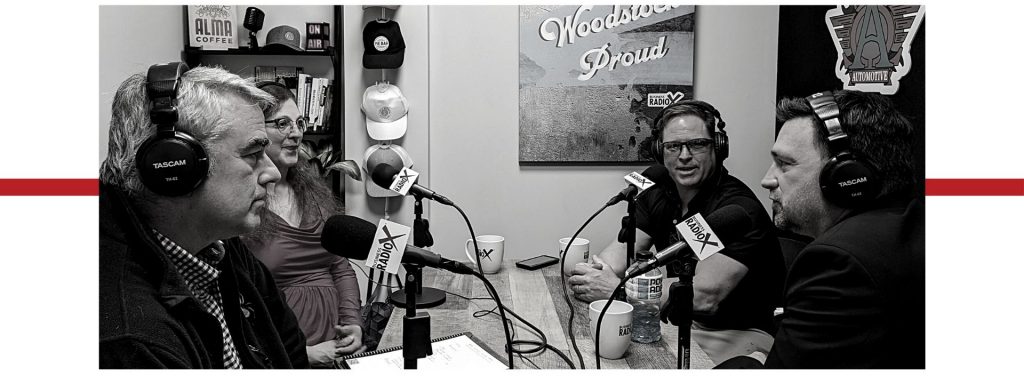
Intro: [00:00:02] Broadcasting live from the Business RadioX Studios in Woodstock, Georgia. This is Woodstock proud, spotlighting the individuals, businesses and organizations that make Woodstock one of the premiere destinations in metro Atlanta to live, work and play. Now, here’s your host.

Jim Bulger: [00:00:28] Hello, and welcome back once again to Woodstock, proud here on Business RadioX, where we spotlight and we celebrate some of the individuals that are making a difference in our community. I’m your host, Jim Bulger. Now today, I’m thrilled to give you a chance to get better acquainted with one of the most authentically happy people I’ve ever met. Kevin Monroe is the founder of X Factor Consulting here in Woodstock, a company that is changing both individuals and organizations through an intentional focus on gratitude. And as I’ve personally experienced, as I think you’re going to hear as we talk, Kevin is one of those people that has a unique gift that every time you talk to him, you feel inspired. You always walk away thinking deep thoughts about what he said, but you always feel a little bit better about the world around you too. So Kevin, welcome to Woodstock. Proud.

Kevin Monroe: [00:01:31] And no pressure. No pressure.

Jim Bulger: [00:01:34] No, that’s true. So there’s so much I want to touch on and we’ll go into a lot of detail later. But for those who maybe aren’t all that acquainted with you, let’s start with a brief overall description of X Factor consulting and the work you’re doing.

Kevin Monroe: [00:01:52] All right, so Jim, the way I first off, welcome listening. You’re listening today. I want to say welcome. Thanks. You have a lot of choices of where you listen. And so the fact that you’re listening to us says something about you says something great about you. Wow. The way I I say, I’ve had a lot of interesting, a lot of audacious sounding titles through the years, the ones that mean most to me now are husband, father, papa. That’s what my grandkids call me, papa, friend and Jim. Over the last three and a half years, I’ve picked up this other title that I actually kind of learned to love. Now that’s gratitude guide. So I love the way I say it. From the time I was 13, 14 years old, I’ve known I wanted to make the world a better place. I often think it has something to do. I grew up not that far from here, a couple hours down the road in Perry, Georgia, small town, Georgia. The Coca-Cola commercial, maybe that was what influenced me, remember the people on the hill somewhere in Switzerland? I’d like to teach the world to sing in perfect harmony, right? Have a coke and a smile. I don’t know. But some time from the time I was 13, 14 years old till this day, which has been a lot of years in between. I just wanted to make the world a better place. I wanted it to matter that I live, that I passed through.

Kevin Monroe: [00:03:24] And so that’s taken me down a very zigzag path through the years, done different things. But ultimately it led to starting a business 17 years ago. Now this business X Factor consulting. It was kind of funny when you and I were kicking some ideas around. I said something to you when we started the business. X Factor X Factor meant a lot of things to me. X meant, you know, there was this mysterious quality or quantity. It also meant excellence and it meant multiplication. Those were all of those things. So we had this idea. X Factor consulting. Well, I think over the last three years, I really zeroed in on what is the ultimate X Factor and that X Factor is gratitude. The gratitude. If you go to my website, you’ll see these words, and I remember it was my web designer, Susie, that put them on the site when she was doing work and she she showed me the type of the site, the prototype and right there on the front, it says gratitude changes everything. And I’m like, Wow, Susie, gratitude changes everything. She says, Well, I got that from you. You do believe that, don’t you? And I’m like, Well, well, yes, I believe it. I just don’t know if I’m ready to make that the claim to the world, right? What if others don’t believe it’s because it doesn’t matter? Do you believe it? I’m like, Yeah, I believe it. Gratitude changes everything.

Jim Bulger: [00:04:50] So that was, as you said, 17 years ago, yep. And. So as a gratitude guide, the work you’re doing right now is you’re using a number of different channels and a number of different ways of doing that. Talk about a few of those.

Kevin Monroe: [00:05:09] Well, OK. And I guess somewhere we’ll talk about the story that led to this. But but what I do now? I had an epiphany. Well, it was about two years ago this time, friend of mine Tracy Fenton. She’s the founder of an organization called World Blue Blue, creating freedom centered workplaces around the world. Tracy said to me, Hey Kevin, would you do a webinar for our leadership cohort? And I’m like, Of course I would. Tracy, what do you want me to do it on? And Tracy like Duck Gratitude and Jim. That was that first moment when I started realizing, Wow. People have now identified me as the gratitude guy or gratitude guide. And I also realize then that there have been a lot of other things people have identified me as through the years and this idea of being the gratitude guy or guide. You know, if I go to my my grave and this is what’s written on the tombstone, here lies one grateful fella. I can live with that, right, well, maybe I die with that, but but there have been a lot of worse things said, right? Oh, he was a curmudgeon. He was always cranky or those types of things. I mean, those things. Wow. You know, he just always seemed angry. Is that what you want said about your here? Lies one grateful fellow. So when when Tracy asked me to do a webinar, I said, Well, gosh, Tracy. Doing a webinar just doesn’t seem the right way to approach gratitude. And she goes, What do you mean? I said, you know, a talking head that shows up for, you know, how most webinars are. They introduce the speaker, the speaker comes on, and it’s a one way push of information for forty five minutes. Blah blah blah blah blah blah. Let me tell you about this.

Kevin Monroe: [00:06:58] You know, in the world, in the space of gratitude, we could talk about what happens in your brain and in your body, oxytocin and and serotonin and all of these, you know, things that are happening neurobiological to you. And then at the end of that, people go, Well, that was interesting. I might well, that just doesn’t seem to be the approach, I said. She said, What do you want to do? I said, I don’t know. Let me think about it. So over the next seven, eight days, I was thinking about it and I live right down the street here. We live in Farmington. All Arnold Middle Road live there for almost 30 years now and I walk every day and one morning on a walk. It just hit me. I stopped, whipped out my phone and in five minutes created the outline what I wanted to do. And I went back to Tracy and I said, Hey, Tracy, I don’t want to do a webinar. I want to do a gratitude encounter. And she goes, OK, what’s that? I said, it’s an opportunity for people to explore, express and experience gratitude. And Jim, it was a week or so later I landed on this phrase that gratitude experience is better than gratitude explained, right? So a webinar is inviting people to explain, you know, and that’s the talking head. Mm hmm. What difference does that make now? I have an intellectual understanding of the benefits of gratitude, but I’m no more grateful than I was before. I’ve not expressed gratitude. So what? What I do and what I’ve done over these past two years is create environments where people do those three things explore, express and experience gratitude. And that is what shifts something in us and shifts something in our world.

Jim Bulger: [00:08:43] Now, one of my favorite things is to hear about the journey that people and businesses have gone through to get where they are now. So over those 17 years. Talk about some of the major milestones you’ve experienced in how X Factor has evolved over those years.

Kevin Monroe: [00:09:03] Yeah, so you know, I love this question. As I said, X Factor kind of took on my quest in life and that was to make the world a better place. So when we started in two thousand five and when I think back then we set out to serve nonprofit organizations and in two thousand five, I would say the nonprofit sector pretty much had the lock on the do good part of the world, right? And there are all kinds of nonprofits, and they’re addressing different issues or different concerns focused on different things human services, arts, education, you know, those type poverty alleviation, homelessness. And so we set out to help small and medium sized nonprofits because most nonprofits and nonprofit leaders you probably have traveled this month. Most nonprofits have a cause that they’re really passionate about. But when they start a nonprofit, then all of a sudden they understand they have a business that they have to lead. So what we started doing was helping people address the business side of nonprofit to free them up, to do the service side, the cause related side. And so we did that for a number of years. And then all of a sudden, 2008 through 2010, I went to graduate school, went to Gonzaga, got a master’s in organizational leadership. I chose Gonzaga because it was one of the few graduate schools in the country with a focus on servant leadership, and I was drawn to servant leadership.

Kevin Monroe: [00:10:35] So I mean, grad school at Gonzaga. And I by that time, I’d been blogging for years, had several blogs. We had three blogs that we wrote in the nonprofit sector. Two of those I wrote, one a business partner wrote, and we had this following. And then all of a sudden I started writing more about servant leadership and this this two years grad school at Gonzaga opened up a lot of things in my mind, and at that time, I started realizing the world has changed, right? And one of the changes in the world was so much social entrepreneurship, social corporate, social responsibility. Companies like Tom Hughes have come along that are create this for profit model that ties doing well with doing good. They’re making money, but every time you buy a pair of Tom’s shoes, they’re giving a pair of shoes. And now you have bombas socks doing the same thing with socks, and you have so many corporations that were looking for ways. How can we to make the world a better place? So that’s happening in the world. I start working in this field of leadership and I was writing blogging about servant leadership and about that time I’m introduced to a I meet a guy on Twitter, and he was the incoming CEO of the Greenleaf Center for Servant Leadership.

Kevin Monroe: [00:11:52] Robert Greenleaf is the guy who coined the term servant leadership in 1970 with an essay, The Servant as Leader. And then a few weeks later, I’m offered the opportunity to launch a consulting arm of Greenleaf Center for Servant Leadership called Greenleaf Consulting Partners and help businesses. Business leaders apply and implement the concepts of servant leadership. So that created a new opportunity. We’re still making the world a better place. We’re helping leaders who want to put people first in the way they lead, apply and implement servant leadership so that just gradually open doors. So two and a half years I do work. It was all contract work. I was always I was never an employee, always a consultant still did that through X Factor. But doing this work and then all of a sudden that, you know, things just evolved, right? And now I’ve understood, and I remember I was in Cartersville one Sunday morning sitting under a big oak tree, and I realized there were three two word pairings that described all of the organizations that I had worked with that I loved working with that these organizations. One of these three two word pairings applied to them or two or the winning trifecta, all three, they were either purpose driven, people focused or values based.

Kevin Monroe: [00:13:18] And those were the kind of companies that were drawn to servant leadership. They’re drawn to servant leadership because they’re in the world to advance a cause, serve a purpose. They want to take care of their people or, you know, one of the best, most highly respected servant leadership organizations on the planet. Headquartered here in Atlanta, Georgia, Chick fil A, they hit all three of those purpose driven people led value space. Sure, right. And so when you look at organizations like that and Mark Miller, who was at that time senior vice president of Chick fil A, wrote books on servant leadership and. The principles that Chick-Fil-A put into practice, so you had organizations like that and that just opened the door to where I started doing more leadership work in the corporate sector with these types of organizations. So when I look at this, Jim, I realize now I’m probably on version. If you think of the business like a software, we’re on version 5.0 of the company, right? 1.0 was this nonprofit consulting firm, 2.0 was this leadership firm. And then we started into the purpose space, which was really 3.0, and then we were trying to figure out 4.0. And that was more around purpose and values and culture, recognizing that the companies that are purpose driven people led, people, values based.

Kevin Monroe: [00:14:49] They’re also really and you get this from your job, your work with work, thrive. Want to have a culture sure that that represents those values, a culture that values people? So I started doing a lot of culture work that also involved leadership. And then there was this little thing happened. And I don’t know. Maybe you realize it, or maybe you don’t. Seven hundred and seventeen days ago today, seven hundred and seventeen days ago today, the world changed. It was seven hundred and seventeen days ago today when the World Health Organization declared the global pandemic COVID coronavirus and the business I had, like so many other people, evaporated. Mm hmm. Right. I mean, because what I did was a lot of in-person events speaking at corporations conferences and every one of those that was booked was all of a sudden UN booked one of my biggest customers. They said, OK, we’re going to do this. We’re going to put it off a quarter. Ok, we’re going to put it off two quarters. We’re not going to do anything until late 2021. Oh, we’re not sure we’re going to do anything in 2021, right? And and so there was just this. Opportunity called no business

Jim Bulger: [00:16:13] Well, and I know that as we were talking back in twenty eighteen, there was a shift in the business. Talk a little bit about that.

Kevin Monroe: [00:16:24] Oh, and I happen to bring that journal today. Oh, so I’ve pulled this journal out. So twenty fifteen I reconnected with an old mentor. I met him in early 2000. I meet him in twenty fifteen. Yeah, twenty fifteen. We reconnect. Twenty know. Twenty sixteen twenty sixteen when we reconnect. And he says, Hey Kevin, would you join me in praying fifteen minutes a day? And I looked at my. Are you serious? I haven’t prayed 15 minutes in the last year or the last two years, and you want me to pray 15 minutes a day? And he said, Well, what I mean is by pray 15 minutes a day is is open. Your Bible, sit down with a journal and just see, you know, if there’s something you want to say to God, God wants to say to you, I’m like, OK, I’ll give it a try. At that time, I was in time blocking mastery that came out of Gary Keller’s work with the book The One Thing, and Gary taught this idea that it really takes sixty six days to get grounded in a habit. It’s more than twenty one. The numbers go from twenty one to maybe two hundred and something, but sixty six days you kind of get in a groove. So I had a sixty six day chart. I was doing some other things to get in the habit. So I started a prayer habit of day one, day two, and I opened a journal and I started writing the day number just to see so.

Kevin Monroe: [00:17:49] I can say that because I mean, you can see right here, I’m not lying April 17th was day seven forty four right day seven forty four, so day seven forty four of this journey April 17th. Now I have no idea if this had some bearing that it was two days after April 15th is why I found myself in such a dark, depressed state that morning. But business, you know, I’m trying to figure things out in business. Business wasn’t. Well, let’s just be honest, business wasn’t good, it wasn’t great, but it wasn’t good, I was struggling and and I’ve had as I look back over life, I can see three periods where I really dipped into depression, you know, and had those bouts of yeah, the first one happened in 2002, when I had left Corporate World joined a high tech startup that. September 11th, 2001, buried that high tech, high tech startup, as well as many other things in our country, right? And and so we the business failed. I was trying to figure out what to do went into this dark space. But fast forward to 2007 20, 18, April 17th. It was one of those mornings. Now I’m a morning person. Your morning person, Jim.

Jim Bulger: [00:19:04] Not at all. Not at all. So, oh, there’s owls and robins, and I am definitely in Team Owl.

Kevin Monroe: [00:19:10] Ok? Ok, so I am up usually between 4:30 5:00 in the morning without an alarm clock just up ready to go. And but that morning, that morning was like, no, there was just I couldn’t get out of bed, right? Yeah. And you know, I woke up several times like, No, I’m not feeling it. There’s nothing here, just don’t want to get up. And I recognized that I’ve known that before, when that starts coming. I’m at the precipice. I’m at the edge, right? These are tough days, dark moments. But if you linger there, you start going down the slippery slope and pretty soon you’re in about a depression again. So I knew that was coming, but I woke up that morning, seven, dragged myself out of bed, go into my office and having this daily routine. I’m a big believer in daily routines, rhythms, rituals, whatever word you call it, care to call it. For me, it’s more I think of it as a rhythm and a ritual than than just routine. Part of that is reading something inspirational. Part of that is prayer, meditation, listening to silence, or some kind of guided meditation for ten minutes. Well, that morning there was nothing I just didn’t want to block. Right? Maybe, maybe. Gosh, could it be possible that somebody’s listening to us right now that you can relate to this, that your morning this morning was? I didn’t want to get up.

Kevin Monroe: [00:20:36] I’m not feeling it now, right? It’s Day seven 17 of a pandemic. Life is tough right now for a lot of people. That morning I couldn’t get up. I finally got up, opened my prayer journal and there was just nothing to pray. And I wrote these words and they’re still here. Holy Spirit, you are the creative spark of the universe. Spark creativity in me. Close the book laid down on the floor. It’s in what I consider liminal space that that moment between you’re still partially awake, partially asleep, you’re in and out. You’re not, you know, it’s a it’s a days, right? It’s just this fog light down on the floor in my office was was that was the prayer I’d prayed. And forty five minutes later, I sat up erect and there was an idea, an idea. And the idea was like eighty five percent fully formed when it was there. When I sat up and it was to host what we would call the extraordinary experiment, that we would create a 90 day program 13 weeks and over those 13 weeks each week would have a challenge and we would invite people into the challenge. We’d lay out the challenge on Monday. On Wednesday, we’d give some additional resources. On Friday, we’d ask people to reflect back and see what happened in your life this week and when you did these things that we invited you to consider and find what you wanted to do.

Kevin Monroe: [00:21:59] Might your life feel a little more extra ordinary, right? Because I think a lot of people are like me when I look in the mirror. Any time I look in the mirror, I see a guy that’s just an ordinary guy, right? I’m a few pounds overweight of where I’d like to be right now was never super athletic. I was always the last kid chosen for the team. Gosh, that experience happened a couple of months ago at a family thing. We were choosing teams for a family game and our our granddaughter, Emma picked her one year old brother who can’t do anything drawing before she picked me to be on her team, right? So it’s just this funny thing. But. Could we feel a little more extraordinary? Could life be more extraordinary? And so we laid out 13 weeks and weeks, six of those 13 weeks, we labeled the gratitude challenge. And in that week, as I said, we did a video on Monday. So on the Monday video, when we’re preparing that, it’s the first time in my life when I began questioning, is there a difference between being thankful and being grateful? What does it really mean to have gratitude? And Jim, those 13 weeks set me on a different path began to spark new possibilities. And and it really opened the door to this world of gratitude.

Jim Bulger: [00:23:31] Well, and let’s do let’s do a deeper dove into that because. It sounds like such a simple idea, the need to be grateful, and I think most people, if you were to ask them, they consider themselves to be grateful, to be appreciative, to be thankful, to count their blessings. You know, Thanksgiving, we go around the table and everybody says what they’re thankful for. And the typical responses come up. I’m thankful for family and health and friends. And as you say, a lot of people use the terms thankful and grateful interchangeably, yeah, but you see a real difference between those.

Kevin Monroe: [00:24:10] Talk about that. Well, I’ve discovered a difference between those part of it out of my own experience. So I think about this. So I grew up, as I said in Perry, Georgia, small town, I remember. And I was taught and I was going to say a lot of our listeners, you know, growing up, especially around Woodstock, where where deep south we’ve been taught manners and being thankful is part of good manners. I remember the time I’m probably six years old. I was a little chubby kid. My dad cut my hair every two weeks, set us up on a chair, you know, and just buzzed it back. So I had this buzzed head. My parents left me for the day with the neighbors, the Richardsons and I remember and I don’t remember whether or not my mom pointed her finger. It seems like she did. Remember your manners, son. Remember your manners. You’re going to be at the Richardsons. So Mrs. Richardson. So this is, you know, like nineteen sixty five. So I’ll just be honest, she fixed me a sandwich right now. Today, she would have prepared a sandwich, but we just said she fixed me a sandwich. She hands it to me on a plate and I hear my mom’s voice. Remember your manners and I look up at her and I say, You’re welcome.

Kevin Monroe: [00:25:24] And she rubs my fuzzy little head and says, Nice try. I think you meant thank you. Right. So that’s that. But but what does that typify? Besides my confusion, it typifies this transactional nature, which is what we often attribute to saying, Thanks. And you’re listening. I’m wondering, did you drive? Did you go through a drive through today? Did you interact with a barista? Did they hand you a cup of coffee and did you say thanks? Or, you know, maybe just grunt. But if you did say things, did you actually think about that and take the cup of coffee and think about, I’m sitting here and I see all my coffee logo on the wall of the studio. You know, my friends, Harry and Leticia and Al, they are the farmers. They are related to the farmers that grew the beans. And I was at all coffee earlier this week and the semi was unloading a trailer full of beans that had come from their fifth generation Honduran farms in. Honduras. So they know, and when you drink muffins roasted on the coffee, there’s actually a Marvin who grew the beans, right? So do you think about? Hmm. I think about the farmer that grew the being, the people that harvested the beans, the people that roasted the beans, the people that bagged the beans, the people that shipped the beans, the people that unloaded the beans, the people that put them on the truck, the people that shipped them from the truck to the the Roastery.

Kevin Monroe: [00:26:49] The people that roasted the coffee, the people that now get that deliver it to your local coffee shop, wherever that is. And then the barista brews it. Hand you a cup and you go, thanks. Or do you look at the barista and make a human connection to them in the moment? This is what my dad taught me. If somebody is wearing a name badge on their uniform or on their shirt. That’s for your sake, not theirs. They know their name, they don’t have to look and go, Oh yeah, I’m Kevin. No, it’s for our benefit. What if you engage the barista by name and you go and you say, Hey Jim, man? Thanks for this awesome cup of coffee. It looks like you really put yourself into making this today. Thank you. Right. And you made my day or whatever that is right now. All of a sudden we’ve stopped being transactional and we’ve elevated that. Now, if you want to talk about the ultimate transactional expression of thanks, I think back I grew up when Kmart’s were around. You remember Kmarts?

Jim Bulger: [00:27:50] Absolutely.

Kevin Monroe: [00:27:51] So Kmart’s back in the day when I shopped Kmart’s, they had the cash register. No, no scanners, right? And the the cashier would have to punch in the numbers of everything. Well, there was a little square piece of of a laminated paper on every Kmart register, and it said, T y yfc Katie. Thank you for shopping at Kmart today, and every cashier at the end of every transaction was supposed to say to the customer, What

Jim Bulger: [00:28:28] Thank you for shopping at Kmart today?

Kevin Monroe: [00:28:30] Now did they really mean that? Were they thinking, Wow, you, you made my job possible? No, that’s transaction. Now I will tell you my fate. One of my favorite stories of when I saw this different, I was I don’t remember where I was flying in from back in the day right before COVID. I used to fly a lot. One day I was flying, I’d been upgraded. So I’m in the front of the plane on Delta and this flight attendant, she’s coming down the row and she stops at every row and she bends down on her knees and she looks to the people on her right, the left side of the plane. She talks to them. Then she looks to the people on the left, and I happen to be on her left the right side of the plane. She comes down. I’m about four rows back in first class. She gets star rows. She talks to the people across. Then she turns to us and she says these words. I love my job as a Delta flight attendant. I just love it. It gives me joy in life and its customers like you who are frequent fliers who make my job possible. Thank you for flying Delta now. Every Delta flight I’ve ever been on. There’s some point when a flight attendant comes over the P.A. Hey, we want to welcome all of our medallion members today. Whether you’re your gold silver, you know, platinum diamond. Thank you for choosing Delta that goes in one ear and out the other. This lady stopping looking me in the eye and the person seated next to me in the eye. Sharing that, that’s gratitude. That’s gratitude, right?

Jim Bulger: [00:30:10] So it sounds like I mean, this is much more intentional, intentional.

Kevin Monroe: [00:30:14] Yeah, that’s a great word.

Jim Bulger: [00:30:15] And going back to the Kmart story, I know you’ve developed what you call the gratitude framework. Yeah, yeah. And quickly walk us through that.

Kevin Monroe: [00:30:26] Ok, so I developed this gratitude framework as we were. I was creating content for we host a program called 30 Days in the Power of Gratitude. They’re micro coaching sessions over this, and I was trying to take people on a journey and trying to explain this. I was like, How do I explain this? Well, I started reflecting on my journey back when I heard You ought to be grateful. Right? That’s gratitude as an obligation where it’s social convention. And if we fail and maybe it’s a command, right?

Jim Bulger: [00:30:56] And it’s a note on the cash

Kevin Monroe: [00:30:57] Register note on the cash register. Thank you for shopping at Kmart today, right? That kind of thing. That’s that’s our obligation. And if I fail to deliver on something that’s an obligation, what are you normally feel? Guilt, shame. Right, oh, I feel bad, I didn’t do what I was supposed to do. Well, then if we go up the kind of the next level in this is what I consider to be hacked. And there’s so many people that present gratitude as a life hack having a bad day. Stop, pause. Think of something to be grateful for and get out of that, that law. I still believe there’s validity in that. But who wants to stop there, right? So its obligation, it’s hacked. Well, maybe we go a little further and we begin to develop a practice of gratitude. When gratitude becomes a practice, we’re looking for rhythm and routine. You know, write the journal right, right. Three things you’re grateful for today, and there’s nothing wrong with writing three things you’re grateful for today. But I’ve had so many conversations just this week about this. I can do my my three things that I used to be grateful for. I really got that down to where I could do that in seven seconds and check it off the list and say, Well, I’m done. I was grateful today. Was I right? So we’re getting into that practice. Well, maybe you want to go beyond practice and you begin to look for this to become habituated in your life? Right. So then you’re looking for routines or triggers. You’re looking for these things that spark you to remember the habit I have.

Kevin Monroe: [00:32:37] Well, I have a friend. She heard me tell about an executive that carries three stones in his pocket, and the goal is every time he expressed his gratitude, he moves a stone from the right, the left pocket to the right pocket, with the goal being that the three stones that started in the left pocket at the end of the day, they’re in the right pocket. So my friend Christie bought three silicon bracelets that were, you know, attractive starts with them on her left wrist when she pauses to express gratitude moves one from the left wrist to the right wrist. Those are things triggers. Well, it’s good to have habit. Well, what if we go further and what if gratitude becomes our mindset and that it becomes like the operating system of the human computer of our brain? And that anything that comes into our life, we begin to filter it through the lens of gratitude and we begin to find the good things on even the not so good days or the not so good seasons of life, which I think you know something about some of those seasons, Jim. Well, then if we go a little further on this and this framework, to me, the ultimate goal now is where gratitude becomes our lifestyle. It’s our DNA. It’s who we are. Gratitude is not something we do once a day or twice a day. It’s who we are throughout the day and people begin to think of us as grateful people. And then we’re living in joy.

Jim Bulger: [00:34:04] Well, in listening to you and as I said in the beginning, you always make me think and. As I’m listening to you, you know, there’s there’s another continuum that comes to mind, and one is that when we feel grateful and it’s unspoken and it just sits with us. And then there’s expressing it, yep. And then there’s exhibiting it. But I think a lot of it going back to you, talk to most people, they consider themselves grateful. That’s because they feel grateful. They may not be expressing it. They may not be talking to that person stuff and they may not be exhibiting it. I mean. I think gratitude is one of those things you can see in somebody, too.

Kevin Monroe: [00:34:51] Do you agree? Oh man, I so agree on this. So there are three things there, at least, that I want to unpack. One of those, William Arthur Ward, actually talked about this, he said. To feel gratitude and not express. It is like to wrap a present and not give it right. So you’ve wrapped this, you bought a present, you wrapped it up and just leave it right. That’s gratitude. Unexpressed. And now in our work, we ask, What does gratitude feel like? Where do you feel gratitude in your body when you’re feeling grateful? Maybe it is watching a sunrise or a sunset, or maybe it’s enjoying a meal that your loved one prepared for you? Or maybe it’s holding that newborn, baby or grandbaby and looking at the the majesty of this new creation and all of us, I mean, you’re feeling something right and it’s overflowing in your heart. And so how do we then express gratitude? And then what was the third thing there? I don’t know. It slipped me at the moment. It’ll come back, Jim.

Jim Bulger: [00:35:52] Ok, well, you know, while this sounds like a personal development, yeah, yeah. Internal individual concept. You’ve been very successful in instilling the need for gratitude into groups within companies, within organizations. And I think while some people may think that’s just a nice thing to do or a good behavior. You found it to be a necessary and critical component of a successful organization, so let’s talk a little bit about that and the measurable benefits that it has an organization.

Kevin Monroe: [00:36:29] So that was the third point, that was the third point a moment ago. Now that there is something right, it’s one thing to feel gratitude personally. And I will tell you, I mean, here’s how I stumbled on this and where I want to go is there’s something magical when we do gratitude in community as part of a group. Now we I stumbled on this. I stumped. So in twenty nineteen, yeah, twenty nineteen, we started hosting gratitude challenges and these were all email based and we had a 10 day program that we were inviting people into. And and we ended up having gosh, we ran 20 challenges, had 2500 people from 53 countries of the world. Join us in these challenges. We started having problems trying to get email delivered right and emails were getting caught in corporate servers that they were getting to the server, but they were not getting through the server to the desktop. So we’re looking, how do we fix this? How do we fix this? And I remember a community based platform, so we went to this community based platform simply to get away from email as the delivery vehicle.

Kevin Monroe: [00:37:41] Mm hmm. When we I still remember the very first challenge we hosted on a community based platform, we have a couple of hundred, well, 300 people in this challenge. And all of a sudden and we’re just sharing a daily prompt is what we were doing at that time. And a daily prompt could be like the beauty of nature. And you know, where what have you experienced in nature lately that sparks or inspires gratitude in your your life? Share that post a picture. And all of a sudden people started posting pictures and folks were like, Oh wow! And and global community. We’re seeing sunrises from whales or sunsets in Wales and Australia coast and, you know, all parts of the world. It’s like, Wow, wow, wow. And then somebody would say, What are you grateful for? Related We’d do the family challenge or the favorite book challenge or mentor challenge and people and somebody would write something, and I’d read what somebody else wrote, and that sparked additional gratitude in me. And somebody else would share something. And it was like, Oh, wow, when we share gratitude, it grows even deeper.

Jim Bulger: [00:38:51] It’s contagious, it’s

Kevin Monroe: [00:38:52] Contagious and it gets better together. And so, Jim, I’ve never read about that experience. I mean, this wasn’t something I read in the literature and then went to do. We just discovered this in the trenches, and then I started hosting events, more events. These gratitude encounters where we bring people into a group. I still do this doing one. This coming Tuesday, 12 noon Eastern Time. Feel free to join us. You’re listening. But we do these gratitude encounters and what people say. Gratitude allows them to connect quickly, deeply with other people. We have people from around the world join come in as strangers have this experience. And at the end of an hour, they they say, not me, say we arrived as strangers. We’re leaving as friends, right? The shared experience of gratitude allows us to connect with people of different ethnicity, people of different culture, different language, different faith. But we realize how much alike we are.

Jim Bulger: [00:39:55] Now that’s the pandemic we need.

Kevin Monroe: [00:39:57] That’s absolutely, absolutely. So then you take this into the workplace. Yeah, yeah. So I’ve had the opportunity. Oh, OK. So I started hosting gratitude encounters. I did the first one in August 2020. Then in September 2020, I was on a morning walk. September 10th, walking through the neighborhood in this question was just in my mind of all of the things that energize and excite you. What is the one thing that has the broadest appeal in the greatest impact? And for me, I knew then my answer was immediately gratitude. And that was the day, Jim. That was the day when I went officially all the way in to developing a gratitude business and a consultancy. And what we’d really say is that we’re growing a global ecosystem of gratitude. And I hosted I started hosting these monthly sessions in October. A guy attends the October one in November. He goes, You know, this is a commercial service, don’t you? And I’m like, No, I didn’t. He goes, Let me help you. So we put it together as a service. We started promoting these and then we started offering these two companies. And and now I can say, I mean, I remember the first company, Opera and Domino’s out of New Mexico hired me.

Kevin Monroe: [00:41:12] December 16, 2020 did the first commercial gratitude encounter. And this was a team that had had a lot of hardships to overcome through the gratitude. I mean, through the pandemic, right the first nine months of the pandemic. They were in a tough place and then all of a sudden, through gratitude, they started having breakthroughs and they started building things. So in 2021, they wanted to build on a platform of abundance. That was their theme. They said, Can you help us with abundance? I’m like, Wow, wow. Gratitude is the gateway to abundance. What if we started doing gratitude? So we did gratitude encounters with every department in their organization? They started working mindful mindfulness moments and gratitude moments into every meeting they hosted. Wow. And they began with mindfulness moments. And what are we grateful for? And they started seeing this shift throughout their culture, and that’s what we’ve seen. Other companies where they see that gratitude creates a much more positive culture, a much more committed team. And so we’ve started doing these type things, all kinds of different things companies do and all size companies doing it.

Jim Bulger: [00:42:26] Well, I’m going to guess both from the work you’re doing and the work I do that when you have that kind of a culture. It raises productivity. It increases efficiency, engagement, engagement, employee retention. People tend to stay in environments that they

Kevin Monroe: [00:42:45] Where they feel appreciated.

Jim Bulger: [00:42:47] Well, you know, there’s been research for years and years and years. The number one reason why people leave companies is they don’t feel appreciated, right? And you actually make a commitment to these companies of what an immediate difference you can make, right?

Kevin Monroe: [00:43:04] Yeah. So we’ve been tracking things for 18 months now, and we finally realized that one of the metrics for companies that are really focused on the happiness of their employees. And there’s a lot of research around that, but we can boost employee happiness by twenty five percent in an hour. Wow. And if we don’t, we’ll give you your money back. But I’ve done this. And what? Two weeks ago today, two weeks ago today, I was doing sessions for Pfizer Canada, and in the final we asked people, What’s something you’re carrying with you from this session today? And the first response was the happiness I feel right now. Hope it lasts a long, long time. Right? Because when you. Ok, Wayne Dyer said. When you change the way you look at things, the things you look at change. That’s what gratitude does. Gratitude provides you a different lens through which to look at. And all of a sudden you’re seeing that your your life is a life of abundance. Your work well, rather than just being all of these things you complained about. There’s some really good things here.

Kevin Monroe: [00:44:17] There’s some amazing people here. Our company has values. One of the things we do is is gratitude for values. What’s a value you’ve seen in place in how your company makes decisions or how you relate to people, employees, vendors, clients and all of a sudden you start hearing stories? I mean, the first time I ever did this, one of the stories this was right after the summer race riots of 2020, there was a company in Canada, Biggio. One of their values was diversity and respect, and some of the ethnic minorities that were in the session said I heard them tell these stories that, hey, last summer when when this was all going down, my boss or my boss’s boss called me and ask, Are you OK? Are you having any kind of harassment? Anything making you uncomfortable in the workplace or at home in the community is there? And they’re like, Oh my gosh. I felt respected. I felt valued. I saw what had been a word on the wall. I saw it active in the way we related to one another. I’m grateful for that value.

Jim Bulger: [00:45:28] And going back to your earlier comment, too, I mean, this is specific. I mean, it is intentional. It’s not the manager who walks up and down the rows of desks saying, Hey, good job. Good job, good job. This is real intentional. Going back to yeah. So we only have a little bit of time left. But let me run through a couple of things here. One is, you mentioned COVID and obviously over the last two years between the COVID pandemic, the economy, world politics, it’s caused people’s emotions and their views to change. In what you’ve seen through your work, has that had an effect on gratitude, has gratitude increased or decreased?

Kevin Monroe: [00:46:14] Yes. Okay, so no, seriously. So in some places of the world, gratitude has decreased. Right? I mean, man, 717 days. Here’s something I observed. I did not know this. It was day 500 of the pandemic. I was doing a session for a group in Europe, the Public Services People Managers Association of the United Kingdom, PMA doing a session for them. I was in Florida where I was doing the session from woke up 3:30 in the morning and this was the thought in my mind. Hope fades in crisis. Hope fades in crisis now. Things I had said before. Hope grows in gratitude, hope grows in gratitude gratitude. I love to think of gratitude as a catalyst. And I’m not a chemist. I may not have made such a good grade in chemistry, but that’s we won’t go there. But I did look up catalysts. The catalyst is something a substance that causes other things to to grow faster or to react in a more positive way to grow without being consumed in the process. So I think of gratitude is the ultimate catalyst and what grows in in the good soil of gratitude, kindness, appreciation, respect.

Kevin Monroe: [00:47:32] Joy, happiness, all of these things, they grow in the soil of gratitude, so some companies have lost gratitude, right? I mean, there are a lot of companies that have lost gratitude. A lot of other companies have realized that. And here’s what I would say. The shortest way to answer your question is I believe gratitude is absolutely now an essential skill for the world and the world of work that’s seeking to emerge post-pandemic. Gratitude. It’s it’s not an optional anymore. It’s not a nice option to have. You’ve got to have gratitude to, and gratitude creates one of the real benefits of gratitude that we all need personally and in business. Workplace resilience. Resilience being grateful. Boost resilience. People that are grateful have higher levels of resilience. They bounce back more quickly. They’re not as knocked off or knocked down, or don’t stay down as long when they’re knocked down, right? So this whole idea of resilience, it grows in gratitude. So I believe gratitude is absolutely essential for the workplace and the world going forward.

Jim Bulger: [00:48:46] So I have to ask you with with the years that you’ve been doing this and. Being the gratitude guide for so many other people across Geographics, across cultures. How has that changed you?

Kevin Monroe: [00:49:06] Yeah, well. I feel gratitude a lot more often now. And I mean, I say this in programs I lead, I feel gratitude rising up in my body and leaking out my eyes, right? I mean, that’s why I’m moved to tears with gratitude, right? When I see that gratitude really does change things. And when I see experience it, hear stories of the difference gratitude makes. Now I can show you on my phone right here. You can see I have a lock screen. I have a gratitude lock screen. We created these last year gratitude lock screens. Do you know how many times a day you pick up your phone?

Jim Bulger: [00:49:53] Way too many.

Kevin Monroe: [00:49:54] So and I host a lot of programs that are app based programs now. But the last time I checked, I picked up my phone hundred and thirty times a day. One hundred and thirty times a day. Now I have this this lock screen right now, and it’s the one I’ve had ever since we created gratitude lock screens. My mom mine is my favorite and Voss camp quotation. No amount of regret changes the past. No amount of anxiety changes the future. Any amount of gratitude changes the present. So, Jim. Every time I pick up my phone, I see that I have to clear that, but now I’m not saying that every time I do, I pause and express gratitude. But what if 10 percent of the time I pick up my phone, I pick up my phone 130 times a day. What if 13 of those times I pause for just a second and I and so hey, if you want to know when we’re talking about gratitude, what does this look like? I think it is as simple as these three things pause. Notice. Express. So pause and you’re listening right now. Just pause. And here’s something that I often do in exercise. I do this for myself.

Kevin Monroe: [00:51:09] I do this in corporations. Look back over the last hour, the hour before you came into this meeting. What’s something good that happened in that hour? Was there an interaction? Was there a phone call? Was there an email? You know, so what’s something good of the last 60 Minutes? We call this the last 60 Minutes challenge. You can do this as many times a day as you want. Just stop and look back over the last 60 Minutes. Go, what? What really good happened? What do I want to notice from this hour? And when I noticed that, what do I want to express gratitude for? Right. So that Paul’s notice expressed, so I pause. Oh, so something. Wow. Something that’s different in my life now. And this is a 20 20 to fresh reality. I made it. I made a decision in 2020 2022 that every day to the degree I could, I was going to spend moments of absolute silence and stillness. And I actually believe gratitude makes that possible for me. Right, that being grateful allows me to be at peace, to slow down, to push the pause button, to put my phone away and to be in the moment.

Jim Bulger: [00:52:23] Well, and I was going to ask you, I mean, for someone listening. You know, I’m sure they’re inspired by you and they say, OK, I get it, I want that. And what can I do today? What can I do right now? And I think what you just said with the 60 minute challenge is a great tip. I want to ask you to share one other thing that I heard on one of your sessions that I sat in on, and that was the I have two syndrome.

Kevin Monroe: [00:52:51] Yeah. Ok, so gratitude for me. Something else that changes it. It takes me out of any time I hear myself say, You roll the eyes. I have to fill in the blank, whatever that is. Wow, what if we just paused and we use the pause to reframe that? We use gratitude to go, Hmm, I get to do this now, right? This afternoon, I was on a call with a colleague and I was like, Oh my gosh. I have to go meet, Jim. No, no, no, it wasn’t that it was like, Hey, can can we transfer this call from Zoom to my phone so I can get moving to get to the appointment? So there’s something else, Jim. I have pre gratitude now, right? What if you have gratitude in advance for something that’s not yet happened? So this morning I’m thinking, Oh, here’s pre gratitude I want to have not just not just from I have to to I get to, but I’m going to express gratitude in advance that at two o’clock this afternoon, I get to sit down with Jim. We get to go on air and we get to talk real time about the power of gratitude and the gratitude that the difference gratitude will make in your life. And to issue an invitation. So I got one more if you want to. If you want to do something that will grow gratitude in your life, pick up your phone as soon as you finish listening to us. Think of somebody that you are grateful for the difference they’ve made in your life this week. You got somebody in mind. Think of that person whenever it is that you hear this, pick up your phone or whatever the messaging platform you, you use and send that person a message and say, I’m grateful for you, I’m thankful for you. Whatever words you want to use and give a little reason because, right, because you did this, you mean this to me or whatever and see what happens? So feel it, express it and then be deliberate, intentional back to your word, intentional. Communicate your gratitude for someone to that someone.

Jim Bulger: [00:55:05] Well, the reason I ask you to bring that up is that I know it had an impression on me that I have to to I get to because I would find myself during the day, Oh, I have to make dinner. Oh, I have to go to this meeting. Oh, I have to do this. I have to do that. And all of a sudden I’m saying, Wow, I get to make dinner. I get to go to this meeting. You know, how many people would, you know, trade places with me in an instant? And all the things that we take for granted and we just don’t appreciate them.

Kevin Monroe: [00:55:37] So, G.K. Chesterton said, we can either take things for granted or take them with gratitude.

Jim Bulger: [00:55:43] There you go. So as you look to the future, let’s talk about X Factor consulting. What’s the future goals, future vision, what do you want to accomplish?

Kevin Monroe: [00:55:55] We want we want to see a world transformed through gratitude and workplaces of the world transformed through gratitude. Yeah. So I’m not I’m not the kind of guy that that quantifies that and says a million billion. But I want to reach as many people as possible, and I want to invite people into the experience of gratitude, right, that people get to experience gratitude and have their lives, their families and their teams, their workplaces transformed by the experience of gratitude.

Jim Bulger: [00:56:31] And whether it’s a, you know, online session or a year long program with an organization. Some people may be a little hesitant, they might say, I’m kind of a private person, I don’t know that I’m going to be comfortable doing that. I can tell you through sitting in at some of these, there is a contagious aspect to him. Absolutely. And as people start sharing, other people start sharing and it just it’s those triggers. So if someone would like to contact you and learn more about embracing gratitude, either as an individual or as an organization, what’s the best way they can reach out to you?

Kevin Monroe: [00:57:08] Well, I do something crazy, Jim. Plus one four zero four seven one three zero seven one three Call Text me Seriously. Call or text me that is my cell phone number. Probably better to text first, so I actually know that you’re not a robot. When you call or go to Kevin de Munroe website, you can reach me there. You can find information on all of our programs we host. Right now, we’re hosting a seven day exploration of gratitude. A week from Monday, we launch our next 30 days in the power of gratitude. First and third Tuesdays of the month I host a gratitude encounter 12:00 noon Eastern Time. You can get information on all of those, or you can set up a call to talk about what we could do to customize and co-create a gratitude program for your company that accomplishes the desires you have, the desires and dreams you have for your company.

Jim Bulger: [00:58:06] You are living it every day, aren’t you?

Kevin Monroe: [00:58:09] I get it. I live it every day.

Jim Bulger: [00:58:11] You get to live it every day. Kevin, thank you so much for sharing your time, your insights with us. I know you’ve made us all a little bit more aware of the opportunities we have to show more gratitude, and we are truly grateful for the work you’re doing and the ways that you’re changing lives and organizations out there. We wish you and X Factor consulting every success in the future. Thank you so much.

Kevin Monroe: [00:58:40] Thank you, Jim. My privilege being here with you and for you listening to us today.

Jim Bulger: [00:58:46] And thank you. I’ll add my thanks. Thank you for listening to Woodstock. Proud. We hope you enjoyed getting to know our guest, Kevin Monroe a little bit better. Until next time, this is Jim Bulger saying Take good care of yourself. Please stay safe and we will talk with you again. Real soon.


Tagged With: Kevin Monroe, X Factor Consulting

Nekita J. Sullivan With Yoga Therapy Bar

February 28, 2022 by Jacob Lapera

NekitaJSullivan
GWBC Radio
Nekita J. Sullivan With Yoga Therapy Bar
Loading
00:00 /
RSS Feed
Share
Link
Embed

Download file

yogotherapybar

NekitaJSullivanNekita Sullivan was born and educated in the Palmetto State of South Carolina. She is a graduate of Clemson University, Medical University of South Carolina (Charleston), and American Intercontinental University. She is a certified health education specialist, licensed physical therapist, certified hand therapist, certified yoga teacher, and yoga alliance certified yoga continuing education provider.

She has 20 + years of experience as a health and wellness professional for seniors, kids, adults, athletes, special needs, and more. She is also the owner of Yoga Therapy Bar a holistic yoga physical therapy studio in downtown Clemson which exclusively offers a specialty of yoga and physical therapy to improve physical and mental health and wellness.

Follow Yoga Therapy Bar on Facebook and LinkedIn.

What You’ll Learn In This Episode

  • The difference between yoga and yoga therapy
  • Yoga therapy to manage physical stress such as pain or mental stress such as anxiety
  • The most common pain or physical stressor in America
  • Holistic stress management plans
  • Mental health mindfulness programs
  • Educate our kids to manage their stress
TRANSCRIPT

Intro: [00:00:04] Broadcasting live from the Business RadioX Studios in Atlanta, Georgia, it’s time for GWBC Radio’s Open for Business. Now, here’s your host.

Lee Kantor: [00:00:18] Lee Kantor here. Another episode of GWBC Open for Business. And this is going to be a fun one. Today, on the show, we have Nekita Sullivan with Yoga Therapy Bar. Welcome, Nekita!

Nekita Sullivan: [00:00:29] Hi, how are you today?

Lee Kantor: [00:00:31] I am doing great. I am so excited to be talking to you. But before we get started, can you tell us a little bit about Yoga Therapy Bar, how you’re serving folks.

Nekita Sullivan: [00:00:40] Absolutely. Yoga Therapy Bar is a specialty. I am a Doctor of Physical Therapy and a Certified Yoga Teacher. So, what I do is I use physical therapy and yoga together. I blend them for yoga therapy specialty. So, instead of just having a generic yoga class, I actually use yoga for therapeutic means. So, if someone has issues with back pain, neck pain, headaches after an injury, I specifically use yoga and physical therapy together to give them a better outcome.

Nekita Sullivan: [00:01:20] So, most Americans, eight out of 10 Americans, have back pain, low back pain. So that is usually the most requested injury for people that I see. So all of my yoga poses will be intentionally targeted towards improving low back pain instead of just getting a hodgepodge of yoga poses.

Lee Kantor: [00:01:45] So, now, what was the genesis of the idea to kind of do this mash-up between physical therapy and yoga? How did you kind of conclude like, hey, maybe there’s a way to combine these two to get the best of both worlds?

Nekita Sullivan: [00:01:59] Yes, because they both have such unique offerings. But when you blend the two together, it superpowers them. So, not only do you get the benefits of just physical therapy, you can use it in addition to yoga, which gives you a holistic service so you get the benefits of the physical stress relief but you also get the benefits of the mental stress relief with using the meditation and the breathwork in addition to the physical asanas, is what they’re called poses. It’s just a great and unique experience, and I get so many people who come to me and say that their doctor wanted them to try either yoga or physical therapy to help with their illnesses and injuries. So I decided why not let’s use them both because we can no longer approach our health from just a physical standpoint or a mental standpoint because we’re all in one. Our physical affects our mental. Our mental effects are physical. So as a holistic offering, I use them both to affect our entire body.

Lee Kantor: [00:03:16] Now, when you started the business, was it always focused on combining the both? So you’re talking to, I would imagine your clients are people who have some sort of pain or stress that they’re looking to deal with in this kind of unconventional manner?

Nekita Sullivan: [00:03:34] Yes.

Lee Kantor: [00:03:34] Or, whereas like a yoga studio might be like, “Oh, I like yoga. That’s the way I exercise.” So they may not be coming for a specific pain, they just enjoy it. So, it seems like it’s a slightly different client.

Nekita Sullivan: [00:03:46] Yes, it can be, but I get both. I get people who come just for yoga. And when they find out that I am able to tailor it to their particular needs and customize it, it’s like a bonus for them. So at the beginning of every class that I have, that is a group class, I will ask everyone in that class if they have any specific preferences, if they have any injuries, anything that I need to be attentive to, anything that I need to be precautionary of, because I will modify all of my poses for people who need some sort of precautionary modification. Or, what I can do for people who have specific needs is I offer them some one-on-one treatment. And that way, when I’m with them by themselves, we specifically work on whatever they need help with so they have my undivided attention.

Lee Kantor: [00:04:47] And then, yoga is a practice that uses a lot of props and ways to help a beginner kind of get in the right position for the pose. Are you using those props and more in order to help from the therapeutic standpoint?

Nekita Sullivan: [00:05:03] As a physical therapist, I have the expert ability to be able to provide those types of services with and without props, which is what makes me a little bit more unique than your typical yoga teacher. I do use stretch straps for people who need a little bit more assistance. I also have yoga bands, balls, pilates balls. But I try to get people to get comfortable with using their own body, their own body weight before they start adding tools. Because as a beginner, yoga can be a little intimidating. So it is so important for me to get people to be comfortable with just moving their bodies before I start adding tools. But tools are a good addition and supplement when the time is right.

Lee Kantor: [00:06:04] Now, a lot of organizations and corporations are adding wellness programs for their employees. Is this something that an organization can take advantage of with your firm? Is there some corporate program that you offer?

Nekita Sullivan: [00:06:20] Yes. Absolutely. I am actually in the middle of doing some corporate services for contracting because there are so many firms, corporations, the government, the military right now who are looking for wellness professionals and independent health practitioners to make videos and to join their wellness platforms that are virtual and the apps. Because due to the pandemic, a lot of people are having restrictions with accessing health care. So, they’re now trying to provide health care via virtual wellness platforms and apps so that they can reach people all over the world.

Nekita Sullivan: [00:07:06] So, for example, the military is trying to provide more corporate wellness apps to reach all of their employees that are stationed throughout the world. You’ve got people like BMW, Mercedes, a lot of these large corporations who are teaming up with apps and wellness platforms to be able to provide virtual services for all of their thousands of employees. So, the world of health care and wellness, for yoga teachers, for physical therapists, for other health practitioners is expanding so that we can meet the need and the demand for virtual services and telehealth services.

Lee Kantor: [00:07:54] Now, how would you kind of, I don’t want to say persuade but maybe open the mind of somebody who has never done yoga? Maybe, they have certain feelings about it. They’re not sure. How would you kind of ease them into practice like yours so that they can kind of get some relief from some of the stress and some of the pains that they’ve been probably dealing with than just accepting as this is the way it is when there can be a way out of this?

Nekita Sullivan: [00:08:24] Yes. And I try to get everyone to recognize that their level of comfort is always going to be different from someone else’s. So, a good way to ease into yoga is to start with just a couple of poses, two or three. And there are poses that combine movements for your entire body. For example, one of the most popular is child’s pose. And if you can do a child’s pose correctly, you can almost affect every joint in your body.

Nekita Sullivan: [00:09:03] So, I always get people to start off with maybe one or two, maybe even three poses, and just so they can feel what it feels like to get their bodies in different positions. And then, you can progress up to sequences. Maybe, let’s try poses that last for a duration of five minutes, 10 minutes, 15 minutes. Let’s try a class for 30 minutes. And then, eventually, we work ourselves up to an hour, if you like. And what we can do for that entire hour is modify anything that we need to modify based on how your body feels. You need to know when to pull back, when to do a little bit more. And that’s why it’s great to actually have an instructor to help you modify and make changes so that you don’t hurt yourself or cause yourself any sort of negative experience with learning something that’s new.

Lee Kantor: [00:10:05] Right. And I think that especially – I think for people who have been hesitant to try yoga for whatever reason and they’ve just accepted that “oh, I’m not flexible,” or “this is just the range of motion my neck has, and that’s just the way that it is,” or they’re dealing with a lot of stress, I think they’re missing an opportunity just to learn about it. And, I think there are some baby steps they can be taken whether it’s just, like you said, just sitting in one pose and just breathing and just feeling what that feels like and understanding the power of your breath and then just feeling your muscles kind of give in a little bit if you can stay in that pose for a beat or two and it just changes kind of your perspective of the world I think if you can open your mind to this.

Nekita Sullivan: [00:10:55] Yes, yes. And that’s part of the power and part of the magic of yoga. Because it’s not just a physical – it’s not just a physical experience with the breathing, with the meditation, with you responding to your body and listening to how it reacts to these poses, will take you in a different place. It’s a totally different way of exercising than what you’re used to. But you’re absolutely right. You have to be receptive to trying something that’s a little bit different. That’s probably going to make you feel a way that you’ve never felt before. But also you have to be kind to yourself and know that if you have restrictions, for example, like you said you can’t turn your neck but so far in one direction, that’s not going to be fixed in one day.

Nekita Sullivan: [00:11:49] So, you can’t give up on flexibility for something that has bothered you for 10 years and expect for it to just magically go away after doing it for two or three sessions. You have to give your time – your body time to adapt to doing something new. And most people respond to yoga by saying I’m not flexible. That’s a very common response. But flexibility is not usually something that we just magically have. It’s something that you have to actually work for and challenge yourself to accomplish.

Nekita Sullivan: [00:12:29] Yoga teachers are just not naturally flexible. Some of us may have some flexible body parts, but we also practice yoga in order to improve our flexibility. So, you have to be kind to yourself and allow yourself to improve and progress over time, but also know that that progression is going to be determined by how much consistency and how much commitment you’re willing to give yoga.

Lee Kantor: [00:13:00] Yeah, amen to that. And it’s a challenge, I think, for a lot of entrepreneurs, especially in that everything is go, go, go, faster, faster, I have to get there faster. And then, that sometimes moves into their exercise and fitness and wellness programs, and they think everything has to be a hit class in order to get benefits, where yoga is that kind of breath of fresh air, where you’re like, “Okay. Let’s just relax a little bit and breathe and just slow everything down.” And that is, I think, so necessary in today’s world because there are so many stressors whether it’s physical or mental that yoga and yoga therapy addresses.

Nekita Sullivan: [00:13:41] Yes. That is so true. One of the things that the pandemic has layered upon us is stressors, stressors, stressors, physical and mental. So you’ve got people who are fatigued, mentally exhausted, depressed, anxious, all of those mental stressors. Then, you’ve got all of these people who are now working from home, spending all these hours sitting in a chair behind a desk, even our students who are now having more neck pain, more back pain, more headaches than ever before. So, you’ve got all of these physical and mental stressors. But you have to approach them from a holistic manner in order to affect both of them. So, you can’t just fix the physical and leave the mental because it’s eventually going to affect the other. You can’t just address the mental and then leave the physical because the mental is going to eventually affect the physical.

Nekita Sullivan: [00:14:46] And that’s why Yoga Therapy Bar is such a different approach to yoga because I affect stress management from the physical and the mental side. You have to have both, and that’s the magic of yoga. It allows you to be able to affect both your physical health and your mental health. So, I try to get people to understand that they’ve got to approach it from both perspectives or else the other is going to eventually overcome and take the other, and there’s going to be that recurrent cycle that you just can’t seem to get rid of.

Lee Kantor: [00:15:27] Now, can you walk the listener through what is one of your programs or one of your stress management plans look like? What is it – what can they expect? Because a lot of times people have a fear of the unknown so they don’t even take that first step. So if you can kind of paint a picture of what happens if they raise their hand and say, “You know what? I’m interested in Yoga Therapy Bar,” what would the program look like? What are some of the maybe the pre-work they have to do or what do they have to do to get ready to experience this?

Nekita Sullivan: [00:15:57] Yes. So, I always try to get them to understand what it is they really want. Some people may think, “You know what? I really want to challenge myself from the yoga perspective,” or, “I’ve got an injury, back injury, that I’ve been dealing with for years, so I may need more of the physical therapy component.” So, I’m going to combine both.

Nekita Sullivan: [00:16:22] So if we need to truly affect an injury like low back pain, I’m going to give you more of a focus on the physical therapy perspective at the beginning. And we are going to blend the yoga in as well so that we affect the physical, we get a little bit of the mental end. And when things start improving and you start progressing, we balance them out. So we’re getting some physical therapy and yoga at the same time. So no longer will you get more physical at the beginning and just a little bit of the mental from the yoga, we’re going to balance them out so you’re getting the physical therapy along with the yoga postures, asanas, along with meditation, along with breathing exercises. And I also give a home exercise program through a virtual app that you can either access from your telephone, through text, or through email. So, it’s not your typical yoga experience. You get a lot of meat and potatoes with yoga therapy.

Lee Kantor: [00:17:33] Now, for the people who aren’t familiar with yoga, is there any like special equipment? Do I need – if I’m going to do this at my house, do I have to, now, all of a sudden, buy all this stuff? Or is it something that I can practice, you know, just with stuff I have around the house?

Nekita Sullivan: [00:17:51] Yes, very much can practice with anything you have around the house. Even with some of my group classes, people will come with yoga mats. Some people will come with towels, but I would definitely like to advise everyone to get a yoga mat. That’s really the only piece of equipment that you need. You can do it in your home. You can do it at your office. You can do it outdoors. I even have chair yoga classes that I do for people who are seniors, for people who are at work and don’t have access to a yoga mat, for people with special needs who are in wheelchairs and who cannot get on the floor. So that’s another great thing about yoga is there are so many different ways you can modify it. You can even do it in a chair.

Lee Kantor: [00:18:43] Well, I mean, can you share? Is there something you could share? I know we’re not on video, but is there something someone could do right now that’s listening in a chair? What’s something they could do that would maybe relieve some stress or maybe help them a little bit?

Nekita Sullivan: [00:18:58] Very simple. This is one of the basic things that I tell everyone who’s sitting at their desk for hours a day, or for someone who sits in their car and has very long commutes. So what’s happening when we sit most of the day is our spine, our back is curved. It’s flexed. And it does not like to be in one position for a very long period of time or else it will start producing pain signals. So, one of the things that you absolutely have to do if you’ve been sitting for a long day is put both of your feet flat on the floor. You’re going to put both of your hands behind your head and clasp your fingers together, and you’re going to sit straight up. So what you’re trying to do is extend your spine. And with your hands behind your head, you’re going to pull your elbows open, which is going to extend everything, open up your rib cage, and allow your lungs to take a deep breath. That’s just basic extension.

Nekita Sullivan: [00:20:07] If you have the ability to do that in your office, you’re going to do it standing up against your wall so that you can get your head, your elbows, and your hands up against the wall and make your spine very straight. And to oppose that extension, what we’re going to do is take our hands down, by our side, by your knees and see if you can actually make your fingertips touch the floor. That’s going to give your spine a full flexion, a full bend, a full curve, so you’ve gone from complete spine flexion with bending to complete spine extension with putting your hands behind your head and opening up. If you don’t have the ability to do that standing, you’re just going to do it from your chair. And that gives your spine just a little bit of risk from being in the same position for too long, which it absolutely hates.

Lee Kantor: [00:21:08] And then, that’s something you do for, you know, one time? Is there like, you do it 10 times, you do it for 30 seconds? Like, how long do you have to do it to see some benefit?

Nekita Sullivan: [00:21:20] Okay. So, this is where your individual listening to your body comes in. You don’t want to do anything that’s going to give you excruciating pain or send pain traveling. Okay? So, that’s how you’ll know how far you need to go. But you’re always going to want to aim for doing something about five to 10 repetitions if you can. And if you’re able to have that much time to do five to 10 repetitions with each position, you want to be able to hold it for approximately five seconds. So, you’re going to try to do five to 10 repetitions, and with each position, you’re going to try to hold it for about five seconds. That’s just a good generic start.

Lee Kantor: [00:22:11] Well, Nekita, thank you so much for sharing your story today. Can you tell us a little bit about why it was important for you to get involved with GWBC?

Nekita Sullivan: [00:22:21] Absolutely. They do a great job of supporting entrepreneurs, especially women entrepreneurs. During the pandemic, they have sent out so much information to support and inspire and encourage and provide resources, and that’s why I am so thankful and so grateful for them because otherwise, I may not have been able to receive some of that information and also network and communicate with women that I had met all over the country.

Lee Kantor: [00:22:58] Now, if somebody wants to learn more about your practice or if there’s an organization out there that would like to implement some of your programs into their wellness program, what’s the best way to get a hold of you? Do you have a website?

Nekita Sullivan: [00:23:10] I absolutely do. It is, of course, www.yogatherapybar.com and you know we’re living in this technological world, so it is so very easy to catch up with me by email. My email is info, I-N-F-O, @yogatherapybar.com. That comes directly to me. I’m also on Facebook and Instagram with the same handle, Yoga Therapy Bar. So, there are so many ways to get a hold of me and take a look at some of the cool things that we’re doing, trying to help people manage their stress from a mental and physical perspective, a holistic offering. You got to approach the whole body.

Lee Kantor: [00:23:59] Well, thank you again for sharing your story. You’re doing such important work, and we appreciate you.

Nekita Sullivan: [00:24:04] Thank you so much for having me.

Lee Kantor: [00:24:07] All right. This is Lee Kantor. We’ll see y’all next time on GWBC Open for Business.

About GWBC

The Greater Women’s Business Council (GWBC®) is at the forefront of redefining women business enterprises (WBEs). An increasing focus on supplier diversity means major corporations are viewing our WBEs as innovative, flexible and competitive solutions. The number of women-owned businesses is rising to reflect an increasingly diverse consumer base of women making a majority of buying decision for herself, her family and her business. GWBC-Logo

GWBC® has partnered with dozens of major companies who are committed to providing a sustainable foundation through our guiding principles to bring education, training and the standardization of national certification to women businesses in Georgia, North Carolina and South Carolina.


Tagged With: Nekita J Sullivan, Yoga Therapy Bar

Makers Making Wall Control: Adam, Lazy Guy DIY and Stephanie, Uncommon Outpost

February 25, 2022 by John Ray

North Fulton Studio
North Fulton Studio
Makers Making Wall Control: Adam, Lazy Guy DIY and Stephanie, Uncommon Outpost
Loading
00:00 /
RSS Feed
Share
Link
Embed

Download file

Lazy Guy DIY

Makers Making Wall Control, Adam, Lazy Guy DIY and Stephanie, Uncommon Outpost (Organization Conversation, Episode 2)

Adam, Lazy Guy DIY, and Stephanie, Uncommon Outpost, joined host Richard Grove to chat about their creative projects, their roles with Wall Control, new projects on the horizon for Wall Control, WORKBENCHcon 2022, and much more. Organization Conversation is broadcast from the North Fulton studio of Business RadioX® inside Renasant Bank in Alpharetta.

Adam, Lazy Guy DIY

Adam, Lazy Guy DIY

Part woodworking, part tool reviews, and a little bit of Do-It-Yourself home improvement projects, Lazy Guy DIY is a resource for a laidback approach to that ever-growing project list.

Sawdust, power tools, and sarcasm make up the laziest approach to DIY on the web with Adam from Lazy Guy DIY! Cubicle corporate life during the day fuels the creativity in Adam’s tiny workshop on nights and weekends. With three kids, a house full of pets, and a 1920’s Craftsman-style Bungalow, Adam’s projects run big to small from furniture builds to full-on renovations around the home.

He is also a partner at Makers Challenge Central, a friendly challenge amongst friends to see how creative they can be with one plan and an unlimited amount of ways to modify the plan.

 Website | Instagram

Stephanie, Uncommon Outpost

Stephanie, Uncommon Outpost

Uncommon Outpost produces custom works of art and furniture as well as creative solutions to everyday problems. We strive to inspire and entertain while encouraging viewers to look beyond the mundane design found in everyday life. We want your art and furniture to represent you, whether you commission works from us, take inspiration from something you see here, or do everything on your own.

Stephanie is the artist/maker behind Uncommon Outpost. A lifelong learner, Stephanie has continued to collect skills and hobbies in many areas including fiber arts, leatherworking, sewing, woodworking, sculpture, metalwork, gardening, and home renovation.

Instagram | Facebook

About Organization Conversation

Organization Conversation is hosted by Richard Grove, and broadcast and produced from the North Fulton studio of Business RadioX® inside Renasant Bank in Alpharetta. You can find the full archive of shows by following this link. The show is available on all the major podcast apps, including Apple Podcasts, Spotify, Google, Amazon, iHeart Radio, Stitcher, TuneIn, and others.

About Richard Grove

Richard Grove, Host, “Organization Conversation”

Richard Grove‘s background is in engineering but what he enjoys most is brand building through relationships and creative marketing. Richard began his career with the Department of Defense as an engineer on the C-5 Galaxy Engineering Team based out of Warner Robins. While Richard found this experience both rewarding and fulfilling, he always knew deep down that he wanted to return to the small family business that originally triggered his interest in engineering.

Richard came to work for the family business, Dekalb Tool & Die, in 2008 as a Mechanical Engineer. At the time Wall Control was little more than a small ‘side hustle’ for Dekalb Tool & Die to try to produce some incremental income. There were no “Wall Control” employees, just a small warehouse with a single tool and die maker that would double as an “order fulfillment associate” on the occasion that the original WallControl.com website, which Richard’s grandmother built, pulled in an order.

In 2008, it became apparent that for the family business to survive they were going to have to produce their own branded product at scale to ensure jobs remained in-house and for the business to continue to move forward. Richard then turned his attention from tool and die to Wall Control to attempt this necessary pivot and his story with Wall Control began. Since that time, Richard has led Wall Control to significant growth while navigating two recessions.

About Wall Control

The Wall Control story began in 1968 in a small tool & die shop just outside Atlanta, Georgia. The first of three generations began their work in building a family-based US manufacturer with little more than hard work and the American Dream.

Over the past 50+ years, this family business has continued to grow and expand from what was once a small tool & die shop into an award-winning US manufacturer of products ranging from automobile components to satellite panels and now, the best wall-mounted tool storage system available today, Wall Control.

The Wall Control brand launched in 2003 and is a family-owned and operated business that not only produces a high-quality American Made product but sees the entire design, production, and distribution process happen under their own roof in Tucker, Georgia. Under that same roof, three generations of American Manufacturing are still hard at work creating the best tool storage products available today.

Connect with Wall Control:

Company website | Facebook | Instagram

Tagged With: Lazy Guy DIY, makers, Makers Challenge Central, Richard Grove, Uncommon Outpost, Wall Control, woodworking, Workbench Con, WORKBENCHcon

Marie Davis With GACEO, Sheila Eads With ERB Industries, Rhett Farris With Censeo Advisors and Senior Pastor Cedric Allen

February 25, 2022 by Jacob Lapera

Cherokee Business Radio
Marie Davis With GACEO, Sheila Eads With ERB Industries, Rhett Farris With Censeo Advisors and Senior Pastor Cedric Allen
Loading
00:00 /
RSS Feed
Share
Link
Embed

Download file

This Episode was brought to you by

The Innovation SpotAlma Coffee


MarieDavisMarie Davis, Launch Manager at GACEO

In her role as the Launch Manager for the Georgia Center for Employee Ownership (GACEO), Marie Davis is responsible for establishing the network of partners and delivery of programming necessary for the GACEO to carry out its mission of the creation of new employee-owned companies throughout all of Georgia by providing unbiased education, outreach, and technical assistance on all forms of employee ownership. In addition to her passion for employee ownership, Marie is also passionate about providing opportunities for all children through mentoring programs.

Using her degree in Social Work from the University of Georgia, Marie has spent many years in different roles in the mentoring filed including the Director of Mentoring for Center Point, a non-profit in Hall County Georgia and a Technical Assistant for MENTOR, the National MENTOR program. Marie is a lifelong Georgia native – Go Dawgs!

Connect with Marie on LinkedIn.

SheilaEadsSheila Eads, CEO at ERB Industries

Sheila Eads is ERB Industries, Inc. chief executive officer.  Sheila joined ERB in 1995 to oversee all financial aspects of the company and in 2002 was promoted to her current position.  She has led the company to continued growth while also moving the company in new market and product directions.

Prior to joining ERB, Sheila was a senior manager at Deloitte, a global accounting and management consulting firm.

Sheila has served on multiple industry boards and was the first woman to hold the Chair position for the International Safety Equipment Association (ISEA) which was formed in the 1930’s.  She is a CPA, licensed in the state of Georgia.

Ms. Eads graduated with honors from the University of Georgia in 1986 with a degree in Business Administration and has one son, David, who is married and resides in Atlanta.

ERB Industries, founded in 1956, is comprised of two divisions: ERB Safety and Fame Fabrics.

ERB Safety is a leader in the development, manufacture and supply of safety products that protect the health and safety of workers in the construction, manufacturing and industrial sectors. Manufacturer of personal protective equipment such as head protection, eye/face protection and high visibility apparel. ERB is the Logo Leader of product customization such as pad print and screen print.

Fame Fabrics manufactures and distributes top-quality uniform apparel worn in the hospitality industry. The vast product line features aprons, smocks, chef apparel and work aprons. Fame also offers custom sewn and styled products including embroidery and screen print.

Follow ERB Industries on LinkedIn.

RhettFarrisRhett Farris, Vice President at Censeo Advisors

Rhett Farris is a Vice President of Censeo Advisors, LLC. His experience includes valuation and advisory services across a variety of engagement types, including employee stock ownership plan (“ESOP”) valuations, fairness opinions, intangible asset and intellectual property valuations, financial reporting, estate tax and gift planning valuations, lost profits and economic damages calculations, stock option valuations, warrants valuations, and complex capital structure allocations. He has completed assignments spanning a wide array of industries, from manufacturing and distribution to healthcare and construction.

Prior to joining Censeo Advisors in 2014, Rhett was a managing consultant and head of the valuation group of a regional litigation consulting firm. There he focused on forensic accounting and commercial damages calculations stemming from fraud, contract breaches, and trademark and patent infringements.

Rhett received a Bachelor of Business Administration in Finance from Auburn University and a Master of Business Administration in Finance and Financial Risk from the University of Alabama.

Censeo Advisors is a professional services firm delivering proven business valuation, financial advisory, real estate and tangible asset appraisal, and forensic analysis services.

Follow Censeo Advisors on LinkedIn.

CedricAllenCedric Allen, Senior Pastor/Shepherd in ministry

Cedric is a Senior Pastor/Shepherd in ministry, an Emmy Award Winning CNN journalist, a certified LinkedIn expert/trainer, ZOOM Live Event Specialist, Career Coach, U.S. Army/DOD/CASCOM Videographer, and a small business owner/idea birther.

His call is to reach the lost, to equip the saints, to reach, help, comfort, and counsel the community while setting the captives free by spreading the word of God by being a Senior Pastor/Shepherd in ministry, LinkedIn trainer, Career Coach, ZOOM Live Events, Social Networking Resume Writing, and Multimedia managing, glorifying God.

“I was once a world champion, but now I am a champion for Christ to the world!” – Cedric Allen

Connect with Cedric on LinkedIn and Twitter.


This transcript is machine transcribed by Sonix


TRANSCRIPT

Intro: [00:00:07] Broadcasting live from the Business RadioX Studios in Woodstock, Georgia. It’s time for Cherokee Business Radio. Now here’s your host.
Stone Payton: [00:00:23] Well, welcome to Cherokee Business RadioX Stone Payton here with you this morning, and today’s episode is brought to you, in part by Alma Coffey, sustainably grown, veteran owned and direct trade, which of course means from seed to cup, there are no middlemen. Please go check them out at my alma coffee and go visit their Roastery Cafe at thirty four point forty eight Holly Springs Parkway in Canton. As for Harry or the brains of the outfit Leticia? And please tell them that st. since you are, you guys are in for such a treat this morning, a little bit later in the program, we’re going to get a chance to visit with Cedric Allen. But first up on the Cherokee Business Radio show this morning, please join me in welcoming to the broadcast with Georgia Center for Employee Ownership. Launch Manager Miss Marie Davis. Good morning.

Marie Davis: [00:01:17] Hi Stone. Thanks for having us here today.

Stone Payton: [00:01:19] Oh, delighted to have you join us! So tell us a little bit about Oh, and we don’t have to say all of that. We’ve got an acronym or whatever a CEO tells us, mission purpose. What are you out there trying to do for folks?

Marie Davis: [00:01:33] Well, that stands for the Georgia Center for Employee Ownership, and what we do is provide education and spark interest for this long ago idea that Congress passed in 1974, that employees can actually own their own business. And it’s a really exciting and sort of hidden gem. And I brought some wonderful people here. Rhett and Sheila to help me there, the technical people, the excitement person. So we’re here to talk about that today.

Stone Payton: [00:02:03] Fantastic. Well, I knew when they walked in, I thought, now these two, they got it going on.

Marie Davis: [00:02:08] Don’t say they look smarter than me.

Stone Payton: [00:02:10] Oh no, I got I got more social skills than that. So employee ownership, what are the the the virtues of employee ownership? Why? What are the the positive aspects of if you have an employee owned company, why is that good?

Marie Davis: [00:02:25] Oh, well, there’s a long list, but I will tell you that most employee owners see a higher rate of employee retention, which is very important. They see loyalty to the company, they see increased wages. They’re just happier people. Why? You know, because they have a stake in the company. And if you’ve ever walked in a Publix, that’s what everybody knows. If you’ve ever walked in a public so you’ve ever eaten a cliff bar, you’ve been in an employee business.

Stone Payton: [00:02:56] I did not know that. I didn’t know Publix was employing 100 percent.

Marie Davis: [00:03:00] And that’s another thing that they’re going to tell you about is that some some companies are not 100 percent employee owned. The owner can sell part of their company and still retain ownership until they get ready to retire. Oh yeah, so that’s one of the major benefits. Another one is legacy. And you know, there are so many small businesses. There are actually seventy eight thousand three hundred and twenty six businesses in Georgia that are owned by people 55 and over.

Stone Payton: [00:03:30] Well, that makes me feel better.

Marie Davis: [00:03:32] And so we’re in danger of losing those if people don’t have a succession plan, which most people do not. And so employee ownership is one of the great tools to plan for that. And they’re going to talk about it, not me, because they’ve got the they actually do the work and have been in an employee owned company. But it’s a very exciting concept, and that’s what attracted me to say, Hey, I’d like to be your cheerleader for this, this launch. So here I

Stone Payton: [00:03:59] Am. So tell us more about the back story. How in the world does one find themselves in the role of the launch manager or for an outfit like this? I mean, this is not something you go to school for specifically.

Marie Davis: [00:04:11] Absolutely not. I have a financial background, but I also have a social work degree. But I saw it advertised on LinkedIn and I called them, and then I just happened to tell the story of my family and my family. My father, my parents moved here in 1955 five. They both had master’s degrees and start a business on Buford Highway. And 40 years later, my father got critically ill and his three daughters did not want to work in the landscape business. He was a horticulturist and landscape business. And so he just let it go. Now, if he had known about employee ownership at one time he had 40 employees, those people could have had a piece of that pie. And this was a long time before there was landscaping companies or, you know, Lowe’s and Home Depot that have, you know, people there weren’t there weren’t those sort of options back then. And so I think about what it would have meant to my father to see that legacy. And that’s really important in rural communities when there’s a family owned business that goes away and so do the jobs, or if they just sell it, the people that buy it are going to bring in their own team of management. And there goes those jobs, there goes the name. There goes the business, so I I got the job because they were like, you understand

Sheila Eads: [00:05:29] That you get it.

Stone Payton: [00:05:31] So yeah, but that leads to there is a real impact on the community and apparently it’s a very positive one for this, this whole idea of employee ownership I’m thinking about. For those of you who may trip over this six years from now. We’re broadcasting live from a little studio and in Woodstock, Georgia, and it’s a great, thriving community. We have a lot of small businesses here and I can think of the impact on this community, if you know, God forbid, the daily draft goes away or any of my bars read. There you go. You know, I would like to think that that’s a team, you know, could somehow have a piece of it and keep it going. If the if the dailies are, that’s their day were to say, you know, we’re out, you know, we’re going fishing or whatever. Yeah.

Marie Davis: [00:06:17] Think about the breweries. They don’t want those people that know their secrets going somewhere else, you know, that’s, you know, just an example. But to tell you that, owners, you asked me about benefits. Yeah, owners can sell all or part of the business. The employees pay nothing. Nothing. Zero.

Stone Payton: [00:06:35] Ok, yeah. You got to extrapolate whatever you say, more of the subject matter experts in here in a minute, but

Marie Davis: [00:06:42] There are no taxes on the portion owned by employees, and the tax savings can help pay off that loan.

Stone Payton: [00:06:48] Wow. All right. So it’s information like that that most of us don’t have a clue about. So is that a big part of of your job or your team’s job is just to to educate and get out there and let business owners know this is an option to let community leaders know this is something that they should endorse or be having conversations with some people about that. A big part

Marie Davis: [00:07:11] Of it, it is. And the more people we get in front of, we’ve been to the Small Business Development Center in Athens. We’re hoping to do a conference with them. We’ve been to the Georgia Chamber Executive Conference and spoke to them because they, you know, they know businesses in their community all over Georgia. We’ve been to the Georgia Economic Development Association, but we need to get really in front of more people and remind them of this excellent possibility. So any time you need a speaker, oh, I think the Jaycees would just be fabulous for this because, you know, they think they’re too young to think about retiring. But well, you know, there are plenty of young employees that that go the employee ownership or the co-op route. Yeah. And so anybody really could say, Oh, well, it’s not me, but my dad’s family needs to hear this story.

Stone Payton: [00:08:00] So is that a good vehicle for you to to kind of do the rotary J.C. kind of circuit and go and have like a brief presentation and share with them what you’re doing and what the benefits are?

Marie Davis: [00:08:11] That’s absolutely. We’ve got lots of PowerPoints and lots of wonderful people that actually have been through the process and can speak to what it’s like. And some of the benefits I, one of our board members, is works for essential ingredients in Lawrenceville, and I got the opportunity to tour that facility. And it was fascinating. And the CFO came over and he said, my father worked for United Airlines and they were employee owned and he tried to talk me out of this and I said, Well, how does he feel now? And he said, Oh, he’s our greatest cheerleader because he’s seen what this company has just blown up and how happy the employees are now to be a part of an employee owned company.

Stone Payton: [00:08:53] Fun. All right. Let’s don’t make them wait any longer. Let’s let’s bring in. Let’s bring in the subject matter experts who have you brought with you?

Marie Davis: [00:09:01] I brought Miss Sheila EADS and Mr. Brett Ferris.

Stone Payton: [00:09:07] All right. Well, Sheila, let’s start with you. Tell us about your organization and your in your connection with all this.

Sheila Eads: [00:09:13] Well, I am the president and CEO of ErbB Industries and we’ve been well. We just recently sold the company. But before that we were an ESOP company starting in nineteen ninety seven. So I was the CFO at that time, and so I really helped the owners transition over to an ESOP and have just gone through the whole gamut from the time of inception to the time of the sale.

Stone Payton: [00:09:39] Ok, so ESOP, another acronym, let’s get me particularly, but also our listeners. Is this what you are when you’ve done what she’s advocating?

Sheila Eads: [00:09:49] Yes. Okay. Once you transition over to employee stock ownership plan, you become a different entity. Not necessarily. We still are Erb Industries, but the ownership is under the guise of an ESOP, which is, which is, you know, sanctioned under the deal. Well, so there are certain regulations, a lot of activity.

Stone Payton: [00:10:08] Sorry, the Department of Labor,

Sheila Eads: [00:10:11] You go, OK, yes. And so, you know, there’s a whole thing that’s set out that you need to work through with your attorneys and everything. But we, we we are a good example of. A success of any sort.

Marie Davis: [00:10:23] Yeah, so one where you’re located, I’m sorry.

Sheila Eads: [00:10:26] No, yeah. And we’re just located straight up the street like a mile away from here in Woodstock. Oh, maybe so that’s fantastic.

Stone Payton: [00:10:32] I did not know that that is cool. So what was the catalyst? We didn’t have Marie back then. So what was the catalyst? What prompted you guys to do this?

Sheila Eads: [00:10:41] Well, the founder of the company, the company was started in nineteen fifty six and the founder was looking for an exit strategy. And so and some of these are, you know, just things that he was thinking through is like his he was first he tried to get a CEO that could run the company. That didn’t necessarily work out, you know, because he wanted to take a step back. And that didn’t work out at that time. And then he started talking to estate planners and you know, how to transition the business. There wasn’t a family link that was going to be able to take it over. And so he started talking about with some of the attorneys in Atlanta about an ESOP and the beauty of an ESOP is if you do a certain kind of tech transaction that’s sanctioned by the IRS, it’s called a ten point forty two transaction, the founder of the business. When they sell it, they do not have capital gain tax.

Stone Payton: [00:11:37] Okay, so that’s huge, right? That’s a big deal, right? Right. Yes. All right. So read your organization and the catalyst for what got you or where are you in this situation?

Rhett Farris: [00:11:49] Ok, so so I’m vice president at Canso Advisors. We’re located in northwest Atlanta, but we have clients all over the country. We’re a financial advisory services firm and we primarily provide valuation services for closely held businesses. Okay. In the realm of ESOPs, they are. Most of them are not publicly traded, so it requires someone like us to come in and do a valuation. In terms of the in these transaction, you would do an initial valuation to to advise the ESOP trustee on what to pay for the company. The terms of the transaction, so forth. So yeah, so we’re we’re basically advisors to companies like Sheila’s.

Stone Payton: [00:12:35] Ok, so you’re a strategic resource to facilitate this whole process and help and help everybody navigate the what I suspect is some pretty interesting, challenging terrain that you’ve got to. You’ve got to know what you’re doing.

Rhett Farris: [00:12:47] Yes, yes. So an ESOP transaction and I may be jumping ahead a little bit here, but there’s it’s really an arm’s length transaction. So you have the trustee of the ESOP, which usually hire someone like us to come in and do do a valuation of the company, the subject company, and advise them on what to pay and the terms. And then on the other side, the sellers are the business owners have their own advisors and they’re doing the same thing that we’re doing so with. With their advisors in hand, they are able to negotiate the transaction in and sell the shares of the company to the ESOP. And then from there, the ESOP, the shares held within the ESOP are generally allocated to the employees over time. And that really it really gives them the financial reward that that everyone’s talking about here in terms of loyalty to the to the company and and that sort of thing. So it’s really just a great vehicle to to provide additional motivation and reward to the employees that have helped these companies become what they are today.

Stone Payton: [00:14:06] All right. So let’s walk this through, guys. If you ever want free consulting advice, get yourself a radio show because that’s how I use. So I own 40 percent of a company called Business RadioX. Yes, and I was telling you before we went on air, my day job is not really doing this. We’re growing the company and I’m finding people to do what we’re doing here in other markets across the country and maybe one day internationally. Me and another guy own it. He owns 60 percent. I own 40 percent. We would love for all of those people who are running these studios at some point to own this right? Yes. So I got I got 100 questions. But let me start with you, how early should we be reaching out to a Marie or a read or saying, Hey, can we talk to somebody that’s done it and you know, and take Sheila to lunch? When should we start having conversations about this kind of thing you think? And I’m really asking all three of you, but I’ll start with read Yeah.

Rhett Farris: [00:15:05] So the companies that we deal with, we’ve dealt with fairly new companies that are that are ESOP companies, you know, that have been around for just a handful of years. And then we’ve dealt with companies that have been around for 100 years plus so. It’s really it’s really a wide array of of, you know, the the age of the companies that we deal with, so

Stone Payton: [00:15:31] We don’t have to be at the point of exit.

Rhett Farris: [00:15:34] No, no, not necessarily.

Stone Payton: [00:15:36] You said publicly, they’re not getting nobody’s getting right. Ok.

Rhett Farris: [00:15:39] That’s right. And and in terms of, you know, the non 100 percent employee owned companies, you can sell 30 percent of the business to an ESOP and still retain, you know, the 70 percent. So you don’t have to actually sell the entire company and give up complete control of the company right away. You can kind of test the water, so to speak. And we have that happen quite a bit with the companies we deal with.

Stone Payton: [00:16:04] So did you guys consider that?

Sheila Eads: [00:16:06] Sheila? Yeah, that’s exactly what we did. We kind of tiptoed into it as a 30 percent owned company. Once we worked on that for about four or five years, then we moved over into one hundred percent ESOP. And I want to say the beauty of that 100 percent ESOP is at that point. Not not only did the employees have a tax advantage, but the company no longer pays federal or state income taxes.

Stone Payton: [00:16:30] And you’re just dripping honey in my ear. It’s really, really good. Yes. Mm hmm.

Sheila Eads: [00:16:37] Wow. So that’s really important because when you start paying employees as they terminate, so this is another thing that happens when an employee has been in the east up for a while and they’ve vested some of their shares and they have, you know, decided to move on. You do need to pay them, you know, so you’re having to come up with cash flow and that savings from not paying taxes is essential.

Stone Payton: [00:17:01] Ok, so I’m an employee of the company and I’m I’m slowly or on some rhythm. I’m getting a little ownership of this company I’m working for. And then I want to go somewhere else. Then I’ve got a little bit of money here in the company will pay that out. That’s part of the deal.

Sheila Eads: [00:17:17] That’s right. And that’s exactly why we use a company like rats because they have to value the company every year. So that employee, when they leave, they know what their new value is.

Rhett Farris: [00:17:28] I see. Yeah, and I’ll add to that. The shares held with the ethos within the ESOP, they have a put right attached to those shares. So basically what that means is the the employee that either retires or otherwise leaves. The company has a right to sell that share back to the company, and the company has the obligation to buy that share back. So it creates a market for those shares that otherwise would not exist because it’s not a publicly traded company.

Stone Payton: [00:17:57] So I got to ask you, what do you enjoy the most? Man, what’s the what’s the most rewarding part of this work? Because I can tell. I mean, I can see in your eyes, I know our listeners can hear in your voice, this is something this is not you drudging off to work. You really enjoy that.

Rhett Farris: [00:18:12] I really do. I’ve been doing it for quite a while, so I’ve seen pretty much everything there is to see in terms of ESOP world. But, you know, I really enjoy seeing the motivation that that ESOPs instill in the employees, no matter what the position at the company. You know, you can be from the senior leadership all the way down to a brand new employee of the company. And and once the employees buy into to the notion that they’re they’re an owner, it really motivates them and it really drives them to do what’s best for that business.

Marie Davis: [00:18:51] They start turning the lights off, don’t they? They do.

Stone Payton: [00:18:55] I’ll bet. Just yeah. All right. So the money to to to buy in is that coming out of my paycheck and just scraping it off the top so I don’t see. Talk a little bit about nuts, OK? Sheila houses the houses piece. I mean,

Sheila Eads: [00:19:08] The employee doesn’t pay anything, right? They get allocated shares every year. They don’t have to pay anything for them at all. Wow. That’s pretty good. Well, yeah, yeah.

Stone Payton: [00:19:18] So I don’t get it right because it’s I don’t know. I guess I’ll just

Sheila Eads: [00:19:25] Like, let me explain it this way. Once you become 100 hundred percent ESOP owned, you can look at that company like you can look go, look at our building and you can say that is a retirement plan. It’s like a 401k. We have a complete retirement plan. And so everything that we do in the business is for that retirement plan. It does shift your when you’re running a company, it shifts your thought process. You know, there is growing the company and investing in the company. But you’re also and I say it like this, you’re still also the fiduciary over your employees retirement plan. So not only do you have to worry about paying their paycheck every other week, you have to worry about being the fiduciary over this long term goal of retirement.

Stone Payton: [00:20:10] What a recruiting tool this must be, right? If you have any. I mean, you’re if you’re interviewing, you’re trying to go after someone. That’s. Is that

Sheila Eads: [00:20:18] True? We tell that to everybody, but not everybody under. Stands it because it depends on the sophistication of the person that you’re trying to hire or the employees eventually grasp that, Oh, I actually am an owner and I actually do make a difference to the day to day work. A lot of that happens after they start seeing their investment in that usopp grow. It doesn’t always click on with everybody right away. Your leadership, however, has to get it. They have to get it because they’re the ones that are working to continue the effort to build the business.

Stone Payton: [00:20:52] All right. So what implications, if any, does this have for becoming internationally and on purpose? Because you want to be attractive for a larger outfit to come by you? Or are you pretty much given that up if you’re going to do this? Or is there actually a path for that?

Rhett Farris: [00:21:10] No, I can answer that. So it’s it’s sort of unusual for an ESOP to be purchased like like Erb was.

Stone Payton: [00:21:19] Hey, time out. Yes. Yes. It’s like what? I’m doing an interview in people just like squeeze in there. And yeah, and that’s when mom was dating Elvis. Like, OK, put your paper away. We’re going to talk about that for a little while. Ok, so already did that. We did this. Ok, yes. Talk to that. Please, both of you. Go ahead. Read.

Rhett Farris: [00:21:34] Yeah, yeah, yeah. So yeah, Sheila,

Sheila Eads: [00:21:37] No, you go. No, you

Rhett Farris: [00:21:38] Go, OK, yeah. So it’s sort of unusual for any company to then sell to to a third party. All right. And the reason that is is because when you become an ESOP and you have that motivation behind those employees, the company generally starts performing much better than a non ESOP company. All right. And so it really sort of turns off potential buyers in terms of purchase price because they don’t want to pay what the company is really worth, especially a company that’s growing so much. But on the other hand, you do have strategic reasons why why a buyer may come in and want to buy an Aesop company. And in that case, they generally want to pay a lot more than what we call fair market value for the company. And that really creates a big windfall for the employees that own the business through the ESOP. And Sheila, do you want to talk a little bit about your experience with that?

Sheila Eads: [00:22:36] Yeah, I can just say that we made a decision to sell the company because we knew that the multiples were really good. So we hired an investment banker and decided to start seeing what kind of offers we would get. A lot of the employees had been. We were an ESOP since nineteen ninety seven, so a lot of those employees had been around for a long time. And if the multiples were going to be high on the sale of the business, then yes, it would have been what we needed to do to maximize the value of the shares to the employees that were working there. And so that’s exactly what happened. The multiples were very good and it just made sense to go ahead and sell the business

Stone Payton: [00:23:20] And the the people who have ownership, which now includes everybody. How do they have to kind of vote on it, decide on it? How does all that work?

Rhett Farris: [00:23:32] Yeah. So if it’s 100 percent ESOP owned, then the trustee of the ESOP plan actually is the one that makes that decision. The ultimately makes the decision. And in the ESOP world, a ESOP cannot sell below fair market value, and that’s a that’s a Department of Labor standard. And on the flip side, the ESOP cannot pay more than fair market value. So. Gotcha. That’s really the trustees role the trustee decides, Hey, is this offer above fair market value? Is it to the to the benefit of the employees that are participants in the East plan? Or is it more beneficial to just remain an ESOP and an IRBs case the trustee deemed it appropriate to to actually sell because it was more appropriate and more beneficial to the employees?

Stone Payton: [00:24:23] And so when somebody with Cedric’s pockets walks in and buys up in the R.B. and then OK, and then everybody says, Yeah, this is great, you know, and you know that that good, dependable middle class worker guy goes home and tells his wife, Yeah, we’re going to sell the company. We’re going to sell my company. Yeah, I can see me saying that, Holly, we’re going to sell. Yeah. And then once that happens, is it not an ESOP anymore or OK? So it’s not an ESOP at that point.

Rhett Farris: [00:24:52] Yeah, it just becomes just like any other privately held company. You know, it may be a competitor to a competitor that’s buying the business, or it may be just a, you know, a private equity

Stone Payton: [00:25:01] Firm or but that’s a decision everybody goes into eyes wide open and the people that bought it obviously see value and you they may turn around, turn it into one. I guess. I doubt that they could.

Rhett Farris: [00:25:11] They could turn it into a partial ESOP. Yeah, for

Stone Payton: [00:25:13] Sure. Right. So Sheila has read about this, and we didn’t talk much about the actual work at Urbi, but I’d like to hear a little bit about. What do you guys do and what do you enjoy about the work of running the company?

Sheila Eads: [00:25:28] Well, I work down. I was just telling my short story, but I worked downtown, had a small son said, and there is no way I can continue to like drive downtown and do all. That’s all I’ve lived in. Woodstock found this place to work was a small business, and little did I know that the founder and I would become fast friends. And you know, we worked. We had similar thought processes or whatever. But we are a manufacturing company, but we supply safety equipment like PPE, which is kind of become famous since COVID. But we supply PPE to mostly the construction and industrial market. So it’s like hard hats and safety eyewear and all that kind of stuff. Yeah. And then we have another division that sells into the hospitality markets, which are uniform apparel, so mostly to restaurants. And so, you know, just been working on that business. And once we became 100 percent ESOP owned, I got promoted to be the CEO, and that’s kind of when the owner started exiting. Now I just want to say this as far as the owner exiting we did when we did the deal. No bank is going to give you enough money to buy the company, so the bank would finance us for a particular amount of money based on our cash flow or whatever.

Sheila Eads: [00:26:43] But the founder had to self-fund, so he had subordinated debt. He at that time became the trustee of the company to kind of watch how I was paying the debt off for him, right? Because he had to get he had to get funded. So there’s many things where it’s happening at that point when you first become an ESOP, you’re paying the bank debt, you’re paying potentially subordinated debt. You are also paying off some terminated employees now. At that point, their account values are low because they haven’t really accumulated many shares. There’s a lot of things going on as far as the cash flow and running the business to, you know, grow it, which also takes cash. So there is a lot of years right there at the beginning that, you know, debt was the main thing that we had to get rid of. You know, so but obviously, I’ve loved operating the company. I stayed there forever. I think it’s the best job that anybody could have ever had, and it was totally suited for me. And so, you know, it was a great run. It was a great run.

Marie Davis: [00:27:46] So it’s good. I want to put in a plug for the state centers, which, you know, there are numerous state centers across the country now. That’s the our parent company of Xerox. And that’s their plan is to have one in every state so that people like Sheila don’t have to try this at home alone. You know, they they they we send them to professionals like Rhett and and so they don’t flounder if they want to do this and they don’t make a huge mistake that they know what they’re doing and rattle flat, tell them you can’t do this, you’re not right to go employee owned. And that’s why the state senators are so important is that people have a vehicle to get them to the rets.

Sheila Eads: [00:28:27] I want to like just emphasize what Maria is talking about because I started so early. Aesop’s were not really very prominent and we did have an attorney in Chicago and we had, you know, evaluation person, which he was very good, but he wasn’t really in the ESOP world. And so I was like, after a few years, I’m like running around like, I need a group of people that really know ESOPs. And I wanted to say that like when the founder was talking to attorneys in Atlanta about doing an ESOP, every law firm in Atlanta is going to say, Yes, we have an Arista practice. Yes, we know how to do ESOPs. But the reality is is that you need to find your ESOP people. And I’m talking about the people that go to the ESOP conferences that go and do ESOP valuations. And they are third party administrators for ESOPs, not just for 401Ks or anything else, because those people are instrumental attorneys that know ESOPs. Those people were instrumental to me to be able to, like properly grow the company within the boundaries of an ESOP. So I think it’s like super important and I didn’t know anything about this association, but it took me a while to get that I needed the right people in place.

Stone Payton: [00:29:40] I was in the woods over the weekend. My listeners, they know I like to hunt and fish, and I was driving my brother’s truck and I went one way down this dirt road and he’s like, No, no, no, no, no, no, don’t go. You will never get back out, right? You know, you know where the holes are that the truck can’t get through? Right, right? Yeah. Yes, yes, yes. And you know some of them too now, right? Totally.

Sheila Eads: [00:30:01] Yeah, absolutely. I just know who’s right to go to, you know, after I’ve gone through that whole process and what? This is great what Marie is doing right now. I think it’s going to really help new ESOP potentials.

Stone Payton: [00:30:13] Well, it certainly sounds like so. There obviously are a ton of benefits, but there are some red flags and you need a rest. In my case, in the woods or a rat and these words to kind of help you think through all that and it sounds like you need and would be be well-served to have the backing of Marie and her outfit with the education. Yeah, mm hmm.

Marie Davis: [00:30:37] We’ve got an advisory committee of over 30 service providers, some very big names who do work in the employee ownership world. And so what we do is we refer to them. And so if anybody has an interest, I’m not going to come to your business and evaluate, you will have a professional. That’s what they’re doing. But I know them and I can get them to you. And it would be delightful just to hear for some people who would like to hear about it.

Stone Payton: [00:31:06] So between you and your advocacy and educational efforts, and between more and more people kind of doing this thing, are you seeing a trend of, you know, people with hair like mine now trying to reevaluate, you know, like we’re Lee and I, or we’re not just heads down trying to grow the thing, we’re also kind of looking at, Boy, wouldn’t it be cool if all of our studio partners own the company? Is there a trend in?

Marie Davis: [00:31:31] Well, there should be, because as I said, you know, there’s just, we call it, the silver tsunami. And what that like that? Yeah. Well, there are so many business owners. Fifty five and over, and I can tell you just back to my dad. He was very well-educated man. But he he he did not. He was running his business. He forgot that there was an end plan somewhere down the road and before he knew it, he had silver hair. So we’d like for people to know about it and get some ideas before they get to that point. But then again, like Rick can tell you, there are some young companies and young people. I mean, you all can’t see Sheila’s, but she’s she’s not silver haired either. There are people who are young who need to to think this through and look at it and say, This is what I want to do or what I don’t want to do or want to think about it later.

Stone Payton: [00:32:20] So I’m thinking about my brother in law with a dental practice it. Can it be something that small? I mean, I think, uncle, how he makes good money and he’s got four or five employees, is that too small, typically? Is there kind of a line?

Rhett Farris: [00:32:34] Yeah, I would say that that’s probably a little bit too small. I think, you know, in terms of sort of the key things to look at and assessing whether or not you should consider Aesop is the size of the company. So just to give you an idea, the companies that we deal with in terms of the number of employees anywhere from, you know, 40 to 50

Stone Payton: [00:32:55] All the way up, they’re not huge. Yeah, 40, 50.

Rhett Farris: [00:32:58] Right, right. And you know, we deal with other companies that have 4000 employees. So right? There’s a wide range there. I think I looked at some statistics statistics. And for those ESOPs that have less than hundred participants, the average is about forty three employees. And that’s about that makes up about half of the ESOPs in the United States. So yeah, that’s that’s probably about the sweet spot in that 40 to 50 employee range. But obviously, you even have publicly traded companies that are partly ease up known as well. So you can have huge companies

Marie Davis: [00:33:35] And we probably don’t have time to get into this today. But there’s another concept called cooperatives. Yeah. And so for smaller companies, that makes more sense. And I, you know, I’m I’m the launch manager. I’m not going to try to get into that, but that could probably fill you in more than me. But it’s it’s another discussion for smaller, like a like a dental or or smaller company that might not be qualified for.

Stone Payton: [00:34:01] You got to come back. I’ll buy you another cup of coffee.

Rhett Farris: [00:34:03] I got to be honest with you. We don’t really deal with cooperatives all that much. So. But you do have some resources. Yes. Yes we do. We do on your website and

Stone Payton: [00:34:12] I’ve withdrawn the invitation. Sorry, sorry. So now you got to come back anyway, because I know there’s so much death. And I mean, and you do. Sheila, let’s do this, though, before we wrap a couple of things. Let’s give our listeners for those that were, this is like, you know, they’re listening to this and thinking, OK, I want to at least start to learn about this. Well, what are some kind of initial steps someone should should take? And let’s make sure that we share a way for them to start that process. And so if it’s appropriate, maybe leave them with some kind of point of contact. If it’s not appropriate, that’s OK, too. But I don’t know LinkedIn, whatever email or maybe it all goes to Marie and Marie is the, you know, the expediter. But but yeah, let’s let’s do both of those things.

Marie Davis: [00:34:58] Ok, well, let me just start with we have a brand new website and I’m on there, so I’m definitely on the hook for if you if you email me or or go on the website, I will find your answers for you and refer you to the appropriate person and that that website is GHC Code.org. All right. Since we’re Georgia Center for Employee Ownership. Org.

Stone Payton: [00:35:21] All right, Sheila, you want nobody to bother you? Well, I was

Sheila Eads: [00:35:25] Just going to say, if you want to reach me, I think the best way to do it would be through Marie because I mean, I’m still running a business. I’m still got, you know, that responsibility. And so, you know, that would be the best way for me.

Stone Payton: [00:35:37] But there may very well be a point at which the person’s got questions or something that I hear from hear from somebody that, you know, has been there and done that right?

Sheila Eads: [00:35:45] I have street cred. Yes.

Stone Payton: [00:35:47] Yes, I do. Do you get a lot? And then for you read, I mean, you guys are doing valuation services only on the Aesop stuff or just purely.

Rhett Farris: [00:35:56] We also do valuations for lots of other reasons. One one being tax reasons. So gift and estate tax purposes, we do some litigation work. Mm hmm. We do financial reporting warrants, options, you know, complex capital structure. We do a lot of stuff. So. But Aesop is a very big part of our our overall practice. So if you do have questions about the valuation process or or anything related to that, you can reach me via our website. It’s just can say, Oh, advisors dot com and my bio is on there and you can click on the link for for email.

Stone Payton: [00:36:37] Fantastic. All right. And then one more time, let’s give them coordinates for you and Marie, you know, website, email, whatever.

Marie Davis: [00:36:46] Ceo Dawg. My email is M Davis, a CEO at Gmail.com. Love to talk to you. There’s plenty of buttons on that website, so you cannot go wrong. You’ll get in touch with somebody. Please, please look us up. And if you need a speaker, this is what we like to do. Let me throw this in there, stone, because it’s important this is what we like to do. We always like to have a professional one of our service providers, and we like to have a business person who understands what it means to be in an employee company. So that’s what we would do if we want to speak in front of you. That’s what we would have with us, a team like today.

Stone Payton: [00:37:26] I got to tell you, it’s been an informative and inspiring. Go ahead.

Sheila Eads: [00:37:29] Well, I just wanted to have a closing comment. I would say in my life, I think that the fact that I walked into a company that became an ESOP was life changing, and I know it was life changing for our employees. I highly recommend it and it’s been a wonderful thing for me to see employees. Life’s changed because of the easel.

Stone Payton: [00:37:50] Well, well, thank you. Yeah, this been a fantastic conversation, informative for me and inspiring to from the standpoint of I think that in my world, I think we’re building something here that maybe one day I do pick up the phone and call Marie and say, OK, let’s get this lined up and start thinking this through. Thank you all so much for joining us this morning. You bet.

Sheila Eads: [00:38:10] Thank you for having us.

Stone Payton: [00:38:11] Yeah. Hey, how about thank you? You’re hey, it’s my pleasure. You are welcome. How about hanging out with us while we visit with our next guest? Sounds good. All right, y’all ready for the headliner he’s been? He’s been nodding his head and he’s been taking a few notes. I think he’s been very polite, but it is now my distinct pleasure to introduce to you, Pastor Shepherd, for a group of folks. I think a LinkedIn expert, former Emmy winner, journalist guy and all around good person. Please join me in welcoming to the show, Mr. Cedric Allen. Good morning, sir.

Cedric Allen: [00:38:47] Good morning. And as I quote from the Bible, there’s only one good one like me. So I don’t don’t, you know, throw me into that one because I get in trouble already. The people in there, my Bible, I will study with God, like, what are you talking about? But thank you, Stone. And I was when I first heard about this, I thought it was Stone Phillips from Dateline and said, No, the other stone,

Stone Payton: [00:39:06] Not too many of

Cedric Allen: [00:39:07] Us. I was like, the other guy. It’s like, Oh, oh, that guy, OK, I know him. He’s a great guy.

Stone Payton: [00:39:12] Yeah, well, we’re delighted to have you, man. So you wear a lot of hats, obviously, the one that comes to mind that for me the most because I see you around town in various community organizations and business groups. Apparently you have a real track record and a background in helping people fully capitalize on leverage their LinkedIn presence. Can you speak to that a little

Cedric Allen: [00:39:35] Bit, right? And the first my first thing is always as a pastor, so I’m here to help people and be a lightning community. But I’m also your light on LinkedIn, and I like that. You know, that’s one of those things. And you know, Marie just talked about it. You know where she is now because she went on LinkedIn. So I called LinkedIn your professional Facebook, not your disgraced book.

Stone Payton: [00:39:54] But that’s

Marie Davis: [00:39:56] Great

Cedric Allen: [00:39:56] Because there’s some things on Facebook that’s just pretty descriptive. We just go like, did you see that or did you see that kind? No, no, I’m making, you know, I’m making a sandwich. I did not see none of that. I don’t want, I don’t want to get involved. So it’s one of the things I try to express, especially to businesses. And as you know, people will go on Facebook and they have Facebook ads and everything else. But LinkedIn is really for. Professional business, and sometimes when you know, some people will now think of LinkedIn more so in the past 15 years or more. That’s been around to say, Oh, that’s great for my if I’m going between career transition or something of that nature, well, it’s not really about you all the time. It’s the only place that allows you to talk and promote you. So it’s one of those things of putting your, you know who you are out there. It’s your resume and your personality put together. So you can show like in the back cover the banner they give you. That’s your personality. That’s where it shows you working or one of those things, your professional photo. I already looked at yours. Yours is pretty good.

Stone Payton: [00:41:00] You could only got so much to work with here said.

Cedric Allen: [00:41:05] All right. Well, yeah, but it’s a great thing, and people forget that they have these great stories during the time they’ve worked at a place, even if it did not really go well and helping people with career transition like I do a Zoom group every Friday, 10 a.m. on Zoom, I work with Apex Christian single professionals who allow us to use their line and everything else. You don’t have to be Christian or single to be on this career club helps everybody. But these are one of the choices I give to, you know, help people with, especially with their LinkedIn of OK. Maybe you want to be your own business owner. We’re starting to see that now because at the time away, Kovac showed us also that we need to work hard, but also we need to take time where our families are friends and be part of the community and help out the community. That’s why when you see me stone, I’m usually around to be a light in community to say, Hey, we’re here for you, whatever the problem of whatever is needed. But in the thing of LinkedIn, it’s the same thing. You want to have that great picture. So people know if you read a LinkedIn profile and you just go through it and you, you just go through it and don’t remember anything.

Cedric Allen: [00:42:10] It’s not a good profile, but I do profiles that make people want to go. I want to meet this person. I want to sit down. I want to talk to this person. They have something, you know, not just for the job, but I want to get to know this person you do. I started by having a cup of coffee. Or maybe you’re at the bar and you get what you get. You know, I tell people, Get me a Mexican. Coca-cola will be OK, or maybe a hot chocolate if it’s a very cold day. Those are the kind of beginning conversations and talking to people and say, Hey, I want to get to know you. I just read this thing about you. I see this vision. I see this passion. I see this heart. How can I know you? So those are some of the things I’m looking at, you know, when I’m talking to it and I don’t do it in a general speak, it is your voice. I just clear it up for you. So when you’re talking to people, it’s you.

Stone Payton: [00:43:01] So people actually engage you to say, Hey, Cedric, my LinkedIn, here’s my LinkedIn profile, and I know it’s not quite what it should or could be. You’ll actually consult with them and help them redesign that to be appropriate for what they’re trying to accomplish.

Cedric Allen: [00:43:15] Definitely. One of the people that we, you know, Barbara Sobel, for those that don’t know are, I think it’s she just recently changed her company, but she tells with order, you know, waterproofing and everything else. I helped her daughter recently with her LinkedIn profile, and just in about an hour and 30 minutes, I got up to all star. She had no connections after I was done with it, but then started. We started connecting with people, but it’s sitting down with her and just having a conversation, right? And I think we’ve missed those those kind of things, having conversations and saying, OK, what are you looking at? What are you looking to do as I talk to people in transition? What do you do, what you love to do? That’s the thing you’ll do it for. You know, I’ve been doing for free, but you want to get paid for it, right? So I helped those structure their LinkedIn. If you’re already doing things like Walter with AMP Floor and we just did his company page and his profile, and we started to talk to him just about getting into what do you do, what do you love to do? And just starting to feature the things Walter’s been everywhere. He’s done flooring, he’s done, you know, painting and all these other things. But you know, the pictures are out there. It’s all in the Facebook, but it’s not covering over to the LinkedIn. And if it doesn’t come over to the LinkedIn, you’re missing a great yield, especially to business owners. You know, you have each month with LinkedIn. Here’s a little trip for you. You have these invitations that you can have somebody follow your page.

Cedric Allen: [00:44:37] And depending on how many connections you hard, you can have at least one hundred invites for people just to follow your page. That’s free press. If you want to boost it, then you could go and get some of the paid ads and some and they’ll let you do a couple of free ones. But this is just free connection said. Hey, follow my page. Why? Well, you know, I have an interesting too. You know, something like, you know, if you’re on LinkedIn, I call my LinkedIn and look up, why is this thing? They call people also viewed there. Here’s a little hint, folks. You want to take that off and go to the settings and turn it off. The reason is that’s your competition. You have some friends, but that’s your competition. So if you’re in career transition or you have a business and you see this thing on the side, you may want to turn that off. But LinkedIn also has this little thing talking about people you may know which they tried. Their job is to keep connections. I look at them and go. Your job is to drive me nuts every week because you keep changing things. There’s little ways to just connect with people on LinkedIn and just also promote things. If you had an event, say you were on Business X radio, you know you could share that on LinkedIn. Copy paste link, boom, or if you have to actually verify, uploaded all these things pictures, things that you know, depending on legality, of course, but just all these things to promote. I’ve worked with people like Ian Johnson with her. You know what she does with insurance, depending on social.

Stone Payton: [00:45:56] Sounds like you’ve worked with everybody I know in town.

Cedric Allen: [00:45:58] Well, there’s a lot of people that, you know, you see these things and people go, right, you know, you’re just sending that through another bigger funnel. If they see video, it’s 80 percent yield on LinkedIn, they’re going to look at it. If you have a profile picture that’s 40 percent more that you’re going to be found. There’s little things of just, you know, having a showcase in a company page. You have a company in a business. Well, if I scroll down and I see great thing around your, you know, profile and I know I’m just starting to get this week, it’s my off week. So even though I have some meetings this week, I’m able to start to catch up because I do other things I help that accomplish Prep Academy with their newsletter being chaplain and things of that nature and teaching there. So hello to those guys and gals. Just a great place for hybrid learning and everything else from different careers. We have people, young people there. They’re already starting their story. People that have a landscaping business there. Wow.

Marie Davis: [00:46:53] When do you sleep?

Cedric Allen: [00:46:56] What time is sleep? I don’t know. So what day is it?

Stone Payton: [00:46:59] So those are some, some things that you can do to make it better. What are some just absolute no no’s? Or there’s some red flags like whatever you do stone on your LinkedIn? Don’t do this

Cedric Allen: [00:47:07] Well. The people also viewed, it’s just already in there, so you’ve got to turn that thing OK. All right. You got to show your picture. Have a good picture. I used to call them the Kardashian shot. Do not do the Kardashians.

Stone Payton: [00:47:19] They’ll go, Hey, look at

Cedric Allen: [00:47:21] Me or you’re in a party. It’s like, Hey, it’s all of us. You’re a person that’s look at you. That’s either about to do business with you or if you’re in transition, goes like, what kind of party was that?

Stone Payton: [00:47:32] And I don’t. So the inappropriate picture for your

Cedric Allen: [00:47:35] Situation picture, right?

Stone Payton: [00:47:37] And you want to

Cedric Allen: [00:47:39] You want to give don’t leave it with just resume speak. Well, I did this and this and this. Ok, I want you to have metrics. I want you to have those percentages. I want you to have all these things. But tell me a story if you go to say we were talking about eating somewhere. If you go to your favorite burger place, say a canyon’s down the street, great guys and everything else down the street say hello to. And you go to Canyon now.

Stone Payton: [00:48:03] Do you send them an invoice? You know

Cedric Allen: [00:48:04] That right? Right. Well, they’re worth it. So in the sense of burgers or something? But if you walk down there and you’re going for a burger, you know, if your LinkedIn profile looks just like the bun and a little bit of sauce. But no meat, no vegetables. No nothing. Well, you know, what kind of will you know? What kind of thing is going to be, you know? You know, these are the things that we’re looking at and everything else. And if you have a business, the one day that will give you great legitimacy is showing that symbol on the side. So they scroll down, they click to it, they go to your company page

Stone Payton: [00:48:38] Because you want to make it real easy to go back and forth between company page and

Cedric Allen: [00:48:42] Right. And if you’re just a solo entrepreneur or a small business, it’s a great thing because I could go click Boom, I’m over on your page and they’re like, they’re reading more about your out. And they just said, Wait a minute, I want to go to your website, click there. One of the things that happens in a lot of business owners don’t know that sometimes LinkedIn, because they want to help you, will sometimes make you a company page and you have no clue it’s out there.

Stone Payton: [00:49:05] Oh, my did not know that.

Cedric Allen: [00:49:07] Or yeah, if there’s a similar name as somebody, I’ve dealt with a client and this happened. I said, Yeah, I see you have a company page. Yeah, but it’s not going to your company page. It’s like, what? Yeah, it’s going to something else, and we clicked on it with something else, it’s like, wait a minute, I have a tore up the page. I know. Let’s change that around. Make sure that your emails, your phone numbers, those things, your location you can even put on LinkedIn, your location. I was looking for a certain place that we’re where I am right now. There is three locations the location where I’m at right now. It’s not on the LinkedIn page, it just says location or here, and you’re going. We need to promote that. That’s a little things that we forget because we’re too busy meeting people in networking, doing the things. But those are also important because after you make that connection, after you make the phone call, after you meet with them, everything else, they go back and going to look it up and see if you’re worth doing business. They go back and go like. That’s not there’s nothing there, right? I don’t know about that. They taught me in, but I don’t know I might have to walk out. So you have to have everything uniform, everything else. I understand being busy. Trust me, I am probably one of the kings of just being busy. But it’s one of those things you wanted your light and LinkedIn to shine so much that they can go, Wow, I want to talk to this person, that individual and everything else.

Stone Payton: [00:50:32] So but someone can engage you, and we’re not talking about weeks and weeks of work. We’re talking about a few hours of some Cedric Magic. Right, right. We’ll call it magic faster.

Cedric Allen: [00:50:43] Can’t say the word magic.

Stone Payton: [00:50:44] Okay. Wisdom, wisdom, right? Discernment there. But yeah, it’s not like you’re engaging you for like weeks and months. It’s a it’s a few hours. You can really tune this thing up, maybe occasionally get some counsel on updating. And that kind of thing gets some because because you’re a pro now, you’re also investing quite a bit of time energy resources in helping. Is it young people through navigating careers or is it young and old? Or are you everybody for

Cedric Allen: [00:51:12] Everybody that’s going through a career transition? That’s just basically Shepard. That’s the shepherd and part of the ministry, really. You’re taking that person where they are at that moment. Ironically, when I was with the DOD in the U.S. Army at Cars.com with Tim Vantaa, they came up this thing with lifelong learning sustainment knowledge network. This is back in 2006, so this is early, first, early e-learning, and they started to know that as people were retiring or leaving the service, you know, the next group because they were rushing people out to Afghanistan and Iraq to real time at theater, what they call in war, real time theater out to the war zones. They were not training enough. We’re not getting the training they need, so they start to do these forms depositories of information, people giving their experiences or the group that would come back from a mission and say, Well, we went through this one, this thing did this thing. And yeah, we had the situation. So how did you fix it? Well, this is how we fixed it. You know, those kind of things. You were starting

Stone Payton: [00:52:11] To capture that

Cedric Allen: [00:52:13] Information and the stories and redistribute. So it was easier. So how do you write this report instead of just yelling at the guy, just go fix, write the report and the guy who thought of this, he thought of this just from reading scripture. He just said, This is this is how I’ve got my idea on this. So he started to do that. This is the same thing here. So you’re working with people wherever they are at that same that point in their situation, they could be divorced, single whatever they’re going through. Believe it, nonbeliever, whatever it is, and just say, how can I get you from this point to the point you need to get to? I tell people all the time, Don’t tell me for 20 30 minutes what you don’t want to do or what you tell me. Or better yet, don’t tell me this, this this and then say, I don’t want to do that. Why? Because I want to get you to where you want to go. We already got enough people. You’ve already gone through that. Let’s where do you want to go? And if you don’t know, that’s fine, that’s part of the process we talk. We were listing everything else. I don’t put people in a box. I help you think outside the box.

Stone Payton: [00:53:14] So is it largely one on one work or do you do classes or a little bit of both for these days?

Cedric Allen: [00:53:20] Is more on Zoom or just whenever I talk to a person, it could be even while I’m doing my LinkedIn with them and said, OK, so what is that title? That’s you. I had that about two weeks ago when they were in the session. I said, What is that you? And it was a former colleague that was in the same business where I was working in the media business. And we talked, I said, Well, you have all this, but what you’re telling me is not reflected on your that part under there that says your title. Yeah, so who are you? And we thought she thought about it. I said, From what you’re telling me, you want to do this, this this. Put it in there because they’ll find you. Because when we do searches and Google search LinkedIn searches, but that’s where I’m looking for your name comes up to at the top of the list and I talk to her about go back to that sandwich. She had so many different positions, such great experience, but it was basically bred, a little bit of sauce, bread. I said, I need more meat, I need some veggies, I need to have the sandwich because, you know, if I’m going to, they want to take a bite of it. But when they show up, it’s like, Where’s the beef? Where’s the veg? If you’re vegan, you’re going.

Cedric Allen: [00:54:33] There’s nothing I can’t. You can’t consume it. You can’t. You want to make a connection. Everybody wants to make a connection with the person they’re trying to reach. And if that connection is not that good, it’s not going to happen. And it’s just, you know, and a lot of people think this is a hard process. It’s not. It’s just you’re working out and you’ll be surprised. The funniest story I’ve ever had one of the funniest former colleague of mine back in a little network downtown that was run by a guy I called Uncle Ted. At that time, we were talking back and forth. He was in. Transition, he’s working, thank God now a great job and everything else, I talked to him, I said, you know, we both had this Emmy Award thing for nine eleven, right? Yeah, I said, there’s got to be some other ones. He’s like, Oh yeah, he starts raffling off this stuff and I go, Let’s stop after a minute, I go, like, why is that not on your profile? I just didn’t want to show off. You need all your profile, how they’re going to know that you’re this great guy. This is a guy that was working satellite trucks, Ingwe trucks and he was doing Katrina and I believe the elections at the same time.

Stone Payton: [00:55:42] So it’s OK to show off a little bit, right? It’s it’s well, it’s not really showing off if it’s framed

Cedric Allen: [00:55:47] Properly, if it’s framed properly, but also this is your experience. Yeah. So if I’m looking for somebody in the business, I want, usually you want the best or the best within your price range. Mm hmm. Ok, I’m looking for the best. If he doesn’t put that out there, I’m looking for that guy. If I see him and that goes back to the story, I’m reading this and everything else. Steve Austin could walk out to the, you know, to the LinkedIn profile. Like star Reza,

Stone Payton: [00:56:12] This guy is boring.

Cedric Allen: [00:56:13] I’m going to get a pillow, I’m going to start going to sleep instead of him going, dang brother. We got to get him on the ring. Get him on the phone right now, now. You know, there’s the difference between. Those two and those and you’ve read profiles that you went like, yeah, and then you read profiles like, I got to subscribe to their email, I got to follow them on LinkedIn. I got follow them on Facebook. I got. Where is their website? I got to go start subscribing to what they’re talking about. Those are the

Stone Payton: [00:56:45] Things. So we will have you back in and maybe do a whole LinkedIn special episode. Maybe get some other folks. But I’m not going to let you out of here without telling us about the Emmy. You want an Emmy, right?

Cedric Allen: [00:56:56] The Emmy was for news gathering coverage for CNN, covering 911 out of CNN Atlanta. It was one of the one of the few that can actually say when the world was book, I was able to get two to three news feeds in a video where everybody else was either. The whole thing was locked down or in one. Some cases some people were kind of barring CNN signal because everybody was like, Oh, we got to show this, we got to show this. We don’t know what’s going on. So it’s an interesting time. If you were a news, you got this Emmy, but it was doing that and everything else. I think the thing you probably will know me more for would be the first live first. Video Pictures of the shuttle breakup in 2003 into Dallas, Texas. Yeah. Or, as I call it, yes, I made the president leave his Camp David on vacation to come and address the world about what’s going on. Yeah. So just that kind of story and just breaking news and things of that nature. But yeah, that was the me and some other parts.

Stone Payton: [00:57:55] You know what is interesting background? All right. If people who are listening would like to have a conversation with you or someone in your circle, what’s the best way for them to reach out and connect with you? Well, I’m thinking LinkedIn may be a place.

Cedric Allen: [00:58:08] Linkedin LinkedIn is the place I usually sit, everybody. There it is. Cedric Allen on LinkedIn. You’ll see me with the microphone and everything else. And that would be the easiest place. I also have a couple of showcase pages. I’ve done some upgrades on the bridge with God Ministries just trying to be very selective because a lot of things I do kind of mix with each other. So but the LinkedIn profile page is the better page for me. I also have a little bit of YouTube, a couple of videos, but it’s just a little bit of everything else. But go to the LinkedIn and everything else that’s I’m killing out all these, but

Stone Payton: [00:58:43] My own subjects phone. You guys are hearing,

Cedric Allen: [00:58:46] Yeah, the other alarm, because usually during this time I’m usually either up or I’m already at somewhere and I have this back in the brain thing of, OK, where’s my time?

Stone Payton: [00:58:55] Were you already admitted that you’re one of those busy guys? All right, so one more time just link the LinkedIn thing. Let’s make sure we get

Cedric Allen: [00:59:01] Them to that. Yeah. Linkedin.com, I believe slash Cedric s Allen looked me up there. You’ll find me a senior pastor, shepherd and everything else with LinkedIn and all these other things. Easiest thing I always check with people, especially when I’m doing all these things. Remind me where I met you because if I don’t remember and it’s good for everybody, it should be like, Remind me where I met you because there are weeks where I could. I used to joke and I could still do it by the time Friday come, so I could be in Hawaii on a Zoom meeting at five by five p.m., right? Because it’s just that many things because in person versus in different places, depending where I’m going.

Stone Payton: [00:59:40] Well, thanks so much for coming in today, man. Don’t be a stranger. I’m quite sincere about that. I think it might be fun. It might be fun to have. I think you’ve got a group of kids that our buddy John Cloonan was talking

Cedric Allen: [00:59:52] To right at Cooper’s Prep Academy, where there’s pre-K to 12. It’s hybrid learning is Christian, but it’s not. We don’t go so far in certain things, but it’s about how would people find a compass is really about them. Find out what they want to do, how they want to do it, and they and what. John Cloonan with audacity marketing. He came by two weeks ago and was talking to our middle school class that was just starting to do their own business and do entrepreneurs business entrepreneurial class. And now they have the the new they’re going to kill me because I’m trying to remember this as early for the new snack shop there. I think they called it, I got they’re going to kill me for this one,

Stone Payton: [01:00:37] But we’ll get them in here to talk about it. Maybe, or we’ll take something out there and put them on a Business RadioX anyway. Yeah, yeah. We have a great affinity for young entrepreneurs, right? Right. And we don’t we want to invest in that. So you and I have lots of reasons to connect on on different things.

Cedric Allen: [01:00:52] And one more thing I’m going to say hello for sure. Connections 12:00 noon Every first and third of the month on Wednesday at 12 o’clock. It’s for a Christian business, people connecting to everything else. That’s how Marie and I kind of met a little bit over online. But we haven’t first time face to face as I knock over the microphone because I’m crazy and having too much caffeine here. But it’s one of those things that I do producer and camera work for them, and I’m right across the hall from, of course, you as you know. But yeah, we never we see each other, but we’re never doing shows at the same time because.

Stone Payton: [01:01:27] Well, we’ll have to do some more, we’ll have

Cedric Allen: [01:01:29] Definitely,

Stone Payton: [01:01:29] Definitely. Thanks for coming in and hanging with us and thanks everybody. It’s been a great way to spend a Tuesday morning. Thank you. All right, John, you are more than welcome. This is Stone Payton for Cedric Allen, Marie Davis. Sheila, I don’t remember your last name,

Sheila Eads: [01:01:46] Sheila Eades

Stone Payton: [01:01:49] And Rhett Farris and everyone here at the Business RadioX family saying, we’ll see you next time on Cherokee Business Radio.
 

Tagged With: Georgia Center For Employee Ownership, marie davis, Rhett Farris, Sheila Eads

The Wrap Podcast | Episode 050: Employee Retention and Recruiting in Today’s Competitive Environment | Warren Averett

February 25, 2022 by angishields

TheWrap
Birmingham Business Radio
The Wrap Podcast | Episode 050: Employee Retention and Recruiting in Today’s Competitive Environment | Warren Averett
Loading
00:00 /
RSS Feed
Share
Link
Embed

Download file

Employees are leaving their jobs in droves looking for something better. For workers, opportunities are seemingly endless. For companies, filling numerous empty positions while also attempting to retain the employees they still have is a challenge, to say the least.

In this episode of The Wrap, David Salters (the leader of Warren Averett Staffing & Recruiting and talent acquisition expert) joins our hosts to discuss how to competitively recruit the talent your company needs—and how to maximize employee retention once they’ve been hired.

After listening to this episode, you’ll know:

  • How the staffing and recruiting market has changed even since the end of 2021
  • The answer to the elusive and popular question, “Why are so many workers quitting their jobs?”
  • How to more thoughtfully consider what your employees value so you can succeed in employee retention
  • How to make your recruiting process more streamlined so it takes less time and is more attractive to candidates
  • Why instituting psychological assessments in your recruiting may actually be hindering your efforts
  • What’s next for today’s staffing and recruiting market and what your company can expect
  • Why investing in middle managers is a key factor when it comes to employee retention

Resources for additional information:

  • Blog: How to Multiply the Efforts of Your Talent Acquisition Team
  • Blog: What Is Talent Acquisition? (And Why Is It More Important Today Than Ever?)
  • Blog: Talent Acquisition vs. Recruitment: Which Does Your Company Need?
  • Blog: Hiring in the Age of the Remote Worker: Three Ways to Be More Effective
  • Blog: Are Time Delays Killing Your Recruiting Efforts?
TRANSCRIPT

Commentators: (00:00:03) Hey, I’m Paul Perry, and I’m Kim Hartsock, and you’re listening to The Wrap, a Warren Averett podcast for business leaders designed to help you access vital business information and trends when you need it so you can listen, learn and then get on with your day. Now, let’s get down to business.

Kim Hartsock: (00:00:17) Hi, everyone, and welcome to The Wrap. In this episode, we are talking about something that I know every one of our listeners has an interest in: employee retention trends.

Paul Perry: (00:00:33) Kim, you know, to really understand employee retention and how to implement it, we really have to look at the data and see why employees are quitting.

Kim Hartsock: (00:00:40) Yeah. The great news for us, Paul, is that the new data actually just came out this morning. So that’s good and helpful for our conversation. We have our very own David Salters with us today. So welcome back, David. You might be holding the record for the most times on this podcast.

David Salters: (00:01:01) Well, that’s a distinguished honor, and the privilege is all mine. It’s very good to be back with the two of you.

Kim Hartsock: (00:01:07) We’re excited to have you. Can you take just a few minutes and introduce yourself to our listeners?

David Salters: (00:01:11) Sure. Again, my name is David Salters and I’m the Service Area Leader for Warren Averett’s HR Solutions Group, and what we do is we help clients attract and retain talent. We also help them in HR consulting with issues much like what we’ll speak about today, compensation retention policies. We’ve been very busy as of late, especially the past two years. It has been a brand-new world with helping clients attract talent and retain talent because they’re facing some really unique challenges differently than ever before.

Paul Perry: (00:01:49) David, the December jobs report reported several things that I just want to point out, and I know that the new one dropped today. But, I just want to compare December to what dropped for January. So non-farm payrolls rose by 199,000 in December, obviously far fewer than the estimate of 402,000.

Unemployment rate dropped to 3.9%, which is obviously better than the 4.1% that was estimated. Wages increased more than expected, rising about 4.7% year over year. One of the biggest industries that had the largest gains was leisure and hospitality. I’m interested to see how December compares to January and interested to see what the new data says.

David Salters: (00:02:32) Paul, the December jobs report indicated what has been a trend for the entire year: a volatile job market with peaks and valleys, very extreme ebbs and flows in jobs added. The unemployment rate continues to hover somewhere around the 4% rate. But really, there’s two key metrics in the jobs report that I think are most important to us and our clients, which is the quit rate and the labor participation rate. And in summary, the labor participation rate is the civilian workforce who chooses to go to work and be active in this workforce. We are still about four million employees shy of the pre-pandemic days. So, during the shutdown and beyond, about four million people decided: “I am not going to participate in the workforce.” We’ll talk about those reasons a little bit later in the discussion.

The other is the quit rate, and that’s another data point that the BLS tracks. Ironically, in December, it marked the sixth consecutive month that more than four million people voluntarily quit their jobs. That’s an all-time high at that rate. Meanwhile, we’re facing a historically high number of job postings. So, there’s a delta between jobs posted and people quitting, and we’re all fishing from a pond with fewer fish because those four million people have removed themselves from the workforce, so it can be confusing.

Unemployment hovers between 3.9 to 4.1 percent. The real focus, though, is the movement of the workforce, all the quitting and changing jobs, which is affecting us and our clients—and then there’s how many people just we have not been able to attract back to the workforce.

Kim Hartsock: (00:04:34) So that’s a really good point, David. I know I get a lot of phone calls and questions from clients and colleagues that are just saying, “Why are so many people quitting? Why do we have these six months of consecutively, four million workers voluntarily quit their job and choose not to come back?” Can you shed some light on that?

David Salters: (00:04:56) Yeah, there are a few reasons, and this has been ongoing really since the shutdown. One of the primary reasons is what’s called a “pandemic epiphany.” If you can recall back, this seems like such a long time ago, but when we were truly in the deepest part of the shutdown, when we couldn’t even go to a restaurant and eat, people were really locked up at home, and it gave them time to think. They had maybe spent time with their family that they had not spent before they rid themselves of a commute.

And it gave them time to think, “Where does my career fit into my life? Where does this commute fit into my life? Where does money fit into my life?” Some people just exited with the participation rate, but others have decided that “I will only participate in this workforce if I have really, really good work that pays well.” And the only way I can put this, Kim, is they’re asking you as an employer, “What’s in it for me? What can you do for me? Because I have decided now that my life is more important than my career, or certainly, my career doesn’t define my life anymore.”

Kim Hartsock: (00:06:12) Yeah, and I heard it referred to recently as the “Great Resignation,” right? But that doesn’t really tell the story. What I heard was referring to it as the “Great Awakening,” and that really speaks to what you’re saying, which is that people have evaluated their priorities, and they’ve shifted. And so, as an owner, as an executive that is running a company, we have to be paying attention to that, right? So, if our employees say to us that money is not the most important thing right now, I’m changing my priorities.

We have to understand what that means and what, like you said, what’s in it for me. We need to know how to answer that question for our team members and be able to speak to them about what’s important to them and how that does fit into our company’s culture and vision and mission. I know we’ve spoken about this before, but you know, what would you say to an owner or an executive that’s facing that question, right? Like, where do I go from there?

David Salters: (00:07:18) I think evaluating whatever your process is for production—whether it be manufacturing or service—and evaluating if there is anything that I can rethink that would allow flexibility to bring on and attract and retain the people that I have?

For example, if you have had set shifts, is there a way to stagger some of that to attract people that you are not reaching? In those numbers with the labor participation rate, the number-one affected demographic is women, particularly mothers. And there’s a loss of trust in the school system, whether the schools stay in and how my child is engaging in education. A lot of mothers have just exited. They’re a big chunk of that four million people who are out. Well, is there anything possibly you could do to allow a schedule for a mom to either work remotely or even potentially come in later if it has to be on site? Think about that. There’s an untapped labor market now that has evolved through this that is waiting. And again, they’ve had this epiphany: “I’m not going to do it if it completely disrupts my home life.”

Can you do that? And I think so many of us, as business leaders, struggle with letting go the control of: “This is my process. This is my system. This is how I oversee people. This is how I ensure that work product is good.”

We just have to reevaluate. What can we do differently? Is it completely necessary to be as rigid as we were before? I also think some leaders are struggling with: “I would like to employ a more hybrid or remote workforce. I don’t know how. I struggle with what the cybersecurity issues are, what the labor law issues are, what the wage issues are. I want to, and it can be intimidating to admit that I don’t know how to do it.”

I think we can help them with that, getting over that hump. Meanwhile, you’re losing valuable talent to your competitors in the workplace as this paralysis stalls you. But be rethinking: what can we do to become more flexible if you’re not ready to be completely flexible workforce? Well, ease into that, but you have to reevaluate and ask yourself the hard questions. What can we change to accommodate the workforce? Because four million people a month is a staggering number of people who are leaving.

Kim Hartsock: (00:09:57) Yeah, and there’s some good examples. Like for me, just hearing that, right, like: flexible schedule? Yes. Work remote? Yes. But you know, moms that maybe want off during the summer but are happy to work during the school year, or maybe they work a part time flex schedule so that they’re working while their kids are at school, right? There’s a million of those scenarios.

Paul Perry: (00:10:17) And I also think, David, that when business owners are thinking to themselves, “Why is it that people do not want to come back in? Why? Why do I have to now adjust to hybrid or a remote?” And you’ve talked a little bit about culture. And I’ve even heard business owners say, you know, “I just want them to come back in. We did it right before the pandemic. Why do why do we have to go to this now hybrid approach?”

And I think the pandemic forced us to make hybrid work, and all the employees said,
“You know what? It now works. Why do I have to go back?” Right? So that’s that. I think that’s part of that mind shift that you’re talking about. I’d be interested to hear some of the companies who have gotten it right, some of the companies who have said, “You know what? This is how we’re going to do it,” and it’s been successful for them. Do you have any examples of those that you’ve either talked to folks about or seen over the last couple of months?

David Salters: (00:11:10) Yeah. Let me share some examples. We’re talking about retaining talent, but this this entire workforce is dynamic, so it’s also about acquiring talent. You know, we’re adding jobs at about six million a month. We’re losing people at about four million. So that’s a hectic pace, to say the least. But you know, there was one executive at CBS who likened the onboarding and hiring process to that of the pit crew of a race car and evaluating every piece of equipment on that vehicle. If it did not directly affect the production on the racetrack that day, it had to go. And so, several companies are moving in terms of speed.
The old saying, “time kills all deals,” that is very true in recruiting. We’ve seen some of these companies that are on the front lines. You saw leisure and hospitality as front gainers in the job market. Well, they have to move at a quick pace because there’s such a high demand for their employees. This would go for all of our clients who have any type of production or manufacturing facility. You need to move quickly. So, remove any unnecessary assessments, any unnecessary paperwork. I think Waste Management—some of us have heard some of their stories—they improved the application time from like 30 minutes to three minutes by reducing clutter.

Southwest Airlines is taking jobs that do not require so much sophistication and making on-the-spot offers instead of dragging out long interview processes. One thing on the front end for our more professional positions that we’ve really seen a big issue with is assessments. A lot of them are psychological assessments, and it literally reduces the potential workforce to a fraction of what’s out there. Meanwhile, this job market is moving at lightning pace, and the idea that really we could stop and be that choosy—

Some of those assessments are really great. They really do help prevent making a bad hire sometimes. But, I don’t think most of us are in a position to be that choosy at the rate things are moving. You certainly don’t want to throw caution to the wind completely, but if you include unnecessary assessments, long application processes, multiple interviews—

CVS, in one of their improvements, they started doing video interviews for anyone that was facing a client. So instead of bringing them back in and doing a face-to-face simulation, they just did that online. It saved tremendous amount of time, and they brought people on. That was some of the ways that some of these companies are speeding up the process. They help fill the gap in the beginning.

Paul Perry: (00:14:03) I’ve heard some people say that were looking for jobs. It’s like,
“Hey, if I give you my resume, why do I have to now go on this website and enter everything that’s now on my resume?” Right? You’re talking about: just streamline it, and ask for the information once, and then go from there, and just make it a lot easier.

David Salters: (00:14:22) That’s right.

Commentators: (00:14:23) If you want to receive a monthly newsletter with Wrap topics, then head on over to warrenaverett.com/thewrap and subscribe to our email list to have it delivered right to your inbox. Now, back to the show.

Kim Hartsock: (00:14:33) What about for clients if they’re really hiring it at a high level, right? They’re hiring a controller or a CFO or someone like that that really needs a specific expertise. And a question is, you know, why do I need a consultant, right? Why do I need a specialist? Why can’t I just post a job on a on an online board or send an email out to people letting them know? How has that changed in the last two years in a very different environment? Why would they need somebody for that focused of a search?

David Salters: (00:15:19) Think of it this way if you look at the number we just saw. So in January, there are 10.8 million job openings posted on Indeed. That’s 10.8 million people. How can your job be found there? How could you possibly stand out? Even if you were fortunate enough to have a qualified Controller who, let’s say, they had a bad day and they just went ahead and peeked on Indeed to see what would happen?

The idea that you would catch the perfect storm, that your job would hit that board at the same time that they look is a pretty finite opportunity there. Furthermore, any time someone posts a job on Indeed, it’s a bidding war. And you know, you post a job, someone is going to come behind you and post a job, and then they just fall down the page, and eventually they’re gone. Meanwhile, Indeed is raking in money through this.

People who have companies who have premium subscriptions can bid on those jobs. Not everyone knows that. So, people can buy higher space. But there’s no limit to that. If someone with really deep pockets decides to sponsor that job, there’s just no way you can keep up. So the Controller, for example, of all the Controller searches that we’re working on now, it takes a lot of production hours to search the databases and the information and the referral base that we have to find those individuals.

Once you find that individual, well, then it takes the time to tap into again, what’s in it for them? Is it the work/life flexibility, the compensation, the type of work? And you know, we have some searches ongoing where the Controller role is either hybrid or flexible. We have some that are not. They must be in-office. Just working through that, it takes so much more time and effort to locate someone who is willing to be on site 100% of the time and having those conversations.

Let’s think about that if you were posting an onsite-only Controller on Indeed. Your chances of getting what you want in that situation are absolutely miniscule because there’s going to be 10 more jobs where that job is flexible or hybrid. And so then again, that takes someone needing an advocate on your behalf to speak to these candidates to express why this job would be good for them.

Kim Hartsock: (00:18:03) Right. Goes back to the, “what’s in it for me.” So, you know, if you have all these demands but you’re not paying attention to what the candidate is interested in, it’s a mismatch.

Paul Perry: (00:18:15) David, what’s next? You know, like where are companies going? You know, is the government going to help any? What are some of the economists saying is next related to the job market? And, I know that’s a loaded question, because as we’ve seen in the past year or 18 months, they predict something and they’re way off, right? They’re not getting it right. What’s next from that perspective, in your opinion?

David Salters: (00:18:41) Well, most economists are predicting some type of slowdown with all the supply chain issues that just throttles down the manufacturing sector. Logistics—you know, there’s all types of issues with deliveries there. Obviously, labor shortages, you know. What wasn’t really reflected as much as I thought in the January numbers was just how much Omicron affected the talent market and how many days off were missed.

Economists fear a slowdown. The jobs report, while good, brought fears of interest rate adjustments. Things tend to be trending towards some type of slowdown. That said, with the employment market, there is really no end in sight. One piece of positive data that we saw—it was in the fourth quarter last year—the Wall Street Journal produced a chart, and it reflected how personal savings had grown over the past couple of years. So, if we’re at home, they’re getting government incentives. They weren’t spending as much money, and there became a point of inflection on the chart where government stimulus was stopping and the personal savings was declining, and that was going to lead more people to get back to work.

The idea was that the Christmas and holiday season would drain what’s left of that savings, and so people wouldn’t get back to work after the first of the year. Well, then Omicron hit, and people just delayed a little bit longer. Every time we think there’s a little uptick or something happening, we seem to get set back. And so, I would brace just for more of the same ebbs and flows, up and down, and continue to look at those two key metrics: the quit rate and the labor participation rate.

As long as those two numbers keep behaving like they are, then it’s more of the same. Companies who are seeking employees both to retain who they have and to attract new must understand that market. Tap into those behaviors, understand what’s in it for them, and try to find common ground. What’s in it for the employee that’s good for you? These things don’t have to be mutually exclusive, and it just takes a little time to think out: ok, what can we do here to satisfy the goals of our company and attract the talent?

Kim Hartsock: (00:21:07) Yeah. Owners and executives have got to make sure that their strategy is in alignment with their team. And we can’t do things same as we’ve always done, right? It’s a new day. The workforce has shifted, and if you are an owner that is not taking a look at your mission, values and all of those things, especially if you have struggled with retention, right, what is it that you can learn from that and say we need to make some changes here? If that’s surveying your team or having one-on-one conversations with coaches and employees—

But if you can’t answer the question to know what is important to my team, especially those A-players that you want to retain, then I think that you’re going to constantly be playing from behind. And I know we’ve seen statistics where the quitting is—sometimes people are leaving straight for money. They’re being motivated because they’re being offered a significant amount of money. But, the same percentage of people are leaving because they don’t feel like their job is in alignment with their values.

If you guess wrong, if you guess that they’re going to that, you want to retain them based on money, but they’re really being motivated by the alignment of their values, then you’re going to miss the mark and vice versa. You need to be having conversations and making sure that you know what’s in it for your team and what they’re looking for.

David Salters: (00:22:45) We spent several years from 2012 to 2020 talking a lot about employer branding. A lot of people spend a lot of time, money and effort on marketing. It seems sometimes that all the brands were the same, right? We want to have great place to work, good benefits, social impact, et cetera. And that quickly shifted after the pandemic.

You mentioned: “The company no longer aligns with my values.” And we spent all that time with an official employer brand—you know, what do we want to appear to the outside world? And I think the employee is saying: “You didn’t ask me what’s important to me.”

When they got that new opportunity, they were gone, and they felt disconnected from that identification of what are our values. Another stat on the reasons for leaving was burnout. This becomes a compounding issue. So, you have staff issues. Well, what about all of those who are left behind to carry the full load? And so, they become overworked. They’re exhausted. They see their peers getting remote jobs or better opportunities or flexible schedules. And it just weighs on that person. Right now, we may all can think of certain people or departments where that’s happening, and it should make you feel uneasy that this is unaddressed, that it’s going to continue to hurt your retention.

There’s an old saying that people don’t necessarily leave their employer, they leave their boss. Within that, there’s this middle management stress that occurs that I think some of our clients could address—investing in that middle manager. Below them, they have production goals, deadlines, they have employee management, they have staffing issues.

Above them, they’re reporting to executives. Their volunteer life at home is probably at a higher level than some other people. And in this day and age, they could easily be taking care of their parents and their children. And so, if you think of that in an hourglass shape—the squeeze of that middle manager—we need to be paying attention to those people and investing in them. They’re your front-line cheerleaders for recruiting. They will influence who stays and goes more than anyone at your company. Safeguarding, investing and developing those people will help stymie some of this turnover that that some of us are experiencing.

If you think about a production manager, this poor soul probably gets up every morning and checks their phone to see how many people called in sick, how many people quit today, how many raw materials I did not get in today. Now, they go solve that puzzle. That’s a lot every day for those individuals to deal with.

Paul Perry: (00:25:47) Culture eats strategy or brand for lunch, right? We’ve heard that so many times. We’ve said it so many times, but I think that if you can start to fix the culture, then you can start to make headway into trying to solve all the other problems.

So here on the Wrap, we like to wrap it up in 60 seconds. David, what would you leave our listeners with on attracting and retaining the talent that you want in this uncertain, uneasy, uncomfortable market?

David Salters: (00:26:13) Don’t be afraid. Everyone is facing the same issue. Don’t be afraid to reexamine your procedures and your staffing. Can you find common ground to address this market, yet meet your goals? You’re not in this alone. We’re in this together.

We can help you walk through these issues. Seek out that untapped talent base. I can’t stress enough—the mothers that are on the sideline. If you have a shortage of production, would four or six hours every day from some of these individuals to help you meet your goals? Why deny that just because it doesn’t fit the model that we had before? Lastly, remove any barriers to hiring that you can. Your hiring process and your onboarding process is not static. It should not be. It should be ever evolving. Review it frequently to see what you can do to expedite the process.

Remember people in this day and age? They shop online, they buy food, they do everything they want with a phone. Ok? If you can’t compete time-wise with bringing people on digitally and quickly, that’s going to set you behind to not only miss that individual, but you appear that you are not up to the date with how you run your organization. Just keep fighting, and keep your eye on the labor participation rate and the quit rate that will tell you where the market’s moving.

Kim Hartsock: (00:27:40) Thank you so much, David. It’s always so insightful to have this conversation with you, and I’m certain that as the year goes forward and things start to shift, we and our listeners will have more questions. I look forward to having you on again.

Paul Perry: (00:27:54) I think this time when he comes back, we’re going to have to give him like a five-timers mug or something. He would be the first one to get it. David, it’s always a pleasure.

David Salters: (00:28:03) Thank you very much. Have a great day.

Commentators: (00:28:05) And that’s a Wrap. If you’re enjoying the podcast, please leave a review on your streaming platform. To check out more episodes, subscribe to the podcast series, or to suggest other topics you want to hear visit us at warrenaverett.com/thewrap.

Tagged With: Warren Averett

  • « Previous Page
  • 1
  • …
  • 94
  • 95
  • 96
  • 97
  • 98
  • …
  • 162
  • Next Page »

Business RadioX ® Network


Our Most Recent Episode

CONNECT WITH US

  • Email
  • Facebook
  • LinkedIn
  • Twitter
  • YouTube

Our Mission

We help local business leaders get the word out about the important work they’re doing to serve their market, their community, and their profession.

We support and celebrate business by sharing positive business stories that traditional media ignores. Some media leans left. Some media leans right. We lean business.

Sponsor a Show

Build Relationships and Grow Your Business. Click here for more details.

Partner With Us

Discover More Here

Terms and Conditions
Privacy Policy

Connect with us

Want to keep up with the latest in pro-business news across the network? Follow us on social media for the latest stories!
  • Email
  • Facebook
  • Google+
  • LinkedIn
  • Twitter
  • YouTube

Business RadioX® Headquarters
1000 Abernathy Rd. NE
Building 400, Suite L-10
Sandy Springs, GA 30328

© 2026 Business RadioX ® · Rainmaker Platform

BRXStudioCoversLA

Wait! Don’t Miss an Episode of LA Business Radio

BRXStudioCoversDENVER

Wait! Don’t Miss an Episode of Denver Business Radio

BRXStudioCoversPENSACOLA

Wait! Don’t Miss an Episode of Pensacola Business Radio

BRXStudioCoversBIRMINGHAM

Wait! Don’t Miss an Episode of Birmingham Business Radio

BRXStudioCoversTALLAHASSEE

Wait! Don’t Miss an Episode of Tallahassee Business Radio

BRXStudioCoversRALEIGH

Wait! Don’t Miss an Episode of Raleigh Business Radio

BRXStudioCoversRICHMONDNoWhite

Wait! Don’t Miss an Episode of Richmond Business Radio

BRXStudioCoversNASHVILLENoWhite

Wait! Don’t Miss an Episode of Nashville Business Radio

BRXStudioCoversDETROIT

Wait! Don’t Miss an Episode of Detroit Business Radio

BRXStudioCoversSTLOUIS

Wait! Don’t Miss an Episode of St. Louis Business Radio

BRXStudioCoversCOLUMBUS-small

Wait! Don’t Miss an Episode of Columbus Business Radio

Coachthecoach-08-08

Wait! Don’t Miss an Episode of Coach the Coach

BRXStudioCoversBAYAREA

Wait! Don’t Miss an Episode of Bay Area Business Radio

BRXStudioCoversCHICAGO

Wait! Don’t Miss an Episode of Chicago Business Radio

Wait! Don’t Miss an Episode of Atlanta Business Radio