Business RadioX ®

  • Home
  • Business RadioX ® Communities
    • Southeast
      • Alabama
        • Birmingham
      • Florida
        • Orlando
        • Pensacola
        • South Florida
        • Tampa
        • Tallahassee
      • Georgia
        • Atlanta
        • Cherokee
        • Forsyth
        • Greater Perimeter
        • Gwinnett
        • North Fulton
        • North Georgia
        • Northeast Georgia
        • Rome
        • Savannah
      • Louisiana
        • New Orleans
      • North Carolina
        • Charlotte
        • Raleigh
      • Tennessee
        • Chattanooga
        • Nashville
      • Virginia
        • Richmond
    • South Central
      • Arkansas
        • Northwest Arkansas
    • Midwest
      • Illinois
        • Chicago
      • Michigan
        • Detroit
      • Minnesota
        • Minneapolis St. Paul
      • Missouri
        • St. Louis
      • Ohio
        • Cleveland
        • Columbus
        • Dayton
    • Southwest
      • Arizona
        • Phoenix
        • Tucson
        • Valley
      • Texas
        • Austin
        • Dallas
        • Houston
    • West
      • California
        • Bay Area
        • LA
        • Pasadena
      • Colorado
        • Denver
      • Hawaii
        • Oahu
  • FAQs
  • About Us
    • Our Mission
    • Our Audience
    • Why It Works
    • What People Are Saying
    • BRX in the News
  • Resources
    • BRX Pro Tips
    • B2B Marketing: The 4Rs
    • High Velocity Selling Habits
    • Why Most B2B Media Strategies Fail
    • 9 Reasons To Sponsor A Business RadioX ® Show
  • Partner With Us
  • Veteran Business RadioX ®

Search Results for: regions business radio

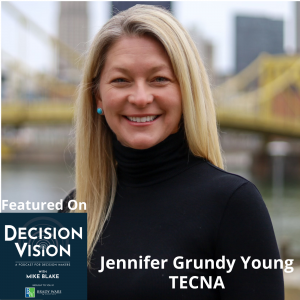
Decision Vision Episode 133: Should I Engage in Lobbying? – An Interview with Jennifer Grundy Young, Technology Councils of North America (TECNA)

September 9, 2021 by John Ray

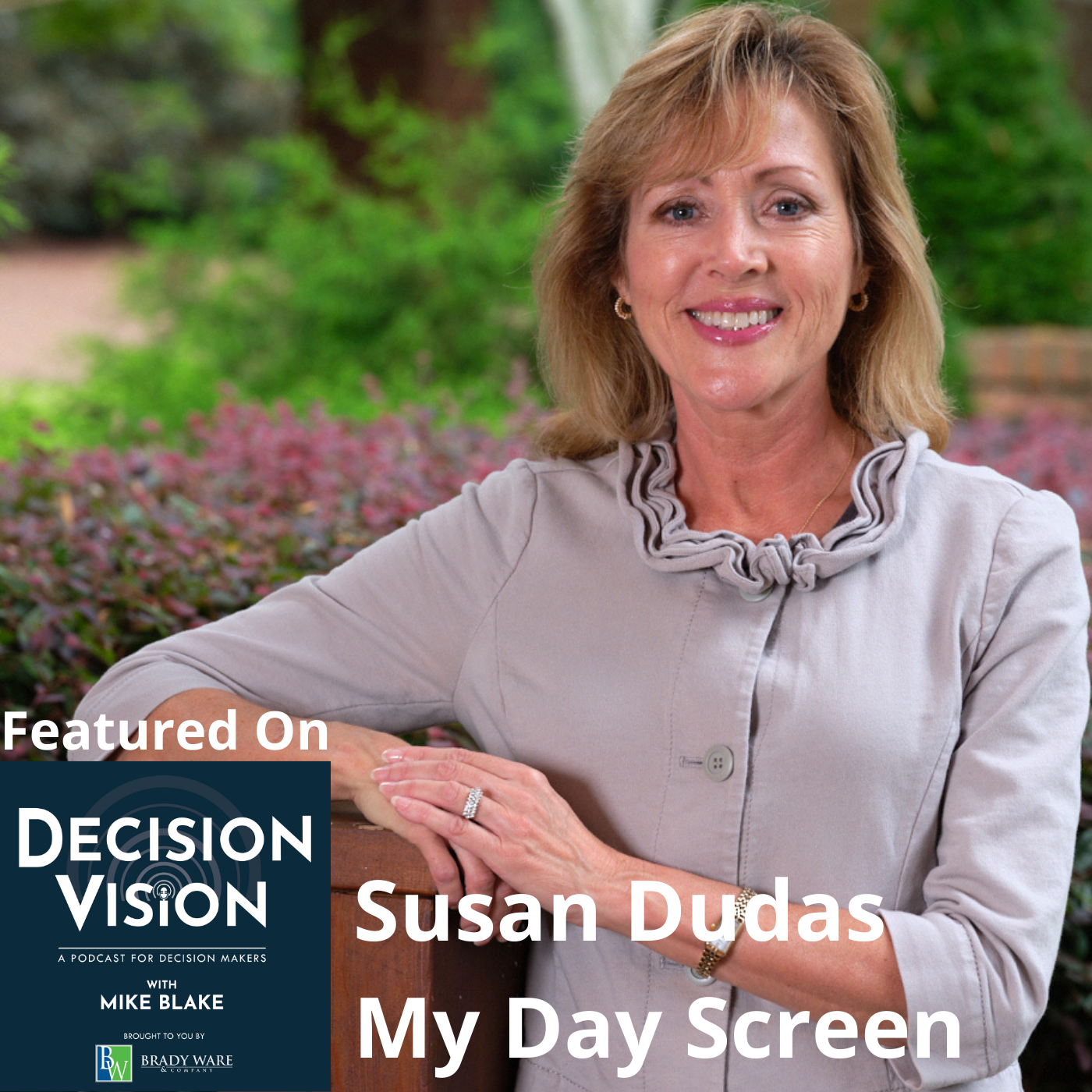
Jennifer Grundy Young
Decision Vision
Decision Vision Episode 133: Should I Engage in Lobbying? - An Interview with Jennifer Grundy Young, Technology Councils of North America (TECNA)
Loading
00:00 /
RSS Feed
Share
Link
Embed

Download file

Jennifer Grundy Young

Decision Vision Episode 133:  Should I Engage in Lobbying? – An Interview with Jennifer Grundy Young, Technology Councils of North America (TECNA)

What is lobbying and should businesses be involved in it? Jennifer Grundy Young, CEO of TECNA, helped break down lobbying with host Mike Blake, why and when it’s necessary, what makes for effective lobbying, common misconceptions, and how businesses can use it for their benefit. Decision Vision is presented by Brady Ware & Company.

Technology Councils of North America (TECNA)

TECNA represents approximately 60 IT and Technology trade organizations that, in turn, represent more than 22,000 technology-related companies in North America.

TECHNA empowers regional technology organizations and serve as their collective voice in growing the North American technology economy. They strive to deliver valuable services to member organizations fostering collaboration, innovation, and the exchange of ideas.

Company website | LinkedIn | Facebook | Twitter

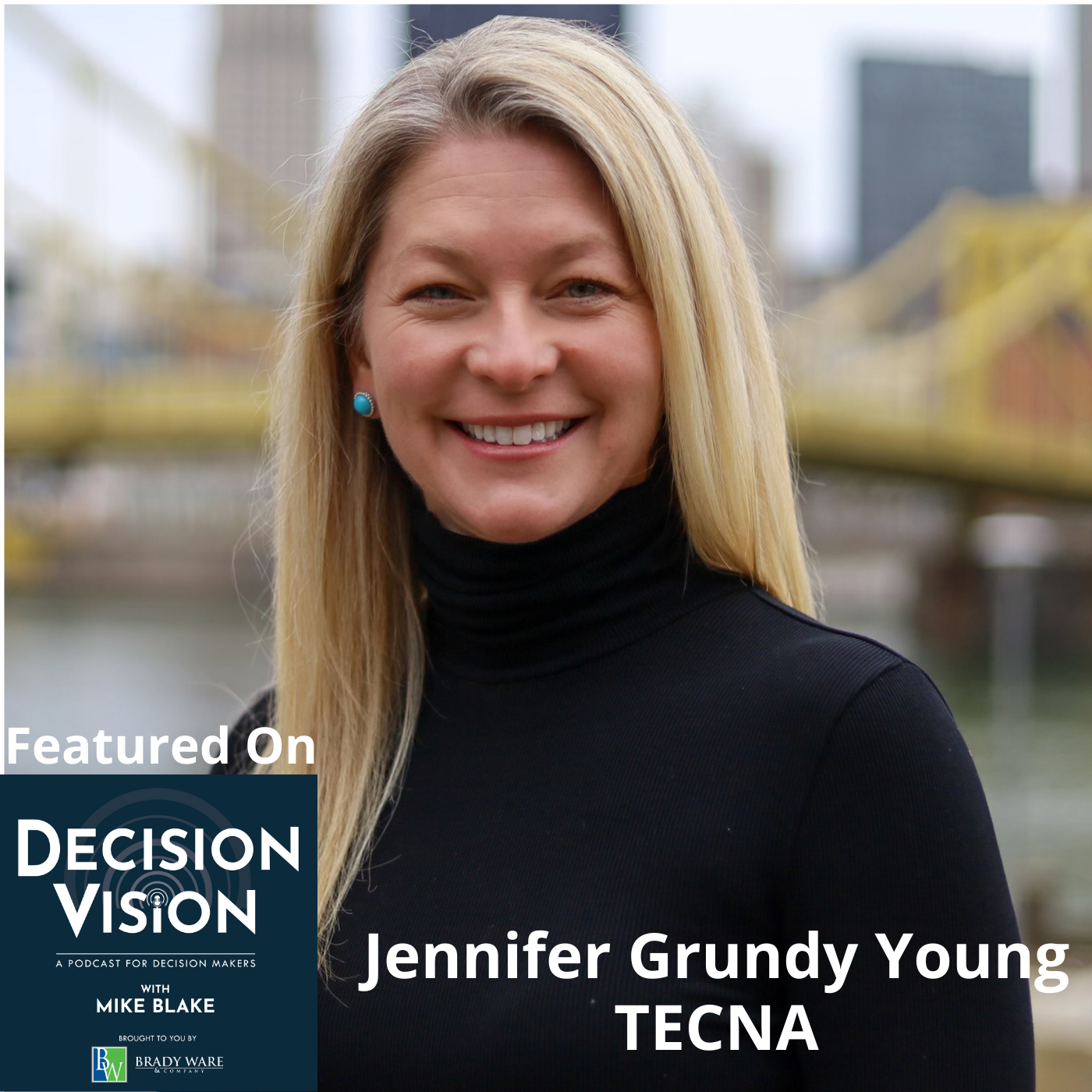
Jennifer Grundy Young, CEO, TECNA

Jennifer Grundy Young, CEO, TECNA

Jennifer Grundy Young is a seasoned association executive with an extensive background in representing organizations that serve the advanced manufacturing, technology and life sciences industries.

In her current capacity, Ms. Young serves as the Chief Executive Officer of the Technology Councils of North America (TECNA). TECNA represents 66 technology trade organizations from across the United States and Canada that collectively represent more than 22,000 technology related businesses. In this role, Ms. Young is tasked with advocating on behalf of the technology industry as well as creating a platform for the members of TECNA to share best practices.
Prior to joining TECNA, Ms. Young served as the Director of Policy and Public Affairs for Life Sciences PA, which is a statewide association that advocates on behalf of Pennsylvania’s diverse medical device, pharmaceutical, and life sciences-related industries. While there, Ms. Young worked closely with the Pennsylvania General Assembly to create policies to make the Commonwealth of Pennsylvania the best place for a life sciences business to start, grow and thrive.
Ms. Young served nearly 12 years as the Director of Government Relations and Industry Networks for the Pittsburgh Technology Council. During her time with the Council, Ms. Young worked extensively with the region’s advanced manufacturing, life sciences and information technology sectors to develop pro-growth public policies to advance those fast-growing segments of Pittsburgh’s economy.
Ms. Young gained her initial public policy experience serving as an aid to U.S. Congresswoman Melissa Hart, who represented Pennsylvania’s 4th Congressional District and served on the powerful Ways and Means Committee.
In her free time, Ms. Young is an avid runner and is an active volunteer and mentor in her community. She graduated from Westminster College and lives in Upper St. Clair, Pennsylvania, with her husband and two boys.
LinkedIn

Mike Blake, Brady Ware & Company

Mike Blake, Host of the “Decision Vision” podcast series

Michael Blake is the host of the Decision Vision podcast series and a Director of Brady Ware & Company. Mike specializes in the valuation of intellectual property-driven firms, such as software firms, aerospace firms, and professional services firms, most frequently in the capacity as a transaction advisor, helping clients obtain great outcomes from complex transaction opportunities. He is also a specialist in the appraisal of intellectual properties as stand-alone assets, such as software, trade secrets, and patents.

Mike has been a full-time business appraiser for 13 years with public accounting firms, boutique business appraisal firms, and an owner of his own firm. Prior to that, he spent 8 years in venture capital and investment banking, including transactions in the U.S., Israel, Russia, Ukraine, and Belarus.

LinkedIn | Facebook | Twitter | Instagram

Brady Ware & Company

Brady Ware & Company is a regional full-service accounting and advisory firm which helps businesses and entrepreneurs make visions a reality. Brady Ware services clients nationally from its offices in Alpharetta, GA; Columbus and Dayton, OH; and Richmond, IN. The firm is growth-minded, committed to the regions in which they operate, and most importantly, they make significant investments in their people and service offerings to meet the changing financial needs of those they are privileged to serve. The firm is dedicated to providing results that make a difference for its clients.

Decision Vision Podcast Series

Decision Vision is a podcast covering topics and issues facing small business owners and connecting them with solutions from leading experts. This series is presented by Brady Ware & Company. If you are a decision-maker for a small business, we’d love to hear from you. Contact us at decisionvision@bradyware.com and make sure to listen to every Thursday to the Decision Vision podcast.

Past episodes of Decision Vision can be found at decisionvisionpodcast.com. Decision Vision is produced and broadcast by the North Fulton studio of Business RadioX®.

Connect with Brady Ware & Company:

Website | LinkedIn | Facebook | Twitter | Instagram

TRANSCRIPT

Intro: [00:00:01] Welcome to Decision Vision, a podcast series focusing on critical business decisions. Brought to you by Brady Ware & Company. Brady Ware is a regional full-service accounting and advisory firm that helps businesses and entrepreneurs make visions a reality.

Mike Blake: [00:00:21] Welcome to Decision Vision, a podcast giving you, the listener, clear vision to make great decisions. In each episode, we discuss the process of decision making on a different topic from the business owners’ or executives’ perspective. We aren’t necessarily telling you what to do, but we can put you in a position to make an informed decision on your own and understand when you might need help along the way.

Mike Blake: [00:00:42] My name is Mike Blake, and I’m your host for today’s program. I’m a director at Brady Ware & Company, a full-service accounting firm based in Dayton, Ohio, with offices in Dayton; Columbus, Ohio; Richmond, Indiana; and Alpharetta, Georgia. Brady Ware is sponsoring this podcast, which is being recorded in Atlanta per social distancing protocols. If you’d like to engage with me on social media with my chart of the day and other content, I’m on LinkedIn as myself and @unblakeable on Facebook, Twitter, Clubhouse, and Instagram. If you like this podcast, please subscribe on your favorite podcast aggregator, and please consider leaving a review of the podcast as well.

Mike Blake: [00:01:18] Today’s topic is, Should I engage in lobbying? And it might seem like a strange topic for a business podcast, but not when you look at the numbers. According to CNBC, lobbying is now a three-and-a-half billion-dollar industry. That’s a larger industry than many industries venture capitalists will put money into. So, it’s a big deal.

Mike Blake: [00:01:42] And, of course, lobbying gets a lot of attention in the political arena, generally bad. If you want to win votes, you bash lobbyists, right? That’s just sort of the way the political game goes.

Mike Blake: [00:01:55] But on the other hand, the amount of lobbying that goes on continues to grow and become ever more sophisticated, ever more pervasive. So, somebody out there must like it and must think that it serves a useful purpose, or we wouldn’t be experiencing that.

Mike Blake: [00:02:14] And so, you know, in particular, since I have a background in technology, I think lobbying is interesting because technology companies, generally speaking, have been very late into the lobbying game. I think Silicon Valley and the companies born out of that, such as Microsoft, and Apple, and Facebook, and Amazon and so forth, I think really for a long time have thought themselves, frankly, to be above lobbying. That it was simply a practice that was beneath them.

Mike Blake: [00:02:49] But we’ve seen them really pivot on that over the last ten years as there have become increasing concerns about privacy. There have been increasing concerns about monopoly market power, worker conditions, and so forth, use of foreign labor. All of a sudden, those companies as well have decided that they’re all about lobbying.

Mike Blake: [00:03:12] And, frankly, I don’t understand lobbying. I’ve never been a lobbyist. I’ve never engaged in it, at least not to my knowledge. But I think it’s something that many companies are thinking about. And, you know, I suspect there’s a surprise or two in this conversation, because there may be some companies that have dismissed lobbying, but may already be doing so indirectly and didn’t even realize it. Or realized that lobbying may be something that they should consider and maybe something that’s much more in their reach that they previously imagined.

Mike Blake: [00:03:47] And helping us out today is Jennifer Grundy Young, who is a seasoned association executive with an extensive background in representing organizations that serve the advanced manufacturing technology and life sciences industries.

Mike Blake: [00:03:59] In her current capacity, she serves as Chief Executive Officer of the Technology Council of North America or TECNA. TECNA represents 66 technology trade organizations from across the United States and Canada that collectively represent more than 22,000 technology related businesses. In this role, she is tasked with advocating on behalf of the technology industry as well as creating a platform for the members of TECNA to share best practices.

Mike Blake: [00:04:25] Prior to joining TECNA, she served as Director of Policy and Public Affairs for Life Sciences PA, which is a statewide association that advocates on behalf of Pennsylvania’s diverse medical device, pharmaceutical, and life sciences related industries. While there, Ms. Young worked closely with the Pennsylvania General Assembly to create policies and make the Commonwealth of Pennsylvania the best place for a life sciences business to start, grow, and thrive.

Mike Blake: [00:04:51] And Pennsylvania is a place that’s near and dear to my heart as a graduate of Franklin and Marshall College in Lancaster. And then, for a year in Carlisle, which is down the street.

Mike Blake: [00:05:00] Miss Young gained her initial public policy experience serving as an aid to U.S. Congresswoman Melissa Hart, who represented Pennsylvania’s 4th Congressional District and served on the powerful Ways and Means Committee. In her free time, Ms. Young is an avid runner and is an active volunteer and mentor in her community. She graduated from Westminster College and lives in Upper St. Clair, Pennsylvania with her husband and two boys. Jennifer, welcome to the program.

Jennifer Grundy Young: [00:05:23] Thanks, Mike. It’s great to be here.

Mike Blake: [00:05:26] So, I want to start very basic here, because I’m not sure that I know what lobbying is exactly. I mean, I have an idea of what I think it is, and I freely acknowledge at the start of this conversation it may be completely inaccurate. So, at a minimum, please educate me and perhaps some of our listeners out there, what is lobbying exactly and how does it work?

Jennifer Grundy Young: [00:05:50] Well, it’s a big word. I think it encompasses a lot of things. And it really is anything. It is engaging in an activity where you are seeking to influence policy by influencing the policymaker, whether that’s somebody in the administration or a legislator. So, someone who’s actually crafting or has power over policy. And so, that’s who you would be lobbying. And that’s guaranteed in our First Amendment in the Constitution to do so.

Mike Blake: [00:06:20] And so, why does it occur? What purpose does it serve? And why has it become, at least economically, such a big deal?

Jennifer Grundy Young: [00:06:31] Well, kind of taking it out to a 30,000 foot view, the Federal Government is, to start with, the largest purchaser of goods in the world. And so, a lot of times you will hear about companies or entities lobbying for government contracts or for things like that. The government typically has a say in just about everything you do. How fast you drive on the road, whether you wear a seatbelt. What time you can purchase a glass of wine in a hotel lobby. Whether you’re allowed to drive a car. Whether you’re allowed to purchase a gun. Whether you’re allowed to wear shoes in a store or not. So, there is a lot of overarching into your life and into business.

Jennifer Grundy Young: [00:07:23] And so, typically, people lobby out of an interest that they have and perhaps seeing something different that is currently happening. Or to put something on the books or in regulation or in law that would be better to make things better through their eyes.

Mike Blake: [00:07:42] Perfectly candid and I imagine you’d agree with this, at least from afar, lobbying doesn’t have necessarily the greatest reputation, right? I’ve never seen a politician speech start out with, “Won’t somebody please think of the lobbyists? What about them?” You just don’t see that, right? But, nevertheless, it persisted. And I suspect that it probably persists from the earliest days of the republic and maybe even before. Therefore, it must serve some good purpose.

Mike Blake: [00:08:12] I simply refuse to believe that after 235 or 236 years or so, depending on when you think the country started independence or constitution, we’ve had ample opportunities to get rid of it. We’ve chosen not to. What is the useful purpose that lobbying serves in our society that it is able to persist in spite of the reputation that it generally holds?

Jennifer Grundy Young: [00:08:36] That’s a great question. So, lobbying has become kind of a necessary evil. And it’s not really a necessary evil. Actually, lobbyists are very useful and when used correctly, which they more often than not are. They serve a very important purpose in the government. So, take anything that are constitutionally recognized representatives, all of our representatives are not experts in everything. They’re not experts in health care or taxation. You might have a handful that’s an expert in foreign policy or trade. Or down on the state level, even all the way to a lot of what’s going on with COVID-19, with restrictions, and with the restaurant business.

Jennifer Grundy Young: [00:09:21] And so, when they’re looking to make policy, when legislators or regulators or administration officials are looking to make policy, oftentimes, they will reach out to those bodies first and say, “Here’s what we’re thinking -” we’ll use one that everybody knows – “- we want to raise the speed limit in Pennsylvania -” I used Pennsylvania. I’m based in Pennsylvania “- from 65 to 70.”

Jennifer Grundy Young: [00:09:47] So, in that, you’re going to have the special interest groups. You might have the triple AAA saying, “Let’s do it. You know, we’re going to get more people on the road. Let’s get it up to 70. We’re going to a lot more people going.” The Restaurant Association is going to say, “Definitely. We want more people to come to Pennsylvania.” They’re going to be lobbying for it. And then, they may call the emergency responder, the EMS, and say, “Is this a good idea?” And they say, “No. Because this, this, and this. And these are the reasons why. And these are the real data points as to why.” Or they may call the car manufacturers and say, “Can the cars sustain that kind of speed over time?”

Jennifer Grundy Young: [00:10:24] A really good example of this is something our organization specifically is working on right now, which is around highly skilled immigration reform. I mean – my gosh – talk about a humongous bucket of, probably, next to the tax code, I think, the hardest policy that exists out there is immigration. And, you know, when you think of immigration, you can think of about 50 things. It could be the border. It could be people coming in to work at a vineyard. It could be people coming in to work at hotels. It could be your neighbor who came to work as a software engineer at a company down the street. So, it’s humongous.

Jennifer Grundy Young: [00:11:03] And one of the issues the United States has currently is highly skilled immigration reform. We don’t have enough software engineers in this country to fill holes that we need to fill. So, our companies can’t hire any more American software engineers because there aren’t any more. We’ve hired them all. The colleges can only produce so many. They’re all gainfully employed. So, we need to find more in the world but we can’t bring them in legally right now because there’s a cap on the H-1B visas. Well, a lot of our elected officials don’t know that.

Jennifer Grundy Young: [00:11:35] So, they require lobbyists to go and say, “Here are the data points. Let me explain to you why this is important specifically to the tech industry. And here is the debating argument.” And they’ll bring people in that talk about that. And so, oftentimes, they are very important because they are the facts. The people who are able to relay the information. They’re actually the specialists in the industry.

Jennifer Grundy Young: [00:11:59] So, they get a bad name when the opposing force is saying the opposite and somebody else wins. And so, it’s easy to make an enemy out of the very same people that you are and say, “Well, it was the lobbying. It was the outside interest group that was doing it.” Well, there was an outside interest group that was pushing it the other way, too. And so, it’s an easy target, like lawyers.

Mike Blake: [00:12:24] And business appraisers, too. So, you touched on something that I actually want to pause on and dig in deeper. Because, you know, for example, raising the speed limit – I’m dating myself. I’m old enough to remember when Ronald Reagan basically put a cap on the speed limit – no. That wasn’t the speed limit. It was something else. It was the drinking age, that’s right. He withhold federal funding in order to make sure the drinking age stayed at 21, basically.

Mike Blake: [00:12:58] But in your case, you know, there’s one side that people driving faster means they’re more likely to drive a longer distance to patronize my business, whether it’s retail or restaurants, entertainment, whatever. And then, there’s the other side, as you mentioned, the paramedics that don’t want to scrape people off the pavement. And they’re pointing out the people who drives at higher speeds are more likely to get into an accident. I’m guessing. I haven’t seen the data. And when they get into one, it’s probably worse than when it happens.

Mike Blake: [00:13:25] So, when two lobbying groups kind of square off, how do you handicap who’s going to win? Is it more charisma? Is it more persuasive an argument? Is it showing that you have more votes behind you? Is it something else and not even thinking? How does one side kind of win over the other?

Jennifer Grundy Young: [00:13:53] That’s a really good question. A lot of it is, typically, who is in the majority in the legislature. So, you’ll know when certain issues are going to get done and be taken up because they’re popular among a particular political party. And that’s the time to do certain things you want to do. If you want to lower taxes, the time to go about that is when the Republicans are in control.

Jennifer Grundy Young: [00:14:22] Immigration reform is a great example. We’re looking to do that right now. We have an audience with a lot of the chairs of the committees who are in charge of that, because that is something that the Democrats on the Federal level are more in favor of. So, you know, that plays a big part of it.

Jennifer Grundy Young: [00:14:40] Also, how much money is it going to cost? Is it going to cost money? Is it going to cost the government money? Great. If it’s going to cost money, then you better figure out how to pay for it, too, as part of your argument. And if it’s going to bring money in, typically, people are pretty excited about that. You know, in the government, they’re going to be excited. Whatever you’re proposing or advocating for is going to bring money in, that’s usually an easier win than something that’s going to cost money. So, those are, typically, handicaps right out of the gate that you have something either on your side or not on your side.

Mike Blake: [00:15:10] Now, are lobbying organizations such as yours, are you guys permitted by law to make campaign contributions?

Jennifer Grundy Young: [00:15:18] Yes.

Mike Blake: [00:15:19] You are. Okay.

Jennifer Grundy Young: [00:15:21] It’s a tax status depending on what your tax registration is. But anybody can have a political action committee, and that’s how you would do that type of thing. And those are all done, whether it’s to the State, Local, or Federal level. Those are registered Political Action Committees or PACs. And that is typically how those types of contributions are made as well as individuals. And then, you know, depending on what level of government you’re at, whether there’s limits for particular offices, one cycles are, things like that. It’s pretty heavily regulated for the most part.

Mike Blake: [00:15:58] Now, your organization, if I’m not mistaken, is something of a lobbying aggregator, for lack of a better term or a more intelligent one. You represent 66 technology trade organizations who, in turn, represent over 22,000 technology related businesses. Explain kind of what the value is of that kind of model versus a company lobbying directly. Is there a choice to be made? Are they mutually exclusive? Are there members, for example, that also lobby on their own behalf? Maybe works through other organizations? Is it a direct line of sight? Is it a web of complex relationships? Can you kind of shed some light on how that kind of pans out?

Jennifer Grundy Young: [00:16:44] Yes to all of that. But, yes. So, our organization, we’re a trade association. And so, we represent other trade associations, other technology trade associations across the United States and Canada. They represent actual member companies. So, they are the ones who represent the 22,000 collectively that rolls up to us. So, they individually – sometimes yes, sometimes no – advocate on their own or lobby on their own. We will lobby on behalf of the group as a whole and represent that voice of 22,000 based on collective issues that we’ve decided.

Jennifer Grundy Young: [00:17:27] We have a policy agenda that our policy committee has developed and approved and voted on. And there are bigger buckets of things that are important to that collective audience as a whole. Where, you know, the majority of them are small companies in nature and don’t lobby on their own. They may have individual relationships with a couple of members of Congress or their general assembly in their state. But, generally speaking, the majority of them don’t lobby on their own because there maybe isn’t necessarily a need for them themselves. But, collectively, it’s important to them because there are larger issues that a larger voice can make a bigger impact on.

Mike Blake: [00:18:06] And I’m guessing there’s an element of economies of scale, too, right? If I’m a nine person software as a service startup, now I’ve got maybe a couple hundred grand of angel funding. I’ve got code to write. I’ve got to figure out a way to get and retain customers. There isn’t going to a big line item in my budget for lobbying. And, you know, this is the nature of our economy. This is grown up talk.

Mike Blake: [00:18:34] How much money you spend on lobbying can matter. It can impact the amount of lobbying that’s done, the level of which is done, the experience and connections of the person doing the lobbying. So, it seems to me also that if I’m running that small company and I think there’s something important in terms of government policy vis-a-vis technology, the only realistic way I can have a say is to join a trade organization that’s going to amplify my voice by pooling resources, if you will. And, hopefully, at least everybody’s directionally kind of trying to push for the same things.

Jennifer Grundy Young: [00:19:09] Exactly. And it behooves a lot of smaller companies to join in like-minded trade association. I mean, there are associations out there for just about any industry you can imagine. And so, it makes sense to do that. Because, honestly, when you’re a small entrepreneur, there aren’t enough hours in the day as it is already. And spending any amount of time, whether it’s one minute or 50 minutes of your day, your week, on lobbying, it has to be pretty darn important and either is going to make or break your business to spend that kind of Time on it.

Jennifer Grundy Young: [00:19:42] So, allowing someone else to do that and maybe taking one day out of your year to go to your state capitol or your nation’s capital to talk about your individual company, and that’s it, and allow your association to do it. It’s typically a better fit because you have a business to run. And it does behoove you to do that versus spending a lot of time.

Mike Blake: [00:20:03] So, I’m going to ask you a very loaded question, but I’m going to ask it anyway. You can handle it. And that question is, how effective is lobbying? You know, is it always effective? Is it sometimes effective? And can one expect results in a fairly short period of time? Or is lobbying more for the person or the company that’s playing the long game? How would you address that question?

Jennifer Grundy Young: [00:20:35] That’s a good question. It’s not for the faint of heart. And it’s definitely, typically, not a quick turnaround. If it’s ever a quick turnaround, I think a lot that has happened with COVID within the states over the last year has been some of the fastest moving stuff I’ve ever seen go through the government because it has to. As well as the Cares Act of last spring, that amount of money to go through the Congress that fast, I don’t know if it will ever happen again. So, that was a big deal.

Jennifer Grundy Young: [00:21:05] So, it’s definitely not for the faint of heart. It takes a long time, typically. It takes a lot of groundwork. And, you know, lobbyists, it is actually a specialty. And it is something that they’re good at doing and they know how to do it. And so, they know who to talk to. They know how to steer the conversation. They will typically help companies, associations understand who they should be talking to, and when, and why, and knowing when to move the needle in a calendar year, in a fiscal year. Those types of things.

Jennifer Grundy Young: [00:21:37] And so, there’s a reason that lobbyists do it when they do. It is typically all calculated. And it isn’t just a matter of saying, we’re just going to get this done and get it done. It is actually a very strategic way of doing things. And it’s not all contrived. It’s not all planned out. There definitely are things that come up.

Jennifer Grundy Young: [00:21:56] And, you know, encouraging businesses to understand or at least pay a little bit of attention to government. And asking some questions sometimes is really helpful. Because everything, like I said, the government does, does affect your business one way or another. And at least read the paper once a week or turn on the news every now and again and just pay attention to what’s happening, because it does affect you even though you don’t think it does, it will. But it doesn’t move fast. That’s a good thing, it doesn’t move fast.

Mike Blake: [00:22:26] Right. So, you don’t just, “Hey, there’s a bill coming up. There’s policy I’d like to have changed next week.” That does not define a lobbying thing. Not a realistic objective.

Jennifer Grundy Young: [00:22:40] That’s a long term goal. Right. Right.

Mike Blake: [00:22:43] So, you touched on something I wanted to make sure to ask you. And that is, how has the pandemic changed lobbying? I mean, has the fact that the nature of human contact, certainly for a year changed, and we may or may not go back to that in this inter-pandemic kind of world that we’re in. How has that changed? I mean, are these conversations happening through Zoom calls? I mean, it’s just going to be so weird, right? Because if one network catches you with your mask on, then you’re not a patriot. If one network catches you with no mask on, then you’re an idiot and you’re trying to kill babies. And it’s so complicated to do this stuff anymore. Has your industry been impacted by the pandemic?

Jennifer Grundy Young: [00:23:35] Yes. So, like everybody else, you know, the first – I don’t know – six, eight months of this was done, a lot of it was virtual and phone calls, which, you know, the phone calls already existed. But lobbying kind of goes back – and I think a lot of lobbyists function this way and believe this way – that it is one of those things where the transparency of what’s happening behind the closed doors of government and being there in person is really important. Because it’s a lot harder for any of the elected officials to kind of look you in the eye and say one thing and do something else in person than it is to do it on the phone or over Zoom.

Jennifer Grundy Young: [00:24:20] And so, some of the conversations I had with some of my peers, it would have been last May or June, we’re wondering when the capitols are going to open back up again. It was unnerving that they were passing budgets, state budgets, and things like that were happening. And there were no government affairs people in the building. Or people, for that matter. There weren’t just Pennsylvanians or there weren’t Ohioans. I mean, they weren’t even in the building. And that was bothersome because that had never happened before.

Jennifer Grundy Young: [00:24:45] And so, that’s one of those things that the transparency part of it. You know, I think there is the the part of checks and balances that lobbyists do help with, because they want to make sure even though there might be tit or tatting in each other, they also know they’re holding a very delicate balance in place, too, by making sure that honest work is being done, as honest as it can be, at least. So, that’s been weird.

Jennifer Grundy Young: [00:25:07] And I’ll tell you even more than the pandemic, you know, what happened in Washington at the beginning of January has been odd that there have been parts of Capitol Hill that we can’t get into still as groups. Individuals can. They have to be escorted in, approved by the Capitol Police. So, that’s weird, too. Because, you know, not being able to get in front of your elected officials is something that we’re guaranteed as Americans to be able to access the people we elected. And so, that’s been interesting. And I don’t think it’s going to last forever. I think that that’s going to be a thing that’s going to have to change.

Mike Blake: [00:25:41] That’s interesting. I had not even thought of that. But now that you mention it, I mean, it makes perfect sense. There’s always this balance that one has to try to decide on between security and access. That’s not just government officials. I mean, that’s a lot of things, like it’s a bank, it’s a post office, or a house. But it hadn’t occurred to me that, you know, I’m sure the security protocols have changed. And when they’ll change back, who knows?

Mike Blake: [00:26:19] Again, going back to the September 11th, 2001 attack, we didn’t used to have those barricades in front of the White House. You could just go right up to the fence and look through and whatnot. You don’t do that anymore. That’s just a change and an acknowledgement of the fact that the world has changed.

Mike Blake: [00:26:40] So, you know, it hadn’t occurred to me that because of social instability, that that’s going to change the game as well. And, you know, it remains to be seen if we’re out of the woods on that or not. Stay tuned, I guess, for 2024. So, that says I never thought about.

Mike Blake: [00:27:03] So, my understanding is that lobbying is actually a fairly regulated activity. But I think a lot of people don’t appreciate that. Lobbyists are not allowed to just run around with, you know, a briefcase full of unmarked bills and just buy votes. That’s the impression. But I don’t think that’s allowed. It’s certainly not considered good form. So, in your mind, how strict are the regulations for lobbying? Do they have an effect on what you do? Do you think they could even be stronger? Do you think maybe they’re even too strict in cases?

Jennifer Grundy Young: [00:27:44] Well, I think it gets difficult. I understand the point of it all, because the pendulum does swing. When you’re flying a group of congressmen to the Super Bowl to sit in a box, there’s that. Or the Caribbean to enjoy a nice weekend with your spouses. You know, there are levels to where it just doesn’t even make sense. Maybe you’re concerned about nickel and diming dinner or a conversation at a coffee shop or things like that, I think that does get difficult and really does impede on freedom of speech and things like that.

Jennifer Grundy Young: [00:28:23] But, again, it’s a difficult balance to find. I mean, where is the line? I don’t really know where the line is at. I can tell you that I’ve been a pretty conservative lobbyist. I don’t have buckets of cash to give anybody. So, the best I’ve got is my word and my time. So, I’ve never really had the luxury of being able to put people on a plane. But, you know, when you’re concerned about time, and you’re concerned about little things, and making sure you’re not breaking the law, sometimes it does get a little laborious to make sure that you’re not in terms of how many hours you’re doing this and how many hours you’re not.

Jennifer Grundy Young: [00:28:58] But I do think it is something that needs to be regulated because the pendulum always swings. Someone’s always going to take it to the full extreme on one end. But, again, I don’t think it is a bad industry. I can see how they get bad names, but I think it’s a very important thing that legislators spend time with lobbyists because there’s a lot of things they don’t know.

Mike Blake: [00:29:21] Yeah. Well, I’m lucky. You seem like a nice person. I don’t think that you would be a willing participant in an industry that is doing evil, basically. You know, you serve an important function of communicating to our democracy.

Mike Blake: [00:29:41] But, yes, speaking of that, actually, I am curious – and I’m not even sure if this is a fair question. I’m going to put it out there anyway – are there any clear examples in terms of lines that somebody considered an ethical lobbyist just simply won’t cross? Even regardless of regulation. You know, my world is regulation as well and there are things that I can do that are legal, but they’re not necessarily good for them and not the right thing to do.

Mike Blake: [00:30:10] And in your world, does that exist, too? And I think it’d be educational for me, I think it’d also be educational to our audience, to understand from your perspective, you know, what are some lines that most lobbyists that would be considered Professionals, with a capital P, that they generally would not cross?

Jennifer Grundy Young: [00:30:27] I mean, really, the law is written now that if you are functioning ethically as a human being, you don’t need to worry. So, I’m saying, “Hey, I will give you this car if you vote this way on this bill.” That’s not okay. You can’t do that. And that’s pretty obvious. But you probably wouldn’t do that with your kids school teacher either. So, those are some easy lines to not cross.

Mike Blake: [00:30:56] I don’t know. We’ve had a few actors have gone to jail because they did pretty much that. But yes, you’re right. Most wouldn’t.

Jennifer Grundy Young: [00:31:01] Right. You know, the way the law is written now, it’s not hard to just do the right thing and not misbehave. But they’re absolutely like anything else are. Bad actors in terms of bribery, in terms of funding, or just advocating for generally unethical policy that might benefit pocketbooks. That’s the most popular one, I think. I mean, I can’t think of any examples off the top of my head. But I’m sure if you Google it, you’ll find some bad actors who do that.

Jennifer Grundy Young: [00:31:31] And then, the general lobbying against things for your selfish interests, even if you know it’s not right. It might just be better to sit quiet. It’s like, again, your kid’s baseball team. “Well, I don’t want Timmy to get on because my son is not going to get on. So, I’m going to work really hard so Timmy doesn’t.” Like, no. You shouldn’t do that either. You might not be pleased with it. But just do the right thing and you won’t have any issues. You don’t really need to worry. They’re not after people trying to do the right thing. They’re after the ones trying to do the wrong thing.

Mike Blake: [00:32:05] In your mind, is it easier to lobby to change something? Or is it easier to lobby on behalf of keeping the status quo? Does one side have an advantage over another in your mind?

Jennifer Grundy Young: [00:32:19] Well, typically, the status quo is easier because it doesn’t involve any change of anything. When you’re looking to make change, you have to get allies on board. And you have to prove why you need to make the change. And make sure it doesn’t cost any money or save money. Or, you know, kind of all the bells and whistles that go along with it. It typically involves a lot more work.

Jennifer Grundy Young: [00:32:42] And there’s nothing wrong with the status quo. I mean, there have been plenty of visits – and we call it, often, good government relations – going into an elected official office and saying, “Hey, this policy on R&D tax credits is terrific. It works really well for innovation community. The right people are getting rewarded. They’re expanding business in the state. Don’t do anything with it. It’s perfect as it is. Brother, thanks so much. We really appreciate it.” And, you know, legislators typically really like those types of meetings. And you don’t make them work. They jokingly will say, “Hey, this is my favorite kind, we’re doing the right thing.”

Mike Blake: [00:33:15] You’re not asking for anything.

Jennifer Grundy Young: [00:33:17] Right. I love this. And it’s good to tell them that because the squeaky wheel is the one who gets the grease. So, if you’re walking in and saying, “This is great. Don’t fix it, it’s not broken.” Awesome. But the one that’s coming in and saying, “We shouldn’t be taking money and putting it towards tax credits for research and development. We should be putting it over here.” But nobody’s coming in and saying that the R&D tax credits are good. They may think they’re only bad. So, you know, the status quo is never a bad thing. If you like something, you should tell them that you like it because that’s good, too. Nothing wrong with that.

Mike Blake: [00:33:53] Now, we’ve been talking from the perspective of lobbying at the federal level. But lobbying takes place at other levels of government, too, does it not? So, for example, I don’t know if this may or may not be part of your mandate, but I imagine there are plenty of lobbyists that are hanging out in Harrisburg that are trying to influence some sort of Pennsylvania policy.

Jennifer Grundy Young: [00:34:19] Definitely. Yeah. And in Columbus and everywhere else across the country, there’s plenty of them all the time that are there.

Mike Blake: [00:34:28] And I’m thinking, you know, even at the municipal level, there’s probably some lobbying going on. You know, I live in a suburb of Atlanta, Georgia, called Chamblee. And, you know, we’re an old town of 40,000 people and we’re spunky and everything else. And we have a mayor that gets paid, like, minimum wage or something. I think the greeters at Walmart make more than he does at this point. But, you know, we have a city council and they pass ordinances. And there are zoning issues. And real estate is going gangbusters here because people want to develop everything. And, you know, I haven’t looked into it, but I suspect in some form or fashion, there’s lobbying going on in my very town as well.

Jennifer Grundy Young: [00:35:10] Absolutely. For sure. And you touched on, probably, the biggest one that local municipalities are lobbying on, and it’s anything that’s affecting the land or the real estate market or anything like that. Because you think of it as 30,000 or 15,100 feet. So, what’s really close to you is what your local people are regulating and talking about as it gets bigger. So, they’re talking about rights of way. They’re talking about drilling rights. They’re talking about zoning, and whether they’re going to let a commercial development come in, or if they’re going to stay residential. And there’s plenty of lobbyists that are there on behalf of the real estate industry or the energy industry, or you name it.

Jennifer Grundy Young: [00:35:54] Or, you know, I’ll go back to special interest groups. Energy industry, those types of things, or it could be the Sierra Club talking about don’t put a road here because it’s near an extinct particular type of worm that’s in the ground, which happens all the time. So, there’s a lot of that that goes on, on the local level.

Mike Blake: [00:36:15] So, in that respect, in some cases, lobbying may actually be very accessible to a relatively small business..

Jennifer Grundy Young: [00:36:23] Yeah, definitely.

Mike Blake: [00:36:25] Because you’re not necessarily going to have five or six players that are pouring hundreds of thousands or millions of dollars into a lobbying effort. It’s like, “Hey, you know, if I pay a couple thousand dollars, can you kiss city councilmen,” basically.

Jennifer Grundy Young: [00:36:39] Oh, my gosh. The schools are a perfect example right now. The public schools, the math mandates and what’s being taught. Those are all school boards. Those people are all elected. And so, you know, how you’re influencing your local elected school board -goodness gracious – that’s all over the place. And so, they can get lobbied just like everyone else, for sure.

Mike Blake: [00:37:01] We’re talking with Jennifer Grundy Young. And the topic is, Should I engage in lobbying? A few more questions before we let you go. But one question I’d like to ask is, are we in an age now where if you’re a business of any size, lobbying is probably a cost of doing business because government is so pervasive? It just seems to me if your business achieves some size – I don’t know what that size is, but I suspect there’s some size – where you just sort of can’t hide from the government. The government is just going to impact what you do. Is that just going to be a budget item for a business of any size going forward?

Jennifer Grundy Young: [00:37:45] Well, yes and no. I mean, I think that you can be paying attention to it. You can vote a lot of different ways by getting the right people in office. And, again, it’s not lobbying. That might be campaign contributions. It can be kind of making sure the people you want in office are there based off of what they believe and don’t believe. And, again, that’s more campaign work than it is lobbying. But it’s kind of the other end of lobbying. It’s getting them there first before you have to lobby them.

Jennifer Grundy Young: [00:38:15] But then, on the other side of lobbying, you can do something as simple and as great as joining an association. You have chambers of commerce that are really close to you. You have trade associations. All of our tech councils, many of them are regional in nature. They’re not statewide. They are, you know, in city areas, Kansas City, they’re in Chattanooga, they’re in Nashville, they’re in Greater Virginia, Northern Virginia. So, they’re not, you know, large national associations. They’re regional. And their members are typically just like you. And they’re dealing with a lot of the same things you are.

Jennifer Grundy Young: [00:38:52] So, when you bring something up to someone who works there and saying, “This is a huge problem to my business.” We say, “Yeah. We’ve heard that from ten other companies. So, this is great. We’re working on behalf of you. Go back to work and do what you need to do.” And, typically, those costs are not very much. It’s a couple hundred dollars, maybe a couple thousand tops in a year that you can do that. And you can get active without spending a lot of time too.

Mike Blake: [00:39:19] What do you think is the most misunderstood part of lobbying? What does the public think lobbying is about that’s just not right? If you’re an insider, you just know that the public’s perception just doesn’t meet reality.

Jennifer Grundy Young: [00:39:34] Well, I think going back even a step further, I think a lot of people don’t think that their voice is going to matter, generally speaking. You talk to a lot of people, “I don’t care. It doesn’t matter. They’re going to do what they want to do anyway.” Which, yeah, in probably a lot of cases it is true. But in a lot of cases, it’s not. And so, everybody has an elected member of Congress, and you’re a voter in their district, and you matter, and you should absolutely reach out to them and your state officials and your local, you know, your commissioners, your township supervisors, you can do that.

Jennifer Grundy Young: [00:40:08] Jokingly, a former colleague of mine used to always say, “It’s always better to make a deposit before you have to make a withdrawal.” And it’s a terrible way to put it because it has nothing to do with money. It’s much more the get to know them before you have to get to know them. So, get to know them before. You know, make sure they know your name, your company, what you do before you have to call them.

Jennifer Grundy Young: [00:40:28] They’re going to take away this regulation. I have a great example of a company for the member of Congress they used to work for. It was an organic personal products store. And this was, like, before organic stuff. This is early 2000s before the USDA organic seal was a big deal and everyone had the seal. Your product has to be 95 percent organic to have that seal on it. And they were taking that seal off of their soap just because they didn’t think soap needed to have it on it. Well, there were plenty of people that had allergies to all kinds of things that were in soap. And it was a big deal to them because it gave them access to a market like Whole Foods and different places that only held the organic seal.

Jennifer Grundy Young: [00:41:09] Well, they reached out to the congresswoman’s office, and it was as simple as writing a couple letters to the USDA. The USDA had no idea. They didn’t do it because they were being malicious. They just were doing it because they thought, “Well, who needs to be organic?” “Well, here’s why.” So, the fact was, my boss had toured the facility. My boss knew exactly who they were. She’s like, “Oh, my gosh. They took their seal off.” She didn’t need to go tour them. They picked the phone up and called her. She knew their names and got right on it. It was a matter of minutes.

Jennifer Grundy Young: [00:41:36] And versus, “Let me come out and see you in a couple of weeks. When my schedule clears, let me blah, blah, blah.” So, making a deposit before you have to make a withdrawal for anybody on any level of government is not a bad thing. It’s very helpful and good for you as an American.

Mike Blake: [00:41:49] I’m going to say, frankly, it sounds a lot like professional networking. I mean, the way you describe a lobbying is really just a very highly specialized form of professional networking when it comes right down to it.

Jennifer Grundy Young: [00:42:04] And that’s more relationship building. And as I mentioned before, good government relations. But it’s good to do. It’s always better to approach things from a friendly voice than from an angry one needing quick action on things.

Mike Blake: [00:42:25] So, a couple more questions. Does anybody ever stop lobbying once they start? It seems to me that once a company starts lobbying, engaged in lobbying, particularly if they have any kind of success with it, they probably don’t stop. I would think it’s one of these things that kind of once you’re in, you’re in. And it’s sort of hard to pull the plug on that and get rid of or forgo the benefits that you were getting from that. Right?

Jennifer Grundy Young: [00:43:01] I think it probably goes back to why you would do it in the first place. So, why your company is getting involved with it. If it is for personal gain, depending on what the personal gain is, which, you know, of course, you’re going to act on behalf of your selfish interests. But, typically, if you’re part of association, it is for the greater good for the most part. And will benefit lots of people.

Jennifer Grundy Young: [00:43:24] But let’s say you’re after maybe a government contract that requires congressional approval. Well, once you’ve got the contracts, if there’s nothing else you really are looking to lobby on behalf of, you know, you might stop. And depending on what your product is, if you make pieces for a Joint Strike Fighter, you’re not probably going to be lobbying on those anymore once they’ve approved that entire contract and that’s headed through. So, it depends on what you’re actually lobbying for.

Jennifer Grundy Young: [00:43:52] If it’s one of those things that you’re in an industry that’s super heavily regulated, like financial services, life sciences, things like that, depending on the size of your business, if you are a large business, a large pharmaceutical company, you probably don’t have a lot of choice in the matter. You really have to be paying attention all the time because a small change could make a huge impact on how you do business every day for better or for worse. And it could be done by people who don’t really know the implication of what they’ve done. So, that’s the fear oftentimes. And it’s, again, through no fault of their own. They’re supposed to be a jack of all trades when they’re trained lawyers or accountants or things like that. It’s just the way our country was set up.

Mike Blake: [00:44:35] Jennifer, this has been a neat conversation. And I’m sure we haven’t uncovered some questions that somebody in our audience had or maybe there are questions are audience wish we go a bit deeper on. If somebody has a question, can they contact you for follow up? And if so, what’s the best way to do that?

Jennifer Grundy Young: [00:44:52] Sure, you can go right on our website, tecna.org, T-E-C-N-A-dot-O-R-G. And my name and email are listed there – I’m sorry. My email and my phone number are listed there. But you can reach directly out to me at J-Y-O-U-N-G@tecna, T-E-C-N-A-dot-O-R-G. And our phone number is 412-545-3493. And I might be able to direct you to one of the members that are close to you that can be more helpful to you right in your hometown.

Mike Blake: [00:45:30] Well, thank you. That’s going to wrap it up for today’s program. I’d like to thank Jennifer Grundy Young so much for sharing her expertise with us today.

Mike Blake: [00:45:38] We’ll be exploring a new topic each week, so please tune in so that when you’re faced with your next business decision, you have clear vision when making it. If you enjoy these podcasts, please consider leaving a review with your favorite podcast aggregator. It helps people find us that we can help them. If you would like to engage with me on social media with my Chart of the Day and other content, I am on LinkedIn as myself and @unblakeable on Facebook, Twitter, Clubhouse, and Instagram. Once again, this is Mike Blake. Our sponsor is Brady Ware & Company. And this has been the Decision Vision podcast.

 

Tagged With: Brady Ware & Company, business association, Decision Vision, Jennifer Grundy Young, Lobbying, Mike Blake, Pittsburgh Technology Council, Technology Councils of North America, TECNA, trade organizations

Maurice Contreras With Volcanica Coffee

September 7, 2021 by Jacob Lapera

MauriceContreras
Atlanta Business Radio
Maurice Contreras With Volcanica Coffee
Loading
00:00 /
RSS Feed
Share
Link
Embed

Download file

VolcanicaCoffee

MauriceContrerasMaurice Contreras started Volcanica Coffee after visiting his homeland in costa Rica.  While he was there, he saw an opportunity to import great-tasting coffee from volcanic regions, such as inCosta Rica, to consumers.

The company started part-time in his garage and now operates a coffee plant near Atlanta, Georgia with 20 employees that includes his wife and their two adult children.

Previously, Maurice was a regional director for AT&T.  Prior to joining AT&T, he was the national marketing director of TracFone Wireless when it was a startup helping it to grow to over $1B in sales. He also held senior management positions with Verizon and Blockbuster Entertainment.

He graduated from the University of Florida with a B.S. degree in business administration and earned an MBA from Nova Southeastern University.

About Our Sponsor

OnPay’sOnPay-Dots payroll services and HR software give you more time to focus on what’s most important. Rated “Excellent” by PC Magazine, we make it easy to pay employees fast, we automate all payroll taxes, and we even keep all your HR and benefits organized and compliant.

Our award-winning customer service includes an accuracy guarantee, deep integrations with popular accounting software, and we’ll even enter all your employee information for you — whether you have five employees or 500. Take a closer look to see all the ways we can save you time and money in the back office.

Follow OnPay on LinkedIn, Facebook and Twitter

Tagged With: Maurice Contreras, Volcanica Coffee

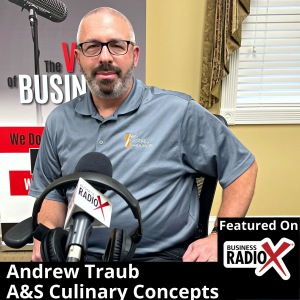
Andrew Traub, A&S Culinary Concepts

August 30, 2021 by John Ray

A&S Culinary Concepts
North Fulton Business Radio
Andrew Traub, A&S Culinary Concepts
Loading
00:00 /
RSS Feed
Share
Link
Embed

Download file

A&S Culinary Concepts

Andrew Traub, A&S Culinary Concepts (North Fulton Business Radio, Episode 385)

Executive Chef and Owner of A&S Culinary Concepts Andrew Traub joined host John Ray to share the mouth-watering array of programs his culinary studio offers. In addition to take-home meals and private catering, A&S Culinary also offer corporate team building and learning events like the Big Green Egg Bootcamp. Andrew’s priority is making sure everyone is having fun while learning something new in the kitchen or at the grill.  North Fulton Business Radio is broadcast from the North Fulton studio of Business RadioX® inside Renasant Bank in Alpharetta.

A&S Culinary Concepts

A&S Culinary Concepts is an award-winning culinary studio celebrated for corporate catering, corporate team building, Big Green Egg Boot Camps, and private group events.

Company website | Facebook | Instagram

Andrew Traub, Chef/Owner, A&S Culinary Concepts

Andrew Traub, Chef/Owner, A&S Culinary Concepts

When Andrew was 15, his mother requested he go out and find a job. So he went down the block to the local Italian steakhouse and asked if they needed help. Luckily they did, and he was hooked into the world of food and beverage. That experience cemented his desire to become a chef and led him to choose a culinary school in the Catskill Mountains of New York for his college education. Andrew gained invaluable experience working in the enormous kitchens in the Catskill resort hotels while earning his degree. Recruited right out of school by Marriott Hotels and Resorts, Andrew was asked to be a member of the opening management team of the New York Marriott Marquis in Times Square.  After moving his way up the culinary ladder and winning several culinary awards along the way, from culinary shows to corporate events, he left Marriott.

Andrew partnered with his college friend and opened Love at First Bite Catering in Manhattan. Clients included Radio City Music Hall, the Luxembourg Consulate, the Pace Collection and Fordham University. After selling Love at First Bite, Andrew and his wife, Sue, followed a dream and traveled around the United States for six months, sampling the cuisines of the various regions of our great country along the way.

Upon returning to New York after their travels, Andrew was offered a position as Executive Chef at a corporate catering company in Manhattan. Ten months later, Marriott came calling again and Andrew was offered a position as Executive Sous Chef at the Marriott Marquis in Atlanta, Georgia. He accepted the position at the Marquis, which was the host hotel for the 1996 Olympic Headquarters.

After three years, Andrew was offered the opportunity to become Executive Chef of the Memphis Marriott Downtown Hotel and Convention Center. After a couple of years, Atlanta once again beckoned, and his next promotion was the position of Executive Chef of the Atlanta Evergreen Marriott Conference Resort in Stone Mountain, Georgia.

Andrew was at Evergreen for 14 years. During that period, he served on several Advisory Boards, notably Avendra (the purchasing company for Marriott, Hyatt, and several other hotel companies); Lakeview High School in DeKalb County; and Grayson Technical Culinary Arts Program. The board position he is most honored to hold for thirteen years is on the Advisory Board of the Atlanta Community Food Bank and he is proud to continue to serve.

With his extensive professional contacts–many who have become friends–and his knowledge of the local culinary scene, he is ready to share his experience with you through his food studio, A&S Culinary Concepts.

LinkedIn

Questions and Topics in This Interview

  • What is a culinary studio?
  • What is culinary team building?
  • Do you have a minimum for catering?
  • What is Big Green Egg Bootcamp?
  • What is Thursday Night Tailgating?

North Fulton Business Radio is hosted by John Ray, and broadcast and produced from the North Fulton studio of Business RadioX® inside Renasant Bank in Alpharetta. You can find the full archive of shows by following this link. The show is available on all the major podcast apps, including Apple Podcasts, Spotify, Google, Amazon, iHeart Radio, Stitcher, TuneIn, and others.

RenasantBank


Renasant Bank has humble roots, starting in 1904 as a $100,000 bank in a Lee County, Mississippi, bakery. Since then, Renasant has grown to become one of the Southeast’s strongest financial institutions with over $13 billion in assets and more than 190 banking, lending, wealth management and financial services offices in Mississippi, Alabama, Tennessee, Georgia and Florida. All of Renasant’s success stems from each of their banker’s commitment to investing in their communities as a way of better understanding the people they serve. At Renasant Bank, they understand you because they work and live alongside you every day.

Tagged With: A&S Culinary Concepts, Andrew Traub, Big Green Egg, Catering, corporate catering, Corporate Team Building, John Ray, North Fulton Business Radio

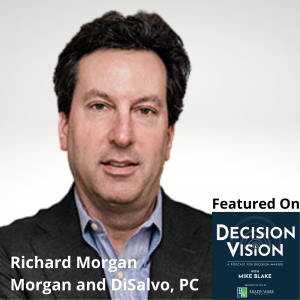
Decision Vision Episode 131: Should I Set up a Trust? – An Interview with Richard Morgan, Morgan and DiSalvo, P.C.

August 26, 2021 by John Ray

Richard Morgan
Decision Vision
Decision Vision Episode 131: Should I Set up a Trust? - An Interview with Richard Morgan, Morgan and DiSalvo, P.C.
Loading
00:00 /
RSS Feed
Share
Link
Embed

Download file

Richard MorganDecision Vision Episode 131: Should I Set up a Trust? – An Interview with Richard Morgan, Morgan and DiSalvo, P.C.

Trusts are not just for the wealthy, says Richard Morgan, an attorney with decades of estate and tax planning experience. He joined Decision Vision host Mike Blake to break down the basics of trusts, when and how they are formed, how they serve the desires of those who create them, and much more. Decision Vision is presented by Brady Ware & Company.

Morgan and DiSalvo, P.C.

Morgan and DiSalvo is a full service, high-end, estate and tax planning law firm. Their planning is individualized for their clients and clients are not shoved into pre-existing form documents. Service is a high priority, and they treat clients like family. Life changes, and Morgan and DiSalvo helps clients plan for it.

Their areas of specialty are estate planning, special needs planning, probate and administration, and dispute resolution.

Company website | LinkedIn | Facebook

Richard Morgan, Attorney, Morgan and DiSalvo

Richard Morgan
Richard Morgan, Attorney, Morgan and DiSalvo

Richard M. Morgan has been practicing law in Georgia since 1987. Richard founded the award-winning Alpharetta law firm of Morgan & DiSalvo, P.C. in 1995 to help individuals and families plan and prepare for the many changes that life brings. Morgan & DiSalvo is recognized as a U.S. News & World Report and Best Lawyers.com “Best Law Firm” since 2013. Morgan & DiSalvo received the highest “Tier 1” rating in Trusts and Estates Law, a distinction held by only 23 law firms in Georgia.

Richard prides himself on bringing peace of mind to individuals and families by helping them prepare for significant life events. In addition to the primary practice areas of the firm, Richard also specializes in finding creative solutions for clients in the areas of estate & tax planning, estate & trust dispute resolution, business succession planning, planning for special needs beneficiaries, creditor protection, charitable gift planning and tax controversies.

Richard’s work is differentiated by his level of service and attention to detail. His technical and analytical capabilities and problem-solving approach are unique among attorneys. A leader in his field, Richard is past president of the Taxation Sections of both the Georgia and Atlanta Bar Associations, the Estate Planning & Probate Section of the Atlanta Bar Association, the North Georgia Estate Planning Council and the Georgia Planned Giving Council. Richard serves on the Executive, Legislative and Georgia Trust Code Revision committees of the Fiduciary law section of the Georgia Bar Association. Richard also serves on a two member sub-committee of the Fiduciary Law Section to propose a Technical Corrections Bill to improve the 2017 Georgia Uniform Power of Attorney Act.

In 2014, Richard was elected as a Fellow in The American College of Trust and Estate Counsel (ACTEC). This is the most prestigious group of Trusts and Estates attorneys in the country, with only 59 Fellows in the State of Georgia. ACTEC membership is only offered to those who have provided substantial contributions to the field of trusts and estates law. Richard has used his charitable gift planning expertise over the years by serving as the chairman or member of professional advisory committees of several large Atlanta organizations including the Jewish Federation of Greater Atlanta, Jewish Family & Career Services, the Community Foundation of Greater Atlanta and YMCA of Metropolitan Atlanta.

Richard received his B.B.A. in Accounting, cum laude, and his J.D. degree, cum laude, from the University of Georgia. He received his LL.M. in Taxation from Emory University. Richard is a frequent speaker on estate and tax planning, charitable gift planning, and other tax-related topics.

Richard loves life and all that it has to offer, but his greatest accomplishments have all related to his wonderful and loving family, including his incredible wife and three children, and of course, now two Goldendoodles.

LinkedIn

Mike Blake, Brady Ware & Company

Mike Blake, Host of the “Decision Vision” podcast series

Michael Blake is the host of the Decision Vision podcast series and a Director of Brady Ware & Company. Mike specializes in the valuation of intellectual property-driven firms, such as software firms, aerospace firms, and professional services firms, most frequently in the capacity as a transaction advisor, helping clients obtain great outcomes from complex transaction opportunities. He is also a specialist in the appraisal of intellectual properties as stand-alone assets, such as software, trade secrets, and patents.

Mike has been a full-time business appraiser for 13 years with public accounting firms, boutique business appraisal firms, and an owner of his own firm. Prior to that, he spent 8 years in venture capital and investment banking, including transactions in the U.S., Israel, Russia, Ukraine, and Belarus.

LinkedIn | Facebook | Twitter | Instagram

Brady Ware & Company

Brady Ware & Company is a regional full-service accounting and advisory firm which helps businesses and entrepreneurs make visions a reality. Brady Ware services clients nationally from its offices in Alpharetta, GA; Columbus and Dayton, OH; and Richmond, IN. The firm is growth-minded, committed to the regions in which they operate, and most importantly, they make significant investments in their people and service offerings to meet the changing financial needs of those they are privileged to serve. The firm is dedicated to providing results that make a difference for its clients.

Decision Vision Podcast Series

Decision Vision is a podcast covering topics and issues facing small business owners and connecting them with solutions from leading experts. This series is presented by Brady Ware & Company. If you are a decision-maker for a small business, we’d love to hear from you. Contact us at decisionvision@bradyware.com and make sure to listen to every Thursday to the Decision Vision podcast.

Past episodes of Decision Vision can be found at decisionvisionpodcast.com. Decision Vision is produced and broadcast by the North Fulton studio of Business RadioX®.

Connect with Brady Ware & Company:

Website | LinkedIn | Facebook | Twitter | Instagram

TRANSCRIPT

Intro: [00:00:01] Welcome to Decision Vision, a podcast series focusing on critical business decisions. Brought to you by Brady Ware & Company. Brady Ware is a regional full service accounting and advisory firm that helps businesses and entrepreneurs make visions a reality.

Mike Blake: [00:00:22] Welcome to Decision Vision, a podcast giving you, the listener, clear vision to make great decisions. In each episode, we discuss the process of decision making on a different topic from the business owners’ or executives’ perspective. We aren’t necessarily telling you what to do, but we can put you in a position to make an informed decision on your own and understand when you might need help along the way.

Mike Blake: [00:00:42] My name is Mike Blake, and I’m your host for today’s program. I’m a director at Brady Ware & Company, a full service accounting firm based in Dayton, Ohio, with offices in Dayton; Columbus, Ohio; Richmond, Indiana; and Alpharetta, Georgia. Brady Ware is sponsoring this podcast which is being recorded in Atlanta per social distancing protocols. If you’d like to engage with me on social media for my Chart of the Day and other content, I’m on LinkedIn as myself and @unblakeable on Facebook, Twitter, Clubhouse, and Instagram. If you like this podcast, please subscribe on your favorite podcast aggregator, and please consider leaving a review of the podcast as well.

Mike Blake: [00:01:19] So, before we get started, I want to apologize to the audience. We’ve had some technical difficulties that prevent us from using our primary sound system. So, we’re doing this over telephone. But by the next time we publish an episode, we should be back to normal. And I’m sure it’ll be entirely audible. It just won’t have that same FM radio, NPR quality that I know that you guys are used to. But the content is going to be great, so hang in there.

Mike Blake: [00:01:47] And the topic for today is, Should I set up a trust? And the reason I’m bringing this topic up is, I think, trusts are not all that well understood. In fact, I’m pretty confident it’s all not well understood. And in light of the victory of the Democrats at the ballot box, at least at the Federal level in the 2020 election, there has been an increased interest in forming trusts as a mechanism for asset and wealth protection. Because there has been at least a prevailing feeling that taxes are on estates and gifts are going to increase above what they historically have been, certainly, in recent years. Whether that will actually happen, nobody can say. But people, I know they’re acting proactively in that regard.

Mike Blake: [00:02:54] But trust go a long way beyond or are a much wider topic than simply rich people stashing money away so they don’t have to pay as much estate and gift tax. There are numerous kinds of trusts available. And I think one of the things we’re going to learn about today is, although, maybe we associate trust with ultra high net worth individuals, and ultra high net worth individuals would be somebody with $20 million of net assets, something like that, because, you know, you don’t even start to have a taxable estate until you’re around $10-1/2 million dollars or so if you’re a married couple.

Mike Blake: [00:03:32] But I think we’re going to learn today that trust actually can be a very useful mechanism for many other different purposes beyond the blast of protection. And you may very well benefit if you don’t fall into that category of the ultra high net worth individual.

Mike Blake: [00:03:52] And joining us today to help us talk about this topic is Richard Morgan of Morgan & DiSalvo. Richard Morgan has been practicing law in Georgia since 1987. I just learned from our conversation prior to the show, he actually comes from Virginia and I got married in Virginia, which is actually a great town. I really enjoyed being there. I’d go back in a heartbeat. Richard founded the award-winning Alpharetta law firm of Morgan & DiSalvo, P.C. in 1995 to help individuals and families plan and prepare for the many changes that life brings.

Mike Blake: [00:04:21] Richard prides himself on bringing peace of mind to individuals and families by helping them prepare for significant life events. In addition to the primary practice areas of the firm, Richard also specializes in finding creative solutions for clients in the areas of estate and tax planning, estate and trust dispute resolution, business succession planning, planning for special needs beneficiaries, creditor protection, charitable gift planning, and tax controversies.

Mike Blake: [00:04:46] A leader in his field, Richard is past president of the Taxation Sections of both Georgia and Atlanta Bar Associations, the Estate Planning and Probate Section of the Atlanta Bar Association, the North Georgia Estate Planning Council, and the Georgia Planned Giving Council. Richard serves on the Executive, Legislative and Georgia Trust Code Revision Committees of the Fiduciary law section of the Georgia Bar Association. And he serves on a two member subcommittee of the Fiduciary Law Section to propose a Technical Corrections Bill to improve on the 2017 Georgia Uniform Power of Attorney Act.

Mike Blake: [00:05:20] Morgan & DiSalvo is recognized as a U.S. News and World Report and bestlawyers.com Best Law Firm of 2013. They’ve receive the highest Tier 1 rating in Trust and Estates Law, a distinction held by only 23 law firms in Georgia. Richard, welcome to the program.

Richard Morgan: [00:05:35] Thank you very much. Glad to be here.

Mike Blake: [00:05:38] So, Richard, let’s start at the very foundation. What is a trust?

Richard Morgan: [00:05:42] Great question. So, trusts are what estate planners use kind of like a Swiss Army knife. You can think about them in different ways. Legally, it’s a fiduciary relationship. Someone is in charge of assets and they follow the terms of the trust on behalf of the beneficiaries.

Richard Morgan: [00:06:08] What I think about it also is a three-party contract. You have one party can set this thing up. This entity, think like an LLC or other business entity, just a different kind of entity called a trust. So, you have someone set it up, and they’re the ones who put the assets into the trial. They actually give them to the person who will be in charge, who is called the trustee. The trustee is required to follow the terms of the trust on behalf of the third-party, who’s the beneficiaries.

Richard Morgan: [00:06:36] So, someone gives someone else assets, and they hold them, and handle them, and invest them, and take care of them all on behalf of the beneficiaries. And those three parties can all be the same person. They can all be different. You can mix and match. It’s all about what you’re trying to achieve. And, basically, we use this structure in different ways to achieve different benefits.

Mike Blake: [00:07:01] And, you know, I think when many of us think of trust, myself included, candidly, we think of a trust as a place where rich people stash money to protect them from taxes and sometimes creditors. But there are different kinds of trust and not necessarily for that purpose, aren’t there?

Richard Morgan: [00:07:20] Yes. So, the main trust that people will come across is as the primary estate planning document. The document says what happens to my stuff when I die. Also, it can handle or manage your affairs while you’re alive if you need assistance. And so, that type of trust is revocable. You can change it anytime you want. You can amend it anytime you want. You can move assets in and out of it. It has no tax implications. It uses your Social Security number as the tax ID number. But it serves as your primary estate planning document to say what happens if incapacity, death, that type of thing.

Richard Morgan: [00:07:58] The other types of trusts are primarily irrevocable. Irrevocable trusts are used for asset protection, for gifting. And for basic tax reasons, wealth transfer tax reasons, gift tax, estate tax, that kind of thing. Sometimes for income tax reasons at the state income tax level, like Georgia or wherever you live state tax level. But they don’t normally give you any significant income tax benefits at the federal level.

Mike Blake: [00:08:34] So, I like to bring up sort of current events here, because I think there’s an opportunity to make an important distinction. You know, I’m sure you’re familiar with the Britney Spears ongoing conservatorship battle. It looks like it may be finally having some kind of resolution. From afar, conservatorships like that appear to have some element, some things that look trust-like in nature. And I was hoping you kind of draw a distinction, if there is a distinction, maybe there’s not. Is there a distinction between the conservatorship and a trust? If so, what are the key differences?

Richard Morgan: [00:09:16] All right. That’s a great question. Let’s go through some basics. What is estate planning? Estate planning is the following: Right now, you control all aspects of your life. You can do whatever you want. As long as you don’t you hurt anyone else or break the law, do whatever you want. But what if you can’t? Incapacity or death. There is a court-based system for to deal with all those issues. The problem is that court-based system is not very pleasant.

Richard Morgan: [00:09:45] As you could see with the Britney Spears situation, which I’m really familiar with. And it kind of freaked me out about how this is working. It would not happen like that in Georgia. I can tell you that right now. But in, I believe, California or wherever she’s at, I guess their system is a little different. And it is state law based. But, basically, if you do not have your own estate plan, then the court-based process is what kicks in. If you become incapacitated, then there’s a conservatorship of your property. There is a guardian of the person. And then, when you die, there is a estate law will, which is the rules of intestacy.

Richard Morgan: [00:10:24] And all of those processes are basically set up under the assumption that the court needs to oversight. They need to appoint someone to be in-charge and then oversight them. Because you didn’t do it, the court did it. And they don’t know who all these people are. So, they’re going to figure out a way that they can court oversight, get accountings and returns. And have this court oversight a process that’s not very exciting. It’s not very pleasant.

Richard Morgan: [00:10:45] But what the law allows us to do is to privatize almost the entire thing. So, if you do your estate planning properly, there is no need for a guardianship, almost always. There is no need for conservatorship, almost always. There is no need for the intestacy process, almost always. What you do is you create, for example, everyone needs, what I would call, a estate plan, basic documents everyone needs. There are two agency documents. One is for financial matters. So, instead of having a conservatorship over your property, you have a financial power of attorney and you appoint an agent – you do, not the court – to handle your affairs for you if you need assistance.

Richard Morgan: [00:11:30] Then, you have – in Georgia it’s called – the advance directive for healthcare. In different states, it’s called different things. But you appoint an agent to assist you with medical related matters, and it’s your HIPAA representative, instead of a guardianship that the court-appointed. So, for everything the court would do, you can privatize it. And then, instead of having the intestacy process, if you have no will, you have your own will that says what happens to your property when you pass. And revoke the living trust based structure, it’s just a different way of handling your affairs during your life and at your passing.

Mike Blake: [00:12:05] So, you mentioned something about the differential between California and Georgia. And I’m curious about two things. Number one, which state is more representative nationwide? Is Georgia the outlier or is California the outlier, maybe both of them are outliers, to your knowledge?

Richard Morgan: [00:12:23] So, I am not a California lawyer, so I can only look from afar. There was a movie that came out recently – I don’t remember the name of it – where a woman was basically taking advantage of people getting them committed, and then she would then manage their affairs, and they couldn’t get out of it, didn’t have a lawyer representing their interests. I was cringing.

Richard Morgan: [00:12:43] In Georgia, it’s the opposite. In Georgia, the courts do not favor someone taking over your life involuntarily. So, they try to limit to what extent they take it over. So, I do not believe what is happening in California would happen in Georgia, because they tend away from doing it. In the first place, they need their own – let me give you an example.

Richard Morgan: [00:13:10] So, I have a client and my client is starting to suffer incapacity issues. And I can see they’re getting taken advantage of. Let’s say, the agent who they chose is not a good person and taking advantage of them. So, they need a court to come in and protect them. I can’t even do it. I have to get them a different lawyer because they need their own lawyer. The court needs some independent person. It’s a very protective process in Georgia. They don’t take lightly taking away people’s rights.

Richard Morgan: [00:13:46] Because when you do a conservatorship or guardianship, you are literally taking away their human rights, rights to their property, rights to their body. And they’re giving them to someone else. And then, the court oversights that other person. So, they just take it very seriously in Georgia. And I would say that in most states, they take it very seriously. Some states, they don’t take it as seriously or as protective. And I’m assuming California is like that, which is why it’s happening.

Mike Blake: [00:14:16] So, are trusts just for estate planning and wealth protection? Are there other reasons to set one up?

Richard Morgan: [00:14:28] I guess the question is, what else is there? If you give me an example of what you’re thinking about, I may be able to come up with a reason why.

Mike Blake: [00:14:35] So, are there trust that are set up, for example, to manage somebody’s health care? Right. For example, you just talked about somebody whose health is deteriorating. And over time, they may lose capacity. A trust might be set up for their benefit just to maintain their health care, for example. Is that a thing or not?

Richard Morgan: [00:14:57] I’ve never heard of that thing. So, basically, [inaudible] –

Mike Blake: [00:15:03] I might be wrong, I’m not a lawyer.

Richard Morgan: [00:15:03] The trust deals with property, asset, income. It deals with wealth, whether it’s a dollar or a billion. It deals with asset. Health care is a personal thing to your own body. And so, if you had someone who needed assistance or becoming incapacitated, the combination of a power of attorney with revocable trust is by far the best vehicle to help manage someone’s affairs with little hassle. It’s more powerful, less hassle that you can make someone’s life easier to help you.

Richard Morgan: [00:15:40] When it comes to the health care aspect, though, not the trustee or the power of attorney agent who’s dealing with that. You need to represent your body, your body right, your health care right. And that would be an agent under health care power of attorney or advanced directive health care. Or you go to the court system, which is the guardianship. There’s also a profession that exists – and I don’t remember the name off the top of my head – they will act as health care advocate so you can hire them like a service provider, like you hire an accountant or a lawyer. You can hire one of these health care advocates who will assist you with your health care on your behalf.

Mike Blake: [00:16:24] Okay. And so, how does a trust fit into an overall estate plan? For example, does it replace a will? Does it operate alongside a will? Is there other pieces of systems here? How does that fit within the overall jigsaw puzzle?

Richard Morgan: [00:16:42] So, the way I would say it is, your base plan includes the financial power of attorney, the health care document – what you call the Advance Directive for Health Care in Georgia – and then a will. You may or may not need a revocable living trust. If you have a revocable living trust as your main estate planning document, then you would still have a will.

Richard Morgan: [00:17:05] But instead of it being a big kind of all encompassing document that says what happens to your stuff when you die, it instead is just a coordinating document. It just says, appoint the executor to be in charge. And the executor to, please, transfer or pay my debts. And then, transfer any remaining assets over to my revocable trust, because that’s where my primary plan is located.

Richard Morgan: [00:17:28] So, either the will is your primary document or just a coordinating document, along with the revocable trust, which would be your primary document. And that revocable trust would say, “While I’m alive and I’m in good shape, I’m the trustee. I’ll take care of myself with the assets that can move assets in and out. I can do whatever I want. If I become incapacitated, my co-trustee or backup successor trustee will take over, and manage the assets for my benefit. And then, at my death, it acts like a will but outside the probate process.” It just says whatever you want it to happen at your death, that’s what will happen.

Mike Blake: [00:18:05] And I read recently that that’s actually a benefit of a trust. Is that trust – if I read correctly – generally, if there’s some kind of dispute or, generally, not handled the probate court but elsewhere. Is that right?

Richard Morgan: [00:18:17] Yeah. So, in a good number of states, we would call them bad probate states. We’re in Georgia, the closest state to us that is a bad probate state is the State of Florida. It’s a horror show. I don’t know what they’re doing, but lawyers changed the law and it’s really, really bad. And so, you’re required to hire a lawyer with the administration process, probate process. In Georgia, you do not have to, but you can. We recommend you do, you do not have to.

Richard Morgan: [00:18:51] In Florida, they have the lawyers compensation in the code, of which is a percentage of your estate, approximately three percent if I am correct. So, literally, Florida law requires you to make a lawyer a part of your estate. That is insane. So, everyone who has a decent lawyer, a decent amount of assets will put all their assets or all they can put into a revocable trust while they’re alive. So, they’ll set up a revocable trust, put all their assets into it which they can put into it without causing tax problems. And then, when they die, they don’t go to the probate process. They avoid those laws.

Richard Morgan: [00:19:30] And then, Florida went ahead and made other cockamamy laws. Because everyone was avoiding probate, they came up with all new stuff that augmented estates, all kinds of crazy stuff.

Richard Morgan: [00:19:40] Georgia is the polar opposite. And I would say most states are kind of between the two. Georgia is what I would call a simple probate state. It is purely administrative. You never see a judge. You purely go into the clerk, which is going like to the DMV, like driver’s license kind of stuff. It’s just administrative. You fill out some documents that are on the probate courts website. As long as everyone is an adult who is an heir or closest living relative, you file this document with the original will, the heirs all sign off saying, “Yep. That’s the original will. I have no problem with that.” It’s purely administrative.

Richard Morgan: [00:20:18] The clerk says, “Raise your right hand. Do you agree to follow the terms of the will?” The proposed executor says, “Yes, I do.” And then, the clerk gives the executor a document called Letters of Testamentary, it says they’re the executor, and they’re off. And if you have a good will – you need a good will – it waives everything else. You never go to the probate court again. So, in Georgia, it’s very simple. But in states like Florida, California, New York, New Jersey, Illinois, and others, it can be a pretty painful and expensive process that you’d like to avoid. Here, we just don’t care.

Mike Blake: [00:20:56] And are there restrictions in which state that you can set up a trust? For example, do I have to be a Georgia resident to set up a Georgia trust? Or can I do it from out of state and I want to have it set up under the laws of Georgia?

Richard Morgan: [00:21:07] Well, good question. Okay. So, why would you want to do that? Is the reason you would want to do that because you want the easier probate process? Is that what you’re asking?

Mike Blake: [00:21:20] Well, it could be for whatever reason. I like one state over the other. And one of the things that brings that to mind is that, I’ve noticed that in recent years, setting up certain kinds of trust in Wyoming have gained in popularity. And I’m pretty sure they don’t actually live in Wyoming.

Richard Morgan: [00:21:37] Got it. So, this came up beginning with the State of Alaska starting to make really creative trust law. And which then went to Delaware, Tennessee, Nevada, South Dakota, Wyoming. They have created more and more liberal, flexible trust law. And so, the question becomes, can someone who doesn’t live in those states – because pretty much all of those states, but Tennessee, is what I would call a low population density state. There aren’t many people who live in Delaware. There aren’t many people who live in Nevada, except for maybe going gambling. There aren’t that many people in these states with these really aggressive laws. They’re making their laws more beneficial, more liberal to get economic activity.

Richard Morgan: [00:22:31] So, the question is, most people in this country don’t live in those states. So, can they get the benefit of these more liberalized, potentially more beneficial trust law? And the answer is maybe. So, number one, you got to follow their law to get access to their law. That normally means you need to know a person, an individual in that state, a resident of that state to be the trustee. Or more likely, you will hire a trust company in the other states. That puts the stick in the dirt and gives you nexus to that state. But then, you have to do things like have some administration or some activities in that state trying to get you to have sufficient contact to that state to be able to use their law.

Richard Morgan: [00:23:18] And so, if you do that, we believe that you can get access to all of their law, except – there’s an exception. And this is the unknown. The exception is, is the law in that state against a strong public policy of the forum state where you live? And this came up, we’ve seen Con law in the last 10 years, the last 15, 20 years like crazy.

Richard Morgan: [00:23:46] So, if we saw same sex marriage – this happened in real time – you had states that allowed same sex marriage and you had some states that didn’t. Let’s say, Georgia did not. So, if someone leaves the State of Georgia – I think Nevada did – you went to Nevada, you got married, same sex marriage, you came back to Georgia. The question is, are you married in Georgia? And the answer was, they said, “No. You’re not married here because you got married in a state where it was allowed. That’s fine. But we don’t allow it because it’s against a strong public policy of our state.” Now, on that issue, Supreme Court came back and said, “You don’t have that choice. It’s a Federal Constitutional issue. You have no choice, same sex marriage is okay.” But we saw it in action.

Richard Morgan: [00:24:33] Now, go to what’s happening right now. You have what’s called self-settled, and that was the main reason people are going to these other states. And the main reason they’re going, is you can set up a trust for your own benefit and not have creditors get to it. And in theory, get the same estate planning or estate tax benefits as if you give up all the rights.

Richard Morgan: [00:25:01] So, normally, for you to have a completed gifting transfer to, say, the estate taxes and/or to avoid creditor claims with those assets, you have to cut away all the rights that you had in the property. So, you’re the person who sets the trust up. You give away the asset and put it into trust. You can have no rights. You have no technical right. You cannot be the trustee. You cannot be a beneficiary.

Richard Morgan: [00:25:28] In those states, they allow you to be a fully discretionary beneficiary with an independent trustee. So, you would put in a trust company, primarily, and then you could have other unrelated parties. But you cannot be a trustee. But you can be a beneficiary. So, if you ever need access to those assets, the trustee can make a distribution to you. You can’t do that in Georgia and get the benefits they’re trying to achieve, either asset protection, avoiding creditors, or getting state tax benefits, and the like. But in the other states, you can.

Richard Morgan: [00:26:02] So, the question is, can I be in a state that does not allow self-settled asset protection trust? Can I put a stick in the dirt in the other states? I hire a trust company, I set up a trust in another state, I follow their rules, can I use their rules in Georgia?

Richard Morgan: [00:26:20] And it comes up when someone wants to sue you. So, you owe money. And the creditor says, “Where are your assets?” “Well, I got some assets in a trust, but they’re not mine. I can’t touch them.” And that’s where the tire hits the road. Can the creditor get into that trust? And the answer is, if the other state law applies, the creditor cannot get in. If Georgia law applies, you can get in because Georgia law says, a self-settled trust is a trust where you put assets in, and retain a benefit, gives you zero asset protection. None. Which a creditor just slides right through it.

Richard Morgan: [00:26:58] So, the question was, what law applies? And the answer is, we don’t know. That’s the unknown. You have two camps. One says, “Yeah. It works.” One says, “We’re not sure it works. There haven’t been any good cases on point. All the ones that have been on point have been bad fact cases, and they all say it doesn’t work.” But the people that believe in it, believe when they get good facts it will work. And/or even if it doesn’t work, that the cost of breaking the trust is so high, it’s such a pain and so costly to go through the legal system to break it, that it will be protected just from creditors not wanting to go through the hassle factor.

Mike Blake: [00:27:46] So, in part then, I mean, what may govern the law then is many business contracts have some clause that indicate that this contract is to be subject to the laws of state X or state Y. And if you’re putting your trust in a protection-friendly state, then that probably needs to be part of an overall comprehensive strategy where whatever business agreements into which you are entering and you think you may want to have your assets protected from that for whatever reason, you want to make sure that agreement says it’s going to be governed by the laws of that state.

Richard Morgan: [00:28:26] Yeah. So, historically, business agreements, a lot of companies will incorporate – we don’t do that – in Delaware. Delaware is a very company-favorable state. So, they will incorporate there. Let’s say, if you have a dispute, you got to sue there, all that kind of stuff. That law is tried and true and it worked. It’s not against public policy. So, for business contracts, as long as there’s a nexus to that state and they get to Delaware because they incorporate in Delaware. So, there you are, they have nexus in Delaware. It’s all good from their perspective.

Richard Morgan: [00:29:04] On the trust world, not quite the same thing. There’s no, like, incorporation. You can set your trust up there. But the question is, what provisions of the state law are at issue? And if there is a particular state law, like this self-settled asset protection trust legislation, if it is not permissible in Georgia, and is permissible in the other state. If it is against a strong public policy in Georgia if they’re getting sued in Georgia. And that’s where the issue is. It’s not just in general. It’s on specific issues of concern.

Mike Blake: [00:29:44] Okay. So, let’s draw back a little bit here to a higher altitude in a broader perspective. Is there a minimum amount of assets in terms of monetary value that it makes sense to go to the trouble, the expense, et cetera, of setting up a trust? Or is a trust potentially a vehicle that almost anybody might want to use?

Richard Morgan: [00:30:09] So, let’s talk about what kind of trust, and then I’ll tell you about kind of where it makes sense. If we’re talking about an irrevocable trust, that is only normally done by wealthier individuals or families, usually, for tax purposes or they have more significant asset protection concerns. And then, it’s a whole another rabbit hole you go down on asset protection. So, that is for more significant assets. We’re trying to deal with taxes or added protection or combo.

Richard Morgan: [00:30:41] The revocable trust, that is a primary state planning document. And that one can be done by pretty much anyone. The way I look at it is this, from dealing with a lawyer and creating these documents, a will is less money and a little bit less hassle. They revoke the living trust pay structure, a little bit more money, a little bit more hassle. And so, the question is, well, why would I want to pay more money and have more hassle if I can just go with a will and a simple probate state like Georgia, assuming you’re in a state like Georgia? And the answer is, that only makes sense if the benefits of the revocable trust decently outweigh the cost and the hassle.

Richard Morgan: [00:31:28] We do a monthly newsletter in our law practice. And the last one I did, which was last month, a few weeks ago, was on that exact issue. Should you go with the will or revoke a living trust based structure? And when I ended up doing it, I came up with 11 different benefits that a revocable trust could provide. And so, the way I think about it, is, you kind of go through 11 benefits and you say, “Do I like these or not?” I don’t care about them. You just go with the will. Simple, at least if you’re in a state like Georgia. If you don’t really care about them, well, then revoke the will. If you care about them, then you go with revocable trust.

Richard Morgan: [00:32:04] And one of the benefits is, if you live in a bad probates state, like Florida, it is a must. But then, everything else against the other ten benefits are kind of like it all depends on you and do you care or not.

Mike Blake: [00:32:19] Okay. So, is there a limit as to the nature of assets that can go into a trust? For example, can I chug anything in there, stocks, securities, real estate, Bitcoin? Or are there limits to the kind of assets that can be placed into a trust?

Richard Morgan: [00:32:37] You can put in any asset you can fathom with the following exceptions: You do not want to transfer an IRA or a qualified retirement plan and, normally, you don’t really want to do annuities either into a trust while you’re alive. The annuities is a question, we’ll hold off on that one.

Richard Morgan: [00:32:59] IRAs and qualified plans, you can change them from one custodian to another, like a Fidelity to Schwab. You cannot change the title on the account. If you change the title on the account, it’s an income taxable event. So, if you go from yourself to your trust, you change title, we believe that that is an income taxable event, and that is a horror show. You do not want to do that. Whoever helped you do that, you’re going to be really upset when you get that massive tax bill. So, anything else you can put in the trust, but not that.

Richard Morgan: [00:33:33] The other exception would be – and, again, I’m not a Florida lawyer – under Florida law, there is something called homestead. And the question is whether or not you should put your primary residence in the revocable trust. And that’s something I will leave to Florida lawyers. So, those are the only two things that I would worry about.

Mike Blake: [00:33:58] Okay. Once you set a trust up and you get it going, do you have to do anything else? I mean, is it a fairly self-maintained thing or is there any ongoing maintenance that you have to perform to keep it active?

Richard Morgan: [00:34:12] Great question. All right. So, you’re the creator, while you’re alive, it is considered a grantor trust for income tax purposes. That means that the grantor, the creator, you, the creator are the taxpayer. The trust will use your Social Security number as its tax ID number. All of the income, deductions, all that stuff that happens inside the trust will be on your IRS Form 1040, your personal income tax return. It is not a separate taxpayer.

Richard Morgan: [00:34:47] So, while you’re alive, the only issues are title. You want to make sure that you want the assets in the trust. You need to put title in the trustee of the trust, and that puts it in the trust. Anything else happens, you can do whatever you want. You can access it and do whatever you want. So, while you’re alive, there isn’t a whole lot at all. Any assets you want, you got to own in the right name. Other than that, it’s all self-executing. Nothing else really needs to be done. You can just treat it like you own the asset. Invest it how you want, use it how you want, that kind of thing.

Richard Morgan: [00:35:24] However, after you die, after the grantor, the creator dies, it now becomes a non-grantor trust because the grantor is now deceased. He can’t be the taxpayer. So, now, the trust is a separate income taxpayer. So, there’s three things after death or a non-grantor trust – which, in theory, you could have a non-grantor trust while you’re alive. And that would normally be for income tax reasons. Most trusts that are non-grantor trusts are created after someone dies. Because the creator is now deceased.

Richard Morgan: [00:36:00] And that trust, because they separate income taxpayer, use a separate EIN number, Employee Identification Number or Tax ID number, and so you care about, one, you will file an annual income tax return. That’s additional hassle. Number two, you have to own the assets the right name. That’s just to set up the issue, just like while you’re alive, just get the title in the right name. That’s no big deal. And number three, there is usually a little – not a lot – income tax planning. And the reason is because you now have a choice as to who the taxpayer is going to be.

Richard Morgan: [00:36:37] If the assets were just in the name of the beneficiaries that you were choosing, your spouse, your kids, whoever, and it was in their name, they’re the taxpayer. There was no choice. If you put it in a trust for their benefit, now, who’s the choice? Basically, the tax return that is filed, the IRS Form 1041, it’s just an informational tax return. And it says how much income was earned during the year, how much expenses were incurred during the year, what’s the net taxable income.

Richard Morgan: [00:37:07] And then, it says this thing called Distributable Net Income or DNI – let’s not talk about that. It’s a little technical. But the fact is, it says who got the income. So, if the income is accumulated in the trust, the trust pays the tax on the income at its rate. If the income was distributed to a beneficiary, it carries out the taxable income with it, and the beneficiary will pay the tax. It doesn’t create income. It allocates income to whoever got it. So, that’s the hassle factor. Own assets to the right name, file annual income tax return. And you may have to have a little bit of tax planning to decide who you want to pay tax on the earnings that year.

Mike Blake: [00:37:53] Now, let’s say that this question may self-answer, but I’ll ask it anyway. And that is, if we’ve changed our mind and we don’t want to have the trust anymore, how easy are they to dissolve? And I guess I’m going to focus on the distinction between revocable versus irrevocable. When we’re saying irrevocable, how irrevocable is that?

Richard Morgan: [00:38:18] That’s a great question.

Mike Blake: [00:38:22] Is that impossible? Or is that really hard? Or what does that all mean?

Richard Morgan: [00:38:23] It used to be harder. So, let’s start with the easy one. Revocable trust, you can revoke them, change, and terminate anytime you want, take the assets in, take the assets out. If you want to get rid of it for good, you do a piece of paper and you say, “Based on the power given to me under this provision of the trust, I hereby terminate the agreement.” Sign it and date it and you’re done.

Richard Morgan: [00:38:47] Now, let’s go to irrevocable. With irrevocable, it is irrevocable. Which means, in general, you cannot change it. Now, a couple exceptions. Number one, you still can use the provisions in the trust. Hence, the reason to use a good trust agreement. Hence, you need a good attorney to draft a very flexible trust agreement because you have to live with this thing. You or your beneficiary have to live with this thing over, potentially, a long period of time. And you want it as flexible as possible. It’s legally possible because things will happen.

Richard Morgan: [00:39:28] So, a buddy of mine told me that decades ago – this probably could be ever since – he read it somewhere else and that is, the only thing constant in life is change. So, I just assumed everything is going to change. I know what the facts are today. I have no idea what they’re going to be tomorrow. I can make an educated guess. But beyond that, good luck.

Richard Morgan: [00:39:46] So, we want the trust to be as flexible as possible. So, you can actually use the terms of the trust to terminate it, to distribute assets, to distribute in further trust, do all kinds of stuff. So, the ability to change, for the most part, is built into the document itself. If you have an irrevocable trust that is not flexible, it’s inflexible, then that’s not a pleasant place to be.

Richard Morgan: [00:40:13] And I’ve had a lot of people come to my offices who are not happy with their trustee. The document doesn’t allow them to change them. They’re not happy with the terms. They’re to change them and they’re not happy. We don’t have those issues. Good lawyers don’t have those issues. They draft for maximum flexibility. Now, that’s the law that’s been around well-before I became a lawyer in 1987.

Richard Morgan: [00:40:38] The new law, which Georgia got as of July 1, 2018, and other states are starting to start to get through the country, is a new power. And the new power is the power to amend one way or another – there’s different ways to do it – an otherwise irrevocable trust. And so, that would include one of the following. Number one, a judicial court-based modification. That’s number one. They have to reach certain requirements, and you do it for certain reasons. Number two, you can have a trust distributed in further trust. So, if you want to change the terms – there are technical rules with it – you may be able to distribute the trust assets into another trust with desired changes to the terms.

Richard Morgan: [00:41:37] You can also do what’s called, at least in Georgia, a nonjudicial settlement. So, instead of filing a lawsuit, fighting it out, and then settling, agreeing to legitimate concern about the trust, you can now – within certain parameters, with certain parties involved and you got to follow all the rules – go to change the trust agreement by agreement of all the beneficiaries. And there’s different ways to get everyone to agree. And so, it’s still being fleshed out. It’s still a pretty new law. But, now, the big picture is we now have potential options to modify an otherwise irrevocable trust that did not exist before.

Mike Blake: [00:42:26] So, what are the risks involved with setting up a trust? What can go wrong? How could it cause harm?

Richard Morgan: [00:42:35] All right. This is the most obvious one. I’ll give you a real live example. 2012, more assets were gifted than in the history of Earth. And the reason was, the exemption from the estate tax was going to go from five million to one million on January 1, 2013, unless they changed the law. So, if you had a decent amount of wealth, you’re like, “Wait a second. Me and my wife or me and my spouse are going to lose $4 million of exemption each.”

Richard Morgan: [00:43:10] The exemption at that time was low, but, historically, 55 cents on the dollar. So, that’s, potentially for a married couple, $8 million; for a single person, $4 million, of exemption, potentially 50 plus percent rate. We’re talking millions of dollars of tax that could be avoided if we could somehow lock in that exemption before it went away on January 1, 2013.

Richard Morgan: [00:43:36] So, we had tried, a lot of advisers had tried, to get their clients to do taxable gifting to lock in this benefit. But, of course, to lock in the benefit, you’ve got to give assets away. If you give them outright, you literally gave them away. If you do a flexible trust, then you give legally, but not practically. But there is something you’re giving up. No matter how you slice it, you’re giving up some direct rights if you do a taxable gift to get the exemption locked in.

Richard Morgan: [00:44:10] So, the people that really didn’t want to do it, but had a lot of assets, waited until the last very minute. We, basically, balked and said we don’t have time, you need to go somewhere else. But a bunch of lawyers, at the last very minute, were just popping out these trusts with very few questions being asked, no analysis being done. So, they got all these trusts in the last very minute and then they put all these assets in. And then, within two weeks, Congress changes the law and makes the 2012 law potentially permanent, with a couple of exceptions. And that was the 2012 Tax Act that occurred beginning of 2013.

Richard Morgan: [00:44:49] So, guess what happened? Massive numbers of people who did those gifts in trust wanted their money back. We’ve never had that problem. We went through the analysis, properly drafted the document, very flexible, all that stuff. But they made a big mistake. They wanted their money back. It’s not so easy to get your money back. So, they went through a lot of angst about that. I don’t know how it went because we didn’t deal with any of those.

Richard Morgan: [00:45:17] But if you do revocable trust, you can undo it. It’s not a problem. But if you do irrevocable trust, you are actually doing something irrevocably. You need to go with your eyes wide open as to what you’re doing. You’re either okay with it or you’re not. If you’re not okay with it, don’t do it. Period. If you’re okay with it, fine. Move forward. But you need to think through it. And that’s what we help our clients go through. And make sure they understand when we draft for back to flexibility so they don’t ever have second thoughts about it. But the other is, we want to make sure their eyes are wide open as to what they’re actually doing and what it means.

Mike Blake: [00:45:53] One of the risks that a trust may be challenged and effectively dissolved without consent by either, say, a government entity or even a beneficiary that doesn’t like the way the terms are set up. How common an occurrence is that? Is that a real risk?

Richard Morgan: [00:46:18] I would say the bigger risk is the fight, so litigation. I think divorce but as bad or worse. So, when you get to a trust and estate dispute, it gets nasty, really nasty. There are no winners. It’s nasty. So, our goal, a good lawyer’s goal, is to avoid the fight from ever happening. And so, you do that in the following way.

Richard Morgan: [00:46:48] Well, let me back up. How could they challenge? So, they could challenge based on it was a forgery that really wasn’t your document. You didn’t sign it or didn’t sign it properly. Number two, it was direct. Someone had a gun to your head, undue influence. They were overtaking your mental state so much that it really wasn’t your desire. It was their desire that, you know, you could be losing your mental state, either incapacitated or you’re in that kind of transitional phase, you’re being taken advantage of.

Richard Morgan: [00:47:22] There’s all kinds of stuff in there where, yeah, this trust agreement exists. It’s not really what you wanted. That’s what someone else wanted and got you to do. Or they just came up with it from scratch. You don’t know anything about it because it’s a fraud. So, there’s those kinds of legal positions that could be taken. Claims could be made.

Richard Morgan: [00:47:42] And the goal is to think through the plan well and then make sure that it cannot be challenged. One of the ways that you can make sure it cannot be challenged is that the document will include an in terrorem clause. That is a provision. Not all states allow it. Georgia does. Florida does not, as far as I’m aware. I think California does not. There’s a theme: Florida and California.

Richard Morgan: [00:48:13] So, in Georgia, it absolutely works. And it basically says – and this is my kind of common way of talking about it – you spent a lot of time and a lot of money doing this plan. We want it to work and we don’t want to fight about it. And so, if you fight about it, you get nothing. So, technically, what it says is, if you do something to dispute the terms of the plan, not the administration of the plan, but the terms of the plan, then you can get nothing. And the only way – and this is a hot topic in Georgia – we know of not to have it apply in a state like Georgia is to be able to go to court and prove that the entire document is void.

Richard Morgan: [00:49:05] Actually, this is not good. There’s a Georgia Court of Appeals case that just came out, and this was sad and pathetic. And, basically, said that even though the jury held that the trust was obtained through undue influence, it should not be valid. They said the in terrorem clause still worked and the people who challenged it didn’t get anything. That is an insane analysis. It makes no sense.

Richard Morgan: [00:49:41] And so, the Supreme Court, hopefully, will take that up. This is brand new. It just came out. The Supreme Court of Georgia will, hopefully, take that up and overrule that decision, which is insane, my personal opinion and the position of many others. Otherwise, criminals will just take over. We don’t want criminals to take over.

Richard Morgan: [00:49:59] So, if you go about doing this properly, spend the time, the resources, do it properly, think through it, add an in terrorem clause, the chances of it being challenged is close to zero for normal estate planning documents. There is one exception, and that would be someone is defrauding someone else. And this is the asset protection arena where someone is avoiding the government, someone is avoiding a spouse, or someone is avoiding a creditor, and they are taking actions behind everyone’s back to basically do, what we refer to as, a fraudulent or voidable transfer. Which is a transfer with the intent to avoid, delay, or defeat a potential creditor claim.

Richard Morgan: [00:50:45] And those could be challenged because someone is trying to abuse somebody else. And their only way to get what they’re supposed to get is to fight about it. In that case, you’re not fighting with someone to do something good. You’re fighting with someone who is a bad actor, who’s trying to abuse somebody else. Assuming they were bad actors. Now, it could be everything is totally proper. And so, we’re just getting aggressive with them and they’re just doing the best they can. But I hope that answers your question.

Mike Blake: [00:51:19] It does. We’re talking with Richard Morgan. And the topic is, Should I set up a trust? Are there any restrictions on who the beneficiaries of a trust could be?

Richard Morgan: [00:51:33] They have to be human beings. So, any human being, anyone, can be beneficiaries.

Mike Blake: [00:51:40] So, the story of a millionaire making a cat a beneficiary, those are just that, a story.

Richard Morgan: [00:51:45] I was going to bring that one up. Well, it has to a human being. There is an exception if state law allows it. There is an exception for a pet trust. So, I think it was Leona Helmsley who went to jail for tax evasion. I believe it was her that she left millions of dollars, I think, or a huge amount of money in trust for her pet. You can now create a pet trust in Georgia. And the reason you do that is if there’s a lot of money involved, not normal money, but big money involved to take care of pets over the life of the pets. And you want to separate the person taking care of the pet from the one managing the money. But most people don’t do pet trusts. But, yes, that is an exception. Otherwise, it has to be human beings.

Mike Blake: [00:52:44] Okay. And what about selecting a trustee? Are there any restrictions as to who a trustee can or cannot be for a given trust?

Richard Morgan: [00:52:52] Yes. So, at least under Georgia law, State law specific, and the Georgia law and I think most states, it has to be an individual. If it’s a company, it has to be a trust company. There is one exception in Georgia and Georgia might be a little bit conservative on this stuff. I don’t know about other states. So, in Georgia, if an individual, a qualified trust company, or I think all of them are bank type trust companies, except one called Reliance Trust Company, which came in a few decades ago. Then, they changed the law on them so no one else could do it.

Richard Morgan: [00:53:34] But, also, a bunch of trust companies that work in Georgia that service Georgia clients, they actually come from Tennessee or other states, and they are able to do business in Georgia. And I don’t know that all of them are banks. So, some of them are just trust companies that are not banks.

Mike Blake: [00:53:55] Richard, this has been a great conversation. We’ve covered so much ground here and you’ve been so generous with your time and expertise. I think we’ve only scratched the surface of what there is for people to know about trust as they think about this decision. If there are questions that we either didn’t cover or we didn’t cover in enough depth for one of our listeners, can somebody contact you with a question? And if so, what’s the best way to do that?

Richard Morgan: [00:54:19] Yes. Thank you. So, I would say a couple things. Number one, our law firm has kind of a whole theme of education base. So, we are always happy to educate. And one of the ways we do that is to put out a monthly newsletter. Right now, we have, I think, 2,000 or 3,000 people on the newsletter and, probably, over half of them are professional advisers of some type.

Richard Morgan: [00:54:45] So, we kind of take it upon ourselves to educate, not only our clients, potential clients, other people in the community, but also other advisors, our peer lawyers, CPAs, financial advisors of all types, business appraisers, everyone out there. We’re happy for them to get educated. And so, we do monthly newsletters and news alerts, if something big comes out, tax law comes out, or something like that.

Richard Morgan: [00:55:10] If you go to our website www.morgan, M-O-R-G-A-N, disalvo, D-I-S-A-L-V-O, .com, on our website is all of the stuff that we put out. If you go to the top, put your cursor on the top – we talked about news and articles – the first dropdown menu right there will be, basically, our one-stop-shop. It makes you go to a page called the Estate Planning Journey or something like that. And it has a one-stop-shop of all of our newsletters done by different substantive areas.

Richard Morgan: [00:55:52] So, for example, should you use a will or irrevocable living trust? We have newsletters and videos and all that kind of stuff. So, all the issues that come up. So, if you want to learn, go to the website. We also offer a free estate planning meeting. We’re happy to help anyone who wants assistance. If they want to set that up, they just call our offices at 678-720-0750, and just ask to set up an initial estate planning meeting and we’ll go from there. Always happy to help.

Mike Blake: [00:56:25] That’s going to wrap it up for today’s program. I’d like to thank Richard Morgan so much for sharing his expertise with us.

Mike Blake: [00:56:31] We will be exploring a new topic each week. So, please tune is so that when you’re faced with your next business decision, you have clear vision when making it. If you enjoy this podcast, please consider leaving a review with your favorite podcast aggregator. That helps people find us so we can help them. If you would like to engage with me on social media with My Chart of the Day and other content, I’m on LinkedIn as myself and @unblakeable on Facebook, Twitter, Clubhouse, and Instagram. Once again, this is Mike Blake. And our sponsor is Brady Ware & Company. And this has been the Decision Vision podcast.


Tagged With: Brady Ware & Company, Decision Vision, estates, Mike Blake, Morgan DiSalvo, richard morgan, trusts

Decision Vision Episode 130: Should I Forgive? – An Interview with Brandon Lee, FunnelAmplified

August 19, 2021 by John Ray

FunnelAmplified
Decision Vision
Decision Vision Episode 130: Should I Forgive? - An Interview with Brandon Lee, FunnelAmplified
Loading
00:00 /
RSS Feed
Share
Link
Embed

Download file

FunnelAmplified

Decision Vision Episode 130:  Should I Forgive? – An Interview with Brandon Lee, FunnelAmplified

Shouldn’t this question be addressed in a personal or spiritual context instead of on a business podcast? No, says Brandon Lee, CEO of FunnelAmplified, because forgiveness is integral and essential not just to our personal lives but in business as well. In a riveting conversation, Brandon and Decision Vision host Mike Blake discussed Brandon’s own stories of forgiveness, what forgiveness is and isn’t, the impact on his professional and personal life, and much more.  Decision Vision is presented by Brady Ware & Company.

FunnelAmplified

FunnelAmplified is the first digital and social engagement platform for sales teams.

It was built for the enterprises designed to work with your existing tools to amplify sales and marketing efforts for your organization by enabling and facilitating social selling. The system amplifies social selling content, reach buyer enablement, and it does it with today’s modern buyer journey in mind.

Company website | LinkedIn

Brandon Lee,  Founder &. CEO, FunnelAmplified

FunnelAmplified
Brandon Lee, Founder & CEO, FunnelAmplified

Brandon’s passion is helping sales reps and teams use their digital presence and behavior on social media to build influence, establish trust, generate a large network, and use all of that to create conversations that lead to business opportunities.

When he is not working, Brandon is chasing his wife, Megan, around. They’ve been married for 22 years and have five children. Their kids are growing into young adults and it’s been an amazing time of life. Their fifth is a bit younger than the others so they will truly never be empty nesters. That’s okay. Brandon’s family is some of his favorite people in the world.

LinkedIn

Mike Blake, Brady Ware & Company

Mike Blake, Host of the “Decision Vision” podcast series

Michael Blake is the host of the Decision Vision podcast series and a Director of Brady Ware & Company. Mike specializes in the valuation of intellectual property-driven firms, such as software firms, aerospace firms, and professional services firms, most frequently in the capacity as a transaction advisor, helping clients obtain great outcomes from complex transaction opportunities. He is also a specialist in the appraisal of intellectual properties as stand-alone assets, such as software, trade secrets, and patents.

Mike has been a full-time business appraiser for 13 years with public accounting firms, boutique business appraisal firms, and an owner of his own firm. Prior to that, he spent 8 years in venture capital and investment banking, including transactions in the U.S., Israel, Russia, Ukraine, and Belarus.

LinkedIn | Facebook | Twitter | Instagram

Brady Ware & Company

Brady Ware & Company is a regional full-service accounting and advisory firm which helps businesses and entrepreneurs make visions a reality. Brady Ware services clients nationally from its offices in Alpharetta, GA; Columbus and Dayton, OH; and Richmond, IN. The firm is growth-minded, committed to the regions in which they operate, and most importantly, they make significant investments in their people and service offerings to meet the changing financial needs of those they are privileged to serve. The firm is dedicated to providing results that make a difference for its clients.

Decision Vision Podcast Series

Decision Vision is a podcast covering topics and issues facing small business owners and connecting them with solutions from leading experts. This series is presented by Brady Ware & Company. If you are a decision-maker for a small business, we’d love to hear from you. Contact us at decisionvision@bradyware.com and make sure to listen to every Thursday to the Decision Vision podcast.

Past episodes of Decision Vision can be found at decisionvisionpodcast.com. Decision Vision is produced and broadcast by the North Fulton studio of Business RadioX®.

Connect with Brady Ware & Company:

Website | LinkedIn | Facebook | Twitter | Instagram

TRANSCRIPT

Intro: [00:00:01] Welcome to Decision Vision, a podcast series focusing on critical business decisions. Brought to you by Brady Ware & Company. Brady Ware is a regional full service accounting and advisory firm that helps businesses and entrepreneurs make visions a reality.

Mike Blake: [00:00:21] Welcome to Decision Vision, a podcast giving you, the listener, clear vision to make great decisions. In each episode, we discuss the process of decision making on a different topic from the business owners’ or executives’ perspective. We aren’t necessarily telling you what to do, but we can put you in a position to make an informed decision on your own and understand when you might need help along the way.

Mike Blake: [00:00:42] My name is Mike Blake, and I’m your host for today’s program. I’m a director at Brady Ware & Company, a full service accounting firm based in Dayton, Ohio, with offices in Dayton; Columbus, Ohio; Richmond, Indiana; and Alpharetta, Georgia. Brady Ware is sponsoring this podcast, which is being recorded in Atlanta per social distancing protocols. If you would like to engage with me on social media with my Chart of the Day and other content, I’m on LinkedIn as myself and @unblakeable on Facebook, Twitter, Clubhouse, and Instagram. If you like this podcast, please subscribe on your favorite podcast aggregator, and please consider leaving a review of the podcast as well.

Mike Blake: [00:01:18] Today’s topic is, Should I forgive? A simple topic to state, not an easy one to cover. And you might be thinking, “Why are we covering something like this? This doesn’t sound like a hard core business topic.” And, you know, maybe you’re right. And trust me, I’m not turning this into the spiritual karma podcast. There are plenty out there that do a much better job than I’ll ever do. And, honestly, if I’m the least, I’m not that overly a spiritual person.

Mike Blake: [00:01:55] But, you know, I do sort of have a personal mantra, which I’ve had for a long time, which is care, serve, and forgive. And I found that if I do those three things, then not only does that help me be successful, it helps other human beings be successful, it helps me be centered and feel good about what I’m doing at any given point in time, particularly when things get tough.

Mike Blake: [00:02:21] And forgive is in there and it’s on this podcast because unless you’ve been in business for a grand total of 6 minutes and 19 seconds, something has happened to you and your professional career for which you have an opportunity to forgive someone. Somebody may have wronged you intentionally. Somebody may have wronged you unintentionally. Somebody may have given you their perception that they’ve wronged you, and that may or may not ultimately be true and you may or may not have closure on that.

Mike Blake: [00:02:58] But as somebody in my position where I don’t do litigation, but I do dispute resolution, I mediate disputes, I can’t tell you how many companies are broken up, how many families are broken up simply because one or multiple parties we’re just unable to find it in themselves to forgive. And often things that, to me, sounded really in the greater scheme of things relatively trivial. And I don’t want to trivialize anybody’s pain, that’s not the point. But, also, when a third party examines a fact pattern, there’s a different perception of the fact pattern, and the impact of that fact pattern than if you’re sort of in there and living it in the moment.

Mike Blake: [00:03:55] And I think that’s why forgiveness is so difficult. There’s the saying, to err is human, to forgive divine. For a long time, humanity has understood that the act of forgiveness is one of the most important and one of the most difficult and challenging things that we can do. And, you know, as I think our guest will touch on, I think – I have some idea of how this conversation is going to go, but I can’t tell you that I know exactly we’re going to talk about how and when.

Mike Blake: [00:04:24] But one thing that I think is going to come out is that there is a cost to not forgiving. I mean, there’s a cost to forgiving, too. But it’s a different kind of cost and the cost, frankly, is front loaded. But there’s a cost to not forgiving. And, frankly, I’m not sure if the younger you are, the greater the cost is or the older you are, the greater the cost is. I think you can make a case for either one. But the point is, is that, chances are, somebody in your business life has given rise to an opportunity for forgiveness.

Mike Blake: [00:05:04] And there’s a very good chance that something like that has occurred in the last 18 months as we’re in this – I used to call it the trans-pandemic period. I now call it the inter-pandemic period because it looks like we’ve left one or entering at least one more, unfortunately. Times are tough. People are not necessarily at their level best all the time. I’m certainly not. I’ve certainly done and said things that I wish I could take back and I’ve sought forgiveness. And other people have done the same with me. But it is not easy.

Mike Blake: [00:05:34] And, you know, I just hope that a conversation like this and talking to our guest, who really has just such a compelling story, and such an air of class about how he tells it, and his willingness to kind of not filter, and kind of really be raw about it is going to help gain more insight than I could ever provide or even attempt to provide on my own.

Mike Blake: [00:05:59] And so, joining us to help us with this topic is Brandon Lee, who’s Founder and CEO of FunnelAmplified, also a bunch of other companies. But I know he doesn’t want me to do a big intro. But I will say that FunnelAmplified is the first digital and social engagement platform for sales teams. It was built for the enterprises designed to work with your existing tools to amplify sales and marketing efforts for your organization by enabling and facilitating social selling. The system amplifies social selling content, reach buyer enablement, and it does it with today’s modern buyer journey in mind.

Mike Blake: [00:06:35] Brandon’s passion – I think he has multiple ones – is helping sales reps and teams use their digital presence and behavior on social media to build influence, establish trust, generate a large network, and use all of that to create conversations that lead to business opportunities. When he is not working, Brandon is chasing – and he used that in his LinkedIn profile, so I think I have implicit permission – his wife, Megan, around. I assume in a positive way. They’ve been married for 22 years and have five children. Their kids are growing into young adults and it’s been an amazing time of life. Their fifth is a bit younger than the others so they will truly never be empty nesters. That’s okay. Brandon’s family is some of his favorite people in the world.

Mike Blake: [00:07:18] When you connect with Brandon, just mention anything about parenting, awesome marriages, the English Premier League, Oregon Pinot Noir – so I guess he’s a big Erath fan – or great cigars and you will capture his attention for a fun conversation. He is also a man that seeks to love God and be loved by God. And he’s cohost of the Social Your Sales podcast. Brandon Lee, welcome to the program.

Brandon Lee: [00:07:43] Mike, thank you so much for having me. I appreciate being here.

Mike Blake: [00:07:47] So, you know, let’s dive into it. I asked you to be on this podcast because you posted such an awesome story about forgiveness on LinkedIn. Not Facebook, but on LinkedIn. We normally don’t see that stuff. We’re not supposed to really open the emotional kimono to show people who we are. It’s all supposed to be buttoned up and sterile. You don’t talk about politics, religion, any of that stuff. And you put it on LinkedIn. But I can’t do justice to it. Can you tell us about your forgiveness story, please?

Brandon Lee: [00:08:24] Yeah. Absolutely. And before I jump into that, I’ll tell you that that post has been my most engaged post in the past month. It’s, you know, up over 15,000 views. It’s like 100 and almost 200 likes and pushing to a hundred comments. And I think it’s because there’s a big need for this conversation. And I do find that it is a hard conversation. It is a hard topic. And I’ve had so many direct messages from people that want to share their own story, and deal with it, and parent issues, and whatnot. And it just shows me that, you know, social media is a great place for us to be able to have complete conversations, not just, you know, put our title out there, but to actually be a human being.

Brandon Lee: [00:09:20] So, my forgiveness story started young and, you know, I’m very careful the way that I explain this, because I do start it with my dad had a harder dad relationship than I did. And so, this isn’t a point fingers blame and be a victim. For me, over time, it just became the reality that there was a lot of pain. There was a lot of hurt. There was a lot of brokenness. There was a lot of just crap, to be honest, that I picked up, I adopted, I incorporated into my life. And the way that I was going to get rid of those things that affected me and made me be a person I didn’t always want to be started with forgiveness.

Mike Blake: [00:10:18] So, I like to delve into that, because, you know, you highlighted something that I passed on very briefly. You know, the cost of not forgiving can be pretty insidious, can’t it? Because it creates this burden. And I get the sense from you that it carried a very powerful burden on you, and then by extension, maybe on people that you cared about.

Brandon Lee: [00:10:45] Yeah. I mean, it affected all areas of my life. It affected the way I showed up with my wife in our marriage, and with my kids, and, of course, in business, and with my team, with customers, with the industry. I didn’t realize for so long because I just thought, “Oh, you know, this is just the way life is. This is the way I am.” That I had a choice. I didn’t have to be that way. And I had some hardness. I had some walls. I had some hardness. I had some areas that I didn’t like the way I reacted or I didn’t like the way I showed up. I didn’t like how defensive I got and how defensiveness turned me into more aggressive. And there’s never been physical abuse or anything with my wife and I.

Brandon Lee: [00:11:38] It was just attitude for my part and a lack of forgiveness and taking things personal. And, you know, when people behave in a certain way – and it doesn’t matter if it’s a customer, if it’s a vendor, if it’s a spouse, if it’s children – my tendency, because of the stuff that I carried, adopted, and lead me, I took a lot of stuff personal. Like, they were personal attacks, or personally making decisions to harm me, to whatever against me. And the reality is it’s just not true.

Brandon Lee: [00:12:17] Like, everybody carries their own stuff in life and they make decisions for their different reasons. And, you know, 99.9 percent of the time people make decisions. Yeah, they may influence me and they may influence me negatively, but they’re not making it to be negative to me. But that was something that I carried for a lot of years. And I know that it influenced, as I say, the way I showed up.

Brandon Lee: [00:12:43] And, you know, I’m a technology guy. And so, when I became aware of this, I started looking at Brandon 1.0 needed an upgrade. And I wanted to take a look at what did I need to do to create that upgrade and continual upgrades. And when I unpeeled and got into a lot of things, I realized that there was a lot of anger, there was a lot of bitterness, there was a lot of frustration, there was some victim thinking. And these were all things that didn’t serve me well. And they were, if you will, pieces of code that couldn’t go into 2.0. Like, they had to be stripped out because 2.0 wasn’t going to function the way I wanted it to function with that garbage code in there.

Mike Blake: [00:13:32] So, I mean, that’s a fascinating way to put it. One, I noticed you said it’s 2.0, not 1.1.

Brandon Lee: [00:13:38] Good jumps. You have to take good jumps.

Mike Blake: [00:13:38] That implies a wholesale version change, not simply a series of upgrades and DLC. But, also, my experience with scenarios such as yours is, you know, people who do grow up in an abusive environment naturally do have those psychological outcomes. It’s a natural way that your brain is wired because of fear, because of the lack of validation that we need from our parents, at least from time to time. I do agree there’s a line between validation and enabling, but that’s a different podcast. But you can also be very clearly on one side of the line or the other. Not every case is grey. Some cases are clearly, you know, black and white.

Mike Blake: [00:14:38] And the question I want to ask you is this, which is, in some cases, some people deal with that through spirituality, right? They find it in God, they find a new universe, nature, whatever their belief system is. Some people find it through, frankly, self-medication of some kind. Some people find it through self-help or psychological therapy. And I don’t know to what extent any of those were involved in your life, and you can choose to share that or not.

Mike Blake: [00:15:18] But you took a path of, I think, confronting. Confronting the root cause, which is, I think, extremely hard, because you’re not just forgiving, but you’re actually also confronting something which historically have been very threatening. And being able to do that ain’t easy. And there are probably other options – I’m not a professional psychologist – available to you to kind of address or rewrite that code to Brandon 2.0. Why did you choose the path of forgiveness versus others? Or did you choose others as well? Was it sort of a package deal?

Brandon Lee: [00:16:04] Yeah. That’s a great question. So, it was definitely a package deal for me. But forgiveness, for me, I feel like it was the door that led to the other areas for me. I have a friend of mine who has a nonprofit on forgiveness. And I’ve been on his board and I’ve learned a lot from him. You know, I encountered him later after I was in this journey. And that’s why I was drawn to it, because I had already experienced the value of forgiveness for myself.

Brandon Lee: [00:16:44] But he’s got this great story that he tells, which is, when you don’t forgive, you’re walking around with a backpack that’s filled with crap, like stinky, smelly, rotten crap. And it affects every conversation that you have. Because when you walk up, there’s a stench, if you will. And when we don’t deal with our own forgiveness, it influences the way that we show up, the way that we respond, the things that we say, the willingness to give people the benefit of the doubt, so many things like that.

Brandon Lee: [00:17:26] So, for me, forgiveness was a door that had to be opened. And then, once I opened it, I started to realize a lot of the things that I say I adopted through the situations that I was in as a kid. And those things that I adopted were, you know, you’ve got to defend yourself. I mean, I did. I grew up with a lot of fear. And so, when things felt attacking, my response was to attack back. And it didn’t lead to great decisions. A lot of times that response hurt me more than it could help me. And it added a bunch of emotion. It added a bunch of anger, and frustration, and stress, and things that don’t serve anybody well.

Brandon Lee: [00:18:19] So, you know, the root of mine was spiritual. I do consider myself a man of faith. I do consider myself somebody who tries to do my best to first let God love me, because I think that’s really hard for a lot of people to even think about being worthy of that. And then, secondly, to respond to that by being a forgiving, loving, kind, supportive, encouraging person to other people. And that’s all rooted in my faith in Christ.

Brandon Lee: [00:18:54] And I don’t mean to downplay my faith as much as it didn’t end there. You know, it’s not like you become a believer in some whatever religion and all of a sudden it’s all hunky dory. It’s just not true. It took a lot of digging. It took a lot of work. It took a lot of reflection. And that’s, where you’re saying, the hard work. And it sucks. It’s freaking hard.

Brandon Lee: [00:19:18] Like, looking at things and going, “Okay. Why do I respond this way?” And when you start unveiling things like, “Well, it makes me angry.” “Okay. Why does it make you angry?” And you go, “Well, it feels like a personal attack. It feels this way. It feels that way.” And when I came to the conclusion and realized that I can choose my feelings, that was a big eye opener for me that I didn’t have to choose. There’s a lot of responses I could have. And I could choose joy. I could choose peace. I could choose encouragement and loving. I could be kind to people. I didn’t have to choose those negative responses.

Brandon Lee: [00:20:02] It started to change the way I saw things first. And then, it put me on a path of going, “Okay. Now, I’ve got to rework my go-to behaviours.” Our human brain wants to be efficient. And we learn how to respond to things. That’s like stereotypes and just learned behavior, “If this happens, I do this.” And it’s really hard to take a step back and go, “I don’t want to respond that way anymore. So, how do I do this?” And there’s a lot of failure in that. There’s got to be a lot of forgiveness with yourself. There’s got to be a lot of grace with yourself. And realize that there’s a lot of times I’ve had to go up to people in my family, especially, and outside my family and say, “You know what? I really screwed up.” And not I’m sorry, but the humility of saying, “Will you forgive me?” took it to a level for me that had a ton of changes.

Mike Blake: [00:21:05] What a fascinatingly powerful thing to say. On a superficial level, the difference between I apologize and will you forgive me is conveying the same sentiment. But on the other hand, one is a much more vulnerable position. I apologize takes ownership, which is fine. In some cases, that may be sufficient. But then, asking for forgiveness, that’s really interesting. That’s a fascinating spiritual question we could talk a whole hour on. I just want to point that out, because I think that’s a really important sort of bullet point here.

Brandon Lee: [00:21:50] Yeah. And you know why I think it’s important, and maybe I’m getting too philosophical here, but this is what I thought through, when you ask someone for forgiveness, there’s a humility to it and there’s a respect for the other person. And I feel like respect has gotten pushed to the side in our culture. There’s actually a lot of disrespect. If I disagree with you, it gives me a right to disrespect you. And, unfortunately, it’s one of the downsides of social media and the Internet.

Brandon Lee: [00:22:25] But to humble ourselves to a point of saying, “Hey, I wronged you.” and to say, “Will you forgive me?” And, you know, we have a rule in our family, and the rule was, “Don’t say yes unless you really mean it.” And if you need more time, that’s okay. You can say, “I hear you. I understand. And I’m just not ready to forgive you yet.” And to be okay with that because everybody’s got a process and deal with this stuff in their own way. And, you know, what I’ve learned inside my family is that I can be okay with letting it sit until they’re ready to forgive me, because I know it’s going to happen. But it may not happen right now. And I used to take it as, “Well, if you’re not going to forgive me, then I’m going to go back on the attack.”

Mike Blake: [00:23:18] Right. Which is, I mean, when you sort of step back, that’s a very selfish position to take, right? If you’re not going to give me instant gratification, I don’t want it anyway. I mean, it completely undermines the genuineness of the request.

Brandon Lee: [00:23:37] Sorry. Go ahead.

Mike Blake: [00:23:37] No. Go ahead. I want you to talk. Not me.

Brandon Lee: [00:23:40] No. I was going to say that I talk a lot about in my personal life with my wife, my kids, close friends. But it has a direct impact in our business life and how we respond to people in business. You don’t act one way at home and then act totally different at work. You can act somewhat different, but the roots are the same. And when you want to respond by feeling attacked or you want to attack when attacked, it’s going to play out in other areas of our lives.

Brandon Lee: [00:24:14] And it doesn’t serve us well in that environment either, especially where you’re around people that are less likely to forgive you because they’re not your family. They don’t have to live with you every day. They can say, “You know what? Forget you, write you off, and you’re done.” Or you’re the one that says, “You know what? Forget you, write them off, and you’re done.” And that doesn’t do anyone any good.

Brandon Lee: [00:24:35] I mean, the core of our businesses is our influence, our network, the quality of that network and the influence. And if we have a path of destruction behind us, it means we’re limiting our own network, our own influence, our own ability to go back to somebody in three years or two years or six months and go, “Hey, we had a great experience together and now I’m doing this.” You know, either, (A) Will you introduce me to this person? Or (B), Would you take a look at it and give me feedback? Or whatever it may be. You blew that bridge up.

Brandon Lee: [00:25:14] And if you blow that bridge up, it hurts your business. And it all hurt because you’re carrying hurts and pains and tendencies to act in a certain way because you haven’t dealt with the underlying stuff, which is, “You know what? I got dealt bad cards. It sucked. Now, I have a choice of either getting a new deck and showing up differently or letting the hand that I was dealt continue to cause destruction in my life.”

Mike Blake: [00:25:45] When you approach this forgiveness plan – after this question, we’re going to get into some of the specifics that, I think, the timeline is really important – I am curious, I want to ask this before I forget. And that is, can you make a habit of forgiveness? Does forgiving once on something make it easier to forgive things that are completely unrelated just because you start to adopt a forgiveness mindset that that’s just now on the table?

Brandon Lee: [00:26:13] That’s a really good question. I think it does. I mean, it’s not always a one plus one equals two world, right? It’s two steps forward, one back; Two forward, three back. You know, there’s different triggers. There’s different places of our persona that we want to protect, that when they’re attacked, we respond differently. But I do think that what I’ve noticed is, once I started to be aware of taking that backpack off and not showing up with the stench of attack when attacked that so many different situations just played out better.

Brandon Lee: [00:27:06] I mean, a lot of times people act in a certain way because of their own brokenness. And they don’t even realize or see the influence it had on you or the effect that it had on you. And if you respond in attack mode, all of a sudden, you’re both duked up protecting yourself and neither one of you really know what the heck started it in the first place. I mean, if you want, you can go down that path of like, “Oh, well. He did -” But it just doesn’t do any good. And I mean, I’m going to throw this curveball out there because this is probably going to be – and maybe I’m just cutting you to the chase, and I’m sorry if I do that. Will you forgive me, Mike?

Mike Blake: [00:27:49] I will. There’s nothing to forgive. Just keep talking. You’re saying awesome things. Just keep talking, man.

Brandon Lee: [00:27:54] Yeah. I have a business partner now, who in a previous business 15 years ago had embezzled from me.

Mike Blake: [00:28:07] No kidding.

Brandon Lee: [00:28:09] And over time, as we both went down our own paths separately and came to a place of – and what I realized was there was a lot of stuff that was driving his behavior, and his decisions, and his own insecurities, and his own stuff that it wasn’t about money. It was about other things. And I don’t want to get too deep and tell someone else’s story. But, you know, years later, it started with an ask of, “Hey, I screwed up. I did you wrong. Will you forgive me?” And it was, “Absolutely. What’s happened in your life? What’s going on?”

Brandon Lee: [00:28:59] And there was a share of these are some of the things that I’ve learned about myself, and some of the behavior that I had, and what I did, and how it played out. And it wasn’t, like, immediately. We didn’t just jump right into it. But about three years later, after working on restoring the relationship, rebuilding trust, getting to know each other as a new, you know, I’m working on 2.0 version, I got to the point where I thought, “You know what? We did good together before. Yes. I know I’m opening myself up to a potential issue again. Fool me once, shame on you. Fool me twice, shame on me.” But you know what? I think that life and people calls for second chances.

Brandon Lee: [00:29:47] And, you know, he is one of my partners in a current business, and I’m excited. I’m really excited when this business gets to a point that has, you know, maybe more popularity, more recognition, that one of the stories we’re going to share is about our own story of forgiveness. Because here’s the thing, I had to ask him for forgiveness, too, because my response to his behavior wasn’t good either. And I had to own my response to it no matter what he did. I wasn’t proud of my response, my behavior, my attack, my attacking his character, and other things because that’s not who I want to be. And so, I’m excited for that.

Brandon Lee: [00:30:35] And I’m sure there’s a lot of people shaking their heads. There’s a lot of people thinking that’s really unwise, stupid, ignorant, whatever. But you know what? I guess part of being an innovative technology guy means I can be innovative with forgiveness, too. And, you know, so far it’s been a good five, six years and things are going well.

Mike Blake: [00:30:59] Well, I mean, what a fascinating story. I did not know any of that until you just said it. But it’s illustrative of why I wanted to talk about this in the podcast, because you do have opportunities to forgive people in a business context that can be very meaningful to your career. And it sounds like you’re very happy with that partnership 2.0, and the cost of being unable to forgive, and I guess seek forgiveness as well would have been the missed opportunity to enter into that partnership. And both you and I have been around the block once or twice. We both know that finding a good business partner is not easy. It is not a commodity.

Brandon Lee: [00:31:43] Right. Well, I mean, here’s the other thing we all got to think about, do you, as an individual – and I’m speaking to myself as well – do you want to be known for the worst decision you made, for the worst behavior you made? Or would you appreciate and be grateful for people to forgive you because you recognized later that it was a bad decision. You shouldn’t have done it. And a genuine sense of remorse or a genuine sense of, “I want to grow from this.” Not just a, “Hey. I’m sorry. Can we move on?” You know, there’s a difference there. And that’s why, I mean, it was three years of rebuilding, rebuilding trust and other relational debt.

Brandon Lee: [00:32:36] And when I thought about it for me, like, I made some stupid decisions in life. I’ve done some stupid things. And I don’t want to be remembered for those things. And I hope that people don’t hold those things against me for the rest of my life because maybe I was a different person back then or I hadn’t grown up yet, I wasn’t as mature, whatever it may be.

Mike Blake: [00:32:59] Well, don’t we also want to be remembered and known as somebody who offers forgiveness. You know, sort of the hard headed one and done kind of mentality plays well, I think, on TV and Hollywood. And I think it plays well because in those stories, actors are basically avatars for the aggressions of the people watching. But when it comes right down to it, don’t the best people want to work for somebody like you in that regard, that you have the space to screw up, basically. And there’s some reasonable path to redemption as opposed to one and done.

Mike Blake: [00:33:52] And don’t you want that person having your back? Don’t you want that person being your vendor, your supporter, your adviser, whatever it is? And I suspect this wasn’t really explicit in your mindset. This is more of an internal conversation. But there’s nothing wrong with forgiveness also having sort of collateral benefits elsewhere, right?

Brandon Lee: [00:34:20] Yeah. Absolutely. I mean, life is integral, right? None of this stuff sits in its own little compartment.

Mike Blake: [00:34:33] It’s integral. And to that extent, it’s also nonlinear. That’s the other part that’s really important.

Brandon Lee: [00:34:40] Yeah. And, you know, I’ve got a story with somebody that worked for me years ago. A good guy. You know, this is pre-social media days. And he was responsible for marketing. And we had a brochure that we were creating. And it went through all the editing routes and, you know, grammar check and spell check and all that. And the first go around, we get the printed brochures and there were two big typos. And the original final file didn’t have the typos. He had sent the wrong file. And go through it all, printer didn’t do a mistake. It was our mistake.

Brandon Lee: [00:35:27] So, you know, we owned it and we had a conversation. He wasn’t fired. It was an expensive mistake. But we said, “Okay. What do we need to do operationally to make sure this doesn’t take place again and blah, blah, blah.” And I think he was really, really nervous I was just going to come in and go, “You’re fired. Get the hell out of here.” And then, you know, six, seven months later, we went to reprint and, unfortunately, he sent the wrong file again. And that time I did fire him. But it wasn’t, “Get the hell out of here.” It was, “Hey, we put operations in place. This is the second time. You’re not paying attention to detail. We’re now 40 grand into mistakes and there’s just no room for it.” And, of course, nobody likes to get fired and say, “Oh, I get it. You’re right, I’m wrong.” There was frustration. There was fear. There was, you know, how am I going to provide for my family type stuff going on.

Brandon Lee: [00:36:34] But several years later, I got a message from him on LinkedIn and said, “Hey, would you be willing to jump on a call with me?” I said, “Absolutely.” We had a great conversation. He just said, “Hey, you know, I want you to know when I left, I was pissed. But I also want you to know now that you did the right thing. I totally get it. And that situation helped me become a better person. And here’s some things that have taken place in my work life, blah, blah, blah.” And he’s like, “I just want to thank you for that, for how you handled it. Not for firing me, but how you handled it.”

Brandon Lee: [00:37:09] And you know what? This may sound very cheesy. This may sound very Pollyanna. But I carry that conversation with him a lot, especially on hard days. And, you know, being an entrepreneur, being a business owner, it’s freaking hard and frustrating and all those things. But it’s some of those life experiences I have that make me proud, to be honest. They make me keep moving forward, keep wanting to treat people well, because you never know what is going on in their lives and you never know what impact you’re going to have on them. And then, therefore, their relationships and their family. It’s like that, you know, throwing the rock in the lake and watching all the the waves go out.

Mike Blake: [00:38:00] So, I think an interesting object lesson from that anecdote – and by the way, I think it’s really fascinating. I’m guessing in a way with some distance, he probably thought you did him a favor in the long run.

Brandon Lee: [00:38:19] And that was the conversation. Yeah.

Mike Blake: [00:38:21] Yeah. But there’s a difference between forgiveness and absence of consequence.

Brandon Lee: [00:38:29] Absolutely.

Mike Blake: [00:38:31] And just because you impose a necessary consequence, that doesn’t preclude forgiveness. You can still say I forgive you, but this isn’t about forgiveness. It’s about my business cannot afford to sustain this kind of error because it has a real monetary cost that imperils the business for everybody, and nonmonetary.

Brandon Lee: [00:38:57] Right. And nonmonetary. But, I mean, here’s the other thing, if we get back to forgiveness at the core, is, I’ve heard this said before, I mean, not forgiving somebody is like taking poison yourself and hoping that it hurts them. It festers inside of us. I mean, there’s a lot of data, there’s a lot of science around the lack of forgiveness, and bitterness, and anger, and what it does to our bodies and our life expectancy. I mean, all those things, they’re not doing us any good.

Brandon Lee: [00:39:34] So, if we don’t learn and figure out a way of forgiving – doesn’t mean forgetting – there’s still consequences, there’s still boundaries of things. You know, people don’t just, “Oh, yeah. Okay. You said I’m sorry. Let’s get back to normal.” Because they’re probably going to do it again in that circumstance. But, you know, forgiveness is as much for us and even more for us, I think, than it is for the other person.

Mike Blake: [00:40:03] I think that’s right. You know, I think you’re apt of sort of the manure laden backpack. The only thing I would add to it is, it also probably contains about 75 pounds of lead in addition to everything else. It is toxic because, to some extent, when you’re not ready to forgive, it’s a necessary defense mechanism. So, necessarily, it’s a protection from continuing to allow yourself to be injured to some extent. But then, you do reach a point at which that that protection is no longer necessary.

Mike Blake: [00:40:44] And, now, you’re simply, as you’ve described, sort of carrying this burden around that’s only costing you. That person that you let go has already moved on. They found another job. They’ve learned a lesson. Maybe they found a new job or a job they’re just better at that maybe is less detail oriented, whatever it is. But you’re still carrying that. And then, as you said, when you carry something like that that’s emotional, it’s very rare that it doesn’t leak out and impact other people because very few human beings can compartmentalize themselves to that extent.

Brandon Lee: [00:41:27] Yeah. Yeah. I think that’s well said, Mike.

Mike Blake: [00:41:32] So, we’ve completely gone off the script, which is fine. So, I’m just sort of carrying this conversation as we go on, which is great. In your mind, is there such a thing as conditional forgiveness? Or does all forgiveness have to be just unconditional?

Brandon Lee: [00:41:57] Well, I think there’s some semantics there that would need to be unpacked a little bit. Because I think there’s a process in forgiveness, too. And, I mean, there’s some really horrible things that have happened to people in the world that make it extremely difficult for them to forgive. And I’m not trying to make it light that, “Oh, everybody just go out and forgive the people who have done the most horrible, horrific things to you by any means.”

Mike Blake: [00:42:32] And if you don’t do that work, by the way, you’re not really forgiving, you’re just suppressing.

Brandon Lee: [00:42:36] Right. Absolutely. So, I think there is a process that people will go through. Some may go through it faster than others. Man, Mike, I don’t know how to answer that conditional versus unconditional. I do believe in boundaries. I do believe in protecting ourselves from repeat harm. Absolutely. I don’t think that forgiveness means people are right back where they were by any means. I think it’s the internal process of a person to say, “What am I still holding on to? How is it influencing my life?” Because at that point, it’s about you being healthy, not worried about them. It’s about you healing and moving forward in the best version of yourself possible. Because life throws some really crappy stuff at us.

Mike Blake: [00:43:49] We’re talking with Brandon Lee. And the topic is, Should I forgive? Let me ask you this, is there a downside to forgiveness?

Brandon Lee: [00:44:02] You know, I think there can be. I think forgiveness is, in my opinion, improperly defined is forgive, forget, and move forward. I think there can be a big downside to that. Man, it’s such a complex topic in everybody’s situation and where they came from, what circumstances, what was done to them, what’s their own ownership in it. It makes it extremely complex. You know, Mike, I don’t know if I’m qualified to answer that question. It would really make me worry to answer that question.

Mike Blake: [00:44:54] Well, yeah. I’m definitely not qualified. But this is the Internet, so that’s not going to stop me. Let me offer your position and I’ll just ask you to react to it.

Brandon Lee: [00:45:08] Okay.

Mike Blake: [00:45:08] I think that forgiveness can be harmful when it’s actually cloaking something else. For example, if forgiveness is really just a way of suppressing something, then I think that that does come. I think that may even be more harmful in certain cases. Or if forgiveness is attempting to trivialize a meaningful transgression or a meaningful crime, not from a civil code, but just a crime that somebody has inflicted upon you, a real harm, that if somebody trivializes that and attempts to make excuses for it in the name of helping you cope, I think that kind of forgiveness can be very damaging because I think that’s what sets you up for exploitation over time.

Brandon Lee: [00:46:10] Yeah. I think there’s a lot of wisdom in that, Mike. I think that, you know, I guess the question for me would be, is that truly forgiveness? Or is that, as you said, kind of masking what else is there? I think we, as humans, we make a lot of decisions to go the easiest route. And sometimes it’s easier just to say we forgive to try and get life back to where it was before or believe it’s where it was before. And I guess in that case, it’s not truly forgiveness, but it’s pretend forgiveness and that can be very harmful. I agree with you.

Mike Blake: [00:46:57] And then, to me, I think there is a risk to forgiveness. I mean, talk about your business partner, forgiveness could expose you to, basically, having the same thing happen to you again.

Brandon Lee: [00:47:12] Yeah. Yeah. It definitely can be played,

Mike Blake: [00:47:16] Yeah. As a finance guy, of course, I express everything in terms of that because it’s all I know. And the universal law of finance is that return potentially comes with high risk. And if you want that return, that’s just a risk that you have to take. And if you’re not willing to take that risk, you’re just not going to get that return.

Brandon Lee: [00:47:39] Yeah. Yeah. And there’s also wisdom in putting systems in place that have checks and balances and things like that. In my case, you know, more on the financial side. But in all circumstances, there’s the ability to forgive and move forward. And, also, to have it, you know, some cautiousness there. And then, I think a lot of that has to lead to ability to have a more honest, direct conversations. Because I think a lot of things that go bad start with – and, again, there’s so many things that people need to look at of whether they’re willing to forgive. And so, this is hard to make it a blanketed statement.

Brandon Lee: [00:48:25] But in a lot of relationships, there may have been behavior that wasn’t great, that wasn’t horrible, that somebody didn’t like, but they let it continue because they didn’t have the courage or the security to take it head on and say, “Okay. This isn’t inappropriate,” because they have their own fears or “If I say this, what would happen?” You know, there’s so many layers to it that it’s so hard, I can really share from my own experiences, but getting into some of those things, I just worry that I’m going to say something that sounds like, “Well, in my circumstance, it doesn’t make sense.” And they’re probably right.

Mike Blake: [00:49:11] Well, you know, it could be. I think our listeners understand at the end of the day, this is two guys talking and we may not know a darn thing. But I do think we have –

Brandon Lee: [00:49:21] I have a degree in this.

Mike Blake: [00:49:23] But I do think we’ve covered some interesting ground. And so, the last comment I’ll make, I’ll ask you to respond to and then we’ll let you go. We really put you through the intellectual wringer here. But, you know, you mentioned a system in your last response, and I think over time I’ve developed in a way a forgiveness system coming from Stephen Covey in The 7 Habits of Highly Effective People. Is it habit two? Whatever it is. One of the habits is, first seek to understand. And that whole concept changed my relationship with forgiveness.

Mike Blake: [00:50:09] Because, for me, only when I could put myself in the position of the transgressor and truly empathize with them, it’s really hard for me to forgive without that. But then, getting into the habit of that or having a system where I say, “Why did this happen? Was it truly personal? What might have been going on to let them do this?” It could be as simple as being in Atlanta and somebody cuts you off. You don’t know if that person just had a fight with her husband and just stormed out. Or if she’s late for work for six minutes and she’s going to lose her job. Or just a lousy driver. Not everybody can be at the far end of the bell curve when you’re a great driver. So, for me, that sort of became my forgiveness system.

Brandon Lee: [00:51:02] You know, a little anecdote on that, when I was in grad school and I was in Texas, I was actually out on a date. And I got off the highway and as I came up to the red light, I looked over and there’s this guy in a car next to me just going nuts. And, you know, I don’t know if I was thinking or what. I rolled my window down and he’s like, “You, blah, blah, blah. You cut me off, blah, blah, blah.” Like, “Oh, I am so sorry. I didn’t realize I did that.” And he keeps yelling and saying all this stuff. And I finally just stopped and I said, “Dude, I said I’m sorry. I didn’t see you. It wasn’t intentional. What do you want?” And he just kind of stopped and looked at me and left a final kind of eff you and rolled up his window and left.

Brandon Lee: [00:51:52] Then, I remember sitting there thinking, going, “I didn’t do it on purpose. I didn’t even realize. Like, I must have made a mistake. I didn’t see him. I cut him off. You know, I was on a date. I was probably distracted. Sorry, other driver.” But that had a big impact on me moving forward. And realizing that there’s a lot of times that people do things they don’t even realize they’re doing. And I have a big emotional response. And they’re oblivious to the fact that their behavior caused or was the cause of my response.

Mike Blake: [00:52:30] Yeah. And for all you know, that person years after reflecting says, “You know, I really overreacted. I wish I could say sorry to that guy.” For all you know, right?

Brandon Lee: [00:52:40] Yeah. Yeah. Exactly.

Mike Blake: [00:52:43] Brandon, this has been a fascinating conversation. I will say it is by far the most metaphysical one we’ve had on the show. And that’s not a criticism, by the way. It’s just a distinguishing feature. So, in the keywords, we’ll just put hash tag metaphysics, I guess.

Brandon Lee: [00:53:00] There you go.

Mike Blake: [00:53:00] But, you know, I think you have so much to teach people here. I suspect we’ve only scratched the surface. If there’s a part of this discussion that we didn’t touch upon, it didn’t go deep enough, can somebody contact you if they want to start a conversation with you? And if so, what’s the best way to do that?

Brandon Lee: [00:53:19] Yeah. Absolutely. So, LinkedIn is probably the best way. You can find me – and I want to change this – it’s Brandon Lee Social Selling is my LinkedIn handle. And as I’ve told you before, I hate the term social selling. But it’s been there for a while.

Mike Blake: [00:53:38] But there it is. Okay. Well, that’s going to wrap it up for today’s program. And I’d like to thank Brandon Lee so much for sharing his expertise with us.

Mike Blake: [00:53:46] We’ll be exploring a new topic each week, so please tune in so that when you’re faced with your next business decision, you have clear vision when making it. If you enjoy these podcasts, please consider leaving a review with your favorite podcast aggregator. It helps people find us that we can help them. If you like to engage with me on social media with my Chart of the Day and other content, I’m on LinkedIn as myself and @unblakeable on Facebook, Twitter, Clubhouse, and Instagram. Once again, this is Mike Blake. And our sponsor is Brady Ware & Company. And this has been the Decision Vision podcast.


Tagged With: Brady Ware, Brady Ware & Company, Brandon Lee, Decision Vision, forgiveness, FunnelAmplified, Mike Blake, power of forgiveness

Decision Vision Episode 129: Should I Sponsor a Foreign Employee for a Work Visa? – An Interview with Karen Weinstock, Weinstock Immigration Lawyers

August 12, 2021 by John Ray

Weinstock Immigration Lawyers
Decision Vision
Decision Vision Episode 129: Should I Sponsor a Foreign Employee for a Work Visa? - An Interview with Karen Weinstock, Weinstock Immigration Lawyers
Loading
00:00 /
RSS Feed
Share
Link
Embed

Download file

Weinstock Immigration Lawyers

Decision Vision Episode 129: Should I Sponsor a Foreign Employee for a Work Visa? – An Interview with Karen Weinstock, Weinstock Immigration Lawyers

When a business has an opportunity and need to hire a foreign employee and sponsor them for a work visa, what issues and obligations does that decision raise?  Having immigrated from Israel over twenty years ago herself, Karen Weinstock of Weinstock Immigration Lawyers not only has personal experience with this question, but over two decades of experience assisting companies with the complexities of sponsoring and hiring an employee from outside the U.S. Decision Vision is presented by Brady Ware & Company.

Weinstock Immigration Lawyers

Weinstock Immigration Lawyers is a premier immigration law firm, helping immigrants achieve their American dream by securing work visas and green cards to the USA.Weinstock Immigration Lawyers Weinstock Immigration Lawyers offer legal services to companies and individuals to obtain all their immigration needs to the USA, including all work and family visas, green cards, citizenship, and defense from deportation.

Company website | LinkedIn | Facebook | Twitter

Karen Weinstock, Managing Attorney, Weinstock Immigration Lawyers

Weinstock Immigration Lawyers
Karen Weinstock, Managing Attorney, Weinstock Immigration Lawyers

Karen Weinstock is the Managing Attorney of Weinstock Immigration Lawyers, one of the best immigration law firms in Atlanta, Georgia. With over two decades of experience, she has substantial expertise representing U.S. and international companies to secure global talent and ensure a successful transition for foreign employees and their families. Karen has represented Fortune 500 and publicly traded companies in both the U.S. and abroad. Indeed, she has helped many European, Asian, and Latin American enterprises and international investors achieve their American Dream. As such, she is also a sought-after speaker on immigration law in forums, conferences, and the media.

Born and raised in Israel, Karen immigrated to the United States in 2000. Her passion for immigration law is a direct result of her personal experience. Karen’s compassion for clients and commitment to excellence distinguishes her as one of the best immigration attorneys in the nation. Karen is trusted not only by her clients. Atlanta’s largest corporate law firms and other immigration attorneys consult her for advice in complex immigration matters on a regular basis. Legal and business communities across the country regard Karen as a true leader in immigration and a role model among women entrepreneurs.

LinkedIn

Mike Blake, Brady Ware & Company

Mike Blake, Host of the “Decision Vision” podcast series

Michael Blake is the host of the Decision Vision podcast series and a Director of Brady Ware & Company. Mike specializes in the valuation of intellectual property-driven firms, such as software firms, aerospace firms, and professional services firms, most frequently in the capacity as a transaction advisor, helping clients obtain great outcomes from complex transaction opportunities. He is also a specialist in the appraisal of intellectual properties as stand-alone assets, such as software, trade secrets, and patents.

Mike has been a full-time business appraiser for 13 years with public accounting firms, boutique business appraisal firms, and an owner of his own firm. Prior to that, he spent 8 years in venture capital and investment banking, including transactions in the U.S., Israel, Russia, Ukraine, and Belarus.

LinkedIn | Facebook | Twitter | Instagram

Brady Ware & Company

Brady Ware & Company is a regional full-service accounting and advisory firm which helps businesses and entrepreneurs make visions a reality. Brady Ware services clients nationally from its offices in Alpharetta, GA; Columbus and Dayton, OH; and Richmond, IN. The firm is growth-minded, committed to the regions in which they operate, and most importantly, they make significant investments in their people and service offerings to meet the changing financial needs of those they are privileged to serve. The firm is dedicated to providing results that make a difference for its clients.

Decision Vision Podcast Series

Decision Vision is a podcast covering topics and issues facing small business owners and connecting them with solutions from leading experts. This series is presented by Brady Ware & Company. If you are a decision-maker for a small business, we’d love to hear from you. Contact us at decisionvision@bradyware.com and make sure to listen to every Thursday to the Decision Vision podcast.

Past episodes of Decision Vision can be found at decisionvisionpodcast.com. Decision Vision is produced and broadcast by the North Fulton studio of Business RadioX®.

Connect with Brady Ware & Company:

Website | LinkedIn | Facebook | Twitter | Instagram

TRANSCRIPT

Intro: [00:00:01] Welcome to Decision Vision, a podcast series focusing on critical business decisions. Brought to you by Brady Ware & Company. Brady Ware is a regional full service accounting and advisory firm that helps businesses and entrepreneurs make visions a reality.

Mike Blake: [00:00:21] Welcome to Decision Vision, a podcast giving you, the listener, clear vision to make great decisions. In each episode, we discuss the process of decision making on a different topic from the business owners’ or executives’ perspective. We aren’t necessarily telling you what to do, but we can put you in a position to make an informed decision on your own and understand when you might need help along the way.

Mike Blake: [00:00:40] My name is Mike Blake, and I’m your host for today’s program. I’m a director at Brady Ware & Company, a full service accounting firm based in Dayton, Ohio, with offices in Dayton; Columbus, Ohio; Richmond, Indiana; and Alpharetta, Georgia. Brady Ware is sponsoring this podcast, which is being recorded in Atlanta per social distancing protocols. If you would like to engage with me on social media with my Chart of the Day and other content, I’m on LinkedIn as myself and @unblakeable on Facebook, Twitter, Clubhouse, and Instagram. If you like this podcast, please subscribe on your favorite podcast aggregator and please consider leaving a review of the podcast as well.

Mike Blake: [00:01:17] Today’s topic is, Should I sponsor a foreign employee for a work visa? And in the last few months, we’ve had a couple of topics on alternative sources to employees. We’ve had a conversation about using or hiring people with criminal records. We’ve had a conversation about hiring the handicapped and disabled. And another source now might be employees that do not currently have authorization to work in the United States.

Mike Blake: [00:01:52] And just as before, when we covered these topics a couple of months ago, we remain in an unprecedented economic scenario in the United States, at least in my lifetime because I was born in 1970 so I go back as far as the gas shortages. And, you know, I think the same concept applies that, you know, as we need workers, frankly, we can’t afford to leave any stone unturned in the search for talent. And I understand that immigration is a very politically and ideologically charged topic. I’m not going to engage in that discussion today.

Mike Blake: [00:02:39] All we’re going to do is address the situation, or the question, the decision, of when one has an opportunity or a need to hire a foreign employee for a work visa. What goes into the decision to actually moving forward with that? Because I’ve only seen it from afar. I don’t get the sense that it’s easy. Of course, every government prefers that we hire or that employers hire their own citizens and permanent residents first, because they’re taxpayers, they are, at least from a citizens perspective, voters, and that’s their obligation.

Mike Blake: [00:03:32] But America has been in a place for a long time where we have, in many cases, relied on foreign workers in one form or another to get jobs done. And one thing I don’t see talked about a lot – which is kind of interesting – with all the discussion of shortages of labor, for example, in the hospitality industry, is that, many of those jobs have historically been filled by people who have come from abroad. And now that we have been more vigilant in our enforcement of immigration policy, I think it’s hard to argue that that hasn’t reduced the supply of available labor in that particular sector.

Mike Blake: [00:04:14] And, of course, now that we’re seeing employment extended or enhanced employment benefits start to expire, it remains to be seen what impact that’s going to have on the labor market. And as I counsel people a lot or frequently, economics is a slow science. You cannot just take a couple of weeks or a couple of months of economic data and draw meaningfully intellectually driven conclusion. It takes six months or a year for that to happen. But I can say this, that, one data point as of recording this podcast on August 9th, 2021, we had on historic jobs report last year – I’m sorry – last week where roughly 915,000 jobs were filled in the United States.

Mike Blake: [00:04:59] So, there’s job availability and labor is coming back. But, again, it’s one data point. I’m just not going to draw a conclusion. But even in good times, we have needs and desires to hire foreign workers, not just because there’s a broad labor shortage, because there is a mismatch of skillsets in the available labor pool versus skillsets in the labor demand.

Mike Blake: [00:05:29] And coming on to speak with us is my friend, Karen Weinstock, who is managing attorney of Weinstock Immigration Lawyers. With over two decades of experience, Karen has substantial expertise representing the U.S. and international companies to secure global talent and ensure a successful transition for foreign employees and their families. Karen has represented Fortune 500 and publicly traded companies both in the United States and abroad. Indeed, she has helped many European, Asian, and Latin American enterprises, and international investors achieve their American dream. As such, she is a sought after speaker in immigration law in forums, conferences, and the media.

Mike Blake: [00:06:05] Born and raised in Israel, Karen immigrated to the United States in 2000. Her passion for immigration law is a direct result of her personal experience. Karen’s compassion for clients, a commitment to excellence, distinguishes her as one of the best immigration attorneys in the nation. Karen is trusted, not only by her clients, but the largest corporate law firms and other immigration attorneys consult her for advice and complex immigration matters on a regular basis.

Mike Blake: [00:06:31] Weinstock Immigration Lawyers is the premier immigration law firm helping immigrants achieve their American dream by securing work visas and green cards to the United States. Karen Weinstock is also the author of Matched: From Dating Disasters to Dream Relationships. So, if you’re looking, go buy that book on Amazon, or maybe there’s an audible version as well. Karen Weinstock, welcome to the program.

Karen Weinstock: [00:06:52] Thank you, Mike. It’s a pleasure to be here.

Mike Blake: [00:06:56] So, Karen, you’ve been doing this a long time. You’ve been in the situation of immigrating here, which I think gives you a unique perspective, even among your cohort. Why do companies sponsor workers for a work visa? And is that even the right term?

Karen Weinstock: [00:07:16] Yes, it is the right term. Because it does require sponsorship from a company to sponsor an individual for a work visa. So, you can’t just come and say, “Hey. My name is Mike. I really want to work here,” and just come in. It doesn’t happen like that in the most part. Unless you are somebody of extraordinary ability in the arts or the sciences or the business, then you can self-sponsor. So, if you are a Russell Crowe, for example, and you’re this world famous actor, you can say, “Hey, I’ve been nominated, or I won the Academy Award, or I’m so renowned and I can just self-sponsor for a green card.” That can happen. But for the most part, you do need a sponsorship to come in and either get a temporary work visa to the United States or to get a green card or permanent residency here.

Mike Blake: [00:08:13] So, you know, we’ll get into the nuts and bolts, but my impression is that, it’s not easy to sponsor somebody for a work visa. Why do companies do it? In your experience, why do they go through the hassle?

Karen Weinstock: [00:08:29] So, there are mainly two reasons why they do that. The first reason is that, really, there is a labor shortage and they can’t find talent in the United States for that. And the most common ones are I.T., technology workers in the past 20 years. In other, engineering, math, sciences, there’s just not enough U.S. graduates in these programs to cover the labor that is needed from various companies and various projects in various industries. So, they, basically, sponsor visas for immigrants.

Karen Weinstock: [00:09:15] The second reason is, a lot of people, a lot of foreign nationals, come and study in U.S. universities for bachelor degrees, masters, PhD programs. So, when those people graduate, they get a one year work card in the United States to basically work in their field of study and get the practical training based on their education. So, a lot of times they’ll enter a company with that work card. And then, a year later, they have all the skills, all the knowledge that the company is giving them and trained them on, and they want to sponsor them because they want them to stay. They’re good employees, and they have all the knowledge, and skills and they want to stay here, and the company wants them to stay. So, that’s usually one of the two main reasons.

Mike Blake: [00:10:13] So, I think it’s important to make, at least, I think was a distinction – you’ll correct me if I’m wrong, of course. And that is the distinction between a residency permit and a work permit. For example, just because somebody is here, even if they’re here legally, does not mean they’re necessarily legally allowed to work here and vice versa, I think. So, is that right? And if so, what are the differences between the two?

Karen Weinstock: [00:10:43] Yes. Correct. So, basically, if you are anybody else except a U.S. citizen or a permanent resident or called a green card holder, in both of these cases, you are basically free to work for whomever you want. Everybody else who is a foreign national needs a special permission, either a work authorization, a visa, or some type of document allowing them to work in the United States.

Mike Blake: [00:11:11] So, for example, somebody can’t come from, you know – I don’t know -Netherlands, they can’t come in and do sightseeing and then say, “Hey, I like to work in the United States, I think I’ll walk in to some place and grab a job.” It doesn’t work like that, right?

Karen Weinstock: [00:11:25] No. No. And that’s a very common misconception that people have and businesses have. Well, why can’t these people work here? Because they don’t have a work authorization. They don’t have a work visa.

Mike Blake: [00:11:38] So, let’s dive into it. I was with a firm that sponsored somebody who worked on my group for a work visa – and I’m glad we did. She was a fantastic employee. I’d love to get her back at some point. But, anyway, what’s involved in sponsoring somebody for a work visa? What are the steps?

Karen Weinstock: [00:12:01] So, most commonly the businesses will sponsor professionals in an H-1B work visa scenario. So, they would basically have to prove that the position itself is professional and requires at least a bachelor degree or higher, of course. And then, after that, they would have to prove that the company has the need for that employee. So, obviously, accounting, auditing, a lot of other occupations, like I mentioned before, I.T. and doctors. So then, you also have to prove that the individual has the qualifications. And if a license is necessary, they would have to have a license. And then, you file an immigration petition with the U.S. Citizenship and Immigration Services in the United States. And assuming everything is well, the person qualifies, the company qualifies, et cetera, then you can get the work visa.

Mike Blake: [00:13:11] So, my understanding is that, at least at one point, part of that process was that, an employer had to demonstrate they could not find that talent domestically. Is that still true?

Karen Weinstock: [00:13:25] So, that’s another misconception. And so, there’s a difference between sponsoring somebody for a work visa, which is temporary. That is not required to prove that they’ve recruited and tried to find U.S. citizens or U.S. workers. That is not required for a temporary sponsorship for a work visa. However, for a permanent sponsorship for a green card or permanent residency, yes, the company would have to do recruiting in a bona fide way, try to recruit U.S. workers for that job. And if they don’t find a U.S. worker, then they can go ahead and sponsor the person that’s immigrating.

Mike Blake: [00:14:06] Oh, that’s really interesting. So, candidly, I did not know that. So, I’m learning something right alongside the listeners. And that is, a company can also sponsor somebody for a green card.

Karen Weinstock: [00:14:18] Yes, that’s true. Absolutely.

Mike Blake: [00:14:20] So, I’m going to tear up the script here because I think this is really interesting. In your mind, in what case would a company want to sponsor somebody just for a work permit? And in what case would a company want to sponsor somebody for residency?

Karen Weinstock: [00:14:40] Well, in most cases, the company would actually prefer to sponsor somebody for a work visa because it’s a less expensive process, it’s a less involved process because they don’t have to run advertisements in the newspapers, and recruit U.S. workers, and all of that, because the green card process, obviously, requires a lot more. But the difference is that, if you sponsor somebody permanently, you have them permanently.

Karen Weinstock: [00:15:10] And the other challenge that companies have been having, a lot of companies basically have had this challenge for a long time, is the H-1B visa cap. So, Congress capped, 30 years ago, the H-1B numbers to 65,000 for the entire U.S. per year. And it’s really a drop in the bucket compared to how many professionals the U.S. really needs on an annual basis. I’m not even talking about right now where the economy is robust, and it’s bursting at the seams, and there’s really a lot of occupations that are in shortage, and it’s really an employee market that they can shop around different offers and get higher pay when they get higher than companies are really struggling to find talent.

Karen Weinstock: [00:16:00] But even in a situation where the economy is not doing so great, maybe earlier in 2020 with COVID, still, there were really not enough positions for U.S. workers to fulfill, for example, in a lot of technology companies or a lot of health care occupations that were needed. So, in those situations, obviously, companies would sponsor because they have the need and they can’t serve their customers or clients if they don’t have employees to do the job.

Mike Blake: [00:16:37] So, in that regard, let me ask you a question. This is a little bit of a tricky question to ask and even answer, but I think it has to be asked. And that is, you know, under the Donald Trump Administration, he and his supporters, his voters, clearly had a view to restricting immigration. Whether you think that’s right or wrong, how they do it is right or wrong, I think that that is inarguable. I don’t think that they would argue that. How did that policy or how did that overarching approach to immigration impact the opportunity or the capacity for companies to sponsor either workers or permanent residents? And those changes that were made during the prior administration, are they starting to be undone during the current administration?

Karen Weinstock: [00:17:44] So, the Trump Administration made it a lot more difficult for companies to hire or bring over foreign national employees. There’s no question about it. They really had an anti-immigration agenda. And a lot of it was basically focused towards the legal immigration. Ironically, people with H-1B visas, permanent residents that were waiting in line for years to get their permanent residency legally, and also L-1 visas.

Karen Weinstock: [00:18:25] So, if you are an international company, for example, Apple. And you have, basically, offices throughout the world, and you wanted to bring an executive or manager or a highly technical person, let’s say, from your subsidiary in France over to the United States. You have this L-1 visa option that if you prove all those requirements and the relationship between the companies, you can get somebody in here fairly quickly.

Karen Weinstock: [00:19:00] And the administration, basically, significantly hindered the abilities of these companies to bring employees by just basically interpreting the regulations very harshly and denying a higher percentage of cases, delays. Then, the travel bans started. If you were in a specific country or coming from a specific country, there was a travel ban that you couldn’t get in, period.

Karen Weinstock: [00:19:29] And so, now, with a Biden Administration, they started to undo some of those travel bans, and some of those restrictions, and things of that nature. But, still, there are COVID related travel bans that are in effect that do not make sense in a lot of ways. For example, if somebody, let’s say, is in Germany right now. And, let’s say, Germany is part of the area that has a travel ban. But if you are a vaccinated person with a visa from Germany, why should you still be subject to the travel ban? That’s the question and it’s unanswered.

Mike Blake: [00:20:14] Right. And I think, immigration is just not a problem that we can solve. Congress not being able to solve it for 30 years. But you’re right, I mean, I wonder if that confusion around the perceived or actual complexity and, even sometimes arbitrariness or capriciousness, around immigration decisions discourages companies from even making the attempt.

Karen Weinstock: [00:20:49] I think mostly it’s a misconception that companies have. Like the one that you had, “I’m to advertise position and I need to interview U.S. workers to sponsor somebody temporarily,” that’s incorrect. And for the temporary sponsorship, it’s not required. But a lot of companies actually would sponsor somebody for permanent residence if they can’t find a U.S. worker for the position. So, you have a lot of companies that are willing to do that. And sometimes they will even sponsor somebody for a green card or permanent residence because they can’t get a temporary work visa.

Karen Weinstock: [00:21:25] In some situations, for example, if somebody doesn’t have a degree or the position doesn’t require a degree, for example, a nurse. Then, a lot of hospitals would sponsor nurses for permanent residency because nurses now only need an ASN or associate’s degree, and not a bachelor. So, there’s a lot of occupations that are definitely in shortage, but don’t qualify for a temporary work visa. So, companies would sponsor them for permanent residency. And sometimes because of the cap of the H-1B caps, sometimes it’s actually faster just to sponsor somebody for permanent residency than it is for a temporary visa. So, the permanent is faster than waiting 18 months to be sponsored for a temporary visa if the visas run out.

Mike Blake: [00:22:17] So, that’s really interesting. It brings to mind sort of the law of unintended consequences. I’m sure you’re aware that many companies now are reconfiguring their own job descriptions and job requirements so that fewer of them require an advanced college degree or higher. And at least on the surface, they say that they’re doing that because they’re starting to realize that one college degree aren’t the be all and end all. And number two, that they’re realizing some of their positions that not only require a college degree, really don’t. But in the process, if they want to bring in foreign workers, they’re making it harder on themselves because they’re designating some of their own positions as no longer having that college degree requirement.

Karen Weinstock: [00:23:11] Yes. It’s actually very true. But on the flip side, for permanent residents or for a green card sponsorship, you don’t necessarily need a college degree. That’s one route to go. And the other route is just straight work experience. So, if somebody has that specialized work experience of two years, they could still qualify to get a green card instead of a temporary visa.

Mike Blake: [00:23:35] So, I’m curious, is the work permit, is it akin to something we hear about in Europe? The Europeans have something called guest worker programs. Germany has been doing it for years. In particular, people from Turkey have been filling a lot of jobs that the Germans said they don’t want. Scandinavia has been bringing people in from the Middle East, most notably Syria and Iraq and Jordan on guest worker programs. I remember during the first George Bush, Jr. Administration, he talked about having a guest worker program mainly for agricultural purposes. I think that ultimately didn’t go anywhere. But is the work visa effectively our guest worker program? Is that kind of the intent?

Karen Weinstock: [00:24:24] No. And that’s a big hole in the U.S. Immigration system that remains unfulfilled to this day. There is a seasonal worker program that was established decades ago with caps that are, again, a drop in the bucket, 66,000 a year for the entire U.S. Just the State of Florida with Disney and all the parks and the hotels and all of those, they need half-a-million people a year on this guest worker program. Just imagine, so for the entire U.S. you have 66,000. So, it’s not really utilized other than the very large companies. And, still, you have to advertise for U.S. jobs, you have to file things with Department of Labor. If you are the average, let’s say, landscaping company, small construction company, you do have a seasonal need, for example. Good luck finding these workers and getting them sponsored because it’s almost literally impossible.

Karen Weinstock: [00:25:33] So, the guest worker program is something that has been pushed for years, politically, and it hasn’t happened. And if political forces at this juncture can actually push for it, it’s going to be a great, great way to bring, legally, people from Mexico, Latin America, other countries where a lot of people are happy for any job, including jobs that Americans don’t want to do, agriculture and a lot of construction jobs, and hotel cleaning, and things like that, that are really necessary. And we really don’t have the U.S. workers to do them because they don’t want to do them.

Mike Blake: [00:26:22] So, if I’m a company or I work for a company that’s considering sponsoring somebody for either a work permit or a residency permit, how long, approximately, does the process for each one take? You know, assuming a fairly clean fact pattern. You’re not having to work through, you know, getting somebody’s birth certificate from South Sudan or something like that. What kind of timeframe are we looking at?

Karen Weinstock: [00:26:51] So, basically, the temporary visa really depends on the cap, because with the H-1B visa, you have to figure out when to apply for the cap. So, usually the application period is between January and March. And then, the start date is October. So, you have to remember those dates.

Karen Weinstock: [00:27:13] But with all the other work visas, it can take anywhere from three to six months to apply. And in case of urgency, then the company can pay the Immigration Service another $2,500 – it’s called the premium processing fee – and they’ll adjudicate the petition in two weeks. So, a lot of the L-visas, visas for investors, visa for essential workers, those could be expedited. And so, you can get an employee here fairly quickly outside of the cap part with the temporary visas.

Karen Weinstock: [00:27:51] For the green card sponsorship, it’s a longer process. It’s between a year, in some cases, to two years, and even multiple years, depending on the situations. Because there are backlogs for immigrant visas for Chinese and Indian nationals specifically, and those can take years.

Mike Blake: [00:28:10] And it’s interesting, you mentioned a couple of nationalities, so are there different lines for people from different parts of the world? Is there a faster line for somebody, say, from Belgium than it is for somebody from India or are they all on the same line?

Karen Weinstock: [00:28:27] So, for the most part, it’s all the same line. So, on the temporary visas, it’s everybody’s the same line. For the permanent visas, for the green cards, there is a provision in the law that basically says that you need to have diversity and one country cannot hog all of the immigrant visas. So, there’s a limit of up to seven percent of the worldwide numbers per country. And then, if there’s over numbers, then that country can get the over numbers.

Karen Weinstock: [00:28:59] But just imagine countries like India and China with over a billion people in each and a lot of highly educated professionals coming from India and China to work in the United States. So, obviously, the line for them would be much, much longer than somebody coming from Belgium, for example. And we don’t have that many immigrants from Belgium and the country itself doesn’t have that many people. So, the lines are just because of the number of applicants that we have from both of those countries and the sheer number of people from India and China.

Mike Blake: [00:29:38] Okay. So, now, we have a handle on the timeframe. Now, what about the cost? If a company is to sponsor somebody – and talk about all end costs, not just the application fee, but hiring somebody like you, and assembling any other documentation that’s required – how much can a company expect to pay to sponsor somebody for a work visa? How much can a company expect to pay to sponsor someone for a green card?

Karen Weinstock: [00:30:04] So, it really depends on the type of position and the type of work visa that is involved because there’s more work in others. But as a general rule, it’s several thousand dollars for attorney fees. And then, there’s immigration fees that also differ depending on the type of positions that you sponsor for. And so, several thousand dollars at the minimum.

Karen Weinstock: [00:30:34] For the permanent residency, it’s a much more complicated process because you have three different steps and three different applications. So, it’s probably north of $10,000 for green card sponsorship. And so, obviously, it’s a higher cost and it’s a lengthier process. But for those businesses that need those people, they’re happy to pay it, especially for highly paid individuals like I.T. workers, physicians, for example. There’s just not enough here. So, even if you pay the attorney fees for that, it’s actually less than you would pay a recruiter to find somebody in that position.

Mike Blake: [00:31:18] And I’ve noticed that several countries, specifically, make it easier for people from certain sectors to immigrate. I know, for example, my understanding in Europe, if you’re a health care practitioner, very easy to immigrate. If you’re if you’re an I.T., particularly if you’re a software engineer, very easy to immigrate. If you’re a block head account, like me, not so much. Does America also have preferential sectors like that?

Karen Weinstock: [00:31:50] Unfortunately not.

Mike Blake: [00:31:52] Okay. So, you just stay in the line.

Karen Weinstock: [00:31:54] You’re just in the line. So, the line for, let’s say, a nurse or a physician that may save lives is the same as somebody who graduated with an art history degree and going to work in a museum, for example. It’s just one line.

Mike Blake: [00:32:13] So, I think you’d agree with me, but if you don’t, please speak up and I know you will, sponsoring somebody for a work visa or a green card is not something you should take lightly. To me, it sounds like a pretty significant financial commitment by a company, particularly on the permanent residency side just because of the time involved.

Mike Blake: [00:32:38] Now, as somebody myself, as a business owner or at least a partial business owner, I think it’s reasonable to at least ask the question, how do I protect that investment? Once somebody has their work authorization, now, I’ve basically plowed the way for them to go work for somebody else, even potentially competitor. Are there ways, as the employer, that I can protect that investment? Can I, for example, make sponsorship for a visa contingent upon signing some sort of restrictive covenant that you’re going to agree to work here for three years or at least not compete, something like that? Is that legal? Is that an ethical gray line? How do you react to that?

Karen Weinstock: [00:33:27] So, generally, restrictive covenants are okay depending on the state of employment. So, for example, if you’re in California, California generally does not permit restrictive covenants. If you’re in Georgia, probably, yes. So, it just depends on the type of occupation and also on the state where you’re actually hiring the person. For example, as a lawyer, you can’t have a restrictive covenant on a lawyer because that’s my job. So, I can go work for another law firm even if I’m competing with you. So, there’s just different occupations and different requirements for them.

Karen Weinstock: [00:34:11] The good thing about temporary visa sponsorship is that, a lot of companies are still wary of sponsoring somebody for a work visa. So, even if they have a sponsor and, let’s say, they get a work visa, to go from one company to a second company, the second company will have to take over the sponsorship and apply for the work visa for them also, because the work visa is restricted to the same employer and the same job. So, once they move, they would need a new visa sponsorship. So, the new employer would be more wary to sponsor them for a work visa.

Karen Weinstock: [00:34:49] So, generally – not all the time, but generally – you would get somebody who would stay with you at least for the three years or the duration of the visa, because it’s not going to be easy for them to find another employer to take in the sponsorship.

Mike Blake: [00:35:08] So, it sounds like in terms of restrictive covenants, it has nothing to do with immigration. It simply has to do with the legal framework of the state in which the employee is being hired.

Karen Weinstock: [00:35:18] Yes, that is correct.

Mike Blake: [00:35:21] Okay. So, what are the risks? I mean, other than sort of the cash and time outlay, when I hear the term sponsor somebody for a visa, that implies some level of responsibility. Like, I’m sponsoring somebody for a membership. And that may or may not be true, which is why I want to ask the question. And that question ultimately is, as an employer, am I taking a risk? Am I assuming any implied responsibility or liability for that person’s conduct as a resident in some form of the United States, because I’ve sponsored them for that visa? Or is it limited entirely to their job relationship?

Karen Weinstock: [00:36:14] So, the sponsorship really is limited to the job relationship. And the main thing for the sponsorship is that you, as the employer, has to treat them like any other U.S. workers that you may have. So, you cannot discriminate, you cannot pay them less. You just have to give them the same working conditions and terms as you would any other U.S. worker that you have.

Karen Weinstock: [00:36:40] And then, also, you cannot furlough. So, specifically on the H-1B visa, you cannot furlough. So, if you don’t have any work for them anymore, then you would have to basically just terminate and notify the immigration agency that the employment has been terminated. And for the H-1B specifically, you are responsible to pay a return plane ticket home upon termination if the employee wishes to go home. In the majority of cases, the employee wants to stay here and they usually find another employment, another sponsor, who will employ them and take over the sponsorship in that situation.

Mike Blake: [00:37:29] So, you know, what happens to someone’s work visa status if they’re terminated from that job? Do they have to walk out of the office then head back to their country that day? Do they have a certain amount of time to try to find another job? I imagine for permanent residence, once you’re here, you’re here. But on a work visa, what happens in that case?

Karen Weinstock: [00:37:56] So, there is a 60 day grace period that the government will give you to find another employment or to leave upon termination. And it’s not in a regulatory language, but it’s really a grace period that the immigration agency will give you. So, if you find another sponsor or another employment within that time frame, then they are most likely to approve you for that transfer, that change of employer.

Mike Blake: [00:38:34] We’re talking with Karen Weinstock. And the topic is, Should I sponsor a foreign employee for a work visa? Does it make any difference if you’re attempting to sponsor somebody for a work visa, if that person is already in-country versus applying from abroad? Does the immigration process care?

Karen Weinstock: [00:38:56] It depends on the circumstance. But, usually, it’s faster to do it from the United States because you don’t have to go through the consulate or the embassy abroad to get a visa stamp to get into the country. And so, in normal days, getting a visa from abroad, it’s not a huge deal. But, now, with COVID, a lot of the consulates and embassies are closed, either completely shut down or minimal operations. And they just don’t issue visas or they only issue them in emergency cases. So, it’s much, much longer now to apply for somebody from abroad. But in normal cases, normal days outside of COVID, they’re just that one additional step to go to the embassy and apply for the visa to get into the country because the visa is your admission ticket into the country.

Mike Blake: [00:39:52] And that’s interesting to me, because, as I understand immigration rules and many European countries, not all of them, but I think many of them, if you’re going to apply for a work visa, you actually have to do it outside of the country. So, my understanding is that if you’re in-country, say, on an existing visa, it could be a tourist visa, they don’t even want you interviewing for jobs. They want you to be doing that entire thing from overseas or from across the border. It sounds like at least in that regard, the United States is a little bit more forgiving.

Karen Weinstock: [00:40:27] Yes. And, really, the majority of people who will apply for work visas are here already as students. So, they have student visas to a college or university, and they’re just completing the process from here, most of the time, not always.

Mike Blake: [00:40:46] So, in your experience, work visas, permanent residences, are they often rejected or are they most often accepted, maybe with various delays in that acceptance process? I guess if you go through that process, what is the risk of rejection?

Karen Weinstock: [00:41:08] Well, it really depends on the position and it also depends on who you hire to represent you.

Mike Blake: [00:41:15] Okay. Clear it up.

Karen Weinstock: [00:41:15] So, I mean, we have close to 100 percent approval rate on permanent residency applications.

Mike Blake: [00:41:22] Okay. I’ll let you plug that, that’s fine. So, let’s say, it doesn’t happen to you because you’re batting nearly a thousand. But for somebody else who made the mistake of hiring a different immigration attorney because I haven’t met you yet, if there’s a rejection, is there any kind of appeal process?

Karen Weinstock: [00:41:46] Yes. You have an option to appeal in certain circumstances. If you are applying in the United States with a U.S. agency, yes, you have a chance to appeal. If you are applying for a visa at a consulate or embassy, unfortunately, there is no appeal option there because of Department of State and diplomatic relations and all of that. Basically, they’re immune from most civil lawsuits and most of the appeal options.

Mike Blake: [00:42:18] Oh, that’s interesting.

Karen Weinstock: [00:42:19] Yeah. Yeah. It’s called consular nonreviewability. It’s a great little thing that they hang their hat on, especially when they make bad decisions.

Mike Blake: [00:42:31] Now, we’re running out of time, but there are a couple of questions I want to make sure that I get to. And, again. This is off script. But I imagine this happens, so I’m going to ask you. And that is, what if I, as an employer – and I’ll be very clear about this, I have not encountered this. But somebody, I’m sure, has. I don’t think our firm has ever encountered this – if I encounter somebody who is not in the country legally, maybe their student visas expired, for example, or they’re on a expired tourist visa, and they’ve decided that they would like to work for me and I would like to have them work for me. Is there a path by which we can kind of get them legal or by virtue of overstaying their welcome, so to speak, does that mean that that’s off the table?

Karen Weinstock: [00:43:26] In most situations, yes. So, in most situations, if somebody overstays their visa or their stay by more than 180 days, they are barred from changing their status again in the United States. And if they overstay by more than a year, they usually are subject to a ten year reentry bar. So, if they leave, they cannot come back for ten years. There are very significant re-entry bars and penalties for overstaying somebody’s visa.

Karen Weinstock: [00:44:02] So, for employment sponsorship, usually that’s not going to be approvable. With a small exception of people who are students and exchange visitors, they come in for a duration of status type of situation and they don’t have a set expiration date on their visa. So, with that exception, you won’t be able to help them,

Mike Blake: [00:44:32] So, I infer from what you said that if they’ve overstayed by less than 180 days, there may be something that you could do for them.

Karen Weinstock: [00:44:39] Yes. Correct.

Mike Blake: [00:44:40] Okay. So, the timing matters. So, if they’ve overstayed their visa by 30 days, there may still be an opportunity for them to, for lack of a better term, basically come clean and go legit.

Karen Weinstock: [00:44:54] Right. Right. And remember the 60 day grace period also. So, if somebody is terminated, they usually have 60 days to apply for another job. So, that’s also allowed.

Mike Blake: [00:45:05] Okay. Karen, this has been a great conversation. We’ve covered a ton of ground, probably the equivalent of $10,000 of free consulting. So, I really appreciate you sharing that with our audience. I’m sure there are questions we either haven’t covered or ones we did but didn’t go into as much depth that somebody would have liked. If that’s the case, can somebody contact you for more information? And if so, what’s the best way to do that?

Karen Weinstock: [00:45:27] Yeah. Absolutely. The best way is to email me or go to the website and get additional information. The website is visa-pros, visa like a visa card-dash-pros like professionals, .com. And we’ll be happy to hear from people feedback or any questions. We have a great team that’s eager to help other people.

Mike Blake: [00:45:56] That’s going to wrap it up for today’s program. I’d like to thank Karen Weinstock and her 100 percent batting average so much for sharing her expertise with us today.

Mike Blake: [00:46:04] We’ll be exploring a new topic each week. So, please tune in so that when you’re faced with your next business decision, you have clear vision when making it. If you enjoy these podcasts, please consider leaving a review with your favorite podcast aggregator. It helps people find us that we can help them. If you like to engage with me on social media with my Chart of the Day and other content, I’m on LinkedIn as myself and @unblakeable on Facebook, Twitter, Clubhouse, and Instagram. Once again, this is Mike Blake. Our sponsor is Brady Ware & Company. And this has been the Decision Vision podcast.

 

Tagged With: Brady Ware & Company, citizenship, Decision Vision, employment based immigration, green cards, immigration, Karen Weinstock, Mike Blake, Visa Pros, Weinstock Immigration Lawyers, work visas

Decision Vision Episode 128: Should I Take More Risk? – An Interview with Amanda Setili, Setili & Associates, LLC

August 6, 2021 by John Ray

Amanda Setili
Decision Vision
Decision Vision Episode 128: Should I Take More Risk? - An Interview with Amanda Setili, Setili & Associates, LLC
Loading
00:00 /
RSS Feed
Share
Link
Embed

Download file

Amanda Setili

Decision Vision Episode 128:  Should I Take More Risk? – An Interview with Amanda Setili, Setili & Associates, LLC

Do you think you understand risk? Whether you do or not, your understanding of risk and how it applies to your business is sure to deepen if you listen to Amanda Setili. Amanda joined host Mike Blake to consider what risk is, if and how we should take risks professionally and personally, the consequences of taking risks, and many other questions. In her words, “To be able to deal with uncertainty effectively and manage risks effectively is probably the number one thing that companies do to succeed in a fast-changing world.” Decision Vision is presented by Brady Ware & Company.

Setili & Associates, LLC

Setili & Associates provides experienced strategic and management consulting to Fortune 500 and growing companies, to generate profits, improve performance, and drive growth.

Clients call Setili when they would like to:

  • Develop and launch innovative new products, services, and platforms
  • Increase margins, and identify and expand profitable segments
  • Gain top service rankings and create differentiated customer experiences that drive loyalty and word of mouth
  • Enter new channels and make existing channels more productive
  • Develop new business models and expand into new markets
  • Achieve greater organizational performance and commitment

Company website | LinkedIn | Facebook | Twitter

Amanda Setili, President, Setili & Associates, LLC

Amanda Setili
Amanda Setili, President, Setili & Associates, LLC

Amanda Setili is president of strategy consulting firm Setili & Associates. An internationally acclaimed expert on strategic agility®, she gives her clients—including Cardinal Health, Coca-Cola, Delta Air Lines, The Home Depot, UPS and Walmart—unbiased and laser-clear advice on how to respond quickly and intelligently to a changing marketplace.

Setili has advised organizations in industries as diverse as consumer and industrial products, financial services, technology, non-profit, and retail. Her work has taken her throughout North America, Europe and Asia.

Before starting Setili & Associates, she served as director of marketing for Global Food Exchange, consulted for McKinsey & Company (where she planted seeds that became the firm’s Kuala Lumpur office), served as chief operating officer of Malaysia’s leading Internet services company, and developed products and optimized manufacturing operations for Kimberly-Clark.

Setili is author of Fearless Growth: The New Rules to Stay Competitive, Foster Innovation, and Dominate Your Markets(Career Press, 2017) and The Agility Advantage, How to Identify and Act On Opportunities in a Fast-Changing World (Jossey-Bass, 2014). Setili served as an adjunct professor at Emory’s Goizueta Business School, is a member of the Marshall Goldsmith 100 coaches program and the Million Dollar Consulting Hall of Fame.

She earned her degree in chemical engineering from Vanderbilt, and her MBA, with distinction, from the Harvard Business School. She is past president and board chair of the Harvard Business School Club of Atlanta.

LinkedIn

Mike Blake, Brady Ware & Company

Mike Blake, Host of the “Decision Vision” podcast series

Michael Blake is the host of the Decision Vision podcast series and a Director of Brady Ware & Company. Mike specializes in the valuation of intellectual property-driven firms, such as software firms, aerospace firms, and professional services firms, most frequently in the capacity as a transaction advisor, helping clients obtain great outcomes from complex transaction opportunities. He is also a specialist in the appraisal of intellectual properties as stand-alone assets, such as software, trade secrets, and patents.

Mike has been a full-time business appraiser for 13 years with public accounting firms, boutique business appraisal firms, and an owner of his own firm. Prior to that, he spent 8 years in venture capital and investment banking, including transactions in the U.S., Israel, Russia, Ukraine, and Belarus.

LinkedIn | Facebook | Twitter | Instagram

Brady Ware & Company

Brady Ware & Company is a regional full-service accounting and advisory firm which helps businesses and entrepreneurs make visions a reality. Brady Ware services clients nationally from its offices in Alpharetta, GA; Columbus and Dayton, OH; and Richmond, IN. The firm is growth-minded, committed to the regions in which they operate, and most importantly, they make significant investments in their people and service offerings to meet the changing financial needs of those they are privileged to serve. The firm is dedicated to providing results that make a difference for its clients.

Decision Vision Podcast Series

Decision Vision is a podcast covering topics and issues facing small business owners and connecting them with solutions from leading experts. This series is presented by Brady Ware & Company. If you are a decision-maker for a small business, we’d love to hear from you. Contact us at decisionvision@bradyware.com and make sure to listen to every Thursday to the Decision Vision podcast.

Past episodes of Decision Vision can be found at decisionvisionpodcast.com. Decision Vision is produced and broadcast by the North Fulton studio of Business RadioX®.

Connect with Brady Ware & Company:

Website | LinkedIn | Facebook | Twitter | Instagram

TRANSCRIPT

Intro: [00:00:01] Welcome to Decision Vision, a podcast series focusing on critical business decisions. Brought to you by Brady Ware & Company. Brady Ware is a regional full service accounting and advisory firm that helps businesses and entrepreneurs make visions a reality.

Mike Blake: [00:00:21] Welcome to Decision Vision, a podcast giving you, the listener, clear vision to make great decisions. In each episode, we discuss the process of decision making on a different topic from the business owners’ or executives’ perspective. We aren’t necessarily telling you what to do, but we can put you in a position to make an informed decision on your own and understand when you might need help along the way.

Mike Blake: [00:00:41] My name is Mike Blake, and I’m your host for today’s program. I’m a director at Brady Ware & Company, a full service accounting firm based in Dayton, Ohio, with offices in Dayton; Columbus, Ohio; Richmond, Indiana; and Alpharetta, Georgia. Brady Ware is sponsoring this podcast, which is being recorded in Atlanta per social distancing protocols. If you’d like to engage with me on social media with my Chart of the Day and other content, I’m on LinkedIn as myself and @unblakeable on Facebook, Twitter, Clubhouse, and Instagram. If you like this podcast, please subscribe on your favorite podcast aggregator, and please consider leaving a review of the podcast as well.

Mike Blake: [00:01:19] So, today’s topic is a topic I’m very excited about, because it’s a topic that I, frankly, do a lot of thinking about and is central to what I purport to do for a living. And that topic is, Should I take more risk? And the reason I’m so intrigued by this topic is because, frankly, I think risk gets a bad rap. I think it gets a bad rap because it’s misunderstood. And I think it gets a bad rap, frankly, because it’s not very sexy. And it gets a bad rap because it’s not very visible, it’s not very high profile.

Mike Blake: [00:02:01] But when you think about risk in business and, I think, in life, risk is an overarching and underlying variable that impacts or should impact every decision that we make. And risk is often viewed negatively. We think of risk as something that is always to be avoided. Conversely, we admire the people who are risk takers.

Mike Blake: [00:02:35] As somebody who has traveled abroad quite a bit, I’m frequently asked in my travels, “What is it that makes Americans different from everybody else?” And I think there’s really one thing that makes Americans different from everybody else, and that is that we treat the entrepreneur as a folk hero. There’s no other society that I’ve been to, that I’ve studied, that does it quite the same way that we do. And I think we treat the entrepreneur as a folk hero because we admire their willingness to take risk. And by and large, in our economy, we are okay with rewarding people handsomely who take risks and benefit from that risk paying off, basically.

Mike Blake: [00:02:35] But at the same time, risk is one of these things that I think is highly underappreciated. And on that same token, I’m asked pretty frequently, actually, you know, “How do I improve the value of my business in the short term?” Thinking of selling or I want to make it a better asset to leave to my children or to somebody else, how do I make it more valuable? And the answer that I think most people expect are, “Well, make your company more profitable or find a way to make it grow.” And those things are fine as far as they go, except those things are a lot easier said than done. It’s not that easy to grow a company. It’s not that easy to make a company more profitable. Those are hard things to do.

Mike Blake: [00:04:17] But the thing you almost never hear somebody saying, is my stock answer, is, “Well, figure out a way to de-risk the business. Take what you’ve got and make it more reliable, more resilient, more predictable.” And that in and of itself is going to make the company more valuable. And I would argue and I think I could show you the math to do this for an audio, so I’m not going to inflict that upon you. But I can very easily illustrate with math that if you can decrease the risk by, say, two percent, you will improve the value of your company more than if you increase growth or profitability by two percent. But, again, it’s not sexy.

Mike Blake: [00:05:02] The chief risk officer never appears on Bloomberg television, has never profiled in The Wall Street Journal, at least very rarely. In spite of the fact that we are currently involved in emerging from – I call this – a trans-pandemic period, I think that’s probably still out, we’re still in this this pandemic period where our nature, our very relationship with risk and the nature of risk in our society and our lives, is just different and I think irreversibly so.

Mike Blake: [00:05:33] And so, when our current guest comes on – and we had a conversation earlier and she wanted to talk about risk, I just jumped at the opportunity because I think it’s so important and it’s really not given its due. And so, it’s my pleasure to introduce Amanda Setili, who is president of strategy consulting firm Setili and Associates. Setili and Associates provides experience, strategic, and management consulting to Fortune 500 and growing companies that generate profits, improve performance, and drive growth.

Mike Blake: [00:06:05] An internationally acclaimed expert on strategic agility, she gives her clients, including Cardinal Health, Coca-Cola, Delta Airlines, the Home Depot, UPS, and Walmart- you might have heard of them – unbiassed and laser clear advice on how to respond quickly and intelligently to a changing marketplace. Amanda is also author of Fearless Growth: The New Rules to Stay Competitive, Foster Innovation, and Dominate Share Markets; and the Agility Advantage: How to Identify Opportunities and Act on Opportunities in a Fast-Changing World.

Mike Blake: [00:06:36] Amanda served as an adjunct professor at Emory’s Goizueta Business School, is a member of the Marshall Goldsmith 100 Coaches Program and the Million Dollar Consulting Hall of Fame. Amanda earned her degree in chemical engineering from Vanderbilt and her MBA with distinction from the Harvard Business School. She is past president and board chair of the Harvard Business School Club of Atlanta. Amanda Setili, welcome to the program.

Amanda Setili: [00:07:00] Thanks so much, Mike. It’s a pleasure to be here.

Mike Blake: [00:07:04] So, Amanda, I want to lead off because, you know, we haven’t known each other that long. But the thing that struck me from our first conversation is, you and I are kindred spirits, I think, in one regard in that we really find risk fascinating and conversations about risk to be very impactful. And I’d love to hear your take. You’ve heard mine in my opening monologue. But I’d love to hear your take on why risk interests you. Why is it important? Why do people need to understand it better?

Amanda Setili: [00:07:37] Two main reasons. One is, I work mainly with big companies. And big companies do what they do very well and very consistently. So, they’ve been historically good at managing risk, but they’re really bad at taking a risk of entering into a new market or learning something new, building new capabilities, dealing with the changes that are coming at them so fast in the market today. Just in terms of the way customer behaviors are changing fast, the way competition is changing fast, the way competition can come out of nowhere, which they’re used to be able to do as easily.

Amanda Setili: [00:08:14] And the unwillingness to take risks, whether either because of trying to make sure to make quarterly earnings promises that they’ve made, or fear of having to lay people off, or fear of not being able to build new capabilities fast enough. That fear of the risks hold so many companies back from being successful. And you can see tragedies of large companies who just lose their way and don’t adapt quickly enough to the market change.

Mike Blake: [00:08:47] Yeah. And that’s really interesting, we both can probably name numerous examples, but the one that comes to mind – of which I only learned fairly recently, but it’s such a shocking story – many people don’t realize that Kodak had invented compact flash storage many years before it actually became widely available in the marketplace. But they were so afraid to risk disrupting their own industry, they wound up eventually being effectively consumed by the digital photography market, that they had every opportunity to dominate by virtue of patent protection. And that, to me, is an object lesson of how a company killed itself by not taking enough risk.

Amanda Setili: [00:09:34] Absolutely. It’s like the perfect story to illustrate that exact point, because they did invent digital photography, but they were so intent on protecting their film category that they just couldn’t step into that territory.

Amanda Setili: [00:09:49] So, I said I was going to tell you two things and I didn’t tell you the second one. The second reason, I think is important and interesting, is, because most companies don’t do a good job at managing risk. They do a good job at seeing the risk, but they don’t do a good job at managing the risk. They flee from risk without just saying, “There’s steps we can take to manage this.”

Amanda Setili: [00:10:11] So, one of the stories that I think is illustrative of this is, back when Elon Musk first started Tesla, he said, “There’s only a 50/50 chance that I’ll be successful.” But what he did was he said, “So, why would I not be successful? Maybe people will have range anxiety, so I’ll build a car that instead of only can go 80 miles on a battery, can go 350. I’ll build these superchargers going up every major highway corridor.” He said, “Why else would they be worried? They will be worried about safety, so I’ll win the top safety ratings. Why else would they be worried? They’d be worried about resale value.”

Amanda Setili: [00:10:48] So, he even, for a time, promised to buy their Tesla back for a price pegged to the price of a certain Mercedes model. So, he just said, “Okay. It’s risky. There’s only a 50 percent chance of success. Figure out what the risks are and address each of them very explicitly.” And that’s why he’s been quite successful.

Mike Blake: [00:11:10] I love that Elon Musk story. I hadn’t heard it before. But I think it’s brilliant and a couple of business geeks like us, I think, can appreciate sort of the subtle genius and that buy back part. Because they’re basically then selling a car with a built-in protective put. I mean, it’s just classic hedging.

Mike Blake: [00:11:32] So, I want to come back to this, but before I go too far off the deep end with you, even though it’s really tempting to do so, I want to make sure that everybody understands, our listeners understand, when we say risk, what exactly does that mean? So, if I could maybe, please, ask you to give your definition of risk.

Amanda Setili: [00:11:52] My definition is just that you have uncertainty about the outcome. That’s all it is. There’s many different sources of risk. But the bottom line is you’re not sure it’s going to work.

Mike Blake: [00:12:03] Now, I love that definition. And for what it’s worth coming from me, I mean, to me, that definition shows why you’re an expert on risk. Because I think when most people hear the word risk, they automatically think of the definition of risk being that risk is the possibility that something will go wrong. But you said it differently and I think correctly, which is, it’s simply the risk that something will go differently than how you anticipated. And that’s a massive distinction, isn’t it?

Amanda Setili: [00:12:37] Right. Because there’s always an upside too. So, there are things that are uncertainty about the outcome that are actually on the positive side. And if you don’t recognize what might happen better than what you expect, you’re never prepared to take advantage of your good luck.

Mike Blake: [00:12:57] So, you said something in the opening question, which, again, I just think is so smart that I want to make sure that we hit on, and that is that, you described many companies as failing to manage risk because instead they avoid risk. And there’s a subtle but important distinction there I’d love you to go into, if you would. And that is, why is avoiding risk not the same as managing risk?

Amanda Setili: [00:13:29] Well, they’re completely different. So, avoiding risk is, “Oh, I don’t know what’s going to happen. I’m afraid. I better not do anything.” Managing risk is, “Oh, I don’t know what’s going to happen. What could affect what might happen?” List those things out and then say, “What can we do to manage each of these? What can we do to make it more likely that the good thing is going to happen and less likely that the bad thing is going to happen?” And then, be very explicit about assigning each of those risk to somebody who can make sure that that risk is managed well.

Amanda Setili: [00:14:07] So, for example, you’re launching a new product. What could go wrong? The market fails to understand it. Our call center gets overwhelmed with calls. The sales force is incapable of selling it or is hesitant to sell it because it cannibalizes another product. Just list these things out and then say, “So, what are we going to do about each of them? And who’s in charge of managing that risk? If we’re worried about the call center being overwhelmed, can we get some backup capacity lined up? If we’re worried about the sales people being unwilling to sell it because it cannibalizes something else, give them some kind of override on their commission?”

Amanda Setili: [00:14:48] All of these things could be managed. And at the same time, when you talked about, you know, uncertainty about the outcome can also be on the upside, what if this goes even better than we expect? Do we have our suppliers organized to be able to sell us more supply than what we thought? Do we have the ability to expand geographically faster than what we were anticipating? Do we have the ability to make the biggest PR buzz out of anybody that likes our product that we didn’t expect to like it? You know, there’s all kinds of things that can go right. And if you plan for them, you get to jump on it and take advantage of them.

Mike Blake: [00:15:27] So, you have a great pedigree working with brand name companies. And, clearly, the subject comes up when you’re working with them. Why, in your mind, do large companies struggle so much with risk management? Is it something that’s cultural? Is it a misalignment of economic incentives or some sort of pathology? What, in your mind, kind of drives that?

Amanda Setili: [00:15:52] Two things. One is the incentives usually incent you to do the same thing that you did last year plus five or ten percent. And if you don’t do that, you’re in big trouble, you don’t make your bonus or you might get fired or whatever. And if you do way better than that, it’s not necessarily as big of an advantage. So, the incentives tend to be very much disincenting taking risks. The second thing is they’re just sloppy. They’re not disciplined about how they think about risk and how they manage it.

Mike Blake: [00:16:32] So, what, in your mind, when you work with companies like that and you present them with the case that they should be taking on more risk than they are, how do you position that argument? Or what does that argument typically look like that a given entity, person, organization should take on additional risk?

Amanda Setili: [00:16:53] Well, first of all, we find ways to manage it where it’s not all that risky. So, understand the market better. Maybe make a small experiment before you make a big experiment. Play several different small bits at once, which is a hedging strategy. Isolate the risk into a certain area of the company where it can’t damage the other areas of the company. So, there’s a lot of things that we can do to manage risk that’s on the plus side on the kind of way to get them to kind of emotionally accept the risk more. It’s often a case of saying, “If you don’t do this, you’re going to be left in the dust.” I mean, they know that, but sometimes they have to be reminded.

Mike Blake: [00:17:45] One of the basic concepts of behavioral finance is the concept or the construct that humans seem to be hardwired against taking risk. And in particular, they’re hardwired to avoid loss or with this notion of loss aversion. Which, I know you know what this means, but our listeners may not. It means that people miss more on a dollar that they actively lose than they do on a dollar that is an opportunity missed. And that sort of creates this perception of risk asymmetry. Have you encountered that as well? And if so, how do you get people to confront that and look at risk in a more clinical way?

Amanda Setili: [00:18:38] Well, first of all, you do want to make sure you don’t lose anything that you can’t afford to lose. So, you don’t want to get in a position where you can’t pay your mortgage. So, there’s a certain level of risk that you just can’t afford to take and so be very explicit about that. But then, I think, thinking about expected value, which is the percent chance that something’s going to happen, times of value that would come to you if it did happen is pretty helpful. And just being very explicit about there is an upside here. The upside is worth it. There’s some downside. But if you look at the expected value, it’s probably a favorable thing to do. And if you don’t do it, you’re going to be in a slow decline.

Mike Blake: [00:19:29] So, it leads nicely to my next question and we’ve touched upon this a little bit with the Kodak story, but I’d like to make this part of the discussion explicit. And that is, so what if people don’t take enough risk? What are the consequences of not taking enough risk?

Amanda Setili: [00:19:49] Well, you mentioned people, and so I think that it would be interesting to take this out of a corporate context and just into a human being context. You take risk when you decide to ask somebody on a date. You take risk when you decide to get married. You know, 50 percent of marriages end in divorce, do you say, “I better not do that because mine might be one of the 50 percent?” Or do you say, “This is my chance for a wonderful life with this wonderful person, I’m going to go for it even with the risk.” What’s was your question exactly?

Mike Blake: [00:20:25] What do you miss out on when you’re not taking enough risk?

Amanda Setili: [00:20:31] A lot of stuff. You have fewer experiences. Fewer experiences or opportunity to grow your business. Fewer opportunities to fully live your life. You name it. You miss out on a lot if you’re too risk averse.

Mike Blake: [00:20:49] So, another question I wanted to cover is, you know, there are varying degrees of risk and you talked about you never want to bet your mortgage or put anything on the line you can’t afford to lose. And, of course, that’s a relative construct. But the question I’d like to ask you to engage with is, is high risk always bad? Is something that’s high risk always something that you should walk away from? Or are there cases in which, you know, something that’s high risk may actually be sensible?

Amanda Setili: [00:21:30] Well, if you just look at investments, for instance, you tend to have a higher return for the higher risk. So, it’s definitely not always bad. You also never would achieve anything truly remarkable and knock it out of the park if you didn’t take risks. Because we would have never gone to the moon if we didn’t accept some risk, for instance. So, high risk is certainly not always bad. But high risk without managing the risk is probably always bad. So, high risk without considering the consequences, mitigating what you can mitigate, taking into account how can we reduce the risk that we see, that is bad.

Mike Blake: [00:22:15] And, you know, that sounds like there’s an important distinction to be made there, if I can semi-put words in your mouth. It seems to me that a risk taker is somebody who takes risks but manages it, can be contrasted with someone who’s reckless that also takes risks. But they don’t manage it and maybe they don’t even fully understand the risks that they’re taking.

Amanda Setili: [00:22:39] That’s exactly it. They don’t understand or don’t think about it. And that probably happens more often when the risk is long term and the benefit is short term. So, if I eat a piece of cake with ice cream every single day, my risk is that I’m going to become obese, and I’m going to have diabetes, and I’m going to die early. But people don’t take that into consideration when they serve themselves that extra helping of dessert.

Mike Blake: [00:23:09] Well, that’s true. And that’s interesting, because, you know, there’s another element. I typically think of risk in terms of two dimensions. One dimension is, what is the likelihood of a bad outcome? And then, B, how bad is that bad outcome? Or what is the distribution of bad outcomes look like and how bad can it go? But a third dimension to that, actually, is the timing of risk. And some risks are accretive over a long period of time and some are instantaneous. And I guess that’s something that also is an important part of the discussion and maybe even gets back to your Fortune 500 clients, where you talk about incentives. Can there be perverse incentives to take risk because the negative impact of the risk may not manifest itself for years after that person’s tenure at the company has long since ended.

Amanda Setili: [00:24:14] That’s exactly right. So, you know, if I’m in a job, I’m the president of a division, and I’m being incented based on this quarter’s results or this year’s results, I don’t want to risk anything for something that’s going to happen after I retire in a few years. Why would I want to do that? So, that’s the kind of thing you need to watch out for when you’re managing a company. But, also, some of the benefits occur way down the line. Well, I guess that’s the same thing that I’m saying, is that, in companies, often the cost is now and the benefit is later.

Mike Blake: [00:24:52] Well, you know, and I think that’s really important. And I have a hypothesis that one of the reasons that private equity and venture capital struggles is because their return thresholds have become much more compressed. And this notion that most venture and private equity funds have a ten year lifespan. That may very well just not be enough time for companies to mature to the point where they can generate a return. And indeed, there’s data out there to suggest that as you approach a 20 year time horizon for a company, that’s when you kind of optimize your risk adjusted return.

Mike Blake: [00:25:31] But on the other hand, if your bonuses are calculated year-to-year or you’re only going to be in that fund for five years or whatever the circumstances are, it probably motivates not industry perverse behavior, for example, to try to harvest companies before they’re fully baked, which is not doing the investors any favors. And that’s just an illustration of that mismatch between the risk and return time horizons.

Amanda Setili: [00:25:59] Right. So, public companies, I think, have even more of a problem with short term thinking because they have to deliver on their earnings expectations every single quarter, and they get really dinged by Wall Street if they don’t do that. Whereas, at least with a private equity firm, if you say we’re shooting for a five year horizon, at least in years one, two and three, you can let it go negative on EBITDA, if that’s the right thing to do, for instance. Because you know that it’s going to pay off in the five years. So, if private equity firms can stay a little bit flexible of what’s the right period of time for this investment to turn positive, then they can protect themselves from that.

Amanda Setili: [00:26:45] But you look at somebody like Amazon, Amazon didn’t make money for years and years and years. They just kept investing. And I’ll never forget that way back in about 2001, I was talking with one of my classmates from Harvard Business School who was way up in the chain at Amazon working closely with Jeff Bezos. And somebody in the crowd said, “When will you guys stop losing money?” And she said, “Well, it only costs us $4 to acquire a new customer. When would you stop?” I just thought that’s a really, really smart way of putting it. Because if it’s only $4 to acquire a new customer, keep doing it until you have everybody in the world using Amazon. And then, you’ve cornered the market, which is kind of what they did.

Mike Blake: [00:27:33] Well, I hadn’t heard that story, but you’re right. I mean, the logic there is very hard to escape, isn’t it?

Amanda Setili: [00:27:39] Yes.

Mike Blake: [00:27:40] So, let’s say that somebody listening to this is starting to ask themselves, “Hey, I wonder if our company is taking enough risk.” What are some signs that a company should be taking more risk or at least should consider taking on more risk than it currently is? What are the warning signs?

Amanda Setili: [00:28:04] If you’ve got a lot of change in your market and you haven’t done anything about it is one of the key things that I look at. If you haven’t invested in any innovation is another thing. Innovation can be product innovation, but it can also be systems integration, process innovation. Even simple stuff like changing the script that your call center is typically a sign that you’re not taking enough risk. If you’re not talking about where do we need to take more risk. And if you don’t have discipline systems for managing risk, that probably means you’re not taking enough risk because you don’t have it in your DNA of how do we think about risk?

Amanda Setili: [00:28:51] You know, because the world is changing fast, the companies that can deal with uncertainty effectively, that’s a huge competitive advantage. To be able to deal with uncertainty effectively and manage risk effectively is probably the number one thing that companies can do to succeed in a fast changing world.

Mike Blake: [00:29:14] I’m absorbing that statement. I think you’re right. And my perspective is one of corporate finance. And I refer to the law of gravity and finance, which says that, high return only accompanies high risk. And if you generate a high return from something that you thought was low risk, you probably just got lucky. And you misevaluated the risk as being lower than it actually was.

Mike Blake: [00:29:46] And I think what you’re describing is fairly closely connected with that. You know, if you want to outperform, then you must do something different from what the rest of the market is doing. Otherwise, you just simply fall into the trap of reversion to the mean. I mean, you might have temporary day-to-day, month-to-month, even year-to-year variability or noise, if you will. But the ending in the long run, you cannot possibly outperform everybody else if all you do is what everybody else is doing.

Amanda Setili: [00:30:23] Exactly.

Mike Blake: [00:30:27] In your mind, is all risk created equal? Or are there different kind of flavors of risk, if you will?

Amanda Setili: [00:30:37] Yeah. There’s definitely different flavors. One major flavor is, are we capable of doing this? Another major flavor is, how are other entities or other people going to respond to what I’m doing? Another is, just what are the consequences of what I’m going to do? So, I think, yeah, there’s a number of different categories that you can think about and each can be managed.

Mike Blake: [00:31:04] So, in your mind, do you have a distinction of what a good risk is versus a bad risk? Is there such a thing as good versus bad risk?

Amanda Setili: [00:31:14] A good risk is something that you can at least name, and that you at least have either some kind of plan to reduce it or manage it. Or, at minimum, monitor it so that you can respond and you have a plan for how to respond if it starts going going badly. A bad risk is the risk you don’t even know is there.

Mike Blake: [00:31:39] The famous unknown unknowns, right?

Amanda Setili: [00:31:42] Yeah. Right.

Mike Blake: [00:31:44] Because those bad risks are almost kind of like open-ended liabilities. There may be no limit to how bad that outcome could be.

Amanda Setili: [00:31:57] Right. Or it’s something that maybe you sort of think might happen, but you don’t really think it’s going to happen, so you don’t worry about it. Like, pandemics, which we all knew. I had a friend at the CDC who, ten years ago said, “We’re way overdue for a pandemic, a worldwide pandemic.” I just go, “Yeah. Yeah. It probably won’t happen.” And here we are.

Mike Blake: [00:32:19] Here we are. So, here’s a question I want to ask you, I hope you’ll agree it’s an interesting one. And that is that, if you take a risk and it doesn’t produce a positive outcome, does that mean that the act of taking the risk was automatically bad?

Amanda Setili: [00:32:46] Definitely not. I mean, there’s some really good speakers on this topic, they’re often professional poker players. And they say, “You know, you calculate your odds and you place your bet. Of course, you don’t always win because the odds were not 100 percent that you were going to win. So, of course, you know that you’re not always going to win. But don’t let the evidence from your failures teach you that you made a bad decision in the first place.”

Mike Blake: [00:33:17] Yeah. And that last point, I think, is so important because, again, it ties back to psychology, at least the things I’ve read. I’m no expert in psychology. But, again, we as people seem to be hardwired to very clearly remember our losses and failures. Whereas, we don’t dwell as much or remember or even place as much value in our successes. And in that regard, it can dissuade people just because you have one bad outcome. It can dissuade people from doing more of the right thing.

Amanda Setili: [00:33:52] I think that’s really true. I think people learn from their failures and that can be kind of bad. Because, oftentimes, when you fail, you think, “Oh, that was because of something that I did that I made a bad decision.” And when you succeed, unfortunately, you often think, “Oh, I got lucky. It wasn’t because of what I did. I just got lucky.” So, yeah, I think that no matter what you do, you’re being trained every day. And you’re training your employees every day. And, often, you’re training them things that you really shouldn’t be training them.

Mike Blake: [00:34:27] Oh, you know what? That’s interesting. What are some examples of things that somebody might be inadvertently training their employees themselves be too risk averse?

Amanda Setili: [00:34:39] A typical one is, you start a new venture within your company because you think that you need to enter a new market or something. And you assign somebody to manage that, they try their hardest. But, you know, it’s hard. Stuff goes wrong. They fail and they either get switched into a different department, or demoted, or even maybe fired, or at least not rewarded very well. But maybe they should have been rewarded well because maybe they did everything that they could have possibly done to make that successful. And the outcome was uncertain and the outcome didn’t go their way. But once you said a couple of examples like that, boy, people are watching. Nobody wants to go near a project like that anymore.

Mike Blake: [00:35:26] Yeah. You know what? That’s really interesting. And I wonder if we’ll ever get to a point where American businesses – and it may not be unique to America, but something I can comment on intelligently – actually celebrate failures? Because, first of all, failures are great teachers, number one. And number two, because the nature of risk that things just aren’t always going to go your way. And I’m curious if you agree with us or not, really, in order for risk management to really take hold and to really make an impact, you almost have to do it a lot. You have to accumulate enough of a sample size so that the impact of the risk management becomes pronounced. And you can actually attribute performance to something other than simple dumb luck of a small sample size.

Amanda Setili: [00:36:28] Right. Right.

Mike Blake: [00:36:30] And on that, I’m curious if you have an opinion on this. On that note, that brings to mind the archetypal Google, now Alphabet, approach to new projects where they like to fail fast. And our conversations made me start to wonder about that particular approach. I think many people idolize Google for the fail fast approach. It’s gutsy. It’s splashy. It’s high profile and everything else. But on the other hand, I wonder if, actually, that could be kind of a perverse or unhealthy form of risk aversion because you may not be writing things out as much as you should.

Amanda Setili: [00:37:18] So, what I think is important is being very clear about what you need to learn from each experiment that you run, and what metrics you’re going to be watching, what behaviors you’re going to be watching, what you’re really wanting out of it. And fail fast, part of it is really good, which is saying, if something isn’t going well and it’s not going to turn around, it’s not going to do any better. Kill it right away, and document what you learned from it, and then try something else.

Amanda Setili: [00:37:51] Because sometimes, especially big companies, they’re slow anyway. It’s a long time between getting the management team together. They just don’t make decisions fast. So, they let this thing linger because they don’t want to embarrass the person who runs it or they don’t want to have to go back to Wall Street and say, “We told you this is going to be successful, but it wasn’t.” So, they let these things linger hoping that they’ll turn around and continuing to pour not quite enough money into them to make them successful, maybe. And so, because there’s a stigma against failure, they don’t let things fail.

Amanda Setili: [00:38:28] So, I think, actually the concept of fast failure is healthy for Google. And I like the fact that they just keep putting different stuff out there and seeing if it flies. And if it doesn’t, they kill it. You know, Facebook is famous for that, too. They do A/B testing, hundreds of different A/B tests every day. And they let almost anybody – I don’t know about almost anybody – but there’s a lot of people who have the decision rights to be able to conduct A/B tests and to learn from them very, very, very quickly.

Mike Blake: [00:38:59] We’re talking with Amanda Setili. And the topic is, Should I take on more risk? You know, we’re both talking kind of a good game here about risk, if you will. I wonder if you’d be willing to share with the audience an instance in which you took a pretty significant risk. And, you know, whether that was a success or a failure, the impact of taking that risk and the lessons that you learned from doing that for yourself or your own company.

Amanda Setili: [00:39:28] You really got me thinking with that one. I guess, that writing my first book was kind of a risk because I invested a lot of time for many months doing that and I didn’t know if this was really important to do, so that was a risk and it did pay off.

Amanda Setili: [00:39:44] I don’t know if I’ve told you, Mike, that my husband and I are really, really into kiteboarding. And in July in kiteboarding, we tend to only get wind when there’s a thunderstorm. So, we’re always watching the radar and trying to figure it out. And, you know, back in March, April, or May, when we get more wind, we might say, “Oh, we’re going to pack up the kites and go home if the lightning is within 20 miles.” And then, it gets to July and you’re, like, desperate for wind. There’s been no wind for seven days or whatever you’ve been waiting for wind. And there’s wind, but the lightning is within ten miles and you go, “Well, maybe I’ll just go out there for a little while.” So, that’s an example.

Mike Blake: [00:40:32] Well, you know, that’s an interesting story and actually is illustrative, I think, of a dimension of risk where, you know, the same risk is there. But because your perceived return was higher, you then determine that it was a risk that was worth taking. I do think there’s a business application to that, is that, higher risk is okay as long as you’re being adequately compensated with the potential upside of taking that risk alongside with, of course, management of downside as well. And in your case, that upside manifested itself with, I think, relative scarcity, because the downside was that if you didn’t take the risk, you might have just missed out on your entire kiteboarding season and have to wait another year.

Amanda Setili: [00:41:24] That’s right.

Mike Blake: [00:41:30] Now, a common approach to managing risk and finances where I live is this concept called diversification. I’m sure you’re familiar with it, too. Can diversification as a risk management tool be applied outside of the direct investment world?

Amanda Setili: [00:41:51] Well, yeah. We do that all the time, where, you know, you are trying to enter a new market, let’s say. And instead of just doing it one way, you might run three to five different experiments. We’ll try different things in different markets. We’ll try different ways of going to market. We’ll try different sales pitches for this product. So, I think that diversification, in that sense, is just trying different things and being very systematic about what you try and what you need to learn from your trials.

Mike Blake: [00:42:27] So, Amanda, we’re running out of time, and this is a topic that, frankly, we could do a whole semester on risk. Maybe we should. But there are probably questions that I didn’t get to or questions that somebody would have liked us to go deeper into but we didn’t. And if that’s so, can people contact you with additional questions about this topic? And if so, what’s the best way for them to do that?

Amanda Setili: [00:42:50] So, you can certainly email me at amanda@setili.com, S-E-T-I-L-I. And reach out to me on LinkedIn. I’ve got a weekly newsletter there which you can subscribe to, which I address issues like this. And, actually, I think both of my books have a chapter on managing uncertainty, and how it’s so important, and how people who don’t accept uncertainty are probably not going to do very well. So, get a hold of those and you might be able to get some additional insight. Connect with me on LinkedIn and my website.

Mike Blake: [00:43:29] Do you want to give us the website domain?

Amanda Setili: [00:43:34] The website is just setili.com, S-E-T-I-L-I.com. There’s lots of information there, and videos, and other podcasts, and things like that.

Mike Blake: [00:43:44] Very good. Well, that’s going to wrap it up for today’s program. I’d like to thank Amanda Setili so much for sharing her expertise with us.

Mike Blake: [00:43:52] We’ll be exploring a new topic each week, so please tune in so that when you’re faced with your next business decision, you have clear vision when making it. If you enjoy these podcasts, please consider leaving a review with your favorite podcast aggregator. It helps people find us that we can help them. If you’d like to engage with me on social media with my Chart of the Day and other content, I’m on LinkedIn as myself and @unblakeable on Facebook, Twitter, Clubhouse, and Instagram. Once again, this is Mike Blake. Our sponsor is Brady Ware & Company. And this has been the Decision Vision podcast.

 

Tagged With: Amanda Setili, Brady Ware & Company, Decision Vision, Fearless Growth, manage risk, Mike Blake, risk, risk advisory, risk advisory services, Settili & Associates, The Agility Advantage

Decision Vision Episode 127: Should I Diversify My Company’s Revenue? – An Interview with David Audrain, Exposition Development Company

July 29, 2021 by John Ray

David Audrain
Decision Vision
Decision Vision Episode 127: Should I Diversify My Company's Revenue? - An Interview with David Audrain, Exposition Development Company
Loading
00:00 /
RSS Feed
Share
Link
Embed

Download file

David Audrain

Decision Vision Episode 127:  Should I Diversify My Company’s Revenue? – An Interview with David Audrain, Exposition Development Company

For many businesses, diversifying revenue sources became an urgent choice because of the pandemic. ExpoDevCo’s David Audrain says his company expanded its revenue mix well before the pandemic, not just to increase revenue, but as a risk-management strategy. Hear his conversation with host Mike Blake about how and why ExpoDevCo diversified, how well it worked, particularly during the pandemic, and what they’ve learned. Decision Vision is presented by Brady Ware & Company.

Exposition Development Company (ExpoDevCo)

ExpoDevCo develops, builds, and launches successful expositions and events. Founded in 2012 by David Audrain and Stephanie Everett, Exposition Development Company, Inc. (ExpoDevCo) is a show development company designed to produce a platform for partnerships with other show organizers and associations to strategically grow existing events as well as launch new events.

Company website | LinkedIn | Facebook 

David Audrain, CEO & Partner, ExpoDevCo

David Audrain, CEO & Partner, ExpoDevCo

David is CEO & Partner of ExpoDevCo, producing trade shows and conferences across North America. Previously, David was: President of Clarion Events North America; President of Messe Frankfurt NA; COO of ConvExx (producer of the SEMA Show); and held senior positions at Advanstar, Hanley Wood, Miller Freeman, and the Texas Restaurant Association.

As of January 1, 2016, ExpoDevCo became the management company for SISO (the Society of Independent Show Organizers), and David serves as CEO of SISO.

Over his more than 28 year career in the exhibition industry, David has managed numerous shows across multiple industries, including eight Top-200 shows in North America. David is also a strong advocate for the industry, having served as Chairman of both SISO and IAEE, and on many other Boards and Committees.

LinkedIn

Mike Blake, Brady Ware & Company

Mike Blake, Host of the “Decision Vision” podcast series

Michael Blake is the host of the Decision Vision podcast series and a Director of Brady Ware & Company. Mike specializes in the valuation of intellectual property-driven firms, such as software firms, aerospace firms, and professional services firms, most frequently in the capacity as a transaction advisor, helping clients obtain great outcomes from complex transaction opportunities. He is also a specialist in the appraisal of intellectual properties as stand-alone assets, such as software, trade secrets, and patents.

Mike has been a full-time business appraiser for 13 years with public accounting firms, boutique business appraisal firms, and an owner of his own firm. Prior to that, he spent 8 years in venture capital and investment banking, including transactions in the U.S., Israel, Russia, Ukraine, and Belarus.

LinkedIn | Facebook | Twitter | Instagram

Brady Ware & Company

Brady Ware & Company is a regional full-service accounting and advisory firm which helps businesses and entrepreneurs make visions a reality. Brady Ware services clients nationally from its offices in Alpharetta, GA; Columbus and Dayton, OH; and Richmond, IN. The firm is growth-minded, committed to the regions in which they operate, and most importantly, they make significant investments in their people and service offerings to meet the changing financial needs of those they are privileged to serve. The firm is dedicated to providing results that make a difference for its clients.

Decision Vision Podcast Series

Decision Vision is a podcast covering topics and issues facing small business owners and connecting them with solutions from leading experts. This series is presented by Brady Ware & Company. If you are a decision-maker for a small business, we’d love to hear from you. Contact us at decisionvision@bradyware.com and make sure to listen to every Thursday to the Decision Vision podcast.

Past episodes of Decision Vision can be found at decisionvisionpodcast.com. Decision Vision is produced and broadcast by the North Fulton studio of Business RadioX®.

Connect with Brady Ware & Company:

Website | LinkedIn | Facebook | Twitter | Instagram</a

TRANSCRIPT

Intro: [00:00:01] Welcome to Decision Vision, a podcast series focusing on critical business decisions. Brought to you by Brady Ware & Company. Brady Ware is a regional full service accounting and advisory firm that helps businesses and entrepreneurs make visions a reality.

Mike Blake: [00:00:24] Welcome to Decision Vision, a podcast giving you, the listener, clear vision to make great decisions. In each episode, we discuss the process of decision making on a different topic from the business owners’ or executives’ perspective. We aren’t necessarily telling you what to do, but we can put you in a position to make an informed decision on your own and understand when you might need help along the way.

Mike Blake: [00:00:43] My name is Mike Blake, and I’m your host for today’s program. I’m a director at Brady Ware & Company, a full service accounting firm based in Dayton, Ohio, with offices in Dayton; Columbus, Ohio; Richmond, Indiana; and Alpharetta, Georgia. Brady Ware is sponsoring this podcast, which is being recorded in Atlanta per social distancing protocols. If you would like to engage with me on social media with my Chart of the Day and other content, I’m on LinkedIn as myself and @unblakeable on Facebook, Twitter, Clubhouse, and Instagram. If you like this podcast, please subscribe on your favorite podcast aggregator, and please consider leaving a review of the podcast as well.

Mike Blake: [00:01:17] Today’s topic is, Should I diversify my company’s revenue? And, you know, I’m not sure if this is COVID driven or not, but it’s an interesting topic because I find more companies are asking this question. Certainly, I see more being written about this as to diversify a company’s revenue stream. And I think it’s important because it offers an alternative path to growth. We normally think of growth as occurring through two paths. One is by increasing sales and activity and what it is that you already do or by making an acquisition. And those are both fine.

Mike Blake: [00:02:02] The challenges by simply focusing on increasing your activity and what you already do, that’s a lot easier said than done. Do you sell harder? Do you work more? Do you make more investments? Is there even room in the market to buy more of what you’re selling? And on the other end of the spectrum, there’s acquisition which is expensive, time consuming, and is fraught with its own risks as well.

Mike Blake: [00:02:32] And so, you know, diversifying revenue, I think, is a little bit of a halfway house between the two, if you will, where you gain the benefits as if perhaps you made an acquisition. But you’re creating that new revenue stream on your own. And, you know, one place I think that we see this in pretty sharp relief is in the restaurant and hospitality industry. In those two particular industries, of course, during the coronavirus, their core operations were sharply curtailed or, frankly, entirely shut down. And those companies, I know, had to seek and find alternative revenue streams in order to survive. It simply wasn’t going to work. They simply were not going to survive otherwise.

Mike Blake: [00:03:20] And I think many other companies, whether through survival or simply once something is proven, people are going to copy it. I think a lot of other companies now, whether it’s in accounting or law or retail or whatnot, are also looking for alternative revenue streams, if you will. And so, I suspect that a lot of our listeners, if they’re not asking this question yet, they will be, either as a result of listening to this podcast or they will on their own accord in the next year or so. Because I do think that this is the next big trend in business, is diversifying company revenue by adding new sources of revenue.

Mike Blake: [00:04:03] And joining us today to help us explore this is David Audrain, who is CEO and partner of Exposition Development Company, Incorporated or ExpoDevCo. David is CEO and partner producing trade shows and conferences across North America. Previously, David was President of Clarion Events North America, President of Messe Frankfurt North America, Chief Operating Officer of ConvExx which is the producer of the SEMA Show, and held senior positions at Advanstar, Hanley Wood, Miller Friedman, and the Texas Restaurant Association. As of January 1st, 2016, ExpoDevCo became the management company for SISO, the Society of Independent Show Organizers, where David serves as Chief Executive Officer.

Mike Blake: [00:04:45] Offers more than 28 year career in the exhibition industry, David has managed numerous shows across multiple industries, including eight top 200 shows in North America. David is also a strong advocate for the industry, having served as Chairman of both SISO, and the IAEE, and on many other boards and committees. Founded in 2012 by David Audrain and Stephanie Everett, Expedition Development Company, Inc. is a show development company designed to produce platform for partnerships with other show organizers and associations through strategically grow existing events, as well as launch new events. David, welcome to the program.

David Audrain: [00:05:20] Hi, Mike. It’s a pleasure to be here.

Mike Blake: [00:05:22] So, David, we’ve had this conversation off air, but, of course, we’ll bring it on air, so to speak. What was it that prompted you to start considering alternative revenue sources? And about when did that take place?

David Audrain: [00:05:37] Well, we started our company in January of 2012, and had been running several businesses in the industry for decades before that. So, we love the exhibition business. I say, I’ve been in it almost 30 years now. And it’s a high volume, high margin business when it works well. But as COVID just showed us for the last year-and-a-half, it doesn’t always work well. So, when we started it, we were not overly heavily capitalized. So, we had to be careful how we were utilizing our capital as we got it started.

David Audrain: [00:06:16] And when you start shows in particular, there is a fairly long ramp up period, a year or more in many cases, of getting a show running before it actually happens. And so, there’s a lot of overhead and staff costs leading into that. So, we started at the beginning thinking of ways to minimize our risk. And that meant that not just launching our own shows, but taking on management of other people shows, other association shows. And we even looked at providing sales agency services, which we had done for other international shows around the world in the past, as well as now managing a couple of associations.

Mike Blake: [00:06:59] And so, why consider new revenue streams as opposed to simply doubling down on the existing ones? Why not go that direction?

David Audrain: [00:07:09] Well, certainly, any time we can launch a new show or expand our show – I mean, any of our existing shows – that’s certainly optimal. And that’s what we try to do. But if we take a show that is creating X revenue right now and we can increase that revenue stream, that’s a very high margin business for us and it’s terrific. But it’s all your eggs in one basket. You know, if anything happens to that show – we had to cancel five events last year because of COVID – then you lose the whole basket.

David Audrain: [00:07:41] So, providing different revenue streams, frankly, enabled us to survive COVID. Again, you know, ten years ago, we didn’t plan for COVID. Nobody could have. But we knew that we needed to have different ways to generate revenue that wouldn’t put us all at risk all at one time. Because some things don’t work. We’ve launched conferences and events that we’ve had to cancel. And that can be a very expensive process for us.

Mike Blake: [00:08:07] So, as much as anything, although it was, of course, trying to see growth, but it sounds like, also, maybe even more importantly, the need to add additional sources of revenue is also a risk management strategy and a way to build resiliency into the company.

David Audrain: [00:08:23] It was very much a risk management strategy. And it was very much for the the purpose of providing us with potential different streams for cash flow and to minimize some of the risk. Say, if we launch a show, we’re all in. We are responsible for that entire risk of expense in running that event or conference. If we are running one for somebody else, we have cash flow benefit coming through and we’re not at risk of anything happening to that event. So, it minimizes our risk and it improves our cash flow.

Mike Blake: [00:09:00] So, you know what I’d love to ask you, I understand that diversifying your revenue sources was a decision that was made and started to be implemented before coronavirus. But, of course, coronavirus hit. You could argue it’s still here. I call this the trans-pandemic period, not post-pandemic. But my point is that, once coronavirus hit, how important was the fact you’d made that decision earlier to ensuring that your company would, frankly, be able to survive coronavirus?

David Audrain: [00:09:33] It was key, to be honest with you. We’re a small business, 15 employees. We were scheduled to run 11 events last year, several of which we owned or were partners in. Some of which we managed for others, you know, more than half, we managed for others. We had to cancel all of those. But two-and-a- half, we got through two in the beginning, first quarter. And we were halfway through a third before COVID shut us down. And we were also lucky or somewhat good planning, in that, we had event cancellation insurance on most of our event or all of our events that we had.

David Audrain: [00:10:12] So, we had, obviously, some results from that as well. But we didn’t have to lay off any employees. We were able to continue throughout the year. We, obviously, were impacted. Obviously, we lost revenue and lost profits for the year, but we had sufficient revenue and sufficient resources to be able to maintain our business. And, now, we’re rolling events out again this year.

Mike Blake: [00:10:36] So, you know, it’s hard to find positives in something like a global pandemic, although some were there. And I kind of wonder – and you tell me if I’m just way off base – was it perhaps, maybe not a blessing in disguise, but at least you’re presented, maybe, perhaps with the opportunity to then redeploy resources within your firm to develop those, whether it had been secondary revenue sources, if you will, have now become primary. And I wonder if as a result of that, you emerged actually a stronger company.

David Audrain: [00:11:18] I wish I could say that was the case. The challenge in our industry in particular was, when we had the lockdown in March of last year, we were all hopeful this would be a few weeks, we’d all be through it. So, in our industry in particular, we started just postponing things. So, we had shows in April that we postponed to June, we had shows in May that we postponed to July, that sort of thing. And so, we ended up doing twice as much work, sometimes three times as much work, because we’d been planning for events for a year. And, at some period, whether we were a month out, a week out – I had to cancel one event, we were a week out at the end of March that we’d been planning for a year up in Boston. And we started off by postponing it, and then re-postponing it, and then eventually canceling it. And then, we had to cancel it again the beginning of this year.

David Audrain: [00:12:11] So, there was an awful lot of work that went into those and took up an awful lot of our staff’s time. And in the end, in most cases, we didn’t get anything out of it at all. So, we had to ensure that we utilized our resources appropriately to continue managing the clients we had, where we were managing their events or managing the associations. And, in fact, for us, in the association we run is actually the association for our industry, we ended up having to do five times as much work just helping all the rest of our industry through this crisis.

Mike Blake: [00:12:47] That’s fascinating. And it shows my lack of knowledge of your industry. It hadn’t occurred to me that, in effect, you sort of have this rolling blackout, if you will, within your industry, that there’s a hope that the pandemic would be measured in weeks as opposed to months in its duration. And, therefore, all your resources or many of your resources were, in effect, occupied by continuing to reset those events. It wasn’t just simply a one cancellation and move on. And it seems to me that made your job about ten times harder.

David Audrain: [00:13:23] It did. The last year-and-a-half has not been fun.

Mike Blake: [00:13:27] Yeah. I can imagine. So, you ultimately chose a number of additional revenue sources or streams that you implemented. Were there others that you considered and decided not to implement? And the ones you have were sort of the winners of that internal evaluation process? And if so, among your ideas, how did you select the ones that you ultimately went through with? What was the decision process to choose those particular additional revenue sources as opposed to other possibilities?

David Audrain: [00:14:03] Well, I say in our industry, we run trade shows, conferences for the most part. And I say, I run an association. But there’s some basic legs to our industry. When you produce an event, you have to produce content, you have to produce revenue, and you have to produce attendees. So, it’s all about sales, marketing, and operations on that.

David Audrain: [00:14:25] For events that we own, we handle everything. And we have to basically underwrite everything and we’re at risk for everything. If we manage an event for somebody else, for an association or another company, then we don’t have the financial risk and we have better cash flow that comes in. But we may end up with a higher volume of work actually having to do things for them that take longer than if we were just doing them for ourselves. So, we have to take that into account as it goes forward.

David Audrain: [00:14:57] Obviously, also, from our own business perspective, when we build an event of our own, we’re building equity, we’re building value. If we’re simply doing work for hire, for another entity, then there’s no intrinsic value that we’re building long term. It basically is good cash flow, good revenue. It keeps the lights on. It pays the bills. So, ideally, we would focus exclusively on our own shows and our own events because we want to build value.

David Audrain: [00:15:24] But, again, risk mitigation, cash flow, doing things, things for others. What we looked at was some of the aspects like, for example, we’ve had an opportunity to take on just doing sales work for other people. That doesn’t interest us as much, because it takes an awful lot of time and resources, a lot more risky. And the end result isn’t necessarily beneficial to us. So, we’ve turned down some of that work over the years.

David Audrain: [00:15:49] We looked at doing sales agency work, which we’ve done for Mr. Frankfurt, actually, for years running that. And there were shows where, again, the investment for us to do that sales agency work for a show that might be a year away, again, was not good business for us to potentially or possibly end up with revenue a year from now. So, we turned that down and stopped doing that work as it went through.

David Audrain: [00:16:14] So, we looked at many aspects, and for the most part, we’ve really focused on our own events and management work where we take on a substantial enough role. But there’s good value to us in being able to generate the income from it.

Mike Blake: [00:16:32] So, it sounds like you focused on things that were, at least, pretty close to the kinds of work that you’re already doing.

David Audrain: [00:16:40] Yes. Very much it’s stuff that we have a good team, we have the resources, we have the knowledge. It makes sense. What we haven’t tried to do is go into other areas that, frankly, are not areas we have that expertise built up in already.

Mike Blake: [00:16:56] So, when you are establishing or when you established the new revenue sources, was there a lot of upfront investment required on your part or were they things that were natural extensions and, maybe, they didn’t require a whole lot of investment?

David Audrain: [00:17:12] It depended a little bit on what it involved. For example, if we take on managing another show for a client, as we’ve done several times, we do have to invest in staff to add on that. We don’t sit around with staff with extra capacity twiddling their thumbs, waiting for things to do. So, we do have to hire appropriately to support that new event, whether it’s one of our own in new launches or if it’s a client’s show that we have to take on. So, that’s a commitment and that’s a resource that goes forward.

David Audrain: [00:17:48] And, for example, we had looked at doing the sales agency work. We had invested in hiring somebody years ago to do that. And we gave it six months to see how it worked. And it wasn’t generating enough revenue to justify continuing. So, we dropped that business stream that we were looking at for that very reason.

Mike Blake: [00:18:13] So, in making those investments, were there risks involved that were concerning to you? What were the downsides in your mind or the potential downsides that would make the addition of those revenue sources not viable potentially?

David Audrain: [00:18:31] Well, as the example I just gave, the sales agency is an easy one because it just didn’t generate enough revenue to justify the investment and the time with the staffing levels and so forth to do it. On the flip side, for the events that we do manage successfully for others, the downside risk is that the amount of work is more, because we have to estimate our fees. We have to agree in advance of what those fees are going to be. And in some cases, there may be revenue share fees. In which case, we’re at risk to some degree of our own ability to succeed, just like with our own shows.

David Audrain: [00:19:11] And in those cases, again, it’s a matter of we’re investing, we’re committed. If we have to hire staff and take our own time, my partner and my time, to run the event and run the team, then, obviously, we have to make sure that it’s going to generate enough revenue to, not only cover those costs of that staff, but also to provide a profit to make it worthwhile. We don’t need any more hobbies. So, obviously, we know enough about how we run our business and how we run shows and conferences to be able to estimate that time. But we’re not perfect, so sometimes that can be off. But for the most part, we have been successful with it.

Mike Blake: [00:19:55] I really like that statement, we don’t need any more hobbies. Of the revenue sources or streams that you’ve added, as you look back now as we record this in mid-2021, have they all been successful? Have they been as successful as you’d hoped?

David Audrain: [00:20:13] No. For sure they haven’t been. You know, over, say, the last ten years, we’ve tried a few things that have not worked. We’ve had some failures that were all on us. We made a small acquisition of a conference that didn’t pan out for us, and we invested a bunch of money in it, and that didn’t work. And that’s an example of why we have the diverse revenue streams. Because knowing that we had cash flow coming in and secure revenues from fee income or these other sources, enabled us to take a few gambles, so to speak, on either making small acquisitions or launching new events where there was a risk. And some of those risks have not panned out. And we’ve lost money on those efforts.

David Audrain: [00:21:01] But that is, if they do work and we just wrapped up, as we record – just last night, I wrapped up one small show that we own in the manufacturing industry – and it’s not a golden goose laying egg yet, but it’s a profitable event. And taking the time and risk to invest in that is something we were able to do because we had confidence that we could generate enough revenue from our other sources to be able to pay the staff and cover our costs and, hopefully, make money each year.

Mike Blake: [00:21:34] You know, that’s really interesting. That’s an angle of this question I candidly had not thought of, which is, not only do additional revenue streams allow or reduce the risk of the company, but they actually can put you in a position to take other risks that you otherwise would not have felt comfortable doing.

David Audrain: [00:21:56] To be honest with you, that’s the primary reason we do it. You know, there’s an easy way to reduce our risk, and that’s to lower the overhead of the cost of the company and do fewer things with fewer people. But that doesn’t enable us to grow. What we want to do is, obviously, like most businesses, we want to grow. And the best way to do that is to take some risks. In our case and our business, launch new shows, or conferences, or businesses, or invest in others as partnerships as we’ve done as joint ventures.

David Audrain: [00:22:29] But in order to do that, we have to have some confidence that we have enough revenue and income each year to be able to afford those risks because they don’t all pan out or far from it. You know, it is a risky business. It may not be as risky as the restaurant business, but it’s still a risky business. Not all shows succeed. Not all conferences succeed. And failures can be very expensive, to be honest with you.

Mike Blake: [00:22:55] So, I’m curious, as you add these new revenue sources, did you have to add staff or, particularly during coronavirus, were you able to redeploy your existing staff to support those additional revenues?

David Audrain: [00:23:13] As I said a little bit before, typically, we don’t have a lot of spare capacity. It’s not like a factory where you’ve got a machine that’s being used eight hours a day, so use it for 10 or 12. Pretty much our staff objective, we start asking them to work an extra set of hours every night, as most would. So, what we can do is, we can reallocate responsibilities so that we can focus people. We’ve got marketing teams, for example, and operations teams, they’re experts and they can focus on multiple projects at once. So, we can have the multitask across multiple events, multiple conferences, and so forth.

David Audrain: [00:23:55] But if we take on a new show or we launch a new event, we almost always have to bring on new resources, which, obviously, is a cash commitment. It’s, obviously, a time commitment for management to train and bring them up to speed. It expands the requirements of managers to actually have more people to manage.

Mike Blake: [00:24:15] And was there any kind of risk, or concern, or maybe even an impact that as you added revenue sources that might change the culture or the tenor of the company somehow? It seems to me like, if one doesn’t handle that exactly properly, it may actually confuse some of the people that are already there as they start to wonder, “Well, what business are we really in? And what’s my future here? Am I going to be needed? Is the company going to switch business models?” Things of that nature. Was that ever a concern? And if so, how did you address it?

David Audrain: [00:24:51] I don’t think it caused concern because we were very communicative to our team from the beginning. And, obviously, ten years ago, we started with no team. We started from scratch. And as we hired people and brought them onboard under the team, we were very open with them about our model, and our goals, and how we were planning to move forward. So, there were very few surprises with our team as we went forward.

David Audrain: [00:25:17] We were also somewhat lucky in that we had structured a business model from the beginning to be a completely cloud based infrastructure and home office based team. So, our entire team actually is spread out over five states and they’ve worked from home since the beginning, which meant that that was the only thing we didn’t have to change when COVID hit last year. So, we were already in that model going forward. And so, that side of it has not been an issue. I say, I think our communication with the team has been good from the start.

Mike Blake: [00:25:56] So, may I ask you of the revenue sources or streams you’ve added, which one has been the most successful and why do you think it’s been the most successful?

David Audrain: [00:26:05] Certainly the management fees that we generate from managing shows and events and the associations for other customers is, certainly, the majority of our non-internal revenue. Because it’s our primary focus and it’s been the most valuable to us because it’s what we do, it’s what we know, and it’s the expertise we have for our own events that we run. It’s just that we’re doing it for somebody else. And in some cases, it’s turned into virtual partnerships, for example, where we may not be true equity partners, but we may have revenue share deals in place.

David Audrain: [00:26:45] We’ve been running one particular portfolio for many, many years. And it’s an ongoing partnership, effectively, with the client. We’re invested in it. We have the expertise. We deliver the complete management of the events. The client is very happy with us. We’re very happy with the results. And it’s an ongoing long term relationship.

Mike Blake: [00:27:09] So, I’m curious, have the new revenue sources added complexity to your business and made it harder to manage? And if so, how have you addressed that?

David Audrain: [00:27:20] It does add complexity. A simple example, if we launch our own event, we make all the decisions internally. We generate everything. We’re responsible for everything. And we just do it. If we are running an event for somebody else, then we have to first make all the decisions of what we think should be done, or what steps need to be done, or the processes that need to be gone through to actually sell the space, market event, provide the operations, logistics, et cetera.

David Audrain: [00:27:57] But we then have to, in most cases, liaise with the client that actually owns the event as to why we think that needs to be done, and they may not agree with us. So, there’s an awful lot more communication and decision making time involved than if we were just doing it for ourselves. So, we have to factor that in when we are estimating our time, resources, and costs in actually providing those services. Because the time and resources to do it for somebody else are higher than if we were just doing it for ourselves.

Mike Blake: [00:28:33] We’re talking with David Audrain of Exposition Development Company, Inc. And the topic is, Should I diversify my company’s revenue? Have the new revenue sources impacted at all how you conduct your primary business?

David Audrain: [00:28:47] The biggest challenge we’ve come across is, obviously, if we make a commitment to do something for a client, then we’re going to live up to that commitment and we’re going to do whatever we need to do to make that happen. There have been times where maybe our own events have ended up taking the second seat to the client’s events because we can’t tell the client, “Sorry. We’re busy this week. We have to do another show that’s ours.” Whereas, we can tell our own team, “Hey, we’ve got to get this done before we do our own event.”

David Audrain: [00:29:21] So, we have to be very cautious and careful not to affect negatively our own events. And that we pay attention to as we’re developing the plan for the clients’ events, as we’re developing, frankly, our proposals for the clients to ensure that we have dedicated resources that are not going to be pulled in two different directions.

Mike Blake: [00:29:42] And I suppose that speaks to the ongoing complexity or the additional complexity that additional revenue streams, in effect, you’re serving two masters, if you will. Whereas, you only had to serve one.

Mike Blake: [00:30:00] David, this has been a very good a good conversation. I think, you know, I’ve learned a lot. I think our listeners have learned a lot. There may be topics that either we didn’t cover or that our listeners wish that we would have covered more. Would you be willing to take a question from somebody? And if so, what’s the best way for somebody to contact you for more information?

David Audrain: [00:30:20] I’m certainly happy to. The easiest way is to email me. And I’m sure you’ll put it on the website when you post this, but david@expodevco.com is my email address and I’d be happy to respond to people.

Mike Blake: [00:30:36] Well, thank you. That’s going to wrap it up for today’s program, I’d like to thank David Audrain so much for sharing his expertise with us.

Mike Blake: [00:30:43] We’ll be exploring a new topic each week, so please tune in so that when you’re faced with your next business decision, you have clear vision when making it. If you enjoy these podcasts, please consider leaving a review with your favorite podcast aggregator. It helps people find us that we can help them. If you’d like to engage with me on social media with my Chart of the Day and other content, I’m on LinkedIn as myself and @unblakeable on Facebook, Twitter, Clubhouse, and Instagram. Once again, this is Mike Blake. Our sponsor is Brady Ware & Company. And this has been the Decision Vision podcast.


Tagged With: Brady Ware & Company, David Audrain, ExpoDevCo, Exposition Development Company, IAEE, Mike Blake, revenue diversification, SISO

Decision Vision Episode 126: How Do I Choose a Manufacturer? – An Interview with Susan Dudas, My Day Screen

July 22, 2021 by John Ray

choose a manufacturer
Decision Vision
Decision Vision Episode 126: How Do I Choose a Manufacturer? - An Interview with Susan Dudas, My Day Screen
Loading
00:00 /
RSS Feed
Share
Link
Embed

Download file

My Day Screen

Decision Vision Episode 126: How Do I Choose a Manufacturer? – An Interview with Susan Dudas, My Day Screen

Inspired by her husband’s skin cancer diagnosis to create line of natural sunscreen products, Susan Dudas was confronted by the dilemma of how to choose a manufacturer for her products. Susan joined host Mike Blake to share what she’s learned from her experiences, including how to search for the right manufacturer, the types of questions to ask, managing the relationship, product liability, and much more. Decision Vision is presented by Brady Ware & Company.

Make2Give LLC dba My Day Screen

After her husband was diagnosed with skin cancer in 2018 and a search for natural, mineral sunscreen was unfulfilled, Founder Susan Dudas decided to create a mineral sunscreen brand that offers products she would want to wear daily. She launched the My Day Screen™ brand in October 2020.

My Day Screen™ offers natural, mineral sunscreen products that feel and look good on your skin. My Day Screen™ is defined by four pillars:
1. Plant-based, natural ingredients.
2. Holistic Light Protection – protection against UVA, UVB and Blue Light.
3. Eco-friendly packaging; and
4. Donation of $2 to nonprofits on every qualifying sale. My Day Screen™ products are sold online at www.mydayscreen.com and on Amazon.

Company website | Facebook | Twitter | Instagram

Susan Dudas, Founder, Make2Give, LLC

My Day Screen
Susan Dudas, Founder, Make2Give, LLC

For over 20 years, Susan Dudas has served as a business consultant to multinational companies in a variety of industries. Susan designed and facilitated organization effectiveness initiatives for her domestic and international clients. She’s also an entrepreneur, having co-founded and operated a mobility transportation company, co-founded two charter schools for low-income students, and founded the My Day Screen natural sunscreen brand.

Susan is also an avid volunteer and supporter of non-profit organizations that help foster care youth, homeless youth, and adoptive families. After her husband was diagnosed with skin cancer in 2018, and a search for natural mineral sunscreen was unfulfilled, Susan decided to create a mineral sunscreen brand that offers products she would want to wear daily. She launched the My Day Screen brand in October 2020. My Day Screen products are sold online at www.mydayscreen.com and on Amazon.

LinkedIn

Mike Blake, Brady Ware & Company

Mike Blake, Host of the “Decision Vision” podcast series

Michael Blake is the host of the Decision Vision podcast series and a Director of Brady Ware & Company. Mike specializes in the valuation of intellectual property-driven firms, such as software firms, aerospace firms, and professional services firms, most frequently in the capacity as a transaction advisor, helping clients obtain great outcomes from complex transaction opportunities. He is also a specialist in the appraisal of intellectual properties as stand-alone assets, such as software, trade secrets, and patents.

Mike has been a full-time business appraiser for 13 years with public accounting firms, boutique business appraisal firms, and an owner of his own firm. Prior to that, he spent 8 years in venture capital and investment banking, including transactions in the U.S., Israel, Russia, Ukraine, and Belarus.

LinkedIn | Facebook | Twitter | Instagram

Brady Ware & Company

Brady Ware & Company is a regional full-service accounting and advisory firm which helps businesses and entrepreneurs make visions a reality. Brady Ware services clients nationally from its offices in Alpharetta, GA; Columbus and Dayton, OH; and Richmond, IN. The firm is growth-minded, committed to the regions in which they operate, and most importantly, they make significant investments in their people and service offerings to meet the changing financial needs of those they are privileged to serve. The firm is dedicated to providing results that make a difference for its clients.

Decision Vision Podcast Series

Decision Vision is a podcast covering topics and issues facing small business owners and connecting them with solutions from leading experts. This series is presented by Brady Ware & Company. If you are a decision-maker for a small business, we’d love to hear from you. Contact us at decisionvision@bradyware.com and make sure to listen to every Thursday to the Decision Vision podcast.

Past episodes of Decision Vision can be found at decisionvisionpodcast.com. Decision Vision is produced and broadcast by the North Fulton studio of Business RadioX®.

Connect with Brady Ware & Company:

Website | LinkedIn | Facebook | Twitter | Instagram

TRANSCRIPT

Intro: [00:00:02] Welcome to Decision Vision, a podcast series focusing on critical business decisions. Brought to you by Brady Ware & Company. Brady Ware is a regional full service accounting and advisory firm that helps businesses and entrepreneurs make visions a reality.

Mike Blake: [00:00:22] Welcome to Decision Vision, a podcast giving you, the listener, clear vision to make great decisions. In each episode, we discuss the process of decision making on a different topic from the business owners’ or executives’ perspective. We aren’t necessarily telling you what to do, but we can put you in a position to make an informed decision on your own and understand when you might need help along the way.

Mike Blake: [00:00:42] My name is Mike Blake, and I’m your host for today’s program. I’m a director at Brady Ware & Company, a full service accounting firm based in Dayton, Ohio, with offices in Dayton; Columbus, Ohio; Richmond, Indiana; and Alpharetta, Georgia. Brady Ware is sponsoring this podcast, which is being recorded in Atlanta per social distancing protocols. If you like to engage with me on social media with my Chart of the Day and other content, I’m on LinkedIn as myself and @unblakeable on Facebook, Twitter, Clubhouse, and Instagram. If you like this podcast, please subscribe on your favorite podcast aggregator and please consider leaving a review of the podcast as well.

Mike Blake: [00:01:16] So, today’s topic is, How do I choose a manufacturer? And I’m particularly excited about this topic for two reasons. Number one, I’m not a manufacturing guy. I don’t know anything about it. I’m a professional services guy, and most of my clients are in the tech space. And so, I do a little bit of work with manufacturing clients, but I’m certainly not going to sit here and try to be any kind of expert in it.

Mike Blake: [00:01:43] I’m also excited because this is an experiment or, I think, more likely the start of an evolution of the program. Throughout the first 125 episodes or so, our decision content has been positioned as a binary question, should I do X? Should I fire my client? Should I sue my partner? Should I have a business partner? Should I raise angel capital? And so, forth.

Mike Blake: [00:02:14] And with this topic, we’re going in a different direction because there’s another kind of choice that we really haven’t addressed and, I think, will be helpful to the listeners that we do address that in various cases, which is not a choice to act or not act, but rather a choice that is borne out of selection. Many decisions that we have to make as business people or executives are of a nature where it’s not that we’re deciding whether to do something or not. But we’re deciding, maybe, on the right way to do something or the right path, the right advisor, the right resource, the right company, the right model. All kinds of decisions which, again, are not binary. They’re simply choices.

Mike Blake: [00:02:59] And so, today’s topic is, How do I choose a manufacturer? Which would be sort of the maiden voyage of this new kind of topic. And I hope you’ll like it as much as I think that we’re all going to find enjoyable. And joining us today is Susan Dudas, who is founder of Make2Give LLC, which does business as My Day Screen.

Mike Blake: [00:03:20] For over 20 years, Susan Dudas has served as a business consultant to multinational companies in a variety of industries. Susan designed and facilitated organization effectiveness initiatives for her domestic and international clients. She’s also an entrepreneur, having co-founded and operated a mobility transportation company, co-founded two charter schools for low income students, and founded the My Day Screen natural sunscreen brand. Susan is also an avid volunteer and supporter of non-profit organizations that help foster care youth, homeless youth, and adoptive families.

Mike Blake: [00:03:53] After her husband was diagnosed with skin cancer in 2018, and a search for natural mineral sunscreen was unfulfilled, Susan decided to create a mineral sunscreen brand that offers products she would want to wear daily. She launched the My Day Screen brand in October 2020. My Day Screen products are sold online at www.mydayscreen.com and on Amazon. Susan, welcome to the program.

Susan Dudas: [00:04:18] Great to be here, Mike. Thanks a lot for having me.

Mike Blake: [00:04:21] So, My Day Screen, was that the first time that you ever had to select a manufacturing company?

Susan Dudas: [00:04:32] Actually, it was. It was. I was in manufacturing prior to this. I’ve also been involved in education and consulting. But this was really my first venture into having to seriously select a manufacturer.

Mike Blake: [00:04:48] And how much did your background consulted with manufacturers? Did that help you a lot? Or do you find that there’s a big difference of advising on the choice, maybe advising how to work with them versus actually making the choice yourself?

Susan Dudas: [00:05:03] It really did help me in the preparation. Early on in my career, I was an H.R. Manager in a production plant. It was a clean plant, circuit board design and assembly. So, I was aware of quality. I was aware of a lot of the compliance. So, there were a lot of things that were top of mind as I was going through this process. But that was a very different process than formulating and manufacturing mineral sunscreen. So, I would say it helped in terms of framing the kinds of questions that I needed to have and what I need to be aware of. But it didn’t prepare me for the world that I was entering.

Mike Blake: [00:05:43] So, I’m always interested in kind of the language of business because every industry, I think, has, if not their own language, certainly their own dialect. If you’re somebody like me that’s used to communicating with people like accountants or attorneys, is that different? Is the way that you communicate different from communicating with, say, manufacturers?

Susan Dudas: [00:06:06] It’s same in many ways. I mean, you’re talking about deliverables with service providers, you’re talking about your goals, what you want to accomplish. You’re going to have a contract. You’re going to have service agreements. You’re going to talk about that. You’re going to talk about compliance. But it’s different in many ways because, most likely, you’re talking about a finished product. You’re talking about a tangible product. You also are able to negotiate your terms with manufacturers, which maybe not so much so with service providers, the fixed fees. So, yeah, you’re definitely having different conversations about quality, about shipping, about the product design, different conversations.

Mike Blake: [00:06:50] So, once you decided that you need to define a manufacturer for My Day Screen, what was the first step? How did you find or identify potential candidates to become your manufacturer?

Susan Dudas: [00:07:02] I love this question because it’s my natural nature to prepare, and that served me well. Because, absolutely, the first step in any advice I would give to someone, maybe on the doorstep of this process, is to prepare. Because the more that you know going into these conversations while you’re looking for manufactures, the better you’re going to be positioned. Because if you think about it, they’re going to ask you questions. So, why not have those questions prepared ahead of time? It gives you an advantage.

Susan Dudas: [00:07:35] And for instance, the very first question that I learned I had to ask myself was, do I have a design? And in my case, it was a formulation, so I didn’t have a formulation. So, if the answer is yes to that, you’re going to go down one path. If the answer is no to that, you’re going to go down maybe a couple of different paths. So, I can elaborate on that if you like me to.

Mike Blake: [00:08:00] I want to come back to that part. But what I what I like to sort of stand for the segment and clarify, you know, is finding a list of potential manufacturing candidates as simple as doing a Google search? Or are there specific places that you went to sort of look to give yourself a leg up on the search?

Susan Dudas: [00:08:22] Sure. Sure. Obviously, I did the Google search and I Thomasnet, and that got me nowhere. I mean, it gave me names. But in my particular case, mineral sunscreen is a subset of the sunscreen market. So, I was looking for specific manufacturers that manufactured mineral sunscreen, and a lot of them don’t. And a lot of beauty manufacturers don’t even get into sunscreens because it’s an over-the-counter drug.

Susan Dudas: [00:08:51] So, where I found that I got the most mileage was to look within the industry, our industry of indie beauty, within the beauty community, and there’s directories within that. I also talked to people. Now, within the beauty industry, sunscreen included, we don’t talk about who we use as manufacturers. We hold our kids close, but we hold our manufacturer’s names closer. So, we just don’t discuss this. However, you can get enough information from your peers in this peer group – and I did – that was able to open some doors and at least get me started. And along the way, I was much more fruitful to talk within the industry than to just do a general online search.

Mike Blake: [00:09:36] So, that’s interesting. I’m going to go off the script a little bit, but I think that’s a really interesting observation I would not have expected. Why do you suppose that people keep the identity of their manufacturer such a secret? For example, I wouldn’t keep my CPA a secret. I wouldn’t keep my lawyer a secret. But I guess manufacturing is a different animal. So, why do you think that that’s such important and sensitive information that people are reluctant to reveal it?

Susan Dudas: [00:10:07] Well, I can’t speak across industries. But within the beauty industry, you don’t see patented formulations. We are over-the-counter drug, FDA regulated, we have to put all of our ingredients out there. So, we publish our ingredients list and it’s required, which is a wonderful thing, that transparency is beautiful. So, that takes some of the mystique away of what’s in this. I guess, you don’t see a lot of patents within the beauty industry. They might patent a process or a function within a formulation, but you’re not going to see that. So, you don’t have those protections there around. “Oh, what are they using?” Because we publish that.

Susan Dudas: [00:10:51] So, there are protections then about who’s going to make it. Because you’re going to see a lot of similarities and formulations, so who is making it? That might change up your raw materials. That might do things a little bit different. Process might be a little different. So, that’s the way I look at it, is, we’re an open book in terms of our ingredients. So, we do protect our manufacturers because we don’t want some pirating. We don’t want someone to necessarily mimic our formulation.

Mike Blake: [00:11:24] Interesting. So, the fact that you’re in an FDA regulated sector and the fact that your value proposition is using all natural mineral products, do those two features make it more difficult for you to find a manufacturer?

Susan Dudas: [00:11:45] Absolutely. Absolutely. Yes. Because a lot of people don’t want to touch OTC, over-the-counter. There’s a variety of costs involved. There’s testing. The facilities we look for are FDA regulated. We want to get current good manufacturing process certifications with our manufacturers. So, there’s a lot of hoops to jump through for manufacturers that manufacture over-the-counter products, over-the-counter drugs, and some of the beauty products. If you’re making eyelashes, you necessarily want to go through the pain of having to get the FDA auditing and regulating you on a regular basis.

Mike Blake: [00:12:30] And, you know, the natural part is kind of intriguing, too, because in a way – I’m probably totally off on this – I almost wonder if it’s like kosher rules. I wonder if a manufacturer kind of has to have a certain outlook or a certain culture, if you will, to properly apply manufacturing processes with all natural products or inputs as opposed to another manufacturer that really just doesn’t care. “Just give me the formulation and I’ll do it.” Am I making more of that than it is? Or does it take a special kind of manufacturer, a special kind of owner, and a plant manager to do that effectively and kind of stay true to what you want to accomplish?

Susan Dudas: [00:13:16] Yes. No, I think you’re right on point, Mike. Especially when you talk about organics, because there is a certification process with organics. So, when you have naturals, you have the organics. Now, natural, there’s not a certification process for naturals, but you do want to find a manufacturer or I want to find a manufacturer that embraces that. They understand it. And maybe from the sourcing standpoint, you want that manufacturer to source those raw materials that are totally aligned with your brand and where you’re taking it, and they are natural. And I was very, very careful about that.

Mike Blake: [00:13:58] Of course, we hold the worst of the coronavirus pandemic. We’re in this trans-pandemic phase right now. I don’t know if you’re still active in maybe finding alternative manufacturers, but even if you’re not, I mean, how do you suppose that the coronavirus has changed the way we even search for manufacturers? Maybe the way the questions you ask, the due diligence. Of course, we’re all familiar with the supply chain disruptions that have been prevalent in every place, from semiconductors to porkchops, basically. Does that change, do you think, in any way the approach or at least tweak the approach in trying to find the right manufacturer?

Susan Dudas: [00:14:41] I would think that anyone that lived through COVID – in my case, I was trying to launch during COVID – I would think would have a very different perspective and more careful perspective on preparation when it comes to the manufacturing process, preparation in terms of, you mentioned, supply chains disruption. Initially when things were shutting down in March of 2020, everyone was trying to gobble up components, you know, their packaging components. It felt like almost a free for all of what can you get, when can you get it, and how can you secure it.

Susan Dudas: [00:15:24] Interestingly, we were not only competing against other beauty manufacturers, but we were competing against our own manufacturers who were completely changing their lines over to manufacture hand sanitizer, because that’s where the margins where. Everyone wanted hand sanitizer. So, obviously, not only impacted our lead times and our ability to get the attention of our manufacturer, but it also impacted the supply chain components. Trying to get bottles and pumps at a time when everyone was trying to fill bottles with hand sanitizer was a real challenge.

Susan Dudas: [00:16:06] So, you know, my take away from that is, I really can expect longer lead times. It is definitely impacting lead times. I need to be prepared. I need to keep track of my inventory. Especially in my business, because I can’t turn on the faucet tomorrow. There’s a lot of testing with over-the-counter drugs. It takes a good year – for me anyway – to bring a product to market because of all the testing involved. So, with a long lead times with the manufacturers that I think just will be there, I really sense will continue to be there post-COVID, that you have to really be more careful with your planning.

Mike Blake: [00:16:50] And I haven’t thought about what you just described, that all up and down the supply chain you’d be fighting not just for the resources for the manufactured product, but the packaging as well. In your case, the dispensing packaging. Did you have any recourse? I mean, do manufacturers make any commitment they’re going to allocate X amount of production with you? Or do they have more or less complete power in terms of where you are in the queue?

Susan Dudas: [00:17:19] I think it’s also where you fit in the food chain, right? As a small indie startup, they have MOQs, Minimum Order Quantities. And as a startup, my quantities are going to be small relative to their larger customers that can keep their lines going for a long time. So, it depends on where you are in, like I say, the food chain as to how much negotiating power you have. I realized that having heated conversations about lead times were getting me nowhere. Because I suspect that every time they picked up the phone, they were having those very similar conversations with their other customers.

Susan Dudas: [00:18:01] And manufacturers were at low capacity. At some point, they were below 50 percent in terms of their ability to operate. So, it wasn’t just their lines. They were cleaning all the time. In particular clean industries that are going to be shut down for cleaning. They have protocols they had to have in place. And to your earlier point, I think some of those protocols will continue on because of just good manufacturing practices. But, yeah, it was definitely more challenging, and I think those things will continue on. And I realized that as a small startup, I didn’t have a lot of leverage.

Mike Blake: [00:18:45] So, you and I were having a conversation yesterday in preparing for this one, in which I learned a lot just having a preliminary. And one of the things that came up that I’d love you to talk about a little bit is, the role of the manufacturer often is not, I guess, just, “Hey, make me some stuff.” They provide other services. Many of them, it sounds like, provide many other services to help move the product from idea into production. And can you talk about what some of those are and how you’ve availed yourself of some of those support services?

Susan Dudas: [00:19:25] Sure. The first question, I need to ask myself and anyone, again, about ready to embark upon this journey is, do you have a design? Now, that’s critical. So, that’s going to determine which direction you go. If you already have a design, then you’re going to look for a contract manufacturer. If you don’t have a design, then you have some questions to ask yourself. Do I want a custom design? Do I want my manufacturer to do some R&D, create my design, a custom design, and make it? Or is it so special that you need to find a specialist to create your design or formulation and then come back to manufacture and have them make it?

Susan Dudas: [00:20:06] Or are you such that you just want to get your product to market, you’ve got a phenomenal marketing distribution strategy and you’ll do private label? Meaning, I don’t need to own this design. I just need you to make it. Pull some stock design off the shelf, make it for me. I’ll put my fabulous label or packaging on it and away I go.

Susan Dudas: [00:20:33] So, upfront, the design question and the ownership, which is closely coupled to that, is really, really critical. It was critical for me. I wanted custom formulation and I went through that process. So, I found a great manufacturer that had a phenomenal R&D team and we worked together to create some great products.

Mike Blake: [00:21:03] Now, since you’re an Amazon seller and my wife is an Amazon seller. She’s been on the program before, I think it was episode 49. And one of the things that is always on your mind, especially with Amazon, I think, is product liability. And I understand from my conversations with Cordelia, anything that’s FDA regulated, Amazon, some justification watches like a hawk, and they have low to zero tolerance policies for mess ups. And, again, one of the things you and I were talking about that I haven’t thought about before was handling liability. If a product is bad and then gets released into the wild and then hurts the customer, it’s going to move back up the supply chain or somebody else has to take responsibility.

Mike Blake: [00:21:53] And the question I’d like to ask you is, if something goes wrong, is it going to be somebody like you that’s actually ultimately paying the manufacturer? Or does the manufacturer have responsibility, where if they do something wrong that they’re the ones that pay the price as opposed to you, or is it shared, or some entirely different kind of model?

Susan Dudas: [00:22:14] So, I do want to look for shared responsibility. And I have walked away from contracts. As we discussed yesterday and prepped for this show, I have walked away from manufacturers that were not willing to look at a shared responsibility. And those things that they control, I believe they should have responsibility for. If they use the wrong ingredients or they use the wrong processes, and they’re out of compliance, there needs to be some liability capability and a risk falls on that. If I take ownership of the product and I mishandle it, placed it in conditions that are going to affect its effectiveness, then I should have a liability.

Susan Dudas: [00:23:00] So, I look for shared responsibility and I’m willing to spend the money for attorneys to make sure that we get that right. And as I said, I walked away from very much one sided risk contracts, where the burden is on me and not on that manufacturer. It was so important, because something is going to happen. There’s going to be some type of claim. It’s going to happen. So, you really need to negotiate that upfront before you become a partner or married to a manufacturer.

Mike Blake: [00:23:40] So, at the start of our conversation, you emphasized pretty heavily the need to be prepared. What does that look like? How do you prepare for a conversation with a manufacturer, particularly for the first one?

Susan Dudas: [00:23:53] Right. Yeah. I think it’s easy as anticipating what you think they’re going to ask you. So, they’re going to ask you, do you have the design? I went over that. They’re going to ask you what capabilities does this design require? You need to know that. Do you need extruding? Do you need molding? Do you need clean manufacturing for printed circuit board design or if you’re manufacturing food. Is it stamping? Is it an assembly line? Is it batch? So, you need to know that, what those capabilities are that are required. And then, you need to know what else you want them to do for you.

Susan Dudas: [00:24:37] One of your questions before, they do an array. Many manufacturers can offer an array of functions, filling, labeling, packaging, testing if required. Some of them do fulfillment. Some will do a full turnkey. I mean, they’ll offer marketing services and design your packaging for you. I’m not sure I’d recommend that. You’re not their core business. So, knowing what you need from the manufacturer is really key.

Susan Dudas: [00:25:12] A couple of things that are really important, know what your costs are, what are your target costs. Go into that conversation knowing what’s your retail costs, what margins you need to get, and then you’re talking to them about that per unit target cost. That’s going to weed out some manufacturers right there. Quantities, your MOQs, that’s going to weed out some manufacturers. If you’re a startup and their MOQ is, maybe, 100,000 and you’re like, “No. I can’t order 100,000 for my initial order.” Well then, you need to walk somewhere else.

Susan Dudas: [00:25:45] And then, of course, you want to know about lead times. Given your particular design, your product, how long is it going to take, not only for that first order, but how long is it going to take for successive orders so that you can plan for your inventory so that you’re not out of stock at a very important critical time, maybe in the year, the selling cycle. And then, the contract, knowing what you need to have in a contract, is it ownership, is it liability? The compliance.

Mike Blake: [00:26:16] That’s good. So, let’s say we’ve identified some manufacturers. We’ve done our homework. Who do you contact? Is it a plant manager? Is it the owner? What’s the title of the job function? The person you need to talk to that can have that conversation and represent the manufacturer to you so that you don’t have to have the same conversation three or four times?

Susan Dudas: [00:26:43] I think it depends on the size of the manufacturer. My experience has been sales reps, account managers typically are your initial contact. That’s typically who you’re going to have that rapport with. Most manufacturers in the sides I’ve dealt with have had that function within the organization. So, you’re dealing with a sales organization, an account manager function. But I wouldn’t stop there as you move through. That’s going to be your initial.

Susan Dudas: [00:27:12] But as you move through the relationship, and you’re vetting, and you’re narrowing down your list, you really want to start having additional conversations up the hierarchy. And here’s why, as I mentioned before, you’re going to have problems. You’re going to run into problems, whether they’re external problems or internal manufacturing problems. And you really don’t want that first conversation that you’re having the escalated conversation. You don’t really want that first conversation with that director of engineering or director of operations to be a heated discussion. You want to have some relationship points in the bank so that if you’re negotiating with them, it’s not your first time discussion.

Mike Blake: [00:28:06] So, as you then move into that process, what are you looking for from, I guess, how the manufacturer’s present themselves? How are you vetting them then to make sure that they can do what they say that they can do?

Susan Dudas: [00:28:23] I use a spreadsheet, so I list my options along the left hand side and I list my criterion across the top and I just start keeping track, whether it’s a rating number or check mark – I’ve done both. But I keep my spreadsheet. And as I talk to manufacture and move through the process, I’m seeing how many checks I have or how their score is. That’s how I really vet and move through. And, obviously, you can prioritize those. If their costs are too high, off the list. Or if they’re quantities are the threshold, quantities are too high, off the list. So, I think it’s keeping that spreadsheet, continuing those conversations. As I said, the contract that was key for me. I actually vetted down to a few on a couple of occasions. And I was surprised and saddened that I had to remove them from the list.

Mike Blake: [00:29:28] Do you ever have an opportunity to talk to some of the manufacturers or other customers, get kind of a testimony or review?

Susan Dudas: [00:29:36] I have not. Not in my industry. We just don’t really talk about the manufacturers. Maybe I’m in the wrong circles. Maybe I got to get in better circles. But, no. In terms of references, I have. But that’s very, very, very few because they keep their customers very, very close. In fact, very rarely would they release a customer name. Maybe at a trade show or something, I might have a little bit of exposure to that. But, typically, it’s a good manufacturer that does not release their customers names. They’re very careful about that.

Mike Blake: [00:30:21] And in your process, did you make any site visits? Did you actually go there and walk the floor?

Susan Dudas: [00:30:26] Absolutely. Absolutely. That’s a key criterion for me. And I’ve done it twice. Typically two visits for the ones that I’m seriously considering. Two visits, because the first visit your eyes are wide open. It’s a good exchange. They’re on their best behavior. After that, you’re going to have a lot of questions. As you go back and you get those questions answered, you definitely see things differently, hopefully not too differently, but it’s a deeper dive that second time. I would clearly recommend that.

Mike Blake: [00:31:06] And when you walk the floor, I’m curious, what are some of the things that you’re looking for?

Susan Dudas: [00:31:11] Well, I’m looking for quality. I’m asking about maintenance of their equipment, asking about their testing procedures. I love seeing their testing room. Sometimes they leave you out of there if they have anything that’s proprietary going on. But, typically they don’t. Their customers names are not visible. But I love going into their labs and their testing facilities to see that I’m looking for safety. Safety, not only employee safety precautions, but product safety, people wearing nets, their shoes covered, what kind of environment does that look like. So, eyes wide open. And am I being introduced to different people in the different organizations, touch points that I would have if I was a customer of them.

Mike Blake: [00:32:08] Now, over the course of your selection process, did you find yourself developing a relationship with the manufacturers management? A chance to really talk with them and see how much they really seemed to care about you or your idea? Did that ever factor into your decision or no?

Susan Dudas: [00:32:30] Yes, it did. It was important for me to meet the R&D manager because we were looking at custom manufacturing. I wasn’t pulling a stock formulation off the shelf. I wanted something custom. I wanted to be right there. I wanted to show them samples of what I was looking for. And I wanted them to see it. I wanted them to try it. I want to touch it, put it on, tell them what I liked about it and didn’t. That was the R&D director – that was really important – because he was overseeing the customization, the formulation process. So, that was critical.

Susan Dudas: [00:33:07] I did not meet and I have a regret that I didn’t meet the sales executive, the sales director. Because we had had some conversations during COVID that were not always pleasant with lead times and such. And this is something I would recommend to your audience, as I mentioned before, you really don’t want that first conversation to be that heated conversation. So, the extent that on your visits or even post-visit that you can make contact with the head of sales or head of account management, other leaders, I would recommend that build some rapport, it could be helpful in your negotiations.

Mike Blake: [00:33:51] So, in your particular search, how long did it take you to find a manufacturer from the time you said, “Hey, I need to find a manufacturer,” to the time when you said, “Okay. I’ve got one, and they’re going to be my primary source.”

Susan Dudas: [00:34:05] About six months.

Mike Blake: [00:34:07] And do you think that’s typical? Do you think that it takes most people that amount of time in your experience?

Susan Dudas: [00:34:13] I think the question, it depends. I hate to say that, but it really does depend on the complexity of your product. It depends on the industry that you’re in. It depends on the amount of labor you put into the search. If you still got your day job and you can only do this at certain hours, it might prolong your search. But I think that’s probably a good standard. And, also, it depends if you’re going to private label, just pull a stock item off the shelf or design off the shelf and you’re going to label that yourself. That’s going to be a rather quick process. Most of that time is going to be around, you know, getting your packaging ready and making sure that your contract is in place.

Mike Blake: [00:35:01] And in your search, how many manufacturers did you talk to before finally settling on one?

Susan Dudas: [00:35:07] Oh, wow. At least 20.

Mike Blake: [00:35:10] Really, 20?

Susan Dudas: [00:35:11] Oh, my gosh, yes. At least 20.

Mike Blake: [00:35:14] Yes. And I assume just calling them up or emailing them and having your initial conversations. I’m sure you didn’t visit all 20. Your probably narrowed —

Susan Dudas: [00:35:23] No, I did not. That first call, because I knew what to ask, “Do you manufacture mineral sunscreen?” “Sorry. We don’t do over-the-counter drugs.” Or, “No. We don’t do mineral. We’ll do chemical,” which is very different. So, I was able to eliminate maybe 40 percent just with those first two questions. And then, after that, we get into the MOQs and locations and lead times. And in my industry, the demand is greater than the supply of manufactures. So, there’s long lead times.

Mike Blake: [00:36:08] We’re talking with Susan Dudas, founder of Make2Give LLC, which is also known as My Day Screen. And the topic is, How do I choose a manufacturer? So, I’m curious also, did you only consider domestic manufacturers or were you inclined to explore, perhaps, foreign manufacturing?

Susan Dudas: [00:36:28] Yeah. I love that question. I was only looking for domestic, not only the made in America, but just very practical. I mean, that was primarily why I wanted the products made in America. But, also, I think about the time zone, that was very much a consideration for me. As well as you think you take possession of product, you’ve got the whole shipping. Do they store it then? Or do they bring it back here then I have to find storage over here? It was actually something I didn’t put a lot of thought into international, but I’m aware that there would be a lot of considerations if you’re considering that. Fortunately, I was able to find a great manufacturer that we could arrive on a lot of the terms within the contract, and have had great success with them.

Mike Blake: [00:37:21] So, do you have or have you given thought to having backup manufacturers in case the first one, for whatever reason, isn’t able to fulfill an order, you get shoved to the back of the queue because you’re the small fry in the pile? Have you thought about or maybe do you even have a backup manufacturer? And if so, how many do you have? And what do those agreements look like?

Susan Dudas: [00:37:46] Right. I would say, just in general, that’s really wonderful. That’s where the spreadsheet helps out as you’re narrowing down your choices. You’re looking at those that meet most of your criteria that could be considered a backup. I think that’s critically important because you don’t want to be caught with not having inventory. Or if they have a problem, maybe they’ve got some compliance issues that come up. That wasn’t my case. But, you know, if they have some audit issues or something comes up, you need a backup. You really don’t want to keep your customers hanging or your employees hanging as well.

Susan Dudas: [00:38:28] So, in my case, in my situation, I am looking for another manufacturer for a very specific process and product, because my current manufacturer does not use that particular process. And I don’t have a good sense from the industry state on this, but you’re not going to find a manufacturer necessarily that’s going to be able to do all of your line, the current and future line. There might be some processes that they’re not able to do. So, that’s the situation and so I am looking for another manufacturer. And it is very, very challenging. Quite honestly, I think it’s because of the demand and supply. It’s hard to get their attention, hard to get them to reply back on the phone. So, it is a challenge.

Mike Blake: [00:39:21] And, you know, finding the first manufacturer is hard enough. I’m guessing the second manufacturer where you’re basically saying, “Hey, I basically just need you on standby, but I’m not necessarily sending you a lot of business right now.” Not as exciting a conversation from their perspective, if we’re honest about it.

Susan Dudas: [00:39:38] That’s very true. Very true. Or this other product that I want to manufacture, maybe, it’s not going to have the yield, the volume, that would be exciting. So, absolutely to your point, yes.

Mike Blake: [00:39:54] Susan, this has been a great conversation. I want to be respectful of your time and we’re running out of time. If there’s somebody in our audience that wants to ask you a question that we didn’t discuss, somebody who wants to go deeper into something that we did, would you be willing to kind of take their question? And if so, what’s the best way for them to contact you?

Susan Dudas: [00:40:16] Oh, I’d absolutely love to help. Anybody that’s been through this journey knows it’s not an easy one. So, I’d like to make it easier for someone else. I can be reached at dudas, D-U-D-A-S, @mydayscreen, S-C-R-E-E-N, .com. That’s dudas@mydayscreen.com.

Mike Blake: [00:40:38] Well, thank you, Susan.

Susan Dudas: [00:40:39] Thank you, Mike.

Mike Blake: [00:40:39] That’s going to wrap it up for this program. I’d like to thank Susan Dudas so much for sharing her expertise with us.

Mike Blake: [00:40:45] We’ll be exploring a new topic each week, so please tune in so that when you’re faced with your next business decision, you have clear vision when making it. If you enjoy these podcasts, please consider leaving a review with your favorite podcast aggregator. It helps people find us that we can help them. If you like to engage with me on social media with my Chart of the Day and other content, I’m on LinkedIn as myself and @unblakeable on Facebook, Twitter, Clubhouse, and Instagram. Once again, this is Mike Blake. Our sponsor is Brady Ware & Company. And this has been the Decision Vision podcast.
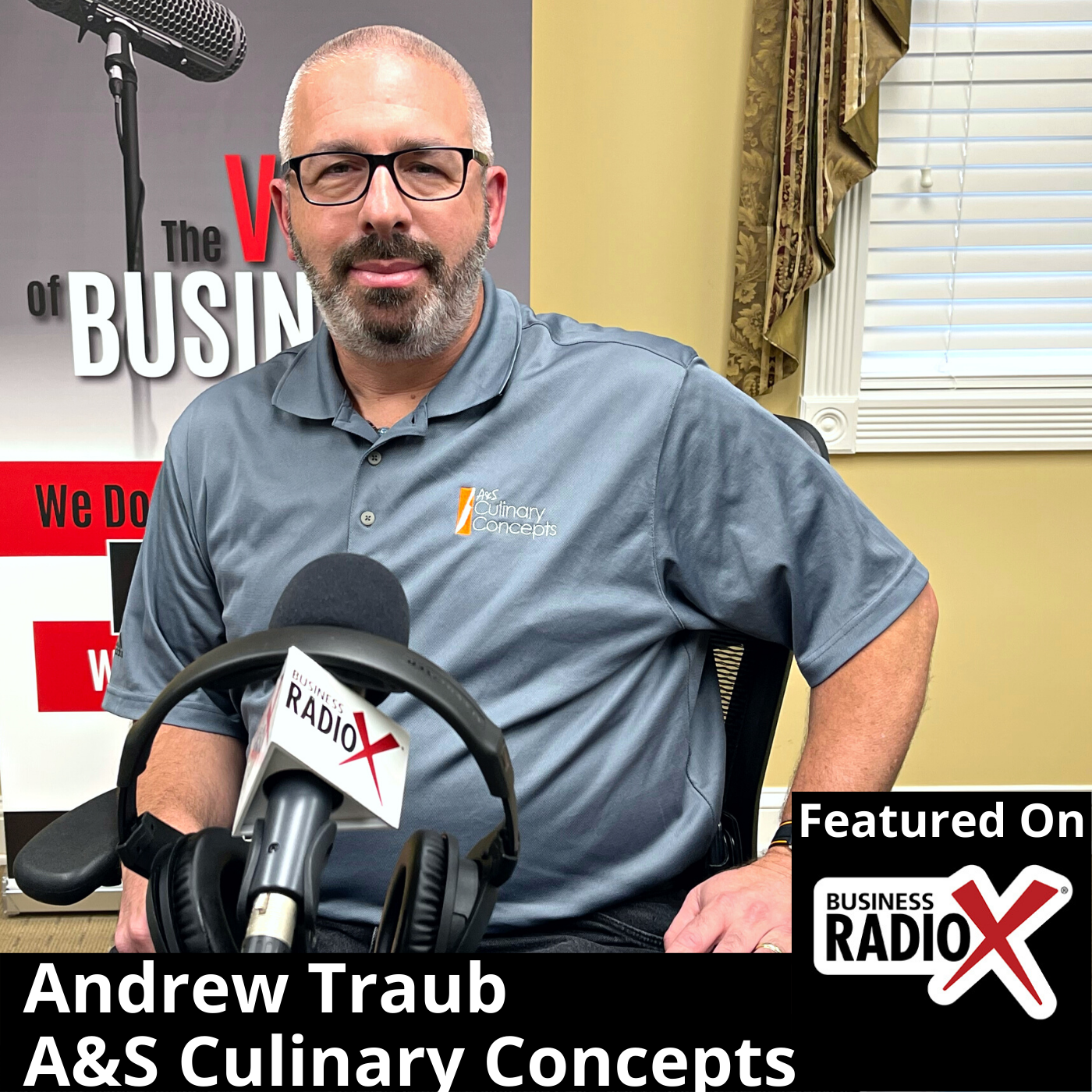
 

Tagged With: Brady Ware & Company, choose a manufacturer, contract manufacturing, Decision Vision podcast, Make2Give, Manufacturing, Mike Blake, My Day Screen, outsourced manufacturing, Susan Dudas

  • « Previous Page
  • 1
  • …
  • 60
  • 61
  • 62
  • 63
  • 64
  • …
  • 81
  • Next Page »

Business RadioX ® Network


Our Most Recent Episode

CONNECT WITH US

  • Email
  • Facebook
  • LinkedIn
  • Twitter
  • YouTube

Our Mission

We help local business leaders get the word out about the important work they’re doing to serve their market, their community, and their profession.

We support and celebrate business by sharing positive business stories that traditional media ignores. Some media leans left. Some media leans right. We lean business.


Sponsor a Show

Build Relationships and Grow Your Business. Click here for more details.

Partner With Us

Discover More Here

Terms and Conditions
Privacy Policy

Connect with us

Want to keep up with the latest in pro-business news across the network? Follow us on social media for the latest stories!
  • Email
  • Facebook
  • Google+
  • LinkedIn
  • Twitter
  • YouTube

Business RadioX® Headquarters
1000 Abernathy Rd. NE
Building 400, Suite L-10
Sandy Springs, GA 30328

© 2025 Business RadioX ® · Rainmaker Platform

BRXStudioCoversLA

Wait! Don’t Miss an Episode of LA Business Radio

BRXStudioCoversDENVER

Wait! Don’t Miss an Episode of Denver Business Radio

BRXStudioCoversPENSACOLA

Wait! Don’t Miss an Episode of Pensacola Business Radio

BRXStudioCoversBIRMINGHAM

Wait! Don’t Miss an Episode of Birmingham Business Radio

BRXStudioCoversTALLAHASSEE

Wait! Don’t Miss an Episode of Tallahassee Business Radio

BRXStudioCoversRALEIGH

Wait! Don’t Miss an Episode of Raleigh Business Radio

BRXStudioCoversRICHMONDNoWhite

Wait! Don’t Miss an Episode of Richmond Business Radio

BRXStudioCoversNASHVILLENoWhite

Wait! Don’t Miss an Episode of Nashville Business Radio

BRXStudioCoversDETROIT

Wait! Don’t Miss an Episode of Detroit Business Radio

BRXStudioCoversSTLOUIS

Wait! Don’t Miss an Episode of St. Louis Business Radio

BRXStudioCoversCOLUMBUS-small

Wait! Don’t Miss an Episode of Columbus Business Radio

Coachthecoach-08-08

Wait! Don’t Miss an Episode of Coach the Coach

BRXStudioCoversBAYAREA

Wait! Don’t Miss an Episode of Bay Area Business Radio

BRXStudioCoversCHICAGO

Wait! Don’t Miss an Episode of Chicago Business Radio

Wait! Don’t Miss an Episode of Atlanta Business Radio