Business RadioX ®

  • Home
  • Business RadioX ® Communities
    • Southeast
      • Alabama
        • Birmingham
      • Florida
        • Orlando
        • Pensacola
        • South Florida
        • Tampa
        • Tallahassee
      • Georgia
        • Atlanta
        • Cherokee
        • Forsyth
        • Greater Perimeter
        • Gwinnett
        • North Fulton
        • North Georgia
        • Northeast Georgia
        • Rome
        • Savannah
      • Louisiana
        • New Orleans
      • North Carolina
        • Charlotte
        • Raleigh
      • Tennessee
        • Chattanooga
        • Nashville
      • Virginia
        • Richmond
    • South Central
      • Arkansas
        • Northwest Arkansas
    • Midwest
      • Illinois
        • Chicago
      • Michigan
        • Detroit
      • Minnesota
        • Minneapolis St. Paul
      • Missouri
        • St. Louis
      • Ohio
        • Cleveland
        • Columbus
        • Dayton
    • Southwest
      • Arizona
        • Phoenix
        • Tucson
        • Valley
      • Texas
        • Austin
        • Dallas
        • Houston
    • West
      • California
        • Bay Area
        • LA
        • Pasadena
      • Colorado
        • Denver
      • Hawaii
        • Oahu
  • FAQs
  • About Us
    • Our Mission
    • Our Audience
    • Why It Works
    • What People Are Saying
    • BRX in the News
  • Resources
    • BRX Pro Tips
    • B2B Marketing: The 4Rs
    • High Velocity Selling Habits
    • Why Most B2B Media Strategies Fail
    • 9 Reasons To Sponsor A Business RadioX ® Show
  • Partner With Us
  • Veteran Business RadioX ®

The Neurodiversity Connection with Joy Young and Tim Yoder

September 17, 2025 by John Ray

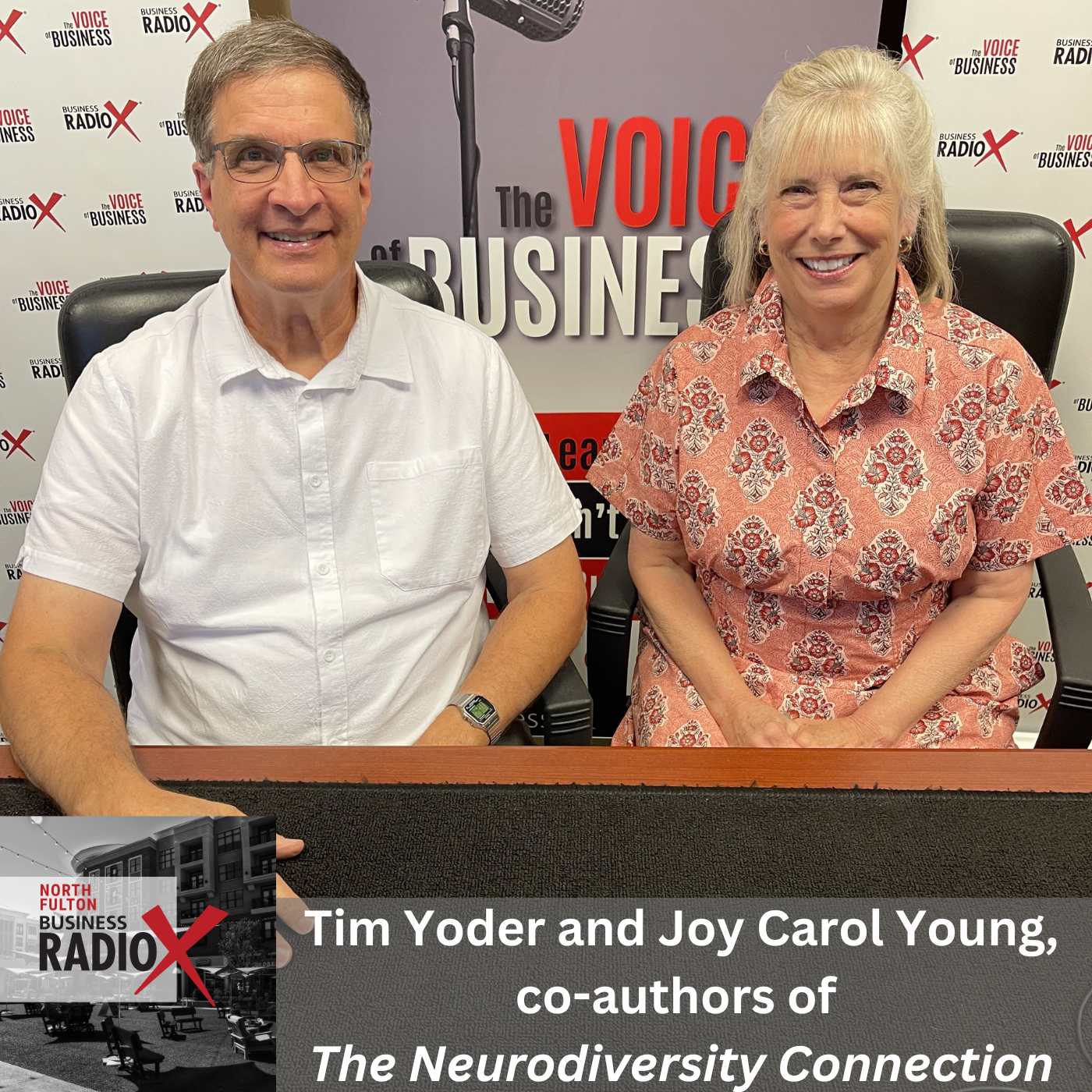
The Neurodiversity Connection with Joy Young and Tim Yoder, on North Fulton Business Radio with host John Ray
North Fulton Business Radio
The Neurodiversity Connection with Joy Young and Tim Yoder
Loading
00:00 /
RSS Feed
Share
Link
Embed

Download file

The Neurodiversity Connection with Joy Young and Tim Yoder, on North Fulton Business Radio with host John Ray

The Neurodiversity Connection with Joy Young and Tim Yoder (North Fulton Business Radio, Episode 900)

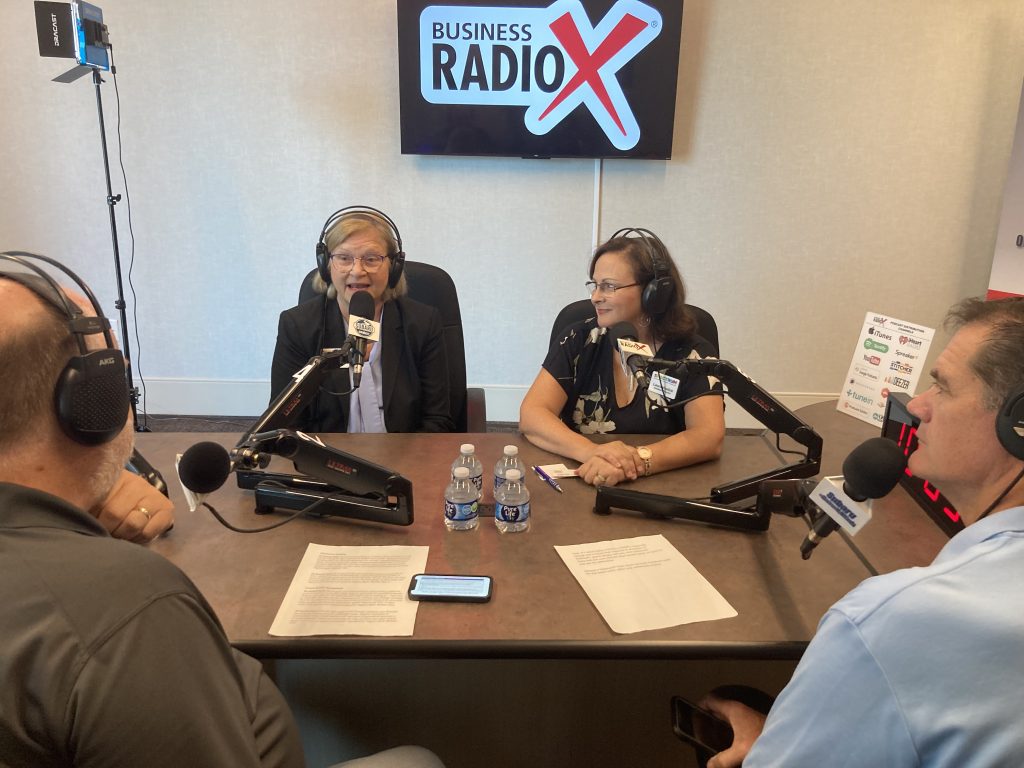
Authors Joy Young and Tim Yoder joined host John Ray on North Fulton Business Radio to discuss their new book, The Neurodiversity Connection: An Educator’s Guide to Understanding Differing Neurotypes to Support Student Success. Joy and Tim explained how neurodiversity goes beyond labels like autism or ADHD and encompasses the variation in the way all of us experience and interact with the world. They shared practical strategies for teachers, parents, and leaders on building relationships, rethinking classroom management, and taking a second look at behaviors. Their work emphasizes connection, communication, and creating supportive environments that benefit both neurodiverse and neurotypical individuals.

John Ray is the host of North Fulton Business Radio. The show is produced by John Ray and North Fulton Business Radio, LLC, an affiliate of Business RadioX®, and is recorded inside Renasant Bank in Alpharetta.

Key Takeaways from This Episode

  • Joy Young and Tim Yoder co-authored The Neurodiversity Connection, aimed at equipping educators with practical tools for working with all students.
  • Neurodiversity includes everyone, not just those with diagnoses like autism, ADHD, or dyslexia.
  • Building strong relationships is more powerful than strict rules in fostering student success.
  • First impressions of student behaviors are often misleading; educators should take a second look before making assumptions.
  • Parents can use the book to better understand their children and partner with teachers by sharing highlighted strategies.
  • The authors provide hands-on checklists, resources, and real-world classroom stories to help educators integrate these ideas immediately.
  • Joy Young and Tim Yoder offer further resources at globalneurodiversity.com

Topics Discussed in This Episode

00:00 Introduction to North Fulton Business Radio
01:48 Meet the Authors: Joy Young and Tim Yoder
02:47 The Need for The Neurodiversity Connection
03:48 Defining Neurodiversity
05:17 Backgrounds of the Authors
10:49 Classroom Management and Relationships
15:45 Integrating Neurodiverse and Neurotypical Students
18:57 The Art and Science of Teaching
19:10 Introducing the Authors and Their Book
19:30 Practical Advice for Parents
19:57 The Power of Encouraging Words
20:57 Personal Stories of Impact
22:15 Understanding Neurodiversity in Education
26:01 Rethinking First Impressions
28:41 Creating a Sensory-Friendly Classroom
29:37 Effective Communication Strategies
30:45 Connecting with the Authors
33:40 Closing Remarks and Announcements

The Neurodiversity Connection: An Educator’s Guide to Understanding Differing Neurotypes to Support Student Success

The Neurodiversity ConnectionSupporting students becomes a compelling journey set in motion by asking, “What am I missing?”

Years ago, as rookie teachers in a rural Oklahoma school, Joy Young and Tim Yoder formed a lasting friendship. Blending heartfelt storytelling with thoughtful research, they invite you to rethink traditional teaching practices and embrace curiosity as a catalyst for cultivating inclusive, engaging education that celebrates every learner.

In this guide you’ll discover:

  • Insightful understandings of differing neurotypes
  • Relatable personal anecdotes
  • Steps for creating sensory supportive environments
  • Candid student comments
  • Creative approaches to strengthening strengths
  • Strategies and activities that ignite hope and inspire growth

Whether you are a new teacher, a school leader, a seasoned professional, or a devoted parent, The Neurodiversity Connection empowers you to create environments where every learner feels seen, supported, and celebrated.

Website | Amazon

Joy Young

As both a teacher and a school administrator, Joy’s journey includes educating students in public school and private school as well as homeschooling. Having taught regular ed, special ed, gifted ed, and English Language Learners, Joy enjoys working with and learning from learners of all ages.

Schools and organizations around the globe in Australia, Czechia, the Dominican Republic, Kenya, Mexico, Romania, Thailand, and the United States have been influential in shaping Joy’s understanding of neurodiversity. Serving alongside talented educators in each of these countries, Joy celebrates the creativity, wonder, and innovation that thinking differently brings.

As a coach in the Neurodiversity Centers of Excellence at EY, one of the Big Four professional service firms, Joy was instrumental in promoting neurodiversity education. In 2023 Joy was named one of the Top 50 Global Neurodiversity Evangelists by ND by Design.

An expert at ordering takeout dinners, Joy enjoys time with her family, including doggy daughter, Angel. Joy says that doing life with her neurodistinct husband of over 40 years, her autistic son, and her ADHD daughter provides insight and understanding into living with neurological differences that are hidden from view.

Website | LinkedIn

Tim Yoder

Tim knew he was going to be a teacher ever since he had a life-changing teacher in the fifth grade. His first 12 years of teaching were in a small public school outside Tulsa, OK, where he also drove a school bus every morning and afternoon.

He taught fifth grade and middle school math and science in Gwinnett County, Georgia, for the remaining years of his teaching career. During seven of those years, he was also an adjunct professor at Brenau University, where he taught undergraduate and graduate courses. Over the years, he gained a deeper understanding of how to teach neurodivergent students.

Tim earned National Board Certification in the area of Middle School Science. He has presented at various conferences, including the National Science Teachers Association national convention. He was also voted teacher of the year at three schools where he taught.

Although he is officially retired after a 43-year career in the classroom, Tim does not plan to spend the rest of his life on the sidelines. His current educational activities include mentoring teachers, presenting science demonstrations and lessons at schools and camps, participating in several tutoring programs, and creating teaching resources.

Tim is living the dream with his wife, Sherri, in Lawrenceville, GA. They have three adult children.

LinkedIn

Renasant Bank supports North Fulton Business Radio

Renasant BankRenasant Bank has humble roots, starting in 1904 as a $100,000 bank in a Lee County, Mississippi, bakery. Since then, Renasant has become one of the Southeast’s strongest financial institutions, with over $17 billion in assets and more than 180 banking, lending, wealth management, and financial services offices throughout the region. All of Renasant’s success stems from each banker’s commitment to investing in their communities as a way to better understand the people they serve. At Renasant Bank, they understand you because they work and live alongside you every day.

Website | LinkedIn | Facebook | Instagram | X (Twitter) | YouTube

Beyond Computer Solutions supports North Fulton Business Radio

If you’re a law firm, medical practice, or manufacturer, there’s one headline you don’t want to make: “Local Business Pays Thousands in Ransom After Cyberattack.” That’s where Beyond Computer Solutions comes in. They help organizations like yours stay out of the news and in business with managed IT and cybersecurity services designed for industries where compliance and reputation matter most.

Whether they serve as your complete IT department or simply support your internal team, they are well-versed in HIPAA, secure document access, written security policies, and other essential aspects that ensure your safety and well-being. Best of all, it starts with a complimentary security assessment.

Website | LinkedIn | Facebook | YouTube

About North Fulton Business Radio and host John Ray

With over 900 episodes and having featured over 1,300 guests, North Fulton Business Radio is the longest-running podcast in the North Fulton area, covering business in our community like no one else. We are the undisputed “Voice of Business” in North Fulton!

The show invites a diverse range of business, non-profit, and community leaders to share their significant contributions to their market, community, and profession. There’s no discrimination based on company size, and there’s never any “pay to play.” North Fulton Business Radio supports and celebrates businesses by sharing positive stories that traditional media ignore. Some media lean left. Some media lean right. We lean business.

John Ray, host of  North Fulton Business Radio, and Owner, Ray Business Advisors
John Ray, host of North Fulton Business Radio and Owner, Ray Business Advisors

John Ray is the host of North Fulton Business Radio. John and the team at North Fulton Business Radio, LLC, an affiliate of Business RadioX®, produce the show, and it is recorded inside Renasant Bank in Alpharetta.

The studio address is 275 South Main Street, Alpharetta, GA 30009.

You can find the full archive of shows by following this link. The show is available on all the major podcast apps, including Apple Podcasts, Spotify, Google, Amazon, iHeart Radio, and many others.
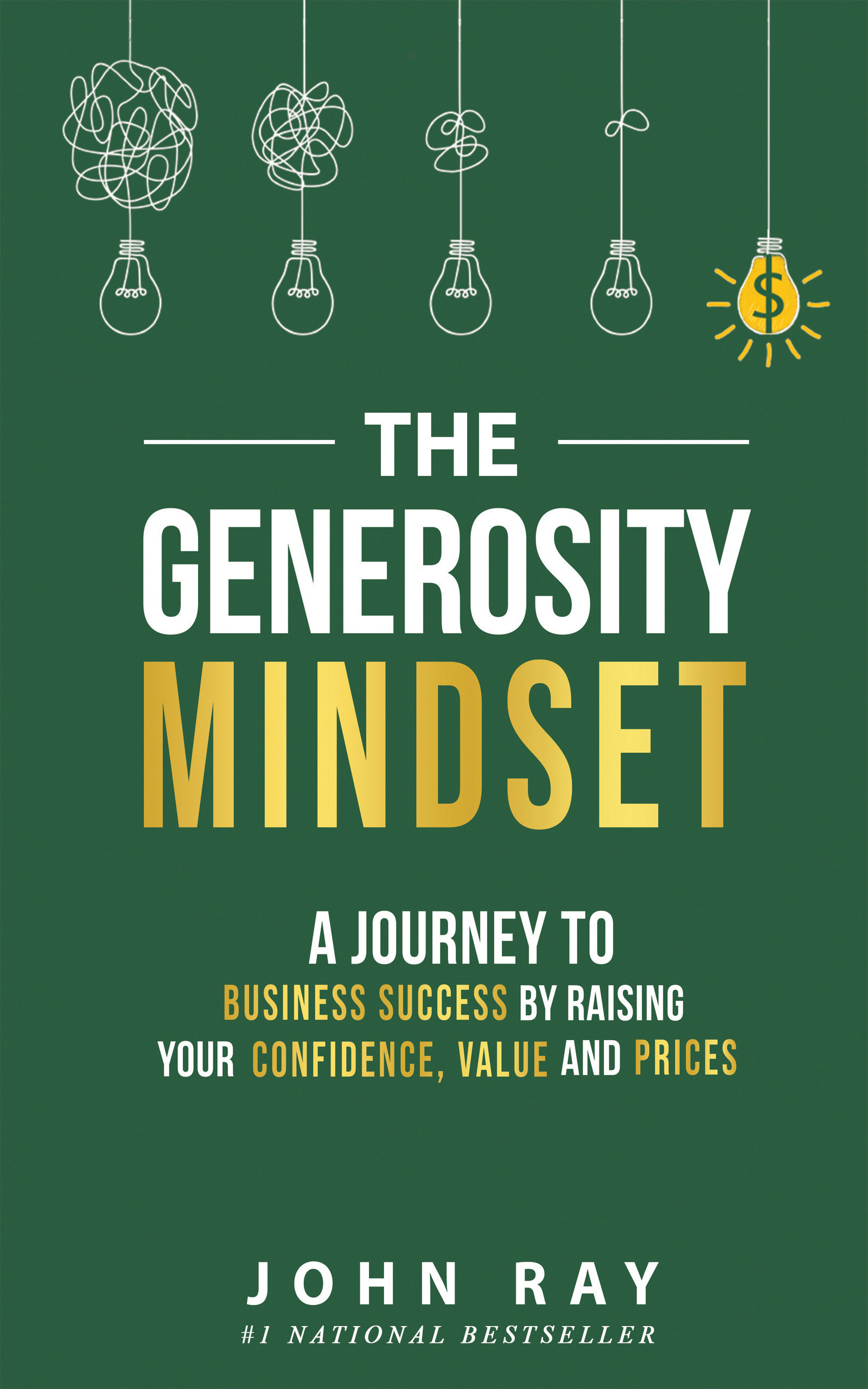
John Ray, The Generosity MindsetJohn Ray also operates his own business advisory practice. John’s services include advising solopreneurs and small professional services firms on their value, their positioning and business development, and their pricing. His clients are professionals who are selling their expertise, such as consultants, coaches, attorneys, CPAs, accountants, bookkeepers, marketing professionals, and other professional services practitioners.

John is the national bestselling author of The Generosity Mindset: A Journey to Business Success by Raising Your Confidence, Value, and Prices.
Tagged With: ADHD, Autism, classroom management, education, John Ray, Joy Young, neurodivergent students, Neurodiversity, neurotypical students, North Fulton Business Radio, parent resources, relationships in education, sensory-friendly, student success, teaching strategies, The Neurodiversity Connection, Tim Yoder

GNFCC 2024 Nonprofit Award Winners: The Drake House and Brewable

July 1, 2024 by John Ray

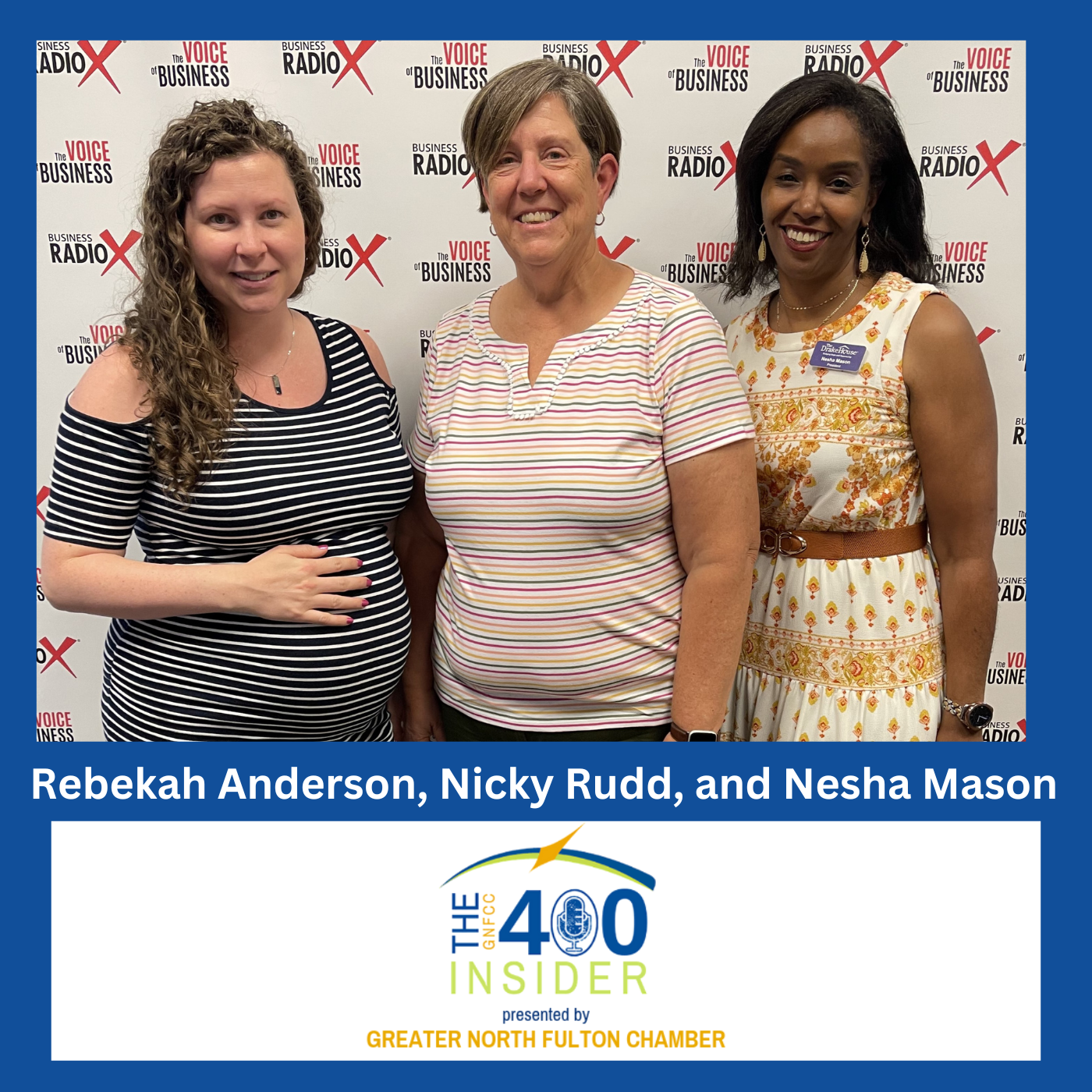
GNFCC Nonprofits of the Year for 2024: The Drake House, Nesha Mason, and Brewable, Nicky Rudd
North Fulton Studio
GNFCC 2024 Nonprofit Award Winners: The Drake House and Brewable
Loading
00:00 /
RSS Feed
Share
Link
Embed

Download file

GNFCC Nonprofits of the Year for 2024: The Drake House, Nesha Mason, and Brewable, Nicky Rudd

GNFCC 2024 Nonprofit Award Winners: The Drake House and Brewable (GNFCC 400 Insider, Episode 96)

On this episode of the GNFCC 400 Insider, host Rebekah Anderson welcomes the leaders of this year’s Nonprofit Award winners: Brewable and The Drake House. Brewable received the Small Nonprofit Award, and Nicky Rudd, Board President, discusses their impactful mission of providing employment opportunities for individuals with intellectual and developmental disabilities. Nicky also shares her own journey, which makes Brewable’s mission so personal for her. Nesha Mason, President of Large Nonprofit Award winner The Drake House, discusses the organization’s efforts to support single mothers experiencing homelessness by offering stable housing and career services. Both highlight the importance of community involvement, the challenges faced, and the upcoming events aimed at continuing their missions.
The GNFCC 400 Insider is presented by the Greater North Fulton Chamber of Commerce and produced by John Ray and the North Fulton studio of Business RadioX®.

Nesha Mason, President, The Drake House

Nesha Mason, President, The Drake House

Nesha Mason is the President of The Drake House. The Drake House is a 501(c)3 organization that works to respond to the growing number of women and children experiencing homelessness in North Fulton. They involve members of our community in the effort to keep single mothers and their children united under one roof as they work toward self-sufficiency.

The Drake House helps women with children overcome the circumstances of homelessness with dignity while keeping their families intact. In response to the changes in our post-COVID world, The Drake House has adapted its programming to help the families we serve acquire housing and achieve financial self-sufficiency.

The Drake HouseGraduates of their program work, pay taxes, rent apartments, purchase groceries, attend faith-based organizations, and hopefully, one day, become homeowners. They are equipped to be good employees, tenants, and neighbors. When given the opportunity, some even use their story to inspire others to follow in their footsteps and take advantage of all the services The Drake House has to offer them. As they continue their work to improve their program and campus, The Drake House does so with the expectation that the results will lead to more graduates, more resilient children and teens, and ultimately, a stronger community.

Website | Instagram | Facebook | YouTube

Nicky Rudd, Board President, Brewable

Nicky Rudd, Board President, Brewable

Brewable is a non-profit organization based in Alpharetta, Georgia, dedicated to the employment and enrichment of adults with intellectual and developmental disabilities. The company operates a coffee shop that serves as a platform for their mission, offering employment opportunities and fostering community connections.

Founded in 2019, Brewable initially opened its café in the lobby of the Alpharetta Community Center, next to the entrance of Wills Park at 175 Roswell Street, Alpharetta, GA 30009. A second location has been added in Roswell at 846 Mimosa Boulevard, Roswell, GA 30075. Each Brewable café serves a variety of beverages, including hot coffee and tea, espresso, lattes, and cold brew, as well as scones, cake pops, and other treats.

BrewableBrewable’s primary focus is on empowering individuals with learning disabilities by providing them with meaningful employment opportunities in a supportive environment. The organization aims to create a space where adults with intellectual and developmental disabilities can gain valuable work experience, develop skills, and interact with the community.

As a social enterprise, Brewable combines its business operations with a strong social mission, using coffee as a means to foster inclusion, build connections, and promote understanding within the North Fulton region.

Website | Instagram | Facebook | LinkedIn

Topics Discussed in this Episode

00:00 Introduction to GNFCC 400 Insider
00:59 Meet the Nonprofit of the Year Winners
01:21 Nicky Rudd’s Journey with Brewable
03:57 Challenges and Successes of Brewable
08:15 Nesha Mason on The Drake House
10:58 Addressing Homelessness in North Fulton
21:51 Community Support and Nonprofit Success
28:32 Discussing Financial Barriers and Personal Experiences
29:58 Biggest Accomplishments of Brewables
30:36 Impactful Stories and Personal Reflections
33:27 Challenges and Future Goals
37:11 Affordable Housing and Community Support
47:29 Volunteer Opportunities and Community Engagement
54:05 Conclusion and Contact Information

About GNFCC and The GNFCC 400 Insider

Kali Boatright, President and CEO of GNFCC

The GNFCC 400 Insider is sponsored by the Greater North Fulton Chamber of Commerce (GNFCC), and the host of the show is Kali Boatright, President and CEO of GNFCC.

The Greater North Fulton Chamber of Commerce is a private, non-profit, member-driven organization comprised of over 1,400 business enterprises, civic organizations, educational institutions, and individuals.  Their service area includes Alpharetta, Johns Creek, Milton, Mountain Park, Roswell, and Sandy Springs. GNFCC is the leading voice on economic development, business growth, and quality of life issues in North Fulton County.

Greater North Fulton Chamber of Commerce, GNFCCAs a five-star accredited chamber, GNFCC’s vision is to be the premier organization driving member and community success across the region, and they are dedicated to pursuing this vision based on the guiding principles of advocacy, inclusivity, and operational excellence.

GNFCC promotes the interests of their members by assuming a leadership role in making North Fulton an excellent place to work, live, play, and stay. They provide one voice for all local businesses to influence decision-makers, recommend legislation, and protect the valuable resources that make North Fulton a popular place to live.

For more information on GNFCC and its North Fulton County service area, follow this link or call (770) 993-8806. For more information on other GNFCC events, follow this link.

Tagged With: Affordable housing, Alpharetta, Autism, Brewable, Drake House, GNFCC 2024 Nonprofit Awards, Homelessness, Nesha Mason, Nicky Rudd, Non-Profits, nonprofits, Roswell, The Drake House

Claire Dees, Executive Director of Spectrum Autism Support Group

November 17, 2023 by Mike

Celebrating Powerhouse Women
Claire Dees, Executive Director of Spectrum Autism Support Group
Loading
00:00 /
RSS Feed
Share
Link
Embed

Download file

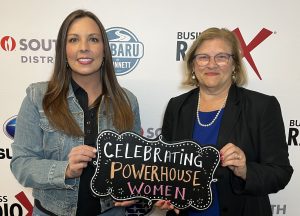
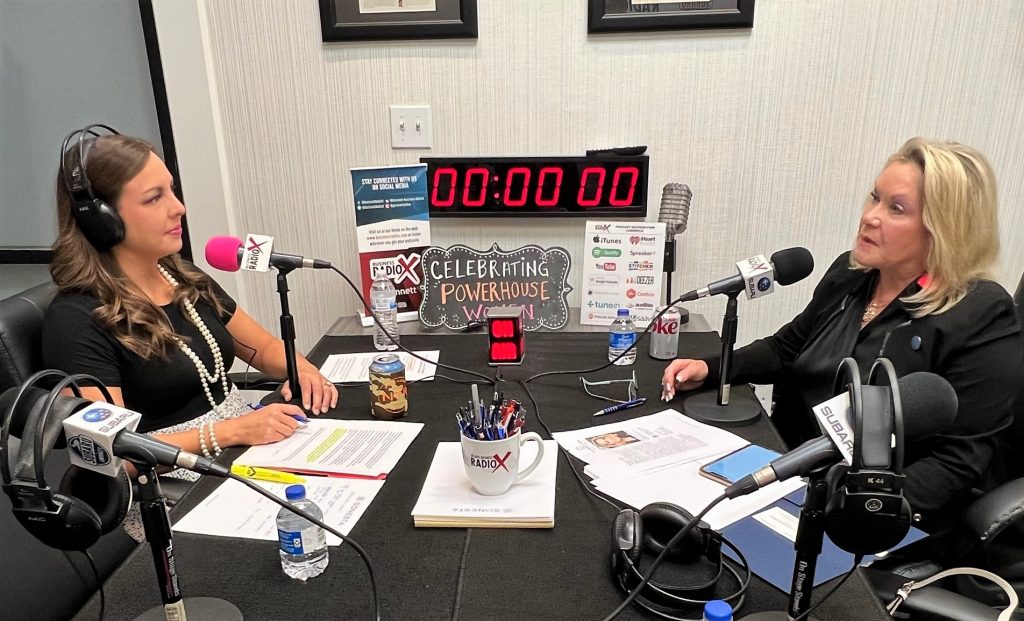
Amanda Pearch Marmolejo and Claire Dees

Celebrating Powerhouse Women salutes and recognizes women who are making an impact, whether it’s in business, philanthropy, public service, or elsewhere.

Claire Dees/Spectrum Autism Support Group

Claire Dees is the Executive Director and co-founder of Spectrum Autism Support Group, a local non-profit organization, providing support, education and resources for individuals and families impacted by autism. Spectrum serves over 2000 individuals with autism each year and their families with support groups, camps, respite, socials skills groups, family event and community education and training. Claire has a BS in Business Administration from Presbyterian College and over 35 years in the field of disabilities, both as a parent and a professional.

Claire serves on the Autism Plan for Georgia Advisory Council, the Center for Leadership in Disability Advisory Council, Board of Visitors of Georgia Gwinnett College, Northside Women’s Leadership Council, is a Gwinnett Chamber Chairman’s Club member, member of the Duluth Business Association and the Peachtree Corners Business Association and president of the Duluth Civitan Club. She was the recipient of the Georgia Achievement in Autism award in 2019. She has been nominated for Chamber Moxie awards the past 2 years in several categories. Claire was previously a lobbyist for disability issues for 4 years in Georgia and continues to advocate as well as educate families on how to speak up for their family members at the state and national level.

Claire is the parent of 3 adult children, one of whom lived with autism until his early demise in 2011. Her passion is helping families live better and more inclusive lives in their communities, regardless of abilities, where all can live, work, play and worship together. Opening the new Spectrum Autism Support Center in 2023 will be one of her greatest accomplishments as Spectrum celebrates it’s 25th anniversary this year.

Celebrating Powerhouse Women is presented by

Tagged With: amanda pearch, Amanda Pearch Marmolejo, Autism, autism support, Celebrating Powerhouse Women, claire dees, Non Profit, powerhouse women, spectrum autism support group, women executives, women leaders

Claire Dees and Laura Vladick with Spectrum Autism Support Group

August 17, 2023 by Mike

Gwinnett Business Radio
Claire Dees and Laura Vladick with Spectrum Autism Support Group
Loading
00:00 /
RSS Feed
Share
Link
Embed

Download file

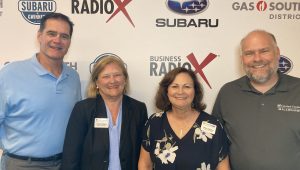
Harper Lebel, Claire Dees, Laura Vladick, and Steven Julian

Claire Dees & Laura Vladick/Spectrum Autism Support Group

Spectrum Autism Support Group was established in 1998 to provide support, education and resources for individuals and families impacted by autism. They currently serve over 1,500 families in Gwinnett County and the surrounding Metro Atlanta area and have become a well-known resource in the Autism community. Support groups, summer day camps, overnight camps, social skills groups, respite, community training, and family events are offered for all ages and abilities. 

Gwinnett Business Radio is presented by

Tagged With: Autism, autism support, business in Gwinnett, claire dees, Gwinnett Business Radio, harper lebel, Laura Vladick, spectrum autism support group, steven julian

Joy Young, Global Neurodiversity Advisor, and Sean Young, Software Engineer

March 3, 2023 by John Ray

Joy Young and Sean Young, Trove
North Fulton Business Radio
Joy Young, Global Neurodiversity Advisor, and Sean Young, Software Engineer
Loading
00:00 /
RSS Feed
Share
Link
Embed

Download file

Joy Young and Sean Young, Trove

Joy Young, Global Neurodiversity Advisor, and Sean Young, Software Engineer (North Fulton Business Radio, Episode 615)

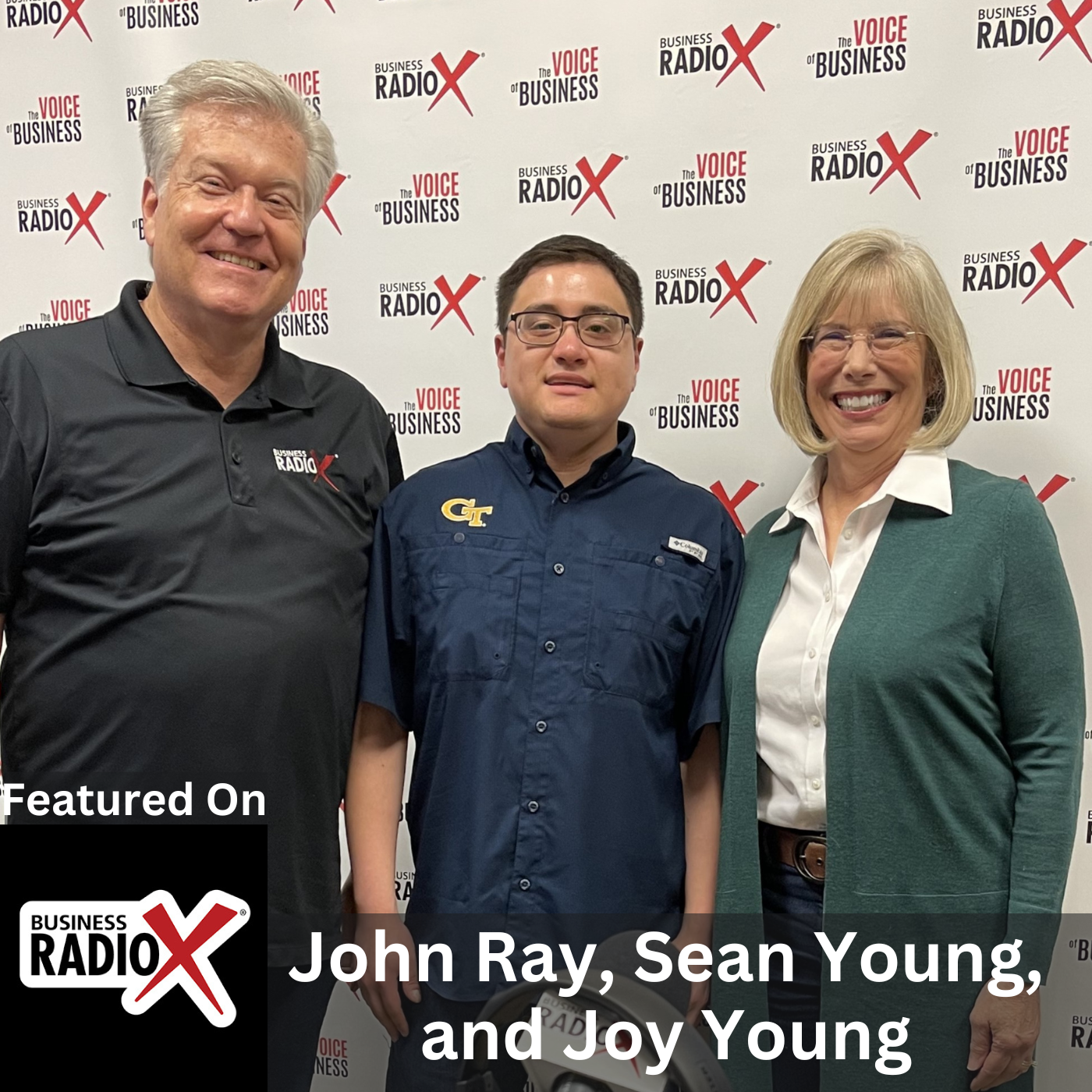
On this edition of North Fulton Business Radio, Joy Young and her son Sean joined host John Ray to discuss neurodiversity. Sean described the challenges he had growing up autistic, how he was able to enter the workforce with Signature FD and then Google, his career at Google and being impacted by recent layoffs there, and what he’s looking for in his next job. Joy discussed what neurodiversity is, how her experience with Sean led her into working with organizations on how to become more neuro-inclusive, and more.

North Fulton Business Radio is broadcast from the North Fulton studio of Business RadioX® inside Renasant Bank in Alpharetta.

Trove, Inc.

Trove is a professional coaching & training firm where client results are our passion. They help you change your organization for the better.

Trove identifies your strengths, shortcomings, and opportunities for improvement. They help you improve, not just from a numbers perspective or a one-size-fits-all approach. They address the outcome as “king.”

Website | Instagram | Twitter | Facebook

Joy Young, Global Neurodiversity Advisor, Trove, Inc.

Joy Young, Neurodiversity Advisor, Trove, Inc.

Joy Young partners with individuals around the globe, promoting neuro-inclusion for all. Serving schools, businesses, and organizations, Joy leverages the strengths within each setting along with universal design solutions, updated hiring and engagement practices, continuous learning, and coaching to create communities where everyone can thrive.

Joy’s varied career experiences include neurodiversity coach, educator, international aid worker, and school leader. Joy played a key role in promoting the global advancement of neurodiversity at Ernst and Young (EY), coaching both talent and leadership in the Neurodiversity Centers of Excellence.
With over thirty years of experience, Joy has invested in public and private education at all levels. She has served students with ADHD, autism, dyslexia, and anxiety as well as teaching English as an Additional Language (EAL). With a range of experiences in both business and education, the catalyst for Joy’s insights is much closer to home.
Grateful for the gift of family, Joy shares that loving, living with, and learning from neuro-exceptional family members is simply priceless.

LinkedIn

Software Engineer Sean Young

Sean Young, Georgia Tech Graduate

Sean Young is a Georgia Tech graduate with a both a B.S. and a Masters in Computer Science. Until Sean was affected by recent company-wide layoffs, he had worked at Google for almost ten years.

Sean’s career is marked by exceptional successes with code optimization and improving reliability. He is known to colleagues as the go to person for fragile issues like thread safety. Sean’s expertise also includes Java, Python, Git, Mercurial, Bazel, and API/Engine design.

One of Sean’s favorite childhood memories is sitting on the kitchen floor with a screwdriver and a wrench, taking apart an old computer. That, and at six years of age, hauling around a four-inch-thick Visual Basic book that his Uncle John gave me.

And thus began his love of computer science.

LinkedIn


Questions and Topics

  • What is Neurodiversity (it includes autism, ADHD, and Dyslexia)
  • Neurodiversity in School
  • Neurodiversity in the Workplace
  • Create neuro-inclusive communities around the world

North Fulton Business Radio is hosted by John Ray and broadcast and produced from the North Fulton studio of Business RadioX® inside Renasant Bank in Alpharetta. You can find the full archive of shows by following this link. The show is available on all the major podcast apps, including Apple Podcasts, Spotify, Google, Amazon, iHeart Radio, Stitcher, TuneIn, and others.

RenasantBank


Renasant Bank has humble roots, starting in 1904 as a $100,000 bank in a Lee County, Mississippi, bakery. Since then, Renasant has grown to become one of the Southeast’s strongest financial institutions with over $13 billion in assets and more than 190 banking, lending, wealth management, and financial services offices in Mississippi, Alabama, Tennessee, Georgia, and Florida. All of Renasant’s success stems from each of their banker’s commitment to investing in their communities as a way of better understanding the people they serve. At Renasant Bank, they understand you because they work and live alongside you every day.

Since 2000, Office Angels® has been restoring joy to the life of small business owners, enabling them to focus on what they do best. At the same time, we honor and support at-home experts who wish to continue working on an as-needed basis. Not a temp firm or a placement service, Office Angels matches a business owner’s support needs with Angels who have the talent and experience necessary to handle work that is essential to creating and maintaining a successful small business. Need help with administrative tasks, bookkeeping, marketing, presentations, workshops, speaking engagements, and more? Visit us at https://officeangels.us/.


Tagged With: ADHD, Autism, dyslexia, John Ray, Joy Young, Neurodiversity, North Fulton Business Radio, North Fulton Business Radio X, North Fulton Radio, Office Angels, renasant bank, Sean Young, Trove

Your Human Capital is Your Culture E15

September 30, 2021 by Karen

Your-Human-Capital-is-Your-Culture-feature
Phoenix Business Radio
Your Human Capital is Your Culture E15
Loading
00:00 /
RSS Feed
Share
Link
Embed

Download file

Your-Human-Capital-is-Your-Culture

Your Human Capital is Your Culture E15

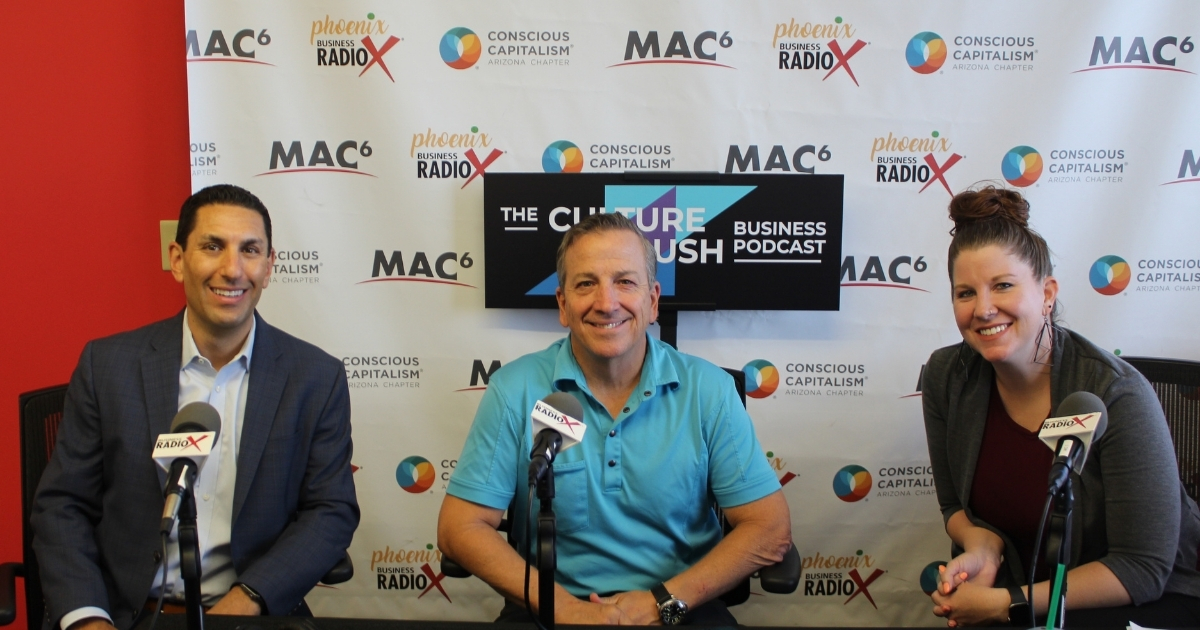
As the show wrapped up, handshakes and thank yous were exchanged, and Danny and Ken walked out of the studio to face the evening traffic, producer Darrol turned to Kindra, the host of the Culture Crush Business Podcast “I think that was one your best shows so far.”

Each show gets better and better. The conversations are deeper, the list of resources for companies continues to grow, and the guests seem to get even more comfortable in the studio discussing the ups and downs of company culture.

Ken McElroy and Danny Openden were upfront and honest with the conversations that they discussed surrounding company culture. According to Ken, “company culture is made up of the traditions, rituals, rules, consistency and especially, the human capital of the company.”

For MC Companies and Southwest Autism Research & Resource Center, these contributing factors of culture were flipped upside down during covid. Their leaders and teams have had to work through this. The two of them discussed ways they are working through this and how they are trying to grow their culture again and even stronger.

Both companies are doing amazing things to support their community and their people. We hope that everyone takes the time to listen in and follow both companies to see what they are up to next.

This show is great for all audiences:

  • If you are a leader that is struggling to grow your team virtually while balancing coming back to the office in person- then you should listen up.
  • If you are a leader looking for tangible resources to help improve your company’s culture- then you should listen up.
  • If you are passionate about supporting your teams and their growth- then you should listen up.
  • If you are just looking for some good books to read about leadership and growth- you should listen up.

MC Companies has been making Real estate Investing simple since 2001. The founder’s Ross McCallister and Ken McElroy have been leaders in the industry for over 30 years and have helped many achieve their dreams of Real Estate Investing a reality. The philosophy of both is rooted in the fundamentals of Management, Ownership and Preservation of each asset. They act as the stewards of the company and maintain an active role in every quadrant of the organization. MC-Companies-Logo4

Real Estate Investing is MC Companies’ core business and they know the best way to provide the highest returns is to manage each asset themselves. Lesley Brice, the President and Partner at MC Companies leads the Management and Finance teams that make MC Companies successful. She and her team drive the performance of each asset to ensure the best returns for each investment with the long-term goals in mind.

MC Companies tag line is “Sharing the Good Life” and that means something different to everyone. For Investors, it means that the company performs at its highest level and helps them achieve financial security, look towards the future and prepare for what comes next. They do this by advising and making smart investments. This means careful market analysis and intelligent stewardship of the assets.

For residents, Sharing the Good Life means providing the best in class customer service and value. MC is diligent in the quest to stay in touch through customers’ journey. They look for every touch point to be an opportunity to take in their customers’ feedback and keep happy residents happy for as long as they choose to call MC Companies’ apartment homes…home.

For employees, Sharing the Good Life means that as a company they value their people…there is no company without great people doing great things. Culture is not something that just happens at MC it is tended to with purpose and passion. Teams are encouraged to get involved in the community and given every path to do so from paid time off to volunteer to the opportunity to donate vacation days to charity.

Ken-McElroyKen McElroy has lived and breathed real estate for his entire adult life, learning from the ground up. Ken got his start during college, when he took a job managing an apartment complex. What began as a way to simply cover his room and board ignited his entrepreneurial spirit.

The turning point came when the property owner dropped by the office to pick up his check for the month. Ken decided that one day he would be on the other side of the desk, picking up his own check. Fueled by that determination, Ken bought his first investment property not long afterwards. It was a small property that barely turned a profit, but it didn’t matter. Ken was hooked.

Since then, Ken has experienced great success in the real estate world – from investment analysis and property management to acquisitions and property development. Together with his real estate investment company, MC Companies, Ken has transacted over $1 billion in real estate.

Today, Ken is committed to helping as many people as possible to achieve financial freedom through real estate. He shares his expertise with thousands of people around the world through his immensely popular YouTube channel, and is a sought-after speaker on real estate investing at events around the world.

In addition to all of that, Ken is the author of the best-selling books The ABC’s of Real Estate Investing, The Advanced Guide to Real Estate Investing, The ABC’s of Property Management, and most recently his book on entrepreneurship, The Sleeping Giant. As the Real Estate Advisor to Robert Kiyosaki of The Rich Dad Company, Ken is also a chapter contributor in the newly released Rich Dad book, More Important Than Money: an Entrepreneur’s Team.

Ken lives with his family in Scottsdale, Arizona. He is probably mulling over a deal right this second.

Connect with Ken on Facebook, Twitter and Instagram, and follow MC Companies on LinkedIn.

Established in 1997, Southwest Autism Research & Resource Center (SARRC) is an internationally recognized nonprofit that conducts innovative research, provides evidence-based practices, disseminates effective training and builds inclusive communities for individuals with autism and their families.

SARRC is dedicated to autism research, education, evidence-based treatment, and community outreach. Additionally, SARRC is one of the only autism organizations in the world that provides a lifetime of services for individuals and their families while also conducting cutting edge research. SARRC-LOGO

We’re also an entrepreneurial nonprofit, with less than three percent of annual revenue coming from state and federal funding. Our 18,000-square-foot Campus for Exceptional Children and our 10,000-square-foot Colonel Harland D. Sanders Center for Autism Studies, co-located with our Vocational & Life Skills Academy, are state-of-the-art clinical centers that serve as models for similar research and resource facilities.

Daniel-Openden-Phoenix-Business-RadioXDaniel Openden, Ph.D., BCBA-D is President and CEO of the Southwest Autism Research & Resource Center (SARRC) in Phoenix, Arizona. SARRC is an internationally recognized nonprofit organization dedicated to autism research, education, evidence-based treatment, and community outreach to support individuals with autism and their families throughout their lifetimes.

The 18,000-square-foot Campus for Exceptional Children and 10,000-square-foot Sander’s Center for Autism Studies co-located with SARRC’s Vocational & Life Skills Academy are state-of-the-art clinical centers that serve as models for similar research and resource facilities.

In 2007, Dr. Openden was recruited to SARRC from the renowned Koegel Autism Center at the University of California, Santa Barbara to serve as SARRC’s Vice President and Clinical Services Director. Since joining SARRC, Dr. Openden has advanced the center’s clinical programs and services, including an inclusive preschool, a comprehensive home-based program, a parent training program for families living in rural/remote areas, and school consultation.

In 2009, Dr. Openden and Dr. Christopher J. Smith, SARRC’s VP & Research Director, received funding to initiate and research SARRC’s Remote Telemedicine Program to provide follow up access to services via the internet for families living outside Maricopa County. In 2011, the Centers for Medicare and Medicaid Services (CMS) identified SARRC’s innovative, cutting edge inclusive preschool among the most promising practices in autism services to influence the development of effective care systems in other states.

Dr. Openden is a Board Certified Behavior Analyst—Doctoral (BCBA-D) and is licensed as a behavior analyst in Arizona. He has expertise in developing training programs for teaching parents and professionals to implement Pivotal Response Treatment (PRT), a comprehensive, evidence-based treatment model for children with ASD.

Dr. Openden has worked extensively with families with children, adolescents and adults with ASD; provided consulting and training for school districts across the country; presented research at regional, state, national and international conventions; served as Associate Editor for the Journal of Positive Behavior Interventions (JPBI) from 2008-2013; and been published in several peer reviewed journals and book chapters in the field.

Dr. Openden is also an adjunct professor at Arizona State University (ASU) and serves on the Autism Speaks Family Services Committee; Scientific Council of the Organization for Autism Research (OAR); Arizona State University President’s Advisory Community Council; Feeding Matters Medical Professional Council; and the Arizona Autism Coalition Advisory Committee.

Further, he is a founding member of the Council on Autism Services (CAS), a networking organization that brings together Presidents, CEOs, Executive Directors, Clinical Directors, and Program Directors to share high level information and identify gaps facing autism service delivery organizations. Dr. Openden was honored as one of the Phoenix Business Journal’s “Forty Under 40” up-and-coming community leaders in 2011 and in 2015 he was honored as one of the “Most Inspired Leaders.”

Dr. Openden graduated from the University of California, Santa Barbara with a bachelor’s degree in sociology and a master’s and Ph.D. in Education with an emphasis in special education, disability and risk studies.

Connect with Dr. Openden on LinkedIn and follow SARRC on Facebook.

About Culture Crush

Culture Crush is officially relaunched! We are thankful to Debra Caron who launched and hosted the show originally. Culture Crush is back with a new host but the same focus- highlighting what makes a great company culture and how it affects the overall success of a company. CultaureCrushKindraBanner2

Culture is not just a tag word to be thrown around. It is not something you throw in job descriptions to draw people to applying for jobs within a company.

According to Marcus Buckingham and Ashely Goodall in their book Nine Lies About Work, “Culture is the tenants of how we behave. It’s like a family creed. This is how we operate and treat each other in the family.”

On this long form podcast we will highlight companies local to Arizona and beyond that are crushing it with great culture!

We will talk with company leaders to learn about real-life experiences, tips, and best practices for creating a healthy work environment where employees are finding joy and satisfaction in their work while also striving and growing within the company.

About the Host

ABHOUTHOSTHEADSHOTKindra Maples is your new host taking the lead on the relaunch of Culture Crush! She is spartan racer, past animal trainer, previous magician’s assistant, and has a weakness for Oreo cookie shakes. Her journey working with people actually started working with animals as a teenager (don’t worry we won’t go that far back for her bio).

She worked for over 15 years in the zoo industry working with animals and the public. Her passion of working with animals shifted into working with people in education, operations and leadership roles. From there her passion of leadership and helping people develop has continued to grow.

Then came the opportunity for relaunching the Culture Crush Podcast and she jumped on it. Leadership, growth, and strong company cultures are all areas that Kindra is interested in diving into further.

Shout Outs

We want to thank a few people for their behind the scenes effort in helping this relaunch to come to life. James Johnson with Tailored Penguin Media Company LLC.– It is a small, but powerful video production company with a goal to deliver the very best by articulating the vision of your brand in a visually creative way. Gordon Murray with Flash PhotoVideo, LLC. -Flash Gordon has been photographing since high school and evolving since then with new products that will equip, encourage, engage, and enable. Renee Blundon with Renee Blundon Design – She is not only one of the best free divers (that’s not how she helped with the podcast) but she is great with graphics design and taking the direction for the vision that you have while also adding creative ideas to bring to your vision to life.

These are just a few of the folks that supported the relaunch of the podcast. If you would like to be part of the Culture Crush team or would like to support underwriting the show- please reach out: culturecrushpodcast@gmail.com

Tagged With: Autism, Autism research, multifamily housing, property management, real estate, real estate investing, rental property, SARRC, Southwest Autism Research and Resource Center

Lionheart Radio

September 7, 2021 by John Ray

Lionheart Radio
North Fulton Business Radio
Lionheart Radio
Loading
00:00 /
RSS Feed
Share
Link
Embed

Download file

Lionheart Radio

Lionheart Radio (North Fulton Business Radio, Episode 390)

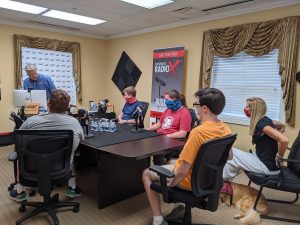
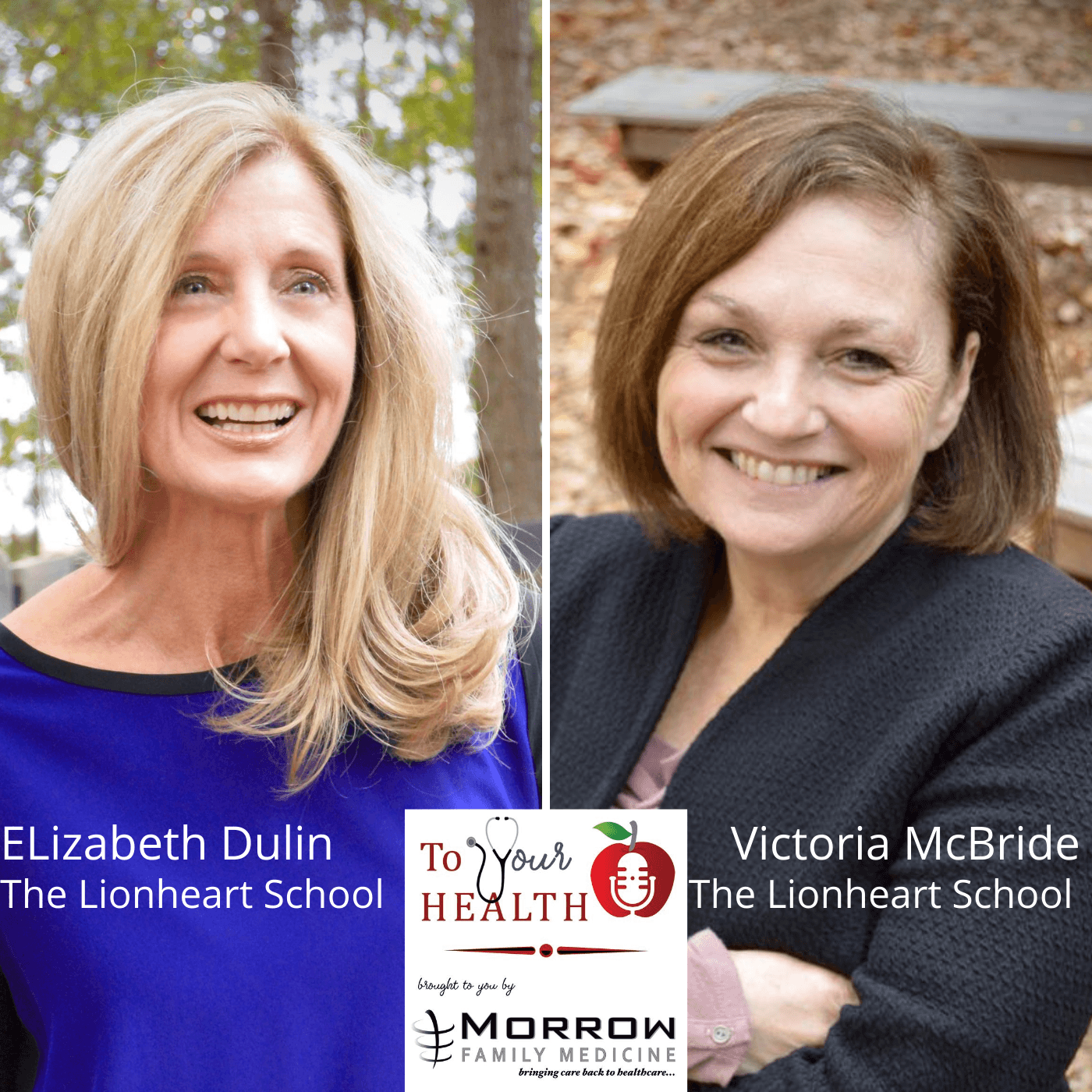
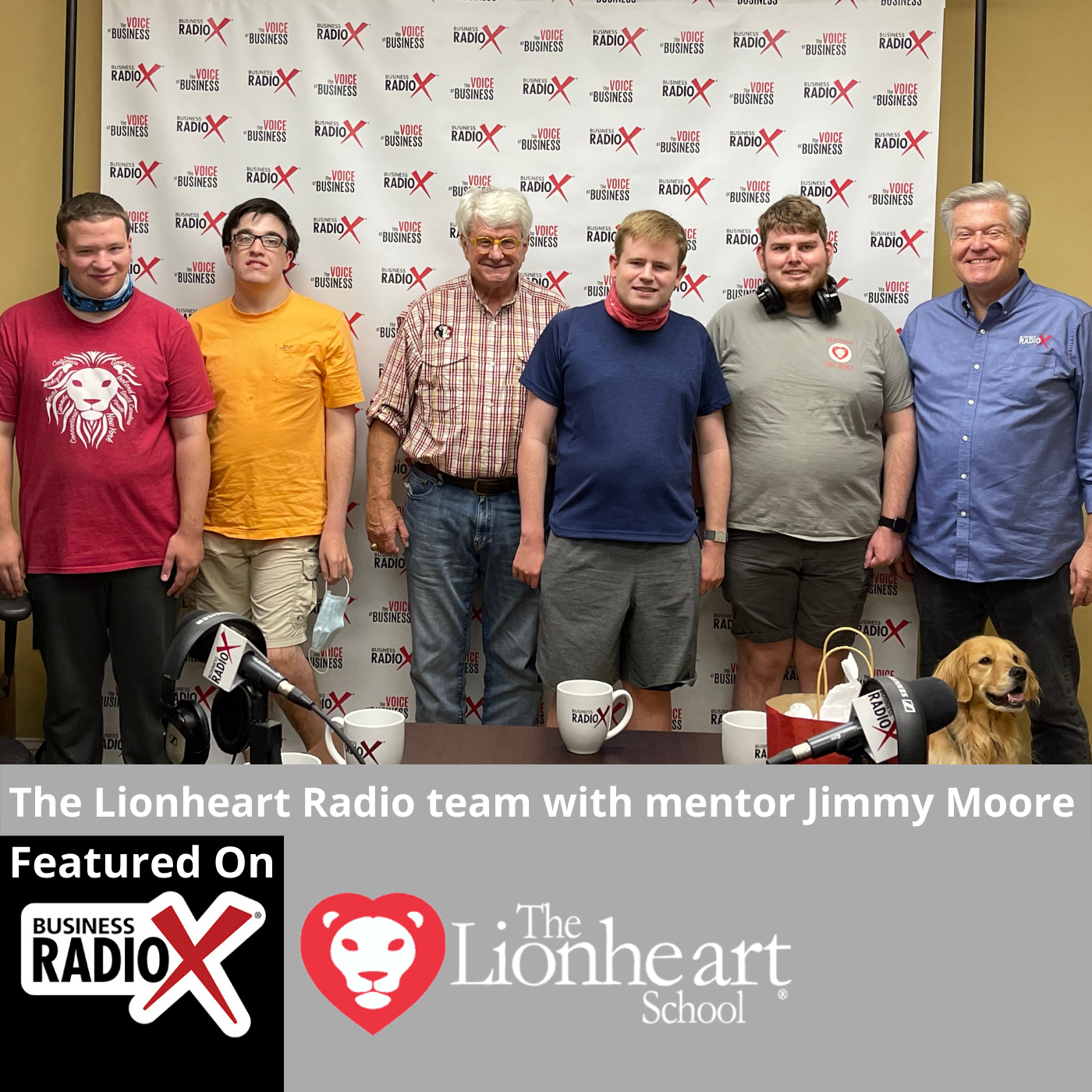
As one piece of the Lionheart Works program of The Lionheart School, Lionheart Radio is a 24/7 internet radio station staffed by Lionheart’s students and young adults who are interested in radio as a vocation. Several members of the Lionheart Radio team, along with their mentor, Jimmy Moore, joined host John Ray in the studio to talk about their work. Lionheart’s Abigail Patel also gave an overview of the Lionheart academic program. North Fulton Business Radio is broadcast from the North Fulton studio of Business RadioX® inside Renasant Bank in Alpharetta.

The Lionheart School

The Lionheart School is a non-profit 501(c)(3) organization founded in the year 2000 by a group of parents and professionals who created a supportive and nurturing environment for children with challenges of relating and communicating.

Lionheart started in a small cottage on the grounds of the Alpharetta Presbyterian Church and worked diligently to create a model program that focused on each child’s individual differences.
In 2010, with the support of families, friends, foundations and the community, Lionheart moved into a new building that was designed specifically for the population it serves. The Lionheart School emphasizes relationships, emotional intelligence, abstract critical thinking, problem-solving, and social cognition. The academic program integrates the principles of evidence-based practices for students with learning differences while always considering their individual profiles. Each student has an individual learning plan that considers interests, strengths, and preferences, as well as strategies to address targeted challenge areas.

Website | Twitter | Facebook  | Instagram | YouTube

Lionheart Works

Lionheart WORKS is a vocational training program for young adults ages 18 and up with autism and other neurodevelopmental differences who desire an individualized, person-centered program that prepares and supports them in the workforce.

The goal of Lionheart WORKS is to secure meaningful and sustainable employment by matching participants with their ideal work site while maximizing independence and natural supports on the job. Participants entering the WORKS program begin with a discovery process to identify affinities, abilities, and work readiness. Individualized vocational instruction, social thinking, and self-advocacy skill building, as related to the work environment, occur in the training center and at work sites. The program assigns trained job coaches who are specifically paired to individual participants based on their interests and needs.

Their worksites are businesses, organizations, schools, and churches in the north metro Atlanta area that want to train and employ our participants. Each worksite makes a commitment to the growth and vocational success of participants they employ with the goal of sustainable employment. Participants’ families, Lionheart WORKS staff, vocational counselors, and worksite supervisors form a team to encourage participants to attain their highest level of independence and happiness.

Lionheart Works staff comes from a variety of backgrounds including social work, speech and language pathology, psychology, education, recreation, and political science. They are ACRE (Association of Community Rehabilitation Educators) trained and members of TASH and APSE on the national level. Our staff participates in continuing education opportunities yearly.

Interested businesses can contact the school through the website and Instagram. Heather Wagner is the Director of Lionheart Works.

Website | Instagram

Lionheart Radio

Offering a variety of music and sports, Lionheart Radio is on 24/7 and is staffed by students at Lionheart Works and is led by Jimmy Moore. Mr. Moore is a retired YMCA director who is now the volunteer and radio mentor for Lionheart Radio.

Lionheart Radio

Abigail Patel, B.S., Teacher, The Lionheart School

Abigail joined Lionheart in 2012 after graduating from Lee University with a degree in Special Education: Mild to Moderate Disabilities (K-12) and is a certified Special Education Teacher. She is the Lead Teacher for Lionheart’s middle and high school students. Abigail also serves as our Pre-Vocational Coordinator in partnership with Lionheart WORKS. She cares deeply about these teenagers and young adults and is honored to be a part of each of their stories. She is passionate about their social and emotional journeys, their academics and life skills, and about building enriching and interactive environments that develop students into their best selves.

The Lionheart School

North Fulton Business Radio is hosted by John Ray, and broadcast and produced from the North Fulton studio of Business RadioX® inside Renasant Bank in Alpharetta. You can find the full archive of shows by following this link. The show is available on all the major podcast apps, including Apple Podcasts, Spotify, Google, Amazon, iHeart Radio, Stitcher, TuneIn, and others.

RenasantBank


Renasant Bank has humble roots, starting in 1904 as a $100,000 bank in a Lee County, Mississippi, bakery. Since then, Renasant has grown to become one of the Southeast’s strongest financial institutions with over $13 billion in assets and more than 190 banking, lending, wealth management and financial services offices in Mississippi, Alabama, Tennessee, Georgia and Florida. All of Renasant’s success stems from each of their banker’s commitment to investing in their communities as a way of better understanding the people they serve. At Renasant Bank, they understand you because they work and live alongside you every day.

Special thanks to A&S Culinary Concepts for their support of this edition of North Fulton Business Radio. A&S Culinary Concepts, based in Johns Creek, is an award-winning culinary studio, celebrated for corporate catering, corporate team building, Big Green Egg Boot Camps, and private group events. They also provide oven ready, cooked from scratch meals to go they call “Let us Cook for You.” To see their menus and events, go to their website or call 678-336-9196.

Tagged With: Abigail Patel, Autism, Heather Wagner, Jimmy Moore, John Ray, Lionheart Radio, Lionheart Works, neurodevelopmental differences, North Fulton Business Radio, The Lionheart School

Decision Vision Episode 118: Should I Hire Someone with a Disability? – An Interview with Bill Schultz, Opportunity Partners

May 27, 2021 by John Ray

Opportunity Partners
Decision Vision
Decision Vision Episode 118: Should I Hire Someone with a Disability? - An Interview with Bill Schultz, Opportunity Partners
Loading
00:00 /
RSS Feed
Share
Link
Embed

Download file

Opportunity Partners

Decision Vision Episode 118:  Should I Hire Someone with a Disability? – An Interview with Bill Schultz, Opportunity Partners

In a conversation with host Mike Blake, Bill Schultz, CEO of Opportunity Partners, demystifies misconceptions businesses have about hiring people with disabilities. He explains why so many businesses, once they get past those misunderstandings and bring on someone with a disability, often expand such hiring. Decision Vision is presented by Brady Ware & Company.

Opportunity Partners

Established in 1953, Opportunity Partners is a Minnesota nonprofit organization that works alongside people with disabilities to provide job training, employment, and residential support for people to live more independently, succeed on the job and lead lives filled with purpose and meaning.Opportunity Partners

Opportunity Partners serves people with many different types of disabilities. Some examples include Autism Spectrum Disorder, Asperger syndrome, brain injury, Down syndrome, cerebral palsy, Fetal Alcohol Syndrome, and many others.

Company website | LinkedIn | Facebook | Twitter | YouTube

Bill Schultz, President & CEO, Opportunity Partners

Bill Schultz, CEO & President, Opportunity Partners

Bill Schultz was named President & CEO of Opportunity Partners in August 2020, after serving briefly as Interim President & CEO. Bill joined Opportunity Partners in 2015 as Executive Vice President, Business Development and Operations, overseeing all business services and production operations, identifying new products, processes, and services in community and center-based work.

Bill came to Opportunity Partners with more than 20 years of experience in a variety of business leadership positions and was drawn to the organization for its strong mission and history of making a difference in the community.

LinkedIn

Mike Blake, Brady Ware & Company

Mike Blake, Host of the “Decision Vision” podcast series

Michael Blake is the host of the Decision Vision podcast series and a Director of Brady Ware & Company. Mike specializes in the valuation of intellectual property-driven firms, such as software firms, aerospace firms, and professional services firms, most frequently in the capacity as a transaction advisor, helping clients obtain great outcomes from complex transaction opportunities. He is also a specialist in the appraisal of intellectual properties as stand-alone assets, such as software, trade secrets, and patents.

Mike has been a full-time business appraiser for 13 years with public accounting firms, boutique business appraisal firms, and an owner of his own firm. Prior to that, he spent 8 years in venture capital and investment banking, including transactions in the U.S., Israel, Russia, Ukraine, and Belarus.

Brady Ware & Company

Brady Ware & Company is a regional full-service accounting and advisory firm which helps businesses and entrepreneurs make visions a reality. Brady Ware services clients nationally from its offices in Alpharetta, GA; Columbus and Dayton, OH; and Richmond, IN. The firm is growth-minded, committed to the regions in which they operate, and most importantly, they make significant investments in their people and service offerings to meet the changing financial needs of those they are privileged to serve. The firm is dedicated to providing results that make a difference for its clients.

Decision Vision Podcast Series

Decision Vision is a podcast covering topics and issues facing small business owners and connecting them with solutions from leading experts. This series is presented by Brady Ware & Company. If you are a decision-maker for a small business, we’d love to hear from you. Contact us at decisionvision@bradyware.com and make sure to listen to every Thursday to the Decision Vision podcast.

Past episodes of Decision Vision can be found at decisionvisionpodcast.com. Decision Vision is produced and broadcast by the North Fulton studio of Business RadioX®.

Connect with Brady Ware & Company:

Website | LinkedIn | Facebook | Twitter | Instagram

TRANSCRIPT

Intro: [00:00:01] Welcome to Decision Vision, a podcast series focusing on critical business decisions. Brought to you by Brady Ware & Company. Brady Ware is a regional full service accounting and advisory firm that helps businesses and entrepreneurs make visions a reality.

Mike Blake: [00:00:21] Welcome to Decision Vision, a podcast giving you, the listener, clear vision to make great decisions. In each episode, we discuss the process of decision making on a different topic from the business owners’ or executives’ perspective. We aren’t necessarily telling you what to do, but we can put you in a position to make an informed decision on your own and understand when you might need help along the way.

Mike Blake: [00:00:39] My name is Mike Blake, and I’m your host for today’s program. I’m a director at Brady Ware & Company, a full service accounting firm based in Dayton, Ohio, with offices in Dayton; Columbus, Ohio; Richmond, Indiana; and Alpharetta, Georgia. Brady Ware is sponsoring this podcast, which is being recorded in Atlanta per social distancing protocols. If you like to engage with me on social media with my Chart of the Day and other content, I’m on LinkedIn as myself, and @unblakeable on Facebook, Twitter, Clubhouse, and Instagram. If you like this podcast, please subscribe on your favorite podcast aggregator, and please consider leaving a review of the podcast as well.

Mike Blake: [00:01:12] So, today’s topic is, Should I hire someone with a disability? And in a way, this is an extension of the previous week’s topic, Should I hire somebody with a criminal background or somebody with a prison record, I forget what the actual title was, but you get the drift. And the same sort of concepts applies that we find ourselves in an unusual, if not unprecedented scenario in the workforce where we’re finding ourselves in a shortage of workers. And although this is being felt most acutely in the hospitality sector, it is not limited to that.

Mike Blake: [00:02:03] Over the course of the last 18 or 17 months or so, I think our society is redefining our relationship with work. I think at a micro and macro level, many of us are readdressing priorities. And I think we’re asking ourselves the question, is it worth it? You know, is it worth the effort and the expense to have a two income family? And I think with people now that have had an opportunity, whether they wanted it or not, to work-from-home or withdraw from the workforce for a while in order to meet their family obligations.

Mike Blake: [00:02:50] You know, I think this goes beyond more than simply the more generous unemployment. I think people are simply asking themselves, you know, was it really worth the extra income to give up what I gave up in terms of being with my family, and building the home that I want, and doing other things in my life. I think the answer that some people are giving is no. And some people, I think, are going back to school and they’re retraining for a job they think will suit them better. And I think others will simply exit the workforce on more or less permanent basis, certainly not coming back full time.

Mike Blake: [00:03:26] And as our previous guest, Jeff Korzenik, indicated – I thought that was a very astute observation – the size of the American labor force had already been exhibiting decline since 2010, maybe a little bit earlier. And as so many things in life, coronavirus simply accelerated trends that were already underlying. And so, we’re now finding ourselves as an economy and a scenario in which labor just is not available and plentiful the way that we are used to being. I am 51 years old and I cannot remember a scenario under which it was just so difficult to hire. I’ve been through tight labor markets for sure. But this is a different animal.

Mike Blake: [00:04:14] And so, as a result, I think that decision paths that people would not have ordinarily considered, for example, hiring someone with a criminal record and, in the case of our topic today, should I hire somebody with a disability. I think, whereas employers would just simply not have considered that or not have given as heavy consideration to it. I think we’re now at a point in our economy where, if you want to run your business the way you like to run it, if you’d like to be as profitable as a way and you’d like to grow it, you simply cannot afford to decide right off the bat that you’re not going to consider large segments of the population. And that’s not ideology, that’s just simply arithmetic. When the music stops, there just are not enough chairs to go around. In this case, not enough workers to go around for employers. And, again, we’re just not used to seeing that.

Mike Blake: [00:05:15] So, this is an extension of that topic. Again, I hope you’ll agree it’s a relevant topic. And for those of you maybe who have wondered about hiring people with disabilities, maybe how you do it, whether it makes sense to do it, or maybe you agree with me and you decide, “You know what? I need to -” even if I wasn’t discriminating against the disabled, maybe I wasn’t being intentional about doing it. You know, here’s a stone that can be overturned that may yield some great opportunities. And the goal is to help you explore whether or not that’s the right path for you. And if it is, then what is the best way to pursue that?

Mike Blake: [00:05:50] So, joining us today is Bill Schultz, who is President and CEO of Opportunity Partners. Established in 1953, Opportunity Partners is a Minnesota nonprofit organization that works alongside people with disabilities to provide job training, employment, and residential support for people to live more independently, succeed on the job, and lead lives filled with purpose and meaning. Opportunity Partners service people with many different types of disabilities. Some examples include autism spectrum disorder, Asperger Syndrome, brain injury, Down’s syndrome, cerebral palsy, fetal alcohol syndrome, and many others.

Mike Blake: [00:06:28] Bill joined Opportunity Partners in 2015 as Executive Vice President, Business Development and Operations, overseeing all business services and production operations, identifying new products, processes, and services in community and center based work. Bill came to Opportunity Partners with more than 20 years experience on a variety of business leadership positions and was drawn to the organization for its strong mission and a history of making a difference to the community. Maybe we should have had you on our podcast that will be publishing soon on transitioning to nonprofit. And, Bill, I believe you became CEO last year, 2020. Bill Schultz, welcome to the program.

Bill Schultz: [00:07:04] Thanks, Mike. It’s great to be here. Thanks for having me.

Mike Blake: [00:07:07] So, Bill, let’s start off easy. I’m sure this is a question that you could answer in your sleep. You must face it all the time. And that question is, make the case that hiring somebody with a disability is a good business decision, not just simply a good social decision.

Bill Schultz: [00:07:26] Right. And I think you made a strong argument. One, just the necessity right now of looking into non-traditional pools that employers might look at. And this is a group that’s often overlooked. And people with disabilities want to work. It’s the vocation that’s in the DNA of our organization. It was started by a group of parents that wanted to have work for their children. So, they bought a house in the small town in Richfield, Minnesota. Why not work with local businesses and brought back work. And then, a few years later, they placed their first person in the community.

Bill Schultz: [00:08:02] Because people want to feel normal and often somebody with a disability is ostracized that way and thought of that they can’t. And we just need to understand they have a wide range of abilities and we need to understand what support they need. They’re not different than you or me. We all have skills and can really thrive if we’re supported in the right way. So, these folks are very loyal. They’re great workers. They care. They can be great teammates.

Bill Schultz: [00:08:33] One of the fun things, too, that we’ll hear is, it also boosts the morale of the other folks that work there. You know, sometimes there’s an individual, sometimes there’s more than one. And I think it’s a feel good thing. And people get to know them and it demystifies people with disabilities because some people will be uncomfortable around them. And once they get to know them as a person, that goes away. And they’ll learn what their interests are and they’ll laugh with them. And it just boosts things that I’ve heard that from employers, that this is an unexpected benefit that we’ve had.

Bill Schultz: [00:09:12] And there’s also some that, you know, you’re going to have other workers that might have a child with a disability, it also gives them some hope because, “Hey, look. There is a future for my child.” Because they may be worried about that and what does the future hold for them. So, those are some things.

Bill Schultz: [00:09:29] But, you know, for the business owner or the manager that is running that storefront, it’s, “I need somebody. I need somebody that’s going to be reliable”, that can get there, they can coach and can do that. There’s other things, too, that we place a lot of people because we’re having a lot of wage pressure. That, I don’t want to pay someone this higher rate to do something more routine or that employee might not want to do these routine things that someone with a disability might really thrive on.

Bill Schultz: [00:10:01] Some people with disabilities in it, we have such a wide variety of diagnoses and just a wide range of individuals and what their characteristics are. They might really thrive in that. So, where one employee might say, “This is really mundane and I don’t enjoy this.” Someone with a disability might find this very rewarding and be very good at it. So, they can parse out those jobs and focus those other individuals that they’re may be paying a higher wage on those higher skilled areas. And let someone with a disability do other things. Like, whether it’s picking up boxes and having them recycled, moving different things about. There’s such a wide range of duties that we do. And those are just some of the benefits, I think, of hiring someone.

Mike Blake: [00:10:45] Now, you brought up something I would not have thought of in a million years. But my observation certainly bears it out. At least Americans love a story where somebody overcomes a disability, to overcome something, right? There was something on the news recently about, I think, a golfer with Down syndrome that is having some success. And it seems like every other month is a great story in ESPN. You know, somebody that maybe was the 15th person on the basketball team had a mental disability and they put them in sort of at the end of the last game of the season or something. And everybody sort of goes berserk.

Mike Blake: [00:11:29] There is sort of that element in contrast with the prior show that we did – I guess really two shows, not last show – on, you know, should we dip into the pool of people with criminal records. You know, there are people that they did something to earn that or to receive that distinction. Whereas, as opposed to people that are handicapped or are disabled, chances are very good that they did nothing to do that. You know, they’re are born with, generally, bad luck, basically. And there’s a very different attitude towards that. And I can see how, under the right circumstances, under the right leadership, that somebody who is disabled on a team can actually become a rallying point.

Bill Schultz: [00:12:25] Absolutely. The other thing is, these folks are really genuine. They’re curious about you. There’s no pretense with individuals. They want to get to know you. And it’s another thing that people, once they get comfortable – and, again, some people are just uncomfortable because they’re unique. And our organization will do training for people and just talk through it. And that really allows people to relieve their anxiety and build that relationship with that person and help support them in their role. Because they’ll need support like anyone else. And one of the things that we’ve seen where people are really successful.

Bill Schultz: [00:13:04] So, we offer job coaching. And that’s one of the things that employers should know, too, that whatever state you’re in – we’re in Minnesota – most states are going to have organizations like Opportunity Partners with job development and they come with a job coach. So, this is a free support that comes with this individual that the business doesn’t have to pay for. And they can help with onboarding and they can help with training. We go out those first few days, we’re there the full shift with them, helping them get onboarded. We’ll create checklists for them. Talk with the manager about getting to know. Because everyone’s different and they’re going to have different behaviors and things like that. So, that’s just a real benefit for someone to onboard that individual and help them be successful. And, also, demystify even for other employees on how to interact with the individual.

Mike Blake: [00:13:54] You know, I’m curious about one thing, because your organizational profile says you work with people who are on the autism spectrum and have Asperger Syndrome. What, if anything, was the impact of Elon Musk’s Saturday Night Live monologue in which he disclosed that he indeed has Asperger’s Syndrome? Is that bringing conversations to you? Is it changing conversations? Too early to tell? What do you think about that?

Bill Schultz: [00:14:24] I thought it was great. And, you know, just the buzz around it that, again, it’s just making it more acceptable and letting people know. There’s so many people with disabilities and we have a wide range of abilities. And everybody you work with, there’s likely someone with something that’s challenging them. The folks we support, you know, are just more parent, more obvious, so it’s visible. And Elon just normalized it for people. And also say, “Look. Look what I can accomplish. And I’m on the spectrum.”

Bill Schultz: [00:15:00] And people with autism spectrum disorder, also Asperger’s, which is just typically higher functioning, are wildly successful. And technology firms are discovering this, and there’s lots of them that are reaching out to this pool. Because with some minor modifications like, you know, often a technology office will have a wide open workspace. This individual might have some sensory issues where they need even an office or high walled cube, but they’re fantastic at coding or they’re fantastic at software analysis. I mean, things that other individuals wouldn’t pick out.

Bill Schultz: [00:15:37] So, again, just a wide spectrum of people that come to us, we’ll place them in technology jobs or different things like that that are well suited for their skills and where their interests lie. But there’s also, you know, a lot of traditional programs like post-secondary education isn’t well suited for people on spectrum, so they fall through the cracks. And there’s just such a wide group of underemployed, talented individuals that we really need to figure out a way to support and get them trained. And then, educate employers on how to bring them onboard and help them be a valuable asset.

Mike Blake: [00:16:12] And I can actually attest to that. I have a relative who has been diagnosed of Asperger’s Syndrome and he, in fact, is a software engineer. And they do make accommodations for him. Not overly heavy in my mind, actually. But he is fantastically successful and they’re just never going to let him go. And the good news is that, people with Asperger’s syndrome don’t particularly like change either. So, it’s actually a scenario that works extremely well for them. So, I can tell you this from my own experience of somebody who has weaknesses related to disability elsewhere, interpersonal reactions, relations, that sort of thing. But in terms of his ability to produce code, I mean, he’s a parent. I’m not an engineer, but for all accounts, he’s not good. He’s great.

Bill Schultz: [00:17:08] Yeah. That’s not an uncommon story. Businesses have to be open to it. I think one of the big miss out there is, there’s a liability or there’s expensive accommodations that need to be made. And that’s just not the case. So, I think it’s just learning. You know, obviously, a business owner can just dip their toes in the water and go and talk with an organization and learn more and meet some of the individuals. And, really, I think, get comfortable with that.

Bill Schultz: [00:17:40] I think one of the biggest things is, we support people with the job coaches so we can help people, we can help train them, and be that gap. And maybe people are worried about disciplinary things. We can come in and have the meeting with the manager and the individual and work through challenges if that becomes a thing. Or, “I can’t fire this individual.” “Well, yes, you can.” That’s not a worry. And we can help with that, too. And other organizations will do the same thing. Typically, it’s a process like anybody else, right? You sit down and kind of talk over. “Well, you’re not doing this or we had this incident. We can’t do that.” And we work through improvement.

Bill Schultz: [00:18:18] And one thing that goes back to the point you made earlier, just the challenge. We’re actually finding employers be a lot more tolerant and give more tries on things because of the challenge. And they see that this individual is trying. And it’s just something that we need to work through and help them understand, because it’s often just something new that comes up that was kind of unexpected. And we help them sort through it. So, I think a big thing is just thinking that there isn’t a liability. And, you know, it’s not expensive to bring on one of these people. There’s not a lot of accommodations that you have to make that are going to be hard for the organization to support.

Mike Blake: [00:18:59] So, obviously it’s important to the individual, it’s important to society, and can be a benefit to a company to hire somebody with a disability and give them a job, make them productive, et cetera. Do governments offer any special incentives that you’re aware of to hire somebody who’s disabled? Are government’s helping offset training costs or hiring costs or wages or anything like that that you’re aware of?

Bill Schultz: [00:19:26] Yeah. Well, I know the state of Minnesota does. There’s a tax break for employers that do. So, I just recommend a business owner go out, I think it’s $9,600 a year in tax break, no matter the number that they hire. So, I would just recommend that they reach out to their Employment Economic Office of their state and look and see if they’re doing something similar. We even have counties within Minnesota, too, that will offer something on top of that. So, you can even check with the county in which your business is and see if they’ll offer some kind of grants. Sometimes it’s for onboarding and they’ll be like onboarding grants and then a retention grant that they’ll get a couple of cash payments for.

Mike Blake: [00:20:11] I’d like to ask a question that popped up. And this may be an unfair question, but I think you can handle it. And that is, I have an observation that coronavirus, in effect, made some employees effectively disabled. Not necessarily from a mental standpoint, although that may be the case, but I think they simply became impaired because of demands that were placed on them outside the workplace, simply did not allow them to be their best selves at work, as they ordinarily would have been.

Mike Blake: [00:20:44] And frankly, I am one of them. My work life balance has changed as I have become a homeschooling father and tried to help my wife realize her goals of starting her business. And that just means I cannot work 15 hours a day and accomplish those things. I really can’t work 12 on a regular basis, frankly.

Mike Blake: [00:21:04] And, you know, as I think about our organization and people that have had to kind of step back and others have covered for them, I kind of wonder if the coronavirus experience maybe has made us collectively a little more understanding of individual people’s limitations. Those limitations may happen because of an actual disability that they have or the limitations may be environmental, but the net impact is the same, I think.

Mike Blake: [00:21:36] I’m curious if you think that maybe coronavirus and just seeing lots of people have had their lives upended and, therefore, they’re not able to be their best professional selves. Do you think that’s led to greater empathy towards the disabled that have kind of had to live with having a different baseline, if you will, of performance than their peers?

Bill Schultz: [00:22:00] Yeah. I think it’s probably a mixed case and it kind of depends on the individual, not the disabled individual, but the other individual. Because what I’ve seen from coronavirus is, and to your point, it can make people more empathetic to others and the challenges that they’re facing and see that. But I’ve also seen fatigue with corona and a lot of people hitting the wall and saying, “I’ve already got so much capacity, I need to do a little self-care. And I need to dial back a little bit on how I’m supporting others.” So, I’ve seen a little bit of both of that.

Bill Schultz: [00:22:41] So, I think one thing that’s helped us a little bit is actually some of the social unrest that we’ve seen with some of the different – well, In Minnesota, specifically with George Floyd and Daunte Wright right. But it’s across the country, unfortunately. That we’ll see a lot more talk around diversity, equity, and inclusion. And some organizations will put people with disabilities in there. And we’re trying to get more people to think about that, because I think that’s really an important thing to help open people’s eyes more so.

Bill Schultz: [00:23:20] Then, COVID is creating, “Oh, my gosh. I’m not thinking about that.” And that’s something that we, as an organization, should really think about, is, how do we do this? Because when they’re trying to do a diversity, equity, and inclusion, it shouldn’t be to do check boxes because they see the value that these individuals bring in different life experiences. And they’re going to add value or they’re going to make the organization stronger.

Bill Schultz: [00:23:41] I equate it to the United States. I think one of the reasons we’re so strong is we’re not homogeneous. We’re a melting pot of people from all over with brilliant entrepreneurs from around the world. And it makes us a great country. And I think a diverse organization, you’re going to get the same benefit. And seeing that being pushed forward, I think, will help people open up to people with disabilities and think of them as that way, too. And, of course, people that have intellectual developmental disabilities or physical disabilities come in all colors as well.

Mike Blake: [00:24:20] Sure. So, you’ve been with this organization for six years, presumably, or five years and change, maybe, I’m not sure the exact months, but are you aware of any data that measures how well disabled or employees with disabilities have performed relative to their peers that do not have such disabilities? They tend to perform as well, a little worse, a little better, pretty much the same? In your experience, kind of what have the results been?

Bill Schultz: [00:24:55] Yeah. I don’t know if there’s analytics around it, but I can say that the best way to equate it is all around individuals. And I’d say, by and large, they’re generally the population. They have people that are great and people that have different struggles and just need to find the right fit. Sometimes they go into one specific job and, you know, you might try out that, “I want to be a lawyer, but, gosh, I’m a terrible lawyer. And, really, I want to go be a chef.” So, it’s the same kind of thing of finding the right fit for the individual, whether they have a disability or not is really where we see it.

Bill Schultz: [00:25:28] We do see more employers opening up, so we’re definitely seeing a huge impact or a huge growth with people being placed on the community. So, that’s certainly in the data. And we see more and more of it. There’s just more demand. And we really are working with individuals to find that. And now, obviously, with employers. Obviously with COVID, a lot of businesses shut down and some jobs were lost. But that’s reboundingly crazy, like it is around the country.

Bill Schultz: [00:26:06] Especially, so we place a lot of people in, like, fast food, or dishwashers, or housekeeping, cashier stocking. I think one thing you’ll see a trend of that’s higher in someone with intellectual developmental disability than maybe your typical person that might be in this position is longevity. So, that’s one attribute that I think you’re going to see more loyalty there. And you also see a lot of reliability.

Bill Schultz: [00:26:36] I think one thing that employers need to understand and to think about is, typically, the folks we place don’t work eight hours a day. There can be income limits based on their benefits. And that’s something that the employer can always work with a job coach and say, “How many hours can this person work?” Because there’s often a misunderstanding by the person that has a disability or their guardian and to which how much they can make. So, maybe they can work 32 hours a week, and they just need to work through that.

Bill Schultz: [00:27:07] The other thing is, a lot of our folks don’t necessarily drive. Some people do. It depends on where they are within that range of ability. So, they’re taking public transportation or sometimes the state has a transportation, and that system can have some tolerance to it that, you know, they might have to show up a little bit early or a little bit late.

Bill Schultz: [00:27:29] And just so the employer educate themselves as to what’s happening. So, an appearance doesn’t look like, “Oh, my gosh, this guy is late again.” And it could be that, you know, he’s setting up a ride with the local state agency and those drivers, they got to figure out the route or whatever it is. So, they can talk with that job coach and really help sort those things out. So, I think something just for people to be aware of is, typically they’re going to be part time. I would say on average it’s 20 hours a week. But that can be also really helpful.

Bill Schultz: [00:28:03] Because a lot of times, you know, if I’m at a fast food restaurant, my busy shifts are this window. And I only want you to work this hour and these hours. And I don’t need you otherwise. And most of the folks aren’t going to ask for benefits because they’re getting the benefits. So, that can be a benefit for some business owners.

Mike Blake: [00:28:26] So, is there anything that the disabled tend to bring to the table because of their experience, their life experience, that may distinguish them from more conventional job candidates. And you mentioned longevity as one. Are there other ways that, in some ways, maybe hiring somebody with a disability may result actually in a superior employee on average?

Bill Schultz: [00:28:57] Yeah. I think, again, we’re just talking about individuals. So, there’s a wide range of that. But, again, I think the one thing that you might see is, some of the tasks that someone you’ve hired off the street is really not very productive at it because they’re really bored with it. And so, they’re going to be slower. Where you can bring in someone with a disability that they gravitate to that responsibility and they’re going to be just incredible at it.

Bill Schultz: [00:29:26] We also do what’s called support employment teams, where we’re the employer of record. And a lot of other organizations will do this. We call them support employment teams. Lots of organizations call them enclaves. So, they come to a business. The organization will be paid by the business. And then, we pay those individuals. But we show up and do the work.

Bill Schultz: [00:29:48] And we work, for example, at one of the plants for General Mills here in the Twin Cities. And this is hard work. So, we’re repackaging and making mixes for baked goods, frozen baked goods. So, it’s a cold environment, fast paced, heavy boxes. And you go in there and they are replacing temps that they hire with us. Because the quality of temps, we outperform them and we’re more reliable. So, all of those things can be attributed to someone that they hire an individual. Because it’s well suited. The folks that are there work really hard. And I mean, Mike, if you went there, you would be exhausted. And were there six hours a day, five days a week. So, I think those things are just considerations for businesses.

Mike Blake: [00:30:39] So, you mentioned something that I’d like to dig a little deeper into, because I think it’s important. And you tell me if it’s not, obviously. But one sort of subtext of what you’re describing is that many employees with a disability have a a support system around them that deeply wants them to succeed in that job. I mean, that’s their purpose in life. You ain’t doing it for the money. You’re doing it because you think it’s important, I’m sure. And your colleagues think that it’s important.

Mike Blake: [00:31:18] And, you know, there are a lot of nondisabled employees that would benefit from the same thing. That would benefit from focus, and paying attention, and showing up to work on time, and basic rules, and also work etiquette. And, also, when things aren’t going well, how do you you sort of handle that? Who do you vent to, et cetera? And it just strikes me that the benefit of having just that kind of support structure must be a massive advantage.

Mike Blake: [00:31:55] Imagine if as a manager, you know, if I had an employee that I wanted to cultivate and keep on the right track, in a professional sense, I would love to go home with that employee and sort of be around them 24/7 or have my structure around them 24/7. I cannot. But somebody with a disability may very well have somebody like you in your organization that does that. And what an awesome benefit.

Bill Schultz: [00:32:23] Yeah. True. I mean, to your point, there’s two things. One, so we’ll place someone in an organization and the manager will see what we’re doing for that person. We bring along. We help them onboard. We’ll go in and check on them occasionally. We’ll check with the manager. How are things going? What do we need to work on? What do they need to work on? Help the manager understand the individual and how to best coach them. If something comes up, we’re there.

Bill Schultz: [00:32:50] And we’ve had managers say, “Hey, I’ve got this person that could maybe use your services or the services.” So, within the the state of Minnesota, that individual just needs to go to the unemployment office – what is it? – Extended Employment Office here and demonstrate the need, whether it’s a disability or just the need for support, and they can often qualify for a certain number of hours of service to help that. So, that does happen.

Bill Schultz: [00:33:22] And we, obviously, offer support for people that are living in their home. So, it’s not just employment, but they need help organizing their bills. Because we’re trying to keep people in their homes. That’s the most cost effective way for a government. You know, if someone’s not living in a house or an apartment program where they’re paying paying a higher rate for that. So, we do a lot of that support as well. Just whether it’s socialization, managing their medical appointments, medications, bills, all those different things. You know, we try to encompass the full life, if that’s needed for the individual. Just help them be successful. Just a little bit of coaching and support goes just such a long ways in making that individual successful.

Mike Blake: [00:34:02] As an aside, I just have to say, you said something about how important it is to keep people in a home. I’ve read numerous studies that the biggest inflection point to preventing sort of a disastrous social outcome is making sure people stay in a home. Because once somebody is homeless, it’s at least ten times harder to kind of reverse that and get them off that track. So, good for you on that.

Mike Blake: [00:34:30] So, I’m going to change tack on the question here, because I want to cover both sides of this issue here. And what I want to ask is, what defines or what characterizes an organization that maybe is not a good fit for somebody with a disability? And I’ll preface this. That may be a confusing question.

Mike Blake: [00:34:58] So, to make it a little bit clearer, you know, I’m sure that you don’t have 100 percent or 1,000 batting average. You don’t have 100 percent success with every candidate. And I’m sure that in every case where there has not been success, I’m sure it has not always been the candidate’s fault. There may be some organizations that simply don’t have the infrastructure, culture, understanding, whatever it is, to properly onboard, manage, and cultivate somebody with a disability.

Mike Blake: [00:35:29] So, that’s a long winded way of simply getting to the question of, you know, what’s a warning sign of an organization that might have some work to do on itself before it really would be a good place to find a professional or a working home for somebody with a disability?

Bill Schultz: [00:35:47] Sure. I kind of see that in two questions. So, I want to answer the first part. I think when you’re looking at an individual with a disability and what might not be a good fit, it’s like any position you’re going to hire for anyone. And does that individual have the right skillset to meet the needs of the job? Because you could hire somebody and it’s like, “I need you to be an engineer.” And if they don’t have a background in engineering, they’re going to fail.

Bill Schultz: [00:36:14] So, if you’re going to hire someone with a disability that maybe has a mobility issue, and you’re in a warehouse environment with forklifts flying around, and they might be crossing that traffic, that might not be a good fit for the individual. But there’s also going to be a job coach that’s going to say, “Yeah. Probably not a good fit for this individual.” So, I think that’s one thing, is just, it’s going to depend on that person.

Bill Schultz: [00:36:39] One of the things that we’ve seen where, I think, businesses are successful with, one, having an open mind and flexibility around the individuals. And we see this grow over time because businesses will try to, typically, be either jaded. They had a bad experience, and it didn’t work out, and they won’t give it a second try. It’s just like, if I had a bad employee, I’m not ever hiring another employee again. But that’s not going to work for your business.

Bill Schultz: [00:37:02] So, I would say, you know, open your mind and just work with that organization, the job coach, to understand what it needs to support that person. Because we’ll see that be successful. And then, that business will hire more because they can see the success in it.

Bill Schultz: [00:37:20] Another area, this is an example of a fast food, where we have someone working at a well-known fast food place and wildly successful. This individual has some specific behaviors that would be triggered. But the manager understood those. He knew how to de-escalate things. It never happened in front of customers, but they could handle it well. Well, this manager went on vacation. They had somebody come in somewhere else. This person had that trigger. It showed that behavior to that manager. And the manager said, “This is intolerable. You’re fired.” So, they fired somebody that worked there for years just because they didn’t understand.

Bill Schultz: [00:37:57] So, there wasn’t proper training on the hand over is one thing that we’ll see where you’ve got a good employee, they just act in a unique way in certain situations. And that person knew how to handle it and this person didn’t. And the way they reacted was to terminate the employee.

Mike Blake: [00:38:14] So, that’s interesting. So, it sounds to me that, in particular, if you are an organization that maybe doesn’t have a lot of experience or history with hiring people with disabilities, it may be a good idea to pave the way for that with some sort of training, I guess, right? Because you do have to manage differently. You may even need to alter your culture to some extent.

Bill Schultz: [00:38:42] Yeah. We’ll do training. Sometimes they’ll just want to have the direct manager do it. We also did a grant initiative to help understand where are some of the barriers. And one of the things we learned that’s really helpful – and maybe you’ve had this experience – so you go on to a new job and you’re trying to figure out things. Where’s the coffee maker? What’s the culture like? What if this happened? And your relationship is just with your manager, and you want to have that relationship.

Bill Schultz: [00:39:13] So, if you can bring on somebody with a disability and it goes with any employer and have like a mentor for them that’s not their manager, they have someone to go to, you know, they can ask any kind of question to and also just another support for the individual. That really help them be successful.

Bill Schultz: [00:39:29] One of the things we also did was, we had funding where we paid the wages. So, one of the biggest barriers is employers haven’t done it. And there’s a risk of, “Oh, I don’t want to do this.” So, we would say, “Okay. Here’s, basically, an internship and we’re going to pay the wages for this individual for three weeks. You try it.” It doesn’t work out, they just walk away. And we had, I think, 80 percent of the people were hired after those three weeks.

Bill Schultz: [00:39:57] So, it’s just getting over that initial concern. And, really, we need to demystify that, if you hire someone with disability, you can’t fire them because of discrimination. That’s just not the case. And, again, usually the organization is going to come with a job coach. I would certainly recommend that. I think it just is going to make the individual and the business successful. And they can help you remove that person if it’s just not going to be a right fit, and they can find something else.

Mike Blake: [00:40:24] What’s a favorite success story that your organization has had with an individual that it’s just been a great experience? Maybe you have a ton of them you can’t pick, but I hope you can pick one because I would like to give our audience an understanding kind of what the ceiling looks like.

Bill Schultz: [00:40:42] Well, holy cow, there’s such a wide range. We have somebody that’s a certified nurse assistant at the VA. I think that’s been a real success. We placed people, again, with autism and maybe they don’t need as much support, in technology jobs. And, you know, it’s funny because they’re making way more money than their job coach is making, which is fine.

Bill Schultz: [00:41:08] I think one of the success stories that I like is, we have a lot of people that come to us just for job development and will go out in the community. We have other people that come – we have locations – and they’ll come to us for work and they work for us or they come for enrichment. And we had somebody that came in to us, really severe autism, and basically wouldn’t even make eye contact with people, and just had his nose in a book. A big guy, he’s like 6’4″, a couple hundred pounds, not very verbal. And we just worked with him over the years. And he wanted to work. His dream was to work at Potbelly was really his goal.

Bill Schultz: [00:41:48] And we worked with him and just slowly developed these skills where he could interact with people and got him, you know, more and more skills. And then, we were able to to get him a job at Potbelly, where he worked cleaning the area where you eat. So, that’s just one of the great stories, I think, because it just shows anybody with the right support can be successful. It just depends on where they’re starting from. And that was just a great story to see because he came through so many challenges. And the perseverance of our team to get him there and fulfill his goal of working at Potbelly was really exciting.

Mike Blake: [00:42:25] We’re talking with Bill Schultz, who’s President and CEO of Opportunity Partners. And the topic is, Should I hire someone with a disability? So, another question I’m sure that our audience would like to get an understanding of is, what are some best practices in terms of working with an employee with a disability? We talked sort of in generalities in terms of being flexible. I’m sure patience is part of it. But I think those are features of a company. But in terms of best practices and for day-to-day management to maximize that person’s value and performance, do you have any best practices you can share?

Bill Schultz: [00:43:11] Sure. I think that the biggest thing is, they’re coming with a job coach. Be open with the job coach. There’ll be some different corporate policies that, either we wouldn’t be able to access their schedule or get access to them on site or talk with their manager, because I think that’s just so successful. We can say, “Here’s John, and John’s going to have these kind of behaviors or challenges. And this is how you might handle this situation. What are the things you want, John, to do? Let’s go over that.” They will develop that checklist for the individual and work with them on those things.

Bill Schultz: [00:43:45] Then, say, “Okay. If John’s going to have downtime, how does he handle downtime?” Because John might not know what to do if there’s not. So, he needs some kind of direction. So, they’ll work through those learning things. So, I think it’s really important to know that working with a job coach is just going to steepen your learning curve so much and make that individual and that business more successful in doing that.

Mike Blake: [00:44:11] Kudos to you, by the way, for using steeping the learning curve correctly. Most people don’t. That drives me crazy. So, well done. You get a Decision Vision gold star. So, you’re in Minnesota, do you work across the country or are you regional? And if so, are there other organizations in different parts of the country that can help with more localized potential opportunity matches?

Bill Schultz: [00:44:40] Yeah. As a matter of fact, we’re just in Minnesota, but there are all kinds of organizations just like ours across the country, great organizations. They can just search disability organization and they will find those. You know, Google will be their friend.

Mike Blake: [00:44:59] Now, we talked a little bit about, you know, what kind of environments may not be optimal for hiring somebody with a disability. And I’m curious, I think a lot of us, just because they’re visible, we tend to associate the disabled with food service, hospitality, retail to some extent. Is that by accident or are there certain industries that tend to be a better match than others?

Bill Schultz: [00:45:31] Well, those are pretty common. It’s across the board, though. You know, it’s retail. We have an I.T. tech specialist that works for the Minnesota Department of Health. We have people that work for the Transportation Department. We have people that work at Lane Bryant or a rehabilitation center, retirement communities. Boy, it’s all over the place. But restaurants, convenience stores, stocking, manufacturing is really pretty common, so all kinds of different manufacturers, industrial things, where there usually is some kind of support. And, again, doing those tasks that they don’t want to have those higher paid skilled workers doing so they can off board that work and really focus those people on doing those things.

Mike Blake: [00:46:30] Bill, we’re running out of time and I have questions I’d hope to ask, but we’re not going to get to. But if somebody listening has a question that they want to address or maybe go deeper than we are able to in a question we did cover, are you willing to talk to them? And if so, how can people contact you for more information about this topic?

Bill Schultz: [00:46:48] For sure. Just have them reference my name Bill and email at info@opportunities – that’s plural – .org.

Mike Blake: [00:46:57] Very good. Well, that’s going to wrap it up for today’s program. I’d like to thank Bill Schultz so much for joining us and sharing his expertise with us.

Mike Blake: [00:47:05] We’ll be exploring a new topic each week. So, please tune in so that when you’re faced with your next business decision, you have clear vision when making it. If you enjoy these podcasts, please consider leaving a review with your favorite podcast aggregator. It helps people find us that we can help them. If you like to engage with me on social media with my Chart of the Day and other content, I’m on LinkedIn as myself and @unblakeable on Facebook, Twitter, Clubhouse, and Instagram. Once again, this is Mike Blake. Our sponsor is Brady Ware & Company. And this has been the Decision Vision podcast.


Tagged With: Asperger syndrome, Autism, Bill Schultz, Brady Ware, Brady Ware & Company, disabled adults, intellectual and developmental disability, Mike Blake, Opportunity Partners

Understanding Autism, with Elizabeth Dulin and Victoria McBride, The Lionheart School – Episode 38, To Your Health With Dr. Jim Morrow

August 5, 2020 by John Ray

The Lionheart School
North Fulton Studio
Understanding Autism, with Elizabeth Dulin and Victoria McBride, The Lionheart School - Episode 38, To Your Health With Dr. Jim Morrow
Loading
00:00 /
RSS Feed
Share
Link
Embed

Download file

Understanding Autism, with Elizabeth Dulin and Victoria McBride, The Lionheart School – Episode 38, To Your Health With Dr. Jim Morrow

The Lionheart School’s Co-Founders Elizabeth Dulin and Victoria McBride join Dr. Jim Morrow to offer their insights on autism and what they’ve learned in working with children and young people at the school. “To Your Health” is brought to you by Morrow Family Medicine, which brings the CARE back to healthcare.

The Lionheart School

The Lionheart School is a non-profit 501(c)(3) organization founded in the year 2000 by a group of parents and professionals who created a supportive and nurturing environment for children with challenges of relating and communicating. Lionheart started in a small cottage on the grounds of the Alpharetta Presbyterian Church, and worked diligently to create a model program that focused on each child’s individual differences.

In 2010, with the support of families, friends, foundations and the community, Lionheart moved into a new building that was designed specifically for the population it serves. The Lionheart School emphasizes relationships, emotional intelligence, abstract critical thinking, problem solving, and social cognition. The academic program integrates the principles of evidence-based practices for students with learning differences while always considering their individual profiles. Each student has an individual learning plan that considers interests, strengths, and preferences, as well as strategies to address targeted challenge areas.

For more on The Lionheart School, go to their website, Twitter, Facebook, Instagram, or YouTube.

Elizabeth Dulin, M.Ed.

Elizabeth Dulin is the Co-Founder and Head of School.  Elizabeth is certified to teach special education, pre-K to 12th grade in the state of Georgia.  She received both her bachelor’s degree in Psychology and her master’s in Early Childhood Special Education from Vanderbilt University.  Elizabeth has worked for over 30 years with children in various settings; including private school, public school, and private practice with families.

Elizabeth, along with Victoria McBride oversees every aspect of the child’s programming at Lionheart.  She works closely with families to carefully identify individual needs and address them accordingly.  She has a blend of sound teaching practices and specialized training to work with children.  Elizabeth is a training leader and expert DIRFloortime™ provider and supervises the implementation of DIR® principles into the curriculum.  She has a remarkable understanding of children, and uses the relationship-based approach to foster the growth and progress of each child.  She also works with children in small groups utilizing Floortime™.  Elizabeth is a fully certified service dog handler for Lionheart’s educational service dog, LANGLEY.

Victoria A. McBride, M.Ed., CCC-SLP

Victoria McBride is the Co-Founder and Head of Therapeutic Services.  Victoria has a Master’s Degree from the University of Georgia and is a certified and licensed Speech and Language Pathologist.  She has worked for over 30 years with children in various settings; including private school, public school, and private practice with families.  Victoria, along with Elizabeth Dulin oversees every aspect of the child’s programming at Lionheart.  She works closely with families to carefully identify individual needs and address them accordingly.

Her many years of experience has afforded her the opportunity to work with the students to evaluate and assist them in successful transitioning to adulthood; overseeing the vocational and therapeutic aspects of the Lionheart for Life program.  She also works with children on their pragmatic language skills, articulation and oral-motor difficulties, as well as other language based challenges.  Victoria mentors and supports the teachers and therapists at Lionheart. She is a DIR® certified specialist, embedding DIR® principles in her intervention strategies while working with the students and supervising curriculum objectives.

About Morrow Family Medicine and Dr. Jim Morrow

Morrow Family Medicine is an award-winning, state-of-the-art family practice with offices in Cumming and Milton, Georgia. The practice combines healthcare information technology with old-fashioned care to provide the type of care that many are in search of today. Two physicians, three physician assistants and two nurse practitioners are supported by a knowledgeable and friendly staff to make your visit to Morrow Family Medicine one that will remind you of the way healthcare should be.  At Morrow Family Medicine, we like to say we are “bringing the care back to healthcare!”  Morrow Family Medicine has been named the “Best of Forsyth” in Family Medicine in all five years of the award, is a three-time consecutive winner of the “Best of North Atlanta” by readers of Appen Media, and the 2019 winner of “Best of Life” in North Fulton County.

Dr. Jim Morrow, Morrow Family Medicine, and Host of “To Your Health With Dr. Jim Morrow”

Covid-19 misconceptionsDr. Jim Morrow is the founder and CEO of Morrow Family Medicine. He has been a trailblazer and evangelist in the area of healthcare information technology, was named Physician IT Leader of the Year by HIMSS, a HIMSS Davies Award Winner, the Cumming-Forsyth Chamber of Commerce Steve Bloom Award Winner as Entrepreneur of the Year and he received a Phoenix Award as Community Leader of the Year from the Metro Atlanta Chamber of Commerce.  He is married to Peggie Morrow and together they founded the Forsyth BYOT Benefit, a charity in Forsyth County to support students in need of technology and devices. They have two Goldendoodles, a gaggle of grandchildren and enjoy life on and around Lake Lanier.

Facebook: https://www.facebook.com/MorrowFamMed/

LinkedIn: https://www.linkedin.com/company/7788088/admin/

Twitter: https://twitter.com/toyourhealthMD

The complete show archive of “To Your Health with Dr. Jim Morrow” addresses a wide range of health and wellness topics, and can be found at www.toyourhealthradio.com.

Tagged With: Autism, DIRFloortime, Elizabeth Dulin, Floortime, Lionheart, The Lionheart School, To Your Health, To Your Health With Dr. Jim Morrow, Victoria McBride

Business RadioX ® Network


Our Most Recent Episode

CONNECT WITH US

  • Email
  • Facebook
  • LinkedIn
  • Twitter
  • YouTube

Our Mission

We help local business leaders get the word out about the important work they’re doing to serve their market, their community, and their profession.

We support and celebrate business by sharing positive business stories that traditional media ignores. Some media leans left. Some media leans right. We lean business.

Sponsor a Show

Build Relationships and Grow Your Business. Click here for more details.

Partner With Us

Discover More Here

Terms and Conditions
Privacy Policy

Connect with us

Want to keep up with the latest in pro-business news across the network? Follow us on social media for the latest stories!
  • Email
  • Facebook
  • Google+
  • LinkedIn
  • Twitter
  • YouTube

Business RadioX® Headquarters
1000 Abernathy Rd. NE
Building 400, Suite L-10
Sandy Springs, GA 30328

© 2025 Business RadioX ® · Rainmaker Platform

BRXStudioCoversLA

Wait! Don’t Miss an Episode of LA Business Radio

BRXStudioCoversDENVER

Wait! Don’t Miss an Episode of Denver Business Radio

BRXStudioCoversPENSACOLA

Wait! Don’t Miss an Episode of Pensacola Business Radio

BRXStudioCoversBIRMINGHAM

Wait! Don’t Miss an Episode of Birmingham Business Radio

BRXStudioCoversTALLAHASSEE

Wait! Don’t Miss an Episode of Tallahassee Business Radio

BRXStudioCoversRALEIGH

Wait! Don’t Miss an Episode of Raleigh Business Radio

BRXStudioCoversRICHMONDNoWhite

Wait! Don’t Miss an Episode of Richmond Business Radio

BRXStudioCoversNASHVILLENoWhite

Wait! Don’t Miss an Episode of Nashville Business Radio

BRXStudioCoversDETROIT

Wait! Don’t Miss an Episode of Detroit Business Radio

BRXStudioCoversSTLOUIS

Wait! Don’t Miss an Episode of St. Louis Business Radio

BRXStudioCoversCOLUMBUS-small

Wait! Don’t Miss an Episode of Columbus Business Radio

Coachthecoach-08-08

Wait! Don’t Miss an Episode of Coach the Coach

BRXStudioCoversBAYAREA

Wait! Don’t Miss an Episode of Bay Area Business Radio

BRXStudioCoversCHICAGO

Wait! Don’t Miss an Episode of Chicago Business Radio

Wait! Don’t Miss an Episode of Atlanta Business Radio