
Business RadioX ®

  • Home
  • Business RadioX ® Communities
    • Southeast
      • Alabama
        • Birmingham
      • Florida
        • Orlando
        • Pensacola
        • South Florida
        • Tampa
        • Tallahassee
      • Georgia
        • Atlanta
        • Cherokee
        • Forsyth
        • Greater Perimeter
        • Gwinnett
        • North Fulton
        • North Georgia
        • Northeast Georgia
        • Rome
        • Savannah
      • Louisiana
        • New Orleans
      • North Carolina
        • Charlotte
        • Raleigh
      • Tennessee
        • Chattanooga
        • Nashville
      • Virginia
        • Richmond
    • South Central
      • Arkansas
        • Northwest Arkansas
    • Midwest
      • Illinois
        • Chicago
      • Michigan
        • Detroit
      • Minnesota
        • Minneapolis St. Paul
      • Missouri
        • St. Louis
      • Ohio
        • Cleveland
        • Columbus
        • Dayton
    • Southwest
      • Arizona
        • Phoenix
        • Tucson
        • Valley
      • Texas
        • Austin
        • Dallas
        • Houston
    • West
      • California
        • Bay Area
        • LA
        • Pasadena
      • Colorado
        • Denver
      • Hawaii
        • Oahu
  • FAQs
  • About Us
    • Our Mission
    • Our Audience
    • Why It Works
    • What People Are Saying
    • BRX in the News
  • Resources
    • BRX Pro Tips
    • B2B Marketing: The 4Rs
    • High Velocity Selling Habits
    • Why Most B2B Media Strategies Fail
    • 9 Reasons To Sponsor A Business RadioX ® Show
  • Partner With Us
  • Veteran Business RadioX ®

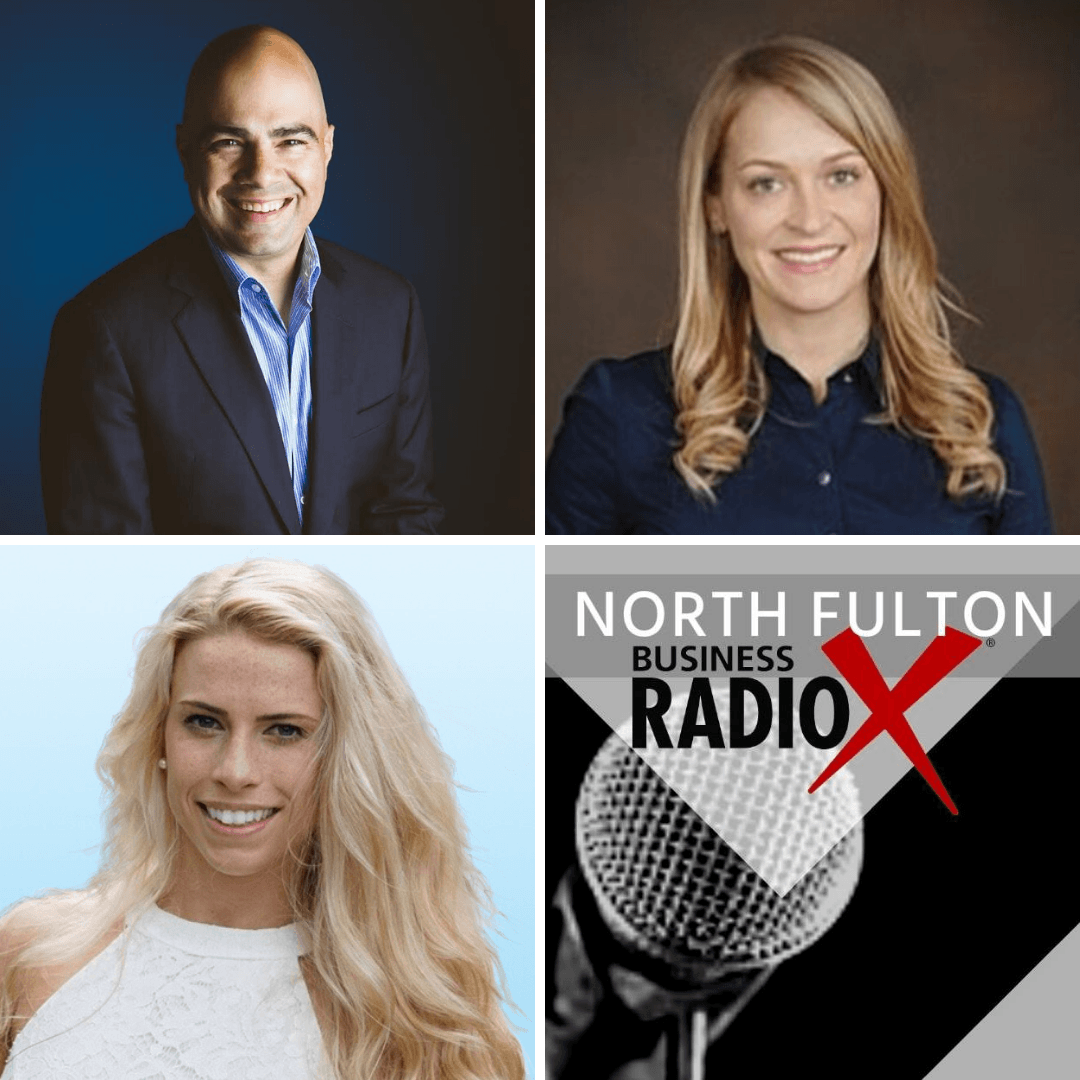
Bob King, First Horizon Bank, Erik Christensen, Bulldog Movers, and Danny Vander Maten, Cresa Atlanta

April 25, 2024 by John Ray

Bob King, First Horizon, Erik Christensen, Bulldog Movers, and Danny Vander Maten, Cresa Atlanta, with Bill McDermott, The Profitability Coach
North Fulton Studio
Bob King, First Horizon Bank, Erik Christensen, Bulldog Movers, and Danny Vander Maten, Cresa Atlanta
Loading
00:00 /
RSS Feed
Share
Link
Embed

Download file

Bob King, First Horizon, Erik Christensen, Bulldog Movers, and Danny Vander Maten, Cresa Atlanta, with Bill McDermott, The Profitability Coach

Bob King, First Horizon Bank, Erik Christensen, Bulldog Movers, and Danny Vander Maten, Cresa Atlanta (ProfitSense with Bill McDermott, Episode 57)

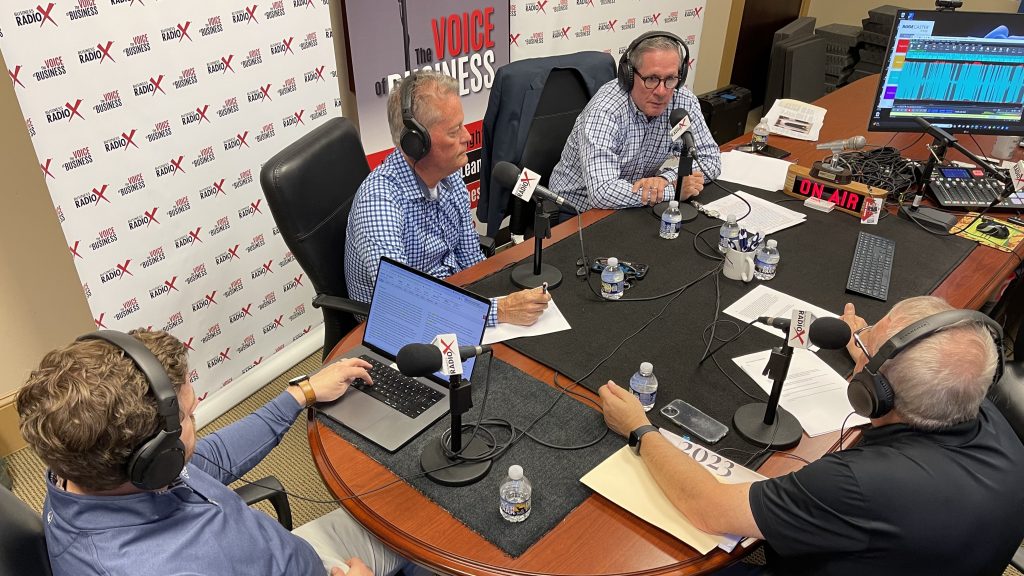
This episode of ProfitSense with host Bill McDermott features discussions on business banking, building a moving and storage company, and tenant representation in real estate. Bob King, First Horizon Bank, explains the nuances of borrowing for businesses and the significance of choosing the right bank. Erik Christensen from Bulldog Movers shares insights on building a reputable moving service and the importance of diversification. Danny Vander Maten from Cresa discusses the evolution of tenant representation and the crucial aspect of aligning real estate strategies with business goals.

Bill concludes the show with a commentary on the “X factor” in leadership.

ProfitSense with Bill McDermott is sponsored and presented by Bill McDermott, The Profitability Coach, and the show is produced by John Ray and the North Fulton Studio of Business RadioX® in Alpharetta.

Bob King, Middle Market Banking, First Horizon Bank

Bob King, First Horizon Bank

Bob King is a commercial banker with 35 years of experience working with C-Level executives of closely held and public companies. Bob specializes in delivering strategic advice and financial tools to help business owners achieve financial success and long-term security. He is a powerful force in the workplace and uses his energy to encourage others to work hard and succeed. If you have any questions or would like additional information, he can be reached at 818-309-8838.

LinkedIn

First Horizon Corp.

First Horizon Corp. (NYSE: FHN), with $81.8 billion in assets as of March 31, 2024, is a leading regional financial services company, dedicated to helping our clients, communities and associates unlock their full potential with capital and counsel. Headquartered in Memphis, TN, the banking subsidiary First Horizon Bank operates in 12 states across the southern U.S. The Company and its subsidiaries offer commercial, private banking, consumer, small business, wealth and trust management, retail brokerage, capital markets, fixed income, and mortgage banking services. First Horizon has been recognized as one of the nation’s best employers by Fortune and Forbes magazines and a Top 10 Most Reputable U.S. Bank.

Website | LinkedIn | Instagram | Facebook | X (Twitter)

Erik Christensen, Bulldog Movers

Erik Christensen, Bulldog Movers

Erik Christensen is the CEO of Bulldog Movers. Bulldog Movers is a full-service moving, storage and logistics company. With its three wholly owned subsidiaries, Buckhead Movers, Classic Design Services and CV Fine Arts Services, they provide the broadest range of local, long-distance and international services in the Southeast.

In addition to traditional high quality moving and storage that includes both residential and office and industrial moving and storage they also provide; last mile delivery and installation for decorators, designers and furniture dealers, fine arts storage, delivery and installation (they are the only approved fine arts storage location approved by both AXA and the Chubb Group), they are an approved TSA screening facility allowing us to deliver high value shipments directly the airport grounds without additional uncrating and screening, they provide high quality and fine arts custom crating suitable for international customs clearance, they have a full wood shop, furniture restoration shop and paint booth to restore and refinish fine furniture and they provide art framing and restoration.

Bulldog Movers knows of no moving and storage company in the United States that provides all of these services under one roof.

Website | LinkedIn | Instagram | Erik’s LinkedIn

Danny Vander Maten, Cresa Atlanta, and the Host of Executive Perspective

Danny Vander Maten, Cresa Atlanta

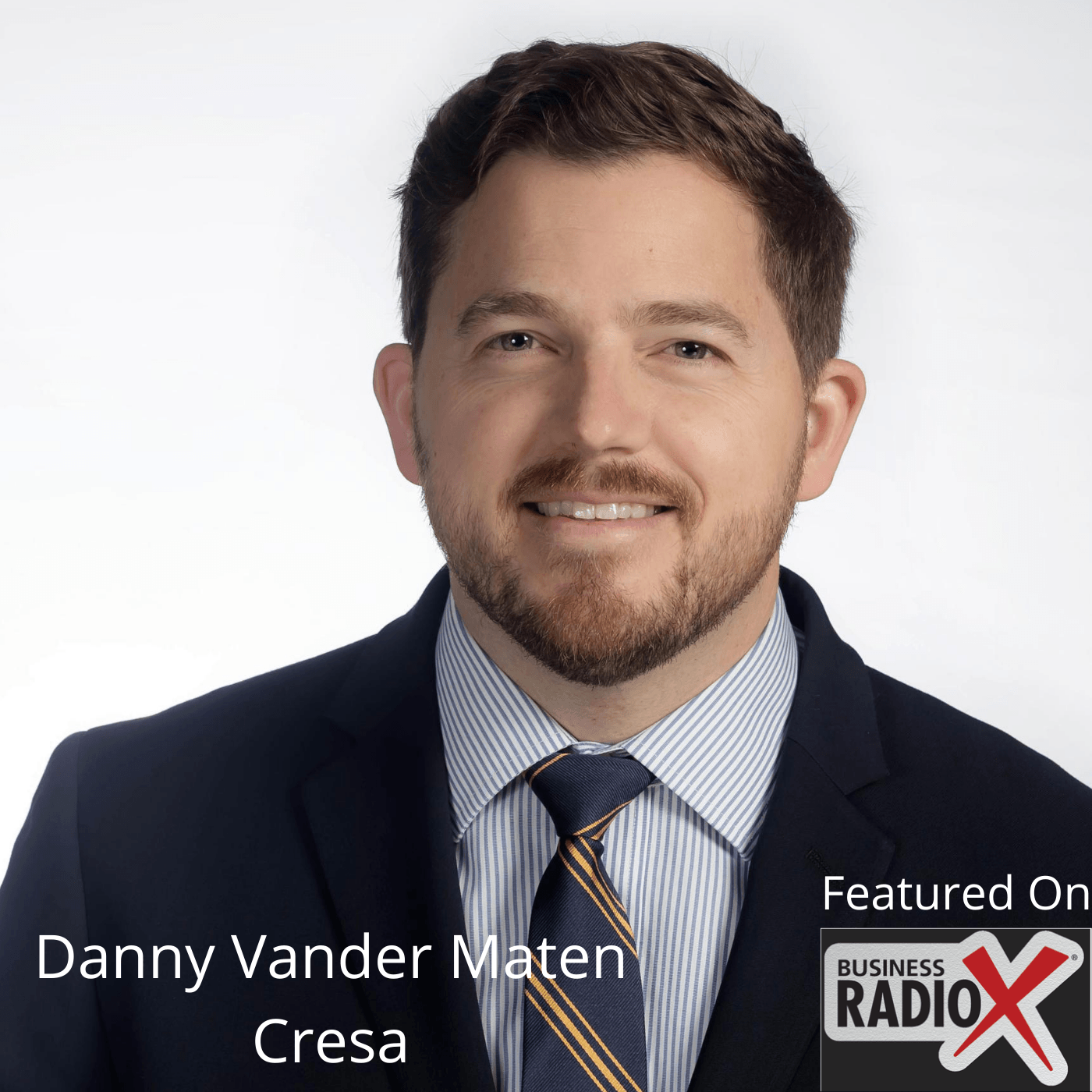
Danny Vander Maten joined Cresa in 2016 and brought a diverse background with nearly 10 years of experience in finance, business operations, and strategy to his client’s real estate transactions.

At Cresa, Danny’s primary responsibilities include strategic planning, lease analysis, negotiations, and cost mitigation. As a registered Certified Public Accountant with an active license in the state of Georgia, Danny provides unique financial insight into every critical aspect of the transaction.

Danny is also the host of Executive Perspective. Executive Perspective features executives and business leaders from a wide variety of sectors. Host Danny Vander Maten and his guests cover industry trends, insights, challenges, success strategies and lessons learned. The show series can be found on all the major podcast platforms, as well as the Business RadioX® network. Follow this link for the show archive.

Connect with Danny: LinkedIn | Twitter

Cresa Atlanta

Cresa is the world’s premier advisory firm that exclusively represents occupiers and specializes in the delivery of fully integrated real estate solutions. With more than 1000 employees, their purpose is to think beyond space, strengthen those they serve, and enhance the quality of life for our clients. Delivered across every industry, Cresa’s services include transaction management, workplace solutions, project management, consulting, lease administration, technology, investment banking and capital markets, and portfolio solutions. In partnership with London-based Knight Frank, Cresa provides service through 16,000 people across 380 offices in 51 territories.

Website | LinkedIn | Instagram | Facebook | X (Twitter)

Topics Discussed in this Episode

00:00 Welcome to Profit Sense: Introducing the Show and Guests
01:31 Demystifying Banking for Business Owners with Bob King
05:02 The Dynamics of Banking: Large vs. Small Banks
11:44 Insights on Becoming Bankable and Accessing Capital
20:21 Erik Christensen’s Journey to CEO of Bulldog Movers
25:20 Diving into the World of Moving and Storage Services
27:13 Entrepreneurial Insights and Diversification Strategies
28:47 The Power of Networking and Community Involvement
32:52 Exploring the Real Estate Leasing Market with Danny Vander Maten
38:45 The Importance of Tenant Representation in Real Estate
48:53 Leadership Insights and the “X Factor” in Leadership
About ProfitSense and Your Host, Bill McDermott

Bill McDermott
Bill McDermott

ProfitSense with Bill McDermott dives into the stories behind some of Atlanta’s successful businesses and business owners and the professionals that advise them. This show helps local business leaders get the word out about the important work they’re doing to serve their market, their community, and their profession.

Follow this link to find the show archive.

The show is presented by The Profitability Coach. The Profitability Coach helps business owners improve cash flow and profitability, find financing, break through barriers to expansion, and financially prepare to exit their business.

Bill McDermott is the Founder and CEO of The Profitability Coach. When business owners want to increase their profitability, they don’t have the expertise to know where to start or what to do. Bill leverages his knowledge and relationships from 32 years as a banker to identify the hurdles getting in the way and create a plan to deliver profitability they never thought possible.

Bill currently serves as Treasurer for the Atlanta Executive Forum and has held previous positions as a board member for the Kennesaw State University Entrepreneurship Center, Gwinnett Habitat for Humanity, and Treasurer for CEO NetWeavers. Bill is a graduate of Wake Forest University, and he and his wife, Martha, have called Atlanta home for over 40 years. Outside of work, Bill enjoys golf, traveling, and gardening.

Connect with Bill on LinkedIn and Instagram and follow The Profitability Coach on LinkedIn.

Tagged With: Bill McDermott, Bob King, Bulldog Movers, business banking, corporate office tenant representation, CRESA, Cresa Atlanta, Danny Vander Maten, Erik Christensen, First Horizon Bank, moving and storage, moving company, ProfitSense, ProfitSense with Bill McDermott, tenant representation, The Profitability Coach

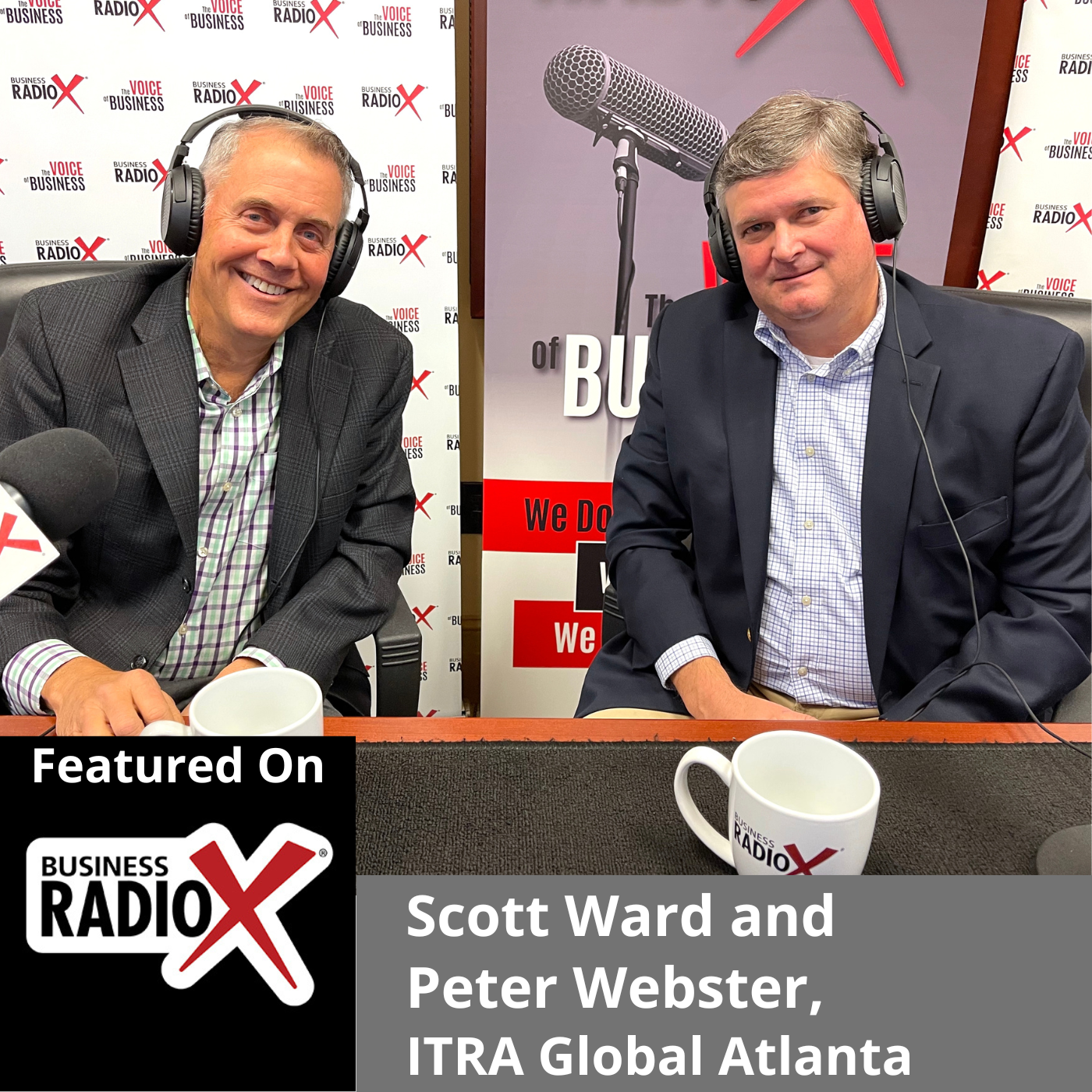
Peter Webster and Scott Ward, ITRA Global Atlanta

November 29, 2022 by John Ray

ITRA Global Atlanta
North Fulton Business Radio
Peter Webster and Scott Ward, ITRA Global Atlanta
Loading
00:00 /
RSS Feed
Share
Link
Embed

Download file

ITRA Global Atlanta

Peter Webster and Scott Ward, ITRA Global Atlanta (North Fulton Business Radio, Episode 582)

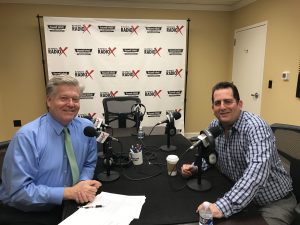
Peter Webster and Scott Ward of ITRA Global Atlanta joined host John Ray to discuss corporate real estate tenant and buyer advisement. Peter and Scott talked about the trusted network of ITRA Global professionals around the world that serve as corporate real estate advisors, mistakes business owners make with their office space needs, advising during negotiations, the current state of office space in the metro Atlanta area, and much more.

North Fulton Business Radio is produced and broadcast by the North Fulton studio of Business RadioX® inside Renasant Bank in Alpharetta.

ITRA Global Atlanta

ITRA Global is an organization of Real Estate Professionals specializing in representing tenants and buyers in the leasing, acquisition, and disposition of office, industrial and retail real estate. ITRA Global is one of the largest organizations in the world dedicated to representing corporate tenants and occupiers of commercial real estate in major markets across the globe.

Corporate Real Estate Advisors is a privately owned real estate firm that provides tenant representation and site selection expertise exclusively for tenants and buyers of office, industrial and retail space. Chosen by the prestigious ITRA Global (International Tenant Representative Alliance) as the regional representative for Atlanta, they offer corporate clients principal-level expertise in Atlanta and worldwide.

With each Principal’s 30+ years of experience, Corporate Real Estate Advisors provides intelligent strategies and creative solutions for companies, whether large or small, in their real estate matters. They are committed not only to achieving our client’s goals but also to exceeding their expectations by maximizing the value of their lease terms, resulting in long-term relationships reaching far beyond the initial transactional stage.

Website | LinkedIn

Peter Webster, Principal, ITRA Global Atlanta

Peter Webster, Principal, ITRA Global Atlanta

Peter Webster has been an active member of the Atlanta Commercial Real Estate Community for over three decades.  During that time, he has developed a deep and abiding knowledge of the market and has worked with clients both locally and nationally on assignments including multi-market account management, international representation, build-to-suit, and tenant advocacy.  All of this experience has given Webster a unique perspective on the industry and driven the formation of a work ethic and style whose hallmarks are a dedication to the client’s goals and objectives coupled with a keen sensitivity to delivering value tied to the clients’ business strategies.

Peter has been a top producer for both local and national real estate companies.  Notably, nine years with CB Richard Ellis where he received the Distinguished Achievement Award for being “Rookie of the Year” and was promoted to the level of Vice President.  Peter left that position to join The Staubach Company where he was responsible for managing the marketing efforts for the Atlanta region.  More recently, Peter founded a successful commercial real estate brokerage, Davidson Webster Associates and Advocate Commercial Real Estate.

During his career in Atlanta, Peter has been recognized six times for completing a Top Twenty-Five Office Deal of the Year by the Atlanta Business Chronicle.  In addition, he has received the President’s Award and is a Phoenix Award and a Lifetime Member of the Atlanta Commercial Board of Realtors Million Dollar Club.

Peter has served as a Director for the Atlanta Commercial Board of Realtors and the Chairman of the Forms Committee.  He is also presently serving on the Governors Board of the Georgia Institute of Real Estate.  In addition, Peter currently serves on the ITRA Global Locations Committee.

Peter is a graduate of The University of Georgia’s Business School where he majored in real estate.  Peter lives in Roswell, Georgia with his wife and children.  He is active with the city of Roswell and has served as the President of the HOA for his community.  Peter is an avid golfer, has a passion for music, and is enjoying raising his family.

LinkedIn

Scott Ward, Vice President, ITRA Global Atlanta

Scott Ward, Vice President, ITRA Global Atlanta

Scott Ward is a veteran of over 25 years of owning businesses. Successfully representing and consulting other business owners in lease negotiations in the technology, creative media, retail, and manufacturing industries, Scott’s unique perspective keeps in mind the owner/tenant’s long-term cash flow needs as a catalyst for the future health of his client’s company.

Examples of Scott’s work include a young tech company expanding for the first time and helping to enable its current growth to include private and government clients worldwide. An industrial cabinet manufacturer successfully expanding to handle over 40 percent growth. Media agencies that need flexibility in their space to address the demands of sudden surges or shrinkage in client needs. And retail/franchise situations that come with issues of territory, visibility, and access.  Scott has mentored five former employees to own their own businesses and applies these techniques in formulating winning space solutions for his clients.

Scott’s contacts and involvement in citywide groups give him an innovative perspective on trends in traffic, population, education, and economics. He is part of enabling organizations throughout metro Atlanta in realizing their missions by serving on boards or as an officer in Rotary International (Treasurer/International Director), The Chattahoochee Nature Center Board, The North Fulton Chamber of Commerce, Scouts BSA (adult training), Toastmasters International, The Georgia Production Partnership (membership, industry relations, and governmental relations) and Atlanta Theatre to Go Board. He is also a member of the Atlanta Commercial Board of Realtors.

Scott is a graduate of the University of Florida. Scott is also a public speaker and presentation coach. He loves fly fishing, and sailing and has been known to swing a golf club or two! His family’s accomplishments overwhelm him with pride. If you would like to share a coffee please reach out!

LinkedIn

Questions and Topics in this Interview

  • About ITRA Global Atlanta
  • Mistakes business owners make in real estate
  • Sublease space
  • Adjusting to post-Covid conditions
  • Success stories
North Fulton Business Radio is hosted by John Ray and broadcast and produced from the North Fulton studio of Business RadioX® inside Renasant Bank in Alpharetta. You can find the full archive of shows by following this link. The show is available on all the major podcast apps, including Apple Podcasts, Spotify, Google, Amazon, iHeart Radio, Stitcher, TuneIn, and others.

RenasantBank


Renasant Bank has humble roots, starting in 1904 as a $100,000 bank in a Lee County, Mississippi, bakery. Since then, Renasant has grown to become one of the Southeast’s strongest financial institutions with over $13 billion in assets and more than 190 banking, lending, wealth management and financial services offices in Mississippi, Alabama, Tennessee, Georgia, and Florida. All of Renasant’s success stems from each of their banker’s commitment to investing in their communities as a way of better understanding the people they serve. At Renasant Bank, they understand you because they work and live alongside you every day.

Since 2000, Office Angels® has been restoring joy to the life of small business owners, enabling them to focus on what they do best. At the same time, we honor and support at-home experts who wish to continue working on an as-needed basis. Not a temp firm or a placement service, Office Angels matches a business owner’s support needs with Angels who have the talent and experience necessary to handle work that is essential to creating and maintaining a successful small business. Need help with administrative tasks, bookkeeping, marketing, presentations, workshops, speaking engagements, and more? Visit us at https://officeangels.us/.

Tagged With: corporate office tenant representation, corporate real estate, CREA, ITRA Global, North Fulton Business Radio, Office Angels, office space, Peter Webster, renasant bank, Scott Ward, tenant representation

Decision Vision Episode 89: Should I Allow or Require my Employees to Work From Home? – An Interview with Jason Jones, Cresa

October 29, 2020 by John Ray

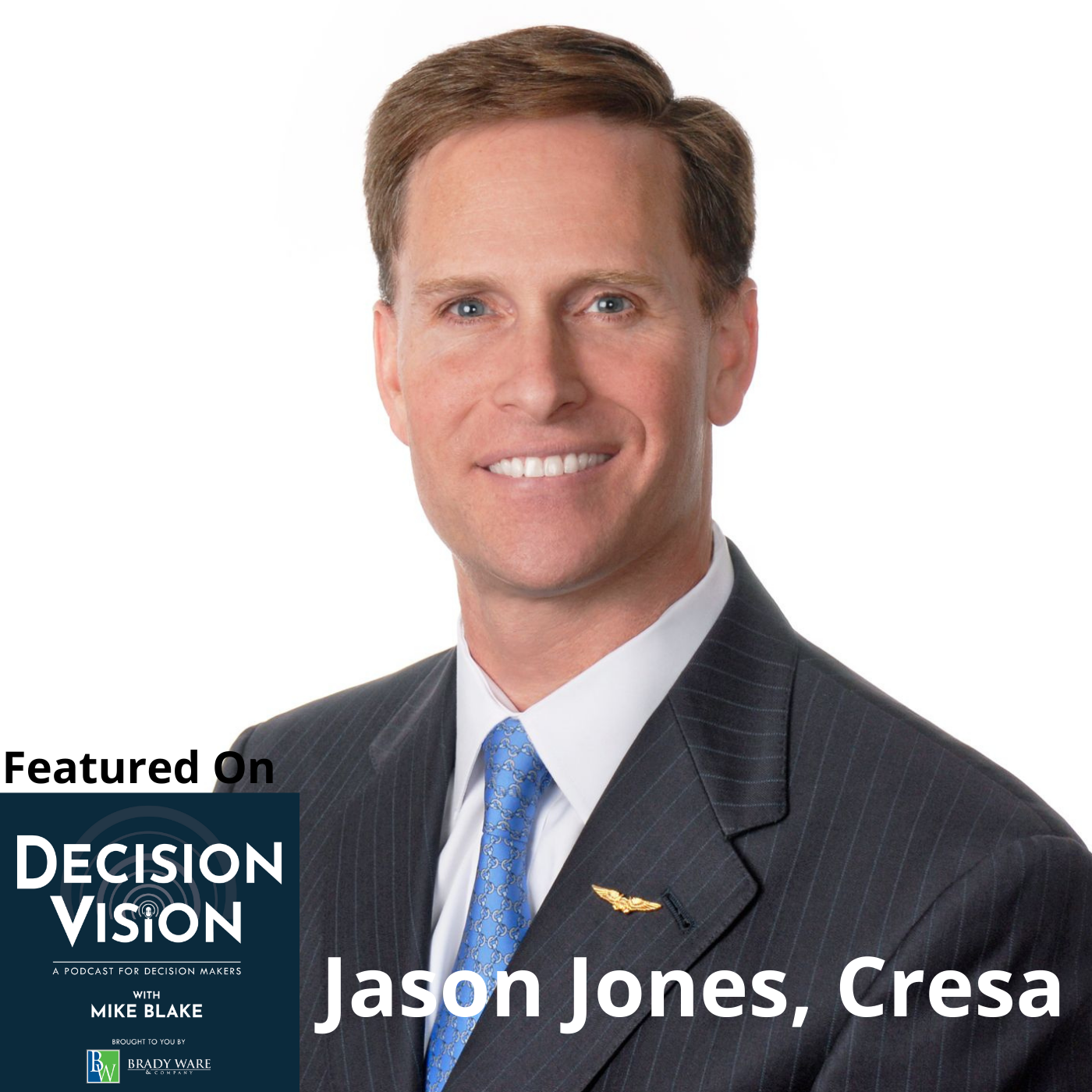
Jason Jones Cresa
Decision Vision
Decision Vision Episode 89: Should I Allow or Require my Employees to Work From Home? - An Interview with Jason Jones, Cresa
Loading
00:00 /
RSS Feed
Share
Link
Embed

Download file

Decision Vision Episode 89: Should I Allow or Require Employees to Work From Home? – An Interview with Jason Jones, Cresa

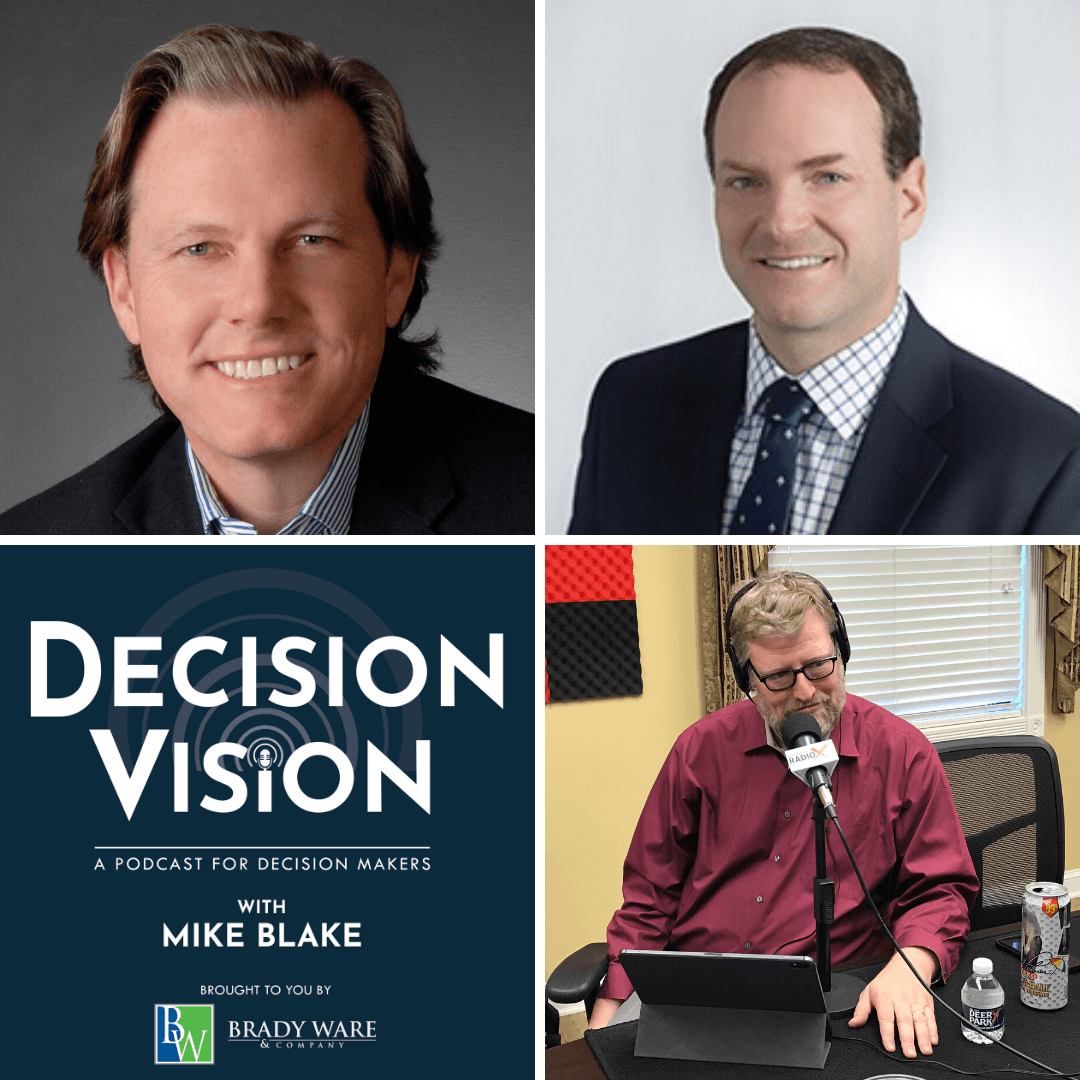
Jason Jones, Cresa, joins host Mike Blake to discuss the issues raised by a work from home workforce, including managing people, workforce productivity, talent recruitment, and, of course commercial real estate lease and ownership implications.  “Decision Vision” is presented by Brady Ware & Company.

Jason Jones, Principal, Cresa

Raised in Atlanta, GA, Jason Jones attended Duke University in Durham, NC on a Navy ROTC scholarship. After graduating from Duke in 1991 with a degree in political science, he traveled to Pensacola, FL and enrolled in naval flight school. In 1993 upon moving to Virginia Beach, VA, he learned to fly the A-6E Intruder as a Bombardier/Navigator and was subsequently assigned to a fleet squadron, deploying on the USS Enterprise.

In 1997 Jason left Virginia Beach to begin a tour of duty as a navy medical recruiter in Phoenix, AZ while attending Arizona State University’s Evening M.B.A. program. After leaving the Navy in 1999 he worked for one and a half years as a civilian headhunter recruiting senior executives for health insurance companies.

Upon finishing his M.B.A. in August of 2000 and before entering the business world full-time, Jason departed on a 15-month world trip on September 18th, 2000, returning to the United States on December 18th, 2001. He later documented his travels in the book Nomad:  Letters From a Westward Lap of the World.

After returning from his trip, Jason entered the commercial real estate industry, ultimately landing at Cresa.

Jason Jones leads two service lines at Cresa: Technology Advisory Services and Remote Advisory Services. Technology Advisory Services helps clients select and implement Communications (voice, video), Connectivity (Internet) and Cloud computing strategies – especially during a relocation.  Jason and his team help clients filter the confusion of evolving technologies and ensure coordination between the real estate and IT departments. Cresa Remote Advisory Services helps companies evaluate all the critical requirements of a remote work strategy. This leads to sustainable workforce strategies that balance working remotely with working in the office. Both services leverage human resources, technology, and real estate to maximize operations, improve talent attraction/retention and accelerate financial performance.

To contact Jason, follow this link.

Michael Blake, Brady Ware & Company

Mike Blake, Host of the “Decision Vision” podcast series

Michael Blake is Host of the “Decision Vision” podcast series and a Director of Brady Ware & Company. Mike specializes in the valuation of intellectual property-driven firms, such as software firms, aerospace firms and professional services firms, most frequently in the capacity as a transaction advisor, helping clients obtain great outcomes from complex transaction opportunities. He is also a specialist in the appraisal of intellectual properties as stand-alone assets, such as software, trade secrets, and patents.

Mike has been a full-time business appraiser for 13 years with public accounting firms, boutique business appraisal firms, and an owner of his own firm. Prior to that, he spent 8 years in venture capital and investment banking, including transactions in the U.S., Israel, Russia, Ukraine, and Belarus.

Brady Ware & Company

Brady Ware & Company is a regional full-service accounting and advisory firm which helps businesses and entrepreneurs make visions a reality. Brady Ware services clients nationally from its offices in Alpharetta, GA; Columbus and Dayton, OH; and Richmond, IN. The firm is growth minded, committed to the regions in which they operate, and most importantly, they make significant investments in their people and service offerings to meet the changing financial needs of those they are privileged to serve. The firm is dedicated to providing results that make a difference for its clients.

Decision Vision Podcast Series

“Decision Vision” is a podcast covering topics and issues facing small business owners and connecting them with solutions from leading experts. This series is presented by Brady Ware & Company. If you are a decision maker for a small business, we’d love to hear from you. Contact us at decisionvision@bradyware.com and make sure to listen to every Thursday to the “Decision Vision” podcast.

Past episodes of “Decision Vision” can be found at decisionvisionpodcast.com. “Decision Vision” is produced and broadcast by the North Fulton studio of Business RadioX®.

Visit Brady Ware & Company on social media:

LinkedIn:  https://www.linkedin.com/company/brady-ware/

Facebook: https://www.facebook.com/bradywareCPAs/

Twitter: https://twitter.com/BradyWare

Instagram: https://www.instagram.com/bradywarecompany/

Show Transcript

Intro: [00:00:01] Welcome to Decision Vision, a podcast series focusing on critical business decisions. Brought to you by Brady Ware & Company. Brady Ware is a regional full service accounting and advisory firm that helps businesses and entrepreneurs make visions a reality.

Mike Blake: [00:00:21] Welcome to Decision Vision, a podcast giving you, the listener, clear vision to make great decisions. In each episode, we discuss the process of decision making on a different topic from the business owners’ or executives’ perspective. We aren’t necessarily telling you what to do, but we can put you in a position to make an informed decision on your own and understand when you might need help along the way.

Mike Blake: [00:00:41] My name is Mike Blake and I’m your host for today’s program. I’m a director at Brady Ware & Company, a full service accounting firm based in Dayton, Ohio, with offices in Dayton; Columbus, Ohio; Richmond, Indiana; and Alpharetta, Georgia, which is where we are recording today. Brady Ware is sponsoring this podcast. If you like this podcast, please subscribe on your favorite podcast aggregator, and please consider leaving a review of the podcast as well.

Mike Blake: [00:01:04] So, today, we’re going to talk about, I think, a very timely decision. It’s certainly all over the place. The decision to allow or perhaps even require employees to work from home. So, just as a recap and spoiler alert, we started off 2020 – what sounds like 298 years ago – minding your own business when, all of a sudden, we have been cold clocked by a global pandemic known as the novel coronavirus-19. And as a result, extraordinary things have occurred in the day-to-day lives of most people and have impacted businesses in some fashion. Some businesses have been very positively impacted. If you’re in the mask business, I think you’re probably doing pretty well. And some have been very negatively impacted. You know, examples of that are going to be in hospitality and travel.

Mike Blake: [00:02:16] But for a lot of companies, you know, maybe you haven’t necessarily been all that financially impacted directly. But because of the way that experts have recommended -and I’m trying to keep this as nonpolitical as possible. I don’t understand why a virus has become political, but it has. But experts have recommended that we, basically, keep our distance from one another. The best thing that we can do to prevent ourselves from getting sick and being a carrier to others is to simply keep our distance, and to create barriers, and to limit our contact with strangers. And the more we can do that, the better.

Mike Blake: [00:02:58] And as a response to that, many companies have either created an option for their employees to work from home, where they previously hadn’t done. There are companies, like ours, that have kept the offices open but are not necessarily encouraging employees to come back. I think in our Dayton office, it’s probably a little bit more populated than our Atlanta office. I think, again, the doors are open, but we’re not exactly sending engraved invitations for people to come back in. And then, there are companies that has simply sent all their employees home, lock, stock, and barrel. Whether you want to come in or not, too bad. We don’t feel like we can make it safe. We don’t think it’s a responsible thing for our employees, for our customers, and for our community.

Mike Blake: [00:03:53] And this is created overnight. Massive challenges in terms of leadership, in terms of management, in terms of personnel development, in terms of a lot of the ways that we have been taught to lead and manage have suddenly been rendered inert and moved to the sideline. And we’ve talked a little bit about this in some of the other podcasts. We have talked to people about managing remote teams, and how do you support somebody working from home, and how do you support the work from home person. But those are very early in COVID. Those are very early in this experience in March and April in the heavy days where, I think, a lot of us thought that by now, as we record this in mid-October of 2020, if we hadn’t put this behind us, we would at least have seen a bright light at the end of the tunnel. And to that end, this is proving elusive.

Mike Blake: [00:04:58] And so, you know, we have to think now and companies are thinking in longer term. This isn’t a short term thing. And we’re finding also that some companies are doing very well with work from home. Some companies are contemplating making this permanent. And one of the upshots on this is it creates a cloudy outlook for the commercial real estate space. We don’t know if we’re going to need real estate as much as we did. Or if we did, it may be configured differently. It may be a different kind of real estate altogether. For example, I just read an article yesterday, it was on LinkedIn. I want to say it’s on The Wall Street Journal, but I’m not entirely certain. That skyscrapers are now very much out of vogue because you don’t want to stick people in elevators. And if the elevators are going 100 floors, that’s tough to do two people at a time. You’re going to have a lot of people getting sick in a lobby instead of the elevator. So, it’s opening up all kinds of unanticipated and strange kind of gyrations about decision making in this regard.

Mike Blake: [00:06:06] And so, I think, every business decision maker does have a decision in front of them, whether they’re actively pursuing it or whether they’re deferring it. At some point, you are going to have to decide whether or not you’re going to send your team, your workforce home, whether intentionally or comprehensively or whether by some sort of option. Most employees seem like to work from home, although some do not. And there’s increasing information available that suggests that working from home is, on the whole, a boon to productivity. So, that’s a long preamble, but a long preamble because this is a complicated and a very important topic.

Mike Blake: [00:06:53] And joining us today is our first repeat guest. And he was on earlier this year to talk about hiring veterans. Also, a very important topic. I’m fortunate I have a veteran working on my team now. A Marine who is extremely effective. We’re happy to have him. We’re very lucky to have him. But he came on really not to talk about his professional capacity, but Jason Jones, you know, he’s done something very, very interesting. I think very courageous. I think it’s going to be a case study someday. I really do. And that is, that he is a tenant representative, and he’ll talk about what exactly that means. But, in effect, he helps companies find commercial real estate. And he’s taken a step where he’s decided that he sees the world roughly the way that I’ve described and he’ll speak for himself in a minute. But he’s done something really interesting where, you know, the temptation would be to find all kinds of arguments why you should still come back into the office, because that’s how he makes his living.

Mike Blake: [00:08:09] But, instead, he’s taken the extraordinary step of risking cannibalizing his own business and making himself an expert on working from home, and remote management, and remote work services. And, frankly, I don’t know of anybody who has made themselves the expert on this. There are people who have written about it, but Jason has really made himself a student of it. So, we’re taking the extraordinary step. We normally like to have about a couple of years between appearances by guests. But I decided to break this rule because it’s depriving you, the listener, of the opportunity to benefit from his specialized expertise, where, frankly, there isn’t a lot of it out there.

Mike Blake: [00:08:53] So, I’m going to reintroduce my friend, and now holds the world record for appearances on the Decision Vision podcast, who is Jason Jones, who is now head of technology and remote advisory services at Cresa. And just as a reminder, Cresa is an international commercial real estate firm headquartered in the City of Washington. They represent tenants and provide real estate services, including corporate services, strategic planning, transaction management, project management, facilities management, workforce and location planning, portfolio lease administration, capital markets, supply chain management, sustainability and subleasing distribution. Formed in 1993, Cresta now has more than 60 offices and 90 employees.

Mike Blake: [00:09:39] Jason graduated from Duke University before serving in the United States Navy as an A-6 Intruder aviator. After departing the Navy, Jason got an MBA from Arizona State University and completed a 15 month solo trip around the world about what he wrote and published a book, Nomad: Letters from a Western Lap of the World. In response to the coronavirus pandemic and its impact on how businesses are thinking about real estate, Jason founded the Remote Advisory Service Practice. The Remote Advisory Service Practice helps clients leverage advances in technology in a new culture of acceptance for work from anywhere to attract and retain talent, reduce expenses, and reimagine the workplace. Jason, welcome back to the program.

Jason Jones: [00:10:24] Thank you. It’s great to be here, Mike. And I am thrilled to hold a new world record. That is amazing.

Mike Blake: [00:10:31] Yeah. We’ll send it to Guinness.

Jason Jones: [00:10:34] That’s what I was hoping. Wonderful. It’s great to be here and it’s always good to see you. I just enjoy being with you. And I really have a high regard for what you’ve done with Decision Vision.

Mike Blake: [00:10:45] Well, thank you. I do appreciate that. As I said, it’s nice to hear there’s at least one listener out there. So, we didn’t really get into this in the last program because that wasn’t the topic. So, we’re going to get into it now. And the first question is, describe your day job and, maybe, from a perspective pre-coronavirus in particular, what was your day job then? And kind of what did your service profile typically look like?

Jason Jones: [00:11:12] Sure. And I will tell you that I, personally, I’m a bit of an odd duck in the commercial real estate industry. But what I’ll do, I think, is most relevant is describe the business model of my company and then how I fit in. But the business model of Cresa, as you so well described, is, we are advocates for the occupier of space. Cresa is an acronym, Corporate Real Estate Service Advisors. So, we serve and advise our clients who are the occupiers of corporate real estate. And that’s 99 percent, for us, means office space and warehouse space.

Jason Jones: [00:11:51] And our job is to act as an advisor helping companies and nonprofit organizations develop their strategy for where they should have an office or a warehouse. How much space should they have? How should it be designed? And then, once we figure those things out, we go to the market. We help find the best fit, maybe three to five options, allow them to compete for our client’s business in an ethical manner that drives prices down, that drives concessions up. And then, ultimately, we help them implement moving into that space by managing the relocation project or the construction project. And then, once that’s done, or perhaps even at the very beginning of the process, if they’re already in space, we help them go through that process and renew their office or warehouse at better terms than they would be able to otherwise. So, it’s a real estate strategy and implementation business.

Mike Blake: [00:12:53] So, all the years I’ve known you and as long as I’ve known you’ve been with Cresa – I think I’ve known you since you started – but I don’t think I ever knew what it stood for. And I should have known it was an acronym, but I never asked. That’s a bucket list item that’s been ticked off.

Jason Jones: [00:13:10] Yeah. Perfect.

Mike Blake: [00:13:13] So, we’re going to get sort of a second piece of value out of you here, because this story intersects with something that I think a lot of people are facing in the coronavirus environment, which is, your business has clearly been – or at least it seems to me – has been disrupted. So, March, April rolls around, the world changes rapidly, and it’s unclear where it’s going to change to. People start being sent home en masse. What starts going through your mind as a real estate adviser and as somebody who, frankly, makes a living on helping people find the right space and getting square footage settled?

Jason Jones: [00:13:53] Yeah. Well, immediately, the very first thing that went through my mind was business continuity, which is how are my clients, our firm’s clients, and just other companies and nonprofits going to be able to maintain business continuity? How well set up or how well prepared are they for sending everyone home? And it was, practically, overnight and it was, as you recall, mandates, government mandates, which really kind of mercifully took the decision away from leaders as to whether or not to send people home and they had to. So, that very first thought in my mind was how are companies and nonprofit organizations going to be able to continue to operate with everyone working in a totally different environment than they normally did. Do they have the technology that’s available? Because this is going to now require technology that perhaps they have and perhaps they don’t. So, that was thought number one.

Jason Jones: [00:14:53] But thought number two, very soon thereafter, Mike, just a light bulb went off in my mind right away was, “Wow.” I think that this is going to be long lasting. I certainly didn’t think it was going to be a year or more, but I did think it was going to be several months. And I thought to myself, companies are going to need help understanding how to get this balance right between working from home and then one day returning to the office when that happens. And I thought maybe it would be six months. That was my personal thought at the time. But the idea of companies now experiencing a remote workforce – and by remote, in this case, remote at home. Although, remote can mean also another office location or a coffee shop. It could mean any number of locations. But remote at home, in this case, how are they going to balance that with their central office, which they still have, they’re still paying for, and now has in a large way become a nonperforming asset. So, how can we help them balance those two things and get the right blend when the day comes that they will have no restrictions, no health care restrictions on returning to the office.

Mike Blake: [00:16:22] So, you started thinking in advance about the needs. At one point, did you start to come to a realization that this is not just a service imperative for your clients, but also probably the right business move for you personally and for the firm?

Jason Jones: [00:16:42] And, again, that was very, very early on, because I recognized – and you have to understand, if you go to the landing page for Cresa’s website in big, bold letters, it says, “Think beyond space.” So, that’s our mantra. And the reason that we can do that is because we only represent or advocate for the occupier of space, never landlords. So, we’re not solely focused on how do we fill buildings? Which a landlord, that would be their interest. The owner of property wants to fill that building. That’s their business model. Our business model is advisory services for the occupant, which includes leasing space or owning space, warehouse space, office space. But it also includes helping companies with their bigger picture business strategy that leads downstream to the support infrastructure of corporate real estate.

Jason Jones: [00:17:37] Real estate is simply support for the larger business model. So, we help companies understand how are they going to manage multiple leases? How should that space be designed to maximize the benefits of culture and help to enhance their culture? How can they use space to maximize the retention and recruitment of talent, bringing in the best and the brightest? How can they use technology to enhance the workforce experience so that they can have higher productivity and greater engagement with their employees? So, there’s a bigger picture that our company takes. And it’s not just focused on space, it’s focused on the holistic approach to a company’s business. And then, we solve a lot of these business problems by leveraging real estate and beyond, which gets into how I’m a bit of an odd duck in the corporate real estate industry, which is through technology, where I have a specialization. And, now, through workforce strategy, which includes remote work as one component of a larger workforce strategy.

Mike Blake: [00:18:58] So, if I’m understanding this correctly, I want to make sure this is really clear because it is an instructive piece of the conversation. It sounds like to some extent, you’ve always seen yourself, and it sounds like you believe your firm sees itself, as a consultant on optimizing real estate as an asset – well, as an operating asset and not just trying to put bodies in square footage.

Jason Jones: [00:19:27] Absolutely.

Mike Blake: [00:19:27] And that made this – I don’t want to say transition – maybe this evolution, if I can use that term. It sounds like it made that evolution more natural than it might seem on the outside.

Jason Jones: [00:19:41] Absolutely. Because, Mike, when you think about it, and every company listening, everyone making a decision out there about their workforce, my question that I pose is, how can you possibly design your office space and commit to a certain footprint, a certain amount of office space, if you don’t first know where your employees are going to be working and how they’re going to be communicating, collaborating, and ultimately using that space. You’ve got to do the work upfront on the workforce strategy, which includes remote work and includes a central office. There’s tremendous benefits to both and there are challenges to both. But you’ve got to figure that out before then you go downstream and say, “Okay. Now, that we understand and have confidence in our workforce strategy, where people are going to be working, how they’re going to be communicating, collaborating. We’ve got the right technology in place. We have the right policies. We have compliance in place.” Then, we can design the space to fit that need and commit to a certain expense, a certain amount of space.

Jason Jones: [00:20:54] And, by the way, that commitment in real estate and understanding the nature of real estate is very important. It’s inflexible. You’re going to commit for a minimum of three years, but, typically, five to ten years to a certain amount of space. And while there’s some flexibility with sublease rights and expansion rights and rights of first refusal, it’s cumbersome to make changes. So, you want to get it right upfront and you want to have confidence that your plan for real estate fits the precursor conversation of what is your workforce strategy, where are people going to be working, and what is most advantageous for higher productivity, better recruiting and retention of talent, and better financial returns.

Mike Blake: [00:21:41] So, you’re typically talking to your clients at the sea level, whether it’s the CFO, COO, or CEO. What concerns are they most expressing to you about work from home/work from anywhere?

Jason Jones: [00:21:59] I think one of the biggest things that we hear is, I want to protect the culture of my organization. And there is a concern that extended work from home will have a deleterious effect on their culture. Because culture is best established within personal relationships where you’re face-to-face, you can see each other. And there’s just something that’s intangible about how that relationship is developed in-person versus remotely. But my counsel to them, and I think the real concern is, 100 percent work from home, which is basically what we’re still experiencing right now. I would say on average and this is anecdotal and we see a few statistics here and there that it’s approximately 10 to 20 percent of people are occupying their office space generally across the U.S. and Canada.

Mike Blake: [00:22:57] That’s true for us in Alpharetta.

Jason Jones: [00:23:00] Yeah. So, that’s about right. I think that’s a fair number right now. So, that’s a very large percentage that are not coming into the central shared office. And the concern is that that’s going to have an effect on their culture long term. How can they be creative? You’re missing serendipitous moments. Tim Cook of Apple was just interviewed by The Atlantic a couple of weeks ago. And he said that’s one of his great concerns. And that they have designed their office space at their headquarters to have common areas where people hangout and interact and mingle so that you can have serendipitous moments, you can have creative moments, share creative thoughts. And you can’t schedule those things.

Jason Jones: [00:23:43] But I think what’s going to happen is, as we cross the hurdle, eventually, of a post-COVID environment, now you’re going to have an opportunity for what I call purposeful collaboration. And that is a leader or a manager making a purposeful decision about when and where that person’s team collaborates, either works together or works independently. And that collaboration can occur in person or that collaboration can occur virtually with someone at home and someone at the office, or two people at home, or whatever the case may be. And I think that when you can blend those two things and find the right balance – this is back to culture – you’re going to be able to really make sure you’re getting all the benefits of the central office as well as leveraging this newfound cultural acceptance for working from home.

Mike Blake: [00:24:45] So, I think implicit in that is the glue that holds that culture theses together is communication. Without communication, there’s no community. There’s no culture. What are you seeing emerging in terms of best practices that allow easy communication among workers and across different platforms of the organization or different segments of the organization versus being overly intrusive and, you know, getting into nearly spying on your employees, basically? What are some best practices you’re seeing there?

Jason Jones: [00:25:33] Well, again, this comes back to leadership, leadership and thoughtful planning. There are many tools, software tools, telecommunication tools, to allow for communication between remote employees. We’re using one right now. This is a communication tool. And there are collaboration tools as well, software. But it’s how you choose to use them that’s most important. And I think one of my pieces of advice for organizations out there is to come up with cultural norms for how you, as a team or as an organization, communicate with each other. And examples of this would be, what are our hours when we are expected to respond to either voicemails and email and text messages so that we keep some structure and boundaries on our personal life and our home life? So, it could be, “Hey, from 7:00 a.m. to 7:00 p.m., it’s fair game.” Or 7:00 p.m. to 6:00 p.m., whatever the case may be. But after that, we have no expectation that you will reply to communication.

Jason Jones: [00:26:47] It could mean we, as an organization or as a team, are going to agree that we’re going to have our cameras on when we have a Zoom call or a RingCentral call. But on certain calls, perhaps just phone ones at the end of the week, you don’t have to have your camera on. So, we’re going to side culturally how we’re going to communicate. Visually, where we can see each other. Or where it’s okay to be walking your dog around the neighborhood while you’re on your conference call. You can do that now. Why shouldn’t you? Let’s have a cultural understanding of what’s acceptable and what’s not.

Jason Jones: [00:27:23] So, there’s a number of things that I think people can agree to. But the other key piece for communication is, making sure that you’re giving appropriate and consistent feedback to the remote employee. That’s very important. Because, otherwise, someone who is working remotely can feel they’re on an island. They can feel isolated. And they’re just not sure, “Am I meeting standards? Am I doing my job the way people want? Give me some feedback.” So, consistent, frequent, informal feedback – and everyone has to define what frequent means for them and their team. But I think that’s a key part of communication is making sure – and it goes both ways. The manager needs feedback also on how they’re doing sort of in a 360 view. But that’s what I would advise, is to really focus on good feedback, consistent informal communication, and then planned formal communication that perhaps is a little bit more often business reviews, for instance, than they may have been when everyone was in the office together.

Mike Blake: [00:28:37] You know, your comments here strike me as something that I’ve observed. Personally, I’m curious how you’d react to this. A lot of what you’re talking about, I would argue, are best practices even as of January 1st, 2020. You know, providing consistent feedback, providing protocols for communication, setting realistic boundaries. It’s interesting to me how coronavirus and the pandemic are, in a lot of ways, it’s what’s old is what’s new. It’s forcing us to revisit the fundamentals, I think, of leadership and management and be much more intentional. I guess, because being in person, maybe, sometimes gives us some margin for error that we wouldn’t ordinarily have. I’m not sure what it is, but I hope you get my meaning is that, a lot of these things you’re suggesting – I’m not denigrating them at all – but merely pointing out that these have been best practices before. But I think one of the lessons is that if they’re important before, they’re ten times as important now.

Jason Jones: [00:29:55] Yes. They’re accentuated for sure. Because if you’re in the office together, there’s a feeling you can manage by walking around, just kind of you feel it. Whereas, here, you have to be purposeful about the communication and the feedback. And, frankly, it can sharpen a leader, it can sharpen a manager to be more effective than they may have been otherwise.

Mike Blake: [00:30:22] I think that’s a great point and it gets into my next question beautifully, which is, how managers had to adapt to work from home or work from anywhere? And I think you just nailed it. And I’ll ask you to add to it if you would like to. But that ability to manage by walking around is not there. And, you know what? It reminds me, as you know I’m a big baseball fan. There used to be a player for the Yankees, Bernie Williams. He played centerfield for them. And he was not the greatest center fielder in terms of anticipating where the ball is going to hit. But he’s such a great athlete. He could basically outrun his mistakes. And with work from home/work from anywhere, you can’t sort of outwork your mistakes by managing by walking around, because that tool is not available. You must be more intentional because one of the tools for kind of making up for that just simply has been removed.

Jason Jones: [00:31:25] Yes. It’s interesting. I’ve done a lot of reading – as you mentioned, I really have become a student of this over the past several months. And there was a very interesting article about different qualities are now being rewarded and are more advantageous in a leader than there were when everyone was in the office together. So, previously a charismatic, gregarious leader had a lot of sway, had a lot of pull. But maybe, perhaps, they weren’t the most effective at actually getting things done and staying on course and staying on schedule. Now, getting things done, staying on course, staying on schedule is so important. And those interpersonal, gregarious, charismatic qualities are not as effective virtually as they are in person. So, it’s requiring different aspects of a leader to be successful. And what’s going to be really interesting is, when you get into a place where we can find the right balance between the two locations, remote and in office, and allowing both of those personalities to be successful.

Mike Blake: [00:32:40] That’s a really interesting point. So, I’m going to go off script here because I think that’s such a smart point. At least, I think so. I haven’t thought of it, but I think you’re dead right. And that is, that coronavirus really does play into the hands of the technical manager, not the technician per se, but the technical manager that understands, embraces, likes, is good at the nuts and bolts of managing, which is coordinating resources to produce the desired result within the desired constraints, whether there’s a time budget, whatever they are. And there’s value to that, the charismatic leader for sure. But the charismatic leader – I think I agree with you – because of how communication is, has to work a lot harder for those charismatic qualities to be effective. And even in the short term, they’re not even as valuable. They’ll eventually come back. But there is a point in a crisis where it’s not about charisma, it’s about execution.

Jason Jones: [00:33:49] That is correct. And so, what’s interesting and what can be helpful for organizations who are out there listening is, there are personnel assessments. So, in our consulting, we have partnerships with multiple organizations. And there’s a few that leverage personnel assessments that they’re, basically, psychological tests. Kind of like a Myers-Briggs, I mean, think about that. Although, it’s different because it’s geared towards the remote work environment. And these are important because they help organizations understand. They help people understand themselves. And they also help managers understand those who are reporting to them, those who they are leading, so they can best manage them based on their aptitude for remote work. How well they tend to focus? Are they an introvert? Do they like to work alone? Do they really need or thrive on interpersonal communication? So, you change your management a little bit depending on the employee and their personnel assessment.

Mike Blake: [00:35:03] So, we’ve talked about how managers are having to change. What changes are you seeing in how employees operate, carry themselves, seek to add value to the organizations with which they work?

Jason Jones: [00:35:17] Well, I think that really goes back to just making sure that they are having expectations set. So, asking for feedback from their managers, understanding what the expectations are so that they can meet or exceed them, and making sure that they are getting those things done. I think that’s really important. And, you know, it’s also really important –

Jason Jones: [00:35:47] I want to go back to the manager just for a second. It’s important for leadership at the top of the organization to do a good job of communicating larger mission and larger goals. And this goes back to my time in the military. This is very much of a military concept. So that the remote worker who is operating unsupervised throughout the day can make independent decisions that are congruous with, they’re in alignment with, the larger goals of the organization. So, there’s a leadership challenge here. There’s a leadership requirement to do a good job of communicating big picture goals and mission, so, again, that the unsupervised independent worker can make those decisions real time on their own that supports the larger mission. And that’s the same thing as, you know, you want your fire team out in the field understanding the big picture strategy that the battalion commander has back at headquarters so they can make decisions at the tip of the spear.

Mike Blake: [00:36:53] Right. So, let’s shift gears a little bit. You know, the office is changing, but it’s not going away. We’re still going to need and want, I think, office space. I’m going to ask you to put your futurist hat on a little bit, think a year or two from now, how do we think about office space differently? How do office spaces look and function differently a couple of years from now?

Jason Jones: [00:37:23] Sure. Well, a lot of this will depend on the organization and how they use the space, because a law firm is very different than a software development firm. So, probably, it really needs to be customized to the organization. But I think what you’re going to find is, as work from home or remote work becomes more deeply ingrained in the everyday fabric of the corporate America, nonprofit organizations, et cetera, you’re going to find the design of space to be different than before and the technology to be different than before. And so, specifically, I think you’re going to find a lot more flexibility in the way the work space is designed. You’re going to want to be able to move things around as organizations grow. And they have some people that now, maybe, they need to be in the office more often during a certain project. And then, they want to be remote during another project. So, you’re going to want some flexibility in how the furniture can be arranged.

Jason Jones: [00:38:36] So, actually, I think furniture is going to be a very important part of this. Creating environments not just through hard walls, but through the way furniture is arranged. And creating different environments for more casual, I’m going to say, coffee shop type environments. Because people are working in real coffee shops right now and they want to have that feeling and environment at the office as well. That’s what will woo them to come into the office. So, I think space will need to be designed to woo employees to want to come there, as opposed to preferring to be at home where they have their set up, and they’re very comfortable, and they feel very productive there.

Mike Blake: [00:39:23] So, that is interesting to me, because I did not anticipate you would say that. Only because before this whole thing started, I’ve read so much about how open workspaces have generally been considered to be a management experiment that has failed. They’ve been enormously disruptive. While they’ve perhaps facilitated collaboration on the margin, they’ve completely destroyed the potential for so-called deep work and deep thought.

Mike Blake: [00:39:59] But on the other hand, I mean, you’re right. Even, now, I imagine people are still working at Starbucks and people love to go out. I think people miss being able to go out to a place where they can just hangout for a couple of hours in an open space by themselves with a pair of noise canceling headphones. And that just occurred to me kind of what kind of a paradox that is. And that really sounds like you’re dancing on the head of a pin there of how do you create a space that is both open and welcoming, but also not chaotic.

Jason Jones: [00:40:33] Yes. And this is all about culture and leadership, which I go back to every time, is, it’s kind of like when I go to Starbucks or an independent coffee shop that I particularly like that’s not a Starbucks, people don’t come up and interrupt me and ask me questions. And when I go to the library, there’s a culture that it’s, “Shh. We’re in a library.” It’s quiet. And I think you can create those areas in office space. And then, there’s going to be other areas that the culture is, “Hey, you’re in the Romper Room over here.” You know, you’re going to get interrupted or this is where we’re playing games. And then, there’s going to be other places that are dedicated to heads down work.

Jason Jones: [00:41:16] And I think there’s going to be a lot of – I’ll go ahead and use the corporate name – Zoom room, which could be any type of technology. But, basically, they will be smaller rooms where people can gather together, teams, to have a video conference call and a collaboration working session with another office. And people who were doing that before COVID, it’s just going to become more prevalent now that there’s a greater, broader, cultural acceptance for using this type of technology and working remotely.

Mike Blake: [00:41:56] A management challenge has started to come to light, which is work from home/work from anywhere dress codes, where you see a lot of of jokes. I certainly use the tortured stereotype enough. You know, you see me in a three piece suit above the line. Below the line, you just don’t know what is there. And, frankly, you don’t want to even imagine or go there, right? And as people have slipped into a work from home, their personal morning routines have changed because they don’t feel like there’s a certain level of preparation. I think some companies are worried that’s gone kind of too far. Are you aware of that trend and that concern as well? And what do you see evolving in that regard in terms of work from home/work from anywhere dress codes?

Jason Jones: [00:42:53] Well, I think this goes back to two things. Again, it’s culture and leadership. So, what is the culture of our organization? What do we wear when we go into the office? That’s different for every company. But we have a culture that we all agree this is what we wear. And that same culture should apply or should be set for video conference calls. And that’s just leadership deciding either you can mandate or you can come to a collective consensus. And that’s a leadership decision as to which path you want to take. But that’s what that comes down to.

Jason Jones: [00:43:29] And that’s why I think people need to be thoughtful and purposeful. This is why we guide companies through a road map where there is a step-by-step process through which they cover all of these decisions. Everything that we’re talking about are so important to creating a thoughtful, balanced, and sustainable workforce strategy that includes remote work. So, I think people should go through that roadmap and ask these different questions of themselves and be a leader and take initiative to set those standards.

Mike Blake: [00:44:02] We are speaking with Jason Jones from Cresa on the Decision Vision podcast and talking about work from home/work from anywhere arrangements for a workforce. Jason, we’re running up against our time here. But I do have a couple of questions I want to get in here and one is, you know, as you have self-described or you described yourself as a student of this work from home/work from anywhere phenomenon, is there a company out there you think is really getting it right? Is there somebody that you say, “You know what? As a good kind of role model, this is a company that is kind of setting the standard for best practices.”

Jason Jones: [00:44:43] Well, what’s challenging about that question is it’s hard to know who is getting it right from a balanced perspective. Because most companies aren’t able to have the balance yet because there’s still a health care restriction. And, by the way, that is where the rubber is going to hit the road from a leadership perspective is, once that is removed, leaders are going to be challenged with what’s the right balance. What’s the right decision? How can I be purposeful in my collaboration? And I think that forward thinking organizations are looking at that now. They’re looking over the horizon. And there’s other leaders that are going to get caught flat footed.

Jason Jones: [00:45:29] But one company that I will tell you that is of interest and you can Google them and read, they’ve got a lot of information about work from home. It’s a 100 percent remote company, so that’s a little bit different, a little bit of an outlier. But they’ve got some good information about working remotely and they’ve done it very well, very successfully. It’s a company called Zapier, Z-A-P-I-E-R. They’re 100 percent remote. They’ve been around since 2011. So, they’re successful. They have over 300 employees in 28 countries. Now, they have a business model. It’s software development that lends itself to that. But if you want to read some interesting information about how they do it, I think you could pick some nuggets out of there for your organization that very, very likely will need a balanced strategy to be sustainable.

Mike Blake: [00:46:26] Jason, it’s been a great conversation. We could make this an all day seminar. But, of course, we don’t have the ability to do that. If somebody has questions about this work from home/work from anywhere phenomenon, either as an employer or employee, can they contact you with a question? And if so, how best can they do that?

Jason Jones: [00:46:45] Absolutely. And I want to say two things. You can always Google my name, Jason Jones, Atlanta, and I’ll pop right up. So, that’s probably the easiest to remember. My email address is jjones@cresa.com. And I do a webinar every second and fourth Tuesday of the month at 2:00 p.m., Eastern. We’ve been doing it for three-and-a-half months now, where we talk about the challenges and the benefits of remote work and the road map to navigate your way to a successful strategy. So, if that is of interest, it’s free. There’s no charge. We have people come on all the time. And, again, it’s very easy to schedule, it’s every second and fourth Tuesday of the month.

Mike Blake: [00:47:32] Well, thank you, I have a feeling you’ll get some takers on that. That’s going to wrap it up for today’s program. I’d like to thank Jason Jones so much for joining us and sharing his expertise with us. We’ll be exploring a new topic each week, so please tune in so that when you’re faced with your next executive decision, you have clear vision when making it. If you enjoy these podcasts, please consider leaving a review with your favorite podcast aggregator. It helps people find us that we can help them. Once again, this is Mike Blake. Our sponsor is Brady Ware & Company. And this has been the Decision Vision podcast.

Tagged With: Brady Ware & Company, commercial real estate, corporate office tenant representation, CRESA, Jason Jones, Michael Blake, Mike Blake, Productive Workforce, productivity, tenant representation

Commercial Office Space on the Georgia 400 Corridor, with Danny Vander Maten, Cresa

September 2, 2020 by John Ray

Danny Vander Maten
North Fulton Business Radio
Commercial Office Space on the Georgia 400 Corridor, with Danny Vander Maten, Cresa
Loading
00:00 /
RSS Feed
Share
Link
Embed

Download file

Commercial Office Space on the Georgia 400 Corridor, with Danny Vander Maten, Cresa (North Fulton Business Radio, Episode 277)

Danny Vander Maten of Cresa joins the show to discuss his specialty, commercial office space on the Georgia 400 corridor in Roswell and Alpharetta, and what the future may hold. “The host of “North Fulton Business Radio” is John Ray, and the show is produced virtually by the North Fulton studio of Business RadioX® in Alpharetta.

Danny Vander Maten, Vice President – Tenant Representation, Cresa

Cresa is the world’s most trusted occupier-centric commercial real estate firm. They strategize for the best possible results for occupiers everywhere. They think beyond space. Partner without conflict. And apply their integrated expertise to make a client’s business better.

Danny joined Cresa in Spring of 2016 and brings a diverse background with nearly 10 years’ experience in finance, business operations and strategy to his clients’ real estate transactions. At Cresa, Danny’s primary responsibilities include strategic planning, lease analysis, negotiations, and cost mitigation. As a registered Certified Public Accountant with an active license in the state of Georgia, Danny provides unique financial insight into every critical aspect of the transaction.

Company website

LinkedIn

Twitter

Questions/Topics Discussed in this Show

  • How did you get into Real Estate?
  • What is a Tenant Rep?
  • What are companies doing right now?
  • Is “Work from Home” really working?
  • What is your favorite thing about what you do?

North Fulton Business Radio” is hosted by John Ray and produced virtually from the North Fulton studio of Business RadioX® in Alpharetta. You can find the full archive of shows by following this link. The show is available on all the major podcast apps, including Apple Podcasts, Spotify, Google, iHeart Radio, Stitcher, TuneIn, and others.

Renasant Bank has humble roots, starting in 1904 as a $100,000 bank in a Lee County, Mississippi, bakery. Since then, Renasant has grown to become one of the Southeast’s strongest financial institutions with over $13 billion in assets and more than 190 banking, lending, wealth management and financial services offices in Mississippi, Alabama, Tennessee, Georgia and Florida. All of Renasant’s success stems from each of their banker’s commitment to investing in their communities as a way of better understanding the people they serve. At Renasant Bank, they understand you because they work and live alongside you every day.

Tagged With: Alpharetta, Commercial Office Space, commercial real estate, corporate office tenant representation, CRESA, Danny Vander Maten, GA 400, Georgia 400, Georgia 400 Corridor, John Ray, North Fulton Business Radio, office space, real estate, Roswell, tenant advocate, tenant representation, work from home

Decision Vision Episode 61, “How Do I Manage My Business Real Estate in a COVID-19 World?” – An Interview with Brooks Morris and Andy Roberts, Cresa Atlanta

April 16, 2020 by John Ray

Cresa Atlanta
Decision Vision
Decision Vision Episode 61, "How Do I Manage My Business Real Estate in a COVID-19 World?" - An Interview with Brooks Morris and Andy Roberts, Cresa Atlanta
Loading
00:00 /
RSS Feed
Share
Link
Embed

Download file

Cresa Atlanta
Clockwise from Upper Left: Brooks Morris, Andy Roberts, and Mike Blake

Decision Vision Episode 61, “How Do I Manage My Business Real Estate in a COVID-19 World?” – An Interview with Brooks Morris and Andy Roberts, Cresa Atlanta

The COVID-19 economic crisis has injected a new dynamic between commercial real estate landlords and their business clients, as questions around rent abatement are coming up. Brooks Morris and Andy Roberts of Cresa Atlanta join “Decision Vision” to discuss this issue and much more. “Decision Vision” is brought to you by Brady Ware & Company.

Brooks Morris, Senior Vice President, Cresa Atlanta

Cresa Atlanta
Brooks Morris, Cresa Atlanta

Brooks Morris, Senior Vice President of Cresa Atlanta, has over 16 years of executive experience. Prior to starting his real estate career, Brooks was with Enterprise Holdings, a $17 billion global transportation company. Brooks is known for recruiting, developing, leading and motivating teams to achieve targeted customer service, sales, operational growth, and profit goals. Brooks was rapidly promoted 4 times to executive positions in different markets with responsibilities overseeing multiple businesses and brands.

Joining Cresa in 2015, Brooks has a mission to deploy his years of experience through client advisement. His unique perspective from multiple angles of real estate transactions allow him to take a holistic approach while consulting on each of his clients needs. His proven results assure the focus will always be to use real estate as a platform to support employee engagement, customer satisfaction, brand recognition, growth, and profitability.

Brooks’ multiple years of experience as a Vice President and Officer at Enterprise Holdings include executing market analysis, site selection, lease negotiations, contract negotiations, P&L management, sales, budgeting, cost control, strategy, project management, and lease administration.

Andy Roberts, Senior Vice President, Cresa Atlanta

Cresa Atlanta
Andy Roberts, Cresa Atlanta

Andy Roberts began his career in commercial real estate at Wells Real Estate Funds by raising capital for various REIT portfolios that are now traded on the NYSE. During his tenure at Wells, Andy developed a passion for counseling clients on the dynamics of investing in commercial real estate.

Following his tenure with REITs, Andy joined Cresa in the summer of 2014 to help clients navigate their real estate decisions in a market where a growing percentage of properties are institutionally owned. Andy enjoys educating clients on the manner their real estate decisions impact not only their financial bottom line but their culture and labor force dynamics as well.

Cresa Atlanta

Cresa is the world’s largest tenant-only commercial real estate firm. In representing tenants exclusively—no landlords or developers—Cresa provides unbiased, conflict-free advice. Its integrated services cover every aspect of a real estate assignment, including strategic planning, employee demographics, workplace strategy, site selection, incentives negotiation, market research, transaction management, project financing, project management, portfolio management, and relocation services. Cresa offers clients customized solutions worldwide through more than 60 global offices.

To find out more on Cresa Atlanta, go to their website.

Michael Blake, Brady Ware & Company

Michael Blake is Host of the “Decision Vision” podcast series and a Director of Brady Ware & Company. Mike specializes in the valuation of intellectual property-driven firms, such as software firms, aerospace firms and professional services firms, most frequently in the capacity as a transaction advisor, helping clients obtain great outcomes from complex transaction opportunities. He is also a specialist in the appraisal of intellectual properties as stand-alone assets, such as software, trade secrets, and patents.

Mike has been a full-time business appraiser for 13 years with public accounting firms, boutique business appraisal firms, and an owner of his own firm. Prior to that, he spent 8 years in venture capital and investment banking, including transactions in the U.S., Israel, Russia, Ukraine, and Belarus.

Brady Ware & Company

Brady Ware & Company is a regional full-service accounting and advisory firm which helps businesses and entrepreneurs make visions a reality. Brady Ware services clients nationally from its offices in Alpharetta, GA; Columbus and Dayton, OH; and Richmond, IN. The firm is growth minded, committed to the regions in which they operate, and most importantly, they make significant investments in their people and service offerings to meet the changing financial needs of those they are privileged to serve. The firm is dedicated to providing results that make a difference for its clients.

Decision Vision Podcast Series

“Decision Vision” is a podcast covering topics and issues facing small business owners and connecting them with solutions from leading experts. This series is presented by Brady Ware & Company. If you are a decision maker for a small business, we’d love to hear from you. Contact us at decisionvision@bradyware.com and make sure to listen to every Thursday to the “Decision Vision” podcast. Past episodes of “Decision Vision” can be found here. “Decision Vision” is produced and broadcast by the North Fulton studio of Business RadioX®.

Visit Brady Ware & Company on social media:

LinkedIn:  https://www.linkedin.com/company/brady-ware/

Facebook: https://www.facebook.com/bradywareCPAs/

Twitter: https://twitter.com/BradyWare

Instagram: https://www.instagram.com/bradywarecompany/

Show Transcript

Intro: [00:00:06] Welcome to Decision Vision, a podcast series focusing on critical business decisions. Brought to you by Brady Ware & Company. Brady Ware is a regional, full-service accounting and advisory firm that helps businesses and entrepreneurs make visions a reality.

Mike Blake: [00:00:26] Welcome to Decision Vision, a podcast giving you, the listener, clear vision to make great decisions. In each episode, we discuss the process of decision making on a different topic from the business owners’ or executives’ perspective. We aren’t necessarily telling you what to do, but we can put you in a position to make an informed decision on your own and understand when you might need help along the way.

Mike Blake: [00:00:44] My name is Mike Blake, and I’m your host for today’s program. I’m a Director at Brady Ware & Company, a full-service accounting firm based in Dayton, Ohio, with offices in Dayton; Columbus, Ohio; Richmond, Indiana; and Alpharetta, Georgia. Brady Ware is sponsoring this podcast, which is being recorded in Atlanta per social distancing protocols. If you like this podcast, please subscribe on your favorite podcast aggregator and please consider leaving a review of the podcast.

Mike Blake: [00:01:11] This is the fourth in a subseries of topics regarding how to address the coronavirus crisis. And as everybody knows by now, we are faced with an unprecedented environment in our economy. And as one of our guests quipped before we started the show, basically, the way that he is helping save the world is by watching Netflix, but I will not out him and reveal what the nature of the show is. He can choose to out himself if he wants to, but I’m not going to do it for him.

Mike Blake: [00:01:48] But that is sort of the world that we’re living in, right? The best way we can help people is to do as little as we possibly can. And as a result of that, we are seeing an unprecedented rebalancing of the economy. We have whole industries such as restaurants that are shutting down en masse. We have other industries that are now booming and considered vital industries such as anything supply chain, grocery stores, drugstores, Amazon.com, and so forth. And we’re even now seeing companies that are stopping the businesses in which they’re normally engaged, so they can manufacture other things. Heinz is supposedly gearing up to manufacture these N95 virus protection masks. And Tesla and Ford are gearing up in partnership with General Electric to produce ventilators. We just haven’t seen anything like this before, certainly not since World War II. And even then, it’s sort of a thing tacked on.

Mike Blake: [00:03:09] So, if you’re like me and most other people who are thrashing around for some kind of guidance on how to address the issues that are now facing all of our businesses, frankly, whether we own the business, we’re an executive, or even an employee trying to help keep the lights on. And today, we’re going to talk about managing real estate assets and obligations in a shutdown world. And real estate is kind of funny. It’s one of those things that you don’t appreciate, I think, until it’s gone, in spite of the fact that we have a president who sort of made his claim to fame initially in real estate. But real estate, no pun intended, is a real issue. It’s no longer being used, and have been under some pressure anyway, particularly on the retail side, but it’s no longer being used.

Mike Blake: [00:04:11] In some cases, it’s being repurposed. We’re seeing hotels in Manhattan that are being commandeered now to serve effectively as field hospitals. That is perhaps an extreme case, but I think that’s going to come to other cities, including Atlanta. And real estate that has been—office areas that have been previously bustling with activity and have been a home away from home, frankly, for millions of employees are now shut down, locked down, basically ghost towns. And this provides a whole unique set of problems, and challenges, and maybe some opportunities too that we need to understand how to address, because just because we’re not working there, that doesn’t mean the real estate and the obligations that go with it suddenly disappear. Those have not shut them.

Mike Blake: [00:05:12] And joining us to help us understand this question are my longtime friends, Brooks Morris and Andy Roberts of Cresa. Now, you may remember, we had another person from Cresa on Jason Jones, who you used to fly navigation and ordinance and A6 intruders. It’s a fly off aircraft carriers. And he came on to help us understand the benefits of hiring veterans. But now, we’re bringing in a couple of people on from Cresa to actually talk about real estate. And Cresa is an international commercial real estate firm headquartered in Washington, DC. And they represent tenants and provide real estate services, including corporate service, strategic planning, transaction management, project management, facilities management, workforce and location planning, portfolio and lease administration, capital markets, supply chain management, sustainability, and sublease, and distribution. Formed in 1993, Cressa now has more than 60 offices and 900 employees.

Mike Blake: [00:06:14] Brooks Morris is a Senior Vice President of Cresa Atlanta with over 20 years of executive experience. Prior to starting his real estate career, Brooks is with Enterprise Holdings, a $17 billion global transportation company. Brooks is known for recruiting, developing, leading and motivating teams to achieve targeted customer service, sales, operational growth and profit goals. He was rapidly promoted four times to executive positions in different markets with responsibilities overseeing multiple businesses and brands.

Mike Blake: [00:06:45] Joining Cresa in 2015 – well, its that long already – and Brooks has a mission to deploy his years of experience to client advisement. His unique perspective from multiple angles of real estate transactions allows him to take a holistic approach while consulting on each of his clients’ needs. His proven results assure focus will always be to use real estate as a platform to support recruiting and retaining talent, brand enhancement, growth and profitability.

Mike Blake: [00:07:14] Brooks grew up in Los Angeles and played baseball for and graduated from the University of California Santa Barbara. I did not know that. He loves spending time with family, reading, golf, sports, water skiing and working in the yard. He and I have to talk about that. I hate working in the yards. Maybe we can make a trade. He and his wife and two children live in the Buckhead neighborhood of Atlanta.

Mike Blake: [00:07:37] Andy Roberts began his commercial real estate career by raising capital for various real estate investment trust portfolios that are now traded on the New York Stock Exchange. Through this experience, Andy developed a passion for consulting clients in the various dynamics of real estate. Andy joined Cresa in mid 2014 to help clients navigate their real estate decisions in a market where a growing percentage of properties are institutionally owned. Andy enjoys educating clients on the idea that their real estate decisions impact not only the financial bottom line but one’s cultural and labor dynamics as well. Andy and his wife, Jill, live in Atlanta with their four young children, where they enjoy spending time together with family and friends. And God knows, they’re getting ample opportunity to do that. Brooks and Andy, thank you so much for joining us on the program.

Brooks Morris: [00:08:25] Thank you, Mike.

Andy Roberts: [00:08:25] Thank you for having us.

Brooks Morris: [00:08:25] Good to be here.

Mike Blake: [00:08:28] So, to I want to start with something that is tangential to the topic, but I think it’s important for people to understand exactly what you do and how you do it because that will help people understand the nature of your informed perspective when we’re talking about today. And that is, what is exactly a tenant representative? It’s not a household name like a fireman, or a doctor, or a lawyer. So, maybe you can explain to our audience what a tenant representative does.

Andy Roberts: [00:09:03] Sure. So, we at Cresa and just in general, a tenant representative exclusively represents tenants. And let me back up. You have a number of commercial real estate firms. Majority of the commercial real estate firms receive a majority of the revenue from landlord representation. A tenant representative focuses on representing tenants, i.e. occupiers or companies. In general, that’s how tenant representative is defined. Now, what’s unique about Cresa, what we do is we exclusively represent tenants, i.e. occupiers. So, we are not representing any landlords, i.e. rich institutional owners. And we do that to remove all conflicts of interest, so that we are completely free to focus on the needs of our clients, the occupiers. We’re free to think beyond space and negotiate as hard as is required on behalf of our clients. So, in general, that’s what a tenant representative does. And that’s what’s unique about Cresa in that we are the largest global firm that exclusively represents tenants or as we define it, occupiers.

Brooks Morris: [00:10:20] And that’s well said. That’s well said by Andy. I’ll add one thing to that to simplify. It’s like in the residential market, you have someone selling a house, and you have a seller’s agent and a buyer’s agent. And we are the buyer’s agent in the commercial space, whether you’re buying real estate or leasing real estate.

Mike Blake: [00:10:49] And on the leasing side, I don’t know this about the buying side, so you can educate me, but at least on the leasing side, even though you’re the buyer’s agent, you make your fee from the seller or the lessor. Correct?

Brooks Morris: [00:11:03] That is correct. Just like in residential commercial real estate, it’s set up in a way that the landlords pay their broker a portion of the fee and the tenant’s broker a portion of the fee.

Mike Blake: [00:11:19] So, let’s wind the clock back to happier or more predictable times. Let’s go back to, say, February 1st. What was the commercial real estate market in Atlanta like at that point?

Brooks Morris: [00:11:36] First of all, February 1st feels like a year or two ago.

Mike Blake: [00:11:41] I know. It does.

Brooks Morris: [00:11:43] Right? It was a landlord’s market. The development around the US and very much so in Atlanta of new office space was accelerating, lots of projects, and it was a very healthy market. Tenant incentives had been reducing. Large blocks of space were competitively being pursued by multiple tenants. In some cases, for one or two large blocks of space. So, very much a landlord’s market and very much a situation where tenant had to be not just thoughtful and advance with strategy, but ready to execute when they found the right property because properties and spaces were moving quickly.

Andy Roberts: [00:12:45] And the great analysis I’d add to that was, I think, February 1st and during this pre-COVID season, we’re seeing, unlike any time before, certainly for a number of decades, labor influencing commercial real estate more than ever in the sense that the focus was on the investments need to be made to maintain a workforce and recruit a desirable workforce because we were continuing to enjoy such a long economic bull run, and if that investment was made via real estate, so be it. And you had that as well on the construction costs. Labor was so tight that the cost of construction was one of the main drivers of an increasingly more expensive market; thus, a landlord market.

Brooks Morris: [00:13:45] I’ll give one statistic. Piedmont Center in Buckhead is a group of about 15 building. And in 2016, the rental rate on those buildings was about $18 a square foot. And fast forward to February 1st of 2020, those buildings are quoting, in some cases, just over $30 dollars per square foot.

Mike Blake: [00:14:12] Wow. And I know that space too, and the space as as far as it goes. But also, I’ve never been lost in any parking lot or complex more frequently than I’ve been lost in that complex. I mean, I’ve probably inadvertently parked about three quarters of a mile away from where my meeting is supposed to be. And-.

Brooks Morris: [00:14:35] You are not alone.

Mike Blake: [00:14:37] Yeah. I’m glad to hear that because I feel like a horse’s ass, but that’s meaningful when it’s an August Atlanta day, and you’re wearing a suit and tie, and then you show to the meeting. I basically look like LeBron James at the foul line with fourth quarter of a game, just sweat pouring down my face. But even, if they’re able to raise rents that much that quickly, that shows you a pretty hot market for sure.

Mike Blake: [00:15:17] And now the commercial real estate market, I guess, sort of the question is, is there a commercial real estate market? Have you guys pretty much frozen in place now? Is there anything going on right now? What is the market or the industry look like today?

Andy Roberts: [00:15:41] To be perfectly candid, I think we’re still in the fog of war, if you will. I think there’s going to be some clarity that obviously comes with time. But just the initial impression is — I mean, just from personally, clients and deals that were already in motion that were pretty close to getting done, those have continued to move forward. New deals and most of the clients that I’m personally working with, and it seems to be the case for a number of colleagues, are saying, “Hey, let’s just put this on pause.” So, that’s one dynamic.

Andy Roberts: [00:16:21] The second dynamic is you have, obviously, across the board, companies trying to figure out, holding on to every dollar cost cutting initiatives, reaching out to their landlord, saying, “Hey, what can we do? Can we abate rent for three months? Four months?” At the same time, you have those very same landlords having the same conversation with their lenders. And it’s all across the board. I mean, candidly, very large household institutions, there’s been one that everyone would recognize that has come out and said, “Hey, three months abated. No questions asked. We want to work with you,” to another household, prominent lender that has just said, “We’re not budging. We’re not giving any grace, any mercy, period.” And so, obviously, those landlords are in a tight spot. They’ve got to turn around. They don’t want to say the same thing to their tenants, but they don’t know if they can afford not to. And so, it’s really interesting. You don’t have a consensus other than those conversations are being had, a lot of probably wait and see, but it’s really interesting because the responses are all over the map.

Brooks Morris: [00:17:40] Yeah. I say, to Andy’s point, Andy said it very well, There’s three buckets. There’s the bucket of industries. We all know retail, some transportation, hospitality, event companies that are just getting clobbered. And you’ve got the middle bucket of a lot of professional services firms and some other industries that are feeling it, but there’s a cut in revenue, but they’re doing okay. They’re just having to be diligent about making some cuts here and there within their business. And then, there’s another bucket. And a lot of this falls into the industrial space category of businesses that are actually doing as well or better.

Brooks Morris: [00:18:25] And so, depending upon who you’re working with is going to drive what you need to do in the real estate market right now for those different groups. And to Andy’s point, a lot of what I was already working on that was close to being done, if there’s any sort of certainty in their business and an expiration coming off of their lease, we are moving forward and taking action. Anything that was an expansion, because everybody has gone remote for this period of time, most of those projects have been put on pause, and it’s a wait and see. And as soon as we have more clarity, then we’ll decide on what to do moving forward.

Mike Blake: [00:19:07] It occurs to me that there’s a signaling dynamic going on here, a signaling process. When a bank or a landlord tells their borrower or their tenants respectively what they’re prepared to do in terms of flexibility, and forgiveness, and forbearance I think tells you a lot about how they think this movie ends, right? I think that if they take a soft line, they’re telling you that this movie doesn’t necessarily have a very happy ending. It may be okay, but what they’re really telling you is that we want to keep you in place. We don’t think there’s necessarily another awesome bar or another awesome tenant that’s walking around the corner. So, we’re going to go with the devil we know. We’re gonna hang on to what we have and ride it out. And if we take a haircut, we take a haircut. But we’d rather get 80 cents on the dollar than zero.

Mike Blake: [00:20:12] Whereas, I think the hard liners are basically saying, you know what, at some point, whether it’s Memorial Day, whether it’s 4th of July, Labor Day, gotta help us on that one. But there’s going to be a reboot, basically, and somebody pushes a big red button somewhere that throws a lever that’s supposed to restart the economy. And they think there’s a basically a rubber band effect, that everything’s going to go back to normal. And if you default, and if you have to default, then we’re happy to take your property because we think they’ll be a ready market, or we’re happy to declare you in default because we think that there going to be six tenants waiting around the corner. I think that’s an interesting signaling effect that economists and economics geeks like me want to maybe look at to understand what the market sentiment is going forward.

Andy Roberts: [00:21:11] That’s a great point, Bill.

Brooks Morris: [00:21:13] Yeah, it’s a great point. I think—go ahead.

Mike Blake: [00:21:16] No. You said it was a great point. I want to hear more about my great point.

Brooks Morris: [00:21:20] Well, the signal, you’re correct. It does send a signal. But, also, anytime there is change that happens or there’s challenge in a challenging environment we’re all navigating through, sometimes, it also sends the signal on with the philosophical approach of a business owner or ownership group. And sometimes, that has nothing to do with the economy moving forward and their feelings on that but just how they approach business. And are they looking at a tenant as a long-term partner and somebody that they want to share success with, or are they looking at it in a transactional way? And we’re learning right now who are the partners and who are transactional.

Mike Blake: [00:22:10] Yeah, I think that’s a great point. And you really do find out who your friends are in crisis. And maybe there’s a psychological element to it as well. I think this whole coronavirus crisis scenario in which we find ourselves has put us into a collective state of grief. And the first stage is denial. And just as I think there have been many people who’ve been in denial that I think that number is rapidly diminishing, but you can see they’re the ones going out to spring break, and they’re still getting together in large groups, and I guess coughing on each other just to see what’ll happen. But there’s probably some of that. There’s probably some of that psychology in the business market too where it’s a scenario that can go so sideways and so horrifically that I think some people and businesses psychologically just go to a place of denial because they’re just not emotionally ready to embrace the potential reality.

Brooks Morris: [00:23:24] Agreed.

Andy Roberts: [00:23:25] To your point, Michael, on an economic point, I think Brooks did it really well and made some great points. And I think what’s so unique about this scenario is it’s going to be interesting to see how the legislation plays out because historically, when it comes to real estate as a broad brush, legislation is first seen in the residential arena for. And I think probably because politicians score more points that way. For example, a number of states have already come out and said, “Hey, there can be no foreclosures on any residential homes for X number of weeks or months.”

Andy Roberts: [00:24:11] The commercial real estate arena, the legislation, if it happens, happens much further down the road. It’s going to be interesting to see if that legislation does take place in a commercial arena. So, for example,if you have tenants defaulting, to what degree can the landlords—what retribution do they have. And if they’re prevented legislatively from doing so, and I think what may drive that in this arena is, historically, defaults have been from financial reasons. So, for example, ’08-’09, there was too much debt involved and irresponsible underwriting of the debt. No one in who’s alive today has seen this type of scenario where the driver is a medical health dynamic where sadly, tragically, a thousand Americans are dying a day.

Andy Roberts: [00:25:12] And so, there’s this kind of this social element overlying this that I think is so unique where it’s not your typical debt problem. It’s just kind of a war with an invisible enemy that it’s almost like for someone to come out and foreclose, there’s kind of the level of evilness to it that I think there’s this social pervasiveness that’s unprecedented. And it’s going to be really interesting to see how it plays out. I think that could drive greater legislation in the commercial arena. For example, not allowing landlords to penalize a tenant for defaulting. Well, time will tell, but that’ll be interesting ’cause usually that legislation stops in the residential arena.

Mike Blake: [00:26:04] So, a lot of offices are empty. Ours is largely empty, although a few people are coming in, but a fraction, most of us are are working from home. If you’ve got an office that is basically empty, empty assets are scary.I remember when I was a kid, and this probably explains a lot about me, when there is an abandoned house or a house in our neighborhood that had construction that was paused for a while, we would go into that house, and we would find pieces of wood, and hack them at each other. And we’d find pieces of copper tubing and whack each other with them, basically. And it’s illustrative of what can happen if you have real estate that is not sort of being looked after. And if I’ve got an office that is now basically empty, is there something that I need to be doing as a tenant to be looking after my real estate or my space even though I don’t own it, it’s still important. It’s still an asset. Is there something I need to be doing to look after it or take care of it during this down period?

Brooks Morris: [00:27:21] It depends on the position of the real estate. So, if you’re an owner, you’re going to be looking at this differently. If you’re a tenant of a full-service office, you’re really not going to need to do anything per se because the landlord, through the full-service structure of the building or the lease contract, is gonna be responsible for everything. And I would say if there’s anything that is that you’re responsible for be within those four walls, maybe it phones, internet that you probably have already moved to remote and cloud. There may be some opportunities to make sure that your expense is being allocated appropriately.

Brooks Morris: [00:28:18] If you’re in an industrial user, and you’re on a triple net lease, and you are leasing a building that you’re the only tenant in, there lies some opportunity and operating expenses that you’re responsible for as a tenant that you can take a look at and, say, go dark in a building, basically turn certain things off so you’re not paying for them while you’re not using them. Those would be the only things that you would be really looking at doing while you’re not using their real estate, and it really pertains to industrial spaces. But those particular businesses right now, most of them are in business and, in some cases, thriving.

Mike Blake: [00:29:00] Yeah.

Andy Roberts: [00:29:00] Brooks makes a great point. I think it would be interesting or it’s worthy to note, let’s say, for example, an office building, a classy office building, there’s multiple tenants – and Brooks is right – it’s on the landlord’s onus to run that building. And so, I think every tenant in their lease is going to have typically passthrough of operating expenses and the increase in operating expenses they’re going to be responsible for paying in the next calendar year. And so I do think it’s responsible for tenants currently being communication with their landlord on what are they doing to mitigate expenses while the buildings are vacant, so the tenants can be able to enjoy those savings.

Andy Roberts: [00:29:47] And then, also, keep in touch on what are the potential increase expenses that are around the corner. So, likely there’s going to be new janitorial dynamics. There’s also, likely, when America gets back to work, if you will, you’re hearing a lot of sentiment towards kind of not everyone just goes back on Monday. It’s kind of you’re phasing in and almost to the point where you have longer hours, certain departments working in the morning, certain departments working in the evening. And you have kind of maybe an overlap of one or two just to help respect social distancing as we start phasing back in.

Andy Roberts: [00:30:30] So, then you get into an office building, the HVAC act, for example. I mean, you know, hopefully this is happening late spring and summer. Well, HVAC expenses are at their highest at that point. And typically, a building will say, “Okay, we’re going to be running back from, say, 8:00 to 6:00.” Well, now, if you’re running it from 7:00 to 8:00 or 9:00 at night, you’re going to have higher expenses. So, tenants need to be aware of how are those expenses gonna be passed on to them, and what’s going to be their cap that they have in their lease on what the expense increase will be next year. So, I do think there’s currently some planning that can take place on the tenants’ behalf that’ll serve that well.

Mike Blake: [00:31:14] Let me jump on that.

Brooks Morris: [00:31:14] Mike.

Mike Blake: [00:31:15]  Go ahead.

Brooks Morris: [00:31:16] Mike, one thing I just thought of, I should have already mentioned as it pertains to your question and what you can do while you’re not in your space right now, as it pertains to any metropolitan building that charges for parking, in most cases, right now, because you’re not using that parking, you can negotiate with your landlord to not pay for that parking potentially. We’ve done that within ours. So, that’s something, for sure, to look at.

Mike Blake: [00:31:43] Okay. Yeah, that’s good advice. That’s an actionable thing people can, if they haven’t done already, they can do right away. So, we touched upon this a little bit, but I want to make sure to address this explicitly. There’s a provision in the CARES Act, and as you mentioned, several states as well that are basically freezing home real estate obligations, but that’s not really impacting the commercial sector, right? Unless you’ve negotiated something, if you’re a business tenant, you still have to pay your rent, right?

Brooks Morris: [00:32:18] Correct.

Andy Roberts: [00:32:20] Correct. What is interesting is a number of landlords, when tenants have requested to defer rent for a number of, say, three months to please the common average, a number of landlords are saying, “Hey, noted your request. Let’s pursue these avenues with the CARES Act and let’s circle back end of April. Then, say, mid-May.” And understandably so, they’d like to see these tenants be able to receive the provisions through the CARES Act, so that, obviously, the landlords don’t have to further rent, which is understandable. But that to your point, that’s a common conversation taking place in the industry.

Mike Blake: [00:33:02] So, the unfortunate reality is that not every business is going to come back from this, but the lease obligation may still remain. So, if in fact your business is not going to survive this, but the only thing that may survive is your lease obligation, what are your options to try to get out from under or mitigate that obligation?

Brooks Morris: [00:33:34] Well, the first thing you want to do is pull out your lease, get with your commercial real estate advisor, whether that’s us or someone else, and your attorney, and make sure you understand every single component of that lease and what your options are pertaining to that contract. Usually, there’s going to be a sublease provision that allows you to sublease as an option. So, you want to understand what that looks like and what that exit might realistically look like. In some cases, some companies have negotiated termination options. So, that could be that could be an option. There could be an option to restructure your lease. Maybe there’s an option to downsize and use certain-.

Brooks Morris: [00:34:22] And communication is key here. You want to engage with your landlord after you understand what your options are. You want to know what the landlord’s position is because they may have different things happening within their building with their existing tenants. And as business comes back, depending upon how well that building’s doing, they may want that space back or need that space depending on the size. And that’s a low percentage opportunity, but it’s one that should be explored. Andy, any other thoughts that I’m missing?

Andy Roberts: [00:34:53] No, those are all great points. You’re nailing it. And, certainly, typically, a lease will spell out a termination, if you have a termination clause and/or if it’s essentially what those costs would be. I think for a tenant to be fully aware what the landlord’s costs to structure this lease, and largely the build out, what have you, to understand how the landlord is going to be viewing this financially will be advantageous for a tenant. It may be you’re having to come out of pocket for a termination agreement or clause, but just knowing eyes wide up on what that number will be, will be helpful.

Brooks Morris: [00:35:37] And my advice, the biggest thing is just to be proactive, not wait around to get with your advisors, to build a strategy quickly that you can execute quickly if that’s the direction things are going because there will be other subleases coming to the market and you want to be in front of it.

Mike Blake: [00:35:56] We’re talking with Andy Roberts and Brooks Morris of Cresa about managing your real estate obligations and assets in a pandemic world. I want to interject here. I’ve interrupted them a couple of times inadvertently, and I apologize for that. One of the challenges of doing this remotely and not in the studios, you don’t normally have the visual cues where I can tell accurately if people are done talking or not. So, I’m not on speed or anything like that. This is sort of me learning about how to conduct interviews, also, in a coronavirus world.

Mike Blake: [00:36:35] But getting back to this, I want to touch now then on something that you said because I want to drill down a little bit. And that is the reaction or the posture of the landlord does vary from landlord to landlord. And that may be driven, ultimately, by how their bank is treating this. But generally, are you finding more often than not that landlords do want to work with their tenants in some way to accommodate them? Or do you find that, still, right now, they’re more likely to take a hard line? Or is it, in fact, 50/50 as far as you’re seeing?

Andy Roberts: [00:37:15] Yeah, future-.

Brooks Morris: [00:37:16] I don’t want-.

Andy Roberts: [00:37:16] Go ahead. Go ahead, Brooks.

Brooks Morris: [00:37:18] I wouldn’t say it’s 50. It’s hard to say right now because I would say the majority are taking the approach that we want to help. There is a percentage, which is a smaller percentage, that’s basically saying yes, and taking action immediately, and saying we will help, get us this information, and we’re gonna go ahead and accommodate your requests. The larger percentage is we want to help, but we can’t. We want to make sure you really need the help. So, these are the things we need to see from you and let us process this. And I say there’s another there’s a small percentage that are taking the hard line. So, I think the lion’s share wants to help. It’s just they are taking a very thoughtful approach on what requirements need to be met in order for them to actually execute on giving that help.

Andy Roberts: [00:38:15] Yeah, I think Brooks is absolutely right. I think your question, Michael, the answer is yes, and that landlords genuinely want to help. I’m yet to encounter any landlord that’s kind of this evil villain laughing that they don’t want to help. I think, from their perspective, to be to be empathetic to their world, they’re internally discussing, okay, we have this tenant that’s been a great tenant. They’re asking for a rent deferment. We generally want to help them. And so, then, (A), what are our lenders willing to do? And (B), depending on how they’re structured financially, it’s commonly a question of, okay, well, what will the implications be to our investors?

Andy Roberts: [00:39:03] And so, a lot of times they’re kind of stuck between a rock and a hard place. You don’t want to have a very difficult conversation with either. And I think the answer in this unique health pandemic is everyone to be transparent as best you can. And I think the reality is both sides are going to have to essentially kind of receive a burden, part of the cost for us as a society to get this behind us and move on. And I think there’s a sentiment of goodwill that’ll carry that to some degree. And yet, whether it’s the investors carrying a bit of a cost, I mean, it’s not like a landlord’s quick to say no. If they do say no to a tenant because they they don’t want to say no to a new investor. For example, they don’t want to tell them that, hey, with this unprecedented economy, your dividends about to go down, and you primarily invest in our fund because of the dividend dynamic.

Andy Roberts: [00:40:06] So, they are in a tough position. And yet I think both sides, to get through this efficiently, are just gonna have to recognize and transparently have the conversation. There’s a cost to care and agree we can kind of split that amiably and move forward.

Brooks Morris: [00:40:22] And in an effort to give a tenant, who may be listening, or business owner and executive who may be listening to this, an actionable item or set expectations, to Andy’s point, these landlords either have a lender to pay themselves, and they’re not getting forgiveness for this at this point in time, or they have investors they’re paying. And so, the tenant needs to understand, they’re asking for help. And so, in order for that to work, it’s got to work for both parties. And if the landlord’s gonna help, and you really need it, there are ways in which you can structure that help where the landlord can get something maybe towards the end of the lease that’s beneficial to them, but it allows the tenant to receive relief today. So, the tenant needs to understand what they have to offer that would benefit the landlord, which makes the landlord still a lot better about giving them the relief.

Andy Roberts: [00:41:25] Yeah, Brooks makes a great point. And we’re typically seeing that take place one of two ways. One being, hey, defer three months of rent now, and you can add it on the end of the term that I’m obligated to, lease-wise, or three months of deferment now, and then that delta that you deferred amortizing that over the remaining term. Those are typically one of the two paths that we’re seeing landlords are open to having.

Mike Blake: [00:41:53] So, let’s look at another scenario, a somewhat happier scenario. Maybe when you return to work, there’s going to be a company to which to return to work, but maybe you decide that your office needs are going to be different. You decide for us, for example, in our Alpharetta office, we’ve seen a marked increase in productivity with remote working vs. being in the office. I don’t know if we’re exceptional or not, right? But other firms may decide that, for whatever reason, they kind of like this remote working kind of scenario, but they’re going to keep their office, they may have or there may be other reasons to keep it. What are other options to generate value from their leased space if they’re not necessarily going to have a full office of employees anymore, but they still want to get value out of the space that they’re already paying for it and have invested in? How much do you redeploy that space to be value added?

Brooks Morris: [00:43:06] I think it’s case by case, Mike. I mean, it really depends upon what type of business is it. Do they have clients that come into that space? Do they not have clients come into that space? Their business is gonna dictate how they can best redeploy that space. Before I get into that a little bit, I would say that it is going to be a very interesting time moving forward. I think what’s happening with this forced remote work situation is it’s really heightening the awareness of the types of jobs that are okay to do remote and the types of jobs that are not okay to do remote or shouldn’t be remote. And so, I think you’re going to see that sort of become a big topic before you understand how are you going to redeploy your space.

Brooks Morris: [00:44:13] I can also see the conversation’s accelerating around, well, if this is a job that needs to be in the office, we maybe would be okay with four days a week in the office and one day remote, and creating some more flexibility around, what does it look like? What does a work week look like for different types of positions? So, I think that’s the first thing that companies are going to need to get their hands around because you have to understand that first before you start the space program around how to use that space.

Brooks Morris: [00:44:49] But then, if you get into redeploying space and once you understand those things, you’re going to start looking at, okay, so what are the areas of our office space that could be used for hoteling and not having a desk specifically for a person or an office specifically for a person? But it starts to be shared, which is something that’s been happening. I could see that accelerating a bit, but I could also see where we’re realizing how much we like to be around people. We love connectivity. Energy is created from when you’re around people. Ideas come from serendipity that happens in water cooler discussions.

Brooks Morris: [00:45:32] And Starbucks wouldn’t have been doing so well with people that worked remote if they just stayed at home or worked by themselves. Starbucks is full of people that are remote workers because they like to be around other people. So, I think you can see office space being redeployed that replicates, to a degree, restaurant in coffee shop environments that draw their people in to that environment to work and have the energy of being around people.

Mike Blake: [00:46:02] That’s really-

Andy Roberts: [00:46:06] Yeah, I completely agree.

Mike Blake: [00:46:06] Sorry, go ahead.

Andy Roberts: [00:46:07] Well, I think Brooks makes a lot of great points. And this will continue to affirm and accelerate a trend we’ve already been witnessing in the sense that office setting and a work setting transitioning from an industrial economy to an idea-driven economy. I mean, even 10 years ago, even 5 years ago, teh degree is still pre-COVID, the degree to which the number of businesses still kind of operated with this mentality of, “Well, this is my desk. It’s just where I go stress it.” I mean, that that really kind of originated out of an industrial revolution mindset, which was you had to be there for the specific function. And yet, as we’ve obviously moved to an idea-driven economy, that no longer makes sense.

Andy Roberts: [00:47:03] And so, it doesn’t mean, obviously, it would go away with office space, what have you. It just looks dramatically different. The same sense, an idea-driven economy looks different from an industrial-driven economy. The office space will reflect it. And I think some of the things we do certainly know is, one, flexibility will continue to rise. And two, I do think you’ve had some of this degree in some place, but think about, for example, the health care industry and the financial services industry, if you’re in either of those, a main theme is going to be working with your attorney to really get buttoned up on remote security in the sense of FCC regulations and HIPAA regulations. And you’ve had a lot of that discussion from within your office, and to some degree some laptop protocol, what have you. But knowing that a flexible, remote workforce that’s not going away, some of this is going to be certainly higher post-COVID than was pre, that’s just going to continue to put more focus on what does that look like on those specific industries that are highly regulated.

Mike Blake: [00:48:13] You touched upon something I want to jump on just a little bit; although we’re running out of time, unfortunately, but it bears discussion. And that is that the bulk of what I see being written right now is that we’re never going back to the old way of doing things. People are going to work remotely a lot more. And I’m not entirely sure that’s true. I mean, I’ve been working from home for the bulk of the last 10 years or so. But I think I’m a little bit of an outlier. I’ve joked before, my wife’s biggest fear about me is not that I’m going to cheat on her but that I’m going to try to get accepted into the Mars mission as long as they start accepting overweight, middle-aged man because I’m going to jump at the opportunity isolated for 24 months. But for somebody like she who is an extrovert, it’s really tough.

Mike Blake: [00:49:12] And I think there is going to be a a demand, a pent-up demand for that socialization. And Brooks, that idea of sort of having a virtual coffee shop within the office, I actually took a note. Maybe that,  in some way, will actually redeploy our space. Can we replicate the Starbucks kind of environment if people just sort of need to change the environment to feel more productive, more creative, more free? I think it’s going to unleash some creativity in terms of how better to use space to promote that socialization.

Brooks Morris: [00:49:51] Yeah, Mike. And it was already happening. So, in the technology industry, anybody that’s been competing for developers, these companies have had to find creative ways already to attract not only through pay but just through culture and what is the office space? Is it a fun office space to come to? And I’m not talking about ping pong tables but this coffee shop/restaurant idea and having diner booth in the break room, great views with bars looking out over the city where you can sit and work, this has been happening. And I see this accelerating for that reason. And it’s really what employees have shown that they want.

Brooks Morris: [00:49:51] I’ll say I know we’re running out of time here, but I was talking to John Ray a little bit about this before the call, but I’ve got a quote from Steve Jobs because I was reading Walter Isaacson. I’m in the middle of his book on the biography of Steve Jobs. And we all know he’s not only a founder of the respected brand Apple but also Pixar. And he was avid about their office space and including at Pixar. And he is not only a denizen of the digital world, but he knew all too well the isolated potential of technology and he was a big believer of face-to-face meetings. And he said there’s a temptation in our networked age to think that an idea can be developed by email or iChat. He says that’s crazy. Creativity comes from spontaneous meetings and from random discussions. And I think there’s a lot of truth in that. I just think there’s a balance that has to be found between flexibility and how technology can allow us to be remote and flexible. But, also, when and how often should we be face-to-face and  what do those environments look like now moving forward?

Andy Roberts: [00:52:10] That’s a great point.

Mike Blake: [00:52:12] So, one last question I want to touch upon is the return-to-work scenario. I believe, and you can tell me if I’m wrong, of course, but I believe that how we—and you touched upon it actually, but how we work is going to change, and I think there’s going to be some negotiations between tenants and landlords, and how to accommodate that. For example, even professional services moved to shift work, basically, right? And is the climate control now going to be kept on and who pays for that? I think that one janitorial visit per day is not going to cut it, right? You’re going to need to sterilize the office, I think, multiple times a day. I’m certainly advocating that for our firm. And other kind of logistical issues. Employee access, do you have to put toilet paper in safe, which sounds absurd, but it’s not, right? Is  it worth thinking now about what the return-to-work scenario looks like? And are these things that you ought to be talking to your landlord about now about what that looks like, so you can agree in terms of, basically, who’s responsible for what and how?

Brooks Morris: [00:53:42] Yeah, I think before-

Andy Roberts: [00:53:42] Absolutely.

Brooks Morris: [00:53:42] Yeah. Before you have that conversation with your landlord, with your advisors and your executive team, and asking questions among all your employees, you want to understand what is your need at the company first. What your plan to address this? Because you don’t want to go get out in front of this with the landlord before you know what you’re really asking for and why because you wanted to support your long-term business needs and short-term with addressing and making sure that you’re getting the janitorial services that you need.

Brooks Morris: [00:54:18] Once you establish what the need is, then you go engage in a proactive conversation with your landlord to address those things. But I think, depending upon how long this lasts, there is an opportunity to be in a better position as a tenant with more leverage in the cycle that we may be entering into. So, this could be an opportunity for tenants to, eventually, not right away, certainly if you have a lease expiration coming up, to restructure leases. Well, there’s gonna be a lot more subleases on the market, which is going to be competitive with the direct lease options for landlords. So, I think that there’s going to be an opportunity to push some of the responsibility for additional expenses onto the landlord and have more incentives that the landlords are offering.

Andy Roberts: [00:55:19] Those are great points. And I think one noteworthy point to consider for those working primarily in an office setting who are leading a company, it’s very possible that landlords, for a season of time as we start to get back, may have kind of revised density requirements that the tenants are going to want to be aware of. And again, it’s not that landlords are looking to be difficult. We just don’t know what conversations they’re having with lenders. And primarily, that’s probably their insurance brokers in the sense of to mitigate any outbreak, it’s very possible you don’t want to kind of have an internal planning session come up with a plan and then find out it’s not compatible with what the landlord will allow. I don’t think it’s gonna last forever, but I could very well see a scenario where, hey, the ban is lifted and set in for the next 30 days, or 45, or 60 days. There’s kind of a revised density issue that landlords are asking/mandating their tenants adhere to.

Brooks Morris: [00:56:24] Yeah, I think Andy brings up a great point. Historically, square footage of use per person has been 300 square feet or higher. And over the last several years, that’s gotten down sub-200. So, you could see where there’s not as many people that need to be in the office, but they still need almost as many square feet because it’s been mandated that it’s not allowed to be that dense anymore, and you have to have more square feet per person. I could see that potentially happening.

Mike Blake: [00:57:01] Yes, certainly places like California, New York, you may very well see them. I hadn’t thought of that. I think it’s a great observation. Guys, this has been great. We’re already over time, and I want to be as I try to be uber respectful of your time. If people have other questions that we weren’t able to cover today, how can people contact you?

Andy Roberts: [00:57:23] Sure. Obviously, if you go online and Google Cresa, this is Andy Roberts and Brooks Morris. We’re both in the Atlanta office. Obviously, our website is a great resource to learn about our firm. And then, you can specifically visit the Atlanta link, as well as Brooks has a personalized bio page. I, myself, have  a personalized bio page on LinkedIn. Please feel free. We’ve got a lot of great thought leadership resources on our website. That’s probably the easiest direct place to go to. Again, www.cresa.com. And happy to be a resource specifically and/or just kind of general questions. We’re always looking to receive feedback from the frontlines, if you will. So, welcome those conversations.

Mike Blake: [00:58:17] Well, that’s going to wrap it up for today’s program. I’d like to thank Brooks Morris and Andy Roberts of Cresa so much for joining us and sharing their expertise with us. We’ll be exploring a new topic each week. So, please tune in, so that when you’re facing your next executive decision, you have clear vision when making it. If you enjoy this podcast. please consider leaving a review with your favorite podcast aggregator. That helps people find us, so that we can help them. Once again, this is Mike Blake. Our sponsor is Brady Ware & Company. And this has been the Decision Vision Podcast.

Tagged With: Andy Roberts, Brady Ware, Brady Ware & Company, Brooks Morris, commercial real estate, corporate office tenant representation, CRESA, Cresa Atlanta, Michael Blake, Mike Blake, office space, office space rental, tenant representation

Ford Stokes and Brandy Seats, Active Wealth Management; Morgan Reynolds, Colliers International

April 15, 2020 by John Ray

North Fulton Business Radio
Ford Stokes and Brandy Seats, Active Wealth Management; Morgan Reynolds, Colliers International
Loading
00:00 /
RSS Feed
Share
Link
Embed

Download file

Clockwise, from upper left: Ford Stokes, Brandy Seats, and Morgan Reynolds

“North Fulton Business Radio,” Episode 218: Ford Stokes and Brandy Seats, Active Wealth Management and Morgan Reynolds, Colliers International

Investing for future college tuition payments, 401-Ks, commercial real estate, and COVID-19 impacts were just a few of the topics discussed in this insight-rich show, as Ford Stokes and Brandy Seats, Active Wealth Management and Morgan Reynolds, Colliers International, were our guests. The host of “North Fulton Business Radio” is John Ray and the show is produced virtually from the North Fulton studio of Business RadioX® in Alpharetta.

Ford Stokes, Founder and President, Active Wealth Management

Active Wealth Management
Ford Stokes, Active Wealth Management

Prior to founding Active Wealth Management, Ford Stokes exponentially grew over a dozen companies as a Chief Marketing Officer, he’s passionate about growing our client’s wealth and has over ten years experience in the financial industry. Ford also helped successfully grow a $3 Billion Registered Investment Adviser (RIA) and a $2 Billion Independent Marketing Organization (IMO) from start-up phase to mature and significant profitability as a minority owner in both companies.

He holds an undergraduate business degree and an MBA with a dual concentration in Finance and Economics. He’s published articles on FoxBusiness.com and hosts The Active Wealth Radio Show on WGKA 920 AM on Saturdays 12:00-1:00 PM in Atlanta. He educates clients to help them invest and retire successfully.

Ford is a native Atlantan who plays ALTA Tennis, Golf and cheers on his hometown Braves, Falcons, Hawks and Atlanta United with his family. Ford and his wife, Diana, have a great time supporting their twin girls at their cheer competitions throughout the Southeast.

Find out more at the Active Wealth Management website. You can reach Ford by phone at  770- 685-1777 or email.

Brandy Seats, Sr. Vice President, Active Wealth Management

Active Wealth Management
Brandy Seats, Active Wealth Management

As Senior Vice President with Active Wealth, Brandy Seats provides a wide range of retirement planning services to clients, including complex life insurance case design as an investment vehicle.

Prior to joining Active Wealth, Seats was the Founder and President of Avalon Financial. In late 2019, Active Wealth acquired Avalon Financial, placing Seats in her current role. Before entering the financial industry, Seats worked in the healthcare industry for more than a decade working as Director of Sales and Marketing for several multi-billion-dollar clients.

Seats’ diverse work experiences allow her to take a unique, holistic approach when helping her clients’ plan for the future. Brandy holds a Series 65 Securities License and a Life and Heath License with the State of Georgia. In addition, Seats is passionate about her clients’ financial education and works to share the impact that smart money planning can have on their finances.

In her spare time, Seats enjoys volunteering and running her 501(C)(3) RAOK, Inc. (Random Acts of Kindness). RAOK brings value to the Atlanta community through projects like animal advocacy and financial literacy education.

Find out more at the Active Wealth Management website. You can reach Brandy by email or call 770- 685-1777..

Morgan Reynolds, Office Tenant Rep Broker, Colliers International

Morgan Reynolds, Colliers International

Colliers International is a leading global real estate services and investment management company. With operations in 68 countries, our more than 15,000 enterprising people work collaboratively to provide expert advice to maximize the value of property for real estate occupiers, owners and investors.

Morgan Reynolds is an Associate with Colliers International Office Services Group, specializing in tenant representation. She joins a team of four partners with a combined total of 100+ years of industry experience. Building upon the strength of her intense work ethic as a former student-athlete, Morgan takes a holistic approach to delivering real estate solutions that align with her clients’ business objectives.

She draws on her team’s experience, world class research of Colliers International, and market expertise to deliver winning outcomes for clients ranging from Fortune 500 companies to growth stage startups.

To get in touch with Morgan, you can email her directly or call her at 770-231-4503.


North Fulton Business Radio” is produced virtually from the North Fulton studio of Business RadioX® in Alpharetta. You can find the full archive of shows by following this link. The show is available on all the major podcast apps, including Apple Podcasts, Spotify, Google, iHeart Radio, Stitcher, TuneIn, and others.

Renasant Bank has humble roots, starting in 1904 as a $100,000 bank in a Lee County, Mississippi, bakery. Since then, Renasant has grown to become one of the Southeast’s strongest financial institutions with over $13 billion in assets and more than 190 banking, lending, wealth management and financial services offices in Mississippi, Alabama, Tennessee, Georgia and Florida. All of Renasant’s success stems from each of their banker’s commitment to investing in their communities as a way of better understanding the people they serve. At Renasant Bank, they understand you because they work and live alongside you every day.


Tagged With: 401-K, Active Wealth Management, Brandy Seats, Colliers International, commercial real estate, corporate office tenant representation, Ford Stokes, investments, John Ray, Morgan Reynolds, North Fulton Business Radio, tenant representation

Ted Schwartz, Joel & Granot Commercial Real Estate

January 14, 2020 by John Ray

Joel & Garnot Commercial Real Estate
North Fulton Business Radio
Ted Schwartz, Joel & Granot Commercial Real Estate
Loading
00:00 /
RSS Feed
Share
Link
Embed

Download file

Joel & Garnot Commercial Real Estate
John Ray and Ted Schwartz

North Fulton Business Radio, Episode 190:  Ted Schwartz, Joel & Granot Commercial Real Estate

The North Fulton commercial real estate market is now Metro Atlanta’s fourth largest. Ted Schwartz, a partner with Joel & Granot Commercial Real Estate, joined us to talk about the dynamics of North Fulton and what to expect in commercial real estate in 2020. “North Fulton Business Radio” is hosted by John Ray and is broadcast from inside Renasant Bank in Alpharetta.

Ted Schwartz, Joel and Granot Commercial Real Estate

Joel & Granot Commercial Real Estate
Ted Schwartz

Ted Schwartz specializes in corporate office tenant representation at the Joel & Granot Commercial Real Estate firm. He brings more than 20 years of commercial office brokerage experience to bear for his clients, predominately office tenants or owner-users of commercial office property. He is a recognized office tenant representation expert with a formidable office brokerage practice covering all major submarkets of Metro Atlanta focusing on the Ga. 400 corridor.

Joel & Granot is a leading commercial real estate brokerage firm serving the Atlanta metropolitan area and all of its primary submarkets. They are business advisors with expertise in commercial property leasing, acquisitions and dispositions on behalf of landlords and tenants. The firm’s work includes commercial office, flex, showroom and retail space as well as investments and land sales. Its Atlanta tenant advocacy work serves many industries, including law firms, nonprofits medical office space occupiers, tech firms, and service companies. Joel & Granot is locally owned yet globally connected as a long-term affiliate of CORFAC International, a worldwide network of leading privately held commercial real estate firms.

To get in touch with Ted, you can email him or call directly at 770-713-2775.  To learn more visit the Joel and Granot website.

Joel & Granot Commercial Real Estate

North Fulton Business Radio” is broadcast from the North Fulton studio of Business RadioX®, located inside Renasant Bank in Alpharetta. Renasant Bank has humble roots, starting in 1904 as a $100,000 bank in a Lee County, Mississippi, bakery. Since then, Renasant has grown to become one of the Southeast’s strongest financial institutions with approximately $12.9 billion in assets and more than 190 banking, lending, wealth management and financial services offices in Mississippi, Alabama, Tennessee, Georgia and Florida. All of Renasant’s success stems from each of their banker’s commitment to investing in their communities as a way of better understanding the people they serve. At Renasant Bank, they understand you because they work and live alongside you every day.

Tagged With: corporate culture, corporate office tenant representation, Ga. 400 corridor, Leadership Atlanta Class, lease transactions, live, live work play communities, North Fulton Business Radio, North Fulton Commerical Real Estate, North Fulton Real Estate Market Correction, North Point Mall, office and industrial real estate, seller's market, Ted Schwartz, tenant advocacy work

Business RadioX ® Network


Our Most Recent Episode

CONNECT WITH US

  • Email
  • Facebook
  • LinkedIn
  • Twitter
  • YouTube

Our Mission

We help local business leaders get the word out about the important work they’re doing to serve their market, their community, and their profession.

We support and celebrate business by sharing positive business stories that traditional media ignores. Some media leans left. Some media leans right. We lean business.

Sponsor a Show

Build Relationships and Grow Your Business. Click here for more details.

Partner With Us

Discover More Here

Terms and Conditions
Privacy Policy

Connect with us

Want to keep up with the latest in pro-business news across the network? Follow us on social media for the latest stories!
  • Email
  • Facebook
  • Google+
  • LinkedIn
  • Twitter
  • YouTube

Business RadioX® Headquarters
1000 Abernathy Rd. NE
Building 400, Suite L-10
Sandy Springs, GA 30328

© 2025 Business RadioX ® · Rainmaker Platform

BRXStudioCoversLA

Wait! Don’t Miss an Episode of LA Business Radio

BRXStudioCoversDENVER

Wait! Don’t Miss an Episode of Denver Business Radio

BRXStudioCoversPENSACOLA

Wait! Don’t Miss an Episode of Pensacola Business Radio

BRXStudioCoversBIRMINGHAM

Wait! Don’t Miss an Episode of Birmingham Business Radio

BRXStudioCoversTALLAHASSEE

Wait! Don’t Miss an Episode of Tallahassee Business Radio

BRXStudioCoversRALEIGH

Wait! Don’t Miss an Episode of Raleigh Business Radio

BRXStudioCoversRICHMONDNoWhite

Wait! Don’t Miss an Episode of Richmond Business Radio

BRXStudioCoversNASHVILLENoWhite

Wait! Don’t Miss an Episode of Nashville Business Radio

BRXStudioCoversDETROIT

Wait! Don’t Miss an Episode of Detroit Business Radio

BRXStudioCoversSTLOUIS

Wait! Don’t Miss an Episode of St. Louis Business Radio

BRXStudioCoversCOLUMBUS-small

Wait! Don’t Miss an Episode of Columbus Business Radio

Coachthecoach-08-08

Wait! Don’t Miss an Episode of Coach the Coach

BRXStudioCoversBAYAREA

Wait! Don’t Miss an Episode of Bay Area Business Radio

BRXStudioCoversCHICAGO

Wait! Don’t Miss an Episode of Chicago Business Radio

Wait! Don’t Miss an Episode of Atlanta Business Radio