
Business RadioX ®

  • Home
  • Business RadioX ® Communities
    • Southeast
      • Alabama
        • Birmingham
      • Florida
        • Orlando
        • Pensacola
        • South Florida
        • Tampa
        • Tallahassee
      • Georgia
        • Atlanta
        • Cherokee
        • Forsyth
        • Greater Perimeter
        • Gwinnett
        • North Fulton
        • North Georgia
        • Northeast Georgia
        • Rome
        • Savannah
      • Louisiana
        • New Orleans
      • North Carolina
        • Charlotte
        • Raleigh
      • Tennessee
        • Chattanooga
        • Nashville
      • Virginia
        • Richmond
    • South Central
      • Arkansas
        • Northwest Arkansas
    • Midwest
      • Illinois
        • Chicago
      • Michigan
        • Detroit
      • Minnesota
        • Minneapolis St. Paul
      • Missouri
        • St. Louis
      • Ohio
        • Cleveland
        • Columbus
        • Dayton
    • Southwest
      • Arizona
        • Phoenix
        • Tucson
        • Valley
      • Texas
        • Austin
        • Dallas
        • Houston
    • West
      • California
        • Bay Area
        • LA
        • Pasadena
      • Colorado
        • Denver
      • Hawaii
        • Oahu
  • FAQs
  • About Us
    • Our Mission
    • Our Audience
    • Why It Works
    • What People Are Saying
    • BRX in the News
  • Resources
    • BRX Pro Tips
    • B2B Marketing: The 4Rs
    • High Velocity Selling Habits
    • Why Most B2B Media Strategies Fail
    • 9 Reasons To Sponsor A Business RadioX ® Show
  • Partner With Us
  • Veteran Business RadioX ®

To Your Health With Dr. Jim Morrow: Episode 21, Sexually Transmitted Infections

November 26, 2019 by John Ray

North Fulton Studio
North Fulton Studio
To Your Health With Dr. Jim Morrow: Episode 21, Sexually Transmitted Infections
Loading
00:00 /
RSS Feed
Share
Link
Embed

Download file

Dr. Jim Morrow

To Your Health With Dr. Jim Morrow:  Episode 21, Sexually Transmitted Infections

In this edition of “To Your Health with Dr. Jim Morrow,” Dr. Morrow discussed sexually transmitted infections, signs and symptoms, and how you should protect yourself. “To Your Health” is brought to you by Morrow Family Medicine, which brings the CARE  back to healthcare.

About Morrow Family Medicine and Dr. Jim Morrow

Morrow Family Medicine is an award-winning, state-of-the-art family practice with offices in Cumming and Milton, Georgia. The practice combines healthcare information technology with old-fashioned care to provide the type of care that many are in search of today. Two physicians, three physician assistants and two nurse practitioners are supported by a knowledgeable and friendly staff to make your visit to Morrow Family Medicine one that will remind you of the way healthcare should be.  At Morrow Family Medicine, we like to say we are “bringing the care back to healthcare!”  Morrow Family Medicine has been named the “Best of Forsyth” in Family Medicine in all five years of the award, is a three-time consecutive winner of the “Best of North Atlanta” by readers of Appen Media, and the 2019 winner of “Best of Life” in North Fulton County.

Dr. Jim Morrow, Morrow Family Medicine, and Host of “To Your Health With Dr. Jim Morrow”

Dr. Jim Morrow, Morrow Family Medicine, and Host of “To Your Health With Dr. Jim Morrow”

Dr. Jim Morrow is the founder and CEO of Morrow Family Medicine. He has been a trailblazer and evangelist in the area of healthcare information technology, was named Physician IT Leader of the Year by HIMSS, a HIMSS Davies Award Winner, the Cumming-Forsyth Chamber of Commerce Steve Bloom Award Winner as Entrepreneur of the Year and he received a Phoenix Award as Community Leader of the Year from the Metro Atlanta Chamber of Commerce.  He is married to Peggie Morrow and together they founded the Forsyth BYOT Benefit, a charity in Forsyth County to support students in need of technology and devices. They have two Goldendoodles, a gaggle of grandchildren and enjoy life on and around Lake Lanier.

Facebook: https://www.facebook.com/MorrowFamMed/

LinkedIn: https://www.linkedin.com/company/7788088/admin/

Twitter: https://twitter.com/toyourhealthMD

The complete show archive of “To Your Health with Dr. Jim Morrow” addresses a wide range of health and wellness topics, and can be found at www.toyourhealthradio.com.

Dr. Morrow’s Show Notes

What are sexually transmitted infections (STIs)?

  • Sexually transmitted infections (STIs) are infections you can get by having sex with someone who has an infection.
    • These infections are usually passed from person to person through vaginal intercourse.
    • They can also be passed through anal sex, oral sex, or skin-to-skin contact.
    • STIs can be caused by viruses or bacteria.
      • STIs caused by viruses include hepatitis B, herpes, HIV, and the human papilloma virus(HPV).
      • STIs caused by bacteria include chlamydia, gonorrhea, and syphilis.

How do I know if my partner has an STI?

    • Although it may be uncomfortable, talk to your partner before having any sexual contact.
    • Ask if he or she is at risk for having an STI.
    • Some of the risk factors are having sex with several partners, using injected drugs and having had an STI in the past.
    • To be safe, protect yourself no matter what the person says.
    • You must also tell your partner if you have an STI.
    • You aren’t doing yourself or your partner any favors by trying to hide it.

Symptoms of STIs

  • The most common symptoms of STIs include:
    • Itching around the vagina and/or discharge from the vagina for women.
    • Discharge from the penis for men.
    • Pain during sex or when urinating.
    • Pain in the pelvic area.
    • Sore throats in people who have oral sex.
    • Pain in or around the anus for people who have anal sex.
    • Chancre sores (painless red sores) on the genital area, anus, tongue, and/or throat.
    • A scaly rash on the palms of your hands and the soles of your feet.
    • Dark urine, loose, light-colored stools, and yellow eyes and skin.
    • Small blisters that turn into scabs on the genital area.
    • Swollen glands, fever, and body aches.
    • Unusual infections, unexplained fatigue, night sweats, and weight loss.
    • Soft, flesh-colored warts around the genital area.

What causes STIs?

  • If you’ve ever had sex, you may be at risk for having an STI.
  • Your risk is higher if you have had many sex partners, have had sex with someone who has had many partners, or have had sex without using condoms.

How are STIs diagnosed?

  • Most STIs can be diagnosed through an exam by your doctor, a culture of the secretions from your vagina or penis, or through a blood test.

Can STIs be prevented or avoided?

  • The only sure way to prevent STIs is by not having sex.
    • If you have sex, you can lower your risk of getting an STI by only having sex with someone who isn’t having sex with anyone else and who doesn’t have an STI.
    • You should always use condoms when having sex, including oral and anal sex.

Do condoms prevent STIs?

  • Male latex condoms can reduce your risk of getting an STI if used correctly.
    • Be sure to use them every time you have sex.
    • Female condoms aren’t as effective as male condoms.
    • However, you should use them when a man won’t use a male condom.
  • Remember, though, that condoms aren’t 100% safe.
    • They can’t protect you from coming into contact with some sores (such as those that can occur with herpes) or warts (which can be caused by HPV infection).

What else should I do to prevent STIs?

  • Limit the number of sex partners you have.
    • Ask your partner if he or she has, or has had, an STI.
    • Tell your partner if you have had one.
    • Talk about whether you’ve both been tested for STIs and whether you should be tested.
    • Look for signs of an STI in your sex partner.
    • But remember that STIs don’t always cause symptoms.
    • Don’t have sex if you or your partner are being treated for an STI.
    • Wash your genitals with soap and water and urinate soon after you have sex.
    • This may help clean away some germs before they have a chance to infect you.

Should I use a spermicide to help prevent STIs?

    • It was once thought that spermicides with nonoxynol-9 could help prevent STIs much like they help prevent pregnancy — by damaging the organisms that cause the diseases.
    • New research has shown that nonoxynol-9 can irritate a woman’s vagina and cervix, actually increasing the risk of STI infection.
    • Be sure to check the ingredients of any other sex-related products you own, such as lubricants and condoms.
      • Some brands of these products may have nonoxynol-9 added to them.
      • If you are unsure if your spermicide or any other product contains nonoxynol-9, ask your doctor before using it.

STI treatment

  • STIs that are caused by bacteria (such as chlamydia) can be cured with antibiotics.
    • But STIs caused by a virus (such as HIV or herpes) can’t be cured.
    • Your doctor can only treat the symptoms that the virus causes.
  • Don’t wait to be treated.
    • Early treatment helps prevent serious health problems.
    • Even if medicine can’t completely cure the STI, it can help keep you from getting really sick.
    • If you are given medicine for an STI, take it exactly as the doctor says.

Types of STIs

Chlamydia

  • What is it: 
    • Chlamydia is a bacterial infection that is easily cured.
    • Left untreated it can cause infertility in women.
  • Symptoms:
    • Women may have pain when urinating, itching around the vagina, yellow fluid (discharge) from the vagina, bleeding between periods, or pain in the lower abdomen.
    • Men may have a burning sensation when urinating and a milky colored discharge from the penis.
    • It can also cause painful swelling of the scrotum in men.
  • Treatment:
    • Both partners should be treated.

Gonorrhea

  • What is it: 
    • Gonorrhea is a bacterial infection.
    • Left untreated, it can cause serious health problems.
    • But it is easily cured.
  • Symptoms:
    • Women may have white, green, yellow or bloody discharge from the vagina, pain when urinating, bleeding between periods, heavy bleeding during a period, or a fever.
    • Both women and men can get sore throats if they’ve had oral contact with an infected person.
    • Men may have thick, yellow discharge from the penis and pain when urinating.
    • The opening of the penis may be sore.
    • Gonorrhea can cause serious complications if it’s not treated.
  • Treatment:
    • Both partners should be treated.

Herpes

  • What is it: 
    • Herpes is a viral infection that causes painful sores in the genital area.
    • It is spread through skin-to-skin contact.
    • Once you are infected, you have the virus for the rest of your life.
  • Symptoms:
    • Women and men may have tingling, pain, or itching around the vagina or penis.
    • They also may develop oral lesions (blisters) through sexual contact.
    • Small blisters can form in these areas and then break open. When they break open, the sores can cause a burning feeling.
    • It may hurt to urinate. Some people have swollen glands, fever, and body aches.
    • The sores and other symptoms go away, but this does not mean that the virus is gone.
    • The sores and blisters can come back periodically.
    • This is called an “outbreak.”
  • Treatment:
    • Medicine can treat symptoms but can’t cure herpes.
    • If one partner is infected, the other should by checked by a doctor.

HIV/AIDS

  • What is it: 
    • HIV (human immunodeficiency virus) is the virus that causes AIDS (acquired immunodeficiency syndrome).
    • HIV attacks the body’s immune system, making you more likely to get sick from other viruses or bacteria.
  • Symptoms:
    • HIV makes the body’s immune system weak so it can’t fight disease.
    • Symptoms may take years to develop.
      • When symptoms do appear, they can include swollen lymph nodes, diarrhea, fever, cough, shortness of breath, or unexplained weight loss.
      • Symptoms are often similar to those of other illnesses, such as the flu.
    • Treatment:
      • Medicines can treat symptoms but can’t cure HIV or AIDS.
      • If one partner is infected, the other should be checked by a doctor.

HPV/Genital Warts

  • What is it: 
    • HPV (human papillomavirus) is a family of more than 100 types of viruses.
    • Some don’t cause any symptoms.
    • Some types cause genital warts.
    • More aggressive types can cause cancer.
  • Symptoms:
    • HPV can cause warts in or around the vagina, penis, or rectum. In women, the warts can be on the cervix or in the vagina where you can’t see them.
    • Or they may be on the outside of the body, but may be too small to see.
    • The warts can be small or large, flat or raised.
    • They can appear singly or in groups.
    • They usually don’t hurt.
    • Most types of HPV, including those that cause cancer, do not have any symptoms.
  • Treatment:
    • No medicine cures HPV.
    • A doctor can remove external warts.
    • Warts on the cervix or in the vagina can cause changes that may lead to cervical cancer.
    • Doctors will watch for these changes.
    • If one partner is infected with HPV, the other should be checked by a doctor.
  • Some types of HPV can be prevented, including those that cause cancer.
  • There is a vaccine that can prevent some types of HPV in young men and women.
  • The Centers for Disease Control and Prevention (CDC) recommends that girls and boys between the ages of 11 and 12 receive the vaccine, before they become sexually active.
  • The vaccine is approved for men and women between the ages of 9 years and 26 years.

Syphilis

  • What is it: 
    • Syphilis is a serious bacterial infection that causes sores in the genital area.
    • It is passed by touching the blood or sores of an infected person.
  • Symptoms:
    • An early symptom is a red, painless sore, called a chancre.
    • The sore can be on the penis, vagina, rectum, tongue, or throat.
    • The glands near the sore may be swollen.
    • Without treatment, the infection can spread into your blood.
    • Then you may experience a fever, sore throat, headache, or pain in your joints.
    • Another symptom is a scaly rash on the palms of the hands or the bottom of the feet.
    • The sores and other symptoms go away, but this does not mean that the infection is gone.
    • It could come back many years later and cause problems in the brain and spinal cord, heart, or other organs.
  • Treatment:
    • Syphilis can cause serious health problems if it’s not treated.
    • Antibiotics should be taken as early as possible after infection.
    • If one partner is infected, the other should be tested.

STDs in Women and Infants

  • Complications of sexually transmitted infections disproportionately affect women of all ages, with important implications for women of reproductive age.
    • Undiagnosed and untreated STDs can lead to pelvic inflammatory disease (PID), ectopic pregnancy, as well as adverse fetal and neonatal outcomes.
    • STD-related morbidity disproportionately occurs in women for a number of reasons.
      • Women are biologically more susceptible than men to the acquisition of some STDs and more likely to suffer from complications.
    • It is also important to note that STDs are often asymptomatic in women, delaying diagnosis and treatment until there is a symptomatic complication.
    • A woman can also be placed at risk for STDs through her partner’s sexual encounter with an infected partner. Consequently, even a female who has only one partner may be obliged to practice safer sex, such as using condoms.

Impact on Women and Fertility

  • Human papillomavirus (HPV) is a common sexually transmitted infection in the United States.
    • Although most HPV infections in women appear to be transient and may not result in clinically significant sequelae, high-risk HPV-type infections can cause abnormal changes in the uterine cervical epithelium, which are detected by cytological examination of Pap smears.
    • Persistent high-risk HPV-type infections may lead to cervical cancer precursors, which if undetected can result in cancer, and excisional treatment of cervical lesions can increase risk for future preterm delivery.
    • Other low-risk HPV-type infections can cause genital warts, low-grade Pap smear abnormalities, laryngeal papillomas, and, rarely, recurrent respiratory papillomatosis in children born to infected mothers.
  • Starting in 2006, HPV vaccines have been recommended for routine use in United States females aged 11–12 years, with catch-up vaccination through age 26.
    • HPV vaccination also has been recommended for routine use in males since 2011.
    • In October 2018, the Food and Drug Administration (FDA) extended licensing approval of the vaccine for women and men aged 27–45 years, and in June 2019 the CDC’s Advisory Committee on Immunization Practices (ACIP) recommended that unvaccinated adults aged 27–45 years discuss receiving the HPV vaccine with their health care providers.

Things to consider

  • It’s common to feel guilty or ashamed when you are diagnosed with an STI.
    • You may feel that someone you thought you could trust has hurt you. You may feel sad or upset.
    • Talk to your family doctor about how you’re feeling.
    • In many cases, the STI can be cured.
  • Remember that you can take steps to prevent getting an STI.
    • The only sure way to prevent them is by not having sex.
    • But if you do have sex, you can lower your risk.
  • Limit your number of sex partners.
  • Avoid sex with people who have had many sex partners.
  • Use condoms consistently and correctly.
  • Ask your partner if he or she has, or has had, an STI.
    • Tell your partner if you have had one.
    • Talk about whether you’ve both been tested for STIs and whether you should be tested.
  • Look for signs of an STI in your sex partner.
    • But remember that STIs don’t always cause symptoms.
    • Don’t have sex if you or your partner are being treated for an STI.
  • Wash your genitals with soap and water and urinate soon after you have sex.
    • This may help clean away some germs before they have a chance to infect you.

Information courtesy of FamilyDoctor.org

Tagged With: Cumming doctor, Cumming family care, Cumming family doctor, Cumming family medicine, Cumming family physician, Cumming family practice, Cumming md, Cumming physician, Dr. Jim Morrow, genital warts, gonorrhea, Hepatitis, Hepatitis B, Herpes, HIV, HIV/AIDS, HPV, human papillomavirus, latex condoms, Milton doctor, Milton family care, Milton family doctor, Milton family medicine, Milton family physician, Milton family practice, Milton md, Milton physician, Morrow Family Medicine, North Fulton Business Radio, North Fulton Radio, pelvic inflammatory disease, pelvic pain, sexually transmitted diseases, sexually transmitted infections, spermicides, STDs, STI, STI symptoms, syphilis, To Your Health

To Your Health With Dr. Jim Morrow: Episode 20, Infections and Antibiotic Resistance

November 15, 2019 by John Ray

North Fulton Studio
North Fulton Studio
To Your Health With Dr. Jim Morrow: Episode 20, Infections and Antibiotic Resistance
Loading
00:00 /
RSS Feed
Share
Link
Embed

Download file

To Your Health With Dr. Jim Morrow: Episode 20, Infections and Antibiotic Resistance

In this edition of “To Your Health with Dr. Jim Morrow,” Dr. Morrow discusses infections, germ-resistant bacteria, antibiotic resistance, and how you should protect yourself and your family. “To Your Health” is brought to you by Morrow Family Medicine, which brings the CARE  back to healthcare.

About Morrow Family Medicine and Dr. Jim Morrow

Morrow Family Medicine is an award-winning, state-of-the-art family practice with offices in Cumming and Milton, Georgia. The practice combines healthcare information technology with old-fashioned care to provide the type of care that many are in search of today. Two physicians, three physician assistants and two nurse practitioners are supported by a knowledgeable and friendly staff to make your visit to Morrow Family Medicine one that will remind you of the way healthcare should be.  At Morrow Family Medicine, we like to say we are “bringing the care back to healthcare!”  Morrow Family Medicine has been named the “Best of Forsyth” in Family Medicine in all five years of the award, is a three-time consecutive winner of the “Best of North Atlanta” by readers of Appen Media, and the 2019 winner of “Best of Life” in North Fulton County.

Dr. Jim Morrow, Morrow Family Medicine, and Host of “To Your Health With Dr. Jim Morrow”

Dr. Jim Morrow, Morrow Family Medicine, and Host of “To Your Health With Dr. Jim Morrow”

Dr. Jim Morrow is the founder and CEO of Morrow Family Medicine. He has been a trailblazer and evangelist in the area of healthcare information technology, was named Physician IT Leader of the Year by HIMSS, a HIMSS Davies Award Winner, the Cumming-Forsyth Chamber of Commerce Steve Bloom Award Winner as Entrepreneur of the Year and he received a Phoenix Award as Community Leader of the Year from the Metro Atlanta Chamber of Commerce.  He is married to Peggie Morrow and together they founded the Forsyth BYOT Benefit, a charity in Forsyth County to support students in need of technology and devices. They have two Goldendoodles, a gaggle of grandchildren and enjoy life on and around Lake Lanier.

Facebook: https://www.facebook.com/MorrowFamMed/

LinkedIn: https://www.linkedin.com/company/7788088/admin/

Twitter: https://twitter.com/toyourhealthMD

Dr. Morrow’s Show Notes

Antibiotic Resistance 

  • Antibiotic resistance is one of the most serious public health problems in the United States and threatens to return us to the time when simple infections were often fatal.
  • Antibiotic resistance is a national priority, and the U.S. government has taken ambitious steps to fight this threat.
    • For example, it established a  National Strategy and an accompanying National Action Plan.
  • Federal agencies are working together to:
    • Respond to new and ongoing public health threats
    • Strengthen detection of resistance
    • Enhance efforts to slow the emergence and spread of resistance
    • Improve antibiotic use and reporting
    • Advance development of rapid diagnostics
    • Enhance infection control measures
    • Accelerate research on new antibiotics and antibiotic alternatives
  • CDC is working to improve antibiotic prescribing and use in human health care, and educate patients about the importance of appropriate use.
  • When we optimize how we use and prescribe these drugs, we protect patients from harm and combat antibiotic resistance.
  • Antibiotic resistance has the potential to affect people at any stage of life, as well as the healthcare, veterinary, and agriculture industries, making it one of the world’s most urgent public health problems.
  • Each year in the U.S., at least 2 million people are infected with antibiotic-resistant bacteria, and at least 23,000 people die as a result.
  • No one can completely avoid the risk of resistant infections, but some people are at greater risk than others (for example, people with chronic illnesses). If antibiotics lose their effectiveness, then we lose the ability to treat infections and control public health threats.
  • Many medical advances are dependent on the ability to fight infections using antibiotics, including joint replacements, organ transplants, cancer therapy, and treatment of chronic diseases like diabetes, asthma, and rheumatoid arthritis.

Brief History of Resistance and Antibiotics

  • Penicillin, the first commercialized antibiotic, was discovered in 1928 by Alexander Fleming.
    • Ever since, there has been discovery and acknowledgement of resistance alongside the discovery of new antibiotics.
    • In fact, germs will always look for ways to survive and resist new drugs.
    • More and more, germs are sharing their resistance with one another, making it harder for us to keep up.

Germ Defense Strategies

  • To survive, germs are constantly finding new defense strategies, called “resistance mechanisms,” to avoid the effects of antibiotics.
    • Bacteria develop resistance mechanisms by using instructions provided by their DNA.
    • Often, resistance genes are found within plasmids, small pieces of DNA that carry genetic instructions from one germ to another.
    • This means that some bacteria can share their DNA and make other germs become resistant.

What Can You Do?

  • Ask Questions and Speak Up
    • Talk to your healthcare providers about questions or worries you have.
    • For example, at a doctor’s office:
      • What can I do to prevent infections?
      • What do I need to know about the antibiotics you’re prescribing?
    • At a healthcare facility, like a hospital or nursing home:
      • What do you do to prevent infections?
      • What test will be done to make sure I’m getting the right antibiotic?
      • What are you doing to prevent a drug-resistant or  difficile(life-threatening diarrhea) infection?
      • Do I still need my medical device (for example, catheter)?
    • Also ask your healthcare provider about cleaning their hands before touching you, such as:
      • “Would you mind cleaning your hands before you examine me?”
      • “I’m worried about germs. Will you please clean your hands once more before you start my treatment?”
    • Clean Your Hands
      • Regular hand cleaning is one of the best ways to remove germs, avoid getting sick, and prevent spreading germs.
    • Recognize Early Symptoms of Infection
      • Tell your doctor if you think you have an infection, or if your infection is not getting better or is getting worse. Some infections, like skin infections, appear as redness, pain, or drainage at an IV catheter site or surgery site. Symptoms of a  difficileinfection include severe diarrhea, loss of appetite, abdominal pain/tenderness, and nausea. Often these symptoms come with a fever.
    • Remember Pets Share Germs
      • Sometimes animals, including pets, carry germs that can make people sick.
      • Wash your hands thoroughly with soap and water after:
      • Touching animals or anywhere animals live
      • Handling pet food
      • Cleaning up after pets or livestock
    • Sepsis is a medical emergency.
      • Sepsis is the body’s life-threatening response to an infection.
      • Visit Get Ahead of Sepsis for more information on how you can protect yourself.
    • What is resistant—my body or the germ?
      • Antibiotic resistance does not mean our body is resistant to antibiotics; it means that the bacteria or fungus are resistant to the antibiotics designed to kill them.
    • Get Vaccinated
      • Vaccination is one of the best ways to prevent illnesses.
      • Every year, thousands of Americans get sick from diseases that could be prevented by vaccines.
      • Talk to your child’s healthcare provider about recommended vaccines, and learn more about vaccines recommended for all ages.
    • Prepare Food Safely
      • Bacteria in food can make you sick, and these infections can be caused by drug-resistant germs.
      • Learn about food safety and follow four simple steps at home—clean, separate, cook, and chill—to help protect you and your family from foodborne infections.
    • Protect Yourself from Gonorrhea
      • Gonorrhea, a common sexually transmitted disease (STD), is becoming harder to treat due to increasing drug resistance.
      • If you are diagnosed with gonorrhea and your symptoms continue for more than a few days after receiving treatment, then return to a healthcare provider to be checked again.

Urgent Threats:

  • Clostridioides difficile
    • Type: Bacteria
    • Also known as: C. difficile or C. diff, previously Clostridium difficile
    • difficile causes life-threatening diarrhea and colitis (an inflammation of the colon), mostly in people who have had both recent medical care and antibiotics
    • Infections per year: 500,000*
    • Deaths per year: 15,000*
  • Carbapenem-resistant Enterobacteriaceae (CRE)
    • Type: Bacteria
    • Also known as: Nightmare bacteria
    • Some Enterobacteriaceae (a family of germs) are resistant to nearly all antibiotics, including carbapenems, which are often considered the antibiotics of last resort
    • Drug-resistant infections per year: 9,000
    • Deaths per year: 600
  • Drug-resistant Neisseria gonorrhoeae
    • Type: Bacteria
    • gonorrhoeae causes the sexually transmitted disease gonorrhea, and has progressively developed resistance to the antibiotic drugs prescribed to treat it
    • Infections per year: 246,000

Here are seven facts you should know to be antibiotics aware:

  • Antibiotics save lives.
    • When a patient needs antibiotics, the benefits outweigh the risks of side effects or antibiotic resistance.
  • Antibiotics aren’t always the answer.
  • Antibiotics do not work on viruses, such as colds and flu, or runny noses, even if the mucus is thick, yellow or green.
  • Antibiotics are only needed for treating certain infections caused by bacteria.
  • An antibiotic will not make you feel better if you have a virus.
    • Respiratory viruses usually go away in a week or two without treatment.
    • Ask your doctor about the best way to feel better while your body fights off the virus.
  • Taking antibiotics creates resistant bacteria.
    • Antibiotic resistance occurs when bacteria develop the ability to defeat the drugs designed to kill them.
    • Each year in the United States, at least 2 million peopleget infected with antibiotic-resistant bacteria.
      • At least 23,000 peopledie as a result.
    • If you need antibiotics, take them exactly as prescribed.
      • Talk with your doctor if you have any questions about your antibiotics, or if you develop any side effects, especially diarrhea, since that could be a difficile (c. diff) infection which needs to be treated right away.

Information courtesy of www.cdc.gov

Tagged With: Cumming doctor, Cumming family care, Cumming family doctor, Cumming family medicine, Cumming family physician, Cumming family practice, Cumming md, Cumming physician, Dr. Jim Morrow, infections, Milton doctor, Milton family care, Milton family doctor, Milton family medicine, Milton family physician, Milton family practice, Milton md, Milton physician, Morrow Family Medicine, sepsis, sinus infections, vaccinations

To Your Health With Dr. Jim Morrow: Episode 19, Dementia, An Interview with Dr. Peter Futrell, Lakeside Neurology

October 23, 2019 by John Ray

North Fulton Studio
North Fulton Studio
To Your Health With Dr. Jim Morrow: Episode 19, Dementia, An Interview with Dr. Peter Futrell, Lakeside Neurology
Loading
00:00 /
RSS Feed
Share
Link
Embed

Download file

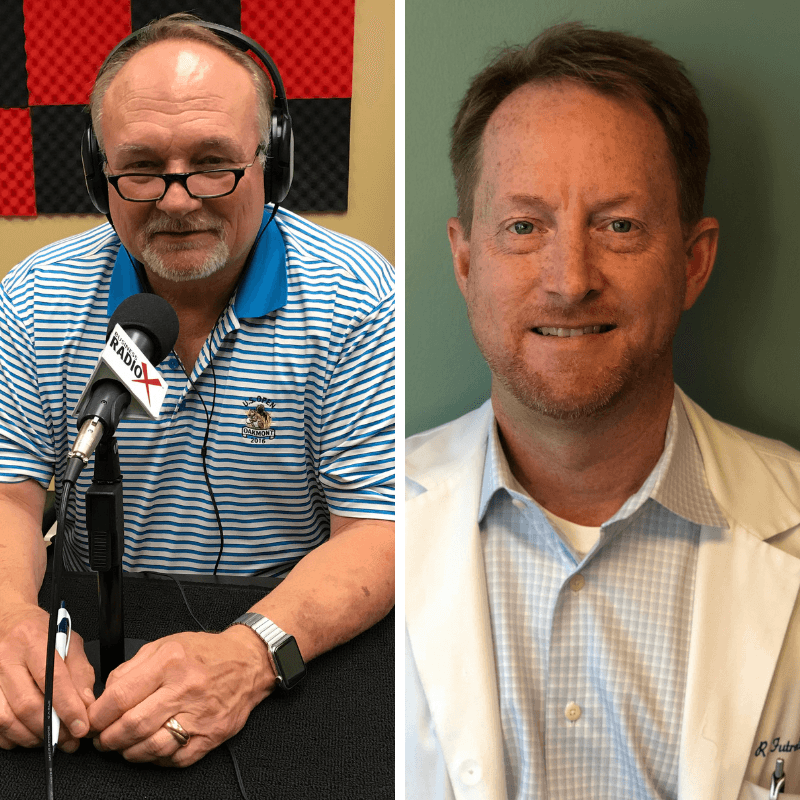
Dr. Jim Morrow and Dr. Peter Futrell

To Your Health With Dr. Jim Morrow: Episode 19, Dementia, An Interview with Dr. Peter Futrell, Lakeside Neurology

On this episode of “To Your Health with Dr. Jim Morrow,” Dr. Jim Morrow interviews neurologist Dr. Peter Futrell of Lakeside Neurology on the causes, risk factors, and symptoms of dementia. “To Your Health” is brought to you by Morrow Family Medicine, which brings the CARE  back to healthcare.

Dr. Peter Futrell, Lakeside Neurology

Dr. Peter Futrell

Dr. Peter Futrell is a neurologist at Lakeside Neurology in Cumming, GA. Lakeside Neurology is dedicated to serving the neurological needs of Forsyth County, GA, and the surrounding communities. Experience has taught the physicians to treat each patient as an individual and a partner in his or her medical care. The medical practice strives to provide state-of-the-art diagnosis and treatment using the latest neurological innovations. Sub-specialties include electrodiagnostic medicine and sleep disorders. 

 Dr. Futrell received his M.D. from the University of Cincinnati School of Medicine in 1994. He completed his medical internship at Good Samaritan Hospital in Cincinnati, Ohio, in 1995. He was a resident in the Department of Neurology at Emory University School of Medicine in Atlanta from 1995 to 1997, and chief resident in neurology at Emory University School of Medicine from 1997 to 1998. He continued on at Emory University School of Medicine as a fellow in clinical neurophysiology.
​

Dr. Futrell received his certification from the American Board of Psychiatry and Neurology in 1999. He is a member of the American Academy of Neurology. Dr. Futrell practices at Wellstar North Fulton and Northside Forsyth Hospitals.

About Morrow Family Medicine and Dr. Jim Morrow

Morrow Family Medicine is an award-winning, state-of-the-art family practice with offices in Cumming and Milton, Georgia. The practice combines healthcare information technology with old-fashioned care to provide the type of care that many are in search of today. Two physicians, three physician assistants and two nurse practitioners are supported by a knowledgeable and friendly staff to make your visit to Morrow Family Medicine one that will remind you of the way healthcare should be.  At Morrow Family Medicine, we like to say we are “bringing the care back to healthcare!”  Morrow Family Medicine has been named the “Best of Forsyth” in Family Medicine in all five years of the award, is a three-time consecutive winner of the “Best of North Atlanta” by readers of Appen Media, and the 2019 winner of “Best of Life” in North Fulton County.

Dr. Jim Morrow, Morrow Family Medicine, and Host of “To Your Health With Dr. Jim Morrow”

Dr. Jim Morrow, Morrow Family Medicine, and Host of “To Your Health With Dr. Jim Morrow”

Dr. Jim Morrow is the founder and CEO of Morrow Family Medicine. He has been a trailblazer and evangelist in the area of healthcare information technology, was named Physician IT Leader of the Year by HIMSS, a HIMSS Davies Award Winner, the Cumming-Forsyth Chamber of Commerce Steve Bloom Award Winner as Entrepreneur of the Year and he received a Phoenix Award as Community Leader of the Year from the Metro Atlanta Chamber of Commerce.  He is married to Peggie Morrow and together they founded the Forsyth BYOT Benefit, a charity in Forsyth County to support students in need of technology and devices. They have two Goldendoodles, a gaggle of grandchildren and enjoy life on and around Lake Lanier.

Facebook: https://www.facebook.com/MorrowFamMed/

LinkedIn: https://www.linkedin.com/company/7788088/admin/

Twitter: https://twitter.com/toyourhealthMD

Show Transcript

Intro: [00:00:06] Broadcasting live from the North Fulton Business RadioX Studio, it’s time for To Your Health with Dr. Jim Morrow. To Your Health is brought to you by Morrow Family Medicine, an award-winning primary care practice which brings the care back to health care.

Jim Morrow: [00:00:24] Hello. This is Dr. Jim Morrow with Morrow Family Medicine Offices in Cumming and Milton, Georgia. We’re here today for another episode of To Your Health. And I think it’s gonna be a great episode today. We’re here in the North Fulton Business RadioX Studio on Windward Parkway. I’m here with John Ray. John’s running the board and taking tweets and e-mails and we’ll talk about that in a second. How are you doing, John?

John Ray: [00:00:46] I’m doing great. How are you?

Jim Morrow: [00:00:47] Good. You’re getting over that cold?

John Ray: [00:00:49] I am. Thanks to early office hours from my family care physician.

Jim Morrow: [00:00:56] Great. That’s good to know. I’m glad to hear that.

John Ray: [00:00:58] That’s how I started coming to your place.

Jim Morrow: [00:01:00] Well, it’s one of the best reasons.

John Ray: [00:01:01] Well, absolutely, because I couldn’t get into the—the one I had wanted me to wait three days until I died. Then, they would see me.

Jim Morrow: [00:01:08] It drives me crazy.

John Ray: [00:01:09] I know. And then—and that’s how I got to you.

Jim Morrow: [00:01:11] So, at Morrow Family Medicine, we do have a walk-in hour every morning. We open at 7:30 for the first hour the day. You don’t need an appointment. If you just walk in, we will take care of whatever’s going on with you right then and there. We see walk-ins every day, Monday through Friday in that hour from 7:30 to 8:30 in the Cumming and the Milton office. And that way, there’s never a weekday you can’t be seen in one of our offices. And we like to say that we’re bringing care back to health care, and that’s one of the ways that we’re doing it.

Jim Morrow: [00:01:39] So this is our 19th episode of the podcast and radio show, and we’re excited to be here again. We do have a couple of ways you can get in touch with us if you want to. You can e-mail us at drjim@toyourhealth.md or you can tweet us @toyourhealthmd. So, that’s two ways you can get to us if you have recommendations for a show, or suggestions, or comments about the show you’re listening to at the moment. We try to gather some questions during the show and present those to you and come up with some answers at the end of the show every time.

Jim Morrow: [00:02:13] So, today we’re going to be talking about dementia, dementia in multiple forms. People think about dementia, they immediately think Alzheimer’s. But Alzheimer’s is a form of dementia. It’s not the only form. And we’re lucky today to have with us a neurologist from Cumming, Dr. Peter Futrell. Pete is the neurologist, one of the two with Lakeside Neurology and Cumming, Georgia. I’ve known Pete for about 20 years. Pete, how you are doing?

Peter Futrell: [00:02:39] I’m great. Glad to be here with you, guys, today.

Jim Morrow: [00:02:41] I appreciate you doing this for us. So-

Peter Futrell: [00:02:45] I was inadequate because I don’t have walk-in hours from 7:30 to 8:30 every weekday and-

Jim Morrow: [00:02:51] But you can start anytime.

Peter Futrell: [00:02:52] I still see a patient but-

Jim Morrow: [00:02:54] You can do that any time you want to. I bet your people would be tickled to death. But I will say I’ve been referring people to Pete Futrell for 20 plus years and getting in to see him when they need somebody to take care of you from a neurological standpoint. It’s never been a problem. And I do appreciate the care you take of the people in North Georgia.

Jim Morrow: [00:03:13] So, I started researching dementia a little bit because, honestly, it’s something that family doctors are probably a little bit weak in. I know I’m a little bit weak in that particular area. And that’s why I’m thankful that you’re around. But what I read says that during the age—in the 70s and people’s ages of 71 to 79, 1 in about 20 people will have dementia of some sort. In 80 to 89, 1 in 4. And over 90, 1 in 3. And so, with the population aging like it is, this is an, obviously, increasing problem for everybody out there.

Peter Futrell: [00:03:46] It keeps us busy in the office. That’s for sure.

Jim Morrow: [00:03:49] I know it does. So-

Peter Futrell: [00:03:51] You refer patients to us all the time, including for dementia, and much appreciate that. But sorry to see the patients with it. But, of course, try to help others. And yeah, there’s no shortage of them out there as you’re suggesting with those numbers.

Jim Morrow: [00:04:06] So, Pete, tell me, in your words, what exactly is dementia?

Peter Futrell: [00:04:12] Well, the term dementia just refers to a progressive decline in cognition. So, people can have chronic issues or maybe just isolated memory issues for any number of reasons. But if it’s not kind of a progressive thing. So, for example, somebody who had a brain injury, and they had some cognitive issues from that, that’s not dementia. That’s a one-time event that happened to the brain. It can affect them. It can be residual through their entire life, but it’s not something that necessarily will get worse.

Jim Morrow: [00:04:43] Right.

Peter Futrell: [00:04:43] Dementia, on the other hand, is progressive. As you said earlier, several different forms. People always equate dementia and Alzheimer’s, but that’s not always the case. That’s, usually, the case but not always.

Jim Morrow: [00:04:58] And what are some of the other things that might go on in your body that can make you have dementia?

Peter Futrell: [00:05:07] Well, that’s probably a long list. When we see somebody who we, at least, suspect dementia, we, of course, always start looking for the basic things first. As you know, some of the simple metabolic issues. Thyroid disease is a common one that can cause cognitive issues. There’s some undiagnosed kidney or liver problems. Those could, at least, mimic dementia. Of course, medications. Also confusion because that can be hard to discern if it’s medication effect or it is dementia.

Peter Futrell: [00:05:43] There’s four different forms of dementia. So, there’s the Alzheimer’s, which is by far the most common. But things like vascular dementia, which occurs from being in multiple strokes. There’s frontal dementia. People with Parkinson’s have a form of dementia that’s not technically Alzheimer’s but very close to it. So, a lot of different things to consider.

Jim Morrow: [00:06:09] Right, right. So, if you suspect that a patient has dementia, other than what you would do in the office, are there other ancillary tests that you do? Do you order CAT scans, MRIs, that kind of thing?

Peter Futrell: [00:06:22] Of course, yeah. And it depends on—as you were saying, it depends on the patient, all the different variables, whether it’s age, or medications, or other medical issues they might be having. Obviously, in the office, we can examine the patient, we can test their cognition. And probably most important actually is having a family member or someone else who can provide history. Obviously, if you a patient is having kinds of issues, they’re not always the best historians sometimes because, of course, they don’t remember. And other times, they just don’t have the insight, and they’re not aware of even having a problem. So, that’s what we’ll do in the office is the exam and history, of course.

Peter Futrell: [00:07:04] After, the office is checking lab work. Like, for example, the thyroid we talked about. Vitamin B12 deficiency is a common one that can cause kinds of issues. Imaging, almost always either CAT scan or MRI, and depends on the patient’s age, and what else is going on with them, how we decide if we choose one or the other. We may do an EEG, electroencephalogram, looking at electrical activity in the brain. It’s, at least, possible for some types of seizures to go undiagnosed and to manifest as cognitive issues. So, that’s always worth screening for.

Peter Futrell: [00:07:46] Other than that, one test I use a lot, and I think most urologist would agree with me, is sending the patient for formal neuropsych or neuropsychological testing, which is a battery of tests. As I tell patients, it’s kind of putting your brain through the ringers, kind of a stress test for your brain, looking at all forms of cognition, whether it’s language, memory, concentration. And using your psychologist is pretty good about, sort of, teasing out what might be causing the cognitive issues, whether it’s dementia, mood issues. That can certainly fool you and look like dementia when it present. It might just be bad depression. So, we use all those things and kind of put them in the pot, mix them up, and see what it looks like when we’ve got them all together.

Jim Morrow: [00:08:34] Right. So, in the office, I see people every day, seems like. I saw one this morning who was concerned about their memory. And he was having trouble, like everybody I know, I think, having trouble remembering why he went into the kitchen, and why he walked in the room, and sometimes with people’s names. And I think is important for people to understand that that’s not necessarily dementia. And can you tell me a little bit about how you delineate the two?

Peter Futrell: [00:09:05] Well, those two examples you gave are the names in particular is, far and away, the most common complaint that I get also for older folks. And their memory complaint is forgetting names, And then, the classic, I went upstairs or I went to the kitchen to get something, I don’t remember why. That’s probably number two or three on the list as far as memory complaints. But you’re right, just because you have a little trouble with those things does not mean that it’s dementia. Depending on age, there’s a certain amount of falling off that we kind of allow.

John Ray: [00:09:40] After that, there’s a kind of stage of cognitive issues called mild cognitive impairment, which essentially just means you’re having more trouble with your memory than you should for your age, but it’s not to an extent of being dementia. Those folks are important keep an eye on though because that can, within time, sort of, switch into dementia. But no, just because you can’t remember names, definitely not that simple as being diagnosed with dementia right there.

Jim Morrow: [00:10:10] Right. And when someone is diagnosed with dementia, I know it’s important to get them on medication as quickly as possible. You know, if you start losing brain cells, which is what we’re talking about, you’re not gonna get them back. So, it’s important to protect the ones you have. Medications, it seems like we’ve been using the same medications for this for a very long time.

Peter Futrell: [00:10:34] You’re right. There has been nothing new for dementia. I have to—I could probably look it up quickly, but the most new thing we have for dementia has been out for, gosh, I’d bet 12 or 15 years. Here it is. You’re right. We really have—it, essentially, comes down to four medications that we use for dementia. Three of them are very similar, and you don’t use one at a time with a patient. And then, there’s another one, Memantine or Namenda is the brand name that can be used in conjunction with one of those other three. And that’s about what we have in our hard material right now.

Jim Morrow: [00:11:18] And I’m sure—exactly, it is sad. And I’m sure there’s a great deal of research going into that, but I think if you think about the brain and how difficult it is to understand what’s going up there, it makes it a bit little easier to understand why that’s not something that’s easy to figure out. What about—as far as meds and things, though, what about things that you hear about on the radio? I hear the advertisement for meds all the time on the radio, help your memory, prevent memory loss. Anything to that at all?

Peter Futrell: [00:11:47] Not that I’ve seen. Nothing that has been proven sufficiently, at least, for me, to recommend, as I’m sure you do. I got plenty patients asking about it. I hear it on the radio or see an advertisement on the Internet all the time. Kind of amazing what someone purports to do, but I have not seen any of the supplements that has have, you know, a reasonable study had been proven to have any benefit. So, when patients ask me about it, I caution against because of just the lack of proven efficacy. And I mean, quite simply, some are of them are pretty expensive and it’s-

Jim Morrow: [00:12:29] They are.

Peter Futrell: [00:12:29] You know, especially the older folks who are already paying enough for medications, on and off medications, and other supplements, and throw more in the mix. And not only is it a cost issue, but then, you might have to worry about interactions. And just as you know, the more medications I think we’re on, the muddier the waters are.

Jim Morrow: [00:12:47] That’s right. Very true.

Peter Futrell: [00:12:48] And I’d love for it to be the case. I tell patients all the time, “Boy, if somebody proves to me that eating, or sleeping over here, or something will do the trick, I will be the first to not only recommended but take it myself.”

Jim Morrow: [00:12:59] Right, right.

Peter Futrell: [00:13:00] I just don’t see it yet. I wish I did.

Jim Morrow: [00:13:04] What about alcohol as far as bringing on dementia. Is there a relationship that you’ve seen there?

Peter Futrell: [00:13:12] Alcohol, a little bit of a funny one. Just with dementia, just like with other medical conditions, you always say, “Well, drinking in moderation helps. Drinking too much hurts.” And that’s probably the case for dementia that that little bit of alcohol may have some benefit actually in preserving. I guess, that’s the mixed results about that. I don’t think anybody would argue, though, that too much alcohol, and I’m not sure I can find too much alcohol, but too much alcohol absolutely can exacerbate dementia and even cause reform of dementia, that alcohol boost dementia that we occasionally see, and fortunately not too often but clearly can happen.

Jim Morrow: [00:14:00] One thing I get asked a good little bit in the office is about people that have a family history of dementia, and they’re concerned about that. Do you find that it runs in families? Do you find that is hereditary?

Peter Futrell: [00:14:13] There’s likely some genetic component. I’m not sure how strong that really is. My—when I’m asking about it from patients, I explain that if there’s family members, especially multiple family members, then just it seems to be borne out. I think common sense would tell you that, yeah, your risk is somewhat higher. But it’s not one—certainly not a slam dunk like, “Oh, gosh. Mom or dad had it. The rest of us are going to get it too.” That is not the case.

Jim Morrow: [00:14:41] Good, good. And once somebody is diagnosed with dementia, I know the progression can happen at all kinds of different rates. There’s no way to really predict most of that. But what would you tell or what do you tell caregivers to expect or that they need to understand about dealing with a patient that has dementia?

Peter Futrell: [00:15:06] Well, that’s a big question there. I think there’s probably a lot of aspects on that one. You know, everybody wants to know where it’s going from here. No question that that’s one of the most top concerns is, “All right. You just diagnosed my husband and my father with dementia. What can we expect in a year, or two years, whatever?” I dodge that question the best I can, usually, from patients, because it’s just so difficult. I have my own patients, some of them that clearly have dementia, but it’s been terribly slow, which is a good thing that I’ve been following for many years, and I’m not sure I’ve seen that. Well, a little bit decline over that time, but not anything terribly significant.

John Ray: [00:15:50] And then, I got patients, including, actually, ironically just one I saw yesterday, who just really began having problems earlier this year. And, now, it’s pretty well advanced. That’s certainly not your usual, but you see everything in between. As far as what to tell family otherwise, yeah, I guess the most important thing is explaining to them that it will get worse. Even though you can’t define over what time, this is something that is going to be worse at some point. Of course, this applies to any of us that you need to have your affairs in order, whether you’ve been diagnosed with dementia or not. That’s always a good idea, but even probably more so if you catch dementia early, and get to the attorneys, and get your power of attorneys, and health care, and all that. Then, you got to worry about issues with driving, and just safety, managing finances. There’s just so many things that come up.

Jim Morrow: [00:16:58] And I know one thing – people, a lot of times will want to, I guess, argue is the best way to put it, with a patient when they have dementia, and they will be insistent that something hasn’t happened or something has happened. And I’ve seen a lot of people go through the problems with that. And I think it always seems best if they just kind of go with the flow instead of trying to correct people every time. Is that a decent piece of advice for them?

Peter Futrell: [00:17:28] Absolutely. Just—it wasn’t this week, but last week, a patient mine that I’ve been seeing for probably five or six years, his wife as well, and almost every time they’re in, we have this discussion about her getting frustrated with him over kind of same thing. And as much as I love her, I think she’s actually one of my favorite folks, but she just, sometimes, just can’t let it go. Just stirs that pot. And I told her what I tell people all the time, “You got to move on. You got to distract to do a different subject. You’re just asking for a whole lot more frustration.” It’s already bad enough. If you let that frustration level get even higher, that’s not good for anybody involved, patient or family. You know, I just remind people that it’s not their loved one, it’s not really the patient who’s trying to be frustrating.

Jim Morrow: [00:18:26] Yeah.

Peter Futrell: [00:18:26] They just don’t know they’re doing it. And sometime, people, they kind of have a hard time getting their head around that.

Jim Morrow: [00:18:35] Yeah, I can imagine.

Peter Futrell: [00:18:35] They had been with them for 50 years, and known them, and this is such a change. It’s hard to deal with. That, of course, is understood.

Jim Morrow: [00:18:45] Do you see more dementia in men or women? Is there a gender split?

Peter Futrell: [00:18:53] It seems, to me, in my practice, more women. And I believe the research would show that it’s more women than men as well.

Jim Morrow: [00:19:03] It makes you wonder if that has something to do with-

Peter Futrell: [00:19:04] I’m not sure I know why. I’ll probably know at some point why that might be, but off the top of my head, I don’t know.

Jim Morrow: [00:19:09] I know we could chat about why and guess about why for a long time. But the truth is, we just don’t know enough about this particular disease. That’s the bottom line.

Peter Futrell: [00:19:19] Well, that’s the bottom line. I’m sure that that’s, at least, somewhat limiting the treatment options that we have. We’re talking about medications earlier. Every now and then, you hear about something that sounds like it might be coming out, and it is promising. And I’ll be damned if not. Two months later, the studies dropped because there’s some safety concern.

Jim Morrow: [00:19:41] Right, right.

Peter Futrell: [00:19:42] And that’s just—with dementia, that is—it seems like that happens way too much, which is why, I guess, we’re stuck in this rut we are right now with the very limited options.

Jim Morrow: [00:19:52] Well, that’s actually something I was going to ask you about. I was going to ask you if there’s something on the horizon that you anticipate coming out the next three to five years.

Peter Futrell: [00:20:03] I’d love to be more optimistic, but I’m not sure I’ve seen anything here, at least, recently, that looks like it has the numbers or momentum behind it to be available to us at anytime real soon-

Jim Morrow: [00:20:18] Right.

Peter Futrell: [00:20:18] … which, obviously, is not what I’d like to say and not what people would like to hear but that’s, at least, my experience.

Jim Morrow: [00:20:27] Well, what about reducing your risk of developing dementia? And this is not really funny, but I thought I’d already ask that but I guess I forgot. But what can we do?

Peter Futrell: [00:20:41] I can’t see you between 7:30 and 8:30 tomorrow because we don’t have any walk-in hours, but I could probably get you in later in the morning.

Jim Morrow: [00:20:45] Because you’re still in the bed at 7:30 in the morning?

Peter Futrell: [00:20:49] I don’t think so.

Jim Morrow: [00:20:50] So, what can people do to help keep this from being a problem of theirs?

Peter Futrell: [00:20:57] Well, that’s another one that’s mixed. I’m not sure that a month or two goes by where somebody doesn’t come up with, “Well, there’s this diet,” or take an anti-inflammatory, or keeping your sugar under control. And not that all these things aren’t necessarily good things, but all the time, we seek them out that seem to maybe help the risk of dementia down the road. And the other one I see and have seen in the past is you keep using your mind as you get older and trying to stave off dementia.

Jim Morrow: [00:21:33] Use it or lose it.

Peter Futrell: [00:21:34] Right. And that’s one where I would love to see better numbers on that too because as I explain to patients, it’s certainly not going to hurt to stay, obviously, physically active and mentally active. But I think someone seems to think that they can just do enough, they’ll be able to keep it away. And unfortunately, if it’s going to come, it’s going to come. You might delay it, you might make it slower, but not necessarily gonna stop it from coming.

Jim Morrow: [00:22:07] You mentioned the anti-inflammatory-

Peter Futrell: [00:22:08] I wish the brain was like the muscle where you can go to the physical therapist, and work on your balance, get you stronger, and do that for your brain.

Jim Morrow: [00:22:14] Exactly, yes.

Peter Futrell: [00:22:16] This comes down to it’s not that simple, currently.

Jim Morrow: [00:22:22] And I forgot the question I was going to ask. Again, there’s-

Peter Futrell: [00:22:28] So, we may need to advance it. We may need to move that-

Jim Morrow: [00:22:30] I’ll be there at 7:30 in the morning.

Peter Futrell: [00:22:33] How long is it gonna take you to get from Windward?

Jim Morrow: [00:22:35] Not long this time of day. So, what about the memory care units we’re blessed in the area to have? And I think across the country, there’s an assisted living place on every street corner, it seems like. And then, most of them have a memory care unit. Do you feel like society has handled the aging population and the increasing patients with dementia as well as they could? Is there something we could do better? This is not a medical question.

Peter Futrell: [00:23:03] Sure. Again, that’s one that I actually kind of had that discussion with a patient just this morning or the caregiver, actually, who was actually just more frustrated with her loved one staying home and having more resources there. These assisted living with the lock-down memory care units, so you don’t have to worry about patients wandering off, fantastic. As you pointed out, you can barely turn a corner now without there being one. And there are certainly things that seem to provide a service. But of course, a lot of people want to, for a lot of reasons, and expense being one of them, because assisted living for memory cares are not cheap-

Jim Morrow: [00:23:52] Right.

Peter Futrell: [00:23:53] … loved ones only want to keep their family member with them, not just for, obviously, the cost, but just because best to have family around. And it probably is for the patients, if it weren’t for safety issues, that it’s probably better to be in a familiar environment. Sometimes, that environment is just not safe if patients are wandering off, stairs and family finding them two miles down the road in the middle of the night. So, I’m not sure what the answer is as far as having some better in-home care that’s affordable, but a lot of people would appreciate that if it was more of an option.

Jim Morrow: [00:24:38] You’ll be glad to know that I remembered the other question. You were talking about anti-inflammatories and keeping sugar under control. Is there anything at all to be said for taking statins? Is there anything at all that has anything to do with dementia?

Peter Futrell: [00:24:52] Well, that’s—like all—I mean, yeah, it’s not like I’m saying things every time, but it’s just the way it is. You know, mixed things. I’ve seen studies indicating that, at least, some of the statins might help to prevent dementia and help prevent some of this buildup of the proteins in the brain that occurs with Alzheimer’s. But then, some of statins, in a very small number of patients, seem to actually cause some cognitive decline. Unfortunately, it seems like it probably resolves if they’re off the medication, but it’s just kind of interesting that it can cause some mental changes. But, on the other hand, it might long-term help to—it might help to prevent. I’m going to say might.

Jim Morrow: [00:25:38] Right, right.

Peter Futrell: [00:25:39] But, you know, I try not to let patients make decisions based on that because those numbers just aren’t solid enough. And the reason they’re taking statins is so that they can avoid having their stroke or their heart attack.

Jim Morrow: [00:25:50] Right.

Peter Futrell: [00:25:51] And those things are much more likely to happen. And they seem to have—they have patients stop the medicines to—for the medicine’s issue they’re concerned about cognition when you don’t want them having that heart attack or stroke.

Jim Morrow: [00:26:05] I gotcha. Well, that’s great, and that’s really all the things I had that I want to talk to you about. And out time’s about up. But John, I believe, have some questions that people have sent in that we’d like to run by you.

John Ray: [00:26:17] A couple for you, if we can. So, one is, for a person who has a parent, in this case, and they’re—they’re really—they don’t know. They think there may be a dementia issue, but they’re kind of concerned about maybe broaching that with the parent so—because they don’t want to be—they want to get them taken care of, but they don’t want to alarm them, right? So, how should that—how should they approach that issue? What do you suggest?

Peter Futrell: [00:26:59] Yeah, I’m not sure how—I’m not sure how Jim handles that one. I’m sure, he’d run into it too. From my standpoint, that’s a concern for patients. The families, all the time, are worried about how their loved one is going to take the news or is even willing to accept the news. You know what? Other than sitting down, and trying to explain that you have some concern, and that you think it needs to be checked out, and “Hey, if you see the doctor, and everything’s fine like you think it is, well, great. Nothing is lost. But can we, at least, go have it looked into.” I’m not sure I have a better way of handling it. but-

Jim Morrow: [00:27:40] I think that’s-.

Peter Futrell: [00:27:41] … that is definitely something—definitely something that can get to be an approaching point. I’ve seen it too many times with—and it’s the reason why, sometimes, I am seeing the patients and the family separate because it’s just the subject that follows a big risk.

Jim Morrow: [00:27:55] It is. And that’s something that I would encourage people to lay it on me, and bring them into the office, and let me bring up the point that I’m seeing some things about memory that I’m concerned about. And I think we need to try some medication, do some tests, and so forth. And invariably, they’re gonna end up in a neurologist’s office, but I think it’s just easier-

Peter Futrell: [00:28:17] Be the bad guy, ultimately.

Jim Morrow: [00:28:18] Ultimately, absolutely.

Peter Futrell: [00:28:20] Yeah.

Jim Morrow: [00:28:20] Absolutely. But at the same time, I think it’s something that the family needs to feel free to bring them to somewhere. And they’re usually gonna start with us. And that will start with you in those cases. And so, you know, to keep them from being the bad guy, I think it’s important that they just come in and let me broach the subject. The same way with driving. I get asked, and I know you do too, I get asked all the time to tell daddy that he can’t drive anymore. And usually, if you bring him in, and you can make a point of reflexes and so forth, you can make a good point with him and get him to not drive anymore. John?

Peter Futrell: [00:28:55] Well, you took the words right of my mouth. I was gonna say driving is the other big moment of tension that we have to be a bad guy about.

Jim Morrow: [00:29:02] It’s huge.

Peter Futrell: [00:29:04] Yeah, that’s huge. It impacts too many people.

Jim Morrow: [00:29:08] One other question here surrounds incidents at seemingly earlier ages. This person is citing the Pat Summitt case, the Tennessee women’s basketball coach. And I guess she had early onset Alzheimer’s in her 50s. Is it just coincidental or anecdotal? I mean, are we seeing more dementia and Alzheimer’s cases earlier in age and stage than we have used to see 10 or 20 years ago.

Peter Futrell: [00:29:52] Well, I mean I can speak for the last 20 years, I’ll be quick to point out Jim can talk a little bit longer than that. But I don’t—in my practice, I haven’t seen, I don’t think, an uptick in the earlier patients. I think patients I have in their late 50s with it now. I don’t think that numbers a whole lot different than it was 20 years ago when I started. That’s just—that’s my own experience. Others may see otherwise. But I’ve not seen an epidemic of a 52-year-old coming out with dementia.

Jim Morrow: [00:30:30] Well, good, good. So, we’ve been talking with Dr. Peter Futrell, neurologist with Lakeside Neurology in Cumming, Georgia. Pete, I want to thank you for taking the time to be with us today. I really appreciate this. I think this is the kind of thing that many, many families are dealing with and that might benefit them to listen to the podcast. And I appreciate you taking the time out of your day to do this with us.

Peter Futrell: [00:30:54] Well, not a problem. Sorry I couldn’t join you in the studio there but happy to help, of course.

Jim Morrow: [00:30:59] Good to have you anyway. Thanks very much. So, for now, this is To Your Health.

Tagged With: Cumming doctor, Cumming family care, Cumming family doctor, Cumming family medicine, Cumming family physician, Cumming family practice, Cumming md, Cumming physician, dementia, Dementia ages, dementia signs, Depression, Dr. Jim Morrow, Dr. Peter Futrell, family history of dementia, Lakeside Neurology, memory problems, mild cognitive impairment, Milton doctor, Milton family care, Milton family doctor, Milton family medicine, Milton family physician, Milton family practice, Milton md, Milton physician, mood issues, Morrow Family Medicine, neuropsychological testing, North Fulton Business Radio, Parkinson's and Dementia, progressive memory problems, thyroid issues, vascular dementia

To Your Health With Dr. Jim Morrow, Episode 18: 12 Flu Shot Myths

October 9, 2019 by John Ray

North Fulton Studio
North Fulton Studio
To Your Health With Dr. Jim Morrow, Episode 18: 12 Flu Shot Myths
Loading
00:00 /
RSS Feed
Share
Link
Embed

Download file

Dr. Jim Morrow, Host, “To Your Health With Dr. Jim Morrow”

To Your Health With Dr. Jim Morrow, Episode 18: 12 Flu Shot Myths

Flu season is coming! On this episode of “To Your Health with Dr. Jim Morrow,” Dr. Jim Morrow discusses the influenza virus and the 12 flu shot myths. “To Your Health” is brought to you by Morrow Family Medicine, which brings the CARE back to healthcare.

About Morrow Family Medicine and Dr. Jim Morrow

Morrow Family Medicine is an award-winning, state-of-the-art family practice with offices in Cumming and Milton, Georgia. The practice combines healthcare information technology with old-fashioned care to provide the type of care that many are in search of today. Two physicians, three physician assistants and two nurse practitioners are supported by a knowledgeable and friendly staff to make your visit to Morrow Family Medicine one that will remind you of the way healthcare should be.  At Morrow Family Medicine, we like to say we are “bringing the care back to healthcare!”  Morrow Family Medicine has been named the “Best of Forsyth” in Family Medicine in all five years of the award, is a three-time consecutive winner of the “Best of North Atlanta” by readers of Appen Media, and the 2019 winner of “Best of Life” in North Fulton County.

Dr. Jim Morrow, Morrow Family Medicine, and Host of “To Your Health With Dr. Jim Morrow”

Dr. Jim Morrow, Morrow Family Medicine, and Host of “To Your Health With Dr. Jim Morrow”

Dr. Jim Morrow is the founder and CEO of Morrow Family Medicine. He has been a trailblazer and evangelist in the area of healthcare information technology, was named Physician IT Leader of the Year by HIMSS, a HIMSS Davies Award Winner, the Cumming-Forsyth Chamber of Commerce Steve Bloom Award Winner as Entrepreneur of the Year and he received a Phoenix Award as Community Leader of the Year from the Metro Atlanta Chamber of Commerce.  He is married to Peggie Morrow and together they founded the Forsyth BYOT Benefit, a charity in Forsyth County to support students in need of technology and devices. They have two Goldendoodles, a gaggle of grandchildren and enjoy life on and around Lake Lanier.

Facebook: https://www.facebook.com/MorrowFamMed/

LinkedIn: https://www.linkedin.com/company/7788088/admin/

Twitter: https://twitter.com/toyourhealthMD

Dr. Morrow’s Show Notes on Flu Shots

What is the Flu?

  • Influenza is a highly contagious airborne viral illness.
    • The virus enters the respiratory tract cells of the host and, if not neutralized by antibodies, begins proliferating.
    • The incubation period is 18 to 72 hours, but viral shedding may occur up to 24 hours before symptom onset and continue for five to 10 days.
    • Influenza is typically uncomplicated and self-limited in otherwise healthy patients.
    • However, severe complications, such as pneumonia, encephalitis, respiratory failure, multi-organ failure, and death, can occur.
    • According to estimates from the World Health Organization, 3 to 5 million cases of severe influenza-related illness and 250,000 to 500,000 influenza-related deaths occur worldwide every year.
  • Diagnosis:
    • Sudden onset of symptoms is a telltale sign of influenza.
    • Common symptoms include
      • high fever,
      • headache,
      • sore throat,
      • myalgia,
      • cough,
      • rhinorrhea, and
      • fatigue
  • The CDC recommends that physicians diagnose influenza clinically and perform testing only in the limited situations.
    • Several diagnostic tests for influenza are but negative results do not rule out influenza.
    • Although many physicians use rapid influenza tests, clinical judgment should prevail, especially in view of the limitations of such tests.

Who should get vaccinated this season?

  • Everyone 6 months of age and older should get a flu vaccine every season with rare exception.
    • Vaccination is particularly important for people who are at high risk of serious complications from influenza.
  • Flu vaccination has important benefits.
    • It can reduce flu illnesses,
    • doctors’ visits, and
    • missed work and school due to flu,
    • as well as prevent flu-related hospitalizations.
    • Flu vaccine also has been shown to be life-saving in children.
    • In fact, a 2017 studyshowed that flu vaccination can significantly reduce a child’s risk of dying from flu.
  • Different flu vaccines are approved for use in different groups of people.
    • There are flu shots approved for use in children as young as 6 months of age
      • and flu shots approved for use in adults 65 years and older.
      • Flu shots also are recommended for use in pregnant women and people with chronic health conditions.
      • The nasal spray flu vaccine is approved for use in non-pregnant individuals, 2 years through 49 years of age.
      • People with some medical conditions should not receive the nasal spray flu vaccine.
    • The most important thing is for all people 6 months and older to get a flu vaccine every year.
    • Best time to get a flu shot is in October, so that it is in effect before the season gets into full force, and your immunity will last until the end of the season.

Making the Flu Vaccine: A Year-Round Effort

  • The job of producing a new vaccine for the next flu season starts well before the current flu season ends.
    • For the FDA, it’s a year-round initiative.
  • The composition of vaccines for the prevention of other infectious diseases stays the same year after year.
    • In contrast, flu viruses are constantly evolving.
    • And the flu viruses that circulate causing disease in people, often change from one year to another.
    • So, every year, there is a need for a new flu vaccine.
    • To that end, FDA, World Health Organization (WHO), CDC, and other partners collaborate by collecting and reviewing data on the circulating strains of influenza from around the world to identify those likely to cause the most illness in the upcoming flu season.
  • In late February/early March — well before the new flu season begins — an FDA advisory committee reviews data about
    • which flu viruses have caused disease in the past year,
    • how the viruses are changing, and
    • disease trends so they can recommend the three or four flu strains to include in the trivalent and quadrivalent influenza vaccines for the U.S in the upcoming flu season.
  • Once the strains are selected, vaccine manufacturers begin the manufacturing process to include the newly selected flu strains in their FDA-approved vaccines.
    • The different flu virus strains are combined to formulate the vaccine into standard dosages.
    • The vaccine is then filled into vials, syringes and, for the nasal vaccine, sprayers.
    • Both egg-based and non-egg-based manufacturing methods for FDA-approved flu vaccines require high-tech processes and manufacturing facilities that have been inspected by the FDA.
    • Vaccine manufacturers must submit applications to the FDA to include the new flu strains in their FDA-approved vaccines.
  • The FDA is also responsible for ensuring that released lots of influenza vaccines meet appropriate standards.
    • Each vaccine undergoes quality control tests, including testing for sterility.
    • Manufacturers submit the results of their testing, along with sample vials from each lot to the FDA for “lot release.”
    • The FDA typically begins releasing lots of flu vaccines in late summer.
    • Lot release can continue into early fall.
    • Once lots are released, manufacturers distribute the vaccine throughout the United States for use by the public.
  • Flu seasons and severity are unpredictable.
    • Annual vaccination is the best way to prevent the flu for people ages 6 months and older.
  • An annual immunization with flu vaccine is the most effective and safest way for most of us to reduce our risk of getting the flu and spreading it to others.
    • When more people get vaccinated, it is less likely that the flu viruses will spread through a community, making us all healthier.

Myths About the Flu Shot

  • Myth #1: The flu is the same thing as a cold and it is harmless.
    • It is common to confuse the flu with a cold.
      • Both have similar symptoms and often are treated with similar methods.
      • However, colds are mild and last longer.
      • The flu usually occurs suddenly and lasts 2 to 3 days. The flu also is contagious and can be dangerous.
    • Symptoms of the flu include:
      • fever of 102°F or higher
      • chills and sweats
      • nausea and vomiting
      • muscle aches and headaches
      • chest pain
      • cough
      • stuffy nose
      • loss of appetite.
  • Myth #2: You can’t die from the flu.
    • People who have severe cases of the flu or are high risk can die from the flu.
    • High-risk people include:
      • Babies or children up to 4 years old.
      • Anyone 65 years of age or older.
      • Women who are pregnant, trying to get pregnant, or breastfeeding.
      • Anyone who has a low or weakened immune system.
      • Anyone who has a chronic health condition.
      • Anyone who lives in in a long-term care center.
    • These people are at greater risk of having health problems that lead to death.
      • It is even more important that they receive an annual flu vaccine.
      • It helps prevent severe cases or problems related to flu.
      • It also lowers their chance of needing to go the hospital, which raises costs.
    • If you aren’t high risk, you still should get a flu vaccine.
      • It protects everyone around you.
      • This is especially true if you work in health care or care for high-risk people.
  • Myth #3: You won’t get the flu if you get the flu vaccine.
    • The flu vaccine helps to prevent the flu.
      • Every year, its purpose is to protect you from the main types of influenza.
      • However, you still can get the flu.
      • You could have been infected with the flu before you got the vaccine.
      • You also could get another type of flu that the vaccine does not cover.
      • Most likely, you will have a milder case than if you hadn’t gotten the shot.
    • There are other things you can do to lower your risk of getting the flu.
      • These include:
        • Washing your hands often.
        • Covering your mouth when you sneeze and cough.
        • Using household cleaning spray to disinfect surfaces and objects.
        • Using hand sanitizer.
        • Washing laundry of sick people separate from other items.
        • Keeping your children, especially newborns, away from anyone who is sick.
  • Myth #4: You won’t get the flu if you take vitamin C.
    • Vitamins cannot prevent the flu.
      • Using vitamin C can improve your immune system, but you can still get the flu.
  • Myth #5: The flu vaccine will give you the flu.
    • You cannot get the flu from a flu shot.
      • This form of vaccine is made up of dead viruses that can’t infect you.
      • The nasal spray flu vaccine is made up of live, but weakened viruses.
      • The nasal spray vaccine is no longer recommended.
    • You can’t get the flu, but you can have side effects.
      • The area of the shot could be red, sore, or swollen.
      • You also may have muscle aches, headaches, or a low fever for a short period of time.
      • These effects occur when your body responds to fight the new virus.
      • You also can have flu-like symptoms from other health issues, such as a bad cold.
  • Myth #6: You shouldn’t get the flu vaccine if you’re pregnant or breastfeeding.
    • It is important to get the flu shot if you are pregnant, trying to get pregnant, or breastfeeding.
    • The flu shot is safe for you and your baby.
    • If you don’t get the flu shot and develop the flu, you could give it to your baby.
    • Your doctor might prescribe antiviral medicine to help reduce symptoms. They also might suggest another form of feeding until you are better.
  • Myth #7: You shouldn’t get the flu vaccine if you have an egg allergy.
    • The amount of egg allergen in the flu vaccine is very small.
    • It is safe for people with egg allergies, even kids, to get the flu shot.
    • Serious allergic reactions are rare.
    • If you are at risk, doctors recommend getting the shot at your doctor’s office instead of a drugstore.
    • This way, your doctor can monitor any potential reactions.
  • Myth #8: You don’t need to get the flu vaccine if you’re healthy.
    • It is good to live a healthy lifestyle, but it can’t prevent the flu.
    • It is an infection that spreads easily.
    • Everyone over 6 months of age should get the flu vaccine, except for rare cases.
  • Myth #9: You shouldn’t get the flu shot if you’re sick or already have had the flu.
    • It is okay to get the flu vaccine when you have a mild sickness.
    • However, your doctor may suggest waiting until you’re better.
    • It also is okay to get the flu shot if you have cancer.
    • You still should get the flu shot if you’ve already had the flu. The flu vaccine protects you against several types of the virus.
  • Myth #10: You don’t need to get the flu vaccine every year.
    • The flu is caused by the influenza virus, which can change from year to year.
    • Because of this, the flu vaccine is adapted to protect against the main types of flu.
    • You should get the flu vaccine every year at the beginning of the flu season.
    • Flu season occurs in the colder months of year, typically October to May.
  • Myth #11: Getting the flu vaccine more than once a year will decrease your chance of getting the flu even more.
    • There is no research that multiple flu vaccines will lower your chance of getting the flu.
    • However, some kids or older adults may need two doses of the flu vaccine.
    • This depends on your age and medical history.
    • Talk to your doctor to see if you should receive two doses.
  • Myth #12: You should wait until later in the flu season to get the vaccine. Then you will be protected longer.
    • The CDC recommends getting the flu vaccine as soon as it’s ready at the beginning of flu season.
    • It can take up to 2 weeks for the your body to build protection against the flu.
    • You should get the shot before the flu becomes more contagious.
    • However, it still is better to get the flu shot late than not at all.

Sources: American Academy of Family Physicians and Center for Disease Control.


Tagged With: Cumming doctor, Cumming family care, Cumming family doctor, Cumming family medicine, Cumming family physician, Cumming family practice, Cumming md, Cumming physician, Dr. Jim Morrow, emphysema, encephalitis, fatigue, fever, flu shots, flu vaccine, heart disease, Milton doctor, Milton family care, Milton family doctor, Milton family medicine, Milton family physician, Milton family practice, Milton md, Milton physician, Morrow Family Medicine, myths about the flu, North Fulton Business Radio, pneumonia, respiratory illness, runny nose, sweat, To Your Health, viral illness, Virus strains

To Your Health With Dr. Jim Morrow: Episode 17, Testosterone

September 25, 2019 by John Ray

North Fulton Studio
North Fulton Studio
To Your Health With Dr. Jim Morrow: Episode 17, Testosterone
Loading
00:00 /
RSS Feed
Share
Link
Embed

Download file

Dr. Jim Morrow, Host, “To Your Health With Dr. Jim Morrow”

To Your Health With Dr. Jim Morrow: Episode 17, Testosterone

How do men and women know if they have low testosterone levels? What are the symptoms of low testosterone levels due to aging, as well as other causes? Dr. Jim Morrow answers these questions and more on this edition of “To Your Health.” “To Your Health” is brought to you by Morrow Family Medicine, which brings the CARE back to healthcare.

About Morrow Family Medicine and Dr. Jim Morrow

Morrow Family Medicine is an award-winning, state-of-the-art family practice with offices in Cumming and Milton, Georgia. The practice combines healthcare information technology with old-fashioned care to provide the type of care that many are in search of today. Two physicians, three physician assistants and two nurse practitioners are supported by a knowledgeable and friendly staff to make your visit to Morrow Family Medicine one that will remind you of the way healthcare should be.  At Morrow Family Medicine, we like to say we are “bringing the care back to healthcare!”  Morrow Family Medicine has been named the “Best of Forsyth” in Family Medicine in all five years of the award, is a three-time consecutive winner of the “Best of North Atlanta” by readers of Appen Media, and the 2019 winner of “Best of Life” in North Fulton County.

Dr. Jim Morrow, Morrow Family Medicine, and Host of “To Your Health With Dr. Jim Morrow”

Dr. Jim Morrow, Morrow Family Medicine, and Host of “To Your Health With Dr. Jim Morrow”

Dr. Jim Morrow is the founder and CEO of Morrow Family Medicine. He has been a trailblazer and evangelist in the area of healthcare information technology, was named Physician IT Leader of the Year by HIMSS, a HIMSS Davies Award Winner, the Cumming-Forsyth Chamber of Commerce Steve Bloom Award Winner as Entrepreneur of the Year and he received a Phoenix Award as Community Leader of the Year from the Metro Atlanta Chamber of Commerce.  He is married to Peggie Morrow and together they founded the Forsyth BYOT Benefit, a charity in Forsyth County to support students in need of technology and devices. They have two Goldendoodles, a gaggle of grandchildren and enjoy life on and around Lake Lanier.

Facebook: https://www.facebook.com/MorrowFamMed/

LinkedIn: https://www.linkedin.com/company/7788088/admin/

Twitter: https://twitter.com/toyourhealthMD

Dr. Morrow’s Show Notes on Testosterone

Physiology of Testosterone and Causes of Hypogonadism in Males

  • Testosterone is produced by the testes.
  • Decreased production of testosterone by testes in men is categorized as hypogonadism.
  • Primary hypogonadism is the failure of the testes to produce sufficient testosterone.

 Testosterone Therapy

  • Testosterone therapy is increasingly common in the United States, and many of these prescriptions are written by primary care physicians.
  • There is conflicting evidence on the benefit of male testosterone therapy for age-related declines in testosterone.
    • Physicians should not measure testosterone levels unless a patient has signs and symptoms of hypogonadism, such as loss of body hair, sexual dysfunction, hot flashes, or gynecomastia.
    • The U.S. Food and Drug Administration clarified in 2015 that prescribing testosterone for low testosterone levels due to aging constitutes off-label use.
    • Depressed mood, fatigue, decreased strength, and a decreased sense of vitality are less specific to male hypogonadism.
    • Testosterone therapy should be initiated only after two morning total serum testosterone measurements show decreased levels, and all patients should be counseled on the potential risks and benefits before starting therapy.
    • Male hypogonadism should be diagnosed only if there are signs or symptoms of hypogonadism and total serum testosterone levels are low on at least two occasions.
    • Potential benefits of therapy include
      • increased libido,
      • improved sexual function,
      • improved mood and well-being, and
      • increased muscle mass and bone density;
      • however, there is little or mixed evidence confirming clinically significant benefits.
    • The U.S. Food and Drug Administration warns that testosterone therapy may increase the risk of cardiovascular complications.
      • Other possible risks include
        • rising prostate-specific antigen levels,
        • worsening lower urinary tract symptoms,
        • polycythemia, and
        • increased risk of venous thromboembolism.
        • Patients receiving testosterone therapy should be monitored to ensure testosterone levels rise appropriately, clinical improvement occurs, and no complications develop.
        • Testosterone therapy may also be used to treat hypoactive sexual desire disorder in postmenopausal women and to produce physical male sex characteristics in female-to-male transgender patients.

Monitoring of Men on Testosterone Therapy

  • Men receiving testosterone therapy should be monitored regularly for adverse effects and to ensure normalization of serum testosterone level.
  • Before initiation of testosterone therapy, testing should include:
    • a complete blood count to measure hematocrit, and
    • a PSA test to detect preexisting prostate cancer.
  • Patients should be reevaluated for therapeutic response and adverse effects three to six months after initiation of treatment, including:
    • a repeat testosterone measurement,
    • complete blood count,
    • and PSA test.
  • Reevaluation needs to be performed regularly.
  • An increase in hematocrit to greater than 54% should lead to
    • cessation of treatment,
    • lowering of the dose, or
    • change to a lower-risk formulation.
  • An increase in PSA of greater than 1.4 ng per mL (1.4 mcg per L) over 12 months or an abnormal digital rectal examination result should prompt referral to a urologist.

Testosterone Therapy in Women

  • In women, testosterone is produced by the ovaries and adrenal glands, and by conversion of proandrogens in peripheral tissues.
  • Levels decrease gradually starting in the 20s or 30s.
  • There is no abrupt decrease during menopause, with the exception of surgical menopause.
  • Testosterone is also converted to estrogen by aromatases in many tissues; therefore, testosterone is an important source of estrogen in postmenopausal women.
  • Testosterone deficiency in women may be associated with problems with sexual function, mood, cognition, and body composition.
  • A comprehensive meta-analysis of post-menopausal women found improvement in sexual function with testosterone therapy.
  • There was no evidence of improvement in
    • anxiety,
    • mood,
    • body weight or mass, or
    • bone density.
    • Subsequently, a consensus statement released by several major organizations, including the Endocrine Society and American College of Obstetricians and Gynecologists, supported the use of testosterone therapy for hypoactive sexual desire disorder in postmenopausal women but not for any other indication.
    • Of note, there are no FDA-approved products for testosterone therapy in women, and no formulations are readily available in the United States that provide the recommended treatment dosage for women (300 mcg per day), necessitating the use of compounding pharmacies.

Tagged With: Cumming doctor, Cumming family care, Cumming family doctor, Cumming family medicine, Cumming family physician, Cumming family practice, Cumming md, Cumming physician, Dr. Jim Morrow, erectile dysfunction, female testosterone, female-to-male transgender, hypoactive sexual desire disorder, hypogonadism, increase in PSA, libido, loss of body hair, male testosterone, male testosterone therapy, menopause, Milton doctor, Milton family care, Milton family doctor, Milton family medicine, Milton family physician, Milton family practice, Milton md, Milton physician, Morrow Family Medicine, normal testosterone levels, postmenopausal women, prostate cancer, PSA test, serum levels, serum testosterone levels, sexual dysfunction, sexual function, Testes, testosterone, testosterone deficiency, To Your Health, urinary tract symptoms

To Your Health With Dr. Jim Morrow: Episode 16, The Complete Physical Exam, What it IS and What it ISN’T

September 11, 2019 by John Ray

North Fulton Studio
North Fulton Studio
To Your Health With Dr. Jim Morrow: Episode 16, The Complete Physical Exam, What it IS and What it ISN'T
Loading
00:00 /
RSS Feed
Share
Link
Embed

Download file

Dr. Jim Morrow, Host, “To Your Health With Dr. Jim Morrow”

To Your Health With Dr. Jim Morrow: Episode 16, The Complete Physical Exam, What it IS and What it ISN’T

How often should you get a complete physical exam? What are the most important tests in a thorough physical exam, and which are unnecessary or a waste of money? Dr. Jim Morrow answers these questions and more on this edition of “To Your Health.” “To Your Health” is brought to you by Morrow Family Medicine, which brings the CARE back to healthcare.

About Morrow Family Medicine and Dr. Jim Morrow

Morrow Family Medicine is an award-winning, state-of-the-art family practice with offices in Cumming and Milton, Georgia. The practice combines healthcare information technology with old-fashioned care to provide the type of care that many are in search of today. Two physicians, three physician assistants and two nurse practitioners are supported by a knowledgeable and friendly staff to make your visit to Morrow Family Medicine one that will remind you of the way healthcare should be.  At Morrow Family Medicine, we like to say we are “bringing the care back to healthcare!”  Morrow Family Medicine has been named the “Best of Forsyth” in Family Medicine in all five years of the award, is a three-time consecutive winner of the “Best of North Atlanta” by readers of Appen Media, and the 2019 winner of “Best of Life” in North Fulton County.

Dr. Jim Morrow, Morrow Family Medicine, and Host of “To Your Health With Dr. Jim Morrow”

Dr. Jim Morrow, Morrow Family Medicine, and Host of “To Your Health With Dr. Jim Morrow”

Dr. Jim Morrow is the founder and CEO of Morrow Family Medicine. He has been a trailblazer and evangelist in the area of healthcare information technology, was named Physician IT Leader of the Year by HIMSS, a HIMSS Davies Award Winner, the Cumming-Forsyth Chamber of Commerce Steve Bloom Award Winner as Entrepreneur of the Year and he received a Phoenix Award as Community Leader of the Year from the Metro Atlanta Chamber of Commerce.  He is married to Peggie Morrow and together they founded the Forsyth BYOT Benefit, a charity in Forsyth County to support students in need of technology and devices. They have two Goldendoodles, a gaggle of grandchildren and enjoy life on and around Lake Lanier.

Facebook: https://www.facebook.com/MorrowFamMed/

LinkedIn: https://www.linkedin.com/company/7788088/admin/

Twitter: https://twitter.com/toyourhealthMD

Show Transcript

Intro: [00:00:06] Broadcasting live from the North Fulton Business RadioX Studio, it’s time for To Your Health with Dr. Jim Morrow. To Your Health is brought to you by Morrow Family Medicine, an award-winning primary care practice, which brings the care back to healthcare.

Dr. Jim Morrow: [00:00:23] Hello. Once again, this is Dr. Jim Morrow with Morrow Family Medicine. Morrow Family Medicine has been open since 2011. And we are, as we like to say, bringing care back to healthcare. We’re doing that in Cumming, Georgia and in Milton, Georgia, where we have a walk-in hour five days a week from 7:30 to 8:30 every morning, so that there’s never a day you can’t be seen if you have the need, or a desire, or question, or are concerned, or anything else and think you need to be seen.

Dr. Jim Morrow: [00:00:51] So, we’re here at Renasant Bank in Alpharetta, Georgia in the Business RadioX North Fulton Studios. And my colleague John Ray is behind the board again. Hey, John. How are you doing?

John Ray: [00:01:02] Good morning, Dr. Morrow.

Dr. Jim Morrow: [00:01:03] We do the same thing every time. I got to come up with a better name for you, like Tater Salad.

John Ray: [00:01:09] Well, I’ve got a name for you, Distinguished Humanitarian.

Dr. Jim Morrow: [00:01:16] You can start with that.

John Ray: [00:01:17] I’m starting with that. I’m go in there right off the top. So, you won a really prestigious award from your alma mater.

Dr. Jim Morrow: [00:01:26] I did. I was very, very blessed to be named the Humanitarian of the Year by the University of South Carolina School of Medicine. And I was just really, really honored. It’s an award that I believe and I know for a fact should go to my wife more than myself. But I’m very honored to have that. She and I have been trying to raise money to support children in our county that don’t have the technology that others have, so that they’re not able to do homework, and lessons, and research, and so forth that we would like very much for them to be able to do. And so, we’re raising money to get technology in their hands where there’s internet in their home or a laptop in there in their hand. And they’re doing much better in class when they have those things, as you might imagine. And it’s been probably as rewarding for Peggy and myself than it has for them. So, it’s been a great thing, and they recognized that, and I really appreciate it.

John: [00:02:22] Well, she gets the award for Distinguished Humanitarian Award for living with you, too, right?

Dr. Jim Morrow: [00:02:28] I think that’s a Nobel Peace Prize probably.

John Ray: [00:02:31] Perfect. Absolutely. But that’s a really cool honor. And congratulations on that.

Dr. Jim Morrow: [00:02:38] It is.

John Ray: [00:02:38] I brought it up because I knew you weren’t going to.

Dr. Jim Morrow: [00:02:40] No, I wouldn’t go into it, but I appreciate the award very much and the recognition of what we’re trying to do. So, thank you for mentioning that, and I appreciate it.

John Ray: [00:02:48] Congratulations.

Dr. Jim Morrow: [00:02:50] So, today, we’re going to talk about something that some people would find a little bit mundane, but other people find very, very interesting because it’s a topic that I think everybody is going to come up across. And that’s complete physical. What it is and what it isn’t. And what a complete physical is, is pretty straightforward, but what it isn’t, I don’t think most people really have a handle on.

Dr. Jim Morrow: [00:03:12] So, why should you ever have a complete physical? And people, John’s age and mine, mid-60s or so, he’s a little younger than I am, should get one very regularly, but everybody needs one now. And then, we’ll talk about the kind of schedule in a minute. But the reason to get a physical is very simple. If you don’t look for a problem, you can’t find one. You can’t know what you don’t know. So, having a regular, complete physical exam is paramount to having good health. Just because you don’t have symptoms doesn’t mean you’re healthy. It means you’re not having symptoms yet. Even cancer and diseases like that, you can have of a very advanced form of cancer already and have absolutely no symptoms, and those things don’t cause problems until something gets obstructed, till something gets blocked up, and then it will give you symptoms.

Dr. Jim Morrow: [00:04:04] So, back in the old days – and the old days was about nine years ago, I suppose – a physical could cost a patient a few hundred dollars out of pocket because insurance companies didn’t cover physicals. They didn’t cover preventive health. They didn’t cover almost anything having to do with preventing disease in a doctor’s office. So, not too many people would actually see a family doc to get a physical. I used to beg people to get a physical, and I would probably do three physicals a day.

Dr. Jim Morrow: [00:04:33] And now, with the Affordable Care Act, a physical is a covered service. And because it’s now paid for by the insurance company, I do closer to 12 physicals a day, and we’re booked out long in advance because everybody’s going to get their free physical. Well, part of the reason they’re going to get their free physical is they’re not coming just for a physical. Now, a physical is for looking for things you don’t already know about. A physical is not for treating your tennis elbow, and talking about your back pain, and talking about your IBS, and talking about other swelling in your feet, or whatever it might be.

Dr. Jim Morrow: [00:05:09] A physical is purely a preventive exam. It’s for looking for things you don’t know about. If you know you have high blood pressure, it’s not for talking about your high blood pressure. It’s for figuring out other things. And it’s important that people understand that because they’re going to be a lot happier with the situation if they do understand that. And that’s when the insurance companies get involved. If you go to a physical, and you’ve got a list of 5, or 3, or 20 different problems, then you’re going to get a bill for the period of time that you spend talking about those things because that’s not part of a physical. The insurance company is going to cover what’s done for the physical, but they’re going to cover in a different way, which usually means applying it to your deductible, the things when you go and talk about any illnesses you have, any problems you have, and so forth.

Dr. Jim Morrow: [00:05:58] Now, does that mean that you can’t go to physical and get refills on your usual routine medications? No, it doesn’t mean that, but it does mean that if you go, and you’ve got a long list of problems, don’t be surprised if you get a bill from the insurance company or from the doctor’s office for the work that was done about these new and different things that really didn’t pertain at all to a physical.

Dr. Jim Morrow: [00:06:20] So, when do you get a physical? Well, between the ages of probably 20 and 30, I think every other year is sufficient if you don’t have ongoing medical problems that make you need to be seen more often than that. So, probably every couple of years is fine. After 30 or certainly after 35, you want to get a physical every single year because once you’re 35, at least, things do start to change – everybody has been there, and I remember it clearly – starts to have things happen that weren’t happening before or things quit happening that were happening previously. And it’s important to stay on top of situations and be sure nothing is turning up that’s new and different for you. And without any question, after the age of 40, a physical every year is vital. And that don’t matter if you’re a man or woman. It doesn’t make a bit of difference. You need a physical certainly every year after the age of 40.

Dr. Jim Morrow: [00:07:15] So, what does a physical involved if it doesn’t involve all this other stuff I’ve been talking about? Well, there’s several components to a physical exam, and the least of it really is the physical exam, but a comprehensive physical exam includes a history. It includes talking to the doctor about things like your social history. Do you smoke? Do you drink? Do you do drugs? It’s amazing to me how many people will come in and admit that they smoke marijuana. And I don’t care if they smoke marijuana, but if they want it in their chart, that’s one thing. And I usually try to just tell them, “Well, I’ll just put that in the back of my mind and we’ll take out of here the fact that you smoke marijuana because I’m not sure you want the life insurance company or the health insurance company to want to know that.”

Dr. Jim Morrow: [00:07:55] And then, family history. Do you have a family history of colon cancer? Completely changes when you get colonoscopies. Do you have a family history of breast cancer? It can certainly change when you get mammograms. Family history of other diseases can change when you look for things or whether you look for them at all. Your past surgical history, what operations have you had and so forth. So, this is a big part of the exam. And this is something. This information is usually gathered by the medical assistant or the nurse prior to the doctor coming in the room. So, that’s information that can change year to year, but you just have to add to. You don’t have to re invent the wheel every time you go.

Dr. Jim Morrow: [00:08:34] And they would do an important thing called a review of systems. And that means your health system, your organ systems. So, we do review systems. And the doctor might ask you if you have headaches, visual changes, dizziness, chest pain, shortness of breath, constipation, diarrhea, red hot, swollen, tender joints, lots of things. I’m not about to go through all of them, but something having to do with each organ system, trying to be sure that you’re not having symptoms related to any particular organ system. And that can take a few minutes, but it’s an important thing to do. I usually do mine while I’m doing the physical exam, but it’s still an important thing to do.

Dr. Jim Morrow: [00:09:10] And then, the physical exam itself. The physical exam for a complete physical was pretty much a head to toe exam. And in some cases, it would include a pap smear. And in some cases, it would include what’s called a mini cognitive exam where we might get you, if you’re a certain age, might get you to draw a clock face and draw the hands at a certain time. And some people will come in and won’t know how in the world to draw a clock face, but most of these people are 65 and older, so they grew up with an analog clock, not a digital clock. I have had people come in and on the same sheet of paper, draw a digital clock at the bottom, and write in the time we asked for. But that’s a way to understand if someone has any of the beginnings even of memory loss, dementia, that kind of thing. And that’s a very important part of the exam.

Dr. Jim Morrow: [00:09:59] And then, there’s the question of a prostate exam in men over a certain age, usually over the age of 40. Historically, we’ve done prostate exams on men every year. Well, there’s probably not any more debate about anything than there is prostate exams today. Not too long ago, the American Academy of Family Physicians came out with a recommendation that we not do prostate exams when we’re doing physical exams. That we use the prostate blood test, the PSA, its called, to determine if someone might be heading towards prostate cancer.

Dr. Jim Morrow: [00:10:32] Well, if you ask the urologist out there, the urologists are going to tell you that you should do more prostate exams than you should do PSAs, I think. And they’re very much still doing the prostate exam. But if you’ve ever had a prostate exam by family doctor, and you’ve had a prostate exam by a urologist, you know for a fact that the urologist prostate exam is a completely different exam from the family doctor’s prostate exam. And I don’t doubt for a second they can get more information from that exam. But for family practice purposes, we’re using the prostate blood test.

Dr. Jim Morrow: [00:11:02] Now, interesting is probably not the right word, but it is interesting to me that if you look at what the federal government’s task force – and I’ve mentioned the task force on other podcasts – if you look at what they recommend for prostate cancer, for prostate cancer screening, at least, they recommend against prostate cancer screening. Period. And I have a major problem with that because practicing the day before we had the prostate blood test, and at that point we found prostate cancer at stage 4 about 95% of the time. And now, we found it stage one about 95% of the time. And so, I’m going to continue to do the prostate blood test. But we are not doing prostate exams for men with physical exams.

Dr. Jim Morrow: [00:11:47] Pap smear is, of course, an important part of a routine exam for a woman. And after a certain age, and that age changes it seems like every few years, women should get a pap smear at least every other year, if not every year. And after some period of time, they may actually be able to slide to every third year. But having the pap smear on a regular basis is very, very important.

Dr. Jim Morrow: [00:12:11] And then, after the physical exam, there’s bloodwork. And there’s a fair amount of debate and variation too as far as what bloodwork is done with the physical. Now, for my physical exams, I’ll do a blood count. That’s a CBC. We look at your white blood count, your red blood count or your hemoglobin. We can tell if you’re anemic. Do you have infection? I had one the other day, just a routine physical, and his white blood count came back extremely high, and he had new onset leukemia, and had absolutely no idea that he had leukemia. But we wished him off to the haematology oncology group, and he’ll be getting great care, and hopefully do well. But he had no symptoms at all, but his blood count that we did for the physical revealed a major problem.

Dr. Jim Morrow: [00:12:55] And then, that also shows you platelets. And there’s a lot you can learn from that that aren’t—factors that are not directly related to just blood cells like iron deficiency, B12 deficiency possibly, and that kind of thing.

Dr. Jim Morrow: [00:13:09] Another test that’s important is what’s called a comprehensive metabolic panel. And I’ve seen physical exams where docs did just a basic metabolic panel, but the comprehensive panel is exactly that. And it has a lot more tests in it, in that panel. I think is 18 or 20 different tests. And that’s where you check your sugar, your potassium, your kidney and liver function, calcium, protein level, and that kind of thing. And that’s a very important part of the physical and a part of screening also because that can really turn up a lot of things like diabetes if you’re a diabetic. That’ll tell you, if you have kidney issues or liver issues, it’ll tell you. So, there’s a lot to be learned from that.

Dr. Jim Morrow: [00:13:47] And then, a lipid panel. Everybody that gets a physical in our office gets a lipid panel. But what we don’t do is we don’t do the expanded lipid panel that tells you the particle size of all the different types of cholesterol that you have. And the main reason for that is because insurance companies can’t stand that test. Insurance companies really don’t like paying for the apa protein and all the different particle size tests, and they’re extremely expensive, and patients just really get upset with us anytime we’ve tried to do that.

Dr. Jim Morrow: [00:14:18] So, we’ve gotten away from doing that. And honestly, I don’t think it’s changed our care one bit because the new recommendations for who needs cholesterol medicine and who doesn’t are not even based on that at all. And I’m a believer that a straight lipid panel is plenty of information for someone getting a physical. And I think that’s what we’re going to continue to do is just a plain old lipid panel that I’ve been doing since 1985.

Dr. Jim Morrow: [00:14:44] Oftentimes, during a physical, we’ll be asked to check vitamin D levels. I will tell you that we have created—as physicians, we’ve created an entire population of people who are vitamin D deficient. Now, you get vitamin D primarily from the sun. Sun converts other chemicals in the body to vitamin D. And if you don’t get much sun exposure, you don’t have much vitamin D. So, it’s a good idea for most adults, I’m willing to say, to be taking a vitamin D supplement, but we try not to check vitamin D levels because it’s another thing insurance companies don’t like paying for. It’s really not part of a routine exam. And so, if you go in, and you ask the doc to do a vitamin D level, the odds are if he does it, you’re gonna get a bill from insurance company. And they don’t do tests for $8.99. They do him them for $75. So, it’s probably what the bill is going to be when you get that bill.

Dr. Jim Morrow: [00:15:31] I mentioned B12 and iron earlier. And patients, a lot of times, will tell me that they want all their vitamins checked. Well, it’s just not a routine thing to do. And one of the reasons is that in that blood count, I mentioned, you can tell if someone is B12 deficient, or iron deficient, or leaning that way. At least, you get a good indication. You don’t get a B12 level or an iron level, but you do get an indication because if you are B12 deficient, your red blood cells will be larger, and that will indeed be indicated on the blood count. And if you’re iron deficient, your red blood cells will be smaller than normal, and that’ll be indicated on there. So, you can get a good idea about that. And then, if that’s the case, then you can come back in for a regular office visit, and you can actually check your B12 and iron levels. And everything’s fine with the insurance companies.

Dr. Jim Morrow: [00:16:18] With complete physicals over the age of 40, certainly over 40 and even 35 would be nice, I’d like to do an electrocardiogram. Now, an electrocardiogram or an EKG is a heart tracing. Everybody knows what that looks like. You’ve seen Chicago Med, and seen the beep on the screen. That’s what we’re looking at on paper or on the computer screen looking at your EKG. And this, I think, is very important, especially doing it year after year, because if you do an EKG year after year, and, suddenly, one year, you see one that’s different, then the odds are something is maybe different. And then, it’s a good reason to go see a cardiologist and be evaluated.

Dr. Jim Morrow: [00:16:54] And that kind of thing can either save your life or certainly save you from an awful lot of morbidity, and problems, and medical issues if you catch that kind of thing early. So, I think an EKG is important. Now, some insurance companies don’t consider an EKG part of a routine exam. So, it is possible that if you have that done, you might end up with a bill. But that’s a bill that’s worth paying because that’s the kind of thing that can be very important.

Dr. Jim Morrow: [00:17:19] Now, what an EKG is not going to tell you, just a resting EKG, you’re laying there on the exam table, and they do an EKG, that didn’t tell you anything about your heart from that moment forward. It only tells you about your heart during the time the EKG is being run and previously. So, if you’ve had a heart attack in the past, it will show up. If you’re having a heart attack at that moment, it’ll show up. But if you have a heart attack the next time you run across the parking lot in a rainstorm, it’s not going to show up. It’s not going to show any blockage that hasn’t yet caused a problem. So, that’s important. And I think every doctor that’s practiced for a lot of years will be able to tell you about somebody be did a physical on who very soon after had a heart attack, but their EKG was normal. So, it’s important to understand what you’re getting, but I think it’s an important thing to do.

Dr. Jim Morrow: [00:18:08] I’ve seen a lot of physicians and practices that do a chest x-ray every time they do a physical. And I’ll tell you that I don’t think there’s anything on the planet more unnecessary than a chest x-ray every time you do a physical. It’s a waste of perfectly good radiation. It’s exposing you to radiation you really don’t need. And it’s a waste of money in vast majority of cases.

Dr. Jim Morrow: [00:18:29] Now, sometimes, do people find things on there that turn out to be important? Well, yeah, of course they do. But if you look at the number of x-rays done versus a number of items found, it’s really not a very good test to do. And most people just flat do not need it.

Dr. Jim Morrow: [00:18:44] And then, the other thing is in women, at least, a bone density test, which should be done after the age of probably 50, certainly after menopause, every couple of years, unless you have a major problem that you’re following. And then, it might be done more often. But a bone density test is very important because if you’re past menopause, you need to be careful about your bones because when the hormones go away, your bones can start to get brittle, and people are falling more and more because they’re making it to older and older ages, and falling with brittle bones is just an accident waiting to happen, as you might be able to imagine.

Dr. Jim Morrow: [00:19:18] I do want to remind everybody that this episode of To Your Health is brought to you by Morrow Family Medicine. We do have offices in Cumming and Milton, Georgia. We do try to bring care back to healthcare, as we like to say. And we’re doing that with, hopefully, old-fashioned attitudes. Think Marcus Welby with a computer. We’re trying to use technology in old-fashioned attitudes to bring that care to you. I tell everybody that when you come to our office, you should grab one of my business cards. My email address, the only one I really use is all my business card. And if you’re ever there, and you have an experience that you’re not happy with, if you’ll let me know, I’ll certainly do everything I can to make it right.

Dr. Jim Morrow: [00:19:59] If you’re happy with the podcast, and you’re enjoying this, if you haven’t yet subscribe, I hope you will hit the subscribe button on the app that you’re listening to. I think that’s an important thing to do. We’d also love for you to join in with us. You can do that by e-mail at drjim@toyourhealth.md or you can do it on Twitter. We are @toyourhealthmd. So, that’s two different ways you can send us questions, you can send us topic suggestions, you can communicate with us in any way that you might want to. And we’d appreciate it if you would.

Dr. Jim Morrow: [00:20:33] So, getting back to physical exams, sometimes, you’ll see advertisements, or hear them, or you might talk to somebody that went to one of these centers where all they do is physical exams, and they do them all day long, and physical exams is their thing. Well, is that a good idea? Well, it’s certainly a very thorough exam, but the problem with most of those centers is they end up doing tests that are optional at best, worthless at least, and in many cases, do cost extra money. For example, they might do a carotid ultrasound. That’s an ultrasound that you do on the arteries in the neck, going from the heart to the brain. And if these arteries get clogged up, you can be at risk for stroke and so forth. And they might do an ultrasound on those, but they might do those starting at age 40 when you’re incredibly unlikely to have a problem. And it’s just not a test that really is is worth the money.

Dr. Jim Morrow: [00:21:28] They also might do a test looking for an aneurysm in your abdomen. An aneurysm is an enlargement of a vessel. If you’re old enough to have seen a blister on the tire back in the old days, it’s that kind of thing. And they can rupture if they get big enough. And there’s certainly situations at certain ages and with certain family history that you ought to have on a screen for an abdominal aortic aneurysm, they’re called. But that’s not something that everybody needs every time they get a physical. And a lot of these places will do that just because it adds another ching to the bill.

Dr. Jim Morrow: [00:22:02] Renal scans are done a lot of times looking for cysts, and tumors, and size of the kidneys, and so forth. And this is something that really is not a usual part of a physical exam, but might be included just to make it feel like you got your money’s worth at one of these expensive physical exam mills, if you will.

Dr. Jim Morrow: [00:22:24] So while we’re talking about all these tests, I’d like to talk about heart scans and full body scans because they’re incredibly popular. There are everywhere, it seems like. And certainly, people are doing them all day long anymore. So, the full body scan is basically just a CAT scan of your body. And this is a scan that is done, it doesn’t take long. The initial scan, I believe, is usually fairly inexpensive. But it’s one of those things where they’ll try to get you to agree to do that every year for X number of years for Y number of dollars. And Y is not a small number. And so, I encourage you not to do those things, especially not on an ongoing basis, because it can be a real waste of money.

Dr. Jim Morrow: [00:23:12] But the other thing that can happen is you can find something like a lung nodule, let’s say, when you’re doing one of these scans. And if you find a lung nodule, then that lung nodule has got to be examined every six or 12 months with another CAT scan until you know that it’s not getting bigger. So, that’s probably another couple, at least, CAT scans. Every CAT scan is a lot of radiation compared to a simple X-ray, and it’s expensive. And so, this is something that can really get into a cycle of doing some tests.

Dr. Jim Morrow: [00:23:42] Now, it’s always possible that they’ll do these tests, and they’ll find something very, very important. A lot of people remember the announcer for the Atlanta Braves named Don Sutton, who years ago now, this is probably 25 years ago, had one of these scans, and he had a lesion on his kidney, and he had kidney cancer, and had absolutely no symptoms. But Don Sutton, his life was saved because he went for one of these scans. And there’s no question you do hear about those. But for the majority of people, the full body scan is just not a necessary thing. And I don’t recommend that people get them as a basic rule.

Dr. Jim Morrow: [00:24:18] The heart scan is a little different. When they do a heart scan, they’re looking for calcium in the arteries. And so, I’ve talked to every cardiologist that I know about these scans. And while they do recommend them in certain situations, just doing a heart scan so that you’ll know if you have a heart disease is not a good idea because it does not answer that question. What it tells you is if you have calcium in or around an artery in your heart. So, if you have calcium in the wall of the artery, just surrounding the artery itself, not in the loom, in the opening, where the blood flows, then you’ll come back with a high calcium score. And if you have a high calcium score, I can almost promise you they’re gonna want you to take statins. And I refer you back to previous podcast about statins, if that’s the case. But you can have calcium in that wall and the entire artery can have absolutely zero blockage in it. So, now, you think, “Oh, my gosh, I have heart disease,” and you live your life thinking you have heart disease when, in fact, you have some calcium just in the wall of that artery, just the lining around that artery.

Dr. Jim Morrow: [00:25:23] But then, you can also go for a calcium scan, and you can get a zero calcium score. And you can be thrilled to death that you don’t have any heart disease. You have no heart disease. Zero score equals zero heart disease. But inside that artery to your heart, you can have what’s called soft plaque. And that soft plaque can completely block an artery. And the x-ray beam will go straight through it, and give you a zero score, and you think you have no problem when in fact you have a major problem. So, a false sense of security is a bad thing, in my opinion, because people in that situation might start to have some chest pain, and they’ll think, “Well, this must be indigestion because it certainly can’t be heart disease because I have a zero calcium score,” and they don’t do what they might otherwise do in order to look into what kind of problem they might actually be having because that’s one of the worst kind of problems you can have.

Dr. Jim Morrow: [00:26:19] So, I recommend a physical exam. I recommend a physical exam with great regularity. I recommend, in my case, personally, I recommend you start at age 30, and get one every single year. Men or women makes no difference. I recommend that you have the whole battery of tests that are done in a traditional physical exam. And I recommend that you talk to your doctor if you have thoughts about getting these other things done, because in your individual situation, it might be that, yes, this one’s a good idea, but no, this was not. And I can promise you, everybody’s a little bit different.

Dr. Jim Morrow: [00:26:52] But what you have to do is you have to have a doctor. You have to find yourself a doctor that you can carry on a conversation with, someone that you trust, someone you feel like you can open up to, someone you feel like has time for you. And that’s an important thing because, sometimes, that takes going to a couple of docs. But if it does, do that and find the person that you’re gonna be comfortable with. And I encourage you to find someone about your own age or a little bit younger, so that they don’t retire on you when you’re actually needing them the most. So, see your doctor for a physical. See him regularly. Don’t put it off. And never, ever say those five most dangerous words in the English language – maybe it will go away. John, that’s physical exams.

John Ray: [00:27:40] That’s a complete exam on physical exams, right?

Dr. Jim Morrow: [00:27:44] It is.

John Ray: [00:27:46] So, you’ve mentioned getting a provider that’s near your age or a little younger. So, at Murrow Family Medicine, you’ve got providers of different ages, right?

Dr. Jim Morrow: [00:27:59] We do.

John Ray: [00:28:00] Okay.

Dr. Jim Morrow: [00:28:01] We do. We have men. We have women. We’ve got them of different ages. I’m certainly the old man in the group, but we’ve got them all the way down to right out of school. So, I do believe that Murrow Family Medicine that we can take care of any adult, any age.

John Ray: [00:28:19] So, if I have an issue that comes up, how do you recommend handling that with insurance? Because, obviously, I want my insurance to pay for it. Since I’m paying for my insurance, I want my insurance to pay for it.

Dr. Jim Morrow: [00:28:37] Right.

John Ray: [00:28:38] Right? So, something comes up that you see. So, how do I handle that and get that visit paid for with insurance because you mentioned a lot of things that don’t get covered if you find it?

Dr. Jim Morrow: [00:28:48] Well, they can, but it depends completely on your insurance plan because even as much as they’ve changed insurance, and my way, degraded insurance—and my feeling, degraded insurance, still, if you have chest pain, or abdominal pain, or a rash, or anything else, for the most part, his office visits are covered to a certain degree, and most people understand what it’s going to cost them to go to see a doctor. So, I recommend what I said a minute ago, which is don’t say maybe it will go away. And if you do have a problem, get it checked out. But for most people, if they just—if they’re having any kind of problem, they just need an office visit.

Dr. Jim Morrow: [00:29:31] One of the big things that we battle at the office is patients will call, and then they’ll ask for a physical. Well, if you tell them it’s gonna be six months to see Dr. Morrow for a physical, which, frankly, it is, because everybody’s getting their free exam, then if you ask them a few more questions, you’ll find out that, actually, what they have is back pain. And they feel like they need a physical, but they really don’t. They need to come in for an office visit, which they can do almost same day with almost any of our providers. They can certainly do it through the walk-in hour. And that way, they can get that taken care of right away. And for the most part, insurance is going to help cover that. Now, we do see people that have insurance plans that only allows two office visits a year. And if that’s the insurance plan you own, I can only hope that you’re gonna be able to get on a better one because that’s not a very good.

John Ray: [00:30:19] Yeah, you’re right. That doesn’t sound very good. So, are there any other options that I ought to look at, at a certain age that you haven’t mentioned?

Dr. Jim Morrow: [00:30:35] Well, I didn’t talk about colonoscopies because I already did a podcast on colonoscopies. And they’re certainly not part of a routine every year physical, but people need colonoscopies on a certain schedule, whether that’s 3, 5, or 10 years in most cases. But really, that’s about it. I think this really covers most of the things that are involved in a complete physical.

John Ray: [00:30:57] But you consider a colonoscopy part of a good, complete physical examination, at least, every five years or whatever it is, right?

Dr. Jim Morrow: [00:31:07] It’s part of your wellness.

John Ray: [00:31:10] Your wellness.

Dr. Jim Morrow: [00:31:10] Your wellness check, but it is an infrequent part.

John Ray: [00:31:14] Yes, got it. Thank you.

Dr. Jim Morrow: [00:31:18] So, in two weeks, we’re going to talk about testosterone. I’ve been avoiding the subject because it’s controversial, but it’s probably the better reason to do it.

John Ray: [00:31:31] Why would you avoid that? Your first episode was on erectile dysfunction.

Dr. Jim Morrow: [00:31:36] It was, it was. And if you haven’t heard that one, that was a very good one, and probably one of our most popular ones. So, I encourage you to listen to that one. We’re going to talk about testosterone because it’s not as straightforward a thing as you might think it is, and we’re going to go ahead and tackle that in two weeks.

John Ray: [00:31:52] Sounds like we’re going to get some listeners on that.

Dr. Jim Morrow: [00:31:56] I might lose some patients over it too.

John Ray: [00:31:59] Well, we’ll see. Let it fly and see what happens, right?

Dr. Jim Morrow: [00:32:02] Okay. So, for now, that is To Your Health.

Tagged With: complete physical, CT scan, Cumming doctor, Cumming family care, Cumming family doctor, Cumming family medicine, Cumming family physician, Cumming family practice, Cumming md, Cumming physician, dementia testing, Dr. Jim Morrow, EKG, electrocardiogram, family medical history, Forsyth BYOT, Forsyth County Schools, full body scan, heart scan, lipid panel, memory loss, Milton doctor, Milton family care, Milton family doctor, Milton family medicine, Milton family physician, Milton family practice, Milton md, Milton physician, Morrow Family Medicine, Pap smear, physical exam, prostate cancer screening, prostate exam, PSA, PSA test, renal scan

To Your Health With Dr. Jim Morrow: Episode 15, How Stress Affects You and What You Can Do About It

August 28, 2019 by John Ray

North Fulton Studio
North Fulton Studio
To Your Health With Dr. Jim Morrow: Episode 15, How Stress Affects You and What You Can Do About It
Loading
00:00 /
RSS Feed
Share
Link
Embed

Download file

Dr. Jim Morrow, Host, “To Your Health With Dr. Jim Morrow”

Episode 15, How Stress Affects You and What You Can Do About It

According to an American Psychological Association survey, 75% of adults questioned reported moderate to high levels of stress in the past month and nearly half reported that their stress has increased in the past year. On this edition of “To Your Health,” Dr. Jim Morrow discusses different stress levels, stress triggers, and what you can do to reduce the effect of stress in your life. “To Your Health” is brought to you by Morrow Family Medicine, which brings the CARE back to healthcare.

About Morrow Family Medicine and Dr. Jim Morrow

Morrow Family Medicine is an award-winning, state-of-the-art family practice with offices in Cumming and Milton, Georgia. The practice combines healthcare information technology with old-fashioned care to provide the type of care that many are in search of today. Two physicians, three physician assistants and two nurse practitioners are supported by a knowledgeable and friendly staff to make your visit to Morrow Family Medicine one that will remind you of the way healthcare should be.  At Morrow Family Medicine, we like to say we are “bringing the care back to healthcare!”  Morrow Family Medicine has been named the “Best of Forsyth” in Family Medicine in all five years of the award, is a three-time consecutive winner of the “Best of North Atlanta” by readers of Appen Media, and the 2019 winner of “Best of Life” in North Fulton County.

Dr. Jim Morrow, Morrow Family Medicine, and Host of “To Your Health With Dr. Jim Morrow”

Dr. Jim Morrow, Morrow Family Medicine, and Host of “To Your Health With Dr. Jim Morrow”

Dr. Jim Morrow is the founder and CEO of Morrow Family Medicine. He has been a trailblazer and evangelist in the area of healthcare information technology, was named Physician IT Leader of the Year by HIMSS, a HIMSS Davies Award Winner, the Cumming-Forsyth Chamber of Commerce Steve Bloom Award Winner as Entrepreneur of the Year and he received a Phoenix Award as Community Leader of the Year from the Metro Atlanta Chamber of Commerce.  He is married to Peggie Morrow and together they founded the Forsyth BYOT Benefit, a charity in Forsyth County to support students in need of technology and devices. They have two Goldendoodles, a gaggle of grandchildren and enjoy life on and around Lake Lanier.

Facebook: https://www.facebook.com/MorrowFamMed/

LinkedIn: https://www.linkedin.com/company/7788088/admin/

Twitter: https://twitter.com/toyourhealthMD

Dr. Morrow’s Show Notes on Stress

  • Stress can be good for you.
    • It keeps you alert, motivated and primed to respond to danger.
    • As anyone who has faced a work deadline or competed in a sport knows, stress mobilizes the body to respond, improving performance.
    • Yet too much stress, or chronic stress may lead to major depressionin susceptible people.
  • Everyone knows that bad things in life are stressful
    • But the good things (marriage, new job or new house) are also very stressful.
  • The “good life” doesn’t happen in a vacuum, it takes a lot of mental and physical work.
  • Many of my patients are stressed because they are doing too much for too many people in too short a period of time and with too few resources.

There  Are Basically 3 Types of Stress

  • Acute stress
    • Acute stress is the most common form of stress.
    • It comes from demands and pressures of the recent past and anticipated demands and pressures of the near future.
    • Acute stress is thrilling and exciting in small doses, but too much is exhausting.
      • A fast run down a challenging ski slope, for example, is exhilarating early in the day.
      • That same ski run late in the day is taxing and wearing. Skiing beyond your limits can lead to falls and broken bones.
    • By the same token, overdoing on short-term stress can lead to psychological distress, tension headaches, upset stomach and other symptoms.
  • Examples of Acute Stress
    • the auto accident that crumpled the car fender,
    • the loss of an important contract,
    • a deadline they’re rushing to meet,
    • their child’s occasional problems at school
  • Emotional distress causes
    • Muscular problems including
      • tension headache,
      • back pain,
      • jaw pain and
      • the muscular tensions that lead to pulled muscles and tendon and ligament problems.
    • Stomach, gut and bowel problems such as
      • heartburn,
      • acid stomach,
      • flatulence,
      • diarrhea,
      • constipation and
      • irritable bowel syndrome.
    • Transient over-arousal leads to elevation in blood pressure, rapid heartbeat, sweaty palms, heart palpitations, dizziness, migraine headaches, cold hands or feet, shortness of breath and chest pain.
  • Episodic acute stress
    • There are those who suffer acute stress frequently,
    • whose lives are so disordered that they are studies in chaos and crisis.
      • always in a rush, but always late.
      • If something can go wrong, it does.
      • They take on too much,
        • have too many irons in the fire, and
        • can’t organize the slew of self-inflicted demands and pressures clamoring for their attention.
        • They seem perpetually in the clutches of acute stress.
  • It is common for people with acute stress reactions to be
    • over aroused,
    • short-tempered,
    • irritable,
    • anxious
    • Often, they describe themselves as having “a lot of nervous energy.”
      • Always in a hurry,
      • they tend to be abrupt, and
      • sometimes their irritability comes across as hostility.
      • Interpersonal relationships deteriorate rapidly when others respond with real hostility.
      • The workplace becomes a very stressful place for them.
  • The cardiac prone, “Type A” personality is
    • similar to a constant extreme case of episodic acute stress.
    • Type A’s have an
      • excessive competitive drive,
      • aggressiveness,
      • impatience, and
      • a harrying sense of time urgency.
      • In addition there is a
        • free-floating, but well-rationalized form of hostility, and
        • almost always a deep-seated insecurity.
        • seem to create frequent episodes of acute stress for the Type A individual.
        • Type A’s are found to be much more likely to develop coronary heart disease than Type B’s, who show an opposite pattern of behavior.
  • The symptoms of episodic acute stress are
    • persistent tension headaches,
    • migraines,
    • hypertension,
    • chest pain and
    • heart disease.
    • Treating episodic acute stress requires intervention on a number of levels, generally requiring professional help, which may take many months.
  • Often, lifestyle and personality issues are so ingrained and habitual with these individuals that they see nothing wrong with the way they conduct their lives.
    • They blame their woes on other people and external events.
    • Frequently, they see their lifestyle, their patterns of interacting with others, and their ways of perceiving the world as part and parcel of who and what they are.
  • Sufferers can be fiercely resistant to change.
    • Only the promise of relief from pain and discomfort of their symptoms can keep them in treatment and on track in their recovery program.
  • Chronic stress:
    • While acute stress can be thrilling and exciting, chronic stress is not.
    • This is the grinding stress that wears people away day after day, year after year.
    • Chronic stress destroys bodies, minds and lives. It wreaks havoc through long-term attrition.
    • It’s the stress of poverty,
    • of dysfunctional families,
    • of being trapped in an unhappy marriage
    • or in a despised job or career.
    • It’s the stress that the never-ending “troubles” have brought
      • to the people of Northern Ireland,
      • the tensions of the Middle East
      • the endless rivalries that have been brought to the people of Eastern Europe and the former Soviet Union.
  • Chronic stress comes when a person never sees a way out of a miserable situation.
    • It’s the stress of unrelenting demands and pressures for seemingly interminable periods of time.
    • With no hope, the individual gives up searching for solutions.
  • Some chronic stresses stem from traumatic, early childhood experiences that become internalized and remain forever painful and present.
    • Some experiences profoundly affect personality.
    • A view of the world, or a belief system, is created that causes unending stress for the individual (e.g., the world is a threatening place, people will find out you are a pretender, you must be perfect at all times).
    • When personality or deep-seated convictions and beliefs must be reformulated, recovery requires active self-examination, often with professional help.
  • One of the worst aspects of chronic stress is that people get used to it.
    • They forget it’s there.
    • People are immediately aware of acute stress because it is new; they ignore chronic stress because it is old, familiar, and sometimes, almost comfortable.
  • Chronic stress kills through suicide,
    • violence,
    • heart attack,
    • suicide,
    • stroke and,
    • perhaps, even cancer.
    • People wear down to a final, fatal breakdown.
      • Because physical and mental resources are depleted through long-term attrition, the symptoms of chronic stress are difficult to treat and may require extended medical as well as behavioral treatment and stress management.
  • Why is too much stress bad for you?
  • Too much stress can be detrimental.
    • Emotional stress that stays around for weeks or months can weaken the immune system and
    • cause high blood pressure,
    • fatigue,
    • depression,
    • anxiety and
    • even heart disease.
    • In particular, too much epinephrine can be harmful to your heart.
  • Sustained or chronic stress, in particular, leads to elevated levels of cortisol, the “stress hormone,”
    • As well as reduced levels of serotonin and other neurotransmitters in the brain, like dopamine
    • These hormone changes have been linked to depression.
    • When these chemical systems are working normally, they regulate biological processes like sleep, appetite, energy, and sex drive, and permit expression of normal moods and emotions.
    • When the stress response fails to shut off and reset after a difficult situation has passed, it can lead to depressionin susceptible people.
    • No one in life escapes event-related stress, such as
      • death of a loved one,
      • a job loss,
      • divorce,
      • a natural disaster such as an earthquake, or
      • even a dramatic dip in your 401(k).
    • A layoff — an acute stressor — may lead to chronic stress if a job search is prolonged.
  • Loss of any type is a major risk factor for depression.
    • Loss of a loved one is a huge stressor
      • Grieving is considered a normal, healthy, response to loss, but if it goes on for too long it can trigger a depression.
    • Loss of health –
      • A serious illness, including depression itself, is considered a chronic stressor.
    • Loss of independence –
      • When patients lose their ability to live alone, or to drive they are very stressed
    • Loss of financial stability –
      • Regardless of cause
    • What you can do?
      • Watch out for signs of stress overload.
        • Symptoms of too much stress can be
        • physical,
        • emotional,
        • mental and behavioral.
        • While everyone is different, some common signs are:
        • memory problems,
        • trouble concentrating,
        • racing thoughts,
        • irritability,
        • anger,
        • sadness,
        • headaches,
        • frequent colds and
        • changes in sleep or appetite.
  • Know your stress triggers.
    • Stress and its triggers are different for everyone.
      • Certain people, places or situations might produce high levels of stress for you.
      • Think about what causes you stress, and brainstorm solutions.
        • If public speaking or presentations make you stressed, start researching early and practice several times.
        • If there are friends or social situations that cause extreme stress, you may want to avoid them when you are already feeling tense or overwhelmed.
    • All forms of exercise
      • reduce stress hormones,
      • flood the body with feel-good endorphins,
      • improve mood,
      • boost energy and
      • provide a healthy distraction from your dilemmas.
      • Plus, exercise may make you less susceptible to stress in the long run.
      • Find physical activities that you enjoy and try to devote about 30 minutes to them each day.
    • While it’s impossible to eliminate all negative stress from your life, you can control the way you react to stress.
    • Your body’s natural fight-or-flight response can take its toll.
    • When you’re faced with a stressful situation that your mind perceives as a threat,
      • it sends various chemicals, like adrenaline and cortisol, throughout your body.
      • As a result, heart rate and breathing speeds up and your digestion slows down. This tires out the body.
      • Relaxation techniques are a huge help in calming you down, boosting mood and fighting illness.
        • Try a variety of techniques — like
          • yoga,
          • breathing exercises,
          • meditation and visualization — to see what works for you, and schedule a relaxation break every day.
  • Manage your time well.
    • Time can seem like a luxury, but there are various ways to manage it effectively.
      • First, focus on one task at a time.
        • Multitasking rarely works.
        • Jot down everything you need to do in a calendar or a task management app/program,
          • prioritize your list and break projects into single steps or actions.
  • Be realistic.
    • Pulling yourself in different directions will only stress you out, so try not to over-commit yourself or do extracurricular activities when you’re super busy with school.
    • Learn to say NO
  • Curb your caffeine.
    • Caffeine might help you study in the short term, but it interrupts sleep and makes you
      • more anxious,
      • tense and jittery
      • This obviously ups your stress level.
      • Try and drink no more than one caffeinated beverage a day.
    • Don’t self-medicate.
      • Some people
        • drink,
        • take drugs,
        • smoke and
        • use other unhealthy behaviors to cope with stress.
        • However, these behaviors can exacerbate stress by negatively affecting your mood and health.
  • Reach out.
    • If you’re stressed out,
      • talk to your friends and family.
      • If you feel like you can’t handle the stress on your own, schedule an appointment with a counselor or therapist.

Tagged With: Cumming doctor, Cumming family care, Cumming family doctor, Cumming family medicine, Cumming family physician, Cumming family practice, Cumming md, Cumming physician, de-stress, Depression, Dr. Jim Morrow, emotional distress, episodic acute stress, Exercise, loss, Milton doctor, Milton family care, Milton family doctor, Milton family medicine, Milton family physician, Milton family practice, Milton md, Milton physician, Morrow Family Medicine, preventing stress, relaxation, stress, stress alleviation, Stress Management, time management, Type A personality, yoga

To Your Health With Dr. Jim Morrow: Episode 14, Skin Cancer

August 14, 2019 by John Ray

North Fulton Studio
North Fulton Studio
To Your Health With Dr. Jim Morrow: Episode 14, Skin Cancer
Loading
00:00 /
RSS Feed
Share
Link
Embed

Download file

Dr. Jim Morrow, Host, “To Your Health With Dr. Jim Morrow”

Episode 14, Skin Cancer

One in six Americans develop skin cancer at some point in their life, and skin cancers account for one-third of all cancers in the country. On this edition of “To Your Health With Dr. Jim Morrow,” Dr. Jim Morrow addresses the prevention of and screening for skin cancer, as well as specific skin cancers to be aware of. “To Your Health” is brought to you by Morrow Family Medicine, which brings the CARE back to healthcare.

About Morrow Family Medicine and Dr. Jim Morrow

Morrow Family Medicine is an award-winning, state-of-the-art family practice with offices in Cumming and Milton, Georgia. The practice combines healthcare information technology with old-fashioned care to provide the type of care that many are in search of today. Two physicians, three physician assistants and two nurse practitioners are supported by a knowledgeable and friendly staff to make your visit to Morrow Family Medicine one that will remind you of the way healthcare should be.  At Morrow Family Medicine, we like to say we are “bringing the care back to healthcare!”  Morrow Family Medicine has been named the “Best of Forsyth” in Family Medicine in all five years of the award, is a three-time consecutive winner of the “Best of North Atlanta” by readers of Appen Media, and the 2019 winner of “Best of Life” in North Fulton County.

Dr. Jim Morrow, Morrow Family Medicine, and Host of “To Your Health With Dr. Jim Morrow”

Dr. Jim Morrow, Morrow Family Medicine, and Host of “To Your Health With Dr. Jim Morrow”

Dr. Jim Morrow is the founder and CEO of Morrow Family Medicine. He has been a trailblazer and evangelist in the area of healthcare information technology, was named Physician IT Leader of the Year by HIMSS, a HIMSS Davies Award Winner, the Cumming-Forsyth Chamber of Commerce Steve Bloom Award Winner as Entrepreneur of the Year and he received a Phoenix Award as Community Leader of the Year from the Metro Atlanta Chamber of Commerce.  He is married to Peggie Morrow and together they founded the Forsyth BYOT Benefit, a charity in Forsyth County to support students in need of technology and devices. They have two Goldendoodles, a gaggle of grandchildren and enjoy life on and around Lake Lanier.

Facebook: https://www.facebook.com/MorrowFamMed/

LinkedIn: https://www.linkedin.com/company/7788088/admin/

Twitter: https://twitter.com/toyourhealthMD

Dr. Morrow’s Show Notes on Skin Cancer

  • One in six Americans develops skin cancer at some point.
    • Skin cancer accounts for one third of all cancers in the United States.
    • Most patients with skin cancer develop non-melanoma skin cancer.
      • This group of cancers includes basal cell carcinoma, the most common neoplasm worldwide, and squamous cell carcinoma.
      • Fortunately, mortality associated with non-melanoma skin cancer is unusual.
    • However, malignant melanoma accounts for 75 percent of all deaths associated with skin cancer.
  • Melanoma, the eighth most common malignancy in the United States, is the cancer with the most rapidly increasing incidence.
    • 1 of 1,500 Americans born in 1935 were likely to develop melanoma, compared with 1 of 105 persons born in 1993.
    • Non-melanoma skin cancer typically affects older persons; the frequency of melanoma peaks between 20 and 45 years of age.
    • Mortality rates are higher in men than in women.
    • This higher rate may occur because lesions tend to develop in less easily observed areas, such as the back, in men.
    • Mortality is also increased in blacks for this reason, as is the propensity to develop more aggressive tumors and to be diagnosed at later stages.
    • The rising incidence of skin cancer over the past several decades may be primarily attributed to increased sun exposure associated with societal and lifestyle changes and to depletion of the protective ozone layer.

Prevention of Skin Cancer

  • Avoid the sun during peak hours.
    • Generally, this is between 10 a.m. and 4 p.m.
    • Water, snow, sand and concrete reflect light and increase the risk of sunburn.
  • Wear sun protective clothing.
    • This includes pants, shirts with long sleeves, sunglasses and hats.
  • Use sunscreen.
    • Look for water-resistant, broad-spectrum coverage with an SPF of at least 30, which blocks 97 percent of the sun’s UVB rays.
    • Apply sunscreen generously, and reapply every two hours — or more often if you’re swimming or sweating.
    • Higher-number SPFs block slightly more of the sun’s UVB rays, but no sunscreen can block 100 percent of the sun’s UVB rays.

Screening for Skin Cancer

  • While early detection and treatment of skin cancer can improve patient outcomes, convincing data regarding the benefit of mass screening programs are lacking.
    • In addition, the ability to identify potentially malignant lesions varies with physician training.
    • So, except for very high-risk persons with a history of skin cancer or atypical mole syndrome, for whom periodic screening is universally recommended, there is considerable debate about who should be screened, who should perform the screening and how often screening should be performed.
    • Part of the screening process should include an assessment of patient risk.
  • Basically,
    • Age 20 to 39 years: complete skin examination every three years
    • Age 40 years and older: annual complete skin examination
  • When screening is performed, the examiner must systematically inspect the entire skin surface.
    • The patient should completely disrobe and remove concealing cosmetics.
    • Daylight is the ideal light source
    • Photographs may improve the quality of documentation and detection of lesion changes over time.
  • ABCDE Rule:
    • Asymmetry (one half of the mole doesn’t match the other),
    • Border irregularity,
    • Color that is not uniform,
    • Diameter greater than 6 mm (about the size of a pencil eraser), and
    • Evolving size, shape or color.

Specific Skin Neoplasms

ACTINIC KERATOSES

  • Actinic keratoses, sometimes called solar keratoses, often arise on chronically sun-damaged body areas such as the face, ears, arms and hands.
    • They may provide an indication of a person’s cumulative ultraviolet light exposure and, therefore, that person’s risk for all types of skin cancer.
    • Actinic keratoses are often ill-defined and irregular, ranging from 1 mm to several centimeters in size.
    • They may be lesions that can be seen or felt, and generally have a scaly appearance.
    • Patients often have multiple lesions.
  • The lesions are usually pale brown or flesh-colored but may be yellow, reddish-brown or even dark brown or black following trauma.
  • The rate of malignant transformation of individual actinic keratoses to squamous cell carcinoma is less than one per 1,000 per year,
    • but treatment of lesions is indicated to decrease the chance of progression to squamous cell carcinoma.
  • Skin biopsy is occasionally required to rule out squamous cell carcinoma.
  • Cryotherapy with liquid nitrogen is the treatment of choice for most cases of actinic keratosis.
    • Curettage, or scraping away the lesion, may also be used and may be used in conjunction with cryosurgery or electrodessication (burning).
    • Surgical excision is rarely required but may be useful in excluding squamous cell carcinoma as a possible cause in lesions that are larger than 0.5 cm in diameter.
    • Chemical destruction of superficial lesions may be used when there are many lesions, particularly on the face and head.
      • 5-fluorouracil (5-FU), is most commonly used.
      • Areas other than the head and neck require the higher concentrations because of greater skin thickness.
      • In conventional regimens, 5-FU is applied twice daily for two to five weeks.
      • Adverse effects include true hypersensitivity, secondary bacterial and herpetic infection, and post-inflammatory pigmentation changes.
      • This therapy is often associated with significant discomfort related to an intense inflammatory response.
      • Pulsed dosing regimens aimed at reducing skin irritation have met with mixed success.
      • Topical corticosteroids may reduce inflammation but also make the treatment end point difficult to discern.
    • Other therapies used occasionally for treatment of actinic keratoses include laser, topical Retin-A, chemical peeling and facial dermabrasion.

BASAL CELL CARCINOMA

  • Basal cell carcinoma is the most common skin neoplasm.
    • Basal cell carcinomas
      • are usually located on the face or the backs of the hands.
      • They typically grow slowly and generally spread only locally.
      • Metastasis is quite rare.
    • While a preliminary diagnosis of basal cell carcinoma may be made on the basis of appearance, incisional or excisional biopsy is required for definitive diagnosis.
    • Cure rates of 95 to 99 percent can be achieved for low-risk lesions using simple excision with margins of 2 to 5 mm.
    • A lesion is considered low risk if it is less than 1.5 cm in diameter; has not previously been treated; is not in a difficult-to-treat area, like the H zone of the face; and is nodular or cystic.
    • Treatment of basal cell carcinomas with cryotherapy can also be successful, but healing may take weeks, and success depends on the skill of the cryotherapist.
      • Mohs’ micrographic surgery is the treatment of choice for most sclerosing basal cell carcinomas, as well as for large tumors and those located in areas that are difficult to treat.
      • Radiation therapy produces cure rates of 90 to 95 percent but has the same limitations as those outlined for squamous cell carcinoma treatment.
    • Other therapies used occasionally include topical Retin-A.

 SQUAMOUS CELL CARCINOMA

  • Squamous cell carcinoma is the second most common skin cancer, comprising 20 percent of all cases of non-melanoma skin cancer.
    • This is the most common tumor in elderly patients, and it is usually the result of a high lifetime cumulative dose of solar radiation.
      • A new study finds that some types of human papillomaviruses, or HPVs, may increase the risk of squamous cell skin cancers.
    • However, other irritants and exposures may lead to squamous cell carcinoma.
    • Up to 60 percent of squamous cell carcinomas occur at the site of a previous actinic keratosis.
    • Changes in an actinic keratosis that suggest evolution to squamous cell carcinoma include pain, erythema, ulceration, induration, hyperkeratosis and increasing size.
    • As many as 50 to 60 percent of squamous cell carcinomas occur on the head and neck.
    • Other common sites include the hands and forearms, upper trunk and lower legs.
    • Squamous cell carcinomas typically appear as small, palpable tumors that may grow moderately rapidly over a period of months and range from a few millimeters to centimeters in size.
    • They may appear nodular, and may be reddish-brown, pink or flesh-colored.
    • Larger squamous cell carcinomas may appear crusted, erythematous or eroded. In contrast to basal cell carcinoma, a definitive edge is difficult to demonstrate when a squamous cell carcinoma lesion is stretched.
  • Histologic confirmation by a full-thickness skin biopsy (incisional or excisional) is mandatory before definitive treatment.
    • Well-differentiated lesions less than 2 cm in diameter can be treated with surgical excision, with a cure rate approaching 99 percent.
  • Squamous cell carcinomas may grow aggressively and are associated with a 2 to 6 percent risk of metastasis.
    • Risk factors for metastasis include increasing lesion depth and location on the lip or ear.
    • The most common locations for metastatic spread are the regional lymph nodes, lungs and liver.
    • Once metastasis occurs, the five-year cure rate for squamous cell carcinoma is 34 percent.
    • Recurrence and metastasis typically occur within three years of initial treatment.
  • Mohs’ micrographic surgery involves gradual lesion excision using serial frozen section analysis and precise mapping of excised tissue until a tumor-free plane is reached.
    • Mohs’ micrographic surgery is used when tissue removal must be kept to a minimum for cosmetic reasons or to maximize function.
    • It is the treatment of choice for difficult and high-risk squamous cell carcinomas, including lesions that are:
      • larger than 2 cm in diameter;
      • located in areas where deep invasion is more likely or tumor extent is hard to assess, such as the nasolabial folds, eyelids and periauricular areas (facial “H zone”);
      • rapidly growing;
      • recurrent or incompletely excised;
      • ill-defined;
      • located in an area of previous irradiation; or
      • Cure rates of 99 percent have been reported.
    • Cryotherapy and the combination of curettage and desiccation are reserved for treatment of superficial tumors, lesions less than 2 cm in diameter and lesions located on the trunk and extremities.
    • Radiation therapy may be employed when preservation of function and cosmesis are critical, when patients refuse surgery, when metastasis is present or when an adjunct to surgery is required for high-risk tumors.
    • Because of the long-term risk of radiation-induced carcinoma, radiation therapy is used only in patients older than 60 years.

MALIGNANT MELANOMA

  • There are four types of malignant melanoma.
  • The two most common ones are:
    • The superficial spreading type is the most common among whites and accounts for 70 percent of all melanomas.
      • It usually occurs in adults and may develop anywhere on the body but appears with increased frequency on the upper backs of both men and women and on the legs of women
  • Nodular melanoma (accounting for 15 to 30 percent of all melanomas) is a dome-shaped, pedunculated or nodular lesion that may occur anywhere on the body.
    • It is commonly dark brown or reddish brown but may occasionally be uncolored.
    • Nodular melanomas tend to rapidly invade the dermis from the onset with no apparent horizontal growth phase.
    • These tumors are frequently misdiagnosed, because they may resemble blood blisters, hemangiomas, dermal nevi or polyps

Bottom Line on Skin Cancer

  • The incidence of skin cancer is increasing by epidemic proportions.
    • The use of tanning beds the risk of basal cell carcinoma by 1.5 times and squamous cell carcinoma by 2.5 times.
    • Basal cell cancer remains the most common skin neoplasm, and simple excision is generally curative.
    • Squamous cell cancers may be preceded by actinic keratoses – premalignant lesions.
      • While squamous cell carcinoma is usually easily cured with local excision, it may invade deeper structures and metastasize.
  • Aggressive local growth and metastasis are common features of malignant melanoma, which accounts for 75 percent of all deaths associated with skin cancer.
    • Early detection greatly improves the prognosis of patients with malignant melanoma.
    • The differential diagnosis of pigmented lesions is challenging, although the ABCD (Asymmetry, Border, Color, Diameter) checklists are helpful in determining which pigmented lesions require excision.
    • Sun exposure remains the most important risk factor for all skin neoplasms.
    • Thus, patients should be taught basic “safe sun” measures: sun avoidance during peak ultraviolet-B hours; proper use of sunscreen and protective clothing; and avoidance of sun tanning.

[Thanks to the American Academy of Family Physicians for much of the information provided in this episode.]

Tagged With: cryotherapy, Cumming doctor, Cumming family care, Cumming family doctor, Cumming family medicine, Cumming family physician, Cumming family practice, Cumming md, Cumming physician, cyrotherapy, Dr. Jim Morrow, malignant melanoma, melanoma, Milton doctor, Milton family care, Milton family doctor, Milton family medicine, Milton family physician, Milton family practice, Milton md, Milton physician, Morrow Family Medicine, skin cancer, solar keratoses, sun exposure, Sunscreen

To Your Health With Dr. Jim Morrow: Episode 13, Medical Marijuana in Georgia, An Interview with Justin Hawkins and Dr. Scott Cooper, Acreage Compass, LLC

July 24, 2019 by John Ray

North Fulton Studio
North Fulton Studio
To Your Health With Dr. Jim Morrow: Episode 13, Medical Marijuana in Georgia, An Interview with Justin Hawkins and Dr. Scott Cooper, Acreage Compass, LLC
Loading
00:00 /
RSS Feed
Share
Link
Embed

Download file

Dr. Scott Cooper, Dr. Jim Morrow, and Justin Hawkins

Episode 13, Medical Marijuana in Georgia

How does the new Georgia law (HB 324) allowing prescribed use of medical marijuana work? Is medical marijuana a slippery slope to recreational marijuana use? In a conversation with host Dr. Jim Morrow, Justin Hawkins and Dr. Scott Cooper of Acreage Compass LLC answer these questions and more. “To Your Health” is brought to you by Morrow Family Medicine, which brings the CARE  back to healthcare.

Justin Hawkins and Dr. Scott Cooper, Acreage Compass, LLC

Dr. Scott Cooper and Justin Hawkins, Acreage Compass, LLC

Justin Hawkins is the General Manager and Dr. Scott Cooper is the Medical Affairs Director of Acreage Compass LLC. Acreage Compass is jointly owned by Compass Neuroceutical, Inc., a Georgia-based team of physicians, advocates, and patients, and Acreage Holdings, the largest vertically integrated, multi-state owner of cannabis licenses and assets in the United States. Through Acreage Compass, Compass Neuroceutical and Acreage Holdings are partnering to bring safe and consistent medical cannabis oil to patients in the state of Georgia.

For more information go to their website or email Justin Hawkins at justin@compassneuro.com.

About Morrow Family Medicine and Dr. Jim Morrow

Morrow Family Medicine is an award-winning, state-of-the-art family practice with offices in Cumming and Milton, Georgia. The practice combines healthcare information technology with old-fashioned care to provide the type of care that many are in search of today. Two physicians, three physician assistants and two nurse practitioners are supported by a knowledgeable and friendly staff to make your visit to Morrow Family Medicine one that will remind you of the way healthcare should be.  At Morrow Family Medicine, we like to say we are “bringing the care back to healthcare!”  Morrow Family Medicine has been named the “Best of Forsyth” in Family Medicine in all five years of the award, is a three-time consecutive winner of the “Best of North Atlanta” by readers of Appen Media, and the 2019 winner of “Best of Life” in North Fulton County.

Dr. Jim Morrow, Morrow Family Medicine, and Host of “To Your Health With Dr. Jim Morrow”

Dr. Jim Morrow, Morrow Family Medicine, and Host of “To Your Health With Dr. Jim Morrow”

Dr. Jim Morrow is the founder and CEO of Morrow Family Medicine. He has been a trailblazer and evangelist in the area of healthcare information technology, was named Physician IT Leader of the Year by HIMSS, a HIMSS Davies Award Winner, the Cumming-Forsyth Chamber of Commerce Steve Bloom Award Winner as Entrepreneur of the Year and he received a Phoenix Award as Community Leader of the Year from the Metro Atlanta Chamber of Commerce.  He is married to Peggie Morrow and together they founded the Forsyth BYOT Benefit, a charity in Forsyth County to support students in need of technology and devices. They have two Goldendoodles, a gaggle of grandchildren and enjoy life on and around Lake Lanier.

Facebook: https://www.facebook.com/MorrowFamMed/

LinkedIn: https://www.linkedin.com/company/7788088/admin/

Twitter: https://twitter.com/toyourhealthMD

Show Transcript

Intro: [00:00:06] Broadcasting live from the North Fulton Business RadioX Studio, it’s time for To Your Health with Dr. Jim Morrow. To Your Health is brought to you by Morrow Family Medicine, an award winning primary care practice, which brings the care back to health care.

Dr. Jim Morrow: [00:00:23] Hello! This is Dr. Jim Morrow. I’m with Morrow Family Medicine. We have offices in Cumming and Milton, Georgia. We’re a primary care practice, where we utilize state-of-the-art technology and old-fashioned ideas to bring you the best care we possibly can. We believe that in Morrow Family Medicine, you’ll feel both cared for and appreciated. And we do realize that you have many choices as to where you receive your care, and we hope you’ll find that Morrow Family Medicine is a good place for you.

Dr. Jim Morrow: [00:00:51] I’m here in the studio at Renasant Bank on Windward Parkway in Alpharetta, Georgia with John Ray, my cohort. John’s running the board. How are you doing, John?

John Ray: [00:00:59] I’m great. I hope you’re well today.

Dr. Jim Morrow: [00:01:01] I’m good. It’s not too hot outside today. So, those are pretty good.

John Ray: [00:01:04] Perfect in Alpharetta and Milton

Dr. Jim Morrow: [00:01:07] Always sunny in Alpharetta, right?

John Ray: [00:01:09] Yeah, you got it.

Dr. Jim Morrow: [00:01:11] So, we’re here today for another podcast. We want you to know that you can reach out to us by e-mail at drjim@toyourhealth.md or or you can tweet us, @toyourhealthmd.

Dr. Jim Morrow: [00:01:24] So, we’re here today to talk about cannabis oil and low-THC oil, what some people refer to as medical marijuana in the State of Georgia. And I’m honored to have two guests with me today from Acreage nchorage Compass LLC. We have Justin Hawkins, the General Manager, and Dr. Scott Cooper, who’s the Medical Affairs Director. Hello, gentlemen. How are you today?

Dr. Scott Cooper: [00:01:48] Doing well, thank you.

Justin Hawkins: [00:01:49] I’m good. How are you? I, actually, have both of my doctors here. So, I don’t know if this is an intervention or an interview, but it’s good to be here.

Dr. Jim Morrow: [00:01:55] We’re going to get into that later, Justin. You can count on it. You can count on it. So, this whole thing has started up in Georgia fairly suddenly. If you haven’t been following the news and haven’t followed the path of low-THC oil in Georgia, there is a bill, House Bill 324 that was passed by the state legislature and signed by the governor at the beginning of April of this year. So, Justin, tell us something about House Bill 324.

Justin Hawkins: [00:02:23] Yes. So, House Bill 324 is a piece of legislation that has been tried over the last six years. And we were successful this year in 2019 under the leadership of Brian Kemp. And what House Bill 324 does is it allows the cultivation, and processing, and distribution of low-THC oil, which is 5% THC in cannabis oil, also referred to as medical marijuana.

Justin Hawkins: [00:02:46] The reason that we wanted to push House Bill 324 is because over the last six to seven years, medical cannabis oil was legal for possessions for qualified patients under the Georgia Department of Health, but there was no real legal access for these patients under these 17 indication list to actually acquire the medicine.

Justin Hawkins: [00:03:06] And so, although medical cannabis is actually illegal under federal law, we’ve seen across the entire country that in over 33 — over 43 states across the country that in-state cultivation is a way that provides medicine to patients, also, by abiding by state law. And so, that’s what House Bill 324 does specifically.

Dr. Jim Morrow: [00:03:25] Well, why was it able to be passed this year when it wasn’t able to be passed the other year?

Justin Hawkins: [00:03:30] So, we were fortunate for a couple of different reasons. Georgia Hope is an organization founded by parents. A lot of the times, they’re parents of these kids who suffer from pediatric epilepsy, mitochondrial disease, autism, and they have really led the fight over the last six years. Fortunately, under the leadership, the new leadership, of Governor Brian Kemp and Jeff Duncan, along with public opinion and the way that we’ve seen the research of these in-state cultivation programs being analyzed, all of that came together in a positive way that said, you know, in-state cultivation is a way for kids, and veterans, and all other patients to get medicine. It’s not going to change the culture of Georgia. And I think between that and between organizations like the one Dr. Cooper and I founded, all of us coming together and moving in one step, really, it was everything coming together at once and we were thankful for it.

Dr. Jim Morrow: [00:04:21] Super. And the law allows for specifics about who can grow this, and cultivate it, and produce it, and so forth. Can you talk some about who, and what, and how many companies, and so forth are going to be involved in it?

Justin Hawkins: [00:04:37] Yeah, we anticipate there’s going to be a lot of interest. Georgia is the eighth most populous state in the nation. It has a huge market, and there’s a lot of patients that are on the registry – 10,000 when we passed the bill, 300 we’re adding per month with no change to the legislation. So, we do believe that in the market of Georgia, it’s a large market. So, from an industry standpoint, there’s going to be a lot of companies and employers interested. What the bill allows specifically, it allows two class 1 organizations with a higher financial stipulation to prove to the state that they have. And it also allows four class 2, which are for smaller entities, small business across the state of Georgia. Those are six private licenses. Now, aside from that, they did allow two university programs to research, and develop, and cultivate. And that’s what the University of Georgia and Fort Valley State University down the south of Atlanta. And so, when you combine, a total of eight enterprises, public and private, that’s who will be the structure of Georgia medical cannabis.

Dr. Jim Morrow: [00:05:38] Interesting. So Georgia’s law, being one of the newer ones, can you tell me how this law is different from the laws in these other states that you mentioned?

Justin Hawkins: [00:05:47] Yeah. So, for instance, I’d like to take the obvious, which is Colorado. So, when you look at Colorado, which passed medical cannabis back in 2000-2001, the way we were different and the largest way that I can contrast between is horizontal versus vertical. And what I mean by that is when you look at Colorado, they allowed a horizontal structure, which means they allowed growers, processors, and distributors, all being separate silos, so to speak. What we did in Georgia is not only do we put a THC cap of no more than 5%, which is very low THC, but what we also did is we allowed vertical integration, which means that the companies vying for these class 1 and class 2 licenses is that they grow, they process, and they distribute their own product.

Justin Hawkins: [00:06:30] And why we feel like that’s very valuable for the State of Georgia is it allows high-quality control. It allows players and companies that know what they’re doing. They have a track record across the country. It allows us to not have price increases with middlemen. So, we’re allowed to go directly to the patient. Obviously, you guys are doctors. You guys know how the pharmaceutical industry works. So, it’s almost like if Johnson & Johnson or Amgen had their own pharmacies, that’s what our company is vying to do.

Dr. Jim Morrow: [00:06:58] Okay. And you called it low-THC oil. And a lot of listeners hearing THC, they’re going to think that this is something that’s going to act and function like marijuana. So, Dr. Cooper, what exactly is low-THC oil?

Dr. Scott Cooper: [00:07:13] It restricts how much THC is in the compound. And let me read you something from the AMA since you bring that up.

Justin Hawkins: [00:07:22] While he’s doing that, I can give you kind of an overview. So, when it comes to low-THC oil, what we have is we have hemp-derived oil, and we have cannabis-derived oil. Hemp-derived oil is what’s often referred to as CBD. And so, you see CBD on the market because hemp CBD oil is now federally legal with the Farm Bill that was passed a couple months ago. With cannabis, you have cannabis oil. And so, when you have natural cannabis, it can be as high as 90%. And so what Dr. Cooper will talk about specifically is that when we form cannabis oil from the actual cannabis plant, then we’re restricting that THC down to 5% per milliliter. And so, that’s what allows us to have different indications. And he’ll speak more to that.

Dr. Scott Cooper: [00:08:05] Sorry for that delay. I didn’t have it prepared for you. So, this is a quote from the FDA stating that it is THC and not CBD that’s the primary psychoactive compound of marijuana. And they approved a medication with low THC for specific seizure disorders, primarily in children. And they approved, and I quote, “They’re committed to this kind of careful scientific research and drug development, continuing to support rigorous scientific research on potential uses of medical marijuana-derived products.” So, we’re not talking about something that is psychoactive. This compounds specifically for specific and, in the case of Georgia, 17 discrete different disease states.

Dr. Jim Morrow: [00:08:51] And these are disease states that have had faulty, not effective medications and treatment methodologies previously pretty much.

Dr. Scott Cooper: [00:09:00] Absolutely. They have done studies with veterans, as well as studies with geriatric patients and chronic pain syndrome. And they found that even in senior citizens, it reduced the opiate use by over one-third. So, we’re looking for a safe medication without the side effects and addictive properties of current therapies that we have for different disease states right now.

Justin Hawkins: [00:09:25] And we say this all the time, it’s not a miracle drug. Dr. Cooper, you’re great at saying this. It’s more of an adjunct. And so, we see a lot of combined with pharmaceutical drugs, it really does make a difference.

Dr. Scott Cooper: [00:09:35] Yeah, this is not going to be replacing every medication that somebody is out there taking right now. This is to help them get over the hump to really control whatever disease state we’re talking about.

Dr. Jim Morrow: [00:09:45] So, in Georgia, the process for acquiring a card, which as I understand is what you have to have to get this, tell me a little bit about the process for going through that.

Dr. Scott Cooper: [00:09:57] Well, the physician, (1), who’s prescribing it has to be registered with the state. So, that’s the first hurdle. Not every physician wants to participate in the program. Then, (2), they have specific paperwork that needs to be filled out and sent in to the Georgia Department of Health. The patient has to be registered, and the patient gets a registration card. And it’s presumed right now it’s not definitely set, but we suppose that this is going to be similar to other states where there will little bit discreet dispensaries specifically for CBD products, and the patient has to present that card to be able to achieve and get the medication.

Dr. Jim Morrow: [00:10:38] And there’s a limit, I’m sure, on how much any particular person can have in their possession at any one time.

Dr. Scott Cooper: [00:10:44] Absolutely. Not just how much they can have at one time in their possession, but how much they can purchase over a 30-day period. And you would have to drink gallons of this stuff to try to get high. So, if you’re going to spend over $100 per bottle, you’re better off doing something illegally if you’re in search of something that’s psychoactive. If high is your goal, you’re not going to get it here.

Dr. Jim Morrow: [00:11:08] So, you take the THC oil, in the case of seizures, let’s say it helps to control the seizures. Do we know how that works in the brain?

Dr. Scott Cooper: [00:11:17] No, we don’t. Yeah, I wish we did. There are a lot of different cannabidiol receptors. We know that what’s available now commercially for these two seizure types, the Epidiolex, does not work for pain disorders or tic disorders. There are two compounds right now in Europe and in Canada that are used for multiple sclerosis-associated pain, as well as cancer-associated pain. And it’s within that realm of cannabis, but it’s a different level of THC. So, there have to be different products specifically developed for different disease states. But yet, we’re at the stage where we know it works, but we don’t know how at this point.

Dr. Jim Morrow: [00:12:01] Well, the results that you see and the stories that you hear about the most heart-wrenching ones are children with disease processes and seizures is a great example are just absolutely mind blowing when you see what this medicine can do for them and what their traditional medicines have not done for them. So, I think it’s a very exciting time.

Dr. Scott Cooper: [00:12:24] That’s absolutely right. I’ll be honest, I was a skeptic when this first came out and was not willing to endorse it, and had patients that were acquiring from other states illegally. And they came in, and their seizures were dramatically reduced. Not controlled, but reduced, such that I could reduce some of the medications that were both expensive, as well as having side effects. And then, saw other patients with autism. Their behavior improved. Parkinson’s disease, tremor improved. Alzheimer’s disease, behavior improved. And that’s when I started looking into it more, and then became an advocate.

Dr. Jim Morrow: [00:13:01] So, the law gets passed. The science says this will work for a variety of different instances. You mentioned 17 different diagnoses that it can be used for. So, along comes Justin and Scott Cooper. And how does this happen that you ended up being in this push to, now, produce and to distribute THC?

Justin Hawkins: [00:13:25] As we were talking earlier, when you look at anybody in this industry, they have a touchpoint. Either they have a family member, or they have a neighbor, or they have a patient that comes to them, and you see them suffering. So, for me, my brother served overseas in Iraq and Afghanistan, and I saw him come back from overseas, and work with the VA. And instead of being on a medication, like a tool like low-THC oil, he was on opiates. And that led to a whole different battle of its own.

Justin Hawkins: [00:13:51] And so, I was very interested from that point. And so, in 2018, Dr. Scott Cooper, and myself, and six other partners around the State of Georgia formed Compass Neuroceutical, which was an advocacy group, all Georgia-based, with a single focus, which was to pass House Bill 324. In doing so, because we were successful with one other company in supporting Georgia Hope, which was the organization with parents, patients, and advocates that have been fighting for this for six years, we all came together. We were successful in passing it.

Justin Hawkins: [00:14:19] Simultaneously, we were talking to national leaders about partnering and having a specific partnership within the State of Georgia to to be a licensed holder and to lead the way in Georgia, so that we could be the standard bearer for the country. And in doing so, we talked to many of the national leaders, and we were fortunate to choose a company known as Acreage Holdings, which is the largest multi-state owner and operator in the United States. They have a great executive leadership team with the board of directors, folks like the former Speaker of the House, John Boeher, former Prime Minister of Canada, Brian Mulroney, governors and former CEOs of international companies.

Justin Hawkins: [00:14:57] And why that matters is you see in this industry, and I tell people all the time, they think I’m joking, but I’m really serious, this industry is either Warren Buffett all the way to-

Dr. Jim Morrow: [00:15:06] Thomas Leary.

Justin Hawkins: [00:15:10] Thomas Leary. All the way to Willie Nelson and in between. And so, the industry is very wide. So, we do a lot of different things. We have good governance and integrity, and we keep stupid away. But on top of that, we have a proven track record of owning more licenses. 20 states, we have 88 licenses across the country. And because we’re the largest, we know how to get safe, reliable product in a quick and efficient manner to patients. And so, with that partnership, we have created what’s now called Acreage Compass LLC, which will be vying for a Class 1 license in the State of Georgia.

Dr. Scott Cooper: [00:15:41] Yeah, if I could add that Georgia Hope was the main thrust behind this. As Justin said, we were able to work with them to finally get it over the finish line. And all of these companies are just drooling over starting business in Georgia. And we were approached by numerous corporations that are in the industry. And we selected the one that we thought had the same vision we do because there are others that are out there that are just interested as this is a bridge to recreational marijuana, and that they really saw medical marijuana as a stepping stone, but they weren’t very interested in the cultivation and in studying which drug combination was going to be best for which disease state. And Acreage has integrity, which is something you don’t see in every partner that was searching out their.

Dr. Jim Morrow: [00:16:31] So, with the passage of the bill, the State is creating this commission, the Cannabis Commission, basically, that will choose these companies. What’s that process like for being chosen? I know you’re doing an awful lot of work, both of you, with Acreage Compass right now in hopes of being selected, but nothing’s written in stone. So, tell me about the process, the timeline, and how you expect all that to happen.

Justin Hawkins: [00:16:56] Yeah. We’re kind of on hold now. I know, Governor Brian Kemp, Lieutenant Governor Jeff Duncan, Speaker David Ralston are doing a whole lot behind the scenes to make sure that a commission is set up in an appropriate way that really has the spear in the integrity of the bill. And so, as of now, the commission is set up – three appointed by the governor, two appointed by the lieutenant governor, and two appointed by the speaker. So, a total of seven appointees to the commission.

Justin Hawkins: [00:17:20] Within the three that the governor has, one of those will be the chair of the commission. In doing so, the commission creates one position under them immediately as the executive director of the commission, which handles the daily functions. This whole commission will be under the Secretary of State’s office as the regulator moving forward in the future.

Justin Hawkins: [00:17:39] So, we’re on hold right now. None of the commission members have been selected. We anticipate from our talks. Of course, this can change between August and September of the appointees being selected. From that process. when they’re selected, they really start from ground up, which means they create the rules and regulations, the application, the criteria. And then, from that point, then private companies are able to do the application, which is a very stringent process. Some are even over 3000 pages from that timeline. Then, three to six months after the applications are submitted, we anticipate the state will then choose which licence holders they feel are competent based on a variety of factors.

Dr. Jim Morrow: [00:18:20] So, you mentioned 10,000 people on the registry now, adding about 300 a month. So, I think, earlier, when we were talking, you said the expectation is a quarter million people on the registry.

Justin Hawkins: [00:18:33] I was talking, when Representative Micah Gravley spoke at our Rotary Club not too long ago, I went out to dinner with him the night before to talk about the different things we could do to work together and other stakeholders. And he had relayed, and we feel very strongly that by the end of next year, we’re almost going to see 50,000 patients in the registry. And it just shows — you saw a lot before House Bill 324 passed that many patients in the 17 indication list were not even registering because there was no real access to acquire this medication. With that, we had 645 doctors as soon as we passed House Bill 324 that were on the registry.

Justin Hawkins: [00:19:11] So, we anticipate both those numbers will dramatically increase. I would argue that about a quarter of a million patients will be registered in Georgia over the next four to five years. And I would even say that’s a conservative estimate. And that’s not to say that this program gets out of control. That’s to say that these, from mitochondrial disease, to autism, to pediatric epilepsy, to PTSD, these are disease states that are large, so to speak. And I know Dr. Cooper can speak to that, but we believe that Georgia is a large market, and it’s been underserved over the last 10 years.

Dr. Scott Cooper: [00:19:47] Yeah, I would have to agree with that. I’d say that, at least, one or two times a day, I have patients that are telling me either they’re already on it, and how do they get a card, or how do they acquire it? People are asking about it. And there were some opponents to the bill who said, “Well, you only have so many people on the registry, so it’s not going to be used.” And I likened that to saying, “Well, the bill hadn’t been passed yet.” So, that’s like saying, “Okay, I see a sign saying Kroger is opening up. When are they opening? And you’re assuming only the people who asked about the sign are going to be future customers.” And the store opens, and, suddenly, you have 100,000 customers. Right. So, I think that once we have the distribution set up and the physicians signed up, that we’re going to see easily well over 100,000 patients within the first year.

Dr. Jim Morrow: [00:20:35] And the patients, those patients will be for these disease processes that are already approved. What does the future of cannabis oil and cannabis, in general, look like medically?

Dr. Scott Cooper: [00:20:46] There are more and more studies that are going on all the time. A lot of them under federal funds. And then, you’ve got the two colleges, universities that will be pursuing some research. Right now, the Georgia Department of Health is the one that regulates which disease states are approved and how many. And they went from seven in one year to 17 the next year. I’m sure, as we gain more experience, we’re going to see future applications beyond what we have right now.

Dr. Jim Morrow: [00:21:15] Okay. So, we’re talking with Justin Hawkins and Dr. Scott Cooper from Acreage Compass, LLC. And Justin, I want to ask you before we go, is  there a way that people can do their own research? Is there a way they can learn something about your company and the business in general?

Justin Hawkins: [00:21:32] Yeah, absolutely. We have our own website, compassneuro.com. That will have information coming out in the next weeks. And then, also acreageholdings,com, which kind of gives you a layout of who Acreage is. We’re in over 20 states across the entire country. We have a public potential merger with a company called Canopy Growth, which is the largest cannabis company in the entire world. And so, the proprietary information that we have, the assets, and the intellectual property, and knowledge is second to none. And so, those two websites are great resources. Dr. Scott Cooper and I live in the Atlanta area. So, we’re always around to answer questions. We’d like to meet patients. We see all the time these children and parents who have been suffering, don’t know what to do. And so, if there’s any of that case, we’re here to to help any way we can.

Dr. Jim Morrow: [00:22:21] Super. John, you’ve been awfully quiet over there. And we have anybody that sent us any questions or comments during our time here?

John Ray: [00:22:32] You’ve got them all stirred up again.

Dr. Jim Morrow: [00:22:34] I like that.

John Ray: [00:22:36] Yeah,.

Dr. Jim Morrow: [00:22:36] If it’s not disease, this or vaccine.

John Ray: [00:22:37] Vaccines. I thought vaccines hit the high watermark, but I think you got it going again today. So, several questions about the — is this a slippery slope to recreational use?

Dr. Jim Morrow: [00:22:52] That’s a great question. Scott, I’ll send that to you. What do you think? If people start using THC, it will going out behind the Wal-Mart and looking for marijuana to buy?

Dr. Scott Cooper: [00:23:03] Well, not only is this my opinion, but actually a study was just published with over 1.4 million people that were surveyed throughout the entire United States. And in the 33 states, plus the District of Columbia, there was not a single area geographically that there seemed to be a breakthrough for low THC, and then they convert over to recreational. This has been disproven conclusively that this is not a gateway drug to tempt people to, then, go to recreational drugs such as marijuana or other types of substance abuse.

Justin Hawkins: [00:23:40] And if I could add one thing, we did one thing different than a lot of states. And Micah Gravley, who’s the author of House Bill 324, with Senator Matt Brass, really pushed this with Governor Brian Kemp. And it was a great way to contrast ourselves to other states who have gone to recreation. If you look at every state that started as a medical program that goes to recreation, they had one thing in their program that Georgia does not. And that’s the ability to have smokable flower. So, with states like Colorado, or California, or Oregon, or Washington, they had smokable flower in their medical program. Not only does Georgia not allow smoking smokable flower, but we don’t allow vaping as well. So, that’s a main difference that we saw, a common denominator.

Dr. Jim Morrow: [00:24:24] Super. That’s a great question, John.

John Ray: [00:24:27] I only ask great questions.

Dr. Jim Morrow: [00:24:31] We’ll talk about that off the air!

John Ray: [00:24:31] Yeah, okay. I’ve got one more if I can try again.

Dr. Jim Morrow: [00:24:35] Sure.

John Ray: [00:24:35] Let’s see if this is a great one too.

Dr. Jim Morrow: [00:24:37] Yeah.

John Ray: [00:24:37] So, the question relates to side effects. So, all medications have some sort of side effects. Are there any other side effects noted in the use of this THC oil?

Dr. Scott Cooper: [00:24:51] If you read the print out for Tylenol, you’ll see a yard-full of potential side effects. You do not need to monitor any blood tests routinely with this low-THC oil. It can have a little bit of a calming side effect and, sometimes, a little bit of sedation, but that’s about it. So, it’s not the high THC that you see with recreational, so you’re not going to get the munchies.

Dr. Jim Morrow: [00:25:18] That’s good.

Dr. Scott Cooper: [00:25:21] As opposed to other drugs, either a lot of marijuana or methamphetamines that lower the seizure threshold, this actually treat seizures.

Dr. Jim Morrow: [00:25:31] Well, that’s wonderful. If you have a medicine that can treat the things we’re talking about that are difficult to treat, and it doesn’t affect your liver, your kidneys, it’s not mood altering or habit-forming, they don’t drug test for in a workplace, that kind of thing, then I think that’s great. And, of course, there’s a new drug test for it, but with the prescription card, is a negative drug screen.

Dr. Jim Morrow: [00:25:48] So, I think that’s a fantastic thing. And I’m very excited as a practicing physician about seeing where this will go. And I’m very excited as a businessman by seeing where you guys go. So, I really appreciate you all being here very much. I think, John, we’re going to wrap it up for today.

John Ray: [00:26:04] Sounds good.

Dr. Jim Morrow: [00:26:05] All right. This is To Your Health.

Tagged With: Crohn's disease, Cumming family doctor, Cumming family medicine, Cumming family physician, Cumming family practice, Cumming md, Dr. Jim Morrow, Dr. Scott Cooper, end stage cancer, epilepsy, GA House Bill 324, Georgia Access to Medical Cannabis Commission, Georgia's medical marijuana law, Hemp, hemp-derived oil, in hospice program, intractable pain, low-THC oils, medical cannabis, Medical Marijuana, medical marijuana prescription, medical marijuana program, Milton family doctor, Milton family medicine, Milton family physician, Milton family practice, Milton md, Mitochondrial Disease, Morrow Family Medicine, Parkinsons Disease, post-traumatic stress disorder, recreational marijuana use, seizures, tetrahydrocannabinol, Tourette's syndrome

  • « Previous Page
  • 1
  • …
  • 6
  • 7
  • 8
  • 9
  • Next Page »

Business RadioX ® Network


Our Most Recent Episode

CONNECT WITH US

  • Email
  • Facebook
  • LinkedIn
  • Twitter
  • YouTube

Our Mission

We help local business leaders get the word out about the important work they’re doing to serve their market, their community, and their profession.

We support and celebrate business by sharing positive business stories that traditional media ignores. Some media leans left. Some media leans right. We lean business.

Sponsor a Show

Build Relationships and Grow Your Business. Click here for more details.

Partner With Us

Discover More Here

Terms and Conditions
Privacy Policy

Connect with us

Want to keep up with the latest in pro-business news across the network? Follow us on social media for the latest stories!
  • Email
  • Facebook
  • Google+
  • LinkedIn
  • Twitter
  • YouTube

Business RadioX® Headquarters
1000 Abernathy Rd. NE
Building 400, Suite L-10
Sandy Springs, GA 30328

© 2025 Business RadioX ® · Rainmaker Platform

BRXStudioCoversLA

Wait! Don’t Miss an Episode of LA Business Radio

BRXStudioCoversDENVER

Wait! Don’t Miss an Episode of Denver Business Radio

BRXStudioCoversPENSACOLA

Wait! Don’t Miss an Episode of Pensacola Business Radio

BRXStudioCoversBIRMINGHAM

Wait! Don’t Miss an Episode of Birmingham Business Radio

BRXStudioCoversTALLAHASSEE

Wait! Don’t Miss an Episode of Tallahassee Business Radio

BRXStudioCoversRALEIGH

Wait! Don’t Miss an Episode of Raleigh Business Radio

BRXStudioCoversRICHMONDNoWhite

Wait! Don’t Miss an Episode of Richmond Business Radio

BRXStudioCoversNASHVILLENoWhite

Wait! Don’t Miss an Episode of Nashville Business Radio

BRXStudioCoversDETROIT

Wait! Don’t Miss an Episode of Detroit Business Radio

BRXStudioCoversSTLOUIS

Wait! Don’t Miss an Episode of St. Louis Business Radio

BRXStudioCoversCOLUMBUS-small

Wait! Don’t Miss an Episode of Columbus Business Radio

Coachthecoach-08-08

Wait! Don’t Miss an Episode of Coach the Coach

BRXStudioCoversBAYAREA

Wait! Don’t Miss an Episode of Bay Area Business Radio

BRXStudioCoversCHICAGO

Wait! Don’t Miss an Episode of Chicago Business Radio

Wait! Don’t Miss an Episode of Atlanta Business Radio