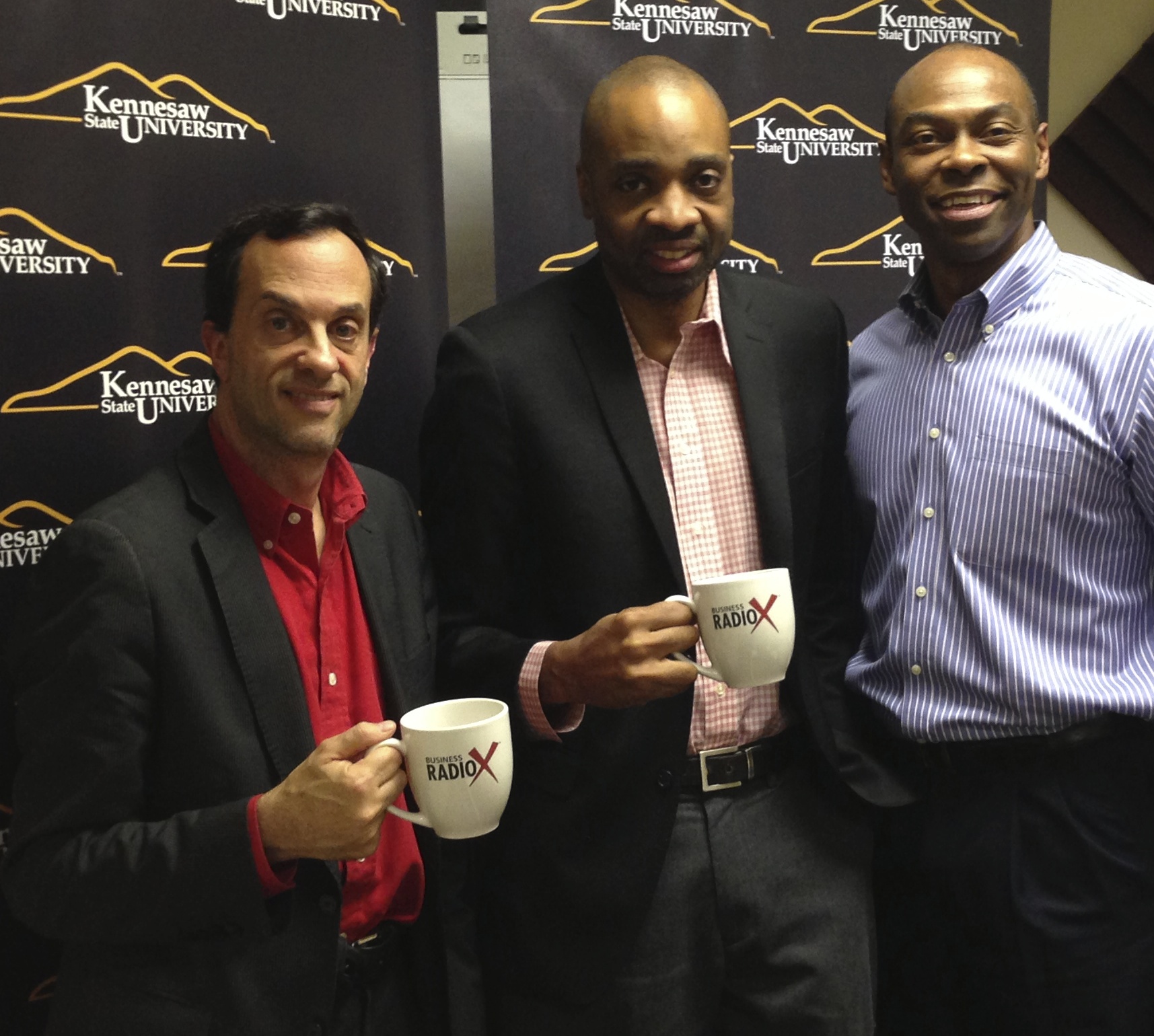

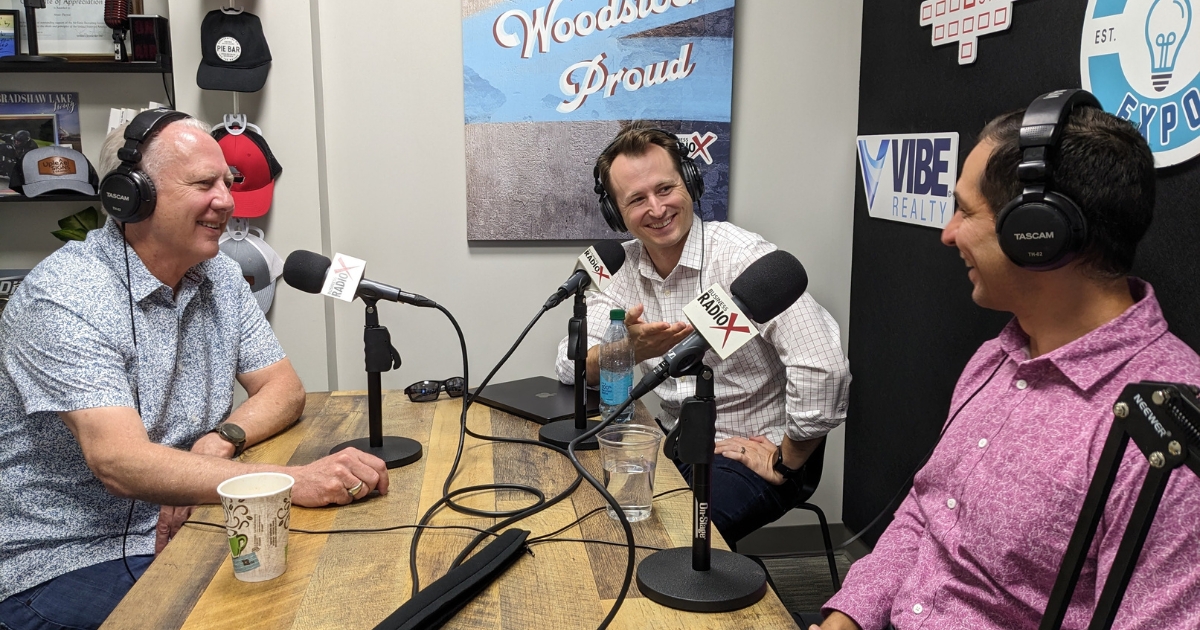
In this episode of High Velocity Careers, Host Stone Payton and Co-Host Tom Devaney, Executive Director of Kennesaw State University’s Executive MBA program, discuss the transformative impact of the program on students’ careers and personal lives.
Faculty members Dr. Marko Jocic and Dr. Preston Davis share their diverse career journeys and teaching philosophies. They emphasize the program’s focus on practical application, leadership development, and lifelong learning. The episode highlights success stories of students who redefined their career paths and achieved significant professional growth, underscoring the program’s commitment to fostering real-world skills and personal fulfillment.
 Dr. Marko Jocic is a seasoned technical sales and marketing expert with 20 years of global experience in engine-driven equipment for power generation, marine, industrial, automotive, and aerospace/defense applications.
Originally from Miami Beach, Dr. Jocic earned his electrical engineering degree and doctorate in business administration from the University of Florida, proudly identifying himself as a Gator. He also has an International MBA from the University of South Carolina.
Throughout his career, Dr. Jocic has driven innovation and efficiency in various industries, working extensively with engines and industrial equipment. His expertise spans multiple roles and applications, showcasing his versatility and depth of knowledge.
In addition to his technical acumen, Dr. Jocic is highly skilled in research and data science, proficient in a range of tools including Tableau, SPSS, AMOS, Stata, Smart PLS, Python, SAS, SQL, Power BI, and Access. His analytical abilities enable him to transform complex data into actionable insights, benefiting both academic and professional settings.
Dr. Jocic has served as a part-time faculty member at UMass, Quinnipiac University, and Central Connecticut State University, teaching entrepreneurship, international business, and quantitative analytics. His research, published in the Journal of Small Business Management and the Journal of Managerial Development, focuses on entrepreneurship and strategy, innovation, and leadership.
At Kennesaw State University, Dr. Jocic leverages his extensive cross-functional and cross-border experience to educate future business leaders and consult for international family businesses. His practical industry knowledge and passion for teaching give students a unique perspective on marketing and sales as well as other areas such as supply chain, project, and process management.
Outside of his professional life, Dr. Jocic is a dedicated father to his sons Erik and Ivan. He enjoys biking and international travel in his spare time.
Connect with Dr. Jocic on LinkedIn.
 Dr. Preston Davis is a Clinical Assistant Professor at the Coles College of Business at Kennesaw State University. An Atlanta native, he holds a Doctor of Business Administration (DBA) from Georgia State University, a Master of Accounting (MAcc) from the University of North Carolina, Chapel Hill, an MBA from the Georgia Institute of Technology, and a bachelor’s degree in business with a focus in Economics from Auburn University.
Preston is a serial entrepreneur, innovator, and multidisciplined operator with over twenty years of diverse experience, from founding and managing start-up companies to leading large international service firms. Most recently, he served as the CEO of a recreational retail company in the southeast, successfully exiting in 2020.
Before his current role, Dr. Davis was also an instructor at Georgia State University. His extensive background in both academia and business, combined with his practical knowledge and real-world experience, makes him an asset to the Coles College of Business. Additionally, Dr. Davis was once a drummer in a rock band, showcasing his diverse interests and talents.
With his entrepreneurial spirit and innovative approach to business, Dr. Davis continues to inspire and educate the next generation of business leaders.
Connect with Preston on LinkedIn.
About Our Co-Host
 Thomas F. Devaney, MBA, CPA, is the Executive Director of the EMBA Program and a Senior Lecturer of Accounting and Finance at Kennesaw State University. With over 30 years of experience in both public and private accounting, Tom brings a profound depth of knowledge to his role as an educator and leader.
Prior to academia, Tom had a distinguished 25+ year career in public accounting at the principal/partner level, serving small and mid-sized entities (SMEs) and affluent individuals. His extensive business consulting experience includes tax planning, preparation, and representation, mergers and acquisitions, business planning and development, transaction due diligence, and operational consulting. Additionally, Tom has broad experience in financial accounting and reporting, encompassing the design and implementation of management information systems, manufacturing and construction cost accounting, and budgeting and forecasting functions.
Tom earned his Bachelor of Science degree in Accounting from SUNY-Oswego and his MBA in Accounting from Kennesaw State University. He holds active CPA licenses in California, New York, and Georgia. He is a member of the American Institute of Certified Public Accountants (AICPA), the Institute of Management Accountants (IMA), and the Georgia Society of Certified Public Accountants (GSCPA).
As the founder and senior partner of Devaney & Associates, Tom has demonstrated leadership and a commitment to excellence in accounting. His professional journey and academic contributions make him an invaluable asset to Kennesaw State University and the broader accounting and finance community.
Connect with Tom on LinkedIn.
 This transcript is machine transcribed by Sonix
TRANSCRIPT
Intro: Broadcasting live from the Business RadioX studios in Atlanta, Georgia, it’s time for High Velocity Careers. Brought to you by Kennesaw State University’s Executive MBA program, the accelerated degree program for working professionals looking to advance their career and enhance their leadership skills. For more information, go to kennesaw.edu/emba. Now, here’s your host.
Stone Payton: Welcome to High Velocity Careers. Stone Payton here with you this morning, and joining me as our co-host for today, Executive Director of the Kennesaw State University’s Executive MBA program, he’s also a Senior Lecturer of Accounting and Finance, Mr. Tom Devaney. How are you, man?
Tom Devaney: Doing great.
Stone Payton: Well, you’re looking great, particularly riding in on that new toy I saw this morning.
Tom Devaney: Yeah, that’s a little secret. Don’t tell the wife.
Stone Payton: Well, congratulations. Well, we have had designs on putting this series together now for some time. I’m so excited. Cannot think of a better way to kick it off. You’ve invited a couple of esteemed faculty members to join us. Who’d you bring with you today, man?
Tom Devaney: Well, I brought two of our dedicated faculty in the EMBA program, Dr. Marko Jocic and Dr. Preston Davis. Actually, James Preston, the third, Davis, I believe is correct. Right?
Preston Davis: Well, I’m still trying to get over the esteemed part of this.
Marko Jocic: Yeah. That’s right.
Stone Payton: Well, we’re delighted to have you, gentlemen. I’d like to ask you both, and I’ll ask you to respond one at a time, and we’ll start with you, Preston, the third. But I’d love to hear a little bit about the background. I’m fascinated by the career choice and always curious to know how does one end up being on the faculty of an institution like this. What’s the backstory, man?
Preston Davis: Yeah, I think it’s called barely getting out of undergrad. That’s what led me here. No. You know, I have, I guess, a somewhat nontraditional, I guess, path here. So originally, I always wanted to be a soldier in the military. So I was fortunate enough to go to West Point, but I only stayed for about a year and a half. Got to play football there. I always joke I was on the team, didn’t necessarily play football there but I was on the team. Left there, jumped around. I spent a couple of semesters at UVA and community college. Finally graduated from Auburn University; I think, barely making it out of there.
Preston Davis: I played in a band. I was a bartender, which is pretty interesting. So I actually toured in a band in the southeast for about a year and a half, maybe two years. Funny enough, one of the other members of the band finished his PhD at Georgia State and is a tenured professor now, so I don’t know, maybe music’s the way in.
Preston Davis: And then I just, you know, I got into the startup world, got to work for some kind of family-owned and venture-backed companies. I’ve gotten to work at one of the largest, you know, services firms in the world. And I always was a little disappointed with the way I ended up my undergrad So I went back to grad school. I went and got a master’s of accounting from UNC Chapel Hill, ended up getting an MBA from Georgia Tech.
Preston Davis: And then I just fell in love with academia right again. And so I reimagined this life, and it was always this part of my narrative or part of a story that I was always kind of a lifelong learner, but maybe a chip on my shoulder and had to continue to prove myself. And so I finally went back after selling a company kind of in the middle of the pandemic and decided to finish up my doctorate.
Preston Davis: And so I went into the DBA program at Georgia State. Fantastic, amazing experience. Had no intention originally of teaching. And they had an opportunity to kind of get certified in teaching. And I got to teach a few undergrad classes and started to fall in love with it, just the impact, the fulfillment that I was getting from it, and said, maybe this is really a path for me. Seemed to some extent that maybe people enjoyed when I was talking, which I still can’t get, still can’t figure that one out.
Preston Davis: But, you know, I had enough kind of life experiences to relate with a lot of the students, given kind of my whatever nontraditional background and some of the things that I’ve been through and that ability to connect, and just kind of witness the evolution of these people, it just really, truly inspired me. And so I said, you know, if I can actually finish this and graduate and finish my dissertation, maybe I’ll get a chance to teach somewhere and fortunate enough to, I guess, my resume came across Tom’s desk, and he decided he was willing to take a risk on me even before I finished.
Preston Davis: Got to teach a little bit in the MBA program before actually finishing my dissertation, and kind of fell in love with it, and it was really excited and got to meet an incredible person like Marko here that I think reinvigorated this idea of, you know, colleagues and working together and just research and everything that goes with it. And just the impact that they were making on the EMBA Associates was something I never dreamed to experience after just teaching undergrad and kind of talking to 18, 19, 20-year-olds.
Preston Davis: And so to see people that are already so successful and on their journey that I could inspire or help in any way, shape, or form at that level was just an incredible opportunity. I said, “Absolutely. If you’ll have me, I’m going to do this.” And so, fortunately, I graduated and got to start teaching.
Stone Payton: Well, it has to be. I’ve got to believe that it’s incredibly rewarding work. I mean, I can see it in your eyes. I can hear it in your voice. But what do you feel like you enjoy the most these days, now that you’ve been at it a little while?
Preston Davis: You know, I think it’s – we are very fortunate in the way that we have designed this program. The way it has been designed is that we have all these different modules. And so the exciting thing for me is that we get to be general practitioners in some sense. And so I get to teach a few different topics in the program, and it forces me to continue to learn. Right? It forces me to continue to go deeper and deeper into various topics as opposed to, “Hey, you are only going to teach econ. That’s all you’re going to do, that’s all you’re going to research. You’re going to be very narrow and you’ll be very deep.” That’s fantastic.
Preston Davis: Unfortunately, it doesn’t really match my style and my background. I’m all over the place. And so I’m like, “Hey, how about if I go pretty deep in like a bunch of different things? Can I do that?” And this gives that opportunity. And, you know, on top of that, I think it’s just watching and seeing the change happen to people that, you know, they already have kids and they’re already successful, they’re senior directors, they’re executives. I mean, they’re – I mean, really, really impressive people already on paper. And so to sit there and watch them continue to evolve and get better is remarkable, right?
Preston Davis: So, getting the experience that, you know, kind of live it with them and co-create their kind of next chapter is just incredibly rewarding, fulfilling. And so for me, that’s always kind of the most exciting part is going from day one when they do, you know, kind of their first presentations, because you can definitely see it in the presentations, and then to their last semester when they do their formal consulting presentation at the end of their 19 months. I mean, remarkable is the only word. I mean, it is really the transformation that occurs for people that you think how are you going to transform somebody that’s already at the top, you know, in a lot of cases.
Stone Payton: So, yeah. So, Tom, when you were looking at this resume that he mentioned, did anything leap off the page? What compelled you to at least reach out and have a conversation with the guy?
Tom Devaney: Oh, he undersold his resume and his experience. So what’s unique about our program – and it’s funny, we had launched 2024 this morning right before this, you know, big kick-off for the new school year and our new strategic plan, you know, and all the speakers were the highest officers in the university from the president down, they talked a lot about us, our roadmap to R2 and our research and the impact we’re making on society. And research is extremely important in institutions of higher education. But what’s unique about KSU is we are a teaching university as well. And that’s been our focus from when we were an infant. Right? And the faculty dedicated to the EMBA program are all practitioners. Okay.
Preston Davis: So Preston has a phenomenal background in running and managing businesses, taking startups and taking them through the VC funding stage, selling them to private equity groups, those types of things. So you’ll hear similar from Marko, very diverse backgrounds. Okay. Multiple degrees. You know, he downplayed him real quick. “Well, I got a master’s, you know, from Auburn. And then I got an MBA from Georgia Tech. Oh, and by the way, I got a PhD from Georgia State.” Right? That’s what I want in the classroom.
Tom Devaney: We’re dealing with executives or management level people, high potential individuals. Maybe they’re not there yet, but they’re on that path. Okay. And they don’t want professors who are coming in talking to them purely about research. They want to know how can I apply this at work tomorrow. What’s this? How is it relevant to me today? Okay. I got a team to lead. Or, I got a project that I got to get through to completion. Give me the tools to help me do that.
Preston Davis: And that’s what all the faculty does, Preston included. We’re all hands-on. I mean, if we’re not hands-on, all the faculty work in there, all of the dedicated faculty to KSU, we would hire emphasis on their consulting work outside of KSU than we do on their research. They do have to research. They have to publish. They have to keep their PhDs, okay, but they have to be relevant to the class. And that’s what makes them special.
Stone Payton: Yeah. Marko, I apologize, because I feel like Preston’s a pretty hard act to follow, but I would love to hear a little bit about your backstory, too.
Marko Jocic: I’ll do my best. Mine is a little bit different. I started out as an electrical engineer graduating from the University of Florida. After that, I worked about, wow, 10 to 15 years in varying capacities, moving through electrical engineering, design, customer service, program management for Fortune 500 companies like Oshkosh Truck Corporation and Cummins Inc.
Marko Jocic: I decided to get my MBA in international business at that time and started traveling the globe, eventually moving up to senior VP of marketing and sales for a multinational corporation. So I had facilities in China reporting to me as well as other locations all around the world.
Marko Jocic: After that, in between that, I got my doctorate in business administration from the University of Florida as well. So I’m a Gator twice. Funny enough. And, you know, just COVID hit, I was traveling a lot. My first son was born, and I had the opportunity to stay home a little bit. And I thought, hey, you know, this is an opportunity to really reinvent myself.
Marko Jocic: So I started teaching at UMass for a little while and absolutely loved teaching. It was undergrad, you know, meeting these students firsthand, really transforming their lives. Right? So it was a wake-up call for me that, hey, maybe, you know, life is not all about traveling the world and, you know, selling products everywhere you go. You know, it was maybe about something greater than that.
Marko Jocic: So I taught at UMass. Then I taught at Quinnipiac, then Central Connecticut State University. And then decided, you know what? I’m going to take the leap from corporate and teach full-time. So I started putting my resume out there. I was fortunate enough that Tom had a chance to look at my resume.
Marko Jocic: I remember interviewing from my car and still doing a pretty good job, you know, in between work and meetings and everything else. So it went well. I had the opportunity to come over here full-time as a clinical assistant professor and couldn’t have made a better choice by far.
Marko Jocic: So, you know, working with the staff, the faculty, with Preston, Tom, and everyone else in our program who are all highly, highly skilled is just, it’s an amazing experience. And then on top of that, you know, we get the chance to train leaders in the future, you know, which is a wonderful thing.
Marko Jocic: You know, even this recent meeting at Launch ’24, you know, we had – a student walked up to me, Martha Anderson, for example, who’s now going to be pursuing her PhD and was asking for a recommendation letter. So it’s just seeing that kind of transformation in our students. And it truly is an amazing experience when you see them, like, walk in day one, you know, being shy and nervous, you know, maybe coming in really inexperienced to, you know, being a leader and then leaving the program, being something that’s like awe-inspiring.
Marko Jocic: So that’s really what drew me to the program, drew me to being a teacher overall. And, you know, I couldn’t look back at going into the corporate world, although I still consult for international family businesses around the world, doing my marketing and sales thing and electrical engineering still, just to keep, you know, my edge in the industry. So it’s been an incredible experience and I wouldn’t give it up for the world.
Preston Davis: I just love what you said about the impact because the other thing I think about with our EMBA students, it’s like teaching undergrad versus grad, especially on the executive level, is like this idea of impact. And who’s going to have the greatest impact in an organization is these people that are managers, high performers, the leaders. Right? They’re going to be setting this tone.
Preston Davis: And so many people, I think, in corporate America, right, complain and there’s, there’s, there’s plenty of burnout. There’s all these things that happen and it’s like, “Oh, well, you know, the next generation is going to fix this.” And it’s like, “Well, no, they’re going to be the sufferers through this transformation.” It’s like, “Well, if we can start hitting people at the right level and change them so that they can change from the inside, right?” These are the decision-makers, right?
Preston Davis: So everything that we teach, I think is so awesome because the impact is real and like Tom mentioned, it’s like on Monday, right? I mean, we have students all the time that say, you know, again, we try to teach very pragmatic approaches to certain things. Like, I went in on Monday, I changed this and I’m going to tell you all about it in three weeks. And three weeks will come up and they said, “Hey, that didn’t work.” Or they’ll say, “My team’s performing at a level that I never thought they would.”
Marko Jocic: And so I think that this impact I think we relate to is that not only is it so rewarding, fulfilling to teach just generally. Right. I mean, any way to help and motivate and grow people. But then to realize that that impact is twofold, right? Because they’re going to go and they’re going to impact these organizations from the top down in a really meaningful way. And I think that, for me, is why I keep showing up and saying, hey, we’re making a difference.
Marko Jocic: Hundred percent. Not only that but it’s a really unique group of students or associates we should say when you get into the classroom, because all of them are leaders, they’re in different industries across, you know, all over Georgia as well as other areas you know now. So they get to share a lot of their experiences, their insights in the classroom. So it’s not just us teaching to them, it’s them teaching to us as well as to their peers. And it’s amazing when you look at the dynamics of this type of classroom compared to like your typical MBA graduate class or undergraduate, where, you know, they’re not bringing their experiences into the classroom, and we get that every single day. It really is amazing.
Preston Davis: Yeah, I always joke I’m just a facilitator, right, of knowledge and communication between each other because there’s no way I can compete with the level of wisdom and experience that’s in the room, right? I mean, there are so many decades, more years in that room.
Preston Davis: And I used to always joke with people about undergrad that, I mean, I really did – I had one and maybe a few people that are very passionate about the undergrad teaching. And I always joke that it just helps my anxiety out because when I walk in the room, I’m like, well, I probably know more than you, right? You’re 18 years old or something. Like, I’m going to learn. I’m going to learn something, but generally, I’m going to be – I’m going to be feeding a lot more than I’m going to be eating. Right?
Marko Jocic: So in this case, it’s like keeps us on our toes all the time, because anyone in that room can ask some of the most difficult questions. And a lot of times I have to say, “You know, that’s a great question. And I don’t know, but I’m going to find the right answer. I’m going to find the evidence that supports the best way to do something.”
Stone Payton: So is it – its ethos, its value system, its mindset. It must be curricula and structure, all of those things. But there are so many distinctions I’m picking up pretty quickly here in this and your more traditional MBA paths, right, Tom?
Tom Devaney: Yeah, we have a list of what we call our distinguishing characteristics, five or six bullet points, but the last three are my favorite. One is the dedicated faculty. And you have two of them here today that you’ll get a feel for the expertise and their commitment to changing lives and just moving forward and research learning but learning from students. Humble, okay, we walk into the classroom.
Tom Devaney: I teach accounting and finance. I’ll have a CFO in a class. Okay, I better be on my toes. I can’t be sitting here five years out of date because I’ll get called out, right? So same thing in all these multidisciplines. But we got the dedicated faculty. We have our focus on leadership and personal development. Because when we’re changing lives, we’re not just changing lives in the workplace. We’re changing lives across the board. Our students will tell us they’re better husbands, they’re better fathers, they’re better coaches. Okay. Because we put a lot of emphasis in our curriculum on their personal development, particularly their leadership skills.
Tom Devaney: And then what I love most is our applied integrated curriculum, which is pretty unique. They don’t take a class. They don’t take an accounting class for ten weeks. Listen to Professor Devaney talk for an hour, you know, three days a week, and they – good. I finished my accounting requirement. Now, let me take a marketing class, and they go to Marko’s class. And, “Oh, I’m finished with that. Let me go get an econ class from Professor Davis.”
Tom Devaney: We teach in little four-hour modules, okay, and over a theme for the weekend. And it’s very multidisciplined. So if we’re talking about a topic, we might be talking about the cultural changes that have to happen, bringing in some organizational behavior and change the finance aspects of it, using mergers and acquisitions as an example. Right?
Tom Devaney: If one company is going to acquire another, what do you need to know? Well, first, you got to know what am I going to pay for it. Okay. So I’ll teach a class on business valuation what that looks like and what models we use to to value a business. Someone else might talk about the cultural change. We’ll have organizational behavior people in there. People don’t like change. So how are you going to force that change, right? You don’t know if they’re going to resist you and they’re going to have fear, and those types of things. Right? And then, you know, your workforce integration and how are we going to integrate the workforce.
Tom Devaney: So we cover a bunch of different topics over a weekend in four-hour units that appear to just be random, but they’re not. The faculty works really hard. Last year, we probably put in 1000 hours redoing our curriculum, aligning every one of those hundred-plus units to make sure from the first one to the last one they build on each other and they’re all usable. And they demonstrate that in their final project. The final project, they go global and they do a consulting project for a real live company.
Stone Payton: Oh, wow!
Tom Devaney: And they get the data beforehand. And, you know, we’ve done consulting for ExxonMobil, and we’ve done consulting for little startups and little local breweries, you know, how to get them off the ground, how to go to market, how to go global, or, you know, go from Peru to get their product into America. And as Preston said, it’s just amazing to watch the transformation.
Tom Devaney: People used to ask me why I get so excited about teaching. I just love it. Okay. I fell into it by accident by the way, too, 15 years ago, practicing CPA my whole life, and I got asked to cover a class as a favor. I walked into a classroom once and never turned back. I’m like, I’m changing my career. That’s where I want to go. But I used to always say because we change lives.
Tom Devaney: So now, I get with the new vocabulary with our latest strategic plan where we transform lives. Did you catch that? So I can’t say we changed lives no more. Kennesaw State University is going to be transformational in the lives of our students moving forward. KSU is a really cool place and it’s really going places lately.
Marko Jocic: It is. Fast.
Stone Payton: So are you finding that as selective as you are in bringing together the right kind of faculty to pull all this off, are you finding that you’re equally selective in the students that you allow to participate in the program?
Tom Devaney: We are and we hold their students to pretty high standards. We are a teaming program, so it could be easy if we didn’t do it correctly for a few to slide through without really putting forth the effort or taking away from the program as much as they should. They’re making a serious investment. We owe it to them to make sure that they’re going to get the most out of it that they can. They’re making a serious time and financial commitment, and every once in a while someone will slide through the cracks and think they’re going to coast through. And we have, you know, very close monitoring of team feedback loops that is all automated faculty intervention or what have you.
Tom Devaney: So we’re pretty selective of who we get in because they have to go through a successful interview before they can even apply. So a lot of people ask, “Well, what’s your acceptance rate?” Our acceptance rate is really high because if you made it to an interview, you’ve already been – you’ve already been pretty well screened. We’ve already had your resumes. You’ve already been to an information session. My recruiting team has already searched your background. And, you know, we’re pretty comfortable you’re a good fit.
Tom Devaney: And what we really need to stress in those meetings is that this is a teaming program. There’s a lot of these individuals are high achievers, but they’re individual contributors, right? You can take a doctor and we have plenty of doctors go through the program.
Stone Payton: Oh, really?
Tom Devaney: Oh, yeah. You can take a doctor or someone who used to run his own practice or what have you, and they’re used to just being the boss and nobody questions them and they do their own thing and they’re brilliant. Don’t take me wrong. But they don’t belong in our program because our program is a teaming program. And you got to learn how to play nice in the playground. Okay. You got to leverage yourself. Okay.
Tom Devaney: So the interview process is really just that fit. Do you really fit?
Stone Payton: Yeah.
Tom Devaney: You know, do you have the DNA of our program or do you belong in a traditional MBA? Nothing wrong with that. Okay. We cater to a different market.
Stone Payton: Marko, walk me through a team coming to you on a given Saturday. What might they be doing on a Saturday in your room For the four hours?
Marko Jocic: Oh, good question. So our – it’s a really interactive weekend. So during those four hours, for example, we may lecture for 30, 40 minutes, then the teams will break out. They’ll do an interactive exercise like bringing in a case study or an example or a simulation or some kind of game or teaching us, you know, reverse role play kind of situation. So it really is an interactive environment.
Marko Jocic: So they’ll do that, have a quick break. So it’s kind of in these hour segments where they’re learning, interacting with their team. And then at the end of every semester, they do a cohesive presentation that basically summarizes all the functions they learned over that semester and brings it into a team presentation, where they walk it back through faculty and sometimes even to a broader audience. For instance, in the entrepreneurship semester, they’ll actually present a business plan to a group of venture capitalists in the room.
Stone Payton: Actual, actual VCs.
Marko Jocic: Actual VCs.
Stone Payton: Wow!
Marko Jocic: And a lot of businesses have actually started as a result of that assignment, believe it or not. So Peace Love and Pizza were graduates of Kennesaw State University and there’s many others. So it’s amazing, you know, seeing that transformation, seeing those business plan presentations and all the presentations they have in every single semester and just that camaraderie they develop, you know, the cohesiveness those teams have. And it starts off as, like, they don’t know each other, right? These are very diverse people we put on the teams purposely in terms of industry, background, and everything else.
Marko Jocic: And then by the end of the semester, you see this as a close-knit group that is meeting each other for, you know, weekends, parties, you know, events and they stay connected. You know, our network is fantastic in the Executive MBA group. The alumni all gather regularly. We have events that foster networking. You know, we have many students that hire students in the program depending on their level. So it’s a completely different experience than, you know, going for an online MBA where you may not know people in the cohort. In our program, you know everyone in this cohort plus the past cohorts. And it’s a completely unique experience.
Marko Jocic: So the team-based aspect is a key to it. But it’s also critical. They have to grade each other. They have to step up to the plate. You know, they have to address issues sometimes with teams and make sure that they’re all performing to a level that is admirable, and they do in the end.
Stone Payton: So, Preston, I have heard the phrase leadership skills come up a couple of times in this conversation, and I’ve read a few books and I feel like I could make a reasonably decent 15-minute talk to the rotary if I needed to next week. Is there a rubric? Are there some very specific leadership skills that you guys have your eyes on? Speak to that a little bit, and how you try to take them from point A to point B.
Preston Davis: You know what we do? I think a really good job here is that, you know, the self-actualization, the self-awareness is such a key point because until you get there, you really can’t grow or move forward. And so we have an amazing strategy and leadership, professor, right, that leads them through a path. We have an incredible kind of organizational management HR kind of professor that also helps with this, right? So we hit on EQ and all these all these various things.
Preston Davis: But, you know, ultimately it is something where we don’t necessarily take one stance and say, “Hey, here’s a framework and you have to use it,” right? So I think we do a pretty good job of saying, “Hey, not one medicine is going to cure everybody, right? Like, you got to try something different.” And so what we do is we present like, “Hey, here are three or four or five of, like, the main frameworks, the main leadership styles.”
Preston Davis: You know, we have probably too many assessments, right, that everybody gets to take and you get to know a lot about yourself, right, in a lot of different ways and maybe what leadership style might be best for you to use and all these other things. But it’s really taking them down this journey so that they can better understand who they are and be open-minded enough to say, okay, I’m going to reflect on kind of these different frameworks that are out there around leadership, right? Because everybody has, let’s say the one they’re passionate about.
Stone Payton: Sure, sure.
Preston Davis: But I don’t at all believe that the one that I tell you to use is going to be the one that makes you a great leader or whatever, right? So we gave them an opportunity to explore kind of the different ones and then really take and maybe even blend together different aspects of each one to create a style in which it works for them. Right?
Preston Davis: But I think, you know, fundamentally, at the end of the day, to do that, right, to get to a place where you can be a servant leader or an authentic leader or a transformational or transactional, whatever you want to look at it from a leadership style perspective, you really have to take this big step back and understand who you are, right? Go through this self-awareness process because without that you’ll never be able to fully have, like, the right types of empathy. You’ll never fully be able to be vulnerable.
Preston Davis: We talk a lot about psychological safety, right, in the program, and how do you achieve that. And we look at Amy Edmondson’s research. And obviously, you know, this is – I feel like it’s almost like a buzzword at this point. But, I mean, even all the Google reports that have come out about their highest performing teams and what do they all have in common, right? It’s like two things. I mean, really, it’s eight things. But the two big ones that we always talk about is one coaching, right, which is a huge part of the program. But the other one is psychological safety, right, and how do leaders do that. Right? And so we kind of like back into what does it take to create a psychologically safe environment in your team or your organization and what does that mean for you as a leader, and what do you have to be, and to get there, how do you get there, right? And we have a really incredible curriculum that takes you down that path by taking you deep into yourself. Right?
Preston Davis: And so I think that it’s an amazing process. And we just had kind of a new, a new hire that’s taking over from somebody that has been doing this for, what, last 18 or 19 years. And I think for a lot of associate students, that is the catalyst of the big transformational piece of the program, right?
Preston Davis: So we can just teach you business acumen. We can be any other MBA program. And like here’s the information. But to see a fundamental shift and change in your mindset, in the character of who you are, and building like these different silos of ethics and morals, and how does that relate to me as a leader and a company and what kind of company do I want to be involved with, I mean, we start asking really, really, really tough questions that force people to go deep and introspective and say, “All right, who am I?” Right? I mean, at the end of the day, you get into an education setting and you go, “Okay, I’m here because X, Y, Z. And I didn’t realize I’m here because of this other thing.” Right? And so I think it’s important to ask those questions. And we give an amazing roadmap for that through that leadership curriculum.
Stone Payton: With the focus on teams as strong as it is, there’s just no way you can pull this off without the faculty being an incredible team. Is that accurate, Tom?
Tom Devaney: That’s extremely accurate. Really, really, really fortunate there. I mean, these guys are rock stars, and we work as a team together really well. Okay. So, we don’t, we don’t silo. We tackled some really big projects last year. We’re getting ready to launch in September where we’ll be hyflex; students can attend remotely. We’ve never done that in the past.
Stone Payton: Okay.
Tom Devaney: And it’s important that we don’t lose this teaming aspect and the culture and everything else that develops face-to-face. So there’s a ton of work that’s going into being able to get to that point, and we feel that we’re not going to dilute the experience by having some students potentially attend remote.
Stone Payton: Yeah, yeah.
Tom Devaney: Okay. But we work together. We generally have a faculty meeting once a month. We are highly involved with every one of our students, the stage of where they’re at. Any problems we’re having, we discuss. We reach out to students who might be struggling. And, you know, life happens during the program. You know, people lose spouses or someone gets cancer or they lose a parent, or they have a baby, or they get married, or they get divorced, right? And they’re halfway through and their world is starting to fall apart, and they really need someone to come alongside them and pick them up and say, “You got this. You know, you’re three-quarters of the way through. It’s a cohort-based program. You know, we’ll support you. What do you need?” You know, they’re still going to perform for us, okay. But we’re not going to desert them. You know, the faculty is going to be all over it.
Tom Devaney: And our curriculum obviously, being that applied integrated curriculum, I have to know what Marko is teaching in the classroom. He has to know what I’m teaching. Preston has to know what we’re teaching. Okay. All our faculty have to. The last thing we want to do is we go in, and I’d say one thing is garbage. And Marko goes in and says, “This is the latest, greatest,” right?
Stone Payton: Yeah. Forget what Marko said.
Tom Devaney: Yeah. You know – so, you know, and that can easily happen if we weren’t on the same page. But my focus, most of the faculty, well, all of the faculty right now, I hired. I’ve been here 12 years. I hired all of you. I guess it’s time for me to –
Stone Payton: It’s all you, Tom.
Tom Devaney: No, I got lucky, I got lucky.
Preston Davis: I got lucky, too.
Stone Payton: Well, I really applaud your willingness to entertain. And it sounds like you’re actually doing it, implementing this hyflex model, particularly on the heels of such marvelous success with a model that works, but again, to the theme of this conversation to a large extent, everything you describe reflects what they are experiencing or may very well experience back in the field up to and including, trying to connect and build teams and try to get results with and through the voluntary cooperation and effort of other people. A lot of that’s got to be done remotely now. Right? So it’s all very, very real world.
Tom Devaney: And with a very global environment, a lot of these leaders are leading teams that are not local anyway.
Stone Payton: There you go.
Tom Devaney: So they need to learn these skills.
Stone Payton: Right, right.
Tom Devaney: And they need to be really efficient at it. You know, I think anyone today can fire up a Teams meeting. Right?
Stone Payton: Right.
Tom Devaney: I remember, what was it, April, February or March of 2020 when the university shut down and we were like, “We got to go online.” We had no tools back then. We didn’t have Teams. Teams didn’t exist. Right? In that day and age, the tools really didn’t exist yet.
Stone Payton: Right, right.
Tom Devaney: Okay. And now it’s common. Okay. And so it’s not just a one-on-one or four of us on a Teams call. We got to break out into Teams within that. Right? So when we have this remote and we send a team on a breakout, we got to be able to throw them all in a room by themselves and then bring them back in the classroom and have them feel like they’re alive in the classroom and we need to be able to interact with them. We need to see them and communicate. So it takes a lot of technology, a lot of investment. So we’re excited about it. I’m worried about it. Okay.
Stone Payton: And rightly so. Right?
Tom Devaney: I need to get a couple of weekends under my belt and then it goes flawless where I say, “Whew, breathe a big sigh of relief.” You know, we’ve been promising and committing this for a year and a half. And we got, what, a couple of months and we’re alive. Exciting.
Stone Payton: Oh, wow! So I’m sure there are a ton. But are there one or two student success stories that really stand out for you? And if it’s not appropriate, you don’t have to name names. But I would be interested to hear, and I think our listeners would too, about students who came in and were here and now they’re there, and it’s had a large impact on them going through this program.
Preston Davis: Yeah, I mean, I have one that comes to mind. I won’t use names and I won’t.
Stone Payton: Sure.
Preston Davis: I’ll speak in more generalities, I guess. But, yeah, I had a student, you know, come in and realize, oh, hey, if I want to move up, right, Fortune 500 company – it might have been Fortune 100 but Fortune 500 company for sure. It’s like, hey, if I want to move up this corporate ladder, I want to be, you know, the CSO or something along those lines, like, I need an MBA. I need to get this business acumen, not ever realizing what are all the other options out there, right?
Preston Davis: And so you go through this process that we talked about, getting really self-aware and getting really vulnerable with within yourself and really trying to reflect on, hey, what do you really want out of this life, and where do you want to be and where do you want to go? And not ever really realizing, hey, you know, there’s other ways as opposed to just, you know, climbing some generalized corporate ladder. And hey, now I know I’m going to make X dollars and keep moving up and kind of not being super happy with it. Right? Being fairly miserable with the experience of kind of big corporate America and trying to say, you know, what else is out there?
Preston Davis: And I remember kind of coaching and talking with this particular student and an incredible, I guess, gift of just opening up that they had kind of these different, let’s say, kind of recruiters reach out and everything else. But it was for a smaller kind of family enterprise, right? Big enough that they could, let’s say, afford, you know, someone of his quality and stature and all that kind of stuff, but never really would have considered that otherwise. Right?
Preston Davis: And then I was just recently able to meet with him, and he told me he took a vacation just recently. And so he moved. He took this – took this new role, got out of corporate America, kind of more family environment, smaller company, right, like sub 100 employees. Just incredible atmosphere. And he said, “I took the first vacation,” he said, “I can remember in probably 10 or 15 years where, one, I wasn’t just recovering from the burnout of every day of work,” and two, got to spend time with his family, his kids, his wife, really be there and present in the moment of being on that vacation. And three, he said, “After a few days, I was excited to come back.”
Preston Davis: Yes. He goes, I wanted to – he’s like, “I wasn’t thinking about and worrying about and thinking about work on the vacation because I was so miserable and all the stuff’s going to pile up and all the, you know, BS that’s going to happen,” all these things that are horrible, right, in the environment that he was in. He goes, “I was looking at emails and checking in just because I was so excited to come back on Monday.” Right. And he’s like, “You know, I had a whatever a whole week off or eight or nine days,” or whatever it was. He said, “When I got back,” he’s like, “I was just ready to go. Like I had more energy. I was excited. I didn’t need a vacation from my vacation, you know.”
Preston Davis: And I was like, that is a beautiful, transformational story to me because he was already an incredible, high achiever, easily could have stayed where he was, finished his MBA, probably gotten the next promotion to SVP or EVP or whatever of some sales, you know, in a Fortune 500 company with hundreds of reports and thinking that was the definition of success because that’s what he was around and in.
Preston Davis: And it’s like, well, that’s not – doesn’t have to be the definition of success, right? Like, you don’t have to have 500 people reporting you to be successful, right? Or you don’t have to have that logo on your resume to be successful, right? You can really get introspective again and figure out what does success mean to me. And is that time with family and financial security and time with my kids and ability to take a vacation and not freak out and be miserable and then have to recover from the vacation, from the vacation, right?
Marko Jocic: I mean – and he sat in my office and was just like – I mean, the look on his face, like said it all for me, right? It was just this moment of realization and this beautiful story where someone who, right, if they’d never, let’s say, come to the program, may have never gone through that kind of self-actualization to say I need to redefine what success looks like for me. And in doing so, he’s I think he’s making more money. Right? He’s happier. He’s enjoying his work, he’s taking vacations, and it’s not like he’s still in the honeymoon period of the role. It’s not like he’s one week into this thing. Right? And for the first time, it’s mapping out kind of the next decades of his life with a lot of excitement.
Preston Davis: And so I think for me, that was, sitting there and getting to hear him so passionately talk about this realization, I was like, this is – and it’s a credit to the program, credit to all the faculty. And I think it’s just opening up people’s eyes to those experiences. Yeah, it was just a beautiful moment for me to sit there and listen. I really just kind of got to take it all in as he, you know, kind of championed this narrative. I was like, “Oh, this is incredible.”
Stone Payton: Marko, I’m sure this isn’t an isolated case where people do, going through this process, choose to redefine success for themselves and maybe make some pretty substantial changes in their direction. Yeah?
Marko Jocic: Every single weekend, you know, we open up the class weekend with a welcome and an around-the-room. And during that time we get about, you know, three to four students in every single weekend announcing, promotions, announcing, you know, changes in jobs, changes in careers or changes in life. So it’s amazing just to come into the class.
Marko Jocic: I’m excited about teaching every single class week, and I go in just to hear the stories from the other students and where they’re going in the future, and we get to see it all over LinkedIn, you know, promotions, you know, congrats. And we see these people that came into the program even at lower levels, you know, analysts or whatever it may be that are quickly moving and progressing through their career as a result of this program. And it’s clearly linked to the program. I mean, during and immediately after, you can see how quickly the career progression moves. So it’s an amazing experience.
Stone Payton: I gotta believe it’s a gift that keeps on giving, though. Because I’ve been part of this cohort, I suspect I have a support system and people I can lean on for the balance of my career in life. Yeah?
Marko Jocic: Oh, of course. You can see the likes on LinkedIn. It’s a tight-knit group. Yeah.
Tom Devaney: Most of the teams stay connected and still meet once a month and share what’s going on in their lives or work in soliciting direction from their teammates, as well as faculty.
Tom Devaney: I get phone calls from students all the time. I mean, I get excited. I had a student years ago and a couple of years later he was pitching a launch of a whole new product to the board of directors of a huge Fortune 500 company. And as he was walking in for that presentation, he called Professor Devaney. He had a couple of questions real quick. He started questioning what was in his PowerPoint deck. Right? And we kind of walked through it.
Tom Devaney: So, there is – I can’t count the number of success stories. Okay. If you look in the lobby there, we see around Woodstock and around Canton, where we did a couple of spreads in some local magazines last month, and we highlighted our class scholar from 2023 who was the president of Huddle House. And he graduated from the program and he took the CEO position of Emmy Squared Pizza, which is a relatively new startup. They’ve been around a while, but they’re they’re going to explode through the country. And he’s been hired to do that.
Tom Devaney: And I talked to him and he’s traveling all the time. He’s in Florida looking at sites. He’s in Tennessee looking at sites. But he is so charged up and so excited about this opportunity to grow something national. And I mean, he’ll just – he’ll sing the praises of our program, like how we transformed his life, you know. And, Stone, I can spend five hours, example, example, example, example of people who have gotten huge promotions and will come back to me and say, this is solely because of this, and give me concrete examples.
Tom Devaney: My favorite, I’ll be quick. My favorite here is we had a student years ago, and she worked for a Fortune 500 company, and annually during the capital budgeting process, directors – she was a director – pitch what they want, capital investment-wise, in a forum with the CFO there and other leaders. And she got up and she pitched. She was running a call center and she pitched some big capital budgeting needs that she had. But she took it a step further because this happened a few weeks after her class with Capital Budgeting.
Tom Devaney: So now, she knew all these metrics so she did net present value, economic value added, ROI, you know. And when she was done, the CFO came up to her and said, “Wait a second. You were supposed to just present the ideas and what have you, and my finance department crunches all these numbers. How do you even know how to do that?” And she said, “Well, I’m finishing my Executive MBA.” Well, guess what, in about a month she was an executive vice president from a director.
Stone Payton: Well, certainly more individuals that are serious about pursuing this type of path need to know about this program. But who else in the community needs to know about this? Talent development people in middle and large-size organizations? Who do we need to get the word out to, and who do we need to have conversations with so that they understand what we have here?
Tom Devaney: Yeah, the talent development of big corporations, they don’t necessarily want to take alliance to any particular program or what have you.
Stone Payton: Okay.
Tom Devaney: You know, there’s great programs in Atlanta. I think ours is the best, obviously, but –
Stone Payton: Well, of course, it is. You have your own radio show. You got to be.
Tom Devaney: Yeah, but, you know, there are great opportunities and – but our alumni network inside those organizations is what becomes pretty powerful.
Stone Payton: I bet. Yeah.
Tom Devaney: Because, you know, if I’m your boss and you’re aspiring to get a promotion and you don’t have an MBA and you go talk to your leader, and, yeah, KSU’s EMBA program’s wonderful, you know. So our alumni is our strength. And that is our main recruiting tool.
Stone Payton: Okay.
Tom Devaney: Okay. It would be great if in the past – we ran this program solely for AT&T in the past, for many years before they – before AT&T was –
Stone Payton: Yeah.
Tom Devaney: And we did a doctor’s one many, many years ago. Okay. If we had a couple of the large Fortune 500 companies in Atlanta, talent development people identifying their high achieving individuals or high potential individuals and referring them to the program would be awesome. But we do it by doing what we do. Do it well, and let it speak for itself.
Preston Davis: I will say, though, that we did start where we are happy. Like, again, Marko and I or another faculty member will do kind of, I hate to use the term, the lunch and learn just because it’s overused, but we’ll come, we’ll come on the property.
Preston Davis: So like, hey, if you’re Home Depot and you can’t take a stance and say, hey, this program versus that one, well, don’t take that stance. But hey, how would you like, you know, a few professors from a great university come over and teach about, you know, giving and receiving feedback in the workplace and the most effective frameworks for that, right? Like, we can do that. And I think that’s a great way to maybe get in.
Preston Davis: So whoever’s over that, whether it’s the talent management people whatever, say, “Hey, wouldn’t you like a free opportunity to get, you know,” because I think every, every organization always is looking for leadership development or just employee development. We’ve done it a few times for some small organizations. It’s not like you have to be some Fortune 1000, right? I mean, you know, if we can get a couple dozen people or even a dozen people in a room and have a meaningful conversation where there’s a lot of great learning going on, I mean, that’s one.
Preston Davis: I think I’ve always looked at it from my perspective of, hey, we get paid by the university, right? These are more or less state funds. And so it’s our way of giving back to the community and saying, “Look, we’re here to support you.” This isn’t like, “Hey, you need to pay us some huge consulting fee to come in and do this.” No, this is in our capacity as conveyors of, you know, the University System of Georgia to provide some kind of free education and knowledge to, you know, help maybe fix something that’s going on in your business, right, and help certainly help develop people.
Stone Payton: I think that’s a marvelous idea. And I think that that’s a win for everyone involved, even people in the room who may not be even considering pursuing an executive MBA, but that provides value for everyone.
Stone Payton: So before we wrap, and I’ll start with you, Marko, but I’d love for all of you to to tap in on this. If we could leave our listener, particularly the listener who is beginning to entertain the idea of pursuing an Executive MBA or advancing their career, let’s just leave them with, I call them, pro tips, you know, just a couple a little bit of practical advice, I don’t know, maybe some do’s, maybe some don’ts, maybe something to read. But let’s leave them with a couple of pro tips as we wrap.
Marko Jocic: Oh, the biggest one I can say is just get it done. Do it now. Do it fast. Don’t wait. Don’t hesitate, you know. There’s no time like the present to take control of your life and take it to that next step.
Marko Jocic: And, you know, as dedicated faculty, we’re here to help you professionally, but also personally. You know, Tom can help you with your personal investments for sure. He definitely helped with mine, you know, through the program, just learning as an innocent bystander.
Marko Jocic: So, you know, take the plunge, don’t wait. Get it started, put in the effort, and it’s amazing the benefits you’ll get out of it. It’s one of those degrees that this is not just a piece of paper that you have on your wall. This is something that you will show every single day in your career on how it made a change in your life. So I say, just take the plunge.
Stone Payton: Got it. Preston?
Preston Davis: Yeah, I like it. That’s the one I would use is, you know, the stealing, the stealing, from Nike, right? Just do it.
Stone Payton: There you go.
Preston Davis: And, yeah. And so I second that wholeheartedly. And I think my point to this would be, is that obviously we want you to come to our program. But just in general, I think getting to, you know, a little bit more formal, formalized education, you know, as we all grow and grow older, I think it’s really, really critical for a lot of different reasons. And I will just say in terms of whether it’s some level of wisdom which I have very little of or just encouragement, is that anything worth doing is going to be tough, right?
Preston Davis: And I always joke that, right, you can’t have fire without friction. And so my thing is you do it and know that it’s going to be hard. And the beauty of it is that it is hard, right? That means you’re actually going to get something out of it. If you’re in a program and it’s just too easy, then you’re not doing enough. You’re not challenging yourself enough. So if you get into a program, and you should, 100%, I believe there’s really no bad way to go here. Just make sure that you’re creating that friction so that you do grow.
Tom Devaney: Yeah. Again, I would be third in line to say just do it because that is the most common thing we hear. Someone will interview, they’ll get accepted and something will happen and they’ll say, “Well, I’m going to wait till next year because I just got a promotion,” or, “I’m going to wait till next year because my wife’s pregnant. We’re going to have a baby.” Okay.
Tom Devaney: And we have people in our funnel, that have been in our funnel for four or five years, and they’re still actively talking to us. It’s not like we’re harassing them. You know, they’re actively talking with us, but it’s four or five years. They would have already had their return on investment and moved well ahead, okay, and gotten out of the way before those kids got a little bit older. And now they’re playing sports. And you know we’re a weekend program and you’re running them all over the place. You know, the quicker you get it done, you know, the better off you are. Number one.
Tom Devaney: Number two, my next thing and that’s already been harped on is just to be a lifelong learner, you know. And Preston said, you know, said that hey, if it ain’t here, get it somewhere, okay? Just don’t get stale, okay? The world is moving fast. We got to be on top of it. We got to stay current. We got to be relevant. Right? Just be a lifelong learner. If it’s in our program, great. If it’s somewhere else, great. Okay. Just don’t sit around and let the world pass you by because it’s going to happen. Yeah.
Stone Payton: Nicely said. All right. So what’s the first and next step for someone who does want to pursue this? Is there some sort of information-gathering process?
Tom Devaney: kennesaw.edu\emba. We have dedicated business development recruitment people who you will get ahold of when you follow that link. We are still enrolled for this fall that will start in September. The last day of this month is the deadline. Otherwise, you’re out another year.
Stone Payton: So do it now is real advice.
Tom Devaney: Do it now or we’ll see you in the cohort we’re recruiting in 2026. We’re going to – we’re going to kick off in October. We’ll have orientation in September. We’re going to kick off in October. By the way, we kick off at a very nice resort where we’ll be at Callaway Gardens for four days and get that team going right off the bat.
Stone Payton: It sounds like a remote broadcast opportunity to me. Marko, what do you think?
Marko Jocic: I think it’s a great idea. The international residency is quite nice.
Tom Devaney: Yeah. Yeah.
Stone Payton: Oh, gentlemen, this has been marvelous. I’ve learned a ton. I’ve thoroughly enjoyed the conversation. Your enthusiasm, your expertise, your insight, your perspective are incredibly valuable for the purposes of this conversation but I know for our listeners as well. Please keep up the work. You guys are doing incredibly important work, and we sure appreciate you.
Preston Davis: Thank you.
Tom Devaney: Thank you.
Stone Payton: All right, until next time. This is Stone Payton, from our co-host today, Tom Devaney, and our guests, Marko Jocic and Preston Davis, and everyone here at the Business RadioX family saying we’ll see you in the fast lane.