Business RadioX ®

  • Home
  • Business RadioX ® Communities
    • Southeast
      • Alabama
        • Birmingham
      • Florida
        • Orlando
        • Pensacola
        • South Florida
        • Tampa
        • Tallahassee
      • Georgia
        • Atlanta
        • Cherokee
        • Forsyth
        • Greater Perimeter
        • Gwinnett
        • North Fulton
        • North Georgia
        • Northeast Georgia
        • Rome
        • Savannah
      • Louisiana
        • New Orleans
      • North Carolina
        • Charlotte
        • Raleigh
      • Tennessee
        • Chattanooga
        • Nashville
      • Virginia
        • Richmond
    • South Central
      • Arkansas
        • Northwest Arkansas
    • Midwest
      • Illinois
        • Chicago
      • Michigan
        • Detroit
      • Minnesota
        • Minneapolis St. Paul
      • Missouri
        • St. Louis
      • Ohio
        • Cleveland
        • Columbus
        • Dayton
    • Southwest
      • Arizona
        • Phoenix
        • Tucson
        • Valley
      • Texas
        • Austin
        • Dallas
        • Houston
    • West
      • California
        • Bay Area
        • LA
        • Pasadena
      • Colorado
        • Denver
      • Hawaii
        • Oahu
  • FAQs
  • About Us
    • Our Mission
    • Our Audience
    • Why It Works
    • What People Are Saying
    • BRX in the News
  • Resources
    • BRX Pro Tips
    • B2B Marketing: The 4Rs
    • High Velocity Selling Habits
    • Why Most B2B Media Strategies Fail
    • 9 Reasons To Sponsor A Business RadioX ® Show
  • Partner With Us
  • Veteran Business RadioX ®

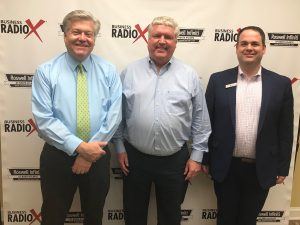
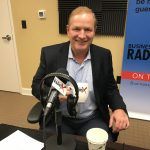
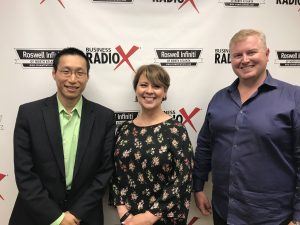
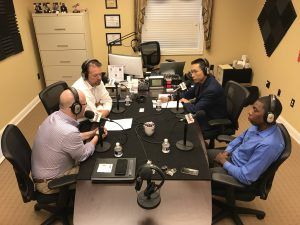
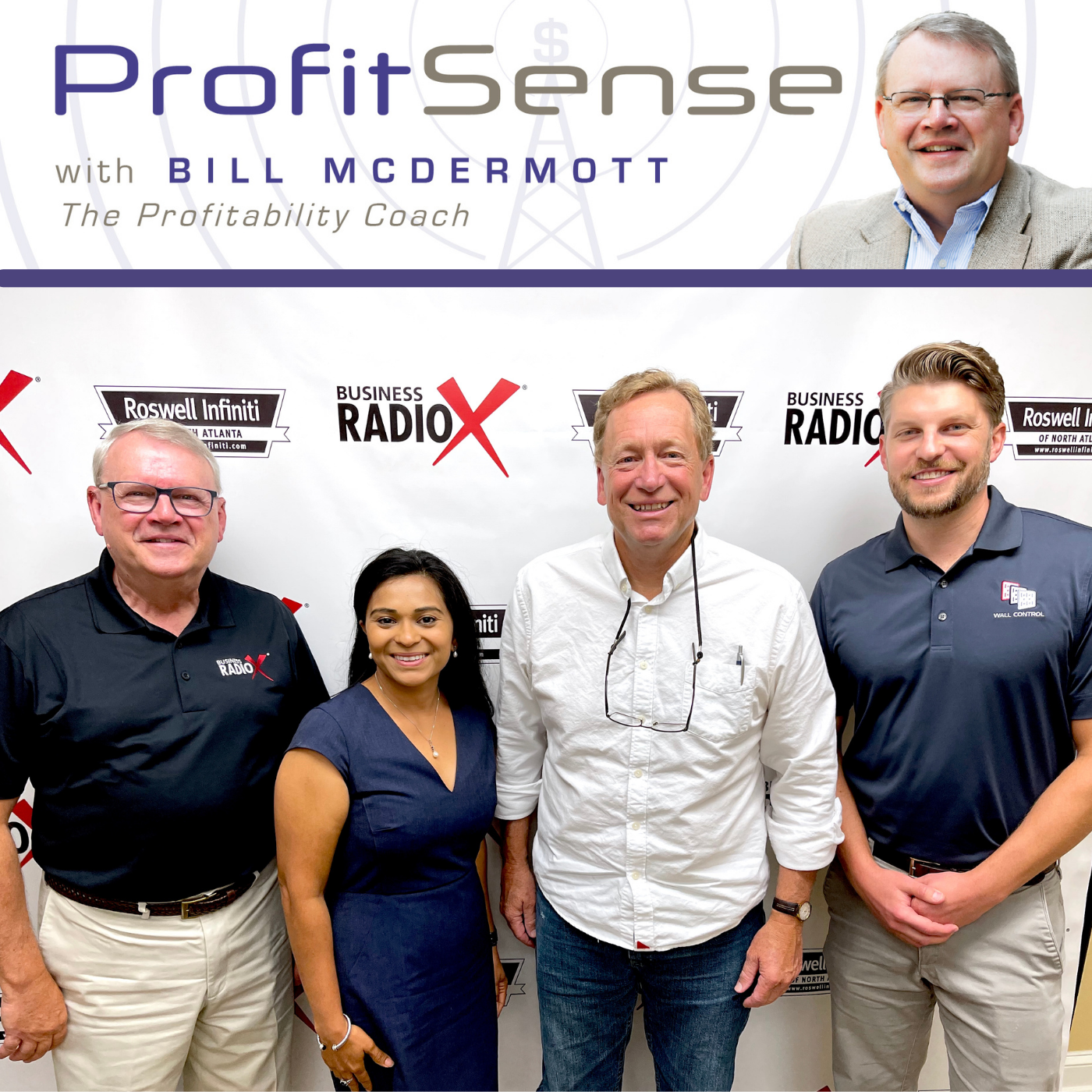
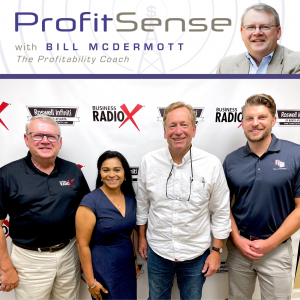
Neeli Shah, The Law Offices of Neeli Shah; Richard Grove, Wall Control; and Tim Fulton, Small Business Matters

June 10, 2021 by John Ray

Wall Control
North Fulton Studio
Neeli Shah, The Law Offices of Neeli Shah; Richard Grove, Wall Control; and Tim Fulton, Small Business Matters
Loading
00:00 /
RSS Feed
Share
Link
Embed

Download file

Wall Control

Neeli Shah, The Law Offices of Neeli Shah; Richard Grove, Wall Control; and Tim Fulton, Small Business Matters (ProfitSense with Bill McDermott, Episode 22)

On this edition of ProfitSense, three top-notch business leaders joined host Bill McDermott to share the great work they do. Neeli Shah discussed her decision to start her own firm and how she assists business owners with succession and estate planning. Richard Grove with Wall Control described how his family business developed around their vision of a new product and its subsequent success, and Tim Fulton with Small Business Matters shared his work with peer groups, his new book, and much more. “ProfitSense with Bill McDermott” is produced and broadcast by the North Fulton Studio of Business RadioX® in Alpharetta.

Neeli Shah, The Law Offices of Neeli Shah

Neeli Shah, The Law Offices of Neeli Shah
The Law Offices of Neeli Shah is a boutique will, trusts, and estates law practice that provides comprehensive legal advice to individuals, small businesses, and nonprofits.
At the Law Offices of Neeli Shah, they believe that planning for the future should be purposeful and practical.  They work with and/or help to develop a collaborative team of advisers committed to navigating the planned and unplanned transitions of life.  They strive to empower and enrich the financial lives of those they serve as a source of education, information, and solutions by integrating personal family dynamics and relationships with the financial and tax planning processes.
Company website | LinkedIn

Richard Grove, COO, Wall Control

Wall Control
Richard Grove, Wall Control

Wall Control’s story begins in 1968 in a small tool & die shop just outside Atlanta, Georgia. The first of three generations began their work in building a family-based US manufacturer with little more than hard work and the American Dream. Over the past 50 years, our patriarch has continued to grow and expand with what was once a fledgling tool & die shop into an award-winning US manufacturer of products ranging from automobile components to satellite panels and now, the best wall-mounted tool storage system available today, Wall Control.

The Wall Control brand launched in 2003, and is a family-owned and operated business that not only produces a high-quality American Made product but sees the entire design, production, and distribution process happen under our own roof in Tucker, Georgia. Under that same roof, you’ll still find 3 generations of American Manufacturing hard at work to bring you the best tool storage products available today. We certainly take pride in our history and heritage and that is reflected in the high-quality products we work hard to bring you every day.

Their Commitment: Wall Control is committed to being the industry leader in pegboard style storage & organization. Simply put, no other tool storage system can match the quality, versatility, and value of the award-winning Wall Control System. Their commitment to quality is not only reflected in their product but is also evident in their practices. They strive to do right by their customers every day, starting at product design conception and continuing through with superb product and customer support. Being committed to quality means keeping a close eye on product production to be sure that the Wall Control values are stamped into every panel and accessory that is produced. They achieve this by manufacturing our entire product line here, in the USA.

Their Product: The award-winning Wall Control pegboard storage system solves five main wall-mounted storage challenges better than any other system available today; Durability, Strength, Versatility, Ease of Installation, and Attractive Appearance.

Durability – Their strong metal pegboard prevents the peg holes from fraying and wearing out over time. Traditional pegboard panels start out ugly, wear out quickly, and eventually, the pegboard hooks no longer stay engaged in their peg hole and will fall out when the tool is removed. Their panel face, manufactured in the US from 20 gauge steel, ensures that Wall Control’s system will last a lifetime; many times longer than traditional pegboard products.

Strength – Traditional pegboard is weak by nature due to the material it is made from. The strength of steel, combined with a formed flange around the perimeter, makes their metal pegboard panels over 10 times stronger than conventional pegboard. More strength equals more storage.

Versatility – Their unique “Combo” style panels allow the user the option of utilizing 1/4 in traditional pegboard hooks as well as their own patented, much more secure, “double offset” hook and slot design. Wall Control’s metal panels are also magnetic so you can attach all your magnetic accessories as well. Engineered for both secure engagement and ease of movement, Wall Control’s Hooks, Brackets, Shelves, and Accessories will install easily and stay put. The versatility of these storage panels is also highlighted by the all-steel shelving system that Wall Control panels support. Finally, a pegboard system that has the ability to support substantial weight on a matching, integrated shelving system.

Ease of installation – Wall Control installs in minutes. Ease of installation was a key criterion during the design phase of this pegboard system. Manufactured with a built-in flange on all four sides, the Wall Control storage panel requires no pre-built framework and mounts directly to any flat surface. The flange spaces the panel’s perforated face away from the wall so that the hooks, brackets, and shelves will engage with no wasted area. The convenient 16″x32″ standard size and modular design make it easy to handle and a snap to install. If you have traditional 16″ stud spacing, you can hit studs all the way down your wall with Wall Control’s brilliant mounting hole instructions. If not, have no worries, they include drywall anchors as well, so hitting studs is not required, although obviously preferred, if possible.

Attractive Appearance – Available in eight durable, scratch-resistant, powder-coated colors as well as a very reflective and attractive metallic galvanized finish, Wall Control Storage Systems truly are suitable for use in any location wall-mounted storage is desired in the home, office, or workplace. These high-quality finishes resist rust and stains and even wipe clean with a damp rag. When you combine sleek design with a high-quality finish, you can’t go wrong. Wall Control storage systems are the industry leader when it comes to pegboard tool storage and organization, and for good reason, but don’t take their word for it. They encourage you to check out their online product reviews from reputable places like Amazon and Home Depot to see for yourself that their products truly are in a league of their own when it comes to quality, versatility, value, and ultimately, customer satisfaction.

Company website | LinkedIn | Facebook | Twitter

Tim Fulton, President, Small Business Matters

Tim Fulton, Small Business Matters

With over 30 years of experience, Small Business Matters (SBM) brings a results-based approach to each and every client. Whether your business has been established for 50 years or 50 days, we are passionate about helping you achieve your goals and mission.

Small Business Matters was established in 1994 as an independent management consulting and training practice. The primary goal of SBM is to increase the effectiveness and enhance the lives of CEOs. Since its founding, Small Business Matters has worked with companies such as Lucent Technologies, Carlson Companies, CB Richard Ellis Real Estate Services, Inc. (formerly Insignia/ESG, Inc.), and Georgia Power.

Small Business Matters is owned and operated in Atlanta, Georgia by Tim Fulton. Tim is a nationally recognized small business coach, consultant, and advocate. He has been involved in the field of entrepreneurship for over three decades as a successful business owner, small business counselor, and adjunct university professor.

Tim is currently a Vistage Emeritus in Atlanta. Vistage is an international membership organization for company CEOs and Presidents that provides a very unique growth experience for its members. In addition, Tim is a former facilitator for the University of Georgia SBDC’s GrowSmart training program, which is designed for growth-oriented small business owners, operators, and executives.

Tim has recently authored a new book, The Meeting, available on his website and where books are sold.

Company website | LinkedIn | Facebook | Twitter

About “ProfitSense” and Your Host, Bill McDermott
Bill McDermott
Bill McDermott

“ProfitSense with Bill McDermott” dives into the stories behind some of Atlanta’s successful businesses and business owners and the professionals that advise them. This show helps local business leaders get the word out about the important work they’re doing to serve their market, their community and their profession. The Show is presented by McDermott Financial Solutions. McDermott Financial helps business owners improve cash flow and profitability, find financing, break through barriers to expansion and financially prepare to exit their business. The show archive can be found at profitsenseradio.com.

Bill McDermott is the Founder and CEO of McDermott Financial Solutions. When business owners want to increase their profitability, they don’t have the expertise to know where to start or what to do. Bill leverages his knowledge and relationships from 32 years as a banker to identify the hurdles getting in the way and create a plan to deliver profitability they never thought possible.

Bill currently serves as Treasurer for the Atlanta Executive Forum and has held previous positions as a board member for the Kennesaw State University Entrepreneurship Center and Gwinnett Habitat for Humanity and Treasurer for CEO NetWeavers. Bill is a graduate of Wake Forest University and he and his wife, Martha have called Atlanta home for over 40 years. Outside of work, Bill enjoys golf, traveling, and gardening.

Connect with Bill on LinkedIn and Twitter and follow McDermott Financial Solutions on LinkedIn.
Tagged With: Bill McDermott, Family Business, Law Offices of Neeli Shah, Neeli Shah, profitability coach, Richard Grove, Small Business Matters, Tim Fulton, Wall Control

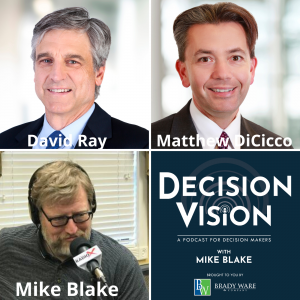
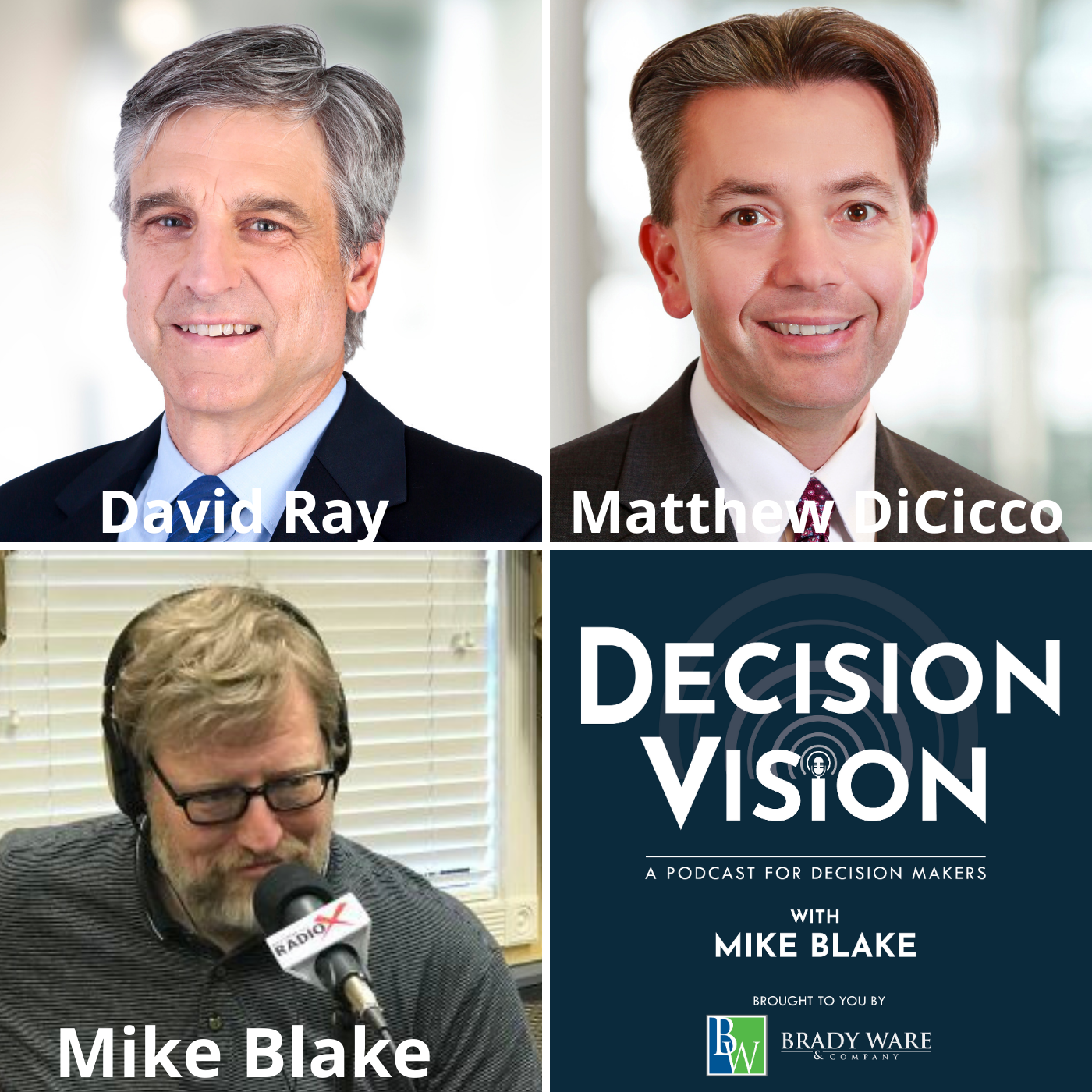
Decision Vision Episode 114: Should I Let My Children Take Over the Business? – An Interview with David Ray and Matthew DiCicco of Eubel, Brady & Suttman

April 29, 2021 by John Ray

Eubel, Brady & Suttman
Decision Vision
Decision Vision Episode 114: Should I Let My Children Take Over the Business? - An Interview with David Ray and Matthew DiCicco of Eubel, Brady & Suttman
Loading
00:00 /
RSS Feed
Share
Link
Embed

Download file

Eubel, Brady & Suttman

Decision Vision Episode 114:  Should I Let My Children Take Over the Business? – An Interview with David Ray and Matthew DiCicco of Eubel, Brady & Suttman

Only one in nine businesses make it to the third generation of family ownership. David Ray and Matthew DiCicco of Eubel, Brady & Suttman joined Mike Blake to cover some of the financial and psychological issues of transferring a business to the next generation, and the factors which go into that decision. “Decision Vision” is presented by Brady Ware & Company.


Eubel, Brady & Suttman Investment and Wealth Management

Eubel Brady & Suttman was formed when three friends came together as business partners more than two and a half decades ago. From the very beginning, a high value has been placed on trust, friendships, caring for clients, long-term investment results and a single value-oriented investment philosophy focused on absolute rather than relative returns. EBS clients are business partners and often become friends. They strive to communicate accordingly – being as transparent as possible. For EBS, Investing in You is about taking the time to learn what is important to every client, those they care about and how the firm’s investment and wealth management processes might provide them peace of mind.

Company website

David Ray, Chief Operating Officer, Eubel, Brady & Suttman

Eubel, Brady & Suttman
David Ray, Chief Operating Officer, Eubel, Brady & Suttman
David is responsible for the day-to-day business operations for the firm. He is also a member of the Consulting Services Group where he works with individual clients and business owners. David has 38 years of corporate management experience. Prior to joining EBS in 2003, he worked in various financial and management capacities at The Berry Company and as Chief Financial Officer of AcuSport Corporation. David holds a B.S. degree in Accounting from Wright State University in Dayton, Ohio and an M.B.A. from the University of Dayton in Dayton, Ohio.


Matthew DiCicco, Senior Vice President of Consulting Services & General Counsel, Eubel, Brady & Suttman

Matthew DiCicco, Senior VP Wealth Management / General Counsel

Matt is responsible for developing long-term relationships with high net worth individuals and business owners, and serving as the firm’s general counsel. He takes a collaborative approach and applies the experience gained through his prior law practice to help clients address their unique circumstances. Prior to joining EBS in 2016, Matt practiced law in the private sector for more than 15 years. He holds a B.A. degree in Psychology from Gannon University in Erie, Pennsylvania and a J.D. from the University of Dayton in Dayton, Ohio.


Mike Blake, Brady Ware & Company

Mike Blake, Host of the “Decision Vision” podcast series

Michael Blake is the host of the “Decision Vision” podcast series and a Director of Brady Ware & Company. Mike specializes in the valuation of intellectual property-driven firms, such as software firms, aerospace firms, and professional services firms, most frequently in the capacity as a transaction advisor, helping clients obtain great outcomes from complex transaction opportunities. He is also a specialist in the appraisal of intellectual properties as stand-alone assets, such as software, trade secrets, and patents.

Mike has been a full-time business appraiser for 13 years with public accounting firms, boutique business appraisal firms, and an owner of his own firm. Prior to that, he spent 8 years in venture capital and investment banking, including transactions in the U.S., Israel, Russia, Ukraine, and Belarus.

Brady Ware & Company

Brady Ware & Company is a regional full-service accounting and advisory firm which helps businesses and entrepreneurs make visions a reality. Brady Ware services clients nationally from its offices in Alpharetta, GA; Columbus and Dayton, OH; and Richmond, IN. The firm is growth-minded, committed to the regions in which they operate, and most importantly, they make significant investments in their people and service offerings to meet the changing financial needs of those they are privileged to serve. The firm is dedicated to providing results that make a difference for its clients.

Decision Vision Podcast Series

“Decision Vision” is a podcast covering topics and issues facing small business owners and connecting them with solutions from leading experts. This series is presented by Brady Ware & Company. If you are a decision-maker for a small business, we’d love to hear from you. Contact us at decisionvision@bradyware.com and make sure to listen to every Thursday to the “Decision Vision” podcast.

Past episodes of “Decision Vision” can be found at decisionvisionpodcast.com. “Decision Vision” is produced and broadcast by the North Fulton studio of Business RadioX®.

Connect with Brady Ware & Company:

Website | LinkedIn | Facebook | Twitter | Instagram

TRANSCRIPT

Intro: [00:00:02] Welcome to Decision Vision, a podcast series focusing on critical business decisions. Brought to you by Brady Ware & Company. Brady Ware is a regional full service accounting and advisory firm that helps businesses and entrepreneurs make visions a reality.

Mike Blake: [00:00:21] Welcome to Decision Vision, a podcast giving you, the listener, clear vision to make great decisions. In each episode, we discuss the process of decision making on a different topic from the business owners’ or executives’ perspective. We aren’t necessarily telling you what to do, but we can put you in a position to make an informed decision on your own and understand when you might need help along the way.

Mike Blake: [00:00:41] My name is Mike Blake, and I’m your host for today’s program. I’m a director at Brady Ware & Company, a full service accounting firm based in Dayton, Ohio, with offices in Dayton; Columbus, Ohio; Richmond, Indiana; and Alpharetta, Georgia. Brady Ware is sponsoring this podcast, which is being recorded in Atlanta per social distancing protocols. If you would like to engage with me on social media and my Chart of the Day and other content, I’m on LinkedIn as myself, and @unblakeable on Facebook, Twitter, Clubhouse, and Instagram. If you like this podcast, please subscribe on your favorite podcast aggregator, and please consider leaving a review of the podcast as well.

Mike Blake: [00:01:15] So, today’s topic is, Should I let my children or family take over the business? And, you know, this is not a topic that people run into every day, but it is a topic that has a lot of depth to it. And most of us, if we’re not in a family business, we probably know somebody that is. And it might be a business that’s been in the family for one generation, it might be a business that’s been in the family for many generations. And, interestingly, on a side note, some of the businesses with the most longevity are insurance businesses, interestingly enough.

Mike Blake: [00:01:50] And I wonder if the fact that they have this actuarial model somehow enables them to manage risk over the long term, maybe, than other firms. But it is a fascinating topic. And I think given the way that our economy is shaping capital gains, tax changes, notwithstanding, that family businesses are going to become an increasingly important asset. You know, we live in a time of great uncertainty and there’s a lot of literature now coming out of both The Wall Street Journal and The Economist that, you know, for the time being, the notion of this risk-free rate of return of a five percent that most of us have grown up with counting on is really not in the cards.

Mike Blake: [00:02:37] People who are millennials or And Gen Xers may be fortunate to have a risk- free rate of return of two to three percent, frankly, and there are a lot of factors going into that. But I’m not going to discuss it in this particular program. But, you know, a family business is potentially a tremendous asset for wealth building, for legacy building, for taking care of one’s children or not. Warren Buffett’s been very clear, he’s not going to leave a whole lot of money to his children. Bill Gates is sort of the same way. But everybody approaches this differently.

Mike Blake: [00:03:16] And intergenerational businesses do sort of take on a life of their own. I have a few clients like that where I’ve helped them write their family business charter, the family charter, which is sort of like the constitution of how are you going to govern these things. And there are businesses that are multigenerational family businesses that are names that you may not have realized. Kikkoman, the soy sauce maker in Japan, is a business that traces back to a group of eight families that are still in ownership today, back in the 17th century. The Rothschilds date back to the 18th century back in Bavaria. Something closer to home, you know, the Fords are on their fourth generation. And the Mellon’s are in something like their sixth or seventh generation. So, you know, they are around and they may not be as visible, but they’re around.

Mike Blake: [00:04:09] So, I hope you’ll find this a very interesting topic, even if it doesn’t necessarily apply to your particular situation. Or maybe you’ll decide you want to make it a situation. If you’re just starting out with your business, maybe this will inspire you to create an asset that can be valuable to future generations to come.

Mike Blake: [00:04:28] And joining us today are David Ray and Matt DiCicco of Eubel Brady & Suttman. With over 40 years of corporate management experience, David has successfully held multiple positions within the C-Suite prior to joining EBS in 2003. Today, David is responsible for the day-to-day business operations of EBS. As a member of the Wealth Management Group, David works closely with high net worth individuals and brings the ability to assist clients with the preservation and growth of a closely held family business. David also brings a unique talent through his study of behavioral assessment and talent optimization. Using behavioral analysis, David helps business owners and clients define and develop an ideal state definition for their personal business and financial future.

Mike Blake: [00:05:12] Matt joined EBS in 2016 after practicing law in the private sector for over 15 years. Today, Matt applies his experience to serve high net worth individuals and business owner clients as a member of the Wealth Management Group of EBS. Whether a client has a family member going through divorce, a probate question, or an issue burdening their business, Matt is the legal resource to provide direction. Utilizing a proactive approach, Matt helps clients prepare for the positive and negative life issues that may impact their portfolio. Matt is also responsible for managing the legal risk within EBS’s private investments.

Mike Blake: [00:05:45] Eubel Brady & Suttman was formed when three friends came together as business partners more than two-and-a-half decades ago. From the very beginning, a high value has been placed on trust, friendships, caring for clients, long term investment results, and a single value oriented investment philosophy focused on absolute rather than relative returns. EBS’s clients are business partners and often become friends. They strive to communicate accordingly being as transparent as possible. For EBS investing in you is about taking the time to learn what is important to you, those you care about, and how the firm’s investment and wealth management processes might provide you peace of mind. David and Matt, welcome to the program.

Matthew DiCicco: [00:06:23] Thank you.

David Ray: [00:06:24] Thank you very much, Mike.

Mike Blake: [00:06:26] So, I read a statistic that indicates that something on the order of eight out of ten family businesses have no succession plan whatsoever. Do you think that’s an accurate statistic? And if so, why do you think that number is so high? And this seems high to me.

David Ray: [00:06:46] Mike, I think, one of the challenges we’ve got with answering that question is, succession, if you say you have a succession plan, I think means a lot of different things to different people. And in our experience, we would view succession plan and having one in place as having a number of elements. It would include, for example, the management succession, the depth of your bench. It would include estate and tax strategies. It would include how are you going to work with families, something you alluded to in your opening comments, kind of what is the philosophy of the family around the business, and the role of active shareholders as well as those that aren’t involved in the business.

David Ray: [00:07:33] And then, ultimately, what’s the vision for the company down the road, whether it be sold or transferred or whatever that might be. So, it’s a pretty all encompassing definition in terms of the way we look at it. And, frankly, it’s not something as a to-do item. We look at it as kind of an ongoing item that’s key in governing the business correctly.

Matthew DiCicco: [00:07:58] And, Mike, I might add to that and say, when you referenced no succession plan, I think that that implies that they have no plan at all in place. I think that most business owners have some idea of what they want to do with the business some day, some conceptual idea. Now, that conceptual idea may very well change as they become educated about their options and consequences of the different strategies they wish to employ. But I think that that statistic is high. I think that most people do have some conceptual idea of what they want to do with the business.

Mike Blake: [00:08:32] So, I want to share an observation with you, you know, it seemed to me that back in the first decade of this century, I think there are a lot of predictions that somewhere around 2010, 2011, that a lot of family businesses were going to turn over. That people simply were going to have to sell their businesses. And I think investment bankers, in particular, were kind of licking their chops saying, “Oh, boy. We’re going to have the best years ever selling all of these family businesses.” And, you know, I’m not sure that that’s necessarily happened. I think that baby boomers are hanging in their businesses longer than a lot of people would have predicted. Do you agree? Do you have a similar observation? And if so, what do you think is driving that?

David Ray: [00:09:20] I would say that that’s probably correct. We were exposed in some previous presentations to a number of over 15 million private businesses and about two-thirds of those are controlled by baby boomers, Michael. And I think, frankly, one of the things that we’ve seen with many of our business owner clients is, frankly, they’d like to be farther along than they are.

David Ray: [00:09:48] However, in many cases, for you to take on some of these succession issues related, for example, to developing your management team and your bench strength, it is the equivalent of adding a part time job. And most of the business owners I know are operating the business day-to-day, frankly, are working way more than 40 hours anyway. And so, when you look at the possibility of adding on to a part time job, that’s just something that’s not practical for them to do both. I think that’s one big issue.

David Ray: [00:10:20] And I think the other one is that, people, in some cases, get so much out of running the business and are so excited about it. That’s one of those things that’s easy to procrastinate, until there’s some kind of event where you really have to act. And we see that in many cases where you have fewer options, in fact, because of the whole situation or whatever it might be becomes a reality.

Matthew DiCicco: [00:10:47] Yeah. I may speak more to really what’s driving this. And, you know, one thing I would say is, medical advancements or living longer or healthier, valuations are high right now, so, frankly, it limits the buyer pool. And then, you know, when things are good, when you’re feeling good – pre-COVID – the business is throwing off cash, valuations in the market – I think you referred to, you know, a two to three percent risk-free rate of return – when you get a whole bunch of money for your business, now, you have to figure out what you’re going to do with that money. And there’s not a lot of good options.

Matthew DiCicco: [00:11:26] So, when you’re doing good and you’re feeling good and your business is throwing off cash, it tends to lead to procrastination. And then, you can look at all the reasons why people procrastinate in the formulation of a formal strategic plan and the implementation of a formal strategic plan. And there’s lots of reasons, right? You know, one of those is tough decisions have to be made. You’re making decisions about your baby. For some people, their lifetime of work and achievement that they almost view as being a reflection of themselves, a piece of themselves. And, you know, when you have family members involved in the business, it requires tough decisions to be made with regard to those family members.

Matthew DiCicco: [00:12:11] And then, finally, there’s finality. When you make that decision, you formulate that formal plan, you begin to implement that plan, and changes start to be made. That is a real life changing moment for some people.

Matthew DiCicco: [00:12:27] So, Mike, one of the things that the David and I work together on is utilizing what — and then that succession blueprint. We’re helping business owners proactively define what a successful transition would look like for them. And in doing that, we’ll provide insight into their own behavior and the consequences of their behavior can have on planning the transition. As well as just identifying priorities, identifying the marketability of the business, what can make it more or less valuable. As well as providing some different ranges of valuations on a roughly right type of basis.

Matthew DiCicco: [00:13:08] And helping them using one of our proprietary models identify what that retirement is going to look like and what this hypothetical pot of money is going to do for them based upon their own anticipated needs. And sometimes just providing a lot of education and peace of mind can help them get over that procrastination stumbling block and start making decisions whereby they can transfer to the next generation.

Mike Blake: [00:13:36] So, I think I’m going to want to come back to that succession blueprint. But before I do, you said something at the outset of that answer that I think I’m going to make up a new word, just subtle smart. And because of that, I want to come back because I think it’s so important and it’s easy to miss. And that is that, when you sell a business, you suddenly become an investor, especially if most of your investable assets have been locked into the business. And I think something that gets missed – and I advise my clients on too – is, when you sell your business, ostensibly, you have this big pile of cash. You now need to do something with or should do something with. And is it going to generate as high a return on a risk adjusted basis as what you are already doing?

Mike Blake: [00:14:24] And trying to map that puzzle is not as easy as it sounds. And on this I’d love you to comment, a market like what we have today, I think is actually a double edged sword. Because on one hand that may allow you to sell your business for an attractive valuation. But on the other hand, when you have a market that might be at the top – and I’m not going to I’m not going to offer hard or fast comment. I’m not a RIAA. I’m unlicensed – but if you are at a high point in the market, what kind of returns are you going to get at that particular point in time? It’s just how high can these things go in the short term?

Mike Blake: [00:15:06] And, you know, that’s a subtle question that you have to think about. And maybe that may lend to a decision to keep the business in the family simply because of a market timing issue. Every CFA in the world is just about to point a gun at my head. I’m not advocating market timing. But if you have a market environment where returns are hard to come by, I do think it’s only prudent to look at that environment when you sell your business into it. I took much more time asking that question than I should have, but I love you to react to it.

David Ray: [00:15:45] So, it’s funny, because Ronny, one of our founding partners, talks about this issue a lot with business owners and with us internally. And you’re exactly right, Michael, and I’ll use an example. I think I’ll use an example, if you had bought Cisco Systems and you really liked the company in 1999. And 20 years from then, you plan to retire. Actually, when you liquidated that 20 years later, you would have had a pretty substantial double digit loss. And it’s because Cisco sold at a very high price.

David Ray: [00:16:21] And one of the things that generally is the case is, private markets and valuations you get in sales in the privates tend to follow the public markets. And, therefore, to your point, if valuations are high and you’re getting a good number on a sale to have a private business, it’s very important that you go in with both eyes wide open from a preservation of capital standpoint. Because the last thing you really want to have somebody do is to go through and to work their tail off and then, all of a sudden, reinvest and have losses that are significant. So, I think that’s something as we work with clients, we really try to manage expectations when prices are very high in terms of that reinvestment strategy.

Matthew DiCicco: [00:17:06] Yeah. And what I would say in addition to that is, we work very hard to minimize the risk of a permanent loss of capital. So, you liquidated your business for a good number. We’re going to employ several different strategies to try to minimize any risk of you throwing it into an investment now at a high number that may ultimately come down. It may not recover by the time you’re ready to use this asset. So, that could be a whole another podcast on the different strategies [inaudible], but we do employ them.

Mike Blake: [00:17:37] So, a concern I hear – and you touched on a little bit, but I’d love you to expand upon it – frequently in transferring a business within the family is the risk of creating family strife. And for good or ill, I make a lot of money on adjudicating, in effect, or refereeing those family strife kind of issues. And I’m curious, is that a consideration that you see frequently? Is that a realistic fear? And if so, what are some tips you can provide to manage it or even assess if that family strife even is manageable?

David Ray: [00:18:12] Well, to answer your question, we see it a lot particularly in situations where you have some family members who are active in the business, may have a managerial role, but may have an employee role, whatever it might be. And then, you also have other folks who live off the dividends, let’s say, of the cash flow of the business. And particularly at times when the owners and operators of the business may be looking at long term issues, and that may, for example, behoove the business to defer dividends, for example, that’s going to create some strife. But there’s also personality related issues that we see that create strife. There’s extreme examples that we’ve seen where a judge had to even intervene. And for board meetings have representation for kind of a divided family here in a business not too far from us. So, this is a huge issue.

David Ray: [00:19:10] But I think the one lesson that we see and we think is really important is, yes, there’s going to be strife. But if you don’t deal with that strife proactively, the strife down the road can be much more painful. And so, one of the things that we try to do is to kind of work with folks, give them behavioral insights on things that may help them understand why someone may be looking at the same situation differently than they do. And try to, in some cases, even encourage conversations and have kind of whiteboard sessions to really get to the bottom of these issues so that there can be a continuity in terms of how these things are addressed.

Matthew DiCicco: [00:19:54] And I think David and I could both spat off a bunch of examples. As, Mike, I’m sure you could as well, of the various causes for family strife. There’s lots of different things that that can cause it. But, you know, frankly, in terms of managing it, some of the more effective things that I’ve seen have just been where you have a strong family member, business owner-member, who’s willing to set expectations of the next generation early on.

Matthew DiCicco: [00:20:21] And then, secondly, have the confidence and the courage to put the right person in the right seat. And that’s not always the easiest thing to do. But, you know, frankly, managing and promoting your kids as you would any other employee, having defined job descriptions and duties, having performance reviews and those types of things, I think, can be helpful.

Matthew DiCicco: [00:20:42] But then, also, actually one unique thing that David and I have seen is a family business, multigenerational, where all of the kids in the next generation were required to complete college, and work outside of the family business for a period of years before they were even eligible to work in the family business. And by that point, some of the folks decided, “I’m not that interested anymore. I found what I like over here.” And for the ones that did come back, they now have real world perspective. They’ve had to work for somebody. They’ve had to answer to somebody that’s not mom or dad, or grandma, grandpa, or whoever else is there.

Matthew DiCicco: [00:21:19] You know, I can tell you, I think it’s exceptionally valuable. And that I have some investments and businesses of my own and I’ve fired my own son. And, you know, it’s a tough thing to do, but sometimes it’s the right thing to do and it certainly provides an education.

Mike Blake: [00:21:37] Well, you know, you talked about a future podcast topic, firing your own son, that’s about as real and raw as it gets.

David Ray: [00:21:45] Mike, my first business – as a side – I fired the guy who became my best man later in my wedding. So, yeah, we’ve got a whole topic opportunity there.

Mike Blake: [00:21:56] Well, boy. We’ll have you back. So, to me – and this is a an uneducated view – it seems like keeping the business seems like almost kind of a natural thing to do. It seems, at least on the surface, you don’t have to go find a buyer, for example. You know, at some point, you let somebody take over the family business. We’ve talked about the complexities in doing that. But at a very high level, that just sort of seems like the path of least resistance. In your experience, do you think that more business owners than not actually take that path? Or do more of them tend to gravitate towards some sort of external exit?

David Ray: [00:22:36] The statistics would show – and we’ve seen a couple of independent studies on this, and I’ll quickly reference one – that you take nine businesses, four tend to vanish before they get through a second generation, two are sold, three get to the second generation, but only one of those get to a third generation. So, the statistics would suggest that it’s a tough road. And I think Matt kind of alluded to this previously, but I think the more professional the management approach is, probably, the greater chance that you have to pass the business through generations in an orderly manner and continue to grow the business in value.

David Ray: [00:23:17] And, you know, we use EOS as a governance management system at our company, you know, there’s a bunch of successful ones. But in our experience and in doing some of these companies, the disciplines that they have in place, which you can pick up on pretty quick just kind of spending time with managers or touring facilities, they’re kind of the key to the ability to keep things thriving.

Matthew DiCicco: [00:23:47] Yeah. I would add that, you know, I think a lot of it depends on the type of business and then also what’s important to the owner and to the family. You know, is this a business that started as a family business, like a family restaurant or a family nursery or something like that? And other people, frankly, they are just serial entrepreneurs, right? They can’t wait to stand up the next idea, and grow it, and sell it, and amass generational wealth by building and selling companies over the course of their career. So, I mean, I would say that it’s a little bit specific.

Mike Blake: [00:24:22] So, you know, that phenomenon you just brought up segues, I think, nicely into a question. Is that, there’s a phenomenon out there called shirtsleeves to shirtsleeves. And the the notion there is that, if wealth is built in one generation, usually around a family business, that it’s typically gone by the third generation. And that might almost seem to argue against trying to keep the business in the family, because, statistically speaking, the subsequent generation just may not be equipped either emotionally, skill set, or otherwise to take on that responsibility. Would you agree with that? I mean, it sounds like at least the statistics bear that out. If only one in nine of those companies ever make it to the third generation or less than that. But what do you think about that?

David Ray: [00:25:13] You know, I think it goes back to Matt’s point, I think it is kind of facts and circumstances. I could cite an example where the first company I was in made it very successfully to the third generation. There was a sale that the third generation key person stayed on. But, frankly, chose of his own accord to leave, frankly, because of some differences of opinion and he wasn’t used to reporting to somebody. I think that’s a key part of it.

David Ray: [00:25:42] But it depends probably, Michael, more than anything else about how valuable that business is. Because you’ve got a really valuable business that is being run effectively by the family, then it’s easy to keep going. But if you can start to see the wheels slow down, the other family members who are owners, and there’s just not the level of professional management that needs to kind of take to the next generation. If you don’t do something, like trying to sell, for example, or at least take some money out, then all you’re doing is seeing that golden goose kind of a road.

Matthew DiCicco: [00:26:18] Yeah. And I’ll really be interested to see how that statistic may change with the advent of the technological advances that we have of late. Because I can think of several examples where there is a multigenerational family business that everybody has done very well. And then, you have the younger generation come in and utilize this thing called the Internet and they explode it. And, you know, it wouldn’t surprise me if you see a lot more of the younger generations coming in and taking a good, strong family business, and scaling it through technology.

Mike Blake: [00:26:53] That is a fascinating and a very compelling statement, and I haven’t given any thought to that. But, I mean, it makes sense to me – it’s also hard to put this into words. The fact of the matter is that we’re all surrounded by technology, right? Many of us maybe more than we want to. And it’s not like growing up around a car company or a candy company where you don’t just build cars or make candy over the course of your normal life, but you certainly interact with technology over the course of your normal life. Right? And that could provide sort of an environment for companies in that industry, at least, or families whose companies are in that industry to sort of have a head start in terms of the mentality about technology and how it changes. And don’t get too comfortable in so many of the other rules that make technology businesses different.

David Ray: [00:27:53] And I think to Matt’s point, if you look at some of these companies that have had in the past but have basically been forced into embracing e-commerce, and if they’ve got the right firepower behind them, they, in some cases, are experiencing very explosive growth on that segment of their business.

Mike Blake: [00:28:18] So, you know, not everybody is built to run a business necessarily. Have you encountered scenarios in which a business, maybe an owner really wanted to pass their business on to children or at least a family member. But to your mind, they weren’t really qualified. And maybe the children themselves said, “I don’t want to do this. I’ll run this into the ground. Just sell it.” What’s your advice in those circumstances? Do you just sort of then ride that out? Or do you try to be proactive in trying to get family members interested and skilled to run the business? What, in your mind, is best practices in that kind of scenario?

David Ray: [00:29:04] Well, on this behavioral side that you touched on, that’s something that we’re fascinated by and have learned a lot from. And I learned a lot from a guy named Michael Bole, who we still use, frankly, to talk to some of our business owner clients about this very issue, Michael. And I will tell you that, often without someone knowing it, they may take that next generation and kind of force them into a role that, frankly, does not give them satisfaction. They may have the confidence to do it. But, frankly, over time, they don’t get much satisfaction out of it.

David Ray: [00:29:46] And that can be something that leads to an erosion of value of business. Not to speak of, you might be contributing to that child not having as happy a life as they deserve and should have. And we’ve seen that. For example, if you get a really extroverted individual who ran the business, was great at creating relationships, and drove sales through that relationship building. And all of a sudden, you’ve got somebody that comes along that’s much more operational oriented and you try to put them in that role. We’ve seen that kind of scenario. And it’s important to kind of recognize that not just is the competence there and the desire, but is there a fit from the standpoint of a behavioral match on success for that type of job?

Matthew DiCicco: [00:30:34] Yeah. And that’s part of that succession blueprint. Some of the tools that we can offer to assess multiple factors, such as the aptitude, the competence, desire, and interest. And there’s more to the decision of finding the right person for the right seat than just who you were born to, right? So, I mean, if you’re really looking for the overall right person to move the business forward, sometimes that’s going to result in decisions that, you know, might not be the best for the family, but it’s best for business versus the opposite.

David Ray: [00:31:12] And, Mike, obviously, I think maybe one of the trickiest combinations is that, you’ve got a child who really desires to be a part of the business and take it over. But, frankly, just the aptitude or the ability to embrace what’s necessary just isn’t there. And that can create for some significant family challenges that are very apparent to the employees. Probably the employee knows better than anybody that that kid is capable of running the business.

Matthew DiCicco: [00:31:43] Yeah. And that child may have a role. It may not be in the role of –

David Ray: [00:31:47] A leader.

Matthew DiCicco: [00:31:48] Right. Exactly.

Mike Blake: [00:31:50] And at least not right away, right? I mean, the beauty of a family business, I do think the time horizons are expanded. And I think, in fact, there’s data out there that suggests that family businesses tend to outperform their non-family counterparts. I think one of the things that drives that is the fact that they tend not to make snap decisions. They tend to really kind of take their time. And, frankly, they have a longer investment time horizon, too, because they’re generally not wired to a quarter to quarter basis.

Mike Blake: [00:32:22] So, in that scenario that you described with a child that would like to take over the business, in a family scenario, I imagine that means the conversation isn’t necessarily know, but just simply not yet. Whereas, in a more “professionalized environment,” for lack of a better term, it’s more like up and out. You’re not going to give me the opportunity that I’m out.

David Ray: [00:32:44] Yes.

Mike Blake: [00:32:46] And so, I want to switch gears here. I want to talk a little bit about valuation, because that’s near and dear to my heart. And I think one of the trickiest things about a family business and one of the drivers of the decision, of course, is, what is the value of the business and what is its value to a third party buyer versus the value to the business.

Mike Blake: [00:33:16] And an observation I hear frequently, particularly from investment bankers and private equity folks is, “I couldn’t sell that business” or “I couldn’t buy that business because the seller was simply irrational.” And I kind of wonder about that because I wonder if maybe they’re irrational because the seller isn’t a private equity group. They’re not an investment banker. But I kind of wonder if sometimes the business can just simply be worth more to the current owner than it is to anybody else. And that doesn’t make anybody’s fault. That’s just kind of how the numbers kind of work and how the values kind of work. What do you think about that? Am I crazy? Do I have three heads for saying that? Or do you think there’s a grain of truth in that notion?

David Ray: [00:34:04] I think that I would tend to agree with you. And particularly, if you don’t just measure in purely an economic sense, there’s a lot of things we’ve seen that are run through the business that enhance the quality of life that by themselves can make the business more valuable to that owner. That is a significant issue that we see that can really enhance lifestyle that you would lose if you sold the business. So, I think you’re exactly right on that one.

David Ray: [00:34:43] In fact, Matt and I were talking about this in preparation. And I was telling him, all the folks I’ve sat down with that have never sold their business, I’ve only seen one that really had some internal resources that had their arms around what the business was really worth to a sophisticated buyer. And so, there really is two different notions about what a business is worth. And I think it’s really hard to keep it purely economic because of legacy issues, and lifestyle, and other things that that business owner enjoys along with the economics.

Matthew DiCicco: [00:35:21] Yeah. And, you know, we typically come across situations like that. Oftentimes, it has been brought about by locker room talk or golf course talk or cocktail party talk where, you know, they hear so-and-so got a certain EBITDA multiple for their business or, you know, Sally’s Machine Shop sold for, you know, whatever down the street. And so, therefore, my business must be worth at least that. And those situations really require education, Mike.

Matthew DiCicco: [00:35:52] And that’s where this business marketability element of that succession blueprint comes in, where, you know, we look at the different factors that impact multiples and valuation such as the type of the business, the health of the business. You know, they have a ton of revenue, but it’s concentrated in one or two customers or they don’t have recurring revenue. Every single dollar is a unique customer in a single transaction. They don’t have a moat. They don’t have any real competitive advantage. They don’t have a stable management team. I mean, you can think of all the different reasons that impact valuation.

Matthew DiCicco: [00:36:29] And sometimes helping them just understand what is impacting the valuation, but more importantly, here are some steps we can take on a going forward basis to improve valuation and improve marketability. And here’s a due diligence checklist. And this is what your prospective buyer is going to be asking of you. So, rather than try to do all this in, you know, 30 days, when you get the request for information, why don’t we change some policies and procedures on a going forward basis to start compiling that data and then you’re ready to go. You have like a very organized well run machine when you’re ready to sell. And that also improves valuation.

David Ray: [00:37:09] And, Michael, related to that, one of the tools we’ve used with business owners that we’ve worked with is to basically go through a quick assessment based on eight factors that we think drive business value through the eyes of sophisticated buyers. And try to get them to critically and independently think about where they are on those eight factors. And then, we often take some of that information and use this provider model we’ve developed for business owners that simulates liquidation at different valuations. And then, your ability to kind of sustain a lifestyle, all of that. But it really is.

David Ray: [00:37:47] Things like culture are very important in, for example, assessing value, depending on the buyer, of course. But things like that – obviously Matt alluded to this – if you got a subscription type business where the cash flows are really predictable, you’ve already got a foot up on a lot of folks.

Mike Blake: [00:38:07] But when we think about transferring a business, the word that comes to mind is selling the business. But it occurs to me that there’s more than one way to kind of skin that cat, right? You don’t necessarily have to. Or are there other ways to effectuate a transfer of a business to family members other than simply selling it to them? And if so, what are the most common ones that you see?

Matthew DiCicco: [00:38:32] Yeah. And there are several estate planning type tools that can be implemented. And right now, frankly, you’re seeing somewhat of a push in this area because of the current estate tax and estate and gift tax exemption for 2021, so 11.7 million per person and 23.4 for a husband and wife. You know, you can take advantage of that. Now, that all is expected to sunset with the Tax Cut Jobs Act on December 31 of 2025, and there’s several different plans that are out there right now. The Biden Plan, you know, I expect it’ll probably be somewhat of a reversion back to 2009 rates to three-and-a-half million for the estate tax, maybe a million for the gift tax.

Matthew DiCicco: [00:39:19] But, you know, so there are estate planning tools that you can use and there are several. Most of which, you know, I would recommend you talk to your legal advisor or to Brady Ware, or your tax advisor. But things like the Grantor Retained Annuity Trusts and the Grantor Retained Unitrust, the GRAT and the GRUT, both allow you to create an irrevocable trust. And put those business assets in there for a defined period of time and transfer to another generation. Intentionally Defective Grantor Trust, where the guarantor business owners pay taxes to allow the trust assets to appreciate. So, there are several different estate planning tools that can be used. That could be another topic in and of itself.

Matthew DiCicco: [00:40:10] But another thing that I’ve seen used quite frequently is creating and gifting non-voting shares of stock, voting and non-voting shares. And that’s also sometimes a way to manage those family dynamics that come up where you can have one family member of the next generation that’s really been active in the business. But you have several family members that work in the business and take income from the business and rely upon it. And so, you can create family voting and non-voting shares or membership units. And the benefit of that, when you’re transferring it from the parent-donor down to the kid, the parent-donor can retain the voting shares, the kids can get the non-voting shares, and then the gifts can be discounted for lack of marketability, lack of control, discounts, other things to try to get under those as gift exemption should they decline.

David Ray: [00:41:10] And, Mike, the one thing I’d add to that is that, one of the challenges we’re seeing in this environment is, with some of the multiples that are being paid by private equity with the amount of money they have sitting on the sidelines, that if there’s a material number of shares that need to be transferred with a single owner, that owner is probably going to have to be somewhat altruistic in order to be able to transfer rather than to sell outright to somebody. And so, that’s kind of created a challenge for some businesses in this high valuation environment.

David Ray: [00:41:46] The other thing we’ve seen, you have to have a certain size for this to make sense because there’s a lot of administrative costs associated with it. But we’re seeing more ESOP transactions, frankly, with some of the folks that we deal with. And we know a couple of them really well that are in the throes of an ESOP transaction. That’s another alternative in this area.

Matthew DiCicco: [00:42:08] And it would not surprise me if, you know, right now, the maximum capital gains rate is 20 percent with the addition of 3.8 percent on top of that for a combined total of 23.8 percent. Some of the proposals that I’ve seen coming out yesterday, Bloomberg reported that it was going to be 39.6 percent under Biden’s Plan as the top capital gains rate, with that additional 3.8 percent. CNBC reported today, it’s likely going to be less than that, but nobody really knows. But if that doubles, I think you’re going to see more and more folks that are looking to avoid any way they can that capital gains rate, which may cause them to want to seek an alternative other than to sell it in a third party transaction.

Mike Blake: [00:42:56] We’re talking to David Ray and Matt DiCicco of Eubel Brady & Suttman. And the topic is, Should I let my children or family take over the business? You know, working with your clients and just talking to them, I’m curious, is there any kind of consensus or common sentiment around giving their children a leg up in life? You know, many of these businesses were probably created in that generation. They’re self-made high net worth individuals as opposed to having inherited it. Do you find that it troubles them at all to turn something over a big head start to their children? Or maybe, do they tend to find that gratifying that they consider that an accomplishment of their lives? Where do most of your clients, you think, fall on that spectrum?

David Ray: [00:43:43] And, Michael, it’s a pretty simple tool we use is what we call an ownership issues assessment. And one of the things on there, it asks basic questions like, you know, how important is it to you to maintain the culture whether you transfer the business or sell the business? And so, it gives you insight into how important legacy is to them. And I believe, by and large, other than maybe the exception where somebody is just trying to maximize money, they’re just a person who just wants to make money.

David Ray: [00:44:17] But I think most folks, those soft issues like you’re talking about, are important to them. They’ve worked hard, maybe they’ve inherited this business from their mother or father, and they’ve worked hard to try to maintain that business’s reputation and grow its value. And they want to see it passed to the next generation. And that legacy is important to them. And so, in those cases, I think they are trying to do everything possible to (A) create interest from that child, and then (B) to prepare them. And Matt alluded to some things earlier, where they may go out and work in another company, get some training through that, and then come back in more prepared. But yes, we see that pretty regularly.

Matthew DiCicco: [00:45:00] And I think some people would say that shirtsleeves to shirtsleeves, you talked about earlier, is caused by as generations turn, they lose the hunger, the ambition, the drive. They’ve grown up privileged and wealthy. And how do you continue to stoke that fire into the next generation? So, some would say giving them too much of a head start in life is actually a bad thing. You know, others feel differently. But, yeah, I mean, that is a problem of balancing that approach to make sure that the kids still have drive and ambition and want to move on to the next level.

Mike Blake: [00:45:37] We only have time for a couple more questions. But before we do wrap up, one question I did want to make sure that I ask you is, how important is legacy to your clients? And how important is it to them that what they built simply survives beyond their own lifetimes? And maybe you can even touch upon whether or not you find how frequently your clients want to have their legacy live on maybe through charitable contributions, foundations, things of that nature? But starting with focusing on the business, you know, how important is it to your clients that they just simply want to make sure that whatever they built doesn’t go away like a couple of years after they step back. Even taking out the financial consideration, they just don’t want to see what they built over decades turn into, you know, a pile of sand.

David Ray: [00:46:36] I think I’ll use an example. When you go back to like, ’09, ’10, right after the Great Recession, trying to come out of that, there were some people who were going into that, the legacy was really important. But they became so beat down by what they had to go through and how the business suffered. And I believe this is the case in the COVID environment with certain businesses, where some of those have really gotten beaten up. And so, I think, Michael, in those situations, you’ve got people who all of a sudden kind of threw that legacy to the side of the road, that lays the issues to the side of the road.

David Ray: [00:47:14] However, I think by and large, there is great pride and there is a part of their self-image – that Matt touched on earlier – that is the business. And, in fact, I think that’s one of the reasons that slows down this process of getting into succession planning, because there’s such an attachment between their self-worth and the image of the business that the business owner has trouble separate themselves from that. And so, I would say, based upon just that issue alone, that that legacy issue is very important if you survey the majority of the people that we deal with.

Matthew DiCicco: [00:47:53] Yeah. And I guess to add on to that, I would say that I see this issue of legacy being more important to those folks that founded the business, you know, the ones that grew the business from the start. And legacy is not just tied to themselves or their family or the business itself. A lot of times legacy includes those relationships with employees, with customers, with vendors, a number of different folks that in many regards grew up with that business owner, and with the business, and wanting to make sure that the business vision and relationships continue on into perpetuity becomes very important.

Mike Blake: [00:48:35] This has been a very insightful conversation. I think our audience is going to get a lot out of this. We didn’t get to cover everything, and I think we could have covered today probably even a fraction of it. But if people want to follow up, they have questions about this issue of transferring a business to family members, whether it’s a next generation or just simply within the same one, can they contact you to to discuss it? And if so, what’s the best way to do so?

Matthew DiCicco: [00:49:00] Yeah. We would welcome that, David and I would. And either, the best way to reach us through our 800 number, 800-391-1223. Or you can go to our website by Googling Eubel Brady & Suttman Investment Wealth Management or going to ebs-asset.com. We would love to talk to you.

Mike Blake: [00:49:26] Well, that’s going to wrap it up for today’s program. I’d like to thank David Ray and Matt DiCicco of Eubel Brady & Suttman so much for joining us and sharing their expertise with us.

Mike Blake: [00:49:36] We’ll be exploring a new topic each week, so please tune in so that when you’re faced with your next business decision, you have clear vision when making it. If you enjoy these podcasts, please consider leaving a review of your favorite podcast aggregator. It helps people find us that we can help them. If you would like to engage with me on social media with my Chart of the Day and other content, I’m on LinkedIn as myself, and @unblakeable on Facebook, Twitter, Clubhouse, and Instagram. Once again, this is Mike Blake. Our sponsor is Brady Ware & Company. And this has been the Decision Vision podcast.


Tagged With: Brady Ware, Brady Ware & Company, business succession planning, business transition, David Ray, EBS, Eubel Brady & Suttman, Family Business, family business transition, Matthew DiCicco, Michael Blake, Mike Blake, wealth management

Decision Vision Episode 62: Should We Sell the Family Business? – An Interview with Gaia Marchisio, Cox Family Enterprise Center at Kennesaw State University

April 23, 2020 by John Ray

sell the family business
Decision Vision
Decision Vision Episode 62: Should We Sell the Family Business? - An Interview with Gaia Marchisio, Cox Family Enterprise Center at Kennesaw State University
Loading
00:00 /
RSS Feed
Share
Link
Embed

Download file

sell the family business
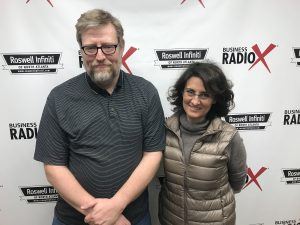
Mike Blake and Dr. Gaia Marchisio

Decision Vision Episode 62: Should We Sell the Family Business? – An Interview with Dr. Gaia Marchisio, Cox Family Enterprise Center at Kennesaw State University

How do you recognize when it’s the best decision to sell the family business? Can a dysfunctional family operate a functional and successful business? Dr. Gaia Marchiso of the Cox Family Enterprise Center at Kennesaw State University joins the show to answer these questions and much more. The host of “Decision Vision” is Mike Blake and the series is presented by Brady Ware & Company.

Dr. Gaia Marchisio, Cox Family Enterprise Center at Kennesaw State University

The family enterprise field shares a common experience:  navigating the space where family relationships and professional demands coexist. Family members, non-family executives, external advisors and students all traverse this unique sphere, mutually working through the complexity in pursuit of success.

The mission of the Cox Family Enterprise Center (CFEC) is to act as an intellectual and practical hub for this community. With specialized programming, events and services tailored to the needs of each segment of our community, we focus on creating growth opportunities that empower individuals and organizations. We are proud to be a gathering place of learning, facilitating new skills, richer capacities, and sustainable relationships.

sell the family business
Dr. Gaia Marchisio

Dr. Gaia Marchisio is the Executive Director of the Cox Family Enterprise Center at Kennesaw State University. As a tenured Associate Professor of Management at Kennesaw State University’s Coles College of Business Gaia developed several curricula for family business classes, and teaches undergraduate and MBA courses on family business, management and behavioral sciences, and consulting services. She has been a visiting faculty under numerous Family Business Centers in Latin America, Asia, Europe, and New Zealand.

Gaia’s academic experience allows her to be rigorous and up-to-date in dealing with family business topics. She has been participating in research projects with international partners from Academic and Professional environments (including McKinsey & Company and the Italian Stock Exchange); and has strong global experience in collaborating with financial institutions and associations working with family firms, such as International Finance Corporation (IFC – World Bank Group), Inter-America Investment Corporation (IIC – Member of the IDB Group), Credit Suisse, UBS, and Australia and New Zealand (ANZ) Banking Group, to name few. In particular, Gaia has experience working with financial institutions, both consulting with them on family business related topics, and training their clients and/or associates.

In 2013/14, Gaia spent her sabbatical leave, during which she served as the Chief Learning Officer for FBN Academy, an initiative by the Family Business Network in Asia. Gaia is an active international speaker and family business advisor. She regularly presents and/or advises families on various topics in family business management around the world, including facilitating some of the owners meetings. These families are from around the world including Europe, North and Latin America, the Caribbean, Asia, Australia and New Zealand. Gaia brings a unique combination of knowledge and experience from the fields of management and entrepreneurship to her work with family businesses, combined with a growing expertise in family dynamics and communication.

Gaia was raised as a 4th generation successor in her family’s business. This experience helped her understand the emotional challenges and responsibilities of being a young member of an entrepreneurial family. After finishing her BBA, she joined the SDA Bocconi School of Management where she served as Assistant Director of the full-time MBA Program; as Coordinator of the first Chair in Strategic Management in Family Business; and as a Coordinator of Entrepreneurship Entrepreneurs’ Research Center. Gaia earned her Doctorate in Business Administration in Family Business. She moved to Atlanta, Georgia, USA in 2006.

For more information on the research and services offered by the Cox Family Enterprise Center, you can visit their website or email directly.

Michael Blake, Brady Ware & Company

Mike Blake, Host of “Decision Vision”

Michael Blake is Host of the “Decision Vision” podcast series and a Director of Brady Ware & Company. Mike specializes in the valuation of intellectual property-driven firms, such as software firms, aerospace firms and professional services firms, most frequently in the capacity as a transaction advisor, helping clients obtain great outcomes from complex transaction opportunities. He is also a specialist in the appraisal of intellectual properties as stand-alone assets, such as software, trade secrets, and patents.

Mike has been a full-time business appraiser for 13 years with public accounting firms, boutique business appraisal firms, and an owner of his own firm. Prior to that, he spent 8 years in venture capital and investment banking, including transactions in the U.S., Israel, Russia, Ukraine, and Belarus.

Brady Ware & Company

Brady Ware & Company is a regional full-service accounting and advisory firm which helps businesses and entrepreneurs make visions a reality. Brady Ware services clients nationally from its offices in Alpharetta, GA; Columbus and Dayton, OH; and Richmond, IN. The firm is growth minded, committed to the regions in which they operate, and most importantly, they make significant investments in their people and service offerings to meet the changing financial needs of those they are privileged to serve. The firm is dedicated to providing results that make a difference for its clients.

Decision Vision Podcast Series

sell the family business“Decision Vision” is a podcast covering topics and issues facing small business owners and connecting them with solutions from leading experts. This series is presented by Brady Ware & Company. If you are a decision maker for a small business, we’d love to hear from you. Contact us at decisionvision@bradyware.com and make sure to listen to every Thursday to the “Decision Vision” podcast. Past episodes of “Decision Vision” can be found here. “Decision Vision” is produced and broadcast by the North Fulton studio of Business RadioX®.

Visit Brady Ware & Company on social media:

LinkedIn:  https://www.linkedin.com/company/brady-ware/

Facebook: https://www.facebook.com/bradywareCPAs/

Twitter: https://twitter.com/BradyWare

Instagram: https://www.instagram.com/bradywarecompany/

Show Transcript

Intro: [00:00:01] Welcome to Decision Vision, a podcast series focusing on critical business decisions, brought to you by Brady Ware & Company. Brady Ware is a regional, full-service accounting and advisory firm that helps businesses and entrepreneurs make visions a reality.

Mike Blake: [00:00:20] And welcome to Decision Vision, a podcast giving you, the listener, clear vision to make great decisions. In each episode, we discuss the process of decision making on a different topic from the business owner’s or executive’s perspective. We aren’t necessarily telling you what to do, but we can put you in a position to make an informed decision on your own and understand when you might need help along the way.

Mike Blake: [00:00:39] My name is Mike Blake, and I’m your host for today’s program. I’m a director at Brady Ware & Company, a full-service accounting firm based in Dayton, Ohio, with offices in Dayton; Columbus, Ohio; Richmond, Indiana; and Alpharetta, Georgia, which is where we are recording today. Brady Ware is sponsoring this podcast. If you like this podcast, please subscribe to your favorite podcast aggregator, and please consider leaving a review of the podcast as well.

Mike Blake: [00:01:03] So, today we’re going to talk about whether you should sell the family business. And this is something that I’ve had a chance to get up close and personal with. As it happened the last couple of years, I’ve been asked to help some pretty high net worth families with the third comma and helped them with something that’s called a family charter, which is basically the constitution of how a family decides it’s going to govern itself, usually over multiple generations.

Mike Blake: [00:01:34] And over that time, I’ve had an opportunity to study family businesses in a way that I really had not before. Those of you who have listened to this podcast before know that I’m more of a tech guy. And tech companies, generally speaking, measure themselves in years or even months, but not generations. Family businesses, on the other hand, very much can measure themselves in generations. And there are family businesses that go back centuries. The Rothschilds investment banking empire can date itself to the early 18th century and Bavaria. The Kikkoman Soy Sauce company is actually a Japanese family business. Actually, an amalgamation of eight families in Japan that date back in to the 17th century. Many of the bit of the great a time museums, in fact, are legacies of the Milanese merchant bankers that date back to the Renaissance.

Mike Blake: [00:02:38] And so, we can see that some family imprints actually last for half a millennia or longer. And so, I’ve become very interested in family businesses because they offer a dynamic that you don’t see anywhere else. So, over the course of the last couple of years, I’ve managed to become, I’m not going to say expert but, at least, reasonably well read. And as is the habit with our podcast, when I know that I’m not an expert, I bring in somebody who is.

Mike Blake: [00:03:09] And so, joining us today is my new friend, Dr. Gaia Marchisio, CEO, who is Executive Director of the Cox Family Enterprise Center at Kennesaw State University, which is a university that’s about 25 miles north and west of downtown Atlanta, maybe 30 miles for those of you who are not from the Atlanta area, where she is also an Associate Professor of Management. She holds a doctorate from the University of di Pavia in Italy. I hope I’m pronouncing that correctly. And her research interests include family businesses, business strategy and business communication.

Mike Blake: [00:03:42] Some of her publications include Game Theory and Family Business Succession, Narcissism in Organizational Context – I’ve got to read that one – The OOIDA Loop: A New Strategic Management Approach for Family Business; From Burning Out to Being On Fire: A Conceptual Model of Burnout in the Family Business. Corporate Venturing in Family Business – it’s a topic that’s near and dear to my heart – The Effects on the Family and Its Members. And she’s also the author of several chapters in other books as as well. And on the the list of hits goes on and on and on.

Mike Blake: [00:04:16] The Cox Family Enterprise Center is the oldest of its kind in the world, founded in 1987, holistically supporting business families by creating comprehensive education tailored to their needs. And by the way, again, for those of you who are not in the Atlanta area, the Cox family themselves are a family business. They are on – Guy will correct me – but either the second or third generation. They are telecommunications and internet data magnates, media magnates here in the Atlanta area.

Mike Blake: [00:04:48] For those working within family enterprises, the Cox Family Enterprise Center offers programs designed to foster greater strength and services intended to create degenerates synergy in both family and business contexts. For those working as advisors to business families, the Cox Family Enterprise Center has designed education to deepen their perspectives and equips them with the necessary skills for working in their field. Both getting these efforts, they engage in industry-shaping research and undergraduate and graduate educations for the Coles College of Business at Kennesaw State University. At the core of these efforts perpetually remains their commitment to education as a crucial tool for enhancing the wealth and success of the entire community. Professor Marchisio, thanks for coming in today.

Dr. Gaia Marchisio: [00:05:29] Thank you for having me.

Mike Blake: [00:05:31] So, let’s start because it may not necessarily be obvious, what makes a business a family business? At what point does a business evolve from just sort of being something or somebody started up, and then we classify it as a family business?

Dr. Gaia Marchisio: [00:05:46] Sure. I can give you the traditional description. And then, I would like to add some of the more recent thoughts that I think we have to think about. So, typically, we have an entrepreneur, as you mentioned, that start the business. And at some point, he or she can have the family joining in the ownership structure. And that’s number one. Now, there is some debate around whether should the family have the majority to be classified as a family business. Typically, we say that they need to have enough control to have decision making power on strategic decisions. Then, there is another component. Do they need to have the family working in the company of not to be a family business? And that’s another layer. And do they need to have the intention to pass the company to the next generation?

Dr. Gaia Marchisio: [00:06:38] One thing I think it’s very important to really define whether family is a family business or not is that, do they have the mindset? Do they think as a we as a family or are they do everything they can with the tools they have from their ownership perspective to maintain their control in one person? Because that would still be an entrepreneurial family with just a little bit larger pool of owners, as opposed to start thinking as we, as a family, as a multitude of people that as owners have to make the key important decisions.

Mike Blake: [00:07:14] And is there a particular point that kind of prompts that conversion from being a family that happens to own a business to then being a family business? Is there a typical point at which that is restart? Does each family get there differently?

Dr. Gaia Marchisio: [00:07:30] I think a little bit of both.

Mike Blake: [00:07:30] Got it.

Dr. Gaia Marchisio: [00:07:33] So, some is the life event. They may bring them there. So, it can be a challenge and an opportunity at the same time. And other families become more intentional in doing so. So, they are mindful they want that to happen. And so, they start working to get ready to be able to make those decisions together, because that’s the biggest difference is how the whole decision making process in the ownership or in the daily operation change when it’s not more one person making the whole decision, but you have to share and create alignment around the key most important.

Mike Blake: [00:08:09] Now, what what are things that make family businesses different from, I guess, a non-family business, if you will?

Dr. Gaia Marchisio: [00:08:18] Several. The most well known probably is what you mentioned before, these orientation to longevity to think about across generations. They call it patient capital. I think for what I see through both research and practice, there are other factors that we have to take into consideration. One has to do with the goal setting of their company. Typically, there is a way to think about the business of the business is business. And so, having a heavy goal around making money, which is great, don’t get me wrong, and creating a different perspective, which is money becomes a tool instead of the end goal. And they allow for a variety of other reasons why to be in business. From just being with you … not just. From being with my family, creating more job opportunities, have any impact on the community, create some good. So, it can be really different from every family, but it has a lot of to do with, why are we in business, and what’s the purpose of what we do?

Mike Blake: [00:09:22] I think that patient capital point is extremely important. One of the things I’ve learned as I’ve had to give myself a crash course on family businesses, I think one of the things that makes them unusual, and we’ll talk about, extraordinarily successful is the fact they are patient capital.

Dr. Gaia Marchisio: [00:09:41] Yeah.

Mike Blake: [00:09:41] Right? So many businesses, even private ones, measure themselves by the monthly P&L, the quarterly P&L, even the annual P&L. And in some cases that’s appropriate. But on the other hand, it leads to a short-term thinking that leaves longer term opportunities on the table, I think. And when you are thinking in terms of multi-generational investing, where the time horizon is almost taken off the table, it kind of opens different opportunities, doesn’t it?

Dr. Gaia Marchisio: [00:10:12] Right, absolutely. And I want to stress these. We’re not saying that orientation to the short term shouldn’t be there. So, it’s a short and long term. The difference I think is that in non-family business, the short is the everything; while I think that family has a capacity to absorb some sacrifice in the short to invest and to have other consideration, like what kind of quality do … Is profit at any cost? What does it cost not only for the company, but for the shareholders, but also for the employees? How does that change the relationship with them? How does it change the quality of what we give to the clients?

Dr. Gaia Marchisio: [00:10:54] You mentioned some companies who went through generations. Some of them had to make very difficult decisions around quantity of their product that if they weren’t at the quality that they wanted to, they decide to withdraw them from the market, absorb a huge loss, but maintaining that long-term relationship and trust with the clients, which is a very important piece to be able to stay in business for so long. So, I think that shift a little bit the whole idea around corporate social responsibility, that often  is a mistakenly taken as a giving away some money to reduce stocks, and having a true deep understanding of all the different stakeholders, and how can I create long-term relationship which each of them, so that I can survive over time and thrive, not just survive.

Mike Blake: [00:11:51] So, what led to your interests in family businesses? Why have you devoted your life to researching this phenomenon?

Dr. Gaia Marchisio: [00:12:03] I was once. I was raised as a next gen. I had no idea there was a whole community of people like us. I saw … I’m dating myself. That was over 30 years ago when the whole thing kind of hit me. I was in college. I saw that there were professors who were talking about things were happening in my family without knowing my family. They were describing me and all of us in a way that nobody else we’re able to capture. And when my family came to the decision of closing the business, at that point, I realized that what if we had the help that we needed at the time? And because it didn’t work for me. I thought, well, maybe we can learn some of the pain and the mistakes that have been made. How about turning that in a great opportunity to help other families?

Dr. Gaia Marchisio: [00:12:54] And then, I was very fortunate to have a great mentor back then, my professor, who is a leading authority in the field in Europe. And from there, I started intentionally learning more and making sure that my story was important enough to inspire the motivation but not condition the way I was looking at other families. So, to not have a lens that pre-determined a way of looking at these companies.

Mike Blake: [00:13:22] So, what are you researching now that is interesting? And why do you think that research is important?

Dr. Gaia Marchisio: [00:13:30] So, all my life I devoted my research mainly to next generation with the idea of it’s important to understand before getting to the business. And then, I realized that, really, what’s the biggest challenge and the biggest opportunity is once you’re entering the company; and hence, the topic you’re mentioning about entrepreneurship and how can you be an entrepreneur in an already existing company? What’s the effect? We talk about burnout. What’s the effect on the emotional attachment?

Dr. Gaia Marchisio: [00:14:01] More recently, I realized that family enterprises exists in a bigger ecosystem. And there is a huge overlook at the advisors that serve families. I commend what you said before that you have started reading and putting yourself in a place of as a learner of family. Not just because we work with client, that makes us experts. And what I realized before in the last five years is there is a huge need and huge opportunities in that community to create more awareness around what is that you need to learn before being able to work with this client.

Dr. Gaia Marchisio: [00:14:44] And so, the research with my team at Kennesaw we are putting together, it’s a survey and it’s aimed to better understand how advisor – being attorneys, being accountants, financial planners, so everyone that lives in this space, which is very much needed, where are they? What are their way of working with families? And there is not enough understanding of what is an effective way of working with clients that is not just anecdotal. And I don’t think we can dare to try without some reasonable support from research. As always, it has to be the relevance that comes from practice, but the rigor that come from research.

Mike Blake: [00:15:31] So, we’re talking about facts and talking about research. One of the things that I’ve learned that surprised me is that data, now, seems pretty consistent and pretty clearly indicate that family-owned businesses not only generate higher returns than their non-family counterparts but, also, at lower risk. Have you seen similar data? And if so, what do you think are the reasons for that?

Dr. Gaia Marchisio: [00:15:59] Well, I’ve seen the similar data. I have to be careful, I’m pausing because I want to be mindful and not reduce what I’ve seen, what’s my experience, which is long, but it’s not the whole thing. So, I don’t want to jump on something. What could be the-

Mike Blake: [00:16:23] The problem is it’s hard, right, because it’s hard enough to observe even how family businesses perform.

Dr. Gaia Marchisio: [00:16:28] Right.

Mike Blake: [00:16:29] But then, collecting the data to really run the analytics to find out why.

Dr. Gaia Marchisio: [00:16:33] Exactly.

Mike Blake: [00:16:34] It’s difficult to do it from a fact-based perspective.

Dr. Gaia Marchisio: [00:16:37] Absolutely. So, that’s why I was pausing because before expressing an opinion on something that is so important. It was because I have kind of a skewed perspective because when they come to me is because they are in trouble. Because I’m in the line of business of helping those families to get to be the one performing better. So, I think that the biggest shift, that’s what I feel comfortable saying, the big shift is when they become intentional. So, when they they realize that there is some work that needs to be done. And the fact that their family doesn’t prevent them from … so, yes, you know each other, but it’s a profound shift in to thinking, what is that we need to do, not just in reaction to opportunities that comes, which is a great way of growing above all in the first stages of a company, but at some point, what are the things that we need to do in the family, in the ownership, and in the business setting.

Mike Blake: [00:17:36] So, I would speculate. I’m not an academic. But if I were to undertake an academic study, one hypothesis I would explore would be this long-term time horizon because there’s there’s been a lot of data. And Warren Buffett’s a big proponent of this, that long-term sort of buy and hold over time as a return maximizing strategy, especially on a risk adjusted basis, I think families are very good at that. You touched upon something that I wonder if this is the case as well, and that’ll be a hypothesis I’ll explore is family businesses have a mission beyond making money? They realize they have to make money to sustain themselves, but I’m a huge fan of Simon Sinek. Simon, if you’re listening, come on the podcast. We’s love to have you on.

Dr. Gaia Marchisio: [00:17:36] I adore him. I adore him.

Mike Blake: [00:18:29] So, I just finished his book, The Infinite Game. And there’s no better example in the real world of the infinite game than the multi-generational family business.

Dr. Gaia Marchisio: [00:18:39] Absolutely.

Mike Blake: [00:18:39] So, the hypothesis I would explore would be is the fact that family businesses play that infinite game, a driver behind their their outsized success relative to their peer group.

Dr. Gaia Marchisio: [00:18:52] Absolutely. I was looking forward to that book. I think it’s a very important kind of approach. And this is what I actually suggest families in my daily work with them. And in fact, I think, that it’s one of the key success factors. Those might create a mindset that are about continuous learning and continuous improvement. And reducing the competition and the confronting themselves with others. They’re all internally. I think that internal competition is really not ideal within families, but it’s more about how can we keep getting better with that perspective of the long-term impacting more stakeholders.

Mike Blake: [00:19:35] And an area of research or an area of study that I think overlaps, but it’s not entirely the same thing, are hundred-year business phenomena. Some businesses do last a hundred years, but they change ownership. Others, of course, may stay within the family. And I suspect there’s a lot of overlap there. And one of the things you talked about, that how does a business last a hundred years in any form? They must be in a learning mode. And they must be willing, at some point, to disrupt themselves because technology taste must change over a century period or longer, right? How does how does Ford remain relevant a hundred years later?

Dr. Gaia Marchisio: [00:20:22] And then, I think that we didn’t do a good job as as academics and advisors for a long time, because the whole field … And I get that it’s part of the evolution and it’s a learning process for the field itself, but the whole point is around successions. As if that’s the only moment in time where family needs to look at themselves and their businesses. While I always make the example, what is that you own anything from a car to a dishwasher that leaves longer than a year that you don’t put maintenance, that you don’t want intentional work?

Dr. Gaia Marchisio: [00:20:59] Even on the relationship, right? So, the only thing we know is that everything constantly change. And the huge mistake is to look at these every 20-30 years when succession happens because imagine what has even happened in these last two days in this world and how that has been completely disruptive. So, now, without thinking such an extreme example, but individuals in the family keep changing. Family has great event to minor event that keep changing perspective needs, desire. The company keeps changing.

Dr. Gaia Marchisio: [00:21:33] So, it’s crazy not to keep an eye on. And not just monitor but becoming, again, intentional around what are the things that we want to change, and keeping the communication open. Because people always ask me about communication in family business. It’s not just the quality of the communication, that’s a whole chapter in itself, but it’s also the quantity. How often do we have communication? And do we even finish our communication? Do we finish the conversation that we start?

Dr. Gaia Marchisio: [00:22:06] My colleague, Marj Blum, she’s a psychologist, and we work together with the rest of the team. she is huge on this point around making sure that we finish the communication because we start so many topics, but we never end up. And so, we have the illusion of communication. And when you have to keep changing, that’s one of the most important tool that we have.

Mike Blake: [00:22:30] So, one of the things forces that is always there that’s going to press for a family business to end is a desire for liquidity. The name of the game now – I think, really more so now than a generation ago – is every company must be built to sell. And you’re not really successful until a private equity firm buys you, your IPO, or something happens, and you have a big pile of cash that you can then distribute to your family members. And I think that does, sometimes, drive both the desire for the family business. I think it, also, is harmful to the family fortune. Liquidity is not always the best thing in the world for everybody. If a family business is feeling the pressure to become more liquid, are there alternatives they can consider other than simply selling out in order to satisfy whatever the cash needs or wants of the family are, so they can have the cash, but keep the engine that generates the cash as well?

Dr. Gaia Marchisio: [00:23:34] I’m a huge fan of why people do what they do or they don’t do what they don’t do, which is another reason why I like Simon Sinek so much. And so, I think that what’s very important for each family to consider is why to sell the company, but also why to keep the company because I think they’re related but they’re different. And so many times I see struggle in the family or struggle in the business, but I want to focus on the struggle in the family, and how many times family think, “If we didn’t have the business, this wouldn’t be the case.” And they’re are strongly invited or recommended to sell the company thinking that, “If I don’t have a company anymore, I won’t have those issues.” And rest assured that they sell the company, and there are different levels of engagement in that decisions. And people can look back and be very frustrated because they probably gave away something that they loved.

Dr. Gaia Marchisio: [00:24:35] And so, thinking why things are a struggle, where do they originate, and what’s the right decision to fix the root cause of the trouble, not the symptoms? Because being unease in the relationship, it’s normal. It’s not necessarily symptoms that something is wrong, but it’s more of the fact that it’s difficult to stay in relationship, and live together, work together, making and sharing decisions. It requires work. And so, why to sell? What are the real reason? And on the other hand, give the family, and above all, the next generation a purpose to keep that company because it’s a different thing. And it has to be a higher reason because of the work that is required prior to that.

Mike Blake: [00:25:24] So, one of the challenges I think many family businesses face, if they’re going to keep the family businesses, who’s the next person who’s going to run it? And sometimes, I know the Mars family, for example, they are notorious or they’re famous for the fact that, basically, cradle to grave, they groom you to run that business. You work in there as a toddler, which is interesting for a candy business. But  in other cases, things don’t work out where there’s necessarily an obvious successor, right? You may not have children. You may have children, but they’re not business people. Can a family hang onto a business or maintain control of a business in that scenario? And if so, how do they go about it?

Dr. Gaia Marchisio: [00:26:07] So, choosing to not run the business, I think, is one of the toughest. And I remember years ago, I was in China, I was giving a lecture there, and there was a 20-year-old boy who start crying as I was picking. And I immediately thought, “Oh, my gosh. Did I say anything wrong?” So, end of the class. I went there, I talked to him, and he explained to me that those tears were of joy. And I was like, “What do you mean?” And he said, “Well, all my life, I was raised with the expectation I was supposed to be the next one. And as much as I loved my family and the business, I don’t see myself being there. And so, hearing that you don’t cease to be a family business if you don’t operate the business is a huge relief. And now, we have to talk about that.”

Dr. Gaia Marchisio: [00:26:55] So, for sure, it’s not a simple decision. It’s almost a make or buy kind of decisions. What competence can you find on the market? And it opens a conversation around, what kind of person do you want? What kind of governance mechanism between the owners and the management you want to have? How to navigate boundaries? You want to make sure that the person don’t miss the importance of the culture and the values that the family want to have. So, it requires a lot of coordination, but it will also open two great opportunities for growth.

Dr. Gaia Marchisio: [00:27:33] And here’s the other thing. We, historically, are used to think about the family business as one family, one business. And I think that some of the shift that has been happening is to think about entrepreneurs … enterprising families, sorry, where it could be that you can generate an abundance of opportunities if you use your human capital, intellectual capital as a family to start even more than a company, and then to choose to have someone who helps to run. And that creates an opportunity to scale without losing who you are.

Mike Blake: [00:28:10] And sometimes, family businesses evolve into multi-family businesses, right?

Dr. Gaia Marchisio: [00:28:13] Absolutely.

Mike Blake: [00:28:13] I think La Roche, the Swedish … I’m sorry, Swiss pharmaceutical company, I can;t remember now. There’s another family name that’s associated with it but, over time, they became intertwined with a second family that provided new blood and expertise. So, they can evolve that way. And then, there are the Mercks that have been around in Germany since the early 19th Century. And their family weaves in and out of direct management. They have a separate board. So, there are models around there. Even if you think there’s no way the family can do that, you can still hang onto it.

Dr. Gaia Marchisio: [00:28:46] Yes. And they are way more common than we think about. Now, of course, it’s really complex to have one family running one business. And so, for sure, finding the right partners. As every partnership, you need to have trust and you have to have a similar values because if you have these two conditions, some that you create, some that you need since the beginning. And again, it’s the evolution. It’s managing how they both grow. And it’s more complexity, for sure, but I do believe strongly that this can be a great opportunity for growth.

Mike Blake: [00:29:28] Now, we know, and you hinted at this, that families sometimes are highly functional and some families are not as highly functional. And in America, we have this holiday called Thanksgiving where we devote one day to making sure that families are as dysfunctional as we can possibly make them. Can a dysfunctional family have a functional family business?

Dr. Gaia Marchisio: [00:29:53] So, sometimes, I think that we use the term dysfunction easily. And I think that it’s important to have people that are experts in that field to use that appropriately. I think that what often is described as dysfunctional is more a family who has to learn how to navigate through some of the dynamics that are very normal given the age and the stage , both of the individual and the family combined. If you think about that, one thing that everyone has is a family. Nobody teaches us about that. Nobody teaches how a family function. Nobody teach us what is normal. We have classes of how to run a business. We don’t have a minute spent to learn how to run interaction. We expect that because we are family, we know each other. And probably, the last time you had a conversation with your children is before they left for college and think how much they changed. And we all grow.

Dr. Gaia Marchisio: [00:29:53] And so, first point is not everything that looks dysfunctional is actually dysfunctional. And second point is when it’s really becoming dysfunctional because, unfortunately, there are those situations that are extremely painful – and so, have a huge respect for that – again, it’s a matter of choice.  Do I want to put the work there to make that better? What can I do to protect the business? Because their system, their open system, there are spillovers when bad things happen in the family that end up being in the company as well. It depends to the extent. So, I think that it’s important to create mechanisms that can prevent and protect the company.

Dr. Gaia Marchisio: [00:31:44] Is that for sure 100% proof? Probably at the cost of some individual expenses  both emotionally and physically. So, it is possible. I have in mind a few examples. Would I strongly recommend to not take care of your family dynamics because in any case, you can have a profitable business? Again, it’s what you want for your life. And I think that the other big mistake that has been shared is that it’s okay to separate family and business because to be professional, you need to pretend the family is not there. That’s a huge lie. We can’t pretend that the family is not there. We can’t pretend that emotions are not there. We don’t have to act emotionally and reactively in the business setting, but we have to respect and work with what we have in the family.

Mike Blake: [00:32:42] So, are there particular tools and techniques that that you’ve observed that are successful in helping them manage that dynamic?

Dr. Gaia Marchisio: [00:32:51] Yes, I think that talking about that is number one, right?

Mike Blake: [00:32:56] Yeah.

Dr. Gaia Marchisio: [00:32:56] And I put that as the number one because my biggest fear around tools is that we are culture-oriented to a solution, which is great. We don’t want to drag up problems. But I don’t think that we spend enough time understanding what is it that we’re really trying to solve. And because there are a bunch of tools in the market ready to be used and promise an easy fix, I don’t believe in easy fix above all when it comes to family and when it comes to family and businesses together.

Dr. Gaia Marchisio: [00:33:27] So, yes, can you put in place governance? Governance is excellent tool. Different kind of governance, different way of implementing. But expecting that governance is the panacea for everything happening is very wrong. Trusts are great tools. But again, it’s a tool. Applying a trust to every family to protect it, it cannot be the right thing. It’s like the difference between a screwdriver and a pot. Can you cook with a screwdriver? No. Is a screwdriver a great tool? Yes. It depends on what you need. So, I urge advisors, as well as families, to be very mindful. Not one tool fits every situation, which is unfortunately way more the case that I see happening.

Mike Blake: [00:34:15] Well, that’s the reason for your family enterprise center, right, is you explore those things and each family is going to probably need a different set of tools and even at different times, I’m guessing.

Dr. Gaia Marchisio: [00:34:26] Absolutely. I think that what family needs is to be empowered to learn and understand what they need. They will always need advisors. That’s the beauty of that interdependent relationship. But I think that what’s very important is to teach these families what they need and how to problem solve together, how to identify the challenge that they have, so that they can be more intentional and proactive in choosing it. Because at the end of the day, advisors, we are they are, even the longer relationship, but at some point, we leave and they have to stay and live with the consequences of the choices that they make.

Dr. Gaia Marchisio: [00:35:03] So, the biggest favor if you are a family business owner listening is to really invest in understanding enough to be able to have a more educated conversation. It is scary to me when I have family, and I can tell you how many that they have trusts and documents in place that they signed because they blindly trust their advisor, which is great trust in someone. But I heard people say, “That the document so complicated. It must be good, so I signed it.” And it’s not just once that has happened. And it comes from people that I know that are very business savvy. So, it’s never allowing the … I mean, it’s understanding that you don’t have to give up on understanding, and growing, and improving your capacity as as a family and as owners.

Mike Blake: [00:36:00] So, I’m going to ask you right now the toughest question of the interview.

Dr. Gaia Marchisio: [00:36:04] All right.

Mike Blake: [00:36:05] And that question is, I know you’re a big fan of family businesses, as am I, but not every family business is gonna work out, right? In your case, you said – I did not know this – that you come from a family business that ultimately was sold. How do you recognize where you’ve got problems that are so deep that it really is the best thing to sell the business and kind of get a clean slate or it’s just not going to be recoverable?

Dr. Gaia Marchisio: [00:36:45] I don’t want to answer that question.

Mike Blake: [00:36:47] I didn’t think you would.

Dr. Gaia Marchisio: [00:36:47] No, no, no, no. But let me let me say why and how. So, I’m a a huge, passionate person of medical doctors in that field. And I think that we can learn so much from there. I think it’s a big issue around boundaries. What’s our job as someone who helps families there? And what I’m going with this is I do believe that it’s mainly an educated choice for the people in the situation. I’ve seen families who chose to stay in incredibly difficult situations, and they had their own reasons. So, I think that it’s about respecting that it’s our responsibility and our job to help them think about what’s recoverable and what’s not.

Dr. Gaia Marchisio: [00:37:42] What I know is that the more people wait to raise difficult conversations, which I’m not saying go home now and talk about the elephant in the room that has been there for 30 years in your family, but if things are-.

Mike Blake: [00:37:56] That’s what’s Thanksgiving’s for.

Dr. Gaia Marchisio: [00:37:57] Exactly, exactly. And even without wanting that just to happen. But my point is the fact that we don’t talk about difficult things, it doesn’t make them go away. Just make them grow even stronger. So, those families that I saw that they came to the conclusion that it’s better to go separate ways, there is a way to get there where exiting the company doesn’t mean exiting the family. There is a way to even get there, which is actually a great decision for the good of the family and the good of the business. So, I think that as much as the family can provide value to the business and the business can provide value – and I’m not just talking about financial value – it’s worth trying. Where that threshold is, it’s all about the family.

Dr. Gaia Marchisio: [00:38:44] That’s why I was talking about boundaries. I’ve seen so much biases on behalf of advisors that really push for people to leave and to go away because of their own choices or preferences. I think that our job is, really, to help families think through why it’s worth to keep it. why is that worth to give you the way and to think at the same time, which is the most difficult thing because we live in a culture where it’s either or. Is that the family or the business more important? I’m a huge believer that both has to be important for the individual, and the family, and the business. And in that tiny word ‘and,’ that lies all the complexity of how can you manage three systems to be able to coexist in the long term?

Mike Blake: [00:39:42] Aside from Cox, because I know there’s a special interest in relationship there, what is an example of a family business that is successful? Who’s really doing it well that you can talk about?

Dr. Gaia Marchisio: [00:39:56] I’m always resistant to give names. I think those families that are great at learning, and keep learning and learning from their mistakes, that they see every situation, and keep trying, and put a lot of work, and they don’t allow for a difficult moment to become their life’s work. Become a learning family. And when I talk about becoming a learning family, I’m not saying that everyone needs to go in and sign up for an educational class. That’s a piece of that. But a learning family is the infinite game we’re talking before. It’s this idea of how can I … okay, so last week, and I quote this woman, the company is CI², they were one of the honorees. We have a yearly honoration, which is as the word says, honoring and celebrating companies.

Dr. Gaia Marchisio: [00:40:52] And one of the six finalists, we had is Mrs. Andrella. And she’s the founder of CI². They manage an incredible number of controlled-towering airports in the US and the Caribbean. And her mantra is she wakes up every morning, and her pray is, “Let be today better than yesterday.”So, I commend and I love her intention as an individual, as a businesswoman, and as a business owner to wake up with intention of, how can I make today better than yesterday? I think that if a family is able to do something like that, even the mistake that we all make to have become something totally different and an opportunity for growth.

Mike Blake: [00:41:46] We are out of and and past time, but we could easily make this a three-part series or longer but unfortunately, can’t. If somebody is looking at a family business and is thinking about these issues, how can they contact you to learn more?

Dr. Gaia Marchisio: [00:42:02] So, we have our website. And otherwise, we have a relatively easy e-mail address. Am I allowed to plug it?

Mike Blake: [00:42:11] Yes, please. Yeah.

Dr. Gaia Marchisio: [00:42:12] Okay. It’s cfec@kennesaw.edu. cfec@kennesaw.edu. And we are happy to have a conversation with whomever wants to learn more. And I really want to thank you for being one of those people that really are into learning and getting better. It is refreshing to meet people like you, and it’s very meaningful. So, thank you.

Mike Blake: [00:42:37] Well, when you get to know me, you won’t think so highly of me. But that’s going to wrap it up for today’s program. I’d like to thank Dr. Gaia Marchisio so much for joining us and sharing her expertise with us today.

Mike Blake: [00:42:47] We’ll be exploring a new topic each week. So, please tune in, so that when you’re faced with your next executive decision, you have clearer vision when making it. If you enjoy this podcast, please consider leaving your review with your favorite podcast aggregator. It helps people find us, so that we can help them. Once again, this is Mike Blake. Our sponsor is Brady Ware & Company. And this has been the Decision Vision Podcast.

Tagged With: Brady Ware, Brady Ware & Company, Cox Family Enterprise Center, Family Business, family business owners, family business transition, Gaia Marchisio, Kennesaw State University, KSU Coles College of Business, Michael Blake, Mike Blake, patient capital, sell the family business, selling a family business

Odis Sisk – Green Prism Consulting, LLC, Rich Corbett, GHS Cross Country/Track Coach

February 11, 2020 by Beau Henderson

North Georgia Business Radio
Odis Sisk - Green Prism Consulting, LLC, Rich Corbett, GHS Cross Country/Track Coach
Loading
00:00 /
RSS Feed
Share
Link
Embed

Download file

Odis Sisk – Green Prism Consulting, LLC

Green Prism Consulting, LLC is a full spectrum green industry consulting company providing  guidance for safety, education, and plant health care.

​Credentials:

ISA Certified SO-4211AUT

ISA Certified Arborist

ISA Certified Utility Specialist

ISA Certified Tree Worker Climber Specialist

OSHA 30
​GA Pesticide Applicator License #10477

American Society of Consulting Arborists (ASCA) Member

Georgia Arborist Association Member (GAA)

Let’s talk TREES!!!  

Coach Rich Corbett – Gainesville High School

Along with Coach Phillip Davis, Coach Rich Corbett has grown an amazing program for all of the athletes at Gainesville High School.

Community is extremely important to athletics and we are so excited to have amazing students, coaches and parents to help us with our achievements!

Tagged With: cross country, Dr. bill lampton, Family Business, ga, Gainesville, gainesville high school, green prism consulting, north georgia business radio, odis sisk, risk reduction, running, teaching, track, training, trees

Matt Bazzill, Renasant Bank, and Mike McCoy, Real McCoy Home Care

January 30, 2020 by John Ray

North Fulton Business Radio
Matt Bazzill, Renasant Bank, and Mike McCoy, Real McCoy Home Care
Loading
00:00 /
RSS Feed
Share
Link
Embed

Download file

John Ray, Mike McCoy, and Matt Bazzill

North Fulton Business Radio, Episode 193: Matt Bazzill, Renasant Bank, and Mike McCoy, Real McCoy Home Care

Banking services for small businesses and in-home senior care were discussed on this edition of “North Fulton Business Radio” as Matt Bazzill, Renasant Bank, and Mike McCoy, Real McCoy Home Care, joined the show. “North Fulton Business Radio” is hosted by John Ray and is broadcast from the North Fulton Business RadioX® studio inside Renasant Bank in Alpharetta.

Matt Bazzill, Renasant Bank

Matt Bazzill

Matt Bazzill is Branch Manager of the Windward Parkway office of Renasant Bank in Alpharetta, GA. Matt has worked in banking for over 10 years, the last seven with Renasant. He says that the favorite part of his job is working with small businesses, providing excellent customer service and assisting them with bank tools which help their business grow and succeed.

Matt is originally from St. Louis, Missouri, and graduated from Missouri State University in Springfield, MO, in 2003. He and his wife Dina have lived in the Atlanta area for almost 14 years and have two daughters.

Renasant is a 117 year old bank which started with $100,000 in a Lee County, Mississippi bakery. Since then, Renasant has grown to become one of the Southeast’s strongest financial institutions with over $13 billion in assets and more than 190 banking, lending, wealth management and financial services offices in Mississippi, Alabama, Tennessee, Georgia and Florida. Renasant was named the “Best Bank in the South” by Time Magazine’s Money.com for 2018-19.

For more information on Renasant, go to the bank website. To get in touch with Matt directly, you can email him or call 678-892-2254.

Mike McCoy, Real McCoy Home Care

Mike McCoy, Real McCoy Home Care
Mike McCoy

Mike McCoy is President and Owner of Real McCoy Home Care, a family owned, in-home care agency serving North Metro Atlanta. Real McCoy provides clients and their families with a variety of services that improves the clients’ ability to remain in their own home. Our clients range from seniors to the disabled, as well as long and short-term medical recovery patients. Services include meal preparation and planning, transportation, medication reminders, light housekeeping, and hygiene and bathing.

Before co-founding Real McCoy Home Care in 2017, Mike held several positions with Georgia Pacific, such as Vice President of Marketing, Sales, and Dens Gypsum Board Business; Senior Director Marketing and Product Management, Gypsum and Wood Products; and Director of Operations.

For more information, go to the company website or call 404-536-1060.

North Fulton Business Radio” is broadcast from the North Fulton studio of Business RadioX®, located inside Renasant Bank in Alpharetta. Renasant Bank has humble roots, starting in 1904 as a $100,000 bank in a Lee County, Mississippi, bakery. Since then, Renasant has grown to become one of the Southeast’s strongest financial institutions with over $13 billion in assets and more than 190 banking, lending, wealth management and financial services offices in Mississippi, Alabama, Tennessee, Georgia and Florida. All of Renasant’s success stems from each of their banker’s commitment to investing in their communities as a way of better understanding the people they serve. At Renasant Bank, they understand you because they work and live alongside you every day.

Tagged With: Family Business, homecare company, Matt Bazzill, Mike McCoy, North Fulton Business Radio, North Fulton Studio, Real McCoy Homecare, registered nurse, renasant bank, treasury management

Ron Combs – Combs Pest Control, Mike Wofford – JMW Construction Co., LLC

January 28, 2020 by Beau Henderson

North Georgia Business Radio
Ron Combs - Combs Pest Control, Mike Wofford - JMW Construction Co., LLC
Loading
00:00 / 29:56
RSS Feed
Share
Link
Embed

Download fileDuration: 29:56

Ron Combs – Combs Pest Control, LLC

The average homeowner stays with their pest control provider to 3-5 years. We are proud to serve many customers who’ve been with us since day-one-that’s over 17 years! We believe our customers continue to choose us because at Combs Pest Control – you aren’t a customer, you are family. 

 Many other companies are in the pest control business. We are in the PEOPLE business – we want to EARN your business and continue earning it. 

Don’t let pests and termites control your home! Call Combs Pest Control today to schedule a free consultation and estimate.

With over 26 years of experience, you can bet, that if it has more than 4 legs, we can kill it! 


Mike Wofford – JMW Construction Co., LLC

We are a full service contractor serving Gainesville since 1996. We offer CAD design, turnkey building and remodeling, and service work ranging from gutter cleaning to repairs of all types… no job is too big or too small. We take care of your home! Licensed and insured.

Hundreds of satisfied customers!


Tagged With: Construction, contractors, Dr. bill lampton, Family Business, framing, Georgia, local business, mike wofford, North Georgia, North Georgia Business Radio X, personal, pest, pest control, Prevention, Ron Combs, service, termites

Family Business Radio, Episode 5: John Waid, C3-Corporate Culture Consulting

December 12, 2019 by John Ray

John Waid
Family Business Radio
Family Business Radio, Episode 5: John Waid, C3-Corporate Culture Consulting
Loading
00:00 /
RSS Feed
Share
Link
Embed

Download file

John Waid
Anthony Chen and John Waid

Family Business Radio, Episode 5: John Waid, C3-Corporate Culture Consulting

What’s the effect of corporate culture on the bottom line? On this episode of “Family Business Radio,” host Anthony Chen speaks with John Waid, Founder of C3-Corporate Culture Consulting, on this question and much more. “Family Business Radio” is broadcast from the North Fulton Studio of Business RadioX®.

John Waid, C3-Corporate Culture Consulting

John Waid

John Waid is founder of C3-Corporate Culture Consulting. C3 is a consultancy-based training and coaching company founded on the belief that the best companies, teams, and positions are based on best practice values, and behaviors that are aligned and lived by everyone. The company’s programs include Culture-Driven Companies, Leadership, Management, Coaching, Keynote, Negotiation, Sales, Sales Management, Communications, and Communication Process Model.

Prior to starting C3, John was a Senior Consultant with Krauthammer, a leadership management and behavior training firm based in Europe.

For more information visit the C3-Corporate Culture Consulting website. John can be reached by email, or call 404-915-3051.

Anthony Chen, Host of “Family Business Radio”

Anthony Chen

This show is sponsored and brought to you by Anthony Chen with Lighthouse Financial Network. Securities and advisory services offered through Royal Alliance Associates, Inc. (RAA), member FINRA/SIPC. RAA is separately owned and other entities and/or marketing names, products or services referenced here are independent of RAA. The main office address is 575 Broadhollow Rd. Melville, NY 11747. You can reach Anthony at 631-465-9090 ext 5075 or by email at anthonychen@lfnllc.com.

Anthony Chen started his career in financial services with MetLife in Buffalo, NY in 2008. Born and raised in Elmhurst, Queens, he considers himself a full-blooded New Yorker while now enjoying his Atlanta, GA home. Specializing in family businesses and their owners, Anthony works to protect what is most important to them. From preserving to creating wealth, Anthony partners with CPAs and attorneys to help address all of the concerns and help clients achieve their goals. By using a combination of financial products ranging from life, disability, and long term care insurance to many investment options through Royal Alliance. Anthony looks to be the eyes and ears for his client’s financial foundation. In his spare time, Anthony is an avid long-distance runner.

The complete show archive of “Family Business Radio” can be found at familybusinessradioshow.com.

Tagged With: consultancy-based training, corporate culture, Family Business, family business advisors, Family Business Radio, family business success story, healthy corporate culture, Leadership management, Winning Corporate Culture

Family Business Radio, Episode 3: Cathy Hogan-Smith, Cachet Corporate Gift Services, and Brian Riggs, Foot Solutions Sandy Springs

October 8, 2019 by John Ray

Family Business Radio
Family Business Radio, Episode 3: Cathy Hogan-Smith, Cachet Corporate Gift Services, and Brian Riggs, Foot Solutions Sandy Springs
Loading
00:00 /
RSS Feed
Share
Link
Embed

Download file

Anthony Chen, Kathy Hogan-Smith, and Brian Riggs

Family Business Radio, Episode 3:  Cathy Hogan-Smith, Cachet Corporate Gifts, and Brian Riggs, Foot Solutions Sandy Springs

On this episode of “Family Business Radio,” host Anthony Chen welcomes Cathy Hogan-Smith, owner of Cachet Corporate Gift Services and Brian Riggs, general manager of Foot Solutions Sandy Springs. “Family Business Radio” is broadcast from the North Fulton Studio of Business RadioX® inside Renasant Bank in Alpharetta.

Cathy Hogan-Smith, Cachet Corporate Gift Services

Cathy Hogan-Smith

Cachet Corporate Gift Services has been the go-to gift service for major corporations in Atlanta and nationally since Cathy Hogan-Smith started her business in 1997. Cathy is an expert in design and marketing. She has won numerous awards as a gift designer, writer and  instructor/trainer in the gift industry. Her clients have included CNN, Cox Media Group, Turner Broadcasting System, Auto Trader, the Atlanta Braves, the Atlanta Falcons, Williams Sonoma and the Marriott Corporation. Cachet’s award-winning design team specializes in unique creations that feature delectable gourmet food and specialty gift items from around the world. Gifts are tailored to specific occasions or events and can include business logos. Cachet has provided gifts that fit with conventions, hotel room amenities, marketing, promotion and branding, grand openings, swag bags, celebrity or professional sporting events and much more.

For more information visit the Cachet Corporate Gift Services website. Cathy Hogan-Smith can be reached by email or text at 678-438-4486.

Brian Riggs, Foot Solutions

Brian Riggs

Brian Riggs is general manager of Foot Solutions in Sandy Springs. Each shoe at Foot Solutions must earn a place on their shelves, as employees undergo training in Pedorthics. Pedorthics is the biomechanical study of the foot and ankle, and how they affect the rest of the body. Foot Solutions can help prevent and relieve pain and discomfort. The retailer makes custom orthotics especially for you. They also have a variety of medical grade over the counter arch supports and orthotics that are already custom fitted. Each season, buyers for Foot Solutions Sandy Springs attend the world’s largest shoe show in Milan, Italy.

Foot Solutions Sandy Springs is located at 6307B Roswell Road, Sandy Springs GA 30328. You can reach Brian Riggs by email or phone 404-252-8001. Also visit the Foot Solutions website

Anthony Chen, Host of “Family Business Radio”

Anthony Chen

This show is sponsored and brought to you by Anthony Chen with Lighthouse Financial Network. Securities and advisory services offered through Royal Alliance Associates, Inc. (RAA), member FINRA/SIPC. RAA is separately owned and other entities and/or marketing names, products or services referenced here are independent of RAA. The main office address is 575 Broadhollow Rd. Melville, NY 11747. You can reach Anthony at 631-465-9090 ext 5075 or by email at anthonychen@lfnllc.com.

Anthony Chen started his career in financial services with MetLife in Buffalo, NY in 2008. Born and raised in Elmhurst, Queens, he considers himself a full-blooded New Yorker while now enjoying his Atlanta, GA home. Specializing in family businesses and their owners, Anthony works to protect what is most important to them. From preserving to creating wealth, Anthony partners with CPAs and attorneys to help address all of the concerns and help clients achieve their goals. By using a combination of financial products ranging from life, disability, and long term care insurance to many investment options through Royal Alliance. Anthony looks to be the eyes and ears for his client’s financial foundation. In his spare time, Anthony is an avid long-distance runner.

Tagged With: Convention guests, Corporate business clientele, Corporate Gift Company, Corporate Gift Services, corporate gifts, custom fit orthotics, custom orthotics, custom shoes, Family Business, family business advisors, Family Business Radio, family business success story, Foot Solutions Sandy Springs, Gratitude Cookies, Gratitude Gifting, Gratitude Gifts, Last minute corporate gifting, Lighthouse Financial Network, orthotics, Pedorthics, promotions, swag bags

Family Business Radio, Episode 2: Trenton Carson, TC Productions, and Brady Barron and Jason Perry, Sutter McLellan & Gilbreath

September 10, 2019 by John Ray

Family Business Radio
Family Business Radio, Episode 2: Trenton Carson, TC Productions, and Brady Barron and Jason Perry, Sutter McLellan & Gilbreath
Loading
00:00 /
RSS Feed
Share
Link
Embed

Download file

Trenton Carson, Anthony Chen, Brady Barron, and Jason Perry

Family Business Radio, Episode 2:  Trenton Carson, TC Productions, and Brady Barron and Jason Perry, Sutter McLellan & Gilbreath

On this episode of “Family Business Radio,” host Anthony Chen welcomes Trenton Carson, TC Productions, to discuss the benefits of video marketing for business owners. Brady Barron and Jason Perry of Sutter McLellan & Gilbreath also join the show with insights on insurance options employers should offer as part of their employee benefits package.

Trenton Carson, TC Productions

Trenton Carson

Trenton Carson is the Founder and Owner of TC Productions. Full service video production company that partners with business owners and marketing teams to develop and execute highly customized video marketing campaigns focused on driving leads, awareness and brand loyalty. The two areas TC Productions specialize in: producing videos specifically for your intended audience – Video Production. I get those videos in front of your intended audience – Video Marketing. Trenton helps clients: *Build brand awareness and establish an influencing presence online *Effectively use video as a tool in their marketing strategy *Create evergreen content that enhances their marketing message *Become comfortable with the growing demand the market has for videos. Trenton has learned that stories are in everything you do. Your brand and the story it tells impacts people, what they believe, how they feel, and the decisions they make. The combination of visuals and sound evoke emotions more effectively than text alone. If you want to draw your viewers in, connect with them emotionally, and move them to take the next step, working with TC Productions to produce your next video will make you the company hero.

For more information, go to the TC Productions website.

Brady Barron, Employee Benefits Broker, and Jason Perry, Benefits Manager, Sutter McLellan & Gilbreath, Inc.

Jason Perry and Brady Barron

Brady Barron is an Employee Benefits Broker and Jason Perry a Benefits Manager with Sutter McLellan & Gilbreath Inc.

Sutter McLellan & Gilbreath Inc. has operated as an insurance broker since 1953 in the Atlanta Metro Area. They specialize in all types of insurance from Employee Benefits, Auto & Home Owner Insurance, and Property and Casualty Insurance. They are committed to providing you with the highest level of service in the areas of claims management, loss control, insurance company negotiations, and account administration. Our mutual objectives, at a minimum, are to: protect your assets, eliminate redundant costs by combining coverages into one program, and provide simplified pricing so you can anticipate and accurately allocate insurance costs. They also aim to keep you apprised of the costs and direction of your insurance program to avoid costly surprises and also to develop any other strategy or objective that would enhance your program.

For more information, you can find their website here.

Anthony Chen, Host of “Family Business Radio”

Anthony Chen

This show is sponsored and brought to you by Anthony Chen with Lighthouse Financial Network. Securities and advisory services offered through Royal Alliance Associates, Inc. (RAA), member FINRA/SIPC. RAA is separately owned and other entities and/or marketing names, products or services referenced here are independent of RAA. The main office address is 575 Broadhollow Rd. Melville, NY 11747. You can reach Anthony at 631-465-9090 ext 5075 or by email at anthonychen@lfnllc.com.

Anthony Chen started his career in financial services with MetLife in Buffalo, NY in 2008. Born and raised in Elmhurst, Queens, he considers himself a full-blooded New Yorker while now enjoying his Atlanta, GA home. Specializing in family businesses and their owners, Anthony works to protect what is most important to them. From preserving to creating wealth, Anthony partners with CPAs and attorneys to help address all of the concerns and help clients achieve their goals. By using a combination of financial products ranging from life, disability, and long term care insurance to many investment options through Royal Alliance. Anthony looks to be the eyes and ears for his client’s financial foundation. In his spare time, Anthony is an avid long-distance runner.

Tagged With: Employee Benefit Consulting, employee benefits, employee benefits company, Family Business, family business advisors, Family Business Radio, family business success story, insurance, life insurance, sutter mclellan & gilbreath, Sutter McLelland Gilbreath, TC Productions, Trenton Carson, video marketing, video production

  • « Previous Page
  • 1
  • …
  • 3
  • 4
  • 5
  • 6
  • 7
  • …
  • 21
  • Next Page »

Business RadioX ® Network


Our Most Recent Episode

CONNECT WITH US

  • Email
  • Facebook
  • LinkedIn
  • Twitter
  • YouTube

Our Mission

We help local business leaders get the word out about the important work they’re doing to serve their market, their community, and their profession.

We support and celebrate business by sharing positive business stories that traditional media ignores. Some media leans left. Some media leans right. We lean business.

Sponsor a Show

Build Relationships and Grow Your Business. Click here for more details.

Partner With Us

Discover More Here

Terms and Conditions
Privacy Policy

Connect with us

Want to keep up with the latest in pro-business news across the network? Follow us on social media for the latest stories!
  • Email
  • Facebook
  • Google+
  • LinkedIn
  • Twitter
  • YouTube

Business RadioX® Headquarters
1000 Abernathy Rd. NE
Building 400, Suite L-10
Sandy Springs, GA 30328

© 2026 Business RadioX ® · Rainmaker Platform

BRXStudioCoversLA

Wait! Don’t Miss an Episode of LA Business Radio

BRXStudioCoversDENVER

Wait! Don’t Miss an Episode of Denver Business Radio

BRXStudioCoversPENSACOLA

Wait! Don’t Miss an Episode of Pensacola Business Radio

BRXStudioCoversBIRMINGHAM

Wait! Don’t Miss an Episode of Birmingham Business Radio

BRXStudioCoversTALLAHASSEE

Wait! Don’t Miss an Episode of Tallahassee Business Radio

BRXStudioCoversRALEIGH

Wait! Don’t Miss an Episode of Raleigh Business Radio

BRXStudioCoversRICHMONDNoWhite

Wait! Don’t Miss an Episode of Richmond Business Radio

BRXStudioCoversNASHVILLENoWhite

Wait! Don’t Miss an Episode of Nashville Business Radio

BRXStudioCoversDETROIT

Wait! Don’t Miss an Episode of Detroit Business Radio

BRXStudioCoversSTLOUIS

Wait! Don’t Miss an Episode of St. Louis Business Radio

BRXStudioCoversCOLUMBUS-small

Wait! Don’t Miss an Episode of Columbus Business Radio

Coachthecoach-08-08

Wait! Don’t Miss an Episode of Coach the Coach

BRXStudioCoversBAYAREA

Wait! Don’t Miss an Episode of Bay Area Business Radio

BRXStudioCoversCHICAGO

Wait! Don’t Miss an Episode of Chicago Business Radio

Wait! Don’t Miss an Episode of Atlanta Business Radio