Business RadioX ®

  • Home
  • Business RadioX ® Communities
    • Southeast
      • Alabama
        • Birmingham
      • Florida
        • Orlando
        • Pensacola
        • South Florida
        • Tampa
        • Tallahassee
      • Georgia
        • Atlanta
        • Cherokee
        • Forsyth
        • Greater Perimeter
        • Gwinnett
        • North Fulton
        • North Georgia
        • Northeast Georgia
        • Rome
        • Savannah
      • Louisiana
        • New Orleans
      • North Carolina
        • Charlotte
        • Raleigh
      • Tennessee
        • Chattanooga
        • Nashville
      • Virginia
        • Richmond
    • South Central
      • Arkansas
        • Northwest Arkansas
    • Midwest
      • Illinois
        • Chicago
      • Michigan
        • Detroit
      • Minnesota
        • Minneapolis St. Paul
      • Missouri
        • St. Louis
      • Ohio
        • Cleveland
        • Columbus
        • Dayton
    • Southwest
      • Arizona
        • Phoenix
        • Tucson
        • Valley
      • Texas
        • Austin
        • Dallas
        • Houston
    • West
      • California
        • Bay Area
        • LA
        • Pasadena
      • Colorado
        • Denver
      • Hawaii
        • Oahu
  • FAQs
  • About Us
    • Our Mission
    • Our Audience
    • Why It Works
    • What People Are Saying
    • BRX in the News
  • Resources
    • BRX Pro Tips
    • B2B Marketing: The 4Rs
    • High Velocity Selling Habits
    • Why Most B2B Media Strategies Fail
    • 9 Reasons To Sponsor A Business RadioX ® Show
  • Partner With Us
  • Veteran Business RadioX ®

Mike Pink, SmartPM: Cutting Construction Delays and Overruns

November 4, 2025 by John Ray

Mike Pink, SmartPM: Cutting Construction Delays and Overruns, on North Fulton Business Radio with host John Ray
North Fulton Business Radio
Mike Pink, SmartPM: Cutting Construction Delays and Overruns
Loading
00:00 /
RSS Feed
Share
Link
Embed

Download file

Mike Pink, SmartPM: Cutting Construction Delays and Overruns, on North Fulton Business Radio with host John Ray

Mike Pink, SmartPM: Cutting Construction Delays and Overruns (North Fulton Business Radio, Episode 910)

On this episode of North Fulton Business Radio, host John Ray talks with Mike Pink, founder and CEO of SmartPM. Mike explains why construction projects slip on time and budget, and how tighter use of the project schedule can prevent it. He breaks down CPM schedules, the detailed timelines used to plan a job. CPM stands for Critical Path Method, which is simply the chain of tasks that must finish on time for the whole project to finish on time.

Mike also demystifies schedule analytics. Think of it as software that reads the timeline like an auditor, checks whether the plan is sound, and spots early warning signs such as tasks starting out of order, the critical path bouncing around, or float shrinking. He shares examples of catching problems early, like a trade falling a week behind across several activities, or a logic link that quietly puts the project finish at risk. The result is fewer surprises, clearer conversations between the field and the office, and faster decisions that keep work moving for both owners and contractors.

Why it matters: Days turn into dollars. Each week of slippage can trigger liquidated damages, burn overhead, extend rentals, and push labor into overtime. Owners may delay revenue from a school, hospital, or plant that is not open. Contractors see margin erosion, slower pay apps, and a higher chance of disputes. Better schedule quality and frequent checks reduce those costs, speed decisions, and cut the odds of a claim.

John Ray is the host of North Fulton Business Radio. The show is produced by John Ray and North Fulton Business Radio, LLC, an affiliate of Business RadioX®, and is recorded inside Renasant Bank in Alpharetta.

Key Takeaways from This Episode

  • The project schedule is data, not a document. If you analyze it regularly, you can spot risks weeks before they hit the jobsite.
  • Good inputs matter. A clean baseline schedule is required before any tool can give trustworthy insights.
  • Simple metrics beat guesswork. Track things like critical path changes, total float shrinking, and out-of-sequence work to see trouble early.
  • Start small. Even mid-market contractors can begin with scheduled quality checks, then add regular risk reviews as they build the habit.

Topics Discussed in this Episode

00:00 Introduction and Welcome to North Fulton Business Radio
00:36 Guest Introduction: Mike Pink from SmartPM
01:57 The Problem with Construction Projects
02:18 Mike’s Background and Passion
03:08 Challenges in Construction Projects
04:24 The Birth of SmartPM
07:47 How SmartPM Works
15:58 Building Trust in the Construction Industry
20:34 Customer Collaboration and Trust-Building
21:15 Introduction to Mike Pink and SmartPM
21:25 The Role of AI in SmartPM
22:07 Understanding and Leveraging Schedule Data
25:09 SmartPM’s Approach to Project Management
26:52 Symptoms Indicating the Need for SmartPM
32:53 Success Stories and Impact
37:27 How to Get in Touch with SmartPM
38:22 Closing Remarks and Additional Resources

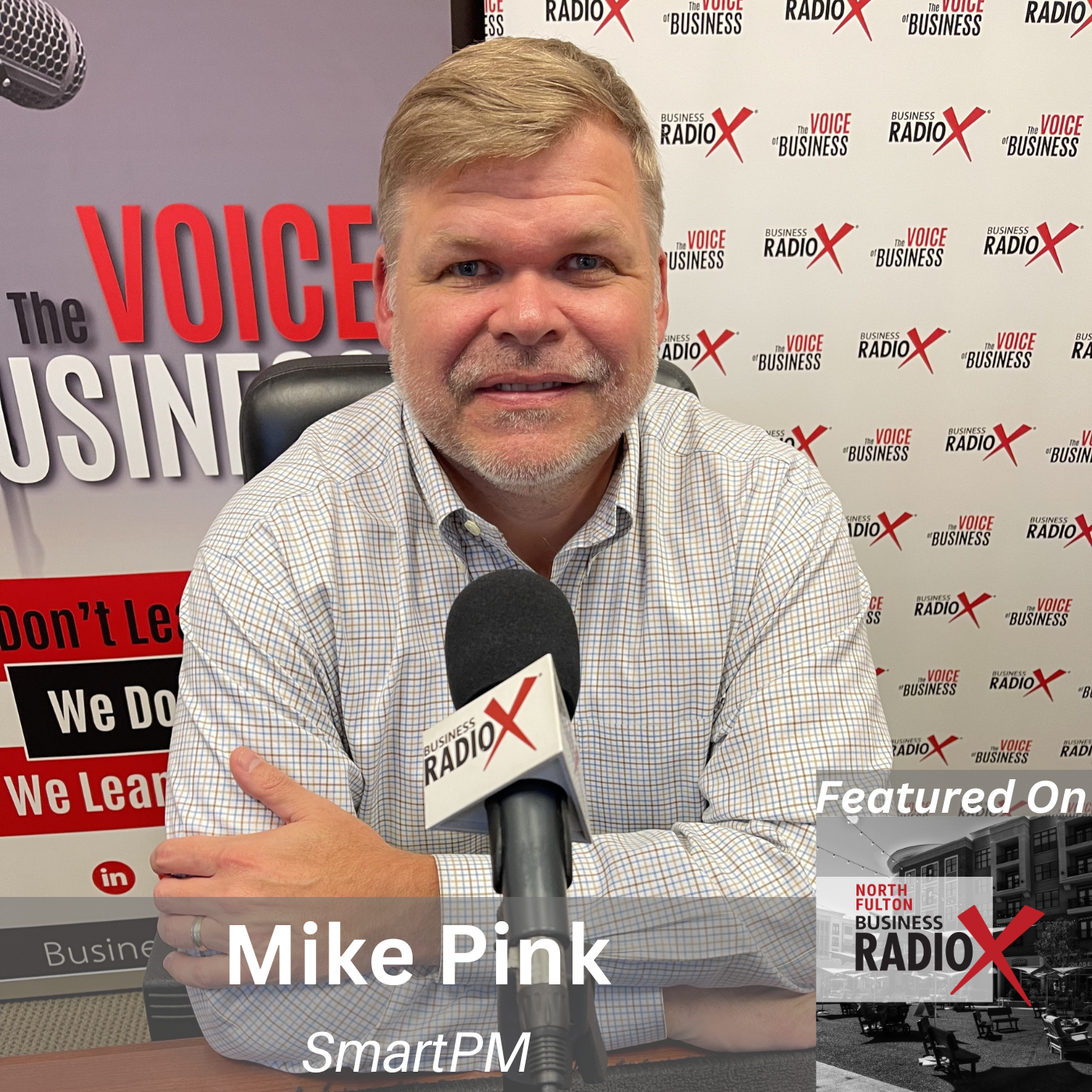
Michael Pink, Founder & CEO, SmartPM

Michael Pink, Founder & CEO, SmartPM
Michael Pink, SmartPM

Michael Pink is the founder and CEO of SmartPM Technologies, a company he started in 2016 with a mission to transform construction project management through innovative schedule analytics. With over 20 years of experience in project controls, risk management, and forensic delay analysis across various sectors, Pink identified the construction industry’s struggle to effectively use vast amounts of schedule data. His background includes working with top consulting firms and earning a BS in Industrial Engineering from Georgia Tech, an MBA from NYU Stern, and certifications as a Planning and Scheduling Professional and Certified Cost Engineer. Pink is known as a thought leader who frequently speaks on how AI and machine learning can drive improvements in project controls and construction outcomes.

SmartPM Technologies, under Pink’s leadership, offers an AI-powered platform that automates schedule analytics to provide real-time, actionable insights for commercial construction projects. The software helps teams identify potential delays, reduce inefficiencies, and resolve disputes by converting complex schedule data into understandable information accessible to all project stakeholders. The company is based in Atlanta, Georgia, and has quickly grown as a pioneer in using advanced technology to improve construction project performance, making schedule management more precise, proactive, and collaborative across the industry.

Website | Company LinkedIn | Mike’s LinkedIn

Renasant Bank supports North Fulton Business Radio

Renasant BankRenasant Bank has humble roots, starting in 1904 as a $100,000 bank in a Lee County, Mississippi, bakery. Since then, Renasant has become one of the Southeast’s strongest financial institutions, with over $17 billion in assets and more than 180 banking, lending, wealth management, and financial services offices throughout the region. All of Renasant’s success stems from each banker’s commitment to investing in their communities as a way to better understand the people they serve. At Renasant Bank, they understand you because they work and live alongside you every day.

Website | LinkedIn | Facebook | Instagram | X (Twitter) | YouTube

Beyond Computer Solutions supports North Fulton Business Radio

Whether you’re a law firm, medical practice, or manufacturer, there’s one headline you don’t want to make: “Local Business Pays Thousands in Ransom After Cyberattack.” That’s where Beyond Computer Solutions comes in. They help organizations like yours stay out of the news and in business with managed IT and cybersecurity services designed for industries where compliance and reputation matter most.

Whether they serve as your complete IT department or simply support your internal team, they are well-versed in HIPAA, secure document access, written security policies, and other essential aspects that ensure your safety and well-being. Best of all, it starts with a complimentary security assessment.

Website | LinkedIn | Facebook | YouTube

About North Fulton Business Radio and host John Ray

With over 900 episodes and having featured over 1,400 guests, North Fulton Business Radio is the longest-running podcast in the North Fulton area, covering business in our community like no one else. We are the undisputed “Voice of Business” in North Fulton!

The show invites a diverse range of business, non-profit, and community leaders to share their significant contributions to their markets, communities, and professions. There’s no discrimination based on company size, and there’s never any “pay to play.” North Fulton Business Radio supports and celebrates businesses by sharing positive stories that traditional media ignore. Some media lean left. Some media lean right. We lean business.

John Ray, host of  North Fulton Business Radio, and Owner, Ray Business Advisors
John Ray, host of North Fulton Business Radio and Owner, Ray Business Advisors

John Ray is the host of North Fulton Business Radio. John and the team at North Fulton Business Radio, LLC, an affiliate of Business RadioX®, produce the show, and it is recorded inside Renasant Bank in Alpharetta.

The studio address is 275 South Main Street, Alpharetta, GA 30009.

You can find the complete archive of shows by following this link. The show is available on all the major podcast apps, including Apple Podcasts, Spotify, Google, Amazon, iHeart Radio, and many others.
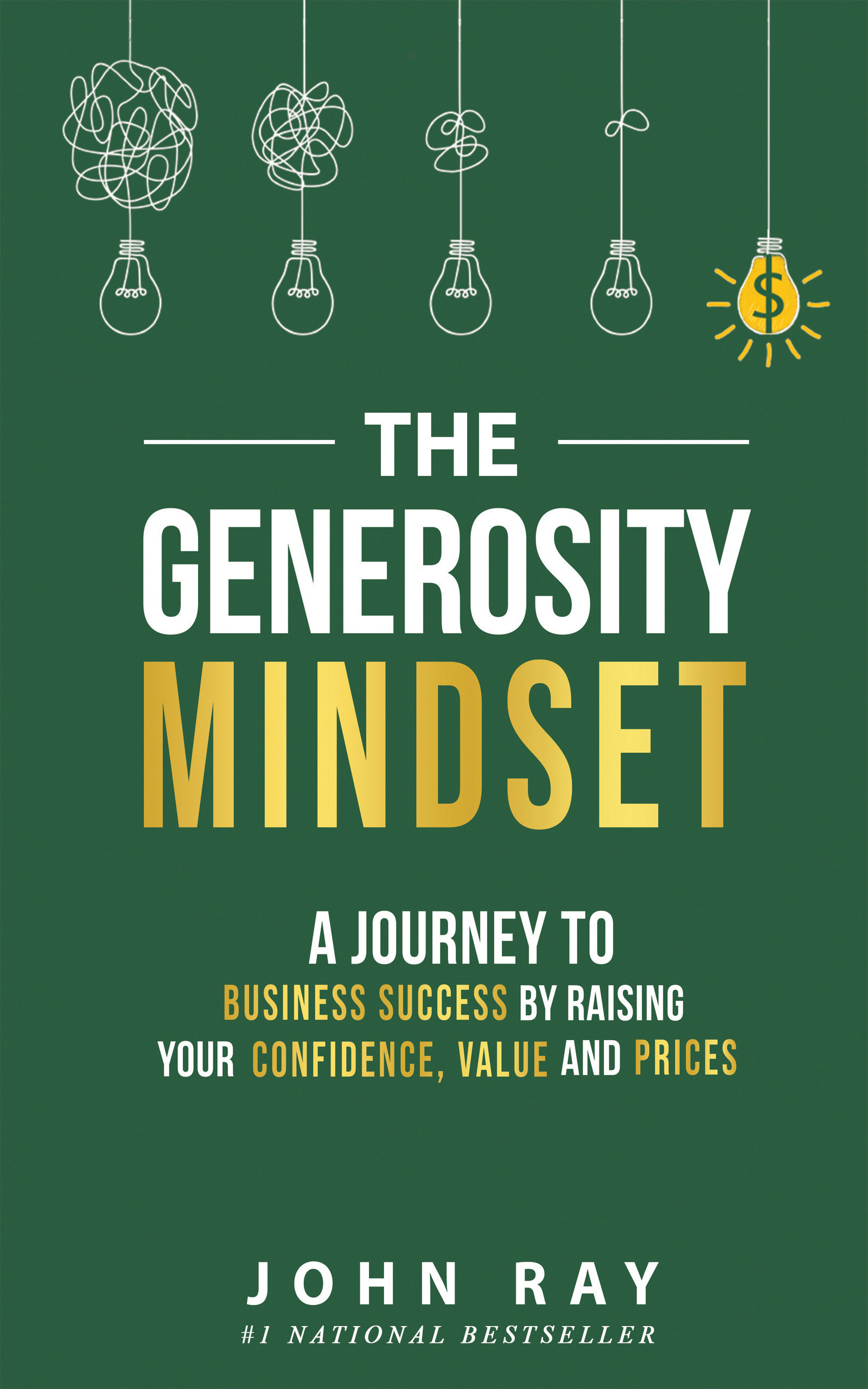
John Ray, The Generosity MindsetJohn Ray also operates his own business advisory practice. John’s services include advising solopreneurs and small professional services firms on their value, their positioning and business development, and their pricing. His clients are professionals who are selling their expertise, such as consultants, coaches, attorneys, CPAs, accountants, bookkeepers, marketing professionals, and other professional services practitioners.

John is the author of the five-star rated book, The Generosity Mindset: A Journey to Business Success by Raising Your Confidence, Value, and Prices, praised by readers for its practical insights on raising confidence, value, and prices.


Tagged With: baseline schedule, Beyond Computer Solutions, capital projects, construction analytics, construction delays, construction tech, cost overruns, CPM scheduling, critical path, Critical Path Method, data driven construction, delay claims, dispute avoidance, ENR contractors, forensic schedule analysis, general contractors, Georgia Tech, John Ray, mid-market contractors, Mike Pink, North Fulton Business Radio, out of sequence work, project controls, project schedule, renasant bank, Risk Management, SaaS for construction, schedule analytics, schedule quality, schedule risk, SmartPM, SmartPM Technologies, total float

Ashish Mistry, BLH Venture Partners

May 16, 2023 by John Ray

Ashish Mistry
Business Beat
Ashish Mistry, BLH Venture Partners
Loading
00:00 /
RSS Feed
Share
Link
Embed

Download file

Ashish Mistry

Frazier & Deeter’s Business Beat:  Ashish Mistry, BLH Venture Partners

Ashish Mistry, Co-Founder and Managing Partner at BLH Venture Partners, was the guest on this edition of Business Beat. He chatted with host Roger Lusby about his career trajectory, early investments, selling at the right time, elements to building a successful team, mistakes startup founders make in working with their investors, what he sees both in the SaaS and ecommerce space, and much more. Ashish also discussed PCKL, a portfolio company which sells pickleball equipment and accessories, and why he believes the market for pickleball will continue to grow.

Business Beat is presented by Alpharetta CPA firm Frazier & Deeter and is produced by the North Fulton studio of Business RadioX®

BLH Venture Partners

BLH understands entrepreneurs and the phase’s start-ups and young companies traverse on their path to success.

Their insights stem from hands-on experience operating companies and having faced many of the same challenges current and prospective partners face as well.

BLH’s investments center on companies that can deliver innovation within a new or existing market.

They look for capital-efficient companies within the technology-enabled services, enterprise IT, consumer internet and e-commerce markets. They are excited by entrepreneurs that understand their respective markets very well and have something to show when they meet with BLH.

Company website | LinkedIn

Ashish Mistry, Co-Founder & Managing Partner, BLH Venture Partners

Ashish Mistry
Ashish Mistry, Co-Founder & Managing Partner, BLH Venture Partners

As Co-founder and Managing Partner of BLH Venture Partners, Ashish functions as an investor and adviser to young companies. His operating experience includes leadership roles with high-growth companies within Information Security, SaaS, and E-commerce.

Ashish was Founder and CEO of KontrolFreek – an innovative lifestyle brand in the video game accessories market until its acquisition in late 2020. Ashish’s first entrepreneurial role was as co-founder of Virtex Networks (Acquired by Leapfrog Services), then as an early team member of AirDefense (Acquired by NYSE: MOT). Mistry also spent two tours as an EIR at Georgia Tech’s Advanced Technology Development Center (ATDC), working with start-ups across Georgia.

Ashish is active in community organizations including current and prior board positions with Children’s Healthcare of Atlanta, Venture Atlanta (Co-founder) and the Atlanta CEO Council, as well as serving on committees with the Metro Atlanta Chamber. Mistry is also active in YPO.

He is a graduate of Emory University and resides with his wife and children in Atlanta.

LinkedIn

Frazier & Deeter

The Alpharetta office of Frazier & Deeter is home to a thriving CPA tax practice, a growing advisory practice and an Employee Benefit Plan Services group. CPAs and advisors in the Frazier & Deeter Alpharetta office serve clients across North Georgia and around the country with services such as personal tax planning, estate planning, business tax planning, business tax compliance, state and local tax planning, financial statement reviews, financial statement audits, employee benefit plan audits, internal audit outsourcing, cyber security, data privacy, SOX and other regulatory compliance, mergers, and acquisitions and more. Alpharetta CPAs serve clients ranging from business owners and executives to large corporations.

Roger Lusby, Partner in Charge of Alpharetta office, Frazier & Deeter
Roger Lusby, Partner in Charge of the Alpharetta office of Frazier & Deeter

Roger Lusby, host of Frazier & Deeter’s Business Beat, is an Alpharetta CPA and Alpharetta Office Managing Partner for Frazier & Deeter. He is also a member of the Tax Department in charge of coordinating tax and accounting services for our clientele. His responsibilities include a review of a variety of tax returns with an emphasis in the individual, estate, and corporate areas. Client assistance is also provided in the areas of financial planning, executive compensation and stock option planning, estate and succession planning, international planning (FBAR, SFOP), health care, real estate, manufacturing, technology, and service companies.

You can find Frazier & Deeter on social media:

LinkedIn | Facebook | Twitter

An episode archive of Frazier & Deeter’s Business Beat can be found here.


Tagged With: Ashish Mistry, BLH Venture Partners, Business Beat, Entrepeneur, Frazier and Deeter, gaming, Georgia Tech, KontrolFreek, pickleball, Roger Lusbh, venture capital

Melanie Flores and Chris Nedza, Symtrain

October 4, 2021 by John Ray

Symtrain
North Fulton Business Radio
Melanie Flores and Chris Nedza, Symtrain
Loading
00:00 /
RSS Feed
Share
Link
Embed

Download file

SymtrainMelanie Flores and Chris Nedza, Symtrain (North Fulton Business Radio, Episode 394)

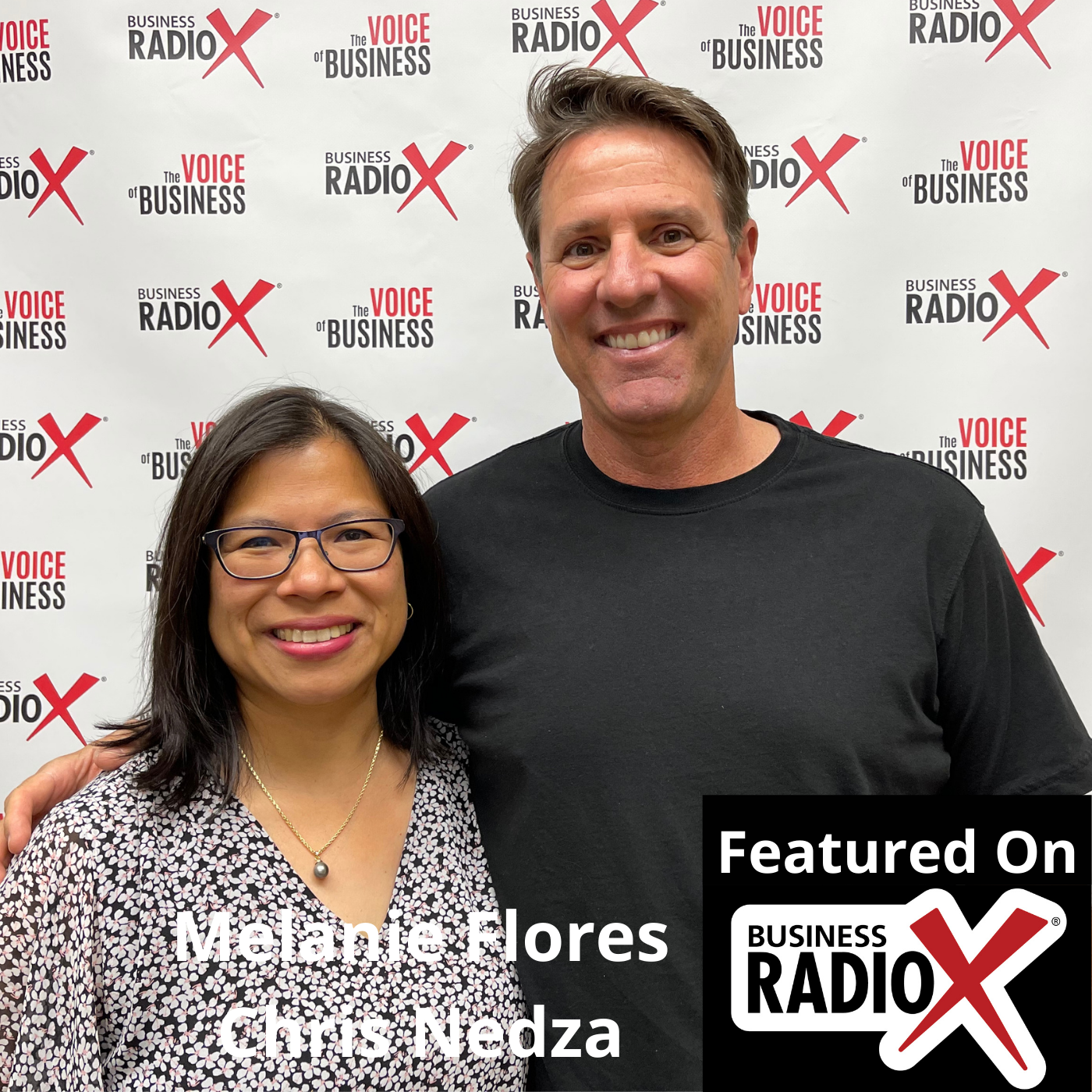
Facing the twin challenges of training and retaining employees while providing consistent customer service, salon owners and real estate companies now have the technology of Symtrain to rely on. Using Symtrain ensures customer-facing personnel are well-trained and provide outstanding customer service. Melanie Flores, Program Manager at Symtrain, and Chris Nedza, who mentors Symtrain through Georgia Tech’s ATDC, joined host John Ray to discuss Symtrain’s efficacy, impact, other verticals their technology can be applied to, and much more.  North Fulton Business Radio is broadcast from the North Fulton studio of Business RadioX® inside Renasant Bank in Alpharetta.

Symtrain

Instructional training is not enough. People learn best by doing. In fact, we retain only 10% of what we’re “taught” compared to 90% of what we “do”. That’s because experience is immersive and gets us “involved”. But it can also be costly and difficult to scale, especially remotely. So, all too often learning happens on the job, which really means “on the customer”.

Symtrain engages employees in simulated work experiences that feel “real” – working at their own pace, anywhere, anytime, on any device. So, they’re empowered to take charge of their own learning and success. As a result, they learn faster, retain more, build confidence, and master the skills they need to deliver the best customer interactions every time.

While our platform makes it easy to create and manage simulations, we also offer expert professional services to help businesses succeed:

  • EConsulting and Needs Assessment
  • ETraining and Simulation Integration
  • ESimulation Design and Implementation
  • ECurriculum Planning

Company website | LinkedIn | Twitter

Melanie Flores, Program Manager, SymTrain

Melanie Flores, Program Manager, Symtrain

Melanie Flores is the Program Manager at SymTrain. She leverages an engineer’s mind, a teacher’s heart, and a gardener’s hands to help people learn and share memorable experiences together. She started up Corning’s optical fiber factory in the Charlotte, NC area, founded a popular kindergarten engineering design workshop based on a famous MIT course, and led the STEM coaching team serving Easter Seals teachers across metro Atlanta. Her work has been featured by TEDxJacksonville, TEDxAlpharettaWomen, Women 2.0, the National Association of Independent Schools, Engineering is Elementary, MIT’s pK-12 Action Group, the Boston Museum of Science, and many other entities. In June 2021 she joined SymTrain, an Atlanta-based tech startup. She is excited to apply her passion for learning and customer experience to the workforce development space. In her spare time, she enjoys reading, traveling, and spending time outdoors with her husband and two sons.

LinkedIn

Chris Nedza, Entrepreneur in Residence, Advanced Technology Development Center (ATDC) at Georgia Tech

Chris Nedza, Entrepreneur in Residence, Advanced Technology Development Center (ATDC) at Georgia Tech

Chris Nedza is a serial entrepreneur and loves diving into a start-up business. He’s built an Inc. 500 company, led a turnaround as the CEO of a restaurant Point of Sale company, became CEO of an Ozone based technology company, and even brought his creative thinking and love of students to Gwinnett County Public Schools by becoming a high-school teacher and ultimately coordinator of academy business partnerships in 2014.

He most recently founded and scaled ZeeZor, a real-time mobile reporting and employee engagement platform for the beauty industry. ZeeZor was acquired by Vista Private Equity group in early 2020 and became part of Mindbody, a business management software system for the fitness, wellness and salon/spa industry.

Chris is currently serving as an EIR (entrepreneur-in-residence) and is on the faculty/staff of Georgia-Tech University. In his role, he helps technology companies with ideation>launch>funding>scale.

He has an undergraduate degree in economics from the University of Georgia and an MBA from Emory University. He is a frequent contributing author, keynote speaker, devoted husband, father to 6 sons, drummer at church and championship level Pizza eater.

LinkedIn

Questions and Topics

  • What does SymTrain do?
  • How did this business come about?
  • Why do you care about solving this problem?
  • Tell us about one of your customers and how you made their lives better.
  • What are SalonScripts and how are they different from the rest of SymTrain’s offerings?
  • Who does SalonScripts help?
  • Where do you see this business going next? Who else could you serve?

North Fulton Business Radio is hosted by John Ray, and broadcast and produced from the North Fulton studio of Business RadioX® inside Renasant Bank in Alpharetta. You can find the full archive of shows by following this link. The show is available on all the major podcast apps, including Apple Podcasts, Spotify, Google, Amazon, iHeart Radio, Stitcher, TuneIn, and others.

RenasantBank


Renasant Bank has humble roots, starting in 1904 as a $100,000 bank in a Lee County, Mississippi, bakery. Since then, Renasant has grown to become one of the Southeast’s strongest financial institutions with over $13 billion in assets and more than 190 banking, lending, wealth management and financial services offices in Mississippi, Alabama, Tennessee, Georgia and Florida. All of Renasant’s success stems from each of their banker’s commitment to investing in their communities as a way of better understanding the people they serve. At Renasant Bank, they understand you because they work and live alongside you every day.


Special thanks to A&S Culinary Concepts for their support of this edition of North Fulton Business Radio. A&S Culinary Concepts, based in Johns Creek, is an award-winning culinary studio, celebrated for corporate catering, corporate team building, Big Green Egg Boot Camps, and private group events. They also provide oven-ready, cooked from scratch meals to go they call “Let Us Cook for You.” To see their menus and events, go to their website or call 678-336-9196.

Tagged With: artificial intelligence, atdc, Chris Nezda, customer service training, Georgia Tech, John Ray, Melanie Flores, North Fulton Business Radio, real estate, salons, Symtrain, training

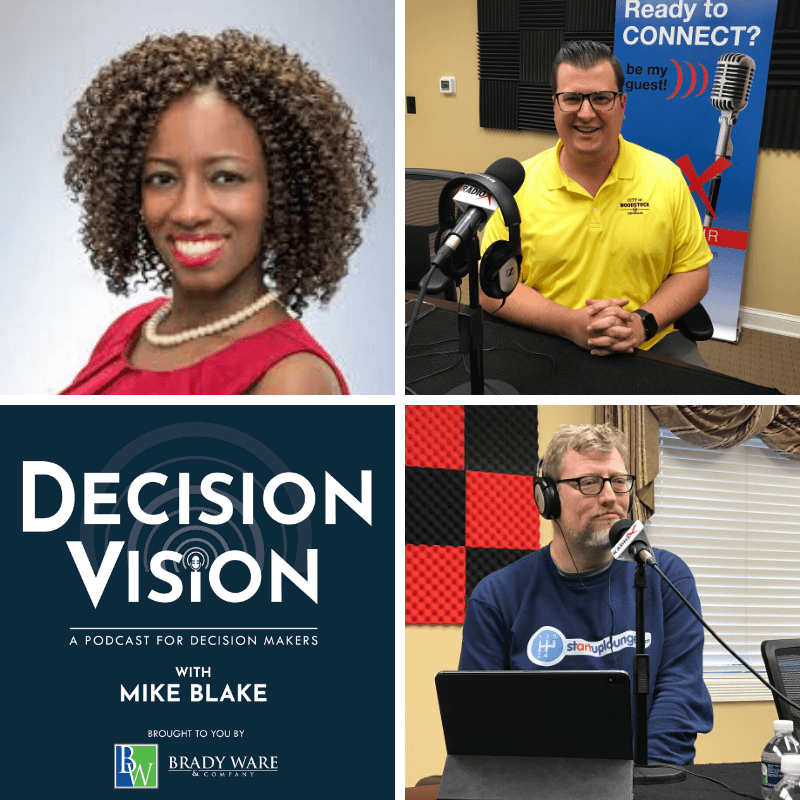
Decision Vision Episode 44: Should I Run for Political Office? – An Interview with Rep. Dar’shun Kendrick, Georgia House of Representatives, and Councilman Colin Ake, City of Woodstock

December 19, 2019 by John Ray

should I run for political office
Decision Vision
Decision Vision Episode 44: Should I Run for Political Office? - An Interview with Rep. Dar'shun Kendrick, Georgia House of Representatives, and Councilman Colin Ake, City of Woodstock
Loading
00:00 /
RSS Feed
Share
Link
Embed

Download file

should I run for political office

Decision Vision Episode 44: Should I Run for Political Office? – An Interview with Rep. Dar’shun Kendrick, Georgia House of Representatives, and Councilman Colin Ake, City of Woodstock

More business owners than ever are running for political office. What should I consider in making this decision? How will holding political office affect my business? On this edition of “Decision Vision,” host Mike Blake speaks with business Rep. Dar’shun Kendrick, Georgia House of Representatives, and Councilman Colin Ake, City of Woodstock on these questions and much more. “Decision Vision” is presented by Brady Ware & Company.

Rep. Dar’shun Kendrick, Georgia House of Representatives

should I run for political office
Georgia Rep. Dar’shun Kendrick

Dar’shun Kendrick was born and raised in Decatur, Georgia. She has a dual degree in political science and communications from Oglethorpe University, a law degree from the University of Georgia and a Master in Business Administration from Kennesaw State. Both of her parents are entrepreneurs so she grew up understanding the unique challenges of business owners, particularly business owners of color.

That’s why since 2010, Dar’shun has dedicated her capital compliance law firm to making sure everyone has access to legal services and tools to raise capital for their business in a way that makes sense for every size business and every investor. Her passion and focus have specifically been on making sure that minorities and women have access to the tools and resources they need to reach their capital raising goals. To date, she has helped companies raise over half a billion ($500MM) in investment funds. In 2019, she became a Series 65 license holder (investment adviser representative) with the ability to provide strategic investment advice to her corporate clients as a part of her services.

Dar’shun is also an innovator and community activist. She was featured in the Huffington Post as 1 of 25 people positioned to Scale Atlanta’s Growing Inclusive Technology Start Up Ecosystem for Black Americans and Beyond. In 2017, she was elected to the Technology Association of Georgia’s (TAG) Corporate Development Board and in 2018 elected to the TAG Diversity Board. She is also a past contributor to Black Enterprise Magazine focusing on economic justice issues. In 2017, she founded Georgia’s 1st ever Georgia Blacks in Tech Policy Conference & Follow Up “Day of Action” with the focus on advocating for inclusive tech policy throughout the state. This event continues on today as the “Tech for All” Policy Conference.

Dar’shun’s service extends beyond her capital compliance firm. Since the age of 27, she has also served as a member of the Georgia House of Representatives. She represents over 54,000 Georgians in DeKalb and Gwinnett counties. She also founded Georgia’s first Technology, Innovation & Entrepreneurship Caucus which is a bipartisan caucus of Georgia legislators and stakeholders committed to the mission of supporting entrepreneurs within the state. She currently serves as the Chief Deputy Whip of the House Democratic Caucus and a ranking member of the Small Business & Jobs Creation committee.

Awards (last 3 awards awarded)- She was awarded the Urban League of Greater Atlanta Young Leader Award (2019) and named as an awardee for the Atlanta Business Chronicle’s “40 under 40” awards (2019) and nominated for 2 NAACP awards for criminal justice reform and her business (2017 and 2019).

Dar’shun is a community activist, public speaker & teacher, elected official, private securities attorney, and a proud member of Alpha Kappa Alpha Sorority, Inc. She currently resides in Lithonia, Georgia.

Councilman Colin Ake, City of Woodstock

should I run for political office
Councilman Colin Ake, City of Woodstock

Colin Ake was elected to Woodstock City Council in 2017. Prior to announcing his run for City Council, Colin served as the Mayor’s appointee on the Woodstock Planning and Zoning Commission for a year and a half. While on the Planning Commission, he was elected Vice-Chair by his peers. Colin served as the Chair of the Greenprints Alliance Board of Directors in 2016 and 2017, and as the Vice-Chair in 2015. He was invited to represent Greenprints Alliance on the Woodstock Police Department’s Body-Worn-Camera Working Group. Colin has provided significant input to the Cherokee Office of Economic Development and Woodstock Office of Economic Development on Fresh Start Cherokee and The Circuit as they work to incorporate startups into their economic development plans.

Professionally, Colin is employed by Georgia Tech’s VentureLab, where he works with commercialization projects. He teaches entrepreneurship to commercialization teams through the NSF I-Corps Program, where he is a Regional Lead Instructor. He leads programs across the southeast and assists in the administration of the I-Corps South grant at Georgia Tech. Colin has taught at Georgia Tech’s Scheller College of Business and is a member of the Georgia Tech Faculty Senate. He also represented Georgia Tech on the State Senate’s Camden County Spaceport Study Committee, where he studied the opportunities and challenges facing the potential spaceport on the Georgia coast.

Prior to joining Georgia Tech, Colin spent four years rebuilding an aerospace company focused on reusable launch operations and lunar/planetary lander technology development. He previously worked at the Georgia Tech Research Institute and at an early-stage technology startup for two years. Colin holds a Bachelor of Science in Management and a MBA from Georgia Tech.

Colin grew up a mile from Woodstock and moved back to the city with his wife Nikki to start their family. Colin, Nikki, and children (Owen & Lealynn) are members at Sojourn Community Church in Woodstock, where Nikki is an active member of the finance committee, and Colin plays drums and works on long-term planning projects.

Michael Blake, Brady Ware & Company

Mike Blake, Host of “Decision Vision”

Michael Blake is Host of the “Decision Vision” podcast series and a Director of Brady Ware & Company. Mike specializes in the valuation of intellectual property-driven firms, such as software firms, aerospace firms and professional services firms, most frequently in the capacity as a transaction advisor, helping clients obtain great outcomes from complex transaction opportunities. He is also a specialist in the appraisal of intellectual properties as stand-alone assets, such as software, trade secrets, and patents.

Mike has been a full-time business appraiser for 13 years with public accounting firms, boutique business appraisal firms, and an owner of his own firm. Prior to that, he spent 8 years in venture capital and investment banking, including transactions in the U.S., Israel, Russia, Ukraine, and Belarus.

Brady Ware & Company

Brady Ware & Company is a regional full-service accounting and advisory firm which helps businesses and entrepreneurs make visions a reality. Brady Ware services clients nationally from its offices in Alpharetta, GA; Columbus and Dayton, OH; and Richmond, IN. The firm is growth minded, committed to the regions in which they operate, and most importantly, they make significant investments in their people and service offerings to meet the changing financial needs of those they are privileged to serve. The firm is dedicated to providing results that make a difference for its clients.

Decision Vision Podcast Series

should my business buy real estate?“Decision Vision” is a podcast covering topics and issues facing small business owners and connecting them with solutions from leading experts. This series is presented by Brady Ware & Company. If you are a decision maker for a small business, we’d love to hear from you. Contact us at decisionvision@bradyware.com and make sure to listen to every Thursday to the “Decision Vision” podcast. Past episodes of “Decision Vision” can be found here. “Decision Vision” is produced and broadcast by the North Fulton studio of Business RadioX®.

Visit Brady Ware & Company on social media:

LinkedIn:  https://www.linkedin.com/company/brady-ware/

Facebook: https://www.facebook.com/bradywareCPAs/

Twitter: https://twitter.com/BradyWare

Instagram: https://www.instagram.com/bradywarecompany/

Show Transcript

Intro: [00:00:09] Welcome to Decision Vision, a podcast series focusing on critical business decisions brought to you by Brady Ware & Company. Brady Ware is a regional full-service accounting and advisory firm that helps businesses and entrepreneurs make visions a reality.

Mike Blake: [00:00:28] And welcome to Decision Vision, a podcast giving you, the listener, clear vision to make great decisions. In each episode, we discuss the process of decision making on a different topic from the business owners or executives perspective. We aren’t necessarily telling you what to do, but we can put you in a position to make an informed decision on your own and understand where you might need help along the way.

Mike Blake: [00:00:48] My name is Mike Blake, and I’m your host for today’s program. I’m a director at Brady Ware & Company, a full-service accounting firm based in Dayton, Ohio, with offices in Dayton; Columbus, Ohio; Richmond, Indiana; and Alpharetta, Georgia, which is where we’re recording today. Brady Ware is sponsoring this podcast. If you like this podcast, please subscribe in your favorite podcast aggregator and please consider leaving a review of the podcast as well.

Mike Blake: [00:01:11] So, today, we’re going to talk about whether you as a business owner executive should run for political office. And regardless, I think, of where you are in the political spectrum, if you are at any place, I’m not sure where I am anymore, I think that’s an increasingly important topic. I think we’re seeing more people with a business background seeking office at all levels. And indeed, like them or love them, love them or not like them, the current President of the United States does come from a business background. And indeed, he ran on his business background as a reason why that is the case he made that he would be a good president of the United States. And that’s something that he invokes fairly regularly.

Mike Blake: [00:02:02] And it’s not just he that’s doing that. Mike Bloomberg has recently jumped into the race. There’s discussion now about, you know, whether billionaires can buy their way to the presidency. And again, we’re not going to talk about that particular topic, but I think there’s an increasingly blurred line now between politics and business. And maybe there’s always been a blurred line and depending, again, where you sit, maybe it’s an uncomfortably blurred line. But the fact of the matter is, I think, that the people who did not think that they had the stuff or the wherewithal, even the desire to run for political office and just sort of put themselves in the seat of being a business person, now, are thinking of themselves potentially in a dual role or maybe it’s even something they do with either a subsequent or intervening chapter in their lives.

Mike Blake: [00:02:56] And, you know, the recent statistics on this podcast still are flooring to me. We’re pushing about three-and-a-half million downloads, I understand, since February. Chances are good at least one of you has thought about running for political office. So, at least, this could be interesting to one of you out there. But I think it will be interesting to more on that. And we actually have a director at Brady Ware & Company that was elected mayor for one of the towns, I believe, outlying Dayton. He took over as mayor when the previous mayor resigned. And then, ran and was elected in his own right. So, we’re even seeing that inside our own company.

Mike Blake: [00:03:35] So, as you know, when you listen to this podcast, we’re bringing in people who actually know what they’re talking about, because I certainly don’t. And coming in to talk about this topic today are two people who are balancing public service and their own careers. And so, joining us today is Dar’shun Kendrick, a five-term member of the 93rd and/or 94th Districts of Georgia in the Georgia House of Representatives as the chief deputy whip. And I say the 93rd/94th, because I think it was a 94th District for her first term. And then, thanks to redistricting, I think it then became the 93rd. But for those who aren’t in Georgia, our assembly is made up of 180 members, a fairly large body, partially because we just have, I think, more counties than anybody in the country.

Mike Blake: [00:04:25] We’re not serving her constituents in this capacity. Dar’shun is a capitol compliance lawyer dedicated to guiding Black and female founders in the capitol, raising investing process. She provides these services through her company, the Kendrick Advisory, an advocacy group. She’s an arbitrator of the Financial Industry Regulatory Authority or FINRA. I did not know that before I was researching this podcast and she holds a bachelor of arts from Oglethorpe University, I live about a-mile-and-a-half from there, holds an MBA from Kennesaw State University and a law degree from the University of Georgia.

Mike Blake: [00:04:56] And she’s joining us by phone today. So, you may hear some noise in the background. With those of you who are not from Georgia, we have a unique driving environment here. And one of the unique features of the driving environment is that rain, particularly cold rain, will turn the streets of the greater Atlanta metropolitan area into an episode of Ice Road Truckers, basically. So, Dar’shun, please drive carefully as you’re on the podcast. Thanks for joining us.

Dar’Shun Kendrick: [00:05:25] Yeah. Thanks so much. And I’m sorry I couldn’t be in the office or in the studio today. But as you know, we are getting ready for session. So, we’re trying to make do with the 24 hours we get.

Mike Blake: [00:05:37] Yeah. Well, if you guys can vote a 26-hour day, I’d really appreciate that.

Dar’Shun Kendrick: [00:05:42] Yeah. So would I. I’ll work on that.

Mike Blake: [00:05:45] Also, joining us today is Colin Ake. Colin was elected city councilman in 2018 for the City of Woodstock, Georgia, a municipality of southern Cherokee County, the population of just over 30,000. And Woodstock is, oh, I’m going to say about 20 miles north and west of downtown city of Atlanta, maybe a little bit farther than that. Prior to serving in that role, Colin was a—or give me some help here, was it a or the planning and zoning commissioner for the City of Woodstock.

Colin Ake: [00:06:13] I was one of seven.

Mike Blake: [00:06:15] Okay. One of seven. So, a planning and zoning commissioner. When not serving his constituents, Colin is a principal at Georgia Tech VentureLab, where he serves as an instructor on innovation and entrepreneurship. Colin actively works with entrepreneurs and researchers to commercialize research, identify, and secure grant funding, mentor startups, and modify and implement Georgia Tech’s evidence-based entrepreneurship curricula. This includes training and evaluating other instructors in the customer development methodology employed by the I-Corp program and across Georgia Tech.

Colin Ake: [00:06:44] At some point, I’d have you back to talk about because that’s an interesting program. It’s one that I think is unique. Colin holds his bachelor degree in management and his MBA from Georgia Tech. So, regardless of any kind of political discussion here, we have somebody from the University of Georgia and somebody from Georgia Tech, and that’s probably going to create more tension on this program than anything. And if you are from Alabama or Auburn or Florida, Florida State, you know exactly what I’m talking about. Colin, welcome to the program.

Colin Ake: [00:07:10] Thanks, Mike. Thanks for having me.

Mike Blake: [00:07:12] And interestingly, you’re wearing a shirt today that’s yellow with black stitching on that. Is that something that you arranged or?

Colin Ake: [00:07:20] Not specifically because of where Dar’shun went to get her law degree, but I did pick it out.

Mike Blake: [00:07:29] All right. So, let’s jump into it, because we got a ton to cover here. So, Dar’shun, let me let you go first. Ten years ago, you began to serve in your capacity in the Georgia legislature. What motivated you to do that?

Dar’Shun Kendrick: [00:07:49] Well, here, I have a very unique and interesting story. So, I essentially was at the right place at the right time or the right place at the wrong time, depending on which day of the week it is. I was a 27-year old who had just started practicing law for small business litigation firm downtown. And the law firm imploded one summer. And so, they let everybody go. And so, I had started my MBA program. And I had to start my own law firm.

Dar’Shun Kendrick: [00:08:28] So, I actually happened to be down as the capitol because two hours before I got down there to meet with our rep on some sort of marketing for my new firm, the person in my seat decided to run for governor. And so, they were looking for people. And I just so happened to be at the capitol meeting on an unrelated matter. I didn’t even know they would qualify me. And so, the person I was meeting with, I had known since I was a teenager because I worked at the capitol and they asked me what district I was in.

Dar’Shun Kendrick: [00:09:04] And I said, House District 94, which is 94 at the time. And he said, “Well, we need you to run for office.” And of course, I thought he was crazy because I was starting the MBA program and a new law firm. But the long story short is I ended up qualifying 30 minutes before the qualifying ended. So, I actually went from a private citizen to a full-blown candidate unexpectedly overnight. So, I wish I had a better inspirational story about how I worked hard enough and I planned to be in this position, but that is the true story of how it happened.

Dar’Shun Kendrick: [00:09:43] But I ultimately decided to say yes because I knew I eventually wanted to work on state house. I just thought it would be kind of be, you know, sort of when I had a more stable career, when I was older, maybe with a family. But I decided to say yes, because, you know, I grew up in DeKalb County and I represent Dekalb County. I knew that I was more qualified than the people that were running. I already had tremendous support before I even signed the qualification document, so I knew that I could do it. And even though it came unexpectedly and it came fast, I have had a pleasure of serving 54,000 Georgians ever since.

Mike Blake: [00:10:29] Okay. And I have a feeling there are probably other stories that are kind of like that. But Colin, how about you? What’s your story? Did you also sort of fall into public service that way or is that the more of a longer term ambition of yours?

Colin Ake: [00:10:44] No, I kind of fell into it. I grew up in Woodstock. And Woodstock has changed a lot. It has grown massively in the last couple of decades and really become a place that is much different than where I grew up. My wife and I moved back to Woodstock in 2013. And I got involved in a local nonprofit focused on building a trail system just because I want to be able to raise a family somewhere over there. It was a good outdoor recreation opportunity. And from there, I got asked one day to serve on the Planning and Zoning Commission, which was not on my radar, not something I’d been to, not something I was involved in.

Mike Blake: [00:11:26] Did you know anything about planning and zoning?

Colin Ake: [00:11:27] I did not know anything about planning and zoning. But I love learning new things. And so, I dove in and had a lot of fun over the course of about a-year-and-a-half. Planning and zoning in the State of Georgia, most bodies are recommending bodies. In other words, they’re appointed by mayor and city council, but they recommend decisions. And then, the mayor and city council make the final decision. And after about a-year-and-a-half of seeing recommendations go one way or the other and the city council listened to some of them and not listened to others, I decided, well, it might be time to make this vote count if I’m spending the time on it.

Mike Blake: [00:12:05] Like the Christmas song goes, if you’re so smart, you rig up the lights, right?

Colin Ake: [00:12:09] Something like that.

Mike Blake: [00:12:10] So, let’s go into that then. Your first election, talk about running in your first election was like.  You, yeah.

Colin Ake: [00:12:21] Yeah.

Mike Blake: [00:12:22] Colin.

Colin Ake: [00:12:22] So, my first election was an experience. So, I ran against an incumbent that was first elected and hadn’t been in office continuously, but was first elected in the year 1990.

Mike Blake: [00:12:35] Wow.

Colin Ake: [00:12:36] So, 2017, I’m running against a guy who has been in office in and out a couple of times, but for for a while. Nice guy. But I wanted a shot. So, I qualified and started running. Somebody else also qualified. So, I had a three-way race and that was quite the experience. It’s a lot of door-knock and it’s a lot of talking to people. It’s a lot of time. It is a great experience. You know, I teach this entrepreneurship stuff at Georgia Tech, right? We teach researchers to go talk to customers and actually understand the people. I mean, knocking on doors is all that, right?

Mike Blake: [00:13:12] Yeah.

Colin Ake: [00:13:12] It is essentially sitting there and that-

Mike Blake: [00:13:13] I hadn’t thought about that. That’s right.

Colin Ake: [00:13:15] … you are learning about your constituents or potential constituents at this point. And what do they care about? Why do they care about those things? And it’s a lot of fun, but it’s a lot of work. You wear through some shoes and it was a good time. I was fortunate enough to avoid a runoff. I won outright. I was a little surprised. You know, I know a lot of people do these victory parties, I didn’t do any of that. I was ready to find out who I was going to be against in the runoff. And I had about four people at my house. And it turned out okay.

Mike Blake: [00:13:51] Well, knowing you, that sounds about right though. You’re kind of a low-key guy, so I don’t see you as a victory lap guy. Dar’shun, how about you? I mean, I know you, sort of, were an overnight qualification story, but what was that first election like? Were you opposed?

Dar’Shun Kendrick: [00:14:09] I was. So, I had four other people was—and my district is largely democratic. So, obviously—general. But I did have four other people in the primary. It is somebody who is very active in the Democratic Party. Somebody who had ran for this three times before. And there’s somebody who was very, very active that have supporters in Rockdale. But I’m just—so, I was the youngest. And so, every time the media printed something, they just ask it without at least letting you know for whatever reason.

Dar’Shun Kendrick: [00:14:53] But I, you know, knocked on doors. I have been involved in politics since I was 18. So, we have to like run a campaign. And so, I had a number of primary voters who were at least three times. And that’s when the primary—fly. It wasn’t in vain like it is now. So, it was a long, hot summer, a very long, hot summer. And I, you know, didn’t quite know how I was able to—start a law firm while knocking on doors. That still felt quite interesting in how I did it—business.

Mike Blake: [00:15:38] Well, let’s, in fact, talk about that, because, you know, one of the things that draws me to this conversation is, you know, where does running for office intersect with business, right? And both of you, in your case, you have a business and Colin has, you know, a career and neither of your post, they’re not designed to have you be a career politician in that respect. But I’m curious, as you are knocking on doors, do you think that that actually helped you kind of understand your market better, Dar’shun?

Dar’Shun Kendrick: [00:16:20] You know, I think it helped me not only to understand my market better, but just to broaden my understanding of just opinions and the issues facing Georgia in general. When I first ran for office, I was—at Rockdale County. And Rockdale County is that county who have very, very active supporters of commerce. And so, you know, on the campaign, so obviously, I was engaged with those two views. But it helped me that I did have a business background to sort of, I think, connect with people on the campaign trail at these retail or business centers.

Dar’Shun Kendrick: [00:17:06] And I am accused more than I would like about being one of the more full-business Democrats. But I think it served me well, because I am able to understand sort of the base of my calling, which is labor and balancing with the people that I represent, which are obviously founders of this. So, I definitely learned a lot about that market, but around Georgia issues as well. It was a really great opportunity to just meet people and hear different views. I really enjoyed the campaign. I know it’s hard, but I learned a lot of their stories.

Mike Blake: [00:17:47] So, Colin, my next questions for you is, you know, as you are preparing to run, have you had professional mentors or advisors in your life that maybe, you know, have helped you along the way to get to where you’ve been professionally? Did you also rely on them as you contemplated this political step? And if so, were they helpful? If not, then where did you kind of find that expertise?

Colin Ake: [00:18:11] Yeah, it’s a great question. So, you know, I tend to be the student of, you know, whatever world I’m going into. I worked with a bunch of different entrepreneurs from a bunch of different backgrounds and bunch different industries, right? And so, that’s taught me to take advice from the people who have experienced something before and go find people that can share something with me that, you know, is based off that experience. I certainly had conversations with business mentors or people that I worked with previously. I’m about running for office. I got encouragement to do so.

Colin Ake: [00:18:45] But of course, you know, if you’ve not run a campaign, you generally go well. But I’ve never run a campaign and that’s kind of, you know, where that stops. I had some help from some friends that had experienced parsing data and find someone that they can parse data well. And go grab some voter data and, you know, data’s data. You got to know what you’re looking for, but once you know what you’re looking for, it’s fairly easy to pull together a strategy.

Mike Blake: [00:19:13] Indeed, I’ve heard that superior command of data was a big factor in enabling the president to win in 2016, right? It wasn’t whether he’s a better candidate or not, but this was a lot of analysis. And I think there’s some truth to this that he and his team just paid more attention and just did better with parsing data.

Colin Ake: [00:19:36] My experience has been that the data certainly gives you an edge. And it helps inform whatever strategy you’re developing as a team. Dramatically different to run for president than it is to run for city council for the City of Woodstock.

Mike Blake: [00:19:49] Sure.

Colin Ake: [00:19:51] For the small business owners that are out there that are thinking about getting involved in local government, at either the local or the county or the state level, it’s really easy to not even be—you know, you don’t have to be a presidential level data parser to make a difference in a small race.

Mike Blake: [00:20:12] Yeah. And in fact, interestingly enough, there is one of these rare cases where a meaningful office was won by one vote, a Boston city council office, after their fourth recount was just decided by one vote with over 70,000 thousand votes involved. So-

Colin Ake: [00:20:30] That’s fairly narrow.

Mike Blake: [00:20:31] There’s probably going to be a lawsuit, too. One vote, you know, you got to believe that’s gonna be challenged, I would think. But still-

Colin Ake: [00:20:39] Hanging chad somewhere.

Mike Blake: [00:20:40] Yes. So, it does happen. So, Dar’shun, how about you? I suspect, but you tell me. I don’t want to put words in your mouth. What about your mentors and advisors? Have they been the same for you along the way in business as in politics or have you found that they’ve been different?

Dar’Shun Kendrick: [00:21:01] So, my sort of mentors in business have always been my parents. So, I grew up in an entrepreneurial household. So, I love business owners, but typically, minority female founders and Black-owned founders share sort of the challenges that they went through. So, my parents have kind of taught me a lot about business. And, you know, I have people that I sort of look up to. I wouldn’t say that I have a formal mentorship with anyone. And that’s probably because, believe it or not, I’m—about it. So, you know, I just had not gotten opportunity to ask somebody to do that mentorship. But I am because one of the things that I added to my success and firm is I just recently got a series of job life investment-

Dar’Shun Kendrick: [00:22:05] So, I am intentional about how people have been successful in the state for a very, very long time with that aspect of it. But political-wise, you know, as a politician, I value amongst anything else—good and anything like that is people who are persistent in their belief and that is true. So, one of the reasons that one of my best friends is a partner is because we are very, very truthful with one another. And because above all else, we are very persistent in our belief. So, for me, you know, I will look up to or admire anybody in the political world that is consistent in their belief and persistent about it.

Mike Blake: [00:22:59] So, you’ve been in public service now for a decade. Really remarkable. And which means you’ve won five elections. Again, remarkable. How have you found that’s impacted your legal practice and your consulting practice?

Dar’Shun Kendrick: [00:23:20] So, obviously, in the beginning, since I was an overnight candidate, from a law firm perspective, I wasn’t prepared to be a full-blown candidate. So, I think that was the hardest time because I didn’t have the preparation. I literally went from a private citizen to a full-blown candidate overnight. So, those early years are very, very rare. I’ve done a very good job, indeed, of managing it.

Dar’Shun Kendrick: [00:23:54] And so, one of the things that I do, particularly during this upcoming legislative session, is I’m very, very good about saying no. Obviously, I have about 31,000 followers on this and everybody, you know, wants to pick my brain or hear a story or just advice about this. And I just say, “Hey, listen, I’m very good about saying no.” But the other thing is I try to focus on policies that I have an expertise into it, which is capital label, security work, investment, strategies, and things like that.

Dar’Shun Kendrick: [00:24:32] So, it makes the work a little, not only more fun or more engaging, but a little easier to just pass the learning curve as you’re not spending as much time on it, you’re just focused on things that you really couldn’t deal with. So, over the years, I’ve been able to really find that balance. And I think that it served not only me will, but the State of Georgia will to have somebody focusing on policies that is also a part of their day job.

Mike Blake: [00:25:06] And Colin, how about you? You haven’t been in service quite as long, but it looks certainly long enough to have an impact. How have you found that’s impacted your career?

Colin Ake: [00:25:13] Yeah. It’s got a time impact for sure. You know, juggling multiple responsibilities is a challenge. You have to be very good about saying no.

Mike Blake: [00:25:25] And you’re moonlighting. Both of you are basically moonlighting when it comes down to it.

Colin Ake: [00:25:28] And, you know, there’s beauty and there’s challenge in citizen legislature and in citizen governance, but there’s balance that comes from having those multiple perspectives and experience. You have to find things that are important to you and prioritize them. You have to say no to a lot of things. People ask me what my hobbies are. My hobby is serving the citizens. You know, there are no other hobbies.

Colin Ake: [00:25:53] I’ve got a family, I’ve got a real job, and I’ve got an elected office. And that’s the majority of my time. So, you know, it changes things because it gives you different perspectives on life. You know, we don’t manage a budget anywhere near the size that Dar’shun deals with. This is, you know, at the city level, it’s a much smaller world. You know, our form of government, we have a city manager that’s full-time, essentially the CEO.

Colin Ake: [00:26:25] And we act as, you know, kind of a part-time board. But there are infinite subjects at any point time you can go learn a lot about, right? There are people who have built their careers off of public safety response, out of public works, out of community development. And to be a student of each of those games, enough where you’re informed, but not enough where you’re unable to focus on other things as, you know, you just have to juggle it.

Mike Blake: [00:26:50] So, the question I want to ask both of you, I’ll give Colin first crack at this, is there’s what I would call a romantic notion out there. And I used to have this. I’ve moved away from this view myself. But there’s a romantic notion that if you could just run government the way you’d run a private business, everything would just be hunky dory. And I’m not sure that our attempts to do that have worked out well, but I’m willing to be educated otherwise. Colin, in your experience, is that a realistic expectation? Is it partially realistic? Where do you kind of come down on that?

Colin Ake: [00:27:30] I’m going to say and I am making up an answer on the spot here. I think it depends on the level of government. Local government, small municipality is dramatically different from large municipality, it’s dramatically different from county government, and dramatically different from state government, which none of that, you know, is nearly as complex as the federal government. When you’re in a small municipality or, you know, we’re just over 30,000 people, it’s growing fast, there are elements that certainly translate.

Colin Ake: [00:28:05] You have HR challenges, you have budget challenges. So, there’s elements that translate. I don’t think it’s necessarily the same, right? Because you’re dealing with a lot of things like social contracts between neighbors and zoning issues that are really personal for people and really come down to, you know, interpretation of and belief in basic rights and principles. And so, there’s elements that translate, there’s elements that don’t translate even at the local level. But I don’t know if at the local level there’s more of it or less of it. What’s your your thought, Dar’shun?

Mike Blake: [00:28:43] Dar’shun, where do you come down on this?

Dar’Shun Kendrick: [00:28:46] Yeah. So, it’s interesting. I just had finished going to a retreat with the technology advancements in Georgia. And my colleague, Joe, does a lot of technology work. He said, when he first got elected, which was last year, he said, “I have the misconception that government is—like a business. And boy, did I get a big surprise?” And I think if that is right and that—the problem with running government like a business is that their end goal is different, right?

Dar’Shun Kendrick: [00:29:20] So, for businesses, this is representing corporations like I do, their first responsibility is a job upholder, which is to make profits, right? That is the end goal. There is the fiduciary duty that’s involved there. With government, obviously, it’s very, very different. The end goal is uphold constitution, improving for the public safety and welfare of their citizens. So, I think, the common point, you are going to have some-

Dar’Shun Kendrick: [00:29:53] You know, sometimes, when it works well, like under Georgia, we have a 26-billion dollar budget and we are not allowed to print money or borrow money like the federal government is. So, every year, we have to balance our budget like I effectively—but at the same time, you know, we were making those various techs and things that the priorities are going to be very, very different. Because it is a government entity, I suppose they have really different budgeting.

Mike Blake: [00:30:23] You know, that’s an interesting point. I want to kind of underscore something that in terms of that capacity to borrow. And in fact, most private businesses can borrow at some point, right? Even if you’re a sole practitioner, you could put a $20000 Mac Pro on your credit card if you wanted to. I’m not sure what you’d do with it, but you could certainly do that. Whereas, you know, as you said, if you’re not in the federal government, generally speaking, there is no borrowing capacity. You balance the budget, end of discussion or you just run out of money.

Dar’Shun Kendrick: [00:31:03] Yeah. And, you know, that’s one of the things that obviously, the—this upcoming legislative session. And those conversation is just going to be different than if I was having a conversation with a board that I represented in the business.

Mike Blake: [00:31:22] So, has there been at some point, Dar’shun, where you’re concerned about there being a negative impact in your business? I mean, you know, we’re taught that we should be not discussing politics and business and generally speaking from the except of some very close business associates, I don’t entertain that discussion. You can’t avoid that because you’re out there and you got bumper stickers and you got signs on people’s house corners and so forth. You know, have there been points in which, you know, maybe that’s negatively impacted your business? Because there are people who look at you as a Democrat and say, “You know what, I’m just not going to do business with a Democrat, end of discussion.”

Dar’Shun Kendrick: [00:32:06] Yeah. That’s very possible. You know, I don’t have any empirical data that somebody has done that. But two things to your point. So, the first thing is I am an oddball and that I am not one of those people that think that we shouldn’t discuss policy. I think that’s the reason. Otherwise, because you don’t have those horrible sessions, that dinner on the table, so I am free and open—probably to my social media rather than dinner table.

Dar’Shun Kendrick: [00:32:39] So, I am probably an anomaly and that I think it will never be obviously the factors of—it had taught me to be more tolerant of other people’s opinions. And so, I just think holding it up doesn’t serve anybody. So, I’m definite in my belief in that respect. But the second thing is, as I mentioned before, I tend to be one that criticized on both sides. But particularly, for Democrats, because I do understand and relate to business owners and founders, what they might do for the underlying labor movement.

Dar’Shun Kendrick: [00:33:16] And that’s not to say that, you know, I’m against labor or anything like that. It’s just that I bring a different perspective. And so, I think knowing that and because of the things that I do as far as policy and collaborations and things like that, people might know that I’m a Democrat. But when it comes to business, particularly when it comes to technology, really, the people are more willing to—to me because of my support of businesses on the side.

Mike Blake: [00:33:55] So, let me switch gears here, because I think there’s an important question. And somebody out there is thinking about this question, I guarantee it. And that question is this. Colin, let me put it to you first. Somebody is thinking, “Wow. If I could just run for office, that would really help raise my profile.” What a great resume build or what a great thing to put on LinkedIn. And maybe it even gives you some other opportunities as well. And we’ll talk about conflicts of interest in a minute. But just generally speaking, you know, in your mind, is it worth running for office to help your career?

Colin Ake: [00:34:37] To me, no. There’s different opinions on this, obviously.

Mike Blake: [00:34:41] Right.

Colin Ake: [00:34:41] I think it’s worth running for office if you want to invest yourself in something and you want to learn a different perspective. Sure. I am sure there are examples of people who’ve gone into politics and their career has blossomed as a result. But at the local level, right? To me, I want counterparts on council, I want counterparts on the county commission that are dedicated to making the place that we live a better place, right?

Colin Ake: [00:35:12] And they come with a desire to invest their time and their resources and their energy in making those decisions that are never easy. And that’s a much better motivator to me than someone who’s there for them. It’s about a group. It’s about, you know, building consensus amongst people that don’t necessarily always see eye-to-eye and understanding nuances of issues and finding ways to come to agreements. Like that’s what it’s about. It’s not about, you know, personal gain.

Mike Blake: [00:35:50] Dar’shun, how about you? If somebody is thinking about running for office because they think it would help them personally or from a business perspective, is it worthwhile to have that thought process?

Dar’Shun Kendrick: [00:36:08] I think that is probably the biggest myth besides—that I have heard with respect to public office. Well, because you want to prove and just have the heart to prove it. That I will tell you personally, one of the biggest, most helpful things that people just adviced that I got before I entered the legislature or that before I entered the legislature, it came from my predecessor, who was a lawyer, a legislator.

Dar’Shun Kendrick: [00:36:40] And for those that don’t know, lawyer legislators are a dying breed. When I first got into office, we were about almost 25% of the general assembly and now, we’re down to about 17%. So, you might think that’s not bad, but it is what it is. So, that is—in the general assembly. But historically, we had less than that number. So, this lawyer legislator said it and put it ever so distinctly and it has been every bit of truth, is that it’s not a matter of if we will lose revenue and income in this position, it’s a matter of how much.

Mike Blake: [00:37:26] Okay.

Dar’Shun Kendrick: [00:37:27] And every time a lawyer legislator is thinking about running for office, even if they have zero motives, I always give them the same advice. Your revenue and you income will go down. It’s not a matter of if it is going to go down, the question is how much. And a lot of that had to do with the fact that, you know, we especially engage in policy making for the first few months of the year, right? But then, there’s also, you know, possible conflict of interest, particularly if you work with bigger firms that might come about.

Dar’Shun Kendrick: [00:38:04] People think we just work for four months out of the year. But I can tell you that I work no less than about three hours outside of session a week on legislature side. So, you know, you can be one of those legislators that just shows up and doesn’t advice anything and never say anything and just for like a check. I mean, that is, you know, “Why don’t you show up and vote for the budget?” Constitutionally, you’ve done what it is that you’re required to do on this constitution.

Dar’Shun Kendrick: [00:38:32] But most people, you know, don’t want to do that and they wanted to be re-elected, so it does become a full-time desk job during the session and then, the other part is the time we’re out, it’s more of a part-time job. So, I would caution anybody who thinks that this is better, it’s going to raise your brand, for sure, but if you think that is going to translate to dollars, I would just be cautious about this and that it’s going to have a correlation.

Mike Blake: [00:39:00] So, Dar’shun, you brought something up that I want to jump on, because I think it makes sense to talk about here. And it’s another critical question we got to cover, which is I have to imagine there are many opportunities, particularly in your position, for conflict of interest to arise. How do you manage that?

Dar’Shun Kendrick: [00:39:22] So, it actually is not as much of a conflict as you would think. So, because there are citizen legislators, right? Everybody knows we have a full-time job and we have to work. So, if I work for a bigger firm and I had a client of the firm that was advocated for a deal, that would be, of course, sort of conflict of interest right there. But because I’m a solo and because I am an attorney, you know, constitutionally, nobody can prevent me from practicing law, because just by law—right.

Dar’Shun Kendrick: [00:40:06] So, you know, I consult on reviews that we have and things like that because that’s literally my job as a lawyer. But there are sometimes that the legislature will specifically set the legislation that we can’t engage in particular firms, particularly AJC—which was cannabis bill that we passed for the—growing the cannabis. I have never in my mind used to being down there seeing legislation that specifically sits in what I call a poison pill.

Dar’Shun Kendrick: [00:40:47] And that it specifically prohibits legislators, former and current legislators, from investing in the cannabis business past 5% of an investment. And that was put in there for a long, drawn out reason that I know about. But anyway, it does prohibit. So, for example, I started an investment group that is going to participate in investing in the supply chain for cannabis. Well, I started the group, but I only serve as general counsel.

Dar’Shun Kendrick: [00:41:23] I’m not investing into it. I’m not putting any money into it. I’m not, you know, having input on the pitch process, in the investment process. Just because there is that specific proposition in there and I don’t want to be on the front page of AJC. So, there are times when the conflict is written into either the law or they probably prohibit us from engaging in it. But because, you know, it’s literally my profession, I’m generally allowed to sort of practice law and give advice, even though I might vote on this bill.

Mike Blake: [00:42:05] So, Colin, I’ll ask you a different question as we head to the end here. You know, how does sort of having a job and doing what you do alongside being a city councilman inform how you vote and how you propose and pursue policy?

Colin Ake: [00:42:29] It’s a good question. So, how does having a job help inform policy? So, I’m an entrepreneur turned academic, right? My day job is down at Georgia Tech. As such, I get access to a ton of people who are really smart in any given field. You know, we’re very fortunate to have a school of city and regional planning that is really good at pumping out good planners. There’s people down there that I can learn from on a technical topic. There’s a balance there, right? There’s obviously people with deep expertise that we can learn from and turn that into knowledge that informs policy.

Colin Ake: [00:43:18] There’s also a balance of, you know, when I’m at Georgia Tech, my Georgia Tech hat is on. And when I go off the clock there and go to City of Woodstock, my City of Woodstock hat has to be on. So, it’s a great question. For local policy, it’s different, I think, because local policy is often about things like sign code or zoning regulations or, you know, it gets into the minutiae really fast. And it’s not necessarily, you know, directly the same thing that I do with it at Georgia Tech. So, you know, I’ve got all sorts of ideas on an entrepreneurship policy or policy that could impact that world, the professional world that I deal with, but it’s not the same scale of policy that we deal with at the city level.

Mike Blake: [00:44:08] So, if I’m understanding correctly, in reality, you’re kind of in two parallel worlds that don’t necessarily meet a whole lot.

Colin Ake: [00:44:15] They don’t meet a whole lot.

Mike Blake: [00:44:18] Okay. We are running out of time here. And I want to thank you both so much for joining us. We could talk a lot longer about this, but we have to let you get back to serving your constituents. Dar’shun, how can people contact you if they may have an interest in running for office and want to learn more about it and why to do it and maybe why not to do it?

Dar’Shun Kendrick: [00:44:41] Yeah, sure. Anybody can follow me on social media. Beware, though, I am very vocal. So, just like yourself. But it’s just Dar’shun and Kendrick, D-A-R-S-H-U-N, Kendrick, K-E-N-D-R-I-C-K on Instagram and LinkedIn and Facebook and Twitter. So, people can, you know, invite me on there. I’m a millennial and I will give out my cellphone number, but that might be a little dangerous. So, if you can contact me on social media or either email me, just dkendrick@kendrickfor, F-O-R, georgia, Georgia—.com, then I will try my best to get back with you if we can if I’m not very, very busy. And short messages and questions.

Mike Blake: [00:45:33] Very good. And Colin, how about you?.

Colin Ake: [00:45:37] Email me at cake@woodstockga.gov, C-A-K-E, @woodstockga.gov. More than happy to lend some thoughts. My encouragement would be find a way to get involved in your local community and invest your time and energy somewhere near you. It doesn’t have to be an elected office, but we need people that are engaged, that are giving back, and that are trying to make the world a better place.

Mike Blake: [00:46:05] Okay, that’s gonna wrap it up for today’s program. I’d like to thank Dar’shun Kendrick and Colin Ake so much for joining us and sharing their expertise with us. We’ll be exploring a new topic each week, so please tune in so that when you’re faced with your next executive decision, you have clear vision when making it. If you enjoy these podcasts, please consider leaving a review with your favorite podcast aggregator. It helps people find us so that we can help them. Once again, this is Mike Blake, our sponsor is Brady Ware & Company. And this has been the Decision Vision podcast.

Tagged With: CPa, CPA firm, customer discovery, Dar'Shun Kendrick, data analytics, Dayton accounting, Dayton business advisory, Dayton CPA, Dayton CPA firm, Decision Vision, Georgia Tech, Mentors, Michael Blake, Mike Blake, political campaigns, political consulting, politics, running for political office

Decision Vision Episode 25: Should I Enter a Business Plan Competition? – An Interview with Cory Hewett and Evan Jarecki, Gimme

July 25, 2019 by John Ray

Decision Vision
Decision Vision
Decision Vision Episode 25: Should I Enter a Business Plan Competition? - An Interview with Cory Hewett and Evan Jarecki, Gimme
Loading
00:00 /
RSS Feed
Share
Link
Embed

Download file

“Decision Vision” Host Mike Blake, and Evan Jarecki, and Cory Hewett with Gimme

Should I Enter a Business Plan Competition?

What’s the value of entering a business plan competition? Should I spend the time and effort necessary to win such a contest? What are the benefits to participating even if I don’t win? Cory Hewett and Evan Jarecki, co-founders of Gimme, answer these questions and more as they are interviewed by “Decision Vision” host Michael Blake.

Cory Hewett and Evan Jarecki, Co-Founders of Gimme

Cory Hewett and Evan Jarecki, Gimme

Cory Hewett and Evan Jarecki are the Co-Founders of Gimme. Gimme won the 2015 TAG Business Launch Competition conducted by the Technology Association of Georgia, Venture Atlanta, and the Metro Atlanta Chamber of Commerce.

Gimme transforms the way companies service micro markets, vending, and grocery by automatically identifying products, their placement, and inventory levels using computer vision verified by humans. Gimme’s software and wireless hardware eliminates errors and manual effort from warehouse staff and route drivers. Gimme empowers Route drivers to focus on delivering amazing customer experiences, and operators to focus on cash accountability, inventory tracking, and machine status data. Gimme’s solutions prevent stockouts, accelerate warehousing and restocking, and streamline product planning. For more information, visit http://www.vending.ai or connect with Gimme on Twitter.

Cory Hewett
Evan Jarecki

Michael Blake, Brady Ware & Company

Mike Blake, Host of “Decision Vision”

Michael Blake is Host of the “Decision Vision” podcast series and a Director of Brady Ware & Company. Mike specializes in the valuation of intellectual property-driven firms, such as software firms, aerospace firms and professional services firms, most frequently in the capacity as a transaction advisor, helping clients obtain great outcomes from complex transaction opportunities. He is also a specialist in the appraisal of intellectual properties as stand-alone assets, such as software, trade secrets, and patents.

Mike has been a full-time business appraiser for 13 years with public accounting firms, boutique business appraisal firms, and an owner of his own firm. Prior to that, he spent 8 years in venture capital and investment banking, including transactions in the U.S., Israel, Russia, Ukraine, and Belarus.

Brady Ware & Company

Brady Ware & Company is a regional full-service accounting and advisory firm which helps businesses and entrepreneurs make visions a reality. Brady Ware services clients nationally from its offices in Alpharetta, GA; Columbus and Dayton, OH; and Richmond, IN. The firm is growth minded, committed to the regions in which they operate, and most importantly, they make significant investments in their people and service offerings to meet the changing financial needs of those they are privileged to serve. The firm is dedicated to providing results that make a difference for its clients.

Decision Vision Podcast Series

“Decision Vision” is a podcast covering topics and issues facing small business owners and connecting them with solutions from leading experts. This series is presented by Brady Ware & Company. If you are a decision maker for a small business, we’d love to hear from you. Contact us at decisionvision@bradyware.com and make sure to listen to every Thursday to the “Decision Vision” podcast. Past episodes of “Decision Vision” can be found here. “Decision Vision” is produced and broadcast by the North Fulton studio of Business RadioX®.

Visit Brady Ware & Company on social media:

LinkedIn:  https://www.linkedin.com/company/brady-ware/

Facebook: https://www.facebook.com/bradywareCPAs/

Twitter: https://twitter.com/BradyWare

Instagram: https://www.instagram.com/bradywarecompany/

Show Transcript

Intro: [00:00:02] Welcome to Decision Vision, a podcast series focusing on critical business decision, brought to you by Brady Ware & Company. Brady Ware a regional, full-service, accounting advisory firm that helps businesses and entrepreneurs make vision a reality.

Michael Blake: [00:00:21] And welcome to Decision Vision, a podcast giving you, the listener, clear vision to make great decisions. In each episode, we discuss the process of decision making on a different topic. Rather than making recommendations because everyone’s circumstances are different, we talk to subject matter experts about how they would recommend thinking about that decision.

Michael Blake: [00:00:39] My name is Mike Blake, and I’m your host for today’s program. I’m a Director at Brady Ware & Company, a full-service accounting firm based in Dayton, Ohio, with offices in Dayton;  Columbus, Ohio; Richmond, Indiana; and Alpharetta, Georgia, which is where we are recording today. Brady Ware is sponsoring this podcast. If you like this podcast, please subscribe on your favorite podcast aggregator and please also consider leaving a review of the podcast as well.

Michael Blake: [00:01:03] Our topic today is Should I Enter a Business Plan Contest? And this topic is is interesting, I think, really on the forefront of the minds of many people who are listening to this program because, if nothing else, the business plan pitch contest, if you will, has been made famous by ABC’s Shark Tank, a show which I still have not seen to this day, by the way. But I’m familiar with what it does.

Michael Blake: [00:01:31] And pretty much, every city with a venture community of any size has some kind of business plan competition in it. And in Georgia, we’ve had a number of them. Some have come and gone. Some have stayed for the long term. And there are national business plan contest as well. Sometimes, alumni groups of universities hold them. I know Georgetown University, my graduate alma mater, has them. Venture firms, sometimes, hold them as a way of generating deal flow. Business incubators often have them.

Michael Blake: [00:02:10] And to do one right, to be a participant, it is a time-consuming exercise. In fact, I’ve been assigned teams when I’ve coached and mentored them through the programs, and we’ll get one or two weeks into the process, and say, “You know what? I don’t have the time to do this. I’m out,” which is perfectly fine. Rather, you do that on week two than a week before you’re supposed to kind of finish the thing.

Michael Blake: [00:02:36] And so, I think it’s a fair question to say, why do you put yourself through that? Because the business plan contest has a fair amount of of time that you have to invest. Typically, a business plan contest sponsor will have a mentoring – excuse me – or training program that leads up to the podcast — I’m sorry, that leads up to the competition itself, where they want to make sure the teams are all prepared. And that requires some time.

Michael Blake: [00:03:04] And then, somewhere along the way, you have a bunch of people that have never met you, that you don’t know who they are. And the public forum, they’re going to ask you tough, invasive questions about your business, right? And it’s fair to say, who needs that? Well, why would I put myself through that? I might as well go on Shark Tank and are willing to do that in front of an audience, television audience of 30 million people, even though we know a lot of that stage is basically WWE for business, but anyway.

Michael Blake: [00:03:34] But I have a couple of people here who have not been through the WWE version. They have been through, at least, one business plan contest. And I had the privilege of being there, of being their coach, and they were successful enough to overcome my coaching and winning that contest, which was the TAG Business Launch Contest back in 2016 or 2017. I’m trying the year. I think it’s 2016 now.

Michael Blake: [00:04:01] And so, joining us are Cory Hewett and Evan Jarecki, who are co-founders of Gimme Vending. Gimme transforms the way companies service micro markets, vending, and grocery by automatically identifying products, their placement and inventory levels using computer vision verified by humans.  software and wireless hardware eliminate errors and manual effort from warehouse staff and root drivers. Gimme empowers route drivers to focus on delivering amazing customer experiences, and operators to focus on cash accountability, inventory tracking, and machine status data. Gimme solutions prevent stock outs, accelerate warehousing and restocking, and streamline product planning. For more information, visit www.vending.ai or connect with Gimme on Twitter, @gimmevend.

Michael Blake: [00:04:52] Cory and Evan both are graduates of Georgia Tech, and both worked at Gulfstream Aerospace before creating Gimme Vending. And maybe we’ll get some of that background in the interview today. But we have some work to do in terms of covering this topic. So, Cory and Evan, thanks for coming on the program.

Cory Hewett: [00:05:08] Hey, thank you, Mike. And good to see you again.

Evan Jarecki: [00:05:10] Thanks, Mike.

Michael Blake: [00:05:10] So you are looking well, and you’ve had some pretty good success since we last worked together closely. And I’m very happy for you. So, let’s go back to sort of what I think was was something of a turning point for you guys, but I don’t want to put words in your mouth. Talk about the business planning contest you won, sort of a high level. What was it? And why did you decide that you wanted to take part in it?

Evan Jarecki: [00:05:36] So, back when we were getting involved with just starting the business, we were trying to get more involved with the Atlantic community and learn what were ways that Gimme could continue to get exposure and who can we meet through that process. And the Technology Association of Georgia was one of those places that seemed like they were everywhere. The BusinessX — the business lunch competition.

Michael Blake: [00:06:06] That’s a good idea. BusinessX is going to do a lot of contests.

Evan Jarecki: [00:06:08] BusinessX contest, there you go.

Cory Hewett: [00:06:09] Business RadioX Launch Competition.

Evan Jarecki: [00:06:11] There we go.

Michael Blake: [00:06:11] So, if you want to have a business lunch competition through Business RadioX, just an email to info@businessradiox.com We’ll get right on that.

Evan Jarecki: [00:06:19] That’s right. No. It was when we decided to go for this competition, the business launch, we made it our total team effort. This was everything for us when we first got involved with the opportunity.

Cory Hewett: [00:06:36] Well, it’s certainly attractive to consider working on the business competition because it came with a quarter million dollars worth of prize money and services. $50,000 and nondilutive cash, that’s important to a startup that’s just getting off the ground. And then, another $200,000 in products and services that we’d be able to use to benefit the business as well.
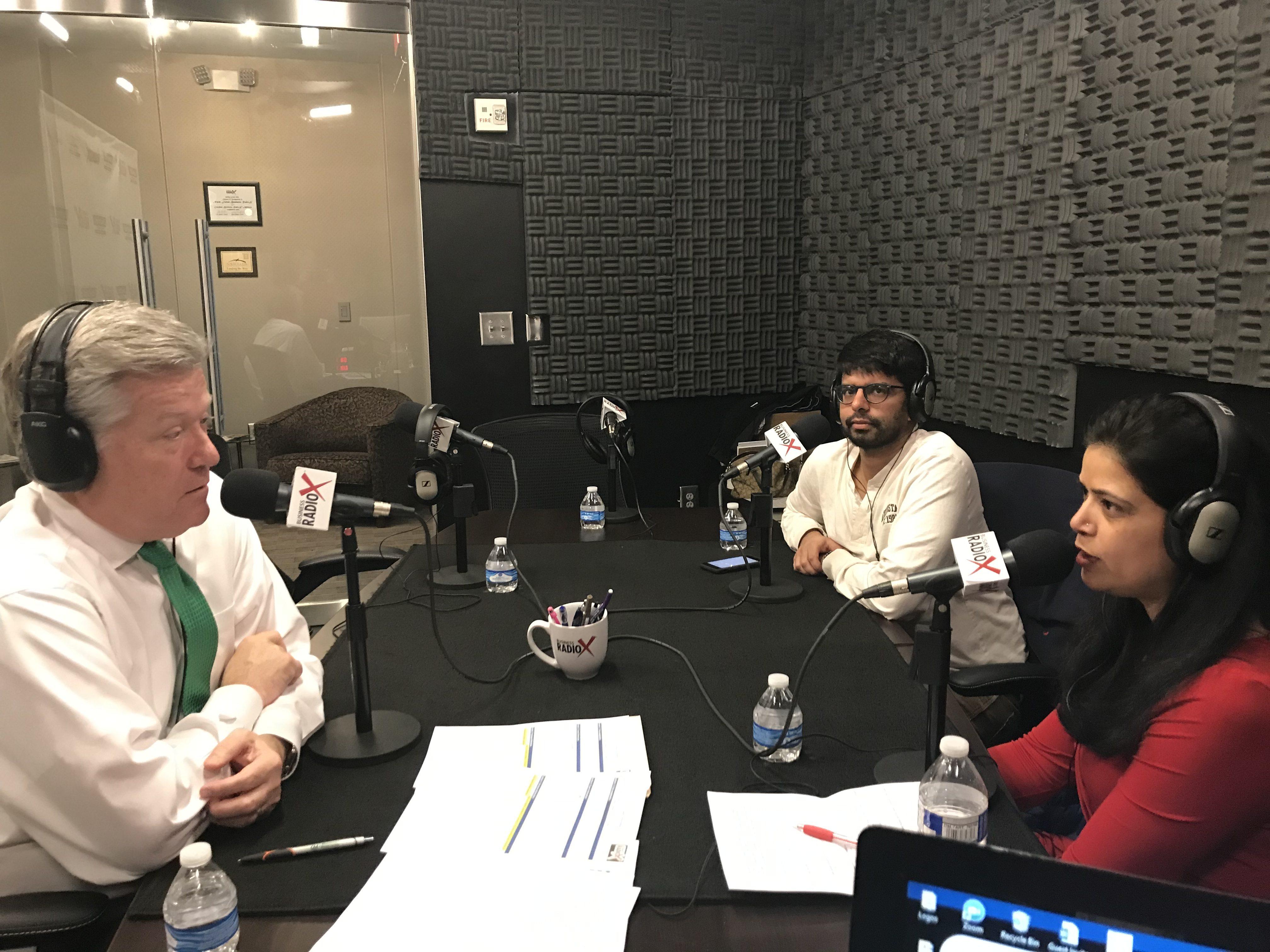
Cory Hewett: [00:06:55] And like you mentioned before, we had to balance that against this idea that if we want to have a real business, at the end of the day, these types of things won’t give you a business. Great products, great customers, focusing on those two things is what build a business. The business competition, though, maybe gives you the fuel in the car to take you to where you need to go or, at least, maybe get you there a little quicker. So, the idea of cash, the idea of services, and the idea of credibility and some exposure within the Atlantic community, that could be very, very valuable.

Cory Hewett: [00:07:25] So, like Evan said, once we decided that we’re going to do it, we went all in that we were going to focus and put everything into it to maximize our probability of success to winning the competition.

Michael Blake: [00:07:37] So, get in, I forget how many companies. I think, at the outset, there are something like 30 companies. At what point did you start to think you might win? Or did you think you would win day one?

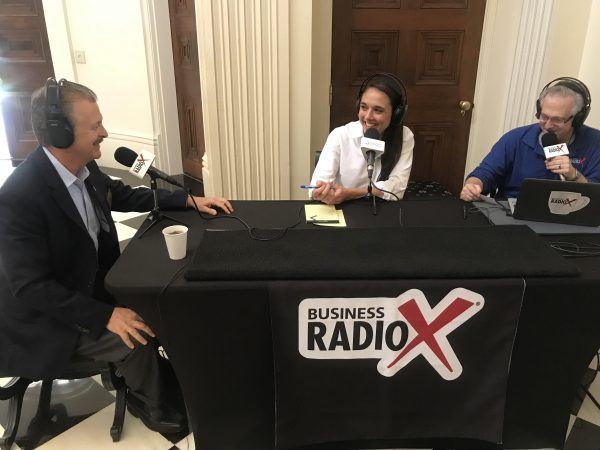
Cory Hewett: [00:07:52] I don’t think we thought we were going to win day one.
Evan Jarecki: [00:07:54] Right.

Cory Hewett: [00:07:54] We knew that we’re going to try really hard to become a winner in the program, but there were a lot of rounds. So, I remember the first round, Evan and I hadn’t really done an elevator pitch before or had to go on stage to pitch our business, but the one time when we were leaving Georgia Tech, and we pitched it to the community there. So, we hadn’t done it in a televised, or WWE setting, or even in front of just an audience of people that didn’t include, at least, a couple of friendlies.

Cory Hewett: [00:08:18] And so, the first round was a couple hundred businesses. And it was more of an informal dinner meet and greet where we had to talk to different investors and judges who were there. You had to go find them. They would write down how you were doing. And if you made an impression, they wrote your name down after you just gave them the cocktail hour elevator pitch of the business. Then, you got to make it past that 300-round to maybe the top 30 round.

Michael Blake: [00:08:42] I didn’t know that. That is wild.

Evan Jarecki: [00:08:43] Yes, it was a speed-dating around. Yeah.

Michael Blake: [00:08:45] That is wild.

Evan Jarecki: [00:08:46] A couple hundred.

Cory Hewett: [00:08:46] So, the couple of days leading up to it, and even in the car driving over there, I remember in the car driving over there, we took what we had written. We’re like, “It’s all wrong. We have to redo it. Let’s redo our elevator pitch.” And getting there and talking to judges. And you asked, did we know that we’re going to win? Our answer to that is no, but we tried hard.

Cory Hewett: [00:09:06] And it wasn’t until that very last night, that very final round, we still had no idea. It was all this effort for not or is it going to turn into something? And I remember the moment where we had made it to the top two, and it was me and Stanley Vergilis of another great company called Hux, and we came out there with a lot of theatrics. We had worked with the art department at the SCAD studio where we were presenting. We had sound. We had rented this very expensive high motion camera to capture our competitor’s product exploding. So, that happened on stage. We showed that big screen video of the product exploding. We came out high energy, high theater, and did the best possible pitch that we could while we were there. And Stanley came out with a very different approach.

Evan Jarecki: [00:09:55] Complete opposite.

Cory Hewett: [00:09:56] Complete opposite. And his performance was so strong that as soon as I left the stage and saw his, I felt good about what we had done. It was the best job we could do. But then, when I saw his and the radically different approach, up until the moment that they unveiled the check to say who won, it was not clear.

Evan Jarecki: [00:10:13] Right.

Michael Blake: [00:10:14] So, let let me follow up on that experience, even though it’s not in our script. But in the final four, you may remember, another company had gone on, and they had banked on video, and it failed.

Cory Hewett: [00:10:27] It failed.

Michael Blake: [00:10:27] Do remember that?

Cory Hewett: [00:10:28] The live.

Michael Blake: [00:10:28] Did that make you at all nervous about what was going to happen with you guys, or were you so tight, you didn’t even think of it. You just knew it’s going to work?

Cory Hewett: [00:10:36] No, we knew it was a risk. Another mentor of ours warned us, you never do live demos.

Evan Jarecki: [00:10:42] Yeah, I think it was through the coaching and the practice that had us try to maximize for a more guaranteed success with the presentation style. And so, that was one of those pieces, avoiding it.

Michael Blake: [00:10:54] And I think that’s a good lesson, though, is that mentors and coaches are just that, right. They’re not your boss. They’re not your mom. They’re not your board of directors. At the end of the day, it’s your company, right. And if you’re going to take a risk, you’re going to take a risk. And look, especially at that time, you’re in a risky business as a startup, right. So, I can see from a certain perspective, look, we’re already here, man. We’re already here. We’re already living with risk on a day-to-day basis. Why are we going to stop now, right?

Cory Hewett: [00:11:27] Right.

Evan Jarecki: [00:11:27] Yeah.

Michael Blake: [00:11:27] Is that as a fair way to kind of characterize it?

Evan Jarecki: [00:11:29] Oh, yeah.

Cory Hewett: [00:11:29] I think it’s a risk/reward thing. We knew that there was going to be risk. The more things that we introduce that we didn’t have total control over, like we avoided a live demo that relied on cellular connection because those can go down, and since we violated that rule, and it’s burned us. So, it’s a rule for a reason. If you rely on cellular and you do live demo, it could go poorly. So, we had made sure that everything that we were showing was, at least, local.

Cory Hewett: [00:11:52] And the reward for us is if it played correctly, and we tested it before in the theater to make sure that it would, but we knew that if we got it to play correctly, that the value that it would generate for the audience would hopefully help them get that emotional feeling of what we are trying to do in our space. And maybe it’s helpful for the audience.

Cory Hewett: [00:12:09] Before we got involved, the technology in our space was really, really old. And the people who were forced to use it had so much pent-up frustration that when they got to watch the competitor’s product explode, you could see them light up. And maybe, if we were back in the horse and buggy days, and you hated your buggy after a while, you got to watch it just get set on fire and replace with the car. You’d be like, “This is great.” And we knew that if we could create that emotional response for our audience, our customers, and if that appealed to the judges as well, then we thought it would be worth the risk of maybe the chance of a tech error.

Cory Hewett: [00:12:43] And I feel terrible for the guy that that tried to do the live demo, and it didn’t work for him, because, you know, they’re kind of like us. They’re working hard to make it work, and nobody wants their demo not to work.

Michael Blake: [00:12:56] And they were doing well up until that absolute up until that.

Evan Jarecki: [00:12:59] Absolutely.

Michael Blake: [00:12:59] Up until that point, right. They’re a very strong competitor.

Cory Hewett: [00:13:01] Yes.

Michael Blake: [00:13:03] Yeah. And that emotional component, I think, is really important on two levels. It is tried and true. It reminds me of the Macintosh commercial from years, and years, and years ago where they smashed a PC in the middle of a commercial, right. And the whole Macintosh value proposition was the PC is just designed to frustrate you, right, and the Macintosh is not right. But everybody wanted to take a sledgehammer to their PC. Every single person, except for maybe somebody working at Microsoft wanted to do that. And I think you sort of captured on that.

Michael Blake: [00:13:40] And then second, it seems to me, and tell me if you think I’m wrong, you can only educate an audience so much about your business, right. And preventing stock-outs and vending machines and, now, at the retail level, it’s a great business, right. But it’s not the kind of thing that you go to the Thanksgiving table and everybody gets all fired up. That’s not like you’ve paid the college-

Evan Jarecki: [00:14:00] Hey, Cory, how’s that inventory on the [crosstalk] going?

Michael Blake: [00:14:02] That’s right. You’re not making call of duty, right?

Cory Hewett: [00:14:04] Right, right.

Michael Blake: [00:14:06] But if you can connect on that emotional level, everybody gets it. And you don’t even have to be in the business. If you’ve just ever been frustrated by technology, or laser printing in work, your Wi-Fi crapped out, you get it, right. I think that’s what really helped.

Cory Hewett: [00:14:21] I think that one other special component that was — I think our secret sauce to the presentation was probably bringing a customer onstage. This was something a little bit later in the practicing and the presentation style where we actually were able to include our first customer as a part of the presentation midway through the numerous stages. But along the way, that set us apart and, we think, had led to some of the success and the understanding from the audience that this is a real opportunity. And this customer has helped us understand exactly what Gimme does.

Michael Blake: [00:15:01] I think that was very dramatic. I don’t think I’ve ever seen that done in a pitch before. And in the minds of those judges, whenever they’re looking at those companies, “Okay, it’s great what technology they have, Is there actually a market for it?” And the fact that you brought the market with you on the stage, I think, that won it for you frankly. I mean, the video was great, and I think that got you to the top two, But the customer, they’re saying, “Yeah, I’m buying this. It’s going to save my business,” how do you sort of say no to that? And I’m sure the other competitors are like, “We should have done that.” They look at their coaches like, “Why didn’t you tell us to do that?” So, other than that kind of the speed dating part, what part surprised you about the process, if anything?

Evan Jarecki: [00:15:54] I think the biggest surprise were the different changes that needed to be made throughout each round. Round one was speed dating with 300 companies. Very quick pitches. No presentation. Just you verbalizing it. Round two was a an eight-minute pitch. I think, it was.

Cory Hewett: [00:16:16] Eight minutes right before St. Patrick’s Day.

Evan Jarecki: [00:16:18] Right before — on St. Patrick’s Day, I think it was.

Cory Hewett: [00:16:20] On St. Patrick, that’s right. We were working that.

Evan Jarecki: [00:16:22] Yeah, exactly. That was an eight-minute pitch. And there was an audience involvement in that one. And then, it moved to a 20-minute pitch. And that was where we brought in the customer. And that was in front of the theater in the auditorium. And then, from there was the final four, which was a three-minute solo CEO/Founder pitch. It was changing and preparing for each of those, that was a big surprise for us, not just one.

Cory Hewett: [00:16:50] Each one was different.

Evan Jarecki: [00:16:51] Each was different.

Cory Hewett: [00:16:52] You had to make it through the screening round of each one. So, it required so much creativity.

Evan Jarecki: [00:16:56] Right.

Cory Hewett: [00:16:56] You couldn’t just use the same presentation. “Oh, we’ll just dress it up or make some tweaks.” It was brand new every single time to appeal to a different — within a different environment, different audience, different levels of theater and energy. At least, in our case, bring the customer on stage.

Evan Jarecki: [00:17:12] Right.

Cory Hewett: [00:17:12] So, each one required its own set of problem solving. The other thing that surprised me, not just the rounds, was, if you will, a little bit of the stress and the time consumption. So, we knew, with your help, you’re like, “Hey, I’d rather you quit right away than at the end,” I think we got the same advice back then too, “because this is going to be really tough.” So, we knew it’s going to be tough and time consuming. And when we got into it, it was tough and time consuming, and it still is a surprise how much we are spending in time.

Cory Hewett: [00:17:40] And then the stress, I remember the eight-minute on the St. Patrick’s Day. It stuck out to me because I got up there to start speaking, and young in your career with public speaking, I made it up to the stage. My tongue got so dry. I couldn’t form words. I’m just trying to make noises with this stick of sandpaper in my mouth, and I’m watching the timer go down. Just physically, I lacked the ability to speak properly and just trying to force my way through it.

Cory Hewett: [00:18:06] So, the stress was just a little bit surprising. And I think that you’ll get that on your entrepreneurship journey. No matter who you are or what the circumstances, you’ll go through that too. But that was a bit of a surprise.

Michael Blake: [00:18:19] Okay. And is there a part that you thought was the hardest to address? Was it the stress? Was that the hardest part, or the time you had to put in, or was there something else that stood out as a challenge of being a participant in something like this?

Evan Jarecki: [00:18:33] Well, I think Cory had mentioned this in the beginning was the focus of, as a business owner, putting everything into your customers and your product. And because of the time consumption, it was highly distracting towards being able to focus on product and on customers because there were days that would go by where the entire day was spent preparing for the next presentation, or just creating the slide deck, or whatever it might have been, and that can distract from the main goal. And sometimes, it would just be challenging to say that the purpose, why we’re in this competition is for customers, is for the business, and just kind of reassuring that. Even though you may not be developing or making that very next feature in the moment, that serves a very important purpose. So, just making sure that balance was maintained between both throughout the time.

Michael Blake: [00:19:28] I want to stop and highlight that because I think that’s very important and very instructive that if you walk into this process thinking that’s going to, kind of, be the side gig that you spend a couple hours a week, you’re not going to be very successful. You’ll probably be eliminated in the first round, certainly, and are unlikely to win.

Michael Blake: [00:19:47] And I didn’t realize, as you really took the perspective, this was not a side gig. This is part of executing your business, right. And the fact that you are willing to hold days off from the “core operations” of your business to pursue that exercise, I did not know that. And I think that if you’re listening to this, and you’re thinking about being in this kind of program, and you have designs of being successful, are you in a position to make that kind of commitment? Because if you aren’t, maybe this isn’t the right time to do it. So I think that’s a very important bullet.

Cory Hewett: [00:20:26] And that’s okay to do too.

Evan Jarecki: [00:20:28] Right.

Cory Hewett: [00:20:28] Through that exercise, we’ve become pretty selective-

Evan Jarecki: [00:20:31] Yes.

Cory Hewett: [00:20:31] … in what we choose to do because we can lose the competition and win at the business. But winning at the competition does not necessarily guarantee, in any way, that you’re going to win a business.

Evan Jarecki: [00:20:44] Right.

Cory Hewett: [00:20:44] So, you have to focus on the business first. And if you do take a day, or two days, or three days off for the competition, you have to keep in mind it’s, in many ways, a vanity. It doesn’t change your core business, it won’t make your customers happier necessarily, and your product won’t be any more mature, or better tested, or better evolved at the end of the process.

Michael Blake: [00:21:02] But you had a goal of starting to build a network and starting to get your name out there, right.

Evan Jarecki: [00:21:08] Exactly.

Michael Blake: [00:21:08] I think that was part of the justification that — I mean, yeah, you also want the money and the prize. We’ll get to that in a second, but you’re students at Georgia Tech at the time or recently graduated?

Evan Jarecki: [00:21:19] Myself, recently graduated.

Michael Blake: [00:21:24] Okay.

Cory Hewett: [00:21:24] Yeah, I appreciate the intro at the beginning, but I actually left with a couple of classes left my senior year to found this company.

Michael Blake: [00:21:30] I didn’t know that.

Cory Hewett: [00:21:31] So, I’m not a graduate of Georgia Tech.

Michael Blake: [00:21:32] The secret is out.

Cory Hewett: [00:21:33] I’m a, yeah, senior year drop out of Georgia Tech that left to pursue this. I went full time.

Michael Blake: [00:21:39] Well, you’re like a bunch of other loser dropouts like Mark Zuckerberg and Bill Gates. So, what did they ever do, right? Yeah, I’m sure they’ll be happy to have you back at your leisure. So, talk-

Cory Hewett: [00:21:54] You’re bringing up what — we had just left Georgia Tech, and with the value going to be that we could get more credibility in addition to the cash and services. And the answer was we had to be somewhat calculative. And we knew that as very junior members of the entrepreneurship community in Atlanta, we’d have to be willing to spend a little bit more time to get that exposure.

Cory Hewett: [00:22:15] And we knew that we were going to have to raise. We’re a company that has smart software, as well as hardware. So, we knew that raising money, fundraising would be on the horizon. And actually, the investment and the time within the pitch could be recycled just in benefiting the education to young entrepreneurs, and all the materials and presentations we’re preparing for these pitches could be recycled in the future outside of the competition as well. And actually, consolidating it, getting the mentor help, for instance, from you.

Cory Hewett: [00:22:44] And one of the things that you did that really helped us out was when you brought together that Shark Tank style, other community people-

Michael Blake: [00:22:50] Oh, yeah. I forgot about that

Evan Jarecki: [00:22:52] Right.

Cory Hewett: [00:22:52] I remember that so well because it gave us that raw, critical feedback that mom, and dad, and friends, and even people that you know in the community may not be willing to tell you, “That’s a terrible side. Oh, no, that I didn’t understand you at all. I would never invest in you.” I mean, you need that feedback. And you helped give it to us. So we were able to make the decision, not just hopefully we win some money, but even — we set out to do our best to win, but we knew even if we didn’t, we could recycle that effort and turn it into something positive for the business down the road.

Michael Blake: [00:23:25] I forgot about that. Even at that point, we’ve been working together for, I don’t know, about 10 weeks or so.

Cory Hewett: [00:23:30] Right.

Evan Jarecki: [00:23:31] Right.

Michael Blake: [00:23:31] And by that time, as a mentor, I’m starting to drink the Kool-Aid, which means that my ability to be that effective sounding board on myself was starting to become impaired, frankly. So, that probably is a good lesson that if you’re in a program and your, and your mentor isn’t setting that up, set that up for yourself, right, because.

Cory Hewett: [00:23:52] If your mentor is too nice, that’s a problem.

Michael Blake: [00:23:54] It can be, it can be. So, you received cash, and services, and prizes. I’ve heard people sort of kind of thumb their nose at $50,000 in cash, but 50 grand for a startup, actually, you can get a lot done with that.

Evan Jarecki: [00:24:10] Right.

Cory Hewett: [00:24:11] That actually really helped to one of our first full-time employee hires.

Michael Blake: [00:24:15] Really?

Cory Hewett: [00:24:15] We talked with contractors and part time. But you bring on that first FTE, you want to make sure that you don’t have a couple of weeks of salary in the bank. You want a couple months that you can play this.

Michael Blake: [00:24:24] You’re not laying off in three weeks.

Cory Hewett: [00:24:26] Right. “You’re hired. Oh, just kidding.” This is-

Michael Blake: [00:24:29] Thanks for everything. There’ll be no severance.

Cory Hewett: [00:24:30] So, the $50,000 cash made a difference to us because we are bootstrapping as hard as we could. As young entrepreneurs at the very beginning of their journey, you’re hustling, and you’re putting everything together that you can. And to bring that first person on board full time, that’s the difference it made for us, along with a couple other things.

Cory Hewett: [00:24:51] So, that’s what we saw in our mind. If we win this, we can earmark the funds to grow the team. And I don’t know if I’m skipping ahead on how you wanted us to talk about it.

Michael Blake: [00:25:02] Go ahead. Keep going.

Cory Hewett: [00:25:02] I’m speaking on chronologically, but that was a big moment for us. We did win the competition. That was a proud moment. And then, we immediately put up our first job ad for a full-time employee and and brought them on. And that was another huge victory. And that really helped the product and the customers. And so, it turned into something really positive for us.

Michael Blake: [00:25:26] And on the other side, you also won some services. I’ve always kind of wondered how much do the winners actually take advantage of the services? I think my firm offered business valuation, and somebody is offering legal services, accounting services, I don’t know, manicures, mani and ped. I have no idea. Did you find yourself taking advantage of those?

Cory Hewett: [00:25:48] We printed out that Excel spreadsheet, and we went down the list, and we contacted every single one, and we are going to extract 100% of the value that we could out of it.

Evan Jarecki: [00:25:57] Right.

Cory Hewett: [00:25:57] And it actually turned into some pretty neat relationships that we still have today. At the time, you were working for HA&W.

Michael Blake: [00:26:04] Yeah, Arpio now. Yeah.

Cory Hewett: [00:26:04] Right. We now continue to work with Aprio.

Michael Blake: [00:26:08] Good.

Cory Hewett: [00:26:08] We were able to work with a PR team called the Carabiner.

Evan Jarecki: [00:26:13] Yeah, we worked with Carabiner still to this day. And that was where we had been introduced to them was from the business launch competition.

Michael Blake: [00:26:20] So, you’re working with them. I’ll go ahead and give them some free ads. I’m a big fan of Peter Baron’s and Carabiner, so.

Cory Hewett: [00:26:25] So, we love working with them. And we wouldn’t have had that relationship without them participating and giving their services. And we were able to spread out the dollar amount, so it lasted us about a year of being able to work with Peter and his team to benefit the company. I mean, Evan, you’re still working with our account rep there pretty much daily, right?

Evan Jarecki: [00:26:45] Yeah. In a week-to-week basis, but participating in some of the things that we plan for on the day to day. Like most recently, one of the biggest events that we’ve done was a livestream product launch. This is something that Carabiner was heavily involved in and actually participated in person for some of the event planning. So, the introduction has been extremely valuable to the growth of our team and of our product.

Cory Hewett: [00:27:16] One of the services that really stood out was with the management psychology group and-

Michael Blake: [00:27:20] No kidding.

Cory Hewett: [00:27:21] Yeah. And it’s exactly what it sounds like. Evan and I probably wouldn’t have chosen to do this if we had to pay cash out of pocket to do this, but having gone through the experience, now, I see that there’s a lot of value in this, especially if you’re head hunting for a founder level role or an executive level role.

Cory Hewett: [00:27:37] But it was a two-day process, two half days where Evan and I went in, and they tested all parts of our psychology. They had quizzes for intelligence, et cetera, et cetera, to try to see how people would work together. And I don’t think we would have done it because we already knew — Evan and I already knew we worked well together because we were great together.

Cory Hewett: [00:27:55] But we went through the process, and it was so fascinating to have a broken down for why that was. And when we got the results back of this management psychology test, Evan and I at the core groups, the big categories, were highly, highly similar. But when they broke it down to the subgroups, the reason why and the little things that make people unique, he and I were extremely dissimilar.

Cory Hewett: [00:28:19] So, it was like we shared common big goals, but we had lots of compliments where I was weak, he was strong; where he was strong, I was weak. And it played really nicely to to see how that worked out. And we wouldn’t have got that either without the services. And that’s just an example to me that stands out. I still remember it today, like, “How do you work so well with Evan?” Like, ” Actually, it’s fascinating. I have a diagram that shows that.”

Evan Jarecki: [00:28:42] We kept it [crosstalk].

Michael Blake: [00:28:43] Those are my strengths.

Evan Jarecki: [00:28:43] And they’re really neat. I mean, yeah, it was very in-depth and something we’ve kept, and I think it hold — I mean the exact same thing holds true to this day. It’s very interesting. And, yeah, it was fun experience.

Michael Blake: [00:28:59] It’s weird how sometimes topics come together. Right after this one, we’re going to be recording a podcast about executive leadership basically from another kind of industrial psychology company. I may kind of bring that up with them and see kind of what their view is on those kinds of approaches. One thing that also struck me about when you guys won, you both have family there to think, right?

Evan Jarecki: [00:29:24] Yeah.

Cory Hewett: [00:29:25] Yes, yes.

Evan Jarecki: [00:29:25] And both the public pitches we had family.

Michael Blake: [00:29:28] You did, okay. And I’ve never asked you this question. It’s a little off topic. So, if you don’t want to answer, we’ll edit it out. But was there a sense of kind of validation? I don’t know if you have entrepreneurial families or not. If you don’t, sometimes, they’re kind of looking weary. You’ve got this great education. Why aren’t you going and getting a job? You’re Gulfstream. You could have had a great career there, six figures, right?  Was there any kind of validation, maybe, to family members that were worried about the risk you took that this is sort of an external validation that you guys are going to be okay and really onto something? Or am I playing Dr. Phil, and I should knock in the psychology business?

Cory Hewett: [00:30:15] I don’t know if Evan would share this necessarily.

Evan Jarecki: [00:30:19] Yeah.

Cory Hewett: [00:30:19] So, I hope you don’t mind if I do.

Evan Jarecki: [00:30:21] Yeah, yeah, go for it.

Cory Hewett: [00:30:21] But Evan did have the job lined up when he was graduating. So, he’d already accepted the job offer from Gulfstream. He had already selected his apartment. He was ready to go make that transition in his life when we started talking about Gimme. And my pitch to him is, “Hey. we should work a hundred a week. And we can’t pay each other any number of dollars probably the first year or so. And it would involve you not going down to Savannah, and you’d have to quit your job that you haven’t started yet. And maybe make sure that your parents are comfortable leaving you on health insurance and stuff a little longer. How does that sound?” And-

Michael Blake: [00:30:56] I guess it sounded all right.

Evan Jarecki: [00:30:58] Well, I think the way I describe it is that it unlocked a — I had some sort of limiter on where I thought a career — what I thought a career meant. And I don’t think I had ever considered entrepreneurship as a career path until there was an opportunity presented to me and, actually, think about what that could mean. And so, it just totally removed the limiter and said, “There is no reason not to take this opportunity,” is what it became. So, I just had to put the pieces together to make it work.

Cory Hewett: [00:31:31] So, I remember when Evan told me, “Yeah, I talked to my parents about it. They’re a little concerned, but they’re supportive. And they’re really good people. So, they were supportive, but I could tell that mom’s eyes got real big when she’s like, ‘Oh, he’s he’s quitting the Gulfstream job that he hasn’t started yet.'”

Michael Blake: [00:31:46] That’s nice.

Cory Hewett: [00:31:47] “What’s the new salary?”

Evan Jarecki: [00:31:48] “What’s the plan here?”

Cory Hewett: [00:31:48] “Oh, it’s nothing.” “Oh, good luck.” And she’s

Evan Jarecki: [00:31:53] Right, not another job that pays you. No, it was totally different.

Cory Hewett: [00:31:57] So, I remember for them, they were in the audience when we made it through that first round. And I don’t know, the look on their face. And my parents were there too, and I think they were proud. But I know for your parents, that was a first entrepreneurship, big endeavor that you’ve done, the big first external validation.

Evan Jarecki: [00:32:14] Yes, yes.

Cory Hewett: [00:32:15] You could just see the pride, and you could see a lot more confidence. Like, “Wow! Our son is not just ‘trying to be an entrepreneur’ but people believe in him too.” And the next thing happened on that final round, we didn’t just invite mom and dad. We invited grandma, grandpa. And then, we also invited a couple of our customers and a couple of the other people that have been rooting us along along the way. Evan, I know you took a valet job at the very beginning of Gimme-

Evan Jarecki: [00:32:41] Yes.

Cory Hewett: [00:32:41] … to pay the bills while we’re making the company work. Did you invite one of your top valet customers there, too?

Evan Jarecki: [00:32:47] Yeah, yeah. That may have been my first — actually, that experience is a big failure that turned into a really happy valet customer, if you will. I didn’t own. I just worked for the valet company, but there was an experience we had with just a car parking situation where I was able to diffuse the whole situation. I caused it, and I diffused it, and it became a really happy repeat customer. And they actually got involved with what we were working on at Gimme, and they participated in the TAG, the business lunch competition as well. So, we brought in, yeah, people from kind of everywhere during the first year’s journey.

Michael Blake: [00:33:30] I remember that. You had a lot of fans in that room. And when you won, it looked like kind of the end credits of, sort of, Family Feud. I mean, they swarmed the stage. And I thought they put you up on their shoulders. But it was great to see. Have you done anything like that since? Have you been in any other contests, or did you just retire after one championship?

Cory Hewett: [00:33:53] Quite like that. No, we haven’t been in any multi-round pitch kind of situations quite like that.

Evan Jarecki: [00:34:00] That’s true. That’s true.

Cory Hewett: [00:34:00] And most of it had to do with we extracted a lot of the value that we could. And like we mentioned, a lot of it was getting in front of the right people, in addition to cash and services, getting a name for ourselves in the Atlanta community. And thankfully, it helped us do that. So, now, I don’t know if the reward for doing that again would be as profound or pronounced for us. But we have competed in a couple other competitions since like-

Evan Jarecki: [00:34:22] Actually, the TAG Business Launch unlocked many opportunities in the area. We were invited to Venture Atlanta, one of the largest now that we’ve seen and participated in. And actually, it speaks to — this kicked off and falls in right in line with us as one of our core values. The number one is fiercely driven to win.

Cory Hewett: [00:34:49] That’s our top core value in the team.

Evan Jarecki: [00:34:51] That’s our top core value. And it’s related to customers, and it’s related to making sure that we are working for them. But it also does speak to the competitive nature of applying ourselves in these areas. So, we do participate in other contests and competitions. Recently, we won Best B2B Startup in Atlanta. There would be-

Cory Hewett: [00:35:14] We had a number of good competitors in that category.

Evan Jarecki: [00:35:15] [Crosstalk] is in that one. So. we’ve won, and we’ve lost, but we do participate. And when we do, we like to do a good job.

Cory Hewett: [00:35:25] I remember one of the ones that we lost actually right after the TAG Business Launch competition, we were kind of on a high feeling of, “Wow! If we set our minds to it-”

Evan Jarecki: [00:35:35] Like, how big can we take this thing? Where can we go with it?

Cory Hewett: [00:35:37] And our very next big thing that we applied for was actually the first season of Apples TV show called Planet of the Apps-

Evan Jarecki: [00:35:43] Right.

Cory Hewett: [00:35:44] … where they were going to look at software startup founders and how their journey is going. And we made it past the first round. And then, they unceremoniously dropped us and let us know that we didn’t make it past the second round. And so, yeah, we’re trying and failing. But we try to be selective, so that we continue to keep our top focus on products and customers. But like Evan said, we’ve just recently been named Atlanta’s Best B2B Startup. We were named recently as well to Atlanta’s 50 on Fire. We’re proud of that accomplishment. That was just a couple of weeks ago.

Cory Hewett: [00:36:15] Within the industry, our team as a whole has been named Pros to Know. And some of the individuals have been named, individually, the Pro to Know on separate years as well. Each one of our products, and we have three now, each one of our products has been named the number one product in vending the years that it has been released. So, we’re super proud of that as well. So, yeah, we’re trying, sometimes failing, but we’re continuing to try and apply that fiercely driven to win mentality.

Michael Blake: [00:36:43] Well, these are harder to win. It’s not like a basketball game. It’s more like a golf tournament, right. Basketball game, you have one opponent. That’s it, right. But you have to be in the field, right.

Evan Jarecki: [00:36:54] Right.

Michael Blake: [00:36:55] Even Tiger was in his heyday, right, only one 20% of his tournaments, right. And arguably the best that ever played. So, I think you’re doing all right.

Evan Jarecki: [00:37:07] Thank you.

Michael Blake: [00:37:07] I think you’re doing just fine. So, since the competition, tell us the story now. How are you guys doing? You, obviously, want a lot of awards award. You’re expanding. You guys able to pay yourselves now? You’re not [crosstalk]-

Cory Hewett: [00:37:23] I’m not at all free anymore.

Evan Jarecki: [00:37:25] Right.

Michael Blake: [00:37:25] You’re not working for free anymore. Good, good. You have the most up to date max, I assume.

Cory Hewett: [00:37:29] Yeah, we do. The tool kit we actually advertise as part of our recruiting tool, everyone gets a brand new Apple products to be able to get their job done well. So, yeah, we’re expanding. We have about 20 people on the team now. We’ve got great offices. This year, we’ve just added 401(k) to our suite of benefits.

Michael Blake: [00:37:50] Wow. Yeah, you’re really growing up.

Cory Hewett: [00:37:52] And I think that we have a team culture that has attracted serious top players. So, we’re really proud of that accomplishment. I know that maybe people don’t speak to those metrics first, but a team of people that we have to work with now is just incredible. When you work at, if you will, alone, and then you hire that first one, if you can surround yourself with other people who are willing to match that and just put in so much effort to help the business succeed, it’s something special. It’s a different feeling than when you first started the company. So, that would be my top metric of success is the team right now is just crushing it. And we’re so proud of them.

Cory Hewett: [00:38:27] Outside of the team as well, we’ve seen our products and services grow. We started with the one. We talked about, we exploded our competitors product. That’s how we started. That was one product. But now, we’ve seen it expand from just a field service tool to — you mentioned it at the very beginning. Now, we’re managing the products and their inventories for the entire warehouse, the schedules of the people that service. Our software has expanded.

Cory Hewett: [00:38:53] And then, earlier this year, we announced that we could handle not only an entire warehouse of inventory and field services, but we could do that through computer vision and a neural network training. And to see that start to take off has opened up our customer base from just vending operators to, now, vending operators, micro market operators, and people who deliver to grocery stores. And for the first time, that means that, now, some of our customers are publicly traded, and we’re just thrilled at the growth that we’ve seen even as recently as this year that’s taken us to a new level.

Michael Blake: [00:39:31] So, I’m curious, to get to that point, have you raised any outside money? Are you still just self-funded?

Cory Hewett: [00:39:37] We did raise money. After the TAG Business Launch competition, we raised an angel round. We’re able to include David Cummings and John Lally, which were introductions that were either directly or indirectly helped, actually, from the competition. That’s where we raised our first half million. And since then, we’ve added a couple other institutional and larger people on our cap table as well. So, today, we’ve raised just over $2 million. And then, we have our sightline to a couple more exciting things in the near future.

Michael Blake: [00:40:08] Very good. So, I promise I won’t keep you here too long. So I’m going to wrap it up. But if people are kind of thinking about getting into a competition of their own, they want to know if they should do it, or get some advice, can they contact you guys?

Evan Jarecki: [00:40:23] Yeah, absolutely. Best way to reach out to us is, first, through our website, www.vending.ai, and go to our team page there. You’ll see Cory and my own, our bios and profiles. And you can get connected with us there. We’ve actually love participating in the Atlantic community, especially as mentors, and volunteers, and programs we’ve been a part of in the past. And then, look, of course, for any individuals, one on one. Cory will give anyone’s slide presentation good judging, that’s for sure. And it’s worth it. Trust him with that one. He’s got a knack for it, so.

Michael Blake: [00:41:02] All right. Well, that’s going to wrap it up for today’s program. I’d like to thank Evan Jarecki and Cory Hewett of Gimme Vending so much for joining us and sharing their expertise with us.

Cory Hewett: [00:41:12] Thank you, Mike.

Evan Jarecki: [00:41:12] Thank you.

Michael Blake: [00:41:12] We’ll be exploring a new topic each week. So, please tune in so that when you’re faced with your next business decision, you have clear vision when making it. If you enjoy this podcast, please consider leaving a review through your favorite podcast aggregator. It helps people find us so that we can help them. Once again, this is Mike Blake. Our sponsor’s Brady Ware & Company. And this has been the Decision Vision Podcast.

Tagged With: Cory Hewett, Dayton accounting, Dayton business advisory, Dayton CPA, Dayton CPA firm, early stage startups, Evan Jarecki, Georgia Tech, Gimme, Gimme Vending, in-kind services, Metro Atlanta Chamber of Commerce, Michael Blake, Mike Blake, pitch competition, pitch contest, startup company, startup competition, startups, Technology Association of Georgia, Venture Atlanta

LEADER DIALOGUE: Lessons Learned from Leading Private/Public Partnerships – Deep Dive

May 24, 2019 by Mike

Gwinnett Studio
Gwinnett Studio
LEADER DIALOGUE: Lessons Learned from Leading Private/Public Partnerships - Deep Dive
Loading
00:00 /
RSS Feed
Share
Link
Embed

Download file

This week’s episode is a “deep dive” conversation featuring Sherry Farrugia, who manages the multi-million dollar pediatric research portfolio and the public-private partnership between Georgia Tech and Children’s Healthcare of Atlanta.

Sherry Farrugia/Childrens’s Healthcare of Atlanta Pediatric Technology Center at GT

Sherry Farrugia is the COO and CSO for the Children’s Healthcare of Atlanta Pediatric Technology Center at GT and the Director for the Children’s Healthcare of Atlanta. In this dual role she works to build and sustain public-private partnerships in pediatrics and health IT, and manages the partnership’s multi-million dollar research portfolio. She provides executive level leadership for business and operational functions and works to improve the overall execution of key business initiatives to improve efficiency, effectiveness and reduce administrative costs.

This includes providing insight into the innovations, new technologies, and start ups developed as a result of the partnership. Prior to this position Ms. Farrugia was the Managing Director of Health IT at Georgia Tech.

Sherry has over 25 years’ experience in the health information technology (IT) field, consulting with numerous industry partners, and many state agencies including the State of Georgia in the areas of care management systems, health information exchange, and enterprise data governance. She is very active in the Atlanta community serving on multiple health and pediatric related boards.

About SOAR Vision Group

The SOAR Vision Group mission is to: Align People with Purpose to Achieve Exceptional Results. SOAR provides best practice strategy execution, business process optimization services, and a structured organizational development approach for organizations to effectively implement the Baldrige Performance Excellence framework. For more information, contact SOAR Vision Group at (888) 294-3303 or visit soarvisiongroup.com.

About the Baldrige Foundation

The mission of the Baldrige Foundation is to ensure the long-term financial growth and viability of the Baldrige Performance Excellence Program, and to support organizational performance excellence in the United States and throughout the world. The Malcolm Baldrige National Quality Award is presented annually by the United States President to organizations that demonstrate quality and performance excellence. For more information, contact the Baldrige Foundation at (202) 559-9195 or visit baldrigefoundation.org.

Tagged With: customer value, duffie dixon, Georgia Tech, leader dialogue, Leadership, lisa counsell, organizational excellence, Organizational Hierarchy of Needs, performance excellence, private-public partnerships, public-private partnership, Sherry Farrugia, SOAR Vision Group, strategy execution

LEADER DIALOGUE: Lessons Learned from Leading Private/Public Partnerships

May 18, 2019 by Mike

Gwinnett Studio
Gwinnett Studio
LEADER DIALOGUE: Lessons Learned from Leading Private/Public Partnerships
Loading
00:00 /
RSS Feed
Share
Link
Embed

Download file

Ben Sawyer, Lisa Counsell, Sherry Farrugia, Jennifer Strahan, Duffie Dixon

Sherry Farrugia manages the multi-million dollar pediatric research portfolio and the public-private partnership between Georgia Tech and Children’s Healthcare of Atlanta. This episode will provide:

  • An overview of her current role at Georgia Tech while supporting the Pediatric community, specifically Children’s Healthcare of Atlanta.
  • Her goals, objectives and burning platforms for her organization for the coming years.
  • Her challenges in balancing an academic university and a world-renowned healthcare organization dedicated to children in the Age of Consumerism.
  • An insight into working with non-profit organizations as both Children’s Healthcare of Atlanta and Georgia Tech are non-profit organizations that pose unique challenges to manage as a leader.

Sherry Farrugia/Childrens’s Healthcare of Atlanta Pediatric Technology Center at GT

Sherry Farrugia is the COO and CSO for the Children’s Healthcare of Atlanta Pediatric Technology Center at GT and the Director for the Children’s Healthcare of Atlanta. In this dual role she works to build and sustain public-private partnerships in pediatrics and health IT, and manages the partnership’s multi-million dollar research portfolio. She provides executive level leadership for business and operational functions and works to improve the overall execution of key business initiatives to improve efficiency, effectiveness and reduce administrative costs.

This includes providing insight into the innovations, new technologies, and start ups developed as a result of the partnership. Prior to this position Ms. Farrugia was the Managing Director of Health IT at Georgia Tech.

Sherry has over 25 years’ experience in the health information technology (IT) field, consulting with numerous industry partners, and many state agencies including the State of Georgia in the areas of care management systems, health information exchange, and enterprise data governance. She is very active in the Atlanta community serving on multiple health and pediatric related boards.

About SOAR Vision Group

The SOAR Vision Group mission is to: Align People with Purpose to Achieve Exceptional Results. SOAR provides best practice strategy execution, business process optimization services, and a structured organizational development approach for organizations to effectively implement the Baldrige Performance Excellence framework. For more information, contact SOAR Vision Group at (888) 294-3303 or visit soarvisiongroup.com.

About the Baldrige Foundation

The mission of the Baldrige Foundation is to ensure the long-term financial growth and viability of the Baldrige Performance Excellence Program, and to support organizational performance excellence in the United States and throughout the world. The Malcolm Baldrige National Quality Award is presented annually by the United States President to organizations that demonstrate quality and performance excellence. For more information, contact the Baldrige Foundation at (202) 559-9195 or visit baldrigefoundation.org.

Tagged With: customer value, duffie dixon, Georgia Tech, leader dialogue, Leadership, lisa counsell, organizational excellence, Organizational Hierarchy of Needs, performance excellence, private-public partnerships, public-private partnership, Sherry Farrugia, SOAR Vision Group, strategy execution

Neerja Bharti with GeniusMesh and Asif Lakhani with Atlanta Tech Park

January 15, 2019 by John Ray

North Fulton Business Radio
Neerja Bharti with GeniusMesh and Asif Lakhani with Atlanta Tech Park
Loading
00:00 /
RSS Feed
Share
Link
Embed

Download file

John Ray, Neerja Bharti, and Asif Lakhani

Neeerja Bharti with GeniusMesh

Neerja Bharti is the Founder and CEO of GeniusMesh. GeniusMesh is a global network of experienced MBAs from top schools such as MIT, Kellogg, Columbia, Emory, Georgia Tech which helps MBAs connect, share, and explore opportunities with each other in a confidential setting. GeniusMesh restricts its focus to unpublished jobs at the executive level. The marketplace offers proprietary advanced algorithms and career advancement tool to help companies hire top talent faster.

Asif Lakhani with Atlanta Tech Park

Asif Lakhani is the Marketing Coordinator for Atlanta Tech Park. Atlanta Tech Park is a state-of-the-art startup accelerator located in Peachtree Corners, GA. Founded by Robin Bienfait, the facility features premium office and co-working spaces as well as an event space that can hold up to 600 people and an auditorium that seats 100 comfortably.

In addition to top notch workspaces, Atlanta Tech Park happily connects its members to a larger network of innovation and resources as part of our Emnovate (embrace + innovation) program.Those interested in joining the Atlanta Tech Park ecosystem can become Insiders for just $20/month.

To learn more about Atlanta Tech Park, book a tour on their website at www.atlantatechpark.com


Tagged With: coworking, coworking in Peachtree Corners, educational programs for startups, EMBA, Emory University Goizueta Business School, event space, executive search, Georgia Tech, hiring, Ivy League schools, Kellogg, MBA, member only events, MIT, Neerja Bharti, networking, office space, peachtree corners, podcast studio, Recruiting, start-up accelerator, Startup, startup accelerator, startups, talent search, Tech Alpharetta, women in wireless

ATDC Startup Showcase 2018

May 25, 2018 by angishields

ATDC2018
Atlanta Business Radio
ATDC Startup Showcase 2018
Loading
00:00 /
RSS Feed
Share
Link
Embed

Download file

ATDC2018

ATDC


Business RadioX® would like to thank the following businesses and leaders for sharing their success stories with us ON AIR at the ATDC Startup Showcase 2018. Catch all of the radio replays here:

Adam Dolinko / NextJuris

http://stats.businessradiox.com/27884.mp3

DOWNLOAD FILE

Brian Dally / GroundFloor

http://stats.businessradiox.com/27875.mp3

DOWNLOAD FILE

Chris Downing / Georgia Tech Enterprise Innovation Institute

http://stats.businessradiox.com/27874.mp3

DOWNLOAD FILE

Jennifer Bonnett / ATDC Georgia Tech

http://stats.businessradiox.com/27877.mp3

DOWNLOAD FILE

Jeff Schmidt / Authomate

http://stats.businessradiox.com/27878.mp3

DOWNLOAD FILE

Landon Bennet / Ad Reform

http://stats.businessradiox.com/27876.mp3

DOWNLOAD FILE

Matthew Ledom / Eletype

http://stats.businessradiox.com/27879.mp3

DOWNLOAD FILE

Ned Hill / Square 1 Bank

http://stats.businessradiox.com/27880.mp3

DOWNLOAD FILE

Phillip Naples / Layr

http://stats.businessradiox.com/27882.mp3

DOWNLOAD FILE

Sid Mookerji / ATDC Georgia Tech

http://stats.businessradiox.com/27883.mp3

DOWNLOAD FILE

Tagged With: Eletype, Georgia Tech, Groundfloor, NextJuris, Square 1 Bank

  • 1
  • 2
  • 3
  • Next Page »

Business RadioX ® Network


Our Most Recent Episode

CONNECT WITH US

  • Email
  • Facebook
  • LinkedIn
  • Twitter
  • YouTube

Our Mission

We help local business leaders get the word out about the important work they’re doing to serve their market, their community, and their profession.

We support and celebrate business by sharing positive business stories that traditional media ignores. Some media leans left. Some media leans right. We lean business.

Sponsor a Show

Build Relationships and Grow Your Business. Click here for more details.

Partner With Us

Discover More Here

Terms and Conditions
Privacy Policy

Connect with us

Want to keep up with the latest in pro-business news across the network? Follow us on social media for the latest stories!
  • Email
  • Facebook
  • Google+
  • LinkedIn
  • Twitter
  • YouTube

Business RadioX® Headquarters
1000 Abernathy Rd. NE
Building 400, Suite L-10
Sandy Springs, GA 30328

© 2025 Business RadioX ® · Rainmaker Platform

BRXStudioCoversLA

Wait! Don’t Miss an Episode of LA Business Radio

BRXStudioCoversDENVER

Wait! Don’t Miss an Episode of Denver Business Radio

BRXStudioCoversPENSACOLA

Wait! Don’t Miss an Episode of Pensacola Business Radio

BRXStudioCoversBIRMINGHAM

Wait! Don’t Miss an Episode of Birmingham Business Radio

BRXStudioCoversTALLAHASSEE

Wait! Don’t Miss an Episode of Tallahassee Business Radio

BRXStudioCoversRALEIGH

Wait! Don’t Miss an Episode of Raleigh Business Radio

BRXStudioCoversRICHMONDNoWhite

Wait! Don’t Miss an Episode of Richmond Business Radio

BRXStudioCoversNASHVILLENoWhite

Wait! Don’t Miss an Episode of Nashville Business Radio

BRXStudioCoversDETROIT

Wait! Don’t Miss an Episode of Detroit Business Radio

BRXStudioCoversSTLOUIS

Wait! Don’t Miss an Episode of St. Louis Business Radio

BRXStudioCoversCOLUMBUS-small

Wait! Don’t Miss an Episode of Columbus Business Radio

Coachthecoach-08-08

Wait! Don’t Miss an Episode of Coach the Coach

BRXStudioCoversBAYAREA

Wait! Don’t Miss an Episode of Bay Area Business Radio

BRXStudioCoversCHICAGO

Wait! Don’t Miss an Episode of Chicago Business Radio

Wait! Don’t Miss an Episode of Atlanta Business Radio