
Business RadioX ®

  • Home
  • Business RadioX ® Communities
    • Southeast
      • Alabama
        • Birmingham
      • Florida
        • Orlando
        • Pensacola
        • South Florida
        • Tampa
        • Tallahassee
      • Georgia
        • Atlanta
        • Cherokee
        • Forsyth
        • Greater Perimeter
        • Gwinnett
        • North Fulton
        • North Georgia
        • Northeast Georgia
        • Rome
        • Savannah
      • Louisiana
        • New Orleans
      • North Carolina
        • Charlotte
        • Raleigh
      • Tennessee
        • Chattanooga
        • Nashville
      • Virginia
        • Richmond
    • South Central
      • Arkansas
        • Northwest Arkansas
    • Midwest
      • Illinois
        • Chicago
      • Michigan
        • Detroit
      • Minnesota
        • Minneapolis St. Paul
      • Missouri
        • St. Louis
      • Ohio
        • Cleveland
        • Columbus
        • Dayton
    • Southwest
      • Arizona
        • Phoenix
        • Tucson
        • Valley
      • Texas
        • Austin
        • Dallas
        • Houston
    • West
      • California
        • Bay Area
        • LA
        • Pasadena
      • Colorado
        • Denver
      • Hawaii
        • Oahu
  • FAQs
  • About Us
    • Our Mission
    • Our Audience
    • Why It Works
    • What People Are Saying
    • BRX in the News
  • Resources
    • BRX Pro Tips
    • B2B Marketing: The 4Rs
    • High Velocity Selling Habits
    • Why Most B2B Media Strategies Fail
    • 9 Reasons To Sponsor A Business RadioX ® Show
  • Partner With Us
  • Veteran Business RadioX ®

David S. Rose With Gust, Inc.

February 1, 2023 by Jacob Lapera

Innovation Radio
Innovation Radio
David S. Rose With Gust, Inc.
Loading
00:00 /
RSS Feed
Share
Link
Embed

Download file

David S. Rose, Founder and Executive Chairman of Gust.

He is an Inc. 500 CEO, serial entrepreneur, angel investor, venture capitalist and best selling author who has founded or funded over 100 pioneering companies.

He has been described by Forbes as “New York’s Archangel”, by BusinessWeek as a “world conquering entrepreneur”, by Crain’s New York Business as “the father of angel investing in New York”, and by Red Herring magazine as “patriarch of Silicon Alley”.

He is the New York Times best selling author of both Angel Investing: The Gust Guide to Making Money & Having Fun Investing in Startups and The Startup Checklist: 25 Steps to a Scalable, High-Growth Business.

Connect with David on LinkedIn, Facebook and Twitter.

What You’ll Learn In This Episode

  • Entrepreneurship
  • Exponential technology growth (the Singularity)
  • Angel Investing
  • Current economic market
  • Startup ecosystems
  • Effect of automation on fundraising

This transcript is machine transcribed by Sonix

TRANSCRIPT

Intro: [00:00:00] You’re listening to Innovation Radio, where we interview entrepreneurs focused on innovation, technology and entrepreneurship. Innovation radio is brought to you by the world’s first theme park for entrepreneurs the Levein’s Center of Innovation, the only innovation center in the nation to support the founders journey from Birth of an Idea through successful exit or global expansion. Now, here’s your host, Lee Kantor.

Lee Kantor: [00:00:24] All right, Lee Kantor Here another episode of Innovation Radio. And this is going to be a good one. But before we get started, it’s important to recognize our sponsor, the Leuven Center of Innovation. Without them, we couldn’t be sharing these important stories. Today on Innovation radio, we have David S Rose and he is with Gust. Welcome.

David S Rose: [00:00:45] Thank you. It’s a pleasure to be here.

Lee Kantor: [00:00:47] I am so excited to learn what you’re up to. Tell us a little bit about gust how you serving folks.

David S Rose: [00:00:52] So Gust is the global platform for the entrepreneurial finance world. So we’ve been around for almost 20 years and we connect all the world’s startup companies to all the world’s early stage angel investors. So we are used on the one side by many of the world’s largest angel investment groups to handle all their applications for funding. And on the other side, we’re used by millions of founders to both create their companies, spin up and incorporate their companies here in the US, and then connect them to all of these investors and accelerators who are looking for innovative companies.

Lee Kantor: [00:01:25] Now are there right now a lot of incubators, accelerators, innovation centers. Is this something that you’re seeing that’s trending upward?

David S Rose: [00:01:35] Oh, absolutely. And the the whole world of accelerators is a relatively recent development. As recent things go, there are only maybe 15 or so years old and you’re seeing an increasing number. There are literally many, many hundreds of accelerators around the world. However, they are not all the same. There are a handful of top accelerators that are sort of household names and a developed reputation over a dozen years. There are another handful of newer accelerators associated with really great organizations that are spinning up rapidly and developing reputations. And then there are a lot of other ones that are people are trying, but they really haven’t been as successful and may not provide quite as much value.

Lee Kantor: [00:02:18] Now, is it something that is always or typically associated with universities or is some of them just private ventures?

David S Rose: [00:02:26] Oh, no. They’re actually the original accelerators. The very first of them was something called Y Combinator, which is still going strong and still toward the top of the heap. And that was just started up as a purely independent program to help founders who had gotten started accelerate their their activities. And then that spurred another a number of other accelerators that were purely independent accelerators. And so after a few years when the world saw companies coming out of these accelerators that were clearly taking advantage of the contacts and the skills and the training and the mentorship and the peer grouping that they had met at their accelerator, many organizations, both universities and businesses, said, Hey, we can really leverage what we have to help startup companies and therefore go ahead and and created their own accelerators. And so because of that, you’ve seen a number of universities have their own accelerators, you’ve seen companies, large banks and and manufacturing companies create accelerators. And so now you’ve got a pretty wide range from independent standalones to ones affiliated with the universities, ones affiliated with major innovation centers like Van and the like.

Lee Kantor: [00:03:34] Now, is it something that is skews towards technology firms or are there accelerators and incubators for firms in any industry?

David S Rose: [00:03:44] Yes and yes. And the answer is they do tend to skew towards access to technology because they skew to the kinds of companies that are suitable for outside equity financing from angel investors or or venture capital funds. And in reality, because starting a company is so risky, the only companies that are really viable for that outside equity funding, which is taking a lot of risk earlier on, are companies that can grow very, very rapidly and grow very, very big. And those companies tend to be technology companies because technology lets you scale and start small and grow big and the like. And so therefore, yes, most of these things are technology. However, the second yes is technology, which started out just being manufacturing chips and computers and then software and stuff like that has itself expanded over the last several decades. And so now everything is affected by technology. And what that means is you’re now seeing accelerators across the entire universe of things. There is what is known as as agricultural technology or agtech or food tech. You have urban tech proptech for real estate, fintech for the financial institutions. And for example, the romance center has got a. Accelerator coming up and called Spaceport, which is all about space technology. And so while you can have things like agriculture, it typically when you look at these accelerator programs, they typically are technology or scalable business models applied to a particular domain.

Lee Kantor: [00:05:18] So what’s your backstory? Have you always been involved in these early stage companies?

David S Rose: [00:05:23] My back story is I was born to this. I am actually a fifth generation serial entrepreneur myself. So I grew up with the idea of starting companies and entrepreneurial activities as sort of my my, my lifeblood. Back in the dot com boom in the 1990s, I was a finalist for the NY Entrepreneur of the Year award. My father won it in 2002. My father is currently 93 years old and is going strong and won the Entrepreneur of the Year in 2002. So that gives you some of the background there. But interestingly, on the other side, I am actually a third generation angel investor because my great uncle, after whom I was named the first David Rose, was actually one of the first angel investors in the mid 20th century. He was the angel investor behind things like the portable kidney dialysis unit, vascular stapling, hyperbaric operating chambers and the like. As a matter of fact, the main street of the Institute of Technology in Israel is David Rose Avenue. So I have a multigenerational history in both starting up companies and in investing in early stage companies.

Lee Kantor: [00:06:35] Now, any advice for the person that’s just getting started in angel investing? Are there some do’s and don’ts?

David S Rose: [00:06:42] Oh, there are. There are quite a few things about getting started in angel investing. As a matter of fact, I wrote a book about it, which is become a New York Times bestseller and is sort of the standard textbook on how to be an angel investor. And it’s called very imaginative title Angel Investing the Guts Guide to Making Money and Having Fun Investing in Startups. But the answer is just don’t do it blindly. Angel groups Groups of angel investors are a wonderful place to get started because it gives you a sort of instant peer group of people who’ve been there ahead of you, and you can ride along their coattails and watch what they do and leverage their deal flow and pool your resources with them to get started. If you start, start investing by yourself, without that kind of infrastructure or training or experience, you’re almost guaranteed to make a mistake because angel investing A It’s as bad as risky as things get. Doing it without a background or an out and understanding of how the economics work, what the time frames are, what standard terms are, what is, what else is happening in the industry. You’re almost guaranteed to fail if you try and do it on your own just starting. And that’s why we always strongly recommend that you work with a either a local group of angel investors or do some reading or find out more about it.

Lee Kantor: [00:07:55] And if you’re trying to join a group of angel investors in your community, is this something that you just Google Angel Investor Group and then nowadays there’s some one in every community? Or is it something that only in kind of the larger cities?

David S Rose: [00:08:10] No. Well, it started out originally back in the you know, the very first groups were started in probably the 1990, early 1990s, and they grew and grew from them. Today is the Angel Capital Association, which is the national umbrella organization of angel investment groups. And so you could go to Angel Capital Association dot org, pretty long name there. And they have a list of all their member groups, hundreds of groups around the country. If you want to cast a little wider net, you can go to August. On August G ust gusta, we actually have a directory of hundreds of 750 angel groups that you can look for over there, or you can just sort of Google it. But finding a group that’s either on dust or a member of the Angel Capital Association is a great place to start because those tend to be vetted groups that have been around for a while and or serious players, other people who call themselves an angel group may or may not actually be an angel group.

Lee Kantor: [00:09:08] Now, is the expectation different or the mindset different for an angel investor than, say, somebody that historically has invested in something like real estate or developing or things like that?

David S Rose: [00:09:20] Oh, yes, indeed. It absolutely is. My my other background actually is in real estate. And I’m these days I’m the CEO of the US real estate market. So I have a lot of experience in real estate as well. And believe me, they are very, very different. Investing in early stage companies is wildly risky. It takes a very long time. It tends to be binary, which is you either tend to lose your money or you tend to make a lot of money in it. It doesn’t pay anything along the way. While you’re waiting for you’re waiting for the good times to come. And so that’s angel investing real estate. On the other hand, you tend to buy a building or invest in a building, and it pays. Distributes, you know, every year or quarter or whatever. So you may often get distributions depending on what you’re investing in along the way. And typically it’ll take, depending on how you’re doing it, if you’re investing in a fund, for example, you can sell it at any time, more or less. So it’s a somewhat liquid, whereas in the case of angel investing, the average holding time for an angel investment in the United States is between nine and ten years. And from the minute you invest until that exit happens, not only do you not get any additional any cash out along the way, you can’t take your money back or take it out even if you really, really need it because it’s completely illiquid. And very often you’ll be expected to make another follow on investment because the company didn’t quite do what it hoped it would do with your initial investment. So angel investing is really crazy. Making it can be very risky. It can be remarkably rewarding if you do it and you do it right and if you know what you’re getting into. But no, it is unlike any other kind of investing now.

Lee Kantor: [00:11:01] This world of entrepreneurship, are you seeing a trend towards more people opening their mind to the possibly of themselves as an entrepreneur? There was a time maybe it was even now a decade or two ago, where the thought was, when you’re a young person, you’re going to go get a job. You know, you’ll stick with that job for a while. But today it seems a lot more chaotic and a person’s career takes many turns. Is entrepreneurship kind of the path that more and more people are opening themselves up to?

David S Rose: [00:11:33] Well, the idea of entrepreneurship is something that has gained extraordinary currency recently. When I was I mean, I’m not that old, but when I was in school there was not one single class course club or activity with the word entrepreneur in it. Whereas today you can’t walk down the street without finding yourself in front of some program or club or group or magazine or something about it. So what we are seeing is a remarkable societal openness towards being an entrepreneur and starting companies. That being said in the United States is certainly an entrepreneurial society, and that’s one of the things that differentiates us from most of the rest of the world. And people have always been starting companies. However, I would caveat that with the fact that not everybody is cut out to be an entrepreneur. It has nothing to do with race, color, creed, age, national origin, anything else. I know entrepreneurs who I mean, my close friend and mentor and role model, Norman Lear, is now 100 years old and is still starting new things. My father is 93. I recently invested in a company with a guy named Peter Sprague, who I think is 88, so there is no age impediment to doing it. I’ve invested in young kids and old people. However, it takes a certain kind of mindset. It takes the ability to be able to stomach some risk, to be able to have confidence in yourself, to bullet through, to to be able to start something when nobody knows you can nobody can tell you what to do.

David S Rose: [00:13:02] And so in reality, of all the people in the world, it’s a sort of a bell curve, right? Some some people are more entrepreneurial than others. The people who tend to start companies fall in generally into sort of the top 5% or so of the world or one 5% towards one end of the entrepreneurial world, you know, 1%, 1% or 20% of the of that 5% are people who are natural born entrepreneurs. They were born to do this stuff. And they’re the people who will be starting companies as a six year old. Right. And you find them and, you know, I’m one of those guys. My father is one of those guys. There are people like that of all kinds. And in all countries as well. The other majority, 80% of people who start companies, however, are what I call self-made entrepreneurs. And these are people who are entrepreneurial, but they have experience in their domain and their business area with a particular technology or or marketplace. And they see a need and they they they take a survey of what they who they know and what they have and what their ideas are. And then they create a company to fill that need and they actually can grow really, really big. And so that’s the majority of people we see starting companies. But the answer is there is nothing stopping anybody in general if you are otherwise attuned to being an entrepreneur.

Lee Kantor: [00:14:23] And is that why it’s so important to have things like the Levanon Center of Innovation, places where you can go and be around other kind of like minded people, other mentors, people that can kind of guide you if you have that spark, you know, whether it’s your own idea. If you’re a creator like that or you’re a see an opportunity in the niche, but to have a place where you can go that can help you create that infrastructure, you need to be successful.

David S Rose: [00:14:56] Absolutely. I mean the Levant center for. Or your listeners who haven’t been there. I mean, you have to go there. It is literally mind boggling. I’ve been around the entrepreneurial business, as I mentioned my entire career, and I run this platform that has got more power than anybody else in the world. I have never been to a place like Lemon. It is truly mind boggling. I mean, it’s 54,000 square feet. They call themselves or actually somebody called them and they’ve adopted it as their tagline as an entrepreneur’s theme park. And that’s exactly what it is. I mean, they have the people, the startups, the mentors, they have the technology to create your own podcast. They have the technology to to do your pitches to investors. They have pitch nights, they have accelerators, they have they’re building a whole 3-D studio for motion capture. They have a make a robotics lab. They have you know, it is a truly unbelievable place. And most importantly, what they have are other startups, other entrepreneurs who are starting companies, entrepreneurs who are in their universe, people like me who come down and mentor and talk and teach and lecture. They have this great accelerator program which has multiple levels, so they are big enough and they have enough tools and mentors. And in a universe to have not just one accelerator program, but multiple ones, ones for pure startups. And with the idea stage and ideation stage, ones that have just gotten started and are accelerating, ones that are later stage and need help expanding and growing, then they’ve got specialized ones. First for the space industry and other things. So for any entrepreneur in the area or frankly even out of the area who is looking for a place for support and inspiration and people to help them on their journey, the center of innovation is a truly mind boggling place.

Lee Kantor: [00:16:53] Now, in your work, is there any story that stands out for you working with an entrepreneur, maybe mentoring an entrepreneur that you can share that you were maybe help them get over a problem that they might have thought was insurmountable, that you were able to add something to based on your experience that help them get to a new level?

David S Rose: [00:17:14] Yeah, I mean, I wouldn’t take credit for it, but, you know, I mentored and worked with founders for four decades. And I’ll give you one interesting example, and that’s a team. When I was judging the NYU Business Plan competition up here in New York many, many years ago, one of the teams that was presenting in this university affiliated business plan competition was a techie and a guy who did presentation design for for a law firm. And they were both comic collectors, comic book collectors. And they said they thought that there was a business for comic book collectors in helping to organize your collection software, to organize your library and a news feed to find out what was new, what new comic books were being released. And by the way, they all bought their bought their comics at the local comic book store like you saw on the Big Bang Theory. And those guys didn’t have any software. So maybe you could do software for the comic book stores that could tie into the software for the comic book collectors. And they were really energetic and knowledgeable. Clearly, I’m not a comic book guy, but they were. And so and they had a great plan, a great presentation.

David S Rose: [00:18:21] So we actually they actually ended up winning the business plan competition. We suggested that they apply for funding to our angel group, New York Angels. So they applied for funding to York Angels. I invested in them. We led the round. The company was called Comixology. And cut a long story short, a number of years later they were in position when the iPhone came out to let you read comic books on your iPhone before anybody knew that the iPhone was going to be very big. And so they did deals with Marvel and DC Comics and so on, and they became the way to read comics on your iPhone. And so eventually, when digital books came into play, who’s a big player over there? As Amazon and Amazon looked at them and they and these guys, my little teeny company, owned the marketplace for comics, and so they ended up being acquired by Amazon. And today, if you are a comic book reader, you will likely read your comic books on Amazon’s comics platform, which is called Comixology, which started out as a couple of guys in a garage at the NYU Business Plan competition.

Lee Kantor: [00:19:19] Well, amazing story. And another example of you set out to do one thing and you might end up doing something else that’s tangential, but you have to start somewhere.

David S Rose: [00:19:29] Yep, we call it pivoting. And I don’t know of any company that didn’t pivot. I mean, whether you’re talking about Amazon, which started out selling books to and now becoming the world supermarket, whether you’re talking about Uber, which a fundamental limited partner was the first investor in Uber when they were simply dispatch software for local black car services in San Francisco before they changed the entire pace of transportation. And so you never know where you’re going to. But if you’re a good entrepreneur, you start trying to solve a problem. And then, as you said, no battle plan survives first contact with the enemy. And the corollary to that, of course, is no business plan survives first contact to the market. But once you do find out what your MVP is, your minimum viable product, and you see how people and your users are reacting to it, you then pivot and you adjust and you tweak. And that’s the entire essence of the Lean Startup. So there’s a book called The Lean Startup Methodology by my friend Eric Reese, which is all about how you start Don’t make a giant plan and a 15 year product roadmap. Just start doing something. Get it out there into the hands of your clients and customers, see what they like, what they don’t like, and on the basis of that feedback, tweak the product and or build something else or go in a different direction. And that’s ultimately how you build something that can sustain a large market.

Lee Kantor: [00:20:50] Now, for the startup founders out there, is that your biggest piece of advice? Because taking action and starting, you can’t beat that. That’s a that’s non-negotiable.

David S Rose: [00:21:01] One, if there’s one piece of non-negotiable advice, it is just start. I mean, literally, you know, I joke that there are four kinds of entrepreneurs. There are the natural born entrepreneurs. I mentioned the self-made entrepreneurs. I mentioned there are survival entrepreneurs who will do whatever they have to do to put food on the table for their kids. But then the fourth group we call, it’s really three and a half because we call that fourth group the Want for Pioneers. And these are people who talk a very big game about starting up and they read all the books and they namedrop Jeff Bezos and Elon Musk and so on and so forth. But they never actually start a company and you can’t get anywhere unless you start. And so the one piece of advice to anybody listen to this podcast is if you think of yourself as a founder, if you are thinking about starting something, just do it. Just start. Don’t wait for funding. Don’t wait for somebody telling you it’s okay. Don’t wait for a class, Don’t wait for a sign from above. Just start. And as rough and tough as it is, as you get started, you’ll find something.

David S Rose: [00:22:04] It may not work at all. Or it may work with a little teeny tweak, in which case tweak it and then try it again. And eventually you will find just enough success that you will have the the psychological support from yourself to keep going. And then along the way, you want to reach out to people, find co founders to start a whole company often will take to not a one person job or three. Find out if there is support near you from things like the Levant Center, which is a remarkable place to find peer support and office space and tools and services and all kinds of things for founders when you’re ready, but not immediately because you will not get funded by Angel immediately. Find local investors through a local angel group. But angels will not fund an idea. Angel investors only fund a company that has actually started doing something. So start doing something as tough as it takes, as dangerous, as crazy as leap as it sounds. Just start and then that’s the way you get going.

Lee Kantor: [00:23:02] Now, you mentioned fundraising a little bit. There was a time, at least in the mythology of this industry, in this world of funding off of a napkin, an idea on a napkin. Are those days over? Is it now kind of bootstrapped first, have some, you know, sell somebody something before you start fundraising? And is that part of the trends that you’re seeing in fundraising moving forward?

David S Rose: [00:23:26] Yeah, The problem is that was really a mythological day, right? I mean, that was in mythology, something that didn’t actually happen. And so it became a cliche because it happened just enough. It happened once or twice, and that became a famous story. And then everybody assumed, Oh, I got fucking on the back of a napkin. But in the real world, that was never a common way of doing things. I mean, for a little bit of time in the late 1990s, during the dot com boom, the world was crazy enough and there were potential investors who didn’t want to lose out on a good thing. And so they didn’t have they had no idea what they were doing. And so if somebody came to them and said Internet, they would say, Here’s some money. But that was again, it was few and far between companies, but it just never got funded. People lost a lot of money. And then after that, they sobered up. And so certainly for the last 20 years, even, I mean, right now we are going through a particularly tough time in the market. During the global financial crisis, there was a tough time between those times. There have been better times and there likely will be so. But whether it’s a good time or a not good time, investors are looking for traction and so they don’t look frightened. Investors simply don’t fund ideas. And so you can spend all day long talking great idea of drawing things, sketches on a napkin and you will not get funded.

David S Rose: [00:24:43] Instead, if you go out and do something, get the thing started, and then find out that, hey, you’re actually doing something that somebody else finds interesting. That’s what investors invest in. And when investors say traction, it’s really interesting. It’s not at all what founders think of as. You have to wonder what destruction mean. They’ll likely say, Oh, I filed for the name of my company. I incorporated it, I wrote some code, I brought on a founding partner. People said nice things about me, you know, all those kinds of. I registered the trademark. I got a patent. As far as investors are concerned, none of that is traction, believe it or not. Instead, as far as investors concerned, traction can be defined as something outside of your control that shows that somebody else is willing to assign real economic value to what you’re doing. So the bottom line is, of course, therefore, by that definition, the best traction is sales. And so if you have profitable sales, that’s a great thing that investors love to see. And anything less than that is going to be getting farther away from what they hope for as traction people who are beta customers or pilot customers or whatever. But that’s the kind of traction that investors are looking for.

Lee Kantor: [00:25:59] So now regarding just what is it that you need? What can we be doing to help you?

David S Rose: [00:26:06] Well, you can help spread the word because Gusto is this great platform for starting a company. If you are one of these founders who is looking to get started. The best way to get started is actually with a platform we have called August launch, which is the way you launch a company. It’s I joke that it’s almost an IQ test because if you’re starting what you expect to be a high growth, venture fundable company and you don’t start this way, you bet. Such a big bet that it makes me question how smart you are, because literally for $300 to $300 for a whole year, you can you press a button and Gus spins up the company for you. Literally, we incorporate you as a Delaware C Corp, which is the kind of thing that investors need to see before they will fund you. We filed with the IRS to get your new employer identification number. We foreign qualify you in your home state. We set up your cap table. We issue your shares of stock to your founding team. We do all the basic things that it takes to actually get you started and then through other things as you go along, we help give you literally 100,000 bucks worth of discounts to all kinds of tools and services. We’ll help manage your equity and write your option plan and get you a checking account and introduce you to an attorney who will give you a free legal work and so on and so forth.

David S Rose: [00:27:23] And so Gus launch is the platform that is ideal for founders. And when we show this to a first time founder, they’ll say, Wow, that sounds really interesting when you show it to any founder who’s actually started a business before. What’s very funny is they have the exact same reaction I actually have a framed on over my desk because they say the exact same literal words. And those are quote unquote, Holy shit. Where were you when I started my last company? I would save 100,000, end quote. So the best thing you could do for us is to help get the word out, because if you are a founder who is thinking of launching a company that you expect to get funded by angel investors or VCs run, do not walk to gusto dot com and g ust dot com and you’ll find all kinds of both free tools and guts launch which will help start up and incorporate your company. And you’ll also be able to find when you’re ready for it access to investors and apply to accelerator programs and all kinds of things for that because that’s what we do. We support these early stage founders.

Lee Kantor: [00:28:24] And then on that site, will you also find maybe opportunities to partner with other innovation centers or accelerators? Is it a resource like that?

David S Rose: [00:28:33] You will search. If you search there, you will find the Levant Center, and if you actually apply for the Levant Center spaceport, you’ll find yourself on just as well, because we’re powering that accelerator program for them. So absolutely, it’s it’s a great place to find the ecosystem and to and to start a company.

Lee Kantor: [00:28:51] So one last thing before we wrap. How do you feel about the economy? Are you bullish right now? Is this an opportunity for a lot of folks? Because a lot of people, you know, they like to wait and hide and until a bell rings, it tells them it’s time to start again. How do you feel about this?

David S Rose: [00:29:07] Well, the interesting thing is, you know, for who? Right. There are all kinds of people involved at all stages. And so if you are a current company in the early stage startup world who raised, you know, a first round of cash, say, a couple of years ago at a nice high valuation, expecting that you be able to do an even bigger round right now, this is not a good time. You will find a lot of trouble raising around If you were somebody who hasn’t raised around yet and you read stories about those other guys and you have dreams of people investing in your company and giving you millions of dollars at a $20 Million valuation, you’re also in for a disappointment because that’s not going to happen either. But if you are somebody who sees a real need and an entrepreneurial need and you’re able to get your act together and get started and just do something. Just get started, even if it’s really, you know, small and beginning stages and you can bootstrap yourself without a lot of money. This is a perfect time to start a business because by the time you are ready for an angel investment round or a VC round in a year or 18 months, two years, when you’re ready, that will be the beginning of the next boom cycle and you’ll find investors there to fund you because you will have had traction that that they can see based on what you’ve done these last couple of years. So this is a great time to start a business. It’s not really a great time to get a business funded.

Lee Kantor: [00:30:33] Well, David, thank you so much for sharing your story today, doing such important work. And we appreciate you.

David S Rose: [00:30:39] My pleasure. Thank you very much.

Lee Kantor: [00:30:41] All right. This is Lee Kantor. We’ll see y’all next time on Innovation Radio.

Intro: [00:30:46] This episode of Innovation Radio was brought to you by the world’s first theme park for entrepreneurs, the Levant Center of Innovation, the only innovation center in the nation to support the founders journey from birth of an idea through successful exit or global expansion. If you’re ready to launch or scale your business, please check out the Levant Center of Innovation by visiting Nova edu forward slash innovation.

Tagged With: David S Rose, Gust, Inc.

Kirk Brown With HANDY, Inc.

December 9, 2022 by Jacob Lapera

South Florida Business Radio
Kirk Brown With HANDY, Inc.
Loading
00:00 /
RSS Feed
Share
Link
Embed

Download file

DTLLogo-Blue-Bannerv2Kirk BrownKirk Brown is the CEO of HANDY, Inc., an organization dedicated to the education and betterment of marginalized and at-risk youth in South Florida. Brown has been with HANDY, Inc. since 2018 and is responsible for leading the $4M non-profit organization.

Brown is a transformational leader that navigates diverse business challenges to power revenue gains and strengthens operational performance through inspired solutions, empowering teams and enhancing performance. With over 20 years of experience, he is an accomplished management professional who has worked with a broad range of organizations and individuals, from privately held middle-market companies to government, and nonprofit organizations to community-based committees focused on impacting change.

He has proven ability of working with executives and community leaders to analyze complex statewide issues, to develop sound business strategies and successfully implement large change initiatives.

Connect with Kirk on LinkedIn.

What You’ll Learn In This Episode

  • Good social leadership
  • Strategic way of leading social superheroes
  • Motivate a diverse team with lived experience in a social work setting

This transcript is machine transcribed by Sonix

TRANSCRIPT

Intro: Broadcasting live from the Business RadioX studios in South Florida. It’s time for South Florida Business Radio now. Here’s your host.

Lee Kantor: Lee Kantor here another episode of South Florida Business Radio. And this is going to be a good one. But before we get started, it’s important to recognize our sponsor, Diaz Trade Law, your customs expert today on South Florida Business Radio, we have Kirk Brown with Handy. Welcome, Kirk.

Kirk Brown: Thank you. Thank you for having me.

Lee Kantor: I am so excited to learn what you’re up to Tell us about Handy. How are you serving, folks?

Kirk Brown: I’m Handy is a nonprofit that was established in 1985 to serve foster care, relative care and homeless youth in our community. We are basically here to fill the gaps of services for normalcy for young people. We provide workforce development, youth development, mental health services and educational transitional services to young people who are victims of abuse, neglect and abandonment. We serve 1200 young people for year. And basically, we, you know, 9 to 5% of our young people graduate high school, 78% finish a post-secondary experience. But we’re very proud to say 100% of our young people are happy to partner with us in communities of need.

Lee Kantor: So what’s your back story? How did you get involved in this line of work?

Kirk Brown: Well, social work chose me. I was finished college on my way to law school and basically saw homeless youth and decided, you know, in a wonderful lived experience that I may have a solution within me to impart into the world because I grew up in those situations as a youth and, you know, God blesses you with knowledge and wisdom and opportunity and abilities. And I just decided that maybe I have an answer within me that could solve that problem.

Lee Kantor: So is this version of the answer what it was when you first started.

Kirk Brown: This version of the answer? No. It’s morphed. It’s morphed because our clients have more team. The people we serve, the communities that we’re in poverty has always had a dynamic of leaving scars on communities that are long lived and therefore will take a longer period to solve.

Lee Kantor: Are you finding right now is a good climate for some escape velocity to get beyond that kind of spiral that happens, like you mentioned?

Kirk Brown: Yeah, there is. There’s a lot of self-awareness at a macro level within communities to say we cannot continue to do the status quo of the haves and the have nots. We have to reach into our communities, look at our social services sector, and empower social services sector to build stronger, more, you know, enthusiastic and self actualized communities.

Lee Kantor: Now, are you finding that corporations are more open to participating in a way that maybe historically they haven’t been in, that there’s almost a trend towards some sort of I know one organization is called Conscious Capitalism, where it’s trying to elevate capitalism and be more empathetic to not just their shareholders as their constituents or their employees as their constituents, but also the community. As a constituent.

Kirk Brown: I think we all have a shared equity in the conduit called trauma at this time. I think the corporate community and before now individuals were able to drive around a concept of trauma. Right. But the entire world went through what I would say, two and a half years of constant repeated trauma as a result of COVID. And so we saw a social shift before COVID as it relates to corporations becoming more socially involved in the mechanisms of social work to say, yes, we can do a greater job, we can have greater input, we could add our brain trust to improve the lives of people in fractured communities. But I think everyone gets it now. Before, you would have to take maybe 25 minutes to explain and the aftereffects of trauma. I think everyone gets the after effects of trauma now because we’ve all lived a macro level of trauma existing through COVID.

Lee Kantor: Now, what are you have any advice for business owners at all kind of stages of their their kind of life cycle regarding how to exhibit good social leadership? What are some kind of baby steps organizations can be doing to really help alleviate some of that trauma you speak of?

Kirk Brown: I think it starts with three basic, you know, premise and approaches. I think the first is establishing a human connection with the people that work for you and with you, You know, designating collaborations within the workforce. There’s no soloist and getting a task done and really having open. Transparent, empathetic communication patterns with your team. It’s real simple, you know? How are you doing today? Just as a passer by conversation are or how are you doing today and really looking in the person’s face when you say it, Look at their affect. Look at their response. Challenge your management and your executive teams to use their intuition to kind of like really become self aware about the people that they’re leading just from the income point of who you’re lead in. So in social work currently, I would say I know what my staff makes financially because we are the payee. And so taking a macro look at what does that life does or can afford in economic climate of the community that you’re in is very important for you to be able to have the human connection and the human communication strategies with the individual right. What are their challenges based on what they make? What are their challenges based on who they are in the community that they’re in? I’ll give you a basic example. I have 34% Haitian staff at this moment. I know their their homeland is in turmoil at this moment. So to pretend like they’re not coming in to the work environment with those wounds makes makes me a very distant leader. You know, having those conversations, how were you doing today? How is your family as your extended family in Haiti? How are you guys coping? You know, that that, to me shows that you care. And that’s what social leadership is about.

Lee Kantor: So the first community and organization could work in is their own and work within their own people, their own people’s families and the and the people that are most important to them. So that’s the starting point you find.

Kirk Brown: Yeah, that is a starting point. Make your make your employee your first customer.

Lee Kantor: So when you do that, you’re improving the culture of your organization. You’re showing your people you care. You probably you probably have some stats and research that supports that. This level of empathy and care for your own employees leads to more productivity and a better outcome.

Kirk Brown: Yes. The I think the professional workforce term for that is principle based management. And on the principle based management, you find a lot of transformation happens when humility and knowledge is imparted onto the individual. With empathy, it leads to self-actualization. And self-actualization is our highest data point of really someone being productive in a work environment.

Lee Kantor: So what do you need more of? How can we help you?

Kirk Brown: Support. Of course, we’re a nonprofit and we serve young people ages 10 to 25, all along the spectrum of transition from middle to high to postsecondary to placement into employment. And so as a nonprofit and a nonprofit CEO, the first thing I have to ask is please financially support your nonprofits and your community that’s doing the ground level work to correct trauma in your community. And secondly, partnership. We we have found unique ways to partner with our corporate partners, whether it’s a sponsorship or provide employment for our young people or volunteerism for our young people. We’re very big on meeting the corporate partner or the corporate world where they are in their ability to give.

Lee Kantor: Can you share an example of how you work with maybe a large corporate partner?

Kirk Brown: Okay. So for example, Brand Smart approached us and said, how can we help with Christmas and how can we help with our holidays? And we literally tomorrow we are hosting they are having 100 of our young people shop at Bryant Smart at $150. But we have also turned it into a volunteer activity and a money management activity with the brand smart employees that will be shopping with our young people. And because we also have a relationship with the FBI and Broward Sheriff’s Office, we’re including FBI personnel and the sheriff’s office in the shopping experience to build communities. So now we have four different industries in one store serving a life of one youth, breaking down a lot of community barriers.

Lee Kantor: And this is a situation that these companies that you partner with, they don’t have to have an answer of how to do it. You’ll help them or you’ll work together and brainstorm together on how to connect all these different parties together to create a real robust, meaningful sponsorship and something that’ll create a win win win all the way around.

Kirk Brown: Yes, that is our job. We already social interpreters of hope, and so you don’t have to come to us with an answer. You just have to come to us with a desire.

Lee Kantor: And then the size companies, I mean, brand smarts, a large organization. Do you work with small like startups as well, or is it primarily kind of the bigger brands?

Kirk Brown: So we have some no, we have small and medium sized companies that partner with us daily. We have individuals who have their employees here tutoring our young people in the afternoon and Algebra two, we have small, medium, medium sized employers who host a cookout here once every other month to expose our young people to industry. And we expose our young people to eight different industries per year, eight high demand industries. And basically we have everything from roofers to electricians to construction to manufacture and hospitality industries, no matter the size coming in to impart their knowledge of their industry to young people who do not know their industries exist in their backyards.

Lee Kantor: So you’ll work with companies of all sizes. There’s always something to do and some need to be met.

Kirk Brown: Yes, we fit the need to help. Basically, if they come with a desire to help young people see a future, move towards the future and to live their future, then we’re we’re the nonprofit for you. We will figure it out together.

Lee Kantor: Now, do you have a story you can share regarding maybe a child that went through the program or one of your programs that was able to escape?

Kirk Brown: So we have a lot of those stories.

Lee Kantor: Yeah, you don’t have to name their name specifically, but maybe tell their story of how how they got to you and then where they when they left you, where where they went.

Kirk Brown: So we do have a young man that comes to mind, literally came to our program as junior year of high school family. All of his family was incarcerated for the murder of a family member. And he had, you know, the the streets were trying to direct him in the path of his predecessors. Right. Of his family structure. And basically, this young man, we surrounded him with our 67 services, our life coach, and a plan navigated him to Broward College. And what is individual, what is independent plan and his education plan. You started with Broward College, by the way. Broward College makes it significantly affordable for a young person to achieve a college education in Broward County. So he attended Broward College and transitioned to another four year institution, received his degree, and one of our mentors that comes alongside our young people in our community gave him his job offer on his graduation day. And so that young man is currently a junior executive at this firm, which is a large firm that serves the Southeast United States at this time. And he comes back here on a weekly basis to talk to our young people about it’s possible, you know, it’s really possible to achieve the goals that we would consolidate our thoughts and our efforts on.

Lee Kantor: Yeah, it’s amazing when you have that laser focus on really helping and serving what what can happen. It’s just it’s probably every day you’re probably just so proud. And to see the impact you’re making from that initial thought, you know, to where it is today, it must be very rewarding for you.

Kirk Brown: It is rewarding because I work with lived experience individuals. 80% of our staff has been the kid or has resided in a family that experience a trauma that we’re seeking to seek and to answer as an agency. And so I talk about lived experience a lot because lived experience separates the vigor and the desire to answer the phone at 1 a.m. in the morning for a homeless kid, if you’ve been a homeless kid or you were in a family with a homeless kid, that phone call, you know what that phone calls I want at 1 a.m. in the morning means. And so 80% of our team here, including myself or our products, have lived experience in the communities that we’re seeking to serve. And so we take it quite seriously.

Lee Kantor: How do you, as a leader, keep the morale and the energy up and not feel overwhelmed by the task at hand?

Kirk Brown: Admire the greatness of why we’re here. Always focus people back on the why and the why. Is is this beautiful? You know, I have a team that, you know, gets upset when we only hit 90% on a success ratio, because to them, that 10% means, you know, there is someone who is suffering. And so it’s easy to match the why and the desire and motivate the team from a place of humility. I think humility is important. And, you know, social leadership, you have to have a level of humility and approachability where your team can come into your office and say, okay, we’re trying this and it’s not working. I think we should do it this way. And you should not be tied to the genius. You know, you should be able to say we’re all the genius because we all have lived experience. And those diamonds that we could impart into a mechanism that at the end of the day can shift the trajectory of a life.

Lee Kantor: Right. But I can see when they’re so immersed in the task at hand, when you you know, that 10% when you said 90% they’re frustrated with because that that 10% that they didn’t achieve is a human being that they know personally. And so it stings that much more.

Kirk Brown: And that is that is that is resilience, right? That is that that resilience of. Okay. But we can get it. We can we have another day to do it again. And so the lived experience people always focus on, we can get over whatever the challenge is. And I also equate social work to other industries when I talk to my team, right? Car companies come out with a new model every year. And so we have to come out with a brand new model every year or we’re not really we’re not really thinking. And so our goal is to think of this as an industry, treated like an industry so that the finished product has a level of transformation and innovation to it that our clients will get excited about it.

Lee Kantor: Yeah, right. You have to be adapting and changing as fast as the people around you are.

Kirk Brown: Yeah. And you have to have the courage to fail.

Lee Kantor: Right? Fail fast and move forward. Just keep. I don’t even look at it as failing. It’s learning.

Kirk Brown: Yep. Who said that? Who said we’re going to fail first? What’s that? Jobs.

Lee Kantor: Fail forward fast, I think is in the startup community. That’s what they’re always trying to do.

Kirk Brown: Fail forward fast. Yes. And so it takes a lot of courage to do it. But that’s why you hire courageous people.

Lee Kantor: Right? But you need to be led by somebody who really can motivate them and inspire them, which it seems like you’re doing a great job at.

Kirk Brown: So thank you.

Lee Kantor: Now, for the folks out there that want to connect with Handy, and I know you’re in search of those local social superheroes, whether they’re volunteers, whether they’re companies, whether they’re enterprise level companies. What’s the website? What’s the coordinates to connect with you to either volunteer, financially support or do anything to help you achieve your goals?

Kirk Brown: Ww dot handy inc dot org. H a, n d. Y and c dot org.

Lee Kantor: Good stuff, van. Is there a social like? Are you in social media as well? I know that’s the website.

Kirk Brown: Where we are on all social media. We’re on Facebook or on LinkedIn. We’re on Instagram. We’re on all the social media platforms. And once you get to our website, it should lead you to all our social media handles.

Lee Kantor: Good stuff. Well, Kirk, thank you so much for sharing your story today. You’re doing such important work and we appreciate you.

Kirk Brown: Thank you. And Lee, if I could impart to your listening audience, it is not for you to figure out exactly what you want to do to help another human being. That’s why we exist. We can figure it out together, right?

Lee Kantor: You just have to have the desire to help. And then Kirk and his team will. We’ll take it from there. Good stuff. Well, thank you again, Kirk. This is Lee Kantor. We’ll see you all next time on South Florida Business Radio.

Tagged With: HANDY, Inc., Kirk Brown

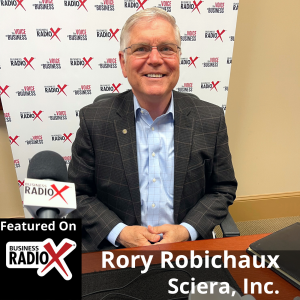
LIVE from the GNFCC Grand Opening Celebration: Rory Robichaux, Sciera

September 6, 2022 by John Ray

Rory Robichaux, Sciera
North Fulton Business Radio
LIVE from the GNFCC Grand Opening Celebration: Rory Robichaux, Sciera
Loading
00:00 /
RSS Feed
Share
Link
Embed

Download file

Rory Robichaux, Sciera

LIVE from the GNFCC Grand Opening Celebration: Rory Robichaux, Sciera (North Fulton Business Radio, Episode 512)

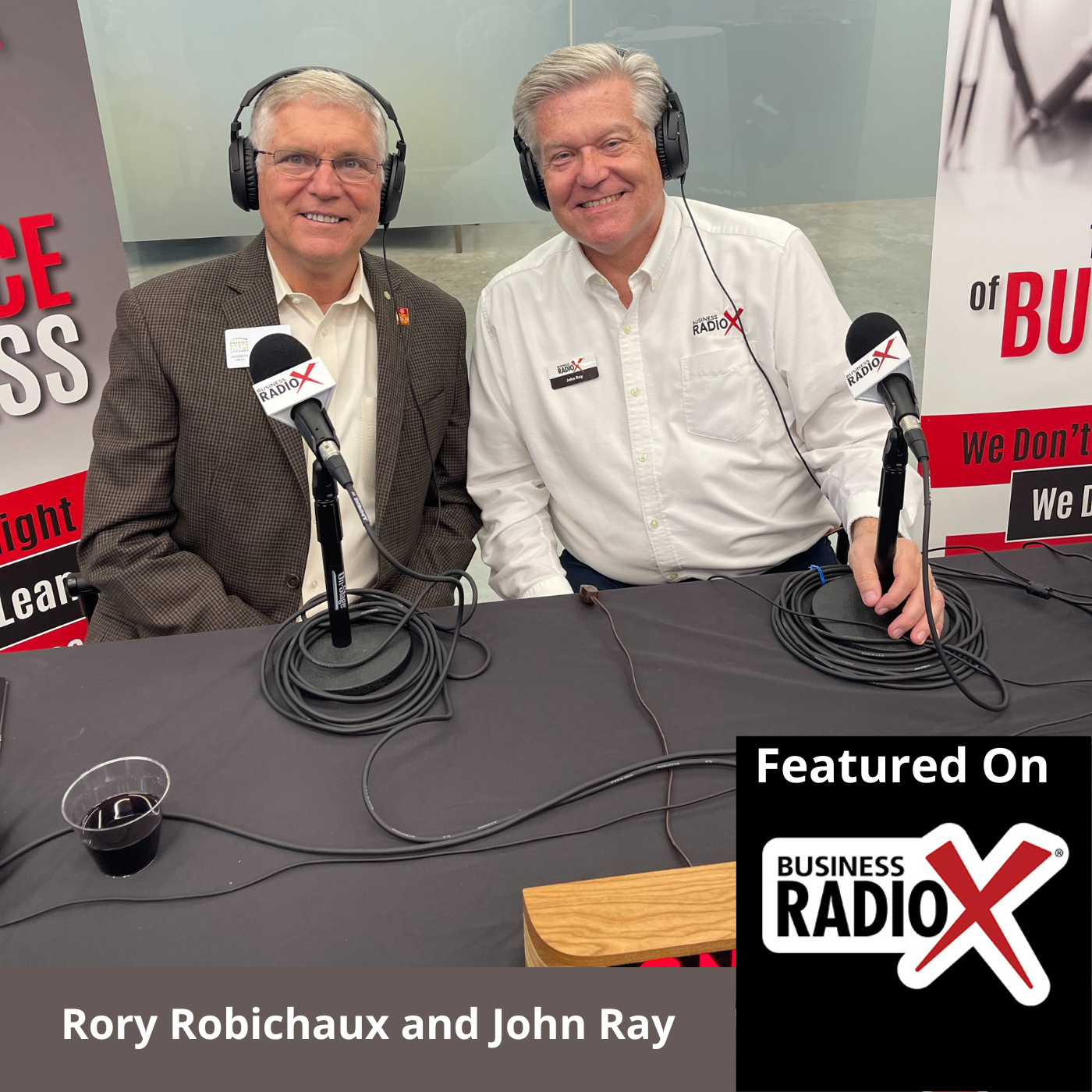
Rory Robichaux of Sciera joined host John Ray LIVE from the Grand Opening Celebration of the new offices of the Greater North Fulton Chamber of Commerce at Avalon. Rory discussed the work of Sciera, why he and his company are so involved with GNFCC, their sponsorship of Chairman’s Circle activities, and much more.

This show was originally broadcast live from the Grand Opening celebration and ribbon cutting of the new offices of the Greater North Fulton Chamber of Commerce at the 10000 Building at Avalon in Alpharetta, Georgia, on August 18, 2022.

North Fulton Business Radio is produced and broadcast by the North Fulton studio of Business RadioX® inside Renasant Bank in Alpharetta.

Sciera, Inc.

In late 2007, with the rapid explosion of publicly available information, Sciera’s two founders wondered, “What if this can be harnessed to answer the question, What Changed?” Using the then-nascent AWS (Amazon cloud), unstructured text mining, and advanced analytics, they set about creating a scalable framework to capture changes…which when combined with known client data, identifies triggers that initiate a buy journey.

Today Sciera is a team of Strategists, Analysts, Data Scientists and Technologists who provide answers to the most important marketing questions – Who, When, Where & Why.

Company website | LinkedIn | Facebook

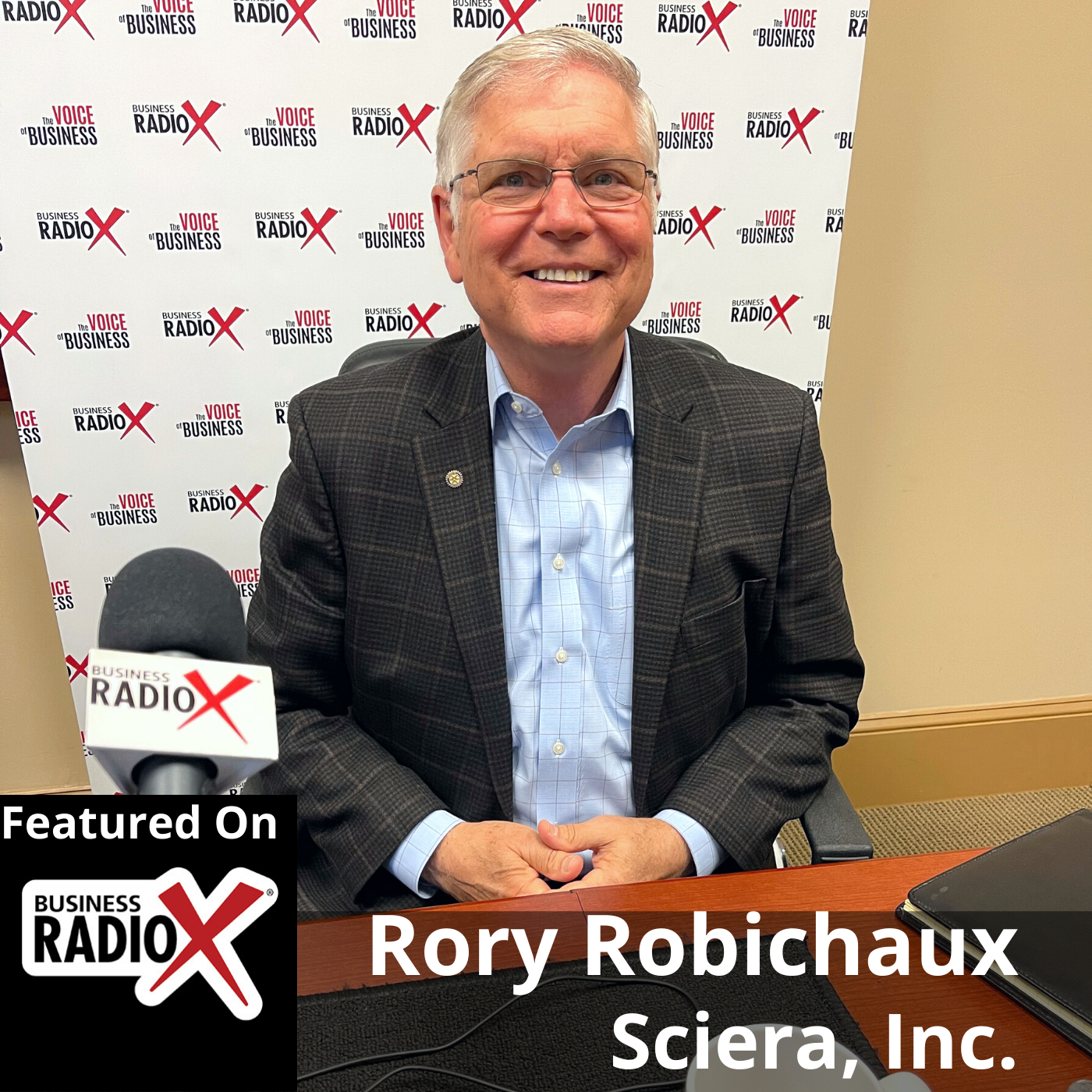
Rory Robichaux, Senior Vice President and Chief Marketing Officer, Sciera, Inc.

Rory Robichaux, Senior Vice President and Chief Marketing Officer, Sciera, Inc.

Rory Robichaux has been at the forefront of each technology revolution of the past 40+ years. He has led technology, strategic planning, design and development, data analytics, and sales and marketing teams across the technology industry. He has held leadership positions in major firms such as Coca-Cola, Sun Microsystems, and Deloitte Consulting, as well as created and built successful start-ups in industries ranging from transportation and entertainment to technology and financial services. He currently leads the sales and marketing functions of a global market intelligence firm headquartered in Atlanta.

Outside of his responsibilities with Sciera, Mr. Robichaux belongs to the Chambers of Commerce across the Atlanta region and is very involved in helping to lead and mentor a number of Rotary Clubs across the Atlanta area.

LinkedIn

Questions and Topics in the Interview:

  • What Sciera does
  • Sciera’s involvement in the Chamber
  • The Chairman’s Circle

North Fulton Business Radio is hosted by John Ray and broadcast and produced from the North Fulton studio of Business RadioX® inside Renasant Bank in Alpharetta. You can find the full archive of shows by following this link. The show is available on all the major podcast apps, including Apple Podcasts, Spotify, Google, Amazon, iHeart Radio, Stitcher, TuneIn, and others.

RenasantBank


Renasant Bank has humble roots, starting in 1904 as a $100,000 bank in a Lee County, Mississippi, bakery. Since then, Renasant has grown to become one of the Southeast’s strongest financial institutions with over $13 billion in assets and more than 190 banking, lending, wealth management and financial services offices in Mississippi, Alabama, Tennessee, Georgia and Florida. All of Renasant’s success stems from each of their banker’s commitment to investing in their communities as a way of better understanding the people they serve. At Renasant Bank, they understand you because they work and live alongside you every day.


Special thanks to A&S Culinary Concepts for their support of this edition of North Fulton Business Radio. A&S Culinary Concepts, based in Johns Creek, is an award-winning culinary studio, celebrated for corporate catering, corporate team building, Big Green Egg Boot Camps, and private group events. They also provide oven-ready, cooked-from-scratch meals to go they call “Let Us Cook for You.” To see their menus and events, go to their website or call 678-336-9196.

Tagged With: Alpharetta, Avalon, Chairman's Circle, data analytics, GNFCC, Inc., John Ray, marketing technology, North Fulton Business Radio, renasant bank, Rory Robichaux, Sciera

Rory Robichaux, Sciera, Inc.

April 19, 2022 by John Ray

Sciera, Inc
North Fulton Business Radio
Rory Robichaux, Sciera, Inc.
Loading
00:00 /
RSS Feed
Share
Link
Embed

Download file

Sciera, Inc

Rory Robichaux, Sciera (North Fulton Business Radio, Episode 447)

Rory Robichaux, SVP and Chief Marketing Officer at Sciera, joined host John Ray in the studio on this edition of North Fulton Business Radio. Rory explained what Sciera does as a data analytics company and its expansion into digital marketing. He explained the products Sciera offers, what digital marketing is, the flexibility it has to meet the needs of its clients, what a return on investment in digital marketing looks like, and much more.

North Fulton Business Radio is broadcast from the North Fulton studio of Business RadioX® inside Renasant Bank in Alpharetta.

Sciera, Inc.

In late 2007, with the rapid explosion of publicly available information, Sciera’s two founders wondered, “What if this can be harnessed to answer the question, What Changed?” Using the then-nascent AWS (Amazon cloud), unstructured text mining, and advanced analytics, they set about creating a scalable framework to capture changes…which when combined with known client data, identifies triggers that initiate a buy journey.

Today Sciera is a team of Strategists, Analysts, Data Scientists and Technologists who provide answers to the most important marketing questions – Who, When, Where & Why.

Company website | LinkedIn | Facebook

Rory Robichaux, Senior Vice President and Chief Marketing Officer, Sciera, Inc.

Rory Robichaux, Vice President and Chief Marketing Officer, Sciera, Inc.

Rory Robichaux has been at the forefront of each technology revolution of the past 40+ years. He has led technology, strategic planning, design and development, data analytics, and sales and marketing teams across the technology industry. He has held leadership positions in major firms such as Coca-Cola, Sun Microsystems, and Deloitte Consulting, as well as created and built successful start-ups in industries ranging from transportation and entertainment to technology and financial services. He currently leads the sales and marketing functions of a global market intelligence firm headquartered in Atlanta.

Outside of his responsibilities with Sciera, Mr. Robichaux belongs to the Chambers of Commerce across the Atlanta region and is very involved in helping to lead and mentor a number of Rotary Clubs across the Atlanta area.

LinkedIn

Questions and Topics in this Interview:

  • Tell me about Sciera, your history, and what is it that you offer.
  • Tell me more about what you mean when you say that you are a Market Intelligence firm.
  • Explain to our audience what ‘Digital Advertising’ entails; is this simply Facebook advertising or Google AdWords?
  • Doesn’t every advertising firm offer Digital Advertising services? What is special or unique about Sciera’s Digital Advertising services?
  • Are there any specific Sciera services or branded offerings that we would recognize in the marketplace?
  • How does Data Analytics play into or support your other products or is it simply a stand-alone product?
  • Does Sciera specialize in serving a particular industry, or is your focus broader than a single industry?

North Fulton Business Radio is hosted by John Ray and broadcast and produced from the North Fulton studio of Business RadioX® inside Renasant Bank in Alpharetta. You can find the full archive of shows by following this link. The show is available on all the major podcast apps, including Apple Podcasts, Spotify, Google, Amazon, iHeart Radio, Stitcher, TuneIn, and others.

RenasantBank


Renasant Bank has humble roots, starting in 1904 as a $100,000 bank in a Lee County, Mississippi, bakery. Since then, Renasant has grown to become one of the Southeast’s strongest financial institutions with over $13 billion in assets and more than 190 banking, lending, wealth management and financial services offices in Mississippi, Alabama, Tennessee, Georgia and Florida. All of Renasant’s success stems from each of their banker’s commitment to investing in their communities as a way of better understanding the people they serve. At Renasant Bank, they understand you because they work and live alongside you every day.


Special thanks to A&S Culinary Concepts for their support of this edition of North Fulton Business Radio. A&S Culinary Concepts, based in Johns Creek, is an award-winning culinary studio, celebrated for corporate catering, corporate team building, Big Green Egg Boot Camps, and private group events. They also provide oven-ready, cooked from scratch meals to go they call “Let Us Cook for You.” To see their menus and events, go to their website or call 678-336-9196.

Tagged With: advertising, customer data, customer data analytics, data analytics, digital marketing, Inc., marketing, Rory Robichaux, Sciera

Bringing the Strength of Women to the World of Construction E2

April 11, 2022 by Karen

Bringing-the-Strength-of-Women-to-the-World-of-Construction-feature
Phoenix Business Radio
Bringing the Strength of Women to the World of Construction E2
Loading
00:00 /
RSS Feed
Share
Link
Embed

Download file

Bringing-the-Strength-of-Women-to-the-World-of-Construction

Bringing the Strength of Women to the World of Construction E2

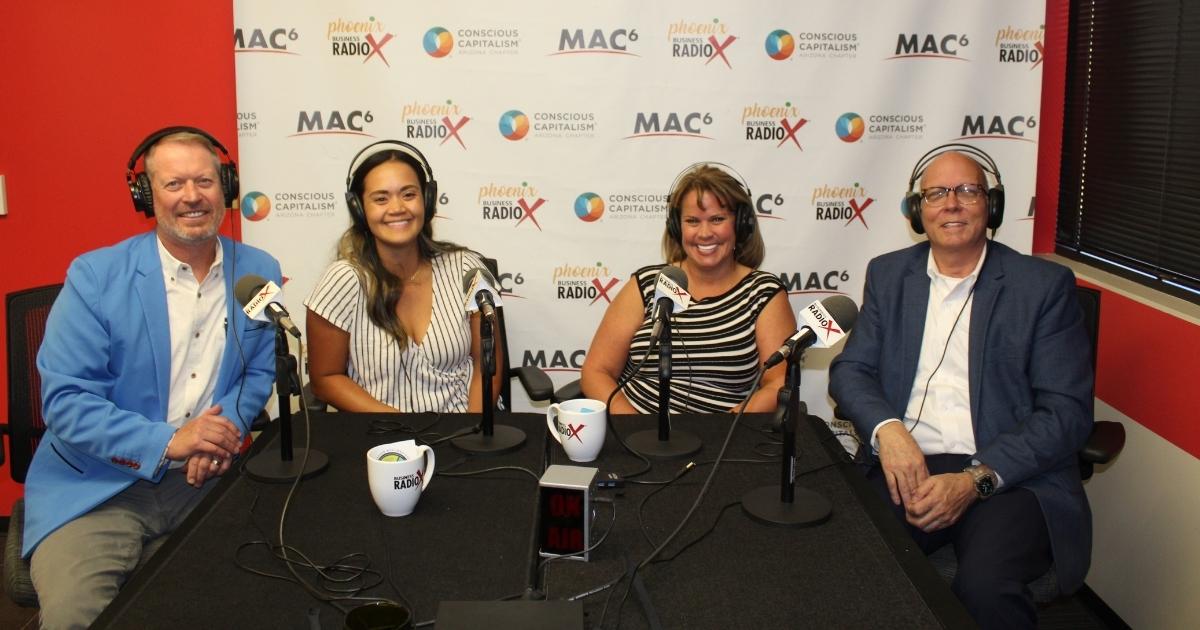
Robert and JJ’s guests, Dawn Rogers(Executive Director) with Arizona Masonry Council and Tuyet Jacobson(Sr. Project Manager) with McCarthy Building Companies, discussed the many benefits of women in the AEC arenas.

We learn what brought these ladies into their prospective positions and the importance of women “telling their story better” to encourage others. Experiencing the passion that Dawn and Tuyet bring to their advocacy of women in the AEC professions shined the light on the importance of diversity in the industry.

Both are heavily involved with programs highlighting the multitude of possibilities for careers in construction, reaching out to Middle School students through College level.

If you have been looking to “Find your Tribe” Dawn and Tuyet are the place to start!

AMClogo0418181

Arizona Masonry Council’s mission is to create significant and lasting positive change for the Arizona masonry industry and to reinforce that our systems provide the premier building envelope solution in the minds of public and private owners, developers, architects, engineers, general contractors and the general public.

Dawn-Rogers-MAC-and-BleuDawn Rogers started her career in the construction industry working for the Arizona Masonry Guild & Arizona Concrete Contractors Association many years ago.

She has since gone on to leadership roles in the industry including business development, student recruiting and retention for the Construction Management program at Arizona State University, and more recently a quick foray into the world of construction technology.

She has come full circle in her career and has now returned to her roots in masonry as the Executive Director of the newly formed Arizona Masonry Council.

Connect with Dawn on LinkedIn.

McCarthy Buildings Bar Logo CMYK Red

McCarthy Building Companies, Inc. is the oldest privately held national general contractor in the country. They are 100% employee-owned and a top 10 ENR construction company.

Tuyet-Jacobson-MAC-and-BleuTuyet Jacobson is currently a Sr. Project Manager at McCarthy Building Companies where her main rule is in operations within their Education Services Business Unit.

She has overseen the construction of multiple K-12 project including rebuilds and new builds in the greater Phoenix area. She is also on the board of the ASU Del E Webb School of Construction Alumni Chapter where she serves to provide the connection with current students and previous graduates of the program providing opportunities for networking and service back to the community.

In addition, she is on the board of CACTUS (Careers in Architecture Construction and Trades Uplifting Students) which provides education for Middle School Students in the careers within the design and construction industry.

Connect with Tuyet on LinkedIn.

About Your Hosts

Meet JJ Levenske

jj-levenske-bleuwaveJJ Levenske is a seasoned construction executive with over 30 years of experience in the commercial and industrial sectors. From pre-construction services to complex quality controls and close-outs, he brings a commitment to delivering the highest levels of professionalism and customer service.

JJ’s dedication to construction has allowed him to become an industry expert which he aims to share with customers and investors alike. JJ does not believe in mediocrity and strives to see the “end at the beginning” for each project, effectuating a higher return on investment for the entire team.

Early on in his career, JJ worked as a cost engineer conducting feasibility estimates, strategic capital estimates, cost planning, and analysis of value engineering for the technology, petrochemical, and food industries. He went on to develop and implement a variety of systems for estimating, scheduling, resource management, and cost tracking while holding Project Manager and Senior Management Positions.

During his tenure, JJ has been involved in $1 billion worth of construction services. A strong entrepreneurial acumen allows him to be the perfect advocate for your facility based business solutions.

Meet Robert Johnson

robert-johnsonRobert Johnson is a knowledgeable construction professional with over 40 years of experience. His experience ranges from residential to the commercial and industrial sectors.


Robert began working in the trades immediately out of high school and quickly advanced to Journeyman status. Robert went on to estimating, operations, senior level management and then business development.

Robert is consistently building relationships and networking with those associated with all aspects of development and construction. Robert has become a respected source for prefabricated construction solutions.

Robert enjoys spending time with Pam, his wife of 42 years, their 3 children, and 10 grandchildren.

About Our Sponsors

Bleuwave is a Phoenix-based general contractor with a specialty in land development & site improvement, pre-construction, design build, remodel and renovations, construction management, and post construction.

Bleuwave is passionate about what they do and takes pride in their partner’s success.logo-BleuWave-01

When you need it done right the first time, call Bleuwave.

Follow Bleuwave on LinkedIn, Facebook, Twitter and Instagram.

Mac Prefab is an industry leader in cutting-edge structural roof systems in residential, commercial, and industrial construction.

Mac Prefab offers expertise in Ultra-Span, Floor Trusses, Roof Trusses, Engineering, Design/Engineering, and Project Management.MAC-Prefab-LLC-Logo-2

For all of your cold-formed steel prefabrication needs, trust Mac Prefab.

Follow Mac Prefab on LinkedIn and Instagram.

Tagged With: Arizona Masonry Council, Inc., McCarthy Building Companies

Shandron Pemberton with POSolutions, Inc.

April 29, 2021 by angishields

Shandron-Pemberton
GWBC Radio
Shandron Pemberton with POSolutions, Inc.
Loading
00:00 /
RSS Feed
Share
Link
Embed

Download file

POSolutions-logo

POSolutions, Inc. is an innovative Real Estate Brokerage Firm that’s re-defining solutions for how Asset Managers approach their property management needs! As an accredited firm servicing Homeowner and Condominium Associations, the Federal Government, County Agencies, and Corporations, our Worry Free guaranteed approach ensures that your asset portfolio continues to build stronger and safer communities that preserve value!

POSolutions, Inc. is an active member of Community Association Institute and the Better Business Bureau of Greater Atlanta. We are committed to the preservation of community through ongoing educational advancements, and require that all of our community managers are licensed and earn the designation of Certified Manager of Community Associations or be actively working to attain this prestigious certification. POSolutions, Inc. is a moderate sized brokerage firm that offers many benefits similar to a larger corporation, while also providing a compelling business environment that is built on transparency.

Established in 2004 and based in Douglasville, GA, POSolutions, Inc. brings 17 years of proven experience within the community currently manages nearly 15K units throughout the Atlanta Metro Area ranging in size up to over 700 units with a financial portfolio of nearly 7.5M in association revenue annually.

Shandron-PembertonMs. Shandron Pemberton is a licensed Broker with the Georgia Real Estate Commission, a Professional Community Association Manager, a Certified Manger of Community Associations and an Association Management Specialist with the National Board of Community Association Managers.

In 2004, she established POSolutions, Inc., an innovative Real Estate Brokerage Firm that’s re-defining solutions for how Asset Managers approach their property management needs! As an accredited firm servicing Homeowner and Condominium Associations, the Federal Government, County Agencies, and Corporations, POSolutions Worry Free guaranteed approach ensures their client’s asset portfolios continue to build stronger and safer communities that preserve value!

Ms. Pemberton remains at the forefront of POSolutions and is responsible for the continued progression of the firm. Currently, POSolutions currently manages over 15K units throughout the Atlanta Metro area and oversees nearly 7.5M in financial revenue annually for their clients.

In 2015, Ms. Pemberton graduated from the Small Business Administration’s (SBA) Emerging Leaders program and was appointed as a Board member with the City of Douglasville’s Downtown Development Authority and served as Chair for four years. Additionally, Mrs. Pemberton is a Board member for both the Douglas County Economic Development Authority and the Douglas County Chamber of Commerce.

In service to the community, Mrs. Pemberton serves as Treasurer on the Board for the Douglas/Cobb Health Foundation, which is the fundraising support for programs offered at the Douglas/Cobb County Health Departments. She also proudly serving as the Business Ministry Leader at Destiny World Church. Mrs. Pemberton has been a resident of Douglas County since 2004.

Follow POSolutions on LinkedIn and Facebook.

TRANSCRIPT

Intro: [00:00:04] Broadcasting live from the Business RadioX Studios in Atlanta, Georgia, it’s time for GWBC Radio’s Open for Business. Now, here’s your host.

Lee Kantor: [00:00:18] Lee Kantor here. Another episode of GWBC Open for Business, and this is going to be a good one. Today, we have with us Shandron Pemberton with POSolutions. Welcome.

Shandron Pemberton: [00:00:30] Hi, Lee. Thank you very much. It’s a pleasure.

Lee Kantor: [00:00:33] Well, I am excited to learn what you’re up to. Tell us a little bit about POSolutions, how are you serving folks?

Shandron Pemberton: [00:00:38] Oh, gosh. Well, you know, Lee, we’ve been around now going on about 18 years. And POSolutions, we’re actually a real estate brokerage firm. With this niche concentration, we deal with asset management. I got to tell you, the basis of which we started here 18 years ago was started working with HOA and condo communities. So, we still work in that capacity. We manage about 15,000 units throughout the metro area, ranging inside this all over. So, you know, some people kind of feel a certain kind of way when you talk about HOA and condo management.

Shandron Pemberton: [00:01:11] But, essentially, you know, it was the basis to jump start and catapult POSolutions into the asset management arena. You know, from there and dealing so much from a property management perspective, it broadened our understanding as related to working with federal counties or any government agencies regarding things like custodial services, potentially doing real estate, consulting services. Because I am the broker, we are a brokerage firm, is licensed with the Real Estate Commission. We do deals so much in money and recovery of dues and making sure those assets are maintained from a leasing perspective as well. We are a fair credit reporting entity, so we do have a collections division internally where we do financial recovery and discovery for our clients. And even in a nontraditional debt collective perspective as well.

Shandron Pemberton: [00:02:11] But when you think about asset management as a whole, Lee, whatever is required to maintain the portfolio that a client may have, whether it’s HOA or whether it’s a school system and they need custodial services, or whether it’s working with a developer, you know, a housing authority to help from their leasing program or HUD initiatives. So, all of those things are kind of lumped up under asset management when you think about real estate. And it has truly been a space that, I will say, has been resilient, Lee.

Lee Kantor: [00:02:53] Now, I have a question, I’m not familiar with the industry as a whole. You know, I’ve lived in places and rented places. But talk to me a little bit about how the service works from your standpoint. When you say property management, a property, in your view, is what? Like, could it be someone’s house? Because there’s property management, people who help an individual rent their house out? Or it could be a condo building, where you help that condo building owner, you know, serve their clients and become the manager of that property? Like, how are you defining property manager? Is it so broad that it can include lots of different things?

Shandron Pemberton: [00:03:35] Yeah. Great question, Lee. So, when you do think about property management, you’ll tend to see either one side or the other. From an investment, you know, kind of a single owner and you may have a multiple rental properties and you want a property management firm to help you find a tenant to be placed in that property and collect those rents. In that capacity, we don’t operate per se. So, we manage neighborhood association programs.

Shandron Pemberton: [00:04:05] So, the developer may have acquired a piece of land and they are building a deed restricted community. So, that homeowners association or that condominium building, the entity in itself, because the association isn’t a corporation, is going to be operated by its board of directors. So, in most cases, those board of directors have the right to procure property management and, i.e., they’ll work with firms such as POSolutions. So, from board members electing to enter into an agreement with the firm or whether it is a developer in itself, and while that developer is building out the property or that particular phase, helping understanding what that initial budget and the creation of the the covenants and bylaws, the restrictions, and things like that from the inception of the community.

Shandron Pemberton: [00:05:00] So, not more so from an individual perspective. But, again, in terms of those neighborhood management programs, that HOA and condo spaces is where our niche expertise essentially resides. And from there, dealing with so much maintenance on those properties. So, it could be the neighborhood pool or the clubhouse, anything from, again, the financials or the dues that are paid by the members to maintain the assets. POSolutions is hired to oversee all of that and execute based on the directives of the board of directors.

Shandron Pemberton: [00:05:40] So, from, again, that maintenance perspective, when you’re talking about maintaining those assets, that is where we spun off and continue to excel over the years by developing out our full maintenance division. So, within POSolutions, as that asset management firm, we have that neighborhood management division. We have a maintenance department to include a financial recovery department.

Shandron Pemberton: [00:06:09] So, when you’re talking about being connected with a partner, like GWBC, that benefit has equated to us being certified and being a female-owned and operated firm opens us up for a wealth of opportunities in procurement from the county perspective. We currently work with the Douglas County School System. We’re based here in Douglasville, Georgia to do some custodial services. We’ve done work with the Department of Natural Resources, and did some maintenance on some of their staff corridors out at a state park.

Shandron Pemberton: [00:06:48] So, when you think asset management, think about that real property and what all it takes to keep it in good standing. And so, not only just from the receipt of the monies to keep it maintained but, equally, the work that goes into maintaining it. So, if it’s painting, if it’s roofing, you know, all of those things to make sure that the entity, that real property, the asset in itself, is in good standing and in keeping the best value as possible in terms of how that asset is performing.

Lee Kantor: [00:07:25] Now, it sounds like your business evolved from starting out with these homeowners associations. And then, it’s just expanded into, like you said, wherever people had assets that needed to be managed. Is that accurate?

Shandron Pemberton: [00:07:40] That is absolutely correct. You’re a quick study, Lee.

Lee Kantor: [00:07:44] So, when that’s the case, can you talk about that? Because that’s a good lesson for business owners. They might think that their initial idea is their big idea, but, really, that was just your point of entry. And once you kind of looked, maybe, at a bigger view of what your service was, then you realize that, “Hey, other people can benefit from that service as well.”

Shandron Pemberton: [00:08:06] Absolutely. Absolutely. And I looked at it from a scalability perspective. You know, yes, and yes, and yes again, in terms of we started with HOA and condo management. But as we continue to evolve over the years and going through just understanding, training, education, partners like GWBC, the SBA through the Emerging Leaders Program, how do you begin to scale. Or growing organically is one way, typically, that’s going to bring in more, you know, employees, resources, more financial cost.

Shandron Pemberton: [00:08:47] But if you think, especially with the current climate and how to pivot, how can you scale? Meaning, what you already have access to and what you’re doing already. As minimal as possible, how can you bring in additional streams of income? You know, our systems, where is the benefit? There’s benefit in the systems that we use from a property management perspective and being able to have, again, in this aspect, you have to be a licensed agent, part of the Real Estate Commission. But it is a very specific training and level of expertise.

Shandron Pemberton: [00:09:24] And so, when you think about all of the different areas that you’re touching, you have to be creative. You know, I remember when the market crashed here back in 2007 or ’08 or so, it was, “Hey, I’m getting all of these closing verifications and seeing all these foreclosure notices coming across my desk that we have to process for our HOA and condos, because many of those homes were in the neighborhoods.” And, you know, I’m seeing the common partners, and that is actually when I began exploring my understanding in terms of in the federal market space. It was at that time that we got our first subcontracts with working with a HUD partner, and we started doing preservation work on their foreclosures throughout the metro area. And that took us to a whole another level. It pushed my understanding of how really to maximize in different areas of the professional insight that we had, quite frankly, Lee.

Lee Kantor: [00:10:31] Right. It was one of those things that it wasn’t obvious when you started maybe. But once you started kind of immersing yourself into it, then these opportunities present themselves and then you become a logical solution. And in hindsight, it’s probably, “Look, the path was there. But I just didn’t see it until I was kind of in it.”

Shandron Pemberton: [00:10:53] Absolutely. Absolutely. You’re absolutely right. But education, sometimes it’s a lot of dialoging and, again, connected with affiliates and having those conversations. Some of my most intricate moments were talking with other likeminded business owners and in completely different spaces. But just the owners and business, the challenges that you have day-to-day. And through that dialogue, it was, “Hey, well, have you thought about this? And, you know, you may be able to spin it this way.” And sometimes it’s just the sharing and the reciprocation of those conversations. They were very helpful for me. And to that extent, you know, sometimes when you’re in it, you kind of don’t see it. But, equally, the planning and working through some type of growth plan and proper preparation prevents poor performance.

Shandron Pemberton: [00:11:47] So, you should always be thinking, you know, six months to 12 months down the road and what things are going to look like, and working on opportunities that far in advance. But you’ve got to keep doing something out there and see what sticks. And sometimes, you know, it’s just about following the money also. If you’re intending to the emerging trends and watching what’s happening, you just got to find your niche. Research is everything, is what I’m saying, and being connected to the right partners. And once you’re there, you got access to information, you’re bound to find your way some kind of way.

Lee Kantor: [00:12:25] Yeah. That’s great advice. And you have to be bold enough to take the action, too. It’s one thing to kind of intellectually see it. But you also took the action. You used your network, you used your resources, you used your partners, and helped each other kind of solve a problem for folks.

Shandron Pemberton: [00:12:47] Absolutely.

Lee Kantor: [00:12:48] So, now, you mentioned GWBC a few times here, talk about why specifically was that important? Did you know about GWBC when you started? Or how did you kind of find it and decide to get involved with the organization?

Shandron Pemberton: [00:13:05] Getting involved, you know, it’s like one of those things, you kind of have to kiss a lot of toes before you get to the prints there. And, honestly, it was trial and error. You know, just over my 18 years of being in business, you try things. If you’re committed to the education, and developing your talent, and being a true professional in your space, you should be pushing and hungry for information. I hope anyone who’s listening there, they are taking this as solid advice here.

Shandron Pemberton: [00:13:41] But through that, it was, again, going through just multiple exchanges there. As I began, like I said, learning more because I was self-taught initially, just from a procurement perspective. And then, you started seeing these common denominators in terms of where you want to go connected in terms of, “Hey, if this person has this opportunity, I’m looking for when it’s expiring.” So, I would do kind of a reverse look up there. And some of the common denominators that kept showing were, you know, between the SBA, GWBC, and B certifications, and what does this mean? And if I see another company, I would stalk them who was doing anything even similar and they were affiliated. So, if they’re affiliated, they’re successful, that’s where I need to be.

Shandron Pemberton: [00:14:28] And I guess, being savvy enough, again, you cannot be remissive about that research. But once I landed there, you know, it was an aggressive process. I wasn’t prepared to be as exposed as you go through and go into that certification piece. But I truly appreciated it, you know, it prepared me for – it was kind of an internal check for me to making sure that I’m right, not only just on paper that we’re prepared for things like reserves and being able to shift and being ready when the opportunity presents itself. It was always kind of in that aspect.

Shandron Pemberton: [00:15:16] But, you know, having gone through the process with GWBC, it kind of prepares you for applying for your first business loan. You know, if you can meet that mark and knowing just how extensive that process was, I developed a level of appreciation. And this a prestige. It became a badge of honor. You know, and with that, it has opened me up for so many other opportunities and access. And it’s an accomplishment, quite frankly. And so, in landing there with GWBC, it is one of those things where, like, the who’s who among women business owners are there. And I would not trade it for anything else in the world.

Shandron Pemberton: [00:16:08] And if you’re not already there, strive to get there. It’s been a huge benefit for the firm and even with opportunities, like here this morning. As a business owner, the best you can do, what you can do is, make those decisions with the information that you have available at that time and based on what those challenges are.

Shandron Pemberton: [00:16:30] A true fundamental appreciation for me with being a member of GWBC is, one, that it helps me in the planning forward, pushing that thought process, pushing the expansion, not allowing you to really settle for just being mediocre. You know, this is an organization of very, very strong and talented women. And, honestly, I feel privileged to be considered to be among the group. And for anyone out there who’s listening, it’s one of the places where I stopped there. You know, once you kind of get that certification, it just opened up so many doors. It was an exchange for us in terms of, “Hey, I don’t necessarily need to get an 8a certification or all those other things there. It truly has been a result of our success of being here, in a nutshell.

Lee Kantor: [00:17:40] I think it’s like the saying, iron sharpens iron. You know, you’re around smart people, you’re around encouraging people, you’re around talented people, and it just makes you better. Being around those people, they raised the bar to help you raise the bar. And everybody wins when everybody kind of gets together like this and helps each other.

Shandron Pemberton: [00:18:07] Absolutely. Absolutely. You couldn’t have said it better.

Lee Kantor: [00:18:10] Now, in your work, who is the person that you need more of? Like, who do you need to know that we can help you with? What kind of folks do you want to get in front of that we can, maybe, help you?

Shandron Pemberton: [00:18:24] Absolutely. Anyone definitely in that procurement asset management. So, if they’re MV, the compliance officers, almost every corporation or county or everyone has assets. And if you’re thinking what it takes to maintain them, right now, I am pushing and advocating looking for financial recovery opportunities. And there are so many things, unfortunately, as a result from our current state of the nation that a lot of people different delinquencies, have lost revenues. In some cases, you know, things have been sent out by lenders and some things may have been fraudulently done.

Shandron Pemberton: [00:19:12] We are set up much like a private eye, so our our Financial Recovery Department is stellar. And we do have that capacity to recover from a nontraditional debt perspective, from utilizing our systems and software. So, any company out there, you know, if it’s collecting outstanding power bills or outstanding loans, student loans, we can collect on and help the recovery in any aspect. If you’re thinking from an asset management perspective and the maintenance there, custodio. If, in fact, they’re looking to maintain inside of the actual just purely custodial work, and extensive about explaining that, or landscaping, or we have a GC on our team.

Shandron Pemberton: [00:20:09] So, we are quite diverse with regard to our maintenance department. So, if anyone is there and listening, the opportunities you hear, and think POSolutions can be a good fit for you, please, I welcome the opportunity to have a conversation or to maybe do a capabilities briefing with that potential compliance officer team. But we equally follow just key opportunities and just agencies that are typically a good fit that I’m thinking of. But, you know, you just never know who may has a portfolio of assets that they may need a unique service for. So, I would tend to say more about the services that we can provide and are readily able to go at this point as opposed to, you know, kind of calling out a particular agency individually at this moment.

Lee Kantor: [00:21:04] Now, you’re still doing work with the homeowners and condominium associations?

Shandron Pemberton: [00:21:09] Oh, absolutely. That is the basis of POSolutions. So, in that aspect, we have seven licensed agents who are staff members who are out and they have their portfolio of properties. We have a variation between full service or financial only services revenue-wise in that component. It’s close to about $8 million that we oversee for that pool of clients. So, yes, those compliance officers or listeners are actually on their board of directors in their neighborhoods and you’re not quite happy with your management firm or you’re doing it right now in a self-manage capacity, feel free to reach out for us. We’re based here in Douglasville, but we do service throughout the entire metro area. So, we have communities from Duluth, John’s Creek, all the way to Latonia. So, we’re throughout the metro area.

Shandron Pemberton: [00:22:06] And on that HOA and condo side, we breathe and sleep that. That is something that has been the basis truly, truly, Lee, from a real estate and asset management perspective. Because some people will say, “Hey, well, you’re a broker, a licensed agent.” Some will immediately go to, “Hey, is that commercial sales or residential sales?” And many of our colleagues so choose to be one or the other. We are in that property management side of things, that asset management. And I, honestly, look at that from the aspect of when you’re thinking about any real estate transaction, you know, in mastering the art of efficient property management/asset management, we are going to be there before, during, and after that process.

Shandron Pemberton: [00:22:55] So, from the point of inception, whether it’s that developer, that entity that’s looking to create the entity, how is that set up, to helping walk through the creation, the building of the property, even potentially selling, or what have you, to the end of it. Once they’re ready to transition off and now you want to keep it maintained and keep that property up to exceptional standing, that niche area of property and asset management, again, we are, in fact, resilient.

Shandron Pemberton: [00:23:28] And because of that, in understanding that – and I will say this not just to belabor – but you mentioned there on that HOA side, so in knowing and as we evolve over on the procurement space and started doing those sub-work and working in asset management for foreclosures and things that were happening for HUD and et cetera, having access to that information and knowing how that affects our neighborhoods, because ultimately our goal is to create stronger and safer communities that preserve value. And that could be, not just from a neighborhood management program, but, again, that asset management. Because if you’re talking about driving economic development, you know, you want those neighborhoods to remain intact. You don’t want them to become transient. And now you’ve got absentee owners. And we are talking about companies that want to buy into accounting and coming into an area, what does that look like for the families?

[00:24:27] So, I get really excited when I think about just the, although, broad, very specific support and assistance that we provide uphill solutions when you’re thinking about asset management. So, I charge my agents to really be better so we can have conversations and understanding because of relationships, “Hey, what does this mean from fair housing if you’ve got an implied service animal at a pool area and how do you deal with it?

Shandron Pemberton: [00:25:04] So, I really have an appreciation just for understanding the law and legalities around it. And making sure that my team is equally equipped and versed in those areas. It’s a benefit to our clients and our partners because it’s a representation, not only just some of the work and the level of care and excellence that we look to provide, but, fundamentally, all of it ties back into preserving the asset. And, again, building that stronger, resilient community, that neighborhood.

Shandron Pemberton: [00:25:42] So, now it really does become a motivating and kind of self-fulfilling thing there when, you know, you can look and see and saying, “Hey, the work that we’re doing, it’s increased. It’s making that county better by this. It’s making this neighborhood better in this way. And, now, you have these companies looking to acquire and maybe put their hubs in that location because you’ve got families there. They’re thriving in their jobs or opportunities. So, I just really get excited about it. And just being that very niche, I wouldn’t trade it for the world.

Lee Kantor: [00:26:19] Now, if somebody wants to learn more, is there a website?

Shandron Pemberton: [00:26:23] Absolutely, you can certainly reach out to us, again, POSolutions, that’s P as in Paul-O as in open-solutions with an S on the end, all one word. And you can get us at posolutions.net via the web. Our office number, 678-715-1430. Or feel free to reach out to me directly, I’m a very hands-on leader. And, again, my name is Shandron, Shandron Pemberton. You can get me at shan, S-H-A-N, @posolutions.net.

Lee Kantor: [00:26:55] Well, thank you so much for sharing your story today. You’re doing important work and we appreciate you.

Shandron Pemberton: [00:27:02] Thank you so very much. It was a pleasure to be here. And I appreciate your candor and dialogue this morning.

Lee Kantor: [00:27:08] All right. This is Lee Kantor. We will see you all next time on GWBC Open for Business.


About GWBC

The Greater Women’s Business Council (GWBC®) is at the forefront of redefining women business enterprises (WBEs). An increasing focus on supplier diversity means major corporations are viewing our WBEs as innovative, flexible and competitive solutions. The number of women-owned businesses is rising to reflect an increasingly diverse consumer base of women making a majority of buying decision for herself, her family and her business. GWBC-Logo

GWBC® has partnered with dozens of major companies who are committed to providing a sustainable foundation through our guiding principles to bring education, training and the standardization of national certification to women businesses in Georgia, North Carolina and South Carolina.

Tagged With: Inc., POSolutions

Steve Hart with PMI

April 26, 2021 by angishields

Steve-Hart-PMI
Franchise Marketing Radio
Steve Hart with PMI
Loading
00:00 /
RSS Feed
Share
Link
Embed

Download file

Brought To You By SeoSamba . . . Comprehensive, High Performing Marketing Solutions For Mature And Emerging Franchise Brands . . . To Supercharge Your Franchise Marketing, Go To seosamba.com.

Steve-Hart-PMIWhen Steve Hart founded Property Management, Inc. (PMI) in 2008, his vision was to create the nation’s largest residential, commercial, and association management franchise network. Much of his career prior to PMI was spent riding the ups and downs of the real estate industry in land development, construction, and sales.

Steve came to understand that no matter what the real estate market is doing, the property management sector of the industry remains stable.

With this in mind, he built the PMI model for a consistent revenue-generating property management business which now helps hundreds of property managers realize their dreams of successful business ownership.

Connect with Steve on LinkedIn.

What You’ll Learn in This Episode

  • How Steve started Property Management, Inc.
  • What markets of the industry PMI touches
  • How PMI’s business model offers a consistent revenue generating business
  • How the company was able to navigate the turmoil of the 2008 economy and again during the pandemic in 2020
  • What PMI looks for in a franchise
  • Plans for growth in 2021

Tagged With: Inc., PMI, property management

How 2020 Changed the World and Optimism for the Future E10

February 4, 2021 by Karen

AZTechCastJAN2021FBIG
AZ TechCast
How 2020 Changed the World and Optimism for the Future E10
Loading
00:00 /
RSS Feed
Share
Link
Embed

Download file

How-2020-Changed-the-World-and-Optimism-for-the-Future-E10
How 2020 Changed the World and Optimism for the Future E10

When the world celebrated the dawn of a new decade with a blaze of fireworks, parties and revelry on January 1, 2020, few could have imagined what the year had in store. It was a year that changed the world like no other for at least a generation, possibly since World War II. Businesses folded. Schools and colleges shut. Live sport was cancelled. Commercial airline travel contracted. Shops, clubs, bars and restaurants closed. Social inequities were exposed. And human interaction went virtual.

Moderated by Phoenix Business Radio Owner & President Karen Nowicki, a distinguished panel of technology leaders from KEO Marketing, the University of Advancing Technology and PADT, Inc. had an engaging discussion with Arizona Technology Council CEO Steve Zylstra on how the world can rebuild following such a tumultuous year, the new technology to get us there, and the innovative Arizona companies that helped pull us through and gave us optimism for the future.

Visit www.aztechcouncil.org/techcast to view the blog and listen to the replay.

KEO-Marketing-Logo

KEO Marketing, a leading B2B marketing agency in Phoenix, is committed to developing marketing strategies and plans that help clients succeed. Some of the world’s largest brands depend on KEO Marketing for marketing programs that deliver tangible and substantial results.

Led by business growth and B2B marketing expert, Sheila Kloefkorn, KEO Marketing Inc. specializes in innovative marketing strategies that deliver results. Some of these solutions include lead generation and nurturing, integrated marketing, marketing automation, inbound marketing, content marketing, search engine optimization, search marketing, email marketing, creative, video marketing, website design and development, app development, online and traditional advertising, local and mobile marketing and much more.

Visit https://keomarketing.com to elevate your marketing strategies and drive growth for your business.

Sheila-Kloefkorn-headshotSheila Kloefkorn is CEO and President of KEO Marketing, a full service B2B marketing agency. The company specializes in marketing strategy, messaging, digital infrastructure, execution and analytics. KEO Marketing grows Fortune 1000 companies and mid-market businesses.

Kloefkorn was recently named one of the “Top 10 Business Leaders of the Year” and “Top 25 Dynamic Women in Business” by the Phoenix Business Journal and one of 15 Arizonans to Watch by the Arizona Republic.

In addition, she is past President of the Phoenix Chapter of the Business Marketing Association and the American Marketing Association. She is a frequent national and local speaker on a wide range of marketing and business topics.

Follow KEO Marketing on LinkedIn, Facebook, Twitter and Instagram.

University of Advancing Technology (UAT) is a private and family-owned university that merges the values of the traditional academy with the modern technology campus, a fusion that enhances its ability to fulfill the mission of educating students in the fields of advancing technology who innovate for the future. UAT-log300DPI

At the heart of UAT’s curricula is a technology-infused campus in Tempe, Arizona. This fusion of the traditional academy with the technology-focused curricula creates a distinct, non-exclusionary university in which students learn to value their own uniqueness and the power of technology in education.

Visit https://www.uat.edu to learn more.

David-Bolman-headshotcroppedProvost Bolman has focused his career upon the profound need for a substantial and diverse workforce within Arizona and the nation.

As its long-standing provost, Dr. Bolman has built the University of Advancing Technology (UAT) into a unique, all-STEM institution that marries the best of a traditional, small, private college with the genetics of innovation that come with agile technology organizations.

As an educator, he has focused on cultivating a base of technology students and future inventors. As a technologist, he has worked to create a university where the culture of innovation and creation is so regular and celebrated that the goal for each student is to graduate having worked on numerous teams and built complete solutions again and again.

Dr. Bolman has researched, written and spoken on the nature of technology and how to successfully lead innovation. He is an alumni of Valley Leadership and currently serves as its past board chair. He serves on the Board of Directors for the Arizona Technology Council and the AZPBS community board.

Follow UAT on LinkedIn, Facebook, Twitter and Instagram.

PADTLogoColor1500x750

PADT, Inc. is a globally recognized engineering product and services company that focuses on helping customers who develop physical products by providing numerical simulation, product development and 3D printing solutions.

PADT’s worldwide reputation for technical excellence and experienced staff is based on its proven record of building long-term win-win partnerships with vendors and customers. Since its establishment in 1994, companies have relied on PADT because “We Make Innovation Work.”

With over 90 employees, PADT services customers from its headquarters at the Arizona State University Research Park in Tempe, Ariz., and from offices in Torrance, California, Littleton, Colorado, Albuquerque, New Mexico, Austin, Texas, and Murray, Utah, as well as through staff members located around the country.

More information on PADT can be found at www.PADTINC.com.

Eric-Miller-headshotEric Miller is a co-owner of Tempe based PADT, Inc., which provides tools and services to companies who design and manufacture physical products. He holds a B.S. in Mechanical Engineering from the University of California, Berkeley and has lived in Arizona since 1986. He started his career focusing on the application of Finite Element Analysis (FEA) to simulate turbine engine components. Over the years he became recognized as an expert user of the ANSYS software tools, solid modeling, and the development of custom software to automate the product simulation and design process.

As a co-founder of PADT in 1994, Eric was able to also pursue his interests in IT, graphic design, 3D Printing, database programming, and small business management. As both PADT and the use of advanced engineering tools grew, Eric became exposed to dozens of different industries and developed his broad understanding of the application of technology for product development and manufacturing.

After over three decades in the industry, Eric is often called upon to write and speak on simulation, design, and 3D printing as well as on startups and the high-tech sector. His outside commitments include the Chairman of the Arizona Technology Council Board of Directors, the BioAccel Advisory Council and Board of Directors, an Entrepreneur in Residence with the Arizona Commerce Authority, and the screening committee of Arizona Technology Investors. He also contributes regularly to the Phoenix Business Journal blog and hosts the All Things ANSYS podcast.

In his spare time Eric enjoys traveling, writing, history, cooking, and learning about new things.

Connect with Eric on LinkedIn and follow PADT on Facebook and Twitter.

About the ShowAZTECHCASTLOGOBRX-4-23-2020

AZ TechCast is dedicated to covering innovation and technology in Arizona and beyond.

Through the art of connected conversation, AZ TechCast’s guests will share their expertise, success stories, news and analysis about the region’s leading startups, companies and emerging technologies, as well as the latest industry trends and critical issues propelling the state’s growing technology ecosystem.

About Your Hosts

Steven-ZylstraSteve Zylstra serves as president and CEO of the Arizona Technology Council, a role he assumed in 2007. He is responsible for strategy, operations, finance and policy development. Zylstra is a vocal spokesman for the value technology can provide in raising social and economic standards in Arizona.

Zylstra serves on numerous councils, committees and boards, was named “Leader of the Year, Technology,” by the Arizona Capitol Times, and “Most Admired Leader” by the Phoenix Business Journal. In addition, he was awarded an honorary doctorate of science in technology from the University of Advancing Technology in Tempe, Ariz.

Zylstra earned a bachelor’s degree in automotive engineering technology from Western Michigan University.

KarenNowickiv2Karen Nowicki is a successful author, speaker and the creator of Deep Impact Leadership™ and SoulMarks Coaching™. She is a two-time recipient of the prestigious national Choice Award® for her book and personal development retreat. Karen was crowned the first-ever “Mompreneur of the Year” Award in 2010 for the southwestern states. She was recognized for her leadership, business acumen, and work-life balance.



Karen has been an expert guest on regional TV and radio shows, including Fox Phoenix Morning Show, Sonoran Living, Good Morning Arizona, The Chat Room, and Mid-Day Arizona. She has been a regular contributor to many print and online magazines – publishing articles and blogs for business and education.

In addition to working with private coaching clients, Karen is also the Owner & President of Phoenix Business RadioX. The Business RadioX Network amplifies the voice of business – serving the Fortune 500,000, not just the Fortune 500. Phoenix Business RadioX helps local businesses and professional associations get the word out about the important work they’re doing to serve their market, profession, and community.

Of all the experiences Karen has had the privilege of participating in over her vast career, she shares that Phoenix Business RadioX is a pinnacle adventure!

Connect with Karen on LinkedIn and follow Phoenix Business RadioX on Facebook and Instagram.

About Our Sponsor

The Arizona Technology Council, Arizona’s only statewide organization serving the technology sector, fosters a climate of innovation to enhance technology in Arizona.

A trusted resource in strengthening Arizona’s technology industry, the Council proactively eliminates impediments that companies face, accelerates the entrepreneurial mindset in the state’s expanding innovation ecosystem, and works to create a destination for companies to be, thrive and stay.

Follow Arizona Technology Council on LinkedIn, Facebook, and Instagram.

AZTClogomainRGBPNG300DPI

Tagged With: 3D Printing, Additive Manufacturing, Arizona Technology Council, B2B marketing agency, Dr. David Bolman, FEA, higher education, Inc., Innovative marketing strategies, KEO Marketing, marketing analytics, Marketing Automation, PADT, product development, Product Simulation, startups, STEM education, tech education, University of Advancing Technology

The Myth of the Solopreneur, with Alicia Butler Pierre, Equilibria, Inc.

October 22, 2020 by John Ray

Alicia-Butler-Pierre-Equilibria-Inc
North Fulton Studio
The Myth of the Solopreneur, with Alicia Butler Pierre, Equilibria, Inc.
Loading
00:00 /
RSS Feed
Share
Link
Embed

Download file

Alicia-Butler-Pierre-Equilibria-Inc

The Myth of the Solopreneur, with Alicia Butler Pierre, Equilibria, Inc.

John Ray: [00:00:00] I’ve got a problem with the term “solopreneur.”

Alicia Butler Pierre: [00:00:05] Okay.

John Ray: [00:00:05] And you’re actually a shining example of that. I may have to write this up because there is-

Alicia Butler Pierre: [00:00:13] I’ll be your case.

John Ray: [00:00:14] Yeah, you’ll be my case study because there is no such thing as a solopreneur and you’re-

Alicia Butler Pierre: [00:00:19] And I agree with you.

John Ray: [00:00:20] Yeah. You’re an example of this because you pull in all these different folks who have experience at different aspects of what it is you’re trying to do and leverage their expertise, right?

Alicia Butler Pierre: [00:00:33] Correct.

John Ray: [00:00:33] And that’s a business infrastructure thing.

Alicia Butler Pierre: [00:00:36] It is.

John Ray: [00:00:37] Right. So, talk about that and talk about some of the details of what I’m getting to there.

Alicia Butler Pierre: [00:00:41] So, the technical textbook term for that is a matrix organization. And that basically means that you pull together resources, you assemble resources as you need them. And that’s exactly what I do because that enables me to keep overhead as low as possible. So, I outsource, for example, a significant portion of social media. I outsource a lot of my marketing and sales activities. So, when it comes to website things, creating lead pages, creating certain ad campaigns online, there’s someone else who’s doing all of that for me. Web design, I don’t do that. I’m not interested, to be honest with you, in learning how to develop and design a website. So, there are other people who do that for me.

Alicia Butler Pierre: [00:01:32] And even when it comes to actual client projects, I don’t get involved in every single aspect of the project anymore either. I’ve been able to figure out at what point I can get involved in a project, but what are the other activities that I actually can outsource to other people? And that frees up my time because I can focus on really growing the company, expanding it and focusing on true business development instead of, again, getting bogged down into all of those details, administrative type details.

John Ray: [00:02:09] And how many times do you have someone say to you, “I don’t know how you do all the things you do”?

Alicia Butler Pierre: [00:02:15] All the time.

John Ray: [00:02:16] All the time, right?

Alicia Butler Pierre: [00:02:17] All the time. And I tell them, “I’m not doing this by myself and I have processes.”

John Ray: [00:02:22] Right.

Alicia Butler Pierre: [00:02:23] I just had a conversation with someone yesterday and he said, “My God! How do you do all of this?” And I said, “I have processes.” So, a lot of it may seem as though it’s taking a lot of time, effort and energy – and  it would if I was constantly doing things from scratch every single time -but I also have people who help me.

John Ray: [00:02:48] I’m curious, how many different outsourced folks do you have that work with you? And what-

Alicia Butler Pierre: [00:02:55] Oh, gosh. The list is easily, at least, 20. At least 20 different people-

John Ray: [00:03:02] Wow!

Alicia Butler Pierre: [00:03:02] … That I can call on because they have different skill sets. And that’s the other thing I had to come to appreciate. Just because someone may be a great writer who may be able to contribute post to your blog, for example, doesn’t necessarily mean that that person is going to be good at social media. Then, within social media, you can have some people who are very good at posting on Twitter, but they may not be that great at Facebook and LinkedIn.

Alicia Butler Pierre: [00:03:28] So, I have worked with a number of people over the years, and I figured out what they’re really good at and that’s what I outsource to them because it’s very rare that you’re going to find that super hero who will be able to do everything. So, you find what certain people are really good at, where their strengths are, and then just keep leveraging and capitalizing on that.

Alicia Butler Pierre, Equilibria, Inc.

Alicia Butler Pierre’s career in operations began over 20 years ago as a chemical engineer in several chemical plants and oil refineries in her native Louisiana. Her passion is in designing processes that help people, places and things flow more efficiently. Alicia is the founder and CEO of Equilibria, Inc., a 15-year-old operations management firm specializing in business infrastructure for fast-growing companies. Equilibria is currently the world’s largest and most comprehensive repository on business infrastructure for small businesses.

It is at Equilibria where she invented the Kasennu™  framework for business infrastructure and software by the same name. She has since successfully applied this framework in over 30 different industries and counting. Alicia has a B.S. in Chemical Engineering from Louisiana State University and an MBA from Tulane University.

Her ability to blend scientific, business, and mathematical methodologies to solve complex operational problems enables her to bring a unique, tactical, and realistic perspective to her clients, who have also included larger enterprises like The Coca-Cola Company, Lowe’s, and Shell Oil Company.

Alicia is also a certified Lean Six Sigma Black Belt and has produced over 350 articles, podcast episodes, case studies, videos, and white papers in the areas of business infrastructure, process improvement, and operational excellence. Combined, her content has over three quarters of a million views across various online platforms.

Alicia hosts the weekly Business Infrastructure: Curing Back Office Blues podcast which recently celebrated its 100th episode. She’s also the author of the 2x Amazon bestseller, Behind the Façade: How to Structure Company Operations for Sustainable Success. Committed to doing the right things the right way, Alicia’s mantra is “to leave it better than you found it.”

Connect with Alicia by visiting her website.

Listen to the complete Decision Vision interview with Alicia here. 


The “One Minute Interview” series is produced by John Ray and in the North Fulton studio of Business RadioX® in Alpharetta. You can find the full archive of shows by following this link.

Renasant Bank has humble roots, starting in 1904 as a $100,000 bank in a Lee County, Mississippi, bakery. Since then, Renasant has grown to become one of the Southeast’s strongest financial institutions with over $13 billion in assets and more than 190 banking, lending, wealth management and financial services offices in Mississippi, Alabama, Tennessee, Georgia and Florida. All of Renasant’s success stems from each of their banker’s commitment to investing in their communities as a way of better understanding the people they serve. At Renasant Bank, they understand you because they work and live alongside you every day.

Tagged With: Alicia Butler Pierre, Equilibria, Inc., One Minute Interview

  • « Previous Page
  • 1
  • 2
  • 3
  • 4
  • …
  • 7
  • Next Page »

Business RadioX ® Network


Our Most Recent Episode

CONNECT WITH US

  • Email
  • Facebook
  • LinkedIn
  • Twitter
  • YouTube

Our Mission

We help local business leaders get the word out about the important work they’re doing to serve their market, their community, and their profession.

We support and celebrate business by sharing positive business stories that traditional media ignores. Some media leans left. Some media leans right. We lean business.

Sponsor a Show

Build Relationships and Grow Your Business. Click here for more details.

Partner With Us

Discover More Here

Terms and Conditions
Privacy Policy

Connect with us

Want to keep up with the latest in pro-business news across the network? Follow us on social media for the latest stories!
  • Email
  • Facebook
  • Google+
  • LinkedIn
  • Twitter
  • YouTube

Business RadioX® Headquarters
1000 Abernathy Rd. NE
Building 400, Suite L-10
Sandy Springs, GA 30328

© 2025 Business RadioX ® · Rainmaker Platform

BRXStudioCoversLA

Wait! Don’t Miss an Episode of LA Business Radio

BRXStudioCoversDENVER

Wait! Don’t Miss an Episode of Denver Business Radio

BRXStudioCoversPENSACOLA

Wait! Don’t Miss an Episode of Pensacola Business Radio

BRXStudioCoversBIRMINGHAM

Wait! Don’t Miss an Episode of Birmingham Business Radio

BRXStudioCoversTALLAHASSEE

Wait! Don’t Miss an Episode of Tallahassee Business Radio

BRXStudioCoversRALEIGH

Wait! Don’t Miss an Episode of Raleigh Business Radio

BRXStudioCoversRICHMONDNoWhite

Wait! Don’t Miss an Episode of Richmond Business Radio

BRXStudioCoversNASHVILLENoWhite

Wait! Don’t Miss an Episode of Nashville Business Radio

BRXStudioCoversDETROIT

Wait! Don’t Miss an Episode of Detroit Business Radio

BRXStudioCoversSTLOUIS

Wait! Don’t Miss an Episode of St. Louis Business Radio

BRXStudioCoversCOLUMBUS-small

Wait! Don’t Miss an Episode of Columbus Business Radio

Coachthecoach-08-08

Wait! Don’t Miss an Episode of Coach the Coach

BRXStudioCoversBAYAREA

Wait! Don’t Miss an Episode of Bay Area Business Radio

BRXStudioCoversCHICAGO

Wait! Don’t Miss an Episode of Chicago Business Radio

Wait! Don’t Miss an Episode of Atlanta Business Radio