Business RadioX ®

  • Home
  • Business RadioX ® Communities
    • Southeast
      • Alabama
        • Birmingham
      • Florida
        • Orlando
        • Pensacola
        • South Florida
        • Tampa
        • Tallahassee
      • Georgia
        • Atlanta
        • Cherokee
        • Forsyth
        • Greater Perimeter
        • Gwinnett
        • North Fulton
        • North Georgia
        • Northeast Georgia
        • Rome
        • Savannah
      • Louisiana
        • New Orleans
      • North Carolina
        • Charlotte
        • Raleigh
      • Tennessee
        • Chattanooga
        • Nashville
      • Virginia
        • Richmond
    • South Central
      • Arkansas
        • Northwest Arkansas
    • Midwest
      • Illinois
        • Chicago
      • Michigan
        • Detroit
      • Minnesota
        • Minneapolis St. Paul
      • Missouri
        • St. Louis
      • Ohio
        • Cleveland
        • Columbus
        • Dayton
    • Southwest
      • Arizona
        • Phoenix
        • Tucson
        • Valley
      • Texas
        • Austin
        • Dallas
        • Houston
    • West
      • California
        • Bay Area
        • LA
        • Pasadena
      • Colorado
        • Denver
      • Hawaii
        • Oahu
  • FAQs
  • About Us
    • Our Mission
    • Our Audience
    • Why It Works
    • What People Are Saying
    • BRX in the News
  • Resources
    • BRX Pro Tips
    • B2B Marketing: The 4Rs
    • High Velocity Selling Habits
    • Why Most B2B Media Strategies Fail
    • 9 Reasons To Sponsor A Business RadioX ® Show
  • Partner With Us
  • Veteran Business RadioX ®

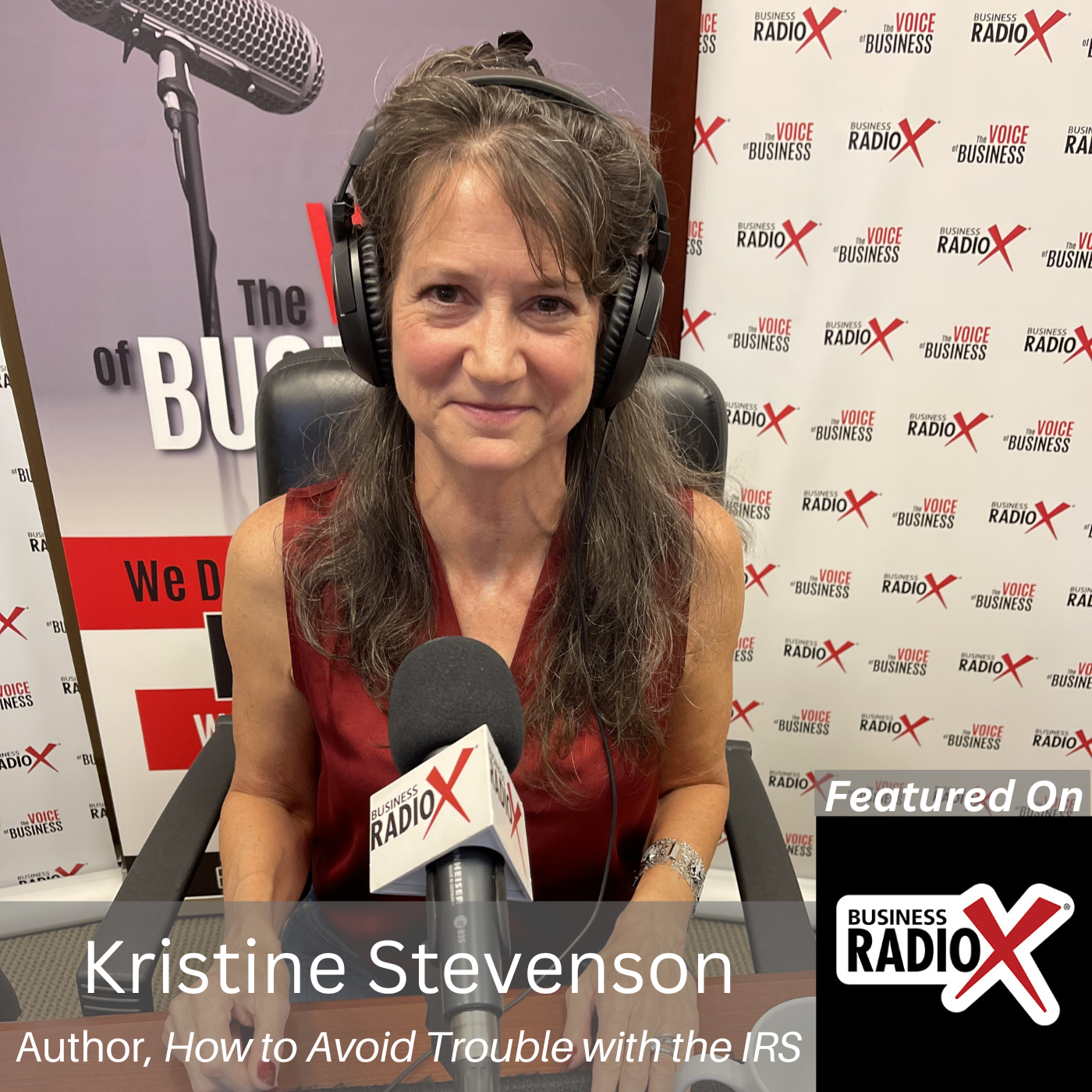
Avoiding IRS Trouble, with Kristine Stevenson, Author, How to Avoid Trouble with the IRS

October 7, 2024 by John Ray

Avoiding IRS Trouble, with Kristine Stevenson, Author, How to Avoid Trouble with the IRS, on North Fulton Business Radio with host John Ray
North Fulton Business Radio
Avoiding IRS Trouble, with Kristine Stevenson, Author, How to Avoid Trouble with the IRS
Loading
00:00 /
RSS Feed
Share
Link
Embed

Download file

Avoiding IRS Trouble, with Kristine Stevenson, Author, How to Avoid Trouble with the IRS, on North Fulton Business Radio with host John Ray

Avoiding IRS Trouble, with Kristine Stevenson, Author, How to Avoid Trouble with the IRS (North Fulton Business Radio, Episode 808)

In this episode of North Fulton Business Radio, host John Ray interviews Kristine Stevenson, owner of Proverbs 16:16 LLC and author of How to Avoid Trouble with the IRS. Kristine shares her journey from struggling with personal debt to now helping others manage IRS issues, drawing from her experience as an IRS employee and her own past financial challenges. She emphasizes the importance of financial knowledge, particularly for self-employed individuals and small business owners. Kristine describes how her work with Dave Ramsey coaches, who were repeatedly asking questions about their own business, inspired her to write her book. She discusses some of the major ideas in the book, which offers straightforward tax tips for gig workers and contractors, and shares stories of clients she’s helped. The episode underscores the importance of financial coaching and the practical wisdom that can transform financial struggles into successes.

John Ray is the host of North Fulton Business Radio. The show is recorded and produced by the North Fulton affiliate of Business RadioX® inside Renasant Bank in Alpharetta.

Kristine Stevenson, Author, How to Avoid Trouble with the IRS

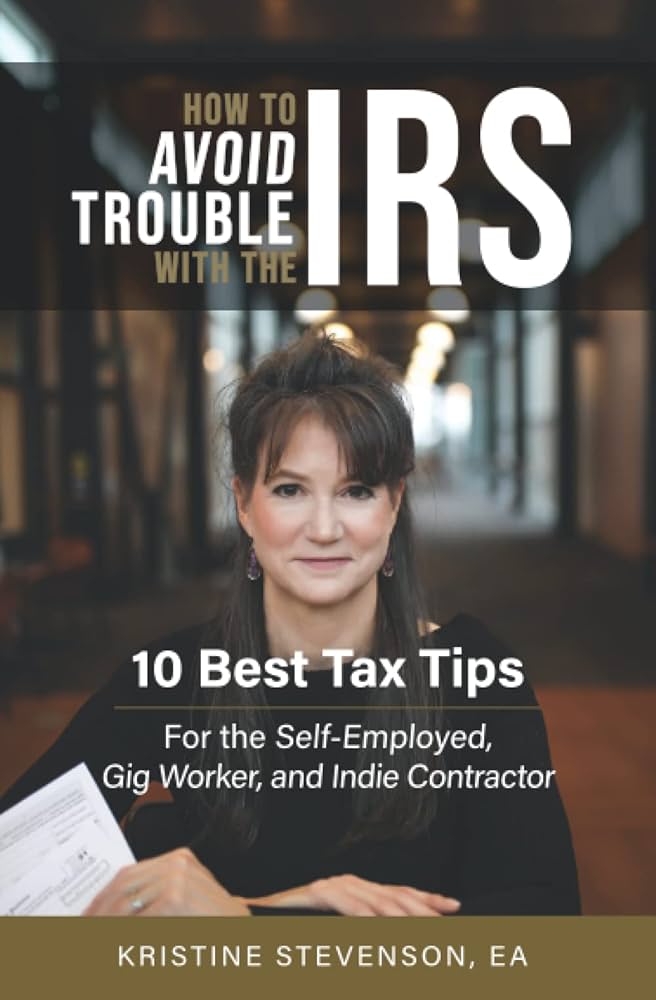
Kristine Stevenson, Author, How to Avoid Trouble with the IRSKristine Stevenson is an Enrolled Agent with the IRS, founder of Proverbs 16:16 LLC, and the author of How to Avoid Trouble with the IRS: 10 Best Tax Tips for the Self-Employed, Gig Worker, and Indie Contractor. Proverbs 16:16’s message, “How much better to get wisdom than gold, to get insight rather than silver,” served as the inspiration for the name of her business.

Having completed the Ramsey Solutions Financial Coach Master Training program and now serving as a Dave Ramsey Preferred Coach, Kristine is equipped with advanced skills in financial coaching and debt management. This experience provides her with a strong foundation in personal finance principles and strategies for helping individuals overcome financial challenges, particularly those related to tax debt.

As a former employee and now an Enrolled Agent with the IRS, Kristine combines her financial coaching expertise with specialized knowledge of tax regulations and IRS procedures. She offers guidance and support to individuals struggling with tax-related financial issues, helping them navigate the complexities of dealing with the IRS, developing strategies for tax debt resolution, and negotiating tax debt settlements with the IRS.

Kristine has been quoted in Fox Business News, Marie Claire, Yahoo! Finance, Lovely Impact, Best Company, and U.S. News & World Report, to name a few. She speaks at various conferences, universities, and other gatherings of business owners. She hosts a live radio program, “Dollars & $ense℠ with Kristine,” in Central Texas.

Website | LinkedIn | Speaker Website

Topics Discussed in this Episode

00:00 Welcome to North Fulton Business Radio
01:36 Guest Introduction: Kristine Stevenson
03:31 Kristine’s Background and IRS Experience
04:49 Starting a Business and Financial Coaching
06:50 Common Financial Issues and Solutions
15:07 Writing the Book: How to Avoid Trouble with the IRS
21:20 The Importance of a Business Checking Account
24:01 Personal Milestones and Tax Issues
26:02 Client Success Stories
31:04 Home Service Professionals and Tax Compliance
34:49 IRS Programs and Relief Options
37:01 How to Get in Touch and Final Thoughts

Renasant Bank supports North Fulton Business Radio

Renasant BankRenasant Bank has humble roots, starting in 1904 as a $100,000 bank in a Lee County, Mississippi, bakery. Since then, Renasant has become one of the Southeast’s strongest financial institutions, with over $17 billion in assets and more than 180 banking, lending, wealth management, and financial services offices throughout the region. All of Renasant’s success stems from each of their banker’s commitment to investing in their communities as a way of better understanding the people they serve. At Renasant Bank, they understand you because they work and live alongside you every day.

Website | LinkedIn | Facebook | Instagram | X (Twitter) | YouTube

Renasant Bank supports the Georgia Alliance for Breast Cancer

Georgia Alliance for Breast Cancer (formerly It’s The Journey) is a registered 501c3 non-profit that strives to support Georgia’s breast cancer community by raising funds to support breast health and breast cancer programs throughout the state of Georgia.

GAABC’s mission is to engage with Georgia’s breast cancer community to increase access to care and reduce disparities in cancer outcomes.

Randi Passoff, a breast cancer survivor, founded GAABC in 2002. She created “the kinder and gentler breast cancer walk” based off the Avon 3-Day Breast Cancer Walk. Instead of a 3-day walk of 60 miles over 3 days and sleeping in a tent, the Georgia 2-Day Walk covers 30 miles over 2 days, and participants sleep in a hotel. Most importantly, what’s raised in Georgia stays in Georgia.

Renasant Bank is a major supporter of GAABC, both in corporately donated funds and employee donations and participation in the walk.

To learn more about GAABC and the 2-Day Walk, go to the GAABC Website.

About North Fulton Business Radio and host John Ray

With over 800 shows and having featured over 1,200 guests, North Fulton Business Radio is the longest-running podcast in the North Fulton area, covering business in our community like no one else. We are the undisputed “Voice of Business” in North Fulton!

The show welcomes a wide variety of business, non-profit, and community leaders to get the word out about the important work they’re doing to serve their market, their community, and their profession. There’s no discrimination based on company size, and there’s never any “pay to play.” North Fulton Business Radio supports and celebrates business by sharing positive business stories that traditional media ignore. Some media leans left. Some media leans right. We lean business.

John Ray, Business RadioX - North Fulton, and Owner, Ray Business Advisors
John Ray, Business RadioX – North Fulton, and Owner, Ray Business Advisors

John Ray is the host of North Fulton Business Radio. The show is recorded and produced from the North Fulton studio of Business RadioX® inside Renasant Bank in Alpharetta. You can find the full archive of shows by following this link. The show is available on all the major podcast apps, including Apple Podcasts, Spotify, Google, Amazon, iHeart Radio, and many others.
The studio address is 275 South Main Street, Alpharetta, GA 30009.

John Ray, The Generosity MindsetJohn Ray also operates his own business advisory practice. John’s services include advising solopreneurs and small professional services firms on their value, their positioning and business development, and their pricing. His clients are professionals who are selling their expertise, such as consultants, coaches, attorneys, CPAs, accountants and bookkeepers, marketing professionals, and other professional services practitioners.

John is the national bestselling author of The Generosity Mindset: A Journey to Business Success by Raising Your Confidence, Value, and Prices.

Tagged With: dave ramsey, Dave Ramsey coach, IRS, IRS trouble, John Ray, Kristine Stevenson, Kristine Stevenson Seale, North Fulton Business Radio, personal finance, tax resolution

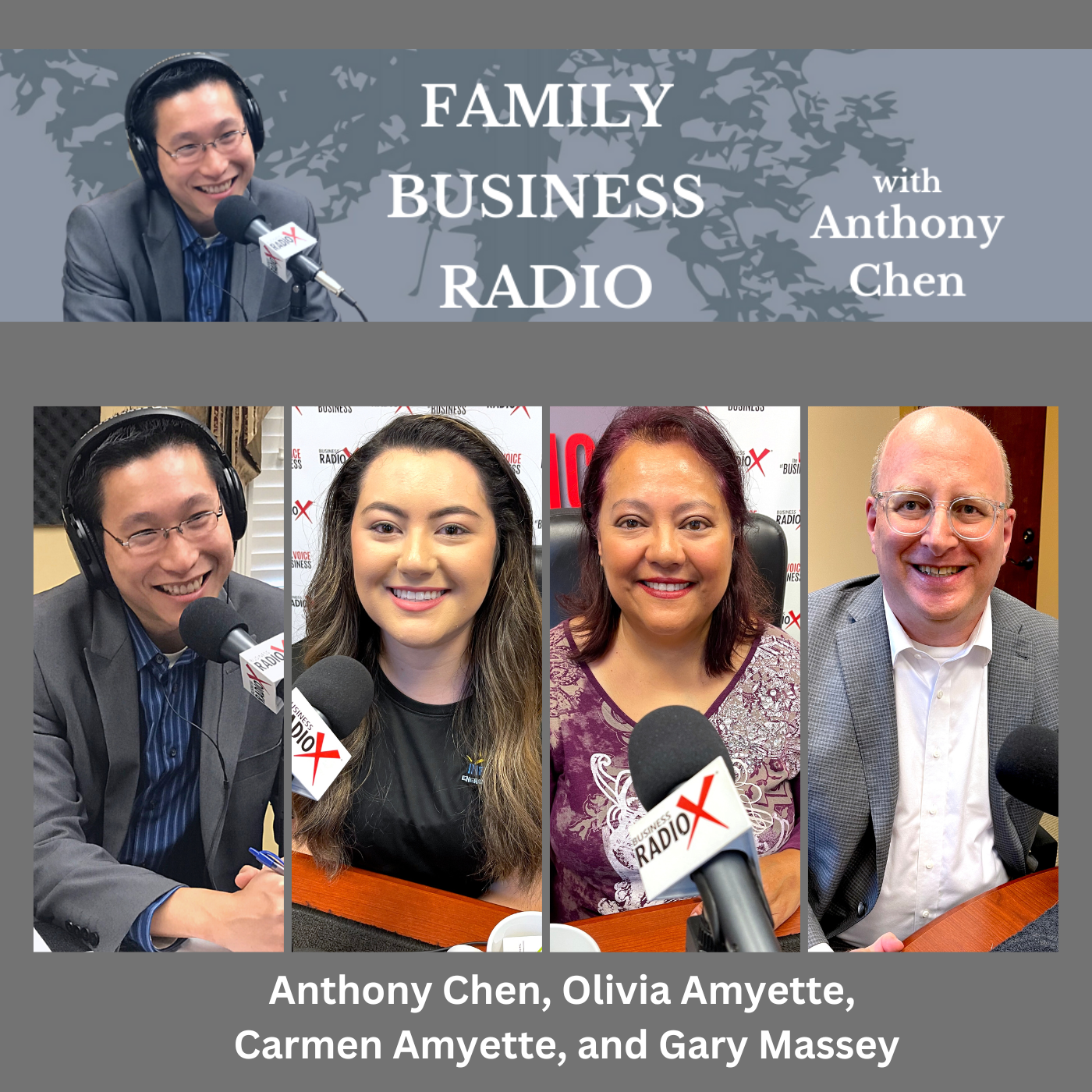
Olivia and Carmen Amyette, Infinite Energy Advisors, and Gary Massey, Massey and Company CPA

August 10, 2023 by John Ray

Infinite Energy Advisors
Family Business Radio
Olivia and Carmen Amyette, Infinite Energy Advisors, and Gary Massey, Massey and Company CPA
Loading
00:00 /
RSS Feed
Share
Link
Embed

Download file

Infinite Energy Advisors

Olivia and Carmen Amyette, Infinite Energy Advisors, and Gary Massey, Massey and Company CPA (Family Business Radio, Episode 47)

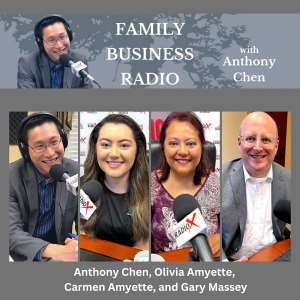
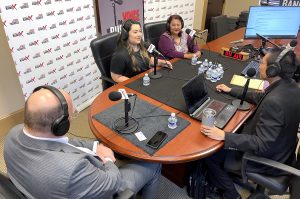
Family business owners Olivia and Carmen Amyette, Infinity Energy Advisors, and Gary Massey, owner of Massey and Company CPA were the guests on this episode of Family Business Radio. Olivia and Carmen, her mom, talked about Olivia’s accomplishments and drive and her devotion to her grandfather that led her to start her own company after college. They discussed the generational influence in their family on the business, how they run their solar energy business, and more.

Gary Massey talked about how he became a CPA, starting his own firm, and  his approach to helping business owners. He discussed how he advises his clients to properly set up a business and stay out of tax trouble, tax planning, and much more.

Anthony then asked his guests to reflect on the obstacles they found when starting their business and what keeps them inspired and motivated.

Anthony concluded the show with comments about the most valuable legacy a family can leave to preserve wealth.

Family Business Radio is underwritten and brought to you by Anthony Chen with Lighthouse Financial Network.

Infinite Energy Advisors

Infinite Energy Advisors (IEA) is a boutique solar energy and energy-efficient home improvement firm. Their mission is to empower individuals, communities, and businesses to foster a better, brighter, cleaner future by taking control of their energy.

IEA specializes in creating cost-effective solar solutions to help their clients save money on power bills and achieve sustainability goals.

They are proud to be named a Best of Gwinnett nominee!

Company Website | Instagram | Facebook

Olivia and Carmen Amyette, Infinite Energy Advisors

Olivia and Carmen Amyette, Infinite Energy Advisors

Olivia is the owner of Infinite Energy Advisors. In this family business, her mother Carmen works as a Customer Relations Manager and her father John is the Installation Manager.

Olivia developed a passion for solar energy at Georgia Tech, where she engaged in research projects relating to environmentalism and energy conservation. Olivia took the leap of faith to start her solar company 7 months after graduating from Georgia Tech to follow her passion for renewable energy while also fulfilling her duties as a caretaker of her grandfather.

With more than 4 years of experience as a Technical Program Manager for the Georgia Tech Grand Challenges LLC, Olivia has extensive experience in optimizing technology according to a client’s needs, creating efficient systems, and enriching customer experiences. Having facilitated upwards of 53 research projects during her role as a facilitator at Georgia Tech, Olivia is well versed in project management and has optimized the solar purchasing/installation process to be seamless.

Olivia holds a BS from the Georgia Tech College of Computing, Solar Energy Certifications from Georgia Tech and Solairgen, and is currently working to get NABCEP certified. Her mission is to empower individuals, communities, and businesses to foster a better, brighter, cleaner future by taking control of their energy.

Olivia’s LinkedIn

Massey and Company CPA

Massey and Company CPA is an accounting firm located in Atlanta serving the needs of small businesses and individuals throughout Georgia.

Over the years, they noticed that CPA firms tend to be cold, unfriendly, hectic places. Maybe they are just so busy with tax season.

At Massey and Company, their team is bright, friendly and eager to please. Thanks to the team and their guiding principles, they are a different kind of accounting firm.

Gary Massey founded the company in 2013 with these principles which still guide them today:

  • Treat people with respect
  • Be kind – we are all human
  • Make complex issues less stressful
  • Charge fair prices

You won’t find stress or drama at the Massey office. Instead, you will find patient, understanding people who sincerely care. All year long.

Website | LinkedIn | Facebook | Instagram | YouTube

Gary Massey, Founder, Massey and Company CPA

Gary Massey, Founder, Massey and Company CPA

Gary Massey is the founder of Massey and Company CPA, based in Atlanta. He has over 30 years of experience in tax preparation, tax planning, and IRS and state tax problem resolution. He holds a CPA, a Master’s degree in Accounting and Master’s degree in Business Administration with a specialization in taxation. Gary is also a Certified Tax Representation Consultant.

Gary’s focus includes helping clients with tax problems. This includes representing clients in front of IRS and state agencies to resolve difficult tax issues, including audits, unpaid taxes, liens, levies, penalties, and notices. His work requires negotiation on a wide variety of tax matters, including offers in compromise, installment agreements, currently not collectible status, and penalty abatement.

Gary enjoys collecting art and spending time with his children and grandchildren. He is married to Chelly, a native of The Netherlands.

 LinkedIn

Anthony Chen, Host of Family Business Radio

Anthony Chen, Lighthouse Financial, and Host of “Family Business Radio”

This show is sponsored and brought to you by Anthony Chen with Lighthouse Financial Network. Securities and advisory services are offered through Royal Alliance Associates, Inc. (RAA), member FINRA/SIPC. RAA is separately owned and other entities and/or marketing names, products, or services referenced here are independent of RAA. The main office address is 575 Broadhollow Rd. Melville, NY 11747. You can reach Anthony at 631-465-9090 ext 5075 or by email at anthonychen@lfnllc.com.

Anthony Chen started his career in financial services with MetLife in Buffalo, NY in 2008. Born and raised in Elmhurst, Queens, he considers himself a full-blooded New Yorker while now enjoying his Atlanta, GA home. Specializing in family businesses and their owners, Anthony works to protect what is most important to them. From preserving to creating wealth, Anthony partners with CPAs and attorneys to help address all the concerns and help clients achieve their goals. By using a combination of financial products ranging from life, disability, and long-term care insurance to many investment options through Royal Alliance. Anthony looks to be the eyes and ears for his client’s financial foundation. In his spare time, Anthony is an avid long-distance runner.

The complete show archive of “Family Business Radio” can be found at familybusinessradioshow.com.

Tagged With: Anthony Chen, business taxes, Carmen Amyette, CPa, Family Business, Family Business Radio, financial advisor, Gary Massey, Infinite Energy Advisors, IRS, Lighthouse Financial Network, Massey and Company CPA, Olivia Amyette, solar energy, solar power, tax planning

Employee Retention Tax Credits, with Mark Campbell, Linqqs ERC Specialists

June 5, 2023 by John Ray

ERC
North Fulton Business Radio
Employee Retention Tax Credits, with Mark Campbell, Linqqs ERC Specialists
Loading
00:00 /
RSS Feed
Share
Link
Embed

Download file

ERC

Employee Retention Tax Credits, with Mark Campbell, Linqqs ERC Specialists (North Fulton Business Radio, Episode 670)

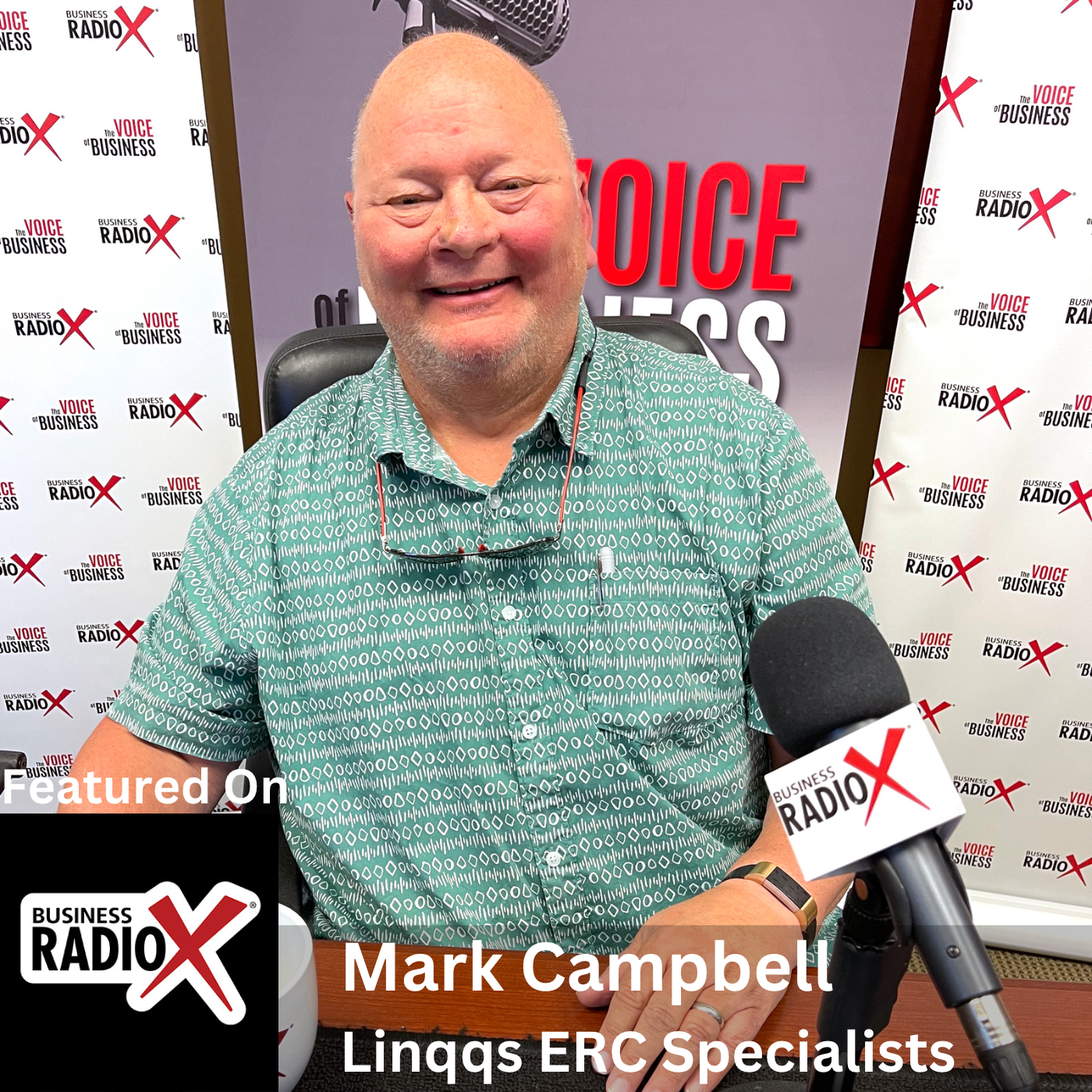
Mark Campbell, Registered Agent with Linqqs ERC Specialists, explained what the Employee Retention Tax Credit is, who is eligible and what’s required, how he helps his clients determine eligibility, what it costs, and much more.

North Fulton Business Radio is broadcast from the North Fulton studio of Business RadioX® inside Renasant Bank in Alpharetta.

Linqqs ERC Specialists

COVID-19 has been a challenge for all of us. As the world shut down the economy came to a halt, leaving the future of many businesses in a precarious position. As we begin to find normalcy again, businesses now have to focus on recovering and fortunately, several government programs are easing this process.

One such program is the Employee Retention Credit or ERC, which is a generous stimulus program designed to bolster those businesses that were able to retain their employees during this challenging time. Due to the extremely complex tax code and qualifications, it is severely underutilized.

No need to be the guinea pig for your CPA. Linqqs averages 10-20% more funding than a CPA not familiar with the program. They evaluate your claim in every way possible to ensure they maximize your credit.

Their streamlined processes allow for faster results, which means faster funding. Their team strictly focuses on ERC allowing them to be the experts and resulting in more funding for your business. Although the process is quick and painless, when you have questions they have answers with a dedicated team of ERC support specialists.

Website

Mark Campbell, Registered Agent, LINQQS ERC Specialists

Mark Campbell, Registered Agent, LINQQS ERC Specialists

Mark has had a very rewarding sales career in Technology Services / Software with IBM, NYNEX, GE Capital, Digital Equipment, Compaq, and HP.

Now he’s his own boss providing ERC Tax Refund services to businesses, non-profits, and churches, and enjoying every single minute of it!

Mark and his wife Sandy have been Roswellians over 30 years, and have two sons both graduates of Roswell High School and Ole Miss.

LinkedIn

Questions and Topics in this Interview:

  • What is ERC?
  • What is meant by a “Tax Credit”?
  • Who kinds of organizations are eligible?
  • My CPA told me my business doesn’t qualify. – so why I should I talk with you?
  • How much money are we talking about?
  • Where do these funds come from?
  • How much does this service cost?
  • How do I get in touch with you?

North Fulton Business Radio is hosted by John Ray and broadcast and produced from the North Fulton studio of Business RadioX® inside Renasant Bank in Alpharetta. You can find the full archive of shows by following this link. The show is available on all the major podcast apps, including Apple Podcasts, Spotify, Google, Amazon, iHeart Radio, Stitcher, TuneIn, and others.

RenasantBank


Renasant Bank has humble roots, starting in 1904 as a $100,000 bank in a Lee County, Mississippi, bakery. Since then, Renasant has become one of the Southeast’s strongest financial institutions with over $13 billion in assets and more than 190 banking, lending, wealth management, and financial services offices in Mississippi, Alabama, Tennessee, Georgia, and Florida. All of Renasant’s success stems from each of their banker’s commitment to investing in their communities as a way of better understanding the people they serve. At Renasant Bank, they understand you because they work and live alongside you every day.

Since 2000, Office Angels® has been restoring joy to the life of small business owners, enabling them to focus on what they do best. At the same time, we honor and support at-home experts who wish to continue working on an as-needed basis. Not a temp firm or a placement service, Office Angels matches a business owner’s support needs with Angels who have the talent and experience necessary to handle work that is essential to creating and maintaining a successful small business. Need help with administrative tasks, bookkeeping, marketing, presentations, workshops, speaking engagements, and more? Visit us at https://officeangels.us/.

Tagged With: business taxes, Employee Retention Credit, ERC, IRS, Mark Campbell, nonprofits, Office Angels, renasant bank, Tax Credit, tax refund

Decision Vision Episode 174: Should I Fight the IRS? – An Interview with Bruce Wood, Brady Ware Arpeggio, LLC

June 23, 2022 by John Ray

Bruce Wood
Decision Vision
Decision Vision Episode 174: Should I Fight the IRS? - An Interview with Bruce Wood, Brady Ware Arpeggio, LLC
Loading
00:00 /
RSS Feed
Share
Link
Embed

Download file

Bruce Wood

Decision Vision Episode 174: Should I Fight the IRS? – An Interview with Bruce Wood, Brady Ware Arpeggio, LLC

The decision to dispute, negotiate or litigate with the IRS is a difficult one, given its reputation and power. Bruce Wood, a principal at Brady Ware Arpeggio, is a business appraiser specializing in tax issues and a former CPA tax advisor. He and host Mike Blake looked at many of the considerations surrounding a tax issue with the IRS, from how to avoid them in the first place through how your returns are prepared, to what to expect from an IRS agent, the importance of having a professional interface with the IRS for you, the appeals process, the costs of litigating, and much more.

Decision Vision is presented by Brady Ware & Company and produced by the North Fulton studio of Business RadioX®.

Brady Ware Arpeggio, LLC

At BWA, they value your business – literally. They recognize the gravity and complexities of decisions facing individuals and businesses, and that bad decisions are often consequential and difficult to repair. BWA’s evidence-based decision systems enable businesses and their owners & executives to avoid pitfalls and blunders and accordingly successfully capture value opportunities more effectively than via mundane approaches to decision making.

They ultimately deliver decision clarity and confidence in decision-making based on well-analyzed, relevant data. Brady Ware’s team consistently delivers decision clarity via our proven processes for evaluating critical decisions. This unique insight to help make decisions has a profound impact on the result. Incorporating this decision process creates an advantage from what used to be pain points and barriers.

Company website | LinkedIn

Bruce Wood, Principal, Brady Ware Arpeggio, LLC

Bruce Wood, Principal, Brady Ware Arpeggio, LLC

Bruce’s business appraisal practice focuses primarily on tax-specific areas such as: (1) Tax Controversy – executing business appraisals and litigation support in United States Tax Court cases, as well as settlement efforts between the IRS and taxpayer, under the direction of tax and estate litigation attorneys from national and local law firms. These cases most often arise out of IRS audits of estate, gift, and trust tax returns, as well as IRS challenges of C corporation reasonable officer compensation, etc. (2) Estate, Gift and Trust Tax & business transactions -planning and compliance. Closely held businesses (S corp, C corp, LLC, and family limited partnership issues), M&A, etc.

Bruce brings over 30 years of experience to the marketplace, spending the last 20 years in business appraisal after 12 years as a CPA/tax adviser. Often faced with decisions or situations impacting the value of a transaction or business, Bruce helps navigate the complexities of those situations. He has helped in industries such as meat processing, professional services, manufacturing, distribution, food service, mining, technology, retail, and other business sectors.

While he can assist clients nationwide, most of his career has been spent in and throughout the Atlanta metropolitan area including Atlanta’s southside. With an exceptional network of contacts, Bruce can also help clients connect with other areas of expertise such as within the legal community.

LinkedIn

Mike Blake, Brady Ware & Company

Mike Blake, Host of the “Decision Vision” podcast series

Michael Blake is the host of the Decision Vision podcast series and a Director of Brady Ware & Company. Mike specializes in the valuation of intellectual property-driven firms, such as software firms, aerospace firms, and professional services firms, most frequently in the capacity as a transaction advisor, helping clients obtain great outcomes from complex transaction opportunities. He is also a specialist in the appraisal of intellectual properties as stand-alone assets, such as software, trade secrets, and patents.

Mike has been a full-time business appraiser for 13 years with public accounting firms, boutique business appraisal firms, and an owner of his own firm. Prior to that, he spent 8 years in venture capital and investment banking, including transactions in the U.S., Israel, Russia, Ukraine, and Belarus.

LinkedIn | Facebook | Twitter | Instagram

Brady Ware & Company

Brady Ware & Company is a regional full-service accounting and advisory firm which helps businesses and entrepreneurs make visions a reality. Brady Ware services clients nationally from its offices in Alpharetta, GA; Columbus and Dayton, OH; and Richmond, IN. The firm is growth-minded, committed to the regions in which they operate, and most importantly, they make significant investments in their people and service offerings to meet the changing financial needs of those they are privileged to serve. The firm is dedicated to providing results that make a difference for its clients.

Decision Vision Podcast Series

Decision Vision is a podcast covering topics and issues facing small business owners and connecting them with solutions from leading experts. This series is presented by Brady Ware & Company. If you are a decision-maker for a small business, we’d love to hear from you. Contact us at decisionvision@bradyware.com and make sure to listen to every Thursday to the Decision Vision podcast.

Past episodes of Decision Vision can be found at decisionvisionpodcast.com. Decision Vision is produced by John Ray and the North Fulton studio of Business RadioX®.

Connect with Brady Ware & Company:

Website | LinkedIn | Facebook | Twitter | Instagram

TRANSCRIPT

Intro: [00:00:02] Welcome to Decision Vision, a podcast series focusing on critical business decisions brought to you by Brady Ware and Company. Brady Ware is a regional, full service accounting and advisory firm that helps businesses and entrepreneurs make visions a reality.

Mike Blake: [00:00:23] Welcome to Decision Vision. A podcast giving you, the listener, clear vision to make great decisions. In each episode, we discuss the process of decision-making in a different topic from the business owners or executives’ perspective. We aren’t necessarily telling you what to do, but we can put you in a position to make an informed decision on your own and understand when you might need help along the way.

Mike Blake: [00:00:43] My name is Mike Blake, and I’m your host for today’s program. I’m the managing partner of Brady Ware Arpeggio, a data driven management consultancy which brings clarity to owners and managers of unique businesses facing unique strategic decisions. Our parent, Brady Ware & Company, is sponsoring this podcast. Brady Ware is a public accounting firm with offices in Dayton, Ohio, Alpharetta, Georgia, Columbus, Ohio and Richmond, Indiana.

Mike Blake: [00:01:07] If you’d like to engage with me on social media with my Chart of the Day and other content, I’m on LinkedIn as myself and at #Unblakeable on Facebook, Twitter and Instagram. I also host a LinkedIn group called Unbreakable’s Group that doesn’t suck, so please join that as well if you would like to engage.

Mike Blake: [00:01:24] Today’s topic is, “Should I fight the IRS?” And I’m actually surprised at myself that we haven’t had this topic before because I think this is topical for everybody. It’s clearly an evergreen topic. I’m not sure that anybody is more feared in our government than the Internal Revenue Service.

Mike Blake: [00:01:47] You can make an argument that outside of the armed forces of the most powerful government agency. And, you know, the fact of the matter is that hundreds of thousands, if not millions of people have interactions or people and businesses have interactions with the Internal Revenue Service every year involving some dispute over the amount of taxes that they owe.

Mike Blake: [00:02:14] And I think for many of us, the goal if the IRS approaches us with any kind of controversy is we just, kind of, want to make them go away. Most of us don’t necessarily have an appetite to fight the IRS, but that calculus may change. You may not have the money to pay what the IRS wants you to pay, or it may be just an unreasonable demand, or it may be in effect if it goes in front of a court. It may wind up being an illegal demand.

Mike Blake: [00:02:50] But how do you know that? And I think that is difficult to know. And even CPAs will give you a nuanced answer here, because fighting the IRS is hard and fighting the IRS is scary and fighting the IRS has an uncertain outcome. Notice I didn’t say, should I beat the IRS? I said, “Should I fight the IRS”? There’s no guarantee of victory. And so, I think this will be a very interesting topic, even if you haven’t been the target of an IRS investigation or action or principle of an action.

Mike Blake: [00:03:25] You may be in the future and forewarned is, of course, forearmed. And so joining us today is my new colleague, actually, Bruce Wood, who is a principal at Brady Ware Arpeggio. He is a business appraiser whose practice focuses primarily on tax-specific areas, including tax controversy, which means executing business appraisals and litigation support in US tax court cases. As well as settlement offers between the IRS and taxpayer under the direction of tax and estate litigation attorneys from national and local law firms.

Mike Blake: [00:03:59] Bruce is also an expert in estate, gift, and trust, tax and business transactions, planning and compliance. He works with closely held businesses such as S-Corp, C-Corp analysis, family partners, and et cetera.

Mike Blake: [00:04:13] He brings over 30 years of experience to the marketplace. Spending the last 20 in business appraisal after 12 years as a CPA tax adviser. Often faced with decisions or situations impacting the value of a transaction or business, Bruce helps navigate the complexities of those situations. He has helped in industries such as meat processing, professional services, manufacturing, distribution, food service, mining technology, retail, and other business sectors. And I can’t tell you how delighted we are to have him join the team and I’m equally delighted to have him on the podcast. Bruce Wood welcome to the Decision Vision podcast.

Bruce Wood: [00:04:50] Thank you so much for having me, Mike. And I am equally thrilled, not only about being here, but about being with our company. It’s been a really good, really good match.

Mike Blake: [00:05:03] So, let’s start with the basics. The IRS doesn’t challenge every tax return that comes through. In your experience, what – why does the IRS challenge tax returns at all?

Bruce Wood: [00:05:17] Well, anything else out of estate and gift, as far as I know, they’re selected first by a computer scoring system that is set up to determine anomalies. And then managers go through those returns that are selected to see which ones are audit worthy. Then this – when it comes to estate tax returns, when somebody files one, it’s going to be looked at. And more automatically, it’s not random – if you have enough estate to file an estate tax return, they’ll look at it and they’ll either send a closing letter. Once you got the closing letter then that’s saying they’re going to leave you alone. Otherwise, if they think it’s audit worthy, you know, they’ll look at it more closely, may inquire, may do an audit.

Mike Blake: [00:06:24] Now, that’s interesting. I didn’t realize they sent the closing letter. So, no news is not necessarily good news. You either get an affirmative notification that your estate appraisal has been accepted or or there’s some sort of other action that will be taken.

Bruce Wood: [00:06:41] Right.

Mike Blake: [00:06:42] Interesting. Okay. And for purposes of this discussion, I think it’s important that our audience understand, and you and I have talked about this prior to the conversation, you know, you specialize in a specific area of tax controversy. You’re not necessarily challenging or working on income tax returns, that’s what more conventional CPAs do.

Bruce Wood: [00:07:03] That’s right.

Mike Blake: [00:07:03] But rather a fairly specialized area where wealth is being transferred from one party to another, whether it’s a gift or an estate or charitable contribution, things of that nature.

Bruce Wood: [00:07:15] That’s right.

Mike Blake: [00:07:17] So, you know, when the IRS decides they’re going to raise an issue. And then they send – they say, you owe us X number of dollars. What usually goes into that? How are those numbers of dollars calculated from the IRS perspective?

Bruce Wood: [00:07:40] What they’ll do is what’s called an adjustment or first will be a proposed adjustment. And so, for example, they may disallow a discount – well, you go to a background. In business appraisals, for non-controlling interests, especially there are control in marketability discounts because people wouldn’t pay for as much for us. A block of stock that’s non-controlling.

Bruce Wood: [00:08:09] And the IRS has a serious issue with that. It’s very common that they’ll make an adjustment to the discount. So, it may – we make a proposed adjustment. So, say it’s $10 million. So, that means you owe tax in their mind on an additional $10 million-plus interest and penalties for underpayment. It may be $40 million. But they may make several adjustments in one return so it can get expensive pretty quickly.

Mike Blake: [00:08:41] And how does the IRS decide on interest and penalties to those formulas? Do they get to make up what those things are? How do those work?

Bruce Wood: [00:08:50] No, those are in the – either in the code or statutory. They’re – I mean, I’m not using the right word but they’re predetermined. They don’t get to decide.

Mike Blake: [00:09:01] Okay. So, they’re rules-based. They’re not just —

Bruce Wood: [00:09:03] That’s right, rules-based

Mike Blake: [00:09:04] Not just the IRS says, well, we think you’re a jerk. So, you have to pay more dollars. That’s —

Bruce Wood: [00:09:09] Yes, you can pay credit card interest. It’s the same.

Mike Blake: [00:09:09] There’s a rule that has to be followed.

Bruce Wood: [00:09:11] That’s right.

Mike Blake: [00:09:12] Okay. So, if you’re in the unlucky group, for lack of a better term, that does not get that all-clear notification. Instead, they’re going to challenge and propose an adjustment. What does that look like procedurally? And then, how long does that – can that process takes in trying to resolve an IRS challenge?

Bruce Wood: [00:09:39] I’m not sure there’s a limit on how long it can take. They have – a there’s generally a three-year statute for them to make changes. But litigation can go on for years. I’m dealing with a 2018 case right now. So, it’s hard to put a cap on either the time or the professional fees that would be spent.

Mike Blake: [00:10:11] So, years of litigation, that sounds expensive.

Bruce Wood: [00:10:15] Very much so.

Mike Blake: [00:10:17] So, it’s safe to say that you’re probably looking at the hundreds of thousands of dollars. And if the matter is large enough, like, say, the Michael Jackson case that recently resolved maybe millions of dollars.

Bruce Wood: [00:10:30] Exactly.

Mike Blake: [00:10:33] So –.

Bruce Wood: [00:10:34] And there are —

Mike Blake: [00:10:34] Go ahead.

Bruce Wood: [00:10:35] There are situations where it’s the best thing to do but you really – but making the decision of what we’re talking about. Analyzing and making the decision is key. Are you going to fight this or not? What’s it worth in terms of losing sleep, stress, distracting you from other things you need to do whether it’s work or play. You know, what’s that worth to you?

Mike Blake: [00:11:08] Yeah. So, you know, in a way, I mean, the IRS does that cost of prosecuting or challenging does give the IRS a particular element of leverage, doesn’t it? And that, you know, if the IRS is asking you to pay another $10,000, for example, they probably wouldn’t do that, but just for an example. They’re making an adjustment of 10,000 on an estate. Probably, most of the time, you’re going to say, you know what, just write the check and move on.

Bruce Wood: [00:11:41] I would think so.

Mike Blake: [00:11:43] A boss of mine once said, you know, you cheated me fair and square.

Bruce Wood: [00:11:48] Right. Is it worth – right. In a situation like that, typically – maybe negotiate with the agents and see what you can get. But I wouldn’t go – get heavy into litigation hiring professionals for $10,000, no.

Mike Blake: [00:12:06] So, let’s talk about the negotiating with the agent, because I’d like our audience to understand, and candidly, I don’t fully understand kind of how it works. So, you know, from a day-to-day or practical perspective, when the IRS proposes an adjustment, you decide that, as a taxpayer, you want to challenge that adjustment. What happens then?

Bruce Wood: [00:12:31] Well, first thing to do is talk to the IRS agent on your case. And get him to explain why – or get him or her to explain why the adjustment. They’ll usually – they’ll document that usually. And then, make sure they have all the facts. They may be missing facts. Well, did you know this, this, and this?

Bruce Wood: [00:12:59] So, it’s good to talk with him. A good IRS agent will talk to you about the adjustment before they make it. And that way, if there’s a – if it’s based on a misunderstanding or something, you can catch it early. But if they do propose an adjustment, one thing to keep in mind is their manager has given them this case and say, go out to this taxpayer. You’ve got to make it easy for the IRS agent to take into account what you’re saying, whether it’s you personally or through your professional. Knowledge is power.

Bruce Wood: [00:13:43] A professional should be advising the taxpayer on what to do, giving the agent the relevant law. Keep in mind these agents are – the IRS is understaffed, according to them. And there are so many things they can’t get to. So, they’re going to go for the low-hanging fruit. Don’t give them low-hanging fruit to the extent possible.

Mike Blake: [00:14:10] And then, you know, there’s an – so, there’s an agent involved, right? And I think it’s important for the – for audience to know this. It’s not like you disagree with the IRS and bang, you’re in tax court. There’s likely going to be a lot of things that need to happen before appearing in tax court is even a realistic possibility. And that’s before we even entertain the discussion as to whether or not that’s even a desirable outcome, right?

Bruce Wood: [00:14:38] Right.

Mike Blake: [00:14:39] So, Where does that conversation with the agent go? If you’re not able to get a resolution with the agent, what happens then? Is there an escalation to a manager or something or how does that work?

Bruce Wood: [00:14:55] Yes, she can request to talk to the agent’s manager next. And if you exhaust it, if you exhaust that kind of option, there’s IRS appeals. And it takes at least several months to get on their calendar, but this is just what I’ve heard in several places, but appeals will give away about half of the cases or half of the issues, I should say. Because if the IRS agent hasn’t documented it property, the agent thinks they are or that appeals agent thinks the agent is wrong, they don’t have the bandwidths to redo it for them. They’ll just, typically, I think, decide right there. Okay, we’re going to throw this issue out. We’re going to fight for the IRS for this issue.

Bruce Wood: [00:15:53] And then even if – and then lawyers talk back and forth. And it is – and then, of course, getting it heard in tax court it takes, God only knows how long. So, you would be basically held hostage. If you were – if that was a big issue to you, waiting to go to tax court, they may or may not hear your case. It may take years. There’s a lot involved.

Mike Blake: [00:16:24] So, and it’s important to understand, I think in that process, the meter’s still running to an extent, right? You’re still accruing interest and potentially additional penalties while that process is playing out, right?

Bruce Wood: [00:16:40] It depends. There are cases where you – I don’t know, I’m right offhand, but there – this would be an attorney question. But there are cases where you have to pay the tax upfront and then seek a refund.

Mike Blake: [00:16:55] Interesting.

Bruce Wood: [00:16:55] Depending on the retort you’re going to. And so, that would stop the interest and penalties from accruing.

Mike Blake: [00:17:00] Right, but of course, the downside is the IRS already has your money.

Bruce Wood: [00:17:04] Right, and you may or may not get it back.

Mike Blake: [00:17:06] Right. I mean, this may or may not apply, but they say the possession is 9/10 of the law, right? It’s —

Bruce Wood: [00:17:14] Exactly.

Mike Blake: [00:17:14] You know, I don’t know if this is true with IRS matters, but it certainly feels like I have less leverage if I’ve already written the check.

Bruce Wood: [00:17:21] It does, that never helps.

Mike Blake: [00:17:22] I don’t know if it’s actually true. But it certainly feels uncomfortable. So —

Bruce Wood: [00:17:26] Sure.

Mike Blake: [00:17:28] So, in this conversation – and let’s kind of go back to the agent level. How does having a CPA and a business appraiser, like you, and specialized tax legal counsel, how does having a team like that impact the likelihood of getting the matter resolved in a way that’s positive for the taxpayer?

Bruce Wood: [00:17:52] Well, they have – these professionals know the law. They can – you know, when the agent proposes an adjustment, they can assess the validity of the adjustment. Check out the law and provide the agent more information. There may be something the agent missed. And they can say – they can communicate if they disagree with the agent on the issue.

Bruce Wood: [00:18:22] And another – and they’re not emotionally wrapped up in the case like a taxpayer is. That’s another key element. It’s – a lot of times it’s best for the taxpayer not to talk unless he’s directed to and let the professionals do the talking.

Mike Blake: [00:18:44] And that brings up, I think, a very important point in that. You know, not speaking at all to the dedication or professionalism of the IRS agent or individuals involved. But the fact of the matter is, it’s not their money they’re playing with –.

Bruce Wood: [00:19:02] Right.

Mike Blake: [00:19:03] — on any level, right? And so —

Bruce Wood: [00:19:04] That’s right.

Mike Blake: [00:19:06] You know, I do think that there’s an inherent negotiating advantage with the IRS that is in favor of the IRS because, you know, at the end of the day, the entire exercise is depersonalized, right?

Bruce Wood: [00:19:20] Right.

Mike Blake: [00:19:20] It’s not like an IRS agent gets a bonus if they collect more tax.

Bruce Wood: [00:19:25] They’re not on commission, you’re right.

Mike Blake: [00:19:27] They’re not on commission, exactly. And so, you know, just like in my practice and transactions, we do have clients say, you know, we’re we’re too close because we don’t want to negotiate our own sale and we’ll, sort of, be that buffer. It sounds like there actually is a parallel with an IRS negotiation.

Bruce Wood: [00:19:47] There is. And another value of having the professionals there is this is not unique to IRS agents. Lawyers do this. And gaining somebody’s trust, getting them to talk. The IRS agent may go, wow, this is a really cool business. How did you do this and how did you do that? Get the guy talking. Some people love to hear themselves talk, love to talk about themselves, and they can get all kinds of information that way. And they don’t even realize, you know, what’s happened until it’s too late.

Mike Blake: [00:20:27] Well – and you know, that’s negotiating 101, too, right?

Bruce Wood: [00:20:30] Right.

Mike Blake: [00:20:30] If you can build some sort of relationship with the other party, some way of connecting and make the relationship somewhat less adversarial.

Bruce Wood: [00:20:40] Right.

Mike Blake: [00:20:40] It’s more likely you’re going to achieve some kind of resolution.

Bruce Wood: [00:20:44] Right, I agree that people skills are important. And good professionals know how to do that because IRS agents are people, too. You know, they go home. They don’t want to be screamed at or told they’re idiots, you know, anymore than anybody else does. And they have families. They go home to their families or, you know, they – after a rough day, they get upset, that kind of thing. So, they want they want respect just like the rest of us. That doesn’t mean you have to agree with them.

Mike Blake: [00:21:27] So – you touch on a point that I want to actually ask is the next question, which is, I think some people are tempted to stereotype IRS agents, or really any government employee as as somebody that may or may not necessarily be competent because they’re working for the government, right? We hear about, I’m from the government, I’m here to help, et cetera, et cetera. You know, is that true or do you find a lot of IRS agents, in fact, are very competent professionals?

Bruce Wood: [00:22:05] Sometimes, what you’re saying is true. But other times, I’ve known some that left big for CPA firms to go to work there because they wanted the work life balance. And my guess would be that they love to be underestimated, you know, they probably have fun with that.

Mike Blake: [00:22:28] Interesting.

Bruce Wood: [00:22:31] So, it – and the agent may act like they’re from a sticks. They don’t know anything. But that’s always dangerous. Underestimating people is dangerous, including IRS agents.

Mike Blake: [00:22:48] Yeah, I think that’s right. Years ago, I used to be a fairly serious chess player, decades ago now. But one of the hardest things to do is to play somebody who is new to the tournament scene because you had to make sure to not underestimate them. And because they were new, you couldn’t exactly predict what they were going to do

Bruce Wood: [00:23:11] Hustlers, perhaps.

Mike Blake: [00:23:12] Yeah, yeah. Kind of, hustlers or just, you know, they weren’t indoctrinated with conventional thinking necessarily. So, you weren’t exactly sure, kind of, what the move sequence is going to be, even if you kind of thought that you had that all figured out. And, you know, I can see that. I can see people, sort of, liking the position of being underestimated and being the underdog because if, you know, from the other side of the table, if your counterparty is overconfident, right, maybe they’re going to make a mistake, right?

Bruce Wood: [00:23:49] Right.

Mike Blake: [00:23:49] And maybe they’re going to say something dumb or damaging or compromising that if I’m the agent, that’s going to make my life a little easier.

Bruce Wood: [00:23:59] Right, that’s exactly right.

Mike Blake: [00:24:00] And you know also, I’m curious, I have – I don’t have that much experience with the government, but I’ve read enough about, in particular, SEC actions. And one thing that strikes me about the SEC anyway, is that, for the most part, they really – for the most part, they’re going to give you a lot of ways out. They’re going to give you a lot of off-ramps. But if you’re a jerk and if you’re condescending and if you’re sort of deliberately confrontational and not listening to any kind of reason, the SEC will then turn around and make an example of you.

Bruce Wood: [00:24:46] Sure.

Mike Blake: [00:24:47] There’s a point at which the door to a resolution, sort of a peaceful solution sort of closes. And now you’re going – not only you’re going to court, but you’re probably going to jail if you lose. In your experience, is that the way with the IRS, too, that you can sort of, you know, sort of, get in the ref’s face for a little bit. But at a certain point, there’s a technical foul and you’re thrown out of the game.

Bruce Wood: [00:25:14] Right. And you – well, it’s a little different. You probably won’t go to jail, but it’s – it can make your financial life hell. So, it’s not a good idea.

Mike Blake: [00:25:29] So, you know, we talked about the agent level, the manager level, and then the appeals level, and then presumably after that, there’s tax court level. In your mind, where is the optimal stage to settle a tax controversy?

Bruce Wood: [00:25:45] Well, the IRS is under pressure. Some kind of pressure to settle things at the lowest possible level. So, and to the extent, you can best get advice to follow. Because every time you decide to go over the next step, it’s more time, more stress, or more meetings with your professionals, more strategizing, work produced, and less attention to other things in your life.

Bruce Wood: [00:26:27] So, if you can get something reasonable agreement with the actual agent, that’s certainly the easiest appeals, you have a 50/50 shot. So, if you think, you know, in certain cases where it’s a lot of money, the IRS agent is being unreasonable, you don’t think they did their homework or really have a leg to stand on, that might be a good option.

Mike Blake: [00:27:03] So, in your experience, how often do challenges on – and I’m just saying limit this to your world because I know that’s the place you know. How often do challenges happen on gift and estate tax returns? What would you estimate as a percentage of, you know, given, say, 100 or 1,000 gift or estate tax returns that are filed? What number of those are likely to face a challenge?

Bruce Wood: [00:27:31] We probably – I don’t know a number but it would probably – I can tell you the start where I think the starting point would be though. The larger estates would likely be able to be looked at more closely. And they’re looking for low-hanging fruit. They don’t have – I’ve heard IRS appraisers talk. They came to the TSCPA one time and gave us a presentation. They don’t have time to look at every report. They’re overwhelmed. We have fundamental disagreements about whether control and marketability discounts even apply at all, much less the amount. But they’re going to go after the low-hanging fruit.

Bruce Wood: [00:28:20] The reports that aren’t documented that take leaps of faith that say, based at marketability discount on an average of interest studies instead of what’s going on with that company. When there’s – in time their analysis where they have an analysis when they have a conclusion and they don’t tell you how they got from one to the other, when they leave holes like that, my goal is – in my report, is always to make it easy for the user to go through and duplicate my work.

Bruce Wood: [00:29:03] They could take the same information I had, you know, access to the same databases that I have referenced in the report. So, even if the IRS doesn’t agree with it, they can duplicate my report and see how I got my answers. When they can do that, when there’s not a leap of faith somewhere, well, there’s no patrol here. So, we think it should be 20% or something like that. So, document, document, document. Make it – you’d make their job easier by making the report easier to read. And give them less gray area to jump on.

Mike Blake: [00:29:47] And you know, I’m a big fan of that approach. It’s one of the reasons I think, you know, you and I worked so well together and that we’re of the same cloth there. You know, we don’t like those holes. And in fact, one thing I regret about our profession, you know, I’m sure you know this, but not everybody does. We used to have another credentialing body, the Institute of Business Appraisers.

Mike Blake: [00:30:13] And one thing that stood out in their series of professional standards, that I think was unique, and has not been adopted since. But under IBA professional standards that, you know, a business appraisal report should be replicable by a competent professional given the same information set, basically. And again, it doesn’t mean that they agree with it, but it should be able to be replicated.

Mike Blake: [00:30:43] And, you know, we can and I truly wish the Appraisal Foundation and the National Association of Certified Valuation Analysts. I truly wish they would both – and the NACPA, the third one, would adopt that into their set of professional standards because it really should not be exceptional that we do that. But unfortunately, it is. But it’s really high class, I think, to put a report that an IRS agent or one of their valuation analysts or called engineers, still to this day, you know, that they can actually reverse engineer the report. And I think that’s really important.

Bruce Wood: [00:31:26] It is. And there is no – in our recourse, there’s no ball to hide. So, why wouldn’t we be transparent about how we did it?

Mike Blake: [00:31:37] Yeah, well, and you and I could go down a different rabbit hole. Maybe we will, but not on this particular podcast. But yes, it does sometimes – I see some reports that sometimes make me think that the appraisers are intentionally trying to ensure that their report is just unreadable and taking their chances in the chaos.

Bruce Wood: [00:31:58] Some people fall asleep, you know. I’ve seen than.

Mike Blake: [00:31:59] But, you know, actually, you touched on the next question already. So, why don’t I just go ahead and slide into it which is, you know, when the IRS looks at a return. And the return basically is going to be based on a report like somebody would – you would do. What are the most common flags in your experience that the IRS looks for?

Bruce Wood: [00:32:25] Well, they want – if a report is not logical. If it contradicts yourself, make contradictory statements, for example. The company only pays distributions to cover tax liabilities and then you see something contrary to that. If the report looks, like it was – you know, if sections of the report, kind of, looked like they were copied and pasted from different sources. If it doesn’t flow. If it’s not logical. If there are holes in the analysis, there’s no segue from the analysis to the conclusion or there’s no analysis at all. The conclusions need to be based on something to show that the appraiser did his or her due diligence and follow through and came up with a reasonable conclusion.

Mike Blake: [00:33:31] So, you know, to me, the IRS seems like a different animal. Of course, we have lots of regulatory bodies the Securities Exchange Commission, Environmental Protection Agency, OSHA, Department of Justice, you name it, we’ve got it. But the IRS seems like a different animal to me. In particular in that I think I think more than any other agency, there is a, sort of, a presumption of guilt. You have to, kind of, prove to the IRS why you’ve paid the appropriate amount. Not to the IRS, what they’re suggesting you pay is inappropriate. Is that a fair observation or do you disagree with that?

Bruce Wood: [00:34:23] Well, yes and no. The IRS has to prove income. And you have to create your expenses. So if they think your income was –.
Mike Blake: [00:34:36] Interesting.

Bruce Wood: [00:34:36] Right, if they think your income was more than you reported, they’re obligated to prove that. And any expenses, you know, you’re obligated to show documentation of those.

Mike Blake: [00:34:48] But in your world where an appraisal for the estate or for the gift or has been filed, to me, it seems, again, like the burden of proof is actually on the estate of the gift or not the IRS.

Bruce Wood: [00:35:06] Right, and that’s why documentation, explanation is so key. And at the end of the day, they still have certain mandates, like, for one thing is tax affecting earnings and evaluation. Which means accruing, you know, pass through entity accruing taxes that will be paid at the shareholder level. Because the earnings that are capitalized or discounted should be what you keep, not what you make and they disallow tax affecting.

Bruce Wood: [00:35:47] There are several cases that came up and Michael Jackson, as you mentioned. And the IRS has a national mandate to disallow tax affecting. Regardless of all these court cases now. But most of them say, the tax code is not against tax affecting. But you’ve got to do a good job of it. You’ve got to do a reasonable analysis because they’re not there to recreate it. They’re going to throw it out if your analysis was not reasonable or you made assumptions that weren’t true.

Bruce Wood: [00:36:33] Like, for example, an assumption that the buyer would be a C corporation. Hanging your head on things like that will get it disallowed. But the IRS is starting to position, that’s a huge issue for them is that no tax affecting is allowed.

Bruce Wood: [00:36:51] And so, they probably have other mandates, too. Oh, and one of the IRS appraisers told me that to the IRS all discount evaluations, family and partnerships, LLCs, et cetera, all of them are abusive tax avoidance transactions. That’s their starting gate position. So, they prefer to start at zero. And discounts, generally speaking, unless you prove every percent.

Mike Blake: [00:37:20] So, that’s a very adversarial position to take. And just for our audience, when we say tax affecting, we mean that when you’re, in particular, appraising a business that you’re determining the value of the company on an after-tax basis in terms of profits rather than pre-tax basis. And there are technical reasons why that’s important when you get into things like pass-through entities. It can become very complex.

Mike Blake: [00:37:47] But it’s interesting that – I’m sort of vaguely aware of this. Again, you know, you do a lot more of this than I do. But I am vaguely aware of the fact the IRS, at least they’ve been trying to take this position of starting with zero discounts. They’ve been trying to take the position of assuming that no tax is paid by the company. That everything is a pass through entity.

Mike Blake: [00:37:47] How much have you actually seen that in practice? Because I have to say, knock on wood, I haven’t seen it a lot in my practice. But again, you do more of this and you do it deeper than I do. So, I’m curious how much the reputation is matching the practice on the road, in your experience.

Bruce Wood: [00:38:35] I just had a meeting this week where the agent actually said that. He said that it was a national mandate. They would not allow tax-affecting. And after you said that, I thought back to some other conversations in the past with IRS agents. It seems like sometimes they’re reluctant to say that if they’ve been told, they just can’t do it. And sometimes that comes out as, you know, I’m going to disallow that. And they won’t really explain. So, this is a theory, that maybe that’s why. That they’re uncomfortable saying they’ve been told not to.

Mike Blake: [00:39:17] Yeah. And I mean, it’d be interesting. If those actually get to tax court, I think the IRS is in trouble because when you take that position, you’re actually violating professional standards. You’re basically pre-determining to a large extent, in some cases, you’re actually pre-determining the appraisal outcome.

Bruce Wood: [00:39:40] That’s a good point.

Mike Blake: [00:39:40] And that may be why. Maybe there’s a national mandate, but they’re probably going to play soft with that because, you know, tax judges, generally speaking, know what they’re doing. I’ve actually been very impressed with their reasoning and how they articulate how they got to where they got. And they seem to understand complex financial discussions with actually a fair amount of fluency. Tax judges are going to pick up on that pretty quickly.

Bruce Wood: [00:40:10] Oh, sure. They don’t buy the smoke and mirrors, that’s for sure. They’ve seen enough of it.

Mike Blake: [00:40:20] And they understand, I mean, they get the professional standards. Of course, in every place there are good judges and bad judges. And every profession, there are good appraisers and bad appraisers. But there are enough good judges that, you know, they take the time to understand professional standards and amazing to see how that goes. But anyway, I can tell you about that stuff all day.

Bruce Wood: [00:40:45] Right, and they do. The tax court has disallowed tax-affecting but they make a point of saying but it’s not because they think tax-affecting is wrong, it’s because it wasn’t done correctly. And, you know, they think it’s not their job to recompute it for you.

Mike Blake: [00:41:04] Yes, that’s right. And I’ve seen the same thing that there’ve been a, you know, they’ll do what you’re supposed to do, which is rule and/or make a valued judgment based on the prevailing facts and circumstances. Not a blanket ideological statement, which is what you’re describing.

Bruce Wood: [00:41:27] Right.

Mike Blake: [00:41:28] A question I want to make sure we get to here is, there’s been a fair amount of press to this and you’ve indicated it yourself that the IRS is understaffed, or at least they say they are. I think they’re in the midst of a big hiring push right now. Good luck. But, you know, when the IRS is understaffed, how does that impact their reaction to tax controversies? Does that mean that taxpayer might be able to get away with more or they’re simply going to be a longer queue towards resolution or are there other ways in which understaffing by the IRS, kind of, impacts the the tax controversy conversation?

Bruce Wood: [00:42:14] Well, I think they certainly do have to pick and choose. You know, the IRS certainly has to pick their battles. Because of it – another theory I have is that taxpayers hear that news that the IRS is understaffed and that sometimes they get emboldened. Certain taxpayers will get emboldened to do to push the envelope and they might end up being the ones who stick out and get audited. I don’t have data to quantify that. It’s just a theory.

Mike Blake: [00:42:47] Yeah, and I suspect that is the case, right? A key distinction here that you’ve pointed out. I just want to come back to because I think it is critical, is that with income tax returns, there’s at least a semi-random element as to whether or not your return will be flagged for some sort of closer examination. But in terms of gift or estate, if you’re a taxable estate, i.e., roughly $11 to $12 million, I think the number range for a married couple. If you’re much more than that, it’s really a case-by-case basis where somebody actually is taking the time to carefully read your documentation.

Mike Blake: [00:43:28] And then if your documentation is dubious, then you’re probably going to get that call you don’t want. And if your documentation is solid, then they’re going to move on to that low-hanging fruit, as you said.

Bruce Wood: [00:43:38] Exactly.

Mike Blake: [00:43:41] Let me ask, in your experience, the other side of that coin is, one, picking sort of the lucky few of the returns that will ultimately be audited or more closely examined. But then the other part is, once you’re in that phase, what is the motivation to negotiate, right? We’ve talked about the motivation on the part of the taxpayer, cost time, distraction, lost sleep, et cetera. In your experience, has a short-staffed IRS made the IRS more motivated to dispense with matters?

Bruce Wood: [00:44:24] I would think they would be. Since they are overwhelmed, the agent will be getting more cases from their manager or the manager – again, I’m theorizing. The manager says, Have you finished the Smith case yet? No, I have these stacks worth of filing with me, no. And I would think that the manager would be under pressure from even above them to say, settle it. Give them more. See if you can work it out.

Bruce Wood: [00:44:53] So, I think the IRS is so overwhelmed that I would think that. And They do have some pressure from the top, at least to settle at the lowest level possible. Because at some point, if they litigate too much and ask for too much more money from Congress, the taxpayers are going to start to get irritated. I think that’s how it would play out.

Mike Blake: [00:45:18] OK. Now, when we think about the IRS, we’re most of us anyway. you’re different because you’re so close to it. But most of us think of the IRS. we think of it as a pretty powerful agency. And that means that there can be concerns as to whether or not there could be an abuse of that power.

Mike Blake: [00:45:42] And what I’m getting at is there a recourse? Does a taxpayer have any recourse? If they feel like, for whatever reason, the person they’re talking to at the IRS is biased or is being unreasonable as being is not negotiating effect, not bargaining in good faith. Do taxpayers have recourse or are they kind of just stuck, they get who they get?

Bruce Wood: [00:46:11] Well, there are – the taxpayer advocate is another arm of the Treasury. And I think that’s more on the individual side. Honestly, I’ve never seen them get involved in what I do or whether business. And there are three arms of the Treasury. There is the IRS, the Taxpayer Advocates Office, and there’s TIGTA, the Treasury Inspector General for Tax Administration.

Bruce Wood: [00:46:45] And what TIGTA does is they protect the others from each other. So, nothing strikes fear in the heart of an IRS agent like TIGTA. The IRS agents fear them, kind of, like other people fear IRS agents. Because if there is some kind of abuse, if an IRS agent does an offer – engages in unauthorized access to taxpayer information, one they weren’t assigned or unauthorized disclosure. Those are examples where they can get into a tigta investigation pretty quickly if they’re not careful.

Bruce Wood: [00:47:36] And on the other hand, if a taxpayer harasses an IRS agent, like, shows them their weapons collection or something like that, TIGTA will show up very quickly to defend the IRS agent. So.

Mike Blake: [00:47:59] Okay. I’m talking with Bruce Wood and the topic is, “Should I fight the IRS?” We’re running out of time, but there are a couple more questions I do want to make sure I get in. And one of them is, can you countersue the IRS? You know, in conventional civil litigation, you can countersue for damages or at least you can seek compensation for the cost of litigating a lawsuit that might have been improper, frivolous, or whatever. Does any kind of mechanism like that exist with respect to a controversy with the IRS?

Bruce Wood: [00:48:44] Yes, I’ve heard the tax attorneys I work with that they call those administrative expenses. They can add those on as additional damages and they can be professional fees and any other direct costs of the litigation or the dealing with the IRS.

Mike Blake: [00:49:10] OK. So, Bruce, as we sort of wrap up here, there may be questions that some of our listeners would wish that I would have asked, or maybe we might have spent more time on. If somebody wants to contact you about a potential IRS controversy, just want some advice. can they do so? And if so, what’s the best way to contact you?

Bruce Wood: [00:49:33] Absolutely, they can. My cellphone is 770-310-5347. And my e-mail address is bwood@bradyware.com.

Mike Blake: [00:49:54] And that’s going to wrap it up for today’s program. I’d like to thank Bruce Wood so much for sharing his expertise with us. We’ll be exploring any topic each week. So, please tune in so that when you’re faced with your next business decision, you have clear vision when making it.

Mike Blake: [00:50:08] If you enjoy this podcast, please consider leaving a review with your favorite podcast aggregator. It helps people find us that we can help them. If you would like to engage with me on social media with my “Chart of the Day” and other content, I’m on LinkedIn is myself and at Unbreakable on Facebook, Twitter, Clubhouse and Instagram.

Mike Blake: [00:50:26] Also, check out my LinkedIn group called Unbreakable Group that doesn’t suck. Once again, this is Mike Blake. Our sponsor is Brady Ware & Company and this has been the Decision Vision podcast.


Tagged With: Brady Ware & Company, Brady Ware Arpeggio, Bruce Wood, Decision Vision podcast, IRS, IRS Appeals, Mike Blake, tax issues, tax returns, Taxes

Kristine Stevenson Seale, EA, Advocate Financial Coaching

April 20, 2022 by John Ray

Kristine Stevenson Seale
Business Leaders Radio
Kristine Stevenson Seale, EA, Advocate Financial Coaching
Loading
00:00 /
RSS Feed
Share
Link
Embed

Download file

Kristine Stevenson Seale

Kristine Stevenson Seale, EA, Advocate Financial Coaching

Kristine Stevenson Seale is a financial coach and an IRS Enrolled Agent with a brand-new book, How to Avoid Trouble with the IRS: 10 Best Tax Tips for the Self-Employed, Gig Worker, and Indie Contractor.  She and host John Ray talked about her journey of preparing taxes, working for the IRS (which she loved!), becoming a financial coach, to now publishing a book full of her advice on the basics of getting your finances in order as a self-employed or independent contractor, and so much more.

Business Leaders Radio is produced and broadcast by the North Fulton Studio of Business RadioX® in Atlanta.

Kristine Stevenson Seale, EA, Advocate Financial Coaching

Kristine Stevenson Seale, EA, Advocate Financial Coaching

Kristine Stevenson Seale is a Personal Finance Coach, Tax Resolution Specialist, and host of the weekly radio segment, “Dollars and $ense” ℠ with Kristine”.

She is also the author of How to Avoid Trouble with the IRS: 10 Best Tax Tips for the Self-Employed, Gig Worker, and Indie Contractor.

She is on a mission to help families, individuals and businesses solve their personal and business finance problems. She is empowering individuals to win by connecting their behavior with money to their success with money. Clients unleash the power of their income through budget prioritization, saving for emergencies, and eliminating debt. Long-term wealth and retiring with dignity become a reality

Kristine is an IRS Enrolled Agent and specializes in the field of Tax Resolution, negotiating settlements for individuals and businesses that find themselves in trouble with the IRS.

Her radio segment, “Dollars and $ense” ℠ with Kristine”, airs on a popular Central Texas radio station, educating her listening audience with tax tips and personal finance strategies.

LinkedIn | Facebook

Questions and Topics

  • When did you become an IRS Enrolled Agent and what is that?
  • What kind of tax problems do people have? What is it you negotiate?
  • There’s a common theme of helping people with their money issues in all you do, Kristine. Everything from personal finance coaching to helping people solve their tax debt issues with the IRS. How did all this start?
  • You’re a personal finance coach. What is coaching and how does that differ from being a financial advisor?
  • How do you help people pay off debt, learn to budget, and save for the future?
  • Tell us about your new book

Business Leaders Radio is hosted by John Ray and produced virtually from the North Fulton studio of Business RadioX® in Alpharetta.  The show can be found on all the major podcast apps and a full archive can be found here.

Tagged With: Advocate Financial Coaching, Business Leaders Radio, enrolled agent, gig worker, How to Avoid Trouble with the IRS, Independent Contractor, IRS, John Ray, Kristine Stevenson Seale, self employed, Taxes

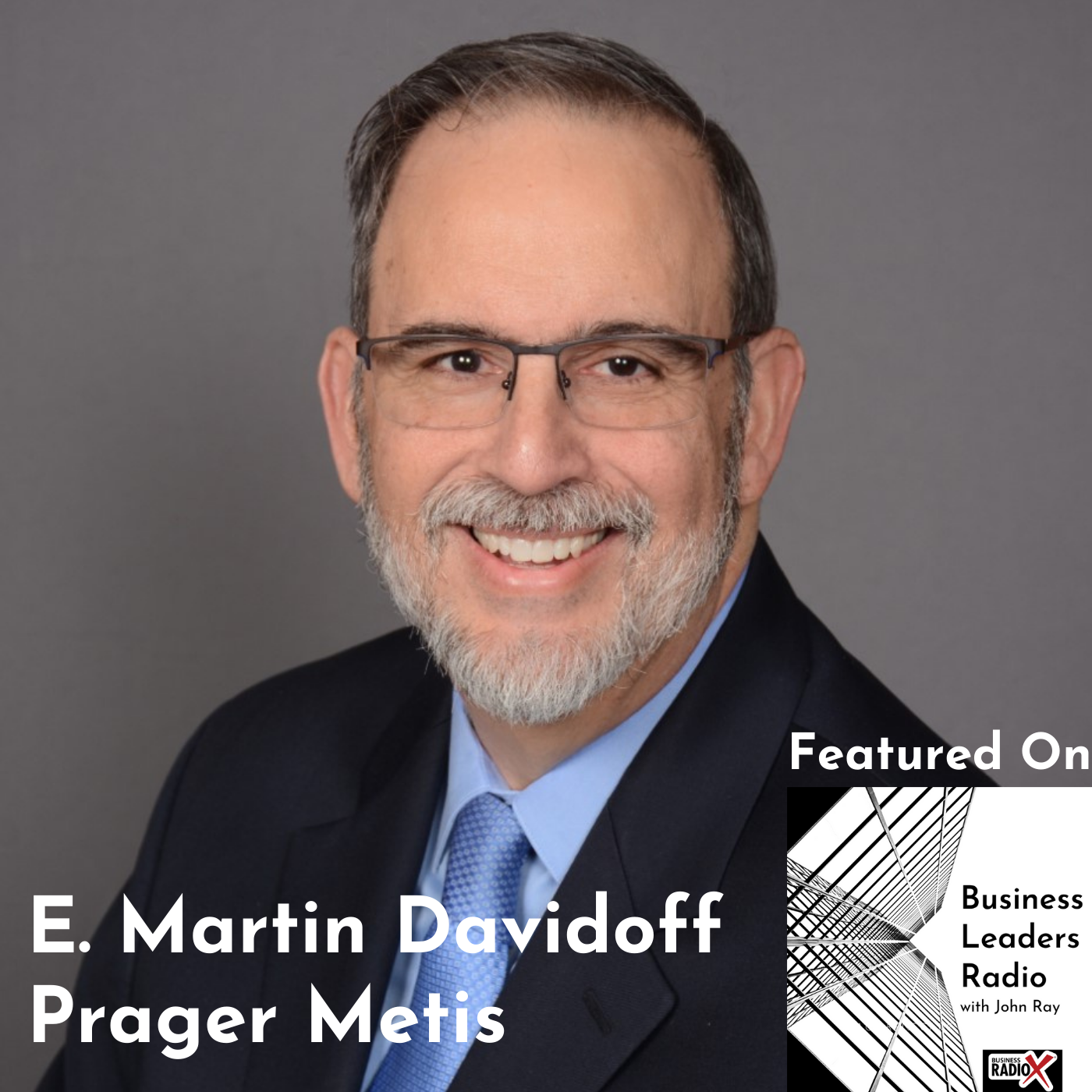
E. Martin Davidoff, Prager Metis

March 9, 2022 by John Ray

Prager Metis
Business Leaders Radio
E. Martin Davidoff, Prager Metis
Loading
00:00 /
RSS Feed
Share
Link
Embed

Download file

Prager Metis

E. Martin Davidoff, Prager Metis

Marty Davidoff, Partner-in-Charge of the National Tax Controversy Practice with Prager Metis, joined host John Ray to cover several important tax issues for this tax season. They discussed this year’s different tax filing deadline, current challenges at the IRS, how to navigate payment of back taxes and estimates, little-known deductions, tax reporting challenges with cryptocurrency, and much more. Business Leaders Radio is produced virtually from the Business RadioX® studios in Atlanta.

Prager Metis

Prager Metis is a top international advisory and accounting firm with over 100 partners and principals, more than 600 team members, and twenty-four offices worldwide including New York, New Jersey, California, D.C. Metro, Connecticut, Florida, Massachusetts, Nevada, North Carolina, London, UK, Chennai, India and the Metaverse.

Clients come to Prager Metis for the expert advice that protects and grows the value of their world—whether that world is local or extends across international markets.

As one of the nation’s fastest-growing firms offering a full range of accounting, audit, tax, consulting, and international services, Prager Metis helps make Your World. Worth More.

Company website | LinkedIn | Twitter | Facebook | Instagram

E. Martin Davidoff, Partner-in-Charge, National Tax Controversy Practice, Prager Metis CPA

E. Martin Davidoff, Partner-in-Charge – National Tax Controversy Practice, Prager Metis CPA

E. Martin Davidoff is the Partner-in-Charge – National Tax Controversy Practice of Prager Metis CPAs, a member of Prager Metis International Group. He has been practicing in the accounting industry for over 40 years.

Marty is a renowned expert in IRS and State tax controversy resolution as well as State and Federal income tax matters and Federal tax lien withdrawals. He has written over 30 articles on IRS representation in CPA Magazine and spoken on various tax issues on platforms including Fox News, WPIX, and a number of radio shows. In addition, Marty is experienced in business start-ups, tax planning for both individuals and businesses, and the taxation of S-corporations and limited liability companies.

Marty’s extensive knowledge, contacts, and experience allow him to develop a thorough and comprehensive strategy to resolve tax controversies and deliver results effectively. Marty provided his clients with compassionate, reliable service and is willing to go to great lengths to get the possible outcomes. Clients who meet Marty on tax controversy matters receive Marty’s detailed notes and a specific plan of action prior to leaving the meeting, relieving stress and providing peace of mind.

His comprehensive client service approach has led Marty to win several awards, including Account Today’s 100 Most Influential People in Accounting for seven straight years. He has also previously been named by the US Small Business Administration as the Regional Advocate of the Year for small businesses and has participated in two White House conferences on Small Business.

In his spare time, Marty is dedicated to philanthropic endeavors, enjoying his grandchildren, and playing basketball, pickleball, and poker. Most notably, he is the Founder and Executive Director for Make A Smile Foundation Inc., a charity holiday shopping spree that benefits children in economic need.

Marty is also the owner of E. Martin Davidoff, Attorney at Law, which specializes in the resolution of Federal and State tax controversies, including representation before the IRS and in the United States Tax Court. Marty is admitted to practice law in the State of New York and New Jersey and has firm members or of counsel relationships allowing the firm to practice in 36 additional states.

LinkedIn

Questions and Topics

  • Tax Filing Due Date this year
  • Payment of estimated taxes and balances due 
  • What to do if you are audited?
  • What if you owe money to the IRS?
  • What about IRS matching notices (CP-2000s) how to deal with them.
  • Cryptocurrency: Should you be using it in your business? What are the tax impacts?
  • How to sell real estate with IRS Liens
  • Some overlooked deductions
  • State tax issues
  • Unemployment Fraud…got a 1099-G for unemployment but did not receive it. What to do.

Business Leaders Radio is hosted by John Ray and produced virtually from the North Fulton studio of Business RadioX® in Alpharetta.  The show can be found on all the major podcast apps and a full archive can be found here.

Tagged With: Business Leaders Radio, CPa, cryptocurrency, E. Martin Davidoff, estimated taxes, IRS, John Ray, Prager Metis, tax deductions, tax filing deadline

Denson Pepper, CPA

July 9, 2020 by John Ray

Denson Pepper CPA
North Fulton Business Radio
Denson Pepper, CPA
Loading
00:00 /
RSS Feed
Share
Link
Embed

Download file

Denson Pepper CPA

Denson Pepper, CPA (North Fulton Business Radio, Episode 254)

Denson Pepper CPA specializes in working with non-filers and delinquent tax payers in resolving their IRS and state income tax problems. Denson joined host John Ray to discuss why the IRS is expected to become more aggressive in pursuing non-filers, statute of limitations rules for non-filers, offers in compromise, and much more. “North Fulton Business Radio” is produced virtually by the North Fulton studio of Business RadioX® in Alpharetta.

Denson Pepper, CPA

Denson Pepper has been a CPA in public practice for more than 30 years in GA. His office is now located in Acworth, GA, and he works with clients all over Georgia and in multiple states. Denson specializes in helping people with their IRS and state income tax problems.

Services offered by his office:

  • Prepare prior year unfilled income tax returns and analyze alternatives for payment of unpaid taxes. Represent client before the IRS.
  • Represent clients in tax audits and audit reconsideration’s
  • Help professional practices (i.e. doctors, dentists, veterinarians, lawyers, realtors, chiropractors) coordinate tax resolution of their personal, entity and payroll tax problems.
  • Determine when Bankruptcy can be used
  • Record Reconstruction
  • Review Filed Returns for Accuracy
  • Review Taxpayer Transcripts for Accuracy and Possible Savings
  • Determine which Tax Liens can be Removed or Subordinated
  • Minimize or Eliminate Garnishments
  • If IRS has Filed Returns for you (Substitutes for Return), File Accurate Returns
  • Represent Clients before the IRS to Resolve Issues
  • Analyze Alternatives Available with Unpaid Taxes
  • Represent Clients in Collection Due Process Hearings
  • Represent Clients in Tax Audits and Audit Reconsiderations
  • File all Necessary State Income Tax Returns and Represent Clients
  • Help Taxpayers Understand Notices Received and What Must Be Done

Point of Contact for Denson Pepper

Company website

Email

Call:  678-797-5241

Questions/Topics Discussed in this Show

  • Why the Internal Revenue Service (IRS) is set to get more aggressive with non-filers
  • Non-filing of returns
  • Offer in compromise
  • Payroll noncompliance and criminality
  • Why ignoring the IRS doesn’t work
  • If you owe taxes, there are a variety of options available

North Fulton Business Radio” is produced virtually from the North Fulton studio of Business RadioX® in Alpharetta. You can find the full archive of shows by following this link. The show is available on all the major podcast apps, including Apple Podcasts, Spotify, Google, iHeart Radio, Stitcher, TuneIn, and others.

Renasant Bank has humble roots, starting in 1904 as a $100,000 bank in a Lee County, Mississippi, bakery. Since then, Renasant has grown to become one of the Southeast’s strongest financial institutions with over $13 billion in assets and more than 190 banking, lending, wealth management and financial services offices in Mississippi, Alabama, Tennessee, Georgia and Florida. All of Renasant’s success stems from each of their banker’s commitment to investing in their communities as a way of better understanding the people they serve. At Renasant Bank, they understand you because they work and live alongside you every day.

Tagged With: Internal Revenue Service, IRS, IRS settlement, non-filers, non-filing of tax returns, offer in compromise, statute of limitations, tax resolution

Decision Vision Episode 13: Opportunity Zones – An Interview with Vishay Singh, The GlobeHUB

May 2, 2019 by John Ray

Decision Vision
Decision Vision
Decision Vision Episode 13: Opportunity Zones – An Interview with Vishay Singh, The GlobeHUB
Loading
00:00 /
RSS Feed
Share
Link
Embed

Download file

Vishay Singh, Co-Founder of The GlobeHUB, and Michael Blake, Host of “Decision Vision”

Opportunity Zones

What is an opportunity zone? How can operating within an opportunity zone help a business? With numerous opportunity zones across the country, what are the differences entrepreneurs and investors should be aware of? In this edition of “Decision Vision” host Michael Blake, interviews Vishay Singh, Co-Founder of The GlobeHUB, a coworking space located in an opportunity zone in Chamblee, GA.

Vishay Singh, The GlobeHUB

Vishay Singh, The GlobeHUB

Vishay Singh is Co-Founder of The GlobeHUB. The GlobeHUB was established in 2016 by Kevin Henao and Vishay Singh when they felt a calling to make a lasting impact on the startup community. They had a vision to not only inspire the next generation of  entrepreneurs but to provide them the community, funding, mentorship and ecosystem that every business owner requires to succeed. Globe’s coworking spaces offer plug-and-play memberships to accelerate business growth. They understand the power of the tech community and aim to facilitate meaningful connections across our unique member network. The diversity of people and ideas make the world better and makes companies better. It’s time to put your big ideas into motion. GlobeHUB is a tech community that promotes high energy, hard work, and creative innovation. There is no better place to launch your business. Get involved! For more information, go to www.globehub.com.

Michael Blake, Brady Ware & Company

Mike Blake, Host of “Decision Vision”

Michael Blake is Host of the “Decision Vision” podcast series and a Director of Brady Ware & Company. Mike specializes in the valuation of intellectual property-driven firms, such as software firms, aerospace firms and professional services firms, most frequently in the capacity as a transaction advisor, helping clients obtain great outcomes from complex transaction opportunities. He is also a specialist in the appraisal of intellectual properties as stand-alone assets, such as software, trade secrets, and patents.


Mike has been a full-time business appraiser for 13 years with public accounting firms, boutique business appraisal firms, and an owner of his own firm. Prior to that, he spent 8 years in venture capital and investment banking, including transactions in the U.S., Israel, Russia, Ukraine, and Belarus.

Brady Ware & Company

Brady Ware & Company is a regional full-service accounting and advisory firm which helps businesses and entrepreneurs make visions a reality. Brady Ware services clients nationally from its offices in Alpharetta, GA; Columbus and Dayton, OH; and Richmond, IN. The firm is growth minded, committed to the regions in which they operate, and most importantly, they make significant investments in their people and service offerings to meet the changing financial needs of those they are privileged to serve. The firm is dedicated to providing results that make a difference for its clients.

Decision Vision Podcast Series

“Decision Vision” is a podcast covering topics and issues facing small business owners and connecting them with solutions from leading experts. This series is presented by Brady Ware & Company. If you are a decision maker for a small business, we’d love to hear from you. Contact us at decisionvision@bradyware.com and make sure to listen to every Thursday to the “Decision Vision” podcast. Past episodes of “Decision Vision” can be found here. “Decision Vision” is produced and broadcast by Business RadioX®.

Visit Brady Ware & Company on social media:

LinkedIn: https://www.linkedin.com/company/brady-ware/

Facebook: https://www.facebook.com/bradywareCPAs/

Twitter: https://twitter.com/BradyWare

Instagram: https://www.instagram.com/bradywarecompany/


Show Transcript

Intro: [00:00:01] Welcome to Decision Vision, a podcast series focusing on critical business decisions, brought to you by Brady Ware & Company. Brady Ware is a regional, full-service accounting and advisory firm that helps businesses and entrepreneurs make visions a reality.

Michael Blake: [00:00:20] And welcome back to another episode of Decision Vision, a podcast giving you, the listener, clear vision to make great decisions. In each episode, we’re discussing the process of decision making on a different topic. Rather than making recommendations because everyone’s circumstances are different, we’ll talk to subject matter experts about how they would recommend thinking about that decision.

Michael Blake: [00:00:39] Hi. My name is Mike Blake, and I’m your host for today’s program. I’m a Director at Brady Ware & Company, a full-service accounting firm based in Dayton, Ohio, with offices in Dayton; Columbus, Ohio; Richmond, Indiana; and Alpharetta, Georgia, which is where we are recording today. Brady Ware is also sponsoring this podcast. If you like this podcast, please subscribe on your favorite podcast aggregator, and please also consider leaving a review of the podcast as well.

Michael Blake: [00:01:04] So, I’m going to apologize to listeners right off the bat. In Atlanta here, it is the height of allergy season. And, generally speaking, once the pollen count gets above a thousand, the air becomes toxic. So, I’m on a combination of cocktail to, sort of, keep me off my feet. And I don’t have a cough button, but I will try to turn my head if that happens. And if you don’t suffer from allergies, feel blessed that you you don’t suffer from that. But I’m a launch panel guy. We play hurt, and we’re going to continue on through this podcast. We’ll get through the episode.

Michael Blake: [00:01:41] And today, we’re going to talk about opportunity zones. And opportunity zones are newly created, tax-break-driven investment areas that are designed to promote private investment in economically distressed communities. And they’re an interesting topic because – and this is a personal ideological view – I think, anytime we can harness market forces to promote social welfare, I think, that’s a good thing to do. There are actually many of these across the country. And as it turns out, I’m very fortunate to live very close to an opportunity zone. So, I look forward to seeing how that leads to some development of my own community.

Michael Blake: [00:02:20] Joining us today is Vishay Singh, Co-Founder of the Globe Hub, which is Chamblee’s premiere co-working and entrepreneurship facilitation space located a Peachtree-Dekalb Airport. And for those of you not in the Atlanta area, PDK airport is Georgia’s second largest commercial airport. So, when Super Bowl 53 happened here, and all the other billionaires came in on their jets, that’s where they came in.

Michael Blake: [00:02:43] The Globe Hub was established in 2016 by Kevin Henao and Vishay when they felt a calling to make a lasting impact on the startup community. They had a vision to not only inspire the next generation of entrepreneurs but to provide them the community, funding, mentorship, and ecosystem that every business owner requires to succeed. Vishay is a successful serial entrepreneur, whose current venture MapMeLocal. And maybe if we have a few minutes at the end of the podcast, we’ll get a chance to learn a little bit about that as well.

Michael Blake: [00:03:11] Globe Hub’s co-working spaces offer plug-and-play memberships to accelerate business growth. They understand the power of the tech community and aim to facilitate meaningful connections across their unique member network. The diversity of people and ideas makes the world better and makes companies better. They’re a technology community that promotes high energy, hard work, and creative innovation. On a personal note, I’m very proud to say that Brady Ware is a member of the Globe Hub, and I personally find it an excellent resource for my own professional needs. Vishay, welcome to the podcast. Thanks for coming on.

Vishay Singh: [00:03:41] Thank you, Mike. I appreciate it.

Michael Blake: [00:03:43] So, we have a lot to talk about but let’s, sort of, dive right in. Why did you start the Globe Hub? Why do you feel there is a need to create a new co-working space? We’ve got a lot of these things right in Atlanta now. Why do we need a new one?

Vishay Singh: [00:04:04] Actually, I think, for me, it was probably the second step to my needs. It was Kevin, my co-founder, who actually came up with that vision because he spent a lot more time in that building. And the building is in a prime location, as you’re aware. And it is outdated. It had the ’80s look. And Kevin was in a poky hole upstairs, small office, and always had this vision of, “Man. I wish I could just have a bigger space, have larger boardrooms, share it with everybody, and keep my rental down while I’m growing up my business called SameDay Printing.”

Vishay Singh: [00:04:48] And when I got there, I was in Marietta, Georgia, and I had met a bunch of entrepreneurs that wanted to expand with me. And we were like, “Man, we can be in Marietta Georgia. We should get somewhere to more of the inner city, and be where the hype is, and be closer to more millennials, and where the excitement is.”

Vishay Singh: [00:05:08] So, we started looking. And then, when we found 1954 Airport Road, we stumbled upon Kevin, and what he was doing, and we immediately fell in love with it. And, sometimes, entrepreneurs go with gut feel versus just the pure science of why co-working, etcetera. But I think, what we saw instantly, the differences was with that location was you could drive in, you could park, and it was all on the ground floor. You had no hassle of worrying about how to get upstairs or how to get to you office, and how do you park your vehicle, etcetera. You can eliminate all those thought processes and hurdles, as I call them, from your thought process because you’re so focused in what you’re trying to do.

Vishay Singh: [00:05:56] So, you just want to get into a space, and you want to be inspired, and you want to be with a community, and you want to build a business. So, that’s how we decided just to say “Okay, let’s just take what we have and create a Globe Hub,” but we understand that co-working, potentially, could be the red ocean. I think, there’s still a lot of space of it, especially we’re going to talk further about opportunity zones and how our strategy would differ.

Vishay Singh: [00:06:21] But the long story and the short story of it, I always felt that, and I’ve always been passionate about helping entrepreneurs. I just couldn’t figure out whether thinking too small. So, I needed to think bigger, and I needed to think and dream a bit bigger on how to do this. And I think that’s potentially coming together. But that’s when we decide, we said, “Let’s just do it. Let’s just create the space first. Let’s crawl before we dream and drink a lot of beer, and we make nothing happen,” right?

Vishay Singh: [00:06:49] So, we did it. Baby steps first. We got 10,000 square feet. We’ve told community. We’ve flushed that community as well to get more and more of the right entrepreneurs there to be able to, then, create an ecosystem that starts to support itself. And like you said, a system that we’re each another could help each another. We even crowdsource to each another. We crowdfund to each another. When somebody’s stuck and really can’t get any angel money or something, we become the angels. And we all chip in whatever we’ve got in our pockets to help that person get the next contract or the next deal, so that they can get to the next level.

Michael Blake: [00:07:22] I didn’t know that.

Vishay Singh: [00:07:22] That’s exactly what’s goes on in the ecosystem. So, we don’t like — again, it’s not about sitting and waiting. If somebody needs something, and we can’t get it from an outside source, all the guys look in and say, “Let’s see how we could just crowdsource it ourselves.”

Michael Blake: [00:07:37] In a way, it’s kind of a microcosm of the Chamblee area, right? I’ve lived in Chamblee since 2005. And in the last three or four years, somebody figured out that Chamblee has a Marta Station, and it is right at the intersection of 285 and 85, And, of course, the airport there. Chamblee is booming, right?

Vishay Singh: [00:07:56] That’s right.

Michael Blake: [00:07:57] Is that part of the calculus? Was that something you’re excited about with Globe Hub kind of being in the middle of that renaissance that Chamblee’s enjoying now?

Vishay Singh: [00:08:04] Absolutely. I mean, I would say right place, right time. Nothing more than that. A lot of things can happen by accident. I mean, we went into downtown, we went into midtown, we looked at other places before we landed up at the Globe building and met Kevin, as well as the building entrepreneur who owns the building, Robert Muller. And decided, “Man, this is the right place.”

Vishay Singh: [00:08:31] And then, you slowly start to discover, well, it’s a hub zone. And then, what is the hub zone? What does the hub zone mean? And then, next thing is we figured out, there’s this press release and the meeting downtown about opportunity zones. And by the way, we looked on the map, and, boom, we are on an opportunity zone. What does that mean? And how does that potentially help us and help the he entrepreneur within us?

Vishay Singh: [00:08:52] But Chamblee is blooming. That’s another thing that we — It’s as a consequence of Brookhaven being overfull, and Buckhead, and that overflow that’s happening. It’s just a natural consequence, I guess. And I think it’s bound to spread into Doraville and places like that. So, I think that’s exciting to have all that and to see all that flourishing around us, as well as to see the potential of the hub zone area, which is the PDK area and the three-mile radius around it, which needs to now come up with a strategy and a plan on how that’s going to unfold itself and become or join into that overflow of where the Whole Foods is and this building across of Clermont, etcetera. So, very, very exciting stuff going on there.

Michael Blake: [00:09:46] You talked about the serendipity of real estate. So, we moved into Chamblee back in 2005, and I had zero to do with that decision. We just moved back to Atlanta, or I moved to Atlanta, my wife went back. She’d been here. I know nothing about real estate. I’m not even very good of monopoly. So, we’re very fortunate that we happened to move into the right place.

Michael Blake: [00:10:10] And your commitment goes beyond just sort of cheerleading. I mean, you’ve put in us substantial financial stake in this. In making that investment, do you see that as a business opportunity, as well as a social project, or do you see it more as purely a social project?

Vishay Singh: [00:10:28] I think it’s a hybrid. I think the environment does lend itself to being profitable. And it’s not as if we’re not profitable. The ecosystem and being full, we had capacity, we can grow upwards by virtue of membership and monetizing other spaces by being creative. So, we have reached that level of profitability.

Vishay Singh: [00:10:54] Is it highly profitable to just have one of that? Absolutely not. I think it’s the great American model where, typically, like franchises and/or similar sort of businesses where you’re doing one well, you need to duplicate it in order to reach good revenues and reach good valuations. Sometimes, when you look online, and you look at the evaluations of WeWork and Industrious, it’s amazing that they’ve got those numbers, and they’ve got those valuations. So, from that perspective, there’s definitely an opportunity.

Vishay Singh: [00:11:33] And I think, on the other hand, it’s helping entrepreneurs. So, I don’t know if that’s social, but if we look at helping entrepreneurs, the way we do it and by no means, we are in absolute shock triangle. We are having a huge purse string, per se. But with our micro funding methodology, and bootstrapping, and working with entrepreneurs, if they succeed, we succeed.

Vishay Singh: [00:11:59] So, from, that, that’s how we’re landing into – and we’ll talk about it later, I guess – the Founders Institute and why we’re doing that. It’s just tying that up into a mechanism where they could be that risk, the risk of investing time, investing money, and then being rewarded with upsides of one or two of those startups becoming successful in Chamblee.

Michael Blake: [00:12:24] So, you found Globe Hub in 2016. You’re at 1954 Airport Road. A little over a year goes by, next thing you know, they slapped an opportunity zone basically right on top of you.

Vishay Singh: [00:12:37] Absolutely.

Michael Blake: [00:12:38] And you’re right in the middle. It basically covers the Peachtree Dekalb Airport, that mini industrial complex there. Did you know what an opportunity zone was or was going to be? Do you have any idea that was going to happen or is that just you, sort of, woke up one day, and it was like a big present?

Vishay Singh: [00:12:55] That’s exactly what it is. It’s the latter. It just happened. I’ve always been aware of economic zones or development zones. And the opportunity zone by definition means the same thing. But it’s a positive effect. It’s it’s great to be in that. It gives us a larger opportunity because as I was just trying to look online and trying to look on how many opportunity zones actually do have incubators, and so far, possibly may have found one that’s a veteran on somebody up in Virginia that’s fallen into that space, and so have we.

Vishay Singh: [00:13:31] So, it looks like we are one of two that are in the zone, which actually complements and lends ourselves into the strategy of how we were thinking of expanding because what could make us different is our plan now of, actually, working the dream of building entrepreneurs but, perhaps, what we could do is build these further hubs in opportunity zones and work in those cities and create a sustainable environment for startups that are funded and, also, help with the marketing of main streets.

Michael Blake: [00:14:13] So, there is this opportunity zone, and I have to confess, I don’t know a lot about it until a few months ago. What is an opportunity zone? For whom is it an opportunity?

Vishay Singh: [00:14:25] Absolutely. So, I keep this piece of paper here because it’s kind of technical, but we won’t get into technical jargon. But the bottom line, the opportunities is on the left and the right side. So, the left side is taxpayers, and people that have capital gains events, and/or postpone capital gains events because they just simply don’t want to pay the tax on it. It’s an opportunity for them because, then, they could liquidate their position, be it a stock, be it a partnership, be it a sale of a business. And that the gain that they’re supposed to pay immediately could not defer through a 1031 exchange, I think it’s called, for property. If they could not do that, they have this chance now to invest it in an opportunity zone.

Vishay Singh: [00:15:17] And that investment could go two ways. It could go in into a property and enhance a property, and there’s rules sets against that, or it could come into a hub like ours and be invested into startups, in our case, and/or it could be invested into small to medium businesses, even if it’s a restaurant, a mom and pop store that’s doing really good and needs that extra capital. That money could be used. So, on that side, that’s the advantage.

Vishay Singh: [00:15:47] On this side, the opportunity is for entrepreneurs to maybe get out of their basements, and start thinking bigger and bring out the ideas, and really have a good opportunity of having some, if I may call it, venture fund or having some access to angel money that could help them get the small businesses or startups and ignited. And the whole idea is, then, to uplift that community, uplift the environment, and create a sustainable environment that makes it a retainer. It retains entrepreneurs and retains the younger audience, the younger people to stay back home versus go to Silicon Valley and other places.

Michael Blake: [00:16:35] So, this, I think, is a very important point because I’m an economist by training. So, I’ll apologize to everybody for that now. But one of the things that they teach us in economics, at least, until you get to the graduate level is that you, sort of, set taxes aside. All the models assume there’s no taxes, right? And if somebody knows of a place where there’s actually no taxes, please let me know, I’d love to go there. But it calls into focus, the fact that taxes do matter. And I think the way this works, your basic and deferred capital gains for up to 10 years, if I’m not mistaken. Correct?

Vishay Singh: [00:17:10] That’s right.

Michael Blake: [00:17:10] So, that increases the return on the same investment, whether you’re making the opportunity zone or not, at that level of risk. And therefore, it’s going to be more attractive. And it’s not just attractive to the investor but the entrepreneur. I imagine on a certain level, an entrepreneur can make an investment in their own business, right? And that means they get to defer or somehow offset their own capital gains as well.

Vishay Singh: [00:17:39] That’s right, yes. As long as it’s done in the zone, and they’re improving that zone by the definition of those regulations, which is still pending final publication, but it’s almost there, you can absolutely — I think that’s absolutely doable.

Michael Blake: [00:17:55] And any kind of business, it could be an e-commerce business, it could be a service business, it could be a software startup.

Vishay Singh: [00:18:01] Absolutely. From where it stands right now, it seems to be pretty clear that that would be covered. There is pending clarity on the regulations with the IRS. So, we were expecting to be published end of March, but it hasn’t come out as yet. We anticipate hopefully now, May or June. But that was pieces of the actual discussion by the forums that took place in DC, where interested parties went and lobbied further to have clarity that it can cover these broader spectrums.

Michael Blake: [00:18:37] Well, if it gives you any comfort, we have about 50 accountants back in my office, they’re tearing their hair out because the IRS has not even published final guidelines on all of the Tax Cut and Jobs Act at the end of 2017. So, we’re still guessing. And even if you do Turbo Tax for your own taxes now, the program says, “Well, this is what we think it’s going to be, but the regulations aren’t final yet.”

Vishay Singh: [00:19:02] That’s right.

Michael Blake: [00:19:02] So, IRS has a lot of regulations to write. So, are you seeing this impact to Globe Hub? Are you seeing an uptick in interest, in activity? And if so, what does that look like?

Vishay Singh: [00:19:13] Definitely. I mean, we’ve seen a positive impact on it. I think that’s how. I think it’s also contributed us to being at full capacity because it’s definitely encouraging a lot of startup entrepreneurs and a lot of businesses to want to think about how they could be part of the zone, how could they get access to capital. And strangely, a lot of the businesses that come in, it’s not purely just looking at, “How could I just get access to capital?” It’s working out, by definition, complementary to what they trying to do.

Vishay Singh: [00:19:49] So, like Chamblee is growing in that film industry. It’s growing in leaps and bounds with studios and the like. So, we’re finding a lot of inquiries that those entrepreneurs are saying, “We want to set up a studio. We want to set up an office there because we want to launch films. So, we want to raise funds for creating films in Chamblee.” So, we’ve seen quite a bit of that. We’ve seen other entrepreneurs in tech and non-tech come through and make inquiries because they’ve learned or heard about the OZ. And we have the double whammy where you can, also, if you’re in our zone, you’re also a hub zone, which allows you to get some extra points when you qualify to do government contracting as well.

Michael Blake: [00:20:38] Oh.

Vishay Singh: [00:20:38] So, there’s that advantage too.

Michael Blake: [00:20:41] And doing some homework before our conversation today, I looked on a map, and there are lots of these opportunity zones all across the country, right? So, for our listeners that are outside of Atlanta, outside of Georgia, chances are very good. If you live in the United States, you live close to an opportunity zone. Is that accurate? Did I read that correctly?

Vishay Singh: [00:21:01] I think that’s quite correct. If you just Google it and just put up “opportunity zone map,” you’ll get the maps that come up, and you’ll see all the brown dots. It’s spread out throughout the US. And chances are if you are in a major city like Atlanta, there’s one near you. I live in Marietta, and there’s several zones in Marietta, and really good opportunities for building acquisitions and/or rejuvenation of certain buildings, which will turn Marietta around in the next 10 years from what I can see.

Michael Blake: [00:21:38] So, in order to take advantage of an opportunity zone, do you have to apply for a license? Do you have to file anything, or do you have that level of knowledge, or do you just check a box? How do you sort of tell the IRS, “Hey, I’m in an opportunity zone, so give me these benefits”?

Vishay Singh: [00:21:54] Sure. I think it’s not about the — yeah, it’s about a process. There is paperwork, but it’s nothing that I can see that’s a special application. It’s more, “Who is that investor? And does that investor have a capital gain event? And is he or she investing in your business?” And then, there is a form that the investor will fill in and file with the IRS return. And there’s a simple methodology that that could be a partnership or whatever in which they put the money into. So, it’s just transactional like as if you’re investing in any other business.

Vishay Singh: [00:22:33] And then, from you, as a business owner, it’s the basic requirements of, “Do you have an LLC, or do you have a company, or do you have a partnership? And do you have a business license in in that area?” And I think the business license will help confirm that you are in the zone and, perhaps, a lease agreement, or, in our case, we have the membership agreement coupled with a lease agreement, if both are needed. And that’s only for purposes of your accountants, auditors having that to satisfy them.

Vishay Singh: [00:23:01] I don’t think the IRS — the IRS seems to be quite lenient with not being too red tape about this. I think they understand this is a process for entrepreneurs. And I think, finally, America’s getting to understand that entrepreneurs need less red tape and get easier access to money, so that they can run with their business ideas or, at least, one business idea.

Michael Blake: [00:23:27] Yeah. I’m sure there’s a forum for that. I don’t know what the number of the form is, but if you just go to irs.gov, and you do a search for opportunity zone, chances are very good. There’ll be links that pop up, and you can see what the form looks like. And it’s comforting to know this is not a place the IRS is really digging in and making it a massive bureaucratic challenge.

Michael Blake: [00:23:48] So, a lot of listeners, when you hear something like an opportunity zone, you’re creating a tax incentive to invest in a certain area, I think, in many people’s minds, I think, with some fairness, it evokes, “Well, if you have to offer an incentive to invest in a particular area, it must be a disaster area. It must be rat-infested. It must be gang infested. It must be dilapidated,” whatever lousy adjective you have, right? Is that necessarily the case if I’m going into an opportunity hub? Do I need to be prepared to walk into a disaster area?

Vishay Singh: [00:24:25] I think, I’m smiling because, I think, every time when I drive around with Kevin, because he grew up in the neighborhood, and until you’ve lived there, it’s like, that probably aptly describes what Chamblee, Brookhaven was many, many, many years ago. Unfortunately, I didn’t have the privilege of seeing that. But having grown up in South Africa, I’ve seen a lot of that.

Vishay Singh: [00:24:44] So, almost many areas start off like that. And, eventually, the right ideas come about, the right ways of cleaning up a city, the right ways of creating good sustainable economy or businesses in there to sustain the environment, and bringing on better homes, etcetera help build up an area.

Vishay Singh: [00:25:07] So, I think you’re absolutely right, there are those areas. They are definitely part of it. And I think it’s a long, long-term vision in terms of this process that that would happen. And it’s possible that certain pockets of that will happen.

Vishay Singh: [00:25:24] The opportunities within the opportunity zone is what I call the sandwich zones. The sandwich zones are the zones that are kind of like us where we are somewhere in between, where Chamblee is booming, Brookhaven is full out and is doing well. Chamblee is booming, and there’s these pockets in Chamblee that are opportunity zones, and that can be turned around, and compliment the entire ecosystem. So, there’s those.

Vishay Singh: [00:25:53] So, what you have to do is just put a magnifying glass on and look for those because those are going to be easier for you to start a business in and have direct access to a more affluent community or more affluent buyers just around you in the eight-mile radius, right?

Vishay Singh: [00:26:10] And then, those that have, I would say, the entrepreneurs with grit, and gut, and maybe deeper pockets are going to go for the other areas, which could be as bad as what you describe, but they still see a longer-term opportunity in that. And they would come out on the other side and probably redevelop it, or create something about it, or create a new form of sustainable buildings, et cetera, or homes or properties because those things are included.

Vishay Singh: [00:26:40] So, by definition, the IRS has included apartment living or anything to do with some form of commercial mix like live, work, play, etcetera, seems to be covered. So, I think those really deep areas, let’s call it poverty-stricken or crime-ridden, that could be cleaned up could absolutely be done as well.

Vishay Singh: [00:27:05] There’s a lot of that in Macon Georgia. And I’ve been traveling to Macon Georgia back and forth and doing a little bit of spec projects there. And we would love to get into the main streets. Our target, our focus is going to be main streets of Atlanta because we have this whole theory that main streets are sick and we can help fix it by bringing in a Globe Hub into each main street. Maybe not as big as what we have. Maybe a smaller model an express model. But then, collaborating working with those businesses and the city to create some form of digital marketing altogether in one single platform. And that’s where we’ll probably talk a little bit later with the MapMeLocal software.

Michael Blake: [00:27:44] Okay.

Vishay Singh: [00:27:44] Yeah.

Michael Blake: [00:27:44] Good. So, you mentioned in passing, I do want to touch on this. You’re involved in the Founders Institute.

Vishay Singh: [00:27:53] Correct.

Michael Blake: [00:27:54] Am I correct in saying you’re creating the Atlanta Chapter of Founders Institute?

Vishay Singh: [00:27:58] Correct.

Michael Blake: [00:27:58] Is that correct?

Vishay Singh: [00:27:58] Correct, yeah.

Michael Blake: [00:27:59] It’s the first presence in the area.

Vishay Singh: [00:28:01] Correct.

Michael Blake: [00:28:01] What is that? What’s the elevator pitch for Founders Institute?

Vishay Singh: [00:28:03] If I had to just say it simply, it’s designed for people coming out of corporate environment and/or startup entrepreneurs, maybe the one vice versa. But it’s designed for people like that that are thinking about entrepreneurship or wanting to become an entrepreneur, and they just need a way to understand how that entire environment works, and understand what hurdles they will face, and understand, basically, the Founders Institute will give you a really good platform to get you through that.

Vishay Singh: [00:28:45] Founders Institute, basically, in Atlanta, having gone through the process now, by definition, what we’re going to be doing is pulling together very experienced entrepreneurs in Atlanta, in our own environment, from larger companies to smaller companies that have experienced even from bankruptcy to building 100 million companies to come share the experiences with these want-to-be or wannabe entrepreneurs in a 16-week program. The program is well-defined, but it’s the experience of the entrepreneur that’s already gone through it coupled with the theory behind it that will be shared in evening classes to these startup entrepreneurs.

Michael Blake: [00:29:35] So, essentially, that’s the first stage. And the second stage is if you get through all that, you know you want to become an entrepreneur, you don’t particularly drop out, you get through that hard phase, and you know what you’re going to be in for, and you really want to do it, then you go to the next stage of going through the funds instead maybe going up to Silicon Valley and/or looking within the Globe Hub for funding and getting your startup up and running.

Michael Blake: [00:30:00] It’s an interesting approach. You touched upon something that I do when I advise people to the think about entrepreneurship. I feel like I do people the best service when they say, “I think I want to start my own business,” by trying to scare them out of it and try to show them how ugly and how terrifying it is. For every Jeff Bezos out there that is glamorous and is, obviously, enormously successful as a transformative business, there are others that are not that. And even though they may not fail, it’s a slog. It’s probably harder than the day job that you just left. Certainly more stressful than the day job that you just left.

Michael Blake: [00:30:41] And it sounds like you take that approach where, “Hey, you want to be an entrepreneur, great. But before you take the plunge, let’s give you a sort of a little look as to what you’re really signing up for because it’s not all what they publish in Fast Company, for example, or on the magazine.”

Vishay Singh: [00:30:57] Absolutely. It’s an absolute window. Actually, Founders Institute encourages you to keep your day job. Therefore, they put the program on 6:00 in the evening and run it for two hours once a week, so that you can get kick started. Once you go through the program, in that process, you’re then encourage to, “Do you want to incorporate?” And there’s a lawyer that will come, and show you how to incorporate, and get you to take that step.

Vishay Singh: [00:31:19] So, you can take those baby steps towards heading to where you want to be successful. But it is about the truth of it is we want to get you to a point where you don’t — like most of us, entrepreneurs, went through a lot of pain. Even though we did our MBAs and stuff like that, we still go through a lot of pain in growing a business. And that pain is a consequence of maybe not understanding the entire landscape and not having had sufficient coaches, mentors, experienced entrepreneurs like yourself, Michael, and everybody else around us that has had gone through a couple of ventures to say, “You know what, this is what happens. This is my experience. It may not happen to you, but just be aware of this.”.

Vishay Singh: [00:32:06] The academic side is great, but when you get through nuts and bolts, it’s all about you. And entrepreneurship, for me, is, by definition, entering within. That’s how I see entrepreneurship is the moment you become an entrepreneur is actually entering into your own self and challenging your own self into how you’re going to break all these barriers and create a successful business.

Michael Blake: [00:32:31] You mentioned the MBA. So, I have an MBA myself. And I’ve started a couple of businesses. And I found, frankly, the MBA did not teach me a lot of the blocking and tackling. It’s fine. My MBA, at least, would teach me, if I want to go to Wall Street, I want to work for Bain or McKinsey, Home Depot’s corporate department, lots of tools to help you there.

Vishay Singh: [00:32:55] That’s right.

Michael Blake: [00:32:55] That was 20 years ago, my diploma is in a cave painting in France somewhere. But nevertheless, the basic MBA doesn’t necessarily teach you how do you send an invoice, how do you negotiate, how do you set a fee, how do you create a proposal, how do you become an amateur graphics designer, so you’re not just sending dense text things to everybody. And how do you deal with the stress, the loneliness, the thing about you might have a panic attack because you’re not sure how you’re going to make payroll the next four days.

Vishay Singh: [00:33:27] That’s right.

Michael Blake: [00:33:27] So, I think, it’s so real. And even for myself or somebody who has done it, I mentor, I teach entrepreneurship, I’ve helped people in business planning competitions. Even with all that, it’s still punch me in the face and was jarring.

Vishay Singh: [00:33:40] That’s right.

Michael Blake: [00:33:40] So, to whatever extent that the Founders Institute can prepare people for that, for that first punch, if you will, I think that’s going to make all the world a difference because, personally, I felt it. So, I went on the Founders Institute website, again, preparing for this interview, and it turns out the Atlanta part says coming soon.

Vishay Singh: [00:34:05] Sure.

Michael Blake: [00:34:05] So, you can’t necessarily sign up yet. You can’t get on the mailing list, which now I’m on. When do you think you’re going to launch? When are you going to open for business?

Vishay Singh: [00:34:13] The official launch will be May 16th. We’ll have an invitation. We’ll send an invitation. We’ll run some ads as well, adverts and email as you mentioned. And put it on our Globe Hub digital assets. So, 16th of May, we’ll have the first gathering. And then the website and signing up on the website should be, I’d say, after next week. We, ourselves, have to graduate and totally understand how it’s a large portal, and it’s a large organization. It’s a great brand.

Vishay Singh: [00:34:47] Adeo Ressi’s pretty phenomenal entrepreneur himself, the CEO of Founders Institute. And he takes personal pride in making sure it’s him or his COO that works with each new city that comes about. So, we had to go, my team had to go through a six-week process with them. And every week, we had to go through kind of funny assignments that felt like we were back in MBA school, but quite practical and quite relevant because when we finished off, it was like, “Okay, we got it.”.

Vishay Singh: [00:35:18] It is more about understanding the depth of the portal, understanding the depth of an intensity of making sure we communicate the right things to the people, and then making sure that we make an environment that’s going to be exactly what you described. It’s going to be an environment with the right entrepreneurs, sharing the right experiences to people that want to become entrepreneurs in that way.

Vishay Singh: [00:35:40] They’ll have that fail safe. They’ll have the mechanisms to help them achieve success faster even if it could be a small business. I mean, of course, everybody wants to have the big tech idea or the big innovative idea, but if you’ve got a good solid business that you know it’s going to make you 500k to a million, nothing wrong with that.

Michael Blake: [00:36:01] Nothing. And I call those meat and potatoes businesses, right?

Vishay Singh: [00:36:04] That’s it.

Michael Blake: [00:36:04] They’re not necessarily sexy. All they do is make money.

Vishay Singh: [00:36:06] That’s it. That’s it. Nothing wrong with that-

Michael Blake: [00:36:08] Nothing wrong with that.

Vishay Singh: [00:36:09] … because that’s what turns economies, that’s what changes cities, and that’s what creates employment.

Michael Blake: [00:36:15] All right. So, I want to give you a chance to talk a little bit just about MapMeLocal because I know that’s the big venture that you’re involved in now, before we wrap up here. What’s the elevator pitch of MapMeLocal, and kind of where are you with that?

Vishay Singh: [00:36:28] So, yes. It’s pivoting, and it’s growing. MapMeLocal has always had success in the — I would say, the immediate goal was to help small entrepreneurs or somehow help small businesses, especially businesses that had bricks and mortar. We focus on local search and we focus on getting Google My Business right. And besides the Google My Business, a lot of entrepreneurs just don’t stand that behind that, there’s some little piece of SEO work, the little secrets that need to be executed. And then, the calls start to happen, and people start to get this.

Vishay Singh: [00:37:07] So, we’ve always been doing that. And we’ve had success and failure in it. And that’s a good thing because what we’re achieving over time as the service is vertical is to make sure that we are able to help small businesses, and succeed at it, and get them the right amount of local searches that they need, which is their digital billboard at the end of the day.

Vishay Singh: [00:37:34] And that ecosystem is completely changed from your yellow pages, to putting up a billboard sign, and sending out pamphlets, and doing that. Basically, that service is working well but where we pivoting to and we’ve always been getting close to this is we’re building a software that literally pins and maps out events, festivals. And what we want to do is map out main streets in America.

Vishay Singh: [00:38:01] So, that’s MapMeLocal and the idea was first conceived was to how to build something that we could map it out better than Google would and privatize it. In other words, it’s, then, focused for the city, and the city would have absolute control over it, and they’d be able to use it as a marketing tool. And so, with the small businesses, be able to use it as a marketing tool without having to go through spending lots of money to try and get found online.

Michael Blake: [00:38:34] And I’m going to go off the script a little bit because it brings up a question I find really interesting. Local search has been around, has been a topic for, at least, 15 years, and a minimum since the iPhone was introduced, and probably even a bit earlier than that. Why has that been such a hard nut to crack? Nobody’s really figured that out yet. Why?

Vishay Singh: [00:38:57] It’s as a consequence of the evolving technology and the very fact that everything evolves. Just like your website has evolved over time, and people evolve, and people’s behavior evolves as well.

Michael Blake: [00:39:11] Stupid people.

Vishay Singh: [00:39:14] So, everybody changes the way they want to do things, and people want more. Don’t make me think IoT systems ,right? Internet of Things system. So, when you look at your device, the device has grown from typing in something to, “Hey, Siri, tell me where I can get my nearest tacos, or give me the address to RadioX.” That’s how it goes these days. So, voice just changed the environment.

Vishay Singh: [00:39:38] The landscape of local searches has changed, but I wouldn’t say drastically. I would think that because Google is the godfather of it right now, they have their methodology of changing algorithms, and they have the mentality of wanting to do things better every time. So, that kind of impacts on where you’re at.

Vishay Singh: [00:39:59] And then, it’s just broad. The depth of it is just not about Google My Business. It’s about that, plus it’s about your web page where you have your contact us, and you have your pin. And then, it depends on your business. It could be, then, about OpenTable, it could be about Yelp, it could be about Citysearch. So, there’s all these directories, right? And then, there’s these godfathers of the directories as well that enforces axiom, that control data. And it spreads from this.

Vishay Singh: [00:40:28] So, everybody has a role to play in it. And when you think about it as Brabys or the Yellow Pages, that’s why the Yellow Pages existed because nobody could really control it until it got together and published it into one publication. It’s the same thing that’s happening in the internet. So, it’s a question of how do you manage of that? How do you get through all that to make it successful for your business?

Michael Blake: [00:40:55] Okay, I will look forward to seeing the evolution of the post pivot MapMeLocal.

Vishay Singh: [00:41:02] Okay.

Michael Blake: [00:41:03] All right. It’s about time to wrap up. How can people contact you or follow you to learn more about opportunity zones, Globe Hub, Founders, and all these things you’re interested in? How can people follow you?

Vishay Singh: [00:41:12] Absolutely. Just contact us or visit us online at the globehub.com. You will find our social, that’s stable at Instagram. We’ve got Facebook. We’ve got Twitter. I have also mapmelocal.com. You’ll get my personal Facebook and Twitter through mapmelocal. You’ll find me through that. So, those are the best ways to try to contact us or just e-mail me at vishay@theglobehub.com.

Michael Blake: [00:41:45] All right. Well, that’s going to wrap it up for today’s program. I’d like to thank Vishay Singh so much for joining us and sharing his expertise with us.

Michael Blake: [00:41:52] We’ll be exploring a new topic each week. So, please tune in, so that when you’re faced with your next business decision, you have clear vision when making it. If you enjoy this podcast, please consider leaving a review with your favorite podcast aggregator. It helps people find us so that we can help them. Once, again, this is Mike Blake. Our sponsor’s Brady Ware & Company. And this has been the Decision Vision Podcast.

Tagged With: coworking, coworking space, Crowd Funding, Dayton accounting, Dayton business advisory, Dayton CPA, Dayton CPA firm, Doraville, economic development zones, Founder Institute, Founders Institute, GlobeHUB, helping entrepreneurs, hub zone, hubspot, increasing access to capital, Industrious, IRS, Macon, mapmelocal, mapmelocal.com, mapping events, mapping festivals, Michael Blake, micro funding, Mike Blake, opportunity zones, OZ, sandwich zones, startup incubator, startups, tech startups, The GlobeHUB, Vishay Singh, WeWork

Decision Vision Episode 4: What Corporate Form Should I Choose? – An Interview with Anita Anand, Brady Ware & Company

February 28, 2019 by John Ray

Decision Vision
Decision Vision
Decision Vision Episode 4: What Corporate Form Should I Choose? - An Interview with Anita Anand, Brady Ware & Company
Loading
00:00 /
RSS Feed
Share
Link
Embed

Download file

Mike Blake and Anita Anand

Choosing the Correct Business Structure

Michael Blake, Director of Brady Ware & Company and Host of the Decision Vision podcast, interviews Anita Anand, Director of Brady Ware & Company on the decision process on a corporate business structure, how recent tax law changes might dictate a change in corporate entity selection, and other questions related to corporate structure.

Anita Anand, Esq., Brady Ware & Company

Anita Anand, Director, Brady Ware & Company

Anita Anand, Esq. is a licensed attorney and has over 10 years of experience consulting with businesses to help them align their long-term business and financial objectives with a tax strategy that minimizes their overall exposure. Anita specializes in technical international, federal, state, and local tax research and consulting. She provides taxpayer representation in matters requiring federal and state private letter rulings and is responsible for international, federal, state, and local technical tax support involving a range of clients and industries. Anita works closely with the tax team to provide quality control in all aspects of Brady Ware’s tax division. Anita is also the author of articles and white papers on various subject matters. She has presented at conferences and led training sessions and initiatives. Anita is a graduate of Georgia State University College of Law.

Michael Blake, Brady Ware & Company

Mike Blake, Host of “Decision Vision”

Michael Blake is Host of the Decision Vision podcast series and a Director of Brady Ware & Company. Mike specializes in the valuation of intellectual property-driven firms, such as software firms, aerospace firms and professional services firms, most frequently in the capacity as a transaction advisor, helping clients obtain great outcomes from complex transaction opportunities. Mike is also a specialist in the appraisal of intellectual properties as stand-alone assets, such as software, trade secrets, and patents.

He has been a full-time business appraiser for 13 years with public accounting firms, boutique business appraisal firms, and an owner of his own firm. Prior to that, he spent 8 years in venture capital and investment banking, including transactions in the U.S., Israel, Russia, Ukraine, and Belarus.

Brady Ware & Company

Brady Ware & Company is a regional full-service accounting and advisory firm which helps businesses and entrepreneurs make visions a reality. Brady Ware services clients nationally from its offices in Alpharetta, GA; Columbus and Dayton, OH; and Richmond, IN. The firm is growth minded, committed to the regions in which they operate, and most importantly, they make significant investments in their people and service offerings to meet the changing financial needs of those they are privileged to serve. The firm is dedicated to providing results that make a difference for its clients.

Decision Vision Podcast Series

Decision Vision is a podcast covering topics and issues facing small business owners and connecting them with solutions from leading experts. This series is presented by Brady Ware & Company. If you are a decision maker for a small business, we’d love to hear from you. Contact us at decisionvision@bradyware.com and make sure to listen to every Thursday to the Decision Vision podcast. Past episodes of Decision Vision can be found here. Decision Vision is produced and broadcast by Business RadioX®.

Visit Brady Ware & Company on social media:

LinkedIn: https://www.linkedin.com/company/brady-ware/

Facebook: https://www.facebook.com/bradywareCPAs/

Twitter: https://twitter.com/BradyWare

Instagram: https://www.instagram.com/bradywarecompany/

Show Transcript:

Intro: [00:00:01] Welcome to Decision Vision, a podcast series focusing on critical business decisions brought to you by Brady Ware & Company. Brady Ware is a regional, full-service accounting and advisory firm that helps businesses and entrepreneurs make visions a reality.

Michael Blake: [00:00:22] And welcome to Decision Vision, a podcast giving you, the listener, clear vision to make great decisions. In each episode, we’ll be discussing the process of decision making on a different topic. But rather than making strict recommendations because everyone’s circumstances are different, we’re talking to subject matter experts about how they would recommend thinking about that decision.

Michael Blake: [00:00:42] My name is Mike Blake, and I am your host for today’s program. I’m a Director at Brady Ware & Company, a full-service accounting firm based in Dayton, Ohio with offices in Dayton; Columbus, Ohio; Richmond, Indiana; and Alpharetta, Georgia, which is where we are recording today. Brady Ware is sponsoring this podcast. If you like this podcast, please subscribe on your favorite podcast aggregator, and please consider leaving a review of the podcast as well.

Michael Blake: [00:01:07] So, today, we’re going to talk a little bit a hard accounting. We haven’t done that yet on the program. We’ll probably do it in a few episodes along the way. And we’re not necessarily going to get that technical, but this just in, you may have heard that the tax law changed radically at the end of last year that has changed the way that businesses are making decisions and making businesses kind of rethink decisions they may have made last year, five years ago, 10 years ago, 20 years ago.

Michael Blake: [00:01:41] And one of those decisions that when businesses, typically, are started – and maybe they changed along the way – is the corporate form. In other words, are you a C Corporation, and S corporation, you’re a limited liability company, and so forth? And there are many reasons or factors that drive that decision initially. But, quite candidly, one of them is what is your tax liability going to be. And depending on your corporate form – if it’s done correctly, and matches up with how your business makes money, and how you make money from your business – that’s going to drive what form of corporation or what corporate form you decide to take.

Michael Blake: [00:02:21] And what we’re finding at Brady Ware is that a lot of clients now and others are coming to us and asking, “Well, given these changes in the law, am I the right corporate form to frankly maximize or optimize my tax liability?” Nobody that I know likes to pay more taxes than than they absolutely have to. I know I’m not tipping the federal government when I write mine out. But, unfortunately, I know almost zero about it other than what I just talked about for the last 30 seconds.

Michael Blake: [00:02:52] So, we’ve brought in a subject matter expert. And I’m joined by my colleague, fellow director, and good friend, Anita Anand. Anita is a Director at Brady Ware, and she’s a licensed attorney and tax director at Brady Ware. She has over 10 years of experience consulting with businesses to help them align their long-term business and financial objectives with a tax strategy that minimizes their overall exposure. She believes it is necessary to take the time to understand what her business clients have done to achieve the success they have and where they plan to go. She, then, uses her broad knowledge of US and international tax laws to develop strategies and the most efficient tax structure to keep clients fully compliant at the lowest expense.

Michael Blake: [00:03:37] Anita has worked with a broad range of companies including technology, manufacturing, renewable energy, construction, real estate, and many other industries. She has helped them craft strategies to deal with federal state and local taxes, as well as inbound and outbound international tax issues. Along with these day-to-day responsibilities, Anita contributes her expertise to a number of local government agencies, industry organizations, and nonprofits. She is a guest lecturer at Georgia State University and the University of Georgia. Anita is also the author of various articles and whitepapers on various subject matters. In fact, I think she’s the most prolific writer in the firm, and she’s always writing something.

Anita Anand: [00:04:14] You’re so sweet, Mike.

Michael Blake: [00:04:15] She is presented at conferences, authored articles, and led training sessions and initiatives. Anita is a graduate of Georgia State University’s College of Law. And on a personal note, Anita was actually the first person that I met outside of the interview process before I joined the firm. And I remember very clearly that she was kind of one of the first to kind of welcome me, and we’ve latched on to each other because the two of us are the two non-CPAs-

Anita Anand: [00:04:39] That is true.

Michael Blake: [00:04:41] … in the firm at the director level., right. And so-

Anita Anand: [00:04:45] Right, very true.

Michael Blake: [00:04:45] And that-.

Anita Anand: [00:04:45] We got to stick together, Mike.

Michael Blake: [00:04:46] We do have to stick together. But that having been said, you studied tax, I have not. So, it’s just delightful to welcome you to the program. We’re going to have some fun today while we help people work through this decision.

Anita Anand: [00:05:00] I look forward to it. Thanks for having me.

Michael Blake: [00:05:02] So, Anita, I’ve given, sort of, this introduction, but I’d like you to kind of humanize a little bit. Talk about what you do at Brady Ware, and how you’re helping clients on a day-to-day basis.

Anita Anand: [00:05:12] Yeah. So, like you, said I’m a director with the firm. I spearhead the international tax practice. And so, because I’m a lawyer by trade and not a CPA by trade, I come at it from a slightly different angle in that tax consulting really is my specialty. So, I work a lot with clients, whether they’re individuals or businesses, here in the US that are wanting to expand their operations or their work in foreign jurisdictions and vice versa, right. So, if we have, let’s say, a company that has already established their business in foreign markets, and, now, they want to expand into the US, helping them understand what US tax rules are, how they work, what the regime is like, and what kind of an impact they’re going to be probably faced with is really what I like to kind of help them plan with.

Anita Anand: [00:06:03] But outside of the international, my foundation is technical tax. That’s what my career has always been. So, I also serve as a resource to others across the firm on technical tax matters, which vary all across the spectrum. So, if there is, let’s say, a client that has maybe a little bit more of a complex issue that requires some more technical tax research, looking into trying to figure out maybe how IRS may interpret a specific set of facts and circumstances, really diving into those types of situations, and then advising the clients appropriately. So, that’s just a very nice way, I think, of saying that I’m a tax nerd, but I enjoy it. I enjoy it. My job is to understand how these tax rules work, and then help explain to clients what it means to them.

Michael Blake: [00:06:53] It’s okay to be a nerd. The nerds rule the world, man.

Anita Anand: [00:06:55] That’s okay. Right, yeah.

Michael Blake: [00:06:56] The nerds are the ones driving Teslas. The nerds are the ones with second and third homes.

Anita Anand: [00:07:00] There you go, right?

Michael Blake: [00:07:01] You know, it’s all good. So, if you’re the nerd that everybody comes to for things tax, I mean, that’s not a bad place to be. So, what does being a tax expert an advisor mean? I mean, you talked a little bit about, sort of, being a tax nerd, but it goes a little bit beyond that, doesn’t it?

Anita Anand: [00:07:18] It does. It does. And, I think, the overarching goal for any tax advisor – and this is the way I view it – is you really are taking what is a complex set of rules that in the federal income tax code, you’re taking the code, you’re taking the regulations associated with it, the guidance IRS has issued along the way, and trying to, number one, keep up with that, understand what that means, interpret it correctly. But then, more importantly, be able to communicate that to a client in a way that they understand, right. It’s no different than, for example if I go to a doctor not feeling well, and they spit out all of these medical terms that have 15-18 syllables to it. Well, he or she could be the most brilliant person on the face of the earth, but they’re not communicating to me in a manner I understand what it means.

Anita Anand: [00:08:09] And so, I kind of take tax advisory in that light where our job is to really take something that the average person probably doesn’t even want to deal with. And it’s our job to make them understand how it impacts their business. But that’s also a loaded job description, right, because that includes that the advisor needs to be keeping up with all these tax law changes, which is constantly in a state of flux, not only on a federal level but international implications, state and local tax implications. So, there’s a lot to always keep up with.

Anita Anand: [00:08:43] But then, I think, what also sets maybe tax advisors apart from just true tax compliance, because I view tax compliance as you’re looking in the rearview mirror, you’re reporting what has already happened; whereas, I think, one of the key aspects of a tax advisor is to have more of a proactive approach, work with clients from the beginning, and more so on the front end, and along the way in terms of, “Hey, how’s the business going? How are we seeing things go? What is the ultimate goal here? What are things you should be aware of? How they’re going to impact you? What are you thinking about? What aren’t you thinking about that you should be thinking about?” That way, we’re making sure that clients are in the best position possible to make the best business decisions understanding tax impacts along the way.

Michael Blake: [00:09:29] I think that’s a very smart comment that you made that I want to highlight because I think it’s that important that it’s worth going off script to do that. There’s a big difference between being an analyst and an advisor, isn’t there?

Anita Anand: [00:09:43] There is.

Michael Blake: [00:09:43] And when you’re an analyst, you often talk about either, “Here’s what happened,” right, or “If A, B. C happened, then, sort of, here’s the flow chart, and here’s what will happen. Here’s kind of what the math says. And here’s what the law clearly says.” The advisor’s job is a lot less comfortable, isn’t it?

Anita Anand: [00:10:04] It is. And you have to be okay with the — You have to get comfortable with the uncomfortable. And that is difficult to do because nobody likes to be in that gray space. And in my experience, and especially in light of tax reform, a lot of tax professionals are stuck in that gray space.

Michael Blake: [00:10:23] And it’s even worse now, right?

Anita Anand: [00:10:25] It is.

Michael Blake: [00:10:25] Because you’re talking about changing rules and changing regulations. As I understand, in many ways, the IRS has not decided or, at least, has not chosen to share with us yet-

Anita Anand: [00:10:35] Correct.

Michael Blake: [00:10:35] … what they’ve decided the rules actually mean, right? So, in a lot of cases, to be perfectly candid, we’re all, not just Brady Ware but every CPA who’s being intellectually honest-

Anita Anand: [00:10:46] Right.

Michael Blake: [00:10:47] … is making a best guess based on available information that could turn out to be wrong.

Anita Anand: [00:10:52] Absolutely. And I think that’s another thing that’s going to set what I believe tax advisors into different buckets is being honest with clients. I understand we have — I’ve had to have these conversations multiple times with clients as clients are expecting an answer. When they come to you, they are expecting an answer on, “Okay, this is my issue. Tell me what I need to do.” And we need to be honest in that we are in this state of flux, and that there is so much that is unknown. But given what we know as it stands right now, this is what we believe to be where we think IRS is going to come out on it, but with the caveat that it could completely change because we just don’t know what we don’t know.

Michael Blake: [00:11:36] And does your legal training help you with that? I mean, the law is the law, but, on the other hand, the law is the law until it gets in front of a judge and jury.

Anita Anand: [00:11:43] Correct. It did, it did. But I also think it’s also experience along the way. The legal training helps you analyze what is already in front of you. It helps you interpret, okay, if you’re looking at, let’s say, 10 tax court cases on a particular issue, and eight have gone a certain way, and two have possibly gone a different way, to kind of help analyze what that really means. So, it has provided the analytical skills that I think I have, but there is still that second part of the equation, which is being okay with communicating your analysis accurately and honestly with a client, which just, I think, comes with experience.

Michael Blake: [00:12:29] So, I want to go out on a limb and say you didn’t necessarily, when you’re eight years old, say, “I want to become a tax advisor.”

Anita Anand: [00:12:37] No.

Michael Blake: [00:12:37] Is that fair?

Anita Anand: [00:12:38] That is a fair statement.

Michael Blake: [00:12:39] Some people have done that. And maybe they go and do, more power to them, you didn’t, and I didn’t grow up saying, “I was going to be a business-” I didn’t know what a business appraiser was until I graduated from business school. So, what got you into tax advisory? What captivated you that you want to make that your career and you wanted to be an expert in tax?

Anita Anand: [00:12:57] It’s really funny that you asked that question because I’ve asked that question of myself a couple of times along the way.

Michael Blake: [00:13:04] During busy seasons?

Anita Anand: [00:13:05] Yeah, yeah, yeah. Every year between that February and April timeframe. So, early on in my career, I never at all thought that I was going to do tax. Honestly, doing my own personal income tax return that one time a year was enough tax I ever needed to be exposed to. But I got a good opportunity in tax and, obviously, in the tax advisory role. And I went in with a certain set of expectations, and I was actually pleasantly surprised. So, I stuck around. And over time, that’s how I built my career.

Anita Anand: [00:13:40] But along the way, obviously, you learn a lot about yourself as an individual and as a professional. And when I look back at really what made me stick around in the tax space is, I think, believe it or not, in a weird way, I think, I like problem solving. And tax advisory is that every day. It’s not necessarily that a client is coming to you, “Hey, I have an IRS audit. Now, please fix this for me.” It’s advising clients along the way and what they’re trying to do. There’s a constant “problem” that business owners are constantly faced with. And so, you’re able to advise them on that.

Anita Anand: [00:14:18] So, it’s problem solving that I enjoy. And then, I enjoy working with people. So, I like getting to know my clients, and understanding what their business is, where their goals lie. And, obviously, building that kind of professional relationship where they believe that you are a valuable member to the team. So, I think all of those things put together have made tax advisory a good fit for me, which is I guess why it’s been working pretty well.

Michael Blake: [00:14:46] It has worked pretty well. You’re a brand director, so.

Anita Anand: [00:14:49] That is right. That is right.

Michael Blake: [00:14:51] Can you think of a neat success story you’ve had with the clients, something you really, really either helped them out of a bind or helped them frankly just save a lot of money that they’re going to be on the hook for?

Anita Anand: [00:15:02] Yeah. I’ve been blessed with quite a few clients’ situations where we were able to get them out of what I’m going to just call a pickle. I had a client that specifically came to me from a prior CPA firm. They were in the midst of a complete reorganization, corporate reorganization. And the amount of dollars that were involved were quite significant. And so, the way the prior CPA firm was advising them to pursue this reorganization was going to be a completely taxable event, and it was going to cost them a lot of money.

Anita Anand: [00:15:41] So, when they came to me, we had some certain discussions, and we really  to dive in to some of the tax rules in terms of, could they possibly benefit from a tax-free reorganization? So, we worked very closely with our legal team to stay within the parameters of the law and what is allowed. And, in fact, what the tax liability their prior CPA had estimated to them, we were able to completely wipe it out.

Anita Anand: [00:16:08] So, that was one of the success stories that I kind of hold on to quite a bit and it saved them millions of dollars. So, quite significant on their end as well. But my success story is truly where I find the successes when you have a client that achieved success, and you’re a valuable member to the team that helped them do it, and they look at you as being a valuable member to the team. And that in and of itself is success.

Michael Blake: [00:16:35] Yeah, that’s what it’s all about, right? And that is the stimuli.

Anita Anand: [00:16:36] That’s what are in it for everyone.

Michael Blake: [00:16:38] So, all right. So, let’s talk now about entity conversions. Why are people talking about them so much now? Why is there so much chatter about, “I want to convert from C, to S, to SSC, or something else”?

Anita Anand: [00:16:51] Well, it’s this little thing called tax reform that you had alluded to.

Michael Blake: [00:16:54] Oh, yeah, I heard of that.

Anita Anand: [00:16:54] Yeah, that little thing that happened at the end of 2017. The tax cuts and Jobs Act was the tax reform package really. And it was high time for tax reform. If you go back and you think about the last major tax regime overhaul, it was back in 1986. So, the fact that this last one was done in 2017, I mean, you’re talking 30 plus years later. So, it was high time for there to be, I think, a little bit more of a look towards our tax laws, our tax rules, and modify them to be in line with the current marketplace and business realities of our country

Anita Anand: [00:17:32] So, with  reform though, we had a number of different changes. And one of the most talked about is the reduced corporate tax rate. So, we went down from 35% to 21%. And, now, that has raised this conversation amongst various taxpayers, “Does it make sense for me to use a traditional corporate structure? Because before, it was going to cost me 35% at the corporate level. Well, now, it’s lower. So, should I be thinking about a conversion?” So, that’s truly what has sparked it, and all the conversations that we’re hearing and reading about.

Michael Blake: [00:18:08] And what are clients converting from and to in order to take advantage of that?

Anita Anand: [00:18:14] So, at this point, a lot of clients are thinking about converting from what’s called a pass-through entity, which is like your traditional partnership as corporation limited liability company or LLC to a C corporation. So, that’s what, I think, the conversation is and that discussion point is right now is I’m taking what — There really is no corporate entity. It’s a pass-through. And does it make sense now for me to convert that pass-through entity to a traditional C corporation?

Michael Blake: [00:18:45] Now, that’s kind of different from, at least, what I’ve encountered maybe that’s because that’s where valuation comes in, but I’m more used to seeing C to S form conversions, right?

Anita Anand: [00:18:58] Right.

Michael Blake: [00:18:58] Is going back the other way more or less complicated than C to S, or about the same?

Anita Anand: [00:19:03] So, it’s very — Okay. I want to caveat this, but it’s simpler to go from a pass-through entity like an S to a C, or a partnership to a C, or LLC to a C. But going the other way is a little bit more difficult. You’ve got a lot more considerations that go into that, and there’s usually some pain and cost associated with it. And so, that’s kind of part of the conversation that we’re having with our clients right now is, sure, we can talk about this conversion. We can do the modeling. We can certainly walk you through it. But just know that as easy as it is to maybe check the box and convert to a C corporation, in the event two years down the road, you wanted to go back, there’s going to be some cost. So, the short answer to your question is it’s really just not that easy to go back once you’ve elected to be a corporation.

Michael Blake: [00:19:59] So, you better be sure?

Anita Anand: [00:20:01] You should be sure.

Michael Blake: [00:20:02] And I mean, again, I’m not an account, but my impression is the IRS generally is not a huge fan of changing corporate forms all the time like share changes-

Anita Anand: [00:20:13] Right.

Michael Blake: [00:20:15] … outfits in a concert-

Anita Anand: [00:20:17] Absolutely.

Michael Blake: [00:20:17] … because you want to optimize your tax rate.

Anita Anand: [00:20:19] Right, right.

Michael Blake: [00:20:20] So, they’re not a huge fan of that.

Anita Anand: [00:20:22] No.

Michael Blake: [00:20:23] So, can we say there’s a bottom line or a blanket statement? Or I’m going to rephrase the question actually. And the question is, what are kind of the criteria that makes a company a good candidate for a pass-through entity conversion to a non-pass-through entity conversion? What’s kind of that checklist look like?

Anita Anand: [00:20:45] Mike, that’s a really good question. But, unfortunately, there is no one-size-fits-all. And the reason I say that is because there were so many different moving pieces in tax reform that there are new benefits that are afforded to those businesses that are operating as a pass-through entity. And, now, there are new benefits that are afforded to those that are operating in a traditional corporate structure.

Anita Anand: [00:21:11] So, it’s kind of hard because you’re not really comparing apples to apples. So, what you really need to look at, I can tell you kind of what maybe the logic should be, and the logic should be taking a closer look in terms of what is your business today; what are your near-term and long-term goals; what type of activities are you engaging in; are you expanding in international markets; are you investing in real estate? What is it? Where is your income coming from? Because those are going to help, I think, really determine whether one particular type of structure is better than others.

Anita Anand: [00:21:49] And then, from there, you really have to do modeling. It’s very easy to speak conceptually and in big picture, but, at the end of the day, what everyone wants to know is the bottom line. It’s, how much is this going to cost me? And the thing is whatever structure you choose, it’s an annual cost. There’s an annual cost associated with it. That’s your tax liability.

Anita Anand: [00:22:10] So, you got to put pen to paper or, in this case, maybe have some intricate and complex spreadsheets, but to really help understand, “Okay. Well, if I do it in a partnership form, could I maybe tap into certain benefits there?” So, for example, like under tax reform, there’s a new deduction that’s afforded to certain qualified business income of qualified trades or businesses that’s afforded in partnership, or S corporation, or even sole proprietorships that is not available to a C corporation. But, now, the C corporation has a lower tax rate. They have other benefits that could potentially be taken advantage of, let’s say, if there’s some exports or something going on.

Anita Anand: [00:22:53] So, you just have to understand what different pieces kind of fit together, and then be able to compare both of them, and see what works out better. In my experience, the conversations that I’ve had with clients, it really has been a toss you kind of go in thinking that, okay, a conversion might actually prove to be beneficial. But then, when you put that pen to paper, you see that maybe not and vice versa. So, it’s really, unfortunately, the facts and circumstances are going to dictate.

Michael Blake: [00:23:22] And, sometimes, the cure is worse than the disease.

Anita Anand: [00:23:25] Correct.

Michael Blake: [00:23:26] Right? So-

Anita Anand: [00:23:26] Yeah.

Michael Blake: [00:23:26] All right. So, I want take a step back for just a second because I’m sure some of our listeners don’t geek out on this accounting stuff. So, I want to take a step back and do a little bit of remedial tax accounting 101. And that is at the outset, generally, why do people check that box they’re going to be a pass-through entity to begin with versus a non-pass-through entity? What generally kind of drives that decision initially?

Anita Anand: [00:23:55] So, I think, first and foremost, the overarching benefit of having a pass-through entity is the fact that you truly get passed through of income loss, credits, deductions, whatever may be generated from the business. So, let’s take a structure. Let’s assume that we’ve got a partnership that owns a business. The business is profitable. And so, whatever income is generated from the business is reported at the partnership entity level.

Anita Anand: [00:24:26] So, the partnership itself will file a tax return, but the partnership itself does not pay an income tax. Instead, the partners get their pro-rata share of income, and all the other items of tax that are allocated to the partners. And then, they report their income on their personal income tax return based on whatever tax bracket they may be in. So, that’s your traditional pass-through. You don’t have the two layers of taxation, but you’re afforded, obviously, limited liability, right, with having a certain type of a limited liability in their partnership or S corporation.

Anita Anand: [00:25:00] Nowadays, like I was mentioning earlier, because of tax reform with this new deduction now, there’s an additional reason or an additional benefit to operate in the form of a pass-through, which is called this qualified business income deduction, which is up to a 20% deduction on certain types of income from certain types of qualified trades or businesses. The thing you need to know about tax is when the I–RS is offering a tax credit or a deduction, they’re qualifying it. So, you need to make sure you truly are eligible. But-

Michael Blake: [00:25:30] You can’t just say, “Hey, it’s all good.”

Anita Anand: [00:25:33] Exactly, right. You can’t just assume you’re going to be eligible for anything. So, there are quite a bit of caveats. And so, you want to make sure you’re eligible for it. But that is another benefit that’s afforded to pass-throughs that isn’t afforded to your traditional corporation.

Anita Anand: [00:25:48] And then, if you kind of go to — Let’s go to like an LLC structure, right. If you have an LLC with just one  So, like I set up an LLC, I’m the only one in it, well, I’m afforded the limited liability from a legal standpoint, but for tax purposes, that LLC is treated as a disregarded entity. So, what that means is I don’t even have a compliance requirement at that LLC level, but I still get the benefit of the flow through.

Anita Anand: [00:26:17] So, flow-throughs have quite a bit of benefits, and there’s a little bit more flexibility associated as well with pass-through entities that aren’t necessarily available in the corporate structure. But I think those are kind of, I think, your main points that have had people gravitate towards a pass-through structure as opposed to some others.

Michael Blake: [00:26:38] Okay. Now, a big part of your practice, an increasing part of your practice is international, and you do a lot of work particularly in Latin America, but a bunch of other places too. Is this change in the law, this discussion of corporate form conversion, having an impact in companies doing a lot of international business?

Anita Anand: [00:26:58] It most definitely is. So, if you take a step back and try to understand part of what was going on from the legislative side in tax reform, I think, a lot of what the US was realizing was that US companies are choosing to do business in foreign jurisdictions because of the tax rates in the US. It’s that they were just too high. And so, there was an effort to try to incentivize businesses to bring those operations back into the US.

Anita Anand: [00:27:31] And so, part of it is bringing the corporate tax rate down from 35% to 21%. But then, there were other incentives that were added as part of the tax reform package that are only afforded to corporations that have an international presence that are not afforded to those that are operating through a pass-through entity.

Anita Anand: [00:27:50] So, for example, now, obviously, because the corporate tax rate has come down, it’s making it, (1), just more attractive; but (2), if you have, let’s say, a US company that is providing services or selling goods to an unrelated third-party, that happens to be a foreign person for ultimate foreign use and consumption, they’re eligible to tap into a tax deduction benefit that is only afforded to corporate taxpayers, not afforded to a partnership or an S corporation.

Anita Anand: [00:28:22] So, there’s that benefit that, again, if that’s, kind of, the line of business you’re in, that may tip the scale in the favor of operating in a corporate form. Other types of benefits, especially in the international space, what we have is a lot of US corporations that have ownership and controlled foreign corporations. And so, now, there’s  received deduction for those dividends that are truly foreign-sourced. So, that’s an added benefit, again, only to corporate taxpayers.

Anita Anand: [00:28:56] But, also, in light of tax reform, there were also some new taxes that IRS decided, or Congress decided to go ahead and enact. And so, to to help offset the overall tax cost, there are deductions to help, like I said, offset that tax liability, but that deduction is only available to corporations not available to pass-through. So, a couple of those different pieces put together are making an impact, especially for those with an international presence. So, I think, the analysis is slightly different for those with a multinational footprint than those with just a domestic operation.

Michael Blake: [00:29:34] Okay. Let me switch gears here a little bit. I’d like to talk about a topic near and dear to my heart, which is startups. In my experience, most startups — Well, if a startup is going to start — If they think they’re going to raise venture capital, they may start out as a past-through, but they wind up migrating to being a C corporation.

Anita Anand: [00:29:55] Right, right.

Michael Blake: [00:29:55] They do that because, one, it allows them to issue multiple classes of stocks, like preferred shares; and the other is that venture capitalists don’t want to have passed-through gains.

Anita Anand: [00:30:06] Right.

Michael Blake: [00:30:07] They’re profits that they have to pay taxes on.

Anita Anand: [00:30:08] Right.

Michael Blake: [00:30:09] Because it deprives the company of cash. Is that calculus now changing because of the tax law? The tax law, now, driving something else.

Anita Anand: [00:30:20] Yes and no. And, I think, some of the considerations as it relates to startups remain the same. Typically, startups, what we  see is that in the first few years, there’s just a lot of losses. And so, a pass-through structure is attractive for the reason that, as a name implies, is you get the pass-through of those losses to the individuals versus that getting trapped at a corporate level, right. So, if they had set it up as a corporation from the beginning, whatever losses are being generated, they get stuck at that corporation level, and they don’t really, or they’re not able to be realized, or benefits are not able to be realized at the individual shareholder level.

Anita Anand: [00:31:04] So, I think that consideration still holds true. But I think, to your point, what we have seen in the past and what we will probably continue to see is, over time, as they get closer to raising capital, there is going to be maybe not necessarily a tax decision that’s the primary driver but more so a business decision to elect to be treated as a C corporation instead, and more so because of the VC money. If the VCs are expecting it to be a corporate structure, they’re the ones that are bringing the money to the table. So, naturally we want to please them, right?

Michael Blake: [00:31:40] Yeah.

Anita Anand: [00:31:40] So, that’s what we’ve seen in the past, and I think we’ll continue to see that. I think, our experience has been that some VCs – and this is maybe where I defer to you – Some VCs, I think, are starting to get maybe a little bit more comfortable than what we used to see 10 years ago with a pass-through entity structure but, still, traditionally, I think, most still expect to see that corporate form in place.

Michael Blake: [00:32:00] Yeah. In my experience, I see Angel investors, particularly if they only have one or two investments, they’re okay with an LLC because when there are pass-through losses, they can actually use them, right, but if you’re an investor, and you’ve got eight of these startups, right, you’ll never be able to use all the losses. They’ll just expire before you’ll be able to use them, right?

Anita Anand: [00:32:24] Right, right.

Michael Blake: [00:32:24] So, you may as well go ahead, at least, in some of these entities, make it a C Corp because you can’t benefit from the past-through losses anyhow.

Anita Anand: [00:32:30] Right, right. The only thing that is just going to make that decision a little bit easier is that, obviously, if you’ve got a company that’s now choosing to be a C Corp because of VC money or whatever other reasons might be associated with it, it’s not that 35% income tax rate that you’re looking at that’s glaring at you with flashing lights and everything. It’s 21%, which seems to be a little bit more tolerable.

Michael Blake: [00:32:55] By the way, I’m going to note something to our listeners. This is the first time in my life I’ve said three correct accounting things in a five-minute period.

Anita Anand: [00:33:01] We’re so proud of you, Mike.

Michael Blake: [00:33:02] Thank you very much.

Anita Anand: [00:33:02] We are so proud of you.

Michael Blake: [00:33:03] Thank you very much. I’m going to give myself a little present at the end of the day. All right. So, this is, obviously, very complex, right? This is not something we can solve for anybody over a 30-minute — I don’t think you could solve with a 30-minute conversation directly with a client, right?

Anita Anand: [00:33:20] Right, right.

Michael Blake: [00:33:20] So, can you provide some guidelines on how to think about this decision, right? At least, some of these interests now piques like, “Gee, I’m a C. Maybe I ought to be a pass-through and start not pay so much in taxes.” What can they think about to make that decision to e-mail you, call you, decide if this is kind of a worthwhile pursuit on their part?

Anita Anand: [00:33:45] Right. I think, first and foremost, I think, you need to really sit down and take a step back. I think a lot of business owners, they kind of know what they’re expecting and what they want out of their business, but because they get involved sometimes in the day-to-day, we don’t necessarily just take a step back and really think about, “What is our strategic goal? What is our strategic vision for the business? What are we doing today? What am I wanting to do tomorrow, 5 years down the road, 10 years down the road?

Anita Anand: [00:34:14] Think of that. Map that part out because talking to your tax advisor or talking to your legal team, they’re not going to be able to give you those answers, right. That needs to be driven by the business owner. But once you have that strategy laid out, then, I think, it’s prudent to go ahead and initiate those conversations with a tax advisor and say, “Hey, you know what. This is kind of where I’m at right now. This is my current structure. This is what I’m expecting to do.”

Anita Anand: [00:34:39] Obviously, we understand we plan, and life  a different plan for us. So, we understand that, but I think if you have a roadmap to start with, that, at least, prompts the conversation for discussion and considerations. And then, from there, talk about the benefits of kind of what benefits are they currently realizing versus what are the benefits that they could be realizing under a different structure.

Anita Anand: [00:35:04] And then, you really have to do the modeling. You really do. I would go on record and say that, I think, any type of a conversion without modeling is a little scary because, again, you’ve got to put the pen to paper and really see how it all shakes out. So, do the modeling. And then, once you kind of know how the numbers shake out, then, I think, there’s still a second layer of considerations in terms of, okay, now, administratively, what is the cost of conversion? What are going to be my legal fees? What are going to be my tax fees? Other non-tax considerations for example.

Anita Anand: [00:35:41] So, if you have a client that’s got a partnership, and modeling the C corporation might be a more advantageous tax structure. Okay. Now, you’ve got to think about corporate formalities, articles of incorporation. Do I need to have annual shareholder meetings? How are my minutes going to be recorded? So, there’s other stuff to think about that’s not necessarily just tax considerations. And so, the conversation needs to be not only with your tax advisor but also your legal team because all these pieces need to fit together like a proper puzzle.

Michael Blake: [00:36:14] And to be clear, when you say modeling, we’re not talking about getting on a runway and strutting down, but rather, it’s doing the math, right?

Anita Anand: [00:36:22] Absolutely.

Michael Blake: [00:36:23] Opening up a spreadsheet. And just, at some point in business, there’s just no substitute for grinding out the number, right?

Anita Anand: [00:36:31] Right, right.

Michael Blake: [00:36:32] And one of the things that you guys are doing, and we do, is we help you grind through the numbers.

Anita Anand: [00:36:36] Absolutely.

Michael Blake: [00:36:36] So, if somebody wants to — If someone’s not sure, the listener to this podcast who think, “I’m not sure, but I don’t want to waste Anita’s time. She seems really nice and busy,” can they just sort of call you and get kind of a consultation to see if it makes sense.

Anita Anand: [00:36:53] Oh, absolutely, absolutely. I mean, that’s what we’re doing for so many. And, honestly, I would encourage it because as a business owner, you should be thinking about it. At least, ask the question. The answer may be you’re absolutely fine, but be thinking about it, and have these conversations. And I will say that I don’t believe that this conversation is going to be a one conversation and be done with it because as we’ve spoken about earlier in this conversation is there’s still so much to be learned in light of tax reform. We’re still waiting on more guidance to come out.

Anita Anand: [00:37:26] So, the conversation may actually be more of a continuing conversation because, again, ultimately, you want to be making the best decision for you out of a position of being in possession of as much knowledge as you’ve had.

Michael Blake: [00:37:41] Being informed, right?

Anita Anand: [00:37:41] Right. You want to be informed. You want to be educated. And, like I said, if you convert you can’t really go back without there being some tax pain and cost associated with it. So, you want to be really sure. And then, also, weigh the fact that some people are talking about, what’s the certainty? Will tax law change again? Okay, if we go ahead and convert, down the road, now, the rules are completely different, then what happens? And that is a risk, that is a factor, but you’ve got to weigh that with maybe some of these other considerations and really see how the scale tips.

Michael Blake: [00:38:16] That sounds cool. Somebody got to really do a podcast about making informed decisions. Well, never mind.

Anita Anand: [00:38:21] Yeah.

Michael Blake: [00:38:23] So, if someone wants to ask you, if someone wants to reach out to you and pursue this, how can somebody get a hold of you?

Anita Anand: [00:38:29] Well, the good thing is I think I’m pretty flexible. People call all the time, e-mail all the time, LinkedIn, Facebook. I mean, I’ve got clients that reach out to me a form of different ways. And so, I would encourage anyone to reach out in however they feel fit. Email, call, and want to schedule an in-person meeting, happy to do that as well. But I would encourage that conversation with someone, whether it’s me or whoever, just people you feel comfortable with but, at least, be having that conversation with your tax advisor because I think it is high time. And if they haven’t brought it up to you, you should probably bring it up to them.

Michael Blake: [00:39:07] And what’s your e-mail address?

Anita Anand: [00:39:08] It’s aanand@bradyware.com. So, aanand@Brady.com.

Michael Blake: [00:39:17] All right. So, there you have it. Everything that you want to know about corporate form conversion but may or may not have been afraid to ask. But you shouldn’t be afraid asking more because Anita really knows her stuff, and she’s pretty cool too. So, do ask.

Anita Anand: [00:39:28] Thanks, Mike.

Michael Blake: [00:39:28] Do ask to ask her about it.

Anita Anand: [00:39:31] Happy to help.

Michael Blake: [00:39:33] So, I’m going to thank Anita for coming on. This is great. This is, literally, thousands of dollars of free advice that you’ve just given. So, that’s awesome. And that’s going to wrap it up for this program. I’d like to thank Anita so much for joining us and sharing her expertise with us.

Michael Blake: [00:39:33] We’ll be exploring a new topic each week so please tune in. So, when you’re faced with your next business decision, you have clear vision when making it. If you enjoy these podcasts, please consider leaving your review with your favorite podcast aggregator. It helps people find us, so that we can help them. Once again, this is Mike Blake. Our sponsor is Brady Ware & Company, and this has been the Decision Vision Podcast.

Tagged With: corporate structure, corporate taxes, Dayton business advisory, Dayton CPA, Dayton CPA firm, flow-through entity, IRS, pass through entity, personal taxes, S Corp, Tax, tax advice, tax advisor, tax benefits, tax deductions, tax liability, tax problem solving

  • 1
  • 2
  • Next Page »

Business RadioX ® Network


Our Most Recent Episode

CONNECT WITH US

  • Email
  • Facebook
  • LinkedIn
  • Twitter
  • YouTube

Our Mission

We help local business leaders get the word out about the important work they’re doing to serve their market, their community, and their profession.

We support and celebrate business by sharing positive business stories that traditional media ignores. Some media leans left. Some media leans right. We lean business.

Sponsor a Show

Build Relationships and Grow Your Business. Click here for more details.

Partner With Us

Discover More Here

Terms and Conditions
Privacy Policy

Connect with us

Want to keep up with the latest in pro-business news across the network? Follow us on social media for the latest stories!
  • Email
  • Facebook
  • Google+
  • LinkedIn
  • Twitter
  • YouTube

Business RadioX® Headquarters
1000 Abernathy Rd. NE
Building 400, Suite L-10
Sandy Springs, GA 30328

© 2025 Business RadioX ® · Rainmaker Platform

BRXStudioCoversLA

Wait! Don’t Miss an Episode of LA Business Radio

BRXStudioCoversDENVER

Wait! Don’t Miss an Episode of Denver Business Radio

BRXStudioCoversPENSACOLA

Wait! Don’t Miss an Episode of Pensacola Business Radio

BRXStudioCoversBIRMINGHAM

Wait! Don’t Miss an Episode of Birmingham Business Radio

BRXStudioCoversTALLAHASSEE

Wait! Don’t Miss an Episode of Tallahassee Business Radio

BRXStudioCoversRALEIGH

Wait! Don’t Miss an Episode of Raleigh Business Radio

BRXStudioCoversRICHMONDNoWhite

Wait! Don’t Miss an Episode of Richmond Business Radio

BRXStudioCoversNASHVILLENoWhite

Wait! Don’t Miss an Episode of Nashville Business Radio

BRXStudioCoversDETROIT

Wait! Don’t Miss an Episode of Detroit Business Radio

BRXStudioCoversSTLOUIS

Wait! Don’t Miss an Episode of St. Louis Business Radio

BRXStudioCoversCOLUMBUS-small

Wait! Don’t Miss an Episode of Columbus Business Radio

Coachthecoach-08-08

Wait! Don’t Miss an Episode of Coach the Coach

BRXStudioCoversBAYAREA

Wait! Don’t Miss an Episode of Bay Area Business Radio

BRXStudioCoversCHICAGO

Wait! Don’t Miss an Episode of Chicago Business Radio

Wait! Don’t Miss an Episode of Atlanta Business Radio