Business RadioX ®

  • Home
  • Business RadioX ® Communities
    • Southeast
      • Alabama
        • Birmingham
      • Florida
        • Orlando
        • Pensacola
        • South Florida
        • Tampa
        • Tallahassee
      • Georgia
        • Atlanta
        • Cherokee
        • Forsyth
        • Greater Perimeter
        • Gwinnett
        • North Fulton
        • North Georgia
        • Northeast Georgia
        • Rome
        • Savannah
      • Louisiana
        • New Orleans
      • North Carolina
        • Charlotte
        • Raleigh
      • Tennessee
        • Chattanooga
        • Nashville
      • Virginia
        • Richmond
    • South Central
      • Arkansas
        • Northwest Arkansas
    • Midwest
      • Illinois
        • Chicago
      • Michigan
        • Detroit
      • Minnesota
        • Minneapolis St. Paul
      • Missouri
        • St. Louis
      • Ohio
        • Cleveland
        • Columbus
        • Dayton
    • Southwest
      • Arizona
        • Phoenix
        • Tucson
        • Valley
      • Texas
        • Austin
        • Dallas
        • Houston
    • West
      • California
        • Bay Area
        • LA
        • Pasadena
      • Colorado
        • Denver
      • Hawaii
        • Oahu
  • FAQs
  • About Us
    • Our Mission
    • Our Audience
    • Why It Works
    • What People Are Saying
    • BRX in the News
  • Resources
    • BRX Pro Tips
    • B2B Marketing: The 4Rs
    • High Velocity Selling Habits
    • Why Most B2B Media Strategies Fail
    • 9 Reasons To Sponsor A Business RadioX ® Show
  • Partner With Us
  • Veteran Business RadioX ®

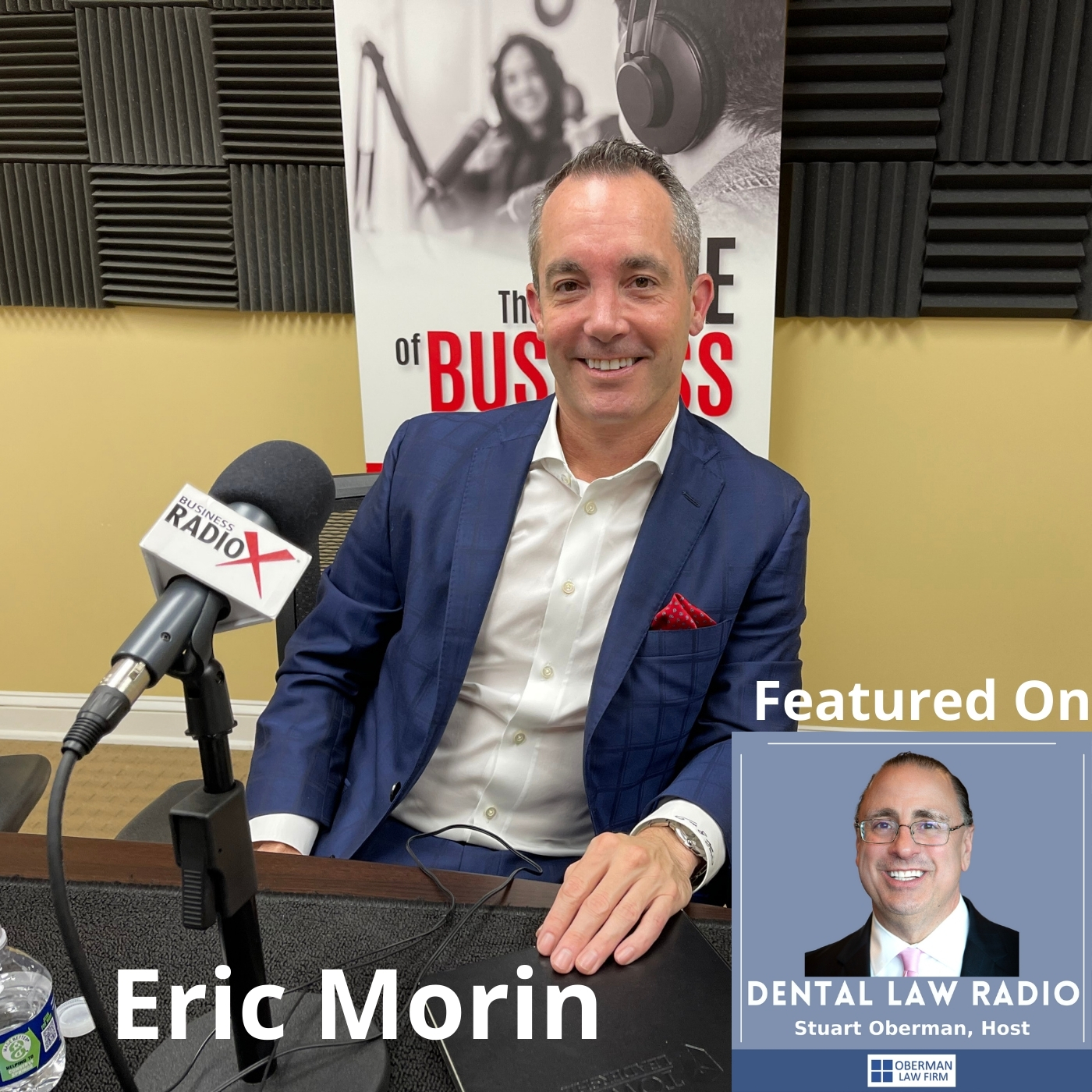
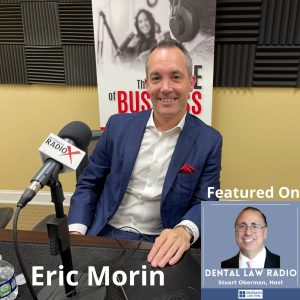
Growing Your Practice Through Effective Leadership, with Eric Morin, Tower Leadership

September 10, 2021 by John Ray

EricMorinDLREpisode19Album
Dental Law Radio
Growing Your Practice Through Effective Leadership, with Eric Morin, Tower Leadership
Loading
00:00 /
RSS Feed
Share
Link
Embed

Download file

EricMorinDLREpisode19Album

Growing Your Practice Through Effective Leadership, with Eric Morin, Tower Leadership (Dental Law Radio, Episode 19)

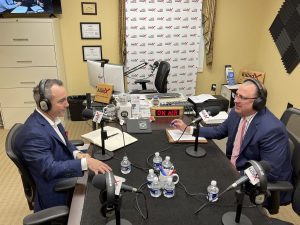
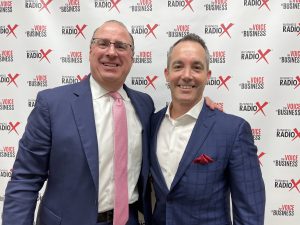
In a few years, Eric Morin argues, few dental practices will have less than $1 million in revenues. In this era of consolidation, what enables a practice to acquire other practices and scale effectively? In this conversation with host Stuart Oberman, Eric argues that the answer gets down to great employees, and he discusses the management and leadership fundamentals needed to attract those people. Dental Law Radio is underwritten and presented by Oberman Law Firm and produced by the North Fulton studio of Business RadioX®.

Eric Morin, Founder and CEO, Tower Leadership

Eric J. Morin, Founder and CEO of Tower Leadership, is an MBA and an experienced successful financial and business consultant, Eric truly is an innovative thought leader and powerful dynamic speaker. His words compel you to grow your business, live optimally, and make a transformative impact on this world.

For over a decade, Eric J. Morin has left a successful track record in the dental consulting industry. Hundreds of Dental Practices are now thriving in wealth, work environment, and community impact.

Eric founded Tower Leadership with the sole purpose of keeping dentistry in the hands of dentists by equipping them with the knowledge and tools they need to run a flourishing practice where everyone on the team benefits.

Connect with Eric on LinkedIn.

DLR-2021-08-2710.52.58 DLR-2021-08-2711.22.04

TRANSCRIPT

Transcript
Intro: [00:00:02] Broadcasting from the Business RadioX Studios in Atlanta, it’s time for Dental Law Radio. Dental Law Radio is brought to you by Oberman Law Firm, a leading dental-centric law firm serving dental clients on a local, regional, and national basis. Now, here’s your host, Stuart Oberman.

Stuart Oberman: [00:00:26] Welcome, everyone, to Dental Law Radio. Usually, I’m given a couple items on a podcast, but today we’ve got an extraordinary special guest in the studio, Eric Morin, Tower Leadership. And the reason why I wanted to talk to Eric – and he and I have done some projects and clients along the way for many years now. And I know Eric has clients all the way from Washington to probably Maine, probably to Florida, and probably some internationals. Who knows? – I wanted to really get Eric’s sort of feedback, if you will, what’s going on in the industry, where things are at. I know he’s got the the pulse of the industry and what’s going on at the practices, whether you have one practice or, I think, we’re working on a project now that we’re probably going to get him to about 30 practices at some point, if we can keep him on track, keep him on track.

Eric Morin: [00:01:23] It’s a big one.

Stuart Oberman: [00:01:23] But I think, really, Eric, you did a great job getting your guys through COVID-19. I know that was a very difficult spot. And I know that you and I did a seminar together that we had to go to a very remote location in a winery because no one else with houses. And you were on the forefront of a lot of areas, and I know that if your doctors listened to you when you were giving advice in March and April, they were well on the way to succeed. But I wanted to get, you know, your conversational sauce.

Stuart Oberman: [00:01:58] We’re going to cover a couple of things today, because you’re right on the front on this. You’re way out in front of this. Everyone’s scaling, scaling, scaling. You know, the questions we have are, how do you keep associates without giving up equity? One other area we want to take a look at is where are we at on the change of the business environment as we sort of revisit COVID, if you will, and all this coming with that. We’re seeing things that are already going into the first quarter of 2022.

Stuart Oberman: [00:02:33] So then, we want to take a look at, you know, leadership. And I’ve heard you talk and I take notes when you talk and implement when you say things. And God forgive me, but you introduced me to the sigmoid curve. I couldn’t even spell sigmoid curve until I actually listened to you talk when we were giving a little seminar.

Stuart Oberman: [00:02:57] But great to be here. Thank you, my friend. You are amazing in what you do. And I will tell you and I’ll tell listeners, every time you speak and every time I hear you, I learn something. Whether it’s one thing or a handful, I learn something. So, I want to talk about, really, what Tower Leadership is doing. Then, I want to get into some very specific industry topics that I know you’re out in front of. But tell us a little about Tower Leadership and what you guys do.

Eric Morin: [00:03:24] Well, first, thank you for having me. I’m glad to be here today. This is a lot of fun. I’ve been looking forward to it. As you said, you and I have worked on a lot of projects together, a lot of conversations. We’ve dealt with a lot of clients. You know, we really experienced a lot of issues together. This is a great time to have this conversation. There are so many changes. And then, all this thing called the Delta variant comes out.

Eric Morin: [00:03:48] So, just when we think that everything is settled and we can get back to business as usual, winter comes again. We don’t know. There’s uncertainty. And I think that’s business as a whole is there’s always uncertainty in the marketplace, and I think preparing for that. And then, what do you do when that happens?

Eric Morin: [00:04:04] And I think that’s one of the conversations you had brought up, which is when COVID happens. I think in the show we’ll talk through that is what were the differences during that time? Because one of the things I’m seeing now is, when we go back and we look at the time period, some people say we won’t count 2020 and some people say 2020 was a great launching point.

Stuart Oberman: [00:04:26] Best year they ever had.

Eric Morin: [00:04:27] That’s right. So, what was the difference? I think it’s really important in this podcast to identify those things. As a company, Tower Leadership, I’ve been in the consulting dental space for approximately 20 years. I’m married to a dentist. And I was consulting for companies outside of dental. And then, she said, “Will you help me start a dental practice?” I always tell people that my best asset was that I didn’t know anything about dental. And so, I just started growing and scaling this dental practice and hiring doctors. And I thought that was normal until someone told me it wasn’t.

Eric Morin: [00:05:01] But then, my career, I ended up getting investment licenses so that I could see also the investments that doctors were making. Tower Leadership came from this idea of, after all my years of experience, you can have great management systems, you can have great training, you can have all these things in place. But if you don’t have great leadership within the business, and leadership encompasses a lot of things, and there’s certainly some great things you need in management and leadership.

Eric Morin: [00:05:31] But the idea of Tower Leadership was, let’s create a business that shows doctors that if you invest, if you grow and you scale, yes, you can have all the financial rewards, but you can also impact a lot of people, too. And as idealist as that sounds, we’ve been able to do that. And it’s a fun pursuit of passion. And we get to see the changes in our clients lives, which is a lot of fun.

Stuart Oberman: [00:05:54] So, one of the big things now is, our doctors are sort of in a quandary where they really don’t want to give up leadership or ownership, but they don’t want to work 80 hours a week. So, the question is, in today’s tight market, tight, tight associate market – and we get this question all the time. And I know you get the question. You had a big conference on this recently – how do you keep associates in today’s world where you’re only as good as your last paycheck and your last patient without giving up equity? That’s probably a 17 day topic in a four year span. But, you know, how do our doctors do that? And what are you seeing on that side? You know, how do you keep these associates without giving up equity? That’s a loaded question.

Eric Morin: [00:06:50] You’re right. I mean, we could sit here and talk about this for a long time. I think it’s very important for people to know that a lot of times that associates feel that that’s being successful. But let’s unwind it a little bit more. The idea of ownership – and a lot of it actually, believe it or not, and all the conversations, I mean, I’ve had conversations with thousands of associates – it’s always that, “I want to be able to have a say in the practice. I want to be able to have leadership.” That’s the hard part to get over, right? Because you could give somebody equity.

Eric Morin: [00:07:19] Let’s just say that you gave up 30 percent or even 40 percent or 50 percent of your practice. But if someone’s whole goal is to be able to have a leadership conversation, to be able to contribute, and they’re not able to do that, of course, then they still won’t be happy. So, I think the first thing it goes down to is, what does the person ultimately want?

Eric Morin: [00:07:38] Because I think the marketplace in the past had said to this person, let’s take an associate, highly educated, highly competitive. Dentists tend to be competitive people by nature. And we say, “Here’s what I want you to do. I want you to come in. I’m going to figure out how to pay you as little as possible. I’m going to give no say on my dental practice.” And I love it if you just stay a really, really long time and no equity. I mean, none of us would go into that conversation to go, “This sounds like a win-win long term.””

Stuart Oberman: [00:08:04] It happens every day.

Eric Morin: [00:08:05] And so, I think that if you look, this is not what happens in other industries, by the way. This is kind of a way, a paradigm, that was in the dental market space for so long. And so, I will tell you that before we even get to a financial model or talk through those types of models, I think it’s more important to say, can this person contribute to the practice? Are they allowed to contribute? Because these are intelligent people.

Eric Morin: [00:08:30] And by the way, if doctors want to pull back, I might want to pull on that part of their skill set and have them be part of the practice as far as the ability to contribute to a leadership team or contribute to the management of the practice. So, it’s really important that we talk about that first in that component because they want to be part. They want to feel like they’re part of something. Don’t we all, though? I mean, don’t we all want to feel like we’re part of something? And I think the way we’ve treated associates in the past is wrong, I’ll say that first.

Eric Morin: [00:09:04] The other part is, what does it mean to get ownership? I think we have to unwind that. What does that actually even mean? Equity. What is equity? Equity, first of all, until you sell it, it’s just something filed with the state. I mean, it doesn’t really mean anything. You can say, “Well, it means distributional equity. So, I get some distributions.” But I think what do those distribute – distributions?

Stuart Oberman: [00:09:30] You’re the financial guy. You’re asking a lawyer?

Eric Morin: [00:09:30] I know, right. I think one of those distributions will be long term. So, I think it’s one of those mean long term. And I think it’s creating an asset. You know, what we have found is, by allowing someone to be part of a leadership team, to have some say in what’s happening in the practice, and then by giving them an asset, showing them that they could have a multimillion dollar asset without having equity, then they say, “Okay. Hold on. Let me get this right. So, I could work four days a week, not deal with H.R., not have to do with marketing, not deal with all the headaches and complexities, and I could have a multimillion dollar asset?” The answer is yes.

Eric Morin: [00:10:16] And so, actually, believe it or not, I’ve had partnership agreements that the partners have unwound the agreement to do a deferred compensation or some type of other program, because they see clearly financially. I’ve had people take that type of an arrangement and put it in front of their lawyers, their accountants, their financial advisers, and they have come back and said, “Wow, this is pretty amazing. And it’s actually better financially.”

Eric Morin: [00:10:44] So, what happens is, when the associates end up in dental school, they tell them the natural progression is you’re going to get out, you’re going to work for a few years. Oftentimes and nowadays, it’s for corporate for years. And then, they’re going to go buy a dental practice. But even that market’s changing, isn’t it? I mean, we’re starting to see the complexities. And I’m shifting a little bit here, but as the marketplace changes, the complexity around owning a dental practice is getting much harder.

Stuart Oberman: [00:11:11] It’s getting harder. Individual, not when you got numbers on DSOs.

Eric Morin: [00:11:15] It is. Even in the last ten years, Stuart, I mean, we got to think about –

Stuart Oberman: [00:11:21] And days.

Eric Morin: [00:11:21] Right. So, we think about this and say, even five years ago. I argue that five years from now, there’ll be very few practices that are operating under a million dollars in revenue. Independent dentists that are thriving outside of, maybe, a small boutique type cosmetic firm. And if you look at the medical space, you’ll see the same thing. I mean, in the medical space, you’ve got dermatologists and you’ve got plastic surgeons. And for the most part, they stayed out of groups. But the vast majority of medicine, you know, MDs are now all part of groups.

Eric Morin: [00:12:00] So, when we look at the marketplace and the way it’s shifting, we say even the people who might have bought a practice, it’s going to cost you a lot more to get into them because – and we’re seeing this and you’re seeing this, too – it might cost you $2 or $3 million now to get into a practice where it would have cost you 400. And then, you’ve got to have the business acumen to be able to compete in that space.

Eric Morin: [00:12:19] So, when we’re retaining associates, what we have to think about first is the environment. Are we providing a world class environment? Are we providing a place where they can thrive? Can their career grow? Can they be excited? All those traditional things in any other industry we will look at. Let’s say you and I started to create another firm, we would want to take care of our C-suite, our top players.

Stuart Oberman: [00:12:44] We don’t sleep as it is.

Eric Morin: [00:12:47] [Inaudible]. What a side note. So, I think that we can keep unwinding this. The truth is that, no matter where you are, this marketplace is changing. And I actually think there’s a lot of it that’s good news. And the marketplace is changing and we can kick and scream, but it is. And I think that the more we adapt to that marketplace, the more we can thrive. I think if you look at large corporations, or private equity, or DSOs, or however you want to call it in this space, they are not handing over equity to these practices. And I think that people have been telling people for a long time that you need to hand over equity.

Eric Morin: [00:13:29] But in the case that you had mentioned from coast to coast, I was working with a doctor recently. And if he had given up half his practice, he would have taken a 50 percent pay cut. But that pay cut literally would have made it so he could not pay his bills, literally. And so, I sat down with the associate. I said, “Do you care about this doctor?” And the associate said, “Yeah. I’m just trying to take care of my family, but I also want him to be taken care of.” I said, “Well, if we do this deal long term, this is going to fall apart.”

Eric Morin: [00:14:03] And so, we would do the math with the associate. And we were able to put a really good agreement in place where the associate had a long term asset. Also, had some leadership say in the practice, was able to thrive. And this was a few years back, actually. And, now, I mean, they are just just doing so well together. So, I love to see that you do not have to just hand over equity. That is a paradigm that is changing. It will continue to change. And I think it’s really important in this marketplace.

Eric Morin: [00:14:37] Maybe you do want to sell back. Maybe you want a partner. I’m not saying you never should. I’m just saying that if that is not your game plan, you should not be forced into that game plan, or strategic direction maybe is a better way to say that. I think you have to think through why you’re doing this, and who it benefits, and what your long term vision is.

Stuart Oberman: [00:14:55] Does this go hand in hand when a doctor says to you, “I want to get out of the chair.” Does that go hand in hand on or is that a before conversation that would get to the associates? Is it, “I want to get out of the chair, how do you figure it out? Then, what do I need to do with an associate?” Is that a first conversation when when a doctor says that to you? How do we get out of the chair?

Eric Morin: [00:15:19] I have to tell you, this is like my happy place. Can we make this show five hours? We got to like [inaudible]. We can do this for a long time.

Stuart Oberman: [00:15:27] How do I get out of the chair? How do I get out of the chair? How many times have you heard that, how do I get out of the chair?

Eric Morin: [00:15:33] So, here’s a thought, so what happens is, is just like any other position. Sometimes we put a square peg in a round hole. Look, we oftentimes will bring in this associate that does not meet the business model. It does not meet the vision. For instance, the person who says this doctor does not want to give up equity long term, wants to build a team, wants to do some type of other business or economic model to provide an asset for the associate. And this associate walks in, stomps their feet and says, “No. I will not do anything but take ownership.” So, the doctor says, “Okay. Fine. I’ll hire many. How many?” They’ll change their mind.

Eric Morin: [00:16:16] That’s your hiring process. There’s a thought process between selection and recruitment. Selection is that you’ve sort so many candidates coming into the position that you can pick the right person and select them. We always want to select people. So, if you have multiple candidates, you get to select. Recruiting is almost that last minute thing where you’re like, we really need a body or we really need an associate right now, so we just put whoever comes into that position, we just say, “We’re going to hire you. We’ve seen this with front desk.”

Stuart Oberman: [00:16:49] Is that more prevalent in today’s market because they can’t find good associates or they’re just filling bodies?

Eric Morin: [00:16:55] See, I would push back against can’t find good associates. It’s interesting, the reason I say that is because the doctors who have built an amazing environment to work in, doctors hang out with doctors. I don’t know how many times someone has said to me, I’ve recruited two or three people from my class to come work for this doctor, because if you create an amazing environment to work where somebody can do well, can take care of their family, and have an asset, it’s going to attract other people.

Stuart Oberman: [00:17:27] Build it and they will come.

Eric Morin: [00:17:28] Yeah. Sometimes I say to people, it’s like the harsh truth. But sometimes when someone says, “I can’t find anyone.” I say, “It’s you.” And that’s kind of a harsh truth. And let me kind of back that up.

Stuart Oberman: [00:17:42] It’s true, though.

Eric Morin: [00:17:43] Sometimes it’s like I have not built the environment to attract people. Someone said to me this one time, Stuart, this person said to me, “You can’t find any good people in Atlanta.” I was like, “Wow. An entire city. I’m sure it’s the entire city.”

Stuart Oberman: [00:18:00] You can’t find one person out of six million.

Eric Morin: [00:18:02] That’s right. So, I pushed back and and said, “Well, let’s talk about the environment.” We’ve always had this idea that dental is different, but it’s not different. The business acumen, the business principles always apply is you’ve got to create an environment. No matter who you are, every study shows, people still don’t come to work for money. We say, “Well, yes, they do.” Somebody can always pay them more. There’s still all these other intangibles that you have to make it a place that’s great to work.

Eric Morin: [00:18:32] Now, obviously, somebody wants to get paid their value. They want to have the ability to increase their income. All those things are true. And I’ll give you an example of what I mean by that. There is a young doctor. She is one of the most amazing doctors that I’ve ever had the pleasure to spend time with. She took a job out of GPR residency. And what she did was she went up to Indiana. She gets up there. She gets a practice who’s going to pay her more money. And it ends up being a really bad environment for her to work in. And we’ve had a business relationship.

Eric Morin: [00:19:10] And she says, “Hey, Eric. I need some help. I’m in this practice. They pay me a lot of money, but I’m so miserable.” And here’s here’s the thing, going back to my earlier point, “They will not let me have any say. They will not let me contribute. They tell me just to shut up and see patients.”

Eric Morin: [00:19:24] And what happened was she quit there, is now working for one of my clients. She is running the entire location. This entire location she runs. She’s learning advanced procedures. And the doctor there, he goes, “She’s a unicorn. I don’t know if I’d ever find another one of her.” And yet this other doctor had her. Now, the other doctor that lost her is probably saying, “It was her. You know, you can’t find good people.”

Stuart Oberman: [00:19:49] Has an attitude. Lack clinical skills.

Eric Morin: [00:19:50] Right. All these things. It was like, “No. It was you.” And so, I do think it’s important that we all look at our business and say, “Do we have the environment to attract top talent?” All businesses have to do that. Can we attract top talent? Would they want to stay here? Do they have a say? And by the way, that’s not just doctors, it’s your entire team. Hygiene is no different, right? We are in a tough, tough market to find hygienists. Hygienists talk to hygienists. If you had a great place to work, other hygienists will say, “You got to come work for here.” So, that’s just something to consider.

Eric Morin: [00:20:26] So, yes, at Tower Leadership, we’re a financial firm in many ways and we do plans around retaining associates. But I would still argue that if you don’t have the foundations of strong business management, then it’s not going to work anyhow.

Stuart Oberman: [00:20:47] That’s why there’s one practice or 20. It’s all the same.

Eric Morin: [00:20:49] That’s right. And I say management leadership, one thing I’ll say on the show that I think it’s important. Sometimes you scroll through LinkedIn and I see some amazing post by Stuart Oberman, so I’m scrolling through.

Stuart Oberman: [00:21:04] I got good people. I got good people. I got much smarter people than me, I could tell you that.

Eric Morin: [00:21:09] Well, they’re doing great. It’s looking good. So, as I’m scrolling through, I always see these posts that pop up. And they’ll say something to the idea of, “Leadership is when you care. Management is just a number.” And it’s silly because it’s not true. Look, all great businesses need leadership and management. Management doesn’t mean that you don’t care? You have to have strong management because you can be a great leader. But if you have bad management, then the company is going to fall apart. You can train people, but if you don’t have a way to have standard operating procedures, you cannot continue to manage the business to grow. So, you do need both.

Eric Morin: [00:21:54] By the way, if you just have management but no leadership, that’s not good either. So, I think it’s important to understand, you have to have strong leadership within a business, the visionaries, the the visionary leader, the people that are driving the show and looking at direction and inspiring people. But I think there’s another side that says, “Do I have strong management?” And by the way, I think associates play a crucial role in both of those.

Stuart Oberman: [00:22:19] So, you know, it’s amazing what’s changed in the last three years, maybe 36 hours, we got scaling, we got corporate coming in, and we’ve got DSOs, we’ve got growth, we got no growth, we got COVID. I would say with COVID, it’s got to be something else. If it’s COVID today, it’s Delta tomorrow, and it’s something else down the road.

Eric Morin: [00:22:42] The Foxtrot variant.

Stuart Oberman: [00:22:44] Yeah. It just keeps going. So, from a practice standpoint, how do our doctors adapt to the change in this new business environment? And it changes, like, everyday it seems like.

Eric Morin: [00:23:02] Three words, access to capital. I’m serious. Let me tell you what I mean by that, you can look at business over business over business outside of dental as well. And you and I talked about this actually during COVID. I said, you got to have access to capital. One of the things that the federal government provided was access to capital. Had that not happened, then what would have happened? Have we not have PPP and EIDL, what would have happened to the dental market space?

Eric Morin: [00:23:32] And so, I think when we look at the future, first of all, one of the ways we insulate ourselves from those types of things is access to capital.

Stuart Oberman: [00:23:40] And what does that mean? Access to capital, what does that mean?

Eric Morin: [00:23:42] It means that either you have credit lines you can pull from. It means that you might be able to have money in the bank. You have access to be able to borrow money.

Stuart Oberman: [00:23:54] Is that what they call good debt?

Eric Morin: [00:23:56] Here’s what I always tell people, there’s two things you cannot get when you need them, credit lines and insurance. Okay? So, those things are really cheap and you could get it really easy when you don’t need them. The second you need them, they’re gone. Also, you’re about to go to bankruptcy and you’re like, “Can we get a lot of credit?” NO. It’s not happening. You get diagnosed with something, you can’t get insurance.

Eric Morin: [00:24:15] So, I think it’s important for us to know that, as businesses, we have to start projecting. We have business winters. One of the things I said before – COVID now – I certainly did not know it was going to be COVID, but I was telling people, “Listen, this is a great economic time.” Take 2021, we would argue that 2021 – I think everybody can see – it’s a great business year. We can talk about all the reasons why, and that’s maybe for another show. But it’s a great economic year for most businesses. So then, are you taking that money and are you making sure that you have capital?

Eric Morin: [00:24:45] Let’s play this Delta variant, or something changes, or the economy changes. We saw the dental marketplace change in 2008, 2009, 2010. People are doing procedures now that they weren’t doing before. They’re getting checks from the government. So, what happens if you had a 20 percent drop in revenue, I’m just saying, play that scenario out. In business, we call that pessimistic modeling. Hey, what if we weren’t to grow at this rate? Well, what if something was to happen? Do we have the ability to pay our bills for some period of time? Do we have the ability to get capital? And maybe that’s capital for expansion. It doesn’t have to be a negative thing. It doesn’t necessarily need to be something that’s going down.

Eric Morin: [00:25:22] But you always have to have access to capital. Businesses go under because they don’t have access to capital, which is the whole saying cash is king. And so, I would argue that businesses have to have that. So, the first primary thing I would say is – by the way, this is like a business school 101 – profitability doesn’t keep the lights on. Cash flow does. Do you have enough cash flow to get through or the ability to get capital to get through a difficult time? I think it’s very important that any business owner assess that at any given time.

Stuart Oberman: [00:25:54] Wow. So, the practices that want to scale, how do they get access to capital?

Eric Morin: [00:26:04] Wow. This is just so exciting. So, we can, first of all, say, right now for a dentist to get leverage – otherwise known as debt – it’s not that hard, right? I mean, as long as your financials are in pretty good order, you can go to a bank and get a loan and buy another practice, as long as the financials make sense. They’ll look at your personal, obviously, financial statement and see if you are a good, qualified buyer. But that’s only to a certain point, right?

Eric Morin: [00:26:35] There’s going to be at some point where the banks go, “We have taken enough of risk here.” And then, we start to get to the point where we go into getting capital that’s outside of a bank, which that could be bringing another partner, it could be mergers and acquisitions, it could be pulling in private equity. And that’s a good thing for you to look at in your long term vision.

Eric Morin: [00:27:00] If you have a dental practice, and let’s just play the scenario that you’re two locations and you say, “I really love to go to 30 million.” You and I were talking about this process of moving drastically. And so, we’ve seen that. But what happens is, is you have to say, what is my plan for getting capital in the future? When the banks cut me off – and they will at some point –

Stuart Oberman: [00:27:22] They will.

Eric Morin: [00:27:23] .. you have to say, “What is my plan -” you can’t wait and then start making phone calls. You have to think now – “at the point at which the banks cut me off?” So, let’s just say it was a certain revenue, or four locations, or whatever that is in your head. And by the way, your banker can help you with that. And you can –

Stuart Oberman: [00:27:41] I’m going to allow you to purchase one practice a year.

Eric Morin: [00:27:44] See. So, that’s something I wasn’t aware of. And so, I think it’s important to get that information. And then, if that’s the case, then, what is my – going back to number one thing – access to capital? What is my next step to get capital? If I can no longer get any more capital, how else will I get it? Do I want to bring in an equity partner?

Eric Morin: [00:28:07] Because there isn’t an old saying and I love this saying. When I heard it, I thought it was brilliant. Some people will say partnerships don’t work. It’s just not true. They just have to be running in the same direction. And so, do I want to own 20 percent of a watermelon or 100 percent of a grape? Depending on what your long term strategy is, it might make sense to earn 20 percent of a watermelon. You know, everyone’s situation is different.

Eric Morin: [00:28:32] But if you’re trying to become a large dental group, I think you have to understand, in business, the number one thing is, what’s my vision? Where am I going? What do I want long term? How does this impact my family? What does this do to my legacy? I think you have to write all those things out first.

Eric Morin: [00:28:48] I’ll tell you a story. Years ago – I want to say about seven years ago – I had a group come to me.

Stuart Oberman: [00:28:55] When we were young.

Eric Morin: [00:28:59] I had a group come to me, they had nine locations, has four partners. And they had flown up to see me and I sat down with them and I asked them that same question. I said, “Where are we going? What are we trying to get accomplished?” And they said, “We want to be a $100 million dental practice. And we heard you were the guy to get us there.” And I looked at them and I just said, “Why? Why do you want to be $100 million? What does that do? Why do you want that?” And their answer was, “I don’t know. It sounded good.” It sounds like a good round number.

Stuart Oberman: [00:29:33] I heard it at a seminar.

Eric Morin: [00:29:33] That’s right. I heard it at a seminar. It’s not like we couldn’t do that. So, I said, “Let’s talk through that more.” And it’s interesting, because I told them, “If I was a bank -” sometimes when I’m speaking to a doctor or any business, I would say, “Let’s play that I’m your investor. Explain to me why I should give you money.” “-if you came to me and said you were trying to grow, but you don’t know why, you just had no reason, and you didn’t have an economic model, I probably won’t give you the money.” So, believe it or not, it took about four hours to finally get to their why.

Stuart Oberman: [00:30:08] I believe it.

Eric Morin: [00:30:08] And then, when we got there, here’s what they said, “We want one location with 24 hours.” I thought, “We should have figured that out eight locations ago.” So, we just wasted time and money and energy.

Stuart Oberman: [00:30:18] Or four hours ago.

Eric Morin: [00:30:19] And interestingly enough, you know, part of the story is one of the partners was actually diagnosed with a heavy disease at the time. And I thought, “Gosh. You guys have spent so much time in the wrong direction. So, I think that the first part is always, where are we going and why?” And one of the reasons why I try to get people at the dental chair is, I think that some people love dentistry. Stay in the chair if you want to. But have the ability to pull back. Have the ability to spend time with your family and do the things you want to, which is one of the reasons why we start a business.

Stuart Oberman: [00:30:54] So, you talk about this a lot and this could probably interject into every scenario you just mentioned, leadership. You guys talk about that a lot. You groom it. You touch base on it. You figure out how to get better at it. How much of a role does leadership play in a successful practice, whether it’s one or 20 practices? And you talked about this a lot during COVID. How leadership, really, will take you through the storm and put you on top of the mountain. So, tell me about leadership and doctors and what you see what they don’t do. I know that’s a whole day’s conversation.

Eric Morin: [00:31:37] No. There’s this old saying, you find out who your friends are during the difficult times. And I think that we also saw what people were made up from a leadership standpoint during the difficult times.

Stuart Oberman: [00:31:54] And we’re not out of there yet.

Eric Morin: [00:31:56] Right. But I think what I was saying during that time is – and we have doctors that send everybody home. And when I say we, I mean the industry. Doctors not even communicate with their team for 45 days. And I said, “These people are scared.” By the way, they’re going to start looking for a job because if you don’t take care of them now – and by the way, that’s what’s happened for a lot of people, because it was a great time for people to reflect and say, “Is this where I want to work long term? Does this person actually care about me?” During that time, people were scared. Everybody was scared.

Eric Morin: [00:32:26] And I said doctors play a huge role in this. It doesn’t matter whether you’re a medical doctor or not. Not just within your own team. But what do you look like in your community? Are you communicating with your community? Are you communicating with your team? Are you talking them through it? I mean, our team started working, you know, 20 hour days just to support teams. We had team members on the phone and started having financial conversations with them. We worked through each doctor. I think we spent so much time working through that time. But so many people in that time were attracted. And that was the worst thing they could have done. I said, you know, “This is a time when they need you.”

Stuart Oberman: [00:32:58] I remember you talking about that.

Eric Morin: [00:32:59] They need you. They need their leader at this point to look at them and say, “We’re going to be okay. We’re going to make it through. I’m going to make sure we’re all taken care of.” And sometimes that didn’t happen. And we see in a lot of practices what the consequences of that, you know, ended up being. As the marketplace, by the way, let’s look at hygienists again, as it becomes more competitive, they’re like, “Do I want to work here long term?” And so, I think leadership, this is one of those ones where we have to get outside of dental marketplace and just look at business. Great business leaders attract great people, and it is difficult.

Eric Morin: [00:33:40] I want to give some knowledge-ment to the fact that, being in a chair all day long, and seeing patients all day long, and trying to lead, and trying to manage is very, very difficult. Which is why you need to lead and build an amazing team. Because you can’t do it all. But building a leadership team and building a team around you, but to get them there – one of the things I was just saying to you before we went on air was one of the reasons we do this large leadership retreat every year. And one of the reasons I do it is when they say, “Well, Eric, I don’t communicate like you communicate. So, would you tell my team what you just said.”

Stuart Oberman: [00:34:13] You send them an email.

Eric Morin: [00:34:16] That’s right. And the other thing is, “But I want to get the team inspired on my why.” When I say my why, I mean your why as a doctor, why are you there? What’s the purpose? What are you trying to get accomplished? How do you impact their lives? I think that you have to get the team to understand why they should care. Because if it’s like, I think, we get to this place where we’re always like, “Well, I’ll just pay them more money. I’ll just pay them more money.” Somebody can always pay them more. So, why should they follow you? We see it all the time.

Eric Morin: [00:34:41] One of the things I’ve done at Tower is, I’ve brought people on and I’ve asked them to come on for like, literally, a 30, 40 percent pay cut from what they were getting paid. And I’ll tell you why. That wasn’t to cut anyone out of money, by the way. It was to say, “Are you willing to commit to the vision that’s here? And if you are, actually, you’re income will increase. But I want you to buy into the vision of what Tower is trying to do.” So, the same thing I would say, is, if people aren’t inspired by you as a leader and they don’t see you as a leader or somebody they want to follow, people will take a pay cut just to be with a great leader, to be with a great organization.

Eric Morin: [00:35:14] You might say, “Well, Eric. I don’t have time to do all that.” “Okay. Then, bring in somebody who can.” If we’re trying to go to 5 locations, 10 locations, 20, you can’t do that without great leadership. You can’t do that without great management. And so, why I think it’s so crucial is, business is littered with stories of great leaders and poor leaders. And we work on leadership, and we inspire, and motivate, and drive people towards a direction. And that sounds idealistic. I know it’s like, “That sounds idealism,” but it’s just true.

Stuart Oberman: [00:35:48] It’s true though.

Eric Morin: [00:35:48] And it’s like, how much time in the last 12 months have you spent on growing your leadership skills and leadership teams, inspiring people? And I think that’s got to be a focus if you’re going to, especially if you’re going to grow and you’re going to compete in this market. Because what I am seeing is a lot of DSOs that are private equity. They’re not focused on leadership. And it gives you a competitive place in this market. I mean, it really does. It allows you to differentiate yourself. I’m not saying DSOs don’t care. That’s not what I said. But I’m saying that, if it’s all about money, you get what you measure. And if they’re focused just on money, well, then I’m telling you, they’re going to take their eye off of leadership. And that’s a place where you can dominate and attract top talent.

Stuart Oberman: [00:36:29] Amazing. Amazing. You know, again, I don’t even know where to start. I think we’ve been just about 45 minutes. I’m trying to think how much I could take back myself and say, “Okay. Here’s my office.” But as usual, it’s amazing conversation. I was looking over and trying to figure out what do we even call this. I mean, we’ve touched on so many things, but we’ll come up with a great name. So, tell me what you got going on. Do you got some events coming up? Where are you going to be at? When you sell out Phillips is what I want to know.

Eric Morin: [00:37:06] Well, we haven’t sold out our September and October foundation.

Stuart Oberman: [00:37:09] [Inaudible] Phillips.

Eric Morin: [00:37:12] We’re blessed to have some amazing doctors. We get to work with some of the best in the industry. And work with some of the best people to team up with, like yourself.

Stuart Oberman: [00:37:21] You know, you do work with the best. I mean, I could tell. We’ll also hear the guys that we work with together are at a different level. You know, the clients [inaudible]. They’re at a different level. They got a whole separate different vision where they’re going. And at times, they’re a little bit hard to corral in. Sometimes I just wanted to get to Marietta, not necessarily Nebraska.

Eric Morin: [00:37:47] I just give you the difficult stuff, Stuart. You know, you and I worked on some really complex stuff together and some great things. And that’s why it’s such an honor to work with you as well, because I know that the clients that have these sophisticated issues, the clients that need help, and need great guidance. I know you take care of them, which is why you and I have worked together on so many of these cases.

Stuart Oberman: [00:38:09] It’s like, “Why is Eric calling me at 8:30? I’m taking that call. There’s got to be a reason.”

Eric Morin: [00:38:13] I think I called you on Sunday once a week. Don’t call Stuart on Sunday.

Stuart Oberman: [00:38:18] It’s not to watch cable TV, I could tell you that. So, tell us what next event is coming up. What is it? Tell us about it?

Eric Morin: [00:38:24] What we do is an introductory – two days initially – as to what we do. And what we do is, we talk about the financial. So, it’s financial and its leadership and its management. Which is, what do I need to do if I want to build an organization that grows and scales? If I want to pull back from the chair, how do I have a business that runs without me? What does this mean financially? How do I make investments? One of the things that’s missing in this industry is people don’t know where to invest the practice. We talk about where to invest, what’s the ROI, where’s the best place to put money, how does that pay off debt. All those two days worth of concept.

Eric Morin: [00:39:00] So, we do those once a quarter. We’ve actually sold out September so we’ve added some more. And we get this leadership retreat we’re doing in November. And it’s a large, large event. We have practices from all over the country. And it’s really about that message, which is, how do we get our teams inspired? If we’re going to build scalable businesses, how do we get our teams inspired, motivated, and ready to tackle head on 2022?

Stuart Oberman: [00:39:28] If anyone got any questions, how do you get hold of you?

Eric Morin: [00:39:31] Towerleadership.com. I think it’s the best place. We’ve got a lot of information. And then, right there who wants to send email, info@towerleadership.com. And our team is ready and waiting. We’ll be more than happy to help you. They are excited to talk to you and excited to help. And, really, you know, we see the spectrum, as you know, and so it doesn’t matter where you are, it doesn’t matter if you’re just beginning this journey and you’re questioning what do I need a buyer or investor do.

Eric Morin: [00:40:00] I mean, a doctor years ago had said to me, they gave me their pro forma going into a practice. And I said, “Who gave this to you? It’s wrong. Trust me. We’re going to move all this around.” He had seven options, these seven options are going to be gone in 12 months. He said, “No way.” They were.

Eric Morin: [00:40:17] Even on the frontend or the person who’s trying to go, “We’re working with a lot of organizations that are going to 3, 4, 5, 10, 20, 30 locations.” So, no matter where someone’s at, no matter what the complexity is, we can coach you through how, where, and why.

Stuart Oberman: [00:40:36] Get there. Fantastic. Fantastic. Fantastic. I can’t even begin to write down any information. I’m going to have to listen to this myself and figure out where I’m at.

Eric Morin: [00:40:45] I appreciate the honor to be your guest, sir. This has been a great time. I literally think we could go for 18 hours nonstop. And this has been such a pleasure to be here. I really do. It means a lot. I’m glad to be part of it.

Stuart Oberman: [00:40:58] My pleasure. My pleasure. Thank you. I sure appreciate it. Eric Morin, Tower Leadership. It’s always a pleasure.

Eric Morin: [00:41:03] Thank you, sir.

Stuart Oberman: [00:41:05] For those that want to reach out Dental Law Radio, my name is Stuart Oberman. Reach us at stuart@obermanlaw.com. Thank you for listening. Please listen to this podcast multiple times because you will pick up multiple bits of information every time you do. Have a great day and we’ll talk to you soon.

About Dental Law Radio

Hosted by Stuart Oberman, a nationally recognized authority in dental law, Dental Law Radio covers legal, business, and other operating issues and topics of vital concern to dentists and dental practice owners. The show is produced by the North Fulton studio of Business RadioX® and can be found on all the major podcast apps. The complete show archive is here.

Stuart Oberman, Oberman Law Firm

Oberman Law Firm
Stuart Oberman, host of “Dental Law Radio”

Stuart Oberman is the founder and President of Oberman Law Firm. Mr. Oberman graduated from Urbana University and received his law degree from John Marshall Law School. Mr. Oberman has been practicing law for over 25 years, and before going into private practice, Mr. Oberman was in-house counsel for a Fortune 500 Company. Mr. Oberman is widely regarded as the go-to attorney in the area of Dental Law, which includes DSO formation, corporate business structures, mergers and acquisitions, regulatory compliance, advertising regulations, HIPAA, Compliance, and employment law regulations that affect dental practices.

In addition, Mr. Oberman’s expertise in the health care industry includes advising clients in the complex regulatory landscape as it relates to telehealth and telemedicine, including compliance of corporate structures, third-party reimbursement, contract negotiations, technology, health care fraud and abuse law (Anti-Kickback Statute and the State Law), professional liability risk management, federal and state regulations.

As the long-term care industry evolves, Mr. Oberman has the knowledge and experience to guide clients in the long-term care sector with respect to corporate and regulatory matters, assisted living facilities, continuing care retirement communities (CCRCs). In addition, Mr. Oberman’s practice also focuses on health care facility acquisitions and other changes of ownership, as well as related licensure and Medicare/Medicaid certification matters, CCRC registrations, long-term care/skilled nursing facility management, operating agreements, assisted living licensure matters, and health care joint ventures.

In addition to his expertise in the health care industry, Mr. Oberman has a nationwide practice that focuses on all facets of contractual disputes, including corporate governance, fiduciary duty, trade secrets, unfair competition, covenants not to compete, trademark and copyright infringement, fraud, and deceptive trade practices, and other business-related matters. Mr. Oberman also represents clients throughout the United States in a wide range of practice areas, including mergers & acquisitions, partnership agreements, commercial real estate, entity formation, employment law, commercial leasing, intellectual property, and HIPAA/OSHA compliance.

Mr. Oberman is a national lecturer and has published articles in the U.S. and Canada.

LinkedIn

Oberman Law Firm

Oberman Law Firm has a long history of civic service, noted national, regional, and local clients, and stands among the Southeast’s eminent and fast-growing full-service law firms. Oberman Law Firm’s areas of practice include Business Planning, Commercial & Technology Transactions, Corporate, Employment & Labor, Estate Planning, Health Care, Intellectual Property, Litigation, Privacy & Data Security, and Real Estate.

By meeting their client’s goals and becoming a trusted partner and advocate for our clients, their attorneys are recognized as legal go-getters who provide value-added service. Their attorneys understand that in a rapidly changing legal market, clients have new expectations, constantly evolving choices, and operate in an environment of heightened reputational and commercial risk.

Oberman Law Firm’s strength is its ability to solve complex legal problems by collaborating across borders and practice areas.

Connect with Oberman Law Firm:

Company website | LinkedIn | Twitter

Tagged With: dental law, Dental Practice, dental practice acquisitions, DSO, Eric Morin, Leadership, Oberman Law Firm, scaling the business, Stuart Oberman, Tower Leadership

Doing Good in Arizona E22

July 21, 2021 by angishields

Doing-Good-in-Arizona-E22
Phoenix Business Radio
Doing Good in Arizona E22
Loading
00:00 /
RSS Feed
Share
Link
Embed

Download file

Doing-Good-in-Arizona-E22-top

Doing Good in Arizona E22

Culture, business as a force for good, giving back, higher purpose, and small business were all topics of discussion on this episode of Collaborative Connections Radio Show and Podcast.

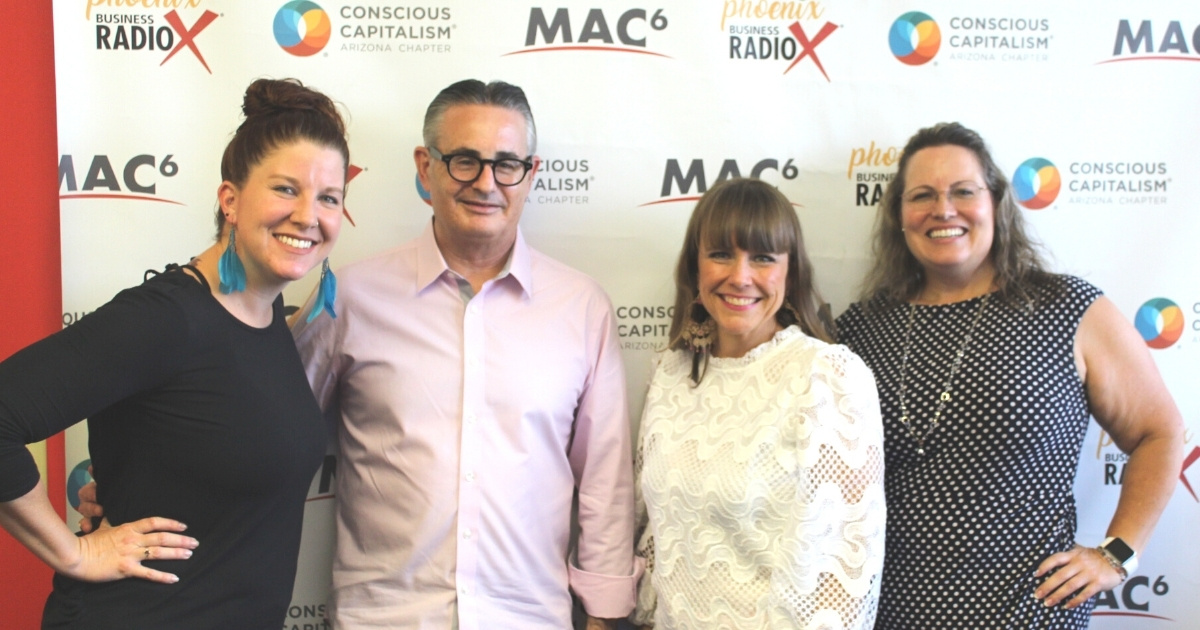
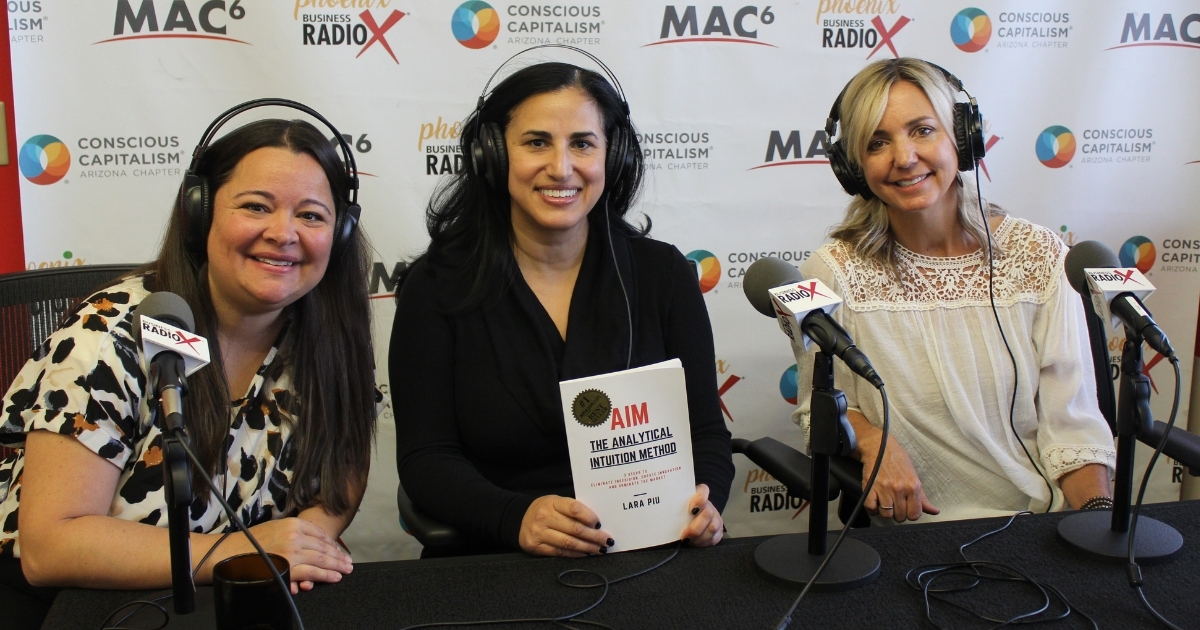
Host, Kelly Lorenzen, was joined on-air by Arizona business leaders, Bob Blum, founder of Alcyon Consulting, Kindra Maples with Conscious Capitalism Arizona, and Sara Kelley with Bell Insurance.

Are you a business owner or leader in Arizona? Need more resources to grow your business? Want to know more about how to use business as a force for good? Then check out this great conversation between Kelly and her featured guests.

Thank you, KLM Consulting, Marketing and Management for sponsoring this show.

Alcyon Consulting can help you in two ways…Financial & Business Operations Management and Business Consulting & Advisory Services. With Alcyon’s financial and business operations support, you can shift the burden of managing and overseeing those necessary, but non revenue generating activities, to a professional who has the passion, experience, and training to assess, manage and improve your company’s business infrastructure thus freeing you to focus on generating revenue and building the business. alcyonlogofinal002

If you are looking for a fresh set of eyes to review and analyze any or all aspects of your business…from financial statements to fraud prevention, then Alcyon’s Business Consulting & Advisory Services could be the answer.

As an Accredited Small Business Consultant (ASBC), Bob and Alcyon utilize a proprietary approach to review and analyze your business, and along with its broad business partner network, Alcyon will not be able to not only make solid recommendations for improvements, but will be able to identify, vet and implement the right solution.

Bob-BlumBob Blum leverages over 35 years of extensive and varied experience, in both staff and leadership roles, helping companies build and maintain stable business operations by focusing on maximizing both financial and human assets.

These roles include Principal and Chief Financial Officer for Peerless Candy & Tobacco Company, Senior Human Resource Consultant for Peoples Energy Corporation, Controller for Ben Brooks & Associates, Controller for Incentive Logic, and most recently CFO for MAC6.

Bob is a Certified Public Accountant (CPA), an Accredited Small Business Consultant (ASBC), a Lean Six Sigma Green Belt and has a Bachelor’s in Business Administration from Ohio University. In addition, Bob earned a Master’s in Human Resources, with a specialization in Organization Development, from Loyola University in Chicago.

Connect with Bob on LinkedIn.

Free enterprise capitalism has served to lift more people out of poverty than any other socio-economic system ever conceived – empowering social cooperation, human progress, and elevating humanity.

Good business is the answer to many of the global issues that humankind is facing.

For too long, capitalism in the media has been associated with lying, cheating, manipulating, gaming the system, and taking advantage of society.

But for every horror story being told about the selfishness of corporate America and Wall Street, there are thousands of stories of businesses supporting their communities, investing in their employees, and making the world a better place.

We are working to change the capitalism narrative by shining a bright light on good business – telling the stories of conscious Arizona companies (and encouraging others to follow in their footsteps).

Kindra-MaplesThere is a lot in her background that has led Kindra Maples to where she is today.

Her past experiences, interactions, careers, and partnerships have led her to growing the roles she holds in the community; the VP of Volunteers with Conscious Capitalism Arizona, Sales Development with YellowBird, and the host of the Culture Crush Business Podcast.

She is spartan racer, past animal trainer, previous magician’s assistant, and has a weakness for Oreo cookie shakes. Her journey working with people actually started working with animals as a teenager (don’t worry we won’t go that far back for her bio).

She worked for over 15 years in the zoo industry working with animals and the public. Her passion of working with animals shifted into working with people in education, operations and leadership roles. From there her passion of leadership and helping people develop has continued to grow.

Her experience in non-profit operations, communications, and program engagement has brought her to the place she is today. Her experiences have built her passion and her “why” in areas of culture building, engagement, and growing strong teams.

Connect with Kindra on LinkedIn and follow Conscious Capitalism Arizona on Facebook, Twitter and Instagram.

Bell Insurance is one of the largest independently owned, full-service agencies. They’ve worked in insurance for more than 100 years, giving them unparalleled experience and expertise on policies designed to serve you, your family and your business in the best way possible. BellInsuranceLogo

in 1911 as Warner and Company Insurance in Fargo, N.D., they became Bell Insurance in 2019 when they joined forces with Bell Bank, one of the largest independently owned banks in the nation.

Bell is known for exceptional service and high integrity, where people matter, which shows in how their team members treat each other, their customers and those around them.

They understand one of your biggest challenges is managing around the things you can’t control. They can help you by building an insurance plan based on what you need to address the unique risks your operation faces.

By getting to know you and your business and working with you to figure out an insurance policy that gives you the right coverage at the best rate, they’ll help you protect what you’ve worked so hard to build.

Whether you need small business insurance or coverage for a large, niche operation, they’ll help you protect what matters with commercial insurance coverage options in your best interest, competitive pricing, stress-free claims, and the high-quality service you can expect from Bell.

Sara-KelleySara Kelley has over 20 years of experience serving clients in a risk management capacity. She started her insurance career in Chicago, IL with the world’s largest insurance brokerage firm and moved with them to the Phoenix market. Since being in Arizona, Mrs. Kelley has developed her expertise to serve the businesses that thrive in the Valley of the Sun.

Sara specializes in property and casualty insurance and risk management for a variety of industries including Healthcare, Social Services, and Non Profits, as well as Indian Nations, contractors, manufacturers, and many other businesses. Sara provides clients with insurance solutions for various insurable risks.

For Insureds, Sara Kelley delivers risk and policy coverage reviews that focus on your firm’s expense reduction, cash-flow improvement, balance sheet protection, and decision-making insight.

Connect with Sara on LinkedIn.

About Collaborative Connections

Kelly Lorenzen started the “Collaborative Connections” show to bring her clients and favorite charities together to meet each other, connect and collaborate in life and business.  She hopes to build a stronger community one show at a time. KLM Consulting

About Our Sponsor

KLM Consulting is a business concierge and project management firm. They help small business owners and non-profits build, brand and brag about their businesses.

About Your Host

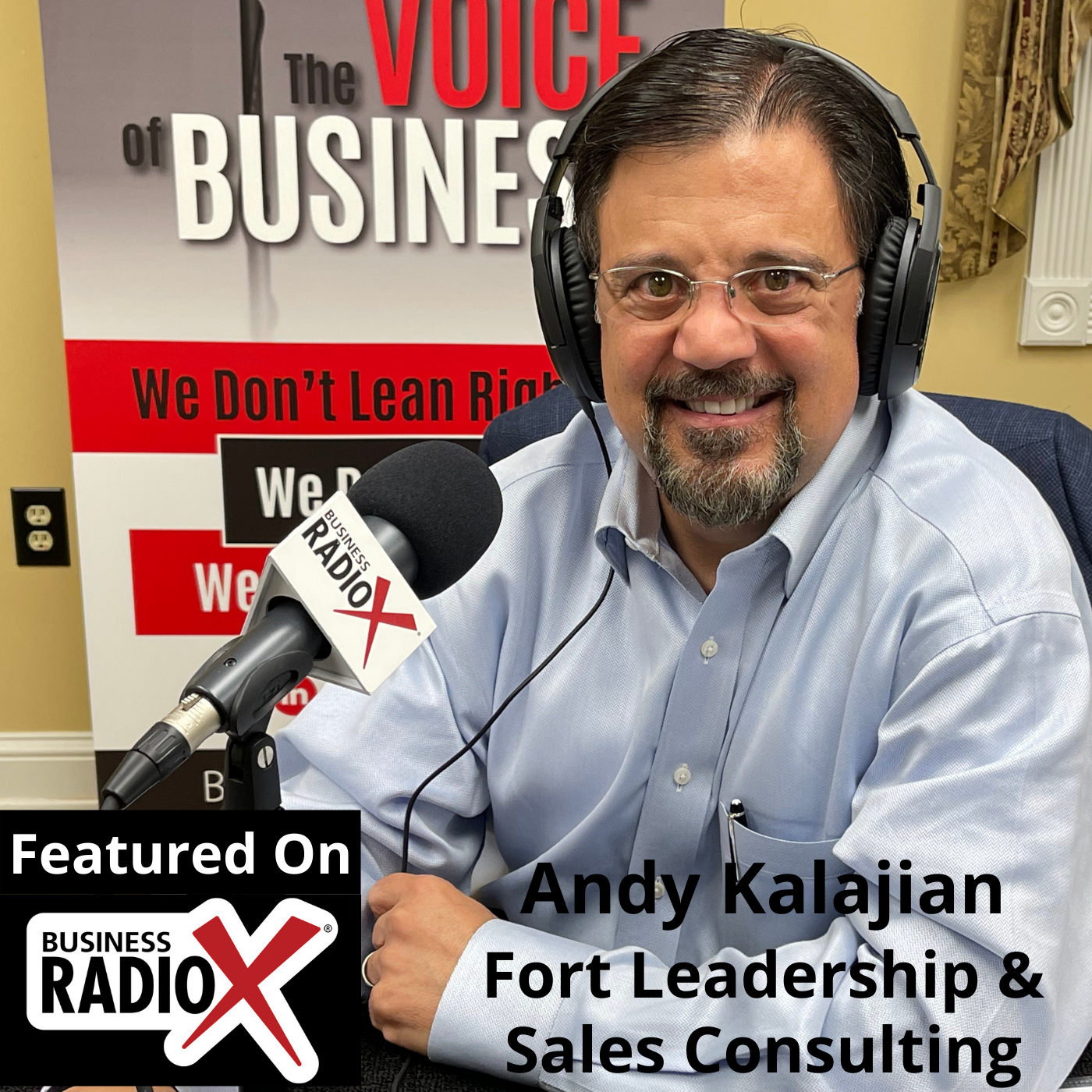
Kelly-Lorenzen-on-Phoenix-Business-RadioXKelly Lorenzen, CEO of KLM Consulting, is an award-winning entrepreneur with over 15 years of business-ownership experience. She is also a certified project management professional.

Kelly’s expertise is in business development, customer service, marketing, and sales.

Connect with Kelly on LinkedIn, and follow KLM Consulting on Facebook.

Tagged With: casualty, commercial insurance, Conscious Capitalism, Leadership, Property, Risk Management

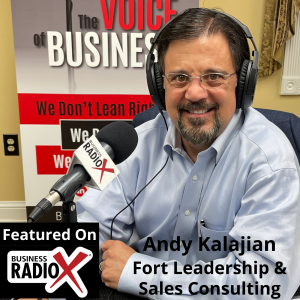
Andy Kalajian, Fort Leadership & Sales Consulting

June 21, 2021 by John Ray

Fort Leadership
North Fulton Business Radio
Andy Kalajian, Fort Leadership & Sales Consulting
Loading
00:00 /
RSS Feed
Share
Link
Embed

Download file

Fort Leadership

Andy Kalajian, Fort Leadership & Sales Consulting (North Fulton Business Radio, Episode 365)

Andy Kalajian of Fort Leadership & Sales Consulting joined host John Ray to discuss his leadership and sales consulting practice, the one common character trait of all effective leaders, the biggest challenges leaders face today, and much more.  North Fulton Business Radio is broadcast from the North Fulton studio of Business RadioX® inside Renasant Bank in Alpharetta.

Fort Leadership & Sales Consulting, LLC

Through Fort Leadership & Sales Consulting, Andy Kalajian offers Mastermind Teaching, Speaking and Executive, Individual and Team Coaching.

There is a synergy of energy, commitment, and excitement that participants bring to a mastermind group. Andy’s facilitated John C. Maxwell book study groups offer a combination of masterminding, peer brainstorming, education, accountability, and support in a group setting to sharpen business and personal skills. By bringing fresh ideas and a different perspective, Andy’s masterminds help participants achieve increased success.

As a Certified John Maxwell Coach, Trainer and Speaker, Andy offers customized presentations to fit individual or team needs and budget such as:

  • 10-minute briefing
  • “Lunch and Learn”
  • Keynote speech for your company sponsored event
  • Half-day and full-day workshop/seminar
  • In-house corporate training
  • Executive and personal retreat
  • Partnership Summit

In individual, executive or team coaching, Andy can see what clients are going through now and what is up ahead. Coaching is foreseeing, paving the way, coming alongside a client while helping them achieve goals and overcome limiting paradigms.

Company website

Andy Kalajian, Founder and President, Fort Leadership & Sales Consulting, LLC

Fort Leadership
Andy Kalajian, Fort Leadership

Andy Kalajian has been a highly sought-after public speaker for more than 25 years. He has received public acclaim for his brand, EnTheos, Latin for Spirit Within and origin to the word Enthusiasm. Andy enthusiastically delivers powerful talks and lessons steeped in the wisdom literature and their practical application into busy lifestyles. His tagline, transformational thought in action, serves as a reminder to the participant that one can, indeed, permanently change the destiny of their life by changing the nature of their thoughts and actions.

Andy was born and raised in Detroit Michigan. As a young boy he discovered his passion for serving others in medicine and his gift for public speaking. At the age of 12, Andy, at the urging of his father, began to earn his own way as a Golf Caddy. His sense of adventure also led him, along with his father, to the Boy Scouts of America where he achieved the rank of Eagle Scout. In High School, Andy’s mother introduced him to the books Think and Grow Rich by Napoleon Hill and How to Win Friends and Influence People by Dale Carnegie.

While a golf caddy, Andy was awarded the prestigious Evans Scholarship, a full academic and leadership scholarship, to study at Michigan State University, where he earned a Bachelor of Science degree in Medical Technology. In 1985, he coupled his lifelong passion for medicine and serving people with his gift of enthusiastic speaking and moved to Atlanta to begin his career in Medical Sales. As a young professional, Andy’s mom continued to fuel his desire for wisdom literature from authors/speakers Zig Ziglar, Earl Nightingale, Les Brown, Stephen Covey, and John Maxwell. Andy applied the character traits instilled in him from the Boy Scouts and the leadership skills taught to him by John Maxwell, Stephen Covey, and others to enjoy over 30 years in an award-winning medical sales career.  It was during this time that Andy was asked to speak to groups as small as 4 or 5 and as large as 500+ all over the US and Puerto Rico.

Andy and his wife, Sherrie, have four adult children and are active members of Pastor Andy Stanley’s congregation at North Point Community Church in Alpharetta, Georgia. Andy enjoys time invested with his wife Sherrie, his family, and friends.

LinkedIn

Questions and Topics in This Interview

  • What is Fort Leadership and Sales Consulting?
  • Your tagline is Transformational Thought in Action. What does that mean?
  • What distinguishes you from many of the other business curriculums out there in the marketplace?
  • What makes a good leader?
  • Character development is an “Inside Out” process.
  • How does character development manifest itself in a business or professional environment?

North Fulton Business Radio is hosted by John Ray, and broadcast and produced from the North Fulton studio of Business RadioX® inside Renasant Bank in Alpharetta. You can find the full archive of shows by following this link. The show is available on all the major podcast apps, including Apple Podcasts, Spotify, Google, Amazon, iHeart Radio, Stitcher, TuneIn, and others.

Renasant Bank has humble roots, starting in 1904 as a $100,000 bank in a Lee County, Mississippi, bakery. Since then, Renasant has grown to become one of the Southeast’s strongest financial institutions with over $13 billion in assets and more than 190 banking, lending, wealth management and financial services offices in Mississippi, Alabama, Tennessee, Georgia and Florida. All of Renasant’s success stems from each of their banker’s commitment to investing in their communities as a way of better understanding the people they serve. At Renasant Bank, they understand you because they work and live alongside you every day.

Tagged With: Andy Kalajian, executive coaching, Fort Leadership, keynote speaker, Leadership, leadership coaching, Sales, sales consulting

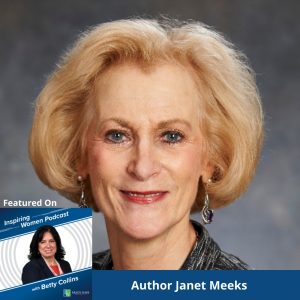
How To Lead In Uncertain Times – An Interview with Author Janet Meeks (Inspiring Women, Episode 33)

June 15, 2021 by John Ray

Janet-Meeks-Inspiring-Women-Album
Inspiring Women PodCast with Betty Collins

How To Lead In Uncertain Times - An Interview with Author Janet Meeks (Inspiring Women, Episode 33)
Loading
00:00 /
RSS Feed
Share
Link
Embed

Download file

Janet-Meeks-Inspiring-Women-Album

How To Lead In Uncertain Times – An Interview with Author Janet Meeks (Inspiring Women, Episode 33)

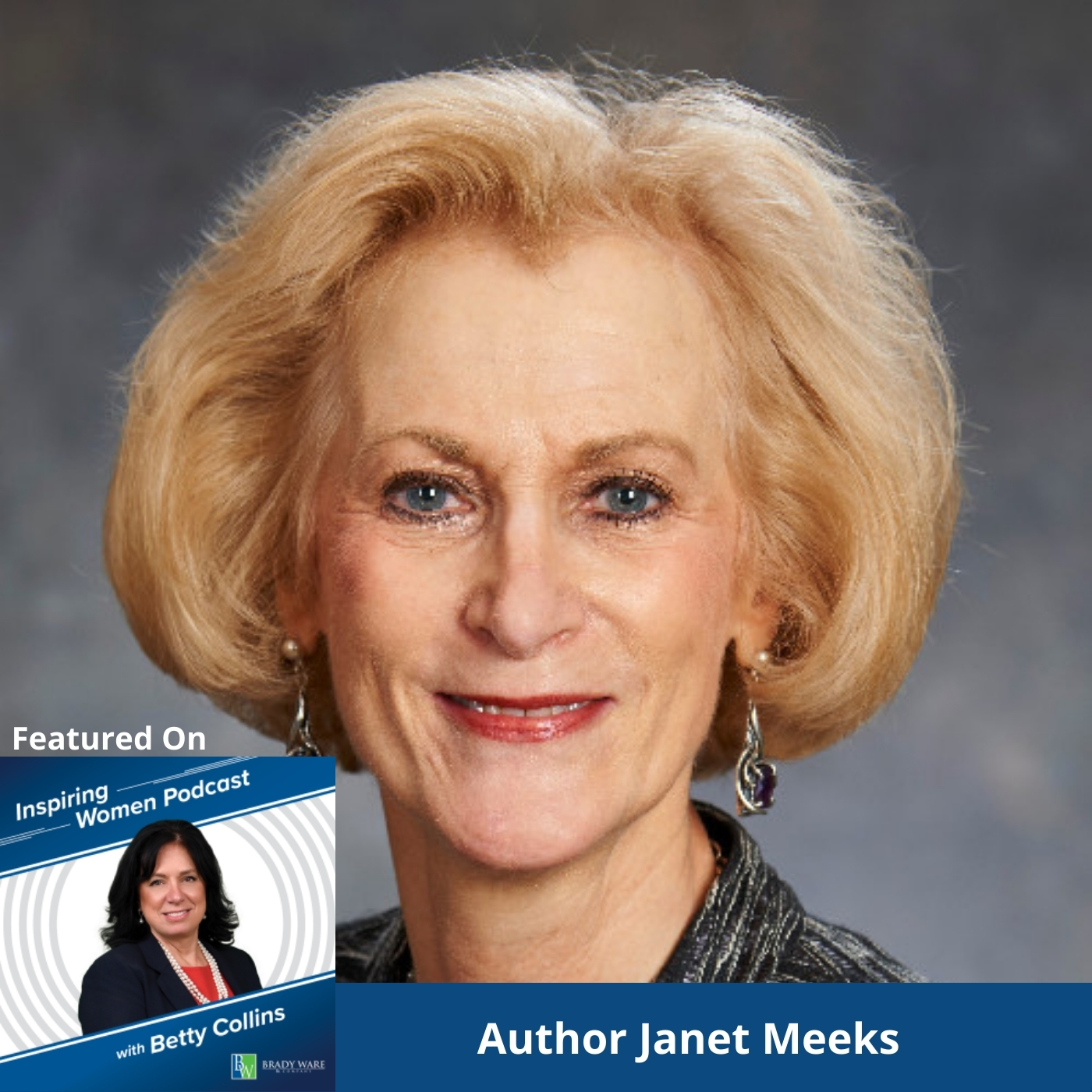
Janet Meeks joins host Betty Collins to discuss what she means by gracious leadership, and how gracious leaders foster an environment of respect and engagement. In turn, their team members are motivated and productive because they see themselves doing meaningful work. “Inspiring Women” is presented by Brady Ware & Company.

Betty’s Show Notes

I speak with Janet Meeks. Janet is the author of Gracious Leadership, Lead Like You’ve Never Led Before. You will love getting the perspective from her because she has lived it, she’s experienced it, and her amazing journey as a leader.

She’s going to talk from her book, which is such a simple read. Yet there are some very important basics in there. What should we expect from our leaders? There’s an expectation we should have.

As Janet mentions…

I also believe that leaders need to be secure enough to understand they don’t have all the answers and that leaders who try to hoard getting the results accomplished are really holding back the organization they need to trust their employees who are subject matter experts and free them, let them lie in the war, if you will, and be all they were created today so they can play at the top of their game. And then that leaves time and room for the person with the big title to be able to take on those difficult tasks that perhaps someone and other levels of the organization cannot.

Coming up on July 30th is the 7th annual Brady Ware Women’s Leadership Conference.  Each year, 100% of the proceeds go to support women initiatives through non profit organizations within Ohio. This year our supporting non profits are the Better Business Bureau and the Women’s Small Business Accelerator

Many months ago when we began planning for this year’s conference, we felt it best to err on the side of safety, so this year’s conference will be held virtually. While this may not be the most ideal situation, it does allow for us to offer participants speakers that are nationally recognized as well as locally recognized women leaders.
We’re excited to be able to present keynote speaker, Peggy Klaus, author of ‘Brag! How to toot your own horn without blowing it’. We’ll start the morning with a lively discussion with a panel of women business owners and leaders.
And to add to the excitement of the day, you’ll be able to network, visit exhibitor tables and win wonderful prizes throughout the day!
I would like to personally invite you to join us on July 30th.  Early bird registration ends on June 15th, so I encourage you to sign up now!  Just go to Columbus Women’s Leadership and complete a simple form. We’ll do all the rest!
Don’t miss this opportunity to expand your knowledge! Register now!  ColumbusWomen’s Leadership. Hope to see you there!

This is THE podcast that advances women toward economic, social and political achievement. Hosted by Betty Collins, CPA, and Director at Brady Ware and Company. Betty also serves as the Committee Chair for Empowering Women, and Director of the Brady Ware Women Initiative. Each episode is presented by Brady Ware and Company, committed to empowering women to go their distance in the workplace and at home.

For more information, go to the Resources page at Brady Ware and Company.

Remember to follow this podcast on Apple Podcasts and Google Podcasts.  And forward our podcast along to other Inspiring Women in your life.

TRANSCRIPT

[00:00:00] Betty Collins

So, today, we’re going to talk about how to lead in uncertain times. If anybody believes that today, 2020 and 2021 are uncertain times, then you’re just- you’re totally not in the- living in the surroundings, or seeing how things are going, that’s for sure. And so- but even before 2020, and even after 2021, we need people to be able to lead, whether it’s in our communities, in our country, in our companies, in our homes. And the good times are just as important as the uncertain times.

[00:00:37] Betty Collins
So, the guest today is going to talk with us. She just has such insight on this because she’s lived it, so. But leadership today has a huge vacuum and it’s really lacking, certainly in our country, businesses, corporate America, communities and homes. And whether, again, you’re in good or easy times or hard or tough, it’s just not optional. In fact, I’m a believer that in the good times is when we don’t lead well enough because we just don’t- we’re not on our game maybe as much, because it is good times. So, you don’t have to worry. This is not going to be a podcast on COVID or politics or negative.

[00:01:19] Betty Collins
The good news is that we’re going to talk about how to just navigate through it, and what are some things that can help us? So, we’re going to have a discussion and dialogue with someone who knows and lead, and has been through different things, whether it’s been corporate America or in her community. So, today, we’re going to hear from a gracious leader, Janet Meeks, and you will leave inspired with insight on how to lead, for sure. I was really fortunate to meet this amazing woman when she had her book come out a few years ago.

[00:01:53] Betty Collins
And she’s been on my podcast as well in the past, because her book was so good, I thought it was great for people to hear. And of course, I’ve read it, my company- the women in my company have read it. I would encourage you; you can listen to it as well as read it and go back to that podcast. It was a really good one. But it’s Gracious Leadership; Lead Like You’ve Never Led Before. And you can find her resume and bio attached to this website.

[00:02:20] Betty Collins
I don’t want to take the time to read a lot because it’s a huge, because she just has a really, really- has had an amazing journey, for certain. And her credentials and experience, they’re just the real deal. So, welcome, Janet, to my podcast. My audience is really fortunate to have you today. And so, let’s just get started. So, welcome, and why don’t you just tell the audience a little bit who you are, get that quick overview of your career. Nothing’s quick, but I think it’s important for my listeners just to get a feel for who you are.

[00:02:55] Janet Meeks
Well, thank you so much, Betty. It is such a joy to be with you today. And I appreciate the opportunity to share with you and with those who listen to your podcast. Let me think about my career for a second, and I guess I would have to take you back to the 1960s and early 70s. I grew up in a town of 3,000 people and I played basketball. And in these small communities, basketball was certainly, a focal point for everything we did. And little did I know at the time that I was learning so much about leadership from playing that sport.

[00:03:29] Janet Meeks
As a matter of fact, I wanted to be a coach and my father, in his infinite wisdom, encouraged me, instead of becoming a coach, that I should pursue a degree in finance. And if my father told me to jump off the bridge, believe you, me, I would have said, “Which side shall I go?”

[00:03:47] Betty Collins
Do you go?

And so- yeah, exactly. So, I got a BBA and an MBA in finance. Then I started out in the banking industry and was there for about five years and absolutely loved banking. But it was a life-changing event that caused me to take a detour in my career progression. I won’t go into the details of it; I think we probably talked about that in the earlier podcast when I was your guest. But I had a baby and that baby was born and died on the same day. And it was just the most unnerving, distressing crisis moment; the deepest valley of my life.

[00:04:28] Janet Meeks
And when I was in the hospital following the death of the baby, recovering from the delivery, the employees there, who did not know me from the next patient, really surrounded me with love and care and concern. And something about that experience led me to believe that I needed to depart banking and to enter the field of health care. And only four months after the death of my baby, I was offered an opportunity to join the senior leadership team of the largest medical center in the nation, outside a metropolitan area, and to report directly to the CEO, and I was only 27 years old.

[00:05:08] Betty Collins
That’s fantastic.

[00:05:10] Janet Meeks
So, over the course, it was amazing. And I think if I realized how daunting a task that was at the time, it probably would have scared me to death. But my naivete helped me in that case, and I just dove right in. So, I have had the pleasure of working for four major healthcare systems over about 40 years and traditionally, was responsible for marketing, strategy, planning, business development and so forth. And I loved leading those disciplines.

[00:05:38] Janet Meeks
But I’ve also been told along the way that I should strive to lead a hospital, primarily because I have always enjoyed working with doctors and also, because I’ve always had a keen sense of appreciation for the value brought forth by every employee, regardless of their role. So, in 2004, I was recruited to Columbus, Ohio, to join the Mount Carmel Health System and to be their senior VP of corporate development.

[00:06:06] Janet Meeks
And I, at the time, decided to take a risk. I told the CEO that if I accepted the opportunity of senior VP of corporate development, I would do my best to help to refine and build upon that division. But I also wanted him to promise me that one of these days, as opportunities might present, that I could actually lead one of the Mount Carmel hospitals, and he said yes. And so, about 18 months after I arrived in Columbus, I was given the opportunity to lead St. Anne’s, and that was 2006.

[00:06:41] Janet Meeks
So, there were 700 doctors, about 2,000 employees and 300 volunteers. And the irony is that there were 3,000 people on my campus that I was responsible for leading. There were 3,00- people who had lived in my home town. And at the end of the day, what I actually got to do, as the leader of that hospital, was to be a coach, to make sure we had a solid game plan, to ensure that the discipline was practiced so that we could execute our game plan and and have happy patients, happy employees and engaged physicians.

[00:07:22] Janet Meeks
It was my responsibility to be the cheerleader for the team and to offer praise for great performances, but also, to give the constructive feedback when the performance could be better. So, that’s a quick overview of my career from banking to health care. But at the end of the day, I believe a lot of what we do as leaders is to coach.

[00:07:42] Betty Collins
Well, you’re definitely respected. Everyone that knows you or talks about you talks well and you’re definitely- have walked your talk when it comes to leadership and the principles that you believe.

[00:07:58] Janet Meeks
And thank you. Thank you.

[00:07:58] Betty Collins
So, when I met you, you had authored a book, Gracious Leadership; Lead Like You’ve Never Led Before. Just a great book. Why did you write the book, and then give me an update on how it’s gone.

[00:08:14] Janet Meeks
Well, thank you so much. It seems like yesterday I was sitting at the island in my kitchen, writing the transcript for that book, but three years have passed by pretty quickly. Betty, I announced in January of 2015 that I was going to be retiring later that summer. And that was a big decision for me. And so, I found myself over the course of the month between the announcement and the actual retirement, truly becoming contemplative about different lessons of leadership I had learned along the way.

[00:08:47] Janet Meeks
And so, I would jot down my thoughts on a piece of paper and put those notes into a file, and they just stayed there in my desk. And then in early 2016, I was approached by two different leadership institutes, and both of them asked me if I would make a presentation on a leadership topic of my choice. And so, the first thing I did was pull out that file with those notes within it, just to review my thoughts on leadership. And when I laid out those notes across my desk, and I looked at and contemplated, pondered those values, really, the words that rose to the top of my mind were gracious leadership.

And so, I made these two presentations and totally independent, one or the other, the feedback I was given was, “Janet, when are you going to write the book?” And so, I started thinking about it. And lo and behold, in 2016, in the late- in that year and then in 2017, it was almost like Pandora’s box just burst wide open with this proliferation of examples of toxic leadership. And I’m talking about leaders in the political thing, I’m talking about leaders in organizations of all types. This is when the Me Too movement really started building some steam and we started learning about workplace hostility and bullying in the workplace.

[00:10:16] Janet Meeks
And what I saw every day, everywhere I turned, was that we were given so many examples of bad leaders that I thought, “Well, wait, where are the examples of the good leaders?” And so, I decided that I had to own the responsibility to produce some playbook, if you will, so that aspiring leaders could know, and very easy-to-implement simple steps, some actions that they could take, in order to lead in a better way, in a respectful way. And that’s why I wrote the book. And so, you’re right, it was released in the early ’18. And I’m so humbled, and also excited to tell you that Gracious Leadership has now made it into all 50 states and Canada.

[00:11:08] Janet Meeks
And it’s been so gratifying for me to meet people all over our country and beyond, who are just starving to learn more about how to be a respectful leader. And so, I’ve been spending, pre-COVID, I spent a good bit of time making keynote presentations about Gracious Leadership to senior leadership teams and middle managers at healthcare systems and other organizations throughout the country, even as far away as Alaska. And the book, even in the COVID era, continues to penetrate the leadership circles.

[00:11:46] Janet Meeks
I know that in Nashville, as an example, the American College of Healthcare executives have actually used the book as part of its curriculum for its Physician Leadership Academy. Other organizations are incorporating it into their mentorship training. And so, the book, in its own way, just continues to plant seeds. And I can’t wait to see how those seeds will blossom into beautiful flowers of respectful leadership that, hopefully, will last for many decades to come.

[00:12:17] Betty Collins
Oh, that’s a great way. That’s a great update. And that’s just so encouraging. I know I had the women in Brady Ware read this book, or bought it for them if they chose to read it, especially our managers and senior managers. And I had a woman come to me and said, “This has totally changed the way I think.” She just, really- it was simple, she said it was really simple, but it was eye-opening. So, it, definitely, has been impactful.

[00:12:46] Janet Meeks
Well, I’m so glad to hear that, betty. I think simple things are easier to implement, and also, it’s easier to sustain them if it’s not difficult or complex.

[00:12:55] Betty Collins
Well, that was a great, just inner dose of who you are, your career, the book that you’ve written. So, I want to really get into some of the details of that, gracious is a gentle word, right? Leadership, it’s just gentle, and so it sounds peaceful and easy. I want you to expand on why you chose ‘gracious’ and what it means, because I think that’s what sets this book apart when you read the title.

[00:13:25] Janet Meeks
Thank you for that question, Betty. That is certainly one that has been posed to me on multiple occasions, to the point that there is a chapter in the book entitled, “Gracious leadership, is it soft stuff?” And, of course, the answer is no. If you look at the definition of gracious, one of the definitions is that, it means you’re kind. But I want to tell you that we should be challenged to use the words gracious and leadership as one thought. Leadership, to me, is about getting the right results achieved, and gracious is how we achieve those results. So, gracious leadership is about being both kind and tough.

[00:14:14] Janet Meeks
A leader is truly kind if they’re tough enough to have a conversation in a soulful manner with an employee, to say, “Hey, you’re not meeting the mark, and here are the opportunities for you to improve.” A gracious leader is kind when he or she is crystal clear about accountabilities, about what goals are to be achieved, what are the expectations. And that same leader is tough enough to help the employee understand that they get off course, but again, kind enough to give positive feedback and affirmation when the employee achieves the right results. So, I think that gracious leadership is not at all about, necessarily, being gentle, it’s about being kind, compassionate and tough, so that we, as leaders, are ensuring that the right results are generated.

[00:15:16] Betty Collins
I think that’s what stood out to me a lot in this book, and in your stories of when you had that toughness combined with kindness, because that was the right thing to do and lead, either the team or the person to where you needed them to be. And that just stayed with me. But today, Janet, it’s such a tough environment. It just seems to be everywhere, and it’s overwhelming. So, what I want you to share with the audience, especially as we all lead something somewhere, we’re not all followers. We’re more leaders than we are followers. But I would love for you to share a tough time that seemed hopeless to you pertaining to leadership, and how did you navigate through it?

Wow, that’s a great question. And how many times have I lost sleep over this particular situation? I won’t describe. I mentioned earlier that I always had the dream of wanting to lead a hospital, and I was given the opportunity in 2006 to go to St. Anne’s, and to do the leader of that campus. I did not know everything I would be inheriting as the new leader of that organization. I’m an eternal optimist, I believe that we can always do better, and we can achieve more together as a team than we can alone.

[00:16:45] Janet Meeks
But when I arrived at St. Anne’s, here’s what I found; the hospital had the worst patient satisfaction in all of Central Ohio. In fact, that was plastered as a headline in the Columbus Dispatch. Quality was so inconsistent that I was almost afraid to get my mail every day, because it was full of letters from angry patients and family members. The financial performance was not good at all, and because my predecessor had been released from the organization, and oh, by the way, he was beloved. So, I inherited employees, many of whom were broken-hearted, and even angry, because they wanted their old leader, not a new leader.

[00:17:35] Janet Meeks
And many of the doctors were disenchanted. The culture was deemed by many of the employees to be healthy, but it was not. And it’s like, “Oh, my goodness, where do you start? There’s so many problems to solve.” So, as leaders, especially as top A leaders, we have this inclination to want to just dive right in and start changing things, and that would have been the wrong thing to do. One of the lessons I have learned throughout my career is that sometimes you have to slow down first before you can speed up.

[00:18:11] Janet Meeks
So, I had to learn that the most important thing I could do as the new leader of that campus, was to slow down and build relationships of trust with doctors, with employees, not only of the leadership and management level, but even with the janitors and the dietary employees. I made it part of my leadership mantra to start listening to them, and to ask them questions, and to get their feedback. In my book, I talk about the importance of three powerful questions. Number one, what one thing can we do to make your work life better? Number two, what one thing can we do to make the customer experience better?

[00:18:59] Janet Meeks
And number three, it’s open-ended, what in the world do you want to talk about? What would you like to share? And Betty, I found that, over the course of time, that when employees realized that I was sincere in wanting to understand their opinions and I valued their feedback, it was magical. I, then, found that we had an opportunity to create an exciting vision for the growth and development of St. Anne’s. It had traditionally been known as a wonderful place to have a baby, but this hospital had the potential to grow into a regional medical center.

[00:19:38] Janet Meeks
And so, creating an exciting vision that employees could get excited about, buy into, and most importantly, to understand how they could help to realize that vision, was also a key aspect of getting out of that hopeless situation. I’ll also tell you, Betty, that it was important to get the right people on the bus. I had to make sure that we had leaders and employees who were excited about where we were going, and that if there were people there who were like, “No, we don’t want to change, we don’t want to go with a new vision. What we had 20 years ago was just fine.” Well, we had to liberate some of those employees, and encourage them to go be happy somewhere else, as opposed to being unhappy and slowing down.

[00:20:25] Betty Collins
Very nicely said. Nicely said.

[00:20:27] Janet Meeks
And so, then, from there, it just went into putting disciplines into place, that didn’t sound like discipline. It was being clear about goals, teaching our managers to apologize if we disappointed a patient or a family member, teaching our employees the importance of systematic, sincere praise. And so, that’s really the scenario; it was a struggling community hospital that just had so many problems, and we were able to effect a cultural turnaround, a financial turnaround, and an operational turnaround. And I always have given the credit to that team of loyal employees at St. Ann’s who believed in the art of possibility, and that we could become a place where physicians wanted to practice, patients wanted to come for care, and employees wanted to work.

[00:21:22] Betty Collins
You really answered my next question, so I’m going to move on to the next one. Because you’ve talked, really, about where does a leader start? And you gave so many good ideas of, where do you start to navigate that team? So, I want to spend my last two questions, because I think this is important. What should we expect from leadership in our lives? Sometimes, and I say this, I became the leader I didn’t have, and that’s called leading without a tail, it can be very dangerous. It can be very heartbreaking, and it’s a lot harder, by the way. But sometimes you become that. So, what should we expect from the leadership? And I’m not talking about just the president of the United States, or- what should we expect?

[00:22:12] Janet Meeks
Oh, Betty, without exception, and this applies to any leader in any role, whether they have a formal title or not, they should be 100 percent uncompromisingly honest and truthful. And I’ll just continue to go along the line of what I’m thinking, leaders must show respect. I’ve been in organizations where respect was only shown to other people who had big titles, and that is just not okay. Every person who is a member of the team, regardless of their title, has value to bring forth, and should be fully respected for what they do, and for who they are.

I also believe that leaders need to be secure enough to understand they don’t have all the answers. And that leaders who try to hoard getting the results accomplished are really holding back the organization, they need to trust their employees who are subject matter experts, and free them, let them fly and soar, if you will, and be all they were created to be, so they can play at the top of their game. And then that leaves time and room for the person with the big title to be able to take on those difficult tasks, that perhaps someone in other levels of the organization cannot.

[00:23:47] Janet Meeks
And then I just think that, lastly, for this question, leaders have got to be humble, to understand and to admit that we’re all going to make mistakes. Leaders make mistakes, too. It’s just that as a leader, we need to know and to communicate to our staff, and to live the reality that if we make a mistake, what did we learn from it, and how can we improve from that from that situation?

[00:24:18] Betty Collins
Thank you very much, those were great. We just need to have some expectations that are different, instead of just accepting sometimes. And I love that, really good.

[00:24:28] Janet Meeks
Well, it’s a sad commentary, Betty, that we have to say, that leaders should be uncompromisingly honest. But you have said earlier, and we say in leadership, in organizations of all types, that that’s not the case today. But we’ve got to get there.

[00:24:47] Betty Collins
Right, we have to. We have to. So, let me ask you this last thing to get there, we want to get there. Give us a simple take-away that we can all think about, that possibly could lead to the change that we need.

[00:25:01] Janet Meeks
I believe that any person can be, and probably is, a leader, any person. It doesn’t require a fancy title to be a leader. Mothers are leaders, teachers are leaders, staff accountants are leaders, nurses, bank tellers, housekeepers. Regardless of the role of the individual, I think that if we will just own responsibility, first, to lead by example, and to do the work we are to do, as best as we possibly can, to give it our very best. Once you lead by example, then, all of a sudden, you realize that you have the opportunity to lead by influence.

[00:25:52] Janet Meeks
And that others will want to follow you. And whether or not you’re looking for a formal promotion in life, you may have a greater likelihood of getting one if, in fact, you’ve been a leader within your original roles. I was thinking about my career, and I have to tell you, the hardest job that I’ve ever been given has not been in a healthcare system or a bank, or even in consulting. The most difficult and challenging job, and the most gratifying has been that of mother. And I have the joy of- I feel like I’ve been promoted, because I have two daughters, who now are both wonderful mothers, and each of them is successful in her own respective rights. And they, certainly, are gracious leaders. So, I think that anybody can lead, we just have to understand that we have to own the responsibility for giving it our best every day.

[00:26:56] Betty Collins
Well-said, Janet, that’s just a great way to end our time together. I really love it when you said, maybe I’m putting your words in the way I hear them, but when you lead by example, you lead by it, you become an influencer.

[00:27:13] Janet Meeks
Exactly.

[00:27:14] Betty Collins
Those two things together, that’s a great- thank you for sharing that with me. And I’ve read your book, and I’ve talked to you, and that that’s my ‘aha’ moment for this moment. But I do want to thank you, because you’re busy, and you’re willing to come on my podcast, and share your perspective. I’m truly grateful, my audience will be better because of it. But I would like them to be able to know, where can they buy the book? Where can they find that? Are you on Amazon? What’s the best way to do it?

[00:27:45] Janet Meeks
There are several places where they can find the book. I encourage your listeners to visit my website, graciousleadershipbook.com, and they can buy the book there. They also can sign up at the bottom of any of the pages, they can sign up for the free Gracious Leadership newsletter, that about once a month, I send out a blog with whatever is on my mind, and I do my best to make those inspirational, or just to continue to talk about different aspects of leadership. So, graciousleadershipbook.com. The book is available on Amazon, and it’s in hardback, Kindle and an audio book. And then on social media, you can find me on Facebook, on LinkedIn, and on Twitter. The Twitter handle is @agraciousleader.

[00:28:41] Betty Collins
Well, we, also, will have attached to this, of course, your bio and those links, so that our listeners can definitely tap into becoming a gracious leader, for sure. But one last thing, I always love to ask this; what podcast or book would you recommend? And then we will sign off.

Janet Meeks
I really am enjoying Brené Brown, and her series about Unlocking Us. And her particular podcast with an interview of Dolly Parton, and it was about songtelling. And, really, this particular podcast was about love, empathy and the power of truth. And I would encourage your listeners to check it out, because Dolly Parton, truly, is an incredible person, and an amazing business woman, that I think I, personally, was inspired by that, and I think your listeners would be too.

[00:29:39] Betty Collins
Well, I will check that out. I love her, she’s really good, Brené Brown, for sure. Well, thank you again, Janet.

[00:29:47] Betty Collins
I’m Betty Collins, and so glad you joined me today. Inspiring women, it’s what I do. I leave you with this; being strong speaks of strength, but being courageous speaks to having a will to do more and overcome.

Betty Collins, CPA, Brady Ware & Company and Host of the “Inspiring Women” Podcast

Betty Collins is the Office Lead for Brady Ware’s Columbus office and a Shareholder in the firm. Betty joined Brady Ware & Company in 2012 through a merger with Nipps, Brown, Collins & Associates. She started her career in public accounting in 1988. Betty is co-leader of the Long Term Care service team, which helps providers of services to Individuals with Intellectual and Developmental Disabilities and nursing centers establish effective operational models that also maximize available funding. She consults with other small businesses, helping them prosper with advice on general operations management, cash flow optimization, and tax minimization strategies.

In addition, Betty serves on the Board of Directors for Brady Ware and Company. She leads Brady Ware’s Women’s Initiative, a program designed to empower female employees, allowing them to tap into unique resources and unleash their full potential.  Betty helps her colleagues create a work/life balance while inspiring them to set and reach personal and professional goals. The Women’s Initiative promotes women-to-women business relationships for clients and holds an annual conference that supports women business owners, women leaders, and other women who want to succeed. Betty actively participates in women-oriented conferences through speaking engagements and board activity.

Betty is a member of the National Association of Women Business Owners (NAWBO) and she is the President-elect for the Columbus Chapter. Brady Ware also partners with the Women’s Small Business Accelerator (WSBA), an organization designed to help female business owners develop and implement a strong business strategy through education and mentorship, and Betty participates in their mentor match program. She is passionate about WSBA because she believes in their acceleration program and matching women with the right advisors to help them achieve their business ownership goals. Betty supports the WSBA and NAWBO because these organizations deliver resources that help other women-owned and managed businesses thrive.

Betty is a graduate of Mount Vernon Nazarene College, a member of the American Institute of Certified Public Accountants, and a member of the Ohio Society of Certified Public Accountants. Betty is also the Board Chairwoman for the Gahanna Area Chamber of Commerce, and she serves on the Board of the Community Improvement Corporation of Gahanna as Treasurer.

“Inspiring Women” Podcast Series

This is THE podcast that advances women toward economic, social and political achievement. The show is hosted by Betty Collins, CPA; Betty is a Director at Brady Ware & Company. Betty also serves as the Committee Chair for Empowering Women, and Director of the Brady Ware Women Initiative. Each episode is presented by Brady Ware & Company, committed to empowering women to go their distance in the workplace and at home. For more information, go to the Resources page at Brady Ware & Company.

Remember to follow this podcast on Apple Podcasts and Google Podcasts. And forward our podcast along to other Inspiring Women in your life.

The complete “Inspiring Women” show archive can be found here.

Tagged With: Columbus Women’s Leadership, gracious leadership, Janet Meeks, Lead Like You’ve Never Led Before, Leadership

Triumph Over Trauma E53

May 20, 2021 by Karen

Triumph-Over-Trauma-Feature
Phoenix Business Radio
Triumph Over Trauma E53
Loading
00:00 /
RSS Feed
Share
Link
Embed

Download file

Triumph-Over-Trauma-E52

Triumph Over Trauma E53

Anthony “Doc” Ameen shares his powerful story not knowing what path he intended to take as a young man to join the military and being influenced by the tragedies he survived. He now dedicates his time to assisting military members, first responders and their families, fighting for them as they have fought for us. Wings for Warriors non-profit has helped over 5,000 veterans with securing benefits, benefits counseling and travel assistance among other holistic needs.

If you or someone you know is a veteran or a first responder, Wings For Warriors Foundation can support you with a wide array of services and programs with the help of their 4 beneficiaries.

WFWF-10Yea-rLogo-FINAL

Wings For Warriors Foundation is a nationally recognized, 501(c)(3) non-profit organization in support of veterans, first responders, and their families.

Wings For Warriors Foundation supports the holistic needs of veterans, first responders, and their families with transformational growth, well-being, and spiritual fitness.

Taylor & Lawrence is a boutique consulting firm helping healthcare organizations of all sizes achieve their desired goals by building cooperative alliances and strategic partnerships.

Taylor & Lawrence’s mission is to provide loyal and mutually beneficial partnerships for healthcare organizations to thrive together, ensuring sustainability, growth, and increased quality.

Anthony-Doc-Ammen-Tycoons-of-Small-Biz

Anthony Ameen’s life changed in an instant in 2008. And it’s been evolving ever since…

As a Hospital Corpsman, Ameen earned the nickname “Doc” as he embraced a culture of order and duty. His catastrophic battlefield injury changed the course of the life he envisioned, but Anthony eventually chose to view his new path as one that would be watered by the nurtured outflow of the adversity he had faced. His experiences, though challenging at times, allowed him to see potential for change and fueled an entrepreneurial spirit within him, which led to his creation of the non-profit Wings For Warriors.

Under Ameen’s leadership, the non-profit organization matured from an idea to a nationally-recognized foundation that aims to advocate for the holistic and spiritual needs of veterans, first responders, and their families. As Founder & CEO, Anthony personally counseled more than 5,000 veterans and helped launch Wings for Warriors outlets in 30 different cities across the country.

It quickly became clear that the grit, determination, perseverance and leadership capabilities “Doc” channeled in the military served him well in civilian life as an entrepreneur, an advocate, and a nationally-recognized public figure. He is the face and the lifeblood of Wings For Warriors, and with that brings invites from national media outlets, speaking engagements at large-scale events and sponsorships earned from Fortune 500 companies.

Along the way, Doc turned his focus into co-founding and building Taylor & Lawrence, a boutique consulting firm that specializes in serving the Department of Defense (DoD), and Healthcare industries by unearthing strategic business partnerships for increased performance and quality patient care.

Ameen’s past continues to fuel his future. And, his story provokes anyone listening to realize they have not fully tapped every ounce of their potential. Anthony addresses his successes and pitfalls through his emotional and physical recovery in an uncommonly honest way, all while holding his listeners internally responsible for the changes they need to make in order to grow. Ameen’s story incites change, triggers action and spurs productivity. And, perhaps most importantly, it plants a seed of accountability.

When he isn’t traveling for speaking engagements, Anthony spends time with his wife, and their four children, at their home in Phoenix, Arizona.

Connect with Anthony on LinkedIn, Facebook and Twitter.

About the Show

Tycoons of Small Biz spotlights the true backbone of the American economy, the true tycoons of business in America… the owners, founders and CEO’s of small businesses. Join hosts,  Austin L Peterson, Landon Mance and the featured tycoons LIVE every Tuesday at 1 pm, right here on Business RadioX and your favorite podcast platform.

About Your Hosts

Autsin-Peterson-on-Phoenix-Business-RadioX

Austin Peterson is a Comprehensive Financial Planner and co-founder of Backbone Planning Partners in Scottsdale, AZ. Austin is a registered rep and investment advisor representative with Lincoln Financial Advisors. Prior to joining Lincoln Financial Advisors, Austin worked in a variety of roles in the financial services industry.

He began his career in financial services in the year 2000 as a personal financial advisor with Independent Capital Management in Santa Ana, CA. Austin then joined Pacific Life Insurance Company as an internal wholesaler for their variable annuity and mutual fund products. After Pacific Life, Austin formed his own financial planning company in Southern California that he built and ran for 6 years and eventually sold when he moved his family to Salt Lake City to pursue his MBA.

After he completed his MBA, Austin joined Crump Life Insurance where he filled a couple of different sales roles and eventually a management role throughout the five years he was with Crump. Most recently before joining Lincoln Financial Advisors in February 2015, Austin spent 2 years as a life insurance field wholesaler with Symetra Life Insurance Company. Austin is a Certified Financial Planner Professional and Chartered Life Underwriter. In 2021, Austin became a Certified Business Exit Consultant® (CBEC®) to help entrepreneurs plan to exit their businesses.

Austin and his wife of 23 years, Robin, have two children, AJ (21) and Ella (18) and they reside in Gilbert, Arizona. He is a graduate of California State University, Fullerton with a Bachelor of Arts in French and of Brigham Young University’s Marriott School of Management with a Master of Business Administration with an emphasis in sales and entrepreneurship.backbone-New-Logo

Connect with Austin on LinkedIn, Facebook, Twitter, and Instagram.

LandonHeadshot01

Landon Mance is a Financial Planner and co-founder of Backbone Planning Partners out of Las Vegas, Nevada. He rebranded his practice in 2020 to focus on serving small business owners after operating as Mance Wealth Management since 2015 when Landon broke off from a major bank and started his own “shop.”

Landon comes from a family of successful entrepreneurs and has a passion and excitement for serving the business community. This passion is what brought about the growth of Backbone Planning Partners to help business owners and their families. At Backbone Planning, we believe small business owners’ personal and business goals are intertwined, so we work with our clients to design a financial plan to support all aspects of their lives.

In 2019, Landon obtained the Certified Exit Planning Advisor (CEPA) designation through the Exit Planning Institute. With this certification, Backbone Planning Partners assists business owners through an ownership transition while focusing on a positive outcome for their employees and meeting the business owner’s goals. Landon is also a member of the Business Intelligence Institute (BII) which is a collaborative group that shares tools, resources and personnel, and offers advanced level training and technical support to specifically serve business owners. In 2021, Landon became a Certified Business Exit Consultant® (CBEC®) to help entrepreneurs plan to exit their businesses by counseling owners about exit options, estimating the value of the business, preparing the business for exit and tax considerations.

Landon enjoys spending time with his beautiful wife, stepson, and new baby twins. He grew up in sunny San Diego and loves visiting his family, playing a round of golf with friends, and many other outdoor activities. Landon tries to make a difference in the lives of children in Las Vegas as a part of the leadership team for a local non-profit. He regularly visits the children that we work with to remind himself of why it’s so important to, “be the change that you wish to see in the world.”

Landon received his B.S. from California State University Long Beach in business marketing and gets the rest of his education through the school of hard knocks via his business owner clients.

Connect with Landon on LinkedIn.

Austin Peterson and Landon Mance are registered representatives of Lincoln Financial Advisors Corp. Securities and investment advisory services offered through Lincoln Financial Advisors Corp., a broker/dealer (member SIPC) and registered investment advisor. Insurance offered through Lincoln affiliates and other fine companies. Backbone Planning Partners is a marketing name for registered representatives of Lincoln Financial Advisors

CRN-3566695-042721

Lincoln Financial Advisors Corp. and its representatives do not provide legal or tax advice. You may want to consult a legal or tax advisor regarding any legal or tax information as it relates to your personal circumstances.

The content presented is for informational and educational purposes. The information covered and posted are views and opinions of the guests and not necessarily those of Lincoln Financial Advisors Corp.

Business RadioX® is a separate entity not affiliated with Lincoln Financial Advisors Corp.

Tagged With: Business Management, Charity, Christianity, consulting, first responders, giving back, Health, Healthcare, inspiration, Leadership, medical equipment, medical supplies, motiviation, Nonprofit, post traumatic growth, PPE, public speaking, spiritual fitness, spirituality, strategic sourcing, Supply Chain, Veterans, wellbeing

Michael Marino, JASPER Executive Coaching and Consulting

May 14, 2021 by John Ray

Michael Marino
Business Leaders Radio
Michael Marino, JASPER Executive Coaching and Consulting
Loading
00:00 /
RSS Feed
Share
Link
Embed

Download file

Michael Marino

Michael Marino, JASPER Executive Coaching and Consulting

Transforming a business starts with transforming yourself, and works best when the “leader goes first.” That’s one of the leadership principles Michael Marino teaches, and he joined host John Ray to discuss this subject along with others outlined in his new book and in his work with executives and teams.  “Business Leaders Radio” is produced virtually from the Business RadioX® studios in Atlanta.

JASPER Executive Coaching and Consulting

JASPER is helping leaders and organizations thrive. Their services include Leadership Coaching and Executive Advising, Creating High-Functioning Teams, and Architecting Thriving Culture.

Leaders desire a fully engaged, high-functioning workforce, but in order to achieve this, there are a few things they must do well – provide a meaningful purpose to the work, communicate a clear vision of where they are heading, and establish the foundation of a healthy culture or ethos. This allows the workforce to feel they belong, their contributions matter, and they are making a difference. This is a Thriving Organization!

Company website | LinkedIn

Michael Marino, Founder and CEO, JASPER Executive Coaching and Consulting

Michael Marino, JASPER Executive Coaching and Consulting

Mr. Marino is an Executive Coach and Consultant who works with individuals, teams, and organizations that are committed to growth and excellence. Michael’s work in this area is based on two fundamental beliefs – that every individual has an innate desire to belong, contribute, and make a difference, and that everyone can be a successful leader if they have awareness of and leverage their unique gifts and talents.Michael Marino

Michael has demonstrated results across all types and sizes of organizations, from Fortune 100 to local non-profits, and has a proven track record of coaching executives and managers alike. He has coached CEOs, COOs, and General Managers from all industries, including energy, telecommunications, software, pharmaceutical, insurance, and federal government. He also dedicates a significant portion of his time to developing leaders and their teams in non-profit and faith-based organizations.

Michael is a certified Core Clarity Coach and Facilitator, which allows him to utilize the Gallup strengths-based approach to coaching as a foundational element in developing leaders. The awareness of one’s strengths, and how others may experience those in us, is critical to effective leadership. Each executive coaching engagement is customized to the priorities and objectives of the client while leveraging Michael’s expertise in the areas of leadership styles, navigating conflict, organizational culture, team development, and more.

Prior to his 14-year coaching and consulting career, Michael spent 16 years as an executive with the Frito-Lay division of PepsiCo. His roles there included finance, sales, marketing, and training and development.

Michael holds an MBA from the University of Dallas, and a Bachelor of Science from the State University of New York.

In addition, Michael is a public speaker and author. His recent book, Transform Yourself—Transform Your Organization; Why Leaders Always Go First, was published May 2020.

LinkedIn

Questions/Topics Discussed in this Show

  • Tell us a little about the type of work you do with your clients
  • You wrote a book called “Transform Yourself – Transform Your Organization; Why Leaders Always Go First”, what type of transformation are we talking about and what do you mean by leaders always go first?
  • And do you find that “leaders always want to go first”??
  • You also describe leadership as a “social thing”. What do you mean by that?
  • What do you enjoy most about the work you do?
  • What advice would you give to new leaders who are just starting out on their leadership journey?
  • Looking back at your own career and leadership, what is one thing you would have done differently?

“Business Leaders Radio” is hosted by John Ray and produced virtually from the North Fulton studio of Business RadioX® in Alpharetta.  The show can be found on all the major podcast apps and a full archive can be found here.

Renasant Bank has humble roots, starting in 1904 as a $100,000 bank in a Lee County, Mississippi, bakery. Since then, Renasant has grown to become one of the Southeast’s strongest financial institutions with over $13 billion in assets and more than 190 banking, lending, wealth management and financial services offices in Mississippi, Alabama, Tennessee, Georgia and Florida. All of Renasant’s success stems from each of their banker’s commitment to investing in their communities as a way of better understanding the people they serve. At Renasant Bank, they understand you because they work and live alongside you every day.

Tagged With: JASPER Executive Coaching and Consulting, Leadership, Michael Marino, Transform Your Organization, Transform Yourself

Benjamin Papa, Enneagram Solutions, LLC

April 27, 2021 by John Ray

Benjamin Papa
Nashville Business Radio
Benjamin Papa, Enneagram Solutions, LLC
Loading
00:00 /
RSS Feed
Share
Link
Embed

Download file

Benjamin Papa

Benjamin Papa, Enneagram Solutions, LLC (Nashville Business Radio, Episode 4)

Benjamin Papa joined host John Ray to share how he uses the Enneagram as a tool to increase a leader’s capacity for both self-awareness and empathy for team members. Ben also discussed how he works with teams to enhance collaboration and their overall effectiveness. “Nashville Business Radio” is produced virtually from the Nashville studio of Business RadioX®.

Enneagram Solutions, LLC

Many businesspeople know a lot about finance, sales, and operations but cannot make their business profitable. So what is missing?  Two basic things are needed to be successful in business:Enneagram Solutions

  1. Business Intelligence – The nuts and bolts about businesses and how they work.  This is the stuff from college or MBA school.
  2. Personal Effectiveness – Understanding and managing the self and professional relationships well and being able to take targeted and sustained action.

Enneagram Solutions, LLC has developed a unique model to optimize personal effectiveness at work that blends age-old Enneagram wisdom with a twenty-first-century understanding of leadership and professional development that adeptly responds to today’s complex workplace.

Company website | LinkedIn

Benjamin Papa

Benjamin Papa
Benjamin Papa, Enneagram Solutions

Benjamin Papa, JD, ACC is a Learning and Development Consultant with particular expertise in teams and collaboration. Core services include creating and facilitating workshops, building and supporting high-powered teams, and coaching individual leaders and leadership teams.

He founded and led a successful collaborative law and mediation practice for eighteen years before moving into the world of organizational consulting. Ben has led training and workshops all over the country, including for the American Bar Association and International Academy of Collaborative Professionals.

He earned his bachelor’s and master’s degrees from Vanderbilt University and his JD from The Ohio State University. He is a credentialed coach through the International Coach Federation and holds advanced certifications in the Enneagram, Hogan Assessments, and Leadership Circle Profile.

When he is not working, Ben enjoys reading, hiking, dinner with friends, and Vanderbilt football.

Questions and Topics in this Interview

  • What is the Enneagram?
  • How can businesses use it to increase organizational effectiveness?
  • Why should collaboration be a top focus for businesses as we come back from Covid?
  • How can the Enneagram facilitate collaboration on teams?
  • What do you like about the Enneagram compared to other development tools out there for businesses?

“Nashville Business Radio” is hosted by John Ray and produced virtually from the Nashville studio of Business RadioX®.  You can find the full archive of shows by following this link. The show is available on all the major podcast apps, including Apple Podcasts, Spotify, Google, Amazon, iHeart Radio, Stitcher, TuneIn, and others.

Tagged With: Benjamin Papa, consulting, Enneagram Solutions, Leadership, professional development, team building

Coaching and Consulting by Ronee Andersen

April 26, 2021 by Jacob Lapera

kyvnylbuot8ugdwca4nk
Coach The Coach
Coaching and Consulting by Ronee Andersen
Loading
00:00 /
RSS Feed
Share
Link
Embed

Download file

u6jpi50xfmwcoixiecay

kyvnylbuot8ugdwca4nkRonee Andersen founded Coaching and Consulting by Ronee in May of 2019. Her business focuses on helping leaders and small business owners reach their full potential.

Prior to starting her own business, she worked in is Human Resource for 20 years in companies from 50 to 6,000 employees. She has experience working in a family-owned business, private sector, and publicly traded companies, as well as, experience in the public sector in city and county government. She has held positions as HR Officer, HR Director, and Senior HR Director. She has been a member of leadership and executive teams.

Ronee has held her Senior Professional in Human Resources certification since 2003. She has an MBA with an emphasis in Human Resources and an advanced certificate in Strategic Human Resources. She is a certified coach through Coach Training Alliance.

Ronee is passionate about leadership and team development, culture creation, and helping people and organizations meet their full potential.

Connect with Ronee on Facebook and LinkedIn.

What You’ll Learn in This Episode

  • How to help clients increase a division’s profits by 600% in 9 months

Tagged With: business coach, Coaching, Coaching and consulting, consulting, Human Resource, Leadership, Ronee Andersen

Stacy Berg Jackson with SBJ Consulting, Inc.

April 23, 2021 by Jacob Lapera

wkokslu8yg5vv85ijikc
Coach The Coach
Stacy Berg Jackson with SBJ Consulting, Inc.
Loading
00:00 /
RSS Feed
Share
Link
Embed

Download file

af38p5tdzfuc1xkpjpknwkokslu8yg5vv85ijikc

Stacy Berg Jackson, CPC, SHRM-SCP, SPHR, M.Ed is a Certified Professional Coach and founder of SBJ Consulting, Inc. As a Thought Partner, Executive Coach, and Consultant with over 15 years of experience, Stacy provides tailored leadership and executive coaching across a variety of industries.

As an executive coach with personal experience navigating unexpected life transitions, Stacy has a keen understanding of the unique complexities these transitions offer leaders, as they continue to focus on work, team performance, and leadership presence. Leaders, who must lead through challenging personal life transitions, benefit exponentially from working with Stacy, a coach with this particular background and expertise. Leaders in the midst of personal or professional crisis, divorce, personal turmoil, major life transitions such as loss, relocation, or an impending role change or retirement, find professional paths forward with Stacy’s unique approach.

Stacy creates a safe space and sounding board for leaders so they can process through their decisions, find a path forward and become more productive on the most important things. She works with organizations and individuals to help them reinforce their effectiveness, increase their presence and influence, and maximize the balance in their personal and professional lives.

Stacy is a member of the ICF and bound by the ICF Code of Ethics. Stacy is also a certified Korn Ferry KF360 Feedback Coach, Hogan Development Survey Performance Coach, holds a Designing Learning Certificate from the Association for Training Development and a Leadership for Women in Business Certification from the Human Resource Certification Institute.

Stacy has coached CEOs, VPs, Directors, and newly promoted leaders tapped with needing to elevate their leadership skills quickly. Known to never shy away from even the most complex of coaching candidates, Stacy seeks a great sense of accomplishment when her clients experience true breakthrough behavioral change.

Stacy has worked with home care, healthcare, real estate, engineering, non-profit, and retail organizations – from owners and CEOs to emerging leaders.

Connect with Stacy on LinkedIn.

What You’ll Learn in This Episode

  • What does “it’s hard to see the picture when we’re standing in the frame” mean for leaders in the coaching process
  • How does that concept help leaders bring awareness to their own behaviors
  • What’s a “DO and DON’T” when sharing either with the leaders you coach or leaders you are “coaching” so they are able to coach others on their teams

Tagged With: Leadership, SBJ Consulting, Stacy Berg Jackson

  • « Previous Page
  • 1
  • …
  • 12
  • 13
  • 14
  • 15
  • 16
  • …
  • 50
  • Next Page »

Business RadioX ® Network


Our Most Recent Episode

CONNECT WITH US

  • Email
  • Facebook
  • LinkedIn
  • Twitter
  • YouTube

Our Mission

We help local business leaders get the word out about the important work they’re doing to serve their market, their community, and their profession.

We support and celebrate business by sharing positive business stories that traditional media ignores. Some media leans left. Some media leans right. We lean business.

Sponsor a Show

Build Relationships and Grow Your Business. Click here for more details.

Partner With Us

Discover More Here

Terms and Conditions
Privacy Policy

Connect with us

Want to keep up with the latest in pro-business news across the network? Follow us on social media for the latest stories!
  • Email
  • Facebook
  • Google+
  • LinkedIn
  • Twitter
  • YouTube

Business RadioX® Headquarters
1000 Abernathy Rd. NE
Building 400, Suite L-10
Sandy Springs, GA 30328

© 2025 Business RadioX ® · Rainmaker Platform

BRXStudioCoversLA

Wait! Don’t Miss an Episode of LA Business Radio

BRXStudioCoversDENVER

Wait! Don’t Miss an Episode of Denver Business Radio

BRXStudioCoversPENSACOLA

Wait! Don’t Miss an Episode of Pensacola Business Radio

BRXStudioCoversBIRMINGHAM

Wait! Don’t Miss an Episode of Birmingham Business Radio

BRXStudioCoversTALLAHASSEE

Wait! Don’t Miss an Episode of Tallahassee Business Radio

BRXStudioCoversRALEIGH

Wait! Don’t Miss an Episode of Raleigh Business Radio

BRXStudioCoversRICHMONDNoWhite

Wait! Don’t Miss an Episode of Richmond Business Radio

BRXStudioCoversNASHVILLENoWhite

Wait! Don’t Miss an Episode of Nashville Business Radio

BRXStudioCoversDETROIT

Wait! Don’t Miss an Episode of Detroit Business Radio

BRXStudioCoversSTLOUIS

Wait! Don’t Miss an Episode of St. Louis Business Radio

BRXStudioCoversCOLUMBUS-small

Wait! Don’t Miss an Episode of Columbus Business Radio

Coachthecoach-08-08

Wait! Don’t Miss an Episode of Coach the Coach

BRXStudioCoversBAYAREA

Wait! Don’t Miss an Episode of Bay Area Business Radio

BRXStudioCoversCHICAGO

Wait! Don’t Miss an Episode of Chicago Business Radio

Wait! Don’t Miss an Episode of Atlanta Business Radio