Business RadioX ®

  • Home
  • Business RadioX ® Communities
    • Southeast
      • Alabama
        • Birmingham
      • Florida
        • Orlando
        • Pensacola
        • South Florida
        • Tampa
        • Tallahassee
      • Georgia
        • Atlanta
        • Cherokee
        • Forsyth
        • Greater Perimeter
        • Gwinnett
        • North Fulton
        • North Georgia
        • Northeast Georgia
        • Rome
        • Savannah
      • Louisiana
        • New Orleans
      • North Carolina
        • Charlotte
        • Raleigh
      • Tennessee
        • Chattanooga
        • Nashville
      • Virginia
        • Richmond
    • South Central
      • Arkansas
        • Northwest Arkansas
    • Midwest
      • Illinois
        • Chicago
      • Michigan
        • Detroit
      • Minnesota
        • Minneapolis St. Paul
      • Missouri
        • St. Louis
      • Ohio
        • Cleveland
        • Columbus
        • Dayton
    • Southwest
      • Arizona
        • Phoenix
        • Tucson
        • Valley
      • Texas
        • Austin
        • Dallas
        • Houston
    • West
      • California
        • Bay Area
        • LA
        • Pasadena
      • Colorado
        • Denver
      • Hawaii
        • Oahu
  • FAQs
  • About Us
    • Our Mission
    • Our Audience
    • Why It Works
    • What People Are Saying
    • BRX in the News
  • Resources
    • BRX Pro Tips
    • B2B Marketing: The 4Rs
    • High Velocity Selling Habits
    • Why Most B2B Media Strategies Fail
    • 9 Reasons To Sponsor A Business RadioX ® Show
  • Partner With Us
  • Veteran Business RadioX ®

Decision Vision Episode 123: Now What? 10 Decisions to Make in a Trans-Pandemic World

July 1, 2021 by John Ray

Brady Ware
Decision Vision
Decision Vision Episode 123: Now What? 10 Decisions to Make in a Trans-Pandemic World
Loading
00:00 /
RSS Feed
Share
Link
Embed

Download file

Brady WareDecision Vision Episode 123: Now What? 10 Decisions to Make in a Trans-Pandemic World

We’ve endured a pandemic, social and political upheaval, and economic uncertainty. Now what? Decision Vision host Mike Blake takes up the challenge of answering that question, presenting ten major decisions which must be confronted in a “trans-pandemic” world. You may not agree with all of Mike’s conclusions, but you’re guaranteed to be challenged.  A link to the accompanying slide deck is included below. Decision Vision is presented by Brady Ware & Company.

Click here to download Slide Deck (PowerPoint)

Mike Blake, Brady Ware & Company

Mike Blake, Host of the “Decision Vision” podcast series

Michael Blake is the host of the Decision Vision podcast series and a Director of Brady Ware & Company. Mike specializes in the valuation of intellectual property-driven firms, such as software firms, aerospace firms, and professional services firms, most frequently in the capacity as a transaction advisor, helping clients obtain great outcomes from complex transaction opportunities. He is also a specialist in the appraisal of intellectual properties as stand-alone assets, such as software, trade secrets, and patents.

Mike has been a full-time business appraiser for 13 years with public accounting firms, boutique business appraisal firms, and an owner of his own firm. Prior to that, he spent 8 years in venture capital and investment banking, including transactions in the U.S., Israel, Russia, Ukraine, and Belarus.

LinkedIn | Facebook | Twitter | Instagram

Brady Ware & Company

Brady Ware & Company is a regional full-service accounting and advisory firm which helps businesses and entrepreneurs make visions a reality. Brady Ware services clients nationally from its offices in Alpharetta, GA; Columbus and Dayton, OH; and Richmond, IN. The firm is growth-minded, committed to the regions in which they operate, and most importantly, they make significant investments in their people and service offerings to meet the changing financial needs of those they are privileged to serve. The firm is dedicated to providing results that make a difference for its clients.

Decision Vision Podcast Series

Decision Vision is a podcast covering topics and issues facing small business owners and connecting them with solutions from leading experts. This series is presented by Brady Ware & Company. If you are a decision-maker for a small business, we’d love to hear from you. Contact us at decisionvision@bradyware.com and make sure to listen to every Thursday to the Decision Vision podcast.

Past episodes of Decision Vision can be found at decisionvisionpodcast.com. Decision Vision is produced and broadcast by the North Fulton studio of Business RadioX®.

Connect with Brady Ware & Company:

Website | LinkedIn | Facebook | Twitter | Instagram

TRANSCRIPT

Intro: [00:00:01] Welcome to Decision Vision, a podcast series focusing on critical business decisions. Brought to you by Brady Ware & Company. Brady Ware is a regional full service accounting and advisory firm that helps businesses and entrepreneurs make visions a reality.

Mike Blake: [00:00:21] Welcome to Decision Vision, a podcast giving you, the listener, clear vision to make great decisions. In each episode, we discuss the process of decision making on a different topic from the business owners’ or executives’ perspective. We aren’t necessarily telling you what to do, but we can put you in a position to make an informed decision on your own and understand when you might need help along the way.

Mike Blake: [00:00:40] My name is Mike Blake, and I’m your host for today’s program. I’m a director at Brady Ware & Company, a full service accounting firm based in Dayton, Ohio, with offices in Dayton; Columbus, Ohio; Richmond, Indiana; and Alpharetta, Georgia. Brady Ware is sponsoring this podcast, which is being recorded in Atlanta per social distancing protocols. If you like to engage with me on social media with my Chart of the Day and other content, I’m on LinkedIn as myself, and @unblakeable on Facebook, Twitter, Clubhouse, and Instagram. If you like this podcast, please subscribe on your favorite podcast aggregator, and please consider leaving a review of the podcast as well.

Mike Blake: [00:01:16] So, today’s topic is, Ten Decisions to be Made in a Trans-Pandemic World. And today is an experiment. I’m doing something that I have never done before, either on this podcast or another podcast. And I’m making, I guess some people call it, the guru format, in which I don’t have a guest today. But rather I’m going to talk about a topic flying solo.

Mike Blake: [00:01:43] And, also, by the way, this is going to be cross-posted on my brand new YouTube channel, it’s so new this is going to be the first piece of content that goes on it. If you do a search for Unblakeable, then you can find the YouTube channel, please subscribe and follow all that good stuff.

Mike Blake: [00:02:00] And I’m making a presentation here that I’ve already done twice that has been met with a lot of positive feedback. And since the nature of the podcast is, in fact, about decision making and the topic is making decisions in a trans-pandemic world, I think it’s appropriate to do this here. So, we’ll see what happens. If you guys like it, we’ll do it more. If you guys hate it, then this will probably be the last time we ever do it, unless we really find something compelling that would want us to go against the collective wisdom. So, I hope you like it.

Mike Blake: [00:02:42] So, joining us for today’s program is me. I have been the host of the Decision Vision podcast since March of 2019. This is, I believe, podcast recording number 126. We are up to, roughly, 23 million cumulative downloads, and that number still blows me away, and I can’t thank you enough for that. A lot of people don’t know, my day job at Brady Ware is I’m one of the Managers of the Business Valuation and Strategic Advisory Practice. I don’t talk about that a lot because I don’t want this podcast to simply be an infomercial. I don’t want to do it. You guys don’t want to listen to it. But since I have to introduce somebody and I’m the person on the podcast, that’s the introduction.

Mike Blake: [00:03:28] So, I’m going to move over now to the slide presentation. And for those of you who are viewing from YouTube, you should now be able to see the actual presentation. And I use the term trans-pandemic because I think that term is useful. It’s not necessarily my trying to be clever. But, you know, as I record this, on June 29, 2021, we’re not in the pandemic anymore, particularly if we’ve been vaccinated, but we’re certainly not out of it. I think only the most optimistic people think that we’ve left the pandemic behind. But I do think that we’re in an optimistic scenario relative to a year ago and that we can at least see the end of the forest even if we haven’t made it out of the woods yet.

Mike Blake: [00:04:22] And I think in a way that actually makes decision-making more difficult, because when you’re in that trans-pandemic or trans anything stage, everything is so fluid. The environment in which we make a decision today may very well not be at all the same as the environment that we faced three months from now when and if that’s the point in which we are then in a post-pandemic world.

Mike Blake: [00:04:50] And so, this is my attempt to try to make sense of some of the things that have gone on really over the past 18 months now – it’s hard to believe it’s been 18 months – since the pandemic hit the United States and most of the rest of the world. And, you know, at the end of the day, it’s just my take on the decisions that have to be made and you may agree or disagree. In fact, many of you will probably disagree quite strongly. But if at least I make you think about it or I present you with some new information, hopefully, you will find that helpful regardless of whether you agree with the conclusions.

Mike Blake: [00:05:27] So, some disclaimers I always add on any presentation that I do, at the end of the day, if you act in any of these things it’s your own risk. I assume that my audience is comprised of grown ups and capable of making your own decisions. Of course, I’m speaking in generalities. There are going to be entire college courses that will be taught simply around the history of the pandemic in the United States or the Western world or China. That’s going to happen. That’s outside the scope of a one hour monologue here. So, it means that if you make a decision based on something I present here, you don’t get to sue me in case things don’t pan out.

Mike Blake: [00:06:10] You know, the nature of decisions, too, is you can you can make the right decision. That doesn’t mean you’re guaranteed success. Nothing in here should be construed as a legal opinion of any kind. I’m not a lawyer. I’ve never been to law school. The closest I’ve ever come is that I’m a really big fan of Boston Legal because I’m in the tank for William Shatner, but that’s about it. And, by the way, as a special bonus and absolutely no additional cost to you, if you find any spelling or grammar mistakes in this presentation, you may keep them.

Mike Blake: [00:06:42] So, last year was a pretty fun year, wasn’t it? You know, we had a global pandemic. We had political upheaval on an unprecedented scale, at least, in most of our lifetimes. We have initiated a conversation about race that is unlike anything we’ve seen, I think, since the 1960s, which predates me, I was born in 1970. Did anybody forget about murder hornets? You know, that was going to be a thing for a while, but I don’t think that turned out to be the big thing that was supposed to be. But, you know, they were coming.

Mike Blake: [00:07:18] And then, if things couldn’t get any worse, Tom Brady wins a seventh Super Bowl. So, I guess it goes to show the more things change, the more they stay the same. I say this actually as a Patriots fan. I think it’s great that Tom Brady won a seventh Super Bowl. But I understand if you’re the rest of the league and you’re tired of Tom Brady being scorched earth on the NFL since 2000, I understand if you’re getting tired of it. And definitely in the ATL, people are tired of it. Not only did he orchestrate the greatest comeback in Super Bowl history against the Falcons, but then he comes here two years later and wins the Super Bowl in Atlanta. It’s fair to say most people in Atlanta have had enough of one Tom Brady.

Mike Blake: [00:08:04] But, you know, the world has changed, right? And so, now, we have a lot of decisions that we have to make. Some of them are urgent, some of them are not as urgent, but they’re all important. And I love Yogi Berra despite being a Red Sox fan. But I mean, you’ve got to appreciate the wisdom. And, you know, I think actually a lot of us feel this way. You know, when you come to a fork in the road, take it. I mean, the environment is just so uncertain right now that, I mean, what do you do? And, again, I’m really not telling people what to do, but I am telling people the decisions I think people have to make one way or the other.

Mike Blake: [00:08:47] So, today’s outline I’m presenting in the form of a mind map. I’ve recently become familiar with mind maps and I’ve come to like that much more than outlines. I built this using an app called SimpleMind on the Mac. I think it’s also available for PC. And one of the things I love about mind maps is their nonlinear. You can think, and articulate, and organize your thoughts in a nonlinear way. Whereas, in an outline, you’re forced to do so, which implies some kind of priority of decisions.

Mike Blake: [00:09:18] And I’m not placing any priority decision except that a linear element or linear characteristic of time forces me to only cover one topic at a time. But I think these are all, frankly, of equal importance and they mainly differ as to whether or not they’re important on a micro level, i.e. your own particular circumstances and priorities, and they’re important from a broader social perspective. We have decisions that we have to make as a society collectively.

Mike Blake: [00:09:50] So, the big question everybody’s asking right now is, Do we continue to work from anywhere? We don’t know. I mean, companies are bringing people back to the office. They’ve planned to bring people back to the office. They’ve then reversed decision to bring people back to the office. You know, there is no best practices. You know, we didn’t have the Internet back when we had the Spanish flu. So, you either worked on location or you didn’t work, that’s all there was to it. We just don’t know what best practices are.

Mike Blake: [00:10:24] And if you’re looking at this on video, you can see this chart that I’ve put up that was posted by Erik Samdahl and the title is “When Will U.S. Workers Return to the Office? Over 50 Percent of Employers Have A Plan.” When you look at the chart, you can see very clearly when the items are ranging from we’re already returning to the workplace to haven’t decided yet which is 17 percent, you know, 14 percent don’t know. And when you look at this chart, it’s pretty much even, all the choices are even all the way around.

Mike Blake: [00:11:01] That means that best practices have not emerged yet. And that makes things difficult. We just don’t know what best practices are. And they’re probably going to vary by industry. They’re going to vary by location. They’re going to vary by company culture. And they’re going to vary by company size.

Mike Blake: [00:11:18] But one thing that we do know, and there’s an emerging picture here, I happen to have a chart up and if you’re listening on the podcast, it’s called “Productivity Better Be Top of Mind in a Post-Pandemic Hybrid Work World.” This is from Forbes magazine. But the chart clearly shows that when you’re looking month by month, employee productivity is up significantly relative to where it had been the prior year. Now, that’s converging. The latter half of ’19 and the latter half of 2020 are sort of converging a little bit, because, I think, we are actually seeing the leading edge of a digital transformation at that time. It was just sort of got overshadowed by the pandemic.

Mike Blake: [00:12:05] But, you know, the overall data is pretty clear that people do appear to be more productive working from some place outside of the office. But it is complex. According to this chart “Succeeding With Remote Work” from gallup.com, workers are more productive, but they’re also more stressed. They’re also more worried. And so, that speaks to whether or not whether work from home is truly a long term viable solution. I don’t think we’re going to know the answer to that until schools reopen en masse and daycare comes back.

Mike Blake: [00:12:49] I suspect, but I do not know that much of the stress revolves around having to juggle childcare and, in some cases, elder care with managing your normal daily life. Because the infrastructure that we’ve had that enables us, women mostly, to work simply was taken away from us. And I can tell you, as a person who works from home and was engaged in, frankly, household chores and did participate in home schooling, even though I did less than my wife, even that amount added to a significant level of stress and did make things hard. And like I said, I didn’t even do the lion’s share. I participated where where I could and where Cordelia thought that I wouldn’t hopelessly screw things up.

Mike Blake: [00:13:38] But the fact of the matter is, is that, people are stressed to be in this environment. So, we’ll see what happens once kids go back to school. I think that’s going to be a major inflection point going forward.

Mike Blake: [00:13:55] So, the second decision we have to make is, Are we going to continue to rely on video conferencing? You know, I’ve stepped out now to a few in-person meetings, a few lunches, where either the restaurants are basically empty or eating outside that sort of thing. I’m still being very cautious even though I’m vaccinated, because I don’t want to be patient zero that they find out, “Oh, the vaccine wasn’t as resistant to the Delta variant,” or whatever. Frankly, I like somebody else to have that on. So, I’m still being careful. But with all the talk of Zoom fatigue, we still need to figure out whether or not we want to have these meetings.

Mike Blake: [00:14:41] Now, an interesting chart from an article called “Open Mike” from the National Institutes of Health shows how people participate in Zoom meetings compared to in-person meetings. And the data shows that people on Zoom seem to be a little bit less inclined to contribute to a discussion. They seem to be a little less inclined to voice opinions. They seem to be less inclined to be responsive to feedback, less inclined to communicate opinions, and much less inclined to maintain an attention span of any kind. This is a sample size of nearly 3,300 people.

Mike Blake: [00:15:21] So, I do think that there are some statistical umph to this. Now, I think this because we’re going to need to see more best practices emerge. And except for contributing to discussion and attention span, these other issues, these other worsenings, if you will, are not terribly strong. So, they could just well be statistical noise, frankly. But there does appear to be a pretty significant reduction in contributions and attention spans. Now, you might say, “Well, great. Less contributions mean less meaning with a bunch of hot air.” You could certainly take that position. But the point is, is that, Zoom and video conferencing in general, I think, is still a work in progress in terms of getting people to participate.

Mike Blake: [00:16:14] And the only thing I can tell you that I’ve learned is that, whenever I host a meeting, I require everybody to have their cameras turned on. And if you don’t have a camera, you can’t be in the meeting. And if you’re that important to the meeting, we reschedule. Because the camera is the way that I can tell if you’re engaged, paying attention. I get feedback from the audience. And I do think that by having a non-camera Zoom meeting, frankly, defeats the purpose and allows for suboptimal participation. But that’s just me.

Mike Blake: [00:16:51] Now, the thing to keep in mind is that, this is not necessarily a new phenomenon. There is an interesting survey that was published by the Harvard Business Review that talks about “What Are Employees Doing During a Conference Call?4 This is not a Zoom call. This is just oldy timey telephone conference calls. And for those of you here, you can see on the chart that 65 percent of people are doing other work, 63 percent of people are sending an email, 55 percent are eating or making food, 25 percent are playing video games, even six percent are taking another phone call, which is awesome.

Mike Blake: [00:17:29] So, you know, struggling with attention span during a Zoom call is really not a new phenomenon. And maybe this even calls in the question whether my my camera requirement is useful. I think it is because, again, if I can see people, I at least have some shot of telling if they’re engaged or not. But the point is that, you know, this is not a new phenomenon. It’s just newly visible.

Mike Blake: [00:18:03] And then, you look at the next chart, which is, What are people doing during virtual meetings? That’s a 2020 study by Kathy Morris, “Survey: Most People Are Distracted During Virtual Meetings.” You know, 60 percent, checking emails; 50 percent, cell phone texting; 52 percent, multitasking, i.e. doing other work; 45 percent, snacking, i.e. eating or making food. My point is, is that, what people are doing during virtual meetings have been doing roughly the same thing in roughly the same amounts as on a conference call.

Mike Blake: [00:18:43] Except, it appears that there does appear to be a slightly lower percentage of people that are doing something other than participating if they’re on a virtual meeting. The other work tops out at 65 percent. Here, it tops out at 55. So, there may actually be an additional benefit to a Zoom call. Again, I think it has to do with whether you have the camera on or not. So, something to keep in mind.

Mike Blake: [00:19:12] But it does also seem clear that virtual is costing money. You know, people do like to be sold to in person, at least in a lot of industries. I work in tech and I think it’s different. I think a lot of people have no interest in meeting me in person. I have not met over two-thirds of my clients in person ever. But, again, I’m in tech. I work a lot with millennials and Gen Y, you know, their comfort zone is virtual relationships. That suits me just fine. It saves me travel time and so forth.

Mike Blake: [00:19:43] But this chart from Oxford Economics, which is from an article called “The Return on Investment of U.S. Business Travel,” shows that, you know, manufacturers think they’re losing as much as 35 to 40 percent of their customers because they can’t meet them in person. And an education professional services, I think it’s around a third. Finance and real estate is around 20 to 25 percent.

Mike Blake: [00:20:07] So, you know, people do feel like there’s a loss in revenue because they don’t have that touch. And whether that’s visiting a client in their office, whether it’s taking them out to dinner or for cocktails, or going to shoot golf, or go for Tim Scones, or whatever it is that you do. You know, people do seem to lose that. So, you know, I have a feeling that people are going to go back, at least, in terms of reestablishing their sales vitality.

Mike Blake: [00:20:39] Now, the next question is a high level economics question, and I’m phrasing it as, Are we firing the Fed? You know, it’s intriguing to look at Bitcoin’s adoption curve and you can see on the chart here. These are charts that were tweeted out by Dan Held, who I guess is a big Bitcoin guy. I really don’t know who he is. But this is given to me by somebody else who does know a lot about Bitcoin. And if the chart is to be believed, then Bitcoin is somewhere between an outright novelty and on its way to becoming an established store of value, that’s what SOV means. And MOE on the chart means medium of exchange, meaning that it’s real money, basically.

Mike Blake: [00:21:35] And, you know, I don’t think that it’s a coincidence that Bitcoin is gaining traction in the middle of a pandemic. Because we’re breaking some laws right now that most people who have an economics background, like me, thinks should never be allowed to happen.

Mike Blake: [00:21:55] And so, the first issue is, we have to figure out what is the real deal with inflation. And I’m publishing a couple of charts here from The Wall Street Journal. It comes from an article called, “Rising Inflation Looks Less Severe Using Pre- Pandemic Comparisons.” And, you know, at a high level, I think actually that title is an apt analysis. And I’d remind everybody that economics is a slow science. It takes us six months to figure out if we’re in a recession or if we’re out of it. It takes us, in some cases, a year or more to figure out if monetary policy is having any impact whatsoever. It’s just a slow science. And this is why I think the Fed prudently is moving very, very slowly.

Mike Blake: [00:22:49] And the way that I read these charts is that, for the most part, the inflation we are seeing is likely simply a dead cat bounce where there had been so much deflation in sectors prior to the pandemic that we’re simply seeing a snap back into some kind of morality. And I’ve seen the memes all over the place. People want to get all over the government because lumber prices suddenly went up, and they did. And then, two weeks later, they suddenly went down again.

Mike Blake: [00:23:21] And however you want to view economic policy and the results thereof, anybody who’s honest and knowledgeable about economics will tell you that it takes months for real cause and effect to be plausibly established. And everything else, frankly, is simply statistical noise. So, there could be inflation that’s out there that’s lurking. I’m not saying there’s not. There could well be. Certainly, neoclassical economics would suggest that there should be.

Mike Blake: [00:23:56] But I’m simply advising people not to jump to conclusions because, quite frankly, simply, we don’t know yet how much of this is due to pent up demand, how much is due to too many dollars chasing too few goods and services, to short term supply chain problems in food, including labor. We just don’t know. And the way the Fed is behaving, where they said they’re going to steady the course until 2023, they are telegraphing to you that they don’t know either. And so, they’d rather not act rather than risk making the problem worse.

Mike Blake: [00:24:37] Now, the thing that’s confusing and why a lot of folks are sounding the alarm on inflation is because of this chart. It’s called “Annual Inflation” from inflationdata.com. Look it up yourself. It’s a busy chart, but it’s a cool chart because if you look in the orangish bands, those are indicative of when there’s been a significantly expansionary monetary policy, quantitative easing one, two, and three. And then, cash being flushed into the system during coronavirus. And the thing that jumps out with this chart is that, quantitative easing did help ameliorate and, in some cases, prevent deflation. And I think what we learned is that, we had massive deflationary pressures that we didn’t appreciate.

Mike Blake: [00:25:37] Ben Bernanke and the Fed did the right thing. Somebody deserves a Nobel Prize in economics for this because you’re not supposed to be able to do that. Had we not done that, there’s no doubt in my mind we would have entered a true economic depression. So, we did learn our lessons from history.

Mike Blake: [00:25:56] But there is a lot of fear, myself included, that we are going to experience hyperinflation. And it really hasn’t happened. It’s sort of peaked at around four percent or so. You know, that’s more than we’re used to. But there have been lots of years that we’ve seen more than four percent inflation. And so, the only time it’s even gotten up to five is right now in the trans-pandemic period, where there’s a combination of loose monetary policy and unprecedented social welfare spending. But even then, you know, the short term inflation rate is five percent. And, you know, we saw that regularly in the late 1980s and early 1990s, which until the first Gulf War and, some would argue, the Bush tax hikes, we were seeing a pretty strong economy back then.

Mike Blake: [00:26:52] So, again, draw your own conclusions. This is my observation. But, again, I simply caution not to have a knee jerk reaction on what’s happening in the economy, because, again, economics is just a slow science. And, you know, it’s not supposed to happen that as our debt to GDP ratio increases – and it’s well over now 100 percent – that interest rates are supposed to go down. But that’s what’s happening. And so, what happens is that people like me and those who are much stronger than I in the field of economics, it’s time for us to rethink what we thought we knew about economics.

Mike Blake: [00:27:38] Because, you know, the largest laboratory in the world is simply not producing the results that we thought that we were going to get. And maybe we need to give modern monetary theory a close look. Maybe there are other theories that need to be addressed that we have discarded, need to revisit, or somebody suggested and we haven’t paid enough attention to. But the one thing that I can tell you for certain is that, the macroeconomic forces and the data are not behaving the way that neoclassical economics and even monetarists economics, that have been the mainstay of American economic policy since the 1930s, at least, they’re just not behaving the way they’re supposed to.

Mike Blake: [00:28:24] The next question is a fun one, Are we going to require vaccination? The interesting thing is – according to a chart that I’ve got, “Vaccines: Low Trust in Vaccination ‘A Global Crisis'”. This is from the BBC – for all of the pushback and the reporting on vaccinophobia in the United States, there are large sections of the world that don’t trust the vaccines, even to the level that we do.

Mike Blake: [00:29:02] According to this chart, East Asia which has pandemics all the time, Western Europe and Eastern Europe that are highly educated populations, at least in Western Europe, certainly, strong health care systems, their trust in the vaccine is even less. Which may explain how, in spite of centralized medicine architectures in Western Europe, they are lagging far behind in vaccinating the population behind the United States. So, it’s just kind of interesting to note that, you know, for all the bad rap we give ourselves, we’re by far not the worst in the world at this. But vaccines are special.

Mike Blake: [00:29:47] And the two charts I’ve put up here, one is called, About Three in Five Voters Would Support COVID-19 Vaccination Card Requirement, and another is called, More Americans Now See Very High Preventive Health Benefits From Measles Vaccine. As we see a contrast in the chart, is that, Americans support measles, mumps, rubella vaccines for children to attend school. But they’re not nearly as supportive of requiring a coronavirus vaccine. I don’t have a ready explanation for that. I don’t have a firm explanation. I suspect a lot of it is because children are typically vaccinated against their will and Americans are not. And so, most children probably don’t even remember when they are vaccinated. I certainly don’t. I just have a chart that says that I was. And so, it’s not a big deal. There was never really even a choice for them.

Mike Blake: [00:30:48] But in terms of being an adult, you know, we do have a choice. And some of us are afraid of vaccines. A lot of us are afraid of needles. You know, it’s been documented that medical experiments have been conducted by the United States Government against sections of the population. The document, in fact, the U.S. Government doesn’t deny it. But, nevertheless, it is interesting how we trust certain kinds of vaccines, but we don’t trust the vaccine that is right in front of us that is the key to conquering the current pandemic.

Mike Blake: [00:31:29] The next question is, Are we canceling for good? You know, I’m putting up a couple of charts from the same source, “Cancel Culture and American Politics” by a person named Phil Ebersole. And what I find really interesting, in this culture where we no longer debate, we now cancel people. And we do that because I think there’s a lot of psychological “advice” about removing toxic people from one’s circles. And it’s gotten easier to do. It’s gotten easier to remove people. You just unfriend them. And I wonder how healthy that really is. I wonder how healthy it is to only hang around with people that never upset you, that never challenge you, that never make you feel uncomfortable.

Mike Blake: [00:32:31] And, you know, interestingly, there’s a large section of the population that feels like they cannot express their political opinions. And interestingly enough, the more liberal one is, it appears the more comfortable that you are sharing your political opinion, and that could mean a lot of things. It could mean that as a liberal, you feel like you’re somehow supported in society, maybe by the so-called liberal media. Maybe if you’re more liberal, you just don’t give a darn what other people think. You just sort of say it and that’s what it is. You know, I can only speculate as to what’s driving that. But even liberals – not all – the large portion of the population, 23 percent, still feel like voicing their political opinions puts them in some kind of jeopardy.

Mike Blake: [00:33:31] And then, the second chart blows me away, where a significant share of Americans support firing donors to one party or the other. Just outright firing them. They didn’t do anything, didn’t express an opinion, might be a model worker. It doesn’t matter. You made a donation, you’re out. I think that’s extremely dangerous. I think it makes our political climate much worse rather than better. But we’re going to have to decide as a society, are we going to rely and cancel as a way to resolve our differences? I hope not. I think there are long term consequences to that, that we can only begin to imagine today that will affect us in a generation if we do go that direction.

Mike Blake: [00:34:27] The next chart is from a book called, “Facebook Hate Speech Removal per Quarter in 2020.” This is from Statista. And Facebook has now gotten involved, gotten in the business of removing hate speech. And I have friends that claim that they’ve been banned, they’ve been muted, they’ve had their accounts suspended because maybe they cursed or they cursed out somebody or something. Well, not something I would necessarily do. It doesn’t seem like it rises to the level of hate speech. But Facebook is clearly now getting involved. And I know there’s a segment of the population that wants social media to be held accountable for the things that people say.

Mike Blake: [00:35:16] I don’t know about that. For years we’ve said, if you don’t like what’s on TV, change the channel. And I think I generally agree with that, except where children are involved. And then, parents do need something to do. You know, am I that comfortable with Facebook intervening with us? I don’t know. It’s not censorship because only a government can commit an act of censorship. Facebook simply would call it selecting editorial content. Just like sending a letter to the editor of The New York Times. They don’t publish every letter that they receive. And, you know, I just don’t know.

Mike Blake: [00:36:03] I think that having lived in places where free speech has been and is suppressed, I think it’s very dangerous for free speech to be suppressed, no matter what the source is, whether it’s public or private. But, again, as a society, we have to decide that.

Mike Blake: [00:36:22] And, you know, this next chart really asks a question, Have we done all the canceling we’re going to do anyway? This chart responds to the question, how many people do you have in your friendship circle that support the candidate who is not the person for whom you would vote, basically? And, you know, most people are now saying that most of their close friends only support the candidates that they do. And I don’t know what to make of that. Should I be concerned? I mean, on one hand, it’s natural for people of a like disposition and an ideological outlook to hang out with one another.

Mike Blake: [00:37:07] But the background of what we’ve just talked about in terms of canceling, I can’t help but wonder, you know, is this simply more cancelling that’s going on, and we’re missing opportunities to learn through each other? You know, there’s a concept in philosophy called dialectical materialism. It’s actually Marxist in nature. And the notion of dialectical materialism is that, advancement only comes through conflict. There’s something called thesis that’s confronted by antithesis. And then, when they collide, they manufacture a synthesis, which is something better that results to the conflict of the two. And I think by cancelling, we’re missing out on that.

Mike Blake: [00:38:00] The next topic is, Are we going to be prepared for the next COVID? This chart that I have, “Viral Outbreaks: Past Encounters,” from Health Analytics, shows very clearly the viral outbreaks of a major nature are becoming more common and not less. I don’t know why that is. I don’t know if it’s related to climate change. I don’t know if it’s related to increased travel. I don’t know if it’s related to dumb luck. I have no idea.

Mike Blake: [00:38:30] But the data is very clear that we’re seeing, or at least we’re in a period right now of more frequent, significant viral outbreaks. It seems inevitable that another outbreak is going to threaten us again. And when they threaten us, the next chart – from “Pandemics in History, Assessing Their Costs” – shows that the cost of these pandemics is significant. I think that’s a function of our economy simply being more developed. But, nevertheless, enduring a pandemic carries with it a very significant financial cost.

Mike Blake: [00:39:11] Now, you notice the coronavirus is not on this chart. But never fear, because it is calculated now. I reviewed data from a paper called, “The Impacts of the Coronavirus on the Economy of the United States, Economics of Disasters and Climate Change,” and the estimated cost of coronavirus by the time we’re all said and done is between $3.2 and 4.8 trillion, which represents somewhere between 15 to 22 percent of the gross domestic product of the United States. That’s a big number. That’s a very big number.

Mike Blake: [00:39:51] And as you can see, for those who can see on the chart, you can see the footnote here that says, “The U.S. National Academy of Medicine estimates it committing an incremental 4.5 billion annually to be used primarily for strengthening national public health systems, funding research and development, and financing global coordination contingency efforts would significantly reduce the severity of future outbreaks.” So, you know, investing four-and-a-half billion annually – to use round numbers – 4.5 trillion, the breakeven point is, if you get one pandemic in a thousand years, you breakeven. To me, that seems like that’s a worthwhile investment. A pretty good insurance policy. But we’ll see. We will see.

Mike Blake: [00:40:41] Another question we’re going to have to address now is, Are we going to take mental illness seriously? Mental illness, frankly, I don’t think has been taken all that seriously in the United States up until very recently. You could discriminate against people for it. You can make fun of them. Generally speaking, the availability of mental health care is generally inadequate. Health insurance policies are paltry covering it. And even when it is, it’s hard to find a psychiatrist or a therapist that will actually take health insurance. There are a lot of issues with it.

Mike Blake: [00:41:21] But I do think that having to live with the invisible stalker of a global pandemic and the ensuing lockdown has greatly restrained our freedom of movement and our freedom of activity, frankly, our freedom of pursuit of happiness. For a lot of us, we could basically work all we want. But in terms of having fun, forget it. It should not be surprising that it’s taken a toll on people’s mental health.

Mike Blake: [00:41:49] And from this chart from Statista, Pandemic Causes Spike in Anxiety and Depression, the differences between January through June of 2019 through December of 2020 show a significant increase – really, a massive increase of symptoms of anxiety disorder, depressive disorder, or combined anxiety or depressive disorder. Perhaps as much as 42 percent of the population of the United States has exhibited some symptoms of anxiety or depressive disorder. That is a massive cost being borne by society. And right now, we’re generally deciding we’re willing to live with it. And I guess that’s the decision we’re going to make as a society, are we going to live with it? Are we going to say, you know, we can’t afford everything and you have to try alternative methods to address your mental anxiety.

Mike Blake: [00:42:58] But before we make that decision, we need to look at this chart, “Measuring the Lifetime Costs of Serious Mental Illness and the Mitigating Effects of Educational Attainment” by Seth Seabury, et al. And the chart shows that, when people have a serious mental illness, particularly before age 25, their life expectancy goes down, their quality of life goes down, their ability to function without being classified as disabled goes down, and their years work goes down. Which leads to increased medical spending and decreased lifetime earnings, which means people are not contributing as much economically into the tax base, Medicare, Medicaid, all that stuff.

Mike Blake: [00:43:51] So, it’s not just a human cost, but there is a measurable economic cost. And if we don’t pay attention to this, it’s going to get worse and that cost is going to become more painful and more visible. We have to decide if the benefits outweigh the costs or not. Benefits, meaning not paying as much attention to mental health.

Mike Blake: [00:44:17] And the interesting thing, as we can see on the next chart, you know, it’s not about money. Our health expenditure per capita is higher than just about everybody else. Number two is about 25 percent less in terms of health spending per capita than the United States. Now, granted, this is 2015 data for the most part, some is 2013. But I think it’s changed that much in the last six years. This is not so much throwing money at the problem as is being thoughtful about how to solve the problem and deploying the money that we are spending in a more meaningful and impactful manner.

Mike Blake: [00:45:02] Do we still want delivery? So, e-commerce boomed during COVID, obviously. A lot of stores were closed. And the chart that I’m showing is from “X’MAS 2020: Is Your E-commerce Startup Ready for the Biggest Delivery Season?” And we can see that during the pandemic, at least as of July of last year, e-commerce transactions were up massively. Sports equipment were up 83.4 percent. That’s why you can’t get a Peloton. Supermarket e-commerce transactions, Instacart, curbside services, up 66.5 percent. Even home furnishing is up 42 percent. Banking and insurance media, we’ve all learned not to go back to the movie theater. We’re watching Netflix instead. We’re used to getting things at home now, but do we want to?

Mike Blake: [00:46:02] Now, the dirty secret is, we are paying more for this as much as the companies try to hide the incremental cost of delivery from us. It’s very much there, and it’s going to get worse. The chart I have up in front of me now is, “The Hidden Cost of Food Delivery,” from TechCrunch. And even outside of the service charges, the tips, delivery services for food and, I think, for everything else – but I have a chart here for food – is that, delivery companies are marking up the entrees themselves. The same meals simply costs more to buy the meal itself, to have it delivered, for even delivery fee, than in the restaurant. And according to the chart, that could be as high as 40.5 percent. And we’ve seen this also with Instacart, they mark their stuff up all the time for groceries, Costco delivery. That all happens.

Mike Blake: [00:47:05] Do people want to pick up at the store? I don’t know really how much people want to pick up, you know, engage, or enjoy, or utilize, I guess, curbside pickup. According to the “2020 Holiday Outlook” from PwC, you know, home delivery pretty much stayed the same. People are not picking up orders in-store actually as much as they used to, but they’re picking up the order outside the store. But only 35 percent as opposed to 23 percent. I think the jury is still out. And I love pickup. I know a lot of people, they like the experience of going to the store and looking around and seeing stuff. And, you know, I do think that part is here to stay. A part of the shopping experience is here to stay.

Mike Blake: [00:47:55] Now, an interesting question that comes out of all of this is, when, ultimately, do the DoorDash’s of the world actually become profitable? It stunned me to learn that these companies are not profitable and they’re not even really close. And the question I have is, when large portions of the population are forced to be at home, and when many restaurants have either shut down, or they’re shut down in-house eating opportunities or in-house dining, if DoorDash can’t be profitable now, when is it going to be? And what are the circumstances under which it’s going to be profitable?

Mike Blake: [00:48:39] Probably that’s going to be – and I read this in a recent Wall Street Journal order – when one or more competitors drop out of the market and they can raise their delivery prices. That’s what’s going to happen. One of these guys is going to get tired of burning through millions and millions of dollars of venture capital. And they’re going to fall out of the market. Prices will then reach a true market clearing price. That’s when they’ll be profitable. But it is going to be a bloodbath in the industry until that happens.

Mike Blake: [00:49:13] The next question is, Are we going to act on race? So, the protests that started nationwide in wake of the George Floyd murder in 2020, starting in Minneapolis, they had an impact on a lot of people. They, of course, had an impact on people of color. I think, at least for a time, they made an impact on white people like me. And the chart I have here is, “Support for Black Lives Matter Surged During Protest, But Is Waning Among White Americans.” And I guess that’s not surprising. There is a certain sense of urgency. You know, people of color were protesting all over the place. They were visibly upset as we interact with them on a commercial and a friendly basis.

Mike Blake: [00:50:11] But as time goes on and the case is, basically, now over. The perpetrator has now been sentenced to jail. So, I’m not sure there’s much more to do after that for that particular incident. But the issue still remains. And so, the question is, Are we going to have another conversation about race like we had in the 1960s? Or are we going to go back to the way things were, circa end of 2019? And I present for your consideration this graph, this info graphic, “The Pandemic’s Racial Disparity” from Statista. COVID deaths to people of color, particularly Black people, was just out of sight. They were more than double the rates of deaths among White people.

Mike Blake: [00:51:12] And, to me, it’s hard to look at that and think, “Well, we don’t have a race problem that needs to be addressed.” Why are people of color dying at such a higher rate? And is that a problem that we want to solve? Some of us are going to argue that’s not a problem that we should solve. The government should solve that. People of color should solve themselves. Okay, and I’ll just leave it there. But it is a problem that’s going to have to be addressed. And if it’s not, again, there are far reaching consequences. There’s only so long that a minority group is going to suffer with this. It’s not going to be indefinite.

Mike Blake: [00:52:02] And, finally, Are we going to lure people back to work or are we going to force them back to work? So, the topic of the day now is, people are not coming back to the workforce. And that’s the chart that I have from the St. Louis Federal Reserve on unemployment level and job openings shows that the number of job openings exceeds the number of unemployed people in the United States. Why are people not taking them?

Mike Blake: [00:52:37] Well, before I go directly to answer that question, this chart is really important. And if you look at no other chart, look at this one. And it also is from the St. Louis Federal Reserve, and it’s the labor force participation rate. And the labor force participation rate means the percentage of adult Americans who are working, or available to work, want to work, or in the labor force. And you’ll notice that the American labor force has been declining since 2000.

Mike Blake: [00:53:13] And I would argue it probably would have started declining before then, except I think people hung on in the workforce during the dotcom boom because they were getting their stock options. And during the Y2K remediation effort, because people who wanted to retire were the only people who knew enough COBOL to fix it, basically. And they got scads of money to work another year or two to fix Y2K vulnerable systems.

Mike Blake: [00:53:40] But since then, labor force participation has been dropping, particularly since, say, late 2008, 2009. And recovered a bit, I think, in statistical noise. Really dropped during the COVID pandemic, and has come back a little bit. And I say that because it provides, I think, a useful framework around understanding the nature of unemployment and the nature of people pursuing jobs. And that is that, we have been running up against a shortage of workers for two decades now. We haven’t noticed it for whatever reason, because we’ve had enough people, more or less, to take jobs. But that gravy train may have come to an end. But we’ll see, like I said, economics is a slow science.

Mike Blake: [00:54:40] And, frankly, I don’t know the story yet. I don’t know whether unemployment benefits are too high and people are kicking back in the extra 300 bucks a month. You know, I cannot imagine that myself. I can’t imagine $1,200 being meaningful enough to me that I would simply stop working and be on welfare. But I acknowledge I’m not everybody. I just don’t know a portion of the population that is. And I do think people have awakened and changed priorities and are willing to give up income for a different lifestyle. I think, you know, there’s nothing like 600,000 people dying over the course of 18 months to remind people how short and precious life is.

Mike Blake: [00:55:25] And I do think that people have discovered, you know, they’d rather live on less and would rather have more of what they expect their lives to be from a personal perspective, spiritual perspective. And, unfortunately, I mean, this is going to remain purely an ideological argument, we’re not going know until two to three months passed after states reduce unemployment benefits, which is happening now. We’re not going to know until schools reopen and a lot of kids are going to go back to – people aren’t going to like when I say this, but I mean, the schools are our form of nationalized daycare, like it or not. We do have nationalized daycare. We simply use it as an educational instrument. And, ideologically, we never pay for it if we call it daycare. So, we call it grade school. And then, more of the population will be vaccinated.

Mike Blake: [00:56:26] So, with that, that concludes my presentation on Ten Decisions to be Made in a Trans-Pandemic World. And as I’ve said before, if you like the content that we put on here, let me know. Let me know if you like this. And if you want more of it, follow me on LinkedIn for the Chart of the Day. You may have noticed I’m kind of into charts. And, you know, with that, I think we’re going to be able to wrap it up for today’s program. I’d like to thank you all for listening. And please let me know what you think of this format. If you like it, we’ll do more of it. If you hate it, then we’ll probably stop doing it.

Mike Blake: [00:57:08] We’ll be exploring a new topic each week, whether I’m doing it or with somebody else, so please tune in so that when you’re faced with your next business decision, you have clear vision when making it. If you enjoy these podcasts, please consider leaving a review with your favorite podcast aggregator. It helps people find us that we can help them. If you like to engage with me on social media with my Chart of the Day and other content, I’m on LinkedIn as myself and @unblakeable on Facebook, Twitter, Clubhouse, and Instagram. Once again, this is Mike Blake. Our sponsor is Brady Ware & Company. And this has been the Decision Vision podcast.
 

Tagged With: Brady Ware & Company, Mike Blake, pandemic

The R3 Continuum Playbook: Workplace Mental Health in a Pandemic

April 15, 2021 by John Ray

workplace mental health
Minneapolis St. Paul Studio
The R3 Continuum Playbook: Workplace Mental Health in a Pandemic
Loading
00:00 /
RSS Feed
Share
Link
Embed

Download file

workplace mental health

The R3 Continuum Playbook: Workplace Mental Health in a Pandemic

Dr. George Vergolias discusses how the pandemic has quite significantly affected workplace mental health, and he shares strategies employers can adopt to mitigate the effect of this pressing problem. The R3 Continuum Playbook is presented by R3 Continuum and is produced by the Minneapolis-St.Paul Studio of Business RadioX®. R3 Continuum is the underwriter of Workplace MVP, the show which celebrates heroes in the workplace.

TRANSCRIPT

Intro: [00:00:00] Broadcasting from the Business RadioX Studios, here is your R3 Continuum Playbook. Brought to you by Workplace MVP sponsor, R3 Continuum – a global leader in workplace behavioral health, crisis, and security solutions.

George Vergolias: [00:00:13] Greetings. I am Dr. George Vergolias, Medical Director at R3 Continuum. And today, I want to discuss the broadly known issue that behavioral health is being identified as the next pandemic. And with this increasing realization comes the challenge of figuring out how the pandemic is impacting the current state of wellbeing in our workplaces. This has had a significant impact on workplaces across the globe.

George Vergolias: [00:00:36] According to a recently published World Health Organization study, the pandemic has disrupted or halted critical mental health services in 93 percent of countries worldwide while the demand for mental health has been increasing. From the National Institute of Health, in the pre-COVID years leading up to 2019, roughly 10 percent of adults reported anxiety or depressive symptoms. However, in 2020, post-COVID, that incidence quadrupled to 40 percent. A survey in June of 2020 showed that 13 percent of adults reported new or increased substance abuse and 11 percent of adults reported onset of suicidal thoughts.

George Vergolias: [00:01:16] Fears of the virus created a significant stressor as well. But the response of governments to minimize spread, while understandable and needed, also created a host of other psychosocial stressors. Which, not only increased overall stress load, but simultaneously strained worker’s coping resources. These have had a profound impact on the workplace. Just some examples, unemployment or risk of such, reduced work productivity, increased absenteeism and presentism, increased irritability and hostility, reduction in team engagement, isolation and loneliness. And work from home with all of its attendant challenges such as home schooling and other issues. All of these have been present.

George Vergolias: [00:01:55] In my opinion, one of the most damaging aspects to business is when people are highly stressed, anxious, and depressed, they greatly struggle to bring innovation and creativity. And without innovation and creativity, businesses suffer. It’s kind of a classic Catch-22.

George Vergolias: [00:02:16] As a business leader, there are things that you can do to mitigate these issues within your organization. Proactively supporting your employees is a primary approach. And I want to highlight five key suggestions towards that aim that we continually find at R3 in the consulting work that we do with large and small organizations.

George Vergolias: [00:02:36] First, remember that even one year into the pandemic, this is still new to all of us. Even with very positive news of vaccines coming online, remember, this is a vaccine produced within a record-breaking timeframe for a disease that has not been known to us before in this particular manner or strain. Certainly, coronaviruses have been part of the human species journey for at least 10,000 years. But this particular version is a new wrinkle and we’re still sorting it out.

George Vergolias: [00:03:04] As leaders, it is critically important to place that in proper context. To explain that while science has made miraculous strides in combating this virus in such a short time, we still have more to learn and we still may have more adjustments. This helps level set expectations and tempers fears across your organization, and it’s an important first step.

George Vergolias: [00:03:26] Second, provide timely and accurate information to your employees. I like to say that fear loves a vacuum. In the absence of good intel, humans will tend to speculate. And when we do that without good information, we tend to do so in a negative direction. And in some cases, that can border on paranoid thinking and paralyzing fear. As leaders, it is important to provide our employees with information that is credible, believable, and based on the best available science at the time.

George Vergolias: [00:03:55] This doesn’t mean that what we share today will be accurate in a few months, as the science is evolving and the medical understanding is evolving over time. That is why the point above is critical to set the proper expectations so people can adjust to changes as we move forward. And then, provide your employees information so they can be informed based on best evidence science at the current time. And thus, make informed decisions pertinent to their safety concerns and in a manner that reduces anxiety and fearful isolation.

George Vergolias: [00:04:27] Third, we need to communicate clearly to our employees. Once you level set expectations and then find clear and credible information to disseminate, you must clearly communicate such to your company, employees, and, if appropriate, other stakeholders. Communication should be clear, concise, and placed into context of it being based on the best available evidence and information currently available.

George Vergolias: [00:04:52] This has several benefits. It allows you as a leader to convey a sense of accountability and competence at the highest level of your organization. And in doing so, you become a trusted voice and one that employees can rely on to find answers and provide needed resources. It also initiates a dialogue with your employees within the context of trust and candor, which can be vitally important at times of increased stress. And lastly, this allows you to later clarify any misunderstandings that might arise. And in the current context, if needed, reframe things later as the medical field learns more about the disease, about vaccinations, and even about new strains and their impact on people.

George Vergolias: [00:05:34] A key component of communication is communicating bidirectionally, in both ways, to your employees, but also listening. In a landscape of potential fear, communication must go in both directions. The best military generals seek input from and listen to their soldiers on the front lines because they have the most relevant up to date information of the battlefield. In many ways, as leaders, we could learn from this. Thus, communication must occur in both directions.

George Vergolias: [00:06:03] When people are fearful, they do want timely and clear information shared with them. But equally important is that they want their concerns to be heard and understood. Additionally, they may have suggestions for coping. They may have suggestions for accessing additional resources that leadership was not aware of. And they can offer support to others in ways that they have been dealing with things that leadership may not be aware, but which can be beneficial to others in your organization. Your employees are a resource for resilience, so do not let that resources go untapped. So, I recommend opening up a dialogue with your employees so that leadership can understand those concerns and then direct interventions and policies accordingly.

George Vergolias: [00:06:47] A fourth point is, set clear policy and act consistent with that policy over time, but make changes when needed. Let me explain that a little further. To be clear, I am not recommending any specific policy here as any policy must be anchored to your company, and culture, and your risk tolerance, as well as your particular organizational needs. Yet whatever policy you have about requiring vaccinations or not, returning to work or not, when to return or not, travel restrictions and so on, all of those should be outlined and explained as clearly as possible and as often as needed.

George Vergolias: [00:07:26] We often say that one has to repeat something up to seven times for a group to understand it and retain it. So, consistency is important here. As frequent shifts in policy can lead to increased confusion and frustration, as well as employees emotionally checking out if they keep hearing different variations of a policy. The only exception to this, of course, and something to be mindful of, is that, if medical experts make changes to best practice recommendations that directly impact your policy, that would require adjustments over time.

George Vergolias: [00:08:01] But, again, if you open up with my first bullet point saying that there clearly is kind of a new direction that we’re figuring out as we go and you set that level of expectation, people will adapt well to that. So, it is not the occasional change that is the problem here. It is rapid, seemingly irrational changes that can be problematic as your employees view leadership and their decisions. So, set a North Star by picking a course of action and follow that as long as it remains consistent with medical guidelines. As I said earlier here, consistency goes a long way. If you build in expectations properly, as noted above, your employees will be able to adjust accordingly and with minimal frustration.

George Vergolias: [00:08:45] Fifth, mobilize resources to build resilience and enhance coping. Employees will show individual responses to uncertainty and fear, and this will vary greatly. Some will seemingly show no noticeable response, and they’ll seem to be managing things very well. Others will evidently be struggling emotionally. And others may still be experiencing a silent struggle where they’re struggling internally, but they’re not showing it on the surface, and it may be much more difficult to detect.

George Vergolias: [00:09:14] And further, all of these different variations will occur on different trajectories as some people will improve in their functioning and coping with this, as others will continue to struggle. And when others are coming out of their struggle, different people that have been coping well might fall into a struggle. So, it is imperative to make available resources to help build resilience, tap into existing coping mechanisms, and in some cases, seek additional, more formal clinical treatments when needed.

George Vergolias: [00:09:45] Since the onset of this pandemic, we at R3 have seen a dramatic increase in request for these support services across the many organizations with whom we consult. These include the following, wellness outreach. Wellness outreach is timely and proactive outreach calls by trained resilience coaches with the goal of checking in on how people are coping, and assisting them to maximize their coping strategies, or tighten up existing strategies that may not be working as well as they’d like.

George Vergolias: [00:10:14] Another thing we’ve been doing is what we call facilitated discussions. These are group format discussions aimed at supporting employees and allowing them to address their fears, navigate cultural differences that might be existing in the organization, and share successful strategies for adapting and thriving to the pandemic and other social stressors that are occurring. In this role, we are really trying to help facilitate this discussion in a way that business leaders may not be comfortable with or may want an outside party as more of an objective support resource.

George Vergolias: [00:10:48] Another thing we’ve been doing quite extensively is what we call disruptive event management. When a negative event impacts a workplace, it could be the onset of a breakout of COVID. It could be an untimely death, in some cases of suicide. Any kind of event that really disrupts the flow and functioning and emotional stability of a workplace, we can respond providing onsite or virtual behavioral health coaching that supports and helps individuals adjust to that emotional impact after that specific disruptive event impacts the workforce. And the goal is maximizing a resilient adjustment. What we know is when these types of disruptive events occur, the sooner that we can get in and help people tap in to organic natural coping resources, the better people tend to do.

George Vergolias: [00:11:40] Then, another thing to consider is referring people to more formal clinical behavioral health options. In some cases, an individual is emotionally struggling at an intensity or for a long duration, such that linkage to a behavioral health provider and into clinical treatment is warranted. So, as you navigate forward as a leader, be aware of resources in your area. Be aware of resources through your employee assistance program, if appropriate, and others that might be covered through your available insurance options. So that if this need arises, you can mobilize those resources quickly and link employees to the proper resources if they need that level of treatment or support.

George Vergolias: [00:12:26] So, in summation here, employee behavioral health is suffering. And I expect and what we’re seeing from all the data is, we expect this to continue well into 2021 and likely into 2022. But here’s the good news, you can help change that and R3 Continuum can help. On our website, which is r3c.com, there are a number of resources that can be found in our Resources tab. Along with that, we have a number of tailored solutions to help support your unique challenges. Contact us today for a free consultation at info@r3c.com.

George Vergolias: [00:13:04] I want to thank you for giving me this time. And, hopefully, these tips and suggestions have been helpful so you can bring leadership to bear in a very proactive and positive manner as we navigate forward through the pandemic. Thank you again.

Show Underwriter

R3 Continuum (R3c) is the underwriter of Workplace MVP, a show which celebrates the everyday heroes–Workplace Most Valuable Professionals–in human resources, risk management, security, business continuity, and the C-suite who resolutely labor for the well-being of employees in their care, readying the workplace for and planning responses to disruption.

R3 Continuum is a global leader in workplace behavioral health and security solutions. R3c helps ensure the psychological and physical safety of organizations and their people in today’s ever-changing and often unpredictable world. Through their continuum of tailored solutions, including evaluations, crisis response, executive optimization, protective services, and more, they help organizations maintain and cultivate a workplace of wellbeing so that their people can thrive. Learn more about R3c at www.r3c.com.

Connect with R3 Continuum:  Website | LinkedIn | Facebook | Twitter

Tagged With: behavioral health, George Vergolias, mental health, pandemic, R3 Continuum, workplace mental health, Workplace MVP

COVID-19 Update from Eastside Medical Center

December 21, 2020 by Mike

Gwinnett Business Radio
COVID-19 Update from Eastside Medical Center
Loading
00:00 /
RSS Feed
Share
Link
Embed

Download file

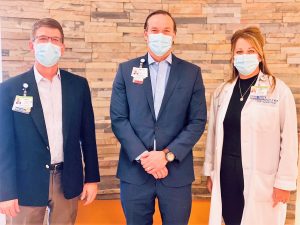
Dr. Stephen Higgins, Trent Lind and Tracey Smithson

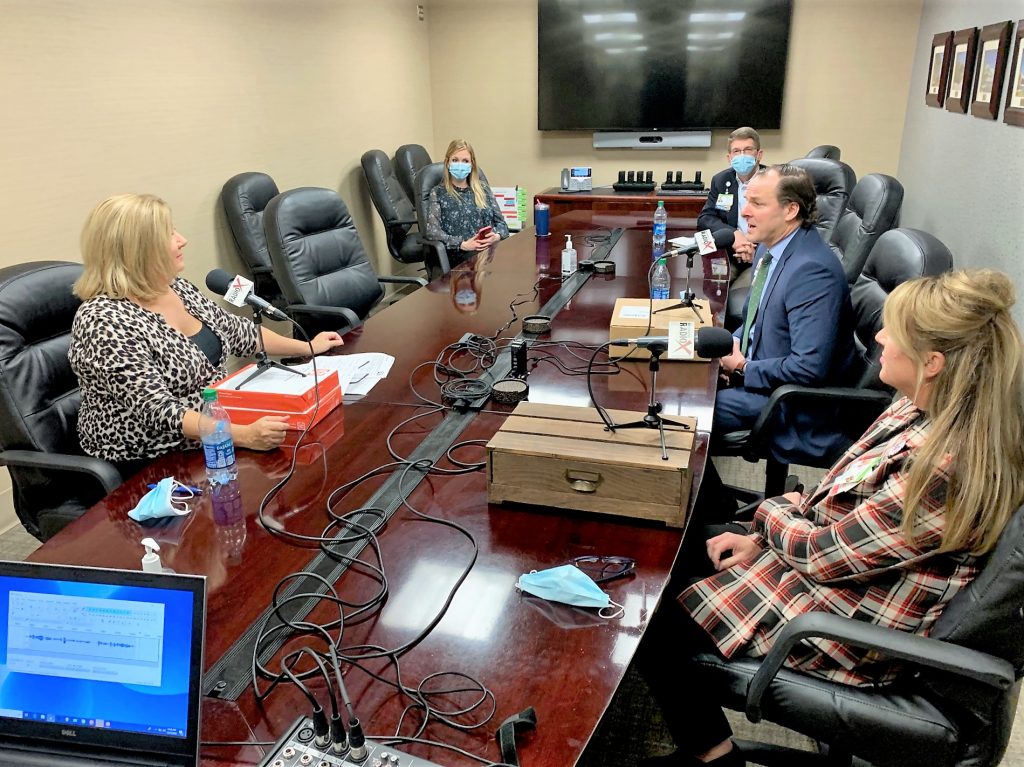
On this special end-of-the-year edition of “Gwinnett Business Radio”, host Duffie Dixon visits Eastside Medical Center in Snellville, GA to hear from three of the top hospital executives on the front lines of the COVID-19 pandemic: Chief Executive Officer Trent Lind, Chief Medical Officer Dr. Stephen Higgins, and Chief Nursing Officer Tracey Smithson. They discuss how the staff at Eastside Medical Center continues to care for patients several months into the crisis, and what has changed now that a vaccine is available for hospital staff, patients and the public. They also share some heart-warming and heart-wrenching stories from inside the hospital.

About Eastide Medical Center

Eastside Medical Center has been a healthcare leader for over 40 years, providing quality care to patients in Gwinnett and surrounding counties. Nationally recognized for patient safety, Eastside focuses on delivering quality care with exceptional outcomes by utilizing the most advanced technology and experienced physicians.

Eastside is a 310-bed, multi-campus system of care offering comprehensive medical and surgical programs including cardiovascular, neurosciences, oncology, orthopedics, robotic surgery, rehabilitation, maternity with neonatal intensive care, behavioral health, bariatric, urgent care, and 24-hour emergency care at two locations. Their medical staff of 500 board-certified physicians, 1,200 employees, and 400 volunteers is committed to providing the community a healthcare system of excellence. For more information, visit www.EastsideMedical.com.

Gwinnett Business Radio is presented by


Tagged With: chief medical officer, chief nursing officer, COVID-19, dr. stephen higgins, eastside medical center, EMC, Gwinnett Business Radio, gwinnett hospital, pandemic, regions bank, snellville hospital, stephen higgins, tracey smithson, trent lind

Your Weight and How to Deal With It- Episode 42, To Your Health With Dr. Jim Morrow

October 14, 2020 by John Ray

weight and how to deal with it
North Fulton Studio
Your Weight and How to Deal With It- Episode 42, To Your Health With Dr. Jim Morrow
Loading
00:00 /
RSS Feed
Share
Link
Embed

Download file

Dr. Jim Morrow, Morrow Family Medicine

Your Weight and How to Deal With It- Episode 42, To Your Health With Dr. Jim Morrow

On this episode of “To Your Health,” Dr. Morrow discusses weight and how to deal with it, including the genetic and lifestyle factors that influence it. He also talks about how our weight has been impacted by the life changes made during the pandemic. “To Your Health” is brought to you by Morrow Family Medicine, which brings the CARE back to healthcare.

About Morrow Family Medicine and Dr. Jim Morrow

Morrow Family Medicine is an award-winning, state-of-the-art family practice with offices in Cumming and Milton, Georgia. The practice combines healthcare information technology with old-fashioned care to provide the type of care that many are in search of today. Two physicians, three physician assistants and two nurse practitioners are supported by a knowledgeable and friendly staff to make your visit to Morrow Family Medicine one that will remind you of the way healthcare should be.  At Morrow Family Medicine, we like to say we are “bringing the care back to healthcare!”  Morrow Family Medicine has been named the “Best of Forsyth” in Family Medicine in all five years of the award, is a three-time consecutive winner of the “Best of North Atlanta” by readers of Appen Media, and the 2019 winner of “Best of Life” in North Fulton County.

Dr. Jim Morrow, Morrow Family Medicine, and Host of “To Your Health With Dr. Jim Morrow”

Covid-19 misconceptionsDr. Jim Morrow is the founder and CEO of Morrow Family Medicine. He has been a trailblazer and evangelist in the area of healthcare information technology, was named Physician IT Leader of the Year by HIMSS, a HIMSS Davies Award Winner, the Cumming-Forsyth Chamber of Commerce Steve Bloom Award Winner as Entrepreneur of the Year and he received a Phoenix Award as Community Leader of the Year from the Metro Atlanta Chamber of Commerce.  He is married to Peggie Morrow and together they founded the Forsyth BYOT Benefit, a charity in Forsyth County to support students in need of technology and devices. They have two Goldendoodles, a gaggle of grandchildren and enjoy life on and around Lake Lanier.

Facebook: https://www.facebook.com/MorrowFamMed/

LinkedIn: https://www.linkedin.com/company/7788088/admin/

Twitter: https://twitter.com/toyourhealthMD

The complete show archive of “To Your Health with Dr. Jim Morrow” addresses a wide range of health and wellness topics, and can be found at www.toyourhealthradio.com.

Dr. Morrow’s Show Notes

Complications of Covid-19

  • Acute Respiratory Failure
  • Pneumonia
  • Acute Respiratory Distress Syndrome (ARDS)
  • Acute Liver Injury
  • Acute Cardiac Injury
  • Secondary Infection
  • Acute Kidney Injury
  • Septic Shock
  • Disseminated Intravascular Coagulation
  • Blood Clots
  • Multi-system Inflammatory Syndrome in Children
  • Chronic Fatigue
  • Rhabdomyolysis

Your Weight and How to Deal With It 

  • For years, I have explained to patients about their weight using a term called Ideal Body Weight.
    • It’s a terrible number, an almost unreachable number.
    • Especially in the state of Georgia.
      • The obesity rate in Georgia is close to the highest in the country, about 11th highest when last counted.
    • However, I am not one to preach to people that they need to get down to a certain level. Because it is so dog gone hard.
    • These days the usual way to determine if a person is “obese” is using their Body Mass Index, or BMI.
      • BMI, unlike ideal body weight, takes into consideration the person’s height.
      • To determine your BMI, multiply your height by 703. Divide that number by your height in inches. Divide that number again by your height in inches.


·      BMI·      Category·      What it means
·      Below 19·      Underweight·      You might need to gain some weight. Talk to your doctor.
·      19 to 24·      Healthy·      You are at a healthy weight. Try to maintain this weight.
·      25 to 29·      Overweight·      Don’t gain any more weight. You may need to lose weight. Check with your doctor.
·      30 or higher·      Obese·      You probably need to lose weight. Talk to your doctor about the best ways to lose weight.


  • So… according to this, if your BMI is over 25, you are overweight
    • and if it is over 30 you are obese.
    • If it is above 35, you are considered morbidly obese.
    • If that is the case, then the conversation in my exam room will likely be slightly different form if the number is closer to 30-32.
  • I see people every day who are upset about their weight.
    • I mean, I live in Georgia right.
    • When I do see one who is thinner than average,
    • I will tell them that if they plan to stay in Georgia,
    • they’re going to have to lose some weight.
  • The visit where weight comes up might be with a man or a woman.
    • If it is a man, there is usually woman who has forced him to bring it up.
  • Men are very fortunate.
    • When they put their minds to it,
      • they can, at nearly any age, lose weight.
      • Woman have a MUCH harder time losing weight.
      • And here’s the thing that patients really hate to hear me say:

If you are a post-menopausal woman,

you are incredibly unlikely to really lose weight.

  • It’s just so hard. And there are two primary reasons for this:
    • Genetics:
      • When I go to a family reunion, there is a room full of people there who look just like me.
      • I love these people, but we all share the same genes and some of those genes make us bigger than others.
      • It is just the way it is.
      • And you can’t change anything about this.
      • You can work really hard to exercise as much as you can.
      • You can try to be as active as you can.
      • But you are not going to change the impact that genetics has on your weight.
        • Period.
          • You just aren’t.
  • Lifestyle:
    • This is the one that really gets people.
    • Sure, you can change your lifestyle.
    • You can start doing things differently.
    • You can join a gym,
      • you can start running (although another thing that people hate to hear me say is that if you are over 40 you are too old to run).
    • Back in the 80’s I wrote a diet booklet to give to patients.
      • It had a substitution diet in it, like a diabetic diet,
        • with various plans for different calorie intakes each day.
        • It said two things that are still important today:
      • The word diet has two definitions:
        • It is the food you eat on a regular basis
        • It is a plan you begin in an effort to lose weight.
      • The problem is that what people are thinking about is the second definition.
        • They think, and heaven knows I have done this more times than I could ever count,
          • “Man, I can’t wait to get to my goal weight so I can get off this damn diet!”
  • Years ago I did Weight Watchers, for the first time.
    • I went to meetings.
    • I counted points.
    • I was religious about it.
    • It was one of those times when I had just had it with my weight.
      • Finally, after several months, I hit my goal weight and at that meeting they made such a big deal out of me doing that and me receiving my Lifetime Membership Award.
      • It felt so much like “graduation” that I basically graduated from WW that night.
      • And I never looked at points again.
        • Having lost 42 pounds, I gained 50 in less than a year.
      • I have probably lost a thousand pounds in my life.
      • So… what does this mean for you?
      • Here is the way I feel about this.
  • If you are overweight or obese,
    • you should be a lot more concerned about not gaining weight year after year, than trying to lose weight.
    • If you are a youngster, sure go ahead and try to get down to where you feel you should be.
    • But if you are one of those post-menopausal women I see, or a man over 55 – 60, pay more attention to not gaining weight.
  • If you come for a physical every year, like you should,
    • and you gain five pounds, be careful.
      • A month ago, I saw a gentleman for his yearly physical.
      • He asked about this weight and when I said he had gained five pounds, he was so happy.
      • Pumped his fist and said “YES! YES!”.
    • I said, slow your roll there big guy, you have said that 7 years in a row.
      • So, quick math, he had gained 35 pounds since we started seeing him 7 years earlier.
    • I admire anyone who is interested in making themselves healthier.
      • It is what we should all be doing.
      • But when I see people who are devastated by their inability to lose weight, it concerns me.
      • Often these are people who would otherwise be perfectly happy in their lives.
      • But instead they are depressed or at a minimum upset about their weight.
    • Bottom line in this for me is:
      • Be who you are.
      • Try to be happy with who you are, and be the healthiest version of who you are that you can be.

Tagged With: Dr. Jim Morrow, Morrow Family Medicine, obesity, overweight, pandemic, To Your Health With Dr. Jim Morrow, weight

Alison O’Neil, Beauty Becomes You Charitable Foundation

July 22, 2020 by John Ray

Beauty Becomes You
North Fulton Business Radio
Alison O'Neil, Beauty Becomes You Charitable Foundation
Loading
00:00 /
RSS Feed
Share
Link
Embed

Download file

Alison O’Neil, Beauty Becomes You Charitable Foundation (North Fulton Business Radio, Episode 261)

Beauty Becomes You Charitable Foundation Founder Alison O’Neil joined host John Ray to discuss how her organization and their volunteers give lonely seniors a renewed sense of self worth.  “North Fulton Business Radio” is produced virtually by the North Fulton studio of Business RadioX® in Alpharetta.

Beauty Becomes You Charitable Foundation

BBYF was founded in 2005 by Alison O’Neil in memory and spirit of her kind hearted father who said to her, “Beauty becomes you,” just before he died. In an effort to provide a positive experience for older adults and their families by fulfilling common everyday grooming needs of seniors with limited access, opportunity, and means to aesthetic health programs, aesthetic healthcare services including basic hair, skin, and nail care as well as massage therapy are provided by volunteer licensed cosmetology and healthcare professionals (aesthetic health professionals) in safe, convenient locations for seniors.

Since the program began, approximately 500 amazing volunteers have served more than 5000 senior clients over 15,000 services. They  receive requests all the time from all over the world for programs.

Alison O’Neil, Founder

Ms. O’ Neil, B.S., M.E., A.R.S. has been practicing in the fields of Medical Esthetics and Aesthetic Rehabilitation for over thirty years. After twenty-seven years in dermatology and 5 years in plastic surgery she shares her pearls of patient care with professionals nationwide.

Among her professional publishing and media credits, Ms. O’ Neil has served on the editorial board of Progressive Clinical Insights, The Medical Journal for Skin Care Professionals published by the NCEA. She has been nationally recognized in Self, Mademoiselle, Woman’s Day, American Health, Harper’s Bazaar and Town & Country magazines as well as several major newspapers and television networks including CNN, TBS, ABC & NBC. Her most recent publication on Geriatric Aesthetics can be found in Aging Well Magazine.

Point of Contact for Beauty Becomes You

Company website

LinkedIn

Facebook

Instagram

Twitter

Questions/Topics Discussed in this Show

  • History- Why Beauty Becomes You- the name.
  • Why our target audience is Senior Adults and Caregivers
  • Our mission: To prevent Failure to Thrive Syndrome.
  • What services do we provide to meet our mission.
  • How are we touching Seniors today while the pandemic continues and restrictions continue to keep older adults from seeing their family and friends directly? Circles of Light initiative
  • Georgia and Beyond- our mission to GROW our outreach.

North Fulton Business Radio” is produced virtually from the North Fulton studio of Business RadioX® in Alpharetta. You can find the full archive of shows by following this link. The show is available on all the major podcast apps, including Apple Podcasts, Spotify, Google, iHeart Radio, Stitcher, TuneIn, and others.

Renasant Bank has humble roots, starting in 1904 as a $100,000 bank in a Lee County, Mississippi, bakery. Since then, Renasant has grown to become one of the Southeast’s strongest financial institutions with over $13 billion in assets and more than 190 banking, lending, wealth management and financial services offices in Mississippi, Alabama, Tennessee, Georgia and Florida. All of Renasant’s success stems from each of their banker’s commitment to investing in their communities as a way of better understanding the people they serve. At Renasant Bank, they understand you because they work and live alongside you every day.

Tagged With: Alison O'Neil, Beauty Becomes You, Beauty Becomes You Charitable Foundation, failure to thrive syndrome, older adults, pandemic, seniors

Alpharetta Tech Talk: Anas Sawaf, CirrusLabs

June 26, 2020 by John Ray

Alpharetta Tech Talk
Alpharetta Tech Talk: Anas Sawaf, CirrusLabs
Loading
00:00 /
RSS Feed
Share
Link
Embed

Download file

“Alpharetta Tech Talk,” Episode 17:  Anas Sawaf, CirrusLabs

CirrusLabsIn a pandemic environment, businesses and other employers are suddenly in need of technology and analytics which monitor potential virus spread and help ensure proper social distancing and other risk mitigation efforts. Anas Sawaf, Director of IoT and Analytics for CirrusLabs, joined the show to discuss the company’s technology and analytics solution, PHOTONE4. It’s a fascinating discussion. The host of “Alpharetta Tech Talk” is John Ray and this series is the show is produced virtually by the North Fulton studio of Business RadioX® in Alpharetta.

Anas Sawaf, Director, Emerging Tech – IoT & Analytics

Anas Sawaf is the Director of Emerging Tech, IoT and Analytics, at CirrusLabs.

The COVID-19 pandemic is a global health and societal emergency that requires effective and accelerated actions by all governments, businesses and communities across the world. Government agencies and businesses have found it challenging to operate in a normal or optimum environment. Many individuals don’t know that they are infected with COVID-19. Social-distancing is not strictly enforced and many people are unknowingly spreading the virus.

CirrusLabsPHOTONE4 is CirrusLabs’ Temperature Detection & Social-Distancing solution. It was developed to enable and enhance risk mitigation efforts. The goal is to help government agencies and businesses detect, alert, & report on human body temperature, social grouping & proximity, in addition to facial personal protection.

CirrusLabs is a fast growing full-service digital transformation company with offices in the greater Atlanta and Northern Virginia areas.  They help clients focus on emerging opportunities, value creation, and innovate on new lines businesses by harnessing the power of their digital framework. They have successfully helped their clients disrupt their business models via their digital strategy, modernizing their technology, and aligning better with their customer needs.

Their services are designed to create Digital Strategies, Agile Organizations, Modernized Technology, Data, Emerging Technology and help their customers launch new innovative products to attain a competitive advantage. CirrusLabs provides customized training for organizations embarking on Digital Transformation through Scrum Alliance, ICAgile, SAFe and other certified organizations. Their clients include start-ups to Fortune 500 companies.
For more information, you can visit the company website. To connect with Anas directly, you can email directly or contact through LinkedIn.
CirrusLabs

Question/Topics Covered in this Interview

  • The focus for many businesses in manufacturing and retail is to prevent infectious diseases impacting their bottom line in the present and the future.
  • What role is IoT technology taking in regards to supporting risk mitigation efforts?
  •  Can organizations protect their businesses from health risks by relying solely on temperature detection methods?
  • What role does corporate safety compliance play in risk mitigation efforts for businesses?
  • How important is proximity detection for preventing the spread of infectious diseases?

About “Alpharetta Tech Talk”

“Alpharetta Tech Talk” is the radio show/podcast home of the burgeoning technology sector in Alpharetta and the surrounding GA 400 and North Fulton area. We feature key technology players from a dynamic region of over 900 technology companies. “Alpharetta Tech Talk” comes to you from from the North Fulton studio of Business RadioX®.

Past episodes of “Alpharetta Tech Talk” can be found at alpharettatechtalk.com.

Renasant Bank has humble roots, starting in 1904 as a $100,000 bank in a Lee County, Mississippi, bakery. Since then, Renasant has grown to become one of the Southeast’s strongest financial institutions with approximately $12.9 billion in assets and more than 190 banking, lending, wealth management and financial services offices in Mississippi, Alabama, Tennessee, Georgia and Florida. All of Renasant’s success stems from each of their banker’s commitment to investing in their communities as a way of better understanding the people they serve. At Renasant Bank, they understand you.


Tagged With: analytics, Anas Sawaf, CirrusLabs, COVID-19, IoT, pandemic, PHOTONE4, risk mitigation, social distancing

Shane Jackson, Jackson Healthcare

May 15, 2020 by John Ray

North Fulton Business Radio
Shane Jackson, Jackson Healthcare
Loading
00:00 /
RSS Feed
Share
Link
Embed

Download file

Shane Jackson, Jackson Healthcare

Shane Jackson, Jackson Healthcare (North Fulton Business Radio, Episode 236)

Shane Jackson, President of Jackson Healthcare, joined “North Fulton Business Radio” to discuss the staffing problems hospitals and other healthcare providers face, healthcare heroes, how his healthcare staffing company is dealing with the pandemic, and much more. The host of “North Fulton Business Radio” is John Ray and the show is produced virtually by the North Fulton studio of Business RadioX® in Alpharetta.

Jackson Health Care

Shane Jackson is the President of Jackson Healthcare. Jackson Healthcare is a family of highly specialized healthcare staffing, search and technology companies. With a mission to improve the delivery of patient care and the lives of everyone it touches, it helps healthcare facilities across the country serve more than 10 million patients each year. Backed by more than 1,500 associates and with over $1 billion in annual revenue, Jackson Healthcare is a top three U.S. healthcare staffing firm. In addition to being Great Place to Work certified, it is consistently recognized as an employer of choice, having appeared in consecutive years on Fortune’s Best Workplaces in Health Care and Biopharma, in 2019 on the Best Workplaces for Women and in 2018 on the Best Workplaces for Millennials lists. Learn more at www.jacksonhealthcare.com.

Questions and Topics in this Interview:

  • How Jackson Healthcare aligns clinicians to hospitals and other healthcare facilities
  • The impact of the Covid-19 pandemic on Jackson Healthcare
  • Why hospitals and other healthcare providers are suffering financially in this pandemic
  • how Jackson Healthcare mobilized doctors, critical care nurses, respiratory therapists, and other healthcare professionals across many states, including those most impacted by COVID-19
  • The staffing problems affecting hospitals as elective procedures begin again
  • How Jackson Healthcare is advising these clients
  • The positive stories and heroism of healthcare professionals across the country
  • How Jackson Healthcare’s company culture has served it well in a very stressful period

North Fulton Business Radio” is produced virtually from the North Fulton studio of Business RadioX® in Alpharetta. You can find the full archive of shows by following this link. The show is available on all the major podcast apps, including Apple Podcasts, Spotify, Google, iHeart Radio, Stitcher, TuneIn, and others.

Renasant Bank has humble roots, starting in 1904 as a $100,000 bank in a Lee County, Mississippi, bakery. Since then, Renasant has grown to become one of the Southeast’s strongest financial institutions with over $13 billion in assets and more than 190 banking, lending, wealth management and financial services offices in Mississippi, Alabama, Tennessee, Georgia and Florida. All of Renasant’s success stems from each of their banker’s commitment to investing in their communities as a way of better understanding the people they serve. At Renasant Bank, they understand you because they work and live alongside you every day.

Tagged With: clinicians, company culture, COVID-19, critical care, critical care nurses, Culture, doctors, Healthcare, healthcare heroes, healthcare providers, healthcare staffing, heroism, hospitals, Jackson Healthcare, pandemic, respiratory therapists, Shane Jackson, staffing problems

To Your Health With Dr. Jim Morrow:  Episode 32, Stress in a Pandemic with Dr. Brooke Jones, Fresh Start for the Mind, and a Covid-19 Update

May 13, 2020 by John Ray

stress in a pandemic
North Fulton Studio
To Your Health With Dr. Jim Morrow:  Episode 32, Stress in a Pandemic with Dr. Brooke Jones, Fresh Start for the Mind, and a Covid-19 Update
Loading
00:00 /
RSS Feed
Share
Link
Embed

Download file

Stress in a Pandemic
Dr. Jim Morrow, Morrow Family Medicine, and Dr. Brooke Jones, Fresh Start for the Mind

To Your Health With Dr. Jim Morrow:  Episode 32, Stress in a Pandemic with Dr. Brooke Jones and a Covid-19 Update

Dr. Morrow discusses dealing with stress in a pandemic with Dr. Brooke Jones, Fresh Start for the Mind. Dr. Morrow also shares a Covid-19 update, which includes a debunking of the “Plandemic” video and comments on the ineffectiveness of hydroxychloroquine.  “To Your Health” is brought to you by Morrow Family Medicine, which brings the CARE back to healthcare.

Dr. Brooke Jones, Fresh Start for the Mind

stress in a pandemic
Dr. Brooke Jones, Fresh Start for the Mind

In 2013, Dr. Brooke Jones branched out on her own to open a mental health practice, Fresh Start for the Mind. She wanted a practice that incorporated the mind, body, and spirit. Her love for psychological evaluations became evident in the Alpharetta and surrounding communities. As referrals grew, so did Fresh Start.

Fresh Start for the Mind is a comprehensive mental health practice that provides counseling, psychological evaluations, psychiatry and medication management, coaching, and nutrition support to children, adults, and families. Since its inception in 2013, Fresh Start has grown to over 30 staff members and has maintained a reputation for providing quality and heart-felt services. Fresh Start has three facilities and proudly serves patients in and around Suwanee, Stockbridge, and Canton, GA.

You can find out more at their website or call Fresh Start at 404-808-1161.

About Morrow Family Medicine and Dr. Jim Morrow

Morrow Family Medicine is an award-winning, state-of-the-art family practice with offices in Cumming and Milton, Georgia. The practice combines healthcare information technology with old-fashioned care to provide the type of care that many are in search of today. Two physicians, three physician assistants and two nurse practitioners are supported by a knowledgeable and friendly staff to make your visit to Morrow Family Medicine one that will remind you of the way healthcare should be.  At Morrow Family Medicine, we like to say we are “bringing the care back to healthcare!”  Morrow Family Medicine has been named the “Best of Forsyth” in Family Medicine in all five years of the award, is a three-time consecutive winner of the “Best of North Atlanta” by readers of Appen Media, and the 2019 winner of “Best of Life” in North Fulton County.

Dr. Jim Morrow, Morrow Family Medicine, and Host of “To Your Health With Dr. Jim Morrow”

Dr. Jim Morrow is the founder and CEO of Morrow Family Medicine. He has been a trailblazer and evangelist in the area of healthcare information technology, was named Physician IT Leader of the Year by HIMSS, a HIMSS Davies Award Winner, the Cumming-Forsyth Chamber of Commerce Steve Bloom Award Winner as Entrepreneur of the Year and he received a Phoenix Award as Community Leader of the Year from the Metro Atlanta Chamber of Commerce.  He is married to Peggie Morrow and together they founded the Forsyth BYOT Benefit, a charity in Forsyth County to support students in need of technology and devices. They have two Goldendoodles, a gaggle of grandchildren and enjoy life on and around Lake Lanier.

Facebook: https://www.facebook.com/MorrowFamMed/

LinkedIn: https://www.linkedin.com/company/7788088/admin/

Twitter: https://twitter.com/toyourhealthMD

The complete show archive of “To Your Health with Dr. Jim Morrow” addresses a wide range of health and wellness topics, and can be found at www.toyourhealthradio.com.

Dr. Morrow’s Show Notes

Coronavirus Update

  • Hydroxychloroquine has been shown not to be effective and in some cases harmful in Covid-19.
  • Patients are often much worse in the second week of the disease.
  • Total cases have started to plateau in the US, but with social distancing waning somewhat and states opening up, we will definitely see a bump in cases.
  • The healthcare system has been spared the overwhelming push that would have made all of this dramatically worse.
  • Masks:
    • Wear one anytime in public.
    • They protect others from you.
    • 44% of people in a NY study who had NO symptoms were found to be positive for having the disease at the time they had no symptoms.
  • Antibody Tests:
    • There are three antibodies that are tested for in most of these tests.
      • IgA, a respiratory antibody.  
        • One that is produced in response to a respiratory infection. As opposed to a stomach bug or what people insist on calling a “stomach flu”, even though that does not exist.

      • IgM 
        • one that you produce acutely as you are in the midst of an active infection.
      • IgG
        • One you make that is at the end of an infection and the one that lasts the longest, giving you some degree of immunity to an infection you have already had.
    • IgA and IgM can cross react with the coronaviruses that cause the common cold, mainly 229E and OC43.
    • IgG is specific for the type of virus that caused a particular infection, such as SARS-CoV-2.
    • So, if you get the antibody test, you are looking for a positive IgG antibody to know if you were infected with or exposed to this novel coronavirus.
    • We presume that this infers some degree of immunity but we really are not certain of that yet.

    • ACE inhibitors and ARBs: stay on them if you take them. They could actually benefit you

    • Aspirin: stay on it
    • Allergy meds: stay on them; Covid-19 does not cause sneezing. Period.
  • “Plandemic” video: so many people sent this to me.
    • It is complete bunk.
    • You need to understand that scientists are accustomed to saying “I don’t know”
      • but the public is accustomed to us having all the answers.
    • For the past 75 years, when it comes to infections and public health issues,
      • the public has come to expect medicine to know what’s what.
    • But this is a totally new virus.
      • It’s like the time of Louis Pasteur when scientists did not know everything,
      • or hardly anything compared to today.
    • Information that I learned two weeks ago is being proven wrong this week.
    • Social media and the public’s access to information of all kinds,
      • most of it unproven,
      • is making it difficult to sort out fact from fiction.
    • People have a need to believe something,
      • so when they see someone who sounds knowledgeable,
      • they want to believe it.
      • When it gives them an answer they want to believe it.
      • Well, don’t believe one word in that video. Not one.


Stress in a Pandemic

Outbreaks can be stressful

    • The outbreak of coronavirus disease 2019 (COVID-19) may be stressful for people. 
      • Fear and anxiety about a disease can be overwhelming and cause strong emotions in adults and children. 
  • Coping with stress in a pandemic will make you, the people you care about, and your community stronger.
  • Stress in a pandemic can include
    • Fear and worry about your own health and the health of your loved ones
    • Changes in sleep or eating patterns
    • Difficulty sleeping or concentrating
    • Worsening of chronic health problems
    • Worsening of mental health conditions
    • Increased use of alcohol, tobacco, or other drugs
  • Everyone reacts differently to stressful situations
    • How you respond to the outbreak can depend on 
      • your background,
      • the things that make you different from other people, 
      • and the community you live in.

Our Guest Today:

Brooke Jones,  Psychologist and Owner, Fresh Start for the Mind

Fresh Start for the Mind is a comprehensive mental health practice that provides counseling, psychological evaluations, psychiatry and medication management, coaching, and nutrition support to children, adults, and families.  Since it’s inception in 2013, Fresh Start has grown to over 30 staff members and has maintained a reputation for providing quality and heart-felt services.  Fresh Start has three facilities and proudly serves patients in and around Suwanee, Stockbridge, and Canton, GA.  

Question/Topics in this interview:

  • What have been some common reactions you’ve seen in response to COVID-19 pandemic?
  • Do you have any advice on how to help children cope with these changes?
  • What are some specific examples of self-care and how would you recommend our listeners make this apart of their routine?
  • How can I support a loved one, who may be directly or indirectly affected by COVID-19?
  • If I needed help with managing stress, anxiety, depression, or anger – weather it’s directly or indirectly related to COVID, or in general, where can I find help?
  • Do you have any advice on how to help children cope with these changes?
  • What are some specific examples of self-care and how would you recommend our listeners make this apart of their routine?
  • How can I support a loved one, who may be directly or indirectly affected by COVID-19?

Outbreaks can be stressful (cont’d)

  • People who may respond more strongly to stress in a pandemic include
    • Older people and people with chronic diseases who are at higher risk for severe illness from COVID-19
    • Children and teens
    • People who are helping with the response to COVID-19, like doctors, other health care providers, and first responders
    • People who have mental health conditions including problems with substance use
  • Take care of yourself and your community
    • Taking care of yourself, 
      • your friends, 
      • and your family can help you cope with stress. 
      • Helping others cope with their stress can also make your community stronger.
  • Ways to cope with stress
    • Take breaks from watching, 
    • reading, 
    • or listening to news stories, 
      • including social media. 
      • Hearing about the pandemic repeatedly can be upsetting.
  • Take care of your body.
    • Take deep breaths, stretch, or meditate
    • Try to eat healthy, well-balanced meals.
    • Exercise regularly, get plenty of sleep.
    • Avoid alcohol and drugs
    • Make time to unwind. Try to do some other activities you enjoy.
    • Connect with others. Talk with people you trust about your concerns and how you are feeling.

Tagged With: anxiety, COVID-19, Depression, Dr. Brooke Jones, Dr. Jim Morrow, Fresh Start for the Mind, hydroxychloroquine, Jim Morrow, mental health, Morrow Family Medicine, pandemic, Plandemic video, stress, stress in a pandemic, To Your Health, To Your Health With Dr. Jim Morrow

Telling Your Story in a Pandemic, with Mark Hayes, Mark Hayes Consulting

May 5, 2020 by John Ray

telling your story in a pandemic
North Fulton Business Radio
Telling Your Story in a Pandemic, with Mark Hayes, Mark Hayes Consulting
Loading
00:00 /
RSS Feed
Share
Link
Embed

Download file

telling your story in a pandemic
Mark Hayes, Mark Hayes Consulting

Telling Your Story in a Pandemic, with Mark Hayes, Mark Hayes Consulting (“North Fulton Business Radio,” Episode 228)

How do you go about telling your story in a pandemic if you’re a business owner? Former journalist Mark Hayes of Mark Hayes Consulting joins host John Ray to discuss this question and much more. “North Fulton Business Radio” is produced virtually by the North Fulton studio of Business RadioX® in Alpharetta.

Mark Hayes, Mark Hayes Consulting

Mark Hayes is the President and CEO of Mark Hayes Consulting. The firm’s mission is to help everyone from CEOs to small business owners make the most of their opportunity for media exposure. Providing media training and placement consulting, Mark’s firm helps businesses and brands find media placements and create content to build and enhance their brand. The firm also provides media training and communication skills workshops and seminars. Mark is a Certified Jack Canfield Trainer.

Mark is scheduled to appear on the TEDx stage in Woodstock in November.

Mark Hayes has spent nearly three decades bringing news viewers in major cities across the country their news and information of the day.  Some of his stops include major markets like Dallas, Denver, Detroit and Baltimore.  His proudest accomplishments, however, came during his tenure in the great city of Atlanta, GA.  For more than a decade, Mark was a staple of early morning television on Good Day Atlanta on Fox 5 Atlanta.  He believes his most noteworthy achievement, was the nearly 20 hours he spent on air during the Fulton County Courthouse shootings and the subsequent capture of Brian Nichols. He has been recognized nationally with two Emmy nominations and recognition for spot news coverage from the National Press Photographers Association.

For more information, go to https://markhayesconsulting.com/ or call Mark directly at 678-829-4632.

Questions and Topics in this Interview:

  • Mark’s background in journalism and how he works with business owners
  • community impact
  • credibility and reputation in story-telling
  • social media management
  • branding and personal branding
  • media relations
  • digital media

North Fulton Business Radio” is produced virtually from the North Fulton studio of Business RadioX® in Alpharetta. You can find the full archive of shows by following this link. The show is available on all the major podcast apps, including Apple Podcasts, Spotify, Google, iHeart Radio, Stitcher, TuneIn, and others.

Renasant Bank has humble roots, starting in 1904 as a $100,000 bank in a Lee County, Mississippi, bakery. Since then, Renasant has grown to become one of the Southeast’s strongest financial institutions with over $13 billion in assets and more than 190 banking, lending, wealth management and financial services offices in Mississippi, Alabama, Tennessee, Georgia and Florida. All of Renasant’s success stems from each of their banker’s commitment to investing in their communities as a way of better understanding the people they serve. At Renasant Bank, they understand you because they work and live alongside you every day.


Tagged With: Branding, credibility, digital media, John Ray, Mark Hayes, Mark Hayes Consulting, Media Relations, North Fulton Business Radio, pandemic, personal branding, reputation, Social Media, social media management, story-telling, TEDx

  • « Previous Page
  • 1
  • 2
  • 3
  • Next Page »

Business RadioX ® Network


Our Most Recent Episode

CONNECT WITH US

  • Email
  • Facebook
  • LinkedIn
  • Twitter
  • YouTube

Our Mission

We help local business leaders get the word out about the important work they’re doing to serve their market, their community, and their profession.

We support and celebrate business by sharing positive business stories that traditional media ignores. Some media leans left. Some media leans right. We lean business.

Sponsor a Show

Build Relationships and Grow Your Business. Click here for more details.

Partner With Us

Discover More Here

Terms and Conditions
Privacy Policy

Connect with us

Want to keep up with the latest in pro-business news across the network? Follow us on social media for the latest stories!
  • Email
  • Facebook
  • Google+
  • LinkedIn
  • Twitter
  • YouTube

Business RadioX® Headquarters
1000 Abernathy Rd. NE
Building 400, Suite L-10
Sandy Springs, GA 30328

© 2025 Business RadioX ® · Rainmaker Platform

BRXStudioCoversLA

Wait! Don’t Miss an Episode of LA Business Radio

BRXStudioCoversDENVER

Wait! Don’t Miss an Episode of Denver Business Radio

BRXStudioCoversPENSACOLA

Wait! Don’t Miss an Episode of Pensacola Business Radio

BRXStudioCoversBIRMINGHAM

Wait! Don’t Miss an Episode of Birmingham Business Radio

BRXStudioCoversTALLAHASSEE

Wait! Don’t Miss an Episode of Tallahassee Business Radio

BRXStudioCoversRALEIGH

Wait! Don’t Miss an Episode of Raleigh Business Radio

BRXStudioCoversRICHMONDNoWhite

Wait! Don’t Miss an Episode of Richmond Business Radio

BRXStudioCoversNASHVILLENoWhite

Wait! Don’t Miss an Episode of Nashville Business Radio

BRXStudioCoversDETROIT

Wait! Don’t Miss an Episode of Detroit Business Radio

BRXStudioCoversSTLOUIS

Wait! Don’t Miss an Episode of St. Louis Business Radio

BRXStudioCoversCOLUMBUS-small

Wait! Don’t Miss an Episode of Columbus Business Radio

Coachthecoach-08-08

Wait! Don’t Miss an Episode of Coach the Coach

BRXStudioCoversBAYAREA

Wait! Don’t Miss an Episode of Bay Area Business Radio

BRXStudioCoversCHICAGO

Wait! Don’t Miss an Episode of Chicago Business Radio

Wait! Don’t Miss an Episode of Atlanta Business Radio