Business RadioX ®

  • Home
  • Business RadioX ® Communities
    • Southeast
      • Alabama
        • Birmingham
      • Florida
        • Orlando
        • Pensacola
        • South Florida
        • Tampa
        • Tallahassee
      • Georgia
        • Atlanta
        • Cherokee
        • Forsyth
        • Greater Perimeter
        • Gwinnett
        • North Fulton
        • North Georgia
        • Northeast Georgia
        • Rome
        • Savannah
      • Louisiana
        • New Orleans
      • North Carolina
        • Charlotte
        • Raleigh
      • Tennessee
        • Chattanooga
        • Nashville
      • Virginia
        • Richmond
    • South Central
      • Arkansas
        • Northwest Arkansas
    • Midwest
      • Illinois
        • Chicago
      • Michigan
        • Detroit
      • Minnesota
        • Minneapolis St. Paul
      • Missouri
        • St. Louis
      • Ohio
        • Cleveland
        • Columbus
        • Dayton
    • Southwest
      • Arizona
        • Phoenix
        • Tucson
        • Valley
      • Texas
        • Austin
        • Dallas
        • Houston
    • West
      • California
        • Bay Area
        • LA
        • Pasadena
      • Colorado
        • Denver
      • Hawaii
        • Oahu
  • FAQs
  • About Us
    • Our Mission
    • Our Audience
    • Why It Works
    • What People Are Saying
    • BRX in the News
  • Resources
    • BRX Pro Tips
    • B2B Marketing: The 4Rs
    • High Velocity Selling Habits
    • Why Most B2B Media Strategies Fail
    • 9 Reasons To Sponsor A Business RadioX ® Show
  • Partner With Us
  • Veteran Business RadioX ®

Decision Vision Episode 100: Should I Start a Podcast? – An Interview with David Sparks, Sparky Media

January 21, 2021 by John Ray

should I start a podcast?
Decision Vision
Decision Vision Episode 100: Should I Start a Podcast? - An Interview with David Sparks, Sparky Media
Loading
00:00 /
RSS Feed
Share
Link
Embed

Download file

Decision Vision Episode 100:  Should I Start a Podcast? – An Interview with David Sparks, Sparky Media

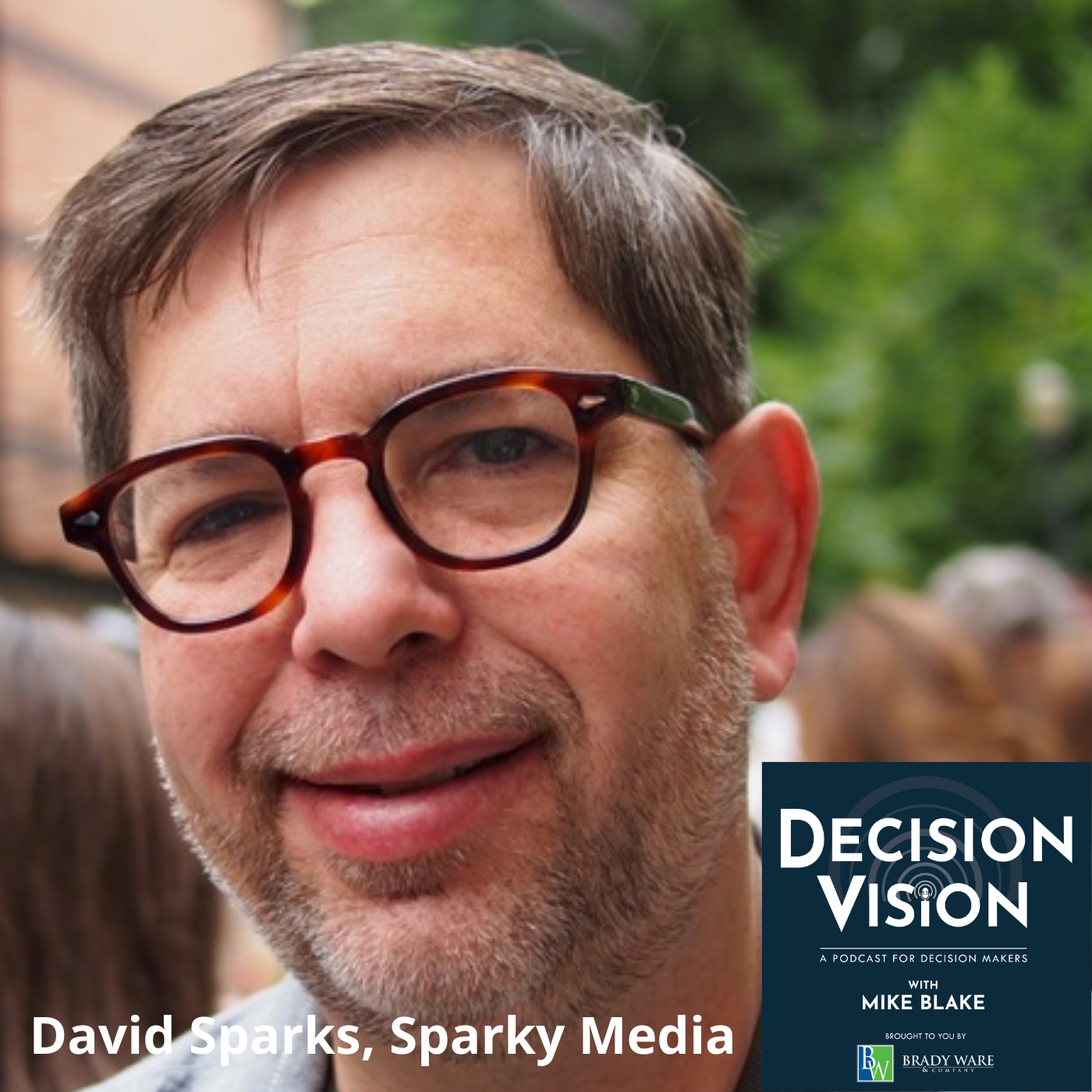
“Should I start a podcast?” is a great question to be asked of someone who publishes not just one, but three different shows. David Sparks of Sparky Media joins host Mike Blake to discuss the “whys” behind his podcasts, how he balances his law practice with his podcast activity, and much more. “Decision Vision” is presented by Brady Ware & Company.

David Sparks

David Sparks is a nerd who podcasts about getting more out of your Apple Technology, Automating your life, and getting more focused. David also publishes MacSparky.com where he writes about finding the best tools, hardware, and workflows for using Apple products to get work done. David’s favorite thing to do is build the MacSparky Field Guides. When not doing all that stuff, David practices a bit of law.

Mike Blake, Brady Ware & Company

Mike Blake, Host of the “Decision Vision” podcast series

Michael Blake is the host of the “Decision Vision” podcast series and a Director of Brady Ware & Company. Mike specializes in the valuation of intellectual property-driven firms, such as software firms, aerospace firms, and professional services firms, most frequently in the capacity as a transaction advisor, helping clients obtain great outcomes from complex transaction opportunities. He is also a specialist in the appraisal of intellectual properties as stand-alone assets, such as software, trade secrets, and patents.

Mike has been a full-time business appraiser for 13 years with public accounting firms, boutique business appraisal firms, and an owner of his own firm. Prior to that, he spent 8 years in venture capital and investment banking, including transactions in the U.S., Israel, Russia, Ukraine, and Belarus.

Brady Ware & Company

Brady Ware & Company is a regional full-service accounting and advisory firm which helps businesses and entrepreneurs make visions a reality. Brady Ware services clients nationally from its offices in Alpharetta, GA; Columbus and Dayton, OH; and Richmond, IN. The firm is growth-minded, committed to the regions in which they operate, and most importantly, they make significant investments in their people and service offerings to meet the changing financial needs of those they are privileged to serve. The firm is dedicated to providing results that make a difference for its clients.

Decision Vision Podcast Series

“Decision Vision” is a podcast covering topics and issues facing small business owners and connecting them with solutions from leading experts. This series is presented by Brady Ware & Company. If you are a decision-maker for a small business, we’d love to hear from you. Contact us at decisionvision@bradyware.com and make sure to listen to every Thursday to the “Decision Vision” podcast.

Past episodes of “Decision Vision” can be found at decisionvisionpodcast.com. “Decision Vision” is produced and broadcast by the North Fulton studio of Business RadioX®.

Visit Brady Ware & Company on social media:

LinkedIn:  https://www.linkedin.com/company/brady-ware/

Facebook: https://www.facebook.com/bradywareCPAs/

Twitter: https://twitter.com/BradyWare

Instagram: https://www.instagram.com/bradywarecompany/

TRANSCRIPT

Intro: [00:00:01] Welcome to Decision Vision, a podcast series focusing on critical business decisions. Brought to you by Brady Ware & Company. Brady Ware is a regional, full service accounting and advisory firm that helps businesses and entrepreneurs make visions a reality.

Mike Blake: [00:00:21] Welcome to Decision Vision, a podcast giving you, the listener, clear vision to make great decisions. In each episode, we discuss the process of decision making on a different topic from the business owners’ or executives’ perspective. We aren’t necessarily telling you what to do, but we can put you in a position to make an informed decision on your own and understand when you might need help along the way.

Mike Blake: [00:00:41] My name is Mike Blake, and I’m your host for today’s program. I’m a director at Brady Ware & Company, a full service accounting firm based in Dayton, Ohio, with offices in Dayton; Columbus, Ohio; Richmond, Indiana; and Alpharetta, Georgia. Brady Ware is sponsoring this podcast, which is being recorded in Atlanta per social distancing protocols. If you like this podcast, please subscribe on your favorite podcast aggregator and please consider leaving a review of the podcast as well.

Mike Blake: [00:01:07] So, today is a bellwether show. Today, we are recording show number 100, and I can’t believe that we’ve gotten this far. But we’ve had some fascinating conversations, some wonderful guests. And, frankly, I’ve learned so much, not just about the topics, but about the guests too. Some of these guests are people that I’ve known for a long time, but I’ve never quite had these same kinds of conversations as we’ve had with the podcast. And based on the listener support, it sounds like you guys seem to think that this is useful, too, and that’s very gratifying.

Mike Blake: [00:01:43] So, you know, given that most podcasts don’t make it past episode six or seven, and the last podcast I did, Startup Lounge, made it to, I think, 42 or 43, I don’t mind telling you that I’m really proud of reaching this milestone. And I’m so thankful, as I’ve said many times but it never gets old, to you, the listeners, for supporting this; and and for my firm, Brady Ware, for supporting this; and, you know, the team we have with John Ray at Business RadioX and our marketing team; and the guests who’ve been wanting to come on and be very open, be very vulnerable, be very frank. I’m sort of the lead guy on this, but it’s very much a team effort, and I can’t thank you enough.

Mike Blake: [00:02:29] So, my present, if you will, to you, is, I think, a really fascinating topic and a very intriguing guest. So, today’s topic is, Should I have a podcast? And I think this is pretty apropos because I’m asked a lot like, “Why do you do the podcast? It seems like it’s a lot of work. And I’m glad you do it. We enjoy it. But why do you do it? What do you get out of it?” And, you know, being in the professional services world, I’m asked a lot – I’m asked frequently, you know, do you get business out of it? And that’s a very complicated question.

Mike Blake: [00:03:07] I can answer very directly. You know, do I put out a podcast and then I receive five emails from people that need a business appraisal? The answer is no. On the other hand, does putting out knowledge and contributing something, contributing a different voice to the internet and to the podcasting sphere, does that create brand? Does that create a way for people who’ve heard about me or about the firm from some other place to then sort of check us out and see, literally, if they like what they hear? I do think that that has an impact. But I don’t think you should believe me or take my word for it necessarily.

Mike Blake: [00:03:46] We have a very special guest that I’ve been looking forward to this podcast I don’t think like any other. And that podcast is David Sparks, who I “know him” from the Mac Power Users podcast. And I’m going to talk about my relationship with that in a minute because it sort of sets a table. About five or six years ago, I went into becoming a sole practitioner. I did the same thing I think David did, you know, decided, “Look, I’m not going to work in an institution anymore.” And I spent most of my professional life in the IBM PC world. But what had happened about two days after I hung up my sole proprietor shingle, every computer in our house just decided it was just going to stop working.

Mike Blake: [00:04:36] And here I am. I’m on my own. I’m stressed out. I have clients. I’m trying to build a company. I’m building a website. You know, every day a new page is being built. And all of a sudden, I’m having to do tech support on my wife’s computer and my two sons computers, and even mine was acting up. And so, what I did that day or the next day is, I backed everything up that I could. I took all those computers away and we went to the Apple store and we replaced every single device, except our phones, but every single computer with an Apple Mac. And I had not been a Mac user since college. Having moved into finance, Mac and finance don’t work all that well together. And so, we sort of nudged over into the PC area. But that had cost me so much time and so much in terms of nervous mental energy that I just didn’t know – you know, it just was unsustainable. But I remember no machine is perfect, but Macs just simply worked. And you just didn’t have to worry about that stuff. And so, we migrated over to Macs. But the last Mac operating system I had used, I think was System 7, it might have been System 8.

Mike Blake: [00:05:51] And so, you know, how am I gonna learn how to do all this? And I happened upon the Mac Power Users podcast. And back then, they’re in the 300s of episodes. And, you know, listening to that podcast was helpful, not just because they really were excellent in getting me up to speed in how to use a Mac and integrate it into business. But it’s also a sneaky, good business podcast for the sole practitioner. You know, David is a sole practitioner. I think at the time his co-host, Katie Floyd, was also a sole practitioner. And they talked about the things that were sort of day-to-day in my life that I was addressing. It happened to be with the technology platform that I had just converted to.

Mike Blake: [00:06:36] And so, you know, they became sort of my informal mentors. And I frankly do not think that my business would have been as successful as it had been and that transition would haven’t been as successful as it had been had I not had access to that podcast. So, you know, when I decided I want to do a podcast about podcasts, there’s really only one person I wanted to get on the show. And I’m so glad that David agreed to come on and talk to us. So, that’s my background of why I wanted David on.

Mike Blake: [00:07:12] Let me introduce him, because he’s really a fascinating guy. You know, he’s an Orange County, California business attorney and considers himself a geek. I think he wears that badge with honor. He’s a podcaster – as we will talk about – blogger and author who writes about finding the best tools, hardware, and workflows for using Apple products to get work done. He writes for Macworld magazine and speaks about technology. David has been a business litigation and non-litigation attorney for 27 years, his firm’s name is Sparks Law. And is as comfortable working with multi-million dollar firms as he is with a few guys and a laptop – that’s California for you.

Mike Blake: [00:07:49] One of the superpowers is using technology to secure the best outcomes for his clients. David helps clients negotiate and document agreements, catch and solve little problems before they become big problems, and generally helps his clients succeed. As I mentioned, David is also a co-host of the Mac Power Users podcast. He also is co-host of the podcast called Focused and also, I think, Automators. He publishes a business daily blog at macsparky.com. David has also published and continues to publish Apple device specific field guide and a gift wrapping field guide as well. That has also saved my bacon because I’m dreadful at that. And this year, I believe, David has launched a YouTube channel. David Sparks, thank you for coming on the program and welcome.

David Sparks: [00:08:33] Thanks. It’s my pleasure to be here. Congratulations on Episode 100. That is no easy feat.

Mike Blake: [00:08:40] Well, thank you. As I mentioned, it’s a team effort. But we’ve got a way to go to catch up to you guys. You’re on what, 569, something like that?

David Sparks: [00:08:48] Yeah. We’re recording that today. You know, I’ve obviously lost track. I think we’re recording 570 something today. So, yeah, we’re up there.

Mike Blake: [00:09:00] And hopefully, we’ll never catch up because that means you’ll never stop.

David Sparks: [00:09:02] Yeah. It’s fun. I mean, I think that’s one of the reasons why you get to Episode 100 is you enjoy the process and you feel like you’re making a difference. So, you know, it’s easy to keep going once you get that momentum rolling, just like anything in life, right?

Mike Blake: [00:09:18] I think that is right. After a while, rather than the podcast being seen as something that you have to do, it’s something that’s just sort of baked into your DNA. And if you’re not doing it, at least my body and my head sort of says, “Well, where is it?”

David Sparks: [00:09:34] Yeah. Like, if you take a week or two off through the holidays, maybe you get ahead or whatever, and you feel itchy for it, then you know that it’s got you.

Mike Blake: [00:09:44] Yeah. I think that’s right. I think that’s right. So, David, you know, I sort of see you as a Mac guru. You have so many identities when you go through these and I think that’s a fascinating story. But I want to ask – and I know this because I listen to the podcast, but the listeners maybe don’t – you know, what Apple devices are you using on a daily basis? And have you upgraded to Mac silicon yet?

David Sparks: [00:10:07] Yeah. Of course, I got one of the very first Silicon Macs. It’s an amazing laptop. I actually am trying to, like, scale back my talk about this computer because I just can’t get over how good it is. It’s really fun when you are a fan of technology when you see something revolutionary happen. Because so much of technology is evolutionary. But what Apple did was just with one move they doubled the battery life and tripled the power of a laptop. And it’s just amazing, right? And the bar has been reset. So, it’s very exciting. And they’re going to be, you know, expanding that Apple silicon to other devices over the next year. So, lots to look forward to if you’re a geek right now.

Mike Blake: [00:10:56] And, you know, it doesn’t hurt, there’s lots of content for the podcast.

David Sparks: [00:11:00] Yeah. That, too. I mean, it is crazy. And, you know, people have been talking about this and whispering about the idea that Apple would take the Intel chips out for years now. And one of the things I like about Apple – and there’s plenty of things I don’t like about Apple, too, but one that I do like about it is, they’re a very deliberate company and you can tell that they have literally years of work into this transition. But then, one day they say, “Hey, here it is.” And wow, I mean, it is something else.

David Sparks: [00:11:33] Like, I am recording right now on an Apple Silicon Mac with this podcast, and I don’t have the power plugged in. I’ve been making podcasts for over ten years, this is the first time I’ve ever done it without the power plugged in. And I have no fear of losing battery throughout this recording unless we talk for ten hours.

Mike Blake: [00:11:57] Well, we won’t. I would but you shouldn’t. And I know that you have another podcast. But I do have to ask this, this is one quick follow up before I get to the podcast part, you know, I know you’ve loved your your iMac Pro. Is that going to get relegated? Or in your world, is there a role for both – you know, did you get the MacBook Air or the MacBook Pro?

David Sparks: [00:12:22] I have a MacBook Pro and, as you mentioned earlier, I have an iMac Pro as well. So, my computer set up, I’m a two computer person. I have a big one on my desk with a big 27 inch screen and I have the laptop. I normally would be actually doing this recording on the iMac Pro, but the pandemic has brought my kids home from school and you know, I live in California, so our houses are small. And so, I have to do the laptop in a bedroom of the house now for podcast recording. But to answer your question, I use the iMac Pro way more than my laptop because, you know, the 27 inch screen is a complete game changer. You know, I can have a Microsoft Word document and a web browser and two or three things on the screen at once. And I like a big window into my computer.

Mike Blake: [00:13:17] So, now switching gears, you know, the thing about – you know, I’ve listened to your podcast, as you know, for a long time. I listen to Focused as well. But one of the things I enjoy about doing this podcast, even with people I know, I do some homework before the podcast and I learn about the guests. And even with people that I’ve known for years, I learn something new that I did not know about them. And in your case, I mean, you do a lot of things, do you have a day job? I mean, is there one thing that you describe as your day job? Or how would you describe kind of what you do?

David Sparks: [00:13:52] It’s kind of weird. And you were talking earlier about how, you know, the transition of making podcast turns into getting clients for your day job. And I could tell you stories about that. It does work, but it’s a very indirect route. But, you know, I started out a lawyer who just had an itch to scratch about being a nerd. I never really thought of this as an alternate career. And then, I just started writing and that turned into book deals. And that turned into podcasts and all sorts of things. But I have really kind of balanced them out. I mean, I spend, probably, about – you know, it’s in the 50-50 range. But some weeks, you know, the balance lies between one or the other being a lawyer and being MacSparky.

David Sparks: [00:14:40] But it really is probably a bad idea to do two things. I mean, when you think about it, you know, how do you manage two very different careers at the same time? But I also put very specific boundaries around them. You know, there are things from MacSparky that I turned down because I know I just don’t have the time for it. And there are things as a lawyer. Like, I was a litigation attorney for 20 or so years, you know, I went to court, shined my shoes, made my case. And I got to a point where I realized that is just not what I wanted to do anymore. I mean, there’s so much negativity in the litigation process. And there were so many cases that I would win. And then, the other side would declare bankruptcy or flee the country or something. And I felt like I wasn’t helping solve the problem.

David Sparks: [00:15:32] And at the same time, I was developing my law practice into what I call Preventative Law, where I’ve got all these, you know, small to medium sized companies I represent. And I spent a lot of my time helping them try to write their contracts in ways that they don’t get sued and avoid trouble. But the downside is, for a lawyer at least, litigation is like a bonfire of $100 bills. You make so much more money when you represent somebody in litigation. So, I just refused. I decided to give up the most lucrative part of my business.

Mike Blake: [00:16:12] Well, for what it’s worth, I’m right there with you. You know, my nominal day job is in business appraisal, and you’ve probably used expert witnesses like me. And I stopped doing that about three years ago for a lot of reasons. But one of them also was, you know, I’m not sure as an expert, I was ever solving a problem. You know, you’re trying to win a case. And it’s also one of the most lucrative gigs that you can get in my world. But, you know, it doesn’t really just sort of – and I don’t – how am I going to say this? I don’t look down on people that do this for a living. It’s a necessary part of the legal system. But, you know, it’s not just for me. And, you know, it’s also a grind out. Imagine if you’re still in litigation because the nature of the cadence of the way that works, that would be very difficult to maintain one podcast, let alone multiple podcasts and e-books and everything else that you do, too, right?

David Sparks: [00:17:14] Sure. Yeah. I mean, the thing that really ended litigation for me was a case I was working. I have a lot of knowledge with trade secret law. In California, that’s a big deal. And I had a trade secret case and I was deposing the other side and he started to perjure himself. And then, now that he perjure himself, the lawyer – this young dumb lawyer – went on the record and perjured himself as well. Lawyers shouldn’t give testimony, but this guy, he was young and he didn’t know any better. And I walked out of that room. And when I was a younger man, I would have been celebratory, like, “Great.” You know, as soon as someone perjures himself, you’re going to destroy him at trial. It’s a foregone conclusion. Because you can prove lies, believe it or not.

David Sparks: [00:18:02] But instead of feeling victorious, I just felt empty, you know? And then, I realized, “Oh, you know what? I don’t have what it takes anymore for this game.” Because this stuff just makes me sad. It doesn’t make me happy. And I started shutting down the litigation practice. And, of course, it took a year or so because I had to finish the cases I was in. But once I was done – and it’s been great because although I did take a pay cut, the work I’m doing, I feel very enriched for. Whereas, at one point I was wondering, “Am I going to have to get out of law?” To, now, I feel like I could be a lawyer for the duration doing the stuff I’m doing that I really enjoy.

Mike Blake: [00:18:41] So, think back to when you started the Mac Power Users podcast, it’s got to be over a decade now, what were yours and Katie’s goals when you launched it? What did you try to do?

David Sparks: [00:18:54] Well, you know, podcasting is an interesting thing. To get into podcasting, you have to really love the subject that you’re getting into. I get emails from people saying, “Well, I want to start a podcast and, you know, make a bunch of money on it.” And I just laugh. I mean, it’s not. Go get a job at McDonald’s if you want to make money, because you probably more likely to make money there than making a podcast. But it has to be something you’re passionate about.

David Sparks: [00:19:19] And Katie and I were friends, and we wanted to make a podcast related to Apple. And we spent six months figuring out the concept for the show because I did not want to make one more Apple podcast. I mean, there’s a bunch of them out there. Most of them are, like, what’s the next iPhone going to look like kind of podcast, where they look at the news and rumors and they pontificate about them for an hour and then they leave. And a few days later, the content is useless. And the idea of talking news and rumors to me is like, you know, “What’s the point?” So, I didn’t want to make a show unless I thought we could bring something to the table. And at the time, friends of ours who had successful Apple podcast are telling us, you know, “You’re too late. You shouldn’t do it anyway. There’s already so many. What’s the point? It’s crazy.”

David Sparks: [00:20:10] But I thought, well, if we had a different angle, if we could come to something. And then, I asked myself, “Well, what is the podcast that I would like to listen to that doesn’t exist now?” And that’s how I came up with the concept of Mac Power Users. And Mac Power Users is a show that takes on topics like, you know, we’ll spend two hours talking about how to get better at email or we’ll have a guest in that scores movies and find out what they use or technology, how they make a movie with their, you know, musical score. So, we try to find people who solve interesting problems or talk about solving problems with your technology. And Katie, my co-host at the time, said, “That’s a great idea. There’s only, like, ten shows and we’ll run out of content.” And, now, we’re on 570. So, it’s all good.

David Sparks: [00:20:55] But I do think the trick is finding something you’re passionate about, maybe bringing a different voice or different idea to the table if you really want to, you know, make a podcast that’s going to make a difference.

Mike Blake: [00:21:08] So, one of the challenges we have on our show – and I think this is a common challenge. But I may learn something here, which is great – is, you know, we struggle with tracking our audience engagement. How do we know how many people are actually listening? And, you know, are we making an impact other than the emails we get and so forth? First of all, do you track it? Do you bother? And if so, how do you go about tracking it?

David Sparks: [00:21:34] Kind of. I mean, it’s got a lot better. When we first started, the way Apple would distribute the podcasts would be, they’d break the audio file up into segments. Like, for one podcast, people would have four downloads. And then, if you saw the download numbers, they’d be off because there would be four downloads and there’s just one. Well, now we’ve figured out ways to actually track how many people are downloading in terms of, like, audience engagement. Like, do you know how many people skip ads? Or how many people stop halfway through? We don’t know. And, honestly, I think that’s a feature, not a bug. I don’t want to get real creepy with my audience about, you know, how much they’re listening to. I do know that people listen. That it helps people. I hear it from them all the time.

David Sparks: [00:22:21] Like, what you said today earlier just made my day. I just love hearing that something we did helped you through a tough spot. But, you know, the problem that happened on the Internet is the tracking bugs and pixels and all the things that people have done to get creepy about what people are doing on the Internet, that hasn’t made its way to podcasts. Podcast is built on RSS, which is a very open standard framework. And it doesn’t lend itself to those kinds of things. In the industry, I think, as podcasters need to kind of stick to that and not let advertisers and, you know, people that are doing analytics come in and try and do all sorts of weird things to our audience. So, we’ve actually kind of really stood strong against that. When advertisers ask us to do stuff like that, we tell them, “Thanks, but no thanks. We’ll get another advertiser.”

Mike Blake: [00:23:15] Yeah. And I think that sort of speaks to the goal, right? Your goal is not to turn this – and it doesn’t sound like your goal is to turn this into a marketing tool for David Sparks and Katie Floyd, now, your current co-host, Stephen. But it’s really about sort of helping people. Correct me if I’m wrong, but it’s about helping people and bringing a voice first. And then, if there’s collateral benefits along the way, great.

David Sparks: [00:23:40] Yeah. And I think if you do a good job of it, if you keep your focus there, there will be collateral benefits. I mean, you mentioned earlier, I make the MacSparky Field Guides, I feel like they’re good field guides and a lot of people buy them for the content. But I know some people just buy them because they like listening to the show every week and they want to help me out.

David Sparks: [00:24:02] When I went out on my own – I was with a firm for a long time. When I went out on my own, a bunch of people approached me about being their lawyer and I had to turn most of them down. I’m only licensed in California, you know. But a couple of them made sense as clients and turned into clients. I mean, I had a New York Times bestselling author hire me as her attorney. And she said, “You’re the lawyer that’s been in my ear for ten years once a week, and I trust you. And I don’t trust my existing lawyer.” And that kind of stuff, you know, pays dividends. So, those things come naturally. You don’t need to force them or do something harmful to your audience to get them.

Mike Blake: [00:24:43] So, when you and Katie set out to publish this podcast, can you talk about kind of what the key to-do list items were to get from idea and actual publication? And maybe this is an unfair question, but if you had to do it over today, what might that look like differently? Because at a minimum, the technology has changed. So, I have to imagine some of the steps might change today.

David Sparks: [00:25:10] I mean, the show Mac Power Users is a preparation intensive show. You know, I was talking earlier about new shows, those shows you just get on and you read the news and you talk about it. But with Mac Power Users, we’re going to give you a tutorial on email. We need to be up to speed on the latest apps and technology. So, we have a whole planning process. So, once we decide on a show, it could be months before we actually record it. And we have an outline we share and we, you know, trade ideas back and forth. And, you know, it just kind of evolves. Sometimes they come together quickly and sometimes it’s a little harder growing. But, you know, a lot of the work gets done before we even sit down at the microphones.

Mike Blake: [00:25:54] And I think that’s an important point that I want to sort of highlight to our audience is that, you know, I see a lot of podcasts or hear a lot of podcasts where it’s obvious there’s not a whole lot of preparation, and you can tell. You can tell when people are prepared and they’re not prepared. And look, there’s some people that can turn on a microphone, record a show entirely extemporaneously, and they can pull it off. Now, most of those people wind up working in professional radio or something. But for the rest of us mere mortals, at least, I can say for myself, for every hour show I record, there’s probably, about, five hours of prep – maybe three or four hours of prep. And with you as well, you know, every show you’ve got to become an expert because if you have a guest, you have to engage with your guests at an expert level. You don’t even ask the right questions.

David Sparks: [00:26:54] Yeah. Yeah. But that’s the fun part, I mean, for me. And if it is for you, then you’re doing the right thing.

Mike Blake: [00:27:02] Now, why did you decide that you’re going to do an interview show? You know, you could have done a show or just sort of you and Katie or Stephen talking. But you decided you’re going to have a guest in the show each week, which does make the show, frankly, a bit more complex. Why did you decide to go that route?

David Sparks: [00:27:20] The first year or so Katie and I did it, it was just the two of us. And I felt like the audience was getting to know our opinions really well. But we don’t have the only opinions on the planet. And I wanted to bring in outside people who were doing interesting things. I mean, when someone is a guest on a Mac Power Users workflow show, there’s really two fundamental questions, it’s what interesting thing do you do with your technology and how do you do it. And it’s not every week. Usually, we try to do it every other week. But sometimes, you know, we’ll do two or three in a row and sometimes we’ll go two or three weeks without doing one.

David Sparks: [00:28:03] But we find interesting people. Like, we just interviewed Austin Mann, who’s the guy Apple gives him their iPhones early. You know, he gets the pre-release iPhones. And he is an amazing travel photographer. And he took some of the iPhone cameras and he hiked up the narrows in Utah and took amazing pictures and showed what you can do with that camera. So, I wanted to get him on the show, but we talked about what he did with the Utah trip. But we also tried to turn that into, “Hey, if you’ve got an iPhone, how do you take a better picture?”

David Sparks: [00:28:40] So, you know, you just kind of figure out what the angle is. So, that show turned into a photo tutorial as much as it did an interview. And so, we do try to bring in people that have additional expertise or just a different look on things. Because I feel like every show, you can bring something that someone can get. I mean, my goal for the Mac Power Users – and, frankly, every podcast they make – is that, number one, high signal to noise. That if you listen, we goof off a little bit on microphone once in a while. That’s kind of fun. But we also really want you to get good content. And the second big request, for me, is that, every listener learn at least one thing useful in every show. And you never know what it’ll be. But if you do it right, hopefully they get something out of it.

Mike Blake: [00:29:32] Do you ever struggle to come up with topics? Do you ever find yourself, “Geez, what do we -” and I guess you guys are planning the shows out a long way in advance. But do you ever struggle for topics? Or do you find that just the subject matter so easily lends itself well to topics that it’s really more of a matter of just how to do the topic justice?

David Sparks: [00:29:53] It really it’s that latter, not the former. You know, one of the great things – you know, when we made the show, we called it Mac Power Users because Apple made Macs. But now they also make iPhones and iPads. And if you read the news, maybe cars. I mean, I don’t know. So, Apple comes up with all this new technologies, and that is just this constant source of material for the show. And then, the underlying technologies are changing. I talked about the email show earlier. We done three or four of them over the ten year run of the show because every few years technologies change a lot. And, you know, people are trying to make it better. And we want to bring the audience up to the latest and greatest. So, some topics we go back to once in a while. Some things kind of come out of nowhere. But we really never have a problem finding topics.

Mike Blake: [00:30:47] So, what do you find is the most challenging part about maintaining the podcast?

David Sparks: [00:30:55] I think the advice I give to anybody who wants to get into a podcast is, you absolutely have to bring consistency to the audience. If you make a podcast and you record and release one every blue moon, you’re never going to hold on to an audience, because they want consistency. Like, Mac Power Users drops every Sunday at 3:00 p.m. Pacific. And if you’re a listener and you know you’re going to have it in your car on Monday morning – I guess not as many people driving right now with the pandemic, but either way, you know that Monday morning when you do whatever you do that there’ll be a new episode of Mac Power Users there for you.

David Sparks: [00:31:37] And I think if you want to get into this racket, you need to really make a promise with your audience that you can keep. Now, maybe that means you just release once a month or once every two weeks, but be clear and stick to your schedule. And that’s the hard part because, you know, things happen in life and you get busy, like me and like you, too. I mean, you have other career that sometimes takes priority. But, you know, you still got to make time and do it.

Mike Blake: [00:32:08] Yeah. I think that’s right. Getting into the rhythm of just committing to be there. And I underestimated how important this was. And our producer, John, has been really helpful in terms of educating me on how important that is. But, you know, as I had podcasts, I listen to more podcasts, and I probably should even admit, let alone do. But, you know, I do look, before I add that podcast. Before I’m going to invest in this, are they still active? Do they publish regularly? Or is it just every once in a while when they feel like it? Because then I feel like I’m kind of setting myself up for disappointment. And there are enough opportunities to be disappointed in life that I don’t need to make a podcast subscription a contributor to that.

David Sparks: [00:32:56] Amen.

Mike Blake: [00:32:59] So, you’ve since added a second podcast, Focused. I did not know this until I did research, the third, Automators. What motivated you to add yet more podcasts? I think that starts to get you in a rarefied air that you’re able to maintain and publish three high quality podcasts on a weekly basis.

David Sparks: [00:33:21] Yeah. Well, the other two are not on a weekly basis, because I was very deliberate with those that they would be once every two weeks. So, the way I manage the production is that, every week I’m working on two podcasts, Mac Power Users and one other. And then, that is a schedule I can live up to. And the other two are just opportunities where there were – one of the things I tell people, “Make a podcast if there’s something that you have to absolutely get off your chest.” And in both of those cases, there were topics. Like, Automators is just a level deeper than Mac Power Users in terms of automation scales and stuff that really doesn’t fit into Mac Power Users’ outline. And then, Focused is, you know, I also have the productivity bug, you know, how do you be more productive? And I feel like, you know, productivity really is the wrong word. I feel like right now, in this day and age, the real super power is the ability to focus on one thing. Because we’ve got all these digital things that want to reach out to us, you know, Facebook and Instagram and all of these things that can grab your attention. And I think there’s a real crisis for people trying to hold on to their focus. And so, that was something I had to get out of my system so we make a show talking about that.

Mike Blake: [00:34:50] And, you know, to me, and correct me if I’m wrong, but I mean, on the surface, they seem like three podcasts, but there is a common thread. I mean, with all due respect, I know you don’t like the term productivity, but I do see them as different dimensions of, frankly, business productivity. One happens to be through technology. Another happens to be through process. Another happens through mindset. But that really is sort of the core competency, isn’t it? And probably it’s fair to say, I mean, that’s how you’re able to do all this. I mean, you do a lot and your family hasn’t thrown you out. I mean, by the way you described it, you seem to have a great family life as well. You’ve achieved a certain level of that elusive “work-life balance” – if there is such a thing to which many of us strive. And I’ll be willing to bet you that productivity, that’s a secret weapon.

David Sparks: [00:35:49] Yeah. Yeah. And just like getting focused and thinking about, you know, what is really important to you. I think it’s really easy if anybody sits down – one of the best exercises you can do is sit down and log everything you do over the course of a week or a month. And just look at it at the end and look at how much of it is just utter B.S. You know, how many dumb meetings did you go to? People find that there is a lot of extra time being wasted. And, you know, none of us are getting out of this alive. You know, we have a short amount of time here to do something. So, you know, I decided a while ago that I’m just done with that. If something isn’t really moving the ball forward for me, I’m just not going to do it. And it’s not that I’m super productive, it’s just that I’m super discriminating about where I spend my time.

Mike Blake: [00:36:43] You know, as a slight tangent, but I feel like it bears relevance here, one thing that’s taught me about when you really sit down and think about how much time in our lives is just sort of empty calories, if you will, is in homeschooling. We started homeschooling my youngest son, who’s almost ten, because just in our county in Georgia, they just have not executed hybrid schooling very well. And we just don’t want to put our kid inside a classroom right now and we start homeschooling. You realize just how much time in a school day is wasted, you know, I guess, settling in between classes and having to go as quickly as the slowest learner in the class, et cetera, et cetera. And it’s not that my son’s a genius. We don’t think that. But it’s just through squeezing all that out, we get through easily a very rigorous school day in about three hours. And then, we’re kind of like, “Well, now what do we do with them?” So, it sounds like you found that as well kind of another aspect of your life. And that, you know, technology, focus, and automation has helped you kind of maximize that.

David Sparks: [00:37:59] Yeah. You know, to the best of my ability. And honestly, I fail at this stuff just as much as everybody else. I mean, if you listen to the Focused podcast, we apologize, like, every episode, because so many of these productivity, you know, I’ve got “gurus,” they’re just full of crap. I mean, so much of this stuff is hard and we all make all these mistakes. And, you know, I think we all just need to acknowledge we’re humans and we’re all doing our best under difficult circumstances. Sometimes extremely difficult circumstances right now. But if you just try and bring some intentionality to the board, maybe you can get a little better at this stuff and that might make a difference.

Mike Blake: [00:38:40] So, you know, around your podcasts, you’ve managed to build some community around that. And I’m curious, did the community arise because you had a conscious effort to build it? Or did it just sort of arise organically where you just have all these raving fans and they just love you and they love the show and there’s a community that just sort of built around that organically?

David Sparks: [00:39:05] Yeah. It’s a little bit of both. I mean, we started with Mac Power Users with a Facebook Group. But I am not comfortable with a lot of the things Facebook does. And it was a really big Facebook Group. But I felt like we were doing a disservice to our audience. It kind of gets back to the whole thing, you know, they’re being monetized by Facebook and they’re being tracked by Facebook. And it never sat right with me.

David Sparks: [00:39:33] So, several years ago, I started researching it and we decided that there was a technology called Discord, which is an open source, old school forum, you know, technology. And I decided we’re just going to move the whole thing there and we’re going to shut down the Facebook. And everybody told me it was a mistake and that we’re going to lose audience members and everybody is going to be angry with me. And, honestly, within, like, six months of doing it, the Discord forum has doubled the size of the Facebook group and everybody’s happy. And it’s being tracked.

David Sparks: [00:40:09] The most delightful thing for me is when I search a problem I’m having on my Mac and I find the answer in he Mac Power Users forum, sometimes written by me, which is kind of sad, you know. So, there’s this big community. I actually don’t engage with it enough. I get in the forum and participate a little bit, but I’m pretty busy with the stuff I’m doing. And I think one of my big regrets is not engaging with the audience at the forum level more often. But it’s hard, you know, I mean, I got to keep making shows.

Mike Blake: [00:40:41] Well, you know, I mean, you can’t do everything. And it sounds like one skill, if not mastered, at least you’ve certainly grasped, is the need to say no. Every time you say yes to one thing, you’re saying no to something else. And, clearly, the forum has not suffered. I will say this, before I look for tech support or even Apple’s website, I go to the forum. I’m much more likely to find existing answer or someone is going to answer my question within 30 minutes.

David Sparks: [00:41:13] Yeah. And we have an amazing audience. I mean, at Mac Power Users, I can’t believe some of those people listen to us because so many of them are smarter than me.

Mike Blake: [00:41:25] Well, you know, sometimes it’s not even about being smarter. You know, you used the term I really like, which is voice. And sometimes the voice makes all the difference. And I like your stories where you talk about people trying to discourage you from doing another podcast because people felt that there was no room. But, you know, I encourage people who want to do a podcast or a blog, I think everybody has a unique voice that they can share with the world. And until we start cloning, that’s just not going to change.

David Sparks: [00:42:02] And even then, the clones aren’t going to be cooperative. Just wait and see.

Mike Blake: [00:42:05] Well, if science fiction has taught us anything, right? That’s going to be dangerous. Now, coronavirus seems to be motivating a lot of podcast launches. I don’t know if that’s because of boredom or desperation because you can’t get out and do the conventional networking that a lot of people used to like to do. Do you have any general pieces of advice for people that are thinking about taking the plunge and starting a podcast? Other than you already talked about making a commitment to consistency. And we talked about, also, you know, thinking about what it is unique that you can bring to the table. Are there any other pieces of advice that you could give to people that may be thinking about this and help them understand if whether committing to a podcast is a good decision for them or not?

David Sparks: [00:42:58] Well, I think, like I said, come up with a concept and commit to it. But I think the other mistake a lot of people make is, they run out and they buy a lot of equipment they don’t need. If you’re starting a new podcast, there are articles out there that will tell you what gear to buy. And don’t start with the most expensive stuff. For many years at the beginning of Mac Power Users, I made it on a $200 USB microphone and a pair of headphones I bought at Target, and it was just fine. And I’ve upgraded the equipment, you know, gradually over the years because I got more invested in it and I wanted to kind of up the game. But getting into the equipment early is like the guy who buys the $400 running shoes before he’s actually gone out and started running. And you don’t want to do that.

David Sparks: [00:43:49] So, take your time. Get your idea together. Get a basic set of equipment, but get some equipment. I guess the flip side of this, don’t just talk into your internal microphone. Because there are plenty of people with good ideas that won’t get enough equipment to make a listenable podcast. But the great thing is, these days, there’s so many resources on the Internet that can help you. So, it’s just not that difficult. I mean, you can do it.

Mike Blake: [00:44:20] Yeah. I mean, you know, from my own home studio, this Blue Yeti microphone was $90 on sale. And, you know, it does the job. It is fun to go out and buy all that stuff, but then it can be kind of daunting. And by the way, too, if you buy all that complicated stuff, you got to figure how to set it up. And, you know, if you never worked with a mixing board before or something or an audio interface, all of a sudden, that stuff may never get used.

David Sparks: [00:44:52] And I just updated my microphone interface, literally, just like in the last two weeks and I still haven’t figured out how to get audio out of it. So, I’ve got my headphones plugged into my Mac right now because I got to set aside an hour to figure out those things. That’s not the stuff you want to be doing when you first start making a podcast.

Mike Blake: [00:45:13] Yeah. I mean, you want to create less friction for yourself, not more. But building upon that, actually, do you guys do your own publishing and editing or do you farm that out? And that’s preamble to a larger question, which was, what was the technical learning curve like to initiate a podcast?

David Sparks: [00:45:37] When we did Mac Power Users at the beginning, we edited ourselves in GarageBand. There was a great app – and it just came back – called Levelator. And so, we would do the edit in GarageBand and we would run this app called Levelator. And it’s now in the Mac App Store, so that’s awesome. And what Levelator does is, it balances the levels of the voices. Because if you listen to a podcast and one person’s really loud and the other person’s really soft, and you find yourself driving down the road with your hand on the volume knob of the radio so you can hear it. You know, that’s a bad podcast, right? So, we got, like, the basic tools to make a passable podcast and we did it ourselves for years.

David Sparks: [00:46:19] At this point, we actually do have an editor. There’s kind of a friend of ours who does this professionally. It’s very good. He does it faster. And if you look at, you know, the value of our time, it’s much cheaper to pay him to do it. So, we don’t do the edit anymore. But because we spent all those years doing the edits, we give him very good notes and he knows exactly what to do. And we kind of got a good relationship. But when you’re starting out, you don’t need to go hire an editor. You can do it yourself. But if you want to, there are a lot of people out there on the Internet that for money will do the edit for you, if that’s the thing holding you back.

Mike Blake: [00:46:57] And if it’s basic editing, you know, it doesn’t have to be somebody who’s 100 bucks an hour. You can get somebody on Fiverr, for example, that can do a creditable job if you’re not getting too fancy.

David Sparks: [00:47:09] Yeah. And podcasts don’t need to be that fancy.

Mike Blake: [00:47:12] No, not generally. So, you talked a little bit in passing about sponsors, I would like to ask that because, you know, I do believe you do actually do have sponsors. But you don’t take everyone that necessarily wants to come on because, you know, the creepometer sort of goes where you don’t want it to go. But at what point does a podcast become sponsorable? Or maybe you can talk about at what point did your podcasts start to attract the interest of paying sponsors?

David Sparks: [00:47:40] You know, it was funny for us because we really were trying to scratch an itch. We didn’t think too much about sponsorship. And back then, podcasts weren’t the institution that they are now. So, it really didn’t occur to us early to, like, look into sponsorship. And then, we had a sponsor approach us. The sponsor has been with Mac Power Users for years, TextExpander and Smile. They wrote us and said, “Hey, we’d like to sponsor your show.” And we said, “Well, we’ve never had a sponsor. How much should we charge you?” That’s what’s our response to them, because we didn’t know.

David Sparks: [00:48:14] And over the years, we’ve got better at it. You know, the thing with sponsorship is, you know, there isn’t that many analytics about podcasts, but you do have a pretty good idea how many people are downloading your show, do you have any sort of distribution system. So, you know, you’ve got those numbers. And the point I always make to sponsors is, with a podcast, you’re buying into a trust level between the host and the audience. Because the audience has a trust level for the host, because they’ve been listening to this person for some time. So, that’s what you’re paying for. And as a result, you know, if it’s a new sponsor, we always insist on testing the product and looking into it. We don’t just take anybody that comes on because the trust level with the audience is way more important than any check from one sponsor.

David Sparks: [00:49:10] We had a long time sponsor that made some bad decisions. I don’t really want to get into it on this interview. But we sent them their money back and said, “This isn’t working anymore.” And so, you know, you just got to kind of be careful with the sponsorship, you know, because you have that trust level with your audience. But at the same time, there’s nothing wrong with getting paid for doing this. It’s a lot of work.

Mike Blake: [00:49:35] Yeah. Well, I think there’s a neat lesson in there, too. When I work with my clients and people I mentor, you know, you don’t define yourself by what you do. Define yourself by what you don’t do. And, you know, when you decide to turn down a sponsor and even take that more extraordinary step of returning cash, you’re drawing a line in the sand. You’re saying, “One side of the line is what we will do and on the other side is what we won’t.” And that’s what the definition comes.

Mike Blake: [00:50:11] So, we talked about your approaching 600 episodes and you’ve got two more podcasts, I mean, what is it that keeps you motivated to do this? I mean, is it just the love of the topic? I just don’t know. I don’t want to lead the witness, so to speak. How do you keep going?

David Sparks: [00:50:30] Well, I have never felt like I wanted to stop doing this. In fact, I think if I stopped doing it, I’d be really sad. I think what I enjoy most is the stories that I heard at the top of the show where something I did helped you through a tough time. I mean, all of us going through life just want to help other people, I think, fundamentally. No matter what we choose as a profession, we’re really, as humans, very motivated to help others. And so, you know, I talk about it in my law practice. I have big touches on people’s lives. I help them with big problems. With my MacSparky stuff, I have little touches on people’s lives, you know. But when I get an email from someone saying, “Hey, thanks for that tip. Now, I’m getting my work done faster and I get more time with my kids,” or something like that, it just makes me so happy to know that I can make a little difference with somebody’s life. So, I think that’s the drug that keeps me.

David Sparks: [00:51:28] But also there’s more to that. Like, I’ve become friends with members of the audience over the years and the forum. And, you know, I have a very big friendship with Katie and then Stephen, who’s my co-hosts on Mac Power Users, and just the kinship of making this thing with another person. And I guess that would be another piece of advice I’d give you, don’t make a podcast without a partner unless it’s a guest show. Because having one person talking to the mic alone all the time, it’s hard for an audience. Have another person there. So, there’s a whole lot of different reasons why. And, you know, I guess, what would happen if suddenly nobody liked the show anymore and we had no sponsors, would I stop doing it? I think I still would do it … I just like making it, you know. And I suspect that there will always be an audience for the stuff we’re talking about. But I guess we’ll see.

Mike Blake: [00:52:26] David, this has been a great interview. We’re running out of time here. You’re already fielding so many requests, I’m almost reticent to ask you this, but I’m going to anyway. I’m going to push through. If somebody does have a question they want to follow up, about starting a podcast or keeping it going or improving the podcast they’re already doing, you know, is there a way that they can contact you? Are you receptive to that? And if so, what’s the best way for them to do so?

David Sparks: [00:52:52] Yeah. Go ahead and send me an email at the website. It’s david@macsparky.com. I can’t promise I’ll be fast in response. Email is a challenge, obviously, because I have a lot of it. But it really is. I mean, the advice I give on the show really is what I would tell you in an email as well. Just find something you’re passionate about and just go start making it. You know, it’s easy to think about a show, but until you start making it, you don’t really know. And be willing to make ten bad shows as you figure it out. It’s okay. Don’t let the fear of perfection keep you from starting.

Mike Blake: [00:53:34] And look, first couple of shows, nobody’s listening anyway. That’s going to wrap it up for today’s program. I’d like to thank David Sparks so much for joining us and sharing his expertise with us.

Mike Blake: [00:53:46] We’ll be exploring a new topic each week, so please tune in so that when you’re faced with your next executive decision, you have clear vision when making it. If you enjoy these podcasts, please consider leaving a review on your favorite podcast aggregator. It helps people find us that we can help them. Once again, this is Mike Blake. Our sponsor is Brady Ware & Company. And this has been the Decision Vision podcast.

Tagged With: Apple, Brady Ware, Brady Ware & Company, Business RadioX, David Sparks, John Ray, Mac Power Users, MacBook, McSparky Field Guides, Michael Blake, Mike Blake, podcast, podcasting, sparks law, start a podcast

Behind the Mic with Mike and Amanda

August 12, 2020 by Mike

Business Made Simple
Behind the Mic with Mike and Amanda
Loading
00:00 /
RSS Feed
Share
Link
Embed

Download file

Successful business entrepreneurs Tim and Chrystal Mansour share their 50 years of combined business experience on “Business Made Simple” to motivate others and turn dreams into reality!

The couple shares their business experiences, challenges, and passions for success. “Business Made Simple” offers tips and strategies on how to build a business from scratch, how to manage and overcome obstacles, how to manage working with family and friends, and much more. Hear lessons learned along the way, and the importance & power of positive thinking!

Mike Sammond & Amanda Pearch/Business RadioX

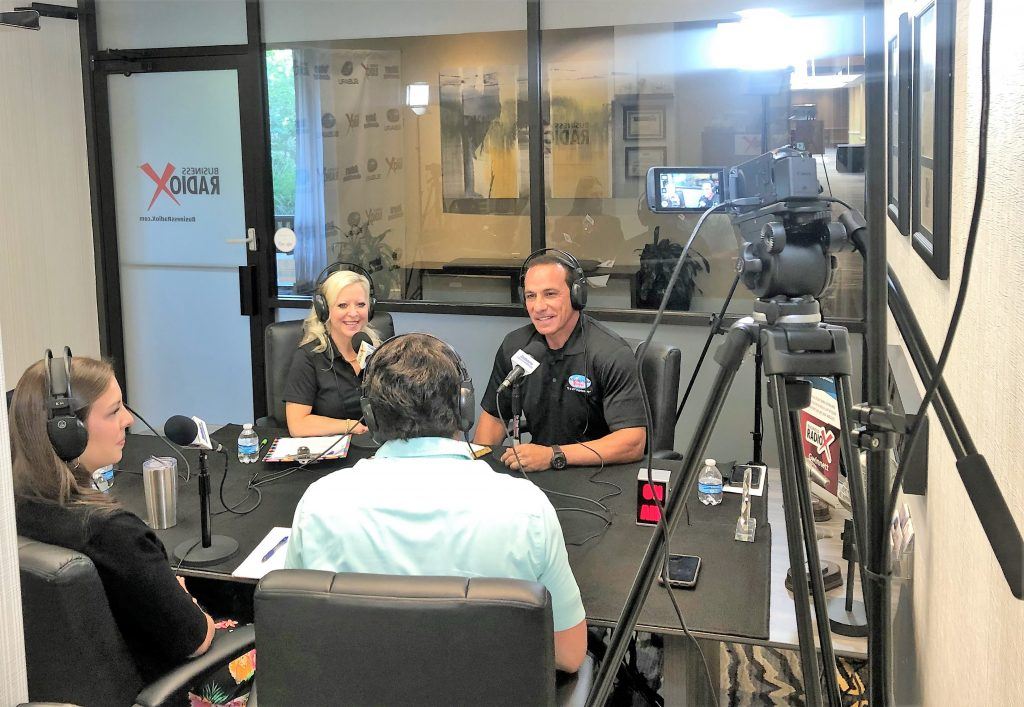
Business RadioX interviews dozens of innovative entrepreneurs and successful leaders each week. Its mission is to help local businesses “Get The Word Out” about the important work they’re doing for their market, their community, and their profession. With a pro-business slant and a long-form interview format, guests don’t have to worry about being ambushed or talking in “sound bites.” Guests have enough time to tell their whole story and to share their insights and experience without interruptions.

Business RadioX hosts are business professionals interviewing their peers, drilling down on the critical issues, and delivering practical information to an engaged business audience. Business topics that are frequently covered include: Law, Finance, Healthcare, Technology, Trade Shows, B2B Marketing, Venture Capital, Training and Development and other issues impacting the business community.

Tim & Chrystal Mansour/Mansour International

Building and operating over ten businesses within 30 years, all these businesses started from zero. Tim was fortunate to sell all of them over a period of time for a total of $10.8 million dollars.

Working successfully with thousands of employees, members, customers and family, Tim received several business accolades such as:

  • Georgia Chamber of Commerce “Georgia Business Man of the Year”
  • Gwinnett Chamber of Commerce “Gwinnett Business Man of the Year”
  • Board member, Leadership Gwinnett “Glance Program”
  • Georgia Trend Magazine “Georgia’s Top 40 Business Leaders Under 40”
  • Rockdale Chamber of Commerce “Jerry Barbee Small Business Person of the Year” Finalist
  • Gwinnett Magazine readers voted Fitness International “Best in Gwinnett” Fitness Center for seven years in a row
  • Member of Leadership Gwinnett
  • Member of Golden Key Society Alumni of UWA 2017
  • President, American Heart Association Gwinnett

Together, Tim and Chrystal have over 50 plus years of business experience in the Health & Fitness industry through education, coaching and living a healthy way of life. Key elements of this program are motivating people to pursue and achieve their dreams & goals in business, building/managing relationships, health & fitness, as well as helping others manage and overcoming obstacle while remaining focused, persistent and positive.

Mansour International is Tim and Chrystal’s current business, which allows them to enjoy motivating others in business, investing in real estate, flipping houses, and living a healthy way of life!

CLICK HERE to watch the video of this show.

Tagged With: amanda pearch, business advice, business made simple, business made simple podcast, Business RadioX, business tactics, business tips, chrystal mansour, Gwinnett Business RadioX, Mansour International, podcasting, Tim Mansour

Decision Vision Episode 35: Should I Hire a Business Development Coach? – An Interview with Rod Burkert, Burkert Valuation Advisors

October 10, 2019 by John Ray

Decision Vision
Decision Vision
Decision Vision Episode 35: Should I Hire a Business Development Coach? – An Interview with Rod Burkert, Burkert Valuation Advisors
Loading
00:00 /
RSS Feed
Share
Link
Embed

Download file

Mike Blake and Rod Burkert

Decision Vision Episode 35: Should I Hire a Business Development Coach? – An Interview with Rod Burkert, Burkert Valuation Advisors

Why should I hire a business development coach? What are the most important aspects of marketing my professional services? In this interview with “Decision Vision” host Mike Blake, Rod Burkert of Burkert Valuation Advisors answers these questions and much more. “Decision Vision” is presented by Brady Ware & Company.

Rod Burkert, Burkert Valuation Advisors

Rod Burkert, CPA, CVA, and his wife, Amy Burkert, CPA, CFA, with their dogs Buster, left, and Ty, stand in front of the RV that serves as their mobile office and their home.

Rod Burkert is the Founder and President of Burkert Valuation Advisors.

In one way, shape, or form, Rod has performed valuations since the late 1980s. In July 2000, he started Burkert Valuation Advisors in Philadelphia where he ran a “traditional” valuation practice for 10 years that focused on tax purpose valuations for manufacturers and distributors.

Based on that experience, in 2013 Rod began coaching BVFLS (business valuation and forensic legal services) professionals to mentor them in the marketing and positioning skills they need.

In March 2010, he began traveling full time throughout the US and Canada in an RV with his wife and dogs. Today his mobile consulting firm includes his valuation practice and a coaching business, all of which he built by leveraging his professional network, social media, and hiring virtual assistants to make the available technology work for him.

For more information, you can email him directly, go to his website, or you can find him on LinkedIn.

Michael Blake, Brady Ware & Company

Mike Blake, Host of “Decision Vision”

Michael Blake is Host of the “Decision Vision” podcast series and a Director of Brady Ware & Company. Mike specializes in the valuation of intellectual property-driven firms, such as software firms, aerospace firms and professional services firms, most frequently in the capacity as a transaction advisor, helping clients obtain great outcomes from complex transaction opportunities. He is also a specialist in the appraisal of intellectual properties as stand-alone assets, such as software, trade secrets, and patents.

Mike has been a full-time business appraiser for 13 years with public accounting firms, boutique business appraisal firms, and an owner of his own firm. Prior to that, he spent 8 years in venture capital and investment banking, including transactions in the U.S., Israel, Russia, Ukraine, and Belarus.

Brady Ware & Company

Brady Ware & Company is a regional full-service accounting and advisory firm which helps businesses and entrepreneurs make visions a reality. Brady Ware services clients nationally from its offices in Alpharetta, GA; Columbus and Dayton, OH; and Richmond, IN. The firm is growth minded, committed to the regions in which they operate, and most importantly, they make significant investments in their people and service offerings to meet the changing financial needs of those they are privileged to serve. The firm is dedicated to providing results that make a difference for its clients.

Decision Vision Podcast Series

“Decision Vision” is a podcast covering topics and issues facing small business owners and connecting them with solutions from leading experts. This series is presented by Brady Ware & Company. If you are a decision maker for a small business, we’d love to hear from you. Contact us at decisionvision@bradyware.com and make sure to listen to every Thursday to the “Decision Vision” podcast. Past episodes of “Decision Vision” can be found here. “Decision Vision” is produced and broadcast by the North Fulton studio of Business RadioX®.

Visit Brady Ware & Company on social media:

LinkedIn:  https://www.linkedin.com/company/brady-ware/

Facebook: https://www.facebook.com/bradywareCPAs/

Twitter: https://twitter.com/BradyWare

Instagram: https://www.instagram.com/bradywarecompany/

Show Transcript

Intro: [00:00:02] Welcome to Decision Vision, a podcast series focusing on critical business decisions, brought to you by Brady Ware & Company. Brady Ware is a regional, full-service, accounting and advisory firm that helps businesses and entrepreneurs make vision a reality.

Michael Blake: [00:00:20] And welcome to Decision Vision, a podcast giving you, the listener, clear vision to make great decisions. In each episode, we discuss the process of decision making on a different topic. Rather than making recommendations because everyone’s circumstances are different, we talk to subject matter experts on how they would recommend thinking about that decision.

Michael Blake: [00:00:39] My name is Mike Blake, and I’m your host for today’s program. I’m a Director at Brady Ware & Company, a full-service accounting firm based in Dayton, Ohio, with offices in Dayton; Columbus, Ohio; Richmond, Indiana; and Alpharetta, Georgia, which is where we are recording today. Brady Ware is sponsoring this podcast. If you like this podcast, please subscribe on your favorite podcast aggregator, and please also consider leaving a review of the podcast as well.

Michael Blake: [00:01:03] So, our topic today is, should I hire a business development coach? And I’ve picked this topic because, as most of you know, I’m a shareholder inside an accounting firm. And one of the hard—one of the struggles that almost every accounting firm faces is, how do we motivate people to develop business? How do we train people to develop business? Because at the end of the day, in the 21st Century economy, it’s all well and good to be a great technician, but if all you have in a firm is technicians, it’s like trying to win a baseball game with great pitching only, you wind up having zero to zero. And you can’t win that way. So, you’ve got to have people and a culture that drives the ability to generate revenue. And the accounting industry, in particular, is not one that is necessarily known for its outgoing, gregarious nature. And so, that’s a particular area that that we focus on.

Michael Blake: [00:02:08] And, for me, as a leader of a valuation and strategic advisory practice, at least 70% of what I do has something to do with business development. And I can tell you that the things on the mind of our partners all the time is, how do we get people excited, and not just excited, but also trained to generate revenue? Because it’s not fair to send a bunch of kids out there, or sometimes not kids say, you know, “Go back, get us some business. Go get them.” That’s not going to produce an outcome, except for the occasional outlier. There needs to be an important support system for that.

Michael Blake: [00:02:46] And I say this is not somebody to whom sales necessarily comes naturally. When I started my career in investment banking, I was the clock guy. I was the guy they locked into a room, and shoved in front of a spreadsheet, and left them with the textbooks, and just made sure it never ever got in front of the client because that was my role. We had other people that were much more comfortable than I. And then, over a number of years, working with coaches, including Rod, for a time, I’ve managed to become slightly below average, which doesn’t sound a lot, except when you understand the disaster I was when I started. And, actually, it’s quite a long way.

Michael Blake: [00:03:25] And joining us today by phone is is Rod Burkert, who is, I think, the best in the business when it comes to this kind of topic in the business valuation arena. And I’m proud to say that I was actually a client of his when I had my own practice for a little bit under a year, and I fired him for the best reason possible, is that I was generating so much business, I could not handle all of it. I had to turn off basically. And I give him a lot of credit for that, as well as another coach sort of earlier in my career. And I can’t think of a better endorsement than that. And it happens to be true.

Michael Blake: [00:04:03] But Rod is the founder of Burkert Valuation Advisors, a business valuation and litigation support firm. His assignments focus primarily on income, gift, and estate matters, specializing in closely held companies and private investment partnerships. He also provides report, review, and project consulting services to assist attorneys and other practitioners with their engagements between 1996 and 2025. Rod was a member of an elite instructor for the National Association of Certified Valuation Analysts – just rolls off the tongue – Consultants Training Institute. Missing the classroom environment, he rejoined the NACVA’s teaching circuit in 2011, championing the subject of Report Writing, another topic near and dear to my heart.

Michael Blake: [00:04:42] He is a recipient of various instructor awards, including the Circle of Light and Instructor of the Year. He is a past chairman of NACVA’s executive advisory board and education board, and has been named one of NACVA’s outstanding members. He is also a regular contributing author to Business Valuation Update, the Value Examiner, and Financial Valuation and Litigation Expert. If you’re not in valuation, you don’t know what those are, but those are basically the Sports Illustrated of the Valuation World, the New York Times of the valuation world. Rod is leveraging social media to build a mobile valuation consulting practice, allowing him to travel full time in an RV throughout the United States and Canada with his wife, Amy, and their two dogs. And Rob, thank you for taking time off the road to talk to us today.

Rod Burkert: [00:05:26] Hey, thanks, Mike, for having me. I appreciate it. I—gosh, until you read my bio, I didn’t realize how much I’ve done, but it sure sounds like a lot, doesn’t it?

Michael Blake: [00:05:38] Well, as I tell people, one of the benefits I see for myself having gray in my beard and two arthritic ankles is, at least, when you look behind in the rearview mirror, there’s some interesting stuff.

Rod Burkert: [00:05:49] Exactly, exactly.

Michael Blake: [00:05:51] So, you started out, I think, as did I, as a practitioner, giving out the work. Why did you decide that you’re going to develop, if you will, this persona or this new vocation of practice development training?

Rod Burkert: [00:06:13] Well, one of the things that you said in the beginning kind of struck me as pretty close to home is back in the day, when I started doing valuations, if someone said to me, “Describe your ideal day,” I would have said, “Sitting in front of a computer building an Excel model to help a client accomplish some—you know, or solve a valuation problem.” So, I was very much the nerd sitting in front of a computer as well, but I had my own practice, and I had to bring in work in order to build those kinds of models.

Rod Burkert: [00:06:50] And so, I’m kind of an outgoing person. I don’t mind getting out there. And I actually found that the more I did it, the more I enjoyed it. And then, I turned 60. So, I’m 63 now, but when I turned 60, I’m thinking my health is really good, I’m having a great time, I’m not thinking about retiring, I’ve got a long road ahead of me, and I have an opportunity really to embark on a second career. And for me, that second career piggybacked on what I know and what I do best, which is doing business valuation work. But instead of doing the work, I’m actually, as you said, helping people get the work because there is a lot of information out there that’s of a very technical nature. It tells us how to do the work, but nobody tells us how to get the work.

Rod Burkert: [00:07:47] And the last piece of why I’m doing what I’m doing, as you mentioned in the introduction two days ago, my wife and I officially crossed 9.5 years that we have lived full time in our RV, traveling throughout the United States and Canada with our two dogs. There’s no home. There’s no storage facility. Everything is in the RV. And I want to give that RV equivalent experience to other people in our profession. So, I don’t expect everybody to think that they’re going to pull up stakes and live in an RV like Amy and I do. But rhetorically speaking, Michael, what is your RV equivalent experience? What is it that you would like to do in tandem or in parallel with the business valuation work that you do? And one of my—kind of one of my success stories is a client that I am working with, and he really had a previous life as a painter and an artist. And we’ve restructured her practice to give that life back to her again.

Michael Blake: [00:09:00] So-

Rod Burkert: [00:09:00] That’s why I’m doing this.

Michael Blake: [00:09:02] Okay. So, yeah. And obviously, you’re helping a lot of a lot of people with it. So, before we go, I’m going to define a term because what we’re going to be talking about here is business valuation because that just happens to be my world. But I want to emphasize that Rod, also, helps people that are in the forensic and litigation services area, which generally means expert witnesses. And that that’s not an area which I play in. I’m on record saying that’s not my strength, to put it mildly. But a lot of what Rod does is he works with professionals like that as well.

Michael Blake: [00:09:38] So, when I say business valuation, because I don’t want to say that entire mouthful each and every single time, just imagine to yourself out in the audience that we’re also talking about forensic and litigation services. So, with that in mind, the question then is, can anyone do this? Can literally anyone who decides that, for whatever reason, for career development, or for survival, because they’ve got to eat, and they’ve got this practice, can anyone develop a business valuation practice?

Rod Burkert: [00:10:11] I think, to an extent, the answer to that question is yes with a huge but caveat. And that caveat is simply this, it’s that you have to be willing to keep showing up to try new things and always keep moving forward. And I think that’s the problem with many people in our profession. They don’t have that dedication to the consistency and persistency that’s required for the marketing that you need to build a practice.

Rod Burkert: [00:10:46] So, one of my coaching clients coined a really cool term. He’s been accused by his friends and colleagues of dolphin marketing. And what is dolphin marketing? Well, dolphin marketing is when you need work because everything in the pipeline is done, you come up for air, you breach out of the water, you grab a few new clients, and then you disappear under water, and nobody hears from you again until you need more work. That’s dolphin marketing.

Rod Burkert: [00:11:18] Anyone in our industry who we might call an industry titan, the seasoned professional, will tell you that you need to be out there marketing, if not every day, at least every week. And I think, given some of the mentality in our profession, we don’t want to do that. We convince ourselves—to me, we convince ourselves, “I’m a person that was never good in math,” and I had convinced myself that I will never be good in math. When actually, it’s a learned skill like anything else that we do. You can learn to be good in math, and you can learn to be good in marketing and practice development if you don’t talk yourself out of it.

Michael Blake: [00:12:05] What you talk about resonates with me. A podcast to which I listen fairly frequently is the Rosen Institute. You might have heard of it.

Rod Burkert: [00:12:14] Oh, yes.

Michael Blake: [00:12:15] Yeah. I mean, Lee Rosen is very much a kindred spirit of yours, except he goes global. And one of the things he says is that almost any marketing activity you do will be successful as long as you stick with it, and you’re consistent.

Rod Burkert: [00:12:31] And yes, I agree with that. And related to that, Michael. You have to like it. I mean, one of the things is what works for others may not work for you. And what works for you may not work for others. But the important thing is to play to your strengths. I would never advise a coaching client that they need to be out there speaking constantly if they didn’t really like speaking, or writing, or doing videos, or anything like that. You have to pick a marketing skill that you are halfway good at, so that you can learn to get better and enjoy doing or else, you won’t stick with it. And that goes back to being consistent and persistent.

Michael Blake: [00:13:14] So, why isn’t just being a great technician good enough? I mean, the little voice in my head that says the world in America is a meritocracy. Tell us. And maybe this is a rationalization that the marketing and sales are just fluff, but I’m a professional of substance, and I’m really good at the business valuation, et cetera, world. Why is that not good enough?

Rod Burkert: [00:13:39] Yeah. I mean, I used to think being a technician would be good enough. And then, I read Dale Carnegie’s book, How to Win Friends and Influence People. That book was written back in the 1930s. So, 80 some years ago, Dale Carnegie had this observation about the finance, about the success of the people that he was coaching. And he says, basically, it’s by observation that if you look at anyone who has achieved some level of financial success, 15% of that success is due to technical skills, and 85% of it would be due to what we would call today people engineering skills, the soft skills like good listening, having empathy, being patient. That has—I think, many times, we gravitate to somebody who can capture our imagination and tell us what they can do for us without, actually, supplying the mathematical solution for what they can do for us.

Michael Blake: [00:14:56] Now, sales, for people who don’t do it, and for me, I surprisingly found to my to my astonishment, really, that I get a big endorphin rush from it, but not everybody does. And some people—I think a lot of people still look at sales with a certain amount of apprehension, even dread. And I’m sure it comes across people’s minds, “Maybe I could just hire a salesperson or maybe partner up with a salesperson.” Is that. Is that a model that could work for a small firm, or is that just sort of putting a Band-Aid on a gunshot wound?

Rod Burkert: [00:15:32] Well, there are firms out there, even in our business valuation space, that have a team of salespeople only. They do not do valuation, or forensic accounting, or litigation services work at all. They go out and their job is to sell the work. And they have built an incredibly successful practice. I think they are five or six offices. They’ve been around for like 80 years, and they have used that model to some success.

Rod Burkert: [00:16:09] Rhetorically speaking, though, if you’re the prospect, at that point, because you haven’t signed on, this isn’t a widget that we’re selling. We’re selling a solution to an acute problem that could be the death of a family member, and their interest in the business needs to be valued for estate tax purposes. It could be the sale of your business, something that you’ve built over the course of your lifetime. And now, it represents the largest asset that you own. When it comes to interviewing somebody that’s going to help you solve that problem, do you want to meet somebody who’s selling the solution or somebody who is going to be preparing this solution?

Rod Burkert: [00:16:56] So, I’m not saying that the sales model where you’re wanting to hire somebody to outsource the sales piece of your practice development won’t work. But I think where we really fail most often is the people that do the work that we do, we don’t put ourselves in the shoes of the client. And how would we feel if we were going to have our problems solved by a salesperson as opposed to a person that’s going to actually do the work?

Rod Burkert: [00:17:27] You go to a doctor, there’s no salesman selling you the procedure that you need to have performed. There is the doctor that’s telling you the what, the why, and the how that this procedure needs to be performed. And I think with a professional service like ours, to me, prospects and clients want to meet with the person that’s going to be doing the work, not the person that’s just going to be selling the work.

Michael Blake: [00:17:57] Now, one of the objections, I’m sure, you face, and I certainly see with somebody who is confronted with the need to develop a business development mentality and business development practice, if you will, is a lack of time. I don’t have time to sit. I don’t have time to do X, Y and Z. And I’m curious, I would imagine that—I know this for a fact, as I’ve been a client of yours, is that it’s not a free ride to kind of jump on board the Rod Burkert training and become a coaching client, is it? I mean, there’s a there’s a time commitment and not just inside of school, if you will, but outside as well to prepare and build those skills, and build those business development muscle, isn’t there?

Rod Burkert: [00:18:45] There is. And I think, a big factor in all of this in what you said, Michael, is really how—first of all, well, how successful of a practice do you want? What does success mean to you? Because there are some people, you and I both know them, that have a successful practice simply by sitting in their office and aggressively waiting for the phone to ring. That’s a term that I used in coaching with you. And they are perfectly happy with that. They’ll never make high six figures doing that or it would be unusual to think that they could, but if they’re making a low six figure billing revenue and however you want to look at it, that may be all they need, and they’re not going to invest time with a coach like me.

Rod Burkert: [00:19:38] And on the other hand, there are people who want more for different reasons. And they’re not just necessarily saying more income. I’m saying more time, more money, more freedom. You have to put some systems in place to realize those things. And that’s what I would like to think that my coaching helps people do, not just more money but more money with more time and more freedom to use that money to, again, have that RV-equivalent experience.

Michael Blake: [00:20:12] And one of the time investment required by a coaching client of yours, let’s say, in a given week? How many hours do they expect to invest in their education that’s being led by you?

Rod Burkert: [00:20:25] I would say that there is a ramp up. In the beginning, it may be a few hours a week tailoring down. I mean, there’s two things, if you can bear with me here, Michael. Number one is it depends on when you come to me, how much authority, how much awareness that you have because there are people in the profession that don’t do marketing per se. They’re not out there networking like we think that they might do. Their networking is speaking and writing. And so, for them, they’re not investing any time in marketing, again, per se. They’re just doing what they like to do, which is speaking and writing.

Rod Burkert: [00:21:07] The other part of what this is, of what I teach, is something that you should be doing anyhow to build your practice. Let me give you a great example. I’m at a speaking event, someone says to me, “I’m a tax person. I would love to get a valuation practice up and running. And I just don’t—but I just don’t have the time.” And I was kind of blunt, and that’s my style. And my first question out of my mouth was, how much television do you watch a week? And he was all proud of the fact that he was a Cubs fan, and that during baseball season, he’s watching every game somehow streaming on television. And I said, “So, to me, an average baseball game is like three hours a week, three hours a game. And you’re watching multiple games a week. And now, you want to tell me that you don’t have time for marketing.”

Rod Burkert: [00:22:02] So, that enters into it as well. Meaning, how badly do you want this? Do you just want to gripe about your situation, or do you actually want to take time from other activities that really don’t contribute any value to get you to where you say you want to end up, and invest it in coaching time, and learning how to market and build a practice?

Michael Blake: [00:22:30] I remember reading that story. You put it on your mailings, at least, once. And it’s—yeah, it is a great story. And television is one of styles, sort of, t sucks too. You don’t realize how much time has gone until you—sometimes, you do wake up, but you look up, and you say, “Oh, my gosh. My whole evening is gone. I could have written an entire article in the four hours I just spent watching that TV.”.

Rod Burkert: [00:22:57] Right.

Michael Blake: [00:23:00] So-

Rod Burkert: [00:23:00] And if I can say, one of the last things—well, one of the things that I teach people is how to automate certain processes. Now, I don’t have a sales system or anything like that. But given what I know, given what I can teach people about platforms like Facebook and LinkedIn, there is a way to automate your connection requests. There’s a way to automate your scripts and use conversations on LinkedIn Messenger or Facebook Messenger to make it seem like you’re actually having a conversation until you get to the point where you find out that the person really does want to buy from you whatever they’re buying, and you take that conversation offline, and have—and call them, reach out, and phone, and have them have that real discussion.

Rod Burkert: [00:23:51] But there’s a lot of automation that can go on at the front end that you don’t have to be sitting at your computer to do or it happens for you. You’ve got to invest the time to set the system up. But man, once it’s running, it really works.

Michael Blake: [00:24:09] So, what about the duration of an optimal coaching relationship?

Rod Burkert: [00:24:14] And I’m supposing some of them may not be true. So, I’m likely going to learn something, but contrast with, say, a therapist, where—and I think part of what you do is therapy, good therapy, but there are some people that have lifelong relationships, or certainly years or decades-long relationships with therapists, is there ever a point in a coaching program such as the one that you run where your clients graduate, or is this something that you think that it’s a long term, maybe ideally a semi-permanent commitment to that relationship?

Rod Burkert: [00:24:51] Yeah, good question. And tongue in cheek, I think you stay with a coach as long as the return on investment is greater than or equal to the investment. And I think what really pivots people here is that our average engagement could be anywhere from at the really low end if you’re competing on the basis of price, maybe you’re doing work for $5000. But our engagements could easily go up to $25,000, $30,000, $50,000. $100,000 if you’re doing litigation support work, and it’s a big case. I mean, that happens.

Rod Burkert: [00:25:29] So, if I can teach you something that helps you get those kinds of—that kind of case work at those kinds of fees, and let’s say my coaching is $10,000 for an entire year, or that’s what it comes out to, because it’s close to that, but I’m helping you get three, four, five engagements at a multiple of $10,000, or $15,000, or $20,000 that you would not have otherwise gotten as a result of the coaching. Why wouldn’t you stick with me or any other coach, for that matter, that can help you develop that kind of a return on your investment?

Michael Blake: [00:26:08] Well, okay. So, yeah. So, there you go. So, I’d like to jog down to that a little bit because we’ve talked about the skill set that you help your clients acquire. And that’s a big part of what you’re offering. But my sense, also, is that’s for some people, you’re also just offering an accountability partner, so that people do, in fact, stay engaged, they stay motivated, they stay on task. (A), is that a fair characterization? And (B), if you had to guess, in many cases, is that accountability contribution even of equal value to the technique and skills contribution that you make?

Rod Burkert: [00:26:52] Yeah, it’s interesting that you put it that way, Michael, because if you think about it, we know – we know what we need to do to be successful because what it takes to be a success in an industry like ours hasn’t changed in generations. Quite frankly, it hasn’t changed in centuries. You get known for what you know by a combination of speaking and writing. And perhaps, in this day and age, video or podcasting. So, you see, you know what you should be doing. So, one of the big reasons people come to me is that accountability because they know that we’re going to have twice monthly meetings, and I’m going to ask them what progress that they’ve made towards the goals that they set for themselves to have the practice that they say that they want to have.

Rod Burkert: [00:27:48] So, accountability is a big thing. It’s not like I can’t teach you some things about, for example, something has come out in the last couple of weeks that has really changed the game about how people should be using LinkedIn. I can teach you that, but it doesn’t take away from the fact that you know you should be using LinkedIn in some way, shape, or form to help build your practice. Now, are you going to do it? Are you going to set aside 10 or 15 minutes every morning and every afternoon to use it? Well, that’s where accountability comes in because you know, as a coaching client, you’re going to have to report back to me about what you did and didn’t do in the last two weeks.

Michael Blake: [00:28:35] So, you’re a big proponent of your clients making themselves visible experts. And it’s important to note, there are there other marketing opportunities or channels available if you choose to. But you’re very much on the visible expert train. Why exactly is that as opposed to other potential marketing channels or approaches?

Rod Burkert: [00:28:59] A great question. And I think the answer is simple. If you put yourself—if we’re—if we put ourselves in the client’s shoes when we have a problem, we want a visible expert to solve it. I mean, if there’s something going on in your family, in your household, in your home, and it needs to be—and by that, it could be a medical emergency, all the way down to a plumbing emergency, do you want to call somebody that nobody has never heard of to solve your problem, or do you want to call somebody that you know of, or that your friends can highly recommend because they know that that person can successfully solve your problem? And I think we would agree with the latter. I mean, we want somebody who has solved our problem multiple times successfully.

Rod Burkert: [00:29:51] And the way you do that is to have—first of all, you have to have the skills and knowledge. So, you have to be an expert. You have to have expertise. But no one’s going to know about your expertise, or your authority, or what you’re known for if you don’t get out there because we need to be where the buyers of our services are when they need us. And so, if you’re not out there constantly priming the pump with speaking engagements, writing articles, again, whatever is your strength, doing videos, how’s anybody going to know to call you?

Michael Blake: [00:30:30] Well, yeah. That’s true. And, of course, as a presupposition, and I think an important one, that you don’t want to be a commodity. One thing you could do is the alternative, is you could adopt sort of a Yellow Pages model, put yourself in directories. Believe it or not, I actually do a case. I get an email from appraisers.org. I never landed a client or even came close, but at any rate—and you can sort of go that route, but by making yourself a visible expert, you are elevating yourself and making yourself, I think, a much more obvious fit to solve that problem too, right?

Rod Burkert: [00:31:06] Right.

Michael Blake: [00:31:07] So-

Rod Burkert: [00:31:08] Exactly.

Michael Blake: [00:31:09] I want to switch gears a little bit and talk about the the the nature of the coaching relationship itself. Somebody is looking for a coach like you, and they may have a view as to what an outcome, desirable outcome would be. Can you talk about what are some—what are realistic expectations of a coaching relationship? I’ll just have you talked about you because I don’t want you to speak for all other coaches, but what are realistic expectations of a relationship with you? And maybe what might be some unrealistic expectations somebody might have in a relationship with you?

Rod Burkert: [00:31:47] Sure. You’ve heard the expression, “You can lead a horse to water,” right?. And I think the an example of an unrealistic expectation and a coaching relationship is that me imparting knowledge to you is going to solve your problem because information is dramatically different than implementation. And the coaching client in any field is going to have to take the information from the coach and implement it. So, I can give you what you need to do. I can tell you why it’s important that you do that. And as a coaching client, I will even show you how to go about doing it. So, I will give you the what, the why, and the how. But if you don’t do anything with it, if you don’t do the work, if you don’t implement it, your situation is not going to change.

Rod Burkert: [00:32:47] You just may—you may learn more, you may be more knowledgeable, but if you don’t do anything, nothing’s going to change. If you don’t get out there on LinkedIn, if you don’t get out there and write, if you don’t get out there and speak, even though, again, you know these are the things you should be doing, nothing’s going to change. And quite frankly, Michael, when I see that happening in a coaching relationship, I will terminate the relationship because I’m not—I don’t want to take people’s money. If I see that they’re not implementing, we have a come-to-Jesus conversation, and I give them a little bit of time after that, and if they’re not working it, then I’m not helping them.

Michael Blake: [00:33:28] And look, I think, to be perfectly candid, too, it’s a self-defense mechanism for you as well. And I know how you coach in groups. So, if a person is not engaging, it means they’re not contributing to the other people who are, sort of, in your study group, if you will. And also—and I fired clients for similar things where I don’t want a client paying me, not taking my advice, have it not worked out, and then run around telling everybody what a moron I am because they didn’t take my advice.

Rod Burkert: [00:34:02] Right, exactly. I mean, there’s there is something in your reputation that you want to preserve out of all this too.

Michael Blake: [00:34:08] I think absolutely. What you talk about reminds me of a running joke my wife and I have. So, years and years ago, I used to be a tournament chess player. And one thing that my wife could always count on was whenever I came home from a tournament, I’d come home with, at least, three chess books. And they looked great, and they make you sound so smart. But there’s a problem with chess books, and this is the spoiler alert. They’re really boring to read. And so-

Rod Burkert: [00:34:38] I can imagine.

Michael Blake: [00:34:38] Right? They’re just not a page turner. Even though I was, in my day, a pretty strong player, they’re not boring. They look great on the shelf. And at some point, I had to stop stop myself from buying them because only in the books did not magically create this energy field that made me a stronger chess player. They just took up space on my bookshelf and made free space in my bank account.

Rod Burkert: [00:35:07] God. Yeah. Again, the difference between information and implementation.

Michael Blake: [00:35:14] So, one issue practices have, and I face this in mine, not urgently, but it’s something I think about a lot is training kind of the next generation. Many practices, as you know, sort of have a patriarch at the top of the practice, right? It could be Chris Mercer, who I know you have a good relationship. It could be Shannon Proud. It could be Jim Hitchner. And then, they have people that are working for them and are professionals in their own right. And all of those people know what it takes to build a successful and valuable firm, that if it’s going to have value, better not be entirely dependent on one person doing all the rainmaking. Do you think there’s a role for coaching in some capacity to help address the problem or the challenge of raising the next generation of visible experts? And if so, do you have any idea of what that may look like?

Rod Burkert: [00:36:16] Yes and yes. I think, to get to the heart of your question, it sounds like, well, is there a problem in training the next generation? And I think you’ve got to look at it from the origin of marketing. I mean, again, we came into this profession, Michael, many, many years ago, where there was no expectation that we needed the market. We were going to be those technicians and succeed solely on that basis. And then, things got tough.  We started to realize that if we really did want to get anywhere, we needed to do marketing.

Rod Burkert: [00:36:55] Just as a quick aside, I had a managing partner and accounting firm come to me when I was running a valuation practice in an accounting firm, comes into my office one day and says, “Damn it. The problem that I’m having is I can always find people to do the work. You can’t find people who can get the work.” And so, I suddenly realized, that was like a big aha moment for me that if I wanted to get anywhere, I needed to get the work. And so, begrudgingly, my generation – again, I said I was 63 at the top of the podcast – I happen to be what I consider a baby boomer trapped in a millennial body, or, I’m sorry, I’m a millennial trapped in a baby boomer body, the other way around. But we’ve begrudgingly learned these things that we have to do to bring in more work. We have to network. We have to have lunches, and breakfasts, and coffees with attorneys. We have to do it this way.

Rod Burkert: [00:37:54] And that patriarch at the top of the firm is saying to the younger generation, “This is how you have to do it,” and it doesn’t work that way because generations change. And the patriarch grew up with a certain generation of colleagues and referral sources for which networking events, for example, worked for them. But I hate to even say the millennial generation because it sounds like we’re maligning them, but I don’t mean to, they’re growing up with a cohort of similar-minded people who saw the damage of being away from your family all the time create. So, going out and networking every night of the week is not something that you’re going to convince the millennials the right thing to do. They’ve grown up with all sorts of phone apps, and texting, and that is how they communicate with each other.

Rod Burkert: [00:38:54] And these millennials, if they’re professional service providers, they’re going to get work from attorney and CPA referral sources who are their own age, who grew up with the same technology, and have the same shared experience of wanting to be with family and wanting to do a good job. So, I think when there’s a breakdown between trying to train the younger generation, it’s because we’ve already approached the relationship that these people are lazy, and they spend too much time on their phones, and they don’t want to get out there, and we make them bad and wrong because we want them to do it our way.

Michael Blake: [00:39:37] Yeah. And darn it, we want them to pair the same horrible price we had to pay, regardless how much sense it makes.

Rod Burkert: [00:39:43] Exactly. I mean, think about it the other way around. What if patriarchal generation grew up with texting as a way to bring in new work, but the younger generation didn’t like that? They don’t like texting. They want to have real conversations with people. They want to go out and meet them in person. They want to go to networking events. Would we, the older generation, be yelling at millennials if they didn’t want to stop texting to get business, and instead wanted to go out and do networking events? Would we be yelling at them because they want to do networking and not rely on something more technology related?

Michael Blake: [00:40:23] Yeah, and I see that. I see that in my practice because, as you know, I do a lot of work in the tech space. So, my demographic tends to skew a little bit younger. And I’ve actually not met about half of my clients in person, and it doesn’t matter, right? Even if I did a site visit, I wouldn’t even see servers anymore. I would see a bunch of Macbooks, and iPads, and a couple of conference rooms. If, they might even be in a coworking space. But they’ll respond to a text, they’ll respond to a tweet. I can read some through Instagram. And as you have often said, in a way, that millennial generation has it right because if you think about the investment you have to make, meeting one person at a time, breakfast, lunch, drinks, whatever it is, right, in the time you spend doing that over the course of a month, you could have reached 100,000 people over social media.

Rod Burkert: [00:41:19] Several times. Several times over. That’s exactly right. And just try and say, “Hey, we don’t care so much.” What we’re really saying as the patriarch, we don’t care about the results as much as we care about your methodology.

Michael Blake: [00:41:38] Right.

Rod Burkert: [00:41:38] And I think that’s wrong.

Michael Blake: [00:41:39] Yeah. Clearly wrong, right? That is just—that’s no longer a business solution. That’s a psychological issue.

Rod Burkert: [00:41:47] Right.

Michael Blake: [00:41:48] So-

Rod Burkert: [00:41:49] Again, like you said, we want those people to pay the same price that we had to.

Michael Blake: [00:41:54] That’s right. So, you obviously coach this business valuation forensic area, I think, exclusively. Do these—could these principles—again, could these principles apply in other industries? Law? Digital marketing? Management consulting? Could they be applicable anywhere, or are they strictly useful only and in the field that we’ve chosen?

Rod Burkert: [00:42:21] I think that what I do is applicable to other fields, but  you know from working with me, I’m a big fan of niching. So, I’ve got this minimum viable audience of business appraisers. So, I would be violating my own philosophy of niching if I try to go out and proselytize about how to develop an accounting practice or a law practice. I just—I’m not saying it couldn’t work, but I don’t think I’d have any authority or credibility because I’ve never built an accounting practice, or I’ve never built a law practice, but what I have built a couple of times over different iterations is a business valuation practice. I know what my clients are up against. I know how things are changing because I still run a traditional valuation practice. And I think it gives me the authority and credibility to do and to talk about what I do for similarly situated professionals. I’d have no idea. I wouldn’t really know where an accountant is coming from. I mean, I sort of would, but you get what I’m trying to say.

Michael Blake: [00:43:32] Yeah, sure, sure. And to be clear, I’m not suggesting that you should diversify, but somebody who I—some—it is most likely that the vast majority of people listening to this discussion today have nothing to do or have no interest in the business valuation industry or profession, but they may be wondering, if I could find a coach with a similar approach in my industry, would that be viable? My own answer is it probably would. It’s just a matter of finding the right person who are similarly niche that understands kind of the industry-specific realities that have to intersect with the techniques.

Rod Burkert: [00:44:15] Number one, I would agree with what you said. And number two, I would also like to point out that I think you’d be really hard pressed, Mike, to identify anyone that has achieved any level of success in finance, in industry, in sports, any field of endeavor without a coach or mentor. People say, “Well, why do I need a coach?” And I’m like, “Hey, do you ever watch a basketball game?” “Yeah.” “What’s the objective of the game?” “Score more points than the other team.” “Do you think the five players out on the court know that that’s what the objective is?” “Yes.” “Well, then why did those five players need a coach? Why don’t they just go out and score more points than their opponent? They know what they have to do. They don’t need a coach. right?” And then, there’s a big pause.

Michael Blake: [00:45:07] I’m glad you brought that up because I think the reputation of the professional coach has evolved and elevated significantly, certainly, in the last 10 years. And I think, in particular, in the last four or five. And I think it’s elevated partially because I think coaches have become better, and the coaches themselves are people that are accomplished as opposed to 10 years ago, I seemed to encounter a lot of coaches that weren’t very successful in the actual field. So, those who can’t do teach kind of thing.

Michael Blake: [00:45:42] But I think, also, there’s a recognition that particularly in business development, and I know you don’t like the word sales, so I’m trying to avoid it, but business development, we don’t teach that anymore. And it used to be—you’re a little older than I am, but, certainly, in the baby boomer generation, in most professional services firms of any size, even the smaller ones, there was a notion that the senior people would impart their wisdom, their knowledge, and would participate in the management and development of that next generation of business developers.

Michael Blake: [00:46:16] Now, what I see is just everyone for themselves. They got to meet their billable hours goals. I think to a certain extent, they’re fearful the younger generation will come and take their jobs. They’re certainly not rewarded for developing new talent as much as most firms kind of give lip service to that. And that confluence has created, I think, an opportunity for people like you to fill a very real vacuum that, I think, has occurred and has generally been harmful to most professional services industries.

Rod Burkert: [00:46:50] Yeah, yes. I mean, you’re preaching to the choir. And I know this sounds self-serving, but I think a lot of people might be more willing to embrace a coach, but I think they look at it as a cost instead of an investment. And that goes back to, well, how long should they stay in the coaching relationship? Well, as long as you’re getting a return on your investment, it’s not a sunk cost. If you’re not getting a return on investment, you should find another coach or quit your existing coach, find another coach. But investing in your own personal development, I don’t know where else you should spend your money first if not spending it on or not investing it in your own personal growth.

Michael Blake: [00:47:37] I think there’s plenty of literature out there that is very clear that one of the best investments anybody can ever make is on themselves, right? And certainly, one of the best bets you can make is on yourself.

Rod Burkert: [00:47:47] Correct.

Michael Blake: [00:47:48] So, we’re winding down here, and I want to get you back to your beautiful weather and your scenery. But two more questions I like to ask. One is, can you think about kind of one of your favorite coaching success stories and tell us a little bit about that.

Rod Burkert: [00:48:07] Yeah, yeah, yes. And actually, I’m going to—more than one comes to mind, but let me tell you the one that had the most impact that I feel like I’ve had the most impact on somebody. My biggest success story was somebody who I coached out of business valuation, because one of the things that goes back to, “Well, why don’t we like marketing?”, we realize for this person, for this individual, that she did not really like—the reason she didn’t really want to do marketing is because she really didn’t like business valuations. And actually coached her out of the business valuation world. She went to work for her husband’s business and is, now, focusing on something that she realized that she really wanted to do, which was to become a writer. And so, she’s starting out selling detective stories on Amazon. And I’d like—from a personal standpoint, from my viewpoint, that is like my most successful story.

Rod Burkert: [00:49:17] From another client’s perspective, I have an older client, late 60s, early 70s, who came to me really drained. I mean, emotionally drained of the years of just doing one project after another. And we’ve turned things around. We’ve tried to get away from one-to-one client service. He’s created a one-to-many product that he’s selling—creating one time, selling to his industry niche, and they don’t want to say what it is, what his niche is, but it’s webinar related. And he’s making almost as much money from a one-to-many product, which takes him a couple of days, a month to create, as he was going out there trying to sell and do one-to-one client service engagements. And he’s got a whole new—he feels totally reinvigorated about his practice and the possibilities for his practice.

Michael Blake: [00:50:23] And I do think those are very important outcomes. And at first, I have a similar one. As you know, I do office hours a few times a month.

Rod Burkert: [00:50:32] I think it’s a great idea. Let me—I’m sorry, Michael, to interrupt you, but everybody thinks it’s got to be something so secret saucy, there’s a magic bullet, secret potion, silver bullet that is the answer to marketing. And the simple things that I see you do on LinkedIn, creating the hard candy is an example. Letting it be known that you’re going to be at a restaurant for a certain time, and anybody who shows up during that time, you’re going to help them. I think, sometimes, we get so lost in the trees, and we don’t see the forest. And then, it’s the simple things that if we did consistently and persistently, we wouldn’t even consider it marketing. We wouldn’t hate to do it because we think it’s—you hate going to lunch and having those open office hours? I don’t think so.

Michael Blake: [00:51:21] No, no. And you take one look at my waistline, you know I do not going to lunch and having those office hours. But one of my favorite stories of office hours was I’d call a successful failure like Apollo 13. I had office hours. And this was about eight to nine years ago. And a guy showed up, ran his pitch, his venture pitch by me, and said, “What do you think?” I said, “I think this thing has a lot of holes, and I think that you are risking years in your family’s finances on a very dubious proposition. And it’s most likely going to fail.” And he was so upset that he got up, walked away, stuck me with this bill, and called me a couple of names on the way out. He was not happy.

Michael Blake: [00:52:07] Six months later, I received a handwritten note from him thanking me through the fact that I told him something that his friends and family just didn’t have the heart to do and for having the courage to kind of tell him that he needed to do that. And he sent me $100 gift card hoping that was going to cover his tab, which is more than it did, but that was somebody I held by getting him out of something that just was not going to be successful. So, there’s no nothing wrong with that.

Michael Blake: [00:52:36] All right. So, I’m already going over time for both of us, but I want to make sure I get this last one. And that is, how can people contact you to learn more about business development coaching? And maybe if you’re not the right person because they’re not in business valuation, maybe elsewhere, how can they reach out to you?

Rod Burkert: [00:52:57] Well, I think just saying it over the phone, probably the easiest way is just if you know how to spell my name, you can find me on LinkedIn. I’m there a lot. That is my social media platform of choice. And so, you can message me on LinkedIn. I have a website that outlines pretty much who I am and what I do. And that website URL is rodburkert.com. And my email address piggybacks off of that. You can email me at rod@rodburkert.com.

Michael Blake: [00:53:31] All right. Well, thanks very much for that. And that’s going to wrap it up for today’s program. I’d like to thank Rod Burkert – B-U-R-K-E-R-T, so you know how to spell it – so much for joining us and sharing his expertise with us today. We’ll be exploring a new topic each week. So, please turn in so that when you’re faced with your next business decision, you have clear vision when making it. If you enjoy this podcast, please consider leaving a review with your favorite podcasts aggregator. It helps people find us, so that we can help them. Once again, this is Mike Blake. Our sponsor is Brady Ware & Company. And this has been the Decision Vision Podcast.

Tagged With: CPa, CPA firm, Dale Carnegie, Dayton accounting, Dayton business advisory, Dayton CPA, Dayton CPA firm, Decision Vision, dolphin marketing, forensics services, litigation services, marketing, marketing professional services, Michael Blake, Mike Blake, podcasting, professional services firms, professional services marketing, professional services sales, Rod Burkert, Sales, selling professional services, speaking, valuation services, video

Episode 61: The One Thing You Need to Know About Exit Planning – David Shavzin

September 3, 2019 by Mike

Business Infrastructure
Episode 61: The One Thing You Need to Know About Exit Planning – David Shavzin
Loading
00:00 / 30:13
RSS Feed
Share
Link
Embed

Download fileDuration: 30:13

Who will take over your business when you’re no longer able to? Your answer to this question is the foundation of your exit plan and EVERY entrepreneur should have one. In this episode, exit and succession planning expert David Shavzin defines what an exit plan is and the people, processes, and tools needed to create and update it. As someone who helps business owners build value around their life’s work, David also candidly talks about the sensitivities of and multiple ways to transition ownership. Learn why business infrastructure is key to proving value to potential buyers.

Special Guest:  David Shavzin, Founder & CEO – Shavzin & Associates, Inc.

Location: Atlanta, GA  USA

Show Notes:

  • The Value Track Blog: David’s free blog offering resources and tips on exit planning and business valuation; includes a link to sign up for his free newsletter.
  • XPX Owner’s Academy: The Exit Planning Exchange’s library of free videos and articles around business value growth and transfer.
  • Small Business Development Center (SBDC): nationwide centers funded by the U.S. SBA to provide business consulting and assistance to new and existing small businesses.
  • The E-Myth: Why Most Small Businesses Don’t Work and What to Do About It: book by Michael Gerber.

Tagged With: entrepreneur, Entrepreneurship, exit planning, podcasting, small business exit planning strategies, value

Episode 59: The One Thing You Need to Know About Finding Your Voice – Josh Cary

August 21, 2019 by Mike

Business Infrastructure
Episode 59: The One Thing You Need to Know About Finding Your Voice - Josh Cary
Loading
00:00 /
RSS Feed
Share
Link
Embed

Download file

Be careful about the labels you put on yourself,” warns Josh Cary, “Because people are willing to validate them.” A hard, but valuable lesson he learned after spending 40 years in hiding. In this episode, Josh, a former actor turned podcaster and business coach, explains the moment he realized he was hiding his power and ability as a leader. Tune in to learn the specific people, processes, and tools he leveraged to reclaim his power and why he says it’s imperative you do the same as you lead your company through growth spurts.

Special Guest: Josh Cary, Founder & CEO – The Josh Cary Company, LLC

Location: Brick, New Jersey  USA

Show Notes:

  • Hidden Entrepreneur: Josh’s podcast.
  • Insight Timer: a free meditation app.
  • Toastmasters: an international public speaking and leadership organization.

Tagged With: Leadership, podcaster, podcasting

Episode 56: The One Thing You Need to Know About Podcasting – Doug Sandler

July 31, 2019 by Mike

Business Infrastructure
Episode 56: The One Thing You Need to Know About Podcasting – Doug Sandler
Loading
00:00 /
RSS Feed
Share
Link
Embed

Download file

Like entrepreneurship, podcasting is not for the faint of heart. It requires patience, commitment, and consistency – all of which is challenging since it takes a while before you know who your audience is. In this episode, nationally recognized speaker, bestselling author, and podcaster extraordinaire Doug Sandler shares the most important thing you need to know about podcasting. He also reveals the business infrastructure required for a successful production. Discover which types of podcasts tend to do really well and how you can monetize them.

Special Guest: Doug Sandler, Founder & CEO – Turnkey Podcast Productions

Location: Los Angeles, CA  USA

Show Notes:

  • Turnkey Podcast Blog: Doug’s blog featuring content on how to monetize a podcast.
  • 5 Ways to Make Money Podcasting: a FREE guide from Doug.
  • Nice Guys on Business: Doug’s podcast.
  • Nice Guys Finish First: Winning Customers for Life by Winning Relationships That Last: Doug’s book.
  • Popular Podcast Host and Publisher Platforms:
    • Libsyn
    • Apple Podcasts
    • Blubrryturnkeypodcast.com/blog
    • Anchor
    • Simplecast
    • Spotify

Tagged With: doug sandler, Entrepreneurship, monetize podcasts, podcast, podcasting

Coach Mark Speaks

October 13, 2015 by angishields

Midtown Business Radio
Coach Mark Speaks
Loading
00:00 / 00:49:08
RSS Feed
Share
Link
Embed

Download fileDuration: 00:49:08

professional coach

CW Hall and Coach Mark Speaks (Mark Todd)

Coach Mark Speaks

This week I sat down with entrepreneur, coach, and mentor, Mark Todd of Coach Mark Speaks.  He shared his story of how he longed to be an entrepreneur as a young kid, tried as a college student and failed, then found a talent he possessed and leveraged it into a successful business.

We talked about how he and a friend decided to start a night club while they were college students, with hopes of building on their love of DJ’ing.  Unfortunately, with no experience, no mentors, and limited capital, the partners could not support the business to keep it open during the early start-up phase.  While trying to keep the business open, Mark lost his car, used his student loan funds, and was doing anything he could to make his rent.

While trying to save money promoting his business, Mark began creating the graphic design pieces he would distribute about his club.  It was then he realized he had a knack for it and once the club shut down, he pivoted and started working to build his graphic design business.  15 years later he came by to talk about what it was that made him achieve success and have the life he always wanted.

He is now spending much of his time authoring (and reading) books on how to succeed and overcome challenges and giving away his time to coach and mentor entrepreneurs and individuals looking to improve their lives.

Coach Mark isn’t an athletic coach although he can help you win the biggest race of your life. He isn’t a life coach, but he can help you live the best life you could ever possibly imagine. Coach Mark is a believability coach. He helps others to increase what they believe is possible for them. That self-belief will help determine how far anyone can go in life.

As a successful entrepreneur over the last 15 years, Coach Mark has built 2 exceedingly successful million-dollar businesses. Driven by his desire to acquire and share knowledge, Coach Mark retired from the day to day operations of his businesses before the age of 40 and decided to spend the rest of his life serving others by sharing his philosophy of continual self improvement. It’s Coach Mark’s belief that life gets better when you get better, and his goal is for each and everyone he encounters to continually get better. You can stay in touch with Coach Mark by visiting www.powerinahalfhour.com or on FB – Mark Starr, or on IG & Twitter @coachmarkspeaks

Special Guest:

Coach Mark Todd of Coach Mark Speaks, Inc  twitter_logo_small

PowerInAHalfHour.com

Tagged With: CW Hall, entrepreneur, graphic design, Mark Todd, motivational speaking, podcasting, powerinahalfhour.com, real estate investing, starting a business

  • « Previous Page
  • 1
  • 2
  • 3

Business RadioX ® Network


Our Most Recent Episode

CONNECT WITH US

  • Email
  • Facebook
  • LinkedIn
  • Twitter
  • YouTube

Our Mission

We help local business leaders get the word out about the important work they’re doing to serve their market, their community, and their profession.

We support and celebrate business by sharing positive business stories that traditional media ignores. Some media leans left. Some media leans right. We lean business.

Sponsor a Show

Build Relationships and Grow Your Business. Click here for more details.

Partner With Us

Discover More Here

Terms and Conditions
Privacy Policy

Connect with us

Want to keep up with the latest in pro-business news across the network? Follow us on social media for the latest stories!
  • Email
  • Facebook
  • Google+
  • LinkedIn
  • Twitter
  • YouTube

Business RadioX® Headquarters
1000 Abernathy Rd. NE
Building 400, Suite L-10
Sandy Springs, GA 30328

© 2025 Business RadioX ® · Rainmaker Platform

BRXStudioCoversLA

Wait! Don’t Miss an Episode of LA Business Radio

BRXStudioCoversDENVER

Wait! Don’t Miss an Episode of Denver Business Radio

BRXStudioCoversPENSACOLA

Wait! Don’t Miss an Episode of Pensacola Business Radio

BRXStudioCoversBIRMINGHAM

Wait! Don’t Miss an Episode of Birmingham Business Radio

BRXStudioCoversTALLAHASSEE

Wait! Don’t Miss an Episode of Tallahassee Business Radio

BRXStudioCoversRALEIGH

Wait! Don’t Miss an Episode of Raleigh Business Radio

BRXStudioCoversRICHMONDNoWhite

Wait! Don’t Miss an Episode of Richmond Business Radio

BRXStudioCoversNASHVILLENoWhite

Wait! Don’t Miss an Episode of Nashville Business Radio

BRXStudioCoversDETROIT

Wait! Don’t Miss an Episode of Detroit Business Radio

BRXStudioCoversSTLOUIS

Wait! Don’t Miss an Episode of St. Louis Business Radio

BRXStudioCoversCOLUMBUS-small

Wait! Don’t Miss an Episode of Columbus Business Radio

Coachthecoach-08-08

Wait! Don’t Miss an Episode of Coach the Coach

BRXStudioCoversBAYAREA

Wait! Don’t Miss an Episode of Bay Area Business Radio

BRXStudioCoversCHICAGO

Wait! Don’t Miss an Episode of Chicago Business Radio

Wait! Don’t Miss an Episode of Atlanta Business Radio