Business RadioX ®

  • Home
  • Business RadioX ® Communities
    • Southeast
      • Alabama
        • Birmingham
      • Florida
        • Orlando
        • Pensacola
        • South Florida
        • Tampa
        • Tallahassee
      • Georgia
        • Atlanta
        • Cherokee
        • Forsyth
        • Greater Perimeter
        • Gwinnett
        • North Fulton
        • North Georgia
        • Northeast Georgia
        • Rome
        • Savannah
      • Louisiana
        • New Orleans
      • North Carolina
        • Charlotte
        • Raleigh
      • Tennessee
        • Chattanooga
        • Nashville
      • Virginia
        • Richmond
    • South Central
      • Arkansas
        • Northwest Arkansas
    • Midwest
      • Illinois
        • Chicago
      • Michigan
        • Detroit
      • Minnesota
        • Minneapolis St. Paul
      • Missouri
        • St. Louis
      • Ohio
        • Cleveland
        • Columbus
        • Dayton
    • Southwest
      • Arizona
        • Phoenix
        • Tucson
        • Valley
      • Texas
        • Austin
        • Dallas
        • Houston
    • West
      • California
        • Bay Area
        • LA
        • Pasadena
      • Colorado
        • Denver
      • Hawaii
        • Oahu
  • FAQs
  • About Us
    • Our Mission
    • Our Audience
    • Why It Works
    • What People Are Saying
    • BRX in the News
  • Resources
    • BRX Pro Tips
    • B2B Marketing: The 4Rs
    • High Velocity Selling Habits
    • Why Most B2B Media Strategies Fail
    • 9 Reasons To Sponsor A Business RadioX ® Show
  • Partner With Us
  • Veteran Business RadioX ®

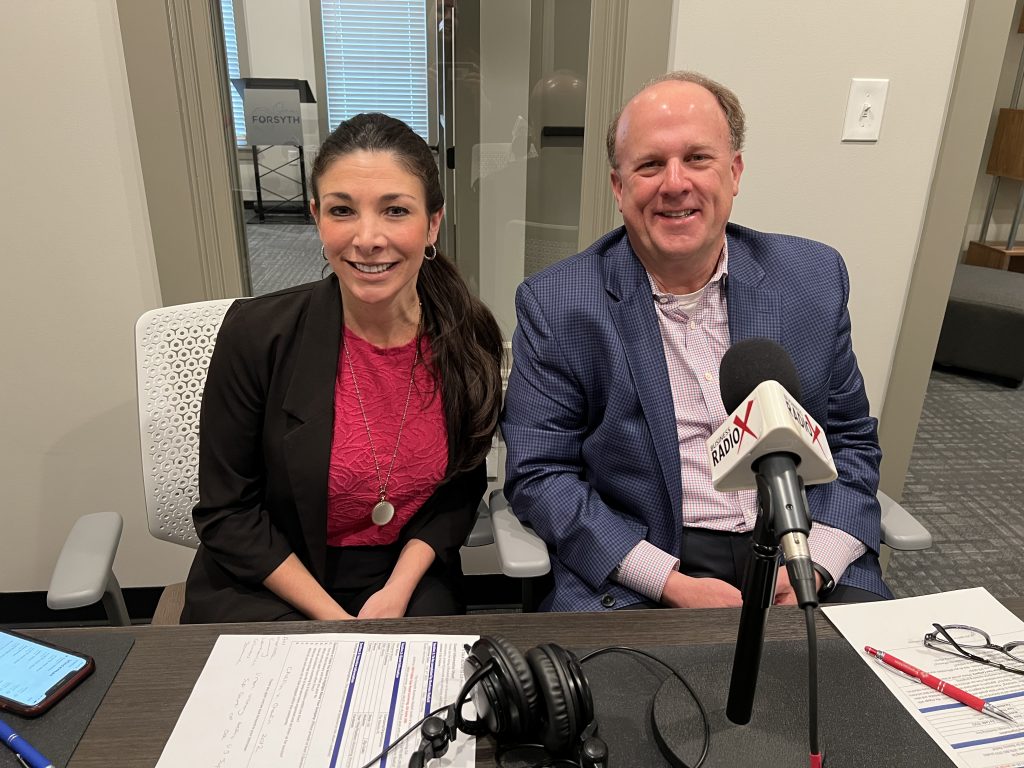
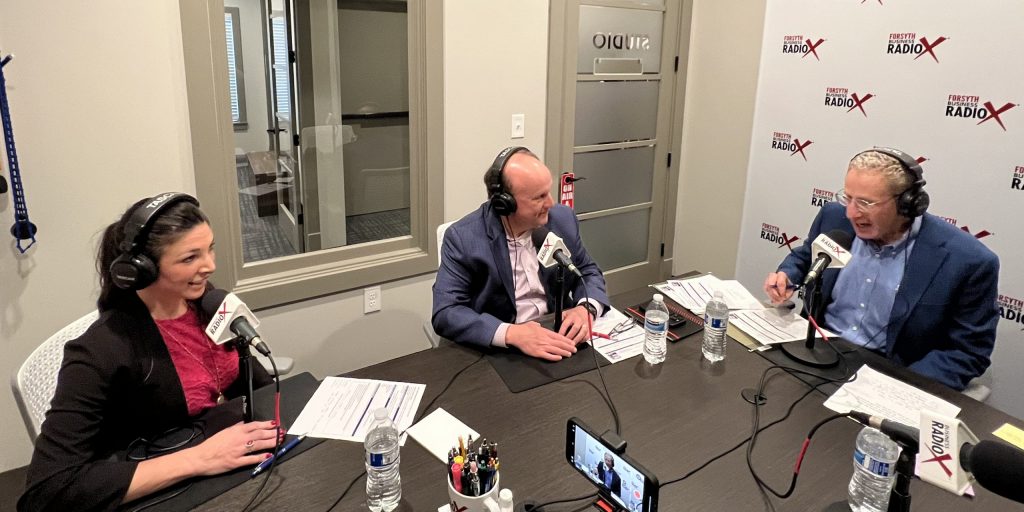
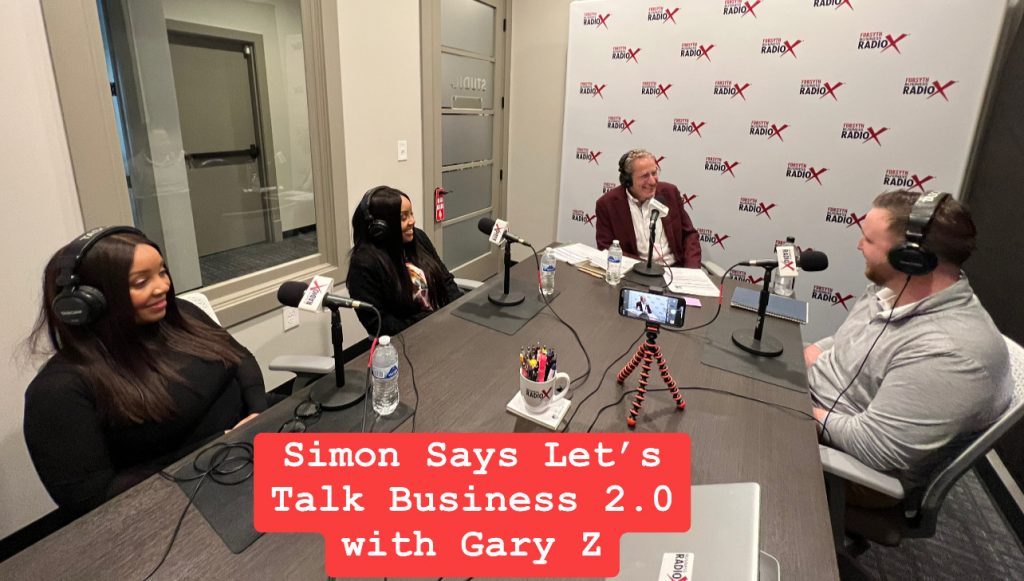
Juanita and Joanna Wright, Founders of Toronto & Atlanta Wright Spa Mobile Services and Jeff Kouns of Shingle Magic Atlanta join Gary Zermuehlen of Sandler Training, Simon INC

March 2, 2023 by Amanda Pearch

Forsyth Studio
Forsyth Studio
Juanita and Joanna Wright, Founders of Toronto & Atlanta Wright Spa Mobile Services and Jeff Kouns of Shingle Magic Atlanta join Gary Zermuehlen of Sandler Training, Simon INC
Loading
00:00 /
RSS Feed
Share
Link
Embed

Download file

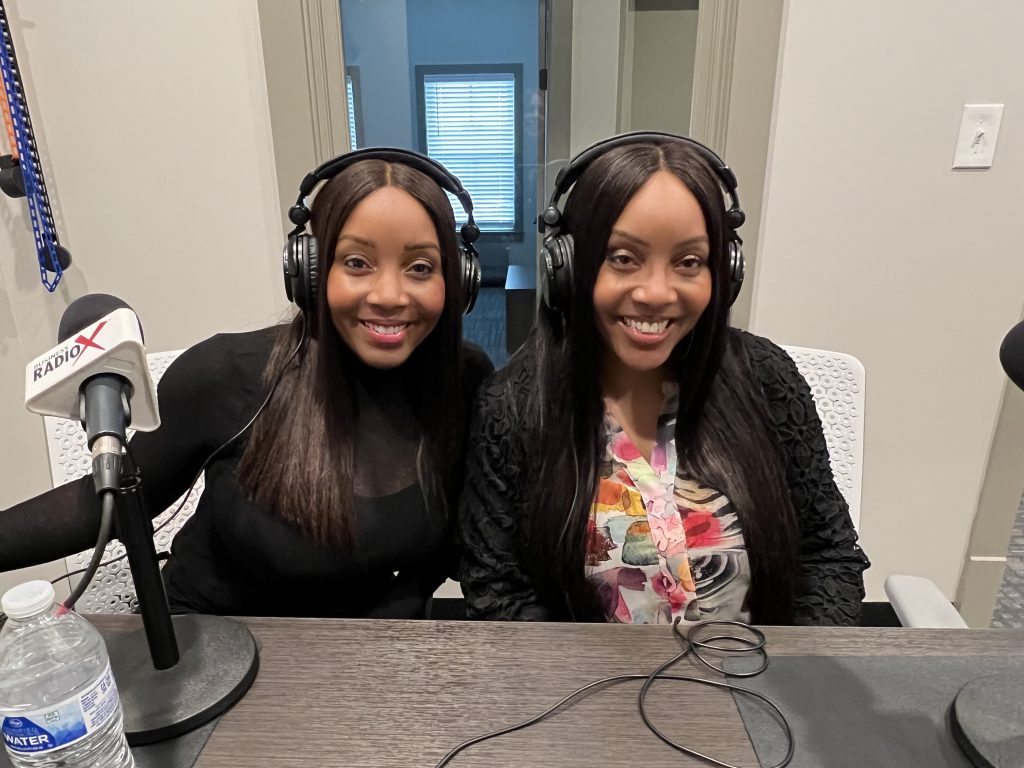
Juanita and Joanna Wright, Founders of Toronto & Atlanta Wright Spa Mobile Services

Toronto & Atlanta Wright Spa Mobile Services Aims to bring tranquility and relaxation to their clients by recreating the spa experience. They come to your home, office or hotel providing luxury spa services with unsurpassed customer service. Indulge in massages, facials, manicure and pedicures,
provided by over 30 fully licensed health and beauty professionals. We are passionate about promoting relaxation and tranquility. The Wright Spa team has created an exclusive luxury line of all-natural sugar scrubs, body butters, facial moisturizer and body oils.
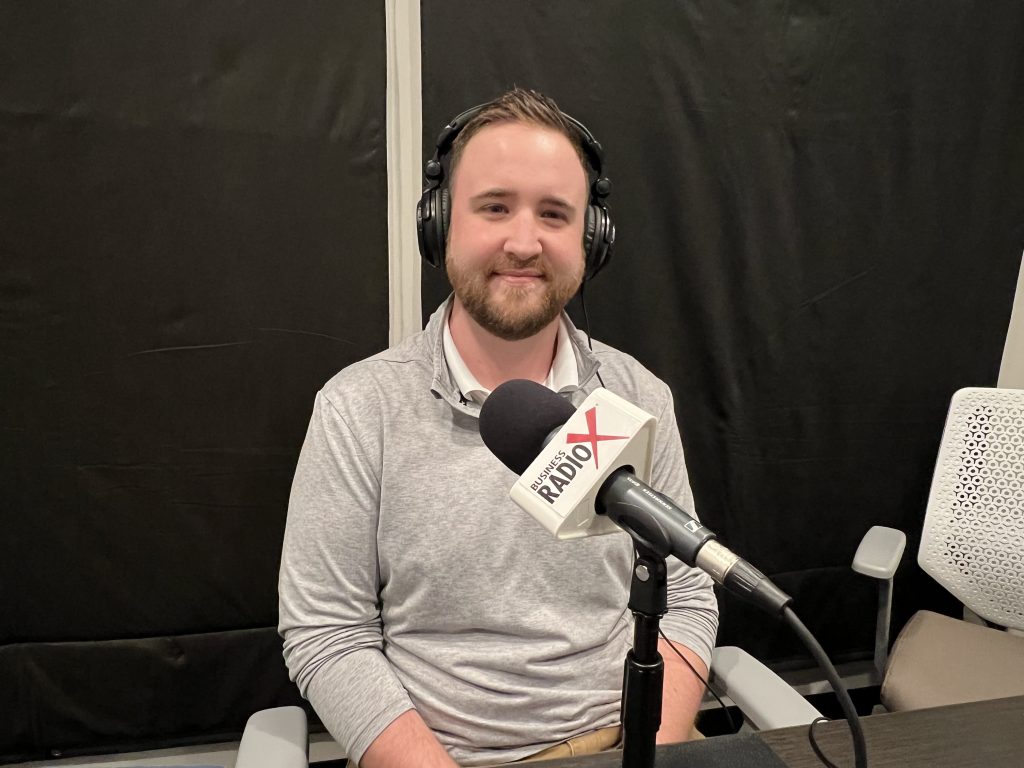
 

Jeff Kountz, Marketing Manager at Shingle Magic Atlanta

Shingle Magic Atlanta – Atlanta’s all-in-one roofing experts, the Shingle Magic team is there to help you keep a solid and secure roof over your head. Offering a wide variety of residential and commercial services, including roof installation, roof repair, roof maintenance, and roof replacements. With their training and experience working for you, it’s never been easier to keep a stable roof over your head.


Host Gary Z is a Sales Trainer & Coach at Sandler Training, Simon Inc.

Companies depend on sales force development. Gary and team equip sales professionals to drive sales revenue higher, uncover significantly more business opportunities, shorten their selling cycles, and protect their gross profit margins. Using a powerful combination of consulting, sales training, they help their client community to achieve goals and overcome challenges.

SUBSCRIBE to “Simon Says Let’s Talk Business 2.0” wherever you get your podcasts
Series proudly presented by Sandler Training, Simon Inc.

Simon-Says-Forsyth-banner.png

Podcasts by Amanda Pearch

Tagged With: al simon, Amanda Marmolejo, amanda pearch, Coaching, Forsyth Business, Gary Zermuehlen, Jeff Kouns, Joanna Wright, Juanita Wright, Leadership, marketing, roofing, Sales, Sales 1-2-3 with Gary Z, Sandler Training by Simon Inc., Shingle Magic Atlanta, Spa, training, Wright Spa Mobile Services

Common Mistakes to Avoid in eCommerce E4

February 14, 2023 by Karen

Common-Mistakes-to-Avoid-in-eCommerce-feature
eCommerce Insights
Common Mistakes to Avoid in eCommerce E4
Loading
00:00 /
RSS Feed
Share
Link
Embed

Download file

Common-Mistakes-to-Avoid-in-eCommerce

Common Mistakes to Avoid in eCommerce E4

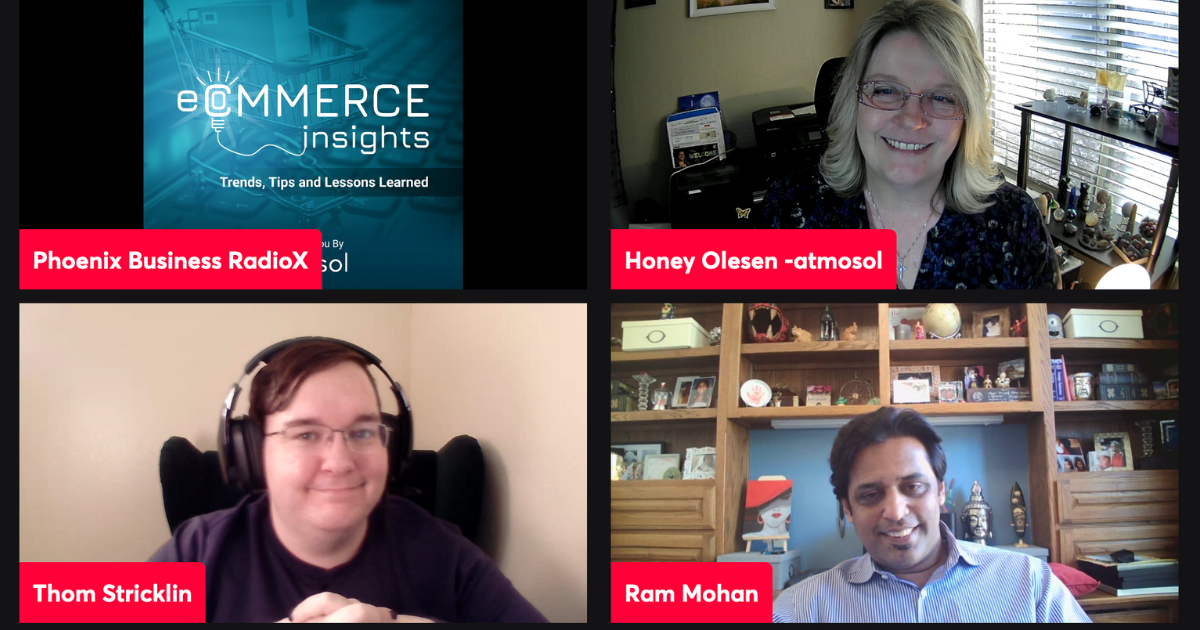
Attention all ecommerce entrepreneurs! In this episode of eCommerce Insights: Trends, Tips and Lessons Learned, atmosol discussed things to avoid when building your online store. Here are a few of the valuable insights:

  1. Don’t skip the planning phase.
  2. Don’t skimp on design and user experience.
  3. Poor product descriptions lead to loss of sales.

Listen to this episode of eCommerce Insights: Common Mistakes to Avoid in eCommerce to learn valuable information to help you succeed in your eCommerce ventures.

Thom-Stricklin-eCommerce-InsightsThom Stricklin is a Solution Engineer for atmosol and has been with the company for nine years. He has been involved in web development since creating his first simple website as a high-school sophomore over 25 years ago.

Through the years, Thom has picked up a wide range of related skills, from front-end development, design and UX; to back-end development and application architecture; and as diverse as server management, DevOps, branding, logo design, and sales.

The marriage of technology and creativity is a driving force for Thom’s interest in the Web. Though he spends less time these days working on front-end development, his “first love” as technologies go is CSS. This same joining of the technical and creative can be seen outside of work, as well–some of his favorite personal interests are photography, woodworking, and smart-home technology.

Before joining atmosol, Thom worked in the public sector, helping to develop a world-class content management system for K-12 education as well as undertaking one of the largest re-branding projects in the state of Arizona.

This background has formed his career at atmosol, as he brings the same spirit of service and care to each and every merchant. He knows all too well that businesses with limited technical resources depend on their partner agencies to make informed choices, and strives to maintain atmosol’s reputation as a company that merchants can trust.

Connect with Thom on LinkedIn.

Jorge-Garcia-eCommerce-InsightsJorge Garcia’s journey through design and development has run the gamut of web and software development. He is Front End Development UI/UX with atmosol.  He has been fortunate enough to work with talented teams building small and large websites.

He has gained additional experience with web applications and software, creating customer support websites, and data center management infrastructure solutions. He also spent some exciting and rewarding years in the games industry, where he worked with teams making mobile and console games.

Throughout his practice, he has learned a lot of methodologies, development models, and engineering theories. This has allowed him to couple his foundation in art and design with development know-how to create user interfaces that provide real solutions.

User experience is an essential facet of great interface design. He has spent years learning and applying established UX practices to his design and development process. He loves analyzing user data, mapping out interaction models, creating and testing prototypes, and studying use cases. He has applied user experience practices across different applications, websites, and software that resulted in great interfaces with valuable and long-lasting results.

He enjoys making prototypes, from wireframes and paper prototypes to low-fidelity prototypes in XD, or Balsamiq, to rapid prototypes in HTML/CSS/JS. He believes that modeling out interactions and use cases leads to great software, and he uses prototyping and wireframing to quickly and efficiently meet his development goals.

About eCommerce Insights

eCommerce Insights is about bringing people together to discuss the vast landscape of eCommerce covering topics like technology, conversion optimization, branding, and marketing. The show focuses on how to build, manage and grow your online business using scientific and predictable methods thereby reducing uncertainty and risk. Our guests include vendors, merchants, experts, and technology partners shaping the world of eCommerce.

About Our Hosts

Ram-K-MohanRam Mohan is CEO and partner at atmosol, an ecommerce and technology company. He has spent over two decades in technology and eCommerce consulting helping companies ranging from small to fortune 100 achieve their business goals using technology.

As CEO, Ram leads atmosol’s eCommerce and SaaS services business working with our clients. In addition, he leads a team that runs an eCommerce portal in the meetings and events sector focusing on the EMEA market. He is also responsible for several SaaS products that are envisioned, built, and marketed by atmosol in different verticals and geographies.

Ram enjoys keeping up with and gaining a deep understanding of the latest trends in technology and eCommerce so he can help atmosol and our clients avoid hype and adopt trends that offer a tangible impact on our businesses.

Honey-OlesenHoney Olesen is the Director of Operations with atmosol and has substantial experience in leadership, management, operations, project management, digital marketing, human resources and data analysis. She deeply understands how businesses work and can take complex concepts and make them easy to understand for both employees and customers. She has worked at atmosol for over 11 years and has had the opportunity to work with some great brands and people in ecommerce, marketing and business.

Before entering the world of technology, Honey worked with some fantastic business owners in the building industry – soaking up knowledge of business day-to-day operations and growing her professional development.

She believes that in order for businesses to be successful, they need to have a clear mission and purpose, make sure the business goals are aligned with the values and stay focused on what’s important. She believes this is the same for individual success: find a place where your mission, purpose, goals, and values align with the company.

About Our Sponsor

Atmosol is a technology company working at the intersection of eCommerce and SaaS software. Our deep expertise in web development in addition to our long partnership with eCommerce platforms enables our clients to break through eCommerce platform barriers and build experiences that amaze their customers. Being in the eCommerce business ourselves running a meeting and events sales portal in the EMEA, we know the trials and tribulations our customers face firsthand.

In addition to eCommerce, we also build highly scalable SaaS products for our clients. We’ve also built and marketed our own successful SaaS products in different verticals.

Follow atmosol on LinkedIn, Twitter and Facebook.

atmosol-transparent-logo

Tagged With: devop, e-Commerce, online store, Rapid prototypes in HTML/CSS/JS, Sales, UI/UX in ecommerce, User Experience in Web Development, web development

Russell Harrell of SBF Ideas & Margaret Bryant of The Manely Law Firm PC join Gary Zermuehlen of Sandler Training, Simon INC

February 6, 2023 by Amanda Pearch

Forsyth Studio
Forsyth Studio
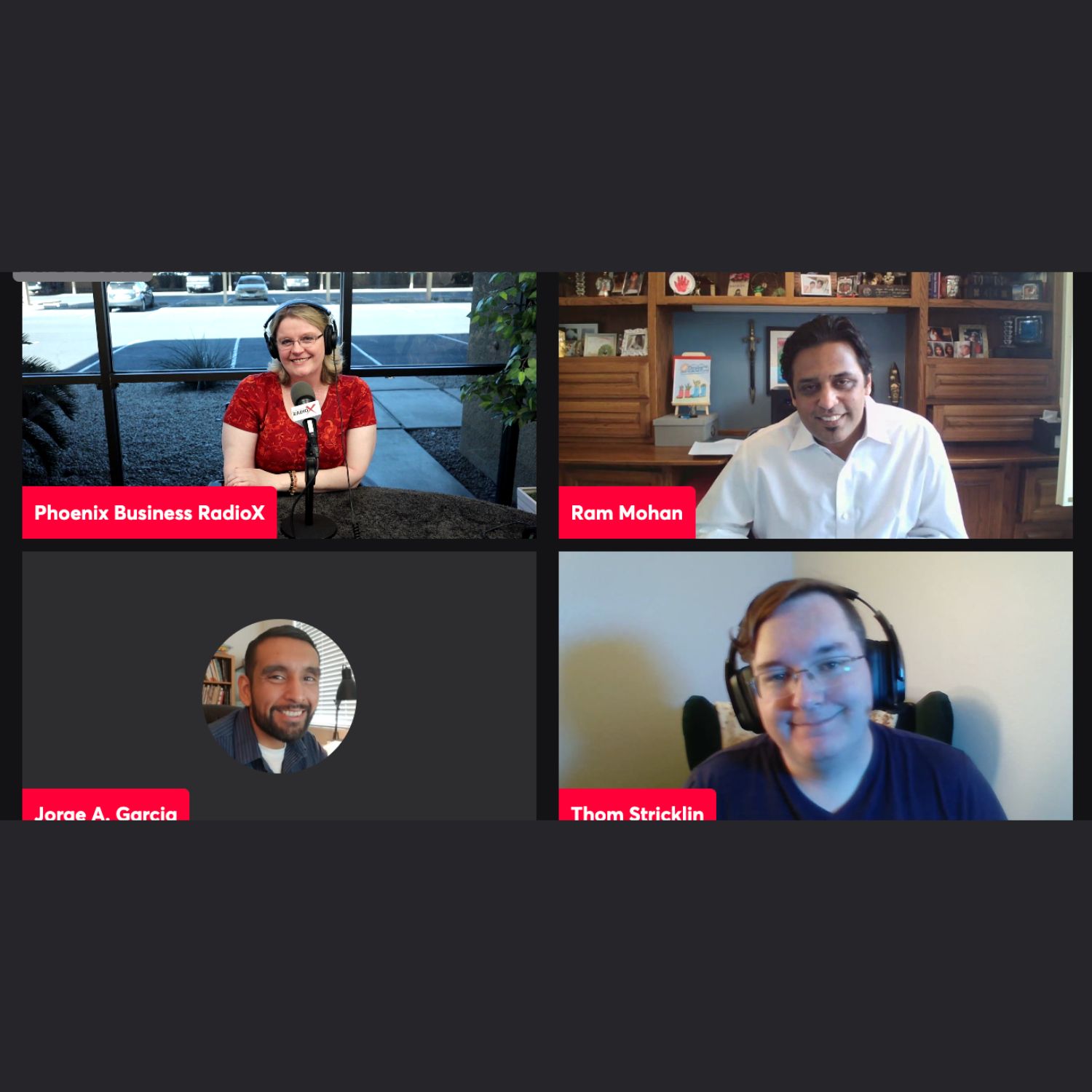
Russell Harrell of SBF Ideas & Margaret Bryant of The Manely Law Firm PC join Gary Zermuehlen of Sandler Training, Simon INC
Loading
00:00 /
RSS Feed
Share
Link
Embed

Download file

(L to R) Margaret Bryant, Director of Marketing for The Manely Law Firm, PC &

Russell Harrell, President of SBF Ideas


SBF Ideas Strategis Marketing covers many activities and is about always improving.  And the best marketing for you is unique to your needs. Improvements in your marketing should start where you think will make the biggest positive impact to your business. After all, effective marketing is essential to supporting revenue growth. SFB looks at marketing based on your needs and considers many specific tactics to become Smarter, Faster, Better.

The Manely Firm, P.C. is recognized throughout Georgia and the world as a leader in Domestic and International Family Law. They also proudly handle Estate Planning and Probate cases. The Firm has been in practice for over 30 years and is committed to providing unparalleled legal service and concierge-level support to every client they serve.


Host Gary Z is a Sales Trainer & Coach at Sandler Training, Simon Inc.
Companies depend on sales force development. Gary and team equip sales professionals to drive sales revenue higher, uncover significantly more business opportunities, shorten their selling cycles, and protect their gross profit margins. Using a powerful combination of consulting, sales training, they help their client community to achieve goals and overcome challenges.


SUBSCRIBE to “Simon Says Let’s Talk Business 2.0” wherever you get your podcasts

Series proudly presented by Sandler Training, Simon Inc.
Simon-Says-Forsyth-banner.png

Podcasts by Amanda Pearch


Tagged With: Amanda Marmolejo, amanda pearch, Coaching, Gary Zermuehlen, Leadership, Margaret Bryant, podcats, Russell Harrell, Sales, Sandler Training by Simon Inc., SBF Ideas, The Manley Law Firm PC

Value Selling: An Interview with Mike Wilkinson, Axia Value Solutions

February 1, 2023 by John Ray

Mike Wilkinson
North Fulton Studio
Value Selling: An Interview with Mike Wilkinson, Axia Value Solutions
Loading
00:00 /
RSS Feed
Share
Link
Embed

Download file

Mike Wilkinson

Value Selling: An Interview with Mike Wilkinson, Axia Value Solutions

The two terms solo and small professional services providers may dislike the most are “sales” and “business development.” If that describes you, then yes, you’ll want to understand the concept of value selling by listening to this episode.

Mike Wilkinson, The Value Selling Expert and Founder of Axia Value Solutions, joined host John Ray to define value selling, why it isn’t more widely practiced, how value selling makes business development conversations easier and improves your ability to defend your pricing, why introverts may have an advantage in employing value selling, why not employing value selling might actually be unethical, and much more.

The Price and Value Journey is presented by John Ray and produced by the North Fulton studio of Business RadioX®.

Axia Value Solutions

At Axia Value Solutions they focus on value!

If you:

  • Tend to discount too much or struggle to defend your prices
  • Have product first rather than customer first sales conversations
  • Lose business even when you know you have the best solution
  • …or many other issues

…then understanding value and what it means to your customers is going to be a big part of addressing these.

Value is defined by your customer, not by you.  If you want to sell your value effectively – and get paid for it – you have to understand your customers, in detail.  The Value Sales Process will help ensure you approach the sale in a structured way and transform your approach.

Understanding customer value aspirations will help you differentiate, price and communicate your offer more powerfully and effectively.

Company website | LinkedIn

Mike Wilkinson, The Value Selling Expert, Founder, Axia Value Solutions

Mike Wilkinson, The Value Selling Expert, Founder, Axia Value Solutions

Mike has been an independent consultant since 1988. His passion revolves around value, especially Value-based selling. Mike is the “Price Getter”, working with sales teams and helping them discover new ways of learning and communicating value, so that money isn’t left on the table, and you are rewarded for the value you deliver.

He has worked with organizations of all sizes, helping them maximize the effectiveness of their sales efforts, both in terms of sales process and skills.

Mike has delivered training all over the world, speaking regularly at conferences, seminars and meetings with business audiences throughout the UK, Europe, UAE, Dubai, Saudi Arabia, USA, Singapore and Australia.

He has also published three bestselling books on value and is member of the Institute of Sales and Marketing Management, the Professional Speakers Association (PSA) and the Global Speakers Federation.

LinkedIn

TRANSCRIPT

John Ray: [00:00:00] And hello again, everyone. I’m John Ray on The Price and Value Journey. And I’m delighted today to welcome Mike Wilkinson with us. Mike is with Axia Value, and he’s been an independent consultant since 1988. And his passion revolves around something I happen to love, value and, especially, value based selling.

John Ray: [00:00:24] Mike is the “Price Getter” – I love that term. He works with sales teams and helps them discover new ways of learning and communicating value so that money isn’t left on the table and that you are rewarded for the value you deliver. He works with organizations of all sizes and trains all over the world. I think the only continent he hasn’t been on to do sales training must be Antarctica based on that bio, but we’ll ask Mike about that. And he’s also published three bestselling books on value. Mike Wilkinson, Axia Value, thank you so much for joining us.

Mike Wilkinson: [00:01:04] John, it’s a pleasure. It’s good to be with you.

John Ray: [00:01:06] It’s great to have you on. Let’s get straight to it. What is value selling? How do you describe that?

Mike Wilkinson: [00:01:17] I think at its simplest, value selling really is an approach that aims to quantify the value of your solution to a customer in economic terms, and really highlighting the advantages of what you do when compared with competing alternatives. That’s the way I look at it. So, it’s simply about economically demonstrating your value to the customer for your solution.

John Ray: [00:01:45] So, what was the light bulb moment for you and your journey when you realized that this was really the way to go when it comes to sales and business development?

Mike Wilkinson: [00:01:58] Well, I think there are a whole host of things that go around value selling. And I think perhaps the most important is that value selling, it has to be a collaborative effort between you and your customer. It’s not something you do at the customer. It’s something you do with them. And that, I think, was particularly important.

Mike Wilkinson: [00:02:17] Because I was going on that sales journey and I was doing some training, and the lightbulb really went off in a conference in Copenhagen. And I was talking at this conference with a group of about 120 salespeople. And the night before, we were all having dinner, and they’re all from the same company. And every single person I spoke to when I asked them what it was they sold, they told me they sold value, “We sell fantastic value.” And I thought this lot have all been brainwashed. And I thought that that’s just amazing.

Mike Wilkinson: [00:02:51] So, the next day, in the morning for my first session, I scrapped completely what I was going to do. This is a classic example of planning well, but scrap what it’s going to do. I said, “Guys, last night I was really surprised to hear everybody told me that value was what you were delivering. So, what I would like you to do for me is tell me what value is. So, what I want from you is an Oxford English Dictionary definition beginning with the words value is. So, value is what?”

Mike Wilkinson: [00:03:23] And there were about ten tables, and I charged each table with coming up with a definition of value written on a card that I could then read out to everybody, and we would determine which was the best or we’d amalgamate them all together.

Mike Wilkinson: [00:03:38] And the interesting thing was, I think to start with, given that they’d all tell me they sold value and that was what they did, was the difficulty they were having in articulating just what value was. It was extraordinary. It took probably between 20 minutes and a-half-an-hour to get all of the cards back. And I decided I just take the cards and I’d read them all out one after the other, and we’d see how it went. And that’s what I started to do.

Mike Wilkinson: [00:04:06] And the thing that struck me straight away was that they were all different. I mean, clearly there were similarities, but they were all different. And then, I got to a card, which is about fifth or six in this pack, and I turned it over and I looked at it, and I thought, “This is absolutely ridiculous. I can’t read this out.” But I thought, “Well, I’d better have a go.” And it had four words on it. This is 20 minutes to 30 minutes work, four words, and two of them were the ones I’d given them which is value is.

Mike Wilkinson: [00:04:38] So, I read it out and I said, “We’ve got this definition, and it is value is a mystery.” Wow. But the more I thought about it, the more I began to realize that that is absolutely exactly what value is. And our job as salespeople is to solve the value mystery. Because the reality is everybody defines value in a different way. So, until we understand how the customer we are talking to defines value, to all intents and purposes, it is a mystery.

Mike Wilkinson: [00:05:20] So, our absolutely number one task is to solve that value mystery, and that is how I got into value. I thought, I’ve cracked it. That’s it. So, the job is done. Solve the value mystery. But I very quickly realized that the job was anything but done. And it was very much the start of a fairly complicated but enjoyable journey. So, there you go, that’s how I got involved.

John Ray: [00:05:49] I love that. Because a lot of the folks that listen to this series are real left brained. They got what they want, left brained data-driven answers. And that’s not always the case with value. It can be part of it, but not always the case. Right?

Mike Wilkinson: [00:06:10] Well, I think for anybody who’s sort of data-driven, I say to the guys who come on the programs that I run, is, if you think about value selling as a problem solving exercise, the starting point is you have to understand the problem. You cannot wander around with a solution in search of a problem. What you need to do is to understand the problem and then tailor your solution to address it.

Mike Wilkinson: [00:06:36] And for the vast majority of people that I speak to and the vast majority of salespeople particularly, that is an absolutely extraordinary transformation. Intellectually, they buy into a recognition that they need to understand what the problem is first. But practically, they do exactly the opposite. And they lead with product first conversations with customers.

John Ray: [00:07:01] Now, related to what you just said, I want to tie that to what you and I talked about before we came on, which is that – unless we’ve lost them all, all the listeners that I have that are solo and small professional services firms. I’m not even sure they hit download when they saw the term selling because a lot of them don’t like that word. And as I mentioned to you, business development comes in a close second to the word they don’t like – what you’re suggesting is forget selling, forget business development. If you just think of it as value problem solving, maybe that’s the way that you ought to think about this, Mr. or Ms. Professional Services Person.

Mike Wilkinson: [00:07:52] I mean, I think it depends how you define selling. And even dealing with the corporate clients that I deal with, I still find a lot of people do not like to be called salespeople. I don’t understand it, because whether you’re a small business person or you’re a corporate, you stand or fail by your ability to generate leads and convert them. And that, in my book, is selling. But call it whatever you want.

Mike Wilkinson: [00:08:19] I think if you look at it as helping your customers make good buying decisions, that’s what you’re trying to help them to do. And to do that, you have to understand them. You can’t help anybody to improve what they’re doing if you don’t understand what it is they are trying to do. So, I think it is an important thing.

Mike Wilkinson: [00:08:38] And I think we also talked about this difference between that sort of slightly more introverted and that extroverted approach. And I actually think introverts have an advantage. I think particularly with value selling, they have an advantage, because introverts tend to listen. They tend to take things that a little bit more slowly. They tend to be, I think, a little bit more data-driven. They are better at problem solving. Whereas, us, extroverts, tend to go blundering in rather over excitedly and just want to get to the end. We’re just desperate to get to the end.

Mike Wilkinson: [00:09:14] The reality often is that it’s the old tortoise and the hare story, isn’t it? You know, the extroverts screaming off into the distance, whereas the tortoise is just gently coming along behind and gets to the finish line first. That’s likely anyone.

John Ray: [00:09:30] No, it makes perfect sense. And it’s not just patience, but I think in general – we’re making generalities here, folks. So, let’s acknowledge that – extroverts, a lot of them are people pleasers. So, maybe they don’t want to get to what some of the real problems are that they may think that person across the table from them really doesn’t want to talk about. Does that make sense?

Mike Wilkinson: [00:10:01] I think it does make sense. And I think as good value sellers, we have to be challenging as well. You have to make the customer think. If you actually dedicate yourself to helping your customer improve their business and making good business decisions for themselves, you have to challenge them and make sure that they’ve gone through that intellectual process themselves to get to a point where they recognize the problem, they recognize the scale of the problem, and the need to address it, and then you help them to actually come up with a solution that’s effective.

John Ray: [00:10:37] So, when I was referring to data-driven – I want to dive into that a little more for folks, and this gets back to value being a mystery – I think a lot of people understand that value has definable outcomes and that that can be captured with data. But value is also full of intangibles that can’t really necessarily immediately be captured as value – be captured in that, I mean.

Mike Wilkinson: [00:11:14] Yeah. Absolutely right.

John Ray: [00:11:15] Does that make sense?

Mike Wilkinson: [00:11:17] It makes perfect sense. It actually really picks up on the discovery that I made after I’d discovered that value is a mystery and our job was to solve the value mystery. That was my eureka moment. It didn’t take long to realize that actually you needed something else.

Mike Wilkinson: [00:11:34] And what you need is a framework to think about value, because it’s quite difficult to sort of put your finger on what the constituent elements of value are. So, we came up with this concept called the value triad. And the value triad identifies three key areas of value.

Mike Wilkinson: [00:11:57] And as I go through this, John, if your listeners want to think about how this applies in their business, it might well be quite helpful from their point of view, because I think there are some questions we have to ask ourselves.

Mike Wilkinson: [00:12:12] And let me just very quickly explain the value triad. The three elements of the value triad are revenue or performance gain, cost reduction, and emotional contributions. So, those are the three component elements of value.

Mike Wilkinson: [00:12:24] So, if we start with revenue gain or performance improvement, the question you need to ask yourself is how does what you do help your customers improve their revenue. And you should make a list of those things. You should clearly identify how you think what you do helps your customers improve their performance or improve their revenue. Because we need to know that in advance.

Mike Wilkinson: [00:12:53] Logically, the next bit, the cost reduction bit, the question is the same, how does what you do help your customer to reduce their costs. And to pick up on what you were saying, John, those two are objective. They’re measurable. You can put a number on them, and you should. Because it’s much more persuasive to say to somebody, “I can help you improve your revenue by $50,000 a year and reduce your cost,” by whatever it might be. Rather than just say, “Well, we can help you improve your revenue.” Because most customers want to know by how much and by when, because that’s a lot more persuasive. And anyway, anybody can make airy fairy promises.

Mike Wilkinson: [00:13:40] So, those are the two very tangible elements of value, revenue gain, and cost reduction. The bit that you you referred to is we had a real struggle coming up with a name for this, but we finally settled on emotional contribution. I’m still not entirely sure why, but it’s worked really well. And they are the intangible things, the subjective things. They are things like trust, credibility, the quality of the relationship, the removal of risk, your brand value, their desire to want to do business with you personally rather than somebody else.

Mike Wilkinson: [00:14:13] And I was thinking about this only the other day, and I’m thinking about what it is that people buy, the intangible element that people buy. I think, more than anything else is peace of mind. And I really think people buy peace of mind. They don’t want to buy hassle. They don’t want to buy risk, or difficulty, or things that are hard to use. They want peace of mind. When I make a decision to buy from you, I want it to be a great decision and I want to not have to worry about it now. Now, that the decision is made, I just want it to happen.

Mike Wilkinson: [00:14:50] So, that’s it. That was the value triad. Revenue gain, so how does what you do help you improve your customers revenue; cost reduction, how can you help them to reduce their costs; the emotional contribution, how can you just make them feel really good about doing business with you.

John Ray: [00:15:06] All that sounds great. I’m a solo, small professional services firm owner. I’ve never had sales training. I’m used to talking about what I do, but not necessarily digging into value. So, give me some tips on how I can start this journey.

Mike Wilkinson: [00:15:36] Right. It’s interesting. You and I also spoke well, I have to admit, guys, the vast majority of my client base are corporates. So, people say to me, “How can you actually relate to what solopreneurs have to do?” And I say, “Well, because I’m one of those more so. I am what my business. I have to do all of these things myself. I relate, absolutely.”

Mike Wilkinson: [00:16:03] And I think the thing that you said right at the outset is the heart of the problem. We’re really good at talking about what we do. But actually what we’re not really good at very often is talking about what the customer wants done. And that’s the starting point, you have to understand the problem before you deliver the solution. And you have to build value in the need to have that solution delivered. And I think for many of us, that’s the difficulty.

Mike Wilkinson: [00:16:33] I think the tips that I give to people really are, don’t get hung up on it. When you meet a customer for the first time, all you should be thinking about is, I’m going to have a chat. Even if it’s not physically happening, but metaphorically, I’m going to sit down with a cup of coffee over the table from somebody and we’re going to have a chat.

Mike Wilkinson: [00:16:53] And what you are going to do as the SME, the small business, is you are going to show genuine interest and curiosity in understanding your potential customer’s business. And you are not going to talk about you. The focus is entirely on the customer and their business. Because it won’t have happened to them very often, because most people will go in and just talk about their products. So, it would be refreshing for them to have somebody to talk to where they can actually share that sort of information.

Mike Wilkinson: [00:17:30] And as you take them on that conversation or journey, if you like, clearly, there’s a structured process that you can utilize to do that because we know where we’re trying to get them to. We’re trying to get them to a point where they recognize that they have a problem or an issue that is big enough to need to be addressed.

Mike Wilkinson: [00:17:53] Because I think one of the problems with lots of businesses is I don’t know any business that doesn’t have lots and lots of problems. I mean, every business has problems and issues. But the vast majority of them are simply not important enough to do anything about. You just learn to live with them. You find ways of working around them. Well, you want to make sure that the problems that you can solve are the ones that your customer considers to be important enough to actually take action on. So, part of our conversation when we’re taking on that journey is to get them to a point where they recognize that.

John Ray: [00:18:33] And that may not be immediate. I mean, we’ve got to be comfortable in the idea that if we’re really genuinely trying to problem solve and help that customer, do what’s right for that client sitting in front of us that we’ve had this chat with, that may involve saying I’m not the answer for your problem today.

Mike Wilkinson: [00:18:57] I think that’s absolutely right, the last thing. It’s tough, isn’t it, that we’re in a time where, frankly, any business looks reasonably attractive for a lot of people. And it’s quite hard turning stuff down. But I think the starting point for all of this is to recognize that not every opportunity is a good opportunity for you. Some opportunities can cause more trouble than they’re worth. So, I think it’s quite key.

Mike Wilkinson: [00:19:27] And, again, you don’t want to sell – I use the word sell advisedly in this context, John – you don’t want to be selling things to people where you know in your heart of hearts it’s not the right solution for them.

John Ray: [00:19:44] Or you’ve had to talk yourself into it that it’s the right solution and you’re reading from right to left when it comes to the revenue to your firm.

Mike Wilkinson: [00:19:56] Yeah. I think that’s right. I mean, I’ve got so many sort of stories of people turning down business opportunities. But then, over time, the right opportunity comes along. And this is about building business over the long term, I think, for most of us. We’re not in the business of one off sales. We’re in the business of selling today and, hopefully, building on that relationship and selling more in the future. You don’t do that by selling them things that don’t really address the issues that they’re facing.

John Ray: [00:20:30] There’s a difference, I think, Mike – and correct me if you think I’m wrong, because I’m often wrong, so correct me – it seems to me between that prospective client who maybe didn’t get referred to us with something in mind that they want versus that referral or however it came, however that client got to the point they’re sitting in front of us, where they’ve got something in mind of what they want. And what they want may not be what they need. But we’re so anxious as services providers to get to the sale, if I can still use that word, to get to the engagement agreement that maybe we short circuit the value conversation. Does that make sense?

Mike Wilkinson: [00:21:35] It makes perfect sense. And it’s a big mistake. Well, for two reasons. First of all, if you short circuit the value conversation, you’ve failed to take advantage of the opportunity to build value into your solution. And secondly, you are absolutely right, just because somebody comes to you and says “I need a,” it doesn’t mean that is actually what they need. They need it given their perception of the problem. But they are probably not experts in the particular area that your people or your audience is.

Mike Wilkinson: [00:22:11] So, whenever somebody comes to me and says I need sales training, for example, the first thing I want to know is, why do you think that? What is the problem that you think sales training is going to solve for you? So, I think it’s always very valuable to take a step back and just make sure that not only they understand what their motivation is behind thinking that this is the solution, but that we understand it as well.

John Ray: [00:22:41] And when we short circuit that conversation, it seems to me what gets short changed is the emotional side, right? Because that’s really what takes the longest part of the conversation to really dive in and get to.

Mike Wilkinson: [00:22:59] I think you’re right. And I think the interesting thing about value selling, and another reason why I find it a really useful way to go, is that, if you do not have, if you failed to build a relationship with the customer, they will not give you the information that you need to help to come up with the best solution for them and deliver the best value.

Mike Wilkinson: [00:23:22] Value selling is based upon a collaborative relationship. I think it is anyway. If they won’t collaborate with you, if they won’t share with you the challenges and the issues that they got, then it’s going to be very hard to really deliver the best possible value that we could.

John Ray: [00:23:41] So, how do you keep yourself from short circuiting, I guess, number one? And number two is, how do you keep a prospective client patient when you’re trying to get into the emotional responses they’re going to have to the solution you’re potentially going to give them? Because they call up wanting that thing, whatever that thing is, and they kind of want to get you to that, because they’re in a hurry and they want to get there. So, mentally, how do you keep yourself on task, I guess, is the question.

Mike Wilkinson: [00:24:24] It’s funny, actually, you should say that, because frequently salespeople will say to me, What’s the one piece of advice that you give me to really improve? And I say, over the years, I’ve come up with all sorts of things. But I’m now at a stage where the one piece of advice I give to sellers is slow down. Slow down. It is not a race. Your job is to come up with the best possible solution for your customer. Do not race to the end with your solution. Take the time to understand what it is.

Mike Wilkinson: [00:25:06] I mean, if you don’t slow down, you’re not listening. If you’re not listening, you’re not really understanding what is going on. One of the key skills is the ability to summarize back to your customer your understanding of their situation. So, you’ve had this conversation, so you can say to the customer at the end of it, or you should say, “If I understand you correctly, John, the main issues you’re facing at the moment are this and this. And the impact of failing to address them at the moment is this on the business. Have I got that right?” “Yeah.”

Mike Wilkinson: [00:25:41] So, we’ve agreed that if we could really solve that problem, there’d be some real value to you. So, are you committed now to doing something about it? Because the one thing I want more than anything else is commitment. Because what I don’t want is to be wasting my time.

Mike Wilkinson: [00:25:59] The other thing is send me a proposal. For people to say, “Well, send me a proposal.” Well, what for? No. No. Because very often, the send me a proposal is to get rid of you or to just get a benchmark price in place. You know, it’s too easy to be taken down rabbit holes by customers. So, I want to get a customer to a point where they’re committed to doing something. Because otherwise, I’m just wasting my time, money, and effort in pursuing lost causes. None of us can afford that time.

John Ray: [00:26:36] That’s for sure. We don’t have time for that. Mike Wilkinson is with us folks. His firm is Axia Value. And he’s an expert on value based selling. And we have to say that pricing is part of this. I mean, if you’re selling by value – or I’ll give a nod to my folks that don’t like to sell – if you’re talking about value, it’s easier to price, right?

Mike Wilkinson: [00:27:08] Yeah. It’s easier to price. It’s easier to defend your prices. I’m sure some of the people who are listening probably operate off a price list. And the problem that they have is that they are under constant downward pricing pressure so that they will go in and they’ll do the job, they’ll come up with the solution. The customer say, “Well, how much is that?” They’ll tell them. They say, “Flipping neck. I’m sure you can do something about that. You must be able to shave a few dollars off that.”

Mike Wilkinson: [00:27:38] And the problem is that most of us operate under what I call a discount default. And that is, the minute we get put under any price pressure, the first thing we do is to drop our prices. And our customers know that. They know. I talk to procurement and buyers all the time, and I’ve never come across one who will not say to a supplier, You’re too expensive. And the answer is not because you’re too expensive. It’s because – sorry about that, John. It’s not because you’re too expensive. It’s because they just know from experience that virtually every time they say that, they get a discount. So, they’re not going to not tell you you’re too expensive.

Mike Wilkinson: [00:28:25] But it takes a lot of confidence when somebody says to you, “How much is that?” And you say to them, “It’s $10.” And they say, “That’s too expensive,” for you to look them in the eye and say, “No, it isn’t.” If you actually look at the value that we deliver, as we’ve just discussed, what it is you are going to gain as a result of our solution, I go as far as to say that probably $10 is not quite expensive enough.

Mike Wilkinson: [00:28:51] Now, bizarrely – and I have tested this out with lots and lots of people. And there’s one guy in particular after we’d been doing this for some time, he said to me, “You know, I have learnt something quite extraordinary.” He said that you really do need to have real confidence in doing this. But for the first time, when customers have said to me I’m too expensive, I’ve looked them in the eye and said, No, I’m not. When you think about the value that we’ve just discussed that we are going to deliver for you, we are most positively not too expensive at $10. And he said, in probably 80 to 90 percent of cases, they’ve nodded and said, “Yeah. Okay.” Because they were trying it on.

Mike Wilkinson: [00:29:34] And I said to him, I said, “Well, have you ever lost any business by that?” He said, “Yes, I have. To be honest, I have lost some business. He said, “But I can almost guarantee that the business I have lost has been the lower quality business, the people who were always going to be a pain to deal with. And in 90 percent of those cases, within six months, they’ve come back to me.”

John Ray: [00:29:56] The ones that really wanted to come back, have come back.

Mike Wilkinson: [00:30:01] Guys, we underestimate our value. If you’ve done a really good job of understanding what it is that is valuable for your customers and you’ve demonstrated how you can deliver that value, then you should be rewarded for that value. But I speak to SMEs too often who say, “Well, we can’t put our prices up.” And I say, “Well, hang on a minute. Let’s just take a step back. Is your solution a good solution?” “Yes, it is.” “Is it every bit as good as or if not better than your competitors?” “Yes, it is.” “And is your price therefore higher than your competitors?” “No, it isn’t.” “Why isn’t it? If your solution is better than your competitor’s solution, why isn’t your price higher?” “Well, because if we charge more, we’d lose the business.” “How do you know?”

Mike Wilkinson: [00:30:51] It comes down to confidence. And I think we communicate confidence in a variety of ways. But your body language alone will tell the customer whether they’re in for a discount or not. Because for most of us, the one thing we don’t want to have to talk about is price. And the minute that price comes up as a subject of discussion, our body language changes. That confidence of talking about our product disappears now, because we’re now asked to talk about something that, frankly, is just a little distasteful. But it all starts to go wrong. I’ve sat in meetings with people and the customer has said, “What’s the price?” And the sales guy has actually started by apologizing.

John Ray: [00:31:33] Oh, dear.

Mike Wilkinson: [00:31:34] You have got to be proud of your prices. If you truly believe that your solution is a great solution, delivers loads of value for your customer, why on earth shouldn’t you be proud of the price that you charge? Because you should be rewarded for the things that you’re doing.

Mike Wilkinson: [00:31:58] I mean, my sort of strapline about the value challenge, the value challenge for me is about understanding, communicating, and delivering outstanding customer value and getting paid for it. And it’s the I’m getting paid for it bit at the end that is so important. And I just find that when I talk to SMEs, particularly small businesses, they underestimate the value that they deliver. And you will always underestimate the value that you deliver if you fail to understand the value that your customer is looking for.

John Ray: [00:32:35] Well, let’s talk specifically to this group here of professional services providers. They’re essentially pricing bullets between their ears. I mean, that’s their factory floor. They’re not pricing the product. And in their case, they’re working for themselves in their own business, they can’t point upward to the corporate suite and say, “Well, it’s those fools that set this price. I didn’t have anything to do with it.” They’re pricing themselves, essentially. And so, how do you have that confidence when that conversation turns toward pricing, how do you steal yourself for that point and how do you develop that over time?

Mike Wilkinson: [00:33:23] I think it goes back to what we’ve been saying before, John, if you go in with a product first approach, where you go in and you start to talk to your customer about your wonderful products and services, you’ve failed to build the value that you’re going to use in defending your prices.

Mike Wilkinson: [00:33:41] If you go in and you talk to your customer about the challenges, the issues, the opportunities that they’re facing, what the value of those is to them, and the conversation is absolutely customer first, then you build a foundation upon which you can put your price. But if you fail to do that, it’s a lot more difficult.

Mike Wilkinson: [00:34:04] So, for me, value pricing is dependent, as you said, on value selling. It’s the value bit at the front that’s really important. And you said earlier that I build myself as the price getter. And it’s when I had my partner before he retired, our business had two parts to it. It had the pricing bit and the selling bit. And we always said that the pricing bit is the price setting bit. And my bit was the price getting bit, because you set your prices, but you’ve got to get them. And that was pretty much it.

John Ray: [00:34:41] Yeah. No. And it’s all well and good to say “I want to get what I’m worth,” but you really cannot do that without some touchstone on how that gets measured that the client will understand. That’s the key point, right?

Mike Wilkinson: [00:35:00] Yes. Absolutely right. And we all know that we don’t operate in a vacuum. You do need to understand what the sort of general market place position is in terms of pricing for what you do. But that does not mean that you have to be at it. You know, if the market price is $10 and you’re delivering more value than the majority of the $10 suppliers, then you should be charging 11 or 12. And you can defend it by demonstrating you are delivering more value to the customer than the cheaper people are doing.

Mike Wilkinson: [00:35:38] We’re too easily dragged into price battles where we don’t need to be. And I don’t, in any way, want to undermine the difficulty or it isn’t an easy option. But to give away your hard earned time and cash simply because we fail to understand and communicate our value effectively is a shame.

John Ray: [00:36:04] I want to switch to a different objection that I hear, and it relates to pricing and professional services providers. And I hear the objection to value pricing. And by definition, extension value selling. That, I don’t want to charge different prices to my clients because I’m taking advantage of them when I do that.

Mike Wilkinson: [00:36:40] I mean, I have heard this a lot. But, actually, I don’t believe that to be the case. The whole concept behind value selling for me is to understand the value that the customer is looking for, deliver as much of that as I possibly can, and get rewarded appropriately for the value that I am delivering.

Mike Wilkinson: [00:37:02] And every customer is different. The reason value is a mystery is that what value means to each customer, and indeed to the people within the customer is different for all of them. And so, if you’re dealing with the finance director or the finance VP, his perception will be different to the ops people, to the sales folks, to the marketing folks. They all have a different perspective of value.

Mike Wilkinson: [00:37:28] So, as long as you are understanding and delivering outstanding value to them, you should be rewarded appropriately. Sometimes people say, “Well, yeah, we’d much rather operate off a straight price list because that way it’s fair to everybody.” It is fair to everybody. Everybody except you. And that is the point, you want to do a great job for your customers.

Mike Wilkinson: [00:37:54] A larger client in the telecoms business, we went and we were doing some work for them. And they were concerned about value. And when they explained to us what they did and the value that they delivered to their customers, which was absolutely huge, they were simply not getting rewarded for it at all.

Mike Wilkinson: [00:38:20] And it’s a mindset thing. I can understand why people think it is fairer to charge everybody exactly the same thing. First of all, everybody isn’t exactly the same. Their value aspirations are all different. And it’s fair to everybody except you. You’re the one person who is not being rewarded for the value that you’re delivering.

John Ray: [00:38:42] I want to ask you a third rail question. This is one that may get some folks fired up. Is it unethical – I use that word deliberately – not to sell based on value?

Mike Wilkinson: [00:39:00] It’s a very interesting thought. I think because the nature of value selling is that it is collaborative, I think it is a much more effective way of approaching the whole sales conversation. Now, realistically, depending upon the nature of your business and the nature of your clients, you won’t necessarily be able to sell on value to all of them.

Mike Wilkinson: [00:39:25] I mean, you may have some clients who are totally transactional. They don’t want a conversation. They want a bolt, a widget, or whatever it is. They just want to pick the phone up, place the order, done, finished with. They don’t want a conversation about it. But there are other customers who really would value a detailed conversation with you because you are the expert in your field, and I want your help and advice to make sure that the decisions that I make are good ones. And I think in that context, the value selling, it’s unethical not to do it. Because potentially you are going to allow your customer to make business decisions which are not as good as they could have been had you made them collaboratively.

John Ray: [00:40:09] I love that point. I want to throw in just a quick question here as our time goes down, because you deal with corporate clients – you know, our solo and small professional services folks don’t always get this situation, but sometimes they do – requests for proposals. How do you advise folks to deal with an RFP?

Mike Wilkinson: [00:40:45] All right. Yes. It’s a really interesting question. And first of all, I think if I’m a small business, is the RFP coming from a customer that is, if you like, in my target area. Is it somebody that I’ve spoken to already? If I’ve not ever had a conversation with them and an RFP arrives out of the blue, generally speaking, your best approach is to not ignore it, but to write back.

Mike Wilkinson: [00:41:15] I would always write back and I say, “Look, thank you very much indeed for the opportunity for this. But right now, I just don’t feel I understand enough about you and your business to be able to respond effectively. If you want to have a conversation with me, I’m happy to do that.” But other than that, I respectfully decline the opportunity to respond. Because otherwise, you’re just going to waste your time. You’ll be used for benchmarking. They’ll look at your price, compare it with the incumbent, smack them over the head a bit until they drop their price, and you’ve got nothing out of it at all. So, that’s my first bit of advice.

Mike Wilkinson: [00:41:51] If it’s one of those requests for proposals, which is templated, if you like, and you have to do each of the steps one by one. Again, if you know nothing more about the customer, I’d be very cautious. Somebody once said to me that an RFP is a brilliant opportunity for your customer to demonstrate a complete lack of understanding of the potential solutions that you can provide them with are a lot better than what they’re asking for.

Mike Wilkinson: [00:42:20] Often, RFP is a sort of built by committee and they reflect that. The other thing is, often, you’ll see in an RFP, you look at it and you can see your competitors fingerprints all over it. It’s quite obviously written for the benefit of somebody else, and you’re just being used as the benchmark.

Mike Wilkinson: [00:42:44] I had a time some time ago and he had huge numbers. It was a logistics business. Their business was driven by RFPs. And I said to him, “How many of the RFPs that you get do you respond to?” And he looked at me as if I’d gone mad. And he said, “Well, all of them, obviously.” And I said, “Goodness. That must take an incredible amount of time.” He said, “It does. It does.” And I said, “Well, how many of these are you winning? What percentage do you win?” He said, “Well, I don’t know, around 15 percent.”

Mike Wilkinson: [00:43:14] So, I said, “So, 85 percent of the proposals you do, which are taking you an awful lot of time to put together, you’re not winning.” “That’s right,” he said. I said, “Well, if we call that 85 percent your new 100 percent, what percentage of those did you know you had no chance of winning before you even began?” And without even batting an eyelid, he said, “Oh, at least half of them.” I said, “So, why on earth are you responding to them?” And the answer is a classic, he said, “Because if we don’t respond to them, we definitely won’t win them.”

John Ray: [00:43:50] That’s some circular reasoning there.

Mike Wilkinson: [00:43:52] It’s mental reasoning. And it’s mental because what it means is that for those pieces of business that you do want to win, you don’t have the resources available to invest in it because you’re spending so much time responding to opportunities you’re never going to win. Crazy.

John Ray: [00:44:12] Yeah. I’m going to have to take a cold drink of water after listening to that story. Wow. Speaking of stories, though, before we let you go, Mike – and thank you for your time today. This has been terrific – I’d like to give you a chance to talk about you and the value that you bring. If you could share maybe a success story or two that illustrates the great value that you provide, talk about yourself for just a second.

Mike Wilkinson: [00:44:43] You know, I think of all the things that you’ve asked me to talk about, I always find that’s the most difficult of all. I think, because over the years I’ve become so obsessed with talking customer first rather than product first, that I think I’ve trained myself to do what I try to encourage other people to do more than anything else. I think the biggest successes I have is when I’ve worked with people.

Mike Wilkinson: [00:45:09] And I think I mentioned to you before, intellectually, people buy into the fact that they should be talking customer first rather than product first. But as you take them on that journey and they start to practice it and they start to see what happens when they do, one of the biggest things that started I’ve had people ring me up and say, “I am amazed at the opportunities that have suddenly become available.” And I said, “Yeah. But they were always there. It was just that you’d never had the conversation with the customer to discover them.” And that is just fantastic.

Mike Wilkinson: [00:45:41] The telecoms business was a classic. I hate to imagine how much more money they are making as a result of just a couple of very simple conversations that we had. I should definitely have been paid on the basis of value delivered there, shouldn’t I? I didn’t value price that particularly.

John Ray: [00:46:04] Well, you know what? Actually, thank you for that. That’s actually a great point because we’re all on a journey, right? I mean, there’s no formula here that we’re trying mysteriously trying to find in some urn in a cave in Peru. I mean, this is a constant, you can call it battle, you can call it journey, you can call it whatever, to try to get to what value is and how to price relative to that value.

Mike Wilkinson: [00:46:32] I think it’s a journey, John. And I think there is a process. I mean, I have a value sales process that I teach and the training that I do. And it’s born out of a desire to simplify the complex, not complicate the simple so that the steps are really easy.

Mike Wilkinson: [00:46:49] So, the first step of the process is to quantify the opportunities, qualify the opportunities. So, the question is, where do you get your leads from because your business stands or falls through your ability to generate quality leads and convert them into business. You know, without that, nothing is going to happen. And it doesn’t matter how much we dislike talking about selling, at some point or another, somebody’s going to bring the business in. Maybe the dirty end of it, but that’s got to be done.

Mike Wilkinson: [00:47:21] So, qualify your opportunities. Because you only want to be working with opportunities that answer two questions for me. Number one, do we want it? In other words, is it attractive to us? Can we make money out of it? Are they going to be good folk to work with? That’s question one. And number two is, realistically, can we win it? So, that’s all you want to know? Do we want this business and can we win it? If the answer to that is yes, now we start to invest some time and effort in winning it.

Mike Wilkinson: [00:47:51] And the first bit is value discovery. It is having that conversation with the customer to solve the value mystery. What are the challenges that they’re facing? What’s the impact of those on their business? What will be the value to them of addressing those problems? And are they now permitted, as you’ve taken them on that conversational journey, to doing something about it?

Mike Wilkinson: [00:48:14] And the point, again, I would make is that, that part of the conversation is not about you. It’s about them. Once they said, “Yeah. I can really see that there’s something we should be doing about that,” then you move into value demonstration. And this is the point at which you begin to explain to them how you can address the issues that you’ve identified. But this is a conversation. It is not a presentation.

Mike Wilkinson: [00:48:39] You want to take them on a journey where you point out how you’re going to address the issues they’ve identified and you say to them, “Can you see how how this works? Can you see how that happens? How do you feel if you had this in your business right now?” Value demonstration.

Mike Wilkinson: [00:48:54] Then, once they’ve committed to it, the value demonstration, they said, “Yeah, let’s do it.” You’ve done that negotiation where you’ve been proud of your price and they’ve come on board. Now, you’re into value delivery. And value delivery really, especially for new business, is the point at which the relationship really begins because they’ve never had any experience of dealing with you up to now. Now, they’re going to learn about what it’s really like to do business with you. So, value delivery is important.

Mike Wilkinson: [00:49:22] And then, for me now, the next step, the final step, is value development, where you develop the relationship, you make the relationship deeper, you cross sell, you upsell, you build for the future. So, that’s it.

Mike Wilkinson: [00:49:35] So, qualify the opportunity, value discovery, value demonstration, value delivery, and value development. Five steps. Simple relatively.

John Ray: [00:49:46] Yeah. And, again, to bring back the journey theme, it’s practice, right? I mean, you keep after it and it yields results.

Mike Wilkinson: [00:49:59] I can absolutely guarantee, John, that the guys who come on the programs, we do practice this, we do role plays, we do all the things you’d expect us to do. And they then go away and I say to them, you know, meet up again in a week or so’s time. And they say, Yeah, we went straight back into doing what we’d always done. And now that we know better, we are really working on changing. It is a transformation for many of them, just moving away from talking about yourself and your products first.

John Ray: [00:50:33] Yeah. Wow. Mike Wilkinson, folks, Axia Value. Mike, I could go on, but I want to be respectful of your time, and you got some folks you need to go help sell better on value.

Mike Wilkinson: [00:50:47] In fairness, everybody, John knows exactly why I’ve got to go.

John Ray: [00:50:55] Speaking of value, there’s a lot of value coming after this show here. But we’ll just leave that between you to be back. But before I let you go, I want to have you give directions on how our listeners can find out more about you and the great work that you do.

Mike Wilkinson: [00:51:14] I think probably the easiest way is obviously my website, which is www.axia, A-X-I-A, axiavalue.com. I’ve got a whole host of stuff on YouTube, lots of videos on YouTube. If anybody wants to take a look at those, that will take you through the whole of the process. Anybody wants to link in with me on LinkedIn, again, a lot on my LinkedIn profile. I post every day something on value. So, yeah, there are loads of ways. And if anybody wants to go completely mad and drop me a line, you can get me at mw, Mike Wilkinson, mw@axiavalue.com.

John Ray: [00:51:54] Yeah. I’m endorsing the LinkedIn. That’s where I found you, Mike. And you always post great content, so thank you for that.

Mike Wilkinson: [00:52:03] Well, we connected there, didn’t we, John?

John Ray: [00:52:05] That’s exactly right.

Mike Wilkinson: [00:52:07] That just shows you there is some value in it.

John Ray: [00:52:11] There’s value in LinkedIn. Some days, I wonder. But in this case, there was. And I’m grateful to you, Mike, for coming on and thank you for the great work you do. Keep it up.

Mike Wilkinson: [00:52:23] Well, thank you for the opportunity, John. I’ve enjoyed it.

John Ray: [00:52:26] Yeah. it’s been fun. Thank you. And folks, again, I’m John Ray, and I’m on the Price and Value Journey just like you are. And if you’d like to check out our complete archive of episodes in this series, go to pricevaluejourney.com and you can find a show archive there. You can also find the show on your favorite podcast app, so just search for Price Value Journey and you’ll find the series there. And I’d be honored if you’d subscribe and share the show if you heard something here.

John Ray: [00:52:56] And I can’t imagine you haven’t gotten a lot of value out of hearing what Mike had to say. If you’ve heard something here that you think would make sense for a colleague, please send it on, share the show. I’d appreciate that. And, also, you’ll find at that link, pricevaluejourney.com, a place to sign up to get updates on the book I have coming out called The Price and Value Journey: How to Raise Your Confidence, Your Value, and Your Prices Using the Generosity Mindset. So, if that’s something you’re interested in, you can sign up there.

John Ray: [00:53:32] Once again, thank you to Mike Wilkinson from Axia Value. And I’m John Ray. Join us next time on The Price and Value Journey.

About The Price and Value Journey

The title of this show describes the journey all professional services providers are on:  building a services practice by seeking to convince the world of the value we offer, helping clients achieve the outcomes they desire, and trying to do all that at pricing which reflects the value we deliver.

If you feel like you’re working too hard for too little money in your solo or small firm practice, this show is for you. Even if you’re reasonably happy with your practice, you’ll hear ways to improve both your bottom line as well as the mindset you bring to your business.

The show is produced by the North Fulton studio of Business RadioX® and can be found on all the major podcast apps. The complete show archive is here.

John Ray, Host of The Price and Value Journey

John Ray The Price and Value Journey
John Ray, Host of “The Price and Value Journey”

John Ray is the host of The Price and Value Journey.

John owns Ray Business Advisors, a business advisory practice. John’s services include advising solopreneur and small professional services firms on their pricing. John is passionate about the power of pricing for business owners, as changing pricing is the fastest way to change the profitability of a business. His clients are professionals who are selling their “grey matter,” such as attorneys, CPAs, accountants and bookkeepers, consultants, marketing professionals, and other professional services practitioners.

In his other business, John is a Studio Owner, Producer, and Show Host with Business RadioX®, and works with business owners who want to do their own podcast. As a veteran B2B services provider, John’s special sauce is coaching B2B professionals to use a podcast to build relationships in a non-salesy way which translate into revenue.

John is the host of North Fulton Business Radio, Minneapolis-St. Paul Business Radio, Alpharetta Tech Talk, and Business Leaders Radio. house shows which feature a wide range of business leaders and companies. John has hosted and/or produced over 1,700 podcast episodes.

Coming in 2023:  A New Book!

John’s working on a book that will be released in 2023:  The Price and Value Journey: Raise Your Confidence, Your Value, and Your Prices Using The Generosity Mindset. The book covers topics like value and adopting a mindset of value, pricing your services more effectively, proposals, and essential elements of growing your business. For more information or to sign up to receive updates on the book release, go to pricevaluejourney.com.

Connect with John Ray:

Website | LinkedIn | Twitter

Business RadioX®:  LinkedIn | Twitter | Facebook | Instagram

Tagged With: Axia Value, customer value, introverts, John Ray, Mike Wilkinson, Price and Value Journey, pricing, professional services, professional services providers, Sales, selling for introverts, solopreneurs, The Value Selling Expert, unethical, value, value pricing, value selling

How to Choose an eCommerce Platform E3

January 19, 2023 by Karen

How-to-Choose-an-eCommerce-Platform-feature
eCommerce Insights
How to Choose an eCommerce Platform E3
Loading
00:00 /
RSS Feed
Share
Link
Embed

Download file

How-to-Choose-an-eCommerce-Platform

How to Choose an eCommerce Platform E3

There are an estimated 12 to 24 million eCommerce sites across the world, with more being added daily. eCommerce is expanding and becoming a more important part of the consumer experience. So, how does a business choose an eCommerce platform that is best for their business? In this episode, atmosol discusses how to choose a platform.

This episode covered the whats, whys and hows to choosing an e-commerce platform for your business. Deeper than comparing platforms, the discussion was about business and how to prepare for your e-commerce journey.

Thom-Stricklin-eCommerce-InsightsThom Stricklin is a Solution Engineer for atmosol and has been with the company for nine years. He has been involved in web development since creating his first simple website as a high-school sophomore over 25 years ago.

Through the years, Thom has picked up a wide range of related skills, from front-end development, design and UX; to back-end development and application architecture; and as diverse as server management, DevOps, branding, logo design, and sales.

The marriage of technology and creativity is a driving force for Thom’s interest in the Web. Though he spends less time these days working on front-end development, his “first love” as technologies go is CSS. This same joining of the technical and creative can be seen outside of work, as well–some of his favorite personal interests are photography, woodworking, and smart-home technology.

Before joining atmosol, Thom worked in the public sector, helping to develop a world-class content management system for K-12 education as well as undertaking one of the largest re-branding projects in the state of Arizona.

This background has formed his career at atmosol, as he brings the same spirit of service and care to each and every merchant. He knows all too well that businesses with limited technical resources depend on their partner agencies to make informed choices, and strives to maintain atmosol’s reputation as a company that merchants can trust.

Connect with Thom on LinkedIn.

About eCommerce Insights

eCommerce Insights is about bringing people together to discuss the vast landscape of eCommerce covering topics like technology, conversion optimization, branding, and marketing. The show focuses on how to build, manage and grow your online business using scientific and predictable methods thereby reducing uncertainty and risk. Our guests include vendors, merchants, experts, and technology partners shaping the world of eCommerce.

About Our Hosts

Ram-K-MohanRam Mohan is CEO and partner at atmosol, an ecommerce and technology company. He has spent over two decades in technology and eCommerce consulting helping companies ranging from small to fortune 100 achieve their business goals using technology.

As CEO, Ram leads atmosol’s eCommerce and SaaS services business working with our clients. In addition, he leads a team that runs an eCommerce portal in the meetings and events sector focusing on the EMEA market. He is also responsible for several SaaS products that are envisioned, built, and marketed by atmosol in different verticals and geographies.

Ram enjoys keeping up with and gaining a deep understanding of the latest trends in technology and eCommerce so he can help atmosol and our clients avoid hype and adopt trends that offer a tangible impact on our businesses.

Honey-OlesenHoney Olesen is the Director of Operations with atmosol and has substantial experience in leadership, management, operations, project management, digital marketing, human resources and data analysis. She deeply understands how businesses work and can take complex concepts and make them easy to understand for both employees and customers. She has worked at atmosol for over 11 years and has had the opportunity to work with some great brands and people in ecommerce, marketing and business.

Before entering the world of technology, Honey worked with some fantastic business owners in the building industry – soaking up knowledge of business day-to-day operations and growing her professional development.

She believes that in order for businesses to be successful, they need to have a clear mission and purpose, make sure the business goals are aligned with the values and stay focused on what’s important. She believes this is the same for individual success: find a place where your mission, purpose, goals, and values align with the company.

About Our Sponsor

Atmosol is a technology company working at the intersection of eCommerce and SaaS software. Our deep expertise in web development in addition to our long partnership with eCommerce platforms enables our clients to break through eCommerce platform barriers and build experiences that amaze their customers. Being in the eCommerce business ourselves running a meeting and events sales portal in the EMEA, we know the trials and tribulations our customers face firsthand.

In addition to eCommerce, we also build highly scalable SaaS products for our clients. We’ve also built and marketed our own successful SaaS products in different verticals.

Follow atmosol on LinkedIn, Twitter and Facebook.

atmosol-transparent-logo

Tagged With: devop, e-Commerce, online store, Sales, web development

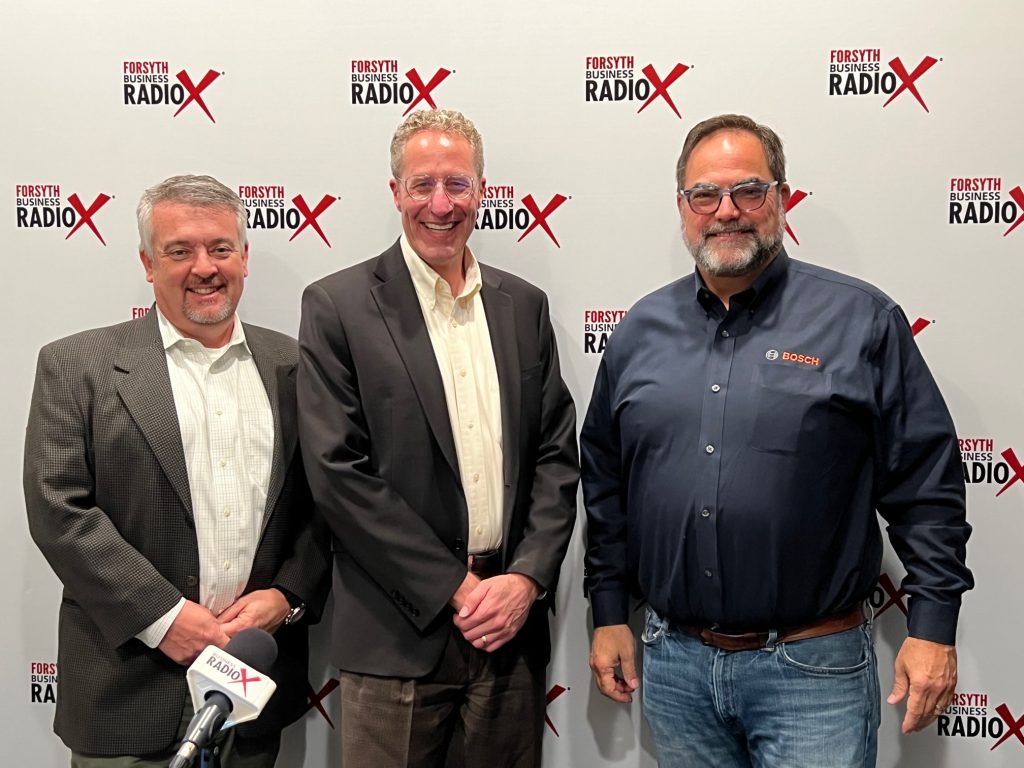
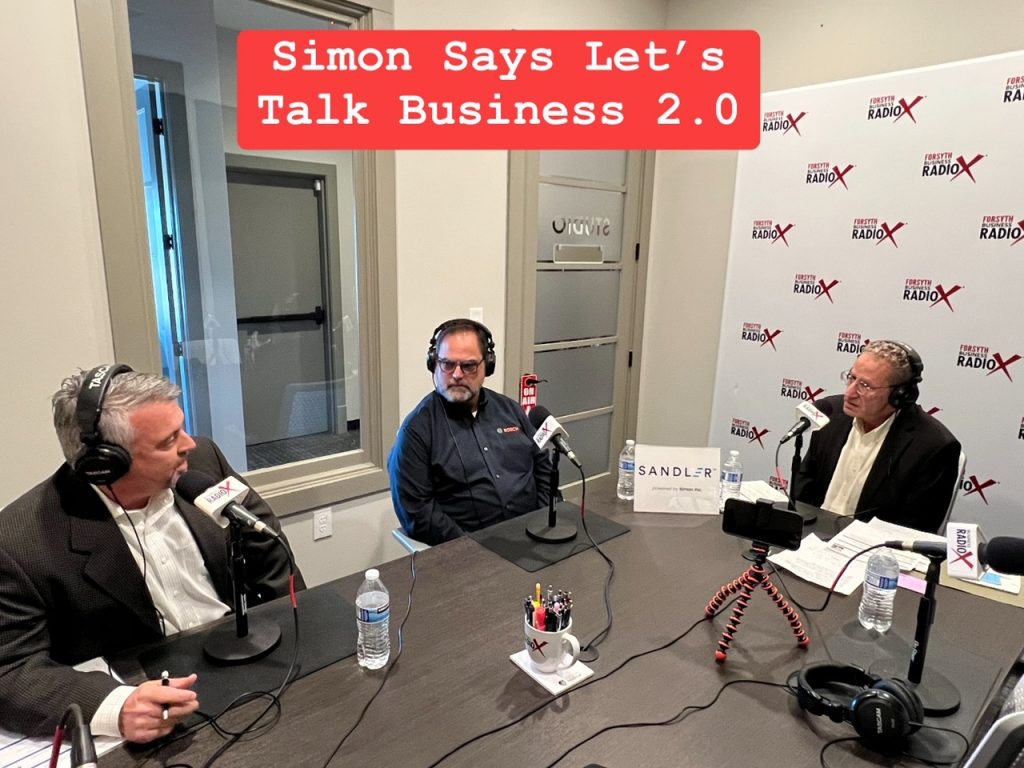
Frank Thomas of Bosch Security Systems & John Davis of Davis Business Coaching join Gary Zermuehlen of Sandler Training, Simon INC

January 9, 2023 by Amanda Pearch

Forsyth Studio
Forsyth Studio
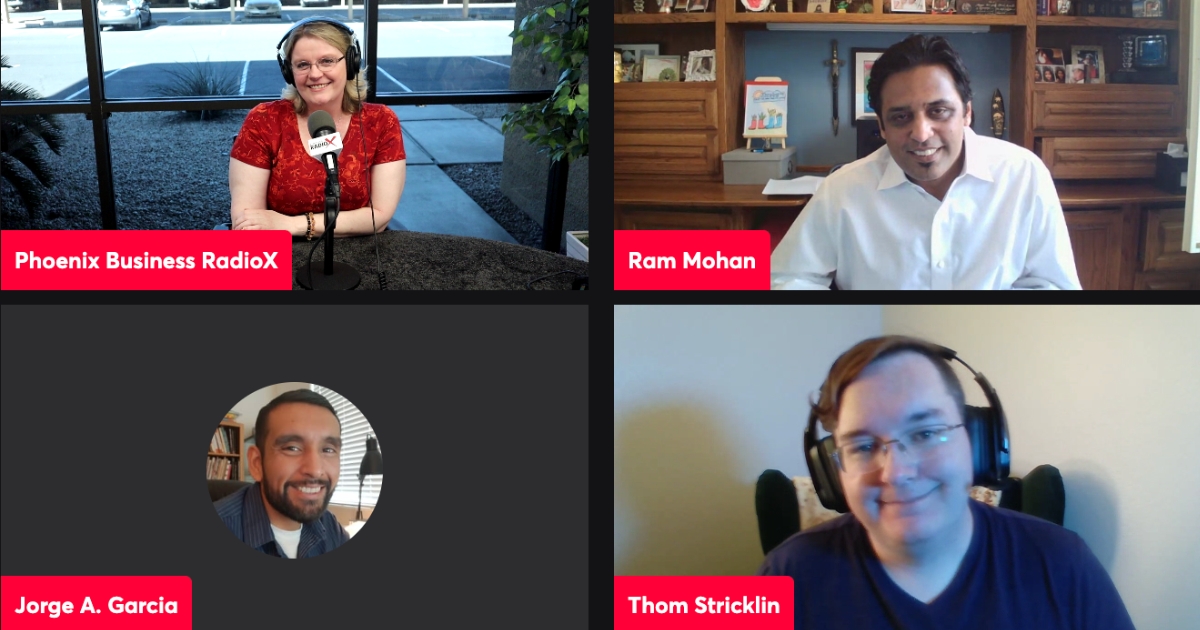
Frank Thomas of Bosch Security Systems & John Davis of Davis Business Coaching join Gary Zermuehlen of Sandler Training, Simon INC
Loading
00:00 /
RSS Feed
Share
Link
Embed

Download file


John Davis, President of Davis Business Coaching

ActionCOACH partners with business owners to build a business that generates the dreams they had when they started as an entrepreneur. Working together they leverage the formula Dreams x Goals x Learning x Planning x Action = Success. Their tools and network of coaches allows them to support owners and their team on their
journey by Mastering the fundamentals, building a niche and business growth plan, creating leveraging and developing a team that will drive success.


Frank Thomas of Bosch Security Systems

Robert Bosch corporation is one of the oldest and largest privately held global organization. Business divisions from Mobility, Industrial controls, Consumer Goods and Building Technologies. Frank covers Building Technologies for North America working from his home in Cumming. Primarily Bosch is a device manufacture and leader pioneering IoT.


Host Gary Z is a Sales Trainer & Coach at Sandler Training, Simon Inc.
Companies depend on sales force development. Gary and team equip sales professionals to drive sales revenue higher, uncover significantly more business opportunities, shorten their selling cycles, and protect their gross profit margins. Using a powerful combination of consulting, sales training, they help their client community to achieve goals and overcome challenges.


Series proudly presented by Sandler Training, Simon Inc.
Simon-Says-Forsyth-banner.png

Broadcasted LIVE from the Forsyth Business RadioX Studio in Cumming, Georgia

Podcasts by Amanda Pearch


Tagged With: Action Coach, al simon, Amanda Marmolejo, amanda pearch, Bosch Security Systems, Coaching, Cumming, Forsyth, Frank Thomas, Gary Zermuehlen, IoT, John Davis, Leadership, Sales, Sandler Training Simon INC

Hamming It Up

December 28, 2022 by John Ray

Hamming It Up
North Fulton Studio
Hamming It Up
Loading
00:00 /
RSS Feed
Share
Link
Embed

Download file

Hamming It Up

Hamming It Up

Avoid “hamming it up”:  seasonal ham companies offer a cautionary example on price integrity and to coaches and other professional services providers.

The Price and Value Journey is presented by John Ray and produced by the North Fulton studio of Business RadioX®.

TRANSCRIPT

John Ray: [00:00:00] Hello, I’m John Ray on The Price and Value Journey. It’s estimated that Americans consume over 300 million pounds of ham during the holiday season. Our family did our part as well. And in the coming days, we’ll be consuming a few ham sandwiches from the leftovers ourselves.

John Ray: [00:00:21] Unless you’re in a hurry or you’re a last minute shopper, you know that there’s no reason to pay full price for a ham if you’re buying from one of the seasonal ham companies. Coupons and so-called special offers abound year after year so that you’re conditioned to wait to get a discount. You know that full price is a fiction.

John Ray: [00:00:45] Professional services providers, if you feel you must, there’s nothing wrong with an occasional special on your course or your coaching group. But if you’re talking to me, I will try to talk you out of it. But if you must, go ahead. But when in post after post and one email newsletter or notice after another, you’re promoting limited time offers and “just a few seats remaining,” you’re becoming increasingly like the holiday ham companies.

John Ray: [00:01:20] Your audience knows that there’s always going to be more seats available because you will just make more. There’s always going to be a discount. There’s always going to be another coaching group that you’re starting up. You see, when you do it all the time, there’s no such thing as limited time or full price. And it damages perceived value and your pricing credibility. You’re selling yourself and your expertise as if you’re a glazed ham.

John Ray: [00:01:55] I’m John Ray on The Price and Value Journey. Past episodes of this series can be found at pricevaluejourney.com and also on your favorite podcast app. And I’d be grateful if you subscribe to the show on your favorite podcast app. And you’re welcome to email me directly, john@johnray.co is my email address. Also, big news for 2023, I’ve got a new book coming out. If you’d like more information on that, connect with me through email or on LinkedIn. Thanks for joining me.


About The Price and Value Journey

The title of this show describes the journey all professional services providers are on:  building a services practice by seeking to convince the world of the value we offer, helping clients achieve the outcomes they desire, and trying to do all that at pricing which reflects the value we deliver.

If you feel like you’re working too hard for too little money in your solo or small firm practice, this show is for you. Even if you’re reasonably happy with your practice, you’ll hear ways to improve both your bottom line as well as the mindset you bring to your business.

The show is produced by the North Fulton studio of Business RadioX® and can be found on all the major podcast apps. The complete show archive is here.

John Ray, Host of The Price and Value Journey

John Ray The Price and Value Journey
John Ray, Host of “The Price and Value Journey”

John Ray is the host of The Price and Value Journey.

John owns Ray Business Advisors, a business advisory practice. John’s services include advising solopreneur and small professional services firms on their pricing. John is passionate about the power of pricing for business owners, as changing pricing is the fastest way to change the profitability of a business. His clients are professionals who are selling their “grey matter,” such as attorneys, CPAs, accountants and bookkeepers, consultants, marketing professionals, and other professional services practitioners.

In his other business, John is a Studio Owner, Producer, and Show Host with Business RadioX®, and works with business owners who want to do their own podcast. As a veteran B2B services provider, John’s special sauce is coaching B2B professionals to use a podcast to build relationships in a non-salesy way which translate into revenue.

John is the host of North Fulton Business Radio, Minneapolis-St. Paul Business Radio, Alpharetta Tech Talk, and Business Leaders Radio. house shows which feature a wide range of business leaders and companies. John has hosted and/or produced over 1,700 podcast episodes.

Coming in 2023:  A New Book!

John’s working on a book that will be released in 2023. The book covers topics like value and adopting a mindset of value, pricing your services more effectively, proposals, and essential elements of growing your business. For more information, contact John below.

Connect with John Ray:

Website | LinkedIn | Twitter

Business RadioX®:  LinkedIn | Twitter | Facebook | Instagram

Tagged With: coupons, discounts, ham, holiday ham, John Ray, Price and Value Journey, pricing, professional services, professional services providers, Sales, solpreneurs, value, value pricing

Amy Franko and The Modern Seller

December 21, 2022 by John Ray

Amy-Franko-Inspiring-Women
Inspiring Women PodCast with Betty Collins
Amy Franko and The Modern Seller
Loading
00:00 /
RSS Feed
Share
Link
Embed

Download file

Amy-Franko-Inspiring-Women

Amy Franko and The Modern Seller (Inspiring Women, Episode 53)

Amy Franko, author of The Modern Seller, joined host Betty Collins on this edition of Inspiring Women. Amy talked about the primary misconceptions services providers have about sales, imposter syndrome, delivering value, negotiating, and much more.

The host of Inspiring Women is Betty Collins, and the show is presented by Brady Ware & Company.

Betty’s Show Notes

Amy Franko helps organizations transform sales culture, ignite sales growth, and build high-impact leaders through her strategic selling programs. Recognized as a LinkedIn Top Sales Voice, Amy is the leading expert in modern sales strategies—including in-demand sales training programs, sales strategy, and as a sales keynote speaker and leadership keynote speaker. She guides growth-oriented organizations to significantly improve their results through B2B sales strategy and sales team skill development.

In this episode we find out more about Amy, and

  • why she credits coming from a large family with her success in sales
  • what does “modern selling” mean?
  • what are the misconceptions of today’s selling situations?
  • what are her observations about women in sales?
  • what has she learned from her successes and failure?
  • and finally, her 3 pieces of advice (you will love #!)

Learn more about Amy and her background here.

And grab a copy of her book right here.

Hosted by Betty Collins, CPA, and Director at Brady Ware and Company. Betty also serves as the Committee Chair for Empowering Women, and Director of the Brady Ware Women Initiative. Each episode is presented by Brady Ware and Company, committed to empowering women to go their distance in the workplace and at home.

For more information, go to the Resources page at Brady Ware and Company.

Remember to follow this podcast on Apple Podcasts and Google Podcasts.  And forward our podcast along to other Inspiring Women in your life.

TRANSCRIPT

[00:00:00] Betty Collins
I’m Betty Collins. And today we are going to talk about something that scares me to no end, and that’s called sales. And when you’re a business owner, which I am and I’m a shareholder and all those things, part of my job, part of my responsibility is making sure that my clients are served. But it’s also out there getting new clients, new clients. And it’s a frightening thing for me. It always has been. If I can, just knowing that I’m out talking to someone, I’m not afraid of it. But if I think I have to sell something, that’s another story. So we’re going to talk about this topic today with someone who really, really knows a lot about selling. In fact, she knows so much about it that she’s written some great book. And I think you will will find her very, very engaging today and she will really help you get through some things. I’ve known Amy Frankel for quite a while. We are very involved in the central Ohio, Columbus area with a lot of the women’s organizations. So today we’re going to talk with a truly an expert because she’s written a book that is on the Amazon bestseller list, by the way, and it’s called The Modern Seller.

[00:01:15] Betty Collins
And so I think you’re going to love engaging with Amy Franko, who wrote this book. And I’ve known her again for a while, and we’ve kind of been in the same circles in businesses. And we’ve also done a lot with women’s organizations within the central Ohio area. She’s very big in the Girl Scouts of America. So just to get started, you know, Amy is Franco is the leader in modern sales strategy. She helps those mid-market organizations to grow sales results through a sales strategy, you know, advisory and skill development programs. And again, her book, The Modern Seller, which is an Amazon best seller. She is recognized by LinkedIn as a top sales voice. And she’s also, as I said, the board chair for the Girl Scouts of Ohio Heartland, a top 25 nonprofit in the Columbus region, serving nearly 18,000 members. And you can find Amy at w w w dot Amy Franco. So, Amy, I’ve talked a little bit about you, introduced you. We’ve had some fun. We’re going to have a great conversation today. Why don’t you just tell us a little bit about yourself before we get started on that thing called selling? Sure.

[00:02:28] Amy Franko
Absolutely. Well, thank you so much for having me here. I was so excited to have this on my calendar and have this conversation with you and Betty. I’ve learned something new about you that you are selling like strikes fear in your heart. So I would have never known that about you.

[00:02:45] Betty Collins
Absolutely. Absolutely does.

[00:02:48] Amy Franko
But but to but just to just to give our listeners a little bit more about myself. I am I was born and raised in Ohio, grew up in Cleveland. I’ve been in the Columbus area now for 25 years, which is hard to believe. And from a from a personal standpoint, I am married to Dave and I have a wonderful, energetic black lab by the name of Roxy who gets all of my time and attention. Yes. And and and when when I’m not doing things sales related or related to the Girl Scouts or nonprofits, I love all things fitness and I love to travel. So I’m very excited to be able to get back to traveling. So that’s a little bit about me, and I’m sure we’ll uncover some more stuff here as we go.

[00:03:38] Betty Collins
We will. So what’s your favorite place to travel before we get started? What is it?

[00:03:42] Amy Franko
Oh, well, probably my most exotic place I’ve been to was we did a two week, two and a half weeks safari to Kenya in the early part of 2020 before the pandemic. And had you asked me, like, if Kenya was on my travel list, I it’s Kenya itself was not on my travel list, but being on doing a safari was we had some friends that planned the trip, invited us to go along, and it was absolutely life changing. And if we have time, I will tell you a story about that trip that ties into the book.

[00:04:17] Betty Collins
Okay. We definitely want to make the time to do that. So. All right. But I love to travel as well in my older age. Not old, but my older age. I like going back to the same places, so I’m really glad. In the forties I traveled everywhere, you know, and had that adventure side because now I’m kind of like, Here’s my favorite spot going to hang there. So but even talking about even having this introduction today of we’re going to jump into sales, it makes me a nervous thing, which really is crazy, right? Because I mean, I love the marketplace, love being out there, love seeing the success of it, because when it succeeds, you know, the country succeeds. And so sales is just part of that, especially as you have to be a rainmaker or you have you. Want to have growth and you’re that owner and you want to get out there, or maybe you work for somebody and this is what you have to do. So, you know, what is your background and how did you get into the sales profession?

[00:05:13] Amy Franko
So. So a little known fact about me is that I’m the oldest of five. I have four younger sisters and there’s a ten year age difference between me and my younger sister. So I think that perhaps sales and leadership, my sisters might call it being bossy, but I call it leadership. And so has probably probably been with me, right? It’s probably been with me since I was young. Right. So just like that’s the desire to start something or lead something has always been in my DNA as long as I can remember. But for those of you listening, if that’s not you, please don’t shut off this podcast because we’re going to give you some great ideas for sales. But so that’s kind of how I’ve grown up, but how I specifically got into the sales profession. I was doing an internship in college, basically, I had a summer job. I worked at a tech company in my hometown in Cleveland, and I answered phones. I answered phones, and I just did all kinds of things in the company to learn the business. And one of the things that I observed was that the salespeople seem to be having the most fun. They were always the one. They were always the one with the customers. They were coming and going. They they always look like they were having a great time. And I’m not sure, like I said, Oh, let me pick that as a career, but I think I might have tucked that away. And it’s like, Oh, like, this is interesting. If you’re going to spend a lot of time doing something, do something you like, right? Correct.

[00:06:51] Amy Franko
But but so I think that was maybe my my first taste of what the profession could be like. But I didn’t study sales in college. Now there are sales certificates and sales programs. The profession has come a long way in that regard with college programs and university programs. It’s not something I studied, but I got my first job out of college, working in an inside sales role for a tech company, and that was really my first journey into sales. And for my for the first ten years of my career, I had a variety of sales roles, starting with with that college internship and had a variety of sales roles and tech for the first ten years of my career. Then I took a pivot into entrepreneurship about 15 years ago, and that was my next foray into sales, which I kind of think of is more entrepreneurial type selling. I was running the company and I also had to sell and bring in all the clients, not unlike what you shared in the beginning in your intro. So I have really been selling for my entire career. It is just looked different depending on whether I was working in an organization or now. I work for myself and I work with organizations, CEOs, sales leaders. I help them with sales strategy and I also help to skill up their sales teams. And I’m, as you could probably tell, I am really passionate about about sales and all things sales and leadership. So I really get a lot of joy out of being able to do what I do.

[00:08:27] Betty Collins
And you’re still hanging with all the fun people, right?

[00:08:30] Amy Franko
I do that, I hang with the fun people and it opens up all kinds of doors that I would have never, never thought of. So I’ve had a variety of experiences, from big enterprise to entrepreneurial selling and the customers I get to work with today.

[00:08:46] Betty Collins
Well, your book is titled The Modern Seller. So. So of course, I think of, Oh, you don’t have to go door to door. Knock on the door. Right. But what do you mean by modern selling? Like, what does that mean?

[00:09:03] Amy Franko
Yeah. So, so as I was just a little bit of context as I was researching the book and the catalyst for this really came from the work that I was doing with my clients. And I’m a learning and development person. I love learning and I’m the person who loves to go to the conference and sit in the front row and take notes. So I’m a learner at heart. And what I started to observe in myself and also in my clients was, Hey, there’s there’s all these different sales and also marketing activities that we do and organizations on a day to day basis. But what I was starting to realize was that there were some other skills that were equally as important and maybe even more foundational to helping us be successful in the everyday activities of selling. And so as I was researching this and pulling this together, I have uncovered what I see as five capabilities of the modern seller. And we can certainly. We dig into those as well. But if I were to give our listeners just a working definition of the modern cellar, think about your clients and prospective clients that you maybe haven’t worked with yet. And there are some things that they expect of us today that maybe clients didn’t expect of us 15, 20 years ago. Our clients really expect us to be a differentiator in their business and we need to be recognized for that because our clients have so much choice these days.

Pick an industry, they have so much choice. Also, a modern seller is somebody where you individually provide so much value to your client or your prospective client that they really can’t separate you from what it is your firm does or your company does. Whatever you sell a product, you sell the service, you sell a suite of solutions. You are so important to that that they can’t really separate you from it because otherwise you’re a commodity. Yeah. And then the last thing I would offer up for people to think about is how much do you help your clients be a have a competitive advantage in their industry? What you bring is unique that helps them to be better. And they look at you and they say, You know what, I really couldn’t imagine doing business without you. So so those are some tenets of modern selling that I see as as they’re foundational, but I think they’re even more important today. And if we can focus in on the way in which we show up and develop ourselves, that’s going to help us sell better and it’s going to help us help the clients better.

[00:11:45] Betty Collins
Yeah, absolutely. Of course, you had me at there’s five things you do because I’m a CPA, right?

[00:11:51] Amy Franko
Right.

[00:11:53] Betty Collins
If we have time, where to get to those five things? I absolutely. I love that. But, you know, again, as you heard me say in the beginning, sales is a scary thing for me. And a lot of it is really misconception probably on my part. Right. But what are some of those misconceptions about selling in today’s market, especially post COVID post pandemic? The word pivot. I’m so tired of it, but I mean, what are some of those misconceptions about today’s today’s clients when it comes to selling?

[00:12:24] Amy Franko
Yes, If you had buzzword bingo in front of you, pivot might be that center square and buzzword. Bingo, bingo.

[00:12:31] Betty Collins
Buzzword bingo. I like that. I like that.

[00:12:34] Amy Franko
But, you know, so if so, think about some misconceptions for for a moment. So many things have changed with COVID. It’s kind of interesting. Many things have stayed the same foundationally with selling, but many things have changed as well. So so a couple of misconceptions that I would would offer up for people to be thinking about is the idea that the sales is something that you that you have to do to someone, right? Yeah. I like if you were to envision in your mind’s eye working with your clients or a prospective client and then sort of envisioning being across the table from them, envision vision, kind of walking the path with them, and we can envision ourselves as walking the path with them. That takes some of the barriers down. And our role is really to be somewhat this is another buzzword, but the buzz phrase being a trusted advisor to our clients and our perceptive clients, when we take that mindset versus, Oh my gosh, I’ve got to sell this product or solution, I have to get a certain price for it. When we look at it as we’re walking with our clients and helping to navigate the terrain together, that’s that’s a bit of a different perspective. So I would bust the myth that you have to be doing something to someone versus you’re walking the path with them, right?

[00:14:00] Betty Collins
I love that. I mean, that’s like saying, Hey, let’s have lunch or Hey, can we break bread? There’s just different connotations. I love I like that taking the path with them.

[00:14:11] Amy Franko
And another misconception is that your clients don’t want to be sold to. And here’s what I mean by that. Our clients and our prospective clients, they they’re engaging with us. We’ve either engaged them or they’re engaging with us because they feel that there is something of value there to have a conversation about. So our clients actually have an expectation that we are going to walk them through a decision making process to help them figure out what is it that I need to do next. And if we take ourselves out of that equation, we’re not desperate for a sale. We are confidently helping a client to to navigate that. We’re empowering them to make a decision. So it’s not manipulation, it’s empowering them to make a decision. And that’s part of our role, is to empower them to make the right decision. Hopefully that right decision is working with us, but sometimes it’s not, and we have to either kind of disqualify that potential client out. We introduce them to someone else, or maybe there’s an entirely different solution altogether. So so don’t discount the fact that your clients, they want to be walked through a decision making process, be the leader that helps them to make that decision right now.

[00:15:38] Betty Collins
Those are excellent, excellent points, especially when you’re you have a fear of it or you think it is something that it’s not, and then you don’t have success with those two things hanging over you. Right. So.

[00:15:51] Amy Franko
Right.

[00:15:52] Betty Collins
Those are good. I’m going to take a second here and clear my throat. So that’s Brett. We’ll cut all that out. So as you know, this is inspiring women. And so the audience is going to be primarily probably women, honestly. And and women today. I always hate the terminology. Well, it’s a man’s world. I say it’s a woman’s world. I say it’s a sales world. Right. But what are the observations that you have about women when it comes to sales? Like what is it that you see specifically for them?

Yeah, And and these are generalizations. So I want to make sure that, you know, some some of these things, if you’re if you’re listening, you may say, oh, this doesn’t really, really apply to me and that’s totally fine, but I invite you to just reflect on these and see where maybe some of these things are, bringing up some, some challenges or let’s call them opportunities, right? To, to, to develop. I really believe that sales skills are leadership skills and they’re also life skills. So if we can embrace the idea that building our sales acumen is it can help us create a lifestyle that we want, it can help our clients create the business and the life that they want. There’s so much upside to embracing the idea that sales skills are really a positive thing and they are leadership skills. But I would say I’d say one of the things I’m seeing right now, Betty and I coach a lot of of clients and a couple of the conversations I’ve had of late with some really, really sharp women who are by any means they are so successful. But I’ve seen some struggles with confidence and a little bit of that imposter syndrome. So that is one of my observations that I tend to have that conversation more with women than I do with men.

[00:17:53] Amy Franko
And the idea that, gosh, I’m I need to need to build this or have that or I’m not good enough at that, or how am I ever going to to be successful with this and that. Those are little things that eat away at your your confidence. So that’s an observation that I have that a lot of very successful women still struggle with confidence. If that happens to be you listening, you are not alone in that. But I bring it up as an observation to reflect on for yourself if that is something that that you struggle with. So I would say confidence is one thing. And then the second thing is, and this may be is also a misconception that you have to be really aggressive to be successful in sales. And and my opinion, that couldn’t be further from the truth. And today’s buyer today’s client doesn’t appreciate aggression. I believe that they appreciate assertiveness, they appreciate confidence, but they don’t appreciate aggression. And so my observation is many times women shy away from the profession or they avoid sales altogether because they believe you have to be aggressive in order to be successful. And I would say you need to be assertive and you need to build your confidence, but you certainly do not need to be aggressive.

[00:19:21] Betty Collins
Sorry. Let me ask you this just because I think, first of all, when I when maybe this is a misconception sales, but negotiations are what we think they are. Right. And men are better at negotiating than women. It’s proven fact. But how do you see the negotiation process in sales or should it be? This is not a negotiation.

[00:19:47] Amy Franko
Good question. So I when I’m working with my clients, what I ask them to do is they’re going is they’re analyzing their own processes, how they engage the client and what their client’s decision making processes are. I encourage them to separate mentally the different parts of the process into sales skills and solutions and negotiation. Not not that you’re telling the client, well, hey, this is my sales skill bucket and now I’m moving into my negotiation skills. But for you to mentally compartmentalize these and the reason that I encourage clients to do that is sometimes we can muddy the waters and we can make things really complicated. So if you’re real clear on what parts of the process you need to be negotiating on. But maybe I can illustrate this with a story. So I was I was working with a client maybe six months or a year ago. We were talking about this very topic on negotiation. And and it was it was a mixed group of men and women. And so the person I was working with was working with their client, and their client had gotten to the end of their decision making process. Right. So we’re ready to sign an agreement. Yes. And so they get to the point where they are ready to sign the agreement and the client asks, Would you be willing to give us a 20% discount before they’ve got the pen in their hand?
Right.

[00:21:24] Amy Franko
And they’re getting ready to sign? Will you give me a 20% discount? So that’s your first data point that you really aren’t at the end of the decision process or the negotiation process because they’ve now asked for something different. And the kneejerk reaction many people have is let me see if I can do that for you. Instead of asking the questions. Tell me a little bit more about why this is important to you. Tell me walk me through your thought process around this. And so in my in my story and my coaching story, the my client had negotiated with their client a 10% discount before signing. And my question back to my client was, so what do you think that they’re going to do the next time you get to the agreement stage? They are going to ask you for more discounting because that is what we’re teaching them to do. And they’re like, the light bulb went on, right? Like, oh, boy, right now we teach our clients many times how to treat us and buy what we agree to do and how we navigate processes. So what you could do differently the next time is ask a question about why they’re thinking that they need that discount, because the discount is is a trade off for value.

[00:22:48] Amy Franko
Sure. And when you understand what that is, and I think one of our knee jerk reactions often is that we want to give the discount or we want to just rush to the end because they’re so close to signing the agreement. So I always encourage my clients, look at what they’re really asking for. You may need to negotiate some terms of your agreement or parts of your solution or your product, which you don’t want to do is put yourself in a position where you are giving them the same thing, but you’ve now dropped your price by X percent because that just that ends up being a race to the bottom. It eats away at your margins, but it also eats away at the relationship. And I think that’s sometimes what people don’t remember is when those types of trade offs are given, it can eat away at trust and credibility on on both sides. Right. So always ask yourself, is the decision that I’m making here a potential trade off not just financially, but a trade off in the relationship that might have some unintended outcomes?

And the reason I think of negotiations why I ask the question was, I love the movie Pretty Woman, right? And in this, you know, Richer, Richard Gere wants to hire Julia Roberts for the week to basically be his escort. Right. And so she starts out with a big negotiation, right? Like, well, I need that. And then he said, How much is it? Just tell me what that is. And he and he gives her the money and says, Now that’s over. We’re done. So let’s really talk about how this week is going to go. And I think that’s where I look and go. We tend to get focused on the Julia Roberts contract before we talk about the value of what we’re going to do for the week. In this case, he just needed somebody who could go in ten things with him. And yet she was really all all about the contract before she was about, hey, here’s how this week’s going to play out. And so I don’t know why I always think of that when I think of negotiations, because she was really thinking price was the whole negotiation, not here’s the value you’re going to get for the week and Right. And I think we can look at that with our clients as well. What is the value you’re you’re going to give them and then deal with the negotiation piece? Because if they see you as an expense, you’ve really lost, but they see a value that you really won at the end of the day.

[00:25:10] Amy Franko
So there is a one last point on that. There’s a book that I really like. It’s called Getting to Yes and Negotiating and Negotiating Agreement without Giving In. And it was written by a couple of a couple of gentlemen from Harvard, the Harvard Negotiation Project. And the idea being that we often see negotiation as this zero sum game. If I win, you lose. Yeah. And what if instead we looked at it as the ability to create? I like to think of it as a win win win. It’s a win for your company. It’s a win for the client and it’s also a win for you individually. And sometimes we leave ourselves out of that equation. So I how can you make something, a win win win? And but without giving away the farm, if you will.

[00:26:07] Betty Collins
Right. Know all those good points. Good points. We’ve got to keep moving on because I want to hear the safari story.

[00:26:13] Amy Franko
I we.

[00:26:15] Betty Collins
Do that. But you know, give us what’s a either a success or a failure that you have experienced and what did you learn from it as as you’re out there consulting with companies and people?

[00:26:28] Amy Franko
And I when I when I think about I’m I’m going to I’m going to share a success, I think we can learn as much from our success as we can, from our failures. And make no mistake, I’ve I’ve had I’ve had more than my share of fair share of failures in this. Profession. I think we can learn. We can learn from both. But I go back to a client that I had a number of years ago, and we don’t actively work together at this point, but we have we are still in each other’s networks and we’ve known each other for a long time. And this was a really, really big organization that I had the opportunity to earn a big contract with. And maybe one other misconception is if you’re a small company, don’t let that deter you from really going after the clients that you want to go after, because that can often be an advantage. Don’t don’t let it don’t don’t fool yourself into thinking that you have to be as big as your competitor to be successful. So so this was a really big contract, probably the biggest one I had in my career. And it was it was a lengthy RFP process requests for proposal.

[00:27:37] Amy Franko
I had to submit, submit a very lengthy proposal, and then I was chosen to be one of the three finalists to present to the clients and ultimately selected. So knowing that I’m a smaller firm, I’m thinking, All right, how can I get creative here and really build great relationships with the client? Because they were going to be a number of people in this presentation and showcase myself and to stand out because I said a modern seller is someone who is a differentiator, who really stands out and there they are attached to the value that they that the company brings. So any job in sales is our job is to legally, ethically, morally, on even the playing field, our customers subconsciously look to even the playing field because they think that that makes their decision making process easier when in fact all it does is drive the conversation toward price. So I’m thinking, all right, how do I on even the playing field and really stand out? So I asked my client, could I set up 30 minute conversations with each of the people that will be present at the presentation? I’d like to get to know them. I’d like to understand what’s important to them, and I’m going to use that in my presentation.

[00:28:55] Amy Franko
So my decision maker says, Well, yes, absolutely, you can do that. There was a naysayer in the group that said, Well, wait a second, shouldn’t we make this an even playing field for everybody and allow all the all the finalists this same access? And I had a very savvy decision maker who said, well, you know what, If they ask for it, I will give that to them. But if they don’t ask for it, I’m not going to I’m not going to just grant it to them, which is a really different way of thinking. Right. And so I was the only one that thought of that strategy. I got 30 minutes with probably six or seven people that would be a part of this. And I was able to create a presentation that nobody else could match, and I ended up winning the business. It was the biggest deal my firm had ever closed, and it was that one strategy that really made the difference. And it cost me nothing. It cost me nothing but creativity and my willingness to ask because I had I not been willing to ask, I would have never received it.

Right, Right. Awesome story. Awesome. Awesome. You know, and people don’t realize the gift of what you did. I mean, you really step back before you. Did just the same thing as you always do. I mean, you step back and say, this is a different this is a different deal. I mean, this could be a deal breaker. This could be the one, right? This could get me over. And then if I can get through this one, think of the other ones I can have, because now I’ve got a great resume on. Absolutely. So you have to you know, and that’s where in sales, I think I look at more as it just kind of happens with me. And that’s not always a great strategy. Instead being intentional, it’s got to be where you’re at no matter what you’re proposing. I think so.

[00:30:43] Amy Franko
And the willingness to be uncomfortable. I was uncomfortable asking for that. Right? Sure. But once once I got over myself and that that fear of that discomfort, you know, then I’m like, gosh, that just gave me more confidence for the next time to say, okay, how can I be creative and what can I ask for the next time?

[00:31:01] Betty Collins
Right? And, you know, women don’t ask. Men will ask. They don’t have one hesitation. So women in the audience learn from her success of her largest contract. She asked for something that would set her apart. And and that’s I mean, that’s huge success to me. You know, one of my funniest success stories and it was no intentional it just happened was I went to a meeting and and I went in and I said, I’m Betty Collins and I’m here to see so-and-so. And they said, okay. So they took me to a room and I’m sitting with all these people and I hand out my cards and they’re handing them out to me and I’m talking away. And, and and then I realized I’m in the wrong meeting. I’m not in the right meeting. And they started I go, This isn’t where I’m supposed to be, is it? And one person looked over because, Yeah, but you’re really entertaining. This was really good. I said, Okay. And about six months later there was an influencer in that room called the Owner, and he was so impressed with how I handled my exit from that room that he hired me a year later. But that has nothing to. It was my greatest story of sales that I have, right, because it was just so bizarre how it landed. But that’s not being intentional, you know, that’s not getting in there going. This is why I have success in sales. That was just one of those situations. But but once I realized I was in the room and I had to make an exit, I did have to become intentional, right? I did have to go, okay, how am I going to play this out? And then I ended up having success later, but I just thought I would throw that in there.

[00:32:40] Amy Franko
So well, and that’s a great example of not taking ourselves too seriously. Yes. And, you know, stuff is going to happen, whether it’s whatever it is. And great example of not taking ourselves. You didn’t take yourself too seriously. You just had the confidence. Maybe maybe you had to manufacture some confidence, but certainly have the grace to realize, all right, I’m not in the right room. Let me figure out how to exit here and maintain my my sanity. Yes. And people people do watch how we react. They watch how we react. They watch how we handle ourselves, like the gravitas that we have in these situations. And they do remember it.

[00:33:22] Betty Collins
Right? Right.

[00:33:24] Amy Franko
Well, that’s awesome. I love that story.

[00:33:26] Betty Collins
Yeah. It just was one of those. I will I and I’ve learned from just the little things about it. You kind of expanded on it at the time. It was just happening. But so so to the audience, what are your three pieces of advice? The best ones, right, for for them to take away today? And then I do want you to end with the Safaree story. So.

[00:33:48] Amy Franko
All right, sounds good. So so I would say my my first piece of advice is to invest in yourself, whatever that looks like for you at the point in time you’re at in your career. And investing in yourself is taking the time to listen to this podcast. Investing in yourself may be stretching yourself to go to a conference that maybe you wouldn’t go to or you wouldn’t necessarily pay for. Like you are waiting for somebody to pay for it for you. And they didn’t investing in yourself. So always ask, how can I invest in myself today, this year so that you are always working on yourself and showing up as the best version of yourself? My second piece of advice would be to get involved in a passion project of some kind. So for me, my the Girl Scouts of the Heartland is my passion project. They get my time, talent, treasure and ties and because I have invested in them, just see the outcomes that we’ve been able to create. And the reward it has brought to me is more than I think I could ever give back to that organization that those passion projects can really fuel you. So find that passion project that you love and want to kind of throw yourself into. And then my last piece of advice would be to. Have the ambitious life themes. This goes back to your comments about being intentional. So much of life can happen to us. I believe that the people who create the most impactful lives are the ones who intentionally have ambition about the life that they want to create, whether it’s their professional life, it’s their personal life. It all. It all mingles together. We get we get one life. So be as bold and ambitious as you can. Dream it up and and go after it. Because you don’t you don’t get necessarily get a second chance to go do that.

[00:35:49] Betty Collins
Great advice. Great advice. Especially the third one. I really definitely like that. Definitely. Very good. Okay, let’s. I got to know about this safari. Let’s finish that up.

All right. I’m going to try to give the short version of this story, but. So we took a safari to Kenya in February of 2020, right before the pandemic hit. And we got to travel to four different locations in Kenya. And when you when you get there, you take small bush planes from location to location. So we’re in a small regional airport in Nairobi. And there’s this young gentleman, Kelvin, who I came to know later. This young gentleman is our concierge. Really sharp. He was just wonderful and just walked us through everything, got our bags, helped us to our gate, the whole nine yards. And because it’s a bush plane, there’s only ten or 12 people on the plane. So this young guy is reading the manifest and he’s checking off everybody’s names and he gets to my name. And he said, Are you the Amy Franko who wrote the sales book?

[00:37:01] Betty Collins
Oh, my goodness.

[00:37:03] Amy Franko
Right. And of course, I’m looking at my husband. I’m looking at my two friends. And I’m like, all right, which one of you put him up to this?

[00:37:12] Betty Collins
Yeah.

[00:37:13] Amy Franko
I’m eight time zones away. And here’s this here’s this young man who asks me, maybe Franco that wrote the sales book. And I said, Well, yeah, And I totally did not believe him, Right? I’m like, Well, yeah, I did write the sales book. And he’s like, I would love to get a copy. How do I get a copy of your book? And I said, Well, probably the best way is to order it on Amazon. So we’re just kind of bantering back and forth, and I’m totally not believing this guy. He walks us to our plane and we go on our way. Three days later, we come back through the same airport and who greets me at the airport. But my new friends Kelvin. Wow. And he’s like, Ms.. Franco, Ms.. Franco, how do I get your book? And then he starts naming some other, like sales professionals, like people in the industry that my husband would know, probably, but my, my friends would not. And I’m like, You’re really serious, aren’t you, Kelvin? I said, You’re not joking, right? And he’s like, No, that’s what I’ve been trying to tell you.

[00:38:12] Betty Collins
Oh.

[00:38:13] Amy Franko
How do I get your book? And I said, All right, so here’s the deal. I said, Because Amazon is there, but it’s not there. It’s a challenge, right? So I said, All right, I’m going to take a photo of your badge. Let’s take a photo together. And I am going to mail you a copy of the book. So fast forward, I get home, I look up his airline, which is a tiny airline, and say, okay, I hope I have the right address. I mailed him a book and I’m okay. I don’t know if this will ever get to him. Three or four weeks later, I get this wonderful email from my friend Kelvin, who just this long email just thanking me for taking the time to send him the book. And he had photos of him with the book and went on to tell me about his brother and their nonprofit that they run together to help children with technology and so on and so forth. And it was just such a wonderful lesson and you just never know who you’re going to meet or who you’re going to influence. And now I have this friend who is halfway around the world. We couldn’t be more different, but I would say and all the ways that we are important and that are important, we’re very much, very much alike. So so that’s my my Kenya story with the.

[00:39:33] Betty Collins
Book that is just stunning. I mean, that’s just it’s not hilarious. That’s not a great word. I mean, that’s just amazing.

[00:39:41] Amy Franko
You can’t make.

[00:39:41] Betty Collins
That up, right? I mean, it’s it’s funny to the point, but it’s like, wow. And you’re right. What impact and influence you’ve had. So that’s that is cool. Now, I do see where you can download your latest e-book for the top two sale growth frameworks that help your teams excel and disruption.

[00:39:59] Amy Franko
So yes.

[00:40:00] Betty Collins
So they need to get to your website at w w w dot Amy Franco excuse me dot com so they can see the different things that you have out there because I think you could have great impact on some organizations for sure. So well thank you for being with me today, being my guest. And I’m still scared of sales. Amy Franco But maybe I’ll, maybe I’ll get some courage, as you have given me that today. So. But.

[00:40:28] Amy Franko
Oh, that’s funny.

[00:40:29] Betty Collins
Yeah.

Thank you for having me.

[00:40:30] Betty Collins
Oh, it was absolute pleasure. And we will make sure that also we get your link to the book so that they can see it when they listen to the podcast. So I’m Betty Collins, and I just want to thank you for joining today. And hopefully if you have a position where you sell or you want to sell or you want to learn more about selling, I think Amy Franco’s your person. And I really appreciated the insight that she gave us today. Amy Franco That is it.

[00:41:00] Amy Franko
Hey, that was a lot of fun.

Automated transcription by Sonix www.sonix.ai

Tagged With: Amy Franko, b2b sales, Betty Collins, Brady Ware, negotiation, Sales, Selling, The Modern Seller

Howard Flint, Ghost Partner

December 19, 2022 by John Ray

Howard Flint, Ghost Partner
North Fulton Business Radio
Howard Flint, Ghost Partner
Loading
00:00 /
RSS Feed
Share
Link
Embed

Download file

Howard Flint, Ghost Partner

Howard Flint, Ghost Partner (North Fulton Business Radio, Episode 591)

Howard Flint, CEO of Ghost Partner joined host John Ray on this episode of North Fulton Business Radio. He discussed why companies need clear messaging to gather leads and to close sales, how most companies are doing email marketing wrong, content which resonates with potential clients, and much more.

North Fulton Business Radio is produced and broadcast by the North Fulton studio of Business RadioX® inside Renasant Bank in Alpharetta.

Ghost Partner

If you have an email customer database, you are sitting on unrealized revenue opportunities. In other words, MORE SALES!

Your current and past customers are your best source for more revenue and increased profitability. When you stay engaged with them through regular email and content marketing, they become REPEAT customers, they buy MORE services from you, and best of all: they REFER you to other customers.

Ghost Partner becomes your CUSTOMER MARKETING partner. We will help you create a strategy that works. Then the Ghost team will execute that strategy every month with success.

Website | LinkedIn | Facebook | Twitter

Howard Flint, CEO, Ghost Partner

Howard Flint, CEO, Ghost Partner

Howard Flint is the owner of Ghost Partner. Howard started Ghost Partner in 2007 after he sold his first company, BUZZ Publishing. The Ghost Partner team specializes in custom content, clear messaging for brands, email, marketing, social, and search advertising.

Howard has been married to Canita of I Canita Cake for 33 years and they have three unruly children.

LinkedIn


Questions and Topics in this Interview

  • Clear Messaging
  • Leads and Sales
  • Email Marketing
  • Good Content

North Fulton Business Radio is hosted by John Ray and broadcast and produced from the North Fulton studio of Business RadioX® inside Renasant Bank in Alpharetta. You can find the full archive of shows by following this link. The show is available on all the major podcast apps, including Apple Podcasts, Spotify, Google, Amazon, iHeart Radio, Stitcher, TuneIn, and others.

RenasantBank

Renasant Bank has humble roots, starting in 1904 as a $100,000 bank in a Lee County, Mississippi, bakery. Since then, Renasant has grown to become one of the Southeast’s strongest financial institutions with over $13 billion in assets and more than 190 banking, lending, wealth management and financial services offices in Mississippi, Alabama, Tennessee, Georgia and Florida. All of Renasant’s success stems from each of their banker’s commitment to investing in their communities as a way of better understanding the people they serve. At Renasant Bank, they understand you because they work and live alongside you every day.

Since 2000, Office Angels® has been restoring joy to the life of small business owners, enabling them to focus on what they do best. At the same time, we honor and support at-home experts who wish to continue working on an as-needed basis. Not a temp firm or a placement service, Office Angels matches a business owner’s support needs with Angels who have the talent and experience necessary to handle work that is essential to creating and maintaining a successful small business. Need help with administrative tasks, bookkeeping, marketing, presentations, workshops, speaking engagements, and more? Visit us at https://officeangels.us/.

Tagged With: conversion copywriting, copywriting, digital marketing strategy, effective email marketing, email marketing, Ghost Partner, Howard Flint, John Ray, leads, marketing strategy, North Fulton Business Radio, Office Angels, renasant bank, Sales

  • « Previous Page
  • 1
  • 2
  • 3
  • 4
  • 5
  • …
  • 13
  • Next Page »

Business RadioX ® Network


Our Most Recent Episode

CONNECT WITH US

  • Email
  • Facebook
  • LinkedIn
  • Twitter
  • YouTube

Our Mission

We help local business leaders get the word out about the important work they’re doing to serve their market, their community, and their profession.

We support and celebrate business by sharing positive business stories that traditional media ignores. Some media leans left. Some media leans right. We lean business.

Sponsor a Show

Build Relationships and Grow Your Business. Click here for more details.

Partner With Us

Discover More Here

Terms and Conditions
Privacy Policy

Connect with us

Want to keep up with the latest in pro-business news across the network? Follow us on social media for the latest stories!
  • Email
  • Facebook
  • Google+
  • LinkedIn
  • Twitter
  • YouTube

Business RadioX® Headquarters
1000 Abernathy Rd. NE
Building 400, Suite L-10
Sandy Springs, GA 30328

© 2025 Business RadioX ® · Rainmaker Platform

BRXStudioCoversLA

Wait! Don’t Miss an Episode of LA Business Radio

BRXStudioCoversDENVER

Wait! Don’t Miss an Episode of Denver Business Radio

BRXStudioCoversPENSACOLA

Wait! Don’t Miss an Episode of Pensacola Business Radio

BRXStudioCoversBIRMINGHAM

Wait! Don’t Miss an Episode of Birmingham Business Radio

BRXStudioCoversTALLAHASSEE

Wait! Don’t Miss an Episode of Tallahassee Business Radio

BRXStudioCoversRALEIGH

Wait! Don’t Miss an Episode of Raleigh Business Radio

BRXStudioCoversRICHMONDNoWhite

Wait! Don’t Miss an Episode of Richmond Business Radio

BRXStudioCoversNASHVILLENoWhite

Wait! Don’t Miss an Episode of Nashville Business Radio

BRXStudioCoversDETROIT

Wait! Don’t Miss an Episode of Detroit Business Radio

BRXStudioCoversSTLOUIS

Wait! Don’t Miss an Episode of St. Louis Business Radio

BRXStudioCoversCOLUMBUS-small

Wait! Don’t Miss an Episode of Columbus Business Radio

Coachthecoach-08-08

Wait! Don’t Miss an Episode of Coach the Coach

BRXStudioCoversBAYAREA

Wait! Don’t Miss an Episode of Bay Area Business Radio

BRXStudioCoversCHICAGO

Wait! Don’t Miss an Episode of Chicago Business Radio

Wait! Don’t Miss an Episode of Atlanta Business Radio