Business RadioX ®

  • Home
  • Business RadioX ® Communities
    • Southeast
      • Alabama
        • Birmingham
      • Florida
        • Orlando
        • Pensacola
        • South Florida
        • Tampa
        • Tallahassee
      • Georgia
        • Atlanta
        • Cherokee
        • Forsyth
        • Greater Perimeter
        • Gwinnett
        • North Fulton
        • North Georgia
        • Northeast Georgia
        • Rome
        • Savannah
      • Louisiana
        • New Orleans
      • North Carolina
        • Charlotte
        • Raleigh
      • Tennessee
        • Chattanooga
        • Nashville
      • Virginia
        • Richmond
    • South Central
      • Arkansas
        • Northwest Arkansas
    • Midwest
      • Illinois
        • Chicago
      • Michigan
        • Detroit
      • Minnesota
        • Minneapolis St. Paul
      • Missouri
        • St. Louis
      • Ohio
        • Cleveland
        • Columbus
        • Dayton
    • Southwest
      • Arizona
        • Phoenix
        • Tucson
        • Valley
      • Texas
        • Austin
        • Dallas
        • Houston
    • West
      • California
        • Bay Area
        • LA
        • Pasadena
      • Colorado
        • Denver
      • Hawaii
        • Oahu
  • FAQs
  • About Us
    • Our Mission
    • Our Audience
    • Why It Works
    • What People Are Saying
    • BRX in the News
  • Resources
    • BRX Pro Tips
    • B2B Marketing: The 4Rs
    • High Velocity Selling Habits
    • Why Most B2B Media Strategies Fail
    • 9 Reasons To Sponsor A Business RadioX ® Show
  • Partner With Us
  • Veteran Business RadioX ®

Build Authority and Clients Through Podcast Guesting, with Noémi Beres, Podcast Connections

June 11, 2025 by John Ray

Build Authority and Clients Through Podcast Guesting, with Noémi Beres, Podcast Connections, on The Price and Value Journey podcast with host John Ray
North Fulton Studio
Build Authority and Clients Through Podcast Guesting, with Noémi Beres, Podcast Connections
Loading
00:00 /
RSS Feed
Share
Link
Embed

Download file

Build Authority and Clients Through Podcast Guesting, with Noémi Beres, Podcast Connections, on The Price and Value Journey podcast with host John Ray

Build Authority and Clients Through Podcast Guesting, with Noémi Beres, Podcast Connections (The Price and Value Journey, Episode 136)

Join host John Ray on The Price and Value Journey as he speaks with Noémi Beres, co-owner of Podcast Connections booking agency, about the powerful strategy of podcast guesting for service professionals.

Discover why podcast guesting is one of the most effective ways to build authority, deepen relationships, and earn trust with your target audience. Noemi shares her expertise on how entrepreneurs and business owners can leverage podcast interviews to create evergreen content, expand their reach, and grow their businesses.

In this episode, you’ll discover why podcast guesting is more effective than traditional advertising, how to prepare for successful podcast interviews, and the essential elements needed before you start guesting. Noemi also shares strategies for repurposing podcast content across multiple platforms, building authentic relationships with podcast hosts, and becoming the type of guest that hosts recommend to others. You’ll also learn when and how to work with a podcast booking agency, as well as the common mistakes that sabotage podcast guesting success.

Whether you’re new to podcast guesting or looking to improve your strategy, this episode offers practical advice about leveraging this powerful marketing tool.

The Price and Value Journey is presented by John Ray and produced by North Fulton Business Radio, LLC, an affiliate of the Business RadioX® podcast network.

Key Takeaways from this Episode

Podcast Guesting Creates Evergreen Content – Unlike paid ads that disappear, podcast interviews become permanent content you can repurpose across multiple platforms, social media, blog posts, video clips, and more.

Start Small and Build Progressively – Don’t aim for top-tier shows immediately. Begin with smaller podcasts to gain experience and build confidence before approaching larger shows.

Preparation is Essential – Before starting your podcast guesting journey, ensure you have a compelling 50-100 word bio, clear talking points and topics, a concise personal story (3 minutes max), and research on the host and show format.

Provide Value, Not Sales Pitches – Treat podcast interviews like entering someone’s living room, not a sales presentation. Focus on sharing knowledge and insights rather than promoting your services.

Show Appreciation and Build Relationships – Always send thank-you notes, share the episode on social media, tag the host, and look for ways to continue the relationship beyond the interview.

Consistency is Key – Podcast guesting requires patience and persistence. Plan for at least 2 interviews per month, consistently rather than sporadic appearances.

Research Potential Shows Carefully – Listen to episodes, understand the host’s style, and ensure the show aligns with your brand and message before agreeing to appear.

Topics Discussed in this Episode

00:00 Introduction to The Price and Value Journey
00:43 Meet Noémi Beres: Podcast Booking Expert
02:40 Noémi’s Journey: From Hungary to Podcast Booking
04:55 The Importance of Building Relationships
07:39 Why Podcast Guesting is Effective
09:34 Maximizing Podcast Content
16:50 Preparing for Podcast Guesting
25:53 The Art of Storytelling in Podcasts
28:54 The Importance of Being a Recommended Podcast Guest
31:26 Building Relationships and Showing Appreciation
34:34 Hiring a Podcasting Agency: When and Why
38:22 Characteristics of a Good Podcast Guesting Agency
44:43 Podcast Guesting vs. Hosting Your Own Podcast
47:02 Final Thoughts and Success Stories

Noémi Beres, Podcast Connections

Noémi Beres, Podcast Connections

Noémi Beres is the Co-Owner of the Podcast Connections podcast booking agency.

She helps entrepreneurs and business owners enrich their lives through connections, sharing their knowledge, and connecting them to quality podcast shows. In addition, Noemi is dedicated to helping experts grow their businesses with interviews.

She started working in online marketing in 2007. Noémi has a Master’s Degree in Danish Literature and Language; she is a linguist, content creator, and “master organizer.” In her free time, she loves making hand-sewn collages on canvas and playing on her hang and frame drum. She is also a walker.

Website | LinkedIn | Instagram

About The Price and Value Journey Podcast

The Price and Value Journey is a show for expert-service professionals who want more than formulas and quick fixes. If you’re a solo or small-firm provider—consultant, coach, attorney, CPA, or fractional executive—you know the real work of building a practice goes far beyond pricing. It’s about finding clarity, showing up with confidence, and learning how to express the full value of what you do in ways that clients understand and appreciate.

The Price and Value Journey Podcast with host John RayHosted by John Ray, business advisor and author of The Generosity Mindset, this podcast explores the deeper journey behind running a services business: how you think about your work, how you relate to clients, and how you sustain a business that’s not only profitable but deeply fulfilling. Yes, we talk pricing, but we also talk mindset, business development, trust, empathy, positioning, and all the intangible ingredients that make a practice thrive.

With solo episodes and conversations featuring thoughtful guests, The Price and Value Journey is a companion for professionals who are building something meaningful. Produced in partnership with North Fulton Business Radio, LLC, an affiliate of Business RadioX®, the podcast is accessible on all major podcast platforms. The complete show archive is here.

John Ray, Host of The Price and Value Journey

John Ray, Author of The Generosity Mindset and Host of The Price and Value Journey

John Ray is the host of The Price and Value Journey.

John owns Ray Business Advisors, a business advisory practice. John’s services include business coaching and advisory work, as well as advising solopreneurs and small professional services firms on their pricing. John is passionate about the power of pricing for business owners, as changing pricing is the fastest way to change the profitability of a business. His clients are professionals who are selling their expertise, such as attorneys, CPAs, accountants and bookkeepers, consultants, coaches, marketing professionals, and other professional services practitioners.

In his other business, John is a podcast show host, strategist, and the owner of North Fulton Business Radio, LLC, an affiliate of Business RadioX®. John and his team work with B2B professionals to create and conduct their podcast using The Generosity Mindset® Method: building and deepening relationships in a non-salesy way that translates into revenue for their business.

John is also the host of North Fulton Business Radio. With over 870 shows and having featured over 1,300 guests, North Fulton Business Radio is the longest-running podcast in the North Fulton area, covering business in its region like no one else.

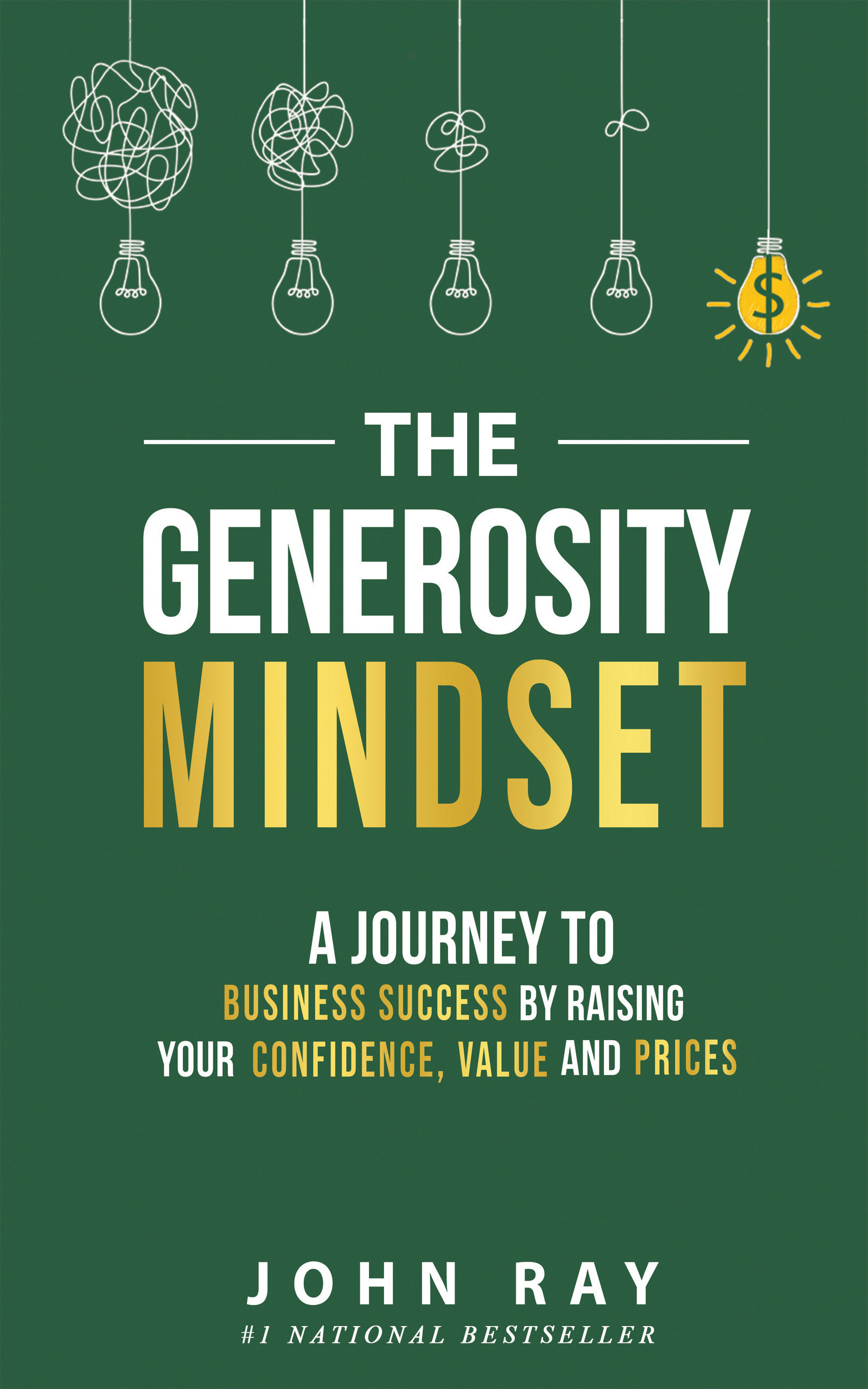
John’s book, The Generosity Mindset: A Journey to Business Success by Raising Your Confidence, Value, and Prices
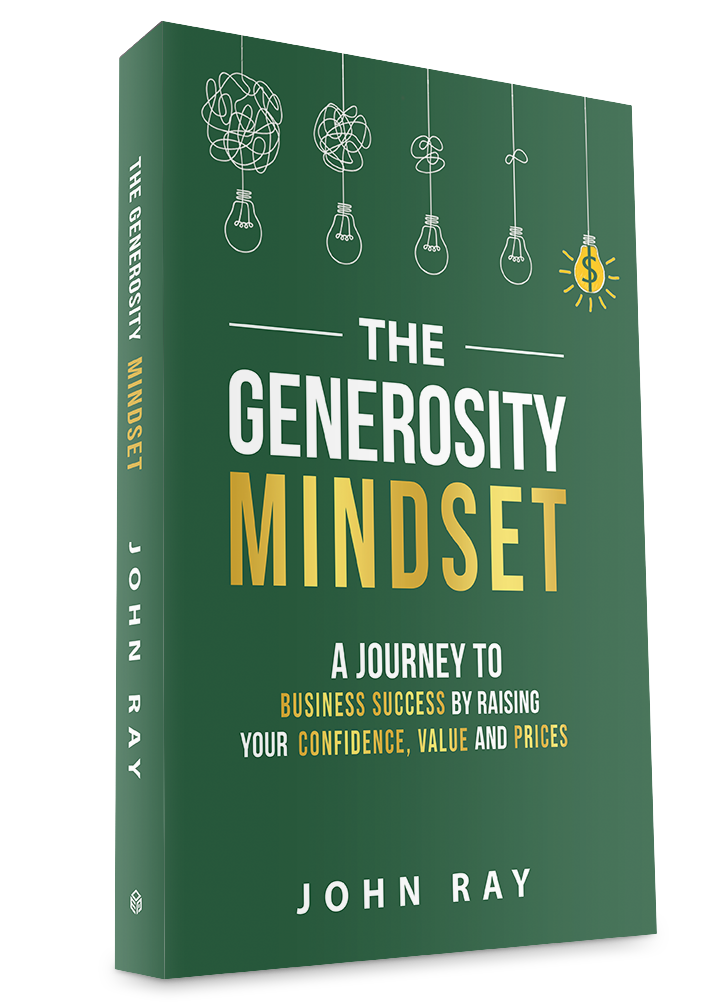
The Generosity Mindset, by John RayJohn is the #1 national best-selling author of The Generosity Mindset: A Journey to Business Success by Raising Your Confidence, Value, and Prices.

If you are a professional services provider, your goal is to do transformative work for clients you love working with and get paid commensurate with the value you deliver to them. While negative mindsets can inhibit your growth, adopting a different mindset, The Generosity Mindset™, can replace those self-limiting beliefs. The Generosity Mindset enables you to diagnose and communicate the value you deliver to clients and, in turn, more effectively price to receive a portion of that value.

Whether you’re a consultant, coach, marketing or branding professional, business advisor, attorney, CPA, or work in virtually any other professional services discipline, your content and technical expertise are not proprietary. What’s unique, though, is your experience and how you synthesize and deliver your knowledge. What’s special is your demeanor or the way you deal with your best-fit clients. What’s invaluable is how you deliver outstanding value by guiding people through massive changes in their personal lives and in their businesses that bring them to a place they never thought possible.

Your combination of these elements is unique in your industry. There lies your value, but it’s not the value you see. It’s the value your best-fit customers see in you.

If pricing your value feels uncomfortable or unfamiliar to you, this book will teach you why putting a price on the value your clients perceive and identify serves both them and you, and you’ll learn the factors involved in getting your price right.

The book is available at all major physical and online book retailers worldwide. Follow this link for further details.
Connect with John Ray:

Website | LinkedIn | Twitter

Business RadioX®:  LinkedIn | Twitter | Facebook | Instagram

Tagged With: interview training, Interviews, John Ray, marketing, Noémi Beres, podcast booking, podcast booking agency, Podcast Connections, podcast guesting, podcast hosting, podcasting, storytelling, The Price and Value Journey

Mastering Business Communications, with Pamela DeRitis, Connect and Captivate

September 18, 2024 by John Ray

Pamela DeRitis, Connect and Captivate, on North Fulton Business Radio with host John Ray
North Fulton Business Radio
Mastering Business Communications, with Pamela DeRitis, Connect and Captivate
Loading
00:00 /
RSS Feed
Share
Link
Embed

Download file

Pamela DeRitis, Connect and Captivate, on North Fulton Business Radio with host John Ray

Mastering Business Communications, with Pamela DeRitis, Connect and Captivate (North Fulton Business Radio, Episode 802)

In this episode of North Fulton Business Radio, John Ray interviews Pamela DeRitis with Connect and Captivate. Pamela discusses her background in acting and how it informs her approach to corporate communications, emphasizing authentic connection and captivating an audience. She details techniques like improv and structured storytelling to help clients enhance their speaking and video presentations. Pamela also shares client success stories, including overcoming personal challenges and preparing for high-stakes presentations. The conversation touches on the importance of emotional engagement, the impact of AI on communication training, and tips for effectively connecting with an audience.

John Ray is the host of North Fulton Business Radio. The show is recorded and produced by the North Fulton affiliate of Business RadioX® inside Renasant Bank in Alpharetta.

Pamela DeRitis, Connect and Captivate

Pamela DeRitis, Connect and Captivate

Pamela draws on over fifteen years of experience in acting and improv to help you create authentic and influential communications with your peers, employees, or audience.

Through coaching that builds confidence and character, Pamela will help you become a trusted partner to your clients and customers, whether you are giving a keynote speech, creating video content to help sales conversions, or networking in person.

Pamela’s coaching programs are formulated from her training in the Meisner technique, Practical Aesthetics, improv, and other neuroscience-based acting techniques, which have all shaped her life as an artist and entrepreneur.

Pamela brings her unstoppable creative momentum to the table to help your businesses gain an EQ advantage and become a captivating communicator, on camera, or off.

Website | LinkedIn | X (Twitter)

Topics Discussed in this Episode

00:00 Introduction to North Fulton Business Radio
01:21 Meet Pamela DeRitis with Connect and Captivate
01:32 Pamela’s Journey and Connect and Captivate
02:10 Acting and Improv in Business Communication
04:41 Emotional Breakthroughs and Business Applications
08:14 Challenges in Business Communication
17:59 Storytelling Principles in Business
21:58 Client Success Stories
24:00 The Role of AI in Business Communication
26:56 How to Know You Need a Communication Coach
32:53 Conclusion and Final Thoughts

Renasant Bank supports North Fulton Business Radio

Renasant BankRenasant Bank has humble roots, starting in 1904 as a $100,000 bank in a Lee County, Mississippi, bakery. Since then, Renasant has become one of the Southeast’s strongest financial institutions, with over $17 billion in assets and more than 180 banking, lending, wealth management, and financial services offices throughout the region. All of Renasant’s success stems from each of their banker’s commitment to investing in their communities as a way of better understanding the people they serve. At Renasant Bank, they understand you because they work and live alongside you every day.

Website | LinkedIn | Facebook | Instagram | X (Twitter) | YouTube

Renasant Bank supports the Georgia Alliance for Breast Cancer

Georgia Alliance for Breast Cancer (formerly It’s The Journey) is a registered 501c3 non-profit that strives to support Georgia’s breast cancer community by raising funds to support breast health and breast cancer programs throughout the state of Georgia.

GAABC’s mission is to engage with Georgia’s breast cancer community to increase access to care and reduce disparities in cancer outcomes.

Randi Passoff, a breast cancer survivor, founded GAABC in 2002. She created “the kinder and gentler breast cancer walk” based off the Avon 3-Day Breast Cancer Walk. Instead of a 3-day walk of 60 miles over 3 days and sleeping in a tent, the Georgia 2-Day Walk covers 30 miles over 2 days, and participants sleep in a hotel. Most importantly, what’s raised in Georgia stays in Georgia.

Renasant Bank is a major supporter of GAABC, both in corporately donated funds and employee donations and participation in the walk.

To learn more about GAABC and the 2-Day Walk, go to the GAABC Website.

About North Fulton Business Radio and host John Ray

With over 790 shows and having featured over 1,200 guests, North Fulton Business Radio is the longest-running podcast in the North Fulton area, covering business in our community like no one else. We are the undisputed “Voice of Business” in North Fulton!

The show welcomes a wide variety of business, non-profit, and community leaders to get the word out about the important work they’re doing to serve their market, their community, and their profession. There’s no discrimination based on company size, and there’s never any “pay to play.” North Fulton Business Radio supports and celebrates business by sharing positive business stories that traditional media ignore. Some media leans left. Some media leans right. We lean business.

John Ray, Business RadioX - North Fulton, and Owner, Ray Business Advisors
John Ray, Business RadioX – North Fulton, and Owner, Ray Business Advisors

John Ray is the host of North Fulton Business Radio. The show is recorded and produced from the North Fulton studio of Business RadioX® inside Renasant Bank in Alpharetta. You can find the full archive of shows by following this link. The show is available on all the major podcast apps, including Apple Podcasts, Spotify, Google, Amazon, iHeart Radio, and many others.

The studio address is 275 South Main Street, Alpharetta, GA 30009.

John Ray, The Generosity MindsetJohn Ray also operates his own business advisory practice. John’s services include advising solopreneurs and small professional services firms on their value, their positioning and business development, and their pricing. His clients are professionals who are selling their expertise, such as consultants, coaches, attorneys, CPAs, accountants and bookkeepers, marketing professionals, and other professional services practitioners.

John is the national bestselling author of The Generosity Mindset: A Journey to Business Success by Raising Your Confidence, Value, and Prices.

Tagged With: business communication, communications, Connect and Captivate, effective speaking, John Ray, North Fulton Business Radio, Pamela DeRitis, speeches, storytelling

Strategies for Effective Digital Marketing and Brand Storytelling, with Stephen Wilson, WSI

April 8, 2024 by John Ray

Stephen Wilson WSI
North Fulton Business Radio
Strategies for Effective Digital Marketing and Brand Storytelling, with Stephen Wilson, WSI
Loading
00:00 /
RSS Feed
Share
Link
Embed

Download file

Stephen Wilson WSI

Strategies for Effective Digital Marketing and Brand Storytelling, with Stephen Wilson, WSI (North Fulton Business Radio, Episode 759)

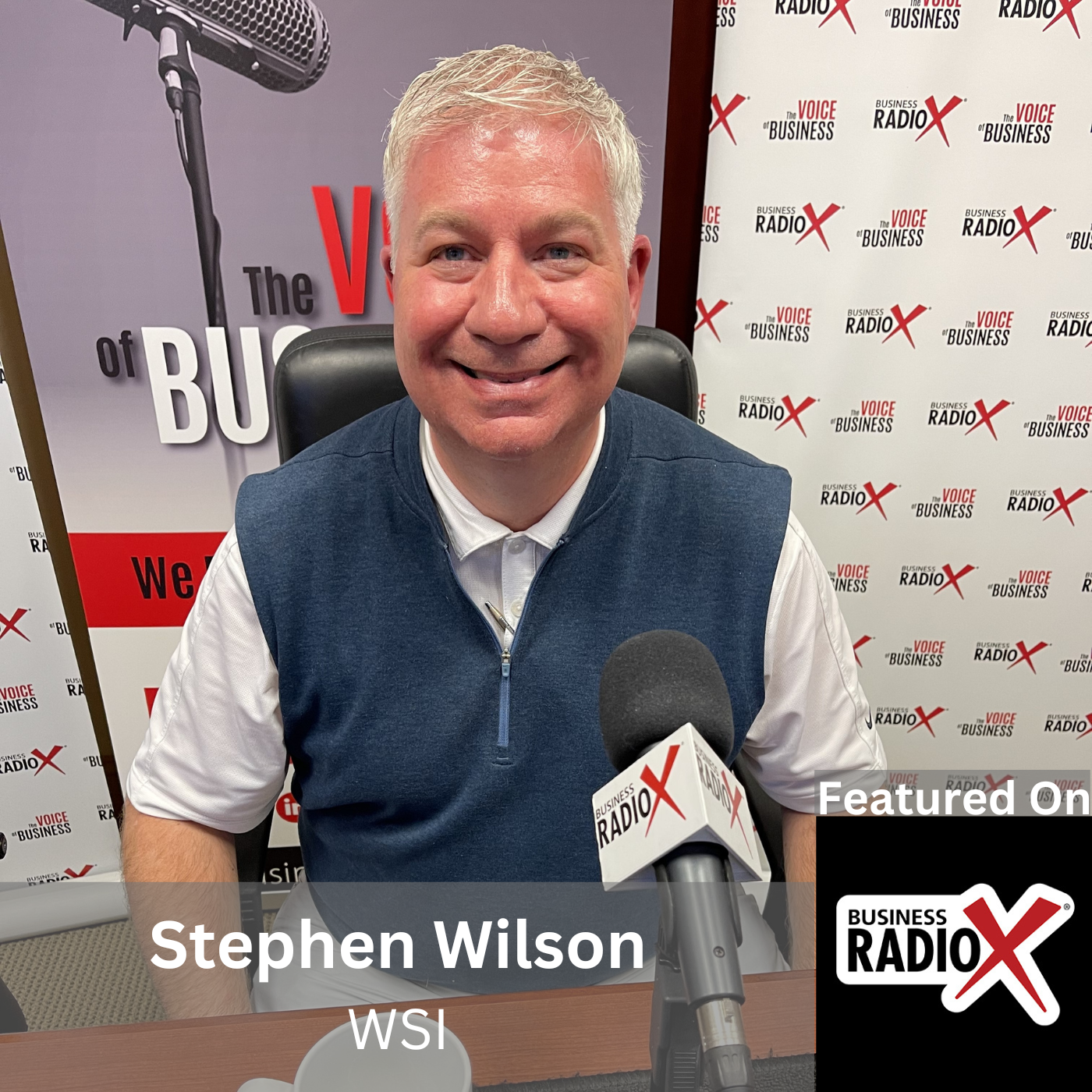
Host John Ray welcomed Stephen Wilson, Owner and Principal Consultant with WSI, to this edition of North Fulton Business Radio. Stephen shared his journey from the restaurant business through environmental engineering to digital marketing, highlighting his deep understanding and passion for helping businesses enhance their online presence. He elaborated on the unique, bespoke approach WSI takes to assist businesses in leveraging their untapped potential through digital marketing strategies. The interview covers vital topics such as the importance of storytelling, brand development, local marketing strategies, and the common pitfalls in digital asset management. Stephen emphasizes the significance of forming an emotional connection with potential customers and the challenges businesses face when trying to manage digital marketing efforts independently.

John Ray is the host of North Fulton Business Radio. The show is recorded and produced from the North Fulton studio of Business RadioX® inside Renasant Bank in Alpharetta.

Stephen Wilson, Owner & Principal Consultant, WSI

Stephen Wilson, WSI
Stephen Wilson, WSI

Stephen Wilson is the Principal Digital Marketing Consultant with WSI in Roswell, GA. Utilizing his 30+ years of business experience in hospitality and environmental engineering and leveraging WSI’s expertise in digital marketing, Stephen helps his clients with all their online marketing needs.

Prior to his role at WSI, Stephen worked in business development and operations and played a pivotal role in turning a business services startup into a thriving, multi-location operation. He has firsthand knowledge of the difficulties faced by small, expanding businesses and uses his expertise to provide affordable solutions that produce quantifiable outcomes and long-term growth.

Stephen is passionate about communicating the stories of his clients in a meaningful way that helps each client connect with their customers. Leveraging his extensive experience, Stephen offers cost-effective, results-driven solutions, ensuring measurable outcomes and fostering long-term growth for the businesses he partners with.

WSI is a global leader in digital marketing solutions, offering businesses innovative strategies to enhance their online presence and achieve growth. Their team of experts specializes in a comprehensive range of services for every marketing goal. Website design, brand development, online advertising, social media management, search engine optimization (SEO), and digital marketing strategy.

WSI doesn’t believe in the “one-size-fits-all” approach to digital marketing. Instead, they take the time to understand your organization and customers, so they can recommend a strategy based on your individual business needs.

Working with WSI means your business will partner with one of the most stable and experienced digital marketing companies out there. Their clients benefit from over 25 years of global experience, support, and stability. WSI has supported over 150,000 brands across multiple industries to help them effectively embrace digital across their business operations.

Website | LinkedIn | Facebook | Instagram

Topics Discussed in this Episode

00:00 Welcome to North Fulton Business Radio
01:36 Introducing Stephen Wilson from WSI Digital Marketing
02:26 Stephen Wilson’s Unique Journey to Digital Marketing
05:07 The Essence of Digital Marketing for Businesses
07:06 The Power of Storytelling in Branding
09:38 Going Local: Tailoring Your Digital Marketing Strategy
11:23 Addressing Common Digital Marketing Challenges
15:03 Crafting a Compelling Digital Presence: Strategy and Execution
20:28 The Importance of a Well-Designed Website
22:23 How to Connect with Stephen Wilson and WSI Digital Marketing
23:30 Closing Remarks and Resources for Business Success

About North Fulton Business Radio and host John Ray

With over 750 shows and having featured over 1,200 guests, North Fulton Business Radio is the longest-running podcast in the North Fulton area, covering business in our community like no one else. We are the undisputed “Voice of Business” in North Fulton!

The show welcomes a wide variety of business, non-profit, and community leaders to get the word out about the important work they’re doing to serve their market, their community, and their profession. There’s no discrimination based on company size, and there’s never any “pay to play.” North Fulton Business Radio supports and celebrates business by sharing positive business stories that traditional media ignore. Some media leans left. Some media leans right. We lean business.

John Ray, Business RadioX - North Fulton, and Owner, Ray Business Advisors
John Ray, Business RadioX – North Fulton, and Owner, Ray Business Advisors

John Ray is the host of North Fulton Business Radio. The show is recorded and produced from the North Fulton studio of Business RadioX® inside Renasant Bank in Alpharetta. You can find the full archive of shows by following this link. The show is available on all the major podcast apps, including Apple Podcasts, Spotify, Google, Amazon, iHeart Radio, and many others.

The studio address is 275 South Main Street, Alpharetta, GA 30009.

John Ray, The Generosity MindsetJohn Ray also operates his own business advisory practice. John’s services include advising solopreneurs and small professional services firms on their value, their positioning and business development, and their pricing. His clients are professionals who are selling their expertise, such as consultants, coaches, attorneys, CPAs, accountants and bookkeepers, marketing professionals, and other professional services practitioners.

John is the national bestselling author of The Generosity Mindset: A Journey to Business Success by Raising Your Confidence, Value, and Prices.


Renasant BankRenasant Bank has humble roots, starting in 1904 as a $100,000 bank in a Lee County, Mississippi, bakery. Since then, Renasant has become one of the Southeast’s strongest financial institutions, with over $13 billion in assets and more than 190 banking, lending, wealth management, and financial services offices in Mississippi, Alabama, Tennessee, Georgia, and Florida. All of Renasant’s success stems from each of their banker’s commitment to investing in their communities as a way of better understanding the people they serve. At Renasant Bank, they understand you because they work and live alongside you every day.

Tagged With: brand development, brand storytelling, Branding, digital marketing, John Ray, local marketing, North Fulton Business Radio, search engine optimization, Stephen Wilson, storytelling, website, WSI

Decision Vision Episode 150: Should I Pivot? – An Interview with Jocelyn Brady, Brain Coach

January 6, 2022 by John Ray

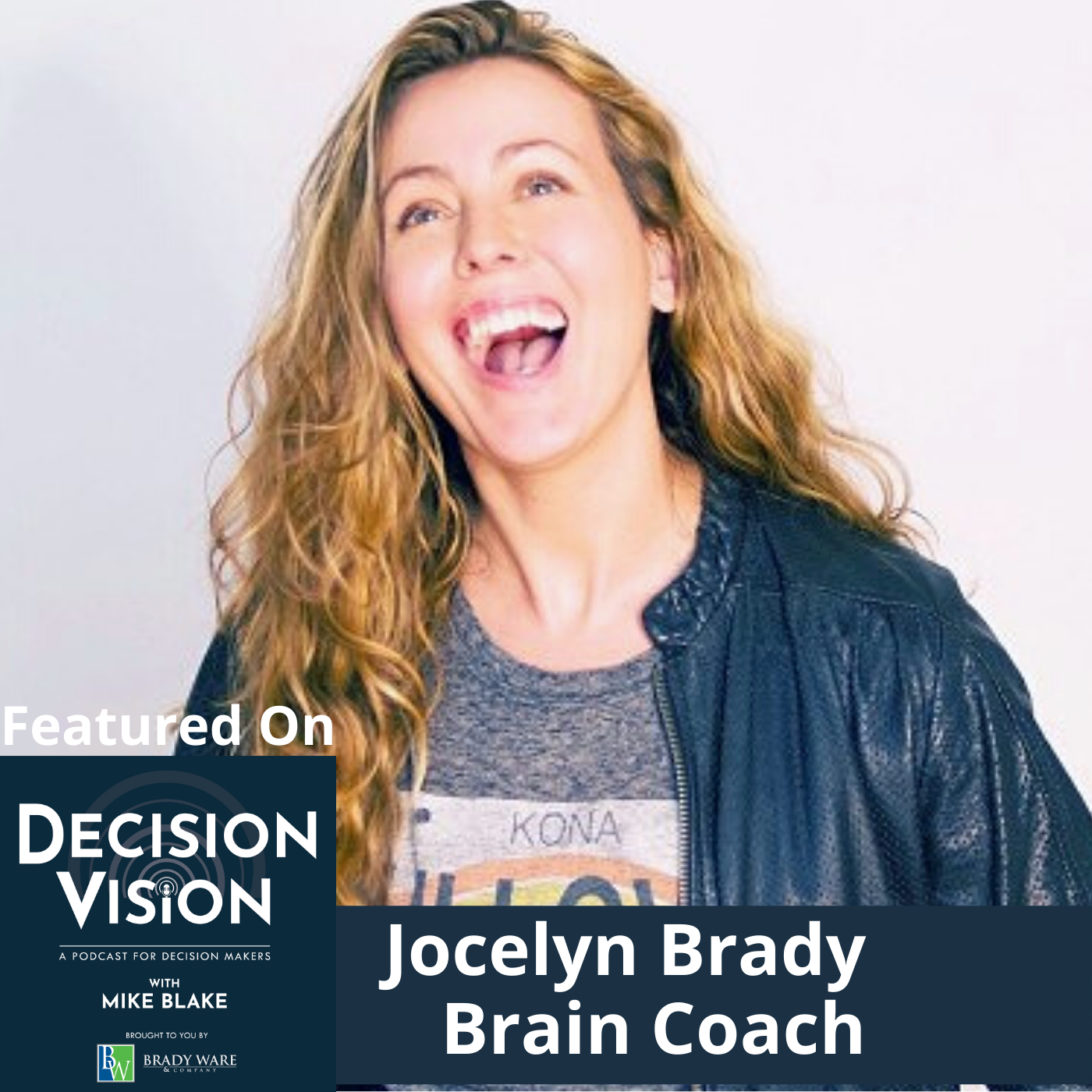
Jocelyn Brady
Decision Vision
Decision Vision Episode 150: Should I Pivot? - An Interview with Jocelyn Brady, Brain Coach
Loading
00:00 /
RSS Feed
Share
Link
Embed

Download file

Jocelyn Brady

Decision Vision Episode 150:  Should I Pivot? – An Interview with Jocelyn Brady, Brain Coach

When Jocelyn Brady began to be bored and even resented the projects she was working on in her business, she recognized an itch she needed to investigate. Then came the pandemic, which caused its own disruption, and Jocelyn pivoted away from writing and content creation to working as a Brain Coach. In this conversation with host Mike Blake, Jocelyn describes what it is like to have a successful company and yet be unfulfilled, the impact of Covid on her trajectory, her mixed feelings about the word “coach,” and much more. Decision Vision is presented by Brady Ware & Company.

Jocelyn Brady, Brain Coach, Speaker & Chief Play Scientist

Jocelyn Brady, Brain Coach, Speaker & Chief Play Scientist

Jocelyn Brady is a writer, speaker, and professional brain jostler who thrives at the intersection of comedy, storytelling and unraveling the mysteries of the human brain. When she’s not being the Bill Nye of the brain (as the creator and host of her series Tiny Tips, the Internet’s favorite way to Brain), Jocelyn applies her certified Brain Coaching chops to help creative visionaries tap their brains’ greatest potential.

In her past life—as an award-winning copywriter, Creative Director, and agency CEO—Jocelyn led narrative strategy and international storytelling training for some of the world’s biggest brands. She also produced and co-hosted Party Time, a standup comedy and storytelling show featuring talent who went on to write or perform for Conan, Colbert, and Comedy Central. All while managing to keep her two cats and houseplants alive.

Jocelyn’s first book, tentatively titled Your Brain is a Magical Asshat, is slated for publication next year.

Website | LinkedIn | Twitter | Tiny Tips Series

Mike Blake, Brady Ware & Company

Mike Blake, Host of the “Decision Vision” podcast series

Michael Blake is the host of the Decision Vision podcast series and a Director of Brady Ware & Company. Mike specializes in the valuation of intellectual property-driven firms, such as software firms, aerospace firms, and professional services firms, most frequently in the capacity as a transaction advisor, helping clients obtain great outcomes from complex transaction opportunities. He is also a specialist in the appraisal of intellectual properties as stand-alone assets, such as software, trade secrets, and patents.

Mike has been a full-time business appraiser for 13 years with public accounting firms, boutique business appraisal firms, and an owner of his own firm. Prior to that, he spent 8 years in venture capital and investment banking, including transactions in the U.S., Israel, Russia, Ukraine, and Belarus.

LinkedIn | Facebook | Twitter | Instagram

Brady Ware & Company

Brady Ware & Company is a regional full-service accounting and advisory firm which helps businesses and entrepreneurs make visions a reality. Brady Ware services clients nationally from its offices in Alpharetta, GA; Columbus and Dayton, OH; and Richmond, IN. The firm is growth-minded, committed to the regions in which they operate, and most importantly, they make significant investments in their people and service offerings to meet the changing financial needs of those they are privileged to serve. The firm is dedicated to providing results that make a difference for its clients.

Decision Vision Podcast Series

Decision Vision is a podcast covering topics and issues facing small business owners and connecting them with solutions from leading experts. This series is presented by Brady Ware & Company. If you are a decision-maker for a small business, we’d love to hear from you. Contact us at decisionvision@bradyware.com and make sure to listen to every Thursday to the Decision Vision podcast.

Past episodes of Decision Vision can be found at decisionvisionpodcast.com. Decision Vision is produced and broadcast by the North Fulton studio of Business RadioX®.

Connect with Brady Ware & Company:

Website | LinkedIn | Facebook | Twitter | Instagram

TRANSCRIPT

Intro: [00:00:02] Welcome to Decision Vision, a podcast series focusing on critical business decisions. Brought to you by Brady Ware & Company. Brady Ware is a regional full-service accounting and advisory firm that helps businesses and entrepreneurs make visions a reality.

Mike Blake: [00:00:22] Welcome to Decision Vision, a podcast giving you, the listener, clear vision to make great decisions. In each episode, we discuss the process of decision making on a different topic from the business owners’ or executives’ perspective. We aren’t necessarily telling you what to do, but we can put you in a position to make an informed decision on your own and understand when you might need help along the way.

Mike Blake: [00:00:42] My name is Mike Blake, and I’m your host for today’s program. I’m a director at Brady Ware & Company, a full-service accounting firm based in Dayton, Ohio, with offices in Dayton; Columbus, Ohio; Richmond, Indiana; and Alpharetta, Georgia. My practice specializes in providing fact-based strategic and risk management advice to clients that are buying, selling, or growing the value of companies and their intellectual property. Brady Ware is sponsoring this podcast, which is being recorded in Atlanta per social distancing protocols.

Mike Blake: [00:01:08] If you would like to engage with me on social media with my Chart of the Day and other content, I’m on LinkedIn as myself and @unblakeable on Facebook, Twitter, Clubhouse, and Instagram. I also recently launched a new LinkedIn Group called A Group That Doesn’t Suck, so please join that as well if you would like to engage. If you like this podcast, please subscribe on your favorite podcast aggregator, and please consider leaving a review of the podcast as well.

Mike Blake: [00:01:32] Today’s topic is, Should I pivot? And we’ve done this topic before, probably about a-year-and-a-half ago. But as you know, if you’ve been a long time listener, I don’t mind revisiting a topic every once in a while, because certain topics, I think, just lend themselves well to different angles, different approaches. And something like a pivot, also, in my experience is a deeply personal experience. And so, everybody is going to come to a pivot, is going to experience a pivot, is going to engage with it, embrace it or not in their own unique way. And so, it’s one of those kind of evergreen topics that I don’t think we’ll ever get to a point where nobody ever pivots anymore.

Mike Blake: [00:02:17] And, also, frankly, from a very practical perspective, now that we’re recording podcast 140 something or whatever, like 148, I guess, or 149, the reality is that most people don’t go back and listen to a lot of the back catalog. We’re not Led Zeppelin. People aren’t going back to the initial records and trying to find the original recording. So, if you’re like most people and you’re relatively new to the podcast, statistically speaking, this will be a topic that we actually haven’t covered before. And if you want to hear more about it, then you can go back into the deep tracks in the archives somewhere around the double digit episodes. So, I hope you’re going to find this topic and this conversation as engaging as I anticipate that it will be.

Mike Blake: [00:03:02] You know, pivots are interesting because there are some very famous ones I don’t think people necessarily realized. Cornelius Vanderbilt – yes, that Vanderbilt family – initially started out with steamships. He actually started out with river barges around the island of Manhattan, and they are basically providing cut rate ferry service across the Hudson and East Rivers. And in doing so, got a lot of people killed because they used rickety boats. But that’s how they charge less for what they did. They eventually did pivot into steamships, which presumably were safer. I don’t know. I don’t have any data on that. And then, eventually railroads.

Mike Blake: [00:03:45] William Wrigley, whom you may know from Wrigley’s Gum – I don’t chew gum because it rip out all my dental work. But for those of you who do have good teeth, you may know of Wrigley – they originally were a baking powder company. Twitter, of all things, launched as a podcast directory. Yelp began as an automated email service. And YouTube, believe it or not, was once a dating site. So, we have Tinder now and we have all the others, but YouTube actually was not the YouTube that we know of today.

Mike Blake: [00:04:13] And, you know, I find it also an interesting topic because I find myself at odds intellectually with the investment community on one particular topic, and that is, Should you bet the jockey or the horse? And what that means to those of you who aren’t necessarily speaking Silicon Valley, it means that do you place the bet on the management of a startup or do you place your bet on the basic idea of the startup? And most investors will tell you that they bet the jockey, they bet the management team, over the actual idea figuring that a management team will actually figure it out.

Mike Blake: [00:04:55] The data – and this is empirically studied. This is actually a fairly old study, but still very good. It was published in the Journal of Finance back in 2011 – called it Do You Bet the Jockey or the Horse? And the empirical study determined that, in fact, the companies that generated the most value in their IPOs were the ones that had kept the fundamental idea, more or less start to finish, but actually had switched management teams.

Mike Blake: [00:05:21] And the reason behind that, I think, is that – again, probably torching this analogy beyond where it needs to go – if you have a slow horse, the best jockey in the world is not going to win the race of the slow horse. They may prevent you from coming in last. They may prevent you from having the horse fall over, break its leg, and you have to shoot it right down the track. But even a great management team can’t take a slow horse and win the Kentucky Derby. However, if you have the fastest horse, an average jockey might win that race because you actually have the fastest horse.

Mike Blake: [00:05:54] So, I think that there’s something to that. So, finding the right idea, finding the right business model, this highlights how important that is. Because if you don’t have the right business, you don’t have the right model – and the data says this. It’s not just Mike Blake talking into a microphone on the internet – the data suggests that there’s only so far a mediocre business concept will take you.

Mike Blake: [00:06:20] And I don’t care if you’re going to have the best management team in the world, and you can dig up Jack Welch and Steve Jobs and everybody else that you might have idolized, Warren Buffett, you’re only going to take that so far. And I guess that’s why I find pivots so interesting, because a pivot is truly an existential decision. I think it is one of the most important decisions that are made in business and probably one that is not as appreciated as much as it should be.

Mike Blake: [00:06:49] So, fortunately, coming on to join us somebody who is either sort of at the later stages or fresh off a pivot, she’ll tell us exactly where she is on it. But joining us is Jocelyn Brady, who is the Creative Brain Jostler and Brainutainer. She is a writer, speaker, and professional brain jostler who thrives at the intersection of comedy storytelling and unraveling the mysteries of the human brain. When she’s not being the Bill Nye of the brain as the creator and a host of her series, Tiny Tips, The Internet’s Favorite Way to Brain, Jocelyn applies her certified brain coaching chops to help creative visionaries tap their brain’s greatest potential.

Mike Blake: [00:07:30] In her past life as an award-winning copywriter, creative director and agency CEO, Jocelyn led narrative strategy and international storytelling training for some of the world’s biggest brands. She also produced and co-hosted Party Time, a stand-up comedy and storytelling show featuring talent who went on to write or perform for Conan O’Brien, Stephen Colbert, and Comedy Central. All while managing to keep her two cats and houseplants alive. And I have seen at least one of the cats and one of the plants, so we do have proof of life for at least one of each. Jocelyn Brady, welcome to the program.

Jocelyn Brady: [00:08:03] Thank you so much.

Mike Blake: [00:08:05] Oh, and before you jump in, I forgot to mention and this is really important, because you’re doing something that I’m struggling to do myself. Jocelyn’s first book tentatively titled, Your Brain is a Magical Ass Hat, is slated for publication next year. Jocelyn, again, welcome to the program and congratulations on writing a book. I’m struggling to do that, but it’s hard to do that in crayon.

Jocelyn Brady: [00:08:28] Oh, man. It’s hard to even think about or talk about writing a book, let alone actually doing it. But, yeah, I highly recommend joining other people coaching program or other people who are doing it. Just like getting some of that accountability, that’s the biggest thing is just creating that structure. Stick with it.

Mike Blake: [00:08:48] So, we have you here to talk about pivots. And as I like to do on the show, just in case somebody was listening who really doesn’t know what a pivot is, when you hear the term pivot, what does that mean to you?

Jocelyn Brady: [00:09:01] I imagine the basketball move like, “Okay. We were going to go this way and now we go this way.” I know nothing about basketball, but people do pivot.

Mike Blake: [00:09:11] They’re doing great. Yeah.

Jocelyn Brady: [00:09:14] Yeah. It’s just changing course, right? Deciding to move in a new direction, and it could be sudden.

Mike Blake: [00:09:20] So, what did your company originally set out to do?

Jocelyn Brady: [00:09:24] Well, when I started in 2008, all I wanted to do was make a living writing. And, you know, it was literally starting with can I earn enough to eat a sandwich today? And then, it started just growing really quickly. I didn’t have any business experiences in my 20s. I didn’t have a plan. I just thought, “I’m good at writing. I’ll figure it out.” And I got into copywriting. And one thing led to another. More clients were coming my way. I accidentally had more work than I could handle, so I hired a team.

Jocelyn Brady: [00:10:02] So, a team of writers and that grew into, not just content development or copywriting, but also then developing the brand voices and narrative strategy. And overseeing their most important projects, like what is the CEO saying in their annual meeting to shareholders? Or, what are you putting in your video scripts? And even overseeing a Super Bowl ad for a big company. And so, we were developing that tone of voice and then training the teams on how to be better storytellers. And like I said, it didn’t really set out with any grand plan or dream or vision. It was just, I just want to make a living writing.

Mike Blake: [00:10:42] And sandwiches. You wanted sandwiches.

Jocelyn Brady: [00:10:45] I wanted sandwiches to feed myself, I guess.

Mike Blake: [00:10:48] Yeah. And your cats wanted kibbles or Fancy Feast, whatever you feed them. We feed our children, it seems to keep them happy. So, you started this thing and it sounds like it was pretty successful. If anything, maybe so successful that in itself provided a challenge. What were some signs that things in this company weren’t meeting your expectations?

Jocelyn Brady: [00:11:15] I started to get bored. I started to almost resent the projects that were coming in. And I knew that’s not a good place to be. You don’t want to resent work coming in or pass that along to the clients themselves. It’s just a horrible way to approach something and to work with people. So, I think it was just the itch, like it’s not fulfilling. And a lot of times when you start something, you grow up or you excel, and you become now a manager of people, and you’re doing less of the thing that you started doing.

Jocelyn Brady: [00:11:53] It’s like a story as old as time in any company or large corporations, especially. You’re really good at a skill and then you get promoted and you’re like, “Wait a minute. Now, I’m just doing completely different things.” Making sure the business is functioning, and that we have good cash flow, and are the people doing their jobs, and how do we manage when people are out or leave or get vengeful or nobody’s gotten vegetable. You got to prepare for all the scenarios. So, I think that was the main thing is just feeling misaligned with what I was doing.

Mike Blake: [00:12:28] You know, it’s interesting you bring that up, because I think that one of the most underappreciated differentiators of a Bill Gates, of a Sarah Blakely, of a Steve Jobs, and Mark Zuckerberg is that, in addition to all the things that people know they brought to the table, their innovation, their energy, their messaging, and so forth, their vision, but also the skillset and the desire to run and thrive in a startup as well as in a Fortune 100 company. That is not easy to do because you’re not just scaling a person, you have to scale yourself.

Mike Blake: [00:13:15] And not to go all self-help guru here because I’m not it, but not many people can make that journey or want to make that journey. Because, when you’re running Apple, it’s not the same thing as writing code, and being in there, and designing the products and everything. Which I suspect was probably the case with Steve Wozniak why he sort of took a less prominent ride. I don’t know, Stevie. I call him Stevie. He calls me who the hell are you? But I suspect that’s kind of what happened, you know, listening to his interviews, reading what he writes, he would not have had any fun and probably not a lot of success running that kind of company.

Mike Blake: [00:13:54] And it sounds like a little bit of that may apply to you, too, that you started to get far away from what you were doing because of the way the company is growing and somebody had to run it.

Jocelyn Brady: [00:14:03] Yeah. Yeah. And I mean, there’s still things that I did love. So, the more I was doing the workshops, I realized that I really loved interacting with people, coming up with ideas on the fly, helping people pull out the creative ideas, and just that live interaction. And you never know really what’s going to happen.

Jocelyn Brady: [00:14:29] And I still love writing, obviously. I’m working on a book and I’m also working on a really big network project. But I take those few and far between because now I realize, if I’m working on a project or I’m outsourcing my writing skills, I have to absolutely love this project. That became very clear. And on the other side of that is, I love spending my time just working directly with people and things where you’re not sitting alone banging your head against the wall going, “Oh, help. Just be here writing.” So, even when we had a pretty significant team, everybody was working remotely. We rarely got together, so it can be lonely even as part of a team.

Mike Blake: [00:15:11] I would argue sometimes it’s lonelier, because, to me, one of the biggest challenges of leadership is to sort of get out there and put a smile on your face when it’s the last thing that you want to do. And when you’re responsible for the care and feeding of a team that has entrusted you to become the platform of their careers and, in some cases, their life satisfaction, that is a very lonely place to be.

Jocelyn Brady: [00:15:41] Yeah. And it could be really scary. And it’s really helpful to connect with other entrepreneurs and people running businesses because you just simply can’t relate to what it’s like, to feel responsible for, not just yourself, but all the other people who are looking up to you like, “What’s happening next?”

Jocelyn Brady: [00:16:03] And let alone – I’m sure we’ll get more into this – COVID, as for many of us, was like, “Oh, everybody is going to hell.” And that’s when all my big contracts vanished. So, the ones I didn’t want were no longer a problem. But it was terrifying because I now had to let my team go. I had to tell them, you know, “There’s no more work. And I would love to keep you around, but I can’t pay you.”

Mike Blake: [00:16:33] I’ve never had to let a whole team go, but I have let people go in my career. But I got to imagine that conversation or series of conversations – I don’t know whether you did it in a group or you did it individually. I’m sure you didn’t do it like that button CEO did it over Zoom and calling people thieves on the way out. I’m sure you didn’t do it that way – that’s got to be the hardest conversation, one of the top five you’ll ever have in your life.

Jocelyn Brady: [00:17:07] Yeah. It’s like a divorce, right? It’s just not working out between us. There’s a lot of emotion. And I got to say, with my longtime assistant, she was five or six years this one, and I absolutely loved her and I knew that she wanted to get more into filmmaking. She’d been doing, but she really wanted to move to L.A. and try it for real. And I really wanted for her to do that. So, when this came around, I think for both of us, it was like the best breakup I could ever imagine because it was sad and we were really emotional, but also really glad for each other. She decided to go to L.A.

Jocelyn Brady: [00:17:52] She just got a role – I think I’m allowed to talk about it now – Haley Joel Osment is in it, James Franco – wait. Sorry. The other Franco directed it, Alison Brie. So, anyway, I couldn’t imagine a better outcome. And I think when you have people’s best interest in mind and you’ll be as vulnerable as you can and say what’s really happening, that’s really, really scary and can be really hard to do. And I think it takes a lot of practice. I don’t think a lot of us are well-versed or trained to do that.

Jocelyn Brady: [00:18:27] Especially in a business setting, there’s this idea you need to be professional and you can’t say emotional things. But, to me, that is crucial and really important for human development, relationships, behavior, all of it.

Mike Blake: [00:18:45] Yeah. And I think it’s rapidly becoming best practices too. You know, the world has changed, obviously. It’s an open question to what extent we’ll go back to in 2019. It’s not going to be 100 percent, I think we all know that.

Mike Blake: [00:19:02] So, your pivot story, it sounds like that COVID accelerated a pivot that might have happened anyway because you really weren’t loving what you were doing. Is that fair?

Jocelyn Brady: [00:19:13] Yeah. Exactly. It had been on my mind for a year and I’d been talking to my team about making transitions. And, yeah, that came along and I was like, “Well, I guess decision made. You’re doing it now.”

Mike Blake: [00:19:28] So, COVID happens. You let your team go. What do you do the next day?

Jocelyn Brady: [00:19:38] Cry a lot, you know, mixed feelings. I was really excited about a new direction, but also terrified. And it’s so difficult to have built something up and then it’s completely gone, in a sense, where it’s starting over. It’s just me again. I have nothing. I have enough to sort of buy a few months, thankfully. But other than that, it’s like, “What am I doing?”

Jocelyn Brady: [00:20:10] And that’s not entirely true, because I did have the four years prior or 2016 or 2017, I got certified as a brain coach. But it’s something I sort of kept secret, because as someone who works with words, I couldn’t wrap my head around how to love the word coach. I hated it. I hate the word coach. The baggage I feel it comes with, it seems so phony. I just had all these unhealthy attachments to the meaning of the word, the meaning I was making.

Jocelyn Brady: [00:20:37] And at the same time, I was still doing it, still coaching people in private for four years. It was just now I got to, “If you really want to be doing this, own it. If you really want to be speaking, tell people you are a speaker. Go out there and speak. Go do the thing. You’ve got nothing to lose now. You got everything to gain.” Because, otherwise, we’ll just be moving with the cats into the crawl space and hope the new landlord doesn’t know or the owner doesn’t know.

Mike Blake: [00:21:10] So, I’m going to ask you sort of a semi-unfair question, but I feel like I want to ask it anyway. COVID gave you kind of the jolt, if you will, sort of forced the pivot on you. Do you think if the pandemic hadn’t happened, you would have made a pivot like this anyway?

Jocelyn Brady: [00:21:29] I’d like to think so. I think eventually I would have. Definitely, I do know that once I decide I’m doing something with full conviction, I’ll do it. But I definitely think it would have taken me longer. I would have had feelings about not wanting to let my team go. And so, if they don’t want to come with me on the new ride, then that would have been the end of that anyway. So, yeah, it’s always hard to say. And you never know what you’re like until really confronted with the situation.

Mike Blake: [00:22:07] That’s true. That’s entirely fair. So, I have to get back to something because I do think it’s a polarizing word, and that is the word coach. And I’d love to hear your perspective on it. My view of the word has changed over the years, but I don’t want to suck all the air out of the room. Tell me why you have such a negative relationship with that word.

Jocelyn Brady: [00:22:36] I think I did not have a lot of exposure to coaches or to good coaches in business, life coaching, whatever the case. Not counting basketball coaches, which, as we’ve established, I know nothing about. But when it comes to that mindset, and direction, achieving goals and that sort of thing – I don’t necessarily want to badmouth some of the big hitters that we see. But it’s easy. It’s easy to shoot arrows at the people standing out in front – I just did not like what I saw. I did not like this feeling that you have to look a certain way, you have to look kind of polished and perfect, and you have to come across it’s always positive and optimistic. And there’s a ton of value in that.

Jocelyn Brady: [00:23:25] But let’s get real. Sometimes life sucks and that’s okay. Let’s deal with the full spectrum of the human experience. And it just felt like there’s a lot of charade out there, and a veneer, and just not authentic sales driven behavior at the expense, a lot of the time, of people’s real mental health that can be damaged in the process.

Mike Blake: [00:23:55] I think there’s something to that. So, we’re segueing into kind of the different part of the conversation, which is fine. But I think in fairness, when I first started running across coaches – I’m a little bit older than you are – I started running across coaches about 15,20 years ago. I didn’t find very many of them to be particularly impressive. I didn’t find many of them to be people like saying, “Oh. Well, this person is worth paying 200 bucks an hour instead of the people who I do respect and are giving me lots of awesome advice for free.” I didn’t see a lot of that.

Mike Blake: [00:24:32] And I do think that there still remain coaches that, you know, sort of come from the school of those who can’t do teach. And we’ve actually had a podcast and I had my professional coach on, and we went through some of that – and maybe I’ll revisit that topic as well. But I don’t think that you’re being unfair. I mean, coaching is largely unregulated. The certifications are very disparate. You know, what does one mean versus another? How meaningful are they at all, et cetera? And, candidly, the quality of coaches is quite variable.

Mike Blake: [00:25:15] So, I don’t think you’re necessarily painting them with a broad brush. I think just the reality of life is that, if you see a pattern over and over and over again, that’s going to be the pattern that is associated with you. At some point stereotypes do come from someplace. They weren’t just made up. They occurred because enough people observed enough behaviors that they start to become an easy way to characterize people rightly or wrongly.

Jocelyn Brady: [00:25:46] Yeah. And I think we haven’t seen or been exposed to it’s like a self-fulfilling prophecy to you think it’s going to be a certain way. And then, you just start seeing it that way and you start looking for those types of people. And that’s kind of all we saw. Like white bread coaches, it’s just sort of the same message. One might be a foot taller than the other. That’s about the only difference. They all just seemed the same.

Jocelyn Brady: [00:26:15] The big discussion that’s been coming up in the last year plus – it’s been coming up a lot longer than that – who are we representing? Who are we putting out there? The diversity and thinking backgrounds, ethnicity, behaviors, we need to see more of that. And I do see that happening, and maybe it’s because I got more into it so I started looking at who else was out there who didn’t have the huge reach and the number one spot on YouTube, et cetera.

Mike Blake: [00:26:46] And I think the numbers also support it. Putting coaching aside for a second, we both know everybody listening to this knows about the great resignation, the great job hop, whatever you want to call it. And I think money is a big, big part of that. Let’s be real, money matters. More money, you have more sandwiches you can buy, and better sandwiches like wheat bread.

Mike Blake: [00:27:16] But this is also sort of the great reckoning with authenticity. You know, being in an organization where you just don’t fit and you try to make yourself fit because you feel like you have to. And I’ve been through that scenario. It is wearing. It is draining. It beats on you constantly. And, now, that people have an opportunity where labor has leverage for the first time in our economy in a very, very long time, you’re seeing just people vote with their feet.

Mike Blake: [00:27:48] My job, for example, as an employer is not so much to give people jobs. It never was. But as much as it is to provide solutions for my clients, it’s also to provide the right platform for my people to thrive, ultimately, maybe with us, maybe someplace else. They’re not going to retire with me, statistically speaking. I know that and they know that, and that’s okay.

Mike Blake: [00:28:14] But I do think that authenticity piece is real. And I think coaching is becoming more respected because, I think, coaches are now embracing and understanding for that need for authenticity. It’s no longer about turning yourself into the template that the market wants. But, rather, understanding what your own template is and bending the rest of the world around to your will.

Jocelyn Brady: [00:28:43] Yeah. Putting yourself out. It’s the whole light attracts light thing. Just put who you really are out there and then you will attract the type of people that you will probably work well with. If you’re putting out some phony shit, it’s not going to be fruitful for anybody. It’s probably a lot more damaging.

Jocelyn Brady: [00:29:07] You know something? It really drove me nuts, too, when I was doing a lot of these storytelling workshops in particular. I would see how people in office settings where it seemed there’s so much fear-based leadership, because if the leaders themselves aren’t courageous enough to put themselves out there and to be vulnerable and to say what’s really on their minds, you have to have some filtering and compassionate communication skills are good in this.

Jocelyn Brady: [00:29:40] I was just hearing about – what is it? – radical candor and sort of some people hating on it. I was like, “Yeah.” There’s a line to walk or balance. But be you. And if you’re not happy, you need to find a way to express that. And if that can’t be resolved, you need to get out because it’s just going to cause everyone to suffer.

Mike Blake: [00:30:04] And because of that – and believe it or not, audience, this actually does relate to the actual topic – this is actually what we’re seeing is a great pivot. Lots of people are pivoting their lives because they’ve been forced to reckon with things in their lives, personal or professional or both. There’s nothing like being in lockdown with your family for a while to find out if you actually like them or not. I mean, that will send a very clear signal as to what your relationship really looks like.

Mike Blake: [00:30:36] So, I’m curious – I think you have a really interesting answer for this. No pressure – when you decide that you’re going to pivot or the pivot happened, what was the hardest thing for you to leave behind?

Jocelyn Brady: [00:30:52] The first thing that pops in my head is money. Just going ahead, a regular –

Mike Blake: [00:30:57] Money is a thing.

Jocelyn Brady: [00:30:58] The least interesting answer I can think of. It’s knowing I have reliable income. So, I empathize a lot with people who are afraid to leave a job because that’s all you know and that’s what you need. You’ve got to pay the bills. So, that’s one thing. And I think it’s also a form of your identity in a story you had about yourself and what you’re doing in the world, and what you mean to people, what you bring, what kind of value you have. And now you’re at the reckoning, you’re at ground zero, and you have to decide what of those things are still true and what do you want to be true.

Mike Blake: [00:31:37] When you pivoted, did you have any kind of template? Was there somebody that you knew that had done something similar? Or was there an example of a company, individual, or organization that made a successful pivot that made you think, “Okay. There are lessons I can take from this thing.” Or, maybe mentors that helped you along the way?

Jocelyn Brady: [00:31:58] So, when I was first getting up the nerve to put myself out there as brain coach speaker, I found a coach who was previously a copywriter and transitioned, made the pivot to become a creative director. And I thought she’s going to understand what it’s like, not just making a transition, but also we have very similar backgrounds, and to just understand this world. So, working with her was instrumental in just having that empathy and also a really good coach. So, that gave me even more confidence of like, “Okay. I found a good coach and it’s continuing to change my perception.” Also, now I’m putting myself out there, so this is working.

Jocelyn Brady: [00:32:52] Her name is Hilary Weiss. She comes to mind immediately. And then, as far as what I was doing exactly, I felt like it was a bit nebulous. Jeff Chrysler is one of my favorite humans. He is a writer. He started as a lawyer and then he decided to become a stand-up comedian. And then, he got into behavioral science. And he now works in a company, quite a big one that I’m losing the name of – J.P. Morgan. And so, people like that who didn’t follow a linear path. Because it’s very difficult if you don’t have a blueprint. You’ve got to make it up as you go. And it’s just nice to see other people who’ve done that.

Mike Blake: [00:33:41] Now, I asked you earlier about what you had to let go in order to pivot. I wanted to ask the flip side of that, what did you take with you? What was valuable that you made sure from your previous experience you’re going to take with you to that next journey?

Jocelyn Brady: [00:33:58] On the very tactical, level writing skills. Everybody needs them. Storytelling and writing skills, because no matter what you do, no matter where you go, you’re going to have to learn how to communicate it and tell a good story. And so, that is lifelong. And it’s always going to be a part of what I do and who I am. And I think the courage to step out into unknown places.

Jocelyn Brady: [00:34:31] I grew up on an active volcano. When I was seven, my house burned down. We were homeless. And so, I think from an early age, after my parents split, this is a very early age of learning resilience or rebuilding and having a perspective that things can disappear. Nothing will last forever. But you will be okay or you’ll be dead. And maybe you’re still okay when you’re dead. But you will figure it out.

Jocelyn Brady: [00:35:02] I love that quote by Oscar Wilde, it’s like, “All of us are in the gutter, it’s just some of us are looking up at the stars.” And I think that it’s like you still have somewhere to go and keep going in that direction. There’s no rush or race or anything. And it’s important to kind of watch your step sometimes. But I love that notion of just keep looking up at the stars.

Mike Blake: [00:35:28] So, I know my listeners are going to kill me if I don’t ask this question. Where was this volcano that you grew up on?

Jocelyn Brady: [00:35:36] Oh, yeah. The Big Island of Hawai’i. And I haven’t been back since 2018. There was another eruption that displaced my dad again, so he moved to Maui to a town called Haiku, which is great because he’s been writing haiku for longer than I’ve been alive. Yeah, that’s my upbringing.

Mike Blake: [00:35:56] Okay. Interesting. We sort of forget that Hawai’i basically is a chain of volcanoes.

Jocelyn Brady: [00:36:03] Yeah. There’s five on the Big Island alone. And then, you know, I just read they discovered a new one they hadn’t known about before further up in the atoll. I forgot, it’s like three quarters of the size of the Big Island. That’s one volcano. It’s the most massive volcano they’ve ever discovered on Earth. It’s long dead, but they’ve just found it under the sea.

Mike Blake: [00:36:25] I was going to ask, it’s probably not above water. It must still be below sea level then.

Jocelyn Brady: [00:36:28] It’s an ancient fossil volcano.

Mike Blake: [00:36:35] I mean, do you consider yourself having pivoted or are you still in the process of doing that?

Jocelyn Brady: [00:36:45] That’s a great question. I think my answer is yes. Because I think there’s a part of me that wanted to erase and eliminate everything that came before. And it’s like I’m never touching words or writing or doing outsourcing. And then, this project came along. It’s actually currently writing about a women’s sports team. I don’t want to say too much. So, I said yes to it because I couldn’t not say no. It was too cool. It was too exciting. And I knew I would do a good job at it.

Jocelyn Brady: [00:37:25] So, while I said I’m never taking on another writing project, this came in. I think you’re always in motion. So, the pivot could be kind of like you go back over here for a bit. And you look over here and it’s a new direction, but there’s some things that I’ll still take with me.

Mike Blake: [00:37:46] Are there new skills that you’ve had to learn maybe that you weren’t expecting or maybe you didn’t expect to have to study so much in order to make this pivot to where you’re going now?

Jocelyn Brady: [00:37:56] Oh, man. Marketing yourself. I used to just be the person telling other people what to do. And, now, I’m going to put my own face out there. I think you may have found me from the Tiny Tips video. I think that might have been something on LinkedIn. So, I started figuring it out. Like, “All right. Well, no one’s going to know what you do if you don’t tell them. Hello? So, put yourself out there.” And that’s been a learning curve.

Jocelyn Brady: [00:38:25] And, really, it’s more time consuming than I thought it might be. Let alone, as you know, creating a podcast or video, and just the editing, and the production. And there’s a lot more involved than I think you might imagine at first. It’s not just make this cool little thing and put it out there. No. Being more strategic and thoughtful about the kinds of stuff I’m putting out there and when.

Jocelyn Brady: [00:38:48] So, I’m actually working on a full content plan, which it’s just hilarious to me that I did not do that for myself, but I spent, like, 13 years doing that or helping other people do that. So, I think it’s applying stuff that you might know, but now you have to do it to yourself if you’re in that position of marketing yourself.

Mike Blake: [00:39:07] We’re talking with Jocelyn Brady, Creative Brain Jostler and Brainutainer. And the topic is, Should I pivot? You know, that’s really interesting. I think a lot of us, as we kind of move along in life in our professional lives, particularly if we ever strike out on our own, we do confront the fact that we’re going to find out if everything we’ve been telling other people to do actually works.

Mike Blake: [00:39:39] I have my own single shingle for about three years or so. And that was the narrative I basically told people, “How is it?” And what we’re going to find out, if any of the advice I’ve been giving people the last ten years or so is any good at all, right? And, fortunately, it turned out that it was reasonable. But to be perfectly candid, it was a little disconcerting to sort of confront that because I did sort of internalize, rightly or wrongly, this is not just about me, but this is actually about how I have held myself out as an adviser to other people and still doing that.

Mike Blake: [00:40:18] And if I can’t even make a go of a sole practitioner, then I’m really going to have to take a step back and reevaluate myself. Probably go get a PhD and Old Norse or something and just make a living out of reading Viking sagas or something. That was sort of the fallback plan B. My wife was happy I didn’t go there. So, I can totally see how it’s jarring when, all of a sudden, you’re looking around, “Who am I going to tell to do this? Oh, nobody. It’s me.”

Jocelyn Brady: [00:40:48] Yeah. Yeah. “Oh, God. Is my advice to myself good? Can I live up to my own standards?”

Mike Blake: [00:40:58] So, where is the business? How would you characterize the business now? Tell our listeners about exactly kind of what you do and why you love it. And has it been a good move for you since you did it?

Jocelyn Brady: [00:41:15] Yeah. So, I started with just stepping into one-on-one brain coaching, and putting myself out there for that and seeing how I could make that work. And it worked. And it’s not that I couldn’t believe it, it was just like, “Wow. Fast.” And the reason I love that is – what I like to say is – helping you create what you most want before you die. No big deal. So that, to me, I couldn’t think of anything cooler than helping people create that thing, whatever it is to them.

Jocelyn Brady: [00:41:51] Some people, it’s one person always wanted to start an art gallery, and she did that. One person who wanted to write a children’s book, and she did that. Another person wanted to quit his job, make a pivot into a totally new career and make six figures, so he did that. And it spans the gamut from really personal, sometimes it’s more nebulous. Like, “I just want to have more fun in my life and have a better relationship with my kids, because my business is going really well.” And then, it’s the flip side of, “I’m just starting my business and I want to figure it out and make it work.” That is extremely fulfilling.

Jocelyn Brady: [00:42:32] And then, in the next year, I’m going harder on really speaking in workshops. So, back to doing some more workshops again – I love them – around storytelling, but also around perspective and communication skills and play creativity.

Jocelyn Brady: [00:42:52] And I picked up some speaking gigs this year. I got to speak at the 3 Percent Conference, and – oh, man – it’s so much fun. Basically, it’s a show up and talk story, and sometimes interactive, sometimes more interactive than others. And it’s like going out and being a stand-up comedian without having to put on all the work. Or you don’t have to go to the open mics every single night and no one expects you to be funny. It’s great.

Jocelyn Brady: [00:43:19] As you read in my intro, I absolutely love stand-up comedians. I hosted them. I never did it myself, but they have the most amazing work ethic and are just incredible students and minds. And so, I feel if I can tap some of that in some of the work that I do that I’m also really fulfilled with that.

Mike Blake: [00:43:42] You could do stand-up comedy, I think.

Jocelyn Brady: [00:43:45] You know, I was thinking about if open mics are a regular thing for a while, I might go check them out. I think it’s really good to put in the reps and to feel. A friend of mine actually just challenged me last week. He said, “I will go do another stand-up set if you do it.” And I was like, “Okay. I’m ready to go flail around.”

Mike Blake: [00:44:09] Jocelyn, we’re sort of running out of time here. I want to be respectful of your time. There are probably topics that we might have covered that our listeners wish we would have done so, but didn’t. Or maybe they would have liked us to go deeper on something that we did talk about. If somebody wants to follow up with you for more information, can they do so? And if so, what’s the best way to do that?

Jocelyn Brady: [00:44:31] Yeah. jocelynbrady.com. jocelthem, J-O-C-E-L-T-H-E-M, like them, not you, not us, on Instagram and YouTube. Also, what else do I got for you? LinkedIn, Jocelyn Brady.

Mike Blake: [00:44:48] Well, that’s going to wrap it up for today’s program. I’d like to thank Jocelyn Brady so much for sharing her expertise with us.

Mike Blake: [00:44:54] We’ll be exploring a new topic each week, so please tune in so that when you’re faced with your next business decision, you have clear vision when making it. If you enjoy these podcasts, please consider leaving a review with your favorite podcast aggregator. It helps people find us that we can help them. If you would like to engage with me on social media with my Chart of the Day and other content, I’m on LinkedIn as myself and @unblakeable on Facebook, Twitter, Clubhouse, and Instagram. Also, check out my new LinkedIn Group called A Group That Doesn’t Suck. Once again, this is Mike Blake. Our sponsor is Brady Ware & Company. And this has been the Decision Vision podcast.


Tagged With: Brady Ware & Company, Brain Coach, career pivot, career strategy, coaching industry, Decision Vision, Jocelyn Brady, Mike Blake, pivoting your business, Scribe Story Studios, storytelling

Knowing Your People as People and Building Diverse Teams E16

October 28, 2021 by Karen

Knowing Your People as People and Building Diverse Teams
Phoenix Business Radio
Knowing Your People as People and Building Diverse Teams E16
Loading
00:00 /
RSS Feed
Share
Link
Embed

Download file

Knowing Your People as People and Building Diverse Teams
Knowing Your People as People and Building Diverse Teams E16

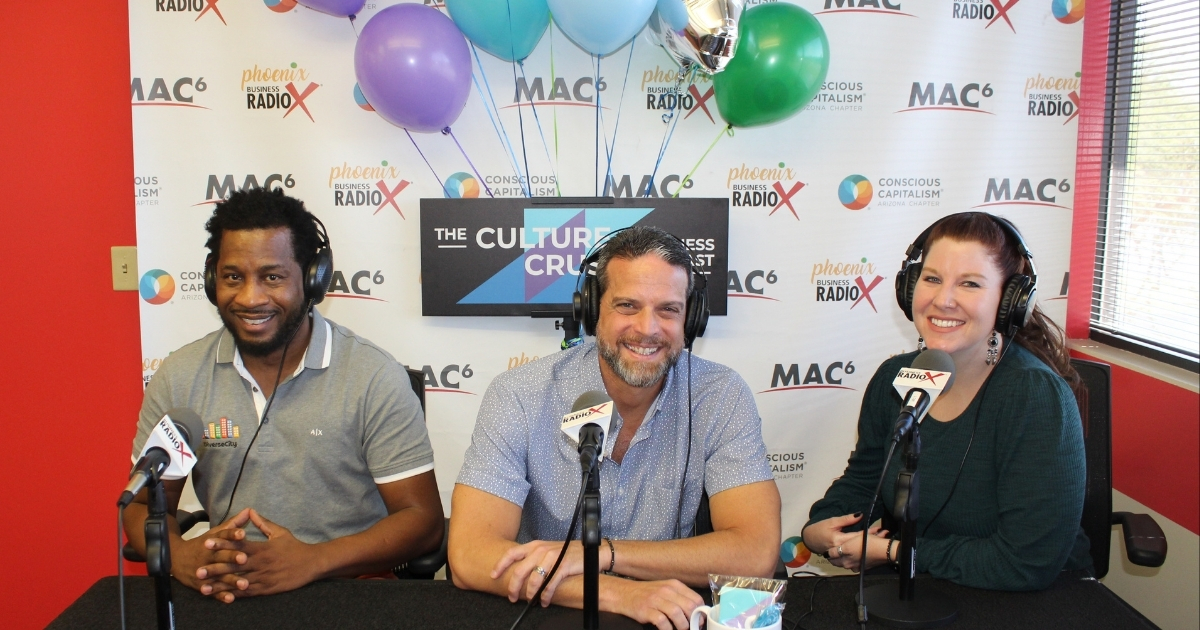
This was such a great show, with two wonderful guests, to round out the first year of the Culture Crush Business Podcast. This first year has been a blast and we have plans to grow even more this year.

It was so great to have Darren Thompson from DiverseCity and Brian Mohr with anthym on the show this month. We are thankful for their honesty and openness to discuss the real things that really grow company culture.

The show also reached some very honest and real discussions surrounding company culture when it comes to diversity and inclusion and supporting your people as real people with feelings. This show was also lighthearted and fun, with momma Maples (Kindra’s mom Connie) in the studio as well.

Company culture is deeper than just the values on the wall that people align with though. It is important to understand the others that you are working with as more than just what their job is. Who are they? We spend the majority of our days with the people that we work with, so why not understand them on a deeper level. It is also extremely important to understand the importance of diverse teams and making sure that everyone truly feels included and accepted.

Once your company has been able to include diverse teammates and see them as people with feelings, then they can grow the culture of the company even further.

There were so many great tidbits in this show, that people will definitely want to take a listen.

  • Leaders get the teams they deserve
  • Culture is the way and how things get done
  • People simply want to be
  • Once you have the taste of a company with a good culture you just can’t go back.

If you are a company that is trying to take your company culture to the next level, then you need to listen to the show. This podcast is for all leaders. Brian and Darren give examples, tips, and reasoning for the ways that they are helping to grow company culture. Both gentlemen are supporting companies in their journeys to grow company culture.

DiverseCity is a mobile technology designed to help engage and sustain DEI initiatives.

Darren-Thompson-Phoenix-Business-RadioXDarren Thompson is VP of Marketing at DiverseCity, a technology platform dedicated to supporting and managing diversity, equity and inclusion education. In addition, he is also the Founder of POKR, a Digital Business Development and Marketing Firm. DiverseCity-logo

Darren attended undergraduate studies at The University of Arizona, and launched his career in education. He eventually branched out into Sales & Business Development Consulting and now has a diverse client base to include his favorite: Start-ups.

Today, Darren is devoted to building his own tech-based start up and currently resides in sunny Phoenix, Arizona near his identical twin brother. He is an avid traveler, musician, chess player and remains committed to working with young entrepreneurs to help them achieve their goals.

Follow DiverseCity on LinkedIn.

anthym-logo-for-light-background

Thriving organizations recognize that their level of future success will be a direct result of a highly connected and engaged team working together to create value and impact for those they serve. Connection and engagement can’t be dictated or mandated, and it doesn’t happen by accident; it’s the result of a deliberate focus on fostering a deep sense of belonging, inclusion, and trust within the culture.

The anthym experience harnesses the power of personal storytelling to knock down artificial walls and shine a bright light on the depth and breadth of authentic human connection that exists within every team. By leveraging the universal accessibility and time machine-like power of music, anthym sparks a new level of curiosity and opens the door for a heightened level of conversation leading to unparalleled levels of connection and trust.

anthym is the leading team building technology platform for remote, distributed, and hybrid teams.

Brian-Mohr-Phoenix-Business-RadioXBrian Mohr’s career is a learning-based journey with an intense focus on people, purpose, values, culture, and leadership. Brian has had amazing entrepreneurial and leadership experiences at Jobing.com, P.F. Chang’s China Bistro, Y Scouts and Conscious Capitalism Arizona. Today, Brian is channeling his experiences and energy into helping organizations build cohesive teams in the rapidly accelerating distributed workplace through his new company, Anthym.

Brian is on the national Board of Directors of Conscious Capitalism, Inc., he is a Board member and President Emeritus of the Arizona Chapter of Conscious Capitalism, a member of the Board of Directors of the Better Business Bureau of the Pacific Southwest, a TEDx speaker, and the co-author of “Hiring on Purpose – How the Y Scouts Method is Revolutionizing the Search for Leaders”.

Brian’s most important and cherished responsibilities are being the lucky father to his 2 daughters, Taylor and Riley, and the proud husband to his wife, Jackie. In his spare time, you’ll find Brian practicing guitar and catching a live music concert every chance he can get.

Connect with Brian on LinkedIn, Facebook, Twitter and Instagram.

About Culture Crush

Culture Crush is officially relaunched! We are thankful to Debra Caron who launched and hosted the show originally. Culture Crush is back with a new host but the same focus- highlighting what makes a great company culture and how it affects the overall success of a company.CultaureCrushKindraBanner2

Culture is not just a tag word to be thrown around. It is not something you throw in job descriptions to draw people to applying for jobs within a company.

According to Marcus Buckingham and Ashely Goodall in their book Nine Lies About Work, “Culture is the tenants of how we behave. It’s like a family creed. This is how we operate and treat each other in the family.”

On this long form podcast we will highlight companies local to Arizona and beyond that are crushing it with great culture!

We will talk with company leaders to learn about real-life experiences, tips, and best practices for creating a healthy work environment where employees are finding joy and satisfaction in their work while also striving and growing within the company.

About the Host

ABHOUTHOSTHEADSHOTKindra Maples is your new host taking the lead on the relaunch of Culture Crush! She is spartan racer, past animal trainer, previous magician’s assistant, and has a weakness for Oreo cookie shakes. Her journey working with people actually started working with animals as a teenager (don’t worry we won’t go that far back for her bio).

She worked for over 15 years in the zoo industry working with animals and the public. Her passion of working with animals shifted into working with people in education, operations and leadership roles. From there her passion of leadership and helping people develop has continued to grow.

Then came the opportunity for relaunching the Culture Crush Podcast and she jumped on it. Leadership, growth, and strong company cultures are all areas that Kindra is interested in diving into further.

Shout Outs

We want to thank a few people for their behind the scenes effort in helping this relaunch to come to life. James Johnson with Tailored Penguin Media Company LLC.– It is a small, but powerful video production company with a goal to deliver the very best by articulating the vision of your brand in a visually creative way. Gordon Murray with Flash PhotoVideo, LLC. -Flash Gordon has been photographing since high school and evolving since then with new products that will equip, encourage, engage, and enable. Renee Blundon with Renee Blundon Design – She is not only one of the best free divers (that’s not how she helped with the podcast) but she is great with graphics design and taking the direction for the vision that you have while also adding creative ideas to bring to your vision to life.

These are just a few of the folks that supported the relaunch of the podcast. If you would like to be part of the Culture Crush team or would like to support underwriting the show- please reach out: culturecrushpodcast@gmail.com

Tagged With: connection, corporate storytelling, Culture, DEI, dei training, diversity, equity, hybrid teams, inclusion, remote work, sense of belonging, storytelling, team building, team connection, trust

Storytelling and Likeability in Professional Services Marketing, with Michael Katz, Blue Penguin Development

September 9, 2021 by John Ray

Blue Penguin Development
North Fulton Studio
Storytelling and Likeability in Professional Services Marketing, with Michael Katz, Blue Penguin Development
Loading
00:00 /
RSS Feed
Share
Link
Embed

Download file

Blue Penguin Development

Storytelling and Likeability in Professional Services Marketing, with Michael Katz, Blue Penguin Development

Michael Katz: [00:00:00] If you’re a small company, but even if you’re larger, the benefit of stories is that it — well, two things. One is they catch people’s attention. You’ll remember this story about the guy at the gym; whereas, a lot of other stuff I’ve said, yeah, just kind of floats by. Humans are hard wired to listen to stories and to remember that.

Michael Katz: [00:00:21] So, when you talk about something like, I never give a public presentation ever. I always begin with a story that seemingly has nothing to do with the presentation. But it’s like you can see back in the day when you’d go to live things, you can see the audience perk up when I go, “Let me tell you a quick start.” It’s just like you have to hear what happened. So, they’re attention-getting. So, they’re very good in podcasts, newsletters, blog posts, that kind of thing, as opposed to just information.

Michael Katz: [00:00:49] But the other thing is if you’re in a business – again, where the credentials don’t differentiate you – again, if you think about you have no idea where your doctor went to medical school, but you know, do you like him or her or not? And what I found when you sell a professional service, sort of likability and trust thing, which is very sort of squishy, that’s the differentiator. If you think about all these people you hire whose capabilities you can’t measure, including like your auto mechanic, you like him. I hate your guy. You like your guy. I hate your doctor. I mean, it’s so funny because it doesn’t sound sort of businessy, but it’s how we make these decisions. I don’t know if you’re a good accountant, but I know if I like you.

Michael Katz: [00:01:33] So, when you tell stories, you get people’s attention, but you’re also revealing a little bit about you. It’s funny, I have this discussion with clients a lot because people are concerned about, “Should I share my personal information?” I mean, if you and I sat down, John, together for coffee, and we just started talking business, it would seem kind of rude. Like it’s normal to say — I mean, we did it before we started this. “Oh, the weather. Where are you located?” That’s what people do.

John Ray: [00:02:02] Sure.

Michael Katz: [00:02:03] But in a business context, a lot of times, people are concerned that they’re not going to look professional, whatever that means, so they don’t do it. The storytelling stuff, where you reveal stuff about yourself, I mean not crazy, but enough that people can connect is very memorable and very compelling to other human beings who that’s mostly who hires you. So, it’s helpful.

Listen to Michael’s full Business Leader’s Radio interview here. 


The “One Minute Interview” series is produced by John Ray and in the North Fulton studio of Business RadioX® in Alpharetta. You can find the full archive of shows by following this link.

Renasant Bank has humble roots, starting in 1904 as a $100,000 bank in a Lee County, Mississippi, bakery. Since then, Renasant has grown to become one of the Southeast’s strongest financial institutions with over $13 billion in assets and more than 190 banking, lending, wealth management and financial services offices in Mississippi, Alabama, Tennessee, Georgia and Florida. All of Renasant’s success stems from each of their banker’s commitment to investing in their communities as a way of better understanding the people they serve. At Renasant Bank, they understand you because they work and live alongside you every day.

Tagged With: Blue Penguin Development, professional services marketing, storytelling

Colton Mulligan, FoxFuel Creative

June 8, 2021 by John Ray

Colton-Mulligan-Nashville-Album
Nashville Business Radio
Colton Mulligan, FoxFuel Creative
Loading
00:00 /
RSS Feed
Share
Link
Embed

Download file

Colton-Mulligan-Nashville-Album

Colton Mulligan, FoxFuel Creative (Nashville Business Radio, Episode 16)

Colton Mulligan joined host John Ray to discuss his entrepreneurial journey, how best friends work amicably as business partners, why storytelling is so important in building a company brand, and much more.  Nashville Business Radio is produced virtually from the Nashville studio of Business RadioX®.

FoxFuel Creative

FoxFuel Creative produces effective outcomes for brands and people through design, content, and technology. The company help consumer goods and products, healthcare, music and entertainment, finance, and real estate brands speak genuinely and effectively to their audience. FoxFuel-Creative-logo

Their specialties include brand and marketing strategy, consumer insights, content development, creative ideation and execution, advertising concepts, and website development.

Company website

Colton Mulligan, CEO, FoxFuel Creative

Colton-Mulligan-FoxFuel-Creative
Colton Mulligan
FoxFuel Creative

At FoxFuel, Colton Mulligan serves as CEO and is responsible for client relationships, guiding the discovery process through brand strategy into early creative concepting.

With 15+ years of branding and marketing experience, Colton has worked to develop brand and marketing strategies for TSA Pre-Check, Hilton Hotels/Home2Suites, Ben Folds, Fiesta Grande, Chip and Joanna Gaines, Pinnacle Bank, HarperCollins, Narus Health, Lifepoint, HCA, and Community Health Systems.

He also speaks at various events on Digital Marketing, Healthcare Marketing, Entrepreneurship, and the relationship between mental health and creativity. He lives in Nashville with his lovely wife Aly, and Goldendoodle JT.

Connect with Colton on LinkedIn and Instagram.

Questions and Topics in This Interview

  • Colton’s entrepreneurial journey
  • How business partners can remain friends
  • Brand strategy
  • Storytelling
  • Entrepreneurial journey

“Nashville Business Radio” is hosted by John Ray and produced virtually from the Nashville studio of Business RadioX®.  You can find the full archive of shows by following this link. The show is available on all the major podcast apps, including Apple Podcasts, Spotify, Google, Amazon, iHeart Radio, Stitcher, TuneIn, and others.

Tagged With: brand strategy, Colton Mulligan, FoxFuel Creative, marketing, storytelling

Look and Sound Your Best on Camera and Online, with Duffie Dixon, Duffie Dixon Media

July 29, 2020 by John Ray

Duffie Dixon
North Fulton Business Radio
Look and Sound Your Best on Camera and Online, with Duffie Dixon, Duffie Dixon Media
Loading
00:00 /
RSS Feed
Share
Link
Embed

Download file

Look and Sound Your Best on Camera and Online, with Duffie Dixon, Duffie Dixon Media (North Fulton Business Radio, Episode 264)

Emmy Award Winning Former TV Reporter Duffie Dixon joins host John Ray to discuss looking and sounding your best on video conferences, the power of video content, building a crisis communication plan, and much more. “North Fulton Business Radio” is produced virtually by the North Fulton studio of Business RadioX® in Alpharetta.

Duffie Dixon, President, Duffie Dixon Media

Duffie Dixon is a multiple Emmy award winning communications and media specialist. Drawing from her 27 years in television news, she shares her expertise with corporate executives, government officials, individuals, and nonprofits. Duffie provides her clients with valuable and unique tools through media training, public speaking coaching, and presentation and interviewing practice sessions. Duffie also produces, writes and delivers videos and content for businesses and nonprofits with a passion for storytelling across multiple platforms. Duffie is a podcast host at Business RadioX, a member of the National Speakers Association (NSA), and a frequently sought after emcee and moderator for various events.

Point of Contact for Duffie Dixon

Company website

LinkedIn

Twitter

Duffie Dixon Media One Pager (PDF)

Questions/Topics Discussed in this Show

  • media training
  • right now the big demand is video conference training
  • content video production (for websites, social media platforms)
  • the power of video content
  • crisis communications training (given Covid-19)

North Fulton Business Radio” is hosted by John Ray and produced virtually from the North Fulton studio of Business RadioX® in Alpharetta. You can find the full archive of shows by following this link. The show is available on all the major podcast apps, including Apple Podcasts, Spotify, Google, iHeart Radio, Stitcher, TuneIn, and others.

Renasant Bank has humble roots, starting in 1904 as a $100,000 bank in a Lee County, Mississippi, bakery. Since then, Renasant has grown to become one of the Southeast’s strongest financial institutions with over $13 billion in assets and more than 190 banking, lending, wealth management and financial services offices in Mississippi, Alabama, Tennessee, Georgia and Florida. All of Renasant’s success stems from each of their banker’s commitment to investing in their communities as a way of better understanding the people they serve. At Renasant Bank, they understand you because they work and live alongside you every day.

C

Tagged With: crisis communications, crisis communications plan, duffie dixon, duffie dixon media, media training, public speaking, storytelling, video conference training, video conferencing, video content, video production

COACH the COACH: Author and Speaker Paul Smith

September 25, 2019 by angishields

Paul-Smith
Coach The Coach
COACH the COACH: Author and Speaker Paul Smith
Loading
00:00 /
RSS Feed
Share
Link
Embed

Download file

Paul-SmithPaul Smith is one of the world’s leading experts in business storytelling.

He’s one of Inc. Magazine’s Top 100 Leadership Speakers of 2018, a storytelling coach, and bestselling author of the books The 10 Stories Great Leaders Tell, Sell with a Story, Lead with a Story, and Parenting with a Story.

He holds an MBA from the Wharton School, is a former consultant at Accenture, and former executive and 20-year veteran of The Procter & Gamble Company.

Connect with Paul on LinkedIn, Twitter and Facebook.

Tagged With: Leadership, marketing, Paul Smith, Sales, story, Story Makers, storytelling

  • 1
  • 2
  • Next Page »

Business RadioX ® Network


Our Most Recent Episode

CONNECT WITH US

  • Email
  • Facebook
  • LinkedIn
  • Twitter
  • YouTube

Our Mission

We help local business leaders get the word out about the important work they’re doing to serve their market, their community, and their profession.

We support and celebrate business by sharing positive business stories that traditional media ignores. Some media leans left. Some media leans right. We lean business.

Sponsor a Show

Build Relationships and Grow Your Business. Click here for more details.

Partner With Us

Discover More Here

Terms and Conditions
Privacy Policy

Connect with us

Want to keep up with the latest in pro-business news across the network? Follow us on social media for the latest stories!
  • Email
  • Facebook
  • Google+
  • LinkedIn
  • Twitter
  • YouTube

Business RadioX® Headquarters
1000 Abernathy Rd. NE
Building 400, Suite L-10
Sandy Springs, GA 30328

© 2025 Business RadioX ® · Rainmaker Platform

BRXStudioCoversLA

Wait! Don’t Miss an Episode of LA Business Radio

BRXStudioCoversDENVER

Wait! Don’t Miss an Episode of Denver Business Radio

BRXStudioCoversPENSACOLA

Wait! Don’t Miss an Episode of Pensacola Business Radio

BRXStudioCoversBIRMINGHAM

Wait! Don’t Miss an Episode of Birmingham Business Radio

BRXStudioCoversTALLAHASSEE

Wait! Don’t Miss an Episode of Tallahassee Business Radio

BRXStudioCoversRALEIGH

Wait! Don’t Miss an Episode of Raleigh Business Radio

BRXStudioCoversRICHMONDNoWhite

Wait! Don’t Miss an Episode of Richmond Business Radio

BRXStudioCoversNASHVILLENoWhite

Wait! Don’t Miss an Episode of Nashville Business Radio

BRXStudioCoversDETROIT

Wait! Don’t Miss an Episode of Detroit Business Radio

BRXStudioCoversSTLOUIS

Wait! Don’t Miss an Episode of St. Louis Business Radio

BRXStudioCoversCOLUMBUS-small

Wait! Don’t Miss an Episode of Columbus Business Radio

Coachthecoach-08-08

Wait! Don’t Miss an Episode of Coach the Coach

BRXStudioCoversBAYAREA

Wait! Don’t Miss an Episode of Bay Area Business Radio

BRXStudioCoversCHICAGO

Wait! Don’t Miss an Episode of Chicago Business Radio

Wait! Don’t Miss an Episode of Atlanta Business Radio