Business RadioX ®

  • Home
  • Business RadioX ® Communities
    • Southeast
      • Alabama
        • Birmingham
      • Florida
        • Orlando
        • Pensacola
        • South Florida
        • Tampa
        • Tallahassee
      • Georgia
        • Atlanta
        • Cherokee
        • Forsyth
        • Greater Perimeter
        • Gwinnett
        • North Fulton
        • North Georgia
        • Northeast Georgia
        • Rome
        • Savannah
      • Louisiana
        • New Orleans
      • North Carolina
        • Charlotte
        • Raleigh
      • Tennessee
        • Chattanooga
        • Nashville
      • Virginia
        • Richmond
    • South Central
      • Arkansas
        • Northwest Arkansas
    • Midwest
      • Illinois
        • Chicago
      • Michigan
        • Detroit
      • Minnesota
        • Minneapolis St. Paul
      • Missouri
        • St. Louis
      • Ohio
        • Cleveland
        • Columbus
        • Dayton
    • Southwest
      • Arizona
        • Phoenix
        • Tucson
        • Valley
      • Texas
        • Austin
        • Dallas
        • Houston
    • West
      • California
        • Bay Area
        • LA
        • Pasadena
      • Colorado
        • Denver
      • Hawaii
        • Oahu
  • FAQs
  • About Us
    • Our Mission
    • Our Audience
    • Why It Works
    • What People Are Saying
    • BRX in the News
  • Resources
    • BRX Pro Tips
    • B2B Marketing: The 4Rs
    • High Velocity Selling Habits
    • Why Most B2B Media Strategies Fail
    • 9 Reasons To Sponsor A Business RadioX ® Show
  • Partner With Us
  • Veteran Business RadioX ®

Jeff Rose, Leading Ed Solutions, and Rachel Davis, The Edge

September 9, 2019 by John Ray

North Fulton Business Radio
Jeff Rose, Leading Ed Solutions, and Rachel Davis, The Edge
Loading
00:00 /
RSS Feed
Share
Link
Embed

Download file

John Ray, Rachel Davis, Jeff Rose

“North Fulton Business Radio,” Episode 161:  Jeff Rose, Leading Ed Solutions, and Rachel Davis, The Edge

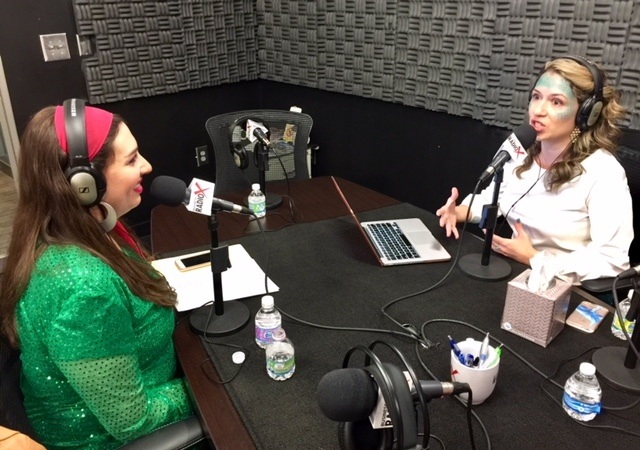
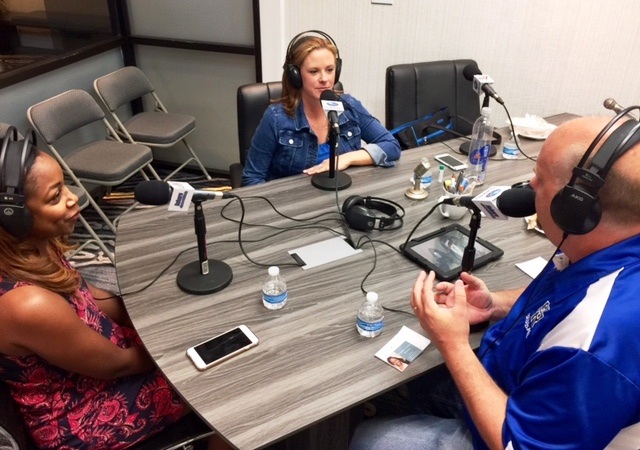
A national community for school superintendents and a Georgia-based community for emerging entrepreneurs were on this docket for this edition of “North Fulton Business Radio.”  Jeff Rose, Leading Ed Solutions, and Rachel Davis, The Edge, joined host John Ray in the Business RadioX studio inside Renasant Bank in Alpharetta.

Jeff Rose, Leading Ed Solutions

Jeff Rose

Dr. Jeff Rose is the Founder of Leading Ed Solutions. In his 12 years as a school superintendent, Jeff learned that leading alone is not effective. Superintendents are in an isolated role. The demands and expectations are often unrealistic, and it’s actually becoming more challenging over time.

Further, school districts are grappling with immense problems, both on a local and national level. Yet, the ‘conference model’ and traditional methods of support are not adequately helping top leaders move from talk to action.

To meet these problems, Leading Ed Solutions is assembling a national community of stellar superintendents to join us, as they work together to focus on practical solutions and strategies to some of our most pressing issues. This year, they are tackling student safety, both physical and social/emotional.

Leading Ed Solutions seeks to provide a structure and support system to help our leaders, individually and collectively, take their districts to the next level.

For additional information, go to the Leading Ed Solutions website.

Rachel Davis, The Edge

Rachel Davis

Rachel Davis is the Executive Director of The Edge. Founded in 1998, The Edge is a non-profit entrepreneurial training center serving Georgia residents. We specialize in serving individuals seeking to launch, grow, or sustain a micro-business or a small-scale business with up to ten employees. The Edge hosts a Women’s Business Center program and a B.R.A.V.E Veterans Entrepreneurship program. The Edge provides training, consultation, coaching, financial education, and a community of support. Through partnerships, we offer human resources, employee benefits, and reduced cost business support services through The Edge Collective.

For more information, go to The Edge website.

“North Fulton Business Radio” is broadcast from the North Fulton studio of Business RadioX®, located inside Renasant Bank in Alpharetta. Renasant Bank has humble roots, starting in 1904 as a $100,000 bank in a Lee County, Mississippi, bakery. Since then, Renasant has grown to become one of the Southeast’s strongest financial institutions with approximately $12.9 billion in assets and more than 190 banking, lending, wealth management and financial services offices in Mississippi, Alabama, Tennessee, Georgia and Florida. All of Renasant’s success stems from each of their banker’s commitment to investing in their communities as a way of better understanding the people they serve. At Renasant Bank, they understand you because they work and live alongside you every day.

Tagged With: Dr. Jeff Rose, enterpreneurial training, entrepreneurial support, Leading Ed Solutions, micro business, North Fulton Business Radio, Rachel Davis, school safety, school superintendents, student safety, The Edge, the EDGE Connection, veteran enterpreneurs, veteran entrepreneurship, women entrepreneurs, women-owned businesses

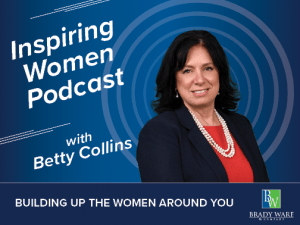
Inspiring Women, Episode 13: Building Up the Women Around You

September 9, 2019 by John Ray

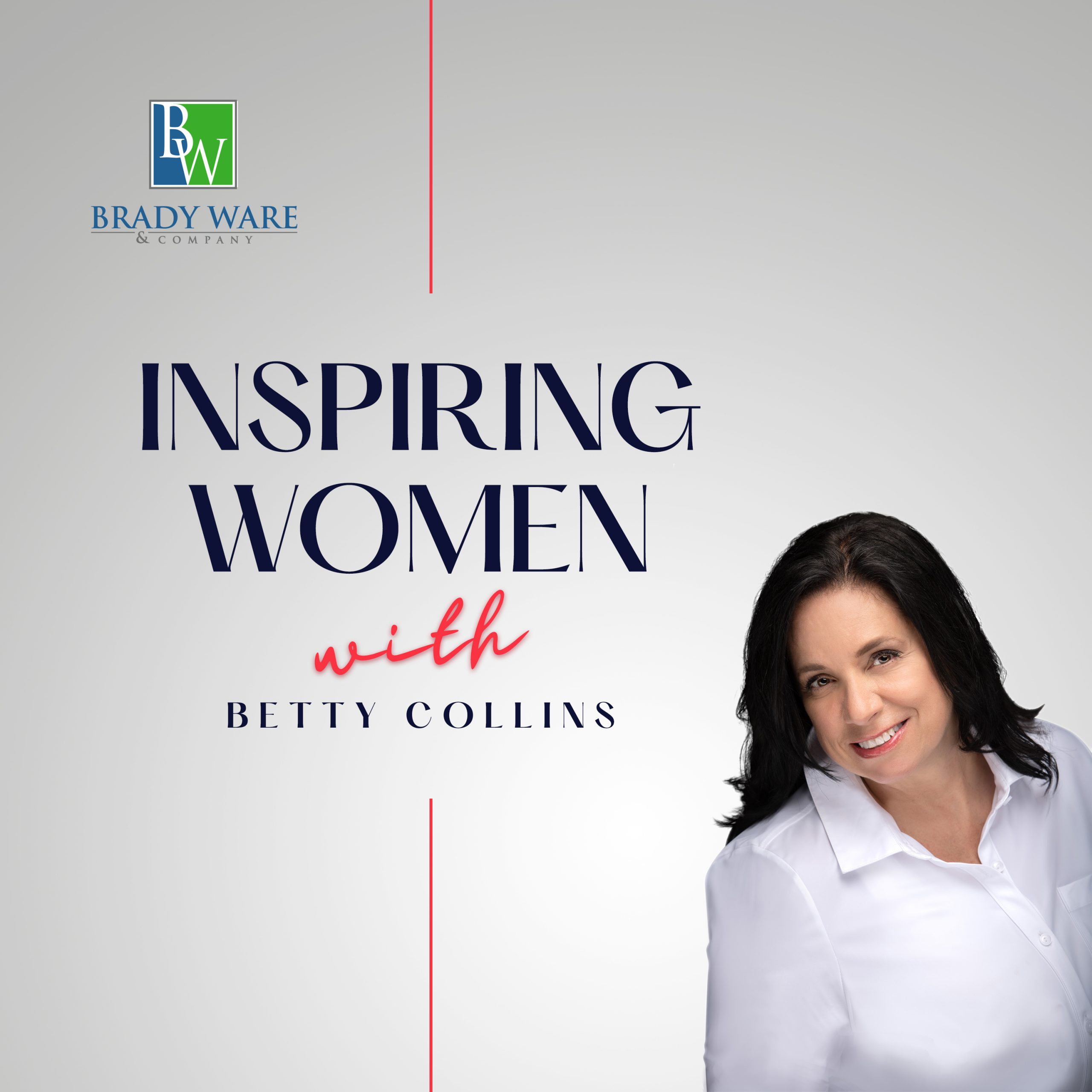
Inspiring Women PodCast with Betty Collins
Inspiring Women, Episode 13: Building Up the Women Around You
Loading
00:00 /
RSS Feed
Share
Link
Embed

Download file

Building Up the Women Around You

On this edition of “Inspiring Women,” host Betty Collins addresses the imperative all women should take on to build up, encourage, and mentor other women around them. “Inspiring Women” is presented by Brady Ware & Company.

Betty Collins, CPA, Brady Ware & Company and Host of the “Inspiring Women” Podcast
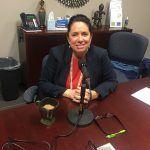
Betty Collins, Brady Ware & Company

Betty Collins is the Office Lead for Brady Ware’s Columbus office and a Shareholder in the firm. Betty joined Brady Ware & Company in 2012 through a merger with Nipps, Brown, Collins & Associates. She started her career in public accounting in 1988. Betty is co-leader of the Long Term Care service team, which helps providers of services to Individuals with Intellectual and Developmental Disabilities and nursing centers establish effective operational models that also maximize available funding. She consults with other small businesses, helping them prosper with advice on general operations management, cash flow optimization, and tax minimization strategies.

In addition, Betty serves on the Board of Directors for Brady Ware and Company. She leads Brady Ware’s Women’s Initiative, a program designed to empower female employees, allowing them to tap into unique resources and unleash their full potential.  Betty helps her colleagues create a work/life balance while inspiring them to set and reach personal and professional goals. The Women’s Initiative promotes women-to-women business relationships for clients and holds an annual conference that supports women business owners, women leaders, and other women who want to succeed. Betty actively participates in women-oriented conferences through speaking engagements and board activity.

Betty is a member of the National Association of Women Business Owners (NAWBO) and she is the President-elect for the Columbus Chapter. Brady Ware also partners with the Women’s Small Business Accelerator (WSBA), an organization designed to help female business owners develop and implement a strong business strategy through education and mentorship, and Betty participates in their mentor match program. She is passionate about WSBA because she believes in their acceleration program and matching women with the right advisors to help them achieve their business ownership goals. Betty supports the WSBA and NAWBO because these organizations deliver resources that help other women-owned and managed businesses thrive.

Betty is a graduate of Mount Vernon Nazarene College, a member of the American Institute of Certified Public Accountants, and a member of the Ohio Society of Certified Public Accountants. Betty is also the Board Chairwoman for the Gahanna Area Chamber of Commerce, and she serves on the Board of the Community Improvement Corporation of Gahanna as Treasurer.

“Inspiring Women” Podcast Series

“Inspiring Women” is THE podcast that advances women toward economic, social and political achievement. The show is hosted by Betty Collins, CPA, and presented by Brady Ware and Company. Brady Ware is committed to empowering women to go their distance in the workplace and at home. Past episodes of “Inspiring Women” can be found here.

Show Transcript

[00:00:00] Well, this is an inspiring women’s podcast, so I would expect that the title today, building up the women around you would be a given, but it really is not always that case. I want to talk about that today. You know, building up and supporting the women in your life sounds easy. It sounds good. We all think that we do that. I don’t think anyone’s going to go. You know, I really don’t want to support women today. I don’t want to build women up. But unfortunately, it’s not the case when you look at the data that’s out there and the issues that are out there surrounding this topic of just lack of building up, in fact, tearing down can be fairly OK. Right. But it’s a huge barrier to the professional advancement, your professional career, you know, in your personal life when you don’t build up women around you and you don’t you don’t have that camaraderie. So, you know, sometimes we just think, well, women are more catty. Right. Men are not. Men blow it off. Their ego doesn’t allow them to do this. My emotions just get the best to me. And that’s just who I am. It’s probably still not OK. And this is always, you know, have you experienced that exodus of the Mean Girls Club? You know, I can honestly say I’ve never been a victim of I mean, Girls Club, but that’s not fun. And it’s not just in junior high, right? It’s it’s more than that.

[00:01:29] I just think we need to do better at building each other up if we really want to see us advancing, go forward. You know, we focus more on the men. You know, they’re not nice or they’re the with the white, a middle aged male. But in reality, they beat us on this one. And I think sometimes it’s why they rule the world. So I want to talk about that today. There’s a Facebook post. I see it a lot. I always save it. And it shows a woman with a crooked crown and it shows a woman straining the crown. And then it shows one of them ripping off her head. The sad reality, there’s a huge deficit that exists in the number of women who really are intentional or make it a goal to elevate other women. So, you know, it’s a choice and you hear the term we’re stronger together. Sure. Maybe corny, but you know, it really is true. It’s true for any type of community setting. It’s out there. Collectively, we have more impact. So isn’t that the goal anyways in the movement for women or inspiring those women around you? It is to have impact. If you really want to see the advancement and the empowerment of women, build them up. The them could be your family. It could be your girls. Your daughters. It could be your neighbors. You probably work with women that you need to do that.

[00:02:57] It could be your peers. I mean, you’re surrounded by other women, I’m sure. But men do a better job. I’m not going to focus on them today. The question is, why is this true? Why? Let’s start there. We’ve all been taught to be competitive. Competitive, good. You know, competitive is what is why we have a very successful marketplace in the United States. Competition can be good and healthy. It can make you better at what you do. But sometimes you get to look at there’s just as much strength and there’s miss just as much success in collaboration. Competition is fine. You just can’t take it too far. Collaboration is a good thing and you needed to probably shift a little bit your mindset with that. You know, we tend to have a defense mechanism. Women are really good about defense mechanisms and those kick in. And we have you know, it’s kind of a culture that we’ve created a lot of times. You know, we’re responding to something and we respond really negatively. And then we we go into a defense mechanism that that just keeps the the the tearing down and the lack of building. It just keeps it going. So I think the defense the defense mechanism is something you have to really check yourself on beyond defense mechanisms. And we’ve kind of had that competitive edge or attitude. We also have a queen bee mentality.

[00:04:29] The queen bee that’s everywhere. It’s really was was probably more in the back 70s and 80s with women, because that was when people. That was when women were really rising up in companies. And if you know anything about bees, the queen bee in the colony is the one who dominates. She is the one who takes control because that’s I guess what you have to do is bees. I don’t know, but there’s not a lot of room for anyone else but the queen bee. And unfortunately, a lot of times, especially in the years before us and 70s, 80s and 90s, if a woman was able to advance, say, in her career, she she was very protective of that territory because she was lucky to have it. And so that queen bee domination, maybe not taking other women with her, not having the elevator door open so they could come up. It just wasn’t there. I think it’s there a lot more probably today because there’s a lot more women at the top of the elevator. So but that usually the queen bee and undermine her, they push women out of the way. And unfortunately, that still exist. And then just negative thinking, you know, I think this is why we end up, you know, being a little little catty. We had to be the mean girls club. But the negative thinking. I mean, you heard this because it made the news over and over again.

[00:05:51] And Madeleine Albright with Hillary Clinton when she was at a campaign rally. It was. It was funny. I mean, there was no definite. But she gave her speech and she at the end said there’s just a special place in hell for women who do not vote for Hillary Clinton or support women. And it was funny. It made the news over and over again. So but but I don’t think she was wanting anyone in hell. But we don’t always have that positive. There’s a special place for women who support women in heaven, which is completely the opposite. Right. So between negative attitudes in those defense mechanism, the queen bee stuff. I just think we don’t build each other up like we could because of those habits, because of those cultures that get created. So where do you start? Where do you make this change? You have to look at at who you are in those areas. And do you have those characteristics? Are those things that you’re going. Yeah, I can relate to that because I probably am that. So that’s where you have to start. But you really have to take the high road and lead by example. You know, you just have to if you’re going to build up other women, you know, obviously the mentoring being very open and honest and consistent mentoring is not just, oh, it this is all really cool.

[00:07:03] You know, I’m going to mentor you and make you into something. Mentoring is helping you get along through your journey because it’s yours. It’s not someone else’s. And so when you have a good mentor, chances are they’re gonna be pretty open and honest with you about what they see. That’s not being catty. I think that’s helping you. I always feel sorry for the person in the office or maybe that family member, because we all have one. Right, that everyone just knows this is who they are. And so they kind of just let the behavior or let the situation be what it is. Nobody confronts it. Nobody talks to them. Instead, there be literally men and making fun of them. So a good mentor is gonna be that open, honest. They’re going to be constructive, yet have some compassion when they have to have those things. And I will tell you, this is a very simple thing, but it really it really had an impact on me. Oh, probably Billy in the early 2000s, maybe two between, you know, up to 2005, somewhere in that timeframe. I always wore the big 80s hair. I had just always worn the big hair. Not that hair is life and death. Right. But that’s what I did. And I liked it. It was easy. It was simple. My hairdresser was the same person all the time. So I got this new client who owned a salon.

[00:08:22] And I thought, you know, I should go to her salon, see what she has.

[00:08:26] And I think I had a massage and she said, you know, you really do you want us to cut your hair? And I said, Oh, no, I have a great hairdresser. She just said, you know. I must say, this is nice.

[00:08:37] Cambridge, you’re to live it in the 80s with your hair still and this is like the 2000s and there’s a thing called a straightener and you know, all these different things that you could do with your hair. And and I was a little taken back. I just, you know. But I was really kind of glad it stuck with me. She was somebody she said it very nicely. She wasn’t making fun of me. She wasn’t talking about coming back on was she’s not out of the 80s yet. Instead, she just said, hey, I’m a salon.

[00:09:03] I’m a hairdresser. We could do something really cool with your hair. And that’s a simple thing. But that’s what a good mentor does. So how else do you lead by example? You got to be tenacious when you’re tenacious.

[00:09:17] Other women around you, you don’t have to say it. Preach it. Have meetings, journal it. All these things they’re watching you. And by doing that, it’s giving them confidence and you don’t even know it. They’re seen you work through something. They’re seeing you not giving up. You’re busting through that roadblock and you’re showing them it can be done.

[00:09:36] Never underestimate the influence you will have by being tenacious. So that really helps build up the women around you because they they tend to watch it and then they hopefully follow it if it’s done well. You know, I think we can probably more some supportive, especially when someone’s wants to take a risk. So what does that mean? Well, I’m going to quit my really good job in the middle of pay. My kids are in college with tuition and I’m going to start a bracelet business. OK, now, is that a risk that you would just sit and go? Cool. I love your jewelry. Or would you say, Manolis? Let’s really talk about that before you do it. Great idea. But there’s a path probably you need to take. That’s a way you build up women so that a year from now, when they’re now borrowing money to go to school or they can’t keep their kid in school, they’re going, why did I ever do this? And there just might be a different time to make jewelry. So I think being supportive, especially when they won’t take risk, we need to help them navigate through it. And another thing you have to do, and I’m not very good at this because I don’t ever want to see people to see me with any kind of wrong emotion.

[00:10:54] I mean, I should call it wrong emotion. But, you know, I’m not a person who’s going to cry a lot in front of people. I’m not. You know, I don’t really want to go on a rampage and melt down in front of it. But sometimes you need a safe space to go. You need a place to go and just be who you can be, be who you are. Let those things down and then, you know, open the door and smile and walk out. I think women could do that more often instead of you blow up at the wrong time, in the wrong place. And then the tearing down and their ripping of the crown off the off the head comes along. The other thing you really need to do in a great way, but you better be ready to do it. You’ve got to pass on the lessons you’ve learned from bad treatment so that it doesn’t happen to other women and they can maybe be more aware of it. And lastly, be empathetic. You know, chances are other women are going through what you’re going through and come together, learn from it. But most certainly anyone around you that you see needs some advocacy for them.

[00:11:59] Go advocate for them. Stand for them. Be with them. You know, kind of defend them, do those things. Those are ways, certainly that you take the high road and you kind of get away from the wise. It happens that we act this way. These are ways that you can change the course of that circle, whether it’s your family or your community or somewhere you volunteer at your work, all that kind of stuff. When women come together, though, and build each other up and they can get that alliance that’s healthy. That alliance that’s positive. You’re going to experience power. There is power in the pact, right? There’s power in more. There’s power in numbers sometimes. It’s a good kind of power. Don’t abuse it. But that’s a result of leading the way in your circles of influences. You think on experiences you’ve had where other women have built you up? I could go on and on about this, but we have to continue to move on in the podcast. But you know who’s coming to your mind right now and you think that woman was a champion for me? That woman advocated for me. That woman really stepped up when I took a risk and she stayed with me.

[00:13:10] What woman straighten the crown for you versus ripped it off? You know, sometimes we just watched from a distance. The crowds, Kirk, and we don’t do anything about it. Right. But. I think you should look at those folks first and you thank them, you know. Think about that. Thank them. But also say me and I could also be that to other people, to other women, all the opportunities in the world are ours for the taking and ours to be shared in when building women up isn’t so much about your voice.

[00:13:41] It’s how you use your stage, it’s how you use your venue to encourage and support them so that they can find their voice.

[00:13:50] Brady, where’s my venue? And I have a responsibility to use that wisely, I try to do that through our women’s initiative, through supporting organizations like Navajo and the WNBA, using that venue wisely.

[00:14:05] How can you rise to the challenge? You keep it simple, don’t sit and think you had to have this big organizational thing and I’m going to, you know, help everyone and solve the world’s problems. Keep it simple, but take the opportunities and challenges those risk without even questioning your worth or ability or places a woman. And then don’t be afraid to be a little unruly. OK, I read a great article from Glamour magazine by Olivia Perez and she talks about being unruly. It’s OK. But listen. Just picture Thanksgiving dinner with this family. So she said I was genetically bred to be an unruly woman. I was raised in Los Angeles by a Jewish, French, Moroccan father and a Serbian mother, kind of in a Brady Bunch family, strong female figures, four sisters, two stepmothers, three godmothers and a mom, the mom who dedicate her life to bringing us all up as independent daughters. Just picture that things cute tender. These were all women I aspire to become. They they were ones who coexisted despite marriages, divorce, different backgrounds. They supported one another unconditionally. And they taught me that being soft spoken was maybe not always an option. Not at our dinner table anyways, for sure. But unruly can be good. Just say for building up other women, you know, really, that’s a whole nother podcast. But sometimes you need to be a little unruly and shake the pot, and that is a way to support women. I just found that and I just thought that was just a great way to describe her family and the people around her. And she probably uses it in a good way. But being a little unruly is OK. You know, other things you can do, though. You just show up every day for women and envision the change together with them. You know, see it together and work towards it. Certainly creating environments for women to take up space. All right. So what does that mean? Panels and conferences, events, interviews, girls night out. You know, really, it’s about thriving in their environment. What space is that that the women in your life would would really thrive in?

[00:16:20] I will say that my daughter, she gets some, you know, a little tired of hearing about my podcast because I wonder, listen. She gets kind of little tired about hearing about women’s initiative things. I mean, I’m always trying to get her to join in. But she did come to my conference in back in June, the Women’s Leadership Conference, which we had about 350 women. We had panels, we had national speakers, Navajo and WBA. We all just came together, put this conference ago and she came. And she was just it wasn’t even so much that I bribed her with new clothes to be there and said she could have a great time together. Night feeder. Well. Right.

[00:16:57] But she loved that she saw me thriving in an environment that I loved. And she she wrote on Facebook that night. I get it now. I saw it today. And that was just that was the whole. That was the best part of that conference for me. It was because it inspired her in a different way. But she was like, Mom, that’s where you belong.

[00:17:20] And that’s what I’m talking about. We’re creating space. What are environments for the women around you and your lives that would make them thrive or where you see them thrive and you’re like supporting them. And so it was a cool story. You know, other ways besides being alone, really, which I kind of like that whole phrase, be transparent and open. Do you understand that secrecy breeds jealousy? I want you to think about that again. Secrecy breeds jealousy. And that then leads to what I now call head trash. I got that from a conference that I was just. You know, those voices that head trash man being a little more open, being a little more transparent. Women tend to take it and run in secrecy, just turns into jealousy and then those voices in your head. So think about that. When you see when you see a women who are tearing each other down, chances are that could be a real way it all started.

[00:18:16] Here’s one. This is the challenge of the day. You’ll probably go right by this one. But zero gossip policy. Try that one. It’s hard sometimes if you just test right down every time you’re gossiping or take a little, you know, checkmark. There we go. You’d be surprised. I did it once because I was in a class on negativity. And that was one of the things we had to do. Every time you have mental negative thought, you had a checkmark. Every time you gossip or put someone down your check mark. You would be surprised. And it did kind of make me go, oh, it’s kind of like tracking your steps on fit, but you’re like, I’m not walking today. Right. It just just a suggestion. I know it’s not easy. You got to go beyond. You look really pretty, right?

[00:18:54] Women are so much more than their physical attributes. And we have a whole society built on that. But I would tell you to encourage women to to take care of themselves and do self care. The emotional part of your life is huge. And I kind of did that post divorce. I said these are the things I’m going to do for Betty Collins. And I sat down with The New York Times. I only ordered like three months of it because it was I don’t know why I needed to read The New York Times, but I did. I just did that for an hour on Sundays with no interruption. And once I was kind of done, I moved on. But it was something that I I it was my time. It was my place. So I think that’s something you have to look at and do. I know I just spent this last year really involved with physical activity and and weight loss. It was not because I wanted to be a size 2. I just knew that I have pretty good health for a 56 year old. And yet I’m not treating the gift like I need to because it’s a gift. I have a lot of people around me and my age who we’ve had people pass away. We’ve had people with cancer. We’ve had people who, you know, just can’t control certain addictions. I don’t have any of that. I don’t even take any of her blood pressure, heart medicine, nothing.

[00:20:07] Why would I not take care of the gift that I’ve been given into her? What’s been weird is not the size, too. It’s just I’m I’m feeling better. And it’s kind of my time. I’m not rushing out the door every morning because I’m I’m doing some workout stuff that’s not crazy. I’m not putting my toe over my head and, you know, wrapping myself up like a pretzel. I would tell you, self care go beyond that. You look pretty stuff being a vehicle that turns a young woman with big dreams into what she was destined to be. You know, you see people with potential and you don’t do anything about it. But I would tell you, never underestimate tapping into that woman’s potential that she can’t see. But you do even this podcast. I question myself, should I keep doing this podcast? And the people that help me record this always say you have no idea what the potential this has. You need to keep going. You need to keep doing. Again, women building up women. Sounds easy, sounds good. It is my hope that you can step back, observe and dive in by speaking life into a woman around you. Doing life together stronger, together with some fun along the way in my life. I have an amazing mom, a big family, 41 to be exact as my immediate family, lots of women. I have a daughter and a daughter law.

[00:21:23] I work for a company where I direct a women’s initiative where 49 percent of the workforce are women. I’m part of several groups. I mentioned Navajo and the WNBA. So women in teh team building are a pretty daily part of my life. Really, it’s a responsibility and it’s a deep passion. I’ve seen both sides building and tearing. We are better together. Ladies, take to heart this podcast. Do some soul searching on your part of building up other women. Go forth and straighten or pick it off the floor. The ground she is wearing. Don’t stand in the background and watch it. I’m Betty Collins and I’m glad you joined me today.

Tagged With: CPa, CPA firm, Dayton accounting, Dayton business advisory, Dayton CPA, Dayton CPA firm, Inspiring Women, Inspiring Women podcast, mentoring, mentoring women, woman owned business, women entrepreneurs, Women in Business, women-owned businesses

GWBC Radio: Power of Partnering Marketplace 2019

September 4, 2019 by angishields

Power of Partnering Marketplace 2019
Atlanta Business Radio
GWBC Radio: Power of Partnering Marketplace 2019
Loading
00:00 /
RSS Feed
Share
Link
Embed

Download file

Power of Partnering Marketplace 2019

Power of Partnering Marketplace (POP) is an annual conference in Atlanta bringing together hundreds of women entrepreneurs, business leaders, corporations and procurement professionals. This two-day conference delivers valuable connections, training, innovative thinking and takeaways designed to help you reach your procurement and business goals.

Interviews

Tina Weede and LeeAnne Canecchio / Peerless Performance

https://stats.businessradiox.com/30209.mp3

DOWNLOAD HERE

Sahnya Shulterbrandt 

https://stats.businessradiox.com/30210.mp3

DOWNLOAD HERE

Adam Moore / Suntrust Bank

https://stats.businessradiox.com/30211.mp3

DOWNLOAD HERE

Chinyere Gonzalez / First Impressions

https://stats.businessradiox.com/30212.mp3

DOWNLOAD HERE

Littie Brown / SpeedPro Imaging

https://stats.businessradiox.com/30213.mp3

DOWNLOAD HERE

Paula Edwards / Lexair

https://stats.businessradiox.com/30214.mp3

DOWNLOAD HERE

Nancy Williams / ASAP

https://stats.businessradiox.com/30215.mp3

DOWNLOAD HERE

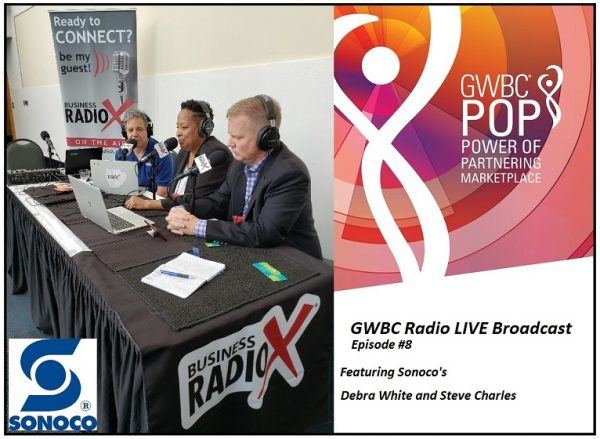
Debra White and Steve Charles / Sonoco

https://stats.businessradiox.com/30216.mp3

DOWNLOAD HERE

Julie Weldon and Stacey Pierce / O.M.E Gear

https://stats.businessradiox.com/30217.mp3

DOWNLOAD HERE

Karen Caruso / Mind Your Business

https://stats.businessradiox.com/30227.mp3

DOWNLOAD HERE

Deborah Mackins and Glenda Thomas / Southern Company

https://stats.businessradiox.com/30228.mp3

DOWNLOAD HERE

Kittie Watson / Innolect

https://stats.businessradiox.com/30229.mp3

DOWNLOAD HERE

Raj Verma / GoProcure

https://stats.businessradiox.com/30231.mp3

DOWNLOAD HERE

Sara Webb / intandem

https://stats.businessradiox.com/30232.mp3

DOWNLOAD HERE

Tangela Davis / Trinity Strategic Consulting

https://stats.businessradiox.com/30233.mp3

DOWNLOAD HERE

Susan Gravely / Gravely and Associates

https://stats.businessradiox.com/30234.mp3

DOWNLOAD HERE

Marlene Kelly / Exhibits South

https://stats.businessradiox.com/30235.mp3

DOWNLOAD HERE

About GWBC

The Greater Women’s Business Council (GWBC®) is at the forefront of redefining women business enterprises (WBEs). An increasing focus on supplier diversity means major corporations are viewing our WBEs as innovative, flexible and competitive solutions. The number of women-owned businesses is rising to reflect an increasingly diverse consumer base of women making a majority of buying decision for herself, her family and her business. GWBC-Logo

GWBC® has partnered with dozens of major companies who are committed to providing a sustainable foundation through our guiding principles to bring education, training and the standardization of national certification to women businesses in Georgia, North Carolina and South Carolina.

Tagged With: Greater Women's Business Council, GWBC, Power of Partnering Marketplace 2019, women business leaders, women entrepreneurs

Inspiring Women, Episode 12: Taking Your Business to the Next Level (An Interview with Catherine Lang-Cline)

August 12, 2019 by John Ray

Inspiring Women PodCast with Betty Collins
Inspiring Women, Episode 12: Taking Your Business to the Next Level (An Interview with Catherine Lang-Cline)
Loading
00:00 /
RSS Feed
Share
Link
Embed

Download file

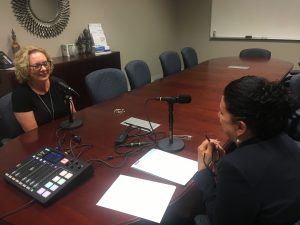
Catherine Lang-Cline and Betty Collins

Taking Your Business to the Next Level

Is your business stuck? What do you need to do to take your business to the next level? Betty Collins, host of the “Inspiring Women” podcast, addresses these issues and more. Betty also interviews Catherine Lang-Cline of Portfolio Creative on the challenges she faced in scaling her business. “Inspiring Women” is presented by Brady Ware & Company.

Catherine Lang-Cline, Portfolio Creative

Catherine Lang-Cline

Catherine Lang-Cline is the President and Co-Creator of Portfolio Creative. Prior to forming Portfolio Creative, Catherine spent more than 20 years in the creative industry as a designer for corporations and ad agencies, both as an employee and as a freelancer. Along with her co-founder Kristen Harris, Catherine felt that there needed to be a place to help artists find work and help clients find talent. They combined their experience and opened Portfolio Creative.

Portfolio Creative connects the best of the best in the creative industry. They connect the best creative clients with the best creative talent. That can come in the form of direct-hire, temp-to-hire, projects with contractors, or other needs. They handle all areas of marketing and advertising. For more information go to the Portfolio Creative website.

Catherine is a Certified Staffing Professional with the American Staffing Association. She serves as a board member for the Greater Columbus Arts Council, the Columbus Chamber of Commerce and is chair of the Chamber’s Small Business Council. She is also an active member of WPO and is currently President of NAWBO Columbus.

Catherine resides in Columbus and enjoys art, traveling, cooking, doing home renovation, and riding motorcycles.

Betty Collins, CPA, Brady Ware & Company and Host of the “Inspiring Women” Podcast

Betty Collins, Brady Ware & Company

Betty Collins is the Office Lead for Brady Ware’s Columbus office and a Shareholder in the firm. Betty joined Brady Ware & Company in 2012 through a merger with Nipps, Brown, Collins & Associates. She started her career in public accounting in 1988. Betty is co-leader of the Long Term Care service team, which helps providers of services to Individuals with Intellectual and Developmental Disabilities and nursing centers establish effective operational models that also maximize available funding. She consults with other small businesses, helping them prosper with advice on general operations management, cash flow optimization, and tax minimization strategies.

In addition, Betty serves on the Board of Directors for Brady Ware and Company. She leads Brady Ware’s Women’s Initiative, a program designed to empower female employees, allowing them to tap into unique resources and unleash their full potential.  Betty helps her colleagues create a work/life balance while inspiring them to set and reach personal and professional goals. The Women’s Initiative promotes women-to-women business relationships for clients and holds an annual conference that supports women business owners, women leaders, and other women who want to succeed. Betty actively participates in women-oriented conferences through speaking engagements and board activity.

Betty is a member of the National Association of Women Business Owners (NAWBO) and she is the President-elect for the Columbus Chapter. Brady Ware also partners with the Women’s Small Business Accelerator (WSBA), an organization designed to help female business owners develop and implement a strong business strategy through education and mentorship, and Betty participates in their mentor match program. She is passionate about WSBA because she believes in their acceleration program and matching women with the right advisors to help them achieve their business ownership goals. Betty supports the WSBA and NAWBO because these organizations deliver resources that help other women-owned and managed businesses thrive.

Betty is a graduate of Mount Vernon Nazarene College, a member of the American Institute of Certified Public Accountants, and a member of the Ohio Society of Certified Public Accountants. Betty is also the Board Chairwoman for the Gahanna Area Chamber of Commerce, and she serves on the Board of the Community Improvement Corporation of Gahanna as Treasurer.

“Inspiring Women” Podcast Series

“Inspiring Women” is THE podcast that advances women toward economic, social and political achievement. The show is hosted by Betty Collins, CPA, and presented by Brady Ware and Company. Brady Ware is committed to empowering women to go their distance in the workplace and at home. Past episodes of “Inspiring Women” can be found here.

Show Transcript

Betty Collins: [00:00:00] Today, this podcast is about going to the next level in your business. We could go on and on about going to the next level in your professional life or in your career, in your company and in your personal life, but today I want to talk really about the business. It’s your business. It’s a woman-owned business, and we’re going to focus on that. For part of the podcast, I’m going to interview Catherine Lang-Cline. She’s with Portfolio Creative, and she has a great story. The reason I chose her is just encouragement.

Betty Collins: [00:00:30] She’s done an amazing job, and it looks easy from the outside, but she’s been through anything probably that you have been through. I have known her through being involved with the National Association of Women Business Owners, the NAWBO Columbus chapter. I had the privilege of serving with her on the board, watching her leadership. It’s no wonder she’s had success. She’s very known in Central Ohio area due to that success, but also just her involvement within the community.

Betty Collins: [00:00:56] I chose the topic today because women are starting businesses at a rapid pace. Here’s some numbers, and this is from the Women’s Business Enterprise National Council, so they’re pretty accurate, and it was done in 2018, so it probably hasn’t changed tremendously. As of 2018, there are 12.3 million owned businesses. When you look back in 1972, when they started tracking this stuff, there was 402,000 businesses, so we go, “Okay, yay! We’ve done some good things.” Here’s a statistic that’s great, women own 4 out of every 10 businesses in the US. That’s pretty significant, considering in 1988 you couldn’t even get your own financing. There was law that finally went into place for that if you were a business owner.

Betty Collins: [00:01:42] Since 2007, the number of women-owned businesses have increased 58 percent, which is better than businesses, overall. Again, we’re going kind of at this rapid pace. Last year, 1,821 businesses started a day, every day, and they were started by women. That’s pretty significant. Sounds really great. Sounds really cool. Women are slightly more likely to start a business than men. Why is that? I don’t know the reasoning behind that, but women have that interest. They have that drive. Women-owned businesses employ 9.2 million people. That is just only, though, eight percent of the private sector, but that’s a lot of people.

Betty Collins: [00:02:29] Women-owned businesses generate $1.8 trillion in revenue, which is about 4.3 percent of the revenue out there. The last one is, that’s really cool, from 2007 up to 2018, total employment by women-owned businesses rose 21 percent so, obviously, we are making some bold moves, some big moves in the marketplace that are changing the marketplace. I always say, when the marketplace works, the country works because households have provision, right? So, it’s just a huge, huge thing, and part of what I like to do in the business world is utilize accounting. Being a CPA is the venue for me to be part of that success. As much as all of these things sound really awesome, women struggle in business, and that’s just a reality.

Betty Collins: [00:03:20] Eighty-eight percent of women-owned businesses generate less than $100,000 in revenue. There could be a lot of things behind that number, so you don’t want to, you know, big doesn’t mean better. It could be what they do. It could be that they’re a sole proprietor, maybe they just got started. You know, when you’re a consultant, you can only consult so many dollars when you’re the actual, like an executive coach, there’s only so much to you get to that. But this group is growing, and it continues. Their revenues are growing. They have a little bit of struggle. And, then, 1.7 percent of women-owned businesses, though, do generate a million dollars in revenue or more.

Betty Collins: [00:03:58] Some people think a million dollars is a lot. Some people think a million dollars is nothing when you have that revenue, and those continue to increase, but women struggle getting to that hundred thousand and then a half a million, then over a million. I don’t know if it’s just all of a sudden you’re over a million, your mindset’s different and everything swoosh, and it just goes happily down the road, but they struggle, and it’s not easy being an entrepreneur whether you are a man or a woman.

Betty Collins: [00:04:25] What are the barriers that most women, you know, feel like are there … I’m going to just say business, in general, I think, but of getting to that next level? A lot of times you are this original, and you have an idea and you’re different and you’re passionate and you might want to do things. I mean, I’m considered a unique CPA because I’m fairly personable. As long as I keep that personal side of Betty Collins, I’m a different CPA. I’m still this original over here, but a lot of times we become copies, and we think we need to transform and be the norm, and a lot of times that takes away from who we are. Capital, less than three percent of venture capital goes to women-owned businesses.

Betty Collins: [00:05:08] I’m trying to ask a different question as to why that is because we know it’s true, but we just don’t really know the why so we can get to the problem of how to solve it. More women use credit cards for capital. Your banker would have a whole conversation about that, where you really should be using a bank and have a relationship with a banker that can give you the right capital, and a lot of times you’d use the wrong start-up money, and then you’re in a credit crisis. Being taking taken serious, that’s a huge thing for women. I do tell women if you want to be not looked at as like a clown, then quit going to the circus.

Betty Collins: [00:05:47] If you want to be taken serious, I mean, I think of Lady Gaga. I will admit this out loud that I went to see A Star is Born and thought, “Man, this singer is amazing,” and I didn’t realize ’til the end when they were doing the credits that it was Lady Gaga, right? She talks about, I wish I was taken more seriously. She’s a talented amazing singer. I mean, she can do all kinds of it, right? You have to sometimes, maybe, be different to be taken serious, but that’s a barrier. Owning your accomplishments, men will own them all day long, but women, they don’t do that as much. “Oh, well, you know, it was a group effort,” and all that kind of stuff. I do the same type of thing but, if you’re going to sell yourself, and you’re going to sell that idea and that stuff to venture capitalists, you own what you have created. We don’t do that well.

Betty Collins: [00:06:40] Building a supportive network. Generally, if you have a bad advisor, you just didn’t know what advisor you probably needed. So, a lot of times, you’ve got to have the right supportive network around you, beyond the banker and even the insurance, you know? It’s why I have a supportive network like NAWBO, or that I give to an organization like the WSBA. Because, when you build those networks, they definitely work for everyone that’s involved. And, then, balancing personal and professional life. That’s a barrier not just for moms. That should be a barrier for parents, that should be a barrier for everybody trying to get that stuff working out. You will never have the perfect balance. It’s a myth. You just won’t, so you have to decide which is more important and how you want it to go.

Betty Collins: [00:07:23] The last barrier that, I think, that’s out there is just fear. Nobody wants to fail, and there’s a lot of risk in being an entrepreneur, and so women really have more of an issue with fear. I think men ignore fear, maybe, I don’t know, or they just don’t let you know it’s there. Let me ask you this question before we kind of talk with Catherine. Where are you in the mix for owning a business? Maybe you have the idea, or maybe there’s a passion, or maybe that idea is now on paper and it could become real, or maybe the start-up has actually started and you’re going, “What was I thinking?” Maybe you’ve made it through two or three years and you’re going, “Wow, is there ever going to be light at the end of the tunnel?” There will be. You might be at the stage where, “I want this to be worth it.”

Betty Collins: [00:08:11] I can tell you right now, one reason I’m a business owner is because I have a piece of stock and one day I will sell that stock. It has to be worth something, right? I’m not going to do all this for nothing. Maybe you think bigger is better. There has to be more. More is always better, and then you’re finding out we grew it too fast, we’re too big, and we’ve lost our identities. Maybe legacy is becoming a familiar word, kind of a scary word but, for me, I really hope legacy is not something I run from, but maybe you’re in that stage of “I want another generation to do this,” or, hopefully, what I did had some impact or, maybe, you’re just ready to sell. It’s time to go to the beach. It’s time to get those premium dollars. You might be anywhere in this mix and you may need to go to different levels, but it all is still, I think, the same principles of getting to that next level.

Betty Collins: [00:09:00] You also have to ask yourself what keeps you up at night? Then you’ll know why you’re not getting to the next level. That’s, as an advisor, I probably try to apply that to my business owners the most. What keeps you up at night? It could be that you don’t have any talent to hire. It could be that your line of credit has to renew again, and you’re going “Will it renew?” And payroll needs to be met again. It’s already Friday and it’s two weeks ago. Maybe your business partner who you thought you could do and be in business with forever, their personal life is completely out of control. Guess what? You’re married when that’s your partner. So, you know, these are things that keep you up, maybe bad advisors and now you realize you have them. You’re not keeping up with competition.

Betty Collins: [00:09:43] I had an interesting conversation with someone the other day who’s just been around forever doing something, and she said to me, “I’m behind. I didn’t do what I needed to, and now I’m trying to catch up,” or maybe there’s just not capital available for what you do, and you’re kind of tied. These are things that where are you in business, and what are the things that keep you up at night? Probably you’re not alone if you start talking to other businesses around you. The business community and the importance of the marketplace is too crucial to let those things get you down. You’re too crucial to, hey, go to that next level, so it plays an important part in our marketplace and for those around you.

Betty Collins: [00:10:24] Someone who has done this with just ease is Catherine Lang-Cline, and she is the owner of Portfolio Creative. She’s really admired in our community and respected because her leadership skills, she does make it look easy, but she hasn’t always been that, so I welcome you to the podcast today. I’m glad that you are with us.

Catherine Lang-Cline: [00:10:44] Thank you. I’m very excited to be here.

Betty Collins: [00:10:44] Yes. You said yes immediately, so I was grateful for that. I’d like to start with talking about your company today, so give my audience an overview of here we are now.

Catherine Lang-Cline: [00:10:58] Okay. Well, Portfolio Creative has been around for about 14 years now. We do staffing and recruiting for anything in the advertising and marketing field. In a good year, we can have as much as $9 million in revenue. On average, were around six. Essentially, we just work in the Columbus region, and we are now starting to push out to Cleveland and Cincinnati. We do have some placements in Pittsburgh, and we have worked in New York because, essentially, if people call us, we’ll try and find them someone. Sometimes, people that we used to work with move to those places and ask if we can still do it in that area, so that kind of has helped us grown as well.

Betty Collins: [00:11:36] Oh, that’s great. How many employees do you have today, just approximately?

Catherine Lang-Cline: [00:11:39] Right now, we have about 10, and that includes myself and my business owner. The people that we place, that ranges by season, so that can be anywhere from like 60 to 100 people.

Betty Collins: [00:11:48] Okay, so back when you were ready to start this, talk about your idea and that glass of wine. Tell us about that moment.

Catherine Lang-Cline: [00:11:58] I don’t remember necessarily wine being involved, but I can tell you how I did start.

Betty Collins: [00:12:03] Okay.

Catherine Lang-Cline: [00:12:04] Essentially, both Kristen Harris, my business partner and I, worked for the The Limited Brands, so we had been in marketing and advertising for years and years. She mostly works with corporate America, and I kind of jumped between corporate and freelance, so I knew exactly what it was like to kind of be on my own and how to bill properly and find work at the same time. At that time, I was freelancing for her. Our paths had crossed again, and this time I was working with her as, you know, kind of her contract employee.

Catherine Lang-Cline: [00:12:36] She came up to me and she said, “I spend half my time looking for great, creative talent, and if there was only a service that I could farm this out to, that would be great.” And then, maybe, like the next day she came back and said, “Now, would you use a company like this if you were looking for freelance work?” I was like, “Absolutely.” When I lived in Chicago, I worked for companies like that all the time. I would let them know when I was available, they would find me work, I’d find work on my own, and it was a really, really great way to kind of back fill your pipeline.

Betty Collins: [00:13:03] Sure.

Catherine Lang-Cline: [00:13:05] She was like, “Great, you know how to do this, so I would love to have a partner to try this.” Essentially, we found this book that was called “Six Weeks ‘Til Startup.” It was really more … and I cannot remember the author, but it’s on Amazon, and it’s essentially a workbook that you fill out. It took us more like six months to start up because we were both working at the same time, and we also had to decide, well, when are we going to pull the trigger on this? We picked January 1st of 2005. As an accountant, you’ll appreciate that our books are always based on a calendar versus fiscal year.

Betty Collins: [00:13:36] Yes.

Catherine Lang-Cline: [00:13:36] That worked out well for us because we’re designers, you know, we had not worked in a business, but the reason I mentioned where we both work from, it was that it was a great place to learn about business. When people talk about starting their own business, I’m like, “Where have you worked before?” Because you can teach yourself on someone else’s dime, for the most part, how to run a business. Anyway, so we went through this workbook, which, essentially, went through the process of setting up a business. I would really recommend it to anybody, especially, if they have a business partner, to kind of make sure that you’re on the same page because we have been incredibly lucky that 14 years later, we still get along fantastic.

Betty Collins: [00:14:15] Sure.

Catherine Lang-Cline: [00:14:15] Some of that formula is, everything that I wanted to do, she did not want to do, and everything that she wanted to do, I did not want to do.

Betty Collins: [00:14:23] Perfect.

Catherine Lang-Cline: [00:14:23] Which worked out really great, so it wasn’t everybody was doing sales, or everybody was trying to place talent. I love the sales, she loved finding the talent, and we both stayed in our lane. Actually, going through the workbook, that really helped, too, because it took you step by step as far as what would your mission be for this company? What do you value? How do you vision the company? And you can run into a partner that, and there’s nothing wrong with either scenario, that one, wants, anytime there’s money being made, they want to reinvest in the business, they want to hire more people, and another one wants to buy a boat. If you are that skewed in where you would like the business to go, then yeah, it’s time to have a conversation, and maybe it’s not a good partnership. People also start their businesses with their very best friend. I always like to joke that Kristen and I are not friends. We are business partners.

Betty Collins: [00:15:09] That’s a different thing. That’s good.

Catherine Lang-Cline: [00:15:10] While we would probably do very fine out socially, but we very rarely socialize, and we really did not know each other beyond our work experience and ethics that we found each other. I said, “You know what? Kristen’s always been a hard worker, and I think she would be a great business partner,” and she thought the same of me, so that’s how we kind of started.

Betty Collins: [00:15:32] Okay.

Catherine Lang-Cline: [00:15:32] And then everything else just came like, “Well, what do you have? Well, I have a computer and you have a printer and a fax machine,” because back then we needed a fax machine.

Betty Collins: [00:15:39] Right. Do we have those now? I don’t know if we have those now.

Catherine Lang-Cline: [00:15:41] We don’t anymore.

Betty Collins: [00:15:44] You don’t need them. Well, I mean, what I do like you hearing it saying is, so when we’re talking about the mix of people that are listening to the audience today, there was some thought before you opened doors.

Catherine Lang-Cline: [00:15:55] A lot of thought.

Betty Collins: [00:15:56] There was a lot of planning, so you knew, you know, I guess you could call it marriage counseling. You still might get a divorce.

Catherine Lang-Cline: [00:16:02] Exactly, or Pre-Cana or whatever (inaudible) good marriage.

Betty Collins: [00:16:02] Right, but you had really thought through some good things.

Catherine Lang-Cline: [00:16:10] Yes.

Betty Collins: [00:16:11] So the idea becoming reality was there was a lot of discussion. It wasn’t just, “Here’s my shingle, let’s go.”

Catherine Lang-Cline: [00:16:17] Right, right.

Betty Collins: [00:16:18] Okay.

Catherine Lang-Cline: [00:16:19] Of course, at that time, because you talked a little bit about, you know, funding and things like that.

Betty Collins: [00:16:23] Yeah.

Catherine Lang-Cline: [00:16:25] A lot of it was all, it was all bootstrapped. I mean, Kristin had some money, some cash to start. I was still working part of the time. You know, you’re finding talent to place and, in some instances, I would say, “Well, if I can’t find you the perfect person, it’ll be me. I will come by and do it.”

Betty Collins: [00:16:40] Right.

Catherine Lang-Cline: [00:16:40] There was at least twice that I had to go and do that where, you know, our database was not that deep, and I wanted everyone to have the perfect person to do it and, in some cases, these were my past clients, so I felt I had to kind of handhold it through until I find someone as good as me or better to take the job on.

Betty Collins: [00:16:57] Well, when did you realize that, “Wow, so we talked it through,” because some people think, “I’ve created my LLC with the State of Ohio, everything’s ready to go,” which is not how it works. At what point did you decide, I mean, “We have the idea. We’ve started up, and this is great. We’re off and going?” But when did you decide let’s make this worth our time? When did you see, maybe, give us a time period, how events fell out? When did it become like, “We’re going to make this worth our time”?

Catherine Lang-Cline: [00:17:32] Well, I don’t know how realistic this is for everyone, but for us, we decided that after six months, if we cannot pay ourselves, we were just gonna get a job.

Betty Collins: [00:17:42] Okay.

Catherine Lang-Cline: [00:17:42] We had a lot of networking experience at that point, so we figure we could get a job anywhere, I suppose, at that point. But that was the first finish line we had to cross before we knew this was a real business, and six months came along and we could, so we’re like, “Okay, I guess we’re doing this.” After that point, that’s when we realized, you know, we’re gonna have to start being a little more brave and getting larger clients and get really connected to the people that we know that we used to work with that were now in those companies and find our champions and just kind of went after it and said, “Based on how you know me and how I work and what I can produce, could you take a chance on this?” And we had a number of people that just, essentially, just walked us right into HR or right to the diversity person and got us signed up.

Betty Collins: [00:18:28] So, your mindset changed pretty quickly into this?

Catherine Lang-Cline: [00:18:32] Yeah. Once we realized … because we thought if we paid ourselves, people were buying it, you know?

Betty Collins: [00:18:37] Right. You got Kool-Aid, and they’re drinking it.

Catherine Lang-Cline: [00:18:39] Yeah, exactly. We felt a lot more confident and (inaudible) said hey, “Let’s just keep this momentum going,” and it was just a while, just the two of us, until we started, you know, having a little more success, a little more work, and then we started, you know, hiring interns and part-time people to kind of help with things.

Betty Collins: [00:18:56] When you started expanding and you started getting to, “Hey, now I’ve got a payroll to meet, or I’ve got some volunteer interns. This is awesome,” but what was the hardest transition about, “Man, it was just Kristen and I, we could do these things, now I’ve got an office full of people.” What were those challenges for you?

Catherine Lang-Cline: [00:19:18] One of the larger challenges was delegation, I will say that, because who else is going to do it better than me?

Betty Collins: [00:19:25] Right, right. Right. I am.

Catherine Lang-Cline: [00:19:28] I loved, for example, this is always one of my favorite stories. I love keeping the books. There’s nothing more fun than, you know, when the checks come in and you get to add them up and run them to the bank and things like that. It got to the point where it’s like, “Well, I could probably delegate that.” You know, someone had said to me early on, “Catherine, you need to focus on the things that only you can do, and then you have to hire people that can do these things better or at least get them off your plate,” so that’s kind of where we started with our hiring of people. People that could do the paperwork, people that could do the books, people that could, you know, handle the paychecks and things like that. I would stick with the selling and the relationships and the client, you know, partnerships and things like that.

Betty Collins: [00:20:08] The things that really generated the checks that were going into the bank, right?

Catherine Lang-Cline: [00:20:11] Absolutely.

Betty Collins: [00:20:11] That’s where the business owner is. But I do want it be known that she liked accounting.

Catherine Lang-Cline: [00:20:17] I did. I really did.

Betty Collins: [00:20:18] We have to say that.

Catherine Lang-Cline: [00:20:20] QuickBooks is an amazing thing still to this day.

Betty Collins: [00:20:21] It is.

Catherine Lang-Cline: [00:20:23] That was definitely one. And, then, as we started growing, too, because it is a business where you have to pay people before you get paid, based on the size of the company. I think it’s the larger the company, it’s the longer you have to wait for the check. We had to figure out how we were going to start financing this, because once we started getting into big companies, corporations, it was, you know, like thousands and thousands of dollars, and we couldn’t … Again, we went to the banks, and I can tell you that, you know, unless you can really prove that you’re credible … and you think about that with anything, if a relative comes to you and asks for money and you’re like, “Oh, I don’t know if I like this idea,” they’re not going to loan you the money.

Catherine Lang-Cline: [00:21:01] So, we found a factoring company that would help us, and that is a great way to kind of help you through some of the more challenging times just because they will buy out your invoice, essentially, and they’ll handle … you get the money right away and, essentially, when they get paid, then you get the rest of the money, and they keep a little smidge of it for their time. That works out for about a year, I want to say, until we started being cash rich enough where we could handle it. At that point, once we got to about a million dollars, we then went back to the bank and then suddenly we were friends.

Betty Collins: [00:21:31] Yeah, you were their best client. Right.

Catherine Lang-Cline: [00:21:33] Then, with the help of the SBA, we were able to get a line of credit, and that’s always been kind of the slush fund, if you will. If we are waiting for some money to come in, we’ll just take out the line of credit and then pay it back once the check comes in.

Betty Collins: [00:21:48] Well, I mean, so you go from the idea to you have a passion, you see a need because you’re living in the need, right, and then you get it started. It sounds like things, really, went off fairly quickly for you.

Catherine Lang-Cline: [00:21:59] Mm-hmm.

Betty Collins: [00:22:01] But then you realized, “I got to have bigger clients.” I mean, you can have, you know, 100 $10-clients, or you can have 10 $100-dollar clients.

Catherine Lang-Cline: [00:22:07] Yes.

Betty Collins: [00:22:07] You know, that’s the better way to go. I’m sure you were seeing this growth, but what probably, at this point, were some game changers that just maybe took you off the charts or went, “Wow!” You can look back and go, “That was a game changer”?

Catherine Lang-Cline: [00:22:24] The game changers come when you have a client that everybody’s heard of. Like, for us, we were from The Limited, and we knew a lot of people there, so we found a champion in there to get us in, and we had them within our first year of business.

Betty Collins: [00:22:37] That’s big.

Catherine Lang-Cline: [00:22:38] I know people, you know, really like, “Oh, if I could only work with The Limited.” The difference that made it work, too, was that not only do we have a champion, but we knew exactly what they wanted. We came from their marketing department. We knew exactly what they needed. We knew the right person to go in there, so it was somewhat of an easy sell. It wasn’t like we were coming in and now trying to sell them, you know, office supplies or something because we would have absolutely no experience with that, and we had to work, you know, a couple partnerships and they let us dip our toe in at first. But, for us, if we had five people placed there, it was like Christmas. It had grown exponentially since then because we were able to prove it and keep delivering and you can’t fail once you’re at that level too. A lot of it, I think, also came from just a belief in what we did too. You had talked about how sometimes women will get scared in business and things like that. I can, honestly, say I never have been. I just figured it was worth a try.

Betty Collins: [00:23:33] Yeah.

Catherine Lang-Cline: [00:23:33] It was also a little bit of almost like a math problem, too, “Okay, that didn’t work this time, so what else can we try to get in there. Now, how can we try…” you know, you’re just poking at all these different angles. “Who do we know? Who can we find? What networking event will they be at? Who’s a friend of a friend that could get me in there?” Because it was never a “No,” it was a “No, not yet,” or, “No, not now,” and I just felt like, well, why wouldn’t they want to work with us, you know? For me, it was just no question, we were just gonna get in there and we were just gonna do it, and I just hoped that Kristen was able to handle everything I threw back at her and she did, so.

Betty Collins: [00:24:10] Yeah, but I like the fact one of the barriers we talked about was owning, kind of owning your success, owning your idea, believing in that, and it sounds like you had no issue with that.

Catherine Lang-Cline: [00:24:18] Right. A lot of people might think, “Oh, I’m not like that,” but everybody kind of is. I think you have to kind of get over your own personal hump with that too. I had that as well. My life could be its own podcast, you know, as far as some of the struggles that I’ve gone through and, you know, a past marriage and, you know, things like that.

Betty Collins: [00:24:37] Sure.

Catherine Lang-Cline: [00:24:37] Some of the things that changed my life, that really kind of helped, is that I had that great support team. It started initially with, at that time, my boyfriend, who then became my husband. I had said, you know, “I have this crazy idea, I’m going to start a business,” and the first words out of his mouth were, “Oh, I think you’d be great at that.”

Betty Collins: [00:24:55] Awesome.

Catherine Lang-Cline: [00:24:56] And people who were surrounding me said, “Yeah, I think you could do that,” and then when I started, I don’t know, kind of getting more and more into it, you do start connecting with, you know, like the people at NAWBO and other people who run a business, and you find out that a lot of your worries are the same worries that they had, especially at start-up or they run into a certain crisis, which, you know, scares you because you’re not sure how you can handle it.

Betty Collins: [00:25:20] Right.

Catherine Lang-Cline: [00:25:20] But, then, you have people beside you that you can talk to and say, “What do you do in this situation?” And they’re like, “You know? Nothing. It’s going to be fine.”

Betty Collins: [00:25:25] Right.

Catherine Lang-Cline: [00:25:26] We lost a client, and I was able reach out to one of my NAWBO sisters, and she’s like, “Oh, yeah, that happened to us too,” and I’m like, “Well, what did you do?” You know, as I’m still sweating, and she said, “You get more clients,” it was just that simple.

Betty Collins: [00:25:43] Oh, okay. Thank you.

Catherine Lang-Cline: [00:25:45] Oh, okay. The fact that it happened to her and she’s super successful, it took all the sting out of it.

Betty Collins: [00:25:50] Yeah.

Catherine Lang-Cline: [00:25:51] So, then I just knew, you know, all right, then I just have to get more clients and it kind of made the ship a little more right at that point.

Betty Collins: [00:25:58] Well, there’s all kinds of people listening today who are, you know, business owners. You’ve been through all kinds of things, but what is the best advice you give to a business owner who is struggling or they’re just stuck? Like, “Man, you know, Kristen and I came together over six months and then we, all of a sudden, we were the bank’s best friend, and then, you know, hey, we got some big names in,” but then you kind of came to this plateau, you get stuck. What would be the advice you would say about that?

Catherine Lang-Cline: [00:26:26] Just start thinking about things differently. You know, you have to change something to get change. If you keep everything status quo, it will stay status quo, and status quo is a very safe place to be because it works. We could stay at a certain level and be perfectly fine with it. You know, you had mentioned that some of the revenue that women have reached and that’s the average. When I have a bad day, sometimes I think, you know, I have a multi-million-dollar business, and that’s kind of unheard of for a woman-owned business. There’s a lot that just don’t reach that and so, at that point, I’m just like, “Well, I’ve just got to figure this out then,” because clearly, it’s working. Something just has gone off track a little bit, and we have to just try different marketing. We have to try different networking events. We have to try different people. We have to try different cities. So, it’s always problem solving and trying to keep ahead of whatever the latest trend is.

Betty Collins: [00:27:22] I was just talking to someone today and we were trying to solve a problem, and I said, “Maybe we’re just asking the wrong question.”

Catherine Lang-Cline: [00:27:27] Right. Right.

Betty Collins: [00:27:28] Let’s think about what other questions are out there that surround this? I know when I merged my business from a small company to Brady, where in 2012, it was very nerve racking, but I was in that plateau. I was in that stock. This was it. I knew what my next 10 years was going to look like, right? Brady, where I’ve never known what my next 10 years was going to look like, but I did have to ask, step back, what am I going to do differently because I don’t want to stay here?

Catherine Lang-Cline: [00:27:57] Mm-hmm. Yes.

Betty Collins: [00:27:58] Because I believe, you know, my coach will tell you you’re either going forward or you’re going backward, you’re not going to stay right there.

Catherine Lang-Cline: [00:28:04] Yeah. Actually, what you did was definitely a viable option. I mean, merging with other companies, or (inaudible) is a different way of rethinking it. You know, if I have this backing me, I know I can take this farther.

Betty Collins: [00:28:16] Yes.

Catherine Lang-Cline: [00:28:16] So, yeah, it could be advisors, it could be partners, it could be anything but, yeah, it’s really just sitting around and kind of figuring out what is (inaudible) because you might be in an area, too, where you are just tapped out of people, which we have thought of too. Have we talked to everybody? Is this as big as we get? Are we going to be happy with this? Are we going to push it further?

Betty Collins: [00:28:33] Right.

Catherine Lang-Cline: [00:28:33] That changes day to day.

Betty Collins: [00:28:35] Sure.

Catherine Lang-Cline: [00:28:35] Because, sometimes, you know, it’s good to stay in the easy part.

Betty Collins: [00:28:37] Yes.

Catherine Lang-Cline: [00:28:38] But, every once in a while, we’re like, “Let’s just see what happens if,” and that’s just how we grow.

Betty Collins: [00:28:45] Well, share with the audience just the memories or events, something that really impacted your success today, you know, something that you can go, you always, when you’re having a bad day or you’re plateauing, you can go back to that moment.

Catherine Lang-Cline: [00:29:01] Probably the first time we were on the Fast 50 list. I never thought of, at all, about having an award-winning company. At that point, it’s like, you know what? It’s not me that thinks it’s great, me and Kristen, other people are thinking we’re doing a great job too. That is reflected in, you know, a few other awards that we have received too, where it’s like, you know what? People are seeing that we’re making a difference, and so that also helps you kind of raise your game, too, because once you get that first award, you’re like, “Okay, well, can we stay on that list for next year? Can we keep the growth going? What else should we be, you know, trying to get or obtain,” or things like that?

Catherine Lang-Cline: [00:29:41] That’s also how we kind of got more into community involvement, too. We started getting super grateful with how the community was welcoming us, and we’re like we have to give back, and with that becomes a lot of reward, too, just by your growth potential. You know, being on boards, I think, you won’t believe how much you grow when you’re on a board. Volunteer work, you know, things like that. Writing blogs, you know, just to show your expertise in a blog or a podcast or things like that. It’s all that little stuff that kind of helps you own your space, and then people think of you first when things come up.

Betty Collins: [00:30:21] They do. Well, I’m sure there’s a next level, and this isn’t a question on the list, but I’ll ask it anyways. Do you see a next level? Something you are like, “Man, if I could just do that”?

Catherine Lang-Cline: [00:30:30] Oh, gosh. There’s so much I want to do, especially because I have been gifted, I will say, access, to a lot of different opportunities. I would still, on a personal level, would like to break through the corporate board ceiling. That’s one thing that’s on my list of to-do’s. As far as the company itself, I think, I would like to just have it to have a continued, steady growth. I’d like to see it, you know, reach $10 million. That’s been a goal of ours for a while.

Betty Collins: [00:30:58] Sure.

Catherine Lang-Cline: [00:30:58] We talked about, you know, topping off again. It’s like I’d like to reach $10 million but, in the long run, that’s just a number. You know, we have a great team. You know, I’m in good health. You know, there’s nothing that I really need, need. My family’s great. So, sometimes, I’m like, you know, “Don’t rock the boat. Be happy with what you got,” but then, every once in a while, like I said, you’re like, “You know, $10 million would be kind of good bragging rights.”

Betty Collins: [00:31:25] Exactly. They’d be awesome. But there are those things that, I mean, we just learned with Elise Mitchell about the destination versus the journey-

Catherine Lang-Cline: [00:31:34] Yeah. Oh, the journey is so great.

Betty Collins: [00:31:35] Right. You have to have that destination thing out there, though.

Catherine Lang-Cline: [00:31:35] That would, probably, be the one thing that I would add, too, to anybody who starts a business is really kind of enjoy the journey, and every part of it, like the pitfalls and the peaks. I mean, all of it is you learn so freaking much in all of that, and then you can go out and you can help others, you can mentor others. You can be that person that just says, “Oh, you just get more clients,” you know?

Betty Collins: [00:31:59] Right. And they go, “Oh, well, if she said that, I’m sure it’s true.”

Catherine Lang-Cline: [00:32:02] “That happened to her, like, really, I can do it too,” which is definitely reassuring.

Betty Collins: [00:32:07] Yeah.

Catherine Lang-Cline: [00:32:07] The one thing, too, that I would also kind of mention about women business owners, too, is I run into a lot, because I have had the opportunity to mentor a couple, where they kind of feel like they’re a little unworthy of, or scared of, kind of getting super successful, and the reasons are really kind of interesting and, in many cases, true. They don’t want to fail. I mean, I think that women do treat failure a little differently than men do and kind of getting over that. But, then, also, I think they’re afraid of losing friends and family.

Betty Collins: [00:32:39] Sure.

Catherine Lang-Cline: [00:32:39] That was one thing that I had heard a couple of times where if I own a million-dollar business, “How’s my family and friends going to treat me? Am I going to always have to pick up the check? Are they going to always come to me for money? Are they going to call me, ‘Well, you know, Miss Moneybags over there,'” you know? And I have experienced some of that. You have to be prepared that some people are not going to like this new version of you, and anybody that’s kinda holding you back, you might have to think about just kind of not seeing so much, and it’s hard when it’s family or you’re your best, best friends, but there’s a lot of women out there that are more than happy to, you know, enjoy a glass of wine with you, too, so you really have to find your cheerleaders and hang around them.

Betty Collins: [00:33:22] One thing my husband and I talk about a lot is just, because I kind of run into it with my family as well, a little bit of, “Well, she owns that company.” You don’t know how much I own. You don’t know anything about me, okay, but it’s important that, as women, we share in your success and be glad for it, you know?

Catherine Lang-Cline: [00:33:40] Yes.

Betty Collins: [00:33:40] And we say, “Yes, this is all good,” or help that person get to have the success that you’ve had. That’s okay to do.

Catherine Lang-Cline: [00:33:48] Absolutely.

Betty Collins: [00:33:48] Well, I so appreciate you coming today.

Catherine Lang-Cline: [00:33:51] Thank you, again, for having me.

Betty Collins: [00:33:52] You’ve been really insightful. I know that, statistically, we have about 90,000 downloads of my podcast.

Catherine Lang-Cline: [00:33:59] Oh, nice!

Betty Collins: [00:33:59] So, this will go out, and we will be out there telling your story. But, you know, going to the next level, whether it’s your professional career, because you’re not maybe a business owner or you’re a parent or, you know, you’re in certain phases of your life, get with people that you see that the level you would like to be with and get there, and so that’s why we had Catherine come today. So, going to that next level, wherever you are in the mix, don’t let those barriers get you. I’m Betty Collins, and I appreciate your time today.


Tagged With: CPa, CPA firm, Dayton accounting, Dayton business advisory, Dayton CPA, Dayton CPA firm, delegating tasks, Delegation, factoring, fear, financing the business, Inspiring Women, Inspiring Women podcast, NAWBO, NAWBO Columbus Chapter, scaling the business, small business financing, The Limited, woman owned business, women entrepreneurs, Women in Business, Women in Leadership, women-owned businesses

Women in Transportation, with Winter Horbal

April 4, 2018 by Mike

Gwinnett Studio
Gwinnett Studio
Women in Transportation, with Winter Horbal
Loading
00:00 /
RSS Feed
Share
Link
Embed

Download file

Winter Horbal and Bryan Mulligan

Winter Horbal/Temple Inc.

Temple, Inc., located in Decatur, AL, is a family-owned company that’s been serving the South for over 60 years. Throughout the years, the people of Temple have worked to develop enduring relationships with city, county, and state agencies, utility departments, engineering firms, electrical services contractors, and vendor partners. A commitment to integrity, outstanding service, and relationships endure as the guiding principles of their business.

To watch the video of this episode CLICK HERE.

Tagged With: Entrepreneurs, safe driving, Transportation, travel safety talk radio, travel technology, TravelSafely, TravelSafely with Bryan Mulligan, women entrepreneurs, women professional

MASTERMIND YOUR LAUNCH: The Final Show

November 1, 2017 by Mike

Mastermind Your Launch
MASTERMIND YOUR LAUNCH: The Final Show
Loading
00:00 /
RSS Feed
Share
Link
Embed

Download file

Jocelyn Robinson and Stefanie Diaz

On this special “Halloween” episode, Stefanie Diaz closes out the Mastermind Your Launch Podcast series by recapping highlights from the two-and-a-half year run. With over 100 episodes and over 130,000 unique listeners per episode, it’s a bittersweet end to a transformational endeavor. Listen as Stefanie shares how the radio platform impacted her life and business, and what projects she has on the horizon.

Stefanie Diaz/Mastermind Your Launch

Stefanie Diaz has always had a keen ability for developing marketing strategies for entrepreneurs, but it’s her ability to position startups for accelerated momentum through personal branding and content marketing that has become the cornerstone to her professional success. Her background includes being a strategic adviser to CEO’s spanning startup phase to over $100 million in annual revenue. She has led strategic partnerships with global retailers and Fortune 500 companies, as well as facilitated multi-million dollar government contracts. There is something magnetic about the energy of startup founders that draws Stefanie in. They’re hungry, driven, and committed to making positive change for themselves and the greater community. Learn more at MastermindYourLaunch.com.

“In the new era, thought itself will be transmitted by radio.” 
– Guglielmo Marconi


Tagged With: marketing, Mastermind Your Launch, Stefanie Diaz, tech start ups, women entrepreneurs, Women Only Entrepreneurs

TIFFANY KRUMINS SHOW: Natasha Crumby with Crowns & Medicine

August 25, 2017 by Mike

Gwinnett Studio
Gwinnett Studio
TIFFANY KRUMINS SHOW: Natasha Crumby with Crowns & Medicine
Loading
00:00 /
RSS Feed
Share
Link
Embed

Download file

Steven Julian, Natasha Crumby, Tiffany Krumins

NATASHA CRUMBY/CROWNS & MEDICINE

Crowns & Medicine is an administration organization dedicated to providing a centralized place for administrative duties and other fund sustainability logistics. Crowns & Medicine looks to educate, motivate, and stimulate the world through virtual assistance by providing excellent administrative and technical support to organizations needing a helping hand. Crowns & Medicine experts have experience with government, public, startup, and private sectors. Specialty areas include but not limited to general administration, project management, research, publications, and document editing.

At Crowns and Medicine, they understand that change is not always easy. Since 2015, they have been helping companies of all sizes respond to industry changes in order to stay competitive. Years of experience have taught them to always make your business success their priority. Their team of experts are ready to help you come up with strategies for surviving into the future.

Grandma's NY Pizza is absolutely Trey and Steven APPROVED!
Grandma’s NY Pizza is Trey and Steven APPROVED!

ChoicesToYou-300x156

Tagged With: Crowns & Medicine Inc, educate, entrepreneur, launching a product, Logistics, motivate, Natasha Crumby, small business, steven julian, technical support, Tiffany Krumins, Tiffany Krumins Show, virtual assistant, women entrepreneurs

Joan Herbig, CEO of ControlScan and Atlanta Technology Super Star 6/19/13

July 7, 2013 by angishields

JoanHerbig
Booth 61 with Ricky Steele
Joan Herbig, CEO of ControlScan and Atlanta Technology Super Star 6/19/13
Loading
00:00 /
RSS Feed
Share
Link
Embed

Download file

I don’t recall when I first was introduced to Joan Herbig. However, I do know that once I met Joan and became aware of all she has accomplished, I joined a large group of people in the technology community that hold Joan in high regard and with great respect. Joan will give you a glimpse of why I personally feel this way in this interview from Booth 61 on June 19th, 2013

Joan is currently CEO of ControlScan, which will be her next great success story. Joan is a former Chairman of the Technology Association of Georgia (TAG). Joan has created a blueprint for what it takes to be a successful female entrepreneur while keeping her husband and children at the forefront of her life. Joan is the definition of balance. I started to list a few of my favorite take aways from this interview and soon realized that the preview might take you longer to read than just listening to Joan tell you herself so that is what we will do. You will be entertained, inspired, and I believe motivated to make changes in the way you approach business and during our closing minutes Joan shares a couple of really important tips for your career.


Tagged With: ControlScan, Entrepreneurs, Hunter Technical Resources, Ricky steele, TAG, technology entrepreneurs, Total Technology Ventures, TTV, women entrepreneurs

Can Serial Entrepreneurs Make a Lasting Leadership Impact?

March 29, 2013 by angishields

Global Leader Radio
Global Leader Radio
Can Serial Entrepreneurs Make a Lasting Leadership Impact?
Loading
00:00 /
RSS Feed
Share
Link
Embed

Download file

Can serial entrepreneurs impact the leadership of those in corporate and not-for-profit sectors? Can we learn a set of ideas, principles and values to better predict the long-term impact of our leadership? Karen Robinson-Cope helped answer these questions as she joined host Alvin C. Miles to share her experience, insights and advice in this edition of Global Leader Radio!™.

Listen, learn and apply these seven takeaways from our discussion:


  1. Customers don’t want to hear all the details, they want you to solve their problem.
  2. An entrepreneur’s job is to identify what needs to be done – then do it!
  3. Smarts & enthusiasm are sometimes more important than experience.
  4. Give your team the opportunity and the ability to fail.
  5. Tolerance for ambiguity & making timely decisions are essential.

  6. When operating internationally,  focus the culture/process bias of the country and company first.

  7. Having the external viewpoint of a board can make your company much more successful!

Listen in as Karen explains her leadership style through the lens of entrepreneurship. Add her ideas to your leadership toolkit to help increase YOUR influence. Leadership IS a conversation!

Karen Robinson/ SVP Sales & Marketing, NanoLumens

Karen leads the NanoLumens sales team and oversees all new business development and marketing. She has been instrumental in the planning, strategy and growth of NanoLumens.

Karen is a serial entrepreneur who has been CEO of four different high-growth, venture or angel-backed companies over the last 20 years. Most recently, Karen was president and CEO of Prime Point Media, one of the largest alternative out of home advertising companies in the United States which she successfully led to a lucrative exit when it was acquired by a publicly traded company in 2006. Prior to Prime Point, Karen was chairwoman, president and CEO of Enrev Corporation, a technology company that was acquired in 2001.

She has been recognized by Atlanta-based Women in Technology when she won its Woman of the Year in Technology Awards in 2000, and is the incoming board chair of the Atlanta chapter of TIE, an organization that fosters entrepreneurship globally. She was also named to Wireless Weekly’s list of top 20 Women in the wireless industry. Karen is a frequent speaker at both the regional and national levels and she has spoken at MIT, Georgia Tech, Harvard and Emory Universities. She is also an investor and board member at numerous private and public companies in the United States and Canada. Her passions are her family and her involvement in micro-lending in both Sub-Saharan Africa and Central America.


Contact Karen: (678) 974-1539, krobinson@nanolumens.com


Which Book Has Most Impacted Your Leadership Ability?

Karen:

Tagged With: core values, Entrepreneurship, Executive MBA Program, global leadership, integrity, Karen Robinson, Karen Robinson Cope, Kennesaw State University, KSU Executive MBA, Leadership, Lean In, lessons in leadership, Nanolumens, Opportunity International, Richard Cope, start up chick, Start up chicks, true entrepreneurs, women entrepreneurs

  • « Previous Page
  • 1
  • 2
  • 3
  • Next Page »

Business RadioX ® Network


Our Most Recent Episode

CONNECT WITH US

  • Email
  • Facebook
  • LinkedIn
  • Twitter
  • YouTube

Our Mission

We help local business leaders get the word out about the important work they’re doing to serve their market, their community, and their profession.

We support and celebrate business by sharing positive business stories that traditional media ignores. Some media leans left. Some media leans right. We lean business.

Sponsor a Show

Build Relationships and Grow Your Business. Click here for more details.

Partner With Us

Discover More Here

Terms and Conditions
Privacy Policy

Connect with us

Want to keep up with the latest in pro-business news across the network? Follow us on social media for the latest stories!
  • Email
  • Facebook
  • Google+
  • LinkedIn
  • Twitter
  • YouTube

Business RadioX® Headquarters
1000 Abernathy Rd. NE
Building 400, Suite L-10
Sandy Springs, GA 30328

© 2025 Business RadioX ® · Rainmaker Platform

BRXStudioCoversLA

Wait! Don’t Miss an Episode of LA Business Radio

BRXStudioCoversDENVER

Wait! Don’t Miss an Episode of Denver Business Radio

BRXStudioCoversPENSACOLA

Wait! Don’t Miss an Episode of Pensacola Business Radio

BRXStudioCoversBIRMINGHAM

Wait! Don’t Miss an Episode of Birmingham Business Radio

BRXStudioCoversTALLAHASSEE

Wait! Don’t Miss an Episode of Tallahassee Business Radio

BRXStudioCoversRALEIGH

Wait! Don’t Miss an Episode of Raleigh Business Radio

BRXStudioCoversRICHMONDNoWhite

Wait! Don’t Miss an Episode of Richmond Business Radio

BRXStudioCoversNASHVILLENoWhite

Wait! Don’t Miss an Episode of Nashville Business Radio

BRXStudioCoversDETROIT

Wait! Don’t Miss an Episode of Detroit Business Radio

BRXStudioCoversSTLOUIS

Wait! Don’t Miss an Episode of St. Louis Business Radio

BRXStudioCoversCOLUMBUS-small

Wait! Don’t Miss an Episode of Columbus Business Radio

Coachthecoach-08-08

Wait! Don’t Miss an Episode of Coach the Coach

BRXStudioCoversBAYAREA

Wait! Don’t Miss an Episode of Bay Area Business Radio

BRXStudioCoversCHICAGO

Wait! Don’t Miss an Episode of Chicago Business Radio

Wait! Don’t Miss an Episode of Atlanta Business Radio