Business RadioX ®

  • Home
  • Business RadioX ® Communities
    • Southeast
      • Alabama
        • Birmingham
      • Florida
        • Orlando
        • Pensacola
        • South Florida
        • Tampa
        • Tallahassee
      • Georgia
        • Atlanta
        • Cherokee
        • Forsyth
        • Greater Perimeter
        • Gwinnett
        • North Fulton
        • North Georgia
        • Northeast Georgia
        • Rome
        • Savannah
      • Louisiana
        • New Orleans
      • North Carolina
        • Charlotte
        • Raleigh
      • Tennessee
        • Chattanooga
        • Nashville
      • Virginia
        • Richmond
    • South Central
      • Arkansas
        • Northwest Arkansas
    • Midwest
      • Illinois
        • Chicago
      • Michigan
        • Detroit
      • Minnesota
        • Minneapolis St. Paul
      • Missouri
        • St. Louis
      • Ohio
        • Cleveland
        • Columbus
        • Dayton
    • Southwest
      • Arizona
        • Phoenix
        • Tucson
        • Valley
      • Texas
        • Austin
        • Dallas
        • Houston
    • West
      • California
        • Bay Area
        • LA
        • Pasadena
      • Colorado
        • Denver
      • Hawaii
        • Oahu
  • FAQs
  • About Us
    • Our Mission
    • Our Audience
    • Why It Works
    • What People Are Saying
    • BRX in the News
  • Resources
    • BRX Pro Tips
    • B2B Marketing: The 4Rs
    • High Velocity Selling Habits
    • Why Most B2B Media Strategies Fail
    • 9 Reasons To Sponsor A Business RadioX ® Show
  • Partner With Us
  • Veteran Business RadioX ®

What You Must Know if the Federal Government is Your Customer, with Dr. Nicholas Alley and Hilary Beeston, Area-I

August 26, 2021 by John Ray

BusinessBeatAlleyBeestonAlbum
North Fulton Studio
What You Must Know if the Federal Government is Your Customer, with Dr. Nicholas Alley and Hilary Beeston, Area-I
Loading
00:00 /
RSS Feed
Share
Link
Embed

Download file

BusinessBeatAlleyBeestonAlbum

What You Must Know if the Federal Government is Your Customer, with Dr. Nicholas Alley and Hilary Beeston, Area-I

Hilary Beeston: [00:00:00] I guess with the government, there’s just a lot of red tape to get through. There’s lots of documentation, and lots and lots of paperwork to fill out, and rules and regulations to follow, so it can be pretty tricky. And, you know, they are always doing audits on companies as well. So, they do a lot of audits on our accounts, even on our invoices. So, just, you know, keeping all your accounting documentation in line and complying for any audits that might come up. So, it is pretty tough.

Hilary Beeston: [00:00:43] And then, there’s also a way when you’re bidding out on proposals, you know, you have to do it a certain way. So, like, if you’re bidding a commercial item to a commercial customer, it is tricky.

Nicholas Alley: [00:00:58] Very. I think a nice example is, every year the government expects you to guess what your overhead rates are going to be. Like, how much, you know, it’s going to cost and rent and to keep power on and legal fees. And, you know, just think of any G&A overhead type thing to make you guess ahead of time what that rate is going to be. And if you screw up and your rate is lower and you have to pay that money back, you just lose it. And, you know, if it’s higher, they don’t pay you extra, right? It’s like, “Oh, well. Sorry.” And so, you know, Hillary’s been estimating that overhead for the last 12 years and never been off enough that it caused us any major pain, which is pretty amazing.

Dr. Nicholas Alley, CEO, and Hilary Beeston, CFO, Area-I

Dr. Nicholas Alley and Hilary Beeston cofounded Area-I in 2009.  Hilary took on the role of CFO and her work has been key to navigating Area-I’s business with the federal government.

Dr. Nicholas Alley received his Ph.D. in Mechanical Engineering with an emphasis in fluids and flight mechanics from Utah State University in 2006. Studying under Dr. Warren Phillips, he gained a background in aerodynamics and flight mechanics. While at USU, Dr. Alley was involved in the design and construction of five unmanned aircraft and was the chief engineer and faculty advisor for the student-designed USU Wright Flyer, which successfully flew at venues all over the nation in celebration of the centennial of flight.

After graduation, he spent a year at the Idaho National Laboratory (INL) where he developed and deployed unmanned aerial vehicles to aid in the protection of INL’s nuclear facilities. In the fall of 2007, he took a research faculty position in the Aerospace Engineering department at the Georgia Institute of Technology where he was the instructor for the unmanned aircraft design class and the faculty advisor for Georgia Tech’s AIAA design-build-fly student teams.

Dr. Alley left Georgia Tech in January of 2009 and founded Area-I, Inc., an aerospace technology firm in the Atlanta area that specializes in the development of unmanned aircraft systems (UAS). Since 2009, Area-I has grown to over 100 personnel, received nearly $100 million in government and private contracts, and is actively engaged in developing UAS, and UAS-related technologies for the Air Force, Navy, Army, and NASA.

At Area-I, Dr. Alley continued his tradition of aircraft design by utilizing his software tools, which can quickly and accurately predict aircraft performance, to lay the framework for a company that has since established a reputation for designing highly engineered, mission-specific unmanned aircraft. Area-I is currently leading the development and testing of new unmanned aircraft for the Air Force, Army, and Navy as well the autonomy that allows those aircraft to carry out highly specialized missions with minimal operator oversight. Area-I’s primary platform, ALTIUS, is a high-endurance fixed-wing aircraft that folds up such that it fits into a specialized launch tube. ALTIUS is then carried aloft, launched, and controlled from a mothership, such as the AC-130 gunship, the UH-60 Blackhawk, or the NOAA P-3 hurricane hunter.

LinkedIn
Find the full Business Beat interview here. 

The “One Minute Interview” series is produced by John Ray and in the North Fulton studio of Business RadioX® in Alpharetta. You can find the full archive of shows by following this link.

Renasant Bank has humble roots, starting in 1904 as a $100,000 bank in a Lee County, Mississippi, bakery. Since then, Renasant has grown to become one of the Southeast’s strongest financial institutions with over $13 billion in assets and more than 190 banking, lending, wealth management and financial services offices in Mississippi, Alabama, Tennessee, Georgia and Florida. All of Renasant’s success stems from each of their banker’s commitment to investing in their communities as a way of better understanding the people they serve. At Renasant Bank, they understand you because they work and live alongside you every day.

Tagged With: area-1, federal government

Workplace MVP: Drew Sewell, CKS Packaging

August 26, 2021 by John Ray

CKS Packaging
Minneapolis St. Paul Studio
Workplace MVP: Drew Sewell, CKS Packaging
Loading
00:00 /
RSS Feed
Share
Link
Embed

Download file

CKS Packaging

Workplace MVP: Drew Sewell, CKS Packaging

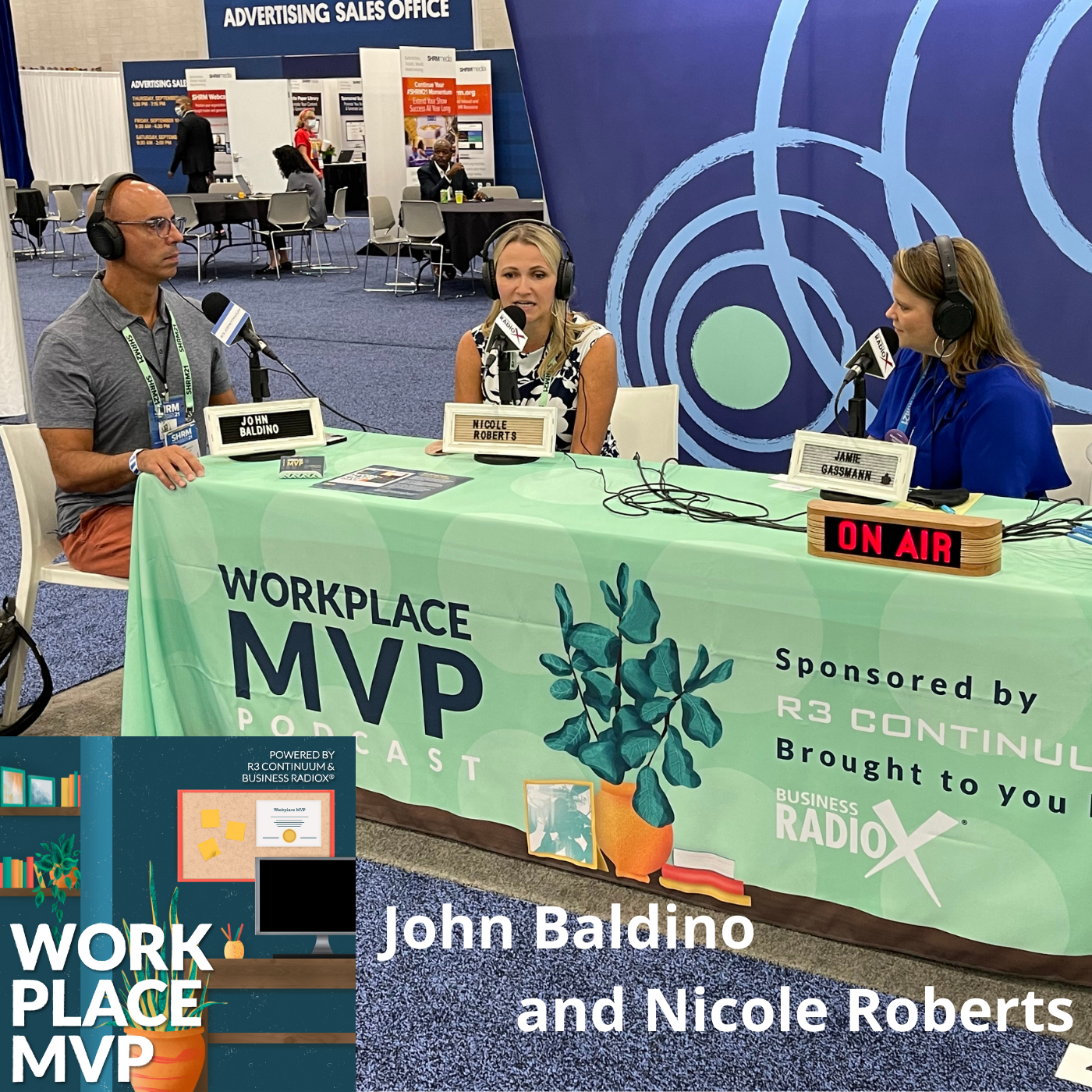
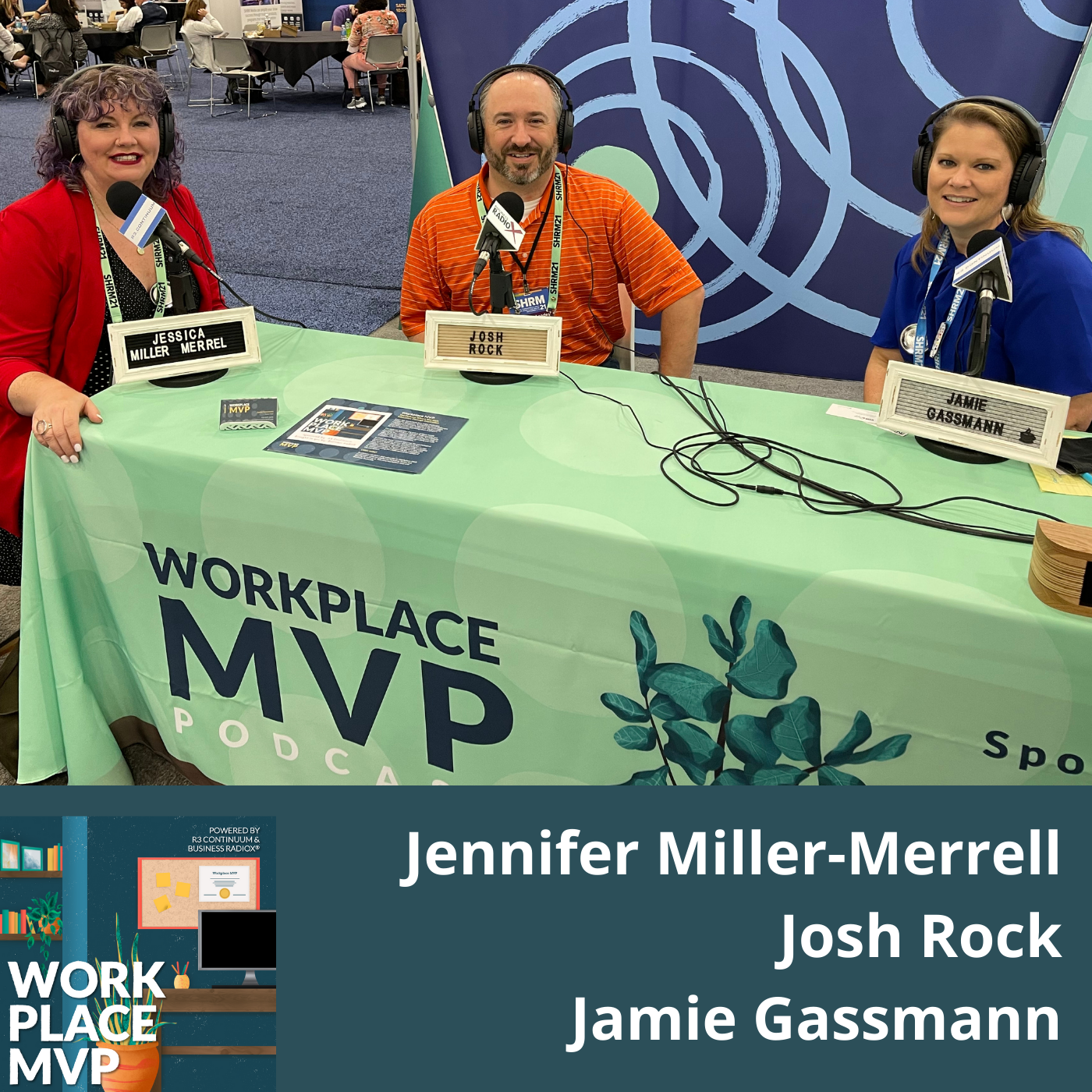
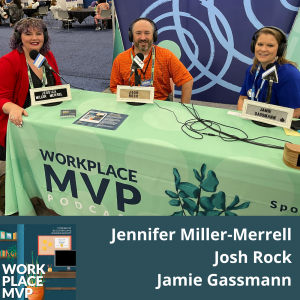
Drew Sewell, COO of CKS Packaging, experienced a compelling call to confront the sources of the problems of drug dealing, prostitution, and crime affecting the area near his company’s Atlanta headquarters. That calling led to the successful development of second chance hiring program for formerly incarcerated individuals at CKS Packaging, and a non-profit which serves hunger and other needs in the community. Drew joined host Jamie Gassmann to share his inspiring story and offer advice to other companies contemplating their own second chance hiring program. Workplace MVP is underwritten and presented by R3 Continuum and produced by the Minneapolis-St.Paul Studio of Business RadioX®.

CKS Packaging

CKS Packaging is a privately owned manufacturer and supplier of rigid plastic packaging with 24 locations in the United States, headquartered in Atlanta.

CKS Packaging’s business is the marketing, sales, and manufacturing of quality plastic containers utilizing environmentally friendly raw materials, maintaining high ethical standards honoring the covenant to support Christian-based ministries from the profits generated through the business.

CKS provides containers for a variety of consumer goods and industrial products including: Food Beverage Health and Beauty Personal Care Automotive Medical Chemicals and Solutions With over 50 years of experience in the plastics manufacturing business, CKS Packaging has acquired the product design and technical expertise that has made us the industry leader for innovative and cost-effective solutions for most any packaging and branding solutions.

They have been chosen to provide products for: Beverage Companies, Food Packaging Companies, Dairies, Fast Food Chains, Food Service Industry, Grocery Stores, Home Improvement Stores, Automotive Supply Stores, and Cosmetics Companies.

CKS Packaging, Inc. is a family-owned plastic container manufacturing company with its home office headquartered in Atlanta Georgia. CKS stands for Charles K. Sewell, who has become a legend in the plastic container blow-molding arena. He began in the plastic business in the mid-1960s. He was honored to be named the first recipient of the Society of Plastic Engineers Lifetime Achievement Award. is an industry leader in custom bottle design.

CKS Packaging introduced the Second Chance Program in 2016 with the goal of hiring people who otherwise might struggle to find employment. Specifically, the program focuses on hiring previously incarcerated people, homeless individuals, and people recovering from drug addictions. To recruit candidates to this program, CKS Packaging partners with community organizations for referrals. Since the inception of the program, hundreds of people have been hired successfully. Employees have moved up in the company or found better positions elsewhere.

Additionally, many Second Chance employees have escaped the cycles of poverty, crime, and addiction. CKS Packaging has also been positively impacted since they now have a loyal, hard-working group of employees who otherwise would not have been found. Since people who previously were incarcerated or relied on social support programs now have employment and some financial independence, taxpayers also end up paying less to help these individuals.

Company website | LinkedIn

Drew Sewell, Chief Operations Officer, CKS Packaging

CKS Packaging
Drew Sewell, Chief Operations Officer, CKS Packaging

Drew Sewell is Chief Operations Officer for CKS Packaging, a family-owned plastic bottle manufacturer. His father founded the company in 1985. CKS Packaging is headquartered in southwest Atlanta, Georgia.

One day years ago, while on his way back from a customer visit, he was stopped by the traffic light at the intersection of Fulton Industrial and the westbound exit ramp of I-20.

Little did he know that a chance sighting of a young teenage girl about the same age as his own daughter, alone and bewildered on the streets of southwest Atlanta would have such an impact on his life over the next six years.

Drew didn’t know what to do or how he could help, but he did have an overwhelming calling directing him to take care of her. He immediately turned his truck around to seek her out. Unfortunately, she had gone on her way by the time he returned to the corner where she was standing. Drew searched for her asking if anyone knew her or where he could find her. He never found that young person, but he committed in his heart to do whatever he could to seek out those less fortunate in the community and give them the reassurance that they had not been forgotten, that they were children of God, and that God did care for them.

Today Drew Sewell serves not only as COO of CKS Packaging, but as the guiding light for Maximum Impact Love, a 501c3 ministry that has enriched the lives of more than 50,000 people over the past six years. Not only has Maximum Impact Love served the community, but CKS Packaging’s Second Chance Program draws from the community they serve as well as recently released former incarcerated individuals.

CKS Social Responsibility | LinkedIn

R3 Continuum

R3 Continuum is a global leader in workplace behavioral health and security solutions. R3c helps ensure the psychological and physical safety of organizations and their people in today’s ever-changing and often unpredictable world. Through their continuum of tailored solutions, including evaluations, crisis response, executive optimization, protective services, and more, they help organizations maintain and cultivate a workplace of wellbeing so that their people can thrive. Learn more about R3c at www.r3c.com.

Company website | LinkedIn | Facebook | Twitter

About Workplace MVP

Every day, around the world, organizations of all sizes face disruptive events and situations. Within those workplaces are everyday heroes in human resources, risk management, security, business continuity, and the C-suite. They don’t call themselves heroes though. On the contrary, they simply show up every day, laboring for the well-being of employees in their care, readying the workplace for and planning responses to disruption. This show, Workplace MVP, confers on these heroes the designation they deserve, Workplace MVP (Most Valuable Professionals), and gives them the forum to tell their story. As you hear their experiences, you will learn first-hand, real life approaches to readying the workplace, responses to crisis situations, and overcoming challenges of disruption. Visit our show archive here.

Workplace MVP Host Jamie Gassmann
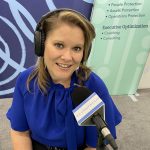
In addition to serving as the host to the Workplace MVP podcast, Jamie Gassmann is the Director of Marketing at R3 Continuum (R3c). Collectively, she has more than fourteen years of marketing experience. Across her tenure, she has experience working in and with various industries including banking, real estate, retail, crisis management, insurance, business continuity, and more. She holds a Bachelor of Science Degree in Mass Communications with special interest in Advertising and Public Relations and a Master of Business Administration from Paseka School of Business, Minnesota State University.

TRANSCRIPT

Intro: [00:00:04] Broadcasting from the Business RadioX studios, it’s time for Workplace MVP. Workplace MVP is brought to you by R3 Continuum, a global leader in workplace behavioral health crisis and security solutions. Now here’s your host, Jamie Gassman.

Jamie Gassman: [00:00:32] Hi, everyone. Your host, Jamie Gassman, here. And welcome to this episode of Workplace MVP. In a recent Sherm.org blog post, they shared that US prisons and jails released nearly 700,000 men and women into society every year. They also noted that approximately 70 million people have a criminal record, one third of working-age US adults. When these individuals are released into society, they are then tasked with finding work, so that they can support themselves, their families and start to live a new life post-incarceration. Additionally, there are a number of people out there who have lost their way and fallen into behavior that is damaging to themselves, their families and their community.

Jamie Gassman: [00:01:15] How did these individuals and those looking to have a second chance find an employer who is willing to accept an individual as a candidate regardless of their past? Looking at today’s job market struggles with a shortage of workers, is there a benefit to employers to consider implementing Second Chance Programs as a way to augment their hiring approach? How can giving back to these individuals help the organization, community, and the employee?

Jamie Gassman: [00:01:41] With us today to share how implementing a Second Chance Program has benefited their organization, its people and the community is Workplace MVP Drew Sewell, Chief Operations Officer for CKS packaging. Welcome to the show, Drew.

Drew Sewell: [00:01:58] Thank you, Jamie. It’s good to be here today.
Jamie Gassman: [00:02:01] We’re happy to have you. And so, let’s just start off with you telling me a little bit about yourself and your career journey. And then, we’ll get into talking about CKS Packaging in just a moment.

Drew Sewell: [00:02:12] Okay. So, CKS Packaging is my family business. My dad is Charles King Sewell. And King is his mother’s maiden name. But he founded the company in 1985. And once upon a time, back in the early days of 1963, he started Sewell Plastics. His company made the first plastic milk jug in the southeast United States, and then the first two-liter Coke bottle in the world, and it kind of put us on the map and put us all across the country, 25 locations. He sold that and started over with CKS Packaging. He wasn’t able to buy his name back. And so, he was looking to get in in a small way, just five days a week, one shift.

Drew Sewell: [00:03:07] But because so many people were loyal to us, the customers, and we were a good supplier, that scene went out the window, and we needed more and more people. But today, we’re $600 million in sales, and we have 3000 employees in 27 locations across the United States. But he made a commitment, and I don’t want to scare people away when they hear a religious commitment, but he made a faith-based adjustment and said, “I’m going to tithe the profits of the company.” And when he did, things just went crazy for us. You can’t outgive God. So, we’ve just exploded over the years.

Jamie Gassman: [00:03:51] Wonderful, and you’ve grown to be global supplier and you know all of your locations and various different states across the U.S. So it’s it’s amazing to see that growth that you guys have built up. So now looking at the Second Chance program for your organization, so there’s a different there’s a lot of different reasons why an employer decides to put a second chance program in place. Some it is a method for just expanding their candidate pool, and for others, it’s a way to give back to the community and help people for six packaging. What were some of the driving factors in creating the Second Chance program?

Drew Sewell: [00:04:28] Where we are, our company is our headquarters is about 10 miles from Atlanta. And in nineteen ninety six, when the Olympics came to Atlanta, we they tried to push prostitution and drugs and crime basically out of Atlanta, and they pushed it out 10, 15 miles. And so that’s where we encountered it on the boulevard where we are a mile from. Our office was a number one hotel for drug and prostitution in the United States. And that was led to do something about it, because it was, you know, here we are, a big successful company. But the neighborhood was run down and scary. I mean, they would carjack you steal things. You know, if you had a landlord that ran out of gas and you left it by the street to go get the gas can, the land more was stolen before you could even blink an eye. It was just terrible. So we decided that we would go into the neighborhood and do a day of outreach. And we were doing free food, clothes, health care, haircuts. We painted the ladies nails. We had moonwalks, ladd’s popcorn, cotton candy, snow cone, all that was just to draw the people in. And then we offered to pray with them and it changed hundreds of lives.

Drew Sewell: [00:05:50] But what I found out was when that day was over with you did the crime came back, everything was still still the same, even though twenty five prostitutes left the street the first time we ever did it. That was 15 years ago. So I went and I talked to the people that were there, homeless, etc. if you will, get off the streets and go into a drug drug rehab or some kind of rehab for whatever lifestyle you’re leading, after one year, I will hire you to come to work for me. And I had a lot of takers and it took a while, but it got going off the ground. And what I found out was those that are incarcerated, one of the ministry partners we support on a monthly basis from our tyre’s is Prison Fellowship Ministries. Prison Fellowship as a pipeline to seek is to help supply us with good workers. So these people have made a mistake in their lives. And they paid for that mistake, but they had that blemish that nobody wants to hire them. But in today’s environment, so hard to find somebody to go to work for you. And you really have some very talented people that have made that mistake pay for the mistake, and now they can’t get a job.

Drew Sewell: [00:07:09] So we decided, you know what, let’s give them a shot. And that was about six years ago. And today, you know, you go through the numbers just like hiring other people. But we’ve got one hundred and eighty nine, what we call second chance workers at six is and they have been with us, you know, two, three years, and they’re moving up the ranks. It’s it’s amazing. They have mechanical ability. When you make plastic bottles, you have a lot of production equipment that needs to be worked on, needs to be kept up. These big keep running so you can be profitable. And these guys and ladies are filling in the blanks for us. And they are so grateful to have a second chance that they will never leave us. And we’re a family business anyway. And we treat our people. They’re our greatest asset. We treat them like family. When I walk through the plant, I know it’s not the thing to say or do, but I hug them. You know, I love them except for the grace of God. There go where they would be. Me would be them. And I just have compassion for them. And in our whole company is a family oriented that way.

Jamie Gassman: [00:08:21] Amazing, so looking at that program now, you said you’ve had it for about six years now. How would you say, you know, obviously from an organizational perspective, this kind of giving you a pipeline to some really able and willing workers, but how has it impacted the community and some of those individuals? Have they benefited from the program?

Drew Sewell: [00:08:41] It’s it’s totally changed their lives. I mean, if you if you don’t have a job, what are you going to end up doing if you come out of the prison system? Are you going to go back on the street corner and hang out with your buddies? And the next thing you know, you’re doing drugs again and you don’t have money. So you have to support that habit. You steal or you break in, you rob whatever you have to do. And so by changing their lives, I mean, now they have homes, apartments, they have jobs, they have benefits. I mean, it’s just it’s a total life changer for them.

Jamie Gassman: [00:09:14] Wonderful. And, you know, when we talked earlier, you shared with me, you know, that you’ve had some success stories where somebody has come in on the Second Chance program and really risen into some leadership ranks and in some roles. Can you share with our listeners some of the success stories that you’ve you’ve experienced from this, where somebody climbed your corporate ladder, basically?

Drew Sewell: [00:09:35] Right. So we we have a couple of regional quality managers. We have shift supervisors at several plants that are second chances. And it’s you know, it’s it’s it’s no different from any other pool of applicants that would be coming to your company to fill out an application. They all have, you know, credentials that they bring. Some a lot of them have college degrees. You know, they just they they make bad choices, but they paid for it. And, you know, we give a second chance. I mean, I probably had 100 chances myself, so, you know, thank goodness.

Jamie Gassman: [00:10:16] Yeah. Wonderful. So obviously we’ve talked a little bit about the benefits, but were there any challenges that you experienced or have experienced in implementing a program like this?

Drew Sewell: [00:10:26] Yeah. You know, it’s everybody that I meet. I mean, if I go out on the street into a crowd of homeless, drug addicted, you know, prostitutes or whatever, the first thing is, is, you know, what do you pay? All that us in is breaking the habits that they’ve got without going through something. So it’s kind of a forced rehab when they go when they get locked up in the prison, because, you know, they just can’t get the drugs anymore or whatever their choice it is. And so. That’s the hardest part is just getting them off of that, so but me still. And if you go into a rehab for a year, even if they don’t go through the prison system is still the second chance for them. And, you know, it’s usually the programs or you pay it will. We’re not going to pay for somebody to go through it if they’re willing to apply themselves and go into one that doesn’t cost anything. But the the rehab program uses their labor, their job that they go to every day after they’ve been cleaned up as a money to to keep it rolling.

Drew Sewell: [00:11:39] So, you know, they have nothing to lose. And if they’ll do, it is great or they come straight out of prison and nobody’s going to hire. I mean, think about it. Have you committed a foul on these on everybody’s application? Yeah. You if you lie, they’re going to find out, you know, because you do the background check and you say that that guy, he’s not working for me or she’s not they’re not even honest on their application. You know, what else are they going to lie about? So, you know, we just take that one off and just say, look, we go to the local halfway houses, if you will. I mean, there’s there’s a lot of organizations out there that that that’s what they do. They specialize and they bring in the it’s a transitional home. Out of the prison, back to the, you know, the the the work force environment. And they had to have a job before they leave. And so we’re just that the person we were. Yeah, and it’s just they’re so loyal when they walk through a wall for you. They absolutely love us.

Jamie Gassman: [00:12:50] That’s amazing, and I imagine at that time, especially the ones that are coming straight out of prison in those halfway houses, you know, that might be their opportunity for reflecting on why, you know, that that time where they don’t want to go back, you know, they’re committed to themselves to not go back, and they’re not being influenced by anything else in their environments that might bring them down the path that they were on before they went into incarceration. So that’s got to be really good opportunity in a time that you can capture their attention to working at six packaging and getting them on the kind of that right path to take a little bit more of a successful life.

Drew Sewell: [00:13:29] Wonderful. They’re very grateful. Trust me. And they they won’t let you down. They don’t want to go back.

Jamie Gassman: [00:13:38] Yeah, I can imagine that that is, you know, they’re coming off of the, you know, depending on how long they were incarcerated for. You know, that’s got to be that great opportunity to just kind of they can see an opportunity from that. Maybe they didn’t have presented to them before. I can imagine there’s some anxiety that they feel, you know, when they come out of prison, like trying to figure out how am I going to, you know, fulfill the obligations that I’m expected to do, whether they’re on parole or if they’re on, you know, other kind of conditions that they need to adhere to as part of being released. Do you you tend to see that where you kind of almost like our that breath of fresh air for them or that relief to that tension that they might be having.

Drew Sewell: [00:14:18] If most people are just they want somebody to validate them. They want to find somebody that believes in them. And if you you know, I mean, every family I mean, think about it. You get somebody in your family. I’ve got some in my family that is going on the wrong way with drugs or some kind of crime that they committed. They were at the wrong place at the right time. And so they just need somebody to believe in them. And people have been telling them all their life that you’re worthless, you’ll never amount to anything. You’re no good, you don’t have an education, don’t have a college degree. You’ll never get ahead. And then they come see us and they find out that we’re just real people. You know, like I said earlier, except for the grace of God there. Go on. I mean, I’m a family member. I’m a CEO, but you know, very easily I could be the guy in jail back in the day before they had video cameras. You know, every time on everybody’s phone, you know, they’d have the phones. No. One, fortunately for me, when I was a youngster, because that was a hell, you know, I’ll be honest with you. And so that’s probably why I relate to them, except for the grace of God. I could be, you know, an inmate myself or doing some crazy stuff. But anyway, it’s neither here or there. But you just have to believe in them and get them believing in themselves and change your life.

Jamie Gassman: [00:15:44] They’re human, treating them like a human, giving them that opportunity. So how can other companies, you know, whose culture is a little bit more diffuse than a closely held business like a family business like your own, how could they integrate a similar initiative like this into their company?

Drew Sewell: [00:16:01] Well, I would I would say that they could go to the the halfway houses. There’s there’s big pools. I mean, there’s there’s places that that have hundreds of just release formerly incarcerated people that need to transition back into society. And they have a unique skill set. They could go to the it is it is hard to get people to really believe that you want to do this. Number one, they’re not used to that. So you have to go and sell yourself and your company. But at the same time, you can ask for a unique skill set. Maybe it’s somebody that’s got skills. You know, I was looking for mechanics. Anybody that could work on their card has changed their or changed their own sparkplugs. You don’t do that anymore. But people that can. Those are the kind of people you know to you change your tire if it’s flat or you go triple A, whatever. So we were looking for people that were mechanically inclined. But you can any skill set you’re looking for, you’ll find talent is amazing. But you could just say, look, filter out. You know, it’s like going on the computer and filter out this skill set that’s all out war in the war going on zip recruiter and saying, I want this person and they’ll they’ll look it over for you and they’ll and you can go and address the group of people that are inmate that are trying to get out. And you can tell them what you’re looking for and basically sell yourself and your company. Don’t matter if you’re privately held like or you’re a public company. You just have to have the desire to do it. And I promise you, they’ll be the best employees that you’ve ever had because they don’t want to let you down because you believed in them. You gave them that second chance and they’ll do anything for you if you treat them right. Give an honest day’s pay.

Jamie Gassman: [00:18:00] So we’re going to just take a moment to hear word from our sponsor, workplace MVP is sponsored by our three continuum. Aa3 Continuum is a global leader in providing expert, reliable, responsive and tailored behavioral health crisis and security solutions to promote workplace well-being and performance in the face of an ever changing and often unpredictable world. Learn more about how ar3 Continuum can tailor a solution for your organization’s unique challenges by visiting ar3 Secombe today. So now I’d like to talk a little bit about maximum impact love. That’s your mission that you’ve set up, which I think you touched on that a little bit when you talked about that event you helped in your community. So in addition to your Second Chance program, you also establish mission impacts, love or maximum impact Luxx. Sorry, and that’s a mission based nonprofit that’s helped to enrich the lives of and this is the number that I believe I wrote down from our previous conversation with 50000 people over the past six years. So can you walk us through the work that this nonprofit does with the community? And I believe from what you’ve talked about, that’s also a source for where you get some of the second chance. You know, program candidates as well. But can you share a little bit about what you’ve done? And I know this is more concentrated in the Atlanta area, but can you talk a little bit about it?

Drew Sewell: [00:19:26] Okay, so so first of all, I was arrested at a red light on Fulton Industrial Boulevard in Atlanta, Georgia. With a prostitute. Through my windshield by the Holy Spirit. So, as I said, at a red light and I watched a little girl go across the street in front of me, she was caught up in prostitution. And my daughters at the time this is 15 years ago, that that six but 15 years we’ve been doing this got maximum impact, because I watched her go across the street in front of me. That was really. Impressed upon my heart, except for the grace of God, there goes your daughters. If you have got two daughters and at the time they were 12 and 14 years old, and this girl could have been they could have been bookends for this little girl that was walking across the street in prostitution. And it really broke my heart. And I began to cry. And at the same time, I felt the Lord speaking to me saying, what are you going to do about it? In. You know, I don’t know what you do, but every day I get up and pray and say, Lord, here I am, send me let me be a man after your own heart and. Here I am. What am I going to do about it? I don’t know what I can possibly do about that. So the light turned green and I quickly took off from a spot and I got about a thousand yards away.

Drew Sewell: [00:20:57] And I felt the Lord, the Holy Spirit, the spiritual boy, saying to me, what are you going to do about it? And I knew I couldn’t outrun it. So I pulled off in the first parking lot, not looking where I was, but I was at Starship Enterprise, which is an adult toy and video store. There was a liquor store. There was two strip clubs. And I just had my head on my steering wheel and was crying and saying, what can I do about that? Because I was sugar. He said, There goes your daughters. Except for the grace of God to go to your daughter. So, I mean, it just it really impacted me. That’s why I at maximum impact, I had a maximum impact from the Lord. And we make a maximum impact. So I said, I don’t know what I can do. What do you want me to do? And I felt like you said, go find the girl. Well, I went back and looked for the next two hours and I never did find her. But what also turned out to be the number one hotel for drugs and prostitution in the United States, and it’s a mile and a quarter from my corporate office right at Six Flags. Twenty ten miles outside of Atlanta. And I just saw a prostitute come out, get in company vehicles and go on.

Drew Sewell: [00:22:12] I saw drug runners come over to the car beside me and get up and say, I’ll take the money, go get drugs, bring them back. And and as soon as the kids say kids, they were teenagers would pull out another mom and dad’s sedan or a minivan would pull in and they would get the same thing. So out of all of that, I’m convinced today that that girl did exist, that she was just an angel to get my attention to do something about the neighborhood. And as I said, there failed him prior to that. I want you to do a day of outreach and prayer. And I knew what prayer was, but I had no idea what outrage was. So I went back and said we were a you were a Kurbanov company. We tied our profit to the company ACOTA at the time. We had twenty five or so ministries that we supported, above all canned. One of them was prison fellowship. One of them is. Is Heggie Institute, there’s just a lot of them that we did, and I called them all together and said, hey, this is what happened. What I do, what is outreach? And they started shared with me. You need to go in and do a day of of of feeding and clothing. And I’m talking about the homeless population. There was pretty serious. There was 40 or 50 a day just standing around, sleeping in wherever, you know, you see it all over the country.

Drew Sewell: [00:23:40] So anyway, I want you to play live music. I want you to feed them a hot meal. Would you give them clean, fresh clothes and socks and underwear? Would you to give them a haircut or you’d you take a before and after picture of what they looked like before in the shower or trucks there and stuff. And we did. And they looked like all new people took a picture before and after and gave it to them. And they were just amazed. A lot of them never had a picture of themselves in their life. But what happened was all of these people, I said, look, if you go into a rehab, you can’t quit drinking. You’ve been out here on the streets for 15 years. Somehow you’ve been out prostituting your body for 10 years after I met them and got to know them. And they knew they could trust me. They shared everything with me. So how about you go into rehab? It doesn’t cost you anything, but you have to stay for a year if you’ll stay for one year. I’m confident that you’ll be changed. From your vices and no to that, you’ll be ready to come to work. And I’ll give you a job, I promise you I have to go on third shift. And we were twenty four, six. So six days a week, 24 hours a day.

Drew Sewell: [00:24:53] We’re off on Sundays to let them go to church or do whatever they want do with that day of rest. But the point is, is they went in, they started coming out, and then people then they would go with me back down to the street and say, look, you remember how you look, how good he’s doing. If you were to go on at the same time, you’d be working, you’d be as good as him. OK, I want to go now. I want to go now. I mean, there’s a whole lot of I can talk all I want to. But, you know, the example was somebody they knew there was that I’d lifted up and said, hey, look at this from the stage while we played out of loud music. They’d give a testimony was out here with you. I was curled up in prostitution. I’ve got a job. I’ve got benefits. I’ve been reunited with my family, blah, blah, blah, you know, and it’s all good. And these people, these real what he says he’ll do, he’ll back it up. And he’s he’s honored everything that he said he would do. If you’ll just do what he wants you to do. So there you go. That’s how we started it. And it turned into we needed more people and we thought, well, you know what? Why don’t we go see somebody that is, you know, one of these halfway houses and talk to them? And I did and said, we want anybody.

Drew Sewell: [00:26:13] I want I want a mechanically inclined person, because that’s what we were looking for. You can’t find enough people today that can that are really good with their hands and their mind. So if they haven’t committed capital murder, armed robbery, you know, rape, kidnapping, then I’ll take them. And we have and we’ve got 189 of those. And every one of them has the same opportunity. And we were you know, we make plastic bottles, so somebody has to pack them at the end of the line. Somebody has to uniti palletized. Somebody has to drive a forklift. Somebody has to put them in the warehouse. Somebody has to take them out of stock and load a truck. And there’s just a lot of opportunity. Somebody has to make the machines work. So it works out. There’s, you know, especially today’s environment with the government wanting to pay these stimulus checks, but make it more money to stay home. Where are you getting your people from? You know, we haven’t had the shirt. There were an essential business. And we have grown in the last two years from four hundred billion in sales to over 600 million in sales because we have it starved. And all these companies that did stuff. We got a lot of their business. And so anyway. Hope that answered your question.

Jamie Gassman: [00:27:30] Yeah. No, it just it’s you know, I asked I was sharing that with the listeners. I had to share that with the listeners, because it’s just amazing the you know, the community outreach that’s tied to that and that giving back to not just giving a second chance opportunity for somebody to work, but also giving try. Yeah. Yeah. It’s kind of today’s today’s work environment. But you’re also giving back to their families. You’re giving back to the community. And it’s also continuing to that you’ve got this opportunity for those who are willing to put in the effort to participate. So now I know that this you shared with me that this nonprofit has received some some pretty incredible awards. I know Fulton County declared it April 15th, Maximum Impact Loveday. And you also shared that you’re being honored with the humanitarian award. And I believe you said it was on September 11. So how how does that feel? And, you know, what was some of the premise behind this sonor?

Drew Sewell: [00:28:37] Well, so so out of the necessity I was doing or we were doing, I say, oh, there’s so many people that actually volunteer. A lot of people don’t know what they can do. So if your company is looking for a good cause, you know, go find something, go out in your community and see where the need is and then go volunteer. Maybe it’s to cut some people’s grass, clean up the trash, you know, whatever it happens to be here. But but anyway, out of that, that need you. I mean, there’s just so many people that want to want to pitch in and do something. But I lost my train of thought there for a second. So I apologize. But ask the question again for sure.

Jamie Gassman: [00:29:24] So just how it does it make you feel receiving or, you know, receiving these honors and some of the premise behind them honoring you with it?

Drew Sewell: [00:29:32] That’s where I was going. And, you know, I’m no I’m nobody I’m just a humble guy. Honestly, that has a lot of good people. Sometimes I feel like the Pied Piper because I turn around and people are following me because I lead from the front. I go out into the community and do it. I’ve had policemen say, are you crazy? You can’t do that. I don’t come out here unless I have my arm around. And he’s talking about his bulletproof vest, but I have the full armor of God only, so I don’t worry about that. But the main thing is, is you just find a good cause and people will take notice. So we have to have a a black gentleman that was it fell asleep at a Wendy’s drive in in Atlanta, downtown Atlanta, and he had been drinking. And you you probably know the story. They called the police. They got him out of his car. He overpowered the police, took on Taser shot, shouted at him, and they they killed him. And so the the the consensus was is back when people were burning everything down, they burned down the windows. And it was terrible. And I just couldn’t you know, I couldn’t sleep. What can I do to help? And I came up with this idea, and I know it was divine. But but because what we do have started to say earlier, we were doing three events a year, we found out that, hey, that’s great for those three days.

Drew Sewell: [00:31:09] But what about the rest of the year? So we started Maximum Impact Love and opened up of a warehouse where people can come and get groceries every day, Monday through Friday. And then we have people come in and volunteer and we pack the boxes, we go to the food bank and we buy the stuff and our profits of the company. We tied one of the recipients is me and maximum impact. So. We’ve got a 13000 square foot office. We were allowed people to come and get groceries every day of the week and then Covid here. And then so what are you going to do? How are we going to continue to do this? People still need the food, but they got Covid now. You don’t want to get your people infected. So how do you do it? We put a sign out front said don’t get out of your car call. We’ll bring the boxes out. You pop your trunk, we’ll put it in there. We’ll pray for you through the window if you need, and then you can be on your way into the same thing happened with the. With the Windies deal, the guy got killed there. What am I going to do? And I felt like the Lord told me to. Put the Atlanta Police and Fire Department out there up front.

Drew Sewell: [00:32:22] You said everything. So we did 10 different events where we gave away 400 boxes of groceries each. So over 4000 boxes of groceries and at ten different events around Atlanta, 10 different locations in people. And we put signs out free groceries today. And we did all the work, set it up, and the policemen in their uniforms and the firemen and their uniforms, put them into drugs, talk to them. Got all the credit. I don’t care about that. We just wanted to mend the community. And so it worked. And that’s where we got the proclamation and they got it. William Andrews flew all day, which is my full name. But the point is, is maximum impact. Love is not me. It’s the people behind the scenes that really make it happen. And so it’s been worthwhile. And that’s what’s going to happen with this. On 9/11, they’re going to give it a humanitarian award. And as is not me. So many people yesterday we had a big fundraising golf tournament. We had two hundred and twenty golfers in 27 holes, had to foursomes on each hole, and they can’t wait to give the money. And because they know what we do and it’s real and it works. And those are the kind of things you can do in your community, whether you’re a for profit or a, you know, a public company or a privately held company.

Jamie Gassman: [00:33:58] Wonderful. So now I if there were three things that if you that you wanted leaders to be aware of about the rewards that an organization and employer can get by giving back to the community and giving me a second chance, you know, opportunities for for people, what would be three things that you would want to leave these leaders with?

Drew Sewell: [00:34:22] Well, everybody wants to be somebody and they want somebody to believe in them. And these second chances really need somebody to believe in a rent. Imagine yourself in a six by six cell and you’ve got somebody in there every day with you to either negative or they’re they they have a distorted view of reality. And you just been fear negatives all day long. When you do get out, you get around more people like that. They need somebody that believes in them. They can say, look, I know you’ve made a mistake, but here I’ll give you a chance. There’s one, too, is. Be real. You know, you don’t have to have the pedigree, you don’t have to have the the MBA, the doctorate or all of that degree. But what are you really doing to make a difference? In the world period in other people’s lives. And just treat them like people. Except for the grace of God, there go use of. So those are three things.

Jamie Gassman: [00:35:35] Well, that so looking out over your career, if you were able to identify one thing that you’re most proud of. What would that be?

Drew Sewell: [00:35:46] Hmm. Well. I would that I would just say that, you know. They’re correct. Kerry, God, wherever I go. I mean, I’ve go out on the production floor and treat people like real people. Say hello to Garland by name. I made a in this deal goes on. I took a picture of every person that was that worked in any one of my plants. And at one time I had four plants and there were four hundred people that I knew, every one of them to name. How in the world could I ever know their names would take a picture of them? The thumbnail picture put it on to a board in in the front office. And before I went out on the floor, only any one shift, I would pick two or three people and I’d memorize their name and I’d go out there and purposely look for them and just tell them, hey, Jamie, it sure is good to see you today. Is there anything that I can pray for you about? And, you know, they just being hey, knows my name and yes or maybe not, but if they say it’s, you know, maybe you don’t feel like you can do this. But I got tired of people saying, well, you pray for me. And as soon as I and I say, yeah, as soon as I walk away and forget about it. But as I started, I felt convicted. So I started praying with them on the spot. It’s kind of uncomfortable at first. So you close your eyes and people are looking at you. They might not even be looking at you, but you feel like it is. And then if you pray for them, it really makes a difference. Then somebody will go out and say, hey, I saw him praying. Right? What was that all about? And then next time you go through, they’ll ask you to. And it’s it’s just a snowball effect. And it teaches people that you really care. They don’t care how much you know, until they know how much you care. You can’t really let them understand how much you really believe in them.

Jamie Gassman: [00:37:47] Oh, that’s amazing. So for our listeners, if they wanted to get a hold of you and be able to kind of seek additional information about how you you’ve been able to create your second, you know, you’re successful is the second chance program or have questions about the mission maximum impact love? How would they get a hold of you?

Drew Sewell: [00:38:07] Well, I would say go on our website at WW dot c k s packaging dot com. And then just click on there and you’ll see a little at the bottom of one of the pages, it’ll say Social Responsibility, click on that, it’ll have my story, it’ll have my email address, it’ll have my personal cell phone. I don’t you can call me on my cell phone and I’ll be glad to call you back. That’s how Ray called me. And we ended up doing this to begin with. But anyway, just be accessible if you’re real. I mean, it’s hard because you’ll get some calls from some people, but anyway, it’s worth every minute of it.

Jamie Gassman: [00:38:54] Wonderful. Well, I, I, I, I found your story inspiring and the work that you’re doing amazing. And I hope our listeners do, too. So thank you so much, Drew, for letting us celebrate you and all of your great accomplishments and for sharing your stories. The great advice for our listeners. We appreciate you and I’m sure your organization and staff do as well. We also want to thank our show sponsor, our three on for supporting the workplace MVP podcast. And to our listeners, thank you for tuning in. If you have not already done so, make sure to subscribe so you get our most recent episodes and other resources. You can also follow our show on LinkedIn, Facebook and Twitter at workplace MVP. If you are a workplace MVP or know someone who is, we want to know about them. Email us at info at Workplace Dasch MBP dot com. Thank you all for joining us and have a great rest of your day.


Tagged With: CKS Packaging, Drew Sewell, Jamie Gassmann, Maximum Impact Love, R3 Continuum, second chance hiring, Second Chance Program

Decision Vision Episode 131: Should I Set up a Trust? – An Interview with Richard Morgan, Morgan and DiSalvo, P.C.

August 26, 2021 by John Ray

Richard Morgan
Decision Vision
Decision Vision Episode 131: Should I Set up a Trust? - An Interview with Richard Morgan, Morgan and DiSalvo, P.C.
Loading
00:00 /
RSS Feed
Share
Link
Embed

Download file

Richard MorganDecision Vision Episode 131: Should I Set up a Trust? – An Interview with Richard Morgan, Morgan and DiSalvo, P.C.

Trusts are not just for the wealthy, says Richard Morgan, an attorney with decades of estate and tax planning experience. He joined Decision Vision host Mike Blake to break down the basics of trusts, when and how they are formed, how they serve the desires of those who create them, and much more. Decision Vision is presented by Brady Ware & Company.

Morgan and DiSalvo, P.C.

Morgan and DiSalvo is a full service, high-end, estate and tax planning law firm. Their planning is individualized for their clients and clients are not shoved into pre-existing form documents. Service is a high priority, and they treat clients like family. Life changes, and Morgan and DiSalvo helps clients plan for it.

Their areas of specialty are estate planning, special needs planning, probate and administration, and dispute resolution.

Company website | LinkedIn | Facebook

Richard Morgan, Attorney, Morgan and DiSalvo

Richard Morgan
Richard Morgan, Attorney, Morgan and DiSalvo

Richard M. Morgan has been practicing law in Georgia since 1987. Richard founded the award-winning Alpharetta law firm of Morgan & DiSalvo, P.C. in 1995 to help individuals and families plan and prepare for the many changes that life brings. Morgan & DiSalvo is recognized as a U.S. News & World Report and Best Lawyers.com “Best Law Firm” since 2013. Morgan & DiSalvo received the highest “Tier 1” rating in Trusts and Estates Law, a distinction held by only 23 law firms in Georgia.

Richard prides himself on bringing peace of mind to individuals and families by helping them prepare for significant life events. In addition to the primary practice areas of the firm, Richard also specializes in finding creative solutions for clients in the areas of estate & tax planning, estate & trust dispute resolution, business succession planning, planning for special needs beneficiaries, creditor protection, charitable gift planning and tax controversies.

Richard’s work is differentiated by his level of service and attention to detail. His technical and analytical capabilities and problem-solving approach are unique among attorneys. A leader in his field, Richard is past president of the Taxation Sections of both the Georgia and Atlanta Bar Associations, the Estate Planning & Probate Section of the Atlanta Bar Association, the North Georgia Estate Planning Council and the Georgia Planned Giving Council. Richard serves on the Executive, Legislative and Georgia Trust Code Revision committees of the Fiduciary law section of the Georgia Bar Association. Richard also serves on a two member sub-committee of the Fiduciary Law Section to propose a Technical Corrections Bill to improve the 2017 Georgia Uniform Power of Attorney Act.

In 2014, Richard was elected as a Fellow in The American College of Trust and Estate Counsel (ACTEC). This is the most prestigious group of Trusts and Estates attorneys in the country, with only 59 Fellows in the State of Georgia. ACTEC membership is only offered to those who have provided substantial contributions to the field of trusts and estates law. Richard has used his charitable gift planning expertise over the years by serving as the chairman or member of professional advisory committees of several large Atlanta organizations including the Jewish Federation of Greater Atlanta, Jewish Family & Career Services, the Community Foundation of Greater Atlanta and YMCA of Metropolitan Atlanta.

Richard received his B.B.A. in Accounting, cum laude, and his J.D. degree, cum laude, from the University of Georgia. He received his LL.M. in Taxation from Emory University. Richard is a frequent speaker on estate and tax planning, charitable gift planning, and other tax-related topics.

Richard loves life and all that it has to offer, but his greatest accomplishments have all related to his wonderful and loving family, including his incredible wife and three children, and of course, now two Goldendoodles.

LinkedIn

Mike Blake, Brady Ware & Company

Mike Blake, Host of the “Decision Vision” podcast series

Michael Blake is the host of the Decision Vision podcast series and a Director of Brady Ware & Company. Mike specializes in the valuation of intellectual property-driven firms, such as software firms, aerospace firms, and professional services firms, most frequently in the capacity as a transaction advisor, helping clients obtain great outcomes from complex transaction opportunities. He is also a specialist in the appraisal of intellectual properties as stand-alone assets, such as software, trade secrets, and patents.

Mike has been a full-time business appraiser for 13 years with public accounting firms, boutique business appraisal firms, and an owner of his own firm. Prior to that, he spent 8 years in venture capital and investment banking, including transactions in the U.S., Israel, Russia, Ukraine, and Belarus.

LinkedIn | Facebook | Twitter | Instagram

Brady Ware & Company

Brady Ware & Company is a regional full-service accounting and advisory firm which helps businesses and entrepreneurs make visions a reality. Brady Ware services clients nationally from its offices in Alpharetta, GA; Columbus and Dayton, OH; and Richmond, IN. The firm is growth-minded, committed to the regions in which they operate, and most importantly, they make significant investments in their people and service offerings to meet the changing financial needs of those they are privileged to serve. The firm is dedicated to providing results that make a difference for its clients.

Decision Vision Podcast Series

Decision Vision is a podcast covering topics and issues facing small business owners and connecting them with solutions from leading experts. This series is presented by Brady Ware & Company. If you are a decision-maker for a small business, we’d love to hear from you. Contact us at decisionvision@bradyware.com and make sure to listen to every Thursday to the Decision Vision podcast.

Past episodes of Decision Vision can be found at decisionvisionpodcast.com. Decision Vision is produced and broadcast by the North Fulton studio of Business RadioX®.

Connect with Brady Ware & Company:

Website | LinkedIn | Facebook | Twitter | Instagram

TRANSCRIPT

Intro: [00:00:01] Welcome to Decision Vision, a podcast series focusing on critical business decisions. Brought to you by Brady Ware & Company. Brady Ware is a regional full service accounting and advisory firm that helps businesses and entrepreneurs make visions a reality.

Mike Blake: [00:00:22] Welcome to Decision Vision, a podcast giving you, the listener, clear vision to make great decisions. In each episode, we discuss the process of decision making on a different topic from the business owners’ or executives’ perspective. We aren’t necessarily telling you what to do, but we can put you in a position to make an informed decision on your own and understand when you might need help along the way.

Mike Blake: [00:00:42] My name is Mike Blake, and I’m your host for today’s program. I’m a director at Brady Ware & Company, a full service accounting firm based in Dayton, Ohio, with offices in Dayton; Columbus, Ohio; Richmond, Indiana; and Alpharetta, Georgia. Brady Ware is sponsoring this podcast which is being recorded in Atlanta per social distancing protocols. If you’d like to engage with me on social media for my Chart of the Day and other content, I’m on LinkedIn as myself and @unblakeable on Facebook, Twitter, Clubhouse, and Instagram. If you like this podcast, please subscribe on your favorite podcast aggregator, and please consider leaving a review of the podcast as well.

Mike Blake: [00:01:19] So, before we get started, I want to apologize to the audience. We’ve had some technical difficulties that prevent us from using our primary sound system. So, we’re doing this over telephone. But by the next time we publish an episode, we should be back to normal. And I’m sure it’ll be entirely audible. It just won’t have that same FM radio, NPR quality that I know that you guys are used to. But the content is going to be great, so hang in there.

Mike Blake: [00:01:47] And the topic for today is, Should I set up a trust? And the reason I’m bringing this topic up is, I think, trusts are not all that well understood. In fact, I’m pretty confident it’s all not well understood. And in light of the victory of the Democrats at the ballot box, at least at the Federal level in the 2020 election, there has been an increased interest in forming trusts as a mechanism for asset and wealth protection. Because there has been at least a prevailing feeling that taxes are on estates and gifts are going to increase above what they historically have been, certainly, in recent years. Whether that will actually happen, nobody can say. But people, I know they’re acting proactively in that regard.

Mike Blake: [00:02:54] But trust go a long way beyond or are a much wider topic than simply rich people stashing money away so they don’t have to pay as much estate and gift tax. There are numerous kinds of trusts available. And I think one of the things we’re going to learn about today is, although, maybe we associate trust with ultra high net worth individuals, and ultra high net worth individuals would be somebody with $20 million of net assets, something like that, because, you know, you don’t even start to have a taxable estate until you’re around $10-1/2 million dollars or so if you’re a married couple.

Mike Blake: [00:03:32] But I think we’re going to learn today that trust actually can be a very useful mechanism for many other different purposes beyond the blast of protection. And you may very well benefit if you don’t fall into that category of the ultra high net worth individual.

Mike Blake: [00:03:52] And joining us today to help us talk about this topic is Richard Morgan of Morgan & DiSalvo. Richard Morgan has been practicing law in Georgia since 1987. I just learned from our conversation prior to the show, he actually comes from Virginia and I got married in Virginia, which is actually a great town. I really enjoyed being there. I’d go back in a heartbeat. Richard founded the award-winning Alpharetta law firm of Morgan & DiSalvo, P.C. in 1995 to help individuals and families plan and prepare for the many changes that life brings.

Mike Blake: [00:04:21] Richard prides himself on bringing peace of mind to individuals and families by helping them prepare for significant life events. In addition to the primary practice areas of the firm, Richard also specializes in finding creative solutions for clients in the areas of estate and tax planning, estate and trust dispute resolution, business succession planning, planning for special needs beneficiaries, creditor protection, charitable gift planning, and tax controversies.

Mike Blake: [00:04:46] A leader in his field, Richard is past president of the Taxation Sections of both Georgia and Atlanta Bar Associations, the Estate Planning and Probate Section of the Atlanta Bar Association, the North Georgia Estate Planning Council, and the Georgia Planned Giving Council. Richard serves on the Executive, Legislative and Georgia Trust Code Revision Committees of the Fiduciary law section of the Georgia Bar Association. And he serves on a two member subcommittee of the Fiduciary Law Section to propose a Technical Corrections Bill to improve on the 2017 Georgia Uniform Power of Attorney Act.

Mike Blake: [00:05:20] Morgan & DiSalvo is recognized as a U.S. News and World Report and bestlawyers.com Best Law Firm of 2013. They’ve receive the highest Tier 1 rating in Trust and Estates Law, a distinction held by only 23 law firms in Georgia. Richard, welcome to the program.

Richard Morgan: [00:05:35] Thank you very much. Glad to be here.

Mike Blake: [00:05:38] So, Richard, let’s start at the very foundation. What is a trust?

Richard Morgan: [00:05:42] Great question. So, trusts are what estate planners use kind of like a Swiss Army knife. You can think about them in different ways. Legally, it’s a fiduciary relationship. Someone is in charge of assets and they follow the terms of the trust on behalf of the beneficiaries.

Richard Morgan: [00:06:08] What I think about it also is a three-party contract. You have one party can set this thing up. This entity, think like an LLC or other business entity, just a different kind of entity called a trust. So, you have someone set it up, and they’re the ones who put the assets into the trial. They actually give them to the person who will be in charge, who is called the trustee. The trustee is required to follow the terms of the trust on behalf of the third-party, who’s the beneficiaries.

Richard Morgan: [00:06:36] So, someone gives someone else assets, and they hold them, and handle them, and invest them, and take care of them all on behalf of the beneficiaries. And those three parties can all be the same person. They can all be different. You can mix and match. It’s all about what you’re trying to achieve. And, basically, we use this structure in different ways to achieve different benefits.

Mike Blake: [00:07:01] And, you know, I think when many of us think of trust, myself included, candidly, we think of a trust as a place where rich people stash money to protect them from taxes and sometimes creditors. But there are different kinds of trust and not necessarily for that purpose, aren’t there?

Richard Morgan: [00:07:20] Yes. So, the main trust that people will come across is as the primary estate planning document. The document says what happens to my stuff when I die. Also, it can handle or manage your affairs while you’re alive if you need assistance. And so, that type of trust is revocable. You can change it anytime you want. You can amend it anytime you want. You can move assets in and out of it. It has no tax implications. It uses your Social Security number as the tax ID number. But it serves as your primary estate planning document to say what happens if incapacity, death, that type of thing.



Richard Morgan: [00:07:58] The other types of trusts are primarily irrevocable. Irrevocable trusts are used for asset protection, for gifting. And for basic tax reasons, wealth transfer tax reasons, gift tax, estate tax, that kind of thing. Sometimes for income tax reasons at the state income tax level, like Georgia or wherever you live state tax level. But they don’t normally give you any significant income tax benefits at the federal level.

Mike Blake: [00:08:34] So, I like to bring up sort of current events here, because I think there’s an opportunity to make an important distinction. You know, I’m sure you’re familiar with the Britney Spears ongoing conservatorship battle. It looks like it may be finally having some kind of resolution. From afar, conservatorships like that appear to have some element, some things that look trust-like in nature. And I was hoping you kind of draw a distinction, if there is a distinction, maybe there’s not. Is there a distinction between the conservatorship and a trust? If so, what are the key differences?

Richard Morgan: [00:09:16] All right. That’s a great question. Let’s go through some basics. What is estate planning? Estate planning is the following: Right now, you control all aspects of your life. You can do whatever you want. As long as you don’t you hurt anyone else or break the law, do whatever you want. But what if you can’t? Incapacity or death. There is a court-based system for to deal with all those issues. The problem is that court-based system is not very pleasant.

Richard Morgan: [00:09:45] As you could see with the Britney Spears situation, which I’m really familiar with. And it kind of freaked me out about how this is working. It would not happen like that in Georgia. I can tell you that right now. But in, I believe, California or wherever she’s at, I guess their system is a little different. And it is state law based. But, basically, if you do not have your own estate plan, then the court-based process is what kicks in. If you become incapacitated, then there’s a conservatorship of your property. There is a guardian of the person. And then, when you die, there is a estate law will, which is the rules of intestacy.

Richard Morgan: [00:10:24] And all of those processes are basically set up under the assumption that the court needs to oversight. They need to appoint someone to be in-charge and then oversight them. Because you didn’t do it, the court did it. And they don’t know who all these people are. So, they’re going to figure out a way that they can court oversight, get accountings and returns. And have this court oversight a process that’s not very exciting. It’s not very pleasant.

Richard Morgan: [00:10:45] But what the law allows us to do is to privatize almost the entire thing. So, if you do your estate planning properly, there is no need for a guardianship, almost always. There is no need for conservatorship, almost always. There is no need for the intestacy process, almost always. What you do is you create, for example, everyone needs, what I would call, a estate plan, basic documents everyone needs. There are two agency documents. One is for financial matters. So, instead of having a conservatorship over your property, you have a financial power of attorney and you appoint an agent – you do, not the court – to handle your affairs for you if you need assistance.

Richard Morgan: [00:11:30] Then, you have – in Georgia it’s called – the advance directive for healthcare. In different states, it’s called different things. But you appoint an agent to assist you with medical related matters, and it’s your HIPAA representative, instead of a guardianship that the court-appointed. So, for everything the court would do, you can privatize it. And then, instead of having the intestacy process, if you have no will, you have your own will that says what happens to your property when you pass. And revoke the living trust based structure, it’s just a different way of handling your affairs during your life and at your passing.

Mike Blake: [00:12:05] So, you mentioned something about the differential between California and Georgia. And I’m curious about two things. Number one, which state is more representative nationwide? Is Georgia the outlier or is California the outlier, maybe both of them are outliers, to your knowledge?

Richard Morgan: [00:12:23] So, I am not a California lawyer, so I can only look from afar. There was a movie that came out recently – I don’t remember the name of it – where a woman was basically taking advantage of people getting them committed, and then she would then manage their affairs, and they couldn’t get out of it, didn’t have a lawyer representing their interests. I was cringing.

Richard Morgan: [00:12:43] In Georgia, it’s the opposite. In Georgia, the courts do not favor someone taking over your life involuntarily. So, they try to limit to what extent they take it over. So, I do not believe what is happening in California would happen in Georgia, because they tend away from doing it. In the first place, they need their own – let me give you an example.

Richard Morgan: [00:13:10] So, I have a client and my client is starting to suffer incapacity issues. And I can see they’re getting taken advantage of. Let’s say, the agent who they chose is not a good person and taking advantage of them. So, they need a court to come in and protect them. I can’t even do it. I have to get them a different lawyer because they need their own lawyer. The court needs some independent person. It’s a very protective process in Georgia. They don’t take lightly taking away people’s rights.

Richard Morgan: [00:13:46] Because when you do a conservatorship or guardianship, you are literally taking away their human rights, rights to their property, rights to their body. And they’re giving them to someone else. And then, the court oversights that other person. So, they just take it very seriously in Georgia. And I would say that in most states, they take it very seriously. Some states, they don’t take it as seriously or as protective. And I’m assuming California is like that, which is why it’s happening.

Mike Blake: [00:14:16] So, are trusts just for estate planning and wealth protection? Are there other reasons to set one up?

Richard Morgan: [00:14:28] I guess the question is, what else is there? If you give me an example of what you’re thinking about, I may be able to come up with a reason why.

Mike Blake: [00:14:35] So, are there trust that are set up, for example, to manage somebody’s health care? Right. For example, you just talked about somebody whose health is deteriorating. And over time, they may lose capacity. A trust might be set up for their benefit just to maintain their health care, for example. Is that a thing or not?

Richard Morgan: [00:14:57] I’ve never heard of that thing. So, basically, [inaudible] –

Mike Blake: [00:15:03] I might be wrong, I’m not a lawyer.

Richard Morgan: [00:15:03] The trust deals with property, asset, income. It deals with wealth, whether it’s a dollar or a billion. It deals with asset. Health care is a personal thing to your own body. And so, if you had someone who needed assistance or becoming incapacitated, the combination of a power of attorney with revocable trust is by far the best vehicle to help manage someone’s affairs with little hassle. It’s more powerful, less hassle that you can make someone’s life easier to help you.

Richard Morgan: [00:15:40] When it comes to the health care aspect, though, not the trustee or the power of attorney agent who’s dealing with that. You need to represent your body, your body right, your health care right. And that would be an agent under health care power of attorney or advanced directive health care. Or you go to the court system, which is the guardianship. There’s also a profession that exists – and I don’t remember the name off the top of my head – they will act as health care advocate so you can hire them like a service provider, like you hire an accountant or a lawyer. You can hire one of these health care advocates who will assist you with your health care on your behalf.

Mike Blake: [00:16:24] Okay. And so, how does a trust fit into an overall estate plan? For example, does it replace a will? Does it operate alongside a will? Is there other pieces of systems here? How does that fit within the overall jigsaw puzzle?

Richard Morgan: [00:16:42] So, the way I would say it is, your base plan includes the financial power of attorney, the health care document – what you call the Advance Directive for Health Care in Georgia – and then a will. You may or may not need a revocable living trust. If you have a revocable living trust as your main estate planning document, then you would still have a will.

Richard Morgan: [00:17:05] But instead of it being a big kind of all encompassing document that says what happens to your stuff when you die, it instead is just a coordinating document. It just says, appoint the executor to be in charge. And the executor to, please, transfer or pay my debts. And then, transfer any remaining assets over to my revocable trust, because that’s where my primary plan is located.

Richard Morgan: [00:17:28] So, either the will is your primary document or just a coordinating document, along with the revocable trust, which would be your primary document. And that revocable trust would say, “While I’m alive and I’m in good shape, I’m the trustee. I’ll take care of myself with the assets that can move assets in and out. I can do whatever I want. If I become incapacitated, my co-trustee or backup successor trustee will take over, and manage the assets for my benefit. And then, at my death, it acts like a will but outside the probate process.” It just says whatever you want it to happen at your death, that’s what will happen.

Mike Blake: [00:18:05] And I read recently that that’s actually a benefit of a trust. Is that trust – if I read correctly – generally, if there’s some kind of dispute or, generally, not handled the probate court but elsewhere. Is that right?

Richard Morgan: [00:18:17] Yeah. So, in a good number of states, we would call them bad probate states. We’re in Georgia, the closest state to us that is a bad probate state is the State of Florida. It’s a horror show. I don’t know what they’re doing, but lawyers changed the law and it’s really, really bad. And so, you’re required to hire a lawyer with the administration process, probate process. In Georgia, you do not have to, but you can. We recommend you do, you do not have to.

Richard Morgan: [00:18:51] In Florida, they have the lawyers compensation in the code, of which is a percentage of your estate, approximately three percent if I am correct. So, literally, Florida law requires you to make a lawyer a part of your estate. That is insane. So, everyone who has a decent lawyer, a decent amount of assets will put all their assets or all they can put into a revocable trust while they’re alive. So, they’ll set up a revocable trust, put all their assets into it which they can put into it without causing tax problems. And then, when they die, they don’t go to the probate process. They avoid those laws.

Richard Morgan: [00:19:30] And then, Florida went ahead and made other cockamamy laws. Because everyone was avoiding probate, they came up with all new stuff that augmented estates, all kinds of crazy stuff.

Richard Morgan: [00:19:40] Georgia is the polar opposite. And I would say most states are kind of between the two. Georgia is what I would call a simple probate state. It is purely administrative. You never see a judge. You purely go into the clerk, which is going like to the DMV, like driver’s license kind of stuff. It’s just administrative. You fill out some documents that are on the probate courts website. As long as everyone is an adult who is an heir or closest living relative, you file this document with the original will, the heirs all sign off saying, “Yep. That’s the original will. I have no problem with that.” It’s purely administrative.

Richard Morgan: [00:20:18] The clerk says, “Raise your right hand. Do you agree to follow the terms of the will?” The proposed executor says, “Yes, I do.” And then, the clerk gives the executor a document called Letters of Testamentary, it says they’re the executor, and they’re off. And if you have a good will – you need a good will – it waives everything else. You never go to the probate court again. So, in Georgia, it’s very simple. But in states like Florida, California, New York, New Jersey, Illinois, and others, it can be a pretty painful and expensive process that you’d like to avoid. Here, we just don’t care.

Mike Blake: [00:20:56] And are there restrictions in which state that you can set up a trust? For example, do I have to be a Georgia resident to set up a Georgia trust? Or can I do it from out of state and I want to have it set up under the laws of Georgia?

Richard Morgan: [00:21:07] Well, good question. Okay. So, why would you want to do that? Is the reason you would want to do that because you want the easier probate process? Is that what you’re asking?

Mike Blake: [00:21:20] Well, it could be for whatever reason. I like one state over the other. And one of the things that brings that to mind is that, I’ve noticed that in recent years, setting up certain kinds of trust in Wyoming have gained in popularity. And I’m pretty sure they don’t actually live in Wyoming.

Richard Morgan: [00:21:37] Got it. So, this came up beginning with the State of Alaska starting to make really creative trust law. And which then went to Delaware, Tennessee, Nevada, South Dakota, Wyoming. They have created more and more liberal, flexible trust law. And so, the question becomes, can someone who doesn’t live in those states – because pretty much all of those states, but Tennessee, is what I would call a low population density state. There aren’t many people who live in Delaware. There aren’t many people who live in Nevada, except for maybe going gambling. There aren’t that many people in these states with these really aggressive laws. They’re making their laws more beneficial, more liberal to get economic activity.

Richard Morgan: [00:22:31] So, the question is, most people in this country don’t live in those states. So, can they get the benefit of these more liberalized, potentially more beneficial trust law? And the answer is maybe. So, number one, you got to follow their law to get access to their law. That normally means you need to know a person, an individual in that state, a resident of that state to be the trustee. Or more likely, you will hire a trust company in the other states. That puts the stick in the dirt and gives you nexus to that state. But then, you have to do things like have some administration or some activities in that state trying to get you to have sufficient contact to that state to be able to use their law.

Richard Morgan: [00:23:18] And so, if you do that, we believe that you can get access to all of their law, except – there’s an exception. And this is the unknown. The exception is, is the law in that state against a strong public policy of the forum state where you live? And this came up, we’ve seen Con law in the last 10 years, the last 15, 20 years like crazy.

Richard Morgan: [00:23:46] So, if we saw same sex marriage – this happened in real time – you had states that allowed same sex marriage and you had some states that didn’t. Let’s say, Georgia did not. So, if someone leaves the State of Georgia – I think Nevada did – you went to Nevada, you got married, same sex marriage, you came back to Georgia. The question is, are you married in Georgia? And the answer was, they said, “No. You’re not married here because you got married in a state where it was allowed. That’s fine. But we don’t allow it because it’s against a strong public policy of our state.” Now, on that issue, Supreme Court came back and said, “You don’t have that choice. It’s a Federal Constitutional issue. You have no choice, same sex marriage is okay.” But we saw it in action.

Richard Morgan: [00:24:33] Now, go to what’s happening right now. You have what’s called self-settled, and that was the main reason people are going to these other states. And the main reason they’re going, is you can set up a trust for your own benefit and not have creditors get to it. And in theory, get the same estate planning or estate tax benefits as if you give up all the rights.

Richard Morgan: [00:25:01] So, normally, for you to have a completed gifting transfer to, say, the estate taxes and/or to avoid creditor claims with those assets, you have to cut away all the rights that you had in the property. So, you’re the person who sets the trust up. You give away the asset and put it into trust. You can have no rights. You have no technical right. You cannot be the trustee. You cannot be a beneficiary.

Richard Morgan: [00:25:28] In those states, they allow you to be a fully discretionary beneficiary with an independent trustee. So, you would put in a trust company, primarily, and then you could have other unrelated parties. But you cannot be a trustee. But you can be a beneficiary. So, if you ever need access to those assets, the trustee can make a distribution to you. You can’t do that in Georgia and get the benefits they’re trying to achieve, either asset protection, avoiding creditors, or getting state tax benefits, and the like. But in the other states, you can.

Richard Morgan: [00:26:02] So, the question is, can I be in a state that does not allow self-settled asset protection trust? Can I put a stick in the dirt in the other states? I hire a trust company, I set up a trust in another state, I follow their rules, can I use their rules in Georgia?

Richard Morgan: [00:26:20] And it comes up when someone wants to sue you. So, you owe money. And the creditor says, “Where are your assets?” “Well, I got some assets in a trust, but they’re not mine. I can’t touch them.” And that’s where the tire hits the road. Can the creditor get into that trust? And the answer is, if the other state law applies, the creditor cannot get in. If Georgia law applies, you can get in because Georgia law says, a self-settled trust is a trust where you put assets in, and retain a benefit, gives you zero asset protection. None. Which a creditor just slides right through it.

Richard Morgan: [00:26:58] So, the question was, what law applies? And the answer is, we don’t know. That’s the unknown. You have two camps. One says, “Yeah. It works.” One says, “We’re not sure it works. There haven’t been any good cases on point. All the ones that have been on point have been bad fact cases, and they all say it doesn’t work.” But the people that believe in it, believe when they get good facts it will work. And/or even if it doesn’t work, that the cost of breaking the trust is so high, it’s such a pain and so costly to go through the legal system to break it, that it will be protected just from creditors not wanting to go through the hassle factor.

Mike Blake: [00:27:46] So, in part then, I mean, what may govern the law then is many business contracts have some clause that indicate that this contract is to be subject to the laws of state X or state Y. And if you’re putting your trust in a protection-friendly state, then that probably needs to be part of an overall comprehensive strategy where whatever business agreements into which you are entering and you think you may want to have your assets protected from that for whatever reason, you want to make sure that agreement says it’s going to be governed by the laws of that state.

Richard Morgan: [00:28:26] Yeah. So, historically, business agreements, a lot of companies will incorporate – we don’t do that – in Delaware. Delaware is a very company-favorable state. So, they will incorporate there. Let’s say, if you have a dispute, you got to sue there, all that kind of stuff. That law is tried and true and it worked. It’s not against public policy. So, for business contracts, as long as there’s a nexus to that state and they get to Delaware because they incorporate in Delaware. So, there you are, they have nexus in Delaware. It’s all good from their perspective.

Richard Morgan: [00:29:04] On the trust world, not quite the same thing. There’s no, like, incorporation. You can set your trust up there. But the question is, what provisions of the state law are at issue? And if there is a particular state law, like this self-settled asset protection trust legislation, if it is not permissible in Georgia, and is permissible in the other state. If it is against a strong public policy in Georgia if they’re getting sued in Georgia. And that’s where the issue is. It’s not just in general. It’s on specific issues of concern.

Mike Blake: [00:29:44] Okay. So, let’s draw back a little bit here to a higher altitude in a broader perspective. Is there a minimum amount of assets in terms of monetary value that it makes sense to go to the trouble, the expense, et cetera, of setting up a trust? Or is a trust potentially a vehicle that almost anybody might want to use?

Richard Morgan: [00:30:09] So, let’s talk about what kind of trust, and then I’ll tell you about kind of where it makes sense. If we’re talking about an irrevocable trust, that is only normally done by wealthier individuals or families, usually, for tax purposes or they have more significant asset protection concerns. And then, it’s a whole another rabbit hole you go down on asset protection. So, that is for more significant assets. We’re trying to deal with taxes or added protection or combo.

Richard Morgan: [00:30:41] The revocable trust, that is a primary state planning document. And that one can be done by pretty much anyone. The way I look at it is this, from dealing with a lawyer and creating these documents, a will is less money and a little bit less hassle. They revoke the living trust pay structure, a little bit more money, a little bit more hassle. And so, the question is, well, why would I want to pay more money and have more hassle if I can just go with a will and a simple probate state like Georgia, assuming you’re in a state like Georgia? And the answer is, that only makes sense if the benefits of the revocable trust decently outweigh the cost and the hassle.

Richard Morgan: [00:31:28] We do a monthly newsletter in our law practice. And the last one I did, which was last month, a few weeks ago, was on that exact issue. Should you go with the will or revoke a living trust based structure? And when I ended up doing it, I came up with 11 different benefits that a revocable trust could provide. And so, the way I think about it, is, you kind of go through 11 benefits and you say, “Do I like these or not?” I don’t care about them. You just go with the will. Simple, at least if you’re in a state like Georgia. If you don’t really care about them, well, then revoke the will. If you care about them, then you go with revocable trust.

Richard Morgan: [00:32:04] And one of the benefits is, if you live in a bad probates state, like Florida, it is a must. But then, everything else against the other ten benefits are kind of like it all depends on you and do you care or not.

Mike Blake: [00:32:19] Okay. So, is there a limit as to the nature of assets that can go into a trust? For example, can I chug anything in there, stocks, securities, real estate, Bitcoin? Or are there limits to the kind of assets that can be placed into a trust?

Richard Morgan: [00:32:37] You can put in any asset you can fathom with the following exceptions: You do not want to transfer an IRA or a qualified retirement plan and, normally, you don’t really want to do annuities either into a trust while you’re alive. The annuities is a question, we’ll hold off on that one.

Richard Morgan: [00:32:59] IRAs and qualified plans, you can change them from one custodian to another, like a Fidelity to Schwab. You cannot change the title on the account. If you change the title on the account, it’s an income taxable event. So, if you go from yourself to your trust, you change title, we believe that that is an income taxable event, and that is a horror show. You do not want to do that. Whoever helped you do that, you’re going to be really upset when you get that massive tax bill. So, anything else you can put in the trust, but not that.

Richard Morgan: [00:33:33] The other exception would be – and, again, I’m not a Florida lawyer – under Florida law, there is something called homestead. And the question is whether or not you should put your primary residence in the revocable trust. And that’s something I will leave to Florida lawyers. So, those are the only two things that I would worry about.

Mike Blake: [00:33:58] Okay. Once you set a trust up and you get it going, do you have to do anything else? I mean, is it a fairly self-maintained thing or is there any ongoing maintenance that you have to perform to keep it active?

Richard Morgan: [00:34:12] Great question. All right. So, you’re the creator, while you’re alive, it is considered a grantor trust for income tax purposes. That means that the grantor, the creator, you, the creator are the taxpayer. The trust will use your Social Security number as its tax ID number. All of the income, deductions, all that stuff that happens inside the trust will be on your IRS Form 1040, your personal income tax return. It is not a separate taxpayer.

Richard Morgan: [00:34:47] So, while you’re alive, the only issues are title. You want to make sure that you want the assets in the trust. You need to put title in the trustee of the trust, and that puts it in the trust. Anything else happens, you can do whatever you want. You can access it and do whatever you want. So, while you’re alive, there isn’t a whole lot at all. Any assets you want, you got to own in the right name. Other than that, it’s all self-executing. Nothing else really needs to be done. You can just treat it like you own the asset. Invest it how you want, use it how you want, that kind of thing.

Richard Morgan: [00:35:24] However, after you die, after the grantor, the creator dies, it now becomes a non-grantor trust because the grantor is now deceased. He can’t be the taxpayer. So, now, the trust is a separate income taxpayer. So, there’s three things after death or a non-grantor trust – which, in theory, you could have a non-grantor trust while you’re alive. And that would normally be for income tax reasons. Most trusts that are non-grantor trusts are created after someone dies. Because the creator is now deceased.

Richard Morgan: [00:36:00] And that trust, because they separate income taxpayer, use a separate EIN number, Employee Identification Number or Tax ID number, and so you care about, one, you will file an annual income tax return. That’s additional hassle. Number two, you have to own the assets the right name. That’s just to set up the issue, just like while you’re alive, just get the title in the right name. That’s no big deal. And number three, there is usually a little – not a lot – income tax planning. And the reason is because you now have a choice as to who the taxpayer is going to be.

Richard Morgan: [00:36:37] If the assets were just in the name of the beneficiaries that you were choosing, your spouse, your kids, whoever, and it was in their name, they’re the taxpayer. There was no choice. If you put it in a trust for their benefit, now, who’s the choice? Basically, the tax return that is filed, the IRS Form 1041, it’s just an informational tax return. And it says how much income was earned during the year, how much expenses were incurred during the year, what’s the net taxable income.

Richard Morgan: [00:37:07] And then, it says this thing called Distributable Net Income or DNI – let’s not talk about that. It’s a little technical. But the fact is, it says who got the income. So, if the income is accumulated in the trust, the trust pays the tax on the income at its rate. If the income was distributed to a beneficiary, it carries out the taxable income with it, and the beneficiary will pay the tax. It doesn’t create income. It allocates income to whoever got it. So, that’s the hassle factor. Own assets to the right name, file annual income tax return. And you may have to have a little bit of tax planning to decide who you want to pay tax on the earnings that year.

Mike Blake: [00:37:53] Now, let’s say that this question may self-answer, but I’ll ask it anyway. And that is, if we’ve changed our mind and we don’t want to have the trust anymore, how easy are they to dissolve? And I guess I’m going to focus on the distinction between revocable versus irrevocable. When we’re saying irrevocable, how irrevocable is that?

Richard Morgan: [00:38:18] That’s a great question.

Mike Blake: [00:38:22] Is that impossible? Or is that really hard? Or what does that all mean?

Richard Morgan: [00:38:23] It used to be harder. So, let’s start with the easy one. Revocable trust, you can revoke them, change, and terminate anytime you want, take the assets in, take the assets out. If you want to get rid of it for good, you do a piece of paper and you say, “Based on the power given to me under this provision of the trust, I hereby terminate the agreement.” Sign it and date it and you’re done.

Richard Morgan: [00:38:47] Now, let’s go to irrevocable. With irrevocable, it is irrevocable. Which means, in general, you cannot change it. Now, a couple exceptions. Number one, you still can use the provisions in the trust. Hence, the reason to use a good trust agreement. Hence, you need a good attorney to draft a very flexible trust agreement because you have to live with this thing. You or your beneficiary have to live with this thing over, potentially, a long period of time. And you want it as flexible as possible. It’s legally possible because things will happen.

Richard Morgan: [00:39:28] So, a buddy of mine told me that decades ago – this probably could be ever since – he read it somewhere else and that is, the only thing constant in life is change. So, I just assumed everything is going to change. I know what the facts are today. I have no idea what they’re going to be tomorrow. I can make an educated guess. But beyond that, good luck.

Richard Morgan: [00:39:46] So, we want the trust to be as flexible as possible. So, you can actually use the terms of the trust to terminate it, to distribute assets, to distribute in further trust, do all kinds of stuff. So, the ability to change, for the most part, is built into the document itself. If you have an irrevocable trust that is not flexible, it’s inflexible, then that’s not a pleasant place to be.

Richard Morgan: [00:40:13] And I’ve had a lot of people come to my offices who are not happy with their trustee. The document doesn’t allow them to change them. They’re not happy with the terms. They’re to change them and they’re not happy. We don’t have those issues. Good lawyers don’t have those issues. They draft for maximum flexibility. Now, that’s the law that’s been around well-before I became a lawyer in 1987.

Richard Morgan: [00:40:38] The new law, which Georgia got as of July 1, 2018, and other states are starting to start to get through the country, is a new power. And the new power is the power to amend one way or another – there’s different ways to do it – an otherwise irrevocable trust. And so, that would include one of the following. Number one, a judicial court-based modification. That’s number one. They have to reach certain requirements, and you do it for certain reasons. Number two, you can have a trust distributed in further trust. So, if you want to change the terms – there are technical rules with it – you may be able to distribute the trust assets into another trust with desired changes to the terms.

Richard Morgan: [00:41:37] You can also do what’s called, at least in Georgia, a nonjudicial settlement. So, instead of filing a lawsuit, fighting it out, and then settling, agreeing to legitimate concern about the trust, you can now – within certain parameters, with certain parties involved and you got to follow all the rules – go to change the trust agreement by agreement of all the beneficiaries. And there’s different ways to get everyone to agree. And so, it’s still being fleshed out. It’s still a pretty new law. But, now, the big picture is we now have potential options to modify an otherwise irrevocable trust that did not exist before.

Mike Blake: [00:42:26] So, what are the risks involved with setting up a trust? What can go wrong? How could it cause harm?

Richard Morgan: [00:42:35] All right. This is the most obvious one. I’ll give you a real live example. 2012, more assets were gifted than in the history of Earth. And the reason was, the exemption from the estate tax was going to go from five million to one million on January 1, 2013, unless they changed the law. So, if you had a decent amount of wealth, you’re like, “Wait a second. Me and my wife or me and my spouse are going to lose $4 million of exemption each.”

Richard Morgan: [00:43:10] The exemption at that time was low, but, historically, 55 cents on the dollar. So, that’s, potentially for a married couple, $8 million; for a single person, $4 million, of exemption, potentially 50 plus percent rate. We’re talking millions of dollars of tax that could be avoided if we could somehow lock in that exemption before it went away on January 1, 2013.

Richard Morgan: [00:43:36] So, we had tried, a lot of advisers had tried, to get their clients to do taxable gifting to lock in this benefit. But, of course, to lock in the benefit, you’ve got to give assets away. If you give them outright, you literally gave them away. If you do a flexible trust, then you give legally, but not practically. But there is something you’re giving up. No matter how you slice it, you’re giving up some direct rights if you do a taxable gift to get the exemption locked in.

Richard Morgan: [00:44:10] So, the people that really didn’t want to do it, but had a lot of assets, waited until the last very minute. We, basically, balked and said we don’t have time, you need to go somewhere else. But a bunch of lawyers, at the last very minute, were just popping out these trusts with very few questions being asked, no analysis being done. So, they got all these trusts in the last very minute and then they put all these assets in. And then, within two weeks, Congress changes the law and makes the 2012 law potentially permanent, with a couple of exceptions. And that was the 2012 Tax Act that occurred beginning of 2013.

Richard Morgan: [00:44:49] So, guess what happened? Massive numbers of people who did those gifts in trust wanted their money back. We’ve never had that problem. We went through the analysis, properly drafted the document, very flexible, all that stuff. But they made a big mistake. They wanted their money back. It’s not so easy to get your money back. So, they went through a lot of angst about that. I don’t know how it went because we didn’t deal with any of those.

Richard Morgan: [00:45:17] But if you do revocable trust, you can undo it. It’s not a problem. But if you do irrevocable trust, you are actually doing something irrevocably. You need to go with your eyes wide open as to what you’re doing. You’re either okay with it or you’re not. If you’re not okay with it, don’t do it. Period. If you’re okay with it, fine. Move forward. But you need to think through it. And that’s what we help our clients go through. And make sure they understand when we draft for back to flexibility so they don’t ever have second thoughts about it. But the other is, we want to make sure their eyes are wide open as to what they’re actually doing and what it means.

Mike Blake: [00:45:53] One of the risks that a trust may be challenged and effectively dissolved without consent by either, say, a government entity or even a beneficiary that doesn’t like the way the terms are set up. How common an occurrence is that? Is that a real risk?

Richard Morgan: [00:46:18] I would say the bigger risk is the fight, so litigation. I think divorce but as bad or worse. So, when you get to a trust and estate dispute, it gets nasty, really nasty. There are no winners. It’s nasty. So, our goal, a good lawyer’s goal, is to avoid the fight from ever happening. And so, you do that in the following way.

Richard Morgan: [00:46:48] Well, let me back up. How could they challenge? So, they could challenge based on it was a forgery that really wasn’t your document. You didn’t sign it or didn’t sign it properly. Number two, it was direct. Someone had a gun to your head, undue influence. They were overtaking your mental state so much that it really wasn’t your desire. It was their desire that, you know, you could be losing your mental state, either incapacitated or you’re in that kind of transitional phase, you’re being taken advantage of.

Richard Morgan: [00:47:22] There’s all kinds of stuff in there where, yeah, this trust agreement exists. It’s not really what you wanted. That’s what someone else wanted and got you to do. Or they just came up with it from scratch. You don’t know anything about it because it’s a fraud. So, there’s those kinds of legal positions that could be taken. Claims could be made.

Richard Morgan: [00:47:42] And the goal is to think through the plan well and then make sure that it cannot be challenged. One of the ways that you can make sure it cannot be challenged is that the document will include an in terrorem clause. That is a provision. Not all states allow it. Georgia does. Florida does not, as far as I’m aware. I think California does not. There’s a theme: Florida and California.

Richard Morgan: [00:48:13] So, in Georgia, it absolutely works. And it basically says – and this is my kind of common way of talking about it – you spent a lot of time and a lot of money doing this plan. We want it to work and we don’t want to fight about it. And so, if you fight about it, you get nothing. So, technically, what it says is, if you do something to dispute the terms of the plan, not the administration of the plan, but the terms of the plan, then you can get nothing. And the only way – and this is a hot topic in Georgia – we know of not to have it apply in a state like Georgia is to be able to go to court and prove that the entire document is void.

Richard Morgan: [00:49:05] Actually, this is not good. There’s a Georgia Court of Appeals case that just came out, and this was sad and pathetic. And, basically, said that even though the jury held that the trust was obtained through undue influence, it should not be valid. They said the in terrorem clause still worked and the people who challenged it didn’t get anything. That is an insane analysis. It makes no sense.

Richard Morgan: [00:49:41] And so, the Supreme Court, hopefully, will take that up. This is brand new. It just came out. The Supreme Court of Georgia will, hopefully, take that up and overrule that decision, which is insane, my personal opinion and the position of many others. Otherwise, criminals will just take over. We don’t want criminals to take over.

Richard Morgan: [00:49:59] So, if you go about doing this properly, spend the time, the resources, do it properly, think through it, add an in terrorem clause, the chances of it being challenged is close to zero for normal estate planning documents. There is one exception, and that would be someone is defrauding someone else. And this is the asset protection arena where someone is avoiding the government, someone is avoiding a spouse, or someone is avoiding a creditor, and they are taking actions behind everyone’s back to basically do, what we refer to as, a fraudulent or voidable transfer. Which is a transfer with the intent to avoid, delay, or defeat a potential creditor claim.

Richard Morgan: [00:50:45] And those could be challenged because someone is trying to abuse somebody else. And their only way to get what they’re supposed to get is to fight about it. In that case, you’re not fighting with someone to do something good. You’re fighting with someone who is a bad actor, who’s trying to abuse somebody else. Assuming they were bad actors. Now, it could be everything is totally proper. And so, we’re just getting aggressive with them and they’re just doing the best they can. But I hope that answers your question.

Mike Blake: [00:51:19] It does. We’re talking with Richard Morgan. And the topic is, Should I set up a trust? Are there any restrictions on who the beneficiaries of a trust could be?

Richard Morgan: [00:51:33] They have to be human beings. So, any human being, anyone, can be beneficiaries.

Mike Blake: [00:51:40] So, the story of a millionaire making a cat a beneficiary, those are just that, a story.

Richard Morgan: [00:51:45] I was going to bring that one up. Well, it has to a human being. There is an exception if state law allows it. There is an exception for a pet trust. So, I think it was Leona Helmsley who went to jail for tax evasion. I believe it was her that she left millions of dollars, I think, or a huge amount of money in trust for her pet. You can now create a pet trust in Georgia. And the reason you do that is if there’s a lot of money involved, not normal money, but big money involved to take care of pets over the life of the pets. And you want to separate the person taking care of the pet from the one managing the money. But most people don’t do pet trusts. But, yes, that is an exception. Otherwise, it has to be human beings.

Mike Blake: [00:52:44] Okay. And what about selecting a trustee? Are there any restrictions as to who a trustee can or cannot be for a given trust?

Richard Morgan: [00:52:52] Yes. So, at least under Georgia law, State law specific, and the Georgia law and I think most states, it has to be an individual. If it’s a company, it has to be a trust company. There is one exception in Georgia and Georgia might be a little bit conservative on this stuff. I don’t know about other states. So, in Georgia, if an individual, a qualified trust company, or I think all of them are bank type trust companies, except one called Reliance Trust Company, which came in a few decades ago. Then, they changed the law on them so no one else could do it.

Richard Morgan: [00:53:34] But, also, a bunch of trust companies that work in Georgia that service Georgia clients, they actually come from Tennessee or other states, and they are able to do business in Georgia. And I don’t know that all of them are banks. So, some of them are just trust companies that are not banks.

Mike Blake: [00:53:55] Richard, this has been a great conversation. We’ve covered so much ground here and you’ve been so generous with your time and expertise. I think we’ve only scratched the surface of what there is for people to know about trust as they think about this decision. If there are questions that we either didn’t cover or we didn’t cover in enough depth for one of our listeners, can somebody contact you with a question? And if so, what’s the best way to do that?

Richard Morgan: [00:54:19] Yes. Thank you. So, I would say a couple things. Number one, our law firm has kind of a whole theme of education base. So, we are always happy to educate. And one of the ways we do that is to put out a monthly newsletter. Right now, we have, I think, 2,000 or 3,000 people on the newsletter and, probably, over half of them are professional advisers of some type.

Richard Morgan: [00:54:45] So, we kind of take it upon ourselves to educate, not only our clients, potential clients, other people in the community, but also other advisors, our peer lawyers, CPAs, financial advisors of all types, business appraisers, everyone out there. We’re happy for them to get educated. And so, we do monthly newsletters and news alerts, if something big comes out, tax law comes out, or something like that.

Richard Morgan: [00:55:10] If you go to our website www.morgan, M-O-R-G-A-N, disalvo, D-I-S-A-L-V-O, .com, on our website is all of the stuff that we put out. If you go to the top, put your cursor on the top – we talked about news and articles – the first dropdown menu right there will be, basically, our one-stop-shop. It makes you go to a page called the Estate Planning Journey or something like that. And it has a one-stop-shop of all of our newsletters done by different substantive areas.

Richard Morgan: [00:55:52] So, for example, should you use a will or irrevocable living trust? We have newsletters and videos and all that kind of stuff. So, all the issues that come up. So, if you want to learn, go to the website. We also offer a free estate planning meeting. We’re happy to help anyone who wants assistance. If they want to set that up, they just call our offices at 678-720-0750, and just ask to set up an initial estate planning meeting and we’ll go from there. Always happy to help.

Mike Blake: [00:56:25] That’s going to wrap it up for today’s program. I’d like to thank Richard Morgan so much for sharing his expertise with us.

Mike Blake: [00:56:31] We will be exploring a new topic each week. So, please tune is so that when you’re faced with your next business decision, you have clear vision when making it. If you enjoy this podcast, please consider leaving a review with your favorite podcast aggregator. That helps people find us so we can help them. If you would like to engage with me on social media with My Chart of the Day and other content, I’m on LinkedIn as myself and @unblakeable on Facebook, Twitter, Clubhouse, and Instagram. Once again, this is Mike Blake. And our sponsor is Brady Ware & Company. And this has been the Decision Vision podcast.


Tagged With: Brady Ware & Company, Decision Vision, estates, Mike Blake, Morgan DiSalvo, richard morgan, trusts

Lisa Weltsch and Ashlan Riess, Street Studio Creative

August 24, 2021 by John Ray

Street Studio Creative
North Fulton Business Radio
Lisa Weltsch and Ashlan Riess, Street Studio Creative
Loading
00:00 /
RSS Feed
Share
Link
Embed

Download file

Street Studio Creative

Lisa Weltsch and Ashlan Riess, Street Studio Creative (North Fulton Business Radio, Episode 382)

Street Studio Creative is a powerhouse of creative talent. Founder Lisa Weltsch and PR Director Ashlan Riess joined host John Ray to talk about the breadth of their services as a full-service branding and marketing agency based in Roswell serving small to midsize businesses. North Fulton Business Radio is broadcast from the North Fulton studio of Business RadioX® inside Renasant Bank in Alpharetta.

Street Studio Creative

Personalized and customized marketing and Graphic design services, specializing in giving businesses a presence with a clearly identifiable brand, look, feel, and position in the marketplace.

As a creative resource, they communicate your message consistently, through a variety of media. With budget-friendly options, they are an ideal choice for the small to midsize business that wants to take their company to the next level.

Company website | LinkedIn | Facebook

Lisa Weltsch, CEO/Founder, Street Studio Creative

Street Studio Creative
Lisa Weltsch, Founder and CEO, Street Studio Creative

Lisa has dedicated more than 30 years to her career developing her skills and talent as a graphic designer with an eye for retail design, print and promotions for Atlanta-based clients to include Kinkos, Mori Luggage and Value Music Concepts Inc. Fueled by an entrepreneurial spirit that comes naturally to Lisa, she has evolved as a creative marketer, by combining her passion for design and her sense of visual communications to blaze her own trails, as Street Studio Creative.

Born and raised in LA during the ‘70s, Lisa grew up as one of the original San Fernando “Valley Girls.” In the ‘80s in San Francisco, Lisa studied design in college, as well as danced and taught dance professionally (fun fact: she has even danced on MTV videos). Flash (dance) forward to 2009, Lisa created her first brand as an entrepreneur and businesswoman, “Street Studio Dance and Fitness” in Roswell, where she learned all aspects of building a brand from scratch.

With a strong network of friends and clients in the community, Lisa came to discover that creative marketing is the ideal vehicle for her talent. Street Studio Creative emerged to serve all local lifestyle businesses, restaurants, and brands with a sharp creative edge.

Today, she maintains the same vibrant spirit as ever, as well as her long-standing vision and belief that all business, communications, trends, customers, styles, vibes, come from the streets.

LinkedIn

Ashlan Riess, Strategic Marketing Partner + PR Director, Street Studio Creative

Ashlan Riess, Strategic Marketing Partner + PR Director, Street Studio Creative

With an ability to identify key opportunities and to meet the needs of each individual client, Ashlan oversees daily account activities, production and project initiatives.

She serves clients with top-notch, high-level strategic planning, development, communications, and properly amplifies and executes the client’s marketing goals for a seamless experience start to finish. Her deep knowledge of brand architecture, media strategy, and current trends, Ashlan’s solution-oriented nature sets her apart from the rest.

Ashlan’s focus is always on providing first-class client support, building trust and stronger relationships, which results in overall client satisfaction and positive experiences as we strive to meet deadlines along with business and marketing goals. She is an industry expert in retail, real estate, and hospitality.

LinkedIn

Questions and Topics in This Interview

  • Who is Street Studio Creative?
  • What exactly do you do for your clients?
  • What makes you different from other marketing agencies?
  • Who is your ideal client?
  • Branding
  • Marketing Strategy
  • Creative/Idea makers
  • Marketing trends


North Fulton Business Radio is hosted by John Ray, and broadcast and produced from the North Fulton studio of Business RadioX® inside Renasant Bank in Alpharetta. You can find the full archive of shows by following this link. The show is available on all the major podcast apps, including Apple Podcasts, Spotify, Google, Amazon, iHeart Radio, Stitcher, TuneIn, and others.

RenasantBank


Renasant Bank has humble roots, starting in 1904 as a $100,000 bank in a Lee County, Mississippi, bakery. Since then, Renasant has grown to become one of the Southeast’s strongest financial institutions with over $13 billion in assets and more than 190 banking, lending, wealth management and financial services offices in Mississippi, Alabama, Tennessee, Georgia and Florida. All of Renasant’s success stems from each of their banker’s commitment to investing in their communities as a way of better understanding the people they serve. At Renasant Bank, they understand you because they work and live alongside you every day.

Tagged With: Ashlan Riess, Branding, branding and marketing, City of Roswell, Lisa Weltsch, marketing, roswell ga, Street Studio Creative

Sonya Howard, ActionCOACH

August 24, 2021 by John Ray

ActionCOACH
North Fulton Business Radio
Sonya Howard, ActionCOACH
Loading
00:00 /
RSS Feed
Share
Link
Embed

Download file

ActionCOACH

Sonya Howard, ActionCOACH (North Fulton Business Radio, Episode 381)

Business coach Sonya Howard joined John Ray to discuss her in-depth approach to coaching business owners, why they need to be willing to be coached, why she chose to work through ActionCOACH,  the multiple strategies she offers, and much more.  North Fulton Business Radio is broadcast from the North Fulton studio of Business RadioX® inside Renasant Bank in Alpharetta.

ActionCOACH

ActionCOACH has been helping people and businesses to work through these kinds of issues for over 15 years.ActionCOACH

The knowledge and systems developed over that time have brought significant improvements to hundreds of thousands of businesses around the world.

When you’re ready to massively improve your business, your income, and your lifestyle, call to arrange a complimentary consultation. You and Sonya will explore the possibilities for you and your business.

Company website | LinkedIn | Facebook | Instagram

Sonya Howard, ActionCOACH

Sonya Howard, Business Coach, ActionCOACH

Sonya Howard coaches business owners and business executives to help them reach their goals with finances/cash flow, building better teams, creating better processes and systems, time management, and much more. Sonya can work with business owners at any phase of their business and offer several options for coaching, seminars, workshops, and classes.

LinkedIn


Questions and Topics in This Interview

  • What is ActionCoach and why did you join them?
  • What makes you a good business coach?
  • What options do you offer for coaching business owners?
  • What is your process at ActionCoach, to determine how to coach a business owner?
  • Give me an example of how you have helped a business owner in their business?

North Fulton Business Radio is hosted by John Ray, and broadcast and produced from the North Fulton studio of Business RadioX® inside Renasant Bank in Alpharetta. You can find the full archive of shows by following this link. The show is available on all the major podcast apps, including Apple Podcasts, Spotify, Google, Amazon, iHeart Radio, Stitcher, TuneIn, and others.

RenasantBank


Renasant Bank has humble roots, starting in 1904 as a $100,000 bank in a Lee County, Mississippi, bakery. Since then, Renasant has grown to become one of the Southeast’s strongest financial institutions with over $13 billion in assets and more than 190 banking, lending, wealth management and financial services offices in Mississippi, Alabama, Tennessee, Georgia and Florida. All of Renasant’s success stems from each of their banker’s commitment to investing in their communities as a way of better understanding the people they serve. At Renasant Bank, they understand you because they work and live alongside you every day.

Tagged With: actioncoach, business coach, business coaching, John Ray, North Fulton Business Radio, small business coaching, Sonya Howard

The Primary Security Threat to Organizations Worldwide, with Andy Davis, Trident Manor Ltd.

August 23, 2021 by John Ray

Trident Manor Limited
North Fulton Studio
The Primary Security Threat to Organizations Worldwide, with Andy Davis, Trident Manor Ltd.
Loading
00:00 /
RSS Feed
Share
Link
Embed

Download file

Trident Manor Limited

The Primary Security Threat to Organizations Worldwide, with Andy Davis, Trident Manor Ltd.

Andy Davis: [00:00:00] I think around the world, globally, cyber is the biggest threat. It’s impacting all organizations. I mean, there’s just been the attack on the pipeline that’s happened on the east coast of the USA. Look at the hundreds of millions of dollars worth of impact that must have had. But that happens to individuals. It happens to organizations. And it happens on a daily basis. There were some statistics that came out and actually showed that, on average in the U.K., every individual is attacked once every seven minutes. Which, if you think about, that’s statistically looking at people.

Andy Davis: [00:00:49] So, cyber is a constant and it’s there because it’s information that the companies need to operate and to function correctly. There are other threats. There has been an increase in protests. The protests have directly impacted retail, hospitality, museums, public services. But the primary threat that I see at the moment globally is from cyber.

Andy Davis, CEO, Managing Director, Trident Manor Limited

Andy Davis is an international security, risk, and crisis management expert based in the United Kingdom. Following time spent undertaking investigative and intelligence activities within British security organizations. Andy joined the UK foreign service as a security risk management specialist responsible for the protection of embassies, personnel, families, and information. This took him around the world and in charge of all security activities in countries such as Uganda, Colombia, Saudi Arabia, and Pakistan.

Following a commercial job offer he joined the corporate world as the Head of Security (Safety & Insurance) for a Middle Eastern organization with assets of over $40 billion. This involved strategic oversight of all security and safety activities, designing and implementation of protective policies and the development of collaborative emergency and crisis management plans requiring engagement with emergency services, the intelligence community, and government officials.Andy Davis is an international security, risk, and crisis management expert based in the United Kingdom. Following time spent undertaking investigative and intelligence activities within British security organizations. Andy joined the UK foreign service as a security risk management specialist responsible for the protection of embassies, personnel, families, and information. This took him around the world and in charge of all security activities in countries such as Uganda, Colombia, Saudi Arabia, and Pakistan.

In 2013 Andy left the corporate world and established Trident Manor Limited as a specialist security, risk, and crisis management consultancy dedicated to supporting others from individuals through to global organizations in the protection of their assets. He has operated in over 30 countries delivering advice and guidance and has responded to crisis situations where deployments into crisis situations have taken place to protect client’s operations and assets.

In 2020 during the COVID crisis, he devoted time, effort, and energy to create Trident Manor Training Academy which provides specialist training programs that concentrate on the protection of individuals, the protection of staff, and the protection of organizational assets, including their reputation.

He holds a Master of Science degree in security and risk management, is board certified by ASIS International and CPP (Certified Protection Professional), he is a Chartered security professional, a Fellow of the Security institute and chairs a number of professional safety and security organizations.

Andy is passionate about supporting cultural and heritage organizations as well as those humanitarian organizations that operate in difficult or hostile environments. He lectures around the world and has written numerous articles for professional or trade magazines.

LinkedIn

Listen to Andy’s full Workplace MVP interview here.


The “One Minute Interview” series is produced by John Ray and in the North Fulton studio of Business RadioX® in Alpharetta. You can find the full archive of shows by following this link.

Renasant Bank has humble roots, starting in 1904 as a $100,000 bank in a Lee County, Mississippi, bakery. Since then, Renasant has grown to become one of the Southeast’s strongest financial institutions with over $13 billion in assets and more than 190 banking, lending, wealth management and financial services offices in Mississippi, Alabama, Tennessee, Georgia and Florida. All of Renasant’s success stems from each of their banker’s commitment to investing in their communities as a way of better understanding the people they serve. At Renasant Bank, they understand you because they work and live alongside you every day.

Tagged With: security, Trident Manor Ltd.

Jim Kerlin, Blackwood Impact Group

August 20, 2021 by John Ray

Blackwood Impact Group
North Fulton Business Radio
Jim Kerlin, Blackwood Impact Group
Loading
00:00 /
RSS Feed
Share
Link
Embed

Download file

Blackwood Impact Group

Jim Kerlin, Blackwood Impact Group (North Fulton Business Radio, Episode 380)

Jim Kerlin with Blackwood Impact Group joined host John Ray to discuss why small and medium-sized businesses benefit from consulting, the mistakes businesses make in sales implementation, why a service mentality is vital in effective selling, and more. Jim also explained the business lessons one can take from the Alabama-Auburn rivalry.  North Fulton Business Radio is broadcast from the North Fulton studio of Business RadioX® inside Renasant Bank in Alpharetta.

Blackwood Impact Group

Chief Revenue Officer (CRO) Consultancy Helping You Align Sales, Marketing, and Operations To Maximize Revenue Growth.Blackwood Impact Group

Founded in 2018, Blackwood Impact Group has one mission, to help businesses achieve success. That mission is fueled by a passion to serve, a passion to solve, and a passion to systematize.

Their entrepreneurial leaders understand the hindrances of inefficient processes, the devastating effects of poor communication, and what a lack of collaboration between departments can do to a small business.

With proven, strategic steps, Blackwood Impact Group guides organizations on the path of implementing solid procedures and resolving performance pitfalls. Blackwood helps small businesses develop processes and personnel shifts that not only drive the bottom line but further develop the purpose and the passion of the business itself.

By creating a seamless synergy between strategy and execution, they empower small business owners to take their business to a new level without the stresses of hiring an entire C-Suite. When you work with Blackwood Impact Group, you get the benefit of having a Chief Revenue Officer (CRO) on your team for a fraction of the cost.

Blackwood provides more than a plan on paper. What makes Blackwood Impact Group different is their as-needed consulting, solution-focused phases of implementation, and holistic, organization-wide results.

Blackwood Impact Group was founded on the principle of understanding the struggles in business and how to implement resolutions to those issues. Their bottom line is simple: we help businesses make the right sales and marketing decisions, improve efficiency, and increase revenue.

Company website | LinkedIn

Jim Kerlin, Sales Consultant, Blackwood Impact Group

Jim Kerlin, Sales Consultant, Blackwood Impact Group

Jim brings over 30 years of experience in sales, management, and leadership to Blackwood Impact Group in Duluth GA. Over his career, he has been an entrepreneur and worked in privately held and large corporations.

He earned a business degree from Auburn and master’s degree in marketing from The University of Alabama. He serves as adjunct faculty at Troy University where he teaches sales and marketing courses online.

He and his wife Deborah live in south Alabama and have two children and three grandchildren in Georgia.

LinkedIn

Questions and Topics in This Interview

  • Why do small and medium-sized businesses benefit from consulting?
  • When do most business leaders realize it’s time to invest in SALES consulting?
  • What factors impact a salesperson’s ability to consistently achieve or exceed sales goals?
  • What are a few common mistakes businesses make in sales implementation?
  • Tell me about a success story.
  • Give some examples of sales offerings you typically provide.

North Fulton Business Radio is hosted by John Ray, and broadcast and produced from the North Fulton studio of Business RadioX® inside Renasant Bank in Alpharetta. You can find the full archive of shows by following this link. The show is available on all the major podcast apps, including Apple Podcasts, Spotify, Google, Amazon, iHeart Radio, Stitcher, TuneIn, and others.

RenasantBank


Renasant Bank has humble roots, starting in 1904 as a $100,000 bank in a Lee County, Mississippi, bakery. Since then, Renasant has grown to become one of the Southeast’s strongest financial institutions with over $13 billion in assets and more than 190 banking, lending, wealth management and financial services offices in Mississippi, Alabama, Tennessee, Georgia and Florida. All of Renasant’s success stems from each of their banker’s commitment to investing in their communities as a way of better understanding the people they serve. At Renasant Bank, they understand you because they work and live alongside you every day.

Tagged With: Alabama-Auburn rivalry, Blackwood Impact Group, CRO, Jim Kerlin, sales consulting

Annie Qaiser, Silk Road Wellness

August 20, 2021 by John Ray

Silk Road Wellness
Minneapolis St. Paul Business Radio
Annie Qaiser, Silk Road Wellness
Loading
00:00 /
RSS Feed
Share
Link
Embed

Download file

Silk Road Wellness

Annie Qaiser, Silk Road Wellness (Minneapolis-St. Paul Business Radio, Episode 18)

Silk Road Wellness is the first fully halal skincare and wellness brand in the USA, and Annie Qaiser, Founder and CEO, joined host John Ray to tell her story of how she started the business. Annie clarified what halal products are, the need for them in the marketplace, various products they carry, how they’ve attracted a large non-Muslim customer base, and much more. Minneapolis-St. Paul Business Radio is produced virtually by the Minneapolis St. Paul studio of Business RadioX®.

Silk Road Wellness

Silk Road Wellness is a bold fusion of Eastern and Western herbal knowledge. As the first fully halal skincare and wellness brand in the USA, it is a unique combination of traditional healing systems, prophetic wisdom, and modern beauty standards. There is an abundance of natural ingredients out there and they continue to discover and implement these ingredients into their expanding line of luxurious halal skincare and wellness products.

Silk Road Wellness is a family-operated business. Their quest for a natural holistic lifestyle led them to create a natural skincare line that focuses on many South Asian home remedies and prophetic traditions that they heard about as children.

Once they perfected our all-natural body lotion, they weren’t going to keep it to themselves. Whoever experienced their natural body lotion couldn’t stop asking for more. This is when they decided to reach out to anyone and everyone whose body deserves the gentle and natural touch of their all-natural quality products. This is also when they applied the same formula of building from scratch to our all-natural face masks, lip balms, and face serums.

They are honored yet humbled by the joy they are able to bring with their natural products. They live by this simple rule: “life is too short, live it well.”

Company website | LinkedIn | Facebook

Annie Qaiser, Co-founder & CEO, Silk Road Wellness

Silk Road Wellness
Annie Qaiser, Co-founder and CEO, Silk Road Wellness

Annie Qaiser is the co-founder and CEO of Silk Road Wellness – the first natural skincare and wellness brand in the USA, inspired by Islamic traditions and halal principles. Their luxurious handcrafted products are halal-certified and alcohol-free, designed to accommodate the personal beliefs of the largest overlooked market in the multi-billion-dollar beauty industry.

LinkedIn


Questions and Topics in this Interview

  • Can you tell us the motivation & background behind starting Silk Road Wellness?
  • What does halal mean, and why do you want people to know about it?
  • And you mentioned that you are the first Halal Certified beauty and skincare business in the US?
  • What kind of ingredients do you use?
  • Is there a market for Halal products out there?
  • Where are you selling your products right now?
  • Where do you plan on selling your products in the future?

Minneapolis-St. Paul Business Radio is hosted by John Ray and produced virtually from the Minneapolis St. Paul studio of Business RadioX® .  You can find the full archive of shows by following this link. The show is available on all the major podcast apps, including Apple Podcasts, Spotify, Google, Amazon, iHeart Radio, Stitcher, TuneIn, and others.

Tagged With: Annie Qaiser, halal skincare, halal wellness products, Minneapolis St Paul Business Radio, Silk Road Wellness

Covid 19 – Delta Variant Mandates & Legal Liability

August 20, 2021 by John Ray

DeltaVariant16DSOsAlbum
Dental Law Radio
Covid 19 - Delta Variant Mandates & Legal Liability
Loading
00:00 /
RSS Feed
Share
Link
Embed

Download file

DeltaVariant16DSOsAlbum

Covid 19 – Delta Variant Mandates & Legal Liability (Dental Law Radio, Episode 16)

Do you require all your employees receive the Covid-19 vaccine? How do you deal with employee resistance? What are reasonable accommodations, mandated in federal law, and how do you navigate them? There’s a lot to think about before you dive in with a poorly thought-out policy, and Stuart Oberman sorts out the issues in this episode. Dental Law Radio is underwritten and presented by Oberman Law Firm and produced by the North Fulton studio of Business RadioX®.

TRANSCRIPT

Intro: [00:00:01] Broadcasting from the Business RadioX studios in Atlanta, it’s time for Dental Law Radio. Dental Law Radio is brought to you by Obermann Law Firm, a leading dental-centric law firm serving dental clients on a local, regional and national basis. Now, here’s your host, Stuart Oberman.

Stuart Oberman: [00:00:26] Hello, everyone, and welcome to Dental Law Radio. The hot topic, that is on a national basis. We’re going to talk, in a multipart series, we’re going to first cover COVID-19 Delta variant mandates and legal liability. Then, we’re going to jump into a couple other areas on the next subsequent podcasts, such as must-have policies and employer job interviews.

Stuart Oberman: [00:01:00] So, there’s been enormous amount of buzz in our office and across the country as to what is going on and required with employees COVID-19 testing, non-testing, mandates, no mandates. So, we’re going to cover some areas on this multipart series. First, I want to take a look at the complex governmental oversight, which it’s all pretty much federal based. So, one of the things driving the mandates is you’ve got federal law, of course. You’ve got OSHA, you’ve got the CDC, the EEOC, the EEO, and the FDA. And if that is not enough acronyms for you, we could probably think of some more.

Stuart Oberman: [00:01:56] So, when all these regulatory matters come out, and the government pushes all these mandates, they’re literally encompassing all these laws, and it is a trap for the unwary, as we say. And I know I’ve said this before in our podcast, but you cannot, under any circumstances, delegate these kind of oversight matters to just anyone in your office. These are very specific guidelines, very specific procedures, and they have to be taught, learned by your staff, and they have to know where to go for this advice.

Stuart Oberman: [00:02:39] So, let’s jump into the topic. So, employee resistance, now what? Okay. So, employees are vaccinated, great, everyone’s happy. But the problem is anywhere from probably 10 to 30 percent of our dental practices have employees, 10 to 30 percent of dental practices, the employees are not vaccinated. So, now, what do you do? So, you’re thinking to yourself, “Okay, I’ll mandate it.” Great. That’s a problem, because now you’ve got to seek guidance from the American Disabilities Act, the EEOC. So, you’re thinking, “Well, how in the world is the Americans with Disabilities Act even come into play for this?” So, under the ADA, it outlines guidelines for employers who refuse to get vaccinated. Employers must have and provide reasonable accommodations. That is a very nebulous term, and there is a lot of moving pieces.

Stuart Oberman: [00:03:41] So, then you say, “Well, what do you do if employees have disabilities?” So, now, you go back under the ADA that says you cannot impose an undue burden on an employer. So, now, you’ve got sort of a dichotomy. Well, we have employees that do not want to get vaccinated, and they have disabilities, and you’ve got to accommodate them. So, then, on the other side of the fence, you say, “Well, employees have disabilities. I cannot, as an employee, impose an undue burden on an employer. So, what exactly is a reasonable accommodation?” It’s all over the map. So, you have job restructuring, part-time remodify job schedules. You’ve got acquiring or modifying equipment. That is just the tip of what the complex governmental matters oversight look at.

Stuart Oberman: [00:04:37] So, now, we say, “Well, I’m going to mandate.” All right. So, now, we say great, mandates. What should be in a vaccination policy that’s mandated? That is a whole different world. So, we’re going to walk through a couple scenarios. This whole topic that we’re talking about today can literally be an eight-hour topic, but we’re going to have to drill it down and piecemeal it over certain segments.

Stuart Oberman: [00:05:10] So, the policy should clearly identify that employees – this is mandatory policy now, employees will be required to demonstrate proof of vaccination. Now, here’s a critical point. Any employee files regarding vaccination, non-vaccination requirements, accommodations, whatever it is, have to be kept separate from a personnel file. So, first and foremost, employees should never have control of their own personnel files. That is a recipe for disaster. So, then, you have to say, “Well, I have employees who do not choose to get vaccinated.” So, then, they’ve got to provide religious or medical reasons. So, any mandatory policy should clearly set forth process by which employees can request an exemption or accommodation.

Stuart Oberman: [00:06:12] You’re thinking, “Well, I have no policy.” That is problematic, and you probably need to call your lawyer, because if you’re trying to mandate these policies, and implement certain things, and push certain procedures and you don’t have a written policy, which we’re going to cover a little bit, else you’ve got some problems.

Stuart Oberman: [00:06:35] So, what do you do if employees choose not to get vaccinated? So, there’s got to be a medical or religious reason, you got to set forth the exemption. And what if an employee declines because of a medical condition? What do you do? Or as we say, sincerely-held religious belief, what do you do? These are all exemptions. So, at a minimum. Any policy you have should identify which employees should notify or should be notified regarding receiving accommodation. How do you request one? How do you request one?

Stuart Oberman: [00:07:14] Now, ultimately, what happens is, is that under no circumstances, and you have any retaliatory measures whatsoever, if you have an employee or employees who refuse to get vaccinated, you cannot retaliate against them under federal law. That is a whole different set of problems.

Stuart Oberman: [00:07:36] Now, if employees are required to be mandated for vaccinations, they have to substantiate an exemption, and you also have to supply an exemption process as far as forms go. And we’re going to cover that a little bit later. Because otherwise, you have no reasonable basis for determining whether or not an exemption exists. So, the policy should be very clearly stated that anyone who fails to become vaccinated by a certain deadline will face certain consequences. You cannot arbitrarily do that. You’ve got to set that out in writing.

Stuart Oberman: [00:08:22] Okay. So, now, we cover two areas. And in this segment, we’re going to cover one more area. So, the first area we covered is that this complex governmental oversight. Then, you have, of course, employee resistance, and now what? So, I want to touch base a little bit on policy mandates. Under the particular mandates, we’re going to go into a deep dive on the next segment as to mandatory/non-mandatory, mandatory vaccination policies, non-mandatory vaccination policies, accommodation procedures, requests for medical exemptions, accommodations related to the vaccination, and request for religious exemptions and accommodations.

Stuart Oberman: [00:09:17] So, those are must-have policies that you have to have in place. And we’re going to go into a little bit of a deep dive on this on our next segment. But for now, take a look at what your policies are, what mandates that you have, what you do and do not want to mandate, whether or not you want to set a deadline as far as mandates go. For this segment, that is all for Dental Law Radio. And I will say this, my friends, always heed this legal advice, keep your friends close, your lawyer closer in this environment. Thank you, guys. Have a great day. And we will see you at our next segment.


About Dental Law Radio

Hosted by Stuart Oberman, a nationally recognized authority in dental law, Dental Law Radio covers legal, business, and other operating issues and topics of vital concern to dentists and dental practice owners. The show is produced by the North Fulton studio of Business RadioX® and can be found on all the major podcast apps. The complete show archive is here.

Stuart Oberman, Oberman Law Firm

Oberman Law Firm
Stuart Oberman, host of “Dental Law Radio”

Stuart Oberman is the founder and President of Oberman Law Firm. Mr. Oberman graduated from Urbana University and received his law degree from John Marshall Law School. Mr. Oberman has been practicing law for over 25 years, and before going into private practice, Mr. Oberman was in-house counsel for a Fortune 500 Company. Mr. Oberman is widely regarded as the go-to attorney in the area of Dental Law, which includes DSO formation, corporate business structures, mergers and acquisitions, regulatory compliance, advertising regulations, HIPAA, Compliance, and employment law regulations that affect dental practices.

In addition, Mr. Oberman’s expertise in the health care industry includes advising clients in the complex regulatory landscape as it relates to telehealth and telemedicine, including compliance of corporate structures, third-party reimbursement, contract negotiations, technology, health care fraud and abuse law (Anti-Kickback Statute and the State Law), professional liability risk management, federal and state regulations.

As the long-term care industry evolves, Mr. Oberman has the knowledge and experience to guide clients in the long-term care sector with respect to corporate and regulatory matters, assisted living facilities, continuing care retirement communities (CCRCs). In addition, Mr. Oberman’s practice also focuses on health care facility acquisitions and other changes of ownership, as well as related licensure and Medicare/Medicaid certification matters, CCRC registrations, long-term care/skilled nursing facility management, operating agreements, assisted living licensure matters, and health care joint ventures.

In addition to his expertise in the health care industry, Mr. Oberman has a nationwide practice that focuses on all facets of contractual disputes, including corporate governance, fiduciary duty, trade secrets, unfair competition, covenants not to compete, trademark and copyright infringement, fraud, and deceptive trade practices, and other business-related matters. Mr. Oberman also represents clients throughout the United States in a wide range of practice areas, including mergers & acquisitions, partnership agreements, commercial real estate, entity formation, employment law, commercial leasing, intellectual property, and HIPAA/OSHA compliance.

Mr. Oberman is a national lecturer and has published articles in the U.S. and Canada.

LinkedIn

Oberman Law Firm

Oberman Law Firm has a long history of civic service, noted national, regional, and local clients, and stands among the Southeast’s eminent and fast-growing full-service law firms. Oberman Law Firm’s areas of practice include Business Planning, Commercial & Technology Transactions, Corporate, Employment & Labor, Estate Planning, Health Care, Intellectual Property, Litigation, Privacy & Data Security, and Real Estate.

By meeting their client’s goals and becoming a trusted partner and advocate for our clients, their attorneys are recognized as legal go-getters who provide value-added service. Their attorneys understand that in a rapidly changing legal market, clients have new expectations, constantly evolving choices, and operate in an environment of heightened reputational and commercial risk.

Oberman Law Firm’s strength is its ability to solve complex legal problems by collaborating across borders and practice areas.

Connect with Oberman Law Firm:

Company website | LinkedIn | Twitter

Tagged With: COVID-19, Delta Variant Mandates, dental law, Oberman Law Firm, Stuart Oberman

  • « Previous Page
  • 1
  • …
  • 178
  • 179
  • 180
  • 181
  • 182
  • …
  • 276
  • Next Page »

Business RadioX ® Network


Our Most Recent Episode

CONNECT WITH US

  • Email
  • Facebook
  • LinkedIn
  • Twitter
  • YouTube

Our Mission

We help local business leaders get the word out about the important work they’re doing to serve their market, their community, and their profession.

We support and celebrate business by sharing positive business stories that traditional media ignores. Some media leans left. Some media leans right. We lean business.

Sponsor a Show

Build Relationships and Grow Your Business. Click here for more details.

Partner With Us

Discover More Here

Terms and Conditions
Privacy Policy

Connect with us

Want to keep up with the latest in pro-business news across the network? Follow us on social media for the latest stories!
  • Email
  • Facebook
  • Google+
  • LinkedIn
  • Twitter
  • YouTube

Business RadioX® Headquarters
1000 Abernathy Rd. NE
Building 400, Suite L-10
Sandy Springs, GA 30328

© 2025 Business RadioX ® · Rainmaker Platform

BRXStudioCoversLA

Wait! Don’t Miss an Episode of LA Business Radio

BRXStudioCoversDENVER

Wait! Don’t Miss an Episode of Denver Business Radio

BRXStudioCoversPENSACOLA

Wait! Don’t Miss an Episode of Pensacola Business Radio

BRXStudioCoversBIRMINGHAM

Wait! Don’t Miss an Episode of Birmingham Business Radio

BRXStudioCoversTALLAHASSEE

Wait! Don’t Miss an Episode of Tallahassee Business Radio

BRXStudioCoversRALEIGH

Wait! Don’t Miss an Episode of Raleigh Business Radio

BRXStudioCoversRICHMONDNoWhite

Wait! Don’t Miss an Episode of Richmond Business Radio

BRXStudioCoversNASHVILLENoWhite

Wait! Don’t Miss an Episode of Nashville Business Radio

BRXStudioCoversDETROIT

Wait! Don’t Miss an Episode of Detroit Business Radio

BRXStudioCoversSTLOUIS

Wait! Don’t Miss an Episode of St. Louis Business Radio

BRXStudioCoversCOLUMBUS-small

Wait! Don’t Miss an Episode of Columbus Business Radio

Coachthecoach-08-08

Wait! Don’t Miss an Episode of Coach the Coach

BRXStudioCoversBAYAREA

Wait! Don’t Miss an Episode of Bay Area Business Radio

BRXStudioCoversCHICAGO

Wait! Don’t Miss an Episode of Chicago Business Radio

Wait! Don’t Miss an Episode of Atlanta Business Radio