Business RadioX ®

  • Home
  • Business RadioX ® Communities
    • Southeast
      • Alabama
        • Birmingham
      • Florida
        • Orlando
        • Pensacola
        • South Florida
        • Tampa
        • Tallahassee
      • Georgia
        • Atlanta
        • Cherokee
        • Forsyth
        • Greater Perimeter
        • Gwinnett
        • North Fulton
        • North Georgia
        • Northeast Georgia
        • Rome
        • Savannah
      • Louisiana
        • New Orleans
      • North Carolina
        • Charlotte
        • Raleigh
      • Tennessee
        • Chattanooga
        • Nashville
      • Virginia
        • Richmond
    • South Central
      • Arkansas
        • Northwest Arkansas
    • Midwest
      • Illinois
        • Chicago
      • Michigan
        • Detroit
      • Minnesota
        • Minneapolis St. Paul
      • Missouri
        • St. Louis
      • Ohio
        • Cleveland
        • Columbus
        • Dayton
    • Southwest
      • Arizona
        • Phoenix
        • Tucson
        • Valley
      • Texas
        • Austin
        • Dallas
        • Houston
    • West
      • California
        • Bay Area
        • LA
        • Pasadena
      • Colorado
        • Denver
      • Hawaii
        • Oahu
  • FAQs
  • About Us
    • Our Mission
    • Our Audience
    • Why It Works
    • What People Are Saying
    • BRX in the News
  • Resources
    • BRX Pro Tips
    • B2B Marketing: The 4Rs
    • High Velocity Selling Habits
    • Why Most B2B Media Strategies Fail
    • 9 Reasons To Sponsor A Business RadioX ® Show
  • Partner With Us
  • Veteran Business RadioX ®

Search Results for: kids care

Decision Vision Episode 108: Should I Have My Employees Return to the Workplace? – An Interview with Employment Attorney Jonathan Hyman and Physician Dr. Jim Morrow

March 18, 2021 by John Ray

Dr. Jim Morrow
Decision Vision
Decision Vision Episode 108: Should I Have My Employees Return to the Workplace? - An Interview with Employment Attorney Jonathan Hyman and Physician Dr. Jim Morrow
Loading
00:00 /
RSS Feed
Share
Link
Embed

Download file

Dr. Jim Morrow

Decision Vision Episode 108:  Should I Have My Employees Return to the Workplace? – An Interview with Employment Attorney Jonathan Hyman and Physician Dr. Jim Morrow

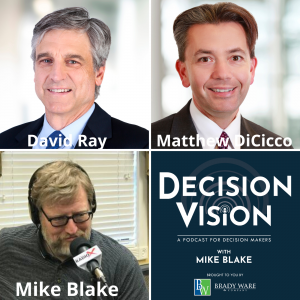
Jonathan Hyman, an attorney with Wickens Herzer Panza, and Dr. Jim Morrow of Morrow Family Medicine join host Mike Blake to consider “return to workplace” issues such as requiring a Covid-19 vaccination, safety-related accommodations, and other concerns both employers and their employees are currently wrestling with. “Decision Vision” is presented by Brady Ware & Company.

Jonathan Hyman, Attorney, Wickens Herzer Panza

Jonathan Hyman, Wickens Herzer Panza

Mr. Hyman is a member of the Firm’s Litigation Department and Employment & Labor practice group and serves on the Board of Directors. He focuses his practice on management-side labor and employment law, providing businesses proactive solutions to solve their workforce problems and reactive solutions when they find themselves litigating against an employee or group of employees.

Proactively, Mr. Hyman serves as outside in-house counsel for businesses. He is the voice on the other end of a phone when a business needs advice on firing an employee, a policy or agreement drafted, guidance on a leave of absence, disability accommodation, or internal complaint or investigation, or information on any number of other issues that plague human resources professionals and businesses daily. Mr. Hyman also has extensive experience on more specialized labor and employment law issues, such as wage and hour compliance, social media, cybersecurity, and other workplace technology concerns, affirmative action compliance, and union avoidance and labor relations.

Reactively, Mr. Hyman represents businesses in employment and labor litigation, including discrimination, retaliation, harassment, and claims, non-competition and trade-secret misappropriation disputes, wage-and-hour class and collective actions, and union certification and decertification matters.

He is also the author of the renowned and award-winning Ohio Employer Law Blog (www.ohioemployerlawblog.com, an American Bar Association Blawg Hall of Fame inductee), which he updates daily to provide businesses and human resources professionals breaking news and other updates on the ever-changing landscape of labor and employment law.

Wickens Herzer Panza has been committed to providing sound legal guidance to businesses of Lorain & Cuyahoga Counties since 1932. Wickens Herzer Panza provides legal counsel to family- and privately-owned businesses in the areas of Business Organizations & Tax, Probate & Estate Planning, Elder Law and Business Litigation. We’re more than legal counsel, too. We’re a business partnership, an advocate for our clients and advisors who support, give advice and protect those we work with. We are our clients’​ trusted advisor and make it our mission to be responsive, accountable, proactive and client-centered. Our Firm has offices in Avon, Ohio, and Sandusky, Ohio.

Mr. Hyman joined Wickens Herzer Panza in March of 2021, and was previously with Meyers, Roman, Friedberg & Lewis in Cleveland, Ohio. (Note:  this show was taped prior to Mr. Hyman’s change of firms.)

Wickens Herzer Panza website | Hyman LinkedIn

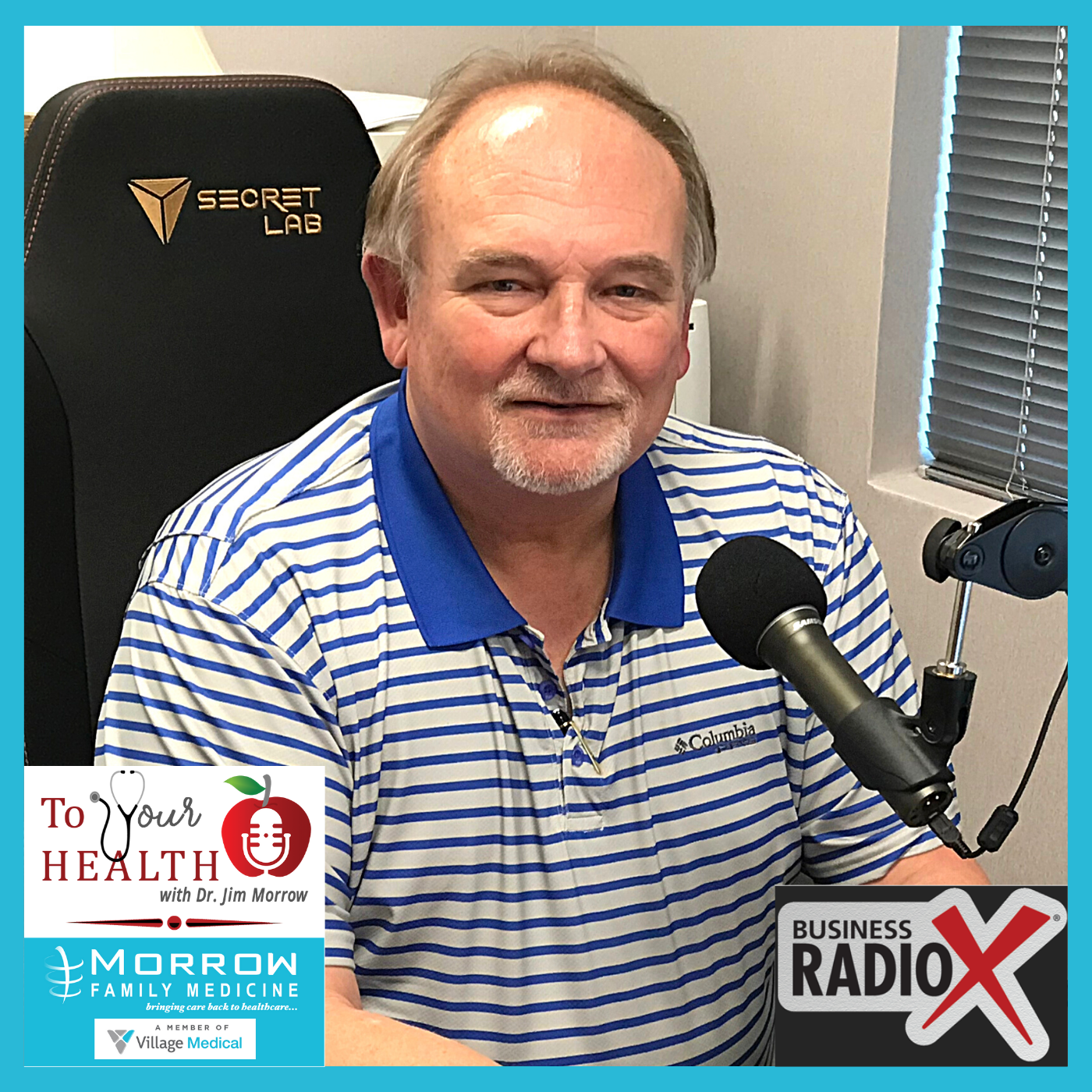
Dr. Jim Morrow, Morrow Family Medicine

Dr. Jim Morrow
Dr. Jim Morrow, Morrow Family Medicine

Dr. Jim Morrow was the first physician to practice on the Northside Hospital Forsyth campus in Cumming, Georgia. Opening the practice in November, 1998, his practice quickly became a “go-to” practice for Forsyth County residents.

As with that practice, Morrow Family Medicine will be known for its open access policy, same-day appointments and very popular morning walk-in hour. Dr. Jim Morrow’s special areas of interest in medicine are sports medicine, episodic care (care of acute problems and illnesses), chronic disease management and urgent care. He has served as team doctor for various high schools in his many years of practice, most recently at North Forsyth High School and Forsyth Central High School in Cumming.

Dr. Morrow graduated from Clemson University and the University of South Carolina School Of Medicine. He completed his residency in Family Medicine in Anderson, South Carolina in 1985. A 2004 winner of the Healthcare Information Management Systems Society’s (HIMSS) Davies Award for Excellence in EMR Implementation, he was also recognized as the 2006 Physician IT Leader of the Year by HIMSS. He served four years as a commissioner on the Certification Commission for Healthcare Information Technology (CCHIT). Dr. Morrow serves as Vice-Chairman of the Board of Directors of the Georgia Health Information Exchange (GHIE) and is a member of the Advisory Board for Health for the Technology Association of Georgia (TAG-Health). In 2014, Dr. Morrow was awarded the Steve Bloom Award by the Cumming-Forsyth Chamber of Commerce as Entrepreneur of the Year, and he also received a Phoenix Award from the Metro Atlanta Chamber as Community Leader of the Year.

Founded by Dr. Jim Morrow, Morrow Family Medicine, a Member of Village Medical, is an award-winning, state-of-the-art family practice with offices in Cumming and Milton, Georgia. The practice combines healthcare information technology with old-fashioned care to provide the type of care that many are in search of today. Two physicians, three physician assistants, and two nurse practitioners are supported by a knowledgeable and friendly staff to make your visit to Morrow Family Medicine, A Member of Village Medical one that will remind you of the way healthcare should be.  At Morrow Family Medicine, a Member of Village Medical, we like to say we are “bringing the care back to healthcare!”

Dr. Jim Morrow also hosts “To Your Health with Dr. Jim Morrow” on the Business RadioX® network, a radio show/podcast that addresses a wide range of health and wellness topics. It can be found at www.toyourhealthradio.com.

Company website | Facebook | LinkedIn | Twitter

Mike Blake, Brady Ware & Company

Mike Blake, Host of the “Decision Vision” podcast series

Michael Blake is the host of the “Decision Vision” podcast series and a Director of Brady Ware & Company. Mike specializes in the valuation of intellectual property-driven firms, such as software firms, aerospace firms, and professional services firms, most frequently in the capacity as a transaction advisor, helping clients obtain great outcomes from complex transaction opportunities. He is also a specialist in the appraisal of intellectual properties as stand-alone assets, such as software, trade secrets, and patents.

Mike has been a full-time business appraiser for 13 years with public accounting firms, boutique business appraisal firms, and an owner of his own firm. Prior to that, he spent 8 years in venture capital and investment banking, including transactions in the U.S., Israel, Russia, Ukraine, and Belarus.

Brady Ware & Company

Brady Ware & Company is a regional full-service accounting and advisory firm which helps businesses and entrepreneurs make visions a reality. Brady Ware services clients nationally from its offices in Alpharetta, GA; Columbus and Dayton, OH; and Richmond, IN. The firm is growth-minded, committed to the regions in which they operate, and most importantly, they make significant investments in their people and service offerings to meet the changing financial needs of those they are privileged to serve. The firm is dedicated to providing results that make a difference for its clients.

Decision Vision Podcast Series

“Decision Vision” is a podcast covering topics and issues facing small business owners and connecting them with solutions from leading experts. This series is presented by Brady Ware & Company. If you are a decision-maker for a small business, we’d love to hear from you. Contact us at decisionvision@bradyware.com and make sure to listen to every Thursday to the “Decision Vision” podcast.

Past episodes of “Decision Vision” can be found at decisionvisionpodcast.com. “Decision Vision” is produced and broadcast by the North Fulton studio of Business RadioX®.

Visit Brady Ware & Company on social media:

LinkedIn:  https://www.linkedin.com/company/brady-ware/

Facebook: https://www.facebook.com/bradywareCPAs/

Twitter: https://twitter.com/BradyWare

Instagram: https://www.instagram.com/bradywarecompany/

TRANSCRIPT

Intro: [00:00:01] Welcome to Decision Vision, a podcast series focusing on critical business decisions. Brought to you by Brady Ware & Company. Brady Ware is a regional full- service accounting and advisory firm that helps businesses and entrepreneurs make visions a reality.

Mike Blake: [00:00:20] Welcome to Decision Vision, a podcast giving you, the listener, clear vision to make great decisions. In each episode, we discuss the process of decision making on a different topic from the business owners’ or executives’ perspective. We aren’t necessarily telling you what to do, but we can put you in a position to make an informed decision on your own and understand when you might need help along the way.

Mike Blake: [00:00:39] My name is Mike Blake, and I’m your host for today’s program. I’m a director at Brady Ware & Company, a full-service accounting firm based in Dayton, Ohio, with offices in Dayton; Columbus, Ohio; Richmond, Indiana; and Alpharetta, Georgia. Brady Ware is sponsoring this podcast, which is being recorded in Atlanta per social distancing protocols. If you like this podcast, please subscribe on your favorite podcast aggregator, and please consider leaving a review of the podcast as well.

Mike Blake: [00:01:06] So, this week’s topic is, Should I have my employees return to the office? And we’re getting to a point now here, March 2nd of 2021, and this is about the time when everything really started to change. I was just noting that the last time I was in a restaurant was actually St. Patrick’s Day of last year. And in retrospect, I probably should not have done that. But I got away with that. But I have not been to a restaurant since. And in the interim, we’ve had this pandemic as a riding shotgun in our lives in some fashion for the last year. And it has had profound effects on families, our economy, and society, politics as everybody listening to this podcast, I think, knows. But there’s not a light at the end of the tunnel.

Mike Blake: [00:02:08] Now, four companies have had vaccines approved. I think three are in production. One is about to start. I think that’s the one with Johnson and Johnson, if I’m not mistaken. One of our guests who’s an actual doctor may correct me on that. But, you know, we’re seeing a light at the end of the tunnel. As of this date, something on the order of about 60 million Americans have received at least dose one of the vaccine. And the United States is currently fourth among all countries in terms of vaccinations per thousand people. So, in spite of a lot of the doom and gloom that’s been hanging over this issue, you know, we are making progress. And so, I don’t know when the pandemic is going to be behind us. I don’t know if it’s going to be behind us. So, I don’t know if I’m going to use the term post-pandemic decision or a trans-pandemic or co-pandemic decision, meaning that, you know, it’s taking place along either the transition or just, you know, the pandemic sort of being here to stay.

Mike Blake: [00:03:16] But we are coming to a point now where we have new tools to manage the pandemic. And, also, new tools are coming on to treat the pandemic for those of us who fall ill with it. I believe a brand new antiviral cocktail was approved by the FDA either last week or two weeks ago that is showing good promise. So, you know, we’re better treating this as well. Not there out of the woods, but it is appropriate to start thinking about what does this whole thing sort of look like after or as we move into this new phase of the coronavirus pandemic?

Mike Blake: [00:03:56] And one of those topics is, should I have my employees return to the office? And this is such a tricky question. You know, the whole notion of our relationship with labor, I think, to some extent has been called into question. And we’ve discussed this before on the podcast a little bit, what constitutes an essential worker? Should workers be paid hazard pay? And that issue is cropping up, you know, even at this late stage in the pandemic. You know, some employers were adding a hazard pay bonus early in the pandemic and some of them have stopped. And I’m not going to offer an opinion as to one way or the other. That’s just the facts of what’s happening.

Mike Blake: [00:04:51] Some companies have been very aggressive in effectively telling their employees, “Go away. I don’t want to see you at the office. It’s not open.” Others have not let their employees leave because they are not comfortable with their ability to manage such employees remotely. And then, there’s been some hybrid in between. At Brady Ware, for the most part, we’re observing at least our interpretation of best practices from a medical standpoint to keep our employees safe. But we’re also making the office – and we’re certainly providing everything we think is reasonably possible to enable our employees to work from home or some other place they deem safe. But we’ve also kept the offices open for people that want to come into the office. Some people really struggle with working from home. You know, imagine if you’re a single parent, have school aged children, and your schools are closed, and you live in an apartment, and you’re trying to get meaningful work done. I thank God that I am not in that particular position and I have nothing but admiration for anybody who is able to manage that.

Mike Blake: [00:06:00] But, now, we’re in a position where returning to the office is going to become a viable option sometime, I would guess, in the next six months or so, if not sooner. And this is a multifaceted question. I think, two facets in particular. And so, we’re going to have two guests today. One facet of this is, what are the legal ramifications of return to work? For those of us who work in offices, we historically have not had to think all that much about worker safety. Our main concerns would be drink bad coffee, or do we get a million papercuts. Or, worst case scenario, does a disgruntled employee or former employee come back to the office and start making trouble? But, now, we have this virus and people that could be working in close contact in a closed air circulation system that’s going to lead to its own challenges.

Mike Blake: [00:07:06] And then, on the medical side, you know, where do best practices from a medical side mesh with, interact with, or perhaps even contradict what is legally required? So, this is a multifaceted discussion. And there are business issues as well that we could get into. But we’re not going to have the time. But we do have a mini panel of two that can help us at least unwind this in the legal perspective and the medical perspective.

Mike Blake: [00:07:38] So, in no particular order, first joining us today is Jon Hyman, who is a partner at Meyers Roman Friedberg and Lewis up in Ohio. Jon is a nationally recognized author, speaker, blogger, and media source on employment and labor law. Jon’s legal practice provides proactive and results driven solutions to employer’s workforce problems. He also works with businesses to help position them to best combat the ongoing risks of cyber crimes. Jon serves as the outside in-house counsel role for businesses. In this role, he drafts policies and handbooks, audit human resources and technology practices and procedures, advise companies on day-to-day human resource issues, and successfully litigate employee disputes.

Mike Blake: [00:08:21] Jon has written two books, The Employer Bill of Rights: A Manager’s Guide to Workplace Law and Think Before You Click: Strategies for Managing Social Media in the Workplace. Jon has appeared in the Fox Business Network, National Public Radio and, locally, on WEWS – I think that’s in Cleveland. But Jon will correct me. He has also been quoted on workplace issues in publications such as The Wall Street Journal, National Public Radio, MSNBC.com, Business Insurance Magazine, Crain’s Cleveland Business, and The Cleveland Plain Dealer. Finally, Jon appeared on a November 1999 episode of Who Wants to Be a Millionaire? But sadly lacked the fastest fingers. Jon, welcome to the program.

Jon Hyman: [00:09:02] Thanks. It’s great to be here. Thanks for having me.

Mike Blake: [00:09:05] Also, joining us is Dr. Jim Morrow, and I will use the honorific of doctor only once per Jim’s request. Jim was the first physician to practice on the Northside Hospital Forsyth campus in Cumming, Georgia. Opening the practice in November 1998, his practice quickly became a go-to practice for Forsyth County residents. His special areas of interest in medicine are sports medicine, episodic care, i.e. care of acute problems and illnesses, chronic disease management, and urgent care. He has served as team doctor for various high schools in his many years of practice.

Mike Blake: [00:09:39] Jim graduated from Clemson University and the University of South Carolina School of Medicine. Does Clemson University have a football team? I think I’ve heard of them. In 2014, Jim was awarded the Steve Bloom Award by the Cumming-Forsyth Chamber of Commerce as Entrepreneur of the Year. And he also received a Phoenix Award from Metro Atlanta Chamber as Community Leader of the Year. Since 2015, Morrow Family Medicine has been voted Best of Forsyth in Family Medicine every year. The Milton location has been named best of North Atlanta every year since it opened. Jim is also host of the To Your Health podcast, a biweekly podcast produced by Business RadioX. Jim, also welcome to the program.

Dr. Jim Morrow: [00:10:17] Thank you very much. I’m glad to be here.

Mike Blake: [00:10:19] So, gentlemen, I think a question that’s on everybody’s minds, I think, is a subject to a lot of debate. And I’m probably leading off with the most unfair question I could possibly think of, but here it goes, it’s the Internet. How close do you think we are to mass return to offices or at least an option to return?

Jon Hyman: [00:10:42] That’s a hard question.

Mike Blake: [00:10:44] I told you it’s going to be unfair.

Jon Hyman: [00:10:47] I hate to give the stock lawyer answer, which is it depends, but I think it largely does. Because I think every business, I think, has to decide what’s right for it in its particular circumstances, with what its needs are, how it best operates, and what its employees are comfortable doing or not doing under the circumstances. So, I think for the, you know, run of the mill kind of white collar business office where people have been productively and effectively working remotely since the world shut down a year ago, the answer may be much further off in the future if ever the people return to the office full time. For the kind of widget maker manufacturer that needs to get people on a line in order to put out product and sell product and turn a profit, I think it’s a much different type of answer with a much different set of legal issues that business has to consider.

Mike Blake: [00:11:45] Jim, what do you think? As a physician, I’m sure you get asked this all the time. You know, one of our listeners has an office that’s been largely closed or skeleton staffed. How far along do we need to be in this vaccination program before you think it might be medically advisable? Or what condition need to be met for it to be medically advisable to open the gates and allow more people in?

Jim Morrow: [00:12:10] Well, as you started at the beginning talking about vaccines, we’re very fortunate now to have vaccines available. And I think that really is the thing that’s going to make all this possible. But the problem is, most of the people that are doing the work that you’re talking about are not old enough to get a vaccine yet. So, they’re not yet vaccinated. So, they are no different from what they were basically a year ago in that regard. But I think what we’ve got to do is get enough people vaccinated so that we can have herd immunity around the workplace. And that 75 percent of people probably vaccinated or with antibodies – and the problem with the antibodies from illnesses is it just doesn’t last long enough to give you much coverage.

Dr. Jim Morrow: [00:12:48] So, with Johnson and Johnson’s vaccine being approved over the weekend, we suspect that by the end of July, every American who will take a vaccine will have an opportunity to get one. And I think that’s what it’s going to take to get people back in offices, especially like the widget factory that you’re talking about, because, you know, they are next to each other. They are in close contact. They can’t close the door to their office in most cases and separate themselves. So, I think getting some form of immunity through a vaccine is what it’s going to take. I think by fall we’ll be there. I think we’ll be able to do that.

Jon Hyman: [00:13:26] I think the complicating factor is going to be how quickly we can get a vaccine approved for kids. Because part of the issue of getting people back to work is getting parents back to work, particularly if they’re at home managing younger children. And if those children can’t be vaccinated, it makes it difficult for the parents possibly to peel away from the home if schools aren’t open or there’s no child care otherwise available for the kids that they’re comfortable putting the kids in. So, I think part of the equation – I think an important part – is going to be just how quickly we can close out the clinical trials for the vaccines for teens and down so that they can get vaccinated, too, so schools can open up full time, daycare centers can open up full time, which allows kids to get back out of the house full time, which then allows their caregivers/parents to then get out of the home and return to work without worrying about who’s caring for their kids during the day.

Dr. Jim Morrow: [00:14:25] No doubt. And the trials for peds has really just barely started. So, I’m not sure when we’ll have that data. I think, it’s going to be a while now. And that certainly would push things for those people out past the end of the summer.

Mike Blake: [00:14:40] So, I’d like to get both your perspective on the following question, obvious to the seats to what extent they match up or not. When workers do start to return on mass – I understand that’s an amorphous term, but let’s roll with it anyway. When workers do return sort of in sufficient numbers, how would you advise offices to look or change in order to maximize safety or at least balance safety with the business objectives of the business?

Jim Morrow: [00:15:18] From a health standpoint, if you think about the company that has an entire floor – an office building full of cubicles – it makes me wish once again that I’d been in the plexiglass business when this thing started – because I can just envision plexiglass from the top of the cubicle to the ceiling or at least another five feet up and creating a cocoon where these people will sit. I don’t know that that’s something that’s going to be feasible. I don’t know that it’s something that companies are going to want to do or be able to do. And I could just see employees balking at the whole idea. They’re going to be sticking their head around the cubicle, talking to Joe next door. So, the company is going to be wondering why they spend these thousands of dollars on all this stuff? But I think that’s something you may very well see in that situation. I don’t know how you can bring people back into that until you do have the vaccines. I don’t know that you can really prepare for that.

Dr. Jim Morrow: [00:16:18] In the factory setting, the same thing. I mean, you’re not going to put plexiglass between all these people. It’s just not going to happen. And, again, if you did, they would, you know, ignore it pretty much, I’m sure. So, I think, really, it comes down to getting people immune. I don’t see any good way to change things in the work environment that’s going to allow this to happen without people being immune.

Jon Hyman: [00:16:46] I think we’ll be living with masks for a while as well. I think that we will be seeing masks in public, in general, and on a smaller scale in the workplace for the foreseeable future until we have – I’m not sure if there’s ever going to be a magic switch where the CD says, “Masks off today.” So, I think gradually over time, we’ll see a reduction in use. But I think for now, in the foreseeable future, at least through the end of this year, for certain, masks is just something we’re just going to have to to deal with, particularly as people are coming back to work.

Jim Morrow: [00:17:21] Or the employees are going to push back on that and say, “You can’t make me wear a mask.”

Jon Hyman: [00:17:25] I’ll tell them, “You don’t have to work here then.” I mean, we’re at will employees and so my rules. You know, “Go find a job somewhere else.” And there are lots of stories over the last year of employees who have pushed back on that or employers who have pushed back on it, who have had – there was a story I read just the other day of a beer hall in Columbus that had all of their employees walk out in masks. They said, “We feel this is an unsafe workplace. You’re not taking COVID seriously. You’re not protecting our safety adequately.” And every employee quit and they’ve been shut down since.

Jon Hyman: [00:18:07] So, I think one of the lasting stories, I think, that’s going to come out of the pandemic will be, sadly, we know that not every business is going to survive COVID. Some will never reopen. What I hope is that, if karma and the universe works the way I think it should work is that those businesses that don’t survive the pandemic and don’t reopen are the ones that didn’t take COVID seriously, denied that it was a reality, bosses who called it the China virus, didn’t enforce mask rules, didn’t enforce social distancing. Otherwise, didn’t do everything that they needed to do to protect the health, safety, and welfare of their employees, their customers, people they interacted with their business on a day-to-day basis, they’ll be the ones that close. And the ones that are able to open up and thrive in a post-COVID world, whenever that is, are the ones that took the virus seriously and did the things necessary to protect the health and safety of their employees.

Jim Morrow: [00:19:11] And I agree that the masks are going to be around to some degree for the rest of my life probably. But, you know, if just masking was going to be enough to get these people back to work, we could have done that before. So, I think the combination of being smart, getting a vaccine, being smart, wearing a mask, acting like you care about the people around you, and that kind of thing – which is a huge part of this – just that little bit, I think if we can find a way to get those things in combination together, I think, people could go back to work.

Jon Hyman: [00:19:45] Yeah. I agree. That’s the other lasting lesson of this whole thing is just how freaking selfish people are. It’s just appalling the selfishness that this has exhibited in people.

Jim Morrow: [00:19:56] People tell me all the time, you know, “You can’t make me wear a mask. I have a right not to wear a mask.” And I tell them, “Your right stops when your spittle hits me in the face.”

Jon Hyman: [00:20:05] Exactly right. Exactly right.

Mike Blake: [00:20:08] Well, Jon, I want to pause on that because I’m curious. Where is the law right now in terms of does it tend to favor employees right now, or employers, or is it all over the map? What is the posture of the law right now in terms of responsibilities of employers versus freedom to operate versus at will employment?

Jon Hyman: [00:20:37] Yeah. It’s a bit all over the map. There has not yet been a uniform national standard that’s been issued to govern COVID safety in the workplace. OSHA, the Occupational Safety and Health Administration, the federal agency that governs workplace safety, has not issued a uniform national standard on COVID or pandemic safety. They have issued a series of kind of informal best practice guidance to say this is what we think you should be doing in order to provide a safe and healthy workplace for your employees. Employers, even without a COVID standard, have under OSHA a general duty to provide a safe and healthy workplace for their employees.

Mike Blake: [00:21:31] And so, a lot of people, including myself, interpret that general duty as encompassing kind of the best practices that OSHA says employers should do, which is, you know, masking, social distancing, not coming to work when you’re sick, sanitizing surfaces, and things like that. All the things that we think of when we think about COVID safety in public spaces. But there isn’t a uniform national standard. State rules are all over the map. Some states have, for example, uniform masking requirements. Some states don’t. And some states are in the middle.

Jon Hyman: [00:22:12] And then, I think what is really driving a lot of what employers are doing or a lot of what is protecting employees is the PR hit that businesses are suffering when they get called out for not doing this the right way. When the employees quit in masks, when the employee complains about, you know, you’re allowing people to come in without masks, and they complain, and then they’re fired. And then, they hire a lawyer and the lawyer files a lawsuit and issues a press release. And now, you know, that employer has the scarlet letter for not taking COVID seriously. So, a lot of it is PR driven or reputationally driven. Some of it is driven by lawsuits that employees can file for things like, you know, whistleblower protections when they’re fired for raising safety issues. And a lot less of it is driven by what the government has said employers must do, because those rules are, frankly, kind of fuzzy.

Mike Blake: [00:23:07] And what about protections for people that are specifically vulnerable? I had an idea or thought, and I say this as completely a non-lawyer so I’m probably entirely off the reservation. But could we see something along the lines of where employees start to claim that they’re covered effectively under the Americans with Disabilities Act because of their particular vulnerability to COVID and, therefore, employers have a duty to go to extraordinary lengths to protect such individuals, particularly if coronavirus is going to be one of these things like the flu which is going to be with us for a long time.

Jon Hyman: [00:23:44] You’re in the ballpark. You’re in the ballpark. Yes, employees who are at high risk for complications from COVID-19 are protected by the Americans with Disabilities Act. The employer’s obligation is, once they become aware that an employee may need a reasonable accommodation, and that’s the standard. The standard is a reasonable accommodation, not extraordinary lengths. So, once the employer becomes aware of the employee’s need or potential need for a reasonable accommodation for a physical or mental impairment, the employer has to engage in what the law refers to as an interactive process with the employee. That’s a dialogue, a discussion, a conversation. Talk to the employee about how can we accommodate your medical issue.

Jon Hyman: [00:24:34] And then, the accommodations can really run the gamut as long as it’s reasonable and doesn’t impose an undue hardship on the employer. So, it could be a work from home arrangement on a temporary basis. It could be, we will put you in a different work area where you’re not near people, where you’re more isolated from people or where you might not be exposed to the virus from other people. It might be, we’re going to get you a different – instead of a mask, we’re going to get you a respirator or some other kind of gear to wear that’s going to better protect you from an airborne virus.

Jon Hyman: [00:25:09] It may be that the only accommodation you can offer someone is a temporary unpaid leave of absence. And so, you know, there’s no way to restructure your job. We have nowhere else to put you. This isn’t something that can be done remotely. So, the best we can do for you is say go sit on the sidelines for 30 day increments and we’ll revisit this in 30 days. And we’ll see if, at that point, we’re in a situation where you feel comfortable coming back. And in that case, it’s not an indefinite leave. It’s kind of short term temporary. And it may ultimately result in that employee no longer being employed because this thing is just stretching out. Now, it’s stretched out for a year. If somebody went on a temporary leave of absence a year ago because they were at high risk for COVID complications, if they contracted the virus, the employer’s responsibility to accommodate that employee would have expired months ago.

Mike Blake: [00:26:04] So, gentlemen, let me turn back to the medical side. Somebody has an employee that is at particular risk, whatever reason, maybe they’re diabetic, maybe they have one of the other comorbidities. From a medical standpoint, what would be your advice? And let’s assume that working from home is not an option. And I imagine the easiest thing to do is just send people home. We get that. But if sending somebody home to work is not a viable option, in your mind, what are some reasonable and effective steps that emplacing an office environment might be able to take to protect that employee?

Jim Morrow: [00:26:48] That’s really tough because I don’t know that there is a really good way to protect them. Going back to something I said earlier, I think if people could protect them, they would have been working all along. So, if you were going to do anything, I think isolating them, Jon mentioned putting them in a different part of the office or something like that where they’re not around everybody else, if that’s feasible, that can be good. They still got to get in and out of the building without spending much time conversing so that could be a problem.

Jim Morrow: [00:27:18] But, again, in a in a masked world, if everybody is wearing a mask in that situation, it shouldn’t be too bad. But I think isolation, basically, or separation is probably the only way to go about doing that. I can’t think of how else you’d pull that off.

Mike Blake: [00:27:38] Let me ask another question about the vaccines, because the vaccines are great. They’re, in many ways, a miracle of modern medicine. We weren’t supposed to be able to make vaccines like this in a short period of time. Literally, I think that it rivals the moonshot in terms of a technological advance. It’s that big a leap forward in that short period of time. But the numbers I’m seeing is that, the vaccine promises something on the order of 90 percent immunity. And, to me, 90 percent immunity is great. But that’s not a get out of jail free card. That’s not the same thing as a vaccine for measles or polio, which have a much higher immunity, right? And I’m curious, (A) do you see the same data that I do? And (B) do you agree that that requires an additional level of caution that 90 percent is great, but that doesn’t mean you just get a jail free card and go back to normal?

Jim Morrow: [00:28:50] No, it doesn’t. And people don’t think about that a lot of times. The Pfizer and Moderna report 94 or 95 five percent. But that’s still five or six percent chance of getting it. And if you’re in that group of people who could have a really terrible outcome, although anyone can, that you might expect a bad outcome, then that’s a pretty decent risk. And with the J&J vaccine that was just approved, they really show closer to 60 percent preventing infection, but above 90 for preventing severe illness and hospitalization, that kind of thing, which is very important, obviously. But it’s important to remember that this is not 100 percent. And that’s why we still have to distance. We still have to mask. We still have to be smart, use hand sanitizer, and do the things that we don’t like doing that we’ve gotten kind of accustomed to doing. And that’s going to, hopefully, take care of the other five percent of that. But it’s very true that these people are still going to be at risk to some degree. And so, they’re going to have to be careful.

Mike Blake: [00:29:51] I think about that from a personal standpoint. I’m a big baseball fan. I used to go to a lot of Gwinnett Stripers games. And you know, if you’re only 90 percent immune, if you’re surrounded by thousands of people, statistically speaking, that virus is still there, right?

Dr. Jim Morrow : [00:30:09] That’s exactly right.

Mike Blake: [00:30:09] And then, you’re banking on your nine shots out of ten or 19 shots out of 20 that you’re not going to get it. And to me, as much as I love baseball, the numbers don’t add up. If I did 20 games a year, my expected infection rate is one time a year just going to 20 games.

Jon Hyman: [00:30:34] And the numbers add up even worse when we consider that there’s a large percentage of the population that say they’re not going to get the vaccine anyway, what’s available to them. So, when we start adding vaccine hesitancy into the equation, that 95 percent number might be 95 percent for you, but it’s not going to be 95 percent among the population, because 100 percent is not going to get the vaccine. And so, if we’re looking at north of 75 or 80 percent to reach herd immunity, but 40 percent say they’re not going to get the vaccine, there’s going to be a huge gap that may prevent us from ever reaching herd immunity, particularly as these variants ramp up and the virus might becoming more virulent and more contagious. It’s a legitimate concern as we try and navigate our way out of this thing.

Jim Morrow: [00:31:19] Well, more virulent – I mean, more contagious but no sign yet that it’s more virulent.

Jon Hyman: [00:31:24] Correct. Correct.

Jim Morrow: [00:31:25] And that’s been a blessing. That’s been a blessing.

Mike Blake: [00:31:28] So, Jon, you jumped in to a question I want to make sure that I cover. And I think it’s going to be one of the hardest questions in the podcast. And that is, as an employer, can I make you showing proof of vaccination a condition of continued employment for the sake of my other employees or just for the sake of the continuity of my own operations?

Jon Hyman: [00:31:50] The short answer is yes. But the longer answer is, it’s yes, but you must make allowance for those people that cannot get the vaccine either because they have an underlying physical or mental impairment or disability for which the vaccine is contraindicated. They say, “I have a medical issue, so you need to provide me an accommodation for that medical issue to your mandatory vaccination policy.” Or, for an employee that holds a sincerely held religious belief observance or practice for which they can’t get a vaccine, an employer has to consider an accommodation for that as well.

Jon Hyman: [00:32:36] And, you know, in both those cases, the accommodation doesn’t have to be and probably shouldn’t be, “Come to work anyway. We’re requiring proof of vaccination to work. You know, come to work even though you can’t meet this policy.” But you have to go through the same interactive process, as we talked about earlier, talk to the employee, figure out what accommodation you can make. And the accommodation, at the end of the day, might be, “We just can’t accommodate this because we have a legitimate business interest in protecting our other employees from the vaccine. And you just can’t come back to work.” But you have to at least go through the process with the employee to figure out whether there is an accommodation you can make.

Jon Hyman: [00:33:23] But let me also add, I think, what uncomplicates the equation is, I don’t think the question is as easy as, can you require vaccine or proof of a vaccine as a condition of employment? Because I think just because you can do it – the law says you can – doesn’t necessarily mean that you should. I think if you look at the data that’s out there, as I mentioned earlier, we know about 60 percent say they will absolutely under every set of circumstances get the vaccine when they’re able to do so. There’s another 20 percent or so that say they will not get the vaccine, whether it’s because of a medical issue, or a religious belief, or because they wear tinfoil on their heads and they think the government is implanting 5G trackers in them through the vaccine, or for whatever reason.

Mike Blake: [00:34:11] Bill Gates doesn’t have enough money, right? He needs to track what I’m doing here in Chamblee, Georgia.

Jon Hyman: [00:34:16] Exactly. And then, there’s 20 percent that are kind of undecided on the fence. And, to me, I think if an employer has a mandatory policy, “Thou shalt get the vaccine when you can,” I think you are going to lose the 20 percent that are never going to get the vaccine, whether the reason is legitimate or illegitimate. You’re going to lose them as employees. You’re going to risk alienating some percentage of your employees are going to get the vaccine anyway because they’re going to view you as too intrusive, up in their medical business, invading their privacy, what have you. So, you risk alienating a percentage of employees that are going to get the shot anyway.

Jon Hyman: [00:34:54] And so, what I think employers should be doing is, rather than pissing off a whole bunch of your employees and, at the end of the day, not changing any of their behaviors, what you should be focusing on is that 20 or so percent in the middle. And arm them with education, resources, information as to the safety and efficacy of the vaccine and why it’s in theirs and everybody’s best interest for them to get the vaccine. And try and push some of them over to the, “Yeah. We’re going to get vaccinated” side of the equation.

Mike Blake: [00:35:25] Okay. Good. That segues nicely. So, Jim, you know, we all know there’s a big anti-vax movement. It existed before coronavirus, like so many things as just swamped it up. You’re a medical educator as well as a practitioner of medicine, and I’m sure you run into this directly. What have you found is the best way to educate people about vaccines so that, at least, they remain open minded to it? Or conversely, in your experience, once people walk in, they say they’re anti-vax, that conversation’s already over, and you move on?

Jim Morrow: [00:36:09] Well, I think it’s very clear cut. There are very little gray area that I’ve seen in having that conversation. If you’re talking to a patient and they’ve never done vaccines and they certainly aren’t going to do this one, that was developed in one year, which, like you said, is a world record in many, many ways. I don’t think there’s anything that I’m going to say to these people that’s going to convince them to get a vaccine. They’re not going to walk into my office totally against it and me say anything at all that’s going to make them leave and they’re thinking it’s a good idea to go get this. I can’t imagine. I’ve never turned anybody around yet, whether it was about tetanus, diphtheria, it didn’t matter. And I don’t think it’s going to be about this.

Jim Morrow: [00:36:53] And if it were going to be about a vaccine, it wouldn’t be about a vaccine that came out in 12 months. So, I don’t think that’s a problem. But I do think that education is the key to all of this. And all I can do and what I try to do is to let them understand the science as I understand it. And explain it to them as best I can. And then, they leave and don’t get the vaccine anyway.

Mike Blake: [00:37:19] So, an idea might be, maybe a turn around. If we accept the fact that there is going to be a material portion of the population that simply will not get the vaccine, end of discussion. Right? Is instead then maybe the educational path to educate those who are vaccinated, or even those who aren’t vaccinated, to just enable people to protect themselves. At least if you’re not going to get the vaccine, if you’re going to do something that runs against medical advice anyway, at least stack the cards in your favor as much as you can, even though you’re making a decision that is questionable from an evidence based perspective.

Jon Hyman: [00:38:16] Although I would bet you that the anti-vaxxers have a pretty substantial overlap with the anti-maskers, so that’s my gut anyway. I haven’t looked at any data. But my gut tells me the anti-vaxxers and the anti-maskers, if they’re a Venn diagram, it’s going to be pretty close to a circle – just one circle.

Mike Blake: [00:38:33] Well, I do think there’s a lot of overlap. There is certainly a lot of overlap. But, for example, as we just talked about, these vaccines, while miraculous, are only 90 or 95 percent effective. And when I say that, it reminds me, I used to work in Russia and I had a friend who worked for Brink’s in Russia. Brink’s is the armored car company. He told me that, you don’t realize how little of your body a bulletproof vest protects until you put one on. And you don’t realize how little a vaccine protects you until you kind of run the math and you see what 90 or 95 percent is. Now, I get a jail free card.

Mike Blake: [00:39:12] So, maybe the education process is, the people who are not going to mask, who are not going to vaccinate, have simply made a choice. Have simply made a choice that they’re just going to run that risk. And for good or ill, you can judge them if you want, but they’re going to make that choice on behalf of other people that they encounter too. Rightly or wrongly, that’s just the mechanics. We’re not going to lock up 30 million Americans. We don’t have the capacity to do it.

Mike Blake: [00:39:42] So, is then the best ROI and education to just continue to educate the people that are willing to abide by the protocols and listen to advice to say, “Hey, look. This is out there.” Just keep wearing the mask, and keep putting up barriers, and keep socially distancing, and keep being OCD about washing your hands. Is that the path to education that has a chance of being effective?

Jim Morrow: [00:40:10] I think it is. And like Jon mentioned, you’ve got that group that you need to continue to educate and try to push towards a vaccine. But the whole thing is, we’ve got this huge inoculum of coronavirus floating around us. And if we do get a ton of people – whatever percentage it is – vaccinated, then we’re going to reduce that entire inoculum. And so, the amount of virus being spewed at the Gwinnett Stripers game – and they really could have come up with a better name than that, I do think.

Mike Blake: [00:40:40] A different podcast. But I like the Gwinnett Braves as they were.

Jim Morrow: [00:40:46] I did too. But the whole inoculum of virus floating around you is less at that ball game. And that’s what this is all about, it’s about trying to be exposed to this virus. And so, if we can get people to do it, the ones we need to concentrate on, I think, are the ones that have a little bit of a chance are going to get it. And I think it’s enough of a percentage that we’re going to be able to be safe doing things, albeit potentially with masks in the future.

Mike Blake: [00:41:14] So, Jim, a question I have from a legal and business standpoint is, it occurs to me that employers might be a little bit of a no win situation. Because you can’t make people vaccinate. Frankly, I think if you’re really trying to force them, they’ll just falsify the documentation. If it really came down to that, they’d print out something on the Internet. You have no way of verifying it. They’ll say, “Yeah. I’m vaccinated. I’m good.”

Mike Blake: [00:41:42] So, employers have a duty to protect the minority. They have a duty to protect all their employees to some extent. But make special accommodations and also protect, for lack of a better term, human rights. I mean, where’s the part of that Venn diagram where they’re safe? I mean, if I’m an employer, I’m kind of thinking, “You know what? Shut the whole damn thing. Then, everybody can work from home or Starbucks or do whatever we do. And then, we’ll get together for an outdoor picnic once a year if we need to.” I mean, as an employer, where do you find that safe harbor?

Jon Hyman: [00:42:18] I can’t disagree with you. I mean, what I preach to at least my clients that listen to me over the last year is, being as flexible as possible, meeting employees where they are, and just doing the best you can with, you know, being as flexible as you can. And in that case, you might be right. It might be shut the whole thing down if you can shut it down and having people work remote. And then, whenever the CDC says pandemic over, we can talk about how we kind of put the remote genie back into the bottle, if that’s what businesses want to do. Otherwise, I think in large part, it’s never going to go fully back in.

Jon Hyman: [00:42:58] But I think you’re right, employers are in a very tough spot here in terms of, you know, no mandate from the government in terms of what to do or largely no mandates. A lot of employees who are scared to death to come in to work and businesses need to operate if you can operate without operating in person. I see very little downside of doing that, at least in the short term.

Mike Blake: [00:43:25] So, in addition, I mean, are there other kind of tools that companies can manage this? I mean, one of the things has been exposed in the insurance industry – I know you do some work there – is, does a pandemic lead to a legitimate business interruption claim, for example? Is that risk potentially insurable? Does it go through workmans’ comp? Does it go through something else? Get to buy a special kind of insurance? Do you self-insure the captive? Are there financial tools available to do this? Or is that still a work in progress? Or is that just crazy talk?

Jon Hyman: [00:44:06] No. It’s a work in progress. I think the insurance companies will spend, you know, hundreds of millions or billions in legal fees over the next half decade to decade sorting out the issue of to what extent COVID closures fall under business interruption policies. Because there’s a ton of those claims out there. It’s largely unknown. And it’s going to take the court years to sort it out with lawyers. Really, the only ones who get rich in that equation trying to answer that question.

Jim Morrow: [00:44:38] On the workers’ comp side, while a workplace exposure of someone got sick from COVID and they could prove that they got it at work, that would be a coverable claim under workers’ compensation insurance for the employee. But I question, how do you prove that something happened at work? Well, if you look at how widespread this virus is in the community, we’re only at work so many hours a day. They should presumably have protective measures in place in the workplace. And so, you know, if somebody gets sick, how do you establish that that exposure happened at work? Such you can establish the causal connection for purposes of establishing one’s eligibility to collect workers’ compensation.

Jim Morrow: [00:45:19] And so, you know, maybe if there’s 20 people in a conference room and all 20 of them come down with COVID in the span of a couple of days or a week, maybe that’s easier from a causation standpoint. Maybe not. But just the employee who gets sick and then says, “Well, I was at work last week and so-and-so had COVID a week ago. And, now, I have COVID and so I got it at the workplace. But I was also at the grocery store, in Starbucks, at my kid’s little league game. And then, I went to Target three times last week too.” You know, how do you prove where that exposure came from to establish the causation necessary to collect workers’ compensation? So, there’s really no easy answers here, unfortunately.

Mike Blake: [00:46:03] So, I mean, that leads into another question. We’re talking with Jim Morrow and Jon Hyman. And the topic is, Should I have my employees return to the office? Jim, is contact tracing something that, in an ideal world, would be advisable for companies to encourage and implement? Let’s just take Amazon, for example, they certainly have the capacity to build a contact tracing app if they chose to. You know, should companies have a contact tracing app that might help them identify exactly what Jon is discussing? Where is the vector of an infection into an office to establish did it come from the office or someplace else?

Jim Morrow: [00:46:49] I think contact tracing is one of the most important parts of trying to control this entire thing. I’m glad I don’t have to answer the legal question of how do you do that without infringing on people’s rights, and I’ll leave that to Jon. But if you look at the way that we can control the spread is testing and contact tracing. And if we’re doing that right – if we have done that right nine months ago – then we’d have had a lot lower cases and fewer deaths and so forth. I think contact tracing is critical, whether it’s in the work environment or school environment or wherever it might be. I think it’s one of the most important part.

Jim Morrow: [00:47:28] So, we need to be able to do that. People need to allow that to happen. Because this pandemic is really a training ground for the next pandemic. Because it might not be in my lifetime – I’d like to think I’d still be here for the next one. But I don’t want to be here for the next one. If you know what I mean? Kind of a double edged sword there. But I think contact tracing is everything when it comes to trying to control this.

Mike Blake: [00:47:57] So, Jon, again, the hard question to you, if I’m asking my employees to return to the office, but I say, “You can only do it if you agree to put in this contact tracing app,” that at least it’s going to track you while you’re in the office – or maybe not, I’m not sure – is that something a company can impose?

Jon Hyman: [00:48:16] They can and a lot have. As long as it’s done with disclosure and consent. There’s really no privacy concerns. The employee can always choose not to have the app installed and then not return to the office. And if it’s 100 percent in-person work environment, that might mean they’re looking for work elsewhere. But in a country that has at will employment, that’s just the name of the game. So, perfectly within an employer’s right to require it. An employee’s right to agree to accept it or not accept it. And then, live with the consequences that flow from that decision.

Mike Blake: [00:48:52] And we are running out of time and we could easily have made this a two parter or even a three parter. So, obviously, it’s a multilayered question but, you know, the answers are difficult and evolving. If people would like to contact you, maybe those questions that we didn’t cover or follow up, can they do that? And what’s the best way to do that? Jon, let me let you go first.

Jon Hyman: [00:49:14] The best way to find me is through my blog, which really kind of collects all my contact info. I’m not really hard to find. You could just Google Jon Hyman, Employment Lawyer, and you’ll find me everywhere, on Twitter, and LinkedIn, and my law firm, and everywhere else. But if people want information or how to contact me, they can just go to ohioemployerlawblog.com and all the information is collated there.

Mike Blake: [00:49:40] Jim?

Dr. Jim Morrow [00:49:41] You can get me, probably, email is the better way to do it. That’s drjim@toyourhealth.md. Or on Twitter, @ToYourHealthMD.

Mike Blake: [00:49:52] That’s going to wrap it up for today’s program. I’d like to thank Jon Hyman and Jim Morrow so much for joining us and sharing their expertise with us. We’ll be exploring a new topic each week, so please tune in so that when you’re faced with your next business decision, you have clear vision when making it. If you enjoy these podcasts, please consider leaving a review of your favorite podcast aggregator. It helps people find us that we can help them. Once again, this is Mike Blake. Our sponsor is Brady Ware & Company. And this has been the Decision Vision podcast.


Tagged With: COVID-19, Dr. Jim Morrow, employment law, Jonathan Hyman, Morrow Family Medicine, Village Medical, Wickens Herzer Panza, workplace law

CTWJ E23: Danalda Dreis & Steve Hoeffner, of Star Glass

March 12, 2021 by angishields

Tucson Business Radio
CTWJ E23: Danalda Dreis & Steve Hoeffner, of Star Glass
Loading
00:00 /
RSS Feed
Share
Link
Embed

Download file

Danalda Dreis & Steve Hoeffner, Account Manager
Star Glass Company
2418 N. Stone Ave.
Tucson, AZ 85705
520-661-9153
520-620-0011
Email: info@starglassaz.com 
danalda@starglassaz.com

I was born in Vancouver British Columbia– and my parents moved to the US when I was an infant. I have grown up in Tucson– going to elementary school at Saints Peter & Paul- and then Salpointe Catholic HS- where I graduated in 1990. After HS graduation, I went on to the University of Arizona where I received my bachelor’s degree in General Business- and met my husband Sean. After graduating from the U of A, Sean and I were fortunate enough to travel many places around the world with his job.  

When we returned, I began my career at Enterprise Rent a Car. I worked for Enterprise Rent A Car for about 14 years. During this time Sean and I started a family. Because of that, I changed to a position where I just marketed Insurance agents. 10 ½ years ago I left Enterprise– and came to Star Glass. Here at Star, I do the same thing- working hand in hand with the Insurance Agents here in Tucson. I have built a relationship with these offices over the last 20+ years. I enjoy working with them and helping them serve their clients. 

I have 2 sons- ages 19 and 17. My life is filled with football, as my older son Colin plays football for the University of Montana. My younger son Dylan plays for Salpointe Catholic. I spend many hours volunteering, whether it be at the school, or for the football team. I enjoy traveling and spending time with my husband, children, and 2 dogs.  

About the business: 

Star Glass Company is a leader in glass repair and replacement throughout Tucson and Phoenix- and has been serving Arizona since 1998. We specialize in a variety of services, including auto, home, and commercial glass.

We uphold the integrity of our services not only through our unparalleled customer service but also by going the extra mile to obtain an Auto Glass Replacement Safety Standard (AGRSS) certification. The AGRSS Certification is a process that ensures our technicians are educated in the process of safe windshield replacement.


My name is Steve Hoeffner, and I am the General Manager and (part-owner) of the Star Glass Company. 

I was born and raised in the Tucson community since 1970.  

I have been married to my wife Angie for 28 years and we have three kids Steven 27, Chris 25, and Andrea 17, including 2 beautiful grandchildren. I am Native American and a member of the Pascua Yaqui Tribe.  

I attended private Catholic education from 1st to 12th grade. I graduated from Salpointe Catholic High school in 1988. 
After graduation, I decided to work in the Glass Industry full time and pursue a career after working part-time since 1986. I became a manager a few years later with a nationwide company. 

I continued to manage several other large retail companies such as Speedy Glass and Harmon Glass up until 2007. The opportunity to become a partner with Star glass arose and I became part owner ever since. We have had an amazing run going on for 14 years and continue to grow and prosper every year. In 2017 we purchased National Glass in Tucson (locally owned) and increased our Commercial and Residential sales and also expanded our services into Phoenix. Our goal has always been “Service that Shines” and this culture is what separates us from our competition.  

We have an incredible staff and technicians with many of them over 30-year experience which is monumental in providing the best customer service in town. 

Steve Hoeffner – General Manager – Star Glass Company 
Cell – 520-940-3396 Office – 520-620-0011 Fax – 520-617-0900 
 https://starglassaz.com/auto-glass/auto-glass-repair-tucson 

About Your Host

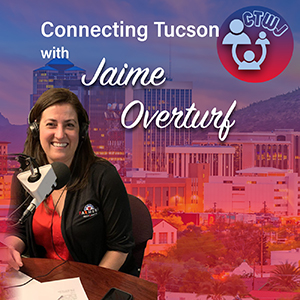
Jaime Overturf
Farmers Agent, Entrepreneur
2555 N Campbell Ave
Tucson, AZ 85719
(520) 293-2900
joverturf@farmersagent.com

As a local Farmers® agent in Tucson, AZ, Jaime Overturf helps customers identify the insurance coverage that best fits their needs. This process is straightforward and personalized to help make them more informed about their insurance options.

Jaime has the knowledge and experience to help customers better understand their coverage options–whether that Jaime has the knowledge and experience to help customers better understand their coverage options–whether that’s auto, home, life, business insurance, and more. You can connect with Jaime on Facebook.




Tagged With: connecting Tucson with Jaime

Being Authentic in Business – An Interview with Erin Hatzikostas, b Authentic Inc. (Inspiring Women, Episode 30)

March 9, 2021 by John Ray

Erin Hatzikostas
Inspiring Women PodCast with Betty Collins
Being Authentic in Business - An Interview with Erin Hatzikostas, b Authentic Inc. (Inspiring Women, Episode 30)
Loading
00:00 /
RSS Feed
Share
Link
Embed

Download file

Erin Hatzikostas

Being Authentic in Business – An Interview with Erin Hatzikostas, b Authentic Inc. (Inspiring Women, Episode 30)

On this edition of “Inspiring Women with Betty Collins,” Erin Hatzikostas, Founder of b Authentic Inc., speaks with Betty on why being authentic is a great secret weapon in business. “Inspiring Women” is presented by Brady Ware & Company.

Betty’s Show Notes

Being authentic is a great secret weapon. A strategy.

My guest is Erin Hatzikostas, b Authentic Inc. Founder.

She walked away from being a CEO of her own company.  Urged on by a conversation, a comment, made to her by a fellow airplane passenger (you have to listen to the episode to find out what it was!).

But what we can tell you is that it inspired her to continue her professional journey, and discover that authenticity is unique. What can we do to change “the fake”, to move the authentic needle in corporate America?

To keep moving, you need to be 50% uncomfortable.

The good news is that authenticity is contagious.  We must model it when we see it, and continue to pass it along to those that follow. In her new book, You Do You(ish), she expands a very cool acronym, H.U.M.A.N.S.

And a big thanks to her for mentioning one of my past episodes, Defining Success – Does It Have To Be The C-Suite?

Erin Hatzikostas is the friend, mom, coach, guru and boss you always wanted, all rolled into one. Erin became a corporate CEO at the age of 42 — yet she smashes open the executive mold.  She is most regarded for her Midwestern-inspired, unpretentious, witty, and authentic style of leadership. She is a career coach, speaker (TEDx 2020!), podcast co-host, author, MBA, runner, wife, mom of two, and someone who is not afraid to dance in public.  ​

This is THE podcast that advances women toward economic, social and political achievement. Hosted by Betty Collins, CPA, and Director at Brady Ware and Company. Betty also serves as the Committee Chair for Empowering Women, and Director of the Brady Ware Women Initiative. Each episode is presented by Brady Ware and Company, committed to empowering women to go their distance in the workplace and at home.

For more information, go to the Resources page at Brady Ware and Company.

Remember to follow this podcast on Apple Podcasts and Google Podcasts.  And forward our podcast along to other Inspiring Women in your life.

Erin Hatzikostas, b Authentic Inc.

Erin is the living, breathing business case for authentic leadership.

​Erin spent her career “first half” working in the corporate world, where at the age of 42, she became the CEO of a $2bn healthcare financial institution. In just 3 years, she tripled earnings and sent employee engagement skyrocketing.

​And just when things were going great, she decided to walk away so that she could help solve what truly breaks her heart: the immense lack of authenticity and happiness in Corporate America.

Through her company, b Authentic inc, Erin is provoking a movement to eradicate the all-too-fake Corporate environment by inspiring and enabling an army of people to crush their career, without compromising everything else.

TRANSCRIPT

[00:00:00] Betty Collins
Today, we’re going to talk about authenticity. Huge subject, something that people just need to talk about, and they need to see, for sure. This is a first – I have a fan of my podcast being interviewed. Life is good for me with that, for sure. Today’s topic, it needs to be discussed, as we live in a crazy world, where people long for authentic leaders, or people who are authentic. What I found in this guest that I’m working with today is it’s a strategy. I never thought of it in that way, so I’m excited that we’re going to talk about that.

[00:00:41] Betty Collins
My guest today is going to give us a new perspective and hopefully inspire you. Being authentic, it’s a great secret weapon, according to my guest today; she’s going to talk about that. Her personality, and energy are evident on everything I found in my research of her. She just jumps off the page, and she excites you from the beginning. I’m not going to talk about a whole lot of being authentic because I really want you guys to hear from her. We’re just going to have a great conversation. Today, my guest is Erin Hatzikostas of B Authentic Inc. Erin, did I get that right? Because it’s a great name-

[00:01:17] Erin Hatzikostas
You nailed it, Betty. You nailed it!

[00:01:19] Betty Collins
Okay, great. She was a CEO of a nine-figure healthcare company at the age of 42. Very impressive. And after leading a massive company turnaround, she decided to retire from that corporate world and start up her own company, B Authentic Inc. She was fed up with the sticky stuff, the corporate B.S.; wanted to help people have big-ass careers without compromising everything else. She is now an internationally recognized leader on the topic of authenticity in the workplace. She is a career, and a leadership coach TEDx speaker, which, by the way, I would love to do one day, but I probably never will …

[00:01:58] Erin Hatzikostas
Yes, you will.

[00:01:58] Betty Collins
I should try. She’s a podcast co-host and author, coming very soon. We’ll talk about her book, and she is a podcast host “edutainer.” Never heard the word. You ought to put a patent on that. I’m just so appreciative, Erin, today, of your willingness to be on the podcast. I know my audience is going to be glad and thankful that they came on with us today. Welcome to Inspiring Women. First, I just want- tell about you: wife, mother, coach, runner, and Running Man enthusiast. Explain that one. Just talk a little bit about you.

[00:02:36] Erin Hatzikostas
Yeah, let’s start by unpacking the most important thing – the Running Man enthusiast. Running Man is a dance from the ’80s, the one where you sort of put one leg in front of the other … I, ever since college, have been known for my Running Man. Not because it’s good, but because it’s authentic. I’ve been known to break that out anywhere I go.

[00:03:02] Erin Hatzikostas
It’s so great to be on, and I love what you’re doing. You have a very authentic podcast, so you passed the test. Iwalk around with this weird radar, and I can smell inauthenticity a mile away, and didn’t smell it here. As you mentioned, I spent my first half of my career in the corporate world. I’m a small-town girl. Grew up with teachers as parents in northern Michigan. Always had a little bit- a little sass. I did well in school, and I was always driven by proving that I could do things I didn’t think I could do, both for myself, and a little bit for people around me. Found my way out to Connecticut working for Aetna, a very large Fortune 50, now part of a Fortune 5 company.

[00:03:54] Erin Hatzikostas
I listened to your episode on the C-suite. I wasn’t that person that was like, “I want to become a C-suite executive, or I want to attain

this.” I always was driven by that uncomfortable- that challenge … I have this rule – in order to catapult your career, you really always have to be getting 50% uncomfortable with every move you make. That was what I did. I would have a role, I’d do well, and then I would say, “Okay, what can I do next that I know half of what I’m doing, but half it’s like, who the hell knows?”

[00:04:30] Betty Collins
Love it.

[00:04:30] Erin Hatzikostas
With each career move, never like this … I’m not a planner, whatsoever, so never this five-year plan, but always found success in getting uncomfortable. Then, this other thing that I hadn’t quite figured out what it was. As you mentioned, I ended up with a subsidiary company of Aetna, a company that we had acquired. I joined the team and basically, every time a new executive from the acquired company left, they were like, “Oh, let’s give it to Erin.” Ikept getting more work, and more responsibilities. Actually, I talked about it in the TED Talk, and I thought about it when you were talking about your C-suite episode …

[00:05:20] Erin Hatzikostas
This might be annoying to some people. I’m sorry, but here’s the truth. When I was first offered the COO position of this subsidiary company, I actually said no. I remember, it was a Friday. I talked about it in the TED Talk. It was because I ran this career – this compromise calculation, I call it. It was like the quick, “Hmm, I’m makingthis much money, and if I take this job, I’m going to have to sacrifice, or compromise this much more.” It’s like, “Ahh, I’m good where I’m at.” I don’t want to tip that graph.

[00:05:59] Erin Hatzikostas
Then, one of many turning points, but one of my big epiphanies is I thought about it over the weekend, and talked to people, half of which did not push me to go for it, to be honest. I realized that the main reason I said no is I didn’t want to have to fit into this mold, or this club. I don’t want to say it’s just a men’s club – but, largely inhabited by men – but other executives. That club, to me, was this tipping point, where things … I worried about my ego growing, and I talked about in the TED Talk, my calendar overflowing, my home life becoming a shit show, and then, maybe my personality even starting to blow.

[00:06:40] Erin Hatzikostas
The epiphany I had was, wait a minute – and I tell this to your listeners because I keep learning this for every part of my life – you shouldn’t not do something because you hate the way it was done before. You can actually do it your own way. Just to wrap up my backdrop, I ended up saying yes. As I started taking on this higher-level position, at that point, I had realized that this concept of being authentic … I had let myself be authentic, and this was who I was.

[00:07:17] Erin Hatzikostas
I was starting to realize that my authenticity was something that was actually propelling me forward, and, at the time, subconsciously, I turned it up, and I realized, whether it was negotiating a contract, or introductions in meetings, or presenting at a large quarterly business review, that the things that made me authentic – the storytelling, and the humor, and the humility, and the components, actually, as you mentioned at the beginning, they were my secret weapon for success. After I went through that run, I then eventually became the CEO, the next year; turned around the company. That’s when I started to realize maybe I have something unique in the world that I need to do.

[00:08:04] Betty Collins
Yes, you definitely have something unique. In today’s world, authenticity is a whole new meaning right now. When I grew up in the ’80s, back in the day, where you were doing that man dance, that RUnning Man thing, that waskind of a given a lot of the times. Now, it’s the exception, and that’s sad. It’s what attracted- I loved your company, and why you started, all about it. Thank you for introducing- just giving us a great backdrop of a little bit about you. You started out as an actuary. That’s like saying, “Oh, I’m an accountant. Yanalysis.” We’re in the same group along with engineers. How did that translate into becoming a corporate CEO?

[00:08:56] Erin Hatzikostas
Much like most people, we trip, and stumble our way into our careers along the way. Mine was that I am … I love to carve my own path, but I’m also- I call myself a little bit of an instant-gratification whore, and as soon as somebody gives me an idea, I run with it. In college, I started in engineering. Didn’t like that, but I continued to take math classes.

[00:09:24] Erin Hatzikostas
One day, my sophomore year, my roommate, who knew I was still trying to figure out what I wanted to do, she was in the business college already. She came home, and she was so excited. She was like, “Erin, I found it! I foundthe career for you! It’s high pay, it’s low stress, and you just have to be good at math. You’re the only person I know that’s good at math. It’s called an actuary.”

[00:09:48] Erin Hatzikostas
You can probably relate. This is back in the ’90s; there was no click into Google, “What’s an actuary?” I had no freaking clue. It turned into a library run with ugly pamphlets that gave me nothing other than a company name, addresses, and phone numbers that employed these such actuaries that had these high-pay/low-stress jobs. That’s where I started.

[00:10:12] Erin Hatzikostas
The funny story I tell … I failed miserably. For your listeners, if you don’t know, actuaries become actuaries through professional exams. You have to take these very difficult math exams. They’re actually graded on a curve, so all the smart people that come in knock you out. I failed all six, I think, that I took. Well, I know I failed all of them.

[00:10:38] Erin Hatzikostas

The first summer when I was interning – and it really ties into the irony of what I’m doing now – we had a professional development day. Every Friday, we’d hear speakers, etc. One Friday, they gathered us 12 interns into this big hotel ballroom to do a Myers-Briggs assessment. We all finished our exam … I was like, “Oh, finallysomething I won’t fail at.” The actuaries compiled all the results, as actuaries do. We were just in this huge ballroom. There were only like 15 of us, and we were in this oversized ballroom.

[00:11:16] Erin Hatzikostas
They put up on this huge, huge screen the results. They put them in a matrix that was a two-by-two matrix. I remember looking up, and all I could see was that I was all by myself. Wow. I was the only one in my quadrant. That obviously was the signal that it wasn’t quite – even though I was “good at math,” it wasn’t the right path. Now, I look back, and it’s that thing that put me in the quadrant all by myself is actually my uniqueness that I’m now making a life out of.

[00:11:55] Betty Collins
You’re leveraging it.

[00:11:57] Erin Hatzikostas
Yeah.

[00:11:57] Betty Collins
I’ve had to do that in my career as a CPA. I’m not your normal CPA. I chose accounting because it would be a good job. I grew up as a tasker. Everything was about you’ve got to be a tasker. My story is kind of like yours, in a way – my nevers became my opportunities. I didn’t want to be a CPA, but I got it. I didn’t want to be a business owner, but I did it, and I didn’t want to merge into a large company, let alone do podcasts about inspiring women. It was all these things I said I would never do, but then I kept being drawn to that.

[00:12:31] Betty Collins
I leveraged my uniqueness, which is personality, which you don’t find a lot in accounting. Everybody thinks I’m good at math. I never had to take a math course because it’s not what you [inaudible]. Then, you became this corporate CEO of a large company at a very young age. You crushed it at 42. That’s just hugely impressive. What made you decide to walk away from that and start your own company? That’s a big A-ha moment. That just doesn’t happen.

[00:13:00] Erin Hatzikostas
Yeah, it doesn’t. One thing I had learned about myself, though … You talked about it in your podcast about the different seasons, and the different ages. In my 40s, Iat least knew that, in my career, this pattern had emerged. It was almost masochistic. As soon as I was getting really comfortable, I was becoming the go-to person – I could read an email in a hot second and know the answer – I would get stir crazy, and it was always – first, before I realized it; then later, I just succumbed to it – it would be frustrating because I literally could hear these two different voices.

[00:13:39] Erin Hatzikostas
One would be like, “What the frick is your problem? Can’tyou just enjoy it?” Especially when I was having kids. “Just relax; just glide in this job. This is a good time.” Then, the other side of me would be like, “You kinda suck whenyou’re not fired up, when you don’t have a challenge; you’re just average.” You go home feeling like you’re not giving it your all. That pattern had emerged in my career.

[00:14:06] Erin Hatzikostas
It was emerging again, after leading this company for three years, really getting it turned around, both financially, and culturally. I had the itch, as I called it, but I could tell, this time, that … Again, it has to be 50% uncomfortable. They were actually trying to keep me.
They were throwing other executive jobs at me. It was sort of like when you go out for a meal, and you look at the menu, and you’re secretly trying on, like do I feel like a burger, or a taco? But nothing tasted good.

[00:14:38] Erin Hatzikostas
I think it was because, not that I had the biggest job … Definitely, these other jobs would be more challenging; a higher level. I wasn’t the best C-suite executive ever, but I just knew that it would be too much of the same formula, too much of the same leadership things I’d have to do. At the same time, 22 years, not only in corporate, but I was in the same parent company that whole time, it was like, if I don’t do something now, every year, for both internal, and external reasons, it’ll get harder.

[00:15:14] Erin Hatzikostas
I was contemplating it. I wasn’t really telling many people about it. I had an executive coach I was confiding in. I went on a business trip, and I ended up sitting next to this really nice woman. She had been in the corporate world for about 10 years, at the beginning of her career, and then left to start her own company. She had a small HR consulting practice. She just seemed so happy, and I was just asking her question after question.

[00:15:40] Erin Hatzikostas
Then, like we do with strangers on a plane, or we used to, pre-COVID, we sometimes confide the things that we wouldn’t tell anybody else, right? Because I’m never going to see this woman again. So, I said to her, “You know, I’m askingso many questions because I’m starting to think about what’s next for me, and I kind of think it’s out on my own. I don’t know what it is, but I think it’s leaving the company I’ve been at.”

[00:16:06] Erin Hatzikostas
Then, as soon as it came out of my mouth, I heard it, and I was like, “What the hell? That’s stupid!” I said to her, I said, “But that would be really stupid of me, right now, because my reputation is at an all-time high.” Everybody knew that I had led this turnaround.

They were throwing big things at me. She just looked at me, and she was just so matter of fact, so succinct, and she was just like, “Who says this is the top?”

[00:16:36] Betty Collins
Wow. From a stranger. This was a complete stranger?

[00:16:39] Erin Hatzikostas
Complete stranger. Not anymore. I pluck her on LinkedIn all the time now … I immediately could- that metaphor came to life. I immediately could see the mountain range. I immediately was like, “Oh, my God, whatif I never know what it’s like to hike up that mountain, or I don’t know what the view is from the side, or the top of that peak over there?”

[00:17:03] Erin Hatzikostas
Ultimately, my decision … There’s a couple of ways – people either are faced with something major, a health scare, job layoff, or the fear of not doing something becomes so much greater than the fear of leaving, and that’s really what happened for me. It was overwhelmingly more fearful that I didn’t- that I might go through my life and not know what it’s like to try to conquer any mountain.

[00:17:33] Betty Collins
Yeah, and you don’t know how fortunate you are that you had that light go on in your 40s, right? Because so many … Youhit 50, and all of a sudden, you’re thinking things you never thought before. From 40 to 50 is a long season, and it’s a season that really counts at that pivotal moment. You were really fortunate that … I mean, a complete stranger on a plane helped you come to that, that’s phenomenal. I love that.

[00:18:05] Erin Hatzikostas
Yeah.

[00:18:07] Betty Collins
Taking the risk, it’s why I went in accounting because I wasn’t a risk taker til too late in my life, but … We’re talking about being authentic. Why do you think the corporate workplace – let’s just call it the entire world – is so fake, and what can we do to change it? I think that Americans, today, are like, it’s all too much, but how can we change it, you know?

[00:18:32] Erin Hatzikostas
Yeah. People ask me that a lot of why do you think it’s the way it is? It’s very simple – we emulate those people before us, and we’ve gotten into this vortex … At some point, some person, some people, some massive people started to find success by looking more buttoned-up at work … Name any of the things … Havingbig fancy PowerPoints in the modern-day era. They had some level of success.

[00:19:09] Erin Hatzikostas
What we do – and we do this as parents, we do this as friends – whether it’s what we just watched, or … We want the best for people. As mentors, and sponsors, and HR teams, they want to give the formula for success that they’ve seen work. The problem is nobody ever just steps back and goes, “Oh, my God, wait a minute. We’ve been following … We’ve been in this vortex for 20 years …” Nobody’s snapped out and said, “Wait, is there a different way?” or, “Is this working?”

[00:19:43] Erin Hatzikostas
For me, the reason I’m so passionate about it, too … Not only did it work for me … It was so many people fedup, and burnt out in corporate America, I’m sure you, and your listeners, whether it’s them, or their family member, or their friends. There’s so much BS, and there’s so much extra layers. I felt like, when I was in it, I could complain about it, but it was like – it is what it is.

[00:20:11] Betty Collins
Yeah.

[00:20:11] Erin Hatzikostas
Once I cut through all that BS, largely – I’m not perfect, but largely – and didn’t succumb to that and had success, I felt like I had the right to cry my own bullshit. There is a better way. It’s not just me. I have so many people that emulate … One of the most recent, John Fetterman- I don’t know if you caught his interview, but I highly recommend it to you, and your listeners. What a great example. John Fetterman, he is the lieutenant governor in Pennsylvania, and he was just on CBS’s Sunday Morning this last weekend. This guy, he’s 6’8″; he showed up to the interview in a Carhartt jacket, a fluorescent yellow neck thing, and athletic shorts. He has tattoos on both arms, actually, of when he was the mayorof a town, of all the dates of the murders in the town. He just speaks his mind.

[00:21:17] Erin Hatzikostas
I think, when you asked the question – how do we turn it around – one of the things I talk a lot about is the good news with authenticity, unlike maybe some other things you’ll read in leadership books and career books, it’s incredibly contagious, in all directions. I even talk about how I used authenticity, and my first boss was not very authentic at all. It’s not something I got handed on a plate, or inspired by people above me. It actually was something that … A lot of it was inspired by my father, but watching people around me; and then, ultimately, I was even further fueled by the employees that were within my organization.

[00:21:58] Erin Hatzikostas
The way we turn it around – and I talk a lot about this in my book – it’s not just about saying … It’s great to come on your podcast and talk about it, but it’s really about modeling it. It’s really about being that person that we all want to be. When we see, whether it’s John

Fetterman, or quite frankly, Kamala Harris, who’s been very authentic, and Michelle Obama, when we see those people that we’re like, “Ahh, so refreshing …” right? Jacinda Ardern … We see not only they’re refreshing, but we see that they’re having success. They’re not nincompoops. Something’s going right for them.

[00:22:35] Erin Hatzikostas
It unlocks something that’s dormant inside of all of us, even some of the shittier people that have been the stuffier people. I always say my job isn’t to inspire people. It’s really to create an inspirational platform and just plant the seeds and the fires and highlight the people and just keep going out and just lighting these little fires everywhere, so that we can finally get out of that vortex.

[00:23:03] Betty Collins
There’s just a lot there. I could replay that over several times because what can we do to change it? We all need to to engage in that, embrace that, and really, really do some more than just think about it, and just talk about it. This is a great question. I love this. Have you always been authentic, and what made you that way? You kind of talked about that, but when did you really start seeing that the authentic- it’s my strategy. It’s my secret weapon. Have you always been that way?

[00:23:38] Erin Hatzikostas
Back to the why are we not authentic, or why are we … In certain ways, we emulatethe people before us. I was lucky enough to have a father who was not in business, but he was a teacher. He was a really beloved, successful teacher. He would come home almost every night from school; sometimes, I’d be hanging out; sometimes, I wouldn’t. He’d sit at the counter and talk to my mom. Instead of the normal complaining about this, or students, or whatever, he would tell story, after story of just these unique ways that he taught. He was constantly doing metaphors, and analogies, and games. I knew that he had great success in doing that.

[00:24:27] Erin Hatzikostas
I think, for me, the first thing is it’s not just enough probably to see people, like I said, that are being authentic. You also have to draw the line to their success. You have to say, A) they’re being authentic, and B) it’s not just okay. It is they are successful. The formula is complete. I think that’s really where it started for me. In my journey, and my business, and what I talk about a lot, especially in the book, is it’s just about constant experiments.

[00:25:02] Erin Hatzikostas
It’s about going into a meeting, and instead of giving the same stuffy intro about your background, maybe telling a story, and then watching. Do people listen a little bit more? Do they sit up? Do they smile? Once they do that, you just inherently- as I call it, you get addicted to it, and then you’re like, okay, what’s the next experiment?

[00:25:24] Erin Hatzikostas
In my head, I was always thinking what would I want, or what am I sick of? Am I sick of the corporate communications with the head shot of the leader, who we all know what they look like. Instead, I’m taking that off. Everybody knows what I look like, by this point, and I’m going to tell a story, and then I’m going to talk about some changes we’re making. I was just always with the lens of what drives me crazy, and why don’t I just … If it drives me crazy, probably drives everybody else crazy. Why don’t I do it my own way?

[00:25:55] Betty Collins
For me, the corporate picture thing … I’ve had to have this issue about I don’t want to look like … That is not what I look like, so just let me smile, tilt my head, do my little thing with my fingers. That’s who I am, right? I just have had this big battle … Every time I see the accountant picture come out, it irritates me because it’s just not me. This is not me, right here, right? [crosstalk]

[00:26:26] Erin Hatzikostas
I was at an event, and they were like, “We’re doing professional headshots,” and that’s why you’ll see everybody got their headshots, and I have a picture of me doing the Running Man.

[00:26:37] Betty Collins
That’s perfect. I love it. I’ve got to find that because you’ve intrigued me with that. That’s good. Authenticity as a strategy. I loved that when I saw that on- you’re really passionate about that. I haven’t thought about it that way because I just … We all want to think we’re authentic, right? We all want to do it. I’d love to get your perspective. Some people just fear that being too authentic exposes too much. What do you think about that? Tell us about that?

[00:27:07] Erin Hatzikostas
Yeah, for me, I know those fears are out there, but I would think back to my career, and I’m like, well, no, but it worked for me. What I’ve really spent the last two years is exploring what is, actually, authenticity? Because in my head, intuitively, I knew it wasn’t just this freewheeling La-Tee-Da, go into work, and do whatever you’d do at a pool party. I knew …

[00:27:38] Erin Hatzikostas
Actually, as I was writing the TED Talk, and the book, I started to do some research. I started first with what’s the origin of the word? Let’s go to the Greeks. The origin of the word is authentikós. That word actually means to be genuine, but it means also to be original and to be authoritative. Like I talk about, it’s like this beautiful intersection between being yourself, but also being a little badass. I knew that about myself. People have called me authentic, nonstop, so the label had been smacked on me, but I knew I wasn’t also just … I was really approachable, and stuff, but I also could be tough. I knew when to snap things into place.

[00:28:24] Erin Hatzikostas
First of all, I think, for many people, they think authenticity, and transparency are synonyms, and they’re not. Authenticity, especially as we talk about it in the workplace, it’s not … I don’t want to say it’s an oxymoron, and be somebody you’re not because then, we

just go in a whole other direction, but it is a much more nuanced word.

[00:28:45] Erin Hatzikostas
As I was writing my book, it was interesting- when I first started writing my books – it’s called “You Do You(ish)” – and part of the reason for the “(ish),” I’m hoping it’s fun. As people see it, everybody’s kind of placing the (ish) in different … I love it. They’re like, “I think the (ish) is because of this …” For me, I wrote (ish) because it’s not just about “You do you.” What I wanted to do is come up with, okay, then, how do we define it? It’s inherently personal, but there is a thing. We all know it when we see the Michelle Obamas of the world.

[00:29:24] Erin Hatzikostas
Leveraging this authentikós, and knowing it was more nuanced, I came up with what I call the six principles of strategic authenticity. It’s actually an acronym – HUMANS. The components that I believe are really at the heart of what authenticity is are being humble, being unexpected, modeling – I talk a lot about modeling versus managing mindset – adapting, which again, can sound an oxymoron. We could talk about it, if you wanted, but it’s not. Narrating, just storytelling, and sparking, or inspiring others.

[00:30:07] Erin Hatzikostas
As I mentioned, when I realized that authenticity wasn’t just a way of being for me, that it was actually a strategy, not just in my career
… Quite frankly, my life, it’s like this speed path to connecting with people on getting trust. Once I realized that I was actually using it purposely, I used to say that with quotes because itwas like a subconscious “purposely.” Now, it’s not as subconscious.

[00:30:34] Erin Hatzikostas
I wanted to be able to help others, so that’s what I do in my book. I walk through the business case for authenticity. Then, I talk about the sucky songs that are holding us back. Before I help you to to have this new strategy, we have to prime you, and get rid of all the shit. Then, I talk about how you purposely use these six elements of authenticity at work to be able to not just have a big career, but my everything is how do you have a big career and not compromise everything else?

[00:31:09] Betty Collins
Right. That’s the big question of the day for women, for the 40 years that they’re doing whatever they’re doing.

[00:31:17] Erin Hatzikostas
Yep.

[00:31:17] Betty Collins
Yeah. Your book, is it out yet, or whenis it coming out?

[00:31:23] Erin Hatzikostas
It’s officially releasing February 15.

[00:31:27] Betty Collins
Certainly, I definitely want it. With my women’s initiative, I’m always trying to get them to read books. They just think it’s the craziest thing. I do the Betty Collins short version to try to intrigue them, and then sometimes, they’ll read it. I think it’s going to be a fantastic book just based on talking with you today and reading a little bit about it. I liked, also, on your titling, how you have “UnleashedYour Authentic Superpowers to Get the Career You Deserve.” That was a great- that lured me right in, but-

[00:32:02] Erin Hatzikostas
Oh, thank the Gods, Betty, because I got to tell you, it was harder naming this damned book than writing it. So, thank you, because that is actually subtitle number three.

[00:32:15] Betty Collins
Oh, wow.

[00:32:16] Erin Hatzikostas
I’m sure you’ve been in this place before – you can get so wrapped in your head, so thank you for saying-

[00:32:21] Betty Collins
I hate picking the title for the podcast. As simple as it is, I’m … Because it’s got to be, “Why why would I listen to this podcast?” It’s got to grab someone right there. I always have a hard time doing it. Fortunately, my people are very good about it. This has been such a treat. I have one more question.

[00:32:42] Erin Hatzikostas
Yeah.

[00:32:43] Betty Collins
So wonderful. I love the acronym, HUMANS. That’s fantastic. What’s the one takeaway that you just want my audience to hear today? What would you want them- if they’re going to get it, what is the ending that they can easily take with them?

[00:33:01] Erin Hatzikostas
The one thing I’d really love them to think about is to think about this 50% rule, and not just in their career, as I mentioned, using it to get 50% uncomfortable, but also as they learn, and they get advice, whether they’re … Where I’m at now, entrepreneurial world,

where it’s like drinking from a firehose, again. You’re so tempted, rightfully so, and you want to learn from others before you, but then sometimes, you walk away and just go, “Ugh, I don’t want to do that,” or “This just doesn’t feel right.”

[00:33:33] Erin Hatzikostas
Use this 50% rule to help you do it your own way. As people are giving you, whether it’s career advice, or business advice, or parenting advice, or whatever it is, take in 50% of it, but the other 50%, do it your own frickin’ way. Do it your own way. That’s how we progress. That’s how we innovate. That’s how we are able to feel we’re authentic, and that’s how we make the world a better place.

[00:34:00] Betty Collins
Great, great, great thoughts. Great way to end. I am so honored, Erin, that you listen to my podcast, and you love it … I don’t know that you love it. I’m putting those words in your mouth, but I really am honored that you would listen to it, and-

[00:34:12] Erin Hatzikostas
Yeah, keep doing what you’re doing-

[00:34:12] Betty Collins
It’s very encouraging because you are just a step above the crowd. Thank you for your time today, and your willingness to be here. I’m appreciative. I’m sure my audience will be, as well.

[00:34:27] Erin Hatzikostas
You’re welcome. My pleasure.

[00:34:29] Betty Collins
Well, I am Betty Collins, and I’m so glad that you joined me today. Inspiring women, this is what I do. I leave this with you – being strong speaks of strength, but being courageous speaks to having a will to do more and overcome.


Betty Collins, CPA, Brady Ware & Company and Host of the “Inspiring Women” Podcast

Betty Collins is the Office Lead for Brady Ware’s Columbus office and a Shareholder in the firm. Betty joined Brady Ware & Company in 2012 through a merger with Nipps, Brown, Collins & Associates. She started her career in public accounting in 1988. Betty is co-leader of the Long Term Care service team, which helps providers of services to Individuals with Intellectual and Developmental Disabilities and nursing centers establish effective operational models that also maximize available funding. She consults with other small businesses, helping them prosper with advice on general operations management, cash flow optimization, and tax minimization strategies.

In addition, Betty serves on the Board of Directors for Brady Ware and Company. She leads Brady Ware’s Women’s Initiative, a program designed to empower female employees, allowing them to tap into unique resources and unleash their full potential.  Betty helps her colleagues create a work/life balance while inspiring them to set and reach personal and professional goals. The Women’s Initiative promotes women-to-women business relationships for clients and holds an annual conference that supports women business owners, women leaders, and other women who want to succeed. Betty actively participates in women-oriented conferences through speaking engagements and board activity.

Betty is a member of the National Association of Women Business Owners (NAWBO) and she is the President-elect for the Columbus Chapter. Brady Ware also partners with the Women’s Small Business Accelerator (WSBA), an organization designed to help female business owners develop and implement a strong business strategy through education and mentorship, and Betty participates in their mentor match program. She is passionate about WSBA because she believes in their acceleration program and matching women with the right advisors to help them achieve their business ownership goals. Betty supports the WSBA and NAWBO because these organizations deliver resources that help other women-owned and managed businesses thrive.

Betty is a graduate of Mount Vernon Nazarene College, a member of the American Institute of Certified Public Accountants, and a member of the Ohio Society of Certified Public Accountants. Betty is also the Board Chairwoman for the Gahanna Area Chamber of Commerce, and she serves on the Board of the Community Improvement Corporation of Gahanna as Treasurer.

“Inspiring Women” Podcast Series

This is THE podcast that advances women toward economic, social and political achievement. The show is hosted by Betty Collins, CPA; Betty is a Director at Brady Ware & Company. Betty also serves as the Committee Chair for Empowering Women, and Director of the Brady Ware Women Initiative. Each episode is presented by Brady Ware & Company, committed to empowering women to go their distance in the workplace and at home. For more information, go to the Resources page at Brady Ware & Company.

Tagged With: authentic leadership, b Authentic inc, Being Authentic, Betty Collins, Erin Hatzikostas, Inspiring Women

Decision Vision Episode 106: Should We Think Outside the Box for Our Next Chief Executive? – An Interview with Marc Fleischman and Eric Majchrzak, BeachFleischman

March 4, 2021 by John Ray

BeachFleischman
Decision Vision
Decision Vision Episode 106: Should We Think Outside the Box for Our Next Chief Executive? - An Interview with Marc Fleischman and Eric Majchrzak, BeachFleischman
Loading
00:00 /
RSS Feed
Share
Link
Embed

Download file

BeachFleischmanDecision Vision Episode 106:  Should We Think Outside the Box for Our Next Chief Executive? – An Interview with Marc Fleischman and Eric Majchrzak, BeachFleischman

When choosing a new CEO, should you consider unconventional options? How do you transition the CEO role to a non-founder? Marc Fleischman and Eric Majchrzak are in a management succession like this at their firm, BeachFleischman, and they joined host Mike Blake to discuss their own experience. “Decision Vision” is presented by Brady Ware & Company.

BeachFleischman PC

BeachFleischman PC is Arizona’s largest locally-owned CPA firm and a “Top 200” largest CPA firm in the U.S. The firm has over 200 client service and administrative professionals and provides accounting, assurance, tax, and strategic operations & advisory services to businesses (U.S. and foreign-based), organizations and individuals. The firm serves clients doing business domestically and internationally and specializes in a variety of Industry-related practice areas, including cannabis, construction, healthcare, real estate, manufacturing, hospitality, technology, nonprofit and professional service businesses. BeachFleischman has subsidiaries, including Pinnacle Plan Design LLC, a national provider of qualified retirement plan consulting, design, administration and actuarial services; MOD Ventures LLC, a virtual client accounting services and consulting firm; and Contempo HCM LLC, a payroll and human capital management company. Offices are in Tucson (headquarters) and Phoenix.

Company website | LinkedIn | Twitter

Marc Fleischman, CEO, BeachFleischman PC

BeachFleischman
Marc Fleischman, BeachFleischman PC

Marc Fleischman is a founding shareholder and current CEO of BeachFleischman PC, an accounting and consulting firm with offices in Tucson and Phoenix Arizona founded in 1990. The firm has approximately 200 office and remote employees. Marc retires at the end of 2021 and is currently mentoring his replacement to share knowledge and experience.

Eric Majchrzak, Chief Strategy Officer, BeachFleischman PC

Eric Majchrzak, BeachFleischman PC

Eric Majchrzak is a shareholder and chief strategy officer of BeachFleischman PC. He is also the firm’s appointed CEO-elect and will assume the role in 2022. He joined BeachFleischman in 2012 and is responsible for the firm’s overall strategic growth initiatives, including innovation, service line development, M&A, joint ventures, institutional firm branding, market alignment, and community outreach.


Mike Blake, Brady Ware & Company

Mike Blake, Host of the “Decision Vision” podcast series

Michael Blake is the host of the “Decision Vision” podcast series and a Director of Brady Ware & Company. Mike specializes in the valuation of intellectual property-driven firms, such as software firms, aerospace firms, and professional services firms, most frequently in the capacity as a transaction advisor, helping clients obtain great outcomes from complex transaction opportunities. He is also a specialist in the appraisal of intellectual properties as stand-alone assets, such as software, trade secrets, and patents.

Mike has been a full-time business appraiser for 13 years with public accounting firms, boutique business appraisal firms, and an owner of his own firm. Prior to that, he spent 8 years in venture capital and investment banking, including transactions in the U.S., Israel, Russia, Ukraine, and Belarus.

Brady Ware & Company

Brady Ware & Company is a regional full-service accounting and advisory firm which helps businesses and entrepreneurs make visions a reality. Brady Ware services clients nationally from its offices in Alpharetta, GA; Columbus and Dayton, OH; and Richmond, IN. The firm is growth-minded, committed to the regions in which they operate, and most importantly, they make significant investments in their people and service offerings to meet the changing financial needs of those they are privileged to serve. The firm is dedicated to providing results that make a difference for its clients.

Decision Vision Podcast Series

“Decision Vision” is a podcast covering topics and issues facing small business owners and connecting them with solutions from leading experts. This series is presented by Brady Ware & Company. If you are a decision-maker for a small business, we’d love to hear from you. Contact us at decisionvision@bradyware.com and make sure to listen to every Thursday to the “Decision Vision” podcast.

Past episodes of “Decision Vision” can be found at decisionvisionpodcast.com. “Decision Vision” is produced and broadcast by the North Fulton studio of Business RadioX®.

Visit Brady Ware & Company on social media:

LinkedIn:  https://www.linkedin.com/company/brady-ware/

Facebook: https://www.facebook.com/bradywareCPAs/

Twitter: https://twitter.com/BradyWare

Instagram: https://www.instagram.com/bradywarecompany/

TRANSCRIPT

Intro: [00:00:01] Welcome to Decision Vision, a podcast series focusing on critical business decisions. Brought to you by Brady Ware & Company. Brady Ware is a regional full service accounting and advisory firm that helps businesses and entrepreneurs make visions a reality.

Mike Blake: [00:00:20] Welcome to Decision Vision, a podcast giving you, the listener, clear vision to make great decisions. In each episode, we discuss the process of decision making on a different topic from the business owners’ or executives’ perspective. We aren’t necessarily telling you what to do, but we can put you in a position to make an informed decision on your own and understand when you might need help along the way.

Mike Blake: [00:00:39] My name is Mike Blake, and I’m your host for today’s program. I’m a director at Brady Ware & Company, a full service accounting firm based in Dayton, Ohio, with offices in Dayton; Columbus, Ohio; Richmond, Indiana; and Alpharetta, Georgia. Brady Ware is sponsoring this podcast, which is being recorded in Atlanta per social distancing protocols. If you like this podcast, please subscribe on your favorite podcast aggregator, and please consider leaving a review of the podcast as well.

Mike Blake: [00:01:08] Today’s topic is, Should we think outside the box for our next chief executive? And this is, I think in some respects, a hot topic, I think more companies are thinking outside the box in terms of retaining their next chief executive, because industries are finding that their markets are changing so rapidly. And this is even before we get into a coronavirus discussion, which has, basically, just yanked the tablecloth and everything sort of come crashing down wherever it’s going to come down. But, you know, we’re seeing this before.

Mike Blake: [00:01:46] And it’s an interesting conversation. If you look at Ford, right? They got rid of Mark Fields, he was a lifer inside the company and all he knew was making cars – I don’t mean to trivialize that. Knowing how to make cars is hard, just ask Elon Musk, especially doing it at scale. But they replaced him with a software guy – a woman, actually, from Silicon Valley – because they have decided that the future of driving is on autonomous vehicles. General Motors has done something similar because they are making a pretty all in bet on electrification.

Mike Blake: [00:02:32] Now, sometimes it doesn’t necessarily go as well. Those of us who are old enough may remember when Steve Jobs was forced out of Apple in the late 1980s. They hired a Pepsi executive to replace him. And they brought out products such as the Apple Newton, and if you’ve never heard of it, there’s probably a reason for that. But, basically, that was sort of the Neanderthal iPad and it was ten years too early before the the supporting technology was really ready to to support that kind of device.

Mike Blake: [00:03:08] So, it doesn’t necessarily all work out. But it is an interesting and a courageous decision and, I think, in particular as we’re in an interesting time where demographics are dictating turnover. And in my world where I live and I do a lot of transaction advisory, we tend to think that that is going to lead to a change in ownership, where people are going to be selling their companies because they feel like they’re too old to run them. Interestingly enough, we’ve thought that for the last ten years, we thought there was going be a massive turnover of companies. And that actually really hasn’t happened the way that we thought it was going to be, because it turns out that, you know, a lot of people still have their marbles at age 70 and can run their company. And there’s also a lot of data to suggest that the least healthy thing you can do is retire. But that’ll be a subject maybe for another podcast.

Mike Blake: [00:04:04] But it also brings to mind another issue, which is at the forefront even of Brady Ware, which is succession. That ownership is necessarily going to turn over at some point. And in professional services, one of the big tests of staying power and, frankly, whether the firm has value is, whether or not you’re able to have a successful transition of power, basically, and still retain the things about the firm that make it useful and valuable today while still positioning itself for the new challenges and opportunities that exist for that firm at the time that the succession is taking place.

Mike Blake: [00:04:51] And so, you know, for those reasons, I think this is an interesting topic. I think it will resonate with a lot of people, whether you’re in that succession plan yourself, whether you are maybe subject to that succession plan, or maybe you’re thinking that’s five to ten years away. And if there’s anything I’ve learned about succession, I’m not sure it’s ever too early to start thinking about it. Certainly, ten years is not too early because as Yogi Berra is famous for saying, it gets late early.

Mike Blake: [00:05:19] So, joining us today are Marc Fleischman and Eric Majchrzak, who are the current and future CEOs of BeachFleischman PC out in Arizona. So, we’re going to get a really interesting kind of perspective here of the full spectrum of transition, if you will.

Mike Blake: [00:05:40] Marc Fleischman is a founding shareholder and current CEO of BeachFleischman PC, an accounting and consulting firm with offices in Tucson and Phoenix, Arizona. Founded in 1990, the firm has approximately 200 office and remote employees. Marc is retiring at the end of 2021 – this year – and is currently mentoring his replacement to share knowledge and experience. And that replacement is Eric Majchrzak, who is a shareholder and chief strategy officer of BeachFleischman. He is also the firm’s appointed CEO-elect, and will assume that role at the start of 2022. He joined BeachFleischman in 2012, and is responsible for the firm’s overall strategic growth initiatives, including innovation, service line development, mergers and acquisitions, joint ventures, institutional firm branding, market alignment, and community outreach.

Mike Blake: [00:06:32] BeachFleischman PC is Arizona’s largest locally owned CPA firm and a top 200 largest CPA firm in the United States. The firm has over 200 client service and administrative professionals and provides accounting assurance, tax, and strategic operations and advisory services to business, U.S. and foreign based, organizations and individuals. The firm service clients doing business domestically and internationally and specializes in a variety of industry related practice areas, including cannabis, construction, health care, real estate, manufacturing, hospitality, technology, nonprofit, and professional service businesses. BeachFleischman has subsidiaries including Pinnacle Plan Design, LLC, a national provider of qualified retirement plan, consulting design administration and actuarial services; MOD Ventures, LLC, a client accounting services and consulting firm; and Contempo HCM, LLC, a payroll and human capital management company; offices are in Tucson and Phoenix. Marc and Eric, welcome to the program.

Marc Fleischman: [00:07:33] Thank you for having us.

Mike Blake: [00:07:35] So, lots of ground we can cover today. And although we have a general direction where we’re going to go, we’ll see if it stays that way. But the thing that I think is going to be helpful for the listener and myself to understand the context is, what are the circumstances leading to this transition? Marc, since you’re the one who’s currently in the seat and you’re leaving, I’ll ask you to kind of answer that first. What’s happening that’s leading to this change?

Marc Fleischman: [00:08:09] I’m happy to. Under our governance policy, at age 67 – which I’ll be this coming December – I need to sell my shares back. So, I will no longer be a shareholder in the corporation. As a result, we deemed it not appropriate for me to remain as CEO. And quite honestly, you mentioned earlier about retirement maybe not being good, I’m going to find out how good it is or how good it isn’t. And plan on, maybe, staying on as an advisor to the firm and helping where they need it, if they need it. But, basically, getting out of the way and allowing Eric and the team to lead into the future.

Mike Blake: [00:08:48] So, I’d like to pause on that for a moment, because, one, 67 is interesting to me because it’s a little older than I normally see accounting firms have. At Brady Ware, it’s 65. Other places I’ve worked, it’s 65. But can you answer for me – and Eric might be able to chime in too – why do a lot of professional services firms have a mandatory retirement age?

Marc Fleischman: [00:09:12] I think it relates primarily to succession and the ability to allow, number one, the relationships that have been fostered for a number of years. We have to transfer those relationships to new people, younger people. Otherwise, the client will no longer have a service provider that they feel comfortable working with. So, it’s necessary to start early. You talked about succession, maybe ten years is long enough or not long enough. Basically, here, we believe in continuous succession. Whereby, we are constantly attempting to – I’m going to use the term – pushdown client relationships, transferring them to younger people, giving them an opportunity so that there is a continuing success of the firm going forward.

Eric Majchrzak: [00:10:06] I would add, Marc just addressed the client side of things, which is very relevant. On the talent side of things, on the internal side, it creates more space for future leaders to step up. And it’s a great way to retain top talent is to have that succession plan in place so that others can step up and lead a practice, lead a division, become a future leader. And that’s always been part of our culture here. So, both on the client side and on the internal talent side, both very important.

Mike Blake: [00:10:40] So, I’d like to go back in time then to the point at which you decided or where you arrived at the point where you needed to name that successor. How long ago was that? Was that six months ago, a year ago, two years ago? How long has that transition practice been in place?

Marc Fleischman: [00:10:59] We started the process back in July of 2019, so we’re talking over a-year-and-a-half ago.

Mike Blake: [00:11:06] Okay. And then, how long has it been known that Eric is going to be the next person up?

Marc Fleischman: [00:11:13] Well, we made the announcement internally this November, but actually the selection was a full year before that. The shareholders and the committee that selected him knew of it, but everybody else did not.

Mike Blake: [00:11:28] Okay. So, it sounds like that it’s going to be 2020 or maybe even 2019 BC, before coronavirus. And think back to that time when you were deciding who was the right person to take on this role and this challenge, talk to me about about how you viewed your own firm. I love to hear about when you took inventory of its strengths and weaknesses. What did those kind of look like to you?

Marc Fleischman: [00:12:00] Well, from my standpoint, I think we were a successful firm, having been founded in 1990. We had a one long term CEO that that served that position almost 25 years. And then, I replaced him naturally. I mean his name was Beach. My name is Fleischman. It was a natural for me to take over after that. And I guess, I would say, that having been involved with my partner and my good friend since I got out of college many, many, many years ago, I was Avis to his Hertz. And I was always practicing to become number one.

Marc Fleischman: [00:12:42] So, in 2019, we were still in a growth mode as we are today. We were considering rolling out new opportunities, new service lines, and realized that it would probably would make sense to spend a fair amount of time with regards to being able to mentor our new CEO in that role. Because Mr. Beach and myself had been really co-drivers of this practice for a number of years as far as running it. And no one else had really had too much opportunity to fulfill those duties. And so, it was going to take a long time to transition, regardless of whether it was a practice partner or a nonpractice partner.

Mike Blake: [00:13:30] And so, it sounds like this is the first time that a nonpractice partner is really somebody not named Beach or Fleischman is going to be in that seat.

Marc Fleischman: [00:13:38] Exactly right.

Eric Majchrzak: [00:13:40] No pressure. No pressure, right, Mike?

Mike Blake: [00:13:42] Well, and that’s why I want to ask you about, you know, does that change your calculus about how you approach the job? Did it give you any pause in taking the job? Because, you know, as they say in coaching, you don’t want to be the guy that follows a guy. You want to be the guy that follows the guy that follows the guy. You know, did that give you any pause?

Eric Majchrzak: [00:14:05] You know, only to the extent that both Bruce and Marc are loved within the firm, significant shoes to fill, so the bar was set very high. And that’s never necessarily a position you want to walk into, where the bar is so high already to begin with, right? But I have to say, I think it’s a blessing because they have created a firm and a culture that’s committed to growth, that’s committed to clients, committed to our own people internally. And I can’t think of a better circumstance to step into this role than what we have here.

Eric Majchrzak: [00:14:45] During the time when we were going through the search process and the transition process back in the second half of 2019, there was significant change happening here. I mean, we have launched two of our new ventures, two brand new subsidiaries or two companies. We’re going through a lot of transformation on the technology side. We’re shifting our business model away from the hourly billing model. We’re entering new markets. So, there was just so much change happening. And, with change comes opportunity, of course. So, that was kind of the environment that we were looking at.

Eric Majchrzak: [00:15:29] And by the way, we’re no different than any other firm. Other firms are grappling with the same issues of innovation and disruption and that, so I just feel we’re in a really good spot to navigate through this.

Mike Blake: [00:15:45] Well, we certainly are. But what’s interesting in how you described the state of the firm, if you will, as the succession decision was taking place, everything you described to me was a business issue that could impact any business, whether it is an accounting or whether it was in manufacturing paper clips.

Eric Majchrzak: [00:16:07] Agree.

Mike Blake: [00:16:07] And I wonder and I suspect that that’s one of the reasons that may bring somebody in who’s not a practitioner of accountancy or one of the specific services as a viable, maybe even an optimal fit, because you weren’t trying to figure out how to get tax returns out more efficiently or figure out how to manage audit risk or whether you can take on public company audits or something. It is much more kind of – I hate to say garden variety – but really garden variety business stuff.

Eric Majchrzak: [00:16:38] Yeah. And in my case – and maybe the committee and Marc thought about this – the firm is my only client. I get to work on the business 100 percent of my time, because I don’t have a client list. I’m not serving clients externally. I get to work on the business. And I think because of the fast pace of change, that’s a good spot to be in where I can dedicate all of my time on anticipating change, anticipating our needs, and not being reactive.

Mike Blake: [00:17:14] I suspect – and I’d love you to comment – I think there are a lot of positives about that. One, you’re not distracted by a book of business. Two, you don’t have to worry about trying to regain that book of business if you then leave that role but want to stay in the firm, as can happen with CEOs. And, you know, something I talk about philosophically and it doesn’t always meet with a lot of receptivity, you know, I think partners should have the fewest billable hours in the firm anyway because you need that time to work on the business, and you’re set up in a way. So, I can’t fill out somebody’s tax returns anyway, so I may as well go work and make the firm more valuable.

Eric Majchrzak: [00:18:00] I know. That’s a great point. And Marc can, maybe, comment on the conversations that were happening internally at that time about just that, about wanting to have that person ultra focused on the business of the firm and where the accounting profession was headed. And what we need to do, the decisions today that we have to make that are going to align with the future exploration, and what that looks like.

Marc Fleischman: [00:18:31] It was kind of interesting the way we went about it. I mean, we created a committee of about eight shareholders from different disciplines, all of whom had decided that they didn’t want to put their name in the hat. We then asked for people to put their name in the hat. We had them go ahead and write us a little narrative about why they felt they were qualified. We went ahead and did some psychological testing to see how they matched up with myself and Mr. Beach, what their strengths and weaknesses might have looked like in comparison to ours. We went ahead and had an interview process with each one of them. And from my standpoint, it wasn’t even a question as to who was the most qualified and why.

Marc Fleischman: [00:19:25] Eric shined compared to my other partners, who I love very much. And they are my partners, so I am married to them from a financial sense. But I realized that Eric’s background and what he does every day made him uniquely qualified to take the position, number one. And number two, from the CPA firm standpoint, it wasn’t going to be we have to transition $1 million or 2 million book of business to somebody else to handle so that the next CEO would be able to have fewer billable hours and focus on running the business.

Mike Blake: [00:20:03] So, in those internal discussions with that committee, was there expressed any concern that, you know, “But Eric’s not a practitioner”. You know, was there any concern?

Marc Fleischman: [00:20:19] Oh, yes. Absolutely. I mean, we, as CPAs, we know everything and we know it best, right? And we work on our clients. We know how to do it better than anybody else. How could somebody who doesn’t do that understand what we do? But Eric’s been in the CPA profession, just not working on a multitude of clients, but one client, whether it’s with us or his predecessor firm, his whole accounting firm career. So, you know, he does understand what we do. We’ve developed a process here over the last – what will be – over two years of him learning more about what his partners do on a day-to-day basis, providing excellent quality service to clients and being involved with the community, and also training the new leaders of the firm that are going to come up behind him and everybody else.

Mike Blake: [00:21:21] So, if I understood you correctly, it sounds like you considered exclusively candidates that were already in the BeachFleischman house.

Marc Fleischman: [00:21:32] That is correct. We preferred to do that because we believe we have a culture that we want to be able to be easily sustained and built on. And feeling that if we brought an outsider in, we just don’t know what the ramifications might be. They could be great, but they could also be destructive. And to the extent we could find a qualified individual that’s already living under our roof, we were very happy with that possibility that being the decision.

Mike Blake: [00:22:02] And I think that’s an important point, because, you know, how far you go in terms of bringing in an “outsider” and Eric is kind of a tweener, sort of an inside outsider or an outside inner – I’m not sure which way I’d go with that. But, you know, as I mentioned a couple of examples in the intro, there are some firms that just decided they’ve got to go really outside. And I think what’s driving that is because they feel like there’s some massive trend upon which they must capitalize. Or there’s some massive existential threat that just cannot be handled with the internal firm culture. You know, with you, it seems like you prized quite a bit of continuity. And I want to be clear, some people may hear that and think that means complacent. I don’t think that’s what it means. It means exactly what it means, which is that continuity of culture is important.

Marc Fleischman: [00:22:55] Well, I think that, honestly, for success in a business like ours, culture is key. And if you disrupt it, you create earthquakes that you don’t know what buildings you may have built that are going to fall because of disrupting your culture.

Mike Blake: [00:23:15] So, I like both of you to kind of answer this next question if you can, because I think you both have different perspectives on the same thing. And that is, Marc, as the firm was considering Eric for this role and as Eric was considering taking it, was there a particular skill set or area of expertise that, Eric, you did have that made you sort of the right person for this role at this time?

Marc Fleischman: [00:23:45] Well, I’ll go first, and he may echo what I say. But, you know, marketing is key. We cannot live on our laurels. We have to be able to grow. And as a growth leader and a strategy leader, he had the the natural areas that we were looking at to be able to move the firm forward as we go into the unknown abyss of what the world is going to look like going forward, right? With all the transition and the fast growth that’s taking place in our particular world here of accounting firms, it’s necessary to be able to be a forward thinker and look towards what the future can bring before the future brings it to you. And so, I think he had this natural perspective being in the marketing area to be able to have those skills and traits and be able to exhibit it and lead the firm forward.

Eric Majchrzak: [00:24:50] Yeah. And I have a broad definition of marketing, which is perhaps even textbook, but there are 4Ps to the marketing mix. And so, it’s not just about promotion, and advertising, and social media, and lead generation, but there’s also product and service development, pricing, and business model. There is placement replace, which is about distribution channels and how you deliver that service. And, really, I’ve been working on all 4Ps of the marketing mix for my career.

Eric Majchrzak: [00:25:20] So, I think maybe some firms consider marketing just that fourth P, promotion. And along with that comes, you know, competitive pressures. You’re looking at disruption. You’re looking at trends in technology. I’ve done my best to stay in tune with where the profession is headed and what the risks are, and articulate that to the folks in my firm. So, I think that’s what I brought to the table, because everybody in our profession is talking about how firms now need to diversify, we need to get away from compliance, how we need to be consultants, how we need to be launching new practices and service lines and industry groups. And that stuff that I do every day working with my colleagues here, and so I have a level of comfort dealing with discomfort. Which I think is something that future leaders are going to have to get used to, is being uncomfortable a good amount of the time.

Mike Blake: [00:26:33] So, that’s a very interesting word, and a word with a lot of depth to it. So, I like to follow that up then with this question, do you agree with me, you are accepting a place that is not necessarily all that comfortable. There’s some comfort level, I get it, you have a history with the firm. You understand the firm. Obviously, you have the blessing of the leadership. But it’s not the same thing as, say, a lateral move to take another role that’s like yours, maybe let’s say, a bigger company. Is that fair to say?

Eric Majchrzak: [00:27:08] Yeah. I would say that’s fair, for sure.

Mike Blake: [00:27:11] So, how did you get comfortable as a candidate? As someone who is, obviously, a responsible steward of your own career that this was the right move? And in doing so – and I don’t want to be specific. I wouldn’t be that prying. It’s not necessarily be that specific – I’m curious, did that lead you to think about your terms of employment in a different way than you might have thought about your terms of employment had the move been more, you know, within the typical comfort zone?

Eric Majchrzak: [00:27:51] That’s a good question. I’ll address the earlier portion of your comment about being uncomfortable. I don’t know that even at this stage that I’m comfortable with the idea of being CEO. But I know it needs to happen. I know that the firm is going to be going through change that’s going to make a lot of people uncomfortable. I just feel it’s a job to do. I already felt the burden of a lot of these issues we’re talking about, about sustainability, about growth. So, it just seemed to be a natural transition for me to go from chief marketing and strategy officer to chief executive officer in terms of, you know, is it the right move for my career?

Eric Majchrzak: [00:28:45] You know, I feel like with a solid team in place, great people around me, a common vision, it’s going to make it that easier. In terms of having a special kind of agreement in your employment arrangement, I think that’s probably more relevant to, like we mentioned before, when you have an accountant or a partner that has a book of business with clients and they have to transition those clients away. I don’t have that. But what I do have, and I think there’s a general understanding, is, I am still going to be directing the strategic growth and marketing initiatives of the firm even as CEO. So, that is essentially my fallback where a lot of accountants would have some limited client where I’m still going to be working on guiding the firm where we need to be in the future, launching new growth initiatives, institutional branding, that kind of thing. So, I just gave you a lot to ponder there, but those are the things that kind of go through my head.

Mike Blake: [00:29:57] Yeah. I mean, that’s good. I mean, that’s exactly the kind of information we try to get on this podcast. So, I appreciate you giving us a lot. And I asked you a really hard question, so it’s fair that the answer is hard too. So, you’ve been in this transitional role, I’m guessing, for about 18 months, give or take. So, in that role, how have you found sort of the practical on the ground reception? Have people been wary? Have they been welcoming? Have there been areas of even obvious resistance? What has that looked like? What have you picked up either from direct cues or even informal body language, nonphysical cues? How’s that going?

Eric Majchrzak: [00:30:46] I mean, I feel I have been welcomed into the room. I certainly feel supported and I am being supported. I think there’s certainly no shortage of ideas and opinions, which I get a lot of those coming my way nowadays, maybe even more so than I did in my chief marketing and strategy role. And it’s good, because it’s all the things that – some of the things we need to be thinking about, having a holistic approach to governing the firm.

Eric Majchrzak: [00:31:21] You know, there’s a lot of folks commenting about how things aren’t so linear anymore and that competition is coming from all different angles. So, almost like an asymmetrical kind of approach to governing a firm. And I think that’s in our dialogue, we’re talking about it a lot. It’s in the language that we use. So, in that sense, I feel that the firm is identifying and my colleagues are identifying the issues at stake, which makes me feel pretty good. I don’t feel isolated in that sense. I do feel like we’re on the same page. Now, we may disagree with how to get there. But I think all in all, we have the same common vision, we have the same understanding of the issues at stake. And I think that’s important.

Mike Blake: [00:32:16] So, how are you two working together now, Eric and Mark? I mean, is it a de facto? I can see a lot of ways it’s working. Is it a de facto dual CEO role right now until the end of 2021? Is it still more of a master-apprentice kind of relationship? Something else that doesn’t come to mind that you describe differently? What does that look like between the two of you right now?

Marc Fleischman: [00:32:42] I would describe it as a mentor-mentee relationship, where I’m available to Eric 24/7, seven days a week, whenever he wants to reach out, whatever he wants to talk about, I’m there. I try to include him in in meetings where I think this is something maybe he hasn’t been exposed to, whether it’s dealing with insurance issues, banking issues, setting goals for partners. We had our goal setting session last month and he sat in all of the goal setting sessions that I would typically sit through with the partners, whether it’s the tax partner-in-charge or the A&A partner-in-charge also sitting in there.

Marc Fleischman: [00:33:29] So, he’s involved in everything I do other than a little bit of client work that I do, which no one wants to be involved in because it’s divorce work. So, you’ve got to be crazy to do what I do, and another reason that 67 is a good time to retire, because 65 probably would have been good, too, to get out of that type of work.

Marc Fleischman: [00:33:51] But in any case, I think that it is more mentor-mentee than anything else. I still sign the important stuff as necessary for the firm. But I think everybody is accepting that Eric is in his master’s degree program, and soon he’ll go through a quick doctorate, and then he’ll be ready to take on the world.

Eric Majchrzak: [00:34:16] And there is some structure behind that arrangement – and by the way, that’s a great place to be – and, Marc, literally, does have an open door policy. And I knock on his door several times a day to go in there and ask him his perspective on something, or ask him a question, or just to do an update. But we’ve had for a while now a standing recurring meeting where we meet on a regular basis, I did take the opportunity to kind of map out what I thought the transition should look like. Marc gave me his feedback on that. I attend an external managing partner, CEO Bootcamp, that I’m in right now. I am also making an effort to talk to CEOs and managing partners of other accounting firms and other businesses that are not related to accounting and just having a sounding board and a network of support and people that I can count on. And so, it’s all of that. And it’s been great. I couldn’t be happier with that process.

Mike Blake: [00:35:25] Eric, I think what you just said is interesting. And for it’s worth for me, I think it’s really smart, the fact you’re going outside and looking for different perspectives, both within the industry and outside. What is the most frequent question you find yourself asking? Or if that doesn’t jump to mind, what’s the most frequent piece of advice you’re hearing?

Eric Majchrzak: [00:35:49] Boy, that is a good question. You know, a lot of people are commenting and I agree with this, that, you know, you really have to govern with a shared set of core values and beliefs, so mission, vision, values. And I strongly believe in that. So, using those elements as the core tenets of who we are, the purpose of our firm, which will help us and help me make decisions in the future there’s a fork in the road and we’re not sure which way to go. I think part of that is going to be my job and part of that is going to be, you know, understanding what we’re all setting out to accomplish, and then choosing the path that gets us there. But the top down approach, the tone from the top is very important. So, I’ve been hearing a lot about that.

Eric Majchrzak: [00:36:49] I’ve also been getting some advice just about taking care of myself, making sure that I stay healthy, that I exercise, that I can have moments to clear my mind, and to think, and to do that kind of thing. So, I’ll have to work a little bit harder with that. And there’s a few other things in there. But, I would say, those are the main bits of advice that I’ve been receiving.

Mike Blake: [00:37:21] So, so far, you’re 18 months into this journey and, give or take, you’ve got about ten-and-a-half months left in the transitional part of the journey. What have both of you learned along the way that might be good advice to our listeners who may be thinking about a similar model to their executive succession?

Marc Fleischman: [00:37:40] Well, I would say to the CEOs out there that are going to be transitioning out, don’t be afraid of what the future is going to bring, embrace it. And be open to the ideas of your successor, because their ideas are extremely important to even your final education in your role. There’s nothing better, from my standpoint, to be able to say, “When I leave here, I have no fear of the success of this organization, because I’ve done everything I can and look forward to the next steps of whatever that brings for me.”

Marc Fleischman: [00:38:28] As far as Eric is concerned, I think what I’ve learned so far is we made the right choice. We’re lucky to have had an opportunity to have somebody like that internally in our organization. And I also would say that I never thought I’d be able to be a teacher. And, now, I’m finding that it comes easy and it’s fulfilling to be able to share ideas and then hear what comes back from Eric, because, obviously, his upbringing was different than mine as far as professional services are concerned. And I love hearing his perspective on things.

Eric Majchrzak: [00:39:08] Yeah. Thanks for those comments, Marc. I’ve learned a bunch of things. One is, that we have to give each other a lot of latitude on the pace and empathy during the transition process. So, just really identifying with each other, I think, is a challenging time for both of us, actually, maybe for different reasons. The other thing I learned, that by going through this process, it’s actually a bit of an opportunity to document and develop a transition process. You know, Marc mentioned, he was the likely and the logical successor to Bruce Beach. Me, being the first non-founder CEO, we got to map out what the transition process looked like. And I think we can leave it behind for the transition I’m going to go through in another 15 years down the road. So, there’ll be a framework there for people to follow.

Eric Majchrzak: [00:40:17] And I would also say, just looking at all the things that we’ve been covering in this process, it helps you identify opportunities. I mean, Marc, think about all the opportunities that we’ve identified just for things that we can be doing helps us address, maybe, some challenges. So, all in all, I just think it’s a great process to kind of redefine and agree upon what we want to be. And that’s always a good thing to go through.

Mike Blake: [00:40:49] We’re talking to Marc Fleischman and Eric Majchrzak of BeachFleischman PC. And the topic is, Should we think outside the box for our next chief executive? A question I want to get to, I’m curious, has anything about this process surprised you? Is there something that you thought this would be like going in and it turned out to be different than what you were expecting?

Marc Fleischman: [00:41:15] I guess, I didn’t have any preconceived notion of what this was going to look like going in. I think, maybe, what surprised me the most was how easy it’s going. You know, change is hard, always. Sometimes, you know, especially if it’s change you don’t want, it’s brought upon you. I won’t say that I don’t want to be able to move on to whatever life is going to look like post being the CEO of BeachFleischman. But it wasn’t something that I may have necessarily chosen to do, but it’s the right thing to do. So, here, I think that it’s been really quite a pleasure to be able to experience this with Eric and the rest of our management team, which we pretty much run our organization as a team. We have a leader, but many decisions are made collaboratively and collectively. So, I’m happy that it’s been so painless up until now.

Eric Majchrzak: [00:42:19] Yeah. I have to agree with that. Knowing a lot of firms out there and transitions that other firms have been through, doing a lot of reading, I know that these can be really trying times and they can be difficult transitions. And, you know, maybe I have that in the back of my head that there’s going to be much more friction than what there actually is. And so, I just think that would probably be the biggest surprise. But it’s been enjoyable. It’s been a great learning opportunity. And I think other people are excited, too. So, all in all, it’s been a great experience to go through this. And, gosh, but the documents kind of the process as we go along, I think is going to be helpful for a way that a future succeeding CEO can go through the process.

Mike Blake: [00:43:24] So, I’d like to offer an observation that I love your comment on, because one thing, this transition that you’re doing is a pretty long one, I think, by most standards, right? It’s not British royal throne long, I mean, Prince Charles has been waiting about 50 years or so to become King Charles III of England. I don’t know if they’ll ever do that. But to be sort of in the wings for two-and-a-half years when all is said and done, that’s a long time to kind of wait and kind of get that seat where you get to take the training wheels off and really run the job that you’re training for. And, to me, it speaks to a certain level of humility. It speaks to a certain level of, at least, being able to subordinate your ego, if not outright just not having a big one. And I wonder if that’s either explicitly or sort of backdoor implicitly part of the process as to why you have such a high level of confidence this is going to work. Or if I’m just playing amateur psychologist and I should just shut up and never say things like that again.

Marc Fleischman: [00:44:39] Well, I guess from my standpoint, you know, I think you’ve got to check your ego at the door. And this, I think, goes through being able to have a successful partnership or relationship in any professional services firm. Of my 45 years of observing law firms, accounting firms, architects and engineering firms, regardless of the leader, everybody thought they were a leader and everybody thought they were the most important person in the firm. And, often, that’s what breaks them up. That’s what we try to avoid here as much as we always can to make sure that your ego doesn’t get in the way of decision making. And so, although, it probably has in my past and probably will again maybe tomorrow, I try my best to not let that get in the way of anything we do here. And I think that is – you know, Eric is the one that’s waiting in the wings, so his comment is probably much more relevant than mine.

Eric Majchrzak: [00:45:43] Yeah. I think, definitely you have to be mindful of the trappings of ego. It’s not about me, it’s not about Marc, it’s about the future of the firm. And so, we just have to find a way to work together, to collaborate, to put our firm in the best position moving forward. And you know what? A two year transition is not going to work for every company and it’s certainly not going to work for every accounting firm. I’ve seen transitions that were, you know, six months out, a year out. I don’t know what the answer is, but, for us, this seems to be working and it’s a way to do it.

Mike Blake: [00:46:31] Guys, we’re running out of time, but there’s more ground that we could cover than we realistically have time for. And I realized that I’m taking up not just one, but two chief executive’s time here effectively. If people want to learn more about this topic, get your insight, ask a question I didn’t have a chance to ask, can they contact you to follow up? And if so, what’s the best way for them to do that?

Eric Majchrzak: [00:46:57] Sure. I mean, Marc and I are both on LinkedIn, they can definitely search us there. Beachfleischman.com has a Contact us form, you can request a conversation through that form. You can also message us on Twitter, we’re @BeachFleischman. And we have a Facebook page. So, really, there’s many ways you can get a hold of us. Marc, I don’t know if you want to add to that.

Marc Fleischman: [00:47:31] I’m very old fashioned, I still use a phone. My direct dial number, 520-618-7918. Call and leave a message if I don’t pick up.

Mike Blake: [00:47:43] That’s so retro. People actually use smartphones to make and receive telephone calls. That’s extraordinary.

Marc Fleischman: [00:47:49] I know. I haven’t learned not to do it.

Mike Blake: [00:47:52] I want to see if there’s an app that will let me convert my keypad to an old rotary dial phone, like a virtual rotary dial, just to mess with my kids.

Mike Blake: [00:48:04] Well, thanks, guys. That’s going to wrap it up for today’s program. I’d like to thank Marc Fleischman and Eric Majchrzak so much for joining us and sharing their expertise with us. We’ll be exploring a new topic each week, so please tune in so that when you’re faced with your next business decision, you have clear vision when making it. If you enjoy these podcast, please consider leaving a review with your favorite podcast aggregator. It helps people find us that we can help them. Once again, this is Mike Blake. Our sponsor is Brady Ware & Company. And this has been the Decision Vision podcast.


Tagged With: BeachFleischman, Brady Ware, Brady Ware & Company, CEO, Chief Executive Officer, CPA firm, Eric Majchrzak, management succession, Marc Fleischman, Michael Blake, Mike Blake

Evolving and Inclusive: Iron Mountain Data Centers Supports Their Staff Their Community and the Planet E5

February 24, 2021 by Karen

Evolving-and-Inclusive-Iron-Mountain-Data-Centers-Supports-Their-Staff-Their-Community-and-the-Planet-E5-feature
Phoenix Business Radio
Evolving and Inclusive: Iron Mountain Data Centers Supports Their Staff Their Community and the Planet E5
Loading
00:00 /
RSS Feed
Share
Link
Embed

Download file

Evolving-and-Inclusive-Iron-Mountain-Data-Centers-Supports-Their-Staff-Their-Community-and-the-Planet-E5

Evolving and Inclusive: Iron Mountain Data Centers Supports Their Staff Their Community and the Planet E5

Iron Mountain Data Centers, is so much more than just a data center. IMDC is part of a larger global organization that supports their people, their community, and their global reach.
A strong culture is at the root of IMDC and it shines through the staff as well as Dan and Julia on the podcast. With Dan having been part of the company for 6 years and Julia for 8 months, they were both able to give their insight into the recruitment and onboarding of the company. Although, their onboarding took place at different times (Julia during the pandemic) the culture was able to show strong for both. A great culture begins before the onboarding process though.

Because IMDC has grown a strong culture of team members that care and feel connected to the overall mission, their people have become their best marketing and recruitment tool. A strong culture helps the bottom line, and while that isn’t the number one goal, it allows IMDC to lower the cost of recruitment and retention. It leads the company to be successful when their employees are happy and feel supported.

This conversation had so many highlights about the company and the things that they are doing to grow, not only the company, but their people and the communities where the data centers are located.

  • IMDC offers Management training to promote and grow its employees from within.
  • IMDC has focused greatly on sustainability and reducing their carbon footprint. With 100% renewable energy, they understand the need to be an industry leader, providing their customers with green power.
  • IMDC Cares is a program that launched in 2020 due to the continued desire to give back to their global communities. There is a large focus on STEAM organizations and providing students with the skills that need to be successful in the future.

This company is a great example of how amazing culture can help to grow the company, help the bottom line, and support new initiatives that support communities outside of the company. This podcast is great for leaders that are looking for new ways to support their team and their culture. This is also a great podcast to listen to if you are growing a start up company and need to see the examples of how a great culture can help the return and the bottom line of the company.

Iron-Mountain-Data-Centers

Iron Mountain Data Centers operates a global colocation platform that enables customers to build tailored, sustainable, carrier and cloud-neutral data solutions. As a proud part of Iron Mountain Inc., a world leader in the secure management of data and assets trusted by 95% of the Fortune 1000, we are uniquely positioned to protect, connect and activate high-value customer data.

We lead the data center industry in highly regulated compliance, environmental sustainability, physical security and business continuity. We collaborate with our 1,200+ customers in order to build and support their long-term digital transformations within our 3.5M SF global footprint spanning 3 continents.

Dan-Rattner-Iron-Mountain-Data-CentersDan Rattner is Chief of Staff/VP, Safety, Security, & Government Programs. Dan joined Iron Mountain in 2015 as part of Global Safety, Risk and Security. He spent his first year and a half working in the Boyers Underground, before relocating to Boston to oversee a number of GSRS functions, including safety and security for IMDC.

This summer, Dan took on the role of IMDC Chief of Staff. Prior to Iron Mountain, Dan held a number of senior positions in the public and private sectors. He started his career in the CIA, and later served as Senior Advisor for Homeland Security and Public Safety for the Commonwealth of Massachusetts.

Dan and his wife Martha own a farm in Kentucky where they breed and raise Thoroughbred and Arabian horses.

Julia-Kendall-Iron-Mountain-Data-CentersJulia Kendall has more than 20 years of experience executing high tech B2B marketing communication programs. Her key focus is developing strategic, collaborative and creative solutions to enable organizations to exceed sales and growth goals.

Most recently, Julia was the VP of Marketing for Cologix, where she helped them grow from a start-up company to a leading North American interconnection provider, including the integration of 10 acquired companies. Prior to Cologix, Julia was the Director of Marketing at Zayo (including zColo) and held leadership roles at several biotech companies.

Julia and her husband live in Louisville, CO with their 3 kids. They play all sorts of sports, enjoy traveling, scuba diving and all the outdoor activities Colorado offers.

Follow Iron Mountain Data Centers on LinkedIn.

About Culture Crush

Culture Crush is officially relaunched! We are thankful to Debra Caron who launched and hosted the show originally. Culture Crush is back with a new host but the same focus- highlighting what makes a great company culture and how it affects the overall success of a company.CultaureCrushKindraBanner2

Culture is not just a tag word to be thrown around. It is not something you throw in job descriptions to draw people to applying for jobs within a company.

According to Marcus Buckingham and Ashely Goodall in their book Nine Lies About Work, “Culture is the tenants of how we behave. It’s like a family creed. This is how we operate and treat each other in the family.”

On this long form podcast we will highlight companies local to Arizona and beyond that are crushing it with great culture!

We will talk with company leaders to learn about real-life experiences, tips, and best practices for creating a healthy work environment where employees are finding joy and satisfaction in their work while also striving and growing within the company.

About the Host

ABHOUTHOSTHEADSHOTKindra Maples is your new host taking the lead on the relaunch of Culture Crush! She is spartan racer, past animal trainer, previous magician’s assistant, and has a weakness for Oreo cookie shakes. Her journey working with people actually started working with animals as a teenager (don’t worry we won’t go that far back for her bio).

She worked for over 15 years in the zoo industry working with animals and the public. Her passion of working with animals shifted into working with people in education, operations and leadership roles. From there her passion of leadership and helping people develop has continued to grow.

Then came the opportunity for relaunching the Culture Crush Podcast and she jumped on it. Leadership, growth, and strong company cultures are all areas that Kindra is interested in diving into further.

Shout Outs

We want to thank a few people for their behind the scenes effort in helping this relaunch to come to life. James Johnson with Tailored Penguin Media Company LLC.– It is a small, but powerful video production company with a goal to deliver the very best by articulating the vision of your brand in a visually creative way. Gordon Murray with Flash PhotoVideo, LLC. -Flash Gordon has been photographing since high school and evolving since then with new products that will equip, encourage, engage, and enable. Renee Blundon with Renee Blundon Design – She is not only one of the best free divers (that’s not how she helped with the podcast) but she is great with graphics design and taking the direction for the vision that you have while also adding creative ideas to bring to your vision to life.

These are just a few of the folks that supported the relaunch of the podcast. If you would like to be part of the Culture Crush team or would like to support underwriting the show- please reach out: culturecrushpodcast@gmail.com

Tagged With: Data Centers, sustainability

Amol Nirgudkar, Patient Prism

February 22, 2021 by John Ray

Patient Prism
Dental Business Radio
Amol Nirgudkar, Patient Prism
Loading
00:00 /
RSS Feed
Share
Link
Embed

Download file

Amol-Nirgudkar-Patient-Prism

Amol Nirgudkar, Patient Prism (“Dental Business Radio,” Episode 14)

Amol Nirgudkar, CEO of Patient Prism, joins host Patrick O’Rourke to discuss how his firm uses AI to train and inspire patient-facing practice personnel, reengage lost sales opportunities for their dental practice clients, increase their revenue and bottom lines, and much more. “Dental Business Radio” is underwritten and presented by Practice Quotient: PPO Negotiations & Analysis and produced by the North Fulton studio of Business RadioX®.

Patient Prism

Patient Prism’s software shows which marketing investments generate the highest-value phone calls from potential new patients. The use of AI technology enables busy practices to convert more of these callers into patients. Dental offices can increase their revenue growth without necessarily spending more on marketing. Dentists and practice managers can do so without spending hours listening to recordings of entire phone calls.

Patient Prism holds five utility patents issued by the USPTO and is the only call tracking company that leverages artificial intelligence and human call coaching validation to deliver patients directly to dental practices.

Follow Patient Prism on LinkedIn and Facebook.

Amol Nirgudkar, CEO, Patient Prism

Amol-NirdudkarAmol Nirgudkar helps dentists grow their practices and reach their goals.

He is in an unusual position to offer practical insights. As a certified public accountant, business consultant, author, entrepreneur, and former owner of several dental practices, he has 20 years of experience working with dental practices, both large and small.

Through the three companies he founded, Amol has served more than 1,000 dentists across the United States. Through his work, Amol saw firsthand a growth challenge that all dental practices face. No matter how successfully they may market their practice, almost 50% of new patient calls don’t end in a booked appointment.

To help solve that problem, he founded Patient Prism in 2015. The Patient Prism service uses both A.I. and American call coaches to evaluate the way dental offices handle phone calls, identify the callers that didn’t schedule, and teach the team how to win them back – all within 30 minutes of the failed call.

Amol co-invented the patented technologies used in Patient Prism. One eliminates the need to listen to recorded phone calls by providing the information visually. The other technology details specific words spoken by the patient during the call so dentists and managers know which services callers are requesting and the revenue opportunity associated with each call. Amol continues to PatandAmolonDBRwork with artificial intelligence and machine learning to empower dental teams to deliver a better patient experience and build even more successful practices.

Amol has also written several articles and e-books, and published a paperback book called Profitable Niches in General Dentistry (2014).

Connect with Amol on LinkedIn.

Questions/Topics Discussed Include:

  • How is AI affecting our life and why it matters
  • How Patient Prism uses AI to deliver new patients to dental offices
  • Why speed matters
  • What an average practice should expect when signing up with Patient Prism
  • Additional insights Patient Prism provides to dental offices besides scheduling percentage
  • The best way to learn more and sign up for Patient Prism
TRANSCRIPT

Intro: [00:00:03] Live from the Business RadioX Studio in Atlanta, it’s time for Dental Business Radio. Brought to you by Practice Quotient. Practice Quotient bridges the gap between the provider and payer communities. Now, here’s your host, Patrick O’Rourke.

Patrick O’Rourke: [00:00:20] Hi there, friends of Dental Business Radio. This is your host, Patrick O’Rourke, on a sunny day with my friend, Amol. Amol Nirgudkar.

Amol Nirgudkar: [00:00:32] You got it almost.

Patrick O’Rourke: [00:00:34] Well, we’ll try again later.

Amol Nirgudkar: [00:00:35] Yes, sir.

Patrick O’Rourke: [00:00:36] So, Amol, my friend that I met originally down in Tampa on Harbor Island one day for lunch, who is a generous and smart individual, a numbers guy with a CPA background. He’s also an author and the founder of Patient Prism. Patient Prism holds many different patents that we may or may not get into, I don’t know. But when somebody asks you on an elevator and they say, “What is Patient Prism?” What do you tell them?

Amol Nirgudkar: [00:01:07] Well, if it’s a short elevator ride then I’ll tell them, we taught a machine how to understand the nuance of dental conversations, so that we could understand what prevents a new patient from moving forward to schedule an appointment on the phone. And we help dental practices basically improve their sales ability to convert more of those leads into scheduled appointments. That’s a short elevator ride, depending what floor I’m coming from.

Patrick O’Rourke: [00:01:37] All right. So, now, we’re stuck on an elevator, our metaphorical elevator, and I go, “That is interesting. Tell me a little bit more.”

Amol Nirgudkar: [00:01:44] Yeah. I mean, what’s happening in dentistry is this, right? Over the last 10 to 15 years, dentistry has shifted from how dentists acquire new patients. In the past, in the 70s and 80s, even early 90s, patients used to show up from some referral source. There’s not a lot of advertising and marketing going on. In clear choice. dental implant centers came about in the early 2000s and they really changed the game, where, now, you are starting to advertise actively or became a B2C model where you’re actually actively advertising to get new patients.

Amol Nirgudkar: [00:02:20] Now, when you’re actively advertising to get new patients, one of the fundamental things that needs to happen, you get the phone to ring. You have to make sure that every time a phone rings, number one, you answer it – super important. You’re open for business.

Patrick O’Rourke: [00:02:37] Answering phone is important.

Amol Nirgudkar: [00:02:40] Answering the phone is important.

Patrick O’Rourke: [00:02:41] Okay. Hold on. I’m writing this down.

Amol Nirgudkar: [00:02:42] That’s right. Answer the damn phone. Number two, you’ve spent money driving that lead in, spending Google, Facebook, whatever, what not. You want to make sure that lead, that new patient – we call it prospect. They’re not a customer yet. They are prospect.

Patrick O’Rourke: [00:02:57] Sure. They’re thinking about it.

Amol Nirgudkar: [00:02:58] And they’re a pretty hot lead because they’ve called you. They’re not a warm lead or a cold lead. They’re a hot lead, because they called you. You want to make sure that patient feels comfortable booking that appointment on that first attempt. What was happening across dentistry since the 70s is that, that booking rate was around 60, 65 percent. So, we were missing so much of the opportunities right there on the phone because what happened in dentistry – we’re still in the elevator, probably in the 15th floor – was that, we hired people to work in dentistry, especially at the front office who are answering phones, to be order takers. We didn’t tell them to be salespeople. And sales, somehow, is considered a bad word. But it’s not as long as you’re moving people from a bad spot to a good spot. In most instances in dentistry, what we’re doing in dentistry is we’re taking patients with bad health, a suboptimal health and moving them to good health.

Amol Nirgudkar: [00:03:57] So, we have to really train our people to be salespeople at the front. And that is why Patient Prism was developed, is to enable better sales conversations between prospects that are coming from marketing – I mean, from all these different sources – and getting them scheduled by leveraging AI. AI, you know, is a buzzword these days.

Patrick O’Rourke: [00:04:20] Artificial intelligence is what that stands for, right?

Amol Nirgudkar: [00:04:24] It is. And so, we use this subset of our AI called Natural Language Processing, where we took spoken words and we analyze them really quickly. And if the patient decided not to move forward in that journey, on that phone call to schedule an appointment with you, we analyze that conversation really quickly and notify the office within 20 minutes now or 20 or 25 minutes saying that, “Hey, this is what went wrong.” You didn’t have to actually listen to the whole conversation. “This is what went wrong, you didn’t offer them financing.” Or, “You didn’t discuss the insurance options properly.” Or, “You diagnosed what the patient needed when you couldn’t have diagnosed it in the first place.” And so, here’s the information 20 minutes after a patient decides to hang up with you.

Amol Nirgudkar: [00:05:07] And, now, you have that second chance to make that first impression. You call the patient back and saying, “Sir, you called us earlier, you need a dental implant. You know what? I understand you had no insurance and we figured out to give you some important information about financing options we have available. So, come on back in. We’ll get you on our schedule. We have an appointment available for 9:30 tomorrow and we’ll get you free examine X-rays. Come on in. We love new patients. Our doctor is one of the best in the country, has placed over 5,000 implants.” Now, you’ve turned the conversation around. You’ve given that patient the ability to come back in your office. And what we’ve seen with Patient Prism is 25 percent of those patients actually come back on the second try.

Amol Nirgudkar: [00:05:53] So, Patient Prism basically leverages AI to understand the problem that occurred on the phone that prevented the patient from moving forward. Once you understand the problem, we communicate that problem within 20 minutes to the dental office. So, they can actually have that second chance of getting the patient back. And sometimes, you know, it’s one or two patients extra per month could make or break your office. Or it could make your office, right? I mean, you know after a certain point, you can make a big impact.

Patrick O’Rourke: [00:06:23] And it’s about the right kind of patients too. You know, anybody who’s a student of sales – which I think, you know, I would consider myself to be a student – follow up in sales is key. So, you have to follow up, follow up, follow up. One of the things that, frankly, my organization, I don’t have any sales people so we don’t do any follow up and we probably missed out on a lot of stuff. But we’re a little bit different type of business, we’re referral based. It’s 100 percent referral based. So, you’re only calling us if somebody said certain nice things.

Patrick O’Rourke: [00:07:02] And when you state, “Hey, this is sales and prospects,” I get that. But, to me, what you just described is an education process. And it’s a training process of helping the front lines or the face of these dental practices be more welcoming, use active listening techniques, and clearing the pathway making people comfortable and educating them, assuming that they are the best solution or they have the best solution, kind of like the implants we just described for that specific patient. Versus, being, “We don’t take Blue Cross.”

Patrick O’Rourke: [00:07:45] And then, you’re doing it – and I’m going to try to get into the numbers because I was kind of doing them in my head – in a way that’s quantifiable. And the dentist/ owners are not having to listen to phone calls or train people. It’s all done. It’s proven. And so, if, let’s say, we’re converting on a 65 percent ratio, that means we’re not converting on 35 percent. And so, you’re then able to get one quarter of that 35 percent back. I think that that’s really important to track, because in my conversations, still to this day, it seems to me that what’s tracked is how many new patients am I getting a month. Does that make sense?

Amol Nirgudkar: [00:08:36] And, you know, it’s easy to say, “I need to spend more money on marketing to drive new patients.” But sometimes, let’s understand, we might be getting enough leads in our offices. We just need to convert them. So, why spend more? The easy button to press is, let’s spend more money on marketing.

Patrick O’Rourke: [00:08:57] Well, I can tell you that outside of the larger groups, spending money on marketing is not something that’s high on the priority list of most dental practices and specialty practices. Let’s include in that category, you know, sometimes you talk to folks and you’re like, “Well, how much money do you spend on marketing?” They’re like, “Marketing? Nah. We did some mailers, like, back in 1994. It didn’t work.”

Amol Nirgudkar: [00:09:22] You know, as professional management comes into dental practices and private equity comes into DSOs, one of the things – and they’re super analytical, right? – that we talk about in our business, as well as any business you talk about, is, what does it cost to acquire a customer? It’s called a CAC, acquisition cost.

Patrick O’Rourke: [00:09:47] Client acquisition cost.

Amol Nirgudkar: [00:09:47] So, client acquisition cost or customer acquisition cost, whatever that is. And we have to really understand that concept really well if you want to run the practice of dentistry as a business – as we’re in Business Radio right now – we want to understand what does it cost to acquire a customer.

Amol Nirgudkar: [00:10:04] Now, you’re spending, let’s say, $2,000 in a Google Adwords campaign, let’s say, to attract Invisalign patients, and you want to do Invisalign. And, let’s say, from that Google AdWords, ten people actually call us. Now, if ten people call us and we only schedule five, that’s $400 cost of acquisition. But if we schedule all ten, that’s only $200 cost of acquisition. And that’s what Patient Prism really helps you understand and then compress that cost. Because if your $2,000 can get you, you know, five patients worth $4,000 a piece, that’s $20,000. Or if we can get you eight patients, that’s $32,000. That’s what we see the lift happen, right? Because we’re already spending the money to drive the leads in. We’re spending money upwards of a $100 a lead sometimes, some of them are $200 a lead – Google is expensive, Adwords are expensive – to drive those type of high value customers into your office.

Amol Nirgudkar: [00:11:07] And somehow our receptionist says, “By the way, we have nothing available for the next three weeks,” and the patient goes away. Or the receptionist says, “You know, it’s really going to cost you $5,000. But you might need a root canal before that, it’s going to cost you six grand.” And we’re driving people away from the offices to come in. Because at the end of the day – Patrick, you’ve been in dentistry for a very long time. And we’re not dentists. Both of us are not – but one thing we know for sure, nobody knows what you need inside your mouth unless you open your mouth and the dentist looks at it with their loops or whatever it is and examines the teeth. You can’t really diagnose that over the phone and tell the patient, “Oh, you might need this, that’s going to cost you a $1,000.” There’s two barriers – main barriers –

Patrick O’Rourke: [00:11:52] Does that happen a lot?

Amol Nirgudkar: [00:11:53] It happens a lot. It happens a lot. People start talking about, “Hey, what’s it going to cost me?” “Oh, well, the crown is $1,200 but the build up is going to be another $300. And then, we don’t know whether you might need a root canal, that can be another $1,000.” So, the patients here are looking at some special thinking that, you know, it’s maybe about a $1,000 and the insurance is going to cover whatever percentages is. And, now, they have this idea that, “Oh, my God. I have to spend another $1,500 on this?” You have no idea. How do you know the patient might need a build up or a root canal? But, somehow, our folks, they create all these barriers. Barriers for patients to make an appointment.

Patrick O’Rourke: [00:12:32] Right. And they think they’re trying to be helpful, probably, right? So, it’s sort of like you just said, we’re business folks. I’m from the insurance business, but I know more about – you know, I started in dental and the Lord knows this is where I’m still making my hay. So, I know more about it than I care to brag about. I know what an apicoectomy is and I know how to spell it. But can I do it? Now, sometimes, because people know that I do something in dentistry but they don’t know exactly what, then, they’re like, “Hey, Pat. Blah, blah, blah.” I’m like, “Look, I’m not a dentist. I don’t know. Don’t open your mouth over your dragon breath.”

Patrick O’Rourke: [00:13:13] And even though I probably do know more than, you know, most folks, well, I would never try to get out of my [indiscernible] much to diagnose. And it’s the same thing for the front desk, they know a lot about it. But you’re still not licensed to diagnose, right?

Amol Nirgudkar: [00:13:30] And it’s not physically possible to diagnose unless somebody opened their mouth and you’ve looked inside. Because somebody thinks they need a crown. How do you know they need a crown? And then, you’re quoting prices on that. And then, you’re not even – then on top of that, so there’s two barriers that patients face when they call a dental office. And nobody likes to call the dental office, we know that, right? There’s 40 percent of people actually only go to the dentist, 60 percent of America doesn’t even go to a dentist.

Patrick O’Rourke: [00:13:59] I like going to the dentist.

Amol Nirgudkar: [00:14:00] So, somebody who calls a dentist, they have overcome significant inertia to actually call the dental office. And they have called us. Now, they have two concerns, “How much is it going to hurt me physically?” Because there’s fear of dentistry, how much pain and all that stuff. And, “How much is it going to cost me?” So, fear and cost are two big barriers. And then, the third barrier also is that, “Have I called the right place? Are these the good people? Are they competent?”

Amol Nirgudkar: [00:14:30] And all we’ve got to do on the phone is, make them feel safe, make them feel that they have called the right place, make them feel that this is going to be an affordable treatment for them, and make them feel that it’s going to improve their life. And if we can communicate that, we don’t need to communicate a lot more. We have to actively listen, empathy. That’s just a couple of things we do at Patient Prism, we analyze things like active listening. Did you ask about discomfort? Did you mention financing? Did you discuss insurance options correctly? What if somebody was out of network? We look at that. How do you have the conversations around that?

Patrick O’Rourke: [00:15:05] So, have you ever seen the study? There’s multiple of them, actually, that said the number one reason why people don’t go to the dentist is because they don’t have dental insurance. Number two reason is, because they don’t know how much it’s going to cost, whether they have dental insurance or not. Because dental insurance is kind of a funky financial instrument, if you will.

Amol Nirgudkar: [00:15:26] Right. It is.

Patrick O’Rourke: [00:15:26] Right. Funky is a nice word.

Amol Nirgudkar: [00:15:28] But you’re right. Absolutely. And that all derives from the idea, how much is it going to cost? Can I afford it? And how much is it going to hurt me? And it’s simple things. It’s the soft skills. People do business with people, especially with doctors. And, obviously, we’re in health care. First and foremost, you’ve got to feel safe, that you’ve called the right play.

Patrick O’Rourke: [00:15:51] Especially these days.

Amol Nirgudkar: [00:15:52] Obviously. More so in COVID environment than ever before. But all of us desire safety. Any place we are in, we’re always looking for safety. And safety is a big part of what we need to impart to a prospective patient that, “Yes, you’re safe. You’ve called the right place. We care. We have empathy. We can make this affordable. It can change your life. We have an appointment available. You’re special.” So, those are some of the things.

Amol Nirgudkar: [00:16:24] Right now we’re so busy, right? Most dental offices you’ve been to, the front is super busy. They’re doing all sorts of things. They’re checking out patients. They’re doing insurance verifications. And sometimes they’re cleaning things. They’re doing all sorts of things. And sometimes what happens in that busy environment, we forget to talk. We forget to have time for the most important function, talking to our customer or our client, our patient. And if we forget that, no matter whether it’s an existing patient or new patient, you know, people don’t want to do business with you if you appear to be too busy and not caring about their concerns. Because people care what they care about. And you’ve got to care about what the patient’s care about. Your stuff can wait. Right. You’ve got to do stuff. I understand you got to do paperwork, you got to call the companies, all that stuff. That’s great. But the most important person in that dental office is the patient. And we’ve got to respect that, whether it’s on the phone, whether it’s in person, whether it’s anywhere else. Because that is what drives revenue, it’s the patient.

Patrick O’Rourke: [00:17:26] Right. It’s in my head. I like analogies and to use other things, it’s like walking into Macy’s or Nordstrom’s and you’re like, “I’m trying to buy a suit and, you know, I like to have help.” But when I buy a suit, I like to wear nice stuff. And then, somebody is like, “I’m too busy. I’m too busy folding the clothes over here. I can’t help you.” And I’m like, “Well, fine. I’ll find somebody who can help me then.”

Amol Nirgudkar: [00:17:50] That’s a great analogy. Actually, I’ve had situations, just two weeks ago, a patient called one of her clients – and sometimes we get these crazy alerts because if things go crazy wrong – and the patient called at 4:55 p.m. Eastern Time and said, “You know, I’ve been thinking about this for a long time. I really need a full mouth extraction and get those implants aborted dentures.” Pretty penny, $30,000 to 50,000 depending on where you go to. And at 4:55, the person at the front sounded very hurried and like, “Sir, we’re about to close in five minutes. Could you call back tomorrow?”

Amol Nirgudkar: [00:18:37] So, how do you do that? Like, how do you do that? And that call got elevated to my attention because, you know, it’s so egregious, right? You’re literally telling a patient who could potentially spend $40,000 in your office telling them, “Could you call me tomorrow because it’s 4:55?”

Patrick O’Rourke: [00:18:55] So, that brings an alarm on your phone?

Amol Nirgudkar: [00:18:59] It does brings the alarm on our side, we call it escalation call. Or somebody is really rude or racist or something like that, it escalates that because our AI listens too. Because we don’t think every human being needs to be treated with the utmost kindness and respect and compassion, regardless of what they sound like, regardless of how much money you think they have, or whatever their circumstance might be. But this was egregious because, obviously, $40,000 opportunity, 4:55, it’s not even 5:00. Even if it was 5:00 –

Patrick O’Rourke: [00:19:28] Is this almost like a drowning kid – though metaphorically, you know, not that serious – but this is where you go and save this drowning prospect that’s lost. It’s about to wash away with the tide. And you’re going to go in there and pull it right out. And this makes Patient Prism the hero that Patient Prism is.

Amol Nirgudkar: [00:19:49] And we got back. We sent that to the CEO of this group. They called the patient the next morning, offered them a free set of a CT scan and a free whitening kit. They just come in. And, you know, I’ve had situations where we have recommended to our DSO customers and dental customers that, “You know, if you have a case like that, send a Uber. Let them in. Let them in.” You know, there’s Uber Corporate, as long as you can figure out the insurance stuff.

Amol Nirgudkar: [00:20:21] We’ve got to figure out – and telling them, “We’re closed. Call tomorrow,” that’s not acceptable. And we had to have a conversation with the receptionist. I’m like, your number one job in dentistry is to improve people’s health. This procedure, yes, it would make us a lot of money. But at the end of the day, you’ve got to think about that patient has finally taken the step to call a dental office to get all their teeth removed and put nice shiny pearly whites in them. So, not only they will have a great smile, but they will have great health. And you’ve got to remember that’s a responsibility that we have in dentistry to improve, not only people’s oral health, but overall health, as we know that the connections obviously are established very well now.

Patrick O’Rourke: [00:21:09] Did you listen to the show with Marc Cooper, the dental business rating?

Amol Nirgudkar: [00:21:13] Marc’s amazing. It’s on my list to listen to. But the oral systemic connection is absolutely established. And so, one of the things we educate, as part of Patient Prism – and we’re a software company and people think, “Oh, my God. They just do AI and everything else.” But at the end of the day, we’re in the people business. We want to inspire our teams to be better. We want to inspire our teams in the front office to feel that they are making an impact on health care in America. We’re changing the lives of people by getting them in the office. It’s not about revenues. Revenues are a side effect of us treating people right. And so, our values are going to create value in our organization. Our value are, we care for patients. We know dentistry is going to change their life. We know dentistry, giving them the right teeth or whatever, fixing their stuff, a regular cleaning.

Amol Nirgudkar: [00:22:05] Today, there was a study done that I read that periodontal cleaning, periodontal disease, obviously, has a direct impact. But it has a direct impact, apparently, on people who got sick with COVID. People with high amounts of periodontal disease had a higher chance of dying from COVID-19.

Patrick O’Rourke: [00:22:27] Yeah. That’s true.

Amol Nirgudkar: [00:22:28] And so, we are in the business of changing and saving lives. And I think once we get that into the minds of the team members, whether they’re at the front or the middle of the back, it doesn’t matter, and once they believe that it’s a calling, dentistry as a calling. It’s a business, great. We’re in Business Radio, that’s great. At the end of the day –

Patrick O’Rourke: [00:22:47] Right. You serve their purpose. You know, I have to roll out of bed every day thinking I’m helping people. If I don’t think I’m actually helping people, I’m going to go fishing.

Amol Nirgudkar: [00:22:56] Correct. Correct. Or, you know, I’m going to do something else that I love to do. But I get up every morning and think about why I’m here working like a maniac and talking to people in dentistry. Because this is such a beautiful profession. It literally changes people’s lives in so many ways. And if we can improve access to care using this AI technology by allowing more patients to book an appointment, then we are getting America healthier. We’re getting more people to have this function and the aesthetics. It changes relationships too.

Patrick O’Rourke: [00:23:39] More confidence. At least, were more aesthetically pleasing. Please don’t tell me you’re trying to bring smiles to the universe though. That’s an insurance cover. They already got the trade. They already got that slogan, like, trademarked. And then, they told me that one time with a straight face. And I was like, “Really?”

Amol Nirgudkar: [00:23:57] Smiles to the universe.

Patrick O’Rourke: [00:23:57] “So, you want to bring golden small smiles to the entire country, is what you’re doing?” “Okay. Well, how about this? How about instead of dental insurance, here’s what we’ll do. We’ll have all the docs. We’ll work for free.” They’ll just go out there and they’ll do all the work and they’ll handle it and they’ll bring smiles to the whole country and the whole universe for free. And so, guess what we don’t need if that’s the case? A financial vehicle to pay for it. So, we don’t need insurance, so then you don’t have a job buddy. Is that going to make you happy? It’s not going to make you smile, is it? True story.

Amol Nirgudkar: [00:24:31] That comment sounds like one of those social media memes. They sound interesting, they sound funny, but they’re so simplistic. They don’t reflect reality. It sounds funny. You laugh at them, right?

Patrick O’Rourke: [00:24:46] Oh, yeah. You must never even ever worked in an insurance company before.

Amol Nirgudkar: [00:24:50] Yeah. I have not. I have not. I have not.

Patrick O’Rourke: [00:24:53] Yeah. The marketing department is very creative. They come up with all kinds of stuff and I’m like, “Listen guys, you can call it apple or bicycle all day long, but it’s still apple, you know.” You know, with all due respect to you guys, you have to get creative with the products that are not so creative. But, anyway, I digress into the insurance. But trust me, I bet you somebody has the copyright on, “We’re bringing smiles to the universe.”

Amol Nirgudkar: [00:25:18] Right. Bring smiles to the universe. Right.

Patrick O’Rourke: [00:25:20] If not trademarked.

Amol Nirgudkar: [00:25:22] We’re bringing smiles to Baby Yoda over there on – I don’t know what island he’s on right now. Tatooine? I don’t know. I’m not sure what planet is on. But Mandalorian, Star Wars –

Patrick O’Rourke: [00:25:34] I haven’t started that yet.

Amol Nirgudkar: [00:25:35] Mandalorian is good.

Patrick O’Rourke: [00:25:36] Yes?

Amol Nirgudkar: [00:25:36] You got to watch both.

Patrick O’Rourke: [00:25:38] So, are you Star Trek or Star Wars guy?

Patrick O’Rourke: [00:25:40] I’m a Star Wars guy. Star Wars guy. But Mandalorian is great. My son, who’s ten, got me into it.

Patrick O’Rourke: [00:25:47] My son’s ten.

Amol Nirgudkar: [00:25:48] And I’ve learned a lot about all the different galaxies and systems.

Patrick O’Rourke: [00:25:54] It seems like it’s gotten a lot more complicated than the first three.

Amol Nirgudkar: [00:25:59] Yeah. Absolutely, the side stories are interesting. This is right in between when Yoda is dead and, you know, it’s right in between before the other episodes that come out. But, anyway, that’s the –

Patrick O’Rourke: [00:26:13] Yeah. My son’s in Florida where it’s warm.

Amol Nirgudkar: [00:26:18] Mandalorian is excellent. But they’re bringing smiles to the –

Patrick O’Rourke: [00:26:23] So, Mandalorian, they’re not bringing smiles to the universe. But Amol and Patient Prism are bringing smiles to the universe. I’m not going to mention any names, I know you guys are listening to the show, so you know who you are. Hugs and kisses.

Patrick O’Rourke: [00:26:40] So, now, artificial intelligence, my wife says I have artificial intelligence because I think I’m smart, but I’m not. That’s what she says. But AI is a real thing that Patient Prism is moving. Now, how easy is it to plug this thing? The first time I met you, by the way, you were telling me about this, I’m like, “I’ve never heard of that. That sound pretty awesome. This sounds like it’s going to be hard to do. You got to do a bunch of stuff and plug in computers and, you know -” Walk me through the process.

Amol Nirgudkar: [00:27:11] It’s a simple thing. The process is, you’re a patient, you’re driving on I85.

Patrick O’Rourke: [00:27:17] No, no, I’m a doc. Let’s say, I’m a doc, you know, and I’m like, “Oh, that sounds interesting. All right. Go. Put that stuff in my system.”

Amol Nirgudkar: [00:27:27] Right. So, the process is simple. We insert ourselves directly in your phone system so that we are monitoring your phone calls. We record the phone calls, so what the AI does, it really understands who this person is. Is this a new patient?

Patrick O’Rourke: [00:27:46] So, like, if John Ray over here calls, it’s going to be like, John Ray, North Fulton. And it’s going to say everything about John. It’s going to have his age, his background. The fact that he likes purple Corvettes.

Amol Nirgudkar: [00:28:03] No. Not really. It’s not that creepy. It’s not that creepy. But John Ray, if John Ray calls and says, “You know, I’ve been thinking about getting some veneers and I’ve not been to a dentist in a long time, do you guys do veneers?” And they say, “Yes. We do the veneers and stuff.” So, the AI will actually listen to a transcript of John Ray’s recording and says, “You know, I think John Ray, the probability of him being a new patient in this office is about 95 percent.” Because John Ray said that, you know, I’m looking to get some veneers. He didn’t say I’m a brand new patient.

Amol Nirgudkar: [00:28:38] So, what AI does, really, is, it takes the audio conversation, transcribes it into text, and it looks at patterns in text. Not just in John Ray’s conversation, but it looks at millions of patterns and puts them together to understand, first, who John Ray is. John Ray worked for Henry Shine and says, “Hey, when can I deliver the cotton gauze or cotton balls?” And the AI is going to say, “You know what? John Ray, it looks like this is just a general call. This is not a patient.” And to be able to figure that out quickly, AI can do because it recognizes patterns. And it takes unstructured data, makes it structured data, and analyzes it. The first step is figuring out who John Ray is. And now we’ve determined he’s a new patient. Now, the conversation goes on and everything else. And if John reaches the end of the conversation, “I’m going to think about it. I’ll call you guys back.”

Amol Nirgudkar: [00:29:36] Based on those patterns, the AI has figured out that John Ray did not book that appointment. Now, we have identified very quickly, within ten minutes of him hanging up the phone, we’ve identified that John Ray wanted some veeners worth. $5,000, has decided not to schedule an appointment, and here’s what happens. That piece, AI sends it back to our Tampa call center, which they look, they confirm, where a human in the loop AI, which means the humans are there. And then, that information gets curated. Our human being sitting in Tampa says, “Okay. Let’s put some of the things in perspective of all the things that didn’t happen in that conversation.” And that information is packaged in a bow that, “Hey, maybe our receptionist did not give John Ray financing options to clear credit that could have made it cheaper for him. And they didn’t discuss that.”

Amol Nirgudkar: [00:30:32] And all that information goes to somebody’s phone and email within 20, 25 minutes to say that, “We just lost John Ray worth $5,000 of veneers or $10,000 of veneers. And let’s hear some training videos around it. Here’s how you talk when somebody calls and thinks it’s very expensive, and when somebody is really price shopping,” let’s say he was price shopping. So, AI has figured out that John Ray was a price shopper and he was concerned about cost. And there is a training video around that. So, all that goes back to the office, you look at it like, “Okay. Well, I should call John Ray back.” Now, the doctor’s office manager says, “All right. Well, let’s do this. So, we’ve understood Patient Prism has told us we’ve lost a $9,000 opportunity with John Ray. Let’s call them back and tell him, ‘John Ray, you called us earlier but we forgot to give you some important information. One, that we have an appointment available to see you tomorrow or the day after. We’ve got really creative financing available that can make this into, like, a couple hundred dollars a month.'”

Patrick O’Rourke: [00:31:40] You got to get creative with his finances, that’s for sure.

Amol Nirgudkar: [00:31:42] Exactly. “And why don’t you come in? We would love new patients. And, you know, we want to make sure that we’re treating this correctly and we want you to get the smile you deserve. Because our doctor is amazing at smile makeovers.”

Patrick O’Rourke: [00:31:59] At veneers.

Amol Nirgudkar: [00:32:00] Smile makeovers.

Patrick O’Rourke: [00:32:00] He is the Picasso of veneers. And so, if you want to veneer, you need to get in here.

Amol Nirgudkar: [00:32:07] Correct. Correct. And John Ray is like, “You know what? I am really pleasantly surprised that a health care practitioner provider cares enough to call me back.” And then, he’s like, “All right. I’m going to come in.” And that’s the process.

Patrick O’Rourke: [00:32:23] That’s it. That’s what I love about this. For the first time you explain it, because this is Dental Business Radio, I’m a numbers guy and you’re a numbers guy.

Amol Nirgudkar: [00:32:31] I’m a numbers guy.

Patrick O’Rourke: [00:32:32] I like numbers guys and girls. I like numbers people, data people. Because I’m always like, “All right. Well, how do you quantify that? Like, what does that mean and how much money?” And so, this seems like it’s very easy for you to go to any client and go, “Here’s what we just did. We just found you these – what? – ten, I don’t know, 20 different opportunities and they can easily run a report. Well, it’s $100,000 a year.”

Amol Nirgudkar: [00:33:01] At the minimum. At the minimum.

Patrick O’Rourke: [00:33:03] So, this is why you’re very popular.

Amol Nirgudkar: [00:33:06] We’re popular because we care, I think. We really believe that –

Patrick O’Rourke: [00:33:11] You can care all day, but if you don’t make me money –

Amol Nirgudkar: [00:33:14] Correct. Correct. Absolutely. Yeah. I mean, you don’t have to wait. That’s another reason, right? You don’t have to wait to find out. Within 30 days, you’re going to find out. We saved two patients and three patients, and those patients ended up spending 20 grand with us directly as a result of what Patient Prism did. If we had not found out, this patient, John Ray called and he needed $9,000 veneers, we had not known by the time – imagine we had to call a recording service and we had deployed people to listen to calls. Number one, who’s got the time? Number two, how do you figure out which calls to listen to? Let’s say you figured this out, it would take you hours and hours and hours of listening to find out. By that time, John Ray, his nimble fingers on the keyboard have already found five other doctors that he can call upon, so he’s already gone. The prospect is gone to one of your competitors who is going to, basically, treat them –

Patrick O’Rourke: [00:34:13] Right. Roll out the red carpet, right.

Amol Nirgudkar: [00:34:15] Correct. And that’s what we want to prevent, right? We want to prevent – you, you’ve driven that lead in. We want to make sure that that prospect, that patient, comes into your office and spends money with you guys and you get to impact his health.

Patrick O’Rourke: [00:34:29] Right. And you want to welcome them. You want to make them feel warm. And you want to give them the path of least resistance into the treatment that they are looking for and need. That’s pretty easy.

Amol Nirgudkar: [00:34:40] Correct. Absolutely.

Patrick O’Rourke: [00:34:42] The other cool thing about the platform is the education component. The education component in which, you know, as somebody who’s talked to – I don’t know – thousands of different owner doctors across this country, they don’t have the time and, certainly, they’ve never trained on a high level like Nordstrom training on how to answer calls appropriately. Maybe they took a weekend course or something, but maybe you know how to do it even. Maybe you know how to do it but how are you going to train it? I know I do a lot of stuff, but, you know, training, like, do I have time to train, I mean, personally? The answer is no.

Amol Nirgudkar: [00:35:24] It’s tough, right? It’s tough.

Patrick O’Rourke: [00:35:25] And so, the cool thing about it is that, you have this whole library of things that then pinpoint and go, “You need to do X.” And then, it’s like, what’s the average video?

Amol Nirgudkar: [00:35:37] Submitted? Two minutes long. It’s quick.

Patrick O’Rourke: [00:35:38] Right. Boom. Here you go. And so, it’s on the spot training. So, it’s like having a training team. And that’s how I got started my career in operations management, I’ve trained a lot of people in my time. It’s hard.

Amol Nirgudkar: [00:35:52] It is very hard. And you know what? Sometimes we’ve seen people learn better in chunks. You tell somebody who calls in – and let’s take an insurance example – and they’re like, “Well, we don’t take Blue Cross.” Well, you’re out of network. What kind of conversation do you need to have with the patient who’s out of network? We’ve got a video on that. And what happens to a patient who’s a price shopper? We have a video on that. What happens to somebody who is anxious, afraid, somebody who is really wanting all the details, somebody who wants all the information about what dental implants are like?

Amol Nirgudkar: [00:36:36] There’s all sorts of videos. We have almost 350 of them that relate to what questions patients may have in the phone that you can answer. And those are a minute or two minutes long recorded by some of the industry experts in the industry that we know of. And then, they get attached specifically to every problem that occurs. If a patient calls and doesn’t schedule an appointment because he was a price shopper, that alert that goes out will have the price shopper video right there, which is beautiful, right? Because now you’ve not only told these guys what they did wrong, but you’ve given them the tools to listen to that video before they called the patient back. And that’s powerful.

Amol Nirgudkar: [00:37:15] Now, You do that enough times over a period of 42 days – Charles Duhigg wrote the book The Power of Habit – what we’re doing is we’re changing habits one call at a time. And when you encounter these things and when you’re nudged in the right direction, we’re not Big Brother watching here. We’re not Big Brother watching. What we call ourselves are we’re coaches. Front office is a position. Hygienist is a position. Doctor is a position. The doctor is, let’s say, the quarterback. But there’s a position if you have the sports analogy. For an office position, every position has a coach. We are the front office coach, we want to make sure that we are going to facilitate your greatness by allowing you to understand the things that you’re doing that could make the patient experience better or the things that you’re doing that are making the patient experience worse. And we’re optimizing that journey for you.

Patrick O’Rourke: [00:38:08] I love that, actually. So, the front office coach –

Amol Nirgudkar: [00:38:12] It is a front office coach.

Patrick O’Rourke: [00:38:14] And as that they are the face of the franchise, so to speak. It’s pretty important. But I think that going back to our elevator thing, that’s what you guys do. You’re the front office coach, you know, if it’s a dental conference radio, right?

Amol Nirgudkar: [00:38:31] Although, we are accelerating your new patient acquisition rate. We’re accelerating your new patient growth. It’s important, right? It’s important. We’re accelerating a new patient growth without spending more money on marketing. It’s not about spending more money. It’s about really understanding, making sure that everybody who calls can get scheduled now after that happens. Sorry.

Patrick O’Rourke: [00:38:50] Yeah. You’re preserving your marketing investment.

Amol Nirgudkar: [00:38:54] Absolutely. We’re reducing your cost of customer acquisition. Your cost of customer acquisition and reducing that. And, obviously, by providing exceptional customer service on the phone. You know what happens, Patrick? It translates into the entire journey of the patient. If you feel good about somebody, when you go in, and that optimal Ritz-Carlton experience continues throughout the process. The front office gives you coffee, like John Ray offered me today. And then, the hygienist comes in, the system comes in, and everybody is delivering this exceptional care and compassionate service through communication. That, eventually, leads to higher case acceptance rates and then leads to higher referrals.

Amol Nirgudkar: [00:39:46] That’s what we want in dentistry to happen. We want that entire customer journey from the time they find you – when they have the need, they find you, they Google you, they find you on Google Maps, ads, whatever it is. The entire experience, we want to map that and make sure that every handoff that happens, every time a patient encounters your website or your people, the communication is so optimal that they feel that this is the right place. This is where I want to get my treatment done. This is who I want to refer my friends and family to. And we are just one of the pieces, which is on the phone, which is the first interaction with the doctor’s office is the phone.

Amol Nirgudkar: [00:40:28] And, now, people do it through chat and everything else, but on the phone. And if you can make them feel welcome, if you can make them feel safe, if you can empathize with them, you can alleviate their concerns about cost and fear, they are going to come in and you’re going to do, obviously –

Patrick O’Rourke: [00:40:48] So, it’s kind of a no brainer to me. So, you know, just frankly, I’m puzzled when people would say, “Why would somebody not do this?”

Amol Nirgudkar: [00:40:57] Well, for a variety of reasons. And I’ll tell you, I’m very open and candid about our failures as much as our successes.

Patrick O’Rourke: [00:41:05] I like candor.

Amol Nirgudkar: [00:41:06] And who does it fail with? If you’ve got a small office that just doesn’t receive any phone calls from new patients, it’s not going to work for you because you ain’t got nothing to analyze. Number two, if you have a reluctant team that, “Son, I have been doing dentistry since you’re wearing diapers. I don’t need any training.” Well, if you’ve got those kind of people, well, that’s not going to work for them. But, now more and more so, if you are a growth minded dentist who is actively looking for new patients, advertising, marketing through whatever means you’re doing, digital, non-digital, you’re driving leads in, it’s going to work for you. Or unless you have like Dale Carnegie’s at your front office that know exactly how to say everything perfectly, they never have a bad day, and every time they’re booking 100 percent, I haven’t seen yet. There are people who are great. So, it does work for those type of practices.

Patrick O’Rourke: [00:42:01] I don’t know if you remember what I told you the first time you told me about this, I was like, “Can I get that for my company?”

Amol Nirgudkar: [00:42:06] I wish we could.

Patrick O’Rourke: [00:42:07] Why would I not do that? That doesn’t make any sense. Because even me, even myself, I guess I’m the face of the franchise. I don’t know. I certainly talk to a lot of people. But, yeah, could I use coaching? Probably. My staff certainly won’t tell me anything. John Ray is over there chuckling. What are you chuckling about, Chucklehead?

Amol Nirgudkar: [00:42:29] You know, the new industry in Silicon Valley today is sales enablement. And sales enablement is, are we having the right conversation with our customers? And there’s lots of companies out there in other verticals that look at conversational intelligence. It’s what we’re talking about, conversational intelligence, right? At the end of the day, people don’t care about what you’re selling. People don’t care about how you’re selling it. People care about why you’re doing what you’re doing, as Simon Sinek says. People will buy stuff from you as long as they can trust you. And trust can be only established with optimal communication.

Patrick O’Rourke: [00:43:10] Right. You have to build rapport and you have to do so in a very short amount of time.

Amol Nirgudkar: [00:43:14] A very short amount of time. And you have, like, on the website, Google says you’ve got – what? – eight seconds to sometimes 12 seconds to impress somebody to make the next step, which is call you. And on the phone, a patient can tell if you’re having a bad day when you answer the phone. A patient can tell if you don’t care. One of the things, you know, a lot of these coaches advice, like, keep a mirror in front of you when you’re talking on the phone and make sure you’re smiling, because somebody can tell you’re smiling.

Patrick O’Rourke: [00:43:49] This is true actually. This is not just dentistry. This is corporate America. I tell my staff that and they’re like, “Why are you so corny?” And I’m like, “Look, I’m telling you, you can say, ‘Listen, you’re an effing a-hole.’ As long as you’re smiling, you know, then people are like, ‘Ah.'”

Amol Nirgudkar: [00:44:10] As human beings, we have an inherent tendency to relate. And you’ve got to be able to relate to the patient. Relating to the patient means you are putting yourself in their shoes. That’s the beautiful word in the English language, empathy. You’re putting yourself in their shoes and asking about, “Hey, did you watch the Super Bowl?” I don’t know if you’re in Tampa.

Patrick O’Rourke: [00:44:30] I did watch the Super Bowl, Tampa won. And you know what? Tampa, where your call center is, where they are doing the curating, Tampa, I’ve heard is a tiny little town, the championship city. Shoutout to everybody in Tampa.

Amol Nirgudkar: [00:44:43] That is correct. I mean, it’s been a wonderful year, a wonderful season, football, baseball, hockey. And even soccer, they went to the finals, the Rowdies. So, go, Tampa Bay.

Patrick O’Rourke: [00:44:55] That’s right. I recognized I might have to go down there, it’s a lot warmer right now. But I couldn’t walk out of this episode without giving a shoutout there. Now, going back, maybe I need more empathy. Maybe I need an empathy coach, because as you’re describing this and I’m like, well, if we have this filter, if we’re understanding that John Ray is a price shopper, and if we’re understanding that John Ray is maybe very fearful, he’s an anxious guy, he’s not comfortable with people putting fingers in his mouth, or John Ray wants to follow his insurance. We have all of this stuff. Is there something that can tell us that John Ray is an a-hole and we don’t want him in our office?

Amol Nirgudkar: [00:45:38] Well, in our view, every customer, regardless if they’re a-holes, you can unbook every single one of them. But 90 percent of people or 95 percent of people, you can absolutely. Even if they’re a-holes, it’s because it’s something going on in their life that’s making them be that way. You can absolutely get John Ray to calm down a little bit by talking about what’s important to John Ray.

Patrick O’Rourke: [00:46:04] I’ll just slap the bejesus out of them. That’s what I do.

Amol Nirgudkar: [00:46:07] Well, you cannot do that over the phone. You cannot do that over the phone. But you can. I mean, the thing is, there is situations where we have seen that very angry patient. We’ve seen the discourses that are really, really provocative. And you want to make sure that at the end of the day, we are a dental office, we’re a health care provider, we are doing everything in our power to make that patient feel welcome. If they disrespect us, obviously, it’s on them, it’s not on us. But to tell you the truth –

Patrick O’Rourke: [00:46:44] I’m only half kidding here, by the way.

Amol Nirgudkar: [00:46:47] I know you are. I know are.

Patrick O’Rourke: [00:46:49] Because the thing is, is that, my business a little bit different, but if you’re going to be difficult and challenging for me to deal with, and if I think you’re rude to me – and I think I’m fairly polite. You know, I’m a nice guy most of the time – then I know you’re going to be rude to my staff. And that’s not something I’m going to tolerate. And so, I’m half kidding. But because you probably don’t have something on there, because that’s really not what it’s geared to do. And then, internally, like, everybody has their own a-hole filter or they’re like, “Yeah. We don’t need that person in our office very likely.”

Amol Nirgudkar: [00:47:34] Absolutely not. I mean, but you know what? For the most part, people are nice. For the most part, people just are anxious. In our job, our job is to make sure that the patient who calls in is able to just come in. Come into the office and see the beautiful staff, and the hygienist, and assistants, and the doctor, and get the treatment they deserve. That’s it. We’re not trying to be anybody else.

Patrick O’Rourke: [00:48:02] Right. No, I get it. Why does speed matter?

Amol Nirgudkar: [00:48:06] Yeah.

Patrick O’Rourke: [00:48:07] Ricky Bobby.

Amol Nirgudkar: [00:48:08] Speed matters because, imagine knowing in real time what you did wrong and to be able to fix it, it’s like having the ability. And the quicker you know what you did wrong – and nobody wants to suck at anything. Nobody wants to suck at their job.

Patrick O’Rourke: [00:48:25] I agree with that. Right.

Amol Nirgudkar: [00:48:27] And imagine, like, you had a coach. Imagine some guy hovering over your head and watching everything you do, and kind of letting you know quickly that, “Hey, Patrick. That little proposal that you gave earlier, that presentation, I think you forgot to mention, like, two or three things that could have really sealed the deal.” And knowing that in 15 minutes, before you’ve even left that building, going back to the customer and saying, “By the way, I did forget to mention three other things that make me better than everybody else in the planet in the world of dental insurance. I forgot to give you about this. We’ve got a special deal with this. And we can negotiate this.” Imagine having that. Imagine how many deals could you close if you knew immediately. And somebody was actually looking at the stuff and figuring out what the best practices are.

Amol Nirgudkar: [00:49:19] So, speed matters, because now you have a second chance to make a first impression. You have a second chance. AI is giving you a second chance to revisit the customer, fix your mistakes, and try to get the deal back before it’s dead, before somebody else gets it who is less competent than you are. And you know what? You are one of the best and maybe the best in this business. So, that’s what it is. Speed matters because it allows us to fix what we just broke and do it again.

Patrick O’Rourke: [00:49:48] That’s critical.

Amol Nirgudkar: [00:49:49] And that’s what AI allows you to do. That’s why Patient Prism is the most innovative and powerful tool in dentistry, because the speed at which we get the information in an accurate way to the dental office, to be able to fix that problem that occurred 20 minutes ago or 25 minutes ago, allows us to bring back that customer and revive somebody that leave. They’ve already gone. And 25 percent of those people come back because of speed. All my competitors, I love them. I would never say anything bad about any of them. But they haven’t approached this as a sales problem. They’ve approached this as a marketing attribution problem. They just want where did their customer came from and let’s record the calls.

Amol Nirgudkar: [00:50:33] But at the end of the day, we have to know quickly why that patient didn’t move forward. And if we can know it and say, “Oh, my God. We forgot to offer them the financing option or we didn’t offer them the discount plan that we have.” And just quickly knowing that, “Yes, we should have offered that.” And that allows us to really, really optimize everything that we’re doing. That’s why speed matters. Speed matters. And the only thing, if AI didn’t exist, the way you would do this is, you would have a group of people listening to all these phone calls, it would take forever.

Patrick O’Rourke: [00:51:07] And they have to become subject matter experts and then they would have to do training sessions at least once a week over and over and over and over again with these folks.

Amol Nirgudkar: [00:51:17] By the time they get to it, they have listened to the calls, it’s too late.

Patrick O’Rourke: [00:51:21] Right. John Ray is in his purple Corvette, getting veneers in Mexico.

Amol Nirgudkar: [00:51:26] And gotten a speeding ticket already. He got a speeding ticket. He’s already driven past and he’s gone to San Diego and he’s gone into a Baha. And he’s getting the veneers right there on the corner – on the corner strip right there.

Patrick O’Rourke: [00:51:42] He just puts the top down or maybe his T-top. So, I like that. I think that it’s one of the coolest things I’ve heard about. And, you know, I get around. I know you get around too. You get around more than I do, actually. And I admire that about you. And you’re a numbers guy and you’re genuine. You know, I think people should use speed and call you guys up and, you know, access Patient Prism, assuming that you are open, to having your front office get new patients.

Patrick O’Rourke: [00:52:20] So, if somebody who’s listening to the show wanted to get a hold of Patient Prism and ask some questions, I’m sure that your front office is warm and welcoming and will guide them along the path that they need should this solution be in their interests. How would our listeners do that?

Amol Nirgudkar: [00:52:38] Well, all they would have to do is visit our website, www.patientprism.com. Go there and schedule a demo. There’s an orange button on the top right hand corner, it says Schedule a Demo. And somebody will call you that will give you a demo. And the one thing that I can guarantee you that they will do for you is, they will do an honest assessment whether you actually need us or not. If you don’t need us, we will tell you that maybe you need to fix something else. For example, “So, I get only three new patients a month.” “Well, Patient Prism is not the right solution for you. And we will be honest enough. One of the things I talk about is “people before profits”. I mean, you’ve seen my shirts everywhere. You’ve seen my hats and jacket.

Patrick O’Rourke: [00:53:15] Yeah. That’s why I like you.

Amol Nirgudkar: [00:53:17] We do believe that we’re not going to force the solution down your throat, but we can help most dental practices. Contact us, follow us on Facebook, LinkedIn, follow us on YouTube. We have lots of amazing content we’ve created with some of the best minds in dentistry. And schedule a demo. Our sales team will connect with you, schedule a demo. And diagnose, do you really need this? If you need it, then we can get you in and give you really immediate results within the first 30 days, sometimes within the first day.

Amol Nirgudkar: [00:53:53] We had a pediatric group last week came on board, first day on Patient Prism ,booked a family of four. First day, we recovered four patients day number one.

Patrick O’Rourke: [00:54:03] It feels good, doesn’t it?

Amol Nirgudkar: [00:54:05] It feels amazing. Amazing. And that guy sent us a video testimonial like, “Oh, my God. I got Patient Prism starting Monday, a family of four called. They couldn’t in the first time. We got the RELO alert.” We call it RELO, Reengage Lost Opportunity alerts. “We got the letter from Patient Prism. We called them back and got the whole family booked.”

Patrick O’Rourke: [00:54:22] That’s awesome.

Amol Nirgudkar: [00:54:23] And that was beautiful. And we have these stories, Patrick, every single day of the week. Every single day we found out, “Oh, this practice got this patient back. This practice got this all four case back. These practice got a whole family coming into this office because what of we did.” And it’s tremendously fulfilling to know that we’re adding patients to all our clients offices. New patients every single day by just by training people in how to become better communicators, and AI is helping us in that process.

Patrick O’Rourke: [00:54:57] That’s awesome. That’s fantastic. Amol, I want to thank you for being on the show. It’s always a pleasure to see you. I’m glad you came up here. We are broadcasting live out of Atlanta, more specifically, Innovation in downtown Woodstock, where all the cool kids are. With the producer, the unofficial mayor of North Fulton, John Ray, who I’d also like to thank. And I want to give a special thank you to the show’s sponsor, Practice Quotient, PPO analysis and negotiation. It’s a top tier compensation, top tier representation for top tier providers. And so, if you are a top tier provider and are not being compensated as such, you may want to speak with Practice Quotient. And you can reach them at www.practicequotient.com. Not to be confused with Patient Prism. It’s Patient Prism and Practice Quotient. It’s not Practice Prism and Patient Quotient. That would be wrong.

Amol Nirgudkar, Patient Prism: [00:55:56] That is correct.

Patrick O’Rourke: [00:55:58] Practice Quotient. You know, everybody calls it PQ. I thought the name was very clever. My wife thinks it’s silly. But whatever.

Amol Nirgudkar, Patient Prism: [00:56:07] I like the name a lot. And you’re doing great work in this business. You’re super analytical. And, you know, people are leaving money on the table. And just like we are in the business of like, “Oh, my God. Don’t leave all this money on the table.” And you’re doing the same exact thing, you’re not leaving money on the table.

Patrick O’Rourke: [00:56:23] I have to say I’m a little jealous, because you’re able to do it in 30 days. Ours takes a little longer. But thank you to Practice Quotient and all the people at Practice Quotient who makes the organization as stellar as it is. So, from Florida all the way to Georgia, thanks to Practice Quotient. Thank you to Amol. Thank you to John Ray. And thank you to you, dear listener. If you like the show, please be sure to give it a five star rating and thumbs up, nice Google review, all of that stuff. I promise you good karma will come from it. All right. That’s a guarantee from your friend and host, Patrick O’Rourke. Until next time.


About Dental Business Radio

“Dental Business Radio” covers the business side of dentistry. Host Patrick O’Rourke and his guests cover industry trends, insights, success stories, and more in this wide-ranging show. The show’s guests will include successful doctors across the spectrum of dental practice providers, as well as trusted advisors and noted industry participants. “Dental Business Radio” is underwritten and presented by Practice Quotient and produced by John Ray and the North Fulton studio of Business RadioX®.

Practice Quotient

“Dental Business Radio” is sponsored by Practice Quotient. Practice Quotient, Inc. serves as a bridge between the payor and provider communities. Their clients include general dentist and dental specialty practices across the nation of all sizes, from completely fee-for-service-only to active network participation with every dental plan possible. They work with independent practices, emerging multi-practice entities, and various large ownership entities in the dental space. Their PPO negotiations and analysis projects evaluate the merits of the various in-network participation contract options specific to your Practice’s patient acquisition strategy. There is no one-size-fits-all solution.

Connect with Practice Quotient:

Website

LinkedIn

Facebook

Twitter

Tagged With: AI, Amol Nirgudkar, dental offices, dental practices, Pat O'Rourke, Patient Prism, Patrick O'Rourke, PPO Negotiations & Analysis, Practice Quotient, Sales, sales enablement, sales opportunities

No Down Payment Loans “From The Heart And Sold Real Estate Show” with April Rooks and Cindy Vandiver

February 17, 2021 by Rose

From The Heart And Sold Real Estate Show
No Down Payment Loans “From The Heart And Sold Real Estate Show” with April Rooks and Cindy Vandiver
Loading
00:00 /
RSS Feed
Share
Link
Embed

Download file

Cindy Vandiver and April Rooks talk about the incredible benefits of using No Down Payment Home Loans to purchase a home in North GA.

If you’re thinking that NOW would be the perfect time to purchase a home if you had the down payment, you will definitely want to listen to what Cindy and April have to say about no down payment loans…


Cindy shares the things you need to know about qualifying for this type of loan:

  1. The areas in North GA that are eligible for this special type of loan — not all areas are eligible!
  2. The financial information and documentation you need to provide to the USDA to qualify for a No Down Payment Loan (it’s very different from applying for a regular home loan).
  3. Rules and restrictions for no down payment loans.
  4. Why it’s important to get both pre-qualified and pre-approved — Cindy is an expert in this area — call her at 706 – 219 – 2500!

Why would you want to take advantage of using a No Down Payment Loan to buy a home?

  1. Many times owning a home is CHEAPER than renting.
  2. Owning real estate is the cornerstone of building wealth. Given enough time, real estate will appreciate — meaning your property is worth more than what you paid for it.
  3. When you rent, you are building someone else’s wealth, not your own.


From The Heart Moment…

April KNOWS first-hand that music is a powerful place for healing. She has personally experienced the impact of music through her own life and witnessed it in the lives of the children she has taught piano and voice.

She is passionate about bringing a shift into our communities through investing in the children who have been abused, neglected, and are currently in the foster care system and under the care of a CASA volunteer.

In 2018 she founded the AMPED Kids Foundation — a 501(c)3 — with a mission to positively impact the lives of foster children by providing access to free private music instruction and other music programs throughout Georgia. Amped Kids is lifting up children and giving them a voice.

2020 was a difficult year for everyone — especially young, aspiring musicians who want to perform live — due to COVID and physical distancing.

AMPED Kids was able to host one live show during which instruments were given out to some of the children.

One young man, who had a particularly hard time understanding that he was being GIVEN an instrument, made a point of going to April and thanking her personally for everything.

It’s one thing to know that you’re making a difference, it’s something else entirely to SEE the difference you made for someone shining all over their face!

Contact April Rooks:
aprilrooksrealty@gmail.com
678 851 4992

Connect With April and Cindy:

@realtoraprilrooks
https://www.facebook.com/aprilrooksrealty/

@cindyvandiver1
https://www.facebook.com/CindyVandiverMortgageBanker/

Disclaimer: This podcast features Mortgage Banker, Cindy Vandiver, NMLS 164102, at Stockton Mortgage, NMLS 8259, Equal Housing Lender. Views and opinions expressed are those of Ms. Vandiver and do not necessarily reflect those of Stockton Mortgage. Ms. Vandiver’s information should not be considered to be legal or tax advice.

Tagged With: April Rooks, Cindy Vandivier, no down payment home loans, North Ga Business Radio X, Remax Central, Stockton Mortgage

Dr. Ryan Vaughn, Kid’s Dentistry of North Georgia

February 4, 2021 by John Ray

Dental Business Radio
Dr. Ryan Vaughn, Kid's Dentistry of North Georgia
Loading
00:00 /
RSS Feed
Share
Link
Embed

Download file

Kid's Dentistry of North Georgia

Dr. Ryan Vaughn, Kid’s Dentistry of North Georgia (“Dental Business Radio,” Episode 13)

Dr. Ryan Vaughn, Kid’s Dentistry of North Georgia, joins host Patrick O’Rourke on “Dental Business Radio” to discuss how he built his practice, the unique mission of pediatric dentistry, his work with the Georgia Dental Association, and much more. “Dental Business Radio” is underwritten and presented by Practice Quotient: PPO Negotiations & Analysis and produced by the North Fulton studio of Business RadioX®.

Kids Dentistry of North Georgia

At Kid’s Dentistry of North Georgia, we understand that children have very different needs when it comes to dental visits and that a positive experience at the dentist sets the stage for a lifetime of healthy teeth and big smiles. That’s why our pediatric dental office is dedicated to treating children in an encouraging and fun-filled atmosphere where a trip to the dentist is worry-free. Come experience it for yourself and call us to set up your first appointment today.

Follow Kid’s Dentistry of North Georgia on Facebook and go to their website for further information and locations.

Dr. Ryan Vaughn, DMD

Kid's Dentistry of North Georgia
Dr. Ryan Vaughn, Kid’s Dentistry of North Georgia

Dr. Vaughn welcomes you to Kid’s Dentistry of North Georgia! For Dr. Ryan M. Vaughn, opening a pediatric dental practice is the fulfillment of a lifelong dream. He believes in focusing on the whole health of a child and puts that belief into practice in his offices by taking a reasoned and holistic approach with his patients, focusing as much on prevention as treatment.

With an Applied Mathematics degree from the Georgia Institute of Technology, Dr. Vaughn went on to pursue his dental education at the Medical College of Georgia (MCG) and performed his dental residency at MGC and Children’s Healthcare of Atlanta. Dr. Vaughn is a board- certified pediatric dentist and is a member of many professional organizations including the Georgia Dental Association, where he serves as district president, the Hinman Dental Society, Pierre Fauchard, the Academy of Pediatric Dentistry, and the American Board of Pediatric Dentistry.

He and his wife, Julie, live in Flowery Branch with their four children, Madeleine, Eli, Scarlett and Piper, and their two dogs Lily and Lola. Dr. Vaughn is an avid Georgia Tech fan attending football games whenever possible, an active member of Prince of Peace Catholic Church, and a collector of transformers.

Questions/Topics Discussed Include:

  • Children’s Dental Health MonthKid's Dentistry of North Georgia
  • Ryan’s work with the Georgia Dental Association
  • Corporate Dentistry
  • Being the “Chief Everything Officer” in your practice
  • How much business was taught in dental school
  • The book Patrick references in this episode is Flip Your Focus, by Bob Spiel
  • How Dr. Vaughn built his practice in Gainesville and Flowery Branch
  • The unique mission of pediatric dentists
  • Medicaid and pediatric dentistry
  • Suprise billing legislation
TRANSCRIPT

Intro: [00:00:03] Live from the Business RadioX Studio in Atlanta, it’s time for Dental Business Radio. Brought to you by Practice Quotient. Practice Quotient bridges the gap between the provider and payer communities. Now, here’s your host, Patrick O’Rourke.

Patrick O’Rourke: [00:00:18] Hi there, friends of the Dental Business Community. This is your host, Patrick O’Rourke. Thank you so much for joining us today on Dental Business Radio. Sponsored by Practice Quotient, PPO analysis and negotiation. If you’re a top tier doc and you’re not being compensated as such, you might want to give them a call. Another thing to think about sometimes is, who has signing authority in your practice for a $100,000 or more? Because if you’re getting counsel on that, you should be careful. So, consult the professionals at Practice Quotient, PPO analysis and negotiation, www.practicequotient.com or you can call their offices at 470-592-1680.

Patrick O’Rourke: [00:01:07] Now, onto the show. I am here with Dr. Ryan Vaughn of Gainesville, Georgia. How are you today, Ryan?

Ryan Vaughn: [00:01:14] I’m doing well, Patrick. And yourself?

Patrick O’Rourke: [00:01:16] I’m doing terrific. I am COVID-free and ambulatory at the time.

Ryan Vaughn: [00:01:21] Keep it that way.

Patrick O’Rourke: [00:01:22] Yeah. So, I got that going for me. It’s a streak. And I’d like to keep the streak alive for as long as possible, for sure. So, I appreciate you joining us today. Now, Ryan is a pediatric specialist from Gainesville, Georgia. And the name of his practice is Kid’s Dentistry of North Georgia. Ryan is also involved very intimately with the professional community here in Georgia, the Georgia Dental Association. Can you tell us a little bit – do you want to start with your practice or do you want to start with kind of your endeavors and your efforts in the professional circles?

Ryan Vaughn: [00:01:59] Well, I’ll start with the GDA stuff first, because that’s more high level. I’ve been pretty involved with the GDA now for about ten years. I started out doing special events like Give Kids a Smile and Children’s Dental Health Month, which is actually this month. Since 2010, the Give Kids a Smile – unfortunately, this year – it usually happens this coming Friday, so it’s the first Friday of every year in February. But this year it’s obviously been held off pretty much throughout the entire country because of COVID.

Ryan Vaughn: [00:02:40] But Children’s Dental Health Month is still continuing. That’s the month of February. A lot of times we go into schools and just teach kids and other people about dental hygiene and all that fun stuff. But even that’s been put a little bit of a damper on. So, we’re having to do it mostly through Zoom and stuff now –

Patrick O’Rourke: [00:02:58] That’s unfortunate.

Ryan Vaughn: [00:02:59] … because we usually just go into the schools and do assemblies and stuff like that, hand out supplies and stuff. But it is what it is. We just got to find different ways to get the message out there about making sure that people keep their hygiene up because it’s the entryway to the body for a lot of stuff.

Patrick O’Rourke: [00:03:17] Sure. I’ll tell you another thing about kids, so I think it’s really important – so I have two small children and daddy’s been telling them to brush their teeth every single day for their entire life. And then, all of a sudden, somebody comes into the school and hands them a little toothbrush and toothpaste – not that I didn’t give that to them before – and they’re like, “Daddy, brushing your teeth is important.” And I’m like, “Aha.”

Ryan Vaughn: [00:03:43] Well, children don’t listen to their parents. I mean, that’s par for the course. I have five of them, so I know full well on that.

Patrick O’Rourke: [00:03:50] You’re like the God of fertility.

Ryan Vaughn: [00:03:52] No, no, no.

Patrick O’Rourke: [00:03:52] Don’t stand too close.

Ryan Vaughn: [00:03:58] Oh, man. Sorry. There you go right there.

Patrick O’Rourke: [00:04:05] Yeah. So, do you get to your older kids and you say – do the older kids kind of then teach the younger kids there if you have – like, what’s the age distance between the oldest to the youngest in your household?

Ryan Vaughn: [00:04:17] Oh. Well, my oldest is about to be 13 and my youngest is one-and-a-half.

Patrick O’Rourke: [00:04:23] God bless you.

Ryan Vaughn: [00:04:23] We had four right in a row. We were 13, 11, 10, and almost eight. And then, we thought we were done and then we had a surprise, number five. I would tell you that it’s just kind of random in all families. I mean, from all my patient base that I can tell as well, children, they start off doing a fairly decent job brushing their teeth. And I think it goes with hygiene in general. Then, they get to be about tween years and then early teenage years, especially with boys, they don’t like to do it. Now, my son is the exact opposite. He’s way, way more hygienic than his sisters by far.

Patrick O’Rourke: [00:05:06] Really?

Ryan Vaughn: [00:05:06] Yeah. Which is kind of odd. And he’s number two. But, yeah, you see it a lot in practice that that’s when hygiene really falls off and you have to be really, really up on it. Because the parents, they’re like, “Well, they’re old enough now. They should be able to do it on their own.” And like, “Yeah. But you still need to encourage them and make sure that they do it.” And then, they start taking interest in other people and how their appearance is to other people. And then, that’s when things start to progress and start to get a lot better. So, usually about 15 or 16, then they start having a lot better hygiene and all around, especially toothbrushing as well.

Patrick O’Rourke: [00:05:44] Yeah. That makes sense. That makes total sense. I mean, my son is ten and, you know, certainly we have to explain, “You played soccer and basketball for the past few hours and you stink. Don’t go to bed like that.”

Ryan Vaughn: [00:06:00] Yeah. Oh, yeah. They can wash their sheets and maybe he’ll do that a little bit better.

Patrick O’Rourke: [00:06:05] This is one of the things I’ve been telling my wife, actually. I’m like, “Listen, they’re capable kids, you know, have them help you with the laundry.”

Ryan Vaughn: [00:06:15] Absolutely.

Patrick O’Rourke: [00:06:15] That will teach them not to leave everything, you know, inside out and not to put mud on it. I’m going to start making my son pay for his own shoes. He’s like, “I love these shoes. These shoes are great.” When I was growing up, I didn’t get Adidas. I didn’t get Nike, you know. And he’s like, “Look at these shoes. They’re so great.” And then, he runs in the mud, like, right straight into the mud. And I’m like, “Do you know how much those shoes cost, son?” “No.”

Ryan Vaughn: [00:06:42] Yeah. Yeah. I know that full well.

Patrick O’Rourke: [00:06:47] Yeah. So, are you guys doing the hand me downs? So, I’ve got a boy and a girl, so we can’t do that.

Ryan Vaughn: [00:06:51] Yeah. All the girls stuff is hand me down. The boy, obviously, it’s not – not at all. But he hands his stuff down to his cousins because he’s got some younger cousins, but he’s the oldest. So, all his stuff – and the girls kind of get a little ticked off about that, that he gets a lot of the new stuff. But I mean, it is what it is. I mean, you got three sisters because there’s four girls, it’s going to happen that way.

Patrick O’Rourke: [00:07:18] Right. I’m like, “Hey, listen. My job is to keep you alive. Are you alive?”

Ryan Vaughn: [00:07:23] That’s right.

Patrick O’Rourke: [00:07:25] Mission accomplished.

Ryan Vaughn: [00:07:27] I have this little saying in my basement, it’s from Alcatraz Prison and it says, “You’re entitled to food, clothing, and medical attention. That’s it. All the rest, you have to earn.”

Patrick O’Rourke: [00:07:39] Right. So, some of that stuff is on hold and we are trying to do some education, you know, in various ways. And so, outside of that, I did not know it’s February. So, February is Children’s Dental Health Awareness Month.

Ryan Vaughn: [00:08:00] Yeah. Yeah. Children’s Dental Health Month, CDHM.

Patrick O’Rourke: [00:08:04] Gotcha. Okay. So, hashtag. We’ll make sure to promote that. John Ray, the producer there, he’s on it. John Ray, the unofficial mayor of North Fulton County. He is with us today. So, outside of that, what are you working on with the GDA? So, you’re doing ten years, you did some volunteer work, then you started to get involved, get on the board. And that in itself is like a second job – speaking to somebody who’s spent some time on professional boards. So, just tell me about that journey, and what you’re proud of, and what you’re working on now.

Ryan Vaughn: [00:08:43] Well, I went through leadership within the northern district, and just whatever has been needed to be done, that’s what I do. I mean, if they ask me to do something, then I’ll get it done. And then, after that, I’ve been a delegate because we have our hierarchy structure that we have a House of Delegates and a Board of Trustees. And then, about three or four years ago, I became a board trustee member. And I’ve been one since then. And I’ve, also, in the past couple of years, become a delegate for the American Dental Association as a whole. So, we go out there every year to do their House of Delegates, because they only have one a year. And it’s usually in different places, obviously, around the country, because they rotate it so that many people get to them as possible.

Ryan Vaughn: [00:09:39] And I will tell you, the GDA, under the watch of the the executive director who came on in 2014, I believe, maybe 2013 – a little bit closer. Sorry – just done a tremendous 180 and the association has done more for us, especially in this past year with COVID than could have ever been expected. And I’m grateful for them and I’m glad to be part of it, to be honest with you.

Patrick O’Rourke: [00:10:10] So, who’s the director that you’re mentioning?

Ryan Vaughn: [00:10:14] The executive director is Frank Capaldo.

Patrick O’Rourke: [00:10:19] Frank. So, Frank, great job. Thank you very much. So, Ryan Vaughn wants to give you a shoutout. I met Frank as well before. Also, a scholar. Frank over there, I think, does a terrific job.

Ryan Vaughn: [00:10:31] Oh, yeah. He is our attorney – general counsel, I should say. And he does a lot of lobbying for us down at the Capitol.

Patrick O’Rourke: [00:10:41] Yeah. So, what’s been interesting to me, you know, from the insurance industry, when I talk to clients in other states and some shenanigans are going on, sometimes I ask them, I’m like, “Well, what is the -” and I don’t want to call anyone out specifically – but, “Well, what does your state dental association say about that?” And they’re like, “Well, they really haven’t said anything, you know.”

Patrick O’Rourke: [00:11:16] And one time there’s one certain company, that I’m not going to mention either, big insurance company who was doing something that was adverse to the interest of the provider community. And so, I said, “Well, what does your state dental association say about that?” And they’re like, “Well, you know, the board went to the carrier, and the carrier said did this. And so, that’s what we’re going to have to do.” And I’m like, “Why are you asking the carrier?” You know, that’s like asking the fox in the henhouse like, “Hey, are you warm? Would you like a blanket?” And would have a knife and a fork. “You know, you want some Ginsu knives, a barbecue set, what’s going on?” And I was like, “You really need to tell the board to get their head out of their hindquarters.” And one of the partners pipes up and he goes, “Pat, I’m on the board.” And I said, “Well, Bob, you need to get your head out of your hindquarters.”

Ryan Vaughn: [00:12:06] I bet that went over real well.

Patrick O’Rourke: [00:12:08] I couldn’t see his face, so I don’t know. But I mean, you’ve known me for a while, I don’t change much. And so, kind of what you see is what you get. I’m like, bye-bye. And if I feel a certain way, it’s not going to change just because that person is in the room. I think I’m polite, but I’m, you know, kind of firm in the way I feel about things. And I’m also open to folks changing my mind. And so, it’s just surprising to me that there’s – and I’ve had other clients describe their state associations as effectless, which is not a good word. Right? And as far as advocacy and protecting the interests of their members, for sure the Georgia Dental Association understands that and is proactive. They don’t just sit and wait.

Ryan Vaughn: [00:12:55] Yeah. We strive to do as much as we can for our profession and our members. Because, I mean, what else should we be doing? I mean, that’s what our charter is. And by doing that, then we protect the population of the state. And that’s what’s the most important thing is the patients. But we couldn’t do it without the profession. And so, that’s what we’re here to protect.

Patrick O’Rourke: [00:13:20] Do you think that access – just on a state basis, not in Gainesville, but do you think that there’s a struggle with access to oral health care in outstate? Is that something that you guys talk about?

Ryan Vaughn: [00:13:33] Yeah. We talk about it quite often. In the rural parts of the state, especially the very rural parts like northeast part of the state in the mountains and definitely in the southwest and the southeast, far south of Savannah, it can be a challenge. You know, we ran a study several years back and there were counties in this state that didn’t even have a dentist. Now, we’ve done our best to try and mitigate that as much as we can. But, even still with that study, we found that pretty much the entire population of the state within a 30 to 45-minute drive could get to a dentist.

Ryan Vaughn: [00:14:20] And so, a lot of the access issue, there is a – I guess the best way to describe it is, it falls on both ends. Because you’ve got the patients who just are unwilling to go to the dentist because of whether it’s fear, monetary, and other issues, they just won’t go. And then, you have some, where you’ve got dentists there, but they just can’t handle the caseload because it’s so overwhelming with the number of people that are there and the few dentists that are there. And so, it’s a balancing act.

Ryan Vaughn: [00:15:07] I don’t want to sound like people – I guess the best way to say it is, there’s a real big push within certain circles that say that access is just completely – the access problem is a huge, huge issue. Like, it’s the paramount number one issue. And I don’t think it’s as much of a provider issue as they make it out to be. There is a component to that. But I think there’s a lot of other factors in there as well.

Patrick O’Rourke: [00:15:45] I would completely agree with you. If you take a step back, you know, I like to push the argument sometimes to the complete and exaggerated other side. Was there more access 50 years ago?

Ryan Vaughn: [00:16:02] Well, I mean, there are more members of the GDA now, so I would imagine that there were fewer dentists. But the population was also less at the same time.

Patrick O’Rourke: [00:16:10] Fair point.

Ryan Vaughn: [00:16:10] So, it’s kind of hard to say one way or the other. But I would tell you that the number of single dentist offices has declined, but the number of dental offices as a whole has gone up.

Ryan Vaughn: [00:16:28] Because you’re counting the difference between single independent practices versus corporate.

Patrick O’Rourke: [00:16:32] Correct. Corporate dentistry, in my mind – I got to watch this stuff all the time in just full disclosure. We have, you know, corporate clients as well as independent. It just depends on the client, what their needs are. And so, corporate industry definitely does some good things. There’s no but, so corporate dentistry does do some good things. And just like any segment of any type of population, there’s some good ones and there’s some not so good ones. And you could say the same thing to be fair about independent practitioners.

Ryan Vaughn: [00:17:11] Absolutely.

Patrick O’Rourke: [00:17:12] But right now, I feel like there’s a crescendo of consolidation. I’ve been watching it ebb and flow for the past ten years. And right now, it is just like I’ve never seen anything like it. And so, what does that mean to organized industry, if anything?

Ryan Vaughn: [00:17:34] Well, you know, DSOs or the Dental Service Organizations, that are mostly a lot of the corporate practices, they tend to do their own advocacy. And they do participate within the ADA and its tripartite organization. But they do, do a lot of their own stuff as well. And so, you can look at it two ways. You can see that when they’re working in concert, it makes it even more imperative upon legislation and stuff within government circles. But there are some times where things run counter to the ADA or the GDA. And in those cases, we try to work together as much as we can to make sure that we find some type of common goal. Because the corporate model is here and it’s not going to go away. It’s just only going to get more and more involved in the profession itself. So, it’s one of those things where there’s no sense in trying to fight it. We should try to work together to just make our profession better and to help the patients in this country.

Patrick O’Rourke: [00:18:53] Yeah. I totally agree. And it’s something that I’ve talked about, you know, during my lectures. And so, I think it’s changed quite a bit. But there used to be sort of a theater like, “Oh, corporate dentistry.” Like, it’s some bogeyman. And I’m like, “Listen, here’s the deal -” And I would tell my clients, “- you’re a business owner. Handle your business. You can’t control what happens outside of your business. So, you do what you do and be the best that you can be, and all the chips will fall into place. But worrying about the bogeyman, that’s like worrying about whether Vladimir Putin is listening to my conversation right now.” So, Vlad. How are you doing, bud?

Ryan Vaughn: [00:19:35] Well, at least he’s not Vlad the Impaler.

Patrick O’Rourke: [00:19:40] That we know of.

Ryan Vaughn: [00:19:41] Sorry. I didn’t mean to –

Patrick O’Rourke: [00:19:47] That’s the problem with victims, they’re ashamed to speak out.

Ryan Vaughn: [00:19:52] Yeah. I will tell you, I do have an associate. But owning my own practice, the dentistry stuff, man, I love it. I absolutely love it. And it’s why I do what I do every day. But running a business, I was not built to do that. And that’s a very difficult struggle. And so, that’s what attracts a lot of the people to corporate models is that, you get to go in there, you get to practice your dentistry. You don’t have to worry about that other stuff. And so, that coupled with the increasing student debt that kids are coming out of school with, it’s very, very, very attractive to go into that type of practice coming out of school.

Patrick O’Rourke: [00:20:40] I’ve heard that. And I’ve seen some of them do a very good job, you know, on a track. And so, it’s difficult to own a business. Like, one of the reasons why I started the show, like, being an entrepreneur is not for the faint of heart. I was reading a book the other day – and I’ll give a shoutout in the show notes to the author – and in the first chapter, he’s like, “Well, so owning a business is the biggest challenge you’ve ever had.” It’s not like your marriage is hard. It is hard. Graduating from school is hard. Winning a fight, winning a championship, anything is hard. But owning a business, and running a business, and doing it successfully is the biggest challenge you’ll ever face in your life. You are now the chief everything officer. And I thought that that was awesome. And check out the show notes and I’m going to put a link to the book on that just for the audience, because I found that to be pretty powerful and I told him that.

Patrick O’Rourke: [00:21:47] So, you’re absolutely right. But, certainly, I feel like there’s two different types. I don’t want to say old school and new school, but that’s kind of how I formed it in my head. Is that, you have like an old school where you have the docs that are like you just hang your shingle out there and you’re like, “Hey, I’m the dentist in town,” and, you know, people come in, and that’s that. And then, you have the new school and maybe they’re going to go to corporate. I think that there’s certainly some people that are attracted to that or maybe they’ve tried it out and they realized, “Wow, I didn’t know any of this stuff. And so, I need to kind of learn about it first.” But then, there’s some that are definitely entrepreneurial mindset.

Ryan Vaughn: [00:22:26] Absolutely.

Patrick O’Rourke: [00:22:27] Like, they want to build their own game, then their own empire. And, you know, they’re working on it. They work on their craft. They have their mastermind alliance. And so, hats off to all of them. Like, I get a kick out of them, their energy and their enthusiasm.

Ryan Vaughn: [00:22:42] I mean, to be able to do both, my mind is not wired that way. But a lot of people are. And, I mean, they do a really, really good job with it.

Patrick O’Rourke: [00:22:51] And managing people would be easy if it wasn’t for the people.

Ryan Vaughn: [00:22:58] That’s true. Isn’t that the truth?

Patrick O’Rourke: [00:23:01] Yeah. That’s what I was told. And so, how much business talk or business subject matter is there in your insanely expensive dental school?

Ryan Vaughn: [00:23:15] We had, I think, one class. It was split up over two semesters. During that class, we had to learn how to set up a dental office, and write a business plan, present it, and try and get funding, and learn how to design an office for what you want to do, number of patients, and stuff like that. But at the end of the day, you’re in the middle of doing all of your other coursework and seeing patients for doing crowns and bridges and stuff like that to get stuff accomplished to graduate. And so, it’s almost like playing Monopoly. Like, you learn a little bit about real estate, but you really don’t know about real estate play Monopoly.

Ryan Vaughn: [00:24:03] And so, like I said, I had to present a business plan because I had to start my own practice and all that. And I didn’t have to design my own practice because I went and restarted an old dental office for pediatrics, which took that part away. But it was a stepping stone, like it was a start. But, in my opinion, it wasn’t enough for going out there. Because once you’re out there and you’re, like, sitting there waiting for the phone to ring and your only employee is your wife, you sit, and sit, and sit. And then, finally, once that ball started rolling, it went just fine. But that initial shock, it’s something else that you’re not prepared for. And I don’t even think that even if you had, like, a full-fledged class throughout all four years of dental school that it would still prepare you enough for that.

Patrick O’Rourke: [00:25:04] Yeah. Yeah. I wasn’t prepared. And, you know, I would [inaudible] for corporate America. And I had a lot of good mentors and still do. But, you know, everybody is like, “Pat takes five years.” I mean, “Five years? Let me show you something. I’m ready for that. Five years. That’s too long.” Five years goes by in a blink of an eye. And then, I’m like, “Oh. I see what they’re talking about.” Now, you’ve kind of finally found your groove. And sometimes I get calls, usually around July. I get calls from kids and they’re like, “Hey, I heard you’re real good. And so, I just closed on a practice or were about to open our doors -” and it’s like a Friday, you know, “- on Monday. And so, I need really high fee schedules and I want to be credentialed on Monday. All right. Make that happen. I only got ten minutes before my next patient.” And I’m like, “That’s not going to happen.

Patrick O’Rourke: [00:26:00] And so, “Nobody explained what credentialing is to you and, you know, how much leverage do you have, and how much access do you want to have to these various pools of discount insurance patients. Have you thought about any of that?” And he’s, “What are you talking about?” And so, I feel like part of what I like to do is educate. And, unfortunately, when I went to schools, I get in there and I spend a lot of time, you know. And I’m like, “So, nobody told you about any of this stuff?” I got my white board going. And they’re like, “No.” It makes me feel good because I feel like I’m educating them. But at the same time, I feel like I’m throwing a stone in the ocean.

Ryan Vaughn: [00:26:39] Yeah. Exactly.

Patrick O’Rourke: [00:26:40] And it’s like somebody has to tell you about all of this other stuff because the bullets are live. The meter is running. And it’s your money, baby, you know. Yeah. It’s a great business, because your market is people with teeth within three miles of you. That’s pretty awesome. But you have to be able to not just be confident and effective in your clinical skills. You need to be able to articulate that value out to the people with teeth that want to keep them. Right?

Ryan Vaughn: [00:27:11] Sure.

Patrick O’Rourke: [00:27:12] Tell me kind of how you’ve built the prestigious reputation that you have and enjoy in Gainesville.

Ryan Vaughn: [00:27:21] Okay. When we get a break, I want to come back to the insurance because I was going to say something to that effect. Because that was one of the more difficult things to deal with when starting a business is insurance. When I built my practice, I built it similar to the way I practice in residency. When I did residency, I had a very unique experience. We had a a clinical and didactic side with some really, really awesome professors. But then, it was also split half way with Children’s Healthcare of Atlanta. And so, we did a lot of hospital style dentistry with a lot of special needs patients and stuff like that. And so, I learned how to be both in a practice setting and also in a hospital setting. And so, I translated that to my own practice. And so, I try to treat children to the best that I can.

Ryan Vaughn: [00:28:22] And I have different levels of, obviously, treating children, whether or not we just do it with them just sitting in the chair, if they’re cooperative enough to do it that way. Or we do oral sedations in the office. And then, in some cases, we actually take kids to the hospital and treat them at the hospital with them completely under anesthesia. Usually, reserved for very, very young kids or kids with special needs. And we try to treat most of our patients in the office that we can. I try to spend as much time as I can with my patients. I don’t try to run it to see as many patients as I possibly can in any given time frame, because not only is it just not conducive for the patients, because, I mean, kids, they need as much attention as they can get. But it also wears me out. If I have to sit there and just see a patient and not make a personal connection with them, then I feel like I’m just going through the day and just knocking over dominoes and not getting anything out of it. And so, that’s how we’ve focused our practice.

Ryan Vaughn: [00:29:33] I would tell you in terms of treatment, we’re pretty conservative about how we do things. I don’t know if you guys are aware – this was, like, five or six years ago – there was a product that came out that’s called Silver Diamine Fluoride. We use that pretty religiously in our office. We’ve been using it since it came out. It’s helped tremendously with kids who had just tiny, tiny little spots in their teeth. Because it used to be before, if you had young kids that had tiny little spots in their teeth, I mean, you’d have to do fillings in them. Especially in the molars, they don’t usually fall out on boys or girls until they’re 10 or 11 years old. And if you got a three-year-old, that’s eight years, that cavity is going to bomb out and become something really bad very quickly.

Ryan Vaughn: [00:30:17] But with this, a lot of times we don’t have to do that anymore. We can try and put this stuff on there. And it’s just a little paint brush, really easy for the kids. Other than the taste, it tastes kind of funny. But we just do that a couple of times and then we just monitor it. And a lot of times, as long as we can get some hygiene change as well, we’ll stop the decay from getting any worse and then we just kind of leave it and watch it until it falls out, which is fantastic.

Patrick O’Rourke: [00:30:46] So, is this like a sealant?

Ryan Vaughn: [00:30:49] No. The best way to describe the consistency of it, it’s kind of like Orajel. It’s very, very thin. And so, you take it and you put it on a little brush and then you just kind of put it in between the teeth. Because most times – not always, but most times with kids – when they’re going to get cavities, they get them in between their teeth. Whereas adults, they’ll get them on the tops of their teeth and other areas. They usually get them in between teeth. And so, we use that to just kind of flow in between there – not the word, best word is staunch but it kind of is like doing that. If you’re trying to just arrest all of the bacteria that’s in that spot, that way it forms like a barrier from other bacteria getting in there and restarting the cavity, basically.

Patrick O’Rourke: [00:31:34] Gotcha. Yeah. That’s what I was going to say. I was going to say arrest. And I was going to be smart, I was going to say, arrest the corrosion.

Ryan Vaughn: [00:31:42] That’s a good way of putting it.

Patrick O’Rourke: [00:31:43] Yeah. Okay. Well, not to take the words out of your mouth, you know. Well, I said corrosion, not bacteria.

Ryan Vaughn: [00:31:48] It’s like Rust-Oleum for teeth.

Patrick O’Rourke: [00:31:50] There you go. I know what that is because of Toy Story – no. Not Toy Story. Cars.

Ryan Vaughn: [00:31:56] Rust-eze Medicated Bumper Ointment. We watch a lot of kids movies and TV shows in our office.

Patrick O’Rourke: [00:32:01] I love kids. They’re awesome. I really do. I watch a lot of that.

Ryan Vaughn: [00:32:01] I hope Disney doesn’t come down on me for that.

Patrick O’Rourke: [00:32:01] I don’t think so. Disney, listen. If you guys want to sponsor the show, you want to get the word out. You need to take Ryan and Patrick, and all of our families, to a wonderful Disney vacation. And we’ll give you the proper credit. I will say I love Disney World. You know, you go there. I don’t want to know how much it costs. At the end of it, they’re like, “All right. Here’s your bill.” I was like, “Don’t even show me. I had a nice time. I had a nice week. Don’t ruin it by telling me how much it costs.” But the level of service that they have and the whole experience there, wonderful. So, we’re looking at getting back to them.

Patrick O’Rourke: [00:32:46] I also a Disney planner. As a matter of fact, did you know that for Disney – this is totally sidetracked – they have Disney planners that work for free. Like, Disney pays them and they love Disney. And they’ll plan out your whole thing. So, Holly Ramey is ours, and she’s one of our neighbors, and she is terrific about it. So, big shoutout to Holly Ramey and her husband, Mark, too. Thanks for listening to the show, guys. So, Disney, listen. All ears. Please feel free to contact me if you want to be a sponsor. All right.

Patrick O’Rourke: [00:33:23] So, going back to that, so you’re kind of known in the community. And so, when was the practice originally established?

Ryan Vaughn: [00:33:33] It was opened August 1st, 2009.

Patrick O’Rourke: [00:33:37] 2009.

Ryan Vaughn: [00:33:37] It’s going to be 12 years at the end of July.

Patrick O’Rourke: [00:33:40] All right. And then, now, you have an office not just in Gainesville, but also in Flowery Branch.

Ryan Vaughn: [00:33:45] Correct.

Patrick O’Rourke: [00:33:45] All right. So, what was behind the decision behind expansion?

Ryan Vaughn: [00:33:49] A friend of mine, he’s an orthodontist up there. He had built a building because he was going to put his orthodontic practice in it, and he did so. And he had asked if I wanted to open a second office. Well, at the time, in the Gainesville office, where we were at, was really, really full. And I was like, “Well, why not try and start a second office?” And my wife was really, really instrumental in that decision. And then, they came to realize that running two offices is very, very difficult, so that took some time. And, also, I knew I wanted to get an associate because, like I was saying, the other office was very, very full. And that also took some time, too, was finding the right person that I really thought could practice dentistry the same way that I do. Because you don’t want to just pick somebody off the street and take them as a dentist because you want them to have the same mindset, the same compassion that you do. That way, there’s very, very little discrepancies between how the patients are treated in the office.

Patrick O’Rourke: [00:35:07] Sure. That makes total sense. And that’s really probably the second biggest, you know, concern I hear from clients is finding quality associates and keeping associates. And I think even in pediatric, it’s totally different, especially in the south. Not that it’s not like that everywhere, but it’s still Ryan Vaughn. And Ryan Vaughn, they know you. They know Kid’s Dentistry of North Georgia. But, you know, one of the things I love about Georgia is that, well, you know, they know who you are. And people do business with people that they want to be able to look in the eyeball and shake your hand and make sure you know what you’re talking about.

Patrick O’Rourke: [00:35:48] And so, when you have that going on, then it’s your reputation. So, they’re a representative of you and doing so with kids, too, in a clinical manner. I totally get that. So, how is Flowery Branch doing then? So, you start there from scratch then what?

Ryan Vaughn: [00:36:12] You know, I could only devote so much time to the office at first because I had the other office to attend to. And so, we’ve grown it slowly over time. But it’s doing really well. I mean, I can’t complain, especially with my associate. We’re running both offices pretty much full on for at least four days a week. And then, we also are in the hospital a day a week, one of us is. Because we also get a lot of patients coming from the health departments throughout the northeast part of the state. And the reason for that is that, the state Medicaid system, there’s very few pediatric dentists in the northeast part of the state who take Medicaid insurance.

Patrick O’Rourke: [00:37:01] So, like Blue Ridge, Toccoa?

Ryan Vaughn: [00:37:02] Correct. Blue Ridge, Toccoa, Habersham, White County, Franklin County, Union County, all of them. We get a lot of the patients that they see at the health departments there who when they need treatment, they come down to see us. And a lot of times it’s some really severe cases. And so, we actually see them in the hospital setting to get them taken care of. Like, two or three-year-olds that have 12 cavities, 15.

Patrick O’Rourke: [00:37:28] It’s awful.

Ryan Vaughn: [00:37:29] Yeah. But I see it more as this is what I’m doing for my community type of thing, because these patients need to be seen. And so, we pick up as much slack as we possibly can.

Patrick O’Rourke: [00:37:45] That’s one of the things about pedias, I think that all doctors really have this to some degree or another. But it’s more so to a higher degree, what I’m about to say. The pediatric specialists do the work because they love the work. And a lot of time, Medicaid is frequently part of that because they want to help the community.

Ryan Vaughn: [00:38:12] Sure.

Patrick O’Rourke: [00:38:12] And from an insurance, I’m going to circle back to that first from this standpoint, most of our pediatric specialist clients take Medicaid and then you’re looking at the commercial PPO contracts. And the theory or the school of thought – which is not totally wrong, I have to say, and sometimes I’ll subscribe to it – but what will happen is that, the commercial carriers will say, “Yeah. Your client is on Medicaid.” So, they’re taking $20 for an evaluation. We’re paying them 25. What’s the problem? And so, especially in a case like yours, it’s really just a time roadblock where we then have to articulate, “Ryan is not doing it because Ryan needs patients.” They’re like, “Oh, they must need patients.” Ryan is doing it because he wants to treat the kids in his community and that’s why he’s doing it. So, he’s losing money there. But we’re not going to lose money over here with you guys. You’re not going to be able to get to ride the, you know, 30 cents on the dollar train because you’re not poor. I’m you’re not singling out any carriers. Not today anyway.

Ryan Vaughn: [00:39:27] Yeah. No. I’m going to plug them as well. But when we started working with Practice Quotient about eight years ago, they were a godsend because they were able to help us do things that we were unable to do. Because we would contact the carriers and they’d be like, “Yeah. No. You’ve got what you got.” I mean, to be honest with you, it’s the same thing I say to my kids, you get what you get and you don’t pitch a fit. But when inflation hits and you’re still making the same thing, then it makes it a little bit more difficult because dental supply costs don’t go down. They only go up. So, it does make it difficult.

Patrick O’Rourke: [00:40:13] Yeah. It does. So, your experience with Practice Quotient, that was positive.

Ryan Vaughn: [00:40:20] Absolutely. We’ve used them twice now.

Patrick O’Rourke: [00:40:22] Yeah. Terrific. Terrific. Glad to hear that. I appreciate the kind words about the work. It’s one of the reasons why I do it too. It’s certainly not on the cover of fortune wearing mogul clothes. Not yet.

Ryan Vaughn: [00:40:36] Are you sure you’re not wearing them now, though?

Patrick O’Rourke: [00:40:38] I borrowed this jacket.

Ryan Vaughn: [00:40:39] Okay.

Patrick O’Rourke: [00:40:45] But that’s a drawback sometimes with Medicaid. So, now, you’re drawing from all over. So, now, the health departments know where to send their patients. You know, this is Business Radio and I’m really familiar with how it all works, right? So, That’s not a profit center. That’s not going to keep running five kids fed.

Ryan Vaughn: [00:41:06] Absolutely not.

Patrick O’Rourke: [00:41:07] And so, now, we’re also having to build the reputation as the kind of place to go. And you’ve done a terrific job doing that over, you know – 11 years, 12 years? -12 years now – so a dozen years. Now, you have an associate. Does having the associate allow Ryan Vaughn to take more vacations?

Ryan Vaughn: [00:41:27] You would think so.

Patrick O’Rourke: [00:41:29] I would think so.

Ryan Vaughn: [00:41:30] And I would tell you that I do take more time away from the practice. But most of that time is either spent with doing stuff for the GDA and helping them out. It also gives me some time to do some of the administrative stuff around the office that needs to get done without having to worry about patients and doing it after hours. So, that way I can spend more time with my family, which is the major key.

Patrick O’Rourke: [00:41:53] Right. Yeah. You know, I coach basketball now.

Ryan Vaughn: [00:41:57] Oh, yeah?

Patrick O’Rourke: [00:41:57] Yeah. You know, I’ve been doing it actually for – this is my fourth year. And probably one of the most satisfying things I’ve done in the past ten years. And I built my own business and I’ve done a lot of stuff that I’m pleased with. Like, that’s been cool. Like, I’m pretty excited we got a game this Saturday.

Ryan Vaughn: [00:42:16] Oh, so there is a season?

Patrick O’Rourke: [00:42:18] Yeah. We’ve had two games and we have two more games. We’re not going to do any makeup games. And so, you have to finish above 500 in order to make the playoffs. And so, my kids are fairly adept at math. Cherokee County Public School, thank you. I said, “So, if we have one loss and one win and two games left, how many games do we need to win in order to have a winning record?” And they’re like, “All of them, Coach.” I’m like, “That’s right.”

Ryan Vaughn: [00:42:52] Winning is everything.

Patrick O’Rourke: [00:42:53] Yes. Well, they don’t like to lose. I’ll tell you these kids, they don’t like to lose less than me. And I don’t really approach anything to come out not victorious, let’s just say that. I didn’t know anything about basketball four years ago. I didn’t play basketball.

Ryan Vaughn: [00:43:09] Oh, really?

Patrick O’Rourke: [00:43:10] Yeah. My wife is just like, “You need to get out of the house and stop working so much, blah, blah, blah.”

Ryan Vaughn: [00:43:16] Working with kids is satisfying, for sure.

Patrick O’Rourke: [00:43:18] It is. Yeah. I’ve learned a lot, too, about myself and also about patience. But it’s been very gratifying. So, you know, I can see how that work would be a lot better than just crunching numbers all day, you know, like some people do. And arguing with other grown adults about things that should be just put right. So, stop wasting my time, insurance companies. Thank you.

Ryan Vaughn: [00:43:48] I feel the same way. Like, I can relate to children maybe because I have the mentality of a child – I don’t know. But when discussions with adults tend to go sideways sometimes. Kids, they don’t normally do that. That’s why I like just kids.

Patrick O’Rourke: [00:44:02] Kids are typically easier. You know, they don’t always understand what I’m saying. And that’s why if I start losing an argument with the kid, I just start using really big words that they don’t know. And then, I’m like, “Yeah. How about that? You didn’t know about that, did you?” I use my – I can’t even say it. And if that doesn’t work, if they actually do know the words then I just start speaking a different language.

Ryan Vaughn: [00:44:30] Which one do you usually default to?

Patrick O’Rourke: [00:44:33] Portuguese or Spanish.

Ryan Vaughn: [00:44:34] But don’t a lot of kids know Spanish?

Patrick O’Rourke: [00:44:36] They do. So, I have Portuguese as back up.

Ryan Vaughn: [00:44:38] Gotcha.

Patrick O’Rourke: [00:44:39] Because I’m like, “[Foreign language]. What do you know about that? Well, if you don’t know about that, then you don’t have a leg to stand on, do you kid?”

Ryan Vaughn: [00:44:54] That’s right.

Patrick O’Rourke: [00:44:54] So, I have a question for you.

Ryan Vaughn: [00:44:58] Sure.

Patrick O’Rourke: [00:45:00] There was some recent legislation, 11, on the out of network surprise billing, which then the dentist got wrapped in on. Give me your interpretation of it.

Ryan Vaughn: [00:45:15] Well, the surprise billing is a really hot button issue, because what you have is, especially in the hospital settings, you’ll go in and the hospital – medicine itself is very, very segregated, and I don’t mean that in terms of a racial divide. I mean that in terms of, there’s a lot of different specialties. And so, you’ve got doctors who specialize in very, very small niches. And so, you go into the hospital and you have an ailment, and you don’t know what that is because you’re the patient. And then, you’ll go into the E.R. and then you’ll get shuttled somewhere else, and then somewhere else, and somewhere else. But you think that you’re fully contained within the hospital setting. So that every person who comes in there to see you for a different reason to try and figure out what’s wrong, they will fall under the umbrella policy of the hospital itself. That’s not necessarily the case.

Ryan Vaughn: [00:46:14] And so, suppose you’re in certain instances, you go in there and then you have to go under anesthesia. But the anesthesia group that is at this hospital is not under the same umbrella policy of the hospital. Then, you get a different bill from the anesthesiologist, which doesn’t fall under your in-network fees or coverage with your insurance, and so that’s what surprise billing is. And so, you get another bill that’s way outrageous because you weren’t aware of it. And at the time, I mean, you’re not mentally 100 percent there because you’re either in pain or something else is going on. And so, what the surprise billing was intended to do was to make it so that the patients are aware upfront if there’s any services that fall outside of the realm of the hospital fee structure for your insurance.

Ryan Vaughn: [00:47:10] Now, dentists got involved because there’s some nuances there because there are dentists, such as myself, who do go into the hospital setting. And so, it was one of those issues where we don’t want to – you’re kind of having to work both sides here. Because at the same time, you’re basically telling a group of people or professionals that you are not going to be allowed to do this. And they’re like, “Well, this is what the patient needs.” Because your fees or your –

Patrick O’Rourke: [00:47:55] Your plan doesn’t cover that, right?

Ryan Vaughn: [00:47:57] Correct. And so, you’re like, “Well, I can’t give the patient what they want because you’re telling me I can’t use my fees to do that with.” And so, there’s a fine line that you have to straddle. And, to be honest with you, I think the bill that has come out, I thought the legislature at the state capitol did a very good job with it, to be perfectly honest.

Patrick O’Rourke: [00:48:18] I thought it was fair. I mean, it’s fairly clear. And it is an issue, particularly in hospital settings.

Ryan Vaughn: [00:48:26] Absolutely.

Patrick O’Rourke: [00:48:29] On one hand, I’m like, you know, what does that have to do with the private practice? General dentists? You’re not talking about surprise bills, right? You’re out of network. At the same time, the docs that are fee for service only, there’s still plenty of them in the state and, really, all over the country, they don’t participate with any networks. But they already tell people they’re like, “I’m not in your network.”

Ryan Vaughn: [00:48:57] Yes. They tell them upfront. Correct.

Patrick O’Rourke: [00:49:00] And in the Great State of Georgia, in and out of network benefits have to be the same for all fully insured business, which not a lot of people know – which they really can thank the GDA. I hated that rule while I was still on the insurance company side, by the way. I embrace it now. So, good job GDA. And there’s only two states in the union that have it actually, so it’s Georgia and Texas. And so, I feel like it’s not that really big of a deal because I feel like the docs are doing it anyway. That was my take on it. And there’s also federal legislation, so when it mattered, what Georgia State did anyway, because very similar stuff was in the Federal COVID bill.

Ryan Vaughn: [00:49:44] Correct. And with that said, I’m very interested to see what becomes the repeal of the McCarran-Ferguson Act. I would like to see a lot more competition in the insurance industry. But I know insurance always tries to find a loophole.

Patrick O’Rourke: [00:50:01] Yeah. I mean, I’ll just give you my take on that for dental anyway. So, for dental insurance, you know, I feel like that there was a sort of school of thought that everybody in the insurance industry are all friends and we’re all getting together and, you know, smoking cigars, playing poker, and plotting out the world domination. That’s not the case. So, your competitor is your competitor. It wasn’t as open as I think that it was perceived. So, the impact of that, I don’t see it having anything profound. Now, I think it doesn’t hurt the provider community at all. Don’t get me wrong, it definitely does not. And it could have been used. It could definitely could have been used. That exception could have been used as a shield and maybe some things happened that I didn’t know about.

Patrick O’Rourke: [00:51:11] But I can tell you that, you know, intellectual capital is guarded very, very closely within each organization. And it’s not shared with those that wish to eat your lunch, which is your competitors, unless there is a very compelling reason to do so. Well, now, they can’t. So, dental insurance isn’t as complicated though. You know what I mean?

Ryan Vaughn: [00:51:35] Yeah. But there’s another side to that, at least in my opinion, that dental insurance has not changed much in the past 50 years. It’s a very archaic system. I mean, medicine, the insurance industry has evolved tremendously in that 50 years. Whereas, dental stayed pretty much the same. I mean, you have a thousand dollars maximum for most insurance policies. But, you know, as time goes by, 50 years of three percent inflation, that’s not going to get you as much as it used to.

Patrick O’Rourke: [00:52:07] Right. You’re absolutely right.

Ryan Vaughn: [00:52:08] I would like to see changes but, I mean, there’s only so much I can do.

Patrick O’Rourke: [00:52:16] There’s a lot of chatter going on – and it’s more than chatter. That’s not the appropriate word. There’s a lot of effort initiatives and mental and financial energy being put into medical dental integration. And so, I just did an interview with Marc Cooper – Dr. Marc Cooper out of Portland, and he’s doing a conference. In fact, that show will post right before your show. And so, I’m listening to it kind of see what happens. You know, have there been any medical and dental integration efforts that you’ve seen that have directly impacted your care and/or financing of the health care at your practice?

Ryan Vaughn: [00:53:01] Not yet. I know that the ADA is making a strong push to try and get dental more integrated in the medical side because, like I previously just mentioned in a fly by, there’s a lot that goes on with oral health that it continues on to the systemic health as well. And so, the ADA is really trying to push to have a lot stronger collaboration with our medical colleagues. And, you know, I got a lot of that. And I didn’t really think that was as much of an issue when I was in residency, because, I mean, I worked with the physicians down at Joe all the time. And I was like, “Okay. We’ll do this.” A kid got just diagnosed with cancer. We got to make sure that their oral health is completely fine before they undergo a bone marrow transplant or anything. Because if they don’t, anything that’s in their mouth – if they have a small cavity – it’s going to become an abscess in the cellulitis like that because they have no immune system.

Ryan Vaughn: [00:54:04] I mean, that’s just one example of the collaborations we did all the time down there. And I think that’s very, very important especially now with adults, especially older populations and all the systemic health problems that they have, that a lot of them don’t see dental care. And a lot of times, a lot of things can be caught if they go see their dentist along with their physician as well, and they talk and they collaborate together.

Patrick O’Rourke: [00:54:35] Sure. Absolutely. Coordination of care. Continuity of care. Well, I’d like to thank you. We’re going to have to wrap up today. One last question, though, who is your favorite Teenage Mutant Ninja Turtle?

Ryan Vaughn: [00:54:50] Oh, man. Really? That’s an easy one. That’s Donatello.

Patrick O’Rourke: [00:54:54] Donatello.

Ryan Vaughn: [00:54:54] I grew up a Donatello fan. I mean, absolutely. Because you had Leo and he led the group. And Rafael, he was a livewire. And Mikee, he didn’t really care about anything.

Patrick O’Rourke: [00:55:07] Kind of an airhead.

Ryan Vaughn: [00:55:07] Yeah. But Donny would always figure things out. That’s me, I’m just trying to figure things out. I thought you were going to ask me about the Super Bowl being as you’re a Bucs fan.

Patrick O’Rourke: [00:55:17] Unless you’re going to root for Tampa or say nice things about Tampa, then we’re not going to talk about that.

Ryan Vaughn: [00:55:21] Okay. All right. I’ll keep my mouth shut then.

Patrick O’Rourke: [00:55:27] Tampa Bay Buccaneers. I’ve been rooting for that team for as long as I’ve been alive.

Ryan Vaughn: [00:55:33] I don’t blame you. I’m the same way.

Patrick O’Rourke: [00:55:35] So, it’s tough because I live here in Atlanta. So, it’s not like people are walking like we’re in the same division. They’re not happy for me or anything, you know.

Ryan Vaughn: [00:55:43] But I think they appreciate that versus you being a Saints fan, because Atlanta really does not like New Orleans.

Patrick O’Rourke: [00:55:48] I learned that the hard way by going to New Orleans. And I went to a NOLA Atlanta game with somebody [inaudible] so we had a box and I wore Falcons – I bought a Falcons shirt and let’s just say that that environment was not hospitable. I had no idea. That was pretty much a brawl all day.

Patrick O’Rourke: [00:56:13] Well, with that, let me thank you, Dr. Ryan Vaughn. When people are trying to find you, if they want to find you, they want to talk about the northern district of the GDA and/or they have kids and they want quality of care in the Gainesville or Flowery Branch area of Georgia, how do they find Dr. Ryan Vaughn?

Ryan Vaughn: [00:56:29] You can just go on and search Kid’s Dentistry of North Georgia. The telephone number is 678-450-7011. And we have a website, it’s kidsdentistrynoga.com. And if you have any questions for me about the GDA or anything like that, you can reach me at the office or you can call the GDA direct and their number is listed on the website. I think it’s 404-636-7553, if I remember it correctly.

Patrick O’Rourke: [00:56:59] That’s pretty good memory.

Ryan Vaughn: [00:57:01] Well, I call them or they call me quite often because we talk a lot. But, yeah, if you’re ever in need of anything, I’ll be here.

Patrick O’Rourke: [00:57:11] All right. Very good. Well, I appreciate you coming by to chat with me and I’m sure our listeners appreciate you. I also appreciate John Ray, our producer for doing a terrific job, as always.

Ryan Vaughn: [00:57:20] Absolutely. Trying to keep my phone silent for whatever reason. I don’t know why it’s going off like that.

Patrick O’Rourke: [00:57:27] And I’d also like to thank our sponsor, Practice Quotient. Practice Quotient, PPO negotiations and analysis. They’re a national firm. They got clients from Anchorage, L.A. to Miami, to New York. We are headquartered right here in Atlanta, Georgia. Representing top tier providers, we’re a bridge between the provider and the payer community.

Ryan Vaughn: [00:57:48] They do an awesome job.

Patrick O’Rourke: [00:57:49] Thank you, Ryan. I appreciate that. I did not pay him either. All right. So, with that, until next time.

Ryan Vaughn: [00:57:55] All right. Thanks.


About Dental Business Radio

“Dental Business Radio” covers the business side of dentistry. Host Patrick O’Rourke and his guests cover industry trends, insights, success stories, and more in this wide-ranging show. The show’s guests will include successful doctors across the spectrum of dental practice providers, as well as trusted advisors and noted industry participants. “Dental Business Radio” is underwritten and presented by Practice Quotient and produced by John Ray and the North Fulton studio of Business RadioX®.

Practice Quotient

“Dental Business Radio” is sponsored by Practice Quotient. Practice Quotient, Inc. serves as a bridge between the payor and provider communities. Their clients include general dentist and dental specialty practices across the nation of all sizes, from completely fee-for-service-only to active network participation with every dental plan possible. They work with independent practices, emerging multi-practice entities, and various large ownership entities in the dental space. Their PPO negotiations and analysis projects evaluate the merits of the various in-network participation contract options specific to your Practice’s patient acquisition strategy. There is no one-size-fits-all solution.

Connect with Practice Quotient:

Website

LinkedIn

Facebook

Twitter

Tagged With: Children's Dental Health Month, Dr. Ryan Vaughn, Georgia Dental Association, Kid's Dentistry of North Georgia, pediatric dentist, pediatric dentistry, PPO Negotiations & Analysis, Practice Quotient

Decision Vision Episode 102: Should I Hire a Virtual Assistant? – An Interview with Essie Escobedo, Office Angels

February 4, 2021 by John Ray

virtual assistant
Decision Vision
Decision Vision Episode 102: Should I Hire a Virtual Assistant? - An Interview with Essie Escobedo, Office Angels
Loading
00:00 /
RSS Feed
Share
Link
Embed

Download file

Decision Vision Episode 102:  Should I Hire a Virtual Assistant? – An Interview with Essie Escobedo, Office Angels

Essie Escobedo, Founder and “Chief Executive Angel” of Office Angels, joins host Mike Blake to discuss the ins and outs of hiring a virtual assistant and how to manage a virtual assistant to create scale in your business. “Decision Vision” is presented by Brady Ware & Company.

Essie Escobedo, Chief Executive Angel, Office Angels

When Essie Escobedo majored in physics, she had no idea that she would apply her knowledge about how the universe works to the world of business. Essie launched Office Angels® in 2000 after a 25-year career as a successful small business owner. During that time, she honed her gifts of exceptional interpersonal skills and a sharp intellect, while gaining hands-on knowledge about successful business management.

Essie EscobedoTwenty years ago, Essie presciently observed that a large and growing number of credentialed, seasoned individuals with outstanding skills and proven track records had left corporate America and saw a stellar opportunity. These professionals may have left the full-time workforce, but they wanted to continue working — on their schedules. Essie realized these professionals could bring expertise and a level of professionalism to assist small businesses at rates they could not otherwise afford.

Compelled by her strong entrepreneurial character and drive to help people succeed, she developed a unique business model that addresses two needs: Office Angels helps small business owners focus on business priorities, while Angels perform a range of essential but often-neglected “back office” operations in areas such as administrative support, bookkeeping, and marketing. At the same time, Office Angels provides meaningful work to highly experienced and trained business professionals who wish to work on a flexible, part-time, freelance, or project basis.

A supreme networker, Essie is a well-known and highly respected member of the greater Atlanta business community. She has served on the Boards of the Atlanta Chapter of the National Association of Women Business Owners (NAWBO), the Atlanta Women’s Network (AWN), and the Professional Women’s Information Network (ProWIN). She currently serves on the Advisory Boards for ProWIN and Access for Capital Entrepreneurs (ACE), is an active member of the Georgia Consortium for Personal Financial Literacy, and mentors on starting and running a successful business with The Edge Connection.

The North Fulton Chamber of Commerce named Essie as a Business Person of Excellence for 2018. She was a finalist for the Chamber’s 2018 Small Business Person of the Year award, was honored by ProWIN with a Business Builder Award, and was nominated for a Turknett Leadership Character Award.

Essie has been featured in various business media, including the Atlanta Business Chronicle, VoyageATL, “Atlanta Business Radio,” “North Fulton Business Radio,” and Newstalk 1160.

Essie holds a Bachelor of Science degree in Physics from The American University and served as Adjunct Professor of Business at Lanier Technical College. In addition to her business acumen, Essie has been a beloved mentor, coach, and trainer to her Angels, clients, and friends. Her calm, proactive, practical, and gracious style brings out the best in people and creates winning outcomes.

Website

LinkedIn

Mike Blake, Brady Ware & Company

Mike Blake, Host of the “Decision Vision” podcast series

Michael Blake is the host of the “Decision Vision” podcast series and a Director of Brady Ware & Company. Mike specializes in the valuation of intellectual property-driven firms, such as software firms, aerospace firms, and professional services firms, most frequently in the capacity as a transaction advisor, helping clients obtain great outcomes from complex transaction opportunities. He is also a specialist in the appraisal of intellectual properties as stand-alone assets, such as software, trade secrets, and patents.

Mike has been a full-time business appraiser for 13 years with public accounting firms, boutique business appraisal firms, and an owner of his own firm. Prior to that, he spent 8 years in venture capital and investment banking, including transactions in the U.S., Israel, Russia, Ukraine, and Belarus.

Brady Ware & Company

Brady Ware & Company is a regional full-service accounting and advisory firm which helps businesses and entrepreneurs make visions a reality. Brady Ware services clients nationally from its offices in Alpharetta, GA; Columbus and Dayton, OH; and Richmond, IN. The firm is growth-minded, committed to the regions in which they operate, and most importantly, they make significant investments in their people and service offerings to meet the changing financial needs of those they are privileged to serve. The firm is dedicated to providing results that make a difference for its clients.

Decision Vision Podcast Series

“Decision Vision” is a podcast covering topics and issues facing small business owners and connecting them with solutions from leading experts. This series is presented by Brady Ware & Company. If you are a decision-maker for a small business, we’d love to hear from you. Contact us at decisionvision@bradyware.com and make sure to listen to every Thursday to the “Decision Vision” podcast.

Past episodes of “Decision Vision” can be found at decisionvisionpodcast.com. “Decision Vision” is produced and broadcast by the North Fulton studio of Business RadioX®.

Visit Brady Ware & Company on social media:

LinkedIn:  https://www.linkedin.com/company/brady-ware/

Facebook: https://www.facebook.com/bradywareCPAs/

Twitter: https://twitter.com/BradyWare

Instagram: https://www.instagram.com/bradywarecompany/

TRANSCRIPT

Intro: [00:00:01] Welcome to Decision Vision, a podcast series focusing on critical business decisions. Brought to you by Brady Ware & Company. Brady Ware is a regional, full service accounting and advisory firm that helps businesses and entrepreneurs make visions a reality.

Mike Blake: [00:00:21] And welcome to Decision Vision, a podcast giving you, the listener, clear vision to make great decisions. In each episode, we discuss the process of decision making on a different topic from the business owners’ or executives’ perspective. We aren’t necessarily telling you what to do, but we can put you in a position to make an informed decision on your own and understand when you might need help along the way.

Mike Blake: [00:00:41] My name is Mike Blake, and I’m your host for today’s program. I’m a director at Brady Ware & Company, a full service accounting firm based in Dayton, Ohio, with offices in Dayton; Columbus, Ohio; Richmond, Indiana; and Alpharetta, Georgia. Brady Ware is sponsoring this podcast, which is being recorded in Atlanta per social distancing protocols. If you like this podcast, please subscribe on your favorite podcast aggregator and please consider leaving our view of the podcast as well.

Mike Blake: [00:01:07] So, today’s topic is, Should I hire a virtual assistant? And this has been a topic that I’ve wanted to do for quite some time. And the reason for it is this, is that – you know, there are actually a lot of reasons for it. The first reason is, you know, for a while I was a sole practitioner before I joined Brady Ware. And that practice, frankly, was successful. You know, I didn’t join Brady Ware because I wasn’t having success. It’s just that they offered me opportunities I knew that I could not really find and exploit on my own. But one of the big reason that that practice worked was because early on I hired a virtual assistant. And I actually hired multiple virtual assistants along the way. And we’ll kind of talk about that model.

Mike Blake: [00:02:04] But, you know, I think the single best decision I made for my own company was hiring a virtual assistant because it provided so much leverage, and it took things off my plate, and out of my mental bandwidth that, frankly, just didn’t need to be there. And this virtual assistant was fantastic. She’s since retired. But, you know, it was an individual that there are certain things I can hand off to, scheduling meetings in particular. And I just knew I didn’t have to worry about them. And, you know, frankly, one of the things I miss about being a sole practitioner is having that.

Mike Blake: [00:02:41] And this gets to the second point I wanted to raise, one of the things that our economy has done in the last 35 years is, we have decided to desynthesize our economy. You know, when my father was, frankly, my age – and he just turned 77, so happy birthday, Dad – he had his own personal assistant for a long time, probably about 20 years, actually. And, you know, it wasn’t uncommon for partners in Big Four accounting firms to have their own assistant, or at most they might share that assistant with one or two people. And then, our economy decided that we were going to get efficient. And the way we were going to get efficient as an economy is, we are going to take people that bill that $500 an hour and we are going to have them do $50 an hour work. And that’s the way that we decided that we were going to streamline and really cut the fat out. And as you can tell, I think, frankly, it’s a failed mechanism.

Mike Blake: [00:03:49] You know, I think that kind of change probably looks great on the piano for about a year or so. But, frankly, I think it’s been a mistake. And even though I think the administrative assistants we have at Brady Ware are fantastic and, you know, they do what they do. But for them to get the same level of service, and they’re having to take care of 40 of us garbanzos in our office as opposed to one garbanzo like me, you know, it’s just a different level of service. I cannot expect that same level of service. And, frankly, I will not burden them with it because it’s simply an unfair ask.

Mike Blake: [00:04:30] And so, one of the ways that the market has responded now is with the virtual assistant. In particular, because so many of us have gone solo. We started small businesses and, you know, hiring an assistant add up – I’m just going to throw a number out there – you know, a salary of $40,000 maybe at the lower end, over $100,000 for the really high end ones that rise to levels of chiefs of staff and so forth. You know, that’s tough to add that startup cost, especially if you’re just starting your business. You really don’t know exactly what that assistant is going to do on a day to day basis. And, you know, hiring an assistant is one of those things that it’s like avoiding going to the dentist, you don’t really feel the impact day to day. But, man, when you finally get back in that dentist chair, you sure wish you’d gone back three months earlier. I think assistants are kind of that way as well.

Mike Blake: [00:05:28] And so, I want to visit this topic because I think, you know, now with coronavirus, lots of people are starting their own businesses for a number of reasons. And, frankly, I think the virtual assistant is still a relatively unknown quantity in our economy. And if you don’t know about virtual assistants, I believe that you should because, again, it was so helpful to me. And, frankly, there may be a role yet even in my role working within a company to have one that does some things that I cannot realistically expect, you know, our administrative staff to do. So, I hope you’re going to find this interesting. I think you will.

Mike Blake: [00:06:07] So, joining us for today’s program is Essie Escobedo, who is Chief Executive Angel of Office Angels, which provides meaningful work to highly experienced and trained business professionals who wish to work on a flexible, part-time, freelance ,or profit project basis. A supreme networker, Essie is well known and a highly respected member of the Greater Atlanta Business Community. She has served on the boards of the Atlanta Chapter of the National Association of Women Business Owners, the Atlanta Women’s Network, and the Professional Women’s Information Network, ProWIN. She currently serves on the advisory boards for ProWIN and Access for Capital Entrepreneurs, is an active member of the Georgia Consortium for Personal Financial Literacy, and mentors on starting and running a successful business with The Edge Connection – I didn’t know that. I’m a big fan of The Edge Connection.

Mike Blake: [00:06:57] The North Fulton Chamber of Commerce named Essie as a business person of excellence for 2018. She was a finalist for the Chamber’s 2018 Small Business Person of the Year award and was honored by ProWIN with a Business Builder Award and was nominated for Turknett Leadership Character Award – I was too. Essie has been featured in various business media, including the Atlanta Business Chronicle, Voyage ATL, Atlanta Business Radio, Business RadioX, and NewsTalk 1160. Essie holds a Bachelor of Science Degree in Physics from the American University. And served as adjunct professor of Business at Lanier Technical College.

Mike Blake: [00:07:32] In addition to her business acumen, Essie has been a beloved mentor, coach, and trainer to her angels, clients, and friends. Her calm, proactive, practical, and gracious style brings out the best in people and creates winning outcomes. It sounds like she’s going to class up the joint. Essie, welcome to the program.

Essie Escobedo: [00:07:50] Thank you so much for having me. It’s a pleasure.

Mike Blake: [00:07:53] So, you know, Essie, it’s funny, when I bring people on, I find things that I have in common with them that I didn’t necessarily know. But, you know, we have a number of common touch points, which I’m just going to go out on a limb and say, that’s good, because I think you’re lifting me up rather than my bringing you down. But I have to ask this question, what was the path that took you from physics to doing this?

Essie Escobedo: [00:08:24] Mike, I don’t think we have enough time.

Mike Blake: [00:08:28] Is there a 30 second version or should I just move on?

Essie Escobedo: [00:08:30] Let’s just say it was circuitous.

Mike Blake: [00:08:32] Okay. Fair enough. Well, look, I was a French major in college, and I don’t think I’ve been to France in about 30 years. So, when we talk about a virtual assistant, what is that?

Essie Escobedo: [00:08:49] You know, that can mean so many things to so many different people. So, obviously, it’s someone who assists virtually and not in person. Today, people use that term to mean they want somebody to help them with their marketing. They want someone to do executive admin type work. It could even mean that they want someone to help with bookkeeping. So, you really have to clearly define what the role would be for someone you would like to have as your virtual assistant. Obviously, one person cannot do both your bookkeeping and your marketing.

Mike Blake: [00:09:44] Right. Probably not.

Essie Escobedo: [00:09:46] I don’t think so. I don’t think that they would probably do either one well, but people ask. So, to me, when you decide that you’re looking for a virtual assistant, the first thing you need to do is put a job description together.

Mike Blake: [00:10:05] So, I’m kind of curious now. I mean, as I was putting the show together, I was thinking about virtual assistants in the pandemic environment. I mean, at some point, I kind of wonder – I like you to react to this – if so many assistants are virtual that we now just call them assistants, right? I wonder how much the virtual distinction even matters.

Essie Escobedo: [00:10:34] Well, probably not in the final analysis, because some of the people who work “virtually” are also meeting face to face, before COVID, that is. And it can be a combination of both. The technology enables so much of the work to be done without physically having to go somewhere. So, yeah, I think you’re right. We can call it an assistant and then define where the work is going to take place.

Mike Blake: [00:11:12] Yeah. I think that’s right. And I think, you know, the nature of the assistant’s role is changing so much now because, I mean, just by virtue of the virtualization of the workplace merely overnight, just what we’re asking people to do is different.

Essie Escobedo: [00:11:35] Exactly. And especially now, you know, so many people are looking for work from home because of COVID. And if you haven’t had experience working in a virtual environment, it is different. There’s the communication aspect. You have to be very, very clear in your communication and in being very specific about what your expectations are, what your turnaround times are. You’re not in close proximity so you have to trust that the person is going to execute and deliver according to your expectation.

Mike Blake: [00:12:29] Yeah. And I want to get back to that, because I do think the management element is a very important part of this conversation. But I don’t want to jump ahead because there are a couple of topics I want to cover first. And one of them is, what are the kinds of things you could ask a virtual assistant to do?

Essie Escobedo: [00:12:48] I would say that it would be limited to anything, you know, administrative tasks, setting appointments, keeping the calendar, formatting documents, reviewing, proofreading, copy editing. You know, it’s a broad range of what we would typically know of being administrative. But then, on top of that, there are some people who are asking for, what I call, a marketing support services, which are very different than what we have known to be the role of an executive admin, for example.

Mike Blake: [00:13:34] Yeah. And, you know, interestingly enough, too, I think one area where I’ve noticed the name virtual assistant pop up more frequently now is with social media. You know, I maintain my own social media account and I’m pretty aggressive with it, but I’m tapped out. I probably need a virtual assistant realistically to do more. But, you know, so much effort is required to maintain a social media presence and actually get something out of it that – I’m seeing and I’m curious if you’re going to say you see the same thing – I think there’s going to develop or maybe there’s already developing a subspecialty just of people that can manage affirms or an individual’s social media presence, particularly across a number of platforms.

Essie Escobedo: [00:14:24] Absolutely. I don’t call them virtual assistants. I call them marketing assistants.

Mike Blake: [00:14:32] And is there a reason for that? I mean, is it because marketing assistants, they prefer that term or it’s just easier branding? Or why is it that you choose to use a different term for that?

Essie Escobedo: [00:14:45] Because their focus and their expertise is in marketing. It’s not in proofreading documents and doing, you know, traditional administrative support services. And it’s not something they necessarily like to do or want to do either.

Mike Blake: [00:15:03] Yeah. And I agree with that, you know, those things are entirely different. And social media, you know, it just doesn’t work anymore if you address it on an amateur level. It really has to be addressed professionally or you’re just wasting your time. And so, having a specialist that understands that, that likes that, and also, frankly, can keep up with the cadence of work. Because it’s not just post one thing and done. To really do it right, you have to post things on multiple platforms multiple times a day. And, you know, when I talk social media with my colleagues and my clients, you know, they complain that it’s effectively a full-time job. And they’re not wrong. It sounds like that’s another great use for a virtual assistant or a marketing assistant, to use your words.

Essie Escobedo: [00:15:58] Right. Absolutely. Well, in my company, we put teams together. I typically do not have an administrative person who says she knows how to use HootSuite, for example, do marketing. They don’t know marketing. So, I would put a team together and have an admin, and a marketing person, and then a bookkeeper.

Mike Blake: [00:16:28] So, you know what? That’s an interesting model. I’d like to kind of drill down on that. So, you see scenarios or, actually, help clients with scenarios where they in fact need more than one virtual assistant to get done what they need done, and you actually put a team together.

Essie Escobedo: [00:16:46] Absolutely. You have to bring in the people who have the expertise in the different areas. I mean, it doesn’t work to have – you can’t have an admin doing bookkeeping if they don’t know bookkeeping, if they don’t know accounting. It doesn’t work.

Mike Blake: [00:17:12] And when you put teams together, are they often people that have worked together before? Or are they more often people that are working together for the first time?

Essie Escobedo: [00:17:26] They’re working together for the first time, but they’re working virtually. And as long as we have a very clearly defined job description and everybody knows what their job is, it works like a dream.

Mike Blake: [00:17:44] So, that segues nicely into what I think is going to be a big chunk of this conversation, which is, managing virtual assistants. I think one of the things that I think has been underrated a little bit – not terribly, but I think it focuses on some very narrow things – but the fact that we have to approach management differently. You know, the days of managing by walking around and sort of looking over people’s shoulders and correcting them on the fly, I mean, they’re just gone. And, frankly, I never manage that way anyway because I’m too lazy. But, to me, that’s a good thing, you know, managing by walking around, which basically means that you’re sort of shooting first and asking questions later. I’m not convinced that was a great management style to begin with.

Mike Blake: [00:18:41] So, it sounds like, to me, when I worked with virtual assistants, it required a great deal of discipline on my part to communicate thoroughly, to anticipate potential questions. Particularly in the beginning, things aren’t going to get done as quickly as you would like because there’s a training period. And even from my perspective, what I did is, I made training videos. So, I had little stupid videos I made with my Mac and QuickTime – or, actually Zoom, and recorded like a five minute training video. Here’s how you do X, Y, or Z. And I do think that that’s a big part of why my virtual assistant experience worked very well. Do you think things like that represent best practices? And if so, what other best practices have I missed?

Essie Escobedo: [00:19:34] Yeah. I think the more you can document your processes and procedures, the better, be it video or however you want to get that done. To me, in my world, I work with people who don’t need to be managed. And I think selecting the right person, who can work independently, who is proactive, who can anticipate, who is seasoned, basically, and knows pretty much what the role entails, that should be the people that you should select to work with.

Essie Escobedo: [00:20:19] So, the question is, who is not a good fit for a virtual assistant? And I say it’s a person who’s a micromanager. If you have the right person, if you have a clearly defined job description with detailed SOP, Standard Operating Procedures, you just work through what your expectations are, what your turnaround time is, how best to communicate with one another, and then let it rip.

Mike Blake: [00:21:01] And, you know, it goes back to kind of a core theme that, you know, these are things that I think good managers should have been doing all along. It’s well-documented that micromanagers are not very effective. Teams generally hate working for micromanagers, particularly teams that are high powered, that are intelligent, ones that aren’t so or maybe are less motivated. Maybe they like working for a micromanager because it takes the thought process out. But if you really want high performing people, being able to let go is so critical.

Mike Blake: [00:21:41] And, you know, like it or not, for a lot of us in this pandemic, you’re having to let go. And, you know, for a while what we were hearing – I wonder, did you hear about these apps that were starting to gain traction where companies are trying to make their employees load apps on their computers to track just how much time they actually were working versus not? And I mean, that just drove me crazy. I’m like, “If my firm ever did that, I’m out. I’m not going to subject my employees to that.”

Essie Escobedo: [00:22:13] Well, the thing about it is, when you hire someone, you have to go into the relationship based on trust. Otherwise, you don’t have anything going on.

Mike Blake: [00:22:25] So, you bring up an interesting point right there, and you touched upon this earlier and I want to come back to it. So, I mean, in your world, you must interview lots of prospective virtual assistants, correct?

Essie Escobedo: [00:22:41] I do. However, I do have some – I’ve recruited some of my H.R. angels to do a prescreening screening for me.

Mike Blake: [00:22:51] Okay. Good. So, when you are considering a virtual assistant, in your mind, what are the most important things to find out about them? And what’s the best way to go about doing that?

Essie Escobedo: [00:23:09] Well, of course, I want to see their resume. I want to see their work history. We do a thorough vetting process. I developed an Angel questionnaire where they have to write an essay, basically speaking, and they have to tell me in their own words why they want to do this and what do they bring to the table, how can they improve the life of a small business owner with the work that they would provide. So, it gives me a lot of good input as to where they’re coming from in terms of their personality.

Essie Escobedo: [00:24:01] And then, of course, I always interview them in person, or now through Zoom, to get a really better sense for their personality. Because skill set being equal, for me, what really makes or breaks a relationship is the chemistry. Can these two people work effectively together? Can they communicate well? For example, I was talking – and I interview the clients as well because I have to know from both ends if it’s going to be a good fit. So, I talked to one client and he’s from up north, and he talks real fast, and he’s very intense. And he says, “Essie, I can’t handle somebody who talks real slow.” I said, “Got it.”

Mike Blake: [00:25:00] Well, that’s fair. And I know exactly what you’re talking about. I used to work on Wall Street for a few years, and there’s a different cadence, right? They used to have those old FedEx fast talker commercials. And I guess in Nashville, that was considered fast talking. But up in New York and Boston, that’s just how we talk. We were kind of wondering what the gag was, frankly.

Mike Blake: [00:25:28] So, you talked about personality, and the thing that strikes me as we get into this conversation – and maybe I should have realized it before, but it’s only really hitting me now is – you know, you are a recruiter in effect.

Essie Escobedo: [00:25:45] I’m a matchmaker.

Mike Blake: [00:25:45] A matchmaker. And, I mean, is it fair to say that the hiring practices that are good for hiring a full-time employee, a lot of those do kind of translate over into hiring somebody or some people as virtual assistants?

Essie Escobedo: [00:26:06] Oh, I would say so. Absolutely. But, you know, I have a question, why is there so much dysfunction in corporate America if everybody does smart hiring?

Mike Blake: [00:26:17] Yeah. Well, there’s definitely a lot of bad hiring out there, and sort of puzzling. But, unfortunately, I think it’s because there’s a lot of cynicism out there. There are just a number of managers that treat people as commodities and the way they get to a good person is they feel like they just have to go through eight others, like it’s cold calling, basically.

Essie Escobedo: [00:26:48] I always say that you have to really learn how to be a good boss.

Mike Blake: [00:26:56] So, how do you be a good boss to a virtual assistant? And do they have needs that are maybe different from, you know, a more conventional employee?

Essie Escobedo: [00:27:08] Well, again, from my own experience, I worked with what I have dubbed the at home work force. And these are seasoned professionals who have chosen to permanently leave the full-time workforce for various and sundry reasons. So, they’re not temping. They’re not interested in anything full-time. So, you have to be mindful that they do have other things going on in their lives. They may have other clients. They may be caring for a special needs child or their aging parents. So, I think that it’s very, very important to understand, you know, if you’re hiring someone full-time, then, of course, they’re going to be on call, say, 40 hours a week from 9:00 to 5:00.

Essie Escobedo: [00:28:11] But most of the people that I know that are using virtual assistants are not in need of a full-time person. And so then, it becomes, you know, you need to have a person who has extremely good time management skills. And who is accustomed to working – say, if they’re working with multiple clients, managing all of them. So, therefore, it becomes very important on vetting the person that you’re going to bring in, making sure that they already have experience in doing this. You know, you can give somebody a first chance, but understand that it’s going to take a while to get into a good rhythm to make sure that it’s working and that you’re getting the value out of what you’re buying in terms of their time and expertise.

Mike Blake: [00:29:24] So, there are two points that I want to follow up on, because I think they’re so important. One is, you know, another kind of profile of somebody who probably is not a good fit for a virtual assistant, at least as their primary one, is someone who just needs to own their time. So, if you need to have somebody on call, 9:00 to 5:00, 8:00 to 6:00, whatever the job description is, that whenever you call, they’re more or less going to drop whatever they’re doing and address your issue. That’s not necessarily an appropriate role for a virtual assistant, because you are maybe one of a number of clients. And they’re a virtual assistant for a particular reason, because they have a family obligation, health obligation, whatnot. And so, that’s a way to decide not to go that route that you need to have somebody that really is on your staff.

Essie Escobedo: [00:30:19] Absolutely. Because most virtual assistants are working as independent contractors, which means that you’re not controlling them. They are controlling their own time and methods of delivery of the service. To me, I draw the line at 20 hours a week. If you need someone more than 20 hours a week, then you really just need to hire a bona fide employee.

Mike Blake: [00:30:51] Yeah. And, frankly, I guess not I’m an accountant, but, I mean, after a certain number of hours, the IRS takes over and says they have to be an employee. If you dominate enough of their income, then the IRS doesn’t care what your contract says. They will come in and say this person is an employee.

Essie Escobedo: [00:31:11] And I think they’re getting – it’s going to become much more stringent.

Mike Blake: [00:31:16] You do? Why is that?

Essie Escobedo: [00:31:18] There’s a new administration.

Mike Blake: [00:31:20] Yeah. That’s true. So, the other question I wanted to follow up with you, a comment I want to make, too, is that, I think, unfortunately, there’s a temptation for some people to treat a virtual relationship different from a physical – not intimate, but physical – just analog relationship, for lack of a better term. Right? And something you touched upon that I want to kind of toss out here or suss out here is, you know, just as you would give an employee sort of a breaking in period, you need to do that with virtual assistants, maybe even more so just because of the limitations of technology in terms of communication. You know, it’s a bad mistake just because somebody has their relationship with you online, that doesn’t make them interchangeable and disposable.

Essie Escobedo: [00:32:23] Absolutely. I think, you know, you have to go into the relationship with mutual respect and trust. And if you’ve done a good job at putting together a job description that your assistant is signing off on and agreeing with, then that becomes the way that you can hold that person responsible for their job performance. And you do have to trust that they’re going to get the work done. That’s why it’s so important to set the time frame, the expectation, and the communication. When do I need this finished by? Let’s schedule a touch base every Monday morning at 9:00. And then, sketch out the task to be done during the week. And what’s the best way to communicate? And you can’t expect – and some people send emails to their assistants at 2:00 in the morning.

Mike Blake: [00:33:38] Right. Which is okay. I mean, which is okay on a surface. I confess, I’m a night owl just because of the way our own daily routine is set up. I’m helping with the house and home schooling during the day and I get a lot of my work done at night. But I don’t expect a response at 2:00 a.m..

Essie Escobedo: [00:33:58] Right. So, if you were to expect that response, it wouldn’t work out too well.

Mike Blake: [00:34:05] Yeah. Although, that brings up another question I wanted to ask. Because, I have he’s more than a virtual assistant. He is a part-time financial analyst. But the framework is the same, who’s in India. And there’s a significant time difference, I think it’s 11 hours, if I remember – it’s a lot. And my understanding is, in fact, a lot of virtual assistants do work overseas. Philippines is a big source for them, I think, in particular because a lot of them have good command of English.

Mike Blake: [00:34:44] And my question is, do you have experience and do you have in your relationships people who are abroad that work as virtual assistants? And can you talk about, maybe, the disadvantages and some of the advantages of having somebody as your virtual assistant who works halfway around the world?

Essie Escobedo: [00:35:03] Well, I think one of the advantages, depending on the time zone, is that, you can really leverage that time difference. Well, first of all, I want to provide jobs to people right here in the good old U.S. of A. I have many clients who have worked with overseas virtual assistants end up coming around. You know, we can’t compete price- wise, clearly. But they find that the culture is different. And even though they are English speaking, it’s not the same.

Mike Blake: [00:35:47] It’s different.

Essie Escobedo: [00:35:49] It’s different, And so, it turns out, depending on the nature of the work at hand, it’s just really not giving them the results that they need, so they come over to me.

Mike Blake: [00:36:07] Okay. Well, I like to talk about something you said because I sense in your voice it’s really important to you. You clearly have decided you’re going to focus on sourcing talent here in the United States. So, why is that so important to you?

Essie Escobedo: [00:36:26] Well, because I am very proud to be an American and I think that there are plenty of people right here at home that need good work. I started my company 21 years ago just to support women in particular who needed to work with on their own terms, basically speaking, because they needed to be at home to raise their kids and care for their special needs kids. And it was an all or nothing proposition. If you wanted to have a corporate job, you had to really put your family on the back burner, and your own health, not to mention that. So, I said, “Well, there are so many small businesses and nonprofits and associations that need help but don’t need a full-time employee.” Why shouldn’t these people be able to work? So, that’s my mission. That’s my focus.

Mike Blake: [00:37:34] I’m curious. I’m kind of going off script, but I’m just asking out of curiosity, how many virtual assistants do you currently have that are active that you connected with clients?

Essie Escobedo: [00:37:47] Around 50.

Mike Blake: [00:37:48] Okay. That’s a lot. That’s a lot. It sounds like a lot of air traffic control and a lot of jobs.

Essie Escobedo: [00:37:56] There’s not a lot of air traffic control. All of these people basically fly on autopilot because they don’t need to be managed. If I do a good job at matching up the clients and my angels, as I call them, I have very little need to interfere.

Mike Blake: [00:38:18] Okay. So, how does the payment model work for – I guess, you can’t talk about everything in the world, of course – but your virtual assistants, is the payment model simply an hourly rate? Is that a flat monthly retainer? Is it a minimum number of hour commitment to kind of keep them on the roster? Is it project based? Is it all over the board? Something I’m not thinking of? How does the economics work?

Essie Escobedo: [00:38:49] Well, there are virtual assistant agencies out there, who, you have to buy a block of time, user or lose. You may or may not have the same person supporting you from week to week, month to month. For my business, we don’t do that. We have no minimums. I basically make a match and most of the work that we do, we do on an hourly fee basis. We do projects. We will put a scope of work together and do a project, but for the most part, it’s on an hourly basis. Because we need to go with the ebb and flow of the small business owner. And why should you be paying for something when you don’t have the work to be done? That doesn’t sit well with me.

Essie Escobedo: [00:39:56] And because I’m working with people who are at home, they understand that this is not a full-time permanent job with a steady, steady stream of revenue. It’s going to be as needed in my business model, which is, I have to say, it’s out of the ordinary. I don’t know anybody else who’s doing it this way, but it works.

Mike Blake: [00:40:23] Well, I mean, it seems to work. I mean, you’re right. I think one of the barriers – one question that might cause someone to hesitate about retaining a virtual assistant or any assistant is, you know, I’m not sure I have enough work for them. Now, I think in my experience – and correct me if I’m wrong – I think once you have a relationship with a virtual assistant that works, pretty quickly you’re going to find out you’re going to want to offload more and more things. You’re going to keep them more busy, not less.

Essie Escobedo: [00:40:52] Okay. You’re absolutely right. And one of the things that I do when I’m talking to a prospective client, they will come to me with one or two or three pain points. And I’ll give them a homework assignment. And I’ll say, “As you go about your routine, I want you to jot down tasks. And jot down tasks that we’ll go over the list, we’ll prioritize it, we’ll figure out your tasks that only you can do.” But for the most part, most of the tasks you can outsource. And so, that helps me in the matchmaking process, because I’ll find a person who can do a good number of the tasks on the list. And then, I’ll say, “Hey, we can start off with baby steps. And as we grow into the relationship and have a good workflow and have good communication -” and I always say, “- number one, we have to earn your trust. Number two, we have to demonstrate that our services more than pay for themselves.” And that happens very quickly. And sure enough, you start offloading more tasks to that one person.

Mike Blake: [00:42:10] So, let’s say that, you know, there’s a listener and they’re thinking to themselves, “Great. I want to try out this virtual assistant model.” How would they get started?

Essie Escobedo: [00:42:27] Like I said, the first thing they need to do is decide. You know, look around and, typically, what are the things that you’re going to need help with? You can ask yourself the question, what am I procrastinating about? Usually, we procrastinate when it’s something that we don’t like to do, want to do, know how to do, or have time to do. So, it’s a procrastination problem.

Mike Blake: [00:42:56] I’m sorry, I didn’t phrase that question as well as I would like. How do you go about finding one? Once you’ve gone through that task of setting up what you like that individual or maybe team to do, how do you find that team?

Essie Escobedo: [00:43:14] Okay. Well, that’s a good question. I guess you can ask around, you can go out to the Internet, or you can give me a call.

Mike Blake: [00:43:24] Okay. Well, hopefully, they’ll call you first before they go out to the wild west of the Internet. So, we’re talking to Essie Escobedo of Office Angels, and we’re talking about retaining virtual assistants. We’re running out of time and I want to be respectful of your time, but a couple more questions I do want to get in. And one is, we’ve spoken, I think, largely from the perspective of a small business owner that needs virtual assistant help. Is it only small business owners that might be hiring a virtual assistant? Or can somebody like me that that doesn’t have a dedicated assistant resource within a larger firm? Are there people like me who hire a virtual assistant in order to kind of have their own resource? Or are there other scenarios, maybe family-office scenario or something else, where somebody else might find it useful and reasonable to consider a virtual assistant?

Essie Escobedo: [00:44:29] Yes. We’ve worked with real estate agents, financial advisors, some attorneys, even some CPAs that have brought in outsourced help, so to speak, without having to hire an employee. Sometimes the company will pay for that. Oftentimes, it comes out of the individual’s own pocket.

Mike Blake: [00:45:01] Now, another question I want to ask is, one way one could find a virtual assistant is through one of these online matchmaking sites, the Fiverrs of the world, the Elance of the world, and so forth. What are the benefits of working through an organization like yours relative to one of those online kind of marketplaces, if you will?

Essie Escobedo: [00:45:27] I think it’s in our vetting process. We’re highly selective and go through a rigorous interview process. We also have a very stable workforce. And we also put in place a backup mechanism. You know, if you’re hiring somebody, you really don’t know who they are out there in the world. Everyone who comes to work for us has to be referred. So, I think that you have a much higher quality. And in working in a virtual situation, you really have to place a lot of trust in the person that’s supporting you. They’re going to be privy to a lot of confidential information and passwords and so forth.

Mike Blake: [00:46:26] That’s really interesting, the fact that they have to be referred. So, you’re kind of like the Freemasons of the virtual assisting world. To get in, you have to be referred in as a member. That’s really interesting. And I think that’s important because, you know, Fiverr and Elance and the others, they have their rating systems. But, you know, there are services, there are bots that will artificially create those rating services. And, you know, I consider myself fairly technologically advanced, but I’m still enough of a curmudgeonly Gen Xer, where, you know, I think one referral is worth 100 rating stars any day of the week. It’s better than 100 rating stars.

Essie Escobedo: [00:47:08] Well, the bottom line is, it makes my life so much easier because I know who these people are and where they came from. And so, the people in my network are not going to send me someone who’s going to cause trouble, bottom line.

Mike Blake: [00:47:29] Yeah. I can imagine. And I would not want to cause trouble for you, that’s for sure. So, Essie, this has been a great conversation. We’re running out of time. I got to wrap things up. But if people want to learn more about this topic or want to ask you maybe a follow up about virtual assistants, can they contact you? And if so, what’s the best way to do so?

Essie Escobedo: [00:47:51] I like to talk to people, so they can call me, 770-442-9246. We could set up a Zoom call. Of course, they can email me. I’ll take a text if I have to.

Mike Blake: [00:48:13] So, the telephone, that’s very quaintly retro. I have to go back, I think you’re probably only the second person that’s giving out their phone number on the program, so good for you.

Mike Blake: [00:48:29] That’s going to wrap it up for today’s program. I’d like to thank Essie Escobedo so much for joining us and sharing her expertise with us. We’ll be exploring a new topic each week, so please tune in so that when you’re faced with your next business decision, you have clear vision when making it. If you enjoy these podcasts, please consider leaving a review with your favorite podcast aggregator. It helps people find us that we can help them. Once again, this is Mike Blake. Our sponsor is Brady Ware & Company. And this has been the Decision Vision podcast.


Tagged With: administrative support, Bookkeeping, Brady Ware, Brady Ware & Company, Essie Escobedo, hiring a virtual assistant, marketing, Michael Blake, Mike Blake, Office Angels, virtual assistant, Virtual Assistants, woman-owned business enterprise

  • « Previous Page
  • 1
  • …
  • 116
  • 117
  • 118
  • 119
  • 120
  • …
  • 162
  • Next Page »

Business RadioX ® Network


Our Most Recent Episode

CONNECT WITH US

  • Email
  • Facebook
  • LinkedIn
  • Twitter
  • YouTube

Our Mission

We help local business leaders get the word out about the important work they’re doing to serve their market, their community, and their profession.

We support and celebrate business by sharing positive business stories that traditional media ignores. Some media leans left. Some media leans right. We lean business.

Sponsor a Show

Build Relationships and Grow Your Business. Click here for more details.

Partner With Us

Discover More Here

Terms and Conditions
Privacy Policy

Connect with us

Want to keep up with the latest in pro-business news across the network? Follow us on social media for the latest stories!
  • Email
  • Facebook
  • Google+
  • LinkedIn
  • Twitter
  • YouTube

Business RadioX® Headquarters
1000 Abernathy Rd. NE
Building 400, Suite L-10
Sandy Springs, GA 30328

© 2026 Business RadioX ® · Rainmaker Platform

BRXStudioCoversLA

Wait! Don’t Miss an Episode of LA Business Radio

BRXStudioCoversDENVER

Wait! Don’t Miss an Episode of Denver Business Radio

BRXStudioCoversPENSACOLA

Wait! Don’t Miss an Episode of Pensacola Business Radio

BRXStudioCoversBIRMINGHAM

Wait! Don’t Miss an Episode of Birmingham Business Radio

BRXStudioCoversTALLAHASSEE

Wait! Don’t Miss an Episode of Tallahassee Business Radio

BRXStudioCoversRALEIGH

Wait! Don’t Miss an Episode of Raleigh Business Radio

BRXStudioCoversRICHMONDNoWhite

Wait! Don’t Miss an Episode of Richmond Business Radio

BRXStudioCoversNASHVILLENoWhite

Wait! Don’t Miss an Episode of Nashville Business Radio

BRXStudioCoversDETROIT

Wait! Don’t Miss an Episode of Detroit Business Radio

BRXStudioCoversSTLOUIS

Wait! Don’t Miss an Episode of St. Louis Business Radio

BRXStudioCoversCOLUMBUS-small

Wait! Don’t Miss an Episode of Columbus Business Radio

Coachthecoach-08-08

Wait! Don’t Miss an Episode of Coach the Coach

BRXStudioCoversBAYAREA

Wait! Don’t Miss an Episode of Bay Area Business Radio

BRXStudioCoversCHICAGO

Wait! Don’t Miss an Episode of Chicago Business Radio

Wait! Don’t Miss an Episode of Atlanta Business Radio