Business RadioX ®

  • Home
  • Business RadioX ® Communities
    • Southeast
      • Alabama
        • Birmingham
      • Florida
        • Orlando
        • Pensacola
        • South Florida
        • Tampa
        • Tallahassee
      • Georgia
        • Atlanta
        • Cherokee
        • Forsyth
        • Greater Perimeter
        • Gwinnett
        • North Fulton
        • North Georgia
        • Northeast Georgia
        • Rome
        • Savannah
      • Louisiana
        • New Orleans
      • North Carolina
        • Charlotte
        • Raleigh
      • Tennessee
        • Chattanooga
        • Nashville
      • Virginia
        • Richmond
    • South Central
      • Arkansas
        • Northwest Arkansas
    • Midwest
      • Illinois
        • Chicago
      • Michigan
        • Detroit
      • Minnesota
        • Minneapolis St. Paul
      • Missouri
        • St. Louis
      • Ohio
        • Cleveland
        • Columbus
        • Dayton
    • Southwest
      • Arizona
        • Phoenix
        • Tucson
        • Valley
      • Texas
        • Austin
        • Dallas
        • Houston
    • West
      • California
        • Bay Area
        • LA
        • Pasadena
      • Colorado
        • Denver
      • Hawaii
        • Oahu
  • FAQs
  • About Us
    • Our Mission
    • Our Audience
    • Why It Works
    • What People Are Saying
    • BRX in the News
  • Resources
    • BRX Pro Tips
    • B2B Marketing: The 4Rs
    • High Velocity Selling Habits
    • Why Most B2B Media Strategies Fail
    • 9 Reasons To Sponsor A Business RadioX ® Show
  • Partner With Us
  • Veteran Business RadioX ®

Search Results for: kids care

Shanna Beavers With Off Your Plate ATL

October 21, 2022 by angishields

Cherokee Business Radio
Shanna Beavers With Off Your Plate ATL
Loading
00:00 /
RSS Feed
Share
Link
Embed

Download file

Sponsored by Business RadioX ® Main Street Warriors

Kid-Biz-Radio-Shanna-Beavers-Main

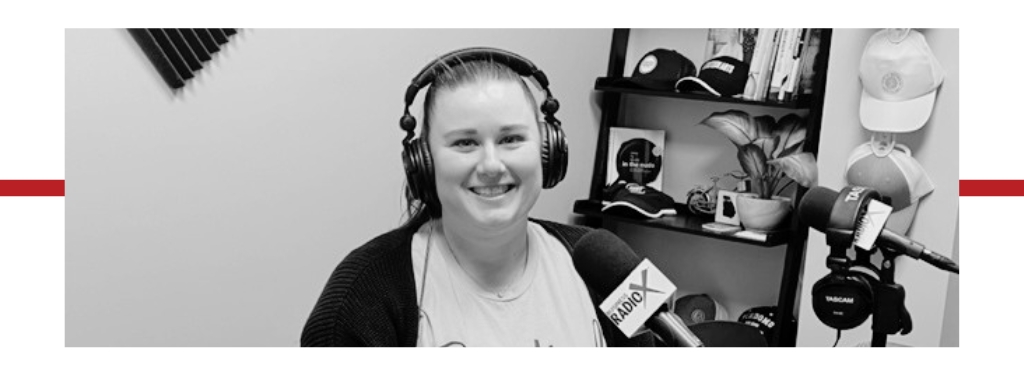
Shanna Beavers, Owner at Off Your Plate ATL

As an accomplished people manager and trainer, Shanna has trained over 200 servers, bartenders and managers, managed high performance sales teams and scaled businesses with the belief that success depends on the way we treat the people around us.

Today she owns a fast growing cleaning organization with a focus on elevating client and employee experiences.

Connect with Shanna on LinkedIn.

This transcript is machine transcribed by Sonix

TRANSCRIPT

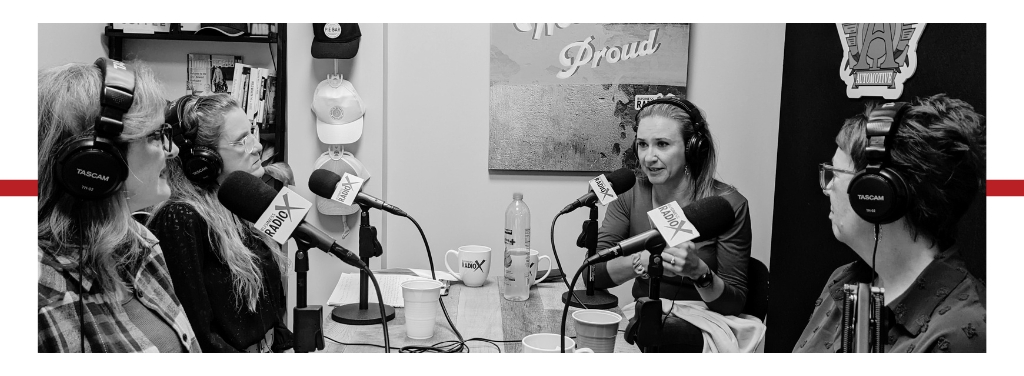
Intro: [00:00:07] Broadcasting live from the Business RadioX studios in Woodstock, Georgia. Welcome to Kid Biz Radio. Brought to you by the Business Radio Main Street Warriors program. For more information, go to Main Street Warriors dot org. Now here’s your host.

Renee Dierdorff: [00:00:32] Hello, everyone. Renee here. And I’m here with Amy. We are here to create conversations about the power of entrepreneurship and the positive impact that journey can have on kids.

Amy Guest: [00:00:44] In With us today is a special guest, Ms.. Shanna Beavers with Off Your Plate.

Shanna Beavers: [00:00:50] Welcome.

Renee Dierdorff: [00:00:51] Thank you. Thank you for being here.

Shanna Beavers: [00:00:53] Thanks for asking.

Renee Dierdorff: [00:00:53] So we have a lighthearted topic today. Failure and redefining what that means. So, I mean, it’s hard to jump right into that.

Amy Guest: [00:01:07] Let’s talk a little bit about her business and then we’ll go into that.

Shanna Beavers: [00:01:11] Oh, cool. Okay. So, yeah, I am one of the owners of Off Your Plate ATL. So we’re local residential and commercial cleaning company. Anything else?

Renee Dierdorff: [00:01:22] How long have you been doing that?

Shanna Beavers: [00:01:24] I have personally been doing it for a year. My partner Emily has been doing it for over six years.

Renee Dierdorff: [00:01:30] And. As I say, she we we were hoping we could have her with us today, so.

Shanna Beavers: [00:01:36] Hi, Emily. Good luck with.

Renee Dierdorff: [00:01:38] Everything you’ve got going on. So, yeah, we. Teaching our kids about failure is one of those things that is inevitable. They’re going to go through things in their life that they’re going to be have some setbacks and they’re going to feel pretty crummy. And I was just talking with Amy earlier about how as a parent, you can’t really you can’t shield and protect your kid from those things because they’re going to happen.

Amy Guest: [00:02:10] Despite our best.

Renee Dierdorff: [00:02:11] Efforts.

Shanna Beavers: [00:02:11] The best efforts.

Renee Dierdorff: [00:02:13] So I think. What we’re going to talk about today is kind of understanding that we need to have conversations with our kids about failure and, you know, pushing the drug. You’re fine, you’re fine, you’re fine or.

Amy Guest: [00:02:29] Positive ways to get through it.

Renee Dierdorff: [00:02:30] You learn.

Amy Guest: [00:02:31] That what comes from it.

Renee Dierdorff: [00:02:32] From it, maybe sharing some of the own your own failures, showing them that you’re a real person and things like that. So that being said. I thought maybe you guys could tell me if you don’t have anything to share. But have you guys had to deal with this in your own life with your kids yet so far? And how did you go through that or anything?

Shanna Beavers: [00:02:58] Oh, yeah. So with my daughter, Lily, she’s almost 12. She takes failure pretty hard, so she doesn’t bounce back easily. She takes it very personally. And I’ve I’ve struggled. My husband and I both are one of these, you know, pick yourself, feel sorry for yourself for a moment, then pick yourself back up and get started all over again. And she just doesn’t tend to think about it that way. So I was pretty inspired recently when we saw a short interview clip of a woman who said her father used to encourage her to fail and then basically turn, turn the failure around. And what did you learn and how can you do it better next time? And I thought that would be such a great way to encourage Lily to embrace failing. And you know, her most recent, I guess, failure that absolutely broke my heart was trying out for cheer. So she’s been doing competition cheer and we specifically got her involved with that to help her with her middle school tryouts. And so she and all of her friends tried out and she was one of two cheerleaders that didn’t make it. And then on top of that, she tried out for the school competition team and didn’t make it.

Shanna Beavers: [00:04:16] And so it was really hard on her because her gym was having what they call evaluation. So when you try out at the gym, you actually get put on a team. They just evaluate what team you should be put on. And so we went into those and she kept saying, Try out. What if I don’t make it? What if I don’t make it? And it just killed me, you know? So it was I guess it was good for her to be able to have that win after those two failures. But I wish I could have I wish I’d had that point of view when she didn’t make it the first time in all of her friends made it and could have said, Hey, great, So, you know, you you didn’t make the team. What can we do to make that different next time and what did we learn from it? And that just means that this opportunity is coming instead of maybe that wasn’t the right opportunity. So I really like the idea of encouraging your kids to get out there and and fail and then figure out how do you make that into something that is a good thing.

Amy Guest: [00:05:14] Yeah, absolutely. I think that’s a great idea. A better way of looking at it. I know it tends to be harder when you have the emotions that come with that age range and trying to make that make sense when it is all about what your friends are doing and what you may not be doing. So I imagine that isn’t going to be an easy concept, you know, like initially to try and implement or in that scenario, I think I know for my girls, I imagine at least one or one of them doesn’t take failure very well at all. I have a perfectionist, so I can see how that how hard that is to try and explain that, like find the positive and they just sometimes can’t, you know, for a while until they can wrap their head around it and see the other side. You know, it’s hard.

Renee Dierdorff: [00:06:03] Yeah, that’s why they need to go through those failures so they can see that they can be resilient and then be proud of themselves.

Shanna Beavers: [00:06:09] Yeah.

Renee Dierdorff: [00:06:10] For doing so. And then the next time it happens, they’ve got these coping skills. They feel a little more equipped, right? Because they kind of have to I don’t know if we can guide them on it, but it’s their own personal. Experience that they like, how they process that failure individually.

Shanna Beavers: [00:06:29] Right.

Renee Dierdorff: [00:06:29] And that’s what I think builds that resilience. And because, you know, you have we have our own frame of reference that we’re going through and we’re trying to coach them through it, but. You know, they’re going to be because Lily is different than you, like you said. So she might take a little longer or whatever. But I mean, I’ve known her for a few years now, and I, I think she’s come a long way with all of that. And a lot of that is just growing up, too, of course, because she’s older now, But I think she’s doing great. And you guys are doing great because there was an article I was reading and like kind of what we were talking about, it’s failure is good for kids because there’s a variety of reasons, but it’s a gift of coping. So allowing them to fail and makes them stronger gives them the ability to process natural consequences. So I think we’ve talked about that before. Sometimes if they fail or they get in trouble or something. And I don’t like using the word fail so much because it’s so negative. But when something happens and they might get in trouble or something, it can go the way they wanted it to. They kind of have to sit in it for a minute.

Amy Guest: [00:07:32] Yes. That that one is hard for me. Yeah.

Shanna Beavers: [00:07:35] Yeah.

Amy Guest: [00:07:35] I had to learn to change the way I approach the scenario. Like letting my child who’s upset about a scenario sit in it for a minute because you automatically you want to fix it, right? Like, that’s why I don’t want you to be upset. You can’t hurt. You can’t hurt, You can’t cry like I am here to fix it, but you can’t. And that is so hard. I think personally, as a parent, I had to learn how to teach her that her feelings of negative feelings like sadness or anger, those are okay. And it’s she has to feel them to get to the other side instead of waiting for somebody to fix it and move her to the other side. It’s the powers within herself. So I had to definitely learn the sitting in the SOC part of the feelings. That one was a hard concept for me, like.

Renee Dierdorff: [00:08:22] You’re talking about. So she you’re not going in there and validating her and saying that she’s okay. She has to find it within herself, that she’s okay. And that because we were talking about Bernie Brown and if you’ve listened to any of her stuff, but she talks about shame.

Shanna Beavers: [00:08:36] Love, Brené Brown. I read all of her books.

Renee Dierdorff: [00:08:38] Oh, well, if you still have any hardcovers, I would love to borrow them.

Shanna Beavers: [00:08:41] I do.

Renee Dierdorff: [00:08:41] But she talks about, like, the difference between shame and guilt. You can feel bad about doing something, but it’s not. You are not that bad thing that happened. And so I think processing, giving them that space to process and then they may have questions and you might be able to coach them a little bit, but it’s like you are the thing that happened was not.

Shanna Beavers: [00:09:01] Doesn’t define.

Renee Dierdorff: [00:09:01] You, it doesn’t define yourself who you are. And I think those words and being able to have those conversations are important because another thing she was talking about was when she was growing up, everybody was fine in the house. You didn’t talk about emotions. You just everybody’s fine because and it may just be and that’s within the family unit. It’s not necessarily because from the outside you want everybody to perceive a perfect family.

Amy Guest: [00:09:22] I think that’s also generational.

Renee Dierdorff: [00:09:24] Absolutely.

Amy Guest: [00:09:25] Yep. I think that more I’ve. Trying with raising my daughters, learning how to find my path. Outside of that, the way that I was taught, you know, like we have to come up with another way sometimes so that they are free to feel their emotions and express their feelings and find it within themselves and gain that confident confidence and empower themselves where we because it wasn’t a central focus for the generation prior to us to teach us that because everybody was fine. You do your own, you survive, right? And us having to learn to to rearrange that thought process, to teach our kids to do that, I think, excuse me, is our generation’s like new way, you know, that cycle breaking and trying to come up with a better way to let your kids grow more confident within their emotions and finally figure out how to survive their failures. And not just like not just survive them, but get through them, I guess.

Shanna Beavers: [00:10:26] Yeah, I found that, you know, Lily is my only child, so trying to figure all of it out. Obviously, Firstborn is like, you’re just trying to figure out how to do all this stuff. And I found myself, especially when it came to grades, trying to prevent failure. And my husband and I would go kind of round and round about this and, you know, got to get straight A’s, we’ve got to have straight A’s and B’s, blah, blah, blah. And at one point I was like, you know what? She’s got to figure out how to fail, you know? And if that means failing a grade, that means failing a grade. But I can’t force her to not fail. She has to figure that out on her own. So also part of that, I think, is kind of stepping out of the way. And us as parents trying to control the experience of whether or not they fail and just knowing when the the moment is. It’s okay if she fails this time because she’s got to learn, right. What that’s like.

Amy Guest: [00:11:22] Being the safe space for her to come to once the failure occurs. But knowing that you’re there, but you’re not the one that’s going to solve it, right. Unless, you know, obviously there are situations, but in general, she’s got to learn how to do it. I mean, giving them back that power, I think has been key. Is key rather, to a healthier way of learning this.

Renee Dierdorff: [00:11:43] I like the way you said, giving them back the power, make them feel. I mean, it’s part of independence, but making them you are in control of this, you know, and that sets them up in the future tremendously. And another thing was talking about being a role model. And I think what you were saying about the generational thing is like we had to we have to not unlearn things but learn how so that we can be that role model.

Shanna Beavers: [00:12:10] And.

Amy Guest: [00:12:11] You know, no, you do have to unlearn it. I mean, if you’re taught a certain way, but you want your child to learn a different way, like you first have to figure out what that looks like before you can be that model of that. Absolutely. You do have to unlearn some things or rearrange them, I guess.

Renee Dierdorff: [00:12:28] Redefine it, Redefine.

Shanna Beavers: [00:12:29] School, right?

Renee Dierdorff: [00:12:30] Yeah, Yeah. Redefine the way you think of things. Another thing I know that Brené Brown talks about, and since you’ve read the stuff, you might be able to fix my quote here, but she just talks about. Being curious, being, having the courage to try.

Shanna Beavers: [00:12:44] Things.

Renee Dierdorff: [00:12:45] Helps with. If it’s something new, there’s a likelihood that you’ll fail doing it or have hiccups along the way. So encourage your kids to try new things. Like Layla, for example. She. My oldest. Years ago, she. She did go to a counselor for various things, but she learned coping skills and stuff. But one of the things that they recommended is behavioral therapy. And it was amazing. One of the things they recommended was her to try something that scared her to do, something that scared her because she was rather cautious and she chose to do zip lining.

Shanna Beavers: [00:13:21] Oh, that’s a big jump.

Renee Dierdorff: [00:13:22] Yeah, well, you know, go big or go home. Yeah, but it was there’s a there’s a couple of them and there are parks around and they’re up in the trees and stuff and there’s different levels and everything in your harnessed in and I was safely watching from the ground but it. Gives them the power. She tried it. She had some issues, you know, learning how to do all the things. But when they do it, that just it’s just incredible to be able to. You know.

Amy Guest: [00:13:52] I bet it helps her confidence so much.

Renee Dierdorff: [00:13:55] And she’s wanted to do other things. It kind of stemmed from that. And now she’s, you know, more daring than I ever thought she would be, so encouraging them to try things. And it could be a variety of things. It depends maybe on what that fear is that they have. So, yeah, I mean, if you have a fearful or cautious kiddo, that’s I recommend doing that completely. And I mean, like with our expose, right?

Amy Guest: [00:14:16] Well, yeah, I was going to say that that’s trying something new, like they’re putting themselves out there and they’re learning a brand new way of interacting with people and learning how to communicate on a different level and what And so those the day comes with ups and downs of failures and what works and what doesn’t work and positive and negative things. But they’re doing it and they’re learning from it on. A Yeah, and they’re learning from.

Renee Dierdorff: [00:14:40] It because as we’re going through all of it, we’re, as we’re preparing up for an expo, we talk to the parents and stuff and our Facebook group that we have and you know, we always through the emails that Amy sends out and also those lives, we tell them like the kids are front and center, like you can come and bring a chair and sit in the back, but let them do it because that’s the point. And then another thing would be, I think it’s important and I kind of talked to the generational thing and just things of the past where we show our kids that we’re also human, right? It can be when we fail currently kind of talk them through how we’re processing it with as long as it’s, you know, make it kid friendly. But and then how you’ve maybe in the past you’ve had some failures obviously when they go something like, well when I was this back when I was a kid.

Shanna Beavers: [00:15:33] Back when we were dinosaurs to school. Yeah. Uphill both ways in the snow. No barefoot.

Renee Dierdorff: [00:15:38] Dinosaurs. I like.

Shanna Beavers: [00:15:39] That.

Renee Dierdorff: [00:15:40] So, yeah, I mean, 1900s.

Shanna Beavers: [00:15:43] Yeah. All right. Just like. Oh, no.

Amy Guest: [00:15:48] But learning. Yeah. Showing that your kids at your human and how I know for me as somebody that has anxiety and then also a child that suffers from anxiety, I had to learn that. I have to show. Positive ways that I feel about myself and what I’ve learned. Because if I constantly, I’m like, Oh my God, I did this to God and I failed this. And you know, everything is bad, bad, bad, bad, bad. And I have a kid who’s just like me. She’s going to see it the same way that all of these things about me are bad and they’re not. So you have to also reframe how you present yourself and how you feel about yourself, like letting them see that, like the good and the bad. But they got to see the good too. Like, you can’t only be like, Oh my God, all these things are awful and everything’s falling apart and blah, blah, blah. You know, like, you have to be like, But I got through this and I did, you know, and we’re moving forward, you know, like showing them that, okay, if mommy who has these similar situations or even not, but just seeing that like I’m trying to find the words that I’m explaining, but like, you’re a real person. Yeah. I mean that you’re real, but you have to not let them see. Like, severely beating yourself up about it, Right? You know, they have to ask because then that’s that’s all they’re going to do to, like, practice what you preach. Yeah, I.

Shanna Beavers: [00:17:12] Think that’s part of finding the positive part of failure. There’s always a positive part of failure. It may be hard to see immediately, but as an example with Lily, at some point when I think it, we did handle it properly. Again, back to competition cheer. Sorry. I mean, that’s hard work, right? That’s super hard. Work hard. But in her very, very, very first competition, she was a bass, a side bass, and they did their stunt. And the other two bass has lost control of the flier and she started to crash to the ground. Well, in competition, if your flier touches the ground, the entire team is disqualified. Oh, so, Lily, we watched Lily as she just flung her arm around that girl, and with all of her strength, literally kept her from touching the ground. Wow. And brought her back up. That’s awesome. Well, me, we’re looking at that going, Oh, my gosh, you just saved the team. You know, when we go backstage.

Amy Guest: [00:18:11] And she gave me chills.

Shanna Beavers: [00:18:13] We go backstage. And when they all come back out after the team huddled and everything, she saw us. She lost it, just tears and sobbing. And we’re like, What? What? What in the world What are you crying about? Oh, we dropped her. I dropped her, I dropped her, and I said, Lily, you saved her. You saved the team. And it wasn’t until she she didn’t comprehend that. And then they ended up winning third place. That’s awesome. And after that, when we were in the car, she was like, Okay, yeah, I did that. I did that. Yeah. And I said, Honey, you take the win. Yeah, that’s a big way. Yes, Yes. Your flier fell and yes, you guys lost points over that, but you saved the team from being disqualified. You have to give yourself credit for that. That’s a big deal. Yeah. So. Yeah, but it was funny to us. We didn’t see failure.

Amy Guest: [00:19:06] No, not one bit.

Shanna Beavers: [00:19:06] You know, we were like, wow, she’s eight. But in her mind, she just completely let the entire team down, you know?

Amy Guest: [00:19:15] But seeing that positive, like changing her way of thinking, like she automatically went negative, but then seeing that, wait a minute, that turnaround, like there’s the bad side of that, like you did save the day. Like, that’s amazing. And that I imagine that was a huge boost of confidence to look at it that way. Yeah.

Shanna Beavers: [00:19:33] For her, yeah she was when the look of shock on her face when they announced them as third place winners, that was priceless. I wish I could have gotten it on.

Renee Dierdorff: [00:19:43] You got to talk to her before.

Shanna Beavers: [00:19:44] We did talk to her before. So that’s because we had to continue watching competition. Yeah. And she wouldn’t even sit with her team. She was so embarrassed and so down on herself that she stayed with us instead of sitting with the team.

Renee Dierdorff: [00:19:56] While we talk to her.

Shanna Beavers: [00:19:57] Well, you know. Yeah, but it’s like later. It’s a whole. Nah, I don’t think so, but it’s a whole. Hey, we did great. We did. It’s okay. Don’t let the bad things get you down. That kind of. Yeah. Talk. Yeah, but, yeah, it was. It was. That was a good opportunity.

Amy Guest: [00:20:13] Yeah, that’s a great moment. Oh, I.

Renee Dierdorff: [00:20:14] Love her so.

Shanna Beavers: [00:20:15] Much.

Renee Dierdorff: [00:20:16] She’s such a big heart.

Amy Guest: [00:20:17] That’s it. Awesome. Like to think that quickly. Like, that’s.

Renee Dierdorff: [00:20:21] Awesome. She knew what she was supposed to do.

Shanna Beavers: [00:20:23] Yeah. Yeah.

Renee Dierdorff: [00:20:24] And it was just second nature. But, you know, she didn’t see it in that way right away, right?

Shanna Beavers: [00:20:29] Oh.

Renee Dierdorff: [00:20:30] We love her so much.

Shanna Beavers: [00:20:32] Me too.

Renee Dierdorff: [00:20:35] There are some other there are some other things in this article like. It was the beginning of a. It’s the origin of success. Failure can be like you can talk to your kids about like Abraham Lincoln and everything that he went to before he was went through before he became president. If you look it up, it’s incredible. It takes you long to explain it now. But all the things he ran for in the Senate and whatever else and just didn’t win, didn’t win, didn’t win, didn’t win, but kept going. Family stuff happening and everything. And and obviously that time period, you know, there was a lot of death and things that happened. But just Albert Einstein and the light bulb and all the things, you know, and just showing them how it’s inevitable and. People throughout time have been doing this. But that’s that’s the only way to innovate.

Shanna Beavers: [00:21:27] Well, yeah, it is to.

Renee Dierdorff: [00:21:28] Try new things.

Amy Guest: [00:21:29] Probably the majority of all businesses that run our day to day life started in a completely different direction. That all stems from how it’s going to circle into a different area, you know, and it essentially is a failure. But then what comes from it? Yeah, something else that now we rely on, on a daily basis, you know.

Renee Dierdorff: [00:21:49] Well, we’re all business owners. So is there anything, any kind of business failures or lessons that you’ve learned along the way that you would like to share that you’ve overcome?

Shanna Beavers: [00:22:00] Oh, my gosh. So, yeah, when I shared this yesterday on Facebook, I made a joke about how I’m an expert at failure. And to be quite honest with you, I am an expert at failure. I do believe I am. It’s not my middle name, like I said. But I mean, I have had so many businesses and some of them have been successful and some of them haven’t. And so people you know, I had a restaurant at one point that I stupidly opened in the middle of the was the crash like 2007 0809. Yeah. Oh, gosh, young and stupid. But anyway, I went into that making all kinds of bad decisions. And because it was a dream of mine, right? I had worked so long in the restaurant industry and I thought, Oh, here’s this opportunity, it’s time. And everybody kept saying, But you don’t have enough money and you don’t have this and you don’t have that, I’ll forget it. I’m just not that I’m not that kind of person. I’ll figure out how to make it work once I get into it. So anyway, it did end up failing and, you know, it crushed me for for two years. I wouldn’t cook a meal. I just I wouldn’t it just I was like, I’m done with food. I literally just walked away from food. And many people are like, Well, do you regret it? No way. I don’t regret regret a single thing about it. I learned so many things about business.

Shanna Beavers: [00:23:19] I joked with Rene the other day. I for the longest time I’ve said I should write a book about how not to start a business because that’s probably brilliant. I’ll do it. I know how not to start a business. So, yeah, I mean, even like with Lily, she was when I got laid off in 2018, she was at an age to watch me for the next two years, try one thing after another and fail and fail and fail and fail until I finally did come across something that worked, you know, it just worked. And so, yeah, she’s seen the me, the ups and the downs and the and feeling bad, talking bad about myself and all of that kind of stuff. But I feel like personally, as her mother, I’m a good example of, you know, what comes out of failure. And I know a friend of mine, her mom commented on the post I shared about this and she kind of suggested maybe the word is stumble, not failure. And to a certain extent I disagree because we don’t talk in terms of, oh, well, you stumbled now what are you going to do? It’s failure. That’s you know what I mean? The word failure has a specific meaning for a reason. And so I think that if we glossed over what failure actually is and how failure actually feels, then we’re not doing ourselves or our kids any good.

Amy Guest: [00:24:42] Makes sense. Yeah, absolutely. If you don’t know what the word even means and how to understand what just happen, then how can you feel it and soften it and get past it?

Shanna Beavers: [00:24:51] Yeah.

Renee Dierdorff: [00:24:52] Don’t put lipstick on it.

Shanna Beavers: [00:24:53] Right.

Renee Dierdorff: [00:24:54] It is what I mean. It’s.

Shanna Beavers: [00:24:55] I get it. I get where she’s coming from. Their kids. Right. So maybe we don’t want to be used what we feel is such a harsh word, but that’s the whole paradigm shift that I think has to be made is failure should not be a negative, dirty word, Harsh, dirty word. It shouldn’t be because there is no successful person that I know of that didn’t fail at something. Absolutely.

Renee Dierdorff: [00:25:17] I think it’s the communication around it like we’re trying to do. And we’ve heard more about, obviously in the last five, ten years trying to not normalize it. Maybe that’s the right word. I don’t really know. But just make it more commonplace that you can talk about this. It’s not taboo. It is a part of it. You’re not going to get around it. It will happen is not if and I know Brené Brown talked to one time about how she goes and talks to leaders of companies and, you know, she’s like, well, what are you going to do when you fail? And they’re like, Well, we’ll just strategize around it. She’s like, You can’t strategize your way out of failure. It’s going to happen. And they just she’s trying to change the way they think from a high level corporate world setting to be prepared for the inevitable. Yeah, because it’ll happen. Yeah. And it’s okay.

Shanna Beavers: [00:26:04] You can’t be, like.

Amy Guest: [00:26:06] Invisible from it, you know?

Shanna Beavers: [00:26:07] Like, yeah.

Amy Guest: [00:26:08] You can’t hide from it.

Renee Dierdorff: [00:26:09] So you got to learn how to cope with it, right? Yeah. And when we talk about kid biz and why we. Or why we started this to begin with. One of the things is to learn failure and learn resilience and then therefore be proud of yourself and grow your confidence. I mean, there’s so much that comes from it.

Shanna Beavers: [00:26:31] Mm hmm.

Renee Dierdorff: [00:26:32] Like the Phenix rising out of the ashes, as I say, you know, I mean, like, you, you, it it adds to your personality. I mean, it makes you who you are. I mean, there are so many positive things. I mean, you know, you talk you start dating, right? When you’re, I don’t know, a teenager and you’re it’s very superficial. And, you know, there’s not a whole lot to you yet, you know, like there’s not there’s no depth necessarily. And then as you gain experiences throughout your life, those conversations you have with dates and stuff become a little more interesting. And, you know, I mean, it’s important to have those experiences. And like we were saying, like, have your kids try new things that helps with that, like something totally off the wall and different. That’s what we try to use the summers for. Yeah. Is try to go do something that maybe none of us have done before and just have the experience.

Shanna Beavers: [00:27:20] That’s one of the things I love about Kid Bizz Expo is, you know, most business people are going to try something and figure out it doesn’t work for them and try something else. And so, you know, they’re they’re kids, so they’re not like you and I where we’re like, Oh, this is my business. And now you go out and you just advertise and you market and blah, blah, blah. And then if it fails, it’s super embarrassing. And then you have to show up at the networking group and go, okay, that didn’t work in business. Just kidding. Yeah. So for them, they don’t have that yet. It’s. Oh, well, making jewelry wasn’t as good as I thought it was going to be. So let’s bake Dog biscuit.

Renee Dierdorff: [00:27:54] I didn’t enjoy it.

Shanna Beavers: [00:27:55] Let’s try that now, which is.

Amy Guest: [00:27:56] A great way to look.

Shanna Beavers: [00:27:57] At it. Yeah, I think that that Kid Expo is a the perfect outlet for children, even if they’re not born entrepreneurs to feel comfortable and safe in trying new things and then understanding why it didn’t work and then having the opportunity to try again.

Amy Guest: [00:28:15] Absolutely. And like we always say, they’re not going to like, rule the world with their cookies or jewelry, but they’re understanding all the concepts that come with it by trying these things and seeing what their passions actually are.

Renee Dierdorff: [00:28:28] Mm hmm. Having the courage to try it. Courage is an important word, I think.

Amy Guest: [00:28:32] Which I would say. I was thinking when you were saying you were like a master at failure. Maybe you’re just, like, incredibly brave at trying new things.

Shanna Beavers: [00:28:41] That’s what I was like.

Amy Guest: [00:28:42] You can reword the way that you see yourself in that situation as well. And yeah.

Renee Dierdorff: [00:28:47] And you show up to the like if it’s one thing or the other, you show up to those meetings with your head held high like this is you can laugh it off or you just, you know, you’re like, you accept it and it’s what it is. And I think a lot of what can be said for that.

Amy Guest: [00:28:59] Yeah, yeah. That’s incredibly brave. I think personally.

Shanna Beavers: [00:29:03] Thank you. I tend to operate that way. Emily and I both. One thing that makes us a good partners makes us good partners for each other and then bad partners for each other, because we both are like, I have an idea. Let’s throw it out and see if it sticks. And when it sticks, we go, Oh, crap. We got. We gotta figure out how to make that work. Oh, no. So you can ask anybody. In my life, I’ve always been like that. And Renee and I are very opposite in that way, where I’m like, okay, I think I’m going to do this. And she’s like, But don’t you? You need something. Like you need to play. Nope, nope, Throw it. Yeah, that worked.

Amy Guest: [00:29:35] I feel that I get like, super crazy, like, thoughts and like, I need somebody to bring me. I get very excited and, like, this is going to work and it’s going to be amazing. And let’s like all of the things in Rene’s like, or.

Shanna Beavers: [00:29:47] What if we just.

Amy Guest: [00:29:49] You know, map it out like step by step and link? But that also makes sense.

Shanna Beavers: [00:29:56] But that’s fun though.

Amy Guest: [00:29:59] But it works.

Shanna Beavers: [00:30:00] It does work.

Renee Dierdorff: [00:30:01] But sometimes I need y’all’s personality. Both sides push me to do things that I might be too scared to do. So yeah, it’s.

Shanna Beavers: [00:30:11] A good balance.

Renee Dierdorff: [00:30:13] I mean, we’re here doing this right, like we’ve gotten this far and it’s a lot to do with.

Amy Guest: [00:30:17] It’s funny because then like the things that like I may be like, overly like crazy about or whatever are the things that you’re like, more conscious about and then like, reverse like then there’s like, this is like in your wheelhouse, like this. No fear for this. Like, this was like, totally fine for you. And this is like, I’m like, What? What are we doing? Yeah, What? It’s just like the dynamic of needing that balance.

Shanna Beavers: [00:30:41] Emily was the same way. I was like, We’re going to do a radio interview. And she was like, Really? Really? I was like, Come on, both of us. We need to go on. Okay.

Amy Guest: [00:30:52] Yeah.

Shanna Beavers: [00:30:53] So I’m sure she’s not feeling too terrible that she wasn’t able to make it today.

Renee Dierdorff: [00:30:57] She would have done great.

Shanna Beavers: [00:30:58] She would have done great. But yeah, it’s that’s one of those again, things that makes us good as partners is she thinks she likes going out and networking and stuff like that. And then she doesn’t she’s like, Hmm, no, it doesn’t feel like, yeah, you do that. I’m good.

Amy Guest: [00:31:11] Yeah. Muscle.

Shanna Beavers: [00:31:13] Yeah. I go to the thing.

Amy Guest: [00:31:15] It really does.

Renee Dierdorff: [00:31:16] But see, she’s grown so much.

Shanna Beavers: [00:31:17] You’ve grown so much. Amy I try.

Amy Guest: [00:31:22] Being this whole role model thing. I kind of have to.

Renee Dierdorff: [00:31:26] Here.we just did this. We did vision boards last week at the Ball Ground Business Club and, you know, I guess that can tie into the whole thing because people, I guess we started talking about it. They said, you know, is there anything from your vision board last year that didn’t happen and that kind of thing? And not that those are failures, but, you know, you had these goals that maybe you didn’t. Disappointments, disappointments, things like that.

Amy Guest: [00:31:50] On DeLay.

Renee Dierdorff: [00:31:51] That was interesting. But the fact that we were there and doing them, you know, making one for next year and in October, you know, and planning ahead and stuff. And I think that’s, you know, like I said, you can’t like she was saying Brené Brown was saying you can’t strategize yourself out of failure, but you can plan for the things.

Amy Guest: [00:32:08] That you’re going to.

Renee Dierdorff: [00:32:09] Try, you know, and and hope for the best, but then pivot or adapt and be flexible and pivot whatever you need to do when those things happen.

Shanna Beavers: [00:32:20] Speaking of Bernie Brown, if there’s one thing I could say that I would recommend to parents and I work on this with my husband and he’s been pretty good at being open to this concept because he was raised with a lot of shame. You shame the child into doing what you want the child to do. And I really struggle with that with my mother in law. And she doesn’t mean any harm. It’s just the way that that they were raised. But I think that if when our kids fail, if parents can take a step back and make sure that they’re removing the shame from the situation, the kids will develop better coping skills and they’ll come out of it a lot quicker. That I could do an entire other interview with you guys on Bernie Brown and Shame and Courage.

Renee Dierdorff: [00:33:06] It’s incredibly interesting.

Shanna Beavers: [00:33:07] Her work is amazing. It completely, fundamentally changed the way that I that I look at myself and the way I look at the world and how I view people when they make mistakes and that kind of thing. So, yeah, if you if you could figure out how to, you know, the guilt, making them feel guilty for having done something wrong and taking the shame out of failure, I think that that would really help make it less of a negative experience.

Amy Guest: [00:33:36] Yeah, absolutely. Just acknowledge it for what it is.

Shanna Beavers: [00:33:39] And it’s not from.

Renee Dierdorff: [00:33:40] The person.

Amy Guest: [00:33:41] Right? It’s not the person. It doesn’t define you. It’s just. It’s a moment in time and it is what it is. And now where we at kind of thing.

Renee Dierdorff: [00:33:48] What does it say? You can follow me. You have to. You just get up again. I think that’s where it makes a difference in. I think people, if you fail and you fall. People can cheer you on when you get up and move forward. That’s the you part.

Shanna Beavers: [00:34:05] Yeah.

Renee Dierdorff: [00:34:05] What happened is right there, right? The you is you moving forward. And I think that can give you a sense of pride and take the shame out of it. Yeah. And separating it.

Shanna Beavers: [00:34:16] Well Lilly tried, Lilly went and did her evaluation and she got herself on a good team. And now she looks back at all of that and like, no offense to sideline or anything, but she kind of watches at the games and she’s like, No, I’m good. I’m in a much better place. You know, she’s her skills are, you know, significantly better than a lot. And she knows that she’s getting a lot more time and investment put in her. And she’s she’s like, yeah, okay, that turned out the way it should have turned out. That’s awesome.

Renee Dierdorff: [00:34:50] Did she did she figure that out? Did she start talking about that on her own or did you kind of point things out at all or do you?

Shanna Beavers: [00:34:57] She figured that out after we went to a game recently to go support her friends, you know? Yeah. And she sat back in the stands and was kind of watching and was like, you know, again, the girls are great. Like.

Renee Dierdorff: [00:35:11] You know what I mean? Yeah. But like.

Shanna Beavers: [00:35:12] She really puts it up.

Renee Dierdorff: [00:35:13] For her.

Shanna Beavers: [00:35:14] Far more hours of conditioning and training and blah, blah, blah. So it’s only natural for, you know. But yeah, it was, she’s watching it going. It’s just not the environment for me, you know.

Amy Guest: [00:35:25] And that makes sense. And the fact that she’s able to figure that out and see that, that’s that’s great. That’s what that means. She became like she overcame it essentially. That’s incredible resilience.

Renee Dierdorff: [00:35:37] Yes. Found the positive.

Shanna Beavers: [00:35:39] And I was very proud of her for I’ll never forget sitting in the car right before it was time to go in and four to do the evaluation. And she was just, mom, I hope I make it. I don’t I don’t know what I’m going to do if I don’t make it. That’s hard, you know. But she got out of that car and she went in. It meant enough to her, you know, to go out and do it. So. Yeah.

Amy Guest: [00:36:02] It’s so hard because you’re like, okay, you just want to be like, No, you don’t have to do anything that makes you sad. I know. Then the other side of you is like, Oh my God, make her do it. Yeah, she has to do it.

Shanna Beavers: [00:36:11] Go in there. Try out. Excuse me, Coach. Yeah? What do we need to do to make sure she gets on the team?

Renee Dierdorff: [00:36:18] I was reading something where it talks about failure Friday, and I think maybe we should embrace that.

Shanna Beavers: [00:36:24] Ooh, that sounds fine.

Renee Dierdorff: [00:36:26] You know where you can in a variety of ways. But Philly Friday, maybe you post on social media, it’s like, what? Did you fail it this week? Yes. And what did you learn from it? You know, then, you know, and then the.

Amy Guest: [00:36:38] Dinner was planned.

Renee Dierdorff: [00:36:40] And then I mean, but if you say it straight up like that, it’s like, wait, what? Like that kind of catches attention. And then you can also say at the dinner table.

Shanna Beavers: [00:36:47] And.

Renee Dierdorff: [00:36:48] Encourage your kids to talk about it and be open because we try to put conversation starters on our page to encourage conversation. Because if you get in the car after school or they come coming off the bus and you’re like, How is your day? Like at my oldest, she’s even said she’s like nobody. Like, you know, somebody says, How are you? No one really wants to know how you are. They’re just it’s just pleasant. It’s just they don’t want you to just all your baggage on the table. That’s not the expectation. So when you say it that way, when they get in the car, they’re like, It was fine. That’s why they say it. Because there’s no like if you let them decompress from the day and then in their own dinner dinnertime, even if it’s just driving to practice because you’re you’re eating in the car, it doesn’t have to be around the table. But those times in the car really matter. And if you that can be a thing that you talk about on Fridays, I wouldn’t want to do it every day because that’s like focusing too much on negative, but just finding things to learn.

Shanna Beavers: [00:37:38] That little short interview that we saw, that’s what she said her father did every day. She’d come home from school and he would be like, All right, so what’d you fail out today? And it was a very, like, energetic, positive, you know, celebration, celebration. And she said it just got to the point where it was like I was just able to look at mistakes I made and stuff throughout the day and not feel like it was the end of the world, you know, is a.

Renee Dierdorff: [00:38:01] Training.

Shanna Beavers: [00:38:01] Exercise. Yeah.

Renee Dierdorff: [00:38:02] To look at the world differently.

Shanna Beavers: [00:38:03] Instead of being like, Oh, honey, what’d you fail at today? It was more like, Okay, so what did you fail at today? Let’s talk about it, you know? Yeah, I mean, there’s no celebrate with an ice cream.

Renee Dierdorff: [00:38:13] Yeah. Shame can’t find its way in that.

Shanna Beavers: [00:38:15] It can’t find its way in there.

Renee Dierdorff: [00:38:16] No, no I can’t. I like that.

Amy Guest: [00:38:18] It’s just reshaping the mindset.

Renee Dierdorff: [00:38:20] Yeah. Growth mindset. Yeah. Super important. I like.

Shanna Beavers: [00:38:23] Failure Friday. Let’s do that.

Renee Dierdorff: [00:38:24] Yeah.

Shanna Beavers: [00:38:24] Is it Friday yet? Because I’ve got something I can talk about.

Renee Dierdorff: [00:38:27] We can have some wine on the back porch and talk about failures. Woo! Sounds fantastic. That’s probably all I’m good for on Friday because I’m just so tired.

Shanna Beavers: [00:38:34] Oh yeah.

Renee Dierdorff: [00:38:37] We were just talking about like letting failure happen. Emphasize failing forward. Learning from your mistakes. Teaching a mindful approach. The link between mindfulness and resilience is very well documented. With practice, kids can learn to respond to strong feelings about failure rather than simply reacting, respond rather than react like that. That makes sense. I like.

Shanna Beavers: [00:38:59] That. Hmm.

Renee Dierdorff: [00:39:03] I was just looking at some other stuff that I had that I found the other day. And none of it is the same things that happen over and over again.

Shanna Beavers: [00:39:11] Yeah, well, there’s little bitty little ones, you know, fail to test today. You know, failed to get on the bus today. You’re going to different levels.

Renee Dierdorff: [00:39:24] There’s gratitude journals, Right. And then when you do a gratitude journal. You starts with the big things and then it gets harder and harder to come up with things that you’re grateful for. So the thing thing would be a failure. It’s hard to find a nitpick the things, but maybe sometimes it’s like you’ve just so become so accustomed to being adaptive. You didn’t even realize it anymore, that.

Shanna Beavers: [00:39:44] You’ve.

Renee Dierdorff: [00:39:45] Just coping. It was like survival mode, you know? And I know we went I was at the business club this morning and we were talking to the mayor of Canton, and we were kind of talking about, I guess he’s been in business since 89 and his ups and downs along the way. And I think a question was asked or, you know, are you always this optimistic, optimistic person or how do you deal with all this? And, you know, you talk about being optimistic and I think he just he’s like, I’ve just learned to be adaptable and, you know, that kind of thing. So I think that’s where that comes from is when you’re a small business owner, you do have to if you’re going to continue, you’re going to hit those things and you have to learn to be that way. Yeah. And they may just become more optimistic and less cynical over time.

Shanna Beavers: [00:40:31] Bronson asked them, Have you ever wanted to quit? And he was like, Yeah, like we all feel that way, But if I quit, then what am I going to do?

Amy Guest: [00:40:41] Yeah, then what?

Shanna Beavers: [00:40:42] You know, so we just have to adapt and move on, you know?

Renee Dierdorff: [00:40:45] He’s like, I’m not going back to the corporate world, you know, because he had been working for himself for so long. He’s like, No, thanks. So well and talk about celebrating their progress, too. So. Maybe with like the Expos, we always talk about the certain things that they’re doing to lead our workshops, help lead up to the Expos. And like when you did the one on sales pitch and stuff, but even going backwards like building their inventory. So I think maybe it would be good if we helped, like maybe maybe make a checklist of some kind or like a goal sheet where they can check off or have some fun way with stickers depending on their age or whatever, like. You’ve done this yet. Have you done, you know, like celebrate that you’ve finished your inventory or celebrate that you’ve done this and like along the way to encourage that progression?

Amy Guest: [00:41:35] Yeah, because those are still accomplishments. I mean, we don’t. Not only can you just, like, find a way to be resilient from the failures, but you still have to celebrate your accomplishments. You still have to maintain the positives in what you have done, not necessarily only finding it in what you didn’t do or what failed, but you also have to find it in what you actually have accomplished.

Shanna Beavers: [00:41:58] Yeah, yeah, yeah. That’s definitely important. It dawned on me just now that I used to ask when Lily would come home from school, I would ask her what went well and what didn’t go so well. You know, and she would have a hard time thinking like, what didn’t go so well. It was like she was uncomfortable talking about it.

Amy Guest: [00:42:17] Yeah. I always asked him, like, okay, so did we have a good day? And then I was like, Yeah. And I’m like, okay, well, what was bad about today? Or what was like boring or what was good and what wasn’t good, you know, just like trying to pull it out of her, like describe it in a different.

Shanna Beavers: [00:42:30] Way, getting them to talk about it. Lily’s Lily’s go to line is. I don’t know. Yeah, I don’t know.

Amy Guest: [00:42:35] I don’t remember.

Shanna Beavers: [00:42:36] Yeah.

Renee Dierdorff: [00:42:37] I mean, like, I get it. Like you’re done with that part of your day. I get it sometimes, you know, But I try not to write. When they get off the bus, I try to let them decompress or whatever for. For a minute, because I know I need that. Need some space from it.

Amy Guest: [00:42:47] What was hard or did a subject go better or worse than you thought? Like just trying to.

Renee Dierdorff: [00:42:52] I’ll think I say to my nine year old, I’d be like, So what? What’s something that happened today that was awesome?

Shanna Beavers: [00:42:56] Yeah.

Renee Dierdorff: [00:42:57] You know, like, or funny or whatever. And I know Laila. There’s a couple of class clowns. Well, actually, yesterday she came home with a bright orange piece of paper, and she was like, Well, thanks to the seventh graders, now we have to have a hall pass just to go to the bathroom. Oh, So what are they doing and what were they doing? She said like half the class was like loitering in the bathroom. Oh, my God. And I don’t want to tell you what she said, but she was being very negative.

Amy Guest: [00:43:19] No, not an eighth grade girl.

Shanna Beavers: [00:43:22] 13 year old.

Amy Guest: [00:43:23] That’s insane.

Shanna Beavers: [00:43:24] Yeah. Yeah.

Amy Guest: [00:43:26] And that’s.

Renee Dierdorff: [00:43:26] All I asked is.

Amy Guest: [00:43:28] So hard to battle that with. Trying to maintain the positive mindset and teach them that when they physically like, that’s just where they are emotionally and physically, that’s where their brain is. And so you have to be patient with that and trying to they’re not going to be positive 100% of the time. It’s just literally impossible for their brains at this point in life.

Renee Dierdorff: [00:43:53] We aren’t either.

Amy Guest: [00:43:54] Granted, but we can still, as an adult, we can turn it around and be like, I know it’s going to be okay for them. They don’t.

Shanna Beavers: [00:44:01] Know.

Amy Guest: [00:44:02] I know it’s going to be okay.

Shanna Beavers: [00:44:03] Remember that? Oh so well. I remember.

Amy Guest: [00:44:06] World could literally end. Yeah, because of what somebody said to them.

Shanna Beavers: [00:44:10] Yeah. My mom would be like, okay, this isn’t that big of a deal. And I remember thinking, Do you not see the chaos? But I think that’s bad. The kids.

Renee Dierdorff: [00:44:20] When they say something like that, it can feel dismissive to the kids. So it’s like, how else can.

Amy Guest: [00:44:25] We I know.

Shanna Beavers: [00:44:27] We know.

Amy Guest: [00:44:27] That. It’s like, okay, well, I mean, just like.

Renee Dierdorff: [00:44:31] You know, like saying like, don’t feel that feeling. Like I understand that.

Shanna Beavers: [00:44:34] That.

Renee Dierdorff: [00:44:35] Feels that way right.

Amy Guest: [00:44:36] Now for now. But also in a few minutes when we’re over feeling that, let’s look at this or whatever. But explain that to a 13 year old tends to be the most challenging.

Shanna Beavers: [00:44:47] Yeah, I’m going to give it a few hours. No, Explaining it to my 46 year old husband is pretty challenging. Yeah, Lilly will do, you know, some kind of emotional, you know, lash out and the look like deer in the headlights. He’s just standing there like, what does that say? You know, he wants to say, stop it. There’s nothing to cry about. And I’m just like, okay, stop. You know, I remember this feeling. It’s not logical. Walk away, you know? Yeah.

Amy Guest: [00:45:12] Yeah, yeah. Always like that. Our husbands just, like, live in that logic based.

Shanna Beavers: [00:45:18] Constant Boys don’t feel like that. We don’t ever get like that.

Amy Guest: [00:45:21] Yeah, like, just. I always call my husband the dream killer because he’s the one that has to be realistic and logical. So, yeah, when you come at him with a 13 year old drama, he’s like, No, we’re going to not talk. Do that. You need to calm down. And it’s like, okay.

Shanna Beavers: [00:45:36] Yeah.

Renee Dierdorff: [00:45:37] It’s like you come out of the wolf’s den. Good luck. See you later. Yeah. My my husband joked around. He’s like, when all that stuff goes on, you can. I’ll just go fishing. I’ll see you later. You know, he knows he just needs to remove himself. But yeah. So all of our husbands are girl dads and bless them.

Shanna Beavers: [00:45:52] Yeah, no kidding.

Renee Dierdorff: [00:45:53] And our husbands. So bless them.

Shanna Beavers: [00:45:54] Yeah.

Renee Dierdorff: [00:45:55] They’re very patient with us. And, you know, they’re all really good dads, and all of our daughters are very lucky to have them.

Shanna Beavers: [00:46:00] I completely agree.

Renee Dierdorff: [00:46:02] For sure, because they care a lot.

Amy Guest: [00:46:04] But they do offer that different perspective that they do that does help bring them down to earth when necessary.

Shanna Beavers: [00:46:12] The stable.

Renee Dierdorff: [00:46:13] Thing that.

Amy Guest: [00:46:14] They need, I mean, they need that. Everybody needs that. Not just just in general. Like you need both sides of the coin, right? Yeah. You have to find. Yeah, good and bad, stable and dreams and chaos and also consistency. Like you got to find the balance.

Renee Dierdorff: [00:46:28] And when we were talking earlier about trying to take a subject, but. We tell them we have them sit in it for a minute, you know, sit in and think and learn or whatever, sit and suck. And then it may not be that same day, but maybe whenever it’s appropriate, go back and say, well, what did we learn from that? Kind of come full circle with it and wrap it up because I know you like with her catching the flier, you guys had the opportunity to do that and then she’s even still learning from it. But being able to have them see the big picture, see it come full circle is really important with anything but specifically that because it kind of reiterates the fact that it’s okay to talk about it and it’s completely normal and human. You know it’s going to happen and. Have them remember that they’ve overcome that. Right. And what they learn from it.

Amy Guest: [00:47:19] And I think them learning different levels of quote unquote, failures. Right, is important. Like I know for one of my kids who can have panic attacks and anxiety about a lot of things, she gets caught up in her head and it becomes like a snowball of emotion and and then it becomes a snowball of shame on herself because she hates that she’s causing distress. She thinks to me or to anybody else that’s having to deal with her not being able to solve her own problem. So just trying to I’ve had to learn a lot about helping her understand and empower her feelings and different levels of failure or what she sees as failures and what don’t define her. And that’s where I got that term, like sitting in the SOC, like from therapy, teaching you that it’s okay. You can just because you’re feeling like this or things look like this or you’re overwhelmed, it doesn’t make you wrong or bad or different. If this is how your brain wants to comprehend the situation, then we’re going to let it for a minute and then we’re going to figure out within ourselves how to pull us out of it.

Shanna Beavers: [00:48:34] Yeah, I think it’s important to sit in the SOC. It’s like the grieving process. You can’t skip the grieving process. And if you try to skip the grieving process, it’s going to come back to you later. It’s true and it’s going to be much worse.

Amy Guest: [00:48:45] So manifest.

Shanna Beavers: [00:48:46] Yeah. So it’s, you know, I guess in a way, failing does have its own grieving process. So just letting your kid take that that night or that 24 hours and just sit in it and then, you know, give them an opportunity to get it out and then be there to be the person that’s like, okay, now that we’ve done that, what are we going to do differently? You know, how are we going to get up and do it again?

Amy Guest: [00:49:10] Yeah, because you’re there safe space to help them when they fall. You’re not going to stop them from falling. You just are there for them when it happens and they need somebody to lean on.

Renee Dierdorff: [00:49:19] Have you seen Inside Out?

Shanna Beavers: [00:49:22] Yes.

Renee Dierdorff: [00:49:23] So they need a character for. I don’t know. Shame, character, failure, character. I don’t know because they have sadness. And the whole point of the movie is you learn that you can’t be happy all the time. You have to have the sadness to.

Shanna Beavers: [00:49:36] Appreciate the happy.

Renee Dierdorff: [00:49:37] The happy. So it’s just and how at the end there were more islands, more her personality grew out of that experience, right? So I thought that movie was brilliant and very creative. That’s what blew me away. I was like, Who thought of it? You know? It was.

Shanna Beavers: [00:49:51] Just the way it was That.

Renee Dierdorff: [00:49:52] To kids. Yes. Yeah, I think it’s fantastic. But another thing you were talking about was. Coming back to them later. I was listening to something on the way this morning to the business club where I think when we get older kids, when your kids get older and they come to you with a problem or something they think they failed at or whatever. Letting them just talk to us and then just say or do do you want are you looking for my advice or you’re just looking to vent?

Amy Guest: [00:50:22] Yeah, listening, actually, just listening.

Renee Dierdorff: [00:50:24] Just listen sometimes and not try to fix and stuff like that because that’s super important to.

Shanna Beavers: [00:50:29] That’s the hardest.

Renee Dierdorff: [00:50:30] Part. Ask them what they want, but ask them what they’re looking for. Right? Right. Because that you’re not talking at them at that point. And I think if you develop that now, they’ll be more likely to come to you in the future for when they have problems and stuff because they know that you’re not just going to try to fix it or you’re not going to just do this every single time, like you actually care what they have to think about or what they have to say about it and are willing to take the time to walk you through that process like the grieving part, you know, whatever it is to get to the solution instead of just trying to quickly move on from it.

Shanna Beavers: [00:51:00] Right.

Renee Dierdorff: [00:51:01] Because, you know, feeling dismissed is not that brings shame. You makes you feel bad about even feeling bad. You know, that you failed or whatever it is, It just.

Amy Guest: [00:51:10] Becomes a cycle.

Renee Dierdorff: [00:51:11] Yeah, it’s just awful.

Shanna Beavers: [00:51:12] When somebody jumps straight into the solution, it’s like, Oh, I didn’t hear anything. I just said, Yeah, there you had.

Renee Dierdorff: [00:51:18] Yeah, yeah. And I’m not there yet. Yeah, that’s super important. Do you guys have anything else you want to wrap up and say about the topic?

Amy Guest: [00:51:25] I think we covered a lot our.

Renee Dierdorff: [00:51:28] Whole TED talk on.

Amy Guest: [00:51:29] There’s just so many different avenues and you almost feel like you’re saying the same thing over and over again. Just, you know, at the same time, essentially. Not to say that I don’t know, but you can you just have to remember there’s different levels and it relates. It all relates and it just it is kind of a cycle in a circle. But anyway.

Renee Dierdorff: [00:51:48] Yeah, I mean, the topic was redefining it for kids and I think it comes back to we have to redefine it for ourselves.

Amy Guest: [00:51:55] First. Well, yeah, that’s the only way that you can be a role model if you can act out what you’re saying and actually believe what you’re saying.

Renee Dierdorff: [00:52:03] Yeah, target practice.

Amy Guest: [00:52:04] Harder, more. I think for us to believe what we’re saying than to actually show it. Yeah.

Renee Dierdorff: [00:52:09] I mean, together. I know I’ve told this to Layla before. I said, you know, I’ve never had a 13 year old before. I’m learning how to parent you at the same time you’re learning how to be 13. Oh, yeah. You know, just trying to get her to understand that I’m a person we’re all trying to learn, just like you are. So, you know, giving each other some grace sometimes goes a long way and understanding each other for sure. And sometimes it’s better. Just take a step back. Give each other a second. Well, I can I’ll just wrap it up by saying that if you need your house cleaned, I can tell you you have.

Amy Guest: [00:52:41] Failed at cleaning your.

Shanna Beavers: [00:52:43] House.

Renee Dierdorff: [00:52:43] That’s right.

Amy Guest: [00:52:44] That’s right. And you would need assistance.

Shanna Beavers: [00:52:46] And we won’t shame you in any way. No, they will not.

Renee Dierdorff: [00:52:49] Tired speak from experience. They will do a fantastic job. So, Shana, if you want to let everybody know how they can reach out to you guys.

Shanna Beavers: [00:52:56] Yes. So you can find us on Facebook. Off your plate, ATL. You can also email us at info at Off Your Plate ATL and check out our website. On the website, you there’s there’s a form that we’ll have you fill out that’ll give us the information we need to give you a quote.

Amy Guest: [00:53:12] Awesome. And you do residential and commercial.

Shanna Beavers: [00:53:14] Yeah, we do both.

Amy Guest: [00:53:16] Perfect.

Renee Dierdorff: [00:53:17] Thank you for being here and having this wonderful conversation with us and sharing all of your thoughts.

Amy Guest: [00:53:22] And I would like to say that you are the queen of courage, of trying not failure you. So we’ll go with that 100%.

Shanna Beavers: [00:53:30] Thank you. Thank you.


Kathryn O’Day With Atlanta Ventures

October 20, 2022 by Jacob Lapera

Kathryn-ODay
Startup Showdown Podcast
Kathryn O'Day With Atlanta Ventures
Loading
00:00 /
RSS Feed
Share
Link
Embed

Download file

atlantaventures

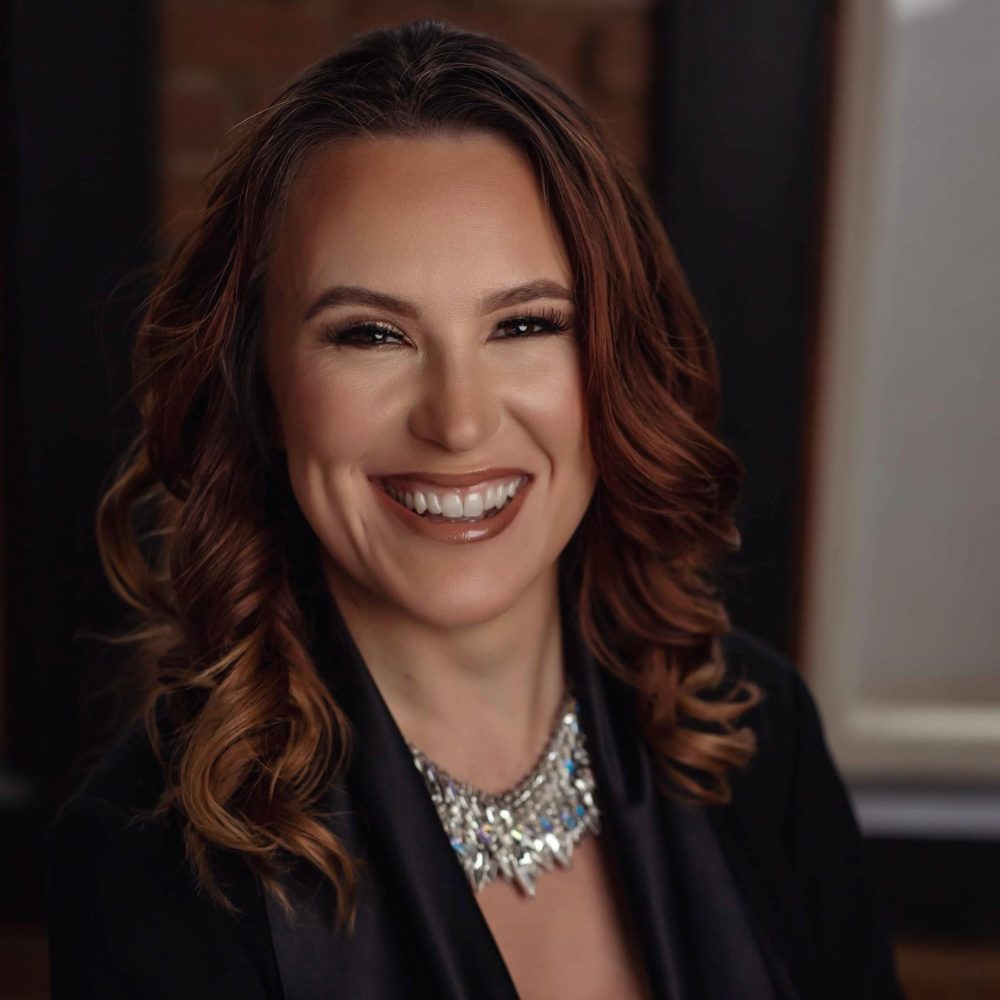
KathrynODayKathryn O’Day is a partner at Atlanta Ventures where she empowers entrepreneurs to learn, build, and grow.

She has been scaling Atlanta tech companies for over a decade as employee #9 at Pardot (acquired by Salesforce) and COO at Rigor (acquired by Splunk).

Kathryn lives in Atlanta with her husband and two sons. She is a 7x Ironman Triathlon Finisher including two World Championships.

Connect with Kathryn on Linkedin and follow Atlanta Ventures on Facebook.

What You’ll Learn In This Episode

  • How to pick a market and idea when getting started
  • How to find authentic demand
  • How to test ideas

This transcript is machine transcribed by Sonix

TRANSCRIPT

Intro: [00:00:04] Welcome back to the start of Showdown podcast where we discuss pitching, funding and scaling startups. Join us as we interview winners, mentors and judges of the monthly $120,000 pitch competition powered by Panoramic Ventures. We also discuss the latest updates in software Web3, Healthcare, Tech, FinTech, and more. Now sit tight as we interview this week’s guest and their journey through entrepreneurship.

Lee Kantor: [00:00:38] Lee Kantor here another episode of Startup Showdown podcast, and this is going to be a good one. But before we get started, it’s important to recognize our sponsor Panoramic Ventures. Without them, we couldn’t be sharing these important stories. Today on Startup Showdown, we have Catherine O’Dea with Atlanta Ventures. Welcome, Katherine.

Kathryn O’Day: [00:00:57] Lee. Thanks so much for having me. It’s great to be here.

Lee Kantor: [00:01:00] Well, I’m excited to be talking to you. For those who aren’t familiar, can you share a little bit about Atlanta Ventures and how you’re serving folks?

Kathryn O’Day: [00:01:06] Absolutely. At Atlanta Ventures, we empower entrepreneurs to start, grow and learn. We found companies out of our venture studio. We do early stage investment in tech subscription companies, and then we are passionate about paying it forward. So we do tons of events, blogs, podcasts, anything to help entrepreneurs grow amazing businesses.

Lee Kantor: [00:01:33] Now what is your back story? How did you get involved in this line of work?

Kathryn O’Day: [00:01:37] Yep. So I am a Spanish major who liberal arts degree who found her way into tech.

Lee Kantor: [00:01:45] So it was just a logical, logical path that other Spanish majors go through. Right.

Kathryn O’Day: [00:01:51] Exactly. Exactly. I stumbled into into the Atlanta tech scene a decade and a half ago, and the company that I joined was Pardot, which was an amazing story here in Atlanta, and it was acquired by Salesforce. And then I went on to be a CEO at another tech company acquired by Splunk. And and then I, I turn I guess they say turn to the dark side to join venture. But but throughout all of that, I had worked closely with David coming to founded Atlanta Ventures and his passion aligned with my passion, which is helping entrepreneurs. And so that’s how I ended up at Atlanta Ventures.

Lee Kantor: [00:02:37] Now you use the word dark side, and I know you were kidding around, but from a lot of startup founders. Listen to this. And can you give some insight into since you’ve been on both sides of the desk there, can you give some insights into maybe the mindset of a VC and how, you know, what you would have maybe done differently if you would have known that as you were an entrepreneur and startup founder? Not maybe not a founder, but at least that the earliest stages of a startup, you know, kind of give some empathetic perspective from the founders standpoint of of what a VC is looking for and and really kind of red flags, yellow flags and green lights when it comes to their pitch.

Kathryn O’Day: [00:03:24] Sure. So what VCs? Vcs have bosses. They have investors that they need to show returns to. And so VCs want to invest in something that’s going to show big returns. And the thing I think what sometimes people don’t understand is that there’s amazing companies of all shapes and sizes, but there’s only a small subset that is that hits the qualifications for VC investment. And what VCs look for is they look for really big markets, they look for really big opportunities. So people build amazing businesses in $10 million businesses or $15 million businesses, and those are amazing, but they don’t always have the scale that VCs are looking for. So I think the biggest learning from being on this side of the table is really to think about the market and the idea and how big the market is going to be. And also that competition isn’t scary. Competition validates that. It’s a great idea. And there’s a lot of people there’s a lot of room for winners in that space.

Lee Kantor: [00:04:40] Yeah, I think that kind of the managing of the expectations is important in this, that it forces are looking for kind of home runs or grand slams and your thing might be a great lifestyle business. It might be a great small midsize business, but it may not be appropriate for a VC. So don’t take it personally. It’s, you know, it, you know, just kind of be what you are rather than getting frustrated by the process or feeling like, you know, it’s, you know, they don’t get me or they don’t understand.

Kathryn O’Day: [00:05:12] Absolutely. That’s exactly it.

Lee Kantor: [00:05:14] So now when you are working with an entrepreneur, can you share a little bit about how I know you helped them by giving them funds? A lot of times. But really, I would think the more important aspect of the partnership with the VC is kind of the connections and the help to make their business the best it can be. Can you share a little bit about how you help an entrepreneur kind of bring out the most value from their startup?

Kathryn O’Day: [00:05:43] Yes, we like to ask a lot of questions. We think that. So first of all, every entrepreneur is different and we want to play to their strengths and we want them to be their best self. So we want to kind of there’s not a playbook that we use for everybody. It’s what’s right for based on this entrepreneur’s personality and their goals. So that’s the framework that we look at our anybody that we’re trying to help. And then what we’ve found also is it doesn’t help to tell people like people don’t want to be told, you know, so if people ask a question, we’ll always answer it honestly. And then we like to ask a lot of questions to help people think through things and make sure they see all sides of the problem or they are looking at all avenues for that. So we find it’s really every every investor is going to have good connections. Most investors have lots of experience themselves at Atlanta Ventures. We are all we all have a startup background. So we come from deep startup experience. We’re not the quote unquote spreadsheet jockeys, but the so that’s the the lens from which we look at things and how we try to help entrepreneurs.

Lee Kantor: [00:07:07] Now, when an entrepreneur is kind of going on this adventure, one of the most kind of foundational things that they have to do is to kind of pick a market and when they get started, right? So how do you help them hone in on maybe that ideal customer or that market that is ripe for a solution that they might be working on?

Kathryn O’Day: [00:07:32] We like to look at markets in terms of what is going to be really big a multibillion dollar market in the next 3 to 5 years. Some of those markets are not big markets yet, but they will be. An example of that is the creator economy. It’s getting bigger and bigger and bigger, but it’s still going to get even bigger. So what are tools that freelancers, people working remotely, people doing solo entrepreneurship? What are what does that ecosystem look like in 3 to 5 years? That’s an example of how we would think about a market. The other piece, of course, is founder market fit. So what things are is a founder passionate about because they’re going to be doing this business for the next decade of their life. So we want it to be interesting and exciting for them every day. And then the other piece is, once you identify a market to how do you find the authentic demand within the market? And we talk a lot about authentic demand. And that’s where people are pulling you. Customers are pulling you. They will pay you before you’ve built the product. They will pay you even when there’s a lot of bugs in your product. And so that’s the other piece that we’re always looking for is we think there’s a big market. What’s the right slice to start with in this market where the pain is most acute?

Lee Kantor: [00:09:09] But can we just kind of pause on that one for a second? When you’re talking about authentic demand and you’re using the words pay you. So you have to kind of discern between, oh, a lot of people are following me or liking me where there’s no skin in the game, where they’re just saying, Yeah, thumbs up. You’re I want that. And the difference between I pay for that. So it’s better to have people paying you, obviously, than just liking you. So is that kind of one of your signals that maybe you’re on to something when they are more more apt to pay rather than just, you know, just like or just say, yeah, that sounds good. When you get it built, then I’ll buy it.

Kathryn O’Day: [00:09:54] Exactly. We recommend a book called The Mom Test. And the idea behind the mom test is that. If you ask for feedback on your idea, everyone is going to tell you they like your idea. Everybody like your mom is going to say, Oh, that’s wonderful, honey. But what you really want to do is ask questions about people’s pain and what problems they have, and then see if it’s painful enough that they would pay you money to fix the pain. So one of the key criteria that we look at is do you have unaffiliated paying customers that love your product? One of the mistakes that we see people make is they have such optimism and belief and vision, which is amazing, but it leads them to a path where they say, I’m going to build it and then people will come. And the joke is like, What’s the best way to fund your company to get customers to pay you? And so if a customer is willing to pay you for your product, you know you’re onto something that should be your first test. Don’t build anything until somebody says that they will pay you and that they’ll give you that money upfront and then you can start building.

Lee Kantor: [00:11:09] Now, when you are kind of growing in that manner, that tends to be obviously slower in some respects because you’re kind of going out to the market and and having to find these early adopters, the people that are willing to take that kind of a risk without seeing something that’s real. How do you kind of go about identifying those early adopters? And then once you have that pool of them, how do you kind of adjust to get beyond the early adopters to get to more of a mass appeal?

Kathryn O’Day: [00:11:41] Yes. So your early adopters are hopefully the people that you have done customer discovery with that you’ve interviewed to understand what their pain is. And the pain again is so acute that they’re willing to take a chance on you or on an unproven product because it’s worth it to solve the problem. In terms of how do you how do you scale to the next level? Well, once you have customer case studies, enough customers that you have reference customers, then it becomes easier and easier to bring on some of the people in the middle who are not quite the early adopters. And we saw that a lot at Pardot, where I started part out when we had 80 customers and by the time I left, we had hundreds of customers. And so that that second wave of customers, you know, I think the key there is giving them an amazing customer experience. And then also always be listening to what your customers are asking for and what they need. And then to continue to build for the 80% of your customer base. If you get too sucked into doing one offs for edge cases, that can be a big distraction. But if you stay focused on your core customer and solving 80% of their problems, you are going to be in a great spot to be able to scale.

Lee Kantor: [00:13:09] And that tends to be kind of a trap for the technology driven founder where they like to add more like, Oh, it wouldn’t be great if it did this. Oh, wouldn’t it be great if it did this? And then all of a sudden the the scope of the project and the product is. So maybe it’s diminished from that 80% that you should be focusing in on.

Kathryn O’Day: [00:13:29] It’s a it’s a trap for for technologists and everyone, especially people who care about their customers. And they want to say yes and they want to help people. So it’s really a trap for everyone. And it takes a ton of discipline to say no. And you have to keep your eye on the prize to be able to understand what to say yes to and what to say no to. We we talk a lot about if it doesn’t if 80% of your customers won’t use this feature, if you need at least 80% of your customers to use the feature to build it. So if only 20% will use it, then you better have a really, really, really important business justification to do it.

Lee Kantor: [00:14:13] Now for you, what’s the most rewarding part about working with these kind of early stage founders and entrepreneurs like in Your Job Now? I’m sure you were dealing with lots of them, whereas when you were in a startup it was just heads down like a laser, just focusing on the task at hand. And so these are different, I guess, different types of skills, maybe in different types of rewards that you’re getting. At the end of the day.

Kathryn O’Day: [00:14:40] I, I absolutely love my work. It is so fun to talk to people who are insanely smart, insanely optimistic, they’re passionate about changing the world. And that’s who I interact with all day, every day. And so I love being on the building side, too. Like building, there’s nothing more rewarding than building a company. And now on a side where there’s nothing more rewarding than talking to amazing people changing the world every day. So my favorite part is, is literally just being surrounded in a in a world of people who are building the future.

Lee Kantor: [00:15:21] And then when you’re around those people, it’s hard to be kind of cynical and pessimistic. Right. These people are, you know, let’s run through the wall every day. So you get kind of caught up in the emotion of that. That’s every day. You probably feel like, wow, this was a good day.

Kathryn O’Day: [00:15:40] Yes. Every day I come home and I’m so fired up, and then I have to. Well, I was going to do that. And then I’m then I have crying kids and.

Lee Kantor: [00:15:55] The other.

Kathryn O’Day: [00:15:56] Interrupts.

Lee Kantor: [00:15:58] So do you tend to look at your children as a start up?

Kathryn O’Day: [00:16:02] Yeah, actually there’s a lot of lessons in both situations where it’s about a lot of patience, a lot of longevity and looking towards be, looking towards the future and letting that drive you and keep you focused. You’ve been through the ups and downs. So there’s there’s a ton of parallels there.

Lee Kantor: [00:16:21] So now how did you get involved with Start Up Showdown and the Panoramic?

Kathryn O’Day: [00:16:26] I love this story because I think it speaks to the connected nature of the startups of Atlanta especially. And I knew Tammy McQueen when she worked at Sales Loft and I was working at Pardot and Rigger, and so we were all part of the Atlanta Ventures family of portfolio companies. And so I knew Tammy really well through her marketing efforts. She was fantastic, and then it was really fun once we both ended up in the investing world to reconnect. And I mean, what she was what they’re doing with sort of showdown is just tremendous. And it’s an amazing program.

Lee Kantor: [00:17:10] And then for founders that are getting involved in start ups showdown across the country. Any advice for them to get the most out of the experience?

Kathryn O’Day: [00:17:23] That’s a great question. I think, you know, asking putting your best foot forward. So being prepared and everyone is and then getting the feedback from the judges and taking that to heart. And then funders do get a lot of feedback from everywhere. So it’s important to listen and then see what works for your company.

Lee Kantor: [00:17:52] And for for you at Atlanta Ventures. What’s next? What do you need more of and how can we help?

Kathryn O’Day: [00:18:01] I love that. Thank you. What I am passionate about is helping entrepreneurs. We’re always looking to partner with entrepreneurs in our venture studio. So if there’s any entrepreneurs listening that are looking for their next company idea, they’ve started something before. They know they want to start something else, but they’re trying to find an idea or a market that matches. We’d love to talk to them.

Lee Kantor: [00:18:30] And then if they want to learn more and connect with you or Atlanta Ventures, what’s the website or best coordinates.

Kathryn O’Day: [00:18:37] Atlanta Ventures dot com and connect with me on LinkedIn I’m also on Twitter and I’m also at Katherine O’Dea dot substack dot com. It’s called the OA Daily the very, very punny.

Lee Kantor: [00:18:53] And what do you talk about on that?

Kathryn O’Day: [00:18:55] I talk about practical advice for startups and sometimes some life advice mixed in because startups in life are very intertwined.

Lee Kantor: [00:19:03] Absolutely. Well, Katherine, thank you so much for sharing your story today. You’re doing such important work and we appreciate you.

Kathryn O’Day: [00:19:09] Awesome. Thank you so much, Leigh. It was wonderful to be on the show. And what Startup Showdown in Panoramic is doing is just amazing.

Lee Kantor: [00:19:18] All right. This is Lee Kantor. We’ll see you next time on Startup Showdown.

Intro: [00:19:23] As always, thanks for joining us. And don’t forget to follow and subscribe to the Startup Showdown podcast. So you get the latest episode as it drops wherever you listen to podcasts to learn more and apply to our next startup Showdown Pitch Competition Visit Showdown Dot VC. That’s Showdown Dot VC. All right, that’s all for this week. Goodbye for now.

Tagged With: Atlanta Ventures, Kathryn O'Day

Zoe Newman With Capital on Tap and John Lariccia with WelcomeHome Software

October 19, 2022 by Jacob Lapera

John Laricio
Tech Talk
Zoe Newman With Capital on Tap and John Lariccia with WelcomeHome Software
Loading
00:00 /
RSS Feed
Share
Link
Embed

Download file

John Laricio

Zoe NewmanZoe Newman joined Capital on Tap in 2012, its founding year, fresh out of school. She has worked her way around the business from operations, product, partnerships, and, most recently, launching the product and team in new geographies.

Having recently moved from London to Atlanta in the US, she is now the US Managing Director and building out the US business and team – along with enjoying all the new local Southern experiences and culture…and the fried chicken!

John LariciaJohn Lariccia is the CEO and Founder of WelcomeHome Software, which provides senior living operators the most innovative sales and marketing tools available. Prior to starting WelcomeHome, John was a senior partner with Bain & Company, the global management consulting firm.

During his two decades with Bain, John worked in the Atlanta, San Francisco and London offices. He was a member of Bain’s Private Equity Practice and the founder of Bain’s work with financial investors in the Southeastern United States.

Within private equity, John has led over 200 due diligence assignments, more than a dozen portfolio engagements, and multiple fund strategy and organizational design projects. Outside of his work with financial investors, John has worked in a number of industries including software, logistics, retailing, construction, manufacturing, media, consumer packaged goods and telecommunications.

His work experience has included a wide range of projects including corporate turnarounds, operations excellence, growth strategies, mergers and acquisitions, and pricing policies. Earlier in his career, John served in the Department of the Air Force’s Office of the General Counsel, specializing in government acquisition and resource planning.

John attended the University of Virginia School of Law and earned his Juris Doctorate in 1996. John is also a graduate of the University of Notre Dame where he received a Bachelor in Business Administration degree in finance with high honors. John resides in Atlanta, Georgia, with his wife and five children.

This transcript is machine transcribed by Sonix

TRANSCRIPT

Intro: [00:00:07] Coming to you live from Atlanta, Georgia. It’s time for another episode of Tech Talk with your host, Joey Kline.

Joey Kline: [00:00:17] Good afternoon and welcome. So, as always, try and think that we have some of the more interesting companies in the Atlanta area. On this show, we try and stay away from, you know, your standard 20th marketing automation firm. And these two companies that we’re going to have today I think are doing something really unique within both their sectors. So first, we’re going to talk to Zoe Newman, who is the managing director of the US at Capital on tap.

Zoe Newman: [00:00:41] Hi, Jerry.

Joey Kline: [00:00:42] Hello. And then we are going to chat with John Lariccia, who’s the CEO and co-founder of WelcomeHome Software.

John Lariccia: [00:00:48] Hey, Joey. Thanks for having me.

Joey Kline: [00:00:49] Sure. So we have two seemingly disparate industries that we’re going to discuss today at a high level financial services with capital and TAP as well. And then senior living and and that space in the growing need for CRM in that space with John. So as always, we’re going to start with the first company in the alphabet which would be capital on tap. So that would be you.

Zoe Newman: [00:01:14] Yes.

Joey Kline: [00:01:15] So you have you have only worked at capital on tap?

Zoe Newman: [00:01:19] I have, yeah. I graduated from university ten years ago and first first job out of uni. I met co-founder David Luck and the team. When we were just getting started, there was less than ten people in the office and I joined as customer service, jumped right into it and helped kind of figure out what our products would. Our our market segment we were going to go after was going to be. And then, yeah, I’ve been been working in building and supporting the team at Gap on tap ever since.

Joey Kline: [00:01:50] Okay. So I think that when when someone thinks of the standard professional story of a millennial, which is obviously a very wide range of ages, they think of someone who jumps from job to job, maybe doesn’t have too much company loyalty. I think there’s a number of things wrong with that. For certain reasons, however, you are seem to be the epitome against that. So were you specifically looking for something entrepreneurial when you graduated or just happenstance? It’s, hey, here’s the opportunity. Let’s see what happens.

Zoe Newman: [00:02:23] Yeah, it was definitely the latter. So yeah, didn’t really know what I was getting into in 2012. Even the term tech fintech didn’t kind of really exist. It definitely didn’t exist for me. And yeah, a lot of friends at the time were just jumping into grad programs, management, consulting, banking, and I wasn’t sure what I wanted to do. And yeah, just stumbled over the opportunity and met a great team. And that’s really the thing that’s kept me with capital on tap ever since, is is working with the amazing people we have on the on the team and your comment there on jumping job to job I feel like I’ve kind of done that but at the same employer the same company. So I’ve had the opportunity to do a lot of different things during my time at Capital ONTAP, which is the the main reason I’ve saved. I’ve been interested and been challenged, and those opportunities has definitely kept me kept me here.

Joey Kline: [00:03:18] Okay, let’s for anyone who is going to shut this off, although you shouldn’t, you need to keep listening. But for anyone who just wants the high level, let’s talk about what capital on tap does. So everyone gets an idea from the outset.

Zoe Newman: [00:03:29] So we are a small business credit card and we are purely focused on supporting local mom and pop shops, retailers, construction companies, the kind of high street, small businesses that kind of are running our our economy in the UK and the US are our current markets that we’re that we live in. Kind of mission is to make that as streamlined, easy, simple as possible and provide a great payment solution, a great product and service that is built just for SMEs.

Joey Kline: [00:03:57] And so what is the model now where people just maxing out their credit cards and getting as many as they can?

Zoe Newman: [00:04:04] I think there’s there’s it’s interesting, actually, the markets, the UK versus the US has definitely been a learning curve for us to kind of see the difference in competition and difference in in credit usage over here compared to the UK. But I think it’s really small businesses trying to find the, the credit card provider that best works for them and is kind of building a product that is kind of specialized and bespoke for what their needs are. So if you can provide the best product in terms of integrations to QuickBooks or the best employee cards that have the right restrictions and right management tools, those are what is kind of those pain points that small businesses face. That is what we’re trying to build to to make their lives easier.

Joey Kline: [00:04:47] Is this something that a Visa or MasterCard or American Express either doesn’t want to do or just or has ignored or simply just can’t do? Because, you know, they’re just too focused on on other types of businesses and customers? Why does it take someone else to come in and do this?

Zoe Newman: [00:05:08] Yeah. So I think our cards are actually issued by Visa, and so kind of the card issuing platform behind the banks is the Visa or MasterCard or Amex. And in terms of our competition, it’s the the American Express, the Capital One, the Chase business cards that are out there. But what we’ve seen historically is that those banks are actually servicing a lot of different people with a lot of different products. And actually that focus and providing the perfect small business credit card is what we really want to do. And we’re we’re here to build it and listen and get that feedback from our from our customers to to evolve and to kind of adapt quickly to what they’re they’re looking for.

Joey Kline: [00:05:47] Okay. So so it’s the specialization. It’s the kind of focusing on one lane and really being the best at that. That is seems to be what differentiates.

Zoe Newman: [00:05:56] Exactly. Yeah.

Joey Kline: [00:05:57] Okay. So you moved to the United States and specifically six months ago.

Zoe Newman: [00:06:03] Yep. Just over February.

Joey Kline: [00:06:05] Had you ever been to Atlanta before?

Zoe Newman: [00:06:07] I’d been a few times the previous year, so I actually really struggled to get over here initially because of COVID, and they weren’t letting anyone in from Europe for for a while. But yeah, I spent kind of a week per month here for the last few months of the year and yeah, got adjusted and was like, oh, I could, I could move out here, this would be fun.

Joey Kline: [00:06:25] And how why was Atlanta chosen as the United States place to plant a flag?

Zoe Newman: [00:06:34] Yeah, I actually was speaking to, to a company about this this morning. I think the three big reasons for us one was kind of our HQ is London. So time zones is is a is a real, real challenge, kind of jumping online in the morning and UK being halfway through that day. That’s tough if you’re in West Coast California. Sure, it makes it really tricky. And second, our CEO is originally from Atlanta and our CEO, he also is as well. And he’s moved out over here kind of a year ago or so. So kind of the connection was was strong. And then the third piece has been kind of talent, having some great universities here, a great pool of talent for us to kind of dip into. And yeah, just a great space in terms of entrepreneurial fintechs kind of seem to be sort of popping up here more than well, than a lot of other areas. And so, yeah, really kind of saw a huge opportunity from moving over here.

Joey Kline: [00:07:30] Yeah, it does sort of seem to be the, the nexus of that industry. Yeah. What have you noticed again, it hasn’t been that long, but just since you’ve been here, what have you noticed that you think that we as a city are doing a very good job of as it relates to growing technology companies, providing the right talent? And where do you think there’s a little bit of room for improvement?

Zoe Newman: [00:07:50] Yeah, I think the university pool of talent is definitely a huge opportunity. I’ve seen some really interesting kind of other organizations, particularly in the fintech space, FinTech, Atlanta, the team there and some other kind of fintech connections with the universities is really great and pushing people to be aware of it. As I said, I came out of university and didn’t know what fintech meant. So the fact that there’s a lot more kind of vocal involvement, the community around that, I think there’s a huge opportunity there in terms of what to do more of and I guess just continuing to push that out and to kind of one of the things I suppose that I’ve seen a little bit in the US compared to the UK is there seems to be kind of graduates come out of university and they have a a kind of connection to big names, big banks, big insurance companies, Home Depot here, Delta here. And it’s kind of how can the sort of startup opportunity be publicized a little bit more? Right? So in London particularly, it’s kind of great. Go work at a startup, a tech company. It’s a bit of a a bit of a gamble, but it’s going to be more fun and you can kind of make it more of an impression and more of a have have more responsibility in that role. And so I think kind of continuing to push that in Atlanta would definitely be a good thing.

Joey Kline: [00:09:06] I wonder if that. So I guess I’m trying to think to myself, what does that have to do with. Right. You know, I understand that for someone starting their career, there is it’s already scary, right? Entering a totally unknown company where maybe you’re sacrificing pay for equity. Do you have no idea what it’s going to be worth? That could be scary as well. Yeah. You know, I’m curious. I imagine that, you know, the UK probably has a much more generous public university system, public university system than we do. You know, this is just sort of us pontificating on the spot. I wonder if this has a little bit to do with well, you have people here who probably have a little bit more debt coming out. Totally have to really bank on that sure thing. But it’s do you do you think that it’s an Atlanta thing specifically that you saw where people are maybe kind of going to big names more or is this a US thing?

Zoe Newman: [00:10:02] I don’t have a solid answer on that. It’s just just. In my experience, Atlanta so far, and just kind of meeting some kind of recent grads or young people just kind of stepping into their career on the career ladder. Just just kind of anecdotally what I’ve heard and yeah, totally. I agree. Kind of having a massive student loan and it’s a safe bet to go to a grad program where you’re going straight onto a good, good salary. But yeah, for me it’s the opportunity to learn faster, be exposed to more and to really get thrown into something. You’re going to learn fast and learn on the job. If you’re jumping into a small company that, as you say, could, could, could pay off and could work out really well, but for me is definitely worth the worth the gamble, I.

Joey Kline: [00:10:46] Think I look, I would agree I’ve you know, until recently I’ve really only worked at small companies. And the fun is that, you know, it’s just it’s always different. You get to see everything. I think for someone that gets bored easily, it’s quite useful. Slash necessary. Okay, so you’ve been here for six months and what is the charge for growth in the US? Is this simply, Look, we’re very popular in the UK. We really need you to come over and just scale this across North America.

Zoe Newman: [00:11:15] Yeah. Yeah, exactly. We saw some amazing traction in the UK with our products, small businesses across the UK. We’ve got over 120,000 small businesses we’ve supported there and had built that technology and that foundation and realized it was possible to kind of bring that over to a new market, take that sort of vision, one really a copy and paste format and then iterating it to the market. And so adjusting our credit underwriting, adjusting the product and tweaking some of the communications and yeah, just seeing a really big market opportunity where there’s a ton of small businesses here that we that we’re really keen to support.

Joey Kline: [00:11:52] What is the sales marketing process like? Because we’re talking about I mean, these could be, you know, 5 to 10 person companies, right? Some of them even less than that, a floral shop bar, you know, I mean, really the we’re not talking about the big chains. We really are talking about the one and a half one off mom and pops. Yeah, that would seem to be quite a wide market. That would also seem to be quite a quite a challenge in terms of focus.

Zoe Newman: [00:12:19] Mm hmm. Yeah. So I think our marketing strategy has been really kind of combination of online marketing. So looking at affiliates like a credit karma, nerdwallet sort of the traditional platforms that you go to if you’re looking for a credit card, we look at some kind of social pieces. So we’ve had some good traction on on Facebook, YouTube and advertising on there. And then we also do some direct mail. So kind of reaching out to small business owners directly. One of the challenges we found is over the above the line marketing. So kind of posting on TV ads or kind of doing billboards where it’s quite expensive and it’s not so targeted really the market we’re kind of going after as those small businesses rather than kind of broader consumers. So, yeah, really trying to focus in and use the technology and availability that we’ve got with online marketing to kind of focus in on that segment. And the same with our data analytics team. We have an amazing team that kind of help us find the right small businesses to send out those letters to. And that kind of means that we have the businesses that are most likely to respond to us and get approved. So those basically those two channels are really our focus at the moment.

Joey Kline: [00:13:32] And is as much of the customer base, at least as far as the US goes in Georgia, the Southeast, is it all over? How does the geographic focus break down?

Zoe Newman: [00:13:40] Yes, we’re all over. We’re not not kind of focused in any particular geography. We’ve got customers in Hawaii, we’ve got customers in Alaska and New York across the whole of the states. And one of the interesting things I think that’s come out of our launch in Atlanta is we have done a bit more PR than we previously done in the UK or had done before, just based on kind of launching in the city, kind of employing and building our team out here and getting our kind of office space set up. And so we’ve actually seen quite a lot of traction in the Atlanta area, seeing a lot of entrepreneurial kind of small business community here. That’s something that I’ve been trying to get involved in just some really interesting events and entrepreneurial focused kind of networking opportunities that I think has kind of driven quite a lot of traction here as well.

Joey Kline: [00:14:27] Okay, that makes sense. And our outlook, obviously, this is very early on into your tenure here and it’s important to scale up. I’m curious if there are other ancillary financial products that you guys are thinking of rolling out in the future. You know what? In addition to just simply blanketing the marketplace with Marketplace with as much coverage as you can, what else is on the horizon?

Zoe Newman: [00:14:54] Yeah. So for us, we’ve still got work to do to get our our business credit card to the best it can be. We’ve still got more opportunities connecting in with QuickBooks, with card management, virtual cards. All of those those features that we really want to deliver to our customers. And we have been looking into kind of general B2B payments. So I hadn’t used a checkbook in 20 years until I arrived in America. And so I think there’s still some opportunity that the US has in terms of businesses paying their suppliers, making those payment solutions more streamlined. So that’s something we’re definitely looking into and kind of probably the next opportunity that we that we see. And then obviously kind of considering other markets, geographies is, is the other approach is the way we look at it is either we keep really focused on our one product and look at new markets or we start to kind of drill in on our two markets we’re in now and look at those other other products or opportunities.

Joey Kline: [00:15:52] Sure. So let’s I want to switch to kind of you and your your leadership style, the culture you’re trying to build because you’re in a very unique position in that you have this team here in Atlanta and you are all part of a larger company, but you’re also kind of your I recognize that for, you know, business licensing reasons, you’re not your own entity. Right? But it’s like, you know, you sort of are just based you know, you are geographically separate. It probably feels like you’re sort of a team within a team and you’re kind of the CEO of the team. And so you function as both, I imagine, an executive leader of the company and also kind of a CEO of this business unit. How how does it work? What are you trying to build here? What are you trying to foster in the community and and the people?

Zoe Newman: [00:16:44] Sure. So I think one of the best traits features of capital on tap in the UK has been the culture that we’ve built and the team that we’ve built. As I said, I’ve stuck it out for ten years. If I didn’t like the people I was working with, I probably would have laughed a lot sooner. So yeah, keen to kind of replicate that, that great culture that we’ve built in the UK and trying to kind of take any of those really positive kind of traits that we’ve got and replicating those over in the US. So as an example, I think one of the reasons I’ve been so engaged and kind of felt like I’ve been invested in and developed through my career at Capital ONTAP, TAP has been opportunities, autonomy being given kind of those projects to to run with and and kind of the get big. I would take that on my own and just figure it out. And so that’s definitely something we’re we’re trying to replicate here. So finding great talent, really ambitious people who want to make their mark and have the opportunity to do that and kind of have that autonomy to to kind of prosper, to succeed and to make their mark on the company. And as I said earlier, the opportunity to do that with a small business means you really can be okay, I want to fix this. I’ve got this idea. I want to run with it. Can I just go? And that’s that’s something we really want to foster and give give people that that chance, that opportunity to do that.

Joey Kline: [00:18:06] Yeah, I imagine it’s you are not just hiring for a certain set of skills. You are hiring for a mind set as well. Someone that you can trust and who wants to be autonomous.

Zoe Newman: [00:18:17] Yeah absolutely. And a lot of our team, our core founding team in the UK, none of us came from banks. We were all generalists. We all had kind of that experience in There’s a Problem, we want to fix it. We want to solve it in the best possible way, in the best experience for our customers. And similarly in the US, obviously we’ve got our fraud experts up in crime, those kind of core skills that we need to run a financial products. But outside of that, it’s it’s kind of ambitious, smart generalist that really want to kind of make a mark and get stuck in.

Joey Kline: [00:18:49] Yeah. And I assume you are hiring.

Zoe Newman: [00:18:52] Yes. Always looking for great people.

Joey Kline: [00:18:54] Yeah. Okay. And what kind of positions?

Zoe Newman: [00:18:56] So we are actually right now hiring for a head of credit, a head of growth and some a lead analyst data analysts that as I said, a lot of our marketing, a lot of our approaches are all super data driven and our business is run on run on data really. So kind of looking for more smart people in that area as well.

Joey Kline: [00:19:15] Okay. Well, everyone out there, if you’re a great candidate looking for an exciting new opportunity or if you are a small business capital on tap, I’m assuming. Yes. Yes. One capital with an A, everyone. Oh, okay. Well, Zoe, thanks a lot for coming on. I appreciate it.

Zoe Newman: [00:19:31] Thanks so much for having me.

Joey Kline: [00:19:32] Sure. Hey, John.

John Lariccia: [00:19:33] Hey there. I should have renamed my company. I don’t want to follow Zoe. I don’t know how I’m going to top that.

Joey Kline: [00:19:40] Well, you know.

John Lariccia: [00:19:41] I’m not.

Joey Kline: [00:19:42] Along. I think you’ll be fine. So. Senior living.

John Lariccia: [00:19:46] Senior living?

Joey Kline: [00:19:47] Yeah. So you’ve got. I like both of your stories. They’re very unique. Separately, you have Zoe, who’s just kind of grown with the same firm and has a lot of loyalty to this place, and you’ve got you that has made the jump from the big, bad corporate world into the fun startup.

John Lariccia: [00:20:06] Is that your way of saying I’m old?

Joey Kline: [00:20:07] No. You could have been in the big, bad corporate world for two years and then jumped. We don’t know how old you are.

John Lariccia: [00:20:12] That is.

Joey Kline: [00:20:13] True. Yeah. Okay, So. So headline. Let’s talk about Welcome home. Sure. Executive summary.

John Lariccia: [00:20:19] What you do know. So the executive summary is we are a technology company focused on helping senior living operators perform the sales functions more efficiently and effectively. That is the summary. You know, senior living operations are something that are hidden in plain sight. You’ll now start looking around and start noticing them. There’s a million seniors that live in residential care. It is an enormous business within the United States, almost $60 Billion, a million seniors living in these types of communities. And it’s an incredibly complicated sales process. It’s complicated from logistics standpoint. It’s complicated from the emotional standpoint that families are going through. And at the center of it all is a salesperson that’s well-meaning and extroverted but not always well supported. And we’re here to support that person, both with the technology and the form of the CRM, but also with our entire team.

Joey Kline: [00:21:18] Traditionally are I imagine it’s probably not necessarily even the actual resident that is looking. It’s typically maybe an adult child. It could be a spouse, I suppose.

John Lariccia: [00:21:31] Yeah. So it breaks down about a third of the time. It is the senior themselves that are initiating it, a third. It’s a family decision and the third of the time it’s entirely driven by the family. So you have an independent living, which is almost college on steroids and it’s driven by the senior. They sit there and whether they’re 65 or 85, they’re still spry and lively and fully independent, and they just don’t want to live in their home anymore. They don’t want to care for the yard. They don’t want to care for the neighbors. They don’t want to care for the kids that are that are running through their backyard and they downsize and they get to go into independent living and everything is taken care of. There’s amenities, there’s people driving them, there’s food that’s being served. The bar is always open. And so that’s that’s a third of the instances. And on the other end of the spectrum, unfortunately, you have a lot of seniors that are battling dementia and they can’t drive the process legally. And so the family has to take over. And a third of the time is somewhere in between where mom typically mom is starting to struggle with activities of daily living. She is coming to appreciate that the burden is being borne by the family and they all collectively come to the decision to to find an alternative way of living.

Joey Kline: [00:22:51] And so our most inquiry will look at whether it is sole family, sole elder, elderly resident or a combination. Are most of the inquiries that the centers get from some from the outside, or is there a lot of outbound push that a salesperson is doing? Yeah. What is the what is the pitch process there?

John Lariccia: [00:23:13] Yeah, it is shifted dramatically since the pandemic. So before the pandemic it was an equal mix where the sales director was calling on hospital discharge planner or senior centers or synagogues and making themselves known to establish that footprint and that relationship early. Yeah, When the pandemic hit, you couldn’t do that anymore and the need was still there. And so we’re now seeing upwards to 80% is inbound. It’s everyone is starting every search online, whether you’re buying a car or a house or now senior living. And so they will go on some digital platform, start researching and then do an inbound. It’s slowly getting back to normal. But I think that the kink is the kink of the curve is more systemic and structural.

Joey Kline: [00:24:03] Okay. So I want to talk about the ins and outs of the product and the experience. But let’s let’s move back for a little while. Okay. So you come from the consulting world.

John Lariccia: [00:24:13] I believe I do.

Joey Kline: [00:24:14] And had you worked on in this industry, how did you identify and get passionate about this problem?

John Lariccia: [00:24:21] Yeah, so I spent 20 years in management consulting at a place called Bain and Company, and this is a very funny small world. I’ve just met Zoe, her CEO. David Locke. Yep. I hired him out of Emory.

Zoe Newman: [00:24:35] Really?

John Lariccia: [00:24:38] Yeah. And. And I remember when he moved to the UK and around halfway through my two decades there, I had the good fortune of working with a senior living community. And like a lot of folks that have a brush with senior living, you fall in love with the people, you fall in love with the mission. But I was quite simply appalled by the technology they were using. And, you know, I just. But in the back of my mind. And then over the course of the next decade, I worked with a variety of other operators and kept finding the exact same thing and got to a point where it’s like, Well, are you going to do something about it, or are you just going to keep lamenting it? And so that just gave me the context that this was a real issue and it gave me contacts that I could I could reach out as I was exploring what to do.

Joey Kline: [00:25:29] Yeah. You never know. You never know what those early life experiences are going to lead to. Right. That’s exactly right. So what are the folks that you would consult with as well as the ones who are not using your system? What are they doing? Is this just an Excel spreadsheet? How does it work?

John Lariccia: [00:25:46] It runs a gamut. So some folks are using nothing more than paper and pen. Excel would be the next step up, right? There are handful of systems that try to do every single function within a senior living operator, whether it’s managing the menu to sending out the invoices to the clinical records, and they’ll have a CRM that’s tacked on to it. Typically, you pay nothing for it and you get exactly what you’re paying for. And on the kind of far end, you’ll have a few folks that have gone so far as to have a salesforce and do a customized build of Salesforce, which is incredibly expensive to maintain and to understand how to operate. So we are going to all of them with Welcome Home and and having them migrate, whether it’s from something like a Salesforce to to paper and pen and so.

Joey Kline: [00:26:39] Obviously I get the pitch from paper and pen and excel to welcome home. Right. What I’m curious about is why a company like a Salesforce can’t customize this. And I’m going to I’m going to guess you can tell me if I’m right, but it sounds like, one, it’s too expensive for what it is. Because because of course, you have the that that that person is partially subsidizing all the other stuff at Salesforce that they focus on. And too, it’s probably just too complicated for what they need.

John Lariccia: [00:27:10] Yeah, that’s that’s exactly that’s what came screaming through when we were even thinking about building the CRM, which is my power user, is not necessarily a technologically adept individual who doesn’t want to become technologically adept. And so the key was building a piece of software that was easy to use, but also simultaneously useful. And so we like to joke that ours is incredibly robust, but that’s behind the scenes. When you log on, it looks like something that I imagine your kids would know how to use. And so there’s a lot of popular phrases about gamification, but at the end of the day, it’s make it user friendly and make it useful and and allow folks to kind of get on with their day, with without having to spend a lot of time getting up to speed on how to use a piece of software.

Joey Kline: [00:28:04] This seems like one of those industries. And it’s always interesting to me when I come across one of these that have not been truly changed by technology yet because they seem to becoming, you know, smaller and smaller, whether it is tech, whether it’s industry or function. And this seems to be one that there’s probably a pretty big old green field of opportunity out there.

John Lariccia: [00:28:26] We certainly hope so. And we launched the product three years ago and had three different pilots and now we’re into 4500 different, different clients using it. It’s humbling, but it’s also very gratifying because, as most operators would say, they are probably 10 to 15 years behind most other industries. Mm hmm.

Joey Kline: [00:28:47] And what percent I’m trying to kind of figure out how much of this is an enterprise sale and how much of this is kind of a one off, right. You know, like, how are your people focusing? Is it geographic? Is it let’s just go after the largest users? How does that.

John Lariccia: [00:29:04] Work? Yeah, even an operator has a single community. This is change and change is hard. And the systems all have to talk to one another. So they’re all enterprise sales. They all take months from initial inquiry to to final conversions. Sure. And so we focus on slightly larger operators. They don’t have to have hundreds of communities. They have five communities. That’s kind of a target market for us. And we have three salespeople and we’ve divide it up the nation based on geography as well as size. And so my head of sales is going after the larger. And then we have two executives that are going after the midsize and smaller based on where they are in the United States.

Joey Kline: [00:29:51] What is the distribution of industry concentration?

John Lariccia: [00:29:56] It is very fragmented, I would imagine. It is. You know, the the provision of of senior living is a very local enterprise. And so you have most of the operators that will have somewhere between ten and 20 communities and they’ll be clustered geographically.

Joey Kline: [00:30:14] Yeah, I think everyone probably gets a sense that there is a looming wave of a very large number of elderly people in the United States. And I’m curious from. Your bird’s eye view of this industry. Are there enough of these facilities that either exist or are being built to handle what is about to happen?

John Lariccia: [00:30:37] Yeah, the silver tsunami there aren’t is a short answer. But it also, again, is very local In Atlanta. We have enough to handle the wave. But if you go across the United States, you will find enormous pockets where there is undersupply.

Joey Kline: [00:30:57] I mean, I would imagine that this is you know, let’s let’s take just health care in general, Right? You have increasingly, you know, your major cities that are health care centers, and then you have the rural areas again, whether it’s in our state or in another that are deserts. Yep. And I’m going to guess that this isn’t really in the top 30 metros that we’re talking about that are issues. It’s in those outlying areas that aren’t growing or are shrinking.

John Lariccia: [00:31:24] Yeah, that’s right. So I’m from a place called Youngstown, Ohio. Youngstown, Ohio needs more senior living communities because it’s got plenty of seniors that need somewhere to go.

Joey Kline: [00:31:34] How do you incentivize Is it just that, you know, the big cities or the sexy places to do this and no one’s thinking about that lack of opportunity, but lack of competition?

John Lariccia: [00:31:46] Yeah, I think that’s what ends up happening, is that you have more and more data that you put in front of operators and developers, and they’ll start to realize that I just have to shift my focus 40 miles to the west and I’m going to find places that have opportunity that someone else hasn’t hasn’t gone to. Because the kicker in the larger cities where the operators and developers want to personally live and they want to work where they live is you build a beautiful community that suddenly gets full. Then another operator and developer is going to open one right down the road and you can get some of these smaller communities like Madison, Georgia, which is a lovely place. You build one, you’re going to get all the volume there for years and there’s really no math is going to tell you to build another one.

Joey Kline: [00:32:32] Big fish, small pond.

John Lariccia: [00:32:33] Exactly.

Joey Kline: [00:32:33] Yeah. Clearly, right now you are laser focused on this industry. When you look at this software, which would seem to have applications for other sales processes that aren’t fully technology ified yet. Right. I’m thinking, I don’t know. Lawn care, cleaning services, etc., etc.. Right. Do you do you look at that? And it’s this kind of shiny object on the horizon that you want to grab after? Or is it just, you know what? Let someone else handle that? We are focused on being the absolute dominating force in senior living.

John Lariccia: [00:33:13] Yeah. 20 years of being beat it into me that you want to focus, right? And as long as there’s opportunity in your core business, you should go after that. And so that’s part of my answer. The other part is senior living operators have unique challenges and I want to dedicate all my time to them and it resonates with them. When you sit there and say, My entire company is focused on senior living and how to make you better. Yeah. And so that’s what we’re going to do until we run out of, of opportunity, which I don’t see happening in the next couple of decades.

Joey Kline: [00:33:45] Yeah. Are there any other CRM companies out there that are solely focused on this vertical?

John Lariccia: [00:33:51] There are two that are solely focused on it, and we’re chipping away.

Joey Kline: [00:33:56] Excellent. Yeah. Okay. So at what point did you I imagine there was probably an overlap where you were at Bain and you were doing this as well? I didn’t mean to be that like a gotcha. I guess more what I meant was at what point, whether, you know, at what point did you make the full leap? Were you mentally there to do it?

John Lariccia: [00:34:20] Yeah. At the end of the day, businesses are about collection of human beings and and the collection of human beings that were the first few that were founding members. Welcome Home looked at me and said, We’re all in, Are you all in? And it was only fair to them to say, yes, it was time to to cut the cord and and and leave big bad corporate. Yeah. And and be there for them. And so, again, the pandemic helped because it forced me off the road. And so I was spending more time working in Welcome home and realize that this was the next chapter and this is where I wanted to be.

Joey Kline: [00:35:04] Yeah, that’s I think those sort of things become a demarcation line in the sand that divides time. Yeah, Yeah. Okay. And so, so you’ve, you’ve had roles in a large organization, you have roles in a small organization. Right now you’re running a small growing team. I mean, kind of similar question that Zoe and I talked about, but. What do you take from what you learned about leadership, either from your consulting clients or from Bain itself? And what do you take from there and bring to this new opportunity, whether things that you have dedicated yourself not to do or that you want to implement as well?

John Lariccia: [00:35:46] Yeah. Authenticity really matters, right? So I feel like it is going to resonate with clients, it’s going to resonate with recruits, it’s going to resonate with team members to just speak from your heart. Having a mission driven organization, which oftentimes I thought was just lip service matters because it’s a way to encapsulate what you’re there for. Culture. Culture kills again. It’s one of those things that before I was in the seat thinking about growing, I didn’t always believe or also I’ve just joined places that already had great culture and now that I have to build it, it is incredibly important. I had a client that refused to take the CEO title. He called himself Chief Culture Officer, and I kind of rolled my eyes at it until I was CEO. And you get to a certain point and we’re at 40 employees. It’s not even like we’re hundreds of employees and real jobs someone else has been hired to do.

Joey Kline: [00:36:56] That’s right. You’re not you’re not everything.

John Lariccia: [00:36:59] You’re not everything. Yes. And and so it’s like, all right, what exactly is my primary role here? And building and maintaining culture might not be number one, but it’s in the top five.

Joey Kline: [00:37:11] Well, I really do see it as you’re sort of like an orchestra conductor. Yes. They’re, you know, kind of pointing people in the right direction, making sure that they’re playing in sync. And yes, your date, certainly you’re still executing, right, Like your days of deep within each function, just, you know, by imperative have to go out the window at a certain point.

John Lariccia: [00:37:34] Yeah. Let’s dead on.

Joey Kline: [00:37:35] Right. Yeah. What I’m also curious about so you’ve look obviously you’ve been with this company since the beginning up until 40 people. Right. And the leadership needs when you’re under ten people or one thing the leadership needs when you’re 40 to 70 or another and then of course, past 100 is very different. So what are you doing now that you didn’t use to do and what do you think you’ll have to do in, you know, whatever when you double hopefully that you’re not doing now.

John Lariccia: [00:38:03] Defining and selling vision. Right. And even if it at times feels like Groundhog Day is something that is core to what I’m doing all the time. The other at this stage of of of our evolution and growth is I’m constantly thinking about organization constantly. Right in the beginning it was grab some team members, let’s serve and let’s just keep up. And now it’s about let’s be much more intentional. Let’s think about every single person’s development path within the company and, and, and overall as, as the leaders themselves and thinking about how do we make this not just survive, but but scale. And so that’s how I’m really thinking about it.

Joey Kline: [00:38:52] Yeah, that’s exciting.

John Lariccia: [00:38:54] It’s been great. Yeah.

Joey Kline: [00:38:56] So. Atlanta. Atlanta. Atlanta is a backdrop to your company. What are we good at? What do we need some work on?

John Lariccia: [00:39:06] What are we great at? You know, I do think that we are emerging to be very friendly towards startups and tech. It’s if I even think when a place like ATB started, it was a lone bastion, right? It was just sitting out there and now it’s much more expected. And so I think that. That there’s something that’s cool and hip and expect it and respected that you’re going to be in a startup world. I think that we’re still affordable relative to everything else. And so while people certainly are taking a leap to come here versus going to management consulting or go to Home Depot, the no one’s living in poverty, even if they have to take the pay cut. So I think those are both great. You know, where I think that we have room is probably much more a marketing marketing. Local companies for both employees to relocate to come here marketing so folks can seek outside capital. Again, we’re getting slightly better, but you know, startups are living off of people in capital.

Joey Kline: [00:40:28] That’s you started plan planet like this but you know really that is that goal is the reason why kind of the three of us are sitting around this table right now. And I do think that we’ve gotten much, much better at it. But at the end of the day, what you hear about most here are the Fortune one thousands. And not that those are not important and large employers and a large customer base for startups and small growing companies. Yes, not enough people really know about the really interesting things that are happening beneath the surface that the two of you all are doing as an example. And so, I mean, that is absolutely the reason why this exists and why we broadcast this out.

John Lariccia: [00:41:12] Yeah, And I think it’s a great service that you’re doing for Atlanta and the two of us and ones that came before and the ones that came after.

Joey Kline: [00:41:19] Didn’t didn’t certainly didn’t make the mean to make that self-serving statement. But it’s just I think it it reinforces the mission here.

John Lariccia: [00:41:28] Yeah.

Joey Kline: [00:41:29] So if you are a senior living operator or know someone adjacent to that community, welcome home software.

John Lariccia: [00:41:38] Is that that’s exactly.

Joey Kline: [00:41:39] It Welcome home software dot com.

John Lariccia: [00:41:41] And similarly you can find our job board there. We’ve gotten to this point with absolutely no marketing department so I am actively building a marketing department. We are looking for more enterprise account executives, we are looking for more customer success people. So we are hiring to to serve all of those clients.

Joey Kline: [00:42:03] Excellent candidates and customers alike Capital on Tap and WelcomeHome. Shameless self self-promotion. Zoe and John, thanks a lot for joining us today.

Zoe Newman: [00:42:14] Thanks, Joey. Thank you so much

Joey Kline: [00:42:15] And thank you everyone out there for listening to Tech talk. Have a great one.

Tagged With: Capital on Tap, John Laricio, WelcomeHome Software, Zoe Newman

Georgia State Senator Clint Dixon

October 19, 2022 by Garrett Ervin

Case In Point
Case In Point
Georgia State Senator Clint Dixon
Loading
00:00 /
RSS Feed
Share
Link
Embed

Download file

Clint Dixon and Rick Strawn

Clint Dixon/Georgia State Senator (District 45)

Born and raised in Gwinnett County, Clint Dixon has a passion for serving the community. Over the years, he has served Gwinnett County on the Planning Commission where he’s worked with homeowners, businesses, and landowners to champion common-sense zoning decisions. He has also been a leader in promoting the Ivy Creek Overlay and previously served on the Water and Sewer Authority where he fought to keep rate low.

Clint Dixon is no stranger to hard work. Like so many across the community, Clint is self-made in business and real estate. He got his start in the real estate industry in the early 2000s and has seen the ups and downs of good times and bad. He started his career in land acquisitions until the Great Recession hit. He then started Longleaf Realty which specialized in bank-owned properties. With a lot of hard work and sweat, he managed to survive. He then worked as the real estate, construction, and site selection Manager for Hewatt Enterprises in Lawrenceville. Today, he works as an Acquisition Manager for Chafin Homes.

A committed family man, Clint has been married to his wife Hayden for 16 years. They have 3 children, Hudson (12), Berkley (9), and Emsley (6), who all attend Buford City Schools. On the weekends, he can be found shuttling his kids around to cheer, football, and basketball practices or games.

Tagged With: business podcast, business radio, Business RadioX, case in point, case in point podcast, case in point radio show, clint dixon, georgia district 45, georgia state senate, gwinnett security company, gwinnett security firm, Paradigm Security, paradigm security podcast, paradigm security radio show, Paradigm Security Services, Radiox, Rick Strawn, safety, security, soesbe's garage, soesbe’s

Matt Teifke with Teifke Real Estate

October 19, 2022 by angishields

Matt-Teifke-headshot
High Velocity Radio
Matt Teifke with Teifke Real Estate
Loading
00:00 /
RSS Feed
Share
Link
Embed

Download file

Teifke-Real-Estate-logo

Matt-Teifke-headshotMatt Teifke is the Founder Teifke Real Estate (TRE), Longhorn Construction & Development, TRE Property Solutions, and TRE Homes Property Management. As the Principal Broker of TRE he employs over 150 agents and staff.

Matt also holds a Masters in Real Estate, Valuation, Analysis, Investment from Texas A&M University. Recently, he has returned to the classroom as a Professor at Austin Community College, teaching Real Estate courses with focuses in Law and Mathematics.

Teifke Real Estate was founded by Matt Teifke and Alex Coffman. Together, they seek to create the most enTREpreneurial real estate brokerage in the universe where there are no limits to what agents can do.

They prove a solution for those that want to make massive change. This is Opportunity City! Current locations in Texas include: Austin MSA, Houston, Dallas and Corpus Christi.

As a huge believer in the power of connecting and adding value, Matt seeks to shine light on what is possible and grow with others.

Matt earned his real estate license 13 years ago, at 18 years old, and is still just as passionate now about the Real Estate industry as ever. He grew up in Round Rock, Texas, and currently has two baby boys and is married to Lexi.

Follow Teifke Real Estate on LinkedIn, Facebook, Twitter and Instagram.

What You’ll Learn in This Episode

  • What it means to be enTREpreneurial
  • See the value of people on your team
  • We are looking for new partners to open TRE in new markets

This transcript is machine transcribed by Sonix

TRANSCRIPT

Intro: [00:00:04] Broadcasting live from the Business RadioX studios in Atlanta, Georgia. It’s time for High Velocity radio.

Stone Payton: [00:00:15] Welcome to the High Velocity Radio show where we celebrate top performers producing better results in less time. Stone Payton here with you this afternoon and you guys are in for such a real treat. Please join me in welcoming to the broadcast with Teifke Real Estate. The man himself, Mr. Matt Teifke. How are you, man?

Matt Teifke: [00:00:38] I’m doing great, man. I really appreciate you having me on. I’m excited and here to be of value and add as much value as I possibly can.

Stone Payton: [00:00:46] And you know, I believe every word of that. You and I had a chance to visit briefly a few weeks ago. I could hear it in your voice. The passion and a sincere commitment to genuinely serving, serving first, serving early, serving often. And I can’t think our mutual friend Josh Carnes enough for for getting us connected. And because of that, I have so been looking forward to doing this interview. I got a thousand questions. Matt. We’re not going to get to them all. But but maybe a good place to start. How would you articulate mission purpose? What are you and your team really, really out there trying to do for folks?

Matt Teifke: [00:01:23] Yeah, I love it. Great question. Start with the core values and the core focus and then I’ll give you the the dream and the vision that we are trying to accomplish. So core values as a company, we believe, number one, that there’s opportunities for everybody, no matter your race, your gender, anything. There’s an opportunity at TRE in real estate for you. We believe that everybody works with us and not for us. So we’re a team and we’re in the trenches with you to figure out how to grow together. And then lastly, we believe in having a no fear attitude and just jumping in headfirst and taking on challenges and the core focus as a business, we say in and on make money in and on real estate in as far as commissions, wholesaling management on as far as owning properties, flipping on, building generational wealth. And so the vision and the dream is for tree to be the brokerage where you come to get more out of real estate for yourself and to do that with others. And we say, Hey, come build your brand, build your team, be a real estate professional, utilize your license as one tool, but look for opportunities constantly. And I just believe that you have to be owning properties. And I think there’s a niche of people that get their license, that want to focus on the investing side, and then they really don’t find anybody who supports them to be an agent and an investor at the same time.

Matt Teifke: [00:02:59] And so all we want to do is help people create the life that they want with real estate for everybody. That’s something a little different. Some people only want to do leasing or they only want to do retail or traditional real estate. And so we say, Come here. Recognize that it’s your own small business at the end of the day, but have a built in partner that really cares and wants to help you get wherever you want to go. And I want to be able to go around the room and talk to 100 different people and say, Hey, are you getting what you need? Are you on fire? Yes. Are you? Yes. Next person, Are you? Yes. And those two be completely different paths or aspects of the business that they’re focusing on. And so come build what you want at TRE and let’s grow together. We currently have 180 agents that are with us. Wow. We do property management, we’ve got a fund, we have construction company and all different ways to add value. So we say come and drum up conversations. Talk to everybody and then let’s figure out ways that we can grow together.

Stone Payton: [00:04:08] So I got to know, man, what is the back story? How in the world did you get into this line of work?

Matt Teifke: [00:04:16] Yeah, great question. So my mom moved to Austin when I was two years old. I was born in Cleveland, Ohio, and she came here single mom with my brother and myself growing up. She raised us and she started cleaning houses when she got here. And over a 13, 14, 15 year time period, she would buy one or two properties a year. She would save up every dollar she could. She’d buy property. Eventually she got out of cleaning houses and she was working at a family business. And my uncle started doing sales for striping and paving for concrete company and asphalt. And she then she was able to buy three or four a year because she was making a better salary. And so I was very blessed to see how can somebody acquire assets and what does it look like to acquire assets? And by the time I was 20 years old, I think she had 17 properties and by no means was she raking in the money and making tons of money every month. But she was building something for the long run. And so I got to see what does it mean to own these properties? It doesn’t mean that you’re ready to retire. It means that you’ve got to prepare and manage these and have a good plan. And then also, what does it take to buy these properties? And it’s just a significant amount of sacrifice. There’s definitely a high level of risk involved, and I was very blessed to see her do that. And so 18 years old, I got my real estate license and went all in with the goal of Let me learn how to help other people buy and then let me go and buy my own properties over time.

Stone Payton: [00:05:53] Well, shout out to mom. That is a fantastic story. So this has got to be mine. I can hear it in your voice. It must be incredibly rewarding work. What are you enjoying the most about it now?

Matt Teifke: [00:06:10] I love the ability to make new relationships and help people break out of barriers that they thought existed and to do that with them. And I get to have them teach me as well. So I just constantly get to talk to people, see them grow, grow with them, take on challenges, take on risk. I get to build with people that I love and trust, and we have an amazing team in place, people that I’ve known my entire life. And there’s an energy that people really understand and they realize, like these guys truly are here to help support me. Nobody’s ever waiting on us. We almost overly check in, Hey, you’re good. You need anything? How can we help? Yes, Matt, I told you I was good yesterday, but we ere on. Hey, we care. And if you want to get more, we’re here. I’ll meet you here 7 a.m.. I’ve got a fire in my eyes and a deep drive that came from my mom. Subconsciously, you know, seeing a single mom raise two boys and hustle. It’s like I don’t know any other way. Almost to a fault where I got to, like, slow down sometimes and find some balance, which I’m. I’m in the process of learning that in a big way right now, but just very motivated to grow with people and to do things different. And I have a businessman and I study other brokerages. I read their financials, I see how they’re operating. And I’m constantly with my partner, Alex, thinking, what can we do to be better every day? What can we be doing that nobody else is doing? Whether that be the way we approach our social media or the way we buy real estate with agents that are partners with us. And I just feel blessed, man. You know, I don’t think everybody is clear on exactly what they want to do with their life and business life and a lot of ways. And I don’t have that question. And so all I got to do is wake up and start getting after it, which nobody has to tell me to do that. I really enjoy it.

Stone Payton: [00:08:02] And it’s also. Professor Matt. Yes, that’s another way that you express your talent and purpose and passion, isn’t it?

Matt Teifke: [00:08:11] Hey, man, I’m teaching tonight at 6:00 at Austin Community College. I teach real estate, math and also law of contracts. And that’s just something that I really enjoy. I my focus is to support and build the people on the team. And, you know, that might be helping them write a contract. Although we have somebody that’s full time for that, or it might be helping motivate them or going to a listing or meeting an investor. And I grew up playing baseball and I’ve realized I was a catcher, right? I was the guy behind the plate in some sense, kind of the heartbeat of the team, you know, not I didn’t need to have all the fame or the glory, but I was I was a workhorse and I was a grinder. And I look at what we’re doing and I’m like, Guys, I’m the catcher here. Like, I don’t I might not have all the answers, but I’ll do anything to support you. And when the is at the plate, I’m not going to drop the ball so you can count on me for that and just solely focused on me supporting. And then we have other people that have different roles. And back to the with, not for even the people that are full time employees, they don’t feel like they work for us. They just feel like they work with us. Which it’s almost like a pet peeve now when I hear people say, you know, I’ve got 100 people that are my agents or that they work for me, and other people can say or operate however they want, but it makes me cringe to think these are they’re not my agents, right? They don’t work for me. And so it’s a deep meaning on Come build what you want, and we’re here to support you and we’re going to grow together.

Stone Payton: [00:09:48] Now, there is a unique way that you utilize the word entrepreneurial. Speak to that for a moment, if you would.

Matt Teifke: [00:09:57] Well, it’s at the core is to be an entrepreneur. I mean, that’s why people want to get into real estate, I feel like, and a lot of them get put down these certain paths and they forget why they got into it. And I was always kind of drawing out our logo and being a little artistic on how we want to design things. And then the tree right in the middle of Entrepreneur just popped out and it just looked so perfect. So let’s entrepreneur capitalize the tree right in the middle of it and it means something. We got it trademarked, you know, we own that and come be an entrepreneur and represent clients. Absolutely. But also represent yourself and create properties that you’re going to pass on to your kids and your grandkids. And think of a 100 year business type mindset where this company is still around and not just, hey, how do we go make as much money as we can right now?

Stone Payton: [00:10:51] So was it a catalytic moment or more of an evolution that made you such a huge believer in the power of connecting and and adding value?

Matt Teifke: [00:11:05] Over time. I mean, it started when I was a commercial broker right out of college. I got my master’s degree in real estate and went and worked for a company called Edge. And my my boss would say, go get the information on these five properties, and nobody would call me back. These commercial brokers are notorious. They’re not going to call you back. And so I started to reach out in other ways because I could never go to my boss and say they didn’t answer. I don’t have. They’re like, Well, what do you mean they didn’t answer? Did you? Did you call them ten times? Did you text them? Do you show up at their office? So I started buying people coffees and then I enjoyed it. I enjoyed talking to people, I enjoyed hearing things and getting these puzzle pieces and learning how the different aspects of the business worked. And I was I went all in. I mean, I was having 4 to 6 coffees or lunches scattered throughout every day, like six meetings, 4 to 6 a day. And I would get their number. I would I would say, how can I help you? I would say, give me a challenge.

Matt Teifke: [00:12:11] One guy was trying to buy a landscaping business. I slid everything off the desk and for the next two days, tried to help him buy a landscaping landscaping company. And I just realized if you help people and you support people, not only do you get this amazing fulfillment and you do something good, you also will almost always see that come back around. It might not be today, tomorrow it could be in 20 years, but it means something. And I try very hard to be a person who’s not going to be a fly by night, who’s still going to be here, who you can count on. And those are principles that nowadays it seems like everyone’s just on to the next. And so we really think about things in a very long term mindset and you only have to see it work out a couple of times to realize that it’s extremely powerful to build relationships. And as many people that you can have in your foxhole that have your back and vice versa and you can treat them and lead with integrity, then everything becomes possible.

Stone Payton: [00:13:12] So how does the whole sales and marketing thing work for an organization like yours that is so focused on bringing on and providing opportunity for other agents? And do you have to have some discipline, some rigor, some structure to your marketing, or how do you approach that?

Matt Teifke: [00:13:34] Well, we run our entire business on an operating system called Traction, where everybody has KPIs daily. They have quarterly goals that they set for themselves and they go accomplish. But we’re every day, every platform, multiple videos, got a full staff, three full time people commenting, recording, editing, drumming up new opportunities. We teach this month. Right now, we have a class every single day for the agents that work with us. And so you can tap into it as much as you want. You don’t have to show up. You’re not required to. All we really ask from people. It’s to treat other people the way we try to treat you. Meaning? I have a new agent, and she. She just joined with us and she said, I’m trying to find investors. Well, I gave her my phone book and I said, Type in the word investor. Here you go. There’s literally 600 names. And I said, Take every number you want. You know, they might not remember me. Maybe they do, but call them. And that’s just a matter of time until an opportunity arises. So it’s not a structured path where you have to do this, but it’s there when you need it.

Matt Teifke: [00:14:42] You’re never going to be waiting on us and just get the lines in the water. I’ve still I don’t brag about this. It’s just, I think, a very interesting thing. I’ve never met anybody who had even close to as many contacts as I have in my phone. I store everybody I talk to. I store their number or store their information, and I scroll to the bottom of my phone and there’s 8649 contacts. Wow. And I talk to people and I’m like, Do you have a lot? And they’re like, Yeah, I got a ton. And people that think they have a ton will have like 2000 or 3000. The only one that’s ever come close, ironically, is my mom and she’s got around six, 6000. And so it’s just fascinating that there’s a differentiator there that has really led to a big database and there’s no secrets to what we’re doing. You know, it’s marketing, sharing the vision, but then executing when those leads or opportunities come our way.

Stone Payton: [00:15:41] So what’s on the horizon, I’ll call it near term, you know, maybe 6 to 18 months. Are you looking for for new partners you want to open try in new markets? What’s on the what’s on the project plan these days?

Matt Teifke: [00:15:55] Yeah, that’s the dream. We want to build this out all over the world, but we don’t want to go and say, hey, we’re tra we’re here in New York. Who wants to come work with us? We want to find the local partner first. You know, there’s limited time in this life, and we don’t want to just say, let’s go open up in all 50 states. But we would if we found 50 people that we really felt were aligned and knew who we were. So it’s a Trammell Crow old school real estate mentality of let’s get aligned with somebody that’s really entrenched in that market, that’s a student of the game that wants to build and let’s build together. So we’re constantly looking for people that like the vision. They get it, they understand it, they’re motivated, they’re driven, they’re value add, they’re long term, they’re students of the game. And then how do we go team up and build out a new market together?

Stone Payton: [00:16:48] I just love your energy and I know our listeners do as well. And in the same breath, you know, I also know that you’re that you’re human. So I’m curious when the batteries do start to run a little bit low, where do you go? And I don’t necessarily mean a physical place, but where do you go for for inspiration to recharge those batteries?

Matt Teifke: [00:17:13] Yeah, I mean, just I’m big into nature. I have a very strong faith in God. Did a Bible study this morning. You know, brothers and cry sisters and Christ is a huge component for me. I got two young boys, four and two have tons of fun with them. Married with an amazing, beautiful wife that supports me. But there’s a lot of people here at at Terry that handle different roles. And so, like this morning I woke up and I went on a run. I did a Bible study, I walked around the park, did some phone calls, I had one meeting, and now I’m doing this and then I’m done for the day. And so for a long time and this is my my new realization is like, I don’t have to constantly be here and show people that I’m here. They know that I’m here. I’ve proven that to them, and I’ll continue to do that. But almost I can do less and do more. I don’t have to be at the office. I could be at the park and run across people or just find inspiration and creativity. Like sometimes ideas just kind of hit me and I’ll just come up with 50 ideas, you know, every 30 days or so. And I pass them on to Alex, my partner, and maybe he likes three of them, or he says, Hey, we’re already working on some of those. But I’m I am really in the visionary role, and so I’m not required to do much. I don’t have to hold down certain roles of the company. I’m very blessed to have people that hold down different aspects, which allows me to be more creative and plug in where and how I want to on a daily basis.

Stone Payton: [00:18:48] So before we wrap, I would love to leave our listeners with a couple of actionable items. I’ll call them Pro Tips. And rather than about real estate, I think I’d like to get a couple of protests from you on on building culture, building an organization like the one you’ve you’ve described. Just a couple things we should be reading or thinking about or doing or not doing Anything you could offer on that front, I think would be incredibly valuable, man.

Matt Teifke: [00:19:18] Yeah, absolutely. I would say number one is just get to a point where you truly believe in what you’re doing and you love it and just lead by example. Show people that you’re doing this, that there’s no secrets. Be vulnerable. Show people that you’re not perfect. I’m not sitting in a glass tower telling you what to do. I’m in the trenches with you and to show people through, checking on them and having a little bit more of a conversation of, you know, they got a quick question When they call us like, hey, everything else good? You need anything that means something. And treating people with respect. I think that if people focus a little bit more on the long run and think about ten, 20 years down the line, although we have challenges today, still constantly build for that long run approach and get yourself around people that have positive energy and that will be in your foxhole and support you no matter what. So just constantly leading by example, create the life that you want. Daily life short. So I don’t think we have to just constantly be running a sprint, although you do, in my opinion, which I think a lot of people fail at, is treat this like a job for 2 to 3 hours a day.

Matt Teifke: [00:20:36] Force yourself to do things rather than just going with the flow all the time. Go with the flow most of the time, but for 2 to 3 hours, do something that is going to build your business that you can build upon. And then also I always think, how can I be different? How can I do things that nobody else is doing? And what can I do that nobody else can? Like for us, for example, we’ve got a full marketing team, so maybe our videos have a different component that most people can’t because they don’t have three people sitting there where you have a drone shot, you know, camera shot and another angle. So like do things that have a little bit of a spin that’s different and unique and just, you know, like I started with whatever that is that you really dream of or you’re clear on, then it just becomes fun and, you know, no one has to ask you to do it.

Stone Payton: [00:21:27] I am so glad that I asked what marvelous counsel. I want to make sure that if someone would like to have a more substantive conversation with you or someone on the team or tap into some of your work, I want to leave them with some coordinates. An easy way to get connected with you guys and and tap into your work. So whatever you feel like is appropriate Website, email, LinkedIn. Let’s make sure that they can do that.

Matt Teifke: [00:21:54] I’m the easiest guy, man. Cell phone number 51291448065129144806. Matt Typekit gmail.com type real estate dot com. We’re on YouTube, Instagram, Twitter, Facebook, Tik tok. We’re so easy to get a hold of and we want to be a resource. We want people to reach out, we want to support them and we do truly want to grow together. Hear your voice is heard like you got an opinion. Let us know. We’ll implement it.

Stone Payton: [00:22:28] Well, Matt, it has been an absolute delight having you on this show. Man, Thank you for investing the time and energy to share your perspective. And it’s a it’s been informative. It’s been inspiring. I have thoroughly enjoyed the conversation. You’re. You’re doing great work, man. Keep it up and know that We sincerely appreciate you, man.

Matt Teifke: [00:22:48] Thank you, sir. I really appreciate you as well. Thank you for having me on. And yeah, thanks for doing this show.

Stone Payton: [00:22:53] My pleasure. All right. Until next time, this is Stone Payton for our guest today, Matt Typekit with Tyvek Real Estate. And everyone here at the Business RadioX family saying we’ll see you in the fast lane.


Tagged With: Teifke Real Estate

Irwin Stromeyer with Sterile Space Infection Defense

October 19, 2022 by angishields

Irwin-Stromeyer-Sterile-Space-Infection-Defense
High Velocity Radio
Irwin Stromeyer with Sterile Space Infection Defense
Loading
00:00 /
RSS Feed
Share
Link
Embed

Download file

Sterile Space Infection Defense provides a unique and necessary service in today’s ever-infected world to seriously inhibit the issue known as Cross Contamination Infection. Now, more than ever before in modern history, our good health is hunted by bacteria, viruses, fungus, mold, algae, and worst of all, Adaptive Organisms or Superbugs. Sterile-Space-Infection-Defense-logo

It’s important to understand how and why deadly infections that used to be found only in hospitals and nursing homes have gained access to the public arena. The worst part is that our children and elderly are the easiest victims of these diseases because of their developing or dwindling immune systems.”

Irwin-Stromeyer-Sterile-Space-Infection-DefenseIrwin Stromeyer is a credentialed and experienced professional in the field of public infection control and germ eradication and a leader in the field of public or community-acquired infection prevention services.

He has the technology to SIGNIFICANTLY REDUCE the survival of invasive microbes in any space or facility. Most of these microbes are transported from surface to surface by human hands. There is no other company in the region that offers this service.

As an associate member of the Association for Professionals Infection Control and Epidemiology (APIC), Irwin is uniquely qualified to discuss the best way to reduce the communal spread of these microbes by infection prevention through control and eradication.

Follow Sterile Space Infection Defense on LinkedIn, Facebook, Twitter and Instagram.

What You’ll Learn in This Episode

  • What is Sterile Space and what services does it provide?
  • The pandemic and ways the decontamination provides a safer biological environment for your home, your office, your car, etc.
  • When was Sterile Space established?
  • What types of illness does the service protect against?
  • How did Covid reinforce the need for the services you provide?

This transcript is machine transcribed by Sonix

TRANSCRIPT

Intro: [00:00:04] Broadcasting live from the Business RadioX studios in Atlanta, Georgia. It’s time for High Velocity radio.

Stone Payton: [00:00:15] Welcome to the High Velocity Radio show where we celebrate top performers producing better results in less time. Stone Payton here with you this afternoon. This is going to be a marvelous conversation. Please join me in welcoming to the broadcast with sterile space and fiction defense, Mr. Irwin Stromeyer. How are you, man?

Irwin Stromeyer: [00:00:37] I’m doing well. Stone. How are you doing today?

Stone Payton: [00:00:39] I am doing fantastic. Really Been looking forward to this conversation. Got a ton of questions. I know we won’t get to them all, but maybe a great place to start would be for you to articulate for. For me and our listeners. Mission purpose. What are you in your team really out there trying to do for folks, man?

Irwin Stromeyer: [00:01:01] Well, I got to back up a little on that one. The first thing is we’re not a cleaning company. A lot of people confuse sterile space infection defense with a cleaning company. We are an infection prevention control and eradication service. We kind of work like the infection control department in a hospital where they should be keeping the areas near the patients clean and germ free, the patients rooms and all that. But I mean, since my father died from three, three or four super infections in the hospital, we don’t work with hospitals, but we do work with public facilities. We go in, we do a deep decontamination of everything in the facility. And since we do mostly child care centers, what that means is we decontaminate all the high frequency hand touchpoints, all the furniture, all the doorknobs, all the lights, which is all the chairs, all the toys, everything. So that when we finish with the first step of our process, which is decontamination, everything is as clean as clean can be and not like clean from a cleaning company, cleaning it because they don’t come anywhere near what we do. We go deep. So after that’s accomplished, we do a terminal disinfection of all of those high frequency touch points and a lot of the other surfaces as well.

Irwin Stromeyer: [00:02:25] And then we apply an antimicrobial coating, which lasts quite a while on the surfaces and can’t be washed off. And what that does is it creates a situation where as microbes land on the surfaces, whether they’re sneezed or coughed or touched onto a surface, those microbes become impaled on the coating and electrocuted because of the coating. And what that does is essentially render those microbes inert, harmless. In other words, dead. And basically, it’s a real simple concept. The fewer germs that are around you on the surfaces where you are, the fewer opportunities to pick up those germs and introduce them into your body and thus get sick. And the way I like to explain it is on average, a cleaning company might come into a room. And if there were 100 tax points up on that floor, they might sweep them up really quick and try and get to the next room. Maybe they get a quarter of them, maybe they get a half of them, but they don’t get anywhere near all of them. When we come in first, we decontaminate that room to get as much of the debris and biologics off the surfaces. Then we terminally disinfect that room to kill whatever we couldn’t get because germs are too small to be seen with the human eye.

Irwin Stromeyer: [00:03:53] And then we apply a specialized antimicrobial coating which binds to the surface with a covalent bond, and therefore, it can’t be washed off. I mean. It could if you use something like soft scrub and one of those green scrubby sponges, but then you’re going to destroy the surface of whatever you’re cleaning it off of. So by applying that coating and that coating lasting for quite a while and we warranty the efficacy or the effectiveness of our service for 12 months from the date of service. So basically what we’re saying is we’re going to give you a warranty after we’ve done our work, that you will have significantly fewer germs on your surfaces from people leaving them there. And for people to pick up for at least a year. And I’m going back to the tack example. If we were to come in and clean up 80% of those tacks, so out of 180 of them are gone, right? And we leave 20 of them spaced out all over the place, there’s a much lower chance of you stepping on one of those tacks with a barefoot and hurting yourself than if we didn’t do our service. Fewer germs on a surface, fewer germs to catch. I think it’s pretty simple to understand.

Stone Payton: [00:05:11] Well, yes, it is, at least the way that you describe it. So I got to know, man, what is the back story? How in the world did you get into this line of business?

Irwin Stromeyer: [00:05:21] Well, I grew up very fortunately as the son of a very well liked and very well respected dermatologist in North Jersey. So I’ve always somehow had my finger in the game of of the medical community, whether it was hanging out at night watching my father and his friends play poker once a month, or whether it was hanging out in the office or what have you. And as the years went by and I went to school, I did not become a doctor because I could not look at what my father looks at every day or looked at every day. I should say. He’s unfortunately at the great beyond at this point. But he got sick back in. 2009, right after my mom passed away. And not that that’s uncommon, but he had to go back and forth into the hospitals and he would get all these different infections. And a colleague of mine, I was in the surgical instrument business at the time. A colleague of mine came to me and said, Hey, I heard about this new thing about how you can reduce the germs in any space like exponentially and therefore make it healthier to be there. So that kind of clicked with my dad always getting sick and yeah, having to be careful, all that. So I went and I looked it over and I found it very interesting and I showed it to my father. I said, Look, there’s a lot of a lot of medical terms in here that are like two vowels and 54 consonants.

Irwin Stromeyer: [00:06:48] So you know what those words mean. So do me a favor. Here’s all the paperwork on this product that I’m thinking of getting involved with. Can you tell me if, since it’s written in medical leaves, is it true what it’s saying or is it B.S.? Because the last thing I want to do is waste my time. So he read it over and he went through all the information. He said, everyone of this stuff does what they say it does. We needed it 50 years ago. Well, surprise, we had it 50 years ago, made by a company called Dow Corning, which is now known as Dow Chemical and Corning Optics. They did they created, I should say, this solution, which is referred to as an organic saline or a quaternary xylene, which if you look at it on a surface in a microscopic level, it looks like zillions of little swords sticking up so that when a cell. So if you think if you think of taking railroad ties, nails that the landscaper would use and sharpening them to a pinpoint and getting them, if you could, to stand on the head of the nail and fill a room with that so that they’re like giant pins and you throw balloons that you blow up regular party balloons, you throw them up and you let them sink to the ground in that room. As soon as they hit those points, what’s going to happen? They’re going to get destroyed.

Irwin Stromeyer: [00:08:13] So the nice thing is, is that that’s how the coating works. 24 seven And with the way my father was, was not doing well and constantly getting sick, I thought this might be something to look into. And then, of course, he looked it over and said, if it’s real, it’s definitely something to consider. But the only the only caveat he had is it’s kind of like insurance. You can’t see it, smell it, taste it or touch it, but you have to have faith that it’s there when you need it. And in a manner of speaking, it’s very similar to that. So I got involved with initially just spraying this coating on surfaces without really realizing that there was a hole before that section that I didn’t know about and wasn’t trained on. When I got trained on how to use the solution, after a while, maybe a year, we realized that when we spray it. The surfaces of everything we spray it on have to be virgin clean. And that means no dirt, no dust, no dry juice, no dried anything on it, and no germs on it. Hmm. That would virgin clean surface allows the specialized coating to bond with the surfaces. If there’s something on the surface, like a dried previous liquid or dirt or dust, it’ll bond to that. But the first person to come along with some Windex and a rag is taking it all away. So that’s why it’s got to be on. Whatever you’re going to spray it on has to be virgin clean because no matter how much they clean it with that, as long as they don’t use soft scrub and a scrub sponge, they’re fine.

Irwin Stromeyer: [00:09:51] You can pour any regular cleaner on it straight and it won’t harm it. And the nice thing is it really works. As I said earlier, we work with a lot of child care centers. We’ve done some other types of facilities as well as doctor’s offices or restaurants or public areas of hotels, things of that nature, as well as residential homes. But the thing is, it’s nice. Since I’m in the child care industry, I work with people every day. And the one thing they say is they love the service because the service works. And when I say the service, I’m encompassing all of our pre spray decontamination work, which gets all their stuff looking brand new again and the spray and then the time after the spray where they get to see the number of six students or teachers drop and drop and drop and drop. So much so that they’ve said year over year they see between a 50 and 70% decrease in illnesses and infection issues in their schools. So that means that only 30 to 50% of the kids are getting sick as often as they did. That’s a big difference because especially in the child care field nowadays and even prepandemic, you had fathers and mothers needing to work to pay the mortgage, to pay the electric kids.

Irwin Stromeyer: [00:11:22] Child care became a bigger business as both mommy and Daddy had to go work. And so, you know, the worst thing a parent can hear that drops their kids off at daycare in the morning, get a phone call an hour and a half later, you know? Yeah, it’s a stone. I’m sorry, but little Johnny is has got a temperature and a runny nose and he’s got a nasty cough and we’ve had to put him in the sick room. But you need to come pick him up because you cannot stay at school today and he cannot come back to school until you’ve got a doctor’s note that says he’s through whatever it was and that he’s healthy enough to come back to school. Well, parents hate that because now they’ve got to leave work. And if they’re on an hourly job instead of something that allows them where they could work from home if they had to. If it’s an hourly job, like a like somebody who works in a warehouse or a store or whatever, if they’re not there, they’re not getting paid. And if they’re not getting paid, something on the other end of life has to give. So now when I go into schools and I say, Look, you want to make far fewer, come pick up your kid phone calls and have far fewer pissed off parents. You want a service like ours because it’s good on every side of the equation. So go ahead.

Stone Payton: [00:12:42] How does the whole sales and marketing thing work for a business like yours? How do you get the new business?

Irwin Stromeyer: [00:12:49] Okay, so let’s look at Prepandemic, because as we both know, the pandemic screwed up everything. It threw everybody’s method of operation out of whack. So let’s go back to how I used to do it and how since things have calmed down a lot with the pandemic, I’m starting to be able to go out and do that more. Which was. I would say, Och on Tuesday. I want to go into Bloomfield, New Jersey, let’s say. So I will bring up Bloomfield, New Jersey, on maps, on my computer. And then in the search field, I will say child care centers in Bloomfield, New Jersey. And the computer will do its thing and go out and ask the Internet for that information. And it will come back with a populated map with these little red marks on it saying, okay, this is ABC Preschool, this is XYZ preschool, this is Mrs. Johnson’s preschool, blah, blah, blah, blah, blah. Then what I would do is I would go online and research those schools. Now, if they were regular, stand alone, multi room child care centers, then they were a good quote unquote, sales target if they were what is called in-home child care, which I think you can only have ten or 12 children maximum is as your enrollment. That’s usually in somebody’s home. They’ve converted their living room or they’ve converted their basement and they put a jungle gym out in the backyard.

Irwin Stromeyer: [00:14:17] And it’s it’s a way of having a child care center in a neighborhood without a lot of expense because you’re usually using your own property. You’re not having to pay rent on that, you’re not having to pay utilities on that. You’re not having to pay for all kinds of other things associated with a standalone building. So we we deal not with home child care, but more with commercial child care. That being said, I would go around with my little map in my hand and I would go from location to location to location, and I would knock on the door and I would have my business card and my brochure and I’d say, Hi, I’m Irwin from Sterile Space Infection Defense. We work with child care centers in reducing the vast amount of infectious germs that are on the surfaces of the toys and the furniture and everything else so that you can have a healthier and happier school for the next 12 months. So a lot of times people would say, Oh, we don’t need another cleaning company, thank you anyway. And then we’d close the door and then knock, knock, knock. It’s still me and sorry, but I’m not a cleaning company. Well, you said you cleaned the surfaces and you. You spray it. Disinfect. I said, No, no, no. I didn’t say any of that.

Irwin Stromeyer: [00:15:31] I said, We work in infection prevention, control and eradication. It means we go after what no one can see with their eyes. Which are the germs. Your cleaning companies don’t do what we do. Do they spray 409 or whatever cleaner they’re using on your tables and your counters and your doorknobs and. And maybe some of the bigger toys. Like Ride on toys? Yes. Have they gotten them clean and I mean clean, meaning biologically clean, etc.? No, they haven’t done that. And they haven’t done anything to protect them for the germs that are coming into the space tomorrow. So then they would say, hmm, all right, come on in. Or they would say, look, I don’t have a lot of time today. Can we do something next week or the week after? And we’d make an appointment and I’d go back and most times I would get a yes. And then I would prepare. I would take measurements, prepare a proposal, send it in. And, you know, I can tell you that the clients, not all clients have stuck with the company over the last almost ten years. It’ll be ten years in May. But the ones that have. Do not. Most of them usually do not let me and my team leave the day of service if they’re there. That is until we have them in the schedule for next year.

Stone Payton: [00:16:51] Oh, wow.

Irwin Stromeyer: [00:16:52] That’s incredible. I have this one client. She’s just an amazing client. I remember just about eight and a half years ago. She signed up with her little three room school. And it was it wasn’t in her house. It was in a space she rented from a church. And I called her up and I, I gave her a quote and everything. And in the beginning she was like, well, I don’t know if I need that. You know, there was no fear of any kind like there was when somebody got on television and said the word pandemic and everybody just about lost it in their pants. But that said, you know, probably about six months later, I was at a conference, a child care conference here in New Jersey, and I saw this owner again and she came to say hello. And two of my original clients were talking to me at the booth. And so we all got talking together and we broke for lunch and we sat down and they this woman asked these other two clients a lot of questions. And when we got done at the show that day, she said, Is that proposal you gave me still good? I said, Yeah, as long as you haven’t added like two or three more rooms.

Irwin Stromeyer: [00:18:05] She goes, I don’t know. It’s the same exact thing. I said, Yes, the proposal is still good. She goes, Come to my office tomorrow and get a deposit from me. She now has six locations and the three newest of four newest ones are some of the the most beautiful child care centers you’ve ever seen. And this is not a franchise. These are privately owned schools where this woman has worked her ever 11 tail off, hiring good people, taking wonderful care of people’s children, educating them and preparing them to go into first grade and beyond. And so now I just did her proposal for this year, two days ago, and it’s going to be about somewhere in the neighborhood of 16 to $18000 this year for her to do all six schools. Hmm. And you know what? Last year, when we did all five schools, she sent me back the sign proposal, which she always does. With a check for full payment and the jobs weren’t scheduled for at least a month out. And last year it was more like 12,000.

Stone Payton: [00:19:22] That’s the kind of client we all wish we had.

Irwin Stromeyer: [00:19:24] So what can we do?

Stone Payton: [00:19:27] What? What geography are you serving there? What? How far do you go, realistically speaking?

Irwin Stromeyer: [00:19:35] I service all of New Jersey east, the eastern third of Pennsylvania, the lower left quadrant of Connecticut, Delaware, and southern New York State. The width of the top of the state of New Jersey.

Stone Payton: [00:19:56] Okay.

Irwin Stromeyer: [00:19:56] Now, I used to do I used to go wherever the business was. And the reason I say it that way is my daughter, who I love very much, who is married to a great guy who’s a full time military reservist. They move around every few years. And so initially what I did was I made a miniature kit to go do service wherever they lived. So I would schedule a week out there, go see them, stay with them. But during the days the kids are in school, my daughter and son in law are working and I would work those areas. And what made it easy for me to do it was because I was already vetted and accepted by a corporation called the Little Gym. It’s a children’s gym franchise. I don’t know if you’ve ever heard of it.

Stone Payton: [00:20:40] I think maybe.

Irwin Stromeyer: [00:20:42] Yeah. And you know, kids go, it’s kind of like modern Gymboree. Got it to Gymboree. Yeah. And so I would go in there and I would do a few of them in the eastern Pennsylvania area and a few of them here in Jersey. But when I started to travel around because my daughter was moving so, so many times, I would see if they had little gyms in that state in her area and I would call them and talk to them and schedule an appointment and go out and see them. And then if they said yes, I’d schedule another little vacation to go visit my daughter and go out and do the job and spend some time with them and come home and write the whole damn thing off.

Stone Payton: [00:21:27] Nice. Now, you mentioned franchising earlier. Do you have any designs on replicating your business, growing it either through franchising or some other way?

Irwin Stromeyer: [00:21:37] Initially, for the last several years, I felt, you know what, I don’t want to be a franchisor. I don’t want people calling me up every day and either bugging me that, oh, they didn’t know about this or they didn’t know about that, or how should they handle this? I mean, I don’t mind sharing my knowledge. I give a lot of my knowledge away for free. But, you know, I thought about licensing it for a while and I licensed it to one or two people out of the northeast area. And like a friend of mine who was in the medical business but lived in in western Florida on the west coast of Florida, I signed him up. I got him all set up. I got him everything. You know, he paid for everything he needed, but I got it for him. And I went down and spent two weeks with him training. And the following week, a massive hurricane hit Naples, Florida. And of course, a lot of the surrounding area and worked its way across the state. And the problem was that area was so devastated for like four months that people didn’t I mean, so many things were closed. Yeah, there was just no business to go after. So he continued doing what he was doing previously and we just wrote it off to God, didn’t want him to do that, and the other person just wasn’t a business person and I couldn’t be flying back and forth to Kansas to hold their hand.

Stone Payton: [00:23:09] Yeah. So what’s the competitive landscape like for you? Are there viable competitors in this space?

Irwin Stromeyer: [00:23:16] Well, some of the OC. To my knowledge, there are extremely few companies out there that do the level of decontamination we do because cleaning companies do not touch us. We leave them so far in the dust. It’s not even funny. I mean, not. Don’t get me wrong, there’s some really good cleaning companies out there, but the cleaning company industry is so overloaded with competitors and everybody’s trying to get everybody else’s customers by lowballing that you can’t pay people a decent wage. And if you can’t hire the right people, you can’t get the quality of work you want. So cleaning companies are in a competition for us because the most clean companies used to do was come in, spray and wipe and maybe spray some disinfectant of one brand or another. And that was it. When the pandemic broke out, a lot of people whose businesses who they worked for their business is either shuttered or shut down for a while or shuttered. You know, they started their own little cleaning companies and they all promoted COVID 19 cleaning and disinfection. And a few of them I’ve heard of have since started trying to work with anti-microbial coatings as well. But, you know, just like anything else out there, you want to spend your money on a product that’s going to work. And I did a lot of research before I got into this, so I truly know that I’ve got the best products in my hands. The other thing is there’s a lot of education to do what I do. Yeah, you need to understand how to do all the work the proper way.

Irwin Stromeyer: [00:24:54] That’s one to yes, you do have to learn a little bit about biology, how and why certain things happen with cells and things of that nature. I mean a lot. I have asked a number of people who work for cleaning companies. Do you guys even understand how fast germs spread? Well, they spread pretty quickly. I said, That’s not what I asked. How fast do germs spread? Now replace the word with How fast will germs colonize a surface? In other words, take over the surface where the germs have come in and literally they’re there and you’re not getting rid of them. Well, I don’t know. I mean, it’s got to be, you know, I mean, they’re living things, so they probably, you know, a couple of weeks. Well, how’s this one for you, Stone? A single bacterium and an example of the most prevalent bacteria in child care is E coli. And I’m sure you’ve heard of E? Yeah. Yeah. And you know what it is, right? Or where it’s most likely coming from. Right. Which is what comes out the back end of us. And the thing is, if you take a single one cell of bacteria, according to the CDC and multiple health sites, the average bacterium doubles in quantity every 20 minutes through a process called mitosis. And what that means is it’s a single cell that as it matures and they mature very quickly, instead of having to do anything with another cell to make a third cell, just like humans would have to do every 20 minutes, that cell literally bisects itself into.

Irwin Stromeyer: [00:26:45] And it makes an exact copy of itself every 20 minutes. So in the first 20 minutes, the one cell has become two. In the next 20 minutes the two cells have become four, etc., etc., etc.. So under average conditions and cells need for things to replicate. They need a friendly surface, they need warmth, moisture and a food source. Kind of like what we need. But on a much smaller level. Yeah. So if they have those four things and they have optimal or close to optimal conditions, which is actually very prevalent. A single bacterial cell can become well over a million cells in an eight hour period. Well, once and it’s never it’s never one cell. If you’ve got a diaper changing table in a in a in an infant classroom. And yes, you put your gloves on and yes, you try to be as careful as possible. And yes, you spray the whole table down after the child’s back in their playpen or on the floor playing with a toy and you wipe everything down. I guarantee you you’re not going to get all that stuff A, you’re not going to get it all cleaned off with the cleaner. And B, even if you spray disinfectant, you’re probably not going to get 100% of it. So that means whatever’s been left behind in 20 minutes is twice as much as after you did your work. Okay. And the thing is, even if you’re like, let’s say from the previous person who cleaned or who used that diaper changing table and everything, maybe a little something that was on the pinky pinky of their glove.

Irwin Stromeyer: [00:28:40] All right. Got transferred to the wooden edge of the table. And then somebody came by and their sleeve brushed on that section of that table. And then they went and sat down to read some children a story at another little table with a few chairs. And they rested their wrists on that table while they’re holding the book. And story time is over and some other children come by and sit at that table, and one of the children or even an adult puts their hand where that person’s wrist was and then rubs their eyes, nose or mouth. That’s how germs get into the body. Over 80% of the time. As a matter of fact, the CDC lovingly calls human hands the germ bus because germs get on your hands and they ride from surface to surface to surface to surface. And that is how they are spread. And the way people get sick most often is by something called cross-contamination infection, which means you took germs from point A and you deposited them at point B, Somebody else touched point B and then touched their face, their eyes, nose or mouth. Now, here’s another thing, and this just blew my mind. You know, an average workday. Say, 10 hours. How many times do you think you touch your face, whether it’s rubbing your eyes, running your finger into the edge of your nose because it’s tickled, tickled from something or whatever, or just wipe the corners of your mouth? How many times a day in a ten hour period would you think the average person does that?

Stone Payton: [00:30:20] Well, I have no idea. But I’m getting the sense that it’s probably happens a great deal more than we realize.

Irwin Stromeyer: [00:30:30] Uh. Pull the number out of the air?

Stone Payton: [00:30:36] I don’t know. 50 maybe.

Irwin Stromeyer: [00:30:40] Let’s put it this way. You missed the target by about 400,000 miles. Holy moly. The average person touches their face between 2004 thousand times a day. Wow. And so here, let’s say you come back. You went out to lunch at a restaurant in town. You come back from lunch? Yeah. You’ve most likely washed your hands or used hand sanitizer or whatever, but. You sit down at your desk and you know for a moment, you know how people just take their whole hand open and grab their whole foods and just like, wipe off the front of their face, so to speak.

Stone Payton: [00:31:23] Yeah.

Irwin Stromeyer: [00:31:25] Granted, you did that with one hand in one shot. But that’s not one touch. That’s three. Because you wound up touching your eyes, you wound up touching your nose, and you wound up touching your mouth. So when we talk about things like child care and how many things they’re handling and how often they’re rubbing their eyes or how often they’re sticking their finger four inches up their nose or how often they’re putting their hands somewhere else and then sticking their fingers in their mouth. So that’s one one way to look at it. Another way to look at it is, according to I forget if it was CDC or NIH or if it was an independent lab. I read this like years ago. How many live bacteria do you think are in a square inch of average residential carpeting?

Stone Payton: [00:32:24] You’re scaring me, Irwin.

Irwin Stromeyer: [00:32:27] Leave me when I get done with you on this call, you’re going to wrap yourself in heat, shrink plastic.

Stone Payton: [00:32:35] All right, well, drop this number on us. And then before we wrap, I want to make sure our listeners know how to reach out and learn more.

Irwin Stromeyer: [00:32:41] Yeah. According to the research, the average square inch of home carpeting has over 200,000 live bacteria. Now, think about that newborn you have at home or the grandchild your kids brought over and that little bundle of love is laying on their belly, on the on on the carpet or on the area rug and driving their fingertips into the pile of the carpet to pull themselves forward, to go from grandma to grandpa or to their favorite toy to play with the dog or whatever. And then they stick those fingers in their mouths all the time. Yep. All right. So, you know, yes, germs are all around us. Yes. We’ve gotten along, so to speak, with germs for a very long time. But germs just like us. Develop with age. They they adapt with time as to what they’re exposed to. So that’s why we have certain things called super infections like Mersa, VR and stuff like that. So the problem is these adaptations of different pathogens is never going to stop. It’s going to keep happening, which means we’re going to continue to get sick. And if you want to get sick less, you have to keep the environment you work in traveling or reside in cleaner and safer from the ability of germs to multiply.

Stone Payton: [00:34:06] Yeah.

Irwin Stromeyer: [00:34:07] And that’s what our company does. I’ll be honest, I’ve been doing this for just under ten years, nine and a half years at this point. And I can tell you that in this region, I don’t have a single. Competitor that does what we do. Yes, there are companies that are out there that clean very well. Yes, there are companies that clean and disinfect very well. All right. But I have not seen any companies that do it. A lot of other companies will hire companies to come in quite often, even monthly or sometimes every other week to spray disinfectants. The problem that people that don’t realize what they don’t realize about disinfectants is unlike the anti-microbial coating, we work, as soon as it disinfectant dries or evaporates, yes, the surface may be clean and yes, the service may be free of any biologics, but as soon as that disinfectant dries or evaporates, there is no more killing capability on that surface. So the next person to come by and cough, sneeze or touch that surface has just started microbial colonization all over again.

Stone Payton: [00:35:15] Oh, my goodness.

Irwin Stromeyer: [00:35:16] I think of those because most child care centers are open from 6 a.m. to 6 p.m. or some variation thereof. So after they leave, even though maybe they wipe things down and even maybe even though maybe they sprayed some of their disinfectants, you know, they didn’t get everything. And over the next 6 hours, whoever is left is going to multiply like there’s no tomorrow.

Stone Payton: [00:35:40] All right. Where can our listeners go to have a conversation with you or someone on your team or learn more about these topics?

Irwin Stromeyer: [00:35:48] My direct number and it’s available 24 seven. But please, if it’s not an emergency, don’t call between 10 p.m. and 6 a.m.. But basically you can reach me at 9737148288 or you can reach me via email at Irwin i r. W i n. The little symbol the word sterile s t e. R. I. L. E. Followed by the word space. Space dot com. Some people think it’s like sterile and then a space. And then the word space. No, it’s Irwin. Sterile space dot com website is WW dot sterile space.com and there’s oodles of information on there. Our our home page video will show you what we do when we do these jobs. It’s it’s video of a bunch of different jobs all put together and it will show you how how we decontaminate. It will show you how well we decontaminate. It will show you how we do a variety of different things to provide our clients with a space that is as germ free as can be.

Stone Payton: [00:37:09] Well, Irwin, thank you so much for joining us this afternoon. I got to be honest, you scared me a little bit, but I think it’s important that we’re all aware of these things. And I sincerely appreciate you investing the time and energy to visit with us and keep up the good work, man. You’re you’re doing important work. And we we sure appreciate you.

Irwin Stromeyer: [00:37:28] One last thing. When I told the things that I told you that just grossed you out, when I told those two, my web designer guy, he went home and he put a big sign in the front foyer saying no shoes for anyone beyond this point.

Stone Payton: [00:37:48] Oh, wow. All right. Thanks again, man. We really appreciate.

Irwin Stromeyer: [00:37:53] It. It’s no problem. Stone Anytime you want to talk, I’m here for you.

Stone Payton: [00:37:57] Okay, MAN All right. This is Stone Payton for our guest today, Irwin Stroh meyer with sterile space and facts and defense, and everyone here at the Business RadioX family saying, we’ll see you in the fast lane.


Tagged With: Sterile Space Infection Defense

Julie Goodall with Genesis Consulting

October 17, 2022 by angishields

Genesis-Consulting-logo
High Velocity Radio
Julie Goodall with Genesis Consulting
Loading
00:00 /
RSS Feed
Share
Link
Embed

Download file

Sponsored by Business RadioX ® Main Street Warriors


Julie-Goodall-Genesis-ConsultingJulie Goodall, owner of Genesis Consulting, is a passionate, versatile, MacGeyver-like entrepreneur dedicated to helping business owners make sure their business is running at optimum efficiency. She is oddly interested in all the things that most people hate about running a business.

Her superpowers include not only an intimate knowledge of bookkeeping and back office systems but enough empathy to make even the most burnt out entrepreneur feel at ease. Julie believes the back office of a business is essential to success and while most people dread the finances, systems and strategizing that is a necessary evil, Julie puts her love of efficiency to good use, making sure everything is reconciled and workflows are churning so owners can focus on the parts they love; the reason they got into business to begin with.

When she’s not automating, coaching or cleaning up the books, she enjoys adventures with her family, traveling, food (both preparing and eating), running and trying to figure out how to do the millions of things on her bucket list before she’s too old to enjoy them or remember what they are!

Connect with Julie on LinkedIn, Instagram and Facebook.

What You’ll Learn in This Episode

  • Julie’s favorite thing about entrepreneurship
  • The most important thing Julie has learned about owning a business
  • The most impactful change Julie made in her business this year and her goals for next year

This transcript is machine transcribed by Sonix 

TRANSCRIPT

Intro: [00:00:04] Broadcasting live from the Business RadioX studios in Atlanta, Georgia. It’s time for High Velocity radio.

Stone Payton: [00:00:15] Welcome to the High Velocity Radio show where we celebrate top performers producing better results in less time. Stone Payton here with you this morning and today’s episode is brought to you in part by the Business RadioX Main Street Warriors program. For more information, go to Main Street Warriors dot org. You guys are in for such a real treat this morning. And please join me in welcoming to the broadcast with Genesis Consulting. Ms.. Julie Goodall. How are you?

Julie Goodall: [00:00:48] Excellent. Happy Friday.

Stone Payton: [00:00:51] Oh, we are delighted to have you on the show. And I got a ton of questions. I know we won’t get to them all, but maybe a good place to start would be mission purpose. What are you out there trying to do for folks, Julie?

Julie Goodall: [00:01:06] So Genesis was founded out of love for people pursuing their purpose. And so really, in a nutshell, people get into business to do what they love, and then if they see some success before they know it, they’re spending 50% or more of their time managing the business instead of doing that thing they love. And so we make the back office noise go away so those business owners can get back to doing what they love.

Stone Payton: [00:01:32] You know, you and I got a chance to visit briefly, I don’t know, maybe a week or so ago. And it was very clear that you are such an ardent supporter of entrepreneurs and such a believer in this whole idea of entrepreneurship. What is it that has you such an ardent supporter?

Julie Goodall: [00:01:56] Well, I think part of it is because I am one and I understand them. There’s a there’s a passion there that you don’t see traditionally in in kind of W2 jobs working for for someone else. There’s that that live for this. And in the beginning I thought that I had to keep keep starting businesses in order to feel that feeling. And then I realized, oh, I could help other people who are starting and kind of live vicariously through them and help them reach their goals and avoid those pitfalls of entrepreneurship. But yeah, there’s just something in Texas about that, that drive, that passion. When people find their purpose in life and they’re just committed to all in. It’s just it’s such a such a wonderful feeling and I’m just so grateful to be part of that.

Stone Payton: [00:02:49] So was there a catalytic moment, a specific event or set of events that compelled you to to own your own business, or did it evolve a little differently for you?

Julie Goodall: [00:03:02] Yeah. So when I had my second daughter, I was trying to lose the weight. And I’ve always been somebody who, you know, go big or go home, right? So normal people, they might join like a Weight Watchers or a diet program. I became a personal trainer because if a little information is good, more is better. And I lost all the weight. And people in my community and my family noticed and they asked me to start training them, and I did. And one day one of them said, You should start a gym. And that’s kind of where the seed was planted. At first I kind of scoffed a little bit. I was like, That’s ridiculous. We live in this small town. I have no money. You know, you have to have all this education and capital to start a business. But once we started, I just couldn’t get it out of my head. And I went to a friend of mine who was a manager of a bank to just kind of get my feet wet and ask about funding. And she said to me, and she was super kind about it, but she said, No one will ever lend to you because you are female, you are young. I was under 30 at the time and you are uneducated. And I’ll tell you, the best thing you can do to light me up is tell me I can’t do something. So once you said that, I was like, Oh, well, now the gantlet has been thrown like I have to make it happen. And there was no turning back at that point. I was just so driven to do it, and I did. So yeah.

Stone Payton: [00:04:30] So let’s talk about the work a little bit because you your expertise and experience is in an area that a lot of us entrepreneurs really don’t even like to think about, much less get involved in doing ourselves.

Julie Goodall: [00:04:46] Yeah, yeah. I mean, we, we really focus around the finances and part of it is because of that, you know, no pun intended, but the genesis of my first genesis. So the gym was actually Genesis Fitness. Apparently. I’ve got a theme going here. And, you know, a lot of business success or failure. I mean, there’s a lot of factors, but a lot of it really does come down to money. You know, and it’s not just not having it when you start, it’s the management of what you do have. It’s the forecasting and the budgeting. For me, I ended up with enough to start it. I guess you don’t know what you don’t know. And I know there’s seasonality to some businesses. And so when we hit Summer, I live in Vermont and so Summers all of like maybe six weeks long. And so Vermonters want to take their workouts outside. They don’t want to be in a gym. There’s only sunlight for a very short window here. And I just I didn’t have enough of a cushion to make it through. And so I’ve I’ve been part of businesses that have failed due to funding. My second business, you know, there is a funding component in there that broke up a partnership. And then I’ve since supported numerous businesses who when they reached out to me, it was their second attempt at business and they would tell me candidly that their first one didn’t make it due to kind of poor management of finances. And so it’s it’s critical, the money aspect, but there’s so much guilt and shame around money and not just in business in general, you know, in marriages and people just they don’t talk about it. It’s a big taboo. And so I love to talk about it. I love to make it a safe space. It’s okay. We all have it. We all use it. We all need it. It’s not a dirty word. Let’s talk about your business and your finances and help you understand them in a way that feels comfortable for you so that that can contribute to your success. Hopefully.

Stone Payton: [00:06:44] I’m sure every client situation presents its own unique characteristics, its own idiosyncrasies. And I suspect that you’ve been at this long enough now that you probably see some patterns, some things over and over, like when you’re first working with a client, you may not say it out loud, or maybe you do, or you say to yourself, Yeah, I’ve seen this before. Can you share with us some of those common, I don’t know, mistakes or less than optimal practices that you see entrepreneurs engage in?

Julie Goodall: [00:07:15] Yeah, absolutely. I mean, the biggest one and I think it touches everybody, I mean, there’s very, very few people who know everything they need to know when they start out, but it’s that you don’t know what you don’t know. And a lot of people reach out to me for just that. They’re like, I started the business. I’m excited and I know that I’m great at what I do. What I don’t know is beyond paying my bills, right? If you’re if you’ve got a brick and mortar store or a location, you know, things like you have to pay the rent and you got to keep the lights on. But there’s a lot of confusion for folks that have come from a W2 world about things like estimated taxes and how to know if they’re profitable and even if they are profitable when they get to that point where they’re ready to grow. How do I know if I can afford to take on an employee and how do I how do I set up payroll and and how do I track my expenses? You know, there’s a lot of stuff like that that there’s wonderful resources and software out there, but it’s not one size fits all. And so people end up in a in a platform or a software or with a a bookkeeper or coach or somebody that’s recommended or unfortunately, that they Googled and they found something online. I actually had a discovery call this week with somebody who did this package online and weighed it. It was an exorbitant amount of money and it wasn’t functioning and they weren’t helpful. The support wasn’t there. And I just felt really bad. And all I kept thinking is, you wouldn’t have known that. You don’t know if you don’t know.

Stone Payton: [00:08:52] It sounds to me like sometimes you you find yourself maybe being sort of the quarterback, like even if it’s a a service you don’t directly provide. You probably have a relationship with or are intimately familiar with a best in class resource that will help kind of plug this hole or serve this purpose. Is that accurate?

Julie Goodall: [00:09:13] Oh, absolutely. That is. Let me try to put a number on it. But I would say it’s at least half of what I do from day to day. Like, yes, I can help with the stuff they came with, but a lot of times they need some kind of resource or support that I can’t or don’t provide. And so a big part of what I do is, is networking and connecting with other professionals that have a complementary service, something that comes up often. And I vet them like I don’t I’m very I don’t know if it’s a maternal thing or if it’s just part of my character, but my clients are my babies, they’re family, they’re special, and I don’t just hand them off to somebody I found in the Yellow Pages, and I know that dates me a bit there, but they don’t go to anybody that I wouldn’t send my mother to or go to myself. So all of these people and I’ve I’ve cultivated this these relationships over a number of years. These are people that I would refer my own family to or use for myself.

Julie Goodall: [00:10:19] And so when people come to me, I tell them flat out, if I if I’m not the right person, I don’t send them away empty handed. I’m like, here are three other people who are exceptional in this space that I think would be a great fit for you or that you need to know. And so I spend a lot of my time also cultivating those relationships. So not only client relationships, but but people in that kind of sphere of influence. We’re sort of a board of directors. People go into business and it’s it’s unfortunate that they think going into business for themselves means going into business by themselves. It really doesn’t have to be that way. And if you’ve got this support staff, this board of directors, that’s all communicating. We’re all there to support you. I mean, that to me is the key to success. You can’t possibly know everything, and so you just have to have the right players there, whether you call them coach or cheerleaders or whatever, whatever works. But entrepreneurship can be lonely and you don’t have to go it alone.

Stone Payton: [00:11:27] So how does the whole sales and marketing thing work for a consulting practice like like yours? Are you out there shaking the trees and implementing some sort of marketing strategy, or have you sort of cracked the code on on a different path?

Julie Goodall: [00:11:44] Well, I mean, I think it’s twofold. One, I am incredibly grateful that we’ve been in business long enough and we have enough happy clients that we are 100% word of mouth. I don’t I’m terrible about doing social media or going out. And so our clients refer to us all the time. And that’s that’s really helped us grow kind of nationwide, which was just surreal to me. Know somebody had a sister in law out in California or or wherever, and everything we do is virtual. So we’re not we don’t have those geographical limits anymore. But the other one that I found that works for me is, is B and I Business Networking International. And I was fortunate enough about three years ago to find a local chapter that’s there. They’re my tribe, they’re my people. They’re completely invested in supporting me and seeing me succeed. And they care as much as I do about vetting those professionals. So when they make a recommendation, it’s very warm and it’s glowing almost to the point where if it comes from them, there’s no chance of not getting the business because we’ve taught each other who the right candidates are and and how to make those introductions. And I get about 50% of my business from them. So it’s still all word of mouth, but that’s part of that membership. So about 50% comes from my dry referral partners and the rest comes from just word of mouth, social media clients singing our praises or asking for recommendations or or that kind of thing. Yeah, So it allows me to be really targeted. I don’t I don’t have to do all the other stuff, if you will.

Stone Payton: [00:13:26] Well, it’s interesting that you mentioned B and I, because that organization has such a marvelous reputation here where I am, which is, you know, Woodstock, Georgia. So clearly, they’re doing a they’re doing a terrific job. I mean, I can hear it in your voice. You must really enjoy the work. What are you finding the most rewarding? What do you enjoy the most?

Julie Goodall: [00:13:51] My I like. I live for making people’s lives easier because I’ve been through this three times now and I finally hit my stride. Third time’s a charm, I guess I felt all the pain points, and I know how heart wrenching it can be to put blood, sweat and tears into something and have it not work out. And so if I can even be a small part of lifting those people up, forget financial advice. Maybe it’s just encouragement. Maybe it’s just saying, Hey, I’ve been there. I know exactly what you’re feeling because that kind of empathy and compassion, at least in my experience, it doesn’t often come from folks who haven’t tried to run a business. They would always get these comments like, Must be nice to work whenever you want and take days off whenever you want and keep all the money and you know, and it kind of makes me laugh because obviously they just have no idea what running a business is really like. We’re always on. You’re always, I mean, middle of the night, you got that idea. You got to get up and write it down and you’re always worried. And and so a lot of the folks that I meet with, they come for one purpose. But I think what they really get is a little bit of like entrepreneurial therapy. They get connection and they get somebody that tells them it’ll be okay. And I’m not saying that it always is. Sometimes it’s not, and sometimes they need guidance on how to get out. But yeah, that that connection and an advice and that trusted like connecting them to the people they need to know I just. I can’t imagine doing anything else.

Stone Payton: [00:15:35] I love that phrase, entrepreneurial therapy. You may hear that again, and I’ll try to remember to credit you, but.

Julie Goodall: [00:15:42] No, that’s okay. I actually used to have it on my website and I had a couple of therapist friends who were like, You really shouldn’t say that you’re not licensed. And I was like, Okay, okay. And I took it off. But I still use it from time to time because it feels like that’s the bulk of what I do on these calls. You know, it’s like I said that same that guilt. It’s it’s really just providing a safe space for them to let their guard down and be vulnerable.

Stone Payton: [00:16:06] So you’re out there, you’re helping folks make the adjustments, make the shifts, the changes that they need to make to live into their mission and purpose and and vision. How about you? Do you find yourself making changes? And have you made any substantial changes recently?

Julie Goodall: [00:16:24] Oh, gosh, yeah. I mean, I grow, I grow constantly. I kind of feel like when kids are small, it’s like they go to sleep and the next day you’re sure that they’ve grown. And I mean, I feel like that’s where my business has been at for the last few years because as I learn things, I mean, my day comes with such an amazing amount of variety. If I don’t know the answer, I always tell them, I don’t know and I’ll get back to them. But I learn all the time and I also learn from my clients. I might be able to help them with something, but they give me wonderful ideas and so I’m constantly adapting and shifting my own business. And I think the most impactful thing I’ve done in the last 12 months is let go and hire. So I never thought of myself as having an ego. But when it came time to let go of some stuff and delegate, I just kept hearing myself say, Well, nobody else can really do this piece of the business. This really has to be me. And when I finally really questioned myself and I’m like, Wait a minute, does it though? Does it really have to be you? You know? And so when I was finally able to delegate and let folks help me and take some things off my plate, I was shocked and impressed is not even the word, but it was like the weight of the world was lifted.

Julie Goodall: [00:17:44] I kind of I think I understood, like, what some people feel like we take from them. These people took from me and what it allowed me to do is free up some space to do things that were more. In my in my zone of genius, you know, like, do I really need to be monitoring my email all day long? Can somebody else help with that so that I can create new services and products and do continuing ads so that I can be of more value to people? And so I’ve really shifted and my happiness. Like, I was surprised I expected the revenue to take a dip because got to have those billable hours. And creation is not necessarily billable hours, but my revenue went up and my the happiness quotient was just through the roof. I’m just I’m right where I need to be. It’s so wonderful. I look forward to not every day. Obviously nothing’s perfect, but I really, truly do look forward to almost every day. And I’m so grateful for my team for giving me that space.

Stone Payton: [00:18:45] You mentioned a few moments ago that you couldn’t imagine doing anything else. But it’s still a fun question to ask, so I’m going to ask it anyway. If you weren’t doing this professionally, what else might you pursue instead?

Julie Goodall: [00:19:01] So about a month ago, I probably wouldn’t have had a great answer to that. But I’ve recently met this, I guess by trade. She’s a naturopath, but she was introduced to me by my business coach and good friend, and she and I said, Well, what makes her different? And she said, well, basically the boots on the nose and she can tell you what’s missing from your diet, or she’ll put your arm down and tell you that you’ve got lead in your system. And I was like, What? So I booked this appointment kind of just to see if she was crazy. And the woman is magical, like she has all these cool little things that she does. See, I don’t know how to explain it other than, like, magic or voodoo, but I’ve had sessions with her now, and I tell her every time, Boy, if I got a do over, I want to be you when I grow up. Like, it’s just so cool. It’s such a neat thing. I didn’t even know it existed.

Stone Payton: [00:19:56] So you are so full of enthusiasm. It comes through over the airwaves. And, you know, I recognize you’re human to sometimes you got to run out of gas. My question is, where do you go? And I don’t necessarily mean a physical place, but for inspiration to recharge the the batteries when it’s when it’s time to to do that, what do you do? Where do you go to kind of get get recharged?

Julie Goodall: [00:20:24] Yeah. So I think there are two different things. My, my main outlet is exercise, which again is something that, you know, even a few months back I would have said, you’re crazy. I’m like, I don’t I don’t run unless I’m being chased. But exercise is I crave it now. Yesterday was a particularly long day. I was quote unquote, on all day. And it was supposed to be a day off from working out. And I asked my husband after dinner, I was like, Hey, do you mind if I go down? We have a gym in the basement. I was like, I just need to get some energy out. And I felt a million times better when I was done, even 20 minutes. It just. I don’t know. It centers me. I can’t think when I’m exercising. It’s like my brain and my body can’t work simultaneously. So it allows me to turn off my brain and I don’t. Maybe it’s the blood flow. I don’t know enough about the science, but that’s what I do kind of for stress. And it does help with creativity because when I get off again, I don’t know if it’s the blood flow thing, but I get those ideas, I get a renewed energy, but I’m also an extrovert.

Julie Goodall: [00:21:30] And so getting together, especially with I don’t mean to do this, they’ve just become my friends, but with my entrepreneurial friends, not necessarily to talk about business, but just life in general because they have such a similar perspective, Like their lives are similar, you know, So we can commiserate on things and and they’re all experts in their field. And so, you know, I have a best friend who is social. She does social media coaching. And so he comes up with these cool ideas that I’ve never thought of before and I just love. And it happens organically. It’s not all of us using each other for our expertise. It’s we could be having coffee or drinks or whatever, but the energy and the enthusiasm and the creativity that comes out, I just I take pages of notes and I have to I have to bring my self down because when I get home, I just want to, like, redo everything. It’s like, Oh, I got to redo my website and I got to like, I just I’m so charged up by it. So being around other good, passionate, wonderful people, it just lights me up. It really does.

Stone Payton: [00:22:36] So what’s next for Genesis? What? What’s on the horizon?

Julie Goodall: [00:22:41] So I am actually really looking to get into more public speaking and next to snakes. It’s my biggest fear in life actually is public speaking, and I wanted to do more of it to get over the fear. And I’m not over it. But in doing this little exercise for the last year to kind of get my feet wet and try to get over that fear, I realized I really enjoy it and I. I just I love getting a message out and that encouragement that I do with my clients, if I could reach a bigger audience like how powerful, how wonderful would that be? And to meet new people. So this next year, I really geared up this year to put systems in place so that my business continues to run so that I can take more opportunities next year to do some speaking and do some traveling and meet some people. And I never, ever thought that that would be my direction. But it just feels right. And I’m a I’m a trust your gut girl.

Stone Payton: [00:23:41] Well, we have to swing back around after you have a few speaking gigs under your belt and and do an update and check in with you, because I’m sure you’ll learn a ton and meet some fascinating people. So let’s make that happen.

Julie Goodall: [00:23:53] Yeah, I would love it, Love it, Love it. Yes, please.

Stone Payton: [00:23:56] All right, before we wrap, let’s leave our listeners with a few actionable kind of pro tips. Pro tip number one gang is reach out to Julie and have a conversation with her. But short of that, before that, maybe, I don’t know, something. They should be reading a couple of things they should be doing in terms of going and looking at their their books. But let’s leave them with a couple of actionable tips that they can go ahead and and begin to put some wheels in motion right now, maybe or at least begin thinking about.

Julie Goodall: [00:24:27] Yeah, I think the one thing I would say most important for entrepreneurs is if you’re doing it alone, don’t there are people out there, there are free resources, there are webinars and classes and books and all kinds of people who want to support you don’t try to fumble through. And I love the Google as much as anybody else, but don’t just Google everything, you know, get some support because you’re going to need it, otherwise you’re going to burn out. And the other one, yeah, there are some fantastic books out there and that to me is like you just opened a can of worms. Greg McEwan wrote Essentialism and Effortless. Those are two of my absolute favorites. I’m currently finishing up building a story brand, and that one really is more about your messaging and it can really change everything. Positioning your client as a hero and your yourself or your business as the guide. You’re not the hero, you’re the guide. And it just is. It’s an exceptional book. There’s a program that goes with it that’s free and you can kind of map it all out. Oh, gosh. So many so many books. There are so many resources. Just don’t do it alone.

Stone Payton: [00:25:41] Well, I’m glad I asked. I think that’s marvelous advice. All right. What’s the best way for our listeners to reach out and have a conversation with you or someone on your team? Learn more about your work. Whatever you feel like is appropriate, whether it’s an email, website, LinkedIn. I just want to make sure they can they can connect with you and tap into your work.

Julie Goodall: [00:26:01] Yeah, absolutely. Best way is probably our website has all the contact info. There’s a contact form so you can get in, get a scheduled. I do free 30 minute discovery calls and the website is Genesis Consulting Corp Corp. Genesis and ISIS. Yeah. So Genesis, Consulting Corp, all kinds of info about who we are and what we do and why we do it. And you can get in touch that way. There are some blogs and I’m going to be adding a bunch of resources and stuff too. Yeah.

Stone Payton: [00:26:34] Well, Julie, it has been an absolute delight having you on the show today. Thank you so much for investing the time and the energy. You’re doing such important work. And we we sincerely appreciate you.

Julie Goodall: [00:26:48] Thank you so much for having me. This was a blast. I hope to do it again.

Stone Payton: [00:26:52] All right. Until next time, this is Stone Payton for Julie Goodall and everyone here at the business Radio X family saying we’ll see you in the fast lane.


Tagged With: Genesis Consulting

Shasta Broadus, Dr. Nancy Gaines-Dillard, Kyanti Palmer and Vaddess Like Goddess

October 14, 2022 by Karen

Shasta-Broadus-Dr-Nancy-Gaines-Dillard-Kyanti-Palmer-and-Vaddess-Like-Goddess-feature
Phoenix Business Radio
Shasta Broadus, Dr. Nancy Gaines-Dillard, Kyanti Palmer and Vaddess Like Goddess
Loading
00:00 /
RSS Feed
Share
Link
Embed

Download file

Shasta-Broadus-Dr-Nancy-Gaines-Dillard-Kyanti-Palmer-and-Vaddess-Like-Goddess

Shasta Broadus, Dr. Nancy Gaines-Dillard, Kyanti Palmer and Vaddess Like Goddess

Capital Stewardship is a personal and professional business development network geared toward the growth of the business owner which in turns grows their business. cslogoiconclr

Shasta-Broadus-Phoenix-Business-RadioShasta Broadus is a personal and professional business development executive with the heart for small businesses and entrepreneurs.

She has a BS in Psychology, Masters course work in organizational leadership and a background in finance.

Connect with Shasta on LinkedIn and Facebook.

Dr. Nancys Integrative Medicine

Dr-Nancy-Gaines-Dillard-Phoenix-Business-RadioDr. Nancy Gaines-Dillard, DNP-BC Doctorate prepared, Board Certified Family Medicine Integrative Healthcare Practitioner with over 26 years of varied experience in Family, Emergency, and Acute Care Medicine at teaching hospitals, Level I Trauma Centers and Tertiary facilities.

She has taught at Thomas Jefferson University, Harcum College and various other educational institutions. She is a business owner, Inventor, Innovator, Philanthropist, Entrepreneur and Talk show host who owns NGC Network LLC, a media broadcast network.

Dr. Nancy’s Integrative Medicine has a unique perspective on healthcare modalities in that she is creative and progressive in her healthcare and education practice. She has two practice sites in the greater Phoenix metropolitan area with satellite offices and affiliate providers throughout the valley.

She provides services such as Telemedicine (multiple states), Women’s Health/Wellness, IV vitamin drip therapy, Stem Cell Therapy, Weight-Loss, Aesthetics, and Holistic and Traditional Medical Office Visits. She has her own product line “NG Cares” customized wellness solutions that address overall health and wellness. She offers individual and family healthcare plans. Dr. Nancy believes in living your best life now.

Her philosophy is such that she empowers her patient population by personalizing care and relationship building that improves health outcomes. She is a pioneer in her field and is dedicated to heal and educate the world, one person at a time.

Connect with Dr. Nancy on LinkedIn.

Keys Community Inc. was founded in 2013 with a goal to open doors for opportunity to their community. Just seven years later Keys Community opened their first behavioral health clinic in Phoenix, Arizona. Keys-Community-logo

Their mission is to improve access to high quality, mental and behavioral health services for all of Arizona’s youth, adults and families. They are building a healthy community by providing therapeutic services that preserve the overall family structure for individuals struggling with behavioral health and mental health challenges.

Keys Community offers a variety of services such as clinical services, life skills development, mentoring and community events. Their clinical services are geared towards trauma, child & adolescents behaviors, faith-based, LGBTQIA+ , individual, family & couples therapy and art, animal & gardening therapy.

Family services focus on family preservation, family respite and parenting classes. Keys help adults with career readiness, case management, community engagement, health & wellness, peer support and mentoring. They have a youth program called Keys Kids which provide after-school program, tutoring, life skills development, mentoring, Y.E.S -Youth Eliminating Stress respite and their skills geared summer program.

Mentoring is one of their main components when services members/clients. While mentoring they’re teaching how to model healthy coping skills, they’re providing substance recovery support and how to maintain positive relationship/interaction. Keys Community outlines the importance of health & wellness, how to create a nutritious meal plan and living a balanced physical, mental and spiritual lifestyle.

Kyanti-Palmer-Phoenix-Business-RadioKyanti Palmer has a true devotion to children which drives her daily in her chosen profession of Behavioral Health, Kyanti is currently the CEO of Keys Community Inc., a behavioral health clinic in Phoenix, Arizona since 2020.

Her passion for behavioral health began eleven years ago when she was employed as a behavioral health tech. In working in the industry firsthand, she knew early on that she wanted to start her own behavioral clinic with a focus on family reunification. elite-soiree

Kyanti realized the need for cultural awareness, financial wisdom, health and wellness in the community as she became more involved with families of the children she coached and mentored. She started Keys Community Foundation, Inc. a non-profit organization with a mission to support the community in developing better families by offering a variety of educational and developmental forums in mental health, wellness, daily life skills and parenting.

In addition, the non-profit provides a temporary housing program and her ultimate goal is to open a chain of community centers that supports her vision for family development.

Kyanti has a degree in Theology which enables her to mentor, counsel and lead with a compassionate heart without bias intentions. Kyanti’s work ethic is commendable and is fueled by her desire to help others. She leads by example in an outgoing, energetic, fun way.

If you ever want to see a true visionary, take time to get to know Kyanti Palmer; she truly is a great person to know and very resourceful.

Connect with Kyanti on LinkedIn and follow Keys Community on Facebook, Twitter and Instagram.

Healing Wings Ministries & Publishing is a multi-faceted ministry endeavoring to transform lives by empowering the brokenhearted and fostering healing, wholeness, and freedom through the unconditional love of Christ. We aspire to inspire by being Vessels of Light—shining light into the dark world. VOL-Front-Cover

Healing Wings is publishing its first book, Vessel Of Light, a narrative biography from a compilation of journals based on Vaddess’ extraordinary life encounters and her quest for healing. Vaddess leaves nothing to imagine as she recounts complex traumas she bravely faced and overcame.

She shares her amazing stories in hopes of encouraging people to take inventory of their own lives, motivating each one to D.A.S.H. to their destiny, and Display Acts of Selfless Humanity by being a Vessel Of Light.

VaddessVaddess (like Goddess) has been motivating, inspiring, and empowering others for decades. Majoring in Engineering, she holds minors in Interior Design and Counseling. She worked closely with the Probation and Parole Office, counseling those sent to her by court order, and taught A.A. and N.A. classes for the probationers and parolees.

She is no stranger to television appearances and hosted a radio talk show. Through the years, she has formed various support groups and has traveled the country for motivational speaking engagements. In addition, she has coordinated and hosted leadership/inner healing conferences and women’s empowerment groups.

The hope of Vaddess is that her inspirational stories will reveal a new perspective on daily life, humanity, and future vision. She gives people the notion to partake in the voyage to D.A.S.H. to destiny by being a Vessel Of Light.

Vaddess lives in Phoenix, AZ, with her husband, Daveed, their goddaughter, Annie, her former husband, Harley, and their nine fur and feather babies. She hosts “SheRose High Tea Parties,” conferences, seminars, and speaking engagements wherever opportunities are open.

Connect with Vaddess on LinkedIn, Facebook, Twitter and Instagram.

Tagged With: behavioral health, collaboration, community, cooperation, domestic violence, Dr nancy, Entrepreneurs, healing wings ministries & publishing, Holistic doctor, integrative medicine, Keys Community, Leadership, Medical celebrity doctor, outpatient clinic, Personal and Professional Development, reciprocity, substance abuse, vaddess, vaddess n daveed, vessel of light

Hank McLarty With Gratus Capital

October 14, 2022 by Jacob Lapera

Hank McLarty
Atlanta Business Radio
Hank McLarty With Gratus Capital
Loading
00:00 /
RSS Feed
Share
Link
Embed

Download file

Gratus CapitalHank McLartyHank McLarty, Founder and CEO of Gratus Capital.

His obsession with truly knowing his clients and their unique needs led him to start Gratus in 2005 and remain the firm’s driving value.

A thought leader in the industry, sought-after speaker, and recipient of numerous awards and accolades throughout his wealth management career, Hank has been recognized by Forbes on its annual Top Wealth Advisors list from 2016-21 and as a Forbes Best-In-State Wealth Advisor for Georgia in 2019-2021.

Connect with Hank on LinkedIn.

What You’ll Learn In This Episode

  • Gratus’ commitment to community service
  • Hank’s involvement in Make-A-Wish Georgia
  • Team growth at Gratus over the years and during the pandemic
  • Atlanta as a great hub location and what has led to Gratus’ success in Atlanta
  • Gratus as one of the older RIA firms
  • Gratus’ multi-year standing on the Forbes

This transcript is machine transcribed by Sonix

TRANSCRIPT

Intro: [00:00:04] Broadcasting live from the Business RadioX studios in Atlanta, Georgia. It’s time for Atlanta Business Radio, brought to you by on pay. Built in Atlanta on pay is the top rated payroll and HR software anywhere. Get one month free at on pay. Now here’s your host.

Lee Kantor: [00:00:31] We can’t here another episode of Atlanta Business Radio, and this is going to be a good one. But before we get started, it’s important to recognize our sponsor on pay. Without them, we couldn’t be sharing these important stories. Today on Atlanta Business Radio, we have Hank McLarty with Gratus Capital. Welcome, Hank.

Hank McLarty: [00:00:50] Thank you, Lee. Good to be here.

Lee Kantor: [00:00:52] Well, I’m excited to learn what you’re up to. Tell us a little bit about Gratus Capital. How are you serving, folks?

Hank McLarty: [00:00:58] Well, we’re a full service wealth management firm that I started the firm 17 years ago after a 15 year career with a couple of the big banks that I started at right out of college. So I started grad capital in 2005. And primarily we focus on business owners because I built a firm. The whole goal of starting the firm was to create a team of experts in the areas that affect business owners as they’re building their company and getting ready for some kind of transaction, either a partial sale or a complete sale of the company. And so there’s all kinds of aspects, not just investing, but financial planning, tax strategy, transaction planning, trust and estate. These are issues that in my career I have found to be kind of the hot buttons of what business owners deal with. So I, I set out by building the firm to create a team that could address all of these issues in-house for the client. And that has led to quite a bit of success over the last 17 years.

Lee Kantor: [00:02:01] Now, at the beginning, what was kind of the thinking behind focusing in on that niche? There’s a lot of obviously for wealth management, there’s a lot of places you could have focused on why was helping business owners kind of have successful exits in successfully managing their money? Why was that important to you?

Hank McLarty: [00:02:22] Yeah, good question. So Will, really it emanated from the fact that I found myself after five or six years of being in the wealth management business, I kind of looked around at my clients and the majority of my clients were business owners, so it kind of created its own focus, if you will. One of the things I love about working with business owners is they appreciate hard work because most of them, most business owners have been through good and bad times with their company. They’ve had to roll up their sleeves and really put a lot of effort into getting the company to a successful stage of some kind of partial sale or an entire sale. And as a result for that, I have found that they have a very high appreciation for someone that works really hard and takes really good care of them, maybe more so than someone that is inherited money that they didn’t work for or things of that nature. So I like I like working with the wealth creator because they tend to have a much greater appreciation for the attention to detail and the aspects that we bring to the table.

Lee Kantor: [00:03:26] Now, when you are working with people who own businesses and a lot of times their wealth is kind of tied to their business, is that kind of an area? You have to manage their expectations because in their head they might think their business is worth, you know, ten X and then a buyer might think it’s worth five X and it takes maybe some adjustment on the owner’s part to really understand why that is.

Hank McLarty: [00:03:51] Yeah, I think that’s part of it. I mean, I have actually found that a lot of business owners throughout the life cycle of their business, they’ve had some valuation work done. So they understand typically a pretty good feel for what the value of their business is. I think actually along those lines, though, probably the hardest thing being a business owner and transitioning into a liquidation or partial liquidation is an entrepreneur or business owner is used to being in control of all aspects. You know, if they they need to make more money, they just work a little harder in the business if they need to have higher cash flow. If the business is successful, they can take more money out of the company. So basically they’re kind of in the control panel able to turn the dials and do what they need to do when they go through a transaction like what we’ve been talking about. You know, they end up working with someone that they’re no longer in control, meaning that if they work with our firm, we’re selecting the investments and obviously discussing all of that with them, but we’re making recommendations on how to set up their wills and their trusts and how to do some pre transaction planning to save taxes using some different techniques when they sell their business. And then ultimately we’re kind of in charge of their cash flow. So it’s our job to manage the money and select the investments that provide a good, solid, safe return. A line I like to use is typically entrepreneurs have built their wealth by being very concentrated in one company or one stock, so they’ve had a lot of risk but a lot of reward there. Once they built that wealth, then the way to maintain the wealth is through diversification and working with a team that they can trust because they’re no longer in control of every aspect of it. So that’s a huge transition for them to go from running the show from top to bottom every day to having to trust a team that’s handling a lot of things for them.

Lee Kantor: [00:05:38] Now, What types of conversations are you having nowadays with folks, with the people who have maybe pulled the trigger and have recently retired and now they see all that work and like you said, their lack of control in a chaotic financial situation that’s occurring right now.

Hank McLarty: [00:05:56] That is an active part of discussions right now. Yeah, I think I’ve been in this business for 30 years, so I’ve been through lots of bear markets and lots of down cycles with with the economy and recessions and so forth. And so I have 110% confidence that we’re going to get through this in the next six to 9 to 12 months, maybe sooner. But transitioning that confidence to clients through our team who have recently had a liquidating event and they’re no longer in control, that takes a lot of mentoring and coaching and communication and and a lot of empathy, trying to understand the client’s position and where they’re coming from. And even though I know 100%, everything’s going to be fine, that the client needs some some reassurance of that when you go through times like this. So that can be everything from just vocabulary and counseling through discussion that can be showing really strong historical charts and data that can tell the story as well to clients to ease their mind that the market’s going to be just fine. And then a lot of that has to do with really understanding that client’s risk tolerance and where they should be invested and selecting the investments that are going to be most suitable for them. Because oftentimes when the market’s going up, everybody thinks they’re aggressive until the market goes down and they realize they’re really risk tolerance. Is very low. So getting that out of clients and creating the right portfolio to generate the cash flows and the and the growth that they need, while also combining what they’re able to handle on the downside of the market.

Lee Kantor: [00:07:34] And that’s why it’s so important to have a trusted advisor like you and your team kind of having these conversations because the psychology of this is real. You know, when you’re investing, when you’re in that stage of your life, when you’re investing, you know, a down market is you’re buying things on sale. But when you’re kind of spending all of your nest egg, then you start freaking out a little bit. And if you don’t have somebody with a kind of a steady hand, it can be very stressful and you could make impulsive, really bad moves.

Hank McLarty: [00:08:09] Yeah, 100%. And I think no matter how sophisticated an investor someone is when you’re talking about for most people, their family is the absolute number one most important thing. But in my business, you know, the wealth management that we manage, the wealth and the assets that we manage for clients are a close second. And that’s not because the clients are greedy or only focused on money, it’s because they’ve spent their whole life building this this principle or the wealth that they’ve created. And that principle is going to either make them successful or unsuccessful in the goals that they’ve set for their family, for themselves, for for the next generation and other generations that they may be planning on leaving assets to and their family. And so if this isn’t done right, then something that’s almost as important as their family can end up being a very negative situation. So I think being successful in this business means being able to treat the assets and the planning and the strategies that we implement as if they’re your own. And then you can really kind of take on the role of the client, put yourself in their shoes, have the empathy that’s necessary to work with them and get them through times like this.

Lee Kantor: [00:09:23] Now, you mentioned that you’ve been in business for a hot minute and you’ve been serving the Atlanta community for a while. Can you give some advice for other business owners when it comes to kind of putting together a team? Immersing yourself in the community and then kind of having your team and culture really believe in that big why? And that the the importance of the mission and then how altogether you’re much stronger than any one of you are individually.

Hank McLarty: [00:09:54] Yeah, I love that question. Sure. So one of my roles as the CEO of Gravitas Capital is to drive the culture, and I take that role very seriously. So we have a vision for our firm that includes ten exiting our company over the next ten years. But there’s two other components to the to the vision. I want us to ten x our company over ten years, which is not typical but not unheard of. But if we can ten x the company over the next ten years, while at the same time our client experience even gets better and our client experience is, is we use Net Promoter score data to rank our client experience. And so our client experience is at the very, very high end of our industry. And so we’re measuring that. And usually when a company is growing rapidly, the client experience and the team member, the people on our team, their experience suffers because you get so focused on earnings and growth and things of that nature that you take your eye off the ball with culture and clients. And so I want to grow the firm ten X, but I want our client experience to even get better, which is going to be difficult because it’s very high as it is now, according to our clients. And I want our team to be raving fans of where they work. And so in order for us to achieve all three of these kind of prongs of my vision, it’s going to take every bit of leadership skill that I have.

Hank McLarty: [00:11:24] And that’s why I set this vision for our team to kind of have a North Star that we’re working towards and to keep them motivated and focused. And you would be shocked at the number of people that we interview because we’re hiring regularly to accommodate our growth, the number of people that we interview that when we tell them about our vision and how we live out our values and how important our values are to our culture. And these are things that I talk about with our team daily. You would be shocked at the number of people we interview that say, I haven’t talked to any companies that have a stated vision or I haven’t talked to any company that really talks a lot about their culture and their values. And it’s the number one thing we lead with when we’re talking to potential new team members at our company. So I think keeping people motivated and focused on us being able to accomplish this vision as a team, but we will never accomplish it as a group of individuals is a message they hear from me regularly. But we live that out and we give out awards for our culture. We give out awards for our value, and it’s something our values and it’s something that we’ve translated into community service projects and other things that we do as a company to give back to Atlanta, which has been so good to us over the years.

Lee Kantor: [00:12:33] Can you share a little bit about how you are immersing yourself in the community and maybe talk about your work with Make-A-Wish, Georgia, and how that was chosen as an area of focus?

Hank McLarty: [00:12:47] Sure. I’ll start with Make-A-Wish only because I got involved with Make-A-Wish long before I even started Gravis Capital. So my my oldest son is 26. He’ll be 26 next month. So when he was born, I actually got involved with Make-A-Wish and I was really just looking for an organization that. I really like to see the impact of the time, effort and money that I put into a nonprofit and would make a wish I could meet the kids. I can meet the families, and I could I could see a difference that I was making by by paying for wishes or granting wishes and being kind of the financial engine behind that particular wish that I paid for. So I actually got to meet the people that I was impacting, which is a really big deal to me, rather than just an organization doing good. But I can’t really see the impact I was personally making. So Make-A-Wish has been my focus since 1996, so for quite a while and it’s very near and dear to me. I was the chairman of Make-A-Wish, Vice Chairman. I’ve chaired many of their events and so forth, but at this point I’m no longer allowed to be on the board because I’ve served on the board for too long. So now I just help them raise money. But I love working with the kids and the families. It’s a it’s a big deal to me. And so as you transition that to gratis, you know, why the community service work that we do, I think it’s just mainly there’s several things I want our team to realize how fortunate we are and going out and stocking diapers for mothers that don’t have the money to pay for diapers or doing gardening work in Piedmont Park, or I could probably name 50 different entities that we volunteered and worked for, but we do it every three months.

Hank McLarty: [00:14:29] We close the office every three months, and our team picks which the which community service project we’re going to do. And we go out, everybody in the office and we work all day long and we take lots of pictures and videos and then we share with our clients each year the different portfolio of pictures of the different community service projects that we did throughout the year. So it’s become kind of ingrained in our culture as a fun day for us to go do some work and then go have a margarita and some Mexican food afterwards or something like that as a team and get a bite and something to drink and kind of hang out. So it’s something we all look forward to, but it’s really a way for us to give back because everybody in our firm is fortunate in some way or another, much more so than many of the people that we serve when we do these projects. And it kind of makes the things that are important come to light on those days where sometimes we get bogged down in the day to day work.

Lee Kantor: [00:15:27] Now you, as you work with so many business owners here in the metro Atlanta area, do you have kind of a feel for the Atlanta business ecosystem? Is there is how do you see it comparing to maybe other areas in the country?

Hank McLarty: [00:15:46] Yeah. So, well, we do have the majority of our clients are in Atlanta, but we have a very large client base in Palm Beach, Florida, also in North Carolina. We have clients all over the country, but the predominant highest percentage of clients in one area would be in Atlanta. So so I think that does give me exposure to other markets with other clients where it is easy for me to answer your question with a little bit of a comparison, I think Atlanta is just full of energy. It’s a very transient city, a lot of headquarters here from companies from all over the country, which means a lot of people in Atlanta from all over the country. Believe it or not, I was actually born here in Atlanta. So I’m one of the few in the Atlanta area that’s actually from here and a native of Atlanta. So, you know, Atlanta just kind of got a new fresh feel to it. There’s a lot of new businesses in Atlanta, a lot of new ideas, lots of technology, incubators coming out of different schools and different areas of the city. So it’s just kind of an up and coming area. Lots of movie production here. So there’s just a lot of energy and kind of fresh ideas. It’s a great place to work from because it’s so easy to get from our our airport all over the country, pretty easy with direct flights. So there’s a lot of things that contribute to that. To this being an environment is a great place to kind of start a company, attract talent, build your talent and things of that nature. So I do think that Atlanta, if you were going to start a company with a fresh idea, Atlanta’s a great geographical location to do it.

Lee Kantor: [00:17:22] Yeah, I think that the diversity of the economy really gives us a leg up where a lot of communities have maybe one or two main industries are Economy is so diverse, like you said, from film to music to, you know, technology with Georgia Tech here and the incubators that are coming out from the tech area, it just really diverse so that if one area is struggling, there’s going to be another area invariably that’s going to be doing well. So I think that helps us kind of stay strong no matter what’s really happening in the economy.

Hank McLarty: [00:17:57] Yeah, agreed. Agreed.

Lee Kantor: [00:18:01] Now, so you you mentioned earlier that you’re looking to ten X growth moving forward. What can we do to help? What do you need more of.

Hank McLarty: [00:18:12] Business owners now? I think we’ve developed in addition to being a a well rounded, well balanced wealth management firm, one of our areas of expertise that I don’t see in a lot of other firms is we’re we really have a high expertise and concentrated risk, meaning someone that has most of their net worth tied up in a stock with really low basis that we can hedge or use some creative and sophisticated ways to to diversify that asset that takes some expertise and knowledge of options. And when I when I say options, I mean like stock options and trading options. So there’s there are some areas that that while I say we’re very well rounded and the trust and estate and tax and asset management all that there are some areas that are driving lots of clients to us right now and one of those primary areas is concentrated wealth or being able to help people diversify out of positions that are otherwise very difficult to do due to taxes or other issues with the market that we don’t have time to get into now. But that’s one of our areas of expertise. And so we are getting lots of interest from clients all over the country coming to us by word of mouth because of that specific area.

Lee Kantor: [00:19:35] And is there a story you can share? Don’t name the name of the person, but maybe they came to you with some challenges and explain how you were able to help them overcome them.

Hank McLarty: [00:19:44] Oh, gosh. Oh, there’s so many stories there. Yeah. You know, I think one of our clients is the chairman of a very, very successful publicly traded company. And I think that that particular relationship is one that illustrates kind of everything we do. So we that that particular client has children and has grandchildren. And so we have had to help him navigate getting liquidity in the stock that he is the chairman of the company for. We have had to completely reorganize and rework all of the trust and estate documents to make sure as much of his family’s assets as possible or transitioning to different generations in a tax friendly way. And, you know, with that comes obviously as someone at his level, he’s got lots of investments that we’re monitoring and tracking for him, some of which we have that he made on his own. But our job is to look at everything the client has, whether we recommended it to them or not, and kind of be able to put our finger on the big picture of what he’s doing and make recommendations around that. So it’s an all encompassing, almost a family office type situation of what we’re doing for he and his family.

Hank McLarty: [00:21:06] And I think we have saved them millions and millions of dollars in estate, potential estate taxes. We’ve saved them millions of dollars in tax strategy. And, you know, according to the client who has worked with lots of wealth management firms and and lots of different investment options over the life of his career and so forth, you know, what we’ve been able to do for him, according to him, is is some of the best work that he’s ever dealt with. And so we’re proud of that. And obviously, we want to make sure our clients are happy and that their experience is great. And he regularly confirms with us what his how his experience has been with our firm. So we have 700 different households that we work with, give or take a few, so around 700 households that we work with and each one of them is important to us. So I could I could easily have 700 different stories for you, but that’s the first one. When you asked me the question that came to mind.

Lee Kantor: [00:22:04] Now, is that the kind of the sweet spot of an ideal client is somebody that’s working on or with a public company? Or do you have business owners of all sizes?

Hank McLarty: [00:22:16] Now? I would actually say the majority of our clients are actually private business owners that have built a company themselves. You know, they started it with an idea, built it up, and these companies range in size from small to a hundreds of millions of dollars in value. And typically the majority of our clients are more private based companies where they’re being pursued by a private equity firm or another company that thinks it would be a good strategic fit for them to acquire the company or a part of it. And we help them with the planning of that, how to make sure they minimize taxes and make that transaction as efficient and productive as possible for them. And then we take them beyond that. And to the now, we’re the cash flow generating engine for that particular client. We’re making sure that all their the things that they want to achieve and they’re in their lifestyle month to month, year to year and so forth, that we’re able to provide the resources for them to do that with and give them the planning and the confidence that they’re able to get all of this done without having to worry about it too much. Our goal is for our clients to have peace of mind and be able to make good, well informed decisions about their assets and their wealth. And so, yeah, but again, most of our clients are actually working with private, private companies.

Lee Kantor: [00:23:37] And if somebody wants to learn more, what is the website? What’s the best way to get a hold of you or somebody on the team.

Hank McLarty: [00:23:43] Yeah W WW dot greatest capital dot com great US capital.

Lee Kantor: [00:23:49] Good stuff Hank thank you so much for sharing your story today. You’re doing important work and we appreciate you now.

Hank McLarty: [00:23:55] Thank you Lee I enjoyed it and I appreciate the time on your show.

Lee Kantor: [00:23:58] All right. This is Lee Kantor. We’ll see all next time on Atlanta Business Radio.

Intro: [00:24:05] Today’s episode of Atlanta Business Radio is brought to you by On pay. Built in Atlanta on pay is the top rated payroll in HR software anywhere. Get one month free at onpay.com.

About Our Sponsor

OnPay’sOnPay-Dots payroll services and HR software give you more time to focus on what’s most important. Rated “Excellent” by PC Magazine, we make it easy to pay employees fast, we automate all payroll taxes, and we even keep all your HR and benefits organized and compliant.

Our award-winning customer service includes an accuracy guarantee, deep integrations with popular accounting software, and we’ll even enter all your employee information for you — whether you have five employees or 500. Take a closer look to see all the ways we can save you time and money in the back office.

Follow OnPay on LinkedIn, Facebook, and Twitter

Tagged With: Gratus Capital, Hank McLarty

  • « Previous Page
  • 1
  • …
  • 78
  • 79
  • 80
  • 81
  • 82
  • …
  • 162
  • Next Page »

Business RadioX ® Network


Our Most Recent Episode

CONNECT WITH US

  • Email
  • Facebook
  • LinkedIn
  • Twitter
  • YouTube

Our Mission

We help local business leaders get the word out about the important work they’re doing to serve their market, their community, and their profession.

We support and celebrate business by sharing positive business stories that traditional media ignores. Some media leans left. Some media leans right. We lean business.

Sponsor a Show

Build Relationships and Grow Your Business. Click here for more details.

Partner With Us

Discover More Here

Terms and Conditions
Privacy Policy

Connect with us

Want to keep up with the latest in pro-business news across the network? Follow us on social media for the latest stories!
  • Email
  • Facebook
  • Google+
  • LinkedIn
  • Twitter
  • YouTube

Business RadioX® Headquarters
1000 Abernathy Rd. NE
Building 400, Suite L-10
Sandy Springs, GA 30328

© 2026 Business RadioX ® · Rainmaker Platform

BRXStudioCoversLA

Wait! Don’t Miss an Episode of LA Business Radio

BRXStudioCoversDENVER

Wait! Don’t Miss an Episode of Denver Business Radio

BRXStudioCoversPENSACOLA

Wait! Don’t Miss an Episode of Pensacola Business Radio

BRXStudioCoversBIRMINGHAM

Wait! Don’t Miss an Episode of Birmingham Business Radio

BRXStudioCoversTALLAHASSEE

Wait! Don’t Miss an Episode of Tallahassee Business Radio

BRXStudioCoversRALEIGH

Wait! Don’t Miss an Episode of Raleigh Business Radio

BRXStudioCoversRICHMONDNoWhite

Wait! Don’t Miss an Episode of Richmond Business Radio

BRXStudioCoversNASHVILLENoWhite

Wait! Don’t Miss an Episode of Nashville Business Radio

BRXStudioCoversDETROIT

Wait! Don’t Miss an Episode of Detroit Business Radio

BRXStudioCoversSTLOUIS

Wait! Don’t Miss an Episode of St. Louis Business Radio

BRXStudioCoversCOLUMBUS-small

Wait! Don’t Miss an Episode of Columbus Business Radio

Coachthecoach-08-08

Wait! Don’t Miss an Episode of Coach the Coach

BRXStudioCoversBAYAREA

Wait! Don’t Miss an Episode of Bay Area Business Radio

BRXStudioCoversCHICAGO

Wait! Don’t Miss an Episode of Chicago Business Radio

Wait! Don’t Miss an Episode of Atlanta Business Radio